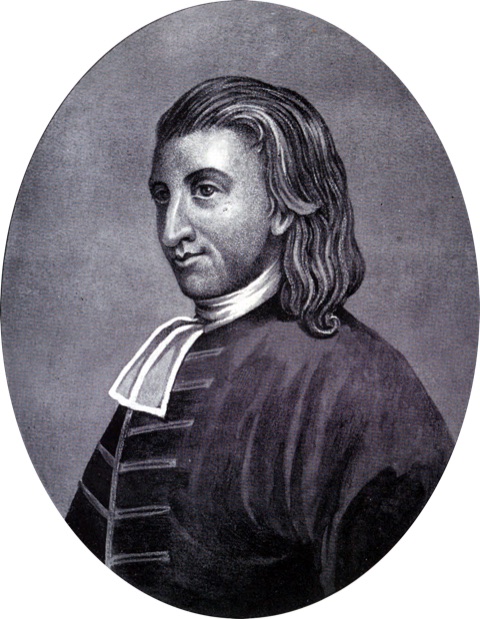
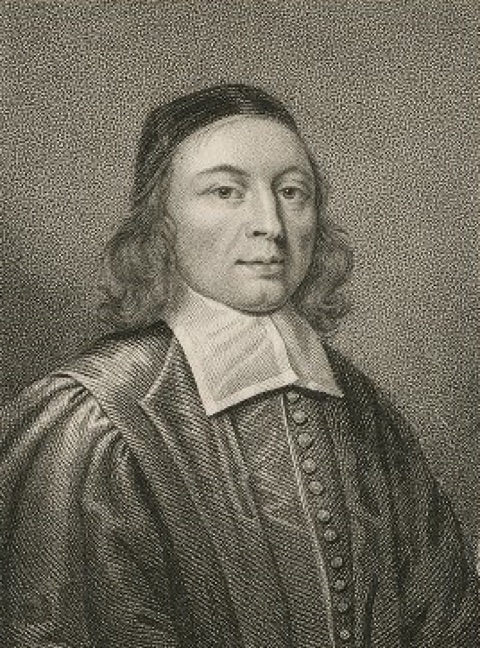
Walter Marshall
An English Puritan minister known for a single posthumously published book, The Gospel Mystery of Sanctification, which argues that Christian holiness flows from union with Christ received by faith rather than from self-effort or law-keeping.

Biography
Walter Marshall (1628 to 1680) was an English Puritan minister who was ejected from the Church of England in 1662 and is remembered almost entirely for one posthumously published book, The Gospel Mystery of Sanctification. He left no other treatises and little personal record, so his reputation rests on that single volume, which did not appear in print until 1692, twelve years after his death.
Marshall was educated at Winchester College and then at New College, Oxford, where he was elected a fellow. Like roughly two thousand other Puritan clergy, he was removed from his living by the Act of Uniformity of 1662, which required conformity to the revised Book of Common Prayer. He continued to preach as a nonconformist, gathering a congregation at Gosport in Hampshire, where he ministered until his death.
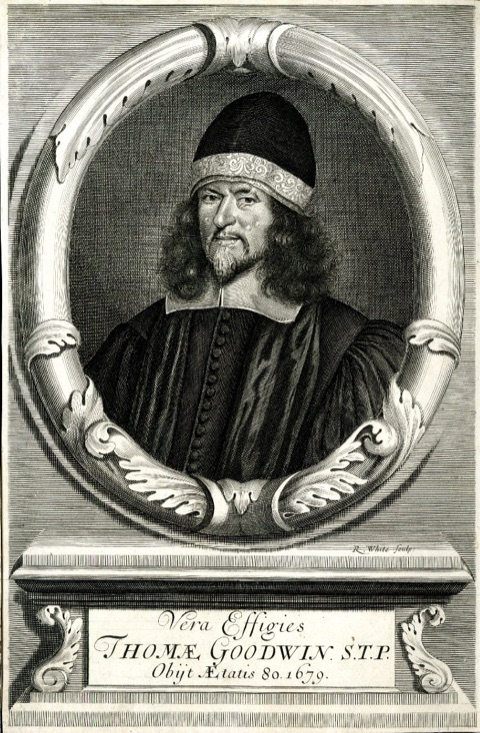
For much of his life Marshall was troubled by his own inability to reach the holiness he preached, and he sought counsel from several leading ministers. According to the account attached to early editions of his book, he consulted Richard Baxter, who directed him to examine and repent of his particular sins, advice that only deepened his distress. He then laid his case before Thomas Goodwin, who told him he had overlooked the greatest sin of all, unbelief. Marshall's later conviction that faith in Christ must precede and produce obedience grew out of this experience.
The Gospel Mystery of Sanctification is organized as fourteen "directions" for holy living. Its central argument is that sanctification does not come from human effort, resolutions, or fear of the law, but from union with Christ received by faith. Marshall held that a believer must first be persuaded of God's reconciliation and favor before any genuine obedience is possible, reversing the common assumption that assurance is earned by prior holiness. The manuscript was prepared for the press after his death and printed in 1692.
The book was reprinted repeatedly through the eighteenth and nineteenth centuries and was read well beyond the nonconformist circles in which it originated. Its argument drew both strong endorsement and the charge of antinomianism, since critics feared that grounding holiness so heavily in prior assurance would weaken the motive for obedience. Marshall's defenders answered that he made obedience flow more surely from faith than fear ever could.
Why Marshall Matters
Marshall's importance lies in how he reframed the Puritan doctrine of sanctification. Much Puritan practical divinity pressed believers toward self-examination, mortification, and disciplined obedience. Marshall did not reject these practices, but he insisted they could not be the source of holiness. Real change, he argued, depends on the believer's union with Christ and on faith in the gospel promises, so that assurance of God's favor becomes the root of obedience rather than its reward.
This placed him within the Reformed tradition of writers such as John Owen and Thomas Goodwin, who emphasized union with Christ, while giving that theme an unusually sharp practical application. Where many manuals told anxious Christians to try harder, Marshall told them that their trying was the problem, and that they had to rest first in what Christ had already secured.
Because of that emphasis, The Gospel Mystery of Sanctification became a reference point in later debates about law and gospel. Some welcomed it as a corrective to moralism, while others suspected it of tending toward antinomianism. Editions continued to appear across denominational lines, and the book was recommended by ministers who otherwise disagreed on much.
A single posthumous volume by an otherwise obscure ejected minister has stayed in print for more than three centuries. Marshall's name remains tied to the argument that holiness is received before it is achieved.