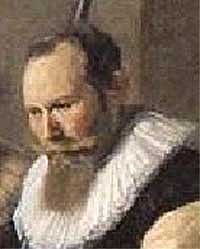
Thomas Goodwin
Independent theologian and member of the Westminster Assembly. His writings on the heart of Christ and the work of the Holy Spirit explored the inner life of the believer with unusual depth.
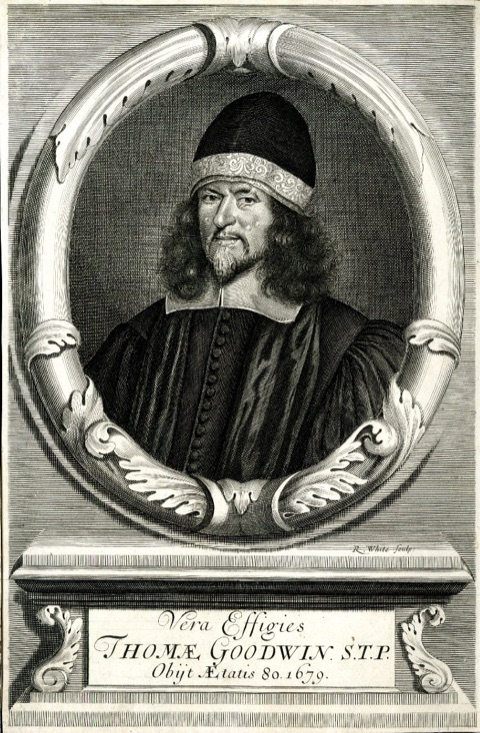
1600–1680
Biography
Thomas Goodwin was born in 1600 in Rollesby, Norfolk. He entered Christ's College, Cambridge, at thirteen and later moved to Catharine Hall. He was converted around 1620 under a sermon he heard by accident and became a fellow of Catharine Hall and a university preacher.
Goodwin resigned his fellowship in 1634 rather than conform to the ceremonial requirements imposed by Archbishop Laud. He moved to London and then to the Netherlands, where he pastored an Independent congregation at Arnhem from 1639 to 1641.
Returning to England, Goodwin became one of the leading Independent divines. He was appointed to the Westminster Assembly and was one of the Five Dissenting Brethren who argued for Congregational church government against the Presbyterian majority. He served as a chaplain to Oliver Cromwell and was appointed president of Magdalen College, Oxford, in 1650, a position he held until the Restoration.
After 1660, Goodwin was ejected from Magdalen and spent his remaining years as a Nonconformist pastor in London. He continued writing and mentoring younger ministers until his death in 1680.
Goodwin's most important works include The Heart of Christ in Heaven Towards Sinners on Earth, The Return of Prayers, Christ Set Forth, and an extensive exposition of Ephesians. His collected works fill twelve volumes.
Life & Career
Why Goodwin Matters
Goodwin explored the inner life of the believer with a psychological depth that was unusual even among the Puritans. His characteristic subject was the believer's experience of Christ, particularly the affective dimensions of faith, assurance, and communion with God.
The Heart of Christ in Heaven Towards Sinners on Earth was his most distinctive work. Goodwin argued that Christ in his glorified state still has active affections of compassion toward struggling believers on earth. This was not a sentimental point but a theological one: Goodwin grounded the believer's confidence not in their own spiritual performance but in Christ's ongoing sympathetic priesthood.
Goodwin also contributed to Puritan pneumatology (the theology of the Holy Spirit). His work on the sealing of the Spirit explored how the Spirit witnesses to believers that they belong to God, providing an experiential dimension to the doctrine of assurance that complemented the more analytical approaches of other Puritan writers.