Thomas Boston
Scottish minister whose discovery of The Marrow of Modern Divinity sparked the Marrow Controversy and revived evangelical Calvinism in the Church of Scotland.
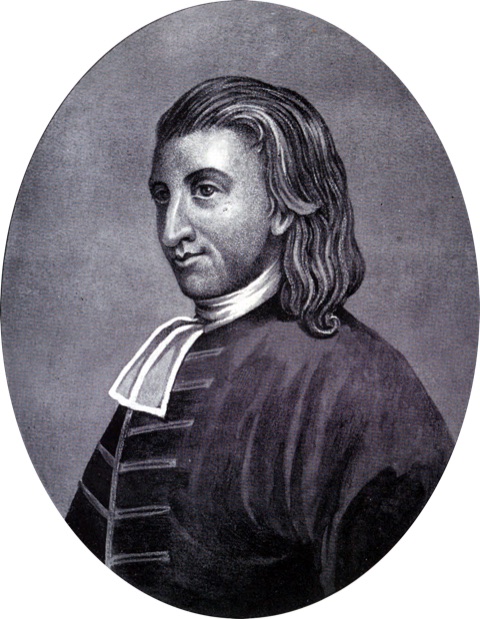
1676–1732
Biography
Thomas Boston was born on March 17, 1676, in Duns, Berwickshire, Scotland, the son of a Covenanting Presbyterian who had been imprisoned for his faith. Boston was educated at Edinburgh University and licensed to preach in 1697.
After serving as a tutor, Boston was ordained and settled at Simprin, a small rural parish in the Scottish Borders, in 1699. In 1707 he moved to Ettrick, an even more remote parish in the hills, where he spent the rest of his ministry.
In 1700, Boston discovered a copy of Edward Fisher's The Marrow of Modern Divinity (1645) in a parishioner's home. The book's emphasis on the free offer of the gospel and the believer's union with Christ deeply influenced Boston's preaching. When he recommended the book to others, it sparked what became known as the Marrow Controversy, a major theological dispute within the Church of Scotland over the nature of saving faith and the relationship between law and gospel.
Boston's own works included The Fourfold State (1720), a treatment of human nature in four conditions (creation, fall, grace, and glory), which became one of the most widely read books in Scotland for over a century. He also wrote The Crook in the Lot, on the theology of suffering, and The Art of Man-Fishing, on evangelism.
Boston suffered from poor health throughout his life and from the deaths of several of his children. He died on May 20, 1732, in Ettrick.
Life & Career
Why Boston Matters
Boston's theology was shaped by the Marrow tradition, which emphasized the free and unconditional offer of the gospel to sinners. Against the legalistic tendency in Scottish Calvinism, which demanded evidence of election before a sinner could come to Christ, Boston insisted that Christ was freely offered to all and that faith was a simple receiving of what God offered.
The Fourfold State became Boston's most influential work. Its treatment of human nature in the four states (innocence, sin, grace, glory) provided a comprehensive framework for understanding the whole of Christian theology through the lens of personal experience. The work combined doctrinal precision with warm pastoral application.
Boston's emphasis on the free offer of the gospel anticipated the evangelical revival of the eighteenth century and influenced later Scottish and American Presbyterianism.