Victorinus of Pettau
The earliest Christian writer known to have composed biblical commentaries in Latin. His Commentary on the Apocalypse is the oldest surviving Latin commentary on the book of Revelation.
Biography
Victorinus of Pettau (died around 304 AD) was the bishop of Poetovio, a Roman town on the river Drava in the province of Pannonia, at the site of modern Ptuj in Slovenia. He is the earliest Christian author known to have written biblical commentaries in Latin, and he died as a martyr during the persecution launched by the emperor Diocletian.
Almost everything known about his life comes from Jerome, who devoted chapter 74 of On Illustrious Men to him and mentioned him in several letters. Jerome reports that Victorinus knew Greek better than Latin and that his written Latin was consequently rough. Jerome also lists the sweep of his commentaries: works on Genesis, Exodus, Leviticus, Isaiah, Ezekiel, Habakkuk, Ecclesiastes, and the Song of Songs among the Old Testament books, and commentaries on the Gospel of Matthew and on the Apocalypse. Of this output only two texts survive: the Commentary on the Apocalypse and a short treatise on the six days of creation, On the Creation of the World (De fabrica mundi).
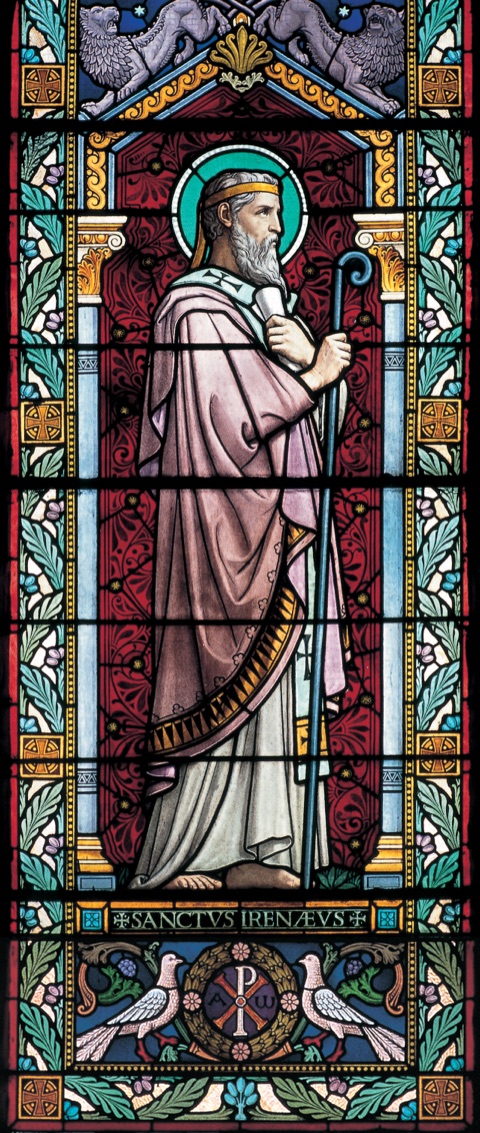
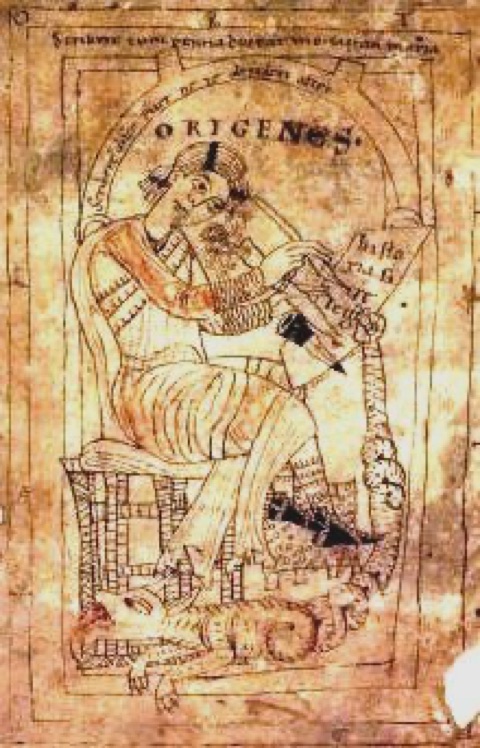
His exegesis drew on the Greek Christian tradition behind him. He read and used Origen of Alexandria, and his interpretation of Revelation carries forward the millenarian, or chiliast, expectation found in Papias, Irenaeus of Lyon, and Hippolytus of Rome, who held that Christ would reign on earth for a thousand years. When Jerome later reissued the Commentary on the Apocalypse, he revised the text to remove its millenarian passages, and the work afterward circulated in more than one form, which complicates the task of recovering what Victorinus originally wrote.
The date of his death is fixed by the persecution under Diocletian, which began in 303 AD, and Jerome states that he ended his life as a martyr. His Commentary on the Apocalypse remained in use for centuries in the edited versions that came down through the medieval West.
Why Victorinus Matters
Victorinus is a point of origin for Latin biblical scholarship. Before him, Christian commentary on Scripture was written in Greek by figures such as Origen and Hippolytus; Victorinus was the first to carry that work into Latin. His commentaries, written in the late third century, precede the Latin exegetical achievements of the fourth and fifth centuries and mark the point at which systematic biblical interpretation began to be produced in the language of the western church.
His surviving Commentary on the Apocalypse is the earliest Latin commentary on Revelation and one of the earliest in any language to come down in continuous form. It reads the book's visions as a repeated, overlapping account of the same events rather than a single unbroken sequence, an approach that shaped how later western writers handled the Apocalypse. Because so much early interpretation of Revelation is lost, Victorinus is a primary witness to how Christians of the third century read the book.
He also documents the persistence of chiliasm in the Latin-speaking church. His expectation of a literal thousand-year reign of Christ connects him to Papias, Irenaeus, and Hippolytus, and Jerome's decision to edit those passages out records the shift by which the millenarian reading fell out of favor in the West. Victorinus stands on both sides of that change: a transmitter of the older hope and, through Jerome's revision, a marker of its retreat.
His career also shows the reach of Christian learning beyond the major metropolitan sees. Working as a provincial bishop on the Danube frontier, reading Greek more easily than he wrote Latin, and drawing on Alexandrian and Asian sources, he is evidence of how the scholarship of the eastern church was received and reworked in the Latin provinces a generation before Constantine.
Complete Works in English
Free to readEvery surviving work, translated in full and free to read, from our Patrologia Latina project.