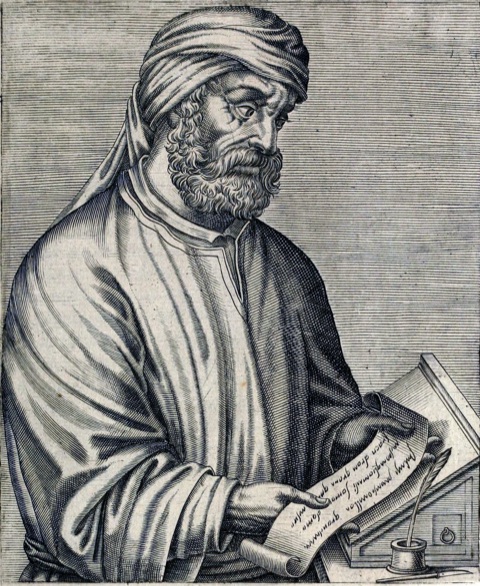
Novatian
Roman priest and theologian who wrote the first substantial Latin treatise on the Trinity, and who later became a rival bishop of Rome at the head of a rigorist movement that refused to readmit Christians who had denied the faith under persecution.
Biography
Novatian (200 to 258 AD) was a Roman priest and theologian who wrote the first substantial body of Christian theology in Latin at Rome and who later led a rigorist schism over whether the church could forgive believers who had renounced their faith under persecution. Where earlier Roman churchmen still wrote in Greek, Novatian worked in Latin, and by the 240s he was the most learned member of the Roman clergy, drafting official letters on the church's behalf.
His moment came during the persecution launched by the emperor Decius. In January 250 AD the bishop of Rome, Fabian, was put to death, and the Roman see stood vacant for more than a year while the persecution ran its course. Governing collectively in the absence of a bishop, the clergy turned to Novatian to write their correspondence, including letters to Cyprian, the bishop of Carthage, about the pressing problem of the lapsi — Christians who had sacrificed to the gods or bought certificates of compliance to save their lives, and who now sought to return to communion.
When the persecution eased and a new bishop was chosen in 251 AD, the Roman clergy elected Cornelius. Novatian, holding that the church had no power to reconcile those who had denied Christ, allowed three bishops from southern Italy to consecrate him as a rival bishop of Rome. In a letter to Fabius of Antioch, later preserved by Eusebius, Cornelius attacked his rival's claim, alleging that Novatian had received only emergency baptism on a sickbed and had ambitiously coerced his consecrators. A synod of some sixty bishops at Rome recognized Cornelius and excommunicated Novatian, and Cyprian and the African bishops sided with Cornelius.
Novatian's followers, the Novatianists, called themselves the Katharoi, or "the pure," and formed a separate communion that rebaptized those who joined them from the catholic church. Rigorist and disciplined, it outlasted its founder by centuries and spread across the empire, so that the Council of Nicaea in 325 AD devoted its eighth canon to the terms on which Novatianist clergy might be received back. Greek writers, confusing him with Novatus of Carthage, often called him Novatus.
Two of his works survive. On the Trinity (De Trinitate) sets out the rule of faith concerning the Father, the Son, and the Holy Spirit, arguing that Christ is truly God and truly man without dividing the one God. On the Jewish Foods (De cibis Judaicis) is a letter explaining how Christians should understand the dietary laws of the Old Testament. Because his reputation as a heretic later made his name unwelcome, these treatises survived antiquity circulating under the names of Tertullian and Cyprian. A tradition, supported by a catacomb inscription honoring "Novatian, most blessed martyr," holds that he died a martyr under the persecution of Valerian around 258 AD.
Life & Career
Why Novatian Matters
On the Trinity is the bridge between Tertullian and the Nicene age. Written in Latin two or three generations before the Council of Nicaea, it works systematically through the church's rule of faith to show how the Son can be fully divine, and fully human, without breaking the confession of one God. Its vocabulary and arguments anticipate the language the church would later sharpen against Arianism, and it remained a reference point for Latin theology long after its author had been branded a schismatic — which is why copyists preserved it under the safer names of Tertullian and Cyprian.
Novatian's schism forced the church to settle a question his rigorism raised in the sharpest possible form: are there sins so grave that the church has no authority to forgive them? By consecrating himself against Cornelius rather than submit, he made the treatment of the lapsed a matter of church order, not merely of pastoral discretion. The answer given against him — that the church can reconcile even those who denied Christ, after a period of penance — became fixed in the developing doctrine of penance and defined where catholic practice would draw its line.
The Novatianist movement also served as an early test case for the boundaries of the church itself. Novatian held that a communion containing the lapsed was no true church, and that those coming from it had to be rebaptized. The catholic reply, worked out in the disputes surrounding Cyprian and later against the Donatists in North Africa, was that the church's holiness did not depend on the purity of every member. That the Council of Nicaea legislated specifically for the return of Novatianist clergy shows how far and how long the movement endured.
For all that the church rejected his rigorism, Novatian's standing as a theologian was never in doubt. He was the first Roman writer to give Latin Christianity a full doctrinal treatise of its own, and his careful handling of Scripture and the rule of faith set a pattern that Western theology would follow.
Complete Works in English
Free to readEvery surviving work, translated in full and free to read, from our Patrologia Latina project.