Thomas Shepard
New England Puritan pastor of Cambridge, Massachusetts, and author of The Sincere Convert and The Sound Believer, classic Puritan books on the marks of true conversion.
Biography
Thomas Shepard was born on November 5, 1605, in Towcester, Northamptonshire, and lost both his parents in childhood. He entered Emmanuel College, Cambridge, and was converted there under the preaching of John Preston.
He became lecturer at Earls Colne in Essex. In 1630 William Laud, then Bishop of London, silenced him for nonconformity. Shepard spent the next years as a private chaplain in Yorkshire and then preaching quietly in Northumberland, before sailing for New England. He reached Boston in October 1635.
In 1636 he became pastor of the newly gathered church at Newtown, soon renamed Cambridge, Massachusetts, a post he held for the rest of his life. He was one of the ministers who opposed Anne Hutchinson and the antinomian party in the controversy of 1636 to 1638, and he was closely involved with the early life of Harvard College, founded in the town. He also supported John Eliot's preaching to the Native peoples of Massachusetts. His first wife, Margaret, died soon after their arrival; his second, Joanna, was the daughter of Thomas Hooker.
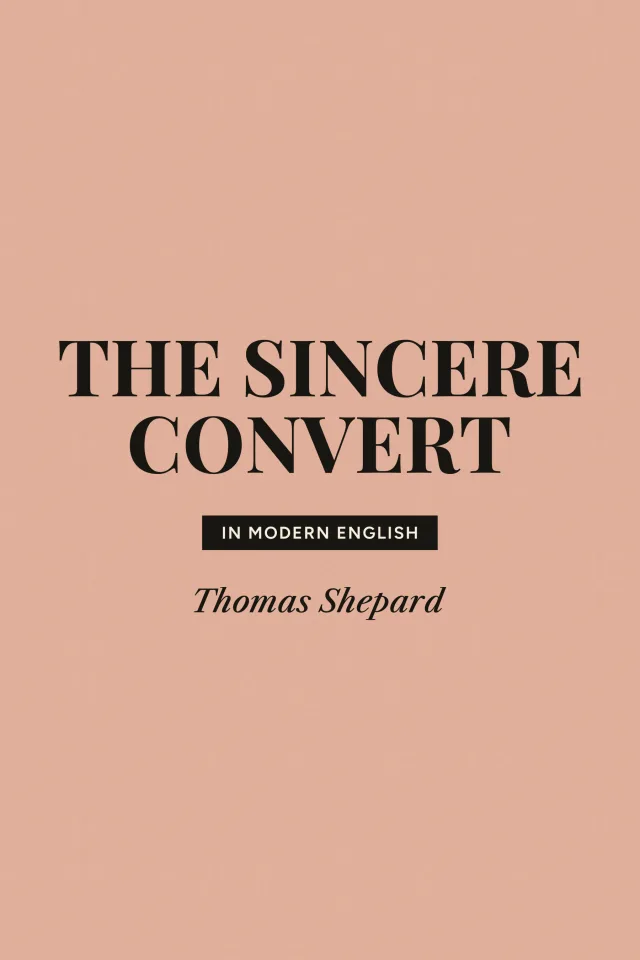
Shepard's books include The Sincere Convert (1640), The Sound Believer (1645), and The Parable of the Ten Virgins, published from his sermons after his death. His private autobiography and journal were printed much later. He died in Cambridge on August 25, 1649, at the age of forty-three.
Life & Career
Why Shepard Matters
Shepard was the most searching physician of the soul among the first generation of New England ministers. His preaching aimed to separate sincere conversion from its imitations: the respectable moralist, the churchgoer who quiets conscience with duties, and the believer whose faith grasps at Christ without ever having felt the need of him. The Sincere Convert and The Sound Believer set out this teaching on humiliation, faith, and the work of the Spirit in terms ordinary hearers could apply to themselves.
That emphasis shaped how New England churches thought about conversion and church membership, and it outlived its century. Jonathan Edwards drew repeatedly on Shepard, especially The Parable of the Ten Virgins, when he wrote Religious Affections, and Shepard's books remained in print among readers who valued close self-examination. His career also joined the two halves of the Puritan world, carrying the Cambridge tradition of Preston and Emmanuel College into the ministry and college of the new Cambridge in Massachusetts.