Robert Filmer
The royalist theorist whose defense of absolute monarchy in Patriarcha provoked John Locke's Two Treatises of Government. His argument that all political power descends from God's grant of dominion to Adam became the standard target for the founders of liberal political thought.
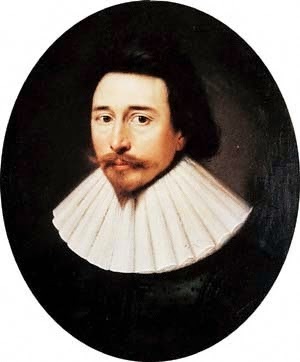
1588–1653
Biography
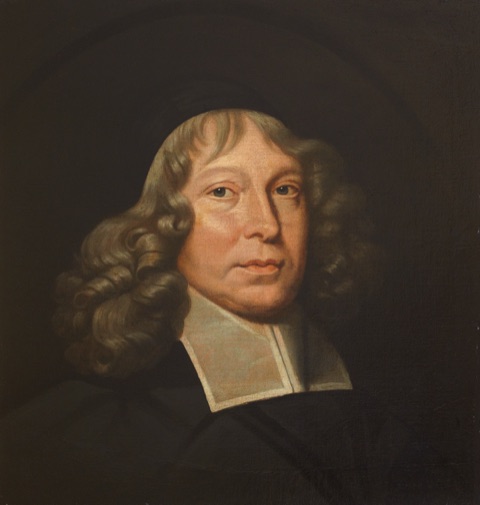
Robert Filmer (1588 to 1653) was an English political theorist and Kentish landowner who defended the absolute, God-given authority of kings, most fully in Patriarcha, a treatise that circulated in manuscript during his lifetime and was printed only in 1680. He was baptized in 1588 at East Sutton, Kent, the eldest son of Sir Edward Filmer, and inherited the family seat there. He was educated at Trinity College, Cambridge, and studied law at Lincoln's Inn in London. He married Anne Heton, daughter of Martin Heton, Bishop of Ely, and lived the life of a country gentleman managing his Kentish estates.
Filmer's political thought rested on a single claim: that men are not born free and equal, and that all legitimate government is paternal in origin. In Patriarcha he argued that God gave Adam dominion over the earth and over his descendants, that this fatherly authority passed by inheritance to the patriarchs and then to kings, and that every monarch therefore rules as the heir of Adam's original grant. From this he concluded that subjects owe obedience as children owe it to a father, and that theories deriving government from popular consent rest on a state of nature that never existed. He directed his fire against the idea, drawn from Aristotle and the schoolmen, that political power originates in the community.
Filmer was a committed royalist during the conflict between Charles I and Parliament. His household at East Sutton was searched and plundered by parliamentary forces, and he was imprisoned for a time in Leeds Castle in Kent during the 1640s. He did most of his writing in these years of upheaval, when the collapse of royal authority made the question of where obedience is owed an urgent practical matter rather than an academic one.
In the late 1640s and early 1650s Filmer published a series of political tracts, including The Anarchy of a Limited or Mixed Monarchy and The Free-holders Grand Inquest, both of 1648, and Observations concerning the Originall of Government in 1652, in which he attacked the theories of Thomas Hobbes, John Milton, and Hugo Grotius. Patriarcha itself, his most systematic work, he left unpublished. He died in 1653 and was buried at East Sutton.
Nearly three decades after his death, Patriarcha was brought into print in 1680, during the Exclusion Crisis, when supporters of the crown revived it as a manifesto for royal authority against those seeking to bar the Catholic James, Duke of York, from the succession. Its appearance drew a wave of rebuttals from the other side, including Algernon Sidney's Discourses Concerning Government, James Tyrrell's Patriarcha non Monarcha, and John Locke's Two Treatises of Government, published in 1689. Locke devoted the entire First Treatise to a line-by-line refutation of Filmer's argument, so that Filmer's book survives less for the case it made than for the more famous case it provoked.
Life & Career
Why Filmer Matters
Filmer matters chiefly as the position that modern political philosophy defined itself against. By the time Patriarcha was printed in 1680, patriarchal absolutism had a long history in sermon and pamphlet, but Filmer gave it its most complete statement: a monarchy grounded not in expediency or fear but in Scripture and inheritance, tracing every king's authority back to Adam. That made the book the natural target for anyone arguing that government rests instead on the consent of the governed.
The list of writers who answered him reads like a roster of early liberal and republican thought. Algernon Sidney's Discourses Concerning Government and James Tyrrell's Patriarcha non Monarcha both took Filmer as their subject, and John Locke built the First Treatise of his Two Treatises of Government entirely as a refutation of Patriarcha, clearing Filmer's patriarchal theory out of the way before advancing his own account of natural freedom, property, and the right of resistance. The foundational texts of constitutional government thus grew directly out of the effort to dismantle Filmer's.
Filmer's own arguments were sharper than his reputation as a losing side suggests. He pressed hard on a genuine weakness in contract theory, asking when the supposed original agreement was made, who consented for later generations, and how a state of nature in which no one held authority could ever be documented. Twentieth-century scholars, most notably Peter Laslett, who produced a critical edition of Filmer's political writings in 1949, treated him as a serious opponent whose objections forced his critics to make their own theories more rigorous.
Filmer's work also documents the intellectual world that liberal political theory displaced. It sets out plainly the assumptions about authority, hierarchy, and obedience that his contemporaries took for granted, and marks exactly which of them Locke and his successors set out to overturn.