An early church father's provocative treatise on modesty, beauty, and adornment. Tertullian challenges Christians to consider what their appearance reveals about their devotion.
A free account opens the whole library to read online, on your phone or at your desk. Open a book on one device and it is waiting at the same page on the next. The PDF and EPUB of every book are yours to keep, and audiobooks play in the same app.
250+ modernized editionsNot samples. The whole work, free.
Your place, on every devicePhone, tablet or desktop, same page.
131 audiobooksFrom $4.99 each, or all of them with a $50 gift.
What does a Christian woman's appearance reveal about her heart? In this provocative treatise from the early church, Tertullian challenges believers to examine their relationship with dress, adornment, and outward beauty. While modern readers may find some of his applications culturally bound, his underlying questions remain relevant: Does our appearance reflect our devotion? Are we adorning ourselves for God's glory or worldly admiration?
Tertullian begins with a striking argument: he traces the origins of cosmetics and jewelry not to innocent human creativity but to fallen angels who taught these arts to seduce the daughters of men. Whether or not readers accept this interpretation of Genesis 6, his point is clear—the impulse to enhance our appearance often stems from wrong motives. We should be suspicious of practices whose origins and purposes are rooted in vanity and sensuality.
The church father then develops his theology of modesty. For Tertullian, simplicity in dress flows naturally from Christian conversion. Those who have died with Christ to the world should not be preoccupied with worldly adornment. Those who await resurrection bodies need not be overly concerned with decorating their present ones. Those who worship a God who sees the heart should not fixate on external appearance.
Tertullian distinguishes between natural beauty and artificial enhancement. Natural beauty he accepts as God's gift—though one that brings its own temptations. But artificial enhancement—elaborate hairstyles, cosmetics, dyed fabrics, and excessive jewelry—he condemns as attempts to improve upon God's work. Such practices imply dissatisfaction with how God made us and draw attention to ourselves rather than to Him.
The practical applications Tertullian draws may seem extreme to modern readers. He prohibits dyeing hair, wearing gold, and using makeup. Yet his underlying principles merit consideration: Christians should dress in ways that reflect their identity as pilgrims and strangers, not as people seeking worldly status or admiration. Our adornment should be modest, appropriate, and consistent with our profession of faith.
Throughout the work, Tertullian employs his characteristic rhetorical power. His arguments are sharp, his illustrations vivid, his challenges pointed. He does not simply tell women what not to wear; he invites them to consider who they are in Christ and what their choices communicate about their priorities.
On the Apparel of Women offers modern readers a window into early Christian practice and thinking about dress. More importantly, it raises enduring questions about the relationship between faith and appearance, inner devotion and outward expression. While we may apply these principles differently than Tertullian did, the questions he raises deserve serious consideration.
Free audiobook preview
Listen to the first 9 minutes
On the Apparel of Women · Audiobook · 55 min
0:00 / 9:24
Enjoying it? The full audiobook runs 55 min. Listen in the Updated Works app on any device.
If faith on earth were as great as the reward for faith expected in heaven, none of you, my dearly loved sisters, would desire an overly cheerful, let alone ostentatious, style of dress. From the moment you had first “known the Lord” (Heb 8:11; Jer 31:34) and learned the truth about your condition as a woman, you would instead go about in humble clothing and choose a lowly appearance. You would walk as Eve, mourning and repentant, so that every expression of penitence in your clothing might more fully atone for what you inherit from Eve: the shame of the first sin and the hatred attached to her as the cause of humanity’s ruin.
“In pains and in anxieties dost thou bear (children), woman; and toward thine husband (is) thy inclination, and he lords it over thee” (Gen 3:16). Do you not know that each of you is an Eve? God’s sentence on your sex remains in force in this age; the guilt must necessarily remain too. You are the devil’s gateway. You are the one who opened the forbidden tree. You are the first deserter of the divine law. You persuaded the man whom the devil was not brave enough to attack. You so easily destroyed God’s image, man. Because of what you deserved, namely death, even the Son of God had to die. And do you think of adorning yourself beyond your tunics of skins (Gen 3:21)?
Come now! Suppose that from the beginning of the world the Milesians had sheared sheep, the Chinese had spun trees, and the Tyrians had dyed cloth. Suppose the Phrygians had embroidered with the needle and the Babylonians with the loom, while pearls gleamed and onyx stones flashed. Suppose gold itself, together with the greed that accompanies it, had already emerged from the ground, and the mirror already had permission to lie so freely. Eve, expelled from paradise and already dead, would have coveted these things too, I imagine!
If she desires to live again, she should no more crave or become acquainted now with things she neither possessed nor knew when she was living. All these things, then, are the baggage of woman in her condemned and dead condition, introduced as though to increase the splendor of her funeral.
Adornment and the Fallen Angels
Those who introduced these things are themselves condemned to the penalty of death: the angels who rushed from heaven upon the daughters of men. So this shame, too, attaches to woman. They disclosed deeply hidden materials and little-known scientific arts to an age far more ignorant than ours. If it is true that they revealed the workings of metallurgy, made known the natural properties of herbs, proclaimed the powers of enchantments, and explored every arcane art, even the interpretation of the stars, they also bestowed specifically, and almost exclusively, on women the means of womanly ostentation. These were the brilliance of jewels that give necklaces their varied colors, the gold bands that encircle the arms, the orchil dyes that color wool, and the black powder that makes the eyelids and eyelashes stand out.
Even at this point, the character of these things can be judged from the character and condition of their teachers. Sinners could never have shown or supplied anything that promotes integrity, unlawful lovers anything that promotes chastity, or renegade spirits anything that promotes the fear of God. If these things are called teachings, bad teachers must necessarily have taught badly. If they are called the wages of lust, no base act has honorable wages.
But why was it so important to teach these things as well as give them? Could women without materials for splendor or ingenious devices for beauty fail to please men, when those same women, still unadorned, uncouth, and, so to speak, crude and rude, had stirred the desire of angels? Or would the angelic lovers have seemed stingy and insulting if they had enjoyed the women without payment, giving no compensating gift to those they had enticed into marriage? But these questions allow no such reckoning. Women who had angels as husbands could desire nothing more. What a grand match they had made!
Surely the angels sometimes remembered the heights from which they had fallen and, after the heated impulses of their lust, looked up toward heaven. In this way they repaid women’s very excellence, their natural beauty, because it had proved a cause of evil. They intended that the women should gain nothing from their good fortune, but should be turned away from simplicity and sincerity and become offensive to God along with the angels themselves. The angels were certain that all ostentation, ambition, and desire to please through the flesh were displeasing to God.
These are the angels we are destined to judge (1 Cor 6:3). These are the angels we renounce in baptism. These, of course, are the reasons they have deserved to be judged by human beings. What business, then, do their things have with their judges? What dealings should those who will condemn have with those who will be condemned? The same, I suppose, as Christ has with Belial (2 Cor 6:14-16). How can we consistently mount that future judgment seat to pronounce sentence against those whose gifts we now pursue?
For you too, though you are women, are promised the very same angelic nature as your reward (Matt 22:30; Mark 12:25; Luke 20:35-36), the very same sex as men. The Lord promises you the same elevation to the dignity of judging. Unless we begin to judge beforehand even here, condemning their things in advance for what we will later condemn in the angels themselves, they will instead judge and condemn us.
In Defense of Enoch
I know that some do not accept the Scripture of Enoch, which attributes this course of action to the angels, because it is not admitted into the Jewish canon either. I suppose they thought that, having been published before the flood, it could not have survived that worldwide calamity, which swept everything away. If that is their reason for rejecting it, let them remember that Noah, who survived the flood, was Enoch’s own great-grandson (Gen 5:21, 25, 28, 29). Through his family’s reputation and inherited tradition, Noah had surely heard and remembered his great-grandfather’s “grace in the sight of God” and all his preaching. Enoch had given Methuselah no other charge than to pass knowledge of these things on to his descendants.
Noah, then, could undoubtedly have inherited responsibility for preserving Enoch’s preaching. Even if that had not happened, he would not have kept silent about either the arrangements made by God, his Preserver, or the particular glory of his own family.
If Noah had not been able to preserve this Scripture through so direct a line of transmission, another consideration would still support our assertion of its genuineness. If it had been destroyed by the force of the flood, he could have restored it under the Spirit’s inspiration. In the same way, it is generally agreed that every document of Jewish literature was restored through Ezra after Jerusalem’s destruction in the Babylonian assault.
But Enoch also preached about the Lord in this same Scripture. Nothing that concerns us must be rejected by us, and we read that “every Scripture suitable for edification is divinely inspired” (2 Tim 3:16). It may now appear that the Jews rejected it for that very reason, just as they rejected nearly all the other passages that tell of Christ. Of course, it is no wonder that they did not accept some Scriptures speaking of him when they would not accept him even in person, speaking in their presence. To these considerations we can add the fact that the apostle Jude bears witness to Enoch (Jude 14-15).
Examining Adornment Itself
Let us grant, for now, that the fate of its inventors has placed no mark of condemnation on women’s pomp. Let us charge those angels with nothing beyond their rejection of heaven and their carnal marriage. Let us examine the qualities of the things themselves, so that we may also discover the purposes for which they are so eagerly desired.
Women’s attire involves two distinct things: dress and ornament. By “dress” we mean what people call “womanly gracing”; by “ornament,” what should properly be called “womanly disgracing.” The former consists of gold, silver, gems, and garments; the latter concerns the care of the hair, the skin, and those parts of the body that attract the eye.
We charge the first with ambition and the second with prostitution. Thus, even at this early stage of our discussion, you can look ahead, servant of God, and see which of these things suits your way of life. You are judged by principles different from those applied to other women: humility and chastity.
Gold and Silver Compared with Other Metals
Gold and silver, the chief materials of worldly splendor, must have the same nature as the substance from which they come: earth. Earth itself is plainly more glorious than they are. Only after it has been worked amid tears by punitive labor in the deadly workshops of accursed mines, and has left its name of “earth” behind in the fire, does it emerge like a fugitive from the mine. It passes from torments to ornaments, from punishments to embellishments, from disgrace to honor.
But iron, brass, and the other most lowly materials share the same conditions as silver and gold, both in their earthly origin and in the processes used to work them. In nature’s judgment, therefore, gold and silver are not the least bit nobler than these other metals.
If gold and silver derive their glory from their usefulness, iron and brass surpass them. The Creator has arranged their usefulness so that they perform more functions of their own, functions more necessary to human affairs. By their own powers, they also serve the purposes of gold and silver, in the service of more rightful causes. Rings are made of iron, and the memory of antiquity still preserves the fame of certain brass vessels for eating and drinking. Let the mad abundance of gold and silver answer for itself if it supplies utensils even for filthy purposes!
At any rate, fields are not tilled with gold, nor are ships held together by the strength of silver. No mattock plunges a golden edge into the ground; no nail drives a silver point into planks. I pass over the fact that the needs of our entire life depend on iron and brass. Those precious materials themselves must be dug out of mines and forged for every use to which they are put. Without the laboring strength of iron and brass, they are helpless.
Already, then, we must judge where gold and silver obtain such high standing. They take precedence over materials that are not only their close relatives in origin, but also more powerful in usefulness.
Precious Stones and Pearls
Next, what should I consider those jewels that rival gold in their arrogance? They are nothing but little pebbles, stones, and paltry fragments of that same earth. Yet they are not needed for laying foundations, raising dividing walls, supporting pediments, or making roofs solid. The only structure they know how to build is this foolish pride of women. They need prolonged rubbing to shine, skillful backing to show to advantage, and careful piercing to hang. They and gold help one another in the allurements of prostitution.
Whatever ambition fishes out of the British or Indian sea is a kind of shellfish no more pleasing in taste than, I will not say the oyster or the sea-snail, but even the giant mussel. Let me add that I do know shellfish that are delicious fruits of the sea. But if that foreign shellfish suffers from some internal pustule, we should regard it as a defect rather than a glory. Although it is called a “pearl,” it is still nothing more than a hard, round growth on the shellfish.
Some say, too, that gems are gathered from the foreheads of dragons, just as there is a certain stony substance in the brains of fish. This, too, was something the Christian woman lacked: a way to adorn herself from the serpent! Is this how she will set her heel on the devil’s head (Gen 3:15), while she heaps ornaments taken from his head onto her own neck, or even onto her own head?
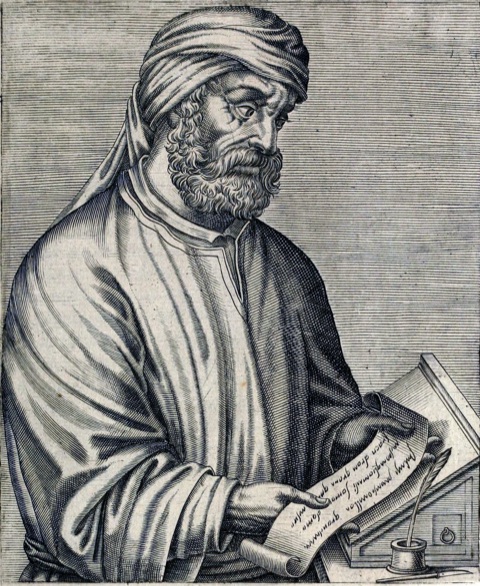
Quintus Septimius Florens Tertullianus, known as Tertullian, was an early Christian author from Carthage in the Roman province of Africa. Often called the "Father of Latin Christianity," he was the first major Christian writer to produce works in Latin rather than Greek, creating much of the theological vocabulary still used in Western Christianity. His apologetic works defended Christianity against pagan criticism, while his theological treatises addressed topics from baptism to the Trinity (a term he coined). Later in life, Tertullian joined the Montanist movement, attracted by its moral rigor. Despite this, his influence on Christian thought was immense, and his writings provide valuable insight into early Christian beliefs and practices.
“Updated Works has been an incredible blessing to my Christian life and ministry… remarkably faithful to the original authors while making these timeless treasures understandable for modern readers.”