Modern English edition · 197 AD
The Apology
by Tertullian
Socrates' legendary defense speech at his trial for impiety and corrupting the youth of Athens. A foundational text of Western philosophy that explores truth, virtue, and the examined life.
Ebook temporarily unavailable. Ask about this edition
About this book
The Apology is Plato's account of the speech Socrates gave at his trial in 399 BC, where he faced charges of impiety and corrupting the youth of Athens. The title comes from the Greek word "apologia," meaning a defense or justification, not an expression of regret. In this powerful address, Socrates refuses to beg for mercy or compromise his principles, instead offering a spirited defense of his life's work and the philosophical mission he believed the gods had given him.
The speech unfolds in three parts. In the first section, Socrates addresses the formal charges against him, tracing their origin to longstanding prejudice and the resentment of those he had exposed as lacking true wisdom. He explains how the oracle at Delphi proclaimed him the wisest of men, which led him on a mission to understand what this could mean. Through questioning politicians, poets, and craftsmen, he discovered that his wisdom consisted solely in knowing that he knew nothing, while others falsely believed themselves wise.
Socrates then addresses the specific accusations. He denies being a natural philosopher who speculates about the heavens or a sophist who teaches rhetoric for money. He explains that his questioning of Athenians was a divine mission, comparing himself to a gadfly sent to rouse the sluggish horse of Athens from its intellectual complacency. He presents his poverty as evidence that he never charged for his conversations, distinguishing himself from the professional teachers his accusers confused him with.
After being found guilty, Socrates must propose an alternative punishment to the death penalty sought by his accusers. In a remarkable display of consistency, he refuses to propose exile or silence, arguing that abandoning his philosophical mission would be disobeying the god. He suggests instead that Athens should reward him with free meals for life, as given to Olympic victors, since his service to the city is far more valuable. When forced to name a realistic penalty, he proposes only a small fine.
The final section, delivered after the death sentence is pronounced, reveals Socrates at his most profound. He addresses both those who voted for and against him, expressing no bitterness toward his accusers. He reflects on death, arguing that it is either a dreamless sleep or a journey to another place where he can continue his philosophical conversations with the great figures of the past. His famous closing words remind the jury that no evil can befall a good man, and that his fate is hidden from them.
The Apology stands as one of the foundational texts of Western philosophy and ethics. Its portrayal of Socrates choosing death over compromise has inspired countless individuals throughout history to stand firm for their convictions. The work raises enduring questions about the relationship between the individual and the state, the nature of wisdom, and what it means to live an examined life. For anyone seeking to understand the origins of philosophical inquiry and the courage it demands, The Apology remains essential reading.
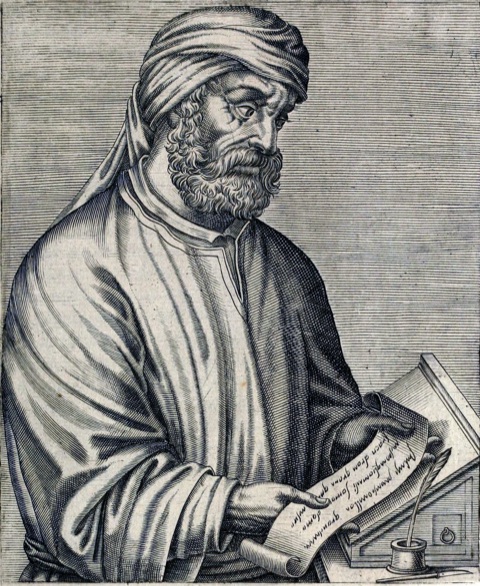
About the author
Tertullian
Plato (428-348 BC) was an ancient Greek philosopher and the founder of the Academy in Athens, the first institution of higher learning in the Western world. Born into an aristocratic Athenian family, he became a devoted follower of Socrates as a young man, and Socrates' execution in 399 BC profoundly shaped his philosophical work. Plato wrote approximately thirty-six dialogues, most featuring Socrates as the main character, exploring questions of ethics, politics, metaphysics, and epistemology. His works, including The Republic, Symposium, and Phaedo, have influenced virtually every subsequent philosopher in the Western tradition. Through his Academy, which operated for nearly nine centuries, and his writings, Plato established philosophy as a systematic discipline and shaped the intellectual foundations of Western civilization.
“Updated Works has been an incredible blessing to my Christian life and ministry… remarkably faithful to the original authors while making these timeless treasures understandable for modern readers.”