Solomon Northup
A free-born New Yorker who was kidnapped in 1841 and sold into slavery in Louisiana for twelve years. His 1853 memoir, Twelve Years a Slave, is among the most detailed firsthand accounts of plantation slavery in the antebellum South.
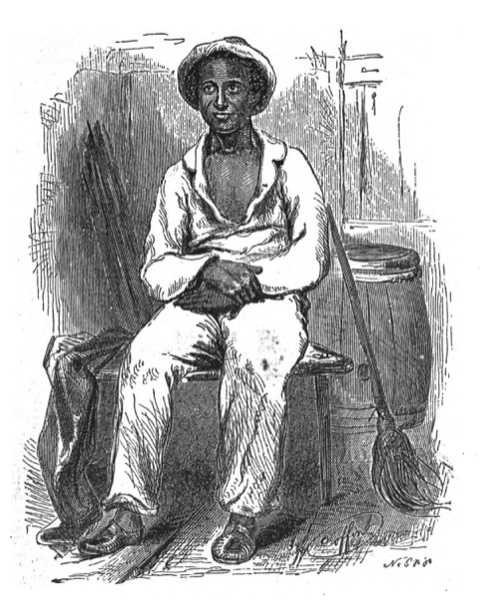
1807 – unknown
Biography
Solomon Northup (born around 1807) was a free-born African American farmer and violinist from New York who was kidnapped in 1841 and sold into slavery in Louisiana, where he was held for twelve years before his release in 1853, an ordeal he recorded in the memoir Twelve Years a Slave.
He was born in Minerva, Essex County, New York. His father, Mintus Northup, had been enslaved by the Northup family of Rhode Island and was freed on his master's death; Solomon grew up a free man. He worked farming, cut timber, and labored on the Champlain Canal, and he became a skilled violinist whose playing brought in steady work. In 1829 he married Anne Hampton, and by the mid-1830s the family had settled in Saratoga Springs, where Northup took odd jobs and played the fiddle for hotel guests and dances.
In 1841 two men calling themselves Merrill Brown and Abram Hamilton offered him well-paid work as a musician with a traveling circus. They led him south to Washington, D.C., where they drugged him and delivered him to the slave trader James H. Birch. Held in a Washington slave pen and beaten when he insisted he was free, Northup was shipped to New Orleans and sold by the dealer Theophilus Freeman under the name "Platt," warned to conceal that he had ever been free.
He spent the next twelve years in the Red River cotton country of central Louisiana, in and around Avoyelles Parish. His first owner was William Ford, a Baptist preacher he described as comparatively humane; he was then sold to the carpenter John Tibeats, with whom he clashed violently, and finally to the cotton planter Edwin Epps, who held him for roughly ten years. Northup worked cotton and sugar under the whip, was measured against daily picking quotas, and was regularly made to play the violin for Epps.
In 1852 he confided his true history to Samuel Bass, a Canadian carpenter working on Epps's house, who agreed to mail letters north on his behalf. The letters reached contacts in New York, and under an 1840 state law meant to recover free citizens who had been kidnapped into slavery, the lawyer Henry B. Northup traveled to Louisiana with documents proving Solomon's identity. In January 1853 Northup was released at Marksville and returned home to his wife and children.
Twelve Years a Slave appeared later that year, written with the editor David Wilson and dedicated to Harriet Beecher Stowe, whose Uncle Tom's Cabin had been published the year before. The book sold roughly thirty thousand copies, and Northup lectured on slavery and is said to have assisted fugitives on the Underground Railroad. He brought kidnapping charges against Birch and the men who had sold him, but the prosecutions collapsed. Northup disappears from the documentary record after the mid-1850s, and the date and place of his death are unknown.
Life & Career
Why Northup Matters
Twelve Years a Slave is prized as one of the most detailed firsthand records of plantation slavery in the antebellum South, and its value comes from Northup's unusual vantage point. He had lived more than thirty years as a free man before his abduction and could measure bondage against a remembered freedom. The narrative records cotton-picking quotas, the daily routines of the Red River plantations, the mechanics of the New Orleans slave market, and the names of specific owners, overseers, and places, giving historians a documentary source rather than a general lament.
The book arrived at a charged moment. Published in 1853, months after Uncle Tom's Cabin, it was taken up by abolitionists as factual corroboration of Harriet Beecher Stowe's fiction, and its wide sales carried a concrete, verifiable case of a free citizen seized and sold into a distant state. Because Northup named names and places, his account could be checked, which made it harder to dismiss as sentiment or invention.
That verifiability was later tested and confirmed. Beginning in the mid-twentieth century the Louisiana historian Sue Eakin devoted years to tracing the people, plantations, and dates in the narrative through local records; her research, published with Joseph Logsdon in a 1968 annotated edition, established that Northup's account held up against the documentary evidence. This scholarly authentication set the memoir apart from many slave narratives whose details could not be independently confirmed.
The narrative reached a new audience through Steve McQueen's 2013 film adaptation, which won the Academy Award for Best Picture and returned Northup's book to wide readership more than a century and a half after its first printing.