Olaudah Equiano
A formerly enslaved African writer and abolitionist whose 1789 autobiography, The Interesting Narrative of the Life of Olaudah Equiano, became a bestseller and a central document in the British campaign against the slave trade. He was also known throughout his life by the name Gustavus Vassa.
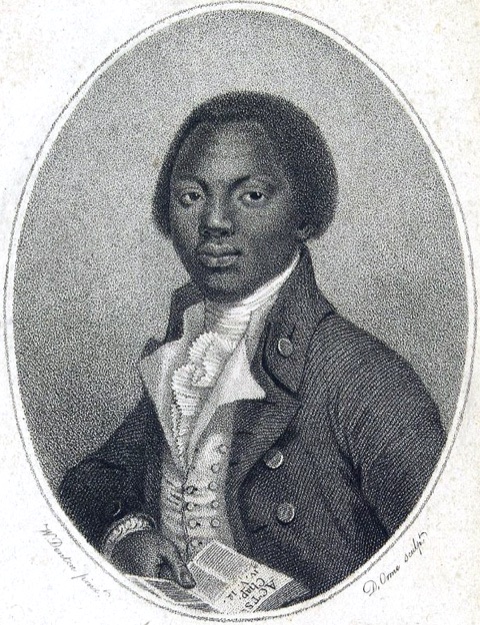
1745–1797
Biography
Olaudah Equiano (around 1745 to 1797), also known as Gustavus Vassa, was an African writer and abolitionist whose account of his own enslavement, The Interesting Narrative of the Life of Olaudah Equiano, became one of the most widely read books of the British antislavery movement. By his own account he was born in Essaka, in the Igbo-speaking region of what is now southeastern Nigeria, and was kidnapped along with his sister at about the age of eleven. He described being marched to the coast, sold to European traders, and carried across the Atlantic on the Middle Passage to Barbados and then Virginia.
In Virginia he was purchased around 1754 by Michael Henry Pascal, a lieutenant in the Royal Navy, who renamed him Gustavus Vassa after the sixteenth-century Swedish king. Under Pascal he crossed to England, learned to read and write, and served aboard warships during the Seven Years' War. He was baptized at St Margaret's, Westminster, in 1759. Rather than granting him freedom at the war's end, Pascal sold him in 1762 to Captain James Doran, who in 1763 sold him on to Robert King, a Quaker merchant based on Montserrat in the Caribbean.
Working for King in trade around the West Indies and North America, Equiano was able to buy and sell small goods on his own account, and in 1766 he purchased his freedom for forty pounds. As a free man he continued to travel by sea, sailing to the Mediterranean, the Caribbean, and North America, and in 1773 he joined the Arctic expedition led by Constantine Phipps that sought a northern passage toward the North Pole. In the 1780s he settled in London and became active in abolitionist circles, joining the Sons of Africa, a group of Africans in Britain campaigning against the slave trade. He brought the killing of enslaved people aboard the ship Zong to the attention of the campaigner Granville Sharp.
In 1786 he was appointed Commissary of Provisions for the expedition organized to resettle poor Black Londoners in Sierra Leone, but he was dismissed from the post in 1787 after publicly protesting mismanagement and corruption in the venture. Two years later, in 1789, he published The Interesting Narrative at his own initiative and sold it by subscription. The book went through nine editions during his lifetime and was translated into Dutch, German, and Russian. He toured England, Scotland, and Ireland to promote it, combining book sales with public advocacy against the slave trade.
In 1792 Equiano married Susannah Cullen at Soham in Cambridgeshire; they had two daughters, Anna Maria and Joanna. He died in London on 31 March 1797, a decade before Parliament passed the Slave Trade Act of 1807. Later scholarship has noted that a 1759 baptismal record and a 1773 naval document give his birthplace as South Carolina rather than Africa, and historians continue to debate whether the opening chapters describe his own memory or a composite account of African life; the remainder of the Narrative is closely corroborated by surviving records.
Life & Career
Why Equiano Matters
Equiano wrote the most influential first-person account of enslavement produced in the eighteenth century. Earlier antislavery writing in Britain had been dominated by white campaigners, pamphleteers, and clergy; The Interesting Narrative put a formerly enslaved African at the center of the argument, addressing Parliament and the reading public directly. Its commercial success, running to nine editions and multiple foreign translations in his lifetime, gave the abolition movement a document that combined autobiography, travel narrative, and moral appeal in a form ordinary readers would buy and finish.
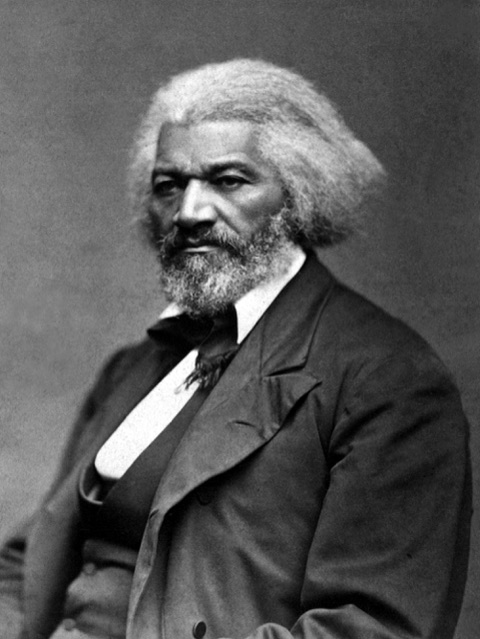
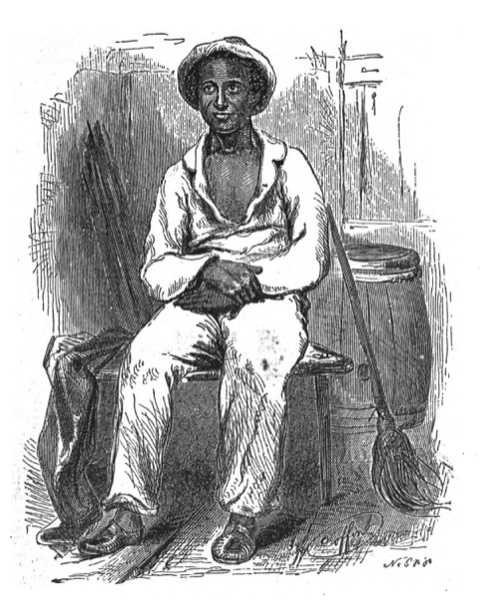
The book's structure helped define the slave narrative as a genre. Its movement from an idealized African childhood, through capture and the Middle Passage, to literacy, conversion, self-purchase, and free authorship established a template that later writers such as Frederick Douglass and Solomon Northup would recognize and adapt. Equiano's detailed description of the Middle Passage remains one of the most frequently cited firsthand accounts of the transatlantic crossing.
His public career also demonstrated a new kind of political participation. As a member of the Sons of Africa, a lecturer, a subscription publisher, and a correspondent who pressed cases like the Zong killings on figures such as Granville Sharp, Equiano worked as an organizer and self-promoter, not only as a symbol. He managed his own book's printing and distribution and used the proceeds to fund further advocacy.
The scholarly dispute over his birthplace has kept the Narrative at the center of academic attention, raising questions about memory, authorship, and the construction of identity that continue to occupy historians of slavery and of eighteenth-century Britain.