Samuel Tregelles
Self-taught English biblical scholar who produced a critical edition of the Greek New Testament built directly on the oldest surviving manuscripts. He collated codices across Europe and argued for a text drawn from ancient authorities rather than the received printed tradition.
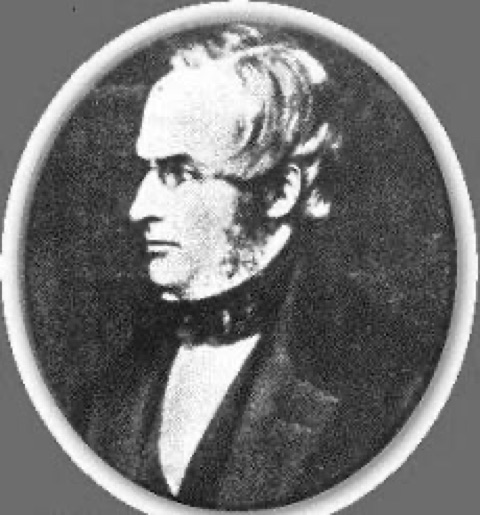
1813–1875
Biography
Samuel Prideaux Tregelles (1813 to 1875) was an English biblical scholar and textual critic who edited the Greek New Testament from the oldest known manuscripts. Born on January 30, 1813, at Falmouth in Cornwall, he grew up in a Quaker family of modest means and received little formal schooling beyond his teenage years. From about 1828 he worked as a clerk and then in the accounts office of the Neath Abbey ironworks in South Wales, teaching himself Greek, Hebrew, Welsh, Aramaic, and other languages in his spare hours.
His early study convinced him that the printed Greek text used by translators and commentators rested on late and inferior copies. He resolved to reconstruct the text from the most ancient manuscripts and the earliest versions and church-father quotations, and he spent decades traveling to European libraries to examine and collate them at first hand. In 1845 he went to Rome to study Codex Vaticanus, though the Vatican authorities restricted what he was permitted to copy. He also transcribed the palimpsest Codex Zacynthius, whose underlying Greek text he recovered and published.
Tregelles set out his program in An Account of the Printed Text of the Greek New Testament (1854), a survey of the manuscripts and of the editors who had preceded him, and he had earlier issued an edition of The Book of Revelation in Greek (1844). His central achievement was The Greek New Testament, Edited from Ancient Authorities, published in successive parts beginning in 1857 and continued over the following years, with the final portions completed by others after his death. It appeared in the same period as the editions of Constantin von Tischendorf, and the two men worked along broadly parallel lines toward a text grounded in the earliest evidence.
He also worked extensively in Hebrew and Old Testament study, producing an English translation of Gesenius's Hebrew and Chaldee lexicon and writing on the prophecies of Daniel. Raised a Quaker, he later left the Society of Friends and was associated for much of his life with the Plymouth Brethren, and much of his scholarship was carried on outside any university post and largely at his own expense. He was granted a Civil List pension in recognition of his labors.
On questions of prophecy Tregelles took a distinct position among the Brethren. In The Hope of Christ's Second Coming he argued that the church would pass through tribulation before Christ's return, rejecting the doctrine of a secret, any-moment rapture that was gaining ground among some of his contemporaries. His health broke down after a paralytic stroke around 1861, which slowed but did not halt his work on the Greek New Testament. He died at Plymouth on April 24, 1875.
Life & Career
Why Tregelles Matters
Tregelles belongs to the nineteenth-century movement that replaced the received Greek text of the New Testament, printed from a handful of late manuscripts, with an edition built on the oldest available witnesses. Working in Britain while Tischendorf worked on the Continent, he insisted that the text be settled by evidence rather than by inherited convention, and he documented the manuscripts, versions, and patristic citations on which each reading rested.
His method mattered as much as his edition. By collating major codices in person and publishing his account of the manuscript tradition, he made the grounds of textual decisions visible and checkable, and his work fed into the stream of scholarship that produced the later critical editions and the Revised Version of the English Bible.
He worked outside the universities for his entire career. Self-taught and largely self-supporting, he reached a technical standard that gained him recognition across Europe, and he carried out his collations and editions without an academic post or institutional salary.
Within the Plymouth Brethren, his writings on prophecy set out a historic, tribulation-enduring view of the second coming against the newer futurist teaching, and they continue to be cited in debates over the timing of the rapture.