R.H. Charles
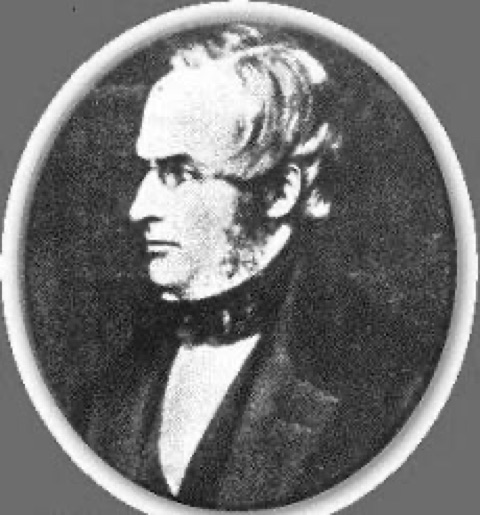
R.H. Charles was an Irish biblical scholar who produced the standard English translations and commentaries of Jewish apocalyptic and pseudepigraphal texts, including the Book of Enoch, the Book of Jubilees, and the Testaments of the Twelve Patriarchs. His two-volume Apocrypha and Pseudepigrapha of the Old Testament (1913) served as the reference edition of these writings for much of the twentieth century.
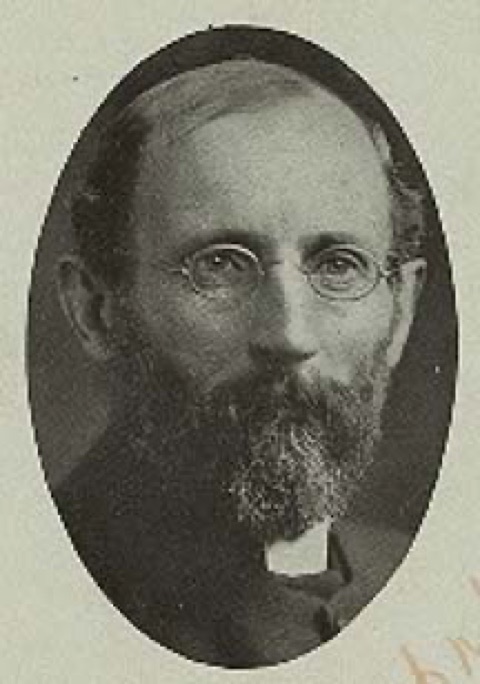
1855–1931
Biography
Robert Henry Charles (1855 to 1931) was an Irish biblical scholar and Anglican clergyman who became the leading English editor of Jewish and early Christian apocalyptic literature. Born in Cookstown, County Tyrone, on 6 August 1855, he was educated at Queen's College, Belfast, and at Trinity College, Dublin. He was ordained in the Church of Ireland and did parish work in London before turning almost entirely to scholarship.
Charles built his reputation on texts that had circulated only in fragments and in languages few Western scholars could read. The Book of Enoch survived complete only in Ge'ez, the classical language of Ethiopia, and Charles learned it in order to work directly from the manuscripts. His English translation of Enoch appeared in 1893, followed by a fuller critical edition of the Ethiopic text and a revised translation in 1912. He applied the same method to the Book of Jubilees, which he edited and translated in 1902, and to the Testaments of the Twelve Patriarchs in 1908.
He held a series of academic and ecclesiastical posts that gave him time for this work. Charles was Professor of Biblical Greek at Trinity College, Dublin, and later moved to Oxford, where he delivered the Jowett Lectures and the Schweich Lectures of the British Academy. He was elected a Fellow of the British Academy in 1906. In 1913 he was appointed a Canon of Westminster, and in 1919 he became Archdeacon of Westminster, holding both positions alongside his continued publishing.
His largest undertaking was The Apocrypha and Pseudepigrapha of the Old Testament, a two-volume collaborative edition published by Oxford at the Clarendon Press in 1913. Charles edited the whole and translated much of it himself, gathering the Apocrypha in the first volume and the pseudepigrapha in the second, each text supplied with introductions and detailed notes. The set remained the standard English reference for these writings until the appearance of newer collections in the later twentieth century.
Charles also worked on canonical books. He wrote a two-volume commentary on the Book of Revelation for the International Critical Commentary series, published in 1920, and a commentary on the Book of Daniel. His approach across all of these was consistently textual and comparative: he traced sources, reconstructed original readings, and argued for the influence of apocalyptic writing on the New Testament. He died in London on 30 January 1931.
Life & Career
Why Charles Matters
Charles gave English readers reliable access to a body of literature that had been almost entirely out of reach. Before his editions, works such as the Book of Enoch, the Book of Jubilees, the Testaments of the Twelve Patriarchs, and the Apocalypse of Baruch existed for most scholars only as scattered references or untranslated manuscripts in Ge'ez, Syriac, and Greek. By producing critical texts and annotated translations, he turned these writings into usable sources for the study of ancient Judaism.
His central scholarly claim was that this apocalyptic and pseudepigraphal literature formed an essential background to early Christianity. Charles argued that ideas about resurrection, final judgment, the messiah, and the end of the age developed in the centuries between the Old and New Testaments, and that documents like Enoch showed those ideas taking shape. This placed the writings of the New Testament within a continuous stream of Jewish thought rather than treating them in isolation.
The Apocrypha and Pseudepigrapha of the Old Testament fixed the English canon of these texts for a generation of students and clergy. Later editors, including those behind the collections assembled in the 1980s, built on and revised his work rather than replacing it wholesale, and his translations continued to be reprinted long after his death.
His commentary on Revelation extended the same method to a canonical book, reading it in light of the apocalyptic conventions he had spent his career mapping. Together his editions made the study of Jewish apocalyptic a recognized field in English-language scholarship.