J.C. Ryle
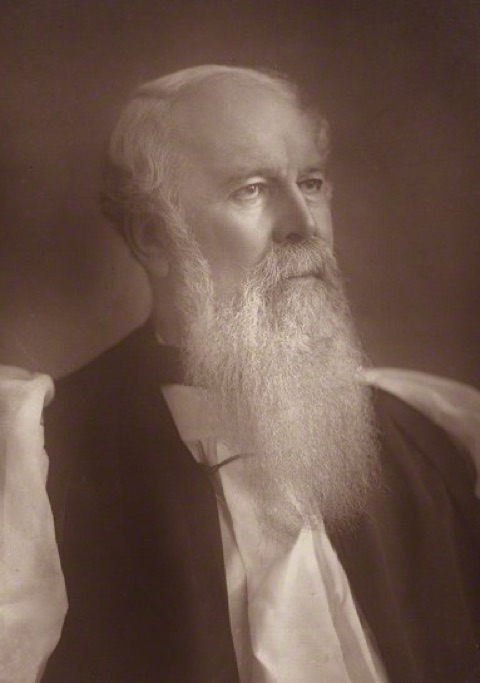
First Bishop of Liverpool and the leading evangelical voice in the Victorian Church of England. His Holiness and Expository Thoughts on the Gospels remained standards for over a century.
1816–1900
Biography
John Charles Ryle was born on May 10, 1816, in Macclesfield, Cheshire, the son of a wealthy banker. He was educated at Eton and Christ Church, Oxford, where he was a first-class scholar and a talented cricketer who played for Oxford against Cambridge.
Ryle's family was financially ruined in 1841 when his father's bank collapsed. This crisis, which left Ryle without resources, redirected his life toward the church. He was ordained in 1842 and served as a parish minister in several rural parishes in Suffolk for the next thirty-eight years.
During these decades, Ryle became the most prolific evangelical writer in the Church of England. His tracts, sold for a penny each, were distributed in the millions. His Expository Thoughts on the Gospels (1856-1873) provided plain, practical commentary for ordinary readers. His Holiness (1877) argued that true Christianity required active pursuit of godliness, not merely correct doctrine.
In 1880, at the age of sixty-four, Ryle was appointed the first Bishop of Liverpool, a new diocese created to serve the growing industrial city. He served as bishop for twenty years, building churches, schools, and institutions across the diocese.
Ryle died on June 10, 1900, in Liverpool.
Life & Career
Why Ryle Matters
Ryle was not an original theologian but a communicator of extraordinary clarity. His gift was making Reformed and evangelical theology accessible to ordinary English readers in an age when the Church of England was moving toward Anglo-Catholicism and theological liberalism.
Holiness was Ryle's most important theological statement. Against the rising holiness movement's claim of sinless perfection, Ryle argued that sanctification was a gradual process requiring lifelong effort, and that the greatest saints were most conscious of their remaining sin. The book defined evangelical Anglican spirituality for generations.
Ryle also preserved the Puritan heritage within Anglicanism at a time when it was being forgotten. His biographical work on the bishops and clergy of the seventeenth and eighteenth centuries kept evangelical history alive, and his plain style of writing deliberately echoed the Puritans rather than the ornate Victorian prose of his contemporaries.