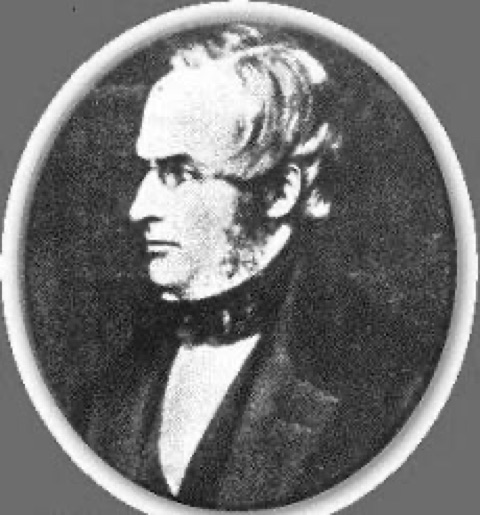
Tregelles’s careful, Scripture-grounded examination of what the Bible actually teaches about the second coming of Christ—and why it matters for the Church today.
One free account opens 250+ books and saves your place on every device. Google sign-in or an email link. No card.
You’re on the list — we’ll email you if this goes to print.
Included with your free account
This book, and 250+ more, free to read
A free account opens the whole library to read online, on your phone or at your desk. Open a book on one device and it is waiting at the same page on the next. The PDF and EPUB of every book are yours to keep, and audiobooks play in the same app.
250+ modernized editionsNot samples. The whole work, free.
Your place, on every devicePhone, tablet or desktop, same page.
131 audiobooksFrom $4.99 each, or all of them with a $50 gift.
Samuel Prideaux Tregelles was a renowned nineteenth-century biblical scholar and textual critic whose work on the Greek New Testament earned him recognition across Europe. In The Hope of Christ’s Second Coming, he brings that same scholarly rigor to a subject he believed the Church had too often approached with either speculation or indifference: what Scripture actually teaches about the return of Christ.
Tregelles argues that Scripture alone must be our guide on the second coming, warning against both fanciful prophetic speculation and the kind of vague sentimentalism that domesticates biblical promises into comfortable abstraction. He insists that if Scripture has spoken plainly on a subject, believers are obligated to listen—and if it has not spoken, we must resist the temptation to fill in the gaps with our own theories. Where the Word of God is clear, we are called to be learners, not judges.
Tracing the biblical testimony from Christ’s own prophetic discourse on the Mount of Olives through the apostolic teaching in the epistles and the Revelation, Tregelles shows that the Church has always been given a corporate hope: the visible, personal return of Christ in glory, accompanied by the resurrection of the dead and the gathering of His people. This is not a hope reserved for prophetic specialists or those with mastery of eschatological detail—it is plainly taught throughout the New Testament and meant to sustain believers through suffering, persecution, and trial. The patience of hope, not the restless excitement of speculative expectancy, is what Scripture calls the Church to embody as it waits for its Lord.
Scripture as Our Only Source
Scripture, inspired by the Holy Spirit, is the only source we have for learning anything about the coming of our Lord. If Scripture had been silent on the subject, we would know nothing about it; on any point where Scripture remains silent, we still know nothing. But where Scripture has spoken, we are called as learners to receive what it teaches. If we close our ears to this revelation, we are setting aside the truth of God. And if we substitute our own speculations, however unconsciously, we are adding to what God has already revealed.
Where Scripture does not speak clearly, differences of opinion are understandable. But where the Word of God speaks plainly, we have simply to listen and to learn. We are not entitled to demand a justification for what has been revealed before we agree to sit as students. Rather, we take the posture of those willing to be taught, and from that place we seek the Spirit’s guidance on how to apply what He sets before us. We must first receive revealed truth as something God has given for purposes that are surely wise, and only then can we grow in our understanding of its practical and moral significance.
Before Christ’s first coming, there had already been detailed revelation about Him through promise and prophecy. Scripture foretold the family from which He would come, His birthplace, the period of His arrival (measured from a decree to restore and rebuild Jerusalem), His miracles, His teaching, His rejection, His crucifixion, death, and burial, His atoning sacrifice, His resurrection, His ascension to the right hand of God the Father, and His remaining there until His enemies would be made His footstool.
All these central events surrounding His coming, along with many finer details, were laid out in ancient prophecy. Yet they were so little heeded that the claims of Jesus of Nazareth to be the Messiah were actually denied on the grounds that they matched what Scripture had foretold. “We know this man whence He is; but when Christ cometh no man knoweth whence He is” (John 7:27). This should serve as a warning to us about how we handle the prophecies that speak to our hopes. The uncompromising truth of God’s revealed Word will clash sharply, at least when measured against natural feeling, with anything colored by religious sentimentalism or by speculation, however refined or seemingly spiritual it may appear.
To those who accept as authoritative the words of the Lord Jesus and the teaching of the Holy Spirit through apostles and prophets, I want to address this question: How does Holy Scripture present the second coming of Christ, and why?
A Hope Given to the Whole Church
There were with the Lord Jesus on the Mount of Olives, just a few days before His suffering, a small group from that Church which He wished to instruct. Whatever He said to Peter, Andrew, James, and John on that occasion was not addressed to them as private individuals alone, but to them as representatives of that one body which had been given, among other gifts, a set of corporate hopes: expectations that were not confined to individuals, not merely promises to be fulfilled to those then living, but a hope belonging to the body as a whole, whose visible fulfillment would take place in the days of certain members living in some future age. And so the Lord Jesus, throughout that prophetic discourse, uses the words “ye” and “you” not to address the four disciples who had questioned Him as private persons, but to address the Church of the firstborn as a single body with a single hope, of which those four were simply representatives. Thus when He says, “When ye therefore shall see the abomination of desolation” (Matt 24:15), and “if they shall say unto you, Behold, He is in the desert, go not forth; behold, He is in the secret chambers, believe it not; for as the lightning,” etc. (Matt 24:26-27), He has in view, naturally, those to whom His words would actually apply, based on the age in which they would live and on their particular location and circumstances. But in case anyone should argue that these things referred only to the individuals then present, or should otherwise try to sidestep the force of that corporate “ye,” our Lord adds in the same discourse: “What I say unto you, I say unto all, Watch” (Mark 13:37).
The questions the disciples put to the Lord Jesus, and His reply to them, centered on His coming in glory. They asked, “What shall be the sign of thy coming, and of the end of the world?” (Matt 24:3). If we want to be properly instructed on these matters, we need to pay careful attention to His answer. In that answer, He first walks His disciples through a series of intervening events: deceivers would arise, nations would be thrown into turmoil, the faithful servants of Christ would face persecution, and the Gospel would be preached as a witness among all nations. All of this must precede the end, and in fact must continue right up to it. The phrases “the end is not yet” (v. 6) and “and *then* shall the end come” (v. 14) carry particular weight on this point.
Whatever the moral weight of the hope of Christ’s coming, He regarded it as in no way diminished by His own teaching about events that would come before it, since He described those preceding events in direct response to the disciples’ question. If we were to argue that knowledge of intervening events somehow undermines or contradicts the hope of the Lord’s coming, we would have to be working from a mistaken assumption. The point to notice here is not whether certain predicted events have *now* been fulfilled, but whether knowledge of those intervening events dims our hope in Christ’s second appearing. I will have occasion later to examine some of the particulars of this prophetic discourse. What is clear from simply reading the inspired record of what our Lord taught is that it places before the believing people of Christ the hope that He will himself come “in the clouds of heaven with power and great glory;” that then “He shall send forth His angels with a great sound of a trumpet, and they shall gather together His elect from the four winds, from the one end of heaven to the other;” that before this coming there “shall be great tribulation, such as was not from the beginning of the world to this time, no, nor ever shall be;” and that the parable of the fig tree is given to teach us how to watch and to wait. We are, in short, to expect the Lord *as* He has promised to come, and in no other way.
The Ascension Points to a Visible Return
When the apostles accompanied Jesus to the Mount of Olives forty days after His resurrection, He gave them their final charge: they were to be His witnesses “unto the uttermost part of the earth.” Then His ascension took place. “While they beheld, He was taken up, and a cloud received Him out of their sight” (Acts 1:9). Yet even as He left them, He was mindful of them. The two figures in white who appeared to the apostles pointed them forward to the day of His return: “This same Jesus, which is taken up from you into heaven, shall so come in like manner as ye have seen Him go into heaven.” These words, together with the earlier mention of the cloud that had carried Him from their sight, seem designed to direct the apostles, and to direct us, toward the specific promises and prophecies concerning His coming in the clouds of heaven.
They would have remembered Dan 7:13: “I saw in the night visions, and, behold, one like the Son of man came with the clouds of heaven, and came to the Ancient of days, and they brought Him near before Him; and there was given Him dominion, and glory, and a kingdom,” and so on. This scene is not the second coming of Christ itself, but rather what takes place in heaven immediately before it: a moment when a certain blasphemous power on earth, which has up to that point persecuted the saints of the Most High, is brought to judgment, and Christ moves to claim the kingdom. It is to this scene in Daniel that our Lord refers in the various passages where He speaks of His own future coming “with the clouds of heaven.” Those clouds accompany His appearing in glory at the very moment He receives the investiture of that kingdom.
In His discourse on the Mount of Olives, speaking of what would happen “immediately after the tribulation of those days,” our Lord specifies the darkening of the sun and moon, and so on: “*And then shall appear the sign of the Son of man in heaven, and then shall all the tribes of the earth mourn, and they shall see the Son of man coming in the clouds of heaven with power and great glory*” (Matt 24:30). This, then, was the expectation of the Church as declared by the Lord Himself before He suffered, an expectation the apostles were reminded of again when He had been taken up from them into heaven. When our Lord stood before the High Priest, He said: “*I adjure thee, by the living God, that thou tell us whether thou be the Christ the Son of God. Jesus saith unto him, Thou hast said; nevertheless, I say unto you, Hereafter shall ye see the Son of man sitting on the right hand of power, and coming in the clouds of heaven*” (Matt 26:64). Who can fail to see how plainly this refers to the manifestation of Christ’s glory? The chief priests and scribes had not heard the discourse on the Mount of Olives, but they had no doubt that our Lord was claiming to be the figure described as “the Son of man” in Dan 7, who would, He said, come forth and be seen in glory by those who had rejected Him. “Ye shall see” applies not to the specific individuals He was addressing at that moment, but to Israel in unbelief considered as a corporate whole.
In the revelation given to the beloved disciple on Patmos, we again find the same accompaniments of Christ’s second advent: “Behold, He cometh with clouds; and every eye shall see Him, and they also which pierced Him; and all kindreds of the earth shall wail because of Him” (Rev 1:7). The response to this promise is simply, “Even so. Amen.” So whether we see Christ’s coming described in connection with judgment on persecuting Gentile powers, or in relation to Israel, or when His believing people are addressed concerning their hope, the event is spoken of in remarkably consistent language. No hope is set before the Church prior to the Lord’s appearing in the clouds of heaven. This truth is taught to us in nearly every way imaginable, because the Lord knew that our minds would be prone to the same inattention, and that the Church would suffer from the same dimness of understanding, that He found in the disciples who surrounded Him during His earthly ministry. Are we looking forward to this appearing of the Lord in visible glory, after iniquity and oppression have reached their height, when He should be received into the heavens until He comes forth to set His feet on those whom Jehovah will have made His footstool, when He gives Him the commission, “Rule thou in the midst of thine enemies,” immediately after the unequalled tribulation? Or have we formed some other hope in our minds? It is to this coming in the clouds of heaven that the apostles were directed when Jesus ascended; and it is to the testimony of this coming that the apostle John responds, “Even so; Amen.”
The Hope Before the Details
It is sometimes assumed that a careful, detailed study of biblical prophecy is necessary before anyone can form a clear view of how Scripture presents the second coming of the Lord. As a result, when prophetic details are poorly understood, or when someone finds them genuinely difficult, the straightforward subject of the Lord’s coming tends to get set aside without any firm conclusion, or else the person simply defers, in a vague and uncommitted way, to whoever seems to be more knowledgeable about Scripture. But while all prophetic details, when rightly learned from the Word of God, certainly have their value in this area as in others, a grasp of such fine points is far from being a necessary prerequisite. What is truly indispensable, as the prior qualification, is a clear understanding of how the Lord’s second advent is actually taught in the Word of God. With that foundation in place, a Christian mind can then engage with the details of those prophecies that address what lies ahead for the Jews, the Gentiles, and the Church of God. This follows naturally from the fact that the second coming is the pivotal turning point in God’s entire plan for dealing with humanity across the ages. If we are to learn anything about the details of revealed truth, then the primary question is this: how is our hope, the coming of the Lord Jesus, set before us?
If a detailed knowledge of prophetic expectations were required before anyone could understand the Lord’s coming, how could the apostles, or the Lord Jesus Himself, have taught anything on the subject at all? How could they have used it as an animating hope, one that leads to watchfulness, sustains believers through trial, and purifies them? Yet they did use it in exactly that way, and the reality of that hope was grasped so clearly that its circumstances could be taught and applied in terms of their moral weight.
A striking example of this appears at the close of 1 Thess 4. There, the apostle comforts the Thessalonian Christians about their departed brothers and sisters, teaching them something they apparently did not yet fully understand: that the whole Church of the firstborn will be gathered together at the Lord’s coming, with the dead raised and the living transformed. He then describes how the Lord will come: “The Lord himself shall descend from heaven with a shout, with the voice of the archangel, and with the trump of God: and the dead in Christ shall rise first: then we which are alive and remain shall be caught up together with them in the clouds, to meet the Lord in the air: and so shall we ever be with the Lord. Wherefore comfort one another with these words.”
Any Christian, however little instructed, can do exactly that, simply by accepting the apostle’s words as the truth of God. The scene described is the very opposite of secrecy: the Lord comes with a shout; His call will wake the dead; and beyond that, the voice of the archangel will also be heard; and as if to make the public nature of the event unmistakably clear, there will be the sounding of the trump of God. This is precisely what Christ promised in Matt 24:31, when He comes with the clouds of heaven. To claim that this triple sound will not be heard by all would be to add something to Holy Scripture that directly contradicts its testimony. We might just as well argue that “every eye shall see Him” means He will only be visible to a select few. Above, the shout, the voice, and the trumpet will ring out; on earth, the graves of all the sleeping family of faith will be opened; the sleepers will arise; and then those still living will be caught up with them to meet the Lord in the air. This, as set forth here, should be our hope. It may have been necessary to teach the Thessalonians that the day of the Lord still had to be waited for, and that the falling away and the revelation of the man of sin had first to take place; but even these things connect directly to the same hope, since this head of evil is the one “whom the Lord shall consume with the spirit of His mouth, and shall destroy with the brightness of His *coming*” (2 Thess 2:8). “It is a righteous thing with God to recompense tribulation to them that trouble you; and to you who are troubled, rest with us, when the Lord Jesus shall be revealed” (2 Thess 1:6-7). So at the revelation of Christ from heaven, His Church will find rest and their oppressors will meet their destruction. The Spirit assigns the same moment to both. The Church is called to the patience of hope, not to the restless excitement of speculative expectancy. “The Lord direct your hearts into the love of God, and into the patient waiting for Christ” (2 Thess 3:5).
A Long Interval Was Always Expected
In His final discourse to the apostles on the evening before His crucifixion (John 14-16), Jesus envisioned His Church remaining on earth for a significant period of time. The instruction He gave that night was meant to guide it through exactly that kind of interval, and the sending of the Holy Spirit as the other Paraclete was intended to equip those who would have to live and act under such conditions. At the opening of this discourse, Jesus tells them plainly what their hope should be: “I will come again and receive you unto myself, that where I am, there ye may be also” (John 14:3). Every direction, every warning, and every promise of support He gave was therefore addressed to people waiting in precisely this way. From this we can draw a clear lesson: this is how we are called to wait, and there is no other way. One thing the Lord promised His disciples in particular was suffering: “If the world hate you, ye know that it hated me before it hated you... if they have persecuted me, they will also persecute you” (John 15:18, 20). “They shall put you out of the synagogues; yea, the time cometh that whosoever killeth you will think that he doeth God service” (John 16:2). Taken as a whole, these three chapters offer proof after proof, not only that there would be (as history has since confirmed) a long interval between the Lord’s departure and His personal return, but that the disciples were explicitly taught to expect such an interval. They understood, in other words, that the Lord’s coming could not happen until certain events had unfolded and until certain defining patterns of opposition between the Church and the world had made themselves fully visible.
Persecution is listed here as one of the significant signs, and it had already been specified in detail in Matt 24: “Then shall they deliver you up to be afflicted, and shall kill you; and ye shall be hated of all nations for my name’s sake: and then shall many be offended, and shall betray one another, and hate one another” (vv. 9-10). This describes how the Church would be treated from the outside; but would everything be truth and peace within its own professing boundaries? “Many false prophets shall arise, and shall deceive many; and because iniquity shall abound, the love of many shall wax cold” (vv. 12-13). All of this clearly marks out a span of time that must pass before Christ would come to receive His people to Himself.
In every passage where the commission to preach the Gospel is given, it is clear that a substantial period of time is assumed, during which the Gospel would go out into its various spheres of witness. “All power is given unto me in heaven and in earth; go ye therefore and teach all nations, baptizing them in the name of the Father, and of the Son, and of the Holy Ghost; teaching them to observe all things whatsoever I have commanded you: and, lo, I am with you alway, even unto the end of the world [age]” (Matt 28:18-20). “Go ye into all the world, and preach the Gospel to every creature” (Mark 16:15). “Ye shall receive power after that the Holy Ghost is come upon you; and ye shall be witnesses unto me, both in Jerusalem and in Samaria, and unto the uttermost parts of the earth” (Acts 1:8).
Samuel Prideaux Tregelles (1813–1875) was an English biblical scholar and textual critic, widely regarded as one of the foremost New Testament scholars of the nineteenth century. Self-educated in Greek, Hebrew, and other ancient languages, he devoted his life to producing a critical edition of the Greek New Testament based on the most ancient manuscripts, working independently and in parallel with the more famous Constantin von Tischendorf. A Plymouth Brethren member for much of his life, Tregelles combined rigorous scholarship with deep evangelical conviction. His work on the text of the New Testament earned him recognition from universities across Europe, and his contributions to biblical studies remain respected to this day.
“Updated Works has been an incredible blessing to my Christian life and ministry… remarkably faithful to the original authors while making these timeless treasures understandable for modern readers.”