Richard Hooker
Master of the Temple and author of Of the Laws of Ecclesiastical Polity (1593 to 1597) and A Learned Discourse of Justification (preached 1586), the leading theologian of the Elizabethan Church of England.
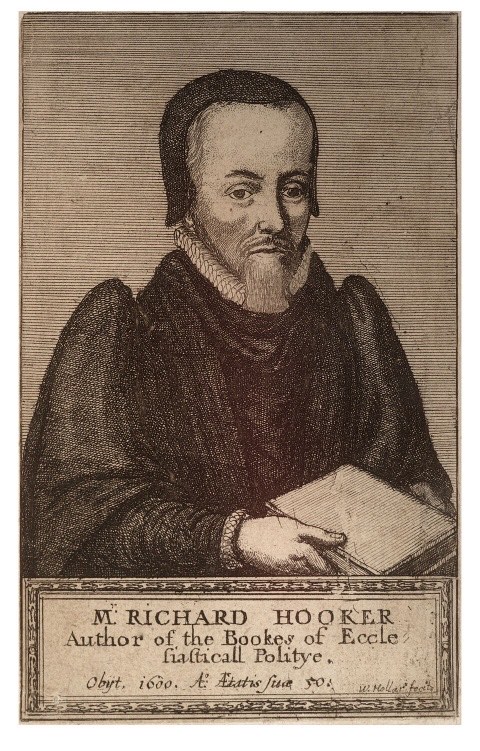
1554–1600
Biography
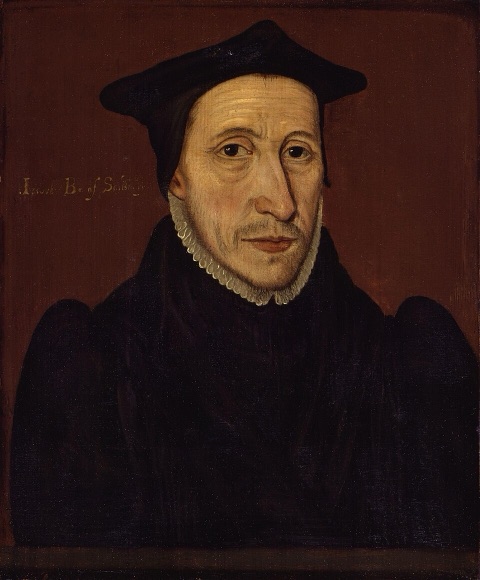
Richard Hooker was born in 1554 AD at Heavitree, just outside Exeter in Devon, into a family of modest means. His uncle John Hooker, the chamberlain of Exeter, brought the boy to the attention of John Jewel, Bishop of Salisbury and the leading defender of the Elizabethan Church of England, who paid for his education and sent him to Corpus Christi College, Oxford. Hooker spent most of the next fifteen years there, becoming a fellow of the college in 1577, and was ordained a priest of the Church of England.
In 1585 he was appointed Master of the Temple, the church in London that served the lawyers of the Inner and Middle Temple. The afternoon lecturer there was Walter Travers, a leading Presbyterian who wanted the English church reordered on the Genevan model, and the two men soon disagreed in public. Hooker preached in the morning and Travers answered him in the afternoon. Travers objected above all to Hooker's statement that thousands of their fathers who had lived under the papacy might have been saved through God's mercy, since they had sinned in ignorance. In March 1586 Archbishop John Whitgift silenced Travers, who appealed to the Privy Council, and Hooker wrote an answer to his complaints. The sermons Hooker preached in his own defense were later published as A Learned Discourse of Justification, Works, and How the Foundation of Faith Is Overthrown.
The controversy turned Hooker toward the larger questions behind it: what authority Scripture, reason and the church each have, and whether the Church of England's order and worship could be defended against those who wanted them replaced. In 1591 he left the Temple for the parish of Boscombe in Wiltshire, with a prebend in Salisbury Cathedral, and gave himself to writing. The first four books of Of the Laws of Ecclesiastical Polity were published in 1593 and the long fifth book in 1597. In 1595 he became rector of Bishopsbourne, near Canterbury, where he died on November 2, 1600, at the age of forty-six. The remaining books of the Laws appeared long after his death, and his sermons and tracts, including the Discourse on justification, were printed at Oxford in 1612 by Henry Jackson. Izaak Walton's Life of Hooker, first published in 1665, fixed the image of him as a quiet, learned and patient country parson.
Life & Career
Why Hooker Matters
Hooker gave the Elizabethan Church of England its fullest theological defense. Of the Laws of Ecclesiastical Polity answered the Presbyterian claim that Scripture prescribes one form of church government for all times, and that whatever Scripture does not command is forbidden. Hooker argued instead that God governs the world by a hierarchy of laws, eternal, natural and revealed, that reason is itself a gift of God for discerning many of them, and that in matters Scripture leaves undetermined a church may order its government and worship by reason and lawful authority. On this ground he defended the episcopal order, the Book of Common Prayer and the ceremonies of the English church.
On the doctrine of salvation he stood with the Reformation. A Learned Discourse of Justification teaches that the righteousness by which we are justified is Christ's, imputed to us through faith, perfect but not inherent in us, while the righteousness of sanctification is inherent but never perfect. He calls Rome's doctrine of infused grace, increased by works and repaired by penance, a perversion of Christ's truth, and he argues that its teaching on merit overthrows the foundation of faith. His careful distinctions mark the Discourse as his own. He separated those who deny the foundation of faith directly from those who overthrow it only by consequence, error from heresy, and the teachers of error from those simply misled by them. On these grounds he held that Rome, though gravely corrupt, remained a church, and that thousands who had lived and died in it in ignorance might have been saved.
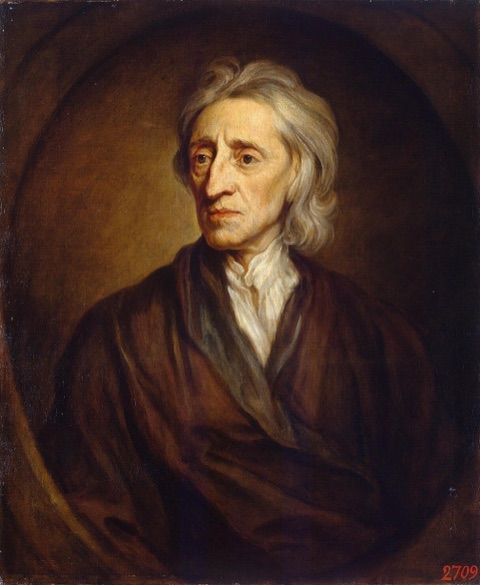
Later generations claimed Hooker for different causes. Seventeenth-century defenders of episcopacy and the Prayer Book made him their authority, and the Laws became a founding text of Anglican theology. His account of law, consent and the commonwealth was read by political writers as well, and John Locke cited "the judicious Hooker" repeatedly in his Second Treatise of Government.