Volume 1 of Josephus's twenty-book Antiquities of the Jews, his 93 AD Greek retelling of Hebrew scripture for a Roman audience — opening with the Creation, Cain and Abel, and Noah's Flood, with cross-references to Berosus the Chaldean, Manetho, and Nicolaus of Damascus.
One free account opens 300+ books and saves your place on every device. Google sign-in or an email link. No card.
You’re on the list — we’ll email you if this goes to print.
Included with your free account
This book, and 300+ more, free to read
A free account opens the whole library to read online, on your phone or at your desk. Open a book on one device and it is waiting at the same page on the next. The PDF and EPUB of every book are yours to keep, and audiobooks play in the same app.
300+ modernized editionsNot samples. The whole work, free.
Your place, on every devicePhone, tablet or desktop, same page.
132 audiobooksFrom $4.99 each, or all of them with a $50 gift.
Antiquities of the Jews is Josephus's twenty-book history of the Jewish people from the Creation to the outbreak of war with Rome in 66 AD, completed in 93-94 AD in Rome and dedicated to his patron Epaphroditus. Josephus wrote it in Greek for a Roman and Hellenistic audience, consciously modeling his scope and twenty-book format on Dionysius of Halicarnassus's Roman Antiquities. Volume 1 opens with Josephus's Preface and the early books, beginning with the Genesis account: creation, the garden, Cain and Abel, Noah's flood, and the earliest genealogies from Adam.
Josephus retells the Hebrew scriptures for readers raised on Homer and Herodotus, stripping Hebrew idiom and supplying etymologies — Adam from red earth, Issa for woman, Eve as 'mother of all the living' — along with geographic identifications: the Phison river is the Ganges, the Geon is the Nile. He cross-references external authorities at every step: Berosus the Chaldean on bitumen still chipped from the ark on the mountains of the Cordyaeans, Nicolaus of Damascus's ninety-sixth book on Mount Baris in Armenia, Hieronymus the Egyptian's Phoenician Antiquities, and a catalogue of Greek historians including Hesiod, Hecataeus, Hellanicus, Acusilaus, and Ephorus on the long lifespans of the ancients. Josephus also credits Moses with a philosophical framework prior to legislation, arguing that Moses directed his people's minds upward to God and creation before giving laws, unlike Greek lawgivers who built codes on contracts and projected human vices onto the gods.
Antiquities is the primary extrabiblical source for Second Temple Judaism and a touchstone for every later Christian historian from Eusebius onward. It preserves otherwise-lost fragments — the Berosus and Nicolaus passages on the Flood appear nowhere else — and William Whiston's 1737 English translation made the full text a fixture in Protestant households for two centuries. For readers coming from Genesis, this volume shows how a first-century Jewish priest working under Roman patronage tried to make the Hebrew scriptures intelligible and defensible to a Greek-speaking world that had never read them.
Preface
1. Those who set out to write history do so, as far as I can tell, for many different reasons rather than any single shared purpose. Some are drawn to it as a way to display their literary skill, hoping to build a reputation for elegant writing. Others write history to honor those involved in the events they describe, sparing no effort in the process and sometimes even pushing beyond their own abilities to do justice to their subjects. Then there are those who feel compelled to write history simply because they were present at the events themselves, and so cannot in good conscience leave them unrecorded for the benefit of future generations. And there are those, not a few in number, who are motivated by the sheer significance of the events they witnessed, feeling a duty to bring them out of obscurity and into public view. Of all these reasons, I must confess that the last two were my own. Having been personally involved in the war between the Jews and the Romans, and having direct knowledge of its specific events and its ultimate outcome, I felt obligated to set down its history, particularly because I could see that other writers were distorting the truth of what actually happened.
2. I have undertaken this present work because I believe it will prove genuinely worthwhile to Greek readers everywhere, as it will cover all of our antiquities and the structure of our government, drawn from the Hebrew Scriptures. When I wrote about the war, I had originally planned to include an account of who the Jews were from the beginning: what hardships they endured, what laws shaped their devotion to God and their practice of virtue, and what wars they fought in distant ages before they were reluctantly drawn into this final conflict with Rome. But that material would have expanded the work enormously, so I set it apart as its own separate treatise, with its own beginning and its own conclusion. As time passed, however, as tends to happen with anyone who takes on something ambitious, I grew tired and my progress slowed. The subject was vast, and translating our history into a foreign language, one we are not accustomed to writing in, proved genuinely difficult. Even so, there were people who wanted to know our history and urged me to press on. Chief among them was Epaphroditus, a Roman patron of literature and a man with a deep love of learning in all its forms, but with a particular passion for history, shaped by his own direct involvement in great events and dramatic turns of fortune. Through all of it, he showed a remarkable strength of character and an unwavering commitment to virtue. I gave way to his encouragement; he has a gift for inspiring capable people to put their talents to work in ways that are both useful and worthwhile. I was also embarrassed to let my own laziness outweigh the genuine satisfaction that comes from serious, meaningful study. So I pushed myself forward and returned to the work with renewed energy. Beyond all of this, I had other reasons that weighed on me: our ancestors were always willing to share their traditions with others, and a number of Greek scholars had gone to considerable lengths to learn about our people.
3. When I looked into it, I found that Ptolemy II was a king of remarkable dedication to learning and the collection of books. He was also particularly eager to obtain a Greek translation of our law and the system of government it describes. Eleazar the high priest, a man second to none who held that office among us, did not begrudge the king access to this treasure. He would ordinarily have refused such a request, but he knew that our nation's custom was never to withhold what we held dear from those who wished to know it. With that in mind, I felt it was right for me to follow the high priest's example of generosity, and to assume that even today there are many people who love learning as that king did. After all, Ptolemy did not receive all of our writings at that time. The scholars sent to Alexandria gave him only the books of the law, while a vast number of other subjects remained in our sacred texts. Those texts contain the history of five thousand years, a span that includes many remarkable events, the shifting fortunes of war, the great deeds of commanders, and sweeping changes in the form of our government. Anyone who reads through this history will find, above all else, that things go well for people, even to a remarkable degree, and that God offers the reward of happiness to those who follow His will and do not dare to break His excellent laws. But to the extent that people drift from careful obedience to those laws, what was once achievable becomes impossible, and whatever they pursue as something good turns into an irreversible disaster. I urge everyone who reads these books to turn their minds toward God, and to consider whether our lawgiver understood His nature in a way truly worthy of Him, whether he attributed to God only those actions that befit His power, and whether he kept his writings free from the indecent myths that others have invented. He could easily have invented such stories himself, given the enormous distance of time between his era and ours, for he lived two thousand years ago. At that vast remove, even the poets have not dared to invent genealogies for their gods, let alone accounts of human deeds or legal codes. As I move forward, I will describe what our records contain in proper chronological order, as I have already committed to doing throughout this work, adding nothing to what is there and leaving nothing out.
4. Since nearly our entire constitution rests on the wisdom of Moses, our lawgiver, I need to say a few things about him before proceeding, though I'll keep it brief. Without this, readers of my book might wonder why a work that promises an account of laws and historical events contains so much philosophy. The reader should understand that Moses considered it absolutely essential for anyone who wished to live well and give laws to others to first contemplate the nature of God, and then, by reflecting on God's works, to imitate the finest of all patterns as closely as human nature allows. Without such contemplation, the lawgiver himself could not have possessed sound judgment, nor could anything he wrote have genuinely promoted virtue in his readers. This is because people must first be taught that God is the Father and Lord of all things, that He sees everything, and that He grants a happy life to those who follow Him while bringing inevitable suffering on those who stray from the path of virtue. When Moses set out to teach this to his people, he did not begin establishing his laws the way other lawgivers did, building them on contracts and the rights of one person toward another. Instead, he directed their minds upward toward God and His creation of the world, persuading them that human beings are the most excellent of all God's creatures on earth. Once he had brought them to embrace religion, he found it easy to bring them into line in everything else. Other lawgivers followed myths and, through their teachings, projected the most shameful human vices onto the gods, giving wicked people convenient excuses for their crimes. Moses, by contrast, having demonstrated that God possesses perfect virtue, held that human beings should likewise strive to share in it, and he imposed the harshest penalties on those who thought or believed otherwise. I urge my readers, therefore, to approach this entire work with that perspective in mind, because doing so will show them that nothing in it conflicts with either the majesty of God or His love for humanity. Everything here relates to the nature of the universe, while our lawgiver speaks some things wisely but in riddles, others through fitting allegory, and still others, where plain explanation was needed, with complete directness and clarity. Those who want to understand the reasoning behind everything will find here a rich and fascinating philosophical framework, which I will set aside for now but intend to write about fully once I have finished the present work, if God grants me the time. I will now turn to the history before me, but first I will recount what Moses says about the creation of the world, as I find it described in the sacred books in the following manner.
Book 1: Covering 3,833 Years — From the Creation to the Death of Isaac
The first book of Josephus's Antiquities covers the span from the creation of the world to the death of Isaac, a period the sacred writings record as 3,833 years.
Chapter 1: The Constitution of the World and the Disposition of the Elements
1. In the beginning, God created the heavens and the earth. The earth was not yet visible; it lay buried under thick darkness while a wind moved across its surface. Then God commanded light into existence. When the light appeared, He surveyed the whole mass and separated the light from the darkness, naming one Night and the other Day. He called the boundary between them, that threshold of light giving way to rest, the Evening and the Morning, and this was the first day. Moses, notably, described it as "one day" rather than "the first day," and I could offer an explanation for that right now; however, since I have already promised to address such questions in a dedicated work, I will save that discussion for its proper place. On the second day, God set the heavens over the whole world, drawing them apart from everything else and establishing them as their own distinct realm. He surrounded them with a crystalline firmament, shaping it to complement the earth and equipping it to supply moisture, rain, and dew. On the third day, He caused the dry land to emerge from the waters that encircled it, and on that same day He brought forth plants and seeds from the earth. On the fourth day, He filled the heavens with the sun, the moon, and the stars, setting each on its appointed course so that the changing of the seasons would be clearly marked. On the fifth day, He brought forth living creatures: those that swim in the sea and those that fly through the air. He also arranged them in pairs suited for reproduction, so that each kind would increase and multiply. On the sixth day, He created the four-footed animals, making them male and female, and on that same day He formed man as well. Moses tells us, then, that the entire world and everything in it was made in exactly six days, and that the seventh day was one of rest and relief from the labor of creation. It is for this reason that we observe a day of rest from our own work each week and call it the Sabbath, a word that means "rest" in the Hebrew language.
2. After the seventh day, Moses shifts into a more philosophical mode and describes the creation of man in these terms: God took dust from the ground, shaped a human form from it, and breathed into him a spirit and a soul. This man was called Adam, a name that in Hebrew means "one who is red," because he was formed from red earth in its purest, most natural state. God then brought all the living creatures He had made before Adam, male and female of each kind, and Adam gave them the names they still carry today. But when God saw that Adam had no female companion and no one to share his life with, and that Adam himself marveled at the paired nature of the other animals, God caused him to fall into a deep sleep, removed one of his ribs, and from it formed the woman. When she was brought to Adam, he recognized her immediately and understood that she had come from his own body. In Hebrew, a woman is called Issa, but this particular woman was given the name Eve, which means "mother of all the living."
3. Moses goes on to say that God planted a garden in the east, filled with every kind of flourishing tree. Among them stood the tree of life and another tree, the tree of knowledge, through which one could come to understand good and evil. God brought Adam and his wife into this garden and charged them with tending its plants. The garden was watered by a single river that encircled the whole earth before dividing into four branches. The first, Phison (whose name means "multitude"), flows into India and empties into the sea; the Greeks know it as the Ganges. The Euphrates and the Tigris both flow down toward the Red Sea. The name Euphrates, or Phrath, carries the sense of either "dispersion" or "flower," while Tigris, also called Diglath, suggests something swift and narrow in its course. The fourth river, Geon, runs through Egypt, and its name points to something rising from the east; the Greeks call it the Nile.
4. God commanded Adam and his wife to eat freely from all the other plants in the garden, but to leave the tree of knowledge alone, warning them that if they touched it, it would bring about their ruin. At that time, all living creatures shared a common language, and the serpent lived alongside Adam and Eve. Seeing how happily they lived in obedience to God's commands, the serpent grew envious, and calculating that disobedience would lead them into misery, he set out with malicious intent to persuade the woman to eat from the tree of knowledge. He told her that the tree held the understanding of good and evil, and that once they gained that understanding, they would live a truly happy life, one no less than the life of a god. With this argument he won her over, convincing her to disregard God's command. She tasted the fruit, found it pleasing, and then persuaded Adam to do the same. Immediately afterward, they became aware of their nakedness before each other, and feeling ashamed to appear that way, they devised a way to cover themselves, for the tree had sharpened their minds. They gathered fig leaves, tied them in front of themselves out of modesty, and believed they were better off than before, now that they understood what they had been lacking. But when God came into the garden, Adam, who had always come forward eagerly to speak with Him, was so weighed down by guilt over what he had done that he slipped away and hid. God was struck by this and asked what had caused Adam to behave this way, and why someone who had once taken such pleasure in their conversations was now running from them. Adam said nothing, his silence betraying his awareness that he had broken God's command. God then spoke: "I had already arranged everything so that both of you could live happily, free from hardship, worry, and distress of mind. Everything you could ever need for your enjoyment and comfort was to grow up through my care, on its own, without any toil or effort on your part. That kind of toil brings on old age quickly, and death follows close behind. But you have thrown away this gift I gave you and turned your back on my commands. Your silence is not a sign of innocence; it is a sign of a guilty conscience." Even so, Adam tried to excuse himself, asking God not to be angry with him, and placed the blame on his wife, claiming she had misled him and drawn him into wrongdoing. Eve, in turn, pointed the finger at the serpent. God punished Adam for so weakly giving in to his wife's persuasion, declaring that the ground would no longer yield its produce on its own. From then on, it would have to be worked hard before it gave anything, and even then it would withhold some of what it could produce. He laid on Eve the discomfort of pregnancy and the sharp pain of childbirth, because she had used the same reasoning on Adam that the serpent had used on her, and had drawn him into a wretched situation. As for the serpent, God stripped him of the power of speech, furious at the malice he had shown toward Adam. He also placed poison beneath the serpent's tongue and made him an enemy of humanity, directing people to aim their blows at his head, since that was where his harmful intentions resided and where he was most vulnerable to retribution. God then took away the use of his feet, leaving him to roll along the ground and drag himself through the dirt. After pronouncing these punishments, God removed Adam and Eve from the garden and sent them to another place.
Chapter 2: Concerning the Posterity of Adam, and the Ten Generations from Him to the Deluge
1. Adam and Eve had two sons: the elder was named Cain, a name that means "possession," and the younger was Abel, which means "sorrow." They also had daughters. The two brothers were drawn to very different ways of life. Abel, the younger, was devoted to righteousness; he believed that God was present in everything he did, and this conviction shaped him into a man of genuine virtue who worked as a shepherd. Cain, by contrast, was deeply wicked in many respects and consumed above all by greed. He was the first to devise the practice of plowing the ground. He eventually murdered his brother, and the circumstances were these: both brothers had decided to offer a sacrifice to God. Cain brought produce from the earth and the fruits of his farming, while Abel brought milk and the firstborn of his flocks. God took far greater pleasure in Abel's offering, since He was honored with what the earth had yielded naturally, rather than with what a greedy man had wrested from the soil by force. This preference enraged Cain, and he killed his brother, then hid the body, believing he could escape detection. But God knew what had happened. He came to Cain and asked where his brother was, noting that he had not seen the two of them together for many days, as he normally would have. Cain was at a loss and didn't know how to answer. At first he claimed he had no idea where his brother had gone, but when God pressed him hard, clearly determined to get at the truth, Cain replied that he was not his brother's guardian or keeper, and had no obligation to watch his every move. God then confronted Cain directly as his brother's murderer, saying: "I find it remarkable that you claim not to know what became of a man you yourself destroyed." Even so, God did not put Cain to death, because Cain had offered sacrifice and through that act appealed to God not to deal with him in the full severity of His anger. Instead, God placed a curse on him and declared that the punishment would extend to his descendants in the seventh generation. He also drove Cain and his wife out of that land. When Cain expressed fear that he would wander into the wilderness and be killed by wild animals, God told him not to torment himself with such dark thoughts, and assured him he could travel freely across the whole earth without fear of harm from any beast. God then placed a mark on him so that he would be recognized, and sent him on his way.
2. After traveling through many lands, Cain settled with his wife and built a city called Nod, where he raised his family. But his punishment did nothing to reform him; it only deepened his corruption. He lived entirely for physical pleasure, and he didn't care who he had to harm to get it. He built his wealth through theft and violence, drew others into lives of robbery, and became a powerful influence for wickedness. He also dismantled the simple, honest way of life that people had known before him, introducing the concepts of measurements and weights. Where people had once lived with innocence and generosity, he replaced that world with cunning and deceit. He was the first to mark off boundaries on land, and he built a city, surrounded it with walls, and forced his family to live within them. He named that city Enoch, after his eldest son. From Enoch came Jared, then Malaliel, then Mathusela, then Lamech, who fathered seventy-seven children by his two wives, Silla and Ada. Among Ada's sons was Jabal, who pitched tents and lived as a shepherd. His brother Jubal, born of the same mother, devoted himself to music and invented the psaltery and the harp. Tubal, a son by the other wife, surpassed all other men in physical strength and became renowned for his skill in warfare. He pursued bodily pleasures through that same strength, and he was also the first to master the craft of working with brass. Lamech also had a daughter named Naamah. Because he was perceptive in matters of divine judgment, he understood that punishment would come upon him for Cain's murder of his brother, and he told his wives as much. Even while Adam was still alive, the descendants of Cain had grown deeply wicked, each generation outdoing the last in corruption. They were brutal in war and relentless in robbery, and even those who stopped short of murder showed no restraint in shameless behavior, injustice, and greed.
3. Adam was the first man, formed from the earth, and after Abel's murder and Cain's exile, he became deeply concerned about leaving descendants behind. At two hundred and thirty years old, he felt a powerful longing for more children. He went on to live another seven hundred years before he died. He fathered many children during that time, but the one who mattered most to this account was Seth. The others are too numerous to list here, so what follows will focus on Seth's line alone. As Seth grew up and reached the age where he could distinguish right from wrong, he proved himself a man of genuine virtue. His character shaped those who came after him: his children followed his example, and they too lived with integrity. Generation after generation, they shared the same land in peace, free from serious conflict or misfortune, until each of them died in their time. They were also the ones who developed the particular branch of knowledge concerned with the heavenly bodies and their movements. Knowing that this knowledge could easily be lost before it spread widely enough to survive, and aware of Adam's prophecy that the world would face two great destructions, one by fire and one by flood, they built two pillars: one of brick and one of stone. They carved their discoveries into both, reasoning that if the brick pillar were destroyed by floodwaters, the stone one would survive and preserve their findings for future generations, while also recording that a brick pillar had once stood alongside it. That stone pillar is said to remain in the land of Siriad to this day.
Chapter 3: Concerning the Flood — How Noah Was Saved in an Ark with His Family, and Afterward Settled in the Plain of Shinar
1. The descendants of Seth continued to honor God as the Lord of all creation and remained deeply committed to virtue for seven generations. Over time, however, they fell away from the path their ancestors had walked. They abandoned the worship God had appointed for them and stopped caring about justice toward their fellow human beings. Whatever zeal they had once shown for virtue, they now matched with twice as much wickedness, and in doing so they made God their enemy. Many of the angels of God took women as companions and fathered sons who proved to be unjust and contemptuous of everything good, emboldened by confidence in their own physical power. Tradition holds that these men behaved much like the figures the Greeks call giants. Noah was deeply troubled by all of this. Grieved by what he saw around him, he urged these people to change their ways and turn back toward what was right. But they refused to listen, remaining enslaved to their corrupt desires. Fearing that they would eventually kill him along with his wife, his children, and their spouses, he gathered his family and left that land behind.
2. God loved Noah for his righteousness, yet He condemned the rest of humanity not merely for their wickedness but resolved to wipe out the entire human race and start fresh with a people free from corruption. He shortened human lifespans, capping them at one hundred and twenty years rather than the far greater ages people had previously enjoyed, and then He flooded the dry land until all those people were destroyed. Noah alone was spared, because God revealed to him a means of escape: he was to build an ark four stories high, three hundred cubits long, fifty cubits wide, and thirty cubits tall. Noah did exactly that, and he entered the ark along with his wife, his sons, and their wives. He brought not only the provisions they would need to survive, but also pairs of every kind of living creature, male and female, to preserve each species, with certain animals brought aboard in groups of seven. The ark itself was solidly constructed, with strong walls, a roof, and cross-beams bracing the whole structure so that no force of water could swamp or overwhelm it. In this way, Noah and his family were saved. He was the tenth generation from Adam, being the son of Lamech, whose father was Methuselah, who was the son of Enoch, the son of Jared. Jared was the son of Malaleel, who, along with many of his sisters, was a child of Cainan, the son of Enos. And Enos himself was the son of Seth, the son of Adam.
3. This catastrophe struck in the six hundredth year of Noah's life, during the second month, which the Macedonians called Dius and the Hebrews called Marchesuan. That was how they ordered their calendar in Egypt. Moses, however, designated Nisan (the same as Xanthicus) as the first month for religious festivals, since it was the month he led the people out of Egypt. From that point on, Nisan opened the sacred year for all observances held in honor of God, though Moses kept the original sequence of months in place for commerce, trade, and everyday affairs. The flood itself, according to the record, began on the twenty-seventh (or seventeenth) day of that same month, which fell two thousand six hundred and fifty-six (or one thousand six hundred and fifty-six) years after Adam, the first man. This date is preserved in our sacred writings, recorded with great precision by those who lived in that era and carefully documented the births and deaths of notable figures.
4. Seth was born when Adam was two hundred and thirty years old; Adam himself lived to nine hundred and thirty. Seth fathered Enos at the age of two hundred and five, and Enos lived nine hundred and twelve years before passing leadership to his son Cainan, who had been born in Enos's hundred and ninetieth year. Cainan lived nine hundred and five years. After nine hundred and ten years of life, Cainan had a son named Malaleel, born when Cainan was one hundred and seventy. Malaleel lived eight hundred and ninety-five years and died leaving behind his son Jared, whom he had fathered at one hundred and sixty-five. Jared lived nine hundred and sixty-two years, and his son Enoch succeeded him, born when Jared was one hundred and sixty-two. Enoch lived three hundred and sixty-five years and then departed to be with God, which is why no record of his death was ever written down. Methuselah, the son of Enoch, was born when Enoch was one hundred and sixty-five years old, and Methuselah fathered Lamech at one hundred and eighty-seven, handing over leadership after holding it for nine hundred and sixty-nine years. Lamech governed for seven hundred and seventy-seven years and then appointed his son Noah as ruler of the people; Noah had been born when Lamech was one hundred and eighty-two, and he held leadership for nine hundred and fifty years. When all these years are added together, they produce the total figure given earlier. No one should try to calculate the deaths of these men by working backward through their descendants, since their lives overlapped with those of their children and grandchildren across many generations; the births alone are the reliable points of reference.
5. When God gave the signal and the rain began to fall, it poured down for forty full days until the water stood fifteen cubits above the earth. This is why so few survived: there was simply nowhere to flee. When the rain finally stopped, the waters only began to recede after a hundred and fifty days, specifically on the seventeenth day of the seventh month, and even then the subsiding paused for a time. Eventually, the ark came to rest on a mountaintop in Armenia. When Noah realized this, he opened the ark and, seeing a small patch of dry land nearby, settled into a cautious calm and allowed himself some genuine hope of deliverance. A few days later, as the waters continued to drop, he sent out a raven to determine whether any other part of the earth had emerged from the flood and whether it was safe to leave the ark. The raven found the land still submerged everywhere and returned to him. Seven days after that, he sent out a dove to assess the condition of the ground. It came back covered in mud and carrying an olive branch, and from this Noah understood that the earth had finally emerged from the flood. He waited seven more days, then released the animals from the ark. He and his family disembarked as well, and he offered a sacrifice to God and celebrated with his companions. The Armenians, for their part, call this place "The Place of Descent" (in Greek), because the ark was preserved there, and its remains are reportedly still shown to visitors by the local inhabitants to this day.
6. Virtually every historian who has written about ancient peoples mentions both the flood and the ark. Among them is Berosus the Chaldean, who describes the flood's circumstances and then adds: "Part of this ship is said to still exist in Armenia, on the mountain of the Cordyaeans, and some people chip off pieces of its bitumen to carry away, using them mainly as charms to ward off evil." Hieronymus the Egyptian, who wrote the Phoenician Antiquities, along with Mnaseas and many others, record the same tradition. Nicolaus of Damascus gives a particularly detailed account in his ninety-sixth book, where he writes: "There is a great mountain in Armenia, above Minyas, called Baris, where many people who fled during the Deluge are said to have found safety. One man, it is reported, was carried there in an ark and came ashore on the mountain's summit, and the remains of the vessel's timber were preserved for a long time. This may well be the same man about whom Moses, the lawgiver of the Jews, wrote."
7. Noah, however, was afraid that since God had resolved to destroy humanity, He might flood the earth again every year. So Noah offered burnt offerings and pleaded with God to let nature return to its former, orderly course, asking that He would never again bring such a devastating judgment upon the world, one that threatened every living creature with annihilation. Having already punished the wicked, Noah asked God in His goodness to spare those who remained, the ones He had seen fit to rescue from that terrible catastrophe. For if God did not spare them, Noah argued, these survivors would be worse off than those who had already perished. They would be condemned to a harsher fate than the rest, since they would be held in reserve only for another flood, forced to live with the memory and horror of the first disaster while still facing destruction in a second. Noah also asked God to accept his sacrifice and to promise that the earth would never again suffer the effects of His wrath in this way. He prayed that people would be free to work the land with hope, to build cities and live well in them, and that they would not be stripped of the blessings they had known before the Flood. He asked, too, that they might live as long as the ancient generations had, reaching the same great ages that their forebears had once enjoyed.
8. After Noah had finished his prayers, God, who loved him deeply because of his righteousness, answered those prayers completely. God told Noah that it was not He who had brought destruction on a corrupt world, but that humanity had brought that punishment on themselves through their own wickedness. He said that He would never have created people in the first place if He had intended to destroy them, since it would have been far wiser never to have given them life at all than to grant it and then take it away. "But the offenses they committed against my holiness and virtue," He said, "left me no choice but to bring this punishment on them. From this point forward, however, I will hold back punishments of such terrible severity in response to their future sins, especially out of regard for your prayers. And if I ever send extraordinary rainstorms, do not be frightened by the intensity of the downpour, for the waters will never again cover the earth. I do require you, though, to refrain from shedding human blood and to keep yourselves free from murder, and to punish anyone who commits such a crime. As for all other living creatures, you are free to use them as you wish and as your appetites direct, for I have made you masters over all of them: those that walk on land, those that swim in the waters, and those that fly through the air above, with the exception of their blood, for in the blood is the life. And I will give you a sign that my anger has passed, in the form of my bow." By this He meant the rainbow, since it was understood that the rainbow was the bow of God. And having spoken and made these promises, God departed.
9. After the Flood, Noah lived another three hundred and fifty years in peace and happiness before dying at the age of nine hundred and fifty. No one should look at the brief lifespans we have today, compare them to those of the ancients, and conclude that what has been said about them is untrue. The shortness of our own lives is no argument against theirs. Those ancient people were beloved by God and had been fashioned by His own hand; their food was better suited to sustaining life over long periods, and God granted them extended years in recognition of their virtue and the good use they made of it. They needed that time, particularly for their work in astronomy and geometry, since the great celestial cycle cannot be observed and recorded in fewer than six hundred years, as that is the full span required to complete it. In support of what I have said, I can point to every writer of ancient history, both Greek and non-Greek. Manetho, who wrote the history of Egypt; Berosus, who compiled the records of the Chaldeans; Mochus, Hestieus, Hieronymus the Egyptian, and the authors of the Phoenician histories all agree with this account. So do Hesiod, Hecataeus, Hellanicus, and Acusilaus, along with Ephorus and Nicolaus, all of whom record that the ancients lived for a thousand years. On this matter, however, each reader is free to form their own judgment.
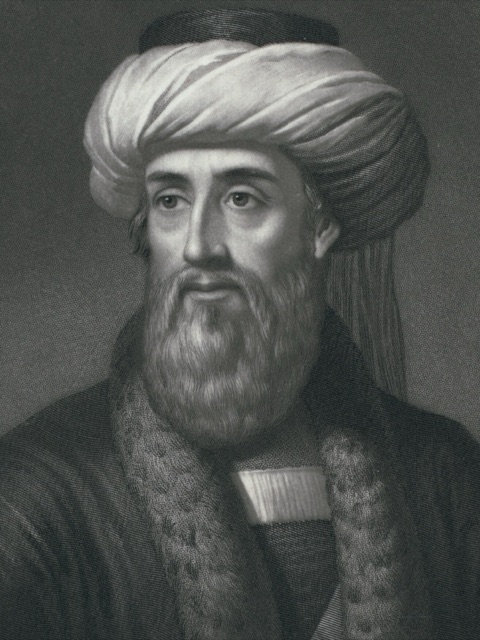
Flavius Josephus (37-100 AD), born Joseph ben Matthias in Jerusalem, served as Jewish military commander in Galilee during the revolt of 66 AD before surrendering to Vespasian after the siege of Jotapata. He spent the rest of his life in Rome under Flavian imperial patronage, where he wrote The Jewish War, the twenty-book Antiquities of the Jews, his Life, and Against Apion.