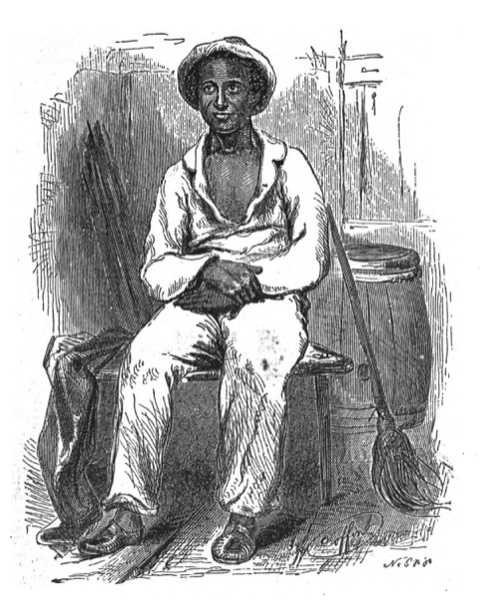
James E. Seaver
Seaver interviewed the aged Mary Jemison in western New York and produced A Narrative of the Life of Mrs. Mary Jemison (1824), one of the most widely read of the American Indian captivity narratives.

Biography
James E. Seaver (1787 to 1827) was an American physician and writer who compiled the life story of Mary Jemison, the "White Woman of the Genesee," and published it in 1824. He lived and practiced in the Genesee country of western New York, the same region where Jemison had settled after decades among the Seneca, and his single lasting book grew out of that proximity.
In November 1823 Seaver traveled to the town of Castile, in the Genesee Valley, to interview Jemison, then about eighty years old. Over the course of several days he took down her account of a long and unusual life: her capture around 1758, during the French and Indian War, when a raiding party killed most of her family; her adoption by two Seneca women; her two marriages, first to a Delaware man named Sheninjee and later to the Seneca warrior Hiokatoo; and her decision, offered chances to return to white society, to remain with the Seneca for the rest of her life. Seaver arranged this material into a continuous first-person narrative.
The book appeared in 1824 under the title A Narrative of the Life of Mrs. Mary Jemison, printed at Canandaigua, New York, by James D. Bemis. It sold quickly and was reprinted many times over the following century, becoming a widely known example of the captivity narrative, a genre that had been a staple of American publishing since the colonial period. Later editions added appendices, notes, and supplementary material by other hands, so that the text expanded well beyond what Seaver first set down.
Seaver framed Jemison's account with his own preface and editorial commentary, and he wrote her testimony in the polished prose of an early nineteenth-century author rather than as a verbatim transcript. He died in 1827, three years after the book's publication, and produced no other work of note. His reputation rests entirely on the Narrative, which remains a primary source consulted by historians of the Seneca, of frontier New York, and of the American captivity tradition.
Why Seaver Matters
Seaver's importance is documentary rather than literary. By interviewing Mary Jemison directly in 1823 and publishing her account the next year, he preserved a firsthand record of Seneca life across the second half of the eighteenth century, a period covering the French and Indian War, the American Revolution, and the changes that followed for the Iroquois nations. Few comparable accounts exist from a woman who lived those decades inside a Native community.
The Narrative also fixed the form of the American captivity narrative at the moment the genre reached its widest audience. Earlier captivity stories, such as Mary Rowlandson's seventeenth-century account, had been shaped as religious testimony. Seaver's book, by contrast, presented Jemison's life as biography and adventure, and its commercial success helped carry the genre into the popular literature of the young republic.
Because Seaver mediated Jemison's words through his own composition, the book is also studied as a case in how such testimony was recorded and edited. Scholars weigh how much of the voice is Jemison's and how much is Seaver's, which makes the Narrative a working example for anyone examining oral history, memoir, and the collaboration between an aging subject and a younger author.
For historians of western New York and the Genesee Valley, Seaver's volume supplies concrete detail about places, families, and events that would otherwise be lost, and it has kept Mary Jemison's story in print for two centuries.