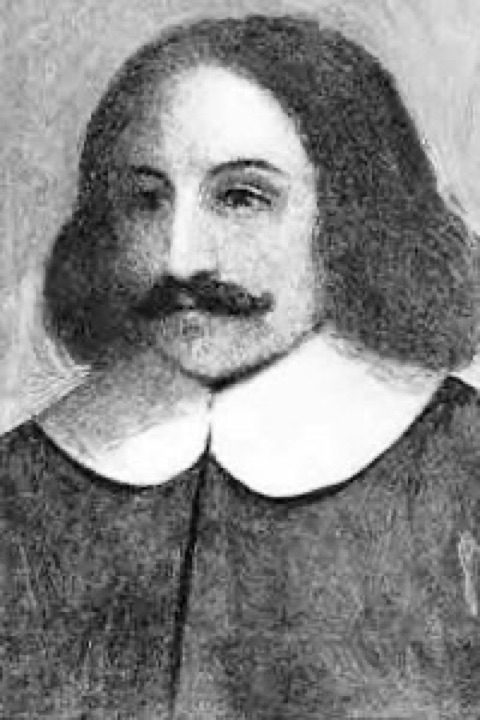
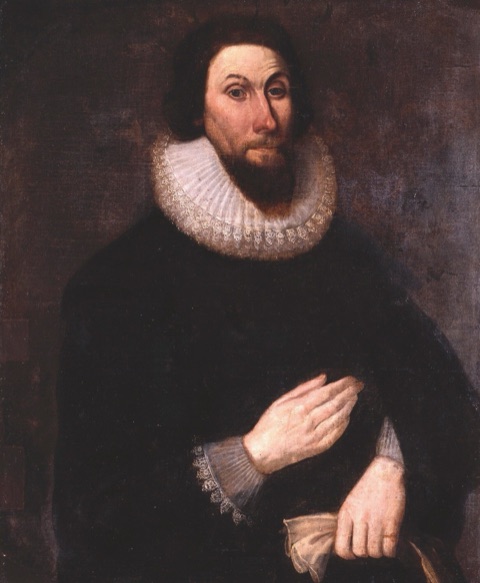
J. Hector St. John de Crèvecoeur
Author of Letters from an American Farmer (1782), an early and widely read account of colonial rural life that posed the question "What then is the American, this new man?" Writing as a Pennsylvania farmer named James, he gave European readers one of the first sustained portraits of the emerging United States.
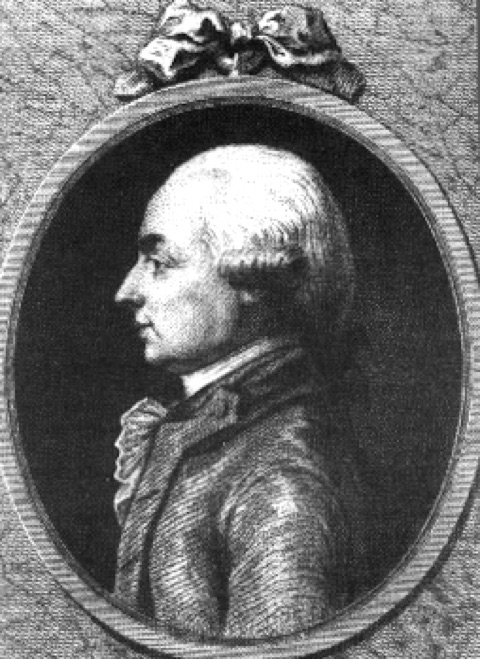
1735–1813
Biography
J. Hector St. John de Crèvecoeur (1735 to 1813) was a French-born writer, farmer, and diplomat whose Letters from an American Farmer, published in London in 1782, became one of the earliest and most widely read descriptions of life in the American colonies. He was born Michel Guillaume Jean de Crèvecoeur on December 31, 1735, in Caen, in Normandy, to a family of the minor provincial nobility. He was educated in France and spent time in England before crossing the Atlantic in the mid-1750s, settling first in the French colony of Canada.
In New France he worked as a surveyor and cartographer and served with the French forces during the Seven Years' War, mapping territory in the Great Lakes region and the Ohio country. After the British conquest of Canada he moved south into the British colonies around 1759, traveling widely as a surveyor and trader through New York, Pennsylvania, and the frontier. In 1765 he was naturalized as a subject of the British crown in New York and anglicized his name to J. Hector St. John.
In 1769 he married Mehetable Tippet, the daughter of a Westchester merchant, and bought land in Orange County, New York, where he established a farm he called Pine Hill. For roughly a decade he farmed, raised a family, and wrote the essays that would become his book. The letters are narrated by a fictional Pennsylvania farmer named James, who describes American agriculture, the settlements of Nantucket and Martha's Vineyard, and the society of Charleston, where James recoils at the treatment of enslaved people. Letter III, "What Is an American," contains the passage most often quoted from the book, in which individuals of many nations are "melted into a new race of men."
The Revolutionary War divided Crèvecoeur's loyalties and disrupted his life. Wishing to return to Europe to secure his family's property, he traveled to British-held New York City in 1779, where he was imprisoned for several months on suspicion of being a rebel spy before being allowed to sail for Britain. In London he sold the manuscript of his letters, which appeared in 1782 and was quickly reprinted and translated. He then went on to France, where he prepared an expanded French edition, Lettres d'un cultivateur américain, in 1784.
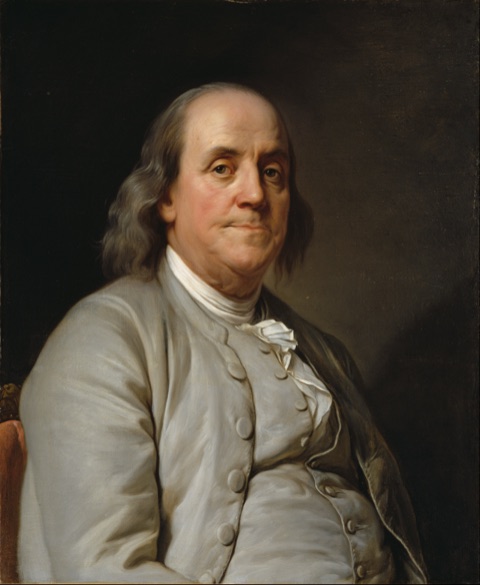
Crèvecoeur returned to the United States in 1783 as French consul for New York, New Jersey, and Connecticut, a post he held through the 1780s. He found his farm burned and his wife dead, a casualty of a frontier raid, and recovered his scattered children. As consul he promoted commercial and botanical exchange between France and America, corresponded with figures including Benjamin Franklin and George Washington, and was elected to the American Philosophical Society. He returned to France in 1790 and died at Sarcelles, near Paris, on November 12, 1813. Additional essays he never published in his lifetime appeared much later as Sketches of Eighteenth-Century America.
Life & Career
Why Crèvecoeur Matters
Crèvecoeur wrote one of the first books to present the American colonies as a distinct society rather than an outpost of Europe, and he did so for a European audience hungry to understand the new nation taking shape across the Atlantic. Letters from an American Farmer treated ordinary agricultural life, land ownership, and social mobility as subjects worth serious description, and its account of settlers drawn from many nations and remade by cheap land and light government became a founding statement of American self-definition.
His question "What then is the American, this new man?" and his image of peoples "melted into a new race" supplied language that later writers used to describe assimilation and national identity. The book helped establish the literary idea of the independent farmer as the representative American, a figure that runs through Jeffersonian politics and nineteenth-century American writing.
Crèvecoeur is also valued as an observer and reporter. His descriptions of the whaling communities of Nantucket, the farming of the Hudson Valley, frontier violence, and the slave economy of the Carolinas are among the most detailed firsthand pictures of colonial daily life that survive, and historians continue to draw on them as source material. The Charleston letter, with its account of an enslaved man left to die in a cage, gave European readers a stark counterpoint to the book's more hopeful passages.
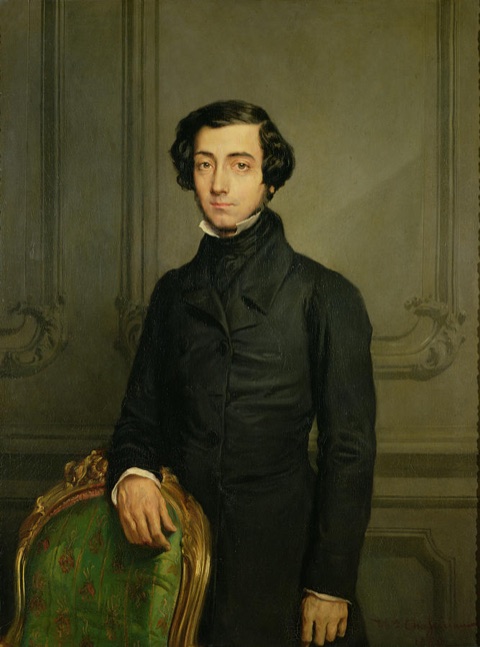
As a link between France and the early United States, he belongs to the same current of transatlantic observation that later produced Alexis de Tocqueville. Where much of the founding-era record was written by statesmen and soldiers, Crèvecoeur wrote from the farm, and that vantage point secured his work a place in the study of early American culture.