John Eliot
English Puritan minister at Roxbury, Massachusetts, who translated the entire Bible into the Massachusett language and organized Native converts into self-governing "praying towns." His 1663 Massachusett Bible was the first complete Bible printed in North America.
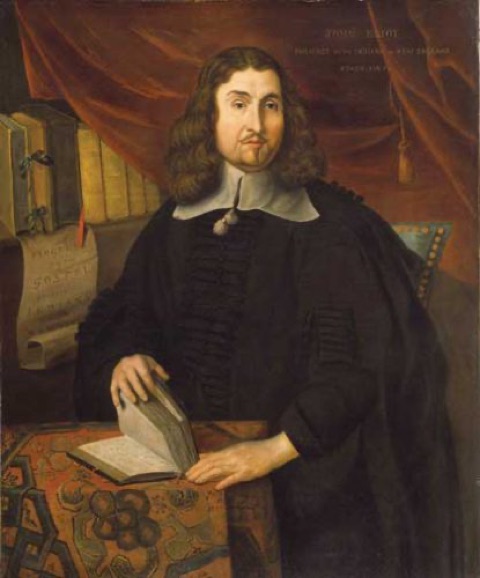
1604–1690
Biography
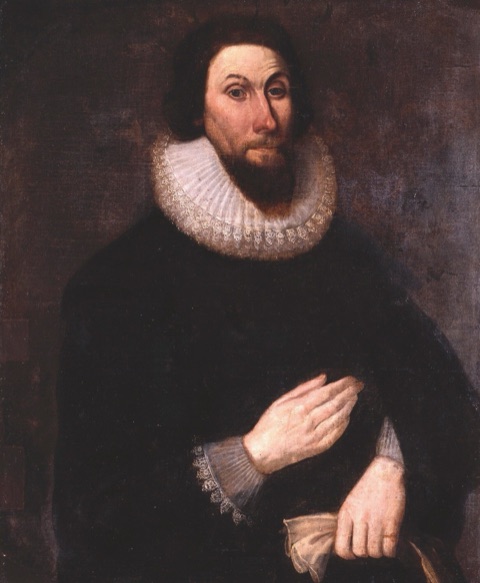
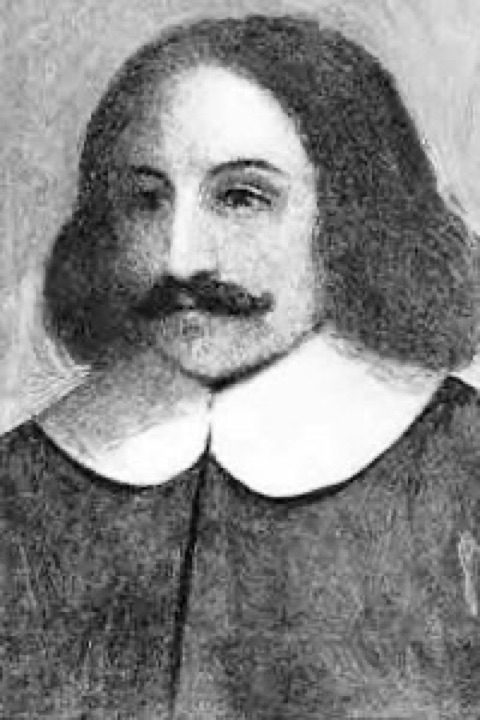
John Eliot (1604 to 1690) was an English Puritan minister and missionary in colonial Massachusetts who translated the entire Bible into the Massachusett language and became known to his contemporaries as the "Apostle to the Indians." Born in Widford, Hertfordshire, he studied at Jesus College, Cambridge, where he trained in the classical and biblical languages that would later shape his work. Before emigrating he served for a time as an assistant in the school of the Puritan minister Thomas Hooker in Essex.
Eliot sailed to New England in 1631 aboard the Lyon and settled at Roxbury, near Boston, where in 1632 he became teacher of the town's Puritan church. He held that post for the rest of his life, some fifty-eight years. In 1640 he was one of the ministers, alongside Richard Mather and Thomas Weld, who prepared the Bay Psalm Book, the first book printed in British North America.
From the mid-1640s Eliot turned to the Algonquian-speaking peoples living around the Massachusetts Bay settlements. He learned the Massachusett language with the help of Native interpreters, including a man named Cockenoe and later Job Nesutan, and on October 28, 1646 he preached in Massachusett at Nonantum, in the household of a leader named Waban. To settle his converts he founded "praying towns," beginning with Natick in 1651, where Native Christians lived under a civil order Eliot drew from the biblical book of Exodus. By the 1670s about fourteen such towns had been established across eastern Massachusetts.
Eliot's central achievement was linguistic. Working with Native assistants and the Cambridge printer Samuel Green, he produced a Massachusett New Testament in 1661 and the complete Bible, titled Mamusse Wunneetupanatamwe Up-Biblum God, in 1663 — the first Bible printed anywhere in North America. He followed it with instructional works, including a catechism, The Indian Grammar Begun in 1666, and The Indian Primer, tools meant to teach reading and doctrine in the Native tongue.
In 1659 Eliot published The Christian Commonwealth in London, a tract that proposed a scripturally governed civil order modeled on the counsel Jethro gave Moses. After the restoration of the monarchy in 1660, the Massachusetts General Court judged the work offensive to royal authority and ordered it suppressed in 1661, and Eliot submitted a retraction. His missionary work was supported financially by the Society for the Propagation of the Gospel in New England, chartered by Parliament in 1649 and later known as the New England Company.
King Philip's War in 1675 and 1676 devastated the praying towns; many Christian Native people were interned on Deer Island in Boston Harbor, and several communities never recovered. Eliot continued his ministry at Roxbury into old age and died there on May 21, 1690.
Life & Career
Why Eliot Matters
Eliot organized the first sustained Protestant missionary effort in English-speaking America. Where earlier colonists had made only scattered gestures toward converting Native peoples, he built a program with a settled structure: language study, translated scripture and catechisms, gathered congregations, and the network of praying towns where converts lived under a common civil and religious order. That model of combining evangelism with the reorganization of daily life became a template that later missionaries, both in North America and abroad, studied and imitated.
His Massachusett Bible of 1663 is a landmark on two counts. As the first complete Bible printed in North America, it marked the arrival of large-scale scriptural publishing in the colonies. As a text, it remains one of the most substantial early records of a New England Algonquian language; because Massachusett had no surviving native speakers by the nineteenth century, Eliot's Bible, grammar, and primers became primary sources for later scholars attempting to reconstruct the language.
Eliot also drew Puritan attention on both sides of the Atlantic to the question of the Native peoples' place in God's providential design. The reports of his work, circulated in England through a series of tracts, helped secure the parliamentary charter of 1649 that created the funding body behind colonial missions. Richard Baxter and other English divines corresponded with him and promoted his cause.
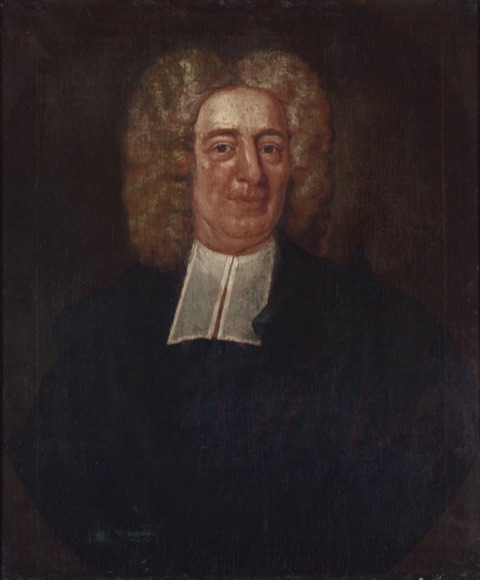
Within a generation his reputation was fixed in the historical writing of New England Puritanism. Cotton Mather devoted a biography to him in the Magnalia Christi Americana, presenting Eliot as the model missionary minister and cementing the title "Apostle to the Indians" by which he has been known ever since.