William Bradford
English Separatist who sailed on the Mayflower, served as governor of Plymouth Colony for roughly thirty years, and wrote Of Plymouth Plantation, the primary firsthand account of the Pilgrim settlement.
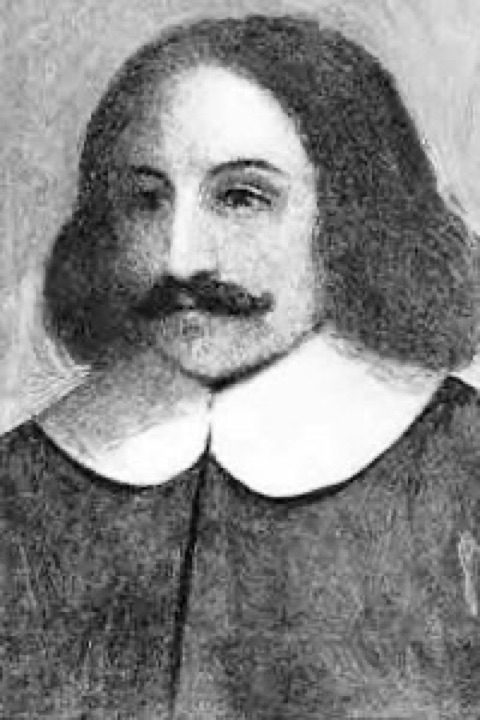
1590–1657
Biography
William Bradford (1590 to 1657) was an English Separatist who sailed on the Mayflower in 1620 and served as governor of Plymouth Colony for roughly thirty years. He was baptized in March 1590 in Austerfield, a village in the West Riding of Yorkshire, into a farming family. Orphaned as a boy and raised by relatives, he began attending the illegal Separatist meetings at nearby Scrooby as a teenager, joining a congregation that included the elder William Brewster and the pastor John Robinson.
Facing prosecution for worshipping outside the Church of England, the Scrooby congregation fled to the Netherlands. Bradford reached Amsterdam in 1608 and settled in Leiden the following year, where he worked in the cloth trade as a fustian weaver. In 1613 he married Dorothy May, an English member of the exile community. After more than a decade in Leiden, part of the congregation resolved to emigrate to North America, securing financial backing from a group of London merchant investors known as the Merchant Adventurers.
Bradford sailed on the Mayflower, which left Plymouth, England, in September 1620 and reached Cape Cod that November. Before going ashore, he was among the signers of the Mayflower Compact, the agreement by which the passengers pledged to form a civil body and obey its laws. His wife Dorothy drowned in Cape Cod harbor in December 1620, one of many who died during the settlers' first winter, when roughly half the company perished from disease and exposure.
John Carver, the colony's first governor, died in April 1621, and the surviving settlers elected Bradford to replace him. He was re-elected almost every year until 1656, taking only occasional breaks from the office. As governor he negotiated relations with the Wampanoag leader Massasoit, oversaw the colony's shift from communal to individual landholding, and managed the long effort to repay the London investors. In 1623 he married Alice Southworth, a widow who had come from Leiden.
Bradford wrote his history, Of Plymouth Plantation, in stages between 1630 and 1651, covering the congregation's origins in England, the years in the Netherlands, the voyage, and the colony's development through the 1640s. He composed it as a plain narrative interpreting events as expressions of divine providence, while recording names, dates, documents, and figures in detail. He died in Plymouth in May 1657.
The manuscript passed through several hands and disappeared during the American Revolution, later turning up in the library of the Bishop of London at Fulham Palace. It was first published in full in 1856 and returned to Massachusetts in 1897, where it remains. Because no comparable firsthand record of the settlement survives, Bradford's account became the foundational source for the story of the Pilgrims and Plymouth Colony.
Life & Career
Why Bradford Matters
Bradford's Of Plymouth Plantation is the single most important primary source for the founding of Plymouth Colony. Almost everything later generations know about the Mayflower voyage, the Mayflower Compact, the deaths of the first winter, and the early dealings with the Wampanoag comes through his narrative. Without it, the settlement of 1620 would be documented only in fragments, and the events he recorded would be largely unrecoverable.
As governor, Bradford held practical authority over Plymouth for most of its independent existence before it was absorbed into the Massachusetts Bay Colony in 1691. His decisions on landholding, trade, and diplomacy shaped how a small, undercapitalized settlement survived its first decades. His account of abandoning the colony's initial system of common property in favor of assigning land to individual households has been cited repeatedly in later debates about property and economic incentives.
His writing also helped fix the terms in which Americans later told the story of their origins. The word "Pilgrims," drawn from a passage in his history, became the standard name for the Mayflower settlers, and his description of the colony's first harvest fed into the tradition surrounding Thanksgiving. Nineteenth-century historians and orators returned to his manuscript once it was published, using it to construct a national founding narrative distinct from that of Jamestown or Massachusetts Bay.
For historians of early America, Bradford's value lies in the combination of eyewitness authority and documentary care. He preserved letters, agreements, and the text of the Mayflower Compact within his narrative, giving later readers access to records that would otherwise have been lost, even as his providential framing reveals how the settlers themselves understood their undertaking.