George Whitefield
The most famous preacher of the eighteenth century. His open-air preaching across Britain and America helped ignite the Great Awakening and the Evangelical Revival.
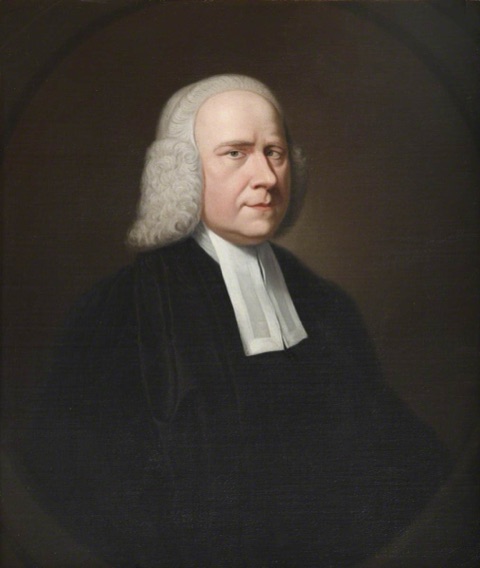
1714–1770
Biography
George Whitefield was born on December 16, 1714, in the Bell Inn, Gloucester, England, where his parents were innkeepers. He entered Pembroke College, Oxford, as a servitor (a student who earned his way by serving wealthier students) and joined the Holy Club organized by John and Charles Wesley.
Whitefield experienced a dramatic conversion in 1735 and was ordained deacon in the Church of England in 1736. He began preaching with immediate effect; his first sermon reportedly drove fifteen people to complain to the bishop that he had driven them mad.
When church pulpits began to close to him because of his unconventional methods, Whitefield took to preaching in the open air, beginning at Kingswood, near Bristol, in February 1739. He preached to coal miners and crowds of working people who did not attend church, drawing audiences of ten, twenty, and sometimes thirty thousand people. His voice was so powerful that Benjamin Franklin calculated it could be heard by thirty thousand people simultaneously.
Whitefield made seven voyages to America, beginning in 1738. His preaching tours through the colonies in 1739-1741 were the primary catalyst of the Great Awakening. He preached from Georgia to New England, drawing enormous crowds everywhere he went.
Whitefield was a Calvinist, which put him at theological odds with the Wesleys, though they maintained personal respect. He helped found the Calvinistic Methodist movement in Wales and supported the Countess of Huntingdon's network of evangelical chapels.
Whitefield preached an estimated 18,000 sermons in his lifetime. He died on September 30, 1770, in Newburyport, Massachusetts, during his seventh American tour.
Life & Career
Why Whitefield Matters
Whitefield was not a systematic theologian, but his preaching reshaped Protestant evangelism. He pioneered open-air preaching, itinerant ministry, and the use of dramatic oratory to reach people who would never enter a church building.
His emphasis on the new birth (regeneration) as a conscious, datable experience became a defining mark of evangelicalism. Whitefield preached that head knowledge of Christianity was insufficient; what mattered was a personal encounter with Christ that transformed the heart.
Whitefield also demonstrated that Calvinist theology and evangelistic urgency were compatible. He preached the free offer of the gospel with passionate pleading while maintaining that God alone could effectuate conversion. This combination influenced later Reformed evangelicalism, from Spurgeon to the modern Reformed resurgence.