




131 audiobooks, 1,134 hours of narration. Give $50 and every one is yours.
Puritan books
Cover of Sermons of George Whitefield: Part 1

Modern English edition · 1739 AD

Sermons of George Whitefield: Part 1

by George Whitefield

The first collection of sermons from the greatest evangelist of the Great Awakening. Whitefield's powerful preaching brought thousands to Christ on both sides of the Atlantic.

Start reading free

One free account opens 250+ books and saves your place on every device. Google sign-in or an email link. No card.

Included with your free account

This book, and 250+ more, free to read

A free account opens the whole library to read online, on your phone or at your desk. Open a book on one device and it is waiting at the same page on the next. The PDF and EPUB of every book are yours to keep, and audiobooks play in the same app.

  • 250+ modernized editions Not samples. The whole work, free.
  • Your place, on every device Phone, tablet or desktop, same page.
  • 131 audiobooks From $4.99 each, or all of them with a $50 gift.
  • PDF and EPUB included Download any book to keep.
Create your free account Google sign-in or an email link. No card.
The in-app reader on a phone, mid-chapter of The Mortification of Sin in modern English
My Library on a phone, with a book to continue reading and the cover grid

About this book

George Whitefield was the most celebrated preacher of the eighteenth century. His voice could carry to crowds of over 30,000 without amplification, and his dramatic delivery moved hardened sinners to tears. Benjamin Franklin, though skeptical of Whitefield's theology, was so impressed by his oratory that he emptied his pockets into the collection plate. These sermons capture the power that made Whitefield the defining voice of the Great Awakening.

This first volume contains some of Whitefield's most famous and frequently preached sermons. "The Almost Christian" examines the dangerous state of those who have the form of religion but lack its power. "The New Birth" explains the necessity of regeneration in terms both theological and experiential. "The Method of Grace" presents the gospel offer with urgent clarity.

Whitefield's preaching style combined Reformed doctrine with passionate appeal. He preached the sovereignty of God in salvation while earnestly pleading with sinners to come to Christ. His sermons are marked by vivid illustrations, direct address to the conscience, and what contemporaries called "a pathos" that reached the heart. He preached as a dying man to dying men.

The theology in these sermons is robustly evangelical and Calvinistic. Whitefield emphasizes human sinfulness, the necessity of the new birth, justification by faith alone, and the work of the Holy Spirit in conversion. Yet his Calvinism never dampened his evangelistic fervor—he preached to all as though all could be saved, leaving the secret things to God.

These sermons also reveal Whitefield's ecumenical spirit. Though an Anglican minister, he preached in dissenting meetinghouses, Presbyterian churches, and open fields. He cared more for the gospel than for denominational boundaries, declaring, "Father Abraham, whom have you in heaven? Any Episcopalians? No! Any Presbyterians? No! Any Baptists? No! Any Methodists, Seceders, Independents? No, no, no! Whom have you there? Christians!"

For modern readers, Whitefield's sermons offer a model of preaching that is both doctrinally rich and emotionally engaging. In an age when preaching often seems either dry or shallow, Whitefield demonstrates that sound theology and passionate delivery are not opposites but partners. His sermons continue to challenge, convict, and comfort readers nearly three centuries after they were first delivered.

The Seed of the Woman, and the Seed of the Serpent

Genesis 3:15 -- "And I will put Enmity between thee and the Woman, and between thy Seed and her Seed, it shall bruise thy Head, and thou shalt bruise his Heel."

As I read these words to you, I can speak to you in the same language the holy angels used with the shepherds watching their flocks by night: "Behold, I bring you glad tidings of great joy." This is the first promise ever made of a Savior to the fallen race of Adam. We usually look for Christ only in the New Testament, but Christianity, in one sense, is nearly as old as creation itself. It's remarkable to observe how gradually God revealed His Son to humanity. He began with the promise in this text, and the elect lived on this promise until the time of Abraham. To Abraham, God made further revelations of His eternal plan concerning humanity's redemption. Later, at various times and in various ways, God spoke to the fathers through the prophets, until finally the Lord Jesus Himself was revealed in flesh and came to live among us.

This first promise must certainly have been obscure to our first parents compared to the great light we now enjoy. Yet, obscure as it was, we can be certain they built their hopes of everlasting salvation on it, and through that faith they were saved.

How they came to need this promise, and what its full extent and meaning are, I intend, God willing, to make the subject of your present meditation.

The fall of humanity is written in characters too clear to be misunderstood. Those who deny it prove it by their very denial. Even the pagans acknowledged and mourned it. They could see the streams of corruption running through the entire human race, but they couldn't trace them back to their source. Before God revealed His Son, humanity was a riddle to itself. And Moses reveals more in this one chapter (from which our text is taken) than all of humanity could have discovered on its own, even if they had searched for all eternity.

In the preceding chapter, Moses gave us a complete account of how God spoke the world into existence, and especially how He formed humanity from the dust of the earth and breathed into them the breath of life, so that they became living souls. A council of the Trinity was called concerning the creation of this beautiful creature. The result of that council was, "Let us make man in our image, after our likeness. So God created man in his own image, in the image of God created he him." Moses deliberately repeats these words so we might pay special attention to our divine origin. Never has so much been expressed in so few words. Only an inspired writer could have done this. But it's striking that although Moses mentions our being made in the image of God, he mentions it only twice, and that in passing, as though he wanted to say, "Humanity was made in honor. God made them upright, in the image of God, male and female He created them. But humanity fell so quickly and became like the animals that perish (indeed, like the devil himself) that it's hardly worth mentioning."

We don't know how soon after creation Adam fell, and trying to pin down an exact time means going beyond what Scripture tells us. I think those who claim Adam fell on the same day he was created lack sufficient evidence for their view. The many events packed into the previous chapter (the creation of Eve, Adam naming the animals, and his placement in the garden God had planted) seem to require more than a single day. Still, everyone agrees on this: Adam didn't stand firm for long. Whether it was a longer or shorter period, I won't try to determine. What matters more is understanding how he fell from his original state and tracing the development of the temptation that overcame him. The account given in this chapter is quite detailed, and with God's help, we can learn much by examining it carefully.

"Now the serpent," the biblical writer tells us, "was more subtle than any beast of the field which the Lord God had made, and he said unto the woman, Yes, hath God said, ye shall not eat of every tree of the garden?"

Though this was an actual serpent, the one speaking through it was none other than the devil. This is perhaps why he's called "the old serpent," because he possessed the serpent when he came to deceive our first parents. The devil envied humanity's happiness. Some believe humans were created to replace the fallen angels. God made Adam upright, with full ability to stand firm if he chose to. God was therefore just in allowing him to be tempted. If Adam fell, he had no one to blame but himself.

But how would Satan bring about this fall? He couldn't do it through raw power, so he tried cunning instead. He took possession of a serpent, which was more subtle than all the other animals the Lord God had made. This shows us that people who are full of cleverness but lack godliness become nothing more than tools for the devil to use however he wants.

"And he said unto the woman." Here we see an example of his cunning. He approaches the woman, the weaker vessel, when she's alone and separated from her husband, making her more vulnerable to attack. "Yes, has God said you shall not eat of every tree of the garden?" These words are clearly spoken in response to something the devil either saw or heard. Most likely, the woman was standing near the tree of knowledge of good and evil at that moment (because we'll soon find her picking fruit from it). Perhaps she was looking at it, wondering what made this particular tree so different from the others that she and her husband were forbidden to eat from it. Satan, seeing this and eager to draw her into conversation with him (because if the devil can persuade us not to resist but to engage with him, he's already won a major victory), says, "Yes, has God said you shall not eat of every tree in the garden?" The first thing he does is try to persuade her to think badly of God. This is his standard approach with God's children.

Verses 2 & 3. The woman said to the serpent, "We may eat of the fruit of the trees of the garden. But of the fruit of the tree which is in the middle of the garden, God has said, you shall not eat of it, neither shall you touch it, or you will die."

The first part of her answer was good: "We may eat from the fruit of the trees in the garden. God hasn't forbidden us from eating from every tree in the garden. No, we may eat from the fruit of the trees in the garden (and it seems we can even eat from the tree of life, which served as a sacrament to humanity in our state of innocence). There's only one tree in the middle of the garden about which God has said, 'You shall not eat from it, and you shall not touch it, or you will die.'" Here she begins to stray, and sin begins to take root in her heart. Already she has absorbed some of the serpent's poison by talking with him, which she should never have done in the first place.

"Said to the woman (v. 4), 'You will not surely die,'" in a smooth, persuasive manner. "You will not surely die. Surely God won't be so cruel as to condemn you just for eating an apple. It can't be." How tragic! Satan leads so many people captive at his will by flattering them that they won't surely die, that hell's torments won't be eternal, that God is all mercy, and that He therefore won't punish a few years of sin with an eternity of misery. But Eve found that God kept His word, and so will everyone who continues in sin under the false hope that they won't surely die.

For (v. 5) "God knows that in the day you eat of it, your eyes will be opened, and you will be like gods, knowing good and evil."

What child of God can expect to escape slander when God Himself was slandered even in paradise? Eve's understanding must have been clouded to some degree, or she would never have allowed the tempter to speak such twisted things. What a hideous picture of God is painted here! "God knows that in the day you eat of it, you will be like gods" (equal with God). So the core temptation was that they would be free from all control, equal to or even superior to the God who made them, knowing good and evil.

To strengthen this temptation, Satan (or the serpent) most likely plucked an apple from the tree and ate it right in front of Eve. This would have led Eve to think that the serpent's intelligence and ability to speak, which set it above the other animals, must have come largely from eating that fruit.

Satan was now gaining ground. Lust had taken root in Eve's heart, and soon it would produce sin. Once sin was conceived, it would bring forth death. In verse 6, "When the woman saw that the tree was good for food, and that it was pleasant to the eyes, and a tree to be desired to make one wise, she took of the fruit thereof, and did eat, and gave also unto her husband, and he did eat."

Our senses are the entry points for our spiritual enemies. How necessary is that resolution of holy Job: "I have made a covenant with my eyes!" When Eve began to stare at the forbidden fruit with her eyes, she soon began to crave it in her heart. When she saw that it was good for food and pleasant to the eyes (here was the lust of the flesh and lust of the eye), but above all, a tree to be desired to make one wise, wiser than God intended her to be, indeed, as wise as God Himself, she took the fruit and ate it. Then she gave some to her husband who was with her, and he ate it too.

As soon as she sinned herself, she became a tempter to her husband. It's terrible when those who should be helping each other toward salvation instead become agents of each other's damnation. But that's exactly what happens. If we ourselves are good, we'll encourage others toward goodness. If we do evil, we'll entice others to do evil as well.

And what are the consequences of their disobedience? Are their eyes opened? Yes, their eyes are opened, but it's only to see their own nakedness. We're told (v. 7) "that the eyes of them both were opened, and they knew that they were naked." Naked of God, naked of everything holy and good, stripped of the divine image they had enjoyed before. They could rightly be called Ichabod now, for the glory of the Lord had left them. How far these sons of the morning fell! Out of God and into themselves, from sharing in the divine nature to taking on the nature of the devil and the beast.

And how do they behave now that they're naked? Do they run to God for pardon? Do they turn to God for a robe to cover their nakedness? No. They were now dead to God and had become earthly, sensual, and devilish. So instead of asking God for mercy, "they sewed or woven fig leaves together and made themselves aprons," or things to wrap around them. This is a vivid picture of all natural humanity. We see that we're naked. We admit it, to some extent. But instead of looking up to God for help, we patch together a righteousness of our own (just as our first parents wove fig leaves together), hoping to cover our nakedness with that. But our righteousness won't stand up to the severity of God's judgment.

For (v. 8) "They heard the voice of the Lord God walking in the trees of the garden, in the cool of the day; and Adam and his wife (despite their fig leaves) hid themselves from the presence of the Lord God, among the trees of the garden."

They heard the voice of the Lord God, or the Word of the Lord God, even the Lord Jesus Christ, who is "the word that was with God, and the word that was God." They heard Him walking in the trees of the garden, in the cool of the day. This was a time, perhaps, when Adam and Eve regularly went to offer up an evening sacrifice of praise and thanksgiving in a special way.

But what a change we see here! Instead of rejoicing at the voice of their beloved, instead of meeting Him with open arms and full hearts as before, they now hide themselves in the trees of the garden. What a foolish attempt this was! They must have been naked, or how could they think of hiding themselves from God? Where could they flee from His presence?

Verse 9. "And the Lord God called unto Adam, and said unto him, Adam, where art thou?"

"The Lord God called unto Adam" (because otherwise Adam would never have called to the Lord God) and said, "Adam, where are you? Why haven't you come to pay your devotions as usual?" Christians, remember that the Lord keeps track when you fail to come to worship.

Verse 10. "And he said, I heard thy voice in the garden, and I was afraid." Look at what cowards sin turns us into. If we knew no sin, we would know no fear. "Because I was naked, and I hid myself."

Verse 12. "And the man said, the woman which thou gavest to be with me, she gave me of the tree, and I did eat."

Nature has never been more vividly portrayed. Look at the pride Adam gained from the fall! How unwilling he is to place the blame on himself or accept any shame. This answer is full of insolence toward God, hostility against his wife, and dishonesty regarding himself. In it, he indirectly criticizes God. "The woman that you gave to be with me." As if to say, if you hadn't given me that woman, I wouldn't have eaten the forbidden fruit.

Verse 13. "And the Lord God said, What is this that thou hast done?" What remarkable concern God shows in this confrontation! "What a flood of misery have you brought on yourself, your husband, and your descendants? What is this that you have done?"

"And the woman said, The serpent beguiled me, and I did eat." She doesn't use as many words to excuse herself as her husband does, but her heart is just as unhumbled as his.

I've focused on this part of their behavior because it highlights the greatness of God's free grace and clearly demonstrates that salvation comes only from the Lord. Let's look briefly at the miserable situation our first parents now found themselves in: They were legally and spiritually dead, children of wrath, and heirs of hell. They had eaten the fruit that God had commanded them not to eat. And when God confronted them, despite how serious their crime was, they couldn't bring themselves to confess it.

What reason could possibly be given for why the death sentence shouldn't be pronounced against these prisoners standing before the bar of justice? Everyone must admit they deserve to die. In fact, how could God possibly forgive them without compromising His justice? He had warned them that the day they ate the forbidden fruit, they would "surely die." If He didn't carry out this warning, the devil could legitimately accuse the Almighty of being unfair.

And yet mercy cries out, spare these sinners, spare the work of your own hands. Look then at how wisdom devises a plan for God to be just while also being merciful, to remain faithful to His warning, to punish the offense, and at the same time spare the offender. An amazing display of divine love opens before us here, something that had been hidden in the heart of God from all eternity! Despite the fact that Adam and Eve remained unrepentant and didn't even offer a single prayer for pardon, God immediately passes sentence on the serpent and reveals a Savior to them.

Verse 14. "And the Lord God said unto the serpent, because thou hast done this, thou art accursed above all cattle, and above every beast of the field; upon thy belly shalt thou go, and dust shalt thou eat all the days of thy life;"

(Verse 15.) "And I will put enmity between thee and the woman, and between thy seed and her seed: it shall bruise thy head, and thou shalt bruise his heel."

By the seed of the woman, we are to understand the Lord Jesus Christ, who, though very God of very God, was to have a body prepared for Him by the Holy Spirit for us and our salvation. He was to be born of a woman who never knew man, and by His obedience and death make an atonement for man's sin and bring in an everlasting righteousness. He would work in them a new nature, and thereby bruise the serpent's head, that is, destroy his power and dominion over them. By the serpent's seed, we are to understand the devil and all his children, who are permitted by God to tempt and test His children. But, blessed be God, he can reach no further than our heel.

There's little doubt that Adam and Eve understood this promise in exactly this way. It's clear from the later part of the chapter that sacrifices were instituted. Where else would those animal skins have come from except from beasts killed for sacrifice, which God then used to make coats for them? We find Abel, along with Cain, offering sacrifice in the next chapter. The apostle tells us that Abel did it by faith, undoubtedly in response to this promise.

This promise found its literal fulfillment in the person of our Lord Jesus Christ. Satan bruised His heel when he tempted Him for forty days straight in the wilderness. He bruised His heel when he stirred up fierce persecution against Him throughout His public ministry. He bruised His heel in a particularly intense way when our Lord cried out that His soul was overwhelmed with sorrow to the point of death, and He sweat great drops of blood that fell to the ground in the garden. He bruised His heel when he planted the idea in Judas's heart to betray Him. And he bruised Him most severely of all when his agents nailed Him to a cursed tree, and our Lord cried out, "My God, my God, why have you forsaken me?"

Yet through all of this, the blessed Jesus, the seed of the woman, crushed Satan's cursed head. Because He was tempted, He is able to help those who are being tempted. By His wounds we are healed. The punishment that brought us peace fell on Him. By dying, He destroyed the one who had the power of death, that is, the devil. In doing so, He stripped principalities and powers of their authority and made a public spectacle of them, celebrating His victory over them on the cross.

This promise has been fulfilled in God's chosen people, considered collectively, both before and after our Lord came in the flesh. They can be called the seed of the woman. Don't be surprised that all who want to live godly lives in Christ Jesus must suffer persecution. In this promise, God establishes an eternal enmity between the seed of the woman and the seed of the serpent, so that those born according to the flesh cannot help but persecute those born according to the Spirit.

But don't let this discourage us. In all this, the seed of the woman is more than conqueror and bruises the serpent's head. The Israelites increased the more they were oppressed. The same was true of the apostles and their immediate followers. Tertullian compared the church in his time to a mowed field: the more frequently it's cut, the more it grows. The blood of the martyrs was always the seed of the church.

Moreover, this promise is fulfilled not only in the church as a whole, but in every individual believer. In every believer there are two seeds: the seed of the woman and the seed of the serpent. The flesh fights against the spirit, and the spirit against the flesh. When a believer is awakened by grace in his heart, it's like what happened with Rebekah when she conceived Esau and Jacob in her womb. She felt a struggle and began to feel troubled.

Many of you who have believed in Christ may find some particular sin still strong, so strong that you're sometimes ready to cry out with David, "I will fall one day by the hand of Saul." But don't be afraid. The promise in the text guarantees the perseverance and victory of believers over sin, Satan, death, and hell. What if indwelling corruption still remains, and the seed of the serpent bruises your heel by troubling and disturbing your righteous souls? Don't be afraid. Though you're weak, keep pursuing. You will yet crush the serpent's head. Christ has died for you, and in a little while, He will send death to destroy the very existence of sin in you.

This brings me to show the most complete way in which the promise of the text will be fulfilled: at the final judgment, when the Lord Jesus will present the elect to His Father, without spot or wrinkle or any such thing, glorified in both body and soul.

Then the seed of the woman will deliver the final, fatal blow by crushing the serpent's head. Satan, the accuser of believers, along with all his cursed offspring, will be cast out forever and never allowed to disturb the seed of the woman again. Then the righteous will shine like the sun in their Father's kingdom and sit with Christ on thrones of majesty in heaven.

So let's not grow weary of doing good, for we will reap an eternal harvest of comfort if we don't give up. Dare, dare, my dear brothers and sisters in Christ, to follow the Captain of your salvation, who was made perfect through suffering. The seed of the woman will crush the serpent's head. Don't fear people. Don't let the deceitfulness of your own hearts discourage you too much. Don't fear demons; you will win the victory even over them. The Lord Jesus has promised to make you more than conquerors over everything. Plead with your Savior, plead: plead the promise in the text. Wrestle, wrestle with God in prayer. If you've been given the gift of faith, don't be afraid if you're also given the gift of suffering. Don't be terrified by your adversaries in any way; the King of the church has them all in chains.

Are there enemies of God here today? The promise in this passage gives me courage to challenge you directly: the seed of the woman, the blessed Jesus, will crush the serpent's head. What does all your hostility accomplish? You're nothing more than raging waves of the sea, foaming out your own shame. Without repentance, the blackness of darkness forever awaits you. The Lord Jesus sits in heaven, ruling over everything and causing all things to work for His children's good. He laughs you to scorn. He holds you in complete contempt, and so will I.

My brothers and sisters in Christ, I don't think I'm speaking from my own strength, but from the strength of my Redeemer. I know whom I have believed. I'm convinced He will keep safe what I've entrusted to Him. He is faithful who has promised that the seed of the woman will crush the serpent's head. May we all experience a daily fulfillment of this promise, both in the church and in our hearts, until we come to the church of the firstborn, the spirits of righteous people made perfect, in the presence and actual enjoyment of the great God our heavenly Father!

To Him, with the Son and the Holy Spirit, be given all honor, power, might, majesty, and dominion, now and forever. Amen.
Walking with God

Genesis 5:24: "And Enoch walked with God: and he was not; for God took him."

People with corrupt minds come up with all kinds of excuses for not obeying God's just and holy commands. Perhaps the most common objection is that the Lord's commands are impossible to follow because they go against our natural desires. Therefore, they argue, He is a harsh master who reaps where He hasn't sown and gathers where He hasn't scattered. These were the sentiments of that wicked and lazy servant mentioned in Matthew 25, and they're undoubtedly the same views held by many in our current wicked and adulterous generation.

Foreseeing this, the Holy Spirit made sure to inspire holy men of old to record the examples of many godly men and women who, even under the Old Testament plan, were enabled to cheerfully take Christ's yoke on themselves and counted His service perfect freedom. The large catalog of saints, confessors, and martyrs drawn up in Hebrews 11 abundantly proves the truth of this observation. What a great cloud of witnesses we have presented to our view there! All were eminent for their faith, but some shine with a greater degree of brilliance than others. The first martyr Abel leads the way. And next to him we find Enoch mentioned, not only because he came next in chronological order, but also because of his elevated piety.

We have here a short but very full and glorious account, both of his behavior in this world and the triumphant manner of his entry into the next. The former is contained in these words: "And Enoch walked with God." The latter in these: "and he was not, for God took him." He was not—that is, he was not found, he was not taken away in the common manner, he did not see death, for God had translated him (Heb 11:5).

Who this Enoch was doesn't appear so plainly. To me, he seems to have been a person of public character. I suppose, like Noah, he was a preacher of righteousness. And if we may trust the apostle Jude, he was a fiery preacher. For Jude quotes one of his prophecies, in which he says, "Behold, the Lord comes with ten thousands of His saints, to execute judgment on all, and to convince all that are ungodly among them, of all their ungodly deeds which they have ungodly committed, and of all their hard speeches, which ungodly sinners have spoken against Him."

But whether a public or private person, he has a noble testimony given him in the living oracles. The author of the epistle to the Hebrews says that before his translation he had this testimony: that he pleased God. And his being translated was proof of it beyond all doubt.

But I don't intend to detain you any longer by expanding on or making observations about Enoch's short but comprehensive character. What I have in view is to give a discourse, as the Lord enables me, on a weighty and very important subject: I mean, walking with God. "And Enoch walked with God." If as much as this can be truly said of you and me after our death, we won't have any reason to complain that we have lived in vain.

When I address this topic, I will: First, try to explain what these words mean: "walked with God." Second, suggest some practical steps that believers can follow to keep up and maintain their walk with God. And, Third, offer some reasons to motivate us, if we've never walked with God before, to come and walk with Him now. I'll close with a brief application.

First, let me explain what these words mean: "walked with God," or in other words, what we should understand by walking with God.

To begin with, walking with God means that the Holy Spirit must break the controlling power of the hostility in a person's heart. This may sound harsh to some, but our daily experience confirms what Scripture repeatedly teaches: the natural mind (the mind of someone who hasn't been converted, or even the unconverted parts of a believer's mind) isn't just hostile toward God but is hostility itself. It refuses to submit to God's law and, in fact, cannot do so.

It's truly astonishing that any creature, especially humanity (that beautiful creation made in God's own image), could harbor any hostility toward the very God in whom we live and move and exist, let alone a controlling hostility. But tragically, that's exactly what happened. Our first parents contracted this hostility when they rebelled against God by eating the forbidden fruit, and its bitter, malignant infection has passed down to and completely saturated all their descendants.

This hostility showed itself immediately when Adam tried to hide among the trees in the garden. When he heard the Lord God's voice, instead of running toward Him with an open heart saying, "Here I am," he suddenly wanted nothing to do with God. His newly acquired hostility became even clearer in the excuse he offered to the Most High.

This same hostility operates in the hearts of Adam's descendants. They repeatedly find something rising up against God, essentially asking Him, "What do you think you're doing?" As the learned Dr. Owen writes in his excellent treatise on indwelling sin, this hostility "scorns any lesser competitor than God Himself." Its command resembles that of the Assyrians regarding Ahab: shoot only at the king.

This hostility revealed itself in cursed Cain, who hated and murdered his brother Abel because Abel loved God and was specially favored by Him. This same hostility rules and dominates every person naturally descended from Adam.

Notice carefully: I'm saying the controlling power of this hostility must be removed, because its presence will never be completely eliminated until we bow our heads and die. The apostle Paul was undoubtedly speaking about himself (and not when he was a Pharisee, but when he was a genuine Christian) when he complained that "when I would do good, evil is present with me." This evil didn't dominate him, but it opposed and resisted his good intentions and actions.

But as for its controlling power, that is destroyed in every soul truly born of God, and it's gradually weakened more and more as the believer grows in grace and the Spirit of God gains greater and greater control in the heart.

But second, walking with God doesn't just mean that the dominant power of a person's inner hostility has been removed. It also means that someone has actually been reconciled to God the Father through the complete righteousness and atonement of His beloved Son. As Solomon asks (actually Amos 3:3), "Can two walk together unless they are agreed?" Jesus is both our peace and our peacemaker. When we're justified by faith in Christ, then (but not until then) we have peace with God.

Third, walking with God implies a settled, ongoing communion and fellowship with God, or what Scripture calls "the Holy Spirit dwelling in us." This is what our Lord promised when He told His disciples that the Holy Spirit would be in and with them, not like a traveler who stays only for a night, but to reside and make His home in their hearts.

So to sum up what has been said on this part of the first general head: walking with God consists especially in the fixed habitual bent of the will toward God, in a habitual dependence on His power and promise, in a habitual voluntary dedication of our all to His glory, in a habitual focus on His precept in all we do, and in a habitual contentment in His pleasure in all we suffer.

Fourth, walking with God means making progress and moving forward in the spiritual life. The very concept of walking suggests forward motion. When someone walks, even if they move slowly, they're still going forward rather than staying in one place. The same is true for those who walk with God. As the psalmist puts it, they go "from strength to strength." Or in Paul's words, they move "from glory to glory, even by the Spirit of the Lord."

Based on what we've discussed, we can now understand what "walked with God" really means. It involves having the deep-seated hostility in our hearts removed by the power of God's Spirit. It means being truly reconciled and united to Him through faith in Jesus Christ. It means establishing and maintaining an ongoing communion and fellowship with Him. And it means making daily progress in this fellowship, becoming more and more conformed to God's image.

How this happens—in other words, what means believers use to keep up and maintain their walk with God—brings us to our second main point.

First, believers keep up and maintain their walk with God by reading His holy word. "Search the scriptures," our blessed Lord says, "for these are they that testify of me" (John 5:39). The royal Psalmist tells us that God's word was a light to his feet and a lantern to his paths (Ps 119:105). He makes it one characteristic of a good man that his delight is in the law of the Lord, and that he meditates on it day and night (Ps 1:2).

Whatever was written in earlier times was written for our learning. God's word is profitable for reproof, for correction, and for instruction in righteousness, and fully sufficient to make every true child of God thoroughly equipped for every good work. If we once get above our Bibles and stop making the written word of God our sole rule for both faith and practice, we will soon lie open to all kinds of delusion and be in great danger of making shipwreck of faith and a good conscience.

Secondly, believers keep up and maintain their walk with God through private prayer. The spirit of grace always comes with the spirit of supplication. Prayer is the very breath of the new creature, the fan of the divine life, by which the spark of holy fire kindled in the soul by God is not only kept alive but raised into a flame. Neglecting private prayer has frequently opened the door to many spiritual diseases and has led to fatal consequences.

Not that our Lord would have us always on our knees or in our closets, neglecting our other duties. But He means that our souls should be kept in a praying frame, so that we might be able to say, as a good man in Scotland once said to his friends on his deathbed, "Could these curtains, or could these walls speak, they would tell you what sweet communion I have had with my God here." O prayer! Prayer! It brings and keeps God and man together. It raises man up to God and brings God down to man.

Third, holy and frequent meditation is another powerful way to maintain a believer's walk with God. "Prayer, reading, temptation, and meditation," Luther said, "make a minister." They also make and perfect a Christian. Meditation is to the soul what digestion is to the body. Holy David discovered this, which is why he meditated frequently, even during the night. We also read of Isaac going out into the fields to meditate in the evening.

Fourthly, believers keep up their walk with God by watching and noting His providential dealings with them. If we believe the Scriptures, we must believe what our Lord has declared there: that the very hairs of His disciples' heads are all numbered, and that a sparrow doesn't fall to the ground (either to pick up a grain of corn or when shot by a hunter) without the knowledge of our heavenly Father. Every cross carries a call in it, and every particular arrangement of divine providence has some particular end to accomplish in those to whom it is sent.

Fifth, if God's children want to walk closely with Him, they must not only watch for the movements of His providence in the world around them, but also for the movements of His Spirit within their hearts. All who are sons of God are led by the Spirit of God, and they surrender themselves to be guided by the Holy Spirit just as a small child gives its hand to be led by a nurse or parent.

Watch carefully, then, I urge you, believers, for the movements of God's Spirit in your souls. Always test the suggestions or impressions you may feel at any time against the infallible standard of God's holy word. If they don't align with Scripture, reject them as demonic and deceptive.

Sixth, those who want to maintain a holy walk with God must walk with Him in religious practices as well as in everyday life. That's why Scripture records that Zechariah and Elizabeth walked blamelessly in all God's ordinances as well as His commandments. And all properly instructed Christians will view these practices not as worthless rituals, but as channels through which the infinitely gracious God conveys His grace to their souls.

Seventh and finally, if you want to walk with God, you will spend time with those who already walk with Him. "My delight," says holy David, "is in those who excel in virtue." They were, in his eyes, the excellent ones of the earth. And the early Christians undoubtedly kept up their energy and first love by continuing in fellowship with one another.

Let's move now to the third main point: offering some reasons to encourage everyone to come and walk with God.

First, walking with God is a deeply honorable thing. This is usually a powerful motivator for people of all backgrounds, stirring them to take on any significant endeavor. I hope it will carry its proper weight and influence with you regarding the matter before us now! I imagine you would all consider it a great honor to be admitted into an earthly prince's inner circle, to be trusted with his secrets, and to have his ear at any time and in any situation.

But what is this honor compared to that which the humblest of those who walk with God enjoy! Do you think it a small thing to have the secret of the Lord of lords with you, and to be called the friends of God? And such honor belongs to all God's saints. The secret of the Lord is with those who fear Him.

But second, walking with God is not only honorable but also deeply satisfying. The wisest of men told us that wisdom's ways are pleasant, and all her paths are peaceful. I remember the devout Mr. Henry, when he was about to die, said to a friend, "You have heard many men's dying words, and these are mine: A life spent in communion with God is the most pleasant life in the world." I can personally confirm that this is true.

Can't I appeal to all of you who fear and walk with God for the truth of this? Hasn't one day in the Lord's courts been better to you than a thousand? In keeping God's commandments, haven't you found an immediate and very great reward? Hasn't His word been sweeter to you than honey or the honeycomb? What have you felt when, like Jacob, you've been wrestling with your God? Hasn't Jesus often met you when meditating in the fields, and been made known to you over and over again in the breaking of bread?

But I can imagine some of you saying, "How can this be true? If walking with God is as honorable and pleasant as you claim, why do people who follow this path have their names dragged through the mud and get criticized everywhere? Why are they so often afflicted, tempted, destitute, and tormented? Is this the honor and pleasure you're talking about?"

My answer is yes. Hold on a moment. Don't rush to judgment. Don't judge by appearances alone, but judge rightly, and everything will make sense.

It's true, we acknowledge that the people of this way (as you, and Paul before you when he was a persecutor, called them) have their names cast out as evil and are a sect criticized everywhere. But by whom? By the enemies of the most high God. And do you really think it's disgraceful to be spoken against by them? Thank God, we haven't learned Christ that way. Our royal Master has declared blessed those who are persecuted and have all kinds of evil spoken against them falsely.

Furthermore, it's equally true that the people of this way are frequently afflicted, tempted, destitute, and tormented. But what does all this prove? Does it destroy the pleasure of walking with God? No, not at all. Those who walk with God are enabled, through Christ strengthening them, to find joy even in tribulation and to rejoice when they fall into various trials. And I believe I can appeal to the experience of all true and close walkers with God: haven't your suffering times often been your sweetest times?

But let's suppose the objections were valid, and that those who walk with God were as contemptible and miserable as you make them out to be. Even so, I have a third reason to offer, which, when weighed in the balance of the sanctuary, will outweigh all objections: there is a heaven at the end of this walk. To use the words of pious Bishop Beveridge, "Though the way be narrow, yet it is not long: and though the gate be strait, yet it opens into everlasting life." Enoch found it so. He walked with God on earth, and God took him to sit down with Him forever in the kingdom of heaven.

Not that we should expect to be taken away as he was. No, I suppose we will all die the common death of all people. But after death, the spirits of those who have walked with God will return to God who gave them. And at the morning of the resurrection, soul and body will be forever with the Lord. Their bodies will be fashioned like Christ's glorious body, and their souls filled with all the fullness of God. They will sit on thrones. They will judge angels. They will be enabled to sustain an exceeding and eternal weight of glory.

So what more can I say to persuade you, especially those of you who are still strangers to Christ, to come and walk with God? If you love honor, pleasure, and a crown of glory, come seek it where alone it can be found. Come, put on the Lord Jesus. Come, hurry away and walk with God, and stop making provision for the flesh to fulfill its lusts. Stop, stop, O sinner! Turn back, turn back, O you unconverted men, for the end of that path you're now walking, however right it may seem to your blinded eyes, will be death: eternal destruction of both body and soul. Don't delay any longer, I say. At your own peril I warn you: don't take one more step forward in your present walk. For how do you know, O man, that the next step you take won't be into hell?

Think about these things, all you who are unwilling to walk with God. Take them to heart. Show yourselves to be men, and in the strength of Jesus say, "Farewell, lust of the flesh, I will walk with you no more! Farewell, lust of the eye, and pride of life! Farewell, worldly companions and enemies of the cross, I will no longer walk and be intimate with you! Welcome Jesus, welcome your word, welcome your ordinances, welcome your Spirit, welcome your people. I will from now on walk with you."

O that there may be such a mind in you! God will set His almighty decree to it and seal it with the broad seal of heaven, even the signet of His holy Spirit. Yes, He will, even though you've been walking with and following after the devices and desires of your desperately wicked hearts ever since you were born.

But the text leads me to speak to you who are saints as well as to you who are open and unconverted sinners. I don't need to tell you that walking with God is not only honorable but also pleasant and profitable. You know this from your own joyful experience, and you'll find it increasingly true every day. Just let me stir up your pure minds by way of reminder, and let me urge you by the mercies of God in Christ Jesus to take care of yourselves and walk more closely with your God than you have in the past. The nearer you walk with God, the more you'll enjoy Him whose presence is life itself, and the better prepared you'll be for being placed at His right hand, where there are pleasures forevermore.

Don't follow Jesus from a distance! Don't be so formal, so dead and lifeless in your attendance at holy ordinances! Don't so shamefully neglect gathering together, or be so stingy or indifferent about the things of God. Remember what Jesus says about the church of Laodicea: "Because you are neither hot nor cold, I will spew you out of my mouth" (Rev 3:16). Think about the love of Jesus, and let that love compel you to stay near to Him.

Let me speak one word to my fellow ministers here today, and then I'll close. Brothers, you can see my heart is full. I could almost say it's too full to speak, yet too full to stay silent without addressing you directly. After all, doesn't this text speak especially to those of us who have the honor of being called Christ's ambassadors and stewards of God's mysteries? I mentioned at the start of this message that Enoch was most likely a public figure and a passionate preacher. Though he's dead, doesn't he still speak to us, stirring up our passion and making us more active in serving our glorious and eternally blessed Master?

How Enoch preached! How he walked with God, even though he lived in a wicked and corrupt generation! Let's follow his example, just as he followed Jesus Christ, and before long, we'll be where he is now. He has already entered his rest. In just a little while, we'll enter ours, and probably much sooner than he did. He lived here on earth for three hundred years, but thank God, human lifespans are now shorter, and in just a few days our journey will be over. The Judge is at the door. He who is coming will come and won't delay. His reward is with Him. And all of us (if we're truly passionate for the Lord of hosts) will soon shine like the stars in the heavens, in our heavenly Father's kingdom, forever and ever. To Him, the blessed Jesus, and the eternal Spirit, be all honor and glory, now and for all eternity. Amen, and Amen.

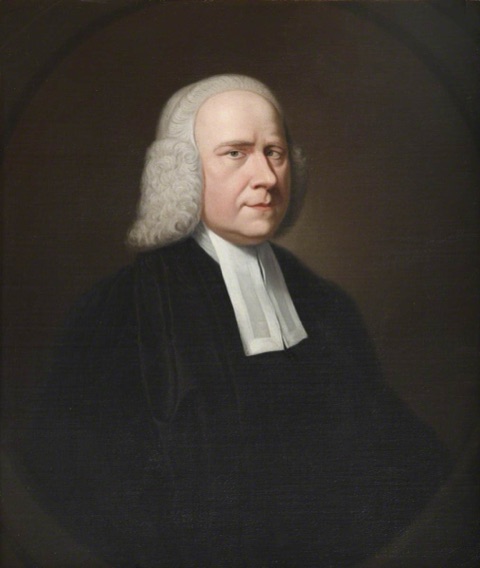
Portrait of George Whitefield

About the author

George Whitefield

George Whitefield (1714-1770) was an English Anglican clergyman and evangelist who was one of the founders of Methodism and the evangelical movement. Born in Gloucester, England, he was educated at Oxford where he joined the "Holy Club" with John and Charles Wesley. After his conversion and ordination, Whitefield became the most famous preacher of his era, crossing the Atlantic thirteen times to preach in the American colonies. His open-air preaching drew unprecedented crowds—sometimes exceeding 30,000 people—and his dramatic oratorical style set the pattern for evangelical preaching. Whitefield was instrumental in the Great Awakening, the religious revival that swept through Britain and America in the 1730s and 1740s. Despite his fame, he remained humble, once saying, "Let the name of Whitefield perish, but Christ be glorified." He died in Newburyport, Massachusetts, still active in ministry at age 55.

I highly recommend this collection of Whitefield's sermons in modernised English. I'm still working my way through and each one is making its mark on my heart.

★★★★★  Stephen H.




