George Gillespie
Scottish Presbyterian minister and one of the commissioners sent from the Church of Scotland to the Westminster Assembly, where he became its sharpest debater against Erastianism. His treatise Aaron's Rod Blossoming remains a standard defense of divine-right Presbyterian church government.
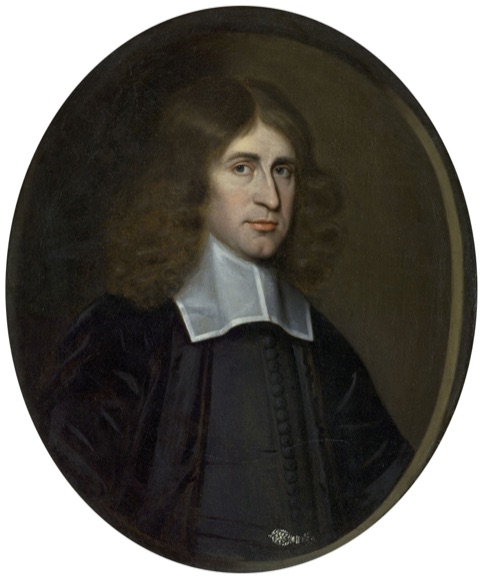
1613–1648
Biography
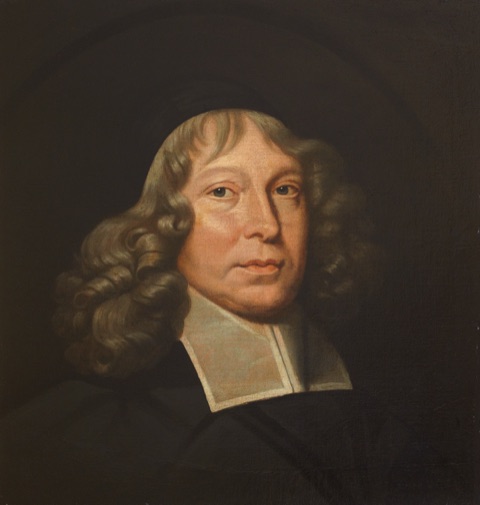
George Gillespie (1613 to 1648) was a Scottish Presbyterian minister and one of the commissioners the Church of Scotland sent to the Westminster Assembly, where he argued that the church's government belonged to Christ alone and not to the civil magistrate. He was born in Kirkcaldy, Fife, in January 1613, the son of John Gillespie, a minister of that town, and he was educated at the University of St Andrews.
Rather than accept ordination from a bishop, which the episcopal government of the Scottish church then required, Gillespie served for several years as a private chaplain in the households of noble families, including that of the Earl of Cassilis. In 1637 he published, anonymously, A Dispute Against the English Popish Ceremonies Obtruded Upon the Church of Scotland, a dense attack on the kneeling, holy days, and liturgical practices that Charles I and Archbishop Laud were pressing on Scotland. The Privy Council ordered the book suppressed. It appeared in the same season as the Edinburgh riot over Laud's new prayer book, and it made its young author known to the leaders of the Covenanting movement.
When the Glasgow Assembly of 1638 abolished episcopacy in Scotland, Gillespie was among the first ministers ordained under the restored Presbyterian order, taking the parish of Wemyss in Fife. In 1642 he was called to Edinburgh, first to a city charge and then to Greyfriars. He continued to write in defense of Presbyterian order, publishing in 1641 An Assertion of the Government of the Church of Scotland, which set out the offices of elder and deacon and the system of graded church courts.
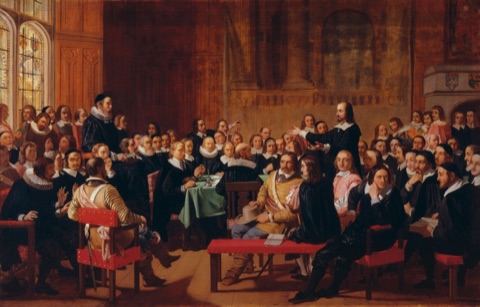
In 1643 the Church of Scotland sent Gillespie south to London with Alexander Henderson, Samuel Rutherford, and Robert Baillie as its commissioners to the Westminster Assembly, the gathering of divines convened by the English Parliament to reform the Church of England. Gillespie, then thirty, was the youngest of the Scottish delegation, and he became its most effective controversialist. The central fight he engaged was over Erastianism, the view that the state, not the church, holds final authority in matters of discipline and excommunication. Against the learned lawyer John Selden and the minister Thomas Coleman, who pressed the Erastian case, Gillespie defended the independence of the church's spiritual power, an exchange that ran through a series of pamphlets including A Late Dialogue Betwixt a Civilian and a Divine (1644) and his replies to Coleman.
Out of that controversy came his major work, Aaron's Rod Blossoming, or The Divine Ordinance of Church Government Vindicated, published in 1646. It argued at length that Christ instituted a distinct church government with its own courts and its own power of discipline, held apart from the magistrate, and it remained a reference point for later Presbyterian writing on the subject. Alongside his debating, Gillespie took part in framing the documents the Assembly produced, among them the Westminster Confession of Faith, the Larger and Shorter Catechisms, and the Directory for Public Worship.
Gillespie returned to Scotland and in 1648 was elected Moderator of the General Assembly of the Church of Scotland, its highest office. His health was already failing from consumption, and he died at Kirkcaldy in December 1648, at the age of thirty-five. His shorter pieces and disputed questions were gathered after his death. In 1661, after the Restoration of the monarchy, the Scottish Parliament ordered the monument over his grave to be broken.
Life & Career
Why Gillespie Matters
Gillespie matters chiefly as a theologian of church government. His writing set out, with unusual rigor, the case that Jesus Christ instituted a specific form of government for the church, complete with its own officers and its own power of discipline, and that this authority stands apart from the civil state. In the mid-seventeenth-century debates over whether Parliament or the church should hold the final power of excommunication, he became the leading Presbyterian voice against the Erastian position, and Aaron's Rod Blossoming became the fullest statement of that view in English.
His influence runs through the Westminster Standards. As one of the Scottish commissioners, he took part in the drafting and debate that produced the Westminster Confession of Faith, the Larger and Shorter Catechisms, and the Directory for Public Worship, documents that became the doctrinal and governmental basis of Presbyterian churches across Scotland, England, Ireland, and later North America. His contribution shaped the Assembly's teaching on the church's discipline and worship at the points where Presbyterians and Erastians disagreed most sharply.
He also gave later Presbyterianism a defense of jure divino church polity, the claim that Presbyterian order rests on divine institution rather than on human convenience or state permission. Writers in that tradition, particularly among the Scottish Covenanters and their heirs, returned to his arguments when they defended the church's independence from the crown and the state.
That his tombstone was ordered destroyed in 1661 measures how closely his name was tied to the Presbyterian settlement the restored monarchy set out to undo. Within a life of thirty-five years he produced a body of ecclesiological writing that outlasted the political order it defended.