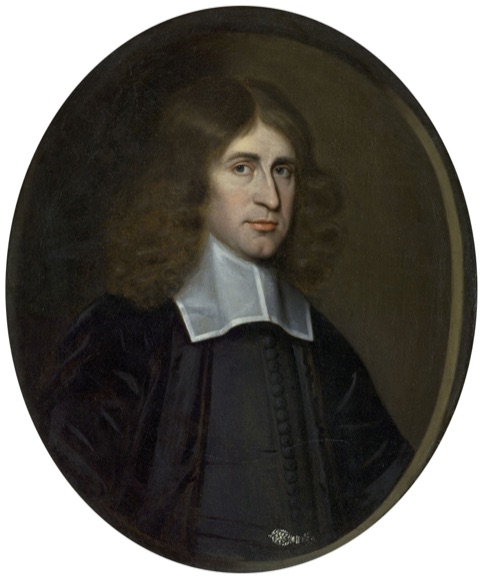
George Gillespie's 1646 defense of Presbyterian church government against the Erastians, arguing from the Jewish Sanhedrin, the New Testament, and Reformed practice that excommunication and church discipline belong to church officers rather than the civil magistrate.
One free account opens 250+ books and saves your place on every device. Google sign-in or an email link. No card.
You’re on the list — we’ll email you if this goes to print.
Included with your free account
This book, and 250+ more, free to read
A free account opens the whole library to read online, on your phone or at your desk. Open a book on one device and it is waiting at the same page on the next. The PDF and EPUB of every book are yours to keep, and audiobooks play in the same app.
250+ modernized editionsNot samples. The whole work, free.
Your place, on every devicePhone, tablet or desktop, same page.
131 audiobooksFrom $4.99 each, or all of them with a $50 gift.
Aaron's Rod Blossoming was published in 1646 while the Westminster Assembly was settling the form of church government for England and Scotland. Its subtitle, "The Divine Ordinance of Church Government Vindicated," states the aim: to defend the Presbyterian claim that Christ instituted a government and discipline in the church distinct from the civil state. Gillespie wrote it against the Erastians, especially Thomas Coleman and William Prynne, who held that the power of excommunication and church censure belonged finally to the civil magistrate. The title takes the figure of Aaron's rod budding in Numbers 17, where God vindicated the priestly office against the rebellion of Korah, as an emblem of the divine vindication of church government.
The work is built in three books. The first argues that the Jewish church was formally distinct from the Jewish state, that the Jews had an ecclesiastical Sanhedrin separate from the civil one, and that they practiced excommunication, public repentance, and the suspension of the profane from the temple and Passover. The second turns to the New Testament to prove a government and discipline in the Christian church, including the keys of binding and loosing and the suspension of the scandalous from the Lord's Supper. The third answers objections drawn from Erastus and his followers point by point. Throughout, Gillespie marshals the rabbis (Maimonides, the Talmud), the church fathers, Reformed confessions, and his contemporary opponents' own words.
The book shaped the ecclesiology written into the Westminster Standards and remained a standard reference for Presbyterian polity and the distinction between the civil and ecclesiastical "powers," or what later writers called the two kingdoms. Gillespie died in 1648 at the age of thirty-five, and this treatise, written in his early thirties, is the fullest statement of the case he argued on the Assembly floor.
Dedicatory Letter to the Westminster Assembly
RIGHT REVEREND,
Many faithful servants of God long desired to see and hear the things that we now see and hear. Yet it has been one of the special mercies reserved for this generation, and denied to our ancestors, that divines of both kingdoms within this island should be gathered and continued together to consult peaceably and freely concerning a reformation of religion in doctrine, worship, discipline, and government. The mercy is greater still that two nations, formerly so far apart in the form of public worship and church government, should, through the good hand of God, now be agreed upon one directory of worship, and well advanced both toward one confession of faith and toward one form of church government. For all of this, the other reformed churches (on account of their common interest in the truth and ordinances of Christ) are your debtors, and especially your brethren in the Church of Scotland. Your name is as precious ointment among them, and they esteem you very highly in love for your work's sake.
That work is extraordinary and unparalleled, requiring a double portion of the Spirit of your Master, and you have very many hearts and prayers going along with you in it, that the pleasure of the Lord may prosper in your hand.
As for my reverend colleagues and myself, it has been a great part of our happiness to share in and assist your grave and learned debates. Yet, as we declared from our first coming among you, we came not presuming to prescribe anything to you, but willing to receive light as well as to offer it, and to debate matters freely and fairly from the word of God, the common rule to you and to us alike.
You were pleased to bear testimony to this in one of your letters to the General Assembly of the Church of Scotland. The great respect you have expressed, both toward that church from which we are entrusted and particularly toward ourselves, calls for every possible public testimony of gratitude in return. For that purpose I gladly take hold of this opportunity. I know that I owe far more to you than I have either the ability to repay or the words to express.
Yet, though I cannot repay your kindness or offer anything truly worthy of you, I ask you to accept this as part of my return of respects. I offer and dedicate to you this examination of the Erastian controversy, which is a knot worthy of one who can untie it. I trust there is a word in season here concerning it. Others might have done better, but I have brought to the work of the tabernacle such furnishings as I had. I submit what is mine to your greater learning and judgment, and shall ever remain,
Yours to serve you,
GEO. GILLESPIE.
A Letter to the Reader
I have often and heartily wished that I might not be distracted by, nor drawn into, polemic writings, of which the world is already too full, and from which many more learned and capable writers have abstained. I resolved accordingly that, in this controversial age, I should be slow to write and swift to read and learn. Yet certain compelling reasons have made me willing to step forward on this subject. Besides the desires and requests of several Christian friends, lovers of truth and peace, who have earnestly called upon me to answer Mr. Prynne's Vindication of his Four Questions concerning Excommunication and Suspension, the great importance of the Erastian controversy itself, and its strong bearing on the present state of affairs, powerfully invites me.
Among the many controversies that have troubled and disturbed the Church of Christ, those concerning ecclesiastical government and discipline are not the least but among the chief, and they are often managed with the greatest animosity and eagerness of spirit. From this have grown most dangerous divisions and breaches, such as exist today, and such as are to be expected in the future, unless, through God's mercy, some further composing and healing of these church-consuming distractions can be obtained. If we are so happy as to obtain that healing, it will certainly contribute greatly toward settling the civil and state-shaking differences as well. Conversely, if there is no healing for the church, there will be no healing for the state. Let the Gallios of this time, who care nothing for any intrinsic evil in the church, promise themselves what they will. Surely anyone who has cause to write, with Nicolas of Clémanges, a book of lamentation on the corrupt state of the church will also find cause to write with him on the fall and repair of justice.
As the matter is of the highest concern to these so greatly disturbed and divided churches, its importance reaches yet higher by many degrees. This controversy reaches up to the heavens, and its top is above the clouds. It is of the highest concern to Jesus Christ himself, in his glory, royal prerogative, and kingdom, which he holds and exercises as Mediator and Head of his church. The crown of Jesus Christ, or any part, privilege, or piece of it, is necessarily a noble and excellent subject. The truth that Jesus Christ is a king, and has a kingdom and government in his church distinct from the kingdoms of this world and from civil government, has this commendation above all other truths: Christ himself suffered to the death for it and sealed it with his blood.
It may be observed from the story of his passion that this was the only point of accusation which he himself confessed and avowed, which the Jews most aggravated, pressed, and drove home, which prevailed with Pilate as the cause for condemning him to die, and which was also noted in the inscription upon his cross. Though in relation to God and in respect of satisfaction to divine justice for our sins his death was a price of redemption, in relation to the men who persecuted, accused, and condemned him, his death was a martyr's testimony sealing this truth.
This kingly office of Jesus Christ, as well as his prophetical office, is administered and exercised not only inwardly and invisibly by the working of his Spirit in the souls of particular persons, but also outwardly and visibly in the church as a visible, political, ministerial body. In it he has appointed his own proper officers, ambassadors, courts, laws, ordinances, and censures, all these administrations to be carried out in his own name as the only King and Head of the church. This is what Herod and Pilate, and many princes, rulers, and states, have looked upon with so much fear and jealousy, as another government alongside the civil. But what was a cause of fear on the one side has been a light on the other side to those servants of Jesus Christ who have stood, contended, and sometimes suffered greatly for the ordinance of church government and discipline, which they regarded as a part of Christ's kingdom.
So Martin Bucer, so Parker, so Mr. Welsh, my countryman of precious memory, who suffered greatly for the same truth and was ready to seal it with his blood, along with various others who might be named, and especially the learned David Calderwood in his Altare Damascenum, chapter 1, and throughout.
I am not unaware that some have an evil eye toward all government in a nation distinct from civil magistracy. If it were in their power, they would have all Anti-Erastians, and consequently both Presbyterians and Independents, regarded as guilty of treason, or at least as violators of and encroachers upon the rights and privileges of magistracy, by reason of a distinct ecclesiastical government. It is no new thing for the most faithful ministers of Jesus Christ to be reproached and accused as guilty of treason. This was not only the lot of Mr. Calderwood and of Mr. Welsh, and those who suffered with him, but of Mr. Knox before them, as likewise of many martyrs and confessors, and of the apostles themselves.
Yet if we judge rightly, and weigh things in a just balance, we do not rob the magistrate of what is his by giving to Christ what is Christ's. We desire to uphold the honor and greatness, the power and authority of magistracy, against Papists, Anabaptists, and all others "that despise dominion, and speak evil of dignities." We do not compare, as Pope Innocent III did, the civil and ecclesiastical powers to the two great lights, assigning civil power to the moon and ecclesiastical to the sun. We hold that "it is proper to kings, princes, and magistrates, to be called lords and dominators over their subjects whom they govern civilly; but it is proper to Christ only to be called Lord and Master in the spiritual government of the church; and all others that bear office therein, ought not to usurp dominion therein, nor be called lords, but only ministers, disciples, and servants."
We acknowledge and affirm that magistracy and civil government in empires, kingdoms, dominions, and cities is an ordinance of God for his own glory and for the great good of mankind, so that whoever are enemies to magistracy are enemies to mankind and to the revealed will of God. "That such persons as are placed in authority are to be beloved, honoured, feared, and holden in a most reverend estimation, because they are the lieutenants of God, in whose seat God himself doth sit and judge." We teach "that not only they are appointed for civil policy, but also for maintenance of the true religion, and for suppressing of idolatry and superstition whatsoever." We confess "that such as resist the supreme power, doing that thing which appertaineth to his charge, do resist God's ordinance, and therefore cannot be guiltless.
"And further, we affirm that whoever deny them their aid, counsel, and comfort while the princes and rulers diligently labor in carrying out their office, those same men deny their help, support, and counsel to God, who, by the presence of his lieutenant, asks it of them."
We know and believe "that, though we be free, we ought wholly, in a true faith holily to submit ourselves to the magistrate, both with our body, and with all our goods and endeavor of mind, also to perform faithfulness, and the oath which we made to him, so far forth as his government is not evidently repugnant to him, for whose sake we do reverence the magistrate." That we ought to yield to kings and other magistrates in their own stations, fear, honor, tribute, and custom, whether they be good men or evil, as likewise to obey them in that which is not contrary to the word of God, it being always provided that in things pertaining to our souls and consciences, we obey God only, and his holy word. We believe that God has "delivered the sword into the hands of the magistrates, to wit, that offences may be repressed, not only those which are committed against the second table, but also against the first."
We do agree and affirm "that all men, of what dignity, condition, or state soever they be, ought to be subject to their lawful magistrates, and pay unto them subsidies and tributes, and obey them in all things which are not repugnant to the word of God. Also, they must pour out their prayers for them, that God would vouchsafe to direct them in all their actions, and that we may lead a peaceable and quiet life under them, with all godliness and honesty."
We teach that "it doth belong to the authority and duty of the magistrate, to forbid and (if need be) to punish such sins as are committed against the ten commandments, or the law natural," as likewise "to add unto the law natural some other laws, defining the circumstances of the natural law, and to keep and maintain the same by punishing the transgressors." We hold that "the laws of the realm may punish Christian men with death, for heinous and grievous offences." And "that it is lawful for Christian men, at the command of the magistrate, to bear arms, and to serve in just wars."
All these things we do sincerely, really, constantly, faithfully, and cheerfully yield and assert on behalf of the civil magistrate. The cause I now take in hand does not depress but exalt, does not weaken but strengthen, magistracy. I do not plead against "the power of the sword" when I plead for "the power of the keys." These two are entirely distinct; they ought not to be confused, and they need not clash or interfere with one another. The controversy is not about taking from the magistrate what is his, but about giving to Christ what is his. We hold a reciprocal subordination of persons, but a coordination of powers. "As the ministers and others of the ecclesiastical estate are subject to the civil magistrate, so ought the person of the magistrate to be subject to the church spiritually, and in ecclesiastical government; and the exercise of both these jurisdictions cannot stand in one person ordinarily."
Again, "The magistrate neither ought to preach, minister the sacrament, nor execute the censures of the church, nor yet prescribe any rule how it should be done, but command the ministers to observe the rule commanded in the word, and punish the transgressors by civil means. The ministers exercise not the civil jurisdiction, but teach the magistrate how it should be exercised according to the word."
The laws and statutes of Geneva at once ratify the ecclesiastical presbyterial power of jurisdiction and censure, and also appoint that ministers shall not take upon themselves any civil jurisdiction; where compulsion or civil punishments are needed, that is to be done by the magistrate. Even under a popish magistrate, as in France, and even under the Turk himself, many churches enjoy not only the word and sacraments but a free church government and discipline within themselves, which is thought no prejudice to the civil government, those who govern the churches having no share of magistracy. See David Chytræus's oration on the state of the churches in Greece, etc.
I know well that there are other terrible slanders and misrepresentations of presbyterial government besides that of encroaching upon magistracy, but they are as false as they are foul. We go upon the disadvantage that Demosthenes complained of when he was burdened with heavy charges and grievous accusations by Æschines: though by right both parties should be heard, the generality of men take pleasure in hearing reproaches and slanders but little or no pleasure in hearing a man clear himself or his cause. His adversary had chosen the more pleasant part, leaving to him the more tedious. Nevertheless, I must expect from all who are conscientious and faithful in this cause and covenant that their ears will not be open to slanders while closed to more favorable information. Whatever the worst that malice itself can devise, it will be no small comfort to me that our Lord and Master has said, "Blessed are ye when men shall revile you, and persecute you, and shall say all manner of evil against you falsely for my name's sake."
I know also that a government and discipline in the church, the thing I now undertake to plead for, is very displeasing to those who would freely enjoy liberty either of pernicious errors or gross profaneness. But, as Maimonides rightly says, "we must not judge of the easiness or heaviness of a law, according to the affections and lust of any evil man, being rash in judgment and given to the worst vices, but according to the understanding of one who is most perfect among men, like unto whom, according to the law, all others ought to be" (Moreh Nevochim, part 2, chapter 39). No wonder the licentious hate the way in which they find themselves hemmed in, if not hedged up, with thorns. And that they may the more flatter themselves in their sinful licentiousness, they imagine that Christ's yoke is easy and his burden light to the flesh as well as to the spirit, to carnal as well as to spiritual men.
For my part, if I have learned Christ aright, I hold it as a sure principle that in as far as a man is spiritual and regenerate, his flesh is under a yoke; and in as far as he is unregenerate, his flesh is without a yoke. The healing of the spirit is not without the smiting of the flesh.
When I speak of this divine ordinance of church government, my meaning is not to allow, much less to encourage, any overly severe or excessively strict exercise of ecclesiastical discipline and censures. Jerome observed it as one of the errors of the Montanists that they shut the church door, that is, they excommunicated and shut out of the church, almost at every offense. I confess the greater part are more likely to fail through deficiency than through excess, and are likely to come too short rather than go too far. Yet a failure there may be, and has been, both ways. The best things, whether in church or state, have been actually abused and may be so again through the error and corruption of men. The Holy Scripture itself is abused to the greatest mischiefs in the world, though in its own nature it serves for the greatest good in the world.
The abuse of a thing which is necessary, and especially of a divine ordinance, whether such abuse is feared or felt, ought not and may not prejudice the thing itself. My purpose and endeavor shall be, and I beseech the Lord to help my infirmities in this, to own the thing, to disown the abuses of the thing, and to point out the path of Christ's ordinance, without allowing either rigor against those who ought to be tenderly dealt with, or too much leniency toward those who must be saved with fear and pulled out of the fire, or any deviation to the right hand or the left.
I have had much difficulty in gaining enough spare hours from the works of my public calling to complete this work. It has cost me much pains, and I think I may say without presumption that whoever undertakes to answer it solidly will find it no easy matter. Hasty overnight labor will not do it. But if any man shall, by unanswerable contrary reasons or evidences, discover error or mistake in any of my principles, let truth have the victory and let God have the glory.
Only this favor, and I may say this justice, I will claim. First, that my principles and conclusions may be rightly understood, and that I may not be charged with any absurd, dangerous, or odious assertion unless my own words are faithfully cited from which that assertion is gathered, and without concealing my explanations, qualifications, or restrictions, if any such there be. This rule, to my best observation, I have not transgressed in reference to my opponents. Secondly, that as I have not dealt with their shells but with their kernels, have not scratched at the surface but taken out the substance, have not avoided them but engaged them where their strength was greatest, their arguments hardest, and their objections most probable, so no man may evade or conceal the strength of my arguments, inferences, authorities, answers, and replies, nor think it enough to lift an axe against the outermost branches when he ought to strike at the root.
Thirdly, if there is any sharpness, let it be in real and rational conviction, not in the manner of expression, and in this I ask no other measure for myself than I have given to others. It is vain for a man to compensate for weak reasoning with the sharpness of passion, for thereby he loses more than he gains with intelligent readers. The simpler sort may perhaps esteem those worthless nothings to be something, but then they are deluded, not edified. Therefore let no man pour forth a flood of passionate words when his arguments are like broken cisterns that can hold no water.
If any replier from the Erastian party will confine himself within these rules and conditions, as I do not challenge him, so, if God spares me life and liberty, I will not refuse him. But if any replies in a way that violates these just and reasonable demands, I must call him to account, to his greater shame, and make his evasion plain.
I will detain you, good reader, no longer. May the Lord guide you and all his people in ways of truth and peace, holiness and righteousness. May he grant that this controversy may, as I trust it shall, have a happy end: to the glory of God, to the embracing and exalting of Jesus Christ in his kingly office, to the ordering of his house according to his own will, to the keeping pure of the ordinances, to the advancing of holiness and the shaming of profaneness, and finally to the peace, quiet, well-being, comfort, and happiness of the churches of Christ. These things, without any thought of provoking any public or private person, the searcher of hearts knows to be desired and intended by him who remains,
Yours, to please you for your good and edification.
GEO. GILLESPIE.
Chapter 1: Why the Jewish Church Cannot Be a Precedent for the Christian
Observing that much of Erastus's strength, and much of his followers' confidence, rests on the Old Testament and the Jewish church, which, as they claim, knew no such distinction as civil government and church government, civil justice and church discipline, I have thought it best to remove that great stumbling-block first, so that our way may afterward lie clear before us.
I heartily acknowledge that what we find to have been an ordinance, or an approved practice, in the Jewish church ought to be a rule and pattern for us, except for those things that were either typical or temporal, that is, things for which there were special reasons suited to that early stage of the church and not common to us. Now, if our opponents could prove that the Jewish church was nothing but the Jewish state, that Jewish church government was nothing but Jewish state government, and that the Jews never had any supreme Sanhedrin but one, and that one purely civil with the temporal coercive power of magistracy (which they will never be able to prove), even then, there are several considerable reasons why that could be no precedent for us.
First. Casaubon (exerc. 13, anno 31, num. 10) proves from Maimonides that the Sanhedrin was to be composed, if possible, wholly of priests and Levites; and that only if enough qualified priests and Levites could not be found were some assumed from other tribes. I do not hold this to be consistent with the original institution of the Sanhedrin. But this much is certain: priests and Levites were members of the Jewish Sanhedrin, and had an authoritative, decisive vote in making decrees and inflicting punishments, just as other members did. Philo the Jew (de vita Mosis, page 530) says that the man found gathering sticks on the Sabbath was brought to the prince and the council of priests, that is, to the prince or chief ruler (meaning Moses), together with whom the priests sat and judged in the Sanhedrin. "Jehoshaphat did set of the Levites, of the priests, and of the chief of the fathers of Israel, for the judgment of the Lord," etc. (2 Chr 19:8).
Secondly. The people of Israel had God's own judicial law, given by Moses, as their civil law, and the priests and Levites instead of civil lawyers.
Thirdly. The Sanhedrin punished no man unless admonition had first been given to him for his amendment. Maimonides, de fundam. legis, chapter 5, section 6, and indeed, as Gul. Vorstius notes on that passage, even if a man had killed his parents the Sanhedrin did not punish him unless he were first admonished. When witnesses were examined, seven questions were put to them, one of which was whether they had admonished the offender, as the Talmud itself tells us, ad tit. Sanhedrin, chapter 5, section 1.
Fourthly. The Sanhedrin interpreted the law of God and determined controversies concerning its meaning and intent (Deut 17:8–11); and this is how it was done, as the Jerusalem Talmud in Sanhedrin, chapter 10, section 2, records: "There were there (in Jerusalem) three assemblies of judges, one sitting at the entry to the mountain of the sanctuary, another sitting at the door of the court, the third sitting in the conclave made of cut stone.
First, addresses were made to that which sat at the ascent of the mountains of the sanctuary; then the elder (who came to represent the cause which was too hard for the courts of the cities) said on this manner, 'I have drawn this sense from the holy Scripture, my fellows have drawn that sense; I have taught thus, my fellows so and so.' If they had learned what is to be determined in that cause, they did communicate it unto them, if not, they went forward together to the judges sitting at the door of the court, by whom they were instructed, if they, after the laying forth of the difficulty, knew what resolutions to give. Otherwise all of them had recourse to the great Sanhedrin; for from it doth the law go forth unto all Israel." It is added in Exc. Gemar. Sanhed. chapter 10, section 1, that the Sanhedrin sat in the room of cut stone (which was in the temple) from the morning to the evening daily sacrifice.
The Sanhedrin also judged cases of idolatry, apostasy, false prophets, etc. Talm. Hieros. in Sanhed. chapter 1, section 5.
Now, all of this being unquestionably true of the Jewish Sanhedrin, suppose we grant that they had no supreme Sanhedrin except one holding the power of civil magistracy. I then ask: where is the Christian state that was, is, or ought to be, modeled on this pattern? Must ministers have a vote in parliament? Must they be civil lawyers? Must all criminal and capital judgments follow the judicial law of Moses and nothing else? Must there be no civil punishment without previous admonition of the offender? Must parliaments sit, as it were, in the temple of God, interpreting Scripture, determining which sense is true and which false, settling controversies of faith and cases of conscience, and judging all false doctrines? Yet all of this must follow if a parallel is drawn with the Jewish Sanhedrin.
I know some divines hold that the judicial law of Moses, so far as it concerns the punishment of sins against the moral law, idolatry, blasphemy, Sabbath-breaking, adultery, theft, and the like, ought to be a rule for the Christian magistrate; and for my part, I wish more respect were paid to it and that it were more consulted. But that is said by the way. I am here only showing what must follow if the Jewish government is taken as a precedent without distinguishing civil from church government. The consequences would be such as I am sure our opponents will never accept, and some of them, namely, those concerning the civil offices or power of ministers, and concerning the magistrate's authority to interpret Scripture, ought not to be accepted.
Certainly, even if it were granted that the Jews had but one Sanhedrin, there was such an intermingling of civil and ecclesiastical persons and proceedings that a partition would have to be made of the power the Jewish Sanhedrin exercised. That power, taken whole and entire, can suit neither our civil nor our ecclesiastical courts. Moreover, when the Erastians appeal to the Jewish Sanhedrin (supposing it to be but one), they thereby commit themselves to granting church officers at least a share, indeed a great share, in ecclesiastical government, for so they had in the supreme Sanhedrin of the Jews.
Furthermore, the Jews had the Great Synagogue, which Grotius on Matthew 10:17 distinguishes from the Sanhedrin of seventy-one; for both prophets and others of standing and authority among the people, besides the members of that Sanhedrin, were members of that extraordinary assembly called the Great Synagogue. Such was the assembly in Ezra 10, which decreed forfeiture and separation from the congregation as the punishment for those who would not gather themselves to Jerusalem, an assembly that included others beyond those of the Sanhedrin.
Of the men of the Great Synagogue I read in Tzemach David, page 56, edit. Hen. Vorstius, that they received the traditions from the prophets; and it is added that "the men of the Great Synagogue appointed our prayers for us", meaning their liturgies, which they believe to have been instituted in that way. The Hebrews themselves debate whether all the men of the Great Synagogue lived at one and the same time or successively; but the most widely received view among them is that these men flourished all at once, as we are told in the passage just cited, where those named as men of the Great Synagogue include Haggai, Zechariah, Malachi, Zerubbabel, Mordecai, Ezra, Jehoshua, Seria, Rehaliah, Misphar, Rechum, and Nehemiah. Maimonides adds Hananiah, Mishael, and Azariah.
Finally, just as prophets, priests, and scribes of the law of God had a place in the Great Synagogue after the captivity, so we also read of occasional and extraordinary ecclesiastical synods before the captivity, the assembly of priests and Levites under Hezekiah (2 Chr 29:4, 15), and the synod of the four hundred prophets (1 Kgs 22:6). Herod also gathered together the chief priests and scribes (Matt 2:4). I conclude that even if it were granted that there was no ecclesiastical Sanhedrin among the Jews distinct from the civil, yet the necessity of a distinct ecclesiastical government among us is greater than it was among them, for the four reasons mentioned above. Furthermore, the priests held far more power and authority in the Jewish church, not only through occasional synods but through their place in the Great Synagogue and in the civil Sanhedrin itself, than the Erastians are willing to allow church officers in the Christian church.
"I am sure," says Mr. Coleman in his Brotherly Examination Re-examined, page 16, "the best reformed church that ever was, went this way, I mean the church of Israel, which had no distinction of church government and civil government." You have appealed to the Jewish church? To the Jewish church you shall go. I will therefore endeavor to establish five things:
1. That the Jewish church was formally distinct from the Jewish state. 2. That there was an ecclesiastical Sanhedrin and government distinct from the civil. 3. That there was an ecclesiastical excommunication distinct from civil punishments. 4. That in the Jewish church there was also a public declaration of repentance, and, upon that, a reception or readmission of the offender to fellowship with the church in the holy things. 5. That there was a suspension of the profane from the temple and Passover.
First. The Jewish church was formally distinct from the Jewish state. I say formally, because ordinarily they were not distinct in their membership, the same persons being members of both, but formally they were distinct, just as the church and state are among us Christians now.
[1.)] In respect of distinct laws: the ceremonial law was given to them in reference to their church state; the judicial law was given in reference to their civil state. Isaac Abravanel, de capite fidei, chapter 13, puts this difference between the laws given to Adam and to the sons of Noah, and the divine law given by Moses, that those earlier laws were given for the preservation of human society and belong to the class of judicial or civil laws, whereas the divine law given by Moses directs the soul to its last perfection and end. I do not endorse the distinction he draws between these laws. I only note that he distinguishes judicial or civil laws, given for the preservation of society (even though given by God), from those laws given to perfect the soul and direct it to its last end, which he takes the whole moral and ceremonial law of Moses to be. Halichoth Olam, tract 5, chapter 2, tells us that certain rabbis were followed in the ceremonial laws, and other rabbis in the judicial laws.
[2.)] In respect of distinct acts: they did not worship God, offer sacrifices in the temple, call upon the name of the Lord, give thanks, or receive the sacraments as that state, but as that church.
Chapter 2: The Jewish Church Was Formally Distinct from the Jewish State
Some have asserted, with great confidence and contempt for all who disagree, that excommunication and church government distinct from civil government have no precedent in the Jewish church. The following points show otherwise.
The first concerns punishment. Evil-doers were not punished by fines, imprisonment, banishment, burning, stoning, or hanging as a church, but as a state.
The second concerns controversies. Some causes concerned the Lord's matters, others the king's matters (2 Chr 19:11). To judge between blood and blood was one thing; to judge between law and commandment, between statutes and judgments, that is, to determine the true sense of God's law when it was disputed, was another thing entirely.
The third concerns officers. The priests and Levites were church officers; magistrates and judges were not, but were ministers of the state. The priests could not take the sword from the hand of the magistrates, and the magistrates could not offer sacrifice or exercise the priestly office.
The fourth concerns continuance. When the Romans removed the Jewish state and civil government, the Jewish church remained, and the Romans permitted the Jews the liberty of their religion. Even now, though the Jews have no Jewish state, they have Jewish churches. This is why, when they indicate where someone lived or lives, they name not the town but the church: "In the holy church at Venice, at Frankford," and so on. See Buxtorf, Lex. Rabbin., page 1983.
The fifth concerns variation. The constitution and government of the Jewish state was not constant, but changed under Moses and Joshua, under the judges, under the kings, and after the captivity. Yet we cannot say that the church was reorganized as often as the state was.
The sixth concerns members. As Mr. Selden observed very well regarding the class of proselytes known as Proselyti Justitiae (proselytes of righteousness): they were initiated into the Jewish religion by circumcision, baptism, and sacrifice, and were permitted not only to worship God separately among themselves, but also to enter the church and congregation of Israel and to be called by the name of Jews. Nevertheless, they were barred from dignities, magistracies, and public offices in the Jewish republic, and from various marriages that were open to native Israelites, just as strangers initiated and received into the church of Rome do not thereby acquire the privileges of Roman citizens.
So Mr. Selden, who by this observation has made it plain that there was a real distinction between the Jewish church and the Jewish state. Those proselytes were incorporated into the Jewish church as full church members, with the right to participate in the holy ordinances alongside the rest of the people of God, yet they were not proper members of the Jewish state and were not admitted to civil privileges. This is also why the names "Jews" and "proselytes" are used as distinct categories in Acts 2:10.
George Gillespie (1613-1648) was a Scottish Presbyterian minister and one of the four Scottish commissioners sent to the Westminster Assembly, alongside Alexander Henderson, Samuel Rutherford, and Robert Baillie. Born in Kirkcaldy, Fife, he first drew attention with "A Dispute Against the English Popish Ceremonies" (1637), an attack on the imposition of kneeling and other ceremonies by the bishops. At the Assembly he became known for his speeches against Erastianism, the view that ecclesiastical discipline belongs ultimately to the civil power. He wrote "Aaron's Rod Blossoming" (1646) and "A Treatise of Miscellany Questions" against that position, and was elected Moderator of the General Assembly of the Church of Scotland in 1648, the year he died at thirty-five.
“Updated Works has been an incredible blessing to my Christian life and ministry… remarkably faithful to the original authors while making these timeless treasures understandable for modern readers.”