Firmilian of Caesarea
Bishop of Caesarea in Cappadocia and a leading churchman of the Greek East, whose blunt letter to Cyprian of Carthage is the Eastern voice in the third-century controversy over baptism performed outside the church.
Biography
Firmilian of Caesarea (died 268 AD) was the bishop of Caesarea in Cappadocia and one of the leading churchmen of the Greek-speaking East during the middle decades of the third century. He held the see for several decades and was a bishop whose judgment carried weight in the councils of Asia Minor.
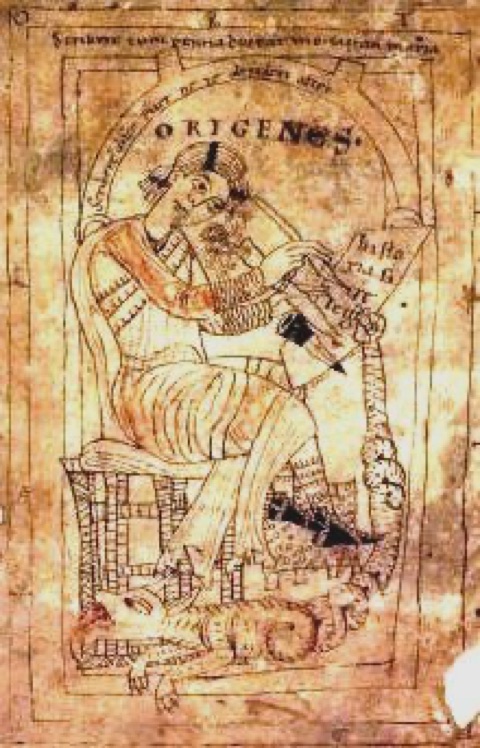
Firmilian was a friend and admirer of Origen, the teacher of Alexandria and of Caesarea in Palestine. During the persecution under the emperor Maximinus in the 230s AD, Origen took refuge in Cappadocia, and Firmilian is reported to have journeyed in turn to study under him. The connection placed him among the bishops shaped by Origen's learning. Eusebius, writing his Church History a generation later, names Firmilian among the prominent bishops of the East and associates him with the synods of Asia Minor.
His one surviving work is a long letter written around 256 AD to Cyprian, bishop of Carthage, preserved in Latin translation among Cyprian's own correspondence. It belongs to the dispute over whether people baptized in heretical or schismatic communities had to be baptized again on joining the church. Firmilian sided emphatically with Cyprian against Stephen, bishop of Rome, who held that such baptisms were valid, arguing that baptism given outside the true church was no baptism at all, and writing of Stephen in terms as sharp as any one bishop directed at another in this period. The letter records that the churches of Asia Minor had settled the same question at councils held at Iconium and Synnada, showing that the East had long followed the practice of Africa.
His public life ended amid another controversy, the case of Paul of Samosata, bishop of Antioch, whose teaching about the person of Christ was examined at a series of synods in the 260s AD. Firmilian was among the senior bishops summoned to Antioch to judge the matter. According to Eusebius, he died at Tarsus in Cilicia in 268 AD while traveling to one of these synods.
Why Firmilian Matters
Firmilian's letter to Cyprian is the fullest surviving statement of the Eastern position in the baptismal controversy of the 250s AD, and one of the few third-century documents that lets the Greek churches of Asia Minor speak in their own voice on a question that divided the whole church. Where most of the surviving debate is preserved through Cyprian and the church of Carthage, Firmilian shows that the same conclusion had been reached independently in Cappadocia and its neighboring provinces.
The dispute was not only about baptism but about authority. Stephen of Rome claimed that his position rested on the tradition of the apostles Peter and Paul; Firmilian answered that custom without truth is only long-standing error, and that Rome had no power to bind the churches of the East to its practice. His letter is therefore a key witness to how questions of unity, custom, and the standing of the Roman see were argued in the decades before the Council of Nicaea, when no single authority could yet settle a dispute for the entire church.
Firmilian's alignment with Cyprian also helped define the party that held to rebaptism. Their shared view did not prevail in the long run, since the church later came to accept the validity of baptism performed outside its bounds, following the position Stephen had defended. Because that outcome went the other way, Firmilian's letter survives as the strongest record of the losing argument, preserved precisely because it was gathered with Cyprian's papers.
His appearances in Eusebius, first as a companion of Origen and later as a judge in the case of Paul of Samosata, place him at two of the defining doctrinal struggles of the third-century East, and mark him as one of the bridge figures between the age of Origen and the councils of the fourth century.
Complete Works in English
Free to readEvery surviving work, translated in full and free to read, from our Patrologia Latina project.