Dionysius of Rome
Bishop of Rome from 259 to 268 AD who reorganized the Roman church after the persecution under the emperor Valerian. He is best known for his letter against the Sabellians, which rebuked both the merging of the Father and the Son and the language of his namesake Dionysius of Alexandria during the dispute later called the affair of the two Dionysii.
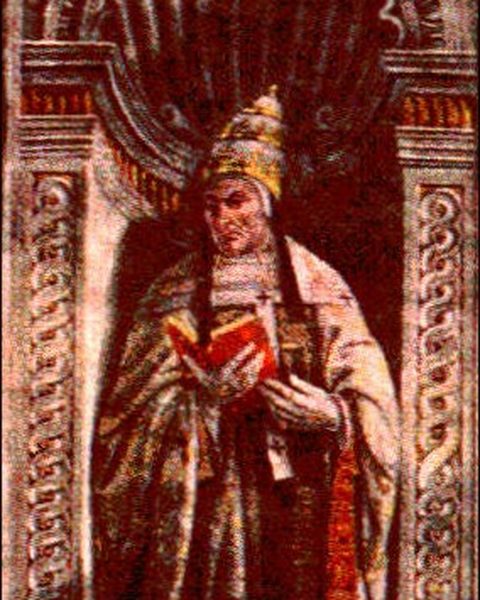
died 268 AD
Biography
Dionysius of Rome (died 268 AD) was the bishop of Rome from 259 to 268 AD, a cleric of Greek origin who reorganized the Roman church after the persecution under the emperor Valerian and intervened in an early controversy over the relationship of the Father and the Son.
He was elected after the Roman see had stood empty for about a year. His predecessor, Sixtus II, was seized and put to death in August 258 AD under Valerian's edict against the Christian clergy, and the persecution kept the chair of Rome vacant until Dionysius's election in 259 AD. When the persecution ended with Valerian's capture by the Persians and the more tolerant policy of his son Gallienus, Dionysius set about restoring the churches, re-establishing the presbyters, and putting the congregation's affairs back in order.
His most consequential act belonged to the doctrinal dispute known as the affair of the two Dionysii. In the Pentapolis of Cyrenaica, Dionysius of Alexandria had been combating the teaching of Sabellius, who so stressed the unity of God that Father and Son collapsed into one. In pressing the distinction between them, the Alexandrian bishop used expressions that his critics found dangerous, calling the Son a "thing made" and speaking of him as foreign in substance to the Father. Some of the accused party carried the complaint to Rome. Dionysius held a synod there, around 262 AD, and issued a letter condemning both errors at once: he rejected Sabellius for confounding the persons, and he rejected those who would divide the one Godhead into three separate powers or would treat the Son as a creature.
A substantial portion of that letter survives because Athanasius of Alexandria quoted it in his work On the Decrees of the Council of Nicaea, written to defend the Nicene faith against the charge that its language was an innovation. In the preserved fragment, sometimes titled Against the Sabellians, Dionysius attacks the notion that there are three gods, insists that the divine unity must be kept whole, and denies that the Son is among the things that were made. After receiving the Roman letter, Dionysius of Alexandria replied with a defense of his own words, and the two bishops were reconciled.
Dionysius also drew notice for his generosity beyond Rome. Basil of Caesarea, writing a century later, recalled that the Roman church under Dionysius had sent letters of comfort and money to ransom captives to the churches of Cappadocia, which had been devastated by raids. Two further letters printed under Dionysius's name in later collections, one addressed to Urban the prefect and one to a Bishop Severus, are pseudo-Isidorian forgeries composed in the ninth century and are not his work. He died on 26 December 268 AD.
Why Dionysius Matters
Dionysius of Rome matters chiefly for his intervention in the Trinitarian question a full generation before the Council of Nicaea. His synodal letter of around 262 AD set out a position that refused two opposite errors at the same time: it would not let Sabellianism dissolve the persons of Father, Son, and Spirit into one undifferentiated God, and it would not let the effort to keep them distinct harden into a doctrine of three separate gods or reduce the Son to a creature. That double refusal marked out the ground the later Nicene theologians would occupy.
The survival of the letter is itself a measure of its weight. Athanasius of Alexandria, in the middle of the fourth-century Arian controversy, quoted Dionysius at length in On the Decrees of the Council of Nicaea precisely to show that the faith of Nicaea had older Roman witnesses and was not a novelty invented in 325 AD. For Athanasius, the Roman Dionysius was evidence that condemning the language of the Son as a "creature" was the established teaching of the church, not a fresh imposition.
His handling of the case against Dionysius of Alexandria also illustrates how doctrinal disputes were adjudicated in the third century. A complaint from the Pentapolis could be carried to the bishop of Rome, who convened a synod, issued a written judgment, and corresponded directly with the bishop under question, who then answered in writing. The episode records the mechanisms of appeal and correspondence linking Rome, Alexandria, and the provincial churches.
Finally, his tenure shows the practical work of rebuilding after persecution. Taking office when the Roman see had been left empty by Valerian's edict, Dionysius restored the church's organization and clergy, and the aid he sent to the raided churches of Cappadocia, remembered by Basil of Caesarea long afterward, shows the reach of Roman charity across the empire in his time.
Complete Works in English
Free to readEvery surviving work, translated in full and free to read, from our Patrologia Latina project.