Chromatius of Aquileia
Bishop of Aquileia and a biblical preacher whose tractates on the Gospel of Matthew and sermons survive, and who acted as patron to both Jerome and Rufinus during the years of their translation work.
Biography
Chromatius of Aquileia (died around 407 AD) was the bishop of Aquileia in northeastern Italy from 388 AD, a preacher and biblical exegete who commented on the Gospel of Matthew and served as patron to both Jerome and Rufinus. Aquileia was one of the largest cities of the late Roman West, a port at the head of the Adriatic and the seat of an important church, and Chromatius led it through the closing decades of the fourth century.
He first appears in the records as a presbyter. In the 370s he belonged to an ascetic community at Aquileia that also included Jerome, Rufinus of Aquileia, and Heliodorus of Altinum, men whose later careers would carry them across the Christian world. In 381 AD, still a presbyter, Chromatius took part in the Council of Aquileia, the synod convened under Ambrose of Milan that deposed the Arian bishops Palladius and Secundianus. The few words recorded from him at that assembly survive under the title Dicta in Concilio Aquileiensi.
Chromatius became bishop of Aquileia in 388 AD, succeeding Valerianus, who had presided over the council of 381. As bishop he preached steadily on Scripture. His Tractatus in Evangelium S. Matthaei works through Matthew's Gospel, and a separate Sermo de Octo Beatitudinibus treats the eight beatitudes of the Sermon on the Mount. Much of his preaching was lost for centuries and identified only in the twentieth century, when scholars recovered a large body of his sermons that had circulated anonymously or under other names.
His patronage shaped the literary work of his contemporaries. He supported Jerome's biblical labors, and Jerome addressed several prefaces and commentaries to him, including the prefaces to his translations of Tobit and the books of Solomon, which Jerome dedicated jointly to Chromatius and Heliodorus. Around 402 AD, at Chromatius's request, Rufinus translated Eusebius of Caesarea's Ecclesiastical History into Latin and continued it, undertaking the work to occupy the people of Aquileia during the fear of a Gothic advance.
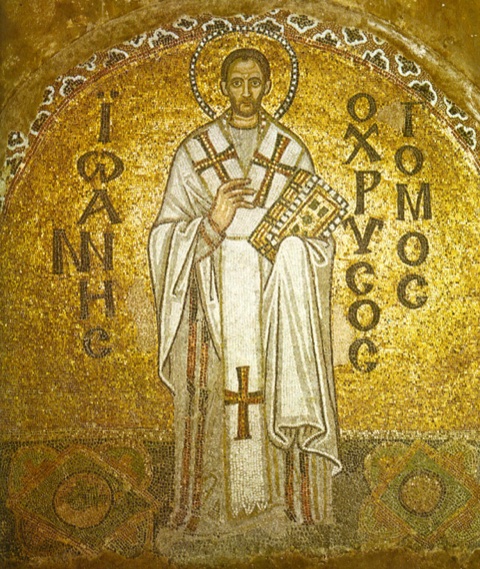
When Jerome and Rufinus, once friends, fell into conflict over the orthodoxy of Origen, Chromatius tried to hold the peace between them and wrote to both. He also defended John Chrysostom, the bishop of Constantinople deposed and sent into exile, appealing to the emperor Honorius on his behalf. Chromatius died around 407 AD, and Aquileia itself was sacked by the Huns under Attila within a few decades of his death.
Life & Career
Why Chromatius Matters
Chromatius matters first as a preacher of Scripture whose work was nearly lost and then substantially recovered. For centuries he was known mainly from a handful of texts and from the notices of his more famous friends. The identification in the twentieth century of a large collection of his sermons and of his tractates on Matthew restored to view a fourth-century Latin exegete working in the tradition that runs from Ambrose toward Augustine, and gave historians a fuller picture of preaching in the churches of northern Italy.
His exegesis is practical and pastoral rather than speculative. In the Tractatus in Evangelium S. Matthaei and the Sermo de Octo Beatitudinibus he reads the Gospel for its moral and doctrinal instruction, drawing out the meaning of the beatitudes and the teaching of Christ for a congregation. This places him within the mainstream of Latin patristic preaching and makes his surviving work a source for how the Gospel of Matthew was expounded in the West around 400 AD.
Chromatius is equally important for what he made possible in others. Without his encouragement and financial support, part of Jerome's translation program and Rufinus's Latin version of Eusebius's Ecclesiastical History might not have been produced when they were. His dedications from Jerome and his commission to Rufinus place him at the center of the network through which Greek Christian learning was carried into Latin.
His interventions in the Origenist controversy and on behalf of the exiled John Chrysostom show a bishop who tried to keep communion intact across the quarrels of his age. That role as mediator, more than any single doctrine he defended, defines his place in the history of the late fourth-century church.
Complete Works in English
Free to readEvery surviving work, translated in full and free to read, from our Patrologia Latina project.