Gaudentius of Brescia
Bishop of Brescia and successor of Philastrius, remembered for a collection of sermons that includes ten Easter homilies taken down by stenographers for the nobleman Benivolus. He also served on the embassy of 405 AD that tried to secure the recall of the exiled John Chrysostom.
Biography
Gaudentius of Brescia (bishop from around 387 AD, died around 410 AD) was the bishop of Brescia in northern Italy and the successor of Philastrius. He is known almost entirely through a surviving collection of his sermons, the Tractatus vel Sermones, which preserves the preaching of an Italian bishop during the years when Ambrose governed the neighboring see of Milan.
According to his own account, Gaudentius was traveling in the East, in the region of Cappadocia, when Philastrius died and the church of Brescia needed a new bishop. The people of Brescia had bound themselves by oath to accept no other candidate, and letters were sent recalling him home. He was consecrated with the participation of Ambrose of Milan, though he describes accepting the office only under pressure and against his own wishes. His first sermon on his ordination gives voice to this reluctance and to the weight he felt in succeeding a bishop the congregation had held in high regard.
The best-known part of his corpus is a series of ten sermons preached during the Easter season and written out for a nobleman named Benivolus, who had been prevented by illness from attending the services in person. Because Gaudentius normally preached without a prepared text, he had stenographers take down the sermons as he delivered them so that Benivolus could read what he had missed. The result is a rare survival: sermons recorded as they were actually spoken, dealing with the Passover, the Exodus, the Eucharist, and the meaning of the Christian Pasch. Gaudentius added a prefatory letter to Benivolus explaining how the collection came to be assembled.
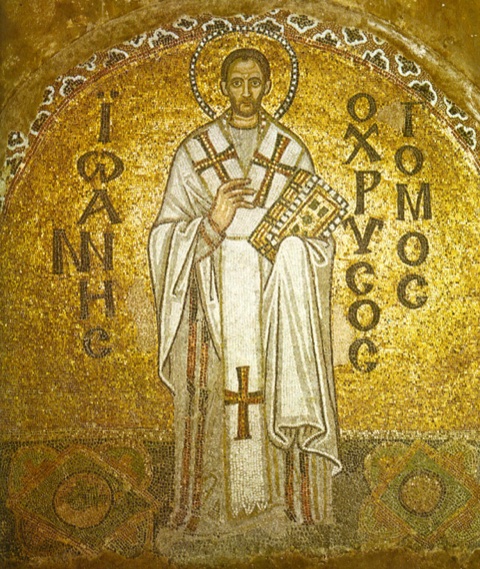
In 405 AD Gaudentius was chosen for a diplomatic mission. John Chrysostom, the bishop of Constantinople, had been deposed and exiled, and Pope Innocent I together with the western emperor Honorius sent a delegation of bishops to the eastern court to press for his restoration. Gaudentius was among the envoys. The embassy failed: the delegates were detained in Thrace, kept from reaching Constantinople, and turned back. Chrysostom afterward wrote to Gaudentius to thank him for his efforts on his behalf, and the episode is recorded in the account of Chrysostom's life written by Palladius.
Beyond the Easter sermons and the ordination address, the collection preserves other occasional pieces, including a sermon for the dedication of a basilica he had built at Brescia, in which he had gathered relics of the martyrs. The corpus as a whole is the only substantial body of writing to survive from him, and it remains the chief source both for his own career and for the ordinary preaching of a north Italian bishop at the turn of the fifth century.
Why Gaudentius Matters
Gaudentius matters first as a preacher whose sermons survive in a form close to how they were spoken. Because the ten Easter homilies for Benivolus were taken down by stenographers rather than composed as literary texts, they show how an Italian bishop of the late fourth century instructed his congregation on the central events of the Christian year: the Passover, the crossing of the Red Sea, the Last Supper, and the sacrament of the altar. This gives them value as evidence for the liturgy and catechesis of the western church in the age of Ambrose.
He is also a witness to the network of relationships among the bishops of northern Italy. As successor to Philastrius at Brescia, consecrated with Ambrose of Milan taking part, and a correspondent of the wider church, Gaudentius belonged to a closely connected group of sees along the Po valley. His sermons preserve details of episcopal succession, church building, and the veneration of relics that would otherwise be lost.
His role in the Chrysostom affair places him in one of the major ecclesiastical disputes of his time. The embassy of 405 AD, sent by Innocent I of Rome and the emperor Honorius, is one of the clearest instances of the western church intervening on behalf of an eastern bishop, and its failure sharpened the tensions between the two halves of the empire. That Chrysostom singled out Gaudentius for thanks, and that Palladius recorded his part in the mission, secures him a place in the documented history of the controversy.
Complete Works in English
Free to readEvery surviving work, translated in full and free to read, from our Patrologia Latina project.