Modernized edition · Full text · Free PDF/EPUB
To the Christian Nobility of the German Nation in Modern English
Want the file? The PDF/EPUB is free with an account.
Summary
- Author
- Martin Luther (1483 to 1546 AD), Augustinian friar and doctor of Holy Scripture at Wittenberg
- Published
- August 1520, written in German for laymen; the dedication is dated June 23, 1520
- Source edition
- Modernized from the English translation of C. M. Jacobs (1916), with the dedication to Nicholas von Amsdorf
- Type
- Open letter and reform program addressed to the emperor and the German nobility
- Length
- 33,000 words · 2 hours
What is To the Christian Nobility of the German Nation about?
To the Christian Nobility of the German Nation is Martin Luther's appeal of August 1520 to the emperor and the German princes to reform the church, since the clergy would not. Luther pulls down the three walls behind which Rome had sheltered, names the abuses of the Roman court, and sets out twenty-seven proposals for reforming church and nation.
Read the full summary (5 points, key themes)Show less
How the argument unfolds
- 01
To Nicholas von Amsdorf. Luther sends the work to his Wittenberg colleague, accepting the charge of presumption and choosing to play the court jester, since “The time to keep silence has passed, and the time to speak has come”.
- 02
To the Emperor and the Nobility. God has given Germany a young emperor, but reform must not begin in trust of force or reason. The enemy is spiritual, and the work must be done with prayer and in the fear of God.
- 03
The Three Walls of the Romanists. All Christians are priests by baptism and differ only in office, so the temporal power may punish guilty clergy; any believer with Scripture may judge doctrine; and the temporal authorities may call a council when the pope will not.
- 04
The Abuses to Be Discussed. The pope's splendor, the cardinals, the swollen papal court, and the many devices (annates, papal months, commends, unions, reservations, the datary) by which German benefices and money are drawn to Rome.
- 05
Proposals for Reform. Twenty-seven proposals, from abolishing the annates and Roman appeals to clerical marriage, pilgrimages, begging, the Bohemians, the universities and the empire, ending with the failings of the temporal estate.
Key themes
- One body, one estate. Clergy and laity are one estate differing only in work: “Christ does not have two different bodies”, and “He is one Head, and He has one body.”
- Authority for building up. Papal power that blocks reform has no claim on obedience, for “No one in Christendom has authority to do injury, or to forbid the resisting of injury.”
- Roman avarice. Behind the offices, fees and legal glosses Luther finds one motive: “at Rome no one cares what is right or not right, but only what is money or not money.”
- The gifts of the parish church. Against pilgrimages and purchased bulls, Luther sends the believer home: “Neither angel nor pope can give you as much as God gives you in your parish church.”
Reader questions (10)Hide the questions
Questions about To the Christian Nobility of the German Nation
Is there a modern English version of To the Christian Nobility of the German Nation?
Yes. This is To the Christian Nobility of the German Nation by Martin Luther in modern English. The language is modernized and the author's order and argument are kept. The full modernized text is free to read on this page.
Can I read To the Christian Nobility of the German Nation online for free?
Yes. The complete text of this modern English edition is on this page, with no sign-up or paywall.
Is there a free PDF of To the Christian Nobility of the German Nation?
Yes. The PDF and EPUB of this edition are free with an Updated Works account. Sign in with Google or an email link; no card is needed.
What is To the Christian Nobility of the German Nation by Martin Luther about?
It is Luther's call to the emperor and the German princes to reform the church themselves. He argues that all Christians are priests by baptism, so rulers may punish guilty clergy and call a council, then lists the abuses by which Rome draws money from Germany and proposes twenty-seven reforms of church and society.
When was it written?
Luther signed the dedication to Nicholas von Amsdorf at Wittenberg on June 23, 1520, and the work was published in August 1520. It is the first of his three treatises of that year, followed by The Babylonian Captivity of the Church and The Freedom of a Christian.
What are the three walls of the Romanists?
The claim that the spiritual power is above the temporal and cannot be judged by it, the claim that only the pope may interpret Scripture, and the claim that only the pope may call a council. Luther calls them “walls of straw and paper” and answers each from Scripture.
What does Luther say about priests and laymen?
That every baptized Christian is a priest, and the only real difference between clergy and laity is “one of office and work”. A priest chosen by the congregation holds an office for the others, and if he is removed he is again a peasant or townsman like everyone else.
Why does Luther address the nobility and not the clergy?
Because the clergy, whose task reform properly was, had grown indifferent, and the popes had blocked every council. Since rulers share the same baptism and faith, Luther holds that they belong to the spiritual estate and must use their office for the good of the whole body when the pope will not.
What reforms does Luther propose?
Among others: an end to the annates and to appeals to Rome, bishops confirmed at home as Nicaea decreed, liberty for parish ministers to marry, fewer festivals and masses for the dead, an end to pilgrimages and begging, union with the Bohemians, reform of the universities around Scripture, and laws against luxury, annuities and public brothels.
How long is To the Christian Nobility of the German Nation?
About 32,500 words, a few hours of reading. It is set out as a dedication, an address to the emperor and nobility, the three walls, the abuses a council should discuss, and twenty-seven numbered proposals.
To the Christian Nobility of the German Nation in Modern English · Full text
To Nicholas von Amsdorf
To the esteemed and reverend Master Nicholas von Amsdorf, Licentiate of Holy Scripture and Canon at Wittenberg, my dear and kind friend, from Doctor Martin Luther.
The grace and peace of God be with you, esteemed and reverend dear sir and friend.
The time to keep silence has passed, and the time to speak has come, as Ecclesiastes says (Eccl 3:7). I have carried out what we intended and brought together some matters concerning the reform of the Christian Estate, to be laid before the Christian Nobility of the German Nation. I do this in the hope that God may be pleased to help His Church through the efforts of the laity, since the clergy, to whom this task more properly belongs, have grown quite indifferent. I am sending the whole thing to your Reverence, so that you may pass judgment on it and, if necessary, improve it.
I know full well that I will not escape the charge of presumption, since I, a despised monk, venture to address such high and great Estates on matters of such weight, and to give advice to people of such high intelligence. I will offer no apologies, no matter who may scold me. Perhaps I owe my God and the world one more piece of folly. I have now made up my mind to pay that debt honestly, if I can, and for once to become court jester. If I fail, I still have one advantage: no one needs to buy me a fool’s cap or cut me a fool’s comb. It remains to be seen which of us will hang the bells on the other. I must fulfill the proverb, “Whatever the world does, a monk must be in it, even if he has to be painted in.” More than once a fool has spoken wisely, and wise men have often been utter fools, as Paul says, “If any one will be wise, let him become a fool” (1 Cor 3:18). Moreover, since I am not only a fool but also a sworn doctor of Holy Scripture, I am glad for the chance to fulfill my doctor’s oath in this fool’s way.
I beg you, make my excuses to the moderately intelligent, for I do not know how to earn the grace and favor of the immoderately intelligent, though I have often taken great pains to do so. From now on I neither desire nor care about their favor. God help us to seek not our own glory, but His alone! Amen.
Wittenberg, in the house of the Augustinians, on the Eve of St. John the Baptist (June 23), in the year fifteen hundred and twenty.
To the Emperor and the Nobility
To His Most Illustrious and Mighty Imperial Majesty, and to the Christian Nobility of the German Nation, from Doctor Martin Luther.
Grace and power from God, Most Illustrious Majesty, and most gracious and dear Lords.
It is not out of sheer willfulness or rashness that I, a single, poor man, have undertaken to address Your Excellencies. The distress and oppression that weigh down all the estates of Christendom, and Germany above all, move not me alone but everyone to cry out time and again and to pray for help. They have now forced me, too, to cry aloud that God may inspire someone with His Spirit to lend this suffering nation a helping hand. The councils have often made some show of reform, but the guile of certain men has cleverly hindered their attempts, and things have gone from bad to worse. Now, with God’s help, I intend to throw some light on the tricks and wickedness of these men, so that once they are known, they may no longer do so much harm or stand so greatly in the way. God has given us a noble youth to be our head, and by this He has awakened great hopes of good in many hearts. It is right, therefore, that we should do our part and put this time of grace to good use.
In this whole matter the first and most important thing is that we take earnest care not to set about it trusting in great might or in human reason, even if all the power in the world were ours. For God cannot and will not allow a good work to be begun in trust of our own power or reason. Such works He crushes ruthlessly to the ground, as it is written in the thirty-third Psalm: “There is no king saved by the multitude of an host: a mighty man is not delivered by much strength” (Ps 33:16). This, I fear, is why it came about in the past that the good Emperors Frederick I and Frederick II, and many other German emperors, were shamefully oppressed and trampled underfoot by the popes, although all the world feared them. It may be that they relied on their own might more than on God, and so they had to fall. In our own times, too, what was it that raised the bloodthirsty Julius II to such heights? Nothing else, I fear, than that France, the Germans and Venice relied on themselves. The children of Benjamin slew forty-two thousand Israelites (Judg 20:21) because the Israelites relied on their own strength.
So that it may not go the same way with us and our noble young Emperor Charles, we must be sure that in this matter we are dealing not with men but with the princes of hell. They can fill the world with war and bloodshed, but war and bloodshed do not overcome them. We must go at this work despairing of physical force and humbly trusting God. We must seek God’s help with earnest prayer and fix our minds on nothing but the misery and distress of suffering Christendom, without regard to what evil men deserve. Otherwise we may start the game with every prospect of success, but when we are well into it, the evil spirits will stir up such confusion that the whole world will swim in blood, and still nothing will come of it. Let us act wisely, therefore, and in the fear of God. The more force we use, the greater our disaster will be if we do not act humbly and in the fear of God. Until now the popes and the Romans have been able, by the devil’s help, to set kings at odds with one another, and they may well be able to do it again if we proceed by our own might and cunning, without God’s help.
The Three Walls of the Romanists
With great cunning, the Romanists have built three walls around themselves. Behind them they have defended themselves until now in such a way that no one has been able to reform them, and this has been the cause of terrible corruption throughout all Christendom.
First, when the temporal power presses them, they have made decrees and declared that the temporal power has no jurisdiction over them, but that, on the contrary, the spiritual power is above the temporal. Second, when someone tries to rebuke them out of the Scriptures, they raise the objection that the interpretation of the Scriptures belongs to no one except the pope. Third, if they are threatened with a council, they answer with the fable that no one can call a council but the pope.
In this way they have slyly stolen our three rods from us, so that they may go unpunished. They have entrenched themselves within the safe stronghold of these three walls, so that they may practice all the knavery and wickedness that we now see. Even when they have been forced to hold a council, they have weakened its power in advance by first binding the princes with an oath to let them remain as they are. Besides this, they have given the pope full authority over all the decisions of the council, so that it makes no difference whether there are many councils or none at all, except that they deceive us with puppet shows and sham battles. That is how terribly they fear for their skins in a truly free council! And they have intimidated kings and princes by making them believe it would be an offense against God not to obey them in all these knavish, crafty deceptions.
Now God help us, and give us one of the trumpets that overthrew the walls of Jericho (Josh 6:20), so that we may blow down these walls of straw and paper. May we set free the Christian rods for the punishment of sin and bring to light the craft and deceit of the devil, so that through punishment we may reform ourselves and once more gain God’s favor.
The First Wall
Against the first wall we will direct our first attack.
It is pure invention that pope, bishops, priests, and monks are to be called the “spiritual estate,” while princes, lords, artisans, and farmers are called the “temporal estate.” That is indeed a fine piece of lying and hypocrisy. Yet no one should be frightened by it, and for this reason: all Christians truly belong to the “spiritual estate,” and there is no difference among them at all except that of office. As Paul says in 1 Corinthians 12:12-27, we are all one body, yet every member has its own work, by which it serves every other. All this is because we have one baptism, one Gospel, one faith, and are all Christians alike; for baptism, Gospel, and faith alone make us “spiritual” and a Christian people.
But when a pope or a bishop anoints, confers tonsures, ordains, consecrates, or prescribes clothing different from that of the laity, this may make hypocrites and graven images, but it never makes a Christian or a “spiritual” man. Through baptism all of us are consecrated to the priesthood, as St. Peter says in 1 Peter 2:9: “Ye are a royal priesthood, a priestly kingdom.” And the book of Revelation says, “Thou hast made us by Thy blood to be priests and kings” (Rev 5:10). For if we had no higher consecration than the one that a pope or bishop gives, the consecration by pope or bishop would never make a priest, and no one could either say mass or preach a sermon or give absolution.
Therefore, when the bishop consecrates, it is the same as if he were to act in the place and on behalf of the whole congregation, all of whom have the same power, and take one person out of their number and charge him to use this power for the others. It is just as if ten brothers, all sons of a king and equal heirs, were to choose one of themselves to manage the inheritance for them all. They would all be kings and equal in power, though one of them would be charged with the duty of ruling.
To make it still clearer: suppose a little group of devout Christian laymen were taken captive and set down in a wilderness, and they had no priest among them consecrated by a bishop. Suppose that there in the wilderness they agreed to choose one of themselves, married or unmarried, and charged him with the office of baptizing, saying mass, absolving, and preaching. Such a man would be as truly a priest as if all the bishops and popes had consecrated him. That is why in cases of necessity anyone can baptize and give absolution, which would be impossible unless we were all priests. Through the canon law they have all but destroyed this great grace and power of baptism and of the Christian estate, and made us forget it.
It was in the manner I have described that Christians in former days chose bishops and priests from their own number, who were afterward confirmed by other bishops, without all the pomp that is now the custom. That is how St. Augustine, St. Ambrose, and St. Cyprian became bishops.
Since, then, the temporal authorities are baptized with the same baptism as we are and have the same faith and Gospel, we must grant that they are priests and bishops, and we must count their office as one that has a proper and useful place in the Christian community. For whoever has come out of the water of baptism can boast that he is already a consecrated priest, bishop, and pope, though it is not fitting for everyone to exercise that office. Indeed, precisely because we are all priests alike, no one must push himself forward and undertake, without our consent and election, to do what is in the power of all of us. For what is common to all, no one may take upon himself without the will and the command of the community. And if it should happen that someone chosen for such an office were removed for misconduct, he would then be just what he was before he held office.
Therefore a priest in Christendom is nothing but an officeholder. While he is in office, he has precedence; when he is removed, he is a peasant or a townsman like everyone else. Beyond all doubt, then, a priest is no longer a priest once he is removed from office. But now they have invented their “indelible marks,” and babble that a deposed priest is nevertheless something different from a mere layman. They even dream that a priest can never become a layman, or be anything other than a priest. All this is mere talk and man-made law.
From all this it follows that the only real difference between laymen and priests, princes and bishops, “spirituals” and “temporals,” as they call them, is one of office and work, not of “estate.” For they all belong to the same estate: they are all true priests, bishops, and popes, though they are not all engaged in the same work, just as not all priests and monks have the same work. This is the teaching of St. Paul in Romans 12:4-5 and 1 Corinthians 12:12-27, and of St. Peter in 1 Peter 2:9, as I said above: we are all one body of Christ, the Head, all members one of another. Christ does not have two different bodies, one “temporal,” the other “spiritual.” He is one Head, and He has one body.
Therefore, those who are now called “spiritual” (priests, bishops, or popes) are neither different from other Christians nor superior to them, except that they are charged with the administration of the Word of God and the sacraments, which is their work and office. In just the same way, the temporal authorities bear sword and rod with which to punish the evil and protect the good (Rom 13:4). A cobbler, a smith, a farmer: each has the work and office of his trade, and yet they are all alike consecrated priests and bishops. Each one, by means of his own work or office, must benefit and serve every other, so that in this way many kinds of work may be done for the bodily and spiritual welfare of the community, just as all the members of the body serve one another.
See, now, how Christian that decree is which says that the temporal power is not above the “spiritual estate” and may not punish it! That is as much as to say that the hand should lend no aid when the eye is suffering. Is it not unnatural, not to say unchristian, that one member should not help another and keep it from destruction? Indeed, the more honorable the member, the more the others ought to help it.
I say, then: since the temporal power is ordained by God to punish evildoers and to protect those who do well (Rom 13:1-4), it should be left free to do its work without hindrance throughout the whole body of Christendom, without respect of persons, whether it affects pope, bishops, priests, monks, nuns, or anyone else. For if the temporal power were to be hindered merely because it has a smaller place among the Christian offices than the office of preachers or confessors, or of the clergy, then the tailors, cobblers, masons, carpenters, tavern servants, bartenders, farmers, and all the secular tradesmen should also be prevented from providing pope, bishops, priests, and monks with shoes, clothing, houses, food, and drink, and from paying them tribute. But if these laymen are allowed to do their work unhindered, what do the Roman scribes mean by their laws, by which they withdraw themselves from the jurisdiction of the temporal Christian power? They do it only so that they may be free to do evil and to fulfill what St. Peter said: “There shall be false teachers among you, and through covetousness shall they with feigned words make merchandise of you” (2 Pet 2:1-3).
For this reason the Christian temporal power should exercise its office without interference or hindrance, no matter whether it is pope, bishop, or priest whom it affects. Whoever is guilty, let him suffer. All that the canon law has said to the contrary is sheer invention of Roman presumption. For this is what St. Paul says to all Christians: “Let every soul” (and I take that to mean the pope’s soul too) “be subject unto the higher powers; for they bear not the sword in vain, but are the ministers of God for the punishment of evildoers, and for the praise of them that do well” (Rom 13:1, 4). St. Peter also says, “Submit yourselves unto every ordinance of man for the Lord’s sake, for so is the will of God” (1 Pet 2:13, 15). He has also prophesied that men will come who despise the temporal authorities (2 Pet 2:10), and this has come to pass through the canon law.
So then, I think this first paper wall is overthrown, since the temporal power has become a member of the body of Christendom and belongs to the “spiritual estate,” though its work is of a temporal nature. Therefore its work should extend freely and without hindrance to all the members of the whole body. It should punish and use force wherever guilt deserves it or necessity demands it, without regard to pope, bishops, and priests. Let them hurl threats and excommunications as much as they like.
This is why guilty priests, when they are handed over to the temporal law, are first stripped of their priestly dignities. That would not be right unless the temporal sword had already had authority over them by divine right.
Again, it is intolerable that the canon law attaches so much importance to the freedom, life, and property of the clergy, as though the laity were not also as spiritual and as good Christians as they are, or did not belong to the Church. Why are your life and limb, your property and honor so free, and mine not? We are all Christians alike, and have baptism, faith, the Spirit, and all things alike. If a priest is killed, the land is laid under interdict; why not when a peasant is killed? Where does this great distinction between those who are equally Christians come from? Only from human laws and inventions!
Moreover, it can be no good spirit that has invented such exemptions and granted sin such license and impunity. For if we are bound to fight against the works and words of the evil spirit, and to drive him out in whatever way we can, as Christ and His apostles command, ought we then to suffer it in silence when the pope or his henchmen are bent on devilish words and works? Ought we, for the sake of men, to allow the suppression of divine commandments and truths that we have sworn in baptism to uphold with life and limb? Truly, we would then have to answer for all the souls that would be abandoned and led astray as a result.
It must therefore have been the very prince of devils who said what is written in the canon law: “If the pope were so scandalously bad as to lead souls in crowds to the devil, yet he could not be deposed.” On this accursed and devilish foundation they build at Rome, and they think we should let the whole world go to the devil rather than resist their knavery. If the fact that one man is set over others were reason enough for him to escape punishment, then no Christian could punish another, since Christ commands that every man shall regard himself as the lowliest and the least (Matt 18:4; Luke 9:48).
Where there is sin, there is no escape from punishment. As St. Gregory also writes, we are indeed all equal, but guilt puts us in subjection one to another. Now we see how those whom God and the apostles have made subject to the temporal sword deal with Christendom: by their own wickedness, without any warrant of Scripture, they rob it of its liberty. It is to be feared that this is a game of Antichrist, or a sign that he is close at hand.
The Second Wall
The second wall is still more flimsy and worthless. They want to be the only masters of the Holy Scriptures, even though in all their lives they learn nothing from them. They claim sole authority for themselves, and with insolent juggling of words they would persuade us that the pope, whether he is a bad man or a good man, cannot err in matters of faith. And yet they cannot prove a single letter of it. That is how so many heretical and unchristian, indeed even unnatural, ordinances have come to stand in the canon law, though there is no present need to speak of them. For since they think that the Holy Spirit never leaves them, however unlearned and wicked they may be, they presume to decree whatever they please. And if that were true, what need or use would there be for the Holy Scriptures? Let us burn them, and be satisfied with the unlearned lords at Rome, who are possessed of the Holy Spirit, although the Spirit can possess only pious hearts! If I had not read it myself, I could not have believed that the devil would make such clumsy claims at Rome and find a following.
But not to fight them with mere words, we will quote the Scriptures. St. Paul says in 1 Corinthians 14:30: “If to anyone something better is revealed, though he be sitting and listening to another in God’s Word, then the first, who is speaking, shall hold his peace and give place.” What would be the use of this commandment if we were to believe only the one who does the talking, or who has the highest seat? Christ also says in John 6:45 that all Christians shall be taught by God. So it may well happen that the pope and his followers are wicked men and no true Christians, not taught by God and without true understanding. On the other hand, an ordinary man may have true understanding; why then should we not follow him? Has the pope not erred many times? Who would help Christendom when the pope errs, if we were not to believe another who had the Scriptures on his side, rather than the pope?
Therefore it is a wickedly invented fable that the interpretation of Scripture, or the confirmation of its interpretation, belongs to the pope alone, and they cannot produce a single letter in its defense. They have usurped this power themselves. They allege that this power was given to Peter when the keys were given to him; but it is plain enough that the keys were not given to Peter alone, but to the whole community. Moreover, the keys were not ordained for doctrine or government, but only for the binding and loosing of sin (John 20:22-23), and whatever further power of the keys they claim for themselves is mere invention. But Christ’s word to Peter, “I have prayed for thee that thy faith fail not” (Luke 22:32), cannot be applied to the pope, since most of the popes have been without faith, as they themselves must confess. Besides, Christ prayed not only for Peter but also for all apostles and Christians, as He says in John 17:9, 20: “Father, I pray for those whom Thou hast given Me, and not for these only, but for all who believe on Me through their word.” Is that not clear enough?
Only think of it yourself! They must confess that there are pious Christians among us who have the true faith, Spirit, understanding, word and mind of Christ. Why, then, should we reject their word and understanding and follow the pope, who has neither faith nor Spirit? That would be to deny the whole faith and the Christian Church. Moreover, if the article of the Creed is correct, “I believe one holy Christian Church,” then it is not the pope alone who is always in the right. Otherwise the prayer would have to run, “I believe in the pope at Rome,” and so reduce the Christian Church to one man, which would be nothing but a devilish and hellish error.
Besides, if we are all priests, as was said above, and all have one faith, one Gospel, one sacrament, why should we not also have the power to test and judge what is correct or incorrect in matters of faith? What becomes of the words of Paul in 1 Corinthians 2:15, “He that is spiritual judgeth all things, yet he himself is judged of no man,” and in 2 Corinthians 4:13, “We have all the same Spirit of faith”? Why, then, should we not perceive what squares with faith and what does not, just as well as an unbelieving pope does?
All these and many other texts should make us bold and free. We should not allow the Spirit of liberty, as Paul calls Him (2 Cor 3:17), to be frightened off by the fabrications of the popes. We ought to go boldly forward and test all that they do or leave undone, according to our interpretation of the Scriptures, which rests on faith, and compel them to follow not their own interpretation but the one that is better. In the old days Abraham had to listen to his Sarah (Gen 21:12), although she was in more complete subjection to him than we are to anyone on earth. Balaam’s ass, too, was wiser than the prophet himself (Num 22:28). If God then spoke through an ass against a prophet, why should God not be able even now to speak through a righteous man against the pope? In the same way St. Paul rebukes St. Peter as a man in error (Gal 2:11-14). Therefore it is the duty of every Christian to take up the cause of the faith, to understand and defend it, and to rebuke all errors.
The Third Wall
The third wall falls of itself when the first two are down. For when the pope acts contrary to the Scriptures, it is our duty to stand by the Scriptures, to reprove him, and to constrain him, according to the word of Christ in Matthew 18:15: “If thy brother sin against thee, go and tell it him between thee and him alone; if he hear thee not, then take with thee one or two more; if he hear them not, tell it to the Church; if he hear not the Church, consider him a heathen.” Here every member is commanded to care for every other. How much more should we do this when the member that does evil is a ruling member, and by his evildoing causes much harm and scandal to the rest! But if I am to accuse him before the Church, I must bring the Church together.
They have no basis in Scripture for their claim that it belongs to the pope alone to call a council or to confirm its actions. This claim rests merely on their own laws, and those laws are valid only so far as they do not injure Christendom or go against the laws of God. When the pope deserves punishment, such laws lose their force, since it injures Christendom not to punish him by means of a council.
So we read in Acts 15:6 that it was not St. Peter who called the Apostolic Council, but the apostles and elders. If, then, that right had belonged to St. Peter alone, the council would not have been a Christian council but a heretical mock council. Even the Council of Nicaea, the most famous of all, was neither called nor confirmed by the Bishop of Rome, but by the Emperor Constantine. Many other emperors after him did the same, and yet these councils were the most Christian of all. But if the pope alone had the right to call councils, then all these councils must have been heretical. Moreover, when I consider the councils which the pope has created, I find that they have done nothing of special importance.
Therefore, when necessity demands it and the pope is a scandal to Christendom, the first man who is able should, as a faithful member of the whole body, do what he can to bring about a truly free council. No one can do this as well as the temporal authorities, especially since they too are now fellow Christians, fellow priests, fellow members of the spiritual estate, fellow lords over all things. Whenever it is necessary or useful, they should freely exercise the office and work in which God has set them above every man. Would it not be an unnatural thing if a fire broke out in a city and everybody stood by and let it burn on and on and consume everything that could burn, for the sole reason that nobody had the mayor’s authority, or because, perhaps, the fire broke out in the mayor’s own house? In such a case, is it not the duty of every citizen to rouse and call the rest? How much more should this be done in the spiritual city of Christ, if a fire of scandal breaks out, whether in the papal government or anywhere else? In the same way, if the enemy attacks a city, the one who first rouses the others deserves honor and thanks. Why then should he not deserve honor who makes known the presence of the enemy from hell, and awakens the Christians, and calls them together?
But all their boasting of an authority that must not be opposed amounts to nothing after all. No one in Christendom has authority to do injury, or to forbid the resisting of injury. There is no authority in the Church except for edification. Therefore, if the pope were to use his authority to prevent the calling of a free council, and so became a hindrance to the edification of the Church, we should have regard neither for him nor for his authority. And if he were to hurl his excommunications and thunderbolts, we should despise his conduct as that of a madman, and, relying on God, hurl the excommunication back on him and coerce him as best we could. For this presumptuous authority of his is nothing. He has no such authority, and he is quickly overthrown by a text of Scripture, for Paul says to the Corinthians, “God has given us authority not for the destruction, but for the edification of Christendom” (2 Cor 10:8). Who is ready to leap over this text? It is only the power of the devil and of Antichrist that resists the things that serve for the edification of Christendom. That power, therefore, is in no way to be obeyed, but is to be opposed with life and goods and all our strength.
Even if a miracle were to be done on the pope’s behalf against the temporal powers, or someone were to be stricken with a plague (which they boast has sometimes happened), it should be considered only the work of the devil, because of the weakness of our faith in God. Christ Himself prophesied in Matthew 24:24: “There shall come in My Name false Christs and false prophets, and do signs and wonders, so as to deceive even the elect.” And Paul says in 2 Thessalonians 2:9 that Antichrist shall, through the power of Satan, be mighty in lying wonders.
Let us, therefore, hold fast to this: no Christian authority can do anything against Christ. As St. Paul says, “We can do nothing against Christ, but for Christ” (2 Cor 13:8). Whatever does anything against Christ is the power of Antichrist and of the devil, even if it were to rain and hail wonders and plagues. Wonders and plagues prove nothing, especially in these last evil times, for which all the Scriptures prophesy false wonders (2 Thess 2:9-10). Therefore we must cling with firm faith to the words of God, and then the devil will stop his wonders.
So I hope that the false, lying terror with which the Romans have for so long made our conscience timid and stupid has now been laid to rest. They, like all of us, are subject to the temporal sword. They have no power to interpret the Scriptures by mere authority, without learning. They have no authority to prevent a council or, out of sheer willfulness, to put it under obligation, bind it, or take away its liberty. If they do this, they are in truth the communion of Antichrist and of the devil, and have nothing at all of Christ except the name.
The Abuses to Be Discussed
We will now look at the matters that should be discussed in the councils. Popes, cardinals, bishops and all the scholars ought properly to be occupied with them day and night, if they loved Christ and His Church. But if they neglect this duty, then let the laity and the temporal authorities see to it, regardless of excommunications and thunderbolts. For an unjust excommunication is better than ten just absolutions, and an unjust absolution is worse than ten just excommunications. Therefore, dear Germans, let us wake up and fear God rather than men (Acts 5:29). Then we will not share the fate of all the poor souls who are so pitifully lost through the shameful and devilish rule of the Romans. In that rule the devil takes a larger and larger place every day, if indeed it were possible for such a hellish rule to grow worse, a thing I can neither conceive nor believe.
1. It is a horrible and frightful thing that the ruler of Christendom, who boasts that he is the vicar of Christ and the successor of St. Peter, lives in such worldly splendor that no king or emperor can equal or even approach him in it. It is horrible that he who claims the title of “most holy” and “most spiritual” is more worldly than the world itself. He wears a triple crown, when the greatest kings wear only a single crown. If that is like the poverty of Christ and of St. Peter, then it is a new kind of likeness. When anyone says a word against it, they cry out, “Heresy!” But that is because they do not want to hear how unchristian and ungodly such a practice is. I think, however, that if the pope were to pray to God with tears, he would have to lay these crowns aside, for our God cannot bear any pride. And the pope’s office is nothing but this: to weep and pray for Christendom every day, and to set an example of all humility.
However that may be, this splendor of his gives offense, and the pope is bound, as he values his soul’s salvation, to lay it aside. For St. Paul says, “Abstain from all outward shows, which give offense” (1 Thess 5:22), and in Romans 12, “We should provide good, not only in the sight of God, but also in the sight of all men” (Rom 12:17). An ordinary bishop’s crown would be enough for the pope. He should be greater than others in wisdom and holiness, and leave the crown of pride to Antichrist, as his predecessors did several centuries ago. They say he is a lord of the world. That is a lie. For Christ, whose vicar and official he boasts of being, said before Pilate, “My kingdom is not of this world” (John 18:36), and no vicar’s rule can go beyond his lord’s. Moreover, the pope is not the vicar of the glorified Christ but of the crucified Christ. As Paul says, “I was willing to know nothing among you save Christ, and Him only as the Crucified” (1 Cor 2:2); and in Philippians 2, “So think of yourselves as ye see in Christ, Who emptied Himself and took upon Him the appearance of a servant” (Phil 2:5-7); and again in 1 Corinthians 1, “We preach Christ, the Crucified” (1 Cor 1:23). Now they make the pope a vicar of the glorified Christ in heaven. And some of them have let the devil rule them so completely that they have maintained that the pope is above the angels in heaven and has authority over them. These are indeed the very works of the very Antichrist.
2. What use to Christendom are the people called cardinals? I will tell you. Italy and Germany have many rich monasteries, foundations, benefices and livings. No better way has been discovered to bring all these to Rome than by creating cardinals and giving them the bishoprics, monasteries and prelacies, and so overthrowing the worship of God. That is why we now see Italy turned into a wilderness: monasteries in ruins, bishoprics devoured, the prelacies and the revenues of all the churches drawn off to Rome, cities decayed, land and people laid waste, because there is no more worship or preaching. Why? The cardinals must have the income. No Turk could have so devastated Italy and suppressed the worship of God.
Now that Italy is sucked dry, they come into Germany, and they begin oh, so gently. But let us beware, or Germany will soon become like Italy. Already we have some cardinals. What the Romans are after with that, we “drunken Germans” are not supposed to understand until we have not a bishopric, a monastery, a living, a benefice, a heller or a pfennig left. Antichrist must take the treasures of the earth, as was prophesied (Dan 11:39, 43). So it goes on. They skim the cream off the bishoprics, monasteries and benefices. And because they do not yet dare to turn them all to shameful use, as they have done in Italy, for the present they only practice the holy trickery of coupling together ten or twenty prelacies and taking a yearly portion from each of them, so as to make a tidy sum after all. The priory of Würzburg yields a thousand gulden; that of Bamberg, something; Mainz, Trier and the others, something more. And so from one to ten thousand gulden might be gathered together, so that a cardinal might live at Rome like a rich king.
Then they will say: “Once the Germans are used to this, we will create thirty or forty cardinals in a day. We will give one of them Mount St. Michael at Bamberg and the bishopric of Würzburg besides, and hang a few rich livings on to these, until churches and cities are laid waste. And after that we will say, ‘We are Christ’s vicars and shepherds of Christ’s sheep; the mad, drunken Germans must put up with it.’”
I advise, however, that the number of the cardinals be reduced, or that the pope be made to support them at his own expense. Twelve of them would be more than enough, and each of them might have an income of a thousand gulden a year. How is it that we Germans must put up with such robbery and such extortion of our property at the hands of the pope? If the Kingdom of France has stopped it, why do we Germans let them make such fools and apes of us? It would all be more bearable if in this way they only stole our property. But they lay waste the churches, rob Christ’s sheep of their godly shepherds, and destroy the worship and the Word of God. Even if there were not a single cardinal, the Church would not go under. As it is, they do nothing for the good of Christendom. They only wrangle over the incomes of bishoprics and prelacies, and any robber could do that.
3. If ninety-nine parts of the papal court were done away with and only the hundredth part allowed to remain, it would still be large enough to give decisions in matters of faith. Now, however, there is such a swarm of vermin there in Rome, all boasting that they are “papal,” that Babylon never saw anything like it. There are more than three thousand papal secretaries alone. Who will count the other offices, when there are so many that they can scarcely be counted? And they all lie in wait for the prebends and benefices of Germany, as wolves lie in wait for the sheep. I believe that Germany now gives much more to the pope at Rome than it gave to the emperors in former times. Indeed, some estimate that every year more than three hundred thousand gulden find their way from Germany to Rome, quite uselessly and fruitlessly. We get nothing for it but scorn and contempt. And yet we wonder that princes, nobles, cities, endowments, land and people are impoverished! We should rather wonder that we still have anything to eat!
Since we have come here to the heart of the matter, we will pause a little and show that the Germans are not quite such complete fools that they fail to notice or understand the sharp practices of the Romans. I do not now complain that at Rome God’s command and Christian law are despised. For such is the state of Christendom, and of Rome in particular, that we may not now complain of such high matters. Nor do I complain that natural or temporal law and reason count for nothing. The case is even worse than that. I complain that they do not keep their own self-devised canon law, though it is, to be sure, mere tyranny, avarice and temporal splendor rather than law. Let us see!
In former times the German emperors and princes permitted the pope to receive the annates from all the benefices of the German nation, that is, half of the first year’s revenues from each benefice. This permission was given, however, so that by means of these large sums of money the pope might accumulate a treasure for fighting against the Turks and infidels in defense of Christendom. In this way the burden of the war would not rest too heavily on the nobility, but the clergy also would contribute something toward it. The popes have so used this sincere devotion of the German nation that they have collected this money for more than a hundred years and have now turned it into a binding tax and tribute. And they have not only accumulated no treasure, but have used the money to endow many orders and offices at Rome and to provide these offices with salaries, as though the annates were a fixed rent.
When they pretend that they are about to fight against the Turks, they send out emissaries to gather money. They often issue an indulgence on this same pretext of fighting the Turks. For they think the mad Germans are to remain utter, downright fools forever, giving them money without end and satisfying their unspeakable greed. Yet we clearly see that not a heller of the annates, or of the indulgence money, or of all the rest, is used against the Turks; all of it goes into the bottomless bag. They lie and deceive, they make laws and make agreements with us, and they do not intend to keep any of them. And all this must be counted the work of Christ and St. Peter!
Now in this matter the German nation, bishops and princes, should consider that they too are Christians. They should protect the people whom they are set to rule and guard in things temporal and spiritual against these ravenous wolves, who pretend in sheep’s clothing to be shepherds and rulers. Since the annates are so shamefully abused and the agreed conditions are not fulfilled, they should not allow their land and people to be so pitifully robbed and ruined, against all justice. Instead, by a law of the emperor or of the whole nation, they should either keep the annates at home or else abolish them again. For since the Romans do not keep the terms of the agreement, they have no right to the annates. Therefore the bishops and princes are bound to punish or prevent such thievery and robbery, as the law requires.
In this they should aid the pope and support him, for he is perhaps too weak to prevent such an abuse all by himself. Or if he were to undertake to defend and maintain this practice, they ought to resist him and fight against him as against a wolf and a tyrant, for he has no authority to do evil or to defend it. Moreover, if it were ever desired to accumulate such a treasure against the Turks, we ought in the future to have sense enough to see that the German nation would be a better keeper of it than the pope. For the German nation has people enough for the fighting, if only the money is there. It is with the annates as it has been with many another Roman pretext.
Again, the year has been so divided between the pope and the ruling bishops and canons that the pope has six months in the year, every other month, in which to bestow the benefices that fall vacant in his months. In this way almost all the benefices are absorbed by Rome, especially the very best livings and high offices. And once they fall into the hands of Rome, they never come out of them again, even if a vacancy never again falls in the pope’s month. Thus the canons are cheated. This is a genuine robbery, which intends to let nothing escape. Therefore it is high time that the “papal months” were abolished altogether, and that everything they have brought to Rome were taken back again. For the princes and nobles should take measures to see that the stolen goods are returned, the thieves punished, and those who have abused privilege deprived of privilege.
The pope, on the day after his election, makes rules and laws in his chancery by which our foundations and livings are robbed, a thing he has no right to do. If that is binding and valid, then it should be still more valid if the Emperor Charles, on the day after his coronation, were to make rules and laws that not another benefice or living in all Germany shall be allowed to come into the hands of Rome by means of the “papal months,” and that the livings that have already fallen into Rome’s hands shall be released and redeemed from the Roman robbers. For the emperor has this right by virtue of his office and his sword.
But now the Roman See of Avarice and Robbery has not been able to wait for the time when all the benefices, one after another, would come into its power through the “papal months.” With insatiable appetite it hurries to get possession of them all as quickly as possible. And so, besides the annates and the “months,” it has hit upon a device by which benefices and livings fall to Rome in three ways.
(1) If anyone who holds a free living dies at Rome or on the way to Rome, his living must belong forever to the Roman (I should rather say the robbing) See. And yet they will not be called robbers, though they are guilty of such robbery as no one has ever heard or read about.
(2) A living falls to Rome when anyone who belongs to the household of the pope or of the cardinals holds or takes over a benefice, or when someone who already holds a benefice afterward enters the “household” of the pope or of a cardinal. But who can count the “household” of the pope and of the cardinals, when the pope, if he only goes out on a pleasure ride, takes three or four thousand mule riders with him, outshining all emperors and kings? Christ and St. Peter went on foot so that their vicars might have all the more pomp and splendor! Now Avarice has cleverly thought out another scheme and brings it about that even here many have the name of “papal servant,” just as though they were in Rome. All this is so that in every place the mere rascally little word “papal servant” may bring all benefices to Rome and tie them fast there forever. Are these not vexatious and devilish inventions? Let us beware! Soon Mainz, Magdeburg and Halberstadt will gently pass into the hands of Rome, and the cardinal’s hat will be paid for dearly enough. Then they will say: “Afterward we will make all the German bishops cardinals, so that there will be nothing left outside.”
(3) A living falls to Rome when a dispute over a benefice has been started at Rome. This I hold to be almost the most common and widest road for bringing livings to Rome. For when there is no dispute at home, countless rascals will be found at Rome to dig disputes up out of the ground and attack livings at their pleasure. Thus many a good priest has to lose his living, or settle the dispute for a time by paying a sum of money. Such a living, whether rightly or wrongly disputed, must also belong forever to the Roman See. It would be no wonder if God were to rain fire and brimstone from heaven and sink Rome in the abyss, as He did Sodom and Gomorrah of old (Gen 19:24). Why should there be a pope in Christendom if his power is used for nothing but such arch-villainy, and if he protects and practices it? O noble princes and lords, how long will you leave your lands and people naked before these ravenous wolves!
Even these practices were not enough, and Avarice grew impatient at how long it took to get hold of all the bishoprics. So my Lord Avarice devised the fiction that the bishoprics should be abroad in name only, but that their land and soil should be at Rome. And no bishop can be confirmed unless he buys the pallium with a great sum of money and binds himself with terrible oaths to be the pope’s servant. This is why no bishop dares to act against the pope. That, too, is what the Romans were after when they imposed the oath, and so the very richest bishoprics have fallen into debt and ruin. Mainz pays, I hear, twenty thousand gulden. There you have your Romans! To be sure, they decreed long ago in the canon law that the pallium should be bestowed free of charge, the number of papal servants reduced, the disputes lessened, and the chapters and bishops left their liberty. But that brought in no money, and so they reversed course. All authority was taken from the bishops and chapters. They have been made nonentities, with no office, no authority and no work, while everything is ruled by the arch-rogues at Rome. Soon they will have their hands even on the office of sexton and bell-ringer in all the churches. All disputes are brought to Rome, and by the pope’s authority everyone does as he likes.
What happened this very year? The Bishop of Strasbourg wanted to govern his chapter properly and to reform its worship, and to that end he made certain godly and Christian regulations. But my dear Lord Pope and the Holy Roman See, at the instigation of the priests, overthrew and utterly condemned this holy and spiritual ordinance. This is called “feeding the sheep of Christ” (John 21:15-17)! So priests are to be encouraged against their own bishop, and their disobedience to divine law is to be protected! Antichrist himself, I hope, will not dare to put God to such open shame! There you have your pope after your own heart! Why did he do this? Ah, if one church were reformed, that would set a dangerous example: Rome’s turn might come too! Therefore it would be better that no priest be left at peace with another, that kings and princes be set at odds, as has been the custom until now, and that the world be filled with the blood of Christians, just so long as the harmony of Christians does not trouble the Holy Roman See with a reformation.
So far we have been getting an idea of how they deal with church livings that fall vacant. But for tender-hearted Avarice the vacancies are too few. So he turns his foresight to the benefices that are still held by their incumbents, so that they must be vacant even though they are not vacant. And he does this in many ways, as follows:
(1) He lies in wait for fat prebends or bishoprics held by an old man or a sick one, or by one with some alleged disability. To such an incumbent, without his wish or consent, the Holy See gives a coadjutor, that is, an “assistant.” This is done for the coadjutor’s benefit, because he is a “papal servant,” or has paid for the position, or has earned it by some other dishonorable service to Rome. In this case the rights of the chapter, or the rights of the one who has the right to bestow the living, must be surrendered, and the whole thing falls into the hands of Rome.
(2) There is a little word, commend, by which the pope entrusts a rich, fat monastery or church to the keeping of a cardinal or of another of his people, just as if I were to give you a hundred gulden to keep. This is not called giving or bestowing the monastery, nor yet destroying it or abolishing the worship of God, but only “giving it into keeping.” Not that the man to whom it is entrusted is to care for it or build it up. No, he is to drive out the incumbent, take in the goods and revenues, and install some apostate, renegade monk, who accepts five or six gulden a year and sits in the church all day selling pictures and images to the pilgrims, so that from then on neither prayers nor masses are said there.
If this were called destroying monasteries and abolishing the worship of God, then the pope would have to be called a destroyer of Christendom and an abolisher of God’s worship, because this is his constant practice. That would be hard to hear at Rome, and so we must call it a “commend,” or a “command to take charge” of the monastery. Every year the pope can make commends out of four or more of these monasteries, any single one of which may have an income of more than six thousand gulden. This is the way the Romans increase the worship of God and preserve the monasteries. The Germans too are beginning to find it out.
(3) There are some benefices which they call “incompatibles,” and which under the ordinances of the canon law cannot be held by one man at the same time: two parishes, for instance, or two bishoprics and the like. In these cases the Holy Roman See of Avarice evades the canon law by making “glosses,” called “union” and “incorporation.” That is, it “incorporates” many incompatible benefices, so that each becomes a part of every other and all of them together are regarded as though they were one living. Then they are no longer “incompatible,” and the holy canon law is satisfied, in that it no longer binds anyone except those who do not buy these “glosses” from the pope or his datary.
The “union,” or “uniting,” is of the same nature. The pope binds many such benefices together like a bundle of sticks, and by virtue of this bond they are all regarded as one benefice. So there is one courtier at Rome who holds, for himself alone, 22 parishes, 7 priories and 44 canonries besides, all with the help of that masterly “gloss,” which holds that this is not illegal. What cardinals and other prelates have, everyone may imagine for himself. In this way the Germans are to have their purses lightened and their itch cured.
Another of the “glosses” is “administration.” That is, a man may have, besides his bishopric, an abbacy or some other church office of rank, and possess all the property that goes with it, only he has no other title than “administrator.” For at Rome it is enough that the words are changed and not the things they stand for. It is as though I were to teach that a brothel keeper should be called “the mayor’s wife” and yet go on plying her trade. St. Peter foretold this kind of Roman rule when he said, in 2 Peter 2:3: “There shall come false teachers, who in covetousness, with feigned words, shall make merchandise of you, to get their gains.”
Again, dear Roman Avarice has invented the custom of selling and bestowing livings on such terms that the seller or giver keeps the right to have them come back to him: that is, if the incumbent dies, the benefice reverts freely to the one who previously sold, bestowed or surrendered it. In this way they have made livings into hereditary property, so that from now on no one can come into possession of them except the man to whom the seller is willing to dispose of them, or to whom he bequeaths his rights at death. Besides this, there are many who transfer to others the bare title to a benefice, from which those who get the title draw not a heller of income. It is now an old custom, too, to give another man a benefice and to reserve a certain part of the annual revenue. In former times this was simony. There are so many more of these things that they cannot all be counted. They treat livings more shamefully than the heathen beneath the cross treated the garments of Christ (Matt 27:35).
Yet all that has been said so far is an old story and an everyday occurrence at Rome. Avarice has devised one thing more, which I hope may be his last morsel and choke him. The pope has a noble little device called his “mental reservation” and “the arbitrary will of his authority.” It goes like this. When one man has gotten a benefice at Rome, and the appointment has been duly signed and sealed according to custom, and then another man comes who brings money, or has put the pope under obligation in some other way that we will not speak of, and asks the pope for the same benefice, then the pope takes it from the first man and gives it to the second.
If anyone says this is unjust, the Most Holy Father must make some excuse, so that he may not be rebuked for doing such open violence to the law. So he says that in his mind and heart he had reserved that benefice to himself and to his own full disposal, although he had never before in his whole life either thought or heard of it. Thus he has now found a little “gloss” by which he can, in his own person, lie and deceive and make a fool and an ape of anybody. All this he does brazenly and openly, and yet he wants to be the head of Christendom, though with his open lies he lets the evil spirit rule him.
This arbitrary will and lying “reservation” of the pope creates a state of affairs at Rome that is beyond words. There is buying, selling, bartering, trading, trafficking, lying, deceiving, robbing, stealing, luxury, whoring, roguery and every sort of contempt for God, and even the rule of Antichrist could not be more scandalous. Venice, Antwerp and Cairo are nothing compared with this fair that is held at Rome and the business that is done there, except that in those other places they still observe right and reason. At Rome everything goes as the devil wills, and out of this ocean the same kind of virtue flows into all the world. Is it any wonder that such people fear a reformation and a free council, and would rather set all kings and princes at enmity than have them unite and bring about a council? Who could bear to have such roguery exposed if it were his own?
Finally, for all this noble commerce the pope has built a warehouse, namely, the house of the datary in Rome. All who deal in benefices and livings after this fashion must come there. From the datary they must buy their “glosses” and get the power to practice such arch-roguery. In former times Rome was generous: back then justice had either to be bought or else suppressed with money. But now she has become so exorbitant that no one dares to be a scoundrel unless he has first bought the right with a great sum. If that is not a brothel above all the brothels one can imagine, then I do not know what a brothel is.
If you have money in this house, you can come by all the things I have described. And not only these: here all kinds of usury are made honest for a fee, and the possession of all property gained by theft or robbery is made legal. Here vows are dissolved; here monks are granted freedom to leave their orders; here marriage is for sale to the clergy; here bastards can become legitimate; here all dishonor and shame can come to honor; all ill repute and stigma of evil are knighted and ennobled here; here marriage within the forbidden degrees, or with some other defect, is permitted.
Oh, what taxing and what robbing reign there! It looks as though all the laws of the Church were made for one purpose only: to be nothing but so many money-snares, from which a man must free himself if he would be a Christian. Yes, here the devil becomes a saint, and a god besides. What heaven and earth cannot do, this house can! They call them “compositions”! Compositions indeed! Confusions, rather! Oh, what a modest tax the Rhine toll is compared with the tribute taken by this holy house!
Let no one accuse me of exaggeration! It is all so open that even at Rome they must admit the evil is greater and more terrible than anyone can say. I have not yet stirred up the hell-broth of personal vices, nor do I intend to. I speak of things that are common talk, and still I do not have the words to tell them all. The bishops, the priests and, above all, the doctors in the universities, who draw their salaries for this very purpose, should have done their duty and with one consent have written and cried out against these things. But they have done the very opposite.
There remains one last word, and I must say that too. Boundless Avarice has not been satisfied with all these treasures, which three great kings might well think sufficient. So he now begins to transfer this trade and sell it to Fugger of Augsburg, so that the lending and trading and buying of bishoprics and benefices, and the driving of bargains in spiritual goods, has now come to the right place, and spiritual and temporal goods have become one business. And now I would like to hear of a mind lofty enough to imagine anything this Roman Avarice could still do that he has not done already, unless Fugger were to transfer or sell this combined business to somebody else. I believe we have reached the limit.
As for what they have stolen and still steal and extort in all lands by means of indulgences, bulls, letters of confession, “butter-letters” and other confessional letters, I count all this mere patchwork, like casting one more devil into hell. Not that they bring in little, for a mighty king could well support himself on their returns. But they are not to be compared with the streams of treasure mentioned above. I shall also say nothing at present about how this indulgence money has been spent. Another time I shall inquire into that, for the Campo de’ Fiori and the Belvedere and certain other places probably know something about it.
Since, then, such devilish rule is not only open robbery and deceit and the tyranny of the gates of hell, but also ruins Christendom in body and soul, it is our duty to use all diligence in protecting Christendom against such misery and destruction. If we want to fight the Turks, let us make a beginning here, where the Turks are at their worst. If we justly hang thieves and behead robbers, why should we let Roman Avarice go free? For he is the greatest thief and robber that has ever come or can come into the world, and all in the holy name of Christ and of St. Peter!
Who can endure it any longer or keep silent? Almost everything he owns has been gotten by theft and robbery; that is the truth, and all history shows it. The pope never bought properties so great that his offices alone could bring him about a million ducats, not to mention the mines of treasure named above and the income of his lands. Nor did it come to him by inheritance from Christ or from St. Peter. No one ever lent it or gave it to him. It has not become his by right of use and possession from time immemorial. Tell me, then, where can he have gotten it? Learn from this what they have in mind when they send out legates to collect money for use against the Turks.
Proposals for Reform
Now, although I am too small a man to make proposals that could reform this dreadful state of things, I may as well sing my fool’s song to the end and say, as far as I am able, what could and should be done by the temporal authorities or by a general council.
1. Every prince, nobleman and city should boldly forbid their subjects to pay the annates to Rome and should abolish the annates entirely. For the pope has broken the compact and turned the annates into robbery, to the injury and shame of the whole German nation. He gives them to his friends, sells them for large sums of money, and uses them to endow offices. He has thus lost his right to them, and he deserves punishment. It is therefore the duty of the temporal authorities to protect the innocent and prevent injustice, as Paul teaches in Romans 13:4 and St. Peter in 1 Peter 2:14, and as even the canon law teaches in Case 16, Question 7, De filiis. So it has come about that people say to the pope and his followers, “You shall pray”; to the emperor and his followers, “You shall guard”; and to the common man, “You shall work.” This does not mean that anyone is excused from praying, guarding and working, for the man who is diligent in his calling is praying, guarding and working in all that he does. But everyone should have his own special task.
2. The pope, with his Roman practices (his commends, adjutories, reservations, expectancies, papal months, incorporations, unions, palliums, chancery rules and such knavery), usurps all the German foundations without authority or right, and gives and sells them to foreigners at Rome who do nothing in German lands to earn them. In doing so he robs the ordinaries of their rights, makes the bishops mere ciphers and figureheads, and acts against his own canon law, against nature and against reason. It has finally gone so far that, out of sheer avarice, the livings and benefices are sold to gross, ignorant asses and knaves at Rome, while pious and learned people get no benefit from their wisdom and merit. So the poor people of the German nation have to go without good and learned prelates, and thus they go to ruin.
Therefore the Christian nobility should set itself against the pope as against a common enemy and destroyer of Christendom, and should do this for the salvation of the poor souls who must go to ruin through his tyranny. The nobles should ordain, order and decree that from now on no benefice shall be drawn into the hands of Rome, and that no appointment shall be obtained there in any manner whatsoever. Instead, the benefices shall be brought out and kept out from under this tyrannical authority. And the nobles should restore to the ordinaries the right and office of administering these benefices in the German nation as best they can. If one of the Roman “courtiers” were to come from Rome, he should receive a strict command either to keep his distance or else to jump into the Rhine or the nearest river and take the Roman ban, with its seals and letters, for a cold bath. Then they would take note at Rome that the Germans are not always mad and drunk, but have really become Christians. They would see that the Germans intend no longer to permit the mockery and scorn of the holy name of Christ, under which all this knavery and destruction of souls goes on, and that they have more regard for God and his glory than for the authority of men.
3. An imperial law should be issued that from now on no bishop’s cloak and no confirmation of any dignity whatever shall be obtained from Rome. Instead, the ordinance of the most holy and most famous Council of Nicaea shall be restored, which decrees that a bishop shall be confirmed by the two nearest bishops or by the archbishop. If the pope means to break the statutes of this council and of all other councils, what is the use of holding councils? Or who has given him the authority to despise and break the rules of councils in this way?
If he has this power, then we should depose all bishops, archbishops and primates and make them mere parish priests, so that the pope alone may be over them, as he now is. He leaves to bishops, archbishops and primates no regular authority or office, usurps everything for himself, and lets them keep only the name and the empty title. It has gone so far that by his “exemptions” the monasteries, the abbots and the prelates are withdrawn from the regular authority of the bishops, so that there is no longer any order in Christendom. From this must follow what has followed: slack discipline and license to do evil everywhere. So I truly fear that the pope can be called the “man of sin” (2 Thess 2:3). There is no discipline in Christendom, no rule, no order; and who is to blame but the pope? He applies this usurped authority of his strictly to all the prelates and takes away their rod of discipline, while he is generous to all their subjects, giving or selling them their liberty.
Nevertheless, so that the pope cannot complain that he is robbed of his authority, it should be decreed that when the primates or archbishops are unable to settle a case, or when a dispute arises among themselves, such a case must be laid before the pope, but not every little matter. This is how it was done in former times, and this is what the famous Council of Nicaea decreed. If a case can be settled without the pope, then His Holiness should not be troubled with such minor matters, but should give himself to that prayer, meditation and care for all Christendom of which he boasts. This is what the apostles did. They said, “It is not meet that we should leave the Word of God and serve tables, but we will keep to preaching and prayer and set others over the work” (Acts 6:2). But now Rome stands for nothing else than the despising of the Gospel and of prayer, and for the serving of “tables,” that is, of temporal affairs. The rule of the apostles and the rule of the pope agree as Christ agrees with Lucifer, heaven with hell, night with day; and yet the pope is called “Vicar of Christ and Successor of the Apostles.”
4. It should be decreed that no temporal matter shall be taken to Rome, but that all such cases shall be left to the temporal authorities, as the Romans themselves decree in that canon law of theirs, which they do not keep. For it should be the pope’s duty, as the man most learned in the Scriptures and most holy, not in name only but in truth, to administer the affairs that concern the faith and holy life of Christians, to hold the primates and archbishops to these things, and to help them in dealing with and caring for these matters. This is what St. Paul teaches in 1 Corinthians 6:7, where he takes the Corinthians severely to task for their concern with worldly things. For it does intolerable injury to all lands that such cases are tried at Rome. It increases the costs. Besides, the judges there do not know the manners, laws and customs of the various countries, so they often do violence to the facts and base their decisions on their own laws and opinions. In this way injustice is inevitably done to the parties in the case.
Moreover, the outrageous extortion practiced by the officials must be forbidden in all the dioceses, so that these officials attend to nothing but matters of faith and good morals, and leave to the temporal judges the things that concern money, property, life and honor. The temporal authorities, therefore, should not permit sentences of ban or exile where faith or right living is not concerned. Spiritual authorities should rule over spiritual goods, as reason teaches; but spiritual goods are not money, nor anything that belongs to the body. They are faith and good works.
Nevertheless, it might be granted that cases concerning benefices or livings should be tried before bishops, archbishops and primates. Therefore, to decide disputes and contentions, it might be possible for the Primate of Germany to maintain a general consistory, with auditors and chancellors. This consistory would have control over the Signature of Grace and the Signature of Justice, which are now controlled at Rome, and it would be the final court of appeal for German cases. Its officers, however, must not be paid as they are at Rome, by chance presents and gifts, and so acquire the habit of selling justice and injustice. That is what the officers at Rome now have to do, because the pope gives them no salary but lets them fatten themselves on presents. For at Rome no one cares what is right or not right, but only what is money or not money. This court might, however, be paid out of the annates, or some other way might easily be devised by those who are more intelligent and more experienced in these matters than I. All I want to do is to rouse and set thinking those who have the ability and the will to help the German nation become free and Christian once more, after the wretched, heathenish and unchristian rule of the pope.
5. No more reservations should be valid, and Rome should seize no more benefices, even if the incumbent dies, or there is a dispute, or the incumbent is a “servant” of a cardinal or of the pope. And it should be strictly forbidden and prevented that any Roman “courtier” start a dispute over any benefice in order to summon pious priests to Rome, harass them and drive them into lawsuits. If, because of this prohibition, a ban or an ecclesiastical censure should come from Rome, it should be disregarded, just as though a thief were to lay a man under the ban because he would not let him steal. Indeed, those who issue it should be severely punished, because they so blasphemously misuse the ban and the name of God to support their robbery, and with falsely devised threats they try to drive us to endure and to praise such blasphemy of God’s name and such abuse of Christian authority, and so to become, in the sight of God, partners in their rascality. It is our duty before God to resist it. For St. Paul, in Romans 1:32, condemns as deserving death not only “those who do such things,” but also those who consent to such things and allow them to be done. Most unbearable of all is the lying “mental reservation,” by which Christendom is so scandalously and openly put to shame and scorn, because its head deals in open lies and, out of love for the accursed money, shamelessly deceives and fools everybody.
6. The “reserved cases” should also be abolished. Not only are they a means of extorting much money from the people, but through them the ravening tyrants ensnare and confuse many poor consciences, to the intolerable injury of their faith in God. This is especially true of the ridiculous and childish cases they make so much fuss about in the bull Coena Domini. These are not worth calling daily sins, still less cases so grave that the pope may not remit them by any indulgence: for example, hindering a pilgrim on his way to Rome, furnishing weapons to the Turks, or tampering with papal letters. With such gross, crazy, clumsy things they make fools of us! Sodom and Gomorrah, and all the sins that are committed and can be committed against the commandments of God, are not reserved cases. But sins against what God has never commanded, against what they have devised themselves, these must be reserved cases. And this is solely so that no one may be hindered from bringing money to Rome, and so that the Romans, safe from the Turks, may live in luxury and keep the world under their tyranny with their wanton, useless bulls and briefs.
All priests ought rightly to know, or else there should be a public ordinance to that effect, that no secret sin of which a man has not been publicly accused is a reserved case, and that every priest has the power to remit all sorts of sins, whatever they may be called, as long as they are secret. They should also know that no abbot, bishop or pope has the power to reserve any such case to himself. If any of them attempts it, his reservation does not hold and is not valid, and such men should be rebuked as men who interfere in God’s judgment without authority and ensnare and burden poor, ignorant consciences without cause. But if great public sins are committed, especially sins against God’s commandments, then there is indeed a reason for reserved cases. Even then there should not be too many of them, and they should not be reserved arbitrarily and without cause. For Christ has set in his Church not tyrants but shepherds, as St. Peter says (1 Pet 5:3).
7. The Roman See should also do away with the offices it sells and reduce the swarm of vermin at Rome, so that the pope’s household can be supported out of the pope’s own purse. The pope should not allow his court to surpass the courts of all kings in pomp and extravagance. Such a state of things not only has never served the cause of Christian faith, but has kept the courtiers from study and prayer, until they are scarcely able to speak about the faith at all. They proved this quite plainly at the last Roman council, where, among many other childish and frivolous things, they decreed that the soul of man is immortal and that every priest must say his prayers once a month on pain of losing his benefice. How are matters that concern faith and the Church to be decided by people so hardened and blinded by great avarice, wealth and worldly splendor that they have only now decreed that the soul is immortal? It is no small shame to all Christians that at Rome they deal so disgracefully with the faith. If they had less wealth and pomp, they could pray and study better, and so become worthy and able to deal with matters of faith, as was the case in former times, when they were bishops and did not presume to be kings over all kings.
8. The hard and terrible oaths that the bishops are wrongfully compelled to swear to the pope should be abolished. These oaths bind the bishops like servants, as that worthless and unlearned chapter Significasti arbitrarily and most stupidly decrees. It is not enough for them at Rome to burden us in body, soul and property with their many mad laws, by which faith is weakened and Christendom ruined. They also seize upon the person and office and work of the bishops, and now upon the investiture as well, which in former times was the right of the German emperors and in France and other kingdoms still belongs to the kings. Over this they had great wars and disputes with the emperors, until at last, with impudent authority, they took the right and have kept it until now. It is just as though the Germans, above all the Christians on earth, had to be the puppets of the pope and the Roman See, and do and suffer what no one else will do and suffer. Since, then, this is sheer violence and robbery, hindering the regular authority of the bishops and injuring poor souls, the emperor and his nobles are duty-bound to prevent and punish such tyranny.
9. The pope should have no authority over the emperor, except that he anoints and crowns him at the altar, just as a bishop anoints and crowns a king. And from now on we should not yield to that devilish pride which compels the emperor to kiss the pope’s feet, or sit at his feet, or, as they claim, hold his stirrup or the bridle of his mule when he mounts for a ride. Still less should the emperor do homage and swear faithful allegiance to the pope, as the popes have shamelessly ventured to demand, as if they possessed that right. The chapter Solite, in which the papal authority is raised above the imperial authority, is not worth a heller, and neither is anyone who relies on it or fears it. For it does nothing but force the holy words of God out of their true meaning and twist them into human dreams, as I have shown in a Latin treatise.
Such extravagant, overpresumptuous and more than wicked doings of the pope have been devised by the devil, so that under their cover he may in time bring in Antichrist and raise the pope above God, as many are already doing and have done. It is not proper for the pope to exalt himself above the temporal authorities, except in spiritual offices such as preaching and absolving. In other things he is to be subject, as Paul and Peter teach in Romans 13:1 and 1 Peter 2:13-14, and as I have said above.
The pope is not the vicar of Christ in heaven, but of Christ as he walked on earth. For Christ in heaven, in the form of a ruler, needs no vicar; he sits and sees, does and knows all things, and has all power. But he needs a vicar in the form of a servant (Phil 2:7), the form in which he walked on earth, toiling, preaching, suffering and dying. Now they turn it around. They take from Christ the heavenly form of ruler and give it to the pope, and leave the form of a servant to perish utterly. The pope might almost be the “Counter-christ” whom the Scriptures call Antichrist, for all his nature, work and doings are against Christ and aim at the destruction of Christ’s nature and work.
It is also ridiculous and childish that the pope, with such perverted and deluded reasoning, boasts in his decretal Pastoralis that he is the rightful heir to the empire whenever the imperial throne is vacant. Who gave him this right? Did Christ, when he said, “The princes of the Gentiles are lords, but ye shall not be so” (Luke 22:25-26)? Did St. Peter bequeath it to him? It galls me that we must read and learn such shameless, gross, crazy lies in the canon law, and must even hold them as Christian doctrine, when they are devilish lies.
Of the same sort is that unheard-of lie about the “Donation of Constantine.” It must have been some special plague from God that so many people of understanding have let themselves be talked into accepting such lies as these. They are so obvious and clumsy that I should think any drunken peasant could lie more adroitly and skillfully. How can a man rule an empire and at the same time go on preaching, praying, studying and caring for the poor? Yet these are the duties that properly and especially belong to the pope. Christ imposed them so earnestly that he even forbade his disciples to take cloak or money with them (Matt 10:10), since these duties can scarcely be carried out by someone who has to rule even a single household. Yet the pope would rule an empire and go on being pope! This is a scheme of the scoundrels who would like, under the pope’s name, to be lords of the world, and by means of the pope and the name of Christ to restore the Roman Empire to its former state.
10. The pope should restrain himself, take his fingers out of the pie, and claim no title to the Kingdom of Naples and Sicily. He has exactly as much right to that kingdom as I have, and yet he wants to be its overlord. It is plunder gotten by violence, like almost all his other possessions. The emperor, therefore, should not grant him this fief, and if it has been granted, he should no longer consent to it. Instead he should point the pope to the Bible and the prayer books, so that the pope may preach and pray, and leave the ruling of lands and peoples to temporal lords, especially lands and peoples that no one has given him.
The same judgment should hold for Bologna, Imola, Vicenza, Ravenna and all the territories in the March of Ancona, in Romagna and in other Italian lands, which the pope has taken by force and holds without right. Moreover, he has meddled in these things against all the commands of Christ and of St. Paul. For this is what St. Paul says: “No one entangleth himself with worldly affairs, whose business it is to wait upon the divine knighthood” (2 Tim 2:4). Now the pope should be the head and leader of this knighthood, yet he meddles in worldly affairs more than any emperor or king. Well then, he must be helped out of them and left free to attend to his knighthood. Christ too, whose vicar the pope boasts of being, would never have anything to do with temporal rule. Indeed, when someone asked him for a decision about his brother, he said, “Who made Me a judge over you?” (Luke 12:14). But the pope rushes in unbidden and boldly takes hold of everything as though he were a god, until he no longer knows what Christ is, whose vicar he pretends to be.
11. The kissing of the pope’s feet should take place no more. It is an unchristian, no, an antichristian thing for a poor sinful man to let his feet be kissed by someone who is a hundred times better than he is. If it is done in honor of his authority, why does the pope not do the same to others in honor of their holiness? Compare the two, Christ and the pope! Christ washed his disciples’ feet and dried them (John 13:1-17), and the disciples never washed his feet. The pope, as though he were higher than Christ, turns things around and, as a great favor, lets people kiss his feet. Yet he ought properly to use all his power to prevent it if anyone wished to do it, like Paul and Barnabas, who would not let the people of Lystra pay them divine honor, but said, “We are men like you” (Acts 14:11-16). But our flatterers have gone so far as to make an idol for us, and now no one fears God as much as he fears the pope, and no one pays God such ceremonious honor. That they can endure! What they cannot endure is that a hair’s breadth should be taken away from the pope’s proud dignity. Now if they were Christians, and held God’s honor above their own, the pope would never be happy while he knew that God’s honor was despised and his own exalted. He would let no one pay him honor until he saw that God’s honor was exalted again and was greater than his own.
It is another piece of the same scandalous pride that the pope is not satisfied to ride or to be driven in a carriage. Though he is strong and in good health, he has himself carried by men, with unheard-of splendor, like an idol. How, I ask, does such satanic pride agree with the example of Christ, who went on foot, as did all his disciples? Where has there ever been a worldly monarch who went about in such worldly glory as the man who wants to be the head of all those who are to despise and flee worldly glory, that is, of Christians? Not that this in itself should give us very much concern; but we should rightly fear the wrath of God if we flatter this kind of pride and do not show our indignation. It is enough that the pope should rant and play the fool like this; but that we should approve it and tolerate it is too much.
For what Christian heart can or ought to take pleasure in seeing that when the pope wishes to receive Communion, he sits still like a gracious lord and has the sacrament handed to him on a golden rod by a cardinal bowing on bended knee? As though the holy sacrament were not worthy enough for a pope, a poor stinking sinner, to rise and show God honor, when all other Christians, who are much holier than the Most Holy Father the pope, receive it with all reverence! Would it be any wonder if God sent a plague on us all because we allow our prelates to do him such dishonor, and approve it, and by our silence or our flattery make ourselves partakers in such damnable pride?
It is the same when he carries the sacrament in procession. He must be carried, but the sacrament is set before him like a jug of wine on the table. In short, at Rome Christ counts for nothing and the pope counts for everything. And yet they would compel us with threats to approve, praise and honor such antichristian sins, though this is against God and against all Christian doctrine. Now may God help a free council to teach the pope that he too is a man, and is not more than God, as he presumes to be.
12. Pilgrimages to Rome should either be abolished, or else no one should be allowed to make such a pilgrimage out of curiosity or from a pious impulse, unless his parish priest, his town authorities or his overlord first recognizes that he has good and sufficient reason for it. I say this not because pilgrimages are bad, but because at this time they are ill-advised. For at Rome people see no good example, only what gives offense, and they themselves have coined the proverb, “The nearer Rome, the worse Christians.” People bring back with them contempt for God and his commandments. There is a saying: “The first time one goes to Rome he seeks a rascal, the second time he finds him, the third time he brings him home with him.” Now, however, they have become so clever that they make the three journeys at once. And they have truly brought back from Rome such pretty things that it would be better never to have seen or known Rome.
Even if this reason did not exist, there is still another and a better one: these pilgrimages lead people into a false notion and a misunderstanding of God’s commandments. For they think that going on pilgrimage is a precious, good work, and this is not true. It is a very small good work, and often an evil, deceptive work, for God has not commanded it. But he has commanded that a man shall care for his wife and children and look after the other duties that belong to married life, and besides this, serve and help his neighbor. Now it happens that a man makes a pilgrimage to Rome when no one has commanded him to do so, spends fifty or a hundred gulden, more or less, and leaves his wife and child, or at least his neighbor, at home to go in need. Yet the foolish fellow thinks he can gloss over such disobedience and contempt of God’s commandments with his self-willed pilgrimage, when it is really only curiosity or devilish delusion that leads him to it. The popes have helped this along with their false, feigned, foolish “golden years,” by which the people are excited, stirred up, torn away from God’s commandments, and drawn toward their own deluded undertakings. So the popes have accomplished the very thing they should have forbidden. But it has brought in money and strengthened false authority, and therefore it has had to go on, though it is against God and the salvation of souls.
To destroy this false, seductive faith in simple Christians and to restore a true understanding of good works, all pilgrimages should be given up. For there is nothing good in them, no commandment, no obedience, but on the contrary countless occasions for sin and for despising God’s commandments. From them come the many beggars who carry on endless swindles by this pilgrimage-going and learn the habit of begging when they are not in need. From them, too, come vagrancy and many other evils that I will not recount now.
If anyone now wishes to go on pilgrimage or take a pilgrim’s vow, he should first show his reasons to his parish priest or to his lord. If it turns out that he wishes to do it for the sake of the good work, the priest or lord should boldly trample the vow and the good work underfoot, as though it were a lure of the devil. He should show the man how to apply the money and labor the pilgrimage would take to keeping God’s commandments and to works a thousand times better, namely, by spending it on his own family or on his poor neighbors. But if he wishes to make the pilgrimage out of curiosity, to see new lands and cities, he may be allowed to do as he likes. If, however, he made the vow while he was ill, then such vows ought to be forbidden and canceled, and God’s commandments exalted. He ought to be shown that from now on he should be satisfied with the vow he made in baptism, to keep the commandments of God. And yet, to quiet his conscience, he may be allowed this once to perform his foolish vow. No one wants to walk in the straight and common path of God’s commandments; everyone makes himself new roads and new vows, as though he had fulfilled all the commandments of God.
13. Next we come to that great crowd who vow much and keep little. Do not be angry, dear lords! Truly, I mean it well. It is the truth, and it is bittersweet, and it is this: the building of mendicant houses should no longer be permitted. God help us, there are already far too many of them! I wish to God they were all done away with, or at least reduced to two or three orders! Wandering about the country has never done any good and never will. My advice, therefore, is to put together ten of these houses, or as many as may be necessary, and make one house out of them all, which will be well provided for and will need no more begging. It is much more important to consider what the common people need for their salvation than what St. Francis, St. Dominic, St. Augustine or any other man has decreed, especially since things have not turned out as they expected.
The mendicants should also be relieved of preaching and hearing confession, except when they are called to this work at the express wish of bishops, parishes, congregations or the temporal authorities. Their preaching and hearing of confessions has produced nothing but hatred and envy between priests and monks, and great offense and hindrance to the common people. For this reason it should properly and deservedly stop, since it can well be done without. It looks suspiciously as though the Holy Roman See had good reason to increase this army: so that the priests and bishops, tired of its tyranny, might not someday become too strong for it and begin a reformation that would not be to the liking of His Holiness.
At the same time the many divisions and differences within one and the same order should be abolished. These divisions have sometimes arisen for small reasons and kept themselves alive for still smaller ones, fighting one another with unspeakable hatred and envy. And all the while the Christian faith, which can very well exist without any of these distinctions, is lost on both sides, and a good Christian life is valued and sought only in outward laws, works and forms. This results only in the invention of hypocrisy and the destruction of souls, as anyone can see with his own eyes.
The pope must also be forbidden to found and confirm any more of these orders. Indeed, he must be ordered to abolish some of them and reduce their number. For the faith of Christ, which alone is the highest good and which exists without any orders, is in no small danger, because these many different works and forms easily mislead people into living for them instead of paying attention to faith. Unless there are wise prelates in the monasteries who preach and who care more about faith than about the rules of the orders, the order cannot help harming and deluding simple souls who think only of works.
In our days, however, the prelates who had faith and who founded the orders have almost all passed away. In olden days among the children of Israel, when the fathers who knew God’s works and wonders had passed away, the children, from ignorance of God’s works and of faith, immediately became idolaters and set up their own human works. Just so now, alas, these orders have lost the understanding of God’s works and of faith. They only torture themselves pitifully, with labor and sorrow, in their own rules, laws and customs, and for all that never come to a right understanding of a good spiritual life. The apostle declared this when he said in 2 Timothy 3:5, 7: “They have the appearance of a spiritual life, yet there is nothing back of it; they are ever and ever learning, but they never come to a knowledge of what a true spiritual life is.” There should be no monastery unless it had a spiritual prelate, learned in the Christian faith, to rule it. For no other kind of prelate can rule without injury and ruin, and the holier and better he appears to be in his outward works and life, the more injury and ruin he causes.
To my way of thinking it would be a necessary measure, especially in these perilous times of ours, that all religious foundations and monasteries should be restored to what they were at first, in the days of the apostles and for a long time afterward. Then they were all open to everyone, and everyone might stay in them as long as he pleased. For what were the foundations and monasteries but Christian schools, in which the Scriptures and Christian living were taught, and people were trained to rule and to preach? So we read that St. Agnes went to school, and we still see the same practice in some of the convents, like the one at Quedlinburg and others elsewhere. And in truth all monasteries and convents ought to be so free that God is served in them with a free will and not with forced avarice. Later, however, people fenced them in with vows and turned them into a lifelong prison, so that these vows are thought to count for more than the vows of baptism. What sort of fruit this has borne, we see, hear, read and learn more and more every day.
I suppose this advice of mine will be regarded as the height of foolishness; but I am not concerned about that just now. I advise what I think best; let anyone reject it who will! I see how the vows are kept, especially the vow of chastity, which has become so universal through these monasteries and yet is not commanded by Christ. On the contrary, it is given to very few to keep it, as he himself says (Matt 19:11-12), and St. Paul too (1 Cor 7:7). I want everyone to be helped, and I do not want Christian souls caught in human, self-devised customs and laws (Col 2:20).
14. We also see how the priesthood has fallen, and how many a poor priest is overburdened with wife and child and troubled in conscience, yet no one does anything to help him, though he might easily be helped. Pope and bishops may let things go as they go, and let them go to ruin if they will; but I will save my conscience and open my mouth freely, whether it annoys pope, bishops or anyone else.
So I say that according to the institution of Christ and the apostles every city should have a priest or bishop, as St. Paul clearly says in Titus 1:5. And this priest should not be compelled to live without a wedded wife, but should be permitted to have one. As St. Paul says in 1 Timothy 3:2 and Titus 1:6: “A bishop should be a man who is blameless, and the husband of but one wedded wife, whose children are obedient and virtuous …” For with St. Paul a bishop and a priest are one and the same thing, as St. Jerome also testifies. But of bishops as they now are, the Scriptures know nothing; they have been appointed by an ordinance of the Christian Church, so that one of them may rule over many priests.
So then we clearly learn from the apostle that it should be the custom for every town to choose out of the congregation a learned and pious citizen, entrust to him the office of the ministry, and support him at the community’s expense, leaving him free to choose whether to marry or not. He should have with him several priests or deacons, who might also be married or not, as they chose, to help him rule the people of the community by means of preaching and the sacraments, as is still the practice in the Greek Church. At a later time, when there were so many persecutions and controversies with heretics, there were many holy fathers who of their own accord abstained from marriage, so that they might devote themselves better to study and be prepared at any time for death or for controversy. Then the Roman See interfered, out of sheer willfulness, and made a universal commandment forbidding priests to marry. This was done at the bidding of the devil, as St. Paul declares in 1 Timothy 4:1, 3: “There shall come teachers who bring doctrines of devils, and forbid to marry.” From this has come so much untold misery. It gave the Greek Church occasion to break away, and division, sin, shame and scandal were multiplied without end, which is what comes of everything the devil does.
What, then, shall we do about it? My advice is that marriage be made free again, and that everyone be left free to choose whether to marry or not to marry. If that were done, however, church property would have to be governed and administered very differently. The whole canon law would fall to pieces, and not many benefices would find their way to Rome. I fear that greed has been one cause of this wretched, unchaste chastity. Because of greed every man has wanted to become a priest, and everyone wants his son to study for the priesthood. The aim is not to live in chastity, for that could be done outside the priesthood. The aim is to be provided for in the things of this life without worry or work, contrary to the command of God in Genesis 3:19: “In the sweat of thy face shalt thou eat thy bread.” They have taken this to mean that their labor was to pray and say mass.
I am not speaking here of popes, bishops, canons and monks. God did not institute these offices. They have taken these burdens on themselves; let them bear them. I would speak only of the ministry which God has instituted, which is to rule a congregation by means of preaching and the sacraments, and whose holders are to live among the people and make their home with them. A Christian council should grant such ministers the liberty to marry, so that temptation and sin may be avoided. For since God has not bound them, no one else ought to bind them or can bind them, even if he were an angel from heaven (Gal 1:8), still less if he is only a pope. And everything the canon law decrees to the contrary is mere fable and idle talk.
Furthermore, I advise that from now on no one, under any circumstances, shall promise the bishop to live in celibacy, either at his consecration to the priesthood or at any other time. Instead he shall declare to the bishop that the bishop has no authority to demand such a vow, and that to demand it is the devil’s own tyranny.
But if anyone is compelled to say, or wishes to say, as some do, “so far as human frailty permits,” let everyone frankly take these words in the negative sense, to mean “I do not promise chastity.” For human frailty does not permit a chaste life; only angelic power and heavenly might do that (2 Pet 2:11). In this way he should keep his conscience free from all vows.
As to whether those who are not yet married should marry or remain unmarried, I do not care to give advice either way. I leave that to the common Christian order and to everyone’s better judgment. But I will not withhold my faithful counsel from the wretched multitude who now sit in shame and with heavy consciences because their wives are called “priests’ harlots” and their children “priests’ children.” Nor will I deprive them of the comfort that is their due. I say this boldly, by my right as a jester.
You will find many a godly priest against whom no one has anything to say except that he is weak and has fallen into disgrace with a woman. Yet both of them may be minded with all their heart to live together always in wedded love and faithfulness, if only they could do it with a clear conscience, even though they might have to bear public shame. Two such persons are certainly married before God. And I say that where they are so minded and so come to live together, they should boldly rescue their consciences. Let him take her and keep her as his wedded wife, and live honorably with her as her husband, caring nothing whether the pope wants it so or not, or whether it is against canon law or human law. The salvation of your soul matters more than tyrannical, arbitrary, wicked laws, which are not necessary for salvation and are not commanded by God. You should do as the children of Israel did, who stole from the Egyptians the wages they had earned (Exod 12:35-36), or as a servant does who steals from his wicked master the wages he has earned. In the same way, steal your wife and child from the pope! Let the man who has faith enough to venture this boldly follow me; I will not lead him astray. Though I do not have the authority of a pope, I have the authority of a Christian to advise and help my neighbor against sins and temptations. And I do not do it without cause and reason.
(1) Not every priest can do without a woman, not only because of the weakness of the flesh, but much more because of the needs of the household. If, then, he may have a woman, and the pope grants him that much, and yet he may not have her in marriage, what is that but leaving a man and a woman alone together and forbidding them to fall? It is as though someone were to put fire and straw together and command that there be neither smoke nor flame.
(2) The pope has as little power to command this as he has to forbid eating, drinking, the natural movement of the bowels or growing fat. No one, therefore, is bound to keep this ordinance. But the pope is answerable for all the sins committed against it, for all the souls lost by it, and for all the consciences confused and tortured by it. He has therefore long deserved that someone should drive him out of the world, so many wretched souls has he strangled with this devil’s snare. Still, I hope that God has been more gracious to many of them in their last hour than the pope was to them in their life. Nothing good has ever come out of the papacy and its laws, and nothing good ever will.
(3) Although the pope’s law forbids it, once the estate of marriage has been entered in spite of that law, the law is at an end and is no longer valid. For the commandment of God, which decrees that no one shall put man and wife asunder (Matt 19:6), takes precedence over the law of the pope. The commandments of God must not be broken and neglected for the sake of the pope’s commandment. Yet many mad jurists, in the pope’s interest, have devised “impediments,” and have hindered, destroyed and confused the estate of marriage, until through them God’s commandment has been altogether destroyed. To make a long story short, there are not two lines in the pope’s whole “spiritual” law that could teach a godly Christian anything. And there are, alas, so many mistaken and dangerous laws in it that the best thing would be to make a bonfire of it.
But if you say that the marriage of priests would give offense, and that the pope must first grant a dispensation, I reply that whatever offense is in it is the fault of the Roman See, which has set up such laws without right and against God. Before God and the Scriptures it is no offense. Moreover, if the pope can grant dispensations from his greedy and tyrannical laws for the sake of money, then every Christian can grant dispensations from them for the sake of God and the salvation of souls. For Christ has set us free from all human laws, especially when they are opposed to God and the salvation of souls, as St. Paul teaches in Galatians 5:1, 1 Corinthians 9:4-5 and 1 Corinthians 10:23.
15. Nor must I forget the poor convents! The evil spirit, who now confuses every walk of life by human laws and has made them all unbearable, has taken possession of certain abbots, abbesses and prelates as well. He leads them to govern their brothers and sisters in such a way as to send them to hell all the faster and make them lead a wretched life even here, for such is the lot of all the devil’s martyrs. That is to say, they have reserved to themselves in confession all, or at least some, of the mortal sins that are secret, so that no brother, under his vow of obedience and on pain of the ban, may absolve another from these sins. Now we do not find angels everywhere; we find flesh and blood as well, which will endure every ban and threat rather than confess secret sins to the prelates and the appointed confessors. So they go to the sacrament with such consciences that they become “irregular,” and all sorts of other terrible things follow. O blind shepherds! O mad prelates! O ravening wolves!
To this I say: if a sin is public or notorious, then it is proper that the prelate alone should punish it. These sins, and no others, he may make exceptions of and reserve to himself. Over secret sins he has no authority, even if they were the worst sins that are or ever can be found. If the prelate makes exceptions of these sins, he is a tyrant, for he has no such right, and he is meddling in the judgment of God.
And so I advise these children, these brothers and sisters: If your superiors are unwilling to give you permission to confess your secret sins to whomever you wish, then take them to whatever brother or sister you like and confess them. Receive absolution, and then go and do whatever you wish and ought to do. Only believe firmly that you are absolved, and nothing more is needed. And do not let yourself be troubled by the ban, by “irregularity,” or by any of the other things they threaten. These things are valid only in the case of public or notorious sins which a person is unwilling to confess; they do not touch you at all. Why do you try to prevent secret sins by your threats, O blind prelate? Let go of what you cannot publicly prove, so that God’s judgment and grace may also do their work in your subjects! God did not give them so completely into your hands that he let them slip entirely out of his own! No, what you have under your rule is only the smaller part. Let your statutes be statutes, but do not exalt them to heaven, to the judgment seat of God.
16. It would also be necessary to abolish all anniversary masses, memorial masses for the dead, and “soul” masses, or at least to reduce their number. For we plainly see that they have become nothing but a mockery, by which God is deeply angered, and that their only purpose is getting money, gorging and drunkenness. What pleasure could God take in such a miserable gabbling of wretched vigils and masses, which is neither reading nor praying? And even when they are actually prayed, they are performed not for God’s sake and out of willing love, but for money’s sake and because they are an obligation that must be discharged. Now it is not possible that any work not done out of willing love can please God or obtain anything from him. And so it is altogether Christian to abolish, or at least to reduce, everything that we see growing into an abuse and that angers God rather than reconciles him. It would please me more (no, it would be more acceptable to God and far better) if a foundation, church or monastery would put all its anniversary masses and vigils together, and on one day, with heartfelt sincerity, devotion and faith, hold a true vigil and mass for all its benefactors. That would be better than holding them by the thousand every year, a special mass for each benefactor, without this devotion and faith. O dear Christians! God does not care for much praying, but for true praying! In fact, he condemns the many long prayers, and says in Matthew 6:7 that people will only earn the greater punishment by them (Matt 23:14). But it is greed that brings such things about, greed which cannot trust God and is afraid that otherwise it must die of hunger!
17. Certain of the penalties or punishments of the canon law should also be abolished, especially the interdict, which is beyond all doubt an invention of the evil spirit. Is it not the devil’s work to try to atone for one sin with many greater sins? And yet to silence God’s Word and worship, or to do away with them, is a greater sin than strangling twenty popes at once, and far greater than killing a priest or keeping back some church property. This is another of the tender virtues taught in the “spiritual law.” For one of the reasons this law is called “spiritual” is that it comes from the Spirit; not, however, from the Holy Spirit, but from the evil spirit.
The ban is to be used in no case except where the Scriptures prescribe it, that is, against those who do not hold the true faith or who live in open sin. It is not to be used for the sake of worldly possessions. But now it is the other way around. Everyone believes and lives as he pleases, most of all those who use the ban to plunder and defame other people. And every ban is now laid only on account of worldly possessions, for which we have no one to thank but the holy “spiritual lawlessness.” I have said more about this before, in my Discourse.
The other punishments and penalties (suspension, irregularity, aggravation, reaggravation, deposition, lightnings, thunderings, cursings, damnings and the rest of these devices) should be buried ten fathoms deep in the earth, so that neither their name nor their memory is left on earth. The evil spirit who has been let loose by the “spiritual law” has brought this terrible plague and misery into the heavenly kingdom of the holy Church. Through it he has accomplished nothing but the destruction and hindrance of souls, so that the word of Christ may well be applied to those who teach this law: “Woe unto you scribes! Ye have taken upon you the authority to teach, and ye shut up the kingdom of heaven against men. Ye go not in yourselves, and ye suffer not them that are entering” (Matt 23:13).
18. All festivals should be abolished, and Sunday alone kept. If people wanted, however, to keep the festivals of Our Lady and of the greater saints, these should be moved to Sunday, or observed only with a morning mass, after which the whole rest of the day should be a working day. The reason is this: the feast days are now abused by drinking, gambling, idleness and every kind of sin, so that on the holy days we anger God more than on other days. We have turned things completely around: the holy days are not holy and the working days are holy. The many holy days do God and his saints no service; rather, they greatly dishonor them. There are, indeed, some mad prelates who think they are doing a good work if they set up a festival in honor of St. Ottilia or St. Barbara or some other saint, as their blind devotion prompts them. But they would be doing a far better work if they honored the saint by turning a saint’s day into a working day.
Over and above the spiritual harm, the common man suffers two material injuries from this practice: he neglects his work, and he spends more than at other times. Yes, he also weakens his body and makes it unfit for work. We see this every day, yet no one thinks of setting it right. We ought not to ask whether or not the pope instituted the feasts, or whether we must have a dispensation and permission to drop them. If a thing is opposed to God and harmful to people in body and soul, then any community, council or government not only has the right to abolish it and put a stop to it without the will or knowledge of pope or bishop, but is bound, on peril of their souls’ salvation, to prevent it, even against the will of pope and bishop. Yet the pope and the bishop ought themselves to be the first to forbid it.
Above all, we ought to abolish the church dedication festivals entirely, since they have become nothing but taverns, fairs and gambling places, and serve only to increase God’s dishonor and the damnation of souls. It is no use pleading that the custom had a good beginning and is a good work. Did not God himself set aside his own law, which he had given from heaven, when it was perverted and abused? And does he not still daily overturn what he has appointed and destroy what he has made, because of such perversion and abuse? As it is written of him in Psalm 18:26, “With the perverted Thou wilt show Thyself perverse.”
19. The degrees within which marriage is forbidden should be changed, such as the godparent relationships and the third and fourth degrees of kinship. And if the pope can grant dispensations in these matters for money and for the sake of his shameful trade, then every parish priest may give the same dispensations free of charge and for the salvation of souls. Yes, would to God that every priest could, without payment, do or dispense with all the things that we must buy at Rome to free ourselves from that money-snare, the canon law! I mean such things as indulgences, letters of indulgence, “butter-letters,” “mass-letters,” and all the rest of the confessional letters and swindles for sale at Rome, with which the poor people are deceived and robbed of their money. For if the pope has the authority to sell his snares and his spiritual nets (I should say laws) for money, surely any priest has much more authority to tear the pope’s nets apart and, for God’s sake, to trample them underfoot. But if the priest does not have this right, neither does the pope have the right to sell them at his shameful fair.
This is also the place to say that fasts should be matters of liberty, and all kinds of food made free, as the Gospel makes them (Matt 15:11). For at Rome they themselves laugh at the fasts. They make us foreigners eat the oil they would not grease their shoes with, and afterward they sell us the liberty to eat butter and all sorts of other things. Yet the holy Apostle says that in all these things we already have liberty through the Gospel (1 Cor 10:25ff). But they have caught us with their canon law and stolen our rights from us, so that we have to buy them back with money. In this way they have made our consciences so timid and fearful that it is no longer easy to preach about this liberty, because the common people take such great offense. They think it a greater sin to eat butter than to lie, to swear, or even to live unchastely. Nevertheless, what men have decreed is the work of men; put it where you will, nothing good ever comes of it.
20. The forest chapels and country churches to which the recent pilgrimages have been directed (Wilsnack, Sternberg, Trier, the Grimmenthal, and now Regensburg, and a good many others) must be utterly destroyed. Oh, what a terrible and heavy account the bishops will have to give, who permit this devilish deceit and take its profits! They should be the first to forbid it, and yet they think it a divine and holy thing. They do not see that it is the devil’s doing, to strengthen greed, to create a false, sham faith, to weaken the parish churches, to multiply taverns and harlotry, to waste money and labor, and to lead the poor people by the nose. If they had only read the Scriptures to as good purpose as they have read their damnable canon law, they would know well how to deal with this matter.
That miracles are done at these places does not help matters, for the evil spirit can do miracles, as Christ has told us in Matthew 24:24. If the bishops took the matter seriously and forbade this sort of thing, the miracles would quickly come to an end. On the other hand, if the thing were of God, their prohibition would not hinder it (Acts 5:39). And if there were no other evidence that it is not of God, this would be enough: people run to these places in excited crowds, like herds of cattle, as though they had lost their reason. That cannot possibly be of God. Moreover, God has commanded none of this; there is neither obedience nor merit in it. The bishops, therefore, should boldly step in and keep the people away. For whatever is not commanded, and is concerned for itself rather than for the commands of God, is surely the devil himself. Then, too, the parish churches suffer harm, because they are held in less honor. In short, these things are signs of great unbelief among the people. If they truly believed, they would have all that they need in their own churches, for it is to these that they are commanded to go.
But what shall I say? Each one thinks only of how he may establish and maintain such a place of pilgrimage in his diocese, and is not at all concerned to have the people believe and live rightly. The rulers are like the people: one blind man leads another (Matt 15:14). Indeed, where pilgrimages do not succeed, they begin to canonize saints. They do it not to honor the saints, for the saints are honored enough without canonization, but to draw crowds and bring in money. Pope and bishop help it along; it rains indulgences; there is always money enough for that. But for what God has commanded no one provides; no one runs after these things; there is no money for them. Alas, that we should be so blind! We not only let the devil have his way with his tricks; we even strengthen him in his wantonness and multiply his pranks. I wish the dear saints were left in peace, and the poor folk not led astray! What spirit has given the pope the authority to canonize the saints? Who tells him whether they are saints or not? Are there not sins enough on earth already, that we too must tempt God, meddle in his judgment and set up the dear saints as lures for money?
Therefore I advise that the saints be left to canonize themselves. Indeed, it is God alone who should canonize them. And let every man stay in his own parish, where he finds more than in all the shrines of pilgrimage, even if all the shrines were rolled into one. Here we find baptism, the sacrament, preaching and our neighbor, and these are greater things than all the saints in heaven, for it is by God’s Word and sacrament that the saints have all been made saints. As long as we despise such great things, God is just in the wrathful judgment by which he appoints the devil to lead us here and there: to set up pilgrimages, to found churches and chapels, to have saints canonized, and to do other such fool’s work, by which we fall away from true faith into new, false belief. This is what the devil did long ago to the people of Israel, when he led them away from the temple at Jerusalem to countless other places. He did it in the name of God and under the plausible appearance of holiness, though all the prophets preached against it and were persecuted for doing so. But now no one preaches against it, perhaps for fear that pope, priests and monks would persecute the preacher too. In this way St. Antoninus of Florence and certain others must now be made saints and canonized, so that their holiness, which would otherwise have served only for the glory of God and as a good example, may serve to bring in fame and money.
Although the canonizing of saints may have been good in olden times, it is not good now, just as many other things were good in olden times and are now scandalous and harmful, such as feast days, church treasures and church adornment. For it is plain that through the canonizing of saints neither God’s glory nor the improvement of Christians is sought, but only money and glory. One church wants to be something more and have something more than the others, and would be sorry if another church had the same thing and its advantage became common property. So completely, in these last, evil days, have spiritual goods been misused and turned to the gaining of temporal goods, that everything, even God himself, has been forced into the service of avarice. And even these special advantages lead only to quarrels, divisions and pride. The churches, differing from one another, hold each other in contempt and exalt themselves one above another, though all the gifts that God bestows are the common and equal property of all churches and should serve only the cause of unity. The pope, too, is glad of the present state of affairs; he would be sorry if all Christians were equal and at one.
This is the place to speak of the church licenses, bulls and other things that the pope sells at his flaying-yard in Rome. We should either abolish them or disregard them, or at least make them the common property of all churches. For if he sells or gives away licenses and privileges, indulgences, graces, advantages and faculties to Wittenberg, to Halle, to Venice and, above all, to his own Rome, why does he not give these things to all churches alike? Is he not bound to do for all Christians, free of charge and for God’s sake, everything that he can, and even to shed his blood for them? Tell me, then, why does he give or sell to one church and not to another? Or must the accursed money make so great a difference, in the eyes of His Holiness, among Christians who all have the same baptism, Word, faith, Christ, God and all things (Eph 4:4-5)? Are we to be blind while we have eyes to see, and fools while we have our reason, so that they expect us to worship such greed, trickery and humbug? He is a shepherd, yes, as long as you have money, and no longer! And yet they are not ashamed of their trickery, leading us this way and that with their bulls! Their one concern is the accursed money, and nothing else!
My advice is this. If such fool’s work cannot be abolished, then every godly Christian should open his eyes and not be misled by the hypocritical Roman bulls and seals. Let him stay at home in his own church and be content with his baptism, his Gospel, his faith, his Christ and with God, who is the same everywhere; and let the pope remain a blind leader of the blind (Matt 15:14). Neither angel nor pope can give you as much as God gives you in your parish church. No, the pope leads you away from the gifts of God, which you have without pay, to his own gifts, which you must buy. He gives you lead for gold, hide for meat, the string for the purse, wax for honey, words for goods, the letter for the spirit. You see this before your very eyes, but you are unwilling to notice it. If you mean to ride to heaven on his wax and parchment, your chariot will soon go to pieces, and you will fall into hell, and not in God’s name!
Let this be your fixed rule: what you must buy from the pope is neither good nor from God. For what is from God, namely the Gospel and the works of God, is not only given without money; the whole world is even punished and damned because it has not been willing to receive it as a free gift. We have deserved from God to be so deceived, because we have despised his holy Word and the grace of baptism. As St. Paul says, “God shall send a strong delusion upon all those who have not received the truth to their salvation, to the end that they may believe and follow after lies and knavery” (2 Thess 2:11-12), and that serves them right.
21. One of our greatest needs is the abolition of all begging throughout Christendom. Among Christians no one ought to go begging! It would also be easy to make a law, if only we had the courage and the serious intention, that every city should provide for its own poor and admit no foreign beggars, whatever name they might go by, whether pilgrims or mendicant monks. Every city could support its own poor. If a city were too small, the people in the surrounding villages should also be urged to contribute, since in any case they have to feed so many vagabonds and rogues posing as mendicants. In this way, too, it could be known who was really poor and who was not.
There would have to be an overseer or warden who knew all the poor and informed the city council or the priests what they needed; or some other, better arrangement might be made. In my judgment there is no other business in which so much trickery and deceit are practiced as in begging, and yet it could all be easily abolished. Moreover, this free and universal begging hurts the common people. I have figured that each of the five or six mendicant orders visits the same place more than six or seven times every year. Besides these there are the common beggars, the saints’ alms-collectors and the wandering pilgrims, so that by one reckoning every town is made to pay tribute about sixty times a year. That does not count what is given to the government in taxes, duties and levies, what is stolen by the Roman See with its wares, and what is wasted. So it seems to me one of God’s greatest miracles that we can go on supporting ourselves at all.
To be sure, some think that under such a plan the poor would not be so well provided for, and that not so many great stone houses and monasteries would be built. I can well believe it. Nor is that necessary. He who wants to be poor should not be rich; and if he wants to be rich, let him put his hand to the plow and seek his riches in the earth! It is enough if the poor are decently cared for, so that they do not die of hunger or cold. It is not fitting that one man should live in idleness on another’s labor, or be rich and live in comfort at the cost of another’s hardship, as the present perverted custom has it. For St. Paul says, “If a man will not work, neither shall he eat” (2 Thess 3:10). God has not decreed that any man shall live from another’s goods except only the priests, who rule and preach, and they because of their spiritual labor, as Paul says in 1 Corinthians 9:14. Christ also says to the apostles, “Every laborer is worthy of his hire” (Luke 10:7).
22. It is also to be feared that the many masses endowed in the church foundations and monasteries are not only of little use but greatly arouse the wrath of God. It would therefore be profitable to endow no more of them, and rather to abolish many that are already endowed. For we see that they are regarded only as sacrifices and good works, though they are really sacraments, just like baptism and penance, which profit only those who receive them, and no others. But now the custom has crept in of saying masses for the living and the dead, and all hopes are built on them. That is why so many of them have been founded and why the present state of affairs has come about.
My proposal is perhaps too new and daring, especially for those who fear that if these masses were discontinued their trade and livelihood would be destroyed. So I must hold back from saying more about it until we have come back to a correct understanding of what the mass is and what it is good for. For many years now, alas, the mass has been made a trade practiced for a temporal livelihood. So from now on I would advise a man to become a shepherd or to take up some other trade rather than become a priest or a monk, unless he first knows well what it is to celebrate mass.
I am not speaking, however, of the old foundations and cathedrals. These were doubtless established for the children of the nobility, since by the customs of the German nation not all of them can become heirs or rulers. There they were to be provided for and left free to serve God, to study, to become scholars and to make scholars. I am speaking of the new foundations, which were established only for the saying of prayers and masses. For after their example even the old foundations have been burdened with similar prayers and masses, so that they are of little or no profit. Yet it is also by God’s grace that they too come at last to the dregs they deserve: the wailing of organs and choir singers and dead, cold masses, by means of which the incomes of the worldly endowments are collected and spent. The pope, the bishops and the doctors ought to examine and forbid such things; but now it is they who are most given to them. They let everything pass, if only it brings in money; one blind man is always leading another. This is the work of avarice and of canon law.
Again, no one person should be allowed any longer to hold more than one canonry or prebend. He must be content with a modest position, so that someone else may also have something. This would do away with the excuses of those who say that they must hold more than one such office to “maintain a proper station.” A “proper station” might be interpreted so broadly that a whole land would not be enough to maintain it! Moreover, avarice and hidden distrust of God certainly go along with it, so that what is claimed as the need of “a proper station” is often nothing but avarice and distrust.
23. Fraternities, indulgences, letters of indulgence, “butter-letters,” “mass-letters,” dispensations and everything else of the sort should all be drowned and destroyed. There is nothing good in them. If the pope has the power to grant you a dispensation to eat butter and to stay away from mass, then he ought also to be able to leave this power to the priests, from whom, indeed, he has no right to take it. I speak especially of those fraternities in which indulgences, masses and good works are parceled out. Dear friend, in your baptism you entered into a fraternity with Christ, all the angels, the saints, and Christians on earth. Hold to this fraternity and do what it requires, and you have fraternities enough. The others, let them glitter as they will, are mere counting tokens compared with gulden. But if there were a fraternity that contributed money to feed the poor or to help somebody in some other way, such a fraternity would be good, and would have its indulgence and its merit in heaven. Now, however, the fraternities have become excuses for gluttony and drunkenness.
Above all, we should drive out of German lands the papal legates with their “faculties,” which they sell us for large sums of money, though it is sheer trickery. For example, in return for money they legalize unjust gains and dissolve oaths, vows and agreements. They break the faith and allegiance that people have pledged to one another, and they teach people to break them; and they say the pope has the authority to do this. It is the evil spirit who bids them say it. So they sell us a doctrine of devils, and take money for teaching us sin and leading us to hell.
If there were no other evil wiles to prove that the pope is the true Antichrist, this one thing would be enough to prove it. Do you hear this, pope, not most holy but most sinful? O that God from heaven would soon destroy your throne and sink it in the abyss of hell! Who gave you authority to exalt yourself above your God, to break and loose his commandments, and to teach Christians, especially the German nation, praised in all history for its nobility, its constancy and its fidelity, to be inconstant, perjurers, traitors, profligates, faithless? God has commanded us to keep oath and faith even with an enemy, and you take it on yourself to loose this commandment of his, and decree in your heretical, antichristian decretals that you have his power. So through your throat and through your pen the wicked Satan lies as he has never lied before. You force and twist the Scriptures to suit your fancy.
O Christ, my Lord, look down, let the day of your judgment break, and destroy the devil’s nest at Rome! Here sits the man of whom St. Paul said that he would exalt himself above you, sit in your Church and set himself up as God: the man of sin and the son of perdition (2 Thess 2:3-4)! What else is the papal power but the teaching and increase of sin and evil, and the leading of souls to damnation under your name and cover?
Long ago the children of Israel had to keep the oath which they had been tricked, unknowingly, into giving to their enemies the Gibeonites (Josh 9:19ff). King Zedekiah was miserably lost, with all his people, because he broke his oath to the king of Babylon (2 Kgs 24:20; 2 Kgs 25:4ff). Even among us, a hundred years ago, that fine king of Hungary and Poland, Wladislav, was slain by the Turk along with so many noble people, because he let himself be deceived by the papal legate and cardinal and broke the good and advantageous treaty that he had sworn with the Turk. The godly Emperor Sigismund had no good fortune after the Council of Constance, when he allowed the rogues to break the safe-conduct that had been given to John Hus and Jerome; and all the trouble between us and the Bohemians followed from it. And in our own times (God help us!) how much Christian blood has been shed over the oath and alliance that Pope Julius made between Emperor Maximilian and King Louis of France, and afterward broke? How could I tell all the troubles that the popes have stirred up by the devilish presumption with which they annul oaths and vows made between great princes, making a jest of these things and taking money for it? I hope that the Day of Judgment is at the door; nothing can possibly be worse than the Roman See. The pope suppresses God’s commandment and exalts his own commandment over it. If he is not Antichrist, then let someone else tell who he can be! But more of this another time, and better.
24. It is high time that we seriously and honestly consider the case of the Bohemians and come into union with them, so that the terrible slander, hatred and envy on both sides may cease. As befits my folly, I will be the first to submit an opinion on this subject, with due deference to anyone who may understand the case better than I do.
(1) We must honestly confess the truth, stop justifying ourselves, and grant the Bohemians that John Hus and Jerome of Prague were burned at Constance in violation of the papal, Christian, imperial safe-conduct and oath. In this God’s commandment was sinned against, and the Bohemians were given ample cause for bitterness. They ought to have been perfect and to have patiently endured this great injustice and this disobedience to God on our part. Even so, they were not bound to approve of it and to acknowledge that it was well done. Indeed, even today they ought to give up life and limb rather than confess that it is right to violate an imperial, papal, Christian safe-conduct and to act faithlessly against it. So then, although the impatience of the Bohemians is at fault, the pope and his followers are still more to blame for all the trouble, error and loss of souls that have followed from that council.
I have no desire at this time to pass judgment on John Hus’s articles or to defend his errors, although I have not yet found any errors in his writings. I am quite prepared to believe that it was neither fair judgment nor honest condemnation that was passed by those who, in their faithless dealing, violated a Christian safe-conduct and a commandment of God. Beyond doubt they were possessed by the evil spirit rather than by the Holy Spirit. No one will doubt that the Holy Spirit does not act against the commandment of God. And no one is so ignorant as not to know that breaking faith and a safe-conduct is against the commandment of God, even if they had been promised to the devil himself, and still more when the promise was made to a mere heretic. It is also quite evident that such a promise was made to John Hus and the Bohemians and was not kept, but that he was burned in spite of it. I do not wish, however, to make John Hus a saint or a martyr, as some of the Bohemians do. I do confess that injustice was done him, and that his books and doctrines were unjustly condemned. But the judgments of God are secret and terrible, and no one but God alone should undertake to reveal or utter them.
All I wish to say is this: however wicked a heretic he may have been, he was nevertheless burned unjustly and against God’s commandment, and the Bohemians should not be forced to approve of such conduct, or else we will never come to unity. Not obstinacy but the open admission of the truth must make us one. It is useless to pretend, as was done at that time, that a safe-conduct given to a heretic need not be kept. That is as good as saying that God’s commandments are not to be kept, so that God’s commandments may be kept. The devil drove them mad and made fools of them, so that they did not know what they were saying or doing. God has commanded that a safe-conduct shall be kept. This commandment we should keep even if the world falls. How much more, when it is only a question of letting a heretic go free! We should overcome heretics with books, not with burning, for that is what the ancient fathers did. If overcoming heretics with fire were a branch of learning, then the hangmen would be the most learned doctors on earth. We would no longer need to study; whoever overpowered another by force could simply burn him at the stake.
(2) The emperor and the princes should send to the Bohemians some devout and sensible bishops and scholars, but by no means a cardinal or papal legate or inquisitor. Those people are utter ignoramuses in Christian things. They seek not the welfare of souls, but, like all the pope’s hypocrites, only their own power, profit and glory. Indeed, they were the prime movers in this miserable business at Constance. The men sent into Bohemia should inform themselves about the faith of the Bohemians, and whether it is possible to unite all their sects. Then the pope should, for the sake of their souls, lay aside his supremacy for the time being. According to the decree of the most Christian Council of Nicaea, he should allow the Bohemians to choose one of their own number to be Archbishop of Prague. This archbishop should then be confirmed by the Bishop of Olmütz in Moravia, or the Bishop of Gran in Hungary, or the Bishop of Gnesen in Poland, or the Bishop of Magdeburg in Germany. It will be enough if he is confirmed by one or two of these, as was the custom in the time of St. Cyprian. The pope has no right to oppose such an arrangement. If he does oppose it, he becomes a wolf and a tyrant; no one should follow him, and his ban should be met with a counter-ban.
If, however, it were desired, in honor of the See of St. Peter, to do this with the pope’s consent, I would be satisfied, provided it does not cost the Bohemians a heller, and the pope does not bind them in any way or make them subject to his tyrannies by oaths and obligations, as he does all other bishops, in defiance of God and of justice. If he will not be satisfied with the honor of having his consent asked, then let them not bother any more about him and his rights, laws and tyrannies. Let the election be enough, and let the blood of all the souls that are endangered cry out against him, for no one should consent to injustice. It is enough to have offered tyranny an honor. If it cannot be otherwise, then even now an election and approval by the common people can be quite as valid as a confirmation by a tyrant. But I hope this will not be necessary. Some of the Romans, or the good bishops and scholars, will one day take notice of papal tyranny and oppose it.
I would also advise against compelling them to give up receiving the sacrament in both kinds, since that practice is neither unchristian nor heretical. They should be allowed to keep their own practice if they wish. Yet the new bishop should take care that no discord arises over such a practice, and should kindly instruct them that neither practice is wrong, just as it ought not to cause dissension that the clergy differ from the laity in their manner of life and in dress. In the same way, if they were unwilling to accept the Roman canon law, they should not be forced to do so. We should first make sure that they live in accordance with faith and with the Scriptures. For Christian faith and life can very well exist without the intolerable laws of the pope; indeed, they cannot exist well unless there are fewer of these Roman laws, or none at all. In baptism we have become free and have been made subject to God’s Word alone. Why should any man ensnare us in his words? As St. Paul says, “Ye have become free, be not servants of men” (1 Cor 7:23; Gal 5:1), that is, of those who rule with man-made laws.
If I knew that the Picards held no other error concerning the sacrament of the altar than this, that they believe the bread and wine are present in their true nature, while the body and blood of Christ are truly present under them, then I would not condemn them, but would let them come under the obedience of the Bishop of Prague. For it is not an article of faith that bread and wine are not essentially and naturally present in the sacrament; that is an opinion of St. Thomas and the pope. On the other hand, it is an article of faith that in the natural bread and wine the true natural body and blood of Christ are present. And so we should tolerate the opinions of both sides until they come to an agreement, because there is no danger in believing that the bread is there or is not there. For we have to put up with many practices and ordinances as long as they do no harm to faith. On the other hand, if they held a different faith, I would rather have them outside the Church; yet I would teach them the truth.
Whatever other errors and divisions might be discovered in Bohemia should be tolerated until the archbishop had been restored and had gradually brought all the people together again in one common doctrine. They will certainly never be united by force, nor by defiance, nor by haste; it will take time and patience. Did not even Christ have to stay with his disciples a long while and bear with their unbelief until they believed his resurrection? If only they had a proper bishop and church order again, without Roman tyranny, I could hope that things would soon be better.
The return of the temporal goods that formerly belonged to the Church should not be demanded too strictly. Since we are Christians and each of us is bound to help the rest, it is in our power, for the sake of unity, to give them these things and let them keep them in the sight of God and men. For Christ says, “Where two are at one with each other on earth, there am I in the midst of them” (Matt 18:19-20). Would to God that on both sides we were working toward this unity, offering our hands to one another in brotherly humility, and not standing stubbornly on our powers or rights! Love is greater and more necessary than the papacy at Rome, for there can be papacy without love and love without papacy.
With this counsel I will have done what I could. If the pope or his followers hinder it, they will have to give an account for seeking their own things rather than the things of their neighbor (Phil 2:4), against the love of God. The pope ought to give up his papacy and all his possessions and honors if by doing so he could save one soul. But as things are, he would let the world go to ruin rather than yield a hair’s breadth of his presumptuous authority. And yet he wants to be the “most holy”! Here my responsibility ends.
25. The universities also need a good, thorough reformation. I must say it, no matter whom it offends. For everything the papacy has instituted and ordered is directed only toward the increase of sin and error. What else are the universities, if their present condition remains unchanged, but what the book of Maccabees calls “places for training young men in Greek glory” (2 Macc 4:9, 12)? In them loose living prevails, the Holy Scriptures and the Christian faith are little taught, and the blind heathen master Aristotle rules alone, even more than Christ. In this regard my advice would be that Aristotle’s Physics, Metaphysics, On the Soul and Ethics, which have until now been thought his best books, should be discarded altogether, along with all the rest of his books that boast of dealing with the things of nature, though nothing can be learned from them, either of the things of nature or of the things of the Spirit. Moreover, no one has so far understood what he means, and many souls have been burdened with profitless labor and study, at the cost of much precious time. I venture to say that any potter has more knowledge of nature than is written in these books. It grieves me to the heart that this damned, conceited, rascally heathen has deluded and made fools of so many of the best Christians with his false words. God has sent him as a plague on us for our sins.
Why, this wretched man, in his best book, On the Soul, teaches that the soul dies with the body, although many have tried with empty words to save his reputation. As if we did not have the Holy Scriptures, which instruct us abundantly about all things, and of which Aristotle had not the faintest inkling! And yet this dead heathen has conquered, obstructed and almost suppressed the books of the living God. When I think of this miserable business, I can believe nothing else than that the evil spirit has brought in the study of Aristotle.
Again, his book on Ethics is the worst of all books. It flatly opposes divine grace and all Christian virtues, and yet it is considered one of his best works. Away with such books! Keep them away from all Christians! Let no one accuse me of exaggeration, or of condemning what I do not understand! My dear friend, I know very well what I am talking about. I know my Aristotle as well as you or the likes of you. I have lectured on him and heard lectures on him, and I understand him better than St. Thomas or Scotus did. I can say this without pride, and if necessary I can prove it. I do not care that so many great minds have worn themselves out over him for so many hundreds of years. Such objections do not trouble me as they once did, for it is as plain as day that other errors have remained in the world and in the universities for even more centuries.
I would be glad to see Aristotle’s books on Logic, Rhetoric and Poetics kept, or used in a shortened form, as textbooks for the profitable training of young people in speaking and preaching. But the commentaries and notes should be abolished. Just as Cicero’s Rhetoric is read without commentaries and notes, so Aristotle’s Logic should be read as it is, without such a mass of comments. But as things are, neither speaking nor preaching is learned from it, and it has become nothing but disputing and a weariness to the flesh.
Besides this, there are the languages (Latin, Greek and Hebrew), the mathematical disciplines, and history. But all this I leave to the specialists, and indeed the reform would come of itself if only we were seriously set on it. Truly, much depends on it. For it is in the universities that the Christian youth and the best of our people, with whom the future of Christendom lies, are to be educated and trained. Therefore I consider that there is no work more worthy of pope or emperor than a thorough reformation of the universities, and there is nothing worse or more worthy of the devil than unreformed universities.
The physicians I leave to reform their own faculties. The jurists and theologians I take as my share. And I say, in the first place, that it would be well if the canon law, from the first letter to the last, and especially the decretals, were utterly blotted out. The Bible contains more than enough directions for all our living, and so the study of the canon law only stands in the way of the study of the Holy Scriptures. Moreover, most of it smacks of nothing but greed and pride. Even if there were much good in it, it might as well be destroyed, for the pope has taken the whole canon law captive and imprisoned it in the “chamber of his heart,” so that studying it is from now on a waste of time and a farce. At present the canon law is not what is in the books, but what is in the sweet will of the pope and his flatterers. Your cause may be thoroughly established in the canon law; still the pope has his “chamber of his heart,” and all law and the whole world must be governed by that. Now it is often a scoundrel, and even the devil himself, who rules this chamber, and they boast that it is ruled by the Holy Spirit! That is how they deal with Christ’s unfortunate people. They give them many laws and keep none of them themselves, but they compel others either to keep them or else to buy their release.
Since, then, the pope and his followers have set aside the whole canon law, and since they pay no attention to it but regard their own wanton will as a law that raises them above all the world, we should follow their example and for our part also reject these books. Why should we waste our time studying them? We could never discover the whole arbitrary will of the pope, which has now become the canon law. The canon law arose in the devil’s name; let it fall in the name of God. Let there be no more doctors of the decrees in the world, but only doctors of the pope’s heart-chamber, that is, “hypocrites of the pope”! It is said that there is no better temporal government anywhere than among the Turks, who have neither spiritual nor temporal law, but only their Koran. And we must confess that there is no more shameful government than among us, with our spiritual and temporal law, so that there is no estate that lives according to the light of nature, still less according to Holy Scripture.
The temporal law, God help us, what a wilderness it has become! Though it is much better, wiser and more reasonable than the “spiritual law,” which has nothing good about it except the name, there is still far too much of it. Surely the Holy Scriptures and good rulers would be law enough. As St. Paul says in 1 Corinthians 6:1, “Is there no one among you can judge his neighbor’s cause, that ye must go to law before heathen courts?” It seems right to me that the laws and customs of each territory should take precedence over the general imperial laws, and that the imperial laws should be used only in case of necessity. Would to God that, as every land has its own particular character, so it were ruled by its own brief laws, as the lands were ruled before these imperial laws were invented, and as many lands are still ruled without them! These sprawling and far-fetched laws are only a burden to the people, and they hinder lawsuits more than they help them. I hope, however, that others have given this matter more thought and attention than I am able to give it.
My friends the theologians have spared themselves pains and labor. They leave the Bible in peace and read the Sentences. I should think that the Sentences ought to be the first study of young students in theology, and the Bible ought to be the study for the doctors. But now it is turned around. The Bible comes first and is put aside when the bachelor’s degree is reached, and the Sentences come last. They are attached forever to the doctorate, and with so solemn an obligation that a man who is not a priest may indeed lecture on the Bible, but the one who lectures on the Sentences must be a priest. A married man, I notice, could be a Doctor of the Bible, but under no circumstances a Doctor of the Sentences. What good fortune can we expect if we act so perversely and in this way push the Bible, the holy Word of God, so far to the rear? Moreover, the pope commands, with many severe words, that his laws are to be read and used in the schools and the courts, but little is said of the Gospel. So it has become the custom that in the schools and the courts the Gospel lies idle in the dust under the bench, so that the pope’s harmful laws may rule alone.
If we are called by the title of teachers of Holy Scripture, then we ought to be compelled, in keeping with our name, to teach the Holy Scriptures and nothing else. Even this title is too proud and boastful, and no one ought to be proclaimed and crowned a teacher of Holy Scripture. Still, it might be tolerated if the work lived up to the name. But now, under the tyranny of the Sentences, we find among the theologians more heathen and human opinion than the holy and certain doctrine of Scripture. What, then, are we to do? I know of no other way than humbly to pray God to give us Doctors of Theology. Pope, emperor and universities may make Doctors of Arts, of Medicine, of Laws, of the Sentences; but be assured that no one will make a Doctor of Holy Scripture except the Holy Spirit from heaven, as Christ says in John 6:45, “They must all be taught of God Himself.” Now the Holy Spirit does not concern himself about red or brown birettas or other decorations. Nor does he ask whether one is old or young, layman or priest, monk or secular priest, virgin or married. Indeed, long ago he spoke through an ass against the prophet who was riding on it (Num 22:28). Would to God that we were worthy to have such doctors given us, whether they were laymen or priests, married or virgin! It is true that they now try to force the Holy Spirit into pope, bishops and doctors, although there is no sign or indication whatever that he is in them.
The number of theological books must also be reduced, and a selection made of the best of them. For it is not many books or much reading that makes people learned. It is good things, however little of them, read often, that make people learned in the Scriptures, and make them godly too. Indeed, the writings of all the holy fathers should be read only for a time, so that through them we may be led to the Holy Scriptures. As it is, however, we read them only to be absorbed in them, and we never come to the Scriptures. We are like people who study the signposts and never travel the road. The dear fathers wished by their writings to lead us to the Scriptures, but we use them in such a way that we are led away from the Scriptures, though the Scriptures alone are our vineyard, in which we all ought to work and toil.
Above all, the foremost and most general subject of study, both in the higher and the lower schools, should be the Holy Scriptures, and for the young boys the Gospel. And would to God that every town had a girls’ school as well, in which the girls were taught the Gospel for an hour each day, either in German or in Latin! Indeed, the schools, monasteries and nunneries began long ago with that very aim, and it was a praiseworthy and Christian purpose, as we learn from the story of St. Agnes and others of the saints. That was the time of holy virgins and martyrs, and then it went well with Christendom. But now the monasteries and nunneries have come down to nothing but praying and singing. Ought not every Christian, by the age of nine or ten, to know the entire holy Gospel, from which he takes his name and his life? A spinner or a seamstress teaches her daughter the trade while she is young; but now even the great, learned prelates and bishops themselves do not know the Gospel.
Oh, how unjustly we deal with these poor young people who are entrusted to us for direction and instruction! We will have to give a terrible account for our neglect to set the Word of God before them. It goes with them as Jeremiah says in Lamentations 2:11-12: “Mine eyes are grown weary with weeping, my bowels are terrified, my liver is poured out upon the ground, because of the destruction of the daughter of my people, for the youth and the children perish in all the streets of the whole city; they said to their mothers, ‘Where is bread and wine?’ and they swooned as the wounded in the streets of the city and gave up the ghost in their mothers’ bosom.” This pitiful evil we do not see: how even now the young people in the midst of Christendom languish and perish miserably for lack of the Gospel, in which we ought to be giving them constant instruction and training.
Moreover, if the universities were diligent in the study of Holy Scripture, we would not send everybody there, as we do now, when all we care about is numbers and everyone wants a doctor’s degree. We would send only the best-qualified students, who have first been well trained in the lower schools. A prince or city council ought to see to this, and permit only the well qualified to be sent. But where the Holy Scriptures do not rule, I advise no one to send his son there. Everyone who is not unceasingly busy with the Word of God must become corrupt. That is why the people who are in the universities, and who are trained there, are the kind of people they are. For this no one is to blame but the pope, the bishops and the prelates, who are charged with training the young. For the universities ought to turn out only men who are experts in the Holy Scriptures, men who can become bishops and priests and stand at the front of the fight against heretics, the devil and all the world. But where do you find this to be true? I greatly fear that the universities are wide gates of hell, if they do not diligently teach the Holy Scriptures and impress them on the young.
26. I know full well that the Roman crowd will make great claims and loud boasts about how the pope took the Holy Roman Empire from the Greek emperor and bestowed it on the Germans. For this honor and kindness, they say, the pope has justly deserved and obtained from the Germans submission and thanks and every good thing. For this reason they will perhaps undertake to throw every attempt to reform them to the winds, and will not let us think about anything but the bestowal of the Roman Empire. On this account they have in the past persecuted and oppressed many a worthy emperor so arbitrarily and arrogantly that it is a pity to tell of it. With the same cleverness they have made themselves overlords of all the temporal powers and authorities, contrary to the holy Gospel. So I must speak of this too.
There is no doubt that the true Roman Empire, which the writings of the prophets foretold in Numbers 24 and in Daniel (Dan 2:39ff), has long since been overthrown and brought to an end. Balaam clearly prophesied this in Numbers 24:24 when he said: “The Romans shall come and overthrow the Jews; and afterwards they also shall be destroyed.” That was brought to pass by the Goths, but above all when the Turkish Empire arose almost a thousand years ago. Then in time Asia and Africa fell away, and finally Venice arose, and nothing of its former power remained to Rome.
Now when the pope could not bend the Greeks and the emperor at Constantinople, who was the hereditary Roman emperor, to his arrogant will, he hit upon this scheme: to rob that emperor of his empire and his title and turn it over to the Germans, who were at that time warlike and of good repute. In this way he meant to bring the power of the Roman Empire under his control and give it away as a fief. And that is how it turned out. The empire was taken away from the emperor at Constantinople, and its name and title were given to us Germans. By this we became the servants of the pope, and there is now a second Roman Empire, which the pope has built upon the Germans. For the other one, the first, has long since fallen, as I have said.
So the Roman See has its way. It has taken possession of Rome, driven out the German emperor and bound him with oaths not to live in Rome. He is to be Roman emperor, and yet he is not to possess Rome. Besides that, he is at all times to depend on the whims of the pope and his followers, so that we have the name and they have the land and the cities. They have always abused our simplicity to serve their own arrogance and tyranny, and they call us mad Germans, who let ourselves be made apes and fools at their bidding.
Ah well! For God the Lord it is a small thing to toss empires and principalities to and fro! He is so generous with them that now and then he gives a kingdom to a scoundrel and takes it from a good man, sometimes through the treachery of wicked, faithless men and sometimes by inheritance. We read this of the kingdoms of Persia and Greece, and of almost all kingdoms. And Daniel says: “He Who ruleth over all things dwelleth in heaven, and it is He alone Who changeth kingdoms, tosseth them to and fro, and maketh them” (Dan 2:21; Dan 4:17). No one, then, can think it a great thing to have a kingdom given to him, especially if he is a Christian. Neither, then, can we Germans be puffed up because a new Roman Empire has been bestowed on us. In God’s eyes it is a trifling gift, which he often gives to the most unworthy, as Daniel 4:35 says: “All who dwell upon the earth are in His eyes as nothing, and He has power in all the kingdoms of men, to give them to whomsoever He will.”
The pope unjustly and by violence robbed the true emperor of his Roman Empire, or of its name, and gave it to us Germans. Yet it is certain, nevertheless, that in this matter God has used the pope’s wickedness to give such an empire to the German nation, and, after the fall of the first Roman Empire, to set up another, which still exists. We gave no occasion for this wickedness of the popes, and we did not understand their false aims and purposes. Nevertheless, through this papal trickery and roguery we have already paid too dearly for our empire: with bloodshed beyond counting, with the suppression of our liberty, with the risk and robbery of all our goods (especially the goods of the churches and canonries), and with suffering unspeakable deception and insult. We have the name of the empire, but the pope has our wealth, honor, body, life, soul and all that is ours. That is how we Germans are to be cheated in the bargain. What the popes wanted was to be emperors, and since they could not manage that, they at least succeeded in setting themselves over the emperors.
Since, then, the empire has been given to us through no fault of ours, by the providence of God and the plotting of evil men, I would not advise that we give it up. Rather, we should rule it wisely and in the fear of God, for as long as it pleases him. For, as has been said, it does not matter to God where an empire comes from; his will is that it shall be ruled. Though the popes took it dishonestly from others, we did not get it dishonestly. It is given to us by the will of God through evil-minded men. And we have more regard for God’s will than for the treacherous purpose of the popes, who in bestowing it wanted to be emperors themselves, and more than emperors, and only to fool and mock us with the name.
The king of Babylon also seized his empire by robbery and force. Yet it was God’s will that it should be ruled by the holy princes Daniel, Hananiah, Azariah and Mishael (Dan 3:30; Dan 5:29). Much more, then, is it his will that this empire be ruled by the Christian princes of Germany, whether the pope stole it, or got it by robbery, or made it anew. It is all God’s ordering, which came to pass before we knew of it.
Therefore the pope and his followers may not boast that they have done the German nation a great favor by bestowing this Roman Empire on it. First, because they did not mean it for our good. Rather, they were taking advantage of our simplicity in order to strengthen themselves in their proud designs against the Roman emperor at Constantinople, from whom the pope godlessly and lawlessly took this empire, a thing he had no right to do. Second, because the pope’s intention was not to give us the empire but to get it for himself. He meant to bring all our power, our freedom, wealth, body and soul into subjection to himself, and to use us (if God had not stopped him) to subdue all the world. He clearly says so himself in his decretals, and he has attempted it, by many evil wiles, with a number of the German emperors.
How beautifully we Germans have been taught our German! When we thought we were to be lords, we became slaves of the most deceitful tyrants. We have the name, title and insignia of the empire, but the pope has its treasures, its authority, its law and its liberty. So the pope gobbles the kernel, and we play with the empty hulls.
Now may God, who by the wiles of tyrants has tossed this empire into our lap and charged us with ruling it, help us to live up to the name, title and insignia, to rescue our liberty, and to show the Romans for once what it is that we have received from God through them! They boast that they have bestowed an empire on us. So be it, then! If it is true, then let the pope give us Rome and everything else he has gotten from the empire. Let him free our land from his intolerable taxing and robbing, and give us back our liberty, authority, wealth, honor, body and soul. Let the empire be what an empire should be, and let his words and pretensions be fulfilled!
If he will not do that, then why all this shamming, these false and lying words and conjuror’s tricks? Is he not satisfied with having led this noble nation by the nose so rudely, without ceasing, for so many hundreds of years? It does not follow that the pope must be above an emperor because he makes or crowns him. The prophet Samuel, at God’s command, anointed and crowned Kings Saul and David, and yet he was their subject (1 Sam 10:1; 1 Sam 16:13). The prophet Nathan anointed King Solomon, but he was not set over him on that account (1 Kgs 1:38-39). Elisha too had one of his servants anoint Jehu king of Israel, and yet they remained obedient and subject to Jehu (2 Kgs 9:1ff). Except in the case of the pope, it has never happened in all the world’s history that the one who consecrated or crowned the king was over the king. The pope lets himself be crowned pope by three cardinals who are under him, and yet he is their superior. Why then should he, contrary to the example he himself sets, and contrary to the custom and teaching of all the world and of the Scriptures, exalt himself above the temporal authorities, or the empire, simply because he crowns or consecrates the emperor?
It is enough that he should be the emperor’s superior in divine things, that is, in preaching, teaching and administering the sacraments. In these things, indeed, any bishop or priest is over every other man, as St. Ambrose in his see was over the Emperor Theodosius, and the prophet Nathan over David, and Samuel over Saul. Therefore let the German emperor be really and truly emperor, and let neither his authority nor his sword be put down by this blind pretension of papal hypocrites, as though they were to be exempt from his rule and were themselves to direct the temporal sword in all things.
27. Enough has now been said about the failings of the clergy, though more of them can and will be found if these matters are properly considered. We would also say something about the failings of the temporal estate.
(1) There is great need of a general law and decree of the German nation against the extravagance and excess in dress by which so many nobles and rich men are impoverished. God has given us, as he has given other lands, enough wool, hair, flax and everything else that properly serves for the decent and honorable dress of every rank. So we do not need to spend and waste such enormous sums on silk and velvet and golden ornaments and other foreign wares. I believe that even if the pope had not robbed us Germans with his intolerable exactions, we would still have our hands more than full with these domestic robbers, the silk and velvet merchants. In the matter of clothes, as we see, everybody wants to be equal to everybody else, and pride and envy are stirred up and increased among us, as we deserve. All this and much more misery would be avoided if our craving for novelties would only let us be thankful and satisfied with the goods God has given us.
(2) In the same way it is also necessary to restrict the spice trade, which is another of the great ships in which money is carried out of the German lands. By God’s grace more grows among us to eat and drink than in any other land, and it is just as choice and good. Perhaps the proposals I make may seem foolish and impossible, and give the impression that I want to suppress the greatest of all trades, that of commerce. But I am doing what I can. If reforms are not introduced generally, then let everyone who is willing reform himself. I do not see that many good customs have ever come to a land through commerce. In ancient times God made his people Israel live away from the sea for this reason, and did not let them engage much in commerce.
(3) But the greatest misfortune of the German nation is certainly the trade in annuities. If that did not exist, many a man would have to leave his silks, velvets, golden ornaments, spices and finery of every sort unbought. It has not existed much over a hundred years, and it has already brought almost all princes, cities, endowed foundations, nobles and their heirs to poverty, misery and ruin. If it goes on for another hundred years, Germany cannot possibly have a pfennig left, and we shall certainly have to devour one another. The devil invented the practice, and the pope, by confirming it, has injured the whole world.
Therefore I ask and pray that everyone open his eyes to see the ruin of himself, his children and his heirs. That ruin not only stands before the door; it already haunts the house. And I ask that emperor, princes, lords and cities do their part to have this trade condemned as quickly as possible and prevented from now on, regardless of whether the pope, with all his law and lawlessness, is opposed to it, and whether or not benefices or church foundations are based on it. It is better for a city to have one church living based on an honest freehold or revenue than a hundred based on an annuity. Indeed, a living based on an annuity is worse and more grievous than twenty based on freeholds. In truth this trade in annuities must be a sign and symbol that the world, for its grievous sins, has been sold to the devil, so that both our temporal and our spiritual possessions must fail us, and yet we do not notice it at all.
Here too we must put a bit in the mouth of the Fuggers and similar companies. How is it possible that in the lifetime of a single man such great possessions, fit for a king, can be piled up, and yet everything be done legally and according to God’s will? I am not a mathematician, but I do not understand how a man with a hundred gulden can make a profit of twenty gulden in one year, or even how with one gulden he can make another. And that, too, by some other way than farming or raising cattle, in which the increase of wealth depends not on human wits but on God’s blessing. I leave this to the men of business. I am a theologian, and I find nothing to blame in it except its evil and offensive appearance, of which St. Paul says, “Avoid every appearance or show of evil” (1 Thess 5:22). This I know well: it would be much more pleasing to God if we increased farming and reduced commerce. They do much better who, according to the Scriptures, till the soil and seek their living from it, as was said to us and to all men in Adam: “Accursed be the earth when thou laborest therein, it shall bear thee thistles and thorns, and in the sweat of thy face shalt thou eat thy bread” (Gen 3:17-19). There is still much land lying untilled.
(4) Next comes the abuse of eating and drinking, which gives us Germans a bad reputation in foreign lands, as though it were our special vice. Preaching cannot stop it; it has become too common and has taken too firm a hold. The waste of money it causes would be a small thing if it were not followed by other sins: murder, adultery, stealing, irreverence and all the vices. The temporal sword can do something to prevent it. Otherwise it will be as Christ says: “The last day shall come like a secret snare, when they shall be eating and drinking, marrying and wooing, building and planting, buying and selling” (Luke 21:34-35). Things are so much like that now that I truly believe the Day of Judgment is at the door, though people are thinking least of all about it.
(5) Finally, is it not a pitiful thing that we Christians should maintain among us open, public houses of prostitution, though all of us are baptized to chastity? I know very well what some say to this: that it is not the custom of any one people, that it is hard to break up, and that it is better to have such houses than to have married women, or young girls, or women of more honorable station violated. But should not the temporal, Christian government consider that the evil is not to be controlled in this heathen way? If the people of Israel could exist without such an abomination, why could Christian people not do as much? Indeed, how do so many cities, towns and villages exist without such houses? Why should great cities not exist without them as well?
In this and in the other matters mentioned above, I have tried to point out how many good works the temporal government could do, and what the duty of every government should be, so that everyone may learn what a fearful responsibility it is to rule and to hold high station. What good would it do for an overlord to be as holy in his own life as St. Peter, if he has no intention of diligently helping his subjects in these matters? His very authority will condemn him! For it is the duty of those in authority to seek the highest good of their subjects.
But if those in authority would consider how young people might be brought together in marriage, the hope of entering the married state would greatly help everyone to endure and to resist temptation. As it is, every man is drawn to the priesthood or the monastic life, and among them, I fear, there is not one in a hundred who has any other reason than that he is looking for a living and doubts that he will ever be able to support himself in the estate of marriage. So they live wildly enough beforehand and want, as they say, to “wear out their lust,” but rather wear it in, as experience shows. I find the proverb true, “Despair makes most of the monks and priests”; and so things are as we see them.
My faithful counsel is that, to avoid many sins that have become very common, neither boy nor girl should take the vow of chastity, or of the “spiritual life,” before the age of thirty. It is, as St. Paul says, a special gift (1 Cor 7:7). Therefore let anyone whom God does not constrain put off becoming a cleric and taking the vows. Indeed, I will go further and say: If you trust God so little that you are not willing to support yourself as a married man, and you want to become a cleric only because of this distrust, then for the sake of your own soul I beg you not to become a cleric. Become a farmer instead, or whatever else you please. For if you must have one measure of trust in God to obtain your temporal support, you must have ten measures of trust to continue in the life of a cleric. If you do not trust God to support you in the world, how will you trust him to support you in the Church? Alas, unbelief and distrust spoil everything and lead us into all misery, as we see in every estate of life!
Much could be said about this miserable condition. The young people have no one to care for them. They all do as they please, and the government is of as much use to them as if it did not exist. And yet this should be the chief concern of pope, bishops, lords and councils. They want to rule far and wide, and yet to help no one. Oh, what a rare bird a lord and ruler will be in heaven, just on this account, even if he builds a hundred churches for God and raises all the dead!
Let this suffice for this time! As for what the temporal powers and the nobility ought to do, I think I have said enough in the little book On Good Works. There is room for improvement in their lives and in their rule, and yet the abuses of the temporal power are not to be compared with those of the spiritual power, as I have shown there.
I think too that I have pitched my song in a high key, have made many proposals that will be thought impossible, and have attacked many things too sharply. But what am I to do? I am duty-bound to speak. If I were able, these are the things I would wish to do. I prefer the wrath of the world to the wrath of God; they can do no more than take my life. Many times before now I have made overtures of peace to my opponents. But as I now see, God has through them compelled me to open my mouth wider and wider and to give them enough to say, bark, shout and write, since they have nothing else to do. Ah well, I know another little song about Rome and about them! If their ears itch for it, I will sing them that song too, and pitch the notes to the top of the scale. Do you understand what I mean, dear Rome?
I have many times offered my writings for investigation and judgment, but it has been of no use. To be sure, I know that if my cause is just, it must be condemned on earth and approved only by Christ in heaven. For all the Scriptures show that the cause of Christians and of Christendom must be judged by God alone. Such a cause has never yet been approved by men on earth; the opposition has always been too great and strong. My greatest care and fear is that my cause may remain uncondemned, for by that I would know for certain that it was not yet pleasing to God.
So let them boldly go to work: pope, bishop, priest, monk and scholar! They are the right people to persecute the truth, as they have always done.
God give us all a Christian mind, and especially give the Christian nobility of the German nation a right spiritual courage to do the best that can be done for the poor Church. Amen.
Wittenberg, 1520.
Finis
Keep this book
Free PDF/EPUB
It stays free to read here. Choose how you would like to take it with you.
One free account opens 400+ books and saves your place on every device. Google sign-in or an email link. No card.
Theme
Typeface
Size
Save your place
A free account remembers where you stopped, on your phone or at your desk, and adds the PDF/EPUB to your library.
Create a free accountAlready have one? Log in
Readers like you keep these books free
Every edition takes real work to modernize and record. One gift funds the next classic, with no subscription.
Supporters receive
All 153 audiobooks, now and future
The whole ebook library as one download
Support the work Copied words
Take the whole book with you
Your passage is on your clipboard. If you want the full text to quote, print or read offline, the PDF/EPUB is free with an account.
Get the free PDF/EPUBGoogle sign-in or an email link. No card.

You are reading To the Christian Nobility of the German Nation, free
Readers like you keep these books free
Every edition takes real work to modernize and record. One gift funds the next classic. No subscription.
- All 153 audiobooks, now and future
- The whole ebook library as one download
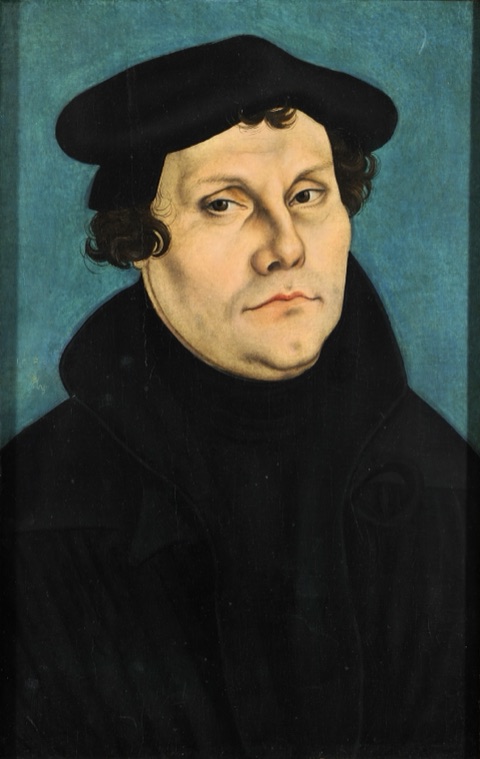
About the author
Martin Luther
Martin Luther (1483 to 1546 AD) was born in Eisleben, Saxony, entered the Augustinian monastery at Erfurt in 1505, and became a professor at the University of Wittenberg in 1512. His Ninety-Five Theses against the sale of indulgences, posted on October 31, 1517, made him a public figure across Europe. He wrote this appeal from the house of the Augustinians at Wittenberg in 1520, calling himself “a despised monk” and a “sworn doctor of Holy Scripture”. The next year he refused to recant at the Diet of Worms. He translated the Bible into German, married Katharina von Bora in 1525, and died in Eisleben on February 18, 1546.