Introduction
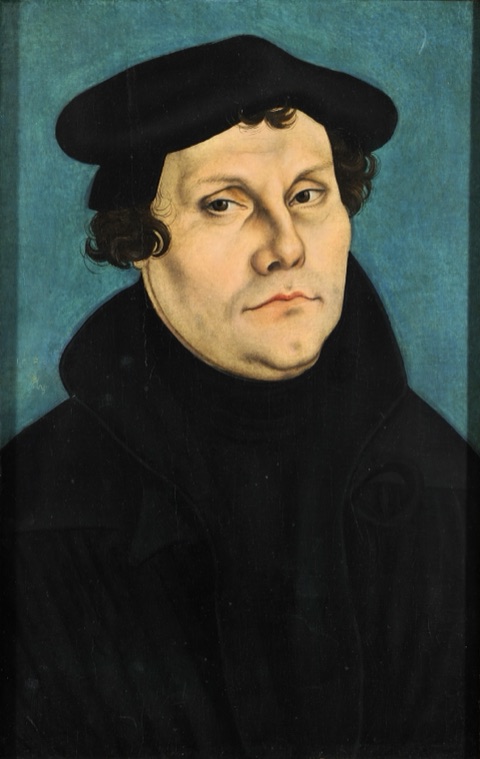
Martin Luther to the honored Erasmus of Rotterdam, wishing you grace and peace in Christ.
My long delay in answering your Diatribe on free will, honored Erasmus, has surprised everyone and is contrary to my own custom. Until now, I have not only seemed eager to embrace opportunities of this kind for writing, but have even sought them out. Someone may perhaps wonder at this new and unusual development, this restraint or fear in Luther, whom so many boastful taunts and letters from adversaries could not rouse. They congratulated Erasmus on his victory and sang him a song of triumph: “What! Has that Maccabee, that stubborn champion, finally found an opponent who is his equal and against whom he does not dare open his mouth?”
Far from accusing them, however, I openly grant you something I have never granted anyone before: you far surpass me in eloquence and genius. We all acknowledge that you deserve such praise, especially since I am only a barbarian and do everything barbarously. Yet you have dampened my spirit and momentum and left me listless before the battle, and you have done so in two ways. First, by skill: you conduct this debate with such plausible and consistent modesty that you have met me in advance and kept me from becoming angry with you. Second, by fortune, chance, or fate: on so great a subject, you say nothing that has not been said before. Thus you say less about free will, while attributing more to it, than the sophists have said and attributed until now. I will discuss this more fully later.
It therefore seems entirely unnecessary to answer your arguments. I have often refuted them, and Philip Melanchthon’s unanswerable book Concerning Theological Questions has crushed and trampled them underfoot. In my judgment, his book deserves not only to be immortalized but even to be included in the ecclesiastical canon. Compared with it, I consider your book so poor and worthless that I deeply pity you for defiling your beautiful and ingenious language with such vile trash. I am also indignant that material so unworthy should be carried about in ornaments of such rare eloquence, as though rubbish or dung were being carried in vessels of gold and silver.
You yourself seem to have felt this, since you were so reluctant to undertake the work. Your conscience told you that you would necessarily have to contest the matter with every power of eloquence, yet even then you would not be able to blind me with your coloring. Once I had stripped away the deceptions of language, I would discover the actual dregs beneath. Although I am crude in speech, by the grace of God I am not crude in understanding. With Paul, I dare claim understanding for myself and confidently deny it to you, though I willingly and deservedly grant eloquence and genius to you and deny them to myself.
Therefore I reasoned as follows. If some people have not drunk deeply enough of my doctrines, or held them firmly enough, though they are supported by such weighty Scriptures, to keep from being moved by Erasmus’s light and trivial arguments, however highly ornamented, then they are not worthy of being healed by my answer. Nothing could ever be said or written often enough for such people, even if it were repeated a thousand times in many thousands of volumes. It would be like plowing the seashore and sowing seed in the sand, or trying to fill a barrel full of holes with water. Those who have absorbed the Spirit’s teaching in my books have already received enough and more than enough, and they immediately despise your writings. As for those who read without the Spirit, it is no wonder that every wind drives them back and forth like a reed. God would not have said enough to such people even if all his creatures were turned into tongues. Perhaps, then, wisdom would have counseled leaving those who were offended by your book alone, together with those who glory in you and award you the triumph.
My eagerness to answer you was therefore dampened neither by numerous engagements, nor by the difficulty of the undertaking, nor by the greatness of your eloquence, nor by fear of you. It was dampened solely by weariness, indignation, and contempt, or, so to speak, by my judgment of your Diatribe. I will not even dwell here on the fact that, always true to yourself, you take the greatest care on every occasion to keep your language slippery and pliable. You want to appear to assert nothing while at the same time asserting something. More cautious than Ulysses, you seem to steer between Scylla and Charybdis. What, I ask, can anyone bring forward or compose to meet men of this kind unless he knows how to catch Proteus himself? What I may be able to do in this matter, and how much your skill will profit you, I will show later, with Christ working alongside me.
My reply to you, then, is not entirely without cause. My brothers in Christ press me to make it, pointing to everyone’s expectation, since Erasmus’s authority cannot be disregarded and the truth of Christian doctrine is endangered in many hearts. Indeed, I became convinced that my silence would not be altogether right, and that the wisdom or malice of the flesh had deceived me. I had not been sufficiently mindful of my office, in which I am a debtor both to the wise and to the unwise, especially since the entreaties of so many brothers had called me to this task.
Our cause requires more than an outward teacher. Besides the one who plants and the one who waters outwardly, it needs the Spirit of God to give the increase and, as a living teacher, to teach us living things inwardly. I had considered all this. Yet because that Spirit is free and bloweth, not where we will, but where he willeth, it was necessary to observe Paul’s rule: “Be instant, in season, and out of season.” For we know not at what hour the Lord cometh. So let us suppose that those who have not yet experienced the Spirit’s teaching in my writings have been overthrown by that Diatribe. Perhaps their hour had not yet come.
And who knows whether God may even condescend to visit you, my friend Erasmus, through me, his poor, weak vessel? Perhaps I may come to you through this book at a happy hour and win over a dearly loved brother, which I sincerely ask the Father of mercies to grant through Jesus Christ our Lord. Although you think and write wrongly about free will, I nevertheless owe you no small thanks for confirming my own convictions far more strongly. I have now seen the case for free will handled by all the powers of such great talents, yet far from being improved, it has been left worse than before. This provides clear proof that free will is a mere lie and that, like the woman in the Gospel, the more physicians treat it, the worse it becomes. I will therefore owe you even greater thanks if you gain more understanding through me, just as I have gained greater confirmation through you. But each is the gift of God, not the work of our own efforts. We must therefore pray that God will open my mouth and open your heart and the hearts of all, and that he will be the teacher among us, speaking and hearing within us.
But allow me to obtain this one request from you, my friend Erasmus: as I bear with your ignorance in these matters, please bear with my lack of eloquence in return. God does not give everything to each person, nor can each of us do everything. Or, as Paul says, “there are diversities of gifts, but the same Spirit.” It remains, then, for these gifts to serve one another, so that each person, by his gift, may bear the other’s burden and supply what the other lacks. In this way we will fulfill the law of Christ.
Reply to Erasmus’s Preface
Section 1. First, I want to touch briefly on several points in your preface, where you somewhat disparage our cause and adorn your own. To begin, I note that in all your earlier books you censured me for stubbornly making assertions, and that in this book you say, “I am so far from delighting in assertions that I would immediately adopt the views of the skeptics, if the inviolable authority of Holy Scripture and the decrees of the Church permitted me. To these authorities I willingly submit myself in all things, whether or not I follow what they prescribe.” These are the principles that please you.
As courtesy requires, I take these statements to come from a benevolent mind that loves peace. If anyone else had made them, I might have attacked him in my usual manner. Yet even though your intentions are so good, I cannot allow you to remain in this error. A refusal to delight in assertions is not the mark of a Christian mind. A Christian must delight in assertions, or he is not a Christian. So that we do not misunderstand the term, by assertion I mean steadfastly adhering to something, affirming it, confessing it, defending it, and persevering in it invincibly. I do not believe the term means anything else, either among the Latins or as we use it today.
Moreover, I am speaking about asserting the things delivered to us from above in Holy Scripture. If I were not, we would need neither Erasmus nor any other teacher to tell us that assertions, contentions, and quarrels over doubtful, useless, or unnecessary matters are not only absurd but impious. Paul condemns such things in more than one place. Nor do I believe you are speaking about such matters, unless, like a ridiculous orator, you want to begin with one subject and proceed with another, as the Roman emperor did with his turbot, or, with the madness of a wicked writer, you want to contend that the article concerning free will is doubtful or unnecessary.
Let skeptics and academics be far from us Christians. Let us instead have people who make assertions with twice the determination of the Stoics themselves. How often does the apostle Paul require that assurance of faith, that most certain and firm assertion of conscience? In Romans 10 he calls it confession: “With the mouth confession is made unto salvation.” (Rom 10). Christ also says, “Whosoever confesseth me before men, him will I confess before my Father.” Peter commands us to “give a reason of the hope” that is in us. But why dwell on this? Nothing is better known or more common among Christians than assertions. Take away assertions, and you take away Christianity.
Indeed, the Holy Spirit is given to Christians from heaven so that he may glorify Christ and confess him even to death, unless dying for confession and assertion is somehow not asserting. In a word, the Spirit asserts so forcefully that he comes upon the whole world and reproves it of sin, as if provoking it to battle. Paul commands Timothy to reprove and to persist even out of season. How ridiculous I would find a reprover who did not truly believe the very thing for which he reproved another, or steadfastly assert it! I would send him to Anticyra for a cure.
But I am the greatest fool for wasting words and time on something clearer than the sun. What Christian could tolerate having assertions treated with contempt? That would be to deny all piety and religion at once, or to assert that religion, piety, and every doctrine amount to nothing. Why, then, do you say that you do not delight in assertions and that you prefer such a disposition to any other?
But you would have us understand that you have said nothing here about confessing Christ and his doctrines. I accept the reminder. Out of courtesy to you, I give up my right and my customary practice and refrain from judging your heart, reserving that for another time or for others. Meanwhile, I warn you to correct your tongue and pen and to stop using such expressions. However upright and honest your heart may be, your words, which reveal the heart, are not upright and honest. If you think the matter of free will is unnecessary to know and has nothing to do with Christ, you speak honestly but think wickedly. If you think it is necessary, you speak wickedly but think rightly. And if that is so, you have no room to complain so extravagantly about useless assertions and disputes, for what do those have to do with the nature of this cause?
Section 2. But what will you say about these declarations of yours, remembering that they are not limited to free will but apply to every doctrine throughout the world: “If the inviolable authority of the sacred writings and the decrees of the Church permitted me, I would adopt the views of the skeptics”?
What a completely changeable Proteus appears in those expressions, “inviolable authority” and “decrees of the Church”! It is as though you could have such great reverence for Scripture and the Church while at the same time indicating that you wish you were free to be a skeptic. What Christian would speak this way? If you say this only about useless and doubtful doctrines, what is new in what you say? Who would not want the freedom to suspend judgment in such matters? Indeed, what Christian does not freely use that liberty and condemn those who are carried away and captivated by every opinion? Unless you think all Christians are, as the term is commonly understood, people whose doctrines are useless and who foolishly quarrel and fight over their assertions. But if you are speaking about necessary matters, what more impious declaration could anyone make than to wish for the liberty of asserting nothing about them? The Christian would say instead: “I am so opposed to the views of the skeptics that, wherever the weakness of the flesh does not hinder me, I will steadfastly adhere to the sacred writings everywhere and in every part, and I will assert them. I also wish to be as certain as possible even about matters that are unnecessary and lie outside Scripture, for what is more miserable than uncertainty?”
What shall we say about what you add: “To these authorities I submit my opinion in all things, whether or not I follow what they command”?
What are you saying, Erasmus? Is it not enough to submit your opinion to Scripture? Must you submit it to the decrees of the Church as well? What can the Church decree that has not been decreed in Scripture? If it can decree something more, what becomes of the liberty and power to judge those who make the decrees? Paul teaches in 1 Corinthians 14, “Let others judge” (1 Cor 14). Are you displeased that anyone should judge the decrees of the Church, though Paul commands it? What new kind of religion and humility is this, in which by your example you would take away our power to judge the decrees of men and give that power to men who exercise no judgment? Where does the Scripture of God command us to do this?
Moreover, what Christian would cast the commands of Scripture and the Church to the winds by saying, “whether or not I follow them”? You submit yourself, yet care nothing about whether you follow them. Let that Christian be accursed who is not certain of what is commanded him and does not follow it. For how will he believe what he does not follow?
Do you mean, then, that following means understanding something with certainty and having no skeptical doubt about it? If so, what is there in any created thing that anyone can follow, if following means understanding, seeing, and knowing perfectly? If that is what it means, no one can follow some things while not following others. By following the one sure reality, God, a person follows all things, that is, he follows them in God; whoever does not follow him never follows any part of his creation.
In a word, your declarations amount to this: in your view, it does not matter what anyone anywhere believes, provided the peace of the world remains undisturbed and everyone is permitted, whenever his life, reputation, or interest is at stake, to act like the man who said, “If they affirm it, I affirm it; if they deny it, I deny it.” You regard Christian doctrines as no better than the opinions of philosophers and men, and think it the height of folly to quarrel over them, contend for them, and assert them, since nothing can arise from such conduct except contention and disturbance of the public peace. What is above us does not concern us. This, I say, is what your declarations amount to. Thus you step in as a neutral peacemaker to end our conflicts, so that you may persuade both sides to lay down their arms and stop drawing swords over matters so absurd and useless.
I believe you know very well, my friend Erasmus, what I might cut into here. But, as I said before, I will not say it openly. Meanwhile, I excuse the very good intention of your heart. But go no further. Fear the Spirit of God, who searches the inward parts and the heart and is not deceived by artfully crafted expressions. I have spoken this way on this occasion so that from now on you may stop accusing our cause of stubbornness or obstinacy. By doing so, you only show that you cherish in your heart a Lucian, or some other member of the swinish tribe of the Epicureans, who, because he himself does not believe there is a God, secretly laughs at all who do believe and confess it. Allow us to be assertors, and to study and delight in assertions. You may favor your skeptics and academics until Christ calls you as well. The Holy Spirit is not a skeptic, nor are the things he has written on our hearts doubts or opinions. They are assertions more certain and firm than life itself and all human experience.
Section 3. Now I come to the next point, which is connected with this. You make “a distinction among Christian doctrines” and claim that “some are necessary and some unnecessary.” You say that “some are obscure and others quite clear.” In this way you merely play with other people’s sayings, or else exercise yourself in a rhetorical figure. To support this opinion you bring forward Paul’s words, “O the depth of the riches both of the wisdom and goodness of God!” (Rom 11), and also Isaiah’s: “Who hath holpen the Spirit of the Lord, or who hath been his counsellor?” (Isa 40).
You could say these things easily because either you did not realize you were writing to Luther, but imagined you were writing to the world at large, or you did not consider that you were writing against Luther. Yet I hope you allow that Luther has some acquaintance with and judgment in the sacred writings. If you do not allow it, then observe how I too can twist things. Here is the distinction I make, so that I too may play the rhetorician and logician: God and the Scripture of God are two things, just as God and the creation of God are two things. No one doubts that there are many hidden things in God that we do not know. He himself says of the last day, “Of that day knoweth no man but the Father” (Matt 24). Acts 1 says, “It is not yours to know the times and seasons” (Acts 1). Again, “I know whom I have chosen” (John 13). And Paul says, “The Lord knoweth them that are his” (2 Tim 2), and there are other examples like these.
But the claim that some things in Scripture are obscure and that not everything is entirely plain is a report spread by the impious sophists, whose mouthpiece you are here, Erasmus. Yet they have never produced, and can never produce, a single article by which to prove this madness. With such scarecrows Satan has frightened people away from reading the sacred writings and has brought Holy Scripture into contempt, so that he might cause his philosophical poisons to prevail in the Church. I do confess that many passages in Scripture are obscure and difficult, not because of the majesty of the subjects but because we do not understand certain terms and points of grammar. Yet these difficulties do not prevent us from knowing all the subjects contained in Scripture. For what subject of greater importance can remain hidden in Scripture now that the seals have been broken, the stone rolled away from the door of the tomb, and that greatest mystery of all brought to light: Christ made man; God both Trinity and unity; Christ suffering for us and reigning for all eternity? Are these things not known and proclaimed even in our streets? Take Christ out of Scripture, and what will you find left in it?
All the subjects contained in Scripture, therefore, have been made manifest, though some passages remain obscure because certain words are not understood. But it is absurd and impious to know that all the subjects in Scripture are set in the clearest light, and then to report that those subjects are obscure merely because a few words are obscure. If the words are obscure in one place, they are clear in another. The same subject, most openly declared to the whole world, is expressed in Scripture both in plain words and in words that remain obscure. If the subject itself stands in the light, it does not matter whether a particular expression of it remains in obscurity, so long as many other expressions of the same subject stand in the light. Who would say that the public fountain is not in the light because people in some dark, narrow lane cannot see it, when everyone in the open marketplace can see it plainly?
Section 4. Therefore, what you bring forward about the darkness of the Corycian cavern amounts to nothing. Scripture is not like that. The things of greatest majesty and the deepest mysteries are no longer hidden in a dark corner; they stand at the very doors and have been brought out and openly revealed. Christ has opened our understanding so that we may understand the Scriptures (Luke 24). The gospel is preached to every creature. “Their sound is gone out into all the earth” (Ps 10). And “All things that are written, are written for our instruction” (Rom 15). Again, “All scripture is inspired from above, and is profitable for instruction” (2 Tim 3).
Come forward, then, you and all the sophists together, and produce any one mystery that still remains obscure in Scripture. If many things remain obscure to many people, that does not arise from obscurity in Scripture, but from their own blindness or lack of understanding. They do not take the path that would let them see the perfect clarity of the truth. As Paul says concerning the Jews, “The veil still remains upon their heart” (2 Cor 4). And again, “If our gospel be hid it is hid to them that are lost, whose heart the god of this world hath blinded” (1 Cor 4). With equal rashness, a person might cover his own eyes, leave the light, hide himself in the darkness, and then blame the day and the sun for being obscure. Let wretched people, therefore, stop imputing the darkness and obscurity of their own hearts to the perfectly clear Scriptures of God, with such blasphemous perversity.
When you cite Paul saying, “His judgments are incomprehensible,” you therefore seem to make the pronoun his (ejus) refer to Scripture (scriptura). But Paul does not say, “The judgments of Scripture are incomprehensible,” but the judgments of God. Likewise, Isaiah 40 does not say, “Who has known the mind of Scripture?” but who has known “the mind of the Lord?” (Isa 40). Paul nevertheless asserts that Christians do know the mind of the Lord, in those things freely given to us, as he also says in the same place in 1 Corinthians 2. You see, then, how sleepily you have looked over these passages of Scripture. You cite them just as aptly as you cite nearly all the passages in defense of free will.
In the same way, the examples you add, not without suspicion and bitterness, have nothing at all to do with the point. They concern the distinction of the persons, the union of the divine and human natures, and the unpardonable sin, whose ambiguities, you say, have never been cleared up. If you mean the questions that sophists have raised about these subjects, very well. But what has innocent Scripture done to you that you blame its purity for the abuse committed by the most wicked men? Scripture simply confesses the Trinity of God, the humanity of Christ, and the unpardonable sin. There is no obscurity or ambiguity here. Scripture does not say how these things are so, nor is it necessary for us to know. The sophists introduce their dreams here. Attack and condemn them, and acquit Scripture. But if you mean the realities themselves, I say again: attack the Arians and those from whom the gospel is hidden, not the Scriptures, for through Satan’s working they fail to see the perfectly plain testimonies concerning the Trinity of the Godhead and the humanity of Christ.
To be brief, the clarity of Scripture is twofold, just as its obscurity is also twofold. One kind is external and is found in the ministry of the Word. The other is internal and is found in the understanding of the heart. If you speak of internal clarity, no one sees one iota in Scripture unless he has the Spirit of God. All people have darkened hearts. Even if they know how to speak about and explain everything in Scripture, they cannot feel or truly know these things. They do not believe that they are creatures of God, or believe anything else, according to Psalm 14: “The fool hath said in his heart, God is nothing” (Ps 14). The Spirit is required to understand the whole of Scripture and every part of it. If you speak of external clarity, however, nothing whatever is left obscure or ambiguous. Everything contained in Scripture has been brought by the Word into the clearest light and proclaimed to the whole world.
Section 5. But this is even more intolerable: you number the subject of free will among things that are “useless and unnecessary,” and in its place draw up for us a “form” of the things you consider “necessary to Christian piety.” It is a form that any Jew, or any Gentile entirely ignorant of Christ, could certainly draw up. You do not mention Christ by so much as one letter, as though you thought there could be Christian piety without Christ, provided only that God, who is by nature most merciful, is worshiped with all our powers.
What shall I say here, Erasmus? To me, you breathe out nothing but Lucian and inhale the bloated excess of Epicurus. If you consider this subject “unnecessary” for Christians, then leave the field, I beg you. I have nothing to do with you. I consider it necessary.
If, as you say, it is “irreligious,” “curious,” and “superfluous” to know whether God foreknows anything contingently; whether our own will does anything in matters that concern eternal salvation or is only passive under the work of grace; and whether we do the good or evil we do from necessity or rather by being passive, then what, I ask, is religious? What is serious? What is useful to know? According to you, Erasmus, all of this serves no purpose whatever. It is difficult to attribute this to ignorance, since you are now old, have long associated with Christians, and have studied the sacred writings for many years. You therefore leave me no room to excuse you or to think well of you.
And yet the papists pardon and tolerate these enormities in you because you are writing against Luther. Otherwise, if Luther were not involved, they would tear you to pieces tooth and nail. Plato is a friend, and Socrates is a friend, but Truth must be honored above all. Granting that you have little understanding of Scripture and Christian piety, surely even an enemy of Christians ought to know what Christians consider useful and necessary and what they do not. But you are a theologian and a teacher of Christians, and you are about to draw up a form of Christianity for them. Yet you not only doubt in your skeptical way what is necessary and useful to them, but go directly to the opposite extreme. Contrary to your own principles, you make the unheard-of assertion that these things are “unnecessary.” Yet if these things are unnecessary and not certainly known, then neither God, nor Christ, nor gospel, nor faith, nor anything else even of Judaism, much less of Christianity, can remain! In the name of the immortal God, Erasmus, what an opportunity, what an open field you give me for acting and speaking against you! How could you write well or correctly about free will when by these declarations you confess such great ignorance of Scripture and godliness? But I draw in my sails. I will not deal with you here in my own words, though perhaps I will do so later, but in yours.
Section 6. The form of Christianity you set forth includes, among other things, this: “We should strive with all our powers, seek the remedy of repentance, and try in every way to gain the mercy of God. Without that mercy, neither human will nor effort is effective.” You also say, “No one should despair of pardon from a God who is by nature most merciful.”
These statements of yours are without Christ, without the Spirit, and colder than ice, so that their content deforms the beauty of your eloquence. Perhaps fear of the popes and those tyrants wrung them from you, their miserable vassal, so that you would not appear to them a complete atheist. But what these statements assert is this: there is an ability in us; there is a striving with all our powers; there is mercy in God; there are ways of gaining that mercy; and there is a God who is by nature just and most merciful, and so forth. But if a person does not know what these powers are, what they can do, in what respects they must remain passive, or how effective or ineffective they are, what can that person do? What task will you set before him?
You say, “It is irreligious, curious, and superfluous to wish to know whether our own will does anything in matters that concern eternal salvation or whether it is wholly passive under the work of grace.” But here you say the contrary: it is Christian piety to “strive with all our powers,” and “without the mercy of God the will is ineffective.”
Here you plainly assert that the will does something in matters that concern eternal salvation when you speak of it as striving. Then you assert that it is passive when you say that without the mercy of God it is ineffective. At the same time, you do not define how far that activity and that passivity are to be understood. You deliberately keep us ignorant of how far the mercy of God extends and how far our own will extends, what our own will is to do in the action you command, and what the mercy of God is to do. Thus your prudence carries you along. You are determined to take neither side and to escape safely between Scylla and Charybdis, so that when you reach the open sea and find yourself overwhelmed and confounded by the waves, you may be free to assert everything you now deny and deny everything you now assert.
Section 7. I will set your theology before your eyes with a few comparisons. Suppose someone intended to write a poem or a speech but never considered or investigated his abilities, what he could and could not do, or what his chosen subject required. Suppose he completely ignored Horace’s rule about what one’s shoulders can bear and what they must sink beneath, and instead rushed headlong into the task, thinking, ‘I must strive to finish the work. It would be curious and unnecessary to ask whether my learning, eloquence, and intellectual power are equal to it.’
Or suppose someone wanted an abundant crop from his land but refused to take the supposedly curious and unnecessary precaution of examining the soil, as Virgil teaches in his Georgics. Instead, he rushed straight to work, thought of nothing but the labor, plowed the seashore, and scattered seed wherever the ground had been turned, whether it was sand or mud.
Or suppose someone was about to wage war and wanted a glorious victory, or intended to perform some other service for the state, but thought it unnecessary to deliberate about what lay within his power. He would not ask whether the treasury could supply the money, whether the soldiers were fit, or whether an opportunity had presented itself. He would entirely disregard the historian’s advice, ‘Before you act, you must deliberate; once you have deliberated, act swiftly.’ Instead, with eyes covered and ears stopped, he would rush forward shouting only, ‘War! War!’ and remain determined to carry out the undertaking.
Tell me, Erasmus, what would you think of poets, farmers, generals, and public officials like these? I will add Christ’s example from the Gospel: “If any one going to build a tower, sits not down first and counts the cost, whether he has enough to finish it,” what does Christ say about such a person? (Luke 14).
You likewise command us only to work, while forbidding us first to examine, weigh, and understand our ability, what we can and cannot do, because you call such examination curious, unnecessary, and irreligious. While your excessively cautious prudence pretends to hate recklessness and makes a display of sobriety, you go so far as to teach the greatest recklessness of all. The sophists are certainly reckless and mad in pursuing their curious investigations, yet their sin is less terrible than yours. You actually teach and command people to be mad and to rush ahead recklessly. To make your madness even greater, you persuade us that this recklessness is the highest Christian piety, sobriety, religious seriousness, and even salvation. You insist that unless we practice it, we are irreligious, curious, and vain, though you are such a great enemy of assertions. Thus, in steering clear of Charybdis, you have also managed with remarkable skill to escape Scylla.
Your confidence in your own talents has driven you to this. You believe your eloquence can so impose upon everyone’s understanding that no one will discover the purpose you secretly cherish or the object of all your pliable writings. But “God is not mocked” (Gal 6), and it is not safe to charge against him.
If you had commanded this recklessness in writing poems, cultivating crops, conducting wars, undertaking other enterprises, or building houses, your advice would still have been intolerable, especially from so eminent a man. Yet you might have deserved some pardon, at least from Christians, because they place no value on these temporal things. But when you command Christians themselves to become reckless workers and tell them not to inquire into what they can and cannot do in obtaining eternal salvation, this is plainly and truly the unpardonable sin. Because they do not know what they can do or how much they can accomplish, they will not know what to do. If they do not know what to do, they cannot repent when they do wrong, and impenitence is the unpardonable sin. This is where your moderate and skeptical theology leads us.
Therefore, it is neither irreligious, curious, nor unnecessary for a Christian to know whether the will does anything in matters relating to salvation. On the contrary, this knowledge is essential, beneficial, and necessary. Indeed, this is the very hinge on which our discussion turns, the heart of our subject. Our purpose is to investigate what free will can do, where it is passive, and how it stands in relation to the grace of God. If we know nothing about these matters, we will know nothing at all about Christianity and will be more ignorant than every other people on earth. Anyone who does not feel this should confess that he is no Christian. Anyone who despises and mocks it should know that he is the Christian’s greatest enemy.