Modernized edition · Full text · Free PDF/EPUB
The Babylonian Captivity of the Church in Modern English
Want the file? The PDF/EPUB is free with an account.
Summary
- Author
- Martin Luther (1483 to 1546 AD), Augustinian friar and professor at Wittenberg
- Published
- October 1520, written in Latin for theologians and clergy
- Source edition
- The complete treatise in modern English, with the opening letter to Herman Tulich and the closing verse
- Type
- Theological treatise on the sacraments
- Length
- 44,000 words · 3 hours
What is The Babylonian Captivity of the Church about?
The Babylonian Captivity of the Church is Martin Luther's treatise on the sacraments, which appeared in October 1520. Luther tests each of the seven sacraments by whether Christ gave it a divine promise and a sign, describes three captivities of the Lord's Supper, and concludes that strictly only baptism and the bread are sacraments.
Read the full summary (9 points, key themes)Show less
How the argument unfolds
- 01
To Herman Tulich. Luther answers the Leipzig friar who defended communion in one kind, promises “a prelude on the captivity of the Roman Church”, and denies that there are seven sacraments, holding for the present to three.
- 02
The Sacrament of the Bread. Three captivities: the cup withheld from the laity, the doctrine of transubstantiation, and the mass made a good work and a sacrifice. Luther defines the mass as Christ's testament, a promise of forgiveness received by faith alone.
- 03
The Sacrament of Baptism. The promise of baptism stands through every sin, and its sign of immersion signifies a dying and rising that lasts all life. From baptismal liberty Luther argues against papal laws and lifelong vows.
- 04
The Sacrament of Penance. The promise of the keys and the faith of the penitent have been buried under contrition, confession and satisfaction. Luther keeps private confession and rejects reserved cases and the circumstances of sins.
- 05
Confirmation. The laying on of hands carries no divine promise, so confirmation is “a certain rite of the Church, or a sacramental ceremony”.
- 06
Marriage. Marriage has no promise of grace and no instituted sign, and Ephesians 5 speaks of Christ and the Church. Luther then attacks the impediments to marriage and gives counsel on impotence, divorce and desertion.
- 07
Ordination. The Church cannot make a promise of God, so ordination is a rite of calling preachers. All the baptized are priests, and “The ministry of the Word makes the priest and the bishop.”
- 08
Extreme Unction. James 5 speaks of the sick, not the dying, and ties healing to the prayer of faith. Only baptism and the bread have both a sign instituted by God and the promise of forgiveness.
- 09
Conclusion. Luther offers the book to devout souls, and on hearing of new bulls against him says “I want this book to be a part of the recantation I will make”.
Key themes
- Promise and faith. Every sacrament rests on a word of divine promise, and only faith receives it: “Not the sacrament, but the faith of the sacrament, justifies.”
- The mass received, not offered. A testament is taken, not given back as a work. “The one is something we receive; the other is something we offer.”
- Christian liberty. Baptism frees Christians from human law, so that “neither pope nor bishop nor any other man has the right to impose a single syllable of law on a Christian without his consent”.
- The common priesthood. The ordained differ from the laity only in ministry, for “all of us who are Christians are priests”, and the priesthood is the ministry of the Word.
Reader questions (10)Hide the questions
Questions about The Babylonian Captivity of the Church
Is there a modern English version of The Babylonian Captivity of the Church?
Yes. This is The Babylonian Captivity of the Church by Martin Luther in modern English. The language is modernized and the author's order and argument are kept. The full modernized text is free to read on this page.
Can I read The Babylonian Captivity of the Church online for free?
Yes. The complete text of this modern English edition is on this page, with no sign-up or paywall.
Is there a free PDF of The Babylonian Captivity of the Church?
Yes. The PDF and EPUB of this edition are free with an Updated Works account. Sign in with Google or an email link; no card is needed.
What is The Babylonian Captivity of the Church by Martin Luther about?
It is Luther's examination of the seven sacraments of the medieval church. He argues that Rome holds the Lord's Supper captive in three ways, that a sacrament needs a divine promise and a sign instituted by Christ, and that strictly only baptism and the bread meet that test.
When was The Babylonian Captivity of the Church written?
It appeared in October 1520, written in Latin for theologians and clergy. In the conclusion Luther mentions a rumor that new bulls and papal curses have been sent out against him, urging him to recant.
What are the three captivities of the Lord's Supper?
The first is the withholding of the cup from the laity, against Christ's “Drink ye all of it”. The second is the doctrine of transubstantiation, which Luther says rests on Aristotle rather than Scripture. The third, the worst, is the belief that the mass is a good work and a sacrifice that can be offered for others.
How many sacraments does Luther accept?
He begins by holding to three, baptism, penance and the bread. By the end he says that “strictly speaking, there are only two sacraments in the Church of God, baptism and the bread”, since penance lacks a visible sign and is a return to baptism.
What does Luther say about transubstantiation?
He holds that real bread and real wine remain on the altar, and that Christ's real body and blood are present in them. He allows others to hold the other opinion but denies it is an article of faith, and he calls the word “a monstrous word for a monstrous idea, indeed!”
What does the book say about priests and ordination?
Luther finds no promise for ordination and no mention of it in the New Testament. He teaches that all the baptized are priests, that the ordained are ministers chosen with the consent of the community, and that “The ministry of the Word makes the priest and the bishop.”
How long is The Babylonian Captivity of the Church?
It runs to about 44,000 words, a few hours of reading. It is set out as a letter to Herman Tulich, a long section on the bread in three captivities, sections on baptism, penance, confirmation, marriage, ordination and extreme unction, and a short conclusion.
The Babylonian Captivity of the Church in Modern English · Full text
To Herman Tulich
Martin Luther, Augustinian, to his friend Herman Tulich, greeting.
Whether I like it or not, I am forced to become more learned every day, with so many able masters competing with one another to improve my mind. Some two years ago I wrote a little book on indulgences, which I now deeply regret having published. At that time I was still sunk in a mighty superstitious reverence for the Roman tyranny. I held that indulgences should not be rejected altogether, since they were approved by the common consent of men. Nor is that any wonder, for I was then laboring single-handed at my Sisyphean task. Since then, however, thanks to the kindness of Sylvester and the friars, who defended indulgences so strenuously, I have come to see that they are nothing but a fraud of the Roman sycophants, by which they play havoc with people’s faith and fortunes. I wish to God I could persuade the booksellers and all my readers to burn the whole of my writings on indulgences, and to put this proposition in their place: Indulgences are a crooked trick of the Roman sycophants.
Next, Eck and Emser and their fellows undertook to instruct me about the primacy of the pope. Here too, not to seem ungrateful to such learned folk, I acknowledge how greatly I have profited by their labors. For while I denied the divine authority of the papacy, I had still admitted its human authority. But after hearing and reading the subtle subtleties of these conceited fools, with which they so cleverly prop up their idol (for in these matters my mind is not altogether unteachable), I now know for certain that the papacy is the kingdom of Babylon and the power of Nimrod the mighty hunter (Gen 10:9). Once more, then, so that everything may turn out to my friends’ advantage, I beg both booksellers and readers to burn what I have published on that subject and to hold to this proposition: The papacy is the mighty hunting of the Roman bishop. This follows from the arguments of Eck, of Emser, and of the Leipzig lecturer on the Holy Scriptures.
Now they are putting me back in school and teaching me about communion in both kinds and other weighty subjects. And I must set to work with all my might, so as not to sit under these schoolmasters of mine without profit.
A certain Italian friar of Cremona has written a Revocation of Martin Luther to the Holy See. That is, it is a revocation in which I do not revoke anything (as the words declare), but he revokes me. That is the kind of Latin the Italians are now beginning to write. Another friar, a German of Leipzig, that same lecturer, you know, on the whole canon of the Scriptures, has written a book against me concerning the sacrament in both kinds, and he is planning, I understand, still greater and more marvelous things. The Italian was shrewd enough not to put down his name, fearing perhaps the fate of Cajetan and Sylvester. But the Leipzig man, as befits a fierce and valiant German, boasts on his ample title page of his name, his career, his saintliness, his scholarship, his office, his glory, his honor, yes, almost of his very clogs.
Here I shall no doubt gain a great deal of information, since his dedicatory letter is addressed to the Son of God Himself. On such familiar terms are these saints with Christ, who reigns in heaven! Besides this, I seem to hear three magpies chattering in this book: the first in good Latin, the second in better Greek, the third in purest Hebrew. What do you think, my Herman? What is there for me to do but prick up my ears? The thing comes out of Leipzig, from the Observance of the Holy Cross.
Fool that I was, I had thought until now that it would be good if a general council decided that the sacrament should be given to the laity in both kinds. The more than learned friar means to set me right. He declares that neither Christ nor the apostles commanded or commended giving both kinds to the laity. It was therefore left to the judgment of the Church what to do or not to do in this matter, and the Church must be obeyed. These are his words.
You will perhaps ask what madness has gotten into the man, or whom he is writing against. For I have not condemned the use of one kind. I have left the decision about the use of both kinds to the judgment of the Church, which is the very thing he tries to assert and turns against me. My answer is that this sort of argument is common to everyone who writes against Luther. They either assert the very things they attack, or they set up a man of straw to attack. So it was with Sylvester and Eck and Emser, and so with the theologians of Cologne and Louvain. If this friar had not been of the same stripe, he would never have written against Luther.
Yet in one respect this man has been luckier than his fellows. He undertakes to prove that the use of both kinds is neither commanded nor commended, but left to the will of the Church. Then he brings forward passages of Scripture to prove that by the command of Christ only one kind was appointed for the laity. So, according to this new interpreter of the Scriptures, it is true that one kind was not commanded by Christ, and at the same time was commanded by Christ! This novel sort of argument, as you know, is the special strength of the Leipzig logicians. Did not Emser, in his earlier book, profess to write about me in a friendly spirit? And after I had convicted him of filthy envy and foul lying, did he not openly admit in his later book, written to refute my arguments, that he had written in both a friendly and an unfriendly spirit? A sweet fellow indeed, as you know.
But listen to our distinguished distinguisher of “kinds,” for whom the will of the Church and a command of Christ, and a command of Christ and no command of Christ, are all one and the same! How ingeniously he proves that only one kind is to be given to the laity by the command of Christ, that is, by the will of the Church! He puts it in capital letters, like this: THE INFALLIBLE FOUNDATION.
Then he handles John 6 with incredible wisdom. In that passage Christ speaks of the bread from heaven and the bread of life, which is He Himself. The learned fellow not only refers these words to the sacrament of the altar, but because Christ says, “I am the living bread” (John 6:35; John 6:41; John 6:51), and not, “I am the living cup,” he actually concludes that this passage gives us the institution of the sacrament in only one kind for the laity. But then follow the words, “My flesh is meat indeed, and my blood is drink indeed” (John 6:55), and, “Except ye eat the flesh of the Son of man, and drink his blood” (John 6:53). When it dawned on the good friar that these words speak undeniably for both kinds and against one kind, presto! How happily and learnedly he slips out of the difficulty! He asserts that in these words Christ means only that whoever receives the one kind receives under it both flesh and blood. This he lays down as the “infallible foundation” of a structure well worthy of the holy and heavenly Observance.
Now, if you please, learn from this along with me that in John 6 Christ commands the sacrament in one kind, yet in such a way that His commanding it means leaving it to the will of the Church. Learn further that in this chapter Christ is speaking only of the laity and not of the priests. For the living bread from heaven does not belong to the priests, but presumably the deadly bread from hell! And how does it stand with the deacons and subdeacons, who are neither laymen nor priests? According to this brilliant writer, they ought to use neither the one kind nor both kinds! You see, dear Tulich, this novel and observant method of handling Scripture.
But learn this too: that in John 6 Christ is speaking of the sacrament of the altar, even though He Himself teaches that His words refer to faith in the Word made flesh, for He says, “This is the work of God, that ye believe on him whom he hath sent” (John 6:29). But our Leipzig professor of the Scriptures must be allowed to prove anything he pleases from any Scripture passage whatever. For he is an Anaxagorean, or rather an Aristotelian, theologian, for whom nouns and verbs, swapped around, mean the same thing and anything at all. He cites Scripture proof texts so aptly throughout his whole book that if he set out to prove the presence of Christ in the sacrament, he would not hesitate to begin like this: “Here begins the book of the Revelation of St. John the Divine.” All his quotations are as apt as this one would be, and the wiseacre imagines he is adorning his drivel with the multitude of his quotations. The rest I pass over, so that you will not smother in the filth of this vile sewer.
In conclusion, he brings forward 1 Corinthians 11, where Paul says he received from the Lord, and delivered to the Corinthians, the use of both the bread and the cup (1 Cor 11:23). Here again our distinguisher of kinds, handling the Scriptures with his usual brilliance, teaches that Paul did not deliver both kinds, but permitted them. Do you ask where he gets his proof? Out of his own head, just as he did with John 6. For it is not fitting for this lecturer to give a reason for what he asserts. He belongs to the order of those who teach and prove all things by their visions.
So we are taught here that in this passage the Apostle addressed not the whole Corinthian congregation, but the laity alone. But then he “permitted” nothing at all to the clergy, and they are deprived of the sacrament altogether! We are further taught that, by a new kind of grammar, “I have received from the Lord” means “It is permitted by the Lord,” and “I have delivered it to you” means “I have permitted it to you.” I beg you, mark this well. For by this method, according to this learned master, not only the Church but every passing rascal will be free to turn all the commands, institutions and ordinances of Christ and the apostles into a mere “permission.”
I see, therefore, that this man is driven by an angel of Satan, and that he and his partners are only trying to make a name for themselves through me, as men who were worthy to cross swords with Luther. But their hopes shall be dashed. I shall ignore them and never again mention their names, from now on and forever. This one reply shall do for all their books. If they are worthy of it, I pray Christ in His mercy to bring them to a sound mind. If not, I pray that they may never stop writing such books, and that the enemies of the truth may never deserve to read any others. There is a popular and true saying:
This I know for a truth: whenever with filth I contended,
Victor or vanquished alike, I came defiled from the fray.
And since I see that they have plenty of leisure and of writing paper, I shall see to it that they have ample opportunity to write. I shall run on ahead of them. While they are celebrating a glorious victory over one of my so-called heresies, I shall be busy devising a new one. For I too want these gallant leaders in battle to win many titles and decorations for themselves. So, while they complain that I praise communion in both kinds, and are happily absorbed in this most important and worthy matter, I will go one step further. I will undertake to show that all who deny communion in both kinds to the laity are wicked men. And to do this more conveniently, I will compose a prelude on the captivity of the Roman Church. In due time I shall have a great deal more to say, when the learned papists have finished with this book.
I take this course so that no devout reader who happens upon this book will be offended at my dealing with such filthy matters, and justly complain that he finds nothing in it to cultivate and instruct his mind, or even to give him food for learned thought. For you know how impatient my friends are that I waste my time on the shabby inventions of these men, which, they say, are amply refuted simply by being read. They look for greater things from me, and Satan is trying in this way to hinder those greater things. I have at last resolved to follow their advice and to leave to those hornets the pleasant business of wrangling and hurling insults.
Of that friar of Cremona I will say nothing. He is an unlearned man and a simpleton, who tries with a few rhetorical passages to call me back to the Holy See, which I am not yet aware of having left, nor has anyone proved it to me. In those silly passages he is chiefly concerned to show that I ought to be moved by the vow of my order and by the fact that the empire has been transferred to us Germans. So he seems to have set out to write, not my “revocation,” but rather the praises of the French people and the Roman pontiff. Let him prove his loyalty in his little book; it is the best he could do. He does not deserve to be harshly treated, for I think he was not moved by malice. Nor does he deserve to be learnedly refuted, for all his chatter is sheer ignorance and simplicity.
At the outset I must deny that there are seven sacraments, and hold for the present to only three: baptism, penance and the bread. All three have been subjected to a miserable captivity by the Roman curia, and the Church has been robbed of all her liberty. To be sure, if I wanted to use the term in its scriptural sense, I would allow only a single sacrament, with three sacramental signs. But of this I shall treat more fully at the proper time.
The Sacrament of the Bread
Let me tell you what progress I have made in my studies on the administration of this sacrament. When I published my treatise on the Eucharist, I held to the common usage and was not at all concerned with the question whether the papacy was right or wrong. But now I have been challenged and attacked, indeed forcibly thrust into the arena, and I shall speak my mind freely. Let all the papists laugh or weep together.
The First Captivity
In the first place, John 6 must be entirely excluded from this discussion, since it does not refer to the sacrament in a single syllable. Not only was the sacrament not yet instituted, but the whole context plainly shows that Christ is speaking of faith in the Word made flesh, as I have said above. For He says, “My words are spirit, and they are life” (John 6:63). This shows that He is speaking of a spiritual eating, by which whoever eats has life, whereas the Jews understood Him to be speaking of bodily eating and therefore disputed with Him. But no eating can give life except the eating that is by faith, for that is the truly spiritual and living eating. As Augustine also says: “Why make ready teeth and stomach? Believe, and you have eaten.” The sacramental eating does not give life, since many eat unworthily. Therefore Christ cannot be understood to be speaking of the sacrament in this passage.
These words have indeed been wrongly applied to the sacrament, as in the decretal Dudum and often elsewhere. But it is one thing to misapply the Scriptures, and quite another to understand them in their proper meaning. If Christ in this passage commanded the sacramental eating, then by saying, “Except ye eat my flesh and drink my blood, ye have no life in you” (John 6:53), He would condemn all infants, the sick, and those who are absent or in any way prevented from the sacramental eating, however strong their faith might be. So Augustine, in the second book of his Against Julian, proves from Innocent that even infants eat the flesh and drink the blood of Christ without the sacrament; that is, they partake of them through the faith of the Church. Let this, then, be accepted as proved: John 6 does not belong here. For this reason I have written elsewhere that the Bohemians have no right to rely on this passage in support of their use of the sacrament in both kinds.
Now there are two passages that do clearly bear on this matter: the Gospel narratives of the institution of the Lord’s Supper, and Paul in 1 Corinthians 11. Let us examine these.
Matthew, Mark and Luke agree that Christ gave the whole sacrament to all the disciples (Matt 26; Mark 14; Luke 22), and it is certain that Paul delivered both kinds (1 Cor 11). No one has ever been bold enough to assert the contrary. Further, Matthew reports that Christ did not say of the bread, “Eat ye all of it,” but said of the cup, “Drink ye all of it” (Matt 26:27). Mark likewise does not say, “They all ate of it,” but, “They all drank of it” (Mark 14:23). Both Matthew and Mark attach the word of universality, “all,” to the cup, not to the bread. It is as though the Spirit saw this schism coming, by which some would be forbidden to partake of the cup that Christ desired to be common to all. How furiously, do you think, they would rave against us if they had found the word “all” attached to the bread instead of the cup! They would not leave us a loophole to escape. They would cry out against us and brand us as heretics; they would damn us as schismatics. But now, since the word stands on our side and against them, they will not be bound by any force of logic, these men of the most free will, who change and change again even the things that are God’s and throw everything into confusion.
But picture me standing face to face with them and questioning my lords the papists. In the Lord’s Supper, I say, the whole sacrament, or communion in both kinds, is either given only to the priests or else given also to the laity. If it is given only to the priests, as they would have it, then it is not right to give it to the laity in either kind, for it must not be rashly given to anyone to whom Christ did not give it when He instituted it. If we permit one institution of Christ to be changed, we make all of His laws invalid, and everyone will boldly claim that he is not bound by any law or institution of His. For a single exception, especially in the Scriptures, invalidates the whole. But if it is given also to the laity, then it inevitably follows that it ought not to be withheld from them in either form. And if any do withhold it from them when they desire it, they act impiously and contrary to the work, example and institution of Christ.
I confess that I am conquered by this argument, which to me is unanswerable, and that I have neither read nor heard nor found anything to set against it. For here the word and example of Christ stand firm, when He says, not by way of permission but by way of command, “Drink ye all of it” (Matt 26:27). If all are to drink, and the words cannot be understood as addressed to the priests alone, then it is certainly an impious act to withhold the cup from laymen who desire it, even if an angel from heaven were to do it (Gal 1:8). When they say that the distribution of both kinds was left to the judgment of the Church, they make this assertion without giving any reason for it and put it forward without any authority. It can be brushed aside just as easily as it is proved, and it does not hold against an opponent who confronts us with the word and work of Christ. Such an opponent must be refuted with a word of Christ, and this we do not possess.
But if one kind may be withheld from the laity, then by this same authority of the Church, with equal right and reason, a portion of baptism and penance might also be taken from them. Therefore, just as baptism and absolution must be administered in their entirety, so the sacrament of the bread must be given in its entirety to all laymen, if they desire it. I am amazed to find them asserting that the priests may never receive only the one kind in the mass, on pain of committing a mortal sin, and that for no other reason, as they unanimously say, than that both kinds make up the one complete sacrament, which may not be divided. I beg them to tell me why it may be divided in the case of the laity, and why the laity alone may not be given the whole sacrament. Do they not acknowledge by their own testimony either that both kinds are to be given to the laity, or that it is not a valid sacrament when only one kind is given to them? How can the one kind be a complete sacrament for the laity and not a complete sacrament for the priests? Why do they flaunt the authority of the Church and the power of the pope in my face? These do not make void the Word of God and the testimony of the truth.
But further, if the Church can withhold the wine from the laity, it can also withhold the bread from them. It could therefore withhold the entire sacrament of the altar from the laity and completely annul Christ’s institution as far as they are concerned. I ask: by what authority? But if the Church cannot withhold the bread, or both kinds, neither can it withhold the wine. No one can possibly deny this, for the Church’s power must be the same over either kind as over both kinds, and if it has no power over both kinds, it has none over either kind. I would like to hear what the Roman sycophants will have to say to this.
What carries the most weight with me, however, and quite decides the matter for me, is this. Christ says: “This is my blood, which is shed for you and for many for the remission of sins” (Matt 26:28). Here we see very plainly that the blood is given to all those for whose sins it was shed. But who will dare to say it was not shed for the laity? Do you not see whom He addresses when He gives the cup? Does He not give it to all? Does He not say that it is shed for all? “For you,” He says. Very well, let us grant that these are the priests. “And for many”: these cannot be priests. And yet He says, “Drink ye all of it” (Matt 26:27). I too could easily trifle here and make a mockery of Christ’s words with my own words, as my dear trifler does. But those who rely on the Scriptures in opposing us must be refuted by the Scriptures. This is what has kept me from condemning the Bohemians. Whether they are wicked men or good, they certainly have the word and act of Christ on their side, while we have neither, but only that hollow human invention: “The Church has appointed it.” It was not the Church that appointed these things, but the tyrants of the churches, without the consent of the Church, which is the people of God.
But where in all the world is the necessity, where is the religious duty, where is the practical use of denying both kinds, that is, the visible sign, to the laity, when everyone concedes to them the grace of the sacrament without the sign? If they concede the grace, which is the greater, why not the sign, which is the lesser? For in every sacrament the sign as such is of far less importance than the thing signified. What, then, prevents them from conceding the lesser when they concede the greater? I can see only one reason. It has come about by the permission of an angry God, to give occasion for a schism in the Church. It is meant to bring home to us that, having long ago lost the grace of the sacrament, we fight for the sign, which is the lesser thing, against what is most important and the chief thing, just as some men fight against love for the sake of ceremonies. Indeed, this monstrous perversion seems to date from the time when we began to rage against Christian love for the sake of the riches of this world. So God would show us by this terrible sign how we value signs more than the things they signify. How absurd it would be to admit that the faith of baptism is granted to the candidate for baptism, and yet to deny him the sign of this faith, namely, the water!
Finally, Paul stands invincible and stops every mouth when he says in 1 Corinthians 11, “I have received from the Lord what I also delivered unto you” (1 Cor 11:23). He does not say, “I permitted unto you,” as that friar lyingly asserts. Nor is it true that Paul delivered both kinds because of the contention in the Corinthian congregation. First, the text shows that their contention was not about both kinds, but about the contempt and envy between rich and poor, as it clearly states: “One is hungry, and another is drunken, and ye put to shame them that have not” (1 Cor 11:21-22). Again, Paul is not speaking of the time when he first delivered the sacrament to them. He does not say, “I receive of the Lord and give unto you,” but, “I received and delivered,” namely, when he first began to preach among them, a long while before this contention. This shows that he delivered both kinds to them; and “delivered” means the same as “commanded,” for elsewhere he uses the word in this sense. Consequently there is nothing in the friar’s fuming about permission. It is a hodgepodge without Scripture, reason or sense. His opponents do not ask what he has dreamed, but what the Scriptures decree in this matter. And out of the Scriptures he cannot bring forward one jot or tittle in support of his dreams, while they can bring forward mighty thunderbolts in support of their faith.
Come here, then, you papist flatterers, one and all! Get to work and defend yourselves against the charge of godlessness, of tyranny, of treason against the majesty of the Gospel, and of the crime of slandering your brothers: you who denounce as heretics those who will not take their wisdom from the vaporings of your own brains, in the face of such plain and powerful words of Scripture. If any are to be called heretics and schismatics, it is not the Bohemians or the Greeks, for they take their stand on the Gospel. You Romans are the heretics and godless schismatics, for you presume upon your own fictions and fly in the face of the clear Scriptures of God. Parry that stroke, if you can!
But what could be more ridiculous, and more worthy of this friar’s brain, than his saying that the Apostle wrote these words and gave this permission not to the Church universal but to a particular church, that is, the Corinthian church? Where does he get his proof? Out of his one storehouse, his own impious head. If the Church universal receives, reads and follows this epistle in all points as written for itself, why should it not do the same with this portion of it? If we admit that any epistle of Paul, or any part of any epistle, does not apply to the Church universal, then the whole authority of Paul falls to the ground. Then the Corinthians will say that what he teaches about faith in the epistle to the Romans does not apply to them. What greater blasphemy and madness can be imagined than this! God forbid that there should be one jot or tittle in all of Paul which the whole Church universal is not bound to follow and keep! The Fathers did not hold this view, nor was it held until these perilous times, in which Paul foretold that there would be blasphemers (2 Tim 3:2) and blind and senseless men. This friar is one of them; indeed, he is the chief.
However, suppose we grant the truth of this intolerable madness. If Paul gave his permission to a particular church, then even from your own point of view the Greeks and Bohemians are in the right, for they are particular churches. It is therefore enough that they do not act contrary to Paul, who at least gave permission. Moreover, Paul could not permit anything contrary to Christ’s institution. Therefore, O Rome, I fling these sayings of Christ and Paul in your teeth and in the teeth of all your sycophants, on behalf of the Greeks and the Bohemians. Nor can you prove that you have received any authority to change them, much less to accuse others of heresy for disregarding your arrogance. Rather, you deserve to be charged with the crime of godlessness and despotism.
Furthermore, Cyprian, who alone is strong enough to hold all the Romanists at bay, bears witness in the fifth book of his treatise On the Fallen that it was a widespread custom in his church to administer both kinds to the laity, and even to children, yes, to give the body of the Lord into their hands. He cites many instances of this. For example, he inveighs against certain members of the congregation as follows: “The sacrilegious man is angered at the priests because he does not immediately receive the body of the Lord with unclean hands, or drink the blood of the Lord with defiled lips.” He is speaking, as you see, of laymen, and irreverent laymen at that, who desired to receive the body and the blood from the priests. Do you find anything to snarl at here, you wretched flatterer? Say, then, that even this holy martyr, a Church Father preeminent for his apostolic spirit, was a heretic and used that permission in a particular church.
In the same place Cyprian narrates an incident that he witnessed himself. He describes at length how a deacon was administering the cup to a little girl who drew away from him, whereupon he poured the blood of the Lord into her mouth. We read the same of St. Donatus, whose broken chalice this wretched flatterer so lightly disposes of. “I read of a broken chalice,” he says, “but I do not read that the blood was given.” No wonder! He who finds what he pleases in the Scriptures will also read what he pleases in the histories. But will the authority of the Church be established, or will heretics be refuted, in this way? Enough of this! I did not undertake this work to reply to a man who is not worth replying to, but to bring the truth of the matter to light.
I conclude, then, that it is wicked and despotic to deny both kinds to the laity, and that this is not in the power of any angel, much less of any pope or council. Nor does the Council of Constance give me pause. If its authority carries weight, why does the authority of the Council of Basel not carry weight as well? For the Council of Basel decided the contrary after much disputing: that the Bohemians might use both kinds, as the surviving records and documents of the council prove. And this ignorant flatterer appeals to that very council in support of his dream. Such is the wisdom his whole treatise abounds in.
The first captivity of this sacrament, therefore, concerns its substance or completeness, of which we have been deprived by the despotism of Rome. Not that those who use one kind sin against Christ, for Christ did not command the use of either kind, but left it to everyone’s free will when He said: “As oft as ye do this, do it in remembrance of me” (1 Cor 11:25). But those who forbid the giving of both kinds to people who want to exercise this free will are the ones who sin. The fault lies not with the laity but with the priests. The sacrament does not belong to the priests but to all, and the priests are not lords but ministers, in duty bound to administer both kinds to those who desire them, and as often as they desire them. If the priests wrest this right from the laity and forcibly withhold it, they are tyrants. But the laity are without fault, whether they lack one kind or both kinds. They must meanwhile be sustained by their faith and by their desire for the complete sacrament. In the same way the priests, being ministers, are bound to administer baptism and absolution to whoever seeks them, because he has a right to them. But if they do not administer them, the one who seeks them has at least the full merit of his faith, while the priests will be accused before Christ as wicked servants. In like manner the holy Fathers of old who lived in the desert did not receive the sacrament in any form for many years together.
Therefore I do not urge that both kinds be seized by force, as though we were bound to this form by a rigorous command. Rather, I instruct people’s consciences so that they may endure the Roman tyranny, knowing well that they have been deprived of their rightful share in the sacrament because of their own sin. This alone is what I desire: that no one justify the tyranny of Rome, as though it did well to forbid one of the two kinds to the laity. We ought rather to abhor it, withhold our consent, and endure it just as we would if we were held captive by the Turk and not permitted to use either kind. That is what I meant when I said it seemed good to me that this captivity should be ended by the decree of a general council, that our Christian liberty should be restored to us out of the hands of the Roman tyrant, and that everyone should be left free to seek and receive this sacrament, just as he is free to receive baptism and penance. But now, by the same tyranny, they compel us to receive the one kind year after year, so utterly lost is the liberty that Christ has given us. This is only the due reward of our godless ingratitude.
The Second Captivity
The second captivity of this sacrament is less grievous as far as the conscience is concerned, yet the very gravest danger threatens anyone who would attack it, to say nothing of condemning it. Here I shall be called a Wycliffite and a heretic a thousand times over. But what of that? Since the Roman bishop has ceased to be a bishop and has become a tyrant, I fear none of his decrees. For I know that it is not in his power, nor even in the power of a general council, to make new articles of faith.
Years ago, when I was immersed in scholastic theology, the Cardinal of Cambrai gave me food for thought. In his commentary on the fourth book of the Sentences he argues with great acuteness that it is much more probable, and requires fewer unnecessary miracles, to hold that real bread and real wine, and not merely their accidents, are present on the altar, if only the Church had not decreed otherwise. Later I learned what church it was that had decreed this: the Church of Thomas, that is, of Aristotle. Then I grew bolder. After drifting in a sea of doubt, I at last found rest for my conscience in the view I have just stated: that there is real bread and real wine, in which Christ’s real flesh and blood are present, in no other way and no less really than they suppose them to be present under their accidents.
I reached this conclusion because I saw that the opinions of the Thomists, though approved by pope and council, remain only opinions. They do not become articles of faith, even if an angel from heaven were to decree otherwise (Gal 1:8). For what is asserted without Scripture or an approved revelation may be held as an opinion, but need not be believed. And this opinion of Thomas hangs so completely in the air, without Scripture and without reason, that he seems here to have forgotten both his philosophy and his logic. For Aristotle speaks of subject and accidents so very differently from St. Thomas that I think this great man deserves pity. He is to be pitied not only for drawing his opinions in matters of faith from Aristotle, but for trying to base them on Aristotle without understanding his meaning: an unfortunate building on an unfortunate foundation.
I therefore allow everyone to hold whichever of these views he chooses. My one concern at present is to remove all scruples of conscience, so that no one need fear becoming guilty of heresy if he believes that real bread and real wine are present on the altar, and so that everyone may feel free to ponder, hold and believe either the one view or the other without endangering his salvation. However, I will now set out my own view more fully.
In the first place, I do not intend to listen to, or attach the least importance to, those who will cry out that this teaching of mine is Wycliffite, Hussite, heretical and contrary to the decision of the Church. For they are the very people I have convicted of many heresies in the matter of indulgences, the freedom of the will and the grace of God, good works and sin, and so on. If Wycliffe was once a heretic, they are heretics ten times over. It is a pleasure to be suspected and accused by such heretics and perverse sophists; to please them would be the height of godlessness. Besides, the only way they can prove their own opinions and disprove those of others is by saying, “That is Wycliffite, Hussite, heretical!” They always have this feeble retort on their tongue, and they have nothing else. If you demand a passage of Scripture, they say, “This is our opinion, and the decision of the Church, that is, of ourselves!” So these men, “reprobate concerning the faith” (2 Tim 3:8) and untrustworthy, have the effrontery to set their own fancies before us in the name of the Church as articles of faith.
But there are good grounds for my view, and this above all: no violence is to be done to the words of God, whether by man or by angel. They are to be kept in their simplest meaning wherever possible, and understood in their grammatical and literal sense unless the context plainly forbids it, so that we give our adversaries no occasion to make a mockery of all the Scriptures. That is why Origen was rejected long ago. He despised the grammatical sense and turned the trees, and everything else written about Paradise, into allegories, from which it might be concluded that God did not create trees. So it is here. The Evangelists plainly write that Christ took bread and broke it (Matt 26:26; Mark 14:22; Luke 22:19), and the book of Acts and Paul in their turn call it bread (Acts 2:46; 1 Cor 11:23). So we have to think of real bread and real wine, just as we think of a real cup; for even they do not maintain that the cup is transubstantiated. And since it is not necessary to assume a transubstantiation worked by divine power, it must be regarded as a figment of the human mind, for it rests neither on Scripture nor on reason, as we shall see.
Therefore it is an absurd and unheard-of juggling with words to understand “bread” to mean “the form, or accidents, of bread,” and “wine” to mean “the form, or accidents, of wine.” Why do they not also take all other things to mean their forms, or accidents? And even if this could be done with all other things, it would still not be right to emasculate the words of God in this way and arbitrarily empty them of their meaning.
Moreover, the Church had the true faith for more than twelve hundred years, and in all that time the holy Fathers never once mentioned this transubstantiation (a monstrous word for a monstrous idea, indeed!) until the pseudo-philosophy of Aristotle ran rampant in the Church these last three hundred years. In these centuries many other things have been wrongly defined: for example, that the divine essence neither is begotten nor begets, that the soul is the substantial form of the human body, and similar assertions, which are made without reason or sense, as the Cardinal of Cambrai himself admits.
Perhaps they will say that the danger of idolatry demands that bread and wine not be really present. How ridiculous! The laity have never become familiar with their hair-splitting philosophy of substance and accidents, and could not grasp it if it were taught to them. Besides, there is the same danger in the case of the accidents, which remain and which they see, as in the case of the substance, which they do not see. For if they do not worship the accidents, but Christ hidden under them, why should they worship the bread, which they do not see?
But why could Christ not include His body in the substance of the bread just as well as in the accidents? In red-hot iron the two substances of fire and iron are so mingled that every part is both iron and fire. Why could Christ’s body not much rather be contained in this way in every part of the substance of the bread?
What will they say? We believe that at his birth Christ came forth from the unopened womb of his mother. Let them say here too that the flesh of the Virgin was meanwhile annihilated, or, as they would more fittingly put it, transubstantiated, so that Christ, after being wrapped in its accidents, finally came forth through the accidents! The same thing will have to be said of the shut door, and of the closed mouth of the tomb, through which he went in and out without disturbing them.
From this has come that hodgepodge of a philosophy about a constant quantity distinct from the substance, until things have reached the point where they themselves no longer know which are accidents and which is substance. For who has ever proved beyond the shadow of a doubt that heat, color, cold, light, weight or shape are mere accidents? Finally, they have been driven to imagine that God creates a new substance for their accidents on the altar. All this is on account of Aristotle, who says, “It is the essence of an accident to be in something,” and there are endless other monstrosities besides. They would be rid of all of them if they simply allowed real bread to be present. And I rejoice greatly that the simple faith of this sacrament is still found, at least among the common people. For they neither understand nor dispute whether accidents or substance are present. They believe with a simple faith that Christ’s body and blood are truly contained in whatever is there, and they leave the business of disputing about what contains them to those who have nothing else to do.
But perhaps they will say: “From Aristotle we learn that in an affirmative proposition subject and predicate must be identical.” Or, to set down the beast’s own words from the sixth book of his Metaphysics: “An affirmative proposition demands the agreement of subject and predicate,” which they take to mean identity, as I have said. Hence, they argue, when it is said, “This is my body,” the subject cannot be identical with the bread, but must be identical with the body of Christ. What shall we say when Aristotle and the doctrines of men are made the judges of these lofty and divine matters? Why do we not put aside such curiosity and cling simply to the word of Christ, willing to remain ignorant of what takes place here, and content with this, that the real body of Christ is present by virtue of the words? Or is it necessary to comprehend every detail of the way God works?
But what do they say to the fact that Aristotle assigns a subject to whatever is predicated of the attributes, although he holds that substance is the chief subject? So for him “this white,” “this large,” and so on, are subjects of which something is predicated. If that is correct, I ask: if a transubstantiation must be assumed so that Christ’s body is not predicated of the bread, why not also a transaccidentation, so that it is not predicated of the accidents? For the same danger remains if one understands the sentence to say that “this white” or “this round” is my body. And for the same reason that a transubstantiation is assumed, a transaccidentation must also be assumed, because of this identity of subject and predicate.
Let us not, however, dabble too much in philosophy. Does it not seem that Christ admirably anticipated such curiosity when he said of the wine, not Hoc est sanguis meus, with the neuter “this,” but Hic est sanguis meus, with the masculine, both meaning “This is my blood” (Matt 26:28)? And he did so still more clearly by bringing in the word “cup,” when he said, “This cup is the new testament in my blood” (1 Cor 11:25). Does it not seem as though he wanted to keep us in a simple faith, so that we would simply believe his blood to be in the cup? For my part, if I cannot fathom how the bread is the body of Christ, I will take my reason captive to the obedience of Christ (2 Cor 10:5). Clinging simply to his word, I will firmly believe not only that the body of Christ is in the bread, but that the bread is the body of Christ. For in this I am supported by the words, “He took bread, and giving thanks, He brake it and said, Take, eat; this” (that is, this bread which he had taken and broken) “is my body” (1 Cor 11:23). And Paul says: “The bread which we break, is it not the communion of the body of Christ?” (1 Cor 10:16). He does not say that the communion of the body of Christ is in the bread, but that the bread itself is that communion. What does it matter if philosophy cannot fathom this? The Holy Spirit is greater than Aristotle. Does philosophy fathom that transubstantiation of theirs, when they themselves admit that here all philosophy breaks down?
As for the agreement of the pronoun “this” with “body” in Greek and Latin, that is due to the fact that in these languages the two words are of the same gender. But in Hebrew, which has no neuter gender, “this” agrees with “bread,” so that it would be proper to say Hic est corpus meum, with “this” in the masculine, agreeing with the bread. This is proved also by the usage of language and by common sense. The subject plainly points to the bread, not to the body, when Christ says, Hoc est corpus meum, or in German, Das ist mein Leib, that is, “This bread is my body.”
Therefore it is with the sacrament just as it is with Christ. In order that the Godhead may dwell in him, it is not necessary that the human nature be transubstantiated and the Godhead be contained under its accidents. Both natures are there in their entirety, and it is truly said, “This man is God,” and “This God is man.” Even though philosophy cannot grasp this, faith grasps it, and the authority of God’s Word is greater than the grasp of our intellect.
In the same way, in order that the real body and the real blood of Christ may be present in the sacrament, it is not necessary that the bread and wine be transubstantiated and Christ be contained under their accidents. Both remain there together, and it is truly said, “This bread is my body, this wine is my blood” (Matt 26:26), and the other way around. That is how I will understand it for now, for the honor of the holy words of God, which I will not allow any petty human arguments to override or twist into meanings foreign to them. At the same time, I permit others to follow the other opinion, which is laid down in the decree Firmiter; only let them not press us to accept their opinions as articles of faith, as I said above.
The Third Captivity
The third captivity of this sacrament is by far the most wicked abuse of all. Because of it there is today no opinion more generally accepted and more firmly believed in the Church than this: that the mass is a good work and a sacrifice. And this abuse has brought an endless host of others in its train, so that faith in this sacrament has become utterly extinct, and the holy sacrament has been turned into a regular fair, a tavern and a place of trade. Hence participations, brotherhoods, intercessions, merits, anniversaries, memorial days and similar wares are bought and sold, traded and bartered in the Church, and from this priests and monks get their whole living.
I am attacking a difficult matter, and one that perhaps cannot be put right, since it has become so firmly entrenched through centuries of custom and the common consent of men. To remove it, one would have to abolish most of the books now in use, alter nearly the whole outward form of the churches, and introduce, or rather reintroduce, a totally different kind of ceremonies. But my Christ lives, and we must take care to give more heed to the Word of God than to all the thoughts of men and of angels. I will do the duties of my office and bring the facts of the case to light. I will give the truth as I have received it, freely (Matt 10:8) and without malice. For the rest, let everyone look to his own salvation. I will faithfully do my part, so that no one may lay on me the blame for his lack of faith and of knowledge of the truth when we appear before the judgment seat of Christ.
In the first place, if we are to arrive safely and successfully at a true and unbiased knowledge of this sacrament, we must above all be careful to set aside everything that the zeal and devotion of men have added to its original, simple institution: such things as vestments, ornaments, chants, prayers, organs, candles and the whole pageantry of outward things. We must turn our eyes and hearts simply to the institution of Christ, and to this alone, and set nothing before us but the very word of Christ by which he instituted this sacrament, made it complete and committed it to us. For in that word, and in that word alone, lie the power, the nature and the whole substance of the mass. All else is the work of man, added to the word of Christ, and the mass can be held and remain a mass just as well without it. Now the words of Christ in which he instituted this sacrament are these:
“And whilst they were at supper, Jesus took bread, and blessed, and brake: and gave to His disciples, and said: Take ye and eat. This is my body, which shall be given for you. And taking the chalice, He gave thanks, and gave to them, saying: Drink ye all of this. This is the chalice, the new testament in my blood, which shall be shed for you and for many unto remission of sins. This do for the commemoration of me” (Matt 26:26-28; 1 Cor 11:24-25; Luke 22:20).
The Apostle also hands on these words, and expounds them more fully, in 1 Corinthians 11:23-26. On them we must lean and build as on a firm foundation, if we would not be carried about with every wind of doctrine (Eph 4:14), as we have been carried about until now by the wicked doctrines of men who turn aside the truth (Titus 1:14). For in these words nothing is left out that belongs to the completeness, the use and the blessing of this sacrament, and nothing is included that is superfluous and unnecessary for us to know. Whoever sets these words aside and meditates or teaches about the mass will teach monstrous and wicked doctrines, as those have done who made the sacrament a work that avails simply by being performed (an opus operatum) and a sacrifice.
Therefore let this stand at the outset as our infallibly certain proposition: the mass, or sacrament of the altar, is Christ’s testament, which he left behind him at his death, to be distributed among his believers. For that is the meaning of his word, “This is the chalice, the new testament in my blood” (Luke 22:20). Let this truth stand, I say, as the immovable foundation on which we will build everything we have to say. For we are going to overthrow, as you will see, all the godless opinions of men that have been imported into this most precious sacrament. Christ, who is the Truth, says truly that this is the new testament in his blood, which is shed for us. Not without reason do I dwell on this sentence. The matter is of no small importance, and it must be impressed on us most deeply.
Let us ask, then, what a testament is, and we shall learn at the same time what the mass is, what its use and blessing are, and what its abuse is. A testament, as everyone knows, is a promise made by someone about to die, in which he names his bequest and appoints his heirs. A testament therefore involves, first, the death of the testator, and second, the promise of the bequest and the naming of the heir. So St. Paul discusses the nature of a testament at length in Romans 4, Galatians 3-4 and Hebrews 9. The same thing is also clearly seen in these words of Christ. Christ testifies concerning his death when he says: “This is my body, which shall be given; this is my blood, which shall be shed” (Luke 22:19-20). He names the bequest when he says: “Unto remission of sins.” And he appoints the heirs when he says: “For you, and for many,” that is, for those who accept and believe the testator’s promise. For here it is faith that makes people heirs, as we shall see.
You see, therefore, that what we call the mass is the promise of remission of sins made to us by God, and such a promise as has been confirmed by the death of the Son of God. For the one difference between a promise and a testament is that a testament is a promise which implies the death of the one who makes it. A testator is a person making a promise who is about to die, while one who makes a promise is, if I may put it so, a testator who is not about to die. This testament of Christ was foreshadowed in all the promises of God from the beginning of the world. Indeed, whatever value those ancient promises had came entirely from this new promise that was to come in Christ. That is why the words “covenant” and “testament of the Lord” occur so often in the Scriptures; these words signified that God would one day die. For where there is a testament, the death of the testator must follow (Heb 9:16). Now God made a testament; therefore it was necessary that he should die. But God could not die unless he became man. So both the incarnation and the death of Christ are briefly contained in this one word, “testament.”
From all this it is at once clear what is the right and what is the wrong use of the mass, and what is the worthy and what is the unworthy preparation for it. If the mass is a promise, as has been said, it is to be approached not with any work or strength or merit, but with faith alone. For where there is the word of God who makes the promise, there must be the faith of man who takes it. It is plain, therefore, that the first step in our salvation is faith, which clings to the word of the promise made by God. Without any effort on our part, in free and unmerited mercy, God makes a beginning and offers us the word of his promise. For he sent his Word, and by it healed them (Ps 107:20). He did not accept our work and so heal us. God’s Word is the beginning of all; faith follows it, and love follows faith. Then love does every good work, for it works no ill; indeed, it is the fulfilling of the law (Rom 13:10). In no other way can man come to God and deal with him than through faith. That is, not man by any work of his, but God by his promise, is the author of salvation, so that all things depend on the word of his power and are upheld and preserved by it (Heb 1:3). By this word he gave us birth, so that we should be a kind of firstfruits of his creatures (Jas 1:18).
Thus, to raise Adam up after the fall, God gave him this promise, speaking to the serpent: “I will put enmities between thee and the woman, and thy seed and her seed: she shall crush thy head, and thou shalt lie in wait for her heel” (Gen 3:15). In this word of promise Adam, together with those who were his, was carried, as it were, in God’s bosom. By faith in it he was preserved, waiting patiently for the woman who would crush the serpent’s head, as God had promised. And in that faith and expectation he died, not knowing when or in what form she would come, yet never doubting that she would come. For such a promise, being the truth of God, preserves even in hell those who believe it and wait for it.
After this came another promise, made to Noah and meant to last until the time of Abraham, when a bow was set as a sign in the clouds (Gen 9:12). By faith in that sign Noah and his descendants found a gracious God. After that he promised Abraham that all nations should be blessed in his seed (Gen 12:3). And this is Abraham’s bosom, into which his posterity was carried (Luke 16:22). Then to Moses and the children of Israel (Deut 18:18), and especially to David (2 Sam 7:16), he gave the plain promise of Christ, and so at last made clear what was meant by the promise to those of old. And so it came finally to the most complete promise, the promise of the new testament. In it life and salvation are freely promised in plain words, and are granted to those who believe the promise.
And he distinguished this testament from the old by a particular mark, calling it the “new testament” (Luke 22:20). For the old testament, which he gave through Moses, was a promise not of the forgiveness of sins or of eternal things, but of temporal things, namely, the land of Canaan. By that promise no one was renewed in spirit to lay hold of the heavenly inheritance. Therefore it was also necessary that dumb animals be slain, as types of Christ, so that the testament might be confirmed by their blood. So the testament was of the same kind as the blood, and the promise of the same kind as the sacrifice. But here he says: “The new testament in my blood” (Luke 22:20). It is not in another’s blood but in his own, and by this blood grace is promised, through the Spirit, for the forgiveness of sins, so that we may obtain the inheritance.
In its substance, then, the mass is nothing else than the words of Christ already quoted: “Take and eat” (1 Cor 11:24). It is as if he said: “Look, sinful and condemned man! Out of pure and unmerited love, the love with which I love you, and by the will of the Father of all mercies, I promise you in these words the forgiveness of all your sins and eternal life, before you could ever desire or deserve them. And so that you may be absolutely certain of this irrevocable promise of mine, I give my body and shed my blood. By my very death I confirm this promise, and I leave you my body and blood as a sign and memorial of this same promise. So as often as you partake of them, remember me, and praise, magnify and give thanks for my love and generosity toward you.”
From this you will see that nothing else is needed to hold mass worthily than a faith that confidently relies on this promise, believes Christ to be true in these words of his, and does not doubt that these infinite blessings have been given to it. Close upon this faith there follows, of itself, a most sweet stirring of the heart, by which a person’s spirit is enlarged and grows fat. That stirring is love, given by the Holy Spirit through faith in Christ. So the believer is drawn to Christ, that gracious and good Testator, and is made quite another and a new man. Who would not shed tears of gladness, indeed nearly faint for the joy he has toward Christ, if he believed with unshaken faith that this priceless promise of Christ belonged to him! How could anyone help loving so great a Benefactor, who offers, promises and grants, all unasked, such great riches and this eternal inheritance to one who is unworthy and deserves something very different?
Therefore our one misfortune is this: we have many masses in the world, and yet none of us, or only the very fewest, recognize, consider, and receive these promises and riches that are offered. Yet truly there is nothing we should do in the mass with greater zeal (indeed, it demands all our zeal) than to set before our eyes, meditate on, and ponder these words, these promises of Christ, which truly are the mass itself. We should do this in order to exercise, nourish, increase, and strengthen our faith by such daily remembrance. For this is what he commands when he says, “This do in remembrance of me” (1 Cor 11:24).
The preachers of the Gospel should be doing this, so that this promise might be faithfully impressed on the people and commended to them, to awaken faith in it. But how many are there now who know that the mass is the promise of Christ? I will say nothing of those godless preachers of fables who teach human traditions instead of this promise. And even if they teach these words of Christ, they do not teach them as a promise or testament, and therefore not so as to awaken faith.
What a pity it is! Under this captivity they take every precaution that no layman should hear these words of Christ, as if they were too sacred to be delivered to the common people. We priests are so mad that we arrogantly claim that the so-called words of consecration may be said by ourselves alone, as secret words. Yet we do it in such a way that they do not profit even us, for we too fail to regard them as promises or as a testament for the strengthening of faith. Instead of believing them, we reverence them with who knows what superstitious and godless fancies. What is this misery of ours but a device of Satan to remove every trace of the mass from the Church? Meanwhile Satan is at work filling every nook and corner on earth with masses, that is, with abuses and mockeries of God’s testament, and burdening the world more and more heavily with grievous sins of idolatry, to its deeper condemnation. For what worse idolatry can there be than to abuse God’s promises with perverse opinions and to neglect or extinguish faith in them?
For God does not deal with man, and has never dealt with him, otherwise than through a word of promise, as I have said. Again, we cannot deal with God otherwise than through faith in the word of his promise. He does not desire works, nor does he need them; it is with men and with ourselves that we deal on the basis of works. But God does need this: that we consider him true to his promises, wait patiently for him, and so worship him with faith, hope, and love. In this way he obtains his glory among us (Ps 115:1), since it is not from ourselves, who run, but from him who shows mercy, promises, and gives, that we have and hold every blessing (Rom 9:16). That is the true worship and service of God which we must perform in the mass.
But if the words of promise are not proclaimed, what exercise of faith can there be? And without faith, who can have hope or love? Without faith, hope, and love, what service can there be? There is no doubt, therefore, that in our day all priests and monks, together with all their bishops and superiors, are idolaters and in a most perilous state, because of this ignorance, abuse, and mockery of the mass, or sacrament, or testament of God.
For anyone can easily see that these two, the promise and faith, must go together. Without the promise there is nothing to believe, while without faith the promise remains without effect, for it is established and fulfilled through faith. From this everyone will readily gather that the mass, which is nothing else than the promise, is approached and observed only in this faith. Without this faith, whatever prayers, preparations, works, signs of the cross, or genuflections are brought to it are incitements to impiety rather than exercises of piety. For those who come prepared in this way usually imagine that this makes them rightly entitled to approach the altar, when in reality they are less prepared than at any other time and in any other work, because of the unbelief they bring with them. How many priests will you find every day offering the sacrifice of the mass who accuse themselves of a horrible crime if they, wretched men, commit some trifling blunder, such as putting on the wrong robe, forgetting to wash their hands, or stumbling over their prayers? Yet it does not cause them the slightest qualm of conscience that they neither regard nor believe the mass itself, namely, the divine promise. O worthless religion of this age of ours, the most godless and thankless of all ages!
Hence the only worthy preparation and proper use of the mass is faith in the mass, that is, in the divine promise. Whoever intends to approach the altar and receive the sacrament must therefore beware of appearing empty before the Lord God (Exod 23:15; Exod 34:20; Deut 16:16). But he will appear empty unless he has faith in the mass, or this new testament. What godless work could he commit that would be a more grievous crime against the truth of God than this unbelief of his? By it, as far as he is able, he convicts God of being a liar and a maker of empty promises. The safest course, therefore, will be to go to mass in the same spirit in which you would go to hear any other promise of God. That is, do not go ready to perform and bring many works, but ready to believe and receive all that is promised there, or proclaimed by the priest as having been promised to you. If you do not go in this spirit, beware of going at all; you will surely go to your condemnation.
I was right, then, in saying that the whole power of the mass consists in the words of Christ, in which he testifies that the forgiveness of sins is bestowed on all who believe that his body is given and his blood shed for them. For this reason nothing is more important for those who go to hear mass than to ponder these words diligently and in full faith. Unless they do this, all else that they do is in vain.
But while the mass is the word of Christ, it is also true that God usually adds to nearly every promise of his a certain sign, as a mark or memorial of his promise, so that we may hold to his promise all the more faithfully and be all the more forcefully admonished by it. Thus to his promise to Noah that he would not again destroy the world by a flood, he added his bow in the clouds, to show that he would be mindful of his covenant (Gen 9:13). After promising Abraham the inheritance in his seed, he gave him the sign of circumcision as the seal of his righteousness by faith (Gen 17:10). So too he granted Gideon the sign of the dry and the wet fleece, to confirm his promise of victory over the Midianites (Judg 6:36). And he offered Ahaz a sign through Isaiah concerning his victory over the kings of Syria and Samaria, to strengthen his faith in the promise (Isa 7:10). We find many such signs of the promises of God in the Scriptures.
In the same way, to the mass, that crown of all his promises, he adds his body and blood in the bread and wine as a memorial sign of this great promise, as he says: “This do in remembrance of me” (1 Cor 11:24). Even so in baptism he adds to the words of the promise the sign of immersion in water. We learn from this that in every promise of God two things are presented to us, the word and the sign. We are to understand the word to be the testament, and the sign to be the sacrament. Thus in the mass the word of Christ is the testament, and the bread and wine are the sacrament. And as there is greater power in the word than in the sign, so there is greater power in the testament than in the sacrament. For a man can have and use the word, or testament, apart from the sign, or sacrament. “Believe,” says Augustine, “and you have eaten.” But what does one believe except the word of promise? Therefore I can hold mass every day, indeed every hour, for I can set the words of Christ before me and with them refresh and strengthen my faith as often as I choose. That is a truly spiritual eating and drinking.
Here you may see what great things our theologians of the Sentences have produced. The principal and chief thing, namely, the testament and word of promise, is not treated by a single one of them. So they have obliterated faith and the whole power of the mass. The second part of the mass, the sign or sacrament, is the only part they discuss. Yet even here they teach not faith but their preparations and their works that avail merely by being performed, their participations and fruits, as though these were the mass. In the end they have fallen to babbling about transubstantiation and endless other metaphysical quibbles. They have destroyed the proper understanding and use of both sacrament and testament, altogether abolished faith, and caused Christ’s people to forget their God, as the prophet says, days without number (Jer 2:32).
But as for you, let the others count over the many fruits of hearing mass. Turn your mind here instead, and say and believe with the prophet that God here prepares a table before you against all those who afflict you, a table at which your soul may eat and grow fat (Ps 23:5). But your faith is fed only with the word of divine promise, for “not in bread alone doth man live, but in every word that proceedeth from the mouth of God” (Deut 8:3; Matt 4:4). Hence in the mass you must above all things pay the closest attention to the word of promise, as to your rich banquet, green pasture, and sacred refreshment. You must value this word above everything else, trust in it above all things, and cling firmly to it even through the midst of death and all sins. If you do this, you will attain not merely to those tiny drops and crumbs of “fruits of the mass” which some have superstitiously imagined, but to the very fountainhead of life, which is faith in the word, from which every blessing flows. As it is said in John: “He that believeth in me, out of his belly shall flow rivers of living water” (John 7:38); and again: “He that shall drink of the water that I will give him, it shall become in him a fountain of living water, springing up into life everlasting” (John 4:14).
Now there are two things that commonly tempt us to lose the fruits of the mass. The first is that we are sinners, unworthy of such great things because of our exceeding vileness. The second is that, even if we were worthy, these things are so high that our faint-hearted nature does not dare aspire to them or ever hope to attain them. For to have God as our Father, to be his sons and heirs of all his goods: these are the great blessings that come to us through the forgiveness of sins and eternal life. And who, if he regarded them rightly, would not rather stand aghast before them than desire to possess them? Against this twofold faintness of ours we must lay hold of the word of Christ and fix our gaze on it much more firmly than on those thoughts of our weakness. For “great are the works of the Lord; wrought out according to all his wills” (Ps 111:2). He is the Lord “who is able to do exceeding abundantly above all that we ask or think” (Eph 3:20). If his works did not surpass our worthiness, our grasp, and all our thoughts, they would not be divine.
Thus Christ also encourages us when he says: “Fear not, little flock, for it hath pleased your Father to give you a kingdom” (Luke 12:32). For it is just this overflowing goodness of the incomprehensible God, lavished on us through Christ, that moves us to love him in return with our whole heart above all things, to be drawn to him with all confidence, to despise everything else, and to be ready to suffer all things for him. That is why this sacrament is rightly called “a fount of love.”
Let us take an illustration of this from everyday life. Suppose a rich lord bequeathed a thousand gulden to a beggar, or to an unworthy and wicked servant. That man would certainly claim and take them boldly, regardless of his unworthiness and the greatness of the bequest. And if anyone tried to oppose him by throwing in his face his unworthiness and the large size of the legacy, what do you suppose he would say? He would say, of course: “What is that to you? What I accept, I accept not on my merits or by any right I may personally have to it. I know that I am unworthy and am receiving more than I have deserved; in fact, I have deserved the very opposite. But I claim it because it is written so in the will, and on the strength of another’s goodness. If it was not an unworthy thing for him to bequeath so great a sum to an unworthy person, why should I refuse to accept it because of my unworthiness? No, the more unworthy I am, the more reason I have to accept this other man’s gracious gift.”
With such thoughts we need to fortify people’s consciences against all qualms and scruples, so that they may lay hold of the promise of Christ with unwavering faith. They must take the greatest care to approach the sacrament not trusting in their confession, prayer, and preparation, but rather despairing of these and with a proud confidence in Christ who gives the promise. For, as we have said again and again, the word of promise must reign supreme here in a pure and unmixed faith, and such faith is the one and all-sufficient preparation.
Hence we see how angry God is with us, in that he has permitted godless teachers to hide the words of this testament from us and so, as far as lay in them, to extinguish faith. And the inevitable result of this extinguishing of faith is plain to see even now: the most godless superstition of works. For when faith dies and the word of faith falls silent, works and the traditions of works immediately crowd into their place. By them we have been carried away out of our own land, as in a Babylonian captivity, and robbed of all our precious possessions. This has been the fate of the mass. The teaching of godless men has turned it into a good work, which they themselves call an opus operatum, a work that avails merely by being performed, and by which they presumptuously imagine themselves all-powerful with God. From there they went on to the very height of madness. Having invented the lie that the mass works merely by being performed, they further asserted that it is no less profitable to others even if it is harmful to the wicked priest who celebrates it. On such a foundation of sand they build their applications, participations, brotherhoods, anniversary masses, and countless other money-making schemes.
These lures are so powerful, widespread, and firmly entrenched that you will scarcely be able to prevail against them unless you keep the real meaning of the mass before you with unremitting care and bear well in mind what has been said above. We have seen that the mass is nothing else than the divine promise or testament of Christ, sealed with the sacrament of his body and blood. If that is true, you will understand that it cannot possibly be a work. There is nothing to do in it, nor can it be dealt with in any other way than by faith alone. And faith is not a work, but the ruler and the life of all works.
Where in all the world is there a man so foolish as to regard a promise made to him, or a testament given to him, as a good work that he renders to the testator by accepting it? What heir will imagine he is doing his departed father a kindness by accepting the terms of the will and the inheritance bequeathed to him? What godless audacity it is, therefore, when we who are to receive the testament of God come as those who would perform a good work for him! This ignorance of the testament, this captivity of the sacrament: are they not too sad for tears? When we ought to be grateful for benefits received, we come in our pride to give what we ought to take. With unheard-of perversity we mock the mercy of the Giver by giving as a work the thing we receive as a gift, so that the Testator, instead of dispensing his own goods, becomes the recipient of ours. Away with such godless doings!
Who has ever been so mad as to regard baptism as a good work, or to believe that by being baptized he was performing a work which he might offer to God for himself and share with others? If, then, there is no good work that can be shared with others in this one sacrament or testament, neither will there be any in the mass, since it too is nothing else than a testament and sacrament. Hence it is a manifest and wicked error to offer or apply masses for sins, for satisfactions, for the dead, or for any need whatever of one’s own or of others. You will readily see the obvious truth of this if you only hold firmly that the mass is a divine promise. Such a promise can profit no one, be applied to no one, intercede for no one, and be shared with no one, except him alone who believes with a faith of his own.
Who can receive or apply the promise of God on behalf of another, when it demands the personal faith of every individual? Can I give to another what God has promised, even if he does not believe? Can I believe for another, or make another believe? Yet this is what I must do if I am able to apply the mass to others and share it with them. For there are only two things in the mass: the promise of God, and the faith of man which takes what the promise offers. But if it is true that I can do this, then I can also hear and believe the Gospel for others, I can be baptized for another, I can be absolved from sins for another, I can also partake of the sacrament of the altar for another, and, to go through the whole list of their sacraments, I can marry a wife for another, be ordained for another, receive confirmation and extreme unction for another! In short, why did Abraham not believe for all the Jews? Why was faith in the promise made to Abraham demanded of every individual Jew?
Therefore let this irrefutable truth stand firm. Where there is a divine promise, everyone must stand on his own feet. Each person’s own faith is demanded; everyone will give an account for himself and will bear his own burden (Gal 6:5). As it is said in the last chapter of Mark: “He that believeth and is baptized, shall be saved; but he that believeth not, shall be damned” (Mark 16:16). In the same way, everyone may draw a blessing from the mass for himself alone and only by his own faith, and no one can commune for anyone else. Just so, the priest cannot administer the sacrament to anyone in another person’s place; he administers the same sacrament to each individual separately. For in consecrating and administering, the priests are our ministers. Through them we do not offer a good work or give communion, which would be active; we receive the promises and the sign and are given communion, which is passive. That has remained the custom among the laity to this day, for they are not said to do good but to receive it. But the priests have strayed into godless ways. Out of God’s sacrament and testament, which is a source of blessings to be received, they have made a good work that they can communicate and offer to others.
But you will say: “What is this? Will you not overturn the practice and teaching of all the churches and monasteries, by which they have flourished these many centuries? For the mass is the foundation of their anniversary masses, intercessions, applications, communications, and so on; that is to say, of their fat income.” I answer: This is the very thing that has compelled me to write of the captivity of the Church. For in this way the testament of God, which is worthy of all reverence, has been forced into the bondage of a godless trade. This has come through the opinions and traditions of wicked men, who have passed over the Word of God, put forward the thoughts of their own hearts, and led the whole world astray.
What do I care about the number and influence of those who are in this error? The truth is mightier than all of them. If you can contradict Christ, according to whom the mass is a testament and sacrament, then I will admit that they are in the right. Or if you can bring yourself to say that a man is doing a good work when he receives the benefit of the testament, or when he uses this sacrament of promise in order to receive that benefit, then I will gladly condemn my own teachings. But since you can do neither, why do you hesitate to turn your back on the multitude who go after evil, and to give God the glory and confess his truth? And that truth is this: all priests today who regard the mass as a work by which they may relieve their own needs and those of others, dead or alive, are perversely mistaken. I am saying unheard-of and startling things; but if you consider what the mass means, you will realize that I have spoken the truth. The fault lies with our utter sluggishness, in which we have become blind to the wrath of God that is raging against us.
I am ready, however, to admit that the prayers we pour out before God when we are gathered together to partake of the mass are good works or benefits. These we impart, apply and communicate to one another, and offer for one another. So James teaches us to pray for one another that we may be saved (Jas 5:16), and Paul, in 1 Timothy 2:1-2, commands that supplications, prayers and intercessions be made for all men, for kings, and for all who are in high station. These prayers are not the mass but works of the mass, if the prayers of heart and lips may be called works at all; for they flow from the faith that is kindled or increased in the sacrament. For the mass, being the promise of God, is not fulfilled by praying but only by believing; yet when we believe, we shall also pray and do every good work. But what priest of them all offers the sacrifice of the mass in this sense, believing that he is offering up nothing but the prayers? They all imagine that they are offering up Christ Himself, as an all-sufficient sacrifice, to God the Father, and that they are performing a good work for all whom they intend to benefit. For they put their trust in the work that the mass accomplishes, and they do not ascribe this work to prayer. So the error has gradually grown, until they have come to ascribe to the sacrament what belongs to the prayers, and to offer to God what should be received as a benefit.
It is necessary, therefore, to draw a sharp distinction between the testament or sacrament itself and the prayers that are offered at it. And it is no less necessary to bear in mind that the prayers do no good, either for the one who offers them or for those for whom they are offered, unless the sacrament is first received in faith. Then it is faith that offers the prayers, for faith alone is heard, as James teaches in his first chapter (Jas 1:6-7). So great is the difference between prayer and the mass. Prayer may be extended to as many persons as one wishes; but the mass is received by no one except the person who believes for himself, and only in proportion to his faith. It cannot be given either to God or to men. God alone gives it, through the ministry of the priest, to those who receive it by faith alone, without any works or merits. For no one would dare make the mad claim that a ragged beggar does a good work when he comes to receive a gift from a rich man. But the mass is, as has been said, the gift and promise of God, offered to all men by the hand of the priest. It is certain, therefore, that the mass is not a work that can be shared with others. It is what is called the object of faith, given to strengthen and nourish the personal faith of each individual.
But there is yet another stumbling block to be removed, and this one is much greater, the most dangerous of all. It is the common belief that the mass is a sacrifice offered to God. Even the words of the canon point in this direction, when they speak of “these gifts,” “these offerings,” “this holy sacrifice,” and further on of “this oblation.” Prayer is also made, in so many words, “that the sacrifice may be accepted even as the sacrifice of Abel…,” and so Christ is called the “Sacrifice of the altar.” On top of this there are the sayings of the holy Fathers, the great number of examples, and the constant usage and custom of the whole world.
Against all of this, firmly entrenched as it is, we must resolutely set the words and example of Christ. For unless we hold fast to the truth that the mass is the promise or testament of Christ, as the words clearly say, we shall lose the whole Gospel and all our comfort. Let us allow nothing to prevail against these words, even if an angel from heaven should teach otherwise (Gal 1:8). For they say nothing of a work or a sacrifice. Moreover, we also have the example of Christ on our side. At the Last Supper, when He instituted this sacrament and established this testament, Christ did not offer Himself to God the Father, nor did He perform a good work on behalf of others. He set this testament before each of those who sat at table with Him, and offered each of them the sign. Now, the more closely our mass resembles that first mass of all, which Christ celebrated at the Last Supper, the more Christian it will be. But Christ’s mass was utterly simple, without the pageantry of vestments, genuflections, chants and other ceremonies. Indeed, if it were necessary to offer the mass as a sacrifice, then Christ’s institution of it was not complete.
Not that anyone should revile the Church universal for embellishing and enlarging the mass with many additional rites and ceremonies. But this is what we contend for: no one should be deceived by the glamour of the ceremonies and entangled in the multitude of pompous forms, and so lose the simplicity of the mass itself. That would indeed be to practice a sort of transubstantiation, losing sight of the simple substance of the mass and clinging to the manifold accidents of outward pomp. For whatever has been added to the word and example of Christ is an accident of the mass, and we ought to regard it just as we regard the so-called monstrances and corporal cloths in which the host itself is contained. Therefore, just as distributing a testament, or accepting a promise, is the direct opposite of offering a sacrifice, so it is a contradiction in terms to call the mass a sacrifice. The one is something we receive; the other is something we offer. The same thing cannot be received and offered at the same time, nor can it be both given and taken by the same person, any more than our prayer can be the same as what our prayer obtains, or the act of praying the same as the act of receiving the answer to our prayer.
What, then, shall we say of the canon of the mass and the sayings of the Fathers? First of all, even if there were nothing at all to be said against them, it would still be the safer course to reject them all rather than admit that the mass is a work or a sacrifice, lest we deny the word of Christ and overthrow faith together with the mass. Nevertheless, so as not to reject the canons and the Fathers altogether, we shall say the following. The Apostle teaches us in 1 Corinthians 11:20-22 that it was the custom of Christ’s believers, when they came together for mass, to bring food and drink with them. They called these “collections” and distributed them among all who were in need, after the example of the apostles in Acts 4:34-35. From this store was taken the portion of bread and wine that was consecrated for use in the sacrament.
All this store of food and drink was sanctified by the word and by prayer (1 Tim 4:5), being “lifted up” according to the Hebrew rite of which we read in Moses (Lev 8:27). And so the words and the rite of this lifting up, or offering, have come down to us, although the custom of collecting what was offered, or lifted up, fell into disuse long ago. Thus in Isaiah 37:4, Hezekiah commanded Isaiah to lift up his prayer in the sight of God for the remnant. The Psalmist sings: “Lift up your hands to the holy places” (Ps 134:2); and: “To Thee will I lift up my hands” (Ps 63:4). And in 1 Timothy 2:8 we read: “Lifting up pure hands in every place.” For this reason the words “sacrifice” and “oblation” must be taken to refer, not to the sacrament and testament, but to these collections. From them, too, the word “collect” has come down to us, meaning the prayers said in the mass.
The same thing is shown when the priest elevates the bread and the chalice immediately after the consecration. By this he shows that he is not offering anything to God, for he does not say a single word here about a victim or an oblation. This elevation is either a survival of that Hebrew rite of lifting up what was received with thanksgiving and returned to God, or else it is an admonition to us, to stir us to faith in this testament which the priest has set forth and displayed in the words of Christ, so that now he also shows us the sign of the testament. Thus the oblation of the bread properly goes with the pointing word this in the words “This is my body,” and by this sign the priest addresses us who are gathered about him. In the same way the oblation of the chalice goes with the pointing word this in the words “This chalice is the new testament….” For it is faith that the priest ought to awaken in us by this act of elevation. And would to God that, as he elevates the sign, or sacrament, openly before our eyes, he would also sound in our ears the words of the testament in a loud, clear voice, and in the language of the people, whatever it may be, so that faith may be awakened all the more effectively. For why may mass be said in Greek and Latin and Hebrew, and not also in German or in any other language?
Let the priests, therefore, who in these corrupt and perilous times offer the sacrifice of the mass, take heed. First, the words of the greater and the lesser canon, together with the collects, which smack too strongly of sacrifice, must not be referred to the sacrament. They must refer them to the bread and wine which they consecrate, or to the prayers which they say. For the bread and wine are offered at the beginning so that they may be blessed and so sanctified by the Word and by prayer; but after they have been blessed and consecrated, they are no longer offered but received as a gift from God. And let the priest bear in mind that the Gospel is to be set above all canons and collects devised by men; and the Gospel does not allow the mass to be called a sacrifice, as has been shown.
Further, when a priest celebrates a public mass, he should resolve to do nothing else through the mass than to give communion to himself and to others. At the same time he may offer prayers for himself and for others, but he must beware of presuming to offer the mass. But let the priest who holds a private mass resolve to give communion to himself. The private mass does not differ in the least from the ordinary communion that any layman receives at the hand of the priest, and it has no greater effect, apart from the special prayers and the fact that the priest consecrates the elements for himself and administers them to himself. As far as the blessing of the mass and sacrament is concerned, we are all on an equal footing, whether we are priests or laymen.
If others ask a priest to celebrate so-called votive masses, let him beware of accepting payment for the mass, or of presuming to offer a votive sacrifice. He should take pains to refer everything to the prayers which he offers for the dead or the living, saying to himself, “I will go and partake of the sacrament for myself alone, and while partaking I will say a prayer for this one and that.” In this way he will take his payment, to buy himself food and clothing, not for the mass but for the prayers. And let him not be disturbed because the whole world holds and practices the contrary. You have the most sure Gospel, and relying on it you may well despise the opinions of men. But if you despise me and insist on offering the mass and not the prayers alone, know that I have faithfully warned you and will be without blame on the day of judgment; you will have to bear your sin alone. I have said what I was bound to say, as brother to brother, for the salvation of his soul. Yours will be the gain if you observe it, yours the loss if you neglect it. And if some should even condemn what I have said, I answer in the words of Paul: “But evil men and seducers shall grow worse and worse: erring and driving into error” (2 Tim 3:13).
From all this everyone will readily understand what there is in that often-quoted saying of Gregory: “A mass celebrated by a wicked priest is not to be considered of less effect than one celebrated by any godly priest, and St. Peter’s mass would not have been better than Judas the traitor’s, if they had offered the sacrifice of the mass.” This saying has served many as a cloak to cover their godless doings. Because of it they have invented the distinction between opus operati and opus operantis, the effect of the act performed and the effect of the one performing it, so that they may be free to lead wicked lives themselves and still benefit other men. But Gregory speaks the truth; only they misunderstand and twist his words. For it is beyond question that the testament or sacrament is given and received through the ministry of wicked priests no less completely than through the ministry of the most saintly. For who doubts that the Gospel is preached by the ungodly? Now the mass is part of the Gospel; indeed, it is its sum and substance. For what is the whole Gospel but the good news of the forgiveness of sins? And whatever can be said of the forgiveness of sins and the mercy of God is all briefly contained in the word of this testament. Therefore the sermons preached to the people ought to be nothing else than expositions of the mass, that is, a setting forth of the divine promise of this testament. That would be to teach faith and truly to build up the Church. But in our day those who expound the mass play with allegories drawn from human rites, and make fools of the people.
Therefore, just as a wicked priest may baptize, that is, apply the word of promise and the sign of the water to someone being baptized, so he may also set forth the promise of this sacrament and administer it to those who partake, and even partake himself, like Judas the traitor at the Lord’s Supper. It still remains always the same sacrament and testament, which works its own work in the believer, and in the unbeliever a “strange work” (Isa 28:21). But when it comes to offering a sacrifice, the case is quite different. For not the mass but the prayers are offered to God, and therefore it is as plain as day that the offerings of a wicked priest are worth nothing. Rather, as Gregory says again, when an unworthy intercessor is chosen, the heart of the judge is moved to greater displeasure.
We must not, therefore, confuse these two: the mass and the prayers, the sacrament and the work, the testament and the sacrifice. The one comes from God to us, through the ministry of the priest, and demands our faith; the other proceeds from our faith to God, through the priest, and demands His answer. The first descends; the second ascends. Therefore the first does not necessarily require a worthy and godly minister, but the second does indeed require one, because “God heareth not sinners” (John 9:31). God knows how to send down blessings through evildoers, but He does not accept the work of any evildoer. He showed this in the case of Cain (Gen 4:5), and so it is said in Proverbs 15:8, “The victims of the wicked are abominable to the Lord,” and in Romans 14:23, “All that is not of faith is sin.”
But to make an end of this first part, we must take up one remaining point on which an opponent might rise against us. From all that has been said we conclude that the mass was provided only for those who have a sad, afflicted, disturbed, perplexed and erring conscience, and that they alone commune worthily. For since the word of divine promise in this sacrament sets forth the remission of sins, anyone whose sins distress him may fearlessly draw near, whoever he is, whether he is troubled by remorse for past wrongs or by temptation to future wrongdoing. For this testament of Christ is the one remedy against sins, past, present and future, if you only cling to it with unwavering faith and believe that what the words of the testament declare is freely granted to you. But if you do not believe this, you will never find peace of conscience, not anywhere, not by any works or efforts of your own. For faith alone sets the conscience at peace, and unbelief alone keeps the conscience troubled.
The Sacrament of Baptism
Blessed be God and the Father of our Lord Jesus Christ, who according to the riches of his mercy has preserved in his Church this one sacrament at least, untouched and untainted by human ordinances. He has made it free to all nations and to people of every station in life, and has not allowed it to be oppressed by the filthy and godless monsters of greed and superstition. For he desired that by it little children, who are incapable of greed and superstition, might be initiated and sanctified in the simple faith of his Word; and it is for them that baptism has its chief blessing even today. If this sacrament were given to grown people, I do not think it could possibly have kept its power and its glory against the tyranny of greed and superstition that has everywhere laid waste the things of God. No doubt the wisdom of the flesh would have devised here too its preparations and requirements of worthiness, its reservations, restrictions and who knows what other snares for catching money, until water sold for as high a price as parchment does now.
But Satan, though he could not quench the power of baptism in little children, nevertheless succeeded in quenching it in all adults. So now there are scarcely any who call their baptism to mind, and still fewer who glory in it, because people have discovered so many other ways of ridding themselves of their sins and reaching heaven. The source of these false opinions is that dangerous saying of St. Jerome (either unhappily phrased or wrongly interpreted) in which he calls penance “the second plank” after the shipwreck, as if baptism were not penance. So when people fall into sin, they despair of “the first plank,” which is the ship, as though it had gone under, and they fasten all their faith on the second plank, that is, penance. This has produced those endless burdens of vows, religious works, satisfactions, pilgrimages, indulgences and sects. From these has come that flood of books, questions, opinions and human traditions which the world cannot contain. And so this tyranny plays worse havoc with the Church of God than any tyrant ever did with the Jewish people or with any other nation under heaven.
It was the duty of the pontiffs to remedy this evil, and with all diligence to lead Christians to the true understanding of baptism, so that they might know what kind of people they are and how Christians ought to live. But instead, their work now is to lead the people as far astray from their baptism as possible, to immerse everyone in the flood of their oppression, and to cause the people of Christ, as the prophet says, to forget him days without number (Jer 2:32). How unhappy are all who bear the name of priest today! They not only fail to know and to do what befits priests; they are ignorant even of what they ought to know and do. They fulfill the saying in Isaiah 56:10: “His watchmen are all blind, they are all ignorant: the shepherds themselves knew no understanding; all have declined into their own way, every one after his own gain.”
Now, the first thing to consider in baptism is the divine promise, which says: “He that believeth and is baptized shall be saved” (Mark 16:16). This promise must be set far above all the glitter of works, vows, religious orders and whatever else human beings have added to it, for on it all our salvation depends. But we must consider it in such a way that we exercise our faith in it and do not doubt in the least that we are saved when we are baptized. For unless this faith is present, or is conferred in baptism, baptism will do us no good. Indeed, it becomes a hindrance to us, not only at the moment we receive it but all the days of our life. For such unbelief accuses God’s promise of being a lie, and this is the blackest of all sins. If we set ourselves to this exercise of faith, we will at once see how hard it is to believe this promise of God. For our human weakness, conscious of its sins, finds nothing harder to believe than that it is saved or will be saved. And yet unless it does believe this, it cannot be saved, because it does not believe the truth of God, who promises salvation.
This message should have been tirelessly impressed on the people, and this promise drummed into their ears without ceasing. Their baptism should have been called to their minds again and again, and their faith constantly awakened and nourished. For just as the truth of this divine promise, once pronounced over us, continues until death, so our faith in it ought never to cease, but should be nourished and strengthened until death by the continual remembrance of this promise made to us in baptism. Therefore, when we rise from our sins, or repent, we are only returning to the power and the faith of baptism from which we fell, and finding our way back to the promise then made to us, from which we departed when we sinned. For the truth of the promise once made remains steadfast, always ready to receive us back with open arms when we return. This, if I am not mistaken, is the real meaning of the obscure saying that baptism is the beginning and foundation of all the sacraments, without which none of the others may be received.
It will therefore be no small gain for a penitent to lay hold, before anything else, on the memory of his baptism. Let him confidently call to mind the promise of God that he has forsaken, and plead it before his Lord, rejoicing that he is baptized and is therefore still within the fortress of salvation, and abhorring his wicked ingratitude in falling away from its faith and truth. His soul will find wonderful comfort, and will be encouraged to hope for mercy, when he considers that the divine promise God made to him, which cannot possibly lie, still stands unbroken and unchanged, indeed unchangeable by any sins. As Paul says in 2 Timothy 2:13, “If we believe not, He continueth faithful, He cannot deny Himself.” Yes, this truth of God will sustain him, so that if everything else should sink in ruins, this truth, if he believes it, will not fail him. For in it he has a shield against every assault of the enemy, an answer to the sins that trouble his conscience, an antidote to the dread of death and judgment, and a comfort in every temptation: this one truth. And he can say, “God is faithful that promised (Heb 10:23), and I have received his sign in my baptism. If God be for me, who is against me?” (Rom 8:31).
Whenever the children of Israel repented of their sins, they turned their thoughts first of all to the exodus from Egypt, and, remembering it, returned to God, who had brought them out. Moses impressed this memory and this refuge on them many times, and David afterward repeated it. How much more ought we to call to mind our own exodus from Egypt, and, remembering it, turn back to him who led us out through the washing of regeneration (Titus 3:5), which we are told to remember for this very purpose. And we can do this most fittingly in the sacrament of bread and wine. Indeed, in former times these three sacraments (penance, baptism and the bread) were all celebrated at the same service, and each supplemented and assisted the others. We read also of a certain holy virgin who in every time of temptation made baptism her only defense, saying simply, “I am a Christian.” And at once the adversary fled from her, for he knew the power of her baptism and of her faith, which clung to the truth of God’s promise.
See, then, how rich a Christian is, that is, one who is baptized! Even if he wanted to, he cannot lose his salvation, however much he sins, unless he refuses to believe. For no sin can condemn him except unbelief alone. All other sins (if faith in God’s promise made in baptism returns or remains), all other sins, I say, are blotted out at once through that same faith, or rather through the truth of God, because God cannot deny himself if you only confess him and cling in faith to him who promises. But as for contrition, confession of sins and satisfaction, with all those carefully thought-out human exercises: if you turn your attention to them and neglect this truth of God, they will suddenly fail you and leave you more wretched than before. For whatever is done without faith in the truth of God is vanity of vanities and vexation of spirit (Eccl 1:2; Eccl 1:14).
Again, how dangerous, indeed how false, it is to suppose that penance is the second plank after the shipwreck! How harmful an error it is to believe that the power of baptism is broken, and the ship has foundered, because we have sinned! No, that one solid and unsinkable ship remains, and it is never broken up into floating timbers. It carries all who are brought to the harbor of salvation: it is the truth of God giving us its promise in the sacraments. Many, indeed, rashly leap overboard and perish in the waves; these are the ones who abandon faith in the promise and plunge into sin. But the ship itself remains intact and holds its steady course. And if anyone is able somehow to return to the ship, it is not on any plank but in the good ship itself that he is carried to life. Such a person is the one who through faith returns to the sure promise of God, which abides forever. That is why Peter, in his second epistle (2 Pet 1:9), rebukes those who sin, because they have forgotten that they were purged from their old sins. In these words he is surely rebuking their ingratitude for the baptism they had received, and their wicked unbelief.
What good is it, then, to write many books on baptism and yet not teach this faith in the promise? All the sacraments were instituted to nourish faith. But these godless men pass over this faith so completely that they even assert that no one should dare to be certain of the forgiveness of sins, that is, of the grace of the sacraments. With such wicked teachings they delude the world. They not only take captive but altogether destroy the sacrament of baptism, in which the chief glory of our conscience consists. Meanwhile they rage madly against the miserable souls of men with their contritions, anxious confessions, circumstances, satisfactions, works and endless other absurdities. So read the Master of the Sentences in his fourth book with great caution, or, better still, despise him along with all his commentators. At their best they write only of the matter and form of the sacraments. That is, they treat the dead and death-dealing letter of the sacraments, but pass over in utter silence the spirit, life and use, that is, the truth of the divine promise and our faith.
Beware, therefore, that the outward pomp of works and the deceits of human traditions do not mislead you, so that you wrong the divine truth and your faith. If you want to be saved, you must begin with the faith of the sacraments, without any works whatever. The works will follow on faith. Only do not think lightly of faith: it is a work, and of all works the most excellent and the hardest to do. Through it alone you will be saved, even if you should be forced to do without any other works. For it is a work of God, not of man, as Paul teaches (Eph 2:8). The other works God works through us and with our help, but this one he works in us and without our help.
From this we can clearly see the difference, in baptism, between man the minister and God the Doer. For a man both baptizes and does not baptize. He baptizes, because he performs the work, immersing the person being baptized. He does not baptize, because in that act he officiates not by his own authority but in the place of God. So we ought to receive baptism from the hands of a man just as if Christ himself, indeed God himself, were baptizing us with his own hands. For it is not man’s baptism but Christ’s and God’s baptism that we receive by the hand of a man, just as every other created thing that we use by the hand of another is God’s alone. So beware of dividing baptism in such a way as to ascribe the outward part to man and the inward part to God. Ascribe both to God alone, and look on the person administering it as the instrument in God’s hands. Through that instrument the Lord, seated in heaven, thrusts you under the water with his own hands, and, speaking by the mouth of his minister, promises you on earth, with a human voice, the forgiveness of your sins.
The words themselves show this, when the priest says, “I baptize thee in the Name of the Father, and of the Son, and of the Holy Ghost. Amen,” and not, “I baptize thee in my own name.” It is as though he said: “What I do, I do not by my own authority but in the name and in the place of God, so that you should regard it just as if our Lord himself had done it visibly. The Doer and the minister are different persons, but the work of both is the same work; or rather, it is the work of the Doer alone, through my ministry.” For I hold that “in the name of” refers to the person of the Doer. The name of the Lord is not only to be spoken and invoked while the work is being done; the work itself is to be done not as one’s own work but in the name and in the place of another. In this sense Christ says, “Many shall come in my name” (Matt 24:5), and in Romans 1:5 it is said, “By whom we have received grace and apostleship for obedience to the faith, in all nations, for His name.”
This view I heartily endorse. For there is great comfort and a mighty aid to faith in knowing that one has been baptized not by man but by the Triune God himself, through a man acting among us in his name. This will put an end to that fruitless quarrel about the “form” of baptism, as the words of baptism are called. The Greeks say, “May the servant of Christ be baptized,” while the Latins say, “I baptize.” Others again, pedantic triflers, condemn the use of the words “I baptize thee in the name of Jesus Christ” (although it is certain that the apostles used this formula in baptizing, as we read in the Acts of the Apostles), and they would allow no other form to be valid than this: “I baptize thee in the Name of the Father, and of the Son, and of the Holy Ghost.” But their contention is in vain, for they bring no proof; they merely assert their own dreams.
Baptism truly saves in whatever way it is administered, provided only that it is administered not in the name of man but of God. Indeed, I have no doubt that if someone received baptism in the name of the Lord, even though the wicked minister did not give it in the name of the Lord, that person would still be truly baptized in the name of the Lord. For the effect of baptism depends not so much on the faith or use of the one who confers it as on the faith or use of the one who receives it. We have an example of this in the case of the actor who was baptized in jest. Such anxious disputes and questions are stirred up in us by those who ascribe nothing to faith and everything to works and forms. But we owe everything to faith alone and nothing to forms, and faith sets us free in spirit from all those scruples and fancies.
The second part of baptism is the sign, or sacrament, which is that immersion into water from which baptism also takes its name. For the Greek baptizo means “I immerse,” and baptisma means “immersion.” As has been said already, signs are added to the divine promises to represent what the words signify, or, as they now say, what the sacrament “effectively signifies.” We shall see how much truth there is in this. Most people have supposed that there is some hidden spiritual power in the word or in the water which works the grace of God in the soul of the recipient. Others deny this and hold that there is no power in the sacraments, but that grace is given by God alone, who according to his covenant assists the sacraments he has instituted. Yet all agree that the sacraments are effective signs of grace, and they reach this conclusion by this one argument: if the sacraments of the New Law merely “signified,” it would not be clear in what respect they surpassed the sacraments of the Old Law. So they have been driven to attribute such great power to the sacraments of the New Law that, in their opinion, these sacraments benefit even people who are in mortal sins, and do not require faith or grace. It is enough, they say, not to put a “bar” in the way, that is, an actual intention to sin again.
But these views must be carefully avoided and shunned, because they are godless and unbelieving, being contrary to faith and to the nature of the sacraments. For it is an error to hold that the sacraments of the New Law differ from those of the Old Law in the efficacy of their “signifying.” The “signifying” of both is equally effective. The same God who now saves me by baptism saved Abel by his sacrifice, Noah by the rainbow, Abraham by circumcision, and all the others by their own signs. As far as the “signifying” is concerned, there is no difference between a sacrament of the Old Law and one of the New, provided that by the Old Law you mean what God did among the patriarchs and other fathers in the days of the law. But the signs that were given to the patriarchs and fathers must be sharply distinguished from the types of the law that Moses instituted, such as the priestly rites concerning robes, vessels, foods, dwellings and the like. Between these types and the sacraments of the New Law there is a vast difference. But there is no less a difference between the types and those signs that God from time to time gave to the fathers living under the law, such as the sign of Gideon’s fleece (Judg 6:36), Manoah’s sacrifice (Judg 13:19), or the sign that Isaiah offered to Ahaz (Isa 7:10). For to these signs God attached a certain promise which required faith in him.
This, then, is the difference between the types of the law and the signs, new and old: the types have no word of promise attached to them requiring faith. So they are not signs of justification, for they are not sacraments of the faith that alone justifies, but only sacraments of works. Their whole power and nature consisted in works, not in faith, and whoever observed them fulfilled them, even if he did it without faith. But our signs, or sacraments, as well as those of the fathers, have a word of promise attached to them which requires faith, and they cannot be fulfilled by any other work. So they are signs or sacraments of justification, for they are sacraments of justifying faith and not of works. Their whole efficacy, therefore, consists in faith itself, not in doing a work; for whoever believes them fulfills them, even if he should not do a single work. From this has come the saying, “Not the sacrament, but the faith of the sacrament, justifies.”
So circumcision did not justify Abraham and his descendants, and yet the Apostle calls it the seal of the righteousness of faith (Rom 4:11). He calls it that because faith in the promise, to which circumcision was added, justified Abraham and fulfilled what circumcision signified. For faith was the spiritual circumcision of the foreskin of the heart (Deut 10:16; Jer 4:4), which the literal circumcision of the flesh symbolized. In the same way, it was obviously not Abel’s sacrifice that justified him, but his faith, by which he offered himself wholly to God, and which the outward sacrifice symbolized.
So too, it is not baptism that justifies or benefits anyone, but faith in the word of promise to which baptism is added. This faith justifies, and fulfills what baptism signifies. For faith is the submersion of the old man and the emerging of the new. Therefore the new sacraments cannot differ from the old, for both have the divine promise and the same spirit of faith; though they do differ vastly from the ancient types because of the word of promise, which is the one decisive point of difference.
In the same way today, the outward show of vestments, holy places, foods and all the endless ceremonies no doubt has a fine symbolic meaning, which is to be fulfilled spiritually. And yet, because no word of divine promise is attached to these things, they can in no way be compared with the signs of baptism and of the bread. Nor do they in any way justify or benefit anyone, since they are fulfilled in the very observance, apart from faith. For while they are taking place or being performed, they are being fulfilled, as the Apostle says of them in Colossians 2:22: “Which are all to perish with the using, after the commandments and doctrines of men.” The sacraments, on the contrary, are not fulfilled when they are observed, but when they are believed.
It cannot be true, therefore, that there is in the sacraments a power effective for justification, or that they are effective signs of grace. All such assertions tend to destroy faith, and they arise from ignorance of the divine promise. Unless, of course, you call them effective in the sense that they certainly and effectively impart grace where faith is unmistakably present. But it is not in this sense that efficacy is now ascribed to them. Witness the fact that they are said to benefit all people, even the godless and unbelieving, provided they do not put a “bar” in the way; as if such unbelief were not itself the most obstinate and hostile of all bars to grace. So determined are they to turn the sacrament into a command, and faith into a work. For if the sacrament confers grace on me because I receive it, then indeed I obtain grace by virtue of my work and not of faith; I lay hold not of the promise in the sacrament, but of the sign instituted and commanded by God. Do you not see, then, how completely the sacraments have been misunderstood by our theologians of the Sentences? In their discussions of the sacraments they have taken no account of either faith or the promise. They cling only to the sign and the use of the sign, and draw us away from faith to the work, from the word to the sign. So they have not only carried the sacraments captive (as I have said), but have completely destroyed them, as far as they were able.
Therefore let us open our eyes and learn to pay more attention to the word than to the sign, and to faith than to the work, or the use of the sign. Let us remember that wherever there is a divine promise, faith is required, and that these two are so necessary to each other that neither can be effective without the other. For it is not possible to believe unless there is a promise, and the promise is not established unless it is believed. But where these two meet, they give a real and most certain efficacy to the sacraments. So to seek the efficacy of the sacrament apart from the promise and apart from faith is to labor in vain and to find damnation. Thus Christ says: “He that believeth and is baptized, shall be saved; he that believeth not shall be damned” (Mark 16:16). He shows us in this word that faith is so necessary a part of the sacrament that it can save even without the sacrament. That is why he did not see fit to say, “He that believeth not, and is not baptized…”
Baptism, then, signifies two things: death and resurrection, that is, full and complete justification. The minister’s immersing the child in the water signifies death; his drawing it out again signifies life. So Paul explains it in Romans 6:4: “We are buried together with Christ by baptism into death; that as Christ is risen from the dead by the glory of the Father, so we also may walk in newness of life.” This death and resurrection we call the new creation, regeneration and the spiritual birth. And this must not be understood only figuratively, of the death of sin and the life of grace, as many understand it, but of actual death and resurrection. The significance of baptism is not imaginary. Sin does not completely die, nor does grace completely rise, until the body of sin that we carry about in this life is destroyed, as the Apostle teaches in the same chapter (Rom 6:6). For as long as we are in the flesh, the desires of the flesh stir and are stirred. So as soon as we begin to believe, we also begin to die to this world and to live to God in the life to come. Faith, then, is truly a death and a resurrection; that is, it is that spiritual baptism in which we go under and come up again.
Hence it is indeed correct to say that baptism is a washing from sins, but that expression is too weak and mild to bring out the full significance of baptism, which is rather a symbol of death and resurrection. For this reason I would have those who are baptized completely immersed in the water, as the very word baptism says and as the sacrament signifies. Not that I consider this necessary, but it would be good to give so perfect and complete a thing a perfect and complete sign; and that is doubtless also how Christ instituted it. The sinner does not so much need to be washed as he needs to die, in order to be wholly renewed and made another creature, and to be conformed to the death and resurrection of Christ, with whom he dies and rises again through baptism. You may properly say that Christ was washed clean of mortality when he died and rose again; yet that is a weaker way of putting it than if you said he was completely changed and renewed. In the same way it is far more forceful to say that baptism signifies our utter dying and rising to eternal life than to say that it signifies merely our being washed clean from sins.
Here, again, you see that the sacrament of baptism, even in respect to its sign, is not the matter of a moment but continues for all time. Its administration is soon over, yet the thing it signifies continues until we die, and even until we rise at the last day. For as long as we live we are continually doing what our baptism signifies: we die and rise again. We die, that is, not only spiritually and in our affections, by renouncing the sins and vanities of this world. We die in very truth: we begin to leave this bodily life and to lay hold on the life to come, so that there is, as the saying goes, a real and even a bodily going out of this world to the Father.
We must, therefore, beware of those who have whittled the power of baptism down to almost nothing. They say that the grace of God is indeed poured into us in baptism, but is afterward poured out again through sin, and that from then on one must reach heaven by another way; as if baptism had then become entirely useless. Do not hold such a view. Know instead that baptism signifies your dying and living again. Therefore, whether it is by penance or by any other way, all you can do is return to the power of your baptism, and do afresh what you were baptized to do and what your baptism signified. Baptism never loses its power, unless you despair and refuse to return to its salvation. You may, indeed, wander away from the sign for a season, but that does not make the sign void. You have, then, been baptized once in the sacrament, but you must constantly be baptized again through faith; you must constantly die, you must constantly live again. Baptism swallowed up your whole body and gave it back again. In the same way, the thing that baptism signifies should swallow up your whole life, in body and soul, and give it back again at the last day, clothed in robes of glory and immortality. We are therefore never without the sign of baptism, nor yet without the thing it signifies. More than that, we must be baptized ever more and more completely, until we perfectly fulfill the sign at the last day.
Therefore, whatever we do in this life that serves to put the flesh to death and to give life to the spirit belongs to baptism. The sooner we depart this life, the sooner we fulfill our baptism; and the greater our sufferings, the more closely we are conformed to our baptism. That is why those were the Church’s golden days, when the martyrs were being killed every day and accounted as sheep for the slaughter (Ps 44:22; Rom 8:36). For then the power of baptism reigned supreme in the Church, and that power we have lost sight of today amid the multitude of works and doctrines of men. For all our life should be baptism, the fulfilling of the sign, or sacrament, of baptism. We have been set free from everything else and given over wholly to baptism alone, that is, to death and resurrection.
This glorious liberty of ours, and this understanding of baptism, have been carried captive in our day. And whom have we to thank for this but the Roman pontiff with his despotism? As chief shepherd, he more than anyone else had the first duty to preach and defend this liberty and this knowledge, as Paul says in 1 Corinthians: “Let a man so account of us as of the ministers of Christ, and the dispensers of the mysteries, or sacraments, of God” (1 Cor 4:1). Instead, he seeks only to oppress us with his decrees and his laws, and to enslave and ensnare us in the tyranny of his power. By what right, in God’s name, does the pope impose his laws on us, to say nothing of his wicked and damnable neglect to teach these mysteries? Who gave him power to strip us of this liberty, which was granted to us in baptism? One thing only (as I have said) has been laid upon us all the days of our life: to be baptized, that is, to be put to death and to live again, through faith in Christ. This faith alone should have been taught, and taught above all by the chief shepherd. But now not a word is said about faith, and the Church is laid waste with endless laws about works and ceremonies. The power and right understanding of baptism are set aside, and faith in Christ is hindered.
Therefore I say: neither pope nor bishop nor any other man has the right to impose a single syllable of law on a Christian without his consent; and if he does, it is done in the spirit of tyranny. Therefore the prayers, fasts, donations, and whatever else the pope decrees and demands in all his decretals, which are as many as they are wicked, he demands and decrees without any right whatever. And he sins against the liberty of the Church whenever he attempts any such thing. So it has come about that the churchmen of our day are indeed vigorous defenders of the liberty of the Church, that is, of wood and stone, of land and rents (for nowadays “churchly” means the same as “spiritual”). Yet with such fictions they not only take captive but utterly destroy the true liberty of the Church, and they treat us far worse than the Turks do, in opposition to the word of the Apostle, “Be not made the bondslaves of men” (1 Cor 7:23). For truly, to be subjected to their statutes and tyrannical laws is to be made the bondslaves of men.
This wicked and desperate tyranny is fostered by the pope’s disciples, who here drag in and twist that saying of Christ, “He that heareth you heareth me” (Luke 10:16). With puffed-out cheeks they blow this saying up to a great size in support of their traditions. Christ spoke it to the apostles when they went out to preach the Gospel, and it applies solely to the Gospel; yet they pass over the Gospel and apply it only to their fables. Christ says in John: “My sheep hear my voice, but the voice of a stranger they hear not” (John 10:27). And this is why he left us the Gospel: so that his voice might be spoken by the pontiffs. But they speak with their own voice, and want to be heard themselves. Moreover, the Apostle says that he was not sent to baptize but to preach the Gospel (1 Cor 1:17). Therefore no one is bound to the traditions of the pope, nor does anyone need to listen to him unless he teaches the Gospel and Christ; and the pope should teach nothing but faith, without any restrictions. But since Christ says, “He that heareth you heareth me” (Luke 10:16), and does not say to Peter only, “He that heareth thee,” why does the pope not also listen to others? In short, where there is true faith, there must also be the word of faith. Why then does an unbelieving pope not now and then listen to a believing servant of his, who has the word of faith? It is blindness, sheer blindness, that holds the popes in its power.
But others, more shameless still, arrogantly ascribe to the pope the power to make laws, on the basis of the words in Matthew 16, “Whatsoever thou shalt bind…” (Matt 16:19). Yet in this passage Christ is dealing with the binding and loosing of sins, not with taking the whole Church captive and oppressing it with laws. So this tyranny handles everything with its own lying words, and violently wrests and twists the words of God. I admit, indeed, that Christians ought to bear this accursed tyranny just as they would bear any other violence of this world, according to Christ’s word: “If one strike thee on thy right cheek, turn to him also the other” (Matt 5:39). But this is my complaint: that the godless pontiffs boastfully claim the right to do this; that they pretend to be seeking the Church’s welfare with this Babylon of theirs; and that they foist this fiction on all mankind. For if they did these things, and we suffered their violence, and both sides knew well that it was godlessness and tyranny, then we might count it among the things that serve to put this life to death and to fulfill our baptism, and we might with a good conscience glory in the injury done to us. But as it is, they seek to rob us of this awareness of our liberty. They would have us believe that what they do is well done and must not be censured or complained of as wrongdoing. Being wolves, they masquerade as shepherds; being antichrists, they would be honored as Christ.
Solely on behalf of this freedom of conscience, I lift my voice and confidently cry: No laws may by any right be laid on Christians, whether by men or by angels, without their consent; for we are free from all things. And if any laws are laid on us, we must bear them in such a way as to keep the awareness of our liberty. We must know, and firmly affirm, that the making of such laws is an injustice, which we will bear and glory in, taking care neither to justify the tyrant nor to rebel against his tyranny. “For who is he,” says Peter, “that will harm you, if ye be followers of that which is good?” (1 Pet 3:13). “All things work together for good to the elect” (Rom 8:28).
Nevertheless, few know this glory of baptism and the blessedness of Christian liberty, nor can they know them, because of the tyranny of the pope. Therefore I, for one, will clear myself and discharge my conscience by bringing this charge against the pope and all his papists: unless they abolish their laws and traditions, and restore to Christ’s churches their liberty and have it taught among them, they are guilty of all the souls that perish under this miserable captivity, and the papacy is in truth the kingdom of Babylon, yes, of the very Antichrist! For who is “the man of sin” and “the son of perdition” but he who with his doctrines and his laws increases sins and the perdition of souls in the Church, while he sits in the Church as if he were God (2 Thess 2:3-4)? All this the papal tyranny has fulfilled, and more than fulfilled, these many centuries. It has extinguished faith, obscured the sacraments and oppressed the Gospel; but its own laws, which are not only wicked and sacrilegious but even barbarous and foolish, it has imposed and multiplied without end.
Behold, then, our miserable captivity: “how the city doth sit solitary that was full of people! How the mistress of the Gentiles is become as a widow: the princess of provinces made tributary! There is none to comfort her, all her friends have despised her” (Lam 1:1-2). So many orders, so many rites, so many sects, so many professions, exertions and works occupy Christians that they lose sight of their baptism. Because of this swarm of locusts, cankerworms and caterpillars (Joel 1:4), not one of them is able to remember that he is baptized, or what blessings his baptism brought him. We should be like little children, newly baptized, who are engaged in no efforts and no works, but are free in every way, secure and saved solely through the glory of their baptism. For we are indeed little children, continually baptized anew in Christ.
Some will perhaps point, against what has been said, to the baptism of infants, who do not grasp the promise of God and cannot have the faith of baptism; so that either faith is not necessary or else infant baptism is without effect. Here I say what everyone says: infants are helped by the faith of others, namely, of those who bring them to baptism. For the Word of God is powerful, when it is spoken, to change even a godless heart, which is no less deaf and helpless than any infant. In the same way the infant is changed, cleansed and renewed by faith poured into it, through the prayer of the Church that presents it for baptism and believes, and to that prayer all things are possible (Mark 9:23). Nor would I doubt that even a godless adult might be changed, in any of the sacraments, if the same Church prayed for him and presented him; as we read in the Gospel of the paralyzed man, who was healed through the faith of others (Matt 9:1-8). In this sense I would be ready to admit that the sacraments of the New Law are effective to confer grace, not only on those who put no bar in the way, but even on those who most stubbornly put one there. What obstacle will the faith of the Church and the prayer of faith not remove? Do we not believe that Stephen converted Paul the Apostle by this powerful means? But then the sacraments accomplish what they do, not by their own power, but by the power of faith; without faith they accomplish nothing at all, as has been said.
There remains the question whether it is right to baptize an infant not yet born, when only a hand or a foot has appeared. Here I will decide nothing hastily, and I confess my ignorance. I am not sure whether the reason some give is sufficient, namely, that the soul resides in its entirety in every part of the body; for it is not the soul but the body that is outwardly baptized with water. Nor do I share the view of others, that one who is not yet born cannot be born again, even though it carries considerable force. I leave these matters to the teaching of the Spirit, and meanwhile let everyone hold to his own judgment (Rom 14:5).
One thing I will add, and would to God I could persuade everyone to do it: completely to abolish or avoid all vows, whether they are vows to enter religious orders, to make pilgrimages or to do any works whatever, so that we may remain in the liberty of our baptism, which is the most truly religious life and the richest in works. It is impossible to say how greatly that widespread delusion of vows lowers baptism and obscures the knowledge of Christian liberty; to say nothing now of the unspeakable and infinite peril to souls which that mania for making vows, and that ill-advised rashness, increase every day. O most godless pontiffs and unhappy pastors, who slumber on unheeding and indulge your evil lusts, without pity for this “affliction of Joseph” (Amos 6:4-6), so dreadful and so full of peril!
Vows should either be abolished by a general edict, especially those taken for life, and all people earnestly called back to the vows of baptism; or else everyone should be warned not to take a vow rashly, and no one should be encouraged to do so; indeed, permission should be given only with difficulty and reluctance. For we have vowed enough in baptism, more than we can ever fulfill. If we give ourselves to keeping this one vow, we shall have all we can do. But now we scour land and sea to make many proselytes (Matt 23:15). We fill the world with priests, monks and nuns, and imprison them all in lifelong vows. You will find people who argue and decide that a work done in fulfillment of a vow ranks higher than one done without a vow, and is to be rewarded with who knows what great rewards in heaven. Blind and godless Pharisees, who measure righteousness and holiness by the greatness, the number or some other quality of the works! But God measures them by faith alone, and with him there is no difference between works except what is worked by faith.
With such bombast these wicked men advertise their inventions and puff up human works, to lure on the unthinking crowd. And the crowd is almost always led by the glitter of works to make shipwreck of its faith, to forget its baptism and to treat its Christian liberty with contempt. For a vow is a kind of law or requirement. Therefore, when vows are multiplied, laws and works are necessarily multiplied; and when this happens, faith is extinguished and the liberty of baptism is taken captive. Others, not content with these wicked allurements, go further and say that entering a religious order is a new baptism, as it were, which may afterward be repeated as often as the resolve to live the religious life is renewed. In this way these “men of vows” have claimed for themselves all righteousness, salvation and glory, and have left those who are merely baptized nothing to compare with them. More than that, the Roman pontiff, that fountain and source of all superstitions, confirms, approves and adorns this way of life with high-sounding bulls and dispensations, while no one thinks baptism worthy of even a thought. And with such glittering pomp (as we have said) they drive the easily led people of Christ into certain disaster, so that in their ingratitude toward baptism they presume to achieve greater things by their works than others achieve by their faith.
Therefore God again shows himself crooked to the crooked (Ps 18:26). To repay the makers of vows for their ingratitude and pride, he causes them to break their vows, or to keep them only with prodigious labor; to remain sunk in them, never coming to the knowledge of the grace of faith and baptism; to continue in their hypocrisy to the end, since their spirit is not approved by God; and at last to become a laughingstock to the whole world, always pursuing righteousness and never attaining it. So they fulfill the word of Isaiah: “The land is full of idols” (Isa 2:8).
I am indeed far from forbidding or discouraging anyone who may wish to take a vow privately and of his own free choice; for I would not altogether despise and condemn vows. But I would most strongly advise against setting up and sanctioning the making of vows as a public way of life. It is enough that everyone should have the private right to take a vow at his own peril; but to commend the making of vows as a public way of life, this I hold to be most harmful to the Church and to simple souls. I hold this, first, because it runs directly counter to the Christian life. For a vow is a kind of ceremonial law and a human tradition or presumption, and from these the Christian has been set free through baptism; a Christian is subject to no laws but the law of God. Again, there is no instance in Scripture of such a vow, especially of lifelong chastity, obedience and poverty. But whatever lacks the warrant of Scripture is hazardous and should by no means be commended to anyone, much less established as a common and public way of life; although whoever wishes must be permitted to make the venture at his own peril. For certain works are worked by the Spirit in a few people, but they must not be made an example or a way of life for all.
Moreover, I greatly fear that these ways of life of the religious orders belong among the things the Apostle foretold: “They shall teach a lie in hypocrisy, forbidding to marry, to abstain from meats, which God hath created to be received with thanksgiving” (1 Tim 4:2-3). Let no one answer by pointing to St. Bernard, St. Francis, St. Dominic and others, who founded or fostered monastic orders. God is terrible and marvelous in his counsels toward the sons of men. He could keep Daniel, Hananiah, Azariah and Mishael holy at the court of the king of Babylon, that is, in the midst of godlessness (Dan 1:6-21). Why could he not sanctify those men too in their perilous way of living, or guide them by the special working of his Spirit, yet without wanting it to be an example to others? Besides, it is certain that none of them was saved through his vows and his “religious” life. They were saved through faith alone, by which all people are saved; and that splendid slavery of vows is in conflict with this faith more than anything else.
But everyone may hold to his own view of this (Rom 14:5). I will return to my argument. Speaking now on behalf of the Church’s liberty and the glory of baptism, I feel myself duty bound to set forth publicly the counsel I have learned under the Spirit’s guidance. I therefore counsel the leaders of the churches, first of all, to abolish all those vows, or at least not to approve and extol them. If they will not do this, then I counsel all who want to be assured of their salvation to abstain from all vows, above all from the great and lifelong vows; and I give this counsel especially to all growing boys and youths. I do this, first, because this way of life has no witness or warrant in the Scriptures, as I have said, but is puffed up solely by the bulls of merely human popes, and those bulls truly are bubbles. And, secondly, because it strongly tends to hypocrisy, by reason of its outward show and its unusual character, which breed conceit and a contempt of the common Christian life. And if there were no other reason for abolishing these vows, this one would be reason enough: through them faith and baptism are slighted and works are exalted, and that cannot happen without harmful results. For in the religious orders there is scarcely one in many thousands who is not more concerned about works than about faith. On the basis of this madness they have even made distinctions among themselves, such as “the stricter” and “the laxer,” as they call them.
Therefore I advise no one to enter any religious order or the priesthood (indeed, I dissuade everyone) unless he is forearmed with this knowledge. He must understand that the works of monks and priests, however holy and arduous they may be, do not differ in the least in the sight of God from the works of a farmhand toiling in the field or a woman going about her household tasks, but that all works are measured before him by faith alone. As Jeremiah says: “O Lord, thine eyes are upon faith” (Jer 5:3); and Ecclesiasticus: “In every work of thine regard thy soul in faith: for this is the keeping of the commandments” (Sir 32:23). Indeed, he should know that the lowly housework of a maidservant or manservant is often more acceptable to God than all the fastings and other works of a monk or a priest, because the monk or priest lacks faith. Since, therefore, vows nowadays seem to tend only to the glorification of works and to pride, it is to be feared that there is nowhere less of faith and of the Church than among the priests, monks and bishops. It is to be feared that these men are in truth heathen or hypocrites, who imagine themselves to be the Church, or the heart of the Church, and “spiritual,” and the Church’s leaders, when they are anything but that. And it is to be feared that this is indeed “the people of the captivity” (Ps 65:1), among whom all things freely given to us in baptism are held captive, while “the people of the earth” are left behind, poor and few, and, as married people always do, look worthless in the eyes of those men.
From what has been said we learn that the Roman pontiff is guilty of two glaring errors. In the first place, he grants dispensations from vows, and does it as though he alone of all Christians possessed this authority; such is the rashness and audacity of wicked men. If it is possible to grant a dispensation from a vow, then any brother may grant one to his neighbor, or even to himself. But if one’s neighbor cannot grant a dispensation, neither can the pope, by any right. For where does he get his authority? From the power of the keys? But the keys belong to all, and they avail only for sins (Matt 18:15-18). Now they themselves claim that vows are “of divine right.” Why then does the pope deceive and destroy the poor souls of men by granting dispensations in matters of divine right, in which no dispensations can be granted? He babbles, indeed, in the section “Of Vows and Their Redemption,” about having the power to change vows, just as in the law the firstborn of an ass was exchanged for a sheep (Exod 13:13). As if the firstborn of an ass and the vow, which God commands to be offered everywhere and always, were one and the same thing! Or as if, when God decrees in his law that a sheep shall be exchanged for an ass, the pope, a mere man, may at once claim the same power, and not in his own law but in God’s! It was not a pope but an ass exchanged for a pope that made this decretal, so outrageously senseless and godless is it.
The other error is this. The pope decrees, on the other hand, that a marriage is dissolved if one party enters a monastery even without the consent of the other, provided the marriage has not yet been consummated. God have mercy, what devil puts such monstrous things into the pope’s mind! God commands people to keep faith and not break their word to one another, and again, to do good with what is their own; for he hates “robbery in a holocaust,” as he says by the mouth of Isaiah (Isa 61:8). But one spouse is bound by the marriage contract to keep faith with the other, and does not belong to himself. He cannot break his faith by any right, and whatever he does with himself is robbery if it is done without the other’s consent. Why does someone burdened with debts not follow this same rule and get himself admitted to an order, so as to be released from his debts and be free to break his word? O more than blind! Which is greater: the faith commanded by God, or a vow devised and chosen by man? You, pope, are a shepherd of souls? And you who teach such things are doctors of sacred theology? Why then do you teach them? Because, of course, you have dressed up your vow as a better work than marriage. You do not exalt faith, which alone exalts all things; you exalt works, which are nothing in the sight of God, or which are all alike so far as any merit is concerned.
I have no doubt, therefore, that neither men nor angels can grant a dispensation from vows, if they are real vows. But I am not fully clear in my own mind whether all the things that people vow nowadays count as vows at all. For instance, it is simply foolish and stupid for parents to dedicate their children, before birth or in early infancy, to “the religious life” or to perpetual chastity. Indeed, it is certain that this can by no means be called a vow. It seems a mockery of God to vow things that are not at all in one’s power to keep. As to the triple vow of the monastic orders, the longer I consider it, the less I understand it, and I wonder where the custom of exacting this vow came from. Still less do I understand at what age vows may be taken in order to be legal and valid. I am pleased to find them unanimously agreed that vows taken before the age of puberty are not valid. Nevertheless, they deceive many young children who know neither their own age nor what they are vowing. They do not observe the age of puberty in receiving such children, who after making their profession are held captive and devoured by a troubled conscience, as though they had afterward given their consent. As if a vow that was invalid could afterward become valid with the passing of time!
It seems absurd to me that the terms of a legal vow should be prescribed to others by those who cannot prescribe them for themselves. Nor do I see why a vow taken at eighteen years of age should be valid, and not one taken at ten or twelve. It will not do to say that at eighteen a man feels his carnal desires. What about when he scarcely feels them at twenty or thirty, or when he feels them more keenly at thirty than at twenty? Why do they not also set a certain age limit for the vows of poverty and obedience? But at what age will you say a man should feel his greed and pride? Even the most spiritual hardly become aware of these emotions. Therefore no vow will ever become binding and valid until we have become spiritual and no longer have any need of vows. You see, these are uncertain and perilous matters. It would therefore be wholesome counsel to leave such lofty ways of living, unhampered by vows, to the Spirit alone, as they were of old, and by no means to turn them into a rule binding for life. But let this suffice for the present concerning baptism and its liberty. In due time I may treat vows at greater length; they truly stand in sore need of it.
The Sacrament of Penance
We come now, in the third place, to the sacrament of penance. On this subject I have already given no little offense through my published treatises and disputations, in which I have set out my views at length. I must now repeat them briefly, in order to unmask the tyranny that runs rampant here no less than in the sacrament of the bread. Because these two sacraments furnish opportunity for gain and profit, the greed of the shepherds rages in them with incredible zeal against the flock of Christ. Baptism too, it is true, has sadly declined among adults and become the servant of avarice, as we have just seen in our discussion of vows.
This is the first and chief abuse of this sacrament: they have utterly abolished the sacrament itself, so that not a trace of it is left. For they have overthrown both the word of divine promise and our faith, and it is in these two that this sacrament, like the other sacraments, consists. They have bent to the service of their tyranny the word of promise that Christ spoke in Matthew 16, “Whatsoever thou shalt bind…” (Matt 16:19); in Matthew 18, “Whatsoever ye shall bind…” (Matt 18:18); and in the last chapter of John, “Whose soever sins ye remit, they are remitted unto them…” (John 20:23). In these words the faith of penitents is called forth, so that they may obtain the remission of their sins.
But in all their writing, teaching and preaching, their one concern has been, not to teach Christians what is promised in these words, or what they ought to believe, or what great comfort they might find there, but only to extend their own tyranny far and wide by force and violence. It has come to such a pass that some of them have begun to give orders to the very angels in heaven. With incredible, mad wickedness they boast that in these words they have obtained the right to rule both in heaven and on earth, and that they possess the power to bind even in heaven. So they say nothing of the saving faith of the people, but babble only of the despotic power of the pontiffs, whereas Christ does not speak of power at all, but only of faith.
For Christ has not ordained principalities or powers or lordships in the Church, but ministries. We learn this from the Apostle, who says: “Let a man so account of us as of the ministers of Christ, and the dispensers of the mysteries of God” (1 Cor 4:1). Now when Christ said, “He that believeth and is baptized shall be saved” (Mark 16:16), he called forth the faith of those who were to be baptized, so that by this word of promise a person might be certain of being saved if he believed and was baptized. That word confers no power of any kind; it only institutes the ministry of those who baptize.
In the same way, when he says here, “Whatsoever thou shalt bind…” (Matt 16:19), he calls forth the faith of the penitent, so that by this word of promise the penitent may be certain of being truly absolved in heaven, if he is absolved and believes. Here there is no mention at all of power, only of the ministry of the one who absolves. It is a wonder that these blind and overbearing men missed the chance to claim a despotic power for themselves from the promise of baptism. But if they do not do this in the case of baptism, why should they have presumed to do it in the case of the promise of penance? For in both there is a like ministry, a similar promise, and the same kind of sacrament. So if baptism does not belong to Peter alone, it is undeniably a wicked seizure of power to claim the keys for the pope alone.
Again, when Christ says, “Take, eat; this is my body, which is given for you. Take, drink; this is the chalice in my blood…” (1 Cor 11:24-25), he calls forth the faith of those who eat. Through these words their conscience is to be strengthened by faith, so that they may rest assured of receiving the forgiveness of sins if they have eaten. Here too he says nothing of power, but only of a ministry.
So the promise of baptism still survives in some measure, at least for infants. The promise of the bread and the cup has been destroyed and made the servant of greed: faith has been turned into a work, and the testament into a sacrifice. And the promise of penance has fallen prey to the most oppressive despotism of all, and serves to establish a rule greater than any temporal one.
Not content with these things, this Babylon of ours has so completely extinguished faith that it insolently denies that faith is necessary in this sacrament. Worse still, with the wickedness of Antichrist, it calls it heresy for anyone to assert that faith is necessary. What more could this tyranny do that it has not done (Isa 5:4)? Truly, by the rivers of Babylon we sit and weep, when we remember thee, O Zion. We hang our harps upon the willows in the midst thereof (Ps 137:1-2). May the Lord curse the barren willows of those streams! Amen.
Now let us see what they have put in the place of the promise and the faith that they have blotted out and overthrown. They have divided penance into three parts: contrition, confession, and satisfaction. Yet they have done it in such a way as to destroy whatever good there might be in any of them, and to establish their covetousness and tyranny here as well.
First, they teach that contrition comes before faith in the promise. They make far too little of contrition, treating it not as a work of faith but as a merit; in fact, they do not mention faith at all. They are so deeply sunk in works, and in those examples in Scripture that show how many obtained grace because of their contrition and humility of heart, that they take no account of the faith that produced such contrition and sorrow of heart. As it is written of the men of Nineveh in Jonah 3: “And the men of Nineveh believed in God: and they proclaimed a fast…” (Jonah 3:5).
Others, bolder and more wicked still, have invented a so-called “attrition,” which is turned into contrition by the power of the keys, a power they know nothing about. This attrition they grant to the wicked and unbelieving, and so they abolish contrition altogether. O the intolerable wrath of God, that such things should be taught in the Church of Christ! So, with both faith and the work of faith destroyed, we go on complacent in the doctrines and opinions of men; yes, we go on to our destruction.
A contrite heart is a precious thing, but it is found only where there is a living faith in the promises and the threats of God. Such faith, fixed on the unchangeable truth of God, startles and terrifies the conscience and so makes it contrite. Afterward, when the conscience is contrite, this same faith raises it up, consoles it and preserves it. So the truth of God’s threatening is the cause of contrition, and the truth of his promise is the cause of consolation, if it is believed. By such faith a person merits the forgiveness of sins. Therefore faith should be taught and awakened before everything else. Once faith is obtained, contrition and consolation will follow inevitably and of themselves.
There is some truth in their teaching that contrition is to be attained by what they call the recollection and contemplation of one’s sins. Yet their teaching is dangerous and perverse so long as they do not first of all teach the beginning and cause of contrition: the unchangeable truth of God’s threatening and promise, which awakens faith. If they taught this, people would learn to pay more attention to the truth of God, by which they are cast down and lifted up, than to the multitude of their sins. If their sins are looked at apart from the truth of God, they will stir up and increase sinful desire rather than lead to contrition.
I will say nothing now of the intolerable burden they have laid on us with their demand that we work up a contrition for every single sin. That is impossible. We can know only the smaller part of our sins, and even our good works turn out to be sins, according to Psalm 143: “Enter not into judgment with thy servant; for in thy sight shall no man living be justified” (Ps 143:2). It is enough to lament the sins that trouble our conscience at the present moment, as well as those we can readily call to mind. Whoever is in this frame of mind is without doubt ready to grieve and fear for all his sins, and will do so whenever they are brought to his knowledge in the future.
Beware, then, of putting your trust in your own contrition, and of crediting the forgiveness of sins to your own sorrow. God does not regard you favorably because of that, but because of the faith by which you have believed his threats and promises, the faith that produced such sorrow in you. So whatever good there may be in our penance, we owe it not to our scrupulous listing of our sins, but to the truth of God and to our faith. Everything else is the work and fruit of this faith. These things follow of their own accord. They do not make a person good; they are done by a person already made good through faith in the truth of God. It is just as Psalm 18 says: “A smoke goeth up in his wrath, because he is angry and troubleth the mountains and kindleth them” (Ps 18:8). First comes the terror of his threatening, which burns up the wicked; then faith, accepting this, sends up the cloud of contrition, and so on.
Contrition, however, is less open to tyranny and profiteering than it is wholly given over to wickedness and poisonous teaching. But confession and satisfaction have become the chief workshop of greed and violence.
Let us take up confession first. There is no doubt that confession is necessary and commanded by God. So we read in Matthew 3: “They were baptized of John in Jordan, confessing their sins” (Matt 3:6). And in 1 John 1: “If we confess our sins, he is faithful and just to forgive us our sins. If we say that we have not sinned, we make him a liar, and his word is not in us” (1 John 1:9-10). If the saints may not deny their sin, how much more ought those who are guilty of open and great sins to make confession! But Matthew 18 proves the institution of confession most effectively of all (Matt 18:15). In that passage Christ teaches that a brother who sins should be rebuked, brought before the Church, accused, and, if he will not listen, excommunicated. But he listens when he heeds the rebuke and acknowledges and confesses his sin.
As for private confession, as it is now practiced, I am heartily in favor of it, even though it cannot be proved from the Scriptures. It is useful and necessary, and I would not have it abolished. In fact, I rejoice that it exists in the Church of Christ, for it is a cure without equal for distressed consciences. For when we have laid bare our conscience to our brother and privately made known to him the evil that lurked within, we receive from our brother’s lips the word of comfort spoken by God himself. And if we accept it in faith, we find peace in the mercy of God, who speaks to us through our brother.
This alone I detest: that this confession has been made subject to the despotism and extortion of the pontiffs. They reserve even hidden sins to themselves, and command that these be made known to confessors they have named, only to trouble people’s consciences. They merely play at being pontiffs, while they utterly despise the true duties of pontiffs, which are to preach the gospel and to care for the poor. Indeed, these godless despots leave the great sins to the ordinary priests and reserve to themselves only those sins that are of less consequence, such as those ridiculous and fictitious offenses in the bull Coena Domini. Worse still, to make the wickedness of their error all the plainer, they not only fail to reserve but actually teach and approve the sins against the service of God, against faith and against the chief commandments. Such are their running about on pilgrimages, the perverse worship of the saints, the lying legends of the saints, the various forms of trust in works and ceremonies, and the practice of them. By all these, faith in God is extinguished and idolatry encouraged, as we see in our day.
We have the same kind of priests today as Jeroboam ordained long ago in Dan and Beersheba (1 Kgs 12:26-33): ministers of the golden calves, men who are ignorant of the law of God, of faith, and of everything that has to do with feeding Christ’s sheep, and who drive nothing into the people but their own inventions, with terror and violence.
My advice is that we bear this outrage of reserved cases, just as Christ bids us bear all the tyranny of men and teaches us that we must obey these extortioners. Nevertheless, I deny that they have the right to make such reservations, nor do I believe they can bring one jot or tittle of proof that they have it. In fact, I am going to prove the contrary.
In the first place, Christ, speaking in Matthew 18 of open sins, says that if our brother listens to us when we rebuke him, we have saved our brother’s soul, and that he is to be brought before the Church only if he refuses to listen to us (Matt 18:15-17). In this way his sin may be corrected among brothers. How much more will it hold true of hidden sins, that they are forgiven if one brother freely confesses to another? So it is not necessary to tell it to the Church, that is, as these babblers interpret it, to the prelate or priest.
We have another proof of this in Christ’s words in the same chapter: “Whatsoever you shall bind on earth, shall be bound also in heaven; and whatsoever you shall loose on earth, shall be loosed in heaven” (Matt 18:18). For this is said to each and every Christian. Again, he says in the same place: “Again I say to you, that if two of you shall consent upon earth, concerning anything whatsoever that they shall ask, it shall be done to them by my Father who is in heaven” (Matt 18:19). Now the brother who lays his hidden sins before his brother and asks for pardon certainly agrees with his brother on earth in the truth, which is Christ. Christ says this still more clearly, confirming his preceding words: “Verily I say unto you, where two or three are gathered together in my name, there am I in the midst of them” (Matt 18:20).
So I have no doubt that anyone is absolved from his hidden sins when, privately before any brother, he has made confession, whether of his own accord or after being rebuked, has asked for pardon, and has amended his ways. And this holds however much the violence of the pontiffs may rage against it, for Christ has given to every one of his believers the power to absolve even open sins.
Let me add one more small point. If any reservation of hidden sins were valid, so that one could not be saved unless they were forgiven, then the things that would most of all prevent a person’s salvation would be those good works and idolatries I mentioned, which the popes teach nowadays. But if these most grievous sins do not prevent anyone’s salvation, how foolish it is to reserve those lighter sins! Truly, it is the foolishness and blindness of the pastors that produce these monstrous things in the Church.
Therefore I would admonish these princes of Babylon and bishops of Bethaven (Hos 4:15; Hos 10:5) to stop reserving any cases whatsoever. Let them, moreover, allow all brothers and sisters freely to hear the confession of hidden sins, so that the sinner may make his sins known to whomever he wishes and seek pardon and comfort, that is, the word of Christ, from the mouth of his neighbor. For with these presumptions of theirs they only ensnare the consciences of the weak without any need, establish their wicked despotism, and fatten their avarice on the sins and ruin of their brothers. So they stain their hands with the blood of souls. Sons are devoured by their parents, Ephraim devours Judah, and Syria devours Israel with open mouth, as Isaiah says (Isa 9:20).
To these evils they have added the “circumstances,” and also the mothers, daughters, sisters, brothers-in-law and sisters-in-law, the branches and fruits of sins. For, of course, clever and idle men have worked out a kind of family tree of relationships and kinship even among sins, so prolific is wickedness when it is joined with ignorance. And this invention, whatever rogue may have thought it up, has become public law, like many another. This is how the shepherds keep watch over the Church of Christ! Whatever new work or superstition those stupid devotees may have dreamed up, the shepherds at once drag it into the light of day, deck it out with indulgences and protect it with bulls. So far are they from suppressing it and preserving the true faith and liberty for God’s people. For what has our liberty to do with the tyranny of Babylon?
My advice would be to ignore all circumstances utterly. Among Christians there is only one circumstance: that a brother has sinned. For no person can be compared with a Christian brother. And paying attention to places, times, days, persons and all other superstitious fancies only magnifies things that are nothing, to the injury of the things that are everything, as if anything could be greater or more important than the glory of Christian brotherhood! So they bind us to places, days and persons, so that the name of brother may be held cheap and we may serve in bondage instead of being free: we, to whom all days, places, persons and all external things are one and the same.
How unworthily they have dealt with satisfaction I have shown abundantly in the controversies over indulgences. They have grossly abused it, to the ruin of Christians in body and soul. To begin with, they taught it in such a way that the people never learned what satisfaction really is, namely, the renewal of a person’s life. Then they harp on it so continually and stress its necessity so heavily that they leave no room for faith in Christ.
With these scruples they torture poor consciences to death. One runs to Rome, one to this place, another to that; this one to Chartreuse, that one to some other place; one scourges himself with rods, another ruins his body with fasts and vigils. And all cry out with the same mad zeal, “Lo here is Christ! lo there!” believing that the kingdom of heaven, which is within us, will come with observation (Luke 17:20-21).
For these monstrous things we have you to thank, O Roman See, you and your murderous laws and ceremonies, with which you have corrupted all mankind. Now people think they can make satisfaction to God for sin by works, though God can be satisfied only by the faith of a contrite heart! This faith you not only silence with this uproar of yours, but even crush, only so that your insatiable leech may have people to whom it may say, “Bring, bring!” (Prov 30:15) and may trade in sins.
Some have gone even further and have constructed those instruments for driving souls to despair: their decrees that the penitent must recount all over again every sin for which he failed to make the satisfaction imposed on him. Indeed, what would they not dare to do, these men who were born for the sole purpose of carrying all things into a tenfold captivity?
Moreover, how many are possessed with the notion that they are in a state of salvation and are making satisfaction for their sins if they only mumble over, word for word, the prayers the priest has imposed, even though they never give a thought meanwhile to amending their life! They believe that their life is changed in the one moment of contrition and confession, and that all that remains is to make satisfaction for their past sins. How should they know better, when they are taught nothing else? No thought is given here to the mortifying of the flesh. No value is attached to the example of Christ, who absolved the woman taken in adultery and said to her, “Go, and sin no more!” (John 8:11), and so laid the cross on her: the mortifying of her flesh.
This perverse error is greatly encouraged by our practice of absolving sinners before their satisfaction has been completed. As a result they are more concerned about completing the satisfaction that lies before them than about contrition, which they suppose is past and over once they have made confession. Absolution ought rather to follow the completion of satisfaction, as it did in the ancient Church. The result was that, once they had completed the work, penitents gave themselves with greater diligence to faith and to living a new life.
But this must suffice by way of repeating what I have said more fully on indulgences. And in general, this must suffice for the present concerning the three sacraments that have been treated, and yet not treated, in so many harmful books, both theological and legal. It remains to attempt some discussion of the other sacraments as well, so that I may not seem to have rejected them without cause.
Confirmation
I wonder what could have possessed them to make a sacrament of confirmation out of the laying on of hands. Christ used the laying on of hands when he blessed young children (Mark 10:16). The apostles used it when they imparted the Holy Spirit (Acts 8:17; Acts 19:6), ordained elders (Acts 6:6) and healed the sick (Mark 16:18), as the Apostle writes to Timothy: “Lay hands suddenly on no man” (1 Tim 5:22). Why have they not also turned the sacrament of the bread into confirmation? For it is written in Acts, “And when he had taken meat he was strengthened” (Acts 9:19), and in the Psalms, “And that bread may cheer man’s heart” (Ps 104:15). By that reasoning confirmation would include three sacraments: the bread, ordination and confirmation itself. But if everything the apostles did is a sacrament, why have they not rather made preaching a sacrament?
I do not say this because I condemn the seven sacraments, but because I deny that they can be proved from the Scriptures. I wish to God we had in the Church such a laying on of hands as there was in apostolic times, whether we called it confirmation or healing! But nothing is left of it now except what we ourselves have invented to adorn the office of the bishops, so that they may have at least something to do in the Church. For the bishops handed over those arduous sacraments, together with the Word, to their inferiors, as being too common for themselves (since, of course, whatever the divine Majesty has instituted must be despised by men!). After that, it was only right that we should discover something easy and not too burdensome for such delicate and great heroes to do, and should by no means entrust it to the lower clergy as something common (for whatever human wisdom has decreed must be held in honor among men!). Therefore, as the priests are, so let their ministry and duty be. For a bishop who does not preach the gospel or care for souls, what is he but an idol in the world (1 Cor 8:4), having only the name and appearance of a bishop?
But instead of this we seek sacraments that have been divinely instituted, and we see no reason to count confirmation among them. For a sacrament requires above all a word of divine promise, by which faith may be trained. But we read nowhere that Christ ever gave a promise concerning confirmation, although he laid hands on many and included the laying on of hands among the signs in Mark 16: “They shall lay their hands on the sick, and they shall recover” (Mark 16:18). Yet no one has ever taken this to refer to a sacrament, nor can it be so taken. It is therefore enough to regard confirmation as a certain rite of the Church, or a sacramental ceremony, like other ceremonies such as the blessing of holy water and the like. For if every other created thing is sanctified by the word and by prayer (1 Tim 4:4-5), why should man not much rather be sanctified by the same means? Still, these things cannot be called sacraments of faith, because no divine promise is connected with them, and they do not save; but sacraments do save those who believe the divine promise.
Marriage
Not only is marriage regarded as a sacrament without the least warrant of Scripture, but the very traditions that extol it as a sacrament have turned it into a farce. Let me explain.
We have said that every sacrament contains a word of divine promise, to be believed by whoever receives the sign, and that the sign alone cannot be a sacrament. Now nowhere do we read that the man who marries a wife receives any grace of God. In fact, marriage does not even have a divinely instituted sign, for nowhere do we read that God instituted marriage to be a sign of anything. Of course, whatever takes place in a visible way may be regarded as a type or figure of something invisible; but types and figures are not sacraments in the sense in which we use the term.
Furthermore, marriage has existed since the beginning of the world and is still found among unbelievers, so it cannot possibly be called a sacrament of the New Law and the exclusive possession of the Church. The marriages of the ancients were no less sacred than ours are, nor are the marriages of unbelievers any less true marriages than those of believers; and yet they are not regarded as sacraments. Besides, even among believers there are married people who are wicked and worse than any heathen. Why should marriage be called a sacrament in their case and not among the heathen? Or are we going to babble so foolishly about baptism and the Church as to hold that marriage is a sacrament only in the Church, just as some make the mad claim that temporal power exists only in the Church? That is childish and foolish talk, and by it we expose our ignorance and our arrogance to the ridicule of unbelievers.
But they will say: “The Apostle writes in Ephesians 5:31-32, ‘They shall be two in one flesh. This is a great sacrament.’ Surely you are not going to contradict so plain a statement of the Apostle!”
I reply: this argument, like the others, betrays great shallowness and a careless and thoughtless reading of Scripture. Nowhere in Holy Scripture is this word sacrament used in the sense we are accustomed to; it has an entirely different meaning. Wherever it occurs, it signifies not the sign of a sacred thing but a sacred, secret, hidden thing. So Paul writes in 1 Corinthians 4:1, “Let a man so account of us as the ministers of Christ, and dispensers of the mysteries (that is, sacraments) of God.” Where we have the word sacrament, the Greek text reads mystery, a word our version sometimes translates and sometimes keeps in its Greek form. So in the Greek our verse reads: “They shall be two in one flesh; this is a great mystery” (Eph 5:31-32). This explains how they came to find a sacrament of the New Law here. They would never have done so if they had read the word mystery, as it stands in the Greek.
In the same way Christ himself is called a sacrament in 1 Timothy 3:16: “And evidently great is the sacrament (that is, mystery) of godliness, which was manifested in the flesh, was justified in the spirit, appeared unto angels, hath been preached unto the Gentiles, is believed by the world, is taken up in glory.” Why have they not drawn an eighth sacrament of the New Law out of this passage, since they have Paul’s clear authority for it? But if they held back here, where they had a splendid opportunity to dig up a new sacrament, why are they so unrestrained with the earlier passage? It was their ignorance, no doubt, of both words and things. They clung to the mere sound of the words, or rather, to their own fancies. For once they had arbitrarily taken the word sacrament to mean a sign, they at once, without thought or scruple, made a sign of it every time they came across it in the Sacred Scriptures.
They have dragged such new meanings of words, and such human customs, into Holy Scripture elsewhere too, and have bent it to fit their dreams, making anything out of any passage whatever. So they keep chattering nonsense about the terms good and evil works, sin, grace, righteousness, virtue, and nearly every one of the fundamental words and things. For they use them all according to their own arbitrary judgment, learned from the writings of men, to the harm both of the truth of God and of our salvation.
Therefore sacrament, or mystery, in Paul’s writings, is that wisdom of the Spirit hidden in a mystery, as he says in 1 Corinthians 2:7-8. That wisdom is Christ. For this very reason the princes of this world do not know him, which is why they also crucified him; and to them he is still foolishness, an offense (1 Cor 1:23), a stone of stumbling (Rom 9:33), and a sign which is spoken against (Luke 2:34). Paul calls the preachers dispensers of these mysteries (1 Cor 4:1) because they preach Christ, the power and the wisdom of God (1 Cor 1:23-24), yet in such a way that no one can receive this unless he believes. A sacrament, then, is a mystery, or secret thing, which is set forth in words and is received by the faith of the heart.
Such a sacrament is spoken of in the verse before us: “They shall be two in one flesh. This is a great sacrament” (Eph 5:31-32). They take this as spoken of marriage, whereas Paul wrote these words about Christ and the Church, and plainly explained his meaning by adding, “But I speak in Christ and in the Church” (Eph 5:32). Oh yes, how well they agree with Paul! He declares that he is setting forth a great sacrament in Christ and the Church, but they set it forth in a man and a woman! If such license is allowed with the Sacred Scriptures, it is small wonder if one finds in them anything one pleases, even a hundred sacraments.
Christ and the Church are, therefore, a mystery, that is, a great and secret thing, which could properly be represented by marriage as by a kind of outward allegory. But that was no reason for them to call marriage a sacrament. The heavens are a type of the apostles, as Psalm 19 declares (Ps 19:1); the sun is a type of Christ; the waters, of the peoples. But that does not make those things sacraments, for in every case both the divine institution and the divine promise, which make up a sacrament, are lacking.
So in Ephesians 5 Paul takes the words about marriage in Genesis 2:24 and either applies them to Christ on his own understanding or else, following the general view, teaches that the spiritual marriage of Christ is also contained in them. He says: “As Christ cherisheth the Church: because we are members of his body, of his flesh and of his bones. For this cause shall a man leave his father and mother, and shall cleave to his wife, and they shall be two in one flesh. This is a great sacrament; I speak in Christ and in the Church” (Eph 5:29-32). You see, he wants the whole passage to apply to Christ, and he takes pains to warn the reader to find the sacrament in Christ and the Church, and not in marriage.
Therefore we grant that marriage is a type of Christ and the Church, and a sacrament, yet one not instituted by God but invented by men in the Church, who were carried away by their ignorance of both the word and the thing. Since this ignorance does not conflict with the faith, it should be borne with in charity, just as many other practices of human weakness and ignorance are borne with in the Church, so long as they do not conflict with the faith and with the Word of God. But we are now dealing with the certainty and purity of the faith and of the Scriptures. We do not want our faith exposed to ridicule. That is what happens when we affirm that something is contained in the Sacred Scriptures and in the articles of our faith, and are then refuted and shown that it is not there. Found ignorant of our own affairs, we become a stumbling block to our opponents and to the weak. Still more, we do not want to destroy the authority of the Holy Scriptures. For the things God has delivered to us in the Sacred Scriptures must be sharply distinguished from those that men have invented in the Church, no matter how eminent those men may be for holiness and scholarship.
So much concerning marriage itself. But what shall we say of the wicked laws of men by which this divinely ordained way of life is ensnared and tossed to and fro? Good God! It is dreadful to contemplate the audacity of the Roman despots, who tear marriages apart at their whim and then force them together again. I ask you, has mankind been handed over to the whims of these men, for them to mock, to abuse in every way, and to make into whatever they please, for the sake of filthy gain?
A book is circulating far and wide and enjoys a great reputation, a book whose contents have been poured together out of the cesspool of all human traditions. Its title is The Angelic Summa, though it ought rather to be The More than Devilish Summa. Among endless other monstrosities, which are supposed to instruct confessors while they most mischievously confuse them, this book lists eighteen hindrances to marriage. If you examine these with the just and unprejudiced eye of faith, you will see that they belong among the things the Apostle foretold: “There shall be those that give heed to spirits of devils, speaking lies in hypocrisy, forbidding to marry” (1 Tim 4:1-3). What is forbidding to marry, if it is not this: to invent all those hindrances and set those snares in order to keep people from marrying or, if they are married, to annul their marriage? Who gave men this power? Granted that they were holy men and moved by godly zeal, why should another’s holiness disturb my liberty? Why should another’s zeal take me captive? Let anyone who wishes be a saint and a zealot, to his heart’s content; only let him not bring harm on another, and let him not rob me of my liberty!
Yet I am glad that those shameful laws have at last reached their full measure of glory, which is this: through them the Romanists of our day have become merchants. And what is it they sell? The shame of men and women: merchandise, to be sure, most worthy of such merchants, who have grown altogether filthy and obscene through greed and godlessness. For nowadays there is no hindrance that cannot be made lawful on the intercession of Mammon. So these laws of men seem to have sprung into existence for the sole purpose of serving those grasping, robbing Nimrods as snares for taking money and as nets for catching souls. And they seem to have sprung up so that the “abomination” might stand “in the holy place” (Matt 24:15), the Church of God, and openly sell to men the shame of both sexes, or, as the Scriptures say, “shame and nakedness” (Lev 18:6-7), which these merchants had first taken from men by means of their own laws. What a worthy trade for our pontiffs to ply, instead of the ministry of the gospel, which in their greed and pride they despise, given up as they are to a reprobate mind (Rom 1:28), to their utter shame and infamy!
But what shall I say or do? If I go into details, this treatise will grow to an immoderate length, for everything is in such dire confusion that one does not know where to begin, where to go on, or where to stop. I know that no state is well governed by means of laws. If the ruler is wise, he will govern more successfully by his natural bent than by laws. If he is not wise, he will only advance the evil by means of laws, for he will not know what use to make of the laws or how to fit them to the individual case. So in civil affairs more stress ought to be laid on putting good and wise men in office than on making laws, for such men will themselves be the very best laws and will judge every kind of case with living justice. And if knowledge of the divine law is joined with natural wisdom, then written laws will be entirely superfluous and harmful. Above all, love needs no laws whatever.
Nevertheless I will say and do what I can. I urge and beg all priests and brothers: when they meet any hindrance from which the pope can grant a dispensation, and which is not expressly contained in the Scriptures, let them by all means confirm any marriage that may have been contracted in any way contrary to the laws of the Church or of the pope. But let them arm themselves with the divine law, which says, “What God hath joined together, let no man put asunder” (Matt 19:6). For the joining together of a man and a woman is of divine law and is binding, however much it may conflict with the laws of men; the laws of men must give way before it without hesitation. For if a man leaves father and mother and cleaves to his wife, how much more will he trample underfoot the silly and wicked laws of men in order to cleave to his wife! And if a pope, a bishop, or a bishop’s court official annuls any marriage because it was contracted contrary to the laws of men, he is antichrist, he does violence to nature, and he is guilty of high treason against God, because this word stands: “What God hath joined together, let no man put asunder” (Matt 19:6).
Besides this, no man had the right to frame such laws, and Christ has granted Christians a liberty that is above all laws of men, especially where a law of God conflicts with them. So we read in Mark, “The Son of man is lord also of the sabbath” (Mark 2:28), and, “The sabbath was made for man, not man for the sabbath” (Mark 2:27). Moreover, Paul condemned such laws beforehand when he foretold that there would be men forbidding to marry (1 Tim 4:3).
Here, therefore, those cruel hindrances arising from kinship by marriage, from spiritual or legal kinship, and from blood relationship must give way, so far as the Scriptures permit; and in the Scriptures only the second degree of blood relationship is prohibited. So it is written in Leviticus 18:6-18, a chapter in which there are twelve persons a man is forbidden to marry: his mother, his stepmother, his full sister, his half-sister by either parent, his granddaughter, his father’s or mother’s sister, his daughter-in-law, his brother’s wife, his wife’s sister, his stepdaughter, and his uncle’s wife. Here only the first degree of kinship by marriage and the second degree of blood relationship are forbidden; yet not without exception, as will appear on closer examination, for the brother’s or sister’s daughter, that is, the niece, is not included in the prohibition, although she is in the second degree. Therefore, if a marriage has been contracted outside these degrees, it should by no means be annulled on account of the laws of men, since it is nowhere written in the Bible that God forbade any other degrees. Marriage itself, being of divine institution, is incomparably superior to any laws. So a marriage should not be annulled for the sake of the laws; rather, the laws should be broken for the sake of marriage.
That nonsense about co-fathers, co-mothers, co-brothers, co-sisters and co-children must therefore be abolished altogether once a marriage has been contracted. What but the superstition of men invented those spiritual relationships? If one may not marry the person one has baptized or stood sponsor for, what right has any Christian to marry any other Christian? Is the relationship that grows out of the outward rite, the sign of the sacrament, closer than the relationship that grows out of the blessing of the sacrament itself? Is not a Christian man brother to a Christian woman, and is she not his sister? Is not a baptized man the spiritual brother of a baptized woman? How foolish we are! If a man instructs his wife in the gospel and in faith in Christ, and so becomes truly her father in Christ, would it not be right for her to remain his wife? Would Paul not have had the right to marry a young woman from the Corinthian congregation, when he boasts that he has begotten them all in Christ (1 Cor 4:15)? See how Christian liberty has been suppressed by the blindness of human superstition!
There is even less to be said for legal kinship, and yet they have set it above the divine right of marriage. Nor would I recognize the hindrance they call “disparity of religion,” which forbids a man to marry an unbaptized woman, even on condition that she be converted to the faith. Who made this prohibition? God or man? Who gave men the power to forbid such a marriage? The spirits, of course, that speak lies in hypocrisy, as Paul says (1 Tim 4:1). Of them it must be said: “The wicked have told me fables; but not as thy law” (Ps 119:85). The heathen Patricius married the Christian Monica, the mother of St. Augustine. Why should the same not be permitted nowadays?
The same stupid, indeed wicked, cruelty appears in the “hindrance of crime.” This applies when a man has married a woman with whom he had lived in adultery, or when he plotted to bring about the death of a woman’s husband so that he could marry the widow. I ask you, where does this cruelty of man toward man come from, which even God never demanded? Do they pretend not to know that Bathsheba, the wife of Uriah, was married by David, a most saintly man, after the double crime of adultery and murder? If the divine law allowed this, what are these despots doing to their fellow servants?
Another hindrance is what they call the “hindrance of a bond,” as when a man is bound by betrothal to another woman. Here they decide that if he has had sexual relations with the second woman, his betrothal to the first becomes null and void. This I do not understand at all. I hold that a man who has betrothed himself to one woman no longer belongs to himself. Because of this fact, by the prohibition of the divine law, he belongs to the first woman even though he has not slept with her, and even if he has slept with the second. For it was not in his power to give the second woman what was no longer his own. He deceived her and actually committed adultery. But they see the matter differently, because they pay more attention to the physical union than to the divine command. By that command the man, having pledged his faith to the first woman, is bound to keep it forever. For whoever wants to give anything must give from what is his own. And God forbids a man to take advantage of his brother or cheat him in any matter (1 Thess 4:6). This prohibition must be kept over and above all the traditions of all men. Therefore the man in this case cannot with a good conscience live in marriage with the second woman, and this hindrance should be completely overthrown.
For if a monastic vow makes a man no longer his own, why does a promise of betrothal, given and received, not do the same? After all, such a pledge of faith is one of the precepts and fruits of the Spirit (Gal 5:22-23; Eph 5:9), while a monastic vow is a human invention. And if a wife may claim her husband even though he has taken a monastic vow, why may a bride not claim her betrothed, even though he has slept with another woman? But we said earlier that a man who has pledged his faith to a young woman ought not to take a monastic vow. He is duty-bound to keep faith with her, and he cannot break that faith for any tradition of men, because God commands it. Much more should the man in this case keep faith with his first bride. He could not pledge his faith to a second woman except with a lying heart, and so he did not really pledge it at all. He deceived her, his neighbor, against God’s command. Therefore the “hindrance of error” comes in here, and by it his marriage to the second woman is rendered null and void.
The “hindrance of ordination” is also a lying invention of men, especially since they babble that it annuls even a marriage already contracted. In this way they constantly exalt their traditions above the commands of God. I do not indeed sit in judgment on the present state of the priestly order. But I observe that Paul charges a bishop to be the husband of one wife (1 Tim 3:2). Hence no marriage of a deacon, priest, bishop or any other order can be annulled, although it is true that Paul knew nothing of this kind of priest, or of the orders we have today. Perish those cursed human traditions, which have crept into the Church only to multiply perils, sins and evils! There exists, therefore, between a priest and his wife a true and indissoluble marriage, approved by the divine commandment. But what if wicked men in sheer tyranny forbid it or annul it? So be it! Let it be wrong among men; it is nevertheless right before God, whose command must take precedence when it conflicts with the commands of men.
An equally lying invention is the “hindrance of public decency,” by which marriages already contracted are annulled. I am enraged at that barefaced wickedness which is so ready to separate what God has joined together that one may well smell Antichrist in it, for it opposes all that Christ has done and taught. What earthly reason is there for holding that no relative of a dead husband, even to the fourth degree, may marry his widow? That is not a judgment of public decency but an ignorance of public decency. Why was this judgment of public decency not found among the people of Israel, who were given the best laws, the laws of God? On the contrary, the law of God even compelled the next of kin to marry the widow of his relative (Deut 25:5). Must the people of Christian liberty be burdened with harsher laws than the people of legal bondage?
But to make an end of these figments, for they are not really hindrances: so far I can see none that may justly annul a contracted marriage except the impotence of the husband, ignorance of a previously contracted marriage, and a vow of chastity. Still, concerning the last of these, I am to this day so far from certain that I do not know at what age such a vow should be regarded as binding, as I also said earlier in discussing the sacrament of baptism. So you may learn from this one question of marriage how wretchedly and desperately all the activities of the Church have been confused, hindered, ensnared and endangered by the pestilent, ignorant and wicked traditions of men. There is no hope of improvement unless we abolish at one stroke all the laws of all men, restore the gospel of liberty, and by it judge and rule all things. Amen.
We must speak, then, of sexual impotence, so that we may more readily advise the souls that are in peril. But first I want to state that what I have said about hindrances is meant to apply after a marriage has been contracted: no marriage should be annulled by any such hindrance. As for marriages yet to be contracted, I would briefly repeat what I said earlier. Under the pressure of youthful passion, or of any other necessity for which the pope grants a dispensation, any brother may grant a dispensation to another or even to himself. Following that counsel, he may snatch his wife out of the power of the tyrannical laws as best he can. For by what right am I robbed of my liberty through another man’s superstition and ignorance? If the pope grants a dispensation for money, why should I not grant a dispensation to myself or to my brother for the salvation of my soul? Does the pope set up laws? Let him set them up for himself, and keep his hands off my liberty, or I will take it by stealth! Now let us discuss the matter of impotence.
Take the following case. A woman married to an impotent man is unable to prove her husband’s impotence in court, or perhaps she is unwilling to do so with the mass of evidence and all the public notoriety that the law demands. Yet she wants to have children, or she is unable to abstain. Now suppose I had counseled her to demand a divorce from her husband in order to marry another man, since her own and her husband’s conscience and their experience were ample testimony of his impotence; but the husband refused his consent to this. Then suppose I counseled her further, with the consent of the man (who is not really her husband, but merely someone living under the same roof with her), to give herself to another man, say her husband’s brother, but to keep this marriage secret and to ascribe the children to the man presumed to be their father. The question is: Is such a woman in a state of salvation? I answer: Certainly. For in this case the error and ignorance about the man’s impotence are a hindrance to the marriage. The tyranny of the laws permits no divorce. The woman is free through the divine law and cannot be compelled to abstain. Therefore the man ought to yield her this right, and let another man have as his wife the woman whom he himself has as wife only in outward appearance.
Moreover, if the man will not give his consent or agree to this division, I would counsel her to contract a marriage with another man and flee to some distant place where she is unknown, rather than let her burn or commit adultery. What other counsel could be given to someone constantly in danger from lust?
Now I know that some are troubled because the children of this secret marriage are then not the rightful heirs of the man presumed to be their father. But if it was done with the husband’s consent, then the children will be the rightful heirs. If, however, it was done without his knowledge or against his will, then let unbiased Christian reason, indeed Christian love, decide which of the two has done the greater injury to the other. The wife diverts the inheritance to others, but the husband has deceived his wife and is completely defrauding her of her body and her life. Is not the sin of the man who wastes his wife’s body and life greater than the sin of the woman who merely diverts her husband’s worldly goods? Let him, therefore, agree to a divorce, or else be content with heirs who are not his own. By his own fault he deceived an innocent young woman and defrauded her of the proper use of her body, besides giving her an almost irresistible occasion to commit adultery. Let both be weighed on the same scales. Certainly, by every right, deceit should fall back on the deceiver, and whoever has done an injury must make it good.
What is the difference between such a husband and a man who holds another man’s wife captive along with her husband? Is not such a tyrant compelled to support wife and children and husband, or else to set them free? Why should the same not hold here? Therefore I maintain that the man should be compelled either to submit to a divorce or to support the other man’s child as his heir. No doubt this would be the judgment of love. In that case the impotent man, who is not really the husband, should support his wife’s heirs in the same spirit in which he would care for his wife at great expense if she fell sick or suffered some other ill. For it is by his fault, not by his wife’s, that she suffers this ill. I have set this out to the best of my ability to strengthen anxious consciences, wishing to bring my afflicted brothers in this captivity what little comfort I can.
As to divorce, it is still an open question whether it is allowable. For my part I detest divorce so much that I would prefer bigamy to it; but whether divorce is allowable, I do not venture to decide. Christ himself, the Chief Pastor, says in Matthew 5:32: “Whosoever shall put away his wife, excepting for the cause of fornication, maketh her commit adultery; and he that shall marry her that is put away, committeth adultery.” Christ, then, permits divorce, but for the cause of fornication only. The pope must therefore be in error whenever he grants a divorce for any other cause, and no one who has obtained a dispensation through this rashness (not authority) of the pope should feel safe.
Yet it is a still greater wonder to me why they compel a man to remain unmarried after being separated from his wife, and why they will not permit him to remarry. For if Christ permits divorce for the cause of fornication and compels no one to remain unmarried, and if Paul would rather have one marry than burn (1 Cor 7:9), then Christ certainly seems to permit a man to marry another woman in place of the one who has been put away. I wish to God this matter were thoroughly threshed out and decided, so that counsel might be given in the endless perils of those who, through no fault of their own, are nowadays compelled to remain unmarried: those whose wives or husbands have run away and deserted them, to come back perhaps after ten years, perhaps never. This matter troubles and distresses me. I meet cases of it every day, whether it happens through the special malice of Satan or through our neglect of the Word of God.
I, who stand alone against all and can decide nothing in this matter, would still greatly desire that at least the passage in 1 Corinthians 7:15 be applied here: “But if the unbeliever depart, let him depart. For a brother or sister is not under servitude in such cases.” Here the Apostle gives permission to put away the unbeliever who departs, and sets the believing spouse free to marry again. Why should the same not hold true when a believer (that is, a believer in name, but in truth as much an unbeliever as the one Paul speaks of) deserts his wife, especially if he never intends to return? I certainly can see no difference between the two. But I believe that if in the Apostle’s day an unbelieving deserter had returned and had become a believer, or had promised to live again with his believing wife, he would not have been taken back, but he too would have been given the right to marry again.
Nevertheless, as I have said, I decide nothing in these matters, although there is nothing I would rather see decided, since nothing at present perplexes me and many others with me more grievously. I would have nothing decided here on the mere authority of the pope or the bishops. But if two learned and godly men agreed in the name of Christ (Matt 18:19-20) and published their opinion in the spirit of Christ, I would prefer their judgment even to such councils as are assembled nowadays, which are famous only for their numbers and authority, not for their scholarship and holiness. With this I hang up my harp (Ps 137:2), until another and a better man takes up this matter with me.
Ordination
The Church of Christ knows nothing of this sacrament; it is an invention of the church of the pope. Not only is there no promise of grace attached to it anywhere, but there is not the least mention of it in the whole New Testament. Now it is ridiculous to put forward as a sacrament of God something that cannot be proved to have been instituted by God. I do not hold that this rite, which has been observed for so many centuries, should be condemned. But in sacred things I am opposed to inventing human fictions, and it is not right to pass off as divinely instituted what was not divinely instituted, or we will become a laughingstock to our opponents. We ought to make sure that every article of faith we boast of is certain, pure, and based on clear passages of Scripture. But that is exactly what we are utterly unable to do in the case of the sacrament now before us.
The Church has no power to make new divine promises, whatever some people babble. They hold that what the Church decrees has no less authority than what God decrees, since the Church is under the guidance of the Holy Spirit. But the Church owes its life to the word of promise through faith, and it is nourished and preserved by this same word. That is to say, the promises of God make the Church; the Church does not make the promise of God. For the Word of God is incomparably superior to the Church. In this Word the Church, being a creature, has nothing to decree, ordain or make; it can only be decreed, ordained and made. For who begets his own parent? Who first brings forth his own maker?
This one thing the Church can indeed do: it can distinguish the Word of God from the words of men. So Augustine confesses that he believed the Gospel because he was moved to it by the authority of the Church, which proclaimed, “This is the Gospel.” That does not mean the Church is therefore above the Gospel. If that were true, the Church would also be above God, in whom we believe because the Church proclaims that he is God. But, as Augustine says elsewhere, the truth itself lays hold on the soul and so makes it able to judge all things with the greatest certainty. The truth itself, however, the soul cannot judge; it is forced to say with unerring certainty that this is the truth. For example, our reason declares with unerring certainty that three and seven are ten. Yet it cannot give a reason why this is true, although it cannot deny that it is true. Reason is taken captive by the truth, and it does not so much judge the truth as it is judged by the truth.
It is the same with the mind of the Church (1 Cor 2:16) when, under the enlightenment of the Spirit, it judges and approves doctrines. The Church cannot prove the truth, and yet it is most certain that it has it. For as in philosophy no one judges general concepts, but all are judged by them, so it is in the Church with the mind of the Spirit, which judges all things and is judged by no one, as the Apostle says (1 Cor 2:15). But more of this another time.
Let this stand firm, then: the Church can give no promises of grace; that is the work of God alone. Therefore the Church cannot institute a sacrament. But even if it could, it still would not follow that ordination is a sacrament. For who knows which is the Church that has the Spirit? When such decisions are made, usually only a few bishops or scholars are present. It is possible that these men are not really of the Church at all, and that all of them may err, as councils have repeatedly erred, particularly the Council of Constance, which fell into the most wicked error of all. Only what has the approval of the Church universal, and not of the Roman church alone, rests on a trustworthy foundation.
I therefore admit that ordination is a certain churchly rite, on a par with many others introduced by the Church Fathers, such as the blessing of vessels, houses, vestments, water, salt, candles, herbs, wine and the like. No one calls any of these a sacrament, and there is no promise in any of them. In the same way, to anoint a man’s hands with oil, or to shave his head, and the like, is not to administer a sacrament, since no promise is given to those things. The man is simply prepared, like a vessel or a tool, for a certain work.
But you will reply: “What do you say to Dionysius, who in his Ecclesiastical Hierarchy lists six sacraments, and includes holy orders among them?” I answer: I am well aware that he is the one writer of antiquity who is cited in support of the seven sacraments, although he leaves out marriage and so has only six. In the other Fathers we read nothing at all about these “sacraments,” and they never refer to them as sacraments; for the invention of sacraments is a recent thing. Indeed, to speak more boldly, the great store people set by this Dionysius, whoever he may have been, greatly displeases me, for there is scarcely a line of sound scholarship in him. Tell me, by what authority and with what reasons does he establish his hodgepodge about the angels in his Celestial Hierarchy, a book over which many inquisitive and superstitious minds have racked their brains? If one were to read it and judge fairly, is not all of it made up off the cuff, and very like a dream?
But in his Mystic Theology, which certain most ignorant theologians praise to the skies, he is downright dangerous, being more of a Platonist than a Christian. If I had my way, no believing mind would give these books the least attention. So far from learning Christ in them, you will lose even what you already know of him. I speak from experience. Let us rather hear Paul, so that we may learn Jesus Christ and him crucified (1 Cor 2:2). He is the way, the life and the truth; he is the ladder by which we come to the Father, as he says: “No man cometh unto the Father but by me” (John 14:6).
And in the Ecclesiastical Hierarchy, what does this Dionysius do but describe certain churchly rites and play around them with his allegories without proving them? He does just what the author of the book entitled Rationale divinorum has done among us. Such allegorical studies are the work of idle men. Do you think I would find it hard to play with allegories around anything in creation? Did not Bonaventure draw the liberal arts into theology by allegory? And Gerson even turned Donatus’s elementary grammar into a mystical theologian. It would not be hard for me to compose a better hierarchy than that of Dionysius, for he knew nothing of pope, cardinals and archbishops, and put the bishop at the top. Indeed, whose mind is so weak that he cannot launch into allegories? I would not have a theologian give himself to allegorizing until he has perfected himself in the grammatical and literal interpretation of the Scriptures. Otherwise his theology will bring him into danger, as Origen discovered.
Therefore a thing does not need to be a sacrament simply because Dionysius describes it. Otherwise, why not also make a sacrament of the processions, which he describes in his book and which continue to this day? Then there will be as many sacraments as there have been rites and ceremonies multiplied in the Church.
Standing on so shaky a foundation, these men have nevertheless invented “characters”: marks which they attribute to this sacrament of theirs and which are indelibly stamped on those who are ordained. Where do such ideas come from? By what authority, with what reasons, are they established? We do not object to their being free to invent, say and put forward whatever they please. But we also insist on our own liberty, and we demand that they not claim for themselves the right to turn their ideas into articles of faith, as they have presumed to do until now. It is enough that we accommodate ourselves to their rites and ceremonies for the sake of peace. But we refuse to be bound by such things as though they were necessary to salvation, when they are not. Let them put aside their despotic demands, and we will freely obey their opinions, and so live at peace with them. It is a shameful and wicked slavery for a Christian man, who is free, to be subject to any traditions but heavenly and divine ones.
We come now to their strongest argument. It is this: Christ said at the Last Supper, “Do this in remembrance of me” (1 Cor 11:24). Here, they say, Christ ordained the apostles to the priesthood. From this passage they also concluded, among other things, that both kinds are to be given to the priests alone. In short, they have drawn out of this passage whatever they pleased, as though they had claimed for themselves the freedom to prove anything whatever from any words of Christ, wherever they are found. But is that interpreting the words of God? Answer me that!
Christ gives us no promise here; he only commands that this be done in remembrance of him. Why do they not conclude that he also ordained priests when he laid on them the office of the Word and of baptism, saying, “Go ye into all the world, and preach the Gospel to every creature, baptizing them in the name…” (Mark 16:15; Matt 28:19)? For it is the proper duty of priests to preach and to baptize. Or, since nowadays the chief and, as they say, indispensable duty of priests is to read the canonical hours, why have they not discovered the sacrament of ordination in those passages where Christ, in many places and particularly in the garden, commanded them to pray that they might not enter into temptation (Matt 26:41)? But perhaps they will evade this argument by saying that praying is not commanded; it is enough to read the canonical hours. Then it follows that this priestly work can be proved nowhere in the Scriptures, and so their praying priesthood is not of God, as indeed it is not.
But which of the ancient Fathers claimed that priests were ordained in this passage? Where does this novel interpretation come from? I will tell you. By this device they have tried to set up a seedbed of implacable discord, so that clergy and laity would be separated from each other farther than heaven is from earth, to the incredible injury of the grace of baptism and the confusion of our fellowship in the Gospel. Here, indeed, are the roots of that detestable tyranny of the clergy over the laity. Trusting in the outward anointing by which their hands are consecrated, in the tonsure and in vestments, they not only exalt themselves above lay Christians, who are anointed only with the Holy Spirit, but regard them almost as dogs, unworthy to be counted with them in the Church. That is why they are bold enough to demand, to exact, to threaten, to press and to oppress as much as they please.
In short, the sacrament of ordination has been, and still is, a thoroughly proven device for establishing all the horrible things that have been done in the Church until now and will yet be done in it. Here Christian brotherhood has perished. Here shepherds have been turned into wolves, servants into tyrants, churchmen into something worse than worldly men.
If they were forced to grant that all of us who have been baptized are priests without distinction, as indeed we are, and that only the ministry was entrusted to them, and that with our consent, they would soon learn that they have no right to rule over us except so far as we freely grant it. For so it is written in 1 Peter 2:9: “Ye are a chosen generation, a royal priesthood, and a priestly kingdom.” Therefore all of us who are Christians are priests. But the priests, as we call them, are ministers chosen from among us, who do everything they do in our name. And the priesthood is nothing but a ministry, as we learn from 1 Corinthians 4:1: “Let a man so account of us as of the ministers of Christ, and the dispensers of the mysteries of God.”
It follows from this that whoever does not preach the Word, as one called by the Church to this very thing, is no priest at all. It follows further that the sacrament of ordination can be nothing else than a certain rite of choosing preachers in the Church. For this is how a priest is defined in Malachi 2:7: “The lips of the priest shall keep knowledge, and they shall seek the law at his mouth: because he is the angel of the Lord of hosts.” You may be certain, then, that whoever is not an angel of the Lord of hosts, or whoever is called to anything other than this angelic service (if I may call it that), is never a priest. As Hosea says, “Because thou hast rejected knowledge, I will reject thee, that thou shalt not do the office of priesthood to me” (Hos 4:6). They are also called pastors because they are to pasture the flock, that is, to teach.
Therefore those who are ordained only to read the canonical hours and to offer masses are indeed papist priests, but not Christian ones. For they not only do not preach; they are not even called to preach. Indeed, it comes to this, that such a priesthood is a different estate altogether from the office of preaching. So they are hour-priests and mass-priests, that is, a sort of living idol, bearing the name of priest. In reality they are priests of the kind Jeroboam ordained in Bethaven, taken from the dregs of the people and not from the tribe of Levi (1 Kgs 12:31).
Look where the glory of the Church has gone! The whole earth is filled with priests, bishops, cardinals and clergy, and yet not one of them preaches by virtue of his office, unless he is called to do so by another and different call besides his sacramental ordination. Every one of them thinks he does full justice to his sacrament by mumbling the vain repetitions of his prescribed prayers and by celebrating masses. Moreover, he thinks he does it justice by never really praying those hours, or, if he does pray them, by praying them for himself, and by offering his masses as a sacrifice (which is the height of perversity!), whereas the mass consists in the use of the sacrament. It is clear, therefore, that the ordination which, as a sacrament, makes clergy of this sort of men is in truth nothing but a mere fiction. It was devised by men who understand nothing about the Church, the priesthood, the ministry of the Word, or the sacraments. And as the sacrament is, so are the priests it makes.
To such errors and such blindness a still worse captivity has been added. To separate themselves still farther from other Christians, whom they regard as profane, they have made eunuchs of themselves, like the priests of Cybele, and have taken on themselves the burden of a pretended celibacy.
It was not enough for this hypocrisy and error to forbid bigamy, that is, having two wives at the same time, as it was forbidden in the law and as the word is commonly understood. They have also called it bigamy if a man married two virgins one after the other, or if he married a widow. Indeed, so holy is the holiness of this most holy sacrament that no married man can become a priest as long as his wife lives. And (here we reach the very summit of holiness) even a man who unknowingly, or by some unfortunate chance, married a fallen woman is barred from entering the priesthood. But if a man has defiled a thousand harlots, or ravished countless matrons and virgins, or even kept numerous boy lovers, that would be no hindrance to his becoming bishop or cardinal or pope.
Moreover, the Apostle’s words, “the husband of one wife” (1 Tim 3:2), must be interpreted to mean “the prelate of one church,” and from this has come the rule of “incompatible benefices.” At the same time the pope, that generous dispenser, may join to one man three, twenty, a hundred wives (churches, I mean) if he is bribed with money or power (moved, I mean, by godly charity and constrained by the care of the churches).
O pontiffs worthy of this holy sacrament of ordination! O princes, not of the catholic churches, but of the synagogues of Satan (Rev 2:9), or rather of his black dens! I would cry out with Isaiah: “Ye scornful men, who rule over my people that is in Jerusalem” (Isa 28:14); and with Amos: “Woe to you that are wealthy in Zion, and to you that have confidence in the mountain of Samaria: ye great men, heads of the people, that go in with state into the house of Israel” (Amos 6:1). Oh, the disgrace that such monstrous priests bring on the Church of God! Where are there any bishops or priests who know the Gospel, not to speak of preaching it? Why then do they boast of being priests? Why do they want to be regarded as holier and better and mightier than other Christians, who are merely laymen?
Reading the hours? What unlearned men, or, as the Apostle says, what men speaking with tongues (1 Cor 14:23), cannot do that? But praying the hours belongs to monks, hermits and men in private life, all of them laymen. The duty of the priest is to preach, and if he does not preach, he is as much a priest as a painted man is a man. Does ordaining such babbling priests make a man a bishop? Or blessing churches and bells? Or confirming boys? Certainly not. Any deacon or layman could do as much. The ministry of the Word makes the priest and the bishop.
Therefore my advice is this: Flee, all of you who want to live in safety! Get away, young men, and do not enter this holy estate unless you are determined to preach the gospel, and are able to believe that this sacrament of ordination does not make you one bit better than the laity! For to read the hours is nothing, and to offer mass is to receive the sacrament. What then is left to you that every layman does not have? Tonsure and vestments? A sorry priest indeed, who consists of a tonsure and a vestment! Or the oil poured on your fingers? But every Christian is anointed and sanctified with the oil of the Holy Spirit, both in body and soul. And in ancient times every Christian touched the sacrament with his hands no less than the priests do now.
But today our superstition counts it a great crime if the laity touch even the bare chalice or the corporal cloth. Not even a nun who is a pure virgin would be allowed to wash the chalice covers and sacred linens of the altar. O God, how the sacrosanct sanctity of this sacrament of ordination has grown and grown! I expect that before long the laity will not be allowed to touch the altar except when they offer their money. I can scarcely contain myself when I consider the wicked tyrannies of these reckless men, who with their farcical and childish fancies mock and overthrow the liberty and the glory of the Christian religion.
Let everyone, therefore, who knows himself to be a Christian be assured of this, and apply it to himself: that we are all priests, and there is no difference between us. That is to say, we all have the same power in respect to the Word and all the sacraments. However, no one may make use of this power except by the consent of the community or by the call of a superior. For what is the common property of all, no individual may claim for himself unless he is called. And therefore this sacrament of ordination, if it has any meaning at all, is nothing else than a certain rite by which one is called to the ministry of the Church.
Furthermore, the priesthood is properly nothing but the ministry of the Word. Mind you, of the Word: not of the law, but of the Gospel. And the diaconate is not the ministry of reading the Gospel or the Epistle, as is the present practice, but the ministry of distributing the Church’s alms to the poor, so that the priests may be relieved of the burden of temporal matters and may give themselves more freely to prayer and the Word. For this was the purpose for which the diaconate was instituted, as we read in Acts 6:4.
Whoever, therefore, does not know or preach the Gospel is not only not a priest or bishop; he is a plague of the Church. Under the false title of priest or bishop, in sheep’s clothing no less, he oppresses the Gospel and plays the wolf in the Church. Therefore, unless those priests and bishops with whom the Church is now filled work out their salvation in some other way, they are truly the people of eternal perdition. That other way is this: they must realize that they are not priests or bishops, and bemoan the fact that they bear the name of an office whose duties they either do not know or cannot fulfill, and so with prayers and tears lament their wretched, hypocritical life. Unless they do this, the words of Isaiah are fulfilled in them: “Therefore is my people led away captive, because they had not knowledge, and their nobles have perished with famine, and their multitude were dried up with thirst. Therefore hath hell enlarged her soul and opened her mouth without any bounds, and their strong ones, and their people, and their high and generous ones shall go down into it” (Isa 5:13-14). What a dreadful word for our age, in which Christians are being sucked down into so deep an abyss!
Since, then, what we call the priesthood is a ministry, so far as we can learn from the Scriptures, I cannot understand why one who has been made a priest cannot become a layman again; for the only difference between him and a layman is his ministry. But deposing a man from the ministry is so far from impossible that it is even now the usual penalty imposed on guilty priests: they are either suspended for a time or permanently deprived of their office. For that lying “indelible character” has long since become a laughingstock. I admit that the pope imparts this character, but Christ knows nothing of it. And a priest who is consecrated with it thereby becomes the lifelong servant and captive, not of Christ, but of the pope, as is the case in our day.
Moreover, unless I am greatly mistaken, if this sacrament and this lie fall, the papacy itself, with its characters, will scarcely survive. Our joyous liberty will be restored to us. We will realize that we are all equal in every right, and having thrown off the yoke of tyranny, we will know that whoever is a Christian has Christ, and that whoever has Christ has all things that are Christ’s and can do all things (Phil 4:13). Of this I will write more, and more tellingly, as soon as I see that what I have written here has displeased my friends the papists.
Extreme Unction
To the rite of anointing the sick our theologians have made two additions that are worthy of them. First, they call it a sacrament; second, they make it the last sacrament. So it is now the sacrament of extreme unction, which may be given only to those who are at the point of death. Since they are such subtle logicians, perhaps they did this to link it with the first unction of baptism and the two unctions that follow it, those of confirmation and ordination.
But here they can throw it in my face that in this sacrament, on the authority of James the Apostle, there are both a promise and a sign, and these, as I have maintained all along, are what make a sacrament. For does not James say: “Is any man sick among you? Let him bring in the priests of the church, and let them pray over him, anointing him with oil in the name of the Lord. And the prayer of faith shall raise him up: and if he be in sins, they shall be forgiven him” (Jas 5:14-15)? There, they say, you have the promise of the forgiveness of sins, and the sign of the oil.
But I reply: if there was ever a mad notion, here is one indeed. I will say nothing of the fact that many assert, with much probability, that this epistle is not by James the Apostle and is not worthy of an apostolic spirit, although, whoever its author may be, it has come to be regarded as authoritative. But even if the Apostle James did write it, I would still say that no apostle has the right, on his own authority, to institute a sacrament, that is, to give a divine promise with a sign attached. That belongs to Christ alone. So Paul says that he received the sacrament of the Eucharist from the Lord (1 Cor 11:23), and that he was not sent to baptize but to preach the gospel (1 Cor 1:17). And nowhere in the gospel do we read of this sacrament of extreme unction. But let us waive that point too. Let us examine the words of the Apostle, or of whoever wrote the epistle, and we will see at once how little attention these multipliers of sacraments have paid to them.
In the first place, then, if they believe the Apostle’s words to be true and binding, by what right do they change and contradict them? Why do they make an extreme and special kind of unction out of what the Apostle meant to be general? He did not want it to be an extreme unction, or to be given only to the dying. He says quite generally, “If any man be sick” (Jas 5:14), not, “If any man be dying.” I do not care what learned discussions Dionysius offers on this point in his Ecclesiastical Hierarchy. The Apostle’s words are clear enough, and Dionysius relies on them just as our theologians do, though none of them actually follows them. It is evident, then, that they have made a sacrament and an extreme unction out of the misunderstood words of the Apostle, at their own whim and without any authority. And they have done it to the harm of all other sick people, whom they have robbed of the benefit of the unction the Apostle commanded.
But what follows is better still. The Apostle’s promise declares in so many words that the prayer of faith shall save the sick man, and the Lord shall raise him up (Jas 5:15). The Apostle commands us to anoint the sick man and to pray, so that he may be healed and raised up; that is, so that he may not die, and so that it may not be an extreme unction. The prayers said during the anointing for the recovery of the sick person prove this as well. But they say, on the contrary, that the unction must be given to no one but the dying; that is, so that they may not be healed and raised up. If it were not so serious a matter, who could keep from laughing at this beautiful, fitting and sound exposition of the Apostle’s words? Is not the folly of the sophists shown here in its true colors? Here, as in many other places, they affirm what the Scriptures deny and deny what the Scriptures affirm. Why should we not give thanks to these excellent masters of ours? So I spoke the truth when I said they never conceived a crazier notion than this.
Furthermore, if this unction is a sacrament, it must necessarily be, as they themselves say, an effective sign of what it signifies and promises. Now it promises health and recovery to the sick, as the words plainly say: “The prayer of faith shall save the sick man, and the Lord shall raise him up” (Jas 5:15). But who does not see that this promise is seldom if ever fulfilled? Scarcely one in a thousand is restored to health. And when one is restored, nobody believes it came about through the sacrament, but through the working of nature or of medicine, for they credit the sacrament with the opposite power. What shall we say, then? Either the Apostle lies in making this promise, or else this unction is no sacrament. For the sacramental promise is certain, but this promise fails in most cases.
Indeed (and here again we recognize the shrewdness and foresight of these theologians), it is for this very reason that they want it to be extreme unction: so that the promise should not stand, in other words, so that the sacrament should be no sacrament. For if it is extreme unction, it does not heal but gives way to the disease; and if it heals, it cannot be extreme unction. So by the interpretation of these masters, James is shown to have contradicted himself, and to have instituted a sacrament in order not to institute one. For they must have an extreme unction precisely to make untrue what the Apostle intends, namely, the healing of the sick. If that is not madness, tell me, what is?
These people illustrate the word of the Apostle in 1 Timothy 1: “Desiring to be teachers of the law, understanding neither the things they say, nor whereof they affirm” (1 Tim 1:7). That is how they read and follow everything, without judgment. With the same thoughtlessness they have also found private confession to a priest in our Apostle’s words, “Confess your sins one to another” (Jas 5:16). But they do not keep the Apostle’s command that the priests of the church be called and that prayer be made for the sick. Hardly one little priest is sent nowadays, although the Apostle wants many present, not because of the unction but because of the prayer. That is why he says: “The prayer of faith shall save the sick man” (Jas 5:15).
I have my doubts, however, whether he wants us to understand priests when he says presbyters, that is, elders. For a man who is an elder is not for that reason a priest or minister. So there is good reason to suspect that the Apostle wanted the older and more serious men in the Church to visit the sick. They were to do a work of mercy, pray in faith, and so heal the sick man. Still, it cannot be denied that the ancient churches were governed by elders who were chosen for this purpose, without these ordinations and consecrations, solely on account of their age and their long experience.
So I take it that this unction is the same as the one the apostles practiced in Mark 6: “They anointed with oil many that were sick, and healed them” (Mark 6:13). It was a ceremony of the early Church, by which they worked miracles on the sick, and it ceased long ago, just as did the power Christ gave, in the last chapter of Mark, to those who believe: to take up serpents, to lay hands on the sick, and so on (Mark 16:17-18). It is a wonder they have not made sacraments of these things too, for they have the same power and promise as the words of James. Therefore this extreme unction, that is, this fictitious unction, is not a sacrament. It is a counsel of James, which anyone who wishes may use, and it is derived from Mark 6, as I have shown.
I do not believe it was a counsel given to all sick people, for the Church’s weakness is its glory (Rom 5:3), and death is gain (Phil 1:21). It was given only to those who might bear their sickness impatiently and with little faith. The Lord let such people remain in the Church so that miracles and the power of faith might be displayed in them.
It was for exactly this case that James provided, with care and foresight, by attaching the promise of healing and of the forgiveness of sins not to the unction but to the prayer of faith. For he says: “And the prayer of faith shall save the sick man, and the Lord shall raise him up: and if he be in sins, they shall be forgiven him” (Jas 5:15). A sacrament does not require prayer or faith on the part of the minister, since even a wicked man may baptize and consecrate without prayer. A sacrament depends solely on the promise and institution of God, and requires faith on the part of the one who receives it. But where is the prayer of faith in our present use of extreme unction? Who prays over the sick person with such faith that he does not doubt the sick person will recover? James is describing exactly such a prayer of faith here, the prayer he spoke of at the beginning of his epistle: “But let him ask in faith, nothing wavering” (Jas 1:6). And Christ says of it: “Whatsoever you ask, believe that you shall receive; and it shall be done unto you” (Mark 11:24).
If such prayer were made even today over a sick man, that is, prayer made in full faith by older, serious and saintly men, there is no doubt at all that we could heal as many sick people as we wished. For what could faith not do? But we neglect this faith, which the authority of the Apostle demands above all else. By presbyters, that is, men who stand out for their age and their faith, we understand the common herd of priests. Moreover, we turn the daily or voluntary unction into an extreme unction. And finally, we not only fail to bring about the result the Apostle promised, namely, the healing of the sick, but we make it void by striving for the very opposite. And yet we boast that our sacrament, no, our figment, is established and proved by this saying of the Apostle, a saying that is flatly opposed to it. What theologians we are!
Now I do not condemn this sacrament of ours, extreme unction, but I firmly deny that it is what the Apostle James prescribes. His unction agrees with ours neither in form, nor in use, nor in power, nor in purpose. Nevertheless, we will count it among the sacraments that we ourselves have instituted, such as the blessing and sprinkling of salt and holy water. For we cannot deny that every creature is sanctified by the word and by prayer, as the Apostle Paul teaches us (1 Tim 4:4-5). So we do not deny that forgiveness of sins and peace are granted through extreme unction. This is not because it is a sacrament instituted by God, but because the one who receives it believes that these blessings are granted to him. For the faith of the recipient does not err, however much the minister may err.
For a minister who baptizes or absolves in jest, that is, who for his own part does not absolve, still truly absolves and baptizes if the person he baptizes or absolves believes. How much more, then, will someone who gives extreme unction confer peace, even though, as far as his ministry is concerned, he does not really confer peace, since there is no sacrament there. The faith of the one anointed receives even what the minister either could not give or did not intend to give. It is enough for him to hear and believe the Word. For whatever we believe we will receive, we really do receive, no matter what the minister may do or fail to do, or whether he pretends or jests. The saying of Christ stands firm: “All things are possible to him that believeth” (Mark 9:23), and, “Be it unto thee even as thou hast believed” (Matt 8:13). But in treating the sacraments our sophists say nothing at all about this faith. They only babble with all their might about the powers of the sacraments themselves, “ever learning, and never attaining to the knowledge of the truth” (2 Tim 3:7).
Still, it was a good thing that this unction was made extreme unction. Thanks to that, of all the sacraments it has been the least troubled and enslaved by tyranny and greed. This one last mercy, of course, has been left to the dying: they may be anointed freely, even without confession and communion. If it had remained a practice of daily occurrence, and especially if it had given health to the sick, even without taking away sins, how many worlds would the pontiffs have under their control today? For through the one sacrament of penance and the power of the keys, together with the sacrament of ordination, they have become such mighty emperors and princes. But as it is, it is a fortunate thing that they despise the prayer of faith and so do not heal any sick, and that out of an ancient ceremony they have made themselves a brand-new sacrament.
Let this be enough for now on these four sacraments. I know how it will displease those who believe that the number and use of the sacraments are to be learned not from the Sacred Scriptures but from the Roman See. As if the Roman See had given us those sacraments, and had not rather got them from the lecture halls of the universities, to which it unquestionably owes whatever it has. The papal despotism would not have reached its present position if it had not taken over so many things from the universities. For scarcely any other of the famous bishoprics has had so few learned pontiffs; only in violence, intrigue and superstition has it so far outdone the rest. The men who occupied the Roman See a thousand years ago differ so vastly from those who have come to power since that one is forced to deny the name of Roman pontiff either to the former or to the latter.
There are still a few other things that it might seem possible to regard as sacraments, namely, all those to which a divine promise has been given, such as prayer, the Word and the cross. Christ promised in many places that those who pray would be heard, especially in Luke 11, where he invites us in many parables to pray (Luke 11:5-13). Of the Word he says: “Blessed are they that hear the word of God, and keep it” (Luke 11:28). And who can tell how often he promises help and glory to those who are afflicted, who suffer and are cast down? Indeed, who can count up all the promises of God? The whole of Scripture is concerned with stirring us to faith, now driving us with commands and threats, now drawing us with promises and consolations. In fact, whatever is written is either command or promise. The commands humble the proud with their demands; the promises lift up the humble with their forgiveness.
Nevertheless, it has seemed best to limit the name of sacrament to those promises that have signs attached to them. The rest, not being bound to signs, are bare promises. So, strictly speaking, there are only two sacraments in the Church of God, baptism and the bread. For only in these two do we find both the sign instituted by God and the promise of the forgiveness of sins. The sacrament of penance, which I added to these two, lacks the visible sign instituted by God, and is, as I have said, nothing but a return to baptism. Nor can the scholastics say that their definition fits penance. For they too ascribe to a sacrament a visible sign, which is to impress on the senses the form of what it accomplishes invisibly. But penance, or absolution, has no such sign. So their own definition forces them either to admit that penance is not a sacrament, and so to reduce the number of sacraments, or else to bring forward another definition.
Baptism, however, which we have applied to the whole of life, will truly serve in place of all the sacraments we could need as long as we live. And the bread is truly the sacrament of the dying, for in it we commemorate Christ’s passing out of this world, so that we may imitate him. So we may divide these two sacraments as follows: baptism belongs to the beginning and the whole course of life; the bread belongs to the end and to death. And the Christian should use them both as long as he is in this poor body, until, fully baptized and strengthened, he passes out of this world and is born into the new life of eternity, to eat with Christ in the kingdom of his Father. Christ promised this at the Last Supper: “Amen I say to you, I will not drink from henceforth of this fruit of the vine, until it is fulfilled in the kingdom of God” (Matt 26:29). So he seems clearly to have instituted the sacrament of the bread with a view to our entrance into the life to come. Then, when the meaning of both sacraments is fulfilled, baptism and the bread will cease.
Conclusion
With this I conclude this prelude. I offer it freely and gladly to all devout souls who want to know the true sense of the Scriptures and the proper use of the sacraments. For it is a gift of no small importance to know the things that are given to us, as it is said in 1 Corinthians 2:12, and to know what use we ought to make of them. Once we have this spiritual judgment, we will not mistakenly rely on what does not belong here. These two things our theologians never taught us; indeed, I think they took particular pains to hide them from us. If I have not taught them, I certainly have not hidden them, and I have given others occasion to think out something better. At least it has been my aim to set forth these two things. Still, not everyone can do everything.
As for the godless, and those who in stubborn tyranny force their own teachings on us instead of God’s, I confront them confidently and freely with these pages, utterly indifferent to their senseless fury. Yet even to them I wish a sound mind. I do not despise their efforts; I only distinguish them from efforts that are sound and truly Christian.
I hear a rumor that new bulls and papal curses have been sent out against me, in which I am urged to recant or be declared a heretic. If that is true, I want this book to be a part of the recantation I will make, so that these tyrants cannot complain that they went to all their trouble for nothing. The rest I will publish before long, and, Christ willing, it will be like nothing the Roman See has ever seen or heard. I will give ample proof of my obedience. In the name of our Lord Jesus Christ. Amen.
Why does that impious Herod fear
When told that Christ the King is near?
He takes not earthly realms away,
Who gives the realms that ne’er decay.
Finis
Keep this book
Free PDF/EPUB
It stays free to read here. Choose how you would like to take it with you.
One free account opens 400+ books and saves your place on every device. Google sign-in or an email link. No card.
Theme
Typeface
Size
Save your place
A free account remembers where you stopped, on your phone or at your desk, and adds the PDF/EPUB to your library.
Create a free accountAlready have one? Log in
Readers like you keep these books free
Every edition takes real work to modernize and record. One gift funds the next classic, with no subscription.
Supporters receive
All 153 audiobooks, now and future
The whole ebook library as one download
Support the work Copied words
Take the whole book with you
Your passage is on your clipboard. If you want the full text to quote, print or read offline, the PDF/EPUB is free with an account.
Get the free PDF/EPUBGoogle sign-in or an email link. No card.

You are reading The Babylonian Captivity of the Church, free
Readers like you keep these books free
Every edition takes real work to modernize and record. One gift funds the next classic. No subscription.
- All 153 audiobooks, now and future
- The whole ebook library as one download
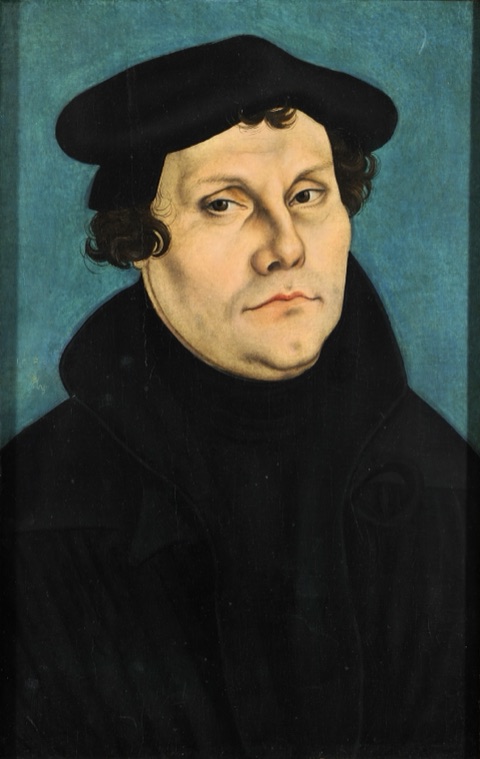
About the author
Martin Luther
Martin Luther (1483 to 1546 AD) was born in Eisleben, Saxony, the son of a copper miner. He entered the Augustinian monastery at Erfurt in 1505, was ordained in 1507, and became a professor of biblical studies at Wittenberg in 1512. His Ninety-Five Theses against the sale of indulgences, posted on October 31, 1517, made him a public figure across Europe. He signs the opening letter of this book “Martin Luther, Augustinian”, and he closes it having heard that new bulls have been sent out against him. In April 1521 he refused to recant at the Diet of Worms. He died in Eisleben on February 18, 1546.