Modernized edition · Full text · Free PDF/EPUB
The Ninety-Five Theses and the Small Catechism in Modern English
Want the file? The PDF/EPUB is free with an account.
Summary
- Author
- Martin Luther (1483 to 1546 AD), German reformer and Wittenberg professor
- Written
- Theses sent 31 October 1517 AD; Small Catechism published 1529 AD
- Source edition
- The translation of Henry Wace and C. A. Buchheim (1896)
- Type
- Academic theses and a question-and-answer catechism
- Length
- 10,000 words · 40 minutes
What is The Ninety-Five Theses and the Small Catechism about?
This volume holds two works by Martin Luther. The Ninety-Five Theses (1517) argue that the whole Christian life is repentance, that bought pardons cannot remove guilt, and that the Church's true treasure is the gospel. The Small Catechism (1529) teaches the commandments, Creed, Lord's Prayer and sacraments in short questions and answers for households.
Read the full summary (9 points, key themes)Show less
How the argument unfolds
- 01
Letter to Archbishop Albert. Luther tells the archbishop that people are being taught that pardons make them sure of salvation, and asks him to withdraw the preachers' instructions. “For indulgences confer absolutely no good on souls with regard to salvation or holiness.”
- 02
Theses 1 to 4: repentance. Christ's call to repent covers the whole of life, not only the sacrament of penance: “He intended that the whole life of believers should be penitence.”
- 03
Theses 5 to 40: the limits of pardons. The Pope can remit only penalties he imposed himself. True contrition already brings full remission, and no one can be sure of salvation by a letter of pardon.
- 04
Theses 41 to 55: mercy before pardons. Christians should be taught that giving to the poor is better than buying pardons, and that the Gospel deserves a hundred times the ceremony given to indulgences.
- 05
Theses 56 to 80: the treasure of the Church. The treasury of merit is not money or the saints' merits but the gospel: “The true treasure of the Church is the holy Gospel of the glory and grace of God.”
- 06
Theses 81 to 95: the laity's questions. Luther lists the hard questions ordinary people ask about the Pope and purgatory, and ends by urging Christians to follow Christ through tribulation rather than false security.
- 07
Protestation and catechism preface. Luther asks to be shown a better way before anyone calls him a heretic. Twelve years later he tells pastors what the parish visitation showed him and how to teach: one fixed text, then its meaning.
- 08
Commandments, Creed, Lord's Prayer. Each part is explained in short answers for the head of a household, from “We are to fear, love, and trust God above all things” through creation, redemption, sanctification and the seven petitions.
- 09
Sacraments, confession, prayers, duties. Baptism, a form of confession and the Sacrament of the Altar, then morning, evening and mealtime prayers and a table of Scripture texts for each station in life.
Key themes
- Repentance as a whole life. The theses open by moving repentance from a priest's booth into every day of a Christian's life, the same note the catechism strikes in its teaching on baptism.
- Love above purchased pardon. Almsgiving changes the giver, a pardon does not: “For by a work of love, love grows and the person becomes better; but by means of pardons he does not become better, only freer from punishment.”
- Teaching the household. Each part of the catechism is addressed to the head of the household. Luther found that the people “know neither the Lord’s Prayer, nor the Creed, nor the Ten Commandments” and wrote for home teaching.
- Word and faith in the sacraments. Water and bread do nothing by themselves. In baptism “It is the word of God, which is with and upon the water, and the faith that believes this word of God in the water.”
Reader questions (10)Hide the questions
Questions about The Ninety-Five Theses and the Small Catechism
Is there a modern English version of The Ninety-Five Theses and the Small Catechism?
Yes. This is The Ninety-Five Theses and the Small Catechism by Martin Luther in modern English. The language is modernized and the author's order and argument are kept. The full modernized text is free to read on this page.
Can I read The Ninety-Five Theses and the Small Catechism online for free?
Yes. The complete text of this modern English edition is on this page, with no sign-up or paywall.
Is there a free PDF of The Ninety-Five Theses and the Small Catechism?
Yes. The PDF and EPUB of this edition are free with an Updated Works account. Sign in with Google or an email link; no card is needed.
What are the Ninety-Five Theses?
They are ninety-five short propositions Luther wrote in 1517 for an academic disputation at Wittenberg on penitence and indulgences. He sent them to Archbishop Albert of Mainz on 31 October 1517 with a covering letter. They argue that bought pardons cannot remove guilt and that the true treasure of the Church is the gospel.
What is an indulgence?
An indulgence was a remission of the penalty for sin granted by the Church, often in exchange for a payment. Luther argues it could only remit penalties the Church itself imposed, never guilt: “papal pardons cannot take away even the least of venial sins as far as its guilt is concerned.”
Why did Luther write the Small Catechism?
He wrote it after visiting parishes in Saxony and finding that villagers, and many pastors, did not know the Lord's Prayer, the Creed or the Ten Commandments. In the preface he writes, “Merciful God, what misery I have seen!” The catechism gives one fixed text and short explanations to be learned by heart.
What is in the Small Catechism?
The Ten Commandments, the Apostles' Creed in three articles, the Lord's Prayer with its seven petitions, baptism, a form of confession and the Sacrament of the Altar, followed by morning, evening and mealtime prayers and a table of duties drawn from Scripture for each station in life.
How is the Small Catechism different from the Large Catechism?
Both appeared in 1529. The Small Catechism is a brief text for households and children to memorize. The Large Catechism is the fuller explanation for pastors and teachers, and Luther's preface tells them to move on to it once the short catechism has been learned.
Does Luther reject the Pope in the theses?
Not yet. The theses repeatedly appeal to what the Pope must intend and blame the preachers of pardons. Thesis 71 even curses anyone who speaks against the truth of apostolic pardons, while thesis 72 blesses anyone who resists the preachers' license.
How long is this book?
About 10,000 words, so it can be read in an evening. The theses with the letter and protestation take up a little over a third; the Small Catechism with its preface, prayers and table of duties makes up the rest.
The Ninety-Five Theses and the Small Catechism in Modern English · Full text
Letter to Archbishop Albert of Mainz
To the most reverend Father in Christ and most illustrious Lord, Albert, Archbishop and Primate of the Churches of Magdeburg and Mainz, Marquis of Brandenburg, etc., my lord and pastor in Christ, most gracious and worthy of all fear and reverence:
Jesus.
The grace of God be with you, and all that it is and all that it can do.
Forgive me, most reverend Father in Christ, most illustrious Prince, if I, the very dregs of humanity, have dared to think of addressing a letter to one of your sublime eminence. The Lord Jesus is my witness that, conscious of my own smallness and unworthiness, I have long put off doing what I have now hardened my brow to do. I am moved to it most of all by the sense of the faithful duty that I feel I owe to your most reverend Fatherhood in Christ. May your Highness, then, meanwhile deign to cast your eyes on one grain of dust and, in your pontifical clemency, to understand my plea.
Papal indulgences are being carried about under your most distinguished authority for the building of St. Peter’s. In regard to these, I do not so much accuse the extravagant sayings of the preachers, which I have not heard. But I grieve at the very false ideas that the people take from them, ideas that are spread abroad in common talk on every side. Namely, unhappy souls believe that if they buy letters of indulgence, they are sure of their salvation. They also believe that as soon as they have thrown their contribution into the chest, souls immediately fly out of purgatory. Furthermore, they believe that the grace thus conferred is so great that there is no sin so great that it cannot be pardoned, even, as they say, if by an impossibility someone had violated the Mother of God. And again, they believe that by these indulgences a man is freed from all punishment and guilt.
O gracious God! This is how the souls committed to your care, most excellent Father, are being taught, to their death, and a most severe account, which you will have to render for all of them, keeps growing and increasing. That is why I have not been able to keep silent on this subject any longer. For no function of a bishop’s office can make a man sure of salvation, since he does not become sure even through the grace of God infused into him. Instead, the Apostle bids us always to be working out our salvation in fear and trembling (Phil 2:12). Even the righteous man, Peter says, shall scarcely be saved (1 Pet 4:18). In short, the way that leads to life is so narrow that the Lord, speaking through the prophets Amos and Zechariah, calls those who are to be saved brands snatched from the burning (Amos 4:11; Zech 3:2). And our Lord everywhere declares how difficult salvation is.
Why, then, do the preachers of pardons use these false stories and promises of pardon to make the people feel complacent and unafraid? For indulgences confer absolutely no good on souls with regard to salvation or holiness. They only take away the outward penalty that in former times used to be imposed according to the canons.
Finally, works of piety and charity are infinitely better than indulgences, and yet they do not preach these with such display or with so much zeal. In fact, they keep silent about them for the sake of preaching pardons. And yet the first and only duty of all bishops is that the people should learn the Gospel and Christian charity, for Christ nowhere commands that indulgences should be preached. How dreadful a thing it is, then, and what peril to a bishop, if, while the Gospel is passed over in silence, he allows nothing but the noisy outcry of indulgences to be spread among his people, and gives more care to these than to the Gospel! Will not Christ say to them, “Straining at a gnat, and swallowing a camel” (Matt 23:24)?
Besides all this, most reverend Father in the Lord, the instruction to the commissioners that has been issued under the name of your most reverend Fatherhood makes a statement, doubtless without the knowledge and consent of your most reverend Fatherhood. It states that one of the principal graces conveyed by indulgences is that inestimable gift of God by which man is reconciled to God and all the pains of purgatory are done away with. It further states that contrition is not necessary for those who in this way redeem souls or buy confessional licenses.
But what can I do, excellent Primate and most illustrious Prince, except entreat your reverend Fatherhood, through the Lord Jesus Christ, to deign to turn on us the eye of fatherly care, to suppress that notice altogether, and to impose another form of preaching on the preachers of pardons? Otherwise, perhaps someone may at last arise who will publish writings refuting them and their notices, to the deepest reproach of your most illustrious Highness. It is intensely abhorrent to me that this should be done, and yet I fear that it will happen unless the evil is speedily remedied.
I entreat your most illustrious Grace to deign to receive this faithful discharge of my humble duty in a spirit worthy of a prince and a bishop, that is, with all clemency, even as I offer it with a most faithful heart, one most devoted to your most reverend Fatherhood, since I too am part of your flock. May the Lord Jesus keep your most reverend Fatherhood forever and ever. Amen.
From Wittenberg, on the eve of All Saints, in the year 1517.
If it please your most reverend Fatherhood, you may look at these Disputations, so that you may see how doubtful a matter is that opinion about indulgences which they spread abroad as if it were most certain.
To your most reverend Fatherhood,
Martin Luther
The Ninety-Five Theses on Penitence and Indulgences
Out of a desire and with the purpose of bringing the truth to light, a disputation will be held on the propositions written below at Wittenberg, under the presidency of the Reverend Father Martin Luther, Monk of the Order of St. Augustine, Master of Arts and of Sacred Theology, and regular lecturer in the same at that place. He therefore asks those who cannot be present to discuss the subject with us in person to do so by letter in their absence. In the name of our Lord Jesus Christ. Amen.
1. When our Lord and Master Jesus Christ said, “Repent ye …” (Matt 4:17), He intended that the whole life of believers should be penitence.
2. This word cannot be understood as referring to sacramental penance, that is, to the confession and satisfaction that are performed under the ministry of priests.
3. Yet it does not refer solely to inward penitence; indeed, such inward penitence is worthless unless it outwardly produces various mortifications of the flesh.
4. So the penalty continues as long as hatred of self (that is, true inward penitence) continues, namely, until we enter the kingdom of heaven.
5. The Pope has neither the will nor the power to remit any penalties except those he has imposed by his own authority or by that of the canons.
6. The Pope has no power to remit any guilt except by declaring and confirming that it has been remitted by God, or at most by remitting the cases reserved to himself. In those cases, if his power were despised, the guilt would certainly remain.
7. God never remits anyone’s guilt without at the same time humbling him in all things and subjecting him to the authority of His representative, the priest.
8. The penitential canons are imposed only on the living, and, according to the canons themselves, no burden ought to be imposed on the dying.
9. Hence the Holy Spirit, acting in the Pope, does well for us, in that in his decrees he always makes an exception for the moment of death and for cases of necessity.
10. Those priests act wrongly and ignorantly who, in the case of the dying, reserve the canonical penances for purgatory.
11. Those tares, the changing of the canonical penalty into the penalty of purgatory, surely seem to have been sown while the bishops were asleep.
12. In former times the canonical penalties were imposed not after absolution but before it, as tests of true contrition.
13. The dying pay all penalties by their death. They are already dead to the canon laws and are by right released from them.
14. The imperfect spiritual health or love of a dying person necessarily brings great fear with it; and the less of it there is, the greater the fear it brings.
15. This fear and horror is enough by itself, to say nothing of other things, to make up the pains of purgatory, since it comes very close to the horror of despair.
16. Hell, purgatory, and heaven seem to differ as despair, near despair, and peace of mind differ.
17. For souls in purgatory it seems necessary that, as horror diminishes, love increases.
18. Nor does it seem to be proved, by any reasoning or by any Scripture, that they are beyond the state of merit or of growth in love.
19. Nor does it seem to be proved that they, or at least all of them, are sure and confident of their own blessedness, though we may be very sure of it.
20. Therefore when the Pope speaks of the plenary remission of all penalties, he does not mean all penalties without qualification, but only those he himself has imposed.
21. Thus those preachers of indulgences are in error who say that a person is released and saved from all punishment by the Pope’s indulgences.
22. For in fact he remits to souls in purgatory no penalty that, according to the canons, they would have had to pay in this life.
23. If any complete remission of all penalties can be granted to anyone, it is certain that it is granted to none but the most perfect, that is, to very few.
24. Hence the greater part of the people must be deceived by this indiscriminate and high-sounding promise of release from penalties.
25. Whatever power the Pope has over purgatory in general, every bishop has the same in his own diocese, and every parish priest in his own parish, in particular.
26. The Pope acts most rightly in granting remission to souls not by the power of the keys (which is of no use in this case) but by way of intercession.
27. They preach mere human doctrine who say that the soul flies out of purgatory as soon as the money thrown into the chest rattles.
28. It is certain that when the money rattles in the chest, greed and gain may be increased, but the intercession of the Church depends on the will of God alone.
29. Who knows whether all the souls in purgatory want to be redeemed from it, as the story told of Saints Severinus and Paschal suggests?
30. No one is sure of the reality of his own contrition, much less of having obtained plenary remission.
31. As rare as a true penitent is, so rare is one who truly buys indulgences; that is to say, most rare.
32. Those who believe that letters of pardon make them sure of their own salvation will be eternally damned along with their teachers.
33. We must especially beware of those who say that these pardons from the Pope are that priceless gift of God by which a person is reconciled to God.
34. For the grace conveyed by these pardons concerns only the penalties of sacramental satisfaction, which are of human appointment.
35. They preach no Christian doctrine who teach that contrition is not necessary for those who buy souls out of purgatory or buy confessional licenses.
36. Every Christian who feels true remorse has by right plenary remission of penalty and guilt, even without letters of pardon.
37. Every true Christian, whether living or dead, has a share in all the benefits of Christ and of the Church, given to him by God, even without letters of pardon.
38. The remission granted by the Pope, however, is by no means to be despised, since it is, as I have said, a declaration of the divine remission.
39. It is a most difficult thing, even for the most learned theologians, to extol before the people at one and the same time the abundant effect of pardons and the necessity of true contrition.
40. True contrition seeks and loves punishment, while the abundance of pardons relaxes it and causes people to hate it, or at least gives them occasion to do so.
41. Apostolic pardons ought to be proclaimed with caution, so that the people do not falsely suppose that they are to be preferred to other good works of love.
42. Christians should be taught that the Pope does not intend the buying of pardons to be compared in any way with works of mercy.
43. Christians should be taught that whoever gives to a poor person, or lends to someone in need, does better than if he bought pardons.
44. For by a work of love, love grows and the person becomes better; but by means of pardons he does not become better, only freer from punishment.
45. Christians should be taught that whoever sees someone in need, passes him by, and gives money for pardons is not buying for himself the Pope’s indulgences but the anger of God.
46. Christians should be taught that, unless they have more wealth than they need, they are bound to keep what is necessary for the use of their own households and by no means to squander it on pardons.
47. Christians should be taught that while they are free to buy pardons, they are not commanded to do so.
48. Christians should be taught that the Pope, in granting pardons, has both more need and more desire for devout prayer to be made for him than for money to be readily paid.
49. Christians should be taught that the Pope’s pardons are useful if they do not put their trust in them, but most harmful if through them they lose the fear of God.
50. Christians should be taught that if the Pope knew of the extortions of the preachers of pardons, he would rather have the Basilica of St. Peter burned to ashes than built up with the skin, flesh, and bones of his sheep.
51. Christians should be taught that, just as it would be the Pope’s duty, so it would be his wish, even to sell the Basilica of St. Peter if necessary, and to give of his own money to very many of those from whom the preachers of pardons extract money.
52. Vain is the hope of salvation through letters of pardon, even if a commissioner, indeed the Pope himself, were to pledge his own soul for them.
53. They are enemies of Christ and of the Pope who, so that pardons may be preached, condemn the word of God to complete silence in other churches.
54. Wrong is done to the word of God when, in the same sermon, as much time or more is spent on pardons as on the word.
55. The Pope’s mind must necessarily be this: if pardons, which are a very small matter, are celebrated with single bells, single processions, and single ceremonies, then the Gospel, which is a very great matter, should be preached with a hundred bells, a hundred processions, and a hundred ceremonies.
56. The treasures of the Church, from which the Pope grants indulgences, are neither sufficiently named nor known among the people of Christ.
57. It is clear that they are at least not temporal treasures, for many of the preachers do not so readily lavish these but only pile them up.
58. Nor are they the merits of Christ and of the saints, for these, independently of the Pope, are always working grace in the inner man, and the cross, death, and hell in the outer man.
59. St. Lawrence said that the treasures of the Church are the poor of the Church, but he was speaking according to the use of the word in his own time.
60. We are not speaking rashly when we say that the keys of the Church, bestowed through the merits of Christ, are that treasure.
61. For it is clear that the Pope’s power alone is sufficient for the remission of penalties and of reserved cases.
62. The true treasure of the Church is the holy Gospel of the glory and grace of God.
63. This treasure, however, is deservedly most hated, because it makes the first to be last.
64. The treasure of indulgences, meanwhile, is deservedly most welcome, because it makes the last to be first.
65. Hence the treasures of the Gospel are nets with which in former times they fished for men of riches.
66. The treasures of indulgences are nets with which they now fish for the riches of men.
67. The indulgences that the preachers loudly proclaim to be the greatest graces are seen to be truly such as far as the promotion of gain is concerned.
68. Yet in reality they are in no way to be compared with the grace of God and the piety of the cross.
69. Bishops and parish priests are bound to receive the commissioners of apostolic pardons with all reverence.
70. But they are still more bound to see to it with all their eyes, and to take heed with all their ears, that these men do not preach their own dreams in place of the Pope’s commission.
71. Whoever speaks against the truth of apostolic pardons, let him be anathema and accursed.
72. But whoever, on the other hand, exerts himself against the wantonness and license of speech of the preachers of pardons, let him be blessed.
73. As the Pope justly thunders against those who use any kind of scheme to injure the traffic in pardons,
74. much more does he intend to thunder against those who, under the pretext of pardons, use schemes to injure holy love and truth.
75. To think that papal pardons have such power that they could absolve a man even if, to suppose the impossible, he had violated the Mother of God, is madness.
76. We affirm, on the contrary, that papal pardons cannot take away even the least of venial sins as far as its guilt is concerned.
77. To say that even if St. Peter were Pope now, he could grant no greater graces, is blasphemy against St. Peter and the Pope.
78. We affirm, on the contrary, that both he and any other Pope have greater graces to grant, namely, the Gospel, powers, gifts of healing, and so on (1 Cor 12:9).
79. To say that the cross set up among the insignia of the papal arms is equal in power to the cross of Christ is blasphemy.
80. Those bishops, parish priests, and theologians who allow such talk to circulate among the people will have to give an account.
81. This license in the preaching of pardons makes it no easy thing, even for learned men, to protect the reverence due to the Pope against slander, or at any rate against the sharp questions of the laity.
82. For instance: Why does the Pope not empty purgatory for the sake of most holy love and the supreme need of souls (this being the most just of all reasons), if he redeems an infinite number of souls for the sake of that most deadly thing, money, to be spent on building a basilica (this being a very slight reason)?
83. Again: Why do funeral masses and anniversary masses for the dead continue, and why does the Pope not return the endowments bequeathed for this purpose, or permit their withdrawal, since it is wrong to pray for those who are already redeemed?
84. Again: What is this new kindness of God and the Pope, that for money’s sake they permit an ungodly man, an enemy of God, to redeem a pious soul that loves God, and yet do not redeem that same pious and beloved soul out of free love, for the sake of its own need?
85. Again: Why are the penitential canons, long since repealed and dead in themselves, in actual fact and not only through disuse, still redeemed with money through the granting of indulgences, as if they were full of life?
86. Again: Why does the Pope, whose riches today are greater than those of the wealthiest of the wealthy, not build this one Basilica of St. Peter with his own money rather than with the money of poor believers?
87. Again: What does the Pope remit or grant to those who, through perfect contrition, have a right to plenary remission and participation?
88. Again: What greater good would the Church receive if the Pope, instead of once, as he does now, were to bestow these remissions and participations a hundred times a day on any one of the faithful?
89. Since it is the salvation of souls rather than money that the Pope seeks by his pardons, why does he suspend the letters and pardons granted long ago, since they are just as effective?
90. To suppress these scruples and arguments of the laity by force alone, and not to resolve them by giving reasons, is to expose the Church and the Pope to the ridicule of their enemies and to make Christians unhappy.
91. If, then, pardons were preached according to the spirit and mind of the Pope, all these questions would be easily resolved; indeed, they would not exist.
92. Away, then, with all those prophets who say to the people of Christ, “Peace, peace,” and there is no peace (Jer 6:14)!
93. Blessed be all those prophets who say to the people of Christ, “The cross, the cross,” and there is no cross!
94. Christians should be urged to strive to follow Christ, their Head, through pains, deaths, and hells,
95. and so to trust to enter heaven through many tribulations rather than through the security of peace.
Luther’s Protestation
I, Martin Luther, Doctor, of the Order of Monks at Wittenberg, wish to testify publicly that I have put forward certain propositions against papal indulgences, as they call them. Up to the present time, neither this most celebrated and renowned university of ours nor any civil or church authority has condemned me. Even so, I hear that there are some people of a headlong and audacious spirit who dare to pronounce me a heretic, as though the matter had already been thoroughly looked into and studied. For my part, as I have often done before, so now too I implore everyone, by the faith of Christ, either to show me a better way, if such a way has been divinely revealed to anyone, or at least to submit their opinion to the judgment of God and of the Church. For I am neither so rash as to wish that my opinion alone should be preferred to that of all other people, nor so senseless as to be willing that the word of God should be made to give way to fables devised by human reason.
Preface to the Small Catechism
Martin Luther to all faithful, godly pastors and preachers: grace, mercy, and peace in Jesus Christ our Lord.
I have been compelled and driven to set forth this Catechism, or Christian teaching, in such a simple, concise, and easy form by the wretched and lamentable state of affairs that I discovered recently while serving as an inspector. Merciful God, what misery I have seen! The common people, especially in the villages, know nothing at all of Christian doctrine, and unfortunately many pastors are all but unskilled and incapable of teaching. Though all of them are called Christians and receive the Holy Sacrament, they know neither the Lord’s Prayer, nor the Creed, nor the Ten Commandments. They live like poor cattle and senseless swine; and yet, now that the Gospel has come, they have learned well enough how to abuse their liberty.
O you bishops, how will you ever answer to Christ for having so shamefully neglected the people and never for a moment attended to your office? May all evil be kept far from you! You forbid the taking of the Sacrament in one kind, and you insist on your human laws, but you never ask whether the people know the Lord’s Prayer, the Creed, the Ten Commandments, or any of the words of God. Oh, woe upon you forever!
Therefore I beg you for God’s sake, my good masters and brothers who are pastors or preachers, to give yourselves to your office with all your heart. Take pity on your people, who are entrusted to your care, and help us bring the Catechism to the people, especially to the young. Let those who cannot do better take these tables and forms and instruct the people in them word for word, in this way.
First, the preacher must above all beware of and avoid using various and differing texts and forms of the Commandments, the Lord’s Prayer, the Creed, the Sacrament, and so on. He must take one form, keep to it, and teach the same one constantly, year after year. For the young and simple folk must be taught one definite text and version. Otherwise they will easily become confused if we teach it one way today and another way next year, as though we wanted to improve it, and so all our labor and toil is lost.
The worthy fathers saw this clearly, for they used the Lord’s Prayer, the Creed, and the Ten Commandments all in one form. Therefore we must always teach the young and simple folk in such a way that we do not change a single syllable, or preach tomorrow differently from today.
So choose whatever form you like, and keep to it always. If you are preaching to scholars or learned people, you may show your skill, vary these articles, and twist them as subtly as you can. But with the young, keep always to one form. Teach them these articles first of all, namely, the Ten Commandments, the Creed, the Lord’s Prayer, and so on, according to the text, word for word, so that they can repeat them and learn them by heart.
As for those who will not learn, tell them that they deny Christ and are not Christians. Do not admit them to the Sacrament; do not let them be sponsors to any child or enjoy any of the liberty of Christians. Instead, let them simply be handed over to the Pope and his officers, and indeed to the devil himself. Besides this, let their parents or masters refuse them food and drink, and tell them that the prince will have such uncouth people driven from the land.
For though we cannot and may not force anyone to believe, we must still train and urge the multitude so that they know what is right and wrong among those with whom they have their home, their food, and their life. For whoever wants to live in a town must know and keep the law whose privileges he wants to enjoy, whether he believes it or is a rogue and a good-for-nothing at heart.
Secondly, when they know the text well, then teach them to understand it, so that they know what it means. Here again take the method of these tables, this one or some other short method, whichever you like. Keep to it, and do not change a single syllable, just as we said of the text. Take time and leisure over it. For it is not necessary to explain everything at once, but one thing after another. When they understand the First Commandment well, then take the Second, and so on. Otherwise they will be overwhelmed and remember nothing.
Thirdly, when you have taught them this short Catechism, then take the larger Catechism and give them a deeper and fuller explanation. Explain every commandment, petition, and article, with its various works and uses, its dangers and abuses, as you will find them in abundance in the many little books written about them. And dwell especially on the commandment that is most neglected among your people. For example, the Seventh Commandment, about stealing, must be urged forcefully among artisans, tradesmen, and also among peasants and servants, for among such people there is every kind of unfaithfulness and thieving. Again, the Fourth Commandment must be specially urged upon children and the common people, so that they may be quiet, faithful, obedient, and peaceful. And you must always bring forward many examples from the Bible of how God punished or blessed such people.
Especially urge rulers and parents to govern well and to send their children to school. Impress on them that this is their duty, and what an accursed sin they commit if they neglect it. For by neglecting it they overthrow and lay waste both God’s kingdom and the world’s, as the worst enemies of both God and man. Lay great stress, too, on the horrible harm they do if they do not help to train children to become pastors, preachers, clerks, and so on, and tell them that God will punish them terribly for it. For it is very necessary to preach on this subject. Parents and magistrates now sin in this matter more than we can say. The devil, too, has most evil designs in it.
Finally, now that the tyranny of the Pope is past, people no longer want to come to the Sacrament, and they despise it. So it is necessary to urge them, but with this caution: we must not force anyone to believe or to come to the Sacrament, nor make any law prescribing the time or place. Rather, we ought to preach in such a way that they come of their own accord without our laws and, as it were, force us, their pastors, to give them the Sacrament. We may do this by saying to them: “Whoever does not seek or desire the Sacrament, or ask for it, at least once or four times a year, it is to be feared that he despises the Sacrament and is no Christian, just as a person who does not believe in or listen to the Gospel is no Christian. For Christ did not say, ‘Omit or despise this,’ but ‘This do as oft as ye drink it …’ (1 Cor 11:25).” He surely wants it done, and by no means neglected or despised. “This do,” He says.
But if there is anyone who does not greatly prize the Sacrament, that is a sign that he has no sin, no flesh, no devil, no world, no death, no danger, no hell; that is, he believes in none of them, though he is in them up to his ears and is doubly the devil’s. On the other hand, he needs no mercy, life, paradise, kingdom of heaven, Christ, God, or any good thing.
For if he believed that he had so much that is evil and needed so much that is good, he would not neglect the Sacrament in this way, for in it such evil is remedied and so much good is given. Nor would it be necessary to force him to the Sacrament by any law. He would come running of his own accord, compel himself, and urge you to give him the Sacrament.
So you must not make any law in this matter, as the Pope does. Only set out clearly the benefit and the harm, the need and the use, the danger and the blessing in this Sacrament, and the people will come of themselves without your forcing them. But if they do not come, let them go, and tell them that those who neither regard nor feel their great need and God’s gracious help belong to the devil. But if you do not urge this, or if you make a law or a poison of it, it is your fault if they despise the Sacrament. How could they be anything but slothful if you sleep and are silent? So look to it, you pastors and preachers! Our office has now become something different from what it was under the Pope; it has now become serious and saving. It therefore brings much more toil and labor, danger and trial, and with them little reward or thanks in the world. But Christ Himself will be our reward if we labor faithfully. May the Father of all grace help us to do so, to whom be praise and thanks forever through Christ our Lord! Amen.
The Ten Commandments
How the head of the household should explain them simply to his household.
The First Commandment
Thou shalt have no other gods. (Exod 20:3)
What does this mean?
Answer. We are to fear, love, and trust God above all things.
The Second Commandment
Thou shalt not take the name of thy God in vain. (Exod 20:7)
What does this mean?
Answer. We are to fear and love God, so that we do not curse, swear, practice witchcraft, lie, or deceive by His name, but call upon it in every need, pray, praise, and give thanks.
The Third Commandment
Thou shalt keep the holy day holy. (Exod 20:8)
What does this mean?
Answer. We are to fear and love God, so that we do not despise preaching and His Word, but hold it sacred and gladly hear and learn it.
The Fourth Commandment
Honor thy father and thy mother. (Exod 20:12)
What does this mean?
Answer. We are to fear and love God so that we do not despise or anger our parents and masters, but reverence, serve, obey, love, and honor them.
The Fifth Commandment
Thou shalt do no murder. (Exod 20:13)
What does this mean?
Answer. We are to fear and love God so that we do our neighbor no harm or injury in his body, but help and support him in all his bodily needs.
The Sixth Commandment
Thou shalt not commit adultery. (Exod 20:14)
What does this mean?
Answer. We are to fear and love God so that we live chaste and modest lives in word and deed, and each of us loves and honors our spouse.
The Seventh Commandment
Thou shalt not steal. (Exod 20:15)
What does this mean?
Answer. We are to fear and love God so that we do not take our neighbor’s money or goods, or try to get them by false dealing or deceit, but help him to keep and improve his goods and his livelihood.
The Eighth Commandment
Thou shalt not bear false witness against thy neighbor. (Exod 20:16)
What does this mean?
Answer. We are to fear and love God so that we do not tell lies to deceive our neighbor, nor betray him, falsely accuse him, or slander him, but excuse him, speak well of him, and explain everything in the kindest way.
The Ninth Commandment
Thou shalt not covet thy neighbor’s house. (Exod 20:17)
What does this mean?
Answer. We are to fear and love God so that we do not covet our neighbor’s inheritance or his house, or try to get them under a pretense of right, but help him and support him in keeping what is his own.
The Tenth Commandment
Thou shalt not covet thy neighbor’s wife, nor his servant, nor his maid, nor his ox, nor his ass, nor anything that is his. (Exod 20:17)
What does this mean?
Answer. We are to fear and love God so that we do not try to entice away or turn from our neighbor his wife, his servants, or his cattle, but urge them to stay and do their duty to him.
What does God say about all these commandments?
Answer. He says this:
For I, the Lord thy God, am a jealous God, and visit the sins of the fathers upon the children unto the third and fourth generation of them that hate Me, and show mercy unto thousands in them that love Me and keep My commandments. (Exod 20:5-6)
What does this mean?
Answer. God threatens to punish all who transgress these commandments. Therefore we must fear His wrath and not break these commandments. But He promises His grace and every good thing to all who keep these commandments. Therefore we are to love and trust Him and gladly do what His commandments require.
The Creed
How the head of the house should explain it as simply as possible to his household.
The First Article: Creation
I believe in God the Father Almighty, Maker of heaven and earth.
What does this mean?
Answer. I believe that God has created me and all other creatures. He has given me, and still preserves for me, my body and soul, eyes, ears, and all my limbs, my reason and all my senses. Every day He gives me clothes and shoes, food and drink, house and home, wife and child, fields and cattle, and all my goods, and He richly supplies all the needs and necessities of my body and life. He protects me from all danger, and guards and defends me from all evil. And He does all this out of pure fatherly and divine goodness and mercy, without any merit or worthiness in me. For all of this I am bound to thank Him and praise Him, and, more than that, to serve and obey Him. This is most certainly true.
The Second Article: Redemption
And in Jesus Christ, His only Son, our Lord, who was conceived by the Holy Spirit, born of the Virgin Mary; suffered under Pontius Pilate; was crucified, dead, and buried; He descended into hell; the third day He rose again from the dead; He ascended into heaven, and sits at the right hand of the Father Almighty; from there He shall come to judge the living and the dead.
What does this mean?
Answer. I believe that Jesus Christ, true God, born of the Father in eternity, and also true man, born of the Virgin Mary, is my Lord. He has redeemed me, a lost and condemned man, and has won me and set me free from all sins, from death, and from the power of the devil. He did it not with gold and silver, but with His holy and precious blood and with His innocent suffering and death, so that I might be His own, and live under Him in His kingdom, and serve Him in everlasting righteousness, innocence, and blessedness, just as He rose from the dead, and lives and reigns for all eternity. This is most certainly true.
The Third Article: Sanctification
I believe in the Holy Spirit, a holy Christian Church, the communion of saints, the forgiveness of sins, the resurrection of the body, and the life everlasting. Amen.
What does this mean?
Answer. I believe that I cannot by my own understanding or strength believe in Jesus Christ my Lord or come to Him. But the Holy Spirit has called me by the Gospel, enlightened me with His gifts, and sanctified and kept me in the true faith. In the same way He calls, gathers, enlightens, and sanctifies the whole of Christendom on earth, and keeps it in Jesus Christ in the one true faith. In this Christendom He daily and richly gives me and all believers the forgiveness of sins. On the last day He will raise up me and all the dead, and will give eternal life to me and to all who believe in Christ. This is most certainly true.
The Lord’s Prayer
How the head of the house should explain it as simply as possible to his household.
Our Father, which art in heaven.
What does this mean?
Answer. With these words God invites us to believe that He is our true Father and that we are His true children, so that we may pray to Him with confidence and complete trust, as little children ask their fathers.
The First Petition
Hallowed be Thy name.
What does this mean?
Answer. God’s name is indeed already holy in itself, but we pray in this prayer that it may also be holy among us.
How is this done?
Answer. When the word of God is taught in all its purity and sincerity, and we, as the children of God, live holy lives in keeping with it. Help us to do this, dear Father in heaven! But whoever teaches and lives otherwise than the word of God teaches profanes the name of God among us. Protect us from this, heavenly Father!
The Second Petition
Thy kingdom come.
What does this mean?
Answer. God’s kingdom indeed comes by itself, without our prayer, but we ask in this prayer that it may also come to us.
How is this done?
Answer. When our heavenly Father gives us His Holy Spirit, so that through His mercy we believe His holy word and live a godly life, here for a time and forever in heaven.
The Third Petition
Thy will be done on earth as it is in heaven.
What does this mean?
Answer. God’s good and gracious will is indeed done without our prayer, but we ask in this prayer that it may also be done among us.
How is this done?
Answer. When God destroys and overthrows every evil plan and evil will that would not let us keep God’s name holy or let His kingdom come, such as the will of the devil, the world, and our flesh; and when He strengthens us and keeps us firm in His word and in faith to the end of our lives. That is His good and gracious will.
The Fourth Petition
Give us this day our daily bread.
What does this mean?
Answer. God gives daily bread even to all evil people, without our asking, but we ask in this prayer that He will lead us to acknowledge our daily bread and to receive it with thanksgiving.
What is meant by daily bread?
Answer. Everything that belongs to the nourishment and needs of our bodies, such as food, drink, clothing, shoes, house and home, land, livestock, money, goods, an honest wife, honest children, honest servants, honest and faithful rulers, good government, good weather, peace, health, modesty, honor, good friends, faithful neighbors, and the like.
The Fifth Petition
And forgive us our trespasses, as we forgive them that trespass against us.
What does this mean?
Answer. We ask in this prayer that our Father in heaven would not look upon our sin, and would not reject our prayer because of it. For we are not worthy of anything we ask for, nor have we deserved it. Rather, we ask that He would grant us everything by His grace, for we sin greatly every day and deserve nothing but punishment. And for our part, we in turn will heartily forgive and do good to all who sin against us.
The Sixth Petition
And lead us not into temptation.
What does this mean?
Answer. It is true that God tempts no one, but we ask in this prayer that He will guard and keep us, so that the devil, the world, and our flesh may not deceive us or lead us into unbelief, doubt, and other great sins and crimes; and that, even when we are tempted by them, we may at last overcome and win the victory.
The Seventh Petition
But deliver us from evil.
What does this mean?
Answer. In this petition we ask, as if to sum everything up, that our Father in heaven would deliver us from every evil of body and soul, property and honor; and that at last, when our hour has come, He will grant us a blessed end and in His mercy take us from this vale of tears to Himself in heaven.
Amen.
What does this mean?
Answer. That I should be certain that such prayers are acceptable to our Father in heaven and are heard by Him, for He Himself has commanded us to pray in this way and has promised to hear us. Amen, Amen, that is, Yes, yes, so shall it be.
The Sacrament of Holy Baptism
How the head of the house should explain it as simply as possible to his household.
First
What is baptism?
Answer. Baptism is not just plain water. It is the water contained in God’s command and united with God’s word.
What, then, is this word of God?
Answer. What our Lord Christ says in the last chapter of St. Matthew: “Go ye therefore and teach all nations, baptizing them in the name of the Father, and of the Son, and of the Holy Ghost” (Matt 28:19).
Second
What does baptism give us, and what good does it do?
Answer. It brings about the forgiveness of sins, frees us from death and the devil, and gives everlasting blessedness to those who believe what the word and promise of God declare.
What is this word and promise of God?
Answer. What our Lord Christ says in the last chapter of St. Mark: “He that believeth and is baptized shall be saved; but he that believeth not shall be damned” (Mark 16:16).
Third
How can water do such great things?
Answer. Water certainly cannot do it. It is the word of God, which is with and upon the water, and the faith that believes this word of God in the water. For without the word of God the water is plain water and not baptism. But with the word of God it is a baptism, that is, a gracious water of life and a washing of regeneration in the Holy Spirit. As St. Paul says in Titus 3:5-8: “By the washing of regeneration and renewing of the Holy Ghost, which He shed on us abundantly through Jesus Christ our Savior, that, being justified by His grace, we should be made heirs according to the hope of eternal life. This is a faithful saying.”
Fourth
What does this baptizing with water signify?
Answer. It signifies that the old Adam in us is to be drowned by daily repentance and penance, and is to die with all sins and evil desires; and that a new man is to come forth and arise daily, who is to live before God in righteousness and purity forever.
Where is this written?
Answer. St. Paul says in Rom 6:4: “Therefore we are buried with Him by baptism into death, that like as Christ was raised up from the dead by the glory of the Father, even so we also should walk in newness of life.”
How Ordinary People Should Be Taught to Confess
Confession has two parts. First, we confess our sins. Second, we receive the absolution, or forgiveness, from the confessor as from God Himself, and do not doubt it, but firmly believe that by it our sins are forgiven before God in heaven.
What sins should we confess?
Answer. Before God we should confess all sins, even those we are not aware of, as we do in the Lord’s Prayer. But to the confessor we should confess only those sins that we know and feel guilty of in our hearts.
Which are these?
Answer. Examine yourself by the Ten Commandments, according to whether you are a father, mother, son, daughter, master or mistress of a household, manservant or maidservant. See whether you have been disobedient, unfaithful, and idle; whether you have injured anyone by word or deed; whether you have been dishonest, negligent, or lazy, or have done harm in some other way.
Please, friend, give me a short form of confession.
Answer. Say this to your confessor: Worthy and reverend sir, please hear my confession, and pronounce absolution to me for God’s sake.
Say this: I, a poor sinner, confess before God that I am guilty of all sins. In particular I confess to you that I am a manservant or a maidservant, etc. But sadly, I serve my master unfaithfully. At such and such a time I did not do what they told me, but made them angry and provoked them to swear. I have neglected my work and caused damage. I have been unruly in word and deed. I have been angry with my fellow servants, sullen toward my wife, and I have sworn at her. I am sorry for all this, and I ask for mercy, and I will try to do better.
A master or mistress of a household should say this:
In particular I acknowledge to you that I have not faithfully trained my children, my servants, and my wife to the glory of God. I have sworn, and set a bad example with indecent words and deeds. I have wronged my neighbor, spoken ill of him, overcharged, and given short measure and false weight (and whatever else he may have done against the commandments of God and his station in life).
But if anyone finds that he is not burdened with such sins or greater ones, he should not be anxious, or search for or invent further sins, and so turn confession into torture. Instead he should mention the one or two sins he can remember, like this: I confess especially that I once swore, also that I used improper words, and that I neglected this or that duty. Let that be enough.
But if you know of none (though this is almost impossible), then mention none in particular, but receive forgiveness on the basis of the general confession that you make to the confessor before God.
Then the confessor shall say:
God be merciful to you and strengthen your faith. Amen.
Further:
Do you believe that my forgiveness is God’s forgiveness?
Answer. Yes, reverend sir.
Then let him say:
As you believe, so be it to you. And by the command of our Lord Jesus Christ, I forgive you your sins, in the name of the Father, the Son, and the Holy Spirit. Amen. Go in peace.
But if any are deeply troubled in their conscience, or deeply grieved and tempted, the confessor will know how to comfort them with various words of Scripture and how to lead them to faith. This is meant only as a general form of confession for ordinary people.
The Sacrament of the Altar
How the head of the house should explain it simply to his household.
What is the Sacrament of the Altar?
Answer. It is the true Body and Blood of our Lord Jesus Christ, under the bread and wine, given to us Christians to eat and to drink, as Christ Himself instituted it.
Where is this written?
Answer. The holy Evangelists Matthew, Mark, and Luke, and St. Paul, say this:
“The Lord Jesus, in the same night in which He was betrayed, took bread, and when He had given thanks, He brake it, and gave it to His disciples, and said, Take; eat. This is My body, which is given for you; this do in remembrance of Me.
“After the same manner also He took the cup when He had supped, and gave it to them, saying, Take this and drink ye all of it. This cup is the new testament in My blood, which is shed for you for the forgiveness of sins; this do ye, as oft as ye drink it, in remembrance of Me” (Matt 26:26-28; Mark 14:22-24; Luke 22:19-20; 1 Cor 11:23-25).
What is the benefit of such eating and drinking?
Answer. These words show us: “Given for you and shed for you for the remission of sins.” That is, through these words forgiveness of sins, life, and salvation are given to us in the Sacrament. For where there is forgiveness of sins, there are also life and salvation.
How can bodily eating and drinking do such great things?
Answer. It is not the eating and drinking, indeed, that does this, but the words that stand there: “Given for you and shed for you for the remission of sins.” These words, together with the bodily eating and drinking, are the chief thing in this Sacrament. Whoever believes these words has what they say, just as they say it: namely, the forgiveness of sins.
Who, then, receives this Sacrament worthily?
Answer. Fasting and bodily preparation are indeed a good outward discipline. But the one who is truly worthy and prepared is the one who believes these words: “Given for you and shed for the remission of sins.” Whoever does not believe them is unworthy and unprepared. For the words “for you” require hearts that truly believe.
Morning, Evening, and Mealtime Prayers
How the head of the household should teach the household to commend themselves to God both night and morning.
The Morning Blessing
In the morning, when you get up from your bed, make the sign of the holy cross and say:
In the name of the Father, the Son, and the Holy Spirit. Amen.
Then, kneeling or standing, say the Creed and the Lord’s Prayer. If you wish, you may also say this short prayer:
I thank you, my heavenly Father, through Jesus Christ, your dear Son, that you have kept me through this night from all harm and danger. And I ask you to protect me this day from sin and all evil, so that all my deeds and my life may be pleasing in your sight. For I commend myself, my body and soul, and all, into your hands. Let your holy angel be with me, so that the evil one may have no power over me. Amen.
And then go joyfully to your work, and sing, if you like, a hymn, the Ten Commandments, or whatever else your devotion suggests.
The Evening Blessing
At night, when you go to bed, make the sign of the holy cross and say:
In the name of the Father, the Son, and the Holy Spirit. Amen.
Then, kneeling or standing, say the Creed and the Lord’s Prayer. If you wish, you may add this short prayer:
I thank you, my heavenly Father, through Jesus Christ, your dear Son, that you have graciously protected me through this day. And I ask you to forgive me all my sins, wherever I have done wrong, and mercifully to guard me this night. For I commend myself, my body and soul, and all, into your hands. Let your holy angel be with me, so that the evil one may have no power over me. Amen.
And then go to sleep quickly and cheerfully.
Blessing Before Meals
How the head of the household should teach the household to ask a blessing before meals and to give thanks after them.
The children and servants are to fold their hands, come to the table respectfully, and say:
The eyes of all wait upon Thee, and Thou givest them their meat in due season. Thou openest Thine hand, and satisfiest the desire of every living thing (Ps 145:15-16).
Note. To “satisfy” here means that all creatures get so much to eat that they are cheerful and happy over it, for worry and greed prevent such satisfaction.
Then they say the Lord’s Prayer and the following prayer:
Lord God, our heavenly Father, bless us and these your gifts, which we receive from your merciful goodness, through Jesus Christ our Lord. Amen.
Thanksgiving After Meals
After the meal they are to do the same, and speak respectfully with folded hands:
Give thanks unto the Lord, for He is gracious, and His mercy endureth for ever (Ps 118:1).
He giveth fodder unto the cattle, and feedeth the young ravens that call upon Him. He hath no pleasure in the strength of an horse, neither delighteth He in any man’s legs. But the Lord’s delight is in them that fear Him and put their trust in His mercy (Ps 147:9-11).
Then they say the Lord’s Prayer and the following prayer:
We thank you, Lord God our Father, through Jesus Christ our Lord, for all your mercies, you who live and rule forever and ever. Amen.
The Table of Duties
Some texts for the various holy orders and stations of life, by which each may be admonished of its own office and duties.
To Bishops, Pastors, and Clergy
A bishop must be blameless; the husband of one wife; vigilant; sober; of good behavior; given to hospitality; apt to teach; not given to wine; no striker; not greedy of filthy lucre, but patient; not a brawler; not covetous; one that ruleth well his own house; having his children in subjection with all gravity; not a novice; holding fast the faithful word as he has been taught, that he may be able by sound doctrine both to exhort and to convince the gainsayers (1 Tim 3; Titus 1).
What Hearers Owe Their Bishops
The Lord has ordained that those who proclaim the Gospel should live from the Gospel (1 Cor 9:14). Let the one who is taught the word share in all good things with the one who teaches him (Gal 6:6). Let the elders who rule well be counted worthy of double honor, especially those who labor in the word and in teaching. For the Scripture says, “You shall not muzzle the ox that treads out the grain,” and, “The laborer is worthy of his wages” (1 Tim 5:17-18). Obey those who are set over you, and yield to them. For they keep watch as those who must give account for your souls, so that they may do this with joy and not with groaning, for that would be of no profit to you (Heb 13:17).
On Magistrates
Let every soul be subject unto the higher powers, for there is no power but of God; the powers that be are ordained of God. Whosoever therefore resisteth the power resisteth the ordinance of God; and they that resist shall receive to themselves damnation. For he beareth not the sword in vain, for he is the minister of God, a revenger to execute wrath upon him that doeth evil (Rom 13).
What Subjects Owe Their Magistrates
Render to Caesar the things that are Caesar’s (Matt 22:21). Let every soul be subject unto the higher powers … Therefore you must be subject, not only because of wrath but also for conscience’ sake. For this is also why you pay taxes, since they are God’s ministers, serving in this very thing. Render therefore to all what is due: tax to whom tax is due, revenue to whom revenue, fear to whom fear, honor to whom honor (Rom 13:1-7). I exhort that first of all supplications, prayers, intercessions, and giving of thanks be made for all men, for kings, and for all who are in high positions, that we may lead a quiet and peaceful life in all godliness and dignity (1 Tim 2:1-2). Remind them to be subject to rulers and authorities … (Titus 3:1). Be subject to every human institution for the Lord’s sake, whether to the king as supreme, or to governors as sent by him (1 Pet 2:13-14).
To Husbands
Likewise, ye husbands, dwell with them according to knowledge, giving honor unto the wife as unto the weaker vessel and as being heirs together of the grace of life, that your prayers be not hindered (1 Pet 3). And be not bitter against them (Col 3).
To Wives
Wives, submit yourselves unto your own husbands as unto the Lord, even as Sarah obeyed Abraham, calling him lord, whose daughters ye are as long as ye do well, and are not afraid with any amazement (Eph 5; 1 Pet 3).
To Parents
Ye fathers, provoke not your children to wrath; but bring them up in the nurture and admonition of the Lord (Eph 6).
To Children
Children, obey your parents in the Lord, for this is right. Honor thy father and thy mother, which is the first commandment with promise, namely, that it may be well with thee, and thou mayest live long on the earth (Eph 6:1-3).
To Menservants, Maidservants, Day Laborers, and Workmen
Servants, be obedient to them that are your masters according to the flesh, with fear and trembling, in singleness of heart as unto Christ, not with eye-service as men-pleasers, but as servants of Christ, doing the will of God from the heart, with goodwill doing service, as to the Lord, and not to men, knowing that whatsoever good thing any man doeth, the same shall he receive of the Lord, whether he be bond or free (Eph 6:5-8).
To the Master and Mistress of a Household
And, ye masters, do the same things unto them, forbearing threatening, knowing that your Master also is in heaven, neither is there respect of persons with Him (Eph 6:9).
To the Young in General
Likewise, ye younger, submit yourselves unto the elder. Yea, all of you, be subject one to another, and be clothed with humility, for God resisteth the proud and giveth grace to the humble. Humble yourselves therefore under the mighty hand of God, that He may exalt you in due time (1 Pet 5).
To Widows
Now she that is a widow indeed, and desolate, trusteth in God, and continueth in supplications and prayers night and day; but she that liveth in pleasure is dead while she liveth (1 Tim 5).
To All
Thou shalt love thy neighbor as thyself; in this saying all commandments are comprehended (Rom 13). I exhort therefore that first of all supplications, prayers, intercessions, and giving of thanks be made for all men (1 Tim 2).
“Let each one learn his lesson well;
Then in the house content will dwell.”
Finis
Keep this book
Free PDF/EPUB
It stays free to read here. Choose how you would like to take it with you.
One free account opens 400+ books and saves your place on every device. Google sign-in or an email link. No card.
Theme
Typeface
Size
Save your place
A free account remembers where you stopped, on your phone or at your desk, and adds the PDF/EPUB to your library.
Create a free accountAlready have one? Log in
Readers like you keep these books free
Every edition takes real work to modernize and record. One gift funds the next classic, with no subscription.
Supporters receive
All 153 audiobooks, now and future
The whole ebook library as one download
Support the work Copied words
Take the whole book with you
Your passage is on your clipboard. If you want the full text to quote, print or read offline, the PDF/EPUB is free with an account.
Get the free PDF/EPUBGoogle sign-in or an email link. No card.

You are reading The Ninety-Five Theses and the Small Catechism, free
Readers like you keep these books free
Every edition takes real work to modernize and record. One gift funds the next classic. No subscription.
- All 153 audiobooks, now and future
- The whole ebook library as one download
About the author
Martin Luther
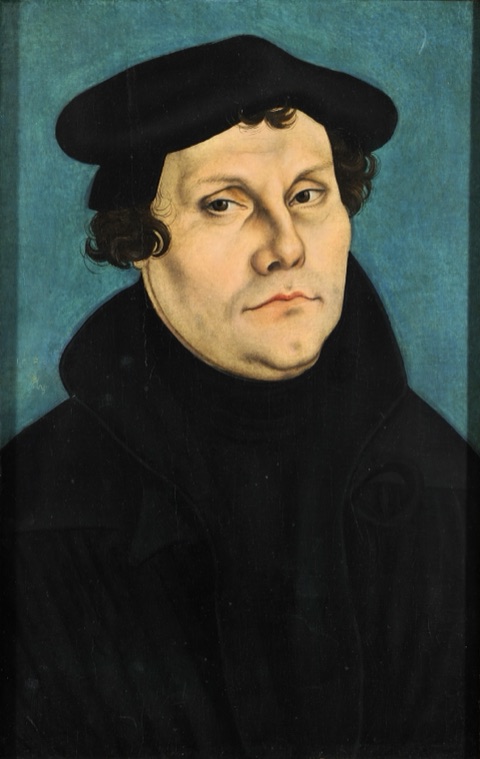
Martin Luther (1483 to 1546 AD) wrote the first part of this book as an Augustinian monk, doctor of theology and lecturer at the University of Wittenberg in Saxony, and signed the theses in that capacity. He sent them to Archbishop Albert of Mainz on 31 October 1517 because indulgences were being preached under Albert's authority, and the dispute they started led to his excommunication by Pope Leo X and his appearance before the Diet of Worms in 1521. By 1529 he was writing as a pastor and organizer of the reformed churches in Saxony. He had taken part in the visitation of parishes there, and the ignorance he found, among people and pastors alike, prompted both the Small Catechism and the Large Catechism of the same year. The two works here show him at the start of the Reformation and a decade into rebuilding parish teaching.