Modernized edition · Full text · Free PDF/EPUB
The Doctrine of Justification by Faith in Modern English
Want the file? The PDF/EPUB is free with an account.
Summary
- Author
- John Owen (1616 to 1683 AD), Independent minister and former Vice-Chancellor of Oxford
- Published
- 1677 AD, as The Doctrine of Justification by Faith, through the Imputation of the Righteousness of Christ
- Type
- Doctrinal and controversial treatise
- Contents of this edition
- To the Reader, eight General Considerations and twenty chapters, in modern English
- Length
- 181,000 words · 12 hours
What is The Doctrine of Justification by Faith about?
The Doctrine of Justification by Faith is John Owen's 1677 treatise on how a sinner guilty before God is pardoned and accepted. Owen argues that God justifies the ungodly freely, on the ground of Christ's obedience and suffering imputed to them and received by faith alone, and that this teaching promotes holiness.
Read the full summary (8 points, key themes)Show less
How the argument unfolds
- 01
To the Reader and General Considerations. Owen frames the question as a troubled conscience asks it before God the Judge, and clears the ground.
- 02
Justifying faith. Faith follows conviction of sin, rests on Christ as God's ordinance, and receives him as an instrument.
- 03
The meaning of justification. The word is a court term meaning to acquit, so a second justification by works and an evangelical justification both fall away.
- 04
Imputation. The guilt of the church's sins was laid on Christ as its surety, one mystical person with it.
- 05
Christ's righteousness. His obedience and suffering are the only righteousness on which believers are justified, since the law of creation cannot be lowered.
- 06
Covenants, works and faith alone. The covenant of grace excludes all our works, and Scripture's images of faith all point away from ourselves.
- 07
The testimonies of Scripture. Jeremiah, the Gospels and Paul's letters are expounded in turn.
- 08
Holiness, and James with Paul. Owen answers the charge of licence as Paul did, and shows that James treats a dead faith and the proof of justification.
Key themes
- The convinced sinner. Every part of the doctrine is tested by the person whose mouth is stopped before God: “It is pointless to debate justification with anyone who has never been genuinely convicted of his sinful state and guilt.”
- A righteousness outside ourselves. Christ is The Lord our Righteousness because our own righteousnesses are filthy rags, and he is made ours by imputation.
- Faith alone, never faith that is alone. Owen accepts the name Solifidian if it means that faith alone receives Christ, and rejects it if it means a faith without obedience.
- An old dispute in new words. Behind the new language of conditions and dispositions, “the real dispute among us today over justification before God is the very same dispute that existed between the apostle and the Jews, and nothing else.”
Reader questions (10)Hide the questions
Questions about The Doctrine of Justification by Faith
Is there a modern English version of The Doctrine of Justification by Faith?
Yes. This is The Doctrine of Justification by Faith by John Owen in modern English. The language is modernized and the author's order and argument are kept. The full modernized text is free to read on this page.
Can I read The Doctrine of Justification by Faith online for free?
Yes. The complete text of this modern English edition is on this page, with no sign-up or paywall.
Is there a free PDF of The Doctrine of Justification by Faith?
Yes. The PDF and EPUB of this edition are free with an Updated Works account. Sign in with Google or an email link; no card is needed.
What is The Doctrine of Justification by Faith by John Owen about?
It asks how a sinner guilty before God can be pardoned, accepted and given a right to eternal life. Owen answers that God justifies freely by grace, on the ground of Christ's righteousness imputed to the believer and received by faith alone.
What does Owen mean by imputation?
To count something as belonging to a person and deal with him accordingly. Imputing what was already ours is justice; God's imputing of Christ's righteousness grants what was not ours, which is pure grace.
Is faith itself counted as our righteousness?
No. Faith receives the righteousness of God and cannot be it. Imputed as a work, it would count only as the imperfect thing it is.
Why does Owen insist on Christ's obedience to the law and not only his death?
Pardon through Christ's death removes the curse, but a title to life needs a righteousness that answers the law's commands, and Christ obeyed them for his people.
Does justification by faith alone make holiness unnecessary?
The same charge was brought against Paul. Owen grounds holiness in God's ordination of good works, the continuing rule of the moral law and union with Christ.
How does Owen reconcile Paul and James?
Paul answers how a convicted sinner is justified before God; James exposes a barren faith. Abraham was justified long before he offered Isaac, so that act declared his faith.
Does Owen think those who reject his explanation cannot be saved?
No: “People may be truly saved by grace they doctrinally deny, and justified by the imputation of a righteousness they deny in theory.”
The Doctrine of Justification by Faith in Modern English · Full text
To the Reader
I do not need to detain the reader with an account of the nature and importance of this doctrine. It forms the entire subject of the treatise that follows. Various people, even among ourselves, hold different views about it. Yet everyone agrees that knowing the truth on this point is of the highest importance to human souls. Indeed, anyone who knows himself to be a sinner, exposed to the judgment of God, must desire some knowledge of it. This doctrine alone reveals the way of deliverance from the miserable condition in which he finds himself.
I admit that multitudes in the world cannot escape some general convictions of sin and its consequences. Even so, they fortify their minds against accepting the practical conclusions that necessarily follow. They willfully deceive themselves with empty hopes and imaginations. They never once seriously ask how to obtain peace with God and acceptance before him. Compared with the present enjoyment of sin’s pleasures, they value these things not at all. It is useless to commend the doctrine of justification to people who neither desire nor strive to be justified.
Yet some people are genuinely awakened to their apostasy from God and the evil of their natures and lives. They feel the dreadful consequences that follow, in the wrath of God and the eternal punishment due to sin. Such people can care about nothing more urgently than knowing God’s way of deliverance from that condition. They need no arguments to convince them of this doctrine’s importance. Their own stake in it is proof enough.
I assure these readers that I have pursued a single aim from start to finish. I have inquired diligently into God’s revelation of the way, the means, and their causes by which a distressed sinner’s conscience may attain assured peace with God through our Lord Jesus Christ. I place far more weight on steadily guiding one soul in this inquiry than on defeating the objections of twenty quarrelsome or fiery disputants. Once the question is stated at the outset, we must spend some time explaining the doctrine itself and the terms usually used to teach it. Even so, the main weight of the whole work rests on interpreting Scripture testimonies. It lies in applying them to the experience of believers and the condition of those seeking salvation by Jesus Christ.
I therefore ask the reader to note a few points at the start. Keeping them in mind will help him profit from this treatise. At the very least, unless by his own fault, it will free him from prejudice or pointless opposition to it.
1. Many disputes surround the doctrine of justification today, and many controversial books have been published about it. Even so, I did not write this treatise to contend with or contradict anyone, whatever his party or opinion. A few passages that seem to lean that way appear occasionally. Yet every fair-minded reader will judge them necessary. I have not attributed any opinion to a specific person. Still less have I twisted anyone’s words, attacked their character, criticized their abilities, or exploited presumed prejudices against them.
I have not distorted anyone’s views through forced consequences or imagined intentions that their words neither express nor, fairly interpreted, support. Nor have I chased the empty pleasure of seeming to triumph over opponents. Those habits, along with similar fruits of weak minds and disordered affections, animate many recent polemical books.
My aims have been very different. I have sought to declare and vindicate the truth for the instruction and edification of those who love it sincerely. I have aimed to untangle their minds from the difficulties some try to throw over all gospel mysteries, and especially this one. My purpose is to direct the consciences of those seeking lasting peace with God and to ground the minds of believers. Taking all circumstances into account, the place God has graciously given me in the church made this work necessary for me.
2. I have written nothing except what I believe to be true and useful for promoting gospel obedience. Do not expect here a digest of other writers’ opinions. Do not look for a collection of their arguments dressed up with clever reasoning or ornate style. Instead, I offer a plain inquiry into the realities themselves, as revealed in Scripture and proven in their power and effectiveness on believers’ minds.
One goal alone must guide anyone who handles this doctrine. We must give practical direction to human consciences as they approach God by Jesus Christ for deliverance from the curse due to our fallen state, for peace with him, and for the power of this truth to produce universal gospel obedience.
Accordingly, anyone who treats this subject rightly must weigh every claim in his own mind and experience. He must never dare to teach others what he does not stake his own soul on in the deepest recesses of his mind. He must abide by it in his nearest approaches to God, in sudden dangers, and in deep afflictions. He must stand on it in his preparations for death and in his humblest reflections on the infinite distance between God and himself. Theories and debates unseasoned by these realities may be flavored for some tastes by skill and style. Yet they remain tasteless and useless, degenerating immediately into an unprofitable war of words.
3. I know that many accuse the doctrine defended here of being hostile to personal holiness, good works, and gospel obedience in general. Some even claim it abolishes them altogether. It met the exact same charge when the apostle Paul first clearly revealed it, as he often notes. Yet Paul amply proves that it is the chief source and motive of all obedience accepted by God through Jesus Christ, as we will show later. Admittedly, the objective grace of the gospel in its doctrine can be abused where the subjective grace of the gospel is absent from the heart. Its workings in the life of God also appear strange to carnal minds.
Roman Catholics made this charge at the dawn of the Reformation, and they continue to press it. Yet this very doctrine gave the first spark to the Reformation itself. Through it, souls were set free from bondage to countless superstitious fears and observances utterly incompatible with true gospel obedience. It guided them into peace with God through Jesus Christ. It made them fruitful in genuine holiness, abounding in all those blessed fruits of the life of God that were never found among their adversaries.
The Socinians later renewed the same charge and continue to press it today. Wise and impartial observers, however, will give little weight to their accusations until their opposing belief yields better fruits than it has shown so far. Someone who knew them well, and leaned toward their anti-Trinitarian views, plainly described the sort of men who first invented their system. In one of the questions he put to Socinus and his followers, he asked: “If this is the truth you contend for, how does it happen that it is proclaimed only by persons who have no recommendation of piety and no praiseworthy example from their previous life to commend them? Indeed, as we generally see, it has been put forward by wanderers and men full of quarrels and carnal zeal, along with others coming out of military camps, royal courts, and taverns” (Scruples Proposed by an Eminent Man, among the works of Socinus).
When such men fiercely attack a doctrine as hostile to godliness, their accusations actually recommend it to thoughtful minds. No deadlier weapon can be wielded to ruin religion than railing against justification by faith alone and other truths of Christ’s grace as if they destroyed morality, good works, and gospel obedience. That attack is all the worse when those who embrace opposing views show not the slightest evidence of gospel truth or grace in their own hearts or lives.
The whole gospel is truth that leads to godliness. It declares and displays the grace of God that teaches us “to deny all ungodliness and worldly lusts, and that we should live soberly, and righteously, and godly in this world.” We have fallen into times marked by fierce disputes over religious ideas, opinions, and practices. Yet alongside those disputes stands a dreadful decay in true gospel purity and holiness among people generally. Keeping primary regard for the only standard of truth, I readily grant a secondary test. Contested doctrines may and should be tested by the ways, lives, and conduct of those who receive and profess them.
Admittedly, corrupt minds driven by sinful habits can abuse this doctrine and turn it into license, just as they abuse the whole doctrine of God’s grace in Jesus Christ. Admittedly, too, the way its power produces universal obedience to God in righteousness and true holiness cannot be seen without a ray of spiritual light. Minds utterly devoid of spiritual life cannot experience that power. Even so, let this doctrine stand or fall by this rule. If it cannot hold its place in the church by its usefulness and necessity for promoting godliness in all who truly believe and receive it in its light and power, across past and present experience, I will be content to see it discarded.
4. Not a few writers have found it in their interest to publish objections against a few pages I wrote incidentally on this topic many years ago while handling another subject. I therefore expect that those same writers, or others of like temper and principles, may oppose what I expressly offer here. If they do, let me tell them in one word what alone will concern me.
Suppose they make it their business to quibble over expressions, twist my words, and spin out strained inferences and conclusions I never owned. Suppose they revile my person or pounce on incidental remarks and unessential parts of the treatise, chasing an appearance of success and reputation without Christian moderation, candor, and fairness. If so, I will pay no more attention to what they say or write than to the most trivial nonsense reported in this world.
I say the same regarding similar attacks on any other writings of mine, a project in which I hear some are now engaged. I have better things to do than waste any part of the small remainder of my life on the kind of polemical writing that good men mourn and wise men mock.
The main purpose of this treatise is to state the doctrine of justification from Scripture and confirm it by Scripture testimonies. I will not consider it answered unless our exposition of those texts and their application to our argument are disproved by sound rules of interpretation and another sense is established. Everything else I think necessary for rightly understanding and applying the truth defended here is set out in the following general considerations. These are the few points I thought it fitting to remind the reader of.
J. O.
From my study, May 30, 1677.
General Considerations
To treat the doctrine of justification usefully for its proper ends, namely the glory of God in Christ along with the peace and growing obedience of believers, we must first consider several preliminary truths. We must keep these steadily in mind throughout this entire treatise. Among other points that might be urged for the same purpose, the following considerations must not be omitted.
Consideration 1: The General Nature of Justification
1. The first inquiry here, as a matter of duty, concerns the proper relief for a troubled conscience. Specifically, we ask how a sinner weighed down and perplexed by the guilt of sin can find relief. Justification is the way and means by which such a person obtains acceptance before God, along with a right and title to a heavenly inheritance. Nothing may be pleaded in this case except what a person would speak to his own conscience in that condition, or to another’s conscience when anxious under that same question.
Accordingly, the person under consideration, the one who is to be justified, is someone who in himself is “ungodly” (Romans 4:5). On that account he is “guilty before God” (Romans 3:19). That means he is exposed, subject, and liable to God’s righteous judicial sentence (Romans 1:32), which declares that “he who committeth sin,” whoever is in any way guilty of it, is “worthy of death.” Consequently, he finds himself under “the curse” (Galatians 3:10), with “the wrath of God” abiding on him (John 3:18; John 3:36). In this condition he has no plea and no excuse from anything in himself for his relief. His “mouth is stopped” (Romans 3:19). In God’s judgment declared in Scripture, he is in every way “shut up under sin” (Galatians 3:22) and all its consequences.
People in this condition fall into many evils. All of them can be summed up in the two reactions of our first parents, in which those evils were pictured. First, they foolishly tried to hide from God. Then, even more foolishly, they tried to blame him as the cause of their sin. Such are people’s natural thoughts under conviction. Yet whoever becomes the subject of the justification we are investigating is brought, by various means, to the mindset of the man who cried, “Sirs, what must I do to be saved?”
2. With regard to people in this condition, one central question arises. On what ground does God pardon all their sins and receive them into his favor? On what account does he declare or pronounce them righteous and acquitted from all guilt, remove the curse, turn away all his wrath from them, and grant them a right and title to blessed immortality or eternal life? This alone concerns the consciences of sinners in this state. They ask for nothing except what they can bring to answer God’s justice in the commands and curse of the law, and where they can turn to obtain acceptance with him for life and salvation.
As we will show and prove later, the apostle Paul states the entire matter in this way and no other in Romans 3-4 and elsewhere. In answer to this very question, he declares the nature and all the causes of justification. We will also show that the apostle James does not address or answer this inquiry (James 2). Rather, he treats justification in another sense and for another purpose.
We cannot handle this doctrine safely or usefully apart from the ends for which Scripture reveals and applies it. No pretext should turn us aside from this case and its resolution throughout our discussions. Our duty is the guidance, satisfaction, and peace of human consciences, not speculative notions or subtle debates. I will therefore avoid as much as possible those philosophical terms and distinctions that have tangled this gospel doctrine rather than clarified it. More weight belongs on steadily guiding the mind and conscience of one believer genuinely wrestling with the foundation of his peace and acceptance with God than on refuting ten quarrelsome disputants.
3. Asking on what account, cause, or reason a person can be acquitted of sin and accepted with God necessarily narrows to one issue. Is it anything in ourselves, such as our faith and repentance, the renewal of our nature, inherent habits of grace, and actual works of righteousness that we have done or may do? Or is it the obedience, righteousness, satisfaction, and merit of the Son of God, our mediator and surety of the covenant, imputed to us?
It must be one of these two. Either it is something of our own, which, whatever the influence or causality of God’s grace in producing it, is worked in and by us and is therefore properly and inherently our own. Or it is something not our own, neither inherent in us nor worked by us, yet imputed to us for the pardon of our sins and the acceptance of our persons as righteous, making us righteous in God’s sight. Nor can these two things be mixed or combined (Romans 11:6). Which of these it is the duty, wisdom, and safety of a convinced sinner to rely on and trust in before God is the sum of our present inquiry.
4. Assuming this relief is the righteousness of Christ, a distinct question follows. How do sinners turn, or how should they turn, to this relief? How do they come to share in and possess what is not inherently their own, to as full a benefit and advantage as if it were? Just as Scripture settles this clearly, all true believers confirm it in their experience. Nor should we pay much regard here to the opinions or arguments of people who were never thoroughly convinced of sin, and who have never personally “fled for refuge unto the hope set before them.”
5. We must keep these truths constantly in view throughout our entire examination of gospel justification. Without steady attention to them, we will quickly stray into speculative, tangled questions. Such questions do not touch the consciences of guilty sinners. They therefore do not belong to the substance or truth of this doctrine and should not be mixed with it.
Our sole concern is relief for those who in themselves are guilty before, exposed to, and liable to the judgment of God. Scripture secures beyond all contradiction that this relief is not and cannot be anything in or from themselves. It is a provision outside themselves, made in infinite wisdom and grace through Christ’s mediation, his obedience, and his death. That is the foundational principle of the gospel (Matthew 11:28).
6. Admittedly, many related topics must be examined to explain the truth and the order of God’s grace here. These include the nature of justifying faith, its place and role in justification, the causes of the new covenant, the true meaning of Christ’s mediation and suretyship, and similar matters. We will investigate all of them. Yet we should not easily be drawn beyond what directly guides the minds and satisfies the souls of those seeking a stable, lasting foundation of acceptance with God. Otherwise we risk losing the benefit and comfort of this vital gospel truth in needless, unprofitable quarrels. Among the many mistakes people fall into when discussing these matters, this one must be avoided above all.
7. The doctrine of justification directs Christian practice. No other gospel truth more deeply concerns our entire obedience, because it holds the foundation, reasons, and motives of all our duty toward God. It must therefore be taught to promote that obedience, and in no other way. What we aim, or ought to aim, to learn in and by it is how to obtain and keep peace with God, and how to live for him so that he accepts what we do. The doctrine exists to satisfy human minds and consciences in these matters.
Carrying it beyond the understanding of ordinary Christians through speculative theories and distinctions harms the faith of the church. Indeed, mixing gospel revelations with philosophical theories has poisoned religion in age after age. A show of precision and technical skill gives cover to this way of handling sacred things. Yet it cramps the spiritual breadth of divine truths by imposing narrow, shallow philosophical meanings on them. Worse still, it sparks and prolongs endless divisions and contentions.
When any religious disagreement is dragged during controversy into the field of metaphysical categories and philosophical terms, an ample supply of words stands ready on every side to arm the combatants. As a result, the truth, as far as it concerns human souls, is mostly lost and buried in a heap of meaningless, useless jargon.
Consider how this plays out in practice. People who agree well enough on the whole doctrine of justification while Scripture leads them and believers’ experience accompanies them fall into irreconcilable division the moment they enter their philosophical definitions and distinctions. They argue as if they agreed on nothing at all. Writers think differently when crafting definitions meant to survive objections, which is most people’s main goal. Consequently, no statement, at least in matters of probable reasoning, can be so plain that someone modestly trained in academic terms and metaphysics cannot multiply distinctions on every single word of it.
8. From this has come the claim and appearance of twenty different opinions among Protestants on justification. Bellarmine (book 5, chapter 1), Vasquez (on 1–2, question 113, disputation 202), and other Roman Catholics press this charge against Protestants on Osiander’s authority, even though their faith was one and the same. We will address that charge elsewhere. Once people step into that battlefield of disputation, overgrown with thorns of subtleties, tangled notions, and empty technical terms, they think chiefly about how to trap others there and scarcely at all about how to escape it themselves.
In that posture they often forget the very business they are about. Especially in this matter of justification, they lose sight of how a guilty sinner may obtain favor and acceptance with God. Worse still, I suspect they often argue themselves beyond what they can genuinely abide by when they return to quiet reflection on the state of things between God and their own souls. I cannot put much value on the opinions of people who argue themselves out of a sense of appearing before God. Still less do I value the opinions of those whose hearts and lives openly contradict the grace and truth of this doctrine.
9. We only trouble the faith of Christians and the peace of God’s true church when we wrangle over phrases, terms, and notions that are unnecessary. The substance of the doctrine can be declared and believed without knowing, understanding, or using any of them. All such terms belong to the nitpicking art of verbal combat.
Diligent attention to Scripture’s revelation on this subject, paired with testing our own experience by it, is the sum of what is required to understand the truth rightly. Every true believer taught by God knows how to put his whole trust in Christ alone, and in God’s grace through him, for mercy, righteousness, and glory. He does not need to bother himself at all with those loads of thorns and briers, offered as definitions, distinctions, and precise formulas in exotic academic and philosophical jargon, that some pretend to equip him with.
10. When describing the most prominent acts in our justification, especially our believing or the exercise of justifying faith, the Holy Spirit is pleased to use many metaphorical expressions. Using them today in the same way and for the same purpose is dismissed as crude, unscholarly, and even ridiculous. Yet on what grounds? Anyone who denies that these metaphors convey more spiritual sense and experience to believers’ hearts and minds than the most precise philosophical formulas is himself ignorant of the whole truth here. Conveying that sense and experience is the very life and soul of practical teaching.
Technical exactness of that sort belongs to natural science and stays within its bounds. Spiritual truths must be taught “not in the words which man’s wisdom teacheth, but which the Holy Ghost teacheth, comparing spiritual things with spiritual.” God is wiser than man. The Holy Spirit knows far better than the wisest of us the most effective ways to enlighten our minds with the gospel knowledge it is our duty to attain. Any other knowledge or skill in these matters beyond what duty calls for has no value.
There is therefore no point in handling gospel mysteries as though the medieval scholastics had to be dug out of their graves to guide us. We have no need of Holcot and Bricot, Thomas and Gabriel, or all the Sentences commentators, Summa writers, and Quodlibet disputants of the old Roman Aristotelian school. They are especially useless in the doctrine of justification. Because they stubbornly clung to the philosophy of Aristotle, who knew no righteousness except an inherent habit within ourselves and the acts flowing from it, they twisted the whole doctrine of justification to fit that framework. Even Pighius himself complained about them (Controversies, 2). “We cannot conceal the fact,” he wrote, “that this foremost part of Christian doctrine, concerning justification, has been obscured rather than illuminated by the scholastics. They have done so through their many thorny questions and definitions, by which some arrogantly claim supreme authority in all matters,” and so on.
Consideration 2: A Due Consideration of God as Judge of All
Second, to form right thoughts on this subject, we must duly consider the one with whom we deal directly. Scripture declares emphatically that it is “God that justifieth” (Romans 8:33). He claims everything belonging to justification as his own prerogative: “I, even I, am he that blotteth out thy transgressions for mine own sake, and will not remember thy sins” (Isaiah 43:25). In my judgment, it is hard to suggest any other reason or ground to him for pardoning our sins. He has taken it upon himself to do so for his own sake, that is, “for the Lord’s sake” (Daniel 9:17), in whom “all the seed of Israel are justified” (Isaiah 45:25).
It is in his sight and before his tribunal that people are justified or condemned. “Enter not into judgment with thy servant; for in thy sight shall no man living be justified” (Psalm 143:2). Indeed, the entire work of justification, with everything belonging to it, is portrayed as a legal proceeding before God’s judgment seat, as we will see later. “Therefore,” says the apostle, “by the deeds of the law shall no flesh be justified in his sight” (Romans 3:20). However much a person may be justified in the eyes of men or angels by his own obedience or deeds of the law, in God’s sight no one can be.
Anyone facing a trial whose verdict deeply concerns him must duly consider the judge before whom he will appear. That judge will finally decide his case. If we carry on our debates about justification without constant regard for the one who must condemn or acquit us, we will never rightly grasp what our plea ought to be. God’s greatness, majesty, holiness, and sovereign authority must always remain vividly before us when we ask how we may be justified before him. Yet it is hard to see how these truths weigh on the minds of some people in their fierce struggles to secure a share for their own works in justification. They strive by entreaty or by bribe to cling to some part in it.
Scripture shows us what thoughts of God and themselves not only sinners, but saints too, have had whenever God makes near, powerful disclosures of his greatness to them. They cannot help having such thoughts. Following a sense of sin’s guilt, these thoughts filled our first parents with fear and shame and drove them to that foolish attempt to hide from him. Nor is their descendants’ wisdom a bit better under conviction apart from a disclosure of the promise. Only what offers sinners relief makes them wise.
At present, most people are complacent and scarcely doubt that they will somehow come out well enough in the trial ahead. Such people are completely indifferent about which doctrine of justification is taught and received. For themselves, they generally lean toward whatever version best suits their own reason, shaped as it is by self-conceit and corrupt desires. Their creed comes to this: whatever they cannot do themselves, whatever falls short of what they need to be saved, whether much or little, Christ will somehow make up. Next to the corruption of our nature, either the use or the abuse of that belief is the greatest fountain of sin in the world. Whatever people may claim to the contrary, those who are not convinced of sin or humbled for it conduct all their reasoning about spiritual things under the control of such corrupted principles (Matthew 18:3-4).
Yet when God pleases by any means to manifest his glory to sinners, all their presumptions and schemes collapse into dreadful horror and distress. Scripture captures their state of mind: “The sinners in Zion are afraid; fearfulness has surprised the hypocrites. Who among us shall dwell with the devouring fire? Who among us shall dwell with everlasting burnings?” (Isaiah 33:14). Nor is this true only of some particular class of sinners. Every guilty person will face these same thoughts sooner or later. Those who hide from their sting in this world through sensuality, complacency, or superstition will not fail to meet them when their terror grows beyond all remedy.
Our “God is a consuming fire,” and people will one day discover how futile it is to set their briers and thorns in battle array against him. We can see what extravagant schemes convinced sinners will resort to under any real view of God’s majesty and holiness. “Wherewith,” says one of them, “shall I come before the Lord, and bow myself before the high God? shall I come before him with burnt-offerings, with calves of a year old? will the Lord be pleased with thousands of rams, or with ten thousands of rivers of oil? shall I give my first born for my transgression, the fruit of my body for the sin of my soul?” (Micah 6:6-7). I will never consider anyone worth debating about justification who ignores these realities, let alone despises them.
This is the proper effect of conviction of sin, strengthened and sharpened by the terror of the Lord who judges it. In the papacy, this conviction met with ignorance of God’s righteousness. Together they produced countless superstitious inventions to calm the consciences of those troubled by such awakenings. People quickly see that none of the obedience God requires, as they perform it, will justify them before this high and holy God. They therefore look for shelter in schemes involving things he has not commanded, trying to cheat their consciences and find relief in distractions.
Nor does this happen only to reckless sinners under conviction. Even the best of people, when given near, powerful views of God’s greatness, holiness, and glory, have been cast into the deepest self-abasement. They have earnestly renounced all trust or confidence in themselves. Upon seeing the glory of the Holy One, the prophet Isaiah cried out, “Woe is me! For I am undone; because I am a man of unclean lips” (Isaiah 6:5). He found no relief until he received assurance of the free pardon of sin (Isaiah 6:7).
Consider holy Job as well. Throughout all his disputes with his friends, who charged him with hypocrisy and with being uniquely guilty above other people, he defended himself with steady confidence and persistence. He vindicated his sincerity, his faith, and his trust in God against every single part of their charge. So completely satisfied was he of his integrity that he not only argued his case at length, but frequently appealed to God himself for the truth of his plea.
Job acted directly and confidently on the very counsel the apostle James would give all believers long afterward. Indeed, James’s doctrine is nowhere in all Scripture more prominently illustrated than in Job. He shows his faith by his works and pleads his justification by them. We gladly acknowledge it to be every believer’s duty to justify himself and be justified by works in the same sense Job was. His plea for justification by works, in that sense, was the noblest ever made in the world, and no controversy was ever conducted on a greater occasion.
At length, however, this same Job is summoned into the immediate presence of God to plead his own cause. The issue is no longer as it stood between him and his friends. It is no longer whether he was a hypocrite or whether his faith and trust in God were sincere. Now it stands between God and him, where he seemed to have made improper claims on his own behalf. The question came down to this: On what grounds could he be justified in the sight of God? To prepare his mind for a right judgment, God manifests his glory to him and instructs him in the greatness of his majesty and power. God does so through example after example, because under our temptations we are very slow to form right thoughts of God.
Here the holy man immediately recognized that the entire case had changed. All his former pleas of faith, hope, trust in God, and sincere obedience, which he had urged so earnestly before, are now laid completely aside. He saw clearly that they could not be pleaded at the tribunal before which he now stood, so that God should enter into judgment with him on that ground for his justification. Instead, in the deepest self-abasement and self-loathing, he casts himself on sovereign grace and mercy.
For “then Job answered the Lord, and said, Behold, I am vile; what shall I answer thee? I will lay mine hand upon my mouth. Once have I spoken; but I will not answer: yea, twice; but I will proceed no farther” (Job 40:3-5). And again: “Hear, I beseech thee, and I will speak; I will demand of thee, and declare thou unto me. I have heard of thee by the hearing of the ear: but now mine eye seeth thee. Wherefore I abhor myself; and repent in dust and ashes” (Job 42:4-6).
Let anyone place himself in Job’s condition, directly in God’s presence. Let him listen to what God truly speaks to him in his Word. Let him ask what answer he will give to God’s charge against him, and what his best plea will be before God’s tribunal to be justified. I do not believe any living person has stronger grounds than Job had to claim a place for his own faith and obedience in his justification before God. Even so, I grant he lacked the Jesuits’ skill in arguing such a plea with scholastic concepts and distinctions. Yet no matter how heavily armed we are with clever arguments and solutions, I fear it will not be safe for us to press further upon God than Job dared to go.
There was an ancient guide for visiting the sick, attributed to Anselm and published by Casparus Ulenbergius. It expresses a far better grasp of these truths than some today seem convinced of:
“Do you believe that you cannot be saved except by the death of Christ?” The sick person answers, “Yes.” Then let it be said to him: “Come then, and while your soul remains in you, put all your confidence in this death alone. Place your trust in nothing else. Commit yourself wholly to this death, cover yourself wholly with this alone, cast yourself wholly on this death, and wrap yourself wholly in this death.
“If God would judge you, say, ‘Lord, I place the death of our Lord Jesus Christ between me and your judgment. Otherwise I will not contend or enter into judgment with you.’ If he says to you that you are a sinner, say, ‘I place the death of our Lord Jesus Christ between me and my sins.’ If he says to you that you have deserved damnation, say, ‘Lord, I put the death of our Lord Jesus Christ between you and all my sins, and I offer his merits for my own, which I should have and do not have.’ If he says that he is angry with you, say, ‘Lord, I place the death of our Lord Jesus Christ between me and your anger.’”
Those who gave these directions clearly felt what it means to appear before God’s tribunal. They knew how unsafe it is for us to rely there on anything in ourselves. From the same mind come Anselm’s words in his Meditations: “My conscience has deserved damnation, and my repentance is not sufficient for satisfaction. Yet it is most certain that your mercy abounds above every offense.”
This seems to me far better guidance than the prayers more recently given by some in the Roman church. Take, for instance, the prayer recommended to a dying person by Johannes Polancus in his Method for Assisting the Dying. “Lord Jesus, I beg you,” it reads, “join my obedience with everything you did and suffered out of such perfect love and obedience. Together with the riches of your satisfactions and the merits of your love, be pleased to offer it to the eternal Father.” Or consider that of a more famous writer in Antidote of the Soul (folio 17). “And you, O rosy company of martyrs,” he prays, “offer on my behalf, now and at the hour of my death, the merits of your faithfulness, constancy, and precious blood. Offer them together with the blood of the spotless Lamb, poured out for the salvation of all.”
Long before Anselm, Jerome spoke to the same effect in book 6 of his commentary on Isaiah (Isaiah 13:6-7). “When the day of judgment or of death comes,” he writes, “all hands will be dissolved” (that is, they will faint or fall down). “To these it is said in another place, ‘Be strengthened, ye hands that hang down.’ Yet all hands will melt away” (that is, all human strength and confidence will fail), “because no works will be found that can answer the righteousness of God. For no flesh will be justified in his sight. Therefore the prophet says in the psalm, ‘If thou, Lord, shouldest mark iniquity, who should stand?’”
Ambrose wrote similarly in his commentary on Psalm 119, section Resh. “Let no one claim anything for himself,” he urges. “Let no one glory in his own merits or good deeds, and let no one boast of his power. Let us all hope to find mercy through our Lord Jesus, for we shall all stand before his judgment seat. From him I will beg pardon; from him I will ask for mercy. What other hope is there for sinners?”
Suppose people let their own inventions in the heat of debate pull them away from constant regard for God’s greatness, holiness, and majesty. Suppose they forget to consider with reverence what will be fitting for them and where they can turn before his tribunal. If so, they may adopt views they dare not abide by in their own personal trial. For “how shall man be just with God?”
It has often been observed that the scholastics themselves spoke a very different language in their meditations and devotional writings, where they dealt directly with God. There they talked about justification before God quite differently than in their fiery, wrangling philosophical disputes. For my part, I would rather learn what some people truly judge about their own justification from their prayers than from their writings.
I do not remember ever hearing a good person in prayer use any expression about justification, pardon of sin, and righteousness before God that brought in a plea from anything in ourselves. Daniel’s prayer has always been the substance of their petitions: “O Lord, righteousness belongeth unto thee, but unto us confusion of faces. We do not present our supplications before thee for our righteousnesses, but for thy great mercies. O Lord, hear; O Lord, forgive; for thine own sake, O my God” (Daniel 9:7; Daniel 9:18-19). Or they pray with the psalmist: “Enter not into judgment with thy servant, O Lord, for in thy sight shall no man living be justified” (Psalm 143:2). Or again: “If thou, Lord, shouldest mark iniquities, O Lord, who shall stand? But there is forgiveness with thee, that thou mayest be feared” (Psalm 130:3-4).
Augustine’s exposition of these last words is remarkable. Speaking of David and applying it to himself, he writes:
Look, he cries out beneath the weight of his iniquities. He looked around at himself and at his life, and he saw it covered on every side with shameful deeds. Wherever he turned his gaze, he found nothing good in himself. Seeing such great and numerous sins on every side, as though struck with terror, he cried out, “If you, Lord, should mark iniquities, who shall stand?” For he saw almost the whole of human life surrounded by barking sins, every conscience accused by its own thoughts, and no pure heart anywhere able to presume on its own righteousness. Because no such heart can be found, let every heart instead rely on the mercy of the Lord its God, and say to God, “If you, Lord, should mark iniquities, O Lord, who shall stand?” And what is our hope? “Because with you there is propitiation.”
We may and ought to express our faith to God in our prayers. Yet I seriously question whether some people can find it in their hearts to pray over all the arguments and distinctions they use to give our works and obedience a share in our justification before him. Can they plead those arguments before God, or “enter into judgment” with him on the conclusions they draw from them?
Nor will many be satisfied to use the prayer Pelagius taught the widow, which was brought against him at the Synod of Diospolis. “You know, O Lord,” it begins, “how holy, how innocent, how pure from all deceit and robbery are the hands I stretch out to you. You know how just, how unspotted with evil, how free from lying are those lips with which I pour out prayers to you, that you would have mercy on me.” Notice that even when Pelagius taught her to plead her own purity, innocence, and righteousness before God, he did not make them the ground of her absolute justification. He made them only the condition of her obtaining mercy.
Nor have I observed any public liturgies guiding people in their prayers to plead anything for acceptance with God, or as the means or condition of it, except grace, mercy, and the righteousness and blood of Christ alone. The sole exception is the Mass book, with its frequent recourse to the merits and intercession of saints.
Therefore I cannot help judging it best, though others may think as they please, for anyone who would teach or learn the doctrine of justification rightly to place his conscience in God’s presence and his person before God’s tribunal. Let him duly consider God’s greatness, power, majesty, righteousness, and holiness, along with the terror of his glory and sovereign authority. Then let him ask what Scripture and a sense of his own condition point to as his relief and refuge, and what plea becomes him to make. Secret thoughts of God and ourselves, quiet meditations, and the Spirit’s leading in humble prayer generally speak a very different language from what many contend for. So too do deathbed preparations to appear immediately before God, along with faith and love in active exercise on Christ.
Consideration 3: A Due Sense of Our Apostasy and Sin
Third, understanding the doctrine of justification rightly requires a clear grasp and due sense of several vital realities. We must feel the greatness of our apostasy from God, the resulting corruption of our nature, the power and guilt of sin, and the holiness and strictness of the law. For this reason, before declaring justification, the apostle introduces a long argument designed to thoroughly convince all who seek justification of these truths (Romans 1-3). The rules he gives us, the method he prescribes, and the ends he pursues are the ones we choose to follow.
He lays down his theme in general, that “the righteousness of God is revealed from faith to faith,” and that “the just shall live by faith” (Romans 1:17). Yet he does not explain the particular causes, nature, and way of our justification right away. First he proves fully that all people are shut up under sin, and he shows how deplorable their condition is as a result. He locates the foundation of all unbelief regarding the grace of God in ignorance of these truths, or in denying or softening them.
Pelagianism, in its original root and all its present branches, traces back to this very source. Its followers do not grasp the dread of our original apostasy from God or its consequence in the universal corruption of our nature. They therefore reject any necessity for either Christ’s satisfaction or the power of divine grace to recover and restore us. In effect, they renounce the main purposes for which both the Son of God and the Holy Spirit were sent. That path ends in denying the deity of the one and the personhood of the other.
Their reasoning follows a predictable course. Suppose, as these people do, that our fall was not great, that the disease we contracted is easily cured, and that little or no real evil lies in what is now unavoidable in our nature. Then it is no great matter to be freed or justified from it all by a simple act of favor on our own endeavors. Nor, by their reasoning, is God’s effectual grace needed at all for our sanctification and obedience.
Once people accept these or similar notions, their minds are shielded from a true grasp of sin’s state and guilt. Their consciences are kept from feeling the terror of the Lord and the curse of the law. Justification then becomes a concept to handle lightly or subtly as they see fit. From this spring the real differences over it today, not merely the varied ways learned writers express their thoughts about it.
Some utterly deny the imputation of the actual apostasy and transgression of Adam, the head of our nature, by which his sin became the sin of the world. In doing so they evade and overturn the very grounds on which the apostle proves the necessity of our justification, namely our being made righteous by another’s obedience. They also overturn all the arguments confirming this doctrine in Romans 5. Socinus (On the Savior, part 4, chapter 6) confesses that this passage gives strong support to justification by the imputation of Christ’s righteousness. He therefore uses various stratagems to oppose the imputation of Adam’s sin to his natural descendants. He saw clearly enough that once Adam’s imputed sin is admitted, the imputation of Christ’s righteousness to his spiritual offspring follows unavoidably from the tenor of the apostle’s argument.
Others deny the corruption of our nature that followed our apostasy from God and the loss of his image. If they do not deny it outright, they downplay it until it seems no great concern to us. They will admit some illness and disorder of the soul arising from unruly passions, making us apt to adopt the sinful habits and customs practiced in the world. Yet in their view its guilt is small, and its danger is not great. As for any spiritual filth or stain in our nature, they claim that baptism washes it completely away from everyone.
All the deeper realities of fallen humanity are dismissed as empty notions or fables. They reject that deformity of soul brought on by losing God’s image, in which the beauty and harmony of all our faculties acting toward their highest end consisted. They reject the hostility toward God, even in the mind, that followed. They dismiss the darkness that clouded and blinded our understandings, the spiritual death that fell on the whole soul, and total alienation from the life of God. They treat as fables our helplessness toward good, our bent toward evil, the deceitfulness of sin, and the power of corrupt desires that Scripture and experience so fully charge to fallen nature.
No wonder people who regard the very realities proving our need for imputed righteousness as foolish imaginations look on imputed righteousness itself as the shadow of a dream. Little hope remains of bringing people to value Christ’s righteousness imputed to them when they are so blind to the unrighteousness inherent in themselves. Until people know themselves better, they will care very little to know Christ at all.
Against such people the doctrine of justification may be defended. We are obligated to contend for the faith once delivered to the saints and to stop the mouths of opponents. Yet trying to convince them while they remain under the power of such views is a futile attempt. Our Savior said to those to whom he had declared the necessity of the new birth, “If I have told you earthly things, and ye believe not, how shall ye believe if I tell you heavenly things?” We may ask the same question here. If people will not believe realities of which they lack undeniable evidence and experience within themselves (a lack that would be astonishing if the reason were not known), how can they believe heavenly mysteries that presuppose what they refuse to acknowledge within themselves?
For this reason, some are so far from caring about a perfect righteousness imputed to them that they boast of perfection in themselves. The ancient Pelagians gloried in sinless perfection in the sight of God, even when convicted of sinful failures in the sight of men. Jerome (Dialogue, book 2) and Augustine (Against Julian, book 2, chapter 8) charge them with this very boast. Such people are not even capable of hearing the gospel.
Consider those who feel no sense in their hearts and consciences of the spiritual disorder of their souls. They feel nothing of sin’s secret, continual working with deceit and violence, obstructing all good and promoting all evil. They do not perceive how it defiles everything they do through the flesh lusting against the Spirit, even when no outward sin or actual omission of duty follows. They are not engaged in a constant, watchful struggle against sin’s first stirrings. Those stirrings are not life’s greatest burden and sorrow, driving them to cry out for deliverance. Worse, they can even despise believers who confess these realities and their accompanying guilt to God. Such people will confidently reject and condemn everything taught about justification through Christ’s imputed obedience and righteousness.
No one will be foolish enough to look anxiously for a righteousness that is not his own when he already has his own ready at home to serve his turn. Ignorance of these realities alone deludes people into thinking they can be justified before God by their own personal righteousness. If they truly knew themselves, they would quickly spot deep imperfection in their very best duties. They would see frequent sinful wanderings in their minds and disorders in their affections. They would see such unsuitableness in all they are and do, from the inward dispositions of their hearts to all their outward actions, before God’s greatness and holiness, that their confidence in trusting their own righteousness for justification would collapse.
Through these and similar presumptuous ideas of unenlightened minds, people’s consciences are kept from a true sense of sin and from seriously asking how to gain acceptance before God. Nothing seems able to move people whose minds are already filled with such shallow views of the state and act of sin. God’s holiness and terror do not move them, nor does the strictness of the law demanding a righteousness in compliance with its commands. The gospel promise declaring and offering God’s righteousness in answer to that demand does not move them. Neither does the uncertainty of their own minds under sudden trials, where they have no stable ground of peace to anchor on. Even the constant hidden uneasiness of their consciences, unless seared and hardened by sin’s deceitfulness, cannot persuade them to flee for refuge to the only hope set before them or truly embrace the only way of deliverance and salvation.
Therefore, if we would teach or learn the doctrine of justification rightly, we need a clear grasp of the greatness of our apostasy from God. We need a due sense of sin’s guilt and a deep experience of its power, all measured against God’s holiness and law. We have nothing to work with here among people who, through the fever of pride, have lost all understanding of their own miserable condition. As Augustine says, “Human nature is so manifestly corrupted that failing to see it is itself an even greater corruption.”
The healthy do not need a physician, only the sick. Those pierced to the heart for sin who cry out, “What shall we do to be saved?” will understand what we have to say. Against others we must defend the truth as God enables us.
Examples of every kind prove that as people grow bold in minimizing sin, they fall in their regard for the grace of our Lord Jesus Christ. The reverse is equally true. As unbelief breeds disregard for Christ’s person and righteousness, people are inevitably driven to soothe their consciences by minimizing sin. So imperceptibly are human minds turned away from Christ and seduced into trusting themselves. They keep some vague respect for him as a relief, they know not how or where, while living by that supposed height of human wisdom: trusting themselves. That is what the best pagan philosophers instruct them to do. As Seneca writes (Epistle 31), “There is one good, which is the cause and foundation of a blessed life: to trust in yourself.”
For the same reason, many despise God’s internal sanctifying grace just as much as the imputation of Christ’s righteousness. The sum of their creed and the arguments supporting it are stated by the learned Roman orator and philosopher Cicero (On the Nature of the Gods). “No one has ever credited his virtue to God, and rightly so,” he writes. “For we are justly praised for our virtue, and we rightly boast in our virtue, which could not happen if we received it as a gift from God rather than from ourselves.”
Consideration 4: The Opposition Between Works and Grace in Justification
Fourth, the opposition Scripture draws between grace and works in general, excluding the one and asserting the other in our justification, deserves preliminary consideration. This opposition is not between grace and works, or our own obedience, regarding their essence, nature, and harmony in the order and plan of our salvation. It applies solely to our justification. I do not intend here to argue from particular Scripture texts in their specific meaning or the exact mind of the Holy Spirit in them. We will examine those carefully later. My goal here is only to observe which way Scripture as a whole guides our understanding, and how our own experience agrees with that guidance.
Everyone acknowledges that the principal seat of this doctrine is in Paul’s letters to the Romans and Galatians, to which Hebrews may also be added. Yet it is declared most prominently in Romans. There the apostle handles it deliberately and at length, both doctrinally and in controversy with those who opposed the truth. It is well worth noting the process he follows in declaring it and the principles on which he proceeds.
He lays down his foundational maxim as a general thesis summing up everything he plans to explain and prove: in the gospel the “righteousness of God is revealed from faith to faith: as it is written, The just shall live by faith” (Romans 1:17). All sorts of people who had any knowledge of God and themselves were then, as they must always be, inquiring and in one measure or another laboring after righteousness. They rightly viewed it as the only means of a favorable relationship between God and themselves.
Yet most people had no other thought than that this righteousness must be their own, inherent in them and performed by them (Romans 10:3). This is the natural language of conscience and of the law, and it matches every philosophical notion of righteousness. The law and the prophets did indeed bear testimony to another kind of righteousness, a “righteousness of God without the law” (Romans 3:21). Even so, a veil lay over that witness as far as human understanding was concerned. Righteousness is what everyone who desires acceptance with God seeks and must seek. Yet it is useless to ask the law, natural conscience, or philosophical reason for any righteousness other than inherent habits and acts of our own. Neither law, nor natural conscience, nor reason knows any other.
In direct opposition to this righteousness of our own, the apostle declares that the gospel reveals another righteousness. Our own righteousness, and the demand for it, are attested by the law in its original constitution, by the natural light of conscience, and by reason’s grasp of the nature of things. Over against all of these, the gospel reveals the righteousness of another, namely the righteousness of God, revealed “from faith to faith.”
Not only is the revealed righteousness itself foreign to those other principles. The very manner of our sharing in it, its conveyance to us “from faith to faith,” is itself a striking revelation. Only God’s faithfulness in revealing it and our faith in receiving it are involved here. Of all things, righteousness would rather seem to move from works to works, from the work of grace in us to the works of obedience done by us, as Roman Catholics affirm. “No,” says the apostle, it is “from faith to faith,” a point we will examine later.
This is the general thesis the apostle proposes to confirm. In it he seems to exclude from justification everything except the righteousness of God and the faith of believers. To prove this, he considers every group of people who claimed or sought righteousness. He also examines all the ways and means by which they hoped to attain it, or by which it might most plausibly be attained. He shows the failure of all people and the inadequacy of all those means to produce a righteousness of our own before God. With respect to the different groups of people:
1. He considers the Gentiles, with all their notions of God, their practice in religious worship, and their resulting conduct. From everything observable among them, he concludes that they neither were nor could be justified before God. Instead, they were all, and most deservedly, liable to the sentence of death. Whatever people may argue about the justification and salvation of anyone without the gospel’s revelation of the righteousness of God “from faith to faith,” it flatly contradicts his entire argument in Romans 1:19-32.
2. He considers the Jews, who enjoyed the written law and its accompanying privileges, especially circumcision, the outward seal of God’s covenant. With many arguments and from many angles, he excludes them as well from any possibility of attaining justification before God through any of the privileges they enjoyed or their own compliance with them (Romans 2). He excludes both groups separately from righteousness before God by one decisive argument. Both openly sinned against what they took as the rule of their righteousness, the Gentiles against the light of nature and the Jews against the law. From this it inevitably follows that neither group could attain the righteousness of its own rule. Yet he proceeds further, to what is common to them all:
3. He proves the same point against every class of people, whether Jews or Gentiles, from the universal corruption of human nature in them all and the horrible effects that necessarily follow in people’s hearts and lives (Romans 3). In this way he proves that, given what all people actually are, it could not turn out otherwise. All must be shut up under sin and fall short of righteousness. From persons, then, he moves on to things, or to the means of righteousness.
4. God directly gave the law as the complete and only rule of our obedience to him. The works of the law therefore cover everything required of us. For that reason, they might be pleaded with some plausibility as the means by which we can be justified. The apostle therefore examines the nature, use, and purpose of the law in detail. He shows its utter inability to serve as the means of our justification before God (Romans 3:19-20).
5. Someone might still object that the law and its works are insufficient only when obeyed by unbelievers in their natural state, without the help of grace given in the promise. For those who are regenerate and believe, whose faith and works God accepts, it might seem to be otherwise. To meet this objection, Paul points to two of the most eminent believers under the Old Testament, Abraham and David. He declares that works of every kind were excluded from their justification (Romans 4).
On these principles, and by this step-by-step progression, he reaches a decisive conclusion. Every single member of the human race, with respect to anything in themselves, done by them, or worked in them, stands guilty before God. All are liable to death and shut up under sin. Their mouths are stopped, stripping them of every excuse. They have no righteousness with which to appear before God, and every way and means by which they expected to obtain it fails completely.
From here he takes up the next question. How can sinners be delivered from this condition and be justified in the sight of God? In answering it, he mentions nothing in themselves, but only faith, through which we receive the atonement. That by which we are justified, he says, is “the righteousness of God which is by the faith of Christ Jesus.” Or, as he also puts it, we are justified “freely by grace through the redemption that is in him” (Romans 3:22-24).
He does not even stop with this answer to how lost, convicted sinners are justified before God, namely, by the “righteousness of God, revealed from faith to faith, by grace, by the blood of Christ,” whom God set forth as a propitiation. He immediately excludes everything in us and from us that might claim a role in our justification. Any such claim conflicts with the righteousness of God revealed in the gospel and witnessed to by the law and the prophets.
Consider how contrary certain theological systems are to this aim of the apostle and his handling of it. Some claim that before the law, people were justified by obeying the light of nature and certain private revelations given for their personal direction. They add that after the giving of the law, people were justified by obeying God according to its instructions. Even pagans, they suppose, might obtain the same benefit by following the dictates of reason. No one who is not looking for a fight can deny how directly this contradicts Paul’s argument.
The constant tenor of Scripture agrees with this declaration of the Holy Spirit’s mind through the apostle. Everywhere Scripture asserts the grace of God, the promise of mercy, the free pardon of sin, the blood of Christ, his obedience, and the righteousness of God in him, rested in and received by faith, as the causes and means of our justification. It sets these in direct opposition to anything in ourselves. It uses terms that embrace our very best obedience and our highest personal righteousness. Whenever Scripture mentions the duties, obedience, and personal righteousness of the best of saints in relation to justification, they renounce them all and flee to sovereign grace and mercy alone. Let us review several passages that establish this truth.
The foundation of the whole is laid in the first promise. There the destruction of the devil’s work through the suffering of the woman’s seed is set forth as the sole relief for sinners and the only means of recovering God’s favor: “It shall bruise thy head, and thou shalt bruise his heel” (Genesis 3:15). Again: “Abraham believed in the Lord; and he counted it to him for righteousness” (Genesis 15:6). And in the law: “And Aaron shall lay both his hands upon the head of the live goat, and confess over him all the iniquities of the children of Israel, and all their transgressions in all their sins, putting them upon the head of the goat; and the goat shall bear upon him all their iniquities unto a land not inhabited” (Leviticus 16:21-22).
The Psalms and Job speak with the same voice. “I will go in the strength of the Lord God: I will make mention of thy righteousness, even of thine only” (Psalm 71:16). “If thou, Lord, shouldest mark iniquities, O Lord, who shall stand? But there is forgiveness with thee, that thou mayest be feared” (Psalm 130:3-4). “Enter not into judgment with thy servant: for in thy sight shall no man living be justified” (Psalm 143:2). “Behold, he put no trust in his servants; and his angels he charged with folly: how much less in them that dwell in houses of clay, whose foundation is in the dust?” (Job 4:18-19).
The prophets bear the same witness. “Fury is not in me: who would set the briers and thorns against me in battle? I would go through them, I would burn them together. Or let him take hold of my strength, that he may make peace with me; and he shall make peace with me” (Isaiah 27:4-5). “Surely, shall one say, In the Lord have I righteousness and strength: in the Lord shall all the seed of Israel be justified, and shall glory” (Isaiah 45:24-25). “All we like sheep have gone astray; we have turned every one to his own way; and the Lord has laid on him the iniquity of us all. By his knowledge shall my righteous servant justify many; for he shall bear their iniquities” (Isaiah 53:6; Isaiah 53:11).
So too Jeremiah, Isaiah, and Daniel declare it. “This is his name whereby he shall be called, The Lord our Righteousness” (Jeremiah 23:6). “But we are all as an unclean thing, and all our righteousnesses are as filthy rags” (Isaiah 64:6). “He shall finish the transgression, and make an end of sins, and make reconciliation for iniquity, and bring in everlasting righteousness” (Daniel 9:24).
The Gospels and Acts proclaim this salvation clearly. “As many as received him, to them gave he power to become the sons of God, even to them that believe on his name” (John 1:12). “As Moses lifted up the serpent in the wilderness, even so must the Son of man be lifted up: that whosoever believeth in him should not perish, but have eternal life” (John 3:14-15). “Be it known unto you, therefore, men and brethren, that through this man is preached unto you the forgiveness of sins: and by him all that believe are justified from all things, from which ye could not be justified by the law of Moses” (Acts 13:38-39). “That they may receive forgiveness of sins, and inheritance among them which are sanctified by faith that is in me” (Acts 26:18).
Paul’s letter to the Romans states the doctrine with unmistakable force. “Being justified freely by his grace through the redemption that is in Christ Jesus; whom God has set forth to be a propitiation through faith in his blood, to declare his righteousness for the remission of sins that are past, through the forbearance of God; to declare at this time his righteousness: that he might be just, and the justifier of him which believeth in Jesus. Where is boasting then? It is excluded. By what law? of works? Nay; but by the law of faith. Therefore we conclude that a man is justified by faith without the deeds of the law” (Romans 3:24-28).
He confirms this from Abraham and David. “For if Abraham were justified by works, he has whereof to glory; but not before God. For what saith the Scripture? Abraham believed God, and it was counted unto him for righteousness. Now to him that worketh is the reward not reckoned of grace, but of debt. But to him that worketh not, but believeth on him that justifieth the ungodly, his faith is counted for righteousness. Even as David also describeth the blessedness of the man unto whom God imputeth righteousness without works, saying, Blessed are they whose iniquities are forgiven, and whose sins are covered. Blessed is the man to whom the Lord will not impute sin” (Romans 4:2-8).
He contrasts Adam and Christ to the same effect. “But not as the offense, so also is the free gift. For if through the offense of one many be dead, much more the grace of God, and the gift by grace, which is by one man, Jesus Christ, has abounded unto many. And not as it was by one that sinned, so is the gift: for the judgment was by one to condemnation, but the free gift is of many offenses unto justification. For if by one man’s offense death reigned by one; much more they which receive abundance of grace and of the gift of righteousness shall reign in life by one, Jesus Christ. Therefore, as by the offense of one judgment came upon all men to condemnation; even so by the righteousness of one the free gift came upon all men unto justification of life. For as by one man’s disobedience many were made sinners, so by the obedience of one shall many be made righteous” (Romans 5:15-19).
He carries the same truth through the rest of the epistle. “There is therefore now no condemnation to them which are in Christ Jesus, who walk not after the flesh, but after the Spirit. For the law of the Spirit of life in Christ Jesus has made me free from the law of sin and death. For what the law could not do, in that it was weak through the flesh, God sending his own Son in the likeness of sinful flesh, and for sin, condemned sin in the flesh; that the righteousness of the law might be fulfilled in us” (Romans 8:1-4). “For Christ is the end of the law for righteousness to every one that believeth” (Romans 10:4). “And if by grace, then is it no more of works; otherwise grace is no more grace. But if it be of works, then is it no more grace; otherwise work is no more work” (Romans 11:6).
The rest of Paul’s epistles echo the same testimony. “But of him are ye in Christ Jesus, who of God is made unto us wisdom, and righteousness, and sanctification, and redemption” (1 Corinthians 1:30). “For he has made him to be sin for us, who knew no sin; that we might be made the righteousness of God in him” (2 Corinthians 5:21). “Knowing that a man is not justified by the works of the law, but by the faith of Jesus Christ, even we have believed in Jesus Christ, that we might be justified by the faith of Christ, and not by the works of the law: for by the works of the law shall no flesh be justified” (Galatians 2:16). “But that no man is justified by the law in the sight of God, it is evident: for, The just shall live by faith. And the law is not of faith: but, The man that doeth them shall live in them. Christ has redeemed us from the curse of the law, being made a curse for us” (Galatians 3:11-13).
He writes similarly to the Ephesians and Philippians. “For by grace are ye saved through faith; and that not of yourselves: it is the gift of God: not of works, lest any man should boast. For we are his workmanship, created in Christ Jesus unto good works, which God hath before ordained that we should walk in them” (Ephesians 2:8-10). “Yea doubtless, and I count all things but loss for the excellency of the knowledge of Christ Jesus my Lord: for whom I have suffered the loss of all things, and do count them but dung, that I may win Christ, and be found in him, not having mine own righteousness, which is of the law, but that which is through the faith of Christ, the righteousness which is of God by faith” (Philippians 3:8-9).
He repeats this truth to Timothy and Titus. “Who has saved us, and called us with a holy calling, not according to our works, but according to his own purpose and grace, which was given us in Christ Jesus before the world began” (2 Timothy 1:9). “That being justified by his grace, we should be made heirs according to the hope of eternal life” (Titus 3:7).
Hebrews, First John, and Revelation bring this testimony to a close. “Once in the end of the world has he appeared, to put away sin” (Hebrews 9:26; Hebrews 9:28). “Having by himself purged our sins” (Hebrews 1:3). “For by one offering he has perfected forever them that are sanctified” (Hebrews 10:14). “The blood of Jesus Christ God’s Son cleanseth us from all sin” (1 John 1:7). Therefore, “Unto him that loved us, and washed us from our sins in his own blood, and has made us kings and priests unto God and his Father; to him be glory and dominion forever and ever. Amen” (Revelation 1:5-6).
These are some of the passages that come immediately to mind where Scripture sets forth the grounds, causes, and reasons of our acceptance with God. We will examine the exact meaning of many of them, and the force of the truth in them, later in this treatise. Here we take only a general view. Everything in us and from us, under every conceivable aspect, appears to be excluded from our justification before God. Faith alone is excepted, as the means by which we receive his grace and the atonement.
On the other side, our entire acceptance with God appears to be assigned to grace, mercy, and the obedience and blood of Christ. These stand in direct opposition to our own worth, righteousness, works, and obedience. Unless a convicted sinner is already blinded by prejudice, I cannot think he will misjudge which of these two opposing sides he should rely on to be justified.
Some reply, however, that these statements cannot be taken absolutely or without qualification. Various distinctions, they say, are needed if we are to grasp the mind of the Holy Spirit and the true sense of Scripture when it credits grace and excludes the law, our own works, and our righteousness from our justification. They propose distinctions such as these:
1. The law is either the moral law or the ceremonial law. The ceremonial law is indeed excluded from any place in our justification, they say, but not the moral law.
2. Works required by the law are performed either before faith, without the help of grace, or after believing, by the help of the Holy Spirit. The former are excluded from our justification, they argue, but not the latter.
3. Works of obedience performed after receiving grace may be viewed either as sincere only, or as absolutely perfect, according to the original standard of the covenant of works. The latter are excluded from our justification, they claim, but not the former.
4. There is a twofold justification before God in this life, a first and a second. We must therefore examine carefully which of these two justifications any given Scripture passage has in view.
5. Justification may be considered either in its beginning or in its continuation, and under these different aspects it has different causes.
6. Works may be considered either as strictly meritorious, where their merit arises from their own intrinsic worth, or as meritorious only by fittingness, in view of God’s covenant and promise. The first kind is excluded, at least from the first justification. The second, they say, may have a place in both the first and the second.
7. Moral causes are of many kinds: preparatory, dispository, meritorious, conditionally efficient, or merely indispensable conditions. We must carefully investigate in what sense, and under which kind of cause, our works are excluded from justification, and under what terms they are necessary for it.
Not one of these distinctions can stand without many further distinctions to explain it, and learned men supply them in abundance. When skillfully handled in the art of disputation, these distinctions can be made to look quite plausible. Very few can discern their true foundation or tell what substance lies in the arguments. Even fewer can tell which side holds the truth.
Yet consider the person who is truly convicted of sin and knows what it is to enter into judgment with the holy God. He is asking for himself, not merely for others, how he may be accepted by God. Facing all these distinctions and sub-distinctions, he will be tempted to say to their authors, “You have done a fine job; I am much more uncertain than I was before.”
My question is simple. How shall I come before the Lord and bow myself before the high God? How shall I escape the wrath to come? What shall I plead in judgment before God so that I may be absolved, acquitted, and justified? Where shall I find a righteousness that will endure a trial in his presence? If I were armored with a thousand of these distinctions, I fear they would prove to be nothing but thorns and briers, which God would march through and consume.
Here, then, is the question before us. Keep in mind the state of the sinner seeking justification, as already described, and the remedies Scripture sets before us. What is the wisest and safest course? Should such a person place his whole trust and confidence exclusively in sovereign grace and the mediation of Christ? Or should he hold something back and place some share of his confidence in his own graces, duties, works, and obedience?
To submit this great disagreement to arbitration without being accused of choosing a biased judge, we will refer it to one of our greatest and most learned opponents in this controversy, Cardinal Bellarmine (On Justification, book 5, chapter 7, proposition 3). He gives us his clear verdict in those well-known words: “Because of the uncertainty of our own righteousness, and the danger of vainglory, it is the safest course to place our whole trust in the mercy and kindness, or grace, of God alone.”
He confirms this verdict on so vital a question with two Scripture testimonies, though he could have cited many more. Still, the two he chose are very much to the point. The first is from Daniel: “We do not present our supplications before thee for our righteousnesses, but for thy great mercies” (Daniel 9:18). The second is from our Savior: “When ye shall have done all those things which are commanded you, say, We are unprofitable servants” (Luke 17:10).
After supporting his conclusion with several testimonies from the church fathers, he closes his argument with this dilemma. “Either a man has true merits, or he does not. If he does not, he is ruinously deceived when he trusts in anything but the mercy of God alone, misleading himself by trusting in false merits. If he does have them, he loses nothing by not looking to them and trusting in God alone. Therefore, whether a man has good works or not, as to his justification before God, it is best and safest for him to pay no regard to them and put no trust in them.”
If this is true, Bellarmine might have spared himself all the labor he spent writing his sophistical books on justification, whose main aim is to draw people’s minds into the opposite opinion. For all I know, others might also spare their labor, with no loss to the church of God or to their own souls. I mean those who contend so fiercely to secure some role or other for our duties and obedience in our justification before God. When it comes down to it, they themselves will be found placing their whole trust and confidence in the grace of God through Jesus Christ alone.
Why toil and argue with endless disputes, reasonings, and distinctions to assign our duties and obedience some office in our justification before God? After all is said and done, we find it safest for ourselves to abhor ourselves with Job in God’s presence, flee to sovereign grace and mercy with the tax collector, and place all our confidence in them through the obedience and blood of Christ.
So died that great emperor, Charles V, as Jacques-Auguste de Thou records in his account of the emperor’s last days. This is how he reasoned with himself: “In myself I am altogether unworthy to obtain the kingdom of heaven by my own works or merits. Yet my Lord God holds it by a double right and title, by inheritance from the Father and by the merit of his own suffering. He is content with the one for himself and freely grants the other to me. On his free grant I lay claim to it, and resting in that confidence I shall not be put to shame.”
He continued in the same vein: “For the oil of mercy is poured only into the vessel of trust. This is the trust of a man despairing of himself and leaning on his Lord. Otherwise, to trust in one’s own works or merits is not faith, but treachery. Sins are blotted out by the mercy of God. We ought therefore to believe that our sins can be pardoned by him alone, against whom alone we have sinned, in whom there is no sin, and by whom alone sins are forgiven.”
This is the faith of people when they come to die, and of those who are tested by temptations while they live. Some are hardened in sin and try to leave this world without a thought of the next. Others are dull and ignorant, neither knowing nor considering what it means to appear in God’s presence and be judged by him. Still others are misled into placing their confidence in merits, pardons, indulgences, and future prayers for the dead.
Yet those who have any true spiritual knowledge of God and themselves arrive at a very different end. They look back over their past life and ahead to approaching eternity, which they must enter before God’s judgment seat. No matter how they may have thought, spoken, or argued about their own works and obedience, treating Christ and his righteousness merely as a supplement for small defects in themselves, they come at last to a total renunciation of all they have been and are. They flee to Christ alone for righteousness and salvation.
Throughout the treatise that follows, I will entangle myself as little as possible in overly subtle scholastic disputes. The substance of what I plead for is simple. People must renounce all confidence in themselves and everything that might encourage it, and flee to the grace of God through Christ alone for righteousness and salvation. This is what God designs in the gospel (1 Corinthians 1:29-31). We may meet difficulties in explaining particular propositions and terms belonging to the doctrine of justification, about which people hold different views. On this core truth, however, I do not doubt the inward agreement of all who know God and themselves as they ought.
Consideration 5: The Exchange of Sin and Righteousness Between Christ and Believers
Fifth, Scripture sets before us an exchange between Christ and believers regarding sin and righteousness. That exchange consists in the imputation of their sins to him and of his righteousness to them. No small part of the life and exercise of faith consists in making personal use of this truth and applying it to our own souls.
God taught this to his church through the ordinance of the scapegoat: “And Aaron shall lay both his hands upon the head of the live goat, and confess over him all the iniquities of the children of Israel, and all their transgressions in all their sins, putting them upon the head of the goat. And the goat shall bear upon him all their iniquities” (Leviticus 16:21-22). Some wonder whether this goat, sent away with this burden upon it, lived and thus prefigured Christ’s life in his resurrection after death. Others follow Jewish tradition, which holds that it perished in the wilderness, thrown down a rocky precipice by the man who led it away. Either way, everyone agrees that what was done to and with the goat simply pictured what was accomplished in reality in the person of Jesus Christ.
Notice that Aaron did not merely confess the people’s sins over the goat. He also placed them all upon its head, as the Hebrew literally states: “And he shall give them all to be on the head of the goat.” Correspondingly, Scripture says that the goat bore them all upon itself. It did so by divine appointment, which gave full legal force to what was done. Aaron did not infuse sin from one being into another; rather, he transferred the guilt of sin from one to another.
To display this transfer of sin from the people to the sacrifice, Aaron placed and pressed both hands on its head while he confessed. From this the Jewish teachers say, based on a later verse (Leviticus 16:30), “that all Israel was made as innocent on the Day of Atonement as they were on the day of creation.” The apostle explains where those sacrifices fell short of perfection and completion (Hebrews 10). Yet the voice of every atoning sacrifice is the same: “Let the guilt be on him.”
For this reason, the sacrifice itself was called “sin” and “guilt” (Leviticus 4:29; Leviticus 7:2; Leviticus 10:17). Likewise, consider the law for an unsolved murder, when no offender could be found to punish. The elders of the nearest city were to kill a heifer to remove the guilt, so that it would not rest on the land or be charged to the whole nation (Deuteronomy 21:1-9). Yet because the guilty person was unknown, this was only a moral representation of the punishment due to guilt, not an actual sacrifice. Those who killed the heifer did not lay their hands on it to transfer their own guilt to it. Instead, they washed their hands over it to declare their personal innocence. By these means, as in all other atoning sacrifices, God taught the church about the transfer of sin’s guilt to the one who would bear all their iniquities, along with their release and justification through him.
Thus “God laid on Christ the iniquities of us all,” so that “by his stripes we might be healed” (Isaiah 53:5-6). Our iniquity was laid on him, and he bore it (Isaiah 53:11). Through his bearing it, we are freed from it. His stripes are our healing. Our sin became his, imputed to him; his merit becomes ours, imputed to us.
“He was made sin for us, who knew no sin; that we might become the righteousness of God in him” (2 Corinthians 5:21). This is the exchange I spoke of: he was made sin for us, and we are made the righteousness of God in him. God does not impute sin to us (2 Corinthians 5:19), but imputes righteousness to us, on this ground alone: “he was made sin for us.” Even if being made sin means only being made a sacrifice for sin, the point remains the same. The very thing that formally constituted an atoning sacrifice was the imputation of sin to it by divine appointment.
The same apostle expresses this truth elsewhere: “God sending his own Son in the likeness of sinful flesh, and for sin, condemned sin in the flesh; that the righteousness of the law might be fulfilled in us” (Romans 8:3-4). The sin was made his, and he answered for it. The righteousness God requires by the law is made ours. The righteousness of the law is fulfilled in us, not by our doing it, but by his. This is that blessed change and exchange in which alone a convicted sinner’s soul can find rest and peace.
So too Christ “has redeemed us from the curse of the law, being made a curse for us, that the blessing of Abraham might come on us” (Galatians 3:13-14). The curse of the law included everything owed for sin. It belonged to us, yet it was transferred to him. He was made a curse, and his hanging on a tree was the sign and token of it. That is why he is said to “bear our sins in his own body on the tree” (1 Peter 2:24), because hanging on the tree marked him as bearing the curse: “For he that is hanged is the curse of God” (Deuteronomy 21:23). And the blessing of faithful Abraham includes full righteousness and acceptance with God, for Abraham believed God, and it was imputed to him for righteousness.
Certain critics, for reasons best known to themselves, seize every chance to object to my writings. In particular, they have raised an unwarranted outcry over something I wrote earlier on this subject. I will therefore express my entire judgment on this point in the words of respected authors against whom, so far as I know, they cannot pretend to have any quarrel.
The excellent words of Justin Martyr deserve first place (Epistle to Diognetus). “He gave his Son a ransom for us: the holy for transgressors, the innocent for the guilty, the just for the unjust, the incorruptible for the corrupt, the immortal for mortals. For what else could hide or cover our sins but his righteousness? In whom else could we wicked and ungodly ones be justified, or counted righteous, but in the Son of God alone? O sweet exchange! O unsearchable work and wondrous operation! O blessed kindness, exceeding all expectation, that the iniquity of many should be hidden in one righteous person, and the righteousness of one should justify many transgressors.”
Gregory of Nyssa speaks to the same effect (Homily 2 on the Song of Songs). “He has transferred to himself the filth of my sins, imparted his purity to me, and made me a sharer in his beauty.”
Augustine says the same (Enchiridion to Laurentius, chapter 41). “He was sin, so that we might be righteousness: not our own, but the righteousness of God; not in ourselves, but in him; just as he was sin, not his own, but ours, existing not in himself, but in us.” Because the Old Latin translation rendered “the words of my roaring” (Psalm 22:1) as “the words of my sins,” Augustine comments on the verse: “How does he say, ‘Of my sins’? Because he prays for our sins. He made our sins to be his, so that he might make his righteousness to be ours.” O sweet exchange and transfer!
Chrysostom speaks similarly on the apostle’s words, “that we might be made the righteousness of God in him” (Homily 11 on 2 Corinthians 5). “What word, what speech is this? What mind can comprehend or express it? For he says, ‘He made him who was righteous to be a sinner, so that he might make sinners righteous.’ Yet he does not even stop there, but says something far more sublime and glorious. He does not speak merely of a disposition or quality in action, but names the very thing itself. He does not say he made him a sinner, but sin, so that we might be made not merely righteous, but righteousness, and that the righteousness of God. For it is the righteousness of God when we are justified not by works (for if we were, no spot could be found in them), but by grace, through which all sin is blotted out.”
Bernard of Clairvaux writes in the same vein (Letter 190, to Innocent). “Indeed, it was man who owed the debt, and man who paid it. For ‘if one died for all,’ he says, ‘then all died,’ so that the satisfaction of the one might be imputed to all, just as that one bore the sins of all. Nor is one now found who offended and another who made satisfaction, because head and body are one Christ.” Many others speak to the same effect.
Thus Martin Luther, even before he began the work of the Reformation, did not hesitate to write to a monk named George Spenlein (Letters, 1516, volume 1). “My dear brother, learn Christ and him crucified. Learn to sing to him, and despairing of yourself, say to him, ‘You, Lord Jesus, are my righteousness, and I am your sin. You have taken upon yourself what was mine, and you have given me what was yours. You have taken upon yourself what you were not, and you have given me what I was not.’ He has received you, made your sins his own, and made his righteousness yours. Cursed is the one who does not believe this!”
Some today quarrel over nearly every word spoken about Christ and his righteousness. Had they ever suffered the turmoil of conscience over the guilt of sin that Luther endured, they would not find it strange to speak and write as he did. Indeed, even some who lived and died in communion with the church of Rome have borne witness to this truth.
Johannes Tauler writes (Meditations on the Life of Christ, chapter 7): “Christ took upon himself all the sins of the world, and willingly endured such grief of heart for them as if he himself had committed them.” Again, speaking in the person of Christ, he says: “Since the great sin of Adam cannot pass away, I implore you, heavenly Father, punish it in me. For I take all his sins upon myself. If this tempest of anger has risen on my account, cast me into the sea of my most bitter suffering.” See how Scripture justifies such expressions (Hebrews 10:5-10).
The statement of Albertus Pighius on this subject, though often quoted and pressed, deserves to be repeated once more. I cite it both for its worth and truth, and to show certain critics how foolishly they have congratulated themselves for attacking expressions of mine as though I stood alone in using them. After making other remarks to the same effect, Pighius writes:
“‘God was in Christ,’ says the apostle, ‘reconciling the world to himself, not imputing to men their sins, and has committed to us the word of reconciliation.’ In him, therefore, we are justified before God: not in ourselves, not by our own righteousness, but by his righteousness, which is imputed to us who now share in him. Lacking a righteousness of our own, we are taught to seek righteousness outside ourselves, in him. So he says, ‘Him who knew no sin, he made to be sin for us’ (that is, an atoning sacrifice for sin), ‘that we might be made the righteousness of God in him.’ We are made righteous in Christ, not with our own righteousness, but with the righteousness of God. By what right? By the right of friendship, which makes all things common among friends, according to the famous ancient proverb.”
Pighius continues: “When we are grafted into Christ, joined and united to him, he makes his things ours and shares his riches with us. He places his righteousness between God’s judgment and our unrighteousness. Under it, as under a shield and buckler, he hides us from the divine wrath we have deserved, defending and protecting us. More than that, he imparts it to us and makes it ours. Covered and adorned with it, we may stand boldly and securely before God’s judgment seat, not only appearing righteous, but actually being so. Just as the apostle affirms that by one man’s fault we were all made sinners, so Christ’s righteousness alone is effective for the justification of us all: ‘And as by the disobedience of one man many were made sinners, so by the obedience of one man,’ he says, ‘many are made righteous.’ This is Christ’s righteousness: his obedience, by which he fulfilled his Father’s will in all things. Conversely, our unrighteousness is our disobedience and transgression of God’s commands.”
He goes on to illustrate the point: “Our righteousness rests in Christ’s obedience because, being incorporated into him, his obedience is credited to us as if it were our own, so that through it we are counted righteous. Think of Jacob of old. Though not the firstborn, he hid himself in his brother’s clothing and wore his garment, which carried a sweet fragrance. In that way he presented himself to his father so that, in the person of another, he might receive the blessing of the birthright. Just so, we must hide beneath the precious purity of the Firstborn, our eldest brother. We must carry his sweet fragrance and have our sin buried and covered by his perfections. Only then can we present ourselves before our most holy Father and obtain from him the blessing of righteousness.”
Pighius adds shortly afterward: “God the Father therefore justifies us by his free grace and goodness. With that goodness he embraces us in Christ Jesus, clothing us with Christ’s innocence and righteousness as we are grafted into him. That righteousness alone is true and perfect, and it alone can endure in the sight of God. Therefore it alone must be presented and pleaded for us before the divine tribunal as the advocate and plea in our cause. Resting on it, we obtain the continual pardon of sin even here. Covered by its purity, our filth and the uncleanness of our imperfections are not imputed to us. They are covered as if buried, so that they do not come into God’s judgment, until the old man is destroyed and completely put to death in us, and divine goodness receives us into blessed peace with the second Adam.”
Thus far Pighius. His words show how powerfully divine truth gripped his mind. He wrote this against the interest of the cause he served, and at the cost of his reputation among those for whom, on every other issue, he was one of the fiercest champions.
Even some in the Roman church who cannot stomach this exchange of sin and righteousness by imputation between Christ and believers, any more than some among ourselves can, still affirm the very same principle regarding the righteousness of other human beings. Stanislaus Hosius writes (On the Express Word of God, volume 2, page 21): “Paul seems to teach us a kind of trade. ‘You,’ he says, ‘abound in money and are poor in righteousness. On the other hand, they abound in righteousness and are poor in money. Let a kind of exchange take place. Give to the needy devout the money you have in abundance and they lack. In this way they will in turn share with you the righteousness in which they abound and of which you are destitute.’” I have cited these testimonies mainly to relieve the ignorance of people who are quick to speak evil of what they do not understand.
Scripture sets this blessed exchange of sin and righteousness before us as a central object of our faith and the foundation of our peace with God. Both acts, the imputation of sin to Christ and the imputation of righteousness to us, are God’s acts, not ours. Even so, by faith we are to reflect them in our own souls. We must genuinely carry out what is required on our part for their application to us, by which we receive “the atonement” (Romans 5:11).
Christ calls to himself all who “labor and are heavy laden” (Matthew 11:28). The weight pressing on people’s consciences is the burden of sin. Thus the psalmist laments that his “sins were a burden too heavy for him” (Psalm 38:4), and Cain felt his guilt in the same way (Genesis 4:13). Christ bore this burden when God’s reckoning laid it upon him. As Scripture says, “He shall bear their iniquities” (Isaiah 53:11), carrying them upon himself as a heavy load. He did this when God caused “the iniquity of us all” to meet upon him (Isaiah 53:6).
Applying this to our own souls requires, first, that we feel the weight and burden of our sins and recognize that it is heavier than we can bear. Then the Lord Christ invites us to bring that burden to him for relief. He does so in the preaching of the gospel, where he is “evidently crucified before our eyes” (Galatians 3:1). Faith looks upon Christ crucified, for faith is a “looking unto him” (Isaiah 45:22; Isaiah 65:1). This answers to the Israelites bitten by fiery serpents looking up to the bronze serpent (John 3:14-15). Faith is also coming to him at his call and invitation. Under that sense of his call, the believer reflects that God has laid all our iniquities upon him. Indeed, that God has done this is a specific truth on which faith acts, which is faith in his blood.
Upon this, the soul approves and embraces God’s righteousness and grace, along with the infinite humility and love of Christ himself. It consents that what God has done here fully befits his infinite wisdom and grace, and in that it rests. Such a person no longer tries to establish his own righteousness, but submits to the righteousness of God. By faith he leaves on Christ the burden Christ invited him to bring, agreeing wholeheartedly with the wisdom and righteousness of God in laying it upon him. At the same time, he receives the everlasting righteousness that the Lord Christ brought in when he put an end to sin and made reconciliation for transgressors.
The reader should note that I am not debating these truths argumentatively, using the technical precision required in a scholastic dispute. I will do that later as far as I judge necessary. Right now I am doing something better and more important. I am setting forth the lived experience of faith in the language of Scripture or terms closely aligned with it. I would far rather help communicate light and knowledge to the humblest believer than score the clearest victory over prejudiced debaters. By faith acting in this way, therefore, we are justified and have peace with God. No one can lay any other foundation in this matter that will withstand the trial.
Nor should we be shaken when people who know nothing of the reality and power of these things dismiss this whole work of faith as an easy stretch of fancy or imagination. The preaching of the cross is foolishness to the best natural wisdom of humanity. No one can understand these things except by the Spirit of God. Some people know the terror of the Lord. They have been truly convicted and made to feel the guilt of their rebellion against God and of their actual sins in that state. They know what a fearful thing it is to fall into the hands of the living God. Searching for a solid foundation on which they may be accepted by him, they view these truths very differently. They discover that believing is quite another thing than such critics suppose.
It is no work of fancy or imagination to deny and abhor oneself. It is no work of fancy to endorse God’s righteousness when he pronounces death as the due wage of our sins, or to abandon every hope of relief from any righteousness of our own. Nor is it imagination to mingle God’s word and promise concerning Christ and righteousness in him with faith, so as to receive the atonement and at the same time yield oneself to universal obedience to God. Some dismiss this as mere fancy, whether from pride and self-conceit on the one hand or ignorance on the other. We have no business with them here. To anyone for whom these realities are merely imagination, the gospel itself is a fable.
I wrote something to this effect many years ago in a practical treatise on Communion with God. Some men of lesser standing have found it useful to quibble with my writings and slander their author, whether to ingratiate themselves with their superiors or to indulge their own temperament. That book in particular has been singled out as the target for their talents and good intentions. Recently a Mr. Hotchkis has taken this path in a book on justification. On page 81, he attacks fiercely the substance of the very doctrine I have set forth here. Were it not that I hope a brief warning about his immoralities in that treatise might do him some good, I would not have bothered to notice his other trivial attacks.
The good man, I see, can grow angry with people he has never met, and over subjects he either cannot or will not understand. He goes so far as to abuse them with the most insulting language. Although I had never before written a dedicated treatise on the doctrine of justification, he could easily see from what I wrote incidentally in that book that I hold no other doctrine than the common faith of the most learned scholars across all Protestant churches. The reasons why I am singled out as the target of his peevishness and malice are too obvious to repeat. Still, I will inform him of something he may not realize. I count it no small honor that the insults aimed at the doctrine he opposes fall upon me. I say the same of all the abusive and contemptuous language filling his subsequent pages.
On this particular point, however, he must excuse me if I do not believe him. He claims that reading the passages he cites from my book filled him with “horror and indignation.” Yet he admits that my words can bear a sense he approves of, which must therefore be good and sound. What honest and sensible person would not take them in that sense rather than twist them into another, just to throw himself into the turmoil of a fit of horrible indignation?
It was during this fit, I suppose, if any such fit actually overtook him (for one evil breeds another), that he thought he could insinuate a denial on my part of the necessity of our own personal repentance and obedience. No one who had read even that single book among all my writings could, with the slightest regard for conscience or honesty, give any credit to such a claim, unless his mind was thoroughly deranged by the sudden onset of a fit of horror. Yet that is how he treats me from start to finish. I cannot point to a single objection he raises against me where I might suppose he had recovered from his pretended fit and returned to himself. By that I mean returned to honest and candid thoughts, with which I hope he is ordinarily more familiar.
Any one of his attacks would substantiate this charge. Still, I will take the one he dwells on longest and fills with the crudest abuse. On page 164 of his book and the pages following, he argues fiercely against me for calling it an undue end of our serving God to flee from the wrath to come. Who would not regard that as an unforgivable crime? That would be doubly true in someone who has written as much as I have about the nature and purpose of gospel warnings and the reverent fear they ought to produce in human hearts. With so terrible a crime in view, all his insults seem not only excusable, but justified.
Yet what if this whole charge turns out to be a deliberate distortion, unworthy of a good man and still less of a minister of the gospel? Here are my exact words as he himself quotes and transcribes them: “Some there are that do the service of the house of God as the drudgery of their lives. The principle they yield obedience upon is a spirit of bondage to fear. The rule they do it by is the law in its dread and rigor, exacting it of them to the utmost without mercy or mitigation. The end they do it for is to flee from the wrath to come, to pacify conscience, and to seek for righteousness as it were by the works of the law.”
What follows to the same effect he omits, and what he adds as my words are not mine at all, but his own. Where is his shame? Where is his honesty? What I called one element of an evil aim, when combined into a single motive with the other elements I explicitly listed, he pulls out of context. He writes as if I had denied that in any sense it could form part of a right motive in obedience. I never thought that, and I never said that. In fact, I have spoken and written extensively to the contrary. To prop up this dishonest procedure, alongside many other untrue accusations, he adds on page 167 that I insinuate that the people I describe are Christians who seek righteousness by faith in Christ.
I must tell this author plainly that I am convinced such works as these will contribute nothing to his justification. In the rest of this treatise, I do not plan to take specific notice of his objections against the truth or against me. For one thing, they are all stale and outdated, and whatever force they have will be answered in the authors from whom he borrowed them. My main reason, however, is simpler. I do not want to be continually forced to expose how completely he has forgotten every rule of fairness, and even of common honesty, in his dealings with me.
As for the truth that prompted this unpleasant digression, it amounts simply to this: our sins were imputed to Christ, and his righteousness is imputed to us. In the faith of this truth I am confident I will live and die, even if he should write twenty books against it as learned as those he has already published. In what sense I hold these truths I will explain later. I judge no one merely by statements that slip out in polemical writings, where people often contradict their own experience and their own prayers. Yet what of those who do not understand the substance of that blessed exchange of sin and righteousness for which I have argued, and the exercise of faith toward it? Of them I will speak boldly: “if the gospel be hid, it is hid to them that perish.”
Consideration 6: The Introduction of Grace Through Jesus Christ
Sixth, we can never order our thoughts rightly on this subject unless we clearly grasp and rest satisfied in the introduction of grace by Jesus Christ into the whole of our relationship with God, along with its bearing on every part of our obedience. Nothing of this sort existed in the original design of our relationship and obedience under the law of creation. We were created in a state of direct, immediate relationship with God in our own persons, as our Creator, Preserver, and Rewarder. There was no mystery of grace in the covenant of works. Nothing more was required to bring that state to its goal than the abilities given to us at creation, enabling us to render obedience worthy of reward. “Do this, and live” was the sole rule of our relationship with God.
Original religion contained nothing of what the gospel celebrates as the grace, kindness, and love of God. Yet from that grace every favorable relationship we now have with God flows, and into it everything resolves. Original religion knew nothing of a mediator stepping in to secure our righteousness before God and acceptance with him. Today, however, that mediation is the life and soul of true religion, the substance of the gospel, and the center of all its revealed truths. The introduction of these realities is what makes our religion a mystery, indeed a “great mystery,” if we may believe the apostle (1 Timothy 3:16). At the beginning, all religion was matched to and measured by reason. Now that it has become a mystery, most people are deeply unwilling to receive it. Yet so it must be. Unless we are restored to our original uprightness, a religion scaled to the principles of human reason will not serve our need, because reason has no principles except those suited to that first state.
Consequently, our natural minds possess no concepts of this introduction of Christ and grace into our relationship with God. Nor can reason, even at its highest and best exercise, ever discover them (1 Corinthians 2:14). Before our understanding was darkened and our reason debased by the fall, no such things were revealed or proposed to us. In fact, assuming them would have contradicted that entire original condition in which we were meant to live before God, because all of them presuppose the entrance of sin.
It is hardly likely that our reason, now corrupted, would gladly embrace truths it knew nothing of even in its best condition. Those truths were incompatible with the way to happiness originally fitted to it. Reason has no faculty or power except what it carries over from that first state. Could it now be ready and equipped on its own to welcome heavenly mysteries of truth and grace, of which it had and could have no concept in the state of innocence? To imagine that is to pretend that the fall opened our eyes to know good and evil just as the serpent promised when he deceived our first parents. Because reason was given as our sole guide in the original design of our nature, it is naturally slow to receive what rises above it. In its corrupted state, it is actively hostile to it.
That explains what happened when this mystery was first openly proclaimed. It was the mystery of God’s love and grace in Christ, and of a mediator and his righteousness introduced into our relationship with God in the way God’s infinite wisdom designed. The wise and rational people of the world generally dismissed the whole message as sheer folly, as the apostle shows at length (1 Corinthians 1). Nor has true faith in these truths ever taken root anywhere in the world without an inward work of the Holy Spirit renewing the mind. Some think nothing more is needed to enable the human mind to receive gospel mysteries rightly than merely presenting the doctrine outwardly. Those who hold this view do more than deny the corruption of our nature through the fall. By logical necessity, they also renounce the very grace by which we must be restored.
Reason, therefore (as has been proved elsewhere), acting on its innate principles and abilities carried over from its original state and now corrupted, stands hostile to the entire introduction of grace through Christ into our relationship with God (Romans 8:7). Some try to reduce gospel doctrine, and what it reveals of the hidden mystery of God’s grace in Christ, to the principles and inclinations of the fallen human mind. That mind remains governed by religious notions left over from our first condition. Any such attempt only debases and corrupts gospel truths (as we will see in several examples) and paves the way for rejecting them altogether.
For this reason, it is very hard to keep people’s minds doctrinally and practically aligned with the reality and spiritual height of this mystery. Naturally, people neither understand it nor like it. Every effort to adapt it to the principles and ingrained assumptions of corrupt reason therefore wins a warm welcome from many, indeed from the majority. What such writers teach is immediately accessible to common human sense. It requires no exercise of faith or prayer and no supernatural illumination.
By contrast, proclaiming the mysteries of the gospel can gain entry into human minds only through the effective work of the Spirit of God (Ephesians 1:17-19). As a result, people generally view it as difficult, tangled, and unintelligible. Even many who cannot refute it take no delight in it. Here lies the strategic advantage of all those today who try to corrupt gospel doctrine in whole or in part. Their entire goal is to adapt it to the ordinary assumptions of corrupted reason. Confident of popular approval on this basis, they not only oppose the truths themselves, but scorn those who proclaim them as spouting fanatical jargon. Nothing gives them greater leverage than pretending to reduce everything to reason while dismissing whatever they oppose as unintelligible fanaticism.
Yet I am as certain of this as of the most undeniable fact: the minds of such men are no true measure or standard of spiritual truth. Some think they score points by misrepresenting expressions in other writers that may be imprecise, or simply unfitted to their own temperament and grasp of these things. Despite all this fierce scorn and these pretended victories, we must never be “ashamed of the gospel of Christ, which is the power of God unto salvation to every one that believeth.”
This hostility toward the mystery of God’s wisdom and grace in Christ, and toward the foundation of its entire plan in the distinct works of the persons of the holy Trinity, takes two main forms:
1. The first seeks to reduce the entire mystery to the private reason of human beings and their weak, flawed handling of it. This is the entire project of the Socinians. Consequently:
(1) They deny, attack, and even deride the doctrine of the Trinity itself, solely on this ground. They argue that it cannot be grasped by reason, since the doctrine declares realities that are utterly infinite and eternal. Such realities cannot be illustrated by or scaled down to finite, temporal things. That is the entire substance of their case against the holy Trinity, the sole source of the apparent liveliness and vigor in their objections. Yet under the pretense of exercising reason, they collapse into the most absurd and irrational premises that ever deluded the human mind.
Look at what you must grant them before their objections have any force. You must grant that what lies above their reason is therefore contradictory to true reason. You must grant that what is infinite and eternal must be completely comprehensible and explainable in every detail. You must grant that whatever cannot exist in finite beings with separate existences cannot exist in an infinite being whose essence is one. Without these and similar irrational, crude notions, all the arguments of these self-styled men of reason against the Trinity turn into chaff that any breath of wind scatters.
Following this path, they must deny, as they do, the distinct operations of the persons of the Godhead in administering the mystery of grace. If there are no distinct persons, there can be no distinct operations. Yet once these truths are denied, no single article of faith can be rightly understood, nor can any single duty of obedience be offered to God acceptably. In particular, we freely admit that the doctrine of justification by the imputation of Christ’s righteousness cannot stand.
(2) On the very same ground, they reject the incarnation of the Son of God as the most absurd notion that ever entered the human mind. There is no point arguing about justification with people who hold that conviction. Indeed, we will gladly concede that everything we believe about justification is no better than old wives’ tales if the incarnation of the Son of God is as well. Think of another of their absurdities. They claim that a mere man, however exalted, honored, and glorified, can exercise spiritual rule over the hearts, consciences, and thoughts of every human being on earth, knowing and being intimately present to them all equally at every moment. I could just as easily understand how that is possible as how the righteousness and obedience of one could be counted as the righteousness of all who believe, if that one were nothing more than a man and not the Son of God incarnate.
So long as people’s minds remain gripped by such prejudices, indeed until they firmly embrace the truth of these foundational doctrines, it is impossible to convince them of the truth and necessity of the justification of a sinner revealed in the gospel. Grant that the Lord Christ is no other person than what the Socinians claim him to be, and I will concede there can be no other way of justification than what they teach. Still, I cannot believe any sinner will ever be justified by it. Such are the outcomes of stubbornly refusing to make room for the mystery of God and his grace in the way of salvation and in our relationship with him.
Do you want a clear example of how fertile human ingenuity can be in inventing and minting objections against heavenly mysteries, all to defend the sovereignty of personal reason in our relationship with God? You need look no further than the Socinians’ writings against the Trinity and the incarnation of the eternal Word. This is their foundational rule in divine matters and religious doctrine: What Scripture says is not on that account to be counted true if it seems contrary to our reasonings or rises above what we can comprehend. Rather, whenever something seems contrary to our reason, no matter what words Scripture uses, we must conclude that Scripture does not say it, however plainly it appears to do so. As Schlichting writes against Meisner (Defense of Socinus, page 102): “Therefore, because Scripture affirms both of these” (that is, the efficacy of God’s grace and the freedom of our wills), “we cannot conclude from this that they are not contradictory; rather, because these things contradict one another, we must determine that one of them is not spoken in Scripture.” No, it seems, let Scripture say what it will. This is the most polished way they can elevate their own reason above Scripture. Even so, it betrays intolerable presumption.
Socinus himself speaks in plain terms about the satisfaction of Christ. “For my part,” he writes, “even if this doctrine were present and written in holy Scripture not once, but often, I would still not believe the matter to be as you suppose. Since it can by no means be so (whatever Scripture says), I would do as I do with everyone else in many other passages of Scripture. By applying some less inconvenient interpretation, I would draw from such words a meaning consistent with itself.”
A little earlier, he explains how he would manage this. Sacred words, he says, are sometimes interpreted in a sense different from what the words themselves state, even through unusual figures of speech. Indeed, he uses such outlandish figures of speech as mechanical engines to twist every divine testimony about our redemption, reconciliation, and justification by the blood of Christ.
Once they fix this rule, they constantly place their own reason above the express words of Scripture. Scripture must then be twisted or forced by one method or another to comply with it. Tracing them through all their objections against the holy mysteries becomes endless. Every objection comes down to a single principle: their reason cannot comprehend them and does not approve of them. Do you want a striking example of slippery human ingenuity wriggling out from under the convicting power of spiritual truth, or at least trying to do so? Read the commentaries of the Jewish rabbis on Isaiah 53 and of the Socinians on the opening of the Gospel of John.
2. The second source of this resistance comes from failing to grasp the harmony within the mystery of grace and among all its parts. Grasping that harmony is the chief fruit of the wisdom believers are taught by the Holy Spirit. Our understanding of God’s wisdom in a mystery is neither an art nor a science, whether purely theoretical or more practical. It is a spiritual wisdom.
This spiritual wisdom grasps things not primarily, or not merely, as abstract concepts. It knows them in their power, reality, and effectiveness toward their proper ends. Very few may reach a clear, distinct grasp of its doctrinal concepts unless they are learned, discerning, and diligent in using every available means. Yet all true believers, even the humblest among them, are guided and enabled by the Holy Spirit in their own practice and duty. They learn to live in step with this harmony, fulfilling the promise that “they shall be all taught of God.”
As a result, truths that look contradictory and incompatible to others are reconciled in believers’ minds. Others feel forced to do violence to Scripture and their own experience by rejecting one truth or the other. Believers, however, find these truths mutually helpful and supportive throughout their whole course of obedience. We must speak further about these things.
Such a harmony truly exists throughout the whole mystery of God. It is the finest masterpiece and product of divine wisdom. The fact that human reason cannot discern it takes nothing away from its truth. No creature in this world can fully comprehend it. Yet in the contemplation of faith, we can reach an understanding awe. That awe moves us to glorify God and enables us to put every part of it to practical use as occasion requires.
Speaking of this harmony, the holy writer mentioned earlier cried out, “O unsearchable workmanship and operations!” The apostle Paul also describes it as holding an unfathomable depth of wisdom. He exclaims, “O the depth of the riches both of the wisdom and knowledge of God! How unsearchable are his judgments, and his ways past finding out!” (Romans 11:33-36; see to the same effect Ephesians 3:8-10).
A real harmony, a fittingness of one thing to another, runs through all the works of creation. Yet even the wisest and most diligent people cannot discover it completely or perfectly. How far scholars still stand from agreement about the order and motion of the heavenly bodies! They remain just as divided over the interactions and qualities of earthly things in their causes and effects. Every new discovery only proves how far humanity stands from a full and exact comprehension of them.
Still, a universal harmony governs every part of nature and its workings. Nothing in its proper place and operation destructively contradicts the whole or any part of it. Instead, everything contributes to the preservation and usefulness of the universe. Even though no one can comprehend this harmony completely, all living creatures following nature’s guidance or instinct make use of it and live by it. Without it, neither their existence could be preserved nor their activities continued.
In the mystery of God and his grace, however, this harmony is incomparably more excellent and glorious than anything seen in nature or its works. Every part fits every other, and all move toward the same goal. God made all things at first in wisdom. Yet the new creation of all things by Jesus Christ is attributed especially to the riches, stores, and treasures of that infinite wisdom. No one can discern it unless taught by God, for it is only spiritually discerned.
Even so, most people despise it. Some seem to think there is no great wisdom in it. Others suppose no great wisdom is needed to grasp it. Few consider it worthwhile to spend even half as much time seeking a proper grasp of the mystery of godliness as others spend trying to excel in natural or mathematical sciences. Those scholars pour out diligence, study, and experiments. Few give even half that effort to prayer, meditation, self-denial, putting sin to death, and holy obedience, doing Christ’s will so that they may know his word. Therefore, three things are evident here:
(1) Such a harmony truly exists in every part of the mystery of God. In it, all the blessed attributes of the divine nature are glorified. Our duty in every situation is directed and engaged. Our salvation in the path of obedience is secured, and Christ, as the goal of all, is exalted. We must therefore not merely examine and know the individual doctrines of spiritual truth. We must also understand their relationship to one another, their consistency in practice, and their mutual support toward their common goal. Because its beauty and usefulness spring from its harmony, any disorder in our grasp of one part brings confusion of mind toward the whole.
(2) To grasp this harmony in any fitting measure, we must be taught by God. Without that teaching, we can never become wise in knowing the mystery of his grace. Here, then, we should invest our chief diligence as we investigate the truths of the gospel.
(3) All who are taught by God to know his will experience this consistency within themselves and in their practical obedience. That holds true except when their minds are clouded by prejudices, false opinions, or temptations. They experience how every part of the mystery of God’s grace and truth in Christ fits together. They sense its spiritual harmony and compelling movement toward the same end. Introducing the grace of Christ into our relationship with God creates no confusion or disorder in their minds. They feel no clash between the principles of natural reason, tied to our original relationship with God, and the principles of grace, tied to the relationship into which we are renewed.
Failing to grasp this divine harmony fills people’s minds with imagined contradictions between the most vital parts of the gospel mystery. From that failure come the confusions troubling the Christian religion today.
Thus the Socinians can see no consistency between the grace or love of God and the satisfaction of Christ. They imagine that if one is admitted, the other must be excluded from our religion. So they primarily attack Christ’s satisfaction under the pretext of defending and upholding God’s grace. Yet Scripture joins these two truths in the very same statement of faith. It declares that “we are justified freely by the grace of God, through the redemption that is in Christ Jesus; whom God has set forth to be a propitiation through faith in his blood” (Romans 3:24-25). Even here, they would rather violate common sense and reason than leave undisturbed a harmony they cannot understand.
Scripture plainly calls this a redemption by his blood, in which he is a propitiation and his blood is a ransom or price of redemption. Still, they insist it is merely metaphorical, a mere deliverance by power like Moses delivering Israel. Yet the gospel states both truths clearly. They are not only consistent; one cannot exist without the other. Scripture never mentions any special love or grace of God toward sinners except in connection with Christ’s satisfaction. His satisfaction is the means through which all the effects of that grace reach them (see John 3:16; Romans 3:23-25; Romans 8:30-33; 2 Corinthians 5:19-21; Ephesians 1:7, and similar passages).
In the same way, they see no consistency between the satisfaction of Christ and the necessity of holiness or obedience in believers. They constantly protest that our doctrine of Christ’s mediation destroys every obligation to live a holy life. Through deceptive arguments to this effect, they draw many into their delusion who lack spiritual experience to counter their sophistry. Yet Scripture stands explicitly against them. True believers are protected from their snares. They actually experience the power of this truth in living to God, and they know how impossible it is to offer acceptable obedience apart from it.
All such notions grow out of an unwillingness to accept the introduction of the mystery of grace into our relationship with God. Assume we still stand before God under the old arrangement of the covenant of creation, which alone natural reason likes and grasps. On that basis, we readily admit these things would be inconsistent. Yet the mystery of God’s wisdom and grace in Christ cannot stand without both of them.
Similarly, people treat God’s efficacious grace in converting sinners and the exercise of human mental faculties in duty as contradictory and incompatible. Both seem plainly and repeatedly declared in Scripture. Still, these critics insist their harmony offends their reason. Therefore, they say, whatever Scripture may say, we must maintain that Scripture does not teach one of them. This stems from the exact same root. In their own wisdom, people cannot see how the mystery of God’s grace can enter our relationship and obedience to God. Because of this, many ages of the church, especially the most recent, have been filled with endless disputes opposing God’s grace or trying to reshape it to suit corrupted human reason.
No example illustrates this more clearly than the subject now before us. Critics cry out against free justification through the imputation of the righteousness of Christ as incompatible with the necessity of personal holiness and obedience. Because the Socinians rely chiefly on this claim, I will examine it thoroughly and carefully in its own place. I will also test by the unerring standard of Scripture the kind of holiness that they, and those who borrow from them, claim to uphold without it.
I therefore ask the reader to keep one thing in mind. When we defend this doctrine, we defend it as a central part of introducing grace into our whole relationship with God. Accordingly, we freely grant two points:
1. This doctrine seems unfitting, indeed foolish, and as some put it, childish to the principles of unenlightened and unsanctified human reason. We believe this is the primary cause of every attack launched against it and every distortion of it that plagues the church. That is why human minds prove so fertile in clever quibbles against it. They eagerly heap seeming absurdities upon it and charge it with failing to match their grand rational ideas. No objection against it, however trivial, fails to win loud applause from those who view a mystery of grace above their natural grasp as unintelligible folly.
2. The necessary connection between these two truths will never be clearly understood or rightly applied except through the exercise of the wisdom of faith. I mean the connection between justification by the imputation of Christ’s righteousness and the necessity of our personal obedience. We grant this as well, and anyone who wishes may make whatever use of this concession he can. True faith carries within it, or alongside it, a spiritual light able to receive this truth and guide the soul into obedience through it. Leaving the detailed treatment of this point to its proper place, I state three general truths:
(1) This connection is clear to that spiritual wisdom by which we grasp the harmony of the mystery of God. That wisdom enables us, both in doctrine and in practice, to see the consistency of all its parts with one another.
(2) It is made clear by Scripture, which plainly affirms and declares both truths. It teaches both justification through the imputation of Christ’s righteousness and the necessity of our personal obedience. We reject the Socinian rule that because these truths seem inconsistent to their reason, we must claim Scripture does not teach one of them. Whatever these truths look like to their reason, they do not look inconsistent to ours. We have at least as much right to trust our reason as theirs. Even so, we rest ultimately in neither, but in the authority of God in Scripture. Our only joy is that we can set our seal to his revelations through our own experience.
(3) It is completely clear under the gracious guidance that directs believers’ minds. They live under the Spirit of truth and grace and feel the bent of the new principle of divine life that moves them. Remaining sin and darkness inside them may certainly spark temptations to continue in sin because grace has abounded. Yet their minds are so shaped and governed by the doctrine of this grace, and by the grace of this doctrine, that the abundance of grace becomes their strongest motive to abound in holiness, as we shall see later.
This same root, we maintain, produces all the objections with which opponents continually try to tangle up this doctrine. Consider these examples:
1. If Christ’s passive righteousness (as it is commonly called), meaning his death and suffering, is imputed to us, there is no need for his active righteousness, the obedience of his life, to be imputed to us, nor can it be. The same supposedly holds in reverse, because both together are allegedly inconsistent.
2. If all sin is pardoned, there is no need of righteousness. Conversely, if Christ’s righteousness is imputed to us, there is no room or need for the pardon of sin.
3. If we believe the pardon of our sins, then our sins are pardoned before we believe. Otherwise, we are required to believe something that is not true.
4. If the righteousness of Christ is imputed to us, then we are regarded as having done and suffered what we never actually did or suffered. (And it is true that if we are regarded as having done it ourselves, imputation is overthrown.)
5. If Christ’s righteousness is imputed to us, then we are as righteous as Christ himself was.
6. If our sins were imputed to Christ, then he was thought to have sinned and was subjectively a sinner.
7. If good works are excluded from any role in our justification before God, then they are of no use for our salvation.
8. It is ridiculous to think that where there is no sin, there is not all the righteousness that can be required.
9. Imputed righteousness is only a supposed or imaginary righteousness, and so on.
Every one of these objections and others like them admits of a plain and clear answer, however subtly they are argued. (Socinus boasts in On the Savior, part 4, chapter 4, that he argued some points in this debate “somewhat more subtly than might seem necessary.”) We will avoid examining none of them. For now, I will simply say that all the shadows they cast across people’s minds vanish before express Scripture testimonies and the experience of believers, wherever there is even a modest grasp of the mystery of grace.
Consideration 7: Common Prejudices Against the Imputation of Christ’s Righteousness
Seventh, several common prejudices are routinely urged against the doctrine of the imputation of Christ’s righteousness. Because they will not fit neatly into a later stage of our argument, we may examine them briefly here in these preliminary considerations.
1. Critics commonly object that the imputation of the righteousness of Christ is nowhere explicitly mentioned in Scripture. This is Bellarmine’s first objection against it. “So far,” he says, “they have been unable to find any passage at all where we read that Christ’s righteousness is imputed to us for righteousness, or that we are righteous through Christ’s righteousness imputed to us” (On Justification, book 2, chapter 7).
That objection is surely unreasonable and shameless coming from people of his persuasion. They profess their entire faith and all their religious beliefs using terms and expressions nowhere found in Scripture. Even more, they believe many doctrines with what they call divine faith that are not revealed at all or contained in Scripture, drawn instead from church traditions. I cannot see how such people can modestly object to any doctrine merely because its wording does not appear verbatim in Scripture in that exact word-for-word order. That standard could be widened considerably and still remain narrow enough to shut the core tenets of their church outside Christianity.
Nor do I see much more fairness in others who harshly criticize the imputation of Christ’s righteousness as unscriptural, as though those who use the phrase committed a serious offense. Yet in the very act of stating their own views, these critics use terms, distinctions, and expressions far removed from Scripture. Chances are those terms would never have existed in the world had they not been coined in Aristotle’s mint or in the medieval schools descended from him.
Bellarmine’s objection has already been answered often enough, if any answer can ever suffice. Even so, a recent writer among us has made an English translation of it the substance of the first chapter of a book on justification. He hardly needed to hint so early at whom he is indebted to for most of the rest of his work, apart from what consists of spiteful attacks on other people. Strip away what is not his own on the one hand, and irrelevant quibbles at other men’s words along with fabricated accusations on the other, and his whole book will vanish.
Still, this writer claims that none of the Protestant authors who speak of the imputation of Christ’s righteousness to us (which was all of them, without exception, until recently) have kept strictly to the pattern of sound words. Instead, he says, they have strayed from the language of Scripture. Even so, he excuses them from open error if they mean nothing more than that we share in the benefits of Christ’s righteousness.
He takes a different tone if they mean that Christ’s righteousness itself is imputed to us. By that, they mean it becomes our righteousness before God, on the basis of which we are pardoned and accepted by him, receiving forgiveness of sins and a title to the heavenly inheritance. If they mean that, he charges them with a grave error. He claims it makes us regarded as having personally done what Christ did, and makes Christ regarded as having done what we do and did (chapters 2 and 3).
None of this is true. If we are regarded as having done something in our own persons, it cannot be imputed to us as done for us by another. That will become clear when we examine these matters later. In any case, the great and holy men he targets are little affected by the accusations or excuses of certain writers. Indeed, those writers seem just as poorly acquainted with the learning, wisdom, and judgment in which those men excelled, whose marks shine unmistakably throughout all their works.
In fact, Bellarmine himself elsewhere not only states the view of most Protestants fairly, but even approves of it. “It would not be absurd,” he writes, “if someone were to say that the righteousness and merits of Christ are imputed to us, since they are given and applied to us as if we ourselves had satisfied God” (On Justification, book 2, chapter 10). He confirms this with a saying from Bernard (Letter 190, to Innocent). “For ‘if one died for all, then all died,’” Bernard writes, “so that the satisfaction of the one might be imputed to all, just as that one bore the sins of all.”
Some critics grant nothing more here than a sharing, in one way or another, in the benefits of Christ’s obedience and righteousness. The Socinians agree with them on that much. Such writers would do well, I think, to follow the Socinians and plainly deny all imputation of his righteousness in any sense. After all, the benefits of his righteousness cannot properly be said to be imputed to us, no matter how we come to share in them. Claiming that Christ’s righteousness is imputed to us with respect to its benefits only stirs up needless strife and disputes, since neither the righteousness itself nor its benefits can be imputed on their view, as we shall see later. Nor do I see why anyone should shelter his view under a phrase he criticizes as unscriptural, if he truly wants his meaning understood clearly. Truth needs no disguise.
Today it is mainly the Socinians who lean on this objection. They saw the whole church of God using various expressions to state the most vital gospel truths that do not appear word for word in Scripture. They hoped to use that fact as leverage to attack the truths themselves. Such are the terms Trinity, incarnation, satisfaction, and merit of Christ, along with the imputation of his righteousness. How little success they had with the other terms has been thoroughly exposed by those who answered them. Regarding the imputation of Christ’s righteousness to believers, its defenders make two replies:
(1) They contend solely for the reality itself. If that truth is not contained in Scripture, and not plainly taught and confirmed there, they will gladly abandon it. Yet suppose they can prove that the doctrine intended by this phrase, and plainly conveyed by it to human understanding, is a divine truth clearly attested in Scripture. Then the expression itself is scriptural by valid deduction, and the truth it expresses is a divine certainty. To deny this would abolish all interpretation of Scripture and overthrow the teaching ministry of the church. The reality itself, therefore, is the only thing to be investigated.
(2) They reply that Scripture teaches and expresses the very same thing in equivalent terms. It declares that “by the obedience of one” (that is, Christ), “many are made righteous” (Romans 5:19). It also declares that we are made righteous by the imputation of righteousness to us: “Blessed is the man unto whom God imputeth righteousness without works” (Romans 4:6). If we are made righteous by having righteousness imputed to us, then the obedience or righteousness by which we are made righteous is imputed to us. Defenders of this truth will gladly settle for this wording: the obedience of Christ by which we are made righteous is the righteousness that God imputes to us. This objection, therefore, has no force to weaken the truth we defend.
2. Socinus raises a specific objection against the imputation of Christ’s righteousness and his satisfaction. Nothing is said about it, he claims, in the Evangelists, either in the accounts of Christ’s sermons to the crowds or in his private conversations with his disciples. He presses this argument aggressively and at length against the whole doctrine of sin’s atonement by Christ’s death (On the Savior, part 4, chapter 9).
Since it is easy to add worse things to bad inventions, a writer among us has not only adopted and pressed this notion at length. He has also made it worse through a dangerous comparison between the Gospels and the rest of the New Testament. He argues that the Gospel histories recording Christ’s sermons make no mention of the imputation of Christ’s righteousness (as in his judgment they do not), nor of his satisfaction, merit, atonement for sin, or redemption by his death (as in Socinus’s judgment they do not). To press that claim further, he adds that for his part he is inclined to value our Savior’s sermons, since he was the founder of our religion, above the writings of the apostles, even though they were inspired men. Alongside this, he appends many dangerous insinuations and criticisms against the writings of St. Paul, contrary to the faith and consensus of the church in every age (see pages 240 and 241).
Such boldness is not merely groundless; it is to be abhorred. What passage of Scripture, what church tradition, what single precedent from any sober Christian writer, or what theological reason can justify making such a comparison and drawing such a conclusion? This rash judgment springs from youthful audacity, a poor grasp of divine inspiration, and ignorance of the order and purpose of the New Testament writings. It deserves serious rebuke. For now, to clear this pretext out of our way, observe seven points:
(1) What the Lord Christ taught his disciples during his personal ministry on earth suited the church’s arrangement before his death and resurrection. He withheld nothing from them that was necessary for their faith, obedience, and comfort in that condition. He instructed them in many truths from Scripture, gave them many new revelations, and frequently corrected and refined their understanding as occasions arose. Yet he gave them no full, explicit revelation of those sacred mysteries that belong distinctly to New Testament faith. Those truths were not meant to be clearly grasped before his death and resurrection.
(2) What the Lord Christ revealed afterward through his Spirit to the apostles came no less directly from himself than the truth he spoke with his own mouth during his earthly life. To think otherwise destroys the Christian religion. The letters of the apostles are no less Christ’s sermons than the one he preached on the mount.
(3) Therefore, neither in the truths themselves nor in how they were delivered or revealed does one set of writings hold any advantage over the other. The truths written in the epistles flow from the same wisdom, grace, and love as the words he spoke with his own mouth on earth. They carry the exact same divine truthfulness, authority, and power. The revelation he gave through his Spirit is no less divine and direct from himself than what he spoke to his disciples on earth. Drawing a distinction between them on any such grounds is intolerable folly.
(4) The Gospels do not record all the teaching the Lord Christ personally gave his disciples on earth. After his resurrection, he appeared to them for forty days and spoke with them about “the things pertaining to the kingdom of God” (Acts 1:3). Yet none of that is recorded in the Gospels apart from a few brief remarks. Nor had he earlier given them a clear, distinct understanding of what the Old Testament taught about his death and resurrection, as Luke explicitly tells us (Luke 24:25-27). That was not necessary for them in the stage where they then stood.
(5) As to the objective extent of divine revelation, what Christ granted to his apostles by his Spirit after his ascension went beyond what he taught them in person, at least as recorded in the Gospels. Shortly before his death, he told them plainly that he still had many things to say to them which “then they could not bear” (John 16:12). For the knowledge of those truths, he pointed them to the coming of the Spirit to reveal them from himself. He added immediately, “Howbeit when he, the Spirit of truth, is come, he will guide you into all truth: for he shall not speak of himself; but whatsoever he shall hear, that shall he speak: and he will show you things to come. He shall glorify me: for he shall receive of mine, and shall show it unto you” (John 16:13-14).
For this very reason, he had told them moments earlier that it was for their good that he go away. Only then would the Holy Spirit, whom he would send from the Father, come to them (John 16:7). To the Spirit’s coming he reserved the full and clear disclosure of the mysteries of the gospel. How false, dangerous, and scandalous, then, are the insinuations of Socinus and his followers!
(6) The Gospels are complete for their own proper purpose. Their goal was to record the genealogy, conception, birth, deeds, miracles, and teachings of our Savior to the extent needed to prove him the true and only promised Messiah. The last of the Evangelists states this plainly: “Many other signs truly did Jesus, which are not written in this book: but these are written, that ye might believe that Jesus is the Christ, the Son of God” (John 20:30-31).
Everything needed to produce and establish that faith is recorded in them. Once that was confirmed, everything declared about him in the Old Testament, including all that was taught through types and sacrifices, became the object of faith in the sense revealed by its fulfillment. We will prove later that this doctrine was already revealed in those Old Testament shadows. It is no surprise, then, that certain truths of the highest importance are set forth more fully in other New Testament writings than in the Gospels.
(7) The claim itself is completely false. One Gospel alone contains as many rich testimonies to this truth as any other book of the New Testament, namely the Gospel of John. I will point to several passages that we will examine in their proper place (John 1:12; John 1:17; John 3:14-18; John 3:36; John 5:24).
We may therefore dismiss this objection as one of those novelties about which Socinus boasted. In his letter to Michael Vajoditus, he claimed that many valued his writings for the sheer strangeness of the views he asserted.
3. Critics also urge the differences among Protestant writers on this doctrine as a prejudice against it. At the beginning of the Reformation, Osiander fell into an empty notion. He claimed we are justified, or made righteous, by the essential righteousness of God imparted to us through Jesus Christ. When the most learned scholars of that day opposed him sharply, he tried to defend his idiosyncratic view. He claimed there were twenty different opinions among Protestants themselves about the formal cause of our justification before God.
Roman Catholic polemicists quickly seized on this claim. Bellarmine, Vasquez, and others used it to cast suspicion on the whole doctrine. Yet the emptiness of Osiander’s claim has been thoroughly exposed. Bellarmine himself could find only four opinions among Protestants that even appeared to differ, and he had to count Osiander’s as one of the four (On Justification, book 2, chapter 1). Bellarmine knew full well that all Protestants rejected Osiander’s notion. The remaining three views he listed are simply distinct facets of the same unified doctrine.
Until recently, therefore, it could truly be said that the faith and doctrine of all Protestants on this article were completely united. They certainly varied in their wording, structure, and methods of presentation. Too many individual writers grew overly fond of crafting their own definitions and formulas under the guise of logical precision in teaching. That created an appearance of contradiction among them. Yet on the core truth they broadly agreed: it is Christ’s righteousness, and not our own, on account of which we receive the pardon of sin, gain acceptance with God, are declared righteous by the gospel, and receive a title to the heavenly inheritance. On this they stood united, first against Roman Catholics and later against Socinians. Wherever this substance is granted, I will not quarrel with anyone over his manner of explaining it.
I might add in passing that on this point we have the agreement of the fathers of the early church. Following the etymology of the Latin word justification, some of them, Augustine in particular, understood the term to mean making us righteous with internal, personal righteousness. Yet they never believed we are pardoned and accepted with God on any basis other than the righteousness of Christ. Especially after the Pelagian heresy arose, they argued forcefully that God’s grace makes us righteous by changing our hearts and natures and creating in us a principle of spiritual life and holiness. We are not made righteous by the efforts of our own free will or by works done in its strength. Later writers have twisted their language contrary to their real intention and purpose.
For we agree completely with them. We endorse everything they argued about God’s effectual grace making us personally righteous and holy, against all merit of works and all unaided efforts of free will. Our sanctification is every bit as much of grace as our justification properly so called. Here we stand firmly against the standard doctrine of the Roman church on the same subject. The only difference is verbal: the early fathers sometimes called this work of grace making us inherently and personally righteous by the name justification, whereas we do not. Defenders of the Roman church exploit this difference in wording, even though they do not actually agree with the fathers on how we are made righteous.
When we speak of our justification before God, we mean strictly that righteousness on account of which our sins are pardoned, by which we are counted righteous in his sight, and for which we are accepted as righteous before him. It will be hard to find any of those early fathers attributing this to any other cause than Protestants do. So it has turned out that we agree wholly with what they aimed to prove. Meanwhile, Roman Catholic polemicists twist the phrasing by which they proved it to serve a purpose the fathers never intended.
As for how Protestants themselves express this doctrine, there has always been some variety and difference in phrasing. It could not be otherwise while human minds differ so widely both in grasping spiritual truths and in putting their thoughts into words. Admittedly, some writers in recent years have attached as much weight to these verbal differences as to the substance of the doctrine on which all agree. As a result, a few have written entire books made up almost wholly of irrelevant quibbles over other people’s words and phrases.
Such behavior springs from personal weakness and unhealthy habits of mind. It has nothing to do with the truth itself. As far as I am concerned, such writers may keep writing as they please and fight on until they grow tired. Nor has multiplying questions and indulging in overly subtle debates on this doctrine done much good for the truth itself, even when they do not openly oppose it. On a subject like this, nothing should be pressed diligently except what guides our Christian practice.
The points of real difference among those who agree on the substance of the doctrine can be narrowed to a very few headings:
(1) There is some difference concerning the nature of faith by which we are justified, its proper object in justifying, and its role in justification. Here we see clear evidence not only of our intellectual weakness in grasping spiritual realities, but also of the confusion and disorder still lingering in our minds. At the very least, it proves how true it is that we know only in part and prophesy only in part during this life. Faith is an act of our minds performed in duty to God. Yet many who exercise it sincerely and continually still disagree on its exact nature or proper object.
No doubt some who differ over these details have spoken honestly. Free from ingrained prejudices and artificial theories imposed from outside, they simply express their own understanding to the best of their experience. Despite these differences, all of them please God in exercising faith as their duty. All of them look to its proper object in a way that secures both their justification and their salvation.
If, in view of this, we cannot bear patiently with one another in our differing conceptions and expressions about these details, it reveals something troubling. It shows we have a strong appetite for quarreling and that our own confidence rests on very shaky ground. For my part, I would much rather share the lot of those who truly believe with the heart to righteousness, even if they cannot give a passable definition of faith to others. I would far prefer their company to those who can debate faith endlessly with apparent precision and skill while neglecting to exercise it as their own duty. Therefore, I will speak briefly on this subject simply to state my own understanding, without the slightest desire to contradict or oppose the views of others.
(2) A more direct controversy has arisen among some learned theologians of the Reformed churches (the Lutherans are unanimous on one side) over what constitutes the righteousness of Christ imputed to us. Some hold that it consists solely of his suffering of death and the satisfaction he made for sin through it. Others include the obedience of his life as well.
The occasion, origin, and history of this debate are well known to anyone who has looked into these questions. So are the scholars who carried it on, the books in which they argued it, and the various efforts made to reconcile both sides. I will not enter this debate in a controversial spirit or in opposition to others. Still, I will state my own judgment freely insofar as considering Christ’s righteousness under this distinction cannot be separated from the substance of the truth I am defending.
(3) Some disagreement has also arisen over whether Christ’s righteousness imputed to us, or the imputation of Christ’s righteousness, should be called the formal cause of our justification before God. Learned authors who have debated Roman Catholics on this subject have used somewhat varied phrasing here.
The real reason for these differing expressions is simple and clear. Defenders of the Roman church constantly assert that the righteousness by which we are righteous before God is the formal cause of our justification. They claim this righteousness is our own inherent, personal righteousness, not Christ’s righteousness imputed to us. Consequently, they cast the whole debate, namely what righteousness brings us acceptance with God or justification, under the heading of the formal cause of justification. That is the subject of Bellarmine’s second book on justification.
Opposing them, certain Protestants argued that the righteousness by which we are counted righteous and accepted before God is Christ’s righteousness imputed to us, not our own inherent, imperfect, personal righteousness. They conducted that argument under the same question: What is the formal cause of our justification? Some answered that it is the imputation of Christ’s righteousness. Others answered that it is Christ’s righteousness imputed.
Their goal was never to turn this controversy into a philosophical dispute over the technical nature of a formal cause. They simply aimed to prove that Christ’s righteousness truly holds the place in our justification that Roman Catholics attributed to our own righteousness under that label. Protestants grant that there is an abiding, infused habit of grace that serves as the formal cause of our personal, inherent righteousness. Yet they all deny that God pardons our sins and justifies our persons on account of that righteousness as its formal cause. Indeed, they deny that in the justification of a sinner there either is or can be any inherent formal cause at all. All they mean by a formal cause in justification is simply what gives the person his legal standing and title, just as the imputation of Christ’s righteousness designates a person as justified.
Therefore, despite the varied ways some have expressed their views, the Reformed churches agree upon and preserve intact the full substance of this doctrine. They all agree that God justifies no sinner except on the ground of a true and perfect righteousness. Without it, he neither absolves anyone from guilt nor declares him righteous with a title to the heavenly inheritance. They agree that this righteousness truly becomes the righteousness of the person justified, and that it becomes ours by God’s free grace and gift. They agree that faith alone is the means on our part by which we truly and effectively come to share in it, and that this righteousness is the perfect obedience or righteousness of Christ imputed to us.
These points, which will be clearly explained in what follows, contain the whole of the truth that this treatise aims to explain and establish. Those who have recently attacked the substance of this doctrine borrow more from the Socinians than from Roman Catholics, moving much closer to Socinian principles. For that reason, I will focus primarily on examining the original authors who first coined these notions and whose weapons modern critics still use in their defense.
Consideration 8: The Influence of Justification in the First Reformation
Eighth, to close these preliminary considerations, we should reflect on what weight was placed on the doctrine of justification during the first Reformation, and what influence it exerted over that entire work. People’s minds may have shifted regarding various doctrines of faith among us. Still, no one can rightly claim the name of Protestant without valuing the first Reformation highly. Even those whose present earthly advantages trace back to it can hardly do otherwise. I am speaking, however, only to those who acknowledge a special presence and guidance of God with the men so prominently and effectively used in that work. Such people must admit that the Reformers’ faith on this point, and their shared conviction about its vital importance, deserve serious attention.
Everyone knows that the doctrine of justification first sparked the whole work of the Reformation and served as the hinge on which everything turned. The Reformers declared it to be “the article by which the church stands or falls.” They insisted that recovering this truth alone was worth all the labor expended in the entire Reformation. Yet because of their teaching on this very doctrine, conditions in the world have now changed greatly, even though few recognize or acknowledge why.
In general, the Reformation brought immense benefit to the world, even to those who never accepted it and still do not, despite loud claims to the contrary. Every evil that incidentally followed it, arising mostly from the corrupt passions and self-interest of its opponents, is routinely blamed on the Reformation. Meanwhile, all the light, freedom, and mental benefit it introduced are credited to other causes.
This pattern stands out vividly in the doctrine of justification, and in the causes and effects of its recovery and defense. The first Reformers found their own consciences and the consciences of others sunk in darkness. Under its power, people were crushed and tormented by fears, terrors, and inner turmoil, left without any steady guide to peace with God. Keenly aware that their spiritual and eternal welfare hung in the balance, the Reformers searched diligently for the truth on this subject. They knew it was the only path to deliverance.
In those days, everyone was held in bondage to endless fears and anxieties whenever convicted of sin. For relief, people were sent to indulgences, priestly pardons, penances, pilgrimages, their own works of satisfaction, and the surplus merits of others. Otherwise, they were kept under chains of darkness facing purgatory until the last day. Anyone who cannot see how drastically these conditions have changed, even inside the papal church itself, is unable to compare past and present.
Through the Reformation, the light of the gospel spread, especially in this doctrine of justification, shining even into the minds of people who never grasped or received it. Before that, religion among them was almost entirely consumed by and confined to those practices. To drive people to unceasing diligence in keeping them, their minds were stuffed with traditions and tales of visions, apparitions, frightening spirits, and other fantasies. Such stories terrify poor mortals and gain credibility from their restless anxieties. The chief objects of their creed and the substance of their religious life were:
Dreams, magic terrors, marvels, witches,
Specters of night, and Thessalian portents.
That very church itself is now comparatively free from such things compared with what it was before the Reformation. Still, enough of them remains to blind people from seeing both the necessity and the truth of the gospel doctrine of justification.
What has happened here closely resembles what happened when Christianity first entered the world. Light and truth radiated from the gospel and reshaped the minds of people who still opposed and persecuted the gospel as a whole. Through that influence, even ordinary people gained far better ideas of God, his attributes, and the origin and governance of the universe than they had ever reached in the midnight of their paganism.
Learned, speculative thinkers also used that spreading light of gospel truth to reform and refine the old philosophy. They discarded many of the falsehoods and absurdities that had weighed it down. Yet once they had done this, they still defended their cause on the old philosophical foundations. In fact, their opposition to the gospel became far more plausible and persuasive than before. Having shed crude popular ideas about God and his rule, they blended the light shining from Christianity with their own philosophical systems. Armed with that blend, they mounted a vigorous effort to reinforce paganism against the central purpose of the gospel.
Much the same thing has happened since the Reformation. The light of truth that broke out in the Reformation freed even ordinary consciences to some degree from the childish terrors that once enslaved them. At the same time, learned Roman Catholic scholars were enabled to reshape their church’s doctrines and practices into a more defensible form. That made their opposition to gospel truth far more plausible than before. Indeed, look at the doctrine whose old teaching, practice, and effects on human consciences were once so appalling that they drove countless people out of their communion. Now, under its polished new presentation and artificial cover hiding its past practical fruits, it is put forward as a fitting argument to urge a return to full communion with Rome.
The first Reformers labored tirelessly to proclaim and defend the gospel doctrine of justification. They worked to uproot those superstitions from people’s minds and impart the knowledge of God’s righteousness, revealed from faith to faith. They aimed to free people from bondage, fear, and distress, pointing convicted sinners to the only path of solid peace with God. And God was with them.
We should think carefully before giving up this truth lightly on every quibble and clever argument. Look at its critics: they were never taught, employed, tested, or endorsed by God as the Reformers were. Their writings show no comparable marks of wisdom, sound judgment, and deep experience. In this doctrine alone, the Reformers found peace for their own souls. Through it, they became God’s instruments to bring liberty and peace with God to countless other souls and consciences. That peace came accompanied by the visible fruits of holy living and abundance in works of righteousness, to the praise of God through Jesus Christ.
In my judgment, Luther spoke the truth when he said, “When the article of justification is lost, the whole of Christian doctrine is lost with it.” I only wish he had not proved a true prophet when he foretold that in later ages this doctrine would once again be obscured. I have examined the causes of that decline elsewhere.
Admittedly, some recent Protestant writers have tried to narrow the controversy with Roman Catholics over justification. They seek to make the real difference appear much smaller than it is usually judged to be. Trimming away unnecessary occasions for debate and division in religion is surely a good work, provided we do not cut so close to the quick that we drain away its lifeblood.
Their approach builds on two observations. On one side, they point to concessions made by the most moderate Roman Catholics, who attribute much to grace and the merit of Christ. On the other side, they point to clear statements by Protestants, expressed in various ways, affirming the necessity of good works for those who are justified. Moreover, it appears that behind the differing traditional formulas to which each side clings, both sometimes mean the same things. Among those who have labored in this effort, Louis Le Blanc stands out for his clarity, plainness, moderation, and freedom from a quarrelsome spirit. He is “almost the only one worth reading.” He stands like the ghost of Tiresias in this debate.
Yet I must admit I have not seen the desired result come from any such undertaking. When each side moves to interpret its own concessions, which “by common right” must be allowed to them, each interprets them in keeping with its core conviction on the main point at issue. The distance and breach then remain just as wide as ever.
Nor do our concessions or accommodations gain the slightest ground toward peace. Unless we submit completely to the decrees and canons of the Council of Trent, which pronounce anathema on the teaching of both the Old and New Testaments, they will use our compliance for only one purpose: fueling louder claims about divisions among Protestants. I do not say this to stop anyone from granting them whatever he wishes, so long as it does not harm the substance of the truths professed by the Protestant churches. I simply want to point out how useless such concessions are for achieving peace and agreement with Rome. They keep a Procrustes’ bed ready to stretch or cut us to, refusing to yield a single inch from its measure.
Here and there, an individual inside the Roman communion has acknowledged the substance of our doctrine of justification. Not more than three or four in all can be named over the past hundred and thirty years. Albertus Pighius did so, and so did the Antididagma Coloniense, as Bellarmine admits. What he says of Pighius is accurate, as we shall see later; the other work I have not seen. Cardinal Contarini also wrote in favor of it in a treatise on justification composed before, and published around the opening of, the Council of Trent. Some say that once people noticed what he had written, he was poisoned shortly afterward, though I confess I do not know where that report originated.
We should do everything we can for the sake of peace, since we can never do too much for it while keeping truth safe. Even so, we cannot deny that the doctrine of justification as it actually operates in the church of Rome is the foundation of many grave abuses in both belief and practice. I grant that those abuses no longer rage with the visible dominance they once had. Nor are the common people held in the same slavish bondage to them. Yet the streams of those abuses still flow from this corrupt fountain, dangerously infecting human souls.
Consider everything that depends on that false doctrine. It supports the atoning sacrifices of the Mass for the living and the dead, along with the requirement of auricular confession and authoritative priestly absolution. On it rest penances, pilgrimages, sacramentals, indulgences, commutations of penance, and works of satisfaction and supererogation. From it come the merits and intercession of departed saints, special devotions and prayers directed to particular saints or angels, purgatory, and indeed virtually the entire system of monastic devotion.
All of these are nothing but human inventions designed to soothe troubled consciences or distract them from facing the charge brought by God’s law. They are miserable attempts to supply a righteousness of their own, devised for those who do not know how to submit to the righteousness of God. Suppose the doctrine of free justification by the blood of Christ were once again discarded, corrupted, or rendered unintelligible. People would inevitably return to these very practices, absurd and foolish as some now think them, or to something not a bit better.
Once people are turned away from trusting solely in Christ’s righteousness and God’s grace, they begin in practice to pursue, settle for, or rest in a righteousness of their own. Then the first real sting of sin upon their consciences will drive them from their flimsy shelter. They will run for refuge to anything that offers even the faintest promise of relief. People may talk and argue as they please while they feel at ease in their own minds, untouched by any real sense of sin or righteousness. They may even mock those who do not share their complacency. Yet once they are jolted awake with very different convictions than they now imagine, they will be forced to take a different course. It is pointless to debate justification with anyone who has never been genuinely convicted of his sinful state and guilt. Such people neither understand what they are saying nor grasp the matters on which they so confidently dogmatize.
We therefore have the very same reasons the first Reformers had to guard this gospel doctrine pure and intact, though we may not see the same success in our efforts. Most people’s minds are in a very different condition today than they were when the Reformers addressed them. People then lay under the grip of ignorance and superstition, yet multitudes of them genuinely felt the guilt of sin. Among us, for the most part, the opposite is true. Merely intellectual light, paired with insensitivity to sin, breeds contempt for this doctrine and indeed for the entire mystery of the gospel.
In this nation, we have witnessed the fruits of the faith we now defend for many years, indeed for generations. No one can fairly deny that those who held most resolutely to the doctrine of justification by the imputation of Christ’s righteousness were also the most exemplary in holy living. I speak of former days. If this doctrine is corrupted, degraded, or unlearned any further among us, we will soon fall into one of the two extremes now pressing in on us from either side.
Most people today dislike and even despise the remedies offered by the church of Rome to quiet human consciences. Yet that disdain will not hold if they lose sight of how to place their entire trust and confidence in Christ’s righteousness and God’s grace in him. They will not remain forever caught on the briers of nagging uncertainty, where even the best of their own personal obedience leaves them. Instead, they will turn to whatever offers them assured peace and security, even if it strikes them as foolish right now.
I have no doubt that some people have turned with a measure of conscientious sincerity to the supposed rest the church of Rome holds out to them. They did so out of sheer ignorance of the righteousness of God, which they were either never taught or never cared to learn. Troubled over their sins, they conclude it is better to turn to the wide array of means the Roman church supplies for relieving and clearing their consciences than to stay where they are without the slightest hope of relief. People eventually discover that no such relief can be found or earned within themselves. They may go along for a season feeling well satisfied with their own minds. Yet once conviction of sin brings them to an impasse, they must look outside themselves for peace and satisfaction, or remain without them for eternity.
Others reject this doctrine and take up principles and paths at the opposite extreme. Those views may sound more plausible than the Roman practices they dismiss as outdated and unsuited to the spirit of the present age. Yet they are no more truly helpful to human souls. All such views either spring from or lead to a lack of any real sense of sin’s nature and guilt, as well as of God’s holiness and righteousness in dealing with it. Once principles like these take hold in people’s minds, they quickly grow careless, negligent, and complacent in sinning. For the most part, they end in atheism or a deep indifference toward all religion and all its duties.
Chapter 1
Justifying Faith, Its Causes and Object
The means of justification on our part is faith. Scripture affirms that we are justified by faith so frequently and so explicitly that no one can deny it directly. Some writers, carried away by partisan controversy, now claim that Scripture ascribes our justification more frequently to other graces or duties than to faith. Such claims deserve silence rather than debate.
Yet the way others explain this general concession, that “we are justified by faith,” overthrows its meaning as completely as an outright denial. It would better serve people’s understanding to reject the doctrine openly at the outset. Leading them through a maze of words and distinctions until faith is effectively excluded, as both Roman Catholics and Socinians do, only breeds confusion. For now, we may take the proposition as granted and simply inquire into its true, genuine sense. The first subject before us is faith itself. Everything concerning it falls under two headings: first, its nature, and second, its use in our justification.
Many treatises already cover the nature of faith in general, the special nature of justifying faith, and its characteristic marks distinguishing it from non-justifying faith. Several of them reflect sound judgment and rich spiritual experience, so a lengthy review is unnecessary. Still, we must state clearly what we mean by these terms. We must identify the faith to which we ascribe our justification and explain its role in it.
I will pass over the usual distinctions concerning the various senses of the word faith. They are obvious, well known, and irrelevant to our present argument. What concerns us is that Scripture plainly speaks of a twofold faith by which people believe the gospel. One is the faith by which we are justified. Whoever has it will assuredly be saved, for it purifies the heart and works through love. The other is a faith, or believing, that does none of these things. Whoever has it, and nothing more, is neither justified nor able to be saved.
Not every faith by which people are said to believe is justifying. Simon the magician “believed” (Acts 8:13) while he remained in the “gall of bitterness and bond of iniquity.” He did not believe with the faith that “purifieth the heart” (Acts 15:9). Again, many “believed on the name of Jesus, when they saw the miracles that he did; but Jesus did not commit himself unto them, because he knew what was in man” (John 2:23-24). They did not believe on his name with the kind of faith by which people “receive power to become the sons of God” (John 1:12).
Others, when they “hear the word receive it with joy, believing for a while,” yet “have no root” (Luke 8:13). A faith without a root in the heart will justify no one, for “with the heart men believe unto righteousness” (Romans 10:10). The same holds for those who will cry at the last day, “Lord, Lord,” and claim, “we have prophesied in thy name,” while remaining “workers of iniquity” all along (Matthew 7:22-23).
This kind of faith is usually called historical faith. The name does not come from its object, as if it concerned only the history of Scripture or the historical events recorded there. In fact, it extends to the whole truth of the Word, including the promises of the gospel. Rather, it is named from the nature of the assent in which it consists. It is the same kind of assent we give to historical events credibly reported to us.
This historical faith varies in degree, both in its grounds or reasons and in its effects. Regarding its grounds, all faith is assent upon testimony, and divine faith is assent upon a divine testimony. Degrees of this faith differ according to how that testimony is received. Some accept it purely on human motives and its credibility to human reason. Their assent is merely a natural act of the understanding, which is the lowest degree of historical faith. Others have their minds enabled by spiritual illumination, which reveals the evidences of divine truth on which it is to be believed. Their assent is firmer and more active than the first sort.
Historical faith also varies in degree with respect to its effects. In some people, it has little or no influence on the will or affections and works no change in their lives. Such are those who profess to believe the gospel yet live in every kind of sin. At this level, the apostle James calls it “a dead faith” and compares it to a dead carcass, without life or motion. It is an assent of the very same nature and kind that demons are forced to give, and this faith abounds in the world.
In others, historical faith strongly moves the affections in many different degrees. Christ pictures these varied responses in the different soils that receive the seed of the Word, and such faith produces many outward effects in people’s lives. At its highest reach, both in its grounds and in its effects, it is usually called temporary faith. It neither endures against every opposition nor brings anyone to eternal rest. The name comes from our Savior’s description of the person who believes in this way, that he is temporary, lasting only for a time (Matthew 13:21).
I grant that this faith is real in its own kind and is not called faith merely by an ambiguous play on words. It is not faith falsely so called. It belongs to the general category of faith, yet it does not share the specific nature of justifying faith. Justifying faith is not a higher degree, or even the highest degree, of temporary faith. It is of an altogether different kind and nature. Several observations about temporary faith, even at its highest development, are directly relevant to our purpose.
1. People may possess this faith with all its effects and still not be justified. Unless they have a faith of another kind, they cannot be justified. Scripture never ascribes justification to it. In fact, the apostle James explicitly states that no one can be justified by it.
2. It may produce great effects in people’s minds, affections, and lives, though none of them are the effects unique to justifying faith. Still, those outward fruits may be so impressive that, in the judgment of charity, we may and should regard such people as true believers.
3. This is the faith that can exist alone. We are justified by faith alone, but we are not justified by a faith that can be alone. The word alone refers to faith’s exclusive role in our justification, not to its nature or solitary existence. We utterly deny that anyone can be justified by a faith that can be alone. Such a faith lacks a principle of spiritual life and universal obedience that becomes active whenever duty requires.
I have noted these points simply to answer the slander and reproach some try to attach to justification by faith alone through Christ’s mediation. Anyone who asserts this doctrine is called a Solifidian, an Antinomian, and who knows what else, as though we opposed or denied universal obedience and good works. Most who press this charge know in their own consciences that it is false. Yet this is how many conduct controversy. They assert whatever seems to help their cause, to the great scandal of religion.
If by “Solifidians” they mean people who believe that faith alone is, on our part, the means, instrument, or condition (which we will examine later) of our justification, we accept the charge. All the prophets and apostles were Solifidians, taught to be so by Jesus Christ himself, as I will prove. If instead they mean people who claim that justifying faith exists alone, separate or separable from the principle and fruit of holy obedience, they must find such people themselves. We know nothing of them.
We recognize no faith as belonging to the same kind or nature as justifying faith unless it virtually and radically contains universal obedience within itself. Obedience is in it as the effect is in the cause, and as the fruit is in the root, expressing itself in every particular duty as Scripture and circumstances require. Indeed, we allow no faith to be justifying, or of the same nature with it, unless it is in itself a spiritually vital principle of obedience and good works. If this clear statement does not stop some critics from seeking advantage through shameful slander, it will at least free fair-minded readers from being troubled by their accusations.
As for the special nature of justifying faith that we are investigating, the truths that clarify it fall under four headings. First, the causes of faith on God’s part. Second, what is previously required in us. Third, its proper object. Fourth, its distinctive acts and effects. I will address each of these as far as our present purpose requires.
1. The doctrine of the causes of faith, tracing it back to its first origin in the divine will and the way God imparts it to us, is vast. It is also deeply intertwined with the operation of efficacious grace in conversion, which I have treated elsewhere. I cannot do justice to its weight and worth in a few words, and a full treatment would pull us too far from our main argument. I will therefore not dwell on it here. I will only say that from its divine causes it can be conclusively shown that justifying faith is of a special kind and nature. No other faith, from which justification can be separated, shares that nature with it.
2. Our first main inquiry, then, concerns the second heading: what is previously required of us in the way of duty, or what must be found in us before we believe to the justification of life? I answer that those in whom this faith is worked, on whom it is bestowed, and whose duty it is to believe with it, must first experience the work of the law in the conviction of sin. In short, conviction of sin is a necessary antecedent to justifying faith.
Many have debated what belongs to this conviction and what effects it produces in the mind to prepare the soul for the gospel promise. Writers differ on the accompanying effects of conviction, such as compunction, humiliation, self-judgment, and sorrow for sin. They also differ on the degree of these effects ordinarily required before faith and conversion. I will therefore speak very briefly about them, limiting myself to what is inseparable from conviction itself. I will examine first this conviction and what is essential to it, and then its effects when joined with the temporary faith described earlier. Assuming the reader already knows their general nature, I will consider them only in relation to our justification.
(1) First, I speak of the work of conviction in general. Through it, the soul gains a practical understanding of the nature of sin, its guilt, and the punishment it deserves. The person becomes acutely aware of his own share in sin, both original and actual. He also sees his complete inability to rescue himself from the ruined condition in which these realities leave him. This conviction is what we affirm to be antecedently necessary to justifying faith in adults, whose justification uses the Word as its external means and instrument.
A convinced sinner is simply a subject capable of justification. It does not follow that everyone who is convinced must necessarily be justified. Conviction, with its effects and results, creates no disposition or preparation in the soul such that the form of justification, as Roman Catholic theologians speak of it, or justifying grace must inevitably follow. Nor does it constitute a preparation that guarantees pardon and justification by virtue of any divine compact or promise.
Still, while a person may hold any non-justifying faith, such as historical faith, without this conviction, conviction is ordinarily required beforehand for justifying faith. The reason to recognize its necessity is not that a convinced person is guaranteed justification. Rather, without it he cannot be justified.
This conviction, I maintain, is required in the person to be justified in the order of nature before justifying faith. I will prove this with the following four arguments.
[1] Without considering and presupposing conviction, the true nature of faith can never be understood. As we have already shown, justification is God’s way of delivering a convinced sinner. It is for the one whose mouth is stopped, who stands guilty before God, liable to the law, and shut up under sin. A real sense of this condition, and all that belongs to it, is therefore required for believing.
For this reason, Louis Le Blanc, who investigated these matters diligently, commends Jean Mestrezat’s definition of faith. Mestrezat calls it “the flight of a penitent sinner to the mercy of God in Christ.” There is indeed more sense and truth in that definition than in twenty others that appear more precise. Yet without presupposing conviction of sin, no one can understand it. Conviction alone drives the soul to flee to the mercy of God in Christ to be saved from the wrath to come, having “fled for refuge” (Hebrews 6:18).
[2] The order, relation, and use of the law and the gospel decisively prove that conviction must precede believing. Both by nature and by God’s appointment, the first thing any person must deal with concerning his eternal state is the law. The law confronts the soul first with its terms of righteousness and life, and with its curse in case of failure. Without this, the gospel cannot be understood, nor can its grace be rightly valued.
For the gospel is the revelation of God’s way of relieving human souls from the sentence and curse of the law (Romans 1:17). That was the nature, purpose, and goal of the first promise, and of all God’s grace revealed in every subsequent promise and throughout the entire gospel. The faith we are discussing is evangelical faith. It is required not by the law but by the gospel, and it has the gospel as its principle, rule, and object. Consequently, it is neither demanded of us nor exercised by us apart from the law’s prior work in convicting us of sin. The law gives the knowledge of sin, a sense of its guilt, and an awareness of our ruined state because of it. Any faith that ignores this work of the law, we utterly deny to be the faith by which we are justified (Galatians 3:22-24; Romans 10:4).
[3] Our Savior himself teaches this directly in the gospel. He calls to himself only those who are weary and heavy laden. He affirms that the “whole have no need of the physician, but the sick,” and that he “came not to call the righteous, but sinners to repentance.” In all these sayings, he does not mean merely those who are sinners in fact, since all people are sinners. Instead, he distinguishes between people, offering the gospel to some and not to others. He means those who are convinced of sin, burdened by it, and seeking deliverance.
In the same way, the people to whom the apostle Peter offered the gospel promise and the pardon of sin were “pricked to the heart” upon being convicted of their sin. They cried out, “What shall we do?” (Acts 2:37-39). Such also was the condition of the Philippian jailer to whom the apostle Paul presented salvation through Christ as what he must believe for his deliverance (Acts 16:30-31).
[4] Adam’s condition, and God’s dealings with him in it, give the clearest illustration of the order and method of these things. Just as Adam was after the fall, so are we by nature, in the exact same state and condition. In reality, he was utterly lost through sin. God then convinced him of both the nature of his sin and its effects through the law’s work upon his mind, which Scripture calls the “opening of his eyes.”
That opening of his eyes was simply God communicating to his mind, through his conscience, a sense of the nature, guilt, effects, and consequences of sin. The law could teach him this now as it could not before. This filled him with shame and fear. Against his shame he sewed fig leaves, and against his fear he hid among the trees of the garden. No matter how much people flatter themselves with their own devices, none of humanity’s schemes for freedom and safety from sin are any wiser or more likely to succeed.
In that condition, God conducted an immediate inquiry into the facts. He sharpened Adam’s conviction by adding his own testimony to its truth, and he placed Adam under the curse of the law by a judicial sentence. Only in that lost, forlorn, hopeless state did God set before him the promise of redemption through Christ. That promise was the object of the faith by which Adam was to be justified. These steps are not always worked out so prominently and distinctly in the minds and consciences of everyone called to believe by the gospel. Yet in their substance, and in the priority of conviction before faith, they are found in all who sincerely believe.
These truths are well known and, in substance, widely agreed upon. Yet when duly weighed, they expose the emptiness and errors of many definitions of faith pressed upon us. Any definition or description of faith that fails to take this conviction into account, explicitly or at least implicitly, is deceptive. It fails to match the experience of true believers. This applies to every definition that reduces faith merely to an assent to divine revelation, whatever kind of assent it may be and whatever effects are attributed to it. Such assent can exist completely apart from this work of the law.
To speak plainly, I place no value at all on refined arguments about the nature and act of justifying faith from anyone who has never personally experienced the law’s work of conviction and condemnation on his own conscience. Nor do I value the arguments of those who ignore their own experience, where what they truly believe is stated far better than in all their debates. In general, justifying faith is the soul’s movement toward God, as he reveals himself in the gospel, for deliverance from this ruined condition. It seeks rescue from the curse of the law applied to the conscience, according to God’s mind and by the ways he has appointed. I offer this not as a formal definition of faith, but simply to highlight what necessarily shapes it, so that its true nature may be recognized.
(2) We may now briefly consider the effects of this conviction and their real or claimed relation to our justification. Because conviction is purely a work of the law, we should not view its effects in isolation. Instead, we must consider them in conjunction with, and under the guidance of, the temporary faith in the gospel described earlier. Together, temporary faith and legal conviction are the sources of all religious works and duties performed before justification. We must therefore deny that those duties have any causal role in justifying us.
Still, we grant that many acts and duties, both internal and external, will follow genuine conviction. The internal effects fall under three headings.
First, there is displeasure and sorrow that we have sinned. No one can be genuinely convicted of sin in the way just described without feeling a dislike for sin, a disgust with himself for having sinned, shame over it, and sorrow because of it. Whatever a person may profess or confess, if his mind is not affected this way, that alone proves he is not truly convicted of sin (Jeremiah 36:24).
Second, there is fear of punishment due to sin. Conviction involves not only the instructive and commanding side of the law, which reveals the existence and nature of sin. It also involves the law’s sentence and curse, by which sin is judged and condemned (Genesis 4:13-14). Where fear of the threatened punishment does not follow, no one is truly convicted of sin, nor has the law done its proper work preparing the way for the gospel. Because by faith we “fly from the wrath to come,” without a real awareness that this wrath is justly due to us, we have no ground or motive for believing.
Third, a desire for deliverance from the condition in which conviction leaves the sinner is unavoidable. Naturally, this is the very first impulse conviction produces in the human mind. It brings varying degrees of anxiety, fear, concern, and restlessness. Many writers, guided by Scripture and experience, have explained these exercises to the great benefit of the church, though others have mocked them.
In addition, these internal movements of the mind produce several external duties, which fall under two headings.
First, there is abstinence from known sin to the utmost of a person’s ability. Those who begin to discover that sinning against God is an evil and bitter thing cannot help trying to avoid it in the future. While this effort stems from all the internal effects just mentioned, it is a direct outgrowth of the last one: the desire for deliverance from their condition. They assume that avoiding sin is the best means of escape, or at least essential to it. Usually their spirits work through promises and vows, accompanied by renewed sorrow whenever they are overtaken by sin, which inevitably happens in that state.
Second, the duties of religious worship will follow: prayer, hearing the Word, and diligence in using the ordinances of the church. Convinced sinners know that deliverance cannot be obtained without these. Reformation of life and conduct, in various degrees, partly consists in these practices and partly follows from them. These effects always appear wherever people’s convictions are genuine and lasting.
Nevertheless, we must affirm that these effects are never necessary dispositions, preparations, prior fittingness in the way of merit, or conditions of our justification. That holds whether they are taken individually or together, even at their highest degree.
[1] They are not conditions of justification. Where one thing is the condition of another, the second must follow once the condition is fulfilled; otherwise, it is not a condition at all. Yet all these effects of conviction may be present where justification never follows. God has established no covenant, promise, or arrangement making them conditions of justification. In their own nature they may serve what is required of us in relation to justification. Yet they have no certain, infallible connection with it by any divine promise or covenant, as faith does.
We must allow no condition other than what God himself has constituted by divine compact or promise. Otherwise, conditions could be multiplied endlessly, turning every natural and moral action into a condition of justification. Even the food we eat could be called a condition. Faith and justification are inseparable, but justification and the effects of conviction are not, as experience clearly proves.
[2] Justification can occur where these outward acts and duties, flowing from conviction under temporary faith, are absent. Adam was justified without them. So were the converts in Acts 2, since everything reported about them was essentially included in conviction (Acts 2:37). The same was true of the Philippian jailer (Acts 16:30-31). As for many of these outward duties, the same holds for most who believe. Therefore, they are not conditions, because a true condition suspends the outcome that depends on it.
[3] They are not formal dispositions for justification. Justification does not consist in introducing any new form or inherent quality into the soul. I have already partly explained this and will prove it more fully later.
[4] Nor are they moral preparations for it. Because they precede evangelical faith, no one can have any aim in them except to “seek for righteousness by the works of the law,” which is no preparation for justification. Every discovery of the righteousness of God, along with the soul’s clinging to it, belongs to faith alone. There is indeed a repentance that accompanies faith and is radically included in its very nature; that repentance is required in our justification. But the legal repentance that precedes gospel faith and exists without it is neither a disposition, nor a preparation, nor a condition of our justification.
In brief, we can observe God’s order in these matters in his dealings with Adam, as noted earlier. There are three stages in it. First comes the opening of the eyes of the sinner to see the filth and guilt of sin in the law’s sentence and curse applied to his conscience (Romans 7:9-10). This produces the internal effects just mentioned and sets him to work on all the duties that flow from them. Upon their first convictions, people normally assume only that their state is evil and dangerous, that it is their duty to improve it, and that they can do so if they apply themselves. Yet as a shield or escape from the sentence of the law, all these efforts are no better than fig leaves and hiding.
Second, God ordinarily gives life and power to this work of the law in a special way through his providence or the preaching of the Word. This mirrors the charge he delivered to Adam after his attempt to hide. By this means, the “mouth of the sinner is stopped.” He becomes thoroughly aware of his guilt before God and convinced that no relief or deliverance can come from any of the sorrows or duties he has undertaken.
Third, in this helpless state, God calls the sinner to believe, or to put faith in the promise for the justification of life. This call is an act of pure sovereign grace, with no regard to anything that came before. This is God’s order, yet nothing preceding his call to faith has any causal role in producing it.
3. The next question to investigate is the proper object of justifying faith. I mean true faith in its office, work, and duty regarding our justification. Here we must first examine what we cannot accept. Apart from minor differences that are merely varied ways of explaining the same substance, two opinions stand out as extremes. One errs by excess, and the other by defect.
The first extreme is that of the Roman church and those who agree with it. They teach that the object of justifying faith, as such, is all divine truth and all divine revelation, whether written in Scripture or handed down by tradition, presented to us by the authority of the church. We need not concern ourselves with the second half of that claim about tradition here. What they maintain is that the entire Scripture, every part of it, and every truth of whatever kind it contains, are all equally the object of faith as it performs its office in our justification.
Consequently, when defining the nature of faith, they cannot allow it to be anything more than an assent of the mind. They treat the entire Scripture and everything in it, including laws, commands, promises, threats, histories, and prophecies, as faith’s object. Moreover, they view these things not as good or evil for us, but strictly under the formal aspect of being divinely revealed. Therefore, they can assign no other mental act to faith except assent alone. They are so adamant that faith is merely assent to divine revelation that Cardinal Bellarmine opposed Calvin, who included knowledge in his description of justifying faith, by declaring that faith is better defined by ignorance than by knowledge.
Protestant writers of every kind have already examined this account of justifying faith and its object, and rejected it on clear grounds of Scripture and reason. There is no need to belabor it at length. Still, I will make a few observations to identify what is true in their claim and where it falls short. I have in view not only those in the Roman church who require nothing for faith beyond simple mental assent to divine revelation. I also have in view those who define faith wholly as a firm assent that produces obedience to all divine commands. Justifying faith certainly includes both of these, yet its special nature requires more. As justifying, faith is neither mere assent nor even a degree of assent strong enough to produce obedience.
(1) All faith of any kind is an act of that general faculty of our soul by which we firmly assent to truth on testimony, in matters not evident by sense or reason. It is “the evidence of things not seen.” All divine faith, therefore, is in general an assent to truth proposed to us upon divine testimony. By this, as all agree, faith is distinguished from opinion and moral certainty on one side, and from scientific knowledge or logical demonstration on the other.
(2) Therefore, justifying faith includes an assent to all divine revelation upon the testimony of God, who reveals it. No act of our mind that omits or fails to presuppose this assent can justify us. That is true not merely because it is not justifying, but because it is not faith at all. Because this assent is included in justifying faith, Scripture often speaks of faith in relation to other truths without restricting it to the special promise of grace in Christ. That is the evidence Bellarmine and others collect. Yet most such passages still include and ultimately point to the proper object of justifying faith, even when they express it through its causes or accompanying traits. Besides, we readily grant that we believe all divine truth by the very same faith through which we are justified. Thus many other beliefs may rightly be ascribed to it.
(3) Even while granting all this, we still assert two things. First, the whole nature of justifying faith does not consist merely in mental assent, however firm and steadfast it may be, or whatever fruits of obedience it may produce. Second, in its specific duty and office in justification, from which it takes the name we are now explaining, faith does not regard all divine revelation equally. Instead, it has a distinct, special object set before it in Scripture. Both points will be proved directly when we describe the proper object and nature of faith. For now, I will set out eight considerations against this description that sufficiently show how foreign it is to the truth.
[1] Such assent is an act of the understanding only. It is simply a mental response to truth made evident to it, regardless of what kind of truth it is. By it we believe the worst and most painful realities just as readily as the best and most helpful ones. Yet believing is an act of the heart, which in Scripture encompasses all the faculties of the soul as one unified source of moral and spiritual action: “With the heart man believeth unto righteousness” (Romans 10:10). Scripture also frequently describes faith as an act of the will, though not of the will alone. Without an act of the will, no one can believe as he ought (John 5:40; John 1:12; John 6:35). We come to Christ by an act of the will, for “let whosoever will, come.” Being willing is used as a synonym for believing (Psalm 110:3), and unbelief is called disobedience (Hebrews 3:18-19).
[2] All divine truth is equally the object of this assent. Because it looks solely at the fact of divine revelation, it pays no more regard to the specific nature or purpose of one truth than to another. On this view, believing that Judas was a traitor would have as much influence on our justification as believing that Christ died for our sins. How thoroughly this contradicts Scripture, the analogy of faith, and the experience of every believer needs neither explanation nor proof.
[3] This assent to all divine revelation can be genuine and sincere where there has been no previous work of the law and no conviction of sin. It requires no such preparation, and many people give this assent without ever experiencing conviction. Yet, as we have already proved, conviction is necessary for evangelical, justifying faith. To claim otherwise overthrows the order, purpose, and mutual relationship of law and gospel as they serve God’s design in saving sinners.
[4] Mere assent is not a way of seeking relief for a convinced sinner whose mouth is stopped because he stands guilty before God. Only such sinners are capable subjects of justification, and only they seek it rightly. Simple mental assent to divine revelation is not suited to bring them relief. In fact, assenting to divine truth is what places them in the condemned condition from which they need rescue, since the knowledge of sin comes through the law. Faith, by contrast, is a distinctive act of the soul seeking deliverance.
[5] This assent is nothing more than what the devils themselves can have, and actually do have, as the apostle James affirms. His example that they believe there is one God proves they also believe whatever this one God, who is first and essential truth, reveals to be true. Such assent can coexist with every kind of wickedness and with complete disobedience, thereby making God a liar (1 John 5:10). It is no wonder that people who know no faith beyond this deny that we are justified by faith.
[6] It does not match the descriptions Scripture gives of justifying faith. In particular, by justifying faith we are said to “receive” Christ (John 1:12; Colossians 2:6). We are also said to “receive” the promise, the word, the grace of God, and the atonement (James 1:21; John 3:33; Acts 2:41; Acts 11:1; Romans 5:11; Hebrews 11:17). Again, we are said to “cleave unto God” (Deuteronomy 4:4; Acts 11:23). In the Old Testament, faith is generally expressed as trust and hope. None of these are contained in mere assent to truth. They require movements of the soul beyond what belongs to the understanding alone.
[7] It does not match the experience of true believers, which every inquiry and argument on this subject must keep in view. Our entire goal is simply to discover what those people actually do who truly believe to the justification of life. We are not asking what theories people hold or how they phrase their concepts. Nor are we asking how cleverly they can defend them against objections with precise terminology and subtle distinctions. We are asking what we ourselves do when we truly believe.
Our disagreements over this point show the deep imperfection of our present state. Genuine believers cannot even agree on how to describe what they themselves are doing when they believe, a fact that should foster mutual tenderness and forbearance among us. Still, if people paid closer attention to their own experience when turning to God for pardon and righteousness, rather than to preconceived theories, many disputes and needless debates about justifying faith would be prevented or cut short. I therefore deny that this general assent to truth reflects the experience of any true believer. However firm it may be, or whatever obedience it may produce, it does not contain the full movement of the believer’s soul toward God for forgiveness and justification.
[8] Only that faith is justifying which actually brings justification with it. That is the sole reason it bears the name. To suppose a person has justifying faith without being justified is a contradiction. We are not inquiring into the nature of any other faith than the one by which a believer is actually justified. Yet not everyone who holds this general assent is justified, nor do its advocates claim that anyone is immediately justified upon giving it. Clearly, then, justifying faith requires something more than genuine assent to all divine revelation, even though we do give that assent by the faith through which we are justified.
On the other side, some think the object of justifying faith has been narrowed too far, restricting faith’s nature to one specific mental act that fails to cover everything Scripture ascribes to it. Some have claimed that the pardon of our own sins in particular is the object of justifying faith. They define faith as a full persuasion that our sins are forgiven through Christ’s mediation, or that everything Christ did and suffered as Mediator he did for us personally. This makes a personal application of special mercy to our own souls and consciences the very essence of faith. Believing that our own sins are forgiven thus becomes the first and proper act of justifying faith.
It would follow from this that anyone who does not believe, or lacks a firm persuasion, that his own sins in particular are forgiven has no saving faith and is no true believer. That conclusion can never be accepted. If any have held or still hold this view, I fear they overlooked their own experience in stating it. Perhaps they failed to realize how, in their own experience, all the other acts of faith in which its essence truly consists were already wrapped up in this persuasion, which was their special focus, as we will discuss later. I have no doubt that justifying faith is suited for this assurance, aims at it, and ordinarily produces it in true believers who cultivate and grow in the proper exercise of faith.
Many great theologians at the first Reformation, as Lutherans still generally do, made God’s mercy in Christ, and thus the forgiveness of our own sins, the proper object of justifying faith as such. They placed its essence in a fiducial trust in God’s grace through Christ declared in the promises, with a certain, unwavering application of those promises to ourselves. I say with some confidence that those who do not strive to reach this assurance either do not understand the nature of believing or are deeply neglectful both of God’s grace and of their own peace.
What led those great and holy men to express themselves this way was the condition of the consciences they were ministering to. They placed the essence of faith in its highest act, while always including and presupposing its other acts. Their controversy with the Roman church on this point centered on how the consciences of convicted, troubled sinners could find rest and peace with God. At that time, people were taught that peace with God could be gained only through works of righteousness performed in obedience to God’s commands, combined with strict observance of countless inventions of what they called the Church. Strange saving power was attributed to the sacrifices of the Mass, sacramentals, absolutions, penances, pilgrimages, and similar superstitions.
The Reformers saw that these practices kept people’s consciences in constant unrest, confusion, fear, and bondage. They shut souls out from the rest, assurance, and peace with God through the blood of Christ that the gospel proclaims and offers. The leaders of the Roman church themselves noticed that the methods they prescribed could never bring souls to rest or give them the least assurance of pardon. In response, they made it official doctrine that believing in the pardon of our own sins and having assurance of God’s love in Christ were false and destructive. What else could they do, knowing full well that such peace could never be reached by their system and their teachings?
Accordingly, the central controversy between the Reformed theologians and the church of Rome on this point was this: Whether, according to the gospel and through it, a state of rest and assured peace with God can be attained in this life? The Reformers held every advantage in proving this point. They appealed to the nature, use, and goal of the gospel, to God’s grace, love, and purpose in Christ, and to the effectiveness of Christ’s mediation in his sacrificial offering and intercession. On that basis, they identified these truths as the special object of justifying faith.
They defined faith itself as a trusting reliance on God’s special grace and mercy through the blood of Christ offered in the gospel promises. In other words, they directed sinners to seek peace with God, pardon of sin, and a right to the heavenly inheritance by placing their sole trust and confidence in the mercy of God through Christ alone. Yet I have never read any of them (whatever others may have found) who claimed that every sincere believer always enjoys full assurance of God’s special love in Christ or of the pardon of his own sins. They rightly insisted, however, that Scripture calls believers to pursue this as their duty and goal.
I leave their formulations as I find them for the church’s benefit. I will not argue with anyone over how to phrase a truth so long as its substance is preserved. The whole aim in these discussions is to exalt the glory of God’s grace in Christ and to guide human souls to rest and peace with him. Where that goal is pursued or achieved in the substance of the truth, varied ways of understanding and expressing the same reality can serve the healthy exercise of faith and the edification of the church.
Without opposing or rejecting the judgments of others, therefore, I will present my own thoughts. I hope they may shed light on the subject itself and reconcile some differences among learned and godly writers. I affirm, then, that the Lord Jesus Christ himself, as the ordinance of God in his work of mediation for the recovery and salvation of lost sinners, and as proposed to that end in the promise of the gospel, is the adequate, proper object of justifying faith. That is, he is the proper object of saving faith in its work and duty regarding our justification.
I state the object of justifying faith this way because it completely accounts for everything Scripture ascribes to it and everything its nature requires. What belongs to it as faith in general is presupposed here, and what is unique to it as justifying faith is fully expressed. A few points will explain this thesis before we confirm it from Scripture.
(1) The Lord Jesus Christ himself is affirmed to be the proper object of justifying faith. This is required by all the Scripture passages that describe justifying faith as believing in him, believing on his name, receiving him, or looking to him. Those same passages attach the promise of justification and eternal life to doing so, as we will see shortly (John 1:12; John 3:16; John 3:36; John 6:29; John 6:47; John 7:38; John 14:12; Acts 10:43; Acts 13:38-39; Acts 16:31; Acts 26:18).
(2) Christ is not presented as the object of our faith for the justification of life in isolation, but as the ordinance of God the Father for that purpose. Thus God the Father is also the immediate object of justifying faith, in respects I will explain shortly. Scripture therefore frequently ascribes justification to faith directed specifically toward the Father: “He that believeth on him that sent me, hath everlasting life, and shall not come into judgment; but is passed from death unto life” (John 5:24). This embraces the grace, love, and favor of God, which is the chief moving cause of our justification (Romans 3:23-24). Add to this the words of John, and the object of faith is complete: “This is the work of God, that ye believe on him whom he hath sent” (John 6:29). God the Father as sending, and the Son as sent, is the object of our faith. That means Jesus Christ in his mediatorial work as God’s appointed means to recover and save lost sinners (1 Peter 1:21).
(3) Because faith in general consists in assent, which forms the foundation for all its other acts, Christ is presented to us in the promises of the gospel. I therefore include those promises as part of faith’s complete object. Yet I do not view the promises here merely as special divine revelations, in which sense they belong to the formal object of faith. Rather, I view them as containing, presenting, and offering Christ as God’s ordinance, along with the benefits of his mediation, to all who believe.
Some locate the entire nature and essence of justifying faith in a special assent to the gospel promises, making those promises the proper object of faith. Without question, every exercise of justifying faith includes a special assent to the promises. Yet because assent is only an act of the mind, neither the whole nature nor the whole work of faith can consist in it. Therefore, insofar as the promises belong to the complete object of faith, they are also considered materially, as the vehicles that contain, present, and offer Christ to believers. In that sense, Scripture frequently names the promises as the object of our faith for the justification of life (Acts 2:39; Acts 26:6; Romans 4:16; Romans 4:20; Romans 15:8; Galatians 3:16; Galatians 3:18; Hebrews 4:1; Hebrews 6:13; Hebrews 8:6; Hebrews 10:36).
(4) The end for which God appointed the Lord Christ in his mediatorial work and presented him in the gospel promises also belongs to the object of justifying faith. That end is the recovery and salvation of lost sinners. Consequently, Scripture sets the forgiveness of sins and eternal life before us as things to be believed for justification, or as the object of our faith (Matthew 9:2; Acts 2:38-39; Acts 5:31; Acts 26:18; Romans 3:25; Romans 4:7-8; Colossians 2:13; Titus 1:2). Because the righteous person must live by his own faith, each individual must believe for himself and apply what is believed for his own benefit. On that basis, some have called the pardon of our own sins and our own salvation the proper object of faith. Indeed, this does belong to faith’s object when we attain to it in the order God and the gospel establish (1 Corinthians 15:3-4; Galatians 2:20; Ephesians 1:6-7).
Therefore, when I affirm that the Lord Jesus Christ in his work of mediation is the object of justifying faith, I include three closely linked truths. I include the grace of God as the cause, the pardon of sin as the effect, and the promises of the gospel as the means by which Christ and the benefits of his mediation are imparted to us. All these elements are united and interwoven in their mutual relationships. They are tightly linked together in God’s purpose and in the revelation of his will in the gospel. As a result, believing any one of them virtually includes believing the rest. Conversely, whoever disbelieves any one of them voids and destroys all the rest, and destroys faith itself.
Properly understanding this resolves every difficulty about the nature of faith and its object, whether raised from Scripture or from believers’ experience. Scripture says we believe many things by faith for justification, yet two truths are clear. First, no single one of them by itself can be called the complete, adequate object of our faith. Second, none of them is an object of faith in isolation, but only in relation to the Lord Christ as God’s appointed means for our justification and salvation.
This also matches the experience of every true believer. Because God has joined these realities inseparably together, all of them are virtually contained in each one. First, some fix their faith and trust primarily on the grace, love, and mercy of God. Believers especially did so under the Old Testament, before the clearer revelation of Christ and his mediation. The psalmist did so (Psalm 130:3-4; Psalm 33:18-19), and so did the tax collector (Luke 18:13). Countless passages present God’s grace and mercy as the causes of our justification (Romans 3:24; Ephesians 2:4-8; Titus 3:5-7). Yet believers never rest on these attributes in isolation, but always in connection with the “redemption that is in the blood of Christ” (Daniel 9:17). Scripture never proposes God’s mercy to us on any other terms. Christ’s redemption is the cause, way, and means by which that grace, love, and mercy reach us (Romans 3:24-25; Ephesians 1:6-8).
Second, some fix their faith principally on the Lord Christ, his mediation, and its benefits. The apostle Paul frequently sets this before us in his own example (Galatians 2:20; Philippians 3:8-10). Yet they do not look to Christ in isolation. They always look to him in connection with the grace and love of God, from which Christ and his benefits are given to us (Romans 8:32; John 3:16; Ephesians 1:6-8). Scripture never sets Christ before us as the object of justifying faith in any other way.
Third, some fix their souls in a special way on the promises, as exemplified by Abraham (Genesis 15:6; Romans 4:20). Scripture likewise presents the promises as the object of our faith (Acts 2:39; Romans 4:16; Hebrews 4:1-2; Hebrews 6:12-13). Yet believers do not rest on the promises merely as divine statements. They rest on them as containing and offering the Lord Christ and the benefits of his mediation flowing from God’s grace, love, and mercy. For this reason, Paul argues at length in Galatians that if justification comes in any way other than by promise, both God’s grace and Christ’s death are emptied of power and rendered void. The promise is simply the way and means by which grace and Christ are imparted to us.
Fourth, some fix their faith on the very outcomes they seek, namely the pardon of sin and eternal life. Scripture presents these too as objects of our faith for justification (Psalm 130:4; Acts 26:18; Titus 1:2). Yet this must follow its proper order, especially when applying these blessings to our own souls. We are never required to believe in pardon and eternal life, or in our personal share in them, except as effects of God’s grace and love through Christ and his mediation offered in the gospel promises. Belief in these effects is included in believing their causes, which come first in the order of nature. Claiming to believe in the forgiveness of sins and eternal life without exercising faith in those causes is mere presumption.
I have now set forth the entire object of justifying faith in harmony with both Scripture’s testimony and believers’ experience. Giving due place to the promises and to the final effects of pardon and eternal life, I will now confirm this central truth. The Lord Christ, in his work of mediation, as God’s appointed means for the recovery and salvation of lost sinners, is the proper, adequate object of justifying faith. The true nature of evangelical faith consists in the heart’s response, which we will describe next. That response embraces God’s love, grace, and wisdom, together with Christ’s mediation in his obedience and the sacrifice, satisfaction, and atonement he made by his blood.
Some impiously pit these truths against each other as contradictory. The second pillar of Socinian impiety claims that the grace of God and the satisfaction of Christ are incompatible, so that accepting one forces us to deny the other. Yet Scripture presents them so that neither can be believed without granting both. Faith views them in their proper harmony, with Christ’s mediation serving God’s grace. Fixing itself on the Lord Christ and the redemption in his blood, as God’s own ordinance and the fruit of his wisdom, grace, and love, faith finds rest in both together, and in nothing else.
I need not labor long to prove this thesis. Scripture not only declares it abundantly, but makes it a core part of the gospel’s design and substance. I will simply point to key passages where it is taught and confirmed.
The apostle expresses the entire truth in that premier passage on justification. He writes, “Being justified freely by his grace through the redemption that is in Christ Jesus; whom God has set forth to be a propitiation through faith in his blood; to declare his righteousness for the remission of sins” (Romans 3:24-25). To this we may add Paul’s words to the Ephesians: “He has made us accepted in the Beloved; in whom we have redemption through his blood, according to the riches of his grace” (Ephesians 1:6-7).
Whatever justifies us is the special object of our justifying faith. That object is the Lord Christ in his work of mediation. We are justified by the redemption in Jesus Christ, in whom we have redemption through his blood, even the forgiveness of sin. Christ as a propitiation is both the cause of our justification and the object of our faith, for we attain justification through faith in his blood. Yet he is this under a specific aspect: as God’s appointed ordinance for that end, chosen, given, proposed, and set forth by God’s grace, wisdom, and love. God set him forth as a propitiation. God makes us accepted in the Beloved. We have redemption in his blood according to the riches of his grace, in which he “abounds toward us in all wisdom” (Ephesians 1:8). This, then, is what the gospel presents as the special object of our faith for the justification of life.
We may also confirm each part of this thesis individually.
(1) The Lord Jesus Christ, as presented in the gospel promise, is the special object of justifying faith. Three classes of biblical testimony confirm this.
[1] First are passages that state it directly. Peter declares, “To him give all the prophets witness, that through his name whosoever believeth in him shall receive remission of sins” (Acts 10:43). All the prophets testify to Christ believed in as the means and cause of the forgiveness of sins. Likewise, Paul and Silas answer the jailer’s question, “Sirs, what must I do to be saved?” They state both his duty and its object, the Lord Jesus Christ: “Believe on the Lord Jesus Christ, and thou shalt be saved” (Acts 16:31).
Again, Peter affirms, “Neither is there salvation in any other: for there is none other name under heaven given among men, whereby we must be saved” (Acts 4:12). Whatever is presented to us as the sole way and means of justification and salvation, in contrast to every other way, is the object of justifying faith. That is Christ alone, excluding all else. Moses and all the prophets bear witness to this, for the design of all Scripture is to direct the church’s faith to the Lord Christ alone for life and salvation (Luke 24:25-27).
[2] Second are the many passages that define justifying faith as believing in Christ or believing on his name. John writes, “He gave power to them to become the sons of God, who believed on his name” (John 1:12). He adds, “That whosoever believeth in him should not perish, but have everlasting life” (John 3:16), and “He that believeth on the Son hath everlasting life” (John 3:36). Jesus says, “This is the work of God, that ye believe on him whom he hath sent” (John 6:29), and “He that believeth on me hath everlasting life” (John 6:47). He also declares, “He that believeth on me, out of his belly shall flow rivers of living water” (John 7:38; see also John 9:35-37; John 11:25).
Paul repeats Christ’s commission: “That they may receive forgiveness of sins, and inheritance among them which are sanctified by faith that is in me” (Acts 26:18; see also 1 Peter 2:6-7). In all these passages and many more, we are not only commanded to place our faith in Christ, but justification itself is attributed to doing so. Acts states this explicitly (Acts 13:38-39), which is exactly what we set out to prove.
[3] Third are passages that describe the acts of faith in ways that make Christ its direct and proper object. Scripture calls faith a “receiving” of him: “To as many as received him” (John 1:12), and “As you have received Christ Jesus the Lord” (Colossians 2:6). Whatever we receive by faith is faith’s proper object. It is also illustrated by those bitten by fiery serpents looking up at the bronze serpent lifted on a pole (John 3:14-15; John 12:32). Faith is the act of the soul by which convinced sinners, otherwise ready to perish, look to Christ made a propitiation for their sins. Whoever does so “shall not perish, but have everlasting life.” He is therefore the object of our faith.
(2) Christ is the object of faith specifically as the ordinance of God for this purpose, a consideration never to be separated from our faith in him. Three classes of testimony confirm this as well.
[1] First are all passages presenting the love and grace of God as the sole cause for giving Jesus Christ to be the way and means of our recovery and salvation. God, in his love and grace, is thus the supreme efficient cause of our justification. As John writes, “God so loved the world, that he gave his only begotten Son, that whosoever believeth in him should not perish, but have everlasting life” (John 3:16; see also Romans 5:8; 1 John 4:9-10). Again, Paul writes, “Being justified through the redemption that is in Christ Jesus” (Romans 3:24; see also Ephesians 1:6-8). The Lord Christ continually directs our faith to this source, referring everything to the Father who sent him and whose will he came to do (Hebrews 10:5).
[2] Second are all passages declaring that God set Christ forth and made him to be for us everything he is for the justification of life. Paul writes, “Whom God has proposed to be a propitiation” (Romans 3:25), and “Who of God is made unto us wisdom, and righteousness, and sanctification, and redemption” (1 Corinthians 1:30). Again, “He has made him to be sin for us, who knew no sin; that we might be made the righteousness of God in him” (2 Corinthians 5:21; see also Acts 13:38-39).
Therefore, when exercising faith in Christ for justification, we can never view him except as God’s ordinance for that end. He brings us nothing and does nothing for us except what God appointed, designed, and commissioned him to do. We must keep this carefully in mind. That way, our faith’s focus on Christ’s blood, sacrifice, and satisfaction never detracts in the least from God’s free grace, favor, and love.
[3] Third are all passages displaying God’s wisdom in designing this way of justification and salvation. Paul writes, “In whom we have redemption through his blood, the forgiveness of sins, according to the riches of his grace; wherein he hath abounded toward us in all wisdom and understanding” (Ephesians 1:7-8; see also Ephesians 3:10-11; 1 Corinthians 1:24).
The apostle summarizes the whole truth in one sentence: “God was in Christ, reconciling the world unto himself, not imputing their trespasses unto them” (2 Corinthians 5:19). Everything accomplished in our reconciliation to God, both the pardon of our sins and our acceptance with him to life, came through God’s own presence in Christ. God himself was there in his grace, wisdom, and power, designing and executing it.
Therefore, the Lord Christ, presented in the gospel promise as the object of our justifying faith, is always viewed as God’s ordinance for that end. That object includes God’s love, grace, and wisdom in sending and giving him. It embraces not only God’s actions in Christ toward us, but also all of God’s actions toward the person of Christ himself for that purpose. Regarding Christ’s death, “God set him forth to be a propitiation” (Romans 3:25), “He spared him not, but delivered him up for us all” (Romans 8:32), and “laid all our sins upon him” (Isaiah 53:6). He was “raised for our justification” (Romans 4:25), and our faith rests in God, who “raised him from the dead” (Romans 10:9), as well as in Christ’s exaltation (Acts 5:31). Together these complete “the record that God hath given of his Son” (1 John 5:10-12).
The exercise of faith in prayer confirms all of this. Prayer is the soul’s turning to God to share in the benefits of Christ’s mediation. Scripture calls it our “access through him unto the Father” (Ephesians 2:18), and our coming through him “unto the throne of grace, that we may obtain mercy, and find grace to help in time of need” (Hebrews 4:15-16). We draw near through him as both “a high priest and sacrifice” (Hebrews 10:19-22). Thus we “bow our knees unto the Father of our Lord Jesus Christ” (Ephesians 3:14). This matches the experience of everyone who truly knows how to pray. We come in Christ’s name, by him and through his mediation, to God the Father. We ask, through his grace, love, and mercy, to share in what he has planned and promised to give poor sinners through Christ. This displays the complete object of our faith.
Weighing these truths brings into perfect harmony everything Scripture says about the object of justifying faith and what we believe through it. Because Scripture names several distinct realities, no single one of them can be treated as faith’s entire, adequate object. Yet view them all in relation to Christ, and each takes its proper place. God’s grace is the cause, the pardon of sin is the effect, and the gospel promises are the means of imparting the Lord Christ and the benefits of his mediation to us.
Let the reader also note that here I not only ignore, but despise, the recent attempt by some to twist everything Scripture says about the person and mediation of Christ so that it refers solely to the doctrine of the gospel, excluding Christ himself. That scheme is not only harmful and impious in itself. It has never yet been defended with even the appearance of learning, sound argument, or sober judgment.
Chapter 2
The Nature of Justifying Faith
We now inquire into the nature of justifying faith. I mean faith in the specific act and exercise by which we are justified, and upon which justification follows according to God’s appointment and promise. The reader should keep in mind everything we have already ascribed to it as sincere faith in general, along with what is previously required for its special nature, work, and duty in justification. We deny that ordinarily, according to God’s way of dealing with us declared in Scripture, where the rule of our duty is prescribed, anyone does or can truly believe with justifying faith without first undergoing the work of conviction already described. Every description or definition of faith that ignores this conviction is empty speculation. Some writers offer definitions of faith that make it hard to imagine they ever asked themselves what they actually do when believing on Jesus Christ for life and salvation.
The nature of justifying faith, with respect to the exercise of it by which we are justified, consists in the heart’s approval of God’s way of justifying and saving sinners through Jesus Christ presented in the gospel. It approves this way as proceeding from the grace, wisdom, and love of God, and rests in it for its own concern and condition.
This statement of faith’s nature needs no further explanation beyond what we have already proved about its object. Anything else needed will be supplied as we confirm it below. The Lord Christ and his mediation, as God’s appointed means for the recovery, life, and salvation of sinners, are presupposed as faith’s object. All of this is viewed as the fruit of God’s wisdom, grace, authority, and love. It also includes all of God’s actions in and toward the Lord Christ himself as he took up and carried out his office. Christ continually refers everything he did and suffered, along with every benefit flowing to the church through it, back to that divine source.
As we noted earlier, Scripture therefore sometimes presents God’s grace, love, or special mercy as the object of justifying faith. At other times it presents God’s actions in or toward Christ himself, in sending him, giving him up to death, and raising him from the dead. Yet these are always presented in connection with Christ’s obedience and the atonement he made for sin. Nor are they viewed in isolation, but as offered in the promises of the gospel. Consequently, a sincere assent to God’s truthfulness in those promises is built into this approval.
Everything needed to confirm this description of faith falls under four headings. First, explaining its opposite, the nature of privative unbelief when the gospel is presented, since opposites illuminate each other. Second, declaring God’s design and end in and through the gospel. Third, explaining the nature of faith’s compliance with that design and its acts toward it. Fourth, tracing the order, method, and way of believing as declared in Scripture.
1. The gospel is the revelation and announcement of that way of justification and salvation for sinners through Jesus Christ which God, in infinite wisdom, love, and grace, has prepared. Once it is received, it is accompanied by commands to obey and promises of reward. “Therein is the righteousness of God,” meaning the righteousness God requires, accepts, and approves for salvation, “revealed from faith unto faith” (Romans 1:17). This is God’s testimony in the gospel: “That he has given unto us eternal life, and this life is in his Son” (1 John 5:11; see also John 3:14-17). Scripture calls it “The words of this life” (Acts 5:20) and “All the counsel of God” (Acts 20:27).
In the preaching of the gospel, then, this way of salvation is set before sinners as the supreme work of divine wisdom and grace. Unbelief is the rejection, neglect, refusal to admit, or disapproval of this way on the terms and for the purposes for which it is offered. When the Pharisees rejected John the Baptist’s preparatory preaching, Scripture calls their unbelief “rejecting of the counsel of God against themselves,” that is, to their own ruin (Luke 7:30). Proverbs uses a similar expression: “They would none of my counsel” (Proverbs 1:30). Hebrews calls it “neglecting this great salvation” (Hebrews 2:3), failing to give it the welcome its excellence demands.
Peter describes unbelief as disallowing Christ, the stone that the “builders disapproved of” (1 Peter 2:7), rejecting it as unfit for the place and work for which it was designed (Acts 4:11). This is what unbelief is: disapproving of Christ and the way of salvation through him as failing to reflect divine wisdom or fit the intended purpose. Scripture also describes it as refusing or failing to receive him, all to the same effect.
My point becomes even clearer when we look at how the gospel’s presentation ended in unbelief when it was first preached, and how it continues to do so today. Most people who rejected the gospel in unbelief did so on the assumption that the way of salvation and blessedness it offered did not reflect divine goodness and power, and could not safely be trusted. Paul explains this at length in 1 Corinthians 1. He summarizes it in these words: “We preach Christ crucified, unto the Jews a stumbling-block, and unto the Greeks foolishness; but unto them which are called, both Jews and Greeks, Christ the power of God, and the wisdom of God” (1 Corinthians 1:23-24).
What the apostles declared in preaching the gospel was that “Christ died for our sins, according to the Scriptures” (1 Corinthians 15:3). In doing so, they presented him as God’s ordinance and the great work of his wisdom and power for saving sinners. Those who remained in unbelief rejected it as any such way, considering it both weakness and folly. Paul therefore describes the faith of those who are called as their approval of the wisdom and power of God in this plan. Lacking any grasp of God’s glory in this way of salvation, and rejecting it as a result, is the unbelief that ruins human souls (2 Corinthians 4:3-4).
The same is true of everyone who remains an unbeliever when the object of faith is presented in the preaching of the gospel. They may give a purely mental assent to its truth, or at least feel no reason to reject it. They may even assent to it with the temporary faith we described earlier and perform many religious duties as a result. Yet by many things incompatible with justifying faith, they show that they are not sincere believers and do not believe with the heart to righteousness.
Our question, then, is this: what does the unbelief of such people, for which they perish, actually consist in, and what is its formal nature? As we have seen, it does not lie in lacking mental assent to the doctrines of the gospel. On the basis of such assent, Scripture in many places says they believe, as we have already proved. That assent can become so firm, and so deeply rooted in their minds by various means, that they might even give their bodies to be burned in testimony to it. People do the same to confirm a false persuasion.
Nor does formal unbelief consist in lacking a special trusting application of the gospel promises to oneself and a personal belief that one’s own sins are forgiven. That assurance is not presented in the first preaching of the gospel as the very first thing sinners must believe. A person may truly believe to righteousness without yet reaching it (Isaiah 50:10). Lacking it may expose a counterfeit faith in some cases, yet it is not the formal essence of unbelief. Nor does formal unbelief consist in the lack of obedience to gospel commands in duties of holiness and righteousness. Those commands, as formally given by the gospel, belong only to those who truly believe and are justified.
What evangelical faith requires, therefore, and what forms its very nature as the foundation of all future obedience, is the heart’s approval of the way of life and salvation through Jesus Christ. It approves that way as the fruit of God’s infinite wisdom, love, grace, and goodness, and as completely suited to all the needs and the whole aim of guilty, convinced sinners. Unbelievers lack this approval, and that lack is the formal nature of unbelief. Without it, no one is or can be moved by the gospel to forsake sin or encouraged to obey, no matter what they may do from other motives foreign to gospel grace. Wherever this heartfelt, sincere approval of salvation through Jesus Christ takes hold, it will infallibly produce both repentance and obedience.
Consider the mind and heart of a convinced sinner, for we speak only of such people. When he spiritually discerns God’s wisdom, love, and grace in this way of salvation and comes under the power of that persuasion, he possesses the true foundation of repentance and obedience that the gospel provides. As for the receiving of Christ mentioned in Scripture, which expresses faith in action, I reserve that for the second part of my description, concerning the soul’s resting in God through the way he has proposed.
Furthermore, some at the beginning, like many still today, rejected this way not absolutely in theory, but comparatively in practice, and so perished in unbelief. They judged the path of their own righteousness to be better, safer to trust in, and more consistent with God’s mind and glory. That was the general mindset of the Jews, as the apostle portrays it (Romans 10:3-4). Many of them assented to the doctrine of the gospel in general as true. Yet in their hearts they did not prefer it as the best way of justification and salvation, and instead pursued righteousness by the works of the law.
Unbelief, therefore, in its formal nature, consists in lacking a spiritual discernment and approval of the way of salvation through Jesus Christ as the fruit of God’s infinite wisdom, goodness, and love. Wherever that discernment and approval exist, the soul of a convinced sinner cannot help embracing and clinging to it. Therefore, all resting in this way, and all trust and confidence in committing the soul to it or to God in it and by it (without which whatever passes for believing is only a shadow of faith), are impossible for such people. They lack the only foundation on which those things can be built. Considering this shows clearly what the nature of true gospel faith consists in.
2. God’s purpose in and through the gospel, together with the work and role of faith in relation to it, further confirms this description. What God aims at first in the gospel is not the justification and salvation of sinners. His highest and complete goal in all his plans is his own glory. He does all things for himself. The infinite God cannot do otherwise. Yet he expresses this aim in a special way regarding this plan of salvation through Jesus Christ.
In particular, he designed here to display the glory of his righteousness: “To declare his righteousness” (Romans 3:25). He displayed his love: “God so loved the world” (John 3:16), and “Herein we perceive the love of God, that he laid down his life for us” (1 John 3:16). He displayed his grace: “Accepted, to the praise of the glory of his grace” (Ephesians 1:5-6). He also displayed his wisdom: “Christ crucified, the wisdom of God” (1 Corinthians 1:24), and “Might be known by the church the manifold wisdom of God” (Ephesians 3:10). Finally, he displayed his power, “it is the power of God unto salvation” (Romans 1:16), and his faithfulness (Romans 4:16).
God intended not merely to restore all the glory whose display sin had challenged and obscured. He also intended a higher exaltation and brighter manifestation of that glory, including aspects previously hidden (Ephesians 3:9). All of this is called “The glory of God in the face of Jesus Christ.” Faith is the beholding of it (2 Corinthians 4:6).
3. This is God’s primary purpose in the way of justification and salvation through Christ offered in the gospel. What, then, is required of us to share in its benefits? We must ascribe to God the very glory he intends to exalt. We must acknowledge all these glorious attributes of the divine nature as they appear in the provision and offer of this way of life, righteousness, and salvation. We must also approve of the way itself as the product of those attributes, and as something we can safely trust. That is what God requires of us. That is faith or believing: “Being strong in faith, he gave glory to God” (Romans 4:20).
This belongs to the nature of even the weakest degree of sincere faith. No other grace, work, or duty is suited to this task, or moves first and directly toward it. Other graces do so only afterward and out of gratitude. I cannot wholly agree with the writer who claims that faith in Paul’s letters is simply an esteem that thinks grandly of God’s power, justice, goodness, and constancy in fulfilling his promises. That definition is too general. It fails to limit faith to the way of salvation through Christ, God’s “elect in whom he will be glorified.” Still, it captures much of the true nature of faith.
From this we learn both what faith is and why faith alone is required for our justification. Faith is the only grace or duty by which we can give God the glory he intends to reveal and exalt in and through Jesus Christ. Faith alone is suited to this, and this is what it means to believe. Faith, in the sense we are investigating, is the heart’s approval of and consent to God’s way of life and salvation for sinners through Jesus Christ. It sees that way as the display of God’s righteousness, wisdom, grace, love, and mercy. It gives him the praise of that glory, and it rests in this way for its intended ends: justification, life, and salvation.
To believe is to give “glory to God” (Romans 4:20). It is to “behold his glory as in a glass,” that is, in the gospel where it is displayed to us (2 Corinthians 3:18). It is to have in our hearts “the light of the knowledge of the glory of God in the face of Jesus Christ” (2 Corinthians 4:6). The opposite makes God a liar. It robs him of the glory of all the holy attributes he designed to reveal in this way (1 John 5:10). If I am not mistaken, the experience of all true believers, once they step away from the heat of debate, will confirm this truth.
4. To understand justifying faith rightly, we must examine the specific act and exercise of saving faith in our justification. To do that, we must trace its order. First we must look at the things that necessarily come before it. Then we must consider what it means to believe in light of them.
(1) First comes the condition of a convinced sinner, who is the only subject capable of justification. I have already discussed this condition. I have also shown why it must precede the orderly offer and reception of gospel righteousness for justification. If we lose sight of this condition, we lose our best guide to discovering the nature of faith. Let no one think he understands the gospel if he knows nothing of the law. Both God’s design and the nature of the matter itself place the law first in dealing with sinners, “for by the law is the knowledge of sin.”
Gospel faith is the soul acting according to God’s mind to gain deliverance from the condition the law has placed it under. Many learned writers offer descriptions of faith that do not even implicitly account for this state or for the law’s work on a sinner’s conscience. All such descriptions are empty speculations. I will hold to no point in this entire doctrine more firmly than the necessity of these prior convictions before true believing. Without them, not one line of this doctrine can be rightly understood. People only beat the air in their disputes about it (Romans 3:21-24).
(2) Next, we assume a sincere assent to all divine revelations. Among these, the promises of grace and mercy through Christ hold a special place. Paul assumed this assent in Agrippa when he sought to win him over to faith in Christ Jesus: “King Agrippa, believest thou the prophets? I know that thou believest” (Acts 26:27). This assent views the gospel promises simply as infallible divine revelations, not yet as promises that contain, offer, and present the Lord Christ and the benefits of his mediation to us. It is real and sincere of its own kind, as I described earlier under temporary faith. Yet if it goes no further and includes no act of the will or heart, it is not the faith by which we are justified. Still, it is required for justifying faith and included in it.
(3) The presentation of the gospel according to God’s mind is also assumed here. That means it must be preached as God appointed. Ordinarily, not only the gospel itself, but the preaching and ministry of it in the church, is required for believing. The apostle asserts and proves this necessity at length (Romans 10:11-17). In this preaching, the Lord Christ and his mediation with God are revealed, declared, presented, and offered to lost, convinced sinners. He is set forth as the only way and means of justification and salvation, and as the product of divine wisdom, love, grace, and righteousness. “For therein is the righteousness of God revealed from faith to faith” (Romans 1:17). God’s glory is displayed “as in a glass” (2 Corinthians 3:18), and “life and immortality are brought to light through the gospel” (2 Timothy 1:10; Hebrews 2:3).
(4) Therefore, the people called to believe, whose immediate duty it is to do so, are those brought in their own consciences to ask the questions recorded in Scripture: “What shall we do? What shall we do to be saved? How shall we fly from the wrath to come? Wherewithal shall we appear before God? How shall we answer what is laid unto our charge?” They are people who feel the guilt of sin and seek a righteousness in the sight of God (Acts 2:37-38; Acts 16:30-31; Micah 6:6-7; Isaiah 35:4; Hebrews 6:18).
On these foundations, the command given to people is, “Believe, and thou shalt be saved.” Here, then, is our question. What is that act or work of faith by which we gain a real share and rightful claim in the gospel promises, and in the blessings declared in them, for our justification before God?
1. From what has been said, it is clear that this faith does not consist in any single isolated disposition or act of the mind or will. Nor can any single act fully capture it. Scripture’s descriptions of faith, the objects presented to it, and the experience of all sincere believers go far beyond what one act of the mind or will alone can answer. Nor can we prescribe one rigid sequence for the concurrent acts of the soul in believing. Only what is essential to it is clear.
2. What seems to come first in the order of nature is the mind’s assent to the truth the psalmist turns to first for relief under a sense of sin and distress. He cries, “If thou, Lord, shouldest mark iniquities, O Lord, who shall stand?” (Psalm 130:3-4). Both the sentence of the law and the verdict of conscience stand against him regarding acceptance with God. He therefore despairs of ever standing in judgment or being acquitted on his own. In this state, the first truth the soul fastens on for relief is that “there is forgiveness with God.”
As declared in the gospel, this means God in his love and grace will pardon and justify guilty sinners through the blood and mediation of Christ (Romans 3:23-24). The mind’s assent to this truth, as offered in the gospel promise, is the root of faith. It is the foundation of everything the soul does in believing. There is no gospel faith without it. Yet taken in isolation as a bare act of the mind, it does not by itself make up the full essence and nature of justifying faith, though justifying faith cannot exist without it.
3. In sincere believing, this assent is joined with an approval of the offered way of deliverance and salvation as the work of divine grace, wisdom, and love. On that ground, the heart rests in it and commits itself to it according to God’s will. This is the faith by which we are justified. I will prove this further by showing what is included in it and inseparable from it.
(1) It includes a sincere renunciation of every other way and means of gaining righteousness, life, and salvation. This is essential to faith (Acts 4:12; Hosea 14:2-3; Jeremiah 3:23). As the psalmist says, “I will make mention of thy righteousness, of thine only” (Psalm 71:16). Only people in the condition just described are immediately called to believe (Matthew 9:13; Matthew 11:28; 1 Timothy 1:15). When a person stands in that condition, many competing things offer themselves for relief, especially his own righteousness (Romans 10:3). Sincere believing requires renouncing all those false supports as any source of hope or relief (Isaiah 50:10-11).
(2) It includes the consent of the will. By this consent, the soul wholeheartedly and sincerely commits itself to the way of salvation offered in the gospel for all its hope of pardon and righteousness before God. This is what Scripture so often calls “coming unto Christ” and “receiving of him.” More distinctively, it calls it “believing in him” and “believing on his name.” The whole matter is summed up in these words: “Jesus saith unto him, I am the way, the truth, and the life: no man cometh unto the Father, but by me” (John 14:6).
(3) It includes a settled resting of the heart in God as the author and primary cause of this prepared way of salvation, acting in sovereign grace and mercy toward sinners. Peter speaks of those “Who by him do believe in God, that raised him up from the dead, and gave him glory; that your faith and hope might be in God” (1 Peter 1:21). Here the sinner’s heart gives God the glory of all the holy attributes he designed to reveal in and through Jesus Christ (Isaiah 42:1; Isaiah 49:3). This resting in God is the immediate root of the waiting, patience, endurance, and hope that are the proper acts and fruits of justifying faith (Hebrews 6:12; Hebrews 6:15; Hebrews 6:18-19).
(4) Trust in God, or in the grace and mercy of God in and through the Lord Christ as set forth to be a propitiation through faith in his blood, also belongs to this faith or necessarily follows from it. Consider the person called to believe. First, he is convinced of sin and exposed to wrath. Second, he has nothing else to trust for help and relief. Third, he actually renounces every other thing that offers itself for that purpose. Without some act of trust, then, the soul would sink into actual despair. Such despair is wholly incompatible with faith, and with the choice and approval of the way of salvation already described.
(5) In fact, Scripture most frequently expresses the nature of faith, especially in the Old Testament, by this very trust. It does so because trust is the act of faith that quiets the soul and brings it into all the rest it can attain. All our rest in this world comes from trusting in God. The special object of this trust, as it belongs to justifying faith, is “God in Christ reconciling the world unto himself.” That is always in view whenever faith relies immediately on God’s goodness, mercy, grace, name, faithfulness, or power. None of these can ever be the object of our trust except on the ground of the covenant confirmed and ratified by the blood of Christ alone.
We do not need to settle decisively whether this trust belongs strictly to the essence of faith, or whether we exercise it as faith’s first fruit and working. I place it simply as something that belongs to justifying faith and cannot be separated from it. Even if everything we have said about faith could be gathered under the idea of a firm assent and persuasion, it cannot be so gathered if any such assent is conceivable without this trust.
Many theologians make special mercy the specific object of this trust, defining special mercy to include the pardon of our own sins. Their opponents fiercely resist this. The arguments those opponents use show they do not believe any such assurance is attainable in this life. They also think that even if it were, it would do us no good, but would only breed complacency and carelessness in duty. In saying this, they expose how deeply ignorant they are of these spiritual realities.
Yet mercy can be called special in two senses: first, in itself, in contrast to common mercy; and second, in relation to the individual believer. In the first sense, special mercy is indeed the object of justifying faith. It means nothing more than God’s grace in setting forth Christ to be a propitiation through faith in his blood (Romans 3:23-24). Faith in this special mercy is what the apostle calls our “receiving of the atonement” (Romans 5:11). We approve of it and cling to it as the great work of divine wisdom, goodness, faithfulness, love, and grace. It will never fail those who put their trust in it.
In the second sense, special mercy means the pardon of our own sins in particular, God’s personal mercy to our own souls. I deny that this is the object of justifying faith, or that a person is bound to believe this in the order of nature before his justification. I know of no scriptural testimony or safe experience that confirms such a claim.
On the other hand, some deny that a genuine, undeceiving belief of our own pardon can be attained in this life. They deny that it is our duty to believe in the pardon of our sins and God’s special love in Christ, following the gospel’s appointed order of duties and privileges, so as to reach full assurance of them. (I do not deny, however, that peace with God, which is inseparable from justification, can exist without full assurance.) People who deny this show little acquaintance with God’s design in the gospel, the power of Christ’s sacrifice, or the nature and work of faith. They seem just as unfamiliar with their own duty and with the recorded experience of believers in Scripture (Romans 5:1-5; Hebrews 10:2; Hebrews 10:10; Hebrews 10:19-22; Psalm 46:1-2; Psalm 138:7-8). Still, I grant that all these assurances are fruits and effects of faith as it is exercised and strengthened, rather than part of its essence as the instrument of our justification.
Bernard of Clairvaux gives an excellent expression of the trust I have described, whether essential to justifying faith or inseparable from it (Sermon 3 for the Sixth Sunday after Pentecost):
I consider three things in which all my hope consists: the love of adoption, the truth of the promise, and the power of fulfillment. Let my foolish thoughts murmur as much as they will, saying, “Who are you, how great is that glory, and by what merits do you hope to obtain it?” I will answer with confidence, “I know whom I have believed. I am certain that in his exceeding love he has adopted me, that he is true in his promise, and that he is mighty in performance, for he is free to do whatever he wills.” This is the threefold cord that is not easily broken. Let us, I urge you, hold firmly to it as it is let down to us from our homeland into this prison. May it lift us up, draw us, and bring us all the way to the sight of the glory of the great God, who is blessed forever. Amen.
Many earnestly argue that obedience is included in this faith and trust, though they explain how in different ways. Socinus and his strict followers make obedience the essential form of faith, which Episcopius denies. Roman Catholic theologians distinguish between unformed faith and faith formed by love. This amounts to the same thing. Both views rest on one assumption: that there can be true gospel faith (the very faith required as our duty and accepted by God, containing all that belongs to the name and duty of faith) that exists without love or obedience and is therefore useless.
The Socinians do not make obedience the essence of faith in general, only of faith as it justifies. To support this, they argue that “faith without works is dead.” Yet to suppose that a dead faith is the very faith the gospel requires of us as our duty is a monstrous notion. Others argue that obedience, love, and devotion to God belong to the nature of faith, not directly as its form, but as what completes its perfection as justifying faith. They do not claim that a long course of good works is required for our first justification, only a sincere, active resolve to obey. Then, as is the custom of our day, they heap reproaches on anyone who thinks differently, if they even knew who such people were.
I will briefly show why, on the principles of those who believe in justification by faith alone, justifying faith cannot exist without a sincere resolve of heart to obey God in all things. First, they believe that faith is “not of ourselves, it is the gift of God.” It is a grace worked in human hearts by the exceeding greatness of his power. To imagine such a grace to be dead, inactive, and unfruitful casts a slur on the wisdom, goodness, and love of God himself. It would fail God’s great goal of glorifying himself and transforming believers into his image.
Second, this grace is a principle of spiritual life in believers. As an abiding disposition in the heart, it is not really separated from the principle of every other grace by which we live to God. Therefore, it is utterly impossible for this gospel faith to dwell habitually in the heart, or to be actually exercised, where the settled principle of all other graces is absent. Nor can this faith ever be exercised for justification unless the mind is prepared, inclined, and determined toward universal obedience.
Third, we therefore deny that any imagined faith, trust, or confidence completely separated from all other graces is the faith that is God’s special gift and our gospel duty. Some have claimed that “men may believe, and place their firm trust in Christ for life and salvation, and yet not be justified.” That claim is deeply destructive to the gospel and scandalous to all godly souls. It flatly denies the testimony God has given about his Son Jesus Christ. I am amazed that any sober, learned person could fall into it.
They appeal to the experience of crowds who claim this firm faith and confidence in Christ and yet are not justified. That fact is true enough, but it proves nothing for their case. Whatever such people claim, not one of them actually possesses true faith in the sight and judgment of God, where this question is settled. In fact, it is not hard to convict them of the folly and falsehood of their claim by the light and standard of the gospel, even in their own consciences, if they would listen to instruction.
Therefore, we affirm that justifying faith is found only in those who share in the Holy Spirit and are united by him to Christ. Their nature is renewed, and they possess a principle of every grace and a resolve to obey. We simply maintain that no other grace, such as love, and no obedience gives life and form to this faith. Instead, this faith gives life and power to all other graces, and gives true form to all gospel obedience.
This concession hands nothing to our opponents. They want all the other graces that exist in root and principle in everyone being justified to exercise the same role in justification that faith does. When we answer Roman Catholic charges by saying we are justified by faith alone, yet not by a faith that is alone, they claim we mean all other graces and obedience under the name of faith.
We mean nothing of the sort. First, no other grace has a nature capable of the role assigned to faith in our justification. Nor can any other grace be joined as a partner in its work: namely, to receive Christ and the promises of life through him, and to give glory to God on their account. Second, whenever our opponents can produce a single testimony of Scripture assigning our justification to any other grace, or to all graces combined, or to all their fruits, in the way it is assigned to faith, we will listen to them.
This applies especially to repentance. Many vehemently insist that repentance is just as necessary for our justification as faith is. They say this is easily proved by countless passages of Scripture calling everyone who would be saved to repent, pressing especially two prominent texts (Acts 2:38-39; Acts 3:19). Yet what they must prove is not that repentance is as necessary as faith in those who are to be justified. They must prove that it serves the same function as faith in their justification.
In that very passage (Acts 2:38-39), baptism is joined with faith no less than repentance is, and elsewhere baptism is placed on the same footing. From this, most of the early church fathers concluded that baptism was no less necessary for salvation than faith or repentance itself. Yet none of them ever assigned baptism the same role in justification as faith.
Still, our opponents argue that whatever is a necessary condition of the new covenant must also be a necessary condition of justification. Otherwise, they say, a person could be justified, remain in a justified state, and still fail to be saved for lacking that necessary condition. By a necessary condition of the new covenant, they mean anything without which a person cannot be saved. Since repentance fits that description just as faith does, they conclude that repentance is equally a condition of our justification.
The ambiguous meaning of the word “condition” creates great confusion in some people’s discussions of this issue. Setting that aside for a moment, I reply that final perseverance is a necessary condition of the new covenant. By their rule, then, final perseverance must also be a condition of justification. They answer that some things are conditions unconditionally, such as faith, repentance, and a resolve to obey. Other things, they say, are conditions only on the assumption that a person continues living in this world, such as a course of obedience, good works, and perseverance to the end.
Then I reply that, assuming a person continues living in this world, perseverance to the end is a necessary condition of his justification. If so, no one can be justified while he lives in this world. A condition suspends the existence of what depends on it until the condition is fulfilled. There is no point arguing any further about justification if nobody is or can be justified in this life. How flatly that contradicts both Scripture and Christian experience is obvious to all.
Perhaps they will reply that final perseverance, though clearly a condition of salvation in the new covenant, is not the condition of our first justification, only of the continuation of our justification. If they say that, they surrender their main thesis: that every necessary condition of the new covenant is a necessary condition of justification. For it is what they call first justification alone that we are discussing. I will show later that the continuation of our justification rests solely on the very same causes as our justification itself.
It has never been proved, and never will be, that everything required in those who are to be justified is a condition on which their justification directly hangs. We recognize as a condition of justification only what exerts some causal influence toward it, even if only the causality of an instrument. This we ascribe to faith alone.
Because we do so, our opponents accuse us of attributing more to ourselves in justification than they do. They say we ascribe the effectiveness of an instrument to our own faith, whereas they say only that faith is a condition or an indispensable precondition of our justification. Serious and wise people should not bend so far to defend their cause when they cannot help knowing the opposite is true. After giving faith the plausible-sounding title of a condition and an indispensable precondition, they immediately pull all other graces and works of obedience into the exact same standing and role in justification. After this apparent gold has been thrown for a while into the fire of debate, out comes the golden calf of a personal, inherent righteousness by which people are justified before God by virtue of the gospel covenant. As for the righteousness of Christ to be imputed to us, it has gone up into heaven, and they have no idea what has become of it.
Having given this brief explanation of the nature and acts of justifying faith, which I consider sufficient for my present purpose, I will not trouble myself to frame a strict technical definition of it. My views will be understood much better from what I have already said than from any neat formula I could craft. The truth is that learned men have multiplied definitions of justifying faith in vast variety, with glaring contradictions among them. These definitions have done the truth no service. Instead, they have sparked fresh controversies and divisions as each scholar labors to defend the precision of his own formula. Meanwhile, a true believer struggles to recognize anything in them that matches his own experience. I have no regard for definitions of that sort.
I know of no one who has worked harder on the nature of faith than Dr. Jackson. Yet after all his labor, he gives a definition of justifying faith that few, I know, will adopt, even though its overall thrust is both devout and sound. He writes: “Here at length, we may define the faith by which the just live, to be a firm and constant adherence to the mercies and the loving-kindness of the Lord; or, generally, to the spiritual food exhibited in his sacred word, as much better than this life itself, and all the contentments it is capable of; grounded on a taste or relish of their sweetness, worked in the soul or heart of a man by the Spirit of Christ.” He adds: “The terms for the most part are the prophet David’s; not metaphorical, as some may fancy, much less equivocal, but proper and homogeneous to the subject defined” (volume 1, book 4, chapter 9).
As for the vivid scriptural expressions for faith, such as receiving Christ, leaning on him, rolling ourselves or our burden on him, and tasting how gracious the Lord is, many have recently mocked and even blasphemed them. I may have occasion to speak about them later, and also to show that they convey a far better understanding of the nature, work, and object of justifying faith to spiritually enlightened minds than the most precise formulas many claim to offer. In fact, some of those formulas destroy and rule out those scriptural expressions altogether.
Chapter 3
The Use of Faith in Justification and Its Special Object Clarified
The description of justifying faith already given shows clearly enough what role it plays in justification. In general, I need not add much to what follows from it. Yet because people have described this role in various conflicting ways, we must examine those views as we move forward. I will do so as briefly as possible. These points do not drive the main controversy over the nature of justification; they merely serve people’s broader views of it.
Once people settle their convictions on the central issues of the debate, they shape their account of faith’s role to fit. If justification is what they claim it is, then faith’s role in it must match their claim. Conversely, if their distinctive view of the core doctrine is refuted, they cannot deny that their notions about faith’s role collapse along with it.
This holds true for everyone who calls faith the instrument, the condition, the indispensable precondition, the preparation and disposition of the sinner, or a meritorious cause by way of fittingness or congruity. Every one of these descriptions is tailored to people’s beliefs about the nature and primary causes of justification. We cannot test or settle whether any of them is true and fitting until we first decide on those causes and on the whole nature of justification itself.
It would be pointless and endless to argue the whole central dispute over every secondary topic attached to it. That would be like trying the title to the whole estate over every cottage built on the grounds. I will therefore discuss these differing views of faith’s role briefly. My aim is to clarify what each view means, rather than to debate their truth and precision, which depend on the substance of the main controversy.
Until recently, Protestant theologians have unanimously affirmed that faith is the instrumental cause of our justification. Many public confessions of their churches state it that way. From the beginning, the Roman church opposed this view of faith’s nature and role. Later, the Socinians denied it as either false or improper (Socinus, Miscellanea; Smalcius, Against Frantzius, Disputation 4; Schlichting, Against Meisner on Justification). Recently some among ourselves have disliked the phrase as well, following Episcopius, Curcellaeus, and others of that school. The more sober and moderate among them prefer to set the concept aside as imprecise rather than reject it as untrue.
Our safest course in such disputes is to focus on the reality intended. Once we agree on the substance, the person who serves truth best is the one who drops arguments over terminology before they even begin. Stubborn fights over phrasing make disputes endless, because no side ever lacks some plausible reason to defend its own wording. Our goal in teaching should match Scripture’s goal: to instruct believers and bring them the light of the knowledge of God in Christ. To do that, we must sometimes use terms that would scarcely survive the gauntlet of arbitrary rules and distinctions across the whole range of abstract, technical philosophy.
On the other hand, some people brush off the instrumentality of faith in justification as an unscriptural idea. They act as if one breath could blow away the arguments of so many learned theologians who have defended it. They would do well to reexamine the grounds of their confidence. Since the only question is what the term means, it is not enough to object that the word “instrument” does not appear in Scripture for this purpose. On that same ground we could reject a Trinity of persons in the divine essence, even though without acknowledging it not a single line of Scripture can be rightly understood.
Those who affirm that faith acts as the instrumental cause in our justification have two aims in mind. First, they want to explain the scriptural phrases that say we are justified by faith. Scripture uses the bare dative pistei, which must denote either an instrument, a form, or a manner of action: “Therefore we conclude that a man is justified by faith” (Romans 3:28). Similarly, Scripture uses dia pisteos (“through faith,” Romans 3:22), ek pisteos (“by faith,” Romans 1:17; Galatians 3:8), dia tes pisteos (“through faith,” Ephesians 2:8), and ek pisteos together with dia tes pisteos (Romans 3:30). In English we can express these only as “by faith” or “through faith.” Nowhere are we said to be justified dia pistin, “for” or “on account of” our faith.
The question is: What is the clearest, most accurate, and most helpful way to explain these expressions? The majority of Protestants judge that an instrumental cause explains them best. These phrases clearly point to some kind of causality, and the lowest and humblest kind of causality is instrumental. Moreover, Scripture uses these phrases for faith in our justification before God, and for no other grace or duty whatever. They therefore point to the distinctive work and role of faith in our justification.
Nowhere in the entire New Testament, nor in any good Greek writer, is the preposition dia used with the genitive case without indicating at least an instrumental effectiveness. Even in the divine works of the Holy Trinity, the operation of the second person is sometimes expressed with dia, though he is a principal efficient cause in those works. That may indicate the order of working in the Trinity corresponding to the order of subsistence. It is even applied to God absolutely, or to the Father: di’ autou, “By him are all things” (Romans 11:36).
Again, Paul directly contrasts ex ergon nomou (“by the works of the law”) and ex akoes pisteos (“by the hearing of faith,” Galatians 3:2). Everyone agrees that when Scripture says a person is not justified ex ergon nomou (“by the works of the law”), it means to exclude every kind of causal effectiveness of such works from our justification. It follows that when, in direct contrast, we are said to be justified ek pisteos (“by faith”), an instrumental effectiveness is intended.
Even so, I will not pick a quarrel over whether faith is strictly an instrument or the instrumental cause of our justification. I have no wish to get sidetracked into a pointless debate over metaphysical kinds of instruments, hunted down with a noisy pack of futile technicalities. Yet consider all the concepts drawn from everyday speech to convey the meaning of pistei, ek pisteos, and dia pisteos. None fits so well as an instrument or instrumental cause. Those phrases include a causality, rule out every other kind of causality, and ascribe none to faith on its own.
Someone may object that if faith is the instrumental cause of justification, it must be either God’s instrument or the believer’s instrument. Clearly it is not God’s instrument, they say, because faith is a duty he commands us to perform. It is our own act, since we believe, not God, and no act of ours can be the instrument of his work. Yet if it is our instrument and exerts causal effectiveness, then we become in some sense the efficient causes of our own justification. We could then be said to justify ourselves, which dishonors God’s grace and Christ’s blood.
I confess I do not put much weight on objections like this. First, despite this reasoning, Scripture explicitly states that “God justifies us by faith.” Thus Paul writes, “It is one God which shall justify the circumcision by faith” (ek pisteos), “and the uncircumcision through faith” (dia tes pisteos, Romans 3:30). And again, “The Scripture foreseeing that God would justify the heathen through faith” (Galatians 3:8). Just as God “purifieth the hearts of men by faith” (Acts 15:9), faith can in a real sense be called God’s instrument in our justification. It is the means he ordained and appointed on our part for us to be justified. He also bestows it on us and works it in us for this very purpose: “by grace we are saved through faith, and that not of ourselves; it is the gift of God” (Ephesians 2:8).
In light of God’s appointment and working in our justification, someone may well call faith God’s instrument in its own place and way. The gospel is God’s instrument (Romans 1:16), its ministers are his instruments (2 Corinthians 5:18; 1 Timothy 4:6), and the sacraments are too (Romans 4:11; Titus 3:5), each in its own sphere and manner. Anyone who speaks of faith that way will do at least as much to clarify God’s work here as those who deny it.
Yet what is primarily meant is that faith is the instrument of those who believe. Still, this does not mean believers justify themselves. Faith does not produce justification by any physical force, nor could it, because justification is a purely sovereign act of God. It does not merit justification morally in any way. It does not prepare the sinner for the infusion of an inherent formal cause of justification, because no such thing exists in reality. Nor does faith have any physical or moral bearing on justification beyond what rests solely on God’s decree and appointment.
Therefore, affirming faith’s instrumentality gives not the slightest excuse for attributing justification to anyone except its principal efficient cause, who is God alone. Justification flows from him in free, sovereign grace, as he arranges the order and relationship of things as seems good to him. As Paul writes, “Being justified freely by his grace” (Romans 3:24), “through faith in his blood” (Romans 3:25). Faith is therefore God’s appointed ordinance prescribing our duty so that we may be justified freely by his grace. It operates toward that end in the manner of an instrument, as we will see next.
So far as I can see, those who deny that faith is the instrumental cause of justification and insist on calling it a condition add nothing to a true understanding of this doctrine. They would first have to prove that “condition” is a more natural explanation of pistei, ek pisteos, and dia tes pisteos. That is the first thing we must investigate. Our entire task here is to understand the statements and expressions of Scripture rightly, rather than wander out of bounds and lose ourselves in a maze of uncertain guesses.
Second, Protestant theologians used the idea of an instrument to explain how Scripture describes faith’s role in justification as laying hold of and receiving Christ, his righteousness, and the forgiveness of sins through him. The Greek verbs used for this work of faith are lambano, paralambano, and katalambano. Their constant meaning in Scripture is to take or receive what is offered, given, or granted to us, or to lay hold of something so as to make it our own. The verb epilambanomai is used in the same sense (Hebrews 2:16).
Thus Scripture says that by faith we “receive Christ” (John 1:12; Colossians 2:6), the “abundance of grace, and the gift of righteousness” (Romans 5:17), the “word of promise” (Acts 2:41), and the “word of God” (Acts 8:14; 1 Thessalonians 1:6; 1 Thessalonians 2:13). By faith we also receive the “atonement made by the blood of Christ” (Romans 5:11), the “forgiveness of sins” (Acts 10:43; Acts 26:18), the “promise of the Spirit” (Galatians 3:14), and the “promises” (Hebrews 9:15). Everything that contributes to our justification, we receive by faith. Correspondingly, unbelief is described as “not receiving” (John 1:11; John 3:11; John 12:48; John 14:17).
The object of faith in our justification, that by which we are justified, is offered, granted, and given to us by God. Faith’s role is to lay hold of it and receive it so that it becomes ours. When outward gifts are handed to us, we receive them with our hand. The hand is the instrument of reception, the organ by which we grasp something to make it our own. Nature has assigned it that specific office among all the parts of the body. The hand has other uses, and other parts of the body may be just as useful in other ways. Yet the hand alone is the instrument for receiving and grasping a gift so that it becomes ours and stays with us.
The righteousness by which we are justified is God’s gift, offered to us in the gospel promise. Faith’s role is to receive, grasp, and appropriate this righteousness. I do not know how we could express that better than by calling faith an instrument. Nor can I think of any idea that sheds clearer light on it for our minds. Other terms may fit faith well in its other roles. Yet our sole question here is how to describe faith as that which receives Christ, the atonement, and the gift of righteousness, which will prove to be its only role in our justification. Whoever can explain this better than as an instrument ordained by God for this purpose, whose entire effectiveness depends on God’s appointment, will deserve the thanks of the truth.
Naturally, some people locate the formal cause or ground of our justification in ourselves, in our own inherent righteousness. Directly or indirectly, they deny any imputation of Christ’s righteousness for justification. Such people cannot accept faith as an instrument in this work, nor do these considerations weigh with them. They do not acknowledge that we are justified by receiving as a gift a righteousness that is not our own, so they cannot allow any instrument for receiving it. Since they call imputed righteousness imaginary, fictitious, and a mere fantasy, it can have no real properties, nothing that can truly be said of it.
As I noted at the beginning of this chapter, whether it is true and fitting to call faith the instrumental cause of justification depends on the core doctrine of justification’s nature and principal causes. With that core doctrine it must stand or fall. If we are justified through the imputation of Christ’s righteousness, which faith alone grasps and receives, no one will deny that faith is rightly called the instrumental cause of our justification. On the other hand, if we are justified by an inherent gospel righteousness of our own, faith may be the condition of its imputation, or a disposition preparing for it, or a fitting merit of it. An instrument it cannot be.
Still, even at this stage, calling faith an instrument holds a double advantage. First, it matches Scripture’s statements about faith’s role in justification more closely and aptly than any other term, as the passages cited above show. Second, every other concept of faith must picture it as preceding justification in time. Yet justifying faith cannot precede justification in time, unless a person could be a true believer possessing justifying faith and still not be justified.
Some insist that faith is the condition of our justification and must be understood in no other way. As I said before, I will not argue with anyone about words or labels as long as we agree on what they mean. There is an obvious sense in which faith may be called the condition of our justification. It can mean simply that faith is the duty God requires on our part so that we may be justified. The whole of Scripture testifies to that. Yet this does not keep faith, in its actual operation, from being the instrument by which we grasp and receive Christ and his righteousness.
However, it is quite another matter to call faith the condition of our justification, or of the new covenant, in order to import a preconceived definition of “condition” and give faith a different role that excludes its instrumental causality. That cannot easily be allowed. It assumes a change in the substance of the doctrine itself.
The word “condition” never appears in Scripture in connection with justification. I press that point no further than to note that we have no fixed biblical standard by which to measure its meaning. Therefore, people cannot first introduce the term in whatever sense they please and then turn that sense into an argument for other conclusions.
That is precisely what happens. Once people assume we have conceded that faith is the condition of our justification, some elevate faith into a subordinate righteousness. They claim it is imputed to us before any imputation of Christ’s righteousness, as the condition of it. Others, claiming to lower faith’s effectiveness or dignity in justification, say it is only an indispensable precondition. That leaves us just as uncertain about the nature and effect of this condition as before. Such concepts do not clarify the true meaning of things; they only darken it.
We may and must introduce terms into theology that do not appear in Scripture when we seek to shed light and communicate clear understanding of biblical truths. Yet we must not smuggle in arbitrary, preconceived meanings forged among lawyers or in the Aristotelian school. The meaning of such terms must be governed by how the best writers in their language use them and by their ordinary everyday sense among us.
Everyone knows what confusion enters Christian doctrine when terms are brought in without an agreed, clear rule for their meaning. For example, some of the early church fathers introduced the word “merit” simply to mean obtaining or acquiring something by any means whatever, as the drift of their writings makes plain. Yet because nothing forced the word to stay within that narrow sense, it opened the door to one of the greatest corruptions ever to befall the Christian religion. We must therefore use the best means available to determine what “condition” means before we adopt it here.
In the best Latin writers, conditio is used in several distinct senses, matching five different ideas: state, fortune, rank, cause, or formal agreement. It is not easy to decide which of these senses applies here. In everyday English usage, “condition” sometimes means a person’s state and standing, and sometimes means a valuable consideration or agreement for something to be done. Even in the latter sense it covers a wide range.
Sometimes it names the primary procuring or purchasing cause. The condition on which someone lends another a hundred pounds is that it be repaid with interest. The condition on which someone transfers land to another is that he receive a set sum of money for it. In those cases, a condition is a valuable consideration. At other times it means something attached to the primary cause on which its effect is suspended. For instance, someone leaves a hundred pounds to another on condition that he go to a certain place to claim it. That is no valuable consideration, yet the effect of the testator’s will waits upon it.
Across the range of purchase, procurement, valuable consideration, and bare necessary presence, the variations are endless. We can never gain a clear meaning for the word “condition” unless the writer states specifically what he means by it whenever he uses it. That does not rule out using the word to explain how we are justified by faith. It does, however, rule out forcing any strict sense on it beyond what the subject itself supplies. Without that clarity, everything the word touches stays ambiguous and uncertain.
For example, people commonly say that faith and new obedience are the condition of the new covenant. Yet because the word “condition” is so ambiguous and varied, we cannot tell for sure what they mean. Perhaps they mean only that God, in and through the new covenant, indispensably requires these things of us: the pledge of a good conscience toward God through the resurrection of Christ from the dead, for his own glory and our full enjoyment of all the covenant’s benefits. If so, that is unquestionably true.
Perhaps, however, they mean that faith and obedience are a condition we must perform before sharing in any grace, mercy, or privilege of the covenant. On that view, they serve as the consideration and procuring cause of covenant blessings, making those blessings, as some put it, the reward of our faith and obedience. That is completely false. It not only contradicts clear statements of Scripture; it destroys the very nature of the covenant itself.
Again, perhaps they mean that these things, though promised in the covenant and worked in us by God’s grace, are still duties required of us toward enjoying the covenant’s full goal in glory. That is the truth we uphold. Yet perhaps they mean that faith and new obedience (the works of righteousness we perform) stand on equal footing as the condition of the covenant. On that view, whatever end God ordained faith for, such as justification, he ordained obedience for the same end with the same kind of effectiveness. That flatly contradicts the entire aim and explicit teaching of the apostle on this subject.
Someone may reply that when faith is called a condition of our justification, it means simply an indispensable precondition (a cause without which the effect cannot occur), which is easy enough to understand. Even that does not free us from uncertainty or give us a plain grasp of what is meant. Experts in these disciplines distinguish between a broader and a stricter sense of such necessary preconditions.
In the broader sense, they include all causes, whether of efficiency or of merit, that rank below principal causes and could accomplish nothing on their own. Yet in union with principal causes, they exert a real physical or moral effect in producing the result. If we take a condition to be a necessary precondition in this broad sense, we are still left completely in the dark about what role, effectiveness, or merit it has in our justification.
If, on the other hand, we take it in the strict sense as something that must be present yet exerts no causality of any kind, not even that of a receiving instrument, I cannot see how it could be an ordinance of God. Everything God appoints for any moral or spiritual end possesses real power by virtue of his appointment. It has either a symbolic teaching effectiveness, an active effectiveness, or a gracious fittingness for reward in relation to that end.
Other things may be broadly and remotely necessary for such an end insofar as it involves the natural order, without being ordinances of God specifically for it. They therefore have no moral or spiritual causality toward it. The air we breathe is necessary for the preaching of the word and is thus a precondition of it, yet air is not an ordinance of God specifically appointed for preaching. Everything God appoints for a special spiritual end, however, has real effectiveness or operation in one of the ways just mentioned. It either cooperates with the principal cause in its internal working, or acts externally to remove obstacles and hindrances opposing that cause.
This rules out strict preconditions that do nothing from having any place among God’s ordinances. God appoints nothing for an end that does nothing. His sacraments are not empty signs; by virtue of his institution, they convey the grace they do not themselves contain. The preaching of the word has real effectiveness for all its goals. So do all the graces and duties God works in us and requires of us. By them all we are “made meet for the inheritance of the saints in light,” and our whole obedience, through his gracious appointment, has a fittingness for reward in relation to eternal life.
Therefore, we may allow faith to be called the condition of our justification if that means only that it is what God requires of us so that we may be justified. Yet insisting that its role in justification be explained solely by calling it a condition serves only to fuel unprofitable strife and debate, when no one can even agree on a fixed meaning for that word.
To close this discussion of faith and its role in our justification, I must add a few points about its special object. What I have already said about faith’s general nature and object is enough, in broad terms, to identify its special object as well. Still, because a debate has arisen around this question in particular terms, we must examine it. The question is this: Does justifying faith, in our justification, look to Christ as King and Prophet just as it looks to him as Priest with the satisfaction he made for us, in the same way and for the same purposes?
I will be brief in addressing this question. It is a recent controversy, and perhaps involves more subtle speculation in its discussion than spiritual benefit in its settlement. Still, since no public confession of the Reformed churches that I know of states the issue in these exact terms, anyone is free to express his judgment on it. Here, then, is my answer.
1. In receiving Christ, justifying faith looks primarily to his person for all the purposes for which God ordained him. As faith in general, it does not look first to his person in isolation. The formal object of faith as such is the truth of God in the statement made, rather than the thing itself. Therefore, faith looks to and receives Christ as he is offered in the promise, since the promise itself is the formal object of its assent.
2. We cannot receive Christ in the promise in a way that excludes any of his offices in that very act. We must never view Christ apart from all his offices. A deliberate mental choice to receive Christ as Priest while refusing him as King or Prophet is not faith at all, but unbelief. It is not receiving him, but rejecting him.
3. When we receive Christ specifically for justification, our clear and express goal is to be justified by him, and nothing more. To be justified is to be freed from the guilt of sin (having all our sins pardoned), to receive a righteousness with which to stand accepted before God, and to gain a right to the heavenly inheritance. Every believer has other goals equally vital to him: the renewal of his nature, the sanctification of his person, and strength to live to God in all holy obedience. Yet pardon, righteousness, and acceptance are all he aims at when he turns to Christ and receives him for justification.
4. Therefore, justifying faith, in the specific act by which we are justified, looks to Christ in his priestly office alone, as the surety of the covenant, together with everything he did in fulfilling that office. His other offices are not excluded from our view, yet they are not formally included in the object of faith insofar as it justifies.
5. When we say that Christ’s priestly office, his blood, or his satisfaction is the sole object faith looks to in justification, we do not shut out everything connected with it. On the contrary, we truly include and encompass everything that depends on his priesthood or joins to make it effective for our justification.
First, this includes the “free grace” and favor of God in giving Christ for us and to us, by which Scripture frequently says we are justified (Romans 3:24; Ephesians 2:8; Titus 3:7). God’s wisdom, love, righteousness, and power stand on the same footing, as I have already shown.
Second, it includes everything in Christ himself that was necessary before he carried out his priestly office, followed from it, or necessarily accompanied it. This covers his incarnation, his entire course of obedience, his resurrection, ascension, exaltation, and intercession. All of these are inseparable from the discharge of his priestly office. That is why Scripture either explicitly or implicitly attributes our justification to them as well (Genesis 3:15; 1 John 3:8; Hebrews 2:14-16; Romans 4:25; Acts 5:31; Hebrews 7:27; Romans 8:34). Yet whenever justification is attributed to them, they are not viewed in isolation, but in their connection with his sacrifice and satisfaction.
Third, it includes all the means by which Christ’s sacrifice and righteousness are applied to us. Chief among these is the principal efficient cause of that application, the Holy Spirit. That is why we are said to be “justified in the name of the Lord Jesus, and by the Spirit of our God” (1 Corinthians 6:11). It also includes God’s instrumental cause on his side, the “promise of the gospel” (Romans 1:17; Galatians 3:22-23).
It would therefore be completely unfair to claim that this position narrows or restricts the object of justifying faith. In fact, we honor Christ’s entire mediatorial office. We do not exclude his kingly and prophetic offices. We exclude only a notion of them that would bring not more of Christ, but a great deal of ourselves, into our justification.
This thesis, as just stated, can be proved by three arguments.
(1) It is proved by the experience of everyone who is justified or seeks justification according to the gospel. When people seek justification, or a righteousness for justification, they are to be viewed, and they view themselves, as “guilty before God.” They are subject, exposed, and liable to his wrath under the curse of the law, as I explained at the beginning of this treatise (Romans 3:19). They stand in the very state Adam fell into, to whom God held out the relief of Christ’s incarnation and suffering (Genesis 3:15). Seeking justification means seeking release from this miserable state.
Such people also have, and should have, other aims and desires. Their condition before justification is not only one of guilt and wrath. Through the corruption of their nature, sin’s power dominates them and defiles their whole soul. They therefore long not only to be justified, but also to be sanctified. Yet for the guilt of sin and the lack of a righteousness before God, where justification is their relief, they look to Christ as “set forth to be a propitiation through faith in his blood.”
In seeking sanctification, they look specifically to Christ’s kingly and prophetic offices in their proper work. Yet what do they seek for freedom from sin’s guilt and acceptance with God, that they may be justified in his sight, freed from condemnation, and spared from coming into judgment? Their faith fixes and rests on one thing alone: Christ crucified, lifted up like the “brazen serpent” in the wilderness. It rests on the blood of Christ, the propitiation he became, and the atonement he made. It rests on his bearing their sins, his being made sin and a curse for them, his obedience, the end he put to sin, and the everlasting righteousness he brought in. If anyone’s experience runs otherwise, I confess I know nothing of it.
I am not saying that conviction of sin is the only prior condition of actual justification. Yet it is what makes a sinner a subject capable of justification. No one should be viewed as a candidate for justification except a person genuinely under the power of conviction of sin, with all its necessary results. Picture, then, a sinner in the state the apostle describes in Romans 3: “guilty before God,” with his “mouth stopped” against every plea, defense, or excuse. Suppose he seeks relief and deliverance from this state, which is to be justified according to the gospel.
He takes, and can wisely take, no other course than the one the same apostle points out to him (Romans 3:20-25). Paul writes: “Therefore by the deeds of the law there shall no flesh be justified in his sight; for by the law is the knowledge of sin. But now the righteousness of God without the law is manifested, being witnessed by the law and the prophets; even the righteousness of God, which is by faith of Jesus Christ unto all and upon all them that believe; for there is no difference: for all have sinned, and come short of the glory of God; being justified freely by his grace, through the redemption that is in Christ Jesus; whom God hath set forth to be a propitiation through faith in his blood, to declare his righteousness for the remission of sins that are past, through the forbearance of God.”
From this I argue as follows. A guilty, condemned sinner finds no hope or relief from God’s law, the sole standard of all his obedience. Whatever he turns to by faith for deliverance and justification is the special object of faith as justifying. What he turns to is the grace of God alone, through the redemption that is in Christ, or Christ presented as a propitiation through faith in his blood. Either this is true, or the apostle fails to guide the souls and consciences of people in the very condition where he himself places them.
It is to the blood of Christ alone that Paul directs the faith of everyone who seeks to be justified before God. Grace, redemption, and propitiation, all through the blood of Christ, are what faith distinctively looks to and fastens upon. If I am not mistaken, anyone who has carefully observed how his own faith acts in seeking justification before God will confirm this from experience.
(2) Scripture plainly declares that justifying faith looks to Christ’s priestly office and work alone. Consider the great Old Testament picture of the church’s justification, the atoning sacrifice in which all their sins and iniquities were pardoned and their persons accepted with God. The exercise of their faith centered solely on the high priest laying all their sins on the head of the sacrifice (Leviticus 16).
Isaiah says, “By his knowledge” (that is, by faith in him) “shall my righteous servant justify many; for he shall bear their iniquities” (Isaiah 53:11). The sole thing faith looks to in Christ for the justification of sinners is his “bearing their iniquities.” Guilty, convinced sinners look to him by faith just as those bitten by “fiery serpents” looked to the “brazen serpent.” They look to him as lifted up on the cross (John 3:14-15). That is how Christ himself described the nature and action of faith in our justification.
Paul puts it the same way: “Being justified freely by his grace, through the redemption that is in Christ Jesus: whom God hath set forth to be a propitiation through faith in his blood” (Romans 3:24-25). As a propitiation, as the one who shed his blood for us, and as the source of our redemption through that blood, he is the special object of our faith for justification (Romans 5:9-10; Ephesians 1:7; Colossians 1:14; Ephesians 2:13-16; Romans 8:3-4).
Again, “He was made sin for us, who knew no sin; that we might be made the righteousness of God in him” (2 Corinthians 5:21). What we seek in justification is a share in the righteousness of God. We seek to be made the righteousness of God, not in ourselves, but in another, namely in Christ Jesus. The only thing offered to our faith as the means and cause of this is his being made sin, or a sin offering, for us. In that sacrifice, all the guilt of our sins was laid on him, and he bore all our iniquities. That, therefore, is faith’s distinctive object here. Whenever Scripture directs us to seek forgiveness of sins through Christ’s blood, to receive the atonement, or to be justified through faith in him as crucified, it defines and bounds the object of faith in justification.
Someone may object to these passages. Not one of them, they say, states that we are justified by faith in Christ’s blood alone. None of them excludes Christ’s other offices and their actions from being the object of faith in the same way and for the same purposes as his priestly office and what belongs to it.
In answer, this objection borrows from the common attack on justification by faith alone. Critics argue that the exclusive word “alone” never appears in Scripture or in the passages cited for justification by faith. To that we reply with solid proof that even though the exact word is not spelled out syllable by syllable, Scripture uses exclusive expressions that mean the exact same thing, as we will see later.
The same holds true in this specific case. First, Scripture explicitly attributes our justification to faith in Christ’s blood as the propitiation for our sins, and to believing in him as crucified for us. Nowhere does it attribute justification to receiving him as King, Lord, or Prophet. Clearly, the first set of expressions effectively excludes the second from this specific role.
Second, I do not claim that Christ’s kingly and prophetic offices are excluded from our justification the way works are excluded in contrast to faith and grace. Works are excluded by an active mental rejection, as if saying, “Be gone; you have no part or share in this matter.” Regarding Christ’s kingly and prophetic offices, we say only that they are not formally included in the object of faith as justifying. To believe for justification through his blood while deliberately rejecting submission to his other offices would be an ungodly fantasy.
(3) Neither Christ’s kingly and prophetic offices themselves, nor any of their distinctive acts, are suited to give the souls and consciences of convinced sinners the relief they seek in justification. Throughout this whole inquiry, we must never lose sight of the state of the person to be justified, or what he actually seeks and ought to seek in justification. That is solely the pardon of sin and righteousness before God. Anything that cannot give or offer him this relief cannot be the object of justifying faith in the act on which his justification depends.
Someone will say that this relief is found in Christ alone. That is true, but under what aspect? The sinner’s entire concern is how to be accepted with God, be at peace with him, and have all his wrath turned away by a propitiation or atonement. That can happen only through someone acting toward God and with God on the sinner’s behalf. The whole question is how to turn away God’s anger and gain acceptance with him. It is by the blood of Christ that we who were “far off” are “made nigh” (Ephesians 2:13). By the blood of Christ we who were enemies are reconciled (Ephesians 2:16). By the blood of Christ we have redemption (Romans 3:24-25; Ephesians 1:7). This, therefore, is the object of faith.
Every action of Christ’s kingly and prophetic offices moves from God, in God’s name and authority, toward us. Not one of them is directed toward God on our behalf so that by virtue of it we should expect acceptance with God. Those offices are wholly good, blessed, and holy in themselves, and powerfully advance God’s glory in our salvation. Indeed, they are no less necessary for our salvation, to the praise of God’s grace, than the atonement and satisfaction Christ made. Through them the way of life is revealed to us, grace is imparted, our persons are sanctified, and the reward is bestowed.
In fact, Christ even pardons and justifies sinners in the exercise of his kingly power. He did not, as King, invent the law of justification. That law was given and established in the first promise, and he came to carry it out (John 3:16). Yet by virtue of his atonement and righteousness imputed to sinners, he both pardons and justifies them.
Still, it is the acts of his priestly office alone that deal with God on our behalf. Everything he did on earth before God for the church, in his obedience, suffering, and self-offering, belongs entirely to his priestly office. So does everything he does in heaven in intercession and appearing in God’s presence for us. In these acts alone does the soul of a convinced sinner find relief when seeking deliverance from sin and acceptance with God. In these alone, therefore, must the special object of his faith consist, the object that brings him rest and peace. This final argument is enough by itself to settle the dispute.
Several objections are raised against this conclusion. I will not debate them at length here, because everything of substance in them will come up elsewhere in a more fitting place. In general, opponents argue that justifying faith is the same thing as saving faith. Scripture never says we are justified by one part of faith, they observe, but by faith as a whole, taken in its full essence as the entire grace of faith. Taken in that sense, faith includes not only a regard for Christ in all his offices, but obedience itself, as many passages of Scripture show. Therefore, they conclude, there is no reason to restrict its object to the person of Christ acting in his priestly office and its effects.
To this I offer three replies.
1. In any believer, saving faith and justifying faith are one and the same grace. The labels “saving” and “justifying” are simply external descriptions drawn from its distinct actions and effects. Even so, saving faith acts in a distinctive way and serves a distinctive role in justification that it does not serve in any other respect.
2. Saving faith, when described broadly, always includes obedience. It does so not as its form or essence, but as a necessary effect is included in its cause, or fruit in the fruit-bearing sap. Scripture often mentions saving faith’s existence and exercise without explicitly naming Christ, his blood, or his righteousness, applying faith instead to all the acts, duties, and goals of the gospel. Yet none of that proves faith lacks a special object in its specific duty, place, and action in our justification. If opponents could prove that in passages attributing justification to faith, faith is assigned some other object to rest on for pardon of sin and acceptance with God, their objection would carry weight. That, however, cannot be done.
3. This does not mean we are justified by a fraction of faith rather than by faith in its full essence. As others have noted, we are justified by the entire grace of faith acting in this specific way and manner.
Truthfully, we need not linger over this question. The real issue behind it is not whether anything in Christ should be excluded from the object of justifying faith. The real issue is what in and of ourselves, under the cover of “receiving Christ as our Lord and King,” is to be smuggled into an effective or conditional role in justification.
Everyone grants that justifying faith is receiving Christ. Therefore, we freely admit into its object anything belonging to Christ’s person, any of his offices, or any act of his offices that serves as a cause of our justification, whether meritorious, procuring, material, formal, or manifesting, insofar as it does so. I will not argue with anyone on the misleading question, “What part of Christ is the object of justifying faith, and what part is not?” What our opponents really have in mind is simply this: Whether our own obedience, either distinct from faith or included inside it on equal terms with faith, is the condition of our justification before God. That is their true aim, and the other question was invented only to coax us into agreeing under a more appealing disguise. We will therefore examine the issue on those plain terms and no others.
Chapter 4
The Meaning of Justification in Scripture
To understand the nature of justification rightly, we must first examine the proper meaning of the words justification and to justify. Until we agree on their meaning, our discussion of the doctrine itself cannot avoid ambiguity. When people take words in different senses, contradictory statements about the same subject can all be true. That is exactly what has happened in this controversy, as we will see more fully later. Some writers take these words in one sense and some in another. As a result, they seem to teach opposite doctrines about our justification before God, even when they actually agree on the reality that the proper meaning of those words conveys.
Many writers have already explained and defended the true meaning of these terms. Yet stating their meaning accurately matters far more for settling the central controversy than most people realize. Something more still needs to be said to clarify and defend the single, consistent meaning of these words in Scripture. I will therefore present my observations on this subject as carefully as I can.
The Latin derivation and structure of the word justificatio might seem to suggest an internal change from inherent unrighteousness to inherent righteousness. As scholastic theologians describe it, that would be a physical process and transformation. Words formed in the same way usually carry that kind of meaning. Sanctification, mortification, vivification, and similar terms all denote a real internal work within the person spoken of. On this basis, the entire Roman Catholic school treats justification as justifaction. They take it to mean making a person inherently righteous by infusing a principle or habit of grace into someone who was previously inherently and habitually unrighteous. As long as they assume this is the proper meaning of the word, we cannot even speak to the same point when we debate biblical justification with them.
This apparent sense of the word may have misled some of the ancient fathers, especially Augustine. Under the name of justification, he expounded the doctrine of free, gracious sanctification apart from any works of our own. Yet neither Augustine nor any of the ancients ever imagined a justification before God resting on infused grace. They never thought the pardon of sin and the acceptance of our persons as righteous depended on any inherent habit of grace infused into us or exercised by us.
We must therefore settle the subject from the scriptural use and meaning of these words before we can speak clearly or accurately about it. If to justify in Scripture means to make people subjectively and inherently righteous, then we must admit an error in what we teach about the nature and causes of justification. On the other hand, if it means no such thing, then all Roman Catholic arguments for justification through infused grace and inherent righteousness collapse.
For this reason, all Protestants affirm that the scriptural meaning of these words is forensic, denoting an act of legal jurisdiction. All Socinians agree on this point as well. The Socinians and a few others, however, want justification to consist solely in the pardon of sin, which the word itself does not signify at all. Rather, the true meaning of the word is to absolve, acquit, declare, and pronounce someone righteous upon a trial. In the case of sinners before God, the pardon of sin necessarily accompanies that sentence.
In fact, justificatio and justifico do not even belong to classical Latin. No reputable Latin author ever used them to mean making someone inherently righteous who was not righteous before. Because these words were coined specifically to express biblical concepts, we can determine their meaning only by examining the realities they were invented to signify.
Moreover, since these Latin words derive from jus (law or right) and justum (just or lawful), they naturally point to an act of legal jurisdiction rather than a physical operation or infusion. Justificari means to be esteemed, accounted, or adjudged righteous. In Roman adoption, for example, a man became a justus filius, a lawful son, to the one who adopted him. Budaeus explains this well in his commentary on Gaius regarding adoption by arrogation: “The one who adopts is asked whether he wishes the person he is about to adopt to be a lawful son (justus filius) to him. By ‘lawful,’” he says, “I do not mean a biological son, as some suppose, but one who fills the place of a true son in every aspect of sonship, standing in the position of a natural and legitimate son.”
Adoption produces no internal, inherent change in the person adopted. Yet by virtue of it, he is esteemed and judged a true son, possessing all the rights of a legitimate son. In the same way, as far as the word itself goes, justification means only that a person is esteemed, declared, and pronounced righteous as though he were completely so. In the gospel, justification and free adoption are the same grace in substance (John 1:12). The two names simply highlight different effects and privileges that flow from that same grace.
The true and genuine meaning of these terms, however, must be determined from the original languages of Scripture that they translate. In Hebrew, the word is tsadaq. The Septuagint translates it by expressions meaning to show or declare someone righteous (Job 27:5), to appear righteous (Job 13:18), and to judge someone righteous (Proverbs 17:15). Any one of these passages shows the true meaning. In Job’s words, “Behold, now I have ordered my cause; I know that I shall be justified” (Job 13:18). Ordering his cause for judgment means preparing his case for a verdict, either of acquittal or of condemnation. On that basis he was confident he would be justified, that is, absolved, acquitted, and pronounced righteous. The meaning is equally clear in the other passages. Most commonly, the Septuagint translates the Hebrew verb with the Greek word dikaioo, which I will examine shortly.
Properly speaking, the Hebrew verb denotes an action toward another person, just as justification and to justify do, only in the causative stem (the Hiphil, hitsdiq). In the reflexive stem (the Hithpael), it denotes a person’s action toward himself. These forms alone establish the true meaning of the term. I affirm that in no passage and on no occasion, when this word denotes an action toward another, does it ever mean anything other than to absolve, acquit, esteem, declare, pronounce righteous, or impute righteousness.
That forensic meaning is its constant and uniform sense. It never once signifies making someone inherently righteous, much less pardoning or forgiving sin. How groundless, then, is the claim of some that justification consists solely in the pardon of sin, when the word never carries that meaning in a single place in Scripture. In nearly every occurrence, this forensic sense is completely beyond dispute. Only one passage admits any debate at all, and on such a weak pretext that it cannot overturn the word’s uniform meaning everywhere else.
Whatever an infusion of inherent grace may be, and whatever name people give it, it is not and cannot be justification. The word nowhere signifies any such thing. Consequently, the Roman church does not merely oppose justification by faith through the imputation of Christ’s righteousness; it effectively denies that there is any such thing as justification at all. What they call the first justification, consisting in the infusion of a principle of inherent grace, is not justification. And their second justification, which rests on the merit of works and leaves no room for absolution or the pardon of sin, is incompatible with gospel justification, as I will show later.
Whether this Hebrew word describes an act of God toward people, of people toward God, or of people toward one another, it is always used in a forensic sense. It never denotes a physical operation, transfusion, or internal transformation. Let us examine the passages where it occurs.
Absalom says, “If any man has a suit or cause, let him come to me, and I will do him justice” (2 Samuel 15:4). That means, “I will justify him, judge his case, and pronounce a verdict in his favor.”
Likewise, Moses writes, “If there be a controversy among men, and they come unto judgment, that the judges may judge them, they shall justify the righteous” (Deuteronomy 25:1). To justify the righteous is to pronounce sentence on his side. Directly opposed to it is the next clause, “and they shall condemn the wicked.” Literally, the Hebrew verb means to make him wicked, that is, to judge, declare, and pronounce him wicked. By that verdict he becomes wicked judicially in the eye of the law, just as the other is made righteous by declaration and acquittal. Moses does not say that the judges shall pardon the righteous; imagining that would destroy both the contrast and the purpose of the passage. And the verb for condemning no more means infusing wickedness into a person than the verb for justifying means infusing a principle of grace or righteousness into him.
The same contrast appears in Proverbs: “He that justifieth the wicked, and condemneth the righteous” (Proverbs 17:15). This does not describe someone who makes the wicked inherently righteous, changing him internally from unrighteousness to righteousness. Rather, it is the judge who acquits the wicked in court and declares him righteous without any ground, reason, or foundation who “is an abomination unto the Lord.”
Although this proverb speaks of human judgment, God’s judgment also agrees with this truth. God does indeed justify the ungodly, those who are ungodly in themselves. Yet he does so on the ground and consideration of a perfect righteousness made theirs by imputation. At the same time, by another distinct act of his grace, he really and inherently changes them from unrighteousness to holiness by renewing their natures. In this way, he makes them fitting recipients of this righteous favor.
These works are unique to God. Nothing among human actions resembles or can represent them. God imputes Christ’s righteousness to an ungodly sinner so that he may be acquitted, absolved, and declared righteous. That act rests on principles of righteousness, wisdom, and sovereignty that have no place among human actions, nor ever can, as I will explain later. Moreover, when God justifies the ungodly on account of imputed righteousness, he at that very instant makes him inherently and subjectively holy by the power of his grace. No human judge can do that for another person. When humans justify the wicked, they justify them in their wicked ways, making them worse and more hardened in evil. When God justifies the ungodly, their real transformation from personal unrighteousness and unholiness to righteousness and holiness necessarily and infallibly accompanies it.
The same forensic meaning appears across the rest of the Old Testament. Isaiah pronounces woe on those “which justify the wicked for reward” (Isaiah 5:23). Later he writes, “He is near that justifieth me; who will contend with me? let us stand together: who is mine adversary? let him come near to me. Behold, the Lord God will help me; who shall condemn me?” (Isaiah 50:8-9). Here we have a complete picture of the word’s proper meaning: to acquit and pronounce righteous upon a trial.
The same contrast is expressed in Solomon’s prayer: “If any man trespass against his neighbor, and an oath be laid upon him to cause him to swear, and the oath come before thine altar in this house; then hear thou in heaven, and do, and judge thy servants,” “to condemn the wicked,” charging his wickedness upon him and bringing his way upon his own head, “and to justify the righteous” (1 Kings 8:31-32). The same words are repeated in Chronicles (2 Chronicles 6:22-23).
Similarly, the psalmist commands judges, “Do justice to the afflicted and poor” (Psalm 82:3), meaning, justify them in their cause against wrong and oppression. God declares in Exodus, “I will not justify the wicked” (Exodus 23:7), that is, absolve, acquit, or pronounce him righteous. Job tells his friends, “Be it far from me that I should justify you” (Job 27:5), or pronounce judgment on your side as though you were in the right. And Isaiah prophesies of the Messiah, “By his knowledge my righteous servant shall justify many,” immediately adding the reason, “For he shall bear their iniquities” (Isaiah 53:11). Because he bears their sins, they are absolved and justified.
Once the verb appears in the reflexive stem (the Hithpael), describing an action by which a person justifies himself. “And Judah said, What shall we say unto my lord? what shall we speak? and how shall we justify ourselves? God hath found out our iniquity” (Genesis 44:16). They had no plea to offer by which they could be cleared of guilt.
Once the participle is used to denote the outward instrumental cause of others’ justification, and this is the only passage where its meaning has been questioned. Daniel speaks of “they that justify many” (Daniel 12:3). They do so in the same sense that preachers of the gospel are said “to save themselves and others” (1 Timothy 4:16). Human ministers can be the outward instrumental means of others’ justification just as truly as of their sanctification.
Therefore, tsadaq in the simple stem (the Qal) means to be righteous, and sometimes to act righteously, which may refer to inherent righteousness. Whenever it expresses an action toward another person, however, it means nothing else than to esteem, declare, pronounce, and judge someone absolved, acquitted, cleared, and justified. No other kind of justification is ever once mentioned in the Old Testament.
In the New Testament, the Greek word dikaioo is the only term used for this same purpose. No reputable Greek author ever uses this word to mean making a person righteous by producing internal righteousness within him. Instead, it means either to absolve, acquit, judge, esteem, and pronounce righteous, or, on the other side, to condemn and punish.
The lexicographer Suidas explicitly states that the verb “has two meanings: to punish, and to account righteous.” He confirms this sense with examples from Herodotus, Appian, and Josephus. Elsewhere he notes that when the verb takes an accusative object referring to a person, it means either to condemn and punish or to esteem and declare righteous. He immediately supplies clear examples of this latter sense. Hesychius mentions only the first meaning, defining it as punishing or condemning. Neither lexicographer ever imagined any meaning for this word other than a forensic one.
Even in our own English language, to be justified was formerly used to mean being judged and sentenced, as it still is among the Scots. One of the articles of peace between England and Scotland at the surrender of Leith, in the reign of Edward VI, stated, “That if anyone committed a crime, he should be justified by the law, upon his trial.” In general, the passive form of the Greek verb means to obtain a favorable verdict in court, and the active form means to esteem, declare, and pronounce righteous. We will see shortly how Scripture constantly sets it in direct opposition to condemning.
Let us now examine the use of dikaioo in the New Testament just as carefully as we examined hitsdiq in the Old. The question before us is simple. Does the New Testament use this word in a forensic sense to denote a judicial act? Or does it use it in a physical sense to denote an internal change, the infusion of a habit of righteousness that makes a person justified? We might also ask whether it signifies merely the pardon of sin. That third view, however, we can set aside at once. Surely no one has ever been foolish enough to claim that dikaioo means to pardon sin, even though it is the sole word the New Testament uses to express our justification.
If the word carries only the forensic sense, then whatever the Roman church teaches under the name of justification is not justification at all. It may be good, useful, and necessary in its proper place, yet it cannot rightly bear this name. It is something of an entirely different nature from what the word alone signifies. Let us review the New Testament evidence.
Jesus says, “Wisdom is justified of her children” (Matthew 11:19). Wisdom is not made righteous by her children, but approved and declared to be right. Again, “By thy words thou shalt be justified” (Matthew 12:37). People are not made internally righteous by their words, but judged according to them, as the contrast proves: “and by thy words thou shalt be condemned” (Matthew 12:37). Luke records that the people “justified God” (Luke 7:29). Surely they did not make God righteous in himself; they acknowledged, affirmed, and declared his righteousness. Of the lawyer, Luke writes, “He, willing to justify himself” (Luke 10:29), meaning he wanted to declare and defend his own righteousness. To the same effect, Jesus tells the Pharisees, “Ye are they which justify yourselves before men” (Luke 16:15). They did not make themselves internally righteous; they approved and presented their own standing as righteous, as our Savior explains in that passage.
Likewise, the tax collector went down to his house justified (Luke 18:14), that is, acquitted, absolved, and pardoned upon confessing his sin and pleading for mercy. Consider also Paul’s preaching at Antioch alongside his statement in Romans, “The doers of the law shall be justified” (Acts 13:38-39; Romans 2:13). This text directly defines the nature of our justification before God and settles the meaning of the word beyond dispute. Justification follows as the complete result of inherent righteousness according to the law. Therefore, it cannot be the act of making us righteous. That proof is irrefutable.
Paul also applies the word to God himself: “That thou mightest be justified in thy sayings” (Romans 3:4). To attach any other meaning to the word here would be blasphemy. The same verb is used in the very same forensic sense across all the other key passages of the New Testament (1 Corinthians 4:4; 1 Timothy 3:16; Romans 3:20, 26, 28, 30; Romans 4:2, 5; Romans 5:1, 9; Romans 6:7; Romans 8:30; Galatians 2:16-17; Galatians 3:11, 24; Galatians 5:4; Titus 3:7; James 2:21, 24-25). Not a single one of these passages can bear any other meaning, or signify making someone righteous by infusing a habit or principle of righteousness or by any internal change whatsoever.
It is not merely in many places of Scripture, as Bellarmine concedes, that these words signify a declaration or judicial pronouncement that someone is righteous. In all places where they appear, they admit only a forensic sense. This is especially clear wherever Scripture speaks of justification before God. In my judgment, this single consideration completely overturns every claim of the Roman church regarding the nature of justification. I will therefore examine every objection raised against it and clear it out of the way.
Louis Le Blanc has written a conciliatory treatise on the use and meaning of the word justify. In it, he concedes to Roman Catholics that dikaioo sometimes signifies renewing, sanctifying, or infusing a habit of holiness and righteousness in the New Testament, just as they claim. We may safely assume he based that concession on the strongest passages available for that view. No one is likely to make a better case for it than he has. I will therefore examine every single text he brings forward and leave the verdict to the reader’s judgment.
First, however, let me state one reasonable principle. Some readers may think the word’s meaning looks uncertain in one or all of the passages he cites, though it does not look uncertain to me. Even so, the uncertainty of a tiny handful of texts should never make us doubt the proper meaning of a word whose sense is clear and unmistakable in so many others.
The first passage Le Blanc cites is from the apostle Paul himself in Romans: “Moreover, whom he did predestinate, them he also called; and whom he called, them he also justified; and whom he justified, them he also glorified” (Romans 8:30). He offers only one reason for claiming that justified here refers to an internal work of inherent holiness in the predestined. “It is not likely,” he says, “that the holy apostle, in this list of gracious privileges, would omit the mention of our sanctification, by which we are freed from the service of sin and adorned with true internal holiness and righteousness. Yet this is utterly omitted if it is not included under the name and title of being justified. For it is absurd, as some do, to place it under the heading of glorification.”
Answer:
1. The grace of sanctification is undoubtedly a great and glorious privilege, without which no one can be saved. By it our natures are spiritually washed, purified, and endowed with a principle of life, holiness, and obedience to God. The same is true of our redemption by the blood of Christ. Paul declares, commends, and emphasizes both of these in countless other places. Yet because he has not explicitly named them here, I dare not dictate that he ought to have included either one in this particular verse.
2. If sanctification is included or implied in any of the privileges listed here, it fits far better under any of them (except predestination) than under justification. In fact, it seems expressly contained in calling. Paul is speaking of effectual calling, in which a holy principle of spiritual life, or faith itself, is imparted to us. Our sanctification is contained at its root in effectual calling, just as an effect is contained in its adequate immediate cause. For that reason, believers are said to be “called to be saints” (Romans 1:7), which is the same as being “sanctified in Christ Jesus” (1 Corinthians 1:2). In many other passages as well, sanctification is included within calling.
3. Furthermore, sanctification, consisting in the infusion of a principle of spiritual life and its exercise in growing holiness, righteousness, and obedience, is what fits us for glory. It shares the very same essence as glory itself. That is why our progress in holiness is described as moving from “glory to glory” (2 Corinthians 3:18), and why glory itself is called the “grace of life” (1 Peter 3:7). Sanctification would therefore be far more naturally included under being glorified than under being justified, which is a privilege of an altogether different kind. Either way, nothing in this text compels us to abandon the standard meaning of the word.
The second passage Le Blanc yields to the Roman Catholic sense is Paul’s reminder to the Corinthians: “Such were some of you: but ye are washed, but ye are sanctified, but ye are justified in the name of the Lord Jesus, and by the Spirit of our God” (1 Corinthians 6:11). He offers three arguments to prove that justification here means the infusion of an inherent principle of grace making us inherently righteous.
1. “Justification is here ascribed to the Holy Spirit: ‘Ye are justified by the Spirit of our God.’ Yet to renew us is the proper work of the Holy Spirit.”
2. “It is evident,” he says, “that by justification the apostle signifies some change in the Corinthians by which they ceased to be what they were before. For they were fornicators and drunkards, such as could not inherit the kingdom of God, but now they were changed. That proves a real inherent work of grace is intended.”
3. “If justification here means nothing but being absolved from the punishment of sin, then the apostle’s reasoning will be weak and flat. After stating what is greater, as though building to a climax, he would be adding what is less. For it is more to be washed than merely to be freed from the punishment of sin.”
Answer:
1. None of these arguments proves that being sanctified and being justified are the same thing. Yet they would have to be the same if his reading of justified were correct. On the contrary, Paul explicitly distinguishes between them and, as Le Blanc himself observes, moves from one to the other in an ascent from the lesser to the greater. What Le Blanc calls being justified here, the infusion of a habit or principle of grace or evangelical righteousness making us inherently righteous, is simply our sanctification and nothing else. Indeed, Paul even distinguishes sanctification from washing (“But ye are washed, but ye are sanctified”), so that sanctification specifically denotes positive habits of grace and holiness. Le Blanc cannot describe sanctification in any way that differs from what he wants being justified to mean.
2. Justification is ascribed to the Spirit of God because he is the principal efficient cause who applies God’s grace and the blood of Christ to our souls and consciences. He is also the one who works in us the very faith by which we are justified. Being justified by the Spirit does not mean that justification consists in the renewal of our natures.
3. As for the real, internal change produced in the Corinthians (and such a change certainly occurred), Paul expressly attributes it to their washing and sanctification. There is no need to force that internal change into the word justified. That real transformation, the renewal of our natures, constitutes the whole nature and work of sanctification. Meanwhile, because of their former sinful habits and practices, the Corinthians had stood in a state of condemnation with no right to the kingdom of heaven. By their justification, they were transferred out of that legal state into another, in which they had peace with God and a title to eternal life.
4. The third argument rests on a mistaken premise, namely, that being justified means nothing more than being “freed from the punishment due to sin.” In reality, justification includes both the non-imputation of sin and the imputation of righteousness. It also brings the privilege of adoption and the right to the heavenly inheritance, which are inseparable from it. Nor is it certain that Paul intended to list these blessings in ascending order from lesser to greater. Besides, it is hardly safe for us to compare such unspeakable works of God’s grace in Christ as sanctification and justification and declare one greater than the other. Still, following the guidance of Scripture and the nature of the blessings themselves, we may say that in this life we can receive no greater mercy or privilege than what is contained in our justification.
From this example alone, the reader can see how impossible it is to find even one passage where justification or to justify means a real internal work or physical transformation. When a scholar of such uncommon insight, candor, and judgment as Le Blanc sets out to prove that sense, he can produce only texts that lend his case almost no support at all.
The third passage he brings forward is from Titus: “Not by works of righteousness which we have done, but according to his mercy he saved us, by the washing of regeneration, and renewing of the Holy Ghost; which he shed on us abundantly through Jesus Christ our Savior; that, being justified by his grace, we should be made heirs according to the hope of eternal life” (Titus 3:5-7). Le Blanc relies on a single argument to find an infusion of internal grace here. Paul first says that God saved us according to his mercy “by the washing of regeneration, and renewing of the Holy Ghost,” and only afterward adds that we are “justified by his grace.” From this sequence, Le Blanc infers that we must first be regenerated and renewed in order to be justified. If so, he concludes, our justification must include and embrace our sanctification.
Answer: The plain truth is that Paul does not say a single word about the necessity of sanctification, regeneration, or renewal by the Holy Spirit taking place prior to our justification. Yet that assumption carries the entire weight of Le Blanc’s argument. Instead, Paul attributes our regeneration, renewal, and justification, all the means of our salvation, equally to God’s grace and mercy, in direct opposition to any works of our own. We will make good use of this point later.
Paul indicates no order of priority or causal sequence among the blessings he lists, except between justification and adoption. There justification comes first in the order of nature: “That, being justified by his grace, we should be heirs according to the hope of eternal life” (Titus 3:7). All the blessings he mentions are inseparable. No one is regenerated or renewed by the Holy Spirit without also being justified, and no one is justified without also being renewed by the Holy Spirit. All of them flow equally from God’s sovereign grace, completely apart from any righteous works we have performed. We contend for the freedom of God’s grace in sanctification just as earnestly as in justification.
Nowhere in this passage does Paul say that we must be sanctified in order to be justified before God, who justifies the ungodly. Even if he had said so, that would still not prove that to be justified means to be sanctified or to have inherent holiness and righteousness worked within us. No one would ever have appealed to passages where these blessings are so clearly distinguished if any stronger or clearer evidence existed.
The fourth and final passage where Le Blanc concedes this meaning of dikaioo is in Revelation: “He that is righteous, let him be justified still” (Revelation 22:11), as the Vulgate translates it. Every Roman Catholic writer appeals to this verse, and Le Blanc remarks that few Protestants fail to acknowledge that the word cannot be used in a forensic sense here; most admit instead that to be justified means to press on and grow in piety and righteousness.
Answer:
1. A serious textual objection stands in the way of building any argument on these words. Many ancient manuscripts do not read dikaiotheto (which the Vulgate translates “let him be justified still”), but dikaiosynen poiesato eti, “Let him that is righteous work righteousness still.” That is the reading in the printed Greek Testament lying before me right now. It stands in the Complutensian edition, which Stephens praises above all others, and in another ancient manuscript that Stephens used. It is also the reading in the Syriac and Arabic versions published by Hutter, and in our own London Polyglot. Cyprian reads the verse the same way in On the Good of Patience: “Let the righteous person do even more righteous deeds, and likewise let the holy person do holier deeds.”
I have no doubt that this is the true reading of the text. The verb dikaiotheto (“let him be justified”) was likely substituted by a copyist to mirror hagiastheto (“let him be sanctified”) immediately following it. Moreover, the phrase to practice righteousness (dikaiosynen poiein) is distinctive to the apostle John, appearing nowhere else in the New Testament, and perhaps in no other author. He uses it explicitly in his first epistle, where he writes that the one who practices righteousness is righteous (1 John 2:29; 1 John 3:7). Those words express the very same thought found here.
2. Even if dikaiotheto is kept and translated as the Vulgate renders it, “Let him be justified more,” it refers to an act of God. Yet God’s justifying act is neither commanded to us as a duty, whether in its beginning or its continuation, nor capable of increasing by degrees, as I will demonstrate later.
3. Scripture generally calls believers righteous (dikaios) with reference to inherent righteousness. If John had meant justification in this verse, he would not have written ho dikaios (“the righteous person”), but ho dikaiotheis (“the justified person”). All these reasons decisively favor the Complutensian, Syriac, and Arabic reading over the Vulgate. Even if someone retains the Vulgate reading, it can mean no more than that the righteous person should continue practicing righteousness so as to confirm his justified state to himself and manifest it before God and the world.
The Greek verbs dikaioo and dikaioomai (the active and passive forms of justify) appear thirty-six times in the New Testament. These four passages are the only ones ever raised as exceptions to their forensic meaning. Any impartial judge can now see how weak those exceptions are.
Several further considerations confirm this same forensic meaning. First, Scripture consistently sets justification in direct opposition to condemnation (Isaiah 50:8-9; Proverbs 17:15; Romans 5:16, 18; Romans 8:33-34), as well as in several other passages already cited. Condemnation does not mean infusing a habit of wickedness into the condemned person or making a righteous man inherently wicked. It means passing a judicial sentence upon someone because of his wickedness. In the same way, justification does not mean changing a person from inherent unrighteousness to righteousness by infusing a principle of grace. It is a judicial sentence declaring him to be righteous.
Second, Scripture frequently expresses justification through equivalent terms that completely rule out any idea of an infused habit of righteousness. Paul describes it as the “imputation of righteousness without works” (Romans 4:6, 11), and in the same passage calls it the “blessedness” we enjoy through the “pardon of sin” and the “covering of iniquity.”
Elsewhere he calls it “reconciliation with God” (Romans 5:9-10). Being “justified by the blood of Christ” is the same as being “reconciled by his death”: “Being now justified by his blood, we shall be saved from wrath by him. For if, when we were enemies, we were reconciled to God by the death of his Son; much more, being reconciled, we shall be saved by his life” (Romans 5:9-10; see also 2 Corinthians 5:20-21). Reconciliation is not the infusion of a habit of grace; it is the establishment of peace and love through the removal of all enmity and every cause of offense.
Scripture uses save and salvation in the same way. “He shall save his people from their sins” (Matthew 1:21) corresponds directly to Paul’s words, “By him all that believe are justified from all things, from which they could not be justified by the law of Moses” (Acts 13:39). Paul’s statement, “We have believed, that we might be justified by the faith of Christ, and not by the works of the law” (Galatians 2:16), means the same thing as Peter’s declaration, “But we believe that, through the grace of the Lord Jesus Christ we shall be saved, even as they” (Acts 15:11). Likewise, “By grace are ye saved through faith” and “not of works” (Ephesians 2:8-9) express what it means to be justified.
Scripture also expresses justification by its effect, pardon or the “remission of sins” (Romans 4:5-6), and by “receiving the atonement” (Romans 5:11). It calls it not “coming into judgment” or “condemnation” (John 5:24). It speaks of “blotting out sins and iniquities” (Isaiah 43:25; Psalm 51:9; Isaiah 44:22; Jeremiah 18:23; Acts 3:19), “casting them into the bottom of the sea” (Micah 7:19), and many similar expressions. Describing it by its effect, Paul writes, “Many shall be made righteous” (Romans 5:19). In Greek usage, a person is constituted righteous when, upon a judicial trial in open court, he is absolved and declared righteous.
Third, notice that Scripture presents everything connected with justification under a courtroom framework, a forensic trial and verdict. Consider every step of that judicial process:
1. A judgment is presupposed. The psalmist prays that this judgment may not proceed according to the strict terms of the law (Psalm 143:2).
2. The Judge is God himself (Isaiah 50:7-8; Romans 8:33).
3. The tribunal on which God sits in judgment is the “throne of grace” (Hebrews 4:16). As Isaiah declares, “Therefore will the Lord wait, that he may be gracious unto you; and therefore will he be exalted, that he may have mercy upon you; for the Lord is a God of judgment” (Isaiah 30:18).
4. A guilty defendant stands before the bench. This is the sinner, who stands accountable to God and liable to his righteous judgment, his mouth stopped by conviction (Romans 3:19; Romans 1:32).
5. Accusers stand ready to bring and press the charge against the guilty person. These are the law (John 5:45), conscience (Romans 2:15), and Satan himself (Zechariah 3:1; Revelation 12:10).
6. The indictment is admitted and drawn up in a written record of debt in legal form, laid before the Judge’s tribunal as a legal bar against the offender’s release (Colossians 2:14).
7. A valid plea is prepared in the gospel for the guilty sinner. This plea is grace through the blood of Christ: the ransom paid, the atonement made, and the eternal righteousness brought in by the surety of the covenant (Romans 3:23-25; Daniel 9:24; Ephesians 1:7).
8. To this plea alone the sinner flees, renouncing every other excuse or defense (Psalm 130:2-3; Psalm 143:2; Job 9:2-3; Job 42:5-7; Luke 18:13; Romans 3:24-25; Romans 5:11, 16-19; Romans 8:1-3, 32-33; Isaiah 53:5-6; Hebrews 9:13-15; Hebrews 10:1-13; 1 Peter 2:24; 1 John 1:7). There is no other plea for a sinner before God. Anyone who truly knows God and himself will neither prepare nor rely on any other. Nor would he trust any other defense, I suppose, even if he were assured that all the angels in heaven would plead on his behalf.
9. To make this plea effective, we have an Advocate with the Father, and he pleads his own propitiation for us (1 John 2:1-2).
10. Upon this plea, the sentence is absolution, grounded on the ransom, blood, sacrifice, and righteousness of Christ, together with acceptance into God’s favor as persons approved by him (Job 33:24; Psalm 32:1-2; Romans 3:23-25; Romans 8:1, 33-34; 2 Corinthians 5:21; Galatians 3:13-14).
I have already shown in part how valuable it is to trace this courtroom process in a sinner’s justification. Think about all the realities that must come together and are required for the justification of everyone who will be saved. If people seriously considered them, perhaps they would not hold such light views of sin and the way of deliverance from its guilt. It was from this very realization that Paul learned the “terror of the Lord,” which moved him so urgently to persuade people to seek reconciliation (2 Corinthians 5:10-11).
I would not have lingered so long over the scriptural meaning of these words, except for two vital consequences. Understanding them rightly excludes the Roman Catholic claim that an infused habit of love is the formal cause of our justification before God. It may also prompt others to reconsider carefully what place or role they can possibly assign to their own personal, inherent righteousness in their justification before him.
Chapter 5
The Distinction Between First and Second Justification
Before we investigate the nature and causes of justification directly, we must clear away one preliminary issue to prevent any ambiguity or misunderstanding about our subject. I affirm that the gospel justification we are examining is one single act, completed all at once. We will not argue with anyone about some other justification before God. Those who think they can discover a second one may attribute to it whatever they please, and ground it on whatever they choose. Let us examine what has been proposed along these lines.
The Roman church builds its entire doctrine of justification on a distinction between two justifications, which it calls the first and the second. The first justification, they teach, is the infusion or impartation of an inherent principle or habit of grace or love into us. By this infusion, they claim, original sin is extinguished and all habits of sin are expelled. They say this first justification is by faith, with the obedience and satisfaction of Christ as its sole meritorious cause. Yet they debate extensively about human preparations and dispositions leading up to it. Under those terms, the Council of Trent retained the scholastic doctrine of congruous merit, as both Hosius and Andradius admit in their defenses of that council. Once explained, these preparations amount to much the same thing, although the council cautiously avoided the word merit with respect to this first justification.
In their scheme, the role of faith (which they reduce to a general assent to divine revelation) is to take the leading part in these preparations. To be “justified by faith,” according to them, means having the mind prepared by this kind of believing to receive a habit of grace that expels sin and makes us acceptable to God. When a person exercises this belief together with contrition and repentance, they claim it is fitting and congruous to God’s wisdom, goodness, and faithfulness to grant the grace by which we are justified. This, they say, is the justification Paul writes about in his epistles, from which he excludes all works of the law.
The second justification, according to Rome, follows as the effect and result of the first. Its proper formal cause is good works flowing from that infused principle of grace and love. Those works become the righteousness by which believers stand righteous before God and merit eternal life. They call this the righteousness of works, and suppose the apostle James teaches it. They constantly maintain that it makes us righteous out of being unrighteous, and others have followed them in this view.
Most Roman Catholic theologians use this distinction to resolve the apparent contradiction between Paul and James. Paul, they claim, speaks only of the first justification, excluding all works because it comes by faith in the preparatory sense just described. James, on the other hand, speaks of the second justification, which is by good works. So Bellarmine argues, and this is the express determination of the Council of Trent.
This distinction was invented for no other purpose than to throw the entire doctrine of the gospel into confusion. It empties justification through God’s free grace, by faith in the blood of Christ, of all its force. It turns sanctification into justification and corrupts its fruits by making them meritorious. Above all, it utterly overthrows the true nature of gospel justification. As Paul expressly affirms, justification consists in the free pardon of sin, the imputation of righteousness, and the judicial declaration of a believing sinner as righteous, which is the only meaning the biblical word allows.
Others, however, have also adopted this distinction, though not entirely in the Roman Catholic sense. The Socinians have done so. Indeed, everyone who holds that our inherent righteousness is a cause of, or contributes anything to, our justification before God must allow some version of it. They admit a justification that precedes truly gracious, evangelical works in the order of nature. Then, following those works, they posit a further justification that differs from the first at least in degree, if not in nature and kind, because its formal cause is our new obedience.
Most of these writers say that by this second justification they mean only the continuation of our justification and its increase by degrees. Yet suppose they are permitted to turn sanctification into justification, calling every advance in its root or fruit a new justification. Then they might just as well invent twenty justifications as two, for all I know. In sanctification, the “inward man is renewed day by day” (2 Corinthians 4:16). Believers go “from strength to strength” and are “changed from glory to glory” (2 Corinthians 3:18). They add one grace to another in active exercise (2 Peter 1:5-8), “increasing with the increase of God” (Colossians 2:19), and in all things “grow up into him who is the head” (Ephesians 4:15). If justification consists in this growth, believers are justified anew every single day.
I will therefore do two things in this chapter. First, I will show that this distinction between a first and second justification is both unscriptural and irrational. Second, I will explain what the continuation of our justification truly is, and what it depends on.
1. Why This Distinction Is Unscriptural and Irrational
Justification by faith in the blood of Christ may be considered either in its nature and essence, or in its manifestation and declaration. Its manifestation is twofold: first, an initial manifestation in this life; and second, a solemn, complete manifestation at the day of judgment, which I will treat later. The initial manifestation in this life takes place either in the souls and consciences of those who are justified, or before others, namely, the church and the world.
Scripture sometimes gives the name justification to each of these manifestations, even though our real justification before God is always one and the same. A person may be truly justified before God without yet possessing the evidence or assurance of it in his own mind. Assurance, therefore, is neither the essence of justifying faith nor an invariable accompaniment of justification. When a believer finally gains that assurance, it depends on several specific causes that are not required for his justification before God itself. Yet that manifestation of his justification to himself is not a second justification; it is simply the Holy Spirit applying his one justification to his conscience.
In the same way, the manifestation of our justification before others depends on different causes than our justification before God does, yet it is still not a second justification. It rests wholly on the visible fruits of the faith by which we are justified, as the apostle James teaches us. Even then, it is only that one single justification before God, now evidenced and declared for his glory, the benefit of others, and the increase of our own reward.
Scripture also mentions two kinds of justification before God. First, there is justification “by the works of the law” (Romans 2:13; Romans 10:5; Matthew 19:16-19). This demands absolute conformity to God’s entire law in our nature, in every faculty of our soul, and in all the principles of our moral actions. It also demands perfect actual obedience to every command, in both substance and manner. Cursed is everyone who does not continue in all things written in the law to do them, and whoever breaks a single commandment is guilty of breaking the whole law. Therefore Paul concludes that no one can be justified by the law, because all have sinned.
Second, there is justification by grace through faith in the blood of Christ, which is the subject of this treatise. These two ways of justification are directly opposed. They proceed on contradictory terms and cannot be harmonized or made to serve one another. Yet blending and confusing them together is precisely the aim of this distinction between a first and second justification. Regardless of how it is framed, the justification we have in God’s sight through Jesus Christ is one single act, complete and full from the start. This distinction is a vain and foolish invention, for five decisive reasons.
(1) As Roman Catholics explain it, this distinction deeply dishonors the merit of Christ. It restricts the effect of his merit toward us solely to infusing a habit of love. Once that is done, everything else needed for salvation must be accomplished by ourselves. On their view, Christ has merited only the first grace for us so that with it, and by it, we may merit eternal life for ourselves. Because they confine Christ’s merit to the first justification, it has no direct influence on any grace, privilege, mercy, or glory that follows; all of those flow instead from the second justification, which rests purely on works.
This directly contradicts the entire tenor of Scripture. Although God has appointed an orderly sequence in which we receive the blessings of grace and glory one after another, every single one of them is the immediate effect of Christ’s death and obedience. He has “obtained for us eternal redemption” (Hebrews 9:12). He is “the author of eternal salvation unto all that do obey him” (Hebrews 5:9), “having by one offering forever perfected them that are sanctified.”
Those who allow a secondary, if not a second, justification by our own inherent personal righteousness share in this same error, though not to the same degree. They credit our personal righteousness with clearing us from every charge of sin after our first justification. They treat it as a righteousness accepted in God’s judgment as though it were complete and perfect, making our final acquittal and reward depend on it. Clearly, then, they also confine the immediate efficacy of Christ’s satisfaction and merit to the first justification. Whether Scripture teaches any such thing, we will investigate shortly.
(2) This distinction attributes more to ourselves, working through inherent grace, in obtaining spiritual and eternal good than it attributes to the blood of Christ. In this scheme, Christ’s blood procures only the first grace and initial justification. It is the meritorious cause of that alone, or, as others put it, it secures for us only the pardon of past sins. By our own use of that grace, they hold, we ourselves obtain, procure, or merit another justification, a second and complete justification, as well as the continuation of God’s favor, all its fruits, eternal life, and glory. Thus our own works supposedly perfect and complete the merit of Christ, leaving it imperfect without them.
As far as I can understand, others follow right in these same footsteps. I mean those who assign the continuation of our justification, which contains all the effects of divine favor and grace, to our own personal righteousness, and make that righteousness the pleadable cause of our final justification before God. Such theories can certainly be argued in academic debates. In controversies of this sort, it is almost unbelievable how powerfully traditions, prejudices, and clever reasoning can divert people from seriously thinking about the actual realities at stake for their own souls.
Yet suppose such people are brought home to themselves. Suppose they take time to consider how they will appear before the high God, be freed from the sentence of the law and the curse due to sin, and possess a pleadable righteousness at God’s judgment seat. Suppose further that the convicting power of the Holy Spirit presses a real sense of these truths upon their minds. At once, all their subtle arguments and claims for the mighty power of their own personal righteousness will sink in their thoughts like water at the turning of the tide, leaving nothing behind but mud and defilement.
(3) As used and developed by the Roman church, this distinction of two justifications actually leaves us with no justification at all. Both of its branches contain something of sanctification, or of the law, but nothing of true justification. Their first justification, the infusion of a habit or principle of grace that expels all sinful habits, is sanctification and nothing else. We have never claimed that sanctification, if anyone insists on calling it justification, consists in the imputation of Christ’s righteousness. That internal grace is certainly capable of degrees, growing both in itself and in its outward fruits, as I just noted.
To label this work our justification in a loose sense of making us personally righteous is one thing. To claim that this is the justification through faith in the blood of Christ taught in Scripture, however, drives the only true gospel justification completely out of religion. Meanwhile, the second branch of their distinction looks very much like justification by the law, and bears no resemblance to what the gospel reveals. Instead of giving us two justifications according to the gospel, this distinction leaves us with none at all.
(4) Scripture lends no support whatsoever to this distinction. As I noted earlier, Scripture does speak of two kinds of justification: one by the law and the other by the gospel. Nowhere, however, does Scripture hint that either of these is subdivided into a first and second justification of the same kind.
In particular, this second justification does not fit what the apostle James teaches. James discusses justification, yet he does not say a single word about an increase of it, an addition to it, or a first and second stage. Moreover, he speaks expressly of someone who boasts of a faith without works, which is a dead faith. Yet our opponents themselves admit that anyone who has received the first justification already possesses a true, living faith formed and enlivened by love. Furthermore, James appeals to the very same Scripture testimony about Abraham’s justification that Paul uses. He is therefore speaking not of a different justification, but of the very same one viewed from another angle.
No believer ever learns the slightest trace of this distinction from his own spiritual experience. Nor would it ever have occurred to sober readers of Scripture unless they were trying to serve some other agenda. It is the ruin of spiritual truth when teachers, while claiming to expound Scripture, invent arbitrary distinctions with no biblical basis and force them into the doctrine they discuss. Such inventions only draw minds away from the substance of the truth and entangle everyone in endless quarrels and disputes. If the authors of this distinction tried to go through every passage of Scripture that mentions our justification before God and sort them into their two categories, they would immediately find themselves at a complete loss.
(5) Scripture ascribes so much to what they call our first justification that nothing remains for their invented second justification to do. The sole basis and pretext for their distinction is denying to our justification by the blood of Christ the very blessings Scripture expressly assigns to it. Let us list just a few of the blessings that belong to the first justification, and we will see at once that nothing is left over for a supposed second one.
[1] In it we receive the complete “pardon and forgiveness of our sins” (Romans 4:6-7; Ephesians 1:7; Ephesians 4:32; Acts 26:18).
[2] By it we are “made righteous” (Romans 5:19; Romans 10:4).
[3] We are freed from condemnation, judgment, and death (John 3:16, 18; John 5:24; Romans 8:1).
[4] We are reconciled to God (Romans 5:9-10; 2 Corinthians 5:21).
[5] We have peace with him and access into the favor in which we stand by grace, together with all the blessings and consolations that flow from a sense of his love (Romans 5:1-5).
[6] Along with it we receive adoption and all its privileges (John 1:12).
[7] In particular, we receive a right and title to the entire inheritance of glory (Acts 26:18; Romans 8:17).
[8] Upon this, eternal life infallibly follows (Romans 8:30; Romans 6:23).
We will return to these truths shortly in another connection. If anything at all remains for their second justification to accomplish, let them claim it as their own. Every one of these blessings is already ours and belongs to that single justification we maintain.
Clearly, then, either the first justification overturns the second by making it pointless, or the second destroys the first by stripping away what essentially belongs to it. We must part with one or the other, because they cannot coexist. What truly drives the invention and contrivance of this distinction, along with many others like it, is a deep dislike of the doctrine of God’s grace and justification by faith in the blood of Christ. By such devices, people try to send this justification by faith away on a pointless, pretended errand while they dress up their own righteousness in its robes and exalt it into its place and honor.
2. The Continuation of Justification
Yet there seems to be more substance and difficulty in what is argued about the continuation of our justification. Those who are freely justified remain in that state until they are glorified. By justification they are genuinely brought into a new spiritual state and condition. They receive a new relationship to God and Christ, as well as to the law and the gospel. So the question arises: what does their continuation in this state depend on from their side? What is required of them so that they may remain justified to the end?
Some say this does not depend on faith alone, but also on works of sincere obedience. No one can deny that such works are required of all who are justified while they continue in a state of justification on this side of glory, which immediately follows it. Yet one question is well worth asking. Once we are first justified before God, is faith immediately dismissed from its place and office, and its role handed over to works? Does the continuation of our justification depend on our own personal obedience, or on the renewed application of faith to Christ and his righteousness?
I only ask the reader to keep one thing in mind. Everyone completely agrees on the necessity of personal obedience in justified believers. Therefore, the apparent disagreement here does not concern the substance of the doctrine of justification. Rather, it concerns how we express our understanding of the order of God’s grace and how our duty serves our spiritual edification. In this matter I will use my own freedom, just as it is fitting for others to use theirs. I will offer my thoughts in the following observations.
(1) Justification is a work completed all at once in all its causes and its entire effect. It is not yet complete as to our full possession of everything it gives us a right and title to, as the following points show.
[1] All our sins, past, present, and future, were imputed to and laid upon Jesus Christ all at once. (In what sense they were laid on him we will examine later.) “He was wounded for our transgressions, he was bruised for our iniquities: the chastisement of our peace was upon him; and with his stripes are we healed. All we like sheep have gone astray; we have turned every one to his own way: and the Lord has made to meet on him the iniquities of us all” (Isaiah 53:5-6). Again, “Who his own self bare our sins in his own body on the tree” (1 Peter 2:24). Because these statements are indefinite, without exception or limitation, they carry universal force. All our sins were on him. He bore them all at once, and therefore he died once for all.
[2] Therefore, he did all at once “finish transgression, make an end of sin, make reconciliation for iniquity, and bring in everlasting righteousness” (Daniel 9:24). All at once he atoned for all our sins. For “by himself he purged our sins,” and then “sat down at the right hand of the Majesty on high” (Hebrews 1:3). Likewise, “we are sanctified,” or dedicated to God, “through the offering of the body of Jesus Christ once for all; for by one offering he hath perfected” (consummated and completed in their spiritual standing) “them that are sanctified” (Hebrews 10:10, 14).
He will never do more than he has already done to atone for all our sins from first to last, “for there remaineth no more sacrifice for sin.” I do not say that our justification itself is completed simply by that event. Rather, the meritorious procuring cause of it was completed all at once. It is never to be renewed or repeated again. The entire question concerns its renewed application to our souls and consciences: whether by faith alone, or by the works of righteousness we perform.
[3] By actually believing with justifying faith, believing in Christ or on his name, we receive him. At our first justification we immediately become the “sons of God” (John 1:12), that is, “heirs of God, and joint heirs with Christ” (Romans 8:17). By this we gain a right to, and a share in, all the benefits of his mediation. That is what it means to be completely justified all at once. For “in him we are complete” (Colossians 2:10). By the faith that is in him we “receive the forgiveness of sins,” and a lot or “inheritance among all them that are sanctified” (Acts 26:18). We are immediately “justified from all things, from which we could not be justified by the law” (Acts 13:39). Indeed, God then “blesseth us with all spiritual blessings in heavenly things in Christ” (Ephesians 1:3). All these blessings are utterly inseparable from our first believing in him. Therefore, our justification is complete all at once.
[4] In particular, when we believe, all our sins are forgiven. “He hath quickened you together with him, having forgiven you all trespasses” (Colossians 2:13-15). For “in him we have redemption through his blood, even the forgiveness of sins, according unto the riches of his grace” (Ephesians 1:7). That single passage overturns all the peevish objections some raise against the harmony between God’s free grace in pardoning sins and Christ’s satisfaction in securing that pardon.
[5] Consequently, nothing can be laid to the charge of those who are so justified. For “he that believeth has everlasting life, and shall not come into condemnation, but is passed from death unto life” (John 5:24). And “who shall lay any thing to the charge of God’s elect? It is God that justifieth; it is Christ that died” (Romans 8:33-34). Moreover, “there is no condemnation unto them that are in Christ Jesus” (Romans 8:1), for “being justified by faith, we have peace with God” (Romans 5:1).
[6] Upon this, we possess all the blessedness we are capable of enjoying in this life (Romans 4:5-6). From all these truths it is clear that our justification is complete all at once.
[7] It must be so, or no one can be justified in this world. No point in time can be named, nor any measure of obedience fixed, at which someone who was not justified upon first believing could become justified before God. Scripture nowhere assigns any such time or measure. To say that no one is completely justified in God’s sight in this life overthrows everything Scripture teaches about justification. Along with it, that claim destroys all peace with God and all comfort for believers. Just as a person acquitted at a legal trial is discharged all at once from everything the law holds against him, so is the believer.
(2) Upon this complete justification, believers are bound to universal obedience to God. Faith does not abolish the law; it establishes it. The law is neither repealed nor relaxed by any interpretation that removes its obligation over anything it requires, or over the degree and manner in which it requires it. It could not possibly be otherwise. The law is simply the rule of the obedience that the very nature of God and humanity makes necessary from humanity to God.
It is antinomianism of the worst kind, and deeply dishonoring to God’s law, to claim that the law has been stripped of its power to require perfect obedience. Those who say this imagine that imperfect obedience is accepted in spite of the law, as if it were perfect for the purpose the law demands. There is no middle ground. Either the law is utterly abolished, leaving no sin (since where there is no law, there is no transgression), or it must still require the exact same obedience it demanded when it was first given, and to the exact same degree. Nor is it in any living person’s power to stop his conscience from judging and condemning whatever he is convinced falls short of the law’s perfection.
(3) Therefore, the commanding power of the law in its positive precepts and prohibitions still binds justified persons. That authority makes all their failures to conform to the law just as truly and properly sins in their own nature as they would be if believers were liable to its curse. Believers are not liable to the curse, nor can they be. Being liable to the curse of the law and being justified contradict each other. Being subject to the commands of the law and being justified do not. What constitutes the nature of sin in transgression is subjection to the commanding power of the law, not liability to its curse. Therefore, our complete, once-for-all justification cancels the sinner’s liability to punishment under the law’s curse. Yet it does not abolish the law’s commanding authority over justified believers, as if what is sin in others were not sin in them (Romans 8:1, 33-34).
Hence, in the first justification of believing sinners, all future sins are forgiven with respect to any actual obligation to the curse of the law. The only exception would be if they fell into sins that would by the very act forfeit their justified state and transfer them from the covenant of grace back into the covenant of works. From such sins we believe God, in his faithfulness, will preserve them. A sin cannot be actually pardoned before it is actually committed. Yet its obligation to bring the curse of the law may be virtually removed beforehand for sins in justified believers that are compatible with a justified state and the terms of the covenant of grace.
In this sense God all at once “forgiveth all their iniquities, and healeth all their diseases, redeemeth their life from destruction, and crowneth them with loving-kindness and tender mercies” (Psalm 103:3-4). Future sins are not pardoned in the sense that when committed they cease to be sins. That could never happen unless the commanding power of the law were repealed. Rather, their connection to the curse of the law, or their power to bind the justified person to it, is taken away.
Still, the true nature of sin remains in every failure to keep or transgression of the law in justified believers. Every such sin stands in need of daily actual pardon. For there is “no man that liveth and sinneth not,” and “if we say that we have no sin, we do but deceive ourselves.” No one is more aware of the guilt of sin than justified believers. No one is more troubled over it, and no one prays more earnestly for its pardon. As the apostle explains, this is the effect of Christ’s sacrifice applied to believers’ souls (Hebrews 10:1-4, 10, 14). It removes a conscience that condemns the sinner for sin under the curse of the law. Yet it does not remove a conscience that condemns sin in the sinner. For every reason concerning God and ourselves, the law and the gospel, such sin requires repentance on the sinner’s part and actual pardon on God’s part.
One essential part of justification consists in the pardon of our sins, and sins cannot be actually pardoned before they are actually committed. This brings our present question into clear focus. What does the continuation of our justification depend on, despite the intrusion of sin after we are justified? How are those later sins actually pardoned, our persons kept in acceptance with God, and our title to life and glory left uninterrupted? Justification is completed all at once in the imputation of a perfect righteousness, the grant of a title to the heavenly inheritance, the actual pardon of all past sins, and the virtual pardon of future sin. We must now examine how, by what means, and on what terms this state is continued to those once justified. Through it their righteousness stands forever, their title to life and glory cannot be revoked, and all their sins are actually pardoned.
In answer to this inquiry, I say two things.
(1) “It is God that justifieth,” and therefore the continuation of our justification is his act as well. On his part, it rests on the unchangeableness of his counsel and the permanence of the everlasting covenant, which is “ordered in all things, and sure.” It rests on the faithfulness of his promises, the effectiveness of his grace, and his full delight in Christ’s propitiation. It rests too on the power of Christ’s intercession and the irrevocable gift of the Holy Spirit to all who believe. These divine grounds, however, are not the subject of our present inquiry.
(2) Some say that on our part the continuation of our justified state depends on the condition of good works. By this they mean that good works hold the same standing and function here as faith itself. They grant that faith plays a unique role in our initial justification, yet they claim that faith and works exert the same influence on its continuation. Indeed, some seem to attribute continuation distinctively to works in a special way, adding only the proviso that those works be done in faith. For my part, I cannot see that the continuation of our justification depends on anything different from our justification itself. Just as faith alone is required for the one, faith alone is required for the other. Faith’s actions and effects in carrying out its office differ in initial justification and in its continuation, as they naturally must. To make this clear, two things must be observed.
[1] The continuation of our justification is the continuation of the imputation of righteousness and the pardon of sins. I continue to assume that the imputation of righteousness belongs to our justification, even though we have not yet examined what righteousness is imputed. The apostle affirms so explicitly that God imputes righteousness to us in justification that it cannot be questioned. Now God’s first act of imputing righteousness cannot be repeated. The actual pardon of sin after justification is an effect and consequence of that imputation. If anyone sins, there is a propitiation: “Deliver him, I have found a ransom.” Therefore, nothing is required for this actual pardon except applying the righteousness that causes it, and this is done by faith alone.
[2] The continuation of our justification takes place before God, in the sight of God, no less than our initial justification does. We are not talking about the personal sense and assurance of it in our own souls that brings peace with God. Nor are we talking about displaying and proving it to others through its fruits. We are speaking of its continuance in God’s sight. Whatever is the means, condition, or cause of this continuation can therefore be pleaded before God, and ought to be pleaded for that purpose.
So the question comes down to this. A justified believer is guilty of sin, as he is more or less every day. His conscience is weighed down by the sense of it as the one thing that could endanger or interrupt his justified state, his favor with God, and his title to glory. What does he turn to, or what should he turn to, for the continuation of his state and the pardon of his sins? What does he plead before God, and what actually avails for that purpose? That it is not his own obedience, his personal righteousness, or his fulfillment of the new covenant’s terms is evident from three proofs: the experience of believers themselves, the testimony of Scripture, and the examples recorded in Scripture.
First, let us examine the experience of believers, for their consciences are continually engaged in this very matter. What do they turn to, and what do they plead with God for the continued pardon of their sins and the acceptance of their persons before him? Is it anything other than sovereign grace and mercy through the blood of Christ? All the arguments they plead are drawn from God’s name, his mercy, his grace, his faithfulness, his tender compassion, his covenant, and his promises. All of these are revealed and exercised solely through the Lord Christ and his mediation. In these alone they place their whole trust and confidence, so that their sins may be pardoned and their persons, though utterly unworthy in themselves, may be accepted with God.
Does any other thought even enter their hearts? Do they plead their own righteousness, obedience, and duties for this purpose? Do they abandon the prayer of the tax collector and take up the prayer of the Pharisee? Is this not done by faith alone, the very grace by which they turn to God’s mercy and grace through Christ’s mediation? True, faith here acts and expresses itself through godly sorrow, repentance, humility, self-judgment, and self-abhorrence. It acts through fervent prayer and supplication, humble waiting for an answer of peace from God, and renewed commitments to obedience. Yet it is faith alone that turns to grace in the blood of Christ for the continuation of our justified state. Faith expresses itself in those other graces and effects, yet a believing soul does not look to any of them as the ground for obtaining the mercy it seeks.
Second, Scripture explicitly declares this to be the only way our justification is continued: “These things write I unto you, that ye sin not. And if any man sin, we have an advocate with the Father, Jesus Christ the righteous: and he is the propitiation for our sins” (1 John 2:1-2). Those who are justified are required not to sin; it is their duty not to sin. Yet it is not required on terms such that if they fail in any part of their duty, they immediately forfeit the privilege of their justification. Suppose a believer does sin, since no one lives without sinning. What course is prescribed for him? What must he turn to so that his sin may be pardoned and his acceptance with God continued, that is, for the continuation of his justification?
The course the apostle directs us to is simply applying our souls by faith to the Lord Christ as our advocate with the Father, on the basis of the propitiation he made for our sins. Under this twofold work of his priestly office, his offering and his intercession, he is the object of our faith in our initial justification. He remains the same object for its continuation. Thus our entire progress in a justified state, in every stage of it, is attributed to faith alone.
Our inquiry is not about what God requires of those who are justified. There is no grace and no duty, in either its substance or its manner of performance, required by either the law or the gospel, that believers are not bound to perform. When believers omit them, we acknowledge that the guilt of sin is incurred. Indeed, it is attended with aggravating circumstances that some will not even admit or allow to be confessed to God himself. Consequently, believers in their faith and grace constantly and deeply exercise godly sorrow, repentance, humiliation for sin, and confession before God whenever they sense its guilt.
These duties are necessary to the continuation of our justification insofar as a justified state cannot coexist with the sins and vices opposed to them. As the apostle states, “if we live after the flesh, we shall die” (Romans 8:13). A person who does not carefully avoid falling into fire or water, or other things immediately destructive of physical life, cannot stay alive. Yet avoiding fire and water is not what physical life depends on. In the same way, our very best duties have no other relation to the continuation of our justification than preserving us from the things that oppose and destroy it. The sole question is what the continuation of our justification depends on, not what duties are required of us in the path of obedience.
Some say that the continuation of our justification depends on our obedience and good works, or that good works are its condition. If they merely mean that God indispensably requires good works and obedience in all who are justified, so that a justified state is incompatible with neglecting them, we readily grant it. I will never quarrel with anyone over how they choose to phrase their thoughts. Yet the real question is what duty on our part directly contributes to the continuation of our justified state, that is, the pardon of our sins and acceptance with God. To that question we answer: it is faith alone. For “The just shall live by faith” (Romans 1:17).
The apostle uses this divine statement to prove that our initial, absolute justification is by faith alone. He also applies it to the continuation of our justification, showing that it comes by the very same means alone: “Now the just shall live by faith: but if any man draw back, my soul shall have no pleasure in him. But we are not of them that draw back unto perdition; but of them that believe to the saving of the soul” (Hebrews 10:38-39). Drawing back to destruction includes losing a justified state, whether real or professed. Over against this, the apostle sets “believing unto the saving of the soul,” that is, continuing in justification to the end. Here the “just live by faith,” and this life can be lost only by unbelief.
So also the “life which we now live in the flesh we live by the faith of the Son of God, who loved us, and gave himself for us” (Galatians 2:20). The life we now live in the flesh is the continuation of our justification, a life of righteousness and acceptance with God. Paul contrasts it with a life by the works of the law, as the very next words show: “I do not frustrate the grace of God; for if righteousness come by the law, then is Christ dead in vain” (Galatians 2:21). This life is lived by faith in Christ, as “he loved us, and gave himself for us,” that is, as he was a propitiation for our sins. Faith, then, is the only way, means, and cause on our part for preserving this life and continuing our justification. In this way we are “kept by the power of God through faith unto salvation.”
Again, suppose the continuation of our justification depends on our own works of obedience. Then Christ’s righteousness is imputed to us only for our initial or first justification, as some call it. That is in fact the doctrine of the Roman school. They teach that Christ’s righteousness is imputed to us only so far that on account of it God grants us justifying grace, and thereby the remission of sin in their sense. Thus they allow Christ’s righteousness to be the meritorious cause of our justification. Yet once that grace is received, they say our justification before God is continued by the works we perform through that grace.
Some of them go so far as to claim that this grace and its works need no further reference to Christ’s righteousness to deserve our second justification and eternal life. Vasquez explicitly states this. Many of them, however, affirm that those works are still meritorious in view of Christ’s merit. Apart from the ambiguous word merit, this is substantially the view of some who claim that the continuation of our justification depends on our own works. They say that on account of Christ’s righteousness, our own works or imperfect obedience are accepted by God so that the continuation of our justification rests on them.
Yet the apostle gives us a very different account (Romans 5:1-3). He distinguishes three things: first, our access into the grace of God; second, our standing in that grace; and third, our glorying in that standing against all opposition. By the first he expresses our initial justification. By the second he expresses our continuation in the state into which it brings us. By the third he expresses the assurance of that continuation despite every opposition we face. He attributes all three equally to faith, without mixing in any other cause or condition. Many other explicit passages could be cited to the same effect.
Third, all the examples of justified believers recorded in Scripture bear witness to the same truth. The continuation of Abraham’s justification before God is declared to have been by faith alone (Romans 4:3). The example of his justification that the apostle cites (Genesis 15:6) occurred long after Abraham was first justified. If our initial justification and its continuation did not depend completely on the same cause, an example of the one could not prove the way and means of the other, as Paul uses it here.
Likewise David, already a justified believer, places a person’s blessedness in the free forgiveness of sins in contrast to that person’s own works in general (Romans 4:6-7). Moreover, in his own personal case, he attributes the continuation of his justification and acceptance before God to grace, mercy, and forgiveness alone, which are received in no other way than by faith (Psalm 130:3-5; Psalm 143:2). All other works and duties of obedience accompany faith in the continuation of our justified state as its necessary fruits and effects. They never serve as causes, means, or conditions on which that state hangs. It is patient waiting through faith that brings in the full fulfillment of the promises (Hebrews 6:12, 15).
Therefore, there is only one justification, and of one kind only, that concerns us in this discussion. Scripture mentions no other, and it is the justification of an ungodly person by faith. Nor can we admit any other. If there were a second justification, it would have to be either of the same kind as the first or of a different kind. If it were of the same kind, then the same person would be repeatedly justified with the same sort of justification, or at least more than once, and for the same reason ought to be baptized repeatedly. If it were of a different kind, then the same person would be justified before God with two different kinds of justification. On both counts Scripture is completely silent. Thus the continuation of our justification depends solely on the very same causes as our justification itself.
Chapter 6
Evangelical Personal Righteousness and the Final Judgment
What we have discussed about a first and second justification, and about the continuation of justification, has had only one aim: to clear our main subject of everything that does not belong to it. Until everything genuinely foreign or superfluous is separated from it, we cannot properly understand the real question about the nature and causes of our justification before God. We have in view one justification alone. That is the act by which God freely justifies a convicted sinner all at once by his grace through faith in the blood of Christ. Whatever else anyone chooses to call justification does not concern us or the consciences of believers.
For the same purpose, we must briefly examine two more topics: what is commonly debated concerning our own personal righteousness and a supposed justification based on it, and what is called sentential justification on the day of judgment. I will deal with these here only as far as is necessary to keep our main subject from being tangled up with matters that do not belong to it. What role our own personal righteousness actually has in our justification before God will be examined closely later. Here we will consider only the view of it that seems to conflict with justification and confuse a right understanding of it. Even here, however, this disagreement belongs more to differences in how we express our conceptions of spiritual truths while we know only in part than to the substance of the doctrine itself. Such differences should never break Christian love, so long as we grant one another the freedom of mind without which love cannot survive a single moment.
Evangelical Personal Righteousness
Some think there is an evangelical justification based on our evangelical personal righteousness. They distinguish this from justification by faith through the imputation of Christ’s righteousness, in whatever sense they allow that imputation. Christ’s righteousness, they say, is our legal righteousness. Through it we receive the pardon of sin and acquittal from the law’s sentence on account of his satisfaction and merit.
Beyond this, however, they claim that because a personal, inherent righteousness is required of us, there is also a gospel justification based on it. On their view, by our faith and by pleading it, we are justified against the charge of unbelief. By our sincerity and by pleading it, we are justified against the charge of hypocrisy. Likewise, by all other graces and duties we are justified against the charge of contrary sins of commission or omission, so far as those sins are incompatible with the terms of the covenant of grace. How this differs from the second justification before God, which others claim we gain by works once sin is pardoned through Christ’s satisfaction and a habit of grace is infused to enable those works, is explained by those who speak this way.
Some go further. They claim that this inherent, personal, evangelical righteousness is the condition on our part for our legal righteousness, or for the imputation of Christ’s righteousness to our justification and the pardon of sin. Those who deny Christ’s satisfaction and merit make it the sole and entire condition of our absolute justification before God. This is how all the Socinians consistently speak. They deny that our obedience to Christ is either the meritorious or the efficient cause of our justification. They say only that it is the condition without which God has decreed we will not share in its benefit.
So Socinus himself writes: “Our works, that is, as has been said, the obedience we render to Christ, though neither an efficient nor a meritorious cause, are yet the indispensable condition, as they call it, of our justification before God and of our eternal salvation.” Again, in his shorter works, he writes: “Just as we must take care not to believe that holiness and innocence of life are an effect of our justification before God, nor to affirm that they are the efficient or moving cause of our justification before God, so we must hold them to be only the condition without which God has decreed that this justification shall not come to us.”
Throughout all their writings on this subject, the Socinians assert that our personal righteousness and holiness, or our obedience to Christ’s commands, is the very essence and form of faith. They make it the condition on which we obtain justification or the forgiveness of sins. Given their view of the person of Christ and their denial of his satisfaction and merit, they could not possibly form any other concept of justification. What some among ourselves mean by siding with them here, when they are not forced into it by Socinian views of Christ’s person and mediation, I do not know. For the Socinians, all their ideas about grace, conversion to God, justification, and similar articles of our faith are simply the necessary consequences of their theory about the person of Christ.
At present, I will examine only that distinct evangelical justification claimed to be the effect of our own personal righteousness or granted to us on account of it. On this point we may observe four things.
1. In and by the gospel, God requires sincere obedience from all who believe. It is to be performed personally by them, though through the help of grace supplied to them by Jesus Christ. Indeed, God requires obedience, duties, and works of righteousness from every human being. Yet everyone agrees that works done before believing have no causal part or share in our justification before God. Whatever anyone may say about the necessity of such works as preparation for believing (which we addressed earlier), no one includes them within evangelical works or the obedience of faith, which would be a contradiction. All agree, however, that the works in question here are necessary for every believer (Ephesians 2:10). On what grounds and for what purposes they are necessary, we will examine later.
2. It is also granted that because believers perform this obedience and these works of righteousness, Scripture calls them righteous. They are personally and internally righteous. Yet Scripture never gives them this title on account of habitually inherent grace, only on account of its effect in actual duties of obedience. Look at the very passages in view: “They were both righteous before God, walking in all the commandments and ordinances of the Lord blameless” (Luke 1:6). The second clause gives the reason for the first, why they were regarded as righteous before God. Likewise, “He that does righteousness is righteous” (1 John 3:7). Here too the title comes from doing righteousness.
Bellarmine tried to prove that habitual righteousness, rather than actual righteousness, is what he calls the formal cause of our justification before God. Yet he could not produce a single Scripture passage where anyone is called righteous on the basis of habitual righteousness. Instead, he was forced to attempt a proof with this absurd argument: “we are justified by the sacraments, which do not work in us actual, but habitual righteousness.” This alone exposes the weakness of every claim that our own righteousness has a share in justification simply because believers are called righteous by it. That title does not even refer to what they regard as its principal part.
3. This inherent righteousness, understood as both habitual and actual, is the exact same thing as our sanctification. There is no difference between them; they are simply two names for the same reality. Our sanctification is the inward renewal of our nature expressing and acting itself out in newness of life, obedience to God in Christ, and works of righteousness. Scripture, however, consistently distinguishes sanctification from justification, whatever causal connection one may have with the other. Those who confuse the two, as Roman Catholic theologians do, are not really debating the nature of justification so much as trying to prove that no such thing as justification exists at all. The very element that most clearly confirms the true nature of justification is the pardon of sin. Yet they redefine that pardon as the removal and extinction of sin through infused inherent grace, which does not belong to justification.
4. There are several real senses in which we may be said to be justified by this inherent, personal righteousness.
(1) We are justified by it in our own consciences. It provides evidence in us and to us that we share in God’s grace in Christ Jesus and are accepted by him, which has no small influence on our peace. Thus the apostle says, “Our rejoicing is this, the testimony of our conscience, that in simplicity and godly sincerity, not with fleshly wisdom, but by the grace of God, we have had our conversation in the world” (2 Corinthians 1:12). Yet Paul still disclaims any reliance on it for his justification before God: “Although I know nothing by myself, yet am I not hereby justified” (1 Corinthians 4:4).
(2) We may be said to be justified by it before other people, that is, cleared of evil charges brought against us and approved as righteous and blameless. Such is the state of the world that those who profess the gospel always have been, and always will be, slandered as evildoers. The rule given them to clear themselves, so that eventually they may be acquitted and vindicated by everyone not utterly blinded and hardened in wickedness, is a holy and fruitful life abounding in good works (1 Peter 2:12; 1 Peter 3:16). The same holds with respect to the church. We live this way so that we are not judged to be dead and barren in our profession of faith, but genuine sharers of the same precious faith with others: “Show me thy faith by thy works” (James 2).
(3) Therefore, this righteousness can be pleaded for our vindication against all the accusations of Satan, the great accuser of the brethren and of all believers. He may press his charge privately in our consciences, as if before God, the way he accused Job. Or he may press it publicly through his agents by every sort of reproach and slander, as some in our own age have experienced in a striking way. In either case, this righteousness can rightly be pleaded in our defense.
Granting all these points, our personal righteousness receives its proper place and use, as will be shown more fully later. Even so, I do not see that there is an evangelical justification by which believers are justified in the sight of God on account of this personal, inherent righteousness. Nor does the imputation of Christ’s righteousness for our absolute justification before God depend on it. Seven reasons demonstrate this.
1. No one possesses this personal righteousness unless he is already justified in the sight of God. It is wholly the obedience of faith, springing from true and saving faith in God through Jesus Christ. As noted earlier, works performed before faith are by general agreement excluded from any share in our justification. We have also proved that they are neither conditions of it, dispositions toward it, nor preparations for it in any proper sense. Every true believer, however, is immediately justified the moment he believes.
There is not a single moment in which someone is a true believer, according to the faith required in the gospel, and yet not justified. By faith he is united to Christ, which is the foundation of our justification by him. All of Scripture testifies that whoever believes is justified, establishing an unfailing bond in God’s ordinance between true faith and justification. Therefore, personal righteousness cannot be the condition of our justification before God, since it follows after it. Any objection built on a supposed second justification, or on different causes for the beginning and continuation of justification, has already been disproved.
2. Justification before God is, or at least includes, freedom and acquittal from a charge brought before God. The instrument of that charge must be either the law or the gospel. Yet neither the law nor the gospel charges true believers before God, or in his sight, with unbelief, hypocrisy, or the like. For “who shall lay any thing to the charge of God’s elect,” once they are justified before him? Satan may bring such a charge against them, and sometimes the church by mistake, or the world, as happened with Job. Against those charges personal righteousness may indeed be pleaded.
Whatever is charged directly before God, however, is charged by God himself through either the law or the gospel, and God’s judgment is always according to truth. If the charge is brought by the law, we must be justified by the law. Yet the plea of sincere obedience will not justify us by the law, which accepts nothing short of complete and perfect obedience to satisfy its demands. On the other hand, wherever the gospel brings a charge against someone before God, there can be no justification before God unless we claim the gospel brings a false charge. What could possibly justify someone whom the gospel itself condemns? If it were a justification by the gospel from the charge of the law, that would make the death of Christ pointless. Finally, a justification where there is no charge at all cannot even be imagined.
3. This proposed justification is completely needless and useless. That can easily be proved from everything Scripture says belongs to our justification in God’s sight by faith in the blood of Christ, though we have already addressed this earlier. Once those biblical truths are considered, it quickly becomes obvious that there is no place or use for this new justification based on personal righteousness. That holds true whether it is viewed as coming before and serving justification by faith, or coming after and perfecting it.
4. This supposed evangelical justification does not share the nature of any justification mentioned in Scripture. It is neither justification by the law nor justification provided in the gospel. Justification by the law is this: “The man that does the works of it shall live in them.” This view does not claim to be that. As for true evangelical justification, this view contradicts it at every point.
In true evangelical justification, the charge against the person to be justified is true: he has sinned and fallen short of the glory of God. In this proposed view, the charge is false: a believer is accused of being an unbeliever, a sincere person a hypocrite, or someone fruitful in good works completely barren. Worse still, this false charge is imagined as being brought in God’s name and before him. In true evangelical justification, our acquittal comes through absolution and the pardon of sin; here, it comes through a vindication of our own righteousness. There, the plea of the person to be justified is “Guilty,” for all the world has become guilty before God. Here, the plea of the person on trial is “Not guilty,” followed by proofs and evidences of innocence and righteousness. That is a plea the law will not accept and the gospel disowns.
5. Suppose we are justified before God on the basis of our own personal righteousness and declared righteous by him on account of it. Then God enters into judgment with us on the basis of something in ourselves and acquits us on that ground. Justification is a judicial act, part of that judgment of God that is according to truth. Yet the psalmist did not believe that God would enter into judgment with us and justify us on the basis of what he inspects in our personal righteousness (Psalm 130:2-3; Psalm 143:2). Nor did the tax collector (Luke 18).
6. This personal righteousness of ours cannot be called a subordinate righteousness serving under our justification by faith in the blood of Christ. In that justification God justifies the ungodly and imputes righteousness to the one who does not work. Besides, our personal righteousness is explicitly excluded from any consideration in our justification (Ephesians 2:7-8).
7. This personal, inherent righteousness, by which we are supposedly justified with an evangelical justification, is our own righteousness. Personal righteousness and our own righteousness mean the exact same thing. Yet our own righteousness is not the material cause of any justification before God, for two reasons.
(1) It is utterly unfit to be so (Isaiah 64:6).
(2) It is directly opposed to the righteousness by which we are justified, as completely incompatible with it for that purpose (Philippians 3:9; Romans 10:3-4).
Some will object that “our own righteousness” means the righteousness of the law, whereas this personal righteousness is evangelical. Three answers refute that claim.
(1) It will be hard to prove that our personal righteousness is anything other than our own righteousness. Our own righteousness is explicitly excluded from any share in our justification in the passages just cited.
(2) A righteousness that is evangelical in its efficient cause, its motives, and certain special purposes is still legal in its formal ground and our obligation to perform it. There is not a single duty belonging to it that we are not broadly bound to perform by the first commandment, to “take the Lord for our God.” In acknowledging his essential truth and sovereign authority, we are already bound to believe everything he reveals and obey everything he commands.
(3) The good works excluded from any share in our justification are the very ones for which we are “created in Christ Jesus” (Ephesians 2:8-10), and the “works of righteousness which we have done” (Titus 3:5). Those passages concern Gentiles, who never sought righteousness by the works of the law (Romans 9:30).
Yet others will still insist that these points are self-evident. God requires an evangelical righteousness in everyone who believes. Christ is not that righteousness, nor is it the righteousness of Christ. He may be called our legal righteousness, they say, but he is not our evangelical righteousness. Insofar as we are righteous with any righteousness, to that extent we are justified by it. By this evangelical righteousness we must be tried: if we have it we will be acquitted, and if we lack it we will be condemned. Therefore, they conclude, there is a justification according to it.
I offer five answers to this objection.
1. On the principles of some authors who hold this view, I do not see why the Lord Christ is not just as much our evangelical righteousness as our legal righteousness. In their view, he is not our legal righteousness through a proper imputation of his righteousness to us. Rather, he is so only by sharing with us the fruits of what he did and suffered for us. In that exact same way, he is our evangelical righteousness too. Our sanctification is an effect and fruit of what he did and suffered for us (Ephesians 5:26-27; Titus 2:14).
2. No one possesses this evangelical righteousness except those who are, at least in the order of nature, already justified before they actually have it. It is required of those who believe and are immediately justified upon believing. We hardly need to inquire how a person is justified after he is already justified.
3. God has not appointed this personal righteousness to secure our justification before him in this life. He has appointed it to give evidence of our justification before others, and even in his sight, as will be explained later. God accepts and approves it on account of the free justification of the person in and by whom it is done, just as he had “respect unto Abel and his offering.” We are not acquitted by it from any real charge in God’s sight, nor do we receive forgiveness of sins on account of it. Those who make the whole of justification consist in the forgiveness of sins, and then make personal righteousness its condition, as the Socinians do, leave no place at all for Christ’s righteousness in our justification.
4. If we are justified before God in any sense by this personal righteousness, we have something to boast of before him. We may not have grounds to boast absolutely, in terms of merit. Yet we still have grounds to boast comparatively, over against others who cannot make the same plea for their justification. Scripture, however, excludes all boasting. Saying that this personal righteousness is God’s free grace and gift to some and not to others does not solve the problem. Here we would have to plead it as our own duty performed, not as God’s grace.
5. Suppose a person is freely justified by God’s grace, through faith in the blood of Christ, without regard to any works, obedience, or righteousness of his own. On that basis we freely grant five things.
(1) God indispensably requires personal obedience from him, which may be called his evangelical righteousness.
(2) God approves and accepts this obedience in Christ.
(3) By this obedience the faith through which we are justified is evidenced, proved, and displayed in the sight of God and people.
(4) This righteousness can be pleaded for acquittal against any accusation from Satan, the world, or our own consciences.
(5) Upon it we will be declared righteous at the last day, and without it no one will be.
If anyone thinks it fitting to conclude from these points that there is an evangelical justification, or to call God’s acceptance of our obedience by that name, I will not argue with him at all. Consider what question is being asked. We are not asking how a sinner, deserving of death and liable to the curse, is pardoned, acquitted, and justified; that comes solely by Christ’s righteousness imputed to him. Whenever the question is instead how someone who professes evangelical faith in Christ is to be tested, judged, and vindicated as a true believer, we readily grant that it is and must be by his own sincere personal obedience.
I have said all this not to pick a quarrel or oppose anyone’s views, but solely to remove from our main question matters that do not belong to it.
Sentential Justification at the Final Judgment
A few words will also free our inquiry from any entanglement with what is called sentential justification on the day of judgment. Whatever its exact nature, the person on whom that sentence is pronounced has already experienced three realities.
1. He was actually and completely justified before God in this world.
2. He was made a sharer in all the benefits of that justification, all the way to a blessed resurrection in glory: “It is raised in glory” (1 Corinthians 15:43).
3. For most believers, their souls will long since have enjoyed a blessed rest with God, completely discharged and acquitted from all their labors and all their sins. Nothing remains except the actual admission of the whole person into eternal glory.
Therefore, this final judgment can only be declaratory, serving the glory of God and the everlasting refreshment of those who have believed. Without reducing it to a new justification, which Scripture never calls it, the purposes of that solemn judgment are abundantly clear. It displays the wisdom and righteousness of God both in appointing the way of salvation through Christ and in giving the law. It publicly convicts those who transgressed the law and despised the gospel. It vindicates God’s righteousness, power, and wisdom in governing the world by his providence, where in this life his paths are mostly in the deep and his footsteps are unknown. It manifests the glory and honor of Jesus Christ, triumphing over all his enemies, then fully made his footstool. And it gloriously exalts grace in all who believe, along with many other ends serving the ultimate display of divine glory in creating and guiding all things.
From this we can see how little force lies in an argument some claim carries great weight in this debate. “In the same way and manner, and on the same grounds, that each person will be judged by God at the last day,” they say, “he is justified by God in this life. Yet every person will be judged at the last day by works, and not by faith alone. Therefore, every person is justified before God in this life by works, and not by faith alone.” Seven considerations refute this argument.
1. Scripture never says that we will be judged at the last day by works. It says only that God will render to each person according to his works. God, however, does not justify anyone in this life according to works. We are justified freely by his grace, and not according to the works of righteousness we have done. Likewise, Scripture everywhere says we are justified in this life by faith or through faith, but never for our faith, nor according to our faith. We must not depart from the language of Scripture when it consistently maintains such a clear distinction.
2. It is rather strange to claim that a person is judged at the last day and justified in this life in the exact same way and manner with respect to faith and works. Scripture consistently attributes our justification before God to faith without works. By contrast, it describes the judgment at the last day as according to works without mentioning faith at all.
3. Suppose justification and eternal judgment proceeded on the exact same grounds, reasons, and causes. Then people who avoided the sins for which they will be condemned at the last day would have been justified in this life. Yet many will be condemned solely for sins against the light of nature, never having had the written law or the gospel made known to them (Romans 2:12). On this argument, simply abstaining from sins against the light of nature would be enough to justify them, without any knowledge of Christ or the gospel.
4. Consider the claim that God pardons people’s sins, adopts them as children, and grants them a right to the heavenly inheritance according to their works. That claim is not merely foreign to the gospel; it contradicts and destroys it. It clashes with every explicit testimony of Scripture, in both the Old Testament and the New, wherever those blessings are discussed. By contrast, the truth that God judges all people and renders to each at the final judgment according to his works is plainly affirmed in Scripture.
5. In our justification in this life by faith, Christ is viewed as our propitiation and advocate. He is the one who has made atonement for sin and brought in everlasting righteousness. At the last day, however, in the final judgment, he is viewed solely as the judge.
6. God’s aim in our justification is the glory of his grace (Ephesians 1:6). His aim in the final judgment is the glory of his rewarding righteousness (2 Timothy 4:8).
7. The portrayal of the final judgment given in the Gospels (Matthew 7; Matthew 25) concerns only the visible church. There the plea of faith, as an outward profession, is common to all and made equally by all. Because everyone makes that plea, the trial tests whether each person’s faith was true and sincere, or merely dead and barren. That test can be made only by the fruits and effects of faith. In a public declaration before everyone, there is no other way to conduct it. Apart from that public test, the faith by which we are justified does not even come into judgment at the last day (John 5:24; Mark 16:16).
Chapter 7
The Nature of Imputation and the Righteousness of Christ
The first explicit record of any sinner’s justification is that of Abraham. Others were justified before him from the beginning, and Scripture affirms enough about them to prove it. Yet this privilege belonged uniquely to the father of the faithful. His justification, along with the exact manner of it, was the first entered on the sacred record. Thus we read, “He believed in the Lord, and it was counted unto him for righteousness” (Genesis 15:6). In the original Hebrew, it means that it was accounted or imputed to him for righteousness. The Greek likewise renders it as counted, reckoned, or imputed.
Moreover, “it was not written for his sake alone that it was imputed unto him, but for us also, unto whom it shall be imputed if we believe” (Romans 4:23-24). Scripture’s very first explicit statement of justification therefore defines it as imputation, specifically the imputation of something for righteousness. This was recorded on purpose as the precedent and pattern for everyone who will ever be justified. As Abraham was justified, so are we, and in no other way.
Under the New Testament, a fuller and clearer declaration of this doctrine became necessary. It stands among the chief parts of the heavenly mystery of truth brought to light by the gospel. Besides, it met strong and dangerous opposition from the very start. On this doctrine of justification, and everything necessarily bound up with it, the Jewish church broke away from God. They rejected Christ and the gospel, and perished in their sins (Romans 9:31; Romans 10:3-4).
In the same way, distaste for this doctrine and opposition to it have always led to apostasy. Any professing church that falls under their deceit falls away from Christ and the gospel, as happened afterward in the churches of Galatia. In that setting, the apostle Paul took special care to declare, define, and defend justification. He did so above all by asserting and proving that we receive justifying righteousness by imputation. Our justification consists in the non-imputation of sin and the imputation of righteousness.
Yet consider how things stand in our own day. The first recorded instance of justification was set down as a pattern for everyone justified to the end of the world, expressed in terms of imputation and imputed righteousness. The apostle used the same language in that momentous struggle where the eternal welfare or ruin of the Jewish church hung in the balance. Even so, nothing in religion today is more maligned, ridiculed, or despised than the imputation of righteousness to us, or an imputed righteousness. “A putative righteousness, the shadow of a dream, a fancy, a mummery, an imagination,” say some among us. Socinus calls it a “foul, accursed, destructive, and detestable” opinion. Opposition rises against it every day from a wide variety of principles, for its opponents cannot agree at all on what to put in its place.
Still, everyone agrees on the weight and importance of this doctrine, whether it is true or false. This is not a dispute over mere notions, terms, and speculations that barely touch Christian practice, like so many pointless controversies. It directly shapes our entire present duty and our eternal welfare or ruin. Those who reject imputed righteousness claim that believing and teaching it destroys the necessity of gospel obedience, personal righteousness, and good works, opening the door to antinomianism and licentious living. On that view, it would necessarily destroy the salvation of those who believe it and live by it.
On the other side, those who believe it judge it impossible for anyone to be justified before God except through the imputation of Christ’s righteousness. They therefore conclude that no one can be saved without it. As a recent scholar concludes his treatise on the subject, “Thus far concerning the imputation of the righteousness of Christ, without which no one was ever saved, nor can anyone be saved.”
Those who hold this view do not judge that everyone who fails to grasp or who denies the doctrine of Christ’s imputed righteousness, as they explain it, is shut out from salvation. Rather, they judge that those to whom that righteousness is not really imputed are shut out. They cannot think otherwise while making it the foundation of their own acceptance with God and eternal salvation. These two things differ greatly. Believing or rejecting a particular explanation of the doctrine is one thing. Enjoying or lacking the reality itself is quite another.
I have no doubt that many people receive more grace from God than they understand or admit, and experience greater power from it than they believe. People may be truly saved by grace they doctrinally deny, and justified by the imputation of a righteousness they deny in theory. Faith in it is included in their general assent to the truth of the gospel. Such clinging to Christ may follow that their mistake about how he saves them will not rob them of a real share in him.
For my own part, I have seen and read many disputes about justification, some full of offense and scandal. Even so, I believe their authors truly trust in Christ’s mediation for the forgiveness of their sins and acceptance with God, not in their own works or obedience. I except only thoroughgoing Socinians, who deny the entire merit and satisfaction of Christ. Nor will I believe otherwise about those authors until they explicitly say so. As for the opposing objection, that teaching the imputation of Christ’s righteousness endangers the necessity of holiness and righteous works, we will address that later.
The judgment of the Reformed churches on this doctrine is known to everyone. It must be acknowledged, unless we intend to fuel endless disputes with empty quibbles. The Church of England in particular is explicit in teaching the imputation of Christ’s righteousness, both active and passive, as it is usually distinguished. This has recently been proven so thoroughly from her authoritative writings, namely the Articles of Religion, the Books of Homilies, and other publicly authorized works, that no further proof is needed. I will not argue with those who pretend to think otherwise. What is the use of debating people who deny the sun is shining simply because they cannot bear the heat of its rays? In what I offer on this subject, I will not depart in the least from the ancient doctrine of the Church of England. Indeed, my sole design is to declare and defend it as God enables me.
There are certainly several differences among learned, sober, and orthodox writers (if that term gives no offense) regarding how to explain justification by the imputation of Christ’s righteousness. Yet they all agree on its substance. They stand united on everything essential to God’s grace, Christ’s honor, and the peace of human souls. As far as possible, I will avoid involving myself in those differences for now. Why argue about them while the substance of the doctrine itself is openly attacked and rejected? Why debate how to arrange and decorate the rooms of a house while the whole building is on fire? Once that fire is thoroughly put out, we can return to considering the best arrangement and use of its several parts.
Two main parties oppose justification by the imputation of Christ’s righteousness: Roman Catholics and Socinians. They proceed on different principles and aim at different ends. The design of the one is to exalt their own merits. The design of the other is to destroy the merit of Christ. Besides these two groups, who trade in partnership, we have many interlopers who step in alongside them and boldly borrow from both whenever it suits them. We will deal with them all as we move forward. We will not attack anyone’s person or way of speaking, only their opinions so far as they oppose the truth. Wise people despise and good people grieve over those who profess religion and piety yet quibble over phrases and fight about words. Such people try to pin disowned opinions on others and then revile one another in print as though they had won a great victory.
That is not the way to teach gospel truths or build up the church. Instead, three realities call for a renewed statement and defense of this doctrine: the weight of the cause to be pleaded, the force of the opposition against the truth, and the vital need of believers to be rightly instructed. I undertake this task under a firm conviction. The life and continuance of any church on the one hand, and its apostasy or ruin on the other, depend profoundly on preserving or rejecting the truth of this article of faith. I mean this truth as it was professed, received, and believed in the Church of England in former days.
The first thing we must consider is the meaning of the words to impute and imputation. A plain explanation of these terms will show at once that many things alleged against the imputation we defend are empty and groundless, or else the charge itself is.
The Hebrew word first used for this purpose (chashab) means to think, esteem, judge, or assign something to someone. It signifies imputing, or having something imputed, for good or evil (Leviticus 7:18; Leviticus 17:4; Psalm 106:31). In that Psalm it means, “And it was counted, reckoned, imputed to him for righteousness.” To impute is to judge or esteem this or that good or evil as belonging to someone, as being his. The Septuagint and the New Testament writers express it by the Greek verbs logizo and logizomai. In Latin, these are rendered by terms meaning to repute, impute, credit to one’s account, attribute, assign, and ascribe.
Yet these terms differ in meaning. In particular, to be reputed righteous and to have righteousness imputed differ as cause and effect. Before anyone can be reputed righteous, that is, judged or esteemed to be so, there must be a real foundation for that verdict. Otherwise it is a mistake rather than a true judgment. A fool may be reputed wise, or a beggar reputed rich. Anyone rightly reputed righteous must therefore either have a righteousness of his own, or have another’s righteousness first imputed to him as the basis for that verdict. Imputing righteousness to someone who has none of his own does not mean falsely reputing an unrighteous person to be righteous. It means bestowing a righteousness upon him so that he may rightly and justly be esteemed, judged, and reputed righteous.
The Latin language itself recognizes imputare (to impute) in the very sense theologians use it. Seneca writes, “You have rendered the greatest service to the worst of men, to whom an uncorrupted record of events has come, credited to its great author.” Pliny, in his defense of the earth, our common parent, says, “We burden it with our own crimes, and we impute our own fault to it.” In their sense, imputing something evil to another means charging it upon him and burdening him with it. As Pliny says, we impute or charge our own faults upon the earth. Imputing something good means ascribing it to him as his own, whether or not it was originally his, as Seneca says, “credited to its great author.”
Vasquez attempts to explain the word, but confuses it with reputare (to repute). He defines it this way: “To impute or repute anything to someone is the same as counting and reckoning it among the things that are his own and belong to him.” That properly defines reputare. By contrast, imputare includes an act that comes before this counting or esteeming a thing to belong to someone.
Because something that is already genuinely ours beforehand may also be imputed to us, the word necessarily has a twofold sense, as shown in the Latin authors just cited.
1. Imputing to us what was genuinely ours beforehand includes two elements. (1) It involves acknowledging or judging that the thing imputed is truly ours or in us. Whoever imputes wisdom or learning to someone first acknowledges that he is wise or learned. (2) It involves dealing with him according to it, whether it is good or evil. When a person on trial is acquitted because he is found righteous, he is first judged and esteemed righteous, and then treated as a righteous person. His righteousness is imputed to him (Genesis 30:33).
2. Imputing to us what is not our own beforehand also includes two elements. (1) It involves a grant or gift of the thing itself to be ours, on some just ground and foundation. A thing must be made ours before we can justly be treated according to what it requires. (2) It involves a will to deal with us, or actual dealing with us, according to what has been made ours. In our present subject, the most holy and righteous God justifies no one except through a true and complete righteousness. That is, he does not absolve anyone from sin, pronounce them righteous, and grant them right and title to eternal life without it. That righteousness is truly and completely made theirs, in the order of nature, prior to their justification. These points will become still clearer through examples, and it is necessary to examine them.
(1) There is an imputation to us of what is truly our own, inherent in us, and performed by us beforehand, whether it is evil or good. Its rule and nature are stated in Scripture: “The righteousness of the righteous shall be upon him, and the wickedness of the wicked shall be upon him” (Ezekiel 18:20). We have examples of both sorts. First, sin is imputed when the guilty person is judged and reckoned a sinner so as to be treated accordingly. Shimei pleaded against this imputation before the king. Using the same Hebrew word as for the imputation of righteousness (Genesis 15:6), he said, “Let not my lord impute iniquity unto me, neither do thou remember that which thy servant did perversely: for thy servant doth know that I have sinned” (2 Samuel 19:19). He was guilty and admitted his guilt, yet he pleaded against its imputation in a sentence matching what his sin deserved.
In the same way, Stephen prayed against imputing sin to those who stoned him, though they were truly guilty. “Lay not this sin to their charge,” he cried (Acts 7:60), meaning, do not impute it to them. On the other side, Zechariah the son of Jehoiada died in the same cause and by the same kind of death as Stephen. Yet he prayed that the sin of those who killed him would be charged upon them (2 Chronicles 24:22). Imputing sin therefore means laying it to someone’s charge and dealing with him according to what it deserves.
Imputing what is good to someone means judging and acknowledging it to be theirs, and then treating them according to how it stands before God’s law. “The righteousness of the righteous shall be upon him.” Thus Jacob arranged that his “righteousness should answer for him” (Genesis 30:33). We also see this in God’s dealings with people: “Then stood up Phinehas and executed judgment; and that was counted unto him for righteousness” (Psalm 106:30-31). Phinehas seemed to lack sufficient warrant for what he did. Yet God, who knew his heart and the guidance of his own Spirit upon him, approved his act as righteous and rewarded him as a testimony to that approval.
Concerning this kind of imputation, we must observe one crucial fact. Whatever is already ours before God’s act of imputation can never be imputed to us for anything more or less than what it really is in itself. This imputation consists of two parts. First, there is a judgment that the thing is ours, in us, or belongs to us. Second, there is a will to deal with us, or actual dealing with us, according to it. When God imputes to us something that is ours, he never esteems it to be anything other than it is. He does not esteem an imperfect righteousness to be a perfect righteousness. Doing so would imply either a mistake about the thing judged or perverseness in the judgment itself.
Some claim that our own faith and obedience are imputed to us for righteousness. If so, because they are imperfect, they must be imputed to us as an imperfect righteousness, not a perfect one. For God’s judgment according to truth operates in this imputation. Yet imputing an imperfect righteousness to us, valued only for what it is, will be of little help in this matter. Some also plead for acceptilation, importing a legal fiction from human law to interpret the mystery of the gospel. That theory overthrows not only all imputation, but also the satisfaction and merit of Christ. Notice also that this first kind of imputation is a pure act of justice, without any mixture of grace (Romans 11:6). Both acknowledging what is truly in us and dealing with us accordingly are acts of justice.
(2) The imputation to us of what is not our own beforehand, at least not in the same way it becomes ours afterward, also varies in its grounds and causes. First, however, we must observe that no imputation of this kind counts the recipients as having personally done the things imputed to them. That would not be imputation, but an error in judgment. It would utterly overthrow the whole nature of gracious imputation. Rather, it makes something ours by imputation that was not ours before, for every purpose it would have served had it been ours without any such imputation.
Some people therefore base a charge against the doctrine of imputation on an obvious mistake of their own. They say, “If our sins were imputed to Christ, then he must be considered to have done the wrong we did, and so be the greatest sinner who ever lived.” On the other side they say, “If his righteousness is imputed to us, then we are considered to have done what he did, and so have no need for the forgiveness of sin.” Both claims contradict the nature of imputation, which rests on no such judgment. On the contrary, it rests on the truth that we ourselves have done none of what is imputed to us, nor did Christ do any of what was imputed to him.
To explain this imputation more clearly, I will consider its several varieties, or rather the distinct grounds from which it proceeds. Imputing to us what was not ours beforehand may arise in four ways: by justice, by voluntary undertaking, by injustice, or by grace. I will illustrate each of these. I do not separate them as though several could not combine in the same imputation, for I will show that they do. Rather, I will classify each kind according to its immediate cause.
1. Things that are not originally, personally, or inherently ours may still be imputed to us by justice, according to the rule of righteousness. This happens on the basis of a twofold relation to those to whom the things belong: a covenant relation and a natural relation.
(1) Things done by one person may be imputed to others because of a covenant relation between them. Thus the sin of Adam was and is imputed to all his descendants, as we will explain more fully later. The ground of this is that we all stood in the same covenant with him, who was our head and representative in it. The corruption and depravity of nature we derive from Adam are imputed to us by the first kind of imputation, that of what is already ours beforehand. His actual sin, however, is imputed to us as something that becomes ours by that imputation, which it was not before.
Hence Bellarmine himself says, “The sin of Adam is imputed to all his posterity just as if they had all committed the same sin.” Here he states the true nature of imputation, even though he fiercely argues against it in his books on justification. For imputing that sin to us as if we had committed it, which he acknowledges, includes both transferring that sin to us and dealing with us as if we had committed it. That is the apostle’s doctrine (Romans 5).
(2) Sin may also be imputed to others by justice on account of a natural relation between them and those who actually contracted the guilt, though only regarding outward, temporary effects. Thus God speaks of the children of the rebellious Israelites in the wilderness: “Your children shall wander in the wilderness forty years, and bear your whoredoms” (Numbers 14:33). That means, “Because of their relation to you and your bond with them, your sin shall be imputed to your children to this extent, that they shall suffer for it in a painful condition in the wilderness.” This was just because of the relation between them, and Scripture frequently declares the same procedure of divine justice elsewhere. Where there is a proper foundation for it, imputation is an act of justice.
2. Imputation may justly follow from a voluntary undertaking, when one person freely and willingly agrees to answer for another. A striking example appears in Paul’s appeal to Philemon on behalf of Onesimus: “If he hath wronged thee, or oweth thee ought,” says Paul, “impute it to me, put it on my account” (Philemon 1:18). He assumes Philemon might have a double claim against Onesimus. (1) He might have a claim of wrongs: “If he has dealt unjustly with you or wronged you so as to make himself liable to punishment.” (2) He might have a claim of loss: “If he owes you anything, or is a debtor to you,” which made him liable for payment or restitution.
In this situation the apostle steps in with a voluntary pledge to undertake for Onesimus: “I Paul have written it with my own hand,” he says, adding, “I Paul will answer for the whole.” He did this by transferring both of Onesimus’s debts to himself, since the offense was not a capital crime and could be settled by restitution. Imputing them to Paul became just because he voluntarily took them on. “Count me,” he says, “as the person who did these things, and I will make satisfaction, so that nothing is charged to Onesimus.”
In the same way, Judah voluntarily pledged himself to Jacob for Benjamin’s safety, binding himself to lasting guilt if he failed. “I will be surety for him; of my hand shalt thou require him: if I bring him not unto thee, and set him before thee,” he says (Genesis 43:9). The Hebrew literally reads, “I will sin,” or “be a sinner before you always,” meaning to be guilty and, as we say, bear the blame. He expresses himself the same way again to Joseph (Genesis 44:32). Such is the nature and office of a surety. Whatever he undertakes is justly required from his hand, as if he had been originally and personally involved in it.
This voluntary undertaking was one ground of imputing our sin to Christ. He took upon himself the person of the whole church that had sinned, to answer for what they had done against God and the law. Fundamentally, then, that imputation rested on an agreement and a voluntary undertaking. Once he had made that pledge, however, it actually proceeded by justice. It was righteous that he should answer for it and make good what he had undertaken, since the glory of God’s righteousness and holiness was deeply involved.
3. There is an imputation by injustice, when someone is charged with something of which he is not guilty. Thus Bathsheba says to David, “It shall come to pass that when my lord the king shall sleep with his fathers, that I and my son Solomon shall be” (literally, “sinners”) (1 Kings 1:21). She means, “We shall be treated as offenders and guilty persons, having sin imputed to us on one pretext or another to destroy us. We shall be considered sinners and treated accordingly.” Notice that in Scripture’s way of speaking, the name of sinner follows the imputation of sin just as well as its inherent presence. This sheds light on the apostle’s statement, “He was made sin for us” (2 Corinthians 5:21). This unjust kind of imputation has no place in God’s judgment. Far be it from him that the righteous should be treated like the wicked.
4. There is an imputation of pure grace and favor. This occurs when something that was in no way ours beforehand is granted to us and made ours, so that we are judged and treated accordingly. It was neither inherent in us nor performed by us, and we had no right or title to it. This is the imputation, in both its branches, that the apostle so earnestly pleads for and repeatedly asserts (Romans 4). Negatively, it is the non-imputation of sin; positively, it is the imputation of righteousness. Paul both affirms the thing itself and declares it is of pure grace, without regard to anything within ourselves. No other example can fully match this kind of imputation. Its foundation in the mediation of Christ is unique, with nothing to parallel it in any other human affair.
From what we have discussed about the nature and grounds of imputation, several points become clear. They shed much light on the truth we defend, or at least on rightly understanding and stating the issue under debate.
1. The difference is plain between imputing any works of our own and imputing the righteousness of faith without works. Imputing works to us, whatever they may be, even faith itself as a work of obedience in us, is imputing what was ours before that imputation. By contrast, imputing the righteousness of faith, or the righteousness of God through faith, is imputing what is made ours by virtue of that imputation. These two kinds of imputation differ in their entire nature. The one judges something to be in us that truly is so and is ours before the verdict is passed. The other bestows on us what was not ours before. No one can make sense of the apostle’s argument, indeed he cannot understand any of it, unless he acknowledges that the righteousness Paul discusses becomes ours by imputation and was not ours beforehand.
2. Imputing works of any sort, including faith itself as a work and all the obedience of faith, proceeds by justice and not by grace. Even though granting us faith and working obedience in us are acts of grace, imputing them to us as things in us and belonging to us is an act of justice. As already shown, this imputation is simply judging that such things truly are in us and ours, and treating us accordingly. That is an act of justice, as our description of it shows. By contrast, the imputation of righteousness taught by the apostle is, as regards us, of pure grace, “freely by his grace,” as he fully declares.
Moreover, Paul declares that these two sorts of imputation are mutually exclusive. They cannot be blended so that justification is partly of one and partly of the other. As he writes, “If by grace, then it is no more of works; otherwise grace is no more grace: but if it be of works, then it is no more grace; otherwise work is no more work” (Romans 11:6). For instance, suppose faith itself as our work is imputed to us. Because it is ours beforehand, imputing it is merely acknowledging it is ours and crediting it to us for what it is. Crediting anything to us for what it is not is error, not imputation. Yet that is an imputation of works by justice, leaving no room for pure grace by the apostle’s rule.
Thus imputing what is in us excludes grace in Paul’s sense. On the other hand, if Christ’s righteousness is imputed to us, it must be of pure grace, for something not ours beforehand is imputed and bestowed upon us by that act. Here there is no place for works or any claim to them. In the one way, the foundation of imputation is in ourselves; in the other, it is in another. The two are irreconcilable.
3. Both kinds of imputation agree on one point: whatever is imputed to us is imputed for what it is, and not for what it is not. If a perfect righteousness is imputed to us, it is judged to be perfect. We are treated accordingly, as those who possess a perfect righteousness. If what is imputed as righteousness is imperfect, or imperfectly righteous, it must be judged as such when imputed. We must then be treated as having only an imperfect righteousness, nothing more. Since our inherent righteousness is imperfect (those who think otherwise deserve pity or dismissal, not debate), if it were imputed to us, we could not be accepted on its account as perfectly righteous without an error in judgment.
4. From this, the true nature of the imputation we defend, which so many cannot or will not understand, becomes clear both negatively and positively.
(1) Negatively: First, it is not judging or esteeming people to be righteous who truly are not. Such a verdict fits none of the grounds of imputation already mentioned. It shares the character of an unjust charge, differing only in its subject matter, since one concerns evil and the other good. Therefore, the outcries of Roman Catholics and others, who shout until they are hoarse that we claim God esteems wicked, sinful, and polluted people to be righteous, are mere products of ignorance or malice. In truth, that charge recoils heavily on those who claim we are justified before God by our own inherent righteousness. On their view, a person is judged righteous who really is not, for anyone who is not perfectly righteous cannot be righteous in God’s sight for justification.
Second, it is not a bare pronouncement or declaration that someone is righteous without a just and sufficient basis for God’s judgment. God declares no one righteous except the person who is righteous; the whole question is how he becomes so. Third, it is not transmitting or pouring another’s righteousness into those being justified so that they become perfectly and inherently righteous by it. It is impossible for one person’s righteousness to be transfused into another to become subjectively and inherently his. Yet it is an equally great mistake to say that one person’s righteousness can therefore never be made another’s, which denies all imputation.
(2) Positively: This imputation is an act of God out of his pure love and grace. On account of Christ’s mediation, God makes an effectual grant and gift of a true, real, perfect righteousness, namely that of Christ himself, to all who believe. Counting it as theirs by his own gracious act, he both absolves them from sin and grants them right and title to eternal life.
5. In this imputation, the thing itself is first imputed to us, not any of its effects. Rather, the effects become ours by virtue of that imputation. Saying that Christ’s righteousness, meaning his obedience and sufferings, is imputed to us only in its effects means we merely receive its benefits while imputation itself is denied. That is what the Socinians claim. They know well enough, and candidly grant, that they overthrow all true, real imputation by doing so.
As Schlichting writes, “For in order to be justified through Christ’s righteousness, it is not necessary that his righteousness become our righteousness; it is enough that Christ’s righteousness be the cause of our justification. To this extent we can grant you that Christ’s righteousness is our righteousness, insofar as it works toward our good and righteousness. Yet you understand it as properly ours, that is, attributed and ascribed to us.” It is unpleasant to see some among ourselves so confidently adopt both the meaning and the words of these men in arguing against the Protestant doctrine, which is the doctrine of the Church of England.
Saying that Christ’s righteousness is imputed to us as to its effects carries one sound sense: its effects are made ours because of that imputation. God imputes and reckons it to us in such a way that he genuinely imparts all its effects to us. Yet claiming that Christ’s righteousness itself is not imputed to us, only its effects, actually overthrows all imputation. As we will see, the effects of Christ’s righteousness cannot properly be said to be imputed to us. If his righteousness itself is not imputed, imputation has no place here, nor can we explain why Paul asserts it so frequently (Romans 4).
For this reason the Socinians act consistently when they oppose the imputation of Christ’s righteousness and argue only for sharing its effects or benefits. They wisely deny that Christ possessed any righteousness of satisfaction and merit, that is, any satisfactory or meritorious righteousness accomplished by him, which alone can be imputed to us. Everyone will readily grant that what they limit Christ’s righteousness to cannot be imputed to us, whatever benefit we might derive from it. What I do not understand is how others argue this way. If someone agrees that Christ’s righteousness consists chiefly in his satisfaction for us, in our place, how can he imagine imputing its effects to us without imputing the thing itself? We partake of its benefits precisely because it is made ours.
From our description and examples of imputation, one truth is clear. Nothing can be imputed unless the thing itself is imputed, nor can we partake of the effects of anything except on the foundation of imputing the thing itself. In our case, therefore, no imputation of Christ’s righteousness is admitted unless we grant that his righteousness itself is imputed. Nor can we share in its effects except on that assumption and foundation. Some have recently gathered irrelevant quibbles from Roman Catholics and Socinians. They claim that if this is true, we are as righteous as Christ himself, have redeemed the world, and have made satisfaction for others’ sins, so that forgiveness becomes impossible and personal righteousness needless. We will address those objections later so far as they deserve.
All we aim to demonstrate here is simply that either Christ’s righteousness itself is imputed to us, or there is no imputation in our justification at all. Whether there is or not is another question, which we will address later. As already noted, the effects of Christ’s righteousness cannot properly be said to be imputed to us. Forgiveness of sins, for instance, is a great effect of Christ’s righteousness. Our sins are pardoned on its account, and God forgives us all our sins for Christ’s sake. Yet forgiveness of sins cannot be said to be imputed to us, nor is it. Adoption, justification, peace with God, and all grace and glory are effects of Christ’s righteousness. Their very nature shows that they are not and cannot be imputed to us. Rather, we are made partakers of them all solely on account of the imputation of Christ’s righteousness to us, and in no other way.
This is enough concerning the nature of the imputation of Christ’s righteousness. Next we will inquire into its grounds, reasons, and causes. I have no doubt our inquiry will show that it is no fabrication, as some who are ignorant of these matters imagine. On the contrary, it is a vital truth interwoven with the most fundamental principles of the gospel mystery, and inseparable from the grace of God in Christ Jesus.
Chapter 8
The Imputation of the Church’s Sins to Christ
Those who believe the imputation of Christ’s righteousness to believers for the justification of life also unanimously profess that the sins of all believers were imputed to Christ. They do so on the basis of many Scripture passages directly testifying to this truth, some of which we will present and defend later. For now we are considering only the general concept and explaining the nature of what will be proved afterward. First, we will examine the foundation of this divine arrangement and its equity, the grounds on which it rests. Without understanding these, the doctrine itself cannot be properly grasped.
The primary foundation is that Christ and the church, in God’s design, were one mystical person. They actually unite into this state through the uniting power of the Holy Spirit. He is the head, and believers are the members of that one person, as the apostle declares (1 Corinthians 12:12-13). Therefore, just as what he did is imputed to them as if done by them, so what they deserved on account of sin was charged upon him. A learned prelate, Montagu, expresses it this way: “He sustained our cause, having united our flesh to himself; and being thus joined and made one with us by the closest bond, he made the things that were ours his own.” Again he says, “What wonder, then, if, standing in our person and clothed with our flesh,” and so on.
The ancient church fathers speak to the same effect. Leo writes, “For this reason divine power joined itself to human weakness, so that while God made what is ours to be his own, he might make what is his own to be ours.” Again he says, “Our head, the Lord Jesus Christ, taking up all the members of his body into himself, cried out in the torment of the cross, speaking in the voice of his redeemed, the very words he had once uttered in the Psalm.” Augustine speaks in the same vein in his letter to Honoratus: “We hear the voice of the body from the mouth of the head. The church suffered in him when he suffered for the church, as he suffers in the church when the church suffers for him. For as we have heard the voice of the church in Christ suffering, ‘My God, my God, why hast thou forsaken me? look upon me’; so we have heard the voice of Christ in the church suffering, ‘Saul, Saul, why persecutest thou me?’”
We may look even further back into the judgment of the ancient church on this point. Irenaeus writes, “Christ summed up in himself all nations dispersed from Adam onward, and the whole race of mankind; for which reason Adam himself was called by Paul a type of him who was to come.” Again he says, “Summing up the entire human race in himself from the beginning to the end, he summed up its death as well.” In speaking of this “recapitulation,” Irenaeus no doubt had in mind the Greek anakephalaiosis (“gathering together under one head”) mentioned by Paul (Ephesians 1:10). Perhaps this is also what Origen meant enigmatically when he said, as is charged against him, “The soul of the first Adam was the soul of Christ.”
Cyprian, writing on the administration of the sacrament of the Eucharist, says, “Christ bore us all, since he also bore our sins.” He means Christ bore us, or suffered in our person, when he bore our sins. Accordingly, Athanasius affirms of Christ’s cry on the cross that it was not the Lord himself, “but we who were suffering in him.” Eusebius speaks extensively to the same purpose. He expounds the psalmist’s words, “Heal my soul, for” (or, as he would read it, “if”) “I have sinned against thee,” applying them to our Savior in his sufferings. He explains this as happening “because he took our sins upon himself,” imparting our sins to himself and making them his own. For he adds, “making our sins his own.” Because his following words fully express what I intend to prove, I will quote them at length. Thus he speaks:
How, then, did he make our sins to be his own, and how is he said to bear our iniquities? Is it not because we are said to be his body? As the apostle says, “You are the body of Christ, and members, for your part, or of one another.” Just as when one member suffers, all the members suffer with it, so when the many members sinned and suffered, he acted according to the laws of sympathy in the same body. Being the Word of God, he was pleased to take the form of a servant and be joined to the common dwelling of us all in the same nature. Thus he took the sorrows and labors of the suffering members upon himself, made all their infirmities his own, and according to the laws of humanity in the same body, bore our sorrow and labor for us.
And the Lamb of God did not only do these things for us; he also underwent torments and was punished for us. He was in no way exposed to these for himself, but we were because of the multitude of our sins. By this he became the cause of the pardon of our sins, because he underwent death, stripes, and reproaches, transferring what we had deserved to himself. He was made a curse for us, taking upon himself the curse that was due to us. For what was he but a substitute for us, a price of redemption for our souls? In our person, therefore, the Scripture speaks, while he freely unites himself to us and us to himself, making our sins and sufferings his own: “I have said, Lord, be merciful unto me; heal my soul, for I have sinned against thee.”
This passage declares fully that our sins were transferred to Christ and made his. Consequently, he underwent the punishment due to us for them, and the ground establishing the justice of this is the union between him and us. The learned and deeply moving author of the Homilies on Matthew, preserved in the works of Chrysostom, says in the final homily, “In his own flesh he took up all flesh; being crucified, he crucified all flesh in himself.” He is speaking of the church. Other ancient writers often say the same: that “he bore us,” that “he took us with him on the cross,” and that “we were all crucified in him.” As Prosper writes, “He is not saved by the cross of Christ who is not crucified in Christ.”
This, then, is the foundation of imputing the church’s sins to Christ: he and the church are one person. Now we must inquire into the grounds of this union.
Several discussions and questions arise here. What is a person? In what sense, and in how many senses, may the word be used? What is the true idea of it? What is a natural person, and what is a legal, civil, or political person? In explaining these matters, some have fallen into mistakes. If we entered this field, we would not lack material for debate and wrangling. Yet I must say these distinctions do not belong to our present occasion. They obscure rather than clarify the union of Christ and the church. Christ and believers are neither one natural person, nor a legal or political person, nor any kind of person known or recognized by human laws, customs, or practices. They are one mystical person. Natural or political unions may offer some imperfect resemblances. Yet the union between him and us that gives rise to this name is of such a kind, and springs from such causes, that no personal union among humans, or union of many persons, has any share in it.
Therefore, to represent it to our weak understandings, which cannot fathom the depth of heavenly mysteries, Scripture compares it to unions of various kinds and natures. It is pictured by husband and wife. This comparison rests not on those mutual affections that create only a moral union, but on the extraction of the first woman from the flesh and bone of the first man, and God’s institution of an inseparable fellowship of life upon it. The apostle declares this at length (Ephesians 5:25-32). From the union so pictured, he concludes that “We are members of his body, of his flesh, and of his bones” (Ephesians 5:30). We stand in a relation to him like Eve’s to Adam when she was made from his flesh and bone and became one flesh with him.
It is also compared to the union of head and members in one natural body (1 Corinthians 12:12). Elsewhere it is compared to a political union between a ruling head and its political members, though never excluding the natural union of head and members contained in the same expression (Ephesians 4:15; Colossians 2:19). It is further compared to various things in nature, such as a vine and its branches (John 15:1-2), and illustrated by the relation between Adam and his descendants through God’s institution and the law of creation (Romans 5:12, and the following verses). These analogies agree only in the general concept of union on different grounds. By using such variety, the Holy Spirit makes clear that Christ’s union with believers does not belong to, and cannot be reduced to, any single one of them. This becomes even clearer when we consider its causes and grounds. Since treating them fully would take much time and care, which an incidental mention here does not allow, I will simply refer to their main points.
1. The first source or cause of this union, and of all its other causes, lies in the eternal agreement between the Father and the Son concerning the recovery and salvation of fallen mankind. In this agreement, among other effects, the assuming of our nature, which is the foundation of this union, was planned. I have explained the nature and terms of this agreement, counsel, and covenant elsewhere, so I need not dwell on it again here. Yet the relation between Christ and the church flowing from it stands apart from every other union or relation. It is an effect of infinite wisdom in the counsel of the Father and the Son, to be made effective by the Holy Spirit.
2. On this basis, the Lord Christ, as to the nature he was to assume, was predestined to grace and glory. He was “foreordained” before the foundation of the world (1 Peter 1:20), both to his office and to all the grace and glory required for it and following from it. All the grace and glory of Christ’s human nature was the effect of free divine foreordination. God chose it from all eternity to participate in everything it received in time. No other cause can be assigned for the glorious exaltation of that portion of our nature.
3. The grace and glory to which he was foreordained was twofold: (1) that which was unique to himself, and (2) that which was to be imparted by and through him to the church.
(1) Of the first sort was the grace of personal union. It was that singular work of divine wisdom, without shadow or parallel in any other work of God in creation, providence, or grace, with which his human nature was filled: “Full of grace and truth.” All his personal glory, power, authority, and majesty as mediator, expressed in his exaltation at the right hand of God, belong here as well. These things were unique to him, and all of them were effects of his eternal predestination.
(2) Yet he was not predestined in isolation, but also with respect to the grace and glory that in him and through him were to be imparted to the church. He was so in these respects:
[1] As the pattern and exemplary cause of our predestination, for we are “predestinated to be conformed unto the image of the Son of God, that he might be the firstborn among many brethren” (Romans 8:29). Therefore he will even “change our vile body, that it may be fashioned like unto his glorious body” (Philippians 3:21), so that when he appears we may be in every way like him (1 John 3:2).
[2] As the means and cause of imparting all grace and glory to us, for we are “chosen in him before the foundation of the world, that we should be holy, and predestinated unto the adoption of children by him” (Ephesians 1:3-5). He was appointed as the sole procuring cause of all spiritual blessings in heavenly places for those chosen in him.
[3] Therefore, he was foreordained as the head of the church, since God designed to gather all things together under one head in him (Ephesians 1:10).
4. In God’s eternal purpose and design, and in the everlasting covenant between the Father and the Son, all God’s elect were entrusted to Christ. They were committed to him to be delivered from sin, the law, and death, and brought into the enjoyment of God: “Thine they were, and thou gavest them me” (John 17:6). From this flowed his love for them, with which he loved them and gave himself for them prior to any good or love in them (Ephesians 5:25-26; Galatians 2:20; Revelation 1:5-6).
5. In carrying out this design of God and fulfilling the everlasting covenant, in the fullness of time he took our nature upon himself, taking it into personal subsistence with himself. The apostle describes at length the special relation that ensued between him and the elect children (Hebrews 2:10-17), and I refer the reader to my exposition of that passage.
6. On these foundations he undertook to be the surety of the new covenant: “Jesus was made a surety of a better testament” (Hebrews 7:22). Of all the foundational considerations for imputing our sins to Christ, I will dwell on this one alone. My purpose is to clear away some mistakes about the nature of his suretyship and its relation to the covenant of which he was the surety. I will draw what I offer here from my unpublished exposition of this passage in the seventh chapter of Hebrews. I borrow it with very little change from what I wrote there, without the least thought or prospect of addressing our present subject.
The Greek word engyos (surety) is found nowhere else in Scripture except in this single place. Some try to take advantage of this fact. They claim that because Christ is called a surety in only one verse, the term has little force and should not be pressed. That argument is both unreasonable and absurd.
First, this single place is divine revelation, and therefore carries the same authority as twenty testimonies to the same point. One divine testimony binds our faith no less, and protects it from deception no less, than a hundred.
Second, the meaning of the word is known from ordinary usage and what it signifies among people. No question can be raised about its sense and weight even though it is used only once. Clear usage always removes the difficulty and danger of words that occur only once in Scripture.
Third, the thing itself is so fully declared by the apostle here, and so abundantly taught elsewhere in Scripture, that the single occurrence of this word adds light to it and cannot detract from it at all.
Something may be said about the meaning of the Greek word engyos that will shed light on what it intends. The root gyalon means the palm of the hand. From this comes engyos, meaning to deliver into the hand, and engyetes has the same meaning. Thus being a surety is explained by striking hands: “My son, if thou be surety for thy friend, if thou hast stricken thy hand with a stranger” (Proverbs 6:1). It corresponds to the Hebrew arab, which the Septuagint translates with the Greek engyao (Proverbs 6:1; Proverbs 17:18; Proverbs 20:16) and diengyao (Nehemiah 5:3). Originally, arab means to mingle, or a mingling of things or persons. From the close joining and mingling between a surety and the one he represents, by which they unite as one person for the ends of that suretyship, the word came to mean a surety or to give surety.
Whoever stood as a surety (arab) had to answer for the one he represented, whatever befell him. So Judah describes it to his father Jacob concerning Benjamin: “I will be surety for him; of my hand shalt thou require him” (Genesis 43:9). Undertaking to be surety for Benjamin’s safety and preservation, Judah binds himself to answer for everything that might happen to him. He adds, “If I bring him not unto thee, and set him before thee, let me be guilty forever.” On this ground he entreats Joseph that he might become a servant and bondman in Benjamin’s place, so that Benjamin might go free and return to his father (Genesis 44:32-33).
Such a surety is required to undergo and answer for everything to which the person he represents is liable, whether in criminal or civil matters, as far as the suretyship extends. A surety is one who undertakes for another or others, who thereby becomes justly and legally responsible to answer for what is owed to them or from them. The word is never used in any other sense (Job 17:3; Proverbs 6:1; Proverbs 11:15; Proverbs 17:18; Proverbs 20:16; Proverbs 27:13). Thus Paul became a surety to Philemon for Onesimus (Philemon 1:18).
The related Greek noun engye means a solemn pledge, promise, or guarantee: an undertaking or giving of security for a thing or person to another, upon which an agreement follows. In some cases this involved pledges or an earnest, as where the same Hebrew verb means “give surety, pledges, hostages” for the faithful performance of terms (Isaiah 36:8). From this comes the Hebrew erabon and the Greek arrabon, meaning a pledge or earnest (Ephesians 1:14). Therefore engyos means a sponsor, guarantor, or bondsman. He is one who voluntarily takes upon himself the cause or condition of another, to answer, undergo, or pay what that person owes, or to see it done, thereby becoming justly and legally liable for its performance. This is the sense in which the apostle uses the word here, for it has no other.
In our present inquiry into the nature of Christ’s suretyship, the entire matter comes down to one question. Was the Lord Christ made a surety only on God’s part toward us, to assure us that God would fulfill his covenant promise? Or was he also, and chiefly, a guarantor on our part toward God, to perform what is required, if not from us yet concerning us, so that the promise might be fulfilled? The first position is vehemently asserted by the Socinians, who are followed by Grotius and Hammond in their notes on this verse.
The words of Schlichting are:
Jesus is called the surety of the covenant because in God’s name he gave us his pledge, that is, assured us that God would keep the promises of the covenant. It is not as though he gave a pledge to God on our behalf or took upon himself the payment of our debts. For we did not send Christ, but God did. In God’s name Christ came to us, established the covenant with us, and pledged and guaranteed that its promises would be fulfilled. For this reason he is not called a surety simply, but the surety of the covenant. Moreover, Christ vouched for the truth of the divine covenant not only by continually testifying in words that it would remain firm and sure, but also by confirming the trustworthiness of his office with the strongest factual proofs: the spotless innocence and holiness of his life, the plainly divine works he performed, and his endurance of so cruel a death for the truth of his teaching.
After this he adds a long discussion of the proofs we have of Christ’s truthfulness. Here we have a brief summary of their entire opinion concerning the mediation of Christ. Grotius writes, “Christ gave his pledge; that is, he made us certain of the promise, not by words alone, but by the unbroken holiness of his life, by the death he endured for it, and by his many miracles.” This is simply an abridgment of Schlichting’s discourse. To the same effect Dr. Hammond explains it, claiming Christ was a sponsor or surety for God to confirm the promises of the covenant.
On the other hand, most expositors, ancient and modern, in both the Roman and Protestant churches, affirm the opposite on this verse. They hold that the Lord Christ, as the surety of the covenant, was properly a surety or guarantor to God for us, not a surety and guarantor to us for God. Because this is a matter of great importance, deeply affecting the faith and comfort of the church, I will dwell on it briefly.
First, we may consider the argument brought forward to prove that Christ was only a surety for God to us. This argument is taken neither from the name nor the nature of a surety’s office and work. Nor is it drawn from the nature of the covenant of which he was surety, or from the office in which he acted as surety. The sole argument pressed is that we do not give Christ to God as surety of the covenant, but God gives him to us. Therefore, they conclude, he is a surety for God and the fulfillment of his promises, and not for us to pay our debts or answer what is required of us.
Yet this argument has no force. Who designates or appoints a person to the office and work of a surety does not belong to the nature of a surety at all. His own voluntary acceptance of the office and work is all that is required, no matter how he was designated or moved to undertake it. Anyone who of his own accord voluntarily undertakes for another, on whatever grounds, reasons, or considerations, is his surety. This is what the Lord Christ did on behalf of the church. When it was said, “Sacrifice, and burnt-offering, and whole burnt-offerings for sin, God would not have,” it meant he would not accept them as sufficient to make the atonement required to establish the covenant and make it effective for us. Then Christ said, “Lo, I come to do thy will, O God” (Hebrews 10:5, 7).
Willingly and voluntarily, out of his own abundant goodness and love, he took upon himself to make atonement for us, and in doing so he was our surety. Accordingly, Scripture ascribes this undertaking to the love he exercised in it (Galatians 2:20; 1 John 3:16; Revelation 1:5). Moreover, he took upon himself our nature, the seed of Abraham, and in that nature he was our surety. Even though we neither did nor could appoint him to be so, he took from us the very nature in which and by which he served as surety. As to the true reason of his being our surety, that is just as much as if we had appointed him to his work. Therefore, despite the prior transactions between the Father and him in this matter, it was his voluntary engagement of himself to be our surety, and his taking our nature upon himself for that end, that constituted the formal reason for his installation in that office.
It is indeed weak, and contrary to all common experience, to claim that no one can be a surety for others unless those others designate and appoint him to be so. The greatest instances of suretyship in the world have come from the voluntary undertaking of people who were in no way solicited to do so by those for whom they stood surety. And in such undertakings, the person to whom the pledge is made is considered no less than those for whom it is made. For example, when Judah, on his own account, became a surety for Benjamin, he had as much regard for his father’s satisfaction as for his brother’s safety. In the same way, when the Lord Christ undertook to be a surety for us, he cared for God’s glory even before our safety.
Second, let us examine the arguments showing that Christ neither was nor could be a surety to us for God. Instead, he was a surety for us to God.
1. A surety (engyos or engyetes in Greek) is someone who steps in for another person where that person has a defect, either in reality or in reputation. That undertaking may take many forms. It may be a spoken promise, a deposit of real security with an arbitrator, or a personal pledge of life and body. In every case, it addresses a deficiency in the person being backed. Classical authors and ordinary speakers call such a person a guarantor or bondsman. Someone with unquestionable credit and reputation needs no surety, unless human mortality requires one. When a surety speaks for someone whose ability or credit is in doubt, he says, “I take it upon myself. He will do it, or I will do it.” Sometimes engyos is used as an adjective. Then it means someone liable to pay security for others who cannot pay.
2. God, therefore, cannot properly have a surety. We cannot imagine any defect on his part. A question may indeed arise about whether a given word or promise truly comes from God. Yet settling that question is not the job of a surety. It is the job of anyone or any means that can supply evidence of the fact, namely, a witness. Once we assume that a message is God’s own word or promise, there is no room to fear any failure on his part. He needs no surety to back his performance.
God therefore uses witnesses to confirm his word. They testify that he has made these promises and will fulfill them. In this sense, the Lord Christ was God’s witness. God says, “Ye are my witnesses, saith the Lord, and my servant whom I have chosen” (Isaiah 43:10). Yet they were not all his sureties. Christ likewise affirms that “he came into the world to bear witness unto the truth” (John 18:37), meaning the truth of God’s promises. He became a servant to the circumcised to confirm the truth of God’s promises to the patriarchs (Romans 15:8). Properly speaking, however, he neither was nor could be a surety for God.
A witness and a surety differ widely. A surety must have greater ability, or higher credit and reputation, than the person he represents. Otherwise his suretyship serves no purpose. At the very least, he must add to their credit and strengthen it beyond what it was without him. No one can do that for God. Not even the Lord Christ himself could do so, since throughout his work he acted as the Father’s servant. Nor does the apostle use the word loosely for anyone who gives assurance by any means. If he did, he would be attributing nothing unique to Christ. In that loose sense, all the prophets and apostles were sureties for God, and many sealed the truth of his promises with their lives. Instead, the apostle means a surety who steps in to do for others what they cannot do for themselves, or at least are not thought able to do.
3. The apostle had already explained at length who and what God’s surety was in this covenant. He had also shown why God could not possibly have any other. God’s only surety was himself, binding himself by his oath. In this matter, “because he could swear by no greater, he sware by himself” (Hebrews 6:13-14). Any other surety for God would have to be greater than God. Since that is completely impossible, he swears by himself alone. God may and does use many means to declare and attest his truth so that we may know and believe it is his word. In his ministry, the Lord Christ was the chief witness of God’s truth. Yet God can have no surety besides himself.
4. God wants us not only to reach full assurance of faith regarding his promises, but also to enjoy strong encouragement in them. To secure that comfort, he grounds it entirely in the unchangeableness of his purpose, declared by his promise and oath (Hebrews 6:18-19). God is therefore incapable of having a surety, properly speaking. Nor do we need any surety on his part to confirm our faith to the highest degree.
5. On every account, however, we do need a surety for us and on our behalf. Without such a surety stepping in, no covenant between God and us could ever be firm and stable. It could never be an everlasting covenant, ordered in all things and sure. In the first covenant made with Adam, there was no surety. God and humanity stood as the direct covenant partners. Even though we were then fully able to keep all its terms, that covenant was broken and annulled.
If that failure had come from a lapse in God’s promise, then a new covenant would have required a surety to undertake for God so it could remain stable and everlasting. Even to imagine such a thing is false and blasphemous. Humanity alone failed and broke that covenant. Therefore, when God made the new covenant with the purpose that it would never be annulled like the first, we needed a surety and guarantor for ourselves. The first covenant failed without a surety for us, despite all our original ability to keep its terms. How much less could any new covenant stand now that our natures have become depraved and sinful! We alone were capable of having a surety, properly speaking. We alone needed one. Without him, the covenant could never remain firm and unbroken on our part. The surety of this covenant is therefore a surety with God for us.
6. In this passage, the apostle discusses the priesthood of Christ, and nothing else. Christ is a surety precisely as a priest, in the discharge of that office. Therefore he acts with God on our behalf. Schlichting notices this and sees what follows against his own claims. He tries to head off the objection with these words:
Furthermore, someone might wonder why the divine author, while treating of Christ’s priesthood both before and after this verse, suddenly calls him the surety of the covenant rather than a priest. Why did he not say, “By so much was Jesus made a priest of a better covenant”? The whole flow of his argument seems plainly to require this. It is reasonable to believe that Christ’s priesthood is also included in the term suretyship. For it belongs to a surety not only to promise something in another’s name and pledge his own credit for another, but also, if the case requires it, to perform in the other’s name what he has pledged. In human affairs, indeed, this happens if the one for whom the surety pledged himself fails to perform it. Here, however, it happens for the opposite reason (for the former case cannot occur here), namely, insofar as the one for whom Christ became surety delivers his promises to us through Christ himself; and in this Christ’s priesthood chiefly consists.
Answer 1: It may indeed seem strange, if you imagine Christ to be the kind of surety Schlichting describes, why the apostle would call him a surety here. Why introduce that title while describing his priestly office, as something belonging to it? Yet once you grant the true work and duty of a surety, and recognize whom the Lord Jesus represented, everything fits. Nothing more fitting or relevant could have been mentioned while explaining that office.
Answer 2: Schlichting admits that his view contradicts the nature and sole meaning of a surety among people. Making Christ a surety for God turns the concept upside down. He himself concedes that a surety acts only because of the defect and inability of those he backs. A surety pays what they owe and does what they cannot perform. If that is not what the word means here, then the apostle chose a term found nowhere else in Scripture to teach something it never means in human speech. That is improbable and absurd. The sole reason he used this word was so that its ordinary meaning in human affairs would show us what he intends and what he ascribes to the Lord Jesus under this title.
Answer 3: Schlichting can explain the mention of Christ as surety in his priestly office only by overturning that office as well. To support the absurd idea that Christ as priest was a surety for God, he asks us to believe that Christ’s priesthood consists in making God’s promises effective for us, or conveying promised blessings to us. I have already exposed and refuted that falsehood at length elsewhere. It truly destroys the priesthood of Christ. Because the Lord Christ is the surety of the covenant as a priest, and because all his priestly acts have God as their direct object and are performed with God on our behalf, he was a surety for us as well.
By his voluntary undertaking, out of his rich grace and love, the Lord Christ became a surety, guarantor, and bondsman for us. He pledged to do, answer for, and perform everything required on our part so that we might enjoy the covenant’s benefits. Those benefits are the grace and glory prepared, set forth, and promised in it, in the way determined by divine wisdom. His work falls under two main heads: first, answering for our transgressions against the first covenant; and second, purchasing and procuring the grace of the new covenant. As Scripture says, “he was made a curse for us,” so that “the blessing of Abraham might come on us” (Galatians 3:13-15).
(1) As surety of the covenant, Christ undertook to answer for all the sins of those who share, or will share, in its benefits. He undertook to undergo the punishment due to their sins. He offered himself as a propitiatory sacrifice to atone for and expiate those sins. By the price of his blood, he redeemed them from their misery and bondage under the law and its curse (Isaiah 53:4-6, 10; Matthew 20:28; 1 Timothy 2:6; 1 Corinthians 6:20; Romans 3:25-26; Hebrews 10:5-8; Romans 8:2-3; 2 Corinthians 5:19-21; Galatians 3:13).
This work was absolutely necessary so that the grace and glory prepared in the covenant could be imparted to us. Without his undertaking and fulfilling it, God’s righteousness and faithfulness would never permit sinners, who had turned away from him, despised his authority, rebelled against him, and fallen under the law’s sentence and curse, to be restored to his favor and made partakers of grace and glory. This burden, therefore, the Lord Christ took upon himself as surety of the covenant.
(2) Christ also undertook that those brought into this covenant would receive grace to comply with its terms, fulfill its conditions, and yield the obedience God requires. By God’s appointment, he was to procure, and did in fact merit and procure for them, the Holy Spirit and every needed supply of grace. The Spirit and these supplies of grace make them new creatures and enable them to obey God from a new principle of spiritual life, faithfully to the end. In this way he was the surety of this better covenant. All matters belonging to this subject will be treated at length in the work from which, as I said, these remarks are drawn for our present purpose.
Some writers, however, hold very different views on these matters. They say that “Christ, by his death, and his obedience in it, by which he offered himself a sacrifice of sweet-smelling savor to God, procured for us the new covenant.” One writer states this view in fuller detail:
All that we have by the death of Christ is that to which we owe the covenant of grace; for in this he did and suffered what God required and freely appointed him to do and suffer. Not that the justice of God required any such thing with regard to the sins of those for whom he died, and in whose stead, or to bestead whom, he suffered, but only what was appointed to him by a free arrangement of divine wisdom and sovereignty.
On this basis, God was pleased to relax the terms of the old covenant and enter into a new covenant with mankind upon terms suited to our reason, possible for our abilities, and in every way advantageous to us. These terms are faith and sincere obedience, or such an assent to the truth of divine revelation as proves effectual in obeying the will of God contained in it, encouraged by the promises of eternal life or a future reward made there. On the performance of these conditions our justification, adoption, and future glory depend; for they are that righteousness before God on which he pardons our sins and accepts our persons as if we were perfectly righteous.
When they say Christ’s death procured the new covenant for us, they mean the repeal of the old covenant, or the law. At the very least, they mean such a weakening of the law that it no longer binds us to sinless obedience or punishment, nor requires perfect righteousness for our justification before God. In its place, they claim, Christ’s death established a new law of obedience tailored to our present condition. On keeping this new law, they say, all the promises of the gospel depend.
Others say that Christ’s death made a real satisfaction to God, though not to the law or to God according to what the law required. Instead, they claim, it was made to God absolutely. That is, Christ did what God was well pleased and satisfied with, apart from any regard to his justice or the law’s curse. They add that on this basis the whole righteousness of Christ is imputed to us insofar as we share in its benefits. Those benefits reach us, they say, through the new covenant that Christ procured by his death. The covenant itself establishes the conditions on which God bestows all its benefits upon us, namely, faith and obedience.
On this scheme, what Christ did for us is accepted as our legal righteousness only up to a point. Upon our faith and obedience in relation to it, God releases and pardons all our sins of omission and commission. Once those sins are pardoned, they claim, we need no positive, perfect righteousness for justification or salvation. Instead, God accepts our own personal righteousness in its place by virtue of the new covenant Christ procured. That is how Curcellaeus and his associates or followers state this doctrine.
Several points in these opinions call for scrutiny, and most or all of them will come up as we move forward. Right now, in light of what we have established about Christ as surety of the covenant, we need to examine their central claim. That claim is the foundation of everything they assert: that Christ by his death procured the new covenant for us. As one of them says, that is all we receive by his death. If this claim proves false, then on their view we owe nothing to his death at all. Let us test it carefully.
(1) The phrase “procuring the new covenant” is ambiguous. So far as I know, no one has yet explained how the Lord Christ procured it. Did he do so through his satisfaction and obedience as its meritorious cause, or by some other kind of causality? Until that is clarified, we have no idea what connection between the new covenant and Christ’s death they intend. Saying that we “owe the new covenant” to his death solves nothing. It only makes the language vaguer. Nor have they said whether they mean establishing the covenant itself or imparting its benefits.
It is just as vague to say that God was so well pleased with what Christ did that he thereupon entered into a new covenant with mankind. Even those who deny Christ’s entire satisfaction and merit could agree to that. If they mean that Christ, by his obedience and suffering, meritoriously procured the making of the new covenant, and that this was the sole effect of his death, at least their claim is clear. Yet it overthrows the entire nature of Christ’s mediation.
(2) This opinion faces a serious objection. It touches a foundational article of our faith, one bound up with the eternal welfare of the church, yet Scripture never mentions it. Think how strange that is. If this were, as some claim, the sole effect of Christ’s death, why does Scripture never state it? It appears neither in explicit words nor in statements that yield this sense by valid inference. Yet Scripture repeatedly ascribes many other fruits and effects to his death.
Our redemption, the pardon of sins, the renewal of our natures, our sanctification, justification, peace with God, and eternal life are all assigned to Christ’s death. Scripture links them to it both together and individually, in passages almost beyond counting. Yet Scripture never once says that Christ by his death merited, procured, or obtained the new covenant, or moved God to enter into a new covenant with humanity. On the contrary, as we shall see, Scripture repeatedly teaches what directly contradicts and rules out this view.
(3) To clarify the truth here, we must examine the different senses and causes of the new covenant, along with the real relation of Christ’s death to it. Scripture presents the new covenant to us in four ways.
[1] We may view it in the design and preparation of its terms and benefits in the counsel of God. Although this has the character of an eternal decree, it is not identical with the decree of election, as some suppose. Election properly concerns the persons for whom grace and glory are prepared. This decree concerns preparing that grace and glory in terms of how they will be imparted. Some learned writers hold that this counsel of God’s will, to give grace and glory to the elect through Jesus Christ by appointed means, is formally the covenant of grace, or at least its substance.
Still, more is clearly needed to complete the full nature of a covenant. Scripture does not call this eternal purpose the covenant itself, but presents it as the spring and fountain of the covenant (Ephesians 1:3-12). To realize the covenant of grace fully, God must also declare this purpose of his will, provide the means and power to accomplish it, and prescribe how we are to share in it and partake of its benefits.
Yet when we ask what procured the new covenant, this eternal counsel must be considered first. Nothing can be the procuring cause of the covenant unless it is the cause of this spring and fountain, this design in God’s mind, and this preparation of its terms and benefits. Nowhere does Scripture say this eternal counsel was the effect of Christ’s death or mediation. Attributing it to his death destroys the entire freedom of God’s eternal grace and love. Moreover, nothing strictly eternal, such as God’s decree and counsel, can be caused or procured by anything external and temporal.
[2] We may consider the covenant in light of the covenantal transactions between the Father and the Son to accomplish this counsel of God’s will. I have explained what those transactions were and what they involved elsewhere, in the second volume of my Exercitations. I do not call this the covenant of grace strictly speaking, nor does Scripture. Some, however, do not distinguish between the covenant of the mediator and the covenant of grace. They point out that the promises of the covenant are made to Christ (Galatians 3:16), and that he is the first recipient and subject of all its grace.
In the covenant of the mediator, however, Christ stands alone for himself and undertakes for himself alone. He does not yet stand as the representative of the church, as he does in the covenant of grace. Even so, it was in this transaction that the covenant of grace received its appointed foundation in every way, means, and goal of its fulfillment. Everything was arranged there to make it effectual to the eternal glory of God’s wisdom, grace, righteousness, and power. The covenant of grace, therefore, could be procured by no cause other than what caused this covenant between the Father and the Son as he undertook his mediation. Scripture never attributes this transaction to the death of Christ. Claiming that his death procured it defies all spiritual reason and understanding. Who could imagine that Christ by his death procured the agreement between God and himself that he should die?
[3] We may consider the covenant in its declaration through special revelation. We may call this God’s making or establishing of the covenant if we wish. Strictly speaking, though, “making the covenant” in Scripture refers mainly, if not exclusively, to its actual execution and application to individuals (2 Samuel 23:5; Jeremiah 32:40). Still, this declaration of God’s grace, together with the provision made in the covenant of the mediator to render it effectual to his glory, is what people most often call the covenant of grace. It takes two forms.
First, it comes as a singular, unconditional promise. God first declared and established it in this way with Adam, and afterward with Abraham. This promise reveals God’s eternal purpose, the free decision of his will in dealing with sinners after the fall and their loss of their first covenant standing. God’s grace and will were its sole cause (Hebrews 8:8). Christ’s death could not procure this promise. Christ himself, along with all he was to do for us, was the very substance of the promise.
As this promise declares God’s purpose to give grace and glory to sinners through Christ’s mediation, on the ways and terms arranged by his sovereign wisdom and good pleasure, it is formally the new covenant. Something more is still needed to complete its application to us. Now, the substance of that first promise, which virtually held the entire covenant of grace, directly spoke of giving Christ to rescue humanity from sin and misery by his death (Genesis 3:15). Christ himself, all the benefits of his mediation, his death, and all its effects are contained inside the covenant promise, that is, inside the covenant itself. His death therefore did not procure that covenant, nor do we owe the covenant to his death.
Second, it comes in the added appointment of the way and means by which God wills us to enter a covenant relationship with him and share in its benefits. That way is already implied in the unconditional promise, since every promise of God tacitly calls for faith and obedience. Elsewhere, however, it is stated directly as the condition required on our part. This is not the covenant itself. It is the setting of the terms on our part by which we become partakers of it. Setting these terms was not an effect of Christ’s death, nor was it procured by his death. It was purely an act of God’s sovereign grace and wisdom.
The graces themselves, as given to us, imparted to us, and worked in us, are all effects of Christ’s death. Appointing them as the terms and conditions of the covenant, however, is purely an act of sovereign wisdom and grace. “God so loved the world, as to send his only begotten Son to die.” He did not send him so that faith and repentance might become the means of salvation. He sent him so that all his elect might believe, and so that all who believe “might not perish, but have everlasting life.”
Still, we readily grant that setting these covenant terms looks to the covenantal transaction between the Father and the Son, where they were ordered to the praise of the glory of God’s grace. Thus, while Christ’s death did not procure their appointment, they would not have been set without regard to his death. The sole cause of God’s making the new covenant, then, was the same as his cause in giving Christ to be our mediator. That cause is the purpose, counsel, goodness, grace, and love of God, as Scripture declares everywhere.
[4] We may consider the covenant in the actual application of its grace, benefits, and privileges to particular people. Through that application they become true partakers of it and enter into covenant with God. This alone is what Scripture means when it speaks of God making a covenant with anyone. Making a covenant is not a mere general announcement of its terms and nature. Some call that a universal conditional covenant, on what grounds they know best. The very nature of making a covenant with people includes their actual acceptance of it and participation in its benefits. God’s making his covenant with anyone consists in imparting its grace together with prescribing obedience, as every biblical example shows.
One may now ask: what relation does the covenant of grace have to the death of Christ, or what influence does his death have upon it?
I answer that, building on what we have shown about Christ as its surety, his death has a threefold relation to the covenant.
First, Christ’s death confirmed, ratified, and made the covenant irrevocable. This applies to the covenant as its grace and glory were prepared in God’s counsel, its terms fixed in the covenant of the mediator, and its truth declared in the promise. Our apostle develops this point at length (Hebrews 9:15-20). He compares Christ’s blood, shed in his death and self-sacrifice, to the sacrifices and blood that confirmed, purified, dedicated, and established the old covenant (Hebrews 9:18-19). Those sacrifices did not procure the old covenant or persuade God to enter into it. They only ratified and confirmed it. Christ’s blood did the same for the new covenant.
Second, by his death Christ underwent and performed everything God’s righteousness and wisdom required. He did this so that the effects, fruits, benefits, and grace designed and prepared in the new covenant might be effectually accomplished and imparted to sinners. Thus, although he did not procure the making of the covenant by his death, he was, in his person, mediation, life, and death, the sole cause and means by which all its grace is made effectual to us.
Third, Christ procured all the benefits of the covenant. Every grace, mercy, privilege, and glory that God prepared in his counsel, fixed in the covenant of the mediator, and set forth in the covenant’s promises was purchased, merited, and procured by Christ’s death. By virtue of his death and his other mediatorial acts, these blessings are effectually applied to all who belong to the covenant.
This is a far higher and more genuine procuring of the new covenant than the supposed procurement of its terms and conditions. Suppose Christ had procured nothing more than that. Suppose all we owed to his mediation were a divine rule, law, and promise that whoever believes shall be saved. Then it would have been possible for no one at all to be saved. In fact, given our fallen condition, if Christ had done no more than that, it would have been impossible for anyone to be saved.
Let us sum up these points. We must ask in which of these senses someone claims that Christ’s death procured the new covenant. If they mean the actual imparting of all the grace and glory prepared in the covenant and held out in its promises, the claim is completely true. Jesus Christ purchased for the church all the grace and glory promised in the covenant. In that sense, he procured the new covenant by his death. All of Scripture, from the first promise to the end, bears witness to this truth. In him alone “God blesseth us with all spiritual blessings in heavenly things.” Add up all the good things mentioned or promised in the covenant, directly or by valid inference. It will be easy to prove of every single one, both jointly and separately, that Christ’s obedience and death procured them for us.
That, however, is not what these writers mean. Most of them deny that the graces of the covenant, such as conversion to God, forgiveness of sins, sanctification, justification, and adoption, are the effects or purchases of Christ’s death. Instead, they say they mean God’s making of the covenant, that is, devising its terms and conditions and offering them to humanity for our recovery. There is nothing sound in this view, for three reasons.
(1) The Lord Christ himself, with the whole work of his mediation as God’s appointed means for saving lost sinners, is the first and chief promise of the covenant. His appearing in the flesh, his mediatorial work in that flesh, and our deliverance through him formed the substance of that first promise, which virtually held the whole covenant. The same was true when God renewed the covenant to Abraham and confirmed it with a solemn oath (Galatians 3:16-17). Christ did not by his death procure the promise of his death. Nor did he procure his appearing in the flesh, or his coming into the world so that he might die.
(2) Scripture everywhere traces the making of this covenant to the love, grace, and wisdom of God alone. It attributes the sending of Christ to die to the very same source. Nowhere does Scripture trace the making of the covenant to Christ’s death, even though it does trace the actual imparting of all grace and glory to his death. Check every passage that mentions giving the promise, sending Christ, or making the covenant, whether explicitly or implicitly. Not one assigns them to any cause other than the grace, love, and wisdom of God alone, all to be made effectual to us through Christ’s mediation.
(3) Claiming that the sole purpose of Christ’s death was to procure the new covenant in their sense empties both his death and the covenant itself of all their power.
First, the covenant they envision is merely establishing and offering new terms and conditions for life and salvation to all people. Accepting and fulfilling those conditions depends on human wills that are in no way determined by effectual grace. Consequently, despite everything Christ did by his death, it was completely possible that not a single sinner would be saved. God’s entire design in his death could have been frustrated.
Second, they say the great advantage of these new conditions is that God will now, for Christ’s sake, accept an obedience lower than what the law requires. On this scheme, Christ’s grace does not lift us into harmony with the holiness and will of God revealed in the law. Instead, it lowers everything down to fit our present fallen state. Nothing more dishonorable to Christ and the gospel could be invented. What does this do except make Christ a minister of sin? It annuls the holiness the law requires, or our obligation to it, and puts something incomparably less worthy in its place.
Nor does this square with divine wisdom, goodness, and unchangeableness. Why would God give humanity a law of obedience and plunge them all under the severest penalty for breaking it, if he could in justice and honor have given them a law that allowed for many failings and sins? If he has done that now, he could have done it from the start. Anyone can see how deeply that reflects on the glory of God’s attributes. Nor does this foolish notion agree with Scripture’s clear testimonies. The Lord Christ came not to destroy the law, but to fulfill it. He is the end of the law. By faith the law is not nullified, but established.
Last, the Lord Christ was the mediator and surety of the new covenant, in and through whom it was ratified, confirmed, and established. Therefore he did not procure its constitution. All the acts of his office belong to that mediation. It makes no sense to claim that an act of mediation establishing a covenant and making it effectual is what procured the covenant in the first place.
7. Now let us return from this digression. All the preceding causes of the union between Christ and believers, making them one mystical person, center in one reality. Together they form a complete foundation for imputing believers’ sins to Christ and his righteousness to them. That uniting reality is the imparting of his Spirit. The very same Spirit who dwells in Christ is given to believers to abide in, animate, and guide the whole mystical body and all its members. Because so much has recently been written on this subject, I will simply mention it here.
On the grounds we have reviewed, the sins of all the elect were imputed to Christ. By these means, Christ became one mystical person with the church, bearing the person of the church in his mediatorial work. This rested on the holy, wise arrangement of God, as author of the law and supreme governor of all humanity in their temporal and eternal concerns, and on Christ’s own consent. This has been the faith and language of the church in every age. It rests on clear testimonies of Scripture and on all the promises and declarations of his appearing in the flesh from the beginning. No one can now modestly deny it outright.
Even the Socinians, therefore, concede that our sins may be said to be imputed to Christ, and that he underwent their punishment. Yet they limit this to saying that all the afflictive evils he met in life, along with his death, were occasioned by our sins. Had we not sinned, they admit, there would have been no need or occasion for his suffering. Despite that concession, they flatly deny his satisfaction. They deny that he truly underwent the punishment due to our sins, and in doing so they deny any real imputation of our sins to him.
Others say that our sins were imputed to Christ as to the guilt of punishment (reatus poenae), but not as to the guilt of fault (reatus culpae). I must confess that to me this distinction is an empty, meaningless sound. Feuardentius insists heavily on its substance (Dialogues, book 5), and others follow him. What he wants to prove is that the Lord Christ did not stand before God’s throne bearing the burden of our sins so as to answer God’s justice for them.
Bellarmine distinguishes two senses of guilt (reatus): desert of punishment and liability to punishment (On the Loss of Grace, book 7, chapter 7). They claim that only the second applies to Christ. Their chief argument is simple. If our sins are imputed to Christ as to the guilt of the fault, as they put it, then he must be polluted by them and become a sinner of every kind. That would indeed be true if our sins were transferred into Christ by infusion, making them inherently and personally his. Their belonging to him solely by imputation, however, gives no support to such a claim.
Even the Mosaic law recognizes a legal uncleanness where there is no inward defilement. Both the priest who offered the red heifer for atonement and the man who burned it were declared unclean (Numbers 19:7-8). Yet on the basis of their distinction, these writers claim that Christ died and suffered solely by God’s special command. They deny that his death and suffering were in any way due on account of our sins or required by justice. That completely overthrows the satisfaction of Christ.
The real purpose of this distinction, then, is to deny that the guilt of our sins was imputed to Christ. Once that is denied, I cannot see in what reasonable sense our sins can still be said to be imputed to him. Yet we are not bound by arbitrary distinctions, nor by whatever meanings others attach to their terms. First, therefore, I will examine what the words “guilt” and “guilty” actually mean, so we can judge accurately what this distinction is trying to say.
In Hebrew, there is only one word for guilt or guilty, namely asham. The Hebrews use it for sin itself, for the guilt of sin, for the punishment due to sin, and for a sacrifice for sin. When speaking of blood-guilt, they do not even use a word for guilt, but simply say, “It is blood to him.” So David prays, “Deliver me from blood,” which we translate as “blood-guiltiness” (Psalm 51:14). That expression arose because, by God’s ordinance, anyone guilty of bloodshed had to die by the hand of the magistrate or of God himself. Nowhere does asham mean guilt except to mark the relation of a sin to punishment. You will search the Old Testament in vain for any other sense.
In the New Testament, a guilty person is called hypodikos (Romans 3:19). That means liable to judgment or vengeance for sin, someone “whom vengeance will not allow to go unpunished,” as the islanders say (Acts 28:4). Another word of the same meaning is enochos (1 Corinthians 11:27). Once the verb opheilo is used (Matthew 23:18), meaning to owe or stand indebted to justice. To be guilty, then, is to be liable to justice, vengeance, and punishment for sin.
In Latin, the word reus (“guilty”) carries a broad meaning. It denotes anyone liable for a crime, or to punishment for a crime. It also denotes anyone bound to fulfill a vow, a promise, or a duty undertaken by suretyship. In Roman law, every sponsor or surety is specifically called reus. As the legal rule puts it, “When a slave has agreed to pay money for his freedom and has given a reus (that is, a surety or guarantor) for that purpose, even if someone else frees the slave, the reus will still be bound.” Anyone who pledges himself for another is reus with respect to that pledge.
The best Latin authors use the word the same way. Livy writes, “The strategic posts were to be divided among the commanders, and each was to be reus for defending his own sector” (On the Punic War, book 5, chapter 30). That meant every commander had to guard his assigned post so that if anything went wrong, it would be charged to him. Elsewhere Livy asks, “Were all who were connected with the royal house by blood, marriage, or any service to be slaughtered as rei for another’s fault?” (On the Punic War, book 4, chapter 22). That is, they would be held guilty of another’s fault by imputation and suffer for it. In Latin, therefore, a reus is anyone who, for himself or another, is liable to punishment or payment.
Reatus (“guilt”) entered Latin fairly late and was coined from reus. Quintilian notes this in his discussion of old and new words (book 8, chapter 3). “Words that are old now were once new, and some in use are quite recent,” he writes. “For instance, Messala was the first to use the word reatus, and Augustus was the first to use the word for a sponsor of public games.” He adds the words for piracy, music, and several others then newly in use. Yet when reatus was first coined, it did not mean what people now attach to it. I mention this only to show that we need not be bound by anyone’s arbitrary word usage.
Some lawyers first used reatus for a crime or fault exposing a person to punishment. Originally, however, confirmed by long custom, it described the outward state of someone made reus after a formal criminal charge, before acquittal or condemnation. Romans accused in public trials wore poor, shabby clothing, put on a sorrowful look, and left their hair and beards untrimmed. By custom, this sight moved the people judging their case to pity. Milo helped bring on his own sentence of banishment because he refused to follow this practice, viewing it as cowardly and demeaning. That visible state of sorrow and trouble was what Romans called reatus, and nothing else.
Later, when Rome ceased to be a popular republic (the only system where that display had any effect), the word came to describe prisoners held in custody awaiting trial. If the term has any special use in our present subject, it fits the condition of people after conviction of sin and before justification. That is their reatus, a state in which even the proudest cannot hide outward signs of inward grief and mental distress. Beyond this, the word’s history does not bind us. We must examine the reality we actually mean to express by it.
In Scripture, guilt is the relation of sin to the penalty of the law, by which the sinner becomes liable to punishment. To be guilty is to be liable to God for punishment on account of sin, as the supreme Lawgiver and Judge of all. Guilt, or reatus, is therefore well defined as “an obligation to punishment on account of a fault, whether committed personally or imputed, justly or unjustly.” That is why Bathsheba tells David that she and her son Solomon will be “sinners,” meaning counted guilty or liable to punishment for a crime laid to their charge (1 Kings 1:21). Distinguishing desert of punishment from obligation to punishment merely repeats the same idea in different words. Both express the relation of sin to the law’s sanction. Even if they could be distinguished in thought, they are inseparable in fact, because there can be no obligation to punishment without desert of punishment.
Even less weight belongs to the distinction between the guilt of fault (reatus culpae) and the guilt of punishment (reatus poenae). The guilt of fault is nothing other than desert of punishment because of a fault. Sin can certainly be viewed in other ways, such as its formal nature as a breach of the law, or the stain of filth it brings on the soul. Its guilt, however, is solely its relation to punishment under the law’s sanction. Thus the guilt of fault is the guilt of punishment. The guilt of sin is simply its desert of punishment.
Where there is no guilt of fault, there can be no punishment, properly speaking. Punishment is the just retribution due to an offense. Consequently, there can be no punishment, and no guilt of punishment, except where there is guilt of fault, that is, sin considered with its guilt. A supposed guilt of punishment without the guilt of sin is a hollow substitute. It is nothing more than that exposure to afflictive evil on the occasion of sin which the Socinians allow in Christ’s sufferings while abhorring his satisfaction.
Furthermore, suppose this distinction divides reatus by its formal relation to sin on one side and to punishment on the other. Then reatus must keep the same meaning in both halves, or else the distinction rests on a wordplay. Yet reatus poenae means a liability or exposure to punishment under the law’s sentence, by which a sinner stands answerable to God. On that basis, reatus culpae would have to mean a liability or exposure to sin, which makes no sense at all. There is therefore no imputation of sin without the imputation of its guilt. A “guilt of punishment” detached from what sin deserves is pure fiction. No such thing exists in reality. Guilt belongs to sin solely in its relation to punishment.
What we affirm, then, is clear. Our sins were transferred to Christ so that he became guilty (reus), responsible to God and liable to punishment under God’s justice for them. He was liable for another’s fault. Perfectly innocent in himself, he took our guilt upon himself, meaning our liability to punishment for sin. In the same way, a man who never borrowed or owed a single penny on his own account may truly become, and be called, the greatest debtor in the world if he becomes surety for the massive debt of others. So Paul became a debtor to Philemon by pledging himself for Onesimus, though before that he owed him nothing.
Two things came together in this imputation of sin to Christ: first, the act of God imputing it; and second, the voluntary act of Christ himself in undertaking it and accepting the charge.
(1) God’s act in imputing the guilt of our sins to Christ is expressed in Scripture as “laying all our iniquities upon him,” “making him to be sin for us, who knew no sin,” and similar statements.
[1] God acted as the supreme governor, lawgiver, and judge of all, charged with seeing that his holy law was obeyed or its offenders punished. When the law was broken, he accepted Christ’s pledge and suretyship to answer for human sin (Hebrews 10:5-7).
[2] To carry this out, God placed him under the law. He gave the law authority over him to demand and inflict the penalty due to the sins of those he represented (Galatians 3:13; Galatians 4:4-5).
[3] God did this to display his righteousness in setting Christ forth as a propitiation to bear our iniquities. By an act of righteous judgment, God transferred the guilt of our sins to him, accepting and reckoning him as the guilty person, just as happens with public sureties in every case.
(2) Equally essential was the Lord Christ’s voluntary assumption of the office and standing of a surety, or guarantor for the church. He stepped forward to appear before the throne of God’s justice for them and answer every charge against them. This he did completely. His own will concurred in every divine act that made him and the church one mystical person. Out of his own love and grace, he stood as our surety in our place before God when God called sin to account. He took sin upon himself as to the punishment it deserved. In this way it became just and righteous for him to suffer, “the just for the unjust, that he might bring us unto God.”
If this is not true, I want to know what became of the guilt of believers’ sins. If it was not transferred to Christ, then either it still rests on them or it never existed. Someone may reply that guilt is removed by the free pardon of sin. If that were true, however, there would have been no need for punishment at all. That is indeed what the Socinians argue, though others refuse to accept it. For if punishment is not inflicted for guilt, it is not punishment.
A fierce objection, however, is raised against what we have asserted. If the guilt of our sins was imputed to Christ, critics say, then he was thereby constituted a sinner, since guilt is what makes anyone truly a sinner. Bellarmine presses this objection (On Justification, book 2), not for its own sake, but to disprove the imputation of Christ’s righteousness to us. Others continue urging it with the same goal. Bellarmine writes, “If we are made righteous and the children of God through the imputation of the righteousness of Christ, then he was made a sinner, and, what the mind shudders to think, a child of the devil, by the imputation of the guilt of our sins or our unrighteousness to him.” Others push the same objection with examples of supposed consequences that, for many reasons, I deeply wish they had left unsaid.
To this objection I offer three preliminary answers.
1. Nothing is more absolutely true, and nothing is more sacredly or firmly believed by us, than this: nothing Christ did or suffered, and nothing he undertook or underwent, ever did or could make him subjectively, inherently, and personally a sinner, or guilty of any sin of his own. Bearing the guilt or blame of another’s fault makes no one a sinner, unless he undertook it foolishly or wrongly. That Christ should admit any trace of sin into himself is completely incompatible with the hypostatic union. It would also make him unfit for every other duty of his office (Hebrews 7:25-26). I confess it has always struck me as scandalous that Socinus, Crellius, and Grotius grant that in some sense Christ suffered for his own sins. Worse still, they try to prove it from the very passage that explicitly denies it (Hebrews 7:27). This truth must remain sacred. Not a single word should be spoken, nor a thought entertained, suggesting any possibility to the contrary under any supposition whatever.
2. No one ever dreamed of an infusion or transmission of sin from us to Christ, like the transmission from Adam to us. Adam stood as a public representative for us. We do not stand as public representatives for Christ; rather, he stands as one for us. The imputation of our sins to him is a unique act of divine governance from which no evil consequence can follow.
3. Some imagine an imputation of our sins to Christ by which they cease to be our sins and become his absolutely. That idea destroys the very doctrine we affirm. On that assumption, Christ could not suffer for our sins, because they would have stopped being ours before he suffered. Instead, their guilt was transferred to him so that, through his suffering for it, it might be pardoned to us.
With these principles established, I state two decisive truths.
First, sin involves two distinct things: a transgression of the law’s commands, and a liability to punishment under the law’s sanction. The first element gives sin its formal nature. Where that transgression does not exist inwardly and personally, no one can be formally constituted a sinner. A person may be labeled one for some specific legal purpose, yet without personal transgression no one can become formally a sinner, no matter what is imputed to him. Conversely, where personal transgression does exist, the non-imputation of sin as to punishment cannot keep the person from being formally a sinner.
Take two biblical examples. Bathsheba told David that she and her son Solomon would be “sinners” by having crimes laid to their charge. Judah told Jacob that he would bear the blame as a sinner before him forever if any harm came to Benjamin, meaning it would be imputed to him. Yet neither Bathsheba nor Judah could thereby become formally a sinner. On the other hand, when Shimei begged David not to impute sin to him, he escaped immediate punishment. Yet that non-imputation did not free him from being formally a sinner.
Therefore, sin viewed as a breach of the law’s commands cannot pass from one person to another, except through propagating a corrupted nature or disposition. Even then, one person’s inherent personal sin never becomes the personal sin of another. By his personal sin, Adam passed on a sinful, depraved, and corrupted nature to all his descendants. The guilt of his actual sin is also imputed to them as if each had committed it. Yet his individual personal sin never did, and never could, become the personal sin of any descendant except through the imputation of its guilt.
Consequently, our sins neither are nor can be imputed to Christ so as to become subjectively his as breaches of the law’s commands. A physical transfer or infusion of sin is both naturally and spiritually impossible here. Yet all the horrifying consequences our opponents raise depend entirely on assuming such an infusion. The guilt of sin, however, is an external relation to the law’s penalty alone. It can be separated from sin; otherwise no sinner could ever be pardoned or saved. It may therefore become another’s by imputation without making that person formally a sinner. This guilt is what was imputed to Christ, making him liable to the curse of the law. For it was impossible for the law to pronounce anyone accursed except the guilty, nor would it ever do so (Deuteronomy 27:26).
Second, there is a vast difference between imputing Christ’s righteousness to us and imputing our sins to Christ. He cannot be said to be made a sinner by the one in the same way that we are made righteous by the other. Our sin was imputed to Christ only temporarily, as our surety, for the express purpose of taking it away, destroying it, and abolishing it. It was never imputed to him so as to alter his personal state and standing in an absolute way.
Christ’s righteousness, by contrast, is imputed to us to abide with us and be ours forever. It works a complete change in our state and standing before God. Our sin was imputed to him only for a season, not absolutely. It was laid on him solely in his capacity as surety to destroy it, and on the condition that his righteousness would be made ours forever. Everything is the reverse in the imputation of his righteousness to us. It applies to us absolutely rather than in a temporary capacity, abides with us forever, transforms our standing and relationship with God, and flows from superabounding grace.
Someone will still object that if the guilt of our sins was imputed to Christ, then God must hate Christ, since God hates the guilty. I hardly know why I mention such objections. I genuinely regard them as mere quibbles of the sort people can multiply endlessly against any mystery of the gospel. Since the objection has been raised, however, it deserves a brief reply.
First, the Lord Christ’s taking upon himself the guilt of our sins was a supreme act of obedience to God (Hebrews 10:5-6). For this very obedience the “Father loved him” (John 10:17-18). God therefore had no reason to hate Christ for taking on our debt and paying it in the highest act of obedience to his will.
Second, in this transaction God acts as a governor, ruler, and judge. Even the strictest judge is not required, as a judge, to hate a guilty person. That holds true even when the offender is guilty by inherent personal sin rather than by imputation. As a judge, his sole task is to weigh the guilt and pronounce the sentence of punishment.
Third, suppose a man, out of heroic generosity of spirit, becomes a substitute giving life for life for a friend or a good man. He pledges his own life for him, just as Judah offered himself for Benjamin at the cost of his freedom (and a man who loses his liberty is civilly dead, stripped of his civil status). Would even the cruelest tyrant under heaven who took his life hate him in that case? Would he not rather admire his worth and virtue? It was as just such a substitute that Christ suffered, and in no other way.
Fourth, the entire force of this objection rests on the ambiguity of the word “hate.” It can mean personal aversion and detestation of mind. Or it can mean simply a settled will to punish, which is how it is mostly used of God. In the first sense, God had no ground whatever to hate Christ when guilt was imputed to him, making him liable not for his own fault, but for another’s. Inherent sin makes the soul polluted, abominable, and the sole object of divine abhorrence. Christ, however, was perfectly innocent, holy, harmless, and undefiled in himself; he committed no sin, and no deceit was found in his mouth. When he took upon himself the guilt of others’ sins to fulfill God’s design, displaying God’s glory, infinite wisdom, grace, goodness, mercy, and righteousness in the sure expiation and destruction of sin, nothing could make him more glorious and lovely in the sight of God or humanity. As for a will to punish where sin is imputed, no one can deny that in God without openly repudiating the satisfaction of Christ.
To close this discussion, let me set out the main heads of a few arguments confirming the truth we have maintained.
1. Unless the guilt of sin was imputed to Christ, sin was not imputed to him in any sense at all. The punishment of sin is not sin. Nor can those who disagree explain what part of sin is imputed. Scripture, however, speaks plainly: “God laid on him the iniquity of us all,” and “made him to be sin for us.” That could happen only by imputation.
2. There can be no punishment except in relation to the guilt of sin, whether personally contracted or imputed. Guilt alone gives suffering that is merely afflictive the formal nature of punishment; nothing else can. That is why those who clearly grasp how these doctrines fit together, and speak their minds freely, always insist that if one is denied, the other must be denied too. Likewise, if one is admitted, both must be admitted. As they rightly argue, if guilt was not imputed to Christ, he could not undergo the punishment of sin. He might do and suffer much on the occasion of sin, yet he could not undergo the punishment due to sin. Conversely, if we grant that sin’s guilt was imputed to him, they will not deny that he underwent its punishment; and if he underwent its punishment, they will not deny that its guilt was imputed to him. The two are inseparably linked.
3. Christ was made a curse for us, specifically the curse of the law, as Scripture expressly declares (Galatians 3:13-14). The curse of the law, however, pertains solely to the guilt of sin. Where guilt is absent, the curse cannot fall in any sense. Where guilt is present, the curse inseparably follows it (Deuteronomy 27:26).
4. The explicit testimonies of Scripture on this point cannot be evaded without openly twisting their words and meaning. God is said to “make all our iniquities to meet upon him,” and Christ bore them on himself as his burden, which is what the word means. As Isaiah declares, “God has laid on him the iniquity” (that is, the guilt) “of us all” (Isaiah 53:6), and again, “and their sin or guilt shall he bear” (Isaiah 53:11). That is precisely what the Hebrew word avon means whenever it is paired with another word for sin. Thus the psalmist confesses, “Thou forgavest the iniquity of my sin” (Psalm 32:5), meaning its guilt, which alone is removed by pardon. Scripture likewise declares that “his soul was made an offering for the guilt of sin,” that “he was made sin,” that “sin was condemned in his flesh,” and similar expressions.
5. This truth was portrayed in all the sacrifices of old, especially the great annual sacrifice on the Day of Atonement, with the ordinance of the scapegoat, as has already been explained.
6. Without this truth, we cannot understand how the Lord Christ could be our life-for-life substitute (antipsychos) or suffer in our stead (anti hemon). The only alternative is the interpretation of Mr. Hotchkis, a recent writer. After listing how many things the Lord Christ did “in our stead,” he adds by way of explanation that it means “to bestead us.” If he can invent anything more foolish and senseless than that, he has a remarkable talent for that kind of work.
Chapter 9
The Formal Cause of Justification
The main controversies over the doctrine of justification come down to three heads.
1. The nature of justification itself. Does justification consist in an internal change in the person justified, through the infusion of a habit of inherent grace or righteousness? Or is it a forensic act? In a forensic act, God judges, esteems, declares, and pronounces the person righteous. On that basis, he absolves him from all his sins and grants him a right and title to eternal life.
On this first issue, our dispute is only with the church of Rome. Everyone else, both Protestants and Socinians, agrees on the forensic sense of the word and the reality it signifies. I have already covered this topic as fully as our present purpose requires. I hope I have done so with such clear evidence of truth that it cannot easily be refuted.
Nor should anyone think we have spent too much time on this issue, as though the Roman view were obsolete and long since put to rest. I think quite the opposite. Those who sidestep the Romanists in these controversies look more fearful than dismissive. When all is said and done, free justification through the blood of Christ and the imputation of his righteousness must hold its ground in people’s minds. Otherwise, the popish doctrine of justification will inevitably return to the world with all its companions and consequences.
As long as any knowledge of the law or the gospel remains among us, human consciences will feel the real weight of sin. Sooner or later, in life or in death, they will sense its guilt and danger. That conviction stirs up such distress and turmoil of mind that people, however reluctant, are forced to seek relief and satisfaction. What will people not try when they are brought to the desperate state described by the prophet (Micah 6:6-7)?
Suppose, then, that the true and only relief for distressed, weary, and heavy-laden sinners is hidden from their eyes. Suppose they have no grasp of, and no trust in, the one righteousness they can set against the sentence of the law. Without it, they have nothing to place between God’s justice and their souls, and no shelter from the storms of wrath that remain on unbelievers. In that case, they will reach for anything that confidently promises immediate ease.
For this reason, many people who live all their days ignorant of the righteousness of God are often won over on their sickbeds and in their dying hours to trust in the ways of rest and peace that the Romanists press upon them. Romanists watch for such opportune moments. They think this wins honor for their zeal, though in truth it brings scandal upon the Christian religion.
Whenever they find troubled consciences that are ignorant of the gospel’s heavenly relief, or refuse to believe it, they stand ready with their own remedies and medicines. They present these cures as stamped with the approval of many centuries and countless devout souls. Such is their doctrine of justification. To it they add confession, absolution, penances or commutations, and the aid of saints and angels, especially the blessed Virgin. All of it is heated by the fires of purgatory and confidently administered to people sick with ignorance, darkness, and sin.
Let no one dismiss these dangers lightly. If the truth of gospel justification is once disbelieved among us, or erased from people’s minds by clever schemes, people will inevitably turn back to those remedies sooner or later. As for the new schemes and theories of justification some now offer us, they are completely unsuited to the task. They cannot bring relief or satisfaction to a conscience truly troubled over sin and seriously asking how to find rest and peace with God.
I will therefore speak boldly, whoever may take offense. If we lose the ancient doctrine of justification through faith in the blood of Christ and the imputation of his righteousness to us, the public profession of religion will quickly end in popery or atheism, or at least in what stands right next door to it. And so much for that point.
2. The second major controversy concerns the formal cause of justification, to use the terms set by the church of Rome. Some Protestant theologians have agreed to debate the issue on those terms. I will not get drawn into a war of words, even if the Romanists insist on calling what we are inquiring after by that name.
Some among us say Christ’s imputed righteousness is the formal cause of our justification. Others say it is the imputation of Christ’s righteousness. Still others hold that justification has no formal cause strictly speaking, but that Christ’s righteousness fills the place and role of a formal cause. I will not argue over these distinctions, though I consider the last statement the most accurate and meaningful.
The real substance of the question that alone concerns us is simple. What is the righteousness by which and on the basis of which a believing sinner is justified before God? On what ground is he accepted by God, granted pardon for his sins, received into grace and favor, and given a title to the heavenly inheritance? I will state the question in no other way. I know it captures the very thing convicted sinners look for in and through the gospel.
On this point, everyone except the Socinians agrees on the antecedent, or procuring, cause. They agree that the satisfaction and merit of Christ procure the pardon of our sins and our acceptance with God. Still, it cannot be denied that some people keep those terms while seeming to renounce or disbelieve the realities themselves. We need not take notice of them until they are willing to state their views more plainly.
When it comes to the righteousness itself, however, there appears to be a difference among those who all deny that it is Christ’s imputed righteousness. Those of the church of Rome speak plainly. They say that God infuses a habit of grace, expels sin, and renews our nature, which they call first justification. Upon that basis, they claim we are actually justified before God by our own works of righteousness. From there they debate the merit and sufficiency of those works, along with their full worthiness to earn the reward of eternal life.
Others, such as the Socinians, openly reject all merit in our works. Only a few have faintly tried to keep the word, acting out of reverence for its antiquity and taking shelter in its ambiguous meaning. Yet in the substance of what they teach on this point, as far as I understand them, they all agree. What the papists call “the righteousness of works,” these others call a personal, inherent, evangelical righteousness, which we have discussed earlier.
The papists admit that this righteousness of works is not absolutely perfect. They concede it cannot by itself justify us in God’s sight, but claim it owes all its worth and dignity for that purpose to the merit of Christ. In the same way, these others affirm that evangelical righteousness is the condition on which we enjoy the benefits of Christ’s righteousness, namely the pardon of our sins and the acceptance of our persons before God.
For anyone who acknowledges no other righteousness by which we are justified before God, those two statements amount to the same thing. It makes no real difference how they phrase it. Saying we share in the benefits of Christ’s righteousness on the condition of our own righteousness means the same as saying Christ’s righteousness makes our own righteousness acceptable to God. We will examine these claims in greater detail later.
3. The third area of disagreement assumes that anyone to be justified must somehow share in the righteousness of Christ. It asks what is required on our part for that share. Some say faith alone is required. Others say both faith and works are required, with the same kind of necessity and function.
What we are examining right now is the second question. Indeed, the substance of the entire controversy over our justification before God lies right here. How we define and settle this point determines how every related question will be answered.
This, therefore, is the thesis I affirm. The righteousness of Christ, consisting in his obedience and suffering for us, is imputed to believers as they are united to him by his Spirit. That righteousness is the ground on which they are justified before God. On its account their sins are pardoned, and they are granted a right to the heavenly inheritance.
This statement expresses plainly and fully the substance of the gospel truth we are defending in this vital article of faith. I have chosen to phrase it this way because it is the very thesis used by the learned Davenant. In those terms he stated the common doctrine of the Reformed churches that he undertook to defend.
This is the shield of truth in the entire cause of justification. As long as this truth is kept intact, we need not disturb ourselves over scholarly debates about how best to phrase its lesser details. This is the refuge, and the only refuge, where distressed consciences can find rest and peace.
To establish this thesis, I will do three things. First, I will review what is needed to explain it. Second, I will answer the most important general objections raised against it. Third, I will prove its truth from the arguments and testimonies of holy Scripture.
1. Explaining the Imputation of Christ’s Righteousness
Everything needed to explain this assertion has already been covered sufficiently in our earlier chapters. I will only review the main heads briefly here.
1. The foundation of this imputation is union. As we have already shown, this union has several grounds and causes. The immediate union we have in view here is that by which the Lord Christ and believers actually coalesce into one mystical person. This happens through the Holy Spirit. He dwells in Christ as the head of the church in all fullness, and he dwells in all believers according to their measure, making them members of his mystical body.
That such a union exists between Christ and believers is the faith of the universal church, and has been so in every age. Those in our own day who seem to deny or question it either do not know what they are saying, or they have been shaped by those who deny the divine persons of the Son and the Spirit. Once this union is granted, reason itself will admit that the imputation we defend is reasonable. At the very least, it rests on a unique foundation with no exact parallel in natural or political affairs among men.
2. The nature of imputation has already been explained in full. I refer the reader to that earlier discussion for what the term means.
3. What is imputed is the righteousness of Christ. Briefly, by this I mean his entire obedience to God in everything he did and suffered for the church. This righteousness is imputed to believers so as to become their only righteousness before God for the justification of life.
Some writers have used further expressions in explaining this truth that have sparked disputes or controversies. Even where those expressions might be true and defensible against objections, I will not involve myself in defending them. I have undertaken to defend the substance of the truth stated above. Wherever that substance is granted and accepted, I will not quarrel with anyone over their method of explaining it. Nor will I take on the defense of every phrase someone else has used.
For example, some have said that “what Christ did and suffered is so imputed to us that we are judged and esteemed in the sight of God to have done or suffered it ourselves in him.” I will not concern myself with that phrasing. It can be understood in a sound sense, and some of the ancient fathers used it. Yet because it gives offense, and because the substance of the truth we plead for is better stated another way, we should not quarrel over it.
We do not say that God judges or esteems us to have done and suffered in our own persons what Christ did and suffered. We say only that he did it and suffered it in our place. On that basis, God grants and gives it to believers when they believe, for their justification before him. The same holds true for many similar expressions.
2. Answering General Objections to Imputed Righteousness
With these points established, I move on to examine the general objections pressed against the imputation we defend. I will address only the main ones, into which all the rest can be resolved. It would be endless to answer every objection human ingenuity might invent.
Preliminary Considerations
Before we examine the objections themselves, we must keep four general observations in mind.
1. The doctrine of justification is a part, and indeed an eminent part, of the mystery of the gospel. It is no wonder, then, that it does not fit as neatly into the ordinary categories of human reason as some would like. A true spiritual understanding of such mysteries requires more than natural reason. Unless we intend to abandon the gospel altogether, we must affirm a sobering truth. Corrupted reason and the human mind, left without divine supernatural revelation, dislike every such truth and rise up in hostility against it. Scripture declares this directly (Romans 8:7; 1 Corinthians 2:14).
2. For that reason, human minds and imaginations are remarkably fertile in inventing objections and raising quibbles against gospel truths. They rarely lack an endless supply of sophistical arguments. Because they know no better, they think those arguments are unanswerable. Once carnal reason is turned loose under the false banner of truth to operate boldly against spiritual mysteries, it becomes subtle in its reasoning and prolific in its inventions.
Consider, for example, how endless are the sophisms of the Socinians against the doctrine of the Trinity. See how loudly they boast of them as unanswerable. Sheltered behind those arguments, they despise the clear force of the plainest testimonies of Scripture, repeated on every occasion. They treat the doctrine of Christ’s satisfaction the same way, just as the Pelagians of old treated the doctrine of his grace. Anyone who is easily rattled by subtle or plausible objections against gospel mysteries plainly revealed and amply attested in Scripture will never reach much stability in his profession of them.
3. Most objections raised against the truth in this debate stem from one basic failure. As we noted earlier, people fail to understand the order of God’s work of grace and our corresponding path of duty. These objections pit things against one another as if they were contradictory. Yet in their proper place and order, they are not only consistent, but mutually supportive. True believers know this from experience. We have already seen examples of this, and others will appear immediately. Keeping this in mind shows us both where these objections come from and how little weight they actually carry.
4. Notice also that every objection used against the truth we affirm argues from supposed consequences. The objector claims absurd results will follow if our doctrine is accepted. That tactic is the surest way to keep controversies alive forever. Worse still, as far as I have ever observed, no one uses it fairly. To make his supposed absurd consequences look convincing, every objector first frames our assumptions or restates the question to the disadvantage of those he opposes. I am surprised that good men are not either weary or ashamed of that way of arguing.
Six General Objections Answered
1. It is objected that “the imputation of the righteousness of Christ overthrows all remission of sins on God’s part.” Socinus argues this in On the Savior (book 4, chapters 2–4), and others use it as well. This sounds like a bold charge to those who firmly believe that without this imputation there could be no forgiveness of sin at all.
Yet the objectors make this claim: “Anyone who has an absolutely perfect righteousness imputed to him so that it becomes his own needs no pardon. He has no sin left to be forgiven, and can never stand in need of forgiveness.” Because this objection will come up again when we defend one of our later arguments, I will answer it only briefly here.
(1) Let Grotius answer this objection. In his Preface to On Satisfaction, he writes, “Whereas we have said that Christ has procured or brought forth two things for us, freedom from punishment and a reward, the ancient church attributes the one of them distinctly to his satisfaction, and the other to his merit. Satisfaction consists in the transfer of sins (from us to him); merit consists in the imputation to us of his most perfect obedience, performed for us.” In Grotius’s judgment, the remission of sins and the imputation of righteousness are just as compatible as the satisfaction and the merit of Christ. Indeed they are.
(2) If we had not been sinners, we would have needed no imputation of Christ’s righteousness to make us righteous before God. Because we are sinners, the very first purpose for which it is imputed to us is the pardon of sin. Without that pardon, even the imputation of the most perfect righteousness could not make us righteous. These two realities are therefore completely consistent. Christ’s satisfaction is imputed to us for the pardon of sin, and Christ’s obedience is imputed to us to make us righteous before God. Not only are they consistent, but neither one alone would be sufficient for our justification.
2. The same writer and others claim that “the imputation of the righteousness of Christ overthrows all necessity of repentance for sin in order to obtain forgiveness, and even makes repentance completely pointless. What need has anyone to repent of sin if, by the imputation of Christ’s righteousness, he is regarded as completely just and righteous in God’s sight? If Christ satisfied for all sins in the person of the elect, if as our surety he paid all our debts, and if his righteousness is made ours before we repent, then all repentance is needless.” Socinus expands on this at length in the passage already cited.
Answer:
(1) Remember that in the order of nature we require gospel faith prior to our justification by the imputation of Christ’s righteousness, and faith is also the condition of its continuance. Therefore, whatever is necessary for faith is likewise required of us prior to justification, on the way to believing. Among those things are sorrow for sin and repentance from it.
Consider anyone who is genuinely convicted of sin so as to feel its evil and guilt. He sees sin both as contrary in its own nature to the commands of the holy law and as carrying inevitable consequences under God’s wrath and curse. Such a person cannot help being deeply troubled that he has involved himself in it. That state of mind brings shame, fear, sorrow, and other painful emotions.
Out of this arises a firm resolve to abstain from sin completely in the future, along with sincere efforts toward that end. If time and opportunity allow, it issues in a reformation of life. True repentance of its kind consists in this awareness of sin, sorrow over it, fear concerning it, turning away from it, and reformation of life.
This repentance is usually called legal repentance because its main motives come from the law. Yet it also requires that temporary belief of the gospel we described earlier. It commonly produces great effects in confession of sin, humiliation for it, and outward change of life, as seen in Ahab and the Ninevites. And ordinarily it precedes true saving faith and justification by faith.
Therefore, the doctrine of the imputation of Christ’s righteousness in no way weakens the necessity of this repentance. On the contrary, it strengthens it and makes it effective, because in the order of the gospel no share in that righteousness can be reached without it. This is the repentance so often presented in the Old Testament as the means and condition of turning away the judgments and punishments threatened against sin. It is real and sincere of its kind. Nor do the Socinians themselves require any other kind of repentance for justification. Since they deny true evangelical repentance in all its specific causes, a repentance that can and does precede faith in the order of nature is all they require. As they use it, therefore, this objection is a groundless, empty pretense.
(2) Justifying faith includes within its very nature the entire principle of evangelical repentance. It is utterly impossible for a person to be a true believer without being, at the very same instant, truly penitent. That is why Scripture so often joins faith and repentance together as one simultaneous duty. In fact, the gospel’s call to repentance is a call to faith expressing itself through repentance. Thus, when forgiveness of sins is attached to the call to repentance (Acts 2:38), the sole ground for that call is the promise held out as the object of faith (Acts 2:39).
Furthermore, faith transforms the thoughts and feelings a person already had about sin under legal conviction. When faith enters as a new principle and supplies new motives, that sorrow and repentance become truly evangelical. That is how impossible it is for faith to exist without repentance.
True, the first act of faith and its sole proper exercise for justification look directly to the grace of God in Christ and the way of salvation offered in the gospel promise. Even so, this act does not precede in time faith’s working in self-displeasure, godly sorrow, and wholehearted turning from sin to God. Nor can it precede them, since faith virtually and radically contains all of them within itself.
Evangelical repentance, then, is not the condition of our justification in the sense of exercising any direct causal influence upon it. Scripture never says we are justified by repentance. Repentance is not directed toward the specific object that alone the soul looks to in justification. It is not the direct and immediate giving of glory to God for the plan and work of his wisdom and grace in Christ Jesus, but rather a consequence of doing so. Nor is it that receiving of Christ which is expressly required for our justification, and which alone is required for it.
Yet repentance is present in its root, principle, and readiness of mind for action in everyone who is justified, at the very moment he is justified. It is also tied specifically to the forgiveness of sins. Without it, we can never have any true experience or comfort of forgiveness in our souls. Still, it is no part of the righteousness on account of which our sins are pardoned. Nor is it the means by which we obtain a share in that righteousness.
All of this is clear in God’s appointed method of justification, in the order of duty prescribed by the gospel, and in the lived experience of believers. Consider everything our doctrine presupposes. It presupposes the necessity of legal repentance on the way to believing. It presupposes the sanctifying of those convictions by faith so that they become evangelical. It presupposes the nature of faith itself as containing a principle of wholehearted conversion to God. Above all, it presupposes that repentance whose primary motive is the love of God and of Jesus Christ, together with the grace imparted from him. Taken together, these truths fix the necessity of true repentance immovably on its proper foundation.
(3) Consider the objection’s phrase about Christ “suffering in the person of the elect.” I do not know whether anyone has used those exact words, and I will not argue over them. He suffered in their place. Writers of every kind, ancient and modern, express this by saying that in his suffering he bore the person of the church.
The meaning is what we explained before. Christ and believers form one mystical person, one spiritually living body made up of head and members. I assume this will not be denied, because to deny it is to overthrow the church and its faith. Because of this union, what he did and suffered is imputed to them.
We also grant that as the surety of the covenant, he paid all our debts, answered for all our faults, and truly imparts his righteousness to us. “Why then,” some ask, “there is no need for repentance; everything has already been done for us.” But why should that follow? Why must we accept one part of the gospel to the exclusion of another? Was God not free to appoint whatever way, method, and order he pleased for imparting these blessings to us? More than that, given the purpose of his wisdom and grace, two things were necessary.
[1] Christ’s righteousness had to be imparted to us and made ours in a way that glorifies God himself. He has ordered everything in this entire plan to “the praise of the glory of his grace” (Ephesians 1:6). On our part, this had to be done through faith. So it is, and it could be no other way. The faith by which we are justified is our giving glory to God for his wisdom, grace, and love. Whatever does that is faith, and nothing else is.
[2] Our nature was deeply corrupted and depraved. As long as it remained in that condition, it was incapable of sharing in Christ’s righteousness or any of its benefits for God’s glory and our own good. It was equally necessary, therefore, that our nature be renewed and changed. Without that renewal, God’s purpose in Christ’s mediation, which was our complete recovery to himself, could not be achieved.
Accordingly, faith in its distinct nature was necessary for the first goal of giving glory to God. For this second goal, faith had to be accompanied by, and even contain within itself, the seeds of all those other graces that make up the divine nature of which we are to become partakers. Not only the gift itself, the imparting of Christ’s righteousness to us, depends on God’s sovereign order and arrangement. The way, manner, and means of receiving it depend on that sovereign order as well.
Christ certainly satisfied God’s justice for all the sins of the church as a public representative. No one in his right mind can deny that a mediator and surety is, in a real sense, a public representative. And he certainly paid all our debts. Yet any individual’s personal share in what he did and suffered still depends on the way, means, and order God appointed for that end. This, and this alone, establishes the true necessity of every duty required of us, along with its proper place and purpose.
3. It is objected that “the imputation of the righteousness of Christ we defend overthrows the necessity of faith itself.” That strikes right to the heart. “Something will stick” is the strategy behind all these objections. Still, those who press this one have good reason to look closely at their own position.
“On this view,” they say, “Christ’s righteousness is ours before we believe. Christ satisfied for all our sins as if we had satisfied for them in our own persons. Anyone regarded as having satisfied for all his sins in his own person is acquitted of them all and counted righteous, whether he believes or not. There is no ground or reason why he should be required to believe.
“If Christ’s righteousness is truly ours because in God’s judgment we are esteemed to have performed it in him, then it is ours before we believe. Otherwise, that righteousness itself can never become ours by believing. Only its fruits and effects could be suspended on our believing so that we might share in them. Indeed, if Christ really made such a satisfaction for us as is claimed, it is truly ours without any further imputation. Because it was performed for us and in our place, it would be the height of injustice not to count us pardoned and acquitted without any further imputation on God’s part or faith on ours.”
I have copied these arguments directly from Socinus’s On the Savior (book 4, chapters 2–5). I would not have bothered to do so except that I find others have borrowed them before me, though for a different purpose. Socinus concludes with a bravado that others also seem in some measure to have learned from him. Speaking of the satisfaction of Christ and its imputation to believers, he tells his opponent, “This opinion of yours and your colleagues is so foul and detestable that I do not believe a more pestilent error has ever existed among the people of God since the beginning of the human race.”
Socinus’s serpentine wit was certainly fertile in inventing quibbles against every mystery of the gospel. Nor was he bound by any one of those mysteries so as to contradict himself when attacking another. He denied the deity of Christ, his satisfaction, sacrifice, merit, and righteousness, and overthrew the whole nature of his mediation. Nothing stood in his way whenever he wanted to attack a doctrine.
I am rather surprised, however, that others make use of his inventions here. If they considered where his arguments actually lead, they would see that they utterly destroy the very truths they claim to hold. That is certainly the case with this objection against the imputation of Christ’s righteousness. If it had any real force, which it does not, it would prove that Christ’s satisfaction itself was impossible. That is exactly what Socinus intended. Yet the objection is easily answered.
I reply, first in general, that the entire fallacy of this objection is simple. It pits one part of God’s gracious design and method in our justification against another. Or it treats one part as if it were the whole, when its effectiveness and completion depend on something else. We warned the reader about this in our earlier chapters. The whole objection assumes that Christ’s satisfaction, if it exists at all, must produce its full effect apart from our believing. That contradicts the entire revelation of God’s will in the gospel. Still, I will address mainly those who use this objection while not denying Christ’s satisfaction. I offer five points in reply.
(1) When the Lord Christ died for us and offered himself as a propitiatory sacrifice, “God laid all our sins on him” (Isaiah 53:6). He then “bare them all in his own body on the tree” (1 Peter 2:24). At that moment he suffered in our place and made full satisfaction for all our sins. For he “appeared to put away sin by the sacrifice of himself” (Hebrews 9:26), and “by one offering he has perfected forever them that are sanctified” (Hebrews 10:14).
Anyone whose sins were not actually and completely satisfied for in that single offering of Christ will never have them atoned for to all eternity. For “henceforth he dies no more,” and there is “no more sacrifice for sin.” To repeat a sacrifice for sin, which would be to crucify Christ all over again, overthrows the foundation of the Christian religion.
(2) Despite this full and complete satisfaction made once for all for the sins of the world that will be saved, all people are still equally born by nature “children of wrath.” As long as they do not believe, “the wrath of God abides on them” (John 3:36). That is, they remain liable to and under the curse of the law. Therefore, simply because that satisfaction was made, no one for whom God intended it can yet be said to have suffered in Christ. Nor does he have a personal share in Christ’s satisfaction, or partake of it in any way, prior to another act of God by which it is imputed to him.
That Christ by his death should make satisfaction for our sins is only one part of God’s gracious purpose in our justification through Christ’s blood. It must not be separated from everything else belonging to that same divine purpose. Granting Christ’s satisfaction gives no ground for denying the subsequent act of imputing it to us. Nor does it deny the necessity of our faith in believing and receiving it. Faith is no less God’s appointment than Christ’s making of that satisfaction was.
(3) What the Lord Christ paid for us is as truly paid as if we had paid it ourselves. That is how he speaks in the psalm: “Then I restored that which I took not away” (Psalm 69:4). He never robbed God of his glory; what we took away by our sin, he restored to God. What he endured and suffered, he endured and suffered in our place.
Even so, God’s act of laying our sins on Christ did not immediately convey to us an actual right and title to what he did and suffered. Those benefits do not immediately or automatically become ours or count as ours. God has appointed something else both prior to that imputation and as the means of it, for his own glory. Both the existence and the order of these realities depend on God’s sovereign appointment.
(4) At the same time, we cannot say this satisfaction was made for us on a condition that leaves the outcome hanging in doubt, making it uncertain whether it will ever benefit us at all. Such an arrangement can be fair in monetary transactions. A person may pay down a large sum of money to release someone else on a condition that may never be met. If the condition fails altogether, his money can and should be returned to him, leaving him with no injury or loss.
In penal suffering for crimes and sins, however, no just arrangement can work that way. The outcome and effectiveness of penal suffering cannot justly depend on an utterly uncertain condition that might never be fulfilled. If the condition failed, no repayment could ever be made to the one who suffered. Therefore, the application of Christ’s satisfaction to those for whom it was made is sure and steadfast in the purpose of God.
(5) God has appointed an immediate foundation for the imputation of Christ’s satisfaction and righteousness to us. On this foundation, through God’s grant, gift, and imputation, we may be said to have done and suffered in him what he did and suffered in our place. In this way we share in it, and it becomes ours. That is all we contend for. This foundation is our actual uniting into one mystical person with him by faith.
The necessity of faith rests primarily right here. Consider also its equal necessity for that special glory of God which he intends to exalt in our justification through Christ. Add to that its necessity for all the purposes of our obedience to God and the renewal of our nature into his image. Taken together, these grounds thoroughly secure the place of faith against every objection. Our actual share in Christ’s satisfaction depends on our actual grafting into his mystical body by faith, according to God’s appointment.
4. It is further objected that “if the righteousness of Christ is made ours, we may be called saviors of the world just as he was, or said to save others as he did. After all, he was a savior and saved others by his righteousness and by nothing else.” This objection is of the same stamp as the previous ones, a mere sophistical quibble.
(1) Christ’s righteousness is not transferred into us so as to become inherently and subjectively ours as it was in him. Yet that would be strictly necessary in order to save others by it. We may indeed act for others by some power or quality inherent in ourselves. We cannot, however, be said to do anything for others on the basis of what is imputed to us solely for our own benefit. For any righteousness of ours to benefit someone else, we would absolutely have to perform it ourselves.
(2) Even if Christ’s righteousness could be transferred into us and become inherently ours, we still could not be, or be called, saviors of others by it. Our human nature in our individual persons is not capable of receiving and holding a righteousness effective for that purpose. Human nature received that capacity in Christ solely through the hypostatic union, and in no other way. Christ’s own righteousness, performed in his human nature, would not have been sufficient for the justification and salvation of the church if it had not been the righteousness of his person as both God and man. For “God redeemed his church with his own blood.”
(3) The imputation of Christ’s righteousness to us is measured in its purpose and effect by God’s will and design in imputing it. His design is simply that it should be the righteousness of those to whom it is imputed, and nothing more.
(4) We do not say that Christ’s righteousness, considered broadly as made for the entire church, is imputed to each believer. Rather, his satisfaction made for each of them individually is imputed to them according to God’s will. It is imputed not in its broad corporate scope, but according to each person’s particular share. Every believer has his own omer of this bread of life, and all are justified by the same righteousness.
(5) As we will prove later, the apostle declares that just as Adam’s actual sin is imputed to us for condemnation, so Christ’s obedience is imputed to us for the justification of life. Yet Adam’s sin is not imputed to any individual so as to make him the cause of sin and condemnation for everyone else in the world. It is imputed only so that he himself becomes guilty before God because of it.
The exact same principle holds on the other side. We are made guilty by Adam’s actual sin, which is not inherent in us but only imputed to us. In the same way, we are made righteous by Christ’s righteousness, which is not inherent in us but only imputed to us. And it is imputed to us because he was righteous with it not for himself, but for us.
5. It is said that “if we insist on the personal imputation to every believer of what Christ did, or claim that every believer is personally righteous in the very individual acts of Christ’s righteousness, many absurdities will follow.” As we observed earlier, people who try to refute a view by its supposed absurdities are strongly tempted to state that view in a way that makes those absurdities look real. Even the worthiest and most fair-minded people are not always free from this tendency in the heat of debate.
I fear that is what has happened here. As for the phrase “personal imputation,” I do not really understand what it means. Every imputation is made to a person and is the act of a person, whatever kind of thing is imputed. Yet neither fact makes it “personal imputation.” And if anyone claims there is an imputation that is not made to the persons of men, namely in this case to all believers, no one has yet explained what that could be, as far as I know.
Nor do I know of anyone who has stated our doctrine by saying “that every believer is personally righteous in the very individual acts of Christ’s righteousness.” I have neither read nor heard anyone express his view that way. Perhaps someone has, but I will not undertake to defend it. Such phrasing seems to assume two things: first, that Christ performed every specific individual act required of us in every circumstance; and second, that those acts become inherently our own. Both assumptions are false and impossible.
What we actually contend for in this imputation is far simpler. The Lord Christ, as mediator and surety of the covenant, did and suffered everything needed to answer the law for believers and in their place. What he did and suffered is imputed to each of them for the justification of life. And it is completely sufficient for that purpose without any such assumptions, for three reasons.
(1) From the dignity of the person who rendered this obedience. His dignity made it both satisfactory and meritorious, and capable of being imputed to many.
(2) From the nature of the obedience itself. It was a perfect compliance with, fulfillment of, and satisfaction to the entire law in all its demands. Together with God’s sovereign act in appointing a representative of the whole church to answer the law, this is why Christ’s righteousness is made theirs and is completely sufficient for their justification.
(3) From God’s own constitution. God ordained that what Christ did and suffered as a public person and our surety should be reckoned to us as if we had done it ourselves. In the same way, the sin of Adam, while he stood as a public person representing his whole posterity, is imputed to all of us as if we had committed that actual sin.
Bellarmine himself frequently admits this. In On the Loss of Grace and the State of Sin (book 5, chapter 18), he writes, “We sinned in the first man when he sinned, and that transgression of his was also our transgression. For we would not truly be constituted sinners by Adam’s disobedience unless his disobedience were also our disobedience.” Elsewhere he states that Adam’s actual sin is imputed to us as if we had all committed that actual sin, that is, broken the whole law of God. This is the very parallel by which the apostle illustrates the imputation of Christ’s righteousness to believers. One side could just as plausibly be charged with absurdities as the other.
We do not say, therefore, that God judges us to have personally performed those exact acts and endured that penalty of the law which the Lord Christ performed and endured. That would overthrow imputation altogether. Rather, God imputes what Christ did and suffered to believers for the justification of life as if they had done it themselves. His righteousness as a public person becomes theirs by imputation, just as Adam’s sin while a public person becomes the sin of all his descendants by imputation.
On this basis, none of the alleged absurdities that are genuinely absurd follow at all. It does not follow that Christ in his own person had to perform every specific individual duty required of us in our particular circumstances. Nor was there any need for him to do so. As I have shown, this imputation rests on different foundations.
Nor does it follow that every saved person’s righteousness before God is identically and numerically the same as Christ’s righteousness in his public capacity as mediator. That objection refutes itself. It admits that, as his own, it was the righteousness of the God-man, which therefore possesses a distinct character from its relation to his person. It is indeed the same righteousness that Christ accomplished in his public capacity. Yet there is a wide difference between considering it as absolutely his and considering it as made ours.
It was formally inherent in him, and is only materially imputed to us. It was actively his, and is passively ours. It was accomplished in the person of the God-man for the whole church, and is imputed to each individual believer solely for his own personal benefit. In the same way, Adam’s sin as imputed to us is not the sin of a representative, even though it was committed by one who was a representative. Rather, it is the individual sin of each one of us. We will speak further to this objection when it comes up again later.
Nor does it follow on this view that we are counted as having done something done long before we existed to do anything. What is done for us and in our place before we are capable of acting can still be imputed to us, just as Adam’s sin is. Indeed, there are many senses in which people may rightly be said to have done what was done for them and in their name before they existed. There is no absurdity in that at all.
Consider also the side remark that Christ neither did nor suffered the exact same thing we were obligated to do and suffer. That claim will not be so easily proved, nor will the arguments establishing the opposite be quickly answered. Christ did what the law required and suffered what the law threatened against the disobedient, which is the entirety of what we were obligated to. Scripture affirms so explicitly that Christ stood as a surety, the surety of the new covenant, that it cannot be denied. We have already proved earlier that sureties can exist in criminal cases just as well as in civil and financial ones.
Whatever else is said about the uniqueness of Christ’s obedience as mediator proves only one thing. It proves that his righteousness, as formally and inherently his, belonged uniquely to him. The accompanying properties arising from its inherent relation to his person cannot be transferred to those to whom it is imputed.
6. It is also urged that “if Christ’s righteousness is imputed to us, every believer will be justified by the works of the law. Christ’s obedience was a legal righteousness. If that is imputed to us, then we are justified by the law, which contradicts explicit statements of Scripture in many places.”
Answer:
(1) Nothing is more common in the writings of certain learned men than to call Christ’s righteousness our legal righteousness. I assume they are well able to clear themselves of this objection.
(2) Suppose this really followed in the true sense of being justified by the law or its works that Scripture denies. We would then truly have to pity the weakness of those who can see no other way to be freed from an obligation to be justified by the law except through this imputation of Christ’s righteousness.
(3) Look at what the same Scripture teaches. The very Scripture declaring that “by the deeds of the law no man can be justified” declares just as clearly that by “faith we do not make void the law, but establish it.” It teaches that “the righteousness of the law is fulfilled in us.” It declares that Christ “came not to destroy the law, but to fulfill it,” and that he is the “end of the law for righteousness unto them that do believe.” We will prove later that the law must be fulfilled, or we cannot be justified.
(4) This imputation does not mean we are justified by the law or its works in the only sense Scripture gives to that phrase. Inventing new meanings for scriptural phrases is unsafe. In Scripture, being justified by the law means that only “the doers of the law shall be justified” (Romans 2:13), and that “he that does the things of it shall live by them” (Romans 10:5). That means fulfilling the law in one’s own person, through the personal obedience that alone the law demands. If we, who have not fulfilled the law through inherent personal obedience, are justified by the imputation of Christ’s righteousness to us, then we are justified by Christ, and not by the law.
Some reply that this does not solve the problem. If Christ’s obedience is imputed to us so that God counts us in judgment to have done what Christ did, they say, it comes to the same thing. In that case, we are just as much justified by the law as if we had personally rendered sinless obedience to it. I confess I cannot follow this reasoning. Once again, the nature of imputation is represented in a way we do not accept, and the conclusion is drawn solely from that misrepresentation. Even then, in my judgment, the conclusion does not follow.
Grant the imputation of another’s righteousness to us, whatever its nature may be, and all justification by the law and its works, in the scriptural sense, is gone forever. Admitting imputation strips the law of all power to justify. The law can justify no one except on the basis of a righteousness that is originally and inherently his own: “The man that does them shall live in them.” If an imputed righteousness is the ground and foundation of our justification and becomes ours through that imputation, state it however you will, that justification is of grace, not of the law.
Besides, I know of no one who says God counts us in judgment to have personally done what Christ did. That phrasing can carry a false meaning, namely that God judges us in our own persons to have performed acts we never performed. Instead, what Christ did for us and in our place is imputed and imparted to us as we coalesce into one mystical person with him by faith. On that basis we are justified. This utterly overthrows all justification by the law or its works, even though the law is established, fulfilled, and satisfied so that we may be justified.
Nor can anyone, when the imputation of Christ’s righteousness is rightly stated, be said to merit his own salvation. Satisfaction and merit are properties of Christ’s righteousness as it is formally inherent in his own person. As such, it cannot be transferred into anyone else. Therefore, as imputed to individual believers, it does not carry with it those properties that belong exclusively to its existence in the person of the Son of God. We have addressed this earlier, along with much else that needed to be touched on again here.
I have addressed these objections at this point because the answers given to them help explain the truth more clearly. Now I will proceed to confirm that truth with arguments and testimonies from Scripture.
Chapter 10
Arguments for Imputed Righteousness and the Nature of Our Personal Righteousness
Convinced sinners are truly justified when they believe. At that moment their sins are pardoned, their persons are accepted with God, and they are granted a right to the heavenly inheritance. They enter this state immediately upon their faith, or believing in Jesus Christ. It is a state of real peace with God. I take these truths as granted here, and they form the foundation for everything I will argue in what follows.
I mention them explicitly because some writers, as far as I understand them, seem to deny any real, actual justification of sinners in this life when they believe. They reduce justification to a general conditional sentence announced in the gospel, whose execution is postponed until the day of judgment. Because the full condition is not yet completed while people remain in this world, they say no one can yet share in it or be actually and definitively justified.
From this it follows that no one in this life has any real state of assured rest and peace with God through Jesus Christ. I will not debate this view right now. It seems to me to overthrow the entire gospel, the grace of our Lord Jesus Christ, and all the comfort of believers. I hope we are not yet called to contend over that.
Our question is this: how do convinced sinners, upon believing, obtain the forgiveness of sins, acceptance with God, and a right to eternal life? If this can happen in no other way than through the imputation of Christ’s righteousness to them, then by that alone they are justified in the sight of God.
This argument rests on the premise that some righteousness is required for the justification of any person. When God justifies someone, he declares him acquitted of all charges brought against him and standing righteous in his sight. That declaration must rest on a righteousness by which the person is so acquitted and declared, because the judgment of God is according to truth. We have already proved this sufficiently from the courtroom procedure in which Scripture portrays the justification of a believing sinner.
If there is no other righteousness by which we can be justified except the righteousness of Christ imputed to us, then we must be justified by it or not at all. If any other such righteousness existed, it would have to be our own, inherent in us and worked out by us. These two kinds, inherent and imputed righteousness, our own and Christ’s, divide the whole category of righteousness as it relates to our question.
I will therefore prove first that we have no inherent righteousness of our own by which we can be justified before God. I will demonstrate this first from explicit testimonies of Scripture, and then from the nature of the thing itself. Before doing so, I lay down two premises.
1. I will not evaluate our own righteousness simply in isolation. I will consider it as it might be thought to be improved and elevated through its connection to the satisfaction and merit of Christ. Many will admit that our inherent righteousness is not sufficient by itself to justify us in God’s sight. Yet they claim that once it receives value and worth from Christ’s merit, it is accepted for that purpose and judged worthy of eternal life. We could not merit life and salvation, they say, unless Christ had merited for us the grace by which we do so, and also merited that our works should possess such dignity for reward. I will therefore allow whatever worth can reasonably be thought to flow into this righteousness from its relation to Christ’s merit.
2. People of various schools and parties assign our own righteousness a role in justification in many different ways. No two parties agree, nor are many even agreed within their own ranks. This could easily be shown among papists, Socinians, and others. As far as possible, I will keep all of them in view in the arguments that follow. My goal is to prove that our own righteousness has no such place in our justification before God as would prevent Christ’s righteousness from being regarded as the sole righteousness on which we are justified.
First, then, let us bring forward some of the many Scripture testimonies that bear on this point.
Consider the psalmist’s words: “If thou, Lord, shouldest mark iniquities, O Lord, who shall stand? But there is forgiveness with thee, that thou mayest be feared” (Psalm 130:3-4). Embedded in these words is the question of how any person may be justified before God. How may he stand in God’s presence and be accepted by him? How may he stand in judgment? Another psalm explains that phrase: “The wicked shall not stand in the judgment” (Psalm 1:5). That means they will not be acquitted at their trial.
The first plea that naturally suggests itself for that purpose is a person’s own obedience. The law demands it first, and his own conscience urges him to present it. Yet the psalmist declares plainly that no one can successfully build a plea for justification on that ground. The reason is clear. Despite the best obedience of the very best people, iniquities are still found in them against the Lord their God. When anyone comes to trial before God to be either justified or condemned, those iniquities must also be heard and brought into the account. Once they are, no one can “stand.” No one can be “justified,” as Scripture puts it elsewhere.
Therefore, when it comes to our justification before God, the wisest and safest course is clear. We must abandon that plea altogether and refuse to rely on our own obedience, so that our sins do not also appear and receive a hearing. No one can offer any reason of his own why his sins should not be heard. And if they are heard, the best of people will be condemned in their trial, just as the psalmist declares.
Two things are needed in this trial if a sinner is to stand.
1. His iniquities must not be counted against him. If they are, he is lost forever.
2. A righteousness must be produced and pleaded that can endure the trial, because justification requires a justifying righteousness.
For the first requirement, the psalmist tells us it must come through pardon or forgiveness: “But there is forgiveness with thee.” That is our only relief against the law’s sentence of condemnation for our iniquities. It comes through the blood of Christ, in whom “we have redemption through his blood, even the forgiveness of sins” (Ephesians 1:7).
The second requirement cannot be met by our own obedience because of our iniquities. Therefore, the same psalmist points us to the true ground: “I will go in the strength of the Lord God: I will make mention of thy righteousness, of thine only” (Psalm 71:16). God’s righteousness, and not his own, indeed in direct opposition to his own, is the only plea he will present in this trial.
Consider the force of this conclusion. No one can stand trial before God on his own obedience so as to be justified before him, because of his own personal iniquities. Our only plea in that trial is the righteousness of God alone, and not our own. Therefore, believers have no personal, inherent righteousness on which they can be justified. That is precisely what was to be proved.
The same truth is stated even more plainly and directly by the same writer: “Enter not into judgment with thy servant; for in thy sight shall no man living be justified” (Psalm 143:2). This testimony deserves special attention. It is drawn from the law (Exodus 34:7), carried over into the gospel, and twice pressed by the apostle Paul for the very same purpose (Romans 3:20; Galatians 2:16).
Notice who makes this plea to God. He professes himself to be God’s servant: “Enter not into judgment with thy servant.” That means someone who loved God, feared him, and rendered sincere obedience to him. He was not a hypocrite, an unbeliever, or an unregenerate person. He had not performed merely legal works, works required by the law and done solely in the law’s own strength. Everyone admits that such works are excluded from justification, and many claim those are the only works excluded.
This was David. He was converted, a true believer possessed of the Spirit of God and aided by special grace in his obedience. Beyond that, he received God’s own testimony to his sincerity as “a man after God’s own heart.” He also had the witness of his own conscience to his integrity, uprightness, and personal righteousness. He frequently affirmed them, appealed to God for their truth, and pleaded them as the basis of judgment between himself and his enemies. We have here, then, a test case in an eminent, sincere believer who surpassed almost everyone in inherent personal righteousness.
Standing in those circumstances, attested both by God and by his own conscience for the sincerity and excellence of his obedience, David considers how he may “stand before God” and “be justified in his sight.” Why does he not now plead his own merits? Why not argue that, if not by strict merit, at least by fittingness he deserved to be acquitted and justified? He left that plea to a later generation of people who justify themselves and despise others.
Suppose, however, that he did not have the high confidence in the merit of his works that some have now achieved. Even so, why does he not gladly enter into judgment with God and put his justification to the test? He could have pleaded that he had fulfilled the condition of the new covenant, that everlasting covenant God made with him, ordered in all things and sure. On the assumption that Christ purchased that covenant and its terms (and I assume the power of his purchase is admitted to reach back into the Old Testament), that was all that was required of him.
Should we worry that David belonged to those who see no need for personal holiness and righteousness? After all, he makes no mention of it at the very moment it ought to serve him best. At the very least, he might have pleaded his faith as his own duty and work to be imputed to him for righteousness. Whatever the reason, he waives every one of them and earnestly pleads against being tried upon them. “Come not,” he says, “O Lord, into judgment with thy servant.” In the same way, the gospel promises that whoever believes shall “not come into judgment” (John 5:24).
Look at what this holy servant of God does. He renounces every consideration of his own personal, inherent righteousness of every kind. He refuses to appeal to it under any pretense, in any place, or for any role in his justification before God. From this we may safely conclude that no one has such a righteousness by which to be justified.
If only people would step out from the shadows and hiding places they use in their debates. Let them lay aside the pretexts and distinctions by which they deceive themselves and others. If they would tell us plainly what plea they dare offer in God’s presence from their own righteousness and obedience in order to be justified before him, we would understand their minds far better than we do now.
One writer, I admit, speaks boldly enough on this point. Vasquez the Jesuit comments on Aquinas in the First Part of the Second Part, disputation 204, chapter 4. There he writes, “Inherent righteousness makes the soul so just and holy, and therefore a child of God, that by this very fact it makes the soul an heir and worthy of eternal glory; indeed, God himself cannot bring it about that such a righteous person is not worthy of eternal blessedness.” How tragic that David betrayed such ignorance of the value of his inherent righteousness! How sad that he showed such timidity about standing trial before God, when God himself could not arrange things otherwise than for him to be “worthy of eternal blessedness”!
The psalmist gives a universal principle as his reason for refusing to put his acquittal or justification to trial on his own obedience: “For in thy sight,” or before you, “shall no man living be justified.” This statement must be meant either absolutely or with reference to one specific way and ground of justification. If it were meant absolutely, then justification would cease to exist altogether, and there would be no such thing as justification before God. That contradicts all of Scripture and destroys the gospel.
Therefore, it is spoken with reference to our own obedience and works. David does not pray absolutely that God “would not enter into judgment with him,” for that would mean asking God to give up his governance of the world. He prays that God would not enter into judgment with him on the basis of his own duties and obedience. Yet if those duties and obedience met, in any sense or way, what is required of us as a righteousness for justification, he would have had no reason to plead against being tried by them or upon them.
The Holy Spirit affirms positively that “no man living shall be justified in the sight of God” by or upon his own works and obedience. Given that plain declaration, it amazes me that some interpret the apostle James as affirming the exact opposite, namely that we are justified in God’s sight by our own works. James says no such thing. This, therefore, stands as an eternal rule of truth: by or upon his own obedience, no person living can be justified in the sight of God.
Someone will object, “If God enters into judgment with people on their own obedience according to the law, then indeed no one can be justified before him. Yet when God judges according to the gospel and the terms of the new covenant, people may be justified on their own duties, works, and obedience.” I answer with four points.
1. The negative statement is universal and unqualified: “no man living shall” (on his own works or obedience) “be justified in the sight of God.” Restricting it to one way of judging rather than another is not making a distinction; it is contradicting the Holy Spirit.
2. As the words themselves make clear, the judgment in view concerns justification alone. Yet when it comes to righteousness and justification, our works and obedience can be judged by only one proper rule and standard, which is the law. If they cannot endure trial by the law, they cannot endure any trial for righteousness and justification in the sight of God.
3. On this objector’s assumption, the psalmist’s prayer and plea would amount to this: “O Lord, do not enter into judgment with your servant according to the law. Instead, enter into judgment with me on my own works and obedience according to the rule of the gospel.” And then he gives this reason: “because in thy sight shall no man living be justified.” How far that is from his actual meaning needs no explanation.
4. God’s judgment for justification according to the gospel does not proceed on our works of obedience. It proceeds on the righteousness of Christ and our share in it by faith. That is too obvious to be modestly denied.
Despite this objection, then, our argument stands firm. Consider the holiest of God’s servants during and after a life of sincere, fruitful obedience, attested by God himself and confirmed by their own consciences. Even while they hold the strongest evidence of their sincerity and of truly being God’s servants, they renounce all thought of any righteousness in their obedience by which they might in any sense be justified before God. If they do so, then no one possesses such a righteousness. Instead, it is the righteousness of Christ alone, imputed to us, on which we are justified. This testimony plainly affirms that they do renounce it, and that all of them ought to do so, because of the universal rule laid down here: in God’s sight no man living shall be justified.
I have no doubt that many learned men, after all their arguments for a role of personal righteousness and works in our justification before God, turn in their own personal practice to this method of the psalmist. They cry, as the prophet Daniel does in the name of the church, “We do not present our supplications before thee for our own righteousness, but for thy great mercies” (Daniel 9:18). Job followed the exact same path, as we have already observed. He had long and earnestly defended his own faith, integrity, and personal righteousness against the charges of Satan and men. Yet when God summoned him to plead his cause and state his ground of justification, he renounced all his earlier pleas. Like the psalmist, he took refuge in mercy alone (Job 40:4; Job 42:6).
In special cases, for particular ends in God’s providence, a believer may plead his integrity and obedience before God. Hezekiah did this when praying for his life. He cried, “Remember now, O Lord, I beseech thee, how I have walked before thee in truth, and with a perfect heart, and have done that which is good in thy sight” (Isaiah 38:3). Such a plea is proper when temporal deliverance or some special display of God’s glory is at stake. God’s glory was deeply involved in sparing Hezekiah’s life. He had reformed religion and restored true worship with great zeal and diligence. Therefore, “cutting him off in the midst of his days” would have led the idolatrous crowd to view his death as a mark of divine displeasure.
Yet no one has ever made this plea before God for the absolute justification of his person. Nehemiah offers another clear example. During his fierce struggle over God’s worship and the service of his house, he asked God to remember his faithfulness and vindicate him against his enemies. Still, he rested his personal acceptance with God entirely on pardoning mercy: “And spare me according unto the multitude of thy mercies” (Nehemiah 13:22).
The prophet Isaiah gives another testimony to the same effect. Speaking in the name of the church, he confesses, “We are all as an unclean thing, and all our righteousnesses are as filthy rags” (Isaiah 64:6). Certainly, Isaiah is making a deep confession of the people’s sins. Yet he joins himself with them and affirms their special standing by adoption. God was their Father, and they were his people (Isaiah 63:16; Isaiah 64:8-9). The righteousness of all God’s children is of the same kind, even though it differs in degree and some believers are more righteous than others. All of it is described in terms that forbid us from expecting justification before God on its account. Because the nature of our inherent righteousness belongs to the second confirmation of our argument, I will not press this testimony further here.
I will pass over many other passages that teach the same truth. In them, God’s saints and the church humbly confess their sins and flee to God’s mercy and grace alone, dispensed through Christ’s mediation and blood. In others, God promises to pardon and blot out our iniquities for his own sake and for his name’s sake. He blesses his people not for any good in them, nor for their righteousness, nor for their works. He excludes all of those from influencing his grace toward them. Elsewhere, God declares his delight and approval solely toward those who hope in his mercy, trust in his name, and flee to him as their only refuge. Scripture pronounces a curse on those who trust in anything else or boast in themselves. At the same time, it gives singular promises to those who turn to God as fatherless, hopeless, and lost in themselves.
Every one of these many testimonies proves one decisive point. Even the best of God’s saints possess no righteousness of their own on which they can in any sense be justified before God. In every passage, they renounce their own righteousness, everything within them, and everything they have done or can do. Instead, they cast themselves on grace and mercy alone. We have already proved that when God justifies anyone, he exercises grace with respect to a righteousness on which he declares that person righteous and accepted. All these passages therefore point to a righteousness that is not inherent in us, but imputed to us.
Here lies the heart of our entire inquiry into justification. All other disputes about qualifications, conditions, causes, indispensable conditions, or any role for our works in justification are merely the speculations of men at ease. When a convicted sinner stands before God, his conscience reduces the whole question to one practical point. Will he trust in his own personal, inherent righteousness, or will he completely renounce it and flee to God’s grace and Christ’s righteousness alone? Nothing else concerns him. People may label his own righteousness however they please. They may call it meritorious, or evangelical rather than legal, or the condition of the new covenant, or a cause without which he cannot be justified. Even so, it will not be easy to bring his mind to trust in it for justification before God without deceiving him in the end.
The second part of our argument comes from the nature of the thing itself. We must examine this personal, inherent righteousness of ours. What is it, what does it consist of, and what role can it have in our justification? Several truths must be observed.
First, we freely grant that inherent righteousness exists in all believers, as we have already declared. “For the fruit of the Spirit is in all goodness, and righteousness, and truth” (Ephesians 5:9). “Being made free from sin, we become the servants of righteousness” (Romans 6:18). Our duty is to “follow after righteousness, godliness, faith, love, patience, meekness” (1 Timothy 6:11). The word righteousness usually names a specific grace or duty distinct from other graces. Yet we acknowledge that it can also designate the whole of our obedience before God. Scripture uses it that way whenever our own righteousness is contrasted with God’s righteousness.
This inherent righteousness is either habitual or actual. Habitual righteousness dwells in believers because they have “put on the new man, which after God is created in righteousness and true holiness” (Ephesians 4:24). They are the “workmanship of God, created in Christ Jesus unto good works” (Ephesians 2:10). Actual righteousness consists in those good works for which we were created, the fruits of righteousness that bring praise to God through Jesus Christ. Two facts must be noted about this righteousness. First, Scripture calls people just or righteous by it, yet never says anyone is justified by it before God. Second, it is never attributed to or found in anyone except those who are already justified in the order of nature prior to it.
This has been the constant doctrine of all Reformed churches and theologians. Claiming the opposite about them, or about anyone who holds to the imputation of Christ’s righteousness, is an open slander. Bellarmine claims that no Protestant writers acknowledge inherent righteousness except Bucer and Chemnitz. In fact, not a single Protestant theologian denies either its reality or its necessity. Some excuse might be made for Bellarmine based on Protestant phrasing. Reformed writers always carefully distinguished between inherent holiness and the righteousness that justifies us.
Yet one writer now tells us that even if we affirmed this a hundred times, he could scarcely believe us. That is a harsh judgment. Although he addresses only one author, his accusation falls equally on everyone who defends the imputation of Christ’s righteousness that he denies. That includes at least the vast majority of Protestant theologians. He portrays them as either too foolish to know what they are saying, or so dishonest that they say one thing and believe another.
This writer tries to defend his censure with several arguments. First, he says, “That inherent righteousness can on no other account be said to be ours, than that by it we are made righteous; that is, that it is the condition of our justification required in the new covenant. This being denied, all inherent righteousness is denied.” How does he prove this? Suppose someone holds that every believer is inherently righteous, yet denies that this righteousness is the condition of justification. Suppose he insists instead that it is the consequence of justification, nowhere required in the new covenant as its condition. How can the contrary be proved?
Scripture plainly teaches that inherent righteousness exists in all who believe. It teaches just as plainly that we are justified before God by faith without works. Treating inherent righteousness as the condition of justification, and therefore prior to it, directly contradicts the apostle: “Unto him that worketh not, but believeth on him that justifieth the ungodly, his faith is counted unto him for righteousness” (Romans 4:5). Nor is it the condition of the covenant itself, as though the entire grace of the covenant depended on it. Considered as a habit, which is the chief reason believers are called righteous, it is a grace promised in the covenant rather than a condition of it (Jeremiah 31:33; Jeremiah 32:39; Ezekiel 36:25-27). Perhaps he only means that its actual exercise is indispensably required of all covenant members to reach the covenant’s full goal. If so, we agree. Even then, it does not follow that it is the condition of our justification.
He adds, “That all righteousness respects a law and a rule, by which it is to be tried; and he is righteous who has done these things which that law requires by whose rule he is to be judged.” Two answers are needed. First, Scripture never describes our justification before God in these terms, and that is the only issue before us. It never says we bring a personal righteousness of our own that satisfies the law by which we will be judged. Such a claim is foreign to the gospel and destructive of God’s grace through Jesus Christ.
Second, we grant that all righteousness relates to a law as its standard. Our inherent righteousness relates to the moral law. Because that law is the sole, eternal, and unchangeable standard of righteousness, nothing that fails in substance to match it can be righteousness at all. Inherent righteousness does match it in substance. Habitually, it is the renewal of God’s image, writing that law on our hearts. Actually, all its duties are in substance what that law demands. Yet how it is given to us and how we perform it relates to the gospel. It flows from faith in God through Jesus Christ and from love for God as the author and fountain of all the grace and mercy Christ obtained and administers.
What follows from this? That whoever does what the law requires, by which he will be judged, is just. Certainly he is, for “not the hearers of the law are just before God, but the doers of the law shall be justified” (Romans 2:13). Likewise, “So Moses describeth the righteousness of the law, that the man which does those things shall live in them” (Romans 10:5). The inherent righteousness we are examining is indeed required by the law. After all, it is simply the law written in our hearts, enabling us to walk in God’s ways and keep his commandments. Yet it still does not satisfy the law well enough to justify anyone.
Someone will object that if it fails to answer the law by which we are judged, it cannot be righteousness at all. Every righteousness, they say, must match the law that demands it. I answer that this is entirely true of perfect righteousness. Our inherent righteousness does not answer the law well enough to justify us or allow us to be safely judged by it. Yet insofar as it conforms to the law, it is truly a righteousness, though an imperfect one. Still, it gives the name of righteous to those who have it, both in itself and in comparison with others.
This writer therefore claims that it is “the law of grace or the gospel from which we are denominated righteous with this righteousness.” Yet no one will ever prove that the gospel calls us righteous on the basis of any righteousness the moral law does not require. Nor does the law of grace, or the gospel, ever prescribe this inherent righteousness as the basis of our justification before God. What the gospel requires in all who are to be justified is faith in Christ Jesus, that is, receiving him as he is offered in its promises. It also requires “repentance from dead works” in all who believe. Along with this, it commands the fruits of faith, conversion to God, and repentance in works of righteousness to God’s praise through Jesus Christ, with perseverance to the end.
If you wish, you may call all of this our evangelical righteousness, since it is obedience to God according to the gospel. Even so, the graces and duties that compose it no more perfectly satisfy the gospel’s commands than they satisfy the moral law. It is an impious fantasy to imagine that the gospel lowers the law’s holiness. The gospel never turns what the law calls sin into non-sin, nor does it approve a lesser intensity or lower degree of love for God than the law requires.
Moreover, no one has ever proved, or ever will prove, that the gospel demands all these things together and equally as the prior condition of justification. Yet our opponent concludes that “this is our righteousness, according to the evangelical law which requires it; by this we are made righteous, that is, not guilty of the non-performance of the condition required in that law.” He even insists that these points are very plain. No doubt they seemed plain to him, though to us they are tangled and confused.
Whatever he may say, I flatly deny that our faith, obedience, and righteousness, considered as ours and done by us, perfectly satisfy the gospel’s commands. God accepts them through Jesus Christ according to gospel grace, yet they fall short in matter, manner, and degree. I therefore maintain that they can never be the cause or condition of our justification before God.
Explaining himself further, the same writer adds that “our maimed and imperfect righteousness is accepted for salvation, as if it were every way absolute and perfect; for that so it should be, Christ has merited by his most perfect righteousness.” Yet our topic is justification alone, not salvation. Scripture distinguishes the role of obedience in salvation from its role in justification too plainly and too often for anyone to deny it with any decency.
Think too about what follows if our weak, imperfect righteousness is accepted before God as completely perfect. Either God judges it to be perfect and declares us most just on that ground, or he judges it imperfect yet still declares us perfectly righteous through it. Neither option, I think, can easily be accepted.
He will reply that neither is meant, because “Christ has obtained, by his complete and most perfect righteousness and obedience, that this lame and imperfect righteousness of ours should be accepted as every way perfect.” If that is true, some may think it far wiser to skip this detour through a weak, lame, and imperfect righteousness altogether. For justification, they would rather flee straight to the completely perfect righteousness of Christ. Scripture certainly encourages them to do so. They will naturally conclude that a righteousness unable to justify itself, and dependent on grace and pardon through Christ’s merits, can never justify them.
What really follows from claiming Christ merited the acceptance of our imperfect righteousness for justification? As far as I can see, only two possibilities remain. Either Christ merited that God should judge the imperfect to be perfect, declaring us perfectly righteous when we are not. Or he merited that God should still judge our righteousness imperfect, as it is, yet declare us perfectly righteous by means of it. Such are the supposedly plain paths walked by those who admit righteousness is required for justification, yet reject the imputation of Christ’s righteousness. They leave us with nothing for justification except a righteousness so weak and flawed that no one can defend it in his own conscience, or think himself perfectly righteous by it without a frenzy of pride.
The same author adds that “he is blind who does not see that this righteousness of ours is subordinate to the righteousness of Christ.” Despite his harsh rebuke, I see the matter quite differently. On his view, Christ’s righteousness is subordinated to our own, not the reverse. The whole goal is our acceptance with God as righteous. Yet he makes our own righteousness the immediate ground on which God accepts us as righteous. Christ merely merited by his righteousness that ours might be accepted in that way. For the goal of our justification before God, Christ’s righteousness is therefore subordinate to ours.
Let us return from this digression and resume our argument. The personal, inherent righteousness we acknowledge in believers according to Scripture is not the ground of our justification before God. It is neither perfect nor a perfect fulfillment of any rule of obedience given to us. Therefore, it cannot serve as our righteousness before God for justification. We must be justified by Christ’s righteousness imputed to us, or be justified without any righteousness, or not be justified at all. A threefold imperfection always marks our inherent righteousness.
1. It is imperfect in its principle, as it dwells habitually within us.
(1) A contrary principle of sin abides alongside it in the same believer throughout this life. Opposite qualities can coexist in the same subject whenever neither exists in its highest degree. Scripture confirms this reality: “For the flesh lusts against the Spirit, and the Spirit against the flesh; and these are contrary one to the other: so that ye cannot do the things that ye would” (Galatians 5:17).
(2) None of our soul’s faculties are perfectly renewed while we live in this world. “The inward man is renewed day by day” (2 Corinthians 4:16). We must continually cleanse ourselves from all defilement of flesh and spirit (2 Corinthians 7:1). Everything Scripture teaches, and everything believers feel by experience about indwelling sin, belongs here. It appears in the darkness of our minds, where at best we know in part and through ignorance are prone to wander (Hebrews 5:2). It appears in the deceitfulness of our hearts and the disorder of our affections.
Given this single flaw in its inner principle, I cannot understand how anyone dares to plead his own righteousness before God or expect justification by it. Such ideas grow out of ignorance of God and ourselves, or out of failing to examine both honestly. Nor can a thousand subtle distinctions safely give it any place in our justification. Anyone who searches his own heart with even a measure of spiritual light will find “God be merciful to me a sinner” a far better plea than any worth of his own. “What is man, that he should be clean? And he that is born of a woman, that he should be righteous?” (Job 15:14-16; Job 4:18-19).
Gregory writes in his commentary on Job (book 9, chapter 14), “As we have often said, all human righteousness is proved to be unrighteousness if it is strictly judged.” Bernard says almost the same thing in his first sermon for the Feast of All Saints: “What can all our righteousness be before God? Will it not, according to the prophet, be regarded as a filthy cloth? And if it is strictly judged, all our righteousness will be found to be unrighteousness, and falling short.” No one can be justified in any sense by a righteousness that turns out to be unrighteousness under trial.
2. It is imperfect in every act and duty, whether inward or outward. Iniquity clings even to our holy things, and all our “righteousnesses are as filthy rags” (Isaiah 64:6). Thinkers have often and rightly observed what even the best person should do if allowed to pick his finest work and stand before God on it. Even if he only claimed to have met the condition required for God’s acceptance, his wisest choice would be to renounce it and cast himself on grace and mercy alone. Even Bellarmine agreed that this is the safest course.
3. It is imperfect because of the incursion of actual sins. For this reason, our Savior taught us to pray continually for the “forgiveness of our sins.” Furthermore, “if we say that we have no sins, we deceive ourselves,” for “in many things we offend all.” What trust can anyone place in a righteousness that even its defenders admit is weak, maimed, and imperfect?
I have only touched on these truths, which could be expanded at length and carry great weight in our argument. Yet enough has been said to make the conclusion clear. For other ends, a believer’s inherent righteousness is like the fruit of the vine, gladdening the heart of God and man. For justification before God, however, it is like the wood of the vine: you cannot even carve a peg from it to hang any weight of this cause upon.
Two pleas are offered in defense of this righteousness and its role in justification.
1. Some claim that it is absolutely complete and perfect. Certain people assert that they are perfect and sinless in this life, having no further need to put sin to death or to grow in grace. Honestly, this is the only logical ground for attributing our justification before God to our own righteousness. If anyone truly reached sinless perfection, what could keep him from being justified by it, except that he has been a sinner? And that fact alone spoils the whole market. Still, this empty delusion contradicts Scripture so plainly, along with the experience of everyone who knows the terror of the Lord and walks humbly before him, that I need not stop to refute it.
2. Others plead, “That although this righteousness is not an exact fulfilling of the moral law, yet it is the accomplishment of the condition of the new covenant, or entirely answers the law of grace, and all that is required of us in it.”
I answer in four ways.
(1) This claim abolishes sin and its pardon just as completely as the sinless perfection we just rejected. If our obedience satisfies the only law and standard by which it is tested, measured, and judged, then we have no sin and need no pardon. Nothing more is required to keep someone utterly sinless than exact compliance with the rule by which he must be judged. On this theory, therefore, neither sin nor any need for forgiveness remains. To admit that sin and the need for pardon still exist under God’s moral law concedes that the moral law remains our standard of obedience. Because our inherent righteousness fails to satisfy that law, no one can be justified by it in God’s sight.
(2) God indeed accepts this righteousness in justified people through the grace of our Lord Jesus Christ. Yet examine its inner principle and all its acts and duties as commanded in the gospel. Neither individually nor together do they fulfill the gospel’s commands any more than they fulfill the law’s commands. Therefore, they cannot form a righteousness of exact conformity to the rules of the gospel.
It is impious to suppose that when the gospel commands a duty, such as love for God, it lowers the standard of substance, manner, or perfection below the law. Does the gospel demand a lesser degree of love to God, or a less perfect love, than the law did? God forbid. The same is true of the inward disposition of our natures and every other duty. God accepts this righteousness in justified believers, just as he favored Abel and then his offering, in a manner and for ends we will explain later. Measured against the gospel’s commands, however, both our righteousness and all its duties are just as imperfect as if tried by the law of creation alone.
(3) I do not know what some people intend. On one hand, they claim that our Lord Jesus Christ broadened and deepened the spiritual sense of the moral law, even adding stricter new precepts. On the other hand, they claim he lowered or removed the law’s obligation. Once Christ adapts it to the gospel, they say, God judges a person to have fulfilled the entire law even though he never kept a single precept in its original sense and obligation. That is the inevitable result if this imperfect righteousness is counted as fulfilling our rule of obedience so that we are justified by it before God.
(4) This view creates an irreconcilable clash between law and gospel that no distinctions can mend. On this scheme, God declares a person perfectly righteous, justified, and blessed by the gospel on the basis of an imperfect righteousness. Meanwhile, in the law, he pronounces everyone cursed who does not continue in everything it commands and exactly as it commands.
Some object, however, that this righteousness should be viewed only as the condition of the new covenant. On that basis, they say, we receive forgiveness of sins solely through Christ’s satisfaction, and justification consists in forgiveness alone.
I answer with four points.
(1) A few writers do say this, though not all, not the majority, and not the most learned among our opponents in this debate. In defending the truth, we cannot pause for every private opinion raised against it.
(2) Limiting justification to the pardon of sin contradicts the meaning of the word, its constant use in Scripture, and the common understanding of mankind. It also contradicts the conscience of people who feel bound to duty, along with explicit biblical testimonies. I am rather surprised anyone advances such a claim, though I will address it elsewhere.
(3) If this righteousness is the fulfillment of the condition of the new covenant on which we are justified, it must in itself satisfy some rule or law of righteousness and thus be perfect. Because it is not perfect, it cannot serve as a righteousness in our justification.
(4) No one has proved, or ever will prove, that this personal righteousness is the condition of our justification before God, or the condition of our share in Christ’s righteousness by which we are justified.
I will briefly add three final considerations to exclude this personal righteousness from its claimed role in our justification, and then close this argument.
1. A righteousness that answers neither the law of God nor God’s goal in gospel justification cannot be the ground of our justification. Yet such is the inherent righteousness of believers, even the best of them.
(1) Its imperfection already proves that it does not satisfy the law of God. No sober person claims that it exactly and perfectly fulfills the law of creation. That law cannot be annulled while God remains creator and rewarder and we remain creatures capable of obedience and reward. Whatever fails to answer that law cannot justify us. God will not repeal it just so its breakers may be justified. Speaking of justification by faith without works, the apostle asks, “Do we make void the law? God forbid: yea, we establish it” (Romans 3:31).
(2) Justification by inherent righteousness defeats God’s purpose in gospel justification. God’s purpose is to remove all self-boasting and every occasion for it, stripping away anything that might encourage it, so that everything brings praise to his grace through Christ (Romans 3:27; 1 Corinthians 1:29-31). Earlier, when describing faith, we showed how faith alone gives God this glory. Clearly, no one could have a greater occasion to boast in himself regarding justification than believing he was justified by fulfilling its condition through his own personal righteousness.
2. No one has ever been justified by it in his own conscience, and much less can he be justified by it in God’s sight, “for God is greater than our hearts and knoweth all things.” No person on earth is or ever was so righteous and holy that his conscience does not accuse him in many things. It convicts him of falling short of required obedience in substance or manner, in kind or degree of perfection. No one lives without sin. In absolute terms, “No one is acquitted when he himself is the judge.”
Put anyone on trial inside himself to see if his own righteousness can justify him before his conscience. He will lose his case at his own judgment seat. Unless he concludes that he needs another righteousness to justify him, one not originally and inherently his own, he will find no peace with God.
Someone will object that “men may be justified in their consciences that they have performed the condition of the new covenant, which is all that is pleaded with respect to this righteousness.” I do not doubt that believers can enjoy a comforting assurance of their sincerity in obedience and of God’s acceptance of it. Yet they have that comfort only when they test obedience as an effect of the faith that justifies them, not as the condition of their justification. Let them instead think that God demands personal righteousness in order to justify them. Force them to say, “This is my righteousness that I present to God so that I may be justified.” Unless I am much mistaken, they will find assurance very hard to reach.
3. None of the holy people of old, whose faith and experience Scripture records, ever pleaded their own personal righteousness for justification before God. They never pleaded it under any concept, whether as the merit of their works or as their full performance of a covenant condition. We have already shown this above.
Chapter 11
The Obedience God Requires and the Eternal Obligation of the Law
Our second argument comes from the nature of the obedience or righteousness God requires so that we may be accepted and approved by him. Because a full treatment would be vast, I will narrow what concerns our present subject to a series of specific observations.
1. God is a most perfect, and therefore a most free, agent. All his actions toward mankind, all his dealings with us, and all his arrangements and laws concerning us must be traced to his sovereign will and pleasure. No other ultimate reason explains the origin of the whole system. Scripture confirms this (Psalm 115:3; Psalm 135:6; Proverbs 16:4; Ephesians 1:9; Ephesians 1:11; Revelation 4:11). Because the being, existence, and natural circumstances of all creatures flow from God’s free counsel and pleasure, everything belonging to them rests there ultimately.
2. Suppose certain free acts of God’s will are carried out, creating an order among outward things and their relations to one another. Within that relative state, some things become necessary even though their existence was not absolutely necessary in itself. The order of all things and their mutual relations depend on God’s free arrangement just as much as their bare existence does. Once that order exists, however, things stand in a necessary relation to each other and to God.
3. Creating man was therefore a free, sovereign act of God’s will. He produced an intelligent, rational creature capable of moral obedience, rewards, and punishments. Once we suppose that creation, however, man so freely made could be governed only by a moral instrument of law or rule. That rule had to address the rational faculties of his soul and guide him into obedience. Given his nature, he could not be kept under God’s rule by mere physical force, like irrational or brute creatures. To suppose otherwise denies or destroys the essential faculties and powers given him at creation. Once man existed, then, a law or rule of obedience had to be prescribed as the instrument of God’s government over him.
4. So far as this law was necessary, it followed immediately and unavoidably from the constitution of our nature in relation to God. Suppose God’s nature, being, and attributes alongside his works of creation on one side. Suppose man’s being, existence, and nature with his necessary relation to God on the other. The law we are discussing is simply the rule of that relation, which can neither exist nor survive without it. Hence this law is eternal and indispensable. It can vary no more than the relationship between God and man, which grows necessarily from their distinct natures and attributes.
5. The substance of this law was that man should cling to God absolutely, universally, unchangeably, and uninterruptedly in trust, love, and fear. He was to honor God as his highest good, the original author of his being, and the source of every present and future blessing he could enjoy. Recognizing God’s infinite wisdom, righteousness, and almighty power to protect, reward, and punish, man was to render obedience in everything revealed as God’s will, whether by the light of his own mind or by special revelation. Clearly, nothing more is needed to establish this law than that God be God and man be man, with the necessary relationship between them.
6. This law therefore eternally and unchangeably obliges all people to obey God. It binds them both to the exact obedience it commands and to the exact manner it commands. Given the foundations just laid, both the substance of obedience and its measure and degree are equally necessary and unalterable. God cannot deny himself, and nothing that happens can change the essence of human nature, which alone this law regards. God could indeed add to this law whatever positive commands he pleased, commands not necessarily arising from the creator-creature relation and without which that relation could continue. Even those added commands, however, resolve into the core principle of this law: God must be absolutely trusted and obeyed in all things.
7. “Known unto God are all his works from the foundation of the world.” In establishing this order, God made it possible, and foresaw it would happen, that man would rebel against the law’s commanding power. Man would disrupt the order in which he stood under God’s moral rule. This rebellion gave occasion for infinite divine righteousness to enact the punishment man would incur for breaking the law.
This penalty was no more an act of arbitrary will than the law itself was. Once man was created, the law was necessary because of all the divine attributes of God’s nature. Once man’s transgression was supposed, God acting as his ruler and governor necessarily enacted the penalty due to sin as an expression of divine righteousness. That would not have been true had the law itself been arbitrary. Because the law was necessary, the penalty for breaking it was necessary too. Consequently, this penalty can no more be changed, altered, or abrogated than the law itself, unless the state and relationship between God and man changed.
8. This is the very law our Lord Jesus Christ came “not to destroy, but to fulfill,” so that he might be “the end of it for righteousness unto them that do believe.” He did not abrogate this law. He could not do so without destroying the relationship between God and man that flows necessarily from their distinct beings and attributes. Because that relationship cannot be destroyed, Christ came for the opposite purpose: to repair and restore it where it had been weakened.
9. Therefore, this law, the law of sinless, perfect obedience, with its death sentence on all transgressors, does and must remain in force forever in this world. Nothing more is required for this than that God be God and man be man. Yet let us prove this further.
(1) Scripture contains nothing, not one word, hinting at any change or abrogation of this law. It never suggests that anything stops being duty which this law makes duty, or stops being sin which this law makes sin, in substance or degree. Nor does it suggest that anything this law defines as sin stops deserving the punishment threatened in its sanction: “The wages of sin is death.”
If anyone can produce a single biblical proof for either claim, we will gladly examine it. Let them show that anything is not sin, by omission or commission, in substance or manner, which this law declares sin. Or let them show that any such sin, or anything that would have been sin by this law, is excused from deserving the threatened punishment. No such proof exists. This law therefore stays in universal force over all mankind. Our only relief is “Behold the Lamb of God.”
In objection to this, some argue that when first given to Adam, the law was the rule and instrument of a covenant of works and perfect obedience. Once sin entered, they claim, it ceased to be a covenant for anyone. They argue it ceased so completely that even on the impossible assumption that someone kept its perfect righteousness, he would not be justified or gain the covenant’s reward. Thus, they say, the law has not merely become ineffective as a covenant because of our weakness and inability to keep it, but has ceased in its very nature to be a covenant. Yet these claims are both beside our present point and completely unproved.
[1] Our argument does not concern the covenantal addition to the law, but strictly its moral nature. It is enough that, as a law, it still binds all mankind to perfect obedience under its original penalty. From this it follows unavoidably that unless its commands are fulfilled, its penalty falls on every transgressor. Those who admit this law remains in force as a rule of obedience requiring duty grant everything we need. It demands no obedience except what it required from the start, namely, sinless and perfect obedience. It requires no duty and forbids no sin except under the penalty of death for disobedience.
[2] Certainly, someone who is already a sinner could not gain the covenant’s promise even if he later rendered all the perfect obedience the law requires. Yet the sole reason is that he is already a sinner and therefore liable to the law’s curse. No one can lie under its curse and hold a right to its promise at the same time. Suppose, however, that someone is freed from the curse due to sin. To deny that such a person, upon rendering the perfect, sinless obedience the law demands, would have a right to the promise of life would deny God’s truth and cast the gravest dishonor on his justice. Jesus Christ himself was justified by this law. It stays immutably true that whoever does what it requires shall live by it.
[3] We grant that man did not continue observing this law as the rule of the covenant between God and him. The law was not the covenant itself, but its rule. Serving in that role was added to its existence as a law, since the covenant included elements not arising solely from the necessary relation of God and man. By sinning, therefore, man broke this covenant in guilt and voided it with respect to any benefit for himself. It is also true that God never formally and absolutely gave this law a second time as a covenant. There was no need to do so except declaratively, as he renewed it at Sinai. Because the entire law is an emanation of eternal right and truth, it abides and must abide in full force forever.
It is therefore broken as a covenant only in this sense: all mankind sinned against its commands. Through guilt and the resulting inability to obey, they forfeited all claim to its promise and all possibility of attaining it, so they can gain no benefit from it. Yet in its power to bind all people to obedience, and in the unchangeable truth of its promises and threats, it remains exactly what it was from the beginning.
(2) Take away this law, and mankind has no standard of righteousness and no fixed boundaries between good and evil. The very pillars on which God fixed the earth are left to drift and float like the island of Delos in the sea. Some claim the rule of good and evil is not this original law, but the light of nature and the dictates of reason. If they mean the original light created with our nature, and the judgments of right and wrong unfallen reason originally discerned and developed, they are merely saying in other words that this law remains the unalterable rule of obedience for all mankind.
If, however, they mean the dim remnant of natural light left in fallen individuals, weighed down by the added corruptions that traditions, customs, prejudices, and lusts of every sort have fastened onto most people, nothing could be more irrational. That theory brings the fatal flaw of erasing all fixed boundaries between good and evil. On that basis, what is inherently good to one person becomes inherently evil to another, and vice versa. Every idolater who ever lived could be excused on such a pretext.
(3) Conscience bears witness to this truth. Once any good commanded or evil forbidden by this law comes to light, no one on earth can persuade or bribe his conscience to reject its verdict regarding himself. Do what he will to silence it, conscience will accuse and excuse him, condemn and acquit him, according to the sentence of this law.
In brief, we acknowledge that God, by his supreme dominion over all, may in rare cases change the nature and order of things so that a divine precept’s ordinary force does not apply. That occurred when he commanded Abraham to slay his son and commanded the Israelites to plunder the Egyptians. Yet while the created order preserved by this law continues, the intrinsic nature of the good commanded and evil forbidden in it cannot be set aside by divine dispensation. Even the medieval scholastics generally admit this.
10. From everything we have argued, two conclusions unavoidably follow.
(1) All mankind has fallen through sin under the penalty threatened for breaking this law. Suffering that penalty, which is eternal death, is incompatible with acceptance before God or enjoying blessedness. Therefore, it is utterly impossible for any single descendant of Adam to be justified in God’s sight, accepted by him, or blessed by him unless this penalty is answered, borne, and suffered, either by them or for them. God’s righteous decree in this matter cannot be abolished, but must be established.
(2) For that same end of acceptance, justification, and blessedness with God, the righteousness of this eternal law must be fulfilled in us. It must be fulfilled in such a way that God, whose judgment accords with truth, may count us as having fulfilled it and treat us accordingly. If we fall short, the law’s sanction is not arbitrary, as though God might freely choose whether to inflict the penalty. It is necessary, flowing from God’s righteousness as supreme governor of all.
11. On the first point, our controversy is only with the Socinians, who deny Christ’s satisfaction and any need for it. I have treated that subject at length elsewhere and do not expect to see an answer to my arguments there.
On the second point, we must ask how we can satisfy the rule and fulfill the righteousness of this unalterable law, from whose authority we can never escape. We maintain that Christ’s obedience and righteousness imputed to us is the sole answer. That obedience, rendered as surety of the new covenant and granted to us by God’s gracious arrangement, sovereign appointment, and free gift, is the ground on which we are judged and counted to have answered the law’s righteousness. “By the obedience of one many are made righteous” (Romans 5:19). “That the righteousness of the law might be fulfilled in us” (Romans 8:4).
Hence we argue as follows. Without the law’s righteousness being fulfilled in us, we cannot be justified and must inevitably fall under its threatened penalty. If there is no other way for that righteousness to be fulfilled in us except through Christ’s imputed righteousness, then his righteousness is the sole ground of our justification before God. Indeed, there is no other way, and therefore the conclusion is true as well.
12. Given this law, its original demand for obedience, and its threats and penalties, only three ways exist for us, who have sinned and cannot render future perfect obedience, to be justified before God. Each involves a sovereign act of God regarding this law.
The first way is abrogating the law, so it binds us neither to obedience nor to punishment. We have proved this impossible, and those who trust in it will bitterly deceive their own souls.
The second way is transferring its obligation, for the purpose of justification, to a surety or representative. This is what we defend as the substance of the gospel mystery, considering the person and grace of this surety. In this way, everything exalts the glory of God in all his holy attributes while fulfilling and establishing the law itself (Matthew 5:17; Romans 3:31; Romans 8:4; Romans 10:3-4).
The third way involves one act of God toward the law and another toward us, changing the very nature of the righteousness the law requires. We will now examine this third proposal, the only remaining refuge against our argument.
13. Some therefore claim that by our own personal obedience we answer the righteousness of the law, as far as it is required of us. No sober person thinks that in our fallen state we can render, or that anyone ever rendered, the perfect, sinless obedience required by the law of creation. Defenders of this view therefore propose two measures so that our obedience, such as it is, may be accepted by God as if it were sinless and perfect. Ironically, although some refuse to allow that Christ’s righteousness is imputed to us for what it truly is, they insist our own righteousness is imputed to us for what it is not. One measure concerns the law; the other concerns our obedience.
14. The measure concerning the law is not its abrogation. That might seem the quickest way out of the difficulty: claiming that the gospel wholly repeals the law of creation in its demand for both obedience and punishment, leaving only a law requiring sincere obedience with no strict standard for duties or performance. Yet few people actually make this claim. They do not say the law of creation is so repealed that it loses the force and authority of a law over us.
Indeed, it cannot be repealed, nor can anyone explain plausibly how it could be. Humanity broke it, and we all break it, failing its chief end of subjection to God and dependence on him under its rule. Yet it is foolish to think the fault of those rightly bound by a just law can cancel or annul the law itself. A good and just law may expire and lose binding power when the relationship it governs ends. As the apostle tells us, “when the husband of a woman is dead, she is free from the law of her husband” (Romans 7:2). Yet the relationship between God and us, formed at our creation, can never end.
Otherwise, a law cannot be abrogated unless the same or an equal authority enacts a new law. That new law must either expressly revoke the old one or command things incompatible with and contrary to keeping it. In that second way, the Mosaic ceremonial law was abrogated and annulled. God issued no separate statute explicitly repealing it. Instead, introducing a new gospel worship incompatible with and contrary to it stripped it of all binding power. God has not removed the original moral law’s obligation in either way, whether in duties or in rewards. He has issued no direct law repealing it, nor has he given any new moral law contrary to it. Instead, the gospel declares it established and fulfilled.
As noted earlier, this law also served as the instrument of a covenant between God and man, where a different rule applies. God has indeed introduced a new covenant incompatible with and contrary to the old one. Yet even this does not automatically and by that very fact free everyone from the law as a covenant. To make a law binding, nothing more is needed than just content, rightful authority in the lawgiver, and sufficient publication to its subjects. Enacting and publishing a new law therefore automatically repeals any contrary earlier law and frees everyone from obeying it.
A covenant works differently. It does not take effect by sovereign authority alone, for it becomes a covenant only with the consent of those included in it. Introducing the new covenant therefore brings no benefit or release from the old covenant to anyone until he actually complies with it, chooses it, and enters into a share in it. We all consented to and accepted the first covenant made with Adam in him. Despite our sin, we remain bound by it to duty and punishment until faith makes us partakers of the new covenant. No one can therefore argue that we need not fulfill this law’s righteousness because it has been abrogated.
15. Nor can anyone say the law has received a new interpretation. On that view, the law would be declared not to bind anyone, now or in the future, to sinless and perfect obedience, allowing compliance on far easier terms. Because God gave this law when we were sinless, specifically to keep us in that state, denying it required sinless obedience is absurd. That is not an interpretation of the law, but a blatant corruption of its meaning.
The gospel never hints at any such thing. In fact, our Savior’s teaching on the law destroys any such notion. The scribes and Pharisees had used false glosses and reinterpretations to bend the law to human desires and lusts. That same course has been pursued ever since, both in theory and in practice. Everyone who plans to burden human consciences with man-made rules always tries to compensate by granting leniency toward God’s commands. Christ, however, rejected all such supposed lenient accommodations and reinterpretations. He restored the law to its original crown, just as Jewish tradition says the Messiah will do.
16. Nor can anyone claim a relaxation of the law, if such a thing even exists in governance. Where relaxation exists, it affects the law’s entire being. It consists either in suspending the law’s whole obligation, at least for a season, or in substituting another person who was not originally bound to answer its demands in place of those who were. Some theologians say Christ was made under the law for us by an act relaxing the law’s original obligation; how accurately they speak, let them answer for themselves. In our present question, however, relaxation has no place at all.
17. The divine act toward the law actually proposed here is a derogation, or reduction, of its binding power regarding obedience. Originally, the law bound us to perfect, sinless obedience in every duty, in both substance and manner. Under this theory, it still binds us to obedience, yet no longer to the exact same obedience, and especially not to its completeness and perfection. Its advocates see that if it still required perfection, either Christ’s righteousness fulfills it for us or no living person can be justified before God.
By reducing the law’s original force, they claim, God arranged for it to demand obedience, yet not obedience that is absolutely sinless and perfect. Even if performed with less intensity of love to God, or in a lower degree than first required, sincere obedience covering all areas of duty is all the law now asks. That is all it demands once adapted to the new covenant and made the rule of obedience under Christ’s law. Thus, they say, its commanding power is satisfied as far as we are concerned. We will see in a few words whether this holds true.
18. From this it follows that God’s act regarding our obedience is not an act of judgment according to any rule or law of his own. Rather, it is an acceptilation: counting, treating, and accepting something as perfect, or in place of perfection, when in reality and truth it is not.
19. They add that both measures depend on, and are the procurements of, Christ’s obedience, suffering, and merits. On their view, it is because of Christ’s work that our weak and imperfect obedience is accepted as if perfect, and that the law’s power to require absolutely perfect obedience is removed. Since these are effects of Christ’s righteousness, they claim that Christ’s righteousness may on that account, and to that extent, be called imputed to us.
20. Despite great efforts to give these claims an appearance of truth, both are mere human fictions and inventions. They have no ground in Scripture and contradict the experience of believers. Looking briefly at the second point first, every true believer holds two convictions firmly in his mind and conscience.
(1) Wherever he falls short of perfect compliance with God’s holy law, even as it requires perfect obedience, whether in inner principles, habits, qualities, or actions, that failure has the nature of sin. In itself, it deserves the curse originally attached to breaking that law. Believers therefore never imagine that the law’s obligation has been removed, weakened, or reduced in any respect.
(2) He has no relief from either what the law demands or what it threatens except through Jesus Christ’s mediation alone, who has been made righteousness to him by God. Believers therefore do not rest in or rely on the acceptance of their own obedience, such as it is, to answer the law. They trust in Christ alone for their acceptance with God.
21. Both proposals are also doctrinally untrue. Consider first the claim that God weakened the law’s demand.
(1) It is unwritten. Scripture contains not a single hint of any such divine arrangement concerning the original law of obedience. Scripture speaks abundantly of our deliverance from the law’s curse through Christ, yet says nothing at all about lowering its commanding power.
(2) It is contrary to Scripture. Scripture plainly affirms that the law is not to be abolished, but fulfilled; not made void, but established; and that its righteousness must be fulfilled in us.
(3) This supposition is both unreasonable and impossible for five reasons.
[1] The law represented to us God’s holiness and his righteousness in governing his creatures. No change can occur here, since with God himself there is no variation or shadow of turning.
[2] It leaves no fixed standard of righteousness, only a flexible lead rule of Lesbos that bends and adjusts itself to human light and ability. That creates at least as many standards of righteousness as there are believers in the world.
[3] It alters the very center of all religion, which is humanity’s natural and moral relationship to God. Such a shift must happen if everything once necessary to that relationship is no longer necessary.
[4] It dishonors Christ’s mediation. It makes his chief goal to secure God’s acceptance of a righteousness for our justification immeasurably below what God demanded in the law of creation. In a real sense, this makes Christ the minister of sin, as if he had bought an indulgence for it. Rather than removing the church’s guilt through satisfaction and pardon, he would be stripping sin of its true nature and guilt. What was originally sin would either cease to be sin or cease to deserve the punishment first threatened against it.
[5] It casts a shadow on God’s own goodness. Suppose God lowered his law so that it is satisfied by an obedience as weak, imperfect, and full of failures and sins as the obedience of the best people in this world, whatever contrary notions a frenzy of pride may suggest. On that assumption, what reason consistent with God’s goodness could explain why he first gave a law of perfect obedience whose single breach plunged all mankind into ruin?
22. All these objections, and several others like them, also overturn the second proposal: an acceptilation, or imaginary reckoning of the imperfect as perfect and what is filled with countless sins as sinless. God’s judgment is according to truth. He will never count as perfect righteousness in his sight something so flawed it resembles tattered rags, especially when he has promised us robes of righteousness and garments of salvation.
The necessary conclusion of this entire discussion is unmistakable: there is no other way for God’s original, immutable law to be established and fulfilled for us except by the imputation of the perfect obedience and righteousness of Christ, who is the end of the law for righteousness to all who believe.
Chapter 12
The Imputation of Christ’s Obedience to the Law
From the preceding general argument flows a particular argument for imputing Christ’s active obedience, or righteousness, to us. This obedience is an essential part of the righteousness by which we are justified before God. The argument runs as follows: “If the Lord Christ, as our surety, had to endure the law’s penalty in our place because we have all sinned, then he also had to obey the law’s commands for us. And if the imputation of his suffering is necessary for our justification before God, then the imputation of his obedience is equally necessary for the same end.”
Why did God require the Lord Christ, as covenant surety, to bear the curse and penalty of the law whose guilt we incurred by sin so that we might be justified in his sight? Was it not to protect the glory and honor of God’s righteousness as lawgiver and supreme governor of humanity? Leaving lawbreakers completely unpunished would violate that righteousness.
If God’s glory required our surety to bear the law’s penalty in our place because we sinned, why does his glory not equally require that the law’s commands be obeyed for us? After all, obedience to those commands is required of us. We are no more able of ourselves to fulfill the law by obedience than to endure its penalty so as to be justified by it. No reason can be given why God’s honor and glory should be less concerned with fulfilling the law’s commands through perfect obedience than with upholding its sanction through enduring its penalty.
Christ’s suffering the law’s penalty for us was necessary for our justification before God. As Bellarmine acknowledges, the satisfaction he made is imputed to us as if we ourselves had satisfied God. On the very same grounds, the glory and honor of the lawgiver and supreme governor of all required Christ to fulfill the law’s commands through perfect obedience. That obedience must likewise be imputed to us for our justification.
On the first of these points, namely, Christ’s satisfaction and its imputation to us, our chief disagreement is with the Socinians. I have defended the truth on that point so fully elsewhere that I will not repeat the argument here. I take it as established, though I know some hold different views about Christ’s suffering in our place and the imputation of his sufferings. I will set those differences aside. My aim here is simply to show that Christ’s obedience to the law, and its imputation to us, are no less necessary for our justification before God than his suffering the law’s penalty, and its imputation to us, for the same end. I have already examined the nature of imputation, and what is formally imputed, elsewhere.
Later I will prove directly from Scripture that the obedience of Christ the mediator is imputed to us. Here I intend only to defend the argument just stated, which will take a little more time than usual. Nothing in the entire doctrine of justification faces fiercer or more varied opposition. Yet truth is great, and it will prevail.
The objections commonly pressed against imputing Christ’s obedience for our justification fall under three heads. Critics claim it is impossible, useless, and harmful to believe. If the proofs behind these objections matched the fierceness of the charges, they would overturn belief in this doctrine in every sober mind. Often, however, a wide gulf separates what is asserted from what is proved, as will appear here.
1. Critics argue it is impossible on one single ground: “Christ’s obedience to the law was owed on his own account and performed for himself, as a man made under the law.” What was necessary for himself and done for himself, they claim, cannot be done for us or imputed to us.
2. They claim it is useless because “once all our sins of omission and commission are pardoned in justification through Christ’s death and satisfaction, we are thereby made completely righteous. Thus there is neither need nor use for imputing Christ’s obedience to us.”
3. They also call it harmful because, they say, it removes “the necessity of our own personal obedience, introducing antinomianism, lawlessness, and every kind of evil.”
I will answer this third charge in its proper place. Although some aim it specifically at this part of justification, others aim it at the entire doctrine. Even if we denied that Christ’s obedience to the law is imputed to us, we would not escape this false accusation unless we also renounced Christ’s entire satisfaction and merit. We will not buy peace with the world at so high a price. In its proper place, therefore, I will examine this charge as it bears on the whole doctrine of justification and all its causes.
1. Answering the Objection That Imputing Christ’s Obedience Is Impossible
The first charge, that imputing Christ’s obedience to us is impossible, is pressed by Socinus in On the Savior (part 3, chapter 5). Nothing argued to the same effect since was not borrowed from him, or at least anticipated by him before others devised it. Socinus makes this point his chief weapon for overthrowing the entire doctrine of Christ’s merit. He assumes that if everything Christ did in obedience was owed on his own account, as the duty he owed God for himself in his human station, it cannot be meritorious for us or imputed to us.
In the same way, to weaken Christ’s satisfaction and its imputation to us, Socinus argues that Christ offered himself as a priest for himself on the cross (On the Savior, part 2, chapter 22). His real view was that whatever belonged to offering or sacrifice in Christ’s death was for himself. He treated it merely as an act of obedience pleasing to God, like the aroma of a sweet-smelling sacrifice. According to Socinus, Christ’s offering for us consists solely in presenting himself before God in heaven, now that he has no more duty left for himself. Truthfully, if Christ’s obedience concerned himself alone, rendered out of the necessity of his own condition and not for us, I see no basis left for his merit, any more than for its imputation to believers.
We maintain that the Lord Christ fulfilled the whole law for us. He did not merely endure the penalty due to our sins. He also rendered the perfect obedience the law required. I will not enter the debate over the distinction between Christ’s active and passive obedience. He exercised the highest active obedience in his suffering when he offered himself to God through the eternal Spirit. Conversely, considering who he was, all his obedience was mingled with suffering as part of his self-emptying and humiliation. Thus Scripture says that “though he were a Son, yet learned he obedience by the things which he suffered.”
Doing and suffering belong to different categories, yet Scripture’s testimony must not be ruled by philosophical technicalities. Still, Christ’s sufferings, viewed purely as penal, are only imperfectly called his passive righteousness. All righteousness consists either in a settled disposition or in action, and suffering is neither. No one is righteous, or counted righteous, merely because he suffers. Nor do sufferings satisfy the law’s commands, which require obedience alone. If any righteousness is needed for our justification before God, we clearly need more than Christ’s sufferings alone. My whole point, however, is simply that Christ’s obedience to the law’s commands is no less imputed to us for justification than his endurance of its penalty.
It sounds harsh in Christian ears to claim that our Lord Jesus Christ, as our mediator and surety, obeyed God’s whole law for himself alone and not for us. It sounds equally harsh to deny that he obeyed so as to become the end of the law for righteousness to believers, or so that the law’s righteous requirement might be fulfilled in us. The church believes that he was given to us and born for us. For us and for our salvation he came down from heaven, doing and suffering all that was required of him. Because some who deny the imputation of Christ’s obedience lean mainly on the second objection, its alleged uselessness, I will address only Socinus’s argument under this first charge. His reasoning supplies everything certain writers today use to confuse the truth.
To this effect is his argument in On the Savior (part 3, chapter 5):
Now it is plain that because Christ was born a man, and indeed, as Paul says, made under the law (that is, the divine law, which is eternal and immutable), he was no less subject to it than other men. Otherwise Christ could have neglected the eternal law of God, or even broken the whole of it if he had wished, which is impious even to think. Indeed, as was explained earlier, unless Christ himself had been bound to keep the divine law, as is gathered from Paul’s words, he could not have helped those who are bound to keep that law or brought them to a firm hope of immortality. In this respect, therefore, when Christ was born a man, he did not differ from other men. Consequently, he could no more satisfy the divine law on behalf of others by keeping it than any other man could, since he himself was entirely obligated to keep it.
I have quoted his words directly so readers can see whose weapons certain young debaters among us are using against the truth.
Socinus’s core claim is that our Lord Jesus Christ was obligated on his own account to render all the obedience he performed. He tries to prove this by saying, “Otherwise Christ could have neglected God’s entire law and broken it at his pleasure.” Socinus overlooks a vital point. Even though Christ was not obligated on his own account, he was obligated on ours, whose cause he had undertaken. That obligation bound him to the most perfect obedience just as tightly as an original obligation on his own account would have.
Still, Socinus draws his inference: “What Christ did could not be for us because it was for himself, any more than the duty any other man owes for himself can count for another.” He refuses to consider anything about Christ’s person that makes Christ’s actions and sufferings different in nature and power from those of any ordinary man. All he adds is that “whatever Christ did beyond the general law was done by God’s special command, and thus for himself, so it cannot be imputed to us.” By this logic he strips the church of every benefit from Christ’s mediation except his teaching, his example, and his heavenly power exercised for our good. That was precisely his goal. Yet we must also answer those who borrow his arguments without openly embracing all his conclusions.
To make the truth clear on this point, we must observe six foundational truths.
1. The obedience in question was the obedience of Christ the mediator. Now the obedience of Christ, as “the mediator of the covenant,” was the obedience of his person, for “God redeemed his church with his own blood” (Acts 20:28). He performed it in his human nature, yet the person of Christ was the one who acted. Consider how a human being acts. In their immediate source, some actions belong to the body and others to the soul. Yet in their performance and completion, all are actions of the person. Likewise, Christ’s mediatorial acts, in their immediate operations, belonged to his distinct natures, some directly to the divine and some to the human. In their finished results and perfecting efficacy, however, they were acts of his whole person. They belonged to him who was that person, whose power to act was a property of his person.
Therefore, the obedience of Christ that we maintain was for us was the obedience of the Son of God. Yet the Son of God was never absolutely made “under the law,” nor could he be formally bound by it. As the apostle testifies, he was indeed made under the law in his human nature, in which he performed this obedience: “Made of a woman, made under the law” (Galatians 4:4). He was made under the law only insofar as he was made of a woman. In his person he remained “Lord of the sabbath” (Mark 2:28), and therefore Lord of the entire law. The obedience itself belonged to a person who never was, and never could be, placed absolutely under the law in his whole person. The divine nature cannot be subjected to an external work of its own, such as the law is. Nor can the law exercise commanding authority over it, as it would if the divine nature were made “under the law.”
In the same way, the apostle argues that “Levi paid tithes in Abraham” because Levi was in Abraham’s loins when Abraham paid tithes to Melchizedek (Hebrews 7). From this he proves Levi was inferior to the Lord Christ, whom Melchizedek prefigured. Someone might ask: was not the Lord Christ in Abraham’s loins just as much as Levi? “For verily,” as the same apostle says, “he took on him the seed of Abraham.” With respect to his human nature, he was. Yet as he was represented by Melchizedek in his whole person, “without father, without mother, without genealogy, without beginning of days or end of life,” he was not absolutely in Abraham’s loins. Thus he was exempt from paying tithes in Abraham.
Therefore, the obedience we are discussing is not the obedience of the human nature viewed in isolation, though performed in and through that nature. It is the obedience of the person of the Son of God. His human nature was indeed subject to the law, in a sense and for purposes I will explain shortly. Even so, his obedience was not for himself, nor could it be, because his whole person was not bound to it. It is foolish, then, to compare Christ’s obedience with that of an ordinary man whose entire person is under the law. Even if an ordinary man’s obedience could not be for both himself and others (though I will show that in some cases it can), Christ’s obedience could be, and had to be, for others and not for himself.
We must hold firmly to this truth. Because Christ’s obedience to the law was the act of his person, if it had been for himself, then his entire person, including his divine nature, would have been “made under the law.” That is impossible. By God’s ordination, his self-emptying humiliation certainly had to precede his glorious, majestic exaltation, as Scripture testifies (Philippians 2:9; Luke 24:26; Romans 14:9). Yet absolutely speaking, his glory followed immediately from the hypostatic union (Hebrews 1:6; Matthew 2:11).
Socinus, I admit, evades this argument by denying Christ’s divine person. Here, however, I take Christ’s deity as proved, having established it elsewhere beyond anything his followers can refute. If we could not build on truths he denies, scarcely a single principle of the gospel would remain to argue from. Besides, I am addressing here only those who adopt Socinus’s view on this point while rejecting his error about Christ’s person.
2. Just as our Lord Jesus Christ did not owe this obedience in his own person by any authority the law held over him, so he did not intend or design it for himself, but for us. Joined with the previous point, this proves our case completely. If he was not bound to it for himself because his person was not under the law, and if he did not intend it for himself, then it must have been for us, or else it served no purpose.
Christ performed all this obedience in our human nature. Taking on our nature was a voluntary act on his part, aimed at a specific end. Whatever was the goal of his assuming our nature was equally the goal of everything he did in that nature. He assumed our nature for us, not for himself, and gained nothing by doing so. At the close of his work, he asks for himself only to be “glorified with that glory which he had with the Father before the world was,” simply removing the veil cast over it during his humiliation. That he assumed our nature for us is the very foundation of Christianity, as the apostle declares (Hebrews 2:14; Philippians 2:5-8).
Some ancient schoolmen argued that the Son of God would have become incarnate even if humanity had never sinned. Osiander fiercely pursued the same opinion, as I have noted elsewhere. Yet none of them ever imagined he would become man so as to be placed under the law and bound to the obedience he actually rendered. Instead, they supposed he would have been immediately a glorious head over all creation.
It is a universal conviction among Christians, apart from those who sacrifice it to private theories, that Christ’s earthly obedience to the law was not for himself. He rendered it for the church, which owed perfect obedience but could not perform it. Unless I am mistaken, that this was his sole goal is a fundamental article of faith for most Christians in the world. Denying it logically overturns all the grace and love of both the Father and the Son in his mediation.
Some object: “This obedience was needed to qualify his person, making him fit to serve as our mediator; therefore it was for himself.” They claim it belonged to the necessary constitution of his person for mediatorial work. I flatly deny this. The Lord Christ was fully qualified for the whole work of mediation by the indescribable union of his human nature with the divine. That union exalted his human nature in dignity, honor, and worth far above anything that followed.
Through that union he became, in his whole person, the object of all divine worship and honor: “when he bringeth the First-begotten into the world, he saith, And let all the angels of God worship him.” Moreover, an effect flowing from the person of the mediator, once constituted as such, is not a qualification needed to constitute him mediator. What he did as mediator did not make him qualified to be mediator. All his obedience to the law was of this kind, for as mediator “it became him to fulfill all righteousness.”
He was neither made man nor made a descendant of Abraham for himself, but for the church, so that he might become the covenant surety and representative of all his people. Therefore, his obedience as a man to the moral law in general, and as a son of Abraham to the law of Moses, was for us, not for himself. He designed it for us and performed it for us. Apart from its relation to the church, it had no use for himself. He was born for us and given to us. He lived for us and died for us. He obeyed for us and suffered for us, so that “by the obedience of one many might be made righteous.”
This was the “grace of our Lord Jesus Christ,” and this is the faith of the universal church. What he did for us is imputed to us. That is inherent in the very idea of doing it for us; the phrase has no real meaning unless what he did is imputed to us. People should beware of shaking the foundations of Christianity with clever distinctions and studied evasions to protect their private theories.
As the proverb says, it would be easier to wrench the club from the hand of Hercules than to strip true believers of this conviction: what the Lord Christ did in obeying God’s law, he designed in his love and grace to do for them. He needed no obedience for himself. He did not enter a state of yielding obedience for himself, but for us. Therefore, he fulfilled the law in obedience to God for us according to its terms. His original obligation to obey was no less for us, no less needed by us, no more for himself, and no more needed by him than his obligation as covenant surety to bear the law’s penalty.
3. Even setting aside Christ’s grace and love, and the covenant agreement between the Father and the Son concerning his work for us (which undeniably proves that all he did was for us, not himself), consider the hypostatic union itself. By virtue of its union with the person of the Son of God, Christ’s human nature had a right to the highest glory it could hold. It could have entered that glory immediately without any prior obedience to the law. From the very first instant of that union, the whole person of Christ, with our nature existing in him, was the object of all divine worship from angels and people. In that worship consists the highest exaltation of human nature.
There was, indeed, a distinctive glory into which he entered as a result of his prior obedience and suffering (Philippians 2:8-9). By God’s ordination, actual possession of this glory followed his obeying and suffering, which were not for himself, but for us. Yet regarding the inherent right and capacity of his human nature, all the glory it could hold belonged to it from the instant of its union with the divine person. In that union it was exalted above any state a creature could reach by mere creation.
It is a pure Socinian fiction to claim that Christ’s divine glory had its original foundation in his obedience. Obedience was only the appointed path to his actual possession of one aspect of his glory: his mediatorial power and authority over all things. The real foundation of his entire glory lay in the union of his person. That is why he prays for the Father to glorify him, in open manifestation, with the glory he already had with him before the world began.
I readily grant that while the Lord Christ was in this world, he was a pilgrim on the way rather than one already in full possession of his glory. Yet he entered this condition not because he needed it for himself, but by special dispensation for us. Therefore, the obedience he rendered in that condition was for us, not for himself.
4. We grant, then, that Christ’s human nature was made “under the law,” as the apostle states: “That which was made of a woman, was made under the law.” Through this arrangement, obedience became necessary for him as and while he was a pilgrim on the way. Yet this happened by special dispensation, as the very phrase shows. He was “made under the law” just as he was “made of a woman,” through special dispensation and condescension (Philippians 2:6-8). Therefore, the obedience he rendered under it was for us, not for himself.
This is proved by the fact that he was made under the law not only to owe obedience to its commands, but also to become liable to its curse. No one, I trust, will claim he became liable to the curse for himself rather than for us. We owed obedience to the law and lay under its curse, accountable to God. Obedience was just as necessary for us to enter life as answering the curse was to escape eternal death. As our surety, Christ was “made under the law” for us, becoming bound both to the obedience it required and to the penalty it threatened. Who will now dare to say he endured the law’s penalty for us, yet obeyed its commands for himself alone? Such a claim shatters the entire harmony of his mediatorial work.
Consider two biblical examples. Judah, the son of Jacob, offered to remain a slave in place of his brother Benjamin so that Benjamin could go free (Genesis 44:33). Joseph could certainly have accepted that stipulation. Had he done so, the bondage Judah took on would have been binding on Judah and right for him to bear. Even so, Judah would have endured that bondage and carried out his duty not for himself, but for his brother Benjamin. And it would have been credited to Benjamin in his freedom.
Consider also what the apostle Paul wrote to Philemon about Onesimus (Philemon 1:18): “If he hath wronged thee” (dealt unrighteously or injuriously with you), “or oweth thee ought” (where you suffered financial loss through him), “put that on mine account” (impute it all to me), “I will repay it” (answer for it all). Paul recognizes that Philemon might have two distinct legal claims against Onesimus. One is for wrong and injury; the other is for loss or debt. These are separate actions in law: “If he hath wronged thee, or oweth thee ought.”
Paul therefore steps forward and binds himself with his own explicit pledge: “I Paul have written it with mine own hand” (Philemon 1:19). He promises to answer for both claims and pay full restitution if required. By this pledge Paul became personally obligated to satisfy Philemon, yet he was to do so for Onesimus, not for himself. In the same way, whatever obedience the Lord Christ owed in his human nature as a servant, whether as a man or as an Israelite, was for us and not for himself. He entered that condition not by natural necessity for himself, but by voluntary condescension and covenant agreement for us.
5. In his obedience, the Lord Christ was not a private person, but a public person. He obeyed as the surety of the covenant and the mediator between God and humanity. No one will deny this; it is impossible to view him outside that role. Whatever a public person does as a public person, representing others and acting on their behalf, he does not do for himself, but for others, however personally involved he may be. If others had no share in it, and if it were not done for them, his work would have no use or meaning.
Indeed, it is a contradiction to say someone acts as a public person yet acts for himself alone. A man holding public office may certainly perform a private act that concerns only himself, but he cannot do so as a public person. Socinus and his followers claim Christ offered sacrifice for himself, which foolishly and impiously makes him a mediator for himself, since his offering was a mediatorial act. Claiming that his mediatorial obedience as a public person was for himself rather than for others is scarcely less impious.
6. We freely grant that because the Lord Christ possessed a human nature, which is a creature, it was necessarily subject to the law of creation. A relationship inevitably arises from the very existence of Creator and creature. Every rational creature is eternally bound, by God’s nature and its relation to him, to love him, obey him, depend on him, submit to him, and make him its chief end, blessedness, and reward. Viewed this way, the law of creation governs not only this world and this life, but also heaven and eternity. Christ’s human nature remains subject to this law in glory, and must remain so as long as it is a creature and not God, that is, as long as it exists. No one imagines such a transfer of divine attributes into Christ’s human nature that it would become self-existing and absolutely infinite. That would plainly destroy his humanity.
Yet no one claims Christ is still “under the law” in heaven in Paul’s sense. Still, Christ’s human nature was subject to the law of creation on its own account while he was on earth. That alone answers Socinus’s opening objection that if Christ were not obligated to obey for himself, he could have neglected or broken the entire law at will. It is absurd to imagine such a thing of that “holy thing” which was hypostatically united to the Son of God and thereby rendered incapable of deviating from the divine will. Beyond that, the eternal, indispensable law of love, devotion, and dependence on God, under which Christ’s human nature existed and still exists as a creature, completely rules out any such notion.
There is, however, another way of considering God’s law. It may be imposed on creatures by special dispensation, for a set time and a specific purpose, with particular rules and ordinances not essential to the eternal law of creation. Such is God’s written law, which the Lord Christ was placed under not necessarily as a creature, but by special dispensation. Under this aspect, the law is set before us not absolutely and eternally, but while we are in this world, so that by obeying it we might obtain the reward of eternal life. Clearly, this form of obligation ends once we enter into that reward. The law no longer binds us formally by its command, “Do this, and live,” once the promised life is actually possessed.
In this sense, the Lord Christ was neither placed under the law for himself nor obeyed it for himself, because his created condition did not obligate him to it. From the first instant of the union of his natures, being “holy, harmless, undefiled, and separate from sinners,” he could have been established in glory despite the law he was placed under. He who was the object of all divine worship needed no new obedience to earn blessedness for himself. Moreover, had he been subject to the law in this sense simply by being a creature, he would remain subject to it eternally, which he does not. Whatever depends solely on the natures of God and the creature is eternal and unchanging. Therefore, just as this law was given to us in relation to a future state and reward, so the Lord Christ voluntarily submitted to it for us. His obedience to it was for us, not for himself.
These points, added to what I have written elsewhere on this subject (against which nothing has been offered except a few irrelevant quibbles), are enough to dismiss the first charge, that imputing Christ’s obedience to us is impossible. In truth, it is no more impossible than imputing Adam’s disobedience to us, by which, as the apostle says, “we were all made sinners.”
2. Answering the Objection That Imputing Christ’s Obedience Is Useless
The second objection against imputing Christ’s obedience to us is that it is useless to those being justified. Its advocates argue as follows: “Because believers receive the pardon of all their sins in justification, they are already righteous and hold a right and title to life and blessedness. A person pardoned so as not to be counted guilty of any sin of omission or commission lacks nothing required for justification. He is regarded as having done everything he ought and omitted nothing required as duty. Thus he becomes not unrighteous. Now not to be unrighteous is the same as being righteous, just as someone who is not dead is alive. There is no middle state between death and life, nor can there be. Therefore, those whose sins are all forgiven have the full blessedness of justification, leaving neither need nor use for any further imputation of righteousness.”
Several other arguments of the same sort are urged to the same end. All of them will either be answered in the following discussion or addressed elsewhere.
This issue is far too weighty, and stated far too plainly in Scripture, to be turned into such hair-splitting niceties, which have more philosophical subtlety than theological solidity. We might well dismiss this objection on the familiar rule that a well-established truth should never be doubted, much less abandoned, over an entangling sophism, even if it seemed hard to untangle. As we shall see, however, these arguments contain no difficulty that cannot be easily resolved. Several learned scholars use this reasoning who nonetheless agree with us on the substance of justification: that it is by faith alone, without works, through the imputation of Christ’s merit and satisfaction. I will therefore expose, as briefly as I can, the mistaken assumptions on which it rests.
1. This objection assumes that a person pardoned of sins of omission and commission is regarded as having done everything required of him and committed nothing forbidden. Without that assumption, pardon of sin alone will neither make, constitute, nor designate anyone righteous. Yet the truth is completely otherwise. No such idea belongs to the nature of pardon. In pardoning sin, neither God nor any human judge decides that the person who sinned never actually sinned. Yet that would have to be true if a pardoned person were counted as having done everything he ought and nothing he ought not.
Suppose a man is tried for a crime, legally convicted, and then released by a royal pardon. In the eye of the law, he is treated as an innocent man regarding the punishment he deserved. Yet no one thinks he is thereby made righteous, or regarded as never having committed the crime of which he was convicted. Joab and Abiathar the priest were guilty of the same crime at the same time. Solomon ordered Joab put to death, but he pardoned Abiathar. Did Solomon thereby make, declare, or constitute Abiathar righteous? Solomon himself states the exact opposite, declaring him unrighteous and guilty while simply remitting the punishment of his fault (1 Kings 2:26).
Pardon of sin, therefore, frees the guilty person from liability to the anger, wrath, and punishment his sin deserves. It neither assumes nor implies in the slightest that he ought to be regarded as having done no evil and fulfilled all righteousness. Some say pardon confers a righteousness of innocence, though not of obedience. Yet it cannot even confer an absolute righteousness of innocence like Adam’s, because Adam had actually done no evil. Pardon only removes guilt, which is sin’s liability to punishment under the law’s sanction. This clear mistake drives the entire objection.
The same applies to the parallel claim that not being unrighteous (which describes a pardoned person) is the same as being righteous. If “not being unrighteous” is taken privatively, it does equal being just or righteous, because it presupposes the person has performed every required duty. Taken negatively, however, as the expression is used here, it does nothing of the sort. At best, it means only that a person has not yet violated the rule of righteousness. That can be true even when he has performed none of the duties needed to constitute him righteous, because the times and occasions for them have not yet arrived. That was Adam’s condition in innocence, which is the highest point a complete pardon of sin could ever reach.
2. This objection also assumes that when sin occurs, the law does not bind a person to both punishment and obedience, meaning the law could be satisfied without answering both demands. If the law does bind to both, then pardon of sin, which frees us only from its penalty, still leaves all its required obedience to be performed. In my judgment, denying this is a plain mistake that does not “establish the law, but make it void.” I will demonstrate this in three steps.
(1) The law has two parts or powers. First is its commanding part, which requires obedience with a promise of life attached: “Do this, and live.” Second is its penal sanction, which takes effect upon disobedience and binds the sinner to punishment, or a fitting recompense: “In the day thou sinnest thou shalt die.” Every true law operates on these alternatives of obedience and disobedience. Its commanding power and punishing power are therefore inseparable from its nature.
(2) This law was first given to humanity in innocence. At that time, only its first power was active; it bound people to obedience alone. An innocent person could not be liable to its penal sanction, which imposes punishment only upon disobedience. It could not bind our first parents to both obedience and punishment at once, because the obligation to punishment could take actual force only after actual disobedience. The penalty certainly served as a moral safeguard and motive to obedience, helping keep humanity from sin. To that end God told Adam, “In the day thou eatest, thou shalt surely die.” Neglecting that warning, and the governing influence it should have held over our first parents’ minds, opened the door for sin. Yet it is a contradiction to say an innocent person stands under an actual obligation to punishment. Like every law with attached penalties, before it is broken it binds solely to obedience.
(3) Once sin is committed, however, the sinner (and this is true of everyone guilty of sin) comes under an actual obligation to punishment. That is no more questionable than whether humanity was originally obligated to obey. The real question is whether the law’s original obligation to obedience ceases for the sinner, or continues so as to bind him to both obedience and punishment at once, with both powers active toward him. To this I answer in three points.
[1] Had the threatened punishment been inflicted immediately to the fullest extent, this question would never have arisen. Humanity would have died at once, temporally and eternally, and been cast out of the only state in which anyone stands under the law’s commanding power. A criminal who has been executed has satisfied the law so that he owes it no further obedience.
[2] Yet God, in his wisdom and patience, has ordered things differently. Human beings continue as pilgrims on the way toward their final end. They are not yet fixed in their eternal, unchangeable state where neither promise nor threat, neither reward nor punishment, can be set before them. In this condition, a sinner must be viewed in a twofold light. First, he is a guilty person, bound to the full punishment the law threatens, which no one denies. Second, he is a human being, a rational creature of God, not yet brought to his eternal end.
[3] In this state, the law is the only instrument and means by which the relationship between God and the human creature continues. Under this view, therefore, the law must still bind him to obedience, unless we claim that by sinning he has exempted himself from God’s government. Through the law, God’s rule over people continues while they remain in this pilgrim state on earth. For every new act of disobedience, every violation of the law’s commanding authority, casts us afresh and deeper under its power to bind us to punishment.
Things could not be otherwise. No one alive, not even the worst sinner, can help judging himself obligated while in this world to obey God’s law, according to whatever light he has by nature or revelation. Consider a wicked servant punished for a fault. If the punishment leaves him alive and still in service, it does not free him from his obligation to duty according to the rules of his station. Even his obligation to duty concerning the very offense for which he was punished is not dissolved unless the punishment is capital and ends his state altogether. Since pardon of sin frees us only from the obligation to punishment, obedience to what the law requires is still needed for our justification.
This greatly strengthens the argument we are defending. As sinners, we were liable to both the command and the curse of the law. Both must be answered, or we cannot be justified. Just as the Lord Christ could not satisfy the law’s curse, “Dying thou shalt die,” by his most perfect obedience, so he could not fulfill the law’s command, “Do this, and live,” by the utmost of his suffering. Suffering, simply as suffering, is not obedience, even though obedience may be exercised in suffering, as it was to the highest degree in Christ’s sufferings.
Therefore, while we maintain that Christ’s death is imputed to us for our justification, we deny that it is imputed to us for our righteousness. Through the imputation of Christ’s sufferings, our sins are pardoned and we are delivered from the law’s curse that he endured. Yet we are not thereby counted just or righteous. We cannot be righteous without reference to fulfilling the law’s commands, or rendering the obedience it requires. Grotius states the matter excellently in words I cited earlier: “Since we have said that Christ procured two things for us, freedom from punishment and a reward, the ancient church distinctly attributed the former to Christ’s satisfaction and the latter to his merit. Satisfaction consists in the transfer of sins, while merit consists in the imputation of his most perfect obedience rendered on our behalf.”
3. This objection also assumes that pardon of sin gives a title to eternal blessedness in the enjoyment of God. Justification certainly grants that title, and those who hold this view say no other righteousness is needed for justification beyond pardon of sin. That justification confers a right and title to adoption, acceptance with God, and the heavenly inheritance will not be denied, I suppose, and has already been proved. Pardon of sin rests solely on Christ’s death and suffering: “In whom we have redemption through his blood, the forgiveness of sins, according to the riches of his grace” (Ephesians 1:7). Yet suffering as punishment confers no right or title to anything. It only makes satisfaction for an offense and earns no reward. Scripture never says, “Suffer this, and live,” but rather, “Do this, and live.”
I readily admit that these blessings are inseparably joined in God’s ordinance, appointment, and covenant. Whoever has his sins pardoned is also accepted with God and holds a right to eternal blessedness. These things are inseparable, yet they are not identical. Because of their inseparable connection, the apostle joins them together (Romans 4:6-8): “Even as David also describeth the blessedness of the man unto whom God imputeth righteousness without works: Blessed are they whose iniquities are forgiven, and whose sins are covered: blessed is the man to whom the Lord will not impute sin.” The imputation of righteousness confers the title to blessedness. Pardon of sin is inseparable from it and flows from it, with both standing opposed to justification by works or by an internal righteousness of our own.
Still, it is one thing to be freed from liability to eternal death, and another to hold a right and title to blessed, eternal life. It is one thing to be redeemed from under the law, meaning its curse, and another to receive adoption as sons. It is one thing to be freed from the curse, and another to have the blessing of Abraham come upon us. The apostle explicitly distinguishes these blessings (Galatians 3:13-14; Galatians 4:4-5).
Our Lord Jesus Christ makes the same distinction (Acts 26:18): “That they may receive forgiveness of sins, and inheritance” (meaning a share and right to the inheritance) “amongst them which are sanctified by faith that is in me.” The forgiveness of sins received through faith in Christ is strictly a dismissal of sin so that it can no longer be pleaded for our condemnation. On that account “there is no condemnation unto them that are in Christ Jesus.” By itself, however, it does not confer a right and title to glory or to the heavenly inheritance. Can anyone suppose that all the great and glorious blessings of present grace and future glory flow necessarily from mere pardon of sin? Can we not be pardoned without inevitably being made sons, heirs of God, and co-heirs with Christ?
With respect to the sinner, God’s pardon of sin is a free, gracious act: “Forgiveness of sin through the riches of his grace.” With respect to Christ’s satisfaction, however, it is a judicial act. On the basis of that satisfaction imputed to the sinner, God absolves and acquits him at his trial. Yet an acquittal at a judicial trial, on whatever grounds it is granted, confers no right or title to any favor, benefit, or privilege, but only mere deliverance. It is one thing to be acquitted before a king’s throne of crimes charged against you, whether by clemency or on other grounds. It is quite another to be adopted as his son and made heir to his kingdom.
Scripture presents these two realities as distinct and resting on distinct causes. We see this in the vision of Joshua the high priest (Zechariah 3:4-5): “And he answered and spake unto those that stood before him saying, Take away the filthy garments from him. And unto him he said, Behold, I have caused thine iniquity to pass from thee, and I will clothe thee with change of raiment. And I said, Let them set a fair miter upon his head. So they set a fair miter upon his head, and clothed him with garments.” Commentators have generally agreed that this vision pictures a sinner’s justification before God. Removing the filthy garments is explained as causing iniquity to pass away. When a man’s filthy garments are taken off, he is no longer defiled by them, yet he is not thereby clothed. Being clothed with rich new garments is an additional grace and favor.
What this clothing represents is explained elsewhere (Isaiah 61:10): “He hath clothed me with the garments of salvation, he hath covered me with the robe of righteousness.” The apostle alludes to this very passage (Philippians 3:9). These two things, therefore, are distinct: removing the filthy garments and clothing us with a change of garments, that is, the pardon of sin and the robe of righteousness. By the one we are freed from condemnation; by the other we receive a right to salvation. The same truth is pictured in another prophetic passage (Ezekiel 16:6-12).
I previously urged this passage for the same purpose in my treatise on Communion with God (p. 187), which Mr. Hotchkis, in his usual manner, attempts to answer. Passing over his abusive language and the crude, unsupported assertion of his own notions, his reply is that the prophet’s change of garments means our own personal righteousness. He admits that our justification before God is represented here. In the same way, he interprets the supporting passage (Isaiah 61:10), where this change of garments is called “The garments of salvation, and the robe of righteousness.” From this he asserts that our righteousness before God is our own personal righteousness (p. 203), meaning in our justification before him, which is the exact point in dispute.
Against all these bold assumptions I will set only the testimony of the very same prophet. Mr. Hotchkis may reflect on it at his leisure, and sooner or later he will have to agree with it (Isaiah 64:6): “We are all as an unclean thing, and all our righteousnesses are as filthy rags.” Anyone who can fashion garments of salvation and robes of righteousness out of filthy rags has a skill in tailoring spiritual vestments unfamiliar to me. I will take no notice of the rest of the chapter where he gives this reply to Scripture. In his customary fashion, it is nothing but a perverse twisting of my words to justify casting reproach on me and others.
There is, therefore, no force in comparing these matters to natural life and death. Natural life and death are immediate opposites, so that “he who is not dead is alive, and he who is alive is not dead,” with no intermediate state between them. Because natural life and forensic justification differ in kind, the comparison proves nothing. What holds true in nature does not hold in the moral and legal realm, from which the true analogy for forensic justification must be drawn. If there were no difference between being acquitted of a crime at a judge’s bar and holding a right to a kingdom, with no state lying between them, it might follow that there is no intermediate state between pardon and a right to the heavenly inheritance. That, however, is a groundless fantasy.
It is true that a right to eternal life does follow deliverance from the guilt of eternal death: “That they may receive forgiveness of sins, and an inheritance among them that are sanctified.” Yet it does not follow from any necessity in the nature of the things themselves, but solely from God’s free arrangement. Believers receive both the pardon of sin and an immediate right and title to God’s favor, adoption as sons, and eternal life. Still, another state is entirely possible in the nature of things, and could actually have existed had God been pleased to ordain it. Who cannot see that there is a state, or personal condition, in which someone is neither under the guilt of condemnation nor yet holds an immediate right and title to glory as an inheritance? God could have pardoned all of humanity’s past sins and placed them again under a requirement to seek righteousness for the future by works of the law so that they might live, matching Adam’s original condition.
Someone will say that God has not done so. True! Yet because he could have done so, it is clear that placing believers in a state of right to life and salvation does not depend on or flow from pardon of sin alone. It has another cause: the imputation of Christ’s righteousness to us as he fulfilled the law on our behalf.
In truth, most of our opponents in this controversy actually agree on this point. Over and above the remission of sin (which some call unconditional, apart from Christ’s merit or satisfaction, while others tie it to them), they all insist that a righteousness of works is still required for justification. The only difference is that they claim this righteousness is our own incomplete, imperfect obedience imputed to us as if it were perfect. That is, they want it counted for what it is not, rather than having Christ’s righteousness imputed to us for what it truly is.
From everything discussed so far, it is clear that our justification before God requires more than freedom from the law’s sentence of condemnation through pardon of sin. It also requires “that the righteousness of the law be fulfilled in us.” In other words, we must have a righteousness answering the obedience the law requires. On that righteousness depend our acceptance with God through the riches of his grace and our title to the heavenly inheritance. As has been proved, we neither possess this righteousness in ourselves nor can we attain it. Therefore, Christ’s perfect obedience and righteousness must be imputed to us, or we can never be justified in God’s sight.
Nor do the quibbling objections of the Socinians and their followers have any force against this truth. They tell us, “Christ’s righteousness can be imputed to only one person, if to anyone. Who can imagine that the single righteousness of one person should become the righteousness of many, indeed of all who believe? Besides, he did not perform all the duties required of us in all our various relationships, since he was never placed in them.” These claims are both foolish and impious, destructive of the entire gospel, because everything here depends on God’s ordination.
It is God’s own appointment that just as “through the offense of one many are dead,” so “his grace, and the gift of grace, through one man, Christ Jesus, has abounded unto many.” Likewise, “as by the offense of one judgment came upon all men unto condemnation, so by the righteousness of one the free gift came upon all unto the righteousness of life.” Again, “by the obedience of one many are made righteous,” as the apostle argues (Romans 5). For “God sent his own Son in the likeness of sinful flesh, and for sin, that the righteousness of the law might be fulfilled in us” (Romans 8:3-4). Indeed, Christ was “the end of the law” (its entire goal and fulfillment) “for righteousness unto them that do believe” (Romans 10:4).
This is the appointment of God’s wisdom, righteousness, and grace: Christ’s entire righteousness and obedience are accepted as our complete righteousness before him, imputed to us by his grace, and made ours through believing, and thus made the righteousness of all who believe. Consider the parallel with Adam. Adam’s actual sin is imputed to all of us who derive our human nature from him, resulting in condemnation, even though he did not sin in our particular circumstances and relationships. Is it strange, then, that Christ’s actual obedience should be imputed to all who derive a spiritual nature from him, resulting in the justification of life? Moreover, both Christ’s satisfaction and his obedience, in relation to his person, were in some sense infinite, having infinite value. They cannot be divided into parts, as though one portion were imputed to one person and another to someone else. Instead, the whole is imputed to everyone who believes. The Israelites could say that David was “worth ten thousand of them” (2 Samuel 18:3). We may certainly regard the Lord Christ, along with all that he did and suffered, as worth more than all of us and all that we can do and suffer.
Several other errors also lie behind the objection to the imputation of Christ’s righteousness that we have just considered. I say “his righteousness,” because in this passage the apostle uses “righteousness” and “obedience” as equivalent in meaning (Romans 5:18-19). Some claim that the forgiveness of sin and justification are the same thing, or that justification consists solely in forgiveness. Others claim that faith itself, as our own act and duty, is imputed to us for righteousness because it is the condition of the covenant. Still others claim we possess a personal, inherent righteousness that somehow serves as our righteousness before God for justification.
Writers describe that inherent righteousness in various ways. They call it a condition, a disposition toward justification, something with congruity to obtain the grace of justification, or outright merit of condignity. All of these are simply different labels for the same basic error, shaped by how various minds picture it. We have already examined and answered every one of them in our earlier chapters.
To conclude this argument and answer one more objection, I freely grant that Scripture often attributes our blessedness and eternal life to Christ’s death. Yet it does so in two distinct ways.
1. It attributes them to his death preeminently, as the principal cause of the whole. Without his death, no imputation of obedience could ever have justified us. The penalty of the law had to be borne without fail.
2. It attributes them to his death by way of inseparable union. It does not exclude his obedience, which other passages highlight, but treats his death as inseparably joined to his obedience. As Bernard put it, “In his life Christ carried out a passive action. In his death he endured an active suffering, while he worked out salvation in the midst of the earth.” In a similar way, Scripture also attributes our blessedness and eternal life to his resurrection as their evidence and public manifestation. Nowhere, however, does Scripture claim that Christ’s death apart from his obedience is the sole cause of eternal life and its exceeding weight of glory.
So far we have explained and defended the imputation of Christ’s active obedience as it follows from the continuing obligation of the law of creation. I will now briefly confirm it with further reasons and biblical testimonies.
1. Whatever Christ, as mediator and surety of the covenant, did in obedience to God while fulfilling his office, he did for us, and it is imputed to us. This has already been proved, and its truth is too plain to deny. He was “born to us, given to us” (Isaiah 9:6). As Paul writes, “What the law could not do, in that it was weak through the flesh, God sending his own Son in the likeness of sinful flesh, and for sin, condemned sin in the flesh; that the righteousness of the law might be fulfilled in us” (Romans 8:3-4).
Everything Scripture says about God’s grace, love, and purpose in sending or giving his Son testifies to this truth. So does everything it says about the Son’s love, grace, and gracious humility in coming to undertake the work of redemption appointed for him. The very office of a mediator or surety proves the same point. Indeed, this is the foundational principle of the gospel and of every true believer’s faith. As for those who deny Christ’s divine person and satisfaction, thereby overthrowing his entire mediation, we are not addressing them here. Our question, then, is what Christ actually did in his office.
(1) The Lord Christ, our mediator and surety, was in his human nature made “under the law” (Galatians 4:4). We have already proved that he was not under the law for himself by any necessity of his own condition. He was placed under it, therefore, for us. As one made under the law, he rendered obedience to it. That obedience was for us, and it is imputed to us. The Socinian objection that Paul means only Israel’s judicial law is too trivial to spend time on. Christ was made under the very law whose curse we are delivered from. Socinians insist that the Mosaic law contained neither promises nor threats beyond this present life. If we were delivered only from its curse, we would still remain in our sins under the curse of the moral law despite all Christ has done.
Others raise a more sober-sounding objection, claiming Christ was made under the law only regarding its curse. Yet the text plainly states that Christ was made under the law just as we were under it. He was “made under the law, to redeem them that were under the law.” If he was not made under it in the same way we were, his being under it would not secure our redemption from it. Now we were under the law not merely as subject to its curse. We were also bound to render all the obedience it required, as we have already proved. If Christ redeemed us only from its curse by bearing it, while leaving us to satisfy its demand for obedience ourselves, we are neither freed nor delivered.
Moreover, the expression “under the law” properly and primarily means being under the law’s obligation to obedience. It refers to the curse only by consequence. Paul writes, “Tell me, ye that desire to be under the law” (Galatians 4:21). Those people did not wish to be under the law’s curse, but under its obligation to obedience. In all ordinary speech, that is the primary and proper meaning of the phrase. Because the Lord Christ was made under the law for us, he rendered perfect obedience to it for us. That obedience is therefore imputed to us, since imputation is the only way what he did counts as done for us.
(2) Having been made under the law in this way, Christ actually fulfilled it by his obedience. He testifies of himself, “Think not that I am come to destroy the law or the prophets: I am not come to destroy, but to fulfill” (Matthew 5:17). The Jews continually cite these words of our Lord Jesus Christ, recorded by the evangelist, against Christians. They claim his words contradict what Christians assert he did, namely, that he destroyed and abolished the law. In his treatise On the Foundations of the Law, Maimonides casts many blasphemous slurs against Christ as a false prophet on this point. Yet the reconciliation is plain and simple. Two kinds of law were given to the church: the moral law and the ceremonial law. The first, as we have proved, carries an eternal obligation. The second was given only for a season.
In his Epistle to the Hebrews, the apostle proves with unanswerable Old Testament testimonies against the obstinate Jews that the ceremonial law was meant to be removed and abolished. Even so, it was not to be set aside before reaching its accomplishment, when it ceased of its own accord. Our Lord Christ therefore dissolved that law solely by accomplishing it. In doing so, he brought it to an end, as Paul fully explains (Ephesians 2:14-16).
By contrast, consider the law in the preeminent sense: the moral law that binds all people to obey God forever. Christ did not come to “destroy” (katalysai) this law. That is, he did not come to abolish or annul it (athetesai), in the way an annulment (athetesis) is attributed to the Mosaic law (Hebrews 7:18). The verb katalysai carries this sense of tearing down or annulling across the New Testament, usually with an accusative object naming the thing destroyed (Matthew 24:2; Matthew 26:61; Matthew 27:40; Mark 13:2; Mark 14:58; Mark 15:29; Luke 21:6; Acts 5:38-39; Acts 6:14; Romans 14:20; 2 Corinthians 5:1; Galatians 2:18).
Nor did Christ come to “make it void” (katargesai). The apostle flatly denies that Christ or faith in him does any such thing: “Do we then make void the law through faith? God forbid; yea, we establish the law” (Romans 3:31). To “establish the law” means to confirm its binding obligation to obedience. Faith does this only with respect to the moral law, since the ceremonial law has been emptied of any power to bind us to obedience.
This moral law, then, is the law our Lord Christ declares he came “not to destroy.” He makes this unmistakably clear in the discourse that follows, upholding its perpetual obligation and expounding its true meaning. This is the law he came to “fulfill” (plerosai). In Scripture, the phrase plerosai ton nomon means the same as emplesai ton nomon in other Greek writers: to yield full, perfect obedience to the law’s commands so that they are completely carried out. Fulfilling the law does not mean making it perfect, for it was always a “perfect law” (James 1:25). It means rendering perfect obedience to it. This is what our Savior calls “to fulfill all righteousness” (Matthew 3:15), namely, obeying all of God’s commands and appointments, as the context clearly shows. Paul uses the same expression when he writes, “He that loveth another hath fulfilled the law” (Romans 13:8).
2. It is a hollow objection to claim that Christ fulfilled the law merely by his doctrine in expounding it. The sharp contrast between “to fulfill” (plerosai) and “to destroy” (katalysai) rules out any such interpretation. Furthermore, our Savior himself explains this “fulfilling of the law” as doing its commands (Matthew 5:19). Because the Lord Christ, as our mediator and surety, fulfilled the law by rendering perfect obedience to it, he did so for us. That obedience is therefore imputed to us.
The apostle plainly affirms this truth: “Therefore, as by the offense of one judgment came upon all men to condemnation; even so by the righteousness of one the free gift came upon all men unto justification of life. For as by one man’s disobedience many were made sinners; so by the obedience of one shall many be made righteous” (Romans 5:18-19). I will reserve my full defense and exposition of this text for its proper place among the general biblical testimonies to the imputation of Christ’s righteousness. Here I will note only one point. The apostle explicitly states that “by the obedience of Christ we are made righteous,” or justified. That can happen only through its imputation to us.
I have met with only one attempt to evade this explicit testimony that even looks sober. Some claim that “the obedience of Christ” means only his death and sufferings, in which he obeyed God. They point to Paul’s words that Christ was “obedient unto death, even the death of the cross” (Philippians 2:8). Yet even this evasion carries no real probability, for four reasons.
(1) We readily grant that Christ’s obedience and sufferings were so closely united that while they can be distinguished, they can never be separated. He suffered throughout the whole course of his obedience, from the womb to the cross. Likewise, he obeyed throughout all his sufferings until the final moment he breathed his last. Even so, they remain genuinely distinct realities, as we have proved. They were distinct in him who “learned obedience by the things that he suffered” (Hebrews 5:8).
(2) In this passage, “obedience” (Romans 5:19) and “righteousness” (Romans 5:18) refer to the very same thing. “By the righteousness of one” and “by the obedience of one” mean the same thing. Yet suffering, simply as suffering, is not righteousness. If it were, then everyone who suffers what he deserves would be righteous and justified, including the devil himself.
(3) The righteousness and obedience meant here stand in direct contrast to “the offense” (paraptoma): “By the offense of one.” That offense was an actual transgression of the law. The word paraptoma literally signifies a fall from, or a fall within, the path of obedience. Consequently, the “righteousness” opposed to it must be actual obedience to the law’s commands. Otherwise, the force of the apostle’s reasoning and contrast collapses.
(4) Specifically, this obedience stands in direct contrast to Adam’s disobedience: “one man’s disobedience” versus “one man’s obedience.” Adam’s disobedience was an actual transgression of the law. Therefore, the obedience of Christ intended here is his active obedience to the law, which is precisely what we contend for. I will not press this argument further right now, because its full force in confirming our doctrine will reappear in the arguments that follow.
Chapter 13
The Nature of Justification Proved from the Difference Between the Covenants
Our third argument rests on the difference between the two covenants. Several points must be carefully noted here.
1. By “the two covenants,” I mean those given universally to the whole church to bring it to a complete and perfect state. The first is the covenant of works, or the law of our creation as originally given with promises and threatenings (rewards and punishments) attached to it. The second is the covenant of grace, revealed and offered in the first promise. The covenant at Sinai and the new covenant as ratified in Christ’s death, along with all the spiritual privileges flowing from it and the differences between them, lie outside our present argument.
2. The entire nature of the covenant of works consisted in one principle: that upon our personal obedience, according to its law and rule, we would be accepted with God and rewarded by him. That was its very essence. Any covenant that operates on these terms, or retains this character, remains the same covenant and not a new one. Additions or adjustments do not change its identity. Consider how God repeatedly renewed the promise containing the essence of the covenant of grace, adding further revelations to Abraham and David. Yet in its substance it remained the same covenant, not a different one. In the same way, whatever changes or additions are made to the administration of the first covenant, as long as the rule “Do this, and live” remains in force, it is still the very same covenant in substance and essence.
3. Two consequences followed directly from this covenant. First, everything was transacted directly between God and man. There was no mediator in it, and no one stepped between them on behalf of either God or man. Because everything depended on each person’s own obedience, there was no place for a mediator. Second, nothing less than perfect, sinless obedience could be accepted by God or preserve the covenant in its original state. It contained no provision for pardoning sin and made no allowance for any flaw in personal obedience.
4. Once this covenant was established between God and man, no genuinely new covenant could be made unless its essential form was of a completely different kind. Specifically, our own personal obedience could no longer serve as the rule and cause of our acceptance and justification before God. As noted above, as long as personal obedience holds that place, the covenant remains the same. Modifying or scaling down its administration to fit our fallen condition does not make it a new covenant. Whatever grace might be woven into it, it could not be the grace that excludes all works from causing our justification. If a truly new covenant is made, it must supply a grace completely incompatible with any works of ours for achieving the covenant’s original ends, as the apostle declares (Romans 11:6).
5. Suppose, then, that the covenant of grace is a genuinely new, real, and independent covenant, and not merely a reformed version of the old covenant lowered to fit our current weakness (as some imagine). In that case, it must differ from the covenant of works in its essence, substance, and nature. It cannot do so if we are justified before God on the basis of our personal obedience, for that was the very essence of the first covenant. If the righteousness by which we are justified before God is our own personal righteousness, we are still under the first covenant and no other.
6. In reality, however, everything in the new covenant stands on an entirely different footing. First, it is of grace, which completely excludes works. That is, it is of grace in such a way that our own works are not the means of our justification before God, as the passages cited earlier prove. Second, it has a mediator and surety. That office rests entirely on one premise: what we cannot do in ourselves, though originally required of us, and what the law of the first covenant cannot enable us to perform, must be performed for us by our mediator and surety. Even if that were not embedded in the basic concept of a mediator, it certainly belongs to a mediator or surety who steps forward voluntarily upon an open admission that those he represents are utterly unable to do what is required of them.
The entire truth of Scripture rests on that foundation. One of the very first principles of Christianity is that the Lord Christ was given to us and born to us. He came as a mediator not merely to suffer what we deserved, but to do for us what we could not do for ourselves. Here, instead of our own righteousness, we receive the “righteousness of God.” Instead of standing righteous in ourselves before God, he himself is “The Lord our Righteousness.” Nothing less than a righteousness of an entirely different kind and nature for justification before God could establish a truly different covenant. Therefore, either the righteousness by which we are justified is Christ’s righteousness imputed to us, or we are still under the law and the covenant of works.
Some will object that no one claims our personal obedience justifies us before God in the exact same way it did under the covenant of works. Yet our argument does not turn on the manner or way personal obedience justifies us, but on the fact itself. If personal obedience justifies us in any way or under any qualification, we remain under the covenant of works. If justification is by works in any respect, it is not by grace at all. Still, opponents add four supposed differences that they claim are enough to create genuinely distinct covenants. Let us examine each one.
1. They say, “Perfect, sinless obedience was required in the first covenant, whereas in the new covenant, imperfect obedience accompanied by many sins and failings is accepted.” Answer: This is an unsupported assertion that simply begs the question. No righteousness can ever be accepted for justification before God unless it is perfect.
2. They say, “Grace is the original fountain and cause of all our acceptance before God in the new covenant.” Answer: It was so in the old covenant as well. Creating man in original righteousness was an act of divine grace, kindness, and goodness. Likewise, the promised reward of eternal life in the enjoyment of God rested purely on sovereign grace. Yet what was by works then was not by grace, and the same holds true today.
3. They say, “Under the first covenant there would have been merit of works, which is now excluded.” Answer: Strict merit, arising from an exact equality and proportion between works and reward by the rule of commutative justice, would not have existed even in the first covenant’s works. Yet that is the only sense in which merit is rejected by those who oppose the imputation of Christ’s righteousness.
4. They say, “Everything is now grounded in the merit of Christ, solely on whose account our own personal righteousness is accepted before God for our justification.” Answer: The question is not on what account or for what reason our personal righteousness is accepted for justification. The question is whether it is accepted for that purpose at all. The moment our personal righteousness serves as the ground of our justification, it effectively establishes a covenant of works.
Chapter 14
The Exclusion of All Works from Justification and Paul’s Meaning of “the Law” and “Works”
We draw our fourth argument from Scripture’s explicit exclusion of all works, of whatever kind, from our justification before God. This is our sole contention: no acts or works of our own are the causes or conditions of our justification. Instead, the entire matter rests on God’s free grace through Jesus Christ as the mediator and surety of the covenant. Scripture speaks with unmistakable clarity on this point.
“Therefore we conclude that a man is justified by faith, without the deeds of the law” (Romans 3:28). “But to him that worketh not, but believeth on him that justifieth the ungodly, his faith is counted for righteousness” (Romans 4:5). “If it be of grace, then is it no more of works” (Romans 11:6). “Knowing that a man is not justified by the works of the law, but by the faith of Jesus Christ, even we have believed in Jesus Christ, that we might be justified by the faith of Christ, and not by the works of the law: for by the works of the law shall no flesh be justified” (Galatians 2:16). “For by grace are ye saved through faith … not of works, lest any man should boast” (Ephesians 2:8-9). “Not by works of righteousness which we have done, but according to his mercy he saved us” (Titus 3:5).
These and similar testimonies are completely explicit and state in positive terms everything we maintain. No unprejudiced reader, whose mind is not already packed with theories and distinctions foreign to these texts and to all of Scripture, could reach any other conclusion. The law in every sense, along with every kind of work sinners or believers can ever perform at any time or by any means, is excluded from our justification before God in every way. If that is true, we must turn to Christ’s righteousness alone, or give up all hope of justification forever.
The apostle himself draws this very conclusion from one of the passages cited above. Immediately afterward he adds, “I through the law am dead to the law, that I might live unto God. I am crucified with Christ: nevertheless I live; yet not I, but Christ liveth in me: and the life which I now live in the flesh, I live by the faith of the Son of God, who loved me, and gave himself for me. I do not frustrate the grace of God; for if righteousness come by the law, then Christ is dead in vain” (Galatians 2:19-21).
Our opponents are deeply divided among themselves and cannot agree on what the apostle means in these statements. Paul’s meaning is plain and obvious to every ordinary reader, especially from his direct contrast between law and works on one side and faith, grace, and Christ on the other. He sets them in absolute opposition regarding justification. Our adversaries refuse to accept this, because doing so would ruin the doctrines they defend. Let us therefore examine their competing theories, both to expose the contradictions among those who oppose the truth and to confirm our present argument.
1. Some claim Paul means the ceremonial law alone, and its works, or the law given to Moses on Mount Sinai containing the temporary covenant later abolished. This was long the common view of the medieval schoolmen, though it is now largely discredited. Recently, however, some have argued that Paul excludes justification by the works of the law (or excludes absolutely perfect, sinless obedience) for a different reason. They claim it is not because no one can perform the perfect obedience the law demands, but because the law he has in mind could never justify anyone even by keeping it. This merely revives the obsolete notion that Paul refers only to the ceremonial law, or, what amounts to the same thing, the Sinai law stripped of the grace of the promise, which could justify no one by its rites and commands.
Of all the competing theories, this is the most irrelevant and directly contradicts the apostle’s own design. Even Bellarmine himself rejects it. Paul speaks of a law whose doers shall be justified (Romans 2:13), whereas the advocates of this view make it a law that can justify no one who keeps it. Paul speaks of the law that brings the knowledge of sin, giving this very reason why its works cannot justify us: “by it is the knowledge of sin” (Romans 3:20). He explicitly identifies which law brings the knowledge of sin when he says he “had not known lust, except the law had said, Thou shalt not covet” (Romans 7:7). That is the moral law alone.
He means the law that stops every sinner’s mouth and leaves the whole world accountable to God’s judgment (Romans 3:19). Only the law written on human hearts at creation can do that (Romans 2:14-15). He means the law of which Scripture says, “if a man do the works of it, he shall live in them” (Galatians 3:12; Romans 10:5), and which places all people under a curse for sin (Galatians 3:10). It is the law established by faith rather than nullified by it (Romans 3:31), which is true of neither the ceremonial law nor the Sinai covenant. It is the law whose righteousness is “to be fulfilled in us” (Romans 8:4). Moreover, the primary example Paul gives of justification without the works of this law is Abraham, who lived hundreds of years before the ceremonial law was given.
I am not saying that the ceremonial law and its works fall outside the apostle’s scope. Once God gave that law, observing it became a specific expression of the obedience owed under the first table of the Ten Commandments. Because performing those rites was part of the moral obedience owed to God, excluding them from justification excludes all other works as well. Yet to imagine that Paul meant the ceremonial law alone, or a law that could never justify anyone even when properly kept, is a foolish notion that flatly contradicts his explicit words.
Whatever some may claim to the contrary, Augustine explicitly rejects this view in On the Spirit and the Letter (chapter 8). He writes, “So that no one would suppose the apostle meant here that no one is justified by the law containing many figurative precepts in the old sacraments, including this circumcision of the flesh, he immediately added which law he meant. He said, ‘By the law is the knowledge of sin.’”
Augustine makes the same point in Letter 200. “It is not only those works of the law that belong to the old sacraments and are no longer observed by Christians now that the new testament has been revealed (such as circumcision of the foreskin, resting on the fleshly Sabbath, abstaining from certain foods, offering animals in sacrifice, the new moon, unleavened bread, and other things of that kind) that fail to justify a person. Even what is spoken in the law, ‘You shall not covet,’ which no one doubts must still be spoken to Christians, does not justify a person except through the faith of Jesus Christ and the grace of God through Jesus Christ our Lord.”
2. Others take the exact opposite position, claiming that Paul excludes only the perfect works required by the law of original innocence. This view best pleases the Socinians. Socinus himself writes, “In this saying Paul is dealing with perfect works. He added ‘without the works of the law’ to show that he is speaking of the works required by the law, and thus of perpetual and utterly perfect obedience to God’s commands as the law demands. Since no one can render such obedience, the apostle added that we are justified by faith. By faith he means trust and whatever obedience each person can render and strives every day to perform as fully as possible. ‘Without the works of the law’ means even though in the meantime he cannot perfectly fulfill the entire law as he ought.” Four replies dismantle this view.
(1) This concedes everything we contend for. It grants that the apostle means God’s indispensable moral law, that no one can be justified by its works, and that all its works are excluded from our justification, which is “without works.” Performed according to the law, its works will justify the one who does them (Romans 2:13). Scripture elsewhere testifies that “he that does them shall live in them.” Precisely because no sinner can ever do them, every consideration of works is excluded from our justification.
(2) It is a wild fancy to suppose Paul’s argument is that perfect works of the law cannot justify us, while imperfect works that fail to satisfy the law can.
(3) Granting that the law intended is God’s moral law, the law of our creation, the apostle never hints at any such distinction. He never suggests that we are not justified by the perfect works we cannot perform, but by imperfect works that we can perform and labor to achieve. Nothing could be more foreign to the design and plain words of his entire argument.
(4) Their final escape is that Paul opposes justification by faith to the works he excludes. On their own definition, however, that evasion is completely hollow, because they define faith itself as our imperfect obedience to God’s commands. When Paul excludes all justification by the law and its works, he does not put our own faith and obedience in their place. Instead, he adds, “Being justified freely by his grace through the redemption that is in Jesus Christ; whom God has set forth to be a propitiation through faith in his blood.”
3. Some recent writers among us, who do not lack predecessors, claim that Paul excludes only the outward works of the law, performed without an inward principle of faith, fear, or love to God. Servile works done merely out of dread of the law’s threats, they say, cannot justify us. This view is not only false, but impious, for four reasons.
(1) The apostle excludes the works of Abraham, which were certainly not outward, servile works of that kind.
(2) The works Paul excludes are those which the law requires, and the law is holy, just, and good. A law requiring only outward actions without inward love for God would be neither holy, just, nor good.
(3) The law itself condemns every work separated from an inward principle of faith, fear, and love. It commands us in all our obedience to love the Lord our God with all our hearts. The apostle is not merely saying that we are not justified by the works which the law condemns, but that we are not justified by the works which the law commands.
(4) This view casts grave reproach on God’s honor. It belongs to God’s unique divine prerogative to know human hearts, and he looks solely to the heart in all our obedience. To suggest he gave a law requiring only outward, servile works dishonors him. And if the law requires more than outward actions, then outward works are not the only ones excluded.
4. Some say loosely that Paul means the Jewish law, hoping to brush aside the entire difficulty. If by “the Jewish law” they mean only the ceremonial law, or the law strictly as administered by Moses, we have already exposed the emptiness of that claim. Yet if they mean the entire law and rule of obedience given to Israel’s church under the Old Testament, they speak much of the truth, perhaps more than they intended.
5. Others maintain that Paul excludes only works performed with a presumption of merit, which turns the reward into a debt rather than a gift of grace. Yet no such distinction appears in the text or its context.
(1) The apostle excludes all works of the law, that is, every work the law requires of us in obedience, whatever kind it may be.
(2) The law requires no works performed with a presumption of merit.
(3) Works of the law originally involved no merit in the sense of an exact proportion between work and reward weighed on the scales of justice. Yet that is the only sense in which merit is rejected by those who argue for works in justification.
(4) The merit Paul excludes is inseparable from works themselves, so merit cannot be excluded unless the works themselves are excluded. Two things constitute this merit. First, comparative boasting: not an absolute boast before God (which would follow from the strict merit of condignity some poor sinful mortals have imagined in their works), but anything giving one person a preference over another in obtaining justification. Grace refuses to allow that (Romans 4:2). Second, that the reward is not wholly of grace, because regard is paid in it to works. That makes the reward to that extent a debt. It does so not from any intrinsic equality of worth (which would not have existed even under the law of creation), but from some fittingness connected to God’s promise (Romans 4:4). In both respects, merit cannot be separated from works. To exclude merit utterly, the Holy Spirit excludes all works from which it is inseparable, which means all works without exception.
(5) Consequently, the apostle says not a single word about excluding only the merit of works. He excludes all works whatever, precisely because admitting them would inevitably introduce merit in the sense just described, which is incompatible with grace. Some feel unfairly treated when charged with teaching merit simply for giving our works an influence in justification. Yet those among them who best understand themselves and the controversy are not so averse to some kind of merit, knowing it cannot be separated from works.
6. Others contend that Paul excludes only works done before believing, performed in the strength of our own wills and natural abilities without the aid of grace. They imagine that works required by the law are those performed solely under the law’s direction and command, while the law of faith requires works done in the strength of grace, which are not excluded. This is the position most of the ablest and most learned theologians of the Roman church now adopt.
Those among us who argue for works in justification use many distinctions to explain their views and keep them from matching the Roman Catholics. So far, they reject both the name of merit and the thing itself as Rome defines it, just as all Socinians reject it. They therefore fall back on the previous evasion, claiming Paul excludes only merit and works insofar as they are meritorious. Yet Paul’s plain argument is that works are excluded because a merit incompatible with grace is inseparable from admitting them.
The Roman church, however, cannot give up merit so easily. It must therefore single out a class of works to exclude that it can afford to surrender as non-meritorious. Those, they say, are works performed before believing and without the aid of grace, and those alone are what Paul calls “the works of the law.” They argue this with somewhat more restraint and sobriety than those among us who restrict the phrase to mere outward actions and rituals. Roman theologians at least grant that several inward acts, such as attrition and sorrow for sin, belong in this pre-grace category. Still, they insist it is only these “works of the law” that Paul excludes.
Protestant writers of every kind have already examined and defeated this entire plea, along with all the subtleties supporting it, in their replies to Bellarmine and others. There is no need to repeat everything they wrote or add to it. Its falsehood will also become clear enough when we directly prove what Paul means by the law and its works. Even so, let us briefly touch on the main points proving the contrary.
(1) The apostle excludes all works, without distinction or exception. We have no right to invent distinctions where the law itself makes none.
(2) All the works of the law are excluded. Therefore, all works performed after believing with the help of grace are excluded, because the law requires every one of them (Psalm 119:35; Romans 7:22). Works not required by the law are just as much an abomination to God as sins against the law.
(3) The apostle explicitly excludes the works of believers performed after conversion with the help of grace. He excludes Abraham’s works, done after he had been a believer for many years and abounded in good works to God’s praise. He excludes his own works after his conversion (Galatians 2:16; 1 Corinthians 4:4; Philippians 3:9). And he excludes the works of all other believers (Ephesians 2:9-10).
(4) Every work is excluded that could give any room for boasting (Romans 4:2; Romans 3:27; Ephesians 2:9; 1 Corinthians 1:29-31). Yet the good works of regenerate people offer far more temptation to boast than any works of unbelievers.
(5) The law required faith and love in all our works. Therefore, if all the works of the law are excluded, the very best works of believers are excluded.
(6) All works are excluded that stand in opposition to grace working freely in our justification. Every work of any kind stands in that opposition (Romans 11:6).
(7) In the Epistle to the Galatians, the apostle excludes from justification the very works that the false teachers insisted were necessary for it. Yet those teachers were pressing the necessity of works upon believers who had already been converted to God by grace.
(8) It is genuinely good works that the apostle excludes from justification. No one would seriously claim justification by works that are not good or that lack what is essential to make them good. Yet all works of unbelievers performed without the help of grace are not good and are not accepted by God as good, because they lack the qualities essential to good works. It is absurd to imagine Paul laboring to exclude works that no person in his right mind would ever suppose had any place in justification.
(9) The reason no one can be justified by the law is that no one can render perfect obedience to it, for the law will justify by perfect obedience (Romans 2:13; Romans 10:5). Consequently, all works that fall short of absolute perfection are excluded. As we have already proved, even the best works of believers fall short of that perfection.
(10) If believers’ grace-assisted works retained any place in our justification, they would have to serve either as co-causes of justification or as indispensably subordinate to its true causes. No one flatly asserts that they are co-causes of justification, nor can they be shown to be necessarily subordinate to its true causes. They are not subordinate to its efficient cause, which is the grace and favor of God alone (Romans 3:24-25; Romans 4:16; Ephesians 2:8-9; Revelation 1:5). They are not subordinate to its meritorious cause, which is Christ alone (Acts 13:38; Acts 26:18; 1 Corinthians 1:30; 2 Corinthians 5:18-21).
Nor are they subordinate to its material cause, which is the righteousness of Christ alone (Romans 10:3-4). Nor are they subordinate to faith, however faith’s place is defined. Whenever Scripture teaches how Christ’s righteousness is received and conveyed to us, it mentions faith alone without hinting at any joining of works with it. Even more, regarding justification, Scripture sets faith and works in direct opposition and contradiction to each other (Romans 3:28). Many other arguments could be added to the same effect.
7. Finally, some claim the apostle excludes all works from our first justification, but not from the second, or, as some call it, the continuation of our justification. We have already examined these distinctions earlier and found them groundless.
It is obvious, then, that people who deny the apostle’s plain and repeatedly stated teaching stand on uncertain, slippery ground. They do not know where to fix their footing, nor can they find even a plausible appearance of truth to support their denial.
To confirm our argument further, I will now examine more closely what the apostle means by “the law” and “works.” Whatever they are, regarding our justification they stand absolutely and universally opposed to grace, faith, the righteousness of God, and the blood of Christ. They are completely incompatible with them. No one can deny or question this, since the apostle’s plain goal is to prove that very incompatibility.
1. In general, it is clear that by “the law” and “its works,” the apostle meant what the Jews with whom he was debating understood by the law and their own complete obedience to it. Surely no one can deny this. Without granting that point, Paul proves nothing against them and teaches them nothing. If those terms were ambiguous, used in one sense by Paul and in another by his hearers, no valid conclusion could follow from his arguments. Clearly, then, the apostle assumes that the meaning of “the law” and “works” was well known and mutually agreed upon between himself and those he addressed.
2. By “the law,” the Jews meant what the Old Testament Scriptures meant by that expression. Scripture never blames them for holding a false notion of the law, or for treating something as the law that was not genuinely called the law in Scripture. Their later oral law had not yet been hatched, though the Pharisees were already brooding over it.
3. Under the Old Testament, “the law” refers directly to the law given at Mount Sinai, for there is no distinct mention of it before that time. It is commonly called simply “the law,” and most often “the law of God” or “the law of the Lord.” Sometimes it is called “the law of Moses” because of his special ministry in delivering it: “Remember ye the law of Moses my servant, which I commanded unto him” (Malachi 4:4). This is what the Jews meant by “the law.”
4. The law delivered at Horeb was divided into three parts.
(1) There were “the ten words” (Deuteronomy 4:13; Deuteronomy 10:4), that is, the Ten Commandments written on two tablets of stone. This part was given first and formed the foundation of the whole. It contained the perfect obedience required of humanity by the law of creation. It was now received into the church with the highest confirmation of its indispensable demand for obedience or punishment.
(2) There were the huqqim (statutes), which the Septuagint translates as dikaiomata, meaning “ordinances,” “rites,” or “statutes.” Unfortunately, the Latin version translated that Greek word as justificationes (“justifications”), which has misled many ancient and modern theologians. We call this part “the ceremonial law.” The apostle specifically terms it “the law of commandments contained in ordinances” (Ephesians 2:15), consisting of a host of positive, appointed commands.
(3) There were the mishpatim (judgments), which we commonly call “the judicial law.” This threefold division closes the Old Testament (Malachi 4:4), just as it appears in countless earlier passages, except that “the ten words” is there represented by the general term torah (“the law”).
5. Together, these three parts of the law given to the church at Sinai are constantly called torah, “the law.” As the Hebrew word signifies, it is the instruction God gave to the church as the rule of obedience he prescribed for it. That is the constant meaning of the word in Scripture whenever it stands alone. Accordingly, it does not refer solely to the legislation delivered at Horeb. It also includes all the revelations God gave under the Old Testament to explain, confirm, and enforce that law through rules, motives, and directions for obedience.
6. Therefore, torah, “the law,” is the entire rule of obedience God gave to the church under the Old Testament. It includes all the effectiveness God attached to his ordinances, along with all the promises and threatenings designed to motivate the obedience he required. This is what God and the church called “the law” under the Old Testament, and what the Jews whom Paul addressed meant by it. What we call “the moral law” was the foundation of the whole. The parts we call “the judicial and ceremonial law” were specific expressions of the obedience required of the Old Testament church in the civil order and divine worship appropriate to that season. Scripture testifies to two crucial facts about this law.
(1) It was a perfect, complete rule of all the inward spiritual and moral obedience God required of the church. “The law of the Lord is perfect, converting the soul: the testimony of the Lord is sure, making wise the simple” (Psalm 19:7). It was just as complete a rule for all outward duties of obedience, governing their substance, manner, time, and season. By keeping both, the church could walk “acceptably before God” (Isaiah 8:20). Scripture often places the original duties of the moral law above particular acts of outward worship. Even so, the entire law always remained the complete rule of all obedience, inward and outward, that God required of the church and accepted in those who believed.
(2) This law was ordained by God as the instrument of his rule over the church. By virtue of the covenant made with Abraham (to whose administration it was adapted, and which Sinai did not annul), it was accompanied by a power and effectiveness enabling obedience. Taken merely as a set of commands, the law imparted no power or ability to obey it, any more than the mere commands of the gospel do by themselves.
Moreover, under the Old Testament the manner of its original delivery and the severity of its sanctions pressed obedience upon human minds and consciences in a way that bred fear and bondage. Its burdensome regulations of outward worship also made it a heavy yoke for the people. Yet as God’s teaching and instruction in all acceptable obedience, adapted to the Abrahamic covenant, it was accompanied by a ministry of effectual grace that produced and advanced obedience in the church. The law must never be viewed in isolation from those gracious aids to obedience that God supplied under the Old Testament. Because they worked together, Scripture ascribes their spiritual effects to the law itself (Psalm 1; Psalm 19; Psalm 119).
Having established what “the law” meant to the apostle and his audience, our next question is what they meant by “works” or “works of the law.” Clearly, they meant the church’s universal, sincere obedience to God in accordance with this law. God’s law acknowledges no other works. In fact, it explicitly condemns every work marred by a defect that makes it unacceptable to God. God gave explicit, positive commands for the strict observance of sacrifices and offerings. Yet when the people performed them without faith and love, he flatly declared that he “commanded them not,” meaning he never commanded them to be offered in that manner.
Their personal righteousness consisted in these works, as they walked “in all the commandments and ordinances of the Lord blameless” (Luke 1:6) and “instantly serve God day and night” (Acts 26:7). They regarded this as their own righteousness, their righteousness according to the law, as indeed it genuinely was (Philippians 3:6; Philippians 3:9). True, the Pharisees had severely corrupted the teaching of the law and attached false interpretations to many of its precepts. Even so, there is not the slightest reason to imagine that the church of that day understood “the works of the law” to mean only ceremonial duties, outward actions, works done with a presumption of merit, or works performed without inward faith and love to God. They meant nothing less than their own sincere, personal obedience to the entire teaching and rule of the law. Two proofs settle this beyond dispute.
1. This is stated with complete clarity in the scribe’s endorsement of our blessed Savior’s explanation of the law’s meaning, design, and required obedience (Mark 12:28-33). “And one of the scribes came, and having heard them reasoning together, and perceiving that he had answered them well, asked him, Which is the first commandment of all?” Matthew records it as, “Which is the great commandment in the law?” (Matthew 22:36).
“And Jesus answered him, The first of all the commandments is, Hear, O Israel, the Lord our God is one Lord; and thou shalt love the Lord thy God with all thy heart, and with all thy soul, and with all thy mind, and with all thy strength; this is the first commandment. And the second is like, namely this, Thou shalt love thy neighbor as thyself. And the scribe said unto him, Well, Master, thou hast said the truth: for there is one God; and there is none but he: and to love him with all the heart, and with all the understanding, and with all the soul, and with all the strength, and to love his neighbor as himself, is more than all whole burnt-offerings and sacrifices.”
Moses states this explicitly as the sum of the law, placing faith and love at the root of all our obedience (Deuteronomy 6:4-5). It is astonishing how any learned, sober person could adopt a different interpretation, claiming the law concerned only ceremonial or external works, or works performed without faith and love. This is the law Paul discusses, and this is the obedience that constitutes its works. In the way of obedience, God never has required and never will require more than this from anyone in this world. Therefore, the law and works Paul excludes from justification are those requiring us to believe in God as the one and only God, to love him with all our hearts and souls, and to love our neighbors as ourselves. I know of no works acceptable to God, performed by anyone regenerate or unregenerate, in the strength of grace or without it, that do not fall under these very heads.
2. The apostle himself confirms that he excludes from justification the law and its works in the exact sense we have described. The law he speaks of is “the law of righteousness” (Romans 9:31). It is the law whose righteousness must be “fulfilled in us” so that we may be accepted with God and freed from condemnation (Romans 8:4). It is the law in obeying which our own personal righteousness consists, whether what we imagine to be righteousness before conversion (Romans 10:3) or what truly is righteousness after conversion (Philippians 3:9). It is the law that, if a person keeps it, “he shall live” and be justified before God (Romans 2:13; Galatians 3:12; Romans 10:5). And it is the law that is “holy, just, and good,” exposing and condemning every sin (Romans 7:7; Romans 7:9).
From everything we have discussed, two conclusions stand out clearly to confirm our argument. First, consider what the apostle means by the law when he denies that anyone can be justified by its works. He means the complete rule and guide of our obedience to God, governing the entire inward disposition and spiritual character of our souls along with every act of obedience and duty he requires. Second, consider the works of this law, which he repeatedly excludes from our justification and opposes to God’s grace and Christ’s blood. They include every duty of obedience God requires of us, whether inward and supernatural or outward and ritual, regardless of how we are enabled to perform it. Once all these are excluded, it is the righteousness of Christ alone, imputed to us, on whose account we are justified before God.
To tell the truth, as far as I can see, the real dispute among us today over justification before God is the very same dispute that existed between the apostle and the Jews, and nothing else. Religious controversies often look brand new simply because writers introduce new vocabulary and phrasing when debating them. That is exactly what happened in the controversy over nature and grace. In its real substance, it is the same today as it was between Paul and the Pharisees, and later between Augustine and Pelagius. Yet it has passed through so many verbal costumes and shifting forms that people can scarcely recognize it as the same debate. Many today condemn Pelagius and his doctrine in his own words, while happily embracing and approving the very realities he meant.
Every new trend in philosophical learning gives a fresh appearance to the theological controversies conducted in its terminology. Strip away the layers of philosophical jargon, technical distinctions, metaphysical concepts, and futile terminology piled over it by medieval schoolmen and later controversialists. Once you do, the dispute over grace and nature among us is identical to what it was in ancient times, and what the Socinians openly maintain today.
When the apostle treats our justification before God, he uses terms that both express the reality accurately and were well understood by his audience. These are the very terms the Holy Spirit consecrated for this proper use in inspiring Scripture. On one side, Paul explicitly excludes the law, our own works, and our own righteousness from having any share in it. On the other side, setting them in direct and incompatible opposition regarding justification, he attributes it wholly to the righteousness of God, righteousness imputed to us, and the obedience of Christ. He attributes it to Christ made righteousness to us, the blood of Christ as a propitiation, faith, receiving Christ, and the atonement.
No awakened conscience, guided by even the faintest ray of spiritual light, fails to grasp these realities and what they mean. Yet once foreign philosophical learning, jargon, and categories are imported into teaching spiritual truth, the whole subject takes on a disguised appearance. People then try to broker a compromise between things the apostle directly opposes as contrary and incompatible. From this come all our endless discussions of preparations, dispositions, conditions, and merits of congruity and condignity. They trail such a parade of distinctions that unless some limit is set to inventing and coining them (an easy habit that grows on us every day), we will soon be unable to see through them to the realities meant, or even understand one another. As someone once said of lies, the same is true of arbitrary distinctions: they must be constantly re-thatched, or the rain will leak through.
The best course is to cast off all these coverings. Once we do, we will quickly see that the real dispute over a sinner’s justification before God is the very same one fought between the apostle Paul and the Jews, and no other. Today people promote preparations, conditions, dispositions, and merit regarding a first or second justification as having a causal role in our justification before God. Yet the apostle excludes every single one of them just as thoroughly as if he had named them all. Each one is simply a repackaging, in our current concepts and prevailing academic jargon, of the plea for our own personal righteousness that the Jews defended against the apostle. A true grasp of what Paul means by the law, its works, and its righteousness would be enough to settle this controversy, if only people had not become so skillful in the art of endless wrangling.
Chapter 15
Faith Alone
The truth we maintain has two parts.
1. The righteousness of God imputed to us for the justification of life is the righteousness of Christ. By his obedience we are made righteous.
2. Faith alone is required on our part to give us a share in that righteousness. By faith alone we comply with God’s grant and bestowal of it, receiving it for our own use and benefit. True, this faith is in itself the root principle of all obedience. Any supposed faith that is not so, and that fails to prove, show, and manifest itself by works on every occasion, is not of the same kind. Yet in the act by which we are justified, faith’s work and duty stand alone. No other grace, duty, or work can be joined with it or taken into account. Both parts of this truth are clearly confirmed by how Scripture describes faith and believing for the justification of life.
I know that many scriptural expressions for the nature and work of faith are metaphorical, or at least are widely regarded as such. Yet the Holy Spirit, in his infinite wisdom, saw fit to use them for the instruction and edification of the church. Those who miss how powerfully these expressions bring the light of knowledge to believers’ minds, and impart a sense of the truths intended to their spiritual experience, have not given them due thought. Besides, whatever skill we may claim, we do not always know which expressions of spiritual realities are metaphorical. What appears metaphorical is often the most literal and exact. Either way, our safest path is to hold fast to the expressions of the Holy Spirit. We must never adopt meanings that conflict with them or oppose them.
1. In the New Testament, the faith by which we are justified is most frequently described as receiving. I already discussed this concept in our general inquiry into faith’s role in justification, so I will not dwell on it at length here. We may observe two things about it.
(1) Faith is called receiving with respect to its entire object and everything that contributes to our justification. We are said to receive Christ himself: “As many as received him, to them gave he power to become the sons of God” (John 1:12). Paul writes, “As ye have received Christ Jesus the Lord” (Colossians 2:6). By contrast, unbelief is expressed as not receiving him (John 1:11; John 3:11; John 12:48; John 14:17). And this is a receiving of Christ as he is “The Lord our Righteousness,” as he is made righteousness to us by God.
No other grace or duty can cooperate with faith in this act. Receiving Christ does not belong to their nature and forms no part of their exercise. At the same time, this reception excludes every righteousness from our justification except Christ’s alone, for we are “justified by faith.” Faith alone receives Christ. What faith receives is the cause of our justification, upon which we become the sons of God.
In the same way, we “receive the atonement” made by the blood of Christ (Romans 5:11), for “God hath set him forth to be a propitiation through faith in his blood.” Receiving the atonement includes two things: the soul’s wholehearted approval of salvation by Christ’s blood, and the personal appropriation of that atonement to our own souls. Through this reception we also receive the forgiveness of sins: “That they may receive forgiveness of sins … by faith that is in me” (Acts 26:18). In receiving Christ we receive the atonement. In the atonement we receive the forgiveness of sins.
Moreover, we receive both the grace of God and righteousness itself, the efficient and material causes of our justification. We receive the “abundance of grace and the gift of righteousness” (Romans 5:17). Thus faith, in relation to all the causes of justification, is expressed by “receiving.” It also receives the promise, which is the instrumental cause on God’s part (Acts 2:41; Hebrews 9:15).
(2) Faith’s nature and action toward all the causes of justification consist in receiving. Therefore, its object must be offered, presented, and given to us as something not originally our own. It becomes ours only through that giving and receiving. This follows from the very nature of receiving. As we saw, no other grace or duty can join with faith here. Likewise, the righteousness that justifies us cannot be ours before this reception, nor can it ever be inherent in us.
From this we draw a clear argument. The work of faith in justification is to receive what is freely granted, given, imparted, and imputed to us: Christ, the atonement, the gift of righteousness, and the forgiveness of sins. Therefore, our other graces, our obedience, duties, and works have no influence on our justification. They are neither causes nor conditions of it. They are neither what receives nor what is received, and those two alone enter into our justification.
2. Faith is expressed by looking. “Look unto me, and be ye saved” (Isaiah 45:22). “A man shall look to his Maker, and his eyes shall have respect unto the Holy One of Israel” (Isaiah 17:7). “They shall look upon me whom they have pierced” (Zechariah 12:10; see Psalm 123:2). John’s Gospel explains the nature of this look: “As Moses lifted up the serpent in the wilderness, even so must the Son of man be lifted up: that whosoever believeth in him should not perish, but have eternal life” (John 3:14-15). In this way Christ was to be lifted up on the cross in his death (John 8:28; John 12:32).
The history is recorded in Numbers (Numbers 21:8-9). No one doubts that the biting of the people by fiery serpents, and the death that followed, were types of the guilt of sin and the sentence of the fiery law. As Paul says, these things happened to them as types (1 Corinthians 10:11). When anyone was bitten, turning to any other remedy ended in death and ruin. Only those who looked to the lifted bronze serpent were healed and lived. That was God’s ordinance; he had appointed no other way of healing. And their healing was a type of the pardon of sin with everlasting life.
Their looking thus portrays the very nature of faith. Our Savior plainly expounds it here: “So must the Son of man be lifted up, that whosoever believeth in him” (that is, as the Israelites looked to the serpent in the wilderness) “should not perish.” Some have mocked this expression of the great mystery of the gospel by Christ himself, or, as they say, exposed it to ridicule. Yet it is as instructive about faith, justification, and salvation by Christ as any passage in Scripture.
Consider the consequence. Justifying faith, in the very act by which we are justified, is a looking to Christ under a sense of guilt and our lost condition. It seeks our sole help, relief, deliverance, righteousness, and life in him. Therefore it excludes all other graces and duties whatever. By them we neither look, nor are they the things we look to. This is how the Holy Spirit describes faith, and believers understand his mind. Whatever metaphor people may claim lies in the phrase, faith is the soul’s act when those who are hopeless, helpless, and lost in themselves turn in expectation and trust to Christ alone for all help and relief. Otherwise there is no truth in it. This too clearly demonstrates the nature of our justification by Christ.
3. Faith is also frequently expressed by coming to Christ: “Come unto me, all ye that labor” (Matthew 11:28; see John 6:35; John 6:37; John 6:45; John 6:65; John 7:37). To come to Christ for life and salvation is to believe on him for the justification of life. No other grace or duty is a coming to Christ, so none of them has any place in justification.
Ask anyone who has been convicted of sin and wearied by its burden. Ask the sinner who has genuinely resolved to flee from the wrath to come and has heard Christ’s voice inviting him in the gospel for help and relief. He will tell you what coming to Christ means. It is going completely out of oneself and wholly renouncing all one’s own duties and righteousness. It is entrusting oneself with full confidence to Christ alone and his righteousness for the pardon of sin, acceptance with God, and a right to the heavenly inheritance. Perhaps some will call this empty religious jargon rather than believing. So be it; we leave the verdict to the church of God.
4. Faith is expressed by fleeing for refuge: “Who have fled for refuge, to lay hold on the hope set before us” (Hebrews 6:18; see Proverbs 18:10). Hence some have defined faith as “a refuge of the soul,” the flight of the soul to Christ for deliverance from sin and misery. This image sheds great light on the reality intended.
It presupposes that the believer is already convicted of his lost condition and knows that remaining in it means eternal ruin. He sees that he has nothing in himself to deliver him, and that he must turn outside himself for relief. To that end, he considers Christ as set before him and offered in the gospel promise. He judges this way to be holy and safe for his deliverance and acceptance with God, marked by every divine excellence. So he flees to Christ for refuge with urgency and speed, so that he will not perish where he stands, placing his whole trust and reliance on him. This image declares the whole nature of our justification by Christ far better to the spiritual perception and experience of believers than a hundred philosophical disputes about it.
5. The Old Testament expresses faith through similar terms and images. It speaks of leaning on God (Micah 3:11) or on Christ (Song of Solomon 8:5). It speaks of rolling or casting ourselves and our burden on the Lord (Psalm 22:8, margin; Psalm 37:5), expressions whose Spirit-given wisdom some have profanely mocked. It also speaks of resting on God or in him (2 Chronicles 14:11; Psalm 37:7) and cleaving to the Lord (Deuteronomy 4:4; Acts 11:23), along with trusting, hoping, and waiting in countless passages. Notice that those who exercised faith in these ways everywhere confess themselves to be lost, hopeless, helpless, desolate, poor, and orphaned. Out of that emptiness, they place all their hope and expectation on God alone.
All I draw from these expressions is simple. The faith by which we believe for the justification of life, and which is required as our duty so that we may be justified, is an act of the whole soul. By it, convicted sinners go completely out of themselves to rest upon God in Christ for mercy, pardon, life, righteousness, and salvation, with heartfelt contentment and rest in him. That is the whole of the truth for which we contend.
Chapter 16
Confirmation from Old Testament Scripture
We now turn to the explicit testimonies of Scripture that confirm the truth we defend, especially passages where the justification of sinners is directly and deliberately addressed. From Scripture we must learn the truth, and into Scripture our faith must be resolved. Every human argument and objection must yield to its authority. Scripture conveys more light to believers’ minds than the subtlest disputes.
It is truly a scandal to see whole books written about justification among Protestants that cite scarcely a single testimony of Scripture, except to devise evasions from its force. The apostle Paul had the greatest occasion to declare and defend the doctrine of gospel justification, and he did so most fully and explicitly. Yet not a few writers on this subject refuse to shape their thoughts and faith by his letters. Instead, they begin to disparage his writings as obscure and likely to give rise to dangerous mistakes.
Unless they are trying to refute Paul or object to him on their own corrupt principles, they rarely or never mention him. They act as though we had grown wiser than Paul, or wiser than the Spirit who inspired, guided, and moved him in all he wrote. Nothing could be more foreign to the spirit of Christianity than refusing to learn humbly the mystery of God’s grace from Paul’s own declaration of it. Still, God’s firm foundation stands, whatever course people choose in their profession of religion.
Regarding the testimonies I will present and press here, I ask the reader to note three things.
1. They are only some of the many that could be cited to the same effect.
2. I will omit altogether those passages that have already been cited, or will yet be cited, on particular occasions. That includes most of the Old Testament testimonies to this truth.
3. In expounding these passages, I will attend as diligently as I can to two guiding standards.
(1) I will attend to the analogy of faith, meaning the clear scope and purpose of God’s revelation of his mind and will in Scripture. No one whose spiritual discernment has been trained in the Scriptures can deny what that purpose is. It is to exalt the freedom and riches of God’s own grace, and to magnify the glory and excellence of Christ and his mediation. It is to expose the wretched, lost, and forlorn state of humanity in sin. And it is to humble and cast down everything in and of ourselves when it comes to obtaining life, righteousness, and salvation.
(2) I will attend to the experience of believers, together with the actual condition of those who seek justification through Jesus Christ. In all other respects, I hope not to neglect the best tools and rules of biblical interpretation.
Weight is rightly placed in this controversy on the name given to the Lord Jesus Christ, the Son of God, as promised and given to us: “The Lord our Righteousness” (Jeremiah 23:6). The name Jehovah, ascribed to him here, fully proves his divine person. Likewise, the addition that he is our righteousness plainly declares that in and through him alone we have righteousness, or are made righteous. In this way he was foreshadowed by Melchizedek, who was first “King of righteousness” and then “King of peace” (Hebrews 7:2), for by his righteousness alone we have peace with God.
Some Socinians try to evade this testimony by claiming that righteousness in the Old Testament sometimes means kindness, goodness, and mercy, suggesting it may mean that here. Most of them, however, recognize the glaring absurdity of that notion. They refer the phrase instead to God’s righteousness in delivering and vindicating his people. Thus Daniel Brenius briefly says, “He is so called because the Lord, by his hand, will execute judgment and justice for Israel.” These are the evasions of bold men. So long as they can say something, they care little whether it agrees with the analogy of faith or the plain words of Scripture.
Robert Bellarmine was more cautious, trying to give his answers at least an appearance of truth. He first offers other reasons why Christ is called “The Lord our Righteousness.” Then, whether unintentionally or overcome by the force of truth, he concedes the very sense of the words that contains our whole cause. “Christ,” he says, “may be called ‘The Lord our Righteousness,’ because he is the efficient cause of our righteousness,” just as God is called our “strength and salvation.” Again he writes, “Christ is said to be our righteousness, as he is our wisdom, our redemption, and our peace; because he has redeemed us, and makes us wise and righteous, and reconciles us to God.” Others add further reasons of the same sort.
Yet Bellarmine does not trust these explanations alone. In his treatise On Justification (book 2, chapter 10), he adds: “Christ is said to be our righteousness because he has made satisfaction for us to the Father, and so gives and imparts that satisfaction to us when he justifies us that it may be said to be our satisfaction and righteousness.” Afterward he continues: “In this sense it would not be absurd if anyone should say that the righteousness of Christ and his merits are imputed to us, as if we ourselves had satisfied God.”
This is the exact sense in which we say Christ is “The Lord our Righteousness.” Nothing of importance in the whole doctrine of justification that we affirm is left unconceded here by the cardinal. Indeed, he grants it in terms that some among ourselves balk at and oppose.
Let us look a little further into this testimony, which has wrung so remarkable a confession of truth from so great an adversary. Jeremiah writes, “Behold, the days come, saith the Lord, that I will raise up unto David a righteous Branch; … and this is his name whereby he shall be called, The Lord our Righteousness” (Jeremiah 23:5-6). Christians agree that this is a glorious renewal of the first promise concerning the incarnation of the Son of God and our salvation through him.
That promise was first given when we had lost our original righteousness and stood solely as those who had sinned and fallen short of the glory of God. In that condition, righteousness was absolutely necessary if we were ever to be accepted with God again. Without righteousness, indeed a perfect and complete righteousness, we never were accepted, nor can we ever be. In that state it is promised that he will be our “righteousness.” As the apostle puts it, he is “the end of the law for righteousness to them that do believe.”
That he is our righteousness is beyond question; the whole inquiry is how he is so. The most sober and moderate of our adversaries say he is the efficient cause of our righteousness, meaning our personal, inherent righteousness. Yet our personal righteousness may be viewed in two ways. Considered in itself as an effect of God’s grace, it is good and holy, though not perfect and complete. Considered as ours, however, inherent in us and mixed with the remaining defilements of our nature, the prophet declares that in God’s sight “we are all as an unclean thing, and all our righteousnesses are as filthy rags” (Isaiah 64:6).
The phrase “all our righteousnesses” comprises our entire personal, inherent righteousness. The Lord Christ cannot be given the title “The Lord our Righteousness” on the basis of what is all like filthy rags. His name must come from a righteousness of another kind altogether. Therefore he is our righteousness because all our righteousnesses are in him.
Thus the church, confessing all her own righteousnesses to be like filthy rags, declares, “In the Lord have I righteousness” (Isaiah 45:24). The apostle applies this very passage to Christ (Romans 14:11). The Hebrew literally reads, “Only in the Lord are my righteousnesses.” Paul brings both passages together in Philippians: “That I may win Christ, and be found in him, not having mine own righteousness, which is of the law” (which in this matter is like filthy rags), “but that which is through the faith of Christ, the righteousness which is of God by faith” (Philippians 3:8-9).
Isaiah immediately adds, “In the Lord shall all the seed of Israel be justified” (Isaiah 45:25). Why? Because in what he is, what he was, and what he did, as given to us and for us, he is “our righteousness,” and our righteousness is wholly in him. This completely excludes our personal, inherent righteousness from any share in our justification. It attributes our justification entirely to the righteousness of Christ.
The psalmist makes the same point with an emphatic declaration: “I will go in the strength of the Lord God” (for in holiness and obedience, all our spiritual strength comes from him alone), “and I will make mention of thy righteousness, of thine only” (Psalm 71:16). In the Hebrew phrase for “of thy righteousness, of thine only” (tsidkatekha levaddekha), the repeated personal suffix excludes all confidence and trust in anything except the righteousness of God alone. Paul confirms that this was God’s very design in making Christ righteousness to us: “that no flesh should glory in his presence; but that he that glorieth, should glory in the Lord” (1 Corinthians 1:29; 1 Corinthians 1:31). Faith alone, making mention of God’s righteousness and his alone for our justification, shuts out all boasting (Romans 3:27).
Beyond what will be argued further from other specific passages, Scripture strikingly explains how Christ is “The Lord our Righteousness.” He “makes an end of sin and reconciliation for iniquity, and brings in everlasting righteousness” (Daniel 9:24). By these works our justification is completed: satisfaction made for sin, the pardon of sin in our reconciliation to God, and the provision of an everlasting righteousness for us. For this reason he is “The Lord our Righteousness,” and rightly bears that name.
Let us gather the argument together. We had lost original righteousness and had none of our own left. We stood in need of a perfect, complete righteousness to secure our acceptance with God, one that would exclude every ground of boasting in ourselves. Therefore, the Lord Christ is given and made to us “The Lord our Righteousness,” in whom we have all our righteousness, while our own, as it is ours, remains like filthy rags in God’s sight. He becomes this by making an end of sin, making reconciliation for iniquity, and bringing in everlasting righteousness. Consequently, it is by his righteousness, by his alone, that we are justified in the sight of God, and in which we boast. That is the substance of our argument. Scripture delivers it with far more light and spiritual perception for believers’ minds than philosophical terms and distinctions that boast a claim to precision and accuracy.
Chapter 17
Testimonies from the Gospels
I have already explained why the doctrine of justification by the imputation of Christ’s righteousness appears more fully and clearly in the later books of the New Testament than in the Gospels, which record the history of Christ’s life and death. Even so, it is amply attested in the Gospels as well, suited to the state of the church before Christ’s death and resurrection. I will first consider a few of the many testimonies drawn from the Gospel writers to this end.
The main purpose of our blessed Savior’s Sermon on the Mount, especially the portion recorded in Matthew 5, is to declare the true nature of righteousness before God. He aimed to free his hearers’ consciences from bondage to the doctrines of the scribes and Pharisees. They placed all righteousness before God in the works of the law, or in human obedience to it. They taught this to the people and justified themselves on that basis. Christ rebuked them directly: “Ye are they which justify yourselves before men; but God knoweth your hearts, for that which is highly esteemed among men is abomination in the sight of God” (Luke 16:15). He makes that truth unmistakably clear in this sermon. Everyone under their leadership sought to “establish their own righteousness, as it were by the works of the law” (Romans 9:32; Romans 10:3).
Yet they were convicted in their own consciences that they could not attain the law of righteousness or reach the perfection of obedience it demanded. Even so, they refused to abandon their proud, foolish notion of justification by their own righteousness. Instead, as people always do in that predicament, they devised other schemes to quiet their consciences. They corrupted the entire law with false explanations and interpretations, lowering and degrading its meaning to match what they boasted they could perform. The Pharisee in our Savior’s parable illustrates the principles and practice of their whole class (Luke 18:11-12). In the same way, the young man claimed he had kept the entire law from his youth, meaning according to their lowered standard (Matthew 19:20).
To uproot this deadly error from the church, our Lord Jesus Christ repeatedly expounds the true, spiritual sense and intent of the law. He shows what righteousness the law actually demands and on what terms a person can be justified by it. Among several points to the same end, he clearly establishes two truths.
1. In its commands and prohibitions, the law governs the regulation of the heart, including its earliest impulses and movements. Christ teaches that the inmost thoughts of the heart and the first stirrings of sinful desire are directly forbidden by the law. This holds true even when they are not consented to, still less carried out in outward sinful deeds, and it extends to every occasion leading to them. He proves this in his holy exposition of the seventh commandment (Matthew 5:27-30).
2. He declares the penalty of the law for the smallest sin to be hell-fire, when he teaches that causeless anger is forbidden by the sixth commandment.
If people would only test themselves by these rules, and by the others our Savior gives in that sermon, it might cure them of boasting in their own righteousness and seeking justification by it. Yet things are the same today as they were then. Most who defend justification by works try to corrupt the meaning of the law and scale it down to fit their own practice. The reader can find a striking demonstration of this in a recent excellent treatise titled The Practical Divinity of the Papists Discovered to be Destructive of Christianity and Men’s Souls. Those who plead for justification by works in any sense either do not believe or do not rightly weigh the spirituality of the law and the severity of its sentence, which reaches down to the slightest and most imperceptible stirrings of sin in the heart.
Therefore, our Savior’s chief design in this sermon was twofold. He aimed to declare the true nature of the obedience God requires by the law, and thereby to prepare his disciples’ minds to seek another righteousness. The exact cause and means of that righteousness were not yet to be revealed in full, though many of his hearers, prepared by John’s ministry, already hungered and thirsted for it.
Even so, Christ plainly indicates where that righteousness lies when he says he “came to fulfill the law” (Matthew 5:17). What he came for, he was sent for. He was sent not for himself, for “he was born to us, given unto us.” He came to fulfill the law so that its righteousness might be fulfilled in us. Consider the conclusion. We ourselves cannot fulfill the law in the true sense of its commands, yet our Savior affirms that the law is not to be abolished but established. Nor can we escape its curse and penalty when we break it. Since he came to fulfill it for us (and he himself declares all three truths), the righteousness he accomplished for us in fulfilling the law is the righteousness by which we are justified before God.
Here, then, a twofold righteousness is set before us. One is Christ’s fulfilling of the law; the other is our own perfect obedience to the law as Christ has expounded it. There is no middle righteousness between the two. It is left to the consciences of convicted sinners to decide which of these they will hold fast and trust. Guiding them in this choice should be our chief aim whenever we teach this doctrine.
I will pass over all those passages where the foundations of this doctrine are firmly laid without naming justification explicitly, even though their true meaning necessarily implies it. That includes every text saying that Christ died for us or in our place, laid down his life as a ransom for us or in our place, and similar statements. I pass them by so as not to digress from our present line of argument.
In the parable of the Pharisee and the tax collector, our Savior himself portrays the way and means by which people are justified before God. That parable serves as a sure guide for everyone who shares their goal (Luke 18:9-14):
And he spake this parable unto certain which trusted in themselves that they were righteous, and despised others: Two men went up into the temple to pray; the one a Pharisee, and the other a publican. The Pharisee stood and prayed thus with himself, God, I thank thee, that I am not as other men are, extortioners, unjust, adulterers, or even as this publican. I fast twice in the week, I give tithes of all that I possess. And the publican, standing afar off, would not lift up so much as his eyes unto heaven, but smote upon his breast, saying, God be merciful unto me, a sinner. I tell you, that this man went down unto his house justified rather than the other: for every one that exalteth himself shall be abased; and every one that humbleth himself shall be exalted.
That our Savior’s purpose here was to depict the way of our justification before God is clear for two reasons.
1. Look at how he describes the people he was addressing (Luke 18:9). They were those who “trusted in themselves that they were righteous,” believing they possessed a personal righteousness of their own before God.
2. Look at the general rule with which he confirms his verdict on both men: “Every one that exalteth himself shall be abased; and he that humbleth himself shall be exalted” (Luke 18:14). Applied to the Pharisee and his prayer, this rule plainly declares that every plea of our own works for justification before God, under any aspect whatever, is a self-exaltation that God despises. Applied to the tax collector, it shows that a sense of sin is the only preparation on our part for acceptance with God when we believe. Both men are depicted as seeking to be justified. Our Savior states the outcome of their approach to God in those exact terms: one was justified, and the other was not.
The Pharisee’s plea to this end has two parts.
1. He claims that he had fulfilled the condition on which he might be justified. He mentions no merit, neither merit of congruity nor merit of condignity. God’s covenant with the church then had two parts, the moral law and the ceremonial law. The Pharisee simply pleads that he kept the covenant’s condition in both parts, giving examples of each. He adds only one extra measure to advance his obedience beyond what was commanded, namely, fasting twice a week. When people seek righteousness and justification by works, they soon imagine their strongest safeguard lies in doing something extraordinary, more than other people and more than God requires. That very impulse produced all the pharisaical austerities of the papacy.
No one can dismiss his plea by saying it meant nothing because he was a hypocrite and a boaster. To that one may reply that all who seek justification by works appear to be the same, for our Savior simply portrays a man who does so. Besides, hypocrisy and boasting are not what Christ cites to bar his justification. He cites solely that the man “exalted himself” in “trusting to his own righteousness.”
2. He ascribes everything he did to God: “God, I thank thee.” Though he performed all these works, he acknowledged God’s help and grace in every one of them. He considered himself far better than other people, yet he did not credit himself for making the difference. All the righteousness and holiness he claimed, he attributed to God’s kindness and goodness. Thus he pleaded neither merit in his works nor works done in his own strength apart from grace. All he claimed was that by God’s grace he had fulfilled the covenant’s condition, and on that basis he expected to be justified. Whatever words people choose in their spoken prayers, God reads their minds according to what they actually trust for justification. If some people were consistent with their own principles, this is the exact prayer they would have to pray, changing only the particulars.
If someone objects that this Pharisee is charged with trusting in himself and despising others, and was rejected for that reason, I give two answers.
1. That charge does not address merely the man’s private disposition, but the very spirit and tendency of his doctrine. The belief that we are justified by works carries within it a contempt for other people. As Paul says, “if Abraham had been justified by works, he should have had whereof to glory.”
2. The people he despised were those who placed their whole trust in grace and mercy, just like this tax collector. One could only wish that everyone else of the Pharisee’s persuasion did not do the same.
The outcome for this man is that he was not justified. Neither will anyone ever be justified on the ground of his own personal righteousness. Our Savior tells us what to do even when we have done everything commanded, when our own conscience testifies to the sincerity of our obedience. Instead of pleading it for our justification, we should say (that is, truly judge and confess) that we are “unprofitable servants” (Luke 17:10). As the apostle says, “I know nothing by myself; yet am I not hereby justified” (1 Corinthians 4:4). And he who is an unprofitable servant, with nothing to trust except his service, will be cast out of God’s presence (Matthew 25:30). Therefore, to confess ourselves unprofitable servants after our best obedience is to confess that, in ourselves, we still deserve to be cast out of the presence of God.
In sharp contrast, the Gospel sets forth the state and prayer of the tax collector, who came with the same goal of seeking justification before God. His outward actions reflect the inward disposition of his heart: “He stood afar off,” “did not so much as lift up his eyes,” and “smote upon his breast.” Every gesture portrays a man downcast, indeed despairing of himself. This is the nature and effect of the conviction of sin we previously showed must precede justification. Self-displeasure, sorrow, a sense of danger, and fear of wrath are all present in him. In short, he declares himself guilty before God, his mouth silenced against any defense or excuse.
His prayer is a sincere appeal of his soul to sovereign grace and mercy for deliverance from the state his guilt had brought him into. Moreover, the Greek verb he uses for “be merciful” (hilaskomai) points directly to a propitiation. His entire appeal contains four elements.
1. Self-condemnation and self-abhorrence.
2. Deep displeasure and sorrow for sin.
3. A total renunciation of all his own works as any condition of his justification.
4. A candid acknowledgment of his sin, guilt, and misery.
This is everything required on our part for justification before God, apart from the faith by which we turn to him for deliverance.
Some make a weak attempt from this parable to argue that justification consists solely in the forgiveness of sin, because the tax collector is said to be “justified” after praying for mercy and pardon. That argument carries no force, for three reasons.
1. The whole nature of justification is not unfolded here, only what is required on our part toward it. As we showed earlier, its relation to Christ’s mediation was not yet to be revealed in full.
2. Although the tax collector approaches God under a deep sense of guilt, he does not pray merely for bare pardon. He cries out for all the sovereign mercy and grace God has provided for sinners.
3. The term justification must carry the same meaning when applied to the Pharisee as when applied to the tax collector. If it meant merely that the tax collector was pardoned, then it would mean the Pharisee was not pardoned. Yet the Pharisee came on no such errand. He came to be justified, not pardoned; he makes not the slightest mention of his sin or any sense of it. Therefore, while pardon is included in justification, to justify here looks to a righteousness on which a person is declared just and righteous. On the tax collector’s side, that righteousness is wrapped up in its sovereign source, the mercy of God.
Let us add a few testimonies from the Gospel of John, where they abound: “As many as received him, to them gave he power to become the sons of God, even to them that believe on his name” (John 1:12). Here faith is described as receiving Christ, for to receive him and to believe on his name are one and the same. Faith receives him as set forth by God to be a propitiation for sin, as God’s great ordinance for the recovery and salvation of lost sinners. Therefore, this concept of faith includes six things.
1. It presupposes the offer and presentation of Christ to us for a definite end and purpose.
2. That offer is made to us in the promise of the gospel. Thus, just as we are said to receive Christ, we are also said to receive the promise.
3. The purpose for which Christ is offered to us in the gospel promise is the same as in the first promise: the recovery and salvation of lost sinners.
4. In the offer of his person, an offer is made of all the fruits of his mediation. These contain the way and means of our deliverance from sin and acceptance with God.
5. Nothing is required on our part to gain a share in the proposed end except receiving him, or believing on his name.
6. By this we are given a title to the heavenly inheritance. We receive power to become the sons of God, which asserts our adoption and includes our justification.
I have already explained what this receiving of Christ is when examining justifying faith. Our argument from this text is clear: nothing more is required to obtain a right and title to the heavenly inheritance than faith alone in the name of Christ. That means receiving Christ as God’s ordinance for justification and salvation. This gives us our original right to the inheritance, and within it our acceptance with God, which is our justification. More is indeed required for the actual attainment and final possession of it.
Some reply that other graces and works are not excluded just because faith alone is named. Yet everything that is not a receiving of Christ is indeed excluded. It is implicitly excluded because it does not share the nature of what is required. When we speak of the organ by which we see, we do not exclude any other part from belonging to the body. We do, however, exclude everything except the eye from the act of seeing. Likewise, if faith is required precisely as a receiving of Christ, every grace and duty that is not a receiving of Christ is excluded from justification.
Again, in the third chapter of John we read (John 3:14-18):
And as Moses lifted up the serpent in the wilderness, even so must the Son of man be lifted up; that whosoever believeth in him should not perish, but have eternal life. For God so loved the world, that he gave his only begotten Son, that whosoever believeth in him should not perish, but have everlasting life. For God sent not his Son into the world to condemn the world; but that the world through him might be saved. He that believeth on him is not condemned; but he that believeth not is condemned already, because he hath not believed in the name of the only begotten Son of God.
I will note only a few points from these words. By themselves they shed clearer light on this mystery for believers’ minds than many lengthy treatises by learned scholars.
1. Our Savior is speaking of the justification of people and their consequent right to eternal life. This is unmistakable in the final verse: “He that believeth on him is not condemned; but he that believeth not is condemned already” (John 3:18).
2. The means of attaining this state on our part is believing alone, positively stated three times without any addition.
3. The nature of this faith is revealed in three ways.
(1) It is revealed by its object, namely Christ himself, the Son of God. “Whosoever believeth in him” is repeated again and again.
(2) It is revealed by the specific aspect in which Christ is the object of justifying faith. He is God’s ordinance, given, sent, and offered out of the Father’s love and grace: “God so loved the world, that he gave”; “God sent his Son.”
(3) It is revealed by the specific act pictured in the Old Testament type that illustrates God’s design in him. That act was the looking of those bitten by fiery serpents to the bronze serpent lifted up in the wilderness. Our faith in Christ for justification corresponds to that look and includes trusting in him alone for deliverance and relief. This is the way, and these are the only causes and means, of justifying condemned sinners. They are the sum of everything we plead for.
Someone may object that none of this proves the imputation of the righteousness of Christ to us, which is the main point in question. Yet if nothing is required on our part for justification except faith exercised on Christ as God’s ordinance for our recovery and salvation, that is the whole of what we maintain. A justification consisting of forgiveness of sins alone, without a righteousness that gives acceptance with God and a right to the heavenly inheritance, is foreign both to Scripture and to the ordinary meaning of justification among people. Once we grant that faith alone is required on our part to share in this righteousness, what that righteousness must be is unmistakable. It is plainly declared in the words that so repeatedly name Christ himself as the object of our faith for that very end.
Without adding more individual passages, which multiply to the same effect throughout this Gospel, the sum of John’s teaching is clear. The Lord Jesus Christ is “the Lamb of God which taketh away the sin of the world” by the sacrifice of himself, answering and fulfilling all the symbolic sacrifices of the law. To that end he sanctified himself, so that believers might be sanctified, or perfected forever, by his own offering of himself. In the gospel he is set forth as lifted up and crucified for us, bearing all our sins in his body on the tree.
By faith in him we receive adoption, justification, freedom from judgment and condemnation, and a right and title to eternal life. Those who do not believe are condemned already, because they do not believe in the Son of God. As John puts it elsewhere, they “make God a liar,” because they do not believe his testimony: “he hath given unto us eternal life, and that this life is in his Son.”
Nowhere does John mention any other means, cause, or condition of justification on our part except faith alone, even though he abounds in commands urging believers to love and to keep Christ’s commandments. This faith is the receiving of Christ in the sense just explained, and it forms the very substance of Christian faith on this subject. Too often we obscure rather than clarify it when we debate adding anything to our justification beyond the grace and love of God, the person and mediation of Christ, and faith in them.
Chapter 18
Justification in the Epistles of Paul
Romans 3-5: Paul’s Design and the Righteousness of God
No one can modestly deny that Paul deliberately explains our justification before God in his Epistle to the Romans (Romans 3:1-31; Romans 4:1-25; Romans 5:1-21). There he sets forth all its causes and means and defends it from objections. His discourse is therefore the primary seat of this doctrine, where we must chiefly learn it. Some have recently claimed that justification by faith without works appears only in Paul, and that his writings are obscure and tangled. Those claims are both false and scandalous to the Christian faith. We will not grant them the slightest consideration here.
Paul wrote as he was “moved by the Holy Ghost.” Everything he delivered was sacred truth that immediately calls for our faith and obedience. Likewise, the way he presented it was the very method the Holy Spirit judged best for building up the church. Paul himself declared with confidence that if the gospel he preached, and as he preached it, remained hidden so that people could neither understand nor comprehend its mystery (even though they called it foolishness), it was “hid unto them that are lost.”
In the same way, suppose his teaching on justification seems obscure, difficult, or perplexing to us. The fault lies in our own prejudices, corrupt desires, or weak understanding, which cannot grasp the glory of God’s grace in Christ. It does not lie in any defect in how he revealed it. Rejecting all such perverse insinuations, we acknowledge our weakness and confess that at best we know only in part. We will now humbly examine this blessed revelation of a sinner’s justification in Romans 3-5. I will be as brief as possible, avoiding repetition of points already covered and leaving later matters for their proper place.
First, Paul proves that all people are under sin and guilty before God. That is the conclusion of his preceding argument from Romans 1:18 onward (Romans 3:19; Romans 3:23). This immediately raises a question: how can any of them be justified before God? Justification is a judicial sentence passed on the basis of a righteousness. His central inquiry, therefore, is what righteousness allows a person to be justified. Paul expressly affirms that it is neither the righteousness of the law nor the works of the law. What he means by that has been partly explained already and will grow clearer as we proceed. In general, he declares that the righteousness by which we are justified is the righteousness of God, set directly against any righteousness of our own (Romans 1:17; Romans 3:21-22). He describes this righteousness of God by three defining marks.
1. It is “without the law” (Romans 3:21). It is completely separated from the law in every respect. It is neither our obedience to the law nor attainable through the law or any of its works, which have no influence on it. No phrase could more thoroughly shut out works of obedience to the law. Whatever we do or can do in obedience to the law is rejected from any share in this righteousness of God, and from any role in securing it for us.
2. Yet it “is witnessed unto by the law” (Romans 3:21), that is, “The law and the prophets.” By dividing the Old Testament into “the law and the prophets,” Paul shows that by “the law” he means the books of Moses. Those books bear witness to this righteousness of God in four ways.
(1) They declare the causes that make it necessary for our justification. They do this in the account of our fall from God, the loss of his image, and the state of sin that followed. That ruin ended all possibility and hope of acceptance with God through our own personal righteousness. When sin entered, our own righteousness left the world. Either God had to prepare and approve another righteousness, called “the righteousness of God” in opposition to our own, or every bond of love and favor between God and humanity had to cease forever.
(2) They witness to it in the way of recovery from that ruin, generally declared in the first promise of the blessed seed. He would accomplish and bring in this righteousness of God. He alone was “to make an end of sin, and to bring in everlasting righteousness” (Daniel 9:24). That is the righteousness of God by which the church is justified in every age and under every dispensation.
(3) They block the way to any other righteousness through the threatenings of the law and the curse attached to every transgression. In this way they plainly and fully declare that the righteousness provided for our justification before God must be one that answers and removes that curse.
(4) They prefigure and represent the only way and means by which this righteousness of God would be accomplished. They did this in all their sacrifices, and especially in the great annual sacrifice on the Day of Atonement. On that day, all the sins of the church were laid on the head of the sacrifice and carried away.
3. Paul describes this righteousness by the only way we share in it, the sole means on our part by which it is imparted to us. That means is faith alone: “The righteousness of God which is by the faith of Jesus Christ unto all and upon all them that believe; for there is no difference” (Romans 3:22). Faith in Christ Jesus is exclusively the means by which this righteousness of God comes upon us. It comes to all who have this faith, and to them alone, without distinction based on anything else. Taken broadly, the word faith can be used in various senses. Yet when specified as the faith of Christ Jesus, or as Christ himself calls it, “the faith that is in me” (Acts 26:18), it can mean only one thing. It means receiving him and trusting in him as God’s appointed ordinance for righteousness and salvation.
This description of the righteousness of God revealed in the gospel fully confirms our doctrine. Paul asserts it as the only means and cause of our justification before God. He also names faith in Christ Jesus as the only way it is imparted to us. If the righteousness that justifies us is not our own but the righteousness of God, as these two are directly contrasted (Philippians 3:9), and if faith in Jesus Christ is the only way we receive it, then our personal, inherent righteousness or obedience has no part in our justification before God. That argument is unbreakable. No clever distinctions can evade its force, so long as we keep our hearts in proper reverence for God’s authority in his Word.
Romans 3:24-26: The Causes of Justification and Paul’s Inferences
Paul has now proved that no living person has a righteousness of his own for justification. All are shut up under the guilt of sin. He has also declared that a righteousness of God is now fully revealed in the gospel, by which alone we may be justified. Every person in himself is left to his own ruin, since “all have sinned and come short of the glory of God.” Paul therefore explains the nature of our justification before God in all its causes (Romans 3:24-26): “Being justified freely by his grace through the redemption that is in Christ Jesus: whom God has set forth to be a propitiation through faith in his blood, to declare his righteousness for the remission of sins that are past, through the forbearance of God, to declare, I say, at this time his righteousness; that he might be just, and the justifier of them that believe in Jesus.”
Here, if anywhere, we ought to expect Paul to explain what role our personal obedience plays in our justification, under some qualification or other. Suppose for a moment, without any shred of reason, that earlier Paul had excluded only works of the law that are absolutely perfect, unaided by grace, or offered as meritorious. Even then, he had swept away all works from justification without distinction or limit (Romans 3:20). Surely here, in his full account of all the causes of justification, he would have specified what place our personal righteousness still holds.
He would have assigned it a role in a first justification, a second justification, or its continuation. At the very least, he would have mentioned it under the label of gracious, sincere, or evangelical obedience so it would not seem utterly excluded. Plainly, Paul thought of no such thing. Nor did he worry about accusations that his doctrine undermined obedience. Weigh Paul’s design together with the context, and the argument from his utter silence about our personal righteousness in justification is unanswerable. Yet that is not all. As we proceed, we will find that he expressly and directly excludes it.
Every unprejudiced reader must see that no clearer or more emphatic words could be chosen. They secure the whole of our justification to the free grace of God, through the blood and mediation of Christ, where faith alone gives us a share. For my part, I do not know how to express my mind on this subject in clearer or stronger terms. We should all simply subscribe to Paul’s own answer on how, by what means, on what grounds, and by what causes we are justified before God. He declares that “we are justified freely by his grace, through the redemption that is in Christ Jesus, whom God has set forth to be a propitiation through faith in his blood.” If we all agreed to that, this entire controversy would end.
Still, we must examine the principal clauses of this testimony one by one. First, Paul states the principal efficient cause, or moving cause, with special emphasis: “Being justified freely by his grace.” God is the principal efficient cause of our justification, and his grace is its sole moving cause. I will not linger over the Roman Catholic objection that “by his grace” (which their Latin translation renders “by the grace of God”) means God’s internal, inherent grace, which they make the formal cause of justification.
Their only argument actually overthrows their own case. They claim that adding “by his grace” to “freely” would be redundant if it meant God’s free grace or favor. In truth, both expressions, “freely by grace,” are joined together for greater emphasis, claiming all of our justification for God’s free grace. As far as the two terms can be distinguished, one names the principle from which our justification flows, namely, grace. The other describes the manner of its operation: it works freely. Besides, throughout this subject, the grace of God consistently means his goodness, love, and favor, as many have undeniably proved (Romans 5:15; Ephesians 2:4; Ephesians 2:8-9; 2 Timothy 1:9; Titus 3:4-5).
“Being justified dorean” (“freely,” the word the Septuagint uses for the Hebrew word chinnam) means “without price,” without merit, and without cause. Sometimes the word means “without purpose,” or what is done in vain, as Paul uses dorean in Galatians (Galatians 2:21). Elsewhere it means without price or reward (Genesis 29:15; Exodus 21:2; 2 Samuel 24:24). It also means without cause, merit, or any means of procurement (1 Samuel 19:5; Psalm 69:4), the very sense in which dorean appears in John’s Gospel (John 15:25).
The aim of this word is to rule out anything in us as a cause or condition of our justification. Taken by itself, charis (“favor”) can have regard to something in the person who receives it. Scripture says Joseph found grace or favor (charis) in Potiphar’s eyes (Genesis 39:4). Yet he did not find it dorean, without any reason or cause, because Potiphar “saw that the Lord was with him, and made all that he did to prosper in his hand” (Genesis 39:3). No stronger words could free our justification from any regard to anything in ourselves, except the sole means expressly named on our part, faith in his blood, than Paul’s phrase: “freely by his grace.” If anyone refuses to accept these words as excluding all our works, obedience, conditions, preparations, and merit, I despair of ever making myself understood to them.
Paul has thus established God’s righteousness as the cause and means of our justification, set against our own. He has also shown that God imparts it to us out of sheer free, sovereign grace. Next he names the means on our part. According to God’s appointment, the way we receive and truly share in that justifying righteousness is “through faith in his blood,” that is, by faith alone. Nothing else is proposed. Nothing else is required for this end.
Some reply that Paul gives no hint of faith alone, or that faith excludes other graces and works. Yet that exclusion is built directly into how Paul defines justifying faith by its specific object: “by faith in his blood.” Faith looks to the blood of Christ as the propitiation for sin. Under that aspect alone, Paul affirms we are justified through faith. Such faith admits no partnership with any other graces or duties. Resting on Christ’s blood for justification before God is no part of their nature, so all of them are directly excluded here. Anyone who thinks otherwise may try inserting them into this passage without plainly corrupting and twisting its meaning.
Nor does the other evasion give our opponents the slightest relief. They claim that “faith” here means not the single grace of faith, but the whole obedience required in the new covenant, faith and works together. Yet first, all works of any kind, insofar as they are our works, are already excluded by the cause on God’s part: “freely by his grace.” That follows from Paul’s great rule: “If by grace, then no more of works; otherwise grace is no more grace” (Romans 11:6). Second, fixing the object of faith in its justifying act upon Christ’s blood excludes all works from any share in that act. Whatever looks to the blood of Christ for justification is faith and nothing else. As for calling it a single act or duty, I refer the reader to our earlier discussion of justifying faith.
From this declaration of the nature and causes of our justification before God, Paul draws three inferences. Each one further clarifies the meaning of his words.
1. Boasting is excluded (Romans 3:27). Both this verse and Paul’s words about Abraham (Romans 4:2) show that a large part of his controversy turned on one issue: whether justification leaves room for any kauchesis or kauchema (“boasting” or “glorying”) in those who are justified. The Jews famously placed all their hopes in things they thought they could boast about, namely, their privileges and their righteousness. From the nature and causes of justification, however, Paul concludes that all boasting of every kind is utterly shut out of doors.
In English, “boasting” names a vice and is never used in a good sense. Yet kauchesis and kauchema, the Greek words Paul uses, are neutral in meaning. Depending on how they are applied, they can signify a virtue as well as a vice, as they do in Hebrews (Hebrews 3:6). In every case, however, they point to something distinctive in or belonging to the person who holds it. Whenever any good thing is credited to one person and not to another for some good outcome, there is a foundation for boasting.
All of this, Paul says, is utterly excluded in justification. Wherever any condition or qualification in one person over another is taken into account, especially if it involves works, it creates a ground for boasting, as Paul affirms of Abraham (Romans 4:2). Comparing those two verses shows that wherever our own works influence our justification, a ground for boasting exists. Yet gospel justification allows no such boasting of any kind. Therefore works have no place in our justification before God. If they did, some kauchema before God or humanity would unavoidably remain.
2. Paul draws a general conclusion: “That a man is justified by faith, without the works of the law” (Romans 3:28). I have already explained what Paul means by “the law” and “the works of the law” in this discourse on justification. We are justified freely through faith in the blood of Christ. Focused on Christ’s propitiation as its special object, that faith can take no other grace or duty into partnership with itself. Moreover, we are justified in a way that shuts out every kind of boasting arising from distinguishing graces or works in us, excluding all works of the law. It is therefore certain that we are justified by faith alone in Christ. Paul’s argument not only shuts out all works, but seals the road against their return. All the reinforcements human cleverness can muster will never bring them back into our justification before God.
3. From this Paul asserts that we “do not make void the law through grace,” but establish it (Romans 3:31). How that is done, and why it can be done in no other way, has already been explained.
This is the substance of Paul’s answer to that great question: how can a guilty, convicted sinner be justified in the sight of God? God’s sovereign grace, Christ’s mediation, and faith in Christ’s blood are all he requires for it. Whatever notions people may hold about justification in other respects, it is not safe to gamble on any other answer. We are no wiser than the Holy Spirit.
Romans 4: Abraham’s Justification by Faith Without Works
At the opening of the fourth chapter, Paul confirms his doctrine with a striking example: the justification of Abraham. Because Abraham is the father of all who believe, his justification stands as the pattern of ours, as Paul expressly declares (Romans 4:22-24). I will make a few observations on this example on our way to the fifth verse (Romans 4:5), where I will center our discussion.
1. Paul denies that Abraham was justified by works (Romans 4:2).
(1) These works were not works of the Jewish law, which some claim are the only works excluded from justification here. Abraham performed them several hundred years before the law was given at Sinai. Paul therefore means works of moral obedience to God.
(2) They must be the works Abraham actually had at the time Scripture declares him justified. The works Abraham then had were works of righteousness performed in faith and love toward God. They were works of new obedience done under the guidance and help of the Spirit of God, and works required in the covenant of grace. These are the very works excluded from Abraham’s justification. These facts are plain, explicit, and clear, beyond any distinctions or evasions. All of Abraham’s evangelical works are expressly shut out from his justification before God.
2. Paul proves from Scripture, which declares the nature and grounds of Abraham’s justification, that he was justified in the very same way already explained: by grace through faith in Christ Jesus (Romans 4:3). “Abraham believed God” (in the promise of Christ and his mediation), “and it was counted unto him for righteousness” (Romans 4:3). He was justified by faith in the way just described, for there is no other justification by faith. This stood in direct opposition to all his own works and personal righteousness.
3. From the same Scripture, Paul shows how Abraham became a partaker of that justifying righteousness: by imputation. It was counted or imputed to him for righteousness. The nature of imputation has already been explained.
4. Paul asserts and proves the distinctive character of this imputation, namely, that it is of grace without regard to works, from its opposite (Romans 4:4): “Now to him that worketh is the reward not reckoned of grace, but of debt.” Wherever works carry any weight, there is no room for the imputation that justified Abraham. His was a gracious imputation. Gracious imputation does not credit what was already ours beforehand; it makes something ours by imputing it. What is already ours cannot be imputed to us as grace, but only credited as a debt. Whatever is ours, together with all its results, is owed to us.
That is why those who argue that faith itself is imputed to us try to keep some look of grace by saying it is imputed not for what it is (since then it would be debt), but for what it is not. As Socinus puts it, “When faith is imputed to us for righteousness, it is imputed for this reason: because faith itself is neither righteousness nor truly contains righteousness in itself” (On the Savior, part 4, chapter 2). That kind of imputation is merely a false fiction, as we have already disproved.
All works, then, are incompatible with the imputation by which Abraham was justified. Anyone who works to be justified stands on a completely different footing from Abraham. Some object, “Only meritorious works, performed with an opinion of merit that turns the reward into a debt, are excluded; other works are not.” That distinction is not learned from Paul. By Paul’s reasoning, if making the reward a debt is what makes works meritorious, then all works in justification are meritorious. Without distinction or limit, he says that “unto him that worketh, the reward is not reckoned of grace, but of debt.” He does not exclude one class of works, or works in one sense, because they would make the reward a debt. Rather, he declares that all works would do so, shutting out gracious imputation. If the ground of imputation lies in ourselves, imputation by grace is destroyed.
In the fifth verse (Romans 4:5), Paul states the sum of the doctrine he has argued for and proved: “But to him that worketh not, but believeth on him that justifieth the ungodly, his faith is counted for righteousness.” Everyone agrees that the closing clause, “his faith is counted for righteousness,” expresses the justification of the person in view. He is justified, and the way of it is that his faith is counted or imputed. The opening words therefore describe the subject of justification and his qualification, stating everything required on his part.
First, Paul calls him one “who worketh not.” Justification does not require that a person should not work, or neglect duties of obedience to God, which is what working means. Every person in the world is always obligated to all duties of obedience according to the light and knowledge of God’s will given to him. Instead, the phrase is limited by the subject under discussion: he “who worketh not” with respect to justification. Nor does this mean merely the person’s private intention; it describes the very nature of the transaction. Saying the one who does not work is justified through believing means his works, whatever they are, have no influence on his justification. God takes no account of them in justifying him. Thus the one who does not work is the sole subject of justification. God considers no one’s works or obedience in justifying him, because we are justified “freely by his grace.”
When God expressly declares that he justifies the one who does not work, freely by his grace, I cannot see what place our works or obedience can have in justification. Why should we exhaust ourselves inventing roles for them in our justification before God, when he himself says they have none at all? Nor can these words bend to any evasive interpretation. One who “worketh not” is one who “worketh not”; let people say what they please and draw distinctions as long as they will. Rising up against such plain divine testimony is an inexcusable boldness, no matter how heavily armed with philosophical concepts and arguments. Those arguments are only thorns and briars, which the Word of God will pass through and consume.
Paul adds a further trait in describing the subject of justification: God “justifieth the ungodly.” This statement has stirred up fierce anger among many, and some seem deeply displeased with Paul himself for writing it. If anyone else dares say that God justifies the ungodly, he is personally attacked as undermining godliness, holiness, obedience, and good works. “What need can there be for any of them,” critics ask, “if God justifies the ungodly?” Yet “he that justifieth the ungodly” is a descriptive title of God himself. This is his prerogative and attribute. As such he wills to be believed in and worshiped, which gives the phrase great weight and emphasis. We must never surrender this testimony of the Holy Spirit, no matter how angry people grow.
“Yet the disagreement,” they say, “is over the meaning of the words.” If so, we may debate them without mutual offense, even if one side mistakes their proper sense, so long as all grant that God “justifieth the ungodly.” Some explain, “That means those who formerly were ungodly, not those who continue ungodly when they are justified.” That is completely true. Everyone who is justified was previously ungodly, and everyone who is justified is made godly at the very same instant. Yet the real question is whether they are godly or ungodly at any moment prior to their justification. If they are already godly and regarded as godly beforehand, then Paul’s statement is false, because its contradictory would be true: God justifies none but the godly. These two statements, “God justifies the ungodly” and “God justifies none but the godly,” are an express affirmation and its opposing denial, which is a direct contradiction.
Therefore, a sinner is indeed made godly in and with his justification. He receives that faith which purifies the heart and acts as a living principle of all obedience, and his conscience is cleansed from dead works by the blood of Christ. Yet prior to justification, he is ungodly and considered ungodly. He stands as one who does not work, whose duties and obedience contribute nothing to his justification. Because he does not work, all works are excluded from being the procuring cause of his justification. Because he is ungodly, they are excluded from being even its indispensable condition.
The qualification of the subject, or the means on the sinner’s part by which he actually becomes justified, is faith or believing: “But believeth on him who justifieth the ungodly.” That is, it is faith alone. It is the faith of one who does not work. Even more, its specific object, God as justifying the ungodly, rules out the partnership of any works whatsoever.
This is faith alone, or else it is impossible to express faith alone without using the literal word alone. Faith is set directly against all our works (“unto him that worketh not”). Its distinctive nature is fixed by its specific object, God as “justifying the ungodly,” freely by his grace through the redemption that is in Christ Jesus. No room remains for works to make the slightest approach toward justification under the cover of any distinction. This also settles the nature of justifying faith. It is not a mere assent to divine revelation. Nor is it simply a firm assent moving us to obey all Scripture’s commands, though those things are included in it. Rather, it is believing on and trusting in him who justifies the ungodly through the mediation of Christ.
Of this person, Paul declares that “his faith is counted for righteousness,” meaning he is justified in the manner already explained. Yet interpreters disagree over the sense of these words. Some claim they mean that faith itself, as an act, grace, duty, or work of ours, is imputed. Others maintain that Paul means faith insofar as it lays hold of Christ and his righteousness, which is what is properly imputed to us. On this view, faith justifies, or is counted for righteousness, relatively rather than in itself, with respect to its object, recognizing a figure of speech in the wording.
Critics fiercely attack this second reading as if it denied Scripture’s plain words, when in fact it simply interprets this single expression by many other passages stating the same truth. Meanwhile, defenders of the first view all insist that faith here includes obedience or works, either as its form and essence or as necessary partners sharing the same influence or condition in justification. In doing so, they rely on the very figure of speech they blame so fiercely in others. Worse still, they force the text to say: “Unto him that worketh not, but believeth in him that justifieth the ungodly, his faith and works are counted to him for righteousness.” That does not merely deny what Paul affirms; it charges him with a flat contradiction.
I marvel a little that any unprejudiced person would interpret this single phrase against Paul’s entire design, the words of the same sentence, and the whole surrounding context. Paul’s whole aim is to confirm that we are justified by the righteousness of God through faith in the blood of Christ. I will show immediately that this righteousness cannot be faith itself. Furthermore, the text excludes all works if any words can exclude them. Yet faith taken in itself, as a single grace, act, and duty of ours, is a work; and if it includes obedience, it is all works. In the following verses, Paul proves that Abraham was not justified by works. Not to be justified by works and to be justified by some works, as faith would be if imputed as a work for righteousness, are flatly contradictory. I will therefore set a few arguments against this invented interpretation of Paul’s words.
1. To believe, taken simply as an act and duty of ours, is not opposed to works, because faith is itself a work, a particular kind of working. Yet faith, insofar as we are justified by it, is directly opposed to works or working: “To him that worketh not, but believeth.” The same opposition appears elsewhere (Galatians 2:16; Ephesians 2:8-9).
2. What is imputed to us is the righteousness of God. We are “made the righteousness of God in Christ” (2 Corinthians 5:21), and receive “the righteousness of God upon them that believe” (Romans 3:21-22). “God imputeth unto us righteousness without works” (Romans 4:6). Scripture gives no hint of a double imputation of two kinds of righteousness, one the righteousness of God and another that is not. Yet faith, considered in itself, is not the righteousness of God, for six reasons.
(1) That to which the righteousness of God is revealed, and by which we believe and receive it, cannot itself be the righteousness of God. Nothing can be the cause or means of itself. Yet the righteousness of God is “revealed unto faith” (Romans 1:17) and “received” by faith (Romans 3:22; Romans 5:11).
(2) Faith is not the righteousness of God which is by faith. Yet the righteousness imputed to us is “the righteousness of God which is by faith” (Romans 3:22; Philippians 3:9).
(3) That by which the righteousness of God is sought, obtained, and submitted to is not that righteousness itself. Yet such is faith (Romans 9:30-31; Romans 10:3-4).
(4) The righteousness imputed to us is not our own prior to that imputation: “That I may be found in him, not having mine own righteousness” (Philippians 3:9). Yet faith is a person’s own: “Show me thy faith, and I will show thee my faith” (James 2:18).
(5) “God imputeth righteousness” to us (Romans 4:6). The righteousness God imputes is the righteousness by which we are justified, since it is imputed so that we may be justified. Yet we are justified by the obedience and blood of Christ: “By the obedience of one we are made righteous” (Romans 5:19); “Much more now being justified by his blood” (Romans 5:9); “He hath put away sin by the sacrifice of himself” (Hebrews 9:26); and “By his knowledge shall my righteous servant justify many; for he shall bear their iniquities” (Isaiah 53:11). Faith is neither the obedience nor the blood of Christ.
(6) Faith, as noted above, is our own. What is ours may indeed be imputed to us. Yet Paul is speaking of what is not ours prior to imputation, but becomes ours through imputation, as we have proved, because it is of grace. Imputing to us what is already really ours beforehand is not of grace in Paul’s sense. Whatever is imputed in that way is counted for what it is and nothing more. Such imputation is simply God’s judgment regarding the thing as belonging to its owner.
Thus the act of Phinehas was imputed to him for righteousness: God judged it and declared it a righteous, rewardable act. So if our faith and obedience are imputed to us, that imputation is merely God’s judgment that we are believers and obedient. “The righteousness of the righteous,” says the prophet, “shall be upon him, and the wickedness of the wicked shall be upon him” (Ezekiel 18:20). Just as a wicked person’s wickedness is upon him when God judges him wicked according to his works, so a person’s own righteousness is imputed to him when God judges his righteousness for what it actually is.
Suppose, then, that faith in itself is imputed to us as containing or accompanied by works of obedience. It must be imputed in one of three ways: as a perfect righteousness (which it is not), as an imperfect righteousness (which it is), or by counting an imperfect righteousness to be perfect. None of these can stand.
[1] It is not imputed to us as a perfect righteousness, the righteousness required by the law, because it is not perfect. Episcopius admits in his disputations (Disputation 45, sections 7–8) that the righteousness imputed to us must be “most absolute and most perfect.” Accordingly, he defines imputation as “a gracious estimation of the divine mind, by which God reckons the one who believes in his Son as being in the same standing as if he were perfectly righteous and had always obeyed his law and will in all things.” No one will claim that faith itself is such a most absolute and most perfect righteousness, fulfilling the righteousness of the law in us as the imputed righteousness does.
[2] It is not imputed to us for what it is, an imperfect righteousness. First, that would bring us no benefit, because an imperfect righteousness cannot justify us before God. The psalmist’s prayer makes this clear (Psalm 143:2): “Enter not into judgment with thy servant, for in thy sight no man living” (no servant of yours who has the highest measure of imperfect righteousness) “shall be justified.” Second, imputing to us what was already ours before that imputation, simply for what it is and nothing more, contradicts the imputation Paul describes, as we have already proved.
[3] This proposed imputation cannot be a judging of an imperfect righteousness to be a perfect righteousness, because God’s judgment is always according to truth. Without judging it to be perfect, God cannot accept it as perfect. To accept anything except for what we judge it to be is to be deceived.
Finally, if faith is imputed to us as a work, it must be imputed as a work done in faith, because God accepts no other work. Then the faith in which that work was done must also be imputed to us, since it too is faith and a good work. That faith would therefore require yet another faith to proceed from, and so on without end.
Many other points in Paul’s further explanation of Abraham’s justification, his faith, his righteousness before God, and their application to all believers could rightly be urged to the same effect. Yet if we had to cite every testimony the Holy Spirit has given to this truth, there would be no end to writing. I will add one more observation and close our discussion of this chapter.
In Romans 4:6-8, Paul carries forward his proof that justification by faith through imputed righteousness is free from works. He points to the pardon of sin, which belongs essentially to it, and cites the psalmist, who places human blessedness in the forgiveness of sins. Paul is not laying out the complete nature of justification here, since he has already done that. He only aims to prove its freedom from works in that essential part: “Even as David also describeth the blessedness of the man unto whom God imputeth righteousness without works” (the sole point Paul sought to prove by this witness), “saying, Blessed are they whose iniquities are forgiven.” David describes their blessedness by forgiveness, not because their entire blessedness consists in pardon alone, but because pardon enters into it, and no regard to works can possibly enter into pardon.
David may rightly describe human blessedness this way because the imputation of righteousness and the non-imputation of sin are inseparable. Paul mentions both distinctly, and together they make up our whole blessedness in justification. Because the forgiveness of sins is the first and primary part of justification, and is always accompanied by imputed righteousness, a person’s blessedness may fittingly be described by it. Indeed, since all spiritual blessings go together in Christ (Ephesians 1:3), a believer’s blessedness may be described by any one of them. Even so, the imputation of righteousness and the forgiveness of sin are not identical, any more than imputed righteousness and forgiven sin are identical. Nor does Paul treat them as the same. He names them distinctly, because both are equally necessary for our complete justification, as has been proved.
Romans 5:12-21: The Two Adams and Imputed Righteousness
Paul next develops the comparison between Adam and Christ (Romans 5:12-21):
Wherefore, as by one man sin entered into the world, and death by sin; and so death passed upon all men, for that all have sinned: (for until the law sin was in the world: but sin is not imputed when there is no law. Nevertheless death reigned from Adam to Moses, even over them that had not sinned after the similitude of Adam’s transgression, who is the figure of him that was to come. But not as the offense, so also is the free gift. For if through the offense of one many be dead; much more the grace of God, and the gift by grace, which is by one man, Jesus Christ, has abounded unto many. And not as it was by one that sinned, so is the gift: for the judgment was by one to condemnation, but the free gift is of many offenses unto justification. For if by one man’s offense death reigned by one; much more they which receive abundance of grace, and of the gift of righteousness, shall reign in life by one, Jesus Christ:) Therefore, as by the offense of one judgment came upon all men to condemnation; even so by the righteousness of one the free gift came upon all men unto justification of life. For as by one man’s disobedience many were made sinners; so by the obedience of one shall many be made righteous. Moreover, the law entered, that the offense might abound: but where sin abounded, grace did much more abound: that as sin has reigned unto death, even so might grace reign through righteousness unto eternal life by Jesus Christ our Lord.
Earlier, Paul declared that all boasting is excluded in justification (Romans 3:27). Yet here, in the verse immediately before this passage (Romans 5:11), he allows a boasting or glorying using the same term: “And not only so, but we also glory in God.” He shuts out boasting in ourselves, because nothing in us procures or advances our justification. He grants us boasting in God because of the greatness and excellence of the way of justification his grace has provided.
This glorying in God looks specifically toward what Paul is about to unfold. “And not only so” sums up what he mainly discussed before regarding justification through the pardon of sin. Although he assumed and even mentioned imputed righteousness earlier, he chiefly presented justification through forgiveness and freedom from condemnation, which excludes all self-boasting. Now he advances further to the ground of our glorying in God, with a freely given right and title to eternal life. That ground is the imputation of Christ’s righteousness and obedience leading to justification of life, or the reign of grace through righteousness leading to eternal life.
Some have complained loudly that Paul’s discourse here is obscure because of various omissions, uncompleted parallels, inverted word orders, and other figures of speech, real or imagined. Yet I cannot help thinking that anyone who knows basic Christian principles, and feels the nature and guilt of our original fall from God, will see Paul’s clear design if they read this passage of Scripture without prejudice. Paul sets out to prove that just as Adam’s sin was imputed to all humanity leading to condemnation, so Christ’s righteousness or obedience is imputed to all believers leading to justification of life. Theodoret sums it up well (Dialogue 3): “See how the things of Christ are compared with the things of Adam: medicine with disease, a salve with a wound, righteousness with sin, blessing with a curse, forgiveness with condemnation, obedience with transgression, life with death, a kingdom with hell, Christ with Adam, man with man.”
The disagreements among interpreters over these verses concern certain particles, prepositions, and how one clause connects to another. Proof of the truth we are defending depends on none of those details. Paul’s plain design and explicit assertions are so clear that if readers would simply rest in them, this controversy would end.
Socinus admits that this passage of Scripture gives, as he puts it, the greatest apparent occasion to our view. He cannot deny that Paul’s words strongly present what we believe. He therefore exerts every effort to twist and distort them. Most of his devices have since been carried over into other people’s commentaries on this passage. Yet he offers nothing of substance beyond what he drew from Origen, Pelagius’s commentary on Romans (preserved in the works of Jerome), and Erasmus before him.
The substance of Socinus’s argument is that Adam’s actual transgression is not imputed to his descendants, nor is a depraved nature passed down from him. Instead, because Adam incurred the penalty of death, all who derive their nature from him in that condition become subject to death as well. The corruption of nature within us, our proneness to sin, does not come from Adam, he claims, but is a habit formed by many repeated acts of our own. On the other side, he argues, Christ’s obedience or righteousness is not imputed to us. Rather, in his view, Christ earned eternal life for himself by his obedience to God, and when we make ourselves his children through our obedience to him, we share in the benefits he gained. That is the heart of his lengthy argument (On the Savior, book 4, chapter 6). Yet this is not expounding Paul’s words; it is flatly contradicting them, as our examination will show.
I do not intend to expound the entire passage, only the statements that clearly declare how we are justified before God.
Paul sets up and develops a comparison of opposites between the first Adam, who brought sin into the world, and the second Adam, who takes it away. It includes similarities in some points and contrasts in others, and both illuminate the truth. The general statement appears in verse 12 (Romans 5:12): “As by one man sin entered into the world, and death by sin; and so death passed on all men, for that all have sinned.” Sin and punishment entered the world through one man, and through one sin, as Paul later explains. Yet they were not confined to that one man’s person; they belonged equally to all. Paul highlights this by reversing the order of cause and effect. At first he names the cause (sin) and then the effect (punishment): “By one man sin entered into the world, and death by sin.” In applying it to all humanity, he names the effect first and then the cause: “Death passed on all men, for that all have sinned.”
At the first entrance of sin, death passed on all, meaning all people became liable and exposed to it as the penalty due to sin. All human beings who ever were, are, or will be did not yet exist in their own persons. Still, at sin’s first entrance, every one of them was made subject to death and liable to punishment. They stood in that condition by divine appointment, on the ground of their federal existence in the one man who sinned. Then, at the moment of their natural existence, they became actually exposed in their own persons to its sentence, being born children of wrath.
This makes clear which sin Paul intends: the actual sin of Adam, the one sin of that one public representative while he stood in that role. Naturally, the corruption and depravity of our nature follows in everyone brought into the world by natural generation. Yet it was the guilt of Adam’s actual sin alone that exposed all humanity to death when sin first entered the world. Thus death entered by sin, meaning the guilt of death and liability to it, reaching all people universally.
Death here includes the entire punishment due to sin, whatever it involves, which we need not debate here: “The wages of sin is death” (Romans 6:23), and nothing else. Everything sin deserves from God’s justice, and every penalty God ever appointed or threatened against it, is summed up in death: “In the day thou eatest thereof, thou shalt die the death.” Paul lays this down as the foundation of his discourse and comparison. In and through Adam’s actual sin, all humanity became liable to death, the full penalty due to sin. That means the guilt of Adam’s sin is imputed to them.
Imputing sin to someone simply means making them justly liable to the punishment due to that sin, just as not imputing sin frees them from liability to punishment. This fully exposes the emptiness of the Pelagian gloss that death passed to all merely by natural descent from a father who deserved it, without any imputation of guilt. That flatly contradicts Paul’s plain words, for he says the guilt of sin, not natural descent, is the cause of death.
Paul has thus tied sin and death exclusively to each other, since sin deserves nothing but death and death is owed to nothing but sin. Next he explains how all people universally became liable to this punishment, or guilty of death: eph’ ho pantes hemarton, “In whom all have sinned.” The words refer to the one man who sinned, in whom all sinned. That is confirmed by the result, since “in him all died” (1 Corinthians 15:22), or as Paul puts it here, upon his sin “death passed on all men.” This is the clear sense of the phrase, with the Greek preposition epi used for en (“in”), a usage common in Scripture (Matthew 18:5; Romans 4:18; Romans 5:2; Philippians 1:3; Hebrews 9:17). The finest Greek writers often use it the same way. Thus Hesiod writes, “Moderation is best in all things,” using epi for “in.” Likewise, common Greek idioms use epi to say, “It lies in your power,” and “This rests in me.”
Augustine defended this reading against the Pelagians, rejecting their rendering “because” or “inasmuch.” Yet I will not argue over the translation. Our opponents use a clever tactic, trying to convince people that our entire argument for the imputation of Adam’s sin hangs on translating eph’ ho as “in whom.” Let us therefore grant them their preference, rendering it “inasmuch” or “because.” Even then, Paul gives the reason why “death passed on all men”: because “all have sinned,” that is, in that very sin by which death entered the world.
Under the original terms of the law, it is true, death is due to every sin whenever it is committed. Yet the question here is how death passed at once upon all humanity. How did all become liable and exposed to death at its very first entrance through Adam’s actual sin? It could not have been through their own actual sins. Indeed, in the next verses, Paul states that death passed even upon those who never sinned actually, or as Adam did, whose sin was an actual transgression. Suppose Paul meant people’s own actual sins in imitation of Adam. Then humanity would have been made liable to death before they had sinned, because death passed on all at sin’s first entrance when only Adam had actually sinned.
That people should be liable to death, which is purely the punishment of sin, when they have not sinned is an open contradiction. Even though God by his sovereign power could inflict death on an innocent creature, an innocent creature cannot be guilty of death. To be guilty of death is to have sinned. Therefore, “Inasmuch as all have sinned,” stating the guilt of death at the very moment sin and death entered the world, can mean only Adam’s sin and our share in it. “For we were all that one man.” That share can exist only through the imputation of his sin’s guilt to us. Because Adam’s act does not belong to us inherently and personally, we can share in its effect only through the imputation of its guilt. Imparting to us what is not inherently in us is precisely what we mean by imputation.
This is the opening clause of Paul’s intended comparison. I have spent more time on it because Paul builds everything he later infers and asserts in the whole comparison on this foundation. Some say Paul leaves the comparison incomplete here, stating Adam’s side without giving the answering clause on the opposite side in Christ. Origen explains Paul’s silence by claiming he withheld it so people would not abuse it into laziness and carelessness. Paul began with “as” (a marker of comparison): “as by one man sin entered into the world, and death by sin.” Origen says the answering clause would have been, “so by one, righteousness entered into the world, and life by righteousness.”
Origen admits this is the true completion of the comparison. Yet he claims Paul left it unexpressed so people would not abuse it into carelessness or false security, thinking already done what must be done afterward. That admission plainly contradicts and overturns most of what Origen himself argues elsewhere on this passage. Besides, Paul never concealed any truth for such reasons. He explicitly states in verse 19 (Romans 5:19) what is implied here, and he shows how foolish and wicked it is to imagine this truth gives anyone an excuse to indulge in sin.
Some therefore grant that Paul holds back the explicit statement of what belongs to Christ, in contrast to Adam and his sin, until verse 19 (Romans 5:19). In truth, however, it is already sufficiently contained at the end of verse 14 (Romans 5:14), where Paul declares that in these matters Adam was “the figure of him that was to come.” Christ’s way of introducing and imparting righteousness and life matches Adam’s way of introducing sin and death, which passed on the entire world. Adam was the figure of Christ. Just as it stood between Adam and his natural posterity regarding sin and death, so it stands between the Lord Christ, the second Adam, and his spiritual posterity regarding righteousness and life. From this we argue:
If the actual sin of Adam was imputed to all his posterity so as to be counted their own sin for condemnation, then the actual obedience of Christ, the second Adam, is imputed to all his spiritual seed (that is, to all believers) for justification. I will not press this argument further here, because its ground will come before us again below.
I will pass over the next two verses, which raise and answer an objection that does not directly concern our present point.
In verses 15 and 16 (Romans 5:15-16), Paul explains the respects where the things being compared differ: “But not as the offense, so also is the free gift. For if through the offense of one many be dead; much more the grace of God, and the gift by grace, by one man, Jesus Christ, hath abounded unto many.”
The contrast stands between paraptoma on the one side and charisma on the other. Paul asserts a difference between them, not in their opposite results of death and life, but in the degrees of their power to produce those results. Paraptoma means the offense, the fall, the sin, the transgression, which Paul calls “the disobedience of one” in verse 19 (Romans 5:19). From this word, Adam’s first sin is commonly called “the fall.” Opposed to it is charisma: a gift, a gratuitous gift, a benefit, that which God freely bestows. Paul immediately explains it as “the grace of God, and the free gift by grace, through Jesus Christ.” Although this word specifically denotes Christ’s righteousness in the next verse, here it gathers all the causes of our justification against Adam’s fall and the entrance of sin through it.
The consequence and effect of paraptoma, the offense or fall, is that “many be dead.” By “many,” Paul simply means that the effects of that one offense did not stop with one person. If we ask who and how many these “many” are, Paul tells us they are all humanity universally, all the descendants of Adam. Through that one offense, because all sinned in it, all are dead, meaning rendered subject and liable to death as its due penalty. This again shows how pointless it is to twist the words of verse 12 (Romans 5:12), “Inasmuch as all have sinned,” to any sin other than that first sin in Adam. There it is given as the reason death passed on them, and here Paul plainly declares that “they are dead,” or that death passed on them, through that one offense.
In contrast, Paul highlights the power of charisma, the free gift, which abounded much more. Beyond the plain fact he asserts, Paul seems to argue the fairness of our justification by grace through Christ’s obedience from our condemnation through Adam’s disobedience. Was it just, fitting, and equitable for all people to fall under condemnation for Adam’s sin? Then it is far more equitable for believers to be justified by Christ’s obedience through God’s grace and free bestowal. Paul explains afterward just how the gift by grace abounded to many beyond the fall’s power to condemn. Whatever frees us from condemnation far more powerfully than Adam’s fall exposed us to it is alone what justifies us before God. That is the grace of God and the gift by grace through Jesus Christ alone, the very truth we plead for.
In verse 16 (Romans 5:16), Paul notes another difference between the things being compared, giving a specific instance of the contrast just stated in general. He writes, “And not as it was by one that sinned, so is the gift: for the judgment was by one to condemnation, but the free gift is of many offenses unto justification.”
“By one that sinned” means the same as “by one sin,” the one offense of that man. The Greek word krima, which we translate “judgment,” is rendered by most interpreters as “guilt,” or crimen (which is derived from krima). Similarly, the Hebrew word mishpat (“judgment”) means guilt in Jeremiah (Jeremiah 26:11): “The judgment of death is to this man.” That means this man is guilty of death and deserves to die. First, then, came paraptoma, the sin or fall of the one man who sinned; that was his actual sin alone. Next followed krima, guilt, which became common to all; in and through that one sin, guilt came upon all. Finally came the outcome to which it exposed humanity: katakrima, condemnation, guilt leading to condemnation. This guilt for condemnation that fell on all came from one person, or one sin.
Here, then, is the sequence on Adam’s side: (1) paraptoma, the one sin; (2) krima, the guilt that followed upon all; and (3) katakrima, the condemnation that guilt deserved. Their counterparts in the second Adam are: (1) charisma, the free bestowal of God; (2) dorema, the gift of grace itself, or the righteousness of Christ; and (3) dikaioma, or “justification of life.” Paul distinguishes these terms to sharpen his comparison and contrast. Yet what he intends by all of them is the righteousness and obedience of Christ, as he declares in verses 18 and 19 (Romans 5:18-19). In our justification, he calls it (1) charisma regarding God’s free, gracious grant of it, (2) dorema regarding us who receive it as a free gift, and (3) dikaioma regarding its effect of making us righteous.
Through Adam’s sin imputed to humanity, guilt leading to condemnation came upon all. We must therefore ask how the free gift was otherwise: “Not as by one that sinned, so was the gift.” It differed in two respects.
1. Condemnation came upon all through one offense. Yet standing under the guilt of that one offense, we pile up the guilt of countless additional sins. If the free gift had addressed only that one offense and extended no further, we could never be delivered. Therefore it is said to be “of many offenses,” that is, of all our sins and trespasses of every kind.
2. Adam, and all his posterity in him, stood in a state of acceptance with God. They were placed on a path toward obtaining eternal life and blessedness, with God himself as their reward. In this state, through the entrance of sin, they lost the favor of God and incurred the guilt of death or condemnation, for they are the same. They did not, however, lose an immediate right and title to life and blessedness. They neither had that right nor could have had it before completing the course of obedience prescribed to them. What came upon all through the one offense was the loss of God’s favor in approving their original state, along with the judgment or guilt of death and condemnation. An immediate right to eternal life was not lost by that one sin. The free gift does far more. By it we are freed not only from one sin, but from all our sins. By it we also receive a right and title to eternal life, for in it “grace reigns through righteousness unto eternal life” (Romans 5:21).
The same truth is explained and confirmed further in verse 17: “For if by one man’s offense death reigned by one; much more they which receive abundance of grace, and of the gift of righteousness, shall reign in life by one, Jesus Christ” (Romans 5:17). Our observations on the previous verses have already made the apostle’s purpose clear. From this verse, therefore, I will note only what bears directly on our present subject.
1. Notice the rich variety of expressions Paul uses to display the grace of God in the justification of believers: dikaioma, dorema, charis, charisma, perisseia charitos, and dorea tes dikaiosynes. He leaves out nothing that could express the freedom, sufficiency, and effectiveness of grace for that end. Some of these terms overlap in meaning and are used interchangeably by him. Yet each one carries its own distinct nuance, and together they present the entire work of grace.
In this argument, dikaioma appears to be used in the sense of dikaiologema, the legal ground of a case at trial. It is the plea on which the accused is acquitted and justified, namely, the righteousness of Christ, “of one.” Dorema, or a free donation, excludes all merit and conditions on the part of those who receive it. Through it we are freed from condemnation and gain a right to the justification of life. Charis is the free grace and favor of God, the original and efficient cause of our justification (Romans 3:24). Charisma, the gracious gift, has already been explained.
Perisseia charitos, “the abundance of grace,” is added to assure believers that the outcome is certain. Nothing is lacking in it for our justification. Dorea tes dikaiosynes expresses the free grant of that righteousness imputed to us for the justification of life, later called “the obedience of Christ.” No matter how wise and learned people consider themselves, we must all learn how to think and speak of these divine mysteries from this blessed apostle. He knew them better than all of us, and beyond that, he wrote by divine inspiration.
It amazes me how people can break through the fence Paul has built around God’s grace and Christ’s obedience in justification. They tear through it just to smuggle in their own works of obedience and find a place for them. Paul’s aim in teaching our justification before God looks directly opposite to theirs. His whole discourse centers on the grace of God and on the death, blood, and obedience of Christ. He speaks as if he could never say enough to display them. He makes not the slightest mention of our own works or duties, nor gives any hint that they play a role here.
Their pleas, by contrast, are all for our own works and duties. They have invented as many terms to dress them up as the Holy Spirit has used to declare the grace of God. Paul fills his discourse with the words of wisdom taught by the Holy Spirit. Theirs is packed with conditions, preparatory dispositions, merits, causes, and endless other trappings for our own works. For my part, I choose to learn from the apostle. I will shape my thoughts and language about gospel mysteries, especially justification, to match his. He cannot deceive me, and I will trust his guidance rather than any other path, however plausible its claims may appear.
2. This verse makes it plain that nothing more is required of anyone for justification than to receive the “abundance of grace and the gift of righteousness.” That is the apostle’s complete description of those who are justified, as far as anything required on their part is concerned. This excludes all works of righteousness that we perform. By none of them do we receive the abundance of grace and the gift of righteousness.
It also excludes the imputation of faith itself for our justification as an act and duty of our own. Faith is the means by which we receive the gift of righteousness that justifies us. No one can deny that we are justified by the gift of righteousness, the righteousness given to us, since by it we have a right and title to life. Our faith, however, is not that gift. The instrument that receives and the gift that is received are not the same thing.
3. Where “abounding grace” and “superabounding grace” operate in our justification, nothing else is needed. How could grace be said to abound, and even superabound, if it had to be supplemented and pieced out by our own works and duties? It abounds not only to free us from condemnation, but also to grant us a title to life. The realities themselves fill up the full force of these words, even though to some people they are nothing but empty noise.
4. A gift of righteousness is required for our justification. Everyone who is to be justified must receive it, and everyone who receives it is justified. Those who receive it shall “reign in life by Jesus Christ.” Two conclusions follow from this.
(1) The righteousness by which we are justified before God cannot be anything of our own. It is nothing inherent in us and nothing performed by us. It is freely given to us, and that donation takes place by imputation: “Blessed is the man unto whom God imputeth righteousness” (Romans 4:6). By faith we receive what is given and imputed to us. We contribute nothing else toward sharing in it. That is what it means to be justified in the apostle’s sense.
(2) This righteousness confers a right and title to eternal life, for those who receive it shall “reign in life.” Therefore, it cannot consist in the pardon of sin alone, for two reasons.
[1] The pardon of sin cannot in any reasonable sense be called “the gift of righteousness.” Pardon of sin is one thing, and righteousness is another.
[2] Pardon of sin does not by itself confer a right and title to eternal life. True, everyone whose sins are pardoned will inherit eternal life. Yet they inherit it not merely by virtue of that pardon, but through the imputation of righteousness that inseparably accompanies it and forms its ground.
Here, then, is Paul’s description of our justification by grace. It stands in contrast to the condemnation we incurred through Adam’s sin and rises far above it. Grace proves far more powerful than the first sin. Through grace, not just one sin but all sins are forgiven, and a right to eternal life is granted to us as well. All of this comes as we receive “the grace of God, and the gift of righteousness,” which gives us a right to life through Jesus Christ. That is nothing other than being justified by the imputation of Christ’s righteousness, received by faith alone.
The conclusion established through this extended comparison is stated plainly and confirmed further in verses 18 and 19 (Romans 5:18-19).
Verse 18 reads: “Therefore, as by the offense of one judgment came upon all men unto condemnation; even so by the righteousness of one the free gift came upon all men unto justification of life” (Romans 5:18). That is how we translate the words. On the phrase “by the offense of one,” the Greek manuscripts vary slightly. Some read to heni paraptomati, “by one offense,” which Beza follows and our translation places in the margin. Most read di’ henos paraptomatos, “by the offense of one,” and follow the same pattern afterward with righteousness. Both readings come to the same thing. The one offense in view is the offense of one man, Adam. The one righteousness is the righteousness of one man, Jesus Christ.
The apostle introduces this statement with “therefore,” the marker of a logical conclusion. That shows what follows is the very heart of the truth he is defending. He also continues the parallel with “as,” indicating that both sides operate in the same way.
On the first side, he states, di’ henos paraptomatos eis pantas anthropous eis katakrima, “by the sin or fall of one, on all men unto condemnation.” Our translators supply the word “judgment,” repeating krima from the previous verse. Yet krima eis katakrima, judgment leading to condemnation, is simply guilt and nothing else. Through the sin of one man, all people became guilty and liable to condemnation. The guilt of that sin is imputed to all people. In no other way could it come upon them for condemnation, nor could they become liable to death and judgment on account of it. As we have already shown, death and condemnation throughout this argument refer to the entire punishment due to sin. On that side, then, the point is unmistakable.
In response, the dikaioma of the one, as the cause of justification, stands directly opposite the paraptoma of the other, as the cause of condemnation. Paul writes di’ henos dikaiomatos, “by the righteousness of one.” This is the righteousness that can be pleaded eis dikaiosin, for justification. A dikaioma is a righteousness pleaded in court for acquittal. Through this, our translators say, “the free gift came upon all,” repeating charisma from the previous verse just as they supplied krima on the other side.
The Syriac translation renders the verse without supplying any extra words: “Therefore, as by the sin of one, condemnation was unto all men, so by the righteousness of one, justification unto life shall be unto all men.” That makes the meaning clear without adding a single word to the text. Still, the Greek does not read katakrima eis pantas anthropous (“condemnation upon all men”), but eis pantas anthropous eis katakrima (“upon all men unto condemnation”), and mirrors that phrasing in the second clause. Something from the apostle’s own preceding words must therefore be supplied to match his intent. That word is charisma, “the free grant” of righteousness, or dorema, “the free gift” of righteousness leading to justification. The righteousness of one man, Christ Jesus, is freely granted to all believers for the justification of life. The “all men” mentioned here are defined and bounded by those who “receive the abundance of grace, and the gift of righteousness” through Christ (Romans 5:17).
Some people foolishly argue from this verse for a general grant of righteousness and life to all humanity, even though most people never actually share in it. Nothing could be more opposed to the apostle’s design or more contradictory to it. People are not made guilty of condemnation from Adam’s sin under a conditional decree where they might or might not become liable to it depending on certain terms. The moment any person exists as a descendant of the first Adam, he is personally liable to condemnation, and the wrath of God remains on him.
On the other side, no others are intended except those who actually share in the justification of life through their union by faith with the Lord Christ, the second Adam. The debate over universal redemption through Christ’s death is not even at issue here. Even those who affirm universal redemption do not claim that the free gift leading to the justification of life therefore comes upon everyone. They know it does not. Nor does this passage speak of a mere provision of righteousness and life available to people if they happen to believe, true as that may be elsewhere. It declares only the certain justification of believers and the way it happens.
The structure of the comparison itself rules out any other reading. The “all” on the first side are all and only those who derive their being from Adam by natural descent. If a human being could exist without descending from Adam in that way, he would have no share in Adam’s sin or fall. That was literally true of the man Christ Jesus. Likewise, those on the second side are only those who derive spiritual life from Christ. Take away that union, and a person has no share in the righteousness of the “one” leading to the justification of life.
Our argument from these words is therefore simple. Just as the sin of one that came upon all for condemnation was the sin of the first Adam imputed to them, so the righteousness of the one for the justification of life that comes upon all believers is the righteousness of Christ imputed to them. I do not know how the apostle could have stated or proved this truth more clearly.
Yet he expresses it even more plainly in verse 19: “For as by one man’s disobedience many were made sinners, so by the obedience of one shall many be made righteous” (Romans 5:19).
Cyril of Alexandria explains this well in his Commentary on John, book 11, chapter 25: “Just as by the transgression of the first man, as in the firstfruits of our race, we were condemned to death, in the same way through the obedience and righteousness of Christ, inasmuch as he subjected himself to the law even though he was the author of the law, the blessing and life-giving power that is through the Spirit has penetrated our entire nature.” Leo writes similarly in Epistle 139, to Juvenal: “Moreover, to restore the life of all, he took up the cause of all, so that just as through the guilt of one all were made sinners, so through the innocence of one all might be made innocent, and righteousness might flow to humanity from the very place where human nature was assumed.”
What Paul earlier called paraptoma and dikaioma, he now expresses as parakoe and hypakoe, “disobedience” and “obedience.” Adam’s parakoe, or disobedience, was his actual transgression of God’s law. By this, says the apostle, “many were made sinners.” They became sinners in the sense of being liable to death and condemnation. They could not be made liable to death unless they were first made sinners, that is, guilty. And they could not be made guilty unless they were counted as having sinned in him, so that the guilt of his sin was imputed to them. Paul therefore affirms that Adam’s actual sin became the sin of all people in such a way that they were made sinners by it and became liable to death and condemnation.
Over against this, he sets he hypakoe, “the obedience of one,” namely, Jesus Christ. This was the actual obedience Christ rendered to the entire law of God. Just as Adam’s disobedience was his actual violation of the whole law, so Christ’s obedience was his actual keeping and fulfilling of the whole law. The contrast demands this.
Through this obedience many are made righteous. How? By the imputation of that obedience to them. In that way, and in no other, are people made sinners by the imputation of Adam’s disobedience. This is what gives us a right and title to eternal life, as the apostle declares in verse 21: “That as sin reigned unto death, even so might grace reign through righteousness unto eternal life” (Romans 5:21). This righteousness is nothing other than the “obedience of one,” Christ, as verse 19 calls it (Romans 5:19). It is said to “come” upon us, meaning it is imputed to us, for “Blessed is the man unto whom God imputeth righteousness.”
Through it we receive not only deliverance from the death and condemnation we incurred by Adam’s sin, but also the pardon of many offenses, that is, all our personal sins. Along with that comes a right to eternal life through the grace of God. For we are “justified freely by his grace, through the redemption that is in Christ Jesus.”
The apostle delivers these truths plainly and completely. It is our duty to align our understanding and language with his as closely as we can. Everything raised against this doctrine consists of exceptions, evasions, and tangled disputes. It wanders so far from the plain words of Scripture that a convicted sinner’s conscience finds nothing solid to rest on. He is left not even knowing what must be believed for justification.
In his notes on this chapter and elsewhere, Piscator presses a plausible-sounding argument against imputing Christ’s obedience to us for justification. Yet his argument rests on an obvious mistake and false assumption, besides contradicting the plain words of the text. It is true, as he observes and proves, that Scripture often attributes our redemption, reconciliation, pardon of sin, and justification in a striking way to the death and blood of Christ. I have already hinted at the reasons for this, and I will explain them more fully in a moment. Still, it does not follow that the obedience of his life, in which he fulfilled the whole law after being born under it for us, has no causal role in our justification or is not imputed to us.
Against this, Piscator argues as follows: “If the obedience of Christ’s life were imputed to us for righteousness, there would have been no need for Christ to die for us, for it was necessary for him to die for us who were unrighteous” (1 Peter 3:18). “If, therefore, we were made righteous by his life, no reason remained for him to die for us, because the justice of God does not allow him to punish the righteous. Yet he did punish us in Christ (or, what amounts to the same thing, he punished Christ for us and in our place) after Christ had lived a holy life, as is certain from Scripture. Therefore, we were not made righteous by the holy life of Christ. Likewise, Christ died in order to acquire that righteousness of God for us” (2 Corinthians 5:21). “Therefore, he had not acquired it before his death.”
As I said, this whole argument rests on an obvious mistake. It assumes a sequence in which Christ’s obedience in fulfilling the law is imputed to us first, and only afterward does the righteousness of his death take effect or get imputed to us. On that assumption, Piscator says, Christ’s death would serve no purpose. Yet no one argues for or claims any such sequence or divine arrangement in our justification.
Of course Christ’s life and obedience to the law preceded his sufferings and bearing of the law’s curse. It could not be otherwise, since the law of nature itself required that sequence in his own life. Yet it does not follow that God must follow the same sequence when imputing or applying them to us. That application is an act of sovereign wisdom and grace. It follows not the natural order of Christ’s obedience and suffering, but the moral order of the ends for which they are appointed.
We do not need to assert, and I do not assert, two separate acts of imputation, one applying Christ’s obedience for a title to eternal life and another applying his suffering for the pardon of sin and freedom from condemnation. By both we receive both, according to God’s ordinance, so that Christ may be all in all. Even so, looking at the effects themselves and the way God brings sinners to the justification of life, a clear moral order emerges. The application of Christ’s death for the pardon of sin and freedom from condemnation comes first, both in the order of nature and in the exercise of faith. Only after that does the application of his obedience confer a right and title to eternal life.
The person to be justified stands in a state of sin and wrath, liable to death and condemnation. A convicted sinner feels this sharply. Deliverance from this condition is the very first thing he seeks: “What shall we do to be saved?” This deliverance is also the first thing set before him in the teaching and promise of the gospel, which is the rule and instrument of its application. And that deliverance comes through the death of Christ.
Without Christ’s death, no imputed obedience, not even the obedience of Christ himself, can give the sinner relief. He knows he has sinned, fallen short of the glory of God, and come under the law’s sentence of condemnation. Until he is delivered from that sentence, there is no point offering him something that grants a title to eternal life. Once that deliverance is granted, however, he is just as deeply concerned with what further gives him a title to eternal life, so that he may reign in life through righteousness. In its proper order, conscience cares no less about this than about freedom from condemnation. Daniel expresses this exact sequence when declaring the fruit and effects of Christ’s mediation: “To make reconciliation for iniquity, and to bring in everlasting righteousness” (Daniel 9:24).
Nor does the objection carry any weight that Christ’s obedience actually preceded his suffering. That historical sequence does not dictate the order of their application. In fact, the condition of sinners to be justified and the nature of justification itself require the reverse order, just as God has ordained.
Moreover, Christ’s obedience and sufferings went hand in hand from start to finish. Both belonged equally to his state of humiliation and can be separated only in thought, never in reality. He suffered throughout his obedience and obeyed throughout his sufferings (Hebrews 5:8). Likewise, neither half of our justification, freedom from condemnation or a title to eternal life, can exist without the other under God’s sovereign arrangement. The entire effect must therefore be ascribed jointly to Christ’s entire mediation toward God on our behalf. In that mediation he satisfied the whole law, both the penalty demanded of sinners and the righteousness required for eternal life as a reward.
Still, there are several good reasons why Scripture preeminently attributes our justification to the death and shed blood of Christ.
1. The grace and love of God, the chief efficient cause of our justification, shine forth most visibly and strikingly in Christ’s death. Scripture repeatedly presents his death to us as the highest example and undeniable proof of divine love and grace. That is what we should focus on above all in our justification, because glorifying his grace is God’s own goal in it. He “made us accepted in the Beloved, to the praise of the glory of his grace” (Ephesians 1:6).
God’s grace is the fountain, spring, and sole cause of Christ’s obedience, its imputation to us, and the pardon and righteousness we receive through it. Scripture therefore makes God’s grace the primary object of our faith in justification and sets it directly against all our own works. God’s whole design is that “grace may reign through righteousness unto eternal life.” Because that grace is displayed most clearly in Christ’s death, our justification is assigned to his death in a special way.
2. The love and grace of Christ himself are uniquely exalted in our justification, “That all men may honor the Son even as they honor the Father.” Scripture frequently highlights Christ’s love and grace to this end (2 Corinthians 8:9; Galatians 2:20; Philippians 2:6-7; Revelation 1:5-6). These too are exalted most powerfully in his death, so all their fruits and effects are attributed to it in a special way. When several factors work together toward one outcome, nothing is more natural than to credit the whole result to the most prominent factor among them, especially when it cannot be separated from the rest.
3. Christ’s death is the clearest proof that everything he did and suffered was for us and not for himself. Without his death, all the obedience he rendered to the law might have been viewed as owed solely on his own account. People might then take him to be the kind of Savior the Socinians imagine, one who works only from God toward us and does nothing with God on our behalf. Yet Christ was not only an innocent man, but also the very Son of God. When he endured the curse of the law, it proved openly that all he did and suffered was for us, not for himself. Small wonder, then, that our faith for justification looks first and foremost to his death and shed blood.
4. All of Christ’s obedience constantly pointed toward the sacrifice of himself that was to follow. In that sacrifice his obedience reached its completion, and on it depended its power to justify us. No imputation of active obedience alone could justify sinners from the condemnation passed on them for Adam’s sin. Christ’s obedience was far more than a mere preparation or qualification of his person for suffering. Yet its saving effectiveness for our justification still depended on the suffering that followed, when his soul was made an offering for sin.
5. As noted earlier, reconciliation and the pardon of sin through Christ’s blood address our first and deepest need. They rescue us from the condition into which Adam’s sin plunged us: the loss of God’s favor and our liability to death. That is what a lost, convicted sinner, the very kind Christ calls to himself, seeks first and foremost. Consequently, Scripture frequently and prominently presents justification as the effect of Christ’s shed blood and death, the direct cause of our reconciliation and pardon. None of these reasons, however, implies that the obedience of the one man, Christ Jesus, is not imputed to us so that grace might reign through righteousness to eternal life.
The same truth is stated and confirmed in full in Romans 8:1-4. That passage, however, has recently been thoroughly explained and defended by Dr. Jacomb in his learned and judicious exposition of it (part 1, verse 4, p. 587 and following). Nothing of weight remains to be added to his arguments. Indeed, the answers he attaches to his proofs, addressing the most common and serious objections against the imputation of Christ’s righteousness, are enough to satisfy any fair-minded, open reader. I will therefore pass over that passage, since it has been so recently and ably defended, rather than risk restating the same arguments less effectively, as so often happens.
Romans 10:3-4: Christ the End of the Law for Righteousness
Paul writes: “For they” (the Jews, who had a zeal for God, but not according to knowledge), “being ignorant of God’s righteousness, and going about to establish their own righteousness, have not submitted themselves unto the righteousness of God. For Christ is the end of the law for righteousness unto every one that believeth” (Romans 10:3-4).
The apostle introduces this theme and begins stating it earlier (Romans 9:30). What he is about to present sounds startling and runs counter to ordinary human thinking. He therefore opens with his customary question, “What shall we say then?” He uses this same phrase on similar occasions (Romans 3:5; Romans 6:1; Romans 7:7; Romans 9:14). It means, “Is there unrighteousness with God in this matter?” (Romans 9:14), or, “What shall we say to these things?” or, “Here is what must be said on this point.”
He then makes his bold assertion: “That the Gentiles, which followed not after righteousness, have attained to righteousness, even the righteousness which is of faith; but Israel, which followed after the law of righteousness, has not attained to the law of righteousness.” That is, Israel did not attain righteousness itself before God.
Nothing could look more contrary to human reason than what actually took place. The Gentiles lived in sin and pleasure without ever trying to achieve righteousness before God. Yet they attained it when the gospel was preached. Israel, by contrast, pursued righteousness earnestly through all the works of the law and duties of obedience to God. Yet they fell short and never attained it.
All preparations, dispositions, and merit toward righteousness and justification are completely ruled out in the case of the Gentiles. Every one of those involves some degree of pursuing righteousness, and Paul flatly denies that the Gentiles did so. Only by faith in him who justifies the ungodly did they attain righteousness, the righteousness that comes by faith. To attain righteousness by faith and to attain the righteousness of faith are the exact same thing.
Consequently, everything involved in pursuing righteousness, namely all our duties and works, is shut out from having any role in our justification. Paul states this to display the sovereignty and freedom of God’s grace. We are justified freely by his grace, and all boasting on our part is excluded. Let people claim what they like and argue all they wish. Those who attain righteousness and justification before God without pursuing righteousness do so solely by the free imputation of another’s righteousness to them.
Someone might object: “True, during their paganism they did not pursue righteousness at all. Once the truth of the gospel was revealed to them, however, they pursued righteousness and attained it.” That objection fails for three reasons.
1. It directly contradicts the apostle. It claims they attained righteousness only by pursuing righteousness, whereas he asserts the exact opposite.
2. It erases the very contrast Paul draws between the Gentiles and Israel, namely, that Israel pursued righteousness and the Gentiles did not.
3. To pursue righteousness in this passage means to pursue a righteousness of our own, “to establish their own righteousness” (Romans 10:3). Far from being a way to attain righteousness, that pursuit is the most effective barrier against it.
Look at the conclusion this forces. People who have no righteousness of their own, and who never even tried to attain one, nevertheless receive by faith the righteousness that justifies them before God. They must receive it through the imputation of Christ’s righteousness. If not, let someone explain how else it could happen.
On the other side of the contrast, concerning Israel, some people must hear a truth that will not please them, whether they want to hear it or not.
Paul states three things about Israel: their attempt, their outcome, and the reason for it.
1. Their attempt or endeavor was that they “followed after the law of righteousness.” The Greek verb dioko, which describes their effort, denotes something earnest, diligent, and sincere. The apostle uses the same word to describe his own pursuit, and what ours should be, in the duties of gospel obedience (Philippians 3:12). They were not lazy in this effort, but “instantly served God day and night.” Nor were they insincere hypocrites. The apostle bears them witness in this very matter that “they had a zeal of God” (Romans 10:2).
What they pursued so earnestly was “the law of righteousness.” That is the law prescribing a perfect personal righteousness before God, “the things which if a man do them, he shall live in them” (Romans 10:5). The apostle therefore has no separate focus on the ceremonial law here. He includes it only insofar as it branched out from the moral law by God’s command, so that obeying it belonged to the moral law. When he speaks of the ceremonial law by itself, he calls it “the law of commandments contained in ordinances.” He never calls it “the law of righteousness,” the law whose righteous requirement is fulfilled in us (Romans 8:4). Pursuing this law of righteousness meant diligently performing all the duties of obedience commanded by the moral law.
2. The outcome of this attempt was that they “attained not unto the law of righteousness.” They failed to reach a righteousness acceptable before God. Although the goal of the law was a righteousness before God by which a person might live, they could never achieve it.
3. Paul then explains the reason for their failure to reach what they pursued so earnestly. They fell into a double mistake: first, in the means of attaining it, and second, in the righteousness itself that was to be sought.
The first mistake is stated in Romans 9:32: “Because not by faith, but as it were by the works of the law.” Faith and works are the only two conceivable ways to seek righteousness, and they are opposite and incompatible. No one does or can seek righteousness by both together. They cannot be blended into a single combined method of attaining righteousness. They stand opposed just as grace and works do: what is by one is not by the other (Romans 11:6). Every attempt to combine them in this matter is like a poorly stitched seam that joins in vain and tears apart again.
The reason is clear. The righteousness that faith seeks and attains is one given and imputed to us, which faith simply receives. Faith receives “the abundance of grace, and the gift of righteousness.” By contrast, the righteousness sought by works is our own. It is inherent in us, produced by us, and not imputed to us. It is nothing other than those works themselves measured against the law of God.
Suppose righteousness before God is obtained by faith alone, in direct contrast to all works by which a person who keeps the law “shall even live in them.” Then we are justified before God by faith alone. Nothing else on our part is required. And the nature of that righteousness becomes unmistakable.
Again, Paul plainly opposes faith and works as contrary and incompatible means of attaining righteousness or justification before God. We cannot possibly be justified before God by both in the same sense, way, and manner. Therefore, when the apostle James states that a person is justified by works and not by faith alone, he cannot be speaking of our justification before God. There it is impossible for both to operate together. Not only does Paul declare them incompatible here, but combining them would introduce two conflicting kinds of righteousness into justification that destroy each other. That was the first mistake of the Jews, from which their failure flowed: they sought righteousness not by faith, but as though it were by the works of the law.
Their second mistake concerned the righteousness itself on which a person can be justified before God. They assumed this had to be their own righteousness (Romans 10:3). They viewed their own personal righteousness, made up of their own acts of obedience, as the only righteousness that could justify them before God. That is what they set out to establish, just as the Pharisee did (Luke 18:11-12). This mistake, along with their determination “to establish their own righteousness,” was the chief reason they rejected the righteousness of God. So it remains for many people today.
Whatever is produced in us or performed by us in obedience to God is our own righteousness. Even when done in faith and by the help of God’s grace, it is still subjectively ours. Insofar as it is a righteousness, it is our own. Yet every righteousness that is our own is utterly different from the righteousness by which we are justified before God. Our hardest efforts to establish our own righteousness, to make it stand as the ground of our justification, actually drive us to refuse submission to and acceptance of the only righteousness that can justify us.
This mistake ruined the Jews, and it will ruin everyone who follows their example in seeking justification. Still, it is no easy thing for people to take another path or be turned away from this one. The apostle hints at that difficulty when he says, “They submitted not themselves unto the righteousness of God.” God’s righteousness is of such a nature that the proud human mind refuses to bow and submit to it. Yet it can be obtained in no other way than by a submission of mind that includes a complete renunciation of all righteousness of our own. Some people mock others for saying that pursuing morality or moral righteousness and resting in it puts a person on no good path to share in God’s grace through Jesus Christ. Those who mock that warning are openly ridiculing the doctrine of the apostle, and therefore of the Holy Spirit himself.
Paul’s plain purpose is twofold. First, faith and its righteousness are incompatible with a righteousness of our own by works in our justification before God. Second, mixing our own works into the search for righteousness turns us away completely from accepting or submitting to the righteousness of God. The righteousness of faith is not our own; it is the righteousness of God, which he imputes to us. The righteousness of works is our own, worked in us and by us.
Works have no aptitude or fitness in themselves to attain or receive a righteousness that is imputed to us precisely because it is not our own. Instead, works fight against it, because it strips them of their legal claim to be our righteousness. In the same way, faith has no aptitude or fitness to be an inherent righteousness, or to be treated or imputed as one. Its chief power and function lie in placing the soul’s entire trust, confidence, and hope for righteousness and acceptance with God upon another.
That was the ruin of those Jews. They thought it a better, more reasonable, even more righteous and holy course to strive continually for a righteousness of their own through obeying God’s law. That seemed far wiser to them than imagining they could find acceptance with God through faith in another. Tell them and those like them whatever you want. Unless they have a righteousness of their own that they can prop up on its own legs and make stand before God, they conclude that the law will not be satisfied and will therefore condemn them.
To demolish this last stronghold of unbelief, the apostle agrees that the law must reach its goal and be completely fulfilled. Otherwise we can never appear righteous before God. At the same time, he shows them how that happens and where alone it is to be found: “For Christ,” he says, “is the end of the law for righteousness to every one that believeth” (Romans 10:4). We do not need to waste time debating all the senses in which Christ may be called “the end,” the fulfillment, or the perfection “of the law.” The apostle settles his meaning clearly. He does not simply call Christ the end of the law in an abstract sense, but its end “for righteousness” to everyone who believes.
The issue before us is a righteousness that justifies us before God, and everyone agrees this is the righteousness the law demands. God looks for no righteousness from us other than what the law prescribes. The law is simply the standard of righteousness, God’s specification of righteousness and all its duties for us. That we might be righteous before God by keeping it was the law’s first, original purpose. Its current secondary roles of convicting us of sin and judging or condemning us for it were incidental to its original design.
The Jews sought this righteousness demanded by the law, the sole righteousness God requires of us. They tried to reach the law’s goal by their own personal performance of its works and duties. Yet even at the height of their efforts, they could never fulfill this righteousness or achieve this goal of the law. And if people do not achieve it, they must perish forever.
The apostle therefore declares that all of this has been accomplished in another way. The righteousness of the law has been fulfilled, and its goal of a righteousness before God has been reached, in and by Christ. What the law required, he accomplished, and that accomplishment is credited to everyone who believes.
Here the apostle settles the entire inquiry concerning the righteousness that justifies us before God, and specifically how the demands of the law are satisfied. What we could not do, what the law could not accomplish in us because it was weakened by the flesh, and what we could never reach by our works and duties, that Christ has done for us. Thus he is “the end of the law for righteousness unto every one that believeth.”
The law demands righteousness from us. Fulfilling that righteousness is the goal at which it aims, and it is essential for our justification before God. We cannot reach it by any works of our own or by any righteousness of our own. Yet the Lord Christ is this very righteousness for us and to us. How he is or can be so, apart from the imputation of his obedience and righteousness in fulfilling the law, I cannot fathom. I am certain the apostle does not teach any other way.
The means by which we attain this goal of the law, which our utmost efforts to establish our own righteousness can never reach, is by faith alone. For “Christ is the end of the law for righteousness unto every one that believeth.” Mixing anything else with faith here contradicts the very nature of faith and works in their respective fitness for attaining righteousness. It is also as flatly opposed to the explicit intention and words of the apostle as anything anyone could invent.
Let people entertain themselves with their subtle distinctions, which I do not understand. Perhaps I should be ashamed to admit it, except that I am convinced the very people who use them do not understand them either. Let them amuse themselves with quibbles, objections, and invented consequences, which I care nothing about. Here I desire to anchor my soul forever, and here to rest content: “Christ is the end of the law for righteousness to every one that doth believe.” All who truly understand what God’s law requires, how necessary it is that its goal be fulfilled, and how utterly inadequate their own efforts are will surely agree. At least when the time for arguing is over, they will flee to the very same refuge and rest.
1 Corinthians 1:30: Christ Made Righteousness to Us by God
The next passage I will examine in Paul’s epistles is 1 Corinthians 1:30: “But of him are ye in Christ Jesus, who of God is made unto us wisdom, and righteousness, and sanctification, and redemption.”
The apostle’s aim in these words is clear. Whatever we lack in order to please God, live to him, and come to enjoy him, we have in and through Jesus Christ. On God’s part, all of this flows purely from free and sovereign grace, as the preceding verses declare (1 Corinthians 1:26-29). We possess all these blessings by virtue of our ingrafting or implantation in Christ. Paul opens with ex autou, “from,” “of,” or “by him.” God by his grace is the chief efficient cause of this union. The effect is that we are “in Christ Jesus,” grafted into him and united to him as members of his mystical body. That is the consistent meaning of that phrase throughout Scripture.
Paul then lists the benefits we receive through this union. First, however, he states how we come to share in them, or how they are imparted to us: “who of God is made unto us.” God has ordained that Christ himself should become all these things to us. In the Greek, the preposition apo (“of God”) marks the efficient cause, just as ex (“of him”) did a moment earlier.
How, then, is Christ made all this to us by God, and what act of God is in view? Socinus claims it is merely “a general act of the providence of God, through which it has come about, or so happened, that one way or another the Lord Christ is said to be all this to us.” In truth, Paul refers to a specific decree and appointment of God’s sovereign grace and wisdom. God ordains Christ to be all this to us and for us, with actual imputation following, and nothing else is intended. Whatever share we have in Christ, and whatever benefit we receive from him, depends entirely on the sovereign grace and appointment of God, and not on anything in ourselves.
Since we have no righteousness of our own, God has appointed Christ to be our “righteousness” and made him so to us. That can happen in no other way than by making his righteousness ours. He is made righteousness to us, just as he is made the other blessings listed, so that all boasting in ourselves is utterly excluded. Thus “he that glorieth should glory in the Lord” (1 Corinthians 1:29-31).
Now, there is a kind of righteousness, or way of being righteous, that leaves us with something to boast about (Romans 4:2) and does not exclude boasting (Romans 3:27). That can only happen when our righteousness is inherent in us. No matter how such an inherent righteousness is obtained, purchased, or produced in us, it is still our own, as much as anything can belong to a creature. That sort of righteousness is therefore ruled out here. God makes the Lord Christ righteousness to us for the express purpose of excluding all boasting and glorying in ourselves. That can happen only by imputing Christ’s righteousness to us. That alone exalts the grace of God and the honor of Christ’s person and mediation, while utterly cutting off every excuse for boasting in ourselves.
We ask no more from this passage than what it plainly gives. Completely destitute of righteousness in God’s sight, we have Christ made righteousness to us by God through a gracious act of divine imputation. All our boasting must therefore be in the grace of God and the righteousness of Christ himself.
Bellarmine tries three answers to this passage. The first two amount to the same thing. In the third, forced by the pressure of light and truth, he concedes and grants everything we argue for.
1. He claims “that Christ is said to be our righteousness, because he is the efficient cause of it, as God is said to be our strength; and so there is in the words a metonymy of the effect for the cause.” I agree that the Lord Christ, by his Spirit, is the efficient cause of our personal, inherent righteousness. By his grace it is produced and worked in us. He renews our nature into the image of God, and without him we can do nothing. Both our habitual and actual righteousness come from him.
Yet that personal righteousness is our sanctification, and nothing else. The same internal habit of inherent grace, along with the actions flowing from it, is sometimes called our sanctification and sometimes our righteousness in view of those actions. Scripture never, however, divides that one reality into both “sanctification” and “righteousness” as separate items. Here, Christ’s being made righteousness to us is explicitly distinguished from his being made sanctification to us, which is the inherent righteousness worked in us by Christ’s Spirit and grace. His working personal righteousness in us (our sanctification) and the imputation of his righteousness to us (by which we are made righteous before God) are not only compatible, but one cannot exist without the other.
2. Bellarmine argues “that Christ is said to be made righteousness to us, as he is made redemption. Now, he is our redemption, because he has redeemed us. So is he said to be made righteousness to us, because by him we become righteous,” or, as another writer puts it, “because by him alone we are justified.” This is really the same claim as the first, namely, that all these expressions use a metonymy of the effect for the cause. What kind of cause those writers have in mind when they paraphrase the words as “by him alone we are justified,” I do not understand.
Yet Bellarmine is edging closer to the truth. Christ is made redemption to us by God because we are redeemed through his blood. We are freed from sin, death, and hell by the ransom he paid for us, having redemption through his blood, even the forgiveness of sins. In the very same way, he is made righteousness to us because we are justified through his righteousness granted to us by God. God’s making him to be righteousness to us, our becoming the righteousness of God in him, and the imputation of his righteousness to us so that we may be righteous before God all mean the exact same thing.
3. His third answer, as I mentioned earlier, yields our entire case. It is the same answer he gives to Jeremiah 23:6, which he links directly with this verse as having the same meaning and force. There he surrenders his whole position in the words I quoted earlier (book 2, chapter 10).
Socinus opens his reply to this text by expressing astonishment that anyone would cite or argue from it in this debate, calling it completely irrelevant to the issue. Feigning contempt for his opponents’ arguments is, in fact, the main trick he uses in all his replies and evasions. I am sorry to see that most people who join him in opposing the imputation of Christ’s righteousness imitate this tactic. Consequently, the use of this very passage, which put Bellarmine in such a bind, is now dismissed with astonishment on the single ground Socinus raised against it.
Yet Socinus’s objections are so weak that I cannot help wondering, in turn, how any learned person could be troubled or misled by them. His entire plea is this: “If Christ is made righteousness to us because his righteousness is imputed to us, then he must be made wisdom to us because his wisdom is imputed to us, and the same with his sanctification, which no one will allow. Indeed, he would have to be redeemed for us, and his redemption imputed to us.”
There is neither strength nor truth in this argument. It rests solely on the assumption that God must make Christ all four of these things to us in the exact same way. Yet these four blessings are so different in nature that he could not possibly become all of them to us in the same manner. For example, Christ is made sanctification to us because we are freely sanctified by his Spirit and grace. Yet he cannot be said to be made redemption to us because we are freely redeemed by an inward work of his Spirit and grace. And if he were called our righteousness merely because his Spirit and grace produce inherent righteousness in us, then that would be identical to his being made sanctification to us.
Socinus himself does not believe Christ becomes all four things to us in the same way. That is why he refuses to specify how Christ becomes all of them, hiding behind the vague phrase that Christ becomes all these things to us in God’s providence. Ask him specifically how Christ is made sanctification to us. He will say it is through his teaching and example alone, along with whatever general help of God’s Spirit he is willing to grant. Yet that is not at all how Christ became redemption to us. Because redemption is something external, not worked inside us, Christ can be made redemption to us only through the imputation to us of what he did to redeem us, its being credited to our account. That does not mean he was redeemed for us, as Socinus childishly quibbles, but that he accomplished the work by which we are redeemed.
Christ, then, is made righteousness to us by God in the manner suited to the nature of righteousness itself. Some say, “It simply means that by him we are justified.” However, the text does not say that by him we are justified; it says he is made righteousness to us by God. Righteousness is not justification itself, but the ground, cause, and reason on which we are justified. Righteousness is one thing, and justification is another. We must therefore ask how we come to possess the righteousness by which we are justified. This same apostle tells us plainly that it is by imputation: “Blessed is the man unto whom the Lord imputeth righteousness” (Romans 4:6).
It follows that Christ’s being made righteousness to us by God can mean nothing else than that his righteousness is imputed to us. This text confirms that truth beyond dispute.
2 Corinthians 5:21: Made Sin for Us That We Might Become God’s Righteousness
The truth we are defending is stated even more forcefully in 2 Corinthians 5:21: “For he has made him to be sin for us, who knew no sin; that we might be made the righteousness of God in him.” Augustine’s paraphrase captures the exact sense of these words: “He himself became sin so that we might become righteousness, not our own, but God’s, not in ourselves, but in him; just as he became sin, not his own, but ours, located not in himself, but in us” (Enchiridion to Laurentius, chapter 41). I have already quoted Chrysostom’s words on this passage at length to the same effect.
To highlight the greatness of God’s grace in reconciling us through Christ, Paul describes Christ with the striking phrase “who knew no sin.” Christ certainly knew sin intellectually, understanding its nature, and he knew it by experience in the suffering and consequences he endured. Yet he did not know it, indeed was infinitely removed from it, in terms of committing it or bearing personal guilt. Thus “he knew no sin” means essentially the same as “he did no sin, neither was guile found in his mouth” (1 Peter 2:22), or that he was “holy, harmless, undefiled, separate from sinners” (Hebrews 7:26).
Still, there is a deliberate emphasis in the wording that should not be overlooked. Chrysostom notes its heightening force: “He does not merely say ‘the one who did not sin,’ but ‘the one who did not even know sin.’” Many learned expositors after him have made the same observation. Those who want to grasp the surpassing beauty of God’s grace here will feel it deeply through this emphatic wording, chosen by the Holy Spirit for that very purpose. Such observations should not be brushed aside.
“He has made him to be sin.” Many expositors explain this as “a sacrifice for sin.” Ambrose writes on this verse: “Just as he was offered for sins, he is rightly said to have been made sin, because under the law the animal that was offered for sins was also called sin.” In Hebrew, the sin-offering and trespass-offering are often designated by chattath and asham, meaning “sin” and “trespass” or “guilt.” I will not quarrel over this reading, because the reality it expresses is entirely true.
Yet there is another, more exact sense of the word: hamartia (“sin”) is put for hamartolos (“a sinner”), passively rather than actively, not by inherent sinfulness, but by imputation. Both the idiom and the force of the contrast seem to call for this reading. After discussing another sense, Estius himself adds this as the view he endorses: “This meaning should be explained through the commentary of the Greek fathers, Chrysostom and the others, who emphatically interpret ‘sin’ as ‘a great sinner,’ as if the apostle were saying, ‘For our sake he treated him as sin itself, as wickedness itself, that is, as a notoriously wicked man, as one on whom he laid the iniquities of us all.’” If this is the reading of the Greek commentators, as it certainly is, then Luther was not the first to say that Christ was made the greatest sinner, namely, by imputation.
Even so, we can accept the first explanation, provided the true meaning of a sin-offering or expiatory sacrifice is kept intact. Such a sacrifice never involved transferring the worshiper’s inherent sinfulness into the animal, which was impossible. Yet it did involve transferring the sinner’s guilt onto it, as Scripture clearly explains (Leviticus 16:20-21). I must add, however, that I accept this rendering of the word only to avoid unnecessary argument. The claim that the Greek word hamartia directly means both “sin” and “a sacrifice for sin” cannot be sustained.
In Hebrew, the verb chata in the Qal stem means “to err, to sin, to transgress God’s law.” In the Piel stem it carries the opposite sense: “to cleanse from sin” or “to make expiation for sin.” Accordingly, the noun chattath is most often used in line with the first stem to mean “sin,” “transgression,” and “guilt.” Sometimes, however, it reflects the second stem and means “a sacrifice for sin, to make expiation for it.” When the Septuagint translates it in that second sense, it sometimes uses hilasmos (Ezekiel 44:27) and sometimes exilasmos (Exodus 30:10; Ezekiel 43:22), meaning a “propitiation” or “propitiatory sacrifice.” Elsewhere it uses hagnisma (Numbers 19:9) or hagnismos, meaning “purification” or “cleansing.”
Standing by itself, however, hamartia never means a sacrifice for sin in any reputable Greek author or anywhere in Scripture, unless one makes an exception for this single verse. The Septuagint consistently translates chattath as hamartia when it means sin. Whenever it denotes a sin-offering and they keep that word, they write peri hamartias (“concerning sin”). They coined that elliptical phrase precisely because they knew hamartia by itself neither did nor could mean a sin-offering (Leviticus 4:3; Leviticus 4:14; Leviticus 4:32; Leviticus 4:35; Leviticus 5:6-11; Leviticus 6:30; Leviticus 8:2). They never drop the preposition unless they name the sacrifice itself, as in moschos tes hamartias (“the calf of sin”). Paul follows the exact same usage in the New Testament. Twice, when expressing a sin-offering with this word, he uses the phrase peri hamartias (Romans 8:3; Hebrews 10:6), but he never uses hamartia alone in that sense. If it carries that meaning here, this is the only place it does so.
Some also suppose that hamartia corresponds to the Latin word piaculum, but that too is a mistake. Everyone agrees that the primary meaning of hamartia is “sin,” and they suppose it is stretched from there to mean a sacrifice for sin. Piaculum, by contrast, properly means a sacrifice or anything by which sin is expiated or satisfaction is made for it. Only very rarely is it stretched to mean a crime so grave that it requires public expiation and cannot otherwise be pardoned. As Virgil writes in the Aeneid (book 6, line 569), using piacula for crimes, “He delayed until late death the crimes he had committed.” Still, we will not argue over words as long as we agree on the reality they express.
The real question is: how did God make Christ to be sin? “He has made him to be sin” points to an act of God. Elsewhere Scripture describes this act as his “laying all our iniquities upon him,” or causing them to meet on him (Isaiah 53:6). He did this by imputing our sins to him, just as the sins of Israel were laid on the head of the scapegoat. They belonged to the people no longer, but to the goat that carried them away.
Take “sin” in either sense just discussed, either as a sacrifice for sin or as a sinner. Either way, you must recognize the imputation of the guilt of sin before its punishment and with a view to its punishment. In every sin-offering, there was an imposition of sin on the animal prior to sacrificing it and putting it to death. That is why anyone bringing a sin-offering had to “put his hand on the head of it” (Leviticus 1:4). Scripture explicitly states that this act signified transferring the guilt of sin onto the offering (Leviticus 16:21). Therefore, if God made the Lord Christ a sin-offering for us, he did so by imputing the guilt of sin to him before his suffering.
No offering for sin could ever be made without a symbolic transfer of guilt onto it. Consider the law for an unsolved murder. The elders of the nearest city were forbidden to offer a sacrifice, because no guilty person was present to confess sin over it or lay guilt upon it. Instead, a heifer’s neck was broken to signify the punishment due to bloodshed, and the elders washed their hands over it to declare their own innocence (Deuteronomy 21:1-8). Without the imputation of guilt, there could be no sacrifice for sin.
If “sin” is taken in the second sense, meaning a sinner by imputation and in God’s reckoning, that too requires the imputation of guilt. Nobody can in any sense be called a sinner merely because he suffers. No one actually says Christ was made sin by having punishment imputed to him, which makes no real sense. Instead, some say sin was imputed to him “as to punishment.” Yet that simply means the guilt of sin was imputed to him. The guilt of sin is precisely its liability and obligation to punishment.
It is impossible for anyone to be punished for sin without the guilt of that sin being imputed to him. Even if it were possible, it would be unjust. No one can truly be punished for a sin that is in no sense his. If it is not his by inherent commission, it can become his only by imputation. A person can suffer on the occasion of another’s sin that has never been made his own, but he cannot be punished for it. Punishment is the just penalty of sin on account of its guilt. Even if such a thing were possible, where would the justice be in punishing someone for something that in no way belongs to him? Besides, imputing sin and punishing sin are distinct acts, one preceding the other. The first act can only be the imputation of sin’s guilt. The Lord Christ, therefore, was made sin for us by the imputation of the guilt of our sins to him.
Some object: “If the guilt of sin were imputed to Christ, he could have no merit at all, because he only suffered what he owed. That overturns the entire work of Christ’s satisfaction, and it must follow if God in judgment counted him guilty and a sinner.” There is an ambiguity hidden in those words. If they mean that God in judgment counted Christ inherently guilty and sinful in his own person, we assert nothing of the kind. Rather, God laid all our sins upon him and in judgment did not spare him from the penalty due to them.
Thus Christ suffered not what he owed on his own account, but what was owed to our sin. To deny that is impiety. If it were not so, he died in vain, and we are still in our sins. Far from undermining his merit, his satisfaction consists in this very thing and could not exist without it. Given the infinite dignity of his person and his voluntary taking of our sin upon himself to answer for it, which did not alter his own holy nature or standing, his obedience in doing so was supremely meritorious.
In direct correspondence with this, and by virtue of it, we are made “the righteousness of God in him.” That was the very goal of his being made sin for us. And who makes us so? God himself does, for “it is God that justifieth” (Romans 8:33), and it is God who “imputeth righteousness” (Romans 4:6). This passage therefore refers to God’s act in justifying us. To be made the righteousness of God means to be made righteous before God. Paul states it emphatically by using the abstract noun (“righteousness”) for the concrete (“righteous”) to mirror the earlier statement that Christ was made “sin” for us. To be made the righteousness of God is to be justified. And to be made so in him, just as he was made sin for us, is to be justified by the imputation of his righteousness to us, just as our sin was imputed to him.
No one can name any other way Christ was made sin, especially made sin by God, except by God’s laying all our iniquities upon him, that is, imputing our sin to him. How, then, are we made the righteousness of God in him? “By the infusion of a habit of grace,” Roman Catholics generally answer. Yet by the rule of contrast, that would require Christ to have been made sin for us by the infusion of a habit of sin, a blasphemous thought.
Others say, “By his meriting, procuring, and purchasing righteousness for us.” In that way we might perhaps be made righteous by him, yet we could never be made righteous in him. That can happen only through his righteousness as we are in him, united to him. To be righteous in him is to be righteous with his righteousness, as we form one mystical person with him.
Therefore, to be made the righteousness of God in Christ, just as he was made sin for us and because he was made sin for us, can mean only one thing. It means being made righteous through the imputation of his righteousness to us, as we are in him and united to him. Every other explanation of these words is barren and forced, pulling the mind away from their first, plain, obvious meaning.
Bellarmine objects to this interpretation in his first argument against the imputation of Christ’s righteousness (On Justification, book 2, chapter 7): “Fifth, it is refuted because if the righteousness of Christ were truly imputed to us so that through it we were counted and regarded as righteous, as if it were properly our own intrinsic and formal righteousness, certainly we ought to be regarded and considered no less righteous than Christ himself. Therefore, we ought to be called and considered redeemers and saviors of the world, which is most absurd.” Protestant theologians have answered this objection so fully and so often that I would not have mentioned it here. Several writers among ourselves, however, have seen fit to borrow it from him and put it to use. “For,” they say, “if the righteousness of Christ is imputed to us so as to become ours, then we are as righteous as Christ himself, because we are righteous with his righteousness.” I answer as follows.
1. Scripture plainly affirms both truths. On the one hand, as to ourselves and in ourselves, “we are all as an unclean thing, and all our righteousnesses are as filthy rags” (Isaiah 64:6). On the other hand, “in the Lord we have righteousness and strength; in the Lord we are justified and do glory” (Isaiah 45:24-25). Again, “if we say we have no sin, we deceive ourselves,” and yet we are “the righteousness of God in Christ.” These truths are therefore consistent, whatever quibbles human wit may raise against them. We must hold them together unless we adopt Socinus’s rule of interpretation. That rule insists that whenever anything seems contrary to our reason, no matter how expressly Scripture affirms it, we should refuse to accept it. Instead, we would have to invent some forced interpretation to bend the words to our reason.
2. Even though Christ’s righteousness is imputed to us and we are made righteous by it, we remain sinners in ourselves. The Lord knows how deeply sinful even the best of us are. We therefore cannot be said to be as righteous as Christ. We are only made righteous in him while remaining sinners in ourselves.
3. To say that we are as righteous as Christ compares Christ’s personal righteousness with our personal righteousness, if the comparison deals with things of the same kind. That is foolish and impious. In spite of all our personal righteousness, we are sinful, whereas he knew no sin. If the comparison instead contrasts Christ’s personal, inherent righteousness with righteousness imputed to us, it is groundless and proves nothing. Inherent possession and imputation are different in kind. Christ was actively righteous; we are passively so. When our sin was imputed to him, he did not become an active, inherent sinner like us. He was reckoned a sinner passively and in God’s legal estimate alone. Just as he was made sin while knowing no sin, we are made righteous while remaining sinful in ourselves.
4. Christ’s righteousness, as it belonged to him personally, was the righteousness of the Son of God. In that respect, it possessed infinite perfection and value in itself. Yet it is imputed to us only in relation to our personal need. It is not imputed to us as it was sufficient to satisfy for all, but as our own souls need it and share in it. There is therefore no basis for any such comparison.
5. As for Bellarmine’s added claim that we might then be called redeemers and saviors of the world, the absurdity falls back on himself. It does not touch us at all. In On Purgatory (book 1, chapter 14), he directly affirms that “a man may be rightly called his own redeemer and savior.” He even tries to prove that claim from Daniel 4. Some in his church also claim that the saints may be called the redeemers of others, though in an improper sense. None of this concerns us. From the imputation of Christ’s righteousness, it follows only that those to whom it is imputed are redeemed and saved. It never follows that they are redeemers and saviors.
To defend this passage fully, we should also expose the emptiness of Bellarmine’s seventh argument on the same point. Some among us reuse it as well. He argues, “If by the righteousness of Christ imputed to us we may truly be called righteous and the sons of God, then Christ, by the imputation of our unrighteousness, may be called a sinner and a child of the devil.” I answer as follows.
1. What Scripture affirms about the imputation of our sins to Christ is that “he was made sin for us.” The Greek commentators Chrysostom, Theophylact, and Oecumenius, along with many others, take this to mean “a sinner.” Yet all of them affirm that this label rests on imputation alone. Sin was imputed to him, and he bore the punishment due to it. In the same way, righteousness is imputed to us, and we enjoy its benefits.
2. The imputation of sin to Christ carried none of sin’s pollution or filth into him by transfer. That is impossible. No label can arise from imputation that implies any personal defilement. Such a thought is impious and dishonors the Son of God. On the contrary, his being made sin through the imputation of sin’s guilt is his honor and glory.
3. The imputation of the sins of fornicators, idolaters, adulterers, and the like gives no ground to label Christ by those sins. The Corinthians were such people before their conversion to Christ. They were such actively, inherently, and subjectively, and they were named accordingly. Christ, however, knew no sin. His voluntary undertaking to answer for the guilt of those sins was an act of righteousness and the highest obedience to God. To suggest that this makes him an idolater or anything similar is a foolish fancy. Calling someone a sinner because of inherent, actually committed sin that defiles the soul is a reproach. It signals utter unworthiness. Yet even the title of sinner by imputation alone is deeply honorable and glorious when borne without the slightest personal guilt or defilement, in an act of supreme obedience for God’s highest glory.
4. The imputation of sin to Christ came prior to any real union between him and sinners. He took their sin upon himself as he willed and for the ends he chose. By contrast, the imputation of his righteousness to believers follows, in the order of nature, upon their union with him. Through that union, his righteousness becomes theirs in a distinctive way. There is therefore no equal reason to call him a sinner as there is to account believers righteous.
5. We rest content with Scripture’s own statement that upon the imputation of sin to Christ, “God made him to be sin for us.” He could not have been made sin in any other way. Moreover, he stood in that position by an act temporary in its effects. It lasted only for the time during which he bore the punishment due to sin. By contrast, upon the imputation of his righteousness to us, we are “made the righteousness of God” with an everlasting righteousness. It remains ours forever.
6. To be a child of the devil by sin is to do the works of the devil (John 8:44). Yet when our sins were imputed to the Lord Christ and he took them upon himself, he did the work of God in the highest act of holy obedience. By doing so, he proved himself to be the Son of God and destroyed the work of the devil. How foolish and impious it is to imagine that any essential change of state or relationship in him followed from it.
Some claim that “the righteousness of God” in this passage refers to our own faith and gospel obedience. That notion is so foreign to the purpose of the passage and the meaning of the words that I will not examine it in detail. The righteousness of God is revealed to faith and received by faith. It cannot be faith itself. This notion also destroys the force of the contrast. Where is the parallel if Christ was made sin by the imputation of our sin to him, while we are made righteousness by the imputation of our own faith and obedience to ourselves? Just as Christ had no connection with sin except as God made him sin, since sin never dwelled in him inherently, so we have no share in this righteousness inherently. It is only imputed to us.
Besides, God’s act of making us righteous is his act of justifying us. As we have proved, justification does not occur through infusing a disposition of faith and obedience. What act of God those writers have in mind when they claim that the righteousness of God we become is our own righteousness, I do not know. It cannot be the enactment of the gospel law, because a law makes no one righteous. Furthermore, the persons of believers are the direct objects of this act of God, specifically as they are viewed in Christ.
Galatians 2:16: Justified by Faith, Not by Works of the Law
Paul’s entire Epistle to the Galatians is designed to defend the doctrine of justification by Christ without the works of the law. It also shows its proper use and practical application. Paul summarizes his whole aim when he repeats the words he spoke to the apostle Peter on the occasion of Peter’s lapse (Galatians 2:16). “Knowing that a man is not justified by the works of the law, but by the faith of Jesus Christ, even we have believed in Jesus Christ, that we might be justified by the faith of Christ, and not by the works of the law; for by the works of the law shall no flesh be justified.”
What Paul asserts here was a well-known, foundational truth among all believers. Their conviction of it moved them to leave Judaism for the gospel and to put their faith in Jesus Christ.
In these words, the apostle settles the great question of how a person can be justified before God. He states the subject indefinitely: “A man.” That means anyone, whether Jew or Gentile, believer or unbeliever. It includes the apostle who spoke and those to whom he spoke. It also includes the Galatians to whom he wrote, who had already believed and professed the gospel for some time.
Paul’s answer is both negative and positive. He states both parts with complete certainty as the common faith of all Christians, except those led astray by false teachers. Negatively, he declares that justification cannot be “by the works of the law.” We have already explained and proved what “the law” means in Paul’s arguments. Sometimes he specifically has the law of Moses in view. Even then, he does not view it in isolation, but as the immediate form in which people clung to a law of righteousness and refused to submit to the righteousness of God. Yet to imagine that Paul exempts the moral law and its duties anywhere in this argument is a weak assumption. That exemption would even include the ceremonial law itself, since keeping it while it remained in force was a moral duty.
The works of the law are the duties of obedience that God’s law requires, carried out as it prescribes. As we have already proved, that means doing them in faith and out of supreme love for God. Some claim that Paul excludes only absolutely perfect works, which no one has ever done or could do since sin entered the world. That view makes him argue with intense earnestness against a position nobody held and which he never once mentions. Nor can he be excluding only works viewed as meritorious. As we have also proved, he excludes all works so that merit can have no place in our justification. The Galatians whom Paul corrects did not seek justification through any works except those they performed as believers. All kinds of works are therefore excluded from any role in our justification. Paul places such weight on this exclusion that he declares admitting works overthrows the entire gospel (Galatians 2:21): “For if righteousness be by the law, then Christ is dead in vain.” It is dangerous to press against so sharp a barrier.
Paul does not exclude merely one kind of works, one manner of performing them, or one particular role for them. He excludes all works, of every kind and however performed, from any consideration in our justification as our own duties of obedience. The Galatians whom Paul rebukes only wanted works of the law, or duties of obedience, to join in partnership with faith in Jesus Christ for a believer’s justification. Nothing suggests they wanted to discard faith in Christ and seek justification by works alone. That is a foolish assumption. In direct contrast, Paul attributes our justification to faith in Christ alone. “Not by works, but by faith” means by faith alone.
Protestant theologians have proved beyond dispute that the Greek particles ean me (“except” or “but”) are adversative here, not exceptive. Even Roman Catholic commentators who show any fairness in this debate acknowledge the point. Estius’s words on this verse deserve to be quoted in full.
“‘Unless through the faith of Jesus Christ’: the particle nisi (‘unless’) makes the sentence obscure,” Estius writes, referring to how the Latin Vulgate translates ean me instead of sed (“but”) or sed tantum (“but only”). “Taken strictly as it sounds to Latin ears, it makes an exception to what precedes. The meaning would then be that a person is not justified by works of the law unless faith in Christ is added to those works, and that once faith is added, the person is justified by works of the law. Yet this sense divides justification, attributing it partly to works of the law and partly to faith in Christ. That contradicts the apostle’s definite and absolute statement. Clearly, then, such an interpretation must be completely rejected as contrary to the apostle’s meaning and aim. In truth, it is well established that the word nisi is frequently used adversatively in Scripture, having the same force as sed tantum (‘but only’).” So Estius writes, with his usual candor and intellectual honesty.
We will probably never see an end to controversy in this world when people refuse to rest in such clear verdicts from the Holy Spirit himself. Some interpret Paul to mean that people cannot be justified by works they cannot perform, namely, absolutely perfect works. Yet they claim people can be and are justified by works they can and do perform, if not in their own strength, then by the help of grace. They further claim that the faith in Jesus Christ which Paul sets in absolute opposition to all works actually includes all those excluded works for the very purpose from which he excludes them. Such an interpretation can hardly agree with the mind of the Holy Spirit.
Ephesians 2:8-10: Saved by Grace Through Faith Alone
Ephesians 2:8-10 reads: “For by grace are ye saved through faith; and that not of yourselves; it is the gift of God: not of works, lest any man should boast. For we are his workmanship, created in Christ Jesus unto good works, which God hath before ordained that we should walk in them.”
The Holy Spirit could scarcely have blocked later distortions of justification more plainly than in this passage. Only listing in advance every evasion and loophole human cleverness would invent could have been more explicit. If we consider the context without prejudice, this claim will be clear.
No one can deny Paul’s aim from the beginning of this chapter to the end of verse 10 (Ephesians 2:1-10). He wants to explain how lost, condemned sinners are delivered from that state and brought into acceptance with God and eternal salvation. He therefore begins by describing their natural condition and their exposure to God’s wrath. That was his regular, constant method. Before declaring God’s grace of any kind, he always laid out our sin, misery, and ruin. Some today dislike that method, yet that does not alter the fact that it was his.
Accordingly, Paul tells the Ephesians that they “were dead in trespasses and sins.” That phrase expresses the grip sin held on their souls regarding spiritual life and all its actions. At the same time, they lived and walked in sin and were in every respect “children of wrath,” liable to eternal condemnation (Ephesians 2:1-3). Many clever terms have been invented to describe what such people can contribute to their own deliverance. All of them pass my understanding, because Paul’s entire point is to prove that they can do nothing at all.
Instead, he identifies another cause in direct, explicit opposition to anything we might do toward that end (Ephesians 2:4): “But God, who is rich in mercy.” This is not a work for us to attempt or contribute to. The adversative word “but” sets God’s action in opposition to everything on our part and restricts the whole work to God. If people had rested in this divine revelation, the church would have been spared many perverse opinions and quarrelsome disputes. People, however, will not easily give up the thought that they have some share in authoring their own happiness. We may therefore observe two things in Paul’s account of the causes of our deliverance from sin and our acceptance with God.
1. He attributes the entire work unconditionally to grace, love, and mercy. He excludes any consideration of anything on our part, as we will see immediately (Ephesians 2:5; Ephesians 2:8).
2. He magnifies this grace in a remarkable way. First, he describes it with every name and title that expresses it: “mercy,” “love,” “grace,” and “kindness.” He wants us to look to grace alone in this matter. Second, he piles up descriptions and epithets for this divine mercy and grace, the sole cause of our deliverance in Jesus Christ. He sets it apart as uniquely worthy of adoration: “rich in mercy,” “great love wherewith he loved us,” and “the exceeding riches of his grace in his kindness” (Ephesians 2:4-7).
No one can reasonably deny that Paul aims to move believers deeply with a sense of God’s grace and love in Christ as the sole cause of their justification. Words can scarcely capture the thoughts this portrait of grace awakens. Some people rarely mention God’s grace except to minimize its power, and they treat Paul’s soaring praise of it with contempt. It is easy to judge whether such people consider it any part of their duty to share Paul’s mind.
Someone may object, “These are fine words, indeed, but they are only general; there is no real argument in all this praising of God’s grace in salvation.” Many may feel that way. Speaking plainly, however, I find more persuasive argument in this one point, the honor Paul attributes to God’s grace here, than in a hundred clever sophisms. Those sophisms match neither the language of Scripture nor the experience of believers. Anyone who truly grasps God’s grace as Paul portrays it senses that the Holy Spirit intended to make that grace glorious and the sole object of our trust. Such a person will not easily look to supplemental contributions from our own works and obedience. Still, let us examine the words more closely.
The question Paul addresses here instructs the Ephesians and, through them, the entire church. He asks how a lost, condemned sinner can come to be accepted with God and saved. That is the single question that concerns us in this debate. We will not be drawn beyond it by anyone’s invitation or provocation. Paul’s answer and settled verdict is simple: we are saved by grace.
He first drops this statement in passing while listing the blessings we receive in Christ (Ephesians 2:5). Not satisfied with that, he asserts it directly again in the exact same words (Ephesians 2:8). He seems to have anticipated how slow people would be to accept a truth that strips them at once of all self-boasting.
We must ask what Paul means by our being saved. Our case would not suffer, and would even be strengthened, if he meant final eternal salvation. Yet that cannot be his primary meaning here, except insofar as eternal salvation is guaranteed by the causes that take effect in this life. Nor do I think “By grace are ye saved” refers exclusively to our justification, although justification is its chief reference. Conversion to God and sanctification are also included (Ephesians 2:5-6). They come no less from sovereign grace than justification does.
Paul is speaking of what the Ephesians already possessed in this life as believers. The whole context makes this clear. First he describes the natural condition they shared with all Adam’s descendants (Ephesians 2:1-3). Then he highlights their specific condition in contrast to the Jews, as Gentiles, idolaters, and atheists (Ephesians 2:11-12). Their present deliverance by Jesus Christ from that whole miserable state is what he means by their being “saved.” That includes both the misery common to all humanity and the added darkness unique to themselves.
His chief emphasis in describing that former state is that they stood liable to God’s wrath, guilty before him, and exposed to his judgment (Ephesians 2:3). This matches the exact method and foundation he uses everywhere else when teaching justification (Romans 3:19-24; Titus 3:3-5). From that state they were delivered through faith in Christ Jesus. To all who receive him, he gives the right to become children of God (John 1:12). “He that believeth on him is not condemned” (John 3:18); that is, he is saved in Paul’s sense here. “He that believeth on the Son hath everlasting life,” meaning he is saved, “and he that believeth not the Son, the wrath of God abideth on him” (John 3:36). Scripture frequently uses “saved” and “salvation” in this sense.
Furthermore, Paul gives us a complete description of this salvation from Ephesians 2:13 to the end of the chapter. No doubt remains about his meaning. It consists in being “made nigh by the blood of Christ” (Ephesians 2:13) and having “peace” with God through his death (Ephesians 2:14-15). It includes receiving “reconciliation” through the blood of the “cross” (Ephesians 2:16) and enjoying “access unto God” along with all the spiritual privileges that flow from it (Ephesians 2:18-20).
Paul’s inquiry and verdict therefore concern the causes of our justification before God. He establishes them both positively and negatively. Positively, he identifies three causes.
1. The supreme moving cause on God’s part is his free, sovereign grace and love, illustrated by the qualities and descriptions mentioned above.
2. The meritorious procuring cause is Jesus Christ in his work of mediation. God appointed him to make this grace effective for his glory (Ephesians 2:7; Ephesians 2:13; Ephesians 2:16).
3. The only means or instrumental cause on our part is faith: “By grace are ye saved through faith” (Ephesians 2:8). Asserting the necessity and role of faith might seem to take something away from God’s grace. To prevent that mistake, he immediately adds a clarifying correction: “And that not of yourselves; it is the gift of God.” Giving us this faith is just as much an act of grace as the justification we receive through it. In this way, Paul secures the entire work to God’s grace through Christ, in which we share by faith alone.
Not content with this positive statement, Paul also defines the work negatively. He explicitly excludes whatever else might claim a role in it. He presents three distinct points: what he excludes, why he excludes it, and a confirmation of that reason that answers an expected objection.
1. What he excludes is works: “Not of works” (Ephesians 2:9). Paul himself makes clear which works he chiefly means. Some claim he means only works of the law of Moses. Yet what concern did these Ephesians have with the Mosaic law that Paul would need to tell them they were not justified by it? They had never lived under that law. They never sought righteousness through it and had no connection to it except having been freed from the barrier it created.
Others suggest he means only works done in our natural strength, without the help of grace, before believing. Yet Paul states both before and after this verse what the Ephesians’ works were before they believed. “Being dead in trespasses and sins,” they “walked according to the course of this world in the lusts of the flesh, fulfilling the desires of the flesh and of the mind” (Ephesians 2:1-3). Obviously those sinful works have no part in our justification. Just as obviously, Paul had no need to exclude them. Nobody would claim credit from the very sins out of which salvation rescues them.
The works Paul excludes here are therefore the works the Ephesians now performed as believers made alive with Christ. They are the very “works which God has before ordained that we should walk in them,” as he explicitly states in the next verse (Ephesians 2:10). Moreover, he excludes these works not only in opposition to grace, but also in opposition to faith: “Through faith; not of works.” He therefore rejects not merely their merit as incompatible with grace. He also rejects any partnership with faith or subsequent role alongside faith in our justification before God.
If we are saved by grace, through faith in Christ, to the exclusion of all works of obedience whatsoever, then those works cannot be the whole or any part of our righteousness for justification to life. We must therefore have another righteousness, or perish forever. I know many arguments are offered and many distinctions invented to keep some role for works in our justification. Yet when people face the issue for their own souls, it will not be hard to decide which is safer. Will they trust those human distinctions, or this plain, explicit word of God?
2. Paul adds the reason for excluding works: “Not of works, lest any man should boast.” God has designed our justification in Christ in this exact way so that no one has any ground, reason, or occasion to boast in himself (1 Corinthians 1:29-31; Romans 3:27). Excluding all human boasting is God’s deliberate purpose. Boasting consists in attributing something to ourselves that sets us apart from others with respect to justification. Works alone provide any occasion for such boasting: “For if Abraham were justified by works, he has whereof to glory” (Romans 4:2). Boasting is shut out solely by the “law of faith” (Romans 3:27). The very nature and function of faith is to look outside ourselves and find righteousness in another. All works tend to breed boasting when applied to justification. Wherever such boasting enters, we frustrate God’s purpose in this work of grace as far as it lies in our power.
What I chiefly press from this text is that Scripture sets no safe boundary within which works may play a part in justification without introducing boasting. Roman Catholics make works meritorious of justification, or at least of what they call second justification. “That cannot be allowed,” some reply, “because it involves boasting; merit and boasting are inseparable.” Therefore, others propose different formulas. Some call works an indispensable condition, or the condition of justification. Others call them our evangelical righteousness on which we are evangelically justified, or a subordinate righteousness by which we gain a share in Christ’s righteousness. Still others include them in the new covenant’s justifying condition, or treat them as part of faith’s form or essence. Writers state this in a wide variety of ways.
Yet as long as our works are brought into our justification at all, how can anyone be sure they do not involve boasting? How can they fit Paul’s words, “Not of works, lest any man should boast”? Bringing them in attributes something to ourselves in this matter, and that is boasting. Someone may claim to know his own heart well enough to be sure he is not boasting in what he attributes to works. I cannot accept that assurance in general. Roman Catholics also insist they are farthest from boasting, yet I am fully convinced that merit and boasting cannot be separated. The question is not what people think they are doing. The question is what verdict Scripture passes on what they do.
Suppose someone says that whatever good exists in us is also God’s gift and grace, and that acknowledging this shuts out all boasting. I answer that the Pharisee acknowledged that very thing, and yet he was a terrible boaster. However people say our works are produced in us, if they are also performed by us and are “works of righteousness which we have done,” I fear bringing them into our justification brings boasting with them. Paul’s rule is plain: “Not of works, lest any man should boast.” Because this is a dangerous point, unless someone can show us clear, indisputable biblical boundaries for admitting works into justification without boasting, the safest course is to exclude them altogether. There is no danger of misreading the Holy Spirit’s words, “Not of works, lest any man should boast.” If we are carelessly drawn into such boasting, we forfeit all the benefits we might otherwise hope to receive from God’s grace.
3. Paul gives a further reason why justification cannot be by works, while answering an objection that might arise from what he just said (Ephesians 2:10): “For we are his workmanship, created in Christ Jesus unto good works, which God hath before ordained that we should walk in them.” The connecting word “for” introduces a fresh proof. All good works, the very evangelical works he is discussing, are the effects of God’s grace in people who are already in Christ Jesus. In the order of nature, those people are already truly justified before those works exist.
Paul’s main aim in this verse, however, reflects a concern he always keeps in mind when teaching justification. He anticipates an objection: “If good works are shut out from our justification before God in this way, what use are they? We may live as we please, neglect them completely, and still be justified.” Some people still press this exact objection with fierce energy against the same doctrine. We hear nothing more often in this controversy. They argue that unless our justification depends on works in some way, as a prerequisite or prior condition, there is no need for obedience and people may safely neglect God’s commands.
People are often quick to expand on this theme who otherwise show little evidence of gospel obedience in their own lives. I find it astonishing that they do not notice whose side they are joining when they push this objection. They align themselves with the very adversaries of the doctrine of grace that Paul taught. We will address that issue elsewhere. For now, I will say only this: Paul gives clear grounds here for the necessity and value of good works. If his own answer does not satisfy them and establish good works in their proper place and order, I feel under no obligation to try to satisfy them further.
Philippians 3:8-9: Counting All Things Loss for the Righteousness of God
Philippians 3:8-9 reads: “Yea, doubtless, and I count all things but loss for the excellency of the knowledge of Christ Jesus my Lord: for whom I have suffered the loss of all things, and do count them but dung, that I may win Christ, and be found in him, not having mine own righteousness, which is of the law, but that which is through the faith of Christ, the righteousness which is of God by faith.”
This is the last passage I will examine in detail. Although it is of great importance, I will treat it more briefly because another writer has recently argued and defended it so well that I expect no decent reply. As for what one opponent has since attempted against it, his effort carries no weight. In this matter he does not even rank third or fourth, meaning he is of no account at all. I will organize what I wish to observe from this testimony under the following headings.
1. From the start of this chapter and in these verses, Paul’s specific aim is to declare the ground on which we are accepted with God and have reason to rejoice. He locates it broadly in sharing in Christ and participating in him by faith. He sets this in opposition to all legal privileges and advantages in which the Jews he had in view boasted and rejoiced: “Rejoice in Christ Jesus, and have no confidence in the flesh” (Philippians 3:3).
2. He takes it for granted that acceptance before God, the acceptance in which we rejoice, requires a righteousness. Whatever that righteousness is, it is the sole foundation of our acceptance. To make this clear, he moves to the next point.
3. He states that there are two kinds of righteousness a person might plead and trust for this purpose.
(1) “Our own righteousness, which is of the law.”
(2) “That which is through the faith of Christ, the righteousness which is of God by faith.”
Paul declares that these two are opposed and incompatible with respect to our justification and acceptance with God: “Not having mine own righteousness, but that which is,” and so on. He recognizes no middle righteousness between them.
4. Using himself as the example, Paul declares with striking force which of the two he clung to and trusted. Hardly any passage in all his writings shows deeper passion or intensity of speech. Several factors moved his holy mind to speak with such earnestness in exalting the righteousness of God by faith and casting down his own righteousness.
(1) This was the very turning point on which he and other Jewish believers had left Judaism and embraced the gospel. It had to be guarded as the central issue in the greatest controversy the world has ever seen. He states this plainly elsewhere (Galatians 2:15-16). “We who are Jews by nature, and not sinners of the Gentiles, knowing that a man is not justified by the works of the law, but by the faith of Jesus Christ, even we have believed in Jesus Christ, that we might be justified by the faith of Christ, and not by the works of the law.”
(2) Jews everywhere fiercely opposed this doctrine. In many places, crowds of people were turned away from the truth and led away from the simplicity of the gospel. Most people are naturally prone to that drift in this matter. It deeply grieved his holy soul, and he mentions it in most of his epistles.
(3) The sheer weight of the doctrine also moved him, along with humanity’s natural reluctance to receive it. This teaching lays the axe to the root of all spiritual pride, self-exaltation, and self-satisfaction. Because of that, people have always invented countless loopholes to escape its force. They seek ways to avoid surrendering themselves wholly to sovereign grace in Christ, something human nature deeply resists.
(4) Paul had himself been a great sinner in his days of ignorance, marked by fierce opposition to Christ and the gospel. He felt that deeply. Just as deeply, he felt the excellence of God’s grace and Christ’s righteousness that delivered him. People must have some personal experience of what he felt regarding sin and grace before they can truly understand his language about them.
5. For these reasons, Paul treats these matters with greater earnestness and intensity of spirit than usual in many parts of his letters, and in this passage especially.
(1) Regarding Christ, whom he desires to exalt, he speaks not merely of knowing him. He speaks of “the excellency of the knowledge of Christ Jesus my Lord,” packing emphasis into every word. Look at his repeated expressions: “all loss for him,” “that I may win him,” “that I may be found in him,” and “that I may know him.” All of them reveal his affections working under faith and truth to rest contentedly in Christ alone as all and in all. Some measure of this spiritual mindset is necessary for anyone who would believe his doctrine. Those who are complete strangers to the mindset will never embrace the doctrine.
(2) Paul then turns to everything else that belongs to us and is not Christ, whether privileges or duties. However good, useful, and excellent they may be in themselves, he weighs them against Christ and his righteousness for standing accepted before God. With the same intensity of spirit, he pours contempt on them, calling them skybala (“dog’s meat” or scraps thrown to dogs). They are fit to be left for those whom he calls “dogs,” the evil workers of the mutilation, the wicked Jews who stubbornly clung to the righteousness of the law (Philippians 3:2). I thought it fitting to explain the apostle’s earnestness and the warmth of his language, because it illuminates his entire purpose.
6. With the issue framed this clearly, the question is where anyone who seeks acceptance with God, or a righteousness on which to be justified before him, ought to turn. Every person must commit to one of the two paths. We can join the apostle in rejecting all our own righteousness and fleeing solely to the righteousness of God by faith in Jesus Christ. Or we can invent exceptions to his verdict, or get others to invent distinctions that keep a reserve for our own works in justification. Here everyone must choose for himself.
Meanwhile, we argue as follows. Our own righteousness stands directly opposed to the righteousness of God by faith, that is, the righteousness through faith in Christ Jesus. That is the righteousness God imputes to us (Romans 4:6), which we receive as the abundance of grace and the gift of righteousness (Romans 5:17). If those two kinds of righteousness are opposed and incompatible in our justification before God, then we are justified by faith alone through the imputation of Christ’s righteousness. The conclusion follows plainly once every other way, cause, means, and condition is ruled out as incompatible with it. The premise is expressly the apostle’s own statement: “Not my own, but that of God.”
Again, that by which and in which we are “found in Christ” is the sole means by which we are justified before God. To be found in Christ describes the standing of the person who is to be justified before God. Its opposite is to be found in ourselves. God’s judgment passes on us according to which of those two states we are in. As for those who are found in themselves, we know what their portion will be. Yet we are found in Christ by faith alone.
Some people use every kind of evasion to escape the force of this passage. In general, it is claimed that no sober-minded person could imagine Paul did not want to be found in gospel righteousness, or that he meant gospel righteousness by “his own righteousness.” Gospel righteousness alone, they say, entitles us to the benefits of Christ’s righteousness. I wish that had never been said.
(1) That reproach is far too harsh to hurl at every Protestant commentator without exception who has expounded this passage. It condemns all other interpreters as well, except a handful of recent writers driven by the heat of their current controversy.
(2) If the gospel righteousness they mean is Paul’s own personal righteousness and obedience, it shows a lack of serious thought to claim he wanted to be found in it. Whatever we are found in is what we will be judged by. To be found in our own evangelical righteousness before God means entering into judgment with God on that basis. No one who rightly understands God and himself will dare to do that. Besides, look at what they make Paul say: “I desire not to be found in my own righteousness according to the law, but I desire to be found in my own righteousness according to the gospel.” That is a forced interpretation, because as his own inherent righteousness they are the same thing. I will disprove it directly in a moment.
(3) The claim that our personal gospel righteousness entitles us to the benefits of Christ’s righteousness for justification before God is an unsupported assertion. Not a single passage of Scripture lends the slightest support to it. We have already proved that it contradicts many clear texts and clashes with the freedom of God’s grace in justification as Scripture presents it. Many passages teach the necessity of obedience and good works in believers, who are already justified persons, toward final salvation. None of them do anything to prove this claim or even hint at it. In fact, this claim directly contradicts the apostle’s statement elsewhere (Titus 3:4-5). I will not press this further, however. Let us turn to the specific objections raised against this passage, especially Bellarmine’s, to which I have not yet seen anything added with a shred of solid reasoning.
1. Some argue that by “his own righteousness,” which Paul rejects, he means only righteousness “by the works of the law.” They say this was merely an outward, external righteousness consisting in keeping rites and ceremonies without any inward obedience of the heart. That is an impious notion. The righteousness of the law is the righteousness the law requires. It consists of the very works of which Scripture says that the person who does them will live by them, for “the doers of the law shall be justified” (Romans 2:13). God never gave humanity any law of obedience that did not bind a person to “love the Lord his God with all his heart, and all his soul.” Far from requiring only external righteousness under the law, God repeatedly condemns external observance as an abomination whenever it stands alone.
2. Others claim that Paul means whatever righteousness he had while he was a Pharisee. They may grant him in that state to have “lived in all good conscience, instantly to have served God day and night,” attending to both internal and external commands of the law. Still, all those works came before faith and before conversion to God. Therefore, they say, those pre-conversion works are rightly excluded from contributing to justification. By contrast, they argue, works done in faith by the aid of grace, namely evangelical works, stand in a different class and join with faith as the condition of justification. I answer in three points.
(1) As we proved in examining the previous passage, Paul sets evangelical works in opposition not only to God’s grace, but also to the faith of believers in the matter of justification.
(2) Paul draws no such distinction between two kinds of works, one excluded from justification and the other admitted. Nowhere else in his writings on this topic does he hint at such a distinction. On the contrary, he assigns to all works of obedience in believers a role that rules out any such distinction. Here he directly rejects his own righteousness, that is, his personal, inherent righteousness, whatever it is and however it is produced.
(3) Paul clearly distinguishes two states of his own life: his former life in Judaism before conversion, and his present life by faith in Christ Jesus. Looking at his first state, he reviews its privileges and states the verdict he reached about them when Jesus Christ was revealed to him. He uses the past-tense verb hegemai (“I have counted”), pointing back to the time of his conversion. “I weighed those privileges, along with all the gain, advantage, and reputation they brought me, and rejected them all for Christ. Valuing them and clinging to them as privileges could not coexist with faith in Christ Jesus.”
Next, Paul gives an account of himself and his outlook in his present state. Someone might think that although he had surrendered all his Jewish privileges for Christ, now that he was united to Christ by faith, he surely possessed something of his own to boast in and secure acceptance with God, the very point under discussion. Otherwise he would have given up everything for nothing. Determined to keep no hidden ground for boasting, Paul plainly declares his verdict on all his present righteousness and the obedience he was currently practicing, with respect to justification (Philippians 3:8): alla menounge kai hegoumai (“Yea, doubtless, and I count”). Reading into this verse only what he already said about his Jewish privileges reflects a very superficial look at the context, for two reasons.
[1] There is a clear intensification in the words alla menounge kai. He could not have expressed more plainly that he was going beyond what he had already asserted. He was moving to new ground and considering himself in a different state: “Yes, indeed, even more than what I have already said.”
[2] The shift in verb tense proves the same thing. He moves from hegemai, which looks back to what is past, to hegoumai, which refers strictly to the present rather than what he had previously abandoned. That shift makes clear he has moved on to matters of another kind.
Having rejected all his former Jewish privileges, Paul therefore adds his verdict on his own present personal righteousness. Someone might object that by rejecting everything both before and after conversion, he was left with nothing to rejoice in, boast in, or rely on for acceptance with God. He assures us of the opposite: he found all of those in Christ and in the righteousness of God by faith. Far from referring only to his pre-conversion righteousness in the words “Not having mine own righteousness, which is of the law,” he does not refer to it at all.
Davenant’s words on this passage are, in my judgment, both sober and weighty, so I will quote them (On Habitual Righteousness, chapter 38). “Here the apostle teaches what that righteousness is on which we must rely before God, namely, that which is laid hold of by faith, and this is an imputed righteousness. He also shows the reason why it rightly becomes ours, namely, because we belong to Christ and are found in Christ. Because, therefore, we are grafted into his body and grow together with him into one person, his righteousness is reckoned as ours.” Some writers are now beginning to interpret our being “in Christ” and “found in him” as meaning no more than our outward profession of the gospel faith. Yet the faith of the universal church in every age regarding the mystical union of Christ and believers will not be blown away by a few empty words and unproved assertions.
We now have a complete and clear answer to the general objection that Paul rejects our legal righteousness but not our evangelical righteousness.
(1) Paul does not reject, disclaim, or disown either kind of righteousness absolutely. He rejects them only in comparison with Christ and with respect to the specific goal of justification, or a righteousness before God.
(2) In that respect, he rejects all our own righteousness. Yet the evangelical righteousness these writers plead for is our own, inherent in us and performed by us.
(3) Insofar as both mean an inherent righteousness, our legal righteousness and our evangelical righteousness are the same thing. To the extent that the distinction makes any sense, it refers only to different uses and aims of the same righteousness. What is called evangelical with respect to its motives, its goals, and the special grounds of its acceptance with God is legal with respect to its original command, rule, and standard. Can anyone point to a single act or duty, or any disposition or effect of it, that is not required by the law commanding us to love the Lord our God with all our heart, soul, and mind, and our neighbor as ourselves? Whenever anyone can do so, we will listen to them.
(4) In this matter, Paul rejects all “works of righteousness which we have done” (Titus 3:5). Yet our evangelical righteousness consists precisely in the works of righteousness that we do.
(5) He disclaims everything that is our own. If this evangelical righteousness is our own, then he sets up another righteousness in opposition to it. That other righteousness cannot be ours except by imputation.
I will add six further reasons that show this claim is useless and false.
(1) Where the apostle neither distinguishes nor limits what he says, what right do we have to insert distinctions and limits? Sometimes he says “not by works” unconditionally, and sometimes “the works of righteousness which we have done.” “That means, not by one particular kind of works,” our opponents reply. Yet by what authority do they say so?
(2) The works they claim are excluded, as making up our rejected righteousness, are works done without faith and without the help of grace. Yet such works are not good works at all. No one can be called righteous because of them, nor does any true righteousness consist in them alone, because “without faith it is impossible to please God.” Why would Paul bother excluding evil and hypocritical works from our justification? Who ever imagined anyone could be justified by them? There might have been some thin excuse for that reading if Paul had spoken only of his own “works.” Since he rejects his own “righteousness,” restricting his words to works that are not righteous, make no one righteous, and are no righteousness at all is utterly absurd.
(3) Works done in faith, if brought into our justification, give even greater occasion for boasting than any other works, because they are genuinely better and more praiseworthy.
(4) Elsewhere, Paul excludes from justification the works Abraham performed after he had been a believer for many years. He likewise excludes the works of David when David described human blessedness as consisting in the forgiveness of sins.
(5) The issue Paul addresses in his Epistle to the Galatians explicitly concerned the works of people who already believed. He was not debating unbelieving Jews. His arguments would have had no force at all with them, namely, that if the inheritance came by the law the promise would be void, and if righteousness came by the law Christ died in vain. Unbelieving Jews would have gladly conceded both points. Instead, he wrote to believers about the works they wanted to combine with Christ and the gospel for justification.
(6) Suppose Paul really meant to exclude one kind of works while insisting on the necessity of another kind for the very same purpose. Why did he never once say so? That omission is especially telling since saying so would have answered the very objections against his teaching that he raises himself. Yet he answers those objections on completely different grounds without the slightest hint of such a distinction.
Bellarmine discusses this passage in three places (On Justification, book 1, chapters 18 and 19; book 5, chapter 5). He offers three replies that sum up everything others argue along the same lines.
(1) He claims that “the righteousness which is by the law,” which Paul opposes to the righteousness by faith, is not the righteousness written in the law or required by it. Instead, he calls it a righteousness achieved without grace through mere knowledge of the law.
(2) He claims that “the righteousness which is by the faith of Christ” means “our own righteous works done in faith,” which others call our evangelical works.
(3) He claims that it is blasphemous to call the duties of inherent righteousness “loss and dung.”
With all his sophistry, however, he labors in the fire. To his first reply, I answer in two points.
(1) Claiming that “the righteousness which is by the law” does not mean the righteousness the law requires is a bold assertion. It directly contradicts Paul himself (Romans 9:31; Romans 10:5). In both places, Paul explicitly identifies the righteousness of the law as the righteousness the law requires.
(2) The works Paul excludes he calls “the works of righteousness that we have done” (Titus 3:5), which are the very works the law commands.
To Bellarmine’s second reply, I answer in three points.
(1) In substance, his view makes Paul say, “I desire to be found in Christ, not having my own righteousness, but having my own righteousness,” because inherent evangelical righteousness is genuinely his own. I am sorry that some people imagine Paul wanted to be found in his own righteousness before God for his justification. Nothing could more directly contradict both the steady message of all his writings on this subject and the testimony of all other saints in Scripture, as we have proved earlier. I doubt they will find many true believers today willing to join them in that desire. Few believers want to appear before God in their own personal evangelical righteousness, or the works of righteousness they have done, when standing trial for justification. In this matter, we would do well to read our own hearts as well as the books of others.
(2) “The righteousness which is of God by faith” is not our own obedience or righteousness, but the righteousness set in opposition to it. It is the righteousness God imputes to us (Romans 4:6) and that we receive as a gift (Romans 5:17).
(3) It is clear that “the righteousness which is through the faith of Christ” does not mean our own inherent righteousness. Paul excludes all his own righteousness even as and when he is found in Christ, that is, everything he had done as a believer. If these words do not contrast a righteousness that is our own with one that is not our own, I do not know what words could possibly express that contrast.
To Bellarmine’s third reply, I answer in four points.
(1) Neither the apostle nor we call inherent righteousness “dung.” He says only that he “counts” it so.
(2) He does not count it so absolutely, which is the farthest thing from his mind, but only in comparison with Christ.
(3) He does not regard it that way in itself, but only as an object of trust for one specific purpose, namely, our justification before God.
(4) In the very same respect, the prophet Isaiah calls all our righteousness “filthy rags” (Isaiah 64:6). The Hebrew expression beged iddim (“polluted garments” or “filthy rags”) expresses just as much contempt as the Greek word skybala (“refuse” or “dung”).
3. Some argue that all works are excluded as meriting grace, life, and salvation, but not as the condition of our justification before God. To this I reply in two points.
(1) Whatever Paul excludes, he excludes completely and in every respect, because he sets up something else in direct opposition to it.
(2) This passage leaves no room for any such distinction. All that the apostle requires for our justification comes down to three things.
[1] That we be found in Christ, not in ourselves.
[2] That we have the righteousness of God, not our own.
[3] That we be made partakers of this righteousness by faith. That is the very substance of what we contend for.
Chapter 19
Objections Answered and the Promotion of Holiness
What remains to conclude this treatise is to examine certain general objections raised against the truth we have defended. Many objections of this kind have already appeared along the way and been answered. That includes the principal ones pressed most heavily today.
Protestant theologians have answered the Scripture passages cited by the Roman church for justification by works thoroughly and often. There is no need to repeat those answers unless the passages receive some fresh support. They have not received any in recent times.
For the most part, we now face clever quibbles built on supposed absurd consequences rather than serious theological arguments. Some writers try to walk cautiously between the imputation of Christ’s righteousness and justification by our own works. Yet they stand on such slippery ground that they seem to lean now to one side and now to the other. Or they hedge their words so tightly that it is very hard to tell what they actually mean.
From now on, therefore, I will not venture to say that this or that position is any particular person’s opinion. Even when a writer’s words seem as clear as language allows, I will refrain. I will gladly state, however, whether I approve or disapprove of a given opinion, whoever holds it.
I will also state this plainly. The drift away from the historic doctrine of justification before God through the imputation of Christ’s righteousness moves steadily every day toward outright justification by works. Once that drift starts, it has nowhere to rest until it hits that bottom.
This shows itself far more clearly in the objections these writers raise against the truth than in what they say to defend their own views. In defending their own opinions, they still speak cautiously and claim great precision in avoiding extremes. Yet every objection they raise collapses easily into justification by works in its crudest sense.
Covering every minor point would be endless, and the most important ones have already been addressed in passing. Only two general objections are pressed broadly by all the parties we face here, whether Roman Catholics, Socinians, or others. The first, which is the source of all the rest, claims that justification through Christ’s imputed righteousness makes personal righteousness needless and overthrows all necessity of a holy life. The second claims that the apostle James plainly attributes justification to works, contradicting our reading of the many other Scripture passages we have cited.
The Charge That Imputed Righteousness Undermines Holiness
Those who oppose the truth we defend hold conflicting and even contradictory principles among themselves about what should replace it. Yet they all unite in pressing this first charge fiercely.
Those in the Roman church who revived this accusation, originally invented by others long ago, have handled it in a way every sober person must call an open slander. Their wisest scholars, such as Bellarmine, Vasquez, and Suarez, could scarcely have been ignorant of the truth. Yet they openly claim that Protestant writers deny all inherent righteousness, though Bellarmine makes an exception for Bucer and Chemnitz.
They charge that Protestants teach people can be saved while living in every kind of sin. They claim we require nothing more than believing our sins are forgiven. As long as people hold that belief, they say we teach, believers can be sure of salvation even while giving themselves over to the vilest sensual vices and abominations.
“To such great evils can religion persuade men!” Driven by a perverse zeal to advance their own religious party, people willingly stoop to the worst of evils, including false accusation and open slander. These charges are nothing less. None of the writings or sermons of the men so accused ever gave the slightest support to them.
Those who keep inventing and spreading such shameless lies had best consider whether doing so helps them earn justification by works before God. For my part, I say again, as I believe I have said before, that it makes no difference to me what religion people profess if they can excuse themselves in such conduct.
As for those among ourselves who choose to press this objection, they either understand the doctrine they oppose or they do not. If they do not, the wise man tells them that “he who answers a matter before he hear it, it is folly and shame unto him.” If they do understand it, they plainly rely on trickery and false pretenses rather than honesty to gain advantage in sacred disputes. Such behavior brings scandal on religion itself.
Socinus presses this charge fiercely against the Reformed churches in On the Savior, part 4, chapter 1. He makes it both the foundation and the reason for rejecting the imputation of Christ’s satisfaction, even if such satisfaction were granted, though he flatly denies that it exists. He also wrote a treatise to the same effect, which Schlichtingius defended against Meisnerus.
In this work, Socinus follows the same dishonest path others walked before him. He accuses Protestant theologians of teaching that God justifies the ungodly not merely while they are ungodly, but even if they stay ungodly. He claims they require no inherent righteousness or holiness from anyone, and cannot do so on their principles. Because Christ’s imputed righteousness is supposedly enough, he says, people may live on in sin, unwashed, uncleansed, and neglecting every duty of obedience that pleases God. In this way, he charges, Protestants bring license and antinomianism into the church.
He thinks it a complete refutation of our doctrine to quote against it that “neither fornicators, nor idolaters, nor adulterers,” and the rest, “shall inherit the kingdom of God.” Tactics like these have made religious controversy scandalous and loathsome. No wise or good person will touch it unless compelled by the necessary service of the church. These claims are openly false and deployed with shameless dishonesty to serve a corrupt goal.
When I catch people at this sort of work, I care very little about anything else they say, whether true or false. Their sole standard is whatever advances their own goal and party, right or wrong. And for Socinus himself, he rejects most of the chief articles of the Christian faith. Yet none moves him to sentence us to eternal ruin more confidently than Christ’s satisfaction and its imputation to believers.
Deep darkness still clouds most human minds, and stubborn prejudices grip them, especially when they are not led by the same enlightening Spirit. As a result, some confidently sentence others to eternal flames for holding the very truths on which those believers infallibly ground their hope of eternal blessedness. Through those very truths, believers know they love God and live for him.
Yet all kinds of people eagerly seize this wretched tactic of condemning dissenters to hell. By doing so, they secretly reassure their entire party of eternal salvation, no matter how they live. If lacking the faith they profess will certainly damn people regardless of how upright their lives may be, many will easily swallow a foolish fallacy. They assume that professing their party’s faith will surely save them regardless of how wickedly they live. Such an idea fits neatly with their sinful desires.
This tactic also frightens simple, vulnerable people into conforming by flatly pronouncing damnation unless they comply. Usually, no one is fiercer in pronouncing damnation against others for disagreeing than those whose own lives make it impossible, if Scripture is true, for them to be saved themselves.
For my part, I hold a clear conviction about outward professing Christians. Every unregenerate unbeliever who does not obey the gospel will be damned, no matter what denomination he belongs to, and no one else. Conversely, everyone who is born again, truly believes, and obeys the gospel will be saved, regardless of where he stands among the divisions existing among Christians today.
Anyone who cares for his own salvation should first embrace the way that most effectively promotes regeneration, true faith, and gospel obedience. If any church or way hinders those realities, it should be forsaken to the extent that it hinders them. And if any profession or visible church makes things mandatory that directly destroy or contradict them, no salvation can be obtained in that way or by virtue of it. In other matters, each person must walk according to the light of his own mind, for whatever does not proceed from faith is sin.
I return now from this digression, which was provoked by the harshness of the opponent before us.
Stripped of perverse misrepresentation, the objection itself, so far as it carries any show of sobriety, comes down to a single claim. “Suppose God justifies the ungodly purely by his grace, through faith in Christ Jesus, so that works of obedience are neither previously required for justification before God nor any part of the righteousness on which anyone is justified. Then works are unnecessary in every respect, and people may be justified and saved without them.”
Critics argue that there is no link between justifying faith as we define it and the necessity of holiness, righteousness, or obedience. Grace, they claim, leaves us free to live as we please, even in every kind of sin, while still assured of salvation. If we are made righteous with another’s righteousness, they ask, why do we need any righteousness of our own? It would be good if many who raise this plea showed their regard for holiness in other ways as well. Arguing for the necessity of holiness while neglecting to practice it is deeply unseemly.
Three General Observations on the Objection
I will be brief in answering this objection. It has already been fully answered and forestalled by what we proved earlier about the nature of justifying faith and the continuing authority of the moral law as a rule of obedience for all believers. Any fair-minded review of those chapters exposes how unjust this charge is and shows our doctrine lends it no support at all.
Besides, I should inform the reader that some time ago I published an entire treatise on gospel holiness (Dispensation of the Holy Spirit, book 5). There I laid out its nature, necessity, grounds, and reasons in full harmony with the doctrine of justification presented here. I see no need to add to it. I have no doubt that reading it will thoroughly expose the emptiness of this charge. Even so, a few brief points are worth setting down on the present occasion.
1. We do not claim that everyone who professes this doctrine today, or who professed it in earlier ages, has lived it out in a holy and fruitful life. Sadly, there is reason to fear that many among them have lived and died in sin. Nor do I deny that some have abused this doctrine to excuse their sins and neglect their duty.
Not even the holiest truths can be shielded from abuse while the cunning of the old serpent works on human lusts and depraved minds. That happened in early days, when some turned the grace of God into sensuality and used its teaching to excuse their ungodly deeds. From the very beginning, the entire gospel and the grace of God revealed in it suffered such abuse.
Not everyone who professed the gospel became holy and righteous immediately. From the first, many walked in a way that proved their belly was their god and their end was destruction. Having a mere mental conviction of truth is one thing; experiencing its power in the heart is another. The first produces only an outward profession. The second works an inward renewal of the soul. Yet to this concession I must add three things.
(1) I am not convinced that any current opponents of this doctrine surpass in holiness, righteousness, faith, love, zeal, self-denial, or any other Christian grace those who firmly upheld it in recent generations. Both in this nation and in others, believers who held fast to this truth continually testified to its powerful effect on their walk before God. Nor do I know anyone eminent in holiness among us in former times, and there were many, who did not warmly embrace the imputation of Christ’s righteousness.
I have no doubt at all that many who differ sharply with others in explaining this doctrine may be, and indeed are, eminently holy, or at least sincerely so. Sincere holiness is the most the best of us can claim. Still, it is unseemly to watch some others, who themselves show very little evidence of “diligent following after that holiness without which no man shall see God,” fiercely denounce as destructive of holiness a doctrine that bore such rich fruit in earlier days.
(2) So far, the effort to introduce a contrary doctrine has shown no great success in reforming people’s lives. From what can be observed, personal righteousness and holiness have hardly thrived under its influence. It will be soon enough to promote this newer view by denouncing a doctrine with better past results once it has commended itself a little more by its own fruits.
(3) It would serve us all well if this part of the debate could be settled by the advice of the apostle James (James 2:18): “Show me thy faith without thy works, and I will show thee my faith by my works.” Let us all labor so that fruits settle how well doctrines serve righteousness and holiness. A faith that fails to prove itself by works, lacking the evidence and clear mark James demands for testing it, is worthless here.
2. The exact same objection and charge was raised from the beginning against the apostle Paul’s teaching. That fact alone strongly proves that the doctrine under attack today is the very same doctrine Paul preached.
Paul takes notice of this charge more than once. In Romans (Romans 3:31), he asks, “Do we make void the law through faith?” He is anticipating an objection against his teaching of free justification for sinners through faith in Christ’s blood. The substance of the charge was that he destroyed the law, canceled all obligation to obedience, and brought in antinomianism.
Again he writes (Romans 6:1), “What shall we say then? Shall we continue in sin, that grace may abound?” Some considered this the natural conclusion of his extended teaching on justification, which he had just completed, and some still think so today. If what he taught about God’s grace in justification is true, they reasoned, not only is there no need to forsake sin, but continuing in sin must actually magnify the grace he praised so highly.
He repeats the same objection a few verses later (Romans 6:15): “What then? Shall we sin, because we are not under the law, but under grace?” In several other places too, he forestalls the same charge even where he does not state it explicitly, especially in Ephesians (Ephesians 2:9-10).
We have no reason, then, to be surprised or shaken by this accusation. It is nothing more than what was hinted at or pressed openly against Paul’s own teaching, no matter how much fresh force people try to give it today through subtle reasoning or rhetorical exaggeration. Clearly, powerful natural prejudices against this gospel mystery reside in human minds. They surfaced early and never stopped until they had corrupted the whole church’s doctrine on this subject. Identifying the chief prejudices would not be hard, though that is not our present business and has already been partly done.
3. We freely grant that this doctrine, both on its own and alongside everything else concerning God’s grace in Christ Jesus, is open to abuse by people ruled by spiritual darkness and the love of sin. From the very start of Christianity, some imagined that mere mental assent to the gospel was saving faith. They assumed they could be saved even while continuing in sin and neglecting every duty of obedience. The letters of John, James, and Jude make this especially clear.
We cannot prevent this deadly evil as long as people love darkness rather than light because their deeds are evil. It is a foolish fantasy to think that reshaping this doctrine after a different pattern will prevent future abuse. If an altered version prevents abuse, it does so only by ceasing to be part of the gospel. The true gospel has always been open to abuse by such people.
How the Apostle Paul Answers This Objection
These general observations are enough on their own to dismiss this objection from every sober mind. To them I will simply add an examination of the answers Paul gives to it, along with a brief application to our purpose.
The charge brought against Paul was that he nullified the law, made good works needless, and left room on his principles for people to live in sin to advance grace. Concerning his response, observe three decisive facts.
1. Not once does Paul give the answer that some claim is the only way to satisfy and remove this objection. He never says our own personal righteousness, obedience, or works are necessary for justification before God. To pretend that by “faith without works” he meant faith and works is an absurd supposition. If anyone still claims he gave such an answer, let them produce it. None has ever been shown.
Think how strange this would be if his real teaching were that personal righteousness, holiness, and works contribute to our justification and form any part of our righteousness before God. Paul stresses the necessity of good works, explains their true nature and value, and urges every kind of duty more powerfully than any other New Testament writer. Why would he never use that truth when accused of making good works needless and useless?
He acknowledged that his teaching faced this objection and was rejected by many because of it (Romans 10:3-4; Galatians 2:18). He knew corrupt desires and depraved minds would spin subtle arguments against it. By the Holy Spirit, as many passages in his letters show, he foresaw that it would be twisted and abused. Surely he had the highest duty to forestall these evils and state his doctrine so clearly that it gave them no excuse.
Is it not remarkable, then, that he never once hinted that while he rejected works of the law, he still required evangelical works as a condition or means of justification under the gospel? If that had been his doctrine, and if it solved this objection as easily as some pretend, neither his wisdom nor his Spirit-guided care for the church would have let him omit that reply.
Yet he is so far from offering any such plea that when the most unavoidable opportunity arose, he passes over it completely and says what plainly rules it out (Ephesians 2:9-10). Having flatly ruled out works from justification (“Not of works, lest any man should boast”), the natural next question is, “What purpose do works serve, and are they necessary?” Instead of distinguishing legal works from evangelical works in justification, he grounds the necessity of evangelical works on completely different reasons and motives. That proves those very works were what he excluded from justification, as we saw earlier when examining that passage.
Paul was wiser and holier, knew more of God’s mind, and had more zeal for personal righteousness and holiness in the church than all of us combined. We must never forsake his pattern and example in the same cause. Even if we are pressed a thousand times with this objection, we will never escape it by making our works conditions, causes, or the substance of our righteousness before God. He refused to do so, and so will we.
2. Notice that in answering this objection, whether expressly mentioned or quietly forestalled, Paul never appeals to the general moral obligation resting on all humanity. Instead, he appeals strictly to the motives and reasons for holiness, obedience, and good works that belong uniquely to believers.
The question was not whether all humanity is bound to obey God and keep his duties under the moral law. The question was whether the gospel lays an obligation on believers toward righteousness, holiness, and good works fitted to move and constrain their minds to perform them. Nor will we accept any other framing of the question than this. Assuming our free justification through the imputation of Christ’s righteousness, are there grounds, reasons, and motives in the gospel that make obedience necessary and powerfully move believers’ hearts toward good works?
As for unbelievers, we have nothing to debate about them here. We do not claim that gospel grounds and motives are suited or effective to bring unbelievers to obedience. In fact, we know the opposite: they tend both to despise and to abuse them (1 Corinthians 1:23-24; 2 Corinthians 4:4). Unbelievers remain under the law, and there we leave them under God’s authority in the moral law.
Every place where Paul raises this inquiry shows that he restricts it to believers. He writes (Romans 6:2-3), “How shall we, that are dead unto sin, live any longer therein? Know ye not that so many of us as were baptized into Jesus Christ,” and what follows. Again he writes (Ephesians 2:10), “For we are the workmanship of God, created in Christ Jesus unto good works.” We will not argue, then, about what persuasive force gospel motives carry with unbelievers, whatever the truth may be in their case. Our only concern is their power, force, and effectiveness in those who truly believe.
3. The positive answers Paul gives to this objection are broad and numerous, declaring the necessity, nature, goals, and value of gospel righteousness and good works across a large part of the gospel. I will mention only a few main heads, which are the very same grounds we plead in defending this truth.
(1) Paul appeals to the ordination of God: “God has before ordained that we should walk in them” (Ephesians 2:10). In ordering the causes of salvation, God appointed that those who believe in Christ should live in, walk in, and abound in good works and all duties of obedience to him. For this purpose, commands, directions, motives, and encouragements are multiplied throughout Scripture.
Therefore, we affirm that good works are necessary by God’s ordination, will, and command. This includes the gradual, progressive renewal of our natures, our growth and increase in grace, and fruitfulness in our lives. What further debate about the necessity of good works is needed among people who know what it means to believe, and who know what reverence believers’ souls and consciences hold for God’s commands?
“But what force,” some ask, “lies in this command or ordination of God if, even without applying ourselves to obedience, we are justified by the imputation of Christ’s righteousness and can be saved without works?”
First, as noted earlier, this question concerns believers alone. Every true believer regards this objection as utterly senseless, springing from complete ignorance of a believer’s condition and relationship with God. To suppose that believers are not moved just as strongly by God’s authority and commands as they would be if obedience earned justification reveals total ignorance. It ignores what faith is, what it means to be a believer, what relationship we hold with God through faith in Christ Jesus, and what arguments and motives chiefly move and constrain believers’ hearts. That is the full reply Paul gives to this challenge in Romans (Romans 6:2-3).
Second, the entire fallacy of this challenge rests on two errors. First, it separates what God has made inseparable: our justification and our sanctification. To imagine one can exist without the other is to overthrow the whole gospel. Second, it confuses two distinct things: justification and final, actual eternal salvation. Works and obedience do not stand in the same relationship to both, as has already been explained.
Therefore, the notion that God’s commands to duty bind believers’ consciences less tightly than if they were given to earn justification before God is an absurd fiction. Every true believer rejects it. In fact, God’s commands carry greater power over believers as already justified than they could ever have if obedience were required prior to justification. If those duties came before justification, the commands would have to work effectively upon people before they truly believed.
To say someone can truly believe in response to the gospel’s call and not be completely justified at that very instant is not debating a minor point of theology. It is flatly denying the whole gospel. Yet faith alone gives gospel commands the power and effectiveness to move the soul to obedience. Consequently, their binding force constrains us far more powerfully when addressed to those already justified than if they were given to obtain justification.
(2) Paul answers, as we also do, “Do we then make void the law through faith? God forbid; yea, we establish the law.” The law is chiefly established through the obedience and sufferings of Christ (Romans 8:3-4; Romans 10:3-4). Yet neither faith nor the imputation of Christ’s righteousness for the justification of life makes the law void for believers.
Neither doctrine releases believers from the obligation to universal obedience prescribed in the law. By virtue of the law, they remain bound to “love the Lord their God with all their hearts, and their neighbors as themselves.” Believers are indeed freed from the law and all its commands under its original covenant terms, “Do this, and live.” The counterpart to those terms is, “Cursed is every one that continueth not in all things written in the law to do them.” Anyone bound under the law for justification and life falls inevitably under its curse upon a single transgression.
Instead, we are set free to obey the law from gospel motives and for gospel ends, as Paul expounds at length in Romans 6. Its obligation remains so real for every believer that the slightest breach of it carries the nature of sin.
Are believers therefore bound over by the law to everlasting punishment? Or, as some put it, “Will God damn those who transgress the law?” They insist that without this threat, everything else means nothing. I ask them in return what they think about that question. If God does damn every transgressor of the law, what do they think will become of themselves? For my part, I answer plainly: No. As the apostle declares, “There is no condemnation unto them that are in Christ Jesus.”
“Where then,” they will ask, “is the necessity of obedience from the law’s obligation, if God will not damn those who break it?” I reply that it would be well if some people understood what they were talking about in these matters, or at least learned to keep quiet for a while.
If the law requires obedience at all, it requires it equally in every single duty. As for its binding authority, it allows neither exemption nor relaxation as long as the essential difference between good and evil remains. If no one can be obligated to duty by its commands unless every transgression drops him under its curse, then either the law binds no one at all or no one can be saved. We are indeed freed from the law’s curse and condemning power by him who has made an end of sin and brought in everlasting righteousness. Yet while we remain travelers on our way toward God’s goal of restoring his image in us, we remain bound to pursue all the holiness and righteousness the law requires.
(3) Paul also answers this objection by unveiling faith’s necessary connection to Christ’s death and God’s grace. Along with this, he sets forth the nature of sanctification, the excellence, usefulness, and benefit of gospel holiness, and its place in God’s design. He develops this at length across the entire sixth chapter of Romans for the direct purpose of showing how justification by faith alone harmonizes with the necessity of personal righteousness and holiness.
Presenting these arguments properly would require a full exposition of that chapter, where the apostle gathers the primary springs and motives of gospel obedience. I will simply say this. Every reason and motive expressed in Romans 6 harmonizes completely with justification through Christ’s imputed righteousness. Anyone for whom those reasons fail to produce personal obedience and prove its indispensable necessity is utterly unacquainted with the gospel.
Such a person knows nothing of the nature of faith or the character and bent of the new creation (for, let scoffers mock as they please, “he that is in Christ Jesus is a new creature”). He knows nothing of the constraining power of God’s grace and Christ’s love, or of God’s wise arrangement of the causes and means of salvation. I will never trouble myself to argue with such people over these things.
I had thought to add several further considerations to the same purpose and demonstrate five points.
1. To prove the necessity of inherent righteousness and holiness, we employ every argument Scripture itself supplies.
2. We use all of those arguments in the exact sense and for the exact ends Scripture urges them, in complete harmony with what we teach about justification.
3. Every supposed argument or motive for gospel holiness that conflicts with the imputation of Christ’s righteousness actually hinders and overturns holiness.
4. The holiness we declare necessary for the salvation of believers is far more excellent, lofty, and heavenly in its causes, essence, workings, and effects than what most opponents of imputed righteousness allow or believe.
5. The holiness and righteousness promoted by the Socinians and their followers never rises above the righteousness of the scribes and Pharisees. Nor can anyone go beyond them on their principles.
However, this treatise has already grown far beyond my original plan, and I have already treated the nature and necessity of gospel holiness at length elsewhere. I will therefore omit further discussion of these points here and rest content in the answers the apostle himself gave to this objection.
Chapter 20
The Agreement of James and Paul on Faith and Works
The apparent difference between the apostles Paul and James in what they teach about faith, works, and justification requires our careful attention. Many seize upon certain words and phrases in James to attack directly the doctrine Paul declares so fully and plainly.
Yet everything urged along these lines has already been answered and resolved so satisfactorily by others that there is little need to cover it again. Arguing and writing on these controversies will probably never end while we “know but in part, and prophesy but in part.” Even so, I must state my judgment plainly. The standard resolution of this apparent difficulty, which preserves justification by faith through the imputation of Christ’s righteousness free from any conflict with James’s discourse (James 2:14-26), has not been weakened in the slightest. Nor has any recent writing placed any fresh difficulty upon it.
I would therefore pass over this subject altogether, except that readers will expect it in a treatise of this kind. I also hope I may shed some further light to clarify and defend the truth.
Four Foundational Principles for Harmonizing Paul and James
1. All sides take it for granted that no real conflict or contradiction exists between what these two apostles teach. If a real contradiction existed, one of their writings would have to be a forged letter, falsely attributed to the apostle whose name it bears, and uncanonical. Indeed, some both ancient and modern have rashly questioned the authority of the Epistle of James on this ground.
Their words are therefore certainly capable of a fair reconciliation. Whenever any of us fails to reach it, or disagrees over it, the fault lies in the darkness of our own minds, the weakness of our understanding, and, in too many cases, the grip of prejudice.
2. All sides also agree on a standard rule in every other case where two Scripture passages appear to conflict. Sometimes one passage treats a subject directly, intentionally, and at length, while another mentions the same subject only in passing, incidentally, and for different ends. In such cases, the truth must be learned, defined, and settled from the direct passage.
In other words, some passages touch a truth only incidentally while pursuing other aims. Those passages must be interpreted in line with places where the inspired writer purposely explains that truth for its own sake and guides the church’s faith in it. Among all the rules of biblical interpretation accepted by common consent, none is more rational or natural than this.
3. By this rule, the doctrine of justification before God must unquestionably be learned from the writings of the apostle Paul. Light from his writings must guide our reading of every other passage where justification is mentioned in passing. This is all the more certain because his teaching captures the entire sweep of Scripture and is backed by countless incidental testimonies to the same truth.
Everyone must acknowledge that Paul wrote about justification before God with the deliberate purpose of explaining it for its own sake and for the church’s benefit. He treats it fully, extensively, and repeatedly, using a consistent harmony of expressions. Moreover, he explicitly notes three reasons that pressed him to be thorough and exact here.
(1) The vital importance of the doctrine itself. Paul declares that our salvation depends immediately upon it, and that it is the hinge on which the whole gospel turns, the article by which the church stands or falls (Galatians 2:16-21; Galatians 5:4-5).
(2) The plausible and dangerous opposition raised against it in his day. That opposition was pressed with such convincing pretenses that very many were won over and turned aside from the truth, as happened with the Galatians. Many others were kept away from gospel faith out of distaste for it (Romans 10:3-4). Anyone familiar with these matters knows what care and diligence such opposition demands in setting forth truth. All of Paul’s writings display the zeal, care, and caution it stirred in him.
(3) The abuse that corrupt human nature is quick to fasten upon this doctrine of grace, and into which some had already twisted it. Paul notices this danger as well and thoroughly clears his teaching from lending the slightest support to such distortions and false inferences.
Certainly, no one was ever under a greater obligation to teach and state a truth fully and plainly than Paul was in his circumstances, given the office and duty to which he was called. No sensible reason can be imagined why we should not learn this truth first and foremost from his exposition and defense of it. That follows directly if we truly believe he was divinely inspired and guided to reveal truth for the church’s instruction.
With what the apostle James writes, so far as justification enters his passage, the case is completely different. He does not set out to explain the doctrine of our justification before God. Instead, pursuing a different goal, as we will soon see, he defends it against the abuse of people who had twisted it, along with other doctrines of God’s grace, into an excuse for unrestrained immorality. Therefore, we must learn the truth of justification primarily from Paul and bring our interpretation of other passages into agreement with what he has plainly taught.
4. Some recent writers reject this rule and argue fiercely that Paul must be interpreted by James rather than the reverse. To support this claim, they say Paul’s writings are obscure and that several ancient authors noted as much. They add that many drew errors from his epistles, along with other claims genuinely scandalous to the Christian religion. They then assume that James, writing after Paul, was interpreting Paul’s sayings, and that Paul must therefore be understood according to James’s supposed interpretation. I answer this in four points.
(1) First, Paul’s writings are now frequently criticized with great harshness, which is one fruit of the creeping atheism of our day. A full defense of them is neither needed here nor suited to this spot, and belongs elsewhere. Still, I cannot see how anyone claiming the slightest knowledge of antiquity can belittle the clarity of Paul’s writings this way. They cite a passage where Irenaeus was plainly mistaken, or a hasty remark from Origen, or something similar. Such critics know perfectly well how easily they can be buried under contrary testimonies from all the renowned church writers across the centuries.
To give just one example, Chrysostom explains in forty places why some people failed to understand Paul’s writings, which in themselves are gloriously clear and lucid. For their satisfaction, I refer them simply to Chrysostom’s preface to his commentary on Paul’s epistles. They can be pointed to many more passages like it in due time. Yet Paul needs neither human testimony nor that of the whole church combined. Rather, the church’s own safety and security rest on being built upon the doctrine he taught.
Meanwhile, it would be amusing, were human perversity not a cause for real grief, to notice how people sharing this same agenda contradict one another about Paul’s epistles. Some insist that most, if not all, of his letters were written against the Gnostics to refute their error. Others insist that the Gnostics drew the occasion for their errors from his letters. So recklessly will people handle divine truth to serve an immediate agenda.
(2) Second, this was never the judgment of the ancient church for its first three or four hundred years. Paul’s epistles were always treasured as the church’s chief wealth and the great guide and standard of Christian faith. By contrast, James’s epistle was scarcely received as canonical by many and was doubted by most, as both Eusebius and Jerome testify.
(3) Third, James’s purpose is not at all to explain Paul’s meaning in his epistles, as these writers pretend. His sole aim is to defend the gospel from people who abused their freedom as a cover for evil. Turning God’s grace into sensuality, they continued in sin under the pretense that grace had abounded for that very purpose.
(4) Fourth, as we have already shown, Paul himself defends his own teaching against every objection and abuse people aimed at it or twisted it into. Nor do his letters contain any doctrine different from what he preached across the entire world, by which he laid the foundation of Christianity, especially among the Gentiles.
General Proof That Paul and James Do Not Contradict Each Other
With these foundations established, I will briefly demonstrate that there is not the slightest conflict or contradiction between what these two apostles teach concerning justification and its causes. I will do this in two steps. First, I will offer general considerations regarding the nature and drift of both discourses. Second, I will provide a detailed exposition of the passage in James.
Under the first head, I will prove four points. First, the two apostles do not share the same scope, purpose, or goal. They do not address the same question, state the same case, or resolve the same inquiry, and therefore they do not speak to the exact same point. Second, because faith carries multiple meanings in Scripture and refers to different kinds of faith, as proved earlier, they do not speak of the same kind of faith. What one affirms of faith and the other denies cannot contradict. Third, they do not speak of justification in the same sense or toward the same end. Fourth, as for works, both mean the exact same thing, namely, works of obedience to the moral law.
1. Consider first the scope and purpose of the apostle Paul. The question he answers and the case he states and resolves are unmistakable across all his writings, especially in Romans and Galatians. His entire aim is to explain how a guilty, convicted sinner is accepted through faith in the blood of Christ. Through that faith, all his sins are pardoned, he is accepted with God, and he receives a title to the heavenly inheritance. In short, he explains how a sinner is acquitted and justified in God’s sight.
This truth stood at the heart of the gospel, whose proclamation to the Gentiles was uniquely entrusted to him. He also had a special reason to press it hard in the face of opposition from Jews and Judaizing Christians who assigned this privilege to the law and our own works of obedience. That is the case he states and the question he settles in every discourse on justification, explaining its nature and causes while defending it against every objection.
All people naturally crave what God has made eternally impossible: living in sin now and attaining glory hereafter. Corrupt minds eager to indulge their lusts might therefore draw an ungodly conclusion from Paul’s teaching. If we are justified freely by God’s grace through an imputed righteousness not originally or inherently our own, they might say, then nothing more is required of us, neither forsaking sin nor pursuing righteousness and holiness. Paul forestalls such impious conclusions and proves they do not follow from his doctrine.
Yet nowhere does he reply by hinting or conceding that our works of obedience or righteousness are necessary for, or causally contribute to, our justification before God. If that were true, and if it did not genuinely conflict with and destroy his entire doctrine, he would not and should not have left it out, as we have already shown. To imagine that someone else had to explain and rescue Paul’s doctrine from the very objections he addressed himself, using a plea that Paul refused and rejected, is both foolish and impious.
The apostle James, on the other hand, had no such aim, purpose, or occasion for what he wrote here. He never asks or hints at how a guilty, convicted sinner may come to be justified in God’s sight. He is not addressing the sinner whose mouth is stopped from every plea, seeking pardon of sins and the gift of righteousness leading to life. Answering that question with our own works overthrows the entire gospel.
James was dealing with a problem of an entirely different kind. As already noted, many people in those days professed the Christian religion and gospel faith, presuming they were already justified and needed nothing more to be saved. They thought they had reached an enviable condition tailored to every desire of the flesh. It supposedly let them live in sin and neglect every duty of obedience and still be eternally saved.
Some think they picked up this deadly delusion from poisonous errors circulating at the time, just as Paul foretold would happen (2 Timothy 4:1-4). It is widely believed that Simon Magus and his followers had already infected many minds with their abominations. Among them was the deadly claim that faith granted freedom from the law and license to sin, erasing all difference between good and evil. That error was later expanded by Basilides, Valentinus, and the rest of the Gnostics.
Or perhaps it sprang solely from the corruption of human hearts and lives looking for an excuse to keep sinning. I judge this latter explanation to be the real one. Even then, professing Christians existed, just as the world swarms with them today. They assume their faith or professed religion, whatever it may be, will save them even while they live in shameless wickedness and remain utterly barren of good works. James hints at no other occasion in his epistle. He never mentions false teachers or seducers, as John does plainly and repeatedly somewhat later.
Against this kind of person, and to bring them under conviction, James pursues two aims. First, in general, he proves the necessity of good works for everyone who professes the gospel or faith in Christ. Second, he exposes the folly and emptiness of their claim to be justified and saved by a faith so far from bearing good works that they invoked it only to excuse themselves in sin.
All of his arguments serve these two ends and no other. He decisively proves that a faith completely barren and fruitless in obedience, by which people try to excuse their sins, is not the faith by which we are justified and saved. Rather, it is a dead carcass, utterly useless and unprofitable, just as he concludes in the final verse of the chapter (James 2:26). He does not instruct anyone on how to become justified before God. Instead, he convinces self-deceived professing believers that they are not justified by trusting such a dead faith, and he points out the only way anyone can truly prove and demonstrate that he really is justified.
This design of James is as clear as anything could possibly be. Commentators who miss it miss the entire thrust of the apostle’s argument. Because the primary aims of the two apostles are so far apart, no contradiction exists in their statements even where their wording looks similar. They neither speak to the same point nor view the matter from the same standpoint.
James never once asks how a guilty, convicted sinner condemned by the law can become justified before God. Paul speaks of nothing else. Apply each apostle’s words to his proper purpose and scope. We must do so, or else abandon every sound rule of interpretation and make it impossible to understand either of them rightly. Once we do, every disagreement, along with the very appearance of one, disappears.
2. They do not speak of the same faith. Therefore, no contradiction can exist when one affirms something of faith and the other denies it, since they are not referring to the same thing. If one person says fire burns and another says it does not, there is no contradiction when the first means real fire and the second means painted fire, and both make their meaning plain.
As we proved earlier, Scripture speaks of two kinds of faith by which people profess the gospel, and what is true of one does not belong to the other. No one, I suppose, will deny that in the matter of justification, Paul means faith in the strict and proper sense of the word. He means the “faith of God’s elect,” “precious faith,” “more precious than gold,” “the faith that purifieth the heart, and worketh by love,” “the faith whereby Christ dwelleth in us, and we abide in him, whereby we live to God,” “a living faith.” Paul ascribes all these qualities, along with countless other spiritual effects, to the faith he insists is, on our part, the sole means of justification before God.
James ascribes none of these things to the faith he addresses. In fact, his sole argument proving that people cannot be saved by the faith he discusses is that none of these realities are present in it. The faith he means is exactly what he calls it: a dead faith, a carcass without breath, the faith of demons, a faith of mere words. It is no more genuine faith than sending away naked, hungry people without relief, and not without mockery, is genuine charity. He may rightly deny justification in any sense to this boasted faith, while justification is still justly ascribed to the living faith Paul teaches.
Bellarmine offers several arguments to prove that the faith James means here is justifying faith considered in itself (On Justification, book 1, chapter 15). Yet every one of them is weak to the point of contempt. All rest on his assumption that true justifying faith is nothing more than genuine mental assent to Catholic doctrine or divine revelation.
(1) Bellarmine’s first argument is that James calls it “faith” simply and without qualification, which in Scripture always denotes true faith. I answer in three ways. First, James calls it a dead faith and the faith of demons, heaping every kind of scorn upon it, which he would never do to any truly gospel grace or duty. Second, not every faith that gives real mental assent to truth is living, justifying, or saving, as has already been proved. Third, Scripture speaks of people having faith or believing without qualification who never possessed true, saving faith (John 2:23; Acts 8:13).
(2) Bellarmine’s second argument is that in the same chapter James discusses Abraham’s faith and declares that it worked together with his works (James 2:22-23). A hollow shadow of faith cannot do that; therefore, Bellarmine claims, James must mean true faith in the proper sense. This claim is downright ridiculous. James does not cite Abraham’s faith as an example of the faith he condemned so harshly, but as its direct opposite. He uses it to prove that the empty faith he criticized brings no use or benefit to those who have it, for Abraham’s faith produced good works, which the other faith completely lacked.
(3) Bellarmine’s third argument appeals to verse 24 (James 2:24): “Ye see then how that by works a man is justified, and not by faith only.” The faith James speaks of justifies together with works, he argues, which a false shadow of faith cannot do; therefore James speaks of true, saving faith. Bellarmine is completely mistaken. James does not attribute justification partly to works and partly to faith. In the sense of justification he intends, he attributes it wholly to works, in direct opposition to the faith he is discussing. The verse draws a sharp contrast between works and faith for that purpose. A dead faith, a faith without works, the faith of demons, is shut out from having any role in justification.
(4) Bellarmine’s fourth argument points out that James compares faith without works to a rich man who gives nothing to the poor (James 2:16) and to a body without a spirit (James 2:26). Just as a rich man’s knowledge of the poor’s needs is genuine, and a dead body is still a real body, so faith without works must be real faith and treated as such by James.
These comparisons actually destroy what Bellarmine cites them to prove; his argument is propped up only by a bit of verbal trickery from the cardinal. James compares this faith to the charity of a man who gives nothing to the poor, not to his knowledge. Bellarmine quietly substitutes his knowledge of their poverty. His knowledge may be real enough. In fact, the truer and surer his knowledge is, the more hollow and fake is the charity he claims in saying, “Go, and be fed and clothed.” That is the exact sort of faith James describes.
Likewise, a dead body is a real body in raw material or substance, namely, a carcass, yet it is not an essential part of a living human being. A carcass does not belong to the same kind as the body of a living person. And we claim no other difference between the faith James attacks and justifying faith than the difference between a dead, breathless carcass and a living, breathing body equipped for every vital act.
Unless we simply want to be quarrelsome, then, one conclusion is undeniable. Whatever James takes away from faith in justification applies solely to a dead, barren, lifeless faith, the sort ungodly people usually claim to excuse themselves in their sins. The faith Paul teaches is not touched by it at all. Looking at the actual state of professed faith in the world today provides the best guide to interpreting this passage.
3. They do not speak of justification in the same sense or for the same purpose. Paul speaks solely of our absolute justification before God: the justification of our persons, our acceptance with him, and the grant of a title to the heavenly inheritance. He explains every cause that enters into it, both on God’s side and on ours.
Paul does not treat the evidence, awareness, felt assurance, fruit, or public demonstration of justification in those passages, whether in our own consciences, in the church, or before fellow believers. He addresses those separately on other occasions. The justification Paul teaches is a single act, accomplished once before God, changing the legal standing of the justified person. Once accomplished, it can be evidenced in various ways for God’s glory and the comfort of true believers.
James does not treat that justification at all. His entire inquiry concerns the nature of justifying faith and the sole way it can be proved genuine, so that a person may safely trust it. He therefore treats justification solely with respect to its evidence and demonstration, and had no occasion to do otherwise. Both examples he cites to confirm his point make this unmistakable.
His first example is Abraham (James 2:21-23). James declares that when Abraham was justified by works in the manner he describes, “the Scripture was fulfilled which saith, Abraham believed God, and it was imputed unto him for righteousness.” Now suppose James intended to prove that we are justified before God by works and not by faith because Abraham was. Then the very Scripture he cites directly contradicts what he is supposed to prove. Paul cites that exact passage to prove Abraham was justified by faith without works, as the plain words declare.
No one can explain how the statement “Abraham was justified by works,” if taken as absolute justification before God, could fulfill the statement “Abraham believed God, and it was imputed unto him for righteousness.” That is especially impossible given the sharp contrast drawn both here and elsewhere between faith and works.
Furthermore, James states that Abraham was justified by works at the moment he offered his son on the altar. We believe the same, and simply ask in what sense he was justified then. That event took place roughly thirty years after Scripture testified of him that “he believed God, and it was imputed unto him for righteousness.” When righteousness was imputed to him, he was justified. He was not justified twice in the same sense, in the same way, with the same kind of justification.
How, then, was he justified by works when he offered his son on the altar? Anyone who can imagine it means anything else than that by offering his son he was evidenced and declared justified in the sight of God and humanity grasps something beyond my reach. Everyone admits he was genuinely justified long before. He was declared justified in God’s sight in the manner recorded in Genesis (Genesis 22:12). There he gave a remarkable proof of the sincerity of his faith and trust in God, demonstrating the truth of that Scripture, “He believed God, and it was imputed unto him for righteousness.”
By quoting this verse, James openly acknowledges that Abraham was genuinely counted righteous, had righteousness imputed to him, and was justified before God long before the justification attributed to his works. For that reason, James passes over the causes of Abraham’s justification before God. The later justification can therefore mean nothing other than evidencing, proving, and demonstrating his justification. From this emerges the true nature of justifying faith, whose explanation is James’s primary goal.
In short, when Abraham was justified by works on offering his son, the Scripture “Abraham believed, and it was imputed unto him for righteousness” was fulfilled in one of three ways, unless someone can invent a fourth. It was fulfilled either by the imputation of righteousness to him, by actually producing an inward disposition of inherent righteousness in him, or by demonstrating and evidencing his previous justification.
First, it was plainly not by initial imputation of righteousness for the justification of life. The text itself shows righteousness was imputed to him long before, in a way Paul uses to prove righteousness is imputed without works. Second, it was plainly not by actually imparting inherent righteousness to make an unrighteous man righteous. Abraham had been inherently righteous long before and had abounded in righteous works to God’s praise. It follows, therefore, that on this occasion and through this work he was justified with respect to the evidencing and demonstration of his faith and prior justification.
James’s second example is Rahab, of whom he says she was “justified by works, when she had received the messengers, and sent them away.” Yet she received the spies “by faith,” as the Holy Spirit testifies (Hebrews 11:31). She therefore already possessed true faith before they arrived. If so, she was already truly justified, for claiming someone can be a true believer and yet not be justified destroys the very foundation of the gospel.
Already believing and justified, she welcomed the messengers and made a full confession of her faith to them (Joshua 2:9-11). After believing, being justified on that basis, and confessing her faith, she risked her life by hiding them and sending them safely away. By doing so she proved the sincerity of her faith and confession, and in that sense alone is said to be “justified by works.” In no other sense does James mention justification here, and even then only incidentally.
4. As for the “works” mentioned by both apostles, both mean the exact same works, and there is not the slightest disagreement between them on that point. By works, James means duties of obedience to God according to the moral law. That is clear from the entire opening half of the chapter that leads into his discussion of faith and works. Paul means the exact same works, as we have already proved. And both apostles press the necessity of good works in all believers with equal urgency, both for their other ends and as evidences of faith and justification.
With these general truths established, four specific features of James’s discourse confirm our conclusion. They clearly prove he does not contradict Paul’s teaching on justification by faith and imputed righteousness without works, nor the doctrine we have learned from Paul here.
1. James makes no blend or combination of faith and works in our justification. Instead, he opposes them to each other, affirming the one and rejecting the other for the justification he has in view.
2. He draws no distinction between a first and second justification, or between the beginning and continuation of justification. He speaks of one justification alone, which is our single personal justification before God. No other justification is at issue in this controversy.
3. He assigns this justification completely to works, in direct contrast to faith, within the evidential sense of justification he intends and against the dead faith he addresses.
4. Therefore, he does not ask or determine how a sinner becomes justified before God. He asks how those who profess the gospel can prove and demonstrate that they truly are justified, so they do not deceive themselves by trusting a lifeless, barren faith.
All four points will become even clearer through a brief examination of the passage itself, with which I will close this treatise.
Exposition of James 2
From the opening of the chapter up to verse 14 (James 2:1-13), James rebukes his readers, or at least warns them, for many sins against the law, the standard of both sin and obedience. After exposing the danger they stood in, he uncovers its root and chief occasion in verse 14 (James 2:14). It was nothing other than a foolish presumption and self-deception that gospel faith meant merely bare mental assent to Christian doctrine. They supposed it released them from every obligation to moral obedience and good works, letting them indulge whatever sins their desires craved without endangering their eternal state (James 4:1-4; James 5:1-6).
Verse 14 sets out the condition of such people. It frames the entire case James addresses and supplies the standard by which all his following arguments must be read (James 2:14). He asks, “What doth it profit, my brethren, though a man say he has faith, and have not works? Can faith save him?”
Picture one of those guilty of the sins condemned in the preceding verses still saying, or boasting, that he has faith. He professes the gospel, has left Judaism or paganism behind to embrace Christian faith, and therefore assumes he is accepted with God and will be saved despite lacking good works and living in sin. Will this faith really save him?
That, then, is the question before us. The gospel plainly states that “he who believeth shall be saved.” Is a faith that coexists with indulging sin and neglecting obedience the faith to which the promise of life and salvation is joined? From there the inquiry moves directly to how anyone, and especially someone claiming to have faith, can prove and demonstrate that he holds the faith that secures salvation.
James denies that saving faith can exist without works, or that anyone can prove he has true faith except by works of obedience alone. His entire following argument consists in proving this point. Not once does he take up the means and causes of a convicted sinner’s justification before God, nor did he have any reason to do so. Applying his words to that question openly twists them.
James proves that this faith is completely useless for its claimed goal of salvation by comparing it to a matching counterfeit of love (James 2:15-16). “If a brother or sister be naked and destitute of daily food, and one of you say unto them, Depart in peace, be ye warmed and filled; notwithstanding ye give them not those things which are needful to the body; what does it profit?”
Such love is not the gospel grace required of us under that name, for the love of God does not dwell in anyone who treats the poor that way (1 John 3:17). Whatever label it wears, whatever it pretends to be, whatever people take it for, it is not love and produces none of love’s effects. It is neither useful nor profitable.
From this James draws his conclusion (James 2:17): “Even so faith, if it has not works, is dead, being alone.” That was the exact point he set out to prove. He did not argue that we are not justified before God by faith alone without works. He proved that a faith standing alone, devoid of works, is dead, useless, and unprofitable.
Having given this first proof of his conclusion as a general principle, James restates the question as a concrete test case to prove it even more decisively (James 2:18). “Yea, a man may say, Thou hast faith, and I have works: show me thy faith without thy works,” (that is, the faith which has no works, or try to prove it by your works) “and I will show thee my faith by my works.”
Beyond denial, the apostle here frames his central question once more on the premise already proved: that a dead, useless faith exists. The only inquiry remaining is how genuine, gospel faith can be shown, evidenced, and demonstrated, exposing the folly of those who rely on any other kind. “Show me your faith.” That means, prove and demonstrate your faith to be genuine by the only means capable of doing so, which is works.
Notice too what the speaker actually says. Although he says, “Thou hast faith” (meaning, “You profess and boast that you possess saving faith”) “and I have works,” he does not continue, “Show me your faith by your works, and I will show you my works by my faith,” as strict contrast would require. Instead he says, “I will show thee my faith by my works.” The entire dispute concerns proving faith, not proving works.
James next proves further that a faith which cannot be evidenced by works is not justifying or saving faith. Barren of fruit and consisting solely in bare assent to divine revelation, it is nothing more than what demons themselves possess. No one can expect or hope to be saved by something he shares with demons, in which they far surpass him (James 2:19): “Thou believest there is one God; thou doest well: the devils also believe, and tremble.”
Believing there is one God is not the whole of what demons believe. It is singled out as the foundational truth from which assent to all divine revelation necessarily follows. This is James’s second argument proving that an empty, barren faith is dead and useless.
Having supplied this second confirmation of his main thesis, he restates it in the exact terms needed for his final proof (James 2:20): “But wilt thou know, O vain man, that faith without works is dead?” Three features stand out in these words.
First, notice the person James confronts and aims to convict. He calls him a vain man. He does not mean this in the general sense that every human being is altogether vanity. He means someone puffed up in his own fleshly mind, harboring empty illusions of salvation through a hollow gospel profession with no fruit of obedience. Second, notice James’s goal toward this vain man: to convince him of the foolish and deadly error he has swallowed (“Wilt thou know, O vain man?”). Third, notice the single truth he seeks to prove: that “faith without works is dead,” meaning a barren, fruitless faith is dead and useless. This alone, and nothing more, is what he undertakes to prove by the examples and arguments that follow, and nothing more is what they prove. Twisting his words to serve another purpose, when every word fits his stated design, does violence to Scripture.
James therefore proves this point from the faith of Abraham (James 2:21): “Was not Abraham our father justified by works, when he had offered Isaac his son upon the altar?” Five observations make the apostle’s meaning completely clear.
1. It is certain that Abraham was justified many years before he performed this act. Long earlier Scripture had testified of him, “He believed in the Lord, and he counted it unto him for righteousness.” And the imputation of righteousness upon believing is the entire justification we are investigating or contending for.
2. It is certain that in the Genesis account James recalls here, not a single word mentions Abraham being justified before God at that moment by that work or any other.
3. On the contrary, the Genesis narrative plainly shows that Abraham was declared to be justified. He received an open testimony affirming that his faith and fear of God were genuine and proved in God’s own sight. God stoops to express this in human terms (Genesis 22:12): “Now I know that thou fearest God, seeing thou hast not withheld thy son, thine only son, from me.” Only someone eager to quarrel could deny that this is the justification James intends: the open demonstration and declaration of the genuine faith by which Abraham was justified before God. By this, James directly and undeniably proves the exact point for which he cites the example, namely, that “faith without works is dead.”
4. It is equally clear that James had said nothing beforehand about the means of justification before God. To imagine he suddenly introduces that topic here to prove his earlier assertion, when it would not prove it at all, is absurd.
5. Next to the stated aim of James’s discourse, which he repeats again and again, only one other rule safely guides our interpretation. We must examine the purpose, historical facts, and circumstances of the Genesis passage from which he draws his proof. Those facts are plainly three, and nothing else.
(1) Abraham had long been a justified believer. Roughly thirty years passed between the testimony in Genesis 15 and the sacrifice of Isaac in Genesis 22. Throughout those years he walked uprightly with God in a course of holy, fruitful obedience. Yet after many earlier trials, God was pleased to place his faith under a new, supreme, final test. In the covenant of grace, God tests believers’ faith in whatever ways seem best to him. By doing so he reveals how precious it is, since the testing of faith shows it to be “more precious than gold” (1 Peter 1:7), and draws glory to himself, which true faith naturally gives him (Romans 4:20). That is the exact case James sets before us: how to test whether a person’s professed faith is genuine, precious, “more precious than gold,” and of the true kind to which the gospel promise of salvation is attached.
(2) This trial was carried out through works, specifically one extraordinary duty of obedience assigned to Abraham for that very purpose, since he was to stand as a pattern for all future believers. God appointed a striking test of his faith: an act of obedience so far from being required by the moral law that it seemed to contradict it. If Abraham were held up as a pattern of justification by works before God, it would have to be by works God has never commanded in the moral law and that even appear contrary to it. Nor could telling someone that Abraham was justified by offering his only son encourage anyone to seek justification by works. He could easily reply that he has never performed such a work and was never commanded to do so.
(3) Upon Abraham’s obedience to this testing command, God himself, speaking in human terms, declared the sincerity of his faith and his justification on that basis, or his gracious acceptance of him. That is the entire thrust of the Genesis passage James brings forward here. It proves everything he set out to establish, and no more.
It plainly concedes that we are not justified before God by our works, since James cites only an act performed by a justified believer decades after he was completely justified before God. Yet it decisively proves that “faith without works is dead.” Justifying faith, as seen in Abraham, is solely the faith that bears works of obedience. On the basis of such a faith alone is anyone evidenced, declared, and pronounced justified and accepted with God. Abraham was not justified for the first time then, nor said to be justified then. He was declared to be justified, and that through and upon his works. That encompasses the whole point James intends to prove.
Not the faintest appearance of contradiction remains, then, between James and Paul, who explicitly declares that Abraham was not justified before God by works. James simply shows that by the works Abraham performed after being justified, he was shown and declared to be so.
James confirms that this was his entire purpose in the very next verse, summarizing what Abraham’s example proved (James 2:22): “Seest thou how faith wrought with his works, and by works was faith made perfect?” He presses two conclusions to convict the person he addresses.
1. True faith actively works through obedience, just as Abraham’s faith was effective in obedience.
2. Faith was made perfect by works, meaning it was evidenced to be genuine and complete. The Greek terms rendered perfect and made perfect (teleios and teleioumai) nowhere in Scripture signify the internal, formal perfecting of a thing, but rather its outward completion, maturity, or manifestation (Matthew 5:48; Colossians 4:12; 2 Corinthians 12:9). Abraham’s faith was already complete for its proper effect when he was first justified; now it was openly shown to be so. “This,” the apostle is saying, “is what I have proved in Abraham’s case. Works of obedience alone can prove a person to be justified, or to possess the faith by which he may be justified.”
To confirm what he has just affirmed, James adds (James 2:23): “And the Scripture was fulfilled which saith, Abraham believed God, and it was imputed unto him for righteousness, and he was called The friend of God.” Here the apostle makes two affirmations.
1. That Scripture was fulfilled in the justification by works he attributes to Abraham. Yet no one can explain how that earlier text was fulfilled here, either as to the time it was spoken or the reality it asserted, except that what it affirmed was now visibly evidenced and declared. What Scripture had testified so long before about Abraham was proved completely true by the works his faith produced, and in that way the Scripture was fulfilled.
Consider James’s own distinction and contrast between faith and works, Paul’s exposition of this very verse, and the plain sense of the words themselves. If James meant to prove justification before God by works, nothing could contradict his purpose more directly than quoting this passage. Therefore, this Scripture was not, and could not be, fulfilled by Abraham’s justification by works in any way other than that through his works he was openly shown to be justified.
2. James adds that on this account Abraham was called “The friend of God,” just as he is called in Isaiah (Isaiah 41:8) and 2 Chronicles (2 Chronicles 20:7). This carries the exact same force as his being justified by works. He was not given that title merely as a justified man, but as one who had received singular privileges from God and responded with a holy walk before him. Being called “The friend of God” was God’s approval of his faith and obedience, which is the very justification by works James affirms.
On this basis James draws a double conclusion (I will not dwell again on the example of Rahab, since it is of the same nature and has already been discussed). The first sums up his immediate argument (James 2:24), and the second sums up the whole aim of his discourse (James 2:26).
1. His first conclusion is, “That by works a man is justified, and not by faith only” (James 2:24). He is saying in effect: “You see then, you whom I seek to convince of your empty delusion. You imagine you are justified by a dead faith, a breathless carcass of faith, a mere mental assent to and outward profession of the gospel that coexists with every kind of ungodliness and lacks all good fruit. You can see what kind of faith is required for justification and salvation. Abraham was declared righteous and justified on the basis of a faith that worked through obedience, and not at all by the kind of faith you claim.”
A person is justified by works just as Abraham was when he offered up his son to God. What he genuinely was by faith long before, as Scripture testifies, was then and through that act evidenced and declared. Let no one imagine, therefore, that anyone is or can be justified by the hollow faith they boasted of, since the faith on which Abraham was declared justified was one that proved itself by its fruits.
2. Finally, James lays down the grand conclusion proved by his entire argument and intended from the very start (James 2:26): “For as the body without the spirit is dead, so faith without works is dead also.” A breathless carcass and an inactive faith are completely alike with respect to every purpose of natural or spiritual life. This was the truth the apostle set out from the beginning to press upon vain, barren professing believers, and he has backed it with ample reason and testimony.
Finis
Keep this book
Free PDF/EPUB
It stays free to read here. Choose how you would like to take it with you.
One free account opens 500+ books and saves your place on every device. Google sign-in or an email link. No card.
Theme
Typeface
Size
Save your place
A free account remembers where you stopped, on your phone or at your desk, and adds the PDF/EPUB to your library.
Create a free accountAlready have one? Log in
Readers like you keep these books free
Every edition takes real work to modernize and record. One gift funds the next classic, with no subscription.
Supporters receive
All 153 audiobooks, now and future
The whole ebook library as one download
Support the work Copied words
Take the whole book with you
Your passage is on your clipboard. If you want the full text to quote, print or read offline, the PDF/EPUB is free with an account.
Get the free PDF/EPUBGoogle sign-in or an email link. No card.
You are reading The Doctrine of Justification by Faith, free
Readers like you keep these books free
Every edition takes real work to modernize and record. One gift funds the next classic. No subscription.
- All 153 audiobooks, now and future
- The whole ebook library as one download
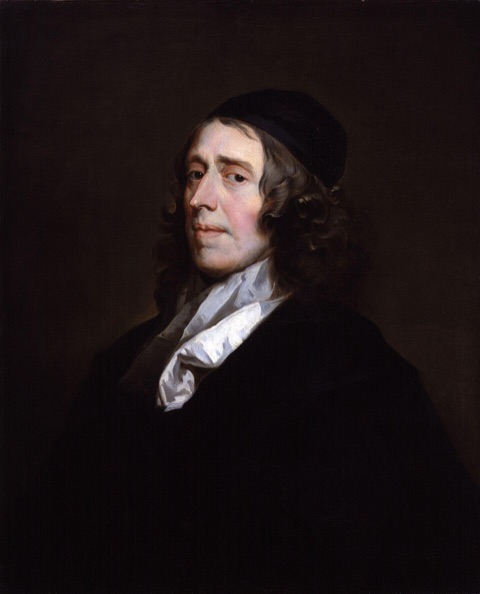
About the author
John Owen
John Owen (1616 to 1683 AD) was born at Stadham in Oxfordshire, the son of a minister, and entered Queen's College, Oxford, at twelve. He became a convinced Independent in the 1640s, preached before Parliament the day after the execution of Charles I, and served as chaplain to Oliver Cromwell. He was Dean of Christ Church from 1651 and Vice-Chancellor of the University from 1652. Ejected from Oxford after the Restoration in 1660, he spent his last twenty-three years as a Nonconformist pastor and writer in London. In this treatise he refers back to his Communion with God and his work on the Holy Spirit. He died in London on August 24, 1683, and was buried at Bunhill Fields.