Modernized edition · Full text · Free PDF/EPUB
A View of the Covenant of Grace in Modern English
Want the file? The PDF/EPUB is free with an account.
Summary
- Author
- Thomas Boston (1676 to 1732 AD), minister of Ettrick in the Scottish Borders
- Published
- 1734 AD, two years after Boston's death
- Source edition
- Boston's treatise in modern English: the introduction and all six heads
- Type
- Doctrinal and practical treatise on the covenant of grace
- Length
- 114,000 words · 8 hours
What is A View of the Covenant of Grace about?
A View of the Covenant of Grace is Thomas Boston's treatise on the covenant by which God saves sinners, first published in 1734, two years after his death. Boston argues that the covenant was made from eternity with Christ, the last Adam, who fulfilled its whole condition and now administers it, and he treats it under six heads: its parties, its making, its condition and promises, its administration, the marks of a saving share in it, and entrance into it by faith.
Read the full summary (7 points, key themes)Show less
How the argument unfolds
- 01
Introduction. The covenant of grace is the foundation of a building of mercy raised on the ruins of the covenant of works. It was made with Christ, the last Adam, and he was appointed its administrator.
- 02
The Parties in the Covenant of Grace. God on heaven's side; Christ on man's side as head and representative; the elect as the party contracted for. The covenants of redemption and of grace are one covenant, and Christ died for the elect only, yet every hearer has a warrant to believe.
- 03
The Making of the Covenant. The Son consented to become man and head of the elect, received them from the Father by name, and accepted the covenant as kinsman-redeemer, surety and priest. Sinners take hold of this covenant; they do not make their own.
- 04
The Parts of the Covenant. The condition is Christ's holiness of nature, righteousness of life and satisfaction for sin. The promises, made first to Christ, give the elect eternal life before their conversion, from conversion to death, and after death.
- 05
The Administration of the Covenant. Christ administers the covenant to sinners of mankind without distinction, as its trustee, testator, prophet, king and intercessor, from Paradise to the last day and through eternity.
- 06
Testing Our Part in the Covenant. Nine marks of a saving share, from fleeing the covenant of works and approving God's plan to the Spirit of holiness and the Ten Commandments written in the heart.
- 07
Entering the Covenant. Sinners enter by faith alone. The faith of the law prepares; the faith of the gospel believes Christ's sufficiency, the offer as made to oneself, one's right to Christ, and trusts him for salvation.
Key themes
- Christ as the whole of the covenant. The condition, the promises and their administration all meet in one person: “They all meet in him, as the lines of a circle meet in their center.”
- Grace without conditions on our side. Faith is the means of entering the covenant, never the ground of the right to its benefits, because “faith is a grace that does not give but purely receives.”
- An offer to every sinner. The gospel is preached to all men because Christ is the Savior of the world by office: “Therefore none of us will perish for want of a Savior.”
- Holiness as the covenant's aim. Next to God's glory, sanctification is the design of the whole covenant, and Boston insists that “If, then, Christ lived for you, you will assuredly live for him.”
Reader questions (10)Hide the questions
Questions about A View of the Covenant of Grace
Is there a modern English version of A View of the Covenant of Grace?
Yes. This is A View of the Covenant of Grace by Thomas Boston in modern English. The language is modernized and the author's order and argument are kept. The full modernized text is free to read on this page.
Can I read A View of the Covenant of Grace online for free?
Yes. The complete text of this modern English edition is on this page, with no sign-up or paywall.
Is there a free PDF of A View of the Covenant of Grace?
Yes. The PDF and EPUB of this edition are free with an Updated Works account. Sign in with Google or an email link; no card is needed.
What is A View of the Covenant of Grace by Thomas Boston about?
It sets out the covenant by which God saves sinners. Boston argues that it was made from eternity between the Father and Christ, the last Adam, that Christ fulfilled its whole condition, and that its promises now come to sinners through him. He then shows how a person may test whether he is within the covenant and how a sinner enters it by faith.
When was A View of the Covenant of Grace published?
It was first published in 1734 AD, two years after Boston's death at Ettrick in 1732. Boston was a minister of the Church of Scotland, and in the treatise he appeals to that church's Larger and Shorter Catechisms.
Who are the parties to the covenant of grace, according to Boston?
God is the party on heaven's side, Christ the second Adam is the party on man's side, and the elect are the party contracted for. Christ stands as their head and representative, as Adam stood for his natural seed in the covenant of works.
Does Boston teach that the covenant of grace is conditional?
Its only proper condition is Christ's fulfilling of all righteousness, so to us the covenant is absolute: “The covenant of grace is absolute, and not conditional, to us.” Faith, repentance and obedience are required, but they are promised benefits and evidences, not conditions that earn a right to life.
Are the covenant of redemption and the covenant of grace two covenants?
Boston holds that they are one covenant seen from two sides. It is a covenant of redemption to Christ, who paid the price, and a covenant of grace to sinners, who receive everything in it without payment.
To whom is the covenant offered?
To sinners of mankind without distinction. Boston teaches that Christ died for the elect only and intercedes for them alone, yet the gospel offer rests on the sufficiency of his death and his commission, so every hearer has a warrant to believe and no one may wait to learn his election first.
How does a sinner enter the covenant of grace?
By believing on Christ. Boston defines saving faith as trust: belief in Christ's sufficiency, belief that the offer is made to oneself, belief that Christ is one's own Savior by the Father's gift, and particular trust in him for salvation from sin and wrath. This trust, he says, is what “our Reformers called assurance”.
A View of the Covenant of Grace in Modern English · Full text
Introduction
“I have made a covenant with my chosen” (Ps 89:3). “The last Adam was made a quickening spirit” (1 Cor 15:45).
Man’s ruin was originally owing to the breaking of the covenant of works. In the same way, his recovery, from the first step of it to the last, is owing purely to the fulfilling of the covenant of grace. Since the whole mystery of our salvation lies in that covenant, I will attempt to open it, as the LORD is pleased to help. And there is all the more need for humble dependence on the Father of lights, through Jesus Christ his Son, for the revealing of his Spirit in this matter, because the first covenant is known in part by the light of nature, but the knowledge of this second one is owing entirely to revelation.
It was from this covenant that the psalmist, in the verse immediately before the first text, took a comforting view of a glorious building, infallibly going up in the midst of ruins: a building of mercy. “For I have said, Mercy shall be built up for ever” (Ps 89:2). The ground of that confident assertion is pointed out in our text: it is God’s covenant with his chosen. From the type of the covenant of grace, namely the covenant of royalty made with David, he saw mercy being built up for the royal family of Judah when they were brought exceedingly low. From the substance of it, he saw a building of mercy for sinners of mankind, who had been laid in ruins by the breaking of the first covenant.
This is that new building which free grace has set going for us. Those who believe are received into it immediately upon believing, and once received there, they will dwell in it for ever. It is a building of mercy in which every stone, from the bottom to the top, from the foundation stone to the capstone, is pure mercy, rich and free mercy to us.
Of this building of mercy I will say a few words.
(1) The plan of it was drawn from all eternity in the council of the Trinity, for it is “according to the eternal purpose purposed in Jesus Christ” (Eph 3:11). The objects of mercy, the time and place, and the way and means of conferring it on them, were all particularly designed before man was miserable, yes, before he existed at all.
(2) The builder is God himself, the Father, Son, and Holy Spirit: “Ye are God’s building” (1 Cor 3:9). All the hands of the glorious Trinity are at work in this building. The Father chose the objects of mercy and gave them to the Son to be redeemed; the Son purchased redemption for them; and the Holy Spirit applies the purchased redemption to them. But the building is especially attributed to the Son, on account of his singular agency in the work: “Behold the man whose name is the Branch … he shall build the temple of the Lord” (Zech 6:12); “Even he shall build the temple of the Lord; and he shall bear the glory” (Zech 6:13).
(3) The foundation was laid deep, in the eternal counsel, beyond the reach of the eyes of men or angels. Paul, considering it, cries out, “O the depth!” (Rom 11:33); “For who hath known the mind of the Lord, or who hath been his counselor?” (Rom 11:34).
(4) It is more than five thousand years since this building rose above ground. The first stone of it that appeared was a promise, a promise of a Savior, made in paradise after the fall (Gen 3:15): namely, that the seed of the woman would bruise the head of the serpent. Here was mercy. And mercy was laid upon mercy. Upon promising mercy was laid life-giving mercy, by which our lost first parents were enabled to believe the promise. Upon life-giving mercy was laid pardoning mercy to them; upon that again, sanctifying and establishing mercy; and at length glorifying mercy.
(5) The cement is blood: the blood of Jesus Christ the Mediator, which is the blood of God (Acts 20:28). No saving mercy for sinners could hold together, nor could one mercy lie firm upon another in the building, without being cemented with that precious blood. But by it the whole building holds together and stands firm forever (Heb 9:22-23; Heb 7:24-25).
(6) Ever since the time it appeared above ground, it has been going on. Many hands have been employed to serve in carrying on the work. In the first ages of the world, patriarchs were employed in it, such as Adam, Enoch, and Noah; in the intervening ages of the world, prophets, priests, and Levites; and in these last ages, the apostles and other extraordinary officers, and ordinary ministers of the gospel. Great opposition has been made to the building from the beginning by Satan and his agents, both by way of violence and by way of deceit. Yet all along it has still been going on. And now it has risen far above mid-height. It is drawing toward the top, and toward the time when the last stone will be laid on it. For it is evident that we are far advanced in “the days of the voice of the seventh angel,” in which “the mystery of God” is to be “finished” (Rev 10:7).
(7) The capstone will be laid on it at the last day. At that time the promise will receive its full accomplishment in the complete salvation of all the objects of mercy, who will then be advanced “unto the measure of the stature of the fullness of Christ” (Eph 4:13). On that day our Lord Jesus Christ, the great builder, “shall bring forth the headstone thereof with shoutings” (Zech 4:7), even the last and crowning mercy, saying, “Come, ye blessed of my Father, inherit the kingdom prepared for you from the foundation of the world” (Matt 25:34). And then they will dwell in the building of mercy made perfect, and sing of mercies for ever and ever.
Lastly, the foundation on which it stands is a firm one. It must be so. For a building of mercy to sinners, from a holy and just God, is a building of huge weight, weightier than the whole fabric of heaven and earth. If it should fall, all would be ruined a second time, without any further hope of relief. But it is a sure foundation, being God’s everlasting covenant: “I have made a covenant with my chosen.”
In these words, taken together with the second text, there are four things to be considered: 1. The foundation on which the building of mercy stands, namely, a covenant. 2. The contracting parties in that covenant. 3. The making of it. And 4. The nature of it.
1. The foundation on which the building of mercy stands is a covenant: a divine covenant, a sure one. The first building for man’s happiness was a building of bounty and goodness, but not of mercy, for man was not in misery while it was being raised. It too was founded on a covenant, namely the covenant of works, made with the first Adam. But he broke the covenant, and the whole building tumbled down in an instant. This is another covenant, and of another nature.
In the type and shadow, indeed, it is the covenant of royalty with David (2 Sam 7:11-17). That covenant was a foundation of mercy to his family, securing its continuance, and its continuance as a royal family. But in the antitype and the reality, it is the covenant of grace. This is the covenant of eternal life and salvation to sinners, the spiritual seed of its head, to be given them in the way of free grace and mercy (Ps 89:2, 4, 29, 36). In it they are freed from the curse, so that the curse cannot reach them, in spite of their failures; but the Lord still deals with them as his children, though offending children (Ps 89:30-33). And all this comes by means of Jesus Christ the Savior, the mighty One (Ps 89:19).
This is the foundation of the whole building of mercy to sinners in their low condition, into which they were brought by Adam’s fall. This covenant lay hidden in the depths of the eternal counsel, and its revelation, proclamation, and offer to the sons of men is called the gospel: the glad tidings of a new covenant for life and salvation to sinners.
2. The contracting parties in this covenant are God and his chosen, the last Adam. For it is evident from the nature of the things spoken here (Ps 89:3-4), and from 2 Samuel 7:8, that these words, “I have made a covenant with my chosen,” are the LORD’s own words. Both heaven and earth were concerned in this covenant, for it was a covenant of peace between them. Accordingly, the interests of both are looked after by the contracting parties.
(1) On heaven’s side is God himself, the party who proposes the covenant: “I have made a covenant with my chosen.” He was the offended party. Yet the motion for a covenant of peace comes from him, a certain sign of the goodwill of the whole glorious Trinity toward the recovery of lost sinners. The God and Father of our Lord Jesus Christ, the Father of mercies, beholds a lost world, and his mercy seeks an outlet, so that it may be shown to the miserable. But justice stands in the way of mercy’s going out and being built up, unless there is a covenant by which justice may be satisfied. Then the Father says, “The first covenant will not serve the purpose of mercy; there must be a new bargain. But the lost creatures have nothing left with which to contract for themselves. Unless another takes the burden on himself for them, there is no remedy in the case. They cannot choose such a one for themselves. I will make a choice for them, and make the covenant with my Chosen.”
(2) On man’s side, then, is God’s Chosen, or chosen One, for the word is singular. In the type, the covenant of royalty, this chosen One is David; but in the antitype, the covenant of grace, it is the Son of God, the last Adam, namely Christ, “the chosen of God” (Luke 23:35). The truth is that such great things are said of the party with whom this covenant was made, of his seed, and of the power of this covenant, that they can fully apply to no one but Christ and his spiritual seed (Ps 89:4, 27, 29, 36-37).
The royal family of Judah, the house of David, never recovered its ancient splendor after the Babylonian captivity, and this psalm seems to have been written with a view to that time. Their kingdom became extinct many ages ago, and the grandeur of that family according to the flesh has quite sunk away. But the promise made to David in the covenant of royalty still flourishes, and will flourish forever, in Jesus Christ, the top branch of the family of David. How then can it be otherwise than that Christ himself is chiefly aimed at in the perpetual building of mercy mentioned in Psalm 89:2, and in the establishing of David’s seed and the building up of his throne to all generations in Psalm 89:4? And indeed, he alone was the mighty one, fit for the vast undertaking in this covenant (Ps 89:19). And the Father points him out to us as his Elect, or chosen One (Isa 42:1).
3. As to the making of this covenant between the contracting parties: the Father made it with his own Son, “I have made a covenant with my chosen,” and that “before the world began” (Titus 1:2). By their mutual agreement to it, this covenant was completely made from eternity, just as the covenant of works with the first Adam was made before we existed.
The original text calls it cutting off a covenant. The phrase is taken from that ancient custom of cutting off a beast, by cutting it apart, at the making of a covenant (Jer 34:18). It indicates that this covenant is a covenant by sacrifice, in which the contracting party on man’s side was the sacrifice, and divine justice was the sword that cut it apart, according to Zechariah 13:7: “Awake, O sword, against my shepherd, and against the man that is my fellow, saith the Lord of hosts: smite the shepherd.” At the same time it signifies that the covenant once made is inviolable and perpetual. It can no more be dissolved, forever, than the parts of the beast that were cut off from one another can be joined again as they were before.
4. As for the nature of this covenant, there are five things belonging to it that appear from the texts: (1) that there is a representation in it; (2) the design for which it was set going; (3) that there is in it a condition, and (4) a promise; and (5) into whose hands the administration of it is put.
(1) There is a representation taking place in this covenant. As it was in the first covenant, so it was in the second also: the party who contracted and undertook on man’s side was a representative, representing and standing in the place of others. This appears in that the chosen One with whom the covenant was made is called the last Adam. For it is plain that he is so called in relation to the first Adam, who was the figure (or type) of him (Rom 5:14). That is, just as the first Adam, representing his seed in the covenant of works, brought sin and death on them, so he, representing his own, brings righteousness and life to them, as the apostle teaches at length in that chapter.
(2) The design of this covenant was life, the most valuable interest of mankind. “The last Adam was made a quickening spirit,” that is, to give life to his seed. So it is a covenant of life, as the covenant of Levi, a type of it, is expressly called (Mal 2:5). The first covenant was a covenant of life too. But there is this difference: the first was for life in perfection to upright man, having life already; the second, for life in perfection to sinful man, legally and morally dead.
The parties contracted for in this second covenant were considered as lying under the bonds of death, absolutely without life, and therefore utterly incapable of acting to help themselves. They lay like dry bones scattered about the mouth of the grave before the contracting parties. And justice forbade giving them life except on terms consistent with its honor and fitting for it.
(3) The condition of the covenant, the terms of that life, agreed to by the representative, is implied in his being the last Adam: namely, he was to carry through what the first Adam had stuck fast in. Adam, in the covenant of works, stumbled in the course of his obedience and fell. By his fall he was quite disabled from beginning it anew. He thereby came under the penalty of that covenant as well, but was utterly unable to pay it. So the last Adam comes in the place of the first. He does not come in his place as the first Adam stood in his integrity, for in that case there was no room for a second Adam. He comes in his place as he lay, a broken man, under the first bargain.
And coming in his place in this case, his business was to satisfy the demands of the first covenant on behalf of his seed. Those demands had now run up high, far beyond what they had been to innocent Adam: the penalty had become payable, as well as the principal sum. Therefore the first covenant, being written into the second, is declared broken. The principal and the penalty are added up together, and the clearing of the whole is laid on the last or second Adam, as the condition of the second covenant.
(4) The promise of the covenant, to be performed on that condition by the contracting party on heaven’s side, is implied in these words: “I have made a covenant with” (in the original, to) “my chosen.” That is, “I have made a covenant, binding and obliging myself by solemn promise to my chosen One, for such and such benefits, upon the condition stated and agreed to in it.” Compare the clause that follows, “I have sworn unto David my servant” (Ps 89:3). The nature of this promise will be examined in its proper place.
(5) Lastly, the administration of this covenant is put into the hands of the contracting party on man’s side: “The last Adam was made a quickening spirit.” Since each of the contracting parties was God, it was not possible that either party should fail, or that the last Adam should break as the first had done. Therefore, the time of Christ’s fulfilling of the condition of the covenant having been fixed beforehand by the Father, God took Christ’s own bond alone as sufficient security, and on that basis appointed him administrator of the covenant.
Those whom he represented were considered as being under death, which in the language of the covenant is a very broad term. The Spirit and life were to be purchased by him, and belonged to the promise of the covenant. So, on the credit of his fulfilling the condition of the covenant in due time, the fullness of the Spirit and eternal life were lodged in him, to be communicated by him. “These things saith he that hath the seven Spirits of God” (Rev 3:1). “God hath given to us eternal life: and this life is in his Son” (1 John 5:11). “As thou hast given him power over all flesh, that he should give eternal life” (John 17:2). Thus he was made a quickening spirit.
Now the doctrine of these texts, compared and explained in this way, is this: That the covenant of grace, for life and salvation to lost sinners of mankind, was made with Jesus Christ the last Adam; and he was appointed administrator of it.
In handling this weighty subject, I do not think it necessary to spend time proving that there is a covenant of grace. Its existence is obvious from the texts and from many other Scriptures, such as Isaiah 42:6, Isaiah 49:8, Isaiah 54:10, Hebrews 8:6, and Hebrews 13:20. But the following account of it will be arranged under these six heads: first, the parties in the covenant of grace; second, the making of that covenant; third, its parts; fourth, its administration; fifth, the testing of whether a person is savingly and personally in it; and sixth, the way in which sinners are brought personally and savingly into it.
The Parties in the Covenant of Grace
In all covenants, whatever their nature, whether covenants of absolute promise or conditional ones, there must be distinct parties. One may indeed decree, resolve or purpose something within oneself without another party. But covenanting or bargaining, vowing or promising, speaks of an obligation arising from it toward another, distinct party. Accordingly, in the covenant of grace there are three parties to be considered: first, the contracting party on heaven’s side; second, the contracting party on man’s side; and third, the party contracted and undertaken for. I will speak of these in order.
1. The Contracting Party on Heaven’s Side
As it was in the covenant of works on this point, so it is also in the covenant of grace: the party on the one side is God himself, and he alone. There was no need of anyone else to look after the interests of heaven in this covenant. And there was no one else when it was made, since it was made from eternity, “before the world began” (Titus 1:2). This is plain from the words of the covenant, “I will be their God” (Jer 31:33).
But whether God is to be considered here personally or essentially is not quite so clear. Some theologians think that the Father, personally considered, that is, as the first person of the glorious Trinity, is the contracting party on heaven’s side. Others think that God essentially considered, that is, as Father, Son, and Holy Spirit, is that contracting party. However we conceive of that matter, we are assured from the holy oracles that these three are one God. And I judge that, according to the Scripture, it may safely be said that God, essentially considered, was the contracting party in the person of the Father. In saying this we acknowledge that the Son and the Holy Spirit have their part in the covenant on heaven’s side, as the party offended by man’s sin. At the same time, a particular agency in this great work of power and authority on that side is attributed to the Father, just as there is to the Son on man’s side.
That we may conceive rightly in this matter of the contracting party on heaven’s side, two things must first be noticed.
1. From all eternity he decreed the creation of man after his own image, and the making of the covenant of works with him in time. All things brought forth in time lay from eternity in the womb of God’s decree, and by virtue of it they have their being in time. For this reason the decree is said to bring forth, as a woman does a child (Zeph 2:2). And the creation of angels and men, together with the providence concerning them, made many lines in the volume of the sealed book of the decrees. God, being self-sufficient, needed neither man nor angel. But for the display of his own glory he purposed from eternity to create them. He purposed, moreover, to enter into such a covenant with man that one should represent the whole family in it, while his sovereign pleasure took another course with the angelic race. Yet with all this he purposed to give both the one and the other sufficient ability to stand in their integrity, if they would. Thus from eternity the covenant of works, in all its parts and appurtenances, was before the eternal Mind. Being made with a mere man, it could not actually be entered into until man had once been created; but “Known unto God are all his works from the beginning of the world” (Acts 15:18).
2. He also decreed from eternity to permit the first man, the representative of the whole family, to fall, and so to break the covenant and involve himself and all his posterity in ruin. It is evident from the spotless holiness of God, and from the nature of the thing, that the divine permission was not the cause of man’s fall. And it is evident from the necessary dependence of the creature on the Creator that without that permission man could not have fallen. But the sovereign Lord of the creatures permitted the fall of man for his own holy ends, purposing to bring good out of it.
Now God, the contracting party on heaven’s side in the covenant of grace, is to be considered in that matter in a threefold view.
1. He is to be considered in it as an offended God, offended with all the sins of all mankind, original and actual. As he looked upon “the children of men,” the whole mass of mankind appeared in the eyes of his glory corrupt and loathsome, the very reverse of his holiness. He saw them “All gone aside, together become filthy, none doing good, no not one” (Ps 14:2-3). In the first covenant God contracted with man himself as a friend, without the intervention of a mediator. But in the second covenant it was not so, and it could not be so. For in it man was considered as a fallen creature, a transgressor of the law and an enemy to God; and it is a covenant of reconciliation, a covenant of peace for those who had been at war with heaven.
2. But together with this, God is to be considered here as a God purposing and decreeing from eternity to display the glory of his free grace, love and mercy in the salvation of some of lost mankind. Accordingly we are said to be saved in time “according to his own purpose and grace given us in Christ Jesus before the world began” (2 Tim 1:9). Without such a purpose of grace in God there could never have been a covenant of grace. But the sovereign Lord of the creatures, passing by the fallen angels as to any purpose of mercy, entertained thoughts of love and peace toward fallen mankind. He purposed in himself to make some of them everlasting monuments of his free grace and mercy, partakers of life and salvation; and so he set the covenant of grace in motion.
3. Yet we are also to consider him in this matter as a just God, who cannot but “do right” (Gen 18:25), give sin “a just recompense” (Heb 2:2), and “magnify” his holy “law and make it honorable” (Isa 42:21). When the motion was made to extend mercy to sinners of mankind, the justice of God interposed, pleading that mercy could not be shown them except on terms agreeable to law and justice. And indeed it was agreeable neither to the nature of God nor to his truth in his word to set up a throne of grace on the ruins of his exact justice, or to show mercy to the prejudice of it. Now the justice of God required that the law which had been violated should be fully satisfied, and its honor repaired, by suffering and obedience: the former such as might satisfy the penal sanction of the law, and the latter such as might satisfy its commanding part. All this was quite beyond the reach of the sinners themselves. So they would have had to die without mercy, unless another, who could be accepted as a sufficient surety, should undertake for them as a second Adam, coming in their place and stead as they lay ruined by the breach of the covenant of works.
So stood the obstacles in the way of mercy to fallen man, quite insurmountable to him or to any of his fellow creatures. And the covenant of grace was made to remove these obstacles out of the way, so that it might be the channel through which the whole rich flood of saving mercy might flow freely, to quicken, cleanse, make fruitful and perfect lost sinners of mankind, who lay under the bonds of death and the curse through the breach of the first covenant by the first Adam.
Inference. From what has been said on this point we may draw this inference: that the redemption of the soul is precious. The salvation of lost sinners was a greater work than the making of the world. The powerful word commanded, and the world was made; but the salvation of sinners could not be brought about without more ado.
2. The Contracting Party on Man’s Side
We have seen that on the one side in the covenant of grace is God himself. Now on the other side is Jesus Christ the Son of God, with his spiritual seed: “Behold, I, and the children which God hath given me” (Heb 2:13). The former stands as the contracting party and undertaker; the latter as the party contracted and undertaken for. Here is good reason for his name Immanuel, “which being interpreted, is God with us” (Matt 1:23).
The contracting party with God in the covenant of grace, then, is our Lord Jesus Christ. He alone managed the interests of men in this eternal bargain. For when it was made, none of them were yet in being; and even if they had been, they would not have been capable of giving any help.
Now Jesus Christ, the contracting party on man’s side in the covenant of grace, is to be considered in that matter, according to our texts, as the last or second Adam, head and representative of a seed, lost sinners of mankind, the party contracted for. And so he presented himself as Mediator between an offended just God and offending men who were guilty before him. In this point lay one main difference between the first Adam and the last Adam. For “there is one Mediator between God and men, the man Christ Jesus; who gave himself a ransom” (1 Tim 2:5-6). And so the covenant of grace, which could not be made directly with sinners, was made with Christ the last Adam, their head and representative, mediating between God and them. He is therefore called “Jesus the Mediator of the new covenant,” to whom we come by believing (Heb 12:22, 24).
So far as I have observed, the term Mediator is not applied in the holy Scripture to anyone else except Moses: “The law … was ordained by angels in the hand of a mediator” (Gal 3:19). And of Moses, a mediator who was a type, it is worth observing that he was not only a go-between for God and Israel. When God renewed his covenant by way of reconciliation after the breaking of the tablets, the covenant was made with Moses as their head and representative: “And the Lord said unto Moses, Write thou these words: for after the tenor of these words I have made a covenant with thee and with Israel” (Exod 34:27).
This refers to the gracious answer made to Moses’ prayer, “Pardon our iniquity and our sin, and take us for thine inheritance” (Exod 34:9). “And he” (namely, the Lord) “said, Behold I make a covenant: before all thy people I will do marvels …” (Exod 34:10). “And he wrote upon the tables” (that is, the new ones) “the words of the covenant, the ten commandments” (Exod 34:28). Now Moses was alone on the mount with God during the whole time of this transaction; and in it the Lord speaks of him and the people as one all along.
To clear up this point concerning the contracting party on man’s side, I shall (1) prove that the covenant of grace was made with Christ as the last Adam, head and representative of a seed; and (2) show why it was made so.
1. That the covenant of grace, the second covenant, was made with Christ as the last or second Adam, head and representative of a seed, that is, of his spiritual seed, appears from the following considerations.
(1) Covenants that were types of the covenant of grace were made or established with persons representing their respective seed. So it was in the typical covenant in our text, the covenant of royalty made with David, an undoubted type of the covenant of grace. In it David was God’s servant, having a seed included with him (Ps 89:3-4). He was an eminent type of Christ, who is therefore called David: “Afterward shall the children of Israel return, and seek the Lord their God, and David their king” (Hos 3:5). And the benefits of the covenant of grace are called “the sure mercies of David” (Isa 55:3).
So it was also in the covenant of the day and night (Jer 33:20), established with Noah and his sons as representatives of their seed, the new world: “Behold I establish my covenant with you, and with your seed after you” (Gen 9:9). That this covenant was a type of the covenant of grace appears from its being made upon a sacrifice (Gen 8:20-22), and from its sign and token, the rainbow (Gen 9:13), which appears “round about the throne” (Rev 4:3). But it appears especially from the nature and import of the covenant, namely, that there should not be another flood (Gen 9:11). The substance of this is plainly declared in Isaiah: “As I have sworn that the waters of Noah should no more go over the earth; so have I sworn that I would not be wroth with thee, nor rebuke thee” (Isa 54:9). “For the mountains shall depart, and the hills be removed, but my kindness shall not depart from thee, neither shall the covenant of my peace be removed, saith the Lord, that hath mercy on thee” (Isa 54:10).
Such also was the covenant of the land of Canaan, made with Abraham representing his seed (Gen 15:18), and afterward confirmed by oath (Gen 22:16-17). In all this Abraham was an eminent type of Christ, the true Abraham, father of the multitude of the faithful. At God’s call Christ left heaven, his native country, and came and sojourned among the cursed race of mankind. There he offered up his own flesh and blood as a sacrifice to God, and so became the true heir of the world, and received the promises for his spiritual seed. The sum of these is given by Zechariah in his account of the covenant with Abraham: “To remember his holy covenant; the oath which he sware to our father Abraham, that he would grant unto us, that we being delivered out of the hands of our enemies, might serve him without fear, in holiness and righteousness before him, all the days of our life” (Luke 1:72-75).
And finally, so it was in the covenant of an everlasting priesthood made with Phinehas, another type of the covenant of grace. In it Phinehas stood as a representative of his seed: “And he shall have it, and his seed after him, even the covenant of an everlasting priesthood; because he was zealous for his God, and made an atonement for the children of Israel” (Num 25:13). In this he typified Jesus Christ, representing his spiritual seed in the covenant of grace. For it is evident that the everlasting priesthood promised to Phinehas has its full fulfillment in Christ, who made the great atonement for sinners, and that his spiritual seed share in the same in him. So it is said, “Thou art a priest for ever” (Ps 110:4), and, “And hath made us kings and priests unto God and his Father” (Rev 1:6).
Now since these typical covenants were made or established with parties who stood in them as public persons, heads and representatives of their seed, it naturally follows that the covenant of grace, which they typified, was made with Christ as the head and representative of his spiritual seed. For whatever is attributed to any person or thing as a type has its fulfillment really and chiefly in the person or thing typified.
(2) In the language of the Holy Spirit our Lord Jesus Christ is the last Adam. The reason for this cannot be taken from the nature common to the first Adam and him, for all mankind share in that. It must be taken from their common office of federal headship and representation in the respective covenants concerning man’s eternal happiness, an office peculiar to Adam and the man Christ. Accordingly, Adam is called “the first man,” and Christ “the second man” (1 Cor 15:47). But Christ is the second man in no other way than as he is the second federal head, or the representative in the second covenant, just as Adam was the first federal head, or the representative in the first covenant. In keeping with this, the apostle represents Adam as the head of the earthy men, and Christ as the head of the heavenly men (1 Cor 15:48). The former are those who bear Adam’s image, namely all his natural seed; the latter are those who share in the image of Christ, namely his spiritual seed (1 Cor 15:49).
All this is confirmed by Adam’s being a figure or type of Christ, which the apostle expressly asserts (Rom 5:14). It is confirmed also by the parallel the apostle draws between the two of them: that as by Adam’s covenant-breaking sin and death came on all who were his, so by Christ’s covenant-keeping righteousness and life come to all who are his (Rom 5:17-19). Therefore, as the first covenant was made with Adam as the head and representative of his natural seed, so the second covenant was made with Christ as the head and representative of his spiritual seed.
(3) The first man was called Adam, that is to say, man, because he was the head and representative of mankind, the person in whom God dealt with all men, his natural seed, in the first covenant. And on the other hand, all men represented by him in that covenant go under the name of Adam in the language of the Holy Spirit (Ps 39:5, 11): “Surely every man” (in the original it is, “all Adam”) “is vanity.” In the same way Christ bears the name of his spiritual seed, and they on the other hand bear his name. This is plain evidence that they are one in the eye of the law, and that God dealt with him as their representative in the second covenant.
Israel is the name of the spiritual seed (Rom 9:6). And our Lord Jesus Christ is called by the same name: “Thou art my servant, O Israel, in whom I will be glorified” (Isa 49:3). So several learned and judicious commentators understand it, and so it is evident from the whole context (Isa 49:1-2, 4-9). The truth is, Christ is here called so with a particular solemnity. For the original text stands precisely thus: “Thou art my servant; Israel, in whom I will glorify myself.” That is: You are Israel the representative, in whom I will glorify myself and make all my attributes illustrious, as I was dishonored and they were darkened by Israel, the collective body of the spiritual seed.
And this leads us to a natural and unforced interpretation of that passage, “This is the generation of them that seek him, that seek thy face, O Jacob” (Ps 24:6). That is, they are those who long for the appearing (Prov 7:15; Gen 32:30) of the Messiah, the Lord whom the Old Testament church so sought. A pledge of his coming to his temple (Mal 3:1) was the bringing of the ark into the tabernacle that David had set up for it, the occasion on which that psalm was written. Accordingly it follows immediately, “Lift up your heads, O ye gates, and be ye lift up, ye everlasting doors, and the King of glory shall come in” (Ps 24:7). And in another psalm, written on the same occasion and expressly said to have been delivered on that very day into the hand of Asaph (1 Chr 16:1, 7), this expression is found: “seek his face continually” (1 Chr 16:11). It is rightly to be interpreted, in keeping with the circumstances, of the main thing that David through the Spirit had in view that day, namely the coming of the Messiah.
Thus Christ bears the name of his spiritual seed. And they on the other hand bear his name too: “For as the body is one, and hath many members, and all the members of that one body, being many, are one body: so also is Christ” (1 Cor 12:12).
(4) The promises were made to Christ as the second Adam, the head and representative of his seed: “Now to Abraham and his seed were the promises made. He saith not, and to seeds, as of many; but as of one, and to thy seed, which is Christ” (Gal 3:16). I grant that here, just as in the text cited immediately before, the mystical Christ, the head and members, is meant. It is to them that the promises are here said to be made; but primarily to the head, and secondarily to the members in him. In the same way the promise of life in the first covenant was made primarily to Adam as the head, and secondarily to all his natural seed in him. So too in the typical covenant with Abraham, the promises of the earthly inheritance were made primarily to Abraham himself, and secondarily to his seed according to the flesh.
And even so, the promise of the eternal inheritance plainly stands as made to Christ: “In hope of eternal life, which God that cannot lie, promised before the world began” (Titus 1:2). At that time there was no one but Christ to whom that promise could be made personally. Accordingly, the covenant is said to be made with the house of Israel, namely the spiritual Israel; yet its promises are directed not to them but to another person: “I will be to them a God, and they shall be to me a people” (Heb 8:10). The reason for this plainly appears in the promises being made to Christ as their head and representative. Now since these promises belong to the covenant of grace, which is therefore called “the covenants of promise” (Eph 2:12), it is clear that if they were made to Christ as the head and representative of a seed, the covenant of grace was made with him as such. And he to whom they were primarily made was surely the contracting party in it.
(5) Finally, this federal headship of Christ, and his representing his spiritual seed in the covenant of grace, appears from his suretyship in that covenant, the better testament of which Jesus was made a surety (Heb 7:22). Now he became surety for them by way of satisfaction for their debt of punishment and obedience; and that by taking the whole burden on himself, as for persons utterly unable to answer for themselves. This will be cleared up later. Meanwhile, such a surety is a true representative of the party he is surety for, and one person with them in the eye of the law.
Hence not only is Christ said to have been made sin for us (2 Cor 5:21), to have had “the iniquity of us all” laid on him (Isa 53:6), and to have “died for us” (Rom 5:8); we also are said to have been “crucified with Christ” (Gal 2:20), and to be “made the righteousness of God in him” (2 Cor 5:21). Yes, we are said to be “raised up together,” and glorified, being made to “sit together in heavenly places in Christ Jesus” (Eph 2:6), and to be made alive in Christ, as we die in Adam (1 Cor 15:22). All of this necessarily requires his headship and representation in the covenant.
And thus it appears that the second covenant was made with Christ as the last or second Adam, head and representative of his spiritual seed.
2. We are next to inquire why the second covenant, the covenant of grace, was made in this way. This shall be accounted for in the following particulars.
(1) The covenant of grace was made with Christ as the last Adam, head and representative of his spiritual seed, that infinite love might have an early outlet, even from eternity. The special love of God to the spiritual seed found its outlet in the covenant of grace, and that love and that covenant are of the same eternal date. As the love was everlasting, or eternal (Jer 31:3), so was the covenant (Heb 13:20; Titus 1:2). But since the seed are only of yesterday, the covenant of grace would have had to be, like the covenant of works, a yesterday’s covenant, a covenant of time, if it had not been made with Christ as their representative. It could not otherwise have been an eternal covenant. Nor could the promise of eternal life, which is undoubtedly a promise of the covenant of grace, otherwise have been of so ancient a date as “before the world began,” as the apostle says it is (Titus 1:2). How could an eternal covenant be originally made with creatures of time, except in their eternal head and representative? Or how could an eternal covenant be made with them personally, by way of personal application to them, had it not been made from eternity with another as their head and representative?
But in this method of infinite wisdom, free love found an early outlet. It did not wait for the slow motion of its objects, creeping out of the womb of time, in which many of them lie wrapped up even to this day. Rather, as princes sometimes marry young princesses by proxy, before they are of age to marry or able to give their consent, so God in his infinite love married to himself all the spiritual seed, in and by Jesus Christ as their representative. He did this not only before they were capable of consenting, but before they were at all. Afterward, in their effectual calling, they approve of this by faith and give their personal consent to it. And so they enjoy God as their God, and God has them as his people: “I ascend unto my Father, and your Father, and to my God, and your God” (John 20:17).
(2) Had it not been made with Christ as representative, it could not have been a conditional covenant answering its design at all. This covenant takes place only upon the breach of the first covenant, and its great design was, as was observed before, that dead sinners might have life. Now, to this end, a holy and just God insisted on conditions, and without their being performed that life was not to be given. And they were high conditions: “Sacrifice and offering thou didst not desire” (Ps 40:6); “Jesus Christ, who died for us, that … we should live” (1 Thess 5:9-10). But how could an effectual conditional covenant for life be made with dead sinners, otherwise than in a representative? Dead souls cannot perform any condition for life at all that can be pleasing to God. They must of necessity have life before they can do any thing of that nature, however small the condition may be. Therefore a conditional covenant for life could not be made with sinners in their own persons. This is especially so considering that the conditions for life were so high that man, even in his best state, was not able to perform them. Therefore, if such a covenant was to be made at all, it had to be made with Christ as their representative (Rom 8:3-4).
(3) It was so ordered that it might be, to us poor sinners, a covenant of grace indeed. It is evident from the holy Scriptures that this covenant was designed to exalt the free grace of God, and that it is so framed as to be a covenant of pure grace, and not of works, with respect to us, whatever it was with respect to Christ: “Therefore it is of faith, that it might be by grace” (Rom 4:16); “Not of works, lest any man should boast” (Eph 2:9). And on these terms it is indeed a covenant of pure grace, and all ground of boasting is taken away from us, since the Lord Jesus Christ himself, as representative, is the sole undertaker and performer of its conditions. But it is not so if it is made with the sinner himself, standing as the principal party, contracting with God, and undertaking and performing the conditions of the covenant for life. For however low these conditions undertaken and carried out by the sinner in his own person are supposed to be, the promise of the covenant is made to them. And so, by the reckoning of Scripture, it is a covenant of works: “Now to him that worketh is the reward not reckoned of grace, but of debt” (Rom 4:4). Between Adam’s covenant and such a covenant there is no difference except in degree, which still leaves it of the same kind.
(4) This method was taken so that the communication of righteousness and life might be made in as direct and compact a way as the communication of sin and death was: “As by one man’s disobedience many were made sinners: so by the obedience of one shall many be made righteous” (Rom 5:19). The covenant of works having been made with Adam as a representative of his natural seed, sin and death are, upon its breaking, communicated from him to them all, as from a deadly head. This being so, it was not in keeping with the method of God’s dealing with men to treat with those predestined to salvation separately, as principal parties, each contracting for himself in the new covenant for life. Rather, it was in keeping with it to treat for them all with one public person, who, through his fulfilling of the covenant, would be a life-giving head to them. From him life might flow to them in as direct and compact a way as death did from the first Adam. For his mercies are above all his other works.
Lastly, the covenant of grace was made in this way so that it might be a sure covenant, “to the end the promise might be sure to all the seed” (Rom 4:16). The first covenant was made with a mere creature, as a principal party and contractor. And though he was a holy and righteous man, he was nevertheless so fickle and unstable that he failed to perform the condition he undertook, and so the benefit of the promise was lost. Therefore fallen men were not at all fit to be principal parties, or contracting parties, in the new covenant, in which the promise was to be sure and not to fail of its fulfillment. Since they were then a wholly bankrupt company, not to be trusted in the matter, Jesus Christ the Son of God was appointed head of the new covenant, to act for and in the name of the spiritual seed. And this was done so that the covenant, being in this way sure as to the fulfilling of the condition, might also be sure as to the fulfillment of the promise.
This is the very hinge of the stability of the covenant of grace, according to the Scripture: “My mercy will I keep for him for evermore, and my covenant shall stand fast with him” (Ps 89:28). And again: “The enemy shall not exact upon him” (Ps 89:22); or, as others read it, and I think rightly, “The enemy shall not beguile him,” that is, as he did the first Adam. The original phrase is elliptical, as if it said, “The enemy shall not beguile his soul (Jer 37:9) in him.”
Before I leave this point, I offer the following inferences from it.
Inference 1. The covenant of redemption and the covenant of grace are not two distinct covenants, but one and the same covenant. I know that many theologians express themselves otherwise on this matter, and that they do so from very different points of view, some of which do no harm at all to the doctrine of free grace. But I take this to be the truth of Scripture, and a natural consequence of the account given of the covenant of grace in our Larger Catechism, namely, “That the covenant of grace was made with Christ, as the second Adam, and in him, with all the elect, as his seed. ‘Now to Abraham and his seed were the promises made. He saith not, And to seeds, as of many; but as of one, And to thy seed, which is Christ’ (Gal 3:16; Rom 5:15-21). ‘… When thou shalt make his soul an offering for sin, he shall see his seed, he shall prolong his days, and the pleasure of the Lord shall prosper in his hand. He shall see of the travail of his soul, and shall be satisfied …’ (Isa 53:10-11).”
So the covenant of redemption and the covenant of grace are only two names of one and the same second covenant, considered from different points of view. By a covenant of redemption is meant a bargain of buying and selling. And such a covenant it was to Christ only, since he alone undertook to pay the price of our redemption (1 Pet 1:18-19). By a covenant of grace is meant a bargain by which everything is to be had freely. And such a covenant it is to us only, to whom the whole of it is of free grace. For God himself has provided the ransom, and on that basis has made over life and salvation to us by free promise, without regard to any work of ours as the ground of our right to them.
To confirm this, consider the following.
(1) In the reckoning of Scripture, the covenants for life and happiness to man are only two in number, and the covenant of works is one of them: “These are the two covenants; the one from the mount Sinai, which gendereth to bondage” (Gal 4:24), that is, generating bond-children, who are excluded from the inheritance (Gal 4:30). This is a distinguishing mark of the covenant of works. For such are indeed the children of that covenant, but not the children of the covenant of grace under any dispensation of it. These two covenants are called the old covenant and the new covenant. And the old is called the first, which shows the new to be the second: “In that he saith, A new covenant, he hath made the first old” (Heb 8:13). This agrees with the two ways to life revealed in the Scripture, the one by works, the other by grace (Rom 11:6). The one is called the law, the other grace (Rom 6:14). The former is the law-covenant made with the first Adam, representing all his natural seed. It was made first in paradise, and afterward repeated on Mount Sinai together with the covenant of grace. The latter is the covenant of grace, made with the second Adam, representing his spiritual seed (1 Cor 15:47-48).
(2) It is evident that the salvation of sinners is by the blood of the covenant, which is the blood of Christ (Heb 10:29; 1 Cor 11:25). And the Scripture mentions the blood of the covenant four times, but never the blood of the covenants. Therefore the covenant whose blood the Scripture mentions, and on which our salvation depends, is only one covenant, and not two. Now that covenant is Christ’s covenant, or the covenant of redemption. For it was through the blood of it that he was brought again from the dead, namely, by virtue of the promise made in it, to be fulfilled to him upon his performing its condition (Heb 13:20). And it is also his people’s covenant, or the covenant of grace: “Behold the blood of the covenant, which the Lord hath made with you” (Exod 24:8). It is expressly called their covenant: “As for thee also, by the blood of thy covenant, I have sent forth thy prisoners out of the pit wherein is no water” (Zech 9:11). The words that express the party spoken to here are of the feminine gender in the original language, and this makes it evident that the verse is not directed to Christ, but to the church. So the covenant is set forth as their covenant. And the spiritual prisoners are delivered by virtue of this, their covenant, which must certainly be the covenant of grace. By all this it appears that the covenant of grace is the very same covenant that was made with Christ, with respect to whom it is called the covenant of redemption.
Inference 2. Just as all mankind sinned in Adam, so believers obeyed and suffered in Christ the second Adam. For the covenant of works was made with Adam as a public person and representative, so that all sinned in him when he broke that covenant. In the same way the covenant of grace was made with Christ as a public person and representative, so that all believers obeyed and suffered in him when he in this way fulfilled this covenant. This is the doctrine of the apostle: “As by one man’s disobedience many were made sinners; so by the obedience of one, shall many be made righteous” (Rom 5:19). Again: “God sending his own Son, in the likeness of sinful flesh, and for sin condemned sin in the flesh: that the righteousness of the law might be fulfilled in us” (Rom 8:3-4). And: “That we might be made the righteousness of God in him” (2 Cor 5:21). And: “I am crucified with Christ” (Gal 2:20). This doctrine gives believers a solid answer to the law’s demand of obedience and suffering for life and salvation.
Inference 3. Believers are justified directly by the righteousness of Christ, without any righteousness of their own coming in between, just as all men are condemned upon Adam’s sin before they have done any good or evil in their own persons: “As by the offense of one, judgment came upon all men to condemnation: even so by the righteousness of one, the free gift came upon all men unto justification of life” (Rom 5:18). And so believers are righteous before God with the very same righteousness that was worked out by Jesus Christ in his fulfilling of the covenant. This righteousness is not imputed to them in its effects only, as though their faith, repentance and sincere obedience were for that reason accepted as their evangelical righteousness, on which they are justified. Rather, it is imputed to them in itself, just as Adam’s sin was.
Inference 4. The covenant of grace is absolute, and not conditional, to us. For since it was made with Christ as representative of his seed, all its conditions were laid on him and fulfilled by him. Therefore all that remains of it to be accomplished is the fulfilling of the promises to him and his spiritual seed, just as it would have been in the case of the first covenant if the first Adam had once fulfilled its condition.
Inference 5. The covenant of grace is a design of infinite wisdom and love, worthy to be embraced by poor sinners, as being well “ordered in all things, and sure” (2 Sam 23:5). O admirable design of help for a desperate case! What a wonderful design, a covenant of God with those who were incapable of standing in the presence of his holiness, or of performing the least condition for life and salvation! A new bargain for the relief of lost sinners, made on the highest terms, with those who were not able to come up to the lowest terms! Infinite wisdom found the way, namely, by a representative. The love of the Father moved him to propose the representation, and the love of the Son moved him to accept it. Thus God had one with whom he might make a contract with the safety of his honor, and who was able to fulfill the covenant, to the repairing of the injuries done to his glory. And sinners also had one able to act for them, and to purchase salvation for them at the hand of a holy and just God. So a sure covenant was made, and a firm foundation laid, on which God laid the weight of his honor, and on which sinners may safely lay their whole weight: “Therefore thus saith the Lord God, Behold, I lay in Zion … a sure foundation: he that believeth shall not make haste” (Isa 28:16), “shall not be ashamed” (Rom 9:33).
Lastly, the way to enter personally into the covenant of grace, so as to share in its benefits to salvation, is to unite with Christ, the head of the covenant, by faith. Being grafted into him in this way, you will share in all that happiness which is secured to the mystical Christ in the everlasting covenant. It is just as, by becoming children of Adam through natural birth, you have personally entered into the first covenant, so as to fall under that sin and death which “passed upon all men” by its breach (Rom 5:12).
3. The Party Contracted and Undertaken For
As the contracting party and undertaker on man’s side in the covenant of grace was a representative, so the party contracted and undertaken for was represented by him. And that these two, namely, those represented and those contracted for, are of equal extent is plain from the nature of the thing. For those whom someone represents in a covenant, he contracts for in that covenant; and those for whom someone contracts in a covenant made with him as representative, are represented by him in that covenant. So it was in the covenant of the first Adam, who was a figure of Christ, the head of the second covenant. In it, those whom Adam contracted for, he represented; and those whom he represented, he contracted for. He represented his natural seed only, and for them alone he contracted. Therefore those whom the second Adam contracted for, he represented; and those whom he represented, he contracted for.
Now the party represented and contracted for by our Lord Jesus Christ in the covenant of grace was the elect of mankind, that is, a certain number of mankind chosen from eternity to everlasting life: the “children,” “partakers of flesh and blood,” whom God gave to Christ (Heb 2:13-14). He stood in their person, making this covenant with his Father. In their name he acted, striking this bargain with him as a surety, to obey the law and satisfy justice.
This I shall in the first place confirm, and then I shall inquire how the elect were considered in this covenant and covenant representation.
1. That the elect were the party represented, or contracted and undertaken for, in the covenant of grace appears from the following grounds.
(1) The party with whom the covenant was made is called in the text God’s Chosen, as representing and contracting for all the chosen, or elect, just as the first man was called Adam, or Man, as representing and contracting for all mankind in his covenant. For, as the apostle teaches, “He … and they … are all of one” (Heb 2:11): not only of one nature, but also of one body, namely, the election. Christ is the head elect (Isa 42:1); they are the body elect (Eph 5:23). Therefore they go under one name, which belongs principally to him, and then to them by their participation with him. In the same way he is also called Abraham’s seed, as representing all the spiritual seed of Abraham, that is, the elect: “And to thy seed, which is Christ” (Gal 3:16). And he is called the seed of the woman, as opposed to the serpent’s seed. Under that name also the elect are included, for they, and they only, are the party between whom and the serpent with his seed God puts the enmity, according to the promise (Gen 3:15).
(2) Those whom Christ represented and contracted for in the covenant of grace are the heavenly men (1 Cor 15:47-48): “The first man is of the earth, earthy: the second man is the Lord from heaven. As is the earthy, such are they also that are earthy: and as is the heavenly, such are they also that are heavenly.” Now the heavenly men, who belong to Christ the second man, are none other than the elect. For they are set in contrast to the earthy men who belong to the first man, that is, to all mankind taken into the first covenant in Adam. Therefore they are the elect, taken into the second covenant in the second Adam. Again, the heavenly men are those who “shall bear the image of the heavenly” man, Christ (1 Cor 15:49); and such are the elect, and they alone. And finally, they are those to whom Christ is, in respect of efficacy, a “quickening spirit.” For, “As is the heavenly, such are they also that are heavenly.” Adam’s deadly efficacy reaches as far as his representation reached in the first covenant: it reaches all mankind, his natural seed, and them only. In the same way, Christ’s quickening efficacy reaches as far as his representation reached in the second covenant: it reaches all the elect, his spiritual seed, and them only. If it did not, some would be deprived of the benefit that was purchased and paid for by the surety in their name, and that is not consistent with the justice of God.
(3) Those whom Christ represented and contracted for in the covenant are his seed, his spiritual seed. “Now to Abraham and his seed were the promises made. He saith … And to thy seed, which is Christ” (Gal 3:16). “I have sworn unto David my servant. Thy seed will I establish for ever” (Ps 89:3-4). In the covenants that were types of the covenant of grace, the parties represented were the seed of the representatives with whom those covenants were made, as was shown before. And in the first Adam’s covenant his natural seed were the represented. Therefore in the second Adam’s covenant his spiritual seed are the represented.
Now Christ’s spiritual seed are the elect, and none other. For they are those whom he begets “with the word of truth” (Jas 1:18), and who are “born again” to him in their regeneration (1 Pet 1:23). Therefore he sees them as his seed, with his own image on them (Isa 53:10). They are “the travail of his soul,” and all of them, sooner or later, are justified (Isa 53:11). They are the seed that shall serve him (Ps 22:30), which shall be established and shall endure forever, namely, in a state of happiness (Ps 89:4, 29, 36).
(4) Lastly, in the covenant of grace Christ was the representative Israel, according to the text, “Thou art my servant, O Israel, in whom I will be glorified” (Isa 49:3). Now Israel, the collective body, is the elect: “They are not all Israel, which are of Israel” (Rom 9:6). Therefore the elect were the party represented and contracted for in the covenant.
So those whom Christ took with him into the bond of his covenant are described as “the seed of Abraham”: “For verily he took not on him the nature of angels; but he took on him the seed of Abraham” (Heb 2:16). Or rather, as it reads in the margin of our Bibles, more in keeping with the original, “He taketh not hold of angels, but of the seed of Abraham he taketh hold.” The original word means to take hold of a thing that is running away or falling down. It is used in the same construction of Christ’s catching hold of Peter as he was sinking in the water (Matt 14:31). Fallen angels and men had both run away from God, and both were sinking in the sea of his wrath. And Christ, with the bond of the covenant, takes hold of men, but not of the fallen angels; them he leaves to sink to the bottom.
All the seed of Adam was sinking, as well as the seed of Abraham, which is only a part of the seed of Adam, some out of all mankind. But Christ is not said to have taken hold of the seed of Adam, that is, of all mankind. He is said to have taken hold of the seed of Abraham, that is, of all the elect, the spiritual Israel, called “the house of Jacob” (Luke 1:33).
Accordingly, it is worth observing that the first time the covenant of grace was heard of in the world, the speech was directed to the serpent, by way of narration (Gen 3:14-15). It was not directed to Adam, as the first covenant had been (Gen 2:16-17). This was so that Adam might know that he was to come in here only as a private person, and not as a public person with his seed.
For this reason also, our Lord Jesus is not simply called Adam, or Man, but “the last Adam” and “the second man,” whose seed differs from that of the first man as Abraham’s seed differs from Adam’s seed. But he is simply called Israel, without any added title at all, and his seed is plainly determined to be the elect: “In the Lord shall all the seed of Israel be justified” (Isa 45:25), even as in the first man all the seed of Adam was condemned (Rom 5:18). The first man was simply called Adam, or Man, because in the first covenant he was all mankind gathered up in one. In the reckoning of the law he was all men, since they were all represented by him. In the same way Jesus Christ was all Israel gathered up in one, that is, all the elect. In the reckoning of the law he was all Israel, since they were all represented by him.
And so we have the true ground of the universal language of that expression, “The Lord hath laid on him the iniquity of us all” (Isa 53:6), that is, of all Israel, which is to say, all the elect. This is confirmed by a parallel text, which contains the type of which this is the antitype: “And Aaron shall lay both his hands upon the head of the live goat, and confess over him all the iniquities of the children of Israel, and all their transgressions in all their sins, putting them upon the head of the goat” (Lev 16:21). For as Israel was a people instructed by types, so they themselves were indeed a typical people.
2. We are next to inquire how the elect were regarded in this covenant and federal representation. In it they were regarded in a threefold way.
(1) They were regarded as sinners, lost, ruined and undone in Adam, the “lost sheep of the house of Israel” (Matt 15:24). In the first covenant the whole flock of mankind was put under the hand of one shepherd, namely Adam. But he, in losing himself, lost the whole flock, and was never able to recover so much as one of them again. God had, from all eternity, put a secret mark on some of them, by which he distinguished them from the rest: “Having this seal, The Lord knoweth them that are his” (2 Tim 2:19). And these too he saw, among the others, gone away from their pasture, wandering as waifs and strays, a prey to every devourer. But so that they might be sought out, brought back, and kept safe forever, the new covenant was entered into with another shepherd, our Lord Jesus Christ; and they are put under his hand, as the Shepherd of Israel.
In Adam’s representation, in the covenant of works, the party represented was regarded as an upright seed (Eccl 7:29). But in Christ’s representation, in the covenant of grace, the party represented was regarded as a corrupt, sinful mass, laden with guilt, under the wrath of God and the curse of the law. And who would have represented such a company, putting himself in their room and stead? But free love engaged our Lord Jesus to do it. So the Holy One of God represented wretched sinners; the Beloved of the Father represented the cursed company.
(2) They were regarded also as utterly unable to help themselves, in whole or in part, as being “without strength” (Rom 5:6). They were debtors, but quite unable to pay off a single penny of the debt. They were criminals, but quite unable to bear their own punishment to the satisfaction of justice. Had it been left to them to pay the debt or bear the punishment, they would have had to sink under the load forever. So it was necessary that they should have one to represent them, taking the burden on himself for them all.
(3) Lastly, they were regarded at the same time as the objects of eternal, sovereign and free love, given to Christ by his Father. The Father loved them (John 17:23), and therefore gave them to Christ (John 17:6). The Son loved them (Eph 5:2), and accepting the gift, he represented them in the covenant as a father represents his own children: “His name shall be called… The everlasting Father” (Isa 9:6). Compare “Behold I, and the children which God hath given me” (Heb 2:13).
It was owing to this free love and sheer good pleasure that they, and not others under the same condemnation through the breach of the first covenant, were represented and contracted for by Jesus Christ in the second; that their names were put into the eternal contract, while the names of others were left out. They were his Father’s choice, and his own choice; and so he became their representative.
From what has been said about the party represented and contracted for, we draw the following inferences.
Inference 1. There is a sovereign freedom in the love of God, appearing in the second covenant, the covenant of grace. It appears especially in two things.
(1) It appears in that there was a love toward fallen man, and not toward fallen angels (Titus 3:4). Because of this it came about that men, and not devils, were taken hold of, represented and contracted for by Jesus Christ in the covenant (Heb 2:16). No doubt he could have contracted for the one as well as for the other. But sovereignty passed by fallen angels and caught hold of men, even though the former were, in their own nature, the more worthy and excellent creatures. But in the whole dispensation of grace there is no regard to the worth of the creature. All is owing to the mere good pleasure of God, who “hath mercy on whom he will have mercy” (Rom 9:18).
(2) It appears in that there was an electing love of men. Because of this it came about that some men, and not all men, were represented and contracted for in the covenant. All men were alike by nature, and there was nothing in one more than in another to recommend him. But free love fixed on objects altogether unlovely, and sovereign love fixes on some such objects, passing by others in the same condition: “Even so, Father; for so it seemed good in thy sight” (Matt 11:26). The vessels of honor and the vessels of dishonor are both made of the same sinful lump. This is a mystery that must be traced back to sovereign will and pleasure: “Hath not the potter power over the clay, of the same lump to make one vessel unto honor, and another unto dishonor?” (Rom 9:21).
But do not say that this disparages the federal representation of the second Adam, because he represented only some of mankind, whereas the first Adam represented all mankind. For it is more to be surety for a vast sum for one man who neither has nor can have anything at all with which to pay his debt, than to be surety for a hundred who have plenty of their own. In the same way, it was more for Jesus Christ to contract and undertake for one sinner than for Adam to contract for a righteous world. And it still holds true that “where sin abounded, grace did much more abound” (Rom 5:20), for it is far more to save one than to ruin many. Meanwhile, those represented by Christ in the second covenant are “a great multitude, which no man could number” (Rev 7:9), even as the stars of heaven (Gen 15:5; Rom 4:18).
Inference 2. There is no universal redemption, nor universal atonement. Jesus Christ did not die for each and every individual person of mankind, but for the elect only. The contrary doctrine may be consistent with the opinion that holds the covenant of redemption and the covenant of grace to be two distinct covenants: the former made with Christ, and the latter with believers; the condition of the one undertaken and performed by him, and the condition of the other undertaken and performed by us. Accordingly, that opinion about the covenant is readily embraced by those of various kinds who hold universal redemption. But that doctrine is utterly inconsistent with this account of the covenant, which at once overthrows universal redemption, or atonement, and also the federal conditionality of our holiness and good works in the covenant of grace. For if the covenant of grace was made with Christ as a representative, and the elect only were the party represented by him in it, then surely the conditions of the covenant, his doing and dying, were accomplished for them only, and he died for no others. It is as when one has entered into a bond of suretyship: his payment of that bond can never be reckoned a payment of the debt of those whose names were not in the bond, and for whom he was not surety.
Inference 3. And last: no matter who rejects the covenant of grace offered to them in the gospel, and so perishes, all God’s elect shall infallibly be brought personally into it, and be saved. All those whom Adam represented in the covenant of works have been, are, or shall be brought personally into that covenant, and sin and death pass upon them (Rom 5:12). In the same way, all those whom Christ represented in the covenant of grace have been, are, or shall be brought personally into this covenant, and partake of righteousness and life (Rom 5:18-19). Our Lord Jesus has fulfilled the conditions of the covenant for those whom he represented. And it would suit neither the justice of God, nor the wisdom of Christ, the party contracting with him, that he should represent, contract and fulfill the conditions for any who shall never enjoy the benefit of the contract.
There are some, then, who by a purpose of God that cannot be frustrated shall, beyond all doubt, be brought personally into this covenant; and you who hear the gospel, having the means for bringing about that end used toward you, have as fair a prospect of it as anyone. Let this encourage you to come to Christ, and take hold of the covenant. Stir yourselves, therefore, O sinners, to take hold of the covenant of grace, which is offered to you in the gospel. Come to Christ by faith, and so bind yourselves personally into the bond of this covenant and into its communion.
Objection. “But I fear I am none of those whom Christ represented in the covenant of grace. How then can I take hold of it by believing?”
Answer. Though your name were the first name that the Lamb wrote down in his Book of Life, yet neither you nor anyone else can know that it is there at all until you have taken hold of the covenant by believing. “Make your calling and election sure” (2 Pet 1:10): but first your calling, and then your election. And on the other hand, though you were a monster of every kind of wickedness, and had all the desperate marks of a reprobate about you, except that one only, the sin against the Holy Spirit, neither you nor anyone else can know that you were not represented in the covenant. “All manner of sin and blasphemy shall be forgiven unto men: but the blasphemy against the Holy Ghost shall not be forgiven unto men” (Matt 12:31).
So that matter is an absolute secret to you, and in this case you are not to meddle with deciding it. For “the secret things belong unto the Lord our God: but those things which are revealed belong unto us” (Deut 29:29). Nor does your warrant to believe and to lay hold on the covenant depend on it in any manner or way. For the reprobate have as good and fair a revealed warrant to believe and take hold of the covenant of grace as the elect have; otherwise they could not be condemned for unbelief and for not taking hold of the covenant.
Whatever you are, since you are certainly a sinner of mankind, your warrant is beyond dispute, according to the word: “For God so loved the world, that he gave his only begotten Son, that whosoever believeth on him, should not perish, but have everlasting life” (John 3:16). “This is his commandment, That we should believe on the name of his Son Jesus Christ” (1 John 3:23). Therefore believe, and take hold of the covenant for yourselves. So you shall know your election and your representation in the covenant by its effects.
This difficulty is thrown in the way of a sinner who is aware of his need of Christ, to keep him back from believing on Christ; it is a dangerous device and temptation of the devil. But repel it, saying: “O enemy of my salvation, it is true that I do not know whether Christ represented me or not in the eternal covenant. Nor am I obliged, or even concerned, to know it in order to take hold of that covenant. But one thing I know assuredly: the covenant, in the free promise of life and salvation on the ground of Christ’s obedience and death alone, is held out to me, even to me, to be believed, trusted and rested upon by me, even by me. Therefore I will believe and lay hold on it. And on the infallible ground of the faithfulness of God in the promise, ‘Whosoever believeth shall not perish, but have everlasting life,’ I will assuredly conclude that it shall be made good to me.”
Question. “But are there no marks or signs by which a poor sinner may know himself to be one of those who were represented by Christ in the second covenant, and whose names he put in the bond of suretyship that he gave to his Father from eternity?”
Answer. Yes, there are. But they are such that, although having them will prove a man to have been represented by Jesus Christ in the eternal covenant, yet the lack of them will not prove a man not to have been represented in it, since what one does not have now, he may come to have afterward. And under this limitation I offer these two marks of the thing in question.
Mark 1. A deliberate and heartfelt delight in the covenant. As it was with the Representative from eternity, so it is in time in this matter with the represented, once by grace they become capable of consenting personally. There is a deliberate and heartfelt delight in the covenant as it is proposed: “Then said I, Lo, I come…” (Ps 40:7); “…thy law is within my heart” (Ps 40:8).
The children of men show themselves to be Adam’s natural seed, represented by him in the covenant of works, by the inclination and bent of their hearts toward that covenant. By nature such a bias toward that covenant hangs on the minds of men that the religion of all natural men, so far as they have any practical religion at all, is “do and live,” or “work and win”; and they cannot be brought off from it except by the power of renewing grace. Even so the elect of God show themselves to be Christ’s spiritual seed, represented by him in the covenant of grace, by their deliberate and heartfelt delight in this covenant. The heart touched with divine grace says of it, “This is all my salvation, and all my desire” (2 Sam 23:5).
The new bias that renewing grace hangs on their minds carries them to a hearty approval of, relish for, and liking of the new covenant held out in the gospel. They are well pleased with the contracting parties, with the Representative and the representation in it; with its conditions and promises; with the administrator, the administration, and its order. In a word, the covenant is in their eyes a faultless design. There is nothing in it that they would have out, and there is nothing out of it that they would have in. So there they cast anchor for their own souls. But it is not so with others: “Unto you therefore which believe he is precious: but unto them which be disobedient, the stone which the builders disallowed, the same is made the head of the corner” (1 Pet 2:7), “And a stone of stumbling, and a rock of offense, even to them which stumble at the word, being disobedient: whereunto also they were appointed” (1 Pet 2:8).
Mark 2. The image of Christ begun to be drawn on the soul, together with a longing for its perfecting. “As is the heavenly, such are they also that are heavenly” (1 Cor 15:48). “And as we have borne the image of the earthy, we shall also bear the image of the heavenly” (1 Cor 15:49).
All whom Adam represented when he entered into the covenant of works in paradise do afterward, every one in his time, take on the character of Adam. They look as much like him as ever a child looked like a father, and act even as he acted, as I have shown elsewhere. In the same way, all whom Christ represented in the covenant of grace from eternity do in time “put on Christ” (Gal 3:27). They take on his character, and represent him in another sense, namely by bearing his image, and walking “even as he walked” (1 John 2:6).
It is a promise of the covenant to our Lord Jesus: “He shall see his seed” (Isa 53:10), that is, as one sees a newborn baby. But do not others see them too? Yes, indeed they do. Satan and wicked men see them as rebels and traitors see a newborn prince, heir to the crown: with grudge and hatred. The godly see them as, in that case, the princesses see their newborn brother: with a particular satisfaction. But our Lord Jesus Christ himself sees them as the King, the father of the baby, sees him: with a satisfaction unique to him, as his own son and his own likeness.
Meanwhile, Adam’s children do not show all at once how much of old Adam is in them, but only by degrees as they grow up; yet all the while they are longing for its full perfection, when they will be grown men. So Christ’s children are as yet imperfect in this life, as in the state of childhood. But they are longing to arrive at perfection, at “the measure of the stature of the fullness of Christ” (Eph 4:13), the principle of which they have in them.
Thus far the first head, the parties in the covenant of grace.
The Making of the Covenant
Having considered the parties in the covenant of grace, we come now to take a view of the making of that covenant between the parties contracting in it. And here we find ourselves at the fountainhead of the salvation of lost sinners, the origin and rise of the glorious plan laid from eternity in the secret council of the ever-blessed Trinity for the remedy of man’s misery. This is a manifold mystery, and we are not able fully to uncover its several folds. With God it was all one piece, if I may so put it; for with him all things are together and at once, and not one thing before and another after, as with us. Even so, we cannot conceive of it except in parcels: first one piece of the mystery, and then another. That is because of the weakness of our capacity as creatures, and much more because we are creatures under much spiritual darkness. So we must of necessity address ourselves to the consideration of it in parcels. But we must still remember that we are dealing with the eternal mystery, transacted in the eternal decree of the Holy Trinity all at once, by one eternal act of the divine will. Nevertheless, in that act we are allowed to conceive a certain order, since otherwise we cannot take in the mystery.
We have already seen that the Father, the contracting party on heaven’s side, is in this matter to be considered as an offended God, yet one purposing to manifest the glory of his mercy in the salvation of some of lost mankind; and at the same time as a just God, who cannot but give sin a just recompense. We have also seen that Jesus Christ, the contracting party on man’s side, is to be considered in it as the last or second Adam, the representative of a seed. Therefore we are first of all to inquire how Christ the Son of God became the second Adam, and then how the covenant was made with him as such. The former is, as it were, preliminary to the latter.
1. How Christ Became the Second Adam
How did Christ the Son of God become the second Adam? We may take this up in two things.
(1) The Father willed and designed that his own Son, the eternal Word, should, for the purpose of mercy toward lost mankind, take on their nature and become man. He saw that sacrifice and offering would not answer the case. The debt was greater than could be paid at that rate; the redemption of souls could not be managed except by a person of infinite dignity. Therefore, having purposed that the darling attribute of mercy should be displayed in the case of lost mankind, he willed that the human nature be united, in time, to the divine nature in the person of the Son.
And to this the Son readily agreed, as the eternal Word, the second person of the glorious Trinity, who had no nearer relation to man than that of his sovereign Lord and Creator: “Sacrifice and offering thou wouldest not, but a body hast thou prepared me” (Heb 10:5); “Then said I, Lo, I come (in the volume of the book it is written of me) to do thy will, O God” (Heb 10:7). The eternal Word consented to be made flesh, so that all flesh might not perish. He consented to become man, to take into a personal union with himself a human nature, that is, a true body and a rational soul, according to the eternal appointment of his Father. This was an instance of amazing condescension. The highest monarch’s consent to lay aside his robes of majesty, to clothe himself with rags, and to become a beggar is not to be compared with it. Indeed, the highest angel’s consent to become a worm is not to be named in the same day with the eternal Son of God, the Father’s equal, consenting to become man. For the distance between the divine nature and the human is infinite, whereas the distance between the angelic nature and the nature of the worms of the earth is only finite.
Now the effect of this was that the Son of God was hereby constituted substantial mediator, that is, mediator in respect of nature, between God and man. Being God from eternity, equal with the Father, he stood related in this way to heaven. And having consented from eternity to become man, he stood related in this way to earth. For though he did not actually take on himself the nature of man until the fullness of time appointed by the Father, yet since he had consented from eternity to take it on, and it was impossible that his consent should fail to take effect, he was reckoned in law, for all its intents and purposes, as if he had actually been incarnate. A type of this substantial mediation of his was Jacob’s ladder, which was “set upon the earth, and the top of it reached to heaven” (Gen 28:12). It was a clear emblem of the divine and human nature in Christ, through whom, as substantial mediator, a way was opened toward a communication for peace between heaven and earth. Accordingly our Lord Jesus applies it to himself: “Hereafter you shall see heaven open, and the angels of God ascending and descending upon the Son of man” (John 1:51), that is, as on Jacob’s ladder (Gen 28:12).
(2) The Father chose him to be head of the election: to be the last Adam, the federal head and representative of those whom sovereign pleasure should pick out to be vessels of mercy and enroll in the book of life; a head and representative with whom he might make the new covenant for life and salvation to them.
And to this also he readily agreed. He consented to be the last or second Adam, head and representative of the election, to stand in their place and to act in their name: “Behold … mine elect, in whom my soul delighteth” (Isa 42:1); “I have exalted one chosen out of the people” (Ps 89:19); “The second man is the Lord from heaven” (1 Cor 15:47). The breach between God and man was too great to be removed by a mere go-between, who travels between parties at odds and reconciles them with bare words. There could be no covenant of peace between God and sinners without reparation of the damages done to the honor of God through sin, and without honoring the holy law by an exact obedience. But since these things were quite beyond their reach, Christ the Son of God says, “Lo, I come; I am content to take their place, and to put myself in their room, as a second Adam.”
Now the effect of this was that he was hereby constituted the last Adam, or “the second man” (1 Cor 15:47), and official mediator, that is, mediator in respect of office, between God and man: “There is one God, and one mediator between God and men, the man Christ Jesus; who gave himself a ransom for all” (1 Tim 2:5-6). Being called by his Father to that office, and having embraced the call to it, he was invested with the office and treated with as such “before the world began” (Titus 1:2). And indeed he, and he only, was fit for it. The two families of heaven and earth being at war, there could be no peace between them except through a mediator. But where could a mediator be found, to stand between such parties, who would not have been either too high or else too low in respect of one of the parties at odds? A man or an angel would have been too low in respect of God. And an unveiled God would have been too high in respect of sinful men, who were unable to bear any dealings with such heavenly majesty. Therefore the Son of God, so that he might be fit to mediate, consented to become low enough in respect of the party offending, by becoming man, just as he, being God equal with the Father, was high enough in respect of the party offended.
2. How the Covenant Was Made with Christ
How was the covenant made with Christ as second Adam? This also may be taken up in two things.
(1) The Father marked out a certain number of lost mankind, as it were by name, to be the constituent members of that body chosen to life of which Christ was the appointed head; and he gave them to him for that end: “my fellow-laborers, whose names are in the book of life” (Phil 4:3); “Thine they were, and thou gavest them me” (John 17:6). These were a chosen company, whom sovereign free grace picked out from among the rest of mankind on a purpose of love, and gave to the second Adam for a seed. On this account they are said to have been “chosen in him” (Eph 1:4). In the decree of election they were laid upon him as the foundation stone, to be built upon him and to obtain salvation by him (1 Thess 5:9). That decree, as it relates to the elect members, is therefore called the book of life. It is, as it were, the roll that the Father gave to the second Adam, the elect head, containing the names of those designed to be his seed, to receive life by him.
Now our Lord Jesus, standing as second Adam, head of the election (that is, of those whom sovereign pleasure should pick out to be vessels of mercy), accepted the gift of the particular persons elected or chosen by his Father: “Thine they were, and thou gavest them me” (John 17:6); “And thine are mine” (John 17:10). The first Adam, in the making of the first covenant, stood alone, without actual offspring; yet a numerous offspring had been destined for him, to be included with him in that covenant, namely all mankind, and Adam at least virtually accepted them. In the same way, a certain number of lost mankind having been elected to life, God as their original owner gave them to Christ the appointed head, to be his members and to be included with him in the second covenant, though as yet none of them existed. And he accepted the gift of them, being well pleased to take them in particular for his mystical body, for which he would covenant with his Father. In token of this he, as it were, received and kept as his own the book of life containing their names, which is therefore called “the Lamb’s book of life” (Rev 21:27).
(2) The Father proposed to him as second Adam the new covenant for life and salvation to them, in its full tenor, promises and condition. In him he was dealing with all these particular persons of lost mankind, elected to life and given to him, even as he dealt with all mankind in Adam in the first covenant. The promises proposed in it were indeed great and glorious; but at the same time the condition, or terms, on which they were proposed were exceedingly high.
Yet, just as the first Adam, standing as head and representative of all his natural seed, entered into the first covenant with God, accepting its promise on the terms and condition proposed in it, which he engaged to fulfill, so also our Lord Jesus, standing as second Adam, head and representative of the particular persons of lost mankind elected by name to life and given to him as his spiritual seed, entered into the second covenant with his Father. He accepted its promises on the terms and condition proposed in it, consenting and engaging to fulfill that condition for them. And so the covenant of grace was made and concluded between the Father and Christ the second Adam from all eternity. It is the second covenant in respect of order and manifestation to the world, though it was first in being: “The second man is the Lord from heaven” (1 Cor 15:47); “When thou shalt make his soul an offering for sin, he shall see his seed” (Isa 53:10); “In hope of eternal life, which God, that cannot lie, promised before the world began” (Titus 1:2); “Sacrifice and offering thou didst not desire; mine ears hast thou opened... Then said I, Lo, I come... I delight to do thy will, O my God: yea, thy law is within my heart” (Ps 40:6-8).
Now Christ the second Adam, in giving this consent, took upon himself a threefold character of unparalleled weight and importance. He presented himself as (1) the kinsman-redeemer in the covenant, (2) the surety of the covenant, and (3) the priest of the covenant. The mediation of Christ does indeed run through the whole of the covenant, and there are several other parts of that mediation which, since they concern the promises of the covenant, belong to its administration. But these three that I have now mentioned concern the condition of the covenant, and so belong to its making. Under this head, then, we will consider them in order.
1. Christ the Kinsman-Redeemer in the Covenant
Our Lord Jesus Christ, the second Adam, in giving his consent to the covenant as the Father proposed it to him, presented himself as kinsman-redeemer in the covenant: “I know that my Redeemer liveth, and that he shall stand at the latter day upon the earth” (Job 19:25).
Under the law, when a man was not able to act for himself, to assert and use his own right, one who was kin to him had a right to act for him, coming into his place and standing up in his right. Such a one was called his goel, which properly means a kinsman-redeemer. Hence that word is sometimes rendered a kinsman, as in “If the man have no (goel) kinsman to recompense the trespass unto” (Num 5:8), and “I am thy (goel) near kinsman: howbeit there is a (goel) kinsman nearer than I” (Ruth 3:12). Sometimes it is rendered a redeemer, as in “Their (goel) redeemer is mighty” (Prov 23:11), and “As for our (goel) redeemer, the Lord of hosts is his name” (Isa 47:4). Acting in that capacity is called doing the kinsman’s part, or redeeming, that is, by right of kin (Ruth 3:13; Ruth 4:6). However, such a one might refuse to do the kinsman’s part, as Ruth’s kinsman-redeemer did. He resigned his right to Boaz, and in token of it drew off his own shoe and gave it to him (Ruth 4:6-8).
Now Christ, the second Adam, saw sinners, his ruined kinsmen, quite unable to act for themselves. Not one of them all was able to redeem himself, and far less his brother. Besides this, the angels, their near kin in the rational world, dared not meddle with the redemption. They were sure that they could not have avoided marring their own inheritance by it, and that they would not have delivered their poor kinsmen either. Had Christ declined it, and drawn off his shoe to them or to any other in the whole creation, there was none who would have dared to receive it or put his foot in it. “I looked,” he says, “and there was none to help, and I wondered that there was none to uphold: therefore mine own arm brought salvation” (Isa 63:5). He took on himself the character of their kinsman-redeemer.
And it is of him as such that Job speaks in the passage quoted above, which I take to be expressed thus in the original: “I know, my kinsman-redeemer liveth: and the latter one, he shall stand up upon the dust.” In these words Job comforts himself with a view of Christ as his kinsman-redeemer, living even in Job’s day in respect of his divine nature. He views him also as the latter or second one (as opposed to the former or first, Exod 4:8-9; Deut 24:3-4), namely the latter or second Adam, the Redeemer, as opposed to the former or first Adam, the Destroyer. Job firmly believed that the one, uniting a human nature to himself, would as surely stand up upon the dust of the earth and do the kinsman’s part for him, as the other, having the breath of life breathed into his nostrils, stood up upon it and ruined all.
Now there were four things that the kinsman-redeemer was to do for his kinsman who was unable to act for himself; and Christ, the second Adam, undertook all of them in the covenant.
1. He was to marry the widow of his deceased kinsman, to raise up seed to his brother. Ruth put Boaz in mind of this: “I am Ruth thine handmaid: spread therefore thy skirt over thine handmaid; for thou art a near kinsman” (Ruth 3:9). Compare Ruth 3:10-13 and Ruth 4:10, and “I spread my skirt over thee... and thou becamest mine” (Ezek 16:8).
Our nature was in a comfortable and fruitful condition while the image of God, stamped upon it in Adam, remained with it. But when that image was removed, in the spiritual death caused by his sin, there followed an absolute barrenness, as to the fruits of holiness, in our nature, thus left. But our kinsman-redeemer consented to marry the widow. Being about to take to himself a human nature, he undertook to take on our human nature in particular, taking his flesh from Adam’s family. In this way it was provided that his body should not be made of nothing, nor of anything at all that was not derived from Adam as its origin. It was a low match indeed for him, and it would have been so even if the family of Adam had been in its original state and splendor. But now it was considered as being in the depth of poverty and disgrace. Yet because it was necessary for our redemption, he consented to it as our kinsman-redeemer. Accordingly, in the fullness of time he was made of a woman, a daughter of Adam’s family (Gal 4:4), and so was a son of Adam (Luke 3:23-38).
In this way a foundation was laid for the mystical marriage of believers with him. That mystical marriage does not belong to the condition and making of the covenant, properly so called, but to its promise and administration, since it is a sinner’s personal entrance into the covenant. And the great end, in subordination to the glory of God, for which our kinsman-redeemer entered into this more intimate union and match with our nature, was to make it fruitful once again in the fruits of true holiness. Without it, our nature would have remained forever under absolute barrenness in that respect, even as the nature of fallen angels does.
2. He was to redeem the mortgaged inheritance of his poor kinsman: “If thy brother be waxen poor, and hath sold away some of his possession, and if any of his kin come to redeem it, then shall he redeem that which his brother sold” (Lev 25:25); or rather, “Then shall come in his kinsman-redeemer, that is near unto him; and he shall redeem that which his brother sold.” Our father Adam, growing poor through the deceitful dealing of the tempter with him, quite sold away the inheritance of eternal life for a morsel of forbidden fruit. And his children, grown poorer still through their own personal fault, had set themselves farther and farther from it. Among them all they could not have raised enough to redeem so much as one man’s share of it. Yet unless it was redeemed, they could never have had access to it. Therefore the second Adam, as kinsman-redeemer, took the burden of the redemption on himself and agreed to pay the price of that purchase, “dying for us, that we might live together with him” (1 Thess 5:10).
3. He was to ransom his poor kinsman in bondage, paying the price of his redemption: “If … thy brother … wax poor, and sell himself …” (Lev 25:47); “After that he is sold, he may be redeemed again; one of his brethren may redeem him” (Lev 25:48); “... according unto his years shall he give him again the price of his redemption” (Lev 25:52). Having been sold in the loins of our first father, we were brought into bondage under the curse of the law. So we are by nature the law’s bondmen, and consequently slaves to sin and Satan, and we could never have been released without a ransom equal to the full worth of so many souls. This ransom was settled in the covenant: namely, that the kinsman-redeemer should give himself a ransom for his poor kinsmen. And he agreed to it, to purchase their liberty (1 Tim 2:5-6). The ransom was great: soul for soul, body for body, a person of infinite dignity for his poor kinsmen in bondage. But he consented to take on himself the form of a servant, that they might be set free; to have his ear pierced at the law’s doorpost, that they might be delivered out of their bondage.
4. He was to avenge the blood of his slain kinsman on the slayer: “The elders of his city shall send and fetch him thence, and deliver him into the hand of the (goel) avenger of blood, that he may die” (Deut 19:12). Our kinsman-redeemer saw all his poor kindred slain men. And the devil was the murderer (John 8:44). He had administered poison to them in the loins of their first parent; yes, he had struck them to death, killing them with an arrow shot through the eye. But no avenger of their blood could be found until the second Adam, as their kinsman-redeemer, undertook in the second covenant the avenging of it.
Meanwhile the murderer had the power of death (Heb 2:14); and “the sting of death is sin, and the strength of sin is the law” (1 Cor 15:56). Therefore there was no disarming and destroying of the murderer without taking the sting out of the death over which he had power. And that could not be done except by removing the guilt of sin, by which sinners were bound over to death. Nor could this be done except by satisfying the law, whose awful sanction of death kept the guilt of death strongly fastened on the sinners. These were the iron gates to be broken through before the kinsman-redeemer, the avenger of blood, could get at the murderer. But the mighty Redeemer undertook by his own death and sufferings to satisfy the law; by that means to remove the strength of sin; by this means in turn to take away the sting of death; and so, by his own death, to destroy the murderer who had the power of death, and thus to avenge the blood of his slain kinsmen upon him (Heb 2:14). So did Samson, a type of our kinsman-redeemer, avenge Israel on the Philistines, their oppressors, pulling down the house on the Philistines and dying himself to destroy them (Judg 16).
2. Christ the Surety of the Covenant
Christ, the second Adam, in consenting to the covenant, presented himself also as its surety: “By so much was Jesus made a surety of a better testament” (Heb 7:22); or rather, as others read it, “of a better covenant.” A surety is one who undertakes for another, binding himself either for the other’s paying his debt, civil or criminal, or for his performing a deed. If we are to understand Christ’s suretyship rightly, then, we must consider, first, for whom, and second, for what, he became surety in the covenant.
1. For whom Christ became surety in the covenant. I find two things advanced on this point: first, that he became surety for God to sinners; and second, that he became surety for sinners to God. The Socinians restrict Christ’s suretyship to the first of these, denying the second, and so overthrow the foundation of our salvation. But all orthodox theologians agree that the second of these is the main thing in it. Some of them, indeed, make no difficulty of admitting that Christ became surety for God to sinners as well as surety for sinners to God, undertaking on God’s part that all the promises shall be made good to the seed, even to all who believe.
There is no question that God’s promises, in respect of his infallible truth and veracity, are most firm and sure in themselves, and cannot fail to be performed. But we, being guilty creatures, are slow of heart to believe; and therefore we need what may make them more sure to us, or assure our hearts that they will be performed to us. And for this cause he has given us his word of promise under his hand in the holy Scriptures; an earnest of the promised inheritance (Eph 1:14); the seal of the Spirit (Eph 1:13; 2 Cor 1:22); the sacramental seals (Rom 4:11); yes, and his solemn oath too in the matter, “to show unto the heirs of promise the immutability of his counsel” (Heb 6:17). And if Jesus Christ is surety for God to us, it is no doubt for the same end.
But I doubt whether the holy Scripture calls Christ a surety in that sense at all. In the passage already quoted (Heb 7:22), the only text in which Christ is expressly called a surety, it is evident that the suretyship mentioned there concerns his priestly office, in which he deals with God for us: “And inasmuch as not without an oath he was made priest” (Heb 7:20); “(... by him that said unto him, The Lord sware and will not repent, Thou art a priest for ever after the order of Melchisedec)” (Heb 7:21); “By so much was Jesus made a surety of a better testament” (Heb 7:22).
But any suretyship for God to us could not relate to his priestly office; it could relate only to his kingly office, in respect of which all power is given to him in heaven and in earth, and consequently a power to see that all the promises are performed to his people. Therefore the suretyship mentioned in that text is for us to God, and not for God to us. There are only two other texts, as far as I have observed, in which we read of suretyship in relation to the case between God and a sinner. In both of them the suretyship is not to the sinner, but for him. They are “Be surety for thy servant for good” (Ps 119:122) and “Put me in a surety with thee” (Job 17:3). The original phrasing, or expression, is the same in the latter text as in the former. And in both it is the same as in the case of Judah’s suretyship for Benjamin to his father (Gen 43:9; Gen 44:32). Now unless the sacred oracles go before us in presenting Christ as a surety for God to us, I see no reason why we should grant to the adversaries that any such thing exists at all, since they make such pernicious use of it. As for the comfort that might arise to us from it, that comfort is fully secured in this: the whole administration of the covenant is committed into the hand of our Lord Jesus Christ, and he is the trustee and testator of the covenant, or of the covenant benefits, as will be shown in its proper place.
But, beyond all doubt, Christ the Mediator and second Adam became surety in the covenant for sinners to God, as the Scriptures abundantly declare: “I have laid help upon one that is mighty” (Ps 89:19); “One mediator between God and men, the man Christ Jesus” (1 Tim 2:5), “who gave himself a ransom for all” (1 Tim 2:6); “He hath made him to be sin for us, who knew no sin” (2 Cor 5:21); “The Lord hath laid on him the iniquity of us all” (Isa 53:6); “Christ hath redeemed us from the curse of the law, being made a curse for us” (Gal 3:13); “He was wounded for our transgressions, he was bruised for our iniquities” (Isa 53:5). The covenant of grace was made with the spiritual seed in Christ, the second Adam, who took the burden for them upon himself as their surety. And without a surety it could not have been made with them. For they were a company of bankrupt men, owing a thousand times more than they were all worth, and their word in a new bargain for life and salvation was worth nothing; no regard could be paid to it in heaven. Neither truth nor ability was left them after the first covenant was broken. See their character in point of truth, or veracity: “Let God be true, but every man a liar” (Rom 3:4). And in point of ability: “When we were yet without strength, in due time Christ died for the ungodly” (Rom 5:6). The demands in this covenant were high, and quite beyond their ability to answer. Besides, they themselves were false and fickle. They broke their word in the first covenant, when they were able to have kept it; how could they be trusted in this new bargain, when their ability was gone? So there was an absolute necessity of a surety for them in it. And Jesus Christ became surety for them. So the new covenant, on which all their salvation depends, was made, and made sure.
Solomon tells us that “he that is surety for a stranger shall smart for it: and he that hateth suretyship is sure” (Prov 11:15). Our Lord Jesus knew very well the burden he took on himself in his suretyship for sinners. He knew the character of those for whom he became surety, and that he could have no relief from them. But his love to his Father’s glory, and to the salvation of sinners, engaged him in it, though he was perfectly sure to smart for it. This will appear as we consider the second point.
2. What he became surety for in the covenant. Suretyship, with respect to its subject matter, is of two sorts. First, there is a suretyship for paying someone’s debt: “Be not thou one of them that strike hands, or of them that are sureties for debts” (Prov 22:26). Second, there is a suretyship for someone’s performing of a deed: “Take his garment that is surety for a stranger: and take a pledge of him for a strange woman” (Prov 20:16). That is, take a pledge of him who is surety for her good behavior, for she will leave him in the lurch.
Now our Lord’s suretyship for sinners was of the first sort. Christ, as the second Adam, consenting to the covenant, presented himself as surety for the debt of the seed represented by him. Their debt was fixed, by God’s eternal foreknowledge, on the basis of the broken covenant of works, to the full extent of the demands it made on them. And he became surety for it, striking hands with his Father to pay it completely. And:
(1) He became surety for their debt of punishment, which they, as sinners, were liable to pay, as the original phrases it in 2 Thessalonians 1:9. That was the debt owed to divine justice for each and every one of their sins, original or actual. The demerit of their sins, as offenses against an infinite God, was an infinite punishment. They were liable to bear the pains of death in its full extent, and to suffer the force of avenging wrath, to the complete satisfaction of infinite justice and the full reparation of God’s injured honor. This was their debt of punishment: a debt which they themselves could never have cleared, though they went on paying to the utmost of their power through ages of eternity. But this debt of theirs Christ became surety for, obliging himself to lay down his life for theirs, which was lost in law: “Sacrifice and offering thou didst not desire, mine ears hast thou opened … Then said I, Lo, I come” (Ps 40:6-7); “I lay down my life for the sheep” (John 10:15); “I lay it down of myself: I have power to lay it down, and I have power to take it again. This commandment have I received of my Father” (John 10:18). Here is a suretyship that never had its match! David, in a transport of grief over the death of his son Absalom, wishes he had died for him (2 Sam 18:33). Reuben will venture the lives of his two sons for Benjamin (Gen 42:37), and Judah will venture his own for him (Gen 43:9), while there was still hope that all would be safe. But our Lord Jesus deliberately pledges his own life for sinners, when it was beyond all doubt that the precious pledge would be lost in the cause, and that the death he would suffer would be a thousand deaths in one. Some have offered themselves as sureties in capital cases, and embraced death for their country or friends. And, “Peradventure for a good man some would even dare to die. But God commendeth his love towards us, in that while we were yet sinners” (and enemies) “Christ died for us” (Rom 5:7-8, 10).
Now in the second Adam’s suretyship for the criminal debt of his spiritual seed, there was not merely a guarantee that it would be paid one way or another, as in a simple guarantee. There was an exchange of persons in law: Christ substituted himself in their place and took the whole obligation on himself. This the free grace of God the Creditor admitted, when he might have insisted that the soul that sinned should die. And since a delay was also granted as to the time of payment, God thus manifested his forbearance, which the apostle celebrates (Rom 3:25). By virtue of that substitution Christ became debtor in law, bound to pay that debt which he did not contract, to restore that which he took not away (Ps 69:4). For in his becoming surety for them, their guilt was transferred to him, so that there might be laid a foundation in law and justice for exacting their debt of punishment from him: “The Lord laid on him the iniquity of us all” (Isa 53:6). This was pointed to in the laying of the hand on the head of the sacrifices under the law, especially on the head of the scapegoat: “And Aaron shall lay both his hands upon the head of the live goat, and confess over him all the iniquities of the children of Israel, and all their transgressions in all their sins, putting them upon the head of the goat” (Lev 16:21). All the sins of all the elect were at once imputed to the surety, and so became his, as his righteousness becomes ours, namely, in the reckoning of the law: “For he hath made him to be sin for us, who knew no sin; that we might be made the righteousness of God in him” (2 Cor 5:21). And he himself speaks of them so: “Mine iniquities have taken hold upon me” (Ps 40:12). This is how several valuable interpreters understand it, following the direction the apostle gives us when he settles that Christ himself is the speaker in this psalm (Heb 10:5-7).
He was indeed without sin inherent in him, but not without sin imputed to him, until in his resurrection he obtained his discharge, having cleared the debt by his death and sufferings. Then he was “justified in the Spirit” (1 Tim 3:16), and so “shall appear the second time without sin” (Heb 9:28); for the sin which was upon him by imputation the first time he appeared was done away at his resurrection. This relation of our sin to Christ is necessary from the nature of suretyship for debt. In that case nobody doubts that the debt becomes the surety’s once he has struck hands for it. And how else could the law have justly proceeded against Christ? How could our punishment have been inflicted on him in justice, if he had not had such a relation to our sin? If the law could not charge our sin on him by virtue of his own voluntary undertaking, it could have no ground in justice to inflict our punishment on him.
(2) He became surety for their debt of duty, or obedience, which is also a debt in the language of the holy Scripture: “A debtor to do the whole law” (Gal 5:3). The law as a covenant of works had been broken by them, and they had incurred its penalty. Yet it had neither lost its right nor ceased to exact of them the obedience which it required of man at first as the condition of life. They were still bound to perfect obedience, and on no lower terms could they have eternal life, as our Lord taught the lawyer for his humbling: “Thou hast answered right: this do, and thou shalt live” (Luke 10:28). The paying of the debt of punishment might satisfy as to the penalty of the bond. But there is still more outstanding for anyone who will take on the affairs of the bankrupt company. How shall the principal sum contained in the bond be paid, namely, the debt of obedience to the law for life and salvation? The honor of God could not allow that debt to be dropped. And they were absolutely unable to pay one mite of it that would have passed as currency in heaven, since they were “without strength” (Rom 5:6) and “dead in trespasses and sins” (Eph 2:1), quite as unfit for the doing part as for the suffering part. But Christ became surety for this debt of theirs too, namely, the debt of obedience to the law as a covenant, which was, and is, the only obedience to it for life. He obliged himself to clear it by obeying in their place, and by fulfilling what the law could demand of them in this kind: “Then said I, Lo, I come … I delight to do thy will, O my God: yea, thy law is within my heart” (Ps 40:7-8); “Thus it becometh us to fulfill all righteousness” (Matt 3:15); “Think not that I am come to destroy the law …: I am not come to destroy, but to fulfill” (Matt 5:17).
And here also there was an exchange of persons in law: Christ substituted himself in their place and took their obligation on himself. By virtue of this he became the law’s debtor for that obedience which they owed. And this he himself solemnly acknowledged by being circumcised (Luke 2:21), according to the apostle’s words: “I testify again to every man that is circumcised, that he is a debtor to do the whole law” (Gal 5:3). For in becoming surety for them in this point also, he transferred their state of servitude to himself. By this the law had a right to exact from him that debt which they were liable to pay upon the breach of the covenant of works.
To make this clear, we must consider that all mankind was constituted God’s hired servants by the first covenant, the covenant of works, and actually entered into that service of theirs in their head, the first Adam. And in token of this, we are all naturally inclined to deal with God in that character, though by the fall we are made incapable of performing its duty: “Make me as one of thy hired servants” (Luke 15:19). The work they were to do was perfect obedience to the holy law. The hire they were to have for their work was life: “The man that doth those things shall live by them” (Rom 10:5). The penalty for breaking away from their master was bondage under the curse: “Cursed is every one that continueth not in all things, which are written in the book of the law to do them” (Gal 3:10). But in violating that covenant of hired service, they broke away from their Lord and Master. So they not only lost all claim to the hire, but they became bondmen under the curse. They were still obliged to complete their service, and that, furthermore, in the misery of a state of servitude, or bondage: “These are the two covenants; the one from the mount Sinai, which gendereth to bondage” (Gal 4:24). Their falling under the curse brought with it the loss of their liberty, and constituted them bondmen. This appears from the nature of the thing, and from instances of the cursed in other cases, as “Cursed be Canaan; a servant of servants shall he be” (Gen 9:25), and “Now therefore ye” (namely, the Gibeonites) “are cursed, and there shall none of you be freed from being bondmen” (Josh 9:23). Even the ground, being cursed (Gen 3:17), falls under bondage, according to the Scripture (Rom 8:21).
Now Christ saw all his spiritual seed in this state of servitude, unable to bear its misery or to fulfill the service. And he put himself in their place as they were bondmen, transferring their state of servitude to himself, and so presenting himself as a bond-servant for them.
The holy Scripture sets this matter in a clear light. There is a plain testimony to it in Philippians 2:6-8: “Who being in the form of God … took upon him the form of a servant … and became obedient unto death, even the death of the cross.” The form of a servant which he took upon him was the form of a bond-servant. For that is what the word in the original properly signifies. It is the same word that is constantly used in the New Testament phrase which we read as “bond or free,” or “bond and free” (1 Cor 12:13; Gal 3:28; Eph 6:8; Col 3:11; Rev 13:16; Rev 19:18). And the apostle leads us to understand it so here, telling us that this great Surety-servant “became obedient unto death, even the death of the cross.” That kind of death was a Roman punishment, which the Romans called the servile punishment, or the punishment of bond-servants, because it was the death to which bondmen who were criminals were ordinarily condemned; freemen seldom, if ever, according to law. His being in the form of God denotes his being very God, having the very nature and essence of God. For the form is that which essentially distinguishes things and makes a thing to be precisely what it is. And this form, according to the apostle, is the foundation of his equality with God his Father; and nothing really different from the divine essence can be such a foundation. Therefore his taking upon him the form of a bond-servant must necessarily denote his becoming really a bond-servant, as really as any man ever did who was brought into bondage, or a state of servitude.
The Father solemnly declares the transferring of our state of servitude to Christ, speaking to him under the name of Israel, as was shown before: “Thou art my servant, O Israel, in whom I will be glorified” (Isa 49:3). It is as if the Father had said to him: “Son, be it known that it is agreed that I take you in the room and place of Israel, the spiritual seed, to perform the service due by virtue of the broken original contract. You, in their stead, are my servant; my bond-servant.” (So the word is rendered in Lev 25:39 and elsewhere.) “It is from your hand that I will look for that service.” In agreement with this is the account we have of our redemption from the curse (Gal 3:13), namely, that it was by Jesus Christ’s “being made a curse for us: for it is written, Cursed is every one that hangeth on a tree.” This Christ did, dying on a cross, the capital punishment of bondmen.
See the solemnity of this transfer: “Sacrifice and offering thou didst not desire, mine ears hast thou opened” (Ps 40:6). The word here rendered opened properly signifies digged, as may be seen in the margin of our Bibles. So the words are, “Mine ears thou diggedst through,” that is, boredst, as it is expressed in our Paraphrase of the Psalms in Metre: “Mine ears thou bored.” This plainly looks to the law concerning the bond-servant: “Then his master shall bring him unto the judges, he shall also bring him to the door, or unto the door post: and his master shall bore his ear through with an awl; and he shall serve him for ever” (Exod 21:6), that is, in the language of the law, until death. This is confirmed from Hosea 3:2: “So I bought her to me for fifteen pieces of silver,” which was half the fixed price of a bondwoman (Exod 21:32). In the original it is, “So I digged her through to me”; the Holy Spirit uses the same word here as in Psalm 40:6. It is a pregnant word, which is virtually two words in meaning. The sense is: “I bought her, and bored her ear to my doorpost, to be my bondwoman, according to the law”: “Thou shalt take an awl, and thrust it through his ear into the door, and he shall be thy servant for ever: and also unto thy maidservant thou shalt do likewise” (Deut 15:17). That the boring of her ear as a bondwoman was in no way inconsistent with the prophet’s betrothing her to himself (Hos 3:3) appears from Exodus 21:8.
Joseph was an eminent type of Christ as the Father’s servant. And it is worth observing that he was first a bond-servant, and then an honored servant. In the former state, being “sold for a servant” (Ps 105:17), he was a type of Christ, a bond-servant in his state of humiliation, whose most precious life was accordingly sold by Judas for thirty pieces of silver, the fixed price of the life of a bond-servant: “If the ox shall push a manservant, or maidservant, he shall give unto their master thirty shekels of silver, and the ox shall be stoned” (Exod 21:32). In the latter state, being made ruler over all the land of Egypt (Ps 105:21-22; Gen 41:40), he was a type of Christ in that most honorable and glorious service, or ministry, which was conferred on him in his state of exaltation. In that state he was constituted a servant for whose law the isles shall wait (Isa 42:1, 4), God having “given him a name which is above every name: that at the name of Jesus every knee should bow” (Phil 2:9-10). This latter service of Christ belongs to the promise of the covenant. But the former, namely, the bond-service, being his surety-service, belongs to the condition of the covenant. Therefore, rising from the dead, having fulfilled the condition of the covenant, paid the debt for which he became surety, and obtained the discharge, he put off forever the form and character of a bond-servant, and “rose and revived, that he might be Lord both of the dead and living” (Rom 14:9).
And from this it clearly appears how the obedience of the man Christ comes, by virtue of the covenant, to be imputed to believers for righteousness, as well as his satisfaction by suffering. For that kind of obedience which he performed as our surety was no more due from him before his contract of suretyship than his satisfaction by suffering was. It is true that the human nature of Christ, being a creature, owed obedience to God by virtue of its creation, and must owe it forever, since the creature as a creature is subject to the natural law, the eternal rule of righteousness. But Christ’s putting himself in a state of servitude, taking on him the form of a bond-servant, and in the capacity of a bond-servant performing obedience to the law as it was stated in the covenant, for life and salvation, was entirely voluntary. Obedience to the natural law was due from the man Christ by a natural tie. But obedience to the positive law binding him to be circumcised, baptized, and the like, which presupposed guilt in the party subjected to it, was not due except by his own voluntary engagement. And the obedience of a Son to the natural law he owed naturally. But obedience to that or any other law in the character of a bond-servant, and thereby to gain eternal life and salvation, he did not owe except by compact. The human nature of Christ had a complete right to eternal life, and was actually possessed of it by virtue of its union with the divine nature. So there was no occasion for him to gain life for himself by his obedience. Therefore Christ’s taking on him the form of a bond-servant, and in that character obeying the law for life and salvation, was a purely voluntary work of his as surety for sinners, in which he did what he was bound to do in no other way than by his own voluntary undertaking. Now, since the obedience of Christ imputed to believers for righteousness is his obedience of this kind only, there is a clear ground for its imputation to them, according to the covenant.
And so we have seen that Christ’s suretyship in the covenant is of the nature of a suretyship for paying someone’s debt, and what the debt was which he became surety for.
If it is asked, Is Christ’s suretyship also of the nature of suretyship for someone’s performing of a deed? or, Did Christ become surety to his Father by way of guarantee that the elect should believe, repent, and perform sincere obedience? I answer: The elect’s believing, repenting, and sincere obedience are infallibly secured in the covenant, so that whoever, being capable of these things, lives and dies without them shall undoubtedly perish and is none of God’s elect. Yet I judge that Christ did not become surety in the covenant by way of guarantee to his Father that the elect should perform these deeds, or any other; and that that way of speaking does not agree so well with the Scripture account of the covenant. Because:
(1) It somewhat obscures the grace, the free grace, of the covenant, whereas the covenant is purposely so ordered as to display that grace most illustriously, being “of faith, that it might be by grace” (Rom 4:16). For such a suretyship, or guarantee, for the elect’s performing of these things must necessarily belong to the condition of the covenant, properly so called. It would be a deed of the Mediator by which he promises something to God and engages that it will be performed by them. And so these things, when performed by them accordingly, must be a part of the condition of the covenant. But that sinners themselves perform any part of the condition of the covenant, properly so called, cannot be admitted without prejudice to the grace of the covenant. For so far as we perform any part of the condition in our own persons, the reward is not of grace, but of debt: “To him that worketh, is the reward not reckoned of grace, but of debt” (Rom 4:4). But the reward is wholly of grace to us, as it is of debt to Christ: “To him that worketh not, but believeth on him that justifieth the ungodly, his faith is counted for righteousness” (Rom 4:5); “And if by grace, then is it no more of works: otherwise grace is no more grace” (Rom 11:6).
Suppose a man is surety for a thousand pounds for his neighbor, who is thereupon to have a right to a certain valuable benefit. And suppose this man absolutely becomes surety for the whole sum except only a hundred pence, and for that hundred pence also he becomes guarantor that it will be paid by the principal. It is evident that the condition of this bargain is divided between the surety and the principal, though indeed their shares are very unequal. But however unequal they are, as far as the hundred pence which the principal pays in his own person reaches, so far the benefit is of debt to him. Or put the case that a surety engages for the whole of the sum payable and, besides that, is surety for the principal’s good behavior. It is evident that in this case the good behavior of the principal is a part of the condition of the bargain, as well as the payment of the money, since a guarantee for it is required by the one who is to grant the benefit. On this reckoning, the condition is still divided between the surety and the principal, and the latter performs a part of it as well as the former. And so the reward is, in part, of debt to him, as well as to the surety.
The application of this to the case in hand is obvious. The sum of the matter lies here. If Christ in the covenant became surety by way of guarantee for his people’s performing some deed, then the performing of the condition of the covenant, properly so called, is divided between Christ and them, however unequal their shares are. And if the performing of the condition is divided between Christ and them, then so far as their part of the performance goes, the reward is of debt to them, which obscures the grace of the covenant.
(2) According to the Scripture, the elect’s believing, repenting, and sincere obedience belong to the promissory part of the covenant. If we consider them in their original setting, they are benefits promised in the covenant by God to Christ the surety, as a reward of his fulfilling the condition of the covenant. And so, by the unchangeable truth of God and his exact justice, they are made sure beyond all possibility of failure. “All the ends of the world shall remember and turn unto the Lord” (Ps 22:27). “A seed shall serve him” (Ps 22:30). “They shall come, and shall declare his righteousness unto a people that shall be born” (Ps 22:31). “Thy people shall be willing in the day of thy power” (Ps 110:3). Compare Isaiah 53:10 with Isaiah 53:1, and see Ezekiel 36:26-27, 31 and Hebrews 8:10-11.
If it is asked to whom these promises are made, and the other promises of the same kind throughout the Bible, the answer is plain. Several of them are made to Christ expressly, and the apostle answers for them all: “To Abraham and his seed were the promises made … to thy seed, which is Christ” (Gal 3:16). There are also promises in which Christ himself is the one who undertakes, as in John 6:37: “All that the Father giveth me shall come to me.” These are not to be taken as Christ’s engaging himself to his Father as a guarantor for a deed to be done by the seed. Rather, in them he speaks to men as administrator of the covenant, entrusted with conferring on sinners the benefits purchased by his obedience and death and made over to him by the promise of the Father. “All things are delivered unto me of my Father” (Matt 11:27). “Come unto me all ye that labor, and are heavy laden, and I will give you rest” (Matt 11:28). “And I appoint (or make over) unto you a kingdom, as my Father hath appointed (or made over) unto me” (Luke 22:29).
So much for Christ’s suretyship in the covenant.
3. Christ the Priest of the Covenant
For Christ, the second Adam, to act the part of a kinsman-redeemer, it was necessary that he should become surety in the covenant. In the same way, for him to perform what he became surety for, it was necessary that he should be a priest. And accordingly, consenting to the covenant, he became the Priest of the covenant: “Christ being come an high priest of good things to come” (Heb 9:11).
A priest is a public person who deals with an offended God in the name of the guilty, to obtain reconciliation by sacrifice. He offers that sacrifice to God upon an altar, having been called to it by God, so that he may be accepted. So a priest implies a relation to an altar, an altar to a sacrifice, and a sacrifice to sin.
Those whom Christ represented in the covenant were sinners, and so he became their priest, their high priest, appearing before God in their name to make atonement and reconciliation for them. This was the great thing that the whole priesthood under the law, and especially the high priesthood, typified and pointed to. The nature of those he represented was the priest’s garments, which he put on to exercise his priestly office; and in him that nature was pure and undefiled. And in their nature he bore their persons, representing them before God as their great high priest. A vivid type of this was Aaron’s bearing before the Lord the names of the children of Israel, the twelve tribes, upon his two shoulders, in the shoulder pieces of the ephod. These names were engraved on two onyx stones set there by divine appointment (Exod 28:9-10, 12). He also bore them in the breastplate, where they were engraved on twelve stones set in it (Exod 28:15-29). Thus Aaron, the high priest, was all Israel representatively: an illustrious type of Christ, the Priest of the covenant, the representative of spiritual Israel (Isa 49:3).
The necessity of Christ the second Adam becoming a priest appears from the following things, considered together.
1. Those whom he represented were sinners. There could be no new covenant without provision made for removing their sin, and that required a priest. The first covenant was made without a priest, because then there was no sin to take away: the parties represented in it, as well as their representative, were considered innocent persons. But the second covenant was a covenant of peace and reconciliation between an offended God and sinners. It could not be made except by the mediation of a priest who would be able to remove sin and repair the injured honor of God: “He shall be a priest upon his throne, and the counsel of peace shall be between them both” (Zech 6:13). And there was none fit to bear that character but Christ himself. No man was fit to bear it, because all men were sinners themselves, and “such an high priest became us” as was “undefiled, separated from sinners” (Heb 7:26). It is true that the elect angels were indeed undefiled. Yet none of them could be Priest of the covenant, because of the second consideration.
2. Sin could not be removed without a sacrifice of sufficient value, and that the angels were not able to provide. The new covenant had to be a covenant by sacrifice, a covenant written in blood: “And without shedding of blood” there was “no remission” (Heb 9:22). Therefore the covenant with Abraham, which was a type, was not made without the solemnity of sacrifice (Gen 15:9), so that he might know the covenant to be a covenant of reconciliation, in which a just God would not show his mercy except in a way consistent with the honor of his justice. Now the sacrifices of beasts, and indeed whatever the creatures could afford for a sacrifice in this case, were infinitely below the value required. But Jesus Christ, becoming a priest, gave himself “a sacrifice to God” for establishing the covenant; and that sacrifice was “for a sweet-smelling savor” (Eph 5:2), or, as the Old Testament phrase is, “a savor of rest” (the marginal reading at Gen 8:21). Those he represented, being sinners, were corrupt and abominable before God. God, as it were, smelled a savor of disquiet from them, since they were a smoke in his nose (Isa 65:5); their sin set his revenging justice and wrath astir. But the sacrifice of Christ himself was fit to send up to God such a sweet-smelling savor as would quite overcome the abominable savor rising from them, and lay his revenging justice and wrath to the calmest and most profound rest.
The necessity of a sacrifice in the second covenant arose from the justice of God, which required the execution of the curse of the broken first covenant, by which the sinner would fall a sacrifice for his sin. This accords with Psalm 94:23: “He shall bring upon them their own iniquity, and shall cut them off in their own wickedness.” It was an ancient custom, in making covenants, to cut a beast in two and to pass between its parts. That passing between the parts signified the falling of the curse of the covenant upon the breaker of it. “And I will give the men that have transgressed my covenant, which have not performed the words of the covenant which they had made before me, when they cut the calf in twain, and passed between the parts thereof” (Jer 34:18); or rather, more agreeably to the original, “I will make the men that have transgressed my covenant … the calf which they cut in twain, and passed between the parts thereof.” That is, God will make them as that calf which they cut in two; he will execute the curse on them, cutting them asunder as covenant-breakers (Matt 24:51).
Now the covenant of works being broken, justice required this execution of its curse in order to establish a new covenant, the covenant of grace and peace. But had the curse been executed on the sinners themselves, the fire of wrath would have burned on them continually; yet such a sacrifice would never have sent up a savor smelling so sweet as to be a savor of rest to revenging justice. For they were not only mere creatures, whose most intense sufferings could not be a sufficient compensation for the injured honor of an infinite God; they were sinful creatures too, who would still have remained sinful under their sufferings. Therefore Jesus Christ, being both separate from sinners and equal with God, consented in the covenant to be the sacrifice on which the curse of the first covenant might be executed, in their room and stead.
This is vividly represented in the covenant made with Abraham, in which he was a type of Christ (Gen 15). In that covenant God promised the deliverance of Abraham’s seed out of the Egyptian bondage, and to give them the land of Canaan. This was a type of the deliverance of Christ’s spiritual seed from the bondage of sin and Satan, and of putting them in possession of heaven (Gen 15:13-14, 16, 18). The solemnity used at the making of this covenant was awe-inspiring. There were taken a heifer, a she-goat and a ram, each of them three years old (Gen 15:9), typifying Christ, who was about three years in his public ministry. Each of these was divided in the midst, hacked apart through the middle (Gen 15:10). This typified the execution of the curse of the broken first covenant on Christ, our surety and sacrifice for us. Abram’s driving away the fowls that came down upon the carcasses (Gen 15:11) typified Christ’s victory over the devils all along during the state of his humiliation, and especially his triumphing over them on the cross. And finally, there was “a smoking furnace, and a burning lamp that passed between” the pieces (Gen 15:17), which signified the revenging wrath of God seizing on Christ the sacrifice, and justice satisfied by it.
3. No sacrifice could be accepted except on such an altar as would “sanctify the gift” to its necessary value and intended effect (Matt 23:19). And who could furnish that but Christ himself, whose divine nature was the altar from which the sacrifice of his human nature derived its value and efficacy as infinite? “How much more shall the blood of Christ, who through the eternal Spirit offered himself without spot to God, purge your conscience from dead works?” (Heb 9:14). His blessed body, suffering and bleeding to death on the cross, and his holy soul, scorched and melted within him by the fire of the divine wrath, both united all the while to his divine nature, were the sacrifice burning on the altar. From it God smelled a sweet savor, so that his wrath was appeased and his justice fully satisfied. Not that Christ was a sacrifice only while on the cross. Rather, his offering of himself as a sacrifice was begun at his incarnation in the womb, the sacrifice being laid on the altar in the first moment of it; it was continued through his whole life; and it was completed on the cross and in the grave. “Wherefore when he cometh into the world, he saith, Sacrifice and offering thou wouldest not, but a body hast thou prepared me” (Heb 10:5). “Then said I, Lo, I come” (Heb 10:7). “When we shall see him, there is no beauty that we should desire him” (Isa 53:2). “He is … a man of sorrows, and acquainted with grief” (Isa 53:3). “He hath made him to be sin for us” (2 Cor 5:21).
4. There had to be a priest to offer this sacrifice, this valuable sacrifice, to God upon that altar. Otherwise there could have been no sacrifice to be accepted, and so no removal of sin, and consequently no new covenant. And since Christ himself was the sacrifice, and the altar too, he himself alone could be the priest. And because the weight of the salvation of sinners lay upon his call to that office, he was made Priest of the covenant by the oath of God (Heb 7:20-21). As he had full power over his own life, to make himself a sacrifice for others, so his Father’s solemn investing of him with this office by an oath gave him access to offer himself effectually; that is, in such a way as thereby to fulfill the condition of the covenant and to purchase eternal life for them.
Inferences from the Second Head
I shall close this head, on the making of the covenant of grace, with two inferences drawn from the whole.
Inference 1. What remains for sinners, so that they may be personally and savingly in covenant with God, is not that they should make a covenant with him for life and salvation, as contracting parties who undertake its terms. It is only that they should take hold of God’s covenant, already made from eternity between the Father and Christ the second Adam, and revealed and offered to us in the gospel (Isa 56:4, 6).
By this I have no intention of disparaging our covenants made for national reformation by our godly forefathers, commonly called the National Covenant and the Solemn League and Covenant, on which God set the seal of his good pleasure in the experience of many. These and the like are covenants of duties, which follow naturally enough upon the taking hold of God’s covenant of grace. Nor would I discourage any serious souls from taking hold of God’s covenant of grace for eternal life and salvation to themselves, with all the solemn awe of the most express words, and even of writing it out and signing it with their own hands, which is commonly called personal covenanting. But I would have everyone beware of a practical corrupting of the covenant of grace by making covenants of their own, upon such and such terms, which they will fulfill for life and salvation.
The carnal Jews, mistaking the purpose of the giving of the law, corrupted the covenant of grace in this way. They looked for life and salvation, not for the sake of the promised Seed alone, but for their own obedience, such as it was, to the moral and ceremonial laws. In the same way many, thinking that eternal salvation is proposed to them in the Word upon the condition of faith, repentance and sincere obedience to God’s law, consent to these terms and solemnly undertake to perform them. They simply bind themselves to such and such duties, so that God may save their souls; and so they make their own covenant. And while they can persuade themselves that they perform their part of the covenant, they look for life and salvation on that basis. This quite overturns the nature of the covenant of grace: for “to him that worketh, the reward is not reckoned of grace, but of debt” (Rom 4:4); and, “if it be of works, then is it no more grace” (Rom 11:6).
The sinfulness of this practice is great, for it overlooks Christ, the great undertaker and contracting party by the appointment of the Father, and puts these people in his place, to do and work for themselves for life. And the danger of it must be great, for the foundation it lays to bear the weight of their salvation is one that divine wisdom saw to be quite unable to bear it. The outcome of it must be that such covenanters “shall lie down in sorrow” (Isa 50:11). So the apostle determines: “Christ is become of no effect unto you, whosoever of you are justified by the law; ye are fallen from grace” (Gal 5:4).
Our part, then, in this case, is only to take hold of God’s covenant, already made, and offered and held out to us in the gospel. This hold is taken by faith, which in the account of Scripture is the hand of the soul (John 1:12). So the original expression plainly puts it in Isaiah 56:4, 6: “that fasten in my covenant.” In this way of speaking, the corresponding word hand (which is expressed in Genesis 21:18) is understood, as if to say, “that fasten [their hand] in my covenant”; that is to say, “who by the hand of faith take fast hold of my covenant,” as Adonijah did of the horns of the altar (1 Kgs 1:50), where the same manner of expression is used.
And this you do by taking hold of Christ in the free promise of the gospel: believing that he is held out to you in particular, confiding and trusting in him as your Savior, for your salvation from sin and wrath, on the ground of God’s faithfulness in the promise that “whosoever believeth in him shall not perish, but have everlasting life” (John 3:16). For he is “given for a covenant” to you (Isa 49:8), and to “receive” him is to “believe on his name” (John 1:12).
This is our making a covenant with God by sacrifice, which is mentioned in Psalm 50:5. The original expression is, “that cut my covenant upon a sacrifice.” That is, they made it by laying their hands in faith on the head of the sacrifice, which was then cut down in their stead. In this way they ceremonially transferred their guilt onto the sacrifice; but really and spiritually they approved of the plan of salvation by a crucified Savior, and fell in with it as the method of salvation for them. In this way of covenanting, the free grace of the covenant is preserved pure and entire: for “to him that worketh not, but believeth on him that justifieth the ungodly, his faith is counted for righteousness” (Rom 4:5). Here the honor of sole undertaker and contracting party in the covenant is, by the Father’s appointment, left to Christ, the “one that is mighty” (Ps 89:19). Here the second Adam builds the temple without our laying one stone of it in our own persons, just as the first Adam laid it in ruins without our pulling down one stone of it in our own persons. And Christ bears the personal glory of the repair, just as Adam bears the personal blame of the ruin (Zech 6:13).
In this way, then, the soul in time, for her own part, gives her solemn approval to the covenant made from eternity, and her personal consent to what Christ from everlasting consented to in her name. It is just as a princess married by proxy in her childhood ratifies it all, when she comes of age, by receiving her husband. All Adam’s children, as such, taking salvation to heart and therefore covenanting with God, in effect repeat the covenant of works made with Adam their representative. In the same way, all the second Adam’s seed, as such, taking salvation to heart and therefore covenanting with God, in effect repeat the covenant of grace made with Christ their representative.
In the making of the covenant before the world began, the Father proposed to Christ, as second Adam, their head and representative, that he should take the burden upon himself for them, and be their kinsman-redeemer, their surety for their debt of punishment and duty, and their priest. And Christ consented to it from eternity. “Amen, for my part,” says the elect soul in time, in the day of covenanting. “It is infinitely well ordered. I am a lost sinner, a debtor to divine justice, a guilty creature. He is, with my whole heart and soul, my kinsman-redeemer, my surety, my priest. My part of the punishment incurred, and of the duty owed, is a vast and exceedingly great part of that debt; but my soul is well content with that method of paying it, and rests in it.” “He hath made with me an everlasting covenant” (in the Hebrew, “He hath put to me an everlasting covenant”) … “this is all my salvation, and all my desire” (2 Sam 23:5).
The Father said to Christ as their representative, “For your doing and suffering this, I will be their God, and they shall be my people.” “Amen,” said Christ from eternity: “All mine are thine” (John 17:10). “Amen, for my part,” says the elect soul in the time of personal covenanting. “This heart of mine must have some God; I must belong to one or another; and too long I have belonged to another. But now, timber of the house and stones of the wall, bear witness: my soul is content with, consents to, and rests in this method of disposing of me; namely, that the God and Father of our Lord Jesus Christ be my God in Christ, and I one of his people, from this time forth and forever.”
This manner of covenanting is inconsistent with a purpose or desire of continuing in sin, just as someone’s committing himself for a cure into the hands of a physician who cures without fail is inconsistent with a desire to keep his disease hanging about him; for Christ is “made of God unto us wisdom, righteousness, sanctification, and redemption” (1 Cor 1:30). It necessarily carries with it a taking of Christ as a Prophet, and a King and Lord, to us, just as such a patient necessarily yields himself to the physician’s management. In it a person joins himself to Christ as his covenant head, who is also the administrator of the covenant, and so subjects himself to his teaching and government. And it is such a way of covenanting as no profane person or hypocrite, while he continues so, ever did or can fall in with, for two reasons.
(1) It shows a heart content to part with all sin, and well pleased with Christ’s whole salvation, the principal part of which is to “save his people from their sins” (Matt 1:21). Unsound covenanters, by contrast, are always offended with some one thing or another in Christ (Matt 11:6).
(2) It shows a soul carried out of all confidence in itself, in its own working and doing for life and salvation, and resting only on Christ’s doing and suffering for that end. And so such a covenanter, being “poor in spirit” (Matt 5:3), and “rejoicing in Christ Jesus, and having no confidence in the flesh” (Phil 3:3), is distinguished from the presumptuous hypocrite, whose confidence for life and salvation always rests on his own doing and working, either in whole or in part. He is distinguished also from the despairing unbeliever, who has no confidence, either in Christ or in himself, that he will have life and salvation, however firmly he may believe that others will. So this faith, this covenanting, is quite another thing from either the false faith of the presumptuous profane person and the presumptuous hypocrite, or the no-faith of the desperate or of the wavering doubter, who can never settle in any greater or lesser measure of confidence in Christ for salvation to himself. “But let him ask in faith, nothing wavering: for he that wavereth is like a wave of the sea, driven with the wind, and tossed” (Jas 1:6). “For let not that man think that he shall receive any thing of the Lord” (Jas 1:7).
If anyone thinks this an easy way of believing or covenanting, either they mistake it or they have not tried it. To believe on some ground we see in ourselves is very natural. But to believe merely on a ground in another, namely righteousness in Christ and faithfulness in God, while everything in ourselves tends to make us despair, is above the reach of nature. A conscience thoroughly awakened will convince a sinner that it is a matter of the greatest difficulty.
Inference 2. Justifying faith receives Christ in all his offices, as Prophet, Priest and King. Yet as it enters us personally into the covenant, and justifies, it looks to him in his priestly office particularly. That is, it looks to him as the great high priest, who has made atonement for sin by the sacrifice of himself; as the surety, who undertook and completed the payment of the debt of punishment and duty; and as the kinsman-redeemer, who, having married our nature to the divine nature in himself, redeemed the mortgaged inheritance with his own blood, gave himself a ransom for us to deliver us from our spiritual bondage, and by his death destroyed him that had the power of death. “Whom God hath set forth to be a propitiation, through faith in his blood” (Rom 3:25). “Our Lord Jesus Christ, by whom we have now received the atonement” (Rom 5:11).
The comfort for a wounded conscience, sick with the guilt of sin, lies here. This is the office of Christ to which the convicted sinner, standing trembling before the just Judge of the world, lifts his eyes and turns for safety; for there, and only there, can one see a ransom, a righteousness, an atonement. In his prophetical and kingly office he administers the covenant; but in his priestly office he performed the condition of it. So this office is the foundation of the other two. It was by the sacrifice of himself that the word and Spirit of the covenant, by which he teaches sinners, were purchased; and by it also he obtained his kingdom. And his intercession is founded upon his offering. So his priestly office, and that considered particularly in his offering of his sacrifice, bears, as the foundation stone, the weight of the salvation of sinners, and of the honor of God and of the Mediator in it. It is no wonder, then, that his investiture with the priestly office was confirmed by the oath of God, a solemnity not used in the case of his prophetical and kingly offices.
So much, then, for the making of the covenant.
The Parts of the Covenant
The parts of the covenant of grace, that is, the things agreed upon in it between God and Christ the second Adam, are two: the conditional part and the promissory part. These make up the whole of the covenant, and we shall treat them in order.
The First Part: The Conditional Part
The condition of a covenant or bargain, properly and commonly so called, is that part of a covenant or bargain on the performing of which a person’s right to the promised benefit is founded. On it his plea for that benefit rests, as something that has become due to him for that performance of his, according to and by virtue of the agreement between the parties. This is a federal condition, a covenant condition, or the condition of a covenant; and it is what everyone, in ordinary conversation, understands by the condition of a covenant or bargain. For instance, the paying of such a sum of money for such a commodity, according to the agreement between the parties, is the condition of a covenant of commerce, sale or trade. The working of such a piece of work, or the doing of such a deed, for such a reward agreed upon by the parties, is the condition of a covenant of service or hire.
Besides this, there is also what is called a condition of connection, or order, in a covenant. By it one thing necessarily goes before another in the order of the covenant, without being the ground on which a person’s right and title to that other thing is founded. So, in the former instances, the buyer’s receiving of the commodity, and the hired worker’s receiving of the reward covenanted or bargained for, must necessarily go before their possession or enjoyment of them. But it is evident that that receiving is not the thing on which the buyer’s right and title to the commodity, or the hired worker’s right and title to the reward, is founded. Therefore, though it may be called a condition of connection in the respective covenants, it cannot in any propriety of speech be called the condition of them.
Now to apply these things to our purpose. In the order of the covenant of grace, the having of the Spirit must go before faith, faith before justification, justification before sanctification, and holiness before the happiness of heaven. These may be called conditions in the covenant of grace, that is, conditions of certain connection. And this belongs to the established order of the promises of the covenant, which are distinguished from the condition of the covenant. However, such conditions can in no proper sense be called the condition or conditions of the covenant of grace, any more than the buyer’s receiving of the commodity can be called the condition of the covenant or bargain of sale.
But the condition of the covenant of grace, properly so called, is this: Christ, in the form of a bond-servant, as last Adam, representative, kinsman-redeemer, surety and priest, fulfilling all the righteousness that his spiritual seed owed to God by virtue of the broken covenant of works. “Thus it becometh us to fulfill all righteousness” (Matt 3:15).
For the clearing of this point, I shall (1) prove this to be the condition of the covenant, and (2) explain and unfold that righteousness whose fulfilling was made the condition of the covenant.
1. To prove that this is the condition of the covenant of grace, consider the following.
(1) Christ’s fulfilling all righteousness as second Adam is what the Father proposed to him as the terms on which his seed should be saved, and on which he founded his promise of eternal life to be given them; it is not any work or deed of theirs. “When thou shalt make his soul an offering for sin, he shall see his seed” (Isa 53:10). “He shall see of the travail of his soul, and shall be satisfied: by his knowledge shall my righteous servant justify many: for he shall bear their iniquities” (Isa 53:11). “This cup is the new testament in my blood, which is shed for you” (Luke 22:20). And this same righteousness is what Christ as the second Adam consented to from eternity, undertook and bound himself for; and in time, according to the agreement, he performed it. He himself represents it in this way: “Thus it becometh us to fulfill all righteousness” (Matt 3:15); that is, as it becomes a person of honor and credit to fulfill his bargain. “Ought not Christ to have suffered these things?” (Luke 24:26); that is, as one ought to perform the condition of a covenant or bargain he has agreed to.
(2) This is the only ground of a sinner’s right and title to eternal life, and on nothing else can he safely found his plea before the Lord for life and salvation. “In whom we have redemption through his blood, the forgiveness of sins, according to the riches of his grace” (Eph 1:7). “That I may win Christ, and be found in him, not having mine own righteousness … but … the righteousness which is of God by faith” (Phil 3:8-9). Surely a person may found his plea before the Lord for the benefits promised in the covenant on the condition of the covenant fulfilled. But no one may found his plea before the Lord for these on any work or deed of his own whatever, no, not on faith itself, but only on Christ’s fulfilling all righteousness. Therefore no work or deed of ours whatever, no, not faith itself, can be the condition of the covenant of grace properly so called, but only Christ’s fulfilling all righteousness.
The sinner, standing in the court of conscience and trembling before the Lord, flees in under the covering of that righteousness fulfilled by the Mediator. He dares set nothing but it against the condemning sentence of the law, and gives up all other pleas for life and salvation. Believing in Christ is the pleading on that ground, not the ground of the sinner’s plea. Faith says “My Lord and my God” in the promise, on the ground of Christ’s fulfilling all righteousness alone, as the condition of the covenant. If any will make their believing the ground of their plea, they must necessarily produce it as a work of a law: that is, as a deed done by them, by which they have fulfilled and answered a law, and on the strength of which they claim the benefit promised. According to the Scripture, that will be found a dangerous venture (Rom 3:20; Gal 2:16; Gal 5:4).
(3) It is by this, and this alone, that the salvation of sinners becomes a debt; therefore this alone is the condition of the covenant. For the reward is of debt to him, and to him only, who fulfills the condition of a covenant: it is “to him that worketh,” not “to him that worketh not, but believeth” (Rom 4:4-5). And so it is of debt to Christ alone, not to us; and therefore it was he who fulfilled the condition of the covenant, and we fulfill no part of it.
This is confirmed from the original situation of mankind with reference to eternal life in the first Adam’s covenant, rightly considered. The condition of that covenant was perfect active obedience. And according to the nature of that covenant, if this obedience had been fulfilled by Adam, eternal life to him and his would thereupon have become a debt to him. In that case the plea of his descendants for life would not have been founded on their personal obedience coming after that fulfillment, since it would not have been the performance of the condition of the covenant, but the fruit of its promise. Rather, their plea would have been founded on that performance of Adam their representative, since in the case supposed it would have been the only obedience by which the condition of that covenant was fulfilled. And so they would have obtained life, not for any personal work or deed of theirs, but for the obedience of the first Adam their representative, to which God graciously made the promise of life in the first covenant.
(4) Faith and obedience are benefits promised in the covenant on the condition of it, as has already been shown; and they are produced in the elect by virtue of the promises of the covenant. Therefore they cannot be the condition of the covenant. And elect infants are saved, though they are capable neither of believing nor of obeying. Yet the condition of the covenant must necessarily be performed, either by those who are saved themselves, or else by another in their stead. Therefore Christ’s fulfilling all righteousness, which is the only obedience performed in their stead, must be the one proper condition of the covenant.
(5) Lastly, the covenant of grace excludes our boasting in a way that the covenant of works did not. This is clear from Romans 3:27: “Where is boasting then? It is excluded. By what law? of works? Nay: but by the law of faith.” But if any deed or work of ours is the condition of the covenant of grace, in whole or in part, our boasting is not excluded, but has a place in it, as in the covenant of works; the difference being, at most, only a matter of degree. For according to the Scripture it is working, or fulfilling the condition of a covenant, that gives ground for boasting, since “to him that worketh the reward is reckoned of debt.” And because life was of or by works in the covenant of works, though not by way of proper merit but only by way of pact or compact, this gave people ground for boasting in that covenant, according to the Scripture. Therefore, so far as life and salvation are of or by any work or deed of ours, as fulfilling the condition of the covenant of grace, our boasting is not excluded, but has a place in it, as in the covenant of works.
So then, since the covenant of grace is so framed as to leave no ground for our boasting, no work or deed of ours, but Christ’s fulfilling all righteousness, and that alone, is the condition of the covenant of grace. And our life and salvation are neither of works nor by works, as fulfilling the condition of the covenant. “Not by works of righteousness which we have done, but according to his mercy he saved us” (Titus 3:5). “Not of works, lest any man should boast” (Eph 2:9).
God forbid that we should try to jostle faith and obedience out of the covenant of grace! Those who do so, in principle or in practice, will thereby jostle themselves out of the kingdom of heaven. “Whosoever shall break one of these least commandments, and shall teach men so, he shall be called the least in the kingdom of heaven” (Matt 5:19); that is, he shall be treated as he treated that one of these commandments: he shall be judged unworthy of the fellowship of that kingdom.
Faith is necessary to give us a saving interest in Jesus Christ, the head of the covenant. None who are capable subjects of it can attain eternal happiness without actual believing; nor can anyone attain it without the Spirit of faith dwelling in them. Obedience is necessary as the chief subordinate end of the covenant, being that by which God has the glory he designed in it; and without obedience begun here, none who are capable subjects of it can see heaven.
But at the same time, it is necessary that faith and obedience be kept in the place and station assigned to them in the covenant by the Father and the Son from eternity. By faith we personally embrace the covenant, and consent to and rest in the condition of the covenant fulfilled by Christ; and so we are justified and brought into a state of salvation. “I am the door: by me if any man enter in, he shall be saved” (John 10:9). Compare John 1:12, John 3:16 and John 14:6. By evangelical repentance and gospel obedience we testify our thankfulness to God, and give evidence of the truth of our faith and of our being within the covenant. “Ye are a chosen generation, a royal priesthood, an holy nation, a peculiar people; that ye should show forth the praises of him who hath called you out of darkness into his marvelous light: which in time past were not a people, but are now the people of God: which had not obtained mercy, but now have obtained mercy” (1 Pet 2:9-10). Compare Romans 6:13, Romans 12:1-2 and 1 Corinthians 6:20.
This is what the prophet taught the Jewish church of old: “He hath showed thee, O man, what is good; and what doth the Lord require of thee, but to do justly, and to love mercy, and to walk humbly with thy God?” (Mic 6:8). In the sixth verse a most important question is put concerning the acceptance of a sinner with God, and how it may be obtained: “Wherewith shall I come before the Lord?” And several costly expedients for that purpose are proposed by the sinner, even to the giving of the fruit of his body for the sin of his soul (Mic 6:6-7).
But the prophet answers that question in a word, silently rebuking them for their gross stupidity in groping for the wall in broad daylight, as if it were night: “He hath showed thee, O man, what is good.” That is, he has shown what is goodly, valuable and acceptable in the sight of God for that purpose, namely for a sinner’s obtaining pardon and acceptance with God: the Messiah, Jesus Christ sacrificed for sinners. This is what God had all along pointed out to them and set before them, by his prophets and by the whole ceremonial law, as the good for that purpose, so that they might by faith look to it and be saved (Isa 45:22).
And in the language of the Holy Spirit, Christ crucified is spoken of elsewhere under the same idea. “The good Lord pardon every one that prepareth his heart to seek God” (2 Chr 30:18-19); in the original, “Jehovah the Good make atonement for …” “The Lord shall give that which is good” (Ps 85:12); or, “shall give the Good.” Compare John 4:10: “If thou knewest the gift of God, and who it is.” “Eat ye that which is good” (Isa 55:2); compare John 6:55: “My flesh is meat indeed.” “Let us know among ourselves what is good” (Job 34:4). “For Job hath said, I am righteous” (Job 34:5).
Now, being thus accepted by God, what does he require of you in the way of gratitude, “but to do justly,” as one accepted not without a righteousness that answers the demands of justice and judgment, “and to love mercy,” as one who has obtained mercy, “and to walk humbly with thy God,” as one who is the debtor of free grace? In the same manner of expression Moses addresses the people, who had been made secure of the possession of Canaan by the oath of God and were just about to enter it: “And now, Israel, what doth the Lord thy God require of thee, but to fear the Lord thy God …?” (Deut 10:11-12). That is, in the way of gratitude for his giving you that good land.
Inference. From what has been said it appears that your life and salvation depend entirely on your own personal share in Christ’s righteousness. If you possess it, your salvation is secure; if not, salvation is far from you. Though you were ever so full of your own righteousness, works, doings and sufferings, all of it is only filthy rags in this matter, and cannot give you a right or title to life. And although you can see nothing of your own, in yourselves, that you can lean on before the Lord, yet if the righteousness of Christ is yours in possession, by faith, your life and salvation are as firm as a rock.
Question. How then shall I know that Christ’s righteousness is indeed mine in possession?
Answer. The Lord himself gives a distinguishing mark of such happy possessors: “Hearken unto me, ye that know righteousness, the people in whose heart is my law” (Isa 51:7). Those who “know righteousness” are, in the language of Scripture, those whose it is, in keeping with the phrase “I know you not” (Matt 25:12), as if he said, “You are none of mine; I do not acknowledge you as mine.” So this mark consists of two parts.
(1) They are such as acknowledge Christ’s righteousness as their only righteousness in the sight of God, and look to it alone for life and salvation, renouncing all their own righteousness. “By his knowledge shall my righteous servant justify many” (Isa 53:11); that is, by the knowledge or acknowledgment of him, which is by faith.
(2) They have the law of God in their hearts. The righteous people, righteous by faith, are a holy people. They make internal obedience a matter of conscience; for the holy law rules within them, even there where no eye reaches but the eyes of God and their own consciences. In this they are distinguished from hypocrites, who are like whited sepulchers, beautiful outwardly, but within full of all uncleanness. They make external obedience a matter of conscience too. For as a candle burning within a lantern will shine through it, so the law of God ruling in the heart cannot fail to rule in the life and conduct too. “If therefore thine eye be single, thy whole body shall be full of light” (Matt 6:22). And in this they are distinguished from the profane, whose unholy lives declare them to have neither part nor lot in this righteousness. “Who shall stand in his holy place? He that hath clean hands” (Ps 24:3-4).
And the law is not only in their minds, driving them to obedience by its light, as in the case of legalists, who work like slaves. It is in their hearts and affections, revealing to their souls the beauty of holiness, and so drawing them to all obedience and causing them to work like sons for a father. Their hearts are reconciled to the purity of the holy law; they delight in it “after the inward man” (Rom 7:22), and would gladly reach full conformity to it, saying from the heart, “O that my ways were directed to keep thy statutes!” (Ps 119:5).
2. To unfold that righteousness whose fulfilling was made the condition of the covenant of grace, we shall view it in its several parts. Since that righteousness was to be fulfilled in the room and stead of sinners, its terms were, and had to be, taken from the law, or broken covenant of works, under which they were lying. For the law, or broken covenant of works, was far from being neglected in the new bargain. Whatever the law had to charge against, or demand of, those contracted for in the new covenant was summed up and set down in that covenant, to be fully cleared by Christ their surety, contracting for them. Now, when that righteousness is measured by the law, it will be found to consist of three parts, making so many conditional articles of the covenant of grace: holiness of nature, righteousness of life, and satisfaction for sin. Of these in order.
Article 1: Holiness of Nature
The law required holiness of nature as a condition of life, inasmuch as, in condemning original sin by saying, “Thou shalt not covet,” it judged all people to be by nature children of wrath. For since God is essentially holy, holy by necessity of nature, nothing can be so contrary to God as an unholy nature. For although persons or things of a like nature may be contrary in some points, yet they can never be so contrary to one another as those of quite opposite natures. But the parties contracted for in the covenant of grace had their nature wholly corrupted, and were incapable of purifying it, or of being able to make their heart clean (Prov 20:9). It is evident, then, that they could by no means answer this demand of the law by themselves.
Therefore, for the satisfaction of the law on this point, it was settled as a conditionary article of the covenant of grace “That Christ the second Adam, representing them, should be a man of a perfectly holy, pure and untainted nature, fully answering for them the holiness and perfection of nature required by the law.” “For such an high priest became us, who is holy, harmless, undefiled, separate from sinners” (Heb 7:26). And this article contains two clauses.
1. “That he, as the second Adam, should be conceived and born holy, for and instead of them, who were corrupted in their nature, conceived and born in sin.” A holy nature was given to Adam as the root of mankind, to be kept by him and transmitted to his descendants in the way of natural generation. And on this ground the law requires all people to be born holy, and pronounces them unclean and children of wrath if it is otherwise (Job 14:4; Eph 2:3). But how could this demand be answered by sinners? They are born in sin. They cannot enter again into their mother’s womb and be born a second time without sin. No, they cannot; yet the law will not abate that demand for life. Therefore it was provided that Christ, as a public person representing his spiritual seed, should be born perfectly holy: that, whereas they brought a sinful, corrupt nature into the world with them, he should bring a holy human nature into the world with him. And so he was “the last Adam” (1 Cor 15:45), holy and undefiled (Heb 7:26), “that holy thing” born (Luke 1:35).
And the effect of this, with respect to that demand of the law for life, is that all believers are, in the reckoning of the law, born holy in the second Adam, just as they were created holy in the first Adam. Hence they are expressly said to be “circumcised in him” (Col 2:11), which plainly presupposes their being born in him. And it is by virtue of their being legally born holy in Christ when he was born that, being united to him in the time of love, they are really born again and at length perfected; just as, by virtue of their being legally defiled in Adam when he sinned, they are actually and really defiled in their own persons on coming into the world. The holy nature is actually communicated to them from Christ their spiritual head, in whom they were legally born holy; just as the corruption of nature is actually conveyed to them from Adam their natural head, in whom they sinned in the reckoning of the law.
2. The other clause is, “That Christ, as the second Adam, should retain the holiness of nature inviolate to the end, for them and in their name.” The law, or covenant of works, required as a condition of life that the holiness of nature given to mankind in Adam should be preserved pure and incorrupt. But it was lost. And suppose it had been restored: they could not have kept it unstained in their own persons amid so many snares. Therefore, to satisfy the law’s demand on this point, it was provided that in the man Christ, as a public person representing his seed, their nature should be kept perfectly holy to the end, without the least stain or defilement. “He shall not fail” (Isa 42:4); or, “He shall not wax dim,” or wrinkle, as the skin does when its moisture is exhausted.
In this the first Adam failed. He shone in purity of nature as he came from the Creator’s hand; but he failed, he waxed dim. The holiness of his nature being exhausted by sin, all mankind in him lost their spiritual beauty and wrinkled. But now, since the second Adam did not fail, but preserved the holiness of human nature in himself unstained, not in the least darkened, even to the end of his life, the remains of the corruption of nature in believers are not imputed to them (Rom 4:8). However defiled they are in themselves through these remains clinging to them, yet in Christ their beauty is fresh and not marred in the least, according to the words, “Thou art all fair, my love; there is no spot in thee” (Song 4:7).
Article 2: Righteousness of Life
This also the law insisted on as a condition of life, and justly. For God gave Adam, and all mankind in him, a law to be obeyed in all points, not only by virtue of the tie of natural duty, but by virtue of the bond of a covenant for life. But it was never fulfilled by them. The first Adam began indeed the course of obedience, but he quickly fell off from it, with all his natural seed in him. Now, since it was inconsistent with the honor of the law that the prize, namely eternal life, should be obtained without the race being run, the law still insisted, saying, “If thou wilt enter into life, keep the commandments” (Matt 19:17). Yet we were weak and unable to move, without strength to run that race. Therefore it was settled as another conditionary article of the covenant, “That Christ, as a public person representing those he contracted for, should begin and perfect the course of obedience to the law, in righteousness of life.” And accordingly he “became obedient, unto death” (Phil 2:8).
The law that was the rule of this obedience required of him was the same law of the Ten Commandments that was given to Adam, and that binds us as being under it. For he was “made under the law, to redeem them that were under the law” (Gal 4:4-5). It extended to all the divine institutions that the second Adam found in existence, whether they bound men as men or as members of the church of God on earth. In the same way, the rule of the first Adam’s obedience extended to the positive law concerning the forbidden fruit, which was in existence when he was set to fulfill his covenant obedience.
So that we may understand this article more distinctly, it may be observed to contain the following three things.
1. “That he, as the second Adam, should obey the whole law in the name of those he represented.” This was a debt owed by all of them, and the law required it of them as a condition of life: “Cursed is every one that continueth not in all things which are written in the book of the law to do them” (Gal 3:10). But meeting this demand was quite beyond their reach. By the fall, man had lost much of his knowledge of the law, and had lost sight of many of the duties it requires. Yet ignorance of the law excuses no one. His heart was averse to the law and at enmity against it (Rom 8:7). And he was without strength to perform the duties it required of him (Rom 5:6). So, because of ignorance, aversion and inability in that matter, obedience to the whole law was not to be had from them.
Therefore it was provided that Christ, as their representative, should give obedience to the whole law for them. Both tables of the law, and each commandment of each table, should have their due obedience from him. With the law laid before him in its spirituality and full extent, he should fully answer it with internal and external obedience: in his mind, will and affections, and in thought, word and deed. He should conform himself to the whole natural law, and to all divine institutions, ceremonial or political, so as to be circumcised, keep the Passover, be baptized, be a servant of or subject to rulers, pay tribute to whom it was due, and the like. In a word, he should perform the whole will of God signified in his law, so that his people might have life with the honor of the law kept safe.
What the first Adam failed in, the second Adam was to do. And I take this to be represented to us in the case of the first and second kings of Israel, namely Saul and David: “I have found David the son of Jesse, a man after mine own heart, which shall fulfill all my will” (Acts 13:22). In the Greek it is “all my wills.” In this there is a plain glance at Saul, who was partial in his obedience to the will of God (1 Sam 15), and on that account lost the kingdom for himself and his house.
2. “That every part of that obedience should be carried to the highest pitch and degree.” The law required this of them as a condition of life, as our Lord himself showed the lawyer: “Thou shalt love the Lord thy God with all thy heart, and with all thy soul, and with all thy strength, and with all thy mind; and thy neighbor as thyself” (Luke 10:27). And: “This do, and thou shalt live” (Luke 10:28). But it was a demand they could never have met, since Adam had squandered their stock of ability and left them without strength. They might as soon have reached up their hands to the sun in the sky, so far above them, as have attained the perfection of obedience that the law demanded of them.
Therefore it was agreed that Christ should obey the law in that perfection in their name, being “made under the law,” as they “were under it” (Gal 4:4-5). Every action of his should have goodness not only in its matter but in its manner too, and that in perfection. Love to God and man should burn in his holy human soul to the utmost pitch the law requires. In this way that debt owed by his seed was to be cleared by him, acting as a public person in their name.
Lastly, “That all this should be continued to the end, without the least failure in one jot of the parts or degrees of obedience.” This too was a condition of life stated in the first covenant: “Cursed is every one that continueth not in all things which are written in the book of the law to do them” (Gal 3:10). But it was a demand they could by no means meet. Man’s nature has been so corrupted by the fall that even if a thousand hells depended on it, the best person on earth could not keep perfectly right for one hour. Therefore it was agreed that the second Adam, in the name of those he represented, should continue in all things written in the law to do them, even to the end. He should not fail in the course of obedience he had begun, but run to the end of the race set before him. From the womb to the grave, his heart and life should shine in perfect holiness. All of this he accordingly fulfilled, being “obedient unto death” (Phil 2:8).
Article 3: Satisfaction for Sin
The two former articles were in the condition of Adam’s covenant, but this one was not in it; for while there was no sin, there was no place for satisfaction for sin. But the new covenant had to be settled on the condition of a satisfaction for sin, because the broken law, or covenant of works, insisted on it as a condition of life to sinners, by virtue of its penalty, which they had incurred. Yet it was quite beyond their power to answer this demand of the law. If, then, the Mediator would have a seed brought out of the state of death into a state of life and salvation, he must buy them from the hand of justice, counting out a price for every soul of them (1 Cor 6:20).
Accordingly, all the sins of every one of them, from the first sin in which they would be conceived and born to the last sin with which they would die, being foreseen by God from eternity, were summed up as so many breaches of the law, or covenant of works. And it was made another conditionary article of the covenant, “That Christ, as a public person, should satisfy fully and completely for them all.” “The Lord hath laid on him the iniquities of us all” (Isa 53:6); compare this with “All the iniquities of the children of Israel, and all their transgressions in all their sins” (Lev 16:21).
Now in this article three things were established.
First, “That Christ, as a public person, should satisfy for them by suffering.” “Ought not Christ to have suffered?” (Luke 24:26). Sinners were liable to suffer for the satisfaction of justice. And nothing but suffering could be accepted as a compensation for the injury done by sin to the honor of God in the violation of his holy law. “Thousands of rams” and “ten thousands of rivers of oil” were at the Mediator’s command; all the silver and gold, and the precious things of the earth and seas, were at his disposal. But none of these could be of use in this bargain. They were all of no value in a treaty for the redemption of the soul (Mic 6:6-8; 1 Pet 1:18). Only his own suffering could avail here. That the Son of God should suffer was indeed an amazing proposal. But it was necessary, in order to satisfy for our sin.
Secondly, “That he should suffer the same punishment they would have suffered by virtue of the penalty of the broken covenant of works.” And that was death in its full breadth and extent. This appears from the penalty of that covenant, from which the debt of satisfaction was fixed: “In the day thou eatest thereof, thou shalt surely die” (Gen 2:17). Compare this with Christ’s dying for sinners, that is, in the room and stead of sinners, which is so often mentioned in the Scriptures (Rom 5:6, 8; 2 Cor 5:14-15; 1 Thess 5:10). And it is confirmed by what the Scripture teaches, that in him died the all for whom Christ died: “If one died for all, then were all dead” (2 Cor 5:14); or, “then the all died,” that is, in him, just as they sinned and became liable to death in Adam. So the apostle says, “I am crucified with Christ” (Gal 2:20).
To clear this matter, two things must be distinguished in that death which was the penalty of the covenant of works.
1. What was essential to it, bound up in the very nature of the thing itself that is called death in the language of that covenant. This may be comprised in these two: (1) the curse; (2) infinite execution. The former makes the death legal; the latter makes it real, and makes it a satisfaction.
2. What was accidental to it, arising not from the nature of the thing in itself, but from the nature of the party dying that death. This is of two sorts. (1) There is something arising from the nature of the dying party as he is a mere creature, such as the eternity of the punishment and despair of life. (2) There is something arising from the nature of the dying party as he is a sinful creature, or a subject of inherent sin, such as the extinction of the saving relationship between God and the soul, the stripping of God’s image from the soul, and the corruption and dissolution of the body.
Now the essentials of that death which we would have suffered by virtue of the penalty of the broken covenant of works were laid on Jesus Christ, as part of the condition of the covenant of grace, to be suffered by him for us. For he was “made a curse for us” (Gal 3:13), and “gave himself for us an offering and a sacrifice to God for a sweet smelling savor” (Eph 5:2), that is, a sacrifice equaling the infinite offense arising from our sin. Hence he is said “by one offering” to have “perfected for ever them that are sanctified” (Heb 10:14). But the accidentals of that death were no part of the condition of the covenant laid on him. Nor could they have any place in him at all, since he was neither a subject of inherent sin nor a mere creature.
Nevertheless, it was still the same death that we would have suffered, inasmuch as the essentials were the same. In the same way, the bodies of the saints, which are now weak and corruptible, will at the resurrection be powerful and incorruptible, yet still the same bodies, since these qualities are only accidental to a human body. So too in the case of clearing a debt. Suppose the borrower could pay it only in a great quantity of copper money, and that paid out little by little over a long time, which would also ruin him. Yet if his rich surety were to pay it all at once in a little gold, it is evident that this would be payment of the same debt, provided only that it fully equaled the sum borrowed.
Indeed, confining our view to death itself, which is the general and proper notion of the thing in question, let us suppose a case. Two men, equally guilty of the same crime, are laid under one and the same sentence of death, and it is executed on them both. But one of them is raised to life again by a miracle, while the other lies and rots in the grave. In this case it is evident that the death they died is the same death, answering the very same estimate that the law made of the crime. And therefore the death of the former satisfies the law as well as the death of the latter, so that the law cannot reach his life again for that crime. Yet it is no less evident that there is a huge difference between the death of the one and that of the other in accidentals, particularly in its duration or continuance.
Therefore we conclude that, as Christ gave the same active obedience to the law that we should have given by virtue of the condition of the covenant of works, so he suffered the same punishment of death that we would have suffered by virtue of the penalty of that broken covenant. For whatever difference there was in accidentals, the essentials were the same. It was laid on him in the new covenant to suffer death for us, equaling the infinite offense arising from our sins, being fully proportionate to the estimate that the law and justice of God had made of our crime.
And so, according to what has been said, two great points were established in the conditionary part of the covenant.
First, “That the curse of the law, due to us for our sin, should be transferred to him as the second Adam, our representative, so that he would instantly be a man dead in law for his seed.” Either he or they had to bear the curse, for it is written, “Cursed is every one that continueth not in all things written in the law.” Since God had attached the threat of death to his first covenant, saying, “In the day thou eatest thereof, thou shalt surely die,” the truth of God secured that the curse would take effect as soon as sin should enter. Now they were not able to bear it without being ruined by it. But so that it might be borne and they still be saved, it was provided that he should be laid under it in their room and stead: that as he was made sin for them, so he should also, in consequence of that, be “made a curse” for them (Gal 3:13).
The curse is the sentence of the broken law passed upon a person, binding him over to the avenging wrath of God, to the full satisfaction of justice. So here lies that awe-inspiring and fearful mystery. Christ must stand before the tribunal of the holy law as a sinner, answerable for all the sins of all the elect, by virtue of his bond of suretyship registered in the records of heaven. And sentence must pass upon him, adjudging him and binding him over to suffer all the avenging wrath that these sins deserved. The Lamb of God said, “Lo, I come” (Ps 40:7). So it was done: he was “made a curse for us.” As a token of this, when he was brought before the Jewish Sanhedrin, he was judged a blasphemer and worthy of death; and when he appeared before Pilate, the Roman governor, he was sentenced by him to die, and that upon the cross.
Behold the stupendous result of this awful transaction, the transferring of the curse to Christ, the second Adam.
1. By this he was made the separated one of the elect society, “separated unto evil,” as the immediate effect of the curse is described (Deut 29:21). He was made the doomed head, set apart to pay for all the rest. He was set up as the mark at which all the arrows of avenging wrath would be aimed. He was appointed to be the common receptacle of all the floods of vengeance that issued from incensed justice toward the whole body of the elect, to swallow them up. Here the current of all these floods was turned, so that they would flow in upon him together. Hence he cries, “I am come into deep waters, where the floods overflow me” (Ps 69:2).
2. By this he became the resting place of avenging justice, where it was to prey until it should be satisfied to the full: “Thou shalt make his soul an offering for sin” (Isa 53:10). As a token of this, when the officers came to arrest him, he said, “If ye seek me, let these go their way” (John 18:8). Justice leaves off the chase of the rebel multitude and seeks him, and him only, since he was made a curse for them. So he was appointed to be the sacrifice for all his seed, which the fire of avenging wrath would burn up until it sent forth a sweet-smelling savor, a savor of rest to the incensed justice of an offended God.
Secondly, another great point established here was “That the curse transferred to him should be infinitely executed upon him as the second Adam, our representative, so that he would really die for his seed, to the full compensation of all the injuries done to the honor of an infinite God by all their sins.” A curse that does not take effect is in vain. But as the curse of the holy law was not causeless, so it could not fail to come on in its infinite weight for the satisfaction of justice. Now had it come on them in that way, they would have been making satisfaction eternally, but could never have finished it. But since it came on him, “the church of God was purchased with his own blood” (Acts 20:28), and “the blood of Jesus Christ his Son cleanseth us from all sin” (1 John 1:7). The infinite dignity of the person dying made the execution of the curse on him unto death infinite in value, fully compensating the infinite wrong, according to the estimate that law and justice had made of it.
And here it was settled and agreed, “That the curse should be executed on the whole man,” since that was their due. Therefore he should become poor and not have where to lay his head. He should suffer hunger for want of food, and thirst for want of drink. His name and reputation should be sunk, loaded with vile reproaches and slanders, while his very friends sought to lay hands on him as a madman. He should be accounted “a worm, and no man; a reproach of men, and despised of the people” (Ps 22:6). His whole lot in the world should be afflicted, persecuted and exceedingly low. And in the end, stripped of his garments, he should be hung up naked before the sun between two criminals, as if he were the worst of the three.
More particularly, it was here stipulated and agreed:
1. “That the curse should be executed on his blessed body,” inasmuch as their bodies were liable to it, as instruments of sin and of dishonor to God. That body should be hanged on a tree, so that all the world might read in it the anger of God against the breaking of the first covenant by eating of the forbidden tree, and might read his being made a curse for us, since it is written, “Cursed is every one that hangeth on a tree” (Gal 3:13). The curse should go over every part of that blessed body, and death pass through every part of it. His head should be disgracefully wounded with a crown of thorns put upon it; his visage marred more than any man; his back given to the smiters; his cheeks to them that plucked off the hair; his face not hid from shame and spitting; his tongue made to cleave to his jaws; his hands and feet pierced, nailed to a cross; all his bones drawn out of joint; his heart like wax, melted in the midst of his bowels; his blood shed; his strength dried up. And in the end that body should expire and die, be separated from his soul, be pierced with a spear, and be laid in the dust of death.
2. “That it should be executed on his holy soul in a special manner,” inasmuch as their souls were the principal actors in sin. He should undergo the wrath of God in his soul, being all through his life “a man of sorrows, and acquainted with grief” (Isa 53:3). Toward the latter end there should be an hour and power of darkness, in which the malice of men and the power and rage of devils would be jointly engaged against him, making their utmost efforts on him; and then the full floods of heaven’s avenging wrath would come rolling in upon his soul. They should so overflow it as to strike him with sore amazement, fill him with trouble, load him with heaviness, and overwhelm him with exceeding sorrow. There should be such a pressure of divine wrath on his holy soul as would put him into an agony, even to his sweating great drops of blood, and would bring over it a total eclipse of comfort, and as it were melt it within him. This was so that, while he was dying a bodily death on the cross, he might also die a spiritual death, such as a most pure and holy soul was capable of.
Here was the death determined in the covenant for the second Adam, our representative: a death by virtue of the curse transferred to him, long-lasting and most intense, for the full satisfaction of avenging justice.
(1) It was a long-lasting death. He was dying, in the language of the covenant of works, not only on the cross but all through the time of his life, the death that was the penalty of that covenant working in him from the womb until it laid him in the grave. Therefore he had to be conceived by a woman of low estate, and born in the stable of an inn, with no room for him in the inn itself; laid in a manger, with no cradle to receive him; his infant blood shed in his circumcision, as if he had been a sinner; indeed, his infant life sought by a cruel persecutor, and his mother forced to flee her country with him and go to Egypt. Returning, he had to live an obscure life in an obscure place, from which nothing great or good was expected (John 1:46). And coming out of his obscurity, he was to be set up as the object of the world’s ill will and spite, abuse and mistreatment, until he was put to death on the cross by the hands of Jew and Gentile.
(2) It was a most intense death. There was no pity and no sparing in it, but the curse carried it to the highest pitch. There was no sparing from an angry God (Rom 8:32). There was no sparing from wicked men let loose on him, butting him like bulls, roaring at him and devouring him like lions, and tearing him like dogs, once their hour and power of darkness had come (Ps 22:12-13, 16). Not one good word was spoken to him in the midst of his torments by those who stood by; instead, he was cruelly mocked and insulted in them. Much less was any good deed done for him. Not a drink of water was allowed him, but vinegar was offered him in his thirst, a thirst caused by the fire of divine wrath drinking up his spirits and moisture. Indeed, the very face of the heavens was lowering on him. The sun must not give him its light, but must wrap itself up from him in darkness, because “light is sweet, and it is a pleasant thing to behold the sun” (Eccl 11:7).
Lastly, in this article it was established, “That he should suffer all this voluntarily, submissively, and resignedly, out of regard to the wronged honor of God.” Accordingly, speaking of his life, he says, “No man taketh it from me, but I lay it down of myself” (John 10:18). Compare Psalm 40:6-8. The law demanded this of those for whom he suffered. It condemned all murmuring and impatience, and bound them to obedience and suffering together. But how could they have borne the load of avenging wrath in that way, who cannot bear a sharp fit of gout or kidney stones without some degree of impatience in the eye of the holy law?
Therefore it was provided that Christ, as their representative, should bear their punishment voluntarily, and with perfect patience and resignation. He was to go as a lamb to the slaughter, quietly resigning his human will to the divine will, and to make his obedience in his sufferings as conspicuous as his sufferings themselves. In the midst of the extremity of his torments he was not to entertain the least unbecoming thought of God, but to acknowledge him holy in them all (Ps 22:3). Nor was he to bear the least grudge against his murderers. In token of this, he prayed for them while he was on the cross, saying, “Father forgive them, for they know not what they do” (Luke 23:34).
So much for the conditionary articles.
Inferences from the Conditional Part
Such, as we have shown, was the important condition of the covenant of grace. From it the following inferences may fairly be drawn.
Inference 1. The redemption of the soul is precious. Is it not? Look at the price of the purchase, the ransom of souls as it was fixed in the covenant: the holy birth, the righteous life, and the death of the Son of God that made satisfaction. You must conclude that it is a costly redemption. Turn your eyes here:
(1) You who do not value your own souls, see here the worth of these souls that you sell for a worthless thing, to satisfy a corrupt passion, a pang of lust of one sort or another. Costly was the gathering of what you throw away like this. You let them go at a very low price, but Christ could not have one of them at the hand of justice except at the price of his precious blood. You cannot give up the vanities of a present world for them, nor spend one serious day or hour on them; but he, after a lifetime of sorrows, underwent a most bitter death for them. What do you think? Was he rash and too generous in making such a bargain for the redemption of souls? He who proposed the condition was infinitely just, and he who entered into it was infinitely wise. It was a Father who exacted this ransom for souls, and it was his own Son who paid it. Be ashamed and blush to put so low a value on these souls, on which Heaven set such a high price.
(2) You who have cheap thoughts of the pardon of sin and of salvation, correct your mistake here. You run on in sin without fear, thinking that everything may soon be set right again with a “God forgive me, have mercy on my soul,” so that you may leap out of Delilah’s lap into Abraham’s bosom. O fearful infatuation! Are the mean and lowly birth, the sorrowful life, and the bitter death of Jesus the Son of God not enough to give people a just and honorable notion of the pardon of sin? Look into the condition of the covenant for pardon, written in the blood of the Lamb of God, and learn the value a just God puts on his pardons and his salvation.
See, O sinner, what it was that could procure the pardon of sin and salvation. It was not words, but deeds; not promises and resolutions to do better, but perfection of holiness and obedience; not the drawing of sighs and the shedding of tears, but the shedding of blood. And it was not your blood either, but blood of infinite value. If you do not have upon you, by faith, all that righteousness which Christ fulfilled, to be presented to God for a pardon, you will never obtain it. In particular, you are apt to think lightly of the sin you were born in, and of the corruption that clings to your nature. But know that God does not think lightly of these. It had to be an article of the covenant that Christ should be born holy, and should keep the holiness of human nature in him to the end. Otherwise the unholy birth and the corrupt nature we derived from Adam would have pinned us all down eternally under the curse.
(3) You who have low thoughts of the holy law, correct your dangerous mistake with the help of this mirror. You make nothing of breaking its commands; you neglect and despise its curse. As it is a law, you show it less regard than you show the laws of men. As it is a covenant, you look on it as out of date, and have no concern about how it may be satisfied for you. And shall the honor of the holy law lie in the dust in your case? Rather than let it lie so in the case of Sodom and Gomorrah, God would have them laid in ashes with fire and brimstone. Yes, to vindicate the honor of the law, this whole world will be burned to ashes, and all the unholy will be cast out from the presence of the Lord forever. And in the case of those who are saved, God would have the curse of the law executed on his own Son as their surety, and its commands perfectly obeyed in all points by him in their name. Surely, if you possess any share in this, the law will be great and honorable in your sight, as it is in the sight of God.
Inference 2. The law is no loser in that life and salvation are bestowed on believers in Christ. So far from being made void through faith, it is established by it, as the apostle testifies (Rom 3:31). God would never dispense his pardons at the expense of the honor of his law. Nor would he declare anyone righteous unless the righteousness of the law were fulfilled, either by that person or in that person by another (Rom 8:4). Therefore, since life and salvation were designed for the elect, the full accounts of all that the law had to charge on them for life were taken in, and an infallible method was laid down for clearing them: the burden of the payment was transferred to Christ their surety.
By this exchange of persons the law suffered no loss. Indeed, it was more for the honor of the law that he was made under it and satisfied it, by virtue of the claim it had on him by the second covenant, than if they, being mere creatures, had satisfied it in all points. But the truth is that they, being sinners, could never by any means have fully satisfied it. Though it had pursued them eternally and exacted payment from them, it would never have had enough from them. But now, by Christ’s taking their debt on himself, it has been paid to the utmost farthing.
Inference 3. Faith has a broad and firm foundation to stand on before the Lord. The believer has a strong plea for life and salvation, which cannot fail: namely, the condition of the covenant fulfilled by Jesus Christ, even all righteousness. “Having therefore, brethren, boldness to enter into the holiest by the blood of Jesus … Let us draw near with a true heart, in full assurance of faith” (Heb 10:19-22). The broken boards of uncovenanted mercy, and of people’s own works, which presumption fastens on, cannot but fail, since the law admits no life for a sinner on these grounds. But since there is a gift of Christ and his righteousness proclaimed in the gospel by the authority of Heaven, whoever by faith receives that gift, and makes it his only plea before the Lord, cannot miss salvation. “They which receive abundance of grace, and of the gift of righteousness, shall reign in life by one, Jesus Christ” (Rom 5:17); in the Greek it is “the abundance.” The abundance mentioned there relates not to different degrees of the grace or gift, but to the offense, as appears from Romans 5:20. It is as if he had said, “Those who receive the grace and gift of righteousness, which abound beyond Adam’s offense, saving them out of the gulf of ruin that it plunged them into.”
Faith, uniting a sinner to Christ the head of the second covenant, makes him a partaker of Christ’s righteousness as really as ever his covenant relation to Adam made him a partaker of Adam’s guilt. So, since he has all that Christ was, did, or suffered in fulfilling the condition of the second covenant to plead for life and salvation, his claim cannot possibly fail. Justice as well as mercy befriends the plea of faith, as “a righteous thing with God” (2 Thess 1:6-7).
Last Inference. All who are in Christ, the head of the covenant of grace, and so are brought into it personally, are inherently righteous, or holy. For consider: Adam alone personally broke the first covenant by the all-ruining offense. Yet those to whom his guilt is imputed thereupon become inherently sinful, through the corruption of nature conveyed to them from him. In the same way, although Christ alone performed the condition of the second covenant, yet those to whom his righteousness is imputed thereupon become inherently righteous, through inherent grace communicated to them from him by the Spirit. So the apostle teaches in the passage already cited: “For if by one man’s offense death reigned by one, much more they which receive the abundance of grace, and of the gift of righteousness, shall reign in life by one, Jesus Christ” (Rom 5:17). How did death reign by Adam’s offense? Not only in point of guilt, by which his posterity were bound over to destruction, but also in their being dead to all good, dead in trespasses and sins. Therefore the receivers of the gift of righteousness must by it be brought to reign in life, not only legally in justification, but also morally in sanctification, begun here and perfected hereafter.
Accordingly, answering to the three parts of the condition of the covenant of grace, undertaken and performed by the second Adam (namely, holiness of nature, righteousness of life, and satisfaction for sin), there are three marks to be found in all capable persons who, being personally brought into the covenant, have the righteousness of Christ upon them and imputed to them.
Mark 1. They are all born again, and so are made partakers of a new and holy nature. “Therefore” (that is, since he died for all, 2 Cor 5:15) “if any man be in Christ, he is a new creature” (2 Cor 5:17). Christ’s being born holy secured a holy new birth to them in him. So they are all new creatures, “created in Christ Jesus unto good works” (Eph 2:10), made new in Christ as surely as they were marred in Adam. And how can it be otherwise? Can anyone be grafted into the true vine and not partake of the sap and juice of the stock, that is, the Spirit and grace of Christ? Certainly not: “If any man have not the Spirit of Christ, he is none of his” (Rom 8:9). Or can the Spirit and grace of Christ be in anyone, and yet no change be made on their nature, so that it still remains unrenewed? No indeed: “If Christ be in you, the body is dead because of sin; but the Spirit is life because of righteousness” (Rom 8:10).
Consider this, you who claim to rely on the righteousness of Christ, but are quite unconcerned on this point: whether you are born again or not, and whether there is a holy nature derived from Christ to you or not. Believe it, friends: if it is not so, you have no saving share, part, or lot in Christ’s righteousness. You might just as well claim that the guilt of Adam’s sin was imputed to you and yet no corrupt nature came down to you from him, as claim that Christ’s righteousness is imputed to you while you are not yet born again and your nature has not been changed by sanctifying grace communicated to you from Christ. Do not deceive yourselves. You must be regenerate, or you will perish. For “except a man be born again, he cannot see the kingdom of God” (John 3:3).
Mark 2. They are all righteous and holy in their lives. “Thy people also shall be all righteous” (Isa 60:21). “And they shall call them the holy people” (Isa 62:12). How did ungodliness, unrighteousness, and profaneness, which are now overflowing all their banks, enter into the world? Was it not by one man, by Adam’s sin, which is imputed to all mankind (Rom 5:12)? Then be sure that if the second Adam’s righteousness is imputed to you, holiness of life will come along with it. “But ye are washed, but ye are sanctified, but ye are justified” (1 Cor 6:11). Does sanctification, then, go before justification? No. But it has a necessary dependence on justification, and it evidences justification to the world and to one’s own conscience. Unjustified, unsanctified; and unsanctified, unjustified.
Did our blessed Savior come into the world, and in our nature lead a holy, righteous life, so that people might live as they please? No, quite the contrary: “That we being delivered out of the hands of our enemies might serve him without fear, in holiness and righteousness before him, all the days of our life” (Luke 1:74-75). If, then, Christ lived for you, you will assuredly live for him. Consider this, you who are far from righteousness of life, who live in neglect of the duties of either the first or the second table of the law, or both. Your ungodly and unrighteous life declares that you are still in your sins, under the curse, and far from righteousness imputed. There is indeed a righteousness of Christ; but alas, it is not upon you. You are naked for all that, and stand exposed to avenging wrath.
Mark 3. The old man is crucified in them all. “They that are Christ’s have crucified the flesh with the affections and lusts” (Gal 5:24). Therefore I say to you in the words of the apostle, “If ye live after the flesh, ye shall die: but if ye through the Spirit do mortify the deeds of the body, ye shall live” (Rom 8:13).
When our Savior hung on the cross, he hung there as the representative of all who are his, with all their sins on him by imputation, “that the body of sin might be destroyed” in his sufferings for it (Rom 6:6). He hung there as the efficient, meritorious cause of their mortification, so that by his death he might destroy the power of death in them. That power appears in nothing more than in living lusts preying on their souls. “I will redeem them from death: O death, I will be thy plagues” (Hos 13:14). See Titus 2:14; Romans 6:6-7; Ephesians 5:25-26. And he hung there as the exemplary cause of their mortification, so that all who are his, and have sinned after the similitude of Adam’s transgression, are likewise crucified and die to sin after the similitude of his crucifixion and death. They are crucified with him (Gal 2:20), and “planted together” with him “in the likeness of his death” (Rom 6:5), the fellowship of his sufferings making them “conformable unto his death” (Phil 3:10).
Will you, then, live after the flesh, not wrestling against its lusts but fulfilling them, living in sin and to sin instead of being mortified to it, and yet claim that the satisfaction of Christ is imputed to you for righteousness? Truly, you may on just as good grounds say that the blood of Christ shed for you has proven ineffectual, and that he has so far missed his aim and design in suffering for you; or that he died for you so that you might live in your sin without danger. To say these things would be a blasphemous profession. Accordingly, your presumptuous, sinful life and practice is a course of practical blasphemy against the Son of God, making him the minister of sin, and it shows your claims to the imputation of his satisfaction to be altogether vain. No, in truth, if you have any saving interest in the death of Christ, your old man is crucified with him (Rom 6:6), and you are dead with him (Rom 6:8): dead with him to sin, to the world, and to the law.
(1) If you have a saving interest in Christ’s death, you are dead with him to sin. “In that he died, he died unto sin once” (Rom 6:10). “Likewise reckon ye also yourselves to be dead indeed unto sin” (Rom 6:11). While our Lord Jesus lived in the world, the sins of all the elect, as to their guilt, hung about him and made him a man of sorrows all along. When he was on the cross, they worked on him most furiously, stinging him to the very soul, until they killed him and had him laid in the grave. Then they had done their utmost against him; they could do no more. So, dying for sin, he died unto it; he was delivered from it. And in his resurrection he shook them all off, as Paul shook the viper off his hand into the fire, and felt no harm. He rose out of the grave just as he will appear the second time, without sin.
Therefore, if you indeed know the fellowship of his sufferings, if you really have fellowship with him in them, death will have made its way from Christ the head to you as his members. His death unto sin cannot fail to work your death unto it as well. If you are indeed dead with Christ, as grafted into him, sin has received its death wounds in you. The bond that knit your hearts and your lusts together is loosed, and you will be shaking off the viperous brood of them into the fire in the daily practice of mortification. But if you are not dead, but still living, unto sin, it is an infallible evidence that you are none of the members of Christ. “How shall we, that are dead to sin, live any longer therein?” (Rom 6:2). “Know ye not, that so many of us as were baptized into Jesus Christ were baptized into his death?” (Rom 6:3).
(2) If you have a saving interest in Christ’s death, you are dead with him to the world. “If ye then be risen with Christ, seek those things which are above” (Col 3:1). “For ye are dead, and your life is hid with Christ in God” (Col 3:3). The world hated him, and used him very unkindly while he was in it; and when he died, he parted with it for good and all: “Now I am no more in the world … I come to thee” (John 17:11). The quietest lodging the world ever allowed him in it was a grave. And coming out from there, he never slept another night in it. He did stay in it forty days after that, as many days as the Israelites spent years in the wilderness: the former an exemplar, the latter a type, of the Christian life from conversion until the removal into the other world. Nevertheless, he was still dead to the world. He conversed now and then with his own, but no more with the world.
Now if you are his, you are dead with him to the world too, by virtue of his death, being crucified to it (Gal 6:14). Union with Christ by faith lays sinners down in death, in Christ’s grave, and so separates them from the world forever. At the same time it raises them up again with Christ to a quite new manner of life. That new life is no more the manner of life they lived before their union with him than the life Christ lived after his resurrection was the manner of life he lived before his death. “We are buried with him by baptism into death: that like as Christ was raised up from the dead by the glory of the Father, even so we also should walk in newness of life” (Rom 6:4). If your title to heaven is indeed settled by your receiving the atonement, now are your forty days before your ascension into it. Now you are no more of the world, although you are in it; your treasure and your heart are no longer there. You are no longer dwellers in it as natives, but are traveling through it as strangers, “coming up from the wilderness, leaning on the beloved” (Song 8:5).
Lastly, if you have a saving interest in Christ’s death, you are dead with him to the law also. “I through the law am dead to the law” (Gal 2:19). “I am crucified with Christ” (Gal 2:20). Our Lord Jesus took on our nature to satisfy the law in it. The whole course of his life was a course of obedience to it, for life and salvation to us; and he suffered to satisfy it in whatever of that kind it had to demand for that end. In a word, he was born to the law, he lived to the law, and he died to the law; that is, to clear accounts with it, to satisfy it fully, and to obtain life and salvation for us with its full consent. He was “made under the law, to redeem them that were under the law” (Gal 4:4-5). And once it fell upon him, it never stopped exacting from him until it had received the utmost farthing. Then he was quite free of it, as dead to it (Rom 7:4). As a token of this, he took up the bond and blotted it out, yes, tore it in pieces, “nailing it to his cross” (Col 2:14).
Now Christ became dead to the law, dying to it in his death on the cross. So the holiness and righteousness of the man Christ did not thereafter run in the channel in which it had run before, namely, from the womb to his grave. That is to say, it was no longer, and will never again be, obedience performed to the law for life and salvation. These had been completely gained and secured by the obedience he gave it from the womb to the grave. “Wherefore, my brethren,” if you are his, “ye also are become dead to the law by the body of Christ,” which became dead to it on the cross (Rom 7:4).
As you will not be libertines in your life and practice, being dead to sin and the world with Christ, so neither will you be legalists in your life and practice, being also dead with him to the law as a covenant of works. Your obedience will run in another channel than it did before your union with Christ: in the channel of the gospel. You will serve in newness of spirit, in faith and love. The frowns of a merciful Father will be a terror to you, to frighten you from sin; love and gratitude will prompt you to obedience. Grieving the Spirit of a Savior will be a spring of sorrow to you. His atoning blood and perfect righteousness will be the fountainhead of all your comfort before the Lord, and your good works only streams from it: they evidence your saving interest in these, are accepted through them, and glorify God your Savior.
You will not continue to serve in the oldness of the letter, as before, at the time when the law was the spring of all the obedience you performed. Then fear of the punishment of hell for your sins, and hope of the reward of heaven’s happiness for your duties, were the weights that made you go, though for all that you often stopped. Your sorrows sprang from your bad works under the influence of the law alone, and your comforts from your good works under the same influence, since you were alive to the law and dead to Christ. “But now we are delivered from the law, that being dead wherein we were held; that we should serve in newness of spirit, and not in the oldness of the letter” (Rom 7:6).
If by faith you wholly rely on Christ’s righteousness, that is, the holiness of his nature, the righteousness of his life, and his satisfaction for sin, how is it possible that you should not be dead to the law? For “the law is not of faith” (Gal 3:12). But if you perform your obedience for life and salvation, looking for acceptance with God on account of your works, you go in a way directly opposite to the way of faith. You either altogether reject Christ’s satisfying of the law, or else impute imperfection to his payment of the bond. “Christ is become of no effect unto you, whosoever of you are justified by the law; ye are fallen from grace” (Gal 5:4).
So much for the first part of the covenant, namely, the conditionary part.
The Second Part: The Promissory Part
In every covenant, whether it is a proper or an improper covenant, there is a promise. And in a proper covenant the promissory part answers to the conditionary part. It is an obligation which the covenanting party to whom the condition is performed takes upon himself, for some benefit to be bestowed in view of the performance of the condition. This is the promise of a proper covenant, binding on the one who makes it, provided the party contracting with him does his part. In every such case, where the thing is lawful and possible, the promise binds as a matter of truth and faithfulness, by virtue of the compact. In some cases it also binds as a matter of remunerative justice: namely, where the condition performed is properly equivalent to the benefit promised.
The covenant of grace, made between God and Christ as the head and representative of his spiritual seed, is a proper covenant. And in it there is a promissory part, answering to the conditionary part already explained. It is God’s part of the covenant, as the other was the Mediator’s. By it God has bound himself to make the benefits specified in it forthcoming in consideration of the performance of the condition. And since the condition performed by Christ was strictly meritorious of the benefits promised, the promises are binding and firm on the ground not only of the truth and faithfulness of God, but also of his justice.
How great the weight and importance of the promissory part of the covenant is will appear from the following considerations.
1. The covenant takes its name from this part of it, being called “the covenants of promise” (Eph 2:12). It is called “covenants” because, though it is still in itself only one covenant, yet from its first proclamation in Paradise it was often renewed: to Abraham, to Jacob, to the Israelites in the wilderness, and to David. And as often as it was renewed, it was renewed in a promise. The first covenant had a promise of life, yet it is not called a covenant of promise. On the contrary, the law, or that covenant, is set against the promise, though not in its use, yet in its nature: “If the inheritance be of the law, it is no more of promise” (Gal 3:18). For the law’s promise of life was suspended on the condition of works to be performed by men themselves. In the second covenant, by contrast, life and salvation are promised to sinners freely, for Christ’s sake, without respect to any work of theirs as its condition.
2. The Holy Spirit describes the covenant to us as a cluster of free promises of grace and glory to poor sinners, in which no mention is made of any condition: “This is the covenant … I will put my laws into their mind, and write them in their hearts: and I will be to them a God, and they shall be to me a people” (Heb 8:10); “And they shall not teach every man his neighbor, and every man his brother, saying, Know the Lord: for all shall know me, from the least to the greatest” (Heb 8:11); “For I will be merciful to their unrighteousness, and their sins and their iniquities will I remember no more” (Heb 8:12).
These promises, together with their condition, were proposed to Christ as second Adam and accepted by him, and he has performed the condition. So the covenant naturally comes to be set before us in the gospel in these promises, to be received and embraced by us, in and through Christ, by faith. In this way the promises are the covenant in a preeminent sense: they are God’s own covenant, in which he has bound himself to perform his part, as the Mediator has already performed his. And in this sense, indeed, the covenant of grace is not conditional, but consists of absolute promises; that is, promises that have become absolute because their condition has already actually been performed. But when the covenant is considered in its full extent, and with respect to Christ, the covenant and all its promises are properly and strictly conditional.
3. The promises of the covenant are the purchase of the blood of Christ, the fruit of his fulfilling all righteousness in his birth, life and death. As the curse came by the demerit of Adam’s sin, so the promises are owing to the merit of Christ’s righteousness. They are “the new testament” in his blood (1 Cor 11:25). From the promise of the bread and water (Isa 33:16) to the promise of a seat with him on his throne (Rev 3:21), they are all the purchase of his meritorious obedience, even to death. They are rightly called “exceeding precious promises” (2 Pet 1:4), since they are the price of his blood. Of what unspeakable weight and importance must they be, which cost such a price between the Father and his own Son!
4. The great design and end of the covenant is accomplished in the performance of its promissory part; and that end is the glory of God and the salvation of sinners. The great glory to God and grace to sinners that spring up from the whole of the covenant meet together here, in the accomplishment of the promises, as all the rivers meet together in the sea. The promises were the great thing the contracting parties had in view when they entered into the covenant. It was room for them that the Father sought by his proposal of the covenant, and that was what the Son intended to purchase by fulfilling the condition. The condition of the covenant is the foundation of the promises; the promises are the glorious superstructure reared on that costly foundation. The administration of the covenant serves the accomplishment of the promises. The condition of the covenant was performed on earth in the space of about thirty-three years. The promises have been in the course of performance on earth for more than five thousand years, and will go on being performed in heaven through the ages of eternity.
5. The happiness and comfort of all the elect, for time and eternity, depend on the promises of the covenant. What keeps elect persons who are still unconverted from dying in that state, and so dropping down to hell, but the promise of the covenant? What makes grace overtake them while they are fleeing from it, but the promise? What preserves grace in them, like a spark of fire in an ocean, so that it is not extinguished, but the promise? And what is their security and comfort in the face of death, but the same promise (2 Sam 23:5)?
6. The glory of the man Christ, as Mediator, depends on the promise of the covenant. This was the security in the faith of which he lived on earth for about thirty-three years in a very low condition, and in the end died an ignominious death: “Our fathers trusted in thee: they trusted, and thou didst deliver them” (Ps 22:4). He paid the price of the redemption of sinners while many of the redeemed were not yet born; indeed, many are not born even now, and several of them stained their hands with his blood. But he rested on the promise of the covenant. He pleaded it when he was just entering the swelling waves of death, where, like Jonah, he was to be swallowed up: “Now, O Father, glorify me with thyself” (John 17:5). And in the faith that the promise would be accomplished, he completed his performance of the condition: “for the joy that was set before him” in the promise, he “endured the cross, despising the shame” (Heb 12:2).
7. Lastly, God has sworn the promise of the covenant: “I have made a covenant with my chosen, I have sworn unto David my servant” (Ps 89:3). The apostle tells us that “God, willing more abundantly to show unto the heirs of promise the immutability of his counsel, confirmed it by an oath” (Heb 6:17). A man of tender conscience will not swear to a promise except in a matter of weight. Of what unspeakable weight and importance, then, must the promise of the covenant be, which the God of truth has confirmed with his oath?
Now, to clear up this part of the covenant, we shall first consider the promises in general, and then take a more particular view of them.
The Promises in General
As to the promises in general, two things are to be inquired into: first, what their general kinds are; and second, to whom they are made.
1. As to the general kinds of the promises: if we consider the parties on whom the promises of the covenant of grace have their direct and immediate effect, they appear to be of two general kinds.
(1) Some of them have their direct and immediate effect on Christ himself, the Head of the covenant. Such are the promise of assistance in his work, and the promise of a name above every name. So in the first covenant there were promises that were to have their direct and immediate effect on Adam himself, and that looked to his posterity only mediately and indirectly; at least to those of his posterity who would have lived after the complete fulfilling of the condition of that covenant. These were the promises of natural life continued in vigor and comfort, and of spiritual life continued in favor and fellowship with God, during the course of his probationary obedience.
(2) Others of them have their direct and immediate effect on Christ’s spiritual seed, who are included with him in the covenant. Such are the promises of regeneration, of the new heart, and of cleansing from the defilement of sin. So in the first Adam’s covenant, the promise of life contained a promise of the holy conception and birth of his natural seed. In respect of this, the promise would have had its direct and immediate effect not on Adam himself, but on his posterity.
2. The next thing to be considered is to whom they were made. We may take up this point in two parts.
(1) The promises of the first sort, namely those having their direct and immediate effect on the person of Christ, were made to Christ himself. No doubt can be raised about this. And they were made to him as Head of the covenant, the second Adam, the representative of his seed. This appears from our text, where he is called the Chosen, the head elect and representative of all the elect, David God’s servant. In that capacity the covenant was cut, or made, to him by the Father. It is evident that all the promises of assistance in his work and of his later reward were made to him in view of his performance of the condition. And therefore, since he performed the condition as Head of the covenant, second Adam, and representative of his seed, these promises were made to him in that capacity.
The promises of this kind, then, were made to Christ only. And that was the peculiar honor put upon the Head of the covenant in the promissory part, just as it was his peculiar burden to fulfill the conditionary part. So he has the name which is above every name, and is anointed with the oil of gladness above his fellows. In the election, of which he is the Head, he shines above the rest as the sun in its noonday brightness shines above the twinkling stars. He is the Benjamin at God’s table with his brethren, whose portion of promises in the covenant is “five times so much as any of theirs” (Gen 43:34). He is the Joseph who was separate from his brethren in fulfilling the condition of the covenant, and who has a double portion in the promised land made over to him, as the firstborn among many brethren.
Nevertheless, as the honor and prosperity of the head redound to the members (their interest being a joint interest, by reason of their union and communion), so the glory and honor settled on Christ by promise are a spring of grace and glory to his members, an enriching treasure, their glory and crown. He is that head of gold which puts glory on the body. And the ointment poured on the head cannot fail to go down to the skirts of his garments. And from this come two things.
[1] From this comes the continual cry of prayer by the whole company of the faithful for the accomplishing of the promises made to the Mediator: “Prayer also shall be made for him continually” (Ps 72:15). It is evident that this psalm concerns the Messiah. But prayer made continually for Christ! How can that be? Why, until the world ends, that cry in prayer, “Thy kingdom come” (Matt 6:10), will never cease among the faithful. It began with Adam’s embracing the promise by faith. It was carried on all through the time of the Old Testament. And now it has been sounding in the New Testament church for more than sixteen hundred years, and will not cease until the consummation of all things.
[2] From this also come the joyful acclamations of praise by the same company for the accomplishment of promises to the Mediator. Whenever any such accomplishment appears, it is matter of joy to the church; and the more of it appears, the more the joy increases. Thus the church has a song on the fulfilling of the promise of the gathering of the nations to him (Isa 12:1), of his victory over Antichrist (Rev 19:1), and of the calling of the Jews (Rev 19:6). And when the end has come and all the promises made to him have been accomplished, that will afford them an everlasting song of praise.
(2) The promises of the other sort, namely those having their direct and immediate effect on the elect, are made to Christ primarily and to the elect secondarily: first to the Head, then to the members through him.
[1] The promises having their immediate effect on the elect are made to Christ immediately, primarily and chiefly. God has, in the covenant, promised grace and glory, all that pertains to life and godliness, to a select company of mankind. But the promise of all these was first and chiefly made to Christ their Head; so he has not only an interest in these promises, but the chief interest in them. This appears by several proofs from the word of God.
First, the apostle testifies that the promises were made to the seed, “which is Christ” (Gal 3:16). And the promises he speaks of are the promise of the blessing, of the Spirit (Gal 3:14), of the inheritance (Gal 3:18), the promises received through faith (Gal 3:14). Even these are made to Christ, the Head of the body. This is confirmed by those passages which show God’s covenant to be made with Christ, and at the same time explain it by a promise of the happiness of his seed (Ps 89:3, with Ps 89:4; Ps 89:28-29; Ps 89:35-36). And what is more natural than to make a promise to a father in favor of his children?
Second, our Lord Jesus is appointed the “heir of all things” (Heb 1:2) by virtue of the promise of the covenant, “I will make him my firstborn” (Ps 89:27). Now if Christ, as the second Adam, is heir of all things by his Father’s promise, then the promises of all things are made to him. Consequently, the promise of eternal life, which includes all happiness for his people, is made to him in the first place. So Christ is the first and chief heir, and they are secondary heirs in and through him. Hence, in view of the great promise of the covenant, “I will be their God,” our Savior uses that endearing expression, “I ascend unto my Father, and your Father; and to my God, and your God” (John 20:17). Compare Romans 8:17: “And if children, then heirs; heirs of God, and joint-heirs with Christ.”
Third, in the covenant of works God promised life to Adam’s natural seed on condition of his perfect obedience; this is evident from death’s coming on them by his disobedience. So in the covenant of grace he has promised life to Christ’s spiritual seed on condition of his obedience: “For as in Adam all die, even so in Christ shall all be made alive” (1 Cor 15:22). But that promise of life for Adam’s natural seed was made primarily to Adam himself, while none of them yet existed; and they were to partake of it only through him, to whom it was made as their representative. Therefore the promise of life to Christ’s spiritual seed was made chiefly to Christ himself, and to them only in and through him. Accordingly we are told that the promise of eternal life, on which the hope of believers is built, was made “before the world began” (Titus 1:2). And to whom could it then have been made, immediately and primarily, but to Christ, the Head of the covenant?
Lastly, these promises contain a part of the reward made over in the covenant to Jesus Christ, “who for the joy that was set before him endured the cross” (Heb 12:2). A great part of that joy lay here: “He shall see his seed … the travail of his soul” (Isa 53:10-11). All these promises were the price of his blood to him, the purchase of his obedience and death; and therefore they are called the new testament in his blood. To whom could the reward be chiefly promised, but to him who, by performing the condition, did the work? To him, therefore, it was a matter of debt, namely by virtue of the promise, which made it due to him upon his performing the condition. The blessings of the covenant that come on the elect are certainly to be considered as a reward to Christ, as well as a free gift to them. And if we consider them in the first of these two views, there is no more absurdity in the promise of the new heart being made to Christ than in a physician’s making a promise to a father to cure his lame child, when the father has given him security for his fees. In that case the child cannot look on the promise as made to himself at all, except secondarily, through his father, who was the contracting party.
This is a point of considerable weight, and it serves both to inform our minds and to direct our practice. For the following inferences flow naturally from it.
Inference 1. The promises of the covenant are not made to the believer’s good works, but to Christ’s works, and to the working believer in him. To the believer they are absolutely free, and not of debt; and therefore they are not made to his works: “for to him that worketh is the reward not reckoned of grace, but of debt” (Rom 4:4). There is indeed a fitting order among the promises. By it the promise of purity of heart to the elect goes before the promise of their seeing God in heaven, and the promise of humiliation goes before that of lifting up. Accordingly it is declared in the administration of the covenant that the pure in heart shall see God, and that those who humble themselves shall be lifted up. And so “godliness hath promise of the life that now is, and of that which is to come” (1 Tim 4:8). But the foundation of all these promises, whether of things that are our duty or our privilege, the thing they all depend on as their proper condition, is the obedience of Christ alone. For they are all made to him in the first place, the latter as well as the former.
Inference 2. The first grace, by which the dead elect are made alive and brought to believe and unite with Christ, is conveyed to them in the channel of a promise, as well as the grace following faith: “I will put my Spirit within you” (Ezek 36:27). In their natural state they are not capable of pleading the promise in faith, nor do they at that time have a personal saving interest in the promises. Yet the Lord Jesus “knoweth them that are his” (2 Tim 2:19), for whom the promises were made to him. And since he has the administration of the covenant in his own hand, he cannot fail to see to the accomplishing of them at the appointed time. They, being dead in trespasses and sins, cannot look after their own interest; but he, having the chief interest in the promises, will not neglect his own cause, and will see them exactly accomplished.
Inference 3. The way to have a personal and saving interest in the promises, for time and eternity, is to unite with Christ by faith: “For all the promises of God in him are yea, and in him Amen” (2 Cor 1:20). Would you dearly like to know how the great and precious promises may become yours? Why, they are all his; they are all made to him. Take him, and they are yours; just as he who marries an heiress has a right to her portion, and to all the bills and bonds in which any of it is contained.
Inference 4. Suppose that through deadness and darkness of spirit, whether it arises from some conscience-wasting guilt or from some other cause, your faith in the promise has failed, and you cannot fasten your grip on it again because you can see no good in yourself. Then embrace Christ again, and the promise in him, in spite of your seen and felt sinfulness and utter unworthiness. And by no means stand off from the promise until you are in a better condition. Instead, say with the psalmist, “Iniquities prevail against me: as for our transgressions, thou shalt purge them away” (Ps 65:3). For as the goodness in you was not the ground of the promise, so the evil in you does not overturn it and make it of no effect. The foundation of the promise stands sure in Christ, whatever changes the frame and condition of a believer’s spirit undergo. It is “established as the moon” (Ps 89:37), which is still the same in itself, notwithstanding the variety of its appearances to our sight, at one time waxing, at another waning.
Inference 5. The true way to plead the promises is to come to God in the name of Christ, and plead for their fulfillment to us for his sake: “Whatsoever ye shall ask the Father in my name, he will give it you” (John 16:23); “Believing, ye shall receive” (Matt 21:22); “O our God … cause thy face to shine upon thy sanctuary that is desolate, for the Lord’s sake” (Dan 9:17). To ask in Christ’s name, believing, is to present oneself before the Lord as a member of Christ, joined and cleaving to him as he is offered to us in the gospel; and, for the sake of the Head, to implore the free favor of the promise, relying on his merit for obtaining it. This is the meaning of the passage in Genesis 12:3, as it relates to Christ: “In thee shall all families of the earth be blessed” (that is, all that shall be blessed); or rather, as the original word properly signifies, they shall be made to kneel, namely, to receive the blessing. For all who are blessed are blessed in Christ (Eph 1:3). Compare Philippians 2:10. This is the method by which God dispenses the favors of his promise: “For thy word’s sake, and according to thine own heart, hast thou done all these great things” (2 Sam 7:21). Compare 1 Chronicles 17:19: “For thy servant’s sake, and according to thine own heart, hast thou done all this greatness”; that is, for the sake of the Word, your Servant, the Messiah. For since both these passages are a narration of the very same thing, there is no difference at all between them in the original, except that where the one has “thy word,” the other has “thy servant.”
Inference 6. Believers may by this strengthen their faith that the promises will be accomplished to them. Some find it easy work to maintain their presumptuous hopes of the mercy of God to eternal life, while, not seeing the heinous nature of their sin, they build their hopes on something in themselves rather than on the free promise of the covenant in Christ Jesus. But whatever ease those may have, for the serious godly no small difficulty in believing arises from viewing together the greatness and preciousness of the promises and the greatness of their sins and of their unworthiness. Hence they are ready to say, “Can such promises ever be made good to such a one as I am?” And truly, there is nothing in them that can furnish an answer to this grave case. But here is a satisfying answer to it. The promises are all of them made to Christ chiefly, to him who purchased them with his blood; and justice requires that they be performed to him. And being performed to him, they must necessarily have their effect on all his members, for whom he merited them because they were unworthy in themselves. So the soul may say, “However unworthy I am, yet he is worthy for whom God should do this.”
[2] The promises having their immediate effect on the elect are made to the elect themselves secondarily, in and through Christ. As he has the fundamental and chief interest in them, so they have a derived interest in them through him. There was from eternity a legal union between Christ and them in the covenant, by which their debt became his, and the promises made to him became theirs. As, on the one hand, “the Lord laid on him the iniquities of us all” (Isa 53:6), so, on the other hand, “grace was given us in Christ Jesus before the world began” (2 Tim 1:9). In time a real mystical union is made between him and them, when he takes possession of them by his Spirit and dwells in them by faith. The former established a right for them to the promises in Christ the Head; the latter vests them with a right to them in their own persons, through him, as being actual members of his body. In respect of the first, eternal life is said to be promised, and grace is said to be given us, “before the world began” (Titus 1:2; 2 Tim 1:9). In respect of the second, believers are called “the heirs of promise” (Heb 6:17) and “partakers of his promise in Christ” (Eph 3:6), and “the promise” is “given to them that believe” (Gal 3:22).
Thus it appears that these promises are made to Christ’s spiritual seed as well as to himself. They are made primarily to him as the representative, on whom the fulfilling of the condition was laid, and only secondarily to them as the represented, who were to receive the benefit. And from this arises another difference: properly and strictly speaking, the promises were conditional to Christ, but they are absolute and free to us. In just the same way, the promise of life in the first covenant, which was conditional to Adam, would have been absolute to his natural seed once the condition had been fulfilled. Thus Christ’s merit and the free grace of God meet together in the covenant. Justice is fully satisfied, and grace runs freely in that channel; for the promises were all purchased at the full rate, but no part of the price was advanced by us. Hence we “obtain precious faith,” with all other saving benefits, “through the righteousness of God and our Savior Jesus Christ” (or rather, through “the righteousness of our God and Savior Jesus Christ”) as the proper condition of them all (2 Pet 1:1). And in the meantime God blots out our transgressions for his own sake (Isa 43:25). And “all things that pertain unto life and godliness” are given, or gifted, “unto us” (2 Pet 1:3).
The Promises Peculiar to Christ
Having spoken of the promises in general, we now come to take a more particular view of them, and first of the promises peculiar to Christ himself. These are many, but they may all be reduced to three heads: the promise of assistance, the promise of acceptance, and the promise of reward for his work.
1. Our Lord Jesus had a promise of assistance in his work: “Mine arm shall strengthen him” (Ps 89:21). Having undertaken the work of our redemption, he had his Father’s promise that, when it came to the actual doing of it, he would strengthen and uphold him in going through with it (Isa 42:1-4). And in faith in this covenanted assistance he went through the hardest parts of it: “I gave my back to the smiters, and my cheeks to them that plucked off the hair: I hid not my face from shame and spitting” (Isa 50:6). “For the Lord God will help me” (Isa 50:7). Accordingly, in his heaviness in the garden, “There appeared an angel unto him from heaven, strengthening him” (Luke 22:43). And this promised assistance was the token of his Father’s good pleasure in, and liking of, the work while it was being done.
2. He had a promise of the acceptance of his work once it was done: its acceptance as a full discharge and performance of the condition of the covenant, entitling him to the promised reward. Hence, in view of the sure performance of his work, its acceptance was proclaimed at his baptism by “a voice from heaven, saying, This is my beloved Son, in whom I am well pleased” (Matt 3:17). And it was renewed at his transfiguration, a little before his passion (Matt 17:5). To this promise of acceptance belong the promise of his resurrection and the promise of his justification.
(1) The promise of his resurrection from the dead: “Thou wilt not leave my soul in hell; neither wilt thou suffer thine holy One to see corruption” (Ps 16:10). This is explained as speaking of the resurrection of Christ (Acts 2:31). By raising Christ from the dead, God in effect declared his acceptance of the work Christ had performed. That he who had laid him up in the prison of the grave brought him out of it again, sending his angel to roll away the stone from its door and so to release him lawfully, was evidence that the debt had been fully cleared. For it was agreed in the covenant that, as Christ should give himself to death for the satisfaction of justice, so the Father should bring him again from the dead on the ground of that satisfaction made by his blood (Heb 13:20).
(2) The promise of his justification: “He is near that justifieth me” (Isa 50:8). The apostle notes its accomplishment: “God was manifested in the flesh, justified in the Spirit” (1 Tim 3:16). Our Lord Jesus Christ, having no personal sins to be pardoned, needed no personal justification. But since he was the surety of the elect, and had the iniquities of them all laid on him, it was provided in the covenant, as just, that once the work he had undertaken was performed, he should have an official justification. Having paid the debt, he had by promise a full and ample discharge of it, under the hand and seal of heaven. And here lies the great security of his people against the law’s demand of satisfaction from them.
3. Lastly, he had a promise of a glorious reward, to be conferred on him as the proper merit of his finished work. There was a “joy set before him” in the promise, for which he “endured the cross, despising the shame” (Heb 12:2). Never was there such a work done, and never was there such a reward promised. To it there belongs a fivefold promise.
(1) The promise of a new kind of interest in God, as his God and Father: “He shall cry unto me, Thou art my Father, my God” (Ps 89:26). Our Lord Jesus had God for his Father by eternal birthright. But a new relation was established between God and Christ as the second Adam, head of the covenant, founded on his undertaking and fulfilling the condition of the covenant. By this he became heir of God, having God as his inheritance, according to the words of the apostle, “Heirs of God, and joint-heirs with Christ” (Rom 8:17), that is, with Christ as the primary heir. For by his obedience unto death he purchased the enjoyment of God as a God and Father. I do not say that he purchased it for himself; the man Christ did not need to do that, since he had it by virtue of the personal union of the two natures. But he purchased it for sinners, who had lost all saving interest in God and yet could not be happy without it.
(2) The promise of a glorious exaltation, to be the Father’s honored servant, the prime minister of heaven, as the great administrator of the covenant: “Behold my servant shall deal prudently, he shall be exalted and extolled, and be very high” (Isa 52:13); “I will … give thee for a covenant of the people” (Isa 49:8). In fulfilling the condition of the covenant, he took upon him the form of a bond-servant, and humbled himself even unto the death of the cross. “Wherefore God also,” according to the promise of the covenant, “hath highly exalted him” to the prime ministry of heaven, and “given him a name,” as great administrator of the covenant, “which is above every name; that at the name of Jesus every knee should bow” (Phil 2:7-10). The nature, vast extent and importance of this promise will be unfolded later, when we come to treat of the administration of the covenant, which by virtue of this promise is placed in the Mediator’s hand.
(3) The promise of a seed and offspring as numerous as the stars of heaven: “He shall see his seed” (Isa 53:10); “So shall thy seed be” (Gen 15:5), namely, “as the stars of the sky in multitude” (Heb 11:12). This means the whole multitude of the elect, all of them to live by his death and to bear his image as a child bears that of his father. He consented to suffer the pangs of death; but they were the pains of travail, to issue in a numerous birth. He was as “a corn of wheat” to “fall into the ground, and die”; but the promise secured to him, on that condition, his bringing forth much fruit (John 12:24). It is in pursuit of the accomplishment of this promise that the gospel continues to be preached from age to age, since by virtue of it “as many as are ordained to eternal life” shall believe (Acts 13:48).
(4) The promise of his inheriting all things as primary heir: “I will make him my firstborn” (Ps 89:27). So the apostle says that God “hath appointed” him “heir of all things” (Heb 1:2). And Christ himself declares that he has been put in possession accordingly: “All things are delivered unto me of my Father” (Matt 11:27). Thus he has by promise suitable treasures for supporting the dignity conferred on him. But of this also, more later.
(5) Lastly, the promise of victory and dominion over all his and his people’s enemies: “I will beat down his foes before his face” (Ps 89:23). He was to fight against Satan, sin and death in the cause of those designed to be heirs of glory; and no sooner was he engaged against them than the wicked world of men began a war with him too. But he had his Father’s promise of victory and dominion over them all: that although he should take the first fall and die in the battle, yet his death should be the destruction of Satan’s dominion, of sin’s power, and of death’s bands over his people; and that whoever should try to support that tottering interest should fall under him. “The Lord said unto my Lord, Sit thou at my right hand, until I make thine enemies thy footstool” (Ps 110:1).
And this is as far as we will go concerning the threefold promise peculiar to Christ himself in the covenant.
The Promise of Eternal Life to the Elect, in Three Periods
The promises common to the elect, made in and through Christ to them in the covenant, are also many. I do not intend to list them one by one, though every one of them is more precious than the gold of Ophir. But it would be profitable for serious Christians, as they read through the Old and New Testaments, to mark them in their Bibles as their spiritual treasure. It is stored with such variety that it affords what is suitable for every case they can be in. They are all comprehended in, and may be reduced to, this one: the promise of eternal life. For this, the two following texts may be viewed: “In hope of eternal life, which God that cannot lie, promised before the world began” (Titus 1:2); and “And this is the promise that he hath promised us, even eternal life” (1 John 2:25).
In these words three things present themselves to be observed for our purpose.
1. The great and comprehensive promise of the covenant of grace, the sum of all the promises in it to sinners, namely, the promise of life eternal, which is the order of the words in the original. The covenant is a covenant of life, designed to restore dead sinners to life; and so the promise of it is a promise of life. And that life is eternal.
2. The date of this promise: “before the world began.” While as yet time was not, and the foundation of the world was not laid, it was made, and eternal life was thereby secured to the elect.
3. The parties concerned in it. The maker of the promise was God “that cannot lie,” whose promise therefore must certainly take effect. And by special appropriation it was the Father. It was he who made it: “Ye also shall continue in the Son, and in the Father” (1 John 2:24); “And this is the promise that he hath promised us …” (1 John 2:25). The party it was made to is:
(1) First and chiefly, Jesus Christ, the second Adam, head of the covenant. For there is no need to depart from the proper meaning of the word used here, which is promising, to a strained and improper one, namely purposing, since the promises were made to Christ (Gal 3:16). And he really existed “before the world began,” and consequently was then capable of having a promise made to him.
(2) The elect in him. “He hath promised us,” that is, us legally in him “before the world began”; that is, the elect, who apply and plead the promise at the time when they believe.
And from this arises this truth: The great and comprehensive promise to Christ’s spiritual seed in the covenant is the promise of life eternal, made from eternity to Christ, and to them in him.
To open this promise of the covenant, we shall view it, first, more generally and, second, more particularly.
1. In general, it speaks of two things: all true happiness, and the everlastingness of that happiness.
(1) It comprehends, as its substance, all true happiness. For “life” is used for happiness in the holy language (1 Sam 25:6; so also John 4:50). And it is used in this way in the language of both covenants: “The man which doth those things shall live” (that is, be happy) “by them” (Rom 10:5); “The just shall live” (that is, be happy) “by his faith” (Hab 2:4). The damned have a life in hell that will last forever; but in the language of the Holy Spirit they never see life, and they are deprived of eternal life, because their life is not a happy life but a miserable one. It is evident from the writings of the prophets and apostles that the death threatened in the covenant of works comprehended all misery, in this world and in the world to come; and consequently that the life promised in it comprehended all happiness, in time and eternity. Since, then, the life promised in the covenant of grace was designed to retrieve the loss that sinners suffered by the fall, it must, in its scope, reach as wide as the death to which they became liable by the fall. From all this we conclude that God, in promising life to the elect in Christ, has promised them all happiness, which accordingly goes in Scripture under the name of life, simply: “He that hath the Son hath life” (1 John 5:12). And thus covenant life extends to all the welfare of the whole person, and to all the means by which it is achieved.
[1] Covenant life extends to all the welfare of the whole person, soul and body, the latter as well as the former. And therefore our Lord proves the resurrection of the body from the covenant, against the Sadducees (Matt 22:31-32). Though the soul is the principal part provided for in it, it is not the only part. By virtue of the covenant, “The body is for the Lord, and the Lord for the body” (1 Cor 6:13), just as the soul is for him and he for it. As the body had its share in the death threatened in the first covenant, so it has, and shall have, its share in the life promised in the second. Since the price of the Redeemer’s blood was paid for the bodies of his people when he fulfilled the condition of the covenant, the life secured in the promise must extend to them as well as to their souls.
[2] It extends to all the means by which that welfare is to be achieved, begun, advanced and perfected: “Whether Paul, or Apollos, or Cephas, or the world, or life, or death, or things present, or things to come; all are yours” (1 Cor 3:22). For securing the benefit itself by promise secures all the means by which it is to be brought about. Hence the covenant comes down even to the bread and the water necessary for the support of natural life (Isa 33:16).
(2) The promise comprehends the everlastingness of that happiness. It is not only life that is promised, but life eternal, “life for evermore” (Ps 133:3), which, from the moment it is given, shall never be extinguished through the ages of time and eternity. In the language of Scripture, eternal life is not restricted to the state of glory in heaven. Rather, the life communicated to a sinner in the first moment of his union with Christ is eternal. It is the eternal life promised in the covenant, according to the Scripture: “He that believeth on the Son hath everlasting life” (John 3:36; see John 5:24; 1 John 5:11-12). Hence, from the promise of the covenant, “the just shall live by faith,” the apostle proves the perseverance of the saints (Heb 10:38). This is plain evidence that perseverance in grace, in this our state of imperfection, is a part of the eternal life promised in the covenant, as well as heaven’s happiness. And thus covenant life extends to the life that now is, and to that which is to come (1 Tim 4:8).
[1] It extends to the life that now is, in this world. And this is that eternal life begun, in its several parts, with respect both to soul and body. If people measure happiness by the smiles and frowns of common providence, then indeed no one can be counted happy before death. But the sacred oracles teach us to take our measure of it another way, namely, by a personal saving interest in the covenant. And they pronounce those happy “whose God is the Lord” (Ps 144:15), whatever lies between them and the grave. So there is promised in the covenant happiness begun in this life, both as to soul and body: the happiness of the way to the kingdom, salvation happily begun, and infallibly to be carried on.
[2] It extends to the life that is to come, in the other world. And that is the same eternal life consummated and perfected, in respect both of soul and body, in heaven. There the promise of the covenant is to receive its full accomplishment. Of this believers now have the earnest, which is not only a part of the thing promised but an assurance of the whole.
2. For a more particular view of the promise of eternal life to the elect, it may be considered in three periods: (1) before their union with Christ; (2) from their union with Christ until death; and (3) from death through eternity. Of the operation of the promise in the first and the last of these periods we know but little; and indeed we do not know much of it in the middle period. For the promise is like a river issuing from a hidden spring and running far underground, then rising above ground and running on until it goes out into the ocean. The hidden spring from which the promise of eternal life to the elect issues is God’s free grace, “which was given us in Christ Jesus, before the world began” (2 Tim 1:9). It runs underground, undiscernible even to the parties themselves, until the moment of their union with Christ in effectual calling. Then, rising, it runs on, as it were, above ground in visible streams until death; and after that it runs full and clear through the ages of eternity. We shall take a view of the great lines of the promise in these, its several periods.
Period 1: Before Union with Christ
If we consider the promise of eternal life to the elect as it stands in the covenant, and as it is accomplished to them and has its effect on them before their union with Christ, we may perceive two great lines in it: namely, a promise of their preservation, and a promise of the Spirit. Of these in order.
1. The Promise of Preservation
The promise of eternal life to the elect in the covenant comprehends a promise of their preservation until the happy moment of their spiritual marriage with Jesus Christ, in which they shall be settled in a state of grace: “And when I passed by thee, and saw thee polluted in thine own blood, I said unto thee when thou wast in thy blood, Live” (Ezek 16:6). In the Hebrew it is, “I said to thee, Live in thy blood,” as several approved versions read it. In this illustrious passage of Scripture there is shown, under the image of an exposed or outcast infant, the natural state and wretched condition in which God found Israel, and in which he finds all the elect, the former being a type of the latter. The Holy Spirit shows God passing by this wretched outcast twice, at two widely separated times. The first was on the day she was born and cast out (Ezek 16:4-6). The second was after she had grown and become marriageable, at which time she was actually married (Ezek 16:7-8). The former refers to the time of the elect’s coming into the world in their natural state, not only as born into it, but as beginning to act in it as rational creatures. The latter refers to the time fixed in the eternal purpose when, by means of the law in the hands of the Spirit of bondage, their breasts, as it were, are fashioned in the work of conviction; and upon this follows their spiritual marriage with Christ.
But how is the outcast preserved in the interval, so that she does not perish in her wretched condition? Why, though no hand was laid on her, yet a word was spoken which secured her life in a case naturally deadly. At the first passing by her, on the day she was born and cast out, God said to her, “Live in thy blood.” That is: “Even though you are lying in the open field, in your blood, your navel not dressed, so that by the course of nature your blood and spirits must quickly fail, and this birthday of yours must be your dying day, yet I say to you, Live. You shall not die in that condition, but grow up in it, being preserved until the happy moment of the intended marriage.” And this is the promise of the elect’s preservation in their natural state. It has two great branches: one concerning their natural life, the other concerning their spiritual death.
The first is a promise of the continuation of their natural life until such time as they are made partakers of life in Christ Jesus. God has said it: they shall live, though in the blood of their natural state. So it is not possible that they should die before that time, whatever dangers they are brought into, even though a thousand should fall at their side and ten thousand at their right hand. For by the promise of the covenant there is an unseen guard about them to defend them. It is by virtue of this promise that all along, during the time they are in that state, they are preserved, whether in the womb, or coming out of it, or in all the dangers of infancy, childhood, youth, or whatever age they reach in it. It is this that, so long as they are unconverted, so often brings them back from the gates of death, returning them in safety, when either by diseases or other accidents they are past hope in their own eyes and in the eyes of friends and physicians. Though the elect thief was nailed to the cross while still in his natural state, death had no power to reach him so as to separate his soul from his body until he had once been united to Christ by faith and made a partaker of a new life in him.
The second is a promise of keeping the gravestone off them in their spiritual death. The gravestone is the sin against the Holy Ghost, the unpardonable sin. On whomever it is laid, it makes their case irrecoverable from that moment, so that from then on they can never rise from spiritual death to life: “He that shall blaspheme against the Holy Ghost, hath never forgiveness” (Mark 3:29). The elect in their natural state are dead in sin as well as others, and through the activity of reigning and raging lusts they may so rot in their graves as to be most abominable in the eyes of God and of all good men. Yet, because of the promise of the covenant, it is not possible that that gravestone should be laid on them. There is an invisible guard set on their souls as well as on their bodies. And so it is infallibly prevented, as may be learned from that expression of our Savior: “Insomuch that (if it were possible) they shall deceive the very elect” (Matt 24:24). While they are Satan’s captives, he may drive them to a prodigious pitch of wickedness. So he did with Manasseh, and with Paul. But however far he had carried them, he could not carry them forward that step.
This promise of the elect’s preservation, like the rest, is founded on the obedience and death of Christ, by which eternal life was purchased for them, and consequently these benefits in particular, without which they would be ruined forever. So it is akin to, and seems to be grafted upon, the promise of assistance made to Christ in the covenant, by which divine support was secured to him during all the time that the sins of the elect, and the wrath of God for them, should lie upon him. And in this way the case of the Head and the case of the members were provided for together in the covenant.
2. The Promise of the Spirit
The promise of eternal life to the elect also includes a promise of the Spirit of life, to be communicated to them, and to each one of them, at the precise moment fixed for each of them in the eternal counsel. That is, at the time appointed to be the time of love, the dawning of the day of grace to them, however long and dark their night may be. This promise is found in Isaiah 44:3: “I will pour my Spirit on thy seed”; and in Ezekiel 36:27: “I will put my Spirit within you.”
The elect of God, like the rest of mankind, were dead in sin through the breach of the first covenant, and they could not be recovered except through a communication of the Spirit of life to them. But that Spirit they could not have from an unatoned God. Therefore, in the covenant, Christ undertook to fulfill all righteousness in their name, so as to purchase the Spirit for them. On this the promise of the Spirit was made, the leading fruit of Christ’s purchase. For that reason it is called, by way of eminence, the Father’s promise (Luke 24:49). As a token of this, the great outpouring of the Spirit came at Christ’s ascension (Acts 2), when he, as our great High Priest, carried the blood of his sacrifice into the most holy place not made with hands. For as the fire that was set to the incense on the golden altar, the altar of incense, was brought from the brazen altar, the altar of burnt offering in the court of the temple, so the Spirit, who causes dead sinners to live, issues from the cross of Christ, who suffered without the gate.
Now the promise of the Spirit has two chief branches: the promise of spiritual moral life, and the promise of faith.
1. The promise of spiritual moral life. By virtue of it, the soul that is morally dead in sin is raised to life again through the Spirit of life communicated to it from heaven. This is the beginning, the very first part, of the eternal life itself that is promised in the covenant. It is the lighting of the sacred lamp of spiritual life in the soul, which can never be put out again, but burns for evermore after. We have this promise in Isaiah 26:19: “Thy dead men shall live.” And it belongs to the promise of the Spirit, as appears from Ezekiel 37:14: “And shall put my Spirit in you, and ye shall live.”
The effect of it is the quickening of the dead soul by the Spirit of Christ, passively received: “When we were dead in sins,” God, who is named in Eph 2:4, “hath quickened us” (Eph 2:5). This is the same as the renewing in effectual calling by which we are enabled to embrace Jesus Christ, mentioned in our Shorter Catechism under that question. And some theologians fitly call it the first regeneration, in keeping with the language of Holy Scripture: “But as many as received him, to them gave he power to become the sons of God, even to them that believe on his name: which were born, not of blood, nor of the will of the flesh, nor of the will of man, but of God” (John 1:12-13). Sinners in their natural state lie dead, lifeless and motionless. They can no more believe in Christ, or repent, than a dead man can speak or walk. But by virtue of the promise, the Spirit of life from Christ Jesus enters the dead soul at the appointed time and quickens it. So it is no longer morally dead but alive, having new spiritual powers put into it, powers that were lost by Adam’s fall.
2. The other chief branch of the promise of the Spirit is the promise of faith: namely, that Christ’s spiritual seed shall believe in him, come to him, and receive him, by faith. “Thy people shall be willing in the day of thy power” (Ps 110:3); and “They shall come” (Ps 22:31). God has promised that, upon the shedding of the blood of his Son for the satisfaction of justice, there shall spring up in the earth, after that costly watering, a plentiful seed to the satisfying of his soul (Isa 53:10). And therefore, whoever they are that do not believe, all those who were represented in the covenant shall infallibly be brought to believe. Our Lord himself declares this on the credit of this promise: “All that the Father giveth me, shall come to me” (John 6:37). Now this also belongs to the promise of the Spirit, who is therefore called the Spirit of faith (2 Cor 4:13), as being its principal efficient cause (Zech 12:10).
The effect of this promise is actual believing, produced in the soul by the quickening Spirit immediately out of the spiritual life given to it by his communicating himself to it: “The dead shall hear the voice of the Son of God” (John 5:25), compared with John 1:12-13 and 2 Corinthians 4:13. As the sinner who was spiritually dead is quickened by receiving Christ passively, so, being quickened, he receives Christ actively. Christ comes into the dead soul by his Spirit, and so he is passively received. It is as when one who has power to raise the dead comes into a house where there is no one but a dead man: no one to open the door to him, no one to ask him to come in, and no one to welcome him. But once Christ is thus received, or has come in, the dead soul is quickened, and by faith embraces him. In just the same way, the one who restored the dead man to life would immediately be embraced by him, and receive a thousand welcomes from him who had heard his voice and lived.
When Christ, in his mother’s womb, entered the house of Zacharias, and his mother greeted Elizabeth, the mother of John the Baptist, the babe in Elizabeth’s womb leaped as at the entrance of life. So does the soul, in actual believing, at Christ’s coming into it by his Spirit. God breathed into the first man the breath of life, and he became a living soul, who before was only a lifeless piece of fair earth. That is, God put a spirit, a soul, into his body, which immediately showed itself in the man’s breathing through his nostrils. So Jesus Christ, in the time of love, puts his Spirit into the dead soul, which immediately shows itself alive by believing, receiving and embracing him, known and discerned in his transcendent glory. And so the union between Christ and the soul is completed. Christ first takes hold of the soul by his Spirit; and then the soul, thus taken hold of and quickened, takes hold of him in turn, in the promise of the gospel, by faith.
Now the promise of the Spirit, in both its branches, is grafted upon the promise of a resurrection from the dead made to Christ, and it is so interwoven with it that there is no separating them. The promise of his resurrection, like the oil on Aaron’s head, runs down to the skirts of his garments, in the promise of quickening his members too. In this the Scripture is very plain: “Thy dead men shall live, together with my dead body shall they arise” (Isa 26:19); “Even when we were dead in sins hath quickened us together with Christ” (Eph 2:5). Our Lord Jesus, in the eternal covenant, became the Head of a dead body, namely, the body of elect sinners dead in sin; and that to the end that he might restore it to life. And being legally united with that body, so that death might in due time have access to spread itself from it to him, he had the promise of a resurrection made to him, both for himself and for his members.
When the appointed time had come, death drew together all its forces and made an attack on the Head of the body, which alone remained alive. It stung him to the heart on the cross, and laid him too in the dust of death. And so it had them all dead together, Head and members. In this way the condition of the covenant was fulfilled. Now the promise comes next, in its turn, to be fulfilled, and particularly the promise of a resurrection: namely, that, death having exhausted all its force and vigor on the Head, he should be raised again from the dead; and that, as death had spread itself from the members into the Head, so life in its turn should spread itself from the Head into the members, they arising together with his dead body.
It was by virtue of this promise that the spirit or soul that animated Christ’s body was returned again into his blessed body, whereupon he came forth out of the grave. This was the soul which he yielded up on the cross (Matt 27:50), as was shown by his breathing out his last there, as the Greek of Luke 23:46 expresses it. And it is by virtue of the same promise that the Spirit of life returns again into the dead souls of the elect, upon which they live and believe. The time of the return of the Spirit, both into the Head and into the members, was fixed beforehand in the covenant for each. So, as it was not possible that Christ should be held in the grave after three days, even so it is not possible that his elect should be held in the bonds of spiritual death after the time fixed for their deliverance: “After two days will he revive us, in the third day he will raise us up, and we shall live in his sight” (Hos 6:2).
And so the promise of eternal life to the elect works in this dark period of their days, and here that dark period ends. From now on the promise comes into view, and runs above ground ever after.
Period 2: From Union with Christ Until Death
Considering the promise of eternal life to the elect as it is fulfilled to them, and has its effect on them, from their union with Christ until death, the great lines to be seen in it are the promises (1) of justification, (2) of a new and saving covenant relation to God, (3) of sanctification, (4) of perseverance, and (5) of temporal benefits. We shall consider these in order.
1. The Promise of Justification
The promise of eternal life to the elect includes the promise of justification, to be conferred on them, and on each one of them, once they are united to Christ through the Spirit. This is found in Isaiah 53:11: “By his knowledge shall my righteous servant justify many”; and in Isaiah 45:25: “In the Lord shall all the seed of Israel be justified.” It is the leading promise of this period. The effect of its fulfillment is that the soul that was legally dead under the sentence of the law, or curse of the broken covenant of works, is made to live again correspondingly, as it is written, “The just shall live by faith” (Rom 1:17).
And this is the beginning of that life which is received from Christ by faith, and which is mentioned in John 5:40: “Ye will not come to me that ye might have life”; and in John 6:57: “He that eateth me, even he shall live by me.” There is a life received from Christ before faith, by which a person is enabled to believe; of this we have already spoken. And there is a life received from Christ through faith, according to John 20:31: “That believing ye might have life through his name.” And this latter, according to the Scripture, is eternal life too: “He that heareth my word, and believeth on him that sent me, hath everlasting life, and shall not come into condemnation; but is passed from death unto life” (John 5:24).
The elect of God, lying under the breach of the first covenant, were dead in law, being under the curse. They could not be restored to life in the eye of the law except upon the fulfilling of the righteousness of the law. Since they were not able to do this for themselves, Christ undertook in the covenant to do it for them; and thereupon the promise of their justification was made. When this promise takes effect, upon their believing, the curse is removed and they are actually and personally justified. In this way they are restored to life in the eye of the law. And this kind of life, received by faith, is everlasting, since, according to the covenant, the curse can never return upon them, for a shorter or a longer time: “As I have sworn that the waters of Noah should no more go over the earth; so have I sworn that I would not be wroth with thee” (Isa 54:9).
The promise of justification has two branches: the promise of pardon, and the promise of acceptance.
1. The promise of pardon of sin, by which the guilt of eternal wrath is done away: “Their sins and their iniquities will I remember no more” (Heb 8:12). The sins of the elect were, in the eternal covenant, imputed to and laid on Christ, who, becoming legally one with them, transferred their debt onto himself and undertook to pay it. Thereupon a promise of pardon was made to them, and to each one of them. Now as soon as they are mystically and really united to him by faith, by means of that union they have communion with him in his righteousness. On this his perfect satisfaction is imputed to them. And on account of it alone, and not of any deed of theirs whatever, the free promise is fulfilled and the pardon actually bestowed on them, according to the eternal agreement: “In whom we have redemption through his blood, the forgiveness of sins, according to the riches of his grace” (Eph 1:7).
Here is life from the dead: a pardon put into the hand of the condemned man, disarming the law of its condemning power, and death of its sting, as far as he is concerned. It makes him lift up his head from the block and go away with shouts of praise for the King’s mercy and his Son’s merit. And it is eternal life. For all his sins, past, present and to come, are pardoned as to the guilt of eternal wrath: a formal remission of those of the first two kinds is granted, and a not imputing of those of the last kind, as to that guilt, is secured. So the apostle teaches: “Blessed are they whose iniquities are forgiven, and whose sins are covered. Blessed is the man to whom the Lord will not impute sin” (Rom 4:7-8). And God will never revoke his pardons: “For the gifts and calling of God are without repentance” (Rom 11:29).
2. The other branch of the promise of justification is the promise of the acceptance of their persons as righteous in the sight of God, according to Isaiah 42:21, “The Lord is well pleased for his righteousness’ sake,” compared with Matthew 3:17, “This is my beloved Son, in whom I am well pleased,” and Ephesians 1:6, “He hath made us accepted in the Beloved.” A holy, righteous God, whose judgment is according to truth, cannot accept sinners as righteous without a righteousness, and that a perfect righteousness. Those who are not truly righteous in law can never pass for righteous, but only for unrighteous ones, in the view of his piercing eye. “For in thy sight,” says the psalmist, “shall no man living be justified” (Ps 143:2); that is, “by the deeds of the law,” or by inherent righteousness, which is imperfect, as the apostle explains it (Rom 3:20). But our Lord Jesus undertook in the covenant to fulfill all righteousness for those who of themselves could fulfill no righteousness. Thereupon a promise was made to accept them as righteous on account of his surety-righteousness, which becomes truly theirs through faith, and that by a double right.
(1) By right of a free gift received. Christ’s righteousness is made over in the gospel as heaven’s free gift to sinners, and by faith the gift is actually claimed and received. That is why it is called “the gift of righteousness” (Rom 5:17), “revealed to faith” (Rom 1:17), that is, to be believed on, and so received.
(2) By right of communion with Christ. Sinners, being united with him by faith, thereby have communion, or a common interest, with him in his righteousness: “And be found in him, not having mine own righteousness, which is of the law, but that which is through the faith of Christ” (Phil 3:9).
On these grounds, the holiness of Christ’s nature, the righteousness of his life, and the satisfaction made by his death and sufferings, which are the constituent parts of that righteousness, are, according to truth, imputed to the believer, or legally reckoned his. And on that account precisely he is accepted by God as righteous, being “made the righteousness of God in him” (2 Cor 5:21), “the righteousness of God being upon all that believe” (Rom 3:22).
Here is life to the soul: righteousness “unto justification of life” (Rom 5:18), an everlasting righteousness (Dan 9:24), a garment that never grows old, is never torn, no, nor even soiled, but always keeps its original luster from the moment it is put on. Therefore the life must necessarily be eternal, and grace must necessarily reign through that righteousness unto eternal life (Rom 5:21). For once it is put on, it is never put off again for one moment, in time or in eternity.
Now the promise of justification, in both its branches, is grafted upon the promise of justification made to Christ. The condition of the covenant being fulfilled, the Head is justified according to the promise, and then the members in him. First, the Mediator receives his discharge for the whole debt. Then they, pleading it by faith for their own benefit, are discharged in their own persons.
2. The Promise of a New and Saving Covenant Relation to God
The promise of eternal life to the elect also includes the promise of a new and saving covenant relation to God, into which they, and each one of them, shall be brought once they are justified: “I will say to them which were not my people, Thou art my people; and they shall say, Thou art my God” (Hos 2:23). Dying both morally and legally through the breach of the first covenant, they fell under a relative death too, by which the blessed relation between God and them was dissolved. And it could not be established again while they lay under the condemning sentence of the law. But upon Christ’s undertaking in the covenant to bring in an everlasting righteousness, the price of the redemption of all saving benefits, this promise was made.
Therefore, when they have come to Christ by faith, are united with him, and are justified through his righteousness, which they share in him, God meets them there, even in Christ, the appointed meeting place. And there, with his honor kept safe, he takes them by the hand and joins them again in a saving relation. In this way they have a relative life, according to Psalm 30:5: “In his favor is life.” This life is eternal, since the relation is forever indissoluble. The bond of the second covenant is surer than the bond of the first by just as much as the second Adam’s undertaking was surer than the first Adam’s.
Now this promise has three chief branches: the promise of reconciliation, of adoption, and of God’s being their God.
1. The promise of reconciliation between God and them: “I will make a covenant of peace with them, it shall be an everlasting covenant” (Ezek 37:26). By sin they were in a state of enmity with God. On their part there was a real enmity against God; on God’s part, a legal enmity against them, such as a judge has against a criminal whom he may nevertheless dearly love. But since Jesus Christ undertook in the covenant to expiate their guilt by the sacrifice of himself, the Father thereupon made a promise of peace and reconciliation with them. Hence we are said to be “reconciled to God by the death of his Son” (Rom 5:10), inasmuch as by his death and sufferings he purchased our reconciliation, which was promised on these terms.
Now this promise is fulfilled to the justified sinner. Being pardoned, he is brought into a state of peace with God, as the apostle says: “Being justified by faith, we have peace with God” (Rom 5:1). God lays down his legal enmity against him, never to take it up again. And more than that, he takes him into a bond of friendship, so that he is not only at peace with God but is the friend of God: “Abraham believed God, and it was imputed unto him for righteousness: and he was called the Friend of God” (Jas 2:23).
This promise is grafted onto the promise of acceptance and justification made to Christ. For since his sacrifice was accepted as well-pleasing to God, and he was discharged of the debt he had become surety for, the reconciliation, as well as the pardon, of those united to him by faith follows naturally from it. “God was in Christ reconciling the world unto himself, not imputing their trespasses unto them” (2 Cor 5:19). “He hath made us accepted in the Beloved” (Eph 1:6). “In whom we have redemption through his blood, the forgiveness of sins” (Eph 1:7).
2. Another branch of this promise is the promise of their adoption into the family of God: “It shall be said unto them, Ye are the sons of the living God” (Hos 1:10). And this is more than the former, as it is more to be someone’s son than to be his friend. We have already shown how all mankind were, by the first covenant, made God’s hired servants, and by the breach of that covenant, bond-servants under the curse; and how Christ transferred the state of servitude of his spiritual seed onto himself. Now, in consideration of his taking on himself the form of a bond-servant for them, the promise of their adoption into the family of God was made. “He was made under the law, to redeem them that were under the law, that we might receive the adoption of sons” (Gal 4:4-5).
When they are justified by faith and reconciled to God, this promise is fulfilled to them. For then Christ’s service is imputed to them, and with it a way is opened for their admission into the family of God through their actual reconciliation to him. “Being justified by faith, we have peace with God, through our Lord Jesus Christ” (Rom 5:1). “By whom also we have access by faith into this grace wherein we stand” (Rom 5:2). “As many as received him, to them gave he power to become the sons of God” (John 1:12). Then they are taken as children into the family of heaven. God becomes their Father in Christ, and they become his sons and daughters, to abide forever in his house (John 8:35). And so they have a right to all the privileges of that high relation.
Now this promise is grafted onto the promise made to Christ of a new kind of claim on God as his Father, according to John 20:17: “I ascend unto my Father and your Father.” For by the Spirit of adoption we call God our Father in the right of Jesus Christ, our elder Brother, spiritual Husband and Head.
3. The last branch is the promise of God’s being their God: “I will be their God” (Heb 8:10). This is more than reconciliation and adoption. It is the height of relation to God to which a sinful creature could be raised. By nature they were “without God” (Eph 2:12). But the Son of God, in the covenant, undertook to give himself for them, to satisfy the law perfectly in their nature, in his holy birth, righteous life and most painful death. This was a ransom of infinite value, far beyond all created things whatever, whether graces, pardons or heavens. So in consideration of that, a promise was made of God’s giving himself to them as the reward fully equal to that service. When the Mediator performed that service, this reward was purchased for them. Hence God says to Abraham, “I am thy exceeding great reward” (Gen 15:1).
Now to the believer, justified, reconciled and adopted into the family of God, this heritage falls in fulfillment of this promise: “And if children, then heirs, heirs of God” (Rom 8:17); “And if a son, then an heir of God through Christ” (Gal 4:7). God himself is the heritage. He becomes their God. They have a right to him and possess him as their own property, a property whose contents the thought of men and angels cannot fully reach. Not only are all the works and creatures of God in the heavens, earth and seas theirs: “All are yours” (1 Cor 3:22). But he himself is theirs, which is more than all that, as the bridegroom is more than all his wedding robes or his large estates.
All his attributes are theirs: his infinite wisdom to direct them; his power to give them protection; his justice to see that all the benefits Christ purchased for them are delivered to them; his holiness to transform them into the same image; his mercy to pity and help them; his grace to deal bountifully with them; his faithfulness to fulfill all the promises to them in their time; and his all-sufficiency to make them completely happy. He is theirs in all his relations: their Shepherd, Provider, Protector, King, Husband, Head, and whatever else may contribute to their happiness. All the persons of the glorious Trinity are theirs. The Father is theirs, the Son is theirs, and the Holy Spirit is theirs: “For thy Maker is thine husband (the Lord of hosts is his name;)” (Isa 54:5); in the Hebrew, “Thy Makers are thine husbands; Jehovah Sabaoth is his name.”
This rich promise is grafted onto the promise made to Christ of a new kind of claim on God as his God: “I ascend to my God, and your God” (John 20:17). God being the Mediator’s God by purchase, he becomes our God in him. Christ, having performed the condition of the covenant, becomes heir to the great heritage; and we inherit it also in him, being “heirs of God, joint-heirs with Christ” (Rom 8:17).
3. The Promise of Sanctification
In the promise of eternal life to the elect, the promise of their sanctification is likewise included: “I will take the stony heart out of their flesh, and will give them an heart of flesh” (Ezek 11:19), “that they may walk in my statutes” (Ezek 11:20). See also Joel 3:17, 21 and Hebrews 8:10. Through the breach of the first covenant they lost the image of God. All their faculties were so depraved that they could neither do, speak nor think anything truly good and acceptable to God. By nature they were altogether unholy, unclean, loathsome and abominable, in their nature, heart and life. And it was quite beyond their power to make themselves holy again. For mending their nature could not do it; it had to be renewed (Eph 4:23).
And the curse of the law, lying on them, extinguished every saving relation between God and them, and so blocked up all saving communication with heaven. For in point of justice it barred all sanctifying influences from there, these being the greatest benefit they were capable of, since these influences assimilate the creature to God himself, that is, make it like him. The curse fixed a gulf between God and them, so that sanctifying influences could no more pass from him to them than their unholy desires and prayers could pass from them to him. So the fallen angels always were, and the damned now are, beyond all possibility of sanctification, or of receiving sanctifying influences from heaven, since there is no remedy to remove the curse from either the one or the other.
And in this condition all Adam’s posterity would have lain forever, had not Jesus Christ, as the Head of the elect, undertaken in the second covenant to remove that bar, to fill up that gulf, and to found a new saving relation between God and them through his own obedience and death. But upon that undertaking of the Mediator, the Father by promise secured their sanctification: that Christ’s “people should be willing in the day of his power, in the beauties of holiness” (Ps 110:3), and that “a seed should serve him” (Ps 22:30).
And this promise, the promise of sanctification, is indeed the chief promise of the covenant made to Christ for them. Among the rest of that kind it shines like the moon among the lesser stars. Sanctification is the very chief subordinate end of the covenant of grace, standing in it next to the glory of God, which is its chief and ultimate end. The promise of it is the center of all the rest of these promises. All the foregoing promises (the promise of preservation, of the Spirit, of the first regeneration or quickening of the dead soul, of faith, of justification, of the new saving relation to God, of reconciliation, of adoption, and of the enjoyment of God as our God) tend toward it as their common center, and stand related to it as means to their end. They are all fulfilled to sinners with the design of making them holy. And all the subsequent promises, even the promise of glorification itself, are only the same promise of sanctification enlarged and extended. They are just so many rays and beams of light shooting out from it as the center of them all.
This appears from the scriptural descriptions of the covenant in its promissory part concerning the elect: “The oath which he sware to our father Abraham, that he would grant unto us, that we being delivered out of the hands of our enemies, might serve him without fear, in holiness and righteousness before him, all the days of our life” (Luke 1:73-75). Here is the oath, or covenant, sworn to Abraham as a type of Christ. In it his seed’s serving the Lord in holiness is set forth as the chief thing sworn to the Mediator by the Father, and their deliverance from their enemies as the means to that end. See Hebrews 8:10-12, where God’s writing his law in their hearts is set at the front, as the first thing in the divine intention, though the last in execution, as appears by comparing the tenth and twelfth verses.
This matter is also evident from the nature of the thing. For the great thing Satan aimed at in seducing our first parents was the ruin of the image of God in them, so that mankind might no longer be like God, but like himself. And the mystery of God for the recovery of sinners is finished then, when holiness is brought to perfection in them in heaven, and not until then.
From all this one may plainly see that the sanctification of all who shall see heaven is secured in the covenant on infallible grounds, beyond all possibility of failure; that the unholy have no saving part or lot in the covenant; and that the less holy any man is, the less the covenant promise is fulfilled to him. For the sanctification of sinners is the great design of that whole plan. It is what the Father and the Son, looking in it toward them, had chiefly in view. And the promise of it is the capital promise of the covenant concerning them, written, as it were, in large letters.
Now, at the time appointed for each one in the eternal council, this promise is fulfilled. The sinner, being justified by faith and taken into a saving relation to God, being reconciled, adopted and made an heir of God through Christ, is sanctified. The bar is removed and the gulf filled up as far as he is concerned. His saving claim on, and relation to, a holy God is established. So the communication between heaven and the sinner is opened, and sanctifying influences flow in with full force, to the sanctifying of him throughout.
This is called by some theologians the second regeneration, in keeping with Scripture: “He saved us by the washing of regeneration, and renewing of the Holy Ghost” (Titus 3:5), compared with “That he might sanctify and cleanse it with the washing of water” (Eph 5:26); and “If any man be in Christ, he is a new creature” (2 Cor 5:17), that is, “created in Christ Jesus unto good works,” as the apostle himself explains it (Eph 2:10). In regeneration taken strictly, for the making alive of the dead soul, which is called the first regeneration, new vital powers are given. In the same way, in regeneration taken broadly, for the forming of the new creature in all its parts and distinct members, which is called the second regeneration, new qualities and habits of grace are infused. And it is the same as the second renewing mentioned in our Shorter Catechism under the head of sanctification, “whereby we are renewed in the whole man, after the image of God.”
The matter stands like this. The sinner is by faith united to Christ through the communication of the quickening Spirit from Christ to him, and is thereupon justified, reconciled, adopted and made an heir of God. Then there is a measure of every grace, even the seeds of all saving graces, derived from and communicated out of the all-fullness of grace in the man Christ the Head, to the sinner as a member of his, by the same Spirit dwelling in the Head and the members. By this the man is not only a spiritually living creature but an all-new creature, sanctified wholly or throughout, renewed in the whole man after the image of God. For the immediate effect of that communication of grace from Christ must be the sealing of the person with the image of Christ, since he receives grace for grace in Christ, as the wax receives the seal point for point.
So the restored image of God is impressed on us immediately from Christ, the second Adam, who is “the image of the invisible God” (Col 1:15). Even so Eve was made after God’s image by being made after Adam’s, according to Genesis 2:18: “I will make him an help meet for him,” where the margin reads, “as before him,” that is, in his own likeness, as if he had sat for the portrait. Compare 1 Corinthians 11:7: “He” (that is, the man) “is the image and glory of God: but the woman is the glory of the man.” And 1 Corinthians 11:8: “For the man is not of the woman: but the woman of the man.” And 2 Corinthians 8:23: “Our brethren are the messengers of the churches, and the glory of Christ.”
And so our uniting with Christ, through the Spirit, by faith, results in our becoming one spirit with him, that is, of the same spiritual, holy nature, as really as Eve was one flesh with Adam, being formed from him, of his flesh and of his bones (Gen 2:23). To this the apostle alludes in speaking of the mystical union between Christ and believers: “For we are members of his body, of his flesh, and of his bones” (Eph 5:30).
This is the Scripture account of the matter. According to it, the sanctification of a sinner has a special relation to Jesus Christ and his Spirit; it depends also on our relative state in the divine favor; and so it is no less a mystery than our justification. The depravity of human nature has always been so obvious that it could not escape notice in the world. So in all ages men have been trying to discover and achieve its cure through what they supposed was a right use they could make of their rational faculties. The result has always been, at best, only an outward show and semblance of sanctification, going under the name of moral virtue. It has no special relation to Jesus Christ and his indwelling Spirit; yet, such as it is, it has been made the foundation of men’s relative state in the favor of God. And since “the world by their wisdom knew not God” (1 Cor 1:21), it is not at all strange that the product of their wisdom in the matter of sanctification, or being made like his image, lies so wide of the true sanctification acceptable to him that is revealed in his word.
Truly, it is only there that we can learn the mystery of the sanctification of a sinner. And there it is revealed that that great work is done by the Spirit on the souls of men in a state of union with Jesus Christ, and after believing: “In whom also after that ye believed, ye were sealed with that holy Spirit of promise” (Eph 1:13). It necessarily depends on our union with Christ, in that we are “sanctified in Christ Jesus” as members of his body (1 Cor 1:2), “created in Christ Jesus unto good works” (Eph 2:10).
And faith is the instrumental cause of our sanctification, since we “are sanctified by faith” (Acts 26:18). For it is by faith that “of his fullness we receive grace for grace” (John 1:16). This grace is communicated to us by his Spirit, who glorifies him by forming us anew after his image by means of that communication of grace from Christ to us: “He shall glorify me: for he shall receive of mine, and shall show it unto you” (John 16:14). So, “beholding as in a glass the glory of the Lord” (Christ), “we are changed into the same image, from glory to glory, even as by the Spirit of the Lord” (2 Cor 3:18). Thus one who is in Christ is made a new creature, since Christ is such a stock as changes the graft into its own nature. “Therefore if any man be in Christ, he is a new creature” (2 Cor 5:17). “For as many of you as have been baptized into Christ have put on Christ” (Gal 3:27).
It also depends on our justification and reconciliation with God. For the blood of Christ, with which, according to Scripture, we are sanctified (Rev 1:5; 1 Pet 1:2; 1 John 1:7), brings about our sanctification as being its meritorious cause. And so the sanctifying virtue of that precious blood proceeds from its atoning virtue: it sanctifies us because it justifies and reconciles us to God. “How much more shall the blood of Christ, who through the eternal Spirit offered himself without spot to God, purge your conscience from dead works to serve the living God?” (Heb 9:14). That is why the apostle says, “And the very God of peace sanctify you” (1 Thess 5:23).
In the same way it presupposes our adoption, since it is upon our being adopted into the family of God that we receive the Spirit of his Son, conforming us to his image as our elder Brother, which is the very thing in which our sanctification consists. “For whom he did foreknow, he also did predestinate to be conformed to the image of his Son, that he might be the firstborn among many brethren” (Rom 8:29). “And because ye are sons, God hath sent forth the Spirit of his Son into your hearts, crying, Abba, Father” (Gal 4:6). “We are changed into the same image, even as by the Spirit of the Lord” (2 Cor 3:18). And it stands in the same relation to God’s becoming our God: “I sware unto thee, and entered into a covenant with thee, saith the Lord God, and thou becamest mine” (Ezek 16:8). “Then washed I thee with water; yea, I throughly washed away thy blood from thee, and I anointed thee with oil” (Ezek 16:9).
But although in this work of sanctification there is communicated out of the all-fullness of grace in Christ a measure, and indeed a predominant measure, of every grace, yet it is not a full measure of any grace. Hence it comes about that, although we are thereby renewed in the whole man, we are still unrenewed in the whole man too; that is, with respect to two general parts, which are therefore called the renewed part and the unrenewed part. For since this communication of grace is of grace for grace in Christ, we are indeed renewed by it in every particular part. But since the measure of none of these graces is full in any soul while here, we are not wholly renewed in any such part. There are remains of corruption still dwelling in every such part: in the mind, will and affections, and in the body by way of communication with the unrenewed part. Thus two contrary principles, grace and corruption, are in the sanctified, and they are together in such a way that in every particular part where the one is, the other is there also beside it, just as in the twilight light and darkness are in every part of the hemisphere.
Scripture abundantly declares all this. For what we have of this gracious work on us while here is only in part; it is not perfect (1 Cor 13:9-10). Though there is a new man put on, there is an old man to be put off (Eph 4:22, 24). There is flesh as well as Spirit in the best (Gal 5:17). So they look forth only “as the morning” (Song 6:10), or, as the word properly signifies, “as the dawning.” Yet as the dawning differs from dark night, they differ by this from the unsanctified, in whom there is “no light” (Isa 8:20), in the Hebrew, “no dawning.” See Romans 7:14-24 and Philippians 3:21.
However, because it is a predominant measure of every grace that is thus communicated, this work of sanctification results in a state of death to sin and a state of life to righteousness.
1. It results in a state of death to sin, or in mortification. For by means of that communication of grace from Christ the Head, though it is not full, the old man of sin receives his deadly wound. The reigning power of the whole body of sins is destroyed, since a reigning principle of grace is thereby set up in the believer, and since “his seed remaineth in him: and he cannot sin, because he is born of God” (1 John 3:9). “Sin shall not have dominion over you: for ye are not under the law, but under grace” (Rom 6:14). And the total pollution, or defilement, that comes through sin is purged away by the same means, since the restored image of God makes a person really and personally pure and clean in the sight of God, as far as it goes: “He saved us by the washing of regeneration, and renewing of the Holy Ghost” (Titus 3:5). Compare Colossians 3:10: “And have put on the new man, which is renewed in knowledge after the image of him that created him.”
And so a person is put into a state of death with respect to his unrenewed part: “For ye are dead” (Col 3:3); “Dead indeed unto sin” (Rom 6:11). This state of death is like that of a crucified man, who, once nailed to the cross, will never come down until he has breathed his last. “The world is crucified unto me, and I unto the world” (Gal 6:14). “Our old man is crucified with him” (Rom 6:6).
2. It also results in a state of life to righteousness, or in vivification. For by means of the same communication of grace from Christ the Head, a person is endowed with infused habits of grace, the immediate principles of gracious actions. The law is written in his heart, and his heart is circumcised to love the Lord. And so he is put into a state of life to righteousness with respect to his renewed part, being “dead indeed unto sin, but alive unto God, through Jesus Christ our Lord” (Rom 6:11). So the apostle says of himself, “I am crucified with Christ: nevertheless I live” (Gal 2:20). And this state of life is like that of a man fit for the common actions of life, who is not only quickened but risen and come out of the grave: “Ye are risen with him through the faith of the operation of God” (Col 2:12); “That like as Christ was raised up by the glory of the Father, even so we also should walk in newness of life” (Rom 6:4). And it is an eternal life; for the grace communicated from Christ to the believer for that purpose “shall be in him a well of water springing up into everlasting life” (John 4:14).
Now this death to sin and life to righteousness spring from our communion with Christ in his death and resurrection. These have in them a power and virtue to make his mystical members conformable to him in them. They have a power and virtue to cause in them a dying to sin, as Christ died for sin, a violent death, lingering and painful, yet voluntary; and a rising from sin to a new manner of life, continued during their stay in this world and perfected in glory, even as he rose from the dead to a new manner of life, continued until his ascension. “That I may know him, and the power of his resurrection, and the fellowship of his sufferings, being made conformable unto his death” (Phil 3:10). And Romans 6:4: “Therefore we are buried with him by baptism into death: that like as Christ was raised up by the glory of the Father, even so we also should walk in newness of life.” And Romans 6:5: “For if we have been planted together in the likeness of his death: we shall be also in the likeness of his resurrection.”
There is in Adam’s sin and death a malignant power that conforms his natural offspring to him in them, to their defilement. Why, then, should it be thought strange that there should be such a benign power in the death and resurrection of Christ, the second Adam, conforming his mystical members to him in them, to their sanctification? “For as in Adam all die, even so in Christ shall all be made alive” (1 Cor 15:22). The death and resurrection of Christ have this power because he died and rose again as a public person, and merited this conformity of his mystical members to his image (Rom 6:4-12; Eph 2:5-6). And they have this effect as they are applied to us by the Spirit.
For the case of our justification and sanctification is much like that of delivering someone who is a prisoner for debt. When the surety’s payment of the debt is legally applied to the prisoner, by the judge accepting it as clearing his debt, then in the moment of that application the prisoner is legally free. He is no longer a prisoner in point of right, though he is still in the prison until someone sent by the judge applies it to him really, by opening the prison doors to him and setting him at liberty.
Even so it is with the death of Christ, and his resurrection considered as the evidence of his complete satisfaction. When these are legally applied by God the Judge to a sinner upon his believing, they have an immediate effect on him. They place him in a happy relative state: in justification, and in a new relation to God as his Friend, Father and God. So he is thereby freed, in point of right, even from the dominion and pollution of sin, just as he is in fact freed from the guilt of it. By that application he is legally dead to sin and alive to God. “For in that he” (that is, Christ) “died, he died unto sin once: but in that he liveth, he liveth unto God” (Rom 6:10). “Likewise reckon ye also yourselves to be dead indeed unto sin: but alive unto God, through Jesus Christ our Lord” (Rom 6:11).
Now the curse stood as a legal bar to sanctifying influences; in respect of it, “the strength of sin is the law” (1 Cor 15:56). That curse being thus quite removed by the legal application of the death and resurrection of Christ to the believer, the Spirit really applies the same death and resurrection to him. He conforms him personally to them through the communication of grace to him out of the fullness of grace in Christ the Head. Without this there cannot be any such conformity, according to the settled method of grace revealed in the Scripture. And so they have a mediate effect on him, making him really and personally holy, in sanctification. “For the law of the Spirit of life, in Christ Jesus, hath made me free from the law of sin and death” (Rom 8:2). “Buried with him in baptism, wherein also ye are risen with him” (Col 2:12). “For by one Spirit are we all baptized into one body” (1 Cor 12:13). “As the branch cannot bear fruit of itself, except it abide in the vine: no more can ye, except ye abide in me” (John 15:4).
There was a double sprinkling of the blood of the sacrifices, called “the blood of the covenant” (Exod 24). First, it was sprinkled on the altar, for atonement and reconciliation with God for Israel (Exod 24:6). Next, it was sprinkled on the people, for their purification (Exod 24:8), its purifying power flowing from its atoning power. Accordingly, there is a double application or sprinkling of the blood of Christ, signified by this. One is for our justification and reconciliation with God, mentioned in Hebrews 12:22, 24: “Ye are come … to the blood of sprinkling, that speaketh better things than that of Abel.” It does so in that it speaks for mercy and pardon, whereas Abel’s spoke for vengeance. The other is for our sanctification, mentioned in 1 Peter 1:2: “Through sanctification of the Spirit unto obedience, and sprinkling of the blood of Jesus Christ.” And this is the only true sanctification of a sinner, having a special relation to Jesus Christ and his Spirit.
Now the branches of the promise of sanctification are many. For it spreads as wide as the commandments of the holy law, which, in the place they hold in the gospel covenant, are all turned into promises. Thus, whereas the command is, “Know the Lord,” the promise is, “They shall all know me, saith the Lord” (Jer 31:34). The command is, “Come unto me” (Matt 11:28), and it is promised, “They shall come” (Ps 22:31). The command is, “Love the Lord” (Ps 31:23); it is promised, “The Lord will circumcise thine heart to love the Lord” (Deut 30:6). The command is, “Fear God” (1 Pet 2:17), and it is promised, “I will put my fear in their hearts” (Jer 32:40). We are commanded to be meek, humble and lowly (Matt 11:29), and it is promised, “The wolf shall dwell with the lamb … and a little child shall lead them” (Isa 11:6). And so it is in all other cases. All the commandments of the law, in this setting, are inlaid with the gospel promises, as appears from Hebrews 8:10: “I will put my laws into their mind, and write them in their hearts: and I will be to them a God, and they shall be to me a people.”
But the chief branches are these two: the promise of repentance, and the promise of actual grace and strength for all holy obedience.
1. One chief branch of the promise of sanctification is the promise of repentance. This is not that legal repentance which goes before saving faith, being common to the elect and the reprobate. It is that evangelical repentance which is described in our Catechisms, the seeds of which are said in the Larger Catechism to be put into the heart in sanctification. And so, in the order of nature, it follows saving faith and justification. “Then shall ye remember your own evil ways, and your doings that were not good, and shall loathe yourselves in your own sight, for your iniquities” (Ezek 36:31). “All the ends of the world shall remember and turn unto the Lord” (Ps 22:27). “They shall look upon me whom they have pierced, and they shall mourn for him” (Zech 12:10).
By means of the breach of the first covenant, the whole spiritual seed were lost sheep, even as others. Adam left them as so many waifs and strays, wandering on the mountains of vanity, ready to become a prey to the roaring lion who goes about there, seeking whom he may devour. “All we like sheep have gone astray: we have turned every one to his own way” (Isa 53:6). All of them had lost the way, and none of them could find it again. They had gone away from God, and could not return. They had turned to him the back and not the face, and had become so inflexible that they could not turn around to him and to their duty. They had lost their eyes, and could not discern the way to return: “To do good they had no knowledge” (Jer 4:22). They had lost the power of their limbs. Even if they had known the way, they could no more return than “the Ethiopian can change his skin, or the leopard his spots” (Jer 13:23). And besides, they had lost heart to return. God was to them an unatoned God, his face set against them, and they could not bear to approach him. So they never would have returned, even if they had been able. Each of them would have said, “There is no hope. No, for I have loved strangers, and after them will I go” (Jer 2:25).
Therefore, had the Mediator not stepped in, they would have wandered endlessly. Had Jesus Christ not taken the desperate case in hand, there would never have been a returning sinner of Adam’s family, a true penitent, a heart kindly softened in sorrow for sin or turned in hatred against sin as sin, any more than there is among the fallen angels. But in consideration of the second Adam’s walking with God the whole way of obedience to the law which they had gone off from, and of the iniquities of them all being laid on him as well, a promise was made of giving them repentance: that he “should gather together in one the children of God that were scattered abroad” (John 11:52). In performance of this promise, after his ascension into heaven, it was found that “God had also to the Gentiles granted repentance unto life” (Acts 11:18).
Now when someone is justified by faith, and newly related to God as his Friend, Father and God, he is sanctified and brought to true and evangelical repentance, according to this promise. Having come to Christ by faith, he comes back “unto God by him” in repentance (Heb 7:25). That is why it is called “repentance toward God,” which is the end to which “faith toward our Lord Jesus Christ” is the means (Acts 20:21). Then, and not till then, the heart is set going in true gospel repentance, pleasing to God and acceptable in his sight, according to the Scriptures. “And I will establish my covenant with thee” (Ezek 16:62). “That thou mayest remember, and be confounded, and never open thy mouth any more because of thy shame, when I am pacified toward thee” (Ezek 16:63). “And ye shall know that I am the Lord, when I shall bring you into the land of Israel” (Ezek 20:42). “And there shall ye remember your ways … and ye shall loathe yourselves” (Ezek 20:43). “Then will I sprinkle clean water upon you, and ye shall be clean …” (Ezek 36:25). “A new heart also will I give you …” (Ezek 36:26). “… and ye shall be my people, and I will be your God” (Ezek 36:28). “Then shall ye remember your own evil ways … and shall loathe yourselves” (Ezek 36:31).
For it is then that the love of God to the soul, which lay hidden before, shines out more or less clearly. Being discerned by faith accordingly, it warms the sinner’s heart with love to God in return, according to 1 John 4:19: “We love him, because he first loved us.” And that love melts the heart into repentance for sin. So it was with the woman who, being forgiven much, loved much, and showed her love by washing our Savior’s feet with tears (Luke 7:37-38, 47). The hard heart is then laid on the soft bed of the love and free grace of God in Christ. And the word of the law, inlaid with the gospel, falls on it, saying, “Break, for the Lord is gracious.” “Rent your heart … and turn unto the Lord your God: for he is gracious and merciful … and of great kindness” (Joel 2:13). And this, like a hammer, breaks the rock in pieces.
The person being, as was declared before, renewed in the whole man, and put into a state of death to sin and life to righteousness, the new nature shows itself in a sincere and thorough turning from sin to God, in heart and life. By believing, the sinner returns to God as a portion in which to rest. In repenting, he returns to God as a Lord and Master whom he is to obey. He turns from sin to God, coming back like a runaway servant to his master, returning to his place and duty in the family. And he returns with blushing and tears. He is filled with sorrow and shame for offending a good and gracious God. His heart is turned against sin, in hatred of it. He hates it not only as a hurtful thing that would ruin him, but as a filthy and loathsome thing that defiles him. He loathes it as the abominable thing that God hates, as the deformity of the soul, the very reverse of the glorious holiness of God expressed in his law. He loathes himself for it, and calls himself fool and beast for entertaining it. He smites on his breast, as if he would bruise the breast it was bred in; and he smites on his thigh, as if he would break the legs that carried him in the way of it (Luke 15:20-21; Luke 18:13; Jer 31:18-19). And he returns with full purpose of, and endeavor after, new obedience. He returns with a heart inclined to keep God’s statutes always, even unto the end (Ps 119:112), and filled with carefulness on that point, vehement desire for it, and zeal for it (2 Cor 7:11).
2. The other chief branch of the promise of sanctification is the promise of actual grace and strength for all holy obedience. By this a person may be enabled to perform obedience acceptably in all and every act of mortification, or dying to sin, and of living to righteousness; to do every duty that is required of him; and to bear whatever affliction is laid upon him. “A seed shall serve him” (Ps 22:30). “And I will strengthen them in the Lord, and they shall walk up and down in his name” (Zech 10:12). “The ways of the Lord are right, and the just shall walk in them” (Hos 14:9). “And I will cause you to walk in my statutes, and ye shall keep my judgments, and do them” (Ezek 36:27). And in Deuteronomy 30, the root promise of sanctification, in circumcising of the heart to love the Lord, is set in the first place (Deut 30:6). Then both its branches follow together, namely the promise of repentance and the promise of actual grace for new obedience: “And thou shalt return, and obey the voice of the Lord, and do all his commandments” (Deut 30:8).
God planted Adam a noble vine, and made him like a green tree full of sap, for bringing forth all fruits of holiness. But by breaking the first covenant, he and all mankind in him withered and died under the curse. Upon this followed an absolute barrenness, so that no fruit of holiness could be expected from them any more. But the second Adam having engaged to satisfy the law by bearing the curse, a promise was made upon that of raising them up again to walk in newness of life. And it is performed in their habitual sanctification, worked in them immediately upon their union with Christ. For though sanctification follows justification, and the new relation to God as Friend, Father and God, in the order of nature, yet in respect of time it comes together and at once with them. In the same moment that a sinner is justified, he is also sanctified.
But even when we are habitually sanctified, through the habits of grace infused into us by the Spirit, we are not able of ourselves to bring forth any fruit of holiness: that is to say, merely upon that stock, without new communications of actual grace by the same Spirit. Even of our gracious selves we can do nothing, as our Savior teaches (John 15:4-5). And the apostle declares in his own name, and in the name of all other gracious persons, “And such trust have we through Christ to God-ward: not that we are sufficient of ourselves to think any thing as of ourselves: but our sufficiency is of God” (2 Cor 3:4-5). For, as he says, “it is God that worketh in you both to will and to do” (Phil 2:13). And in the dispensation of grace this is no stranger than the fact that, in nature, fresh seed sown in good ground still cannot spring up and bring forth fruit without warming and moistening influences from the heavens. Nor is it stranger than that we have a power of natural motion, and yet cannot actually move a finger without a common providential influence of the Spirit of God, in (or by) whom “we live, and move” (Acts 17:28). Therefore the promise extends, as we have said, to actual grace and strength for the acts of holy obedience; and so it is made available to believers in their actual and progressive sanctification.
And so such a sufficient provision and allowance of grace is made in the covenant for believers that it is possible for them, even in this life, to perform obedience to the law of Christ, the Ten Commandments, the eternal rule of righteousness, in all its parts, acceptably. So there is no corruption so strong that it cannot be acceptably mortified; the Lord requires no duty so difficult that it cannot be acceptably done; and there is no trial or affliction so heavy that it cannot be acceptably borne. If it had not been so, our Lord would not have made doing whatsoever he commands the distinguishing mark of his friends (John 15:14). The apostle does indeed deny that we are sufficient of ourselves; but he teaches as well that there is a sufficiency for us of God (2 Cor 3:5). So the Lord himself taught him in his own case: “My grace is sufficient for thee” (2 Cor 12:9). If it were not so, Christ’s yoke could not be easy, nor his burden light (Matt 11:30). No, they would be like the yoke and burden of the law as a covenant of works, grievous to be borne (Matt 23:4). But “his commandments are not grievous” (1 John 5:3). It was no vain boasting the apostle used when he said, “I can do all things through Christ which strengtheneth me” (Phil 4:13). Nor was Epaphras mistaken in supposing that the Colossian believers might “stand complete in all the will of God” (Col 4:12). David had God’s own testimony as to the fact in that matter: “I have found David, a man after mine own heart, which shall fulfill all my will” (Acts 13:22).
This does no harm to the doctrine of the imperfection of the obedience of the saints in this life, maintained by orthodox theologians against the Roman Catholics and other perfectionists. That doctrine is abundantly evident from the holy Scriptures, and it also has a concurring testimony to its truth in the hearts of all the serious godly, to whom it is given by the Spirit to discern the holiness of God, the spirituality of the law, and the corruption of their own nature. But I am persuaded that, through the cunning of Satan, that doctrine is, as several other precious truths are, a stone of stumbling to many, through their not taking notice of the provision and allowance of grace made in this promise of the covenant. And I am persuaded that by this means many a poor sinner is snared and ruined, and the hands of many saints are weakened in the practice of holiness, to the great disadvantage of the cause of holiness in the world.
To break that snare, and set this matter in a clear light, three things are carefully to be distinguished.
(1) Distinguish between performing obedience in all the parts of it, and in all the degrees of those parts. The latter, indeed, no one can by any means do in this life (Jas 3:2; Eccl 7:20). But the former every true believer may do, yes, and actually does, so far as these parts are known to him, as appears from the texts cited above. In confusing these there lies a snare. “The best of men,” say crafty sinners, “come short in many things of the obedience required of them; and we do only the same.” Now, that the saints do come short of the degrees of every part of obedience required of them is very true. But that they come short of any of the parts themselves known to them is false; and that is the case of the crafty sinner who seeks shelter here for his sin. And in this the former really distinguish themselves from the latter, as David showed himself to be of another make than Saul by his fulfilling all God’s will in its several parts, which Saul did not (Acts 13:22).
It is here as in the case of a family made up of pliable children and unruly servants. The master of the family prescribes several pieces of work to be done by them all. His grown children, who have perfect skill in their business, do them all, exactly according to his mind; and so glorified saints obey. The younger children, who are only learning to work, do indeed, out of regard to their father’s command, set their hand to every one of them, but they can do none of them exactly; and even so it is with the saints on earth. But the unruly servants set their hand to some of them and quite neglect others; and this is the way of the wicked and slothful servant, who seeks shelter here for his sloth and his partiality in obedience.
(2) Distinguish between performing obedience perfectly and performing it acceptably. No one can perform obedience perfectly in this life (Phil 3:12). But every true believer performs obedience acceptably: “He that feareth him, and worketh righteousness, is accepted with him” (Acts 10:35). In confusing these there is a snare. The crafty sinner says, “There is no one who performs obedience perfectly; and I am sure I do many things, though indeed not all.” Now, that true believers do not perform obedience perfectly is very true. But that they do not perform it acceptably is altogether false; that is the case of the crafty sinner, who is not universal, and therefore not sincere, in his obedience. Those who are masters know very well how to make this distinction in their household affairs. If a child or a pliable servant shows real goodwill to obey their orders, they will accept their work, though it is not done in every point as they would have it. So, “if there be first a willing mind,” shown in sincere endeavors, “it is accepted” by God for Christ’s sake, “according to that a man hath” (2 Cor 8:12). But if a servant quite neglects to set his hand to a thing which he is expressly ordered to do, because he cannot do it in every way as the master would have it done, this is taken to be a contempt of the master’s authority. And what other account can people imagine will be made in heaven of their conduct in instances of plain and unquestionable duty which they quite neglect, and of sin which they indulge themselves in?
(3) Distinguish between ability in ourselves for performing obedience acceptably in all its parts, and ability for it in Christ, to be drawn in by faith. Neither saints nor sinners have the former (2 Cor 3:5). But all true believers have the latter: they have such ability in Christ, their Head. “Ye are complete in him” (Col 2:10). “I can do all things through Christ which strengtheneth me” (Phil 4:13). And it is offered to all in the gospel, so that whoever will may have it. “Come unto me all ye that labor, and are heavy laden, and I will give you rest” (Matt 11:28). “Take my yoke upon you” (Matt 11:29). If a sensible master commands his servant to go and do a particular piece of work, it will not excuse the servant’s neglect of it that he lacked the tools necessary for it. For the master will reckon that his bidding him do the work presupposed his allowing him the tools, without which it could not be done, and that the servant ought to have asked for them. But here lies a ruinous snare for many. “We can do nothing of ourselves,” they say. And on this the sluggard puts his hand in his bosom and does nothing; but, having laid his head on this soft pillow, he sleeps to death on the bed of sloth and carnal ease. Oh, that people would open their eyes and see through this ruinous deceit! No one will be able by this plea to excuse himself from the performance of holy obedience in all its parts. On the contrary, this conduct of his will bring him under a double guilt: first, of neglecting what it was his duty to do; second, of despising the grace offered him to enable him to do it. And so he will be condemned, not because he could not obey, but because he would not. God has never been a hard master to mankind, reaping where he did not sow. He has always made a suitable allowance of grace and strength to them for his work.
In the covenant of works, only perfect obedience could be accepted at the hands of the covenant people, and there was an allowance of grace and strength made to them in it to match. God made man upright, able to obey the law in perfection. And the law still justly insists on perfection of obedience, on the ground of that provision which was made for it, though that provision is now lost, seeing it was lost by man’s own fault.
In the covenant of grace, which is adapted to our fallen state, sincere obedience may be accepted, notwithstanding the imperfections attending it. Accordingly, in this covenant there is made a provision and allowance of such a sufficiency of grace and strength that every piece of obedience required of the covenant people may be done, even in this life. It will not be done as it should be done, yet it will be done so that it may be accepted. Accepted, I say, not indeed for its own sake, nor for the worker’s sake either, but for Christ’s sake, in whose name it is required to be done and offered to God, as a “spiritual sacrifice acceptable to God by Jesus Christ” (1 Pet 2:5).
This is evident from the passages already cited (2 Cor 3:5; 2 Cor 12:9; Phil 4:13). But at the same time, this sufficiency of grace and strength for that end is not lodged in the covenant people themselves. It is lodged in Christ their Head, in whom they have it, just as the branches have a sufficiency of sap and juice in the vine for bringing forth fruit in season. “Surely, shall one say, In the Lord have I righteousness and strength” (Isa 45:24). “Thou therefore, my son, be strong in the grace that is in Christ Jesus” (2 Tim 2:1). And it is fetched into the soul by faith, believing the promise: “Blessed is the man that trusteth in the Lord … For he shall be as a tree planted by the waters” (Jer 17:7-8); “My heart trusted in him, and I am helped” (Ps 28:7).
And so every command of Christ in this covenant presupposes an allowance of grace and strength sufficient for performing it in an acceptable manner. Accordingly, the declaration of grace stands at the front of the Ten Commandments: “I am the Lord thy God …” (Exod 20:2); “Thou shalt have no other gods before me” (Exod 20:3). If the law came to us without the gospel, we might have some excuse for not doing what we are commanded. Yet even that excuse would not be so strong that it could not be overthrown, as it is in the case of the pagans (Rom 2:12). But the gospel comes to us along with the commands of the law that require obedience. It shows how we may be enabled to obey them acceptably, and it offers us that ability in Christ Jesus. Since this is so, we are inexcusable in that matter. The plea of the wicked and slothful servant is rejected, and he is condemned not only for not giving obedience, but for refusing the grace and strength offered him to enable him to give it.
Therefore let us firmly believe this promise of the gospel covenant, so that we may give obedience to the commands of the law. For where there is no hope of performing acceptably what is required, there can be no suitable endeavors after it. If the heart is hopeless in that matter, the hands will certainly hang down. And the outcome must be either ceasing from the duty altogether, or else a very faint performance of it, unacceptable to God. But faith in this promise will remove the cover of sloth, animate us to every good work, and bring in grace and strength for all holy obedience. “Having therefore these promises (dearly beloved) let us cleanse ourselves from all filthiness of the flesh and spirit, perfecting holiness in the fear of God” (2 Cor 7:1).
God has not given the church the command of sanctification to be obeyed without the promise of sanctification to be believed. He who has said, “Wash ye, make you clean” (Isa 1:16), has also said, “I will sprinkle clean water upon you, and ye shall be clean” (Ezek 36:25). Since this is so, no one has any ground to imagine that he so much as endeavors to comply with the true design of the command of sanctification, if he does not first believe and embrace the promise of sanctification, but sets to work with the niter and soap of his own faithless endeavors to wash himself clean. Such a person mistakes the true intent and import of the command of sanctification as it stands in his Bible. He mistakes it as badly as a foolish servant would mistake the command of a sensible master, if, being told to go and dig a plot of ground, he should set about digging it with his fingernails, never looking for a spade, mattock, or any other tool fit to dig with.
Now the promise of sanctification, with its several branches, is grafted upon the promise of a resurrection made to Christ. For the condition of the covenant having been fulfilled, he, as the Head, was according to the promise brought again from the dead, and lives unto God, death having no more dominion over him. And by virtue of this, in turn, his members are brought to repentance from dead works and to newness of life. Hence we are said to be “begotten again, by the resurrection of Jesus Christ from the dead” (1 Pet 1:3), inasmuch as we are raised with him (Col 3:1) to newness of life (Rom 6:4-5). This is according to the promise: “Thy dead men shall live, together with my dead body shall they arise … the earth shall cast out the dead” (Isa 26:19). That is, in the first place the Head, Christ Jesus, “the firstborn from the dead” (Col 1:18), and then his mystical members after him in their order. Compare Hosea 6:2: “In the third day he will raise us up, and we shall live in his sight.”
So much for the promise of sanctification. Next follows:
4. The Promise of Perseverance in Grace
The promise of eternal life likewise includes the promise of perseverance in grace, which is to be conferred on all the covenant people once they are justified, brought into a new relation to God, and sanctified. Once they have been brought into the state of grace, they will never fall away from it, either totally or finally. We have this promise in Jeremiah 32:40: “And I will make an everlasting covenant with them, that I will not turn away from them, to do them good; but I will put my fear in their hearts, that they shall not depart from me.” Here they are secured on both sides: God will never cast them off, and they will never desert him. And that this benefit is included in the promise of eternal life is clear from the apostle’s bringing forward that promise to prove it: “Now the just shall live by faith” (Heb 10:38).
Consider the malice of Satan, and the advantage he has against the saints in this life. Consider how many are the snares laid for them in this present evil world, what a tender bud of heaven the grace of God implanted in them is, and how corrupt, fickle, and inconstant the hearts of the best are while they are here. Such being their case, if their perseverance had not been secured by promise in the covenant, but had been made the condition of the covenant and left to the management of their own free will, their restoration into the state of grace would have been a sorry one. It would have been much as if they had been given a spark of fire to keep alive in the middle of an ocean. At that rate they might all have perished. And Jesus Christ, notwithstanding the shedding of his blood for them, might have remained forever a Head without members, a King without subjects.
But the glory of Christ and the salvation of his redeemed were not left in such uncertainty. That perseverance which the first Adam failed in, and which was made the condition of the second covenant, the second Adam undertook in their name. On that basis the promise of their perseverance was made. And since he accordingly persevered to the end in obedience to the law for them, being obedient even to death, it was purchased for them. Thus Christ’s perseverance in obedience to the law, until the condition of the covenant was perfectly fulfilled, is the ground in law on which the perseverance of the saints is infallibly secured, by virtue of the faithfulness of God in the promise.
Now this promise begins to be performed to them as soon as they are united to Christ, and it goes on all along until their death, when they enter into glory. Indeed, strictly speaking, death is not the last term of their perseverance but a middle one, after which it proceeds far more gloriously than before. Upon their union with the second Adam, having a saving interest in the obedience which he persevered in to the end, they are confirmed, so that they can no more fall away. In the same way the first Adam’s natural seed would have been confirmed, once he had completed the course of his probationary obedience and fulfilled the condition of the covenant of works. The mystical members of Christ obtain their confirmation as the reward of his continued obedience, just as, in that other supposed event, Adam’s natural seed would have obtained theirs as the reward of his continued obedience.
The promise of the perseverance of the saints seems to be grafted upon the promise of assistance made to Christ in his work. The Father promised him that he would uphold him, so that he should not fail (Isa 42:1, 4). This promise, being made to him as a public person, carries along with it the preservation and support of his members in all their temptations, trials, and dangers of perishing. It ensures safe conduct through this world for the mystical members, as it does for the Head, until they are out of the reach of danger.
Now there are two chief branches of the promise of perseverance.
First, there is a promise of continued influences of grace, to be conferred on them from time to time, once they have been brought into a state of grace: “I will water it every moment” (Isa 27:3). Their stock of inherent grace would soon fail if they were left to live on it, without supply coming in from another hand. Of itself it would wither away and die out if it were not fed (Luke 22:32; John 15:6). Innocent Adam had a larger stock of inherent grace than any of the saints in this life, and yet he lost it. But the grace of God in believers cannot be lost in that way, for by virtue of the promise there are continued influences secured for them.
There are preserving influences, by which the grace given is kept from dying out, so that, as they are “sanctified by God the Father,” so they are “preserved in Jesus Christ” (Jude 1). There are rousing influences, by which the grace so preserved, when it begins to languish or is brought low by the prevailing of corruption and temptation, is stirred up and put into exercise again. And there are strengthening influences, by which the grace thus roused is increased and gathers more strength, until it overtops corruption and repels temptation: “They shall revive as the corn, and grow as the vine” (Hos 14:7). Accordingly, their faith is never allowed to fail totally, but is preserved, roused, and strengthened, and all the other graces with it and by it. And this is brought about through the communication of new supplies of grace to them by the Spirit, from Christ their Head, “from which all the body having nourishment ministered” (that is, ministered “through the supply of the Spirit,” as Philippians 1:19 speaks) “increaseth with the increase of God” (Col 2:19).
Second, the other chief branch of this promise is a promise of pardon, continued pardon for the sins of their daily walk. By it the differences that arise between God and them are removed from time to time, so that a total rupture is prevented: “I will pardon all their iniquities” (Jer 33:8). It is true that the justified, as to their state, have no need of a new formal pardon, but only of a manifestation of their former pardon. For the pardon given in justification is never revoked, though by means of their later sins they may lose sight of it. Yet as to their daily walk, they have great need of a formal pardon, since they are daily contracting new guilt: “He that is washed, needeth not save to wash his feet” (John 13:10). For although no sins of the justified can ever again bring them under the guilt of eternal wrath, they do nevertheless bring them under the guilt of fatherly anger (Ps 89:30-32). And therefore they need to pray every day, “Our Father, forgive us our debts.”
This pardon is given them upon their renewed acts of faith in Jesus Christ and of repentance toward God. Yet it is not given for their believing and repenting, but for Christ’s sake, just as the first pardon is given (1 John 2:1-2; 1 John 1:7). Applying the blood of Christ afresh to their souls, they are anew moved to repentance, turning from their sins with hatred of them, and with sorrow, shame, and self-loathing for them. Looking by faith on him whom they have pierced, they mourn in renewed repentance, and so receive this pardon. For although repentance does not go before, but follows after, the pardon of sin in justification, yet not only faith but repentance also goes before the pardons given to those already justified: “If we walk in the light, as he is in the light, we have fellowship one with another, and the blood of Jesus Christ his Son, cleanseth us from all sin” (1 John 1:7); “If we confess our sins, he is faithful, and just to forgive us our sins, and to cleanse us” (1 John 1:9).
Therefore we are directed to pray in this way: “Our Father, forgive us our debts, as we forgive our debtors” (Matt 6:9, 12). This is to teach all the children of God that if they would have their Father’s forgiveness, they must first forgive others. This is still more clearly indicated in Luke 11:4: “And forgive us our sins; for we also forgive every one that is indebted to us.” But the matter is not set out in this way with respect to the pardon of sin in justification. Rather, that pardon is the spring of our forgiving others (Matt 18:32-33). For our hearty and acceptable forgiving of others proceeds from true Christian love to our neighbor; and that flows from love to God, which is kindled in our hearts by God’s pardoning grace to us (Luke 7:47; Eph 4:32).
The reason for the difference lies here. The unjustified sinner is under the guilt of avenging wrath, which seeks not the amendment but the destruction of the guilty. Therefore, until that guilt is removed, there can be no true evangelical repentance, no acceptable amendment, in the sinner. For these are really a restoration of him to life, which cannot stand with a legal sentence that appoints him to destruction. But the justified saint is only under the guilt of fatherly anger, which seeks not the destruction but the recovery and amendment of the guilty. And therefore that guilt is not removed until he repents, turning from his sin to God in an acceptable manner. And that is the very amendment God seeks in showing his anger against him, as in the case of David and of Peter.
And thus the saints are caused to persevere in grace, both real and relative. The promise of continued influences secures not only the preservation but the renewed exercise of their grace, particularly of their faith and repentance. And the promise of continued pardon to them as they go on believing and repenting secures the removal of the guilt of fatherly anger. The Spirit of Christ ever dwells in them, and so continues as an inviolable bond of their union with him. And dwelling in them, he recovers them when they have fallen, and stirs up the holy fire of grace that lies hidden under the ashes of corruption. Then the withered hand of faith is stretched out again. The person believes the promise of the pardon of the guilt of eternal wrath as to all his sins, and this melts his heart in genuine repentance. And so he believes the promise of continued pardon as to fatherly anger, with respect to the sins that are the causes of God’s present controversy with him, and obtains pardon accordingly. By these means matters are always kept from coming to a total rupture.
5. The Promise of Temporal Benefits
In the fifth and last place, the promise of eternal life to the elect, considered in this period, includes a promise of temporal benefits to be conferred on them, on every one of them, once they are united to Christ, and that in such measure as God sees fit for his own glory and their good. This promise stands embodied with the spiritual promises in the covenant: “I will also save you from all your uncleannesses, and will call for the corn, and will increase it” (Ezek 36:29); “The earth shall hear the corn, and the wine, and the oil, and they shall hear Jezreel” (Hos 2:22). This is not, indeed, the principal thing contained in the promissory part of the covenant. But it is a necessary addition to it, as the present state of the saints, while they are in this world, requires (Matt 6:33). And thus godliness, as the apostle observes, “hath promise of the life that now is, and of that which is to come” (1 Tim 4:8).
When God took man into the first covenant, he made provision in it for his temporal as well as his spiritual and eternal welfare. He gave him a right to, and dominion over, the creatures in the earth, sea, and air. He gave and granted him full power to use them soberly, and to dispose of them for God’s glory and his own comfort. And this lordship was to be held from God as sovereign Lord of all, firm and irreversible by the terms of that covenant, as long as man continued in his obedience. But it was to be forfeited to all intents and purposes if he should by transgression break the covenant (Gen 1:28; Gen 2:16-17).
But man did not continue in this honor. He broke God’s covenant, and so fell from that right of his to, and dominion over, the creatures. By his transgression he forfeited life itself, and consequently lost his covenant right to all the means and comforts of life. And in this condition are all natural men with respect to these things. They have no covenant right to the means and comforts of life, whatever portion of them they possess. All the right that they have to them is a mere providential, precarious right, like the right a condemned man has to his food during the time his execution is delayed at the pleasure of the prince. This is a most uncertain and uncomfortable tenure. Nevertheless it avails so far that they are not, properly speaking, possessors by violence of temporal benefits. They have just the same right to them as to their forfeited life, while it is left them by the disposal of providence. Therefore the worst of men may lawfully eat and drink, and make use of the other necessities of life, whatever Satan may suggest to the contrary in the hour of temptation. Indeed, they ought to do it, and they sin flagrantly against God if they do not, because he has said, “Thou shalt not kill” (Exod 20:13).
But the second Adam undertook to bear the curse and to give perfect obedience to the law in the name of his spiritual seed. Thereupon a promise was made of restoring to them the forfeited life, with all the means of it. In particular, a promise was made of the good things required for the support and comfort of their temporal life in this world, until at death they are carried home to heaven. And the performance of this promise to them is begun immediately upon their uniting with Christ. Then their covenant relation to the first Adam is found to be lawfully dissolved, the forfeiture is taken off, and a new covenant right to the creatures is given them: “All are yours, and ye are Christ’s” (1 Cor 3:22-23). And it goes on all along until death, as much of this stock of theirs being put into their hands from time to time as the great Administrator sees needful for them. And whether that is little or much, from that moment they possess it by a new title: it is theirs by covenant.
Now this promise is grafted upon the promise made to Christ of his inheriting all things. For those who are his are joint-heirs with him (Rom 8:17), to inherit all things too, through him (Rev 21:7). The estate and honor which the first Adam lost for himself and his family by his disobedience in breaking the first covenant were, in the second covenant, made over by promise to Christ the second Adam, for him and his, on the condition of his obedience. That obedience having been performed, the whole ancient estate of the family was recovered, together with the honors belonging to it. The ancient dominion was restored in the person of Christ as second Adam, and all his mystical members partake of it in him.
This the psalmist teaches: “What is man that thou art mindful of him? and the son of man that thou visitest him? For thou hast made him a little lower than the angels, and hast crowned him with glory and honor. Thou madest him to have dominion over the works of thy hands; thou hast put all things under his feet: All sheep and oxen, yea, and the beasts of the field; The fowl of the air, and the fish of the sea, and whatsoever passeth through the paths of the seas” (Ps 8:4-8). There is here a manifest view to the first Adam, and all mankind in him, as they were happily and honorably placed at their creation. Yet we are infallibly assured by the apostle that this passage is meant of Christ the second Adam (Heb 2:6-9), and of his mystical members in him (Heb 2:6). Accordingly, Abraham had the promise “that he should be the heir of the world,” and he had it “through the righteousness of faith,” that is, the righteousness which faith apprehends (Rom 4:13). Now Abraham was a type of Christ, and the father of the faithful, who are all blessed as he was. Therefore this promise was made primarily to Christ, through the righteousness wrought by him, and secondarily to his members, through the same righteousness apprehended by faith.
This promise of temporal benefits carries with it believers’ possession of them, as far as their need of that kind goes (Phil 4:19). And of that need, not they themselves but their Father is the fit judge (Matt 6:32). Accordingly, there are two chief branches of the promise: a promise of provision, and a promise of protection.
First, there is a promise of provision of good things necessary for this life. On the strength of it they may confidently trust God for these things, whatever straits they are at any time reduced to: “The young lions do lack, and suffer hunger: But they that seek the Lord shall not want any good thing” (Ps 34:10). Their food and drink are secured for them in the covenant. And this, being perceived by faith, cannot fail to give them a special relish, however poor their fare may be in quantity or quality: “Bread shall be given him, his water shall be sure” (Isa 33:16). They will be fed, though they may not be feasted: “Verily thou shalt be fed” (Ps 37:3). They will have enough; they will “be satisfied” (Joel 2:26). And even days of famine will not spoil that satisfaction of theirs: “In the days of famine they shall be satisfied” (Ps 37:19). And since sleep is necessary too for their refreshment, the promise covers it also: “Thou shalt lie down, and thy sleep shall be sweet” (Prov 3:24). They need clothing, and provision is made for it: “If God so clothe the grass of the field … Shall he not much more clothe you, O ye of little faith?” (Matt 6:30). Having made them, by covenant, a new grant of life and of a body, which are more than food and clothing, he will not refuse them these lesser things necessary for the support of the greater: “Is not the life more than meat, and the body than raiment?” (Matt 6:25).
So our fallen first parents, having believed and embraced the promise of life, had food and clothing provided for them along with the new grant of life, as is particularly noted in Genesis 3:15, 18, 21. A blessing on their labors is also promised, and success in their lawful callings and affairs (Isa 65:21-23). In a word, the covenant provides that God “will withhold no good thing from them that live uprightly” (Ps 84:11).
Second, there is also a promise of protection from the evil things that concern this life: “There shall no evil befall thee … For he shall give his angels charge over thee, to keep thee in all his ways” (Ps 91:10-11). Together with the bread and the water provided by the covenant for them to live on, the “munitions of rocks” are secured to them for a “place of defense,” where they may safely enjoy them (Isa 33:16). The same Lord who is a sun to nourish them will be a shield to protect them (Ps 84:11). He will be “a wall of fire round about” them, to cherish them, and to keep off, scare, and frighten away their enemies (Zech 2:5). The covenant yields a broad covering for the safety of believers: “He shall cover thee with his feathers” (Ps 91:4). The covering of the covenant is stretched out over their bodies. Over their health, to preserve it while that is necessary for God’s honor and their own good: “Fear the Lord, and depart from evil. It shall be health to thy navel, and marrow to thy bones” (Prov 3:7-8). Over their lives, as long as God has any service for them in this world.
So in sickness they are carefully tended: “Thou wilt make all his bed in his sickness” (Ps 41:3). Their diseases are healed, and they are restored (Ps 103:3-4). And they are delivered from enemies who seek their life (Ps 41:2). Yes, when death rides in triumph, having made havoc on every side of them, as by sword or pestilence, they are found safe under the covering of the covenant (Ps 91:6-7).
This covering is stretched over their names, credit and reputation: “Thou shalt be hid from the scourge of the tongue” (Job 5:21). Either the tongues of venomous men will not reach them; or they will not be able to make the dirt stick on them; or else, if they are permitted to make it stick for a while, the covering of the covenant will wipe it all off at length, and their righteousness will be “brought forth as the light,” and their “judgment as the noonday” (Ps 37:6). It is stretched over their houses and dwelling places: “Neither shall any plague come nigh thy dwelling” (Ps 91:10). It goes around their possessions, making a hedge about all that they have (Job 1:10). Yes, and there is a fold of it to cast over their widows and children when they are dead and gone: “Leave thy fatherless children, I will preserve them alive, and let thy widows trust in me” (Jer 49:11).
So much for the promise of eternal life considered in its second period, that is, from union with Christ until death.
Period 3: From Death through Eternity
It remains for us to consider the promise of eternal life to the elect as it is fulfilled to them, and has its effect upon them, from their death all along through eternity. Its great lines here are two: a promise of victory over death, and a promise of everlasting life in heaven. I shall touch these things more briefly, having handled them at length elsewhere.
1. The Promise of Victory over Death
The promise of eternal life includes a promise of victory over death, to be conferred on each and every one of the spiritual seed in the encounter with that last enemy: “He will swallow up death in victory, and the Lord God will wipe away tears from off all faces” (Isa 25:8). After the wearisome march and the repeated fights of faith that they have in their passage through the wilderness of this world, they have to cross the Jordan of death and to fight the last battle with that enemy. But the victory is secured on their side by promise. This promise has two chief branches: a promise of disarming death, and a promise of destroying it.
First, there is a promise of disarming death for the dying believer, so that it will by no means be able to deal him a ruinous stroke: “O death, I will be thy plagues” (Hos 13:14), namely, by taking its sting quite away (1 Cor 15:55). When sin entered the world, death followed; and sin furnished death with a poisoned sting with which to kill the sinner, both soul and body at once. The holy law, with its curse, fixed this sting in death’s hand, having first so sharpened it that it could not fail to do execution. But Christ, the second Adam, undertook to bear the curse and to die in the room and stead of his people, and thereupon a promise was made of disarming death for them. For since the Surety suffered the pains of death armed with its sting, the principal debtors had to be set free from suffering the same over again. And so the covenant secures believers from death’s harm.
Indeed, it so alters the nature of death that it makes it an entirely new thing to them from what it originally was. Hence death is found in the inventory of the saints’ treasure: “Whether life, or death, or things present, or things to come; all are yours” (1 Cor 3:22). Not only is life theirs by the covenant, but death is theirs too by the same terms. And indeed, as death is reshaped by the covenant, it is of excellent use to them, bringing them into a state of perfection and everlasting rest (Heb 12:23; Rev 14:13).
This promise is grafted upon the promise of victory made to Christ, as appears from Isaiah 25:8, cited above. He encountered death armed with its sting on purpose to disarm it for his people. He received its sting into his own soul and body, that they might be delivered from it. Therefore the promise of victory over death made to him secures the disarming of death for them. And as the promise makes them safe in the encounter with that last enemy, so a lively faith in it may deliver them from fear in that hour.
Second, there is a promise of destroying death for the dead believer by a glorious resurrection at the last day: “O grave, I will be thy destruction” (Hos 13:14). When death entered the world by sin, the grave came with it as death’s attendant, to keep death’s prisoners fast for death until the general judgment. And so the grave serves death in the case of all who die in a state of enmity with God. But Christ, the second Adam, engaged in the second covenant to go into the grave as death’s prisoner, in the room and stead of his people, and to lie there until their debt should be fully paid. Thereupon a promise was made of a glorious resurrection to his members, by which they will be put out of the reach of death for good and all at the last day. For “then shall be brought to pass the saying that is written, Death is swallowed up in victory” (1 Cor 15:54); and then they will triumphantly sing, “O death, where is thy sting? O grave, where is thy victory?” (1 Cor 15:55). And so the covenant secures the forming anew of their dissolved bodies, the return of their departed souls into them, and their coming forth from their graves glorious, immortal and incorruptible. In the faith of this, the saints may with comfort regard the grave as only a resting place, from which after a while they will come forth with unspeakable joy.
This promise is grafted upon the promise of a resurrection made to Christ: “Thy dead men shall live, together with my dead body shall they arise” (Isa 26:19). Since the promise of a resurrection was made to him as a public person, it must also take effect in his mystical members, whose federal head he was. Hence the psalmist says that his flesh would “rest in hope,” namely in the grave, in hope of a glorious resurrection, because the Holy One, Jesus, was not to “see corruption” (Ps 16:9-10, with Acts 13:35). He was thereby teaching that Christ’s resurrection would ensure his own glorious resurrection, as a member of the mystical body by faith. And indeed there is such a connection between Christ’s resurrection and the happy resurrection of the saints that they stand and fall together: “For if the dead rise not, then is not Christ raised” (1 Cor 15:16).
2. The Promise of Everlasting Life in Heaven
In the last place, the promise of eternal life includes a promise of everlasting life in heaven, to be conferred on each and every one of the spiritual seed after death: “And many of them that sleep in the dust of the earth shall awake, some to everlasting life” (Dan 12:2). This was revealed more sparingly under the Old Testament than under the New (2 Tim 1:10). Yet even then it was so clearly revealed that all the holy patriarchs lived and died in the faith of it (Heb 11:13-16). The fathers before Abraham saw it in the promise of the seed of the woman, who was to bruise the serpent’s head; and from Abraham on, they saw it in the promise of Canaan. But now, by the gospel, this life and immortality are set in full light.
By the breach of the first covenant that life was forfeited, and the heavenly paradise was lost to Adam and all mankind. As a token of this, he was turned out of the earthly paradise. But the second Adam undertook, in the second covenant, the redemption of the forfeited inheritance, and so a new promise of it was made in favor of his seed. They are invested with an indefeasible right to it in the first moment of their union with Christ by faith, although they are not instantly put in possession of it. And when they do come into possession, it is not given them all at once, but at two different periods and in different measures. This answers to the two chief branches of the promise of it: a promise of carrying their souls into heaven at death, and a promise of carrying them there, soul and body, at the last day.
First, there is a promise of carrying their souls, separated from their bodies, into heaven, there to behold and enjoy the face of God. This is fulfilled to them immediately after their death. It was most plainly declared and applied by our Savior to the penitent thief on the cross: “Today shalt thou be with me in paradise” (Luke 23:43). And it was in the faith of this promise that the covenant was, to David, all his salvation and all his desire, even in the face of death (2 Sam 23:5); and that Paul had “a desire to depart,” knowing that he was “to be with Christ” upon his departure (Phil 1:23). And it is in the faith of the same that the whole church militant does “groan earnestly, desiring to be clothed upon with” the house “which is from heaven,” that is, the heavenly glory (2 Cor 5:2).
Indeed, when the first covenant was broken, its curse fell to their lot as well as to the rest of mankind. And that curse would naturally have ended in cutting them asunder as covenant-breakers and appointing them their portion with the hypocrites. But since it has been executed to the full on Christ their Head, to the parting asunder of his holy soul and body, it can operate no more on them. Therefore, although others die by virtue of the curse, with their souls and bodies separated, the one to the place of torment and the other to the grave until the last day, yet believers do not die in that way. Being “redeemed from the curse” (Gal 3:13), they “shall never see” such death (John 8:51). Rather, they die in conformity to Christ their Head, being “predestinate to be conformed to his image” (Rom 8:29). He is “the firstborn from the dead” (Col 1:18) and “the firstfruits of them that sleep,” whom “every man” is to follow “in his own order” (1 Cor 15:20, 23). And so, in the case of the members as in the case of the Head, as death came in by sin, sin may go out by death. By virtue of their communion with Christ in his death, the union between their souls and their mortal bodies is dissolved, and their souls are dismissed in peace into the heavenly glory. There they remain until their bodies, laid down in the grave, come, by virtue of their communion with Christ in his resurrection, to put on incorruption and immortality.
This promise is grafted upon the promise of acceptance made to Christ when he should make his soul an offering for sin. In confidence of that acceptance, as he was dying on the cross, he commended his spirit, or soul, into the hands of his Father (Luke 23:46). And he told the penitent thief that he was to be in paradise that very day, though it was then toward evening (Luke 23:43). The words in which he commended his soul to his Father were David’s: “Into thine hand I commit my spirit” (Ps 31:5). He thereby intimated that the reception of the souls of his dying people into the Father’s hands depends on the reception of his own soul into them. For by virtue of the covenant his soul was received as a public soul, representing the souls of the whole seed. That is why David, speaking of Christ, says, “Thou wilt not leave my soul in hell” (Ps 16:10, with Acts 2:31). Therefore the promise of receiving Christ’s soul included a promise of receiving the souls of all his mystical members.
Second, there is a promise of carrying them, soul and body, into heaven, there to be ever with the Lord. This is to be fulfilled to them at the last day: “And many of them that sleep in the dust of the earth shall awake, some to everlasting life, and some to shame and everlasting contempt” (Dan 12:2). “And they that be wise shall shine as the brightness of the firmament, and they that turn many to righteousness” (or rather, they that do righteously, of the many) “as the stars for ever and ever” (Dan 12:3). The “many” mentioned in verse 2, which includes all, are there divided into two sorts with respect to their future state at the resurrection. The happy part, which is the first sort of them, is described in verse 3 by their present state in this life: the wise, and they that do righteously. That is, in New Testament language, “the righteous” (Matt 13:43) and “they that have done good” (John 5:29), as opposed to the foolish and “they that have done evil.” Having come forth “unto the resurrection of life” (John 5:29), they “shall shine as the brightness of the firmament, and as the stars for ever and ever.” Indeed, they “shall shine forth as the sun in the kingdom of their Father” (Matt 13:43). This is the highest pinnacle of the saints’ hopes, in which they, in their whole person, will have the whole of eternal life in its perfection.
Man had a conditional promise of this in the covenant of works. But the condition was broken, and the benefit promised was lost; heaven’s gates were shut against Adam and all his natural seed. However, Christ the second Adam undertook to fulfill the condition of the second covenant, which was set from an exact consideration of the demands that the broken first covenant had on his spiritual seed. So a new promise of it was made in their favor, and that promise absolute. Both the making and the performing of this promise are owed solely to his fulfilling of that condition. No one’s works but his could ever have availed to reverse the forfeiture and purchase a new right. And his works do it so effectually that they secure the putting of all his seed into actual possession of the purchased inheritance, so that they “shall reign in life by one, Jesus Christ” (Rom 5:17).
This is the promise of the covenant that is the last of all to be performed, since it is the consummation of all the rest, not to be fulfilled until the mystery of God is finished. The Old Testament saints died in the faith of it, and it is not yet performed to them. Indeed, the New Testament saints have died, and still must die, in the faith of it, without having it performed to them either, until it is fulfilled at once to the whole seed together at the end of the world. Thus this promise remains an unseen object of faith to the church militant, and to the church triumphant too, whose flesh must “rest in hope” until that day (Ps 16:9). But because the time fixed for performing it is set at such a distance, in the depth of sovereign wisdom and for reasons befitting the divine perfections, some signal pledges of it have been given to confirm the church’s faith in the matter. Such was the taking up of Enoch, soul and body, into heaven in the patriarchal period; of Elijah in the time of the law; and of our blessed Savior in the time of the gospel.
This promise is grafted upon the promise of a glorious exaltation made to Christ, by which were secured to him his ascension, in soul and body, into heaven, and his entering into his glory: “Ought not Christ to have suffered these things, and to enter into his glory?” (Luke 24:26). Both of these were necessary with respect to the covenant. His suffering was necessary with respect to its condition, which had to be fulfilled by him; and his entering into his glory was necessary with respect to its promise, which had to be fulfilled to him. Now Christ ascended and entered into glory as a public person, as a forerunner entering for us (Heb 6:20). And therefore the promise by virtue of which he ascended and entered into it includes the ascension and glory of all his mystical members, who are therefore said to “sit together in heavenly places in Christ Jesus” (Eph 2:6). And then, and not until then, will the promise be perfectly fulfilled to him: when all the mystical members are personally there together with their Head, and when the whole seed, perfectly recovered from death, will reign there together with him, in life, for evermore.
Let this suffice for what is to be said here of the promise of eternal life in its last period.
Inference from the Promise of Eternal Life
Thus we have opened the promise of eternal life to the elect, with its effects on them, in its several periods: before their union with Christ, then from their union with Christ until death, and finally from their death through eternity. The whole springs out of the promises peculiar to Christ himself. For these latter were fulfilled in preserving the root of Jesse, despite the various changes that family underwent, in which it was often in danger of extinction, until Christ sprang out of it as “a root out of a dry ground” (Isa 11:1, 10; Isa 53:2). Then they were fulfilled in bearing him up and carrying him through in his work, despite the load of imputed sin that lay on him and the opposition he met with from the world and the powers of hell engaged against him (Isa 49:8; Isa 50:7-9). And finally they were fulfilled in raising him from the dead, taking him up into heaven, and glorifying him there forever and ever (1 Tim 3:16). Even so the promise of eternal life to the elect, which is included in those promises, is fulfilled in preserving them in their unconverted state until they are united to Christ by faith. Then it is fulfilled in bearing them up and carrying them through, in favor and communion with God, during the whole time of their continuance in this world, despite all the opposition from the devil, the world and the flesh. And lastly it is fulfilled in raising them up at the last day and receiving them, soul and body, into heaven, there to be ever with the Lord.
And now, from the whole of what has been said on that point, we draw the following inference: that all the benefits of the covenant of grace, bestowed or to be bestowed on sinners, are “the sure mercies of David” (Isa 55:3). This may be set out in the following three things.
1. They are all of them mercies, pure mercies, without respect to any worthiness in the receivers. They are all free-grace gifts, for the covenant is to us a covenant of grace from first to last: “That in the ages to come he might show the exceeding riches of his grace, in his kindness towards us, through Christ Jesus” (Eph 2:7). “For by grace are ye saved, through faith, and that not of yourselves, it is the gift of God” (Eph 2:8). The receiving of believers into glory, after all their working, is as much of free grace as was their being made alive when, being dead in sin, they could do no good work at all. Their faith and their works, their grace and their glory, their temporal and their eternal good things, are all of them equally of free grace. For they are all secured to them in, and flow from, the promise of the covenant made before the world began; and they are founded on a ground which they had no hand at all in laying.
2. They are all “the mercies of David,” that is, of Jesus Christ the Son of David. His obedience and death are the only channel in which the free grace of the covenant runs, bringing all these mercies along with it (Eph 2:7). It is to the holiness of his nature, the righteousness of his life and the satisfaction made by his death that they are all owed. For upon these alone, and upon nothing in us, whether before or after conversion, is the promise of eternal life founded. Our believing through grace while others continue in unbelief; our seeing God in glory while others are cast into outer darkness; the bread we eat and the water we drink in this life, together with the hidden manna we shall eat of and the rivers of pleasures we shall drink of in heaven: all are equally the purchase of our Redeemer’s blood.
3. Lastly, they are all of them sure mercies. What of them the saints have already received, they could not have missed; and what of them they have not yet received is as sure as if they had it in hand (2 Sam 23:5). “David perceived that the Lord had confirmed him king over Israel,” and that upon this ground: “for his kingdom was lift up on high” (1 Chr 14:2). Now Saul’s kingdom was lifted up on high too, and yet he lost it. But David had his kingdom by the covenant; Saul did not. Hence the former, seeing the promise begin to be fulfilled, rightly concluded that it would hold on until it was fully performed, even though the latter fell from his excellency. Uncovenanted mercies are tottering mercies, but covenant mercies are sure. The former may flow plentifully for a while and yet at length be quite dried up forever; but the spring of the latter, once opened, will flow for evermore without interruption. The promise is infallibly sure and cannot miscarry. It is sure from the nature of God who made it: from his infallible truth, and from his justice too with respect to Christ (2 Thess 1:6-7).
So much for the second part of the covenant, namely, the promissory part.
No Proper Penalty in the Covenant of Grace
A penalty is no essential part of a proper covenant. It is only accidental, arising not from the nature of a covenant but from the nature of the covenanters. Being fallible, they may break either the condition or the promise; and in that case a penalty is annexed to secure the performance of the condition on the one side and of the promise on the other. Therefore, since the party contracting on man’s side, on whom it lay to perform the condition of this covenant, was infallible, as was the party contracting on heaven’s side, on whom it lay to perform its promise, there was no place at all for a penalty of it, properly so called; just as there was none in the first covenant except on one side. In the second covenant the Father and the Son absolutely trusted each other. On the credit of the Son, the Father received all the Old Testament saints into heaven before the price of their redemption was paid. And on the credit of the Father, the Son, nearly seventeen hundred years ago, paid the full price of the redemption of the elect, while vast multitudes of them were not yet born into the world, and many of them are not born even to this day.
It is true that the parties contracted for are fallible. But the performing of the condition of this covenant, as such, in no case lies upon them, since Christ took it entirely on himself and has accordingly performed it already. While they continue in their natural state, without Christ, they are personally in the covenant of works, not in the covenant of grace. And once they have become believers in Christ, the promise of the covenant of grace stands always entire to them, notwithstanding all their failures. It must stand so, by virtue of the condition of the covenant already performed by Jesus Christ for them, and judicially sustained as performed. And though they are fallible with respect to their actions as long as they are in this world, yet from the moment of their union with Christ by faith they are not fallible with respect to their state. They can no more fall out of their state of grace than the saints in heaven can. Hence, even in their case, there is no place for the curse, or eternal wrath, the only penalty by which they could lose their right to the promise of the covenant.
They are indeed liable to God’s fatherly anger and chastisements for their sins. But these do not cut off their right to the promise, and they are not retributive but medicinal. So they cannot be accounted a proper penalty of the covenant of grace, however they may be improperly so called. They really belong to the promissory part and to the administration of the covenant (Ps 89:30-34; Isa 27:9; Heb 12:5-7). Where the condition of a covenant is fully performed, and legally sustained as such in favor of the party who is to receive the benefit promised, it is evident that there can be no more place for a proper penalty of the covenant on that side. And so it is here in the case of believers.
And thus we have finished the third head, namely, The Parts of the Covenant.
The Administration of the Covenant
It remains now to consider the administration of the covenant. The salvation of sinners depends entirely on this covenant, and all the dispensations of God toward them, for carrying on and completing that gracious design, are regulated according to it. Yet the covenant is in itself a most profound secret, being a compact entered into between the Father and the Son before the world began. It is therefore altogether necessary that there be an administration of it, by which it may be made effective for the end for which it was made. We will take a view of this by considering (1) the party on whom the administration of the covenant is laid; (2) the object of the administration; (3) its ends; and (4) its nature. We will take all of these in order.
1. Christ the Administrator
Such is the nature of the thing, and such the weight and importance of this administration, that no one who was not fit to be a contracting party in the covenant could be fit to be entrusted with it. Therefore the administration of the covenant was laid on no mere man or angel, but on the Lord Jesus Christ, the second Adam. And he has it by the covenant itself, as a reward of his work. It was made over to him in the covenant by promise: particularly by the promise of a glorious exaltation, to be the Father’s honored servant, the prime minister of heaven. This was mentioned before, and is now to be unfolded more fully and distinctly. It was for this reason that “the last Adam was made a quickening spirit,” as the text says (1 Cor 15:45). With that text we will compare the promise in Isaiah 49:8: “I will … give thee for a covenant of the people.”
These are the Father’s words to Christ: the second Adam; the great Surety-servant, chosen to make reparation for the injury done to the honor of God by the spiritual Israel (Isa 49:3); “the light of the Gentiles” (Isa 49:6), who is none other than he (Luke 2:32; Acts 13:47). His appearing in the world made “the acceptable time,” “the day of salvation,” as in the preceding part of this eighth verse, compared with 2 Corinthians 6:2. And these words are a promise made to him of a reward of his work in fulfilling the condition of the covenant by his obedience and death. For they are immediately joined to the promise of assistance in that work: “I will preserve thee” (that is, in the course of your obedience, doing and dying, so that you will not be utterly swallowed up by death, but will swim through these deepest waters safe to shore) “and give thee for a covenant of the people”; or simply, “of people.”
This does not mean that Christ was never “given for a covenant of the people” until he rose from the dead. No, he was so given immediately after the fall (Gen 3:15). But it was always in view of his obedience and death, and in consideration of it, that he was so given; and at his resurrection and ascension he was solemnly invested with that office.
In the language of Scripture, this giving means a divine appointment or settlement. So it is said in Isaiah 49:6, “I will give thee for a light to the Gentiles, that thou mayst be my salvation unto the end of the earth”; that is, I will appoint or set you “for a light.” Even so God set the sun and moon (the Hebrew says gave) “in the firmament of the heaven to give light upon the earth” (Gen 1:17). In the same way, when the people make or appoint a captain, they are said to give a head or captain (Num 14:4; Neh 9:17). Therefore, to give Christ “for a covenant of the people” is to appoint or make him the covenant, by which the people, any people, Jews or Gentiles, may become God’s people and receive all the benefits of that covenant relation to God.
This, then, declares Jesus Christ to be the ordinance of God for the reconciliation of sinners to God, and for their partaking of all the benefits of the covenant. Even so the sun is the ordinance of heaven for light to the world, and all have free access to its light; though in the meantime it does not enlighten the blind, nor those who insist on living in darkness because they hate the light. This honor was secured to him in the promissory part of the covenant, in consideration of his fulfilling its conditionary part.
Now, that Christ is, by the authority of Heaven, appointed or made the covenant means these two things. (1) He is appointed administrator of the covenant. As he had the burden of purchasing the promised benefits, so he has the honor of distributing them and conferring them on sinners. This meaning of the phrase appears from the words that follow, which declare the end of this appointment: “To establish the earth, to cause to inherit the desolate heritages” (Isa 49:8); “That thou mayst say to the prisoners, Go forth” (Isa 49:9). See Isaiah 42:6-7. (2) The whole of the covenant is in him. So whoever has Christ has the covenant, the whole of the covenant; whoever does not have Christ has no saving part or lot in it.
This is the natural sense of this unusual phrase, which occurs only here and in Isaiah 42:6. It is confirmed by the words that follow, “to establish the earth.” A covenant is an establishing thing. When the first covenant was broken, the foundations of the earth were, so to speak, loosened, so that it could no longer stand firm, until Christ was given for a covenant to establish it again. He bore up its pillars by virtue of the new covenant in himself. And if his administration of the covenant were once at an end on the earth, the earth would stand no longer, but would be reduced to ashes.
The saying about the sacramental cup, “This cup is the new testament in my blood” (1 Cor 11:25), is somewhat akin to the expression in the text, and serves to confirm the sense given to it. For it surely carries these two things. (1) The sacramental cup is the ministration of the new testament to believing receivers, so that in receiving the one by faith, they receive the other too. (2) The new testament is in Christ’s blood, so that their communion in the benefits of the testament comes by their “communion of the blood of Christ” (1 Cor 10:16).
Now from these texts compared, it appears that the administration of the covenant of grace is laid on Jesus Christ, the second Adam, who for that end was made a quickening spirit, having the whole of the covenant in him.
This appointment, which lodges the administration of the covenant in the person of the Mediator, Christ Jesus, is suited at once to the glory of God, to the case of sinners, and to the honor of Christ himself.
1. It is suited to the glory of God, the offended party. “In the face of Jesus” the administrator shines forth “the glory of” the God of the covenant (2 Cor 4:6). His spotless holiness and awesome justice appear there, together with his matchless love, freest grace and tenderest mercy. God is in Christ, reconciling the world to himself with the safety of his glory. He gives out his peace and pardons freely, without any merit in those who receive them, and yet not without sufficient satisfaction to his justice and compensation for his injured honor. He gives them as from a throne of grace, established upon justice satisfied and judgment fully executed, which are its firm foundations.
2. It is suited to the case of sinners, the offending party. In Christ the administrator of the covenant, they have to do with a God whose rays of majesty, which the guilty are not able to behold, are veiled with the robe of a spotless humanity. An inviting sweetness appears in the face of the administrator, “full of grace and truth” (John 1:14). In him they may see that their salvation is so dear to the God who made them that he himself would put on their nature, to establish by his own blood a covenant of peace between Heaven and them. He is true man, of the same family of Adam as themselves, so they may confidently draw near to him, joining themselves to him as the head of the covenant. And at the same time he is the true God, undoubtedly able to make the covenant effective for their salvation, notwithstanding all their unworthiness.
3. It is suited to the honor of Christ himself, the peacemaker, who has it as the reward of his work. Joseph, sold as a bond-servant, conducted himself with all meekness, patience and faithfulness in that low position. This was afterward abundantly rewarded with honor by all-ruling providence, when he was advanced to be the prime minister of the kingdom of Egypt, with the administration of the whole kingdom committed to him (Ps 105:17-22). In this he was a type of Christ. The Lord Jesus voluntarily submitted himself to the lowest step of reproach and disgrace, taking on himself the form of a bond-servant, and humbling himself in that form, even unto the death of the cross. He did this to perform the condition of the covenant, for the glory of God and the salvation of his people. And therefore he was exalted to the highest pinnacle of honor. He was advanced to the prime ministry of heaven, with the administration of the covenant put into his hand, ruling over all under his Father. By this God has “given him a name which is above every name,” whether of men or angels, all things being put under his feet (Phil 2:7-9; Eph 1:20-23). In respect of this he is often called the Father’s servant, that is, his honorary servant; and his honor in that character is often promised to be made very great (Isa 49:6; Isa 52:13-15; Zech 3:8, with Zech 6:12-13).
And since the everlasting covenant will continue to be the ground and rule of God’s dealings with his people forevermore, Christ is to enjoy that honor and dignity forever and ever by the appointment that lodges the administration of the covenant in his person. For “unto the Son he saith, Thy throne, O God, is for ever and ever” (Heb 1:8). Even “of his kingdom,” which is given him (that is, his mediatorial kingdom and administration), “there shall be no end” (Luke 1:32-33). The time is indeed coming when he will “deliver up the kingdom to God, even the Father,” presenting to him at the last day the whole church, and every member of it, brought by his administration, according to his commission, into a state of perfection. “And then cometh the end” (1 Cor 15:24). That is, the end of the world, but not the end of his administration. For when he was appointed administrator of the covenant, “there was given him dominion, and glory, and a kingdom”; and “his dominion is an everlasting dominion, which shall not pass away” (as the world shall, 1 Cor 7:31), “and his kingdom that which shall not be destroyed” (as all the four monarchies have been) (Dan 7:14).
And so we have seen that Christ is the party on whom the administration of the covenant is laid.
2. The Object: Sinners of Mankind
The object of the administration of the covenant is sinners of mankind without distinction. That is to say, Christ is empowered by commission from his Father to administer the covenant of grace to any of all mankind, the sinners of the family of Adam, without exception. He is authorized to receive them into the covenant, and to confer on them all its benefits to their eternal salvation, according to the settled order of the covenant.
The election of particular persons is a secret. According to the established order of the administration of the covenant, it is not to be revealed until the sinner has received the covenant by coming personally into it. And the extent of the administration is not founded on election, but on the sufficiency of Christ’s obedience and death for the salvation of all. Nor is it regulated by election, but by the fullness of power in heaven and earth given to Jesus Christ as a reward for his becoming obedient even unto death.
To confirm this truth, consider the following things.
1. The grant which the Father has made of Christ crucified, as his ordinance for the salvation of lost sinners of mankind. In the case of the Israelites in the wilderness, bitten by fiery serpents, God instituted an ordinance for their cure, namely a bronze serpent lifted up on a pole. And he made a grant of it to whoever would use it for that purpose by looking to it. No one whatever who needed healing was excepted. The grant was stated in the broadest terms: “It shall come to pass, that every one that is bitten, when he looketh upon it, shall live” (Num 21:8). So too, all mankind having been bitten by the old serpent, the devil, with sin left in them as his deadly poison, God has appointed Jesus Christ the ordinance of heaven for their salvation. A word of divine appointment has been passed upon a crucified Christ, making and constituting him the ordinance of God for the salvation of sinners. And God has made a grant of him as such to whoever of Adam’s lost race will make use of him for that purpose by believing in him. In that grant none of the world of mankind is excepted.
All this is clear from John 3:14-16: “And as Moses lifted up the serpent in the wilderness, even so must the Son of man be lifted up: that whosoever believeth in him should not perish, but have eternal life. For God so loved the world, that he gave his only begotten Son, that whosoever believeth in him should not perish, but have everlasting life.” Now the administration of the covenant is settled in pursuance of this grant, which was made in the covenant as a reward for the Mediator’s obedience. So the object of the administration can be no less extensive than the object of the grant.
2. The Mediator’s commission for the administration is stated in the broadest terms, and he is clothed with the fullest powers in relation to that business. It extends his administering of the covenant not only to the meek, the poor and the brokenhearted, but also to the captives, the blind, the bruised, the prisoners, the bondmen and the bankrupt, who have sold their inheritance and themselves, and can have no hope of relief except by a jubilee (Luke 4:18-19, with Isa 61:1-2). What sort of sinners of mankind can anyone imagine who will not fall under some of these names?
Christ is indeed given for a covenant of people: not of this or that people, but of people indefinitely. “All power is given” him “in heaven and in earth” (Matt 28:18). So there are none on earth excepted from his administering the covenant to them. He is empowered to save the guilty, law-condemned world by administering it to them: “For God sent not his Son into the world to condemn the world; but that the world through him might be saved” (John 3:17). For he is the ordinance of God for taking away the sin of the world (John 1:29), though many to whom he offers the covenant refuse it, and so are not saved in the end.
Accordingly, from this fullness of power he issues the general offer of the gospel, in which all without exception are declared welcome to come and suck from the full breasts of the divine consolations in the covenant. “All things are delivered unto me of my Father” (Matt 11:27). “Come unto me, all ye that labor and are heavy laden, and I will give you rest” (Matt 11:28). “All power is given unto me in heaven and in earth” (Matt 28:18). “Go ye therefore, and teach all nations” (Matt 28:19). “Preach the gospel to every creature” (Mark 16:15).
3. He executes his commission in an unhampered manner, administering the covenant to any sinner of mankind: “Unto you, O men, I call; and my voice is to the sons of men” (Prov 8:4). The object of his administration is not this or that group of mankind, under this or that name, but men, any men, sons of men indefinitely. So the gospel, in which he administers the covenant, is “good tidings” to “all people” (Luke 2:10), “a feast” made “unto all people” (Isa 25:6), though many, not relishing the tidings, never taste the feast.
Accordingly, he commissioned his apostles for that purpose in terms such that no one can imagine any more extensive: “Go ye into all the world, and preach the gospel to every creature” (Mark 16:15). The Jews called man “the creature,” as being God’s creature in a preeminent way. So by every creature is meant every man. There are some men in the world who, by reason of their monstrous wickedness, are like devils. There are other men who, by reason of their savagery, seem to differ little from beasts. But our Lord says here in effect: “Whatever they may be, if you can but know them to be men, ask no questions about them on this point, what sort of men they are. Since they are men, preach the gospel to them, offer them the covenant; and if they receive it, give them its seals. My Father made them; I will save them.”
4. Let us ask who they are to whom Christ stands related as a Savior, or whose Savior he is according to the Scripture. We find that, considered as an actual Savior, saving actually and in the event, he is indeed only “the Savior of the body” (Eph 5:23). But considered as an official Savior, a Savior by office, he is “the Savior of the world” (1 John 4:14; John 4:42).
So someone with a commission to be the physician of a society is the physician of the whole society by office, and so stands related to every one of its members as his physician. Yet he is not actually a healer to any of them except those who employ him. Though some of that society should not employ him at all, but on every occasion call another physician, he is still their physician by office. Though they should die of their disease, being unwilling to call him, it is still true that he was their physician; they might have called him and had his remedies, and it was purely their own fault that they were not healed by him.
Even so our Lord Jesus Christ has Heaven’s commission appointing him “the Savior of the world.” By the authority of his Father he is invested with that office, and wherever the gospel comes, his commission to that effect is made known: “And we have seen and do testify that the Father sent the Son to be the Savior of the world” (1 John 4:14). Therefore none of us will perish for want of a Savior. Jesus Christ is “the Savior of the world”; he is your Savior and my Savior, whatever our case may be. And God, in and by him, “is the Savior of all men, specially of those that believe” (1 Tim 4:10). Hence Christ’s salvation is “the common salvation” (Jude 1:3). And the gospel is “the grace of God that bringeth salvation to all men,” as the margin renders Titus 2:11.
Christ, then, stands related as a Savior by office to the world of mankind: he is their Savior. And he is so related to every one of them as sinners, lost sinners of that society. “Christ Jesus came into the world to save sinners” (1 Tim 1:15). “The Son of man is come to seek and to save that which was lost” (Luke 19:10). Let no one say, “Alas! I have nothing to do with Christ, nor he with me, for I am a sinner, a lost sinner.” No, on that very ground there is a relation between him and you. Since you are a sinner of mankind, Christ is your Savior; for he is, by office, Savior of the family of which you are a branch. If you will employ another rather than him, or pine away in your disease rather than put yourself in his hand, you do it at your peril. But know assuredly that you have a Savior of your own, chosen by God for you, whether you employ him or not.
By his Father’s appointment he is the physician of souls. You are the sick, and the less aware of it you are, the more dangerously sick you are. There is a significant relation, then, between Christ and you as such (Matt 9:11-12). He is the great burden-bearer, who gives rest to those who labor and are heavy laden (Matt 11:28; Ps 55:22). You labor, spending your labor “for that which satisfieth not” (Isa 55:2); and you are laden with iniquity, even heavy laden, and no less so because you are not duly aware of it. There is a relation, then, between Christ and you on that very score. Now if Christ stands related to the world of mankind sinners as their Savior, then they are the object of his administration of the covenant.
5. Lastly, if it were not so, then there would be some excepted persons among the world of mankind sinners, for whom there is no more warrant than for devils to take hold of the covenant by believing in Christ. This is contrary to the constant voice of the gospel (John 3:16; Mark 16:15). For surely those to whom the administrator is not empowered to give the covenant have no warrant to take hold of the covenant.
Who among the world of mankind sinners could these excepted persons be? Not pagans and other unbelievers who do not hear the gospel. For although, in the depth of sovereign wisdom, that warrant is not made known to them, yet it really does extend to them, as included under that general term “whosoever” (John 3:16). And if it did not extend to them, the covenant could no more lawfully be preached and offered to them by ministers of the gospel than a herald could lawfully go and proclaim and offer the king’s pardon to those who have no part in it, but are excepted out of it. The ministerial gospel offer is undoubtedly null and void as far as it exceeds the bounds of the object of Christ’s administration of the covenant, since to that extent it comes from one or more who have no power to make it.
Nor are any who hear the gospel excepted. For not taking hold of the covenant by faith in Christ is the great sin and condemnation of all who, having the gospel, treat it in that way (Prov 8:36; John 3:19; Mark 16:16). But it could not be the sin of such persons if they were excepted, because it can never be anyone’s sin not to do a thing which he has no warrant from God to do.
Much less are the non-elect excepted. For in that case, not only would their unbelief be no sin of theirs, but the elect themselves could never believe until their election had first been revealed to them, which is contrary to the established method of grace. For none can believe in Christ until they see their warrant, since that warrant is the ground of faith.
Therefore we conclude that sinners of mankind indefinitely are the object of Christ’s administration of the covenant; that he is empowered to administer it to you, and to every one of you, whatever you are or have been; and that you must either take hold of the covenant for life and salvation, or perish as despisers of it, since you have heard the gospel.
3. The Ends of the Administration
The ends of the administration of the covenant, which make up the business of the administrator as such, are these three: (1) the bringing of sinners into the covenant; (2) the management of them in it, according to it, in this world; and (3) the completing of their happiness, according to it, in the other world.
1. The bringing of sinners personally and savingly into the covenant. “And now, saith the Lord that formed me from the womb to be his servant, to bring Jacob again to him, Though Israel be not gathered, yet shall I be glorious in the eyes of the Lord” (Isa 49:5). The covenant was concluded from eternity, when we could neither consent nor dissent. Yet by its own terms it is provided that, even to the end of time, any sinner of the race of Adam who will believe shall find that his receiving and embracing the covenant by faith is as good and valid to enter him into it as if he had personally signed it at its making (John 3:16). In this way it is left open to sinners of mankind to come into it, taking their place in it under Christ the head, and so to become personally joined in covenant with Heaven, to their eternal salvation.
And there is room enough within the compass of the infinite name of the second Adam for all of us to sign our little names. Many have already signed in that name, saying, “I am the Lord’s” (Isa 44:5), that is, the Lord Christ’s. Eve first set down her name there by being the first to believe the promise; by this she then became, and actually was, “the mother of all living” (Gen 3:20). Yet notwithstanding all of these, the voice of the gospel still is, and will be even to the end, “and yet there is room” (Luke 14:22). To typify this, Noah’s ark was by the appointment of Heaven made all little rooms (Gen 6:14), which the margin there calls “nests.”
Now the Mediator is authorized to negotiate with sinners, rebels against God and subjects of Satan’s kingdom, to bring them over to Heaven’s side again. For that purpose he is to administer the covenant to them, to propose it to them, and to gather them into its bond. So, having gone out on that errand, he testifies his earnestness in the work, “How often would I have gathered thy children!” (Matt 23:37), and declares himself “the door of the sheep” (John 10:7, 9).
2. The management of them in the covenant, according to it, during their continuance in this world. When sinners are brought within the bond of the covenant by the Mediator’s administration, they are not from then on trusted with the management of themselves and their stock. Rather, their stock is lodged with him, and they are put under his hand as their sole manager, the chief Shepherd and Bishop of souls, to whose oversight the strays, once returned, are committed (1 Pet 2:25). Whatever they need, they must receive from him. He is to dispense all the benefits of the covenant, of whatever kind, to them. Are they to be justified? He is to pass the sentence, “Thy sins be forgiven thee” (Matt 9:2, 6). Are they to be brought into a new saving relation to God? He is to “give them power to become the sons of God” (John 1:12). Are they to be sanctified? He is to wash, sanctify, and cleanse them (John 13:8; Eph 5:26), and to give them repentance as well as forgiveness of sins (Acts 5:31). Are they to be made to persevere? He is to keep them, and to give account to his Father for every one of them (John 17:12). Are they to be cared for in all their temporal concerns? The care of them all lies upon him (1 Pet 5:7). He is our Joseph, who has all the stores of the covenant in his hand. Of him God has said what Pharaoh said to his famishing people when they cried to him for bread: “Go to Joseph” (Gen 41:55).
Moreover, they must receive all their orders from him concerning their duty in every point. They must receive the law at his mouth, since it is by him that God speaks to them, according to the constitution of the covenant. For this reason God has given a solemn charge to all the covenant people, saying, “This is my beloved Son, in whom I am well pleased; hear ye him” (Matt 17:5).
3. Lastly, the completing of their happiness, according to the covenant, in the other world: “That he might present it to himself a glorious church, not having spot, or wrinkle, or any such thing” (Eph 5:27).
It is the comfort of believers that Jesus Christ administers the covenant in this world, so that whatever part of it they may be driven to, they can never be driven to any part to which his administration does not extend. Yet the most glorious part of his administration takes place in the other world. For it is in heaven that the promises of the covenant have their perfect fulfillment, and that is what makes heaven home to believers.
“Oh,” someone may say, “but the passage between the two worlds is a dark, dangerous, and gloomy one! Who can think without horror of the Jordan of death and the dark region of the grave?” But God’s covenant people should remember at the same time that their Lord has business in that passage as well as on either side of it. The line of the covenant is drawn through it, making a path by which the redeemed pass safely. So there also is the scene of Christ’s administration of the covenant: he has “the keys of hell and of death” (Rev 1:18). It is great weakness to think that he only stands, as it were, on the other side of the river, directing the believer in his crossing and ready to receive him when he comes ashore. No, it lies on him, as administrator of the covenant, even to go into the water with the traveler, to take him by the arm, and, going between him and the stream, to break its force for him and bring him safely ashore: “Though I walk through the valley of the shadow of death, I will fear no evil; for thou art with me” (Ps 23:4).
When the Israelites passed over to Canaan, the ark went first into the Jordan and was last in coming out, remaining there until “all the people were passed clean over” (Josh 3; Josh 4). The ark was a type of Christ, as Canaan was of heaven. This teaches us that our Lord Jesus will have business in the passage between the two worlds as long as there is one of his people to pass that way, and that his administration there will never be at an end until the last man within the bond of the covenant is safely landed on the other side. That done, he is to administer the covenant to them there also, completing their happiness by perfectly fulfilling to them all its promises.
As Jesus is the author, so he is the finisher of our faith (Heb 12:2). In this text there is an allusion to the races famous among the ancient Greeks. In those races there was one who opened the race, ran it, and went at the head of all the rest, and another who was set on a throne at the end of the race and gave the prize to those who won it. In the spiritual race Christ acts both these parts. As the performer of the condition of the covenant, in the course of his obedience, in which he “endured the cross, despising the shame,” he is the author of our faith, or the chief leader. He is expressly called “the forerunner” (Heb 6:20), and in bringing many sons unto glory he goes at their head as Captain or chief leader (Heb 2:10). Then, as administrator of the covenant, he is the finisher of our faith, or the perfecter, who gives the crown to the runners and “is set down at the right hand of the throne of God.”
And so it is his business to put the crown of glory on the heads of those whom by his grace he has made conquerors. Paul expected it from his hand: “Henceforth there is laid up for me a crown of righteousness, which the Lord, the righteous judge” (that is, Christ, the Judge of the world) “shall give me at that day” (2 Tim 4:8). It belongs to him to grant the overcomers to sit with him on his throne (Rev 3:21). And therefore I cannot help thinking that the text in Matthew 20:23 may safely be read without the words supplied in our translation: “To sit on my right hand, and on my left, is not mine to give, but to whom it is prepared of my Father.” So the particle but is used in the sense of except in 2 Corinthians 2:5, and stands for save in Mark 9:8.
The fullness of power given to the Mediator includes all power in heaven as well as in earth. Accordingly, he prepares the place for each of his people in his Father’s house, having the whole at his disposal as administrator of the covenant. And he is to administer the covenant to them not only at their first entrance into the regions of bliss, but all along through the ages of eternity, since he is to remain forever the eternal bond of union and means of communication between God and the saints (Heb 7:25; Rev 7:17).
These, then, are the ends of the administration of the covenant. Next follows the fourth point.
4. The Nature of the Administration
The nature of this administration presents itself to our view in the relations Christ bears to the covenant as its administrator. We have already seen how Christ became the Mediator of the covenant, both substantial and official, and have observed that his official mediation runs through the whole of the covenant. We have also taken notice of a threefold relation he bears to it: he is (1) the Kinsman-Redeemer in it, (2) its Surety, and (3) its Priest, the sacrificing Priest. These parts of his mediation concern the condition of the covenant, and so they belong to its making.
We shall now consider his other relations to the covenant, which carry those parts of his mediation that concern its promises, and so belong to its administration. They are these five: he is (1) the Trustee of the covenant, (2) the Testator of the covenant, (3) the Prophet of the covenant, (4) the King of the covenant, and (5) the Intercessor of the covenant. Each of these is a syllable of the name above every name, given him by the Father as the reward of his work. And as we view them in order, the nature of the administration of the covenant will plainly appear.
1. Christ the Trustee of the Covenant
Our Lord Jesus, as administrator, is in the first place the Trustee of the covenant, having the covenant and all its benefits committed to his trust: “For it pleased the Father that in him should all fullness dwell” (Col 1:19). This greatest of all trusts, too great for any mere man or angel, our blessed Redeemer was perfectly qualified for. And so he was set over the house of God, with its most precious things put under his hand. What is sealed up from the highest angel, he has access to; he is trusted to “loose the seals,” for he is “worthy” (Rev 5:2-5). A holy, jealous God “put no trust in his servants, and his angels he charged with folly” (Job 4:18), for they were fallible: there was a possibility of their betraying their trust. But it pleased him to trust the blessed Jesus, that in him, as an infallible administrator, all fullness should dwell.
This high trust was a necessary prerequisite of the administration. Therefore, upon his engagement to fulfill the condition of the covenant (an engagement reckoned in heaven as sure as if it had already been performed), all the benefits of the covenant were not only made over to him in point of right, but were delivered over into his hand in actual possession, so that he might dispense them to sinners according to the method stated and agreed upon in the covenant. “The Father loveth the Son, and hath given all things into his hand” (John 3:35). “All things are delivered unto me of my Father” (Matt 11:27). “Come unto me, all ye that labor and are heavy laden, and I will give you rest” (Matt 11:28).
Hence it was that he entered upon the administration of the covenant long before his incarnation, as soon as there was any place for administering it, which was in Paradise after the fall (Gen 3:8, 15). Yet the solemnity of his investiture and taking possession was reserved until his ascension into heaven, when the man Christ was set at God’s right hand (Ps 68:18; Eph 1:20-22).
Thus the fullness of the covenant is in him. And this trust makes up “the unsearchable riches of Christ,” which are impossible for us to inventory in detail, since they are unsearchable. But in keeping with what has been said before, we shall open it by noting the following things.
1. The unseen guard of the covenant is under his hand. All power over natural and spiritual things is given to him, to manage them for the preservation, protection, and restraint of those who are at some time to be brought into the covenant, while they are still strangers to it and perceive neither the guard about them nor its commander. “The Father … hath committed all judgment unto the Son” (John 5:22). “I taught Ephraim also to go, taking them by their arms; but they knew not that I healed them” (Hos 11:3).
Sometimes, during their state of blindness, they are in great danger of their lives and narrowly escape. They stand before a stream of strong temptations threatening to carry them quite away, and yet its force is broken one way or another, and they are brought back from the very brink of ruin. They never truly know whose debtors they are for these things, nor see the design of love in them, until converting grace has reached them. Then they hear the Captain of that guard saying to them, as he said to Cyrus, “I girded thee, though thou hast not known me” (Isa 45:5). So the mountain was “full of horses and chariots of fire” for the defense of Elisha and his servant, while the servant saw none for them, only against them, until the Lord “opened his eyes” (2 Kgs 6:17).
2. The quickening Spirit of the covenant is in him, by which to quicken dead sinners and cause them to live. The Spirit of life had to be purchased for sinners; otherwise there was no life for them. Now the fullness of that Spirit has been purchased and is actually lodged in the Mediator, according to the covenant. Hence Christ presents himself to dead Sardis as having the seven Spirits of God (Rev 3:1). And he says to the Jews, “The dead shall hear the voice of the Son of God” (John 5:25); that is, dead souls shall be quickened, and being quickened shall believe.
The first Adam, being made a living soul, was able to communicate natural life; but not being made a quickening spirit, he could not restore life once it was lost. But the last Adam was made a quickening spirit, to restore spiritual life to sinners dead in trespasses and sins. So the fountain of life is in Christ as the Trustee of the covenant. Adam’s sin put out the lights of the whole world, and his natural offspring were all left by him like so many unlit candles. But the second Adam is made and set up as a flaming lamp to light them again, and as many of them as it touches instantly flame too. And if they would all but touch it (and none are forbidden), they would all be lighted again and shine with the light of spiritual life, partaking of the Spirit of life in Christ Jesus.
3. The righteousness of the covenant is in him, by which to justify the ungodly who have no righteousness of their own. Hence his name is “The Lord our Righteousness” (Jer 23:6). The righteousness of man before the Lord was quite worn out. There was nothing of that kind left on any of Adam’s children, as it is written, “There is none righteous, no, not one” (Rom 3:10). But Jesus Christ, having worked out the righteousness of the new covenant in his birth, life, and death, brought it in and presented it to his Father (Dan 9:24, with Lev 16:15). It was admitted and accepted as the new-covenant righteousness for justifying all who believe, and it was lodged with the one who worked it out, who was entrusted with it as administrator of the covenant. Hence he is said to be “made unto us righteousness” (1 Cor 1:30), namely by divine appointment, even as he was made the covenant.
And notice of this is given to sinners in the gospel as a ground of faith: “Surely shall one say, in the Lord have I righteousness” (Isa 45:24); in the Hebrew, “Only in the Lord (concerning me he hath said) is righteousness.” These are the words of the Lord Jesus Christ, declaring the divine constitution concerning himself; compare Isaiah 45:23 with Romans 14:10-11. Therefore the gospel is called “the ministration of righteousness” (2 Cor 3:9), and his ministers are called “ministers of righteousness” (2 Cor 11:15). He is entrusted with the new covenant righteousness in order to administer it to sinners “unto justification of life,” as the phrase is in Romans 5:18.
4. The new covenant right to God is in his person as Mediator. As administrator of the covenant he is actually possessed of the fullness of the Godhead, to communicate of that fullness to all who shall believe: “For in him dwelleth all the fullness of the Godhead bodily” (Col 2:9). “And ye are complete in him, which is the head” (Col 2:10). Our Lord Jesus, as the eternal Son of God, had a natural right to the fullness of the Godhead that could never be forfeited. But as the second Adam he acquired a new right to it, purchasing it by his obedience and death; and in that capacity it is now lodged with him, to be communicated by him.
And so the peace of the covenant, peace with God, is in him (Eph 2:14). The sonship of the covenant, adoption into the family of God, is in him as the firstborn among many brethren (Ps 89:27, with John 1:12). Covenant interest in God as one’s own God is in him (John 20:17). And to obtain all these together, let the sinner only receive Christ by faith, and he has them. For they are all under his hand as Trustee of the covenant; indeed, they are in him as the storehouse of the covenant.
5. The covenant fullness of the Spirit of sanctification is in him, by which to make sinners holy. “It pleased the Father that in him should all fullness dwell” (Col 1:19). “And of his fullness have all we received, and grace for grace” (John 1:16). He purchased this fullness with his own blood, and it is lodged in him as administrator of the covenant; in respect of this he is said to be “made unto us sanctification” (1 Cor 1:30). Therefore out of his pierced side there came forth blood and water: blood to remove the guilt of sin, water to wash away its defilement. So he is “the fountain opened for sin and for uncleanness” (Zech 13:1). He is not a vessel of that water of purification, which, however full, would be lessened by as much as it gave out; he is a fountain, a living spring of it, to supply the needs of the unclean without any lack in itself. “For God giveth not the Spirit by measure unto him” (John 3:34).
Therefore there is in him such a fullness of the Spirit of holiness as is, by its infinite efficacy, sufficient to sanctify the whole family of Adam, even the worst of them. There is a fullness of all grace in him, to be communicated for repairing the lost image of God in us. There is grace enough in him to melt the hardest heart into evangelical repentance (Acts 5:31), to mortify the strongest lusts (Gal 5:24), and to quicken and strengthen us unto holy obedience (2 Tim 2:1).
6. The establishing grace of the covenant is in him, by which to cause the most fickle and inconstant, once they are in him, to persevere to the end: “Them that are sanctified by God the Father, and preserved in Jesus Christ” (Jude 1). He is constituted the head from whom influence flows to all his mystical members, who are to have their nourishment ministered from him (Col 2:19). The giving out of continued pardons, which they need in this state of imperfection, is also in his hand as the Trustee of the covenant, who is “exalted to be a Prince and a Savior, for to give repentance to Israel, and forgiveness of sins” (Acts 5:31). Thus he is fully furnished for preserving them in a state of grace, having a fullness of grace in himself to communicate to them, suited to all their needs, whether with respect to the power or to the guilt of their sin.
7. The temporal things of the covenant are all in his hand, by which to provide for his people and afford them protection while they remain in this world. In the covenant a promise was made to him that he would inherit all things, as the firstborn of the family of heaven. And in his person, as the last Adam, the ancient dominion over the creatures was restored, as we heard before. Now, as he is the Trustee of the covenant, the heritage of the world and all things in it is actually delivered over into his hand. So he is Lord of the world not only in point of right but in fact, having power over everything in it, from the smallest rag to cover nakedness to crowns and scepters. He himself bears witness to this: “All power is given unto me in heaven and in earth” (Matt 28:18); “All things are delivered unto me of my Father” (Matt 11:27).
Hence, to encourage his impoverished people in their building of the second temple, he says, “The silver is mine, and the gold is mine” (Hag 2:8), namely, to give them to whom I will. That these are Christ’s words appears from comparing Haggai 2:6 with Hebrews 12:26. Accordingly, from Psalm 24:1, “The earth is the Lord’s, and the fullness thereof,” the apostle establishes believers’ right to the creatures (1 Cor 10:25-26). And so he is fully furnished to afford his people every kind of provision in temporal things, and every protection from whatever dangers they can be in while here. The sun, moon, and stars, the earth, sea, and air, with all that is in them, are under his hand as the Trustee of the covenant. And he can dispose of them all for the ends of the covenant, as the glory of God and the welfare of his people require.
8. The covenant fullness of power over death and the grave is in his hand, by which to disarm death of its sting and bring about a glorious resurrection. “I,” he says, “have the keys of hell and of death” (Rev 1:18). Death goes through the world like a mighty conqueror whom none is able to resist. The grave follows, and none can keep back its prey or make it give it up again. But the Mediator has an effective check on them both. Mighty as they are, they are not absolute rulers: there is one above them, whose orders they must keep to precisely.
Death may indeed come in within the boundaries of the covenant and carry off the covenant people as well as others. But at the border it must drop its sting and enter without it; for the power of death is now in Christ’s hand, and he will not allow it to enter there with its sting. And the time is coming when he will say to the grave, “Give up!” Then its bars will be broken apart, its gates will fly open, and it will deliver up its lodgers to him. For he is entrusted, as administrator of the covenant, with full power over death and the grave.
9. Lastly, the eternal, consummate happiness of the covenant is in his hand, by which to make the souls of his people happy immediately after death, and then soul and body together happy at the last day; for all power in heaven is given to him. The Father has made him the great repository of eternal life, the fountain from which it shall stream forth to all the heirs of life, and the dispensing of it is entrusted to him. “God hath given to us eternal life: and this life is in his Son” (1 John 5:11). “As thou hast given him power over all flesh, that he should give eternal life to as many as thou hast given him” (John 17:2). Therefore his dying people commit their souls to him in faith, as Stephen did, “saying, Lord Jesus, receive my spirit” (Acts 7:59). And at the last day he pronounces the sentence and solemnly receives them into the kingdom of heaven (Matt 25:34).
And so Christ is the Trustee of the covenant.
2. Christ the Testator of the Covenant
In the next place, our Lord Jesus is the Testator of the covenant, as the apostle teaches (Heb 9:15-17). By the conditionary part of the covenant, God had compensation for the wrong done to his glory by sinners. By the promissory part, Christ had unsearchable riches to communicate to them, by which they might be made happy. And since he was to die in the cause, according to his covenant, he made his testament in good time, as a deed conveying those riches to them. He turned the promissory part of the covenant, as it concerns lost sinners, into a testament in their favor: “This cup is the new testament in my blood” (1 Cor 11:25).
Hence it appears that this belongs to the administration of the covenant committed to him, for making sinners partakers of the covenant benefits. Indeed, it is the first and fundamental act of his administration, laid as the foundation of all its other acts, which are only so many means of executing the testament. Upon the Mediator’s undertaking to fulfill the condition of the covenant, the Father made over to him by deed the covenant benefits contained in the promissory part. And the benefits so conveyed were actually delivered over into his hand as the appointed Trustee of the covenant, as we have already seen. Now he, having them all in his hand in this way, has made them over to poor sinners by way of testament: “And I appoint unto you a kingdom, as my Father hath appointed unto me” (Luke 22:29); or, “And I convey to you, as my Father conveyed to me, a kingdom.”
The word used here means to convey by deed, and it carries in it the idea both of a federal or covenant conveyance and of a testamentary conveyance. Of the former sort was the conveyance made by the Father to Christ, namely a federal conveyance. For it was made for a most costly consideration given in return, a condition properly so called: his making his soul an offering for sin. And it can by no means be a testamentary conveyance, since “where a testament is, there must also of necessity be the death of the testator” (Heb 9:16), which, it is evident, could have no place in the case of the Father. Of the latter sort is the conveyance made by Jesus Christ to sinners, namely a testamentary conveyance, which by its own nature is a deed or conveyance of grace and liberality, without conditions properly so called. And since sinners were under an utter inability to perform conditions properly so called, it was therefore necessary for their benefit to make it a testamentary conveyance, or testament.
To clear up the nature of this testament, which is so important for all who have any concern for their salvation to know, we shall consider (1) its making, (2) the legatees, (3) the executor, and (4) the legacies.
1. As to the making of Christ’s testament, it is first of all to be observed that though the covenant was indeed from eternity, the testament was not. For Christ made his testament as administrator of the covenant, and he did not enter upon that administration except in time. He was from eternity the Trustee of the covenant, and that great trust was a necessary prerequisite of his administration. Yet since his becoming Testator of the covenant was an act of his administration of it, there could be no place for it until there was place for administering the covenant; and there was none until the covenant of works was broken. And with this the nature of a testament agrees best. A testament is not simply a will, but a will declared, testified, and signified by word or writing, or by some other external sign which the legatees can plead in order to obtain the legacies bequeathed.
Christ’s testament, which in substance is only one, is yet twofold in respect of the different circumstances with which it has been clothed: namely, the Old or First Testament, and the New Testament (2 Cor 3:14; Heb 9:15).
Christ’s Old Testament is the declaration of the last will of our dying Savior concerning his unsearchable riches. It was confirmed by slain sacrifices of divine institution (Heb 9:20), sealed with the seals of circumcision (Rom 4:11) and the Passover (1 Cor 5:7), and endured in the church until the fullness of time and his manifestation of himself to Israel in the flesh (Luke 16:16). This testament of his was originally made by word of mouth, and a testament of that kind is called a nuncupative testament. But it was afterward committed to writing, so that there was not only a word of the testament to be heard, but a book of the testament to be read by the legatees (Heb 9:19-20). And so we have it as a written testament in that part of Holy Scripture called by the name of the Old Testament.
Christ’s New Testament is the declaration of the same last will of our dying Savior concerning his unsearchable riches, confirmed by his own death on the cross, sealed with the seals of baptism and the Lord’s Supper, and to continue forevermore (1 Cor 11:23-25; Matt 28:19; Heb 7:12, 16-17). This also was originally made by word of mouth, in the time of his public ministry, in which he declared his will concerning the “great salvation, which,” as the apostle observes, “at first began to be spoken by the Lord” (Heb 2:3). And it was likewise afterward committed to writing, and we have it too as a written testament, in that part of Holy Scripture called by the name of the New Testament.
If we look for the original date of Christ’s Old or First Testament, we find his testament to be of as early a date as the nature of the thing could allow. It was made in Paradise on the day of Adam’s fall, “in the cool of the day” (Gen 3:8), otherwise called the time “between the two evenings” (Exod 12:6), that is, between three and six o’clock in the afternoon. At that time our Lord Jesus, in the promise of the seed of the woman to bruise the head of the serpent, which should bruise his heel (Gen 3:15), signified his death, and declared his will that the benefits of his purchase should come to sinners by it. And I judge that day to have been the sixth day of the creation, the same day on which man was created. For I reckon that the Scripture teaches that Adam “lodged not one night in honor,” as some, in agreement with the original, read Psalm 49:12. Those who cannot think that the events recorded from Genesis 2:7 to the end of the third chapter were crowded into the space of one day may weigh alongside them the events relating to the death of Christ, which are recorded in Luke 22:66 to the end of the chapter, Luke 23:1-33, John 19:1, Matthew 27:27-28, John 19:2, 5, 9-15 and Matthew 27:24. All these things were done in the space of half a day, for Christ was crucified about twelve o’clock (Luke 23:44-46).
Some people, through an unwillingness to think of their death, put off the making of their testaments until they are on their deathbed. But Christ, the second Adam, was so very willing to die for us that he set his house in order, and so prepared himself for death, that very day on which the first Adam fell. The business of the great King, and the business of the ruined world of mankind, required haste. The whole fabric of the world was so unhinged by Adam’s fall that it was hastening toward total dissolution, and mankind was about to perish in the ruins. So it stood until the second Adam stepped in and bore up its pillars, by virtue of his death, “to establish the earth” again (Isa 49:8). Therefore in Paradise he made his testament in a few words, containing a disposal of the benefits of the covenant in favor of poor sinners (Gen 3:15). And in type he went in under that weight of wrath which was pressing down on all, and so he established the earth again. It was in this form that those in the first ages of the world had the testament. But it was repeated and renewed to Abraham, to whom “the promises were made” (Gal 3:16), and these are comprehended under the name of the “covenants, or testaments, of promise” (Eph 2:12). It was also repeated to Israel in the wilderness, whom Moses sprinkled with blood, saying, “This is the blood of the testament” (Heb 9:19-20). And this was Christ’s Old Testament. On it all who believed, from Adam to Christ, built their faith and hope of obtaining the legacies left in it, even though it was upwards of four thousand years from the first making of the testament to the death of the testator, by which the New Testament was confirmed.
Now the apostle says that “a testament is of force after men are dead: otherwise it is of no strength at all whilst the testator liveth” (Heb 9:17). Was Christ’s testament, then, of no force all that time? No, it was in force, and that by means of a pre-confirmation, being “confirmed before” (Gal 3:17). The confirmation of a testament, in the sense of the holy Scripture, is by the death of the testator, as the apostle teaches the Hebrews in the text quoted above. And in Scripture’s reckoning there was a twofold death of the testator here: one typical, the other real. In respect of the first of these, Christ was “the Lamb slain from the foundation of the world” (Rev 13:8), having died in type in the sacrifices offered then (Gen 3:21), and all along afterward under the Old Testament. And by that death of the testator came the pre-confirmation of the testament. So from the day it was first made, it was in force for the legatees to obtain the legacies bequeathed in it, since it was then also confirmed. That is why the apostle observes, in full consistency with the well-known maxim concerning testaments cited above (Heb 9:17), that “Neither the first testament was dedicated without blood” (Heb 9:18).
What the apostle means by the dedication of the testament will be plain if we consider this. What our English Bible calls dedication is, in the Scripture use of the words so translated, nothing else but an entering on, or a first or new using, of a person or thing for what it was designed for. This is so true that even the dedication of the temple was no more than that, as appears by comparing 2 Chronicles 5:13, 2 Chronicles 6 and 2 Chronicles 7:1 with 2 Chronicles 7:4-5. Therefore, by the dedication of the testament must be meant the legatees beginning to claim and obtain their legacies on the strength of the testament. And this, the apostle says, was not done without the testament’s being confirmed by blood, or death. That blood or death was really the blood or death of beasts sacrificed. Yet, according to the apostle’s reasoning, it was reckoned the blood or death of the testator, since they were sacrificed as types of him.
And from this it appears that, whatever different circumstances the testament has been clothed with in different periods, the Old and New Testament, spoken and written, are in substance only the one testament of “Jesus Christ the same yesterday, and today, and for ever” (Heb 13:8). They have the same force and effect for full remission of sin and eternal salvation, legacies that are claimed and obtained by faith in virtue of the testament (Acts 15:11; Rom 4:13). The only difference is this: what was first declared by word of mouth was afterward written. The legacies first bequeathed in general, comprehensive terms were afterward particularly named, and in the New Testament they are more clearly expressed than in the Old. The former was a copy of the testament fitted for the times before the testator really died. The latter is fitted for all times after, to the end of the world, and therefore no other copy is to be expected after it.
2. We are to inquire who are the legatees: the parties in whose favor the testament was made, and who may, in the way the testament appoints, claim and obtain the legacies bequeathed in it. Christ’s making his testament is the fundamental act of his administration of the covenant, as we have already seen. So the legatees in the testament must necessarily be the same as the objects of his administration of the covenant, that is to say, sinners of mankind indefinitely. For if Christ is authorized by the Father to administer the covenant to sinners of mankind indefinitely, and has accordingly made his testament to that effect, then surely none can be excepted out of the testament who are not excepted out of his administration. Therefore, even to those who had stained their hands with the blood of the Lord of glory, the apostle lays down their right to the promise as the foundation of faith: “For the promise is unto you, and to your children, and to all that are afar off, even as many as the Lord our God shall call” (Acts 2:39). To whomever the gospel comes, then, we may rightly say that the promise is to you, and to you, and to every one of you, even the promise of the testament. And you have access to claim it by faith as your own legacy, “your own mercy” (Jonah 2:8). All the arguments brought forward under the head of the object of Christ’s administration, which need not be repeated here, prove this.
And it is most agreeable to the nature of the case. In Christ’s testament the legatees are not expressed by their names, as in testaments where the testator has his children and friends about him, to whom he leaves his legacies. Here it is as in the case where some of the testator’s children or friends have not yet come into the world at the time the testament is made; they must therefore have their legacies left to them under some general description. Multitudes, multitudes of Christ’s legatees were not born when he died, and multitudes of them have not to this day seen the sun. Indeed, when Christ first made his testament, there were only two persons in the world. Therefore the legatees have been expressed in it under a general description, as those of such and such a family.
Now this general description of the legatees in Christ’s testament is not actual believers, that is, those who have already believed. For actual believing is the legatees’ claiming of the legacies left them, by which they are put in possession of them. That claim must of necessity have a foundation in the testament prior to it. And indeed the testament is the ground of faith. Therefore it was made before there was one actual believer in the world. It was made in Paradise and recited there in the hearing of our guilty first parents, who on hearing it (Gen 3:15) believed, and so were put in possession of their legacies. And so it will be to the end of the world: faith will come by hearing of the testament (Rom 10:17; Gal 3:2).
Nor is the general description the elect. For although the testament is effectual in them only, yet it is not to them only that the legacies are left; they are not the only persons in whose favor the testament was made. For election, being a secret that cannot be known by us until we believe, cannot be the ground and warrant of believing, or of embracing the testament and claiming the legacies. Besides, by that reasoning, unbelievers who continue so to the end could not justly be counted refusers and slighters of Christ’s testament, since they would have no portion or concern in it, any more than the fallen angels have.
But the general description of the legatees in Christ’s testament is sinners of mankind indefinitely. To those of the family of Adam the legacies are left, to be claimed and possessed by them through faith. “Unto you, O men, I call; and my voice is to the sons of men” (Prov 8:4). “Whosoever will, let him take the water of life freely” (Rev 22:17). “Him that cometh to me I will in no wise cast out” (John 6:37).
Suppose a rich man, out of the love and favor he bears to a particular family, should leave his property to them by testament, to be divided among them. In this case it is evident that, however numerous that family may be, all and every one of them are this man’s legatees, even though their names are not particularly expressed in the testament. And to make good their claim, each to his share of the legacy, they need nothing more than that they are of that family. Now suppose the executors give lawful notice to that family that such a testament has been made in their favor, so that they may come, claim and receive their legacies in the way the testament appoints. It is plain that all of them who accordingly come and make their claim as members of that family will obtain a share of the legacy. But if there are any of them who will not come and make any claim to it, they will justly lose the benefit of it, and may die in poverty despite the legacy that was left them in that testament.
Our Lord Jesus Christ has made such a testament. The lost family of Adam is the family that makes up his legatees, and the gospel is the lawful notice given to them to come to the executor and receive their legacies. All who believe get the legacy. All unbelievers lose it and perish for want of it, and they perish without any excuse. They cannot plead that nothing was left them by the testator, which is the case of the fallen angels. Nor can they plead that it was not made known to them, which is the case of those who never heard the gospel. No, they perish because, although a rich legacy was left them, they undervalued the testator’s kindness and would never come and claim it by faith.
This is why the benefits of the covenant of grace, even with respect to unbelievers, are called their own, namely, in virtue of the right they have to them by the terms of Christ’s testament: “They that observe lying vanities forsake their own mercy” (Jonah 2:8). Accordingly, in the parable, the father says to the elder brother, “Son, … all that I have is thine” (Luke 15:31). So also, “If ye have not been faithful in that which is another man’s, who shall give you that which is your own?” (Luke 16:12), that is, “the true riches” (Luke 16:11). And their ruin is laid at the door of their unbelief, in not coming to Christ to receive them: “And ye will not come to me, that ye might have life” (John 5:40).
Christ’s promises in his testament are to sinners of mankind as the promise of Canaan was to the Israelites in Egypt: indefinitely, not excepting those whose carcasses fell in the wilderness. “Say unto the children of Israel, I am the Lord …” (Exod 6:6); “And I will bring you in unto the land, concerning the which I did swear” (Exod 6:8). So a promise was left them of entering into the rest of Canaan. Those who believed it obtained possession accordingly; those who did not believe lost it. And they fell short of it, not because it was not left to them, but because, though it was left to them as well as to those who entered, they did not believe it. So the apostle says, “They could not enter in because of unbelief” (Heb 3:19).
This was no reflection on the faithfulness of God. For in promises, as well as in covenants, there must be a mutual consent to the same thing. The acceptance of the party to whom the promise is made is necessary to complete the obligation on the promiser to make it effectual. The reason is that no one who makes a promise of a benefit to another can reasonably be thought either to bind himself by it to force his benefit on the other against his will, or else to part with it as a thing to be abandoned by him no matter what. Now the apostle uses that very case of the Israelites, who had the promise of Canaan left them and yet came short of it through unbelief, for this very purpose: “Let us therefore fear, lest a promise being left us of entering into his rest, any of you should seem to come short of it. For unto us was the gospel preached, as well as unto them: but the word preached did not profit them, not being mixed with faith in them that heard it” (Heb 4:1-2). Compare this: “And Moses spake so unto the children of Israel: but they hearkened not” (Exod 6:9).
3. We are to inquire who is the executor of the testament. In testaments among men, the testator and the executor are always different persons. It must be so, because the testator, once dead, cannot live again to see his will carried out; therefore one or more who live on after he is gone must be appointed for that purpose. But here that reason does not apply. Jesus Christ could well be the executor of his own testament, and he did not need to appoint anyone else to see to that matter. He was the Lord of life and death, and it was “not possible he should be holden of” death (Acts 2:24). Though he was really to die to confirm his testament, yet he was quickly to rise again for its effectual execution. Accordingly, the apostle observes that he “was delivered for our offenses, and was raised again for our justification” (Rom 4:25). And he lives for evermore. Even when he was in the grave, he was capable of executing his testament, being God as well as man, and having a life which could not be lost, no, not for a moment, namely, the divine life. And his executing of it then, when his human nature was in the state of death, was much the same as his executing of it before he had actually taken on the human nature at all.
That Jesus Christ really is the executor of his own testament appears from his being appointed by the Father administrator of the covenant, to dispense its benefits as the great steward of the house of heaven. It appears also from the acts of that administration of his, both in this life and in the life to come. For it is he who holds in his hand the conferring of grace, both real and relative, on sinners, and the conferring of glory on saints. These are the executing of his testament as well as the administering of the covenant, the former being subordinate to the latter. At the same time, it cannot be denied that he executes it by his Spirit and employs gospel ministers in the work.
Therefore, whoever would have any saving benefit by Christ’s testament, or would share in the legacies bequeathed in it, must come to him himself to receive them, since he is the executor of his own testament. And so the constant call of the gospel to perishing sinners is to come to Christ for life and salvation. And the complaint against those who forsake “their own mercy” is that they will not come to him (John 5:40). The whole life of believers must be a coming to him (1 Pet 2:4), that is, a living by faith in him (Gal 2:20), by which they may be daily receiving of the legacies according to their needs.
4. In the last place, we are to inquire what the legacies are that are left in Christ’s testament to poor sinners of mankind, his only legatees. In general, there is left to them in it what is sufficient to make them happy for time and eternity, namely, all the benefits of the covenant, to be received by faith. These are Christ himself and all things in and with him (Rom 8:32). And the general clause of the testament is, “According to your faith be it unto you” (Matt 9:29). Since it is beyond your reach to count up all the particulars fully, it will be enough to point to a few things as the comprehensive legacies left by Jesus Christ in his testament to sinners of mankind indefinitely.
Legacy 1. His own complete righteousness, to cover us before the Lord. That is why it is called “the gift of righteousness” (Rom 5:17), since it is made over to us in his testament, to be received by faith. In this sense it is said to be revealed to faith (Rom 1:17), that is, revealed to be believed or trusted in, and so received and put on. Dying people commonly leave suits of mourning to their poor friends. But our dying Savior left to all his legatees “the garments of salvation,” “the robe of righteousness” (Isa 61:10), “beautiful garments” (Isa 52:1), “white raiment” (Rev 3:18), as a suit of rejoicing, because, though he was dead, he is alive and lives for evermore.
Our father Adam left us naked, to our shame. Yet we need not go naked, nor need our shame be seen. For by the second Adam’s testament, sufficient clothing is left to our father’s broken family, even the robe of his own righteousness. Nothing remains but that we receive it as his legacy to us and put it on. A holy God cannot admit us into his presence in our spiritual nakedness. The law requires us to appear before him in spotless holiness of nature and perfect righteousness of life, as the condition of life, and in addition with a satisfaction to justice by suffering, because we have sinned. But how can we make such an appearance before him? We can by no means put ourselves in such a condition by anything we can do or suffer. Yet our case is not hopeless. We have a good Friend, the Lord Jesus Christ, who has left us by testament the holiness of his nature, with which he was born; the righteousness of his life, even all the good works he did in obedience to the Ten Commandments during his life on earth; and the satisfaction made by his death and sufferings from the womb to the grave. He has made all these one undivided gift of righteousness and bequeathed it to us in his testament, to be received by faith. By means of it the most wretched sinner among us may be made beautiful in the sight of a holy God, may have something with which to answer all the demands of the law for life, and may obtain a full pardon and acceptance with God as righteous in his sight. How shall we escape if, never claiming this legacy, we trample on the testator’s kindness!
Legacy 2. His new-covenant right to God, by which we are to be made happy: “I will be to them a God” (Heb 8:10). Our father Adam left his whole family “without God in the world” (Eph 2:12). This was an unspeakable loss, a ruining loss: all misery in time and eternity was wrapped up in it. It was a loss that could never have been made up, and to us it was irrecoverable. But Jesus Christ has recovered for us the lost covenant interest in God and bequeathed it to us in his testament. This is a legacy full beyond our comprehension. Who can fully conceive what is contained in that word, “I will be your God”? Surely all blessedness is in it, for time and eternity: “Happy is the people, whose God is the Lord” (Ps 144:15).
In this legacy is left to you peace and reconciliation with God (John 14:27), and adoption into the family of God (2 Cor 6:16-18). Yes, it is left to you that you shall have God for your own God, your own heritage, in a joint heirship with Christ (Rom 8:17). All the persons of the Godhead are to be yours: the Father to be your Father, the Son your Savior, the Holy Spirit your Sanctifier. And all the attributes of God are to be employed for your happiness. Nothing on Christ’s part, nothing on God’s part, stands between you and all this. Nothing can make you come short of it but unbelief. That new-covenant interest in God is purchased by the blood of the everlasting covenant. It is given over to Jesus as administrator of the covenant, and he in turn has made it over to you by testament. What remains, then, but that you come to the executor and receive your legacy by faith? Alas, that any should be found who have no heart for it!
Legacy 3. His Spirit of grace, which we need so much. Hear the words of the testament: “Turn you at my reproof: behold, I will pour out my Spirit unto you” (Prov 1:23). Christ has “the seven Spirits of God” (Rev 3:1), that is, a fullness of the Spirit, in himself to communicate, and he has made it over by his testament to sinners of Adam’s race. In addition, as executor of the testament, he has given notice of this, declaring himself ready to give the Spirit to all who come to him accordingly: “Jesus stood and cried, saying, If any man thirst, let him come unto me, and drink. He that believeth on me, as the Scripture hath said, out of his belly shall flow rivers of living water. But this spake he of the Spirit, which they that believe on him should receive” (John 7:37-39).
What a fitting legacy for Adam’s children! Here is life for us, life for our dead souls, for his Spirit is the Spirit of life, loosing the bands of sin and death (Rom 8:2). How shall dead souls live? Our Lord himself answers that question at length in John 6. He shows himself to be the life-giving bread that “giveth life unto the world” (John 6:33); that it is by eating this bread that souls shall live (John 6:57); that the quickening Spirit is in it (John 6:63); and that it is to be eaten by faith (John 6:35, 63-64). Where, then, should the soul go for life, but to Christ as executor of his own testament (John 6:68)? For as we derived death from the first Adam, so we must derive life from the second Adam, or else we cannot have it (John 6:53).
Here is regenerating and sanctifying grace for us, by which our natures may be changed (Ezek 36:26) and the image of God repaired in us through grace received, answering to the grace in the man Christ as the wax answers to the seal (John 1:16). For all this the Spirit of Christ works in those who believe (Eph 1:13). Here is grace made over to us by which we may be enabled for true evangelical repentance (Zech 12:10; Ezek 36:31), to walk in newness of life (Ezek 36:27), and to mortify the deeds of the body (Rom 8:13). Here is bequeathed to us enlightening grace, by which we may discern our duty, for the Spirit is the Spirit of light and direction (John 16:13). Here is stirring and strengthening grace, which comes by “the supply of the Spirit” (Phil 1:19; Eph 3:16). Here is comforting grace in all trials and afflictions, for he is the Comforter, abiding forever wherever he once comes (John 14:16). And here is establishing grace, by which the sinner once in Christ is forever kept from falling away, either totally or finally (John 14:17; 1 John 2:27). In a word, since Christ has left us the Spirit of grace in his testament, all grace suited to our needs lies open to us. Therefore none who hear the gospel remain destitute of grace except because they will not come to Christ for it.
Legacy 4. A suitable portion of the good things of this life, as infinite wisdom sees to be needful: “Thou shalt dwell in the land, and verily thou shalt be fed” (Ps 37:3). Christ in his testament has made over to sinners a kingdom, even the kingdom of God, and has added these things to it (Matt 6:33). His testament is suited to all our needs, even in temporal things. He has seen to our provision and protection, according to the promises made concerning them in the covenant. These promises, made first of all to himself in the eternal covenant, he has, as it were, endorsed over to us by his testament, to be made good to all who by faith embrace the testament and claim them on the strength of it. Therefore believers may go to Christ for their daily bread as well as for spiritual benefits, pleading the testament for the one as for the other. And to receive the bread and the water by virtue of Christ’s testament will be more satisfying to a Christian in the exercise of faith than all the fullness of worldly men can be. For on those terms believers have them as the purchase of the precious blood of the Testator, and with them his Father’s blessing.
Legacy 5. A death without its sting: “If a man keep my saying, he shall never see death” (John 8:51). Men in their testaments make provision for the comfortable life of their legatees, but they can leave them nothing to make death safe and comfortable to them. But in Christ’s testament there is special provision for his legatees in death as well as in life. And in the faith of this the saints have welcomed the grim messenger, dying comfortably in the faith of the sealed testament (Heb 11:13). Our Lord Jesus was to encounter death armed with its sting, and that in its full strength, given it by the broken law; yet he was perfectly sure of the victory. So in making his testament he left it as a part of his last will that sinners of Adam’s race should be free from the sting of death, through faith in him. It is a precious legacy. He could well bequeath it, because he purchased it by his own death; and he can and will make it effectual, since the fullness of power over death and the grave is in his hand, and he is the executor of his own testament. How lamentable it is that men who know they must die should slight the testament and the kindness of their best Friend, who appears for them here, where no one else is able to help!
Legacy 6, and the last. Everlasting life on the other side of death: “He that eateth of this bread, shall live for ever” (John 6:58). Christ’s testament looks not only to this world but to the other. Provision is made in it not only for time but for eternity. In it he has conveyed a kingdom, the kingdom of heaven, as an everlasting inheritance for the legatees (Luke 22:29). This includes the happiness of the soul in its separate state; the glorious resurrection of the body at the last day; and the complete happiness of soul and body together, from then on and for evermore. Who can express how great this is? But whatever is in it, it is made over in the testament to sinners of mankind. And whoever of them comes to Christ for it shall, on the ground of his faithfulness, obtain it beyond all doubt.
These are the comprehensive legacies of Christ’s testament. To go further into the details of them, there would be no end. You have the book of the testament, both Old and New, in your hands. Read it diligently, and read it as Christ’s testament, as indeed it is; and on every page you will see something of the unsearchable riches. Remember also that it closely concerns you, and every one of you, as legatees in whose favor it was made, since you are men, sons of men (Prov 8:4). The testament is lawfully made known to you, both by the preaching of the word and by putting a copy of it, a Bible, into your hands. And you are called to come to Christ, as its Executor, by faith in him, to receive your legacies. Happy will you be if you answer the call. But if you do not, it will be “more tolerable for Tyre and Sidon at the day of judgment, than for you” (Matt 11:22). For it will aggravate your condemnation that not only were all these legacies left to you in Christ’s testament, but this was made known to you, and you were called to come to the Executor to receive them; and yet you did not believe, you would not.
So much for Christ the Testator of the covenant.
3. Christ the Prophet of the Covenant
The covenant was an eternal transaction, and no creature had access to be a witness to it. Its very existence was therefore an absolute secret to the whole creation. And since it was a mystery of “the manifold wisdom of God” (Eph 3:10), no creature was able to unfold its nature. On both these accounts the apostle calls it “the wisdom of God in a mystery, even the hidden wisdom, which God ordained before the world” (1 Cor 2:7). From this appears the necessity of appointing a prophet of this covenant. It appears too that none but a divine person was fit to be its original prophet. This is all the more so because, by reason of the spiritual blindness of the parties to whom it was to be revealed, a merely outward revelation could not be enough in the case. For “the natural man receiveth not the things of the Spirit of God: for they are foolishness to him; neither can he know them, because they are spiritually discerned” (1 Cor 2:14).
Therefore Jesus Christ was appointed, as administrator of the covenant, to be its prophet. He is the one of whom, by the apostle’s testimony, Moses truly said to the fathers, “A prophet shall the Lord your God raise up unto you, of your brethren, like unto me” (Acts 3:22). And whoever else were at any time prophets of the covenant, he alone was its original prophet: “No man hath seen God at any time: the only begotten Son, which is in the bosom of the Father, he hath declared him” (John 1:18).
In this character Christ was appointed (1) the messenger, (2) the witness, and (3) the interpreter of the covenant.
1. In the capacity of prophet, he was appointed “the messenger of the covenant” (Mal 3:1). He was to bring the good tidings of that treaty of peace into the world; and not only so, but by the authority of Heaven to proclaim the treaty to sinners, to offer them its benefit, and to plead with them to accept it by coming into it personally. Surely it is a covenant of unparalleled weight and importance that had such a messenger.
2. In the same capacity, he was appointed the witness of the covenant: “Behold, I have given him for a witness to the people” (Isa 55:4). God knew the world to be a guilty world, whose consciences testified that they deserved death. He knew that they would therefore be very slow to believe the good news from heaven about the covenant of peace. For this reason he would give them one competent to bear witness to its truth, and he fixed on Jesus Christ for that purpose. He was a son of Adam, and so all the more fit to attest it to men. He was the eternal Son of God, and therefore not liable to error or mistake in his testimony. He was an eyewitness of the eternal transaction, and so he could speak in the matter of what he had seen with his Father (John 8:38). He came down from heaven, where the covenant was made, to the earth, in whose favor it was made. Therefore he could bear witness on earth to what he had seen in heaven concerning it: “He that cometh from heaven, is above all. And what he hath seen and heard, that he testifieth” (John 3:31-32).
In him we have a twofold witness, which is full evidence in law. He is “the Amen, the faithful and true witness” (Rev 3:14). In him we have the witness of man, and in respect of this he is the faithful witness; and the witness of God, and in respect of this he is the true witness, even truth itself. Compare “I am one that bear witness of myself” (John 8:18), where Christ, as a divine witness in respect of his Godhead, is said to bear witness of himself as a man appearing in the world and revealing the covenant. And in respect of both of these he is the Amen, whose witness confirms and settles the truth of the matter in law.
3. In the same capacity, he is appointed the interpreter of the covenant (Job 33:23), to teach it to men. We are not only slow to believe the covenant; it is also hard for us to understand it. It lies so far beyond the reach of our natural understanding that we cannot understand it in a saving way unless “the Son of God hath given us an understanding” (a supernatural one) “that we may know him that is true” (1 John 5:20). And whoever is to understand it in this way must be “all taught of God” (John 6:45), that is, of Jesus Christ (John 6:46). So he is appointed by the Father the interpreter and great teacher of the mystery of the covenant, and all the children of the covenant must be his disciples and learn from him.
Now Christ’s administration of the covenant, as its prophet, may be summed up in the following three things.
1. He makes the covenant known and offers it to sinners by his word, in order to bring them personally into it. This he did from the time of Adam’s fall, is doing now, and will do even to the end of time, so that the mystery of God shall be finished.
He began the Old Testament dispensation of it in person. Appearing in human shape, he gave with his own mouth the first notice of the covenant that ever there was in the world, and made the first offer of it in Paradise (Gen 3:8, 15). He carried it on by prophets and ordinary teachers, whom he commissioned for that purpose and furnished with gifts for the work. The prophets he employed to write in his name as well as to speak. And through both prophets and teachers he spoke to sinners, making the covenant known and offering it to them, whether by the written word or the spoken. In this way he managed that work, to the salvation of those who believed, in the patriarchal ages before and after the flood, and all through the time of the Jewish church, from Moses to the end of that dispensation.
Then he also began the New Testament dispensation in his own person. Having become man by his incarnation, he applied himself to this work. Though he was “born King of the Jews” (Matt 2:2), and many of them would have had him mount their throne (John 6:15), yet he chose instead to appear in the character of a prophet. He devoted himself to the work of the ministry, to preach the gospel and to make known and offer the covenant to perishing sinners; and so he was “a minister of the circumcision” (Rom 15:8). Of him in this capacity in particular, Solomon, that king-preacher, was a type (Eccl 1:1).
This too he did, and still does, carry on indirectly and by deputies, especially since his ascension into heaven. He does it partly by his apostles and other extraordinary officers, whom he employed to write as well as to speak in his name; and partly by ordinary ministers of the gospel, who are to be continued in the church to the end of the world (Eph 4:11-13). So he is now administering the covenant to us by putting his written word of the Old and New Testament into our hands, and by sending men in his name to preach the gospel to us. By these means he speaks to sinners, making known and offering them the covenant. And so he carries on the work, to the salvation of those who believe, and leaves unbelievers without excuse (2 Cor 5:20; Rev 3:22; Luke 10:16). The offer of the covenant made to us in the gospel is therefore his offer. And though the word is sent to us by men, they are only his voice in the matter; he is the speaker. Then “see that ye refuse not him that speaketh” (Heb 12:25).
2. He makes the declaration and offer of the covenant effectual to the elect by the Spirit: “By them that have preached the gospel unto you, with the Holy Ghost sent down from heaven” (1 Pet 1:12). The great prophet of the covenant can effectually teach the most unteachable sinners of mankind. He causes light to break forth not only in a dark world, by his word, but in dark hearts, by his Spirit. For the fullness of the Spirit of light is in him, and he has eye-salve for the spiritually blind (Rev 3:18). He knows those who are his, in whose name he contracted with the Father and received the promise of the Spirit. And sooner or later he so enlightens them that he rescues them from under the power of their spiritual darkness, and makes the administration of the covenant effectual to them, however ineffectual it may be to others (Col 1:13).
This he does by bringing his word to them with power, through the working of his Spirit, who opens their eyes. In the first place, by his Spirit acting upon them as a Spirit of bondage, he presses home on their consciences the holy law, in its commands and its curse, as of divine authority and as binding on them in particular. By this they are convinced of their sin and misery. They see their sin as heinous in the sight of God, and see his wrath as due to them for their sin. They are filled with remorse, terror and anxiety. They are made to pant for relief, they feel an absolute need of Christ and his righteousness, and they despair of relief by any other way (Acts 2:37; Acts 16:29-30).
And then, by the same Spirit acting within them as a Spirit of life, communicated to them from himself in the word of the gospel, he presses home on their hearts and consciences the glorious gospel, in its free promise of life and salvation to sinners through Jesus Christ, as it stands in the holy Scriptures. He makes it clear and demonstrates it to them to be the infallible word of the eternal God, and his word to them in particular. “Ye received it not as the word of men, but (as it is in truth) the word of God” (1 Thess 2:13). “For our gospel came not unto you in word only, but also in power, and in the Holy Ghost, and in much assurance” (1 Thess 1:5).
This demonstration of the Spirit is what immediately makes clear to them the ground of their believing in particular, as the apostle says: “My preaching was … in demonstration of the Spirit, and of power: that your faith should not stand in the wisdom of men, but in the power of God” (1 Cor 2:4-5). It is an inward attestation of the word of the gospel to them, distinct from even the clearest outward or ministerial attestation of it, according to the saying of our Savior: “The Spirit of truth, which proceedeth from the Father, he shall testify of me. And ye also shall bear witness” (John 15:26-27). By the power of this they gain, by way of spiritual sight (John 6:40), a knowledge of Christ in his transcendent glory and excellency, as he is presented to them in the free promise of the gospel; and so they are infallibly brought to believe. As the Spirit thus applies the word of the gospel to them, they eagerly embrace it and apply it to themselves by faith. This may be seen in those converts: “Then Peter said unto them, Repent, and be baptized every one of you in the name of Jesus Christ, for the remission of sins” (Acts 2:38). “For the promise is unto you” (Acts 2:39). “Then they that gladly received his word, were baptized” (Acts 2:41).
3. Lastly, he teaches and instructs them by his word and Spirit from that time on, as children of the covenant and his own disciples. The whole plan of salvation is laid down in the covenant. It is a mystery of the manifold wisdom of God, in which there is still more and more to be learned, and Christ is the great prophet to teach it. “The secret of the Lord is with them that fear him: and he will show them his covenant” (Ps 25:14).
Because of the remains of darkness in their minds while they are here, the saints are apt to lose sight of the parties in the covenant. But the great prophet is to show them the Father, and to manifest himself to them by the Spirit. The condition of the covenant, the Mediator’s own righteousness, the sole ground of all their hopes, cannot be kept in view except by means of the light of life from himself. And only in his light can they have a believing view of the promises and privileges of the covenant. The duties of the covenant, whose rule is the exceedingly broad law of the Ten Commandments, are many. Though they are clear in themselves, yet they are often so dark and perplexing to us that we cannot distinguish between sin and duty. But the children of the covenant have an infallible teacher, whom they may consult in all cases, and from whom they may learn how to steer their course at every point: “The meek will he guide in judgment, the meek will he teach his way” (Ps 25:9).
Nothing but the grace of the new covenant can effectually dispel the darkness that sin brought on mankind. The true light is a benefit of that covenant, purchased by the blood of Christ and lodged with him among the rest of the benefits of his great trust; and he has the dispensing of it as the great prophet of the covenant. To him, then, we must turn for light in all cases, whether we are under the midnight darkness of a natural state or under the twilight darkness of the present imperfection of a state of grace. Indeed, even in the midday light of glory, the Lamb is the light of the heavenly city (Rev 21:23).
And so Christ is the Prophet of the covenant.
4. Christ the King of the Covenant
The covenant of grace is a matter of such vast importance, both to the honor of God and to the good of souls, and of such wide and general concern to mankind, that its administration required one invested with kingly power and authority for that purpose. Consider the disposition of the parties who are the objects of the administration, together with the nature of the thing itself, which chiefly concerns the inner man and the disposal of the choicest of heaven’s favors. These at once set aside the greatest of men and the highest of angels as no more fit to bear that office than to produce another world out of nothing. Therefore the Father’s choice in that matter naturally fell on his own Son, the second Adam, and he was made King of the covenant.
God, as Creator of the world, is its King by an original, underived right. And so he has the supreme power over it, which he can no more lay aside than he can lay aside his being. This is the essential kingdom, common to the three persons in the glorious Godhead, the Father, the Son and the Holy Spirit.
But the kingdom of the covenant, of which we are speaking, is a derived, delegated one. The Mediator Christ holds it from his Father by the terms of the covenant, for the administration of the covenant, as is declared: “Yet have I set my King upon my holy hill of Zion” (Ps 2:6). Now the great design of that administration is to gather sinners of mankind together into one body under the bond of the covenant, and to make them happy in the enjoyment of its privileges in grace and glory. That body, the church, is the kingdom of the covenant. It is a kingdom that was to be won and raised out of the rebel world of mankind lying in wickedness, and Christ was appointed by his Father its sole King and Head.
In subservience to this kingdom, the kingdom of providence throughout the world was also committed to him, since he was made “the head over all things to the church, which is his body” (Eph 1:22-23). He was appointed to rule not only over his willing subjects but in the midst of his enemies (Ps 110:2). The management of the wheel of providence throughout the whole world was put into the hand of Zion’s King. Into the same hand to which the Father has committed the government of the church, he has also committed the government of the world. For there is no exception: “the Father hath committed all judgment unto the Son” (John 5:22), “all power in heaven and in earth” (Matt 28:18). So he is “Lord of lords, and King of kings” (Rev 17:14), and by him “kings reign … princes rule, and nobles, even all the judges of the earth” (Prov 8:15-16).
This headship over the world was necessary to his administration of the covenant as Head of the church, necessary for achieving the ends of the covenant. Being invested with it, he sets up and pulls down in the world as he sees fit for the great purposes of the covenant. And what use this is in the administration of the covenant may be learned from Isaiah 43:14: “For your sake” (namely, for the sake of the church) “I have sent to Babylon, and have brought down all their nobles, and the Chaldeans.” “I am … your King” (Isa 43:15). So the King and Head of the church manages all things by his providence, outside the church as well as within it, though in a very different manner, because he stands in a very different relation to his own people and to strangers. This was typified in David, who for the benefit of his own kingdom, the kingdom of Israel, was made “the head of the heathen” (Ps 18:43). For “David smote the Philistines, and subdued them” (2 Sam 8:1), and the Moabites (2 Sam 8:2), “and the Syrians” (2 Sam 8:6), “and all they of Edom became David’s servants” (2 Sam 8:14), “and David reigned over all Israel, and David executed judgment and justice unto all his people” (2 Sam 8:15).
Now the chief acts of Christ’s administration of the covenant, as he is its King, are these.
1. He appoints the ordinances of his kingdom, both for bringing sinners personally into the covenant and for confirming and strengthening those already in covenant; and also the officers of his kingdom, to administer these ordinances in his name and authority. Both the ordinances and the officers were different under the Old Testament and under the New. This has made two different forms of the external administration of the covenant: the Old, which has passed away, and the New, which will continue to the end of the world. But both came from the same authority, and both served to achieve the same great designs of the covenant, suited to the different times for which they were appointed. And all of them are to be found in the Scriptures of the Old and New Testament, the book of the manner of the kingdom. It was the same Lord Jesus, the Angel of the covenant “which spake to Moses in the mount Sinai” (Acts 7:38), who instituted the New Testament church and ordinances, and “gave some apostles, and some prophets, and some evangelists, and some pastors and teachers; for the perfecting of the saints, for the work of the ministry” (Eph 4:11-12). The Savior, King and Lawgiver of the church are one: “The Lord is our lawgiver, the Lord is our king, he will save us” (Isa 33:22).
2. He sends out his royal proclamations into the world by the hand of his messengers in the gospel. They declare that whoever will come to him and unite with him by faith, as the Head of the covenant, shall be readily received into it and have a right to all its privileges in him: “Go ye into all the world, and preach the gospel to every creature. He that believeth, and is baptized, shall be saved” (Mark 16:15-16). In this the covenant is published and offered in his name to every sinner of mankind whose ears this voice reaches. And they are called, commanded and charged to come into it and submit to his royal scepter. His call and offer is their warrant to come. His command binds them, so that they cannot refuse except in rebellion and disobedience against his royal authority.
The promises are set before them indefinitely, so that whoever will may, by believing, apply them to themselves. The King’s proclamation does not meddle with the secrets of eternal election so as to reveal them. But the promises of the covenant, which are infallibly to be fulfilled in some, are, in Christ’s testament, as it were endorsed to sinners of mankind indefinitely, to be fulfilled to each and every one who shall embrace them by faith. And the proclamation gives lawful notice of the testament. This notice is the appointed means of begetting faith and so of bringing sinners into the covenant, for “faith cometh by hearing” (Rom 10:17). And it is made effectual to some by the Spirit, through the grace of the covenant secured by promise for them.
That is why, since the covenant is administered in this way to all without distinction, conditional phrases are used in its administration, even though in the covenant itself there are no conditions, properly so called, except those that were fulfilled by Jesus Christ in his own person. The word of the covenant comes with an equal warrant to the elect and the non-elect, to those who certainly will believe and to those who will continue in their unbelief. Administering it equally to both in the gospel proclamation must therefore be done by setting forth the promises indefinitely as to persons, and that must in the end be expressed in conditional phrases. So it is proclaimed in the ears of all, “I will betroth thee unto me” (Hos 2:19), and, “I will be to them a God” (Heb 8:10). One person believes and applies these words, and is thereupon united to Christ and given a place in the covenant for all saving purposes. Another, who has as good a revealed warrant to believe as the first, yet does not believe, and so comes short of the promise. Now, to speak alike to people who will receive the words of the covenant so differently, it follows naturally to put them into such expressions as these: “Believe on the Lord Jesus Christ, and thou shalt be saved” (Acts 16:31), and, “he that believeth shall be saved, he that believeth not shall be damned” (Mark 16:16). Meanwhile, the covenant itself is a different thing from the form of its external administration.
3. He effectually subdues the elect to himself, through the power of his Spirit so managing the word that it works on them like a sword. It pierces their souls, conquers their natural aversion and obstinacy, and makes them willing to yield and embrace the covenant. “Out of his mouth went a sharp two-edged sword” (Rev 1:16). What that sword is, and by how strong an arm it is wielded in this case, may be learned from the apostle, who calls it “the sword of the Spirit, which is the word of God” (Eph 6:17). And what its effect is, when it is wielded by that arm of the Lord revealed, is declared by the psalmist: “Thy people shall be willing in the day of thy power” (Ps 110:3); and by the prophet: “I will pour my Spirit upon thy seed …” (Isa 44:3); “And they shall spring up …” (Isa 44:4); “One shall say, I am the Lord’s” (Isa 44:5).
At the time appointed in the eternal counsel, Christ communicates to them, to each and every one of them, the Spirit and grace of the covenant, secured for them there by promise. By this they are quickened, enabled and determined to believe. And whereas he finds them prisoners, though prisoners of hope, he opens the house of their bondage, breaking the yoke of sin, death and the devil from off their necks, by his Spirit applying his satisfaction to them. This has that mighty effect because the law then has full satisfaction as far as they are concerned. And the law being satisfied, the strength of sin is broken. The strength of sin being broken, the sting of death is taken away. The sting of death being taken away, the devil loses his power over them. And Satan’s power over them being lost, the present evil world, which is his kingdom, can hold them no longer. So they are separated from the world lying in wickedness and made members of the kingdom of Christ; delivered from the power of darkness, and translated into the kingdom of God’s dear Son (Col 1:13). And from then on, though they are in the world, they are no more of it, but strangers and pilgrims in it, true and living members of the invisible kingdom of Christ, a society to which the world is an implacable enemy: “Ye are not of the world, but I have chosen you out of the world, therefore the world hateth you” (John 15:19). And in this Christ shows himself, in a special manner, a King mighty in battle. By the power of his grace he overcomes the most perverse and rebellious, bringing them to a heartfelt submission, and he rescues them from the bondage and dominion of their enemies.
4. He gathers them, and others with them, together into the state of a visible church: “Unto him shall the gathering of the people be” (Gen 49:10). In this way the visible church, or kingdom of Christ, is set up in the world. It is a society separate from the visible kingdom of the devil, professing faith in Christ and obedience to him, and outwardly bearing his badge and the signs of his covenant. Among them is the ordinary seat of the administration of the covenant, the ordinary means of salvation, and the offers of grace. In their land the voice of the turtledove is heard, and the singing of birds, in the preaching of the glorious gospel, while a lasting winter lies over all the rest of the world.
They have the Bible and Sabbaths, the ministry of the Word, and the holy sacraments. Among them is to be found the communion of saints, and a church government, instituted for controlling the unruly, suppressing sin and wickedness, and encouraging an orderly walk. They also have the privilege of heaven’s protection. This is so to such a degree that the church shall be defended, and her enemies so restrained and conquered by her King, that she shall continue as long as the world stands, in spite of all the opposition that hell can raise against her: “Lo, I am with you always, even unto the end of the world” (Matt 28:20).
5. He rules and governs his true and genuine subjects in keeping with the covenant, by which his royal prerogative is defined and their privileges are secured: “The government shall be upon his shoulder” (Isa 9:6). There are several acts of this government of his, the chief of which are these.
(1) He gives them the laws of the covenant. He does not only make these known to them externally, by his Word; he also teaches them internally, by his Spirit, writing them upon the tablets of their hearts and leaving an indelible copy of them fixed there: “I will put my laws into their mind, and write them in their hearts” (Heb 8:10).
These laws of the covenant are none other than the laws of the Ten Commandments. They were originally given to Adam at his creation, and at his removal into paradise and settlement there they were clothed with the form of the covenant of works. Now, for believers in Christ, they stand without that form, in the covenant of grace, as the eternal rule of righteousness. Believers are to be conformed to that rule by the grace of the covenant, and the Father has committed the accomplishing of this to Jesus Christ as administrator of the covenant.
Accordingly, Christ carries this work forward by his Word and Spirit, in a way suited to their nature as rational agents and to their state. He makes these laws known to them as the rule of life, to which they stand bound by the sovereign authority and matchless love of God their Creator and Redeemer; and at the same time he inclines their hearts to obey them.
(2) He gives them the rewards of the covenant in the course of their obedience: “In keeping of them there is great reward” (Ps 19:11). He does indeed put his people to work and labor, but not to labor in the fire, and for vanity, as the servants of sin do. They are to work and labor like the ox treading out the grain, which was not to be muzzled but was to have access at once to work and to eat. The service now done to Zion’s King has a reward in this life, as well as a reward in the life to come.
By the order of the covenant, privilege is established to follow duty as its reward, and the King keeps to that order in his administration. Accordingly, he holds out the privilege of comfort to stir them up to the duty of mourning: “Blessed are they that mourn; for they shall be comforted” (Matt 5:4). He holds out the special tokens of heaven’s favor to stir them up to a holy and tender walk: “He that hath my commandments, and keepeth them … shall be loved of my Father, and I will love him, and will manifest myself to him” (John 14:21). In the same way, to stir them up to that same holy obedience, he holds out the full reward in the life to come: “So run that ye may obtain” (1 Cor 9:24); “To him that overcometh will I grant to sit with me in my throne” (Rev 3:21).
And he so surely fulfills the promise of the reward of both kinds that his people may be assured that “their labor is not in vain in the Lord” (1 Cor 15:58). For faithfulness is the girdle of his loins; and when he dispenses privileges to his people following on their duty, he is only keeping the settled order of the covenant.
Not that the order of the covenant is, in every particular, first duty, then privilege. No; it is first privilege, next duty, then privilege again, and so on, until privilege and duty both come to perfection in heaven, to be distinguished no more. Woe to us if it were otherwise! Truly, if it were otherwise, we could neither be brought into the covenant nor kept within it in life. For how shall anyone believe at first until he is privileged with the quickening Spirit? And how shall a fallen saint renew his faith and repentance until he is privileged with new influences of grace? “Without me ye can do nothing” (John 15:5).
But this is the matter. The leading privilege brings in duty, and then further privilege follows on the back of duty, according to the order of the covenant; and these further privileges are the rewards we are speaking of. Scripture calls them rewards even with respect to the saints, because they are given to a working saint following on his work. Yet they are as far from the nature of a reward strictly and properly so called (that is, one owed to a person as a debt on account of his work) as the leading privileges are, which produce the working. But both the one and the other are equally the reward of Christ’s work, in the strictest and most proper sense of reward.
(3) He administers to them the discipline of the covenant in case of their disobedience. The discipline of the covenant is fatherly chastisement, which their state of imperfection in this life makes necessary for their welfare. Therefore it is secured for them in the covenant: “If his children forsake my law … Then will I visit their transgression with the rod … Nevertheless … My covenant will I not break, nor alter the thing that is gone out of my lips” (Ps 89:30, 32-34).
It belongs to the promissory part of the covenant, and particularly to the promise of sanctification, since it is not vindictive but medicinal, being an appointed means of advancing holiness in them. He chastens “for our profit, that we might be partakers of his holiness” (Heb 12:10). And so it serves to purge iniquity and to take away sin (Isa 27:9). It does this in that, like a fire, it melts down the paint and varnish of the defiling objects of the world in our sight, and like a looking glass it shows us our pollution; and so it gives us occasion, and stirs us up, to wash by faith in the only laver, the blood of Christ.
Now the administering of the discipline of the covenant is committed to Zion’s King: “The Father hath committed all judgment unto the Son” (John 5:22); “As many as I love, I rebuke and chasten” (Rev 3:19).
As to its nature, it includes all kinds of blows to their worldly goods, reputation, employments and relatives; all kinds of bodily afflictions, diseases and pains to which sinful flesh is subject, even natural death itself (1 Cor 11:30, 32); and in general all the outward strokes to which any of the children of men are liable: “All things come alike to all” (Eccl 9:2).
Moreover, it includes spiritual strokes: such as desertion, God’s hiding his face from them and withdrawing the light of his countenance; their losing some measure of their graces and comforts; woundings of spirit; and horrors of conscience, by which they may be brought to the very brink of despair. So, although casting them into hell is not within the compass of the discipline of the covenant, yet casting a kind of hell into them, making them “roar by reason of the disquietness of heart” (Ps 38:8), is within its compass.
And, what is worse than any of all these, it includes their being harassed with horrid temptations and set up as marks for Satan’s fiery darts (Eph 6:16); the hardening of their hearts (Isa 63:17); and their being allowed to fall into one sin, and a gross sin at that, as the punishment of another, as in the case of David and Peter.
All these things are within the compass of the discipline of the covenant. Believers are particularly and directly threatened with them in case of their disobedience, to move them to beware of it. Yes, and they are often inflicted by Zion’s King on his beloved subjects, so that by these marks of his displeasure against their sin he may correct them, make sin bitter to them, and stir them up to repentance and watchfulness.
And the worst of them all, even the very hardening of their hearts and the punishing of one sin with another, are made effectual for these holy ends by the sovereign grace of the covenant. When that grace opens the heart in renewed repentance, godly sorrow for sin breaks out all the more forcefully, as waters do that have long been dammed up. So these bitter waters, running in the channel of the covenant, become healing waters. These sharp swords are beaten by the covenant into plowshares, and these piercing spears into pruning hooks.
All the subjects of Christ in this world partake of this discipline of the covenant, and they must remain under it until they arrive at perfection in the other world (Heb 12:6-8).
(4) He gives them the pardons of the covenant. The pardoning of crimes committed against the laws of God is one of the royal prerogatives of Zion’s King, whom “God hath exalted to be a Prince and a Savior, for to give repentance to Israel, and forgiveness of sins” (Acts 5:31). He gives them the first pardon, which removes the guilt of avenging wrath, in their justification. He also gives them the subsequent pardons, which remove the guilt of fatherly anger, upon their renewing the acts of faith and repentance, as was noted before. Since the Father has committed all judgment unto the Son, the Son has the dispensing of heaven’s favors according to the method and order of the covenant; and they are conferred not only for his sake, but by his hand.
(5) He provides them the defense of the covenant while in this life they are among their enemies: “For the Lord is our defense: and the Holy One of Israel is our King” (Ps 89:18). Satan is their enemy, a malicious, subtle and powerful enemy; but Christ is their friend and takes them under his protection. He loves them dearly, as the purchase of his own blood, the members of his own mystical body, and the bearers of his Father’s image. He is infinitely wise, and can outshoot the devil with his own bow. And he is the stronger man, who can bind the strong man.
The world joins forces with Satan in opposing them, but shall not succeed in ruining them, either by force or by fraud. For greater is he than the god of this world and all his dominion: “Ye are of God, and have overcome them: because greater is he that is in you, than he that is in the world” (1 John 4:4).
Their worst enemies are within them, namely the remains of corruption. In the depth of sovereign wisdom these are not driven out during this life, but are left for their exercise and trial, and for displaying the power of the grace of their King. And he displays his power by keeping alive in them the spark of holy fire in the midst of an ocean of corruption, and by causing it to press forward against that corruption until it dries it up completely: “O wretched man that I am, who shall deliver me from the body of this death! I thank God, through Jesus Christ our Lord” (Rom 7:24-25).
He has all their enemies in chains, so that they can act against them no further than he sees fit to permit. And at his pleasure he restrains them, setting bounds to them by his power as to the kind, degree and duration of their attacks: “The remainder of wrath shalt thou restrain” (Ps 76:10).
(6) He authoritatively completes the happiness of the covenant in them. He purchased it for them as a Priest; he reveals it to them as a Prophet; but as a King he puts them, by way of authority, into full possession of it: “Then shall the King say unto them on his right hand, Come, ye blessed of my Father, inherit the kingdom prepared for you from the foundation of the world” (Matt 25:34). And by the same authority he will pass sentence against his enemies and theirs, having fully conquered them (Matt 25:41). And so he will complete forever the peace of the subjects of his covenant.
So much for Christ’s administration of the covenant as he is its King.
5. Christ the Intercessor of the Covenant
For performing the condition of the covenant, Jesus Christ became its Priest, that is, its sacrificing Priest, as has been said in the proper place. So for the administration of the covenant he became its Intercessor, that is, its interceding Priest.
Christ’s intercession had no place in the making of the covenant. The love and grace of God freely proposed a new covenant. And the breach between God and sinners was of another nature than could be made up by mere intercession. Intercession might have moved mercy, but it could not have satisfied justice; for justice required a sacrifice for sin, and could not be satisfied by pleading, but only by paying a ransom: “Without shedding of blood is no remission” (Heb 9:22).
Nor does Christ’s sacrificing have any place in the administration of the covenant. There is no need of any new sacrificing there, “For by one offering he hath perfected for ever them that are sanctified” (Heb 10:14). But his sacrificing had its natural place in the making of the covenant and in fulfilling its condition; and his intercession has its place in the administration of the covenant and in fulfilling its promises. Accordingly, for the administration of the covenant he is its Intercessor: “It is Christ that died, yea rather, that is risen again, who is even at the right hand of God, who also maketh intercession for us” (Rom 8:34).
And indeed an Intercessor was needed for that purpose, since an infinitely holy God and sinful creatures could neither come together into a state of peace, nor continue in it, with the safety of God’s honor, without an Intercessor. Therefore Jesus Christ, being appointed to this, has in that character “entered into heaven itself, now to appear in the presence of God for us” (Heb 9:24). There he manages the business of the covenant for our benefit, willing that the merit of his sacrifice be applied to all those in whose place he died, and that for all the intents and purposes of the covenant in their favor, according to the method laid down and settled in it.
And this intercession of his is always effective, as he himself testifies, saying to his Father, “I knew that thou hearest me always” (John 11:42). From this it appears that the object of his intercession is not as wide as the object of the administration of the covenant, and of his acting in the other relations belonging to that administration. Rather, it is restricted to those whom he, as second Adam, represented in the eternal transaction.
And this agrees very well with the nature of the divine plan for the salvation of sinners, in which the eternal purpose has made a difference between persons, according to sovereign will and pleasure. This is, as it were, one clause in the constitution of the administration, made particularly in favor of the objects of electing love. So the Intercessor himself teaches us: “I pray not for the world, but for them which thou hast given me” (John 17:9); “For them which shall believe in me” (John 17:20); “Father, I will that they also whom thou hast given me, be with me where I am” (John 17:24).
Now Christ administers the covenant as its Intercessor chiefly in the following ways.
1. By his influence in heaven he effectually secures the actual bringing in of his elect, at the appointed time, into a covenant state of union, communion, peace and favor with God: “Neither pray I for these alone, but for them also which shall believe on me through their word: That they all may be one, as thou Father art in me, and I in thee; that they also may be one in us” (John 17:20-21).
By nature they are in a state of enmity with God, even as others are; but through Christ’s intercession peace is made between heaven and them. He purchased that peace for them by the blood of his sacrifice; on that account it was promised to him in the covenant; and by his intercession he actually obtains it for them.
His intercession is the spring that sets in motion all the wheels that are set going, in the time of love, to bring a person out of the state of nature into a state of grace. Providence works favorably toward the man’s conversion. The Word powerfully affects him, while on others it falls like rain on a rock, running off as fast as it comes on. The business of eternal salvation is pressed closely to his heart. The law does its work upon him, and the gospel also does its work in turn. And these things do not stop until he is brought into a new state and has become a new creature. Where did all this have its rise? Why, the man had an unknown friend at the court of heaven, who spoke for him to the King; and all this is the fruit of that intercession made for him.
2. He appears for them, and in their name takes possession of heaven and of all the other benefits of the covenant to which they have a right by virtue of their new covenant state: “And hath raised us up together, and made us sit together in heavenly places in Christ Jesus” (Eph 2:6); “Whither the forerunner is for us entered” (Heb 6:20).
The moment a sinner enters into the covenant by believing, he has a right to all; for “if children, then heirs” (Rom 8:17). Yet in the case of most of the children of God, the possession seems to be delayed long after that time. But it should be considered that possession may be taken not only by a person in his own person, but also in the person of another. So a person may, through his attorney, take possession of an estate he never saw; and a minor, through his representative, may be put in possession of what it is not yet fit to hand over into his own hand.
So, although the believer’s possession of all in his own person is indeed delayed, yet in this respect it is not delayed a single moment after his believing in Jesus Christ; for his Intercessor acts for him in the matter. What should hinder this kind of possession one moment after believing? For the covenant of promises is an undoubted right. The sinner, though on earth, pleads it by faith before God in heaven; and Christ is there as his representative and intercessor, to take possession in his name. Therefore every believer may rightly reckon himself as “having nothing, yet possessing all things” (2 Cor 6:10), and “complete in him” (Col 2:10).
3. He maintains the peace between God and them while they are here in this world. Having purchased their peace with heaven by the sacrifice of himself, and having brought them by his intercession into a state of peace, he does not leave it to them to maintain it. If it were left to them, it would soon be at an end. There are so many failures on their part, while they are hemmed in by the body of sin, that their own consciences have grounds to accuse them every day; and the devil is a ceaseless accuser of the brethren.
But Christ intercedes for them, so as always to prevent a total rupture between heaven and them, however much they may fall under God’s fatherly displeasure for their sins. On the ground of his satisfaction for them he answers all accusations against them, and settles every difference that arises between them and their covenant God: “If any man sin, we have an advocate with the Father, Jesus Christ the righteous: And he is the propitiation for our sins” (1 John 2:1-2).
On this basis the apostle triumphs over all their accusers: “Who shall lay any thing to the charge of God’s elect? It is God that justifieth. Who is he that condemneth? It is Christ that died … who also maketh intercession for us” (Rom 8:33-34).
Therefore their state of peace with God is inviolably maintained, though for their correction they may indeed lose the sight and sense of it for a time. Having once become their Friend in Christ, God may indeed chastise them severely for their faults; but he never becomes their enemy again, not even in the way of legal enmity, much less in the way of real enmity (Rom 8:1; Isa 54:9).
4. He secures them access to God and acceptance with him, despite their imperfections, while they are in this life. Saints on earth never lack business at the court of heaven. Yet, being sinful, they are in themselves unfit to come into the presence of the King. But the Intercessor of the covenant brings them in, securing them access by his interest at the court: “For through him we have an access by one Spirit unto the Father” (Eph 2:18). And by his means they are allowed access with boldness (Eph 3:12).
He makes their persons accepted, despite the sinfulness that clings to them: they are “accepted in the Beloved” (Eph 1:6). And in him they have an altar that sanctifies their gifts (Heb 13:10), so that their spiritual sacrifices, although they are not without their blemishes, are still “acceptable to God by Jesus Christ” (1 Pet 2:5).
Their prayers made in faith, though they smell rank with the remains of the corruption of nature, yet, being perfumed by the Intercessor with the incense of his merit, are accepted in heaven and receive gracious answers (Rev 8:3). Their doing services and their suffering services, however costly, could not be accepted for their own worth, because they are imperfect; but through his intercession they are accepted, as being “washed, and made white in the blood of the Lamb” (Rev 7:14).
5. He obtains their admission into heaven in due time, and continues their state of perfect happiness there forever and ever: “Father, I will that they also whom thou hast given me, be with me where I am” (John 17:24).
Our Lord Jesus Christ was appointed by his Father “a Priest for ever” (Ps 110:4). Nevertheless, after once offering himself up as a sacrifice on the cross, he offers no more sacrifice. Therefore he must be, not a sacrificing Priest for ever, but an interceding Priest, as the apostle explains it: “He ever liveth to make intercession for them” (Heb 7:25).
Now, since the spirits of just men are made perfect immediately after death, there is no more imperfection about their souls, morally considered (Heb 12:23). And after the resurrection there will be no more imperfection about their bodies either (1 Cor 15:53). The effect of Christ’s intercession forever, then, must be the everlasting continuation of their happy state, their Intercessor eternally willing its continuance on the ground of the eternal redemption obtained for them by the sacrifice of himself.
The infinite merit of his sacrifice will be eternally presented before God in the holy place, while he appears there continually in our nature; and this will be the everlasting security for the continuation of the saints’ happiness. That happiness, flowing from the merit of his sacrifice as their Priest, will be communicated to them by him as their Prophet and their King; for these offices of his will never be laid aside. As he is a Priest for ever, so “of his kingdom there shall be no end” (Luke 1:33); and the Lamb will be the light of the heavenly city (Rev 21:23). The saints’ communion with God there will still be in and through the Mediator, in a way suited to their state of perfection (Rev 7:17).
These are the chief acts of his administration of the covenant as its Intercessor.
So much for the fourth Head, the administration of the covenant.
Testing Our Part in the Covenant
We have now opened the doctrine of the covenant of grace by treating its parties, its making, its parts and its administration. It remains to make some practical application of the whole, in this chapter and the next.
If anyone seriously considers the covenant of grace as the thing on which the salvation of our souls depends, he can hardly fail to put this question to himself: “What share do I have in that covenant?” There is no question that you have a common share in it, and by that you are sufficiently warranted to come into it. But that you may have, and still perish. For even “children of the kingdom shall be cast out into outer darkness” (Matt 8:12). The question, then, is this: Do you have a saving share in it, having actually come into it, or not?
The covenant is indeed brought to you in the ordinances of the gospel. But are you brought into the covenant, united with its Head, Christ Jesus? It has been administered to you. But have you by faith taken hold of it? You have received the sacrament of baptism, the seal of the covenant, by right of your parents. But have you personally embraced the covenant in sincerity?
The two covenants, of works and of grace, divide the whole world between them. Every person is under one of the two, and no one can be under both at the same time with respect to his state before the Lord (Rom 6:14). Under the first covenant stands a numerous party, in the first Adam, the head of that broken covenant, deriving sin, death and the curse from him. Under the second covenant stands a party in the second Adam, the head of that fulfilled covenant, deriving life and salvation from him. These parties will be judged, each according to the covenant they are under. So the former will be condemned by virtue of the curse of the covenant they are in, and the latter will be eternally saved by virtue of the promise of life in the covenant they are in.
In the meantime, those of the first covenant have access to leave their party and covenant and to join the party in the second covenant. But death will block up that access. It is therefore in the interest of the one as well as of the other to know which party and covenant they belong to. And for the testing of this, I offer the following marks, signs or characteristics of those who are savingly and personally within the covenant of grace.
1. They are people who have fled for refuge from the covenant of works. They have come into the covenant of the second Adam as refugees from the covenant of the first Adam. For that is the character of “the heirs of promise” (Heb 6:17-18).
There was a time when they lived at ease within the dominion of the covenant of the law. Yet God has set fire to their nest there, so that they have found themselves unable to live any longer within the boundaries of that covenant. Mount Sinai has been “altogether on a smoke” all around them. And the trumpet of the curse of the law has “waxed louder and louder,” until it made them hear it on the side of their righteousness and best works, where they were deafest. It has made them “exceedingly fear and quake,” as at a curse pronounced against them in particular: “When the commandment came, sin revived, and I died” (Rom 7:9).
It has chased them from all the hiding places around that mountain and left no place within the bounds of that covenant safe for them. It has chased them not only out of their profane ways but also out of all confidence in their good works and duties of every kind. So they flee for their life into the covenant of free grace, as the slayer fled into the city of refuge, counting whatever things were gain to them as loss for Christ (Phil 3:7).
2. They are people who heartily approve of the plan of the covenant and rest content in it, as suited to the honor of God and to their own case in particular. They look on it as well “ordered in all things” (2 Sam 23:5).
Whoever duly considers the corruption brought into human nature by the fall will plainly see that the method of salvation laid down in the covenant of grace is the very reverse of the inclination of corrupt human nature. Nothing less than the powerful working of divine grace, then, can bring a soul to a heartfelt approval of it and contentment in it. That is why our Lord pronounces them blessed, “whosoever shall not be offended in” him (Matt 11:6).
Natural people may indeed shape the covenant in their own minds into a form they may like very well. They may picture it as a covenant designed to make people comfortable and happy, while all the time it allows them to be unholy, at least in some instances. They may picture it as a covenant in which, by means of Christ, they may obtain acceptance with God by their good works, in spite of their bad works. But in all this they are in love with a creature of their own imagination, not with God’s covenant of grace.
Let the covenant be set before them in the light of the holy Scriptures, and let them view it in that light, and they will be sure to dislike it and pick holes in it. Let the design of the covenant be fairly laid open: that it is meant to exalt God’s free grace on the ruins of all excellence left with man, and to make Christ all and man nothing in his own salvation. The proud heart cannot bear that. It cannot submit to the righteousness of God (Rom 10:3). Once the power of the covenant in working sin out, separating the soul from its dearest lusts, fairly appears, natural people flee from it as if someone had cried out to them, “There’s death in the pot.”
Let them seriously think through how it is suited to the honor of God and the divine perfections, and how it is suited to their own real safety before him, and they cannot see how it is so. To Jewish wisdom it is a stumbling block, a scheme inconsistent with the divine perfections. Greek learning pronounces it foolishness, a method of salvation unsafe to be trusted. Only the eye of faith discovers it to be “the power of God, and the wisdom of God” (1 Cor 1:23-24), safe for guilty creatures and honorable for a holy God.
3. When the covenant is made known to them, as made from eternity between God and the second Adam and offered to them in the gospel, they will be satisfied, in their covenanting, with heaven’s draft of it, so far as they understand it. They will not try to add to it or to take away from it. They will hold to the terms of God’s and Christ’s making: “Lord, what wilt thou have me to do?” (Acts 9:6).
For their part, they put a blank sheet into the Lord’s hand, content with everything within the compass of the covenant. They do not put in their exceptions or ask for amendments and alterations to be made in their favor. They are content with the laws of the covenant as well as with its privileges; with the discipline of the covenant as well as with its rewards; with the condition of the covenant as fulfilled by Christ alone as well as with its promises to be fulfilled to them; and with the promise of sanctification as well as with the promise of justification and glorification.
This is why the Holy Spirit calls the covenant, as revealed in the gospel, a hearing, as the margin reads at Isaiah 53:1. That is, it is a thing to be heard and received by faith, as a voice is heard and received by the ear, in keeping with the word, “Hear, and your soul shall live” (Isa 55:3). It is the natural disposition of mankind to speak rather than to hear. We are more ready to declare our own will by speaking than to receive the will of another by hearing. The gospel is the declaration of the will of God for our salvation, only to be heard and received by faith, and so it is called “the hearing of faith” (Gal 3:2). There is therefore need of the power of grace to subdue the heart to hearing it, and to stop the mouth from making proposals of our own in that matter.
4. The love of God in Christ habitually prevails in them: “I love them that love me” (Prov 8:17).
Great was the love to them that appeared in the covenant. The contracting parties acted in it, concerning them, from a principle of free and yet the greatest love. From that love sprang the first motion for a covenant of life and salvation for them. From it came this: the Father was content to give his own Son for them; the Son was well pleased to become man and suffer death for them; the Holy Spirit was content to take them for his dwelling, to quicken, sanctify and perfect them. The love of God produced the proposal of the great and precious promises in their favor, on terms consistent with his justice. Christ as second Adam, out of love to them, accepted those terms.
And when that eternal transaction was opened in the gospel and brought home to their souls by “the demonstration of the Spirit,” this love shone out to them, so that they believed it. And that believed love of God in Christ kindled in their souls a supreme love to him in return: “We love him, because he first loved us” (1 John 4:19).
It is true, then, that their love is not always equally vigorous. It has its waxings and wanings according to the increase and decrease of their faith. Yet since their faith never altogether fails (Luke 22:32), their love never altogether fails either, from the moment it is kindled in their hearts.
And it is an active principle in them. It constrains them to obedience (2 Cor 5:14). It gives God in Christ the chief room in their heart and affection, so that their soul says, “Whom have I in heaven but thee, and there is none upon earth that I desire besides thee” (Ps 73:25). It makes their greatest care to please him and to “be accepted of him” (2 Cor 5:9), and their greatest fear to stir him up or offend him (Song 3:5). It makes duty agreeable to them, as a matter of choice: “This is the love of God, that we keep his commandments: and his commandments are not grievous” (1 John 5:3). And it makes the remains of sin, “the body of this death,” a heavy burden they long to be delivered from (Rom 7:24).
5. Jesus Christ, the Head of the covenant, is their Head with their own consent. With heart and goodwill they have taken him as their Head for all the purposes of the covenant. And they stand by it, and would not alter it if the choice were to be made a thousand times over.
Those for whom the Father chose Christ as a Head from eternity do, in the day of their conversion, approve that choice by faith, making it over again personally for themselves. This is why they are said to “appoint themselves one head” (Hos 1:11). And as often as they renew their acts of faith, which they must live by, they in effect renew their choice.
Being aware of what they suffered by the failure of Adam, their first head, they find Christ precious to them as a second Adam. They come into the covenant, and remain in it as well, under his wings alone. They expect no benefit of it or by it except through him. And they have taken him as their Head for government as well as their Head for nourishment and support. They have handed themselves over to him to be ruled by him as well as to be saved by him: to be governed by his laws and not by their own lusts, as well as to be saved by his grace and not by their own works.
6. The condition of the covenant, fulfilled by Jesus Christ, is the only ground of their confidence before the Lord, both for acceptance with him and for any benefit of the covenant they hope to share in.
A crucified Savior is the foundation laid in Zion for sinners to build on, and believing on him is the soul’s building on it (1 Pet 2:6). If people build on another foundation, they build on the sand, and their “confidence shall be rooted out.” If, driven off from every other foundation, they do not build on this one either, they must of necessity perish, “as the chaff which the wind driveth away.”
To believe on, or build on, Christ’s righteousness fulfilled by him can mean nothing less than trusting in it for one’s salvation. Whether this trust is strong or weak, it must be there. Otherwise there is no faith and no building on Christ; instead, the soul is kept in a state of wavering, the opposite of its being stayed by faith on Christ (Jas 1:6).
Now whoever is within the covenant takes Christ’s righteousness as his only ground of confidence before the Lord. For the covenant shows no other and allows no other; it knows nothing “save Jesus Christ, and him crucified” (1 Cor 2:2). He has some measure of confidence for life and salvation on that ground, and in this he is distinguished from the desperate, the faithless and the unbelieving. And whatever confidence he has for life and salvation, he has on that ground alone, and in this he is distinguished from the presumptuous, the formalists and the hypocrites. Both these things are joined in the believer’s character: “And rejoice in Christ Jesus, and have no confidence in the flesh” (Phil 3:3).
7. The promises of the covenant are a satisfying portion to their hearts. They are indeed aware that they have many needs. But then they see enough in the covenant to supply them all, so that they need not go to another door for supply. They are persuaded that there is enough water in that well to quench all their thirst, if only they could learn the skill of drawing it. So the covenant is all their salvation and all their desire (2 Sam 23:5).
This discovery of the covenant is not owed to nature, but to that grace which shows so much worth in the one pearl that it makes a man content to sell all he has to gain it (Matt 13:46). But no one will come into the covenant until he has made this discovery. For who will join himself to someone in a marriage covenant, or in a contract of service, if he cannot see how he will live with that person? Faith sees in the covenant not only a refuge but a portion (Ps 142:5); otherwise the person would never come into it. And no one who has once made this discovery will stay out of the covenant: “They that know thy name will put their trust in thee” (Ps 9:10). See John 4:10. If the worth of the “treasure hid in the field” of the gospel is perceived, all will go for obtaining it (Matt 13:44-45); all will be counted “loss” and “dung” for its “excellency” (Phil 3:8).
Certainly the people of the world do not see this in the covenant. To their blinded eyes it is only an empty, meager thing. The covenant is held out to them in the gospel in all its breadth and length. But it finds no acceptance with them; it is far from being all their desire. After all this, as if they had seen nothing that could satisfy, they still cry, “Who will show us any good” (Ps 4:6). The truth is, the human heart can never see enough in the covenant to rest satisfied with until grace gives it a new bent and narrows its endless desires. For the things the unrenewed heart is most set on, the covenant makes no provision for, but only against.
8. The Spirit of the covenant is in them. And that is “another spirit” than the one the people of the world are moved by (Num 14:24): “I will put my spirit within you” (Ezek 36:27). The Spirit of Christ is the Spirit of the covenant. He was purchased by the blood of the covenant, lodged in his fullness in Christ, the Head of the covenant, and communicated in some measure to all the covenant people. And that Spirit may be known by these three characteristics.
(1) The Spirit of the covenant is a Spirit of holiness. The great design of the covenant, next to the glory of God, was the sanctification of sinners (Luke 1:74-75). All the lines of the covenant, from the first of them to the last, meet in that as their center. There is a display of exact justice in the condition of the covenant; of rich grace and mercy in its promises; of the greatest faithfulness and power in its administration. But holiness runs through the whole of it and through every least part of it. That is why it is called “the holy covenant” (Dan 11:30).
Who, then, can reasonably imagine that the unholy are within this covenant? That the servants of sin, whether profane people or formalists who are strangers to the power of godliness, whom no bands of holiness will hold, can be within the bond of the holy covenant? No, they are surely not. They do not have the Spirit of the covenant.
The Spirit of the covenant begins holiness in the covenanted, and makes them press toward the mark, to wrestle, long, groan and pant for the perfection of holiness (Phil 3:14). He makes a vein of holiness run through their whole person and their whole life: their thoughts, their words, their actions; their dealings with God and their dealings with others.
The covenant was set up on purpose to destroy the works of the devil. It was a compact entered into by the Father and the Son for rooting sin out of the hearts and lives of the children of Adam, for restoring the divine image in them, and for bringing them back to perfect conformity to the moral law of the Ten Commandments, from which they fell in Adam. For this end the condition of the covenant was performed, its promises were made, and its administration was committed to the holy Jesus: “For this purpose the Son of God was manifested, that he might destroy the works of the devil” (1 John 3:8). Therefore all who share in the Spirit of the covenant share in the Spirit of holiness: “If ye be led by the Spirit, ye are not under the law” (Gal 5:18); and again, “Walk in the Spirit, and ye shall not fulfill the lust of the flesh” (Gal 5:16).
(2) The Spirit of the covenant is a noble, “free spirit” (Ps 51:12). He is the Spirit of sons, not of slaves; of free people, not of bondservants (Rom 8:15). There is some obedience to the holy law given by unbelievers, the people of the first covenant, as well as by believers, the people of the second.
And the eyes of the world can see no difference between the obedience of some of the former sort and that of the latter sort. Yet there is a vast difference, which is seen by the all-seeing eye. Are those within the covenant people who pray? So are many who have no saving part or lot in it (Isa 58:2). Are they people of temperance and sobriety, justice and honesty, candor and faithfulness, people of blameless lives? So are several others besides them, for all that anyone can see (Phil 3:6). Thus far they agree. But there is a vast difference in the spirit that moves them, and this makes a mighty difference in the manner and kind of their obedience.
Unbelievers are moved by a spirit of bondage, suited to their state of bondage under the covenant of works (Gal 4:24-25). A slavish fear and a servile hope are the weights that covenant hangs on them to make them go. Sin is avoided and duty performed, not out of love to God and holiness, but out of love to themselves. Believers are moved by the Spirit of adoption, suited to their state of adoption under the covenant of grace (Gal 4:26). God is their Father, and they serve him as sons, not as slaves (Mal 3:17). Christ is their elder Brother, who loved them and gave himself for them, and his love constrains them (2 Cor 5:14). The Holy Spirit dwells in them. He has quickened them and renewed them, making them “partakers of the divine nature” (2 Pet 1:4). So sin is avoided as contrary to their new nature, and duty is pursued as agreeable to it. Their faith in the love of God in Christ has begotten in them love to God in return, as a new principle of obedience (1 Tim 1:5). By faith they trust in Christ, and in him alone, for life and salvation. And this at once undermines in them the slavish fear of hell and the servile hope of heaven. These are so far from being their only motives to obedience that they cannot be their predominant motives. Indeed, they cannot be in them at all except as enemies to their faith and love (2 Tim 1:7; 1 John 4:18).
Yet at the same time it must be remembered that it is not slavish for saints to fear God’s fatherly anger, and to be stirred up to duty by that fear (Ps 119:120; Heb 11:7). Nor is it slavish to keep to the way of duty in hope of enjoying God in that way, and the tokens of his favor (John 14:21), and in the end perfect happiness in heaven, all through Jesus Christ alone (1 Cor 15:58). Our need of these things as incitements to duty does indeed show that our state is childish, for there will be no need of these fears and hopes in heaven. But it by no means shows that our state is slavish. Neither is it at all slavish to have the heart filled with a reverential fear and dread of God, when we consider his dreadful justice and wrath in hell against the miserable objects of it, and to be stirred up to duty by this (Matt 10:28; Heb 12:28-29). To look toward that, and to move on toward God in the way of duty with fear and trembling, suits very well the state of those who have by faith received a kingdom that cannot be moved, but have not yet ascended into heaven. They are indeed drawn up out of the fearful depth, but they are not yet hauled up to the top of the rock, though the strong chain of the covenant is so fastened about them that they will never fall down again. For in heaven the awe and reverence of God on that score will be perfect (Isa 6:1-3). But it is slavish for saints to fear their being cast into hell for sin, and servile to hope to obtain heaven for their good works.
And yet that slavish fear and servile hope may creep in upon the children of the second covenant and move them to duty. This is because their faith is weak, much of the old Adam remains in them, and it is not easy for them, though they are dead to the law in point of privilege, to be dead to it in point of practice. But these impure mixtures of selfishness in their duties will be humbling to them. They will loathe themselves because they do not act in their obedience with more of the free spirit and the disposition of a son. And in that case their will is accepted through Christ.
(3) The Spirit of the covenant is a Spirit of sympathy, regulated by the covenant. Among allies there is a common interest, and from it a mutual sympathy. And this sympathy among the allies of heaven has regard both to the Head and to the people of the covenant.
[1] They have an inborn and natural sympathy with the God and Head of the covenant. It is true that his essential glory can never be diminished, and that nothing men or angels may do or suffer can disturb in the least his eternal rest in himself. And the man Christ is now beyond the reach of suffering. Nevertheless, his declarative glory in the world has its times of shining clear and its times of being under a cloud. Now, he has a sympathy with them in all their concerns, their distresses and their deliverances, their joys and their griefs (Isa 63:9; Luke 15:5). It is a very tender sympathy, so much so that to touch them is to touch the apple of his eye (Zech 2:8). In the same way they also have a very tender sympathy with him in the concerns of his glory.
They are glad and rejoice in the prosperity of his kingdom (Acts 11:23-24). They pray for it continually (Ps 72:15). In their stations they contribute their efforts to advance it: “For to me to live is Christ” (Phil 1:21). They feel the indignities done to his majesty as if they were done to themselves: “The reproaches of them that reproached thee are fallen upon me” (Ps 69:9). And they mourn for the sins of others as well as for their own, on account of the dishonor these sins do to God, “because they keep not” his law (Ps 119:136). The children of the covenant will be neither opposers of the kingdom of Christ nor neutrals. They will put their shoulders to the work of their Lord, to help it forward according to their calling. And without such a public spirit, in greater or lesser measure, no one will be able to prove that he has a saving share in the covenant. For our Lord himself has settled the matter: “He that is not with me is against me: and he that gathereth not with me scattereth abroad” (Matt 12:30).
[2] They have an inborn and natural sympathy with the people of the covenant, for they are “members one of another” (Eph 4:25). The grace of the covenant disposes people to be loving and helpful to mankind, but in a special way to holy people, “to do good unto all men, especially unto them who are of the household of faith” (Gal 6:10). The common bond of the covenant binds them to a special love for one another, just as in that bond they are the common object of the world’s hatred. They bear the same image of Christ their common Head. And that image will commend all who bear it to anyone who is within the covenant himself, so far as he can discern it. Therefore their love is a “love to all the saints” (Eph 1:15).
And from this arises the sympathy that every true Christian has with the church of Christ throughout the world, and with those of its members who are known to them. Their joint interest in the covenant lays claim to it. For by the covenant there is a near relation among them, and from their union under the same Head comes their communion (1 Cor 12:12; 1 Cor 12:26). Therefore a spirit of selfishness, in which people’s concern is all swallowed up in their own things, leaving them no sympathy with the church and people of God, is a grave sign of a graceless state. How much more is a spirit of reigning enmity against religion and those who profess it, where others are made the special objects of such persons’ enmity, spite and resentment because of religion and whatever concerns it! A habitual course of this is not one of the blemishes found on God’s people. It declares people to be of the world: “I have chosen you out of the world, therefore the world hateth you” (John 15:19). The Spirit of the covenant will carry people quite another way. For in taking hold of the covenant they have embarked in the same ship with those whose Head is Christ, and who have declared war against the devil’s kingdom. To them they will say, “We will go with you; for we have heard that God is with you” (Zech 8:23).
9. In the last place, the laws of the covenant are in their hearts, namely, the laws of the Ten Commandments, the eternal rule of righteousness (Heb 8:10). That law, in all its parts, is a copy of the divine nature. In regeneration it is transcribed into the heart of everyone who is brought into the covenant. The whole of it is written there, though not every part is written equally clearly, nor any part perfectly. As the image of God is restored in us, so is the law written in our hearts. In sanctification a new man is created. This implies a perfection of parts, though there is not a perfection of degrees in those parts (Eph 4:24; 2 Cor 5:17; 1 Cor 13:12). This may be gathered up in these four things.
(1) They approve of the whole law, so far as it is known to them: “I esteem all thy precepts concerning all things to be right” (Ps 119:128). They love God, and every part of the law is a line of his image. So, loving the law as the expression of the image of his holiness, they cannot help loving the whole law, since there is nothing in it that is not a transcript of that holiness. And as the Head of the covenant is “altogether lovely” in their eyes (Song 5:16), the laws of the covenant, being like him, must be lovely too. Why do unbelievers not love the holy law, except that they do not love a holy God (Rom 8:7)? But believers, loving a holy God in Christ, must love the law also, since the image of his holiness is expressed in it.
The holy law condemns many things in them; indeed, it condemns everything of theirs so far as it is morally imperfect. And so do they themselves, consenting “unto the law that it is good” (Rom 7:16). It condemns every sin, even one’s most beloved sin, the evil a person is most easily led aside into. And for that very reason the unrenewed heart hates the law. But the grace of the covenant makes a person lay the blame on himself, approve the law, and condemn his own lust that is contrary to it: “The law is holy, and the commandment holy, and just, and good” (Rom 7:12); “But I am carnal” (Rom 7:14).
(2) They have an inclination of heart toward the whole law, so far as they know it: “O that my ways were directed to keep thy statutes!” (Ps 119:5). There is in them a fixed principle that runs the same way as the holy law, bending away from what the law forbids and toward what the law directs. True, there is a contrary principle in them too, which fights against it. But they in turn fight against that contrary principle, breathing, longing and earnestly desiring complete victory over it, and full conformity to the holy law (Gal 5:17). This is a new set of the heart, given in the new birth. It shows itself not in lazy wishes for conformity to the law, but in a resolute struggle for it, enduring to the end.
(3) Hence they will habitually endeavor to conform in their practice to the whole law, so far as they know it: “Then shall I not be ashamed, when I have respect unto all thy commandments” (Ps 119:6). If the law is written in someone’s heart, he will write it out again in his conduct. A sanctified heart will certainly make a holy life: “If thine eye be single, thy whole body shall be full of light” (Matt 6:22). Where is the efficacy of the holy covenant if people may be within the covenant and yet live like those who are outside it? No: to whomever the grace of God has effectually appeared, it will have effectually taught them “to deny ungodliness and worldly lusts, and to live soberly, righteously, and godly in this present world” (Titus 2:11-12).
If the grace of the covenant does not bring you to the duties of piety toward God, you have no saving part in it. If you are brought to these, but are still left at liberty from the duties of righteousness toward your neighbor, so that you do not loathe injustice but dare to be unjust in smaller or greater matters, you are still “in the gall of bitterness, and in the bond of iniquity” (Acts 8:23). “If ye have not been faithful in the unrighteous mammon, who will commit to your trust the true riches?” (Luke 16:11). If you are brought forward to both of these, and yet are not sober, but are left slaves to your sensual appetite and fleshly affections, you are no better. For “they that are Christ’s have crucified the flesh with the affections and lusts” (Gal 5:24). But those who have fled to the covenant of grace in Christ for life and salvation, and are also honestly endeavoring to conform to the whole law in their practice, show themselves to be within the bond of the holy covenant, even though they miss their mark in many things. They ought to take the comfort of it, as what God allows them: “Our rejoicing is this, the testimony of our conscience, that in simplicity and godly sincerity, not with fleshly wisdom, but by the grace of God, we have had our conversation in the world” (2 Cor 1:12).
(4) Lastly, their souls lie open to whatever of the laws of the covenant they do not yet know. They are content to know them and desire to be taught them, so that they may conform to them: “Teach me thy statutes” (Ps 119:26). There are many sins of ours hidden from us, because there is much of the laws of the covenant that we do not discern. And hypocrites do not desire to know the whole law. They are willingly ignorant of some things in it, because they have no inclination to receive them. But the sincere are content to part with every false way and to take on themselves the whole yoke of Christ, hating sin as contrary to God’s nature and will, and loving duty as agreeable to his nature and will. So they naturally lie open to further discoveries of sin and duty. They come to the light (John 3:21). They say, “That which I see not teach thou me” (Job 34:32). “Search me, O God, and know my heart: try me, and know my thoughts: and see if there be any wicked way in me, and lead me in the way everlasting” (Ps 139:23-24).
This much will suffice for what I have to say on the fifth Head, namely, the testing of a saving, personal standing in the covenant of grace.
Entering the Covenant
From the marks and characteristics already given, it is clear that those who are personally and savingly established in the covenant of grace are only few, compared with those who are strangers to it. But we are allowed to offer it to strangers. We may invite and call those who are outside the covenant to come into it, and so “compel them to come in” (Luke 14:23).
Here, then, are the glad tidings of the gospel. There is a covenant, entered into from eternity between God and Christ, the second Adam. It is a covenant of grace, made in favor of sinners of Adam’s race, who were ruined by the breach of the covenant of works. In it there is full provision for your salvation: to relieve you from all the ruinous effects of the broken first covenant, and to make you completely happy.
The condition of this covenant is indeed high, for it has been raised to its full pitch by the demands of the law and of justice. Yet there is nothing on that side to discourage you from the covenant. Your inability was foreseen from eternity, and the condition was laid upon “one that is mighty” to perform it. And now it is already performed and fulfilled, ready to your hand, by that mighty one, Christ Jesus. Only the promises remain to be fulfilled. So the burden of the condition has been borne without you, and you are called to the benefit of the promises.
And so that you may have the clearer access to them, the administration of the covenant is put into the hand of the same Christ Jesus. He is entrusted with all the promises, to fulfill them to sinners. He has begun to fulfill them to all who have taken hold of the covenant, and he is ready to fulfill them to all who shall yet take hold of it. For that end he has made his testament of these promises, and has appointed sinners of mankind his legatees, so that whoever of them will may come, claim, and “take the water of life freely” (Rev 22:17).
The whole of the covenant is in him. In him is God, the party contracting on heaven’s side (2 Cor 5:19). He himself is the party contracting on man’s side. In him are all believers in reality, and all the elect legally and representatively. In him is the condition of the covenant, and that as fulfilled: he is “the Lord our righteousness” (Jer 23:6). In him are all the promises, “yea” and “amen” (2 Cor 1:20). They all meet in him, as the lines of a circle meet in their center. And they are sure and steadfast, in no way liable to fail, as the promise of the covenant of works failed in the first Adam.
And he, as a King, has issued his royal proclamations declaring that whoever will come into him, and unite with him as Head of the covenant, shall be taken into it and shall have a right to all its privileges, in him and through him.
Thus the covenant is brought to you and set before you in the gospel, so that you must necessarily be either receivers or refusers of it. Do not refuse it: that is dangerous beyond expression. Take hold of it, for it is your life. Sinners, you are under the covenant of works, where there is no life and no salvation for you. But the door of the new covenant is opened to you: come, enter into it without delay. Flee, and make your escape out of the dominion of the law, the covenant of works, which you were born under and are living under. And that can in no way be done except by your accepting and embracing this covenant offered to you in the gospel, so that you are personally established in it for all the purposes of life and salvation.
Sinners Brought into the Covenant by Faith
To clear your way into the covenant, it is necessary to show by what means a sinner embraces the covenant and is established in it, effectually, to salvation. And this, in one word, is by faith, or believing on Jesus Christ: “Believe on the Lord Jesus Christ, and thou shalt be saved” (Acts 16:31).
The covenant of grace is held out to you in the gospel. God says to every one of you, “I will make an everlasting covenant with you, even the sure mercies of David.” And to close the bargain with you, and to establish you personally in it for all the intents and purposes of salvation, all that is required of you is to hear, that is, to believe: “Hear, and your soul shall live” (Isa 55:3).
He who believes is within the covenant of grace, personally and savingly. He who does not believe is still under the covenant of works, where the first Adam left him. Faith is the hand by which a person takes hold of the covenant, signs it for himself, and closes the bargain for his own salvation. It is the mouth by which sinners consent to the covenant, that God becomes their God and they his people.
It is true that while you are outside the covenant, the working of perfect obedience under pain of the curse is required of you; and more than that, suffering also, even to the satisfaction of justice; and both of these by virtue of the broken first covenant. And when you are once brought within the covenant, obedience to all the Ten Commandments, and the suffering of the discipline of the covenant in case of your failures, are required of you by virtue of the new covenant you have entered. Yet to enter you into the covenant, and establish you in it to salvation, nothing is required of you except that you believe on Christ. “Only believe” (Mark 5:36) is the constant doctrine of the gospel on this point.
Do whatever you will, but if you do not believe, you remain in a state of damnation. Whatever is done or left undone by you, believe, and you are in a state of salvation.
You might say with your lips a thousand times over that you accept the covenant. You might come under the most solemn and awe-inspiring bond and engagement to be the Lord’s, expressly taking it upon yourself in prayer or otherwise. You might write out your covenant and sign it with your own hand, and take the sacrament of Christ’s body and blood on it to confirm it all. Yet if you do not believe on Jesus Christ with the heart, you do not embrace the covenant. You miss the saving hold of it, and remain without its saving bond.
But if you should this moment believe on Christ with the heart, with no opportunity to speak, pray, write, or take the Lord’s Supper, yet the moment you believe, you are personally and savingly established in the covenant, never to fall out of it through the ages of eternity. God is your God, and all the promises of the covenant are yours. Though you had missed your grip on the covenant ten thousand times before, in that case you have it firm and sure: “He that believeth, and is baptized, shall be saved: he that believeth not, shall be damned” (Mark 16:16).
That believing on Christ should be the appointed means of bringing sinners into the covenant of grace is entirely in keeping with the nature and end of that great transaction. This appears from the two following considerations.
1. By this means the grace of the covenant is preserved entire in the dispensing of the covenant, and so the promise is made “sure to all the seed” (Rom 4:16). Faith is set in contrast to works, as grace is to debt (Rom 4:4-5). If any work or doing of ours were the ground on which we were established in the covenant and obtained the right in the promises, then the covenant and its benefits would be of debt to us. That would be contrary to the declared end and design of that method of salvation, which is to exalt the free grace of God and to cut off all boasting from us (Eph 2:8-9).
But the nature of faith’s efficacy in this business is suited to that end and design of the covenant. For faith is a grace that does not give but purely receives. It takes all freely from Christ, “without money” and “without price.” It lays the weight of the soul’s acceptance with God wholly on what Christ has done and suffered, and entirely renounces all doings and sufferings of our own on that point. And thus the promise is sure to us. For whereas the plea of any work of ours would be a very uncertain one, faith’s plea is always sure and steadfast, since it is grounded solely on what Christ has wrought.
2. By this means the sinner’s entering into the covenant is by uniting with Christ, the representative, with whom it was made as the contracting party. That is the Scripture’s own account of the matter: “I am the door: by me if any man enter in, he shall be saved” (John 10:9). And so the unity of the covenant, and the representation in it, are preserved.
If people entered into the covenant some other way, such as by their accepting terms, properly so called, proposed to them, and promising for themselves the performance of those terms, then the representation in the covenant would be marred. In effect there would be as many covenants of grace as there are persons embracing it at different times. At the least, Christ’s covenant would be one, and ours another, distinct from it; and the contrary of this has already been shown from Scripture.
But since the covenant of grace was made with Christ as second Adam, in the name of all who should be his, it plainly follows that the only way for anyone to enter personally into it must be by becoming his, standing related to the Head of the covenant as our Head. And it is by faith, and by no work, nor by any consent of ours that differs from faith, that we are united to him and become members of his body (Eph 3:17).
How do we all enter personally into the covenant of works, so as to partake of the curse in it? Is it not by becoming, through natural generation, branches of the first Adam, the representative in that covenant? By this every one of us is personally entered and established in that covenant before we are capable of approving or disapproving of it, of consenting to it or dissenting from it. In the same way, we enter personally into the covenant of grace, so as to partake of its benefits, by becoming branches of the second Adam, the representative in it. And that is through faith, in those capable of actual believing. It is by being grafted into Christ that we come to partake of the covenant and its benefits.
And hence it is that infants, who are not capable of actual believing nor of knowing what the covenant is, yet having the Spirit of faith, are personally entered into it and established in it. For that Spirit of faith is effectual in them to a real uniting of them with Christ.
With this agrees God’s giving Christ “for a covenant,” so that in him people may have the covenant and all its benefits. As God, in making the covenant, took Christ for all (for the condition, and for the parties to receive the promises, he being a second Adam), so sinners, in accepting and embracing the covenant, are to take him for all. For the whole of the covenant, its parties and its parts too, is in him, since he is God as well as man, the second Adam.
And thus it appears that uniting with Christ, the Head of the covenant, is a sinner’s formal entering into the covenant. And since that uniting with him is by faith on him, it is evident that it is by believing on Christ that a sinner embraces, enters into, and is established in the covenant, to salvation. Therefore reach Christ by faith, and you reach the covenant. If you miss him, you miss the covenant in point of life and salvation.
But here a weighty question arises:
Question. What is that believing by which a person unites with Jesus Christ, and so enters into the covenant of grace?
Answer. Clearing up this point is so necessary to direct sinners on their way into the covenant for their eternal salvation that, for what now remains, we shall give ourselves to considering it alone.
To begin with the word by which the Holy Spirit expresses what we call believing, whether in the Old or the New Testament: whoever duly considers its meaning as Scripture uses it will find that it is simply trusting, trusting a word, a person, or a thing. Hence come the Scripture phrases believing to and believing in, that is, trusting to and trusting in. The former phrase, however unusual for us in conversation, is nevertheless ordinary in both the Old and the New Testament, according to the original languages.
It is the trusting of a word, as “to a report” (Isa 53:1), or “in his words” (Ps 106:12). It is the trusting of a person. So, in the language of the Holy Spirit, “the Israelites believed in the Lord, and in Moses his servant” (Exod 14:31). Again, “He believed not in his servants” (Job 4:18), that is, as we read it, “He put no trust in them.” And it is the trusting of a thing too. So, in the same language, “Wilt thou believe in him” (that is, the unicorn) “that he will bring home thy seed?” (Job 39:12): that is, Will you trust in him that he will do it? And, “Thou shalt not believe in thy life” (Deut 28:66): that is, as we read it, “Thou shalt have none assurance of thy life”; no trust in it, because no certainty about it.
The phraseology is the same in the New Testament, having been brought into it from the Old, only in a different language. And taking the meaning of the Holy Spirit in this matter from the words which he teaches, as we are directed to do (1 Cor 2:13), we conclude that faith or believing, as he expresses it in the Scripture, is in general trusting: the trusting of a word, and of a person and a thing held out in that word.
Now there is a twofold word to be believed or trusted by all who would enter into the covenant of grace in a saving manner: namely, the word of the law, and the word of the gospel. The believing of the former is a faith of the law; the believing of the latter, a faith of the gospel. We will speak of these in order.
The Faith of the Law, Preparing for the Covenant
The faith of the law is not, indeed, saving faith. For the law is the word and “ministration of condemnation” (2 Cor 3:9), and not of righteousness, since it speaks nothing of a Savior, an atonement, or an imputed righteousness. Nevertheless, it is a necessary antecedent of saving faith, according to the settled order of the dispensation of the covenant.
The faith of the law is like the hearing of the strong wind, the feeling of the earthquake, and the seeing of the fire. Though “the Lord was not” in these, yet they served to prepare for listening to “the still small voice,” in which he was (1 Kgs 19:11-12). Accordingly, the faith of the law is the work of the Spirit of God, as well as the saving faith of the gospel, though wrought in a different manner. The former he works as a Spirit of bondage, convincing of sin and misery by the law (Rom 8:15 with John 16:8). The latter he works as a quickening Spirit, enlightening the soul in the knowledge of Christ by the gospel (2 Cor 3:17-18).
Whoever, then, would enter into the covenant of grace must in the first place have a faith of the law. For this reason it is necessary that the law, as well as the gospel, be preached to sinners. And that faith of the law consists in a belief of these three things.
1. By it a man believes that he is a sinner. The holy law pronounces him guilty, and he believes the report of the law concerning himself in particular. By this faith his heavy and sorrowful heart echoes the voice of the law: “Guilty, guilty!” (Rom 3:19). This faith does not rest on the testimony of man, whether spoken or written. It is a divine faith, founded on the testimony of God in his holy law, which the Spirit of bondage demonstrates to be the voice of the eternal God, and the voice of that God to him in particular. And so he believes these things:
(1) That his life and conduct are sinful, displeasing and hateful in the sight of a holy God, according to the divine testimony: “They are all gone out of the way, they are together become unprofitable, there is none that doth good, no not one” (Rom 3:12). He is convinced that he has gone out of the way of God, and is walking in the way of destruction; that he cannot understand the number of his errors, of omission and of commission; and that all his righteousnesses, as well as his unrighteousnesses, are as filthy rags before the Lord.
(2) That his heart is full of evil and iniquity, according to the divine testimony: “The heart is deceitful above all things, and desperately wicked” (Jer 17:9). The law, shining into the heart, uncovers various lusts there that he had little noticed before; and, pressing upon the unholy heart, it provokes them. And so there opens to his view a mystery of iniquity within his breast, such as he could never before have believed to be there: “I was alive without the law once: but when the commandment came, sin revived, and I died” (Rom 7:9).
(3) That his nature is wholly corrupted, as one “dead in trespasses and sins,” according to the divine testimony (Eph 2:1). To the verdict of the law, “Who can bring a clean thing out of an unclean?” (Job 14:4), his soul by this faith echoes back, “Unclean, unclean!” and, “I was shapen in iniquity, and in sin did my mother conceive me” (Ps 51:5). He is convinced that his disease is hereditary and natural, and that therefore his nature must be renewed; otherwise he not only does no good, but can do no good. In all these respects he believes himself to be an object loathsome in the sight of God: loathsome in his nature, heart, and life.
2. By it a man believes that he is a lost and undone sinner under the curse of the law, liable to vengeance, according to the divine testimony: “Cursed is every one that continueth not in all things written in the book of the law, to do them” (Gal 3:10). He can no longer look upon the curse as some strange thing, belonging only to some monsters of wickedness and not to him. For the Spirit of the Lord, as a Spirit of bondage, applies it closely to him, as if he said, “Thou art the man.” And like one under sentence of death pronounced against him, he groans out his belief of it under its pressure: “I perish” (Luke 15:17).
3. By it a man believes his utter inability to recover himself. He believes that he cannot, by any doings or sufferings of his own, remove the curse of the law from off himself, according to the divine testimony that we are “without strength” on that point (Rom 5:6). Nor can he change his own nature, heart, and life so as to make them acceptable to God, according to the infallible testimony: “Can the Ethiopian change his skin, or the leopard his spots? Then may ye also do good, that are accustomed to do evil” (Jer 13:23). He is in his own eyes, as he is in the sight of God, a spiritually dead man: legally dead and morally dead, as the apostle testifies of himself in that condition (Rom 7:9).
This is the faith of the law. And its effect is a legal repentance, by which a sinner is broken and bruised with fear and terror of the wrath of God. He grieves and sorrows for sin as a ruinous and destructive evil, and therefore really desires to be freed from it. He despairs of salvation by himself, and seriously looks out for relief another way (Acts 2:37; Acts 16:29-30).
Thus the law is “our schoolmaster to bring us unto Christ” (Gal 3:24), and the faith of the law makes way for the faith of the gospel. Not that either this legal faith or legal repentance is the condition of our welcome to Christ and the covenant of grace. Our access to Christ and the covenant is proclaimed free, without any conditions or qualifications required in us to warrant us, sinners of mankind, to believe on Jesus Christ, as was shown before. But they are necessary to move and stir us up to make use of our privilege of free access to Christ and the covenant, so much so that none will come to Christ or embrace the covenant without them, in greater or lesser measure.
It is just as if a physician should have it proclaimed that he will freely cure all the sick of a certain place who will employ him. In that case it is plain that none will employ him but those who are aware of some malady they labor under. Yet that awareness of a malady is not the condition of their welcome to that physician; nor is it required for his curing them, but only for their employing him.
Now, in being called to embrace the covenant, you are called indirectly, and by consequence, to this faith of the law: namely, to believe that you are sinners in life, heart, and nature; lost and undone, under the curse; and utterly unable to recover yourselves. Yet this is not saving faith, nor does it establish anyone in the covenant of grace. That belongs to another kind of believing, of which we speak next.
The Faith of the Gospel, Bringing into the Covenant
Saving faith, which unites to Christ, is the faith of the gospel. For the gospel alone is the “ministration of righteousness” (2 Cor 3:9). It is in it that the righteousness of faith is revealed unto faith, revealed to be believed on (Rom 1:17). It is the only word that gives sinners notice of a Savior, of the atoning blood, and of the new covenant in that blood; and therefore it is the only word by which saving faith is begotten in the heart of a lost sinner.
The Lord and Savior Christ, with all his benefits and covenant, is in the word of the gospel, and is there to be believed on, as appears from Romans 10:6-9. So, when the word of the gospel is received by believing, we have Christ and his covenant with all its benefits. For saving faith is indeed the echo of the quickened soul to the word of grace that brings salvation. It is a trusting of the word of the gospel, and of the person (that is, the Savior) and the thing held out to us in it, to be believed on for salvation: “Believe the gospel” (Mark 1:15); “Who hath believed our report?” (Isa 53:1); “the hearing of faith” (Gal 3:2).
This is that believing by which we are united to Christ, entered into the covenant of grace, and established in it to salvation. This believing may be explained in four particulars: (1) the faith of Christ’s sufficiency; (2) the faith of the gospel offer; (3) the faith of our right to Christ; and (4) the faith of particular trust for salvation.
So, putting the question, “What is that believing by which I, a lost sinner under the curse of the law, may unite with Jesus Christ, and so enter into and be established in the covenant of grace, to my eternal salvation?” we answer it directly in these four particulars, by way of direction in this momentous point, on which salvation depends.
1. The Faith of Christ’s Sufficiency
In the first place, you are to believe that there is a fullness of salvation in Christ for poor sinners. This is the constant report of the gospel concerning him: “That I should preach among the Gentiles the unsearchable riches of Christ” (Eph 3:8); “He is able to save them to the uttermost, that come unto God by him” (Heb 7:25).
In the word of the gospel, Christ is held out as an able Savior, able to save people from their sins and from the wrath of God. His merit is a sufficient shelter against the tempest of fiery wrath which incensed justice is ready to send flying out against transgressors: “A man shall be a covert from the tempest” (Isa 32:2). His Spirit is sufficient to sanctify the most unholy: “And such were some of you: but ye are washed, but ye are sanctified, but ye are justified in the name of the Lord Jesus, and by the Spirit of our God” (1 Cor 6:11). The righteousness he fulfilled as the condition of the covenant is so valuable in itself, and in the eyes of his Father, that it is sufficient to procure justification, sanctification, and all other saving benefits for sinners who in themselves deserve death and damnation. So those who are in him are happy. They shall never perish, but have everlasting life, being eternally secure under the shelter of his righteousness as a sufficient defense. “Believest thou this?”
This is the general faith of the gospel. Because it is without particular application, it does not unite the sinner to Christ, nor enter him into the covenant. It may be found in reprobates and fallen angels, being only an assent in general to the truth of the doctrine of the gospel (Matt 13:20-21; Matt 8:29). But by the nature of the thing it is necessarily a prerequisite to a faith of particular application. For I must first believe a saying to be true in itself before I can trust to it for my part. I must first believe a thing to be good in itself before I can believe that it is good for me.
But where the faith of the gospel is carried forward to uniting with Christ, the effect of this general faith is very valuable as well as necessary. That effect is a high esteem of Christ and his covenant, an ardent desire of union and communion with him, and a longing for his righteousness, as a hungry man longs for food or a thirsty man for drink. The man sees, indeed, that he has no special share in Christ and his righteousness; but he would gladly have it. Everything is tasteless to him without it. His soul within him cries, “Give me Christ, or else I die!” And he is content to part with all for him, and to take him for all. This is taught us in the parables of the treasure hid in the field and of the pearl of great price, the finding of which moves a man to sell all and to buy them (Matt 13:44-46).
However, this esteem and desire of Christ is different from the esteem and desire that follow the soul’s union with Christ. These arise once faith has taken possession of him and his benefits and has gained a view of his own surpassing worth, and it is these that 1 Peter 2:7 and Psalm 73:25 speak of. The true spring of all the esteem and desire that go before union is the principle of self-preservation, and the view of Christ as suited to that end. The merchant man is seeking goodly pearls for his own enriching; and seeing that the one pearl will answer that design, he is restless till he has it. The poor sinner is hotly pursued by the law’s curse, which keeps ringing death and damnation in his ears. Meanwhile he catches a distant view of the city of refuge, and so he presses forward to it with all speed. But what makes him run, if not life, life, precious life, that he may not perish?
Truly, he cannot be expected to act from a nobler principle before he is united to Christ: “Without me ye can do nothing” (John 15:5). But let him not be afraid; he is welcome to Christ even when he comes to him from no higher principle. The truth is that the Lord Jesus, by his Spirit, stirs up the principle of self-preservation, which is a thing good in itself, and uses it as a means to hasten sinners to him. This is evident from his complaint: “And ye will not come to me, that ye might have life” (John 5:40). Can anyone imagine that our Lord will reject a sinner who comes to him for life, when he complains that sinners will not come to him for that very end?
2. The Faith of the Gospel Offer
Next, you must believe that Jesus Christ, with his righteousness and all his salvation, is offered by himself to sinners, and to you in particular. This is the plain voice of the gospel to all to whom it comes: “Ho, every one that thirsteth, come ye to the waters, and he that hath no money; come ye, buy and eat, yea come, buy wine and milk without money, and without price” (Isa 55:1). “Whosoever will, let him take the water of life freely” (Rev 22:17). “Unto you, O men, I call, and my voice is to the sons of men” (Prov 8:4).
But alas, few believe it! Indeed, none will believe it to any purpose till the Spirit of the Lord makes it plain to them and persuades them by an inward illumination. Many careless sinners hear the gospel and are glad of the offer, but they do not discern Christ’s voice in it. They do not hear it as the word of the Lord Christ himself to them, but as the word of men. So it has no proper authority over their consciences, and they pass it over lightly. This is how his offers of himself were received when he made them with his own mouth, while he himself was not recognized as the eternal Son of God and Savior of the world. So in the congregation at Nazareth, “all bare him witness, and wondered at the gracious words which proceeded out of his mouth.” But “they said, Is not this Joseph’s son?” (Luke 4:22). And a little later they “rose up, and thrust him out of the city” (Luke 4:29).
Again, when the convinced sinner does discern the voice of Christ in the offer, he is then ready to conclude that it is meant for others, but not for him. Unbelief answers back, “Our bones are dried, and our hope is lost, we are cut off for our parts” (Ezek 37:11). Such sinners cannot believe that such good news from heaven concerns them, or that so good a word is directed to them. And so, by not believing God in the record he has given of his Son (that he is offered to them with all his salvation), men make him a liar (1 John 5:10).
But where saving faith is at work, the word of the gospel offer is applied to the soul in particular by the Holy Spirit, with power, as the word of the Lord himself and not of men. By this the man is assured that it is the voice of Christ, and that it is to him in particular. Upon that he applies it to himself by believing: “For our gospel came not unto you in word only, but also in power, and in the Holy Ghost, and in much assurance” (1 Thess 1:5); “The word of God which ye heard of us, ye received it not as the word of men, but (as it is in truth) the word of God, which effectually worketh also in you that believe” (1 Thess 2:13).
This is altogether necessary, so much so that without it there can be no receiving of Christ, since otherwise the soul can see no solid ground and foundation of faith for itself. For it is evident that there can be no right receiving where the sinner does not believe that the offer is to him in particular. And here the application of faith begins: an application tending to union with Christ.
Therefore, if you would unite with Christ, and so enter into the covenant of grace, present yourselves before the Lord as condemned sinners under the curse of his law. Then hear and believe the word of his gospel as directed to you, condemned and cursed sinners, in particular. So it will come to you as the rising sun to one sitting in darkness and in the shadow of death, or as the offer of a pardon to one under sentence of death. And do not let your heart fail you through unbelief, but firmly believe that the offer is made by Christ himself to you, as it truly is: “Hear, and your soul shall live, and I will make an everlasting covenant with you” (Isa 55:3).
But here it is necessary to remove the following objections.
Objection 1. But Christ is now in heaven, and I hear no voice from there. How then can I believe that he himself is offering himself to me?
Answer. Though Christ is in heaven, he is still speaking from heaven to us. He does not speak by a voice sounding through the clouds, but by a voice sounding in the gospel: “See that ye refuse not him that speaketh … that speaketh from heaven” (Heb 12:25). And not only is his voice in the word of the gospel; he himself, by his Spirit, is in it, as the apostle teaches (Rom 10:6-8). That is why it is a quickening word to dead souls: “The words that I speak unto you, they are spirit, and they are life” (John 6:63). It is the living seed from which the new creature is formed (1 Pet 1:23).
Jesus Christ did once, by a voice sounding through the clouds, speak a word of conviction (Acts 9:4-5). But even in that case, the word of the offer of himself was left to the preaching of the gospel by a messenger appointed for it (Acts 9:6). And the voice of Christ sounding in his written word is “more sure” than a voice sounding through the clouds (2 Pet 1:18-19). This voice in the word is the settled ground of faith, which faith must take hold of for salvation: “The gospel of Christ: it is the power of God unto salvation, to every one that believeth” (Rom 1:16); “For therein is the righteousness of God revealed from faith to faith” (Rom 1:17). And there is no true saving faith where the word is not received as the very voice of the Lord himself (1 Thess 2:13). Therefore you must receive the word of the gospel as the word of Christ himself, as it truly is.
Objection 2. But Christ, in the word of the gospel, does not name me. How then can I believe that he offers himself, his righteousness and salvation, to me in particular?
Answer. Neither does he name you in the word of the law, whether in its commands or in its curse. How do you come to believe that you are a sinner? Is it not this: since the commands of the law are directed to all men, you conclude and believe that, as you are one of mankind, they are directed to you in particular as well as to others? And how do you come to believe that you in particular are under the curse of the broken law? Is it not this: since the law pronounces its curse against every one who, being under it, breaks it (Gal 3:10; Rom 3:19), you conclude and believe that it curses you, because you are one of these breakers of it?
Now you have just as sufficient ground to believe that the offer of the gospel is to you in particular, since it is made to all, without exception, to whom the gospel comes (Rev 22:17; Isa 55:1). It is ordered to be made to every creature under heaven (Mark 16:15), and however sinful you are, you are one of these creatures. Christ’s voice is to men, sons of men (Prov 8:4); and, be what you will, you are one of the sinners of mankind. Therefore the offer is to you in particular. Accordingly, we are warranted to apply the general offer to every one in particular, and every one is warranted to apply it to himself: “Believe on the Lord Jesus Christ, and thou shalt be saved” (Acts 16:31).
Objection 3. But alas, I fear I lack the qualifications that mark out those to whom the gospel offer is particularly directed. I dread that I have not yet gained a proper sense of sin. And our Lord says expressly, “They that be whole need not a physician, but they that are sick: I am not come to call the righteous, but sinners to repentance” (Matt 9:12-13). The gospel offer runs in these terms: “Ho, every one that thirsteth, come” (Isa 55:1); “Come unto me all ye that labor, and are heavy laden” (Matt 11:28); “Whosoever will, let him take the water of life freely” (Rev 22:17). But when I look at my own condition, I very much fear that I have not yet reached that thirst after Christ, and that willingness to take him, which these texts speak of, and that I cannot be counted one truly laboring and heavy laden. How then can I believe that Christ offers himself to me in particular?
Answer. It is a most certain truth that unless you have a proper sense of sin, unless you thirst after Christ and his righteousness, unless you are heavy laden with the felt burden of sin and willing to take Christ on any terms, you will never take him by a true faith. Nevertheless, whatever qualifications you have or do not have, if you are a sinner of Adam’s race (and I hope you do not doubt that), Christ is offered to you, together with his righteousness and all his salvation (Prov 8:4; John 3:16; Mark 16:15). For although there are indeed certain qualifications necessary to move you to take Christ, there are none at all to hamper the gospel offer. Christ is really offered to you, be your case what it will; so really that if you do not believe it, and on that ground receive an offered Savior, you will be damned for not believing (Mark 16:16).
It is undeniable that the less aware sinners are of their sins, the farther they are from righteousness, the more they need Christ, and the more they are to be called to repentance. This is evident from the whole tenor of holy Scripture and from the very nature of the thing. And therefore it is sinners in general, and not only sinners aware of their sin, who are meant in Matthew 9:12-13. In the same way, it is sick people in general who need a physician, including even those who are so delirious that they think nothing is wrong with them, and not only those sick who are aware of their condition and danger. This is the plain literal sense of that passage. There is no need to depart from it, and departing from it leads to a plain absurdity.
Neither is the thirst mentioned in Isaiah 55:1 to be restricted to a gracious thirst, a thirst after Christ and his righteousness. For some at least of the thirsting ones to whom the offer is made there are spending money “for that which is not bread,” and their labor “for that which satisfieth not” (Isa 55:1-2). But it is evident that sinners who are properly aware of their sin, who are thirsting after Christ and his righteousness, are not spending their money and labor in that way. On the contrary, they spend them for that which alone is bread and satisfies, namely, Jesus Christ, the true bread which came down from heaven.
Therefore the thirst meant there must necessarily include, and indeed chiefly aim at, that thirst after happiness and satisfaction which, being natural, is common to all mankind. Men pained with this thirst naturally run to the empty creation and their loathsome lusts to quench it. And so they spend money for that which is not bread, and their labor for that which does not satisfy, finding nothing there that can satisfy that appetite or thirst of theirs. Now it is to men in this wretched case that the gospel offer of the waters of life is made. Christ is offered to them as bread, as fatness, as what is good; and he will satisfy that painful thirst of theirs, which otherwise will never be quenched (Isa 55:2).
And the solemn gospel offer in Matthew 11:28 is just as little restricted to a certain set of men endowed with some praiseworthy qualifications that go under the name of laboring and being heavy laden. These words in fact denote the restlessness natural to the sinful soul of man, spending its labor for that which does not satisfy (Isa 55:2). Our father Adam left his whole family with a conscience full of guilt and a heart full of unsatisfied desires. So, since we naturally have a restless conscience and a restless heart, the soul just as naturally falls to laboring for rest for them. It labors in the barren region of the fiery law for a rest to the conscience, and in the empty creation for a rest to the heart. But after all, the conscience is still heavy laden with guilt, whether or not it has any lively feeling of it; and the heart is still under a load of unsatisfied desires. So neither the one nor the other can find rest indeed.
This is the natural case of all men. And it is to souls thus laboring and laden that Jesus Christ calls, that they may come to him, and he will give them rest: a rest for their consciences under the shelter of his blood, and a rest to their hearts in the enjoyment of God through him. We are led to this interpretation by the style of Scripture, the phraseology of the Holy Spirit in both the Old and New Testament, which may be seen by comparing the following texts: Ecclesiastes 10:15; Habakkuk 2:13; Isaiah 55:2 and Isaiah 1:3-4; 2 Timothy 3:6-7.
Finally, as for the willingness you are afraid you lack: surely in all other cases, someone who says of a thing, “Whosoever will, let him take it,” would be understood, according to the common sense and understanding of such words among mankind, to offer that thing to all and to exclude none from it, though the words may carry a hint that it is not to be forced on anyone. Why then should this manner of speech in Revelation 22:17 be thought to limit the gospel offer to a certain set of men?
Therefore we conclude that Christ puts no bar in the way of any of you. Do not put bars in your own way and then complain that you cannot get over them. For according to holy Scripture it is infallible truth that Christ is offered to you, and to every one of you, in particular. Believe it, or else you make God a liar (1 John 5:10).
3. The Faith of Our Right to Christ
Furthermore, you must believe that Jesus Christ is the Savior of the world, and your Savior in particular, by his Father’s appointment and his own offer. And you must believe that, by the same appointment and offer, his righteousness (the condition of the covenant) and eternal life (the promise of the covenant) are yours. I mean that they are yours not in possession but in right: yours so far that you may lawfully and warrantably take possession of them and use them as your own, for all the intents and purposes of salvation. “We know that this is indeed the Christ, the Savior of the world” (John 4:42). “My Savior” (2 Sam 22:3; Luke 1:47).
Do not think this is too much for you. It is no more than what is necessary to saving faith in Christ. If you believe only in general that Christ is the Savior of the world, but do not believe that he is your Savior in particular, what do you believe more than devils do? They believe him to be Jesus, a Savior (Mark 1:24). If you would go beyond them, you must believe that he is your Savior, and consequently that his righteousness and salvation are yours, in the sense explained above. For where Christ is given, with him all things are freely given.
And consider, I beg you: how can you take him or receive him as your Savior if he is not yours indeed? A man may fraudulently take possession of what he does not believe to be his by right; but no man can fairly and honestly claim and take possession of what he does not believe to be his own. Certainly God must first give Christ to us before we can receive him: “For a man can receive nothing, except it be given him from heaven” (John 3:27). Here giving on God’s part and receiving on ours are correlates, and the former is the foundation of the latter. Now God’s gift is sufficient to make a thing ours. Therefore believe firmly that Christ is your Savior in particular, that his righteousness is yours, and eternal life yours.
Question. But how can I, a poor sinner, by nature under the curse, believe that Christ is my Savior, that his righteousness and eternal life are mine?
Answer. You may firmly believe it, because you have the word and testimony of the eternal God upon it in his holy gospel. What is the gospel which the apostles were sent, in the name of God, to testify? The apostle John declares it: “We testify, that the Father sent the Son to be the Savior of the world” (1 John 4:14). Is not Jesus Christ, then, by office, the Savior of the world, whatever he proves to be in the outcome? And if he is, and you are one of that world of mankind, is he not therefore your Savior? Why then will you not believe it?
God set the sun in the heavens to be a light to the world. And do you not therefore judge that you have a right to the light of that sun as well as the rest of mankind, and accordingly use it freely, to work or read by, as your own by God’s free gift? Jesus Christ also is “the light of the world” (John 8:12), “given for a light to the Gentiles” (Isa 49:6). And faith appropriates him, saying, “The Lord is my light, and my salvation” (Ps 27:1). Now you are a member of these societies, namely, the world and the Gentiles. Therefore he is your light; that is, he is given for a light to you.
Will you take Christ’s own word on it? You have it: “My Father giveth you the true bread from heaven” (John 6:32). If your neighbor gives you bread, you will reckon his gift of it sufficient to make it yours, and so eat of it freely as your own. If your prince should give you a house or land which he has an unquestionable right to dispose of, you would reckon them truly yours by his gift, and would freely go and dwell in that house and possess that land as your own. How is it, then, that when the Father gives you his Christ, you will still not believe that he is yours, nor take possession of him as your own?
Why, the truth of the matter lies here: you believe your neighbor, you believe your prince, but you do not believe your God in his holy gospel. Instead you make him a liar, not believing “the record that God gave of his Son” (1 John 5:10). But whether you will believe it or not, it is a truth that Christ is your Savior. And if you will not believe it now, to your salvation, you will undoubtedly see your mistake hereafter, when, perishing, you will be convinced that you perish, not because you had no Savior, but because you neglected to make use of him.
In the same way, the righteousness of Christ is yours, namely, that righteousness which he fulfilled as the condition of the covenant. It is yours by heaven’s gift, being given to you with himself; and therefore it is called “the gift of righteousness” (Rom 5:17). It is a testamentary gift, made over to you in Christ’s testament, in which sinners of mankind without exception are the legatees, as has already been shown. Eternal life is another such gift or legacy, so it is yours too. And you have the record, testimony or witness of God himself upon it that it is given to you: “And this is the record, that God hath given to us eternal life: and this life is in his Son” (1 John 5:11). Is not God’s own record a sufficient ground for believing? Will you venture to disbelieve it on any pretense whatever?
Here you have that record, namely, “That God hath given to us eternal life.” Perhaps you will imagine that it relates only to actual believers in Christ, or at most to the elect, and use that as a defense of your unbelief. But I beg you to consider: it is the ground and warrant for all to believe on Christ and to lay hold on eternal life in him, since it is “the witness of God, which he hath testified of his Son,” to be received by all to whom the gospel comes (1 John 5:9). But that God has given eternal life to a certain select set of men can never reasonably be deemed a warrant for all men to believe.
Moreover, the great sin of unbelief lies in not believing this record. But it does not lie in not believing that God has given eternal life to actual believers or to the elect; for the most desperate unbelievers believe that, so much so that their belief of it adds to their torment. Rather, it lies in their not believing that God has given eternal life to sinners of mankind, and to themselves in particular. This is what flies in the face of the gospel of God. The gospel is the proclaimed deed of the gift and grant of Christ and all his benefits to sinners of mankind. It declares that the grant of them is made to them, and calls them to take possession of them as their own. “Unto us a child is born” (Isa 9:6). The word signifies presented born, as to his relatives, who have a particular interest in him: as Machir’s children were presented to Joseph and laid on his knees (Gen 50:23), and Ruth’s son to Naomi (Ruth 4:17). “Unto us a son is given.” “God so loved the world, that he gave his only begotten Son, that whosoever believeth in him, should not perish, but have everlasting life” (John 3:16). “Christ Jesus, who of God is made unto us” (namely, by legal destination) “wisdom, righteousness, sanctification, and redemption” (1 Cor 1:30).
And so you see that you have an infallible ground for this act of faith, namely, the testimony of God, who cannot lie. Therefore, if ever you would be united to Christ, and so brought into the covenant, believe firmly that Christ is yours, his righteousness yours, and eternal life in him yours.
This is a closer application of faith than the former one, and it arises from it. For in this act one believes the efficacy of the divine appointment and of the gospel offer. If God appoints Christ a Savior to you, with his righteousness and eternal life, and Christ offers himself to you accordingly, then surely the effect of that appointment and offer must be that they are indeed yours, to be used by you as your own for your salvation. If you believe that appointment of the Father and the Son’s offer, you must necessarily believe this. For if they are real deeds, and not made in jest, they certainly convey to you a right to Christ, his righteousness and salvation; so that by virtue of them these must be yours, to be warrantably claimed and used by you as your own, for the purposes of salvation.
No one doubts that men’s deeds of gift and their offers, when real and not made in jest, do convey such a right to the parties in whose favor they are made. Suppose a friend of yours has a sum of money lying in a neighbor’s hand, and he should appoint and ordain that sum a gift to you, especially by a deed in writing under his own hand, to relieve you in some difficulty. You would not doubt that you might go and claim it and collect it. Or if, having the sum in his own hand, he should offer it to you as a gift, you would not doubt that you might take it for yourself. And in both cases you would use it as your own by your friend’s appointment or offer. And shall not the Father’s ordinance and appointment, and Christ’s offer, be as effectual? Why then will you not believe this efficacy of theirs? Why will you not believe that Christ, with his righteousness and eternal life, is yours?
Truly, believing this is the very next step to the soul’s uniting with Christ. And therefore it is set before the sinner as the nearest means to bring him close to God in Christ: “Return unto the Lord thy God” (Hos 14:1). He is your God; you have a right to him. Return, come even to him, and take possession of him as your own God. Accordingly, the sinner coming to him by faith comes on this very ground: “Behold, we come unto thee, for thou art the Lord our God” (Jer 3:22); “Truly in the Lord our God is the salvation of Israel” (Jer 3:23).
Hagar’s eyes were opened in good time to see that she had a well beside her, when she had given up her son for dead. In the same way, when the sinner lies in his deadly wounds from the law, in a work of conviction, the Spirit of faith opens his eyes by means of the glorious gospel, in a work of saving illumination, so that he sees he has a Savior, a righteousness, and salvation. And then he immediately apprehends, or grips, them as his own. So the prodigal first believed that he still had a father, and a father’s house, where there was “enough and to spare”; and then he arose and went to him (Luke 15:17-18).
Objection 1. If it is true that Christ is my Savior, that his righteousness and eternal life in him are mine, then I may rest easy: I will certainly be saved without any more ado.
Answer. That is only a cavil, best suited to those who are indifferent about Christ and his salvation and do not think it worth their trouble to consider such things seriously. Someone truly weighed down with the matter, who considered it properly, would say something quite different once brought to believe this: “Then, since Christ is really my Savior, and his righteousness and eternal life are mine, I will take him to me. I will receive and rest on him as my Savior, I will rely on his righteousness, and I will look for eternal life in him. Why should I be lost forever, since I have a full Savior? Why should I go naked, since I have a complete righteousness made over to me by heaven’s gift? Why should I die, when I have eternal life in Christ?”
Put the case this way. Suppose you saw a man at the point of starving for want of bread. Out of kindness and pity to him, you appointed and set apart food for him from your own store, to preserve his life. And besides this, you carried it to him and set it before him, saying, “Here, there is food that my father and I have provided for you; eat, and welcome.” If that man should say, “Oh! I may not take it, for it is not my own,” would you not tell him that your gift, appointment and offer of it to him makes it his, so that with a good conscience he may freely eat it as his own bread? But suppose he then replied, “Why then, if it is mine, I am secured from starving without any more ado; I need not trouble myself at all to take and eat it.” Would you not reckon him either mad or only jesting with you, and not aware of his danger of starving?
The application is obvious. It is not food’s being one’s own, so that he may use it freely as such, that will keep him from starving. He must take and eat it, and so use it as his own, if he would have that benefit from it. In the same way, it is not Christ’s being yours, with his righteousness and salvation, that will save you. You must take possession of him and make use of him as your own for salvation, if you would be actually saved by him. There is a wide difference between a thing’s being ours by simple right to it and its being ours in possession. It is only in the former way that Christ is yours before uniting with him. And if you do not make good use of that, by receiving him and taking possession, you will perish eternally for all that. “Let us therefore fear, lest a promise being left us of entering into his rest, any of you should seem to come short of it” (Heb 4:1). “If ye have not been faithful in that which is another man’s, who shall give you that which is your own?” (Luke 16:12).
Objection 2. But Christ a Savior, his perfect righteousness, and eternal life are things so exceedingly great and precious, and I am so very sinful and unworthy, that it is very hard for me to believe they are mine.
Answer. Yes, here indeed lies a great difficulty in believing, once a sinner’s eyes are opened to see the transcendent excellence of Christ, the exceeding sinfulness of sin, and his own utter unworthiness. It is a difficulty that cannot be overcome except by the effectual working of the Spirit of faith, causing one to believe “according to the working of his mighty power” (Eph 1:19). But for your help, consider that they are yours by mere free gift, which is so far from requiring any worth in the creature that it excludes all respect to it. Christ himself is the Father’s gift to you (John 4:10; John 6:32). His righteousness is a gift too (Rom 5:17). And so is eternal life in him (1 John 5:11). Now, what is freer than a gift?
Then, although they are indeed a gift far beyond whatever you could have expected, they are not too great for an infinite God to give. In making this gift he did not act according to the dignity of the party in whose favor it was made, but according to himself, his own greatness and majesty. Meanwhile, though the gift is far above your dignity, it is no more than your need required. If less could have answered your necessity, there is no ground to think that a crucified Christ, the Son of God, would have been prepared for you. If you so much as suppose it, you spoil that expression of matchless love: “God so loved the world, that he gave his only begotten Son” (John 3:16). Therefore argue with yourself in this manner: “The gift is indeed unspeakable, but nothing less can serve my need. If Christ is not mine, I must perish. Since, then, God has said that he has given me Christ, and the gift is not above him to give, and nothing less can serve my turn, I must and will believe that he is mine, with his righteousness and salvation.”
4. The Faith of Particular Trust for Salvation
Finally, you must wholly trust in him as your Savior, and in his righteousness as made over to you, and that for his whole salvation to you in particular, on the ground of God’s faithfulness in his word. And this is that saving faith, or believing on Christ Jesus, by which a sinner is united to him and personally brought within the covenant of grace, to salvation. “Believe on the Lord Jesus Christ, and thou shalt be saved” (Acts 16:31). “Kiss the Son, lest he be angry, and ye perish … Blessed are all they that put their trust in him” (Ps 2:12). And, “He shall save them, because they trust in him” (Ps 37:40). “In him shall the Gentiles trust” (Rom 15:12; compare Isa 11:10). “Therein is the righteousness of God revealed from faith to faith” (Rom 1:17); or, “Therein is the righteousness of God by faith, revealed unto faith,” that is, revealed to be believed or trusted on (see Phil 3:9). “We have believed in Jesus Christ, that we might be justified” (Gal 2:16). “We believe that through the grace of the Lord Jesus Christ, we shall be saved” (Acts 15:11). “Ye received it not as the word of men, but (as it is in truth) the word of God” (1 Thess 2:13). “That your faith should not stand in the wisdom of men, but in the power of God” (1 Cor 2:5).
According to the Scripture, this is a sinner’s “receiving and resting upon Christ for salvation,” as saving faith is defined in our Catechism. And this is indeed believing, and nothing but believing, according to the scriptural use of that word.
First, I say, this is the scriptural receiving and resting on Christ. It is the receiving of him in the sense of the holy Scripture: “As many as received him, to them gave he power to become the sons of God, even to them that believe on his name” (John 1:12). There the receiving of Christ is explained by believing on his name. God has appointed Christ Savior of the world, and your Savior. You hear the same published in the gospel, and you accordingly believe that he is your Savior by his Father’s appointment and his own offer. On this basis you trust on him, and on him alone, for salvation and all that you need for your salvation. Is this not a receiving of him, for your part, in the character of a Savior, in which his Father sent him forth to you? Is it not a taking of him to yourself, as offered to you?
Our Lord complains of the Jews that, though he “came in his Father’s name,” they “received him not” (John 5:43); that is, they did not receive him in the character in which he was sent, namely, as the Messiah, the Savior of the world, and their Savior, trusting in him that he would save them. This plainly appears to be the meaning if one compares it with the words that immediately follow there: “If another shall come in his own name, him ye will receive.” It is as if he said, “You will believe him to be the Messiah and your Savior, and trust on him accordingly, that he will save you,” which has often been verified in that unbelieving people.
Moreover, this is resting on Christ in the scriptural sense of that expression: “Thou wilt keep him in perfect peace, whose mind is stayed on thee: because he trusteth in thee” (Isa 26:3). And indeed one cannot devise any way in which a person can rest on a word, or a soul or spirit can rest upon a person, except by trusting them, or trusting in or on them. It is said, “The people rested themselves upon the words of Hezekiah” (2 Chr 32:8). In what way can one imagine they did so, except by trusting them? And again: “Help us, O Lord our God; for we rest on thee” (2 Chr 14:11). How could they do so, except by trusting on him for their help?
Second, this is believing in the scriptural use of that word, which we established from the Scripture itself at our entry on the question under consideration. For it is a trusting of, or trusting in, a person, namely Jesus Christ, and God in him, the personal object of saving faith (Acts 16:31). It is a trusting in a thing, namely the righteousness of Christ, the ultimate real object of faith (Rom 1:17). And it is a trusting in a word, namely the record and testimony of God, the word of the promise of the gospel, the proximate or nearest real object of faith (Rom 1:17). And all this is for the great purpose of salvation. Then, too, it is nothing but such believing. For in this way faith is not explained away into the nature of a work, but is a thing quite distinct from it, just as the Scripture sets works in contrast to faith.
Therefore we conclude that this trust is that believing on Christ by which the soul is united to him and savingly brought into the covenant. And to open it, we shall take notice of these five things plainly implied in it.
1. This trust implies not only a willingness, but a sincere and honest desire to be delivered from sin and wrath: a desire to be sanctified as well as to be justified, to be delivered from the reigning power, pollution, practice and indwelling of sin, as well as from its guilt. This accords with the apostle’s words: “Who shall deliver me from the body of this death! I thank God through Jesus Christ our Lord” (Rom 7:24-25). For it is a trusting on Christ, not for the half of his salvation, that is, salvation from wrath only (which is all the trust of many who have no desire at all to part with sin), but for the whole of it: namely, salvation from wrath, and salvation from sin too, which latter is the principal part of it (Matt 1:21). Now a man may indeed fear something from another that he does not desire, but nobody trusts in another for what he does not desire. Faith is a believing with the heart (Rom 10:10). The whole salvation of Christ is the believer’s choice. It is the end he desires to attain, and the trust of faith is exercised as the means to attain that end.
2. A renouncing of all confidence in everything that is not Christ or in Christ, particularly in the matter of salvation. In this trust, self-confidence, law-confidence and creature-confidence are overturned, and the soul builds on an entirely new ground: “We rejoice in Christ Jesus, and have no confidence in the flesh” (Phil 3:3). “The Gentiles shall come unto thee … and shall say, Surely our fathers have inherited lies, vanity, and things wherein there is no profit” (Jer 16:19). For it is a trusting wholly on Christ and his righteousness, a trusting, or a believing, with all the heart (Prov 3:5; Acts 8:37). In this way the believer is carried off from the works of the law to the blood of Jesus for his justification, and carried out of himself too, to the Spirit of holiness in Christ, for his sanctification. He is persuaded that no doing or suffering of his own can procure him the pardon of, or atone for, the least piece of guilt, and that he is no more able truly to mortify one lust than to purge away the guilt of one sin (Matt 5:3; Isa 45:24).
3. A hearty approval of the plan or design of salvation according to the covenant, as it is shown in the gospel, as suited to the divine perfections, and to the case of sinners, and to their own case in particular. “We preach Christ crucified, unto the Jews a stumbling block, and unto the Greeks foolishness” (1 Cor 1:23). “But unto them which are called, both Jews and Greeks, Christ, the power of God, and the wisdom of God” (1 Cor 1:24). Without this approval, no one who knows what God is, what sin is, and what his own soul is worth will ever venture his salvation upon this way. But one’s trusting his salvation to Christ and his righteousness shows him to be well pleased with it, as something one may safely trust to, even in the sight of a holy God. And this is that rejoicing in Christ Jesus which makes up an illustrious part of the believer’s character (Phil 3:3).
Along with this, the approval carries three things in it.
(1) An eyeing of Christ, in this matter, as a crucified Savior, who has fulfilled all righteousness according to the stated condition of the covenant (1 Cor 2:2). It is not Christ in the eternal glory he had with his Father before the world was that faith fixes its view on, while the soul in this case stands trembling before a holy God. It is Christ the Son of God made man, come in the flesh, born holy, leading a perfectly righteous life, and at last dying on the cross to satisfy the demands which the law had on poor sinners. Faith looks to him lifted up on the cross, as those who were bitten by the serpents in the wilderness looked to the bronze serpent lifted up on the pole (Isa 45:22; Num 21:8; John 3:14-15). Therefore it is called “faith in his blood” (Rom 3:25), since his righteousness, of which the shedding of his blood was the completing part, is the spring of the believer’s hope.
(2) A real persuasion of the sufficiency of Christ’s righteousness to save sinners, and us in particular, from sin and wrath; to answer for us before a holy, just God, in the eye of his holy law; and to procure for us eternal holiness and happiness. There is no saving faith without this. Christ’s ability to save must be believed, and that with application to your own case in particular: “Believe ye that I am able to do this?” (Matt 9:28). And to this end, faith eyes Christ’s righteousness as the righteousness of God, and therefore of infinite value and power (Phil 3:9; 1 John 1:7). The reason why the gospel, and no other doctrine whatever, is the power of God unto salvation of sinners, is that therein is revealed the righteousness of God to faith (Rom 1:16-17); and that is the only righteousness suited at once to the divine perfections and to our case.
(3) An acquiescing in that way of salvation for ourselves in particular. The believer has a heartfelt liking for it as the way of his salvation, as perfectly safe, being “the power of God, and the wisdom of God” (1 Cor 1:24). His soul pronounces those who are in it safe and happy; he desires, for his own part, to be found in it, and is persuaded that he would be saved if he were in it. So faith acted in the woman diseased with an issue of blood: “She said within herself, If I may but touch his garment, I shall be whole” (Matt 9:21). And so it acts in all believers, settling them on that way, and on that way alone, for their case in particular. And here unbelievers are always unsettled.
4. A taking of oneself to Christ and his righteousness alone, for salvation from sin and wrath. This is done by this trusting. For the sinner believes that Christ is his Savior, that his righteousness is made over to him by free gift, and also that this Savior of his, with his righteousness, is sufficient to save him from sin and wrath. He accordingly trusts on Christ and his righteousness for his own salvation, and so takes himself to it. It is just like a beggar who has, and also believes himself to have, riches and wealth made over to him by a friend: he stops begging, trusts for his maintenance to that wealth alone, and on that basis takes himself to it.
It is true that wealth is a bodily thing, to which there is a bodily motion, and so taking oneself to it is not the same thing as trusting to it, although the former is a natural consequence of the latter. But Christ and his righteousness, as revealed to faith, are things purely spiritual, and no bodily motion is required for us to take ourselves to them; so the trusting and the taking oneself to them are one and the same. By this trust, then, the soul takes possession of Christ and his righteousness, and uses them as its own for the purpose of salvation. By it the sinner takes himself, as a condemned man, to Jesus Christ as the mercy seat of atonement through his blood, which gives safety to the guilty before a holy God. And by it the sinner takes himself, as a sick man, to the same Jesus as the physician of souls, who has the fullness of the Spirit of sanctification in him to be imparted.
Accordingly, faith is called a coming to Christ (John 6:35), and a fleeing for refuge, as one whose life is in danger from a pursuer (Heb 6:18). And it is often expressed, as in Psalm 2:12, by a word which properly means to retire, as into a shadow (Judg 9:15), or as chicks do under the wings of the hen: “The Lord God of Israel, under whose wings thou art come to trust” (Ruth 2:12), properly, to retire. Compare Matthew 23:37: “How often would I have gathered thy children together, even as a hen gathereth her chickens under her wings!”
5. Lastly, this trust of faith implies a reliance, confidence, or trust on Christ and his righteousness that he will save us from sin and wrath, according to his promise set before us in the gospel: “Whosoever believeth in him shall not perish, but have everlasting life” (John 3:16). “We have waited for him, and he will save us” (Isa 25:9). “Whose house are we, if we hold fast the confidence” (Heb 3:6). “Let him trust in the name of the Lord, and stay upon his God” (Isa 50:10).
That this trust of faith is thus particular is evident also from the nature of the thing. For whoever trusts in a person for anything has a persuasion, of the same degree of firmness as the trust, that that person will do that thing for him. And as a sure token of this, where the party trusted fails, the party trusting is ashamed and confounded, as having been disappointed in what he trusted the other would do for him. Therefore, since the trust of faith is never disappointed, the Scripture assures us that “he that believeth on him shall not be confounded” (1 Pet 2:6), nor ashamed (Rom 10:11). This sufficiently implies that he that believeth on Jesus Christ for salvation trusts that he will save him. Otherwise there could be no place for his being confounded or ashamed, whatever the outcome of his trust might be. Accordingly, the trust of faith, in proportion to its firmness, establishes and fixes the heart: “His heart is fixed, trusting in the Lord” (Ps 112:7). And we have a plain instance of this in Paul’s case: “I am not ashamed, for I know whom I have believed” (2 Tim 1:12), or, as the margin reads, “trusted.”
In keeping with this, faith is in effect called a building on Christ, as upon a foundation that will bear our weight (Isa 28:16, with 1 Pet 2:6). It is called a leaning upon him (Song 8:5), a staying on him (Isa 26:3), and a resting or relying on him (2 Chr 14:11; 2 Chr 16:8), as on one who will bear us up. It is called a looking to him (Isa 45:22) and having our eyes upon him (2 Chr 20:12), as one from whom we look for help and salvation. And finally it is called believing on him (1 Pet 2:6), as one by whom “we shall be saved” (Acts 15:11).
The sinner, shaken out of all confidence in other things for life and salvation, stays himself by faith on Jesus Christ and his righteousness, trusting on him that he himself shall have life and salvation through Christ’s righteousness. It is true indeed that this particular trust and confidence may be assaulted with many doubts and fears. But these are things which faith has to contend with as its opposites. The stronger faith is, the less they prevail; the weaker it is, the more they prevail: “O thou of little faith, wherefore didst thou doubt?” (Matt 14:31). Faith indeed exists in very different degrees in different persons, and in one and the same person at different times. But if you remove all trust and confidence in Christ for one’s own salvation from faith, its very nature and essence is destroyed.
For on that reckoning the sinner whose confidence in the flesh for his salvation has been torn down, having no confidence for it in Christ either, is left quite unsettled and wavering, like a wave of the sea, or a reed in the water. And where then is faith’s building, leaning, staying, relying and resting the soul on Christ? “Let him ask in faith, nothing wavering: for he that wavereth is like a wave of the sea, driven with the wind, and tossed” (Jas 1:6). “For let not that man think that he shall receive any thing of the Lord” (Jas 1:7).
But the believing sinner, finding his confidence in the flesh torn down, by believing casts the anchor of his trust and confidence on Christ Jesus and his righteousness, confiding and trusting that he will save him. He may indeed waver in that matter, being tossed with doubts and fears about his salvation. These weaken the actings of that confidence of his, and sometimes prevail so far as to cause an interruption of its exercise. Yet even in that case, under all that tossing, he does not waver like a wave of the sea that has nothing to fix it, but only like a ship at anchor. His confidence is never quite rooted out, as to its settled habit, but will exert itself again. And in that respect every believer, as a real partaker of Christ, holds the beginning of his confidence steadfast to the end (Heb 3:14). And this trust and confidence is what our Reformers called assurance, and it is that by which they described faith.
Objection 1. Since it is not true of all who hear the gospel that they shall be saved, there cannot be, in the case of every one of them, a ground on which this particular trust may be warrantably founded.
Answer. All and every one of them, notwithstanding that, have a solid ground for it, that is, for trusting on Christ and his righteousness for their own salvation in particular. And that ground is the record and testimony of God in his gospel, that “Whosoever believeth in him, shall not perish, but have everlasting life” (John 3:16). The true sense of this, as appears from what has been said, is that whoever has this trust and confidence in Christ will not be disappointed, but will certainly be saved. Here, then, is the faithfulness of God in his word as the foundation of this faith of particular trust; and true faith is always built on that foundation.
It is certain indeed that, in the event, many to whom the gospel comes will not be saved. But then it is just as certain that those who will not be saved will not believe either; that is, they will not come up to this particular trust and confidence which we have described from the word: “Who hath believed our report? and to whom is the arm of the Lord revealed?” (Isa 53:1). Nevertheless, on this showing, they have a firm ground of particular confidence. If they will not believe, for all that, their ruin is of themselves. They will perish without excuse, and their unbelief will be the great ground of their condemnation. Jesus Christ, with his righteousness and salvation, is so far made theirs by the Father’s appointment and his own offer that they may lawfully and warrantably trust on him as their Savior, each one for his own salvation. If they will not believe it, or will not trust on him accordingly, they dishonor the Father and his Son by their unbelief and distrust, and most justly perish.
Objection 2. Many trust in Christ as their Savior, with a particular confidence that he will save them, and yet they are grossly ignorant, profane, or formal hypocrites, and therefore not true believers, nor united to Christ.
Answer. The apostle, speaking of “faith unfeigned” (1 Tim 1:5), supposes that there is a feigned faith. And indeed such trusters in Christ do have that. But as for this trust which we have described from the word, it is as certain that they do not have it as it is certain that true faith purifies the heart (Acts 15:9) and truly sanctifies (Acts 26:18). Such trusters say that they receive Christ and rest on him alone for salvation, and that they embrace, accept and consent to him in the gospel offer; and in the same way they say that they trust on him. But this trust on him they really do not have.
First, they do not trust on him for his whole salvation. On the contrary, as for the chief part of it, namely salvation from sin, they are by no means reconciled to it. Therefore it may well be an object of their fears and aversion, but it cannot be an object of their trust.
Second, they do not trust on him alone for the salvation they really desire. They do not trust on him with all their heart, but partly on him and partly on their own doings and sufferings, between which and the Savior their heart is divided. This is clear from Matthew 5:3: “Blessed are the poor in spirit: for theirs is the kingdom of heaven.”
Last, their trust is not grounded on the faithfulness of God in the free promise of the gospel, but is raised up on some sandy foundation or other. “Who hath believed our report?” (Isa 53:1). “Every one that heareth these sayings of mine, and doth them not, shall be likened unto a foolish man which built his house upon the sand” (Matt 7:26).
And thus we have shown what that faith or believing is by which a sinner unites with Jesus Christ, and so enters savingly into the covenant of grace. Why God has appointed it to be the means of union with Christ may be learned from Romans 4:16: “Therefore it is of faith, that it might be by grace,” of which we spoke before. Here I shall only observe that this trusting wholly on Christ and his righteousness for his whole salvation is a fitting means or instrument of union between Christ, the party trusted, and the soul trusting on him. For in it the soul is so carried forth to him that, from that moment, it must thereby, as it were, stand or fall wholly with him, as a building stands or falls with its foundation, as one who leans does with the post he leans on, and as anything relying, resting or staying on another thing does with the prop or base on which it is laid. Therefore, since the object of faith is infallible, “They that thus trust in the Lord shall be as Mount Zion, which cannot be removed, but abideth for ever” (Ps 125:1). By this trust they are united to Christ, and being united to him, they are personally brought into the covenant, to their eternal salvation.
Finis
Keep this book
Free PDF/EPUB
It stays free to read here. Choose how you would like to take it with you.
One free account opens 400+ books and saves your place on every device. Google sign-in or an email link. No card.
Theme
Typeface
Size
Save your place
A free account remembers where you stopped, on your phone or at your desk, and adds the PDF/EPUB to your library.
Create a free accountAlready have one? Log in
Readers like you keep these books free
Every edition takes real work to modernize and record. One gift funds the next classic, with no subscription.
Supporters receive
All 153 audiobooks, now and future
The whole ebook library as one download
Support the work Copied words
Take the whole book with you
Your passage is on your clipboard. If you want the full text to quote, print or read offline, the PDF/EPUB is free with an account.
Get the free PDF/EPUBGoogle sign-in or an email link. No card.

You are reading A View of the Covenant of Grace, free
Readers like you keep these books free
Every edition takes real work to modernize and record. One gift funds the next classic. No subscription.
- All 153 audiobooks, now and future
- The whole ebook library as one download
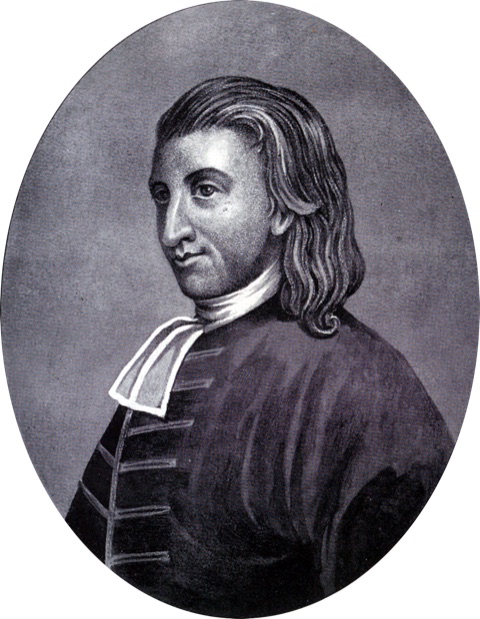
About the author
Thomas Boston
Thomas Boston (1676 to 1732 AD) was born at Duns in Berwickshire, the son of a Covenanting Presbyterian who had been imprisoned for his faith. He studied at Edinburgh University, was licensed to preach in 1697, and was ordained to the parish of Simprin in 1699. In 1700 he found Edward Fisher's The Marrow of Modern Divinity, and his recommendation of it led to the Marrow Controversy in the Church of Scotland. From 1707 he was minister of Ettrick, where he died on May 20, 1732. His best-known book is The Fourfold State (1720). In this treatise he appeals to his church's Larger and Shorter Catechisms.