Modernized edition · Full text · Free PDF/EPUB
Biblical Theology in Modern English
Want the file? The PDF/EPUB is free with an account.
Summary
- Author
- John Owen (1616 to 1683 AD), Dean of Christ Church and Vice-Chancellor of Oxford, later a Nonconformist pastor in London
- Published
- 1661 AD, in Latin, as Theologoumena Pantodapa
- Source edition
- The complete treatise in modern English, from the Latin text in volume 17 of Owen's Works, edited by William H. Goold (1862)
- Type
- Treatise on the history and nature of theology
- Length
- 245,000 words · 16 hours
What is Biblical Theology about?
Biblical Theology is John Owen's Theologoumena Pantodapa of 1661, a treatise on the nature, origin, progress and study of true theology. Owen traces God's revelation from Adam through Noah, Abraham, Moses and Israel's apostasies to the gospel, and argues that true theology is a spiritual gift of wisdom possessed only by the regenerate.
Read the full summary (7 points, key themes)Show less
How the argument unfolds
- 01
Epistle to the Reader. Owen names the hindrances to theological study in his day, from sloth and party spirit to pagan poetry and Aristotelian school theology.
- 02
Book 1. Theology is God's revealed word. Adam's natural theology perished with the covenant of works, and its remnants, worked over by philosophers and poets, ended in paganism.
- 03
Book 2. The promise of the woman's seed founds a new theology. Cain is expelled, the godly separate under Enosh, and mixed marriages bring the flood.
- 04
Book 3. The covenant is first named with Noah. After Babel, idolatry grows from sun worship to pillars, deified men, Druid rites and the gods of the nations.
- 05
Book 4. Abraham is called out of idolatry by grace, and at Sinai theology is written down on three foundations: revelation as the rule of worship, free justification and the coming Messiah.
- 06
Book 5. Israel serves Baal, Molech and the calves, is reformed under Ezra, then falls finally through philosophy, sects, traditions and the rejection of Christ.
- 07
Book 6. Christ reveals the Father's whole counsel. Theology proper belongs to the regenerate, the church stands or falls by six gospel rules, and the work ends with counsel on studying Scripture.
Key themes
- Revelation as the rule of worship. From Adam's sacrifices to Jeroboam's calves, God accepts no worship he has not appointed, and every apostasy began by adding to his word.
- Reformation and separation. Churches are reformed by removing open sinners, or by the godly withdrawing when the corrupt prevail, as under Enosh, Noah, Jacob and Ezra.
- The marks of a true church. Antiquity, numbers, succession and miracles all belonged to paganism, and “the holiness that can be seen can be counterfeited, and the holiness that cannot be counterfeited cannot be seen”.
- Philosophy and the gospel. Aristotle's terms and methods turned theology into an endless contest: “Dispute breeds dispute, and distinction breeds distinction.”
Reader questions (9)Hide the questions
Questions about Biblical Theology
Is there a modern English version of Biblical Theology?
Yes. This is Biblical Theology by John Owen in modern English. The language is modernized and the author's order and argument are kept. The full modernized text is free to read on this page.
Can I read Biblical Theology online for free?
Yes. The complete text of this modern English edition is on this page, with no sign-up or paywall.
Is there a free PDF of Biblical Theology?
Yes. The PDF and EPUB of this edition are free with an Updated Works account. Sign in with Google or an email link; no card is needed.
What is Biblical Theology by John Owen about?
It is a history and definition of true theology. Owen follows revelation from creation to Christ, shows how each church fell from the theology given to it, and explains what evangelical theology is and how it should be studied.
Why is it called Biblical Theology?
Owen titled it Theologoumena Pantodapa, explaining theologoumena as matters discussed concerning God, with a subtitle on the nature, rise, progress and study of true theology.
Can pagans be saved by natural theology?
No. Nature and providence show that God exists and is just, leaving the heathen without excuse, but they reveal nothing of Christ or pardoning mercy. A digression answers Reformed writers who taught a universal grace offered through creation.
What does Owen say about the Hebrew vowel points?
That they date from Ezra at the latest and carry divine authority. He fears that the view of Cappel and Morin, which makes them a late rabbinic invention, opens the Hebrew text to endless conjecture.
Can an unconverted scholar be a theologian?
He can master gospel doctrine as a system, but Owen calls that Christian philosophy. Theology proper is the Spirit's gift that renews the mind and leads to obedience.
How should students study theology?
Owen commends grammar, logic and history, but above all reverent reading of Scripture in the original languages, constant prayer for the Spirit and fellowship with godly believers.
Biblical Theology in Modern English · Full text
Epistle to the Reader
To the benevolent reader and sincere student of gospel truth: greetings and every blessing.
Learned reader, I believe you have a real stake in knowing at least some of the matters examined in this book. Otherwise I would sooner have thrown it into real flames than exposed myself to the prejudices that threaten every effort of this kind. Whatever normally deters a person one by one from these studies now confronts us all at once. Yet for many years my prayers and thoughts have been set on a life spent serving students of heavenly wisdom and divine truth in whatever way I can. I therefore resolved to steel my mind against these bugbears, which otherwise find an easy entrance into the hearts of people who are by no means wicked.
I know the strength of that fierce lion in the road, mentioned by the greatest master of both divine and human wisdom, which frightens the lazy away from their duty. Yet the longer I have felt its force, the less it moves me. We are seriously considering the growth of spiritual light advancing day by day toward the perfect day. That cause does not belong to a single place or even a single age, from which this lion draws all its ferocity. Prejudice may keep many minds from reaping the fruit of a worthwhile effort right away. Still, once those prejudices fade among later generations, we may hold the highest hope that what we undertake with God’s help to illuminate truth will not fail of its aim.
Every age has its own labor in this work. People often reap a richer harvest from the writings of those who have already passed from the scene. Readers approach such works free from envy, rivalry, hatred, and party spirit. They gain more from them than from authors who write with an eye solely to their own contemporaries and immediate advantage, yet who end up serving posterity almost without knowing it. After all, it is nothing new for a person’s upright work to stir envy in his neighbor. Yet the infinite wisdom that governs all things has arranged events and ages in an unsearchable harmony. It meets human vices so gently that they can never block the appointed advance of divine truth.
No one sincerely engaged in these studies, therefore, should abandon a well-begun task out of fear of critics or deference to prejudice. Our duty does not hinge on those things. No one could be a servant of Christ whose sole aim was pleasing human beings. In God’s good providence, it also often happens to the comfort of those who labor in the Lord’s field that seed cast into the ground thrives under abuse. Hoed with slander and spread with the manure of insults, it grows more fruitfully and abundantly than seed gently fanned by popular applause from the foul wineskin of excessive flattery.
From the moment I set my mind to writing these pages, my first aim was to let human talk flow past me, provided I could serve those who earnestly seek to speak the truth in love. All the terrors that some predict from pretended wisdom, and others threaten out of zealous arrogance, I anticipated in thought and judged unworthy of fear. Nor, I hope, have I taken up an invidious task that invites detraction, or one foreign to the calling I have held for some time in the church by the grace of God. Even if I said nothing, the title of the book itself declares its plan. It investigates the nature of true theology, and it sets forth the path and manner by which others may pursue that inquiry in a holy way. How far I have attained the mind of Christ in each part of this work is for you, pious and learned reader, to weigh carefully, since these matters concern you directly.
To share with you more fully the reason for my labors in this work, I must trace a few things back a little further. I need to mention the obstacles that have tripped up many students of theology. Those very obstacles gave me the occasion, or even seemed to lay upon me a necessity, to bring these thoughts before the public. Reason itself, by which we are human, teaches that we were not born for ourselves alone. And the gospel declares that we will one day give an account of everything Christ has freely given us. Suppose someone thinks he has caught me stumbling unwarily into thorny thickets here or there. Let him consider my motive. I entered those thickets for no other purpose than to untangle those whom I saw trapped there. Anyone who cannot deny that we are pointing out the right road to those who have strayed will surely not judge our labors unfairly.
First of all, some people regard every careful inquiry into divine wisdom as completely unnecessary. They see no weighty reason why anyone should bend the strength of his mind to it. They even have certain shadowy arguments for their conviction, or rather for their folly. Tracking down all of them here would take too long and pull us far from our aim. Whatever excuses they put forward on the surface, hatred of true godliness and gospel truth lurks underneath. To argue with someone who, as the poet says, “hides one thing in his heart and speaks another,” would be an utter waste of effort.
These people would happily recommend this study to anyone who lacks the mental power for more useful pursuits, or who has nothing else to do at home and no other means of support. Let such people bind themselves as slaves to it. Yet they think it unfair that minds of vigorous talent and sharp intellect, born for higher things, should be weighed down under its barren yoke. It never crosses their minds, even in a dream, that anyone seeks or ought to seek this divine wisdom for any other fruit or end than wealth, riches, honors, popular esteem, or the favor of the great.
Consequently, they want all inquiry into theology kept within bounds easy enough for the laziest, the busiest, and even the most wicked of mortals. Everything beyond those limits they dismiss as vain, imaginary, overly speculative, and uncertain. They admit that religion itself is somehow necessary for orderly living. Still, they suppose that an exact and diligent study of it brings inconveniences. Public peace and that religious sentiment bred by ignorance, they think, require nipping such diligence in the bud.
Defending our cause against the assaults of such beasts is too easy to cost me much sweat. I will say it in a single sentence: they revile whatever they do not understand. They grasp neither the nature of theology, nor its goal, nor what it means not to perish forever. I admit that hypocrites spoke this way long ago, saying, “What a weariness!” and “What is the profit?” (Malachi 1:13; Malachi 3:14). Yet consider how God deals with us here. Nowhere does he show greater strictness in his commands, or greater grace in his promises, than when he requires this knowledge of himself from us. Anyone who seriously reflects on that fact will never agree with them, unless he too lies under the dominion of sin.
Very few people, of course, openly and shamelessly condemn as folly all diligence spent in studying and investigating heavenly truth. Those who do are either idle drudges or openly ungodly. Yet those who genuinely count every hour spent on it as a loss are neither few nor willing to appear ungodly. I am not speaking only of ordinary people, though their stake in not being strangers or foreigners here is as great as the salvation of their own souls, which is the condition of all humanity. I speak also of those who formally devote themselves to the study of this wisdom and profess to be initiates of its sacred mysteries. They use the name of theology for several years as a cover for whatever other studies they please. Out of that training emerge politicians, physicians, poets, orators, historians, and philosophers. Or rather, I wish they actually were such, since they are anything but what they most wish to appear!
Long experience has already taught us what does not make theologians. Special dress or robes, a practiced walk, and a face composed into a false and shadowy mask of modesty do not make them. That mask is an empty cover for pride, insolence, and stubbornness, with more holes in it than a sieve. Neither do academic degrees, titles, or other labels of leisure, wealth, and power. All this happens because in reality these people neither care for nor love the mysteries of this wisdom. Even while they shamelessly use its name as a pretext for other ends, they wage deep, inward hostility against its heavenly and spiritual virtue, purity, and power. Let us leave this group aside; they have their reward. When speaking of those who face various hindrances in the study of theology, our discourse does not concern those who are their own sole hindrance.
The greatest obstacle facing students in this business is the native, sinful blindness of the human mind. Long ago God commanded, “Let light shine out of darkness.” Unless he removes that blindness by the power of his Spirit, anyone who invests effort and labor in investigating this wisdom will simply be hunting the wind with a net. Because I will treat that blindness directly and at length in the book itself, I will pass over it here. Instead, I will examine only those particular causes that heavily hinder students as they set out on these studies. Those causes fall under two heads: one concerns the students themselves, and the other concerns their studies. I will touch briefly on the first with one or two examples, and then treat the second as fully as our cause and purpose require.
First to confront us is that sloth by which we see no small portion of students numbed and paralyzed. It would be easy to denounce this vice. If I tried to say everything that could be said against it, my speech would have no end. Because sloth carries such disgrace that even the laziest feel obliged to speak ill of it, at least in words, to protect their reputation, I will gladly spare myself that task. Instead, I will briefly bring its hidden causes to light. That way, anyone who refuses to trade away the fruit of his whole life for the softness of a single vice may guard against them more effectively.
The chief cause is the power of inborn lust, itching with the love of pleasure. A mind given over to appetite, entangled in passion, craving, greed, and indulgence, cannot think seriously about pursuits where you labor in vain unless you are diligent and self-disciplined. Every kind of slavery softens the spirit, and none more than the slavery of sin. A mind enslaved and devoted to lust shrinks from all mental toil, because natural corruption fills it and holds it fast in darkness. Above all, it deeply recoils from the labor of handling divine and spiritual realities.
Once people add a newly formed habit of vice in the service of sin to the corruption already native to fallen nature, the result is plain. You see many who are bound on multiple grounds to study divine truth, yet who resemble worn-out horses that no spur can drive down their appointed road. This is especially true once they have obtained the prizes for whose sake they briefly endured that heavy burden.
It is simply impossible for anyone to be at the same time a lover of pleasure and a lover of God. Yet among many there is a foul desertion from the most holy teaching of Christ. They are not even content to expose themselves carelessly, complacently, and negligently to the enticements of lust that a world lying in evil constantly offers to all. Instead, they actively and eagerly hunt for things that fuel pleasure and entice themselves and others to sin. From the poisonous brood that sprouts from this root throughout human life comes this very sloth. First it casts souls down from everything demanding, noble, and divine. Then it enslaves them to what is empty, rotten, and perishing. At last it drives them to eternal ruin.
I know some people who, burning with excessive craving for earthly things, are willing to endure the drudgery of study. For a time they draw courage from the very passion that will soon cut the sinews of all diligence. A few of them persist until they reach their goal, winning the wealth or honors that form the finish line of all their studies. Far more gradually lose heart and surrender themselves to the most sluggish and shameful idleness.
Why do so many who claim to have dedicated themselves to humane learning, and even to divine wisdom itself, grow numb in neglect and sloth? It happens chiefly because they take no care to subdue the corrupt and fleshly desires of the mind by the Spirit and grace of Christ. It is vain to expect a mind sick with vice to form any noble aim or persevere long in anything praiseworthy. Nothing more absurd or more contrary to the nature of things can be imagined than someone who indulges arrogance, pride, ambition, greed, or any corrupt desire of fallen nature supposing he can profitably study the most holy revelation of God’s mind in Christ. Still less can he persevere in that shadowy exercise, which he briefly tolerates with an utterly hostile heart.
Moreover, many suffer from an incurable lack of ability. Stripped of any hope of progress, that defect ends in dull inertia. Those whose primary responsibility it is rarely exercise any real care in selecting capable minds for education. Hired schoolmasters sell their services indiscriminately to everyone; it makes no difference who is brought to school, as long as there is money to pay the fee. The universities live by the same rule. As a result, crowds stroll about in academic gowns who are as fit for scholarship as a fox is for the plow. Countless pressures push these people, after a few barren and fruitless attempts against their own nature, into idleness and sloth. It would be well enough if they merely stopped pursuing liberal studies begun in vain, rather than turning to wicked pursuits. Driven out of callings they might have managed by taking up tasks to which they are completely unequal, they grow weary of labor in the one and ashamed to return to the other. Most of them end up plunging headlong into disgraceful conduct.
To these causes we may add the example of our age. It is openly falling away from every institution of the most holy religion of Jesus Christ, not merely leaning toward vice but rushing headlong into it. As soon as this contagion, like a plague, infects young people set apart for study, they cast aside every concern for diligence, modesty, godliness, self-denial, and readiness to bear the cross. Their whole ambition at once becomes to look as much like the dissolute dregs of the world as possible in everything except the academic robes that mark them off.
From there they dissolve in luxury and idleness, swell with pride, squander their substance, despise good examples, and scorn the gospel way of life, indeed all moderation. Yet they never doubt that while living this way, wisdom will drop from heaven into their laps. What else can be expected from such people than that they gradually slacken all scholarly labor and let sloth crust over the powers of their minds? Students must watch carefully against these causes of ruinous laziness and resist them early. Otherwise, no matter how much they admire themselves like Suffenus from an empty swelling of spirit puffed up by the arrogance and custom of the age, no wise person will ever hope for worthwhile or meaningful progress from them.
Second, very many who are not ruined by pleasure and sloth are carried off course by sectarian and party spirit. Nothing hinders them more severely in the search for truth. Diversity of opinion creates parties in religion, and many other factors strengthen and enlarge them. Yet here lies the greatest self-deception of the human mind. You will find no one more slavishly bound and enslaved to a sect than certain people who belong to the majority party in the corner of the earth where they happen to live. Because of their numbers, they think nothing in themselves more admirable than condemning all sects as wicked and foolish. Most people imagine that small numbers, rather than the temper of human minds, make a sect, and that geography rather than reality creates the name. In fact, whenever people subscribe to a formula of agreement with a slavish and sectarian spirit, or for any worldly motives, the larger the number of subscribers, the greater the harm of the sect.
My goal right now, however, is not to explain the nature of a sect or attack its vices. I wish only to point out how party spirit throws stumbling blocks in the way of pursuing true wisdom. Most members of a sect consider it a crime to know anything beyond the decrees of their own party. Each person assumes that the party to which he belongs contains all knowledge, godliness, doctrine, and wisdom, as if inside a horn of plenty. Words fail to describe the evils that flow from this into weak minds prey to corrupt passions and unfair suspicions. All of them slow human judgment in searching out truth. Worse still, they stamp on the mind a perverse, haughty, quarrelsome disposition with which the Holy Spirit refuses to mingle his gifts. “The man who fears the Lord, him will he instruct in the way that he should choose; the secret counsel of the Lord is with those who fear him, so that they may experience his covenant” (Psalm 25:12; Psalm 25:14).
Some are not truly house-born slaves to their party’s opinions, yet they use the party to advance themselves and their own affairs. They gladly capitalize on the blind zeal and folly of the rest. They champion the sect’s honor and swear to its interests no less fiercely, and display no less contempt for outsiders than the zealots display hatred. In fact, there is no heavier prejudice in the study of divine truth, and nothing that darkens a mind already tangled in corrupt affections more deeply, than being grafted into a large religious party before one has learned to exercise sincere, free, and mature judgment. People enter such parties by birth, by education, or by desire for earthly advantage, especially when the attractions of wealth, rank, and popular respect wait upon its worship.
To such people, their party is the rule and measure of truth and of all learning. They steer by no guiding star more faithfully in everything they attempt than a scrupulous dread of stumbling accidentally into the views of other parties. They fear they might borrow light from outsiders at the cost of losing their most cherished, and often most lucrative, errors. Meanwhile, they imagine themselves alone to be learned, intelligent, prudent, and devout. They rely on some collective sense, wisdom, and piety belonging to their party, which is simply the charcoal-burner’s blind faith.
From this spring endless brawls, hatreds, lawsuits, and disputes, utterly devoid of all Christian love and gentleness. Kings return to friendship after mutual slaughter more readily than theologians inflamed with party zeal. Nothing in religion can be vomited forth so absurd, ignorant, empty, or almost ungodly that if it comes from someone who leads, accompanies, or follows a large faction, the party’s blind admirers will not embrace it at once as a sacred shield fallen from heaven. They stay fiercely alert for one thing alone: how to defend the bad sayings of their own side and attack the good sayings of others. If they ever bring themselves to admit that someone outside their ranks is neither a fool nor a knave, which happens very rarely, they immediately treat him as a rival. Not one of them would fail to triumph gladly over him, even over a three-penny trifle, or rejoice to see him triumphed over by others.
Wretched little men! They impose the worst slavery on themselves while condemning others with lofty arrogance for error, ignorance, and even heresy and schism. Trusting in their own party, perhaps the worst of all, which only they refuse to call a sect, they constantly make all those very faults their own special possession. If none of those charges can be leveled at them, it is only because their folly outstrips them all. I do not expect to share anything in common with such people in this task of advancing divine truth. They already know all the boundaries of wisdom and just how far divine truth extends, namely the tenets of their party. People who already have enough gold at home, or what they value as dearly as gold, will never risk sailing to unknown lands.
My aim diverges so sharply from the habits of such men that I never entertained any hope that what I intend to discuss would either profit them or suit their taste. Above all, I decided to pass over and disregard those in whom blind love of self and party has so extinguished the light of reason that they cannot see their own motive. They claim to quarrel with all sects, yet their sole reason is so that the one sect to which they have enslaved themselves may rule alone.
I do not say these things as if every believer did not need to join a church professing faith in Christ and the worship of God prescribed by him, unless he prefers to be counted erratic and disorderly. Yet it makes an almost infinite difference with what spirit a person joins any such body. Consider the person who has first given himself to our Lord Jesus Christ. He then unites with a congregation that joins the study and profession of divine truth and obedience to the Lord’s commands with true godliness, sobriety, righteousness, modesty, and separation from the world. He joins so that, sharing in the spiritual privileges of the church and the gifts of the Holy Spirit within it, he may also do his own part to the utmost of his strength in building up the body of Christ in faith and love. In my judgment, that person acts rightly and fulfills the duty we owe to Christ in the gospel.
We charge with blocking the course of truth only a very different sort of person. These are people carried to the shores of a sect by corrupt motives, worldly interests, or no reason at all, as if by chance or the push of outward circumstances. Perhaps puffed up by its worldly privileges, they look down on all others as if they had never been born. Let us leave further consideration of such people behind. Without God’s special grace, their mental disease is utterly incurable. They do not merely delight in it; they genuinely glory in it. They believe that anyone who would free them from the superstitious frenzy driving them is trying not to save them, but to kill them.
Let us move on now to those preparatory studies used to polish human minds that will one day be devoted to investigating heavenly wisdom. As the saying goes, the beginning is the greatest part of every work. I fear, however, that defects lurk within those studies, weighing down minds already occupied with them when they turn to divine truth. I do not wish to recount here what thoroughly learned and experienced men have written about teaching these disciplines differently from the common method. I am weary of the spirit of our age. The moment any such proposal appears, it is seized upon as fuel for meddlesome quarrels and chattering idleness, and, if it rises a little higher, for envy as well.
Our purpose is to address the methods in common use everywhere. Beyond what we will say elsewhere about the grace and Spirit of Christ, a student of theology needs disciplined judgment, a candid, sincere mind free from prejudice, godly affections, and upright conduct. I will therefore briefly point out those faults in the ordinary entrance to learning. Unless checked early, they tend either to corrupt affections and morals or to snare the mind in traps of error and empty reasoning from which escape is not easy.
Let us begin with poetry, on which humane letters once laid their foundations, and with which most people still start their studies. Poetry has its own praises and ivy wreaths, which it may wear without any grudge from me. Because holy men of old chose to use it in singing the praises of the living God, it won for itself a glory that eternity will behold. Antiquity itself also lends it a certain authority and reverence, especially since across so many ages it attracted the highest geniuses to practice it so that it would never fade away. We must also admit that its ancient cultivators showed vibrant intellect and keen insight in skillfully portraying human vices. They also showed such mastery in inventing plausible fictions whose imitation can train other minds to investigate truth itself that it is no wonder their fame spread almost across the whole world.
Undoubtedly the art itself also holds great charm for the mind. Yet the wisest of the pagans did not hesitate to compare that pleasure to the entertainment of flute-girls. Uncultured men hire them at banquets to liven up their spirits because their own ignorance keeps them from pleasing one another with conversation. Embracing every verbal charm that soothes human senses and delights the mind, poetry opens an easy pathway for its subject matter into the affections and fastens it firmly in the memory.
My task here, however, is not to explain the proper use of poetry or of the ancient poets, which I acknowledge to be great, but rather the abuse of both, which I consider even greater. I have not gone over to the opinion of the orator who denied any solid usefulness in poetry and declared all its pleasure childish. Still, I believe no one is unaware of the stain, indeed the filth, with which it was polluted from its very beginnings among the pagan sages. Strip away the deification of wicked men, along with the adulteries, murders, brawls, thefts, and unmentionable sins of gods made in human likeness. Strip away the lies, impure loves, cunning, cruelty, ambition, tyranny, and outrages of the human heroes held up for imitation. Strip away the wicked, superstitious rites of idolatry and the worship of the devil himself. Do that, and the books over which ancient poetry reigns, which now stride along like giants, will shrink into dwarfs and pygmies.
To all this, Old Comedy added coarse buffoonery, in which mockery reigned alongside the slander of innocent people. That biting malice and abuse from the vilest of two-legged creatures, in which many still take great delight today, was finally curbed by the power of the Macedonians. Anyone who presented such filth with art and care, and without shame or modesty, so as to leave stings in the minds of readers and kindle similar passions, is considered to stand out among the rest, if not to take first prize.
Unhappy youth are steeped from infancy in these shameful fables. As they dwell on them, breathe them in, and recite them without caution, they form a corrupt and often unconquerable habit of mind. From their tenderest years they are commanded to treasure, hug to their chests, and turn over by night and by day these very authors. Yet every pagan who ever tried to resist a declining age and save human morals from total ruin judged that those authors should be banished far from all good company. According to Philostratus in his Life of Apollonius, the naked sages of India denied that anyone among the Greeks could ever become wise or just, no matter how hard he tried, because they lent their ears to poets teaching everything to the contrary. How most young men put the vices of others to use is shown by the comic playwright in his character Chaerea, an example Augustine discusses at length in The City of God.
Everyone also knows that Plato’s Socrates drove the poets out of that commonwealth of good citizens he was founding, an act approved by others no less learned than he. “Do you see,” asks Marcus Tullius Cicero, “what harm the poets do? They bring on the bravest men weeping and soften our spirits. Then they are so sweet that they are not merely read, but memorized. So when the poets are added to poor home discipline and a sheltered, pampered life, they cut every sinew of virtue. Plato rightly expels them from the city he imagined while searching for the best morals and the best state of the commonwealth. Yet we, educated of course by Greece, learn these things from boyhood and call this a liberal education and learning.”
Now either those thinkers spoke carelessly and without reason, or most of us are less wise than they were and care less about moral integrity, or else the reasons they relied on apply less to us than to them. Which of these must be true is a light and easy question that anyone can settle without trouble.
True, the Stoics twisted poetic fables into physical allegories, and others twisted them into moral ones, absurdly attributing to storytellers ideas that had never entered their heads. Eusebius demonstrated this thoroughly in his deeply learned books on The Preparation for the Gospel. Cicero before him remarked: “Whether the poets corrupted the Stoics or the Stoics gave authority to the poets, I could not easily say; for monstrosities and outrages are told by both.” Yet what has all that to do with boys scarcely out of the cradle? Hunting for pleasure and praise in those disgusting fables, they often pour out their wretched souls tainted with deadly poison. Meanwhile, the very people whose duty it was to instill the true reverence of God in their tender years stand by applauding.
“Ah,” they reply, “with a single word you can teach them that what they learn are mythical monstrosities, and that most of the conduct praised by the authors they read must be avoided.” Yet no one, I think, is so miserably stupid as not to prefer being free of a festering sore rather than needing a poultice, or free of deadly poison rather than needing an antidote. If what the poets report is utterly false and what they celebrate is utterly shameful, why are we in such a hurry not to educate tender youth, but to ruin them, by filling them with acquaintance with those lies and praise of those vices? Evil works more reliably than its remedies, so this business is played out on the very brink of a deep well.
“Human hearts are deceitful above all things and fatally corrupt.” We know what the human mind is before divine grace enlightens it. We know how eagerly it rushes into the embrace of alluring lusts. We know how lazy, slow, and stubborn it is when better and healthier things are set before it, and how easily it slides into a habit of the foulest imaginations. Anyone who would deny that its inborn emptiness must be restrained in every way from all incentives to pleasure and lust is utterly unworthy of the Christian name. I am disgusted by the kind of Christianity that shares nothing with genuine Christianity except the name.
“But we must imitate the ancients,” they say. Yet tainting minds whose judgment is not yet mature with a cesspool of fables and vices is a crime and the height of folly, not instruction for useful imitation. “Do not be deceived,” says the apostle (1 Corinthians 15:33): “Bad company corrupts good character.” He quoted that line from Menander, as Jerome says, or rather from Euripides, using a proverb well known to them so as to strike them down with their own sword. Many deny that they ever picked up any stain or disgrace from their early training in the poets. To set an example for others, they think they ought to keep studying right into old age the very things it is shameful only for boys not to have learned.
Not everyone, however, is blessed with an amulet that lets him wade into a plague whenever he pleases, completely safe from harm. Not everyone caught between the altar and the knife gets whisked away in a Homeric cloud. Those who know and care about themselves, the native corruption of the human mind, and gospel holiness will perhaps be of another mind, especially if they believe they will one day give God an account of all their studies. Indeed, either what we read is not the gospel, or the pride and self-conceited wisdom of such people, puffing themselves up in contempt of divine grace and self-denial, will come into judgment unless they sincerely repent.
I do not deny that poetry itself can have some usefulness among other secular disciplines. Their purpose is simply the cultivation of the soul’s natural faculties through drawing out and distinctly exercising its inborn principles. They broaden the mind’s grasp of things, sharpen perception and discernment, and strengthen memory. Yet we judge it unfair to grant poetry Christian citizenship until its nails have been pared and its hair shaved. It is not my place to explain here how that might be done, or how the legitimate use of this craft might be restored while setting aside those enticements to corrupt passions and all teachers of impurity. Most people devote either too much time or too little caution to those writers, neither guarding against the poison they serve nor knowing the right use of them, if there is one.
Unless I am mistaken, we have proved all that our present purpose requires. Reckless youth, bringing little or no judgment to distinguish truth, frequently suffer harm not easily repaired from the contagion of fables and vices when they read and study the poets indiscriminately. It would be easy to copy out here what the most learned of the ancients wrote on this point, including Clement, Origen, Tertullian, Jerome, Augustine, and others, but scholars already know those passages.
Yet this is the grand literary preparation from whose impure heats many bring their smoking minds straight to the study of gospel mysteries and heavenly wisdom! To imagine that divine truth will open its inner sanctuary to be defiled by such knockers, or unlock its majestic oracles to be despised, is sheer madness. Never will the dignity of sacred theology stoop so low before vain people as to share its secrets with them. They are so far from earnestly desiring to experience its heavenly power that they surrender themselves almost completely to passions and pursuits that drain the very lifeblood, sap, and vigor even of ordinary decency.
Nor is the grass of philosophy free from a hidden snake. It is an old complaint among learned men that several early Christians put on Christ without sufficiently putting off Plato. Nobody can modestly deny that they twisted the deepest mysteries of the gospel into philosophical notions, at great cost to divine truth and great harm to the church. Yet that disaster to the faith was light and bearable, since few shared in the fault and they used excessive freedom in very few points. It pales beside the calamity the church later suffered from blending Aristotelian philosophy into nearly every doctrine. I have shown this elsewhere. Here I have decided to give one or two examples of the defects rubbed onto the minds of studious youth by the common way of teaching philosophy, as they hurry through its twisted mazes and monstrously stitched-together patchworks toward other goals.
First to meet us are the unsound theorems of standard ethics. The entire structure rests on one foundation: the happiness we pursue through virtue, whose path human ingenuity labored over variously and in vain in ancient times, must be obtained completely in this mortal life. Aristotle declares it utterly absurd to call anyone happy only after he has died. Yet the same philosopher rejects a happiness weighed down by hardship, where virtue and diligence serve at their own expense. He makes happiness dependent on external prosperity, unable to bear a heavy load of calamities, and liable to be snatched away from people unwillingly and undeservedly.
Meanwhile, Aristotle remains uncertain, as if the two conflicted, whether to credit happiness to some god or to virtue. He would no doubt count our Job wretched, miserable, and unhappy, unlike what Cicero says he thought of his Regulus. Yet almost everyone knows how far anything that can be understood of the happiness Aristotle praises falls short of true blessedness. It stands worlds apart from that fellowship with God in which alone the future blessedness of the saints begins here. It also falls short of everything for which the gospel pronounces us blessed, as everyone sees except those from whom the gospel itself is veiled.
Furthermore, with a kind of reasoned madness, Aristotle imagines that virtue consists in a middle point between two vices. He then lays down a rule and prescription for it that guarantees no one will ever know for sure what virtue is and what vice is. Rejecting the rational soul’s own reflection and the skillful inquiry that pleased Socrates, he refers students to certain arbitrary definitions of the prudent. In doing so, he takes ample care that they will never find anything firm or stable on which to plant their feet, nor anything to stop the endless wavering of the human mind. To avoid this flaw, those who constantly claim that a human being can be perfectly wise fall into a worse error, as anyone knows who recognizes that the only one who is perfectly wise is God.
Without question, the Roman Fabricius kept closer to the bounds of modesty and a true sense of the human condition. While serving as ambassador to King Pyrrhus, he listened as if to a prodigy when Cineas the Thessalian reported that someone among the Greeks actually dared to call himself a wise man.
Let us pass over countless other mistaken claims about the virtues. Anyone who adopts Aristotle’s view restricting the exercise of fortitude, a supremely divine virtue, to warfare will have to deny its praise not only to the noblest and wisest of the pagans, but even to Christ himself and the holy martyrs. By an invention devised to insult and destroy religion, he also sets up conventional justice, resting on the whim of lawmakers and separated from natural justice, as the principle and rule of divine worship. From that standard, people are supposed to learn who God is and how he must be worshiped. We also know to what uses some people willingly drag many other sayings of the same philosopher within theology, at the expense of heavenly truth, such as his remarks on involuntary actions, justice, and similar topics.
Finally, examine the very concept of virtue he sets forth, by which alone access to happiness is won. We see a proud conceit peddling a shadow of virtue rather than the frame of mind that befits the human lot and dependence on the supreme God. That virtue fares remarkably well if it even ranks above vice. Its goal is not the glory of God, its beginning is not grace, and its rule is neither the nature of things nor the revelation of the divine mind. Instead, it springs from human beings, relies solely on their effort as it advances, and ends at last in themselves. Once a young mind is caught in the wicker trap of such assumptions, it will not easily find a way to pull free from their knots and snares.
The gospel teaches everything differently. Yet uprooting firmly held beliefs recently planted in the mind is a very laborious task, not for a careless person, especially when no one deliberately points out that they are false. Nor can a mind agree at the same time with conflicting principles and grounds of reasoning. Tossed back and forth by the ebb and flow of competing thoughts, uncertain of truth, and battered as if by opposing winds, a wavering, hesitant mind would drive students onto the quicksands of atheism. Only one thing prevents it, namely the common condition of most people: they cling to the mere husk of words on both sides and never seriously seek to experience the power and reality of the things themselves.
The most celebrated propositions of moral philosophy and the mysteries of the gospel never live in peace with each other. Anyone who trusts the former and shapes his mind to them becomes completely incapable of the latter. It is a miserable sort of comfort that among so huge a crowd of students, very few ever drink deeply of that moral teaching. Yet so it is, learned reader, so it truly is. The studies of youth are aimed at ghostly quarrels and shadows of dreams. Stuffed with terms, distinctions, and definitions, they barely taste reality with the tips of their lips. As for those who approach ethics intending to become prudent, just, sober, brave, and truly virtuous, they are:
Scarcely as many as the gates of Thebes,
Or as the mouths of the rich Nile.
Among the pagans, moral philosophy was a serious, practical training in upright conduct according to the best rules of virtue they knew. Those rules were slippery and uncertain indeed, yet they were the best the pagans could devise. They were not like us, who choose to eat acorns after wheat has been discovered. “We do not investigate in order to know what virtue is,” says Aristotle, “but in order to become good, since otherwise the inquiry would be of no use. We must examine actions and how we ought to perform them.” And again: “We desire both to know what is good and to become such ourselves.” Yet how many in our day even enter the study of this science with that intention? An inexperienced youngster, raw to life, distracted by everything else, perhaps full of wine, sleep, and vices, rushes through some rapid, headlong course of ethics in a year and a half, or even six months, just to make the usual learned noise in the schools.
Let us leave aside those faults, however, since they lie in the people themselves; we are talking about the thing itself. Consider anyone ignorant of the summing up of all things in Christ who attaches his mind to the false notions mentioned above. Those notions harmonize completely with the native pride of the human mind and the most foolish self-deification. Such a person will scarcely believe the gospel when it teaches him the opposite on every point. It teaches that he is nothing and can do nothing, and that, being blind, foolish, corrupt, and miserable, he must receive all light, wisdom, virtue, and happiness from God through Christ. If he does not embrace those philosophical notions in faith or care to shape his life by them, he would be lucky if, after working hard at them, he lost nothing more than his labor and lamp oil.
I gladly admit that what several ancient philosophers worked out in moral discipline, through remarkable breadth and versatility of mind and many nights of study, holds great and beautiful usefulness for those whose faculties have been trained by constant practice to distinguish good from evil. Still, in my judgment, no one acts rightly who turns seekers away from the surest, infallible rule of all virtues. Granted to us by God’s highest kindness, it is the only rule with power to plant virtue in human minds. To push people who are searching for a holy and upright way to live to God toward uncertain, shifting studies utterly empty of true wisdom is wrong. Aristotle himself would not tolerate a teacher of morals who did not aim to form a way of life according to his teaching. I will say no more about these matters here, since we will return to them later in our work. Let our discourse move on to other things.
No one with even slightly sharp eyes in these matters, I think, can be pleased with the common method of teaching philosophy. It is crammed with quarrels and verbal swordfights. Having discarded all other ancient philosophy, people keep almost exclusively the one best suited to brawling circles. Once a man whose brilliance is beyond all dispute set his mind to tearing down the views of other philosophers, he grew overly guarded and cautious in every part of his teaching. He worried he might carelessly stumble into the very traps he foresaw later thinkers would set for him, following his own example. So he walks gingerly through all philosophy, as if stepping over treacherous ashes. He forges definitions crafted far more to shield himself from others’ objections on every side than to bring into the light the actual things he undertakes to explain.
As a result, much of his philosophy is built to perpetuate battles and disputes. Later this system, especially as cultivated by the Arabs, caught the fancy of men who thought themselves exceedingly sharp and aimed solely at dominating the schools through endless verbal duels. At once all knowledge was tangled in thorny subtleties and turned into raw material for quarrels and wrangling. For several centuries, the study of philosophy was nothing more than an absurd preparation for that futile itch for disputation ruling in the schools.
Yet this empty style of tricky wrangling never had Aristotle as its author. True, he handed certain theses to his disciples to defend, as did his successor Theophrastus, to provide a contest in eloquence and sharpness. Yet in their debates there was nothing like those quarrelsome word-battles and captious traps by which, as a very learned man puts it, unhappy youth are trained today in brazen impudence. Whatever sweat many still pour into philosophy is merely fattening a victim to be sacrificed to that art of wrangling.
Whether the things they read, learn, and teach are true or false, or whether they have any foundation in the nature of things or are the empty speculations of idle men, these people do not care in the least. All that matters is that they furnish material for arguments and sharpen a skill in bickering that they would have to unlearn if they ever wanted to be wise. If someone thoroughly practiced in jeers, taunts, insults, and spitting climbs to such a height of learning, or rather impudence, that he never runs out of things to argue about, he is acclaimed as learned, to his own great harm.
Every day you can see many such men. From a lifetime spent in disputation exercises, you would suppose them overflowing with rules of logic and philosophy. Yet when serious subjects arise, where genuine mastery of those sciences is most needed, they fall completely dumb. I often marveled greatly at this myself, until alongside other reasons I discovered this one: while straining to torment themselves and others with thorny subtleties and piles of useless jargon, they remained utterly ignorant of the true, sound use of logic and of all solid philosophy.
From this springs another defect in studies, and by far the greatest. Students imagine that the bounds and limits of knowledge set before them are not those displayed by the nature of things, but the writings of a few men. Those authors would never have been any wiser than the students themselves if they had not used the very privilege of relying on their own minds’ judgment of which these students deliberately cheat themselves. They spend a lifetime learning what others thought; always trusting others, they never return to themselves and never take counsel with their own minds.
To its own immense harm, the corrupt nature of the human mind works in a strange way. People gladly trust themselves against God, on whose help and aid they ought to depend in everything, yet surrender themselves wholly as slaves to fellow mortals like themselves, as if God had given them no gifts of their own. By the first vice they betray unbelief, by the second folly, and by both an ungrateful heart toward God. Words cannot express how deeply these and similar faults accompanying the ordinary course of study clog the mind with empty reasoning and block it from finding truth, even while many think they are being shaped for wisdom. Although vigor of intellect, diligence, and experience break through these bars in a few, they hinder everyone. They keep slower, duller minds locked under the shameful yoke of ignorance, or at best stranded in the outer porch of learning.
Finally, let us look at theology itself. Few set before themselves a lawful aim and right goal in studying it. Many apply themselves to this study for no other fruit than chasing wealth, riches, honors, and a measure of popular esteem. Their one wish is to draw enough skill from theological books to make themselves and others think them qualified to win those earthly rewards. Consequently, they approach divine realities and the deepest mysteries of the gospel with the same temper of mind and relying on the same aids they use to acquire secular sciences. Meanwhile they never doubt that they are Christians, even though nothing more alien to the gospel can enter a human heart.
We will show that theology is a spiritual wisdom versed in the mysteries of the gospel. Even among the pagans, theology was simply a certain wisdom in the mysteries of the religions they professed. Anyone who sets before himself any other goal in this study than becoming wise and spiritually skilled in the mystery of the gospel must necessarily miss the mark. Yet how many aim at that target? I fear far more despise these things, unaware that by doing so they insult the gospel itself.
Where students do not fix a right goal, they cannot avoid going wrong in their choice of means. Even if they stumble upon means well suited by nature to that goal, because they direct them somewhere else, they rob themselves of their real use and benefit. As for the most necessary means of all, they usually count them worthless, or even reject them with the utmost contempt. Out of the darkness of these errors, an artificial science long ago emerged in place of gospel theology, not unlike the sciences taught by common philosophy.
Theology is called a systematic structure of theses, definitions, arguments, objections, replies, and distinctions. In truth, it is a confused mongrel of philosophy and theology. In it, things are not taught “in words taught by the Holy Spirit,” by which we “compare spiritual things with spiritual things.” Instead, they are taught in terms and fine-grained distinctions that all wisdom, both human and divine, could have done without at zero loss, had they not happened by some chance to pop into Aristotle’s head. Ask theologians most practiced in this science what the gospel is, or what faith, regeneration, justification, adoption, and holiness are. At once they hammer out a definition. It is not a definition suited to convey spiritual light to the understanding of believers. Rather, it is patched together with extreme caution and clipped words so that opponents cannot easily attack it under the rules of the philosophy reigning in the schools. In that trick alone lies the chief craft of Aristotelian definitions.
Then they claim that philosophy serves as the handmaid of theology, when in truth it rules over her and wickedly mocks her as a captive. When philosophy serves to polish the mind and to use, exercise, and strengthen the intellectual faculties, it may rightly be called a handmaid to all wisdom, and even to theology itself. The same is true when it traces the marks of divine wisdom and power stamped upon the natures of created things. Yet importing the thorniest questions about things utterly unrelated to knowing God into the territory of theology displays not service, but tyranny. So do crushing spiritual truth under chains and shackles of subtle jargon, and biasing the mind through a habit of empty reasoning, evils that among countless others accompany its common use.
As a result, the surpassing glory and shining beauty of divine truth are obscured in many ways for most people. We know how faint and dim was that shadow of truth which the ancient philosophers revered. Yet we also know it seized them with such love and wonder that at times they fell into a kind of rapture while contemplating it, even though they did not see it bare and open, indeed scarcely saw any likeness of truth at all. Compare those rays of natural truth that shone on them with the deepest mysteries of all truth laid open to us by him who came forth from the Father’s bosom, who is “the way, the life, and the truth.” They are like the faint twinkle of a tiny nighttime star beside the noon sun.
Let us therefore declare boldly that anyone who is not set on fire with love for divine truth is a stranger to theology. Grant that he has worn himself out long and hard sifting thorny questions, and even become a voracious devourer of theological books. The very fact that he does not burn with love for truth and is not carried away in wonder at its beauty is the strongest proof that the native beauty of truth has never shone into his mind, not even through a lattice. Yet where on earth among students can you find such affections of heart? Who does not look elsewhere for the incentives to his studies? Who has this spirit and makes it his sole purpose to become intimately acquainted with lovely, most beautiful, most beloved truth, and to be conformed to it?
Most are plainly of another mind. They look on its study as a heavy pack hoisted onto their backs simply to earn a living. If any quicker road to wealth and honors opens up, that thankless labor will hear on the spot: “Hail and farewell forever.”
Alas for the wretched state of theology! Driven down from the noble, heavenly, spiritual contemplation of supernatural truth and the mysteries of the gospel, it is forced into a dry, barren, quarrelsome science. It is courted and cultivated for the foulest motives by people who are in reality its bitterest enemies. They spend entire days and years chasing trivial, foreign matters and woo theology solely as a broker of wealth and rank. Fleeing hunger and poverty at first, and then gaping after riches and empty glory, they knock at the doors of this divine wisdom. Yet they strain to grasp only what it shares with other sciences in its outer porches and entryways, farthest removed from its divine inner sanctuary. Everything that belongs to life, soul, and heavenly power, whose spiritual knowledge would be saving for themselves and useful to others, they completely neglect.
Let me speak my mind at last, freely and without hesitation. Very few engaged in theological studies appear to have dedicated themselves to them out of attraction to the beauty of this daughter not of time, but of eternity. Very few care about experiencing its heavenly force and power with a pure heart and sincere mind. That is why, after long and empty hopes, instead of “grapes” we harvest “wild grapes” from most people. That is why those who “by this time ought to be teachers very often need someone to teach them again the basic principles of the oracles of God.”
Faithful Christian people wait for these men to proclaim the mysteries of the gospel and the unsearchable riches of Christ. They hope for godly, solid, learned preaching in words taught by the Holy Spirit, for the conversion, instruction, building up, and comfort of souls. Instead, these men shove petty, empty declamations at them, decked out with silly verbal rattles. Should I count these men as theologians? They neither know how to search out the meaning of the Holy Spirit, nor want to use his words, nor have their senses trained in the mysteries of God.
Their one all-consuming desire is to tickle the shallow tastes of an ignorant crowd and of others hostile to the power of God in the gospel. They do it with an empty jingle of words that ought to be banished from every sound discipline of human life and sent off to the stage. At the appointed time, the Lord Jesus will call them to account for polluting his most holy ordinances and despising the gospel. I will not add here what righteous indignation nearly forced from my pen. The reader will find these matters weighed elsewhere, I hope, with complete calm of mind.
“What then?” you will ask, reader. “Are you setting yourself up as capable of uprooting these harmful weeds from the Lord’s field? Are you plotting a new method of teaching the disciplines, abolishing ancient institutions, and overhauling education?” Softly, Christian reader! The apostle taught us to turn away from evil suspicions. If you want to be suspicious, no one can stop you, since your suspicion does not lie in anyone else’s control. You yourself will one day answer to God for it, just as I will answer for these writings, whose purpose I am about to share with you right now. Only take care to judge them fairly and generously, for that concerns you alone.
I am not setting out to disturb things that should stay untouched, nor am I pushing a new method of study; I am not so puffed up with pride. Yet just because I am a nobody living in an obscure home does not mean others never sin or err in investigating heavenly truth. Nor, as far as I know, am I the only person forbidden to share my thoughts on the nature and study of theology with learned and godly readers. Others have done so, and good men too. Of the best of causes I will say what the orator said of the worst: “When was this not done? When was it blamed? When was it not permitted? When, indeed, was it ever the case that what is lawful was not allowed?”
With your leave, then, learned reader, I will inform you of my whole plan. Put aside evil suspicions and harsh words, and I will tell you the plain facts. When I first turned my mind to writing this work, I planned nothing more than to lay before your judgment a few brief theses on the nature of gospel theology. You will now find the reflections prepared for that purpose placed in the final part of the work. The introductory topics that had to precede their exposition, which I originally intended to cover briefly, grew into the bulk you see before you. They grew beyond my original plan, certainly, though I trust not at all beyond the subject itself.
I see no need to list the full order and plan of the work here point by point. I will sum it up briefly. First, we lay down general concepts belonging to the name and nature of all theology. Then, starting from the first origin of true theology, which we explain, we trace in the earlier books the progress it made across the various stages of divine revelation, together with the apostasy of many from those stages and the errors that sprang from it. Following the actual sequence of history, which we divide into its major periods, we also trace the changes in church worship established according to that revelation, along with the church’s repeated backslidings and gracious restorations, down to the last and final rejection of the Jewish church. As we followed this plan, many subjects richly deserving attention met us on every side, especially that celebrated reformation of the Jewish church under Ezra after the return from captivity. On that occasion, we found it necessary to discuss many details about the antiquities and rites of that church.
Finally, we undertake to expound gospel theology itself. From the Scriptures themselves we show what it is and what its nature consists in, who are fit to study it, who alone attain it and by what means, and what chief obstacles oppose it. We also set forth the nature, institution, and history of the church resting and founded upon it. A treatise on the study of theology closes the entire work.
Whether you decide to deal with me by the strict letter of the law or with fairness and goodwill is your choice, learned reader. To me it makes no difference, provided you remember that gospel instruction (Matthew 7:12) and weigh the substance itself, for I care nothing for nitpickers over words. Whatever the value of what I bring forward here, overcome by love for the truth, I commit myself wholly to God. A most wretched sinner weary with the evils of the age and my own, I entrust myself to his grace, mercy, and forgiveness in Jesus Christ our only Savior. With all the prayers, petitions, sighs, tears, and faith his grace allows, I gladly submit my work to the judgment and review of his saints fighting the good fight throughout the world. Farewell.
Since a few pages remained blank here, I did not want to withhold from the reader this poem by a most distinguished fellow minister, freely and unexpectedly offered to me. Although modesty and a sense of my own slightness forbid me to accept much of what he says about me personally, it presents the argument of this work so elegantly woven together that I include it here:
On the Theologoumena of John Owen, Doctor of Sacred Theology
O shameless Purple, knowing not to blush,
Go claim the Muses rise or fall with you, or hush!
What work like this has that proud Order brought,
Stamped with the name of Jesus yet unholy in its thought,
To lay before the Triple-Mitered throne?
Sandaeus, Alsted’s rival, strives alone
To pass him both in sacred books and name;
Yet Owen’s single title swallows all their claim,
His single book devours them in its wake,
As Moses’ serpent gulped each wizard’s snake.
By his bright beam, first that part, next the near,
And last the whole vast sacred sphere shines bright and clear.
Here knowledge, worship, churches of our God,
And order through each age and land lie spread abroad.
No pagan rite Pythagoras, their rightful sage,
E’er knew as Owen knows each one in every age.
What truthful Judah once, what lying Greece,
And foreign nations taught, his pages never cease
To teach; nor merely tell, but weigh with even hand
Where sacred Scripture and sound reason firmly stand:
What parts belong to nature, what to grace,
What faith’s bright light achieves, what reason’s dimmer trace;
What age was infancy to sacred bands,
What boyhood was, and manhood’s fuller stands.
All drawn so live, you’d think he lived each age he wrote;
Rich reading, judgment, lofty mind each strike their note.
A man of every age, you well may call him so;
Not even Envy dares to call him time’s mere show.
He tells what church pleased God unclothed in clay,
And what pleased God incarnate in our human day:
Not daughters harlot Babylon brings forth to pride,
Whom the red Dragon, never Christ, takes for his bride;
Pure souls, a band the Spirit calls out from the world,
Whom Christ himself invites where bridal tents are furled;
Chaste Zion’s genuine daughter, this, and this alone,
The gospel pattern of the sacred church made known.
He shapes the true divine, and proves his title vain
Unless he learns from heaven above its sacred strain.
He errs, or else I fear the “zealot” scorned today
Alone will wear the name of true divine someday.
This light had brought to fallen Adam’s mind again
The glory he forgot while upright free from stain.
It sings the first man fallen, then raised up anew
By Christ the Second Adam, firmer than he knew;
The undying war sent down to latest heirs of earth
Between the serpent’s brood and woman’s promised birth.
With rightful bounds it parts the covenants in twain:
What works demand, and what the bond of faith must gain.
It marks the steps by which this newborn gospel ray,
Blotted by gathering night, soon faded quite away;
And in what tents it stood unstained, until the hour
When sacred Janus owed and gave the ark’s safe power.
Then it unfolds how oft, when near its dying breath,
Fresh light poured from the Father raised it up from death:
How first in faithful Abraham’s tents it beamed abroad,
Then grew the glory of the nation blessed of God;
How that same people proved a Goshen bright and clear
Not only for the linen-wearing land of fear
That drove them to their tasks, but for the whole wide earth.
What true divine like Moses ever came to birth,
Who kept the awesome laws or gave them out so well?
With care he searches by what light God’s Spirit fell
To flood the holy prophets’ minds with heavenly ray.
The virgin birth is sung: no Pallas sprung, they say,
From barren Jove’s split crown, but Wisdom’s manly heir,
The Sun of Righteousness, true Light from Light most fair,
Whose body fills all shadows, whose assumed frail flesh
Veils his bright splendor as a shadow cool and fresh;
Both Surety and Herald of the bond of grace,
He taught the path of life, and was himself that place.
He shows by what hid breath of Christ the apostle moved,
Inspired from heaven, his sacred office proved;
What church apostolic labor gathered in,
What offices were fixed to guard the fold within;
And how this New Church fell, no less than did the Old,
Into apostasy, a grief-filled story told:
How that sly Vicar of the true good Shepherd rose,
And ruined gifts and members by his crafty blows.
Yet times draw swiftly near, appointed by our God,
To bring all back to brightness from beneath the rod.
Already his small flock holds pledges in its hand,
Firstfruits and earnest of the harvest rich and grand.
With words like these let each his brother cheer and stay,
Waiting with steadfast faith till crooked things give way;
When blinding smoke that bars the temple path is blown,
God’s ark within the temple stands in splendor shown.
Would India alone scorn gems her mines afford!
England, hug to your breast this child born at your board.
Let exile shame the man who leaves these leaves unread,
And may the press restore his pulpits in their stead!
When God has lit a lamp to flood his house with day,
What mortal dares to hide its light beneath a tray?
Press on, most learned Owen, in your noble height,
If anything remain to make your fame more bright.
T. G.
Book 1: Theology in General and Natural Theology
Chapter 1
The Name and Origin of Theology
The use of examining terms. The danger of introducing foreign words into religion, and its twofold occasion. The non-scriptural origin of the terms “theology” and “theologian.” Names for theology among the Jews. The origin and use of the word among the Greeks, and who first wrote theological works among them. Early theology as a fabulous account of the birth of the gods. The introduction of the terms “theology” and “theologian” among Christians, with John first so called. The title of Revelation and the absurdity of the Ethiopic New Testament version. How gospel doctrine is named in the gospel itself. The acceptance of the word “theology.”
1. Those who set out to describe any subject begin by examining its name. In this way what they discuss does not go unnamed, and they avoid ambiguity, which often breeds confusion in the things themselves. Someone rightly said, “To teach correctly, one must first examine the words.” Another observed, “In every inquiry, the name must be translated into its definition” (Galen, On the Method of Healing, Chapter 5), for words are stamps and imitations of things. In sacred matters, studying names deserves special attention whenever the Holy Spirit himself has assigned a name.
The apostle taught us to turn away from all profane empty chatter and word-battles. We also know how much verbal energy has been wasted in fierce fighting over words brought into our religion by the whim of unreliable men. The confusion visible in the Christian religion owes no small part of itself to introducing foreign terms into church usage, and to twisting the words the church rightly possesses from the dictation of the Holy Spirit into technical and foreign senses. Hence the ancient complaint that the native simplicity and purity of gospel doctrine, flowing from the unfailing fountain of all purity, was corrupted from the church’s very beginnings, whether painted over with foreign dyes or mixed with dross.
It is too well known to need proof that later ages ran aground on the same rock. Once human habit made whatever pleased the majority seem right, error swelled so hugely that inside the Christian religion itself you could scarcely find the Christian religion. Indeed, the confusion and uncertainty visible in nearly every branch of knowledge seem to have flowed either from ignorance of the words used by the ancients or from boldness in twisting them to alien uses and meanings.
2. Now, the terms that have emerged from an almost endless pile of writers and won a prominent place in our religion, even though they do not appear explicitly in sacred Scripture, fall into two classes. First are those forced by necessity to refute the persistent contradictions of heretics. Second are those that men of notable learning either coined themselves or borrowed from others on their own authority under the pretext of explaining truth more clearly or teaching it more precisely. You will find very few who want the first class banished from the altars and hearths of the church, except those who are at odds with the truth itself. On the other hand, wrangling persistently to keep the second class is simply sacrificing to ingrained prejudice, party spirit, and endless quarrels.
3. Some stubbornly attack the naming of theology and theologians. Because both words are pagan inventions and no equivalent term appears in sacred Scripture, I have no desire to fight bitterly over them. Whenever an honorable, or even grand, name carries more weight than the reality it stands for, it harms the reality itself. Likewise, when names can be defended only through long chains of reasoning, the inexperienced will assume the realities themselves stand in equal danger, especially when people overcorrect to the opposite extreme. Besides, among those who once held and still hold authority over common usage, custom has grown so strong that these words suggest a kind of technical craft and a special class of experts trained in it. The mystery of gospel simplicity shrinks from both ideas. So neither in origin nor in common use do these terms seem altogether well suited to express our subject.
Still, because every inquiry needs some name for the subject under discussion, let us pare its nails and shave its hair and be content with the term that wide consent and custom have introduced. Even so, we remain completely free in examining the nature of the reality itself, which we have undertaken to set forth. First, however, we may briefly note how others have named it.
4. The Jews refer to theology by various names: “divine wisdom” (Buxtorf, Talmudic Lexicon, p. 752), “knowledge of the law” (same work, pp. 752 and 984), and “study of the law.” A theologian they call a “divine man.” Among them, Maimonides, the most learned of their theologians, divides theology into two parts (second preface to The Guide for the Perplexed, and preface to the third part of the same work). It is either “the work of creation,” or natural theology, or “the work of the chariot,” or mystical theology, taking its name from the vision in Ezekiel (Ezekiel 1). The first, he teaches, may be expounded to the general public, while the second should be explained only to a few. In the Old Testament itself, however, there is no word that can be rendered as “theology,” nor any term analogous to it.
Among Greek writers generally, a theologos (“theologian”) is one who discourses about God; hence Plutarch speaks of “the Delphic theologians” in his treatise On the Obsolescence of Oracles. Theologoumena means “matters discussed concerning God.” Suetonius, in his Life of Augustus, mentions the books of Theologoumena by Asclepiades of Mendes. In those books that monster of a man published and defended foul atheism and the unlawful union of the Egyptians in the city of Mendes with the goat they worshiped. Nicomachus of Gerasa also wrote two books of Arithmetical Theologoumena, which Photius (Bibliotheca, codex 187) calls “a work far removed from its title,” meaning foolish.
In Greek usage, theologia signifies “discourse about God” rather than “the word of God.” Augustine explains the term that way in The City of God, book 8, ch. 1: “It is,” he says, “discourse or reasoning concerning God.” Yet examples of the other sense are not lacking: theopropion means “an oracle of God,” or what God declares, and theosemeia means “a sign that God exhibits.”
The earliest Greek writers who dealt with the gods and their worship were the first to be called theologoi, and their knowledge theologia (Lactantius, On the Anger of God, ch. 2). Those writers were poets, and poets were therefore commonly marked out by that title (Aristotle, Metaphysics, book 3; Clement of Alexandria, Stromata, book 3; Isidore, book 5). Pherecydes the Syrian is reported to be the first among the Gentiles to treat theological subjects in prose. Writers state that his teaching was symbolic, cryptic, or enigmatic, the style later adopted by the Pythagoreans. He was the chief teacher of Pythagoras and was called “the theologian.” Diogenes Laertius and Hesychius Illustrius testify that Heraclitus wrote theological works of the same kind, which earned him the nickname “the Obscure.”
Now this Pherecydes lived in the time of Cyrus, which shows how completely childlike the Greeks were in every branch of knowledge when compared with the peoples of the East. A priest of Sais rebuked Solon on this very point: “O Solon, Solon,” he said, “you Greeks are always children; there is no such thing as an old Greek.” When Solon asked why he said this, the old man replied: “You are all young in mind; you hold in your souls no ancient belief handed down by old tradition, nor any learning gray with age” (Plato, Phaedo). Everyone knows that true theology had attained splendor long before the days of Cyrus, and indeed had already passed its peak (see Pliny, Natural History, book 7, ch. 1, on who invented what in life).
“Theopompus claims that he was the very first to write among the Greeks about nature and the gods,” says Diogenes Laertius in his Life of Pherecydes. This also appears from the letter of Thales to Pherecydes, which opens: “Thales to Pherecydes: I hear that you are the first of the Ionians about to publish discourses concerning divine matters among the Greeks.” Hesychius Illustrius, in his Life, thinks Pherecydes was called Syrius from the island of Syra (“Syra,” he says, “is one of the Cyclades islands”). Others hold that he was a Syrian, which is more likely. Pherecydes himself, in the preface of his work, stated that Musaeus, the son of Eumolpus, was the first to compose a theogony. The Platonists emphatically called him “the Theologian,” and he was always regarded as the foremost theologian. Yet regarding Homer, Philostratus writes in his Heroicus, “He surpassed Orpheus himself in many matters pertaining to theology,” adding to what had already been invented.
Their theologia, however, was an exposition of theogonia (“the birth of the gods”), for they imagined that all the gods had been born. So Herodotus writes of the Persians in Clio: “They did not suppose the gods to have human nature, as the Greeks do,” because the Persians worshiped natural deities. I am speaking here of the Greeks after the rise of Hellenism. The earliest Greeks, like other nations, first worshiped the sky and the stars, as Eusebius proves (Preparation for the Gospel, book 1, ch. 9): “Therefore the most ancient people had no account of Greek or barbarian theogony, nor any setting up of carved images, nor the abundant nonsense now current of naming gods as male and female.” Long before him, Plato wrote in the Cratylus: “It seems to me that the earliest inhabitants of Greece recognized only those gods whom many barbarians still worship today: the sun, moon, earth, stars, and sky.” We will say more about these matters later.
Just when the word “theology” was granted Christian citizenship is uncertain. In the title of Revelation, John is called “the Theologian.” In the Royal Polyglot of Arias Montanus, the title reads: “The Revelation of the Holy Apostle and Evangelist John the Theologian.” In other copies he is simply called so. The Ethiopic version adds: “Which John was bishop of the metropolis of Constantinople when he was about to suffer persecution.” That addition is foolish enough, and entirely fitting for that translator.
Although that superscription has a very uncertain origin and is rightly dismissed, it might appear to be taken from the second verse of the book: “John bore witness to logon tou Theou,” that is, “the word of God,” not discourse about God. Yet as we have shown, the other meaning of the word is more common. Indeed, the ancients preeminently called John “the Theologian” not because he testified to logon tou Theou (“the word of God”), but because he most clearly expounded logon ton Theon (“the Word who is God”). Origen was the first to give him that title. Dionysius the Areopagite (On the Divine Names, ch. 3) speaks of theology and theologians as familiarly as if they had been technical terms in constant use in apostolic times, yet nearly everyone agrees that writer is a forgery.
So far as sacred Scripture is concerned, therefore, these terms are non-scriptural. Gospel doctrine itself is called “the word of life” (Philippians 2:16), “the word of the cross” (1 Corinthians 1:18), “the word of faith” (1 Timothy 4:6), “the word of Christ” (Colossians 3:16), and “the word of God” (1 Thessalonians 2:13). Keeping these scriptural expressions in view, we do not reject a sober use of the terms “theology” and “theologian,” even though we know their technical sense cannot be kept without harming the truth. Let us therefore call the subject of our inquiry, with Eusebius against Marcellus, “ecclesiastical theology.”
Chapter 2
Theology Distinct from Human Arts and Sciences
The abstract notion of theology. In what sense the Scholastics argue that it is a science. Rejection of their view. The apostle proves that theology is foreign to all human science (1 Corinthians 2). The terms “initiate,” “mystery,” “consecrate,” “mature,” and “sacred rites.” Who is a Pauline theologian. The wasted effort of many in forcing theology into the rules of human arts and sciences. The folly and ignorance of the Scholastics.
1. There is no reason to let ourselves be delayed by the debates many carry on about the “abstract” and “artificial” notion of theology, as they call it. As will soon appear, those debates have nothing to do with explaining its true nature. Mixing philosophy from Aristotle’s school into Christian simplicity, theologians of every stripe have argued variously and subtly over countless trivialities. They dispute whether theology is an art or a science; if a science, whether it is theoretical, practical, or mixed; what its proper and immediate object is; and what its genus, differentia, and end are. By trying to be so clever, they end up understanding nothing at all.
Aristotle mentioned “theological science” and taught that it is the highest of the theoretical sciences. Consequently, the Scholastics (especially those for whom Thomas Aquinas stands right next to God) felt bound in conscience not to disagree with him, and insisted that Christian theology is a speculative science. Everyone now agrees at last that the name “art” must be banished from this subject. Whether the definitions of “science,” which each school invents as it pleases, have anything in common with theology remains to be seen. Both the things themselves, arts and sciences, and their descriptions and definitions are uncertain and arbitrary, fabricated in different ways to suit different minds. Moreover, no mental habit, theoretical or practical, that copies an art or a science can capture the reality we are examining (since every science, as Plato testifies in the Epinomis, is mostly imitative of things themselves). Every effort and cleverness spent trying to force such mismatched things into one scheme is wasted.
Consider sciences in the technical sense, which draw conclusions from better-known principles and take their names from their proper objects. In them we look either at the doctrine itself, in which the subject matter is systematically arranged, or at the mental faculty and habit by which we grasp that doctrine. Yet every human science rests on foundations and theorems not merely agreeable to human reason, but kindred to it. Such a doctrine can have nothing in common with a mystery that surpasses all purely natural human comprehension. Everyone recognizes beforehand that God cannot be rightly known except through God.
A “scientific habit,” as they call it, is a conformity of the mind to such a doctrine, born from the repeated disciplinary action of kindred principles. Consequently, it cannot express that divine power of mind which is theology, and which rests on the truthfulness of the one who reveals it. Furthermore, since the object of theology is in a certain sense God himself, it stands infinitely farther removed from the objects of all human sciences than those objects stand from nothingness. So far is theology from agreeing with other arts and sciences in any respect on account of its object!
2. The apostle also states most plainly, in the very passage where he deliberately and expressly treats these things, that Christian theology has a nature utterly foreign to all human wisdom and science. “My speech,” he says, “and my preaching” (that is, both knowledge and doctrine) “were not in persuasive words of human wisdom” (of which every human art and science commonly so called consists), “but in demonstration of the Spirit and of power.” That is a single reality expressed by two terms. Just as mathematicians have their demonstrations and logicians have theirs, so our doctrine also consists in demonstration. Yet it is a spiritual and powerful demonstration as far removed from those of human wisdom as heaven is from earth.
Next he adds the reason and purpose of this difference: “so that your faith” (the assent given to our doctrine) “might not rest in the wisdom of men” (as it would if theology rested on the same or similar principles, form, or goal as the arts and sciences of philosophers), “but in the power of God” (who works this wisdom effectively through his Spirit). “Yet among the mature we do impart wisdom, although it is not a wisdom of this age” (not wisdom produced by human learning); “but we impart a secret and hidden wisdom of God in a mystery” (and what agreement can God’s mysterious wisdom have with any human disciplines?). That wisdom, however, “God has revealed to us through his Spirit,” whereas human wisdom teaches its lessons in an altogether different way (1 Corinthians 2:4-7; 1 Corinthians 2:10).
Look at the origin of theology, its subject, its goal, its way of learning and teaching, or its entire nature and use. From every angle, it cannot be numbered among human sciences, speculative or practical, so as to be bound by their rules or methods. Indeed, the very terms proper to the sciences, such as method, methodizing, and craft, have no place here according to Scripture.
Instead, Scripture uses myeo (“to initiate”) and from it mysterion (“mystery”), which the apostle employs in the holiest sense. Even among pagans, those words consistently denote something quite foreign to all other sciences: it is a mystery. Myeo means “to initiate” or “to instruct in sacred rites,” and myoumai is the passive form, “to be initiated.” The author of the Etymologicum Magnum puts it slightly differently to the same effect: “Mystes (an initiate),” he says, “comes from myo, meaning ‘to close’; for by closing their senses and stepping outside fleshly cares, they received divine illuminations,” as if in ecstasy. Iamblichus, cited by Photius (codex 94), claims that mysteria derives from myes (“mice”), though absurdly, as the etymological reason he offers proves.
3. Diogenes Laertius reports of Pythagoras, who was trained in the wisdom of almost every nation, that he “was initiated into all the sacred rites of both barbarians and Greeks.” That wisdom which those ancient philosophers traveled so far to seek was nothing other than the method of observing religious rites. Lactantius testifies to this (On True Wisdom, book 4). “I often wonder,” he writes, “that although Pythagoras and later Plato traveled as far as the Egyptians, the Magi, and the Persians out of a love for investigating truth, in order to learn the rites and sacred mysteries of those peoples (for they suspected that wisdom dwelt in religion), they still never went to the Jews.”
So when Apollonius wanted to be initiated at Athens, “the high priest of the rites refused to admit him to the mysteries, declaring that he would never initiate a sorcerer nor open Eleusis to someone not pure from demons” (Philostratus, Life of Apollonius, book 4, ch. 6). To be initiated, therefore, means to be instructed in sacred mysteries, which appears even more clearly from Apollonius’s reply: “I know more about the sacred mysteries than you do.” Among the Church Fathers, too, as Budaeus testifies, memyemenos (“initiated”), standing alone without any qualifier, denotes someone learned in the sacred Scriptures. Chrysostom explains that mysterion in Paul means what is unspeakable, marvelous, and unknown (that is, naturally). Others explain it as secret things known to few and shared only with the initiated, as in “We speak wisdom among the initiated.”
4. This does not mean that we have secret religious rites that cannot lawfully be disclosed without some prior oath of silence. Christ ensured that even the most secret things he taught privately during his ministry should be proclaimed openly in the light of day and from the housetops (Matthew 10:27).
5. Among the ancient pagans, however, it was considered a crime to publish mysteries to the public. Caesar writes of the Druids, “They do not think it lawful to commit to writing what they teach about sacred things” (Gallic War, book 6). Everywhere initiates were bound by oath not to blab a word. Thus Herodotus writes of himself, after learning the Egyptian rites from the priests of Heliopolis: “What they told me concerning the gods I am not inclined to put into writing, because I assume all men” (meaning all initiates) “know the same about them” (book 2). Gospel doctrine is marked with the name “mystery” for no such reason, but because the realities revealed in it surpass all purely natural human comprehension (1 Corinthians 2:7; 1 Corinthians 2:14).
6. To receive and understand “the wisdom of God hidden in a mystery,” therefore, a person must himself be memyemenos, instructed in the secrets of the divine will by the Holy Spirit. The teleioi (“mature” or “initiated”) in Paul are none other than those initiated and taught by the Holy Spirit, of whom he is speaking. Teleioo means “to consecrate and initiate,” which is why the ancients even called baptism teleiosis (“initiation”). The Septuagint uses the word for consecration or dedication in Exodus, “to consecrate their hands” (Exodus 29:33; Exodus 29:35). The same word should be understood in the same way in the Epistle to the Hebrews: “to consecrate the author of their salvation through sufferings” (Hebrews 2:10).
Likewise, tele means mysteries, as Budaeus proves from Plato; teletai means sacred rites of every kind; and teteleiomenoi means those initiated and purified by sacrifices, in Philostratus (Life of Apollonius, book 4, ch. 6). Thus the person who is teleios (instructed by the Spirit through whom we are initiated into Christian mysteries) and memyemenos by him who alone makes known the mystery of his will through the Spirit of wisdom and revelation (Ephesians 1:9; Ephesians 1:17), that person is a Pauline theologian.
We will discuss the use of arts and sciences in learning divine truth later. Meanwhile, even the pagans themselves recognized that theology is a mysterious and divine wisdom that cannot be hemmed in by the terms or taught by the rules whose barriers confine all human arts and sciences. Perhaps that is the very reason why men who spent enormous effort trying to describe theology precisely according to the rules and methods of other sciences are split into wildly opposing camps. They fight furiously over its definition, genus, differentiae, proper object, subject, immediate end, and many other questions about which sacred Scripture does not breathe a single syllable.
They try to plane down the mystery of divine truth revealed from the bosom of God to fit the bendable, arbitrary rules of human arts and sciences. They fetter it with philosophical terms that it refuses to keep company with, terms that all truth, both natural and supernatural, could gladly have done without had Aristotle not decided otherwise. By doing so, they achieve only one result. They turn a reality that in itself and by its own nature is most certain, clearest, and most open to the rational mind into something utterly uncertain, ambiguous, tangled, and dark.
Learned men have indeed taken divine revelation in sacred Scripture in place of innate principles and imitated the progress of other sciences. With some discovering one point and others more easily adding to their discoveries, they built a body of doctrine made up of principles, theorems, theses, and conclusions, structured like other sciences, which they call theology. Yet that doctrine as such has no self-authenticating authority, requires no supernatural faith to receive it, and reaches no goal of true theology either in thought or in practice. Therefore it is not theology properly speaking. Studying that doctrine does produce a certain habit of mind matching the impression received from it, which the Scholastics claim is neither faith nor natural science. That is the theology of the schools, whose nature and use we will consider below. Let us therefore dismiss those countless, laborious disputes (not worth a stray thread, to tell the truth), if only we are willing to let theology enjoy the freedom into which sacred Scripture has generously set it.
7. Whatever words the Holy Spirit has pleased to use to describe this reality, the Scholastics have harassed each and every one with their disputes. Everyone agrees that Scripture calls that knowledge of himself with which God wills to fill us “knowledge,” “prudence,” “wisdom,” and “doctrine,” guiding people in contemplating God and his works and rendering him obedience. Carried away by their itch for arguing, as we noted, they stubbornly debate whether theology is a science (and if so, speculative or practical), or prudence, or wisdom. Whichever term they decide to put under the microscope, they immediately weigh all its philosophical senses and subtly ask whether it can be fitted to theology.
Take those who want theology to be “wisdom,” since from this one sample you can judge the entire labor of these men. They think their job is to fish out everything ascribed to human wisdom in the writings of philosophers and prove that it fits theology neatly. When they imagine they have pulled off this feat through long detours, subtle fictions, and boldly absurd conclusions, they declare theology to be “wisdom” as if they had won a great victory and routed every opposing opinion, especially those of men who lead or follow a rival school.
Completely ignorant of the Holy Spirit’s meaning in those words (knowledge, prudence, wisdom, doctrine, and the rest), they strain every nerve and eye of their intellect, most of them being brilliantly foolish. They strive to turn the wisdom of God hidden in a mystery into that wretched, flawed, indeed foolish wisdom of this world, and hem it in with arbitrary boundaries. No more dangerous fiction, and none more flatly opposed to apostolic teaching, could ever have been invented. Candidates for sacred wisdom must therefore despise those thorny disputes of the Scholastics and others, set like a cross to torment poor readers at the front of their theological treatises. Anyone who does not wish to waste his effort, or even go astray, must reject them. Given the utterly different nature of our subject, even the truth they dig out with endless labor is not true theology.
Chapter 3
The Nature, Source, and Subjects of Theology
The very close union between the intellect and truth. Theology denotes both a habit of mind and truth itself. God’s knowledge cannot be called the archetype of ours. Theology as doctrine comes from God alone and immediately. In what sense the word of God is our theology. Divisions of theologians: angels and humans. Humans are either the God-man or mere human beings. Mere human beings are either wayfarers or possessors. The theology of wayfarers is what we must investigate.
1. We have cleared away those issues which, though they fill both sides of every page for some writers, actually throw obstacles in the path of sincere seekers of truth. Let us now look more closely at the general nature of the subject to which we are devoting this work. Between any known object and the faculty or power of our mind that grasps it (the intellect viewed in its relation to the object), there is a very close union and kinship through the matching conformity of truth. Because of that union, each shares its names with the other. Qualities proper to one are often ascribed to the other: a reality or doctrine is often called “certain” from the certainty that belongs to the mind, and our grasp is called “true” from the truth of the reality we grasp.
This breeds no small confusion in definitions, making it hard to tell whether what is being defined is the doctrine itself or the mental faculty by which we grasp the doctrine in its own light for its own proper end. Everyone agrees that “theology” denotes both the doctrine concerning God, his worship, and the obedience owed him, and the power, faculty, or matching habit of our mind by which we perceive it. To avoid confusion from ambiguity, we must treat the two distinctly.
2. It belongs to God’s infinite self-sufficiency that he alone knows himself perfectly: “His understanding is beyond measure” (Psalm 147:5). Therefore that knowledge by which God knows himself and all his attributes most perfectly, being infinite and necessary, is simply God himself, infinitely knowing and wise. Consequently, some call this knowledge (the primal truth perfectly comprehending and loving itself) “archetypal theology” only improperly. I strongly doubt whether they themselves understand what they mean by “archetypal theology.”
Our knowledge of God is not the exact imprint of that infinite divine knowledge, which belongs uniquely to the Son who shares the divine nature (Hebrews 1:3), so that our knowledge could be called its “ectype.” Nor can we know anything of God by virtue of that infinite knowledge unless the free counsel of the divine will intervenes. Our mirror is not God immediately, but his word or gospel, in which with unveiled face we behold the glory of the Lord through Christ (2 Corinthians 3:18). God holds eternally in his mind the idea or concept of the truth he wills us to know. On this all our theology depends, not immediately, however, but through that act of the divine will by which it pleased him to reveal that truth to us: “No one has ever seen God; the only begotten Son, who is in the bosom of the Father, he has made him known” (John 1:18).
The revelation of the divine mind and will, that is, the word of God, is therefore the doctrine we are examining. Every concept in our minds concerning God, his worship, and the obedience owed him must conform to it. Here again theology agrees very little with any science that springs from human wisdom. The system of principles and conclusions by which any human science is taught is not the rule of the mind’s concepts or of the intellect’s acts regarding that science’s proper object. Coming after them as their product, it must be regulated by them. As that outstanding philosopher Plotinus says (Enneads 5, book 9): “Therefore the sciences in the rational soul that pertain to things perceived by the senses (if indeed our notions of these ought to be called sciences, since it is more fitting to call them opinions), being posterior to the things themselves, are images of them.” The doctrine we are discussing, however, precedes every concept of our minds concerning its own special object, and stands as the infallible, unchanging rule and standard of all our knowledge (Psalm 19).
3. Theology, then, is divine truth itself as revealed by God. It is his word, doctrine, or light, both worthy of complete trust and self-authenticating. No one can think or speak worthily of God or divine things except through God. No one rightly knows God except from his own disclosure through the Son, nor does he will to be worshiped except in the way he himself has prescribed. All our obedience likewise depends purely on his will. Yet all theology centers on God, his worship, and the obedience owed him. That doctrine, therefore, can come from no one except God himself.
Since theology is the foundation and rule of all divine worship, faith, and obedience, it must necessarily be of heavenly origin and infallible certainty, “from heaven, not from men” (Matthew 21:25). Divine faith will rest on no principle that is not completely divine, self-sufficient, and worthy of absolute trust. Moreover, the worship of God is called divine no less because of his command than because of its divine object. So that the whole human race would not constantly waver in its obedience and stumble into rough pitfalls, God willed that the doctrine forming the rule of all his worship and our obedience should come directly from himself.
In this sense, theology is God’s doctrine concerning himself, his works, his will and worship, our obedience in every state, its reward, and the punishment of the disobedient, revealed and expressed for the glory of his name. In short, it is the very word of God. Since the word of God is either internal or spoken, and the spoken word is either unwritten or written, we will explain in detail below how each of these functions in this subject. We will also see later what to think of so-called theological theses, catechisms, confessions, commonplaces, and similar collections of believable propositions, and what place they should hold, though unless I am mistaken many suppose theology consists in learning or even teaching them.
4. Now that every word of God has been committed to writing (to add this here by way of anticipation), that Scripture is our theology in such a way that we ascribe authority to the whole of it, to every part of it, and to every truth contained in it. We do so not because one proposition is built on another by clear arguments, or because conclusions to which we assent are validly drawn from some principles. Rather, we embrace each individual truth or proposition of truth with certain faith because of its immediate divine revelation, on which all theology rests. The Scholastics also speak of a “discursive” habit, by which we draw conclusions from two propositions: one scriptural and therefore divinely revealed, the other shining with its own natural evidence. Over its nature they fiercely debate whether such conclusions are “of faith” or not. Yet insofar as that habit differs (if it differs at all) from the gift of interpreting Scripture, it falls outside our purpose.
5. Having laid down that theology considered objectively and in the abstract is the pure, unmixed word of God, we must next carefully examine that light of the rational creature’s mind which is also called by this name. To reach our goal more easily, we must first give a division of the subjects capable of receiving this light, and then explore the relationship of that light to the doctrine we have discussed, and its union with it.
First, with respect to its subject, as people say, theology may commonly be divided into the theology of angels and human theology. Both angels and human beings, because they are endowed with intellectual light, have the duty to know God and freely obey him. Their ultimate end consists in that enjoyment of God to which obedience leads. This doctrine instrumentally requires such a nature, state, and condition in everyone who would perceive it or use it for its proper end.
This is not the place to inquire what innate knowledge of God and his will was possessed by the angels who kept their own position of authority and their own dwelling. Nor need we ask with what light they were endowed so that it could grow by degrees. That applies to the mysteries “hidden for ages in God” and made known at last “to the rulers and authorities in the heavenly places through the church” (Ephesians 3:10). Likewise, we need not ask what knowledge they now possess through the continual vision of God, especially now that they have attained their reward in Christ.
6. The God-man Jesus Christ and mere human beings comprise the entire human race. Much could be said about the theology of Jesus Christ, “in whom are hidden all the treasures of wisdom and knowledge” (Colossians 2:3). We could consider the knowledge he possessed and possesses through the personal union, the revelations given to him by the Father (Revelation 1:1), and how the entire fullness of the Spirit dwells in him, whom he received without measure (John 3:34). Yet all this cannot be contained within the scope of the treatise we are now writing; we have therefore thought it wise to omit it altogether here.
Those who are mere human beings fall into two groups. Some still live this mortal life, or at least may be viewed as such, and are commonly called “wayfarers” (“For throughout this whole life there is hope,” Ecclesiastes 9:4). Others, released from the bonds of the body, are called “possessors.” The possessors are those who have finished the race of faith and obedience according to God’s will and mercifully obtained their end and rest in enjoying God. Their theology may be summed up in a word: it is that light of glory by which, beholding divine things face to face and God himself as he is, filled with unspeakable joy, they devote themselves forever to the praises of God and the Lamb. These points had to be laid down first so that we may reach the exact point we aim at.
7. According to the varied state of those called wayfarers, their theology also varies. Broadly speaking, this state is twofold: the state of unfallen nature, or creation, and the state of fallen nature, or sin. Further considerations and divisions of humanity fallen into sin will be introduced below. First of all, we must discuss the first man.
Chapter 4
Natural Theology, or the Theology of the First Man
The internal theology of the first man. Its description. In what sense it was natural. The degrees, power, and effectiveness of that inborn light. Scholastic meddlesomeness, the error of the Socinians, and others. The origin and necessity of natural theology. The obedience of the first man. An exposition of the promised reward, sin, and punishment. The corruption of original theology, and the manner of that corruption. The abolition of the first covenant, and of the theology resting upon it.
1. All theology among all human beings looks either to the internal word or to the spoken word. The first is called natural (for the greater part, since it was never completely alone). The second was supplied as a substitute after that internal word was blotted out by sin, and is called supernatural theology or the theology of revelation. We must treat the first one first. It can and must be considered as pure, as corrupted, and as apostate.
2. First to confront us is the state of unfallen nature, that of humanity placed simply under the law of creation. In that state theology was internal and natural, yet not altogether innate. From the beginning it was enlarged by revelation, and it was meant to grow even further. In this state it is called pure. It was a saving light consisting in the knowledge of God as Creator, Lawgiver, Ruler, and Rewarder. We call it “light” because that term fits all theology according to Scripture’s usage. God implanted this light in man at creation itself. Immediately increased by an outward revelation of the divine will in the sacramental command, it was meant to grow daily through reflection on God’s works. It had power to make him wise in rendering proper obedience to God under the covenant of works, for his own happiness and for the glory of God’s power, wisdom, goodness, grace, and justice. This was the theology of the first man.
3. God implanted this light, or spiritual wisdom, in man’s mind at creation itself. It suited, and indeed was completely necessary for, the condition in which and the end for which he was made (Ecclesiastes 7:29). In its nature, use, and end it was plainly supernatural, since man’s obeying God under a covenant promising an eternal reward rested on God’s most free appointment. Yet because it was internal and inborn, we say it was natural to him.
Strictly speaking, what is called “natural” either necessarily accompanies nature itself or springs from the principles of nature. Clearly this light was not natural to man in that sense. It neither follows human nature inseparably so that it cannot be separated from it, nor can it be drawn out of the soul’s natural faculties by their own native power. Yet because it belonged to the uprightness of nature in its original state, and was implanted at creation in man placed under law with regard to his ultimate end, it cannot be denied that it was natural. Against the papists, however, this point has been debated more than enough elsewhere.
4. Regarding the degree and effectiveness of this light or knowledge in man during the state of uncorrupted nature, there is considerable clashing of opinions. The Scholastics exalt it grandly, full here as everywhere of empty speculations and bold, meddlesome pronouncements. The Socinians imagine the first man as a mushroom or a block of wood, barely in possession of his reason; they hold him up to ridicule as ignorant of God, himself, his wife, and other creatures. They claim God gave him only the single command not to eat the fruit of the tree of the knowledge of good and evil. Whether he had that mind or conscience, or recognized any dependence on God, they do not know, or at least pretend not to know. Feigned ignorance is very often the disguise of the most insolent boasting in knowledge.
In this way they try to shield the foul errors they cherish concerning the Fall of the first man and the state of sin. “Adam, like an infant or a child, did not know he was naked” (Schmalz, On the True Deity of the Son, ch. 7, p. 2), as if he were literally blind before eating from the tree of the knowledge of good and evil! Again, “Concerning his own wife, he knew only what was obvious to the senses,” as the leader of their pack puts it (On the State of the First Man, ch. 4, p. 119). “Nor,” he says, “did he clearly understand the power of the tree of the knowledge of good and evil” (p. 147), as if the entire effect of the first sin came from the power of that tree. And again, “though he was mortal, he still did not know he was mortal” (ch. 4, p. 118).
Clearly one lie must be patched over with more lies so the roof does not leak! To prove that Adam lost almost nothing through sin, they assert he never had anything, since he could not lose what he never possessed. A fitting lid for such a pot! Holding an even balance if we can, leaning neither toward the meddlesome assertions of the Scholastics nor toward the reckless denials of the Socinians, we will weigh the theology of the first man concisely.
5. All creatures acknowledge that God, by right of creation, is the supreme Lord of all things. Hence dependence on God necessarily accompanies the existence of all things.
That dependence fits the principles of the nature he has imparted to each creature. All creatures, precisely as creatures, praise and serve their Creator according to the capacity and constitution they have received: “All your works shall praise you, O Lord” (Psalm 145:10). Hence the psalmist repeatedly urges them, both together and one by one, by personification, to perform this duty rightly.
The holy choir of the church, whether militant or crowned in glory, affirms this eternal and unchangeable ground of divine worship with unanimous consent: “Worthy are you, O Lord, to receive glory and honor and power, for you created all things, and by your will they existed and were created” (Revelation 4:11). The universal assembly of all creatures responds in harmony: “And I heard every creature in heaven and on earth and under the earth and in the sea, and all that is in them, saying, ‘To him who sits on the throne and to the Lamb be blessing and honor and glory and might forever and ever’” (Revelation 5:13). God has made all things for himself, that is, for his own glory (Proverbs 16:4). It was therefore right that all of them should render glory and honor to him.
It belongs to God’s supreme right and dominion over all things to assign each creature its proper and ultimate end. In the same way, it belongs to that dependence that there be a law and rule governing the actions directed toward that end. All creatures possess a definite end and a law of operation precisely because they are creatures. That law was therefore innate to them all. A rational creature, however, bears a twofold relation: first as a creature, and second as a being capable of reason and destined for eternity. It therefore receives a twofold dependence on God: one common or natural, of which we have spoken, and another proper or moral. This moral dependence is the obedience owed to God according to the creature’s condition.
To require this obedience from creatures, nothing more is needed than that God be set before them as supreme and best. Accordingly, he demands fear and worship because he is Adonai, that is, Lord of all: “If I am a master, where is my fear?” (Malachi 1:6). It was impossible for this to remain unknown from creation itself. To render that obedience rightly, that innate law had to be sufficient. In this way both the ultimate end and the creature’s dependence on God stand firmly established.
In this innate law two things may be considered: the law itself, or the rule of required obedience, and the knowledge of that law. Its sum is that this supreme and best Benefactor, sovereign Ruler, and Rewarder must be loved, worshiped, and feared. In this way the order of moral dependence continues unbroken until its ultimate end is reached. Because God the Creator is supremely righteous and holy, this order embraces all righteousness and holiness. This law is that inward, trustworthy, and altogether infallible word that served as the doctrine in the first man’s theology. The knowledge of this law did not really differ from the law itself. Clearly, it consisted in a saving light by whose power and guidance man could rightly render to God the obedience required by the law and thus reach his proper end.
Such was the theology of the first man. Placed in a state of moral dependence on God and subject to his rule, he was capable of eternal blessedness in enjoying his Creator. He possessed an innate, implanted law of the actions needed to reach that end. He was also furnished in the knowledge of God and of all the means of his worship with a wisdom suited to his calling. By its power he could rightly render the obedience prescribed by the law, in accord with the will and mind of God shining within it.
This implanted law filled the place of doctrine in this theology, serving as the inward word. Because it was innate to the human mind, it was not really or materially distinct, as they say, from that light or habit of mind by which the doctrine of God and his worship is savingly perceived. It was simply the fountain and source of that order of dependence proper to a rational creature. Yet with respect to its exercise and actual obedience, formally speaking, it was distinct from it.
6. God made man upright (Ecclesiastes 7:29) in his own image (Genesis 1:26-27). That image consists in wisdom, righteousness, and holiness (Colossians 3:10; Ephesians 4:23-24). God commanded him to hold dominion over the other creatures for God’s glory, a rule to which man would have been wholly unequal without a thorough grasp of their natures. He also required obedience under the penalty of eternal death and with the promise of a blessed life as reward. Clearly, then, man had the wisdom and moral light needed to know God. He could perfectly understand the implanted law, the revelation of God’s attributes in creation, and the sacramental legislation. Equipped with this theology, he lacked nothing at all for worshiping God rightly or living well and happily.
7. From this we can accurately evaluate the first man’s obedience, the reward set before him, the nature of his sin, and the penalty threatened against it. The obedience required by the covenant had to match his innate light, that is, the theology outlined above. Because the covenant itself was innate to Adam, it was also known to him. By the power of this theology he clearly knew both his duty and his reward. The sacramental command added to it did not reveal the covenant, but opened the way to seal it.
The reward set before him consisted solely in the eternal enjoyment of God. The voice of the law remains the same to this day: “Do this, and you will live.” God never established any other reward for covenant obedience. As to how long a time would have passed before Adam came to enjoy God as his reward, that dispute is subtle and dangerous, because God himself never foreknew that as something that would happen. From the covenant’s own nature it is clear that if the first man had stood firm in his original state, he would have obtained the reward, and that reward would have been God himself. Neither the nature of the matter nor Sacred Scripture tells us the time or manner of that enjoyment. The first man’s obedience, therefore, would have been a universal and express reflection of God’s image in all things, and his reward would have been God himself.
His first sin was committed against the directing power of this theology. It therefore clearly consisted in the total subversion of the order of a creature’s moral dependence on God. Hence its penalty was eternal separation from God, together with that added torment of felt punishment which avenging justice could not fail to demand. Accordingly, once the sinner’s body and soul experienced the first death in their violent separation, they had to be reunited by divine power serving justice. Thus they would undergo the second death, consisting in eternal separation from God under the heaviest punishments. It is from this very condition that we have been delivered through Christ.
In substance, so to speak, there was no difference between the reward and penalty of the first covenant and those of the new covenant. God himself, and separation from God, contain the essence of both in both covenants. No other reward or penalty can be assigned. Perhaps one may say that under the new covenant both are heightened by added degrees. Hence the reward is now called “an eternal weight of glory beyond all comparison” (2 Corinthians 4:17), and the penalty “death to death” (2 Corinthians 2:16).
Scripture is silent about a resurrection of Adam apart from the incarnation of the Word. It does not pursue idle questions or inquire with vain curiosity about a state that would never exist. Yet it speaks plainly enough about those wholly outside Christ’s mediation, who never believed in him and never sinned against his grace, of which they never heard. To think that Christ himself merited the resurrection of people to condemnation for sins committed without the law and without any knowledge of Christ is impious. Adam’s immortality in his original state did not depend on internal principles of nature, but solely on God’s completely free good pleasure. Once sin removed that external preserving cause, Adam necessarily had to die at an appointed time. By virtue of the covenant, he then had to be drawn out of natural death to judgment.
8. Let this suffice for our discussion of natural theology in its original and native purity. It remains to survey briefly its disappearance through the entrance of sin.
9. The entrance of sin, and the abolition of the divine covenant through it, are known from elsewhere and presupposed here. Our sole task here is to consider the removal of this theology through them.
10. Everyone will grant that every true theology must be sufficient to reach its proper end. That end consists in the glory of God and the eternal happiness of those who hold it. Once sin abolished the image of God in man, that implanted law of the knowledge of God was stripped of the nature and use of theology. Consequently, the entire human race must rightly be judged to have been deposed from all true theology by sin. This must be demonstrated.
So close was the union between that original doctrine and the habit of mind that, once torn apart, neither could stand. That saving light, in which we proved the proper form of this original theology consisted, was extinguished by sin. Thus the theology itself suffered extinction. Moreover, no doctrine can properly be called theology unless it rests on some divine covenant by which its possessors can please God and finally enjoy him. Every theology of pilgrims on earth guides people in knowing God. It also spurs them to render the obedience owed under the covenant God has been pleased to make with them.
That covenant, however, which formed the foundation of this original theology, was abolished, as I have said. What could it accomplish now? Though it commands everything rightly, no one can obey it. Its doctrine is still completely true: “The one who does the things of the law will live by them.” Yet after the entrance of sin, the covenant itself kept no power to bring people to God. Nor should people be called covenant partners merely because they must bear the authority of its commands. They remain bound by it simply through God’s supreme right and dominion, which he cannot abdicate.
Indeed, sin has sunk us into such misery that even the doctrine of the law of nature, even if joined with its original light, could not guide sinners in the way of life. Even if it wished with all its might, it could never save sinners. Knowing God and obeying him as Creator, Ruler, and Rewarder, without also knowing his grace and mercy through Jesus Christ, suffices for no one’s salvation after sin entered. Through sin, therefore, the inward and innate light lost the ends, the saving use, and the effective guiding power of true theology in the way of life.
11. This also explains why the apostasy of its possessors wholly abolished this theology, something we will not find happening afterward. Every theology, as we have said, rests on a covenant. Once the covenant was destroyed, the theology necessarily collapsed. The covenant with Adam rested on an absolutely universal moral dependence on God. By no means, therefore, could it escape being rendered void by the first sin.
The same holds true in the new covenant. The theology of covenant members rests upon the covenant. We are not now disputing whether any covenant members can fall away or be cast out of it. The covenant itself cannot be abolished, because it is ratified in and with Christ the Mediator. Consequently, the theology resting on it cannot be overthrown. However often theologians have departed from its doctrine, as we shall see, the theology itself has stayed wholly firm and unchangeable, as the covenant’s nature requires. That concludes our treatment of this theology. A brief account is enough, since it lasted only a short time and the doctrine concerning it comes from very few passages of Scripture.
Chapter 5
The Surviving Remnants of Natural Theology After the Fall
How far natural theology survives after the entrance of sin. Proof of what its remnants are and of what sort. From the law of nature: what it is, and its power (Romans 2:14-15). The power of conscience. Atheists. It is shown that God can be known from his works.
1. The original and native light we have discussed thus far was extinguished by sin, as we said. For this reason all people are called blind, and even darkness itself. That inward doctrine, together with the aids meant to expand it with respect to its object, could no longer reach its proper end. We shall now examine whether that original theology still survives, even though corrupted and weighed down by its own depravity.
2. Nearly everyone admits, and we shall prove, that a sense of God as Creator, Ruler, and Judge still lies implanted in human hearts. With it remains some indelible awareness of good and evil in relation to God’s government, and of the difference between what is honorable and what is shameful. The apostle sets this forth clearly (Romans 2:14-15). Furthermore, sinners who have the use of reason still enjoy the benefit of considering God’s works. It defies human experience to think sin so buried human nature that people seem to have completely cast off the law of dependence and subjection written on their hearts by the Creator.
We do not claim that people are born already equipped with actual knowledge of God; at birth they have none at all. Rather, we say they are born with the capacity for knowing him. Nor do they know him in the same automatic way they feel physical sensations. Still, we do not merely guess that every person retains an implanted power of knowing God, prompting them to offer him some worship. In rational adults, that power asserts itself as certainly and necessarily as reasoning itself. We know this by our own experience.
3. Still, these claims must be proved. Certain theologians have long taught us to distrust what we both see and feel. First, therefore, we shall show that many remnants of natural theology remain in the minds of sinners. Afterward, we shall see that whatever those remnants may be, they do not make up true theology.
4. Human nature has been devastated by a great disaster through sin and barely survives as a shadow of itself. Yet we affirm that it still holds remnants of this theology. It does not escape human nature that God exists, and that he is such as the very nature of truth demands: supremely good in his excellence and supremely great in his benefits. Under God the Creator, human nature owes this knowledge to itself. There still lives within our nature that law and reason which teaches this truth and proclaims it aloud. That a law of nature exists is the very voice of nature; it bears witness to itself. Wherever there is a law, some lawgiver must be acknowledged. The giver of the law of nature can be none other than the author of nature, for that law differs from nature itself only in its relation to a definite object.
This law therefore teaches that God exists, that he must be worshiped, and that justice and right must be observed among human beings. Scripture testifies to the same truth (Psalm 145:15; Psalm 147:7-9; Job 12:7-10; Job 37-39; Isaiah 40:12; Matthew 6:26; Acts 17:26-28). Its first dictate concerning God is stated plainly: “What can be known about God is plain within them” (Romans 1:19), that is, among the Gentiles handed over to nature alone for instruction. This knowledge of God is plain not merely among them, meaning in a few such as philosophers, but in them, that is, in all of them through an implanted knowledge of God.
The same apostle charges all people with guilt because they suppress the truth (namely, concerning God’s nature and attributes) in unrighteousness (Romans 1:18). Those who unrighteously hold back some divine truth must first possess it. Moreover, this law is declared to be engraved in everyone’s heart so victoriously over every vice and prejudice that Paul affirms even the most wicked and abandoned mortals know God’s righteous decree for punishing sinners (Romans 1:32). Now those who recognize God’s right to punish sins cannot fail to know his right to demand obedience, much less be ignorant of God himself.
Second, the same law demands from everyone the moral obedience owed to God. After revealing God, it teaches that he must be worshiped (Romans 2:14-15): “For when Gentiles, who do not have the law” (namely, the written law as given to the Jews) “by nature” (yet by the power of the law written on their hearts) “do what the law requires” (namely, what the written moral law commands), “they, not having the law” (that is, the written law or any other immediately revealed law), “are a law to themselves” (because they possess that law as innate to them). “They show that the work of the law is written on their hearts.”
“The work of the law” means what the law produces, an effect resembling itself. They show that they have this written or engraved on their hearts. That is, they hold an implanted law, an exact transcript of the written law. It must therefore correspond precisely to the written law. We know what the written law teaches, and in whose name and authority it speaks. This law, which those who lack the written law are to themselves, is its exact counterpart. Every human being possesses this law as a law of nature common equally to all. Since it expresses that divinely revealed law which commands and forbids in God’s name, no one can live free from its dominion. Therefore everyone must have some awareness of God and acknowledge the moral obedience owed to him.
5. Conscience, too, is a thousand witnesses (as the saying goes) to this truth. Hence the apostle goes on to complete his argument: “while their conscience also bears witness, and their conflicting thoughts accuse or even excuse them.” The fact itself cries out that conscience is a person’s judgment on himself with reference to the judgment of a superior. Hence Menander’s line: “To all mortals, conscience is a god.” The one who holds such supremacy that he has dominion and exercises judgment over human hearts is God.
That natural accusation or defense carried out in every person through conscience looks to God alone. No one can ever strip all power from this judge, who performs his office in everyone in God’s name. What price would the Cains, Judases, Neros, Caligulas, and even lesser monsters of crime pay for freedom from its lashes? We must confess that this condition of human nature lies wholly outside all the paths and devices of our own planning and will.
No wise thinker counts conscience among the things within our own control. Those who desperately wished man to be supreme lord over his entire self turned conscience into Furies, avenging spirits, and Eumenides, self-governing torturers. Sinners may be safe from human judgment by their high station, or indifferent to present dangers through sheer fierceness of spirit. They may despise life’s final crises and the worst earthly evils so completely as to inflict the ultimate penalty on themselves by their own hand. Yet when their guilt is plain, they can never flee this court. We have treated this argument elsewhere.
6. Let the matter speak for itself. Do we not all experience how prone the human mind is to assent to this truth that God exists, and how eagerly it rushes into its embrace? Without this truth, the mind would not only lose its dignity and honor and sink to the lowest rank, but would remain ignorant even of itself. Once the terms of the proposition are explained, it is impossible to withhold assent. Reason may do this by a natural impulse and instinct, serving as its own sole proof. Or it may use a lightning-fast chain of thought, yielding wholeheartedly before it even notices it has reasoned. Either way, experience testifies that the human mind rests unchangeably in this truth.
Plotinus puts this admirably in Enneads, Book 3, Tractate 7, where he speaks of eternity without distinguishing it from God himself: “We say that eternity and time are distinct from each other, the former belonging to the everlasting nature and the latter to what comes into being and to this universe. In saying so, we suppose that spontaneously, as it were, by a natural authority and a sudden intuition of intelligence, we have a clear instinct regarding these matters deeply implanted in our minds. We always say the same things about them and name them everywhere.”
Granted, some wicked people passionately wish there were no God. Some have even dared to profess openly that they believe there is no God. Yet this extreme impiety and wickedness never walks alone; it is always joined by crimes of every sort. Who will persuade me that those foul wretches, who brazenly slander human nature against the protest of every being that shares it, are not also lying shamelessly about themselves? Whatever the case, what madness it would be to trust three or four disgraces to human nature against the constant, unanimous voice not only of all good people, but of nature itself!
“He alone saw,” says Velleius in Cicero’s On the Nature of the Gods, Book 1, Chapter 16, “first that the gods exist, because nature herself has stamped the notion of them on the minds of all. For what nation or race of men does not have, without instruction, some anticipation of the gods? This Epicurus calls prolepsis, that is, a preconceived mental impression of a thing, without which nothing can be understood, investigated, or discussed.” Seneca writes in Letter 117: “Among other ways, we infer that the gods exist because an opinion about the gods is implanted in all people. There is no nation anywhere so abandoned to lawlessness and immorality that it does not believe in some gods.”
Dio of Prusa, in his Oration, calls the belief that some God exists “an opinion and common notion of the entire human race, both Greeks and barbarians alike, necessary and implanted, arising naturally in every rational being.” On this basis Aristotle forbids debating those who doubt whether the gods should be worshiped. By the dictate of right reason, that ought to stand beyond dispute. “Those,” he says, “who question whether the gods ought to be honored and parents loved or not need punishment” (Topics, Book 1, Chapter 9). They must be corrected by penalties, not convinced by arguments. The whole choir of the wise agrees completely on this point. Note that the philosopher links the worship of God with love for parents, which everyone knows comes from nature.
Justin Martyr in his Second Apology calls these notions “seeds of truth present in all people.” Tertullian writes in On the Soul: “No soul is without guilt, because none is without the seed of good.” That people usually speak of “gods,” yielding to polytheism, must be blamed on corrupt traditions and prejudices prevailing against the bent of human nature. So Lactantius says: “What pardon for their impiety can those hope for who refuse to acknowledge the worship of him whom no human being can wholly ignore? For when they swear, when they make a wish, and when they give thanks, they do not name Jupiter or many gods, but God. So powerfully does truth itself, compelled by nature, burst forth from unwilling hearts.”
Indeed, even amid idolatries, this native and original light of reason asserted itself with great force. It compelled most people to confess one supreme, greatest God, even while they plunged headlong into the madness of idols. Thus Tiberius Caesar speaks in Dio’s History, Book 56: “On this account most of all, that first and greatest God who fashioned us.” Aristotle adds the reason for the multiplicity of names in On the Cosmos: “He is one,” he says, “though called by all the names of the phenomena he himself continually renews.”
Julian bears striking testimony to this natural preconception of God and his worship: “Before any instruction, we are all persuaded that some divinity exists, that we must look toward it and hasten to it. And I believe our souls stand in the same relation to God as creatures endowed with sight stand to the light.” From this came that ancient formula used by people in dangers and crises, appealing against the wrongs of others: “There are gods!” It was the voice of nature crying out to the God of nature. “While each person mutters to himself that the gods exist and do not neglect human affairs” (Livy, Book 3). And again, “There is a heavenly deity; you exist, great Jupiter” (Livy, Book 8). Sulla did the same when fearing an ambush from Volux, the son of Bocchus, in Sallust’s Jugurthine War. And in Plautus’s The Captives: “There is surely a God who both hears and sees what we do.”
Cyprian puts it admirably in On the Vanity of Idols: “This is the height of guilt, to refuse to acknowledge him whom you cannot fail to know.” Eusebius also sets forth this judgment brilliantly in Preparation for the Gospel, Book 2, Chapter 9: “Everyone understands, led by nature itself and by notions stamped upon the soul of themselves, or rather divinely inspired, that what the name and essence of God signify is surpassingly noble and useful. All peoples have perceived this by a common sense of reason, since the universal Maker himself has sown it through natural thoughts in every mind endowed with reason and intelligence.”
Tertullian writes in Against Marcion: “We lay it down that God is first to be known by nature, and afterward recognized through instruction.” In his Apology he adds: “Would you have us prove it from the testimony of the soul itself” (that God exists and is one)? “Though pressed down by the prison of the body, hemmed in by wicked training, weakened by lusts and desires, and enslaved to false gods, yet whenever it comes to itself, as out of a drunken stupor, sleep, or illness, and regains its health, it names God. It uses this name alone, because this one alone is properly the true God.”
He continues: “‘Good and great God,’ and ‘What God may grant,’ are the words on every tongue. It also calls upon him as Judge: ‘God sees,’ ‘I commend it to God,’ and ‘God will repay me.’ O testimony of a soul naturally Christian! Finally, as it utters these words, it looks not to the Capitol, but to heaven. For it knows the dwelling place of the living God; from him, and from there, it came down.”
7. Just as most of the wise noted these common notions or preconceptions, so they knew well the power of conscience we have explained. Menander says: “To all mortals, conscience is a god.” Speaking of Tiberius in Annals, Book 6, Chapter 6, Cornelius Tacitus writes: “To such a degree had his own crimes and atrocities turned into his torture. Not without reason was the greatest master of wisdom accustomed to affirm that if the minds of tyrants were laid open, one could see gashes and blows. Just as bodies are torn by lashes, so the soul is ripped apart by cruelty, lust, and evil designs. Neither fortune nor solitude shielded Tiberius from confessing the torments of his own breast and his own punishments.”
Cicero calls the fear arising from a guilty conscience “a most savage master.” In On the Laws, Book 1, he says: “The Furies hound and pursue the wicked, not with blazing torches as in the fables, but with the anguish of conscience and the torture of guilt.” Continually plagued by that anguish, Tiberius had rejected every remedy, whether fresh crimes, withdrawal from human society, or fear of vengeance. Unable to restrain himself and sick of his own existence, he publicly confessed his inner torments in a letter to the Senate: “What to write to you, Conscript Fathers,” he said, “or how to write, or what not to write at all at this time, may the gods and goddesses destroy me worse than I feel myself perishing every day, if I know” (Suetonius, Tiberius, Chapter 67). Otho likewise, after murdering Galba in an unspeakable crime, was so terrified that he tried to appease Galba’s ghost with every kind of expiatory rite, according to the same historian.
The satirist puts it brilliantly:
Whose mind is chilled with crimes, his secret heart
Sweats with a silent guilt. (Juvenal, Satire 1)
And again:
Yet why suppose that those have slipped away
Whom a mind conscious of a dreadful deed
Holds stunned, and strikes with mute, unceasing blow,
While the soul’s torturer brandishes a hidden whip?
A fierce punishment, far harsher than the pains
Stern Caedicius or Rhadamanthus planned,
Is carrying one’s own witness night and day within the breast. (Juvenal, Satire 13)
The historian offers a striking example in Jugurtha after he had committed countless crimes: “From that point on,” he says, “Jugurtha knew no quiet day or night. He dared not fully trust any place, any mortal, or any time. He feared citizens and enemies alike, watched everything suspiciously, and trembled at every sound. Often, beneath royal dignity, he slept in one place and then another at night. Sometimes, roused from sleep, he seized his weapons and raised an alarm, driven onward by terror and madness.”
This, then, is the first foundation, or first part, of natural theology in the state of corruption and sin. Because of it, whoever has not ceased to be human can never wholly cease to be a theologian.
8. Furthermore, by considering God’s works of both creation and providence, this residual knowledge of God can be nourished and increased day by day. Such as this theology is, it rests not only on human nature, but on the entire world.
9. First, nothing can be stated more eloquently on this point than what the psalmist declares: “The heavens declare the glory of the mighty God, and their expanse proclaims the works of his hands. Day to day pours out speech, and night to night displays knowledge” (Psalm 19:1-7). This psalm celebrates a twofold source, or rather medium, of God’s revelation: his works and his word. Comparing the two, it elevates the word above the works in saving effects, all of which it assigns solely to the word. Yet it proves that the works declare God’s glory throughout the whole world.
The reality revealed here is the glory of God, along with the power he put forth in creating all things. That is, as the apostle puts it, “his eternal power and divine nature” (Romans 1:20). The medium of revelation consists of the sky and the sun, together with the days and nights succeeding one another in their circular course. The manner of this revelation is expressed in varied terms: they are said to declare, proclaim, pour out, display, and speak. All these expressions are metaphorical, yet they clearly show an effectiveness suited to the proposed end.
As an accompanying feature, this revelation is universal, reaching out to every corner of the habitable world. The psalmist does add that this teaching of the works of creation and providence cannot make anyone know God rightly or worship him in holiness. He claims those effects exclusively for God’s word, that is, the doctrine contained in Sacred Scripture. Nevertheless, he explicitly affirms that God’s essence, glory, and power are so revealed through it that all inhabitants of the earth learn that God exists and stands infinitely apart from all the idols of the Gentiles.
10. No less brilliantly does the apostle confirm the same truth: “For the wrath of God is revealed from heaven against all ungodliness and unrighteousness of men, who unrighteously suppress the truth. For what can be known about God is plain within them, for God has made it plain to them. For his invisible attributes, ever since the creation of the world, are clearly perceived through the things he has made, when weighed by the mind, namely both his eternal power and his divine nature, so that they are without excuse” (Romans 1:18-20).
I have no desire to tangle myself deeply in disputes over these words that lie outside our purpose. The stale invention of the Socinians, who twist verse 20 to mean the doctrine of the gospel, has long since been exploded. For the rest, the reality revealed is called in general what can be known about God. Specifically, it is his eternal power, his divine nature, and his wrath or avenging justice. The means of revelation are the works of God: the works of creation that have stood since the founding of the world, and the works of providence that he still carries out from heaven.
The manner is a disclosure innate to these works, together with the mental reflection that this disclosure indelibly calls forth. Through these means, this revelation reaches such a degree that in those who receive it, it is called a manifestation of the things revealed. Its end is to leave people without excuse, not absolutely, indeed, but with respect to the proper use of this revelation’s benefit.
Whether what is known of God is translated as what can be known about God or what ought to be known, it comes to the same thing. It is not spoken absolutely, but in relation to God’s manifestation through creation and providence. From them it can be known that God exists, and that he is eternally powerful and righteous. This also ought to be known from them, and the apostle stretches the phrase what can be known about God no further in this passage. Certainly all attributes natural to God whose exercise is necessary once an object is present fall just as precisely under this manifestation as those explicitly named. It is quite another matter with attributes whose exercise, even when every object is present, depends on God’s completely free will, such as grace and mercy toward sinners. Of these there is no revelation except in Christ, as we have shown more fully elsewhere.
11. No less illustrious are the passages where the Holy Spirit himself uses this very argument. From God’s works he proves that God exists, can be known, and ought to be worshiped. Who will forbid us to think in step with the Holy Spirit’s dictate? Consider the psalms, Job, Isaiah, and the Gospel of Matthew (Psalm 8; Psalm 145:8-15; Psalm 147:4-6; Job 12:7-10; Job 37-39; Isaiah 40:12; Matthew 6:26). Either God himself or the prophets in his name press this argument at length. Lingering over all of them would take too long and stray from our aim. Let us briefly run through two arguments of the same apostle directed to this end: one at Lystra (Acts 14:15-17), the other at Athens (Acts 17:24-28).
The first reads as follows: “Men, why are you doing these things? We also are human beings, subject to the same passions as you, bringing you good news that you should turn from these vain things to the living God, who made heaven and earth and the sea and all that is in them. Yet he did not leave himself without witness, doing good, giving us rains from heaven and appointed seasons for bearing fruit, filling our hearts with food and gladness.”
These are the words of Paul and Barnabas defending themselves against the impious worship of the people of Lystra. First, they teach that both the worship and the object of worship the people invented are foolish and vain things. Next, they point out the true God by his attribute of life and by the effect of his works: the living God is the one who made heaven and earth. They prove he bore such witness to himself through providence that everyone could know him and easily tell him apart from vain, dead, worthless idols.
What could be stated more clearly? “He did not leave himself without witness.” That is, he testified both that he exists and that he governs this world by his providence. And how? Through the works of his providence. He did not bear this witness with the design that people would know him savingly and be converted. How could he seriously have intended that, when at the same time he willingly let them walk in their own ways? Rather, he did so solely that those who despised him and attached themselves to vain idols would be without excuse.
12. The apostle argues in the same way at Athens (Acts 17:24-29). We will have to discuss that passage of his speech at length when we deal with the sufficiency of this revelation for salvation. I have therefore chosen not to expound it further for now.
Even those renowned for wisdom among the Gentiles recognized these teachers, namely the works of God. “Heaven never ceases to teach humanity,” says Plato in the Epinomis appended to the Laws. “And who is so blind that, after looking up to the heavens, he does not perceive that the gods exist?” asks Cicero in On the Responses of the Haruspices. Zaleucus wrote it into his laws: “All who inhabit the city and the countryside must first be persuaded and believe that the gods exist. Let them look up to heaven, the cosmos, and the arrangement and order within them, for these are not the handiwork of chance or of men.” In agreement with them Tatian says: “This we know through his creation, and we perceive the invisible aspect of his power through the things he has made.” See also Maximus of Tyre, Dissertation 1, and Maimonides, Guide for the Perplexed, Part 1, Chapter 34.
Admittedly, many people twist all these things, which naturally lead to knowing God and sensing his attributes, in a different direction and misread them. Often no one is more prone to atheism than those who claim to trace out the knowledge of all things, especially what nature hides and conceals. In fact, they abuse the study of all things merely to feed an innate mental curiosity about the links and knots of secondary causes, careless and unmindful of their God. Likewise, many who have weighed the shifting fortunes of human affairs over long years are far from discerning and revering God’s manifold providence. Instead, out of native depravity, namely blindness of mind and malice of heart, they even slip into atheism. Hence arose the proverb, No old man fears Jupiter. Yet these vices of particular individuals must not be blamed on human nature itself.
Aristotle’s words preserved in Cicero’s On the Nature of the Gods, Book 2, are truly splendid. (From which of his works they came is uncertain, since they appear nowhere in his surviving writings.) “Suppose there were people who had always lived beneath the earth, in fine and splendid dwellings adorned with statues and paintings and furnished with all the things enjoyed by those considered fortunate, yet who had never gone out above the earth. Suppose they had heard by report and rumor that there was a certain divine power and majesty of the gods. Then at some point the jaws of the earth opened, and they escaped from those hidden homes into these regions that we inhabit.”
He goes on: “Suddenly they would see the earth, the seas, and the sky. They would recognize the vastness of the clouds and the force of the winds. They would gaze upon the sun and realize its greatness, its beauty, and its power to make the day by flooding the whole sky with light. When night darkened the earth, they would behold the entire sky set and adorned with stars, the shifting light of the moon waxing and waning, the risings and settings of all these bodies, and their fixed, unchangeable courses throughout all eternity. When they saw all this, they would surely conclude both that the gods exist and that these mighty works are the works of the gods.”
To this one could add many things that Cicero himself argues in that very place. The sum of it is that the beauty of the world and the order of heavenly things compel us to confess that an excellent and eternal nature exists, worthy of the reverence and admiration of the human race. Those are Cicero’s own words in the second book of On Divination.
Chapter 6
The Insufficiency of Natural Theology for Salvation
The sufficiency of natural theology for salvation examined; various arguments proving it insufficient. Both the doctrine and the mental habit of this theology are imperfect. A digression on universal grace and God’s will to save those who lack the Word.
1. Such, then, has been the knowledge of God, resting on these means, which prevailed and still prevails among sinful people deprived of supernatural revelation. Let us now ask whether those imbued with it could reach their ultimate end by its power and help, so that it might still deserve the name of true theology. With respect to God and his supreme judgment over humanity, the sufficiency of a doctrine can be twofold: one sufficiency leaves people without excuse, and the other leads to salvation. The apostle attributes the first to this knowledge (Romans 1:20); we maintain that it falls short of the second.
(1) All those ages during which the vast majority of mortals lived without heavenly revelation are called “times of ignorance” (Acts 17:30). God overlooked them, as it were winking at them, permitting the nations to walk in their own ways (Acts 14:16) and not commanding them to repent. Through that ignorance they were to a man “alienated from the life of God” (Ephesians 4:18). Thus, regarding special grace and love, no fellowship passed between them and God.
(2) Next, all the knowledge people could share in that state belonged to the law. Where the law itself is insufficient, the knowledge of the law cannot suffice either, especially when that knowledge is imperfect. An imperfect knowledge of even the most absolute and perfect law helps not at all toward that end. And the apostle shows at length that the law itself cannot make anyone pleasing to God (Romans 3-4).
(3) Furthermore, “without faith it is impossible to please God” (Hebrews 11:6). Yet “faith comes from hearing, and hearing through the word of God” (Romans 10:17).
(4) Again, “this is eternal life, that they know the Father, the only true God, and Jesus Christ whom he has sent” (John 17:3). “And there is salvation in no one else” (Acts 4:12). The promise of Christ was given only after the Fall, when God’s mercy toward the human race first appeared. Meanwhile, all human knowledge of God apart from special revelation is merely a tiny fragment of what our first parents had in their state of integrity. It is therefore utterly impossible that anything concerning Christ, all knowledge of whom comes from hearing, should flow from it.
(5) All this knowledge, however great, served only the covenant of works. Once sin made that covenant void, this knowledge could direct people to no obedience except from fear of punishment. As Augustine acutely observes, when someone “keeps a command from fear of punishment rather than love of righteousness, he does not do in his heart what he does in outward deed. Therefore he is inwardly guilty of sin, however innocent he may seem to himself.”
2. There are, therefore, two elements in the theology of fallen man.
(1) The inward light that still survives, which serves as the faculty or capacity of theology.
(2) The revelation of God through the works of creation and providence, which is, as it were, theology considered objectively, or its doctrine.
We dare not ascribe the saving efficacy of theology, with respect to our ultimate end, to either of these. We must charge the first with imperfection on two counts. First, in its doctrine, it never goes beyond the law and contains nothing akin to the knowledge of Christ. Second, in its mode of perceiving divine things, its efficacy is limited and cannot be spiritual while human minds remain overrun by darkness and blindness. We bring the same charge on the same counts against the second. It neither sets forth the pattern of all doctrine absolutely necessary for salvation, nor exerts the power to pour saving light into a blind understanding. Jesus Christ alone has brought life and immortality to light, and he has done so through the gospel (2 Timothy 1:10).
3. Some maintain that the revelation of God’s mind, and thus of our obedience, through creation and providence rests on a general will of God to save all people. Such thinkers are forced to ascribe to God useless wishes, unfinished purposes, an ineffective intention that he either will not or cannot fulfill, and a mercy that never anywhere acts. Beyond that, they use such distinctions and hem in their claim so tightly that they must confess this revelation has never been, and could never have been, of saving use to any mortal.
They themselves insist that this revelation must be separated from the delusions by which the prince of darkness has sported in astonishing ways with the wretched mortals bound to him. Yet that separation cannot happen without the light of the word. Just so, removing that darkness, blindness, and prejudice from human minds, without which every revelation comes to nothing, cannot be done without the special work of the Holy Spirit.
Digression: On Universal Grace, or the Sufficiency of Natural Theology for Salvation in the State of Sin
1. Since not everyone shares the same judgment on these matters, I have decided to trace them a little deeper and examine the view of certain very learned men in passing. Long ago the Pelagians contended that this manifestation of God is not only sufficient for the salvation of sinners, but that sinners themselves have the power to use it so as actually to attain salvation. Almost the entire body of the Arminians has gone over to their view. I have no plan to engage them at present; they have plenty in ancient and modern writings to keep them busy for a long time.
Recently, however, a part of this controversy has begun to be debated among brothers. It has pleased them to call this firebrand universal grace. In this dispute, not only truth but also, among some, brotherly love seems to hang in the balance. How forgetful Christians are of gentleness, and indeed of human frailty! Neither the duty required by gospel grace, nor compassion for human weakness, does much to make us bear patiently with those who differ from us in minor points of opinion.
We confess that the best of people know only in part. We refuse to admit that any saint is so perfectly transformed into God’s light by the renewing of the mind as to have no remnants of darkness and no liability to error. Everyone thinks this should be said about everyone else, but not about himself. When it comes down to the test, hardly anyone fails to act as though he alone possessed the purest faith and all truth, so that anyone who dares disagree barely deserves to share the common daylight. There is this difference between the form of truth and its power: the form merely lights the mind with knowledge of what is true and virtually compels assent to gospel doctrine, whereas the power stamps its imprint upon the whole soul and conforms the mind to it in every respect.
2. No educated person who cares about religion and the churches of Christ is unaware of the recent fencing matches and rivalries over this issue between certain learned men in the Netherlands and some distinguished figures in France. To narrate the occasions, origin, and progress of this controversy as it has played out among them for several years would be wasted labor. It has already been publicized far too widely in treatises, remarks, defenses, and vindications from both sides. No one spends his effort more uselessly than by dragging into the light matters already too well known, which one could wish had never been known at all.
I have not grown so weary of peace or brotherly love that I want to thrust myself recklessly and uninvited into a fight fueled by stirred-up passions arising from things beside the point. I have other work to do. Yet I hope it will burden or offend no one if I candidly explain my judgment on the part of this controversy inseparable from our present plan. Indeed, it is so bound up with our theme that unless doubt about it is cleared away, I can scarcely go forward safely along my chosen path. I will do so without any itch to contradict anyone.
3. I could certainly wish that these very learned men had entered this arena with greater gentleness and zeal for Christian meekness, and (if I may be allowed the word) with less pride and ostentation. I fear that before fair-minded judges free from party spirit, any excuses they offer will fall short. They could have skipped such sharpness without the slightest loss to the view they think true or to their own good name. Does it make no difference with what purpose or frame of mind we approach sacred subjects? Can we imagine that the Holy Spirit will mingle himself with bitter emotions, or with minds clogged by anger, hatred, revenge, or craving for fame, the very things that grieve him most? Without his special help and guidance we can neither begin anything piously nor bring it to a happy end, for whatever we seem to accomplish by our own strength is truly nothing.
Should we not strive with all our might so that after proclaiming truth to others, we ourselves do not prove disqualified regarding its power? It is utterly certain that no one can ever rightly grasp divine truth as it is in Jesus unless he denies himself from the bottom of his heart and lays aside all pride and prejudice as far as lies in him. How, then, can we expect to teach others a truth whose power we do not experience in ourselves so as to be delivered over to its mold? For the very nature of all gospel doctrine, when it floods our minds with its native light, is to make us meek and humble, and as like its author as possible. Indeed, the wisdom from above is “first pure, then peaceable, gentle, open to reason, full of mercy and good fruits, impartial and sincere” (James 3:17).
4. On the other hand, if some wish to endanger the peace or reputation of dissenting brothers in their churches, let them do so without me as a rival. To strip learned, godly men, ministers of churches, and heads of schools of the freedom of their own judgment in controversies of this kind would be nothing less than bringing an intolerable tyranny into the church of Christ. The same is true of trying to force them under the yoke of rigid opinions in the whole exercise of their calling. I would never expect any real advance of truth, or any building up in love among those who profess the truth, where stewards of the divine word are forced like abject slaves to submit to another’s will in all their work.
Neither the design of the gospel ministry, nor the nature of the gospel or of faith, nor the diversity of the Holy Spirit’s gifts will tolerate such a burden. Nor will brotherly love, the building up of the church, the condition of the light we share in this life, countless divine commands, or the leading of grace we experience. How deeply the Christian cause almost everywhere has long been damaged by those who grasp at lordship over their brothers, insisting that no difference of opinion may be tolerated even in matters not directly touching the foundation of faith, is too well known to need my retelling.
5. With these remarks laid down, let us examine the thesis that some oppose to our claim of the total insufficiency of corrupted natural theology for salvation. That thesis is: God wills that adults who lack his word be saved. I strongly doubt that those who devoutly weigh within themselves what it means to be saved and what it means to lack God’s word will readily accept that claim. Let party spirit be laid aside for a moment. Set aside all concern for how this thesis connects with other opinions, and the matter will become clear. Let the disputants only take care not to shout down with syllogisms the communion with God through Jesus Christ that they themselves have graciously obtained in the matters of eternal salvation. Then perhaps these battles will fall quiet.
6. Now God’s will concerning the salvation of those to be saved looks either to the end and outcome, and is called his intention, purpose, or decree; or to the means that those who wish to be saved must use, and is called his command. I confess my own dullness: I cannot see in what sense God wills people to be saved who will never actually be saved. He willingly permits them to walk in their own ways, where salvation is utterly impossible. He does not call them, and does not will to call them, to repentance by the only means through which anyone can be called to true repentance.
Someone who grants only means of salvation that can reveal neither who the author of salvation is, nor through whom it is obtained, nor what that salvation is, seems more properly said to refuse rather than to will the salvation of those to whom he gives them. Put this dispute outside the entanglements of controversy and refer it to spiritually discerning believers. They rely on all saving means, even on the help of the Holy Spirit poured out richly through Jesus Christ. They know what it takes to serve God amid temptations and finally attain salvation by his unspeakable grace. In their hands, this issue would be easy to judge.
7. Let anyone survey in his mind those regions of the world that still lack the word, and look closely at the condition of the wretched people living there with respect to eternal salvation. He will surely pause in perplexity at the divine will proclaimed by certain learned men. I know they will argue that their dreadful condition must be blamed on their wickedness alone, and in an absolute sense I do not deny it. Yet I deny that their wickedness exceeds the wickedness naturally filling all those to whom God has granted his word because he wills them to be saved. In what sense, then, God can be said to will the salvation of those who will never be saved and to whom he refuses the necessary means of salvation is a tangled business that resists any easy explanation.
8. Some assert that “the word can be preached to them, and the reason it is not done is our negligence and laziness.” No one doubts that the gospel can be preached even to those to whom it is not preached; no contradiction arises from the nature of the thing itself. Yet it has not yet been proved that it can happen in actual outcome, when God has willed from eternity that it should not happen. Scripture attributes the fact that the word is not actually preached to many, and was not preached to them in former times, to the will of God (Psalm 147:19-20; Matthew 11:26; Acts 16:6-7). It does not seem to happen because of our negligence and laziness.
Even if it did, the difficulty would remain. No one doubts that God could remove that laziness from us if he willed. Besides, where there is no duty, negligence and laziness have no place, and every duty of ours depends on God’s will calling us to it. How will they prove that God calls us to preach the gospel to those in various parts of the world who have lacked it until now? Let us grant these learned men that no ecclesiastical commission is needed to undertake that office. Who, after all, holds such universal authority as to send others in that way?
Still, I would like to know what providence of God makes us so sure of his will that we can launch that work in faith, or who has the gifts to carry it out rightly. I freely confess that we are all far too negligent and lazy in handling the sphere of gospel work God has graciously entrusted to us. And who is sufficient for these things? Yet to stretch the guilt of our laziness so far as to blame it for the fact that the gospel has not been preached to the inhabitants of America is simply not credible to me, free as I am from the heat of debate.
9. Still, let us look deeply into the view of these very learned men. First, they concede that no “pagan apart from the preaching of the word has ever used, or been able to use, the lessons of God set before him by nature or the works of providence so as to repent and obtain salvation.” So speak certain very celebrated men, showing how sharply they differ here from all Pelagians, most Arminians, and even some insolent railers here among us. Why not settle our estimate of this whole dispute right here? Have we nothing better and greater to do than waste our time arguing whether something can happen that has never happened, will never happen, and indeed that God has purposed within himself should never happen? Yet there is more to it, as we shall see.
10. They add, therefore, that “such aids have been given to pagans as in and of themselves lead to some degree of saving knowledge.” So speaks a very learned man of great renown in theology. Yet every degree of saving knowledge is itself saving. And all saving knowledge consists in knowing the covenant of grace. Unless that degree of saving knowledge obtainable through these aids is explained more clearly, let me confess that I can neither grasp nor understand it.
Even the smallest degree of saving knowledge requires a saving renewal of the mind. A blind mind cannot possess any degree of saving knowledge, because its renewal consists in saving knowledge. Where renewal of the mind is present, there is the Holy Spirit, who alone works and produces it. Consequently, aids that lead to some degree of saving knowledge also lead to obtaining the Holy Spirit, renewal of the mind, and true faith. Yet the gospel everywhere teaches that this is its own unique work. If by saving knowledge they mean only saving doctrine and not the renewal of the mind, then their claim means these aids lead sinners to the doctrine of the gospel, or at least to some degree of it. Whether that is true we shall examine afterward.
11. We are indeed in such a state now that unless we know Jesus Christ, whom God has sent, and God in him reconciling the world to himself, we cannot attain eternal life. Yet all the knowledge of God that sinners can gain without the word from creation and providence is merely the knowledge of God as Creator and Governor of all. About redemption there is the deepest silence.
They object: “If these things are right, they lead to this: suppose, even though it is impossible, that a person behaved well and faithfully in the school of nature and devoted all his mental energy to weighing and learning everything he heard or saw there. Even then, he could draw nothing from these lessons except this one thing: that there is a most holy, righteous, powerful, and wise God who created and governs this universe, while he himself is a sinner guilty of breaking the divine law, exposed to heavenly wrath, and sure to be struck with death and the curse without any hope of pardon. Thus God would necessarily set all these things before people with the intent that they learn they are certainly and infallibly damned, with no room left for salvation or for any repentance that might help them.”
This speech fails in many ways, as happens when a question is argued from party spirit rather than fairness and equity. First, if learned men may suppose whatever they please, whether possible or impossible, no one can stop them from drawing whatever conclusions they like. If I refuse to grant suppositions that ought never to be granted because they smuggle in a hidden begging of the question, the entire speech collapses at once.
Second, who ever said that this single thing alone is taught by God’s works? Many things can be taught without Christ being taught. God’s works teach that this God must be supremely loved and worshiped, precisely because they teach that he is God. There are also other heads of corrupted natural theology, as we shall show.
Furthermore, consider those who affirm that God reveals himself through his works so that people may know him as Creator, Ruler, and Governor of all, most powerful, most holy, and most righteous. They do not say, nor can they consistently say, that he sets all the lessons of nature and providence before people with the intent that they learn they are certainly damned. You will say: on their view, as far as eternal salvation goes, sinners can learn nothing else. Be it so! You will not quickly prove any evil follows from this view. Will anyone sue God because he is righteous and cannot be unrighteous? Should an indictment be brought against him because people are sinners, cannot be ignorant of his righteous decree that sinners deserve death, and wickedly deserted the state in which they could have drawn saving benefit from his revelation?
Does he fail to display his sparing mercy (that is, in the covenant of grace) through the works of creation and providence? What of it? Does the law of God itself, which holds a far clearer manifestation of God than those other aids and lessons, proclaim that mercy? Will any mortal dare bring a charge against the law or against God on that account? Does not the apostle argue everywhere that through the law comes the knowledge of sin, not of its remedy? Suppose, then, that a person did his duty rightly and diligently in the school of the law; he could still learn nothing there except that he is a sinner and certainly under condemnation. Is the law therefore sin, or is God unrighteous who gave it? By no means! And yet all who rely on the works of the law are under a curse.
12. They will say: “God grants this manifestation of himself to people with this mind and will, not that they should despise it, but that they should use it rightly to come to the knowledge of sin, to repentance, and to the worship of God according to the nature of those things.” I strongly doubt it ever entered any mortal’s head, even in a dream, that God sets the proofs of himself before people intending that they despise them.
Yet consider their other claim: that he sets the works of his providence before those who lack the word with the mind and will that they use them rightly for repentance, when he knows full well they will never do so, as the learned men we are dealing with also know. That claim will hardly win belief among those who by God’s kindness do not lack the word. Nor would these learned men themselves arrange their own rules so unwisely. Moreover, they do not explain with enough precision what they mean by the mind and will of God in this question, a point we will address later.
13. Some assert that the hinge of this controversy turns on “whether in the works of nature and providence some gentleness and placability of God toward sinful people has been manifested.” With all due respect to them, the issue stands very differently. We know that some gentleness of God toward sinners is shown through the works of providence: “With much patience he endures vessels of wrath prepared for destruction.” Yet that gentleness is not the one that consists in sparing mercy, whose effect is the forgiveness of sins. Without knowing that mercy, no one can arrive at saving repentance.
Besides, there is no mention here of God’s will, whereas the question concerns his will alone. It does not concern the nature of the things themselves, nor whether some degree of saving knowledge can be gained from this manifestation, though I do not mind discussing those points too. Still, I almost marvel that godly and learned men, brought out of darkness into the marvelous light of Christ, who have purified their souls by obeying the truth through the Spirit, can speak so thinly and weakly about the saving knowledge of God’s sparing mercy.
I have no need, however, to trouble these learned men further by dissecting their words. I know that in this cause I am driven by no party zeal and sworn to the words of no master or synod. I will therefore state the true status of the controversy as faithfully as I can, setting out first the points of agreement, and then the points in dispute. Perhaps I shall treat the whole subject more briefly than so great a matter deserves, yet clearly enough, I hope, for our design. I have no wish to speak grandly or loftily on a subject about which I hold only humble and modest thoughts.
14. It is agreed, therefore:
(1) That there is some natural knowledge of God, or implanted knowledge of God, which we have explained above.
(2) That through the works of creation and providence a revelation has been made of the eternal power and divine nature of God as Creator and Ruler of all.
(3) That whatever people know about God, or can know by virtue of the revelation granted to them, they ought to use all of it to worship him, love him, glorify him as God, and obey him in everything.
(4) That because of their native blindness and malice, and the cunning of the devil trapping them on every side in depraved superstitions and wicked idolatries, none of the pagans submitted to God’s rule or obeyed him according to the measure of knowledge they had or could have had. Therefore they were all wholly without excuse.
(5) That Christ the Mediator is not revealed through these means, at least not so far that he could be savingly perceived by those who received these means alone.
(6) That the revelation of Christ the Mediator through the gospel is absolutely necessary to obtain salvation.
(7) That beyond every external revelation of God and his will, of whatever kind or by whatever means it comes, there is need for the effective power of the Holy Spirit flooding the mind with saving light. Only thus can a person understand spiritual things spiritually, to the glory of God and his own eternal salvation.
(8) That God did not purpose within himself from eternity that any of those to whom he grants no other means of salvation besides the works of nature and providence should be saved.
On all these points there is scarcely any dispute among the orthodox.
15. The hinge of the entire controversy, therefore, appears to turn on these two questions.
(1) “Does that manifestation of God which he grants through the works of nature and providence to sinners lacking the word contain any degree of truly saving knowledge, under whose guidance they can reach true repentance pleasing to God and obtain eternal salvation?”
(2) “Does God grant this manifestation of himself with this mind and will” (that is, purpose and intention) “that those to whom it is granted” (namely, all human beings without exception) “should come to true repentance pleasing to God and thus obtain eternal salvation, even though they lack the word?”
In short, both the sufficiency of the means and the intention of God regarding the salvation of those who lack the word are what lie in dispute.
16. It seems right to examine briefly several arguments drawn from Scripture that appear in the writings of some in this dispute. The first is taken from Paul’s words that we cited earlier at Athens (Acts 17:24-26), to which some add a few words from Lystra (Acts 14:16). From these passages it is clear, they say, that “God produces all his works in nature and the governance of nature with the intent that sinful people should seek him and find him.” They claim Paul testifies to this most explicitly. Yet this assertion barely touches the point at issue, much less settles it. What remains is to see what they try to build from these passages to support their view, and how they weave their proofs together.
17. First, they lay it down that God administers these aids to people lacking the word intending that they should seek and find him. From this they conclude that everything necessary to be known in order to seek and find God is contained in them. “To seek God,” they say, “is not merely to inquire whether he exists, but to flee to his faithfulness and seek the protection of his grace. And to find God is to obtain and receive that sought-for protection, and to experience his most holy majesty as gracious and benevolent.”
I reply: to flee to the faithfulness of God is to trust in God, and those who do so are blessed (Psalm 2:12). To seek the protection of God’s grace includes self-denial and surrender to the grace of God, which always bring justification (Luke 18:13-14). That is precisely what it means to experience God’s most holy majesty as gracious and benevolent, which has never happened to anyone except in the forgiveness of sins. Through these interpretations of Paul’s words, therefore, they clearly mean believing in God savingly with a living faith effective for salvation.
18. Yet look how vastly they expand their proposed thesis here! Perhaps those who argue this way feel they have succeeded beyond their hopes, so that they cannot keep within the boundaries of the question as they themselves usually state it. What? On the judgment of these eminent men, must we suppose that God’s manifestation through providence contains everything needed for sinful people to flee to God with wholehearted trust, experience him as gracious, worship him, and believe in him? Why, then, do these same learned men deny that those works of providence reveal Christ? Why do they assert that knowing Christ is necessary for living faith and salvation? Indeed, if that is how things stand, what need is there for the word? Or in what sense shall we say that Christ has brought life and immortality to light through the gospel?
19. Since things have come to this pass, let us see how they try to prop up this opinion from this passage. The entire force of their argument depends on the structure of the apostolic passage and the meaning of seeking and finding God. They prove God’s mind and purpose from the phrasing: Paul said zetein ton kyrion (“to seek the Lord”) in place of heneka tou zetein (“in order to seek”). Supposedly he did this to proclaim God’s mind in setting his works before sinners, using a figure of speech familiar to the Greeks, as they claim. And they try to prove that seeking God must bear only the sense they have expounded by bringing forward all the Old Testament passages that mention seeking and finding God.
20. That is how these very learned men plead their case. A brief account of the occasion and meaning of the apostle’s words will show whether they have grasped the mind of the Holy Spirit and the force of Paul’s argument. When Paul was in Athens, his spirit was provoked as he saw the city full of idols (Acts 17:16). Contrary to what seems to have been his initial plan, he could not hold back from publicly proclaiming the living God at once, in opposition to all those vain idols whose worship held that deeply superstitious city captive.
With this purpose in mind, he uses the readiest and strongest argument, drawn from the creation and governance of all things. To press the idolaters even tighter, he teaches that they have no excuse at all in worshiping idols. These very works of God placed before them every day brightly point to their author. They show that God exists, and that he is supreme, good, wise, powerful, and everywhere present. It is nothing short of utter madness to choose to be ignorant of him whom they could not wholly fail to know.
Indeed, Paul says, this living God, Creator and Ruler of all, sets his works of nature and providence before everyone’s consideration with this design: that through those aids they might seek their author, if perhaps they might feel their way toward him and find him. Some abandon him, or shove him into the lowest place as an unknown deity, even though he alone exists and can be known. Instead, they devote themselves religiously to things that either do not exist and never have existed, or are vain and foolish. Such people cannot fail to be both without excuse and self-condemned.
21. The apostle proves, therefore, that the gods of the Gentiles are vain idols. Meanwhile, the one true and living God, Maker and Ruler of this world, has displayed himself to them so plainly that they could easily and effortlessly know him by steadily considering the works he sets before them every day. Had they paid attention and used the abundant aids to knowing him that he supplied, they would have sought the God they ought to have sought and whose existence they could not deny. They would certainly have found him, since he was not far from them, and would not have turned aside to mute and vain idols. The apostle’s words must not be stretched beyond the subject in hand and the occasion of his address.
22. Let us examine further what those apostolic words mean: “that they should seek the Lord, if perhaps they might feel their way toward him and find him,” insofar as they seem to look to God’s counsel and will. The people the apostle addressed were the most superstitious idolaters. Clearly, then, those words do not refer to the actual outcome, nor to any purpose of the divine will concerning that outcome, since God lacks neither power nor wisdom to carry out his purposes. Those words certainly denote the nature and character of the things themselves. Accordingly, they denote that design of the divine mind by which he willed to set them before all people as externally sufficient means, in their own kind, for reaching that proposed end: namely, that they might seek and find the Maker and Ruler of all.
God, therefore, sets the works of nature and providence before those who lack the word with this mind and will: that following their guidance they might seek and find him as their author and the ruler of all, abandoning false gods and that whole cesspool of idolatry brought into the world by human blindness and the devil’s cunning. Beyond this, nothing can be established from these passages. Indeed, the apostle actually says nothing about God’s will and counsel in creating and governing the world. He proves that the Gentiles could reach that knowledge of him which we laid down earlier through the bare consideration of the works set before them. Of God’s placability, the forgiveness of sins, the bosom of mercy, calling upon him in prayer, saving repentance, zeal for holy and upright living (which no one can have without faith), and many similar things certain learned men try to carve out of these passages, there is deep silence.
23. Let us see how these learned men try to prove their thesis from these words of the apostle. First, they affirm that Paul said zetein ton kyrion (“to seek the Lord”) in place of heneka tou zetein (“in order to seek”). Since no necessity or reason compels that reading of the apostle’s speech, it must be viewed as an unsupported assertion. There is no need at all, however, to quarrel over that phrase. Let us grant these learned men their right to detach these words from their proper place in the apostle’s discourse (Acts 17:27) and apply them to other words of the same apostle (Acts 14:16), if only they have the authority to do so. Let us even grant that to zetein (“to seek”) should be taken in the same sense as katoikein (“to dwell”) in the preceding verse. Thus it would denote God’s counsel in creating and governing the world insofar as this world is by nature fitted to manifest him.
What would seem to follow next? Namely, that ei arage pselapheseian auton kai heuroien (“if perhaps they might grope for him and find him”) must be expounded the same way and denote the same intention or will of God. On what ground, I ask? They say that ei ara (“if perhaps”) and eipos (“if somehow”) stand in place of hina and hopos (“in order that”). Does that happen always, or only sometimes? I do not think these learned men will say it always happens. They can produce only a single example where eipos seems capable of that sense, and about ei arage they say nothing.
Indeed, ei arage probably occurs only in this single place in the New Testament, while eige (“if indeed”) and ei ara (“if perhaps”) appear more often. Examples include Acts, 2 Corinthians, Galatians, Ephesians, and Colossians (Acts 7:1; Acts 8:30; 2 Corinthians 5:3; Galatians 3:4; Ephesians 3:2; Ephesians 4:21; Colossians 1:23). Let the reader try to wring that sense and usage of these particles out of even one of those passages. We need not worry about eipos, nor anxiously ask what Eustathius explained about its usage, since it does not appear in our text.
It is hard to believe that the apostle would express the mind, counsel, and will of God in words denoting extreme uncertainty. The meaning of this passage, therefore, is plain. In creating and governing the world, God gave such proofs of his power and divine nature that people could be stirred up by them to seek the Maker of all, and to test their powers in finding him and telling him apart from all idols. God, being incorporeal and invisible, left footprints of himself, as it were, in these works, so that by following them he might be found.
24. Yet some think they have found a stronger stronghold for their cause in the meaning of seeking and finding. It cannot be denied that the means of knowing God we are discussing are sufficient in at least some respect for seeking God in that way, and perhaps finding him, of which the apostle speaks. Otherwise the apostle would have to be judged unfair for demanding it from those who had no other means.
They affirm, however, that “to seek and find God is not simply to inquire after God so that people may know that he exists and what he is” (though those words appear to express nothing else), “but to flee to his faithfulness, to rest in him, to worship him with invocation and prayer, to embrace him with wholehearted trust, and to experience him as gracious. Therefore these means supplied to all are sufficient for these ends and appointed by God to be thus sufficient,” namely for people lacking the word.
Suppose they use these words in the exact sense in which Sacred Scripture uses them, for it surely does not become a theologian to use words in a sense repugnant to our sole rule and standard of thinking and speaking about sacred things. Then those words encompass the entire work of saving faith. In effect, they equate these means with the very word of God, which he “has magnified above all his name.” They will no doubt admit, then, that they need the strongest arguments and proofs to establish such a paradox.
To back up their interpretation, some bring forward all the Old Testament passages that mention seeking and finding God. They assert that in those passages the words cannot be taken in any sense other than the one they have laid out. And they insist it cannot be doubted that the words bear the exact same sense in this passage. That it cannot be doubted is easy to say. I, however, not only doubt it, but judge it to be utterly false. I cannot wonder enough how it could ever cross anyone’s mind to assert it.
25. For in all those Old Testament passages, Sacred Scripture speaks of God’s covenant people; here, it speaks only of strangers to the covenants of promise. There it speaks of people who were believers in fact, or at least by profession; here, of idolaters. There it speaks of those who knew God in his word and loathed idols; here, of those to whom he was completely unknown. There the issue is seeking and finding the favor of a known God through Christ; here, seeking God through the works of nature and providence in order to know him. There it concerns a known God who had turned away for a moment in outward dispensations because of sin, and finding him gracious through the promise in Christ; here, seeking an unknown God and telling him apart from idols.
Shall we imagine that these words are spoken in the same sense of both groups? One group was God’s covenant people, believers justified in Christ, instructed by the word, and leaning on gospel promises, who needed to seek God’s face and favor. The other group was deprived of the word and of all revelation of Christ, exiled from the divine covenant, and without God in the world, having only the works of nature and providence before them so that they might know God exists and that their vain idols were by nature not God. Far be even the slightest suspicion of such a thing from every godly mind!
26. Nor does the apostle say absolutely of those whom he convicts of negligence and laziness for ignoring God’s works that they should seek God. He says they should seek him in that manner, namely if perhaps “by groping they might find him.” I leave it to the reader to judge whether that could be said of those Old Testament saints who were accustomed to draw near to God leaning on his most certain promises in Christ. It is one thing entirely to seek the favor and grace of God revealed through his word by virtue of his promises in Christ. It is quite another to seek an unknown God in the works of nature and providence, if perhaps “he might be found by groping.”
27. Now all theologians who follow what they call the new method believe the strongest defense of their cause lies in a certain placability of God, which they claim stands plainly displayed in the works of providence. It may therefore be useful to trace this matter a little further back. I will explain briefly what we should think about this placability, which fills almost every page of this controversy, and what the Gentiles without the word actually perceived of it. Moreover, since that placability meets us everywhere in all the arguments of these distinguished men, whatever I say in brief to dislodge it from its footing may be counted as pure gain.
28. We have already described the state and condition of sinners lacking the word with respect to the knowledge of God. We have also shown what natural capacity for knowing God, spontaneously active in adults, and what preconceptions and common notions they kept in that state. We likewise proved at length that those innate notions of God can be nourished, enlarged, and drawn out by considering the works of providence.
In the state of integrity, this way of knowing God would have been abundantly sufficient for people to render all obedience rightly and attain its reward. Through the entrance of sin, however, it was thrown into such confusion that sinners hang in anxious suspense and can draw from it no settled way of worshiping God. On the one hand, they could not fail to grasp that God is good, generous, patient, gentle, and akin to humanity. On the other hand, gripped tightly by the consciousness of sin and the sense of divine wrath and indignation, or avenging justice, they were torn by anxious dread and conflicting thoughts, forced to toss back and forth in utter uncertainty. Whenever a ray of hope shone from one side, so that they seemed sure of what to expect from God’s goodness and generosity, immediately a despair mingled with horror from the other side undid all their earlier resolutions. In the end they were completely overcome, convicted by their own hearts and stripped of all hope (Hebrews 2:15).
29. The works of providence set before them acted as reinforcements to both opposing sides of these clashing assumptions in sinners’ minds. When they weighed the rains, the fruitful seasons granted from heaven, and other benefits for which they solemnly called the deity the Best, they took heart. They spoke well of everything, praised their author, and extolled him with glowing words. Yet when they also saw the wrath of God revealing itself from heaven against human ungodliness and unrighteousness, they immediately felt that all the hope with which they had falsely flattered themselves was over.
30. Nor am I speaking merely of what usually happens in such a state, because it could not happen otherwise. This knowledge of God concerns his natural attributes, as the apostle teaches us everywhere. Free acts of the divine will do not belong to it, as we shall see. Those attributes are known partly from innate notions and partly from their effects. Of any free act of the divine will there is no natural notion or presupposition.
Goodness on the one hand, with whatever it necessarily implies, and avenging justice on the other, are natural to God. Everyone has some preconception of both. Yet their outward effects are different and opposite. All works of providence point back respectively to these two fountains, and no one lacking special revelation can trace them anywhere else. It is quite another matter with attributes whose outward exercise, even when objects are present, is not necessary.
It depends on God’s completely free will that goodness and justice, regarding their effects, should meet together and kiss each other. No one can deny this unless he imagines that God punishes sin by necessity of nature and also forgives it by necessity of nature. Clearly, then, the placability we are discussing belongs here: in God it is wholly a matter of his free choice, or a completely free act of his will, if indeed anything of that sort can be attributed to God at all. For it properly expresses neither any attribute of the divine nature nor any act of his will. Driven by these opposing blasts, as if by contrary winds, people went off in opposite directions according to whichever notion prevailed in their minds.
31. Some twisted God’s goodness into a perpetual softness that is either a vice or borders on vice and is unworthy of the supreme Ruler. They cast away all thoughts of God’s wrath and severity, charging those who felt any concern or anxiety about them with the foulest superstition. Scripture testifies that most of the wicked think this way (Psalm 50:21), and most of the philosophers followed this path, as will be shown later. Others, meanwhile, wasted away continually in dread and foreboding of God’s wrath and vengeance. Plutarch wittily mocks these people in his little treatise On Superstition, and Sacred Scripture portrays them as well (Micah 6:6-7).
There were also some who, relying on ancient traditions, suspected that the idols they worshiped were placable and could be appeased by sacrifices, though the whole choir of philosophers laughed at them. There is not the slightest ground for suspecting that the works of providence suggested any such placability of the deity to them. If anyone chooses to suspect it, we cannot stop him, since suspicion is in everyone’s power, yet here it lacks every shred of proof. It is certain that the custom of offering sacrifices among the nations comes partly from ancient traditions flowing from God’s own institutions, and partly from the pride and cunning of the ancient serpent, wickedly drawing God’s worship to himself. The wisest of the Gentiles handed down no other origin for it. We have already taught that the origin of sacrifices must be assigned solely to God’s will and completely free choice. Knowledge and observance of them could not possibly have reached nations lacking supernatural revelation from any other source than those we have indicated.
32. Others hoped to untangle themselves from the snares of those opposite notions of God that they had formed from the contrary effects listed above. To do so, they invented two first principles of all things, two gods: one good, the author of all goodness, and the other perverse, the master of evils and punishments. That inherited belief still endures among much of the common people of the Americas. When the Spaniard Cortés terrified them with the horror of his artillery, the Tlaxcalans sent envoys to ask which god he was: the good one who gives crops, or the evil one who delights in human blood, so that they might know how to receive him. Nor is that belief newly born; it is ancient. “Labeo, whom they acclaim as the greatest expert in such matters, distinguishes good deities from evil deities by a difference in worship. He asserts that evil gods are appeased by slaughter and gloomy supplications, whereas good ones are honored with joyful and pleasant rites,” as recorded in Augustine’s City of God, Book 2, Chapter 11.
33. It also seems worth noting that among the ancient idolaters, those who appeared to revere deity with deeper feeling than other mortals, convinced of his wrath and vengeance, always adopted a horrifying method of appeasing the gods, namely human sacrifices. Take the Carthaginians as an example. Plautus clearly hints that among the pagans they were guided by the highest reverence for deity, since he puts into the mouth of the Carthaginian he brings onto the stage no speech except what savors of an unusual sense of religion. “Punic faith,” to be sure, is a Roman proverb. Yet if Hannibal had known not only how to win, but also how to use his victory, that proverb would never have existed, or else the Roman name itself would have been stained with no lesser disgrace. Still, the abominable sacrifices of that very people are notorious.
34. Such, indeed, was the state of affairs among the nations. From the works of nature nothing at all of placability toward sinners could be seen, since those works were completed before any consideration of sin and assigned to an altogether different end. Whatever goodness or patience the works of providence made plain, they balanced with a disclosure of wrath and indignation. And the practice of sacrifices entered only through a detestable, horribly corrupted tradition or through the cunning of Satan. Whatever becomes of this placability, it is evident that the nations deprived of God’s word were condemned to the darkness of ignorance regarding all sparing mercy that leads to saving repentance.
35. Furthermore, every revelation of God belongs to some covenant. There are two covenants between God and humanity: the covenant of works and the covenant of grace. The means of revelation we are discussing must belong to one of these two. If they belong to the first, namely the covenant of works, how can they manifest any placability in God? According to the terms of that covenant, God is not placable. If they belong to the second, and the works of providence are regarded as means of administering the covenant of grace, then to proclaim the truth they would have to declare not a placable God, but an appeased, reconciled God, reconciling the world to himself.
A revelation of placability in God, therefore, belongs neither to the covenant of works nor to the covenant of grace. That is, it does not exist at all. The works of providence can indeed reveal God’s goodness, patience, and forbearance, which God exercises even toward vessels of wrath, but not his placability. Let these illustrious men examine, then, in what sense they have so often fastened this placability onto God. Since it cannot be said to exist in God in any respect, it certainly cannot be revealed through any means. Once the heat of debate cools, and a godly soul seriously weighs within itself what it means to deal with God in Christ for the forgiveness of sins, reasoning of this kind will vanish faster than a word is spoken.
36. Let us now proceed to consider the other passage in the same book (Acts 14:16-17), although we have already transferred into the preceding argument all the force it might seem to have in this cause. The words of the apostles to the people of Lystra run as follows:
“Men, why are you doing these things? We also are men subject to the same passions as you. We preach to you that you should turn from these vain things to the living God. He made heaven and earth, the sea, and all that is in them. In past ages he allowed all the nations to walk in their own ways. Yet he did not leave himself without witness, for he did good. He gave us rains and appointed seasons for bearing fruit, filling our hearts with food and gladness.”
37. After proclaiming the living and true God, the apostles show his posture toward the nations left without his word in past ages. They mean the entire era before the preaching of the gospel, when he left them without any special revelation of himself. He “allowed them to walk in their own ways.” They next explain the manner and goal of his dealings with the nations thus left to themselves. He did not leave himself without witness. Learned men work hard to fortify their opinion from both parts of this apostolic speech, and especially from the latter.
First, they contend that God allowed the nations to walk in their own ways in only one sense. He did not intervene against their corruption through the preaching of any prophet or apostle. Second, they appeal to the witness God bore to himself in the works of providence. That witness, they claim, proves more than his existence, power, and wisdom. It also proves that he is supremely good, and indeed good toward sinners, with that kind of goodness and kindness called mercy (Luke 6:35-36). From this they infer that God’s witness to himself revealed some measure of his placability and goodness toward sinful men. Without such a revelation, they add, no sinner can ever be led to true repentance and the true worship of God.
38. An impartial reader could easily spot the flaw from what I have already granted on one side and proved on the other. Our opponents smuggle in the ideas of true worship, repentance, and placability without any valid inference. Apart from that leap, they can extract nothing at all from this passage to favor their cause. Still, I dislike that style of arguing from Scripture testimonies. Ignoring the occasion of a speech and the aim of a passage, while trying to squeeze valid arguments from isolated words, does not seem sound. I will therefore examine both the occasion and the aim briefly.
39. The crowd at Lystra was astonished by the miraculous healing of a man crippled from birth. Suspecting that Paul and Barnabas were gods, namely Jupiter and Mercury, they drove the priests to offer sacrifices to them. The apostles were almost as distressed by the crowd’s mad idolatry as the crowd had been stirred by the divine power attending them. So “tearing their garments, they rushed into the crowd, crying out and saying, ‘Men, why are you doing these things?’”
40. The crowd was ensnared in a double error, each part most destructive. First, they believed Jupiter and Mercury were gods capable of miraculous healings. Second, they thought Paul and Barnabas were Mercury and Jupiter in disguise. The apostles confront both errors at once. To clear their own integrity immediately, they cry out that they are human beings subject to the same passions as the crowd. Next, they teach that Jupiter and Mercury are vain, fabricated, and ungodly things, along with all the worship the stunned crowd wished to offer in their name. Instead, they announce the living God who made heaven and earth.
Now the crowd could easily have raised an objection. If there is such a God as you proclaim, and he alone is God, so that our deities have no standing before him, why have we never heard a word about him until now? Why did he never have himself preached to us or to our fathers in past centuries? To meet this deep-rooted prejudice of the entire world at that time, a prejudice by which the cause of truth was everywhere condemned unheard, the apostles explain God’s sovereign government. By virtue of his dominion over all, this living God in past ages allowed the nations, including these Lystrans, to walk in their own ways. He let them walk in the vanities of idolatry without calling them to know him and worship him truly.
In this way the apostles also hint at the new dispensation of the New Testament. They knew they would soon have to defend it even against the Jews. Under that dispensation, the dividing wall has been broken down and every distinction among nations, peoples, and families removed. God now calls all people indiscriminately to repentance.
Yet the apostles did not want their speech to hand the Lystrans an excuse for having worshiped idols until then. Someone might claim that since the true God had not been revealed to them, they could not be obliged to worship one whom they wholly did not know. To block that excuse, the apostles add a qualification. They show that the Lystrans were utterly without excuse in their idolatry because of the real, though partial, revelation of the true God granted through his works.
Although it pleased him, they say, to let the nations walk in their own ways and not call them to repentance by his word, he still revealed himself through the works of providence. He bore such witness to himself that neither the Lystrans nor any other nation could turn away from him to idols without grave sin and glaring folly. This was all the more inexcusable because those very works were the source of every good thing the nations enjoyed.
41. That, then, is the aim and purpose of the apostolic address. Even during the ages when God allowed the nations to walk in their own ways, he revealed himself through providence enough to leave them wholly without excuse. Turning away from him to vain idols was done without cause and with the gravest sin. Let us now see what learned men try to carve out of this passage to support their cause.
They say, first, “These proofs set before the nations bear witness of God not only that he is wise and powerful, but also that he is supremely good.” Very well, let that stand. Whoever gives us any benefits we judge to be good and kind. Whoever gives us all benefits we judge to be supremely good. Nor have I ever claimed that all nations sank into such brutishness that they failed to acknowledge the supreme giver of benefits as supremely good. The Roman orator testifies to the contrary. “You, Capitoline Jupiter,” he says, “whom the Roman people have named supremely good on account of your benefits” (Cicero, On His House, 57).
42. Yet they press further and say these proofs show God to be supremely good toward sinners. Let that also be granted. How far the nations recognized themselves as sinners against God is not the question here. The apostle himself would not have known sin “if the law had not said, ‘You shall not covet’” (Romans 7:7). Plainly, then, those who lacked that law labored under deep ignorance of the true nature of sin. Still, let us grant that the nations knew they were sinners, and that God was good to them even while convicted of sin. What supposedly follows?
“It follows,” they say, “that God is good, gentle, and merciful toward sinners. For Christ affirms that this goodness toward sinners is mercy” (Luke 6:35-36). After saying, “The Most High is kind to the ungrateful and the evil,” Christ adds at once, “Be merciful, therefore, even as your Father is merciful.” God, then, is merciful toward sinners. Who denies it? Toward the ungrateful as well. Who would dispute it? Yes, and even toward those who will perish. Why not? We know that “with much patience he endures vessels of wrath prepared for destruction” (Romans 9:22). Though provoked by them every day, he does not cast them at once into hell. Instead, he loads them with many benefits, which he will reclaim at the appointed time (Hosea 2:9).
Yet this kindness of God is called mercy only in a broad and improper sense. It means any disposition to confer benefits. In that sense God is called merciful not only toward human beings, but toward all his works, including sheep, cattle, and the other beasts of the field (Psalm 145:9; Psalm 145:15-16). This kindness is displayed in earthly things and the affairs of this life, which for most people become an occasion and enticement to sin. That it should serve as the foundation of true and saving repentance is neither stated by the apostles nor true in itself. Nor can it be proved from their words by any valid inference. Scripture never speaks a single word about that special mercy from which forgiveness of sins flows when describing the state of those without God’s word. That mercy exists in Christ alone, and our opponents themselves deny that Christ is revealed through the works of providence.
43. Only the mercy that Jesus Christ has declared from the bosom of the Father is the foundation of saving faith and repentance. We can therefore grant that a knowledge of this other kindness was displayed through providence without the slightest harm to our cause. Indeed, since we have no cause other than truth alone, we grant it gladly. Everything added concerning the apostolic qualification, “Yet he did not leave himself without witness,” can be granted in a sound sense. God did not let the nations walk in their own ways so as to cast off all care and dominion over them. On the contrary, the apostles say, he always bore witness to himself through his works. The nations were never free to reject the knowledge of him and give themselves over to idols.
44. From this, however, our opponents proceed as follows: “When Paul said that God formerly allowed the nations to walk in their own ways, he meant only this one thing. God had not yet intervened against their corruption by the preaching of any prophet or apostle. He had not honored the nations with any spoken witness concerning himself and his ways, an honor he had bestowed on the Jewish nation alone.”
Yet this “one thing” is immense. All the saving outward means of repentance and salvation are contained solely in that one thing with which God did not honor the nations (Psalm 19:7; Psalm 19:9-11; Psalm 147:19-20). Nobody has ever proved that any saving knowledge of God, any call to repentance, or any saving faith can come from any other means.
Still they press on. “The words that follow,” they say, “plainly mean that God always bore witness among those very nations through the daily proofs of nature and providence. Those proofs showed what men ought to think of him, how they ought to worship his deity, and how they ought to order the rest of their lives.” By the works of nature, they mean the works of creation. Yet nobody has shown what those works could teach sinners about God to lead them to repentance. They teach, and can teach, nothing beyond what they were fitted to teach in the state of innocence. Let us therefore set them aside in this dispute. All hope rests on the works of providence.
We admit that those works taught the nations what to think of God, so far as God displayed himself through them. Yet how will anyone prove that the nations could learn from those same teachers how to worship his deity and order the rest of their lives? Hundreds of assertions like this can be made without proof. Besides, these things are stated far too loosely. Whoever wishes to explain a way of worshiping God and ordering life by which the nations could approach God for salvation will do something well worth the effort. From the witness of these works, the apostles prove that God exists, that he is the Creator and Ruler of all, powerful, wise, and the generous giver of temporal benefits. They prove therefore that idols are vain and all worship of them is foolish, absurd, and insane. Concerning the true worship of God and the right ordering of life, they keep total silence.
Some add another claim. “The nations turned a deaf ear to all these warnings,” they say, “and with terrible ingratitude cast off all worship and regard for their Creator and Ruler, both best and greatest.” Therefore, they claim, the apostle means that “God is now calling them back more sharply and with a clearer voice from their empty and destructive practices through the ministry of his apostles.” Yet the apostles are far from comparing the gospel call with that other call through providence. Here they say not a single word about the gospel or any of its doctrine. Nor can the preaching of the gospel be placed in the same class with the proofs God sets before men from the works of nature, as though it were merely a sharper call in a clearer voice of the same kind.
The gospel call comes through the revelation of the mystery hidden from ages and generations. By it God has made known the riches of that glorious mystery. It stands at an immense distance from the witness he bore to himself through providence as the Ruler and generous Benefactor of all. One call can be termed sharper and clearer than another only when both share the same kind and nature, differing merely in degree or manner of presentation.
The entire foundation of the gospel call rests on the revelation of God the Father and the Son through the Holy Spirit. Almost all its power lies in proclaiming pardon, reconciliation, and the forgiveness of sins through the blood of the Mediator, the God-man, together with the effectual ministry of the Spirit. All these realities, and others like them that make up that call, were completely hidden in the bosom of God throughout those past ages. During that time he left people without his word to walk in their own ways. In no sense, then, can the proofs presented through providence be put on a par with the gospel call or ranked in the same series. I am somewhat amazed that people who know what it is to repent savingly and believe in God can speak this way.
45. They press forward and close their argument like this: “That witness of God resounding throughout the whole world contained what belonged to calling the nations back from their own ways. It aimed at turning them from idolatry to the worship of the one true God, and leading them from crimes and wickedness to righteousness and virtue. It is therefore altogether necessary that this witness also revealed in some measure his placability and gentleness toward sinful men. Without this, no sinner can be brought to true repentance and the true worship of God.”
Yet this speech fails through several logical leaps. First, the apostles never mention calling the nations back from their own ways through that witness resounding throughout the world. On the contrary, they testify that God permitted them to walk in those ways. The apostle hints clearly enough here, and teaches openly elsewhere, that the nations could be called back from those ways only through the gospel (Acts 17:18; Ephesians 1:10; Ephesians 3:9-11). It is one thing for God not to have left himself without witness among the nations. It is quite another to have called them back from idolatry to true worship. In that widely resounding witness there is not a word about the true worship of the true God, because there is nothing in it about Christ. Through him alone can we draw near to God (Ephesians 2:12-15; Ephesians 2:18). Second, how does it follow that God could not bear such witness to himself, leaving idolaters without excuse, unless he also revealed his placability?
46. What does this placability have to do with convicting idolaters of error, madness, and wickedness? “Yet,” they say, “because God bestows all good things on sinners, it appears that he is placable. Through those good things he shows himself placable to them.”
If “all good things” means only one class, namely temporal things and the affairs of this life, we deny that claim. God often bestows those gifts on people whom he hates. He gives them to people toward whom he holds an unchanging resolve to punish, whom he has marked for ruin, and whom he has sentenced to destruction and eternal torment (Psalm 73:4-12; Psalm 73:18-20). Things from which no one can discern love or hatred cannot reveal that God is placable (Ecclesiastes 9:1-2).
When God heaps benefits on wicked men so that they grow fat with prosperity and are fattened for the day of slaughter, should we suppose he gives these gifts to show himself placable? Everyone admits God knew for certain that the nations without his word would make the worst use of temporal benefits. They could not use them rightly for his glory. He even sets those gifts as witnesses of his patience and wisdom (Job 38:25-26), and very often uses their abundance to blind people further in their sins. How then can those gifts show him to be placable? Countless sure signs of divine wrath and righteous judgment against sinners constantly accompany and mingle with their distribution.
Suppose, however, we grant what neither the apostle affirms nor any valid inference can draw from his words. Suppose the nations could gather from God’s works some degree of placability toward sinners. Should we conclude they were called to true repentance? Those very nations recognized God’s righteous decree that those who sin are worthy of death. Because of that decree, they could never tell whether any way existed of actually appeasing and reconciling him, even if they suspected him to be somewhat placable. How, I ask, could such knowledge call them to true repentance?
Even more decisively, saving repentance cannot exist without faith. Repentance pleases God, and without faith it is impossible to please him (Hebrews 11:6). Faith in God, however, can exist only through Christ. I mean that kind of faith which is the foundation and companion of saving repentance. Yet the works of providence do not reveal Christ. Nor is God revealed in Christ as merely placable, but as actually appeased and reconciling the world to himself (2 Corinthians 5:19). There is therefore no such abstract placability. Even if there were, providence could not reveal it. And even if it were revealed, it would give no sinner a foundation for either faith or repentance.
47. The nations did, of course, invent some of their idols as placable. Why would they not imagine a deity of their own making to be pliable and indulgent? Man willfully cast off the image of God in which the true God created him, stripping himself of all fellowship with his true Creator. Then he set out to craft and, as it were, create new, imaginary gods after the corrupt image into which his apostasy had plunged him.
Tangled in vice and delighting in it, he daily fashioned in his own mind a deity shaped to his own likeness and more agreeable to himself. Consequently, whatever he felt in his own nature he immediately assumed to exist in those gods he had invented at his whim. Each person imagined them as wrathful or easily appeased, indulgent or harsh, according to his own temper and bent. Yet what has any of this to do with our God, the Father of our Lord Jesus Christ, “whom no one has seen; the only begotten Son, who is in the bosom of the Father, he has declared him”?
48. One argument still remains. I saved it for last because, had I not found that it pleased several learned men, carried away I fear by partisan zeal, I would have judged it a childish sophism unworthy of any place here. It is wrenched from the first chapter of Paul’s Epistle to the Romans (Romans 1:21-22). “Because men did not use what may be known of God as they ought,” some say, “they became without excuse.” That means they polluted themselves with the crime of idolatry, the apostle’s subject in that passage, even though God had revealed his eternal power and truth through creation. What then? “If they had used it well, they would not have been without excuse. If they had not been without excuse, they would have been excusable. If they had been excusable, they would have been excused.”
I reply: If it had been just as easy for people without the word to use what may be known of God well as to use it badly, this reasoning would have some plausibility. Yet that is assumed without proof. It begs the very question at issue. Still, the entire argument hangs on that assumption. Because it is completely certain that people can misuse what may be known of God, and the apostle shows they did misuse it, our opponents suppose they could also use it rightly. That supposition is wholly false.
49. Second, even if they had used it rightly, in the sense the apostle means, how far would they have been excused? Far enough to be saved? Nothing at all about their salvation appears in the apostle’s words. On the contrary, he deliberately proves that no one could ever attain salvation through the means granted to the nations, apart from the saving grace of God in Christ. They could indeed have refrained from the foul crime of idolatry so that it could not justly be charged against them in the way the apostle charges it here.
Look at this compressed argument: “Because they did not use what may be known of God well, they became without excuse; therefore, if they had used it well, they would have been excused.” Suppose we even granted the inference, though in fact it is completely false, since the same reasoning does not apply to misusing and rightly using the means of salvation or saving knowledge of God. Even then, it could mean nothing more than this: “They would not have polluted themselves with the crime of idolatry.” For the terms “excusable” and “excused” must necessarily be restricted to the subject matter the apostle is discussing. That rule holds true everywhere.
Yet they push the argument further. “They would not have been excused,” they say, “unless they had fled to the mercy of God. And they would not have fled to him unless the revelation under which they lived taught them to flee to it.”
I reply: They would have been “excused” in the exact respect the apostle is discussing here, even without fleeing to divine mercy. That they could have used what may be known of God any further than that still remains to be proved.
50. This may suffice as a sample. It shows at least what sort of arguments men learned in every branch of knowledge employ in this debate. Both the plan of the present work and the recent writings published by others on this very subject keep me from carrying the discussion further.
Chapter 7
The Corruption of Natural Theology Through Philosophy
The unprofitableness of natural theology in the state of sin. The means of its total corruption, and the deadly superstition substituted in its place. The character of the knowledge of God among nations destitute of the Word. The corruption of theology through philosophy, and the origin of philosophy. The two parts of natural theology; the first utterly corrupted through metaphysics and ethics. The origin, abuse, use, and restoration of ethics, and likewise of metaphysics. Next, astronomy and natural philosophy, and how natural theology was corrupted through them.
1. Consider the condition of natural theology as marred by sin. Taken in itself, no spiritual good could ever be expected from it. Let us now see how it was further corrupted by the craft of the devil and the vanity of the human mind. In the next part after this, I will discuss the new theology and those whom God enrolled by its power as his own special people. Here I have decided to touch only on the main heads of the subject, reserving a full inquiry into the origin and progress of idolatry for another place. Everyone knows that natural theology was corrupted and almost wholly lost among most of mankind. From the earliest records and human memory, a ruinous superstition was put in its place. By what path and through what means that fatal, universal transformation entered the world, I will now relate briefly.
2. I have already shown and proved that some knowledge of God persisted among the nations deprived of the divine word. It flowed from the twofold fountain I described: the inward light of nature, and the revelation of God through his works. That the actual outcome matched those principles has long been proved by Josephus, Justin Martyr, Athenagoras, Theophilus of Antioch, Origen, Clement of Alexandria, Athanasius, Theophilus of Alexandria, Chrysostom, Eusebius, Theodoret, Tertullian, Lactantius, Arnobius, Augustine, and other ancient writers. They gathered testimonies from learned pagan writings on every side. In later ages Thomas Aquinas, Agostino Steuco, Raymond of Sabunde, Luis Vives, Mornay, Charron, Fotherby, Vossius, Stucki, Giraldi of Ferrara, Grotius, and writers of every sort have done the same. The surviving works of Orpheus, Homer, Plato, Xenophon, Aristotle, Hesiod, Plutarch, Epictetus, Arrian, Cicero, Seneca, Plotinus, Iamblichus, Proclus, Philostratus, and others prove the same thing clearly. The monuments and histories of all centuries, peoples, and nations agree.
Let us grant that the common multitude was always wrapped in such a veil of ignorance and darkness that they scarcely ever thought about a supreme Deity or the obedience owed to him by right reason. Grant also that the refined and cultivated were so empty of divine things that they held them in contempt. With the wise and contemplative, at least, the case was different. They felt a concern to investigate the nature of things more deeply and develop common notions. While the first effort of struggling nature still lasted, they famously spoke many noble and eloquent things about God, his worship, the obedience due to him, and the ultimate goal and happiness of mankind.
Let us examine, then, how and by what means this theology was thoroughly corrupted. It ended at last in a dreadful, total apostasy from God, a cesspool of monstrous idolatry and the foulest vanities. This evil of human defection and misery seems to have sprung from a double source. Left to themselves and their own ways, human beings either strove to advance the remnants of natural theology, corrupting them even further through native blindness, or deliberately set out to corrupt them. Both efforts succeeded disastrously, as the outcome shows. The first attempt, however, was nobler and more worthy of rational creatures. I will deal with it first.
3. I have proved that sinners deprived of all supernatural revelation still keep a natural capacity to know God, which asserts itself spontaneously in adults. I also ascribed to them a general awareness distinguishing right from wrong in relation to God, his government, and his final judgment. They could not be wholly stripped of that awareness without destroying the practical intellect itself. Yet those very common notions bred a constant restlessness and tossing of conscience that weighed upon them. From this they easily saw that such knowledge or theology was not enough to reach their ultimate end.
Aided therefore by the revelation of God’s eternal power and deity through creation and providence, which I showed was also left to them, they strove with all their might to develop those innate principles. From the outcome it is plain they were largely ignorant of why they were doing so. Equipped with the tools of human reason, they set out to test, as if groping in the dark, what could be drawn from them.
This is the true origin of philosophy. Philosophy is the product and, so to speak, the offshoot of that remnant of theology which the first man possessed by nature in innocence, enlarged by the revelation through God’s works just mentioned. To “grope after God, who is not far from each one of us,” to search the “witness” of which he did not leave himself devoid in his works, and to ponder the natures of all things so that the “invisible attributes” of God may be perceived, that is what it truly means to philosophize. The first man knew all these things in fullness as necessary for worshiping God the Creator. In this way those called the sages of earlier ages tried to clarify and advance those principles, hoping the human mind might rise again to their origin and primeval state.
4. It is certain that philosophy had no other origin and no other goal. The Greeks always boasted extravagantly as though they were the first to cultivate it. That boast is unmistakably foolish. In the preface of his work, Diogenes Laertius mocks those who dared to say that “the work of philosophy began among the barbarians.” “They fail to realize,” he says, “that they are attributing the achievements of the Greeks to barbarians. From the Greeks not only philosophy, but the human race itself took its beginning.” Both claims are equally absurd.
5. Tatian, Clement, Theophilus, Eusebius, and others prove the opposite as clear as daylight. Plain traces of their theft still remain. There is nothing they did not borrow from the Chaldeans, Egyptians, Indians, Magi, Syrians, and Jews. Yet nobody can deny that the ancient Greeks greatly advanced the study of philosophy once others had devised it. Many among them worked hard to peddle what they had received by report, stolen from Eastern records, or learned from living teachers on long journeys undertaken for that purpose. They added what they themselves had observed, with nature as guide and companion, about God, his works, and the common notions of right and wrong. First they marketed these ideas by word of mouth under the title of wisdom, and later in writings stamped with the name of philosophy.
Yet a whole Iliad of evils attended their endeavor from its very cradle. The very men who wished to be called philosophers were mostly scoundrels of notorious lust. Above all, they were so slavishly and openly greedy for empty glory, and such show-offs, that they became a laughingstock and a byword even to the common crowd.
6. “They ceased to be good men when they became learned,” says Seneca. By Timon, all of them without exception are called “wineskins puffed up with empty conceit” (or arrogant self-esteem). And Euripides says, “I hate the sophist who is not wise for himself” (Fragment 111). Scarcely one among a great multitude ever produced a single real specimen of true wisdom in human life. With this agrees the line of the comic poet Anaxippus in Athenaeus:
Alas, you play the sage? Yet sages all,
I find, are wise in speech and speech alone;
In deeds I see them wholly stripped of sense.
7. Foolishly, therefore, and with proud insolence toward God, Epictetus boasts of these slaves of vainglory. “The standing and distinctive mark of a philosopher,” he says, “is to expect every benefit and every harm from himself alone.” In short, he would have every philosopher be a god. The Brahmans in India likewise openly boasted that they were gods. When Apollonius asked what opinion they held of themselves, their leader Iarchas replied that “they believed themselves to be gods.” Yet all in vain. What standing and value they truly deserved was judged far more accurately by Amithocrates, king of the Indians. As Athenaeus testifies (Deipnosophists, Book 14), he wrote to King Antiochus requesting sweet wine, dried figs, and a sophist, all purchased with his own money.
8. I am ashamed to repeat what the same Athenaeus records in Book 11 about Plato himself. Let them expect everything from themselves if they please, so long as others expect nothing from them. Whatever their personal character may have been, the outcome proves they either lost or corrupted the true use and goal of common notions about God, truth, and virtue. It never seems to have entered their minds that these notions should guide human life in the obedience and natural worship owed to God. Nor did they see them as means toward attaining a blessed state in the enjoyment of God himself.
As a result, their dim, slender report or notion of an immortal state exerted either no power at all, or the faintest trace, in ordering life by right reason. These, then, were the men through whom all the remnants of natural wisdom were turned into empty sophistry. The later attempt of certain Platonists, after the preaching of the Christian religion, to restore philosophy to its former standing is a different matter. We shall examine it later.
9. From the beginning, therefore, philosophy had no other purpose than restoring the primeval theology that had collapsed and been lost through sin. This was the path the human race took in trying to repair theology.
10. As I showed earlier, that primeval theology had two parts. First came the natural knowledge of God and his will regarding the obedience and worship owed to him in that state. Second came the knowledge of God’s works, directing and stirring theologians to worship the supreme God, Creator of all, as he ought to be worshiped.
11. Philosophy rose up from the fallen ruins of theology. Either it strives to perform a substitute service for sinful men toward those same goals, or it accomplishes nothing at all. First, the contemplative men who first labored to raise and polish it thought this was their assigned task. They aimed to cherish, draw out, and awaken the common notions and preconceptions concerning God and his will, along with the innate dictate distinguishing good from evil. Under their guidance, if possible, people might enjoy God.
12. That this was the first endeavor of philosophers among nations without divine revelation, and that it aimed at the end just described, is clear from the nature of the case. Every remaining trace of their design and purpose confirms it. All that ancient wisdom which Pythagoras and others sought across Egypt and the East consisted in the method of establishing religions and the rites of divine worship. For that reason priests were regarded as its stewards and dispensers.
Thus, when Telesinus asked Apollonius, a follower of the ancient wisdom, what his wisdom or philosophy consisted of, Apollonius replied in Philostratus (Life of Apollonius, Book 4, Chapter 13): “It comes from divine inspiration, and teaches how one ought to pray to the gods and offer sacrifice to them.” Greece was the first to produce philosophers who were not priests, after a new corruption of philosophy which I will discuss shortly. I admit that all that ancient philosophy savored of idolatrous superstition. Yet it still retained some dim images and traces of the truth.
13. The outcome, however, did not match this noble endeavor. Under its power and guidance natural theology was not restored; rather, it was corrupted still further. Whatever philosophy survives from the most ancient records proves this. The innate vanity of the human mind led the light of nature, or what remained of it, astray in every direction as it searched for truth. Sunk at last in the quicksands and swamps of idle curiosities, endless quarrels, and useless speculations, it was nearly extinguished.
14. Certain sharp and subtle minds eventually set aside all thought of the primary purpose of this philosophy. They chose instead to bind the general knowledge of things and the rule of obedience owed to God to artificial methods of teaching. They forced it into the snares, shackles, and handcuffs of so-called sciences, or rather technical arts. They weighed it down with chains of empty notions, subtle terms, and arbitrary definitions. Art quickly twisted nature away from its original design. Gradually this knowledge ended up as a system of ethics, a methodical doctrine of virtues and vices, and metaphysics. I must say a few words about both.
15. Both disciplines were shaped according to the standard of Aristotle’s teaching. Ethics is what Cicero calls the part of philosophy dealing with morals. Metaphysics is called natural theology by some, though it presents a far fainter shadow of it than ethics does. Both gained such mastery over the minds of learned men everywhere that for several centuries they have held a prominent place in Christian schools. Worse, they have thoroughly blended with the theology publicly taught there.
I must therefore approach them politely and almost with silken words. I have no desire to stir up learned hornets or rouse fiery, endless disputants against myself. I have long been weary of all controversies. I especially dread running into people whose cleverness is always ready to pull out fifty or a hundred arguments on any topic at any hour, most of them trivial, men practically transformed into walking syllogisms. Besides, scholars are an irritable breed. Nothing, however, so far as I know, prevents me from feeling free to state briefly my own judgment on those arts and the place they hold in the schools. I will examine ethics first, and metaphysics second.
16. Ethics is the science of morals. It was once part of natural theology, namely the part laying down the way of living to God by the standard of the law of creation, along with the rule for performing our duties toward ourselves and others. I have already shown that remnants of this knowledge clung to the human mind after sin entered the world. Awakening those remnants, bringing them forward, clarifying them by reasoning, and sorting them into classes was the work of philosophers in ethics. Once brought forward, collected, and expanded by his own remarkable cleverness, they were reduced into a formal academic science by Aristotle. He was a supreme, admirable craftsman at assembling general notions into a systematic body.
Yet both Aristotle and his predecessors were wholly ignorant of the true God and the reverence owed to him. They therefore dislodged the entire standard distinguishing right from wrong, built from the remnants of natural theology, and twisted it toward an altogether different end than the one God originally appointed. What philosopher ever undertook to treat or teach virtue and vice, right and wrong, so that it might be a rule for living to God, or a means for enjoying him forever in a blessed state?
Indeed, the knowledge of virtue and moral duties could no longer keep the same place, value, rank, and theological goal it had in the state of innocence. God himself ruled that out by establishing the new covenant. Yet this doctrine of morals, or ethics, developed by Aristotle, seems to have been received back into the church as if by right of return. Let us briefly consider what standing it ought to have, or what use and purpose we can assign to it.
17. (1) I have already proved the goal for which this inward doctrine was designed in the state of innocence. Its sole purpose was to guide human minds in the worship and obedience owed to God, so that by walking before him according to the law of creation they might live blessedly with him at last. Anyone willing to admit that man was made for God’s glory and is capable of moral dependence on him will not, I think, deny that this was the goal of our knowledge of right and wrong. Yet which philosopher can we imagine ever thought of this? More to the point, what Christian either ought or dares to teach ethics for that end? Would that not bring wretched sinners back under the dominion of the covenant of nature, where they must inevitably perish forever?
18. (2) Therefore, let us grant that those who learn or teach Aristotelian ethics do not intend that goal. Tell me, then, what other goal they aim at. The goal of a moral science can only be practice. The goal of practicing moral duties can only be the glory of God and our enjoyment of him. Let that, then, be the goal of ethics. What follows next? Nothing, except that we poor mortals are once again brought by its help and service under the law of creation, as I just said.
Wait, perhaps I am completely mistaken, and another goal will be offered. Perhaps, instructed by this doctrine, we may live our civil lives rightly and usefully here in human society. Is that really so? Who has authority to take a doctrine God instituted for one purpose and divert it by his own decree to another? Besides, that is not a different goal at all. No one ought to live devoutly, soberly, and usefully among men except in order to obey and live to God by doing so. Thus, just as this ethics broke away from theology, so too, as it prepares its return into the church, it belongs to the covenant of works.
19. (3) Yet what need is there, after all, for this theology or philosophy? No Christian will deny that the true, solid, uncorrupted knowledge of virtue, vice, right, wrong, and all moral duties is revealed and handed down more plainly and fully in the sacred Scriptures than in all the writings of all the philosophers. It is fuller even than in their original pattern, the remnants of inward theology. I am speaking of the realities themselves. As for precision of terms and the neat arrangement of technical vocabulary by which a subject is taught by academic rules, I put no value on them at all. I rank them instead among the greatest hindrances to true wisdom.
Almost every day one sees countless people who have all the definitions, divisions, distinctions, terms, and concepts of a discipline, and indeed the whole system of doctrine, at their fingertips. They never triumph more solemnly than in formal disputations. Yet they are genuinely ignorant of the realities themselves, and are learnedly foolish. They are educated just as Philostratus says Euxenus, the teacher of Apollonius, was trained in Pythagorean philosophy. “He knew the sayings of Pythagoras just as birds taught by men sometimes speak human words. For birds occasionally utter ‘greetings,’ ‘farewell,’ ‘may Jupiter be gracious,’ and other phrases of the sort. They neither know what they say nor speak with any goodwill toward men, but merely move their tongues in a trained rhythm.”
Most people appear wise from their academic training in no better way. Nowhere does this vanity of the human mind show itself more clearly than in moral science. Unjust, greedy, drunken, hot-tempered, and cowardly people are all steeped in this science, or easily can be. Not virtue, but the shadow of virtue, not duties, but the mask of moral duties, fills every page of it. I would dare to say that not one true virtue is truly and reliably taught in all of Aristotle’s books to Nicomachus. No one will ever become righteous, good, or truly worthy from their teaching, only a masked hypocrite.
20. (4) Let me therefore state the matter as it truly stands. Under the covenant of grace, God has placed the entire doctrine of duties, virtue, and adherence to right reason in a different position and order than it held under the law of nature. Those natural notions from which ethics sprang look only to that first order, now abolished, which I described earlier. There is now no true virtue except what is graciously granted to believers by the power of the new covenant. No moral act is good and beneficial to the one who performs it unless it springs from a new principle, a spiritual disposition graciously infused into the heart. The reason is that God has made all moral duties of every kind, and all abstaining from vice, part of the obedience he requires under the new covenant.
Nor should virtues be taught seriously in any other way (the classroom is mere play) if we wish to be Christians. To instruct someone in the general nature of virtue without at the same time teaching him supernatural grace and its relation to Christ the Mediator is, in my judgment, genuinely ungodly. The same holds if you urge someone to perform acts of virtue without teaching him where to look for strength to perform them. Moral duties must be performed; acts of virtue must be practiced; we must be just, sober, self-controlled, and courageous. Yet this must be done only as the obedience God requires of us in the covenant of grace.
The nature of virtue must be taught, every moral duty explained, its practice diligently urged, and the knowledge of sin and hatred of vice earnestly pressed home. Yet it must never be omitted that all these things look to Christ the Mediator, the Holy Spirit, and the covenant of grace, and constitute obedience owed to God. Anyone who tried to insert mention of these realities while expounding the moral doctrine currently taught in the schools would look completely out of place. Anyone can guess what darkness, instability, uncertainty, and confusion of realities and concepts such conflicting instruction on the same subject and actions can and habitually does produce in human minds.
21. (5) Furthermore, the teaching of this moral philosophy, especially in the form that now prevails almost everywhere from the genius and method of its author, is false in many points, corrupt, uncertain, wholly useless, and even harmful. For:
[1] It confines the goal of virtue within the boundaries of this earthly life. That destroys the entire nature of virtue and uproots virtue itself. It binds all its devotees in the horror and despair of the great Brutus, who cried out, “O wretched virtue, how you are nothing more than a name!”
[2] It teaches that every human being possesses sufficient moral strength for all the practice of virtue needed to reach its proper end. That view amounts to an open denial of the entire gospel.
[3] It teaches a person to trust in himself and expect all happiness from himself. This is also the height of Epictetus’s wisdom and the height of contempt for God.
[4] It claims that virtue is a kind of middle point between two extremes. Nothing more foolish can be imagined.
[5] It neither offers nor recognizes any sure, fixed, universal rule of virtue. Whatever pleases the majority, whatever pleases the wise, whatever appeals most to people making uncertain guesses, that is virtue.
[6] It treats moral duties completely apart from any regard for divine grace, justice, or providence.
[7] It denies that friendship can exist between God and human beings.
[8] It knows nothing of eternal reward and punishment.
22. I do not wish, however, to plunge into the middle of disputes among learned men. I will add only this. Good and learned men may still think this moral philosophy should be kept in its place, though for my part I cannot help wishing it banished beyond the borders of the church. If so, I earnestly hope two evils will be carefully guarded against. First, let young minds not be filled with prejudices against the purity, simplicity, and whole mystery of the gospel, though how that can be avoided once they are molded into this teaching I plainly do not know. Second, let the principles on which it rests not creep gradually into academic theology, unless it is already far too late to say so.
23. For my part, I look favorably on the efforts of those who have tried to forge new hypotheses in this moral science. They have certainly given those enslaved to Peripatetic philosophy an occasion to inquire further into the nature of these matters. Whether they have attained the truth itself, let others judge. Nor should those who reject Aristotle’s view be immediately said to embrace an opinion clearer to human understanding merely because of Aristotle’s use of one or two obscure little words.
A certain learned man, in a book he published on duties, contends that the goal of moral philosophy is for a person to live in peace of mind and joy without the stings of conscience. Yet we know, and that learned man knows, that no performance of duties whatsoever can ever secure such a state of mind. We are sinners, and we cannot share in any true peace or joy except through the blood of Christ. Since the entrance of sin, no other path to peace or tranquility has been set before us.
To reach this goal, the same learned man also directs each person to observe carefully the laws and dictates of his own nature. Yet all Christians know that this means is wholly insufficient for that goal. We agree with this learned man that a law of nature exists. Still, human nature itself is so thoroughly corrupted and damaged by sin that it can neither understand nor correct its own flaw. We must therefore deny that a law operating in that nature alone is fit for the purpose claimed for it.
24. I have very few words to add separately about metaphysics. Everything I have said about the origin and corruption of ethics applies equally to it, so there is no need to repeat those points. I judge this science to be wholly useless in human life, and indeed harmful. First strip away from it what properly and necessarily belongs to logic on one side, and what belongs to theology on the other. What remains is nothing but a laborious, useless hodgepodge of terms, concepts, words, and abstractions. It will never make a single person better, more learned, wiser, or more fit for his duty toward God or others.
Let those who seem most skilled in it consult the inner chambers of their own hearts. Let them say honestly whether, by its help and service, they ever gained any increase in godliness, uprightness, wisdom, prudence, or any true learning. Poor mortals already complain every day that life is short and art is long. Why then must we go on tormenting them with this thorny jumble of useless, tangled notions, which they must consign to oblivion as fast as possible if they ever wish to become wise?
25. Moreover, the blending of this science with supernatural theology has nearly brought ruin upon gospel truth. At the sight of that mixture, Duns Scotus once exclaimed that “theological doctors had at last mixed philosophy with theology with the greatest fruit.” Yet spiritual realities refuse to bear the shackles and chains of metaphysical concepts and terms. God freely gives us a spiritual understanding to grasp the mystery of the gospel rightly. Even the freedom and breadth of that understanding perish when ensnared in the traps of this worldly wisdom (for such it is, if it deserves to be called wisdom at all).
The noble, sublime, spiritual, heavenly truth of the gospel is full of a divine flavor. Bound by the rules of this science and expressed in its vocabulary, it becomes barren, dry, thorny, meager, shriveled, and merely philosophical. It is cast down from its heavenly beauty and spiritual sweetness. The mystery of the gospel and the doctrine that accords with godliness hold something higher, greater, and more divine than can ever be hemmed in by the fences of human wisdom. If, then, I wished to make theological quarrels endless and draw people’s souls away from the simplicity of the gospel, I would not hesitate to recommend this source, fuel, and tool of wrangling to students. What Prudentius once sang of certain ancient philosophers in his Apotheosis fits countless theologians puffed up with this empty wisdom just as well:
They vex the throne of God Almighty’s state
With slanderous strifes and subtle, bold debate;
They carve the faith in winding, petty snares,
As each a sharper, wickeder tongue bears;
They tie and loose the knots of questions fine
With braided syllogisms line on line.
26. Yet I must return to my path. We now have the origin, progress, and abuse of ethics and metaphysics. Contemplative men set out to use the remnants of inward theology for their original purpose, seeking to awaken, fan, and advance them. From that effort sprang all pagan teaching on vices and virtues, as well as their reflections on the nature and perfections of God. Later, men who were cleverly learned in sophistry and sharp-witted forgot the origin, end, and aim of those reflections. They produced the arts we cultivate under those names. In themselves those arts are mere masks of wisdom, and when mixed with supernatural theology they are destructive.
27. Next, since God’s works manifest what may be known of him, sinners sought to find the Lord and Creator of all by groping after him through a diligent, careful study of those works. That was the second part of natural theology. Human ingenuity, though burdened by its native flaw, strove to cultivate this part as well. Seeking God himself from his works of creation and providence was the inward impulse constantly urging them on. Yet the matter came to the exact same end. As the vanity of mind under which all universally labored grew stronger, this endeavor also gradually vanished in learned fashion into natural philosophy and astronomy.
28. This, I say, was the origin of astronomy and of that empty folly called astrology. Contemplating and knowing the beauty, order, and courses of the heavens, the stars, and all heavenly bodies belonged to natural theology. From it all people should have learned the greatness, infinite power, wisdom, and goodness of the Creator, and so been stirred to his natural worship. After the entrance of sin and the universal apostasy of the human race from the true God, that contemplation gradually fell into disuse everywhere. The knowledge born from it faded away. Most people, minding earthly things alone, cast off all regard for what was above them.
Others, by Satan’s craft, were lured into worshiping the stars. Indeed, for those who had cast off the knowledge and discipline of the living God, a dull, crude observation of the order, course, and beauty of the heavens that strike the outward senses became an incitement to idolatry. I will prove this at length later. Thus at last, among many peoples, heaven itself became the chief, if not the only, god. Indeed, the very Greek name for God, theos, seems to have been derived from nothing else than thein, meaning “to run,” from the swift course of the stars.
Steering between these extremes, certain speculative men eventually arose who studied the heavenly bodies for quite different ends. They intended neither to pursue them with religious worship nor to seek and obey the living God through knowing them. Instead, they seem to have taken up this study to satisfy an innate desire to know the causes and natures of things. Seeing that the heavenly bodies present themselves to our eyes with astonishing variety and shifting appearances, they investigated the order those bodies keep among themselves and the hidden causes and reasons of those phenomena. From the observations and conjectures of such men, using invented terms of arbitrary meaning (for most of the notions on which it rests are invented) applied to the realities as best they could, there arose the art we call astronomy. In short, “gold was cast into the fire, and out came this calf.”
I certainly judge that effort spent contemplating the heavens, the stars, and all heavenly bodies is very well spent. Investigating their nature, order, courses, influence, and the law impressed on them by the Creator of all is a worthy labor. Even a bare, ordinary glance at what meets every eye instantly strikes human minds with silent wonder at God’s infinite wisdom and power. Far more effective is contemplation joined with earnest meditation and skillful inquiry. It would indeed be desirable that knowledge of the heavenly bodies and the lasting law by which they move, so far as anything certain can be known of it, were shared with far more people than it is today.
Still, keeping to my intended subject, I must add a few remarks, without I hope offending anyone. I will speak briefly. As astronomy is now taught, and as it has held the standing of a science among scholars for several centuries, it has lost nearly all its proper place, order, and usefulness. Once natural theology was removed with respect to the goal of true theology, how, I ask, could astronomy hold its ground? It was a part of natural theology, if we human beings were created for the glory of God. Either it must be restored to another place under the new covenant through Christ, in whom all things are to be renewed, or it must be cast aside altogether.
Anyone who denies that the whole circle of the sciences, directed to a new goal by new means, ought to be subordinated to the glory of God in Christ scarcely deserves to be called a Christian. What kind of restoration of science, or of the knowledge of natural things and creation’s works, has been made and ought to be made for people who sincerely worship God in Christ? What place does every branch of knowledge hold in supernatural or revealed theology, especially this skill concerning the stars and their courses? That is too long a story for me to have leisure to recount, or perhaps ability to explain.
29. In this way, then, by a truly fruitless endeavor, the human race tried after a fashion to restore that primeval theology we discussed earlier. In trying to restore it, they destroyed it. This was the rational creature’s struggle to free itself from the curse of ignorance and blindness resting on it because of sin. Yet by that effort it accomplished nothing except entangling itself more miserably. We are renewed in the image of God only in Christ, and that theology was a splendid part of his image. Apart from that renewal, every attempt to restore it is plainly vain. Hence those who lacked this renewal, or did not know what place philosophy ought to hold in it, yet still undertook to polish and teach it, twisted it away from its proper end and use. They achieved scarcely anything more than tormenting themselves and others with a hodgepodge of thorny, useless questions and disputes.
Thus, through this first endeavor, corrupted natural theology appears not so much further corrupted as altogether lost. I must therefore investigate further its total corruption, and how it ended in paganism. Here let us see what sins people committed deliberately.
Chapter 8
The Corruption of Natural Theology Through Traditions, Poets, and Idolatry
Traditions: their origin, use, and corruption; the efforts and success of the poets in corrupting natural theology. The dreadful ruin of the human race from ignorance of the true God. Kronos, Chronos, and Noah. The origin of human sacrifice. Lawgivers and civil theology. Philosophers and natural theology. Superstition. The contempt of all religions among the wise. The total destruction of Gentile theology.
1. I have explained how philosophy played its part in corrupting natural theology, or rather how it was itself corrupted. Yet there were also other causes of total apostasy from all true knowledge of God. Properly speaking, they belong to the corruption of religious worship, which I will treat later when investigating the origin of idolatry. Still, it seemed right to recount them briefly here. In this matter the human race deliberately fell away from natural theology. Whatever help God generously granted sinners toward knowing himself, righteousness, and truth, the blindness of the human heart twisted all of it to its own destruction.
2. It is certain that the earliest mortals’ knowledge of God was enlarged and enriched by traditions of the revelations some of their ancestors had received from God. That first age ended in the Flood, and during half of it the common father and teacher of all was still living. No one can doubt, therefore, that a substantial report of divine things and knowledge of God flowed from Noah and his sons to their grandchildren and descendants. How far the effectiveness of that knowledge reached while the traditions still flowed clear from their fountain is not our question here.
3. Knowledge of many matters pertaining to religion certainly passed down to the human race from primitive times through traditions. Yet the wise men among the nations themselves confessed that their knowledge of ancient sacred matters had grown very dim and uncertain. So Virgil writes (Aeneid, Book 7, lines 641, 645–646):
Throw wide now Helicon, you goddesses,
And wake your song; for you remember all,
And you can tell, while scarcely to our ears
The faintest breath of rumor glides along.
4. Yet we shall see that they did retain some knowledge. “Whether all the noble things spoken about divine matters among the ancient philosophers were drawn from the writings of the Jews,” writes Scaliger, “I myself strongly doubt.” Eusebius indeed contends that all knowledge of divine things among the Greeks flowed from the Hebrews. Julius Scaliger (Exercitations, 61) also writes that Plato scraped together many things from Phoenician theology which he himself did not understand, whether rightly or not I do not know. Still, no one who has even stepped across the threshold of their writings can fail to know that they retained certain truths by the force of universal tradition, truths whose report had spread through the world from the very beginnings of things.
Let us review a few examples by way of illustration. Most of them acknowledged a Creator of all things without bringing forward any arguments to prove it. The line, “There was once a time when all things grew into being together,” is attributed to Linus, the most ancient composer of verses among the Greeks. Every poet celebrates the same origin of things. Even schoolboys know what Ovid wrote at the opening of his work. Horace agrees (Satires, Book 1, Satire 3, lines 99–104), describing the origin of the human race in his own way (and Diodorus Siculus, History, Book 1, has matching statements):
When living creatures crept from the first earth,
A dumb and filthy herd, they fought for acorns
And lairs with nails and fists, and then with clubs,
And onward still with weapons forged by need,
Until they found out words to mark their sounds
And feelings, and gave names to everything.
So too Juvenal (Satires, Satire 6, lines 11–13):
For differently men lived when earth was new
And heaven fresh; sprung from the riven oak
Or shaped from clay, no parents had they known.
And his contemporary Papinius (Thebaid, Book 4, lines 275–281):
You ancient Arcadians, older than the stars
And moon, give faithful ranks; report declares
You sprang from sturdy forest trunks, when earth
First bore with wonder prints of human feet.
No fields, no homes, no cities yet were known,
No law of wedlock; oaks and laurels bore
Raw offspring, shady ash trees brought forth tribes,
And green babes dropped from the teeming mountain ash.
5. Concerning the Brahmans, Strabo writes (Geography, Book 15): “They agree with the Greeks on many points, saying that the world had a beginning and will perish, and that God, its Maker and Governor, pervades the whole of it.” He is thus our witness that Greeks and barbarians alike agreed, from the most ancient tradition, that the world was created by God. Aristotle doubts it (Topics, Book 1, Chapter 9; On the Heavens, Book 1, Chapter 10), yet he stands almost alone. It would be easy to show that Hesiod, Orpheus, Apollonius, Aristophanes, Pliny, Diodorus Siculus, Numenius, Anaxagoras, and Megasthenes all gave credit to the same tradition. About Plato there is no question. Eusebius (Preparation for the Gospel, Book 1, Chapter 7) shows that Thales, Anaximenes, Xenophanes, Parmenides, Democritus, Empedocles, and Metrodorus all held that the world had some kind of beginning. I pass over the traditions of particular events concerning Noah, the Flood, and Abraham, which Philo of Byblos, Lucian, Strabo, and others mention.
Alongside the creation of the world, belief in a judgment to be passed on human beings after this life won universal acceptance. That conviction was joined by belief in the immortality of souls. Although this belief also rests on reason, it always prevailed most strongly among the common people rather than among the wise. It must therefore be ascribed solely to tradition. Thales of Miletus defined the soul as “a nature always in motion, or self-moving.” Of him Diogenes says, “Some also say that he was the first to declare souls immortal.” That is, he was the first to discourse philosophically on the immortality of the soul. Most authorities award that honor to Pherecydes.
“One of the teachings of the Druids,” writes Pomponius Mela (Book 3, Chapter 2), “has reached the common people, namely, that souls are eternal.” Of the same Druids Caesar writes (Gallic War, Book 6, Chapter 14): “Above all they wish to persuade people that souls do not perish.” Valerius Maximus adds (Memorable Deeds and Sayings, Book 2, Chapter 6, Section 10): “That ancient custom of the Gauls comes to mind, of whom it is recorded that they used to lend money to be repaid in the underworld, because they were convinced that human souls are immortal.” As for Plato, no one knows his own house better than his teaching on this point. The Phaedo is witness enough.
6. Even the most barbarous nations hold the same conviction. Throughout all of America there was scarcely anyone who doubted it before Europeans reached those shores. Some even received a report of the resurrection. “Theopompus,” says Diogenes Laertius in the preface of his work, “states that according to the teaching of the Magi human beings will live again and become immortal.” The great Plato agrees in the Phaedo (Chapter 17). “Men truly live again,” he says, “the living come from the dead, the souls of the dead survive, and it goes better with the good and worse with the wicked.”
7. Moreover, as I said, they believed these things while expecting a future judgment. Human beings would be judged according to what they had done worthy or unworthy of right reason in this mortal life. Hence the same Plato writes (Epistle 7): “We must always believe the ancient and sacred sayings” (that is, the most ancient traditions) “which declare that our soul is immortal and has judges, by whose decrees the greatest rewards and punishments are assigned according to merit as soon as a person departs from the body.”
8. This conviction prevailed so widely among most people, and was considered so vital for restraining wicked minds, that Cato, the wisest of the pagans, used it in the Senate itself. To stir up ill will against Caesar, he did not hesitate to attribute the opposite opinion to him. Thus he speaks in Sallust (Catiline’s War, 52): “Gaius Caesar has spoken in this way, believing to be false, I suppose, what is told about the underworld, that by different roads the wicked, separated from the good, inhabit grim, barren, foul, and terrifying places.”
The most learned of the poets depicted this belief in Book 6 of the Aeneid, imitating Homer in Book 11 of the Odyssey, from which it is well known what the papists borrowed. The common crowd was deeply steeped in this conviction as well. Hence what happens in the underworld was handed over to painters to depict, just as is still done today in places where the Roman pontiff is venerated, and elsewhere. So Plautus writes (The Captives, Act 5, Scene 4, line 1):
Many a painting have I often seen
Showing the torments under Acheron.
People thought that by these beliefs men could be kept to their duty and held back from crimes. “They believe,” says Caesar of the Gauls (in the passage cited above), “that this most strongly excites men to courage, since the fear of death is cast aside.” And Lucan writes (Book 1, line 469):
Happy in their mistake, whom that worst dread
Of all dreads, fear of death, does not oppress;
Hence eager hearts to rush upon the steel,
Souls bold to die, and scorn for cowardice
That spares a life sure to return again.
Of the Germans, Appian writes in his Celtic History: “The Germans have the fiercest character, remarkable boldness in attack, and the greatest contempt for death, because of their hope of living again.” The Britons were of the same mind, since Caesar testifies that the discipline of the Druids originated with them. The English report that the native inhabitants of New England, and indeed all Native Americans, are convinced that industrious, active, and self-controlled people go at death to the southern regions of the world, where the supreme God dwells. They think so because in springtime winds blow from that quarter, driving away the cold and with it all want. All the lazy and idle, on the other hand, go to the northern regions, grim and terrifying places.
Seneca speaks magnificently on this theme: “Then our soul will have reason to rejoice in itself, when, released from the darkness in which it now wallows, it shall gaze on bright realities not with feeble sight, but admit the full daylight and be restored to heaven, reclaiming the place it held by the lot of its birth.” He writes this in his usual style: splendidly, ornately, and grandly.
9. Nevertheless, they were completely ignorant of the one way to true happiness. Even though they placed the good far above the wicked, they still judged the condition of even the best people in the underworld to be uncertain and nearly wretched. Thus “through fear of death they were all their lifetime subject to bondage,” as the apostle says (Hebrews 2:15). So Achilles, though ruling widely over the dead, laments his lot to Ulysses (Homer, Odyssey, Book 11, lines 487–490):
Speak not of death to me with soothing words,
Renowned Ulysses; rather would I toil
As hired plowman for a needy man
Of scanty means, than rule all shades of the dead.
10. It is certain that all, or some, or most of these beliefs flowed into the whole human race from the most ancient tradition. I know, of course, that very many among the wise treated all these notions of a future judgment and the varied eternal destinies of men with ridicule. Not only does the Epicurean Lucretius cry out (Book 3, lines 37–38):
And that dark dread of Acheron must be
Driven headlong out, which troubles human life
Down to its very depths.
11. Even Cicero himself mocks these things. “Tell me, please,” he says, “do those stories frighten you: three-headed Cerberus in the underworld, the roar of Cocytus, the crossing of Acheron, Tantalus perishing with thirst while his chin touches the water’s surface, or the tale that ‘Sisyphus rolls his stone, sweating with effort, and gains not a whit’? Perhaps also the unyielding judges Minos and Rhadamanthus! Before them neither Lucius Crassus nor Marcus Antonius can defend you. Since the case will be tried before Greek judges, you will not be able to summon Demosthenes either. You will have to plead your own cause before a huge assembly. Perhaps you fear these things, and therefore think death is an everlasting evil.”
Listener: “Do you think me so mad as to believe such things?”
Cicero: “You do not believe them?”
Listener: “Not in the least.”
Cicero: “By Hercules, that is bad news.”
Listener: “Why, please?”
Cicero: “I could have been very eloquent arguing against them” (Tusculan Disputations, Book 1, Chapter 5).
If Cicero had attacked only the empty fabrications of the poets, he would have acted according to right reason. Yet as the discussion that follows makes plain, he set himself against the entire tradition and against the very truth of the matter. Speaking from the mind of others, the tragedian Seneca writes (Troades, Act 1):
Nothing remains past death, and death itself
Is nothing, final goal of a swift race.
You ask where you will lie once life has fled?
Where all things lie that never yet were born.
And again:
Greedy time devours us, and Chaos too;
Death, undivided, ruins flesh and bone
Nor spares the soul at all.
12. Yet let us grant that Cicero merely wanted to argue plausibly on both sides without deciding anything, and that Seneca wrote whatever pleased him with poetic license. Pliny, however, not only rejects that popular belief, but tries to refute it with arguments (Natural History, Book 7, Chapter 56). “For all people,” he says, “their state after the final day is the same as before the first. After death there is no more sensation in body or soul than before birth. The same vanity projects itself into the future and invents life for itself even in the realm of death. Now it grants immortality to the soul, now transmigration, now sensation to those below, worshiping departed spirits and making a god of one who has already ceased even to be a man.”
“As if man’s way of breathing differed at all from other animals,” he continues, “or as if many longer-lived creatures were not found for whom no one imagines a like immortality! What body does a soul have by itself? What material? Where is its thought? How does it see or hear, or what does it do? What use is it, or what good can it enjoy without these? Where, moreover, is the dwelling place, and how vast the crowd of souls, like shadows, from so many centuries? These are the inventions of childish daydreams and of a mortality greedy never to come to an end.”
Whatever of this sort was accepted among mankind, Strabo openly calls fables (Geography, Book 15). Speaking of the Brahmans, he says, “They also wove fables, just as Plato did, about the immortality of the soul and the judgments that take place in the underworld.” Most of the wise unquestionably held the same opinion as Pliny and Strabo.
13. Relying on this conviction, they urged one another on to commit every kind of wickedness. From it came the proverb quoted by the apostle, “Let us eat and drink, for tomorrow we die” (1 Corinthians 15:32). Nothing appears more frequently among the poets. Catullus writes (Poems, 5):
Come, Lesbia, let us live and let us love,
And count all grumblings of austere old men
Not worth a single penny. Suns can set
And rise again; for us, when once our brief
Day sets, remains one endless night of sleep.
And Horace (Odes, Book 1, Ode 4, line 15):
Life’s brief sum forbids us to begin
Long-reaching hopes. Soon night will press you down,
The storied shades, and Pluto’s meager house;
Once entered there, you will not cast the dice
For wine’s brief reign, nor admire young Lycidas.
Even Persius, though mocking it, writes (Satires, Satire 5, line 151):
Indulge your appetite, let us pluck sweets;
This life you live is ours; soon you will be
Mere ashes, ghost, and an old fireside tale.
The Greeks come even closer to the words quoted by the apostle. Thus Strato writes:
Drink and take your pleasure, Democrates;
Not forever shall we drink, nor hold delight.
And again:
Drink and be glad, for what tomorrow brings,
Or what the future holds, no mortal knows.
Yet the common people never allowed themselves to be dislodged from the belief they had drawn from the most ancient tradition.
14. It would be easy to list other fragments of divine truth that traditions also hinted at. It was everyone’s duty, I say, to use those traditions to advance the remnants of the light of nature. Yet those very traditions were plainly corrupted almost at the outset. Thus the very remedy for the disease, and the antidote against eternal death, was turned into deadly poison. I have shown that this teaching handed down from the fathers gave no small help to the light of nature in seeking God. Yet once it was itself corrupted, it gradually corrupted and overturned even that remaining light and every innate preconception of God in the human mind. I will briefly explain how this came about.
15. It is the nature of traditions to fly back and forth on men’s lips. In the state of affairs I have described, each person used them according to the supply that fell to his share. The first men who dared to arrest, collect, and set forth these scattered, wandering traditions were the poets. At first they took up their task by tuning melodies in hymns and little songs to catch people’s ears. Later they published writings stuffed beyond belief with every kind of fable. The foundation of the entire structure was tradition. Yet bit by bit they thoroughly corrupted all the knowledge of God that mankind had drawn from ancient traditions. I am speaking chiefly of Hellenism, for that pattern of apostasy eventually became universal.
They twisted what they had heard into strange, mythical meanings, or enlarged it with clever fictions. They invented other tales to match what they had heard. They devised ingenious allegories to veil what even they had received only by dim report from their ancestors without understanding it at all. In the end they left nothing sound, solid, or true in all of natural religion, nothing that was not empty, fabricated, idolatrous, and deadly.
16. Indeed, they tangled everything together so thoroughly that it is utterly impossible to trace by conjecture what they received, from where, from whom, or by what report, tradition, occasion, or reasoning they embraced so many things. Plainly they mixed traditions altered by fables, natural and moral theology, and the worship of demons and dead men. It is completely impossible to trace accurately what each drew from corrupted natural theology, twisted traditions, demonic oracles, popular custom, or his own brain. Very often, in the exact same words and the same bundle of fictions, they served up some dim divine tradition, some noble element of natural theology, the silliest fables, and satanic worship all together. One and the same figure was the Sun, Noah, Saturn, indeed Jupiter, a planet, a hero, Heaven, Ether, and Satan himself, as we shall see more fully later.
17. Moreover, the human mind, burdened by native blindness, is greedy for fables and errors and clings to them stubbornly. Once it was soaked in superstition and polytheism, the light of nature itself could not clear away those prejudices. It gave way completely and could never untangle itself from the swamp of fables. A single example can place this confusion right before our eyes.
Bacchus is the same as Adonis, Evius, and Sabus. So says Plutarch (Table Talk, Book 4, Question 5), where he casts aside all concern for truth and fairness and foolishly sets out to trace the origins of Jewish ceremonies. Hugh Sanford, in the first book of his work On Christ’s Descent into Hell, makes a learned conjecture, and nearly proves, that the names Iacchus and Bacchus flowed from Jehovah. I know that many scholars owe a great deal, and some owe everything, to that excellent and most learned man in their inquiries into the origins of polytheism, idolatry, and Hellenism. Yet you will rarely find him named by anyone, and praised by none.
No one, I think, will deny that Adonis comes from Adonai (“Lord”), that Sabus comes from Sabaoth (“Hosts”), and that Evius seems to echo Ehyeh (“I AM”), from which Plutarch dreams that the Levites among the Jews got their name. Yet all these are names or titles of the living God. Through those names, which had reached them even by a faint report, the ancients originally meant the true Deity.
Once they had received these names in that way, they attached other divine attributes to them. Some were true, while others were spurious, false, and diabolical. First, they applied to him what they had heard about Noah; indeed, some think the name Bacchus derives from Noach, or Noah. There can be no doubt that Liber stole Noah’s vines and vineyard. Hence Lactantius observes, “The lie of the poets lies not in the fact, but in the name” (see Vossius, On Idolatry, Book 1, Chapters 19 and 25). In this way the true God and “a man of the soil” (Genesis 9:20) were confused together.
Perhaps Bacchus is also Bar-Cush, “the son of Cush,” as Bochart holds (Sacred Geography, Book 1, Chapter 2), namely Nimrod. From this he was called Zagreus, or “mighty hunter” (Genesis 10:9), and Nebrodes, which is what all the Greeks call Nimrod. Yet almost the entire history of Moses was also attributed to Bacchus, as Sanford shows by numerous examples (Book 1, Chapter 1, Sections 18–19). Vossius follows him with the same instances (Book 1, Chapter 30), and Bochart agrees (Book 1, Chapter 18). Moreover, everything said of Bacchus is likewise told of the Egyptian Osiris, who, having been a great man among his people, received all the honors of the sun after his death.
At last appeared the Theban Bacchus, or Dionysus, so named from Mount Nysa. Some learned men suspect that Nysa is simply Sinai by a transposition of letters. It would be easy to prove by many witnesses that the Greeks called Arabia “India.” Yet there is also a Mount Nysa in India beyond the Caucasus, not far from the river Cophen, as Philostratus shows (Life of Apollonius, Book 2, Chapter 4). He reports that people planted it with vines in honor of Bacchus, who supposedly worked wonders there. The inhabitants of that region claimed he was the Assyrian Bacchus, and that the Theban Bacchus came to visit him.
Others say the city at the foot of the mountain was called Nysa, and the mountain itself Meros (so Curtius, Book 8, Chapter 10). Now the Greek word meros means “thigh.” From this sprang the fable of Bacchus being sewn into Jupiter’s thigh, unless one suspects a Hebraism and takes “born from the thigh of Jupiter” to mean simply “son of God,” as Heinsius prefers in his Aristarchus. These tales are certainly well deserving of the mockery with which Lucian greets them (Dialogues of the Gods, 9).
18. Furthermore, Eusebius reports the birth and exploits of the Theban Dionysus from Diodorus (Preparation for the Gospel, Book 2, Chapter 2). Since this Dionysus was perhaps the first European to make expeditions into Asian lands, the mythmakers of the next age drained into him all the ancient traditions about the various figures named Bacchus mentioned above. One man became all of them, though in truth he was none of them. The mythmakers heaped nearly all ancestral traditions onto him.
Nor did this astonishing confusion stop there. Because the ancients attributed the discovery of vines and vineyards to Bacchus, compilers of natural theology contended that Bacchus signified nothing more than wine, or autumn, the season when vines ripen. So Lucretius teaches us (Book 2, lines 654–658):
Here, if a man decides to call the sea
Neptune, and grain by Ceres’ name, and likes
To use the name of Bacchus rather than
The proper term for wine, let us allow
That he may call the globe Mother of Gods,
Provided in his mind it is not so.
And Athenaeus says (Deipnosophists, Book 1): “Some also think that the fable of Bacchus fleeing into the sea signifies the seasoning of wine, a practice known long ago, since wine becomes sweeter when seawater is poured into it.” Yet it is all too clear that the fable was drawn from the history of Moses.
19. Philo of Byblos, in his preface to the history of Sanchuniathon, testifies that they fabricated these things foolishly and ignorantly. “The more recent theologians,” he says, “after rejecting what actually happened, devised allegories and myths from the outset, and by inventing an affinity with cosmic phenomena established mysteries.” Having decided that everything told about the gods should be referred to real historical events, Philo rejects both that entire physical theology on one side and the mythical theology of the poets on the other.
Countless other examples of this confusion appear everywhere. The account of the world’s origin in Diodorus Siculus, and especially in Sanchuniathon and that same Philo of Byblos, proves the same thing. The first chapter of Genesis is turned into a history of many centuries concerning some kings or other. Heaven, Earth, Sun, Moon, and Maveth (“Death”), who is said to be Pluto, all have a place in it. Elohim (“God”) himself is also introduced. Anyone can guess how easy it was for the ancient serpent to impose wicked opinions about God and ungodly forms of worshiping himself upon a human race tossed about amid such rough terrain.
20. Pausanias puts it splendidly in his Arcadia: “In every age, credit has been stripped away among the common people from old and bygone events through the fault of those who buried the foundations of truth under a superstructure of fables.” They loaded and corrupted truth itself with lies until they made it unbelievable. How this happened he shows a little later: “It is the way of things that those who lend their ears to marvelous fictions soon add something of their own. As a result, truth, polluted as it were by a sewer of lies, loses all its authority.”
21. By the righteous judgment of God, therefore, those who held the truth in unrighteousness were handed over to a debased mind. Because they did not see fit to retain God in their knowledge, they became futile in their reasonings. Immediately a flood of spiritual abominations, accompanied by every form of injustice, violence, and impurity, settled over the earth. This happened through the craft of the devil and the perverse imitation of the multitude. As polytheism gained strength, nothing was so empty or worthless that it was not enrolled among the gods. No stone, no piece of wood, no virtue, no vice, nothing good, nothing evil went unworshiped. Every creature, from the grass of the field to the highest stars of heaven, was subjected to the same dishonor.
The apostle teaches us this: “They exchanged,” he says, “the glory of the incorruptible God for an image made like corruptible man, and birds, and four-footed beasts, and creeping things” (Romans 1:23). Clearly Paul strikes at idolaters of every kind in these words. Driven mad by Hellenism and thinking the gods had human form, the Greeks fashioned images of deity in the likeness of corruptible man. The worship of birds, four-footed beasts, and creeping things took its rise from the Egyptians. “They fashion and worship as gods dogs, wolves, lions, crocodiles, and very many other aquatic, land, and winged creatures,” says Philo. Theophilus of Antioch writes to Autolycus (Book 1): “Why should I go on to list the multitude of living creatures the Egyptians worship: creeping things, cattle, wild beasts, and water creatures that swim?”
Indeed, among those thought to have been the first to fall away from the true God, God willed that the supreme monument of demonic rule and tyranny should stand forth. We may therefore glance in passing at their objects of worship, just as Paul did at Athens. This is especially fitting because Egyptian superstition did not stay within the borders of Egypt. As Lucan says (Book 8, line 831):
We have received your Isis in Rome’s shrines,
And half-divine dogs too.
22. I do not know what hidden mysteries Athanasius Kircher has recently tried to extract from their sacred rites. With great, lavish, yet fruitless, not to say ridiculous, labor, he tries to prove that those people alone were wise whom the entire rest of the world has until now believed to have lost their senses beyond the reach of human folly. He saw things in their hieroglyphics that beyond all doubt neither the Egyptians themselves ever saw, nor will anyone ever see who values Christian modesty or truth more highly than worldly conceit. Rather, as the line goes, “He did not see, but only thought he saw the moon through the night.”
23. I have already shown what Paul judged about their manner of practicing religion, and I have produced the supporting testimony of Philo the Jew, who spent his life in the chief city of Egypt. Josephus also speaks at length in rebuking them for the same crime (Against Apion, Book 1). God threatens that “he will execute judgments against all the gods of the Egyptians” (Exodus 12:12). Moses records that he carried out that threat, whatever its precise manner was (Numbers 33:4). Beyond doubt, among the other beasts he slew Apis himself and other animals sacred to the Egyptians.
It is well known what even those pagans who thought themselves wise, and who certainly seem to us less insane than the Egyptians, thought about Egyptian religious worship. The satirist Juvenal writes (Satires, Satire 15, lines 1–6):
Who does not know, Volusius of Bithynia,
What monstrous things mad Egypt worships? Here
One district bows before the crocodile;
Another trembles at the snake-fed ibis.
A golden statue of the sacred ape
Gleams bright … there sea fish, here a river fish,
There whole towns bend in reverence to a dog.
Anaxandrides in Athenaeus (Deipnosophists, Book 7) addresses the Egyptians in this way:
I could not serve in arms as your ally;
Neither our customs nor our laws agree,
But stand at utmost variance each from each.
You bow before an ox; I sacrifice
That ox to gods. You count the eel to be
A mighty deity, while we esteem it
The choicest delicacy on our board.
… You worship a dog, and I give it a beating.
And Antiphanes in his Lycon:
In other things they call the Egyptians wise
And shrewd, for counting eels equal to gods;
Yet far more worthy of honor is the eel.
For with mere prayers and vows we win the gods,
While eels can scarcely even be adored
Unless you spend twelve drachmas at the least,
Or more: so wholly sacred is this beast.
24. Apollonius reproaches Thespesion, chief of the Gymnosophists, with this very disgrace in Philostratus, speaking of statues and images (Life of Apollonius, Book 6, Chapter 19):
“First I will ask about the gods. What reason drove you to hand over to your people such absurd and ridiculous images of the gods to worship, apart from a very few? Very few indeed, scarcely any forms of the gods are to be seen that bear any trace of wisdom or divinity. In the rest of your temples, images of irrational and disreputable beasts rather than gods are worshiped.” The reader will find Thespesion’s reply worth consulting if he cares to look up that passage in the author. Yet it is plain from Philostratus himself that the Egyptians could offer no rational defense whatever for their insane worship. Even so, Athanasius Kircher, after the lapse of so many centuries, imagines that he has discovered the mysteries of all Christianity in those monstrous gods.
Cicero thought they looked solely to usefulness. “The Egyptians, whom men ridicule,” he says, “consecrated no beast except for some benefit they derived from it” (On the Nature of the Gods, Book 1). To the Egyptians, Gildas adds the Britons, speaking in his usual tragic vein in On the Ruin of Britain. “The monstrous idols of Britain,” he writes, “were themselves devilish, nearly surpassing those of Egypt in number. Some of them we still look upon today, with their hideous features stiffening inside or outside deserted city walls, gazing with grim faces.”
Delivered by the grace of Christ, we shudder at these monstrous crimes and this tyranny of the ancient serpent, and we all detest them. All the more rightly must we abhor the impiety of men who want to be called Christians, and even claim to be the only ones worthy of that most holy name. By their own confessions they stand convicted of being driven by the same madness, if not a greater one. “For their error is more tolerable,” writes the Jesuit Francis Coster in his Enchiridion, chapter 8, “who worship as God a statue of gold or silver or an image of some other material, as the pagans revered their gods. So too is the error of those who worship a red cloth lifted on a spear, as is reported of the Lapps, or living animals, as the Egyptians once did. All these are more tolerable than the error of those who worship a piece of bread.”
Here surely, if we are human beings endowed with sense and reason, and if we put any trust in the words of sacred Scripture, we hold confessed criminals in our hands. Among the sons of the most holy father, the pope, we find an idolatry the like of which was never seen or heard of even in the deepest darkness of paganism.
25. Because the whole world was weighed down by the sheer number of its gods, and men did not know whom or what they were worshiping, it was customary in their prayers to use the phrase, “Whoever you are.” So Plautus writes in Rudens, Act 1, Scene 3: “Now, whoever is god here, I worship him.” And Virgil in Aeneid, Book 4, line 576:
We follow you, O holy one of heaven,
Whoever you may be.
In the Capitol, too, a shield was consecrated with the inscription: “To the guardian spirit of the city of Rome, whether male or female.”
26. From this came the formal rite for summoning gods out of cities besieged in war, which Macrobius records from the fragments of Serenus Sammonicus. “Whether it is a god or a goddess under whose protection this people and city stand, and you above all who have undertaken the guardianship of this city and people, I pray and revere you, and I ask your favor. Abandon this people and city. Leave their places, temples, sacred rites, and city, and depart from them. Cast fear, dread, and forgetfulness upon that people and city. Come forth to Rome, to me and mine, and let our city’s places, temples, sacred rites, and city be more pleasing to you. Stand over me, the Roman people, and my soldiers, that we may know and understand your favor. If you do this, I vow to build temples and celebrate games in your honor.”
27. For this reason, people believed that before any city was destroyed, its gods had already abandoned it. So Virgil writes concerning the fall of Troy (Aeneid, Book 2, line 351):
All the gods by whom this empire stood have gone,
Leaving their shrines and altars bare behind.
28. Indeed, the earliest poets handed down reports that the gods had been seen carrying their images out of the temples as destruction drew near. Aeschylus states the same belief in general terms in Seven Against Thebes, line 219:
Yet report declares that all the gods
Forsake a city once it falls in war.
29. This is why the Romans wanted to keep secret which god held the city of Rome under his protection, so that no enemy could call the gods out by their proper names and strip the city of its consecration. Pontifical law guarded that secret. Even the pontiffs themselves prayed in these words: “Jupiter, Best and Greatest, or by whatever other name you choose to be called.”
30. I would be astonished beyond measure that wise men, eager to live according to reason, could ever be pleased with such empty fictions. Yet daily evidence shows clearly what a tyranny vain superstition exercises over human minds. Consider an act not unlike the rite we cited from Sammonicus. During the battle near the shrine of Saint Quentin, the Spaniards had to batter down and demolish a church dedicated to Saint Lawrence where the enemy had taken refuge. King Philip therefore bound himself by a vow to the saint. He promised to compensate for the damage by building another, far grander temple. That was the occasion for building the Escorial palace dedicated to Lawrence, which an anonymous poet elegantly described:
To you, O Lawrence, Philip built this splendid shrine,
After he razed your former house in Quentin’s war,
Because his foes had hid beneath your trembling altars,
Shut in by walls and trusting vainly in your power.
Then spoke the king: “Here too let me exact my vengeance,
And bury this hostile race beneath the sacred ruins;
I may stain these hearths with blood, who vow a greater gift.”
31. This follows the exact pattern of ancient pagan vows, such as Statius celebrates in the speech of his Tydeus (Thebaid, Book 2, lines 726 to 734):
If I return victorious in my father’s arms,
And warlike Pleuron opens wide to welcome me,
Then on my city’s central hills I will dedicate
A golden temple to your name, where it is sweet
To watch Ionian storms, and where the muddy flood
Of Achelous lifts its tawny crest to sea
And rushes past the facing Echinades isles.
There I will carve my fathers’ wars and dreadful brows
Of noble kings, and nail their armor to proud domes.
32. Ignorance of the true God is the fountain and source of every evil. From it, wicked and depraved little men presented the very gods they chose to worship as foolish, silly, filthy beings, stained with robberies, quarrels, wars, adulteries, and unspeakable sins, both to be mocked and to be imitated. In this way, the remaining sparks of natural light were extinguished. Men cared no more for the works of God that display his eternal power and divine nature. At last Hellenism prevailed, or the mythical theology of the pagans. From that source came all their gods, greater, middle, and lesser alike.
33. Everyone knows what terrible ruin these poetic monstrosities inflicted upon the human race, on upright morals, on a peaceful and rational life, on civil society, and on the innate anticipation of eternal punishment. One or two detestable examples will suffice. Saturn, who in Greek is Kronos, became among them Chronos, or Time. In this way they turned natural theology into myth. Saturn also represented Noah through a badly corrupted tradition. Time is a span measured by the motion of the heavens; hence Saturn was called the son of Uranus, or Heaven. Noah was regarded in the same way after everyone else perished in the universal ruin of the flood.
They invented the story that Saturn devoured his own children and then vomited them up again. Whether they meant that time in turn brings forth, consumes, swallows back, and casts out all things, or that Noah shut up his sons with himself in the ark and restored them to the world as though brought back to life, is uncertain. Clearly the fable was forged out of an obscure tradition and a clever allegory. Yet from this source, through the agency of Satan, there sprang forth a horrifying madness for idols. Monstrous cruelty mingled with wicked superstition. Foolish men, employing unspeakable ceremonies to ease their misery, sacrificed their own children to Saturn. From that practice arose the place called the Mound of the Children.
34. Yet this wickedness seems to be even older than all the Greek fables, though no one doubts that it drew fresh growth from them. In time it became universal. Indeed, no part of satanic worship will be found in which the human race conspired more unanimously. Perhaps the ancient serpent meant to boast proudly here and triumph over defeated sinners, though he himself would one day be led in triumph on the cross of Christ. Or perhaps he aimed to fill human minds with prejudice and contempt against true sacrifice. Either way, it is certain that he poured out all his venom far and wide to advance this crime.
Let us review a few examples. The practice among the Africans is well known. “Infants were openly sacrificed to Saturn in Africa right down to the proconsulship of Tiberius,” writes Tertullian (Apology, chapter 8), and Arnobius says the same. When the Carthaginians were defeated by Agathocles, king of the Sicilians, they supposed their god was angry with them. To offer a more earnest atonement, they sacrificed two hundred sons of their nobility to Saturn, as Pescennius Festus testifies in Lactantius. Pressed hard in the Roman war, they performed the same rites, and Hannibal’s own son Aspar was sacrificed. Silius Italicus therefore depicts his wife, Imilce, lamenting this crime in Punica, Book 4:
What piety is this, to splash our shrines with gore?
Alas, the first great cause of crime for wretched men
Is not to know the nature of the gods. Go pray
With righteous incense; turn away these bloody rites.
Gentle and kin to man is heaven. This much I beg:
Let bullocks slain before the altars be enough.
Or if your hearts are set on such a monstrous deed,
Consume me, me who bore him, to fulfill your vows!
Why strip the Libyan lands of such a noble youth?
35. Among the Romans, it was a solemn custom for living men to devote themselves to the gods of the underworld. The story of the Decii is famous. The father in the Gallic war and the son in the Samnite war devoted themselves in the exact same way, as Juvenal celebrates in Satires 8, line 254:
Plebeian were the souls and names the Decii bore,
Yet for entire legions, for all allied troops,
And for the whole of Latin youth, they satisfied
The nether gods and Mother Earth; for higher worth
Belonged to them than all the men their deaths preserved.
36. Arnobius affirms that it was once customary to worship Jupiter Latiaris with human slaughter. Only in the consulship of Cornelius Lentulus and Publius Licinius Crassus was a decree of the senate passed forbidding human sacrifice. Pliny relates that these monstrous rites had been celebrated openly down to that time (Natural History, Book 30, chapter 1). Thus, when the Gauls invaded, “the older men, who had held the highest public honors, gathered in the forum, and there, as the pontiff pronounced the vow, consecrated themselves to the gods of the underworld,” as recorded in Florus, Book 1, chapter 13.
37. Cicero reports that the Gauls also habitually sought to appease the gods with these wicked victims (Oration for Fonteius, chapter 10). “Who does not know,” he asks, “that down to this very day they keep that savage and barbarous custom of sacrificing human beings?” Plutarch adds that a Gallic man and woman used to be sacrificed every year at Rome. The Roman emperor Hadrian sacrificed his boy favorite Antinous to the gods in Egypt. As Dio writes in Xiphilinus’s epitome, Book 69: “Antinous died in Egypt, either because he fell into the Nile, as Hadrian writes, or because he was offered in sacrifice, which is the truth.” After sacrificing him, Hadrian made him a god.
Procopius reports that the inhabitants of the island of Thule kept this custom of human sacrifice down to his own day. The Britons followed the same practice. When the island of Mona was conquered by Paulinus, “a garrison was placed over the vanquished, and the groves devoted to savage superstitions were cut down. For they held it lawful to drench their altars with the blood of captives and to consult the gods through human entrails,” says Tacitus (Annals, Book 14, chapter 30). On this same point Horace writes: “I will visit the Britons, fierce toward strangers.” Acron comments, “The Britons slaughtered strangers as sacrificial victims.” Lucan names the gods whom the Gauls appeased with human blood (Pharsalia, Book 1, lines 444 to 446):
And those who soothe with cruel blood the pitiless
Teutates, and fierce Hesus at his savage shrines,
And Taranis, whose altar matches Scythian Diana’s.
38. The painstaking William Camden proves in his Britannia that all of these were gods of the Britons, and Caesar himself reports that the Gauls received the entire system of the Druids from Britain (Gallic War, Book 6). The Germans suffered from the same madness. “With the public slaughter of a human being, they celebrate the horrible opening of their barbarous rite,” says Tacitus. Again he writes, “Above all gods they worship Mercury, whom on fixed days they consider it lawful to appease even with human victims” (On the Customs of the Germans, chapter 9).
Philipp Camerarius reports that marble monuments of this impiety still survive among the Etruscans, and that he saw one of them at Perugia (Historical Meditations, Book 2). Of the Goths, Jordanes writes: “They always appeased Mars with the cruelest worship, for his victims were the deaths of captives.” The Greeks were bound by the same guilt. They say that Erichthonius, the earliest king of Attica, sacrificed two of his own daughters. Athenaeus shows that Neanthes of Cyzicus devoted himself to death (Deipnosophists, Book 13). Epimenides purified the entire land of Attica with human blood on account of certain ancient crimes; he was the very man who advised the Athenians to erect the altar to an unknown god.
Among the Thebans, who were descended from the Tyrians, the source from which this superstition flowed, Menoeceus was celebrated for devoting and killing himself for the city, appeasing the underworld gods with his own blood. Statius glorifies his death in Thebaid, Book 10, lines 756 to 769:
But on a chosen stretch of wall stood good Menoeceus,
Already sacred in his look, more grand of face,
As though sent suddenly to earth from heaven’s height.
He took his helmet off so all could see him plain,
Looked down upon the battling ranks, and with a shout
Turned every eye and bade the clamor of war be still.
“Gods of the sword, and Phoebus, you who grant me grace
To die so grand a death, bestow the joys on Thebes
That I have bargained for and bought with all my blood …
Restore to Tyrian folk their temples, fields, and homes,
Their marriages and sons by my death, if as a pleasing victim I have served you.”
In these lines the poet vividly painted the common pagan notion of expiatory sacrifices, just as he did afterward in the mother’s lament (lines 793 to 794):
Was it as a purifying victim for fierce Thebes,
My noble son, a doomed head, that a wretched mother nursed you?
39. Quintus Curtius shows that the Tyrians sacrificed a freeborn boy to Saturn (Book 4, chapter 3). Herodotus and Diodorus Siculus testify that the Egyptians sacrificed living men to brute gods. The priests told Herodotus that Menelaus sacrificed two boys in Egypt (Euterpe, chapter 119). “The Thracians appease their gods with human blood,” says Florus (History, Book 3, chapter 4). When the Celts sacrifice a man, they strike him with a sword above the diaphragm, according to Diodorus (Book 5). The Norsemen and Danes sacrificed ninety-nine men every January to their gods, along with as many horses and dogs, as Thietmar reports (Book 1). Of the people of Marseille, Lucan writes (Book 3, lines 403 to 405):
Here stood the gods’ barbaric rites,
Altars heaped high with deadly offerings,
And every tree was washed in human blood.
40. “In Rhodes, on the sixteenth day before the Calends of November, a human being was sacrificed to Saturn,” says Theodoret (Cure of Greek Maladies, Book 7). And Porphyry writes in On Abstinence from Animal Food, Book 2: “In great calamities of war, drought, or plague, the Phoenicians sacrificed one of their dearest loved ones to Saturn, chosen for this purpose by public vote.”
This universal plague invaded even the people of God. “They sacrificed their sons and their daughters to demons, and poured out the blood of the innocent, the blood of their sons and their daughters, whom they sacrificed to the idols of Canaan” (Psalm 106:37-38). Whoever wants more examples may add what we noted in our little treatise On Divine Justice, chapter 8. I could show that even some Christians, at least in name, stained themselves with this crime, were I not ashamed to recount it.
41. Porphyry traces the origin of these sacrifices back to Abraham, as Eusebius testifies (Preparation for the Gospel, Book 1, chapter 9). He claims that Abraham was called Saturn, and that his daughter Gene, born of Queen Anobret, was the one sacrificed. Everyone knows that pagan writers everywhere betray this kind of shameful historical ignorance whenever they investigate the origins of things and nations. Varro supposes that the ancients devised this kind of sacrifice because the human race is the finest of all seeds. The Druids believed that the majesty of the immortal gods could not be appeased unless one human life was given for another, as Caesar testifies (Gallic War, Book 6).
It is clear that the human race drew the practice of sacrifice for the atonement of sins from an ancient and universal tradition. Yet anxious and wavering minds, tormented by dread and the sense of sin, could never fully persuade themselves that a just and supreme God could be appeased for human crimes by the blood of cattle. Satan approached these troubled and nearly despairing souls in his usual way. He easily convinced them that they possessed nothing more precious than themselves. From that sprang the resolve to sacrifice themselves and others.
The prophet shows that a conscience harassed and terrified by the sense of sin and the fear of punishment was the foundation of this evil (Micah 6:7). With Satan acting as midwife, that conscience brought this monster into the light. Often, when men feared or prepared to attempt some great enterprise, they received no other answer from their oracles than that they must offer human blood. The stories of Menoeceus and Iphigenia are famous. The Spartan custom of scourging themselves in the worship of their gods had the same origin, as Apollonius explains in Philostratus, Book 6, chapter 10. “The custom of scourging,” he says, “is kept in honor of the Scythian Diana because, as they say, the oracles commanded it. And to resist the gods is a kind of madness, in my opinion.” Pausanias likewise writes in Boeotica: “The Delphic oracle answered the Megarians that they must sacrifice a handsome boy to Liber.” Similar examples occur everywhere in the historians. Having climbed this high, satanic malice found no further height to scale.
42. Yet there is no end to this impious heap of crimes. To add a second example, everyone knows that the adulteries and debaucheries of their dung-heap gods served for countless people as both an incentive and an excuse to commit every filthy vice. Once men had invented these gods for themselves, they immediately made them just like themselves: liars, perjurers, and defiled with every impurity. Strip away the quarrels, lies, fights, perjuries, and adulteries of the gods, and certain ancient writers who now stride like giants will shrink into dwarfs. Yet, to our sorrow, Christian youth are still polluted by them and sacrificed to that Molech, as the learned and pious John Amos Comenius laments.
I have no desire to offend chaste ears by repeating the foulest crimes, which saints should pass over in eternal silence. Still, a few passages may be cited to reveal the purpose for which the devil planted these stories in wicked human minds. Let Mercury’s words about Jupiter in Plautus’s prologue to Amphitryon suffice:
For I believe you know by now my father’s ways,
How free he is in many matters of this sort,
And what a lover once a fancy takes his eye.
And Seneca in Hippolytus:
How often he puts on a lesser form,
Who rules the heavens and leads the drifting clouds.
43. Ah, how often wet and pliable clay drinks in blasphemies like these while a dull schoolmaster applauds! Augustine puts it admirably: “All worshipers of such gods, as soon as lust drives them on, tainted as Persius says with hot poison, look more closely at what the gods did shamefully than at what Plato taught or Cato judged” (City of God, Book 2, chapter 7). In that same place the reader will find more about the filthy worship of the Mother of the Gods. Terence displays before everyone’s eyes, in his character Chaerea, what thoughts and desires mankind, already far too headlong toward vice, drew from the examples set before them (The Eunuch, Act 3, Scene 5, line 35):
While things were readied, in the inner room the girl sat still,
Gazing upward at a painted panel showing this design:
How Jupiter, they say, once poured a golden shower into Danae’s lap.
I began to gaze upon it too, and since he long ago
Had played a game just like my own, my heart leaped all the more:
To think a god had turned into a man, crept secretly
Across another’s tiles and through the skylight to deceive a woman!
And what a god! The one who shakes heaven’s highest vaults with thunder!
Should I, a mortal speck, hold back? No, I did it too, and gladly.
44. If only the same ruin were not still poured into young minds through indecent pictures and the reading of the poets! This impiety advanced so far that men openly urged one another to commit the foulest sins by citing the example of the gods. So Catullus writes (Poems 68, lines 137 to 140):
Let us not be too tiresome, as foolish people are;
Even Juno, greatest of the heavenly host,
Often burned with anger at her husband’s daily fault,
Knowing the countless secret loves of all-desiring Jove.
45. Many even made it a settled custom to worship their gods through the worst of vices. Herodotus (Book 1) and Strabo (Geography, Book 16) report that the Babylonians prostituted their own daughters in their temples.
46. Another plague, no less deadly, sprang from this impiety and settled upon the world. Once this wicked notion about the gods took hold among the common people, the vilest scoundrels, especially those who served as priests of those gods, assumed their names and character. Under that disguise they committed and practiced countless outrages, thefts, adulteries, robberies, and acts of violence. Mountains, caves, woods, temples, riverbanks, and seashores swarmed with impostors of this kind.
Take as an example the well-known crime committed in the temple of Isis at Rome, recorded by Josephus (Antiquities, Book 18, chapter 4). Mundus, a Roman knight, after trying long and in vain to corrupt the chastity of Paulina, a most honorable matron, was secretly brought into the temple by the priests under the name of Anubis. With her own husband’s consent, he violated her there. Most of the ancient heroes were the illegitimate offspring of bandits, robbers, tyrants, and priests.
47. A distinguished historian gives a sharp explanation for why Romulus did not institute the Vestal Virgins. “Nor did he appoint virgins as priestesses of the goddess,” writes Dionysius of Halicarnassus, “mindful, as it seems to me, of his mother’s disgrace. She had lost her virginity in the service of that goddess” (violated, of course, by a priest). “Nor could he have punished any priestess caught breaking her vow of chastity according to ancestral law, because of the memory of his own family’s shame” (Roman Antiquities, Book 2, chapter 65).
48. In the very same way, while the reign of ignorance flourished everywhere and the papacy held gospel truth captive, the Roman mass-priests put on masks and committed every imaginable crime. No one even among the papists dares deny this, unless he is thoroughly shameless. First they convinced the blind and foolish populace that certain gentle spirits, not altogether hostile to mankind, visited houses by night and did things too shameful to mention. Then, disguised in the name of those spirits, the priests themselves carried out every one of those filthy crimes that they absurdly and ridiculously tried to blame on supposedly harmless spirits. So our own Chaucer wrote concerning a certain convent of friars notorious in his time:
For in the place where used to walk an elf,
There walks today the begging friar himself.
In every bush, and under every tree,
There is no other incubus but he.
49. For this reason, the Indian philosopher Iarchas, reproaching Apollonius for this impiety, declared that the Greeks had made the practice of virtue nearly impossible (Philostratus, Life of Apollonius, Book 3, chapter 7). “Indeed,” he said, “those who are considered the wisest poets among you would not allow you to be just and good even if you wanted to.” He adds the reason: they treated the wickedest of men as gods.
Apollonius himself openly admitted the same thing in Book 5, chapter 5. “The fictions told about the heroes,” he says, “which make up the whole subject matter of the poets, corrupt the ears of their hearers. They recount illicit and monstrous loves, such as marriages of brothers and sisters, slanders against the gods, the eating of children, and mean, mutual quarrels. Because the poets present these things as real events, they lead men into lust, envy, and greed for wealth and power.” No one can think himself guilty of wrongdoing while he is imitating the gods.
Cicero repeats the same point in On the Nature of the Gods, Book 1, chapter 16. “I have set forth,” he says, “almost not the judgments of philosophers, but the dreams of madmen. Nor are those stories much more absurd that have poured from the lips of poets and done harm by their very sweetness. They have depicted the gods inflamed with rage and raging with lust. They have made us look upon their wars, fights, battles, and wounds, as well as their hatreds, quarrels, discords, births, deaths, complaints, laments, unbridled lusts, adulteries, chains, intercourse with mortals, and mortal children born of an immortal.” Let the reader also consult what Plato argued to this purpose in the Timaeus, for it is well worth reading.
50. Lawgivers and philosophers came up as reinforcements behind the poets. They chose to forge a kind of natural theology. In truth, it was nothing other than the idolatry of the first apostates in worshiping the works of creation. The benefit of ancient tradition had been lost, thoroughly erased by the fables of the poets, and the common mind was gripped by insurmountable prejudices. As a result, neither lawgivers nor philosophers could ever free natural theology from filthy, deadly fables and idolatrous worship. They scarcely even tried.
51. In fashioning their theology, the lawgivers had almost no other aim than to manage religion so that no disturbances or harm would arise in the civil state. Most politicians still hold the exact same view of religion today. Therefore, they felt compelled to write into their tables of law all the errors, fables, and complete idol-madness with which the poets had infected the peoples. Their only condition was that these things did not clash bareheaded, as the proverb says, with public government or decent morals.
52. It is worth watching Plato himself surrender to popular prejudice. In the Timaeus he writes: “Concerning the other beings whom we call lesser deities, to speak of their origin or even grasp it in the mind is beyond our power and strength. We must trust those who in ancient times explained the nature of the gods to us, since they were themselves the offspring of the gods, as they claimed, and must therefore have known their own ancestors. We must not withhold belief from the children of the gods, even though they speak without probable proofs or compelling arguments. Because they claim to report family matters well known to themselves, we must obey ancient law and custom and believe them. Let the origin of these gods, therefore, be accepted just as they handed it down.”
So Plato wrote, remembering what had happened to his teacher Socrates, who was condemned to death because he refused to recognize as gods those whom the city recognized. Plato therefore admits the popular gods, though not without open mockery of popular gullibility. He argues along similar lines in the second book of the Republic.
Strabo teaches that lawgivers deliberately invented religious fables from the start to restrain the minds of the populace through terror of unseen evils (Geography, Book 1). “The thunderbolt,” he says, “and the aegis, the trident, the torches, the serpents, and the thyrsus-lances, the weapons of the gods, are myths, and so is all ancient theology. The founders of states adopted these things as bugbears to frighten childish minds.” The mass-priests under the papacy did the exact same thing in later ages. After wiping out all true power of the Christian religion from the minds of the people through gross ignorance and wicked lives, they had to invent purgatory and various other scarecrows to keep the populace somehow in line.
53. Such was the civil theology of the pagans. Concerning its rites, Seneca says, “All these things a wise man will observe as commanded by the laws, not as pleasing to the gods.” The common people refused to be stripped of their poetic frenzies; they would sooner be driven from their city than from their wicked notions of religion. Lawgivers, meanwhile, were content to turn all ancient fables to their own advantage. Wise men therefore rejected this entire civil theology as a fiction contrived merely to preserve order in civic life. Thus the worthless ware fell into contempt and was always treated lightly.
54. The philosophers seemed sharper-sighted. They certainly examined everything with great ingenuity as they searched for the lost theology. Yet, to put it in a word, they could not free themselves from corrupted traditions and poetic monstrosities except by drawing upon opinions dredged from the pits of atheism. From them came physical theology. In his books on the Preparation for the Gospel, Eusebius has shown clearly that this was merely a contrivance of men hardened in the worst wickedness and incapable of yielding to the truth. Nothing needs to be added to his proof. Thus this class of men too “became futile, and their senseless heart was darkened.”
55. By these stages all knowledge of God was corrupted. Among bad ways of practicing religion, however, the common people seem to have kept not the worst, since they knew nothing beyond obscure traditions laced with poetic monstrosities. Those who chased praise for keen inquiry and sharp wit in sacred matters became outright fools. An ancient conviction prevailed among the common people that some kind of judgment would take place after this life, and that human souls would experience different states in the world below. The populace never consented to abandon that belief. It is obvious how much weight that conviction carried in curbing rampant malice and impiety on earth. Even after all the theology of earlier ages was finally blotted out everywhere among the nations, people living outside the knowledge of Christ still retain some dim sense of that judgment and future state. Yet almost the entire senate of philosophers laughed at that whole doctrine as an empty scarecrow, though I wonder if it was not a sardonic laugh.
56. Such was the superstition of the nations. Latin writers chose the word superstition to express the Greek term for excessive fear of the gods. Various explanations have been given for the word’s origin. The father of Roman eloquence, Cicero, asserts that superstition came from those who prayed whole days that their children might survive them, using the Latin word superstites for survivors. The comic poets confirm that parents devoted themselves daily to this prayer. Thus Plautus writes in Asinaria, Act 1, Scene 1, line 6:
Just as you wish your only son to live
Beyond your years, safe and surviving you.
And Terence in Andria, Act 3, Scene 2:
By Castor, a fine boy is born to Pamphilus;
I beg the gods that he may survive him.
And in The Self-Tormentor, Act 5, Scene 4, line 7: “So may you outlive both me and him.”
Servius derives the word from old women who survive through a long life and, “given over to empty trifles while wishing to appear overly religious, lose their wits.” Donatus agrees. “The superstitious,” he says, “are old men and old women who have survived to great age and now dote.” Hence, he adds, the word came to mean “those who fear the gods too much,” which is a mark of dotage. So the satirist Persius writes (Satires 2, lines 31 to 34):
Look at the grandmother, or aunt who dreads the gods:
She lifts the infant from its cradle, and first purifies
Its brow and moistened lips with middle finger dipped
In cleansing spittle.
That very custom is still kept in popish baptism. Lactantius holds that the superstitious are those who “venerate the surviving memory of the dead” (Divine Institutes, Book 4, chapter 28). A superstitious man can also mean one who is divinely inspired and prophetic. Thus Plautus says in Curculio, Act 3, line 27: “This man is truly prophetic; he tells the truth.”
In general, superstition denotes either a warped attitude of soul toward divine things or a vain and foolish form of worship. Against the first kind, Cicero and Plutarch wrote many keen things, Cicero throughout his works and Plutarch in a dedicated, elegant treatise On Superstition. In the second sense, Tacitus impiously calls our religion “a deadly superstition” (Annals, Book 15), and Suetonius in his Life of Nero calls Christians “a class of men given to a new and mischievous superstition.” Some have even rejected all religion under the name of superstition: “Superstition is vain; virtue alone is a goddess in the breast.”
57. Would that no one could be found today afflicted with that same madness! Although the religion of the pagans was nothing other than a deadly superstition, they themselves recognized a distinction between religion and superstition. They insisted that superstition was necessary for the mixed multitude that could not be restrained by religion alone. Strabo puts it vividly in Geography, Book 1. “Lamia is a myth, and so are the Gorgon, Ephialtes, and Mormolyke. Most dwellers in cities are drawn toward encouragement by pleasant myths when they hear poets recounting fabulous deeds of valor, such as the labors of Hercules or Theseus, or honors bestowed by the gods. The same happens when they see paintings, wooden statues, or sculptures depicting some mythical adventure of that sort.”
“They are turned away from evil, on the other hand,” Strabo continues, “when they hear of punishments from the gods, terrors, and threats, either through words or through certain unseen representations, or when they believe that some have actually met with such fates. For it is impossible to lead a crowd of women and the entire common rabble by philosophical reasoning and summon them to piety, holiness, and faith. One must also make use of superstition.” Who would not think he was listening to the supreme pontiff speaking from his chair!
The great Plato explains this vice admirably, as he does all others, near the end of Book 10 of his Laws. “It is the habit especially of women,” he says, “and of those who suffer from some great weakness, or find themselves in danger, or struggle under severe want, or conversely when abundance of some good thing pours in, always to consecrate whatever seems at hand. They vow sacrifices and promise shrines to gods, lesser spirits, and the children of the gods. Both when visions appear to them awake through terror, and when they recall seeing many sights in their very dreams, they try to apply remedies for each. So they have filled every house and every village with altars and chapels, dedicating open places as if they were sacred by these rites.” I truly do not know what other words anyone could use to paint more vividly the superstition that thrives under the papacy.
Cicero writes in the same vein concerning religion and superstition near the end of Book 2 of On Divination. “Therefore, just as religion joined with the knowledge of nature must be spread, so every root of superstition must be torn up. For it presses hard and drives you, pursuing you wherever you turn. It follows whether you listen to a prophet or an omen, whether you sacrifice or watch a bird, or whether you see a Chaldean astrologer or a soothsayer. It dogs you whether lightning flashes or thunder rolls, whether anything is struck from the sky, or whether anything resembling a portent is born or happens. Since some of these things must almost always occur, you can never rest with a quiet mind.” I have quoted these passages so that we may realize that under the profession of any religion whatever, superstition is everywhere the same.
58. For the rest, many writers have handed down everything belonging to the religion or superstition of the pagans. Varro, Cicero, Ovid, Pompeius Festus, Macrobius, Censorinus, Pliny, and most historians writing on the life of Numa explain how they thought religious rites ought to be observed. It is certain that some scattered fragments of truth lay hidden in their ancestral rites. As for the testimonies to a purer theology that slipped from them, whether unwillingly, while treating other subjects, or while genuinely searching for truth, we have an abundant harvest in Josephus, Justin Martyr, Clement of Alexandria, Eusebius, Theodoret, Lactantius, Augustine, Agostino Steuco of Gubbio, Philippe de Mornay, Hugo Grotius, and countless other modern writers.
Following the apostle in the first chapter of his Epistle to the Romans, Tertullian, Eusebius, Augustine, Theodoret, and others vigorously expose the absurdities, folly, impiety, frenzy, and madness of pagan worship and religion. Meanwhile, Maimonides, Lilio Gregorio Giraldi, Johann Wilhelm Stucki, Gerardus Vossius, and John Selden set forth the origin, practice, and hidden secrets of idolatry elegantly and clearly, with Hesiod, Cicero, Plutarch, Strabo, Pliny, and Seneca agreeing.
59. Rising out of an endless heap of fables, pagan religion eventually swelled into a massive bulk of superstition and idolatry. Nothing more foolish or more repulsive to all natural theology could ever be imagined. At last, the wisest men grew so ashamed of every rite and the entire worship of the gods that they wanted nothing more to do with them beyond contemplating nature and practicing what is right and honorable. Thus Cicero writes of Socrates in Academic Questions, Book 1, chapter 4: “Socrates seems to me to have brought philosophy down into common life, to inquire into virtues and vices and, in short, good and evil things. Heavenly matters he judged were either far beyond our knowledge or, even if fully known, contributed nothing to living well.”
Tacitus writes in Annals, Book 6, chapter 22: “When I hear these and similar things, my judgment hangs in doubt whether mortal affairs roll on by fate and unchangeable necessity or by chance. For you will find the wisest of the ancients, and those who follow their schools, divided, and in many the conviction is deeply rooted that neither our beginning, nor our end, nor mankind at all is any concern to the gods.” Seneca adds, “We will worship in such a way as to remember that this worship belongs more to custom than to reality.”
The words with which Cicero closes his most learned books On the Nature of the Gods agree with these. “When these things had been said,” he writes, “we parted in such a way that Cotta’s argument seemed truer to Velleius, while to me Balbus’s appeared to lean closer to the likeness of truth.” He had already stated his mind on all divine matters at the beginning of the first book (chapter 5): “We are not those to whom nothing seems true, but those who say that certain falsehoods are so closely joined to all truths, with such great likeness, that there is in them no sure mark for judging and giving assent.”
60. It pleased Satan that men should toss back and forth in such uncertainty, because he had nothing sure to put in place of the truths he had stolen. Thus when the Athenians consulted Pythian Apollo about which religious rites they should chiefly maintain, the oracle answered, “Those that follow the custom of their ancestors,” as Cicero reports in On the Laws. At last, the best and wisest men settled into the kind of religion that Lucan attributes to Cato (Pharsalia, Book 2, lines 381 to 391):
This was the unmoved rule of stern, unbending Cato:
To keep due measure, hold the goal in constant view,
To follow nature, spend his life to serve his country,
And count himself born not for self, but for the world.
To him a feast was conquering hunger; stately halls
Were merely keeping out the winter with a roof;
A costly robe was throwing on a rough-spun toga
Over his limbs, in old Quirinal Roman style.
The highest use of love to him was raising children;
A father and a husband to the state he stood,
Devoted servant of strict justice and stern honor,
Good for the common welfare.
Persius also spoke nobly, considering the state of affairs and the uncertainty that unsettled everyone (Satires 2, line 62 and following):
What good is it to bring our morals into temples,
And judge what pleases gods from this corrupted flesh?
Tell me, you priests, what use has gold inside a shrine?
Just what the dolls a maiden gives to Venus have!
Why not present to heaven what the blear-eyed heir
Of great Messalla cannot bring on his huge platter:
A spirit joined in human right and sacred duty,
Pure chambers of the mind, a heart steeped deep in honor?
Give me but these to bring to shrines, and meal will please them.
61. At last, utterly sick of fables, men seized every chance to pour out contempt upon the gods. Take as an example that most religious orator Cicero himself, speaking before the pontiffs against Clodius in On His House, chapter 34. “You say,” he tells him, “that what I usually boast about myself is unbearable. And like a witty fellow you even introduce a clever and charming joke, claiming that I am in the habit of calling myself Jupiter and declaring that Minerva is my sister. I am not so arrogant in calling myself Jupiter as I am ignorant in thinking Minerva is Jupiter’s sister. Still, I adopt a virgin sister for myself, whereas you did not allow your own sister to remain a virgin. Take care, then, whether you ought not rather to call yourself Jupiter, since you can rightly call the same woman both your sister and your wife.”
62. Even when Mark Antony was drunk and pretended to be Bacchus, the Athenians publicly betrothed their goddess Minerva to him with solemn ceremonies, as Dio testifies (History, Book 48). Nor did men in real danger expect any help or rescue from such gods. When King Porus’s friends urged him to sacrifice to the river so that it would not carry the Macedonian rafts or grant Alexander an easy crossing, he replied, “It is not for men who bear arms to beg,” as the Indian sages report in Philostratus (Life of Apollonius, Book 2, chapter 10).
63. Those who think Nero should even be counted among human beings may see in Suetonius how he treated the gods. Nor was it without reason that Seneca put into his mouth a line that, as the prophet attests (Isaiah 44), fits all idolaters well (Octavia, Act 2): “Foolishly would I fear the gods when I make them myself.” Achilles speaks no differently in the greatest of poets, Homer (Iliad, Book 22, lines 15 and 20):
You have wronged me, Far-Shooter, deadliest of all the gods …
Surely I would take vengeance on you, if only I had the power!
And Propertius writes:
Good Sense, if you are any goddess, to your shrine I give myself;
So many vows of mine have fallen lost on deaf Jove’s ears.
64. Tertullian exposes all this impiety sharply, in his usual style, in his Apology. “Your household gods, whom you call Lares,” he says, “you handle with household authority, pawning them, selling them off, changing their shape, sometimes turning Saturn into a cooking pot, sometimes Minerva into a ladle, as each one gets battered and dented. Each god is worshiped only as long as his master has not felt a more sacred household need.”
65. Now that we have traced the cradle and progress of pagan theology, we must state its downfall in a word. From the foundation of the world, God decreed at the appointed time to send “a light for revelation to the Gentiles.” Yet he chose to hide this mystery in himself for a season, allowing all the nations to walk in their own ways until, covered in the thickest darkness and every misery, they would find that saving light all the more welcome when it finally shone.
Even so, God did not lock this counsel of his will so deeply within the secret treasury of his infinite wisdom as to keep silence. Out of his supreme mercy toward mankind, and his most just and holy wrath against false, empty, worthless gods and idols, both promises of this grace and dreadful threats broke forth. “For Jehovah is the true God, the living God, and the everlasting King. At his wrath the earth shall tremble, and the nations cannot endure his indignation. Thus shall you say to them: These gods that have not made the heavens and the earth shall perish from the earth and from under these heavens” (Jeremiah 10:10-11). Likewise he threatens to starve all the gods of the earth (Zephaniah 2:11).
It is clear that in these threats God had in view those fictitious gods and idols under whose auspices and instigation the four most famous empires continuously waged war against him and his people. In truth, it was the ancient serpent acting through them. All of them have long since been finished. They have departed from their shrines. Their heaven and sun, their mountains and islands have collapsed. They themselves, along with all their worship, trappings, and worshipers, have been swept from the earth and from the regions under heaven. At the very first radiance of the rising Sun of Righteousness, the idolatrous world felt and lamented that its gods were tottering, and even shuddering. As Juvenal writes (Satires 6, line 554):
At Delphi now the oracles fall mute,
And gloom over the future dooms mankind.
Yet nowhere do the wisest pagans talk more foolishly than when trying to assign causes for the silencing of the oracles. “Perhaps,” says Cicero in On Divination, Book 1, chapter 19, “that power of the earth which once stirred the mind of the Pythia with divine breath has vanished through old age, just as we see certain rivers vanish and dry up, or twist and turn aside into another course.” Plutarch agrees with him, and none of them offers anything better.
66. Sending forth his saving light step by step, God at last fulfilled his ancient decrees completely. Today not a single mortal anywhere among the nations still practices that ancient pagan theology, or worships and reveres those old idols with their ancient rites. Through so many centuries and an untold span of time, the world lying in the power of the evil one, driven by Satan’s craft and the native blindness of the human mind, had soiled, polluted, and rendered useless natural theology with vain, absurd, and blasphemous inventions. By the sentence of an avenging God, every last one of those inventions has perished from the root.
Chapter 9
The Power of the Gospel in Overthrowing Paganism
The power and effectiveness of the gospel in overthrowing paganism. All of Bellarmine’s marks of the true church apply to paganism. An examination of the prejudices those marks instill in human minds. Satan’s final effort to preserve his worship.
1. Anyone who carefully considers the ancient empire of paganism over the human race, the roots it sank throughout the whole world over a long succession of ages, the fruits it bore, and its utter disappearance will perhaps find his mind turning to the questions with which Velleius the Epicurean mocks Plato’s account of creation in Cicero. “What machinery?” he asks. “What iron tools? What levers? What workmen were employed in so great a work?” (Yet, as Maffei and Ribadeneira report, God the Father showed all these things to Ignatius, the father of the Jesuits.) It is impossible, I say, not to wonder what force or hidden power God applied to uproot so vast a mass, which had grown from time immemorial “like a tree through the silent lapse of ages.” To accomplish so great a work, and to overturn the ancient and universal foundations of wicked superstition, plainly required the finger of God.
2. To make this even clearer, I will briefly show what pretexts mankind possessed for clinging to their universal and most ancient superstition, and on what prejudices and arguments they leaned in opposing divine truth. Prejudices give strength and vigor to error. Through hollow reasoning, those prejudices breed pretexts by which opinionated men fortify every entrance of their minds against the light of truth.
People who please God in their worship are called the church. That assembly or community of people that strives to please God by observing the worship he himself has instituted is, and always has been, the true church. Many learned men hold that this assembly or community can be distinguished by certain marks from all others that falsely claim that name. The very learned Cardinal Bellarmine determined that the chief marks are fifteen in number, and he argues at length that they carry incredible force to win belief for the body to which they properly belong. Those who think they have found the true church by the pointer of those marks will sooner let themselves be torn from life than from its communion.
Yet in truth all of those Bellarminian marks, or at least most of them and by far the most impressive, are far better suited to deck out paganism with the title of the true religion. They do much less to point out that divine truth and its profession which we have learned from the Son of God himself, or those who profess it. By far the largest part of those who call themselves Christians, as they boast, are still convinced that they ought to trust these marks completely. Rejecting the surest proofs of divine truth, they rely on these marks alone in the matter of religion and entrust their souls to them for guidance. How much more reason, then, did pagans have to cling tooth and nail to a religious profession fortified by these very marks, when every other proof of heavenly truth was completely unknown to them!
3. Bellarmine’s first mark of the true church is the very name catholic: that is, the church called catholic is the true church. No doubt the learned man sent this mark ahead like a light-armed skirmisher doomed to perish, since it is worth almost nothing. We know where and when the disciples of Jesus were first called Christians, yet the origin of this name catholic is as uncertain as the sources of the Nile. It does not appear in sacred Scripture. Irenaeus makes no mention of it when reciting the Creed (Book 1, chapter 2), nor does Tertullian in Prescription Against Heretics. As Justin rightly says in his Second Apology, “The mere giving of a name is judged neither good nor evil apart from the actions that fall under that name.”
The Roman church indeed calls itself catholic, though holy men of old did not call it by that name. To Ignatius, if that epistle is really his, it was “the church that presides in the place of the region of the Romans.” To Clement, it was “the church sojourning at Rome.” In the First Council, canon 6, the pope is simply called “the bishop in Rome.” The Council of Chalcedon makes it clear enough what standing both he and the Roman church held in ancient times. To vast numbers of Christians scattered across the world for many centuries, it is the papal, popish, apostate, idolatrous, Roman church. Since the name is the invention of uncertain men, let us leave aside the dispute over the word and look at the reality itself.
4. Once some people coined the name catholic church, it began to please all worshipers of the true religion immensely, because there were always those who foolishly tried to shut Christ’s church within the borders of this or that small party or faction. Nor was that favor altogether undeserved. By that word they meant to express nothing more than what our Savior himself had foretold: that the gospel would be preached “in the whole inhabited world” (Matthew 24:14), or “in the whole world” (Matthew 26:13), or “throughout the whole world” (Mark 14:9), and not to the Jews alone.
Once the word became famous, its reputation and praise grew day by day. When the Roman pope climbed by evil arts to that height of worldly power where he could easily attract flatterers with the hope of plunder, he tried to seize that title for himself and his party through their fawning, taking advantage also of the carelessness and humility of others. Meanwhile, with no stingy hand, he repaid them with titles and privileges that no sober person would ever believe had been in his power to grant. That is how men used to trade compliments in Horace (Epistles, Book 2, Epistle 2, lines 99 to 101):
I walk away Alcaeus by his vote; and what is he by mine?
Who else but Callimachus? And if he seems to ask for more,
He becomes Mimnermus, swelling with his chosen name.
5. By the same right, Muslims are called Mussulmans, Simon Magus was once called “the great power of God,” and Diana was called a “great deity.” Everywhere on earth even now, the majority adorn themselves with honorable titles, while the label of “faction” is reserved for the minority or the oppressed party. Let us see, then, whether the pagans themselves did not claim for themselves alone the names considered most honorable in their day, while worshipers of the true God were branded everywhere with shameful titles.
Above all, the pagans constantly boasted and fiercely contended that they alone practiced faith and religion, while all others were superstitious, ignorant of the ancient gods, and, so to speak, heretics and schismatics. Down to the coming of our Lord, we know that the worship of the true God flourished only among the Jews. What the pagans thought of them is attested by that most weighty author Cornelius Tacitus (Histories, Book 5, chapter 4). “Moses,” he writes, “to secure the nation to himself for the future, introduced new rites contrary to those of all other mortals. Everything sacred among us is profane there; conversely, what is incestuous among us is permitted among them.” In other words, they are heretics and schismatics, because their lawgiver taught them to observe rites abhorrent to the universal practice of mankind.
Plutarch says nearly the same thing. Almost every historian reports that the Jews worshiped an ass’s head in their temple. “In their inner sanctuary,” says Tacitus, “they consecrated the image of the animal” (that is, according to him, an ass) “whose guidance had relieved their wandering and thirst” (Histories, Book 5, chapters 3 and 4). Democritus the historian, cited in the Suda, writes, “They worshiped a golden ass’s head.” Josephus shows in Book 2 of Against Apion that Posidonius and Apollonius Molon handed down the same tale, as did Apion himself, who raved with the same madness. I pass over other monstrous lies, though it would be instructive to compare them with the fables that the papists, these self-styled Catholics, invented about the Albigensians, Waldensians, and other faithful servants of Christ. With one voice, all pagans declared that nation enslaved to superstition, hostile to religion, and opposed to the common consensus of mankind on the worship of God.
6. At last Christians arose, and for a time they too were called Jews. For a long while the pagans did not distinguish between the two peoples. “He expelled from Rome the Jews, who were constantly rioting at the instigation of Christ,” writes Suetonius in his Life of Claudius. Arrian likewise reports Epictetus in Book 2, chapter 9: “Do you not see how each person is called a Jew? If we see someone wavering, we usually say he is not a Jew but a hypocrite. When, however, he takes on the inward disposition of one who has been dipped, or baptized, and who professes that sect, then he really is a Jew and is called one.” Certain people cite this passage in vain to prove that the Jews practiced a rite of baptism, since the philosopher is most plainly speaking of Christians. Even in Revelation 3:9, the Holy Spirit himself means Christians by the name of Jews.
The same Tacitus sets forth the world’s opinion of Christians in Annals, Book 15, chapter 44. “Nero inflicted the most exquisite tortures on those whom the populace hated for their crimes and called Christians. The author of that name was Christ, who had been executed during the reign of Tiberius by the procurator Pontius Pilate. Checked for the moment, the deadly superstition broke out again.” Arnobius also informs us that Christians were accused of practices contrary to all mankind in both morals and worship.
So secure were the pagans in their claim to the name of religion and the worship of the gods that they decreed the Christian name itself held guilt enough to warrant the supreme penalty, the execution of heretics. That is why Tertullian and others had to write a defense of the bare name itself. Circumcised outcasts, Apellas, Jews, Christians, and heretics were all names of crime among those ancient “catholics.” Both idolatrous peoples, therefore, march in lockstep. If honorable titles carry any force or effectiveness to prove the truth and confirm the mind in the creed they adorn, as the Cardinal judges, the champions of paganism possessed that advantage to the fullest.
7. Antiquity holds second place in Bellarmine’s list. He does not mean that absolute antiquity which traces its origin to God alone, for if the dispute rested there, these Bellarminian marks would be finished at once. Rather, he means that uncertain and merely probable antiquity which must be dug out of histories and other monuments of past events and judged from them. Paganism of old rested entirely on that same argument, or prejudice. At the very moment when Jesus Christ himself came forth from the bosom of the Father to declare heavenly truth, the Pharisees attacked him first with that very question: “What is this new teaching?” (Mark 1:27).
8. In the same way, when the apostle Paul preached that same truth in Athens, the philosophers assailed him. “May we know,” they asked, “what this new teaching is that you are presenting?” (Acts 17:19). Throughout the entire conflict between the gospel and pagan superstition, almost nothing stirred unbelieving minds to fiercer rage against the truth than the charge that Christianity was a new religion, lacking antiquity, and attempting to abolish ancient rites and ancestral worship. How deep a prejudice that conviction planted in their minds is easy to guess from the papists themselves, hardened as they are by the pleasure, or rather the profit, of their errors.
Many writers have shown that the antiquity claimed by the Romanists is doubtful in every point and openly false in most. For the pagans, however, it was plain that, setting aside only those historical records which they felt justified in despising because they belonged to Jews, heretics, and schismatics, no memory of events or religions had survived since mankind began that predated the origin of their worship. As a result, none of them doubted that the religion they professed was eternal.
Symmachus uses this very argument in his epistle to Theodosius. “If long age lends authority to religions,” he says, “we must keep the faith of so many centuries and follow our parents, who happily followed theirs. Let us imagine Rome standing here now and speaking to you in her own words: ‘Most excellent emperors, fathers of the country, revere my years, to which pious rites have brought me; let me use the ceremonies of my ancestors.’” Caecilius speaks similarly in Minucius Felix: “How much more reverent and better it is, as priests of truth, to accept the teaching of our forefathers, to practice the religions handed down to us, to fear and adore the gods you were taught by your parents rather than to pry into them too familiarly, and not to pass judgment on the deities, but to yield to those who came before us.”
Augustine therefore remarks shrewdly, “This is a devilish custom, to commend falsehood through the channel of antiquity.” Indeed, even the American Indians, as the Jesuit Xavier testifies (Book 4, Epistle 1), boasted of the antiquity of their religion against the novelty of the gospel. My purpose here is not to show that Bellarmine fights against gospel truth with pagan weapons. I am showing what an immense undertaking it was to overcome and abolish paganism, when its followers were armed with the very arguments that this most learned man judges so powerful in keeping human minds locked in the opinions they have once embraced.
9. Edmund Campion no doubt thought he had achieved something brilliant when he added a crowning flourish to the arguments by which he tried to persuade the unlearned to embrace the popish religion. “Witness the universities,” he wrote, “witness the tables of the laws, witness the native customs of men, witness the election and coronation of emperors, and witness the rites and anointing of kings. Witness the orders of knights and their very mantles, witness the windows, witness the coins, and witness the city ports and civic halls. Witness the estates and lives of our ancestors, witness everything great and small, that no religion in the world except ours has ever struck deep roots.” Trivial as these boasts are, they do clearly prove that his religion had spread far and wide over no short span of time, captured the minds of vast numbers, and corrupted public morals.
Yet everyone knows with what far greater pomp and plausibility every single one of those claims could have been made for paganism at the time when it was locked in war with gospel truth. Pagan superstition had not overrun Europe alone, or a few of its better-known regions, like that of the papists. It had occupied the entire world from the earliest ages, reaching beyond all historical records and human memory, so that nothing whatever existed across the whole globe that did not bear witness to its dominion. The answers that Clement, Justin, Origen, Tertullian, Augustine, Ambrose, and others opposed to this pretext of antiquity are well known.
If, then, that uncertain antiquity which can be traced from monuments of human affairs and deeds creates a presumption of truth, no mortals in any age or cause could ever produce it with greater clarity and a larger crowd of witnesses than the defenders of paganism. Beyond question, most pagans were no more certain that they were human beings or alive than they were that their religious worship had flourished from the beginning of things, peoples, and nations, if indeed things had a beginning, or from eternity if the world itself was eternal. Nothing, therefore, did they shout more loudly than “what has been held everywhere, always, and by all.” For this reason, when Rochardus, king of the Frisians, was about to be baptized and had already dipped one foot into the water, he asked where the greater part of his ancestors were, in hell or in paradise. When told that more were in hell, he sprang back at once and said, “It is better to follow the majority than the minority.”
10. Next, in third place, the Cardinal sets long and uninterrupted duration. If he means past ages, this mark does not really differ from the previous one, except that here he specifies that this long duration stretching back to ancient times was never broken. If he speaks of future ages, this mark is nothing more than a learned man’s guess. Still, I myself certainly believe that the Roman church will last until he comes who will destroy it by the breath of his mouth. Yet the pagans also vowed endless duration for their worship and reinforced it with predictions. Meaning to show that he had won an immortal name for himself, the poet Horace says (Odes, Book 3, Ode 30, lines 7 to 9):
I shall grow ever fresh in future praise,
As long as up the Capitoline hill
The pontiff climbs beside the silent maid.
If Bellarmine chooses to argue as a historian, he cannot even be compared with the pagans. The beginnings of idolatrous superstition remain completely unknown to this day. No one doubts that at least two thousand years passed from its rise to the preaching of the gospel in the world, and its profession was never interrupted. The fact is well known and needs no proof. So deeply had this prejudice, born of antiquity and long duration, struck root in pagan minds regarding the worship they practiced that it should be no surprise if they scarcely allowed themselves by any means to be torn from a deadly creed so strongly fortified.
11. In fourth place, the Cardinal lists the multitude and variety of believers. Sectarians everywhere would no doubt pay a high price to have him assign this mark to his own church, since it clashes directly with the mark of the true church given by Christ himself, if indeed the flock of Christ is the true church. Yet since the pope wants it to be a mark, let it stand as one. Anyone who set out to argue that multitude is not a mark of the true church, provided the dispute is left to the Word of God, and that the Roman party cannot be called numerous either absolutely or comparatively, would in my judgment have an easy case on his hands.
That is not our business here. Many papists are shrewd, learned, and highly experienced in human affairs. They know very well what is suited to entice mortal minds into adopting a religious opinion or to persuade them to cling to it stubbornly and fiercely. They understand thoroughly how much power numbers carry in this cause. In fact, it has been a long time since all their hope for their cause seemed to rest on anything other than their sheer numbers. Setting aside all other arguments, they long ago resolved everywhere on earth to settle the matter of religion with the sword.
Meanwhile, we know that this mark belonged most properly to paganism. They were the majority; they were everybody; they were the whole world. Mathematicians tell us that the tallest mountains do not keep the globe from being called perfectly round. Still less could the tiny flock of true worshipers of God prevent it from being said that the whole world lay in the evil of paganism. Almost the entire human race everywhere had agreed with remarkable unity in polytheism. And, good God, what men they were! What emperors, kings, generals, philosophers, and sages, men as good, just, temperate, brave, patriotic, and devoted to fairness and right as could possibly be imagined!
Would people allow themselves to be torn away and separated from the religion of such men, that is, of all mankind and especially the finest of men? What could be stated or imagined more repulsive to all reason than that, bewitched by the persuasion of a handful of men, they should renounce the conviction held by the whole world through so many centuries? Look, reader, at this corner of the world in which, by God’s gracious providence, we spend our lives. How rare is the person who would not consider it sheer madness to break with the most widely received opinion of the majority, especially when doing so exposes one to even a few of the evils that crashed down together upon the first preachers of the gospel! Yet we all profess that we must obey neither numbers nor antiquity, but the word of Christ alone. As for the vast extent of paganism, papal catholicism will never match it, not even if it bursts itself trying.
12. Next in Bellarmine comes the succession of bishops in the Roman church. The Muslims use the same argument with their caliphate. Ancient Rome likewise had its own supreme pontiffs, whose title, name, seat, office, and spirit this Bellarminian bishop has invaded, seized, and now occupies (Revelation 13:11-13). The succession of those pontiffs from the first consuls down to Tiberius Caesar, under whose reign the Christian name began to become known, was recorded in the official annals.
Men believed that their supreme authority had been established by divine appointment. So the orator Cicero addresses the pontiffs in On His House, chapters 1 and 12: “Among the many institutions divinely devised and established by our ancestors, pontiffs, none is more illustrious than their decision that the same men should preside over both the religious rites of the immortal gods and the highest affairs of the commonwealth.” Every Romanist still holds fast to that exact sentiment.
Immediately afterward, Cicero utters words that still fill both sides of every page in papal disputes about the church. “For what is so arrogant,” he asks, “as to try to instruct the college of pontiffs concerning religion, divine matters, and sacred ceremonies? What is so foolish as to tell you something one has found in your own books? What is so meddlesome as to wish to know matters on which our ancestors willed that you alone should be consulted and informed?” Moreover, as far as we know from the records of those times, not one of those ancient pontiffs was a woman, a sorcerer, a murderer, an incestuous wretch, or a sacrilegious criminal. To adopt an opinion in religious matters different from theirs seemed nothing short of utter madness.
13. Indeed, those supreme pontiffs held such vast authority that one could hardly dissent from their judgment in religion with any greater safety than one can today from the pope himself. The historian Dionysius of Halicarnassus describes their authority in terms that leave you scarcely able to tell whether he is speaking of old Rome or new Rome (Roman Antiquities, Book 2). One might rightly doubt whether Dionysius could present a more accurate description of papal authority if he were living in Rome today as he once did.
“The pontiffs,” he says (by Numa’s institution, of course), “possess supreme authority and rule over the greatest affairs. For they judge all sacred disputes among private citizens, magistrates, and ministers of sacred rites.” (That is still the standard division of the Roman church into distinct classes of members, and in exercising this part of his authority the Roman pontiff has thrown every Christian kingdom into turmoil, and has ruined and overthrown several.) “They also enact laws concerning sacred matters not yet written down or accepted by custom, whenever these seem worthy of being established by laws and usages.” (That is, they alone were judges of unwritten traditions, so that whatever they pleased, and whenever they pleased, they sanctioned to be observed by laws and canons. That is the strongest fortress of the present papal power.)
“They likewise examine all magistrates to whom sacrifices and the worship of the gods are entrusted, as well as all priests, and they keep the ministers of sacred rites to their duty so that they do not offend against the sacred laws.” (They alone, of course, are lords of the entire clergy and the fountain and origin of all ecclesiastical order and power.) “They also teach and interpret the worship of the gods and spirits to ordinary laypeople.” (For those laypeople, it is enough if they reverently observe and embrace with implicit faith whatever the pontiffs prescribe in the worship of the saints.)
“If they notice anyone despising their decrees, they fine him according to the gravity of the offense.” (Yet we do not read that those penalties were capital except in the case of Vestal Virgins. By contrast, there is scarcely a region in all of Europe that the Roman pontiffs of the second order have not stained with deadly slaughters, blood, fire, and every kind of execution for the neglect of their decrees.) “They themselves are immune from trial and penalty, and are not bound to give an account either to the senate or to the people.” (That is, the pontiff judges everyone and is judged by no one. Sweet indeed to papal ears sounds the claim of being accountable to no one. Yet whether they wish it or not, they will at last render an account to the Judge of all.)
“When any one of them departs this life,” Dionysius concludes, “another is appointed in the dead man’s place, not by the vote of the people, but whoever seems most suitable to the college.” That is exactly how it is still done at Rome today. From this let the reader recognize whose successor and whose vicar the Roman pontiff really is.
14. Next, Bellarmine proposes agreement in doctrine with the ancient church. Since he excludes the apostles and their writings from that ancient church, he means nothing more than that the true church is the one that teaches about sacred matters just as the predecessors of its own members taught. Yet this was the strongest fortress of all paganism. They considered nothing more foolish and nothing more deserving of blame than rejecting the ancestral rites handed down by their fathers. To them, superstition was simply ignorance of the ancient gods.
Socrates was condemned to death for no other reason than that he did not believe those to be gods whom the city had believed to be gods from ancient times. Pagans raged against Christians above all because they were deserters from the ancestral religion of their country. Origen, Justin, Tertullian, Arnobius, Lactantius, Augustine, Clement of Alexandria, and every single writer who took up the defense of truth against their sophisms bear witness to how much trouble idolaters caused believers with this argument. Thus pagans were by no means lacking this prejudice against the gospel either.
15. The seventh Bellarminian mark is the union of the members among themselves and with their head, the bishop of Rome. One blushes at such brazen boasting. That union which thrives among the Romanists is the greatest disgrace to the Christian name. Were it not for self-interest, which carries the greatest weight with most of them, that union would long ago have vanished almost to nothing. Take away force, savage tyranny, burning men alive, ignorance, greed, worldly pride, and love of the present world, and that union will at once prove too thin to survive.
What sort of union it really is appears from the wars, robberies, massacres, slaughters, sackings of cities, and devastations of the countryside that members of that church commit daily against one another, while the Roman pontiff protests in vain. Unless they were dull, blind, or the most shameless of mortals, as well as utterly ignorant of gospel truth, they would long ago have felt ashamed of this insane boast. I would rather see the church divided into a thousand fragments than united after the papal fashion.
The whole world knows the quarrels, dissensions, and schisms, political and ecclesiastical, of hearts, opinions, and writings, that rage inside that conspiracy of men which demands to be called the church. These shrewd men, bewitched by worldly affairs, seem to agree for various political, secular, and satanic reasons on only one thing: vigorously opposing gospel truth and the freedom Christ himself won for Christians. Still, I would not claim that the papists have no unity at all. The Spirit foretold of the pope that he would “cause all, small and great, rich and poor, free and slave, to receive a mark on their right hand” (Revelation 13:16).
Among the pagans, things stood quite differently in most respects. That strong man armed kept his whole house, the world, in peace and union. There was a certain variety in their worship, not unlike what is seen among the religious orders, where one favors this saint and another favors that one. As for the main point, the ancient idolaters maintained the closest peace with one another under their head, Satan, and his vicar, the supreme pontiff of Rome, especially after the world yielded to the city of Rome.
Maecenas persuaded Augustus, in Dio, not to allow diverse religions to be introduced or any gods other than those he himself worshiped to be adored or preached, as we have shown elsewhere. Bringing in foreign gods was also forbidden by the Law of the Twelve Tables. Against Paul’s teaching, men argued that it was unlawful and forbidden for Romans to accept religious customs foreign to the city (Acts 16:21). Almost Egypt alone was accused of heresies. In crushing the truth, there was no disagreement at all. “The pagans,” says Augustine in his Sermon on Fasting, “though they worship many different gods, indeed quarreling gods who burn with hostile hatred toward one another, still maintain a kind of unity in them. Going together to their temples, though the gods themselves are angry, the worshipers are in harmony.” Puffed up by the thought of this harmony, they used to taunt Christians with their divisions, as the same Augustine testifies (On Sheep, chapter 15) and Clement of Alexandria (Stromata, Book 7).
16. Let us keep pace with the Cardinal. In eighth and ninth place he mentions holiness of doctrine, along with its effectiveness and the holiness of its authors. Beyond all doubt, the holiest doctrine is the truest. The gospel itself is “the truth that accords with godliness,” as the apostle testifies to Titus (Titus 1:1). It is also supremely effective, since “the word of God is living and active” (Hebrews 4:12), and indeed “the power of God for salvation to everyone who believes” (Romans 1:16). By it are regenerated “all who are born of God” (1 Peter 1:23). Its author is holy, for he is none other than the most holy Son of God (Hebrews 1:1-2; John 1:18). Yet what holiness is, and what is true or false, we cannot know unless we are taught by that Word. Meanwhile, the holiness that can be seen can be counterfeited, and the holiness that cannot be counterfeited cannot be seen.
As for the holiness of the Roman church, vast numbers of every rank within it bear witness to it, indeed almost all of them, and above all the clergy. The lives, morals, and deaths of the popes, loathsome even to pagans, bear witness. So do the arrogance, pride, greed, ignorance, laziness, cruelty, and plunder of the bishops. So do the cunning, frauds, impurity, hypocrisy, and unmentionable sins of those called “the religious,” and the idolatry of them all. Above all, the frauds, impostures, lies, treasons, murders, lusts, perjuries of the Jesuits, and their skill at explaining away the sins of every rank of people, bear witness.
Indeed, the “holiness” of that church finally went so far that among the American Indians, where they should have cultivated it most of all to honor Christ and the gospel, the very name of Christian became utterly hated and loathsome. Whatever becomes of them, those peoples stubbornly and obstinately refuse to have anything in common with Christians or their religion. Luis of Granada laments that matters reached such a pass “that among barbarous nations the Christian name is so detested that whenever monks are sent to them, to avoid being hated with the same loathing, they have to say they are not Christians, but fathers who have come to care for their welfare. For the Spaniards treated them with such cruelty that the most holy name of Christian has come to be regarded not as a name of piety and religion, but of cruelty and savagery.” The most holy Lord Jesus will in his own time exact vengeance for this prostituted holiness.
What a holy deed the fathers of the Society of Jesus also performed when, in preaching the gospel among the Chinese, they deliberately concealed that Jesus Christ had been crucified, persuading them instead to place their faith in some other Jesus! Rome itself at last forbade that practice. It is astonishing that Bellarmine dared to touch this topic, knowing full well how easy it would be, from approved histories, writers of his own church, and daily examples, to compile huge volumes packed with the execrable crimes, lusts, and impieties of the chief fathers of that church.
Yet that is not our task. If this very learned man speaks of a holiness that strikes the human eye, everyone admits it must be measured by some rule either given by God or accepted in some other way. Among the pagans, the teaching of certain philosophers was such that many Christians are still not ashamed to call it most holy. Numerous examples prove its effectiveness in changing human character, and everyone knows how remarkable the outward holiness of life was among pagans who lived by the precepts of philosophy. Apart from faith alone and the knowledge of the true God in Christ, which alone is eternal life, some of them seem to have lacked scarcely anything that meets the eye.
17. Next Bellarmine reviews miracles, which he claims occur in his church and nowhere else. Nowhere do certain popish writers puff themselves up more grandly than when they come to miracles. If Valeriano Magni ever showed his mettle, it was in recounting the miracles of the Capuchin friars. Let any reader who is not satisfied with the Golden Legend of Jacobus de Voragine consult him, along with the very learned John Amos Comenius’s critical remarks on Valeriano’s history of those miracles. If anyone delights in tricks, trifles, fictions, and lies that are empty, useless, monstrous, devilish, ridiculous, and blasphemous, let him turn to the legends, the writers of saints’ lives, monastic archives, papal canonizations of saints, and the compilers of church annals after the fourth century. They will supply him in abundance with everything of that kind that can be scraped together or invented.
I have thought it enough to repeat just one out of a thousand here, by which the rest may be judged. It is recorded in The Book of Conformities. “Once when Francis was preaching,” says the author, “and an ass was making a commotion in the crowd, Francis said to it, ‘Brother ass, be quiet until I finish my sermon.’ At once the ass obeyed his word and settled quietly between Francis’s feet in a composed posture.” It would be a wonder if a single ass remained in the entire world unwilling to surrender at once to the authority of a church in which all this miracle-working power resides.
18. Meanwhile, everyone knows that true miracles, performed immediately by the power of God to confirm heavenly truth, like those of our Lord Jesus Christ and the apostles, possessed great force and effectiveness to rouse human minds to listen to the truth and believe it. Yet it is just as certain that devilish portents, marvels whose causes cannot be traced, and fabrications hawked and believed as true miracles have immense power to snare the common crowd in superstitious credulity and bind them with stubborn reverence to the doctrines those wonders seem to confirm.
Miracles of this sort were extraordinarily frequent among the pagans. There is scarcely a reputable Greek or Latin historian who has not recorded many of them. Everyone knows what Porphyry wrote about Pythagoras and Philostratus about Apollonius, to the point that Hierocles impiously argued that this magician of Tyana could be compared with Christ himself in the splendor of his miracles, a wicked audacity that Eusebius crushed in a dedicated book. Yet that is nothing to the papists, who routinely swear that this or that friar performed more miracles than Christ himself and all the apostles combined.
Countless marvels of this kind are scattered through Diodorus, Livy, Polybius, Plutarch, Cicero, Pliny, Suetonius, Tacitus, Caesar, Pausanias, and Dionysius of Halicarnassus. Valerius Maximus collected several of them in Book 1, chapter 6. I do not care to dwell on individual cases or compare them with popish miracles. It is enough to mention the endlessly celebrated story of the deliverance of the Delphic temple from sacrilegious plunder by the Gauls, which Pausanias relates among others in Phocica.
Everyone knows that for several centuries Satan placed his chief throne among men at Delphi. Nowhere on earth did he pass himself off more shamelessly as the god of this world. When the Gauls under Brennus invaded Greece, they set out to plunder the temple of Apollo built there, which had been enriched with votive offerings from almost every nation and people. After forcing Thermopylae, Brennus marched straight for Delphi. The terrified townspeople fled to the oracle. At once the god ordered them to take heart and fear nothing, “promising that he would defend his own.”
Immediately everything was filled with prodigies. “Sudden portents, the most unmistakable of any we have ever heard of, broke out from heaven against the barbarians. First, all the ground occupied by the Gallic army shook violently with a tremendous earthquake for nearly the entire day.” Next, “thunder and lightning struck without pause, not only terrifying the Gauls, but stunning their senses so that they could not hear the commands shouted by their leaders.” Furthermore, “ghostly forms of ancient heroes appeared rising against them: Hyperochus, Laodocus, Pyrrhus,” and others. “With terrors and disasters like these the Gauls were battered throughout the entire day. At night, however, they were terrified and struck by still deadlier calamities.”
What follows explains how that happened. “That night a biting frost with snow afflicted them severely. Besides this, huge boulders and crags tore loose of their own accord from Mount Parnassus and crashed down upon the barbarians as if aimed at a target. Not merely one or two at a time were crushed, but thirty and even more, wherever they happened to stand together on guard or rest together, were smashed to pieces by the falling cliffs.” Terrified, broken, and scattered in this way, they were wiped out to the last man.
In this manner God chose to avenge the wicked impiety of mankind and their desertion from knowing and worshiping him. Because they did not see fit to retain God in their knowledge, God handed them over into the power of the prince of darkness, permitting him, for their greater hardening, to display so many and such mighty wonders in defense of the citadel of superstition. He foretold that he would deal in the exact same way with the followers of Antichrist, and so he has done. Because they did not receive the love of the truth so as to be saved, “God sent them a strong delusion, so that they should believe the lie,” and handed them over to be deceived by him “whose coming is by the working of Satan with all power and false signs and wonders,” as the apostle teaches us (2 Thessalonians 2:9; 2 Thessalonians 2:11).
There is, however, this difference in degree between the two workings: the papal Antichrist has never anywhere performed as many miracles and prodigies as Satan displayed in support of pagan idolatry. Tens of thousands of such portents and wonders are not worth a straw against a single testimony of sacred Scripture. Yet we can easily imagine how greedily the papal devotees would seize upon them, and with what brazen boasting they would parade themselves everywhere, if anything like what happened at Delphi had ever occurred in defense of popish rites. Relying on this prejudice of miracles as well, the pagans would not easily allow themselves to be torn from the darkness of their errors.
What, they asked, should they abandon powerful, gracious, and present gods? They held such shining proofs of those gods’ care and affection for themselves and their worship. Their divinity, might, supreme power, and favors had been displayed through so many astonishing wonders. Should they desert them at the preaching of a new religion never heard before in the world, promoted by a few obscure, superstitious, worthless men? That seemed completely foreign to all wisdom, steadfastness, loyalty, and virtue. Could it be considered right to embrace an unknown God, a crucified deliverer, and a Jewish religion, abandoning their ancestral gods after serving them in war and peace for countless years? Better to die than commit so great a crime and disgrace! Yet everyone knows how the gospel surmounted even these mountains of prejudice.
19. Bellarmine’s twelfth mark is the prophetic light. The Cardinal does not mean the prophetic light that dwelt in the divine writers of the Old and New Testaments, nor that of Jesus Christ and his apostles on which all Christian faith rests. He means a certain gift of predicting future events which he claims some people in the Roman church have possessed. Everyone knows that false prophets have existed in every age both inside and outside God’s people, and there is nothing by which Satan has more thoroughly bewitched human minds and bound them to himself than predictions of the future.
Among the pagans lived the Sibyls, and pagans they were. Their oracles were widely famed and served to confirm every form of the foulest idolatry, as is clear from all the prophecies taken from their books that survive in Livy, Cicero, and others. The whole world revered the Delphic oracle and others like it. We are not debating here how far Satan is able to foretell the future, or how far God chooses to permit him to do so. What is certain is that the pagans were thoroughly convinced that the prophetic light resided with them alone, that their gods alone foreknew and announced future events, and that they shared this gift of foreknowledge with many. Gripped by this prejudice too, they stubbornly waged war against the truth.
20. In his thirteenth mark, the confession of adversaries, the Cardinal handles himself clumsily. Had he not resolved beforehand to round out the number of fifteen marks, he surely would never have picked up this utterly foolish one from the street corner. Yet would that none among the ancient fathers, scholastics, or others had gone so far in their own concessions to paganism as to claim that pagans could be saved inside that superstition if only they lived according to reason! The Cardinal will never wring a clearer testimony than that from the lips of any adversaries of his own church.
21. The unhappy end of those who opposed the church makes up the fourteenth mark. Idolaters claimed this mark for themselves as well. We have already mentioned the utter destruction of the sacrilegious Gauls. The gold of Toulouse passed into a proverb.
Of those who neglected or despised religious rites and undertook any enterprise whatever, all historians report disastrous outcomes.
We can also gauge how much confidence the pagans placed in this mark by one striking fact. When the gospel first began to spread, Rome, the capital of all superstition, had climbed through repeated triumphs and prosperous turns of fortune to the highest peak of worldly happiness it could ever reach. Because of this, pagans constantly insisted that every setback, every lost war, and every calamity afflicting humanity had to be blamed on Christians and their religion.
Tertullian writes of this attitude: “To justify their hatred, they also put forward this foolish claim, supposing that Christians cause every public disaster and every misfortune of the people. If the Tiber rises to the walls, if the Nile fails to flood the fields, if the sky stands still, if the earth shakes, if famine or plague strikes, at once the cry goes up, ‘Christians to the lions!’” Cyprian says much the same in his address To Demetrianus. Augustine also notes it in The City of God, book 3, chapter 30, and book 5, chapter 22.
The latter part of Question 126 To the Orthodox puts the pagan objection plainly: “How is paganism not shown to be more pious? For as long as it held the cities, all the cities and fields enjoyed prosperity and abundance, even while frequently at war. Yet ever since Christian preaching took hold of them, they have been emptied of houses, inhabitants, and all other abundance. Indeed, some cities, barely holding onto the ruins of buildings raised long ago by the Greeks, point to each religion as the cause of the ancient plenty and the recent desolation.”
It is completely certain, therefore, that Bellarmine fights here with nothing but pagan weapons. Anyone who consults the apologetic writings of the early Christians, including Justin, Tertullian, Arnobius, Augustine, and Orosius, will see clearly what the pagans held about this mark and what must truly be judged concerning it.
22. Temporal prosperity granted by God is Bellarmine’s final mark of the true church. Had he approached the task of destroying the church with a sober mind, he would scarcely have used this mark. It is pagan, Islamic, and directly contrary to the Word of God.
In fact, this is the very argument the idolatrous crowd of Jews in Egypt used against the prophet Jeremiah (Jeremiah 44:15-18). “Then all the men who knew that their wives were burning incense to foreign gods,” Scripture records, “and all the women who stood by in a great assembly, indeed all the people living in the land of Egypt in Pathros, answered Jeremiah. They said: ‘As for the word you have spoken to us in the name of Jehovah, we will not listen to you at all.’”
They continued in open defiance: “‘Instead, we will certainly do everything that has gone out of our own mouths. We will burn incense to the queen of heaven and pour out drink offerings to her, just as we, our ancestors, our kings, and our princes did in the cities of Judah and in the streets of Jerusalem. For then we had plenty of food, we were cheerful, and we experienced no disaster. But ever since we stopped burning incense to the queen of heaven and pouring out drink offerings to her, we have lacked everything and have been consumed by sword and famine.’”
Let the Cardinal step forward now and teach us what separates his mark from the mark of these Jews. They argue fiercely from both sides of the case. On the one hand, they claim divinely granted prosperity from devoting themselves to the worship of heavenly powers. On the other, they claim utter misery for having neglected it.
Yet what are bread, food, and cheerfulness compared with what the pagan orator brings forward to assert this same mark? “We may love ourselves as much as we please, honored senators,” Cicero declares. “Yet we have surpassed neither the Spaniards in numbers, nor the Gauls in strength, nor the Carthaginians in cunning, nor the Greeks in the arts. Nor have we surpassed even the Italians and Latins themselves in the native, homegrown feeling of this people and land. Rather, by piety and religion, and by this single wisdom, that we have perceived all things to be ruled and governed by the power of the immortal gods, we have conquered all nations and peoples” (On the Responses of the Haruspices, ch. 9).
Suppose the Cardinal heard this consular statesman speaking so solemnly about Roman achievements, victories, and astonishing successes, while twisting them all to confirm the emptiest superstition. What could he possibly reply? He would not deny that such successes provide a mark of the true church, and therefore of true religion and true worship. Whether he would yield the field is uncertain. It is hard to imagine how he could defend either himself or the truth.
In the same spirit, Dionysius of Halicarnassus (Roman Antiquities, Book 2) states why he expounded Roman sacred rites. He did so “that those previously ignorant of Roman piety might stop marveling that all their wars always turned out so gloriously. For they will see that the Romans began every one of them with the utmost religion and for the most just causes, and therefore found the gods especially favorable in times of danger.”
23. All of this is noted so that the divine power and effectiveness of the gospel, the message of the cross of Christ, may shine all the more brightly. By that power, in a brief span of time, the gospel erected glorious trophies over every form of idolatrous worship. Relying on that word alone, along with Christ’s presence and power within it, a tiny handful of believers confronted countless multitudes and the entire world.
The poor took on the masters of the earth. The foolish faced the wisest. The unlearned engaged the most learned. Their opponents stood fortified by deep prejudices, subtle arguments, the oldest traditions, reported miracles, and the very proofs that nominal Christians even today consider unanswerable. Yet those first witnesses never gave up until, through a thousand perils, deaths, tortures, and countless dangers, they brought the whole world into subjection to God and Christ.
24. As soon as the light of the gospel began to shine, Satan seemed to sense from many signs the coming collapse of his ancient, universal dominion. Unwilling to slacken or fail himself in his extremity, he left no stone unturned to fortify himself and his followers against heavenly truth and crush it. He drove his slaves to rage with savage cruelty against those who professed the gospel, hoping if possible to drown the truth in the blood of its worshipers. Beyond that, he also strove in many ways to refurbish the superstition in which he alone was everything, lending it fresh strength and new polish.
Paganism consisted of two parts: empty opinions about God and divine things, and idolatrous worship. Both parts contained many widely received notions from which human reason itself recoiled once it examined them. Satan feared that people might seize upon those absurdities first to doubt the empty superstition trapping them, and then to seek the truth. As soon as the fame of the gospel spread through the world, therefore, he raised up great and learned men. While preserving his absolute sway, they devised and defended more spiritual opinions about God and divine things, less offensive to right reason. They also established forms of worship at least less clumsy and ridiculous than those commonly practiced.
In the first part of this effort, Amelius, Numenius, Plotinus, Proclus, Hierocles, Celsus, and others served him eagerly. Although fiercely committed to idolatry, they carefully set forth more sober views of God than the common run of philosophers had previously taught. They also rejected empty, false, and harmful ideas of the deity. In this very attempt, however, they unquestionably profited from the truth they hated, which had already sent its rays into human minds.
Foremost among those who worked to coat wicked worship and its most depraved mysteries with deceptive paint were Apollonius, Porphyry, Iamblichus, and Julian. In these men lay the final effort of dying paganism. Yet the Word and Spirit of God prevailed, until human malice and ungodliness grew strong again. Then nearly the entire earth shamefully fell away once more from the true and pure worship of God.
Book 2: The Restoration and Renewed Corruption of Adamic Theology Before the Flood
Chapter 1
The First Gospel Promise and Postlapsarian Adamic Theology
The gradual corruption and restoration of theology; theology in the abstract as divine doctrine; the degrees of revelation; the rise of supernatural theology; its first degree in the promise of the woman’s seed; the new covenant given, entered into, and established in that promise; the force of the Hebrew word for covenant; the nature of the covenant between God and humanity expounded (Genesis 3:15); Christ the promised Mediator; the Lamb slain; the chief heads of the new theology.
What the Targumists and Paul bring forward on that promise (Genesis 3:15; Hebrews 2:14); what the last days are; Christ as the seed of the woman; the malice of later Jews; the irrationality of the Socinians; the notorious blunder of the Vulgate translator; the blasphemy of certain commentators; the madness of Guido Fabricius Boderianus; Adam’s repentance and thanksgiving; the nature and kinds of the new theology’s precepts; the institution of sacrifices; the trifles of Roman Catholics, Socinians, and Episcopius on their origin; the refutation of Schmalz’s view; an examination of Porphyry’s opinion; the summary of postlapsarian Adamic theology.
1. In the preceding book we explained the general concepts of theology. We also showed the origin, use, and disappearance of innate or original theology. Now we must treat the establishment of a succeeding, redemptive theology. Neither was natural theology utterly corrupted all at once and in a single uniform way, nor was this new theology restored in that manner. Rather, in many parts and in many ways, the former suffered corruption while the latter reached its perfection. I have therefore decided to outline the major stages of both briefly.
2. We taught earlier that theology may be taken either in the abstract, as they say, for divine doctrine, or in the concrete for a mental habit in theologians. That habit is a trained capacity to discern good and evil (Hebrews 5:14). Aristotle remarks similarly of astrology: “Astrology refers both to the science of heavenly things itself and to sailors’ practical skill in those matters.” In antiquity an astrologos was the same as an astronomos. Today, however, the former title is given to one who predicts supposed influences of the stars.
All theology worthy of the name after the Fall is of the same kind. It was renewed objectively from time to time only through successive degrees of revelation. Consequently, the mental habit by which that doctrine is grasped and perceived is completely identical in all theologians of every age. Since we will have much to say about that habit when we examine Christian theology properly so called, I have chosen to reserve its full treatment until then. Here we will first deal briefly with the various stages and advance of supernatural revelation, or the new theology. The apostle alludes to this whole doctrine at the opening of Hebrews (Hebrews 1:1). Because original theology passed through nearly matching stages of corruption, those too must be described.
3. After the entrance of sin and the resulting uselessness and disappearance of natural theology, antediluvian Adamic theology emerged from the infinite abyss of divine grace, wisdom, and love for humanity. It appeared in the very first gospel promise. Here supernatural theology planted its first footstep; this was its origin and its first degree. We must therefore recount this revelation of God’s mind and grace first. Then we will show how its progress was followed by the corruption of its theologians, a universal apostasy, and a dreadful utter destruction.
We proved earlier that every true theology rests upon some divine covenant. The Hebrew word berit (“covenant”) sometimes denotes a bare promise, and it is first used in that sense in Scripture (Genesis 6:18; Exodus 34:10; Isaiah 59:21). Yet such a promise holds out a blessing that calls for an answering pledge of obedience, or the appeal of a good conscience toward God (Jeremiah 31:33). We may therefore declare that every divine covenant has both its precepts and its promises.
When we say, then, that God entered a new covenant with fallen Adam, we mean a new rule of obedience fortified with gracious promises. Nothing more is needed to establish and confirm a covenant between God and humanity. We call this a covenant of grace because it was founded in another, a freely given Mediator. Any covenant entered directly with human beings, even if it asked for obedience gently and without strict rigor, would still be a covenant of works. This new covenant was therefore one of grace because it rested upon another who was bound to fulfill all its conditions. In the promises and precepts of this covenant consisted the whole of this new theology.
4. The foundation and nature of this covenant can be seen in that most famous promise of the victorious seed (Genesis 3:15): “And I will put enmity between you and the woman, and between your seed and her seed; he shall crush your head, and you shall crush his heel.”
Here Christ was first promised. For this reason he was afterward called the Word (logos), meaning the one concerning whom that saving speech of God, or word of promise, was uttered. “Word” is often used by itself for a promise. Just so in English we say, “I will give you my word for it; and I will make good my word; that is my promise,” as the very learned Cartwright observed in his Harmony of the Gospels. In this promise too, the Lamb was slain. He was yet to be slain in actual historical event, yet already slain in saving effect from the very foundation of the world.
This is the sum of the new theology. Yet this river of paradise, so to speak, divides into four heads.
First, it is here revealed for the first time that righteousness, and gracious acceptance by means of it, must no longer be sought at home or in obedience performed by native strength. Instead, it must be received freely from another who would turn aside the peril of eternal death. Death, the just penalty of sin, and the justification of sinners before God were already the very matters at stake between God and our first parents. God summons Adam to answer for himself (Genesis 3:9), charges him with sin and convicts him (Genesis 3:11), and pronounces death on the guilty man (Genesis 3:19). By that solemn challenge, “Have you eaten of the tree of which I commanded you not to eat?” God showed that Adam had utterly broken the covenant of works and stripped himself of all fellowship with God. The issue here, therefore, is the renewal of fellowship through another. God had clearly taught fallen humanity that no hope remained in themselves.
Second, God reveals that this Deliverer, that other one through whom complete salvation was henceforth to be expected, would be brought into the world by incarnation, born of a woman (Galatians 4:4). Hence he is called the seed of the woman. The apostle calls this entry “bringing the firstborn into the world” (Hebrews 1:6), by which he is said to “come into the world” (Hebrews 10:5). Just as sin entered the world through the woman at the serpent’s urging and instigation, so God promised that the remedy would come through her as well.
Third, to be a complete Deliverer, he had both to suffer and to conquer the serpent. A serpent’s bite upon the heel inflicts a deadly wound. God therefore foretells that the Deliverer from the woman’s seed will taste death for sin and sinners (Hebrews 2:9). Satan meant to press his recent victory over humanity to the eternal ruin of all. Yet God promises that this seed will not only tear the victory from his hands and divide the spoil with the strong (Isaiah 53:12), but will also crush Satan himself and overthrow his works.
Finally, this supreme Savior and highest victor, together with the everlasting righteousness he would bring in (Daniel 9:24), must be laid hold of by faith. Both the nature of the matter and the manner of revelation require this. When complete salvation, to be sought and expected from another, is announced to lost and cursed sinners, nothing more is needed for them to share in it than to trust him and place their whole hope in him, denying themselves. Moreover, the mode of revelation was a promise, which itself demands faith. It cannot be conceived how anyone sets about obtaining a promised blessing except by trusting the promise itself. Under these heads, it would be easy to prove that the entire doctrine of the Mediator’s person and office, free justification, repentance, eternal death, life and reward, and the resurrection of the body is contained, however dimly.
5. The older Jews acknowledged that this promise pointed to the Messiah, while later Jews deny it. The Targum of Jonathan ben Uzziel says: “They shall apply medicine to the heel in the days of King Messiah.” The Jerusalem Targum reads: “They shall have healing in the heel at the very end of days, in the days of King Messiah.” It also adds, “He will remember against you,” which is a phrase of warning. Just so in English we say, “Remember this,” when threatening retaliation. Both paraphrases teach that the serpent’s wound will be incurable.
In this very sense Paul reasons with the Jews from their common faith at that time when he expounds this promise (Hebrews 2:14-15). “Since therefore the children share in flesh and blood,” he writes, “he himself likewise partook of the same things. He did this so that through death he might destroy the one who has the power of death, that is, the devil, and deliver all those who through fear of death were subject to lifelong slavery.” What else do these words say than that a medicine, or remedy, has been prepared for the serpent’s bite through the Messiah? And this was to happen “in these last days,” matching the Targum’s “very end of days.” Elsewhere too the apostle affirms that the days of the Messiah are the last days (Hebrews 1:2).
Furthermore, both Targums explicitly declare that no remedy has been prepared for the serpent. The same apostle teaches this very truth (Hebrews 2:16): “For surely it is not angels that he helps, but he helps the offspring of Abraham.” So too Midrash Tehillim on Psalm 1 states: “All things shall be healed in the age to come except the serpent.” That the apostle argues throughout the Epistle to the Hebrews from principles formerly accepted among the Jews, we will show, God willing, in our commentaries on that epistle.
Later Jews hold a different view out of hatred for Christ. Fagius observes rightly: “From this we may see that there was greater honesty among the ancient Hebrews in interpreting the Scriptures than exists today among recent Jewish writers. Often they deliberately corrupt the clearest and chief passages of Scripture and maliciously twist them to their own sense.” Long ago Josephus stuck to the mere outer shell of the words (Antiquities, bk. 1, ch. 3), while Philo invents all sorts of allegories.
The Socinians deny that any promise of Christ is found here. Johannes Sommer writes against Petrus Caroli (bk. 2, ch. 3, fol. 73): “Suppose we deny that there is a promise here, and say instead that it is a curse, temporal like all the others, signifying the hostility between humans and snakes where none existed before. What, I ask, will Caroli bring forward to confirm that the Word was promised here?” Accordingly, when setting out the stages in the revelation of God’s will, Johannes Völkel (On True Religion, bk. 2, ch. 8, pp. 13–14) passes over this text in total silence. Simon Episcopius (Theological Institutes, bk. 2, ch. 11) follows in his tracks.
Valentin Schmalz (Refutation of the Theses of Frantzius, disp. 4, p. 94) states the denial outright: “That the gospel took its earliest beginnings right in paradise is an assertion of Frantzius supported by no authority of Scripture and no reason. Suppose he says those words, ‘The seed of the woman shall crush the head of the serpent,’ can be understood of Christ and the victory he won over Satan. That is the only point everyone presses and that can be drawn from these words, yet I answer that it does nothing for his case.”
Schmalz continues: “Many sayings exist in Scripture spoken about other matters that can afterward under the new covenant be applied to Christ and things belonging to the new covenant. Yet taking them for prophecies and promises is the habit of people who lack clear evidence to prove their opinions. And certainly, if the beginnings of the gospel had started in paradise, it seems scarcely believable that not one of the sacred writers of the new covenant would have cited that prophecy even once. Yet it is clearer than daylight that this never happens anywhere.”
We see this man’s opinion of this prophecy and gospel promise. He boldly denies that it pertains directly to Christ or is ever mentioned in the New Testament. Yet not all of his party agree. Jeremias Felbinger (Gospel Demonstration, p. 17) calls Christ “that seed of the woman promised by God to fallen humanity in paradise, who would crush the head of the infernal serpent.”
Moreover, Schmalz denies with utter shamelessness that this promise is mentioned in the New Testament. The serpent is the devil (2 Corinthians 11:3; Revelation 12:9; Revelation 12:14; Revelation 20:2). The wicked are a “brood of vipers” (Matthew 3:7) and “of your father the devil” (John 8:44), who was “a murderer from the beginning” (John 8:44) and “sins from the beginning” (1 John 3:8) through his seduction of humanity’s common parents, by which he slew everyone. Next, the seed of the woman is Christ (Hebrews 2:14; Galatians 3:16; Galatians 4:4). And that he crushed this serpent’s head even the Socinians, I think, will not deny (John 12:31; John 14:30; Luke 10:18; 1 Corinthians 15:54; Hebrews 2:14; 1 John 3:8). We will discuss these matters elsewhere.
The Vulgate translator reads ipsa conteret (“she shall crush”). From that blunder, commentators babble all manner of blasphemies about the blessed virgin with truly asinine stupidity. The Hebrew noun zera (“seed”) is masculine, and the masculine pronoun hu (“he”) matches it. Therefore, even though the Septuagint translators render zera with the neuter Greek noun sperma rather than the masculine sporos, they still use the masculine pronoun autos (“he”) in place of hu. They attended to the person rather than grammatical gender, as ancient writers commonly did. Thus the comic poet asks, “Where is that villain, who has ruined me?” using a neuter noun for “villain” with a masculine relative pronoun.
This same grammatical pattern is not unusual in the New Testament. We read, “Make disciples of all nations, baptizing them” (Matthew 28:19), where “nations” is neuter and “them” is masculine. The reverse occurs in Luke’s parable (Luke 8:5), where a masculine word for “seed” is followed by neuter pronouns: “some fell along the path, and the birds of the air devoured it.” Again, John writes, “I am writing you a new commandment, which is true in him and in you” (1 John 2:8), where a feminine noun takes a neuter pronoun. And in Revelation, “The ten horns that you saw on the beast, these will hate the prostitute” (Revelation 17:16), a neuter noun takes a masculine pronoun because those horns were actually kings, a masculine noun.
Jerome himself rejects the feminine reading ipsa as contrary to the Hebrew truth (Hebrew Questions on Genesis). Detestable, therefore, is the audacity of Guido Fabricius Boderianus, a genuinely learned man yet enslaved to superstitions, who dared to substitute the feminine hi for hu in the Plantin interlinear edition. No trace of any variant reading appears here in the work of that most skillful investigator of textual variants, Louis Cappel (Critica Sacra, bk. 5, ch. 11, sec. 4). In fact, instead of hi, whether intentionally so that the forgery would be exposed or through printers’ carelessness, the form hih slipped in, which is not a Hebrew word at all.
That Adam repented upon receiving this promise and was freed from sin is shown by the author of the book titled Wisdom of Solomon 10:1: “She, namely Wisdom, guarded the first-formed father of the world, who alone was created, and delivered him from his own transgression.” Likewise, the Targum on Song of Solomon (Song of Solomon 1:1), following Jewish tradition, affirms that after his sin was forgiven, Adam sang a noble Sabbath song to God.
Through this new revelation of grace, redemption, and the forgiveness of sins to be obtained by the Mediator’s death, the entire specific nature of sinful humanity’s theology was completely changed. The ultimate end common to all theology remained, namely the eternal enjoyment of God. Yet a fuller account of evangelical theology will show that renewal took place not only in doctrines, but also in principles and means.
6. The precepts belonging to this new theology were of two kinds. First, all the moral precepts that formed the greater part of innate theology were transferred into the service of this new theology. We proved more fully above that God implanted a native light directing moral actions in the first man’s mind at creation. By God’s gracious providence, that light remained in part across all his descendants even after the Fall, though corrupted and weakened. Moreover, in those who embraced this new revelation by faith, God never ceased to nourish that light daily by his Spirit. Even though those precepts were not yet written down in externally proclaimed words, they became a complete rule of obedience. Faith supplied them with a new use and granted theologians new light.
7. No other precepts were given to Adam as a rule of life besides the remnants of natural light distinguishing right from wrong. Stirred and guided by faith, they were enough for that purpose. Many examples of obedience rendered according to this law before the flood remain on record (Genesis 4:4; Genesis 4:6-7; Genesis 7:1-2). We will consider later the seven precepts that some say were handed down to Adam and others to Noah. One truth is completely certain: every human duty rests upon the commands of God.
8. That innate light, or internal theology, reaches to all the commands of the Decalogue. In the state of integrity, God saw fit to explain and confirm the second commandment, by which his will concerning the manner of all worship is eternally fixed. He did so through a positive command suited to that state, namely not eating the fruit of the tree of the knowledge of good and evil. In the same way, after sin entered and the promise of sinners’ restoration through the woman’s seed was given, he was pleased to establish that same commandment by a new ordinance suited to this fallen state. By obeying it, believers could express both their faith in the promise and the new use of the innate law. This was the institution of sacrifices, which completes the whole of postlapsarian Adamic theology.
9. Roman Catholic theologians assign the origin of sacrifices to the light of nature and insist that this rite of worshiping God would have had a place and use even in the state of innocence. So argue Gregory of Valencia (On the Sacrifice of the Mass, bk. 1, ch. 4), Bellarmine (On the Mass, bk. 1, ch. 24), Lessius (On Justice and Right, bk. 1), and Suárez (on Part 3 of Aquinas, disp. 71, sec. 8). The Mass needs this fabrication and many others like it, being itself the most monstrous fabrication of all.
The Socinians, along with the Arminian Episcopius, suppose this rite arose from right reason concluding that man should worship God with the best of his possessions. “Abel,” says Episcopius, “led by faith alone and by no divine command, that is, solely by the instinct of right reason, judged that God ought to be worshiped with the best things he had in his possession, namely with sacrifices of the firstborn of his flock and their fat” (Theological Institutes, bk. 1, ch. 8, sec. 3).
What nonsense! Could anyone possibly act from faith without being led by any divine command? Or is acting from faith the same thing as acting from right reason with no command at all? Can any faith exist that does not look to both a command and a promise? Did God grant his creatures freedom to invent new ways of worshiping him at will? Or was the entire meaning of Abel’s sacrifice merely his decision to honor God with the best goods he owned? Every one of these claims is completely contrary to sound theology.
Investigating the origin of this rite elsewhere, the same Episcopius boldly repeats this opinion: “Without any danger one may believe that this rite of sacrificing was introduced from the very beginning of the world out of a certain intense zeal and desire to please and honor God. By that distinctive act of service, the best, dearest, and most precious things were devoted to God’s honor. Thus it was publicly shown that all these things were owed by a higher right to God than to men, whose daily use, food, and pleasure they served.”
Episcopius adds: “Suppose this rite did not seem the very best to God. Indeed, it is hardly believable that God delights in the blood and slaughter of innocent animals, a reason perhaps sufficient in itself to make us believe this rite was not commanded by God. Yet because it sprang from so religious a heart, nothing forbids us to think that he chose to accept it favorably. Nothing forbids thinking he kindly allowed it to remain in constant use, and eventually even enjoined and prescribed it for his dearest people.”
Nothing forbids it, you say, Episcopius? On the contrary, everything that can be known of God by nature, and everything he has revealed about himself or his will in Scripture, forbids us to believe this utterly absurd fable. Is it really fitting to make God’s wisdom and will trail like a servant behind the wisdom and will of wretched sinners? Would God take whatever they invented in his worship, though neither the best that could be devised nor pleasing to him, and not only graciously allow and accept it, but severely command his entire church to observe it for two thousand years under penalty of death and destruction?
Will what may be known of God allow us to believe this, when it cries out that nothing short of supreme perfection may be ascribed to him? Will Scripture allow it, where God himself so often rejects and condemns every human invention in his worship? Was there nothing in the ancient sacrifices except an urge to spend our best and dearest goods on God? Did they point in no way to Christ and his sacrifice? Was there no display of divine wisdom and goodness in them, unless it was letting mortals persist in their own ways, which God never does except as a heavy curse? Was no divine instruction, no support for faith in the coming Messiah, established in them? I am ashamed to spend any more time on such childish drivel.
10. We know what the human race is and what sort of people make it up. It is not hard to guess what would have become of divine worship if even the tiniest fraction of it had been surrendered to human whim. Nor is it right to think that this solemn rite, through which God chose to set forth the whole mystery of the death and merit of his only begotten Son, drew its origin from any source other than the counsel of his own will. When the new covenant was made, forgiveness of sins was granted. Yet without the shedding of blood forgiveness cannot take place, as the apostle teaches (Hebrews 9:22). That covenant was therefore ratified by sacrificial blood through God’s own appointment, perhaps the blood of the very animals from whose skins God fashioned garments for our first parents.
11. Among the philosophers, Porphyry alone set out deliberately to investigate the beginnings of sacrifices. Because his opinion contains some points that can shed light on several passages of Scripture, it is worthwhile to summarize it in passing. He takes up the subject in the second book of On Abstinence from Animal Food.
First, he credits the origin of all sacrifices to a grateful human heart and the resolve to honor God with the best of one’s possessions. “We ought to repay favors and give thanks,” he says, “in different ways to different people according to the worth of the benefit. We owe the greatest thanks, from our very best things, to those who have deserved best of us, especially if they themselves are the authors of those best gifts. Now the best and most precious things the gods bestow on us are the fruits of the earth; from these, therefore, we ought to worship the gods.” What he affirms here is true and agrees well enough with Scripture (Proverbs 3:9).
He argues at length in that book that sacrificing began in this way: “Just as to good men, so also to them, the gods, we think it right to pay the firstfruits of our goods.” He teaches that the Egyptians practiced this custom from time immemorial, and elsewhere (sec. 5) that all other peoples did the same from the beginning. He maintains that right reason, and the reverence owed to the highest benefactor flowing from it, called for this religious worship. As we have already shown, certain Christians hold this very same opinion.
Further, pushing his thesis against eating meat, he takes Cain’s side and insists that only the fruits of the earth should be used in sacrifice. From the dawn of nations, he reports, sacrifices were made from herbs, grain, and flowers, unmixed with myrrh, cassia, or saffron-blended frankincense, offered pure just as the earth brought them forth. Only many centuries later, as error steadily worsened, were offerings made from other things. “That most ancient race, the Egyptians,” he says (sec. 5), “began from the very first to sacrifice to the heavenly gods not firstfruits mixed with myrrh, cassia, and frankincense with saffron. Rather, before these they sacrificed simply greenery, gathering in their hands as it were the tender down of fertile nature.” He develops and defends this position through most of that book.
By contrast, he claims that the offering of animals or blood in sacrifices was brought into use very late, as wickedness, ungodliness, and superstition grew strong. Many oracles disapproved of that practice and allowed it at last only with heavy restrictions. “When an inspector of sacred rites from a family of seers wished to offer firstfruits from sheep,” he says, “they report that the oracle granted permission, yet with great caution, in these words:”
By force you may not slay the flock, O son
Of seers; yet if a sheep bows to its death
Unforced, with washed hands offer it in rite.
That restriction flatly contradicts God’s ordinances, under which every animal that died on its own was completely unclean.
Continuing his treatise, Porphyry teaches that there is a supreme deity who, being good and holy, does and can do nothing except what is good, pleasing, and helpful to humanity. He supposed this goodness to be natural to the deity, so that departing from it is impossible. “It is impossible,” he writes (sec. 38), “for these” (the good gods) “both to furnish blessings and also to be authors of harm.” With this supreme deity he groups good spirits or angels, “messengers between gods and men, carrying our prayers to the gods as to judges.” He argues that the worship of the supreme God, or the good gods, must be performed not through sacrifices, but by laying aside passions, detaching the mind from bodily things, contemplating heavenly realities, and loving and pursuing whatever reason rather than imagination dictates.
Besides these, he holds that there are evil and harmful spirits or demons inhabiting the air closest to earth. These, he says, are the authors and causes of all calamities: diseases, famines, plagues, earthquakes, and wars. He declares them deceitful and arrogant, eager to usurp the place and station of the supreme God among mankind. “Lying is native to them,” he writes, “for they all crave to be taken for gods, and the power presiding over the rest wants to be regarded as the greatest God.”
Porphyry drew these truths from the sacred books, which no ancient philosopher studied more closely or with a mind more filled with malice. That line, “lying is native to them,” unmistakably echoes the words of our Lord Jesus Christ (John 8:44): “When he” (the devil) “speaks a lie, he speaks out of his own character, for he is a liar and the father of it.” The rest, drawn from the same fountain, he channels into Platonic cisterns.
He then teaches that people bound to bodily and earthly things, over which these demons hold power, and enslaved to corrupt passions must offer sacrifices to them. “For as the theologians say,” he writes, “those who are entangled in external things and cannot restrain their passions must ward off the force and malice of these spirits; otherwise they will never be free from troubles.” He argues at length that animal sacrifices are offered to these demons and to no one else, because the vaporous part of them, closest to bodily substance, grows fat on the smoke and fumes. “A man devoted to piety,” he concludes, “sacrifices no living creature to the gods, but to demons and other spirits, whether good or evil.”
Here we have the guilty party confessing in court: the nations worshiped not God, but demons, through their sacrifices. The apostle Paul had earlier charged them with that very crime in nearly identical words (1 Corinthians 10:20): “What the Gentiles sacrifice, they sacrifice to demons and not to God.” Because of this admission, Eusebius (Preparation for the Gospel, bk. 3), Augustine (The City of God, bk. 10), and Theodoret (Cure of Greek Maladies, Sermon 3) turn Porphyry’s testimony against the pagans. Thus Lucas Holstenius, in his Life of Porphyry, rightly declared: “No writer outside the church has supplied the teachers of the church with more or stronger weapons to strike down the manifold error of the Gentiles than this very Porphyry.” Such is the force of truth, consistent with itself on every side and weaving bits of itself through all the twists of error, that it often escapes from unwilling lips.
12. Such was the sum of postlapsarian Adamic theology. All theology of sinners consists in these three parts we have laid out; later changes were only of degree. The foundation of the whole lies in the promise, which, unfolded for the church’s use through successive increases of light, the gospel finally displayed and fully expounded. The standard of obeying God, the innate law, was expressed in due time by the Decalogue, whose nature and use the prophets explained. The pattern of outward or ceremonial worship and divine good pleasure was fixed in the institution of sacrifices. And a sacred divine maxim was consecrated for all generations to come: No worship is acceptable to God except what he himself has instituted.
Chapter 2
The First Church in Adam’s Family and Cain’s Apostasy
The establishment of the new church according to the rule of postlapsarian theology; Adam’s zeal and duty in building it up; how long it endured pure; the defection in the apostate Cain; the nature, stages, and manner of that defection; “Jehovah had regard for Abel and his offering”; oversights of certain ancient writers; the obscurity of the Septuagint translation; why Cain’s sacrifice was rejected by God; Moses’s words “And Cain said to Abel his brother” (Genesis 4:8); the fables of the Targums; Cain expelled from the church, fleeing from it in distrust of the promise of mercy; the reformation of the church in Cain’s expulsion and curse.
1. According to the theological rule we have expounded, the first church of sinners was established in Adam’s household. Its immediate purpose was to form an assembly of people worshiping God in the Mediator. The care of that work rested on Adam. As head of the entire human race, and having received the promise of the victorious seed to proclaim to all his descendants, he was bound to this work both by the tie of nature and by positive divine command.
Many considerations assure us that he did not neglect that duty. The vast blessing he had just received from God, his love and pity for his own offspring, and his tenderest grief over the ruin into which his sin had plunged his wretched descendants all surely moved him to carry out his charge diligently. Under his care and guidance, therefore, his whole family, which meant the entire human race without exception, was the church of God. In it faith, obedience, and religious worship flourished. In that condition the church was truly universal.
How long it remained blameless in professing the new theology is not entirely beyond doubt. It suffered its first stain of defection in Cain’s apostasy. Because this gave the first example of defection in a church of sinners professing the worship of God in the Mediator, we must recount it briefly.
2. We showed earlier that this theology had three parts, and the apostate sinned against them all. The foundation of the whole was the promise of the Mediator. The apostle shows that Cain’s defection began in unbelief when he praises Abel’s faith (Hebrews 11:4). Even when God admonished him, Cain refused to confess his sin, an impenitence that sprouted from that same root. Next, he performed instituted worship in a way other than he should have, and there his long-concealed unbelief first broke out openly. Finally, having fallen away from faith, anger and envy drove him into fratricide, breaking the dictate of right reason, the innate law. Thus he proved himself a sinner and rebel against the whole divine covenant and every one of its parts. By this he became the first hypocrite, and the leader and pattern of all others until the end of the age (1 John 3:12).
3. Some ancient writers supposed that God signified his acceptance of Abel’s sacrifice by sending down fire from heaven to consume it. Thus Theodotion translated the words “And Jehovah had regard for Abel and his offering” (Genesis 4:4) as “And the Lord kindled fire upon Abel,” an explanation Jerome commends (Hebrew Questions on Genesis).
Strange, however, is the Septuagint’s paraphrase of the verses that follow (Genesis 4:6-7), which led many ancient authors astray in explaining Cain’s sin. Their words read: “And the Lord God said to Cain, ‘Why have you become deeply grieved, and why has your countenance fallen? If you have offered rightly, yet have not divided rightly, have you not sinned? Be still; to you shall be its turning, and you shall rule over it.’” What those words “If you have offered rightly, yet have not divided rightly” could possibly mean is completely uncertain; they do not belong to the sacred text. Remarkably strange are the fancies and idle subtleties built upon them by Augustine (The City of God, bk. 15, ch. 7), Chrysostom (Homily 18 on Genesis 4), Cyril (Against Julian), and others.
Jerome (Hebrew Questions on Genesis 4) sharply criticizes this blunder of the Seventy, yet not without a slip of memory of his own. “Chattat, ‘sin,’” he writes, “is masculine among the Hebrews, but feminine in the Greek language.” In reality, chattat is certainly feminine. What tripped Jerome up is that in this verse it is joined with rovetz, a masculine participle meaning “crouching.” Yet that construction is not unusual in Hebrew, and the grammatical irregularity is smoothed over by the fact that chet and aven mean the same thing as chattat in the masculine gender. The very learned Jean Mercier uncovers the source of Jerome’s slip in his note on this verse.
I will state the truth briefly. Cain’s sacrifice was rejected neither because of its material, nor because of an improperly consecrated portion of his goods, nor because of any flaw in the outward ceremony, but solely because of the sin and unbelief of the worshiper.
4. Rebuked by God, Cain concealed his envy and rage against his brother for a time. That seems to be indicated by Moses’s words, “And Cain said to Abel his brother” (Genesis 4:8), which our own English translators render, “And Cain talked with his brother Abel.” The Samaritan manuscript and the Septuagint add, “Let us go out into the field.” The Vulgate reads, “Let us go outside,” no doubt drawn from the Jerusalem Targum. In Masoretic Bibles there is a small blank space of one short line after “his brother,” prompting Lindanus, Jean Morin, and others to cry out that the Hebrew text is corrupt.
Jerome rejects the addition (Hebrew Questions on Genesis): “‘Cain said to his brother,’ where what the Lord had spoken is understood; therefore what is found in the Samaritan scroll and in our own copy is superfluous.” Notice how little Jerome thought of that Samaritan codex which some prefer to the Hebrew! Ibn Ezra follows Jerome in supplying the sense: “It seems to me that he told or recounted to him the rebukes he had received from God.” Onkelos stays strictly with the words of the text.
Jonathan, like the Targum called the Jerusalem Targum, spins out a long debate between the brothers. “And Cain said to Abel his brother,” it reads, “‘Come, let us both go out into the field.’ When they had both gone out into the field, Cain answered and said to Abel, ‘I understand that the world was created through mercies’ (the Jerusalem Targum reads otherwise: ‘that the world was not created through mercy’), ‘yet it is not governed according to the fruit of good works, and there is partiality in judgment. That is why your offering was accepted while my offering was not received with favor.’”
“Abel answered and said to Cain,” the Targum continues, “‘In mercies the world was created, and according to the fruit of good works it is governed, and there is no partiality in judgment. Because the fruit of my works is better than yours, my offering was received with favor.’ Cain answered and said to his brother, ‘There is no judgment, no judge, no other age, no good reward to be given to the righteous, and no vengeance to be taken on the wicked.’”
“Abel answered and said to Cain, ‘There is judgment, and there is a judge, and there is another age. A good reward will be given to the righteous, and vengeance will be taken on the wicked.’ And over these matters they quarreled upon the open field.” So writes Ben Uzziel in his usual manner, that is, foolishly. “For this was not the place for such things.”
5. Philo the Jew says that Cain was a sophist who “challenged his brother to a dispute,” perhaps because he had answered God himself so captiously (Genesis 4:8). Yet the point is plain, and our English translators capture the sense of the words admirably: “And Cain talked with his brother.” That is, once he had made up his mind to do away with his brother, he hid deep in his heart the murderous hatred he nursed from bitter envy. Putting on a show of affection, he spoke with him in a friendly, brotherly manner. That is the meaning of the words, and that is the habit of those who thirst for others’ blood. Later Joab slew Abner and Absalom slew Amnon in the same way, treacherously cutting them down under a pretense of restored affection. Drawn in by that pretext, the first martyr fell to an ambush.
6. The devil was in a special way Cain’s instigator in committing this murder. For that reason, not only is Cain said to have been “of the evil one” on account of this murder (1 John 3:12), but the devil too is called “a murderer from the beginning” (John 8:44). He is not called a murderer there merely because he enticed our first parents into sin, from which death followed. He also actively brought about the commission of this murder, just as at his prompting the Pharisees later sought to kill the Lord Jesus. An ancient poet, whose lines survive in Epiphanius, expressed this vividly:
First source of every ruin, and its final goal,
O serpent, and you, father of all evil’s hoard,
O Error, the forerunner of blind ignorance,
Who feed on human tears and sorrow’s bitter sighs:
When, roused by hatred nothing could appease,
You armed a brother’s hand to strike a brother down,
That Cain might stain his rage with murder’s earliest blood,
You drove the blow. And you, that first-formed man might fall
From endless glory to the lowest depth of earth,
Stood as the cause.
7. Once Cain’s unbelief and hypocrisy had come into the open so plainly that he could no longer be tolerated in the church, God, who still exercised direct care over his tender flock, drove him out of the church’s borders weighed down with a curse. God did this so that the flock would not be infected by fellowship with the wicked apostate and those who sided with him in his crimes. Their number seems to have been considerable, since with their help he set about building a city. That is the meaning of God’s sentence: “A fugitive and a wanderer you shall be on the earth” (Genesis 4:12). It signifies: “Go out upon the face of the earth, newly cursed on your account because of this fresh rebellion against my rule. Wander there wherever you wish, set your heart on earthly things, and henceforth have nothing to do with my worship or my church.”
8. Cain himself repeats this part of his sentence (Genesis 4:14): “A fugitive and a wanderer I shall be on the earth” (not “groaning and trembling,” as the Septuagint renders it), and “From your face I shall be hidden.” He had already despised God’s gracious face in the promised seed. In other words, he throws away all hope of entering into grace with God again: “My iniquity is greater than can be forgiven,” or “greater than I can bear.”
Jonas Schlichting (On the Trinity, against Meisner, p. 119) denies that these words deserve blame, as though they held nothing evil and came from right reason. Yet they certainly did not come from faith, and were therefore full of despair. Moreover, Cain neither hoped nor feared that he could escape God’s providence. He thus acknowledges himself shut out from the communion of the saints and from God’s presence in solemn worship. Expelled from the church, he fled from it as well (Genesis 4:16).
9. This defection of Cain occurred in the 129th year after the founding of the church in the promise of the Deliverer. Eve probably gave birth to Seth in the year immediately following Abel’s death, which was the 130th year of Adam’s life (Genesis 5:3). Over that stretch of time, the human race undoubtedly grew in numbers, and so did the church itself, which was still completely universal, embracing all of humanity. That first blameless church of sinners professing faith in the Mediator therefore endured for about 130 years, walking in holiness and integrity before God according to the rule of restored theology.
10. Cain thus rushed into apostasy at about 120 years of age. Absurd is the story reported on the authority of one Theodosius by Gregory Abul-Faraj, the Arab chronicler whose early history the celebrated Edward Pococke recently published. According to that tale, “Adam did not beget Cain until thirty full years after his expulsion from paradise, and mourned Abel for a hundred years before returning to his wife and begetting Seth.” The sacred text explicitly rejects such absurdities (Genesis 5:3). Yet this foolish tale, starting from who knows where, traveled throughout the East and stained the writings of many authors.
11. Thus hypocrisy, advancing from unbelief toward God to the persecution of the saints, brought about both the occasion and the necessity for reforming the church. In Cain’s expulsion and curse we possess the first divinely appointed pattern and example of such reformation.
Chapter 3
The Reformation Under Enosh and the Universal Defection Before the Flood
The second reformation of the antediluvian church (Genesis 4:26); the Hebrew verb translated “began”; etymological blunders of certain writers noted; Enoshian idolatry according to the views of Maimonides, Selden, and Cyril; the total defection of the reformed church; the beginning, occasion, and manner of that defection (Genesis 6:1-5); the sons of God and the daughters of men; Jewish trifles and those of certain early Christians; the absence of antediluvian idolatry; the causes of the utter destruction in the flood and its tradition among the nations; the end of the antediluvian church as a type of future churches.
1. Once Cain, the ringleader of those who corrupted antediluvian Adamic theology, had been driven outside the church’s borders, its vitality and active power flourished until the age of Enosh, along with the pure worship of God grounded upon it. At that time a fresh, widely spreading corruption seems to have invaded the church, which a new reformation met and cleared away: “For then men began to call upon the name of the Lord” (Genesis 4:26). Several observations need to be added on this passage.
2. Literally the Hebrew words say, “Then it was begun to call upon the name of Jehovah.” Some think these words mark a reformation of the church, while others think they mark its fall into idolatry. The Septuagint translates them, “This man hoped to call upon the name of the Lord God,” deriving the verb huchal not from chalal (“to begin”), but from yachal (“to hope”). From this arose an innocent mistake among some writers who imagined those words explained the meaning of the name Enosh. Chrysostom’s exposition of the passage rests entirely on that error. Assuming Enosh meant “he hoped,” he comments at length on the godly hope of his parents.
3. In explaining Hebrew names, indeed, the Greeks blunder almost everywhere. Thus George Cedrenus (p. 172) writes: “The firstborn was named Cain, which means ‘jealousy,’ and out of jealousy he killed his brother Abel, which is interpreted ‘grief,’ for over him, as the first man murdered, his parents grieved.” That is foolish and contradicts the etymology given in the text itself (Genesis 4:1). Still, it is not without a surface similarity, since qinah means envy and evel means mourning. Zonaras likewise writes: “Abel was the second, and the name signifies grief.”
As for the Hebrew word az (“then”), I believe it refers to the whole span of Enosh’s life. These things happened in the days of Enosh, whom Seth fathered. I readily grant that the church’s condition was already wretched when Enosh was born, giving his godly parents reason to choose that name. For Enosh means “wretched man,” from the verb anash, “to be mortally ill” or “afflicted” (Psalm 9:20). Yet no reason forces us to tie the events recorded here to the exact moment of his birth. They probably occurred around three hundred years after the church’s first reformation through Cain’s expulsion, whereas Enosh was born 106 years after Cain’s flight. Although the beginnings of whatever work the Holy Spirit mentions here may have been laid at Enosh’s birth, I do not think it reached full effect until Enosh himself, who is pointedly singled out, had stood for some time as head of his household. Nearly all Jewish interpreters hold this view.
4. The Targum ascribed to Jonathan asserts that these words record the entrance of idolatry into the world: “That was the age in whose days they began to go astray, and they made idols for themselves, and named their idols by the name of the Word of the Lord.” In other words, they called their idols gods. Likewise, the Arabic translation in Erpenius’s edition reads, “Then men began to turn aside from obedience to God,” differing from the manuscript published in the London Polyglot Bible. Two copies exist of Targum Onkelos, one printed by Arias Montanus in the Royal Polyglot and the other by Buxtorf in his Basel edition. The latter states that “men ceased calling upon,” while the former affirms that they “began to call upon the name of the Lord.”
Maimonides traces the beginning of all idolatry to this passage at the start of his treatise On the Worship of the Stars: “In the days of Enosh the sons of men fell into a great error, and the minds of the wise men of that generation became dull. Even Enosh himself was among those who erred, and this was their error. They said: ‘Since God himself created the stars and spheres to govern the world, placed them on high, gave them glory, and uses them as his ministers, surely we ought to honor them, extol them, and ascribe glory to them.’”
That learned scholar had in mind Moses’s words that God made the two great lights, the greater light to rule the day and the lesser light to rule the night, and the stars (Genesis 1:16). From those words he supposes the degenerate sons of the patriarchs seized the excuse to worship the sun, moon, and the entire host of heaven, to whom dominion over day and night, and thus over the whole earth, had been entrusted. Rabbi David Kimchi agrees: “In the days of Enosh, they strayed after idolatry, and the calling upon God’s name was then profaned. Yet there are some who explain the verb huchal as ‘to begin,’ in this way: ‘Then men began to call images and idols by the name of God.’” John Selden follows Maimonides (Prolegomena, ch. 3, to Treatises on the Syrian Gods).
5. Yet Josephus, older than all of them, asserts that the worship of the one true God endured down to the seventh generation (Antiquities, bk. 1). Rabbi Eliezer agrees with him (Maase-Beresith, ch. 22) and proves that no idolatry is mentioned here because no other objects of worship, such as the sun and stars, are named at all. Most ancient Christians concur. “Those born from Adam down to Noah,” writes Cyril (Against Julian), “honored the one God, who by nature and in truth is the Maker of all things. Only after the flood and the building of the tower did they entertain senseless opinions about God, some supposing heaven to be God, others the sun and moon.” That judgment is completely true, and Epiphanius (bk. 1, ch. 1, sec. 4) and Bede (in his Chronicle) hold the same view.
The Hebrew root chalal principally means “to begin.” In the piel stem it means “to profane,” and very rarely in the hiphil or hophal. From it come techillah (“beginning”) and huchal (“something was publicly begun”). Jerome embraces this interpretation. Moreover, men did not first begin to profane the Lord’s name in the days of Enosh, since the wicked Cainites had already done so long before Enosh was born. There is therefore no reason why it should be noted so pointedly that men then began to profane God’s name, whereas there is the strongest reason to note that they then began to invoke it in a distinct way.
6. These words therefore signify not a corruption of religious worship, but a reformation of the church. The opening adverb “then” signals something new and unusual. While the church stayed within the boundaries of one family, reforming it was not hard, simply by casting out the stubborn. Once humanity multiplied immensely and the church’s borders widened, however, a different path had to be taken, for a crowd of sinners breeds impunity and license to sin.
Accordingly, these words indicate two things. First, the godly formed separate assemblies to carry out the solemn worship of God. Second, they adopted a distinct title as worshipers or sons of God, which they kept until the next defection. Thus they solemnly called upon God’s name in separate gatherings, and were called by God’s name, that is, worshipers or sons of God. Our own English translators endorse both meanings: in the text they read, “Then began men to call upon the name of the LORD,” and in the margin they add, “To call themselves by the name of the LORD.”
This was the only way left to reform the church. Both the nature of the situation and right reason demand taking it whenever the majority corrupt true worship and stubbornly cling to wicked lives, which was the church’s state in those days. What else could those do who wanted to keep their consciences pure and unstained before God in religious worship? Should they let themselves mingle with a mob of apostates and be corrupted? That was surely not their duty. Should they throw out the apostates and expel them from the church? A minority cannot do that to a majority. What remained, then, was for the godly to separate and gather into distinct assemblies.
That is what these words record as happening then. It was not the first time the Lord’s name was profaned, for wicked Cainites had done that long before. Nor, speaking absolutely, was it the first time people called on the Lord’s name, since all the godly had devoted themselves to his worship from the foundation of the world. Rather, for the first time, certain believers made a visible separation from the rest of the world and solemnly conducted religious worship among themselves.
7. This was the second reformation of the antediluvian church. The first defection was individual, in the person of Cain, and the first reformation consisted in his expulsion. By Enosh’s day hypocrisy had spread wider and infected many. To keep themselves clear of the general stain and preserve the pure worship of God in the promised Mediator, the godly Sethites withdrew from the crowd of apostates, formed separate assemblies, and were called “the sons of God.” Here for the first time a church visibly and voluntarily separated from the world came into existence.
8. By the strength of this reformation, pure theology, and through it a visibly separated church, flourished for roughly a thousand years. During that span God gave an illustrious example of obedience, a sure proof of true theology, and a pledge of eternal life in the translation of Enoch (Genesis 5:24). In the course of time, however, the ungodly Cainites and those Sethites from whom the godly had separated in Enosh’s reformation were readmitted into the fellowship of the godly. Apparently pretending to promote common peace through intermarriage and other civic ties, they ruined nearly everything divine and human across the board. That is usually the fatal outcome when corruption is welcomed back into a church after reformation.
9. Once a vast crowd of ungodly apostates was admitted into the company of the godly, the faithful could no longer free themselves either by authoritative expulsion or by voluntary withdrawal. Defection instantly became universal, and the entire church turned corrupt. God therefore brought that dispensation and postlapsarian Adamic theology to an end in the utter destruction of apostate theologians by the flood.
10. The origin, progress, and end of this final defection of the antediluvian church have been placed on record by its most righteous avenger himself (Genesis 6:1-5). Verses 1 and 2 tell of its origin (Genesis 6:1-2): “Now it came about, when men began to multiply on the earth and daughters were born to them, that the sons of God saw that the daughters of men were beautiful, and they took for themselves wives from any whom they chose.”
11. There is debate over who these “sons of God” and “daughters of men” were. Jewish writers tell idle fables about good or evil angels. Philo and Josephus did so even before the rabbis, along with the author of the books of Enoch, fragments of which survive in Joseph Scaliger’s notes on Eusebius and in Kircher’s Oedipus Aegyptiacus (vol. 2, ch. 2). Many early church fathers favored this delusion, including Justin (Second Apology), Clement (Stromata, bk. 3), Tertullian (On the Apparel of Women), Lactantius (Institutes, bk. 2, ch. 15), Eusebius (Preparation for the Gospel, bk. 5), Ambrose (On Veiling Virgins), and Zosimus of Panopolis in Photius (Codex 191). Yet neither the nature and condition of angels (Matthew 22:30) nor the flow of Moses’s narrative permits any such notion.
Onkelos translates bene ha-elohim (“sons of God”) as “sons of the mighty,” and benot ha-adam (“daughters of men”) as “daughters of the poor.” The Septuagint reads “sons of God”; Aquila reads “sons of the gods”; and Symmachus, according to Jerome, reads “sons of the rulers.” All these imagine a total breakdown of social ranks in political life and ordinary society, as though people mated promiscuously like cattle without regard for station or honor. Maimonides holds this view (Guide for the Perplexed, part 1, ch. 14): “Adam also means ‘the common people’ and ‘the multitude of men,’ just as ‘sons of Adam’ and ‘sons of man’ do (Psalm 33:13); and in this sense it was said, ‘And the sons of God saw the daughters of Adam.’”
12. Yet the truth is plain enough on its own. The “sons of God” were those who from the days of Enosh formed separate assemblies to celebrate the true worship of God, professing divine adoption. By that very name they drew the hatred and mockery of the ungodly world, for the world has never been, nor ever will be, unlike itself in this regard. For some centuries, perhaps, they kept apart from fellowship with the wicked, which has always been the main cause of ecclesiastical defection. As time passed, however, they too produced ungodly offspring who possessed only the outward form of adoption. Driven by unbridled lust, these joined themselves in marriage to the daughters of apostates, and those were the “daughters of men.”
An ancient Jewish tradition says that until then the godly Sethites kept all rights, both divine and human, apart from the Cainites, even living in distant regions with no social or worldly contact. Because it carries the look of truth, I would not rashly reject it. Pococke’s Abul-Faraj reports it woven together with fables: “Seth, son of Adam: he is said to have been the first inventor of writing, and to have instilled in his descendants a longing for the blessed life their parents had enjoyed in paradise. Thus they withdrew to Mount Hermon, devoted to the worship of God, piety, and continence, never approaching women, for which reason they were called Bani-Elohim.”
Abul-Faraj continues: “But in the fortieth year of Jared, coming down from Mount Hermon because they despaired of returning to paradise” (that is, when holy living and separation from the world began to bore them), “they lusted after women. When their own kinsmen refused to give them wives out of contempt for them, the Cainites invited them to marry, freely offering their own daughters. Uniting with them, they fathered giants outstanding in war and hostile raids.”
13. He drew this account from the apocryphal Book of Enoch On the Watchers, except that what he assigns to the Sethites, that other Jewish trifler ascribes to angels descending onto Mount Hermon. The surviving fragments of those books On the Watchers and On the Apocalypse of Moses will supply plenty of such tales to anyone who craves them. Ancient writers called angels egregoroi (“watchers”), taking their cue from Daniel’s vision (Daniel 4:13), where an ir (“watcher”) is said to look down from heaven. Standard copies of the Greek text retain the Hebrew word ir, while some manuscripts read egregoros.
14. From this source sprang an unlawful mingling of everyone in every sphere. At last both groups blended so completely into one that, apart from Noah’s family alone, scarcely any distinction remained between the world and the church. The Holy Spirit shows this when he declares that “all flesh had corrupted its way” (Genesis 6:12). Such was the origin of the universal defection of the Enoshian, or antediluvian Adamic, church after its second reformation. In it we have a striking pattern of how every universal apostasy begins, for fellowship with the wicked has always been what ruins the church.
15. Let us next observe the progress of this defection. The Holy Spirit lays it out plainly (Genesis 6:11-12): “The earth was corrupt before God himself, and it was filled with violence. God looked at the earth, and see, it was corrupt, for all flesh had corrupted its way.” It advanced so far that it spread to all flesh, with Noah alone excepted (Genesis 6:8; Genesis 7:1). Noah was a “herald of righteousness” (2 Peter 2:5), through whose ministry the Spirit of Christ “contended with the rebellious” (1 Peter 3:19) for 120 years (Genesis 6:3). Targum Ben Uzziel explains the passage that way, though in his usual fashion he adds some silly babble about Shamchazai and Uzziel falling from heaven at that time and begetting giants.
16. Maimonides contends that the core of this apostasy lay chiefly in idolatry, and Selden went over to his view. Muhammad in the Quran (Sura 81) furnishes us with the names of the gods they worshiped: Wadda, Sawahia, Jagowth, Jalowh, and Nasera, whom Shamchazai and Uzziel apparently served.
Let us dismiss such trifles. Everything claimed about antediluvian idolatry lacks all probability. The Holy Spirit makes no mention of it, yet he would never have skipped over so monstrous a sin, the strongest argument of all for vindicating divine justice in destroying the world. In wiping out the ancient world by the flood, God undoubtedly meant to display a mighty foreshadowing of the final judgment, as Tertullian puts it, second only to the cross of Christ. Could anyone suppose that in setting forth the causes of so vast a disaster, a punishment second only to eternal ruin, he would pass over the greatest sin of all in silence? That is all the more unthinkable when he carefully lists the other crimes and outrages that earned it.
Indeed, the wickedness of the human heart, universal corruption of life, violence and plunder, and unlawful marriages are explicitly recorded (Genesis 6:2; Genesis 6:5; Genesis 6:11-13). Moreover, Berosus (in Annius of Viterbo) recounts the vices and crimes of that age not ineptly, much as Ovid does in Metamorphoses, book 1: “These giants,” he writes, “trusting in their huge frames and strength, rushed upon all with weapons and oppressed them. Slaves to lust, they invented tents, musical instruments, and every luxury. They devoured human beings, … and there was nothing these despisers of religion and the gods would not commit.” That the genuine Berosus also recorded the flood in his history is confirmed by Josephus (Antiquities, bk. 1, ch. 4).
17. The end and outcome of this universal apostasy was the utter destruction of the apostates in the flood: “the world that then existed was deluged with water and perished” (2 Peter 3:6). Among many others, Lucian (On the Syrian Goddess, sec. 12) bears witness that the nations received this cause of the flood through tradition.
“This race of men that now exists,” he writes, “was by no means the first; that earlier race perished completely. The people alive today belong to a second race, which grew once more from Deucalion into a great multitude. About those earlier men this story is told. Being exceedingly arrogant, they committed wicked deeds; they neither welcomed strangers nor showed pity to suppliants. Because of this, a vast calamity quickly overtook them. At once the earth poured forth great waters, heavy rains fell, the rivers ran far larger than usual, and the sea rose high, until everything was submerged under water and everyone perished.”
“Deucalion alone among men,” Lucian continues, “was spared for a second generation on account of his wisdom and piety. He was saved in this way. Having a great ark of his own, he placed his children and his wives inside and boarded it himself. As he was entering, there came to him boars, horses, tribes of lions, serpents, and every other creature that feeds upon the earth, all in pairs of each kind. He took them all in, and they did him no harm at all. Rather, by God’s doing great harmony prevailed among them, and they all sailed together in the single ark for as long as the waters covered the earth. Such is the story the Greeks tell about Deucalion.”
Everyone can see that all of this was borrowed from the sacred text. Horace plays on the same theme in Odes, book 1, ode 2:
He filled the nations with the dread that Pyrrha’s
Grim age might come again, who mourned strange wonders,
When Proteus drove his whole sea-herd to visit
The lofty mountains;
When tribes of fish clung to the topmost elm,
Once the familiar resting place of doves,
And frightened deer went swimming out upon
The overflowing sea.
Josephus (Antiquities, bk. 1, ch. 4) cites similar accounts from Hieronymus the Egyptian, Berosus, Mnaseas, and Nicolaus of Damascus. Eusebius (in his Chronicle) likewise cites Abydenus and Alexander Polyhistor.
18. Most writers, however, confuse the universal flood with the local flood of Deucalion or with the much earlier flood of Ogyges. On all of these, a very ancient writer quoted in Cedrenus speaks accurately: “Two famous floods occurred in the land of Greece. The first took place under Ogyges in Attica (though most say Ogyges was king not of Attica but of Thebes). Some time later another occurred in Thessaly (the region afterward called by that name, for even Homer did not know it) under Deucalion, when Cranaus, a native of the soil, was the second king reigning at Athens. It is clearly this flood of Deucalion that the Egyptians appear to remember when they claim their land was not flooded. And rightly it appears that Egypt was not flooded then, for that flood was local. As for the earlier, universal flood, they do not even know of it, because their patriarch had not yet been born. For Ham, the son of Noah, was the father of Mizraim, from whom the Egyptians descended.”
No one can doubt, however, that the earliest mythographers so blended the report of the universal flood with the history of local floods that later generations understood neither the one nor the other. Anyone desiring more information on these floods may consult Augustine (The City of God, bk. 18, ch. 9), Nonnus (bk. 3), and Orosius (bk. 1, ch. 9).
19. Such was the end met by the apostate antediluvian church. Binding itself with the guilt of a fresh defection after reformation, it became beyond reform. This was the solemn period allotted to the first revelation of supernatural theology. As we shall see, in it were set down the type and pattern of all churches to be established in future ages and reformed when fallen. May God, in his infinite mercy, turn away such an omen from the reformed Christian churches.
Book 3: Postdiluvian Theology Under Noah
Chapter 1
The Noahic Covenant and the Renewal of Theology After the Flood
The new heaven and new earth (2 Peter 3:5-7); the nature of the old world; the new world (Isaiah 51:15-16; Isaiah 65:17; Isaiah 66:22); the age to come and the future world; Noah as a righteous man who held faith before the flood; the restoration and enlargement of theology in his family after the flood; the first explicit mention of a divine covenant; promise and answering pledge belonging to the nature of a covenant; in what respect a promise is called a covenant; the origin of the Hebrew word for covenant and its frequent sense of a bare promise (2 Samuel 23:5; Jeremiah 31:31-32); the Greek terms for covenant and compact; the origin of the Latin term for covenant; how covenants were ratified of old (Jeremiah 34:18); the sign of the covenant and the bow in the cloud; why the sign of the covenant is called the covenant; the nature of the Noahic covenant.
The precepts added to theology; an exposition of the first postdiluvian precept forbidding bloodshed (Genesis 9:5-6); the magistrate’s administration of vengeance established in it; the view of Onkelos; the origin of the law of retaliation; an exposition of the second precept forbidding the eating of flesh with blood (Genesis 9:2-3); the seven precepts given to the descendants of Noah and what the Hebrews mean by them; Noah’s fictitious speech to his sons in Inghirami; the establishment and duration of the Noahic church; Ham’s sin and Jewish trifles; the origin of the fable of Saturn’s castration; why Canaan was cursed; new promises given to the reformed church; its fresh defection, the occasion of that defection, and the account of the Noahic church’s universal defection.
1. In the previous book we set forth the rise and progress of that mixed theology. It was formed partly of the natural law (the dictate of right reason, or the remnants of internal theology) and partly of the revelation given to Adam after sin entered. There too we briefly traced the stages of its apostasy, which eventually brought nearly the entire world into total defection from God, along with the dreadful punishment and utter destruction of the apostate theologians.
Now we proceed to trace the restoration, growth, progress, and outcomes of that theology from the flood up to the call of Abraham. Blessed Peter sets forth this whole divine arrangement (2 Peter 3:5-7): “Heavens existed long ago, and an earth formed out of water and through water by the word of God, through which the world that then existed was deluged with water and perished. But the heavens and earth that now exist have been stored up by his word, being kept for fire until the day of judgment and destruction of the ungodly.”
2. Here the apostle speaks of two “worlds”: the ancient world that perished by water, and the world present in his own day that was to be consumed by fire. After its destruction he announces the coming of a third (2 Peter 3:13): “But according to his promise we are waiting for new heavens and a new earth in which righteousness dwells.” In neither place does the apostle speak of the visible sky or earth as to their physical substance. Even when the ancient world was destroyed by water, the physical framework of the heavens and earth stayed intact.
That “world,” therefore, was the human population living on the earth. Once they were wiped out by the flood, another world had to be raised up for the proper worship of God. God laid the foundations of this second world in Noah’s household and completed its whole structure in the building and adornment of the Jewish church. That was the world blessed Peter foretold would soon be dissolved by fire, speaking in the style of the prophets. So we read in Isaiah (Isaiah 51:15-16): “I am the Lord your God, who stirs up the sea so that its waves roar; the Lord of hosts is his name. And I have put my words in your mouth and covered you in the shadow of my hand, to plant the heavens and lay the foundations of the earth, and to say to Zion, ‘You are my people.’”
3. When God parted the sea, therefore, led his people out of Egypt, and entrusted to them his Word or law along with the solemn ordinance of his worship, he formed them into a church for himself. In doing so, he established and completed this new world, those heavens and that earth. At the time Peter wrote, this world, the already apostate Jewish church, was hurrying toward fiery ruin, just as the ancient world had plunged into the flood. With the burning of the temple and the city, the structure of that world came apart.
Yet because the consummation of the age had not yet arrived, the apostle tells believers to await another world, new heavens and a new earth, according to God’s promise. That promise stands twice in Isaiah in the same words (Isaiah 65:17; Isaiah 66:22): “Look, I am about to create new heavens and a new earth, and the former things shall not be remembered or come to mind.” In these passages the prophet pictures the state of the church after Christ’s coming. At that time God would take some from the Gentiles to serve as priests and Levites (Isaiah 66:21), meaning he would establish the gospel ministry.
Before the burning of that second world, therefore, this state of the church was called “the age to come” and “the world to come,” as Paul teaches in the Epistle to the Hebrews (Hebrews 2:5; Hebrews 6:5). Thus the first or ancient world perished through a flood of waters. The apostle foretells that the second, then present, would perish by fire, and he confirms that the coming world will endure until the consummation of the age. But let us return from this digression to our main path.
4. As for Noah himself, our present subject, the repeated testimony of the Holy Spirit establishes that he was a righteous man, pleasing and acceptable to God. “Noah was a righteous man,” Scripture says, “blameless in his generations, and he walked continually with God” (Genesis 6:8-9). Again, the Lord declares, “I have seen you righteous before me in this generation” (Genesis 7:1). Honorable mention matching this testimony appears in both the Old and New Testaments, something rare and almost unique (Ezekiel 14:14; 1 Peter 3:20; 2 Peter 2:5).
In the eleventh chapter of Hebrews, the apostle proves that Noah obtained righteousness by faith. All saving faith looks to the promised seed. Noah held this faith before the flood, for it was then that God honored him with the testimony of righteousness. He was therefore righteous and pleasing to God, walking blamelessly before him by the power of that antediluvian Adamic theology we expounded in the previous book. Yet for Noah’s sake, and for the church to be restored in his family, God immediately enlarged that theology after the flood by new degrees of light, which I will briefly trace.
5. Earlier we divided the antediluvian theology of sinners into three parts: the promise of grace, the law of nature, and the prescription of instituted worship. Through the new revelation given to Noah, the first was further enlarged, the second more fully expounded, and the third confirmed. For here God makes explicit mention of a covenant for the very first time (Genesis 9:9): “And as for me, see, I establish my covenant with you.”
We proved earlier that God had already ratified a gracious compact offering spiritual blessings in the Mediator with Adam in that famous promise of the seed. For the full formality of a divine covenant, there is required a promise of life and of all the means needed to obtain it graciously, along with an explicit demand for obedience and a mutual pledge. Yet all of these elements do not have to be stated together whenever a covenant is mentioned.
6. A promise always includes a requirement of obedience, for obedience is simply the due observance of the means appointed to obtain the promised life. When the obedience required in a covenant is purely moral, it has its general foundation elsewhere than in the covenant itself, namely in the law of nature, and is merely made acceptable and pleasing to God through the covenant. Because the promise comes by pure revelation, the name of “covenant” is specially given to the promise. That is what happens here: the promise is called a covenant. There are other reasons why promise and covenant mean the same thing, though this is not the place to list them. Still, a few remarks on the word itself may be added.
Some derive the Hebrew word berit (“covenant”) from barah or barat (“to cut down” or “to cut off”). Grotius takes this view (Annotations on the beginning of Matthew), because sacrificial victims were slain in making covenants. Others trace it to bara, which also means “to choose” and “to arrange,” an etymology that pleases the learned and godly Cocceius (On the Covenant of God, chapter 1). Mercier (on the root barah) derives it from barar (“to choose” or “to purify”). Whatever its origin, it often means a bare “promise” (2 Samuel 23:5; Jeremiah 31:31-32), a free and irrevocable “gift” (Numbers 18:19), and a “statute” or decree of God (Jeremiah 33:21). Very often it is used where a formal agreement or bargain between two parties has no place at all.
In the New Testament it is translated by diatheke, a term as wide in meaning as berit, used for laws, pledges, and testaments, as Grotius attests. The Greek word syntheke, which properly means a mutual “compact,” is never used to translate berit in the New Testament. The seventy translators of the Septuagint invariably render the word by diatheke, whereas Aquila and Symmachus also employ syntheke. Our countryman John Ball (Treatise on the Divine Covenant, chapter 1) claims that the Septuagint translates berit by syntheke in Isaiah (Isaiah 28:15). That learned writer is mistaken. The Hebrew word they render syntheke there is chazut, which properly means “vision,” while at the start of the verse they render berit by diatheke as usual.
Grotius gives the best explanation for this: “Mutual compacts (synthekai) gain binding power from the agreeing testimony of two wills. What Moses and others call berit, however, is generally of such a kind that it requires no consent from the other party, since its binding force rests solely on God’s command and sovereign authority.” That is exactly right. God’s covenant does not hang on our will or on any conditions we must fulfill. It derives all its power and effect from his own authority, grace, and faithfulness. For the promise of grace is absolute, and no condition of the covenant exists that is not contained within the promise itself.
Those therefore act foolishly and backwardly who try to explain the nature of the divine berit from the nature of covenants commonly struck between human beings. Even among Latin authors, foedus (“covenant”) does not always mean a formal “agreement between parties,” but sometimes a law or fixed ordinance, as in Virgil (Aeneid, Book 1, line 66):
And gave them a king, who by a settled law
Might know when bidden both to curb and loose the reins.
Yet we grant that this promise truly possessed the nature of a covenant, which is why Chrysostom (Homily 28 on Genesis) explains the Septuagint’s diatheke here by synthekai (“compacts”).
7. As for the Latin word foedus, it comes from feriendo (“striking”), a term born of a foul (foeda) superstition. Among others, Polybius (Book 3, chapter 25) describes the custom of making treaties from which the name arose. “The fetial priest,” he writes, “taking a stone in his hands after the parties had agreed on the treaty, spoke these words: ‘If I make this covenant and this oath honestly and without deceit, may the gods grant me every blessing. But if I act or think otherwise, while all others remain safe under their own laws, at their own hearths, in their own temples, and in their own tombs, may I alone perish, just as this stone falls from my hands.’”
Others report that covenants were ratified differently, with the fetial priest using these words: “May great Jupiter strike me as foully as I foully slay this pig, if I do not keep the terms of the covenant.” Saying this, he struck and killed the pig with a blow of a stone. Livy (Book 1, chapter 24) records much the same: “‘Hear, O Jupiter; hear, O chief fetial priest. Just as those terms have been read aloud from first to last from those waxed tablets without deceit, and as they are most accurately understood here today, the Roman people will not be the first to break those laws. If by public counsel and deceit they break them first, then on that day, O Jupiter, strike the Roman people just as I strike this pig today. Strike all the harder, inasmuch as you have greater power and might.’ When he had said this, he struck the pig with a flint stone.”
Virgil writes to the same effect (Aeneid, Book 8, line 640):
Armed, standing at the altars of great Jove,
Bowls in their hands, they sealed their truce with slaughtered swine.
And again (Aeneid, Book 12, line 169):
In pure attire the priest brought forth
The offspring of a bristly sow.
8. This way of ratifying treaties probably sprang, though mixed with corrupt superstition, from the ancient custom of sealing solemn, binding compacts through sacrifices. In that rite, the slain victim was divided into two halves, and the covenanting parties had to walk between them. Homer describes that custom at length (Iliad, Book 3, line 252) in the treaty preceding the single combat of Paris and Menelaus: “that he may cut faithful oaths.” Commenting on those words, Eustathius explains that “to cut oaths in Homer and Herodotus means to offer the sacrifices slain over an oath,” since in Ionic Greek tamnein (“to cut”) is used for thyein (“to sacrifice”).
In that very manner the covenant was confirmed between the princes of Judah and the king of Babylon. God calls it his own covenant because his name had been invoked over it (Jeremiah 34:18): “I will hand over those men who have transgressed my covenant, who have not kept the terms of the covenant they made before me when they passed between the halved parts of the calf they cut in two.” And again, the prophet speaks of “those who passed between the halved parts of that calf” (Jeremiah 34:19). Walking between the halves of the slain beast, the covenanting parties called a curse upon themselves, devoting themselves to just such a cutting apart if they failed to keep the agreed terms.
Thus Agamemnon prays to the gods (Iliad, Book 3, line 279):
Whoever swears a perjured oath,
Stand witness, gods, and guard our faithful pact.
After this he adds (line 292): “He spoke, and cut the throats of the lambs with pitiless bronze,” consigning oath-breakers to a like death. Compare Nehemiah’s words (Nehemiah 10:29): “We entered into a covenant and an oath to walk in the law of God.” Perhaps from this custom comes the threat against the unfaithful servant: his master “will cut him in pieces” (Matthew 24:51), dividing him in parts for breaking the covenant.
From that cutting of the sacrificial victim, “to cut” (karat) among the Hebrews means “to strike a covenant.” Consider the promise to Solomon: “And I will establish the throne of your kingdom just as I cut with David your father” (2 Chronicles 7:18). Here the Septuagint translates “as I covenanted,” the Vulgate “as I promised,” and our English version “As I have covenanted.” Literally it means “I cut off” or “I cut.” The same verb is used in the same way by the prophet Haggai (Haggai 2:5). Yet these usages do not pertain to the simple word berit.
9. This was the first step in the advance of postlapsarian theology. For in this revelation given to Noah, the fellowship that exists between God and sinners in the Mediator is explicitly called a covenant for the first time. That name, overflowing with comfort and clearly declaring divine love and faithfulness, is laid as the foundation of the new church to be raised up in Noah’s household.
10. Furthermore, God now appointed for the first time a visible sign of the covenant, namely “the bow in the cloud” (Genesis 9:11-13). He did not then create the bow in the cloud for the first time; rather, he then appointed the bow in the cloud for the first time as a sign of the covenant. In the same way the sacraments of the New Testament may fittingly be called “signs of the covenant.” Because of this sign too, the promise is called a covenant, for a promise paired with a visible sign has the proper nature of a covenant. Hence the sign itself is sometimes called the covenant: “This cup is the new covenant” (Luke 22:20).
It is true that only temporal matters of this life are explicitly mentioned here, and the sign of the covenant looks directly to a temporal benefit. Nevertheless, spiritual grace, God’s free love toward believers, is chiefly intended. Such was the providential arrangement of religious ordinances before Christ appeared in the flesh. All of them carried “a shadow of the good things to come” (Hebrews 10:1), of which Christ is the high priest (Hebrews 9:11). And this “everlasting covenant” existed nowhere except in Christ. The temporal benefit flowed out from it to all humanity, but the spiritual grace of the covenant ratified in Christ belongs to the elect alone.
11. In this way the antediluvian theology of Adam was enlarged by new revelation, by the title of a covenant, and by a visible sign. By these means the faith and hope of true theologians were strengthened. Now the appointment of the bow in the cloud as the sign of the covenant belongs to instituted worship. Thus the name of a covenant was added to the promise, and a new sacrament was added to instituted worship. Through both, the first two parts of that theology were expanded.
12. Furthermore, precepts were also added to enlarge this theology, so that after a notable fall it might rise clearer in every part. The first precept concerned murder, or the prohibition against shedding human blood. Life is indeed the first and final concern, and all other things serve it. The command stands recorded in Scripture (Genesis 9:5-6): “And surely I will require your lifeblood; from every beast I will require it, and from the hand of man himself; from the hand of every man’s brother I will require the life of man. Whoever sheds the blood of man, by man shall his blood be shed.”
13. Here a solemn vengeance against the violent shedding of human blood is instituted. The act of bloodshed itself was already forbidden by the law of nature, as both the crime and the punishment of Cain teach. Indeed, all violence against others runs so sharply counter to the dictate of right reason that the unbridled fury with which antediluvian sinners mutually oppressed one another, as if by concerted assault, became the heaviest cause of the flood itself. Yet a formal way of punishing violence through a magistrate, extending beyond the bounds of private households by the mutual consent of many, had not yet been established. Therefore God, when granting the habitable world to the sons of Noah, laid this obligation upon them all: to establish magistracy among themselves for the sake of preserving civil society and public peace. Thus magistracy is a human institution, yet it rests on a firm foundation, namely the command of God.
14. The paraphrast Onkelos rightly expounds these words: “Whoever sheds the blood of a man, by witnesses, according to the sentence of judges, his blood shall be shed.” By the Hebrew phrase ba-adam (“in man” or “by man”), he understands competent witnesses among men. Jonathan says the same: “Whoever sheds the blood of a man, by witnesses the judges shall condemn him to death; but whoever sheds it without witnesses, the Lord of the world will take vengeance on him in the day of the great judgment.” Grotius thinks the natural law of retaliation is implied here, “because public courts had not yet been established.” Yet the natural law of retaliation did not originate only at this point. Although public courts were not yet in place, provision was made here to establish them as the human race multiplied, so that the grievous antediluvian age, filled to overflowing with unbridled violence, might never return. Therefore the magistrate is instituted by God, and the sword is placed in his hands, as Sebastian Münster rightly observes on this passage.
15. To this precept was added another, forbidding the eating of flesh with its blood, which is the life of the flesh. Since a full inquiry into this matter involves more labor than profit, we will briefly explain it and move on.
16. Most writers affirm that men were not permitted to eat meat before the flood. Whatever privilege exists in eating flesh appears to have been granted only later (Genesis 9:3): “Every moving thing that lives shall be food for you; just as the green herb, I have given you everything.” These words are joined to the grant of dominion over all animals in the preceding verse (Genesis 9:2). Comparing this passage with the earlier one in which God assigned food to the antediluvians plainly shows that they did not eat meat. From this fact the report of ancient abstinence from animal food reached the nations. Ovid writes (Metamorphoses, Book 1, Fable 3, line 103):
Content with foods produced without compulsion,
They gathered arbutus fruit and mountain strawberries,
Cornel cherries, and blackberries clinging to harsh brambles,
And acorns fallen from Jove’s broad-spreading tree.
And again (Book 15, Fable 2, line 96):
That ancient age, to which we gave the name of Gold,
Was blessed with the produce of the trees and herbs the soil brings forth,
Nor did it stain its lips with blood.
Then birds moved safely through the air on beating wings,
The fearless hare wandered across the open fields,
Nor had its own gullibility hung the fish upon the hook.
Virgil likewise writes (Georgics, Book 2, line 536):
Before the scepter of the Cretan king, and before
A wicked race feasted upon slaughtered bullocks,
Golden Saturn lived this life upon the earth.
Among Christian writers, Tertullian (On Jewish Foods, chapter 2, if he is indeed the author of that book) says: “The first food for mankind was solely the produce and fruit of trees.” From this, philosophers debate at length how men were ever led to eat flesh. After cleverly attacking the practice, Plutarch attributes it to necessity (Oration on Eating Flesh). Porphyry argues at length that the custom flowed from sharing in sacrifices (On Abstinence from Animal Food, Book 2). For this reason, Casaubon (Animadversions on Athenaeus, Book 1, chapter 11) shows that the ancient Greeks called all animals slaughtered for food hiereia (“sacrificial victims”), because they ate no meat except from animals slain for sacrifices. Before the flood, therefore, only whole burnt offerings were used. Once the eating of meat was allowed, sacred feasts accompanied sacrifices, which was likely the case even before the Mosaic law, though John Selden defends the opposite view (On Natural Law among the Hebrews, Book 3, chapter 8). On the beginnings of meat-eating, consult Genesis Rabbah (Parashah 34) and Joseph Albo (Book of Principles, Part 3, chapter 14).
17. While meat is permitted, eating it with its blood is forbidden in the next verse (Genesis 9:4): “But flesh with its life, that is, its blood, you shall not eat.” What is forbidden is not blood by itself, but eating flesh together with its blood. We have already shown that the long-lived men of the first age were prone to cruelty, so that the earth before the flood was filled with violence. Experience among the American Indians shows that men become savage by eating raw flesh and blood still almost pulsing with motion. To check this vice, on the very edge of which mankind seems to stand above all others when left without the word of God, this command against eating flesh with blood was given.
Some understand this to mean a limb torn from a living animal, a food in which they say barbarous Americans still delight. So Ibn Ezra comments on the passage: “Because I have granted you the eating of the flesh of animals, you must not be cruel to the beasts themselves by eating a limb from a living animal.” Grotius thinks later Jews adopted this view out of hatred for Christians, specifically Greek Christians, who still abstain from sausages filled with blood, as Tertullian puts it. To me it hardly seems that eating blood that has already cooled is forbidden here, nor can any solid argument prove that from the text. Indeed, blood is not primarily, directly, or at all forbidden on its own, much less blood separated from flesh. The object of the prohibition is flesh in a particular state, be-nafsho (“in its life”), that is, while it is still animated by living blood. Étienne de Courcelles therefore seems to me to have wasted his labor in his Posthumous Diatribe on the Eating of Blood, where he argues that this question carries real weight in Christian practice. See Louis de Dieu on this verse. Yet whether the thing forbidden is ever min ha-chai (“a limb from a living animal,” with blood still dripping) or dam min ha-chai (“the blood of a still-living animal,” or blood still throbbing in the flesh) remains uncertain.
18. To this topic also belong the seven widely celebrated precepts that tradition says God gave to the sons of Noah. They are usually listed as follows:
(1) Concerning strange worship.
(2) Concerning cursing the Name, or the Deity.
(3) Concerning the shedding of blood.
(4) Concerning the uncovering of nakedness.
(5) Concerning robbery.
(6) Concerning courts of justice.
(7) Concerning a limb from a living animal.
19. The first forbids every kind of idolatry. Scholars do not agree on the sense and interpretation of the second; the dispute arises from the ambiguous usage of the Hebrew word barakh, which means both “to bless” and “to curse.” Some take the phrase affirmatively, holding that it intends blessing the divine name, or true worship in contrast to strange worship. More take it negatively, as forbidding cursing the name of God. The third concerns murder, and the fourth concerns adultery and every unlawful sexual union. The fifth expresses the eighth commandment of the Decalogue. Civil government is established by the sixth, and the last teaches mortals to shun all cruelty.
20. Gilbert Génébrard (Chronographia, at Year of the World 1656) claims that these precepts were given to Noah and his sons in the first year after the flood. “Seven precepts are given,” he writes, “which the Hebrews call partly the precepts of the sons of Noah and partly the precepts of nature, and they hold that these bind the nations as well.” This opinion clearly flowed from Jewish traditions, for both Talmuds and the writings of many rabbis mention them constantly. Yet it is false to claim that the Jews say these precepts were delivered to Noah and his sons, those four individual men, right after the flood. By “Noahides” or “sons of Noah” they mean all nations distinct from themselves, calling themselves “sons of Abraham” and “sons of Israel” in contrast to the sons of Noah. That is absurd, as though Abraham and Israel were not sons of Noah, yet that is how they like to speak.
By “Noahides,” then, they mean all descendants of Noah who enjoyed no special spiritual privilege. When they say these precepts were given to them, they mean nothing more than that these are general dictates of right reason, or heads of natural law binding on all who lack supernatural revelation, while they themselves are also bound by the written law. Hence Seder Olam (chapter 5) and Sefer Melakhim (chapter 9) affirm that the first six precepts were given to Adam, thereby showing that they are common dictates of nature and universal heads of natural law. They maintain that the seventh was added to Noah, interpreting in that way the command not to eat flesh with its blood (Manasseh ben Israel, Conciliator, Question 2 on Deuteronomy). Moreover, it is well known that John Selden has illustrated these precepts with most learned commentaries, to which we refer any reader eager to pursue the subject.
21. I do not wish to insert here Noah’s speech to the descendants he supposedly led into Italy, which Curzio Inghirami published among his Fragments of Etruscan Antiquities, as though it held any real place in this enlargement of antediluvian theology. That whole tale of discovered clay spheres containing little histories of Etruscan antiquities from Noah’s arrival in Italy down to Catiline’s war appears to me, and not to me alone, the laborious fabrication of a learned man who excessively, indeed impiously, abused his leisure and intellect. Yet because the author of the fiction observed dramatic propriety in the speech attributed to Noah, I have thought it worthwhile to lay it before the reader’s judgment here.
The title of the sphere holding the speech is “NOA VANDIMON.” Then follows: “These are the words of the great Vandimon, which I, Ancus Cecinna, have transcribed.” The speech itself runs thus:
“Hear my words, my sons and grandsons, and receive with your ears what your father speaks to you. Blessed be God, in whose sight I found grace, who snatched me from the waters and preserved me to restore the human race, which was blotted out by rains and downpours when God was angry, so that what God had made would not wholly perish. Do not be ungrateful, therefore, to the supreme Aesar; fear him alone, and serve him with your whole mind, because he is worthy, because he has done many good things for you, and because he is God. If the supreme Aesar is always your God, you will lack nothing. Let his altar never be polluted, and let no one seek his brother’s life, as Cain did. Let the bond of peace remain among you, and let it never be broken. You have this city that I built on this mountain; when it is no longer enough for you, since you must multiply, you may build others on the same mountain, and if the mountain is not enough, choose healthful places where you can build others. If there are no quarrels among you, everything will turn out prosperously for you. Whoever does not fear God, and whoever breaks fellowship with his brothers, let him be cast out from among you, for a brother’s discord ruins everything. Do not provoke God again, my sons, by fornication, iniquity, and wickedness, but remember God who made you, delivered you from the waters, created all things for your sake, and put all things under you. God exalts the good and destroys the wicked; love him alone, and do everything in his fear. If you do these things, you will be filled with abundance of grain, wine, and oil, and the sons of your brothers will serve you. Your kingdom will endure forever. Guard always the sacred rites, the ceremonies, and all that I leave to you, and teach them to your sons. May God bless you and fill you with every blessing, and quickly send a king to deliver you from foreign power.”
So Inghirami writes. I marvel that his trifles ever pleased any learned men, when scarcely a single page of the entire book fails to betray its fraud and imposture.
22. Such, then, was postdiluvian theology. It was Adam’s natural theology directed to a new end through the promise of the Messiah and consecrated to new uses, suited to the state into which Satan had deceitfully lured all mankind through sin. Now it was enlarged and restored by fresh revelation, the renewal of a solemn covenant, a visible sign, and various precepts. This the eight-member church held as the rule of faith, obedience, and all divine worship. There is no reason to doubt that many, trained in this theology, lived out their days in the highest reverence, piety, faith, love, and obedience toward God, and in gentleness, love, mercy, justice, and faithfulness toward their fellow men. For holiness of heart, purity and integrity of life, kindness toward others, simplicity and sincerity of conduct, and every other virtue by which men are renewed into God’s image could flourish even under the smallest outward measure of revelation, provided the Holy Spirit was present to illuminate human minds with his saving light.
23. Through the blessing of this theology, the reformed church walked pure and acceptable to God on earth, as to its outward profession and confession, for about forty years. Nothing is recorded to have defiled it in any way until after the birth of Canaan, Ham’s fourth and youngest son, when Canaan had perhaps reached several years of age. At last Ham’s long-hidden impiety broke out. What kind of sin it was, the Holy Spirit shows (Genesis 9:22). It was a sin against the dictates of right reason, which, as Aristotle testifies, teach all men to honor their parents. Plutarch speaks to the same effect (On Brotherly Love): “All men say and sing that nature, and the law that preserves nature, have assigned to parents the first and chief honor after the gods. Nor can men do anything more pleasing to the gods than to repay their parents and those who raised them eagerly, adding new gratitude like interest to the old. Conversely, there is no greater mark of impiety than despising parents and wronging them. Therefore we are forbidden to harm others; yet toward mother and father, even failing to devote oneself to always saying and doing what brings them joy, even if one causes no other trouble, is counted impious and unjust.”
Plutarch speaks admirably here, and Hierocles says much the same, along with nearly the entire chorus of the wise. It is therefore surprising that some argue from the words of Scripture, “And he knew what his younger son had done to him” (Genesis 9:24), that Canaan rather than Ham must be meant. “For what,” they ask, “did Ham do to his father? He was merely the messenger who reported his father’s disgrace to his brothers.” Those are the words of the great Joseph Scaliger in his Refutation of the Oration of David Pareus. I answer that this is precisely what he did: he openly and publicly transgressed the law of nature, as is plainly shown by his brothers’ conduct set over against his impiety. He went to his brothers and exposed his father’s nakedness in mockery, as Josephus rightly states (Antiquities, Book 1, chapter 1). Thus he sinned against the foundational principles of that theology which was the basis and rule of the church, of worship, and of obedience.
24. Sacred Scripture, as we have shown, sets forth Ham’s sin clearly enough. What some add to that account are mere conjectures, or rather the ravings of dreamers. The rabbis, such as Rashi on Genesis 9, trifle by claiming that Ham did not merely see or gaze with glee and mockery upon his father’s nakedness, but castrated him or bewitched him by magical arts so he could father no more children. Jean-Jacques Boissard clings to their fables in his treatise on Apollonius of Tyana, and Athanasius Kircher seems to give them credit (On the Origin of Letters and Obelisks, chapter 2). Nearly everyone suspects that from this event sprang the myth of Saturn cutting off the genitals of his father Heaven (as in Lactantius, Book 1, chapter 12), or of Jupiter wounding Saturn himself with a sickle. That is indeed very plausible, although, to tell the truth, Porphyry (On the Cave of the Nymphs in Ithaca) adapts the whole myth so cleverly to hidden natural theology that I could almost believe the earliest mythmakers had something like that in mind.
Meanwhile, the curse is explicitly pronounced on Canaan. This may be because he was at that time his father’s favorite as his youngest son, or because he stood with his father in the sin and shameful spectacle, or because among Ham’s descendants his family would be the first to break away from the true church and God’s worship. Or it was spoken for the comfort of the Israelites, who, as they prepared to enter the promised land, would know that the nation they were about to fight was accursed and long marked out for servitude and destruction. Whatever the immediate reason, it is completely certain that Ham himself was cursed in the person of his son, that is, cast out from the household of God. As for the notions some of the ancients spin, they are bizarre, or rather laughable: they imagine Christ’s passion prefigured in Noah’s drunkenness, along with the cross, the sacraments, the Gentiles, the Jews, and the ministers of the word, all of which they fancied they saw in the wine, Ham, Japheth, and the garment.
25. Because of this sin, in which his hypocrisy, hidden for a time, erupted into a grievous scandal for the church and showed itself openly, Ham was cursed by his father, who still presided over the whole church under God with paternal authority. In his expulsion from the fellowship of the godly we have another striking example of church reformation. For the reformation of a church must first be attempted by removing sinners from the assembly and communion of those who rightly worship God by faith. We gave an earlier example of this in the post-fall Adamic church. When, however, the party of the stubborn grows too strong, the separation of the faithful from their assemblies takes its place.
26. In this manner the reformation of the new church was carried out. Such is the weakness of all and the malice of many that no church since the beginning of the world has ever been able to endure long without some notable reformation. To this newly reformed church new promises were given, partly to comfort them in a wretched state, and partly to spur them toward stricter obedience and a life lived before God with the utmost care and diligence (Genesis 9:26-27): “Blessed be Jehovah, the God of Shem; God will persuade Japheth to dwell in the tents of Shem.”
27. There is no doubt that Ham, driven from the solemn worship of God by his father’s curse, also fled all assemblies of the godly. Yet the time had not yet arrived for mankind to be scattered into the various quarters of the earth. Ham and his household therefore continued to dwell under the same sky alongside his brothers and their descendants. From this arose a fresh stain of evil, and the seat of apostasy sprouted again in a church so recently delivered from the flood and newly reformed. No one doubts that Noah, Shem, Japheth, and their godly sons and grandsons strove to preserve the purity of God’s worship intact according to the rules of the theology they had been taught. Both their own piety and their duty to others required it.
Yet we shall see from what followed that very many of their descendants, swept away by the wicked enticements and examples of the Hamites, and driven by a nature headlong toward every crime, foully and almost universally fell away from God’s rule and worship within a few years. In the one hundred and first year after the flood, a crowd of apostates, covered with crimes, crazed with pride, and defiant, openly despised Noah’s authority, discipline, and warnings, rushing headlong into every wickedness. Because Noah’s humble, peaceful, and godly way of life deeply displeased them, they turned to its opposite in every respect. Throwing off all reverence for God and puffed up with inexplicable pride, they set themselves to building a tower to win themselves a name and glory. While they pursued these grand designs hateful to God, the fearful judgment of the confusion of languages struck them and scattered them over the face of the whole earth. From that day until the coming of the promised Messiah, God allowed the greater part of mankind to walk in their own ways.
Chapter 2
Noah’s Humble Calling, the Tower of Babel, and the Primeval Hebrew Tongue
Noah as a man of the soil; the myth of Saturn and Rhea born from this; Janus; Noah as herald of righteousness; the forged Sibylline Oracles and their authors; the origin of the name Sibyl; true traditions mixed into their oracles, with a specimen; the builders of the Tower of Babel and their reason and aim in building it; what the primeval language was; examination of Grotius’s opinion; why the holy tongue is called Hebrew (Genesis 10:21; Joshua 24:2-3); the outlandish fables of the Targumist Ben Uzziel; Abraham called Hebrew from Eber; the time of the division of languages.
1. Scripture notes that Noah was “a man of the soil” (Genesis 9:20), occupied in a humble way of life. This befitted the wretched state of sinners on earth, and especially Noah, who had witnessed God’s dreadful judgments on the antediluvian world. From this fact, mythmakers called Saturn the husband of Rhea, that is, of Earth, as Samuel Bochart conjectures (Sacred Geography, Book 1, chapter 1). Whatever later ages thought of him, it is clear that his way of life displeased the wicked of his own day. Planting a vineyard, he also drank of yayin, or wine, and from this was called Janus. The apostle affirms that he was an antediluvian “herald of righteousness” (2 Peter 2:5). Faithfully discharging that office, he condemned by faith and deeds the world he could not heal (Hebrews 11:7).
The poems called the Sibylline Oracles recall his preaching in these and other lines:
Faithless men, what madness has seized your minds?
God is not blind to what you do, for the undying Author
Of salvation sees all things and knows all things.
He has commanded me to speak these words to you,
So that senseless folly may not bring your ruin.
Speak justice, cease from vice, and do not wage
Fierce, bloody hatreds in your hearts together,
Staining the earth far and wide with human blood.
So speaks the figure who shortly afterward pretends to be Noah’s daughter-in-law and to have been in the ark with him and her husband. Yet everything circulated under the name of the Sibyls is forged. I am amazed that any mortal was ever of such abject credulity as to think otherwise. Their authors not only borrowed heavily from sacred Scripture, but were Christians, and heretics at that. If women composed these patchworks, it is not improbable that Priscilla and Maximilla, the prophetesses of Montanus, produced them. Only after their prophecies were published were mysteries of the Christian religion extracted from the Sibylline Oracles.
I would not deny that certain prophetic women lived among the nations, called Sibyls as though they were privy to the secret counsels of the gods (for Diodorus, Book 4, chapter 61, says that to be inspired by a god is called sibyllainein). Yet all trustworthy history teaches that their lots and oracles were diabolical. Consult the excerpts taken from their books at various times by order of the Roman Senate and preserved by Dionysius of Halicarnassus, Plutarch, Cicero, Varro, Livy, Tacitus, Zosimus, and others: all savor of diabolical superstition and paganism. Cornelius Tacitus summarizes them all (Annals, Book 15, chapter 44): “Soon appeasements were sought from the gods, and the Sibylline books were consulted, by whose direction supplication was made to Vulcan, Ceres, and Proserpina, and Juno was propitiated by the matrons, first on the Capitol and then by the nearest sea.”
Perhaps the ancient serpent also mixed some truths with falsehoods, in his usual manner, to cast suspicion on the truth and win credit for his lies. Even faint rumors about the future kingdom of the Messiah, passed down to earlier ages from the first promise and other divine revelations, were drained into pagan pools and blended into those prophecies. Such appears to be the oracle Cicero mentions (On Divination, Book 2, chapter 54): “We preserve the verses of the Sibyl, which she is said to have poured out in a frenzy. Recently, by public report, their interpreter was expected to declare certain falsehoods in the Senate, namely that the man we actually had as king ought also to be called king, if we wished to be safe. If this is in the books, to what man and to what time does it apply? For whoever composed them cleverly arranged that whatever happened might seem foretold, by leaving out any specification of persons and times.”
Cicero is pointing to Lucius Cotta, one of the fifteen keepers of the Sibylline books, who at Antony’s urging tried to use the widespread rumor of a great coming king to gratify Julius Caesar’s ambition to add the title of king to his royal power. The most celebrated Roman historians, Suetonius (Life of Vespasian) and Tacitus (Histories, Book 5), report the same oracle in nearly the same words. Suetonius calls it “an ancient and constant opinion,” and Tacitus calls it “a conviction drawn from the ancient books of the priests.” Its substance is, “Out of you shall come the ruler,” meaning that the East would grow mighty and a ruler from Judea would gain mastery of the world. Yet all of this has nothing to do with our forged Sibylline poems.
2. We showed earlier that Noah warned his antediluvian contemporaries of their crimes. It would be wrong to suspect that he did not also strive with earnest effort to restrain his sons and grandsons after the flood from impiety and apostasy from God, yet both efforts failed. Even though he was the father of the entire new race, he could not hold back his degenerate sons from the foolish attempt to make their name famous by building an immense tower (Genesis 11:3-4).
3. Sacred Scripture clearly hints that Noah himself and all the godly kept aloof from this mad enterprise of the apostates. Those who undertook the deed were “the sons of men” (Genesis 11:5). They are set in contrast to “the sons of God,” namely the godly who fear God. From the days of Enosh, both before and after the flood, “the sons of God” were godly men clinging to Adamic theology and divine worship, whereas “the sons of men” were deserters and apostates. Here, therefore, the Holy Spirit points to ungodly apostates who had abandoned the church. Even children know that the myth of the giants arose from this event.
Nor did they build the tower as a ladder to climb into heaven. It is unbelievable that men whom God stopped so they could not finish what they began (Genesis 11:6) were mad enough for that. Nor did they undertake it to protect themselves against another flood. They could not have been ignorant that no universal flood would ever happen again, nor would they have come down for that purpose from the highest mountains on earth into a deep valley. Rather, Moses expressly testifies (Genesis 11:4) that, puffed up with pride and vainglory, they resolved to win a name and glory for themselves by this work.
4. Much is debated everywhere about the confusion of languages that does not belong here. Let us add only a few remarks on the primeval language and the reason for the name it later bore. We have said that the “sons of God” had no share in the crime of building the tower. Therefore the use of the primeval language remained with them and their descendants. Learned men almost universally agree that this language was Hebrew, as it was later called. The renowned Bochart rightly says (Book 1, chapter 10): “When the languages of others were confused, these” (that is, the godly sharers in the covenant) “retained their own, namely that most ancient tongue which was called Hebrew from Eber, because it remained safe and intact among Eber’s descendants.”
So far as I know, Grotius stands alone among recent scholars in holding another view (Annotations on Genesis, on “The earth was of one lip,” Genesis 11:1). “The Hebrews call that language theirs,” he writes, “and the Syrians call it theirs.” That much is true: the Hebrews say so, and consistently. Thus the Targum of Jonathan states: “They spoke the holy tongue in which the world was created from the beginning.” The Jerusalem Targum uses the very same words. Rabbi Solomon Jarchi comments on the passage: “One lip means the holy tongue.” Ibn Ezra agrees, as do all the ancient Christians except Theodoret.
“But the Syrians think it was their language,” says Grotius. That too is true, for the Maronites hold that view, following Theodoret. Yet it is all too plainly evident that they think so absurdly. Everyone with any grasp of the relationship between the two languages recognizes that Syriac sprang from Hebrew, not Hebrew from Syriac. The purity and simplicity of Hebrew proclaim it. As Joseph Scaliger writes in a letter to Richard Thomson: “The Maronite Syrians wager anything that Syriac is older than Hebrew, which is the height of ignorance; it is just as if they claimed Italian is older than Latin. For certainly melekh is earlier than malka, and we can bring many other proofs to defeat this stubbornness.” Grotius counters: “Yet the Hebrew language is the language of the ivrim, the newcomers from Chaldea. That is the origin of the name Hebrews, not from Eber (Joshua 24:2-3). Therefore that Hebrew language of Abraham and his descendants, during their sojourn in Canaan, drew ever closer and closer to the Canaanite language.” So Grotius writes, without a single sound word in it.
5. I admit that this explanation of the naming of “Hebrew” and “Hebrews” has pleased some learned men and still pleases them. Thomas Erpenius gathered the arguments for it (Oration on the Hebrew Language), which Nicholas Fuller refuted (Miscellanea Sacra, Book 4, chapter 4), as did André Rivet (Exercises on Genesis, Exercise 66), and we showed above that Bochart rejects this derivation. It was indeed once a great feat to leave Mesopotamia for peoples whom “the rivers hold enclosed.” For, as Philostratus remarks (Life of Apollonius, Book 1, chapter 14), “They consider themselves islanders, so that they constantly speak of going down to the sea when they walk to the rivers, and make the circuit of the rivers the boundary of the earth.” Yet it is completely incredible that Abraham was on that account called “the Hebrew,” and the holy tongue “Hebrew,” as if he meant “the crosser” and it meant “the speech of crossers.” Moses says, “Shem was the father of all the sons of Eber” (Genesis 10:21). It is hard to imagine what else that could mean than “the father of all the Hebrews.”
6. Therefore the sons of Eber are the Hebrews, and the Hebrews are the sons of Eber. That is the true reason for the name. Some claim these words can mean “Shem was the father of all who live across the river.” Yet that is asserted without a single precedent and lacks all plausibility. Had the Holy Spirit said, “He is the father of all the Hebrews,” that conjecture would not have been so feeble. But as the words actually stand, “all the sons of Eber,” it is clear from the ordinary usage of the holy tongue that they denote the descendants of Eber and no one else. Nor can any plausible reason be given why Shem would be called by special distinction the father of all those across the river, when the vast majority of his descendants always lived on the near side of the river, while very many families sprung from Ham crossed over. What we have said of Eber is expressly confirmed by Balaam in his final prophecy (Numbers 24:24): “Ships from Kittim shall afflict Asshur, and shall afflict Eber.” Commentators agree that here the prophet uses ancestral names in place of national and patronymic titles, so that the Vulgate renders them “the Assyrians and the Hebrews.”
7. Yet Grotius sends us to Joshua 24:3. There Joshua indeed says that God took Abraham “from the crossing of the river,” or from the region beyond the river. Grotius therefore supposes Abraham was called ivri, as if to say “the crosser.” For this reason, because Abraham crossed the river, he claims the Holy Spirit brought that name into use as the surname of all his descendants. Through every age, then, they would be called “crossers,” or a nation of people who crossed over. Yet no parallel or similar case of naming exists anywhere in the records of any nation. Not a trace of a basis for this conjecture appears here. Nor was Abraham the only man in that age who crossed the Euphrates to migrate into Canaan. Neither on that account, nor because he had lived in Mesopotamia, did he deserve any more than countless others to be called “the crosser” or “the man from across the river.” Indeed, it is completely certain that most of the Canaanites, descended from Ham, crossed the Euphrates not long after the Babylonian dispersion. On this derivation of the word, they would have to be called Hebrews no less than Abraham and his descendants, and could boast no less than the apostle Paul that they were Hebrews of Hebrews.
8. Some assert without proof, and indeed falsely assume, that Abraham was first called “the Hebrew” by the Canaanites, as if they wanted by that name to mark his crossing, which they had practically seen with their own eyes. In reality, he was first given that title by the Holy Spirit himself (Genesis 14:13): “One who had escaped came and told Abram the Hebrew.” Those are the words of the Holy Spirit, not of the Canaanites. It is true that he was first called so among the Canaanites, but not by the Canaanites.
The Septuagint, however, renders those words “Abram the crosser-over.” From this John Chrysostom (Homilies on Genesis, Homily 35) too hastily concluded that he was even named Abram for that reason and that the name carries that sense: “From the beginning his parents gave him this name, foretelling even then that he would migrate from there. For he was called Abram because he was about to cross the Euphrates and come into Palestine.” If only this most learned man had stumbled from ignorance of Hebrew in this passage alone! Even children know that the name Abram has a completely different meaning.
Some think the Septuagint translators called Abraham “crosser” from the verb avar (“to cross over”). Clearly the force of the root misled them, so they gave an interpretation of the word rather than the word itself. Jerome observes that this was their habit in Isaiah 27:12, where conversely they translate “the torrent of Egypt” as “Rhinocorura.” “For ‘the torrent of Egypt,’” Jerome notes, “the Seventy translated ‘Rhinocorura,’ which is a town on the border of Egypt and Palestine, expressing not so much the words of Scripture as the sense of the words.” In the same way, deceived by the similarity of Hebrew letters and reading daleth instead of resh, they more than once translated “Hebrew” as “servant.” In 1 Samuel 13:3, where the text reads, “Let the Hebrews hear,” the Septuagint renders, “The servants have despised.” What they meant by “have despised” I do not know, but “servants” comes from misreading ivrim as avadim. Again in Jonah 1:9, “I am a Hebrew,” the Septuagint translates, “I am a servant of the Lord,” adding “of the Lord” on their own to give their blunder some plausibility. There is therefore no reason why their rendering of this name should sway us at all.
Moreover, if Moses had wished to call him “a crosser” rather than “a Hebrew,” he would not have used ivri, which is plainly a patronymic like Emori (“Amorite”) and Kenaani (“Canaanite”), but over or avar, as Augustine, Steuco, Drusius, and Buxtorf demonstrate. Yet the true reason for the name is plain. The entire nation of the Canaanites, later doomed to destruction, was then composed of many families driven from eastern lands by various events, or impelled by a divine urge, who had streamed into that region under different leaders. All of them were distinguished from one another by surnames taken from the best-known founders of their clans (not from Ham, nor from Canaan himself, just as Abraham was not named from Shem), as Moses lists them (Genesis 10:15-18). One was an Amorite, another a Jebusite, another a Hivite, another a Hittite. Each was named from his own clan or its founder. Living among them, Abraham was called a Hebrew from Eber, the most renowned founder of his family, and was thus set apart from the whole lineage of Ham even in his family name. Indeed, in the very passage where Abraham is first called a Hebrew, his ally Mamre is called an Amorite, making it easy to see that the same principle governed both titles, for both are equally patronymics. Just as all the inhabitants of that land were distinguished by patronymic names, so Abraham was called a Hebrew from the most celebrated founder of his line.
Nor do the Targumists understand the word in any other way. Anyone who consults Ben Uzziel on this verse will meet a fable that I have decided to set out here, so the reader may see what ashes instead of treasure await those who fall into the hands of that Talmudic storyteller. He is scarcely ever sillier than he is here. Thus he writes on Genesis 14:13: “And Og came, who had escaped from the men who died in the flood. He had ridden on top of the ark, where there was a covering on its roof, and he was fed from Noah’s food. Nor was he rescued by his own righteousness, but so that the inhabitants of the world might see the strength of God and say, ‘Did not the giants who were from the beginning rebel against the Lord of the world and perish from the earth?’ Now he came to Abraham at the close of the Day of Passover and found him making unleavened cakes.”
To this you may add his account of the death of this same antediluvian Og, which he tells on Numbers 21: “Now it happened, after the wicked Og … saw the camp of the Israelites stretching across six miles, that he said to himself, ‘I will draw up my battle line against this people, so they do not do to me as they did to Sihon.’ He went and tore up a mountain six miles wide and set it on his head to hurl upon them. At once the Word of the Lord prepared a worm that gnawed the mountain and bored through it, and his head sank into the middle of it. He tried to pull his head out of it” (not, as the London translation has it, “He tried to pull it out of his head”), “but could not, because his teeth and molars had spread out this way and that. Then Moses went and took an ax ten cubits long, leaped ten cubits high, and struck him on the ankle, and falling down he died.”
Such are his tales, worthy to be ranked with Aesop’s fables, except they are not even worthy of that, being tasteless, utterly useless, and even harmful. Muhammad’s Quran hardly teems with more shameless lies than this Pentateuch of Ben Uzziel. This trifler is all the more detestable because he set out to defile the sacred oracles of God. Meanwhile, the Targum of Onkelos renders the word as “Hebrew.” In Exodus 2:6 it translates “of the Hebrews” as “of the Jews,” and in Deuteronomy 15:12 it renders “your Hebrew brother” as “your brother, a son of Israel.” To Onkelos, Hebrew, Jew, and son of Israel are one and the same, that is, a patronymic name.
9. Some object that no probable reason can be given why the whole family should be named from Eber rather than from others, such as Shem or Arphaxad, or why Abraham rather than other descendants of Eber should be called a Hebrew from Eber. Yet solid causes and reasons for both are not lacking. First, it is probable that Eber stood out greatly in the new population, because, passing over all others, Shem is pointedly called “the father of all the sons of Eber” (Genesis 10:21). No reason can be assigned how he gained that degree of honor except through holiness and devotion to God.
Second, of all the patriarchs born after the flood, Eber lived the longest, outliving his own son Peleg. After Peleg’s death, no one can doubt that he took special care of his grandchildren and stood to them in the place of an immediate father. In the same way, although Aram was Shem’s youngest son, because he outlived all his brothers, the Syriac tongue, used by many others besides his own offspring, was called Aramaic, as Elijah Levita teaches in the preface to his Meturgeman. Furthermore, Eber lived, renowned for piety, at the very time when languages were confused and the earth was divided. With an eye to that awe-inspiring display of divine providence, he named his son Peleg. Also, from the preservation of the primeval tongue in his household, he appears to have been the leader of those who refused to join in building the tower. It was therefore for the weightiest reasons that his name was handed down to his descendants. That they formed a family or tribe distinct from the rest of Shem’s posterity is most plainly evident from Moses’s words quoted above.
10. Moreover, it is clear from the outcome that not only did all the sons of Joktan (Eber’s younger son) join the apostate crowd, but very many descended from Peleg himself mingled with them and left behind the ancestral household in which the pure worship of God flourished. Abraham, however, above all others walked in the footsteps of his godly forebears and of Eber himself, though even he was not untouched by the stain of the common apostasy. At length, under God’s guidance and through the blessing of new revelations, he restored ancestral piety and brought back God’s worship from exile on earth. Abraham grew famous above all other mortals of his age and was made head and founder of a most glorious nation. Should it seem surprising, then, that he claimed for himself and his descendants that celebrated patronymic name which the rest of that kindred had cast off by their apostasy, or at least held in no esteem?
Nor was crossing a river so momentous a feat that it should fasten a permanent name for all time upon him and the entire holy nation. Abraham’s migration from his homeland and kindred to follow God to a place he did not know was indeed an illustrious proof of his faith. Yet anyone judges poorly who measures Abraham’s obedience by the mere crossing of a river, which he shared with countless others. What commends his faith among countless other things is that he obeyed God’s word and submitted to his will and commands. Lured by no hope of a wealthier estate, he left his ancestral home, his own dwelling, and the superstitious worship in which he had been raised, following God without knowing where he was going. Compared with those things, crossing a river is nothing.
Some also claim that this migration pleased God so much that on its account Abraham received the promises: that his descendants would hold by hereditary right the land in which he would sojourn, and that in him all families of the earth would be blessed. That claim is both false and untheological. It is false because he had already received those promises before he crossed the Tigris, let alone the Euphrates (Genesis 12:1-4). And it is untheological because it teaches that what most certainly flowed entirely from sheer grace should in any way be credited to Abraham’s obedience. That God gave those promises to Abraham without any regard to prior obedience is too well established to need proof.
On this derivation of the name “Hebrews,” the following agree with us. Among the Jews: Josephus (Antiquities, Book 1, chapter 6); the three Targums; Ibn Ezra on Exodus 1; Kimchi (under the root avar); and Elijah Levita (Meturgeman). Among the Fathers and ancient Christians: Eusebius (Preparation for the Gospel, Book 7, chapter 2); Jerome (Hebrew Questions on Genesis); Augustine (City of God, Book 16, chapter 3); Eucherius (On Genesis, Book 2, chapter 7); and Zonaras (Annals, Book 1). Among modern scholars: Calvin on Genesis 10:20; Pererius on Genesis 20; Mercier on Genesis 14:13 and in Pagnini’s Lexicon (under the root avar); Münster on Genesis 11:16; Drusius on Genesis 14:13; Pareus on Genesis 14:15; Junius (Oration on the Hebrew Language); Cornelius a Lapide on Genesis 14; Buxtorf (Dissertation on the Preservation of the Hebrew Language); Sigonius (On the Hebrew Republic); Schindler in his Lexicon (under the root avar); Bochart (Book 1, chapter 10); and countless others.
11. Let us return to the renowned Grotius on the primeval language. He concedes that Hebrew was Abraham’s tongue, yet does not show what that language was if it was not the ancient tongue coeval with the world. “Chaldean,” replies Louis Cappel (Chronologia Sacra, Notes on the Second Table). “That language of Abraham and his descendants,” says Grotius, “drew closer and closer to the Canaanite language during their sojourn in Canaan.” Cappel asserts that Abraham learned the Canaanite language, which was that primeval tongue now called Hebrew, from the Canaanites. We grant that the Canaanite tongue (from which Punic came) was closely akin to Hebrew, as the renowned Bochart has most plainly demonstrated after others in a truly admirable work, arguing from the proper names of cities and men.
Yet it surpasses all belief that those who were undoubtedly among the chief builders of the Tower of Babel retained the pure primeval holy tongue, while those who piously abstained from that crime, among whom if anyone were Abraham’s forebears, forgot it. Joseph Scaliger preceded Cappel in this opinion (Letter to Thomson, and Animadversions on Eusebius, number 804). We shall show that Hebrew was the primeval tongue. The loss of that language was a punishment. I strongly doubt whether anyone has such mastery over his own mind as to persuade himself seriously that men who never consented to the crime deserving that punishment were penalized with the ignorance or corruption of that language. It is probable that over time some of them drifted slightly from the purity of the dialect; Elijah Levita affirms in his preface to the Meturgeman that such a drift was the origin of the Chaldean tongue. Yet it seems utterly paradoxical that the accursed Canaanites, doomed to eternal destruction, should have kept the primeval tongue pure, and that Abraham should have learned their language, whatever it was, and passed it on alone to his descendants. His descendants, after all, were strictly forbidden to have anything in common with those Canaanites, whom they were to wipe off the face of the earth.
12. Moreover, contrary to what that learned man supposed, it is completely certain that the Philistines did not use the Hebrew language. For children born of Jewish fathers and Ashdodite mothers “spoke half in the language of Ashdod, and could not speak the language of Judah,” which roused Nehemiah’s deep anger (Nehemiah 13:24-25). And Jerome (On Isaiah, Book 7, chapter 19) affirms, “The language of Canaan is likewise midway between Egyptian and Hebrew.” “Therefore,” says Grotius, “it is truer to say that the primeval language survives pure nowhere, though remnants of it exist in all languages; and the names of Adam, Eve, and the rest were expressed in Hebrew speech by Moses for the sake of the Hebrews, with the same meaning they held in the primeval tongue. In the same way, Quintus Curtius says that the Persians called certain soldiers ‘Immortals,’ that the inhabitants call the pass into Cilicia ‘the Gates,’ and that those who commanded a thousand soldiers each were called ‘Chiliarchs’ by the Persians.”
Thus Grotius dismisses both contenders, Hebrew and Syriac, awarding the palm of antiquity to neither. In this opinion he stands almost alone. Johannes Goropius Becanus indeed tried to claim the honor of primeval antiquity for his own native tongue, though in vain, for the issue is settled for all; and it hardly seems credible that God chose to commit his oracles to a language pieced together out of other corrupted tongues. Yet the most learned Jean Mercier answered these objections long ago, and we need no other words to expose the emptiness of such quibbles. Thus he writes:
“I hold it as certain, settled, and beyond doubt that the primeval language was Hebrew, even though some less favorable to it say that Moses altered the proper names and translated them into his own favored tongue. As if historians everywhere did not regularly keep even foreign proper names intact, though they sometimes change them when the names of regions or places shift over time! As for the names of men, they almost always retain them unchanged, merely adapting them to the inflection and pattern of their own language, slightly altered and corrupted, yet in such a way that their origin is easily recognized. Add to this that the etymology of all proper names before the flood, after it down to the division of languages, and even of others after that time used by Moses can be assigned to no other language than Hebrew. Examples include Adam from adamah (‘earth’) and Chavvah (‘Eve’), because she was ‘the mother of all living,’ as well as Cain, Abel, Seth, Mahalalel, Kenan, Noah, and the rest, all of which can come only from Hebrew.”
So Mercier speaks, with both learning and piety.
13. Now let the learned judge whether it is plausible that Moses translated all these proper names of men into another language, when no fitting explanation for such a translation can be offered for most of them. Sheth (“Seth”) is so named because God shath (“has appointed”) “another seed for me,” and so on. What too will they say of wordplays drawn from the Hebrew tongue, if they belong to the history itself, such as “God shall enlarge Japheth” (playing on yaft and Yefeth)? Some claim these words were also used in Chaldean or Syriac. Yet their claim is squarely refuted by Adam’s words: “She shall be called woman, because she was taken out of man.” In Hebrew this pairs ishah (“woman”) with ish (“man”). Among the Chaldeans, however, “woman” is itteta and “man” is gevar, words that possess none of the verbal kinship to which the first-formed man points.
14. Yet this whole argument has been handled not long ago in a dedicated dissertation On the Origin and Antiquity of the Hebrew Language by the most learned Johannes Buxtorf the Younger, so thoroughly that no room for future doubt seems left. The primeval language, therefore, whose use God implanted in man at creation itself, is Hebrew. After being common to the whole earth for 1,757 years, at the division of languages it remained among those descendants of Shem who took no part in building the mad tower. So Génébrard writes (Chronographia, Book 1): “Hebrew, which was previously common to all, remained uncorrupted with Eber (from whom both the language and the people took their name), because he had joined neither the counsels nor the labor of those who chose to raise a tower to heaven.”
Just as many of them gradually fell away from the true worship of God, however, so they seem gradually to have drifted from the pure dialect of the language, giving rise to the Chaldean dialect, as the renowned Selden holds (Prolegomena 2 to On the Syrian Gods). And so Elijah Levita teaches us in his preface to Sefer Meturgeman: “The Aramaic language is the holy language corrupted.” Elsewhere he proves from Rabbi Ibn Ezra that it is closer to the holy tongue than all other languages, and adds further: “It is clear that this language had become corrupted by the time of the patriarchs, the proof of which is Jegar-sahadutha (‘the heap of witness’). Therefore it seems to me we must say it was corrupted soon after Abraham left Chaldea; for without doubt he and his fathers spoke the holy tongue, just as they received it from Adam down to Noah, one man from the mouth of another.”
15. Where the church remained, or at least its clearest traces, especially in that family from which it was appointed to be renewed, there also remained the purity of the ancient tongue. That was the family of Eber, from whom this language was called Hebrew. Previously it had been distinguished by no special name, nor did it need a title to mark it off from others when it was the only language, as Augustine rightly observes (City of God, Book 16, chapter 11): “Because this language remained in the family of Eber when the rest of the nations were divided into other tongues, a language not unreasonably believed to have been common to the whole human race before, it was thereafter called Hebrew. For then it became necessary to distinguish it from other languages by a proper name, just as the others were also called by proper names; whereas when there was only one, it was called nothing other than human language or human speech, the sole tongue spoken by the entire human race.”
From Eber also Abraham, who almost alone devoutly embraced his ancestral religion, was called a Hebrew, as we have proved; and he brought that language into Canaan, the land promised to him and his offspring. The rest of Abraham’s brothers and kinsmen, and his other contemporaries from Eber’s family, degenerated from the pure use of the holy tongue just as they fell away from true religion.
16. Sacred Scripture affirms that this division of languages happened either shortly before Peleg’s birth or around that time (Genesis 10:25; 1 Chronicles 1:19). The Jews in Seder Olam (“The Order of the World”) count 340 years from the flood, says Münster, calculating it that way in the margin of his translation. The text itself gives 272 years from the flood to the division, for they claim the division occurred when Abraham was forty-eight years old. From the flood to Abraham’s forty-eighth year, however, is 340 years; hence Münster added fifty-two years to their number to make the calculation consistent with itself. Yet that is false. The division fell in the 241st year before Abraham’s birth, around the birth of Peleg, as shown above. Johannes Buxtorf also settles this dispute with great learning in his Dissertation on the Confusion of Languages. David Pareus treats it at length in his Commentary on Genesis (chapter 12), and most recently James Ussher in Sacred Chronology (chapter 5), where he vindicates the reliability and truth of the Hebrew text’s chronology against the objections of Jean Morin.
17. When almost the entire human race had been brought to this state and left to the counsel of its own mind, once weariness with the true God and his worship had seized them, they gradually poured themselves out into every kind of idolatry. The earlier generations could not completely cast off all the knowledge of God they possessed from parental instruction or vague tradition. We therefore find that very many of them, as is the habit of people still convicted by faint sparks of divine light, feared God in a fashion while serving idols. Yet in the course of time, as all revealed theology was step by step rejected and the memory of the solemn promise and divine covenant was completely blotted out, the whole world universally defiled itself with abominable rites and the foulest idolatries. Therefore, as we promised earlier, let us now investigate their origin and progress more carefully.
Chapter 3
The Origin and Progress of Idolatry, or Will-Worship
On the Origin and Progress of Idolatry, Chapter 1
The great uncertainty of idolatry’s beginnings; diversity of opinions concerning them; reasons for a fresh investigation; Adamic idolatry in paradise; Cain’s apostasy and superstition; the Enoshite reformation of the church; no idolatry strictly so called before the flood; the “Golden Age” after the flood and the absence of any traces of idolatry in it; why men were called meropes; the time of the division of languages and dispersion of mankind; what kind of men built the Tower of Babel and what aim they had in building it; why the beginnings of idolatry must be sought among them.
1. As we have seen earlier, and as the fruitless efforts of investigators have placed beyond dispute, no clear traces survive of the origins and occasions of idolatry. That it had a beginning is clear from the outcome. Yet its times, methods, causes, authors, and first beginnings must all be explored by conjecture. Here applies the saying from Euripides, which Cicero renders: “Count him the best prophet who guesses well.” Some suppose idolatry took over the world before the flood. Most of the Jews hold this view, especially Maimonides at the opening of his treatise On the Worship of the Stars, whom John Selden follows in the Prolegomena to his Syntagma on the Syrian Gods. Others think Satan first scattered this poison when Noah’s family left the ark, and the Targumists pin this crime specifically on Ham. Still others think no certain traces or explicit monuments of arbitrary and profane worship can be found before the building of the Tower of Babel, which the defiant and proud descendants of Noah undertook as an eternal memorial.
Here, then, we must pause briefly and search for the headwaters of this Nile, so fertile in monsters, out of which came “monstrous gods of every shape, and barking Anubis.” It is a most fruitful field for surveying the records of antiquity. Though great minds have cultivated it, yet, as always happens when probing the darkest beginnings of things of which “scarcely a faint breath of rumor glides down to us,” ample room remains for others to labor long and hard. The reader will easily see from what we set down here that, even after the rich vintages of others, there was no lack of reason to offer these gleanings of ours. The beginnings of false worship are shrouded in more than enough darkness, so we may not be able to shed new light on the bare facts. Even so, we hope at least to present matters pleasing to the reader and helpful in illuminating a deeply obscure truth. We will show what relation those beginnings bore to the worship of God, by what deceptions the ancient impostor tricked mankind and lured them into fraud, and other points quietly passed over by learned men who have tilled this field with great erudition. Yet I intend to touch only the main heads, so that I may fulfill my planned task and freely continue on my appointed course.
2. We have shown earlier that God implanted in man, created for God’s glory, an inborn law of obedience embracing everything that necessarily followed from his nature, condition, and ultimate end. Yet God never allowed that law to be the complete rule and revelation of all divine worship. In the state of creation, before the entrance of sin, he added the positive command not to eat the fruit of the tree of the knowledge of good and evil. With respect to outward action, the rational creature began its apostasy from God in that command. Yet the failure in moral worship laid the foundation. By putting trust in the serpent against God’s threat, man to that extent put him in God’s place. That was a kind of idolatry, indeed the worst kind, which still thrives among all who disregard the authority of God’s promises and threats and make themselves obedient to Satan. Yet this is not idolatry in the strict sense whose beginnings we are investigating.
3. After the entrance of sin, God restored natural theology, enlarged by new revelations and the institution of sacrifices, and consecrated to new ends. Immediately, with unbelief leading the way, sin entered instituted worship again. We have already explained the nature and outcome of that sin, and shown that Cain, cursed by God, completely abandoned his solemn worship. It is indeed probable that Cain and the citizens of Enoch over whom he ruled (Genesis 4) rejected that sacrificial worship from which he had drawn the first stain of his ruin, and invented new rites at their own whim in will-worship. Yet countless considerations prevent us from believing that he fashioned “new gods,” as Scripture speaks (Judges 5:8). For Cain could not so completely strip off his humanity as to invent other gods for himself after the explicit, open communication that had taken place between him and Jehovah, the Creator of all.
4. As time went on, when some of the Sethites also slipped into the ways of the Cainites, the godly men of Enosh’s day reformed divine worship so that it might be kept pure better and longer for rightly calling upon God’s name. They instituted distinct assemblies and were therefore called “the sons of God”: “Then men began to call upon the name of the Lord” (Genesis 4:26). We have also shown earlier that some wrongly think those words mark the rise of strange worship. The Holy Spirit points not to the profanation of the divine name, but to the reformation of the church.
5. Before the flood, God himself laments that all flesh had corrupted its way. Nor is there any doubt that apostates openly declared war on God and religion. Yet no testimony exists, and no foundation for a probable conjecture, that they were bound to this particular crime of idolatry. Since we have already proved this clearly with arguments earlier, I will not repeat what has been done. We must therefore pass over the antediluvian ages in this inquiry. For Justin Martyr’s opinion does not satisfy us: he interprets the “sons of God,” who were captivated by love for the daughters of men and took them as wives, to be angels, claiming that from them were begotten demons who immediately set to work promoting idolatry (Apology to the Roman Senate).
6. The ravings of the Targumists and other Jews concerning Ham’s idolatry, magical incantations, and the nature of his sin do not belong here. The age between the flood and the famous Babylonian dispersion of the nations has left very few traces, or none at all, in surviving records. Throughout that span of time, however long it was, Noah, the great father of the household, governed the entire human race sprung from him with a godly, fatherly rule. That was the Golden Age of which the ancient mythmakers sang so much. Virgil writes (Georgics, Book 1, line 125):
Before Jove’s reign no farmers broke the fields;
Nor was it lawful even to mark the plain or part it with a bound;
Men sought for the common good, and earth herself
Bore all things freely when no one asked.
And Martial (Epigrams, Book 12):
Great king of ancient heaven and the former world,
Beneath whom rested quiet ease, with no hard toil,
No kingly thunderbolt, nor deeds deserving bolts,
No earth torn open to the shades, but rich in her own right.
Both borrowed this picture of Saturn from Hesiod (Works and Days, line 111):
They lived in Saturn’s time, when he held heaven’s reign;
Like gods they lived, with hearts untouched by care,
Far from all toil and grief.
And Tibullus (Book 1, Elegy 3):
How well men lived when Saturn ruled as king, before
The earth was opened into long-extending roads!
No house had doors, no stone was fixed upon the fields
To rule the farmland with appointed bounds;
The very oaks gave honey.
Lucian has similar words in his Letters to Cronus (chapter 7), where he brings Saturn on stage speaking: “And therefore everywhere there is applause, song, and play, and equality for all, both slaves and free; for in my time no one was a slave.” All of this points back to Noah’s fatherly rule and the undivided earth. From this, Plutarch narrates in his Life of Numa, flowed the freedom granted to slaves during the Roman Saturnalia.
7. For Noah was Saturn. He was the great antediluvian “herald of righteousness” (2 Peter 2:5), contempt for whose warnings was followed by the dreadful utter destruction of mankind. As long, therefore, as his sons and grandsons respected his authority or obeyed his words and preaching, it is unfair to think they committed this crime of idolatry.
8. Most believe the confusion of languages happened in the 101st or 102nd year after the flood. Then men became meropes (“divided in speech”) and were so called, as in Homer’s Iliad (Book 1, line 250): “generations of varied-speaking men.” Didymus explains meropes as meaning men who have a divided voice, that is, a voice divided into syllables and articulate speech, whereas the sounds of other animals are inarticulate. Hesychius agrees with the scholiast: men are called meropes because they possess a divided voice. Eustathius cites the same opinion first, and then adds by way of correction: “Yet those of our own sacred fold say that men were called meropes from the division or splitting of speech they suffered after the Tower of Chalane, when they were scattered everywhere over the earth.” That is, it was the common opinion of ancient Christians that men were called meropes from the division of languages they suffered in building the Tower of Babel. John Malalas of Antioch has similar words (Chronography, Book 2): “Languages were divided; hence men were called meropes, because their speech was divided into many tongues and voices.”
Just as men were called meropes because of the division of languages, so the place where that punishment was inflicted on the rebels was called Babel, as if to say ba bal (“confusion has come”), or Babel stands for Balbel (“confusion”), dropping the middle lamed to avoid an awkward sound. In the 101st year after the flood Peleg was born. That name was given him “because in his days the earth was divided” (Genesis 10:25). The verb palag is used elsewhere in the same sense: “Divide their tongues” (Psalm 55:9). Most Jews affirm that this name was given to Eber’s son by a prophetic spirit, and Cornelius a Lapide (Commentary on Genesis) and Agostino Tornielli (Annals, at Year of the World 1931) hold the same view. Just so, in naming Noah, his godly parents seem to have looked ahead to what would not be fulfilled for six hundred years. The Jews therefore place the building of the Tower of Babel in the 200th year of Peleg’s life, led by arguments that are by no means absurd. Whatever pertains to understanding or rightly settling this chronological dispute has been laid out by the renowned Johannes Buxtorf the Younger in a special dissertation On the Origin of Multiple Languages. Sethus Calvisius (Chronology), Pererius, Pareus, and Rivet (in their Commentaries and Disputations on Genesis), Tornielli (Annals of the World), Andreas Masius (Commentary on Joshua), Ussher (Sacred Chronology), and very many other theologians and chronologists have woven the same thread.
9. Some place the division of languages at Peleg’s birth and hold that his name was given from the event. In some people’s judgment, however, this allows too short an interval after the flood for mankind to grow to the multitude that set about building the tower, since Peleg was born in the 101st year after the flood. Conversely, others think Peleg was named by a prophetic spirit and push the dispersion of mankind to the end of his life, thus to Year of the World 1996. That view forces them to place Abraham’s arrival in Canaan only 88 years after the dispersion, which seems too short a span for founding the kingdoms that sacred history says were already established in those times. Therefore Buxtorf denies that Peleg was Eber’s firstborn or born in his father’s thirty-fourth year, pushing his birth and thus the division of languages to a much later time.
Yet Jean Temporarius (Second Chronological Demonstration) shows that from Noah’s stock, within 102 years, 1,554,420 males and females could have been born. Ussher (Sacred Chronology, chapter 5) accepts half that number, in the same chapter where he most learnedly refutes the folly and brazen audacity of Jean Morin in rejecting Hebrew chronology. Let us grant, then, that the building of the Tower of Babel and the division of languages occurred in Year of the World 1757, 101 or 102 years after the flood. Down to that time, nothing remains to testify that any traces, monuments, or witnesses of idolatry existed or ever had existed; at least, no traces of it survive.
10. The Jerusalem Targum teaches that the builders of the Tower of Babel intended to set an image on the summit of that impious pile to honor with religious worship: “They said, ‘Come, let us build ourselves a city and a tower whose top reaches to the summit of the heavens, and let us make for ourselves an object of worship on its summit, and place a sword in its hand.’” Jonathan ben Uzziel puts down the same fable in almost the same words. It is the common opinion of learned men that this tower survived long after the confusion of languages, and it seems to be none other than the one Herodotus describes at length under the name of the Temple of Bel (Book 1, chapter 181). It consisted of eight towers stacked one upon another, of which at least the first, if not each one, rose a stadium in height. Of the topmost he writes: “In the last tower stands a great shrine, in which rests a couch splendidly spread,” and so on. Not long after the confusion of languages, therefore, that mad structure was turned into a temple of an idol, namely the sun.
Yet the Jews draw their view from another source. They think Moses’s words, by which the builders urged one another to the work, hint at that idolatrous purpose: “And let us make a name for ourselves,” meaning, they say, “an idol of great renown.” For they suppose the word shem (“name”) used absolutely can refer to any god, true or false. Ha-shem (“the Name,” with the definite article) indeed emphatically signifies “God” in one place (Leviticus 24:11), yet shem without the article never does, nor does it ever mean an idol. Certainly, if this were true, no one anywhere could find a clearer proof of the origin of idolatry. We would not have to think that this crime settled over the world gradually, by degrees and through various occasions seized to aid it, for a deliberate conspiracy of mankind against God would have given it birth.
Yet this is a rabbinic fantasy, and the builders’ words point plainly in another direction. Mortal as they were and exposed to every turn of fortune, especially dispersion into distant corners of the earth, they aimed to make themselves immortal in fame and glory. That intention they expressed in the words, “Let us make a name for ourselves,” that is, let us leave behind an inherited title of praise and glory for our descendants. Nor is it credible that almost all the families of the world conspired against the living God as in the flash of a whirlwind, casting off all reverence and worship of the Creator and resolving all at once to worship idols.
11. No reason, therefore, persuades us that they built the tower with the aim and purpose of worshiping new gods; Scripture reports they had a very different goal in mind. It is indeed probable that those builders were a race stained with many crimes, who counted the power they had gained slight and empty without injury and oppression. We showed earlier that they rejected Noah’s warnings and rule. Hence they were completely ready to obey Satan’s commands and poised to carry out whatever the inborn vanity of their minds suggested.
12. Once everyone’s speech was confused and divided, the fellowship of new languages sorted them into various bands. Once they were reduced to that state, God scattered them by tribes and families over the face of the whole earth. There were indeed some among the ancient Christians who counted it heresy to deny that Noah divided the world among his sons and grandsons and assigned each family its own territory. Once the labeling of heresies became arbitrary, scarcely anything said or written by anyone, however true, escaped being placed on that list by some people. Yet Scripture shows that the sons of men occupied new dwellings, or were carried into different parts of the world, by divine disposal rather than by Noah’s allotment (Genesis 11:8).
No testimony or argument can prove that any of the tower builders kept the primeval language without major change. We grant that some words from it remained in use among nearly all nations, yet they were very few, as Marcus Zuerius van Boxhorn rightly affirms (Origines Gallicae, chapter 7). Along with the loss of the primeval language, it is not improbable that forgetfulness of many teachings about divine things overtook them. Therefore it is among these people, the builders of the Tower of Babel, left to themselves, stripped of new revelations, forgetful of earlier ones, scattered and wandering here and there, that the beginnings of idolatry must be sought.
Chapter 4
The Worship of the Sun and Stars
On the Origin and Progress of Idolatry, Chapter 2
Colossians 3:11; Epiphanius’s distinction of various religions; two kinds of idolatry, Sabianism and Hellenism; the distinctive superstition of the Druids; the beginning of idolatry in the worship of heavenly bodies (Job 31:26-28); notice of the ancients’ exposition; the time when Job lived; the beginning of error in the seduction of the heart (Deuteronomy 11:16); the manner of the most ancient worship; what adoration is; religious salutation; the ecstasy of Socrates; Catulus; Pompey; the kiss; religious adoration (Psalm 2:12); notice of the Septuagint version and of Jerome (Hosea 13:2); description of adoration by kisses from Pliny, Apuleius, Lucian, and Minucius Felix; the reason for turning the body in adoration; the first sacrifices to idols were bloodless; Porphyry’s view; reconciliation of views on the origin of sacrifices (Genesis 4:4; Genesis 8:20); the offering of crops added to adoration (Hosea 2:8); the origin of other ceremonies; the nature and guilt of idolatry; the Egyptians as the first star-worshipers, joined by the Chaldeans and Persians; whether the sun was the sole god of the Persians; Herodotus’s view; the continual increase in the number of gods over time; historians of the Magi; the habit of Greeks and Romans in listing the gods of other nations; the gods of the Germans and Gauls; criticism of Tacitus; the sun as the oldest god of the Carthaginians and also of the Greeks, according to Plato; the reason for the orientation of sacred places; the beginnings of idolatry; Cardano’s follies and blasphemies; Nimrod among the builders of the Tower of Babel; Jewish trifles; the universal spread of sun worship and its order.
1. The apostle Paul teaches in the third chapter of his Epistle to the Colossians (Colossians 3:11) that in Jesus Christ there is neither Greek nor Jew, neither Barbarian nor Scythian. From this Epiphanius (Against Heresies, Book 1) derives four distinct forms of religion: Barbarism, Scythianism, Hellenism, and Judaism. He writes that Barbarism prevailed from Adam to Noah, and Scythianism from Noah to the age of Serug, when Hellenism was introduced; and he traces the beginning of Judaism to Abraham’s circumcision. Since he places the entrance of idolatry into the world after the flood, it is clear that by “Barbarism” he means the savagery of morals and violence that ruined the antediluvian world. He places the difference between Scythianism and Hellenism in the fact that Hellenism introduced image-making, which Scythianism lacked. Whether he made these distinctions rightly or not, let others judge; Denis Pétau denies it in his Animadversions on the passage.
For our part, we hold that there were two kinds of that idolatrous worship which overran almost the entire world: one may be called Sabianism, and the other Hellenism. Since there were many distinctive features in the superstition of the Druids, we will describe it briefly on its own. Sabianism consisted in the worship and religion of the heavens, the sun, the moon, and the stars; Hellenism added to it the veneration of dead men and demons. The worship of statues, images, and stars was common to both. Yet the idolatrous crowd worshiped the heavens before they worshiped fabricated gods. Thus idolatry had its beginning in Sabianism, the worship of heavenly bodies. We will first prove this. Next we will briefly show what handles of perverse superstition mankind seized, and what vain reasonings Satan used to lure men into fraud and error. Finally, as far as conjecture allows, we will point out the time when this most destructive error began.
2. All records of the past prove that idolatry first took hold in the world through the worship of the heavens and the sun. Beyond all reliability of secular history and the oldest memory of things among the nations, illustrious testimonies to this crime survive in the Old Testament. The Holy Spirit entrusted Job’s history to the keeping of the church through a most ancient writer, whether Moses (as is most probable) or another inspired man of his age. To this effect, that writer reports the saintly man’s defense (Job 31:26-28): “If I beheld the sun when it shone, or the moon walking in splendor, and my heart secretly enticed itself, and my mouth kissed my hand, this too would have been an iniquity to be judged, for I would have denied the God who is above.”
With all respect to them, the comments of Chrysostom, Nilus, Olympiodorus, and others of the ancients on this passage are utterly absurd. They deny that idolatry is in view here. Instead, they claim that when Job denies his hand kissed his mouth, he meant he never thought arrogantly of his own virtues and works (signified by the sun) or of his reputation (compared to the moon). On their reading, letting his hand kiss his mouth would mean acting as if he had achieved whatever power or ability he had by himself. Absurd, I say, are these comments, contradicting both the aim of the passage and the words themselves. The holy man is speaking most plainly about the worship of heavenly bodies. And while he carefully clears himself of this crime, he makes it obvious that very many others at that time were steeped in it. Job lived about 350 years after the Babylonian dispersion, around Year of the World 2100. His words show that by that century this superstition had made headway and spread far and wide.
Moreover, Job traces the beginning of the error to the seduction of the heart. Elsewhere too the Holy Spirit uncovers that fountain of idolatry (Deuteronomy 11:16): “Take care that your heart is not deceived, turning you aside to strange gods.” Everything else in creation is naturally suited to point to the true God; the whole danger lies in the human heart alone. Deceived by an appearance of empty reasonings, which would have had no force had they not already turned wholly away from the love of God and spiritual things, the earliest idolaters religiously venerated the sun and moon, first in secret and soon openly. We will lay out those shadows of reasoning in the next chapter.
The form of worship Job mentions is simple adoration. Adoration (adoratio) is a religious salutation made by bringing the hand to the mouth. In that gesture the error of the heart first expressed itself; other religious ceremonies were brought in gradually. Thus Plato relates that Socrates greeted the sun and sometimes fell into an ecstasy during that worship. Even when superstition grew beyond measure, that simple adoration endured through all the ages of ancient ignorance. Catulus writes (in Cicero, On the Nature of the Gods, Book 1, chapter 28):
I had paused, greeting by chance the rising dawn,
When suddenly on my left Roscius arose.
For they chiefly venerated the rising sun. Hence Pompey’s haughty taunt against Sulla’s waning dominance: “More people worship the rising sun than the setting sun” (Plutarch, Life of Pompey). From this too temples were built facing the sunrise. Nor from any other source came that custom of bowing and worshiping toward the east, ancient enough among superstitious Christians, even though other reasons are alleged for that superstitious practice; for every one of them is completely worthless.
3. Further, Job denies that his hand was brought to his mouth to kiss it, or press kisses upon it. For a kiss was also a pledge and sign of religious worship. Thus the Psalmist writes (Psalm 2:12): “Kiss the Son,” that is, worship him with religious reverence. The Septuagint corrupts the sense of the passage by rendering the words “Lay hold of instruction,” whom the Vulgate follows. Jerome recognizes that religious worship is intended, and therefore translates the words “Worship purely.” Venerating idols with kisses was also customary in ancient times and still is: “Let them kiss the calves” (Hosea 13:2), that is, let them worship them, as the same Jerome notes (Against Rufinus, Book 1). “They used not only to venerate the statues of Hercules, but even to kiss them,” says Cicero (Against Verres, Book 4). “In worshiping, we raise our right hand to our lips for a kiss and turn our whole body around,” says Pliny (Natural History, Book 28, chapter 2).
Plutarch gives the reason for this turning or wheeling around of the body in his Life of Numa. He says Numa instituted the rule “that worshipers should turn themselves around.” He adds: “The turning of worshipers is said to be an imitation of the revolution of the universe,” that is, of the circuit of the heavens which the sun traverses. Yet this turning of the body seems to have been introduced after temples facing east were built. Since those worshiping idols inside them had to bow toward the west, they wheeled their bodies around to show that their chief aim was the sun. Lucian (On the Dance) affirms that the Indians added dances to kisses in their worship. Apuleius (The Golden Ass, Book 4), speaking of a beautiful maiden admired as a goddess, writes: “Many of the citizens, bringing their right hand to their mouths with the forefinger resting on the upright thumb, venerated her with religious adoration as though she were the very goddess Venus.” Once statues were set up, men kissed the images themselves. In worshiping the heavenly bodies, however, namely the sun and moon which were out of reach, they simply brought their hand to their mouth, and did the same toward other statues when passing by left no time to pause for devotion. Thus Minucius Felix records that Caecilius, noticing an image of Serapis, “brought his hand to his mouth and pressed a kiss with his lips.”
4. Not yet, namely in Job’s age, were sacrifices offered to the sun consisting of horses, bats, mice, and other creeping creatures (of which Maimonides writes in The Guide for the Perplexed, Part 3, chapter 29), or of crops, much less of human blood, as happened later. Offerings of the fruits of the earth followed simple adoration, that is, heart-worship expressing itself solely through bodily gestures and bowings. Up to this point we agree with Porphyry’s view in the second book of On Abstinence from Animal Food: the first sacrifices offered to idols did not consist of animals and blood, but of the fruits of the earth.
It is completely certain that the first sacrifice pleasing to God was a bloody sacrifice (Genesis 4:4), and likewise after the flood (Genesis 8:20). Nor is there any doubt that as long as men gave religious worship to the true God alone, they honored him with bloody sacrifices. When they turned to idols, they did not dare at once, nor until long afterward, to offer animal sacrifices to them. Their first sacrifices after bare adoration were from the fruits of the earth. Thus the prophet complains that the Israelites offered grain, wine, and oil to Baal, that is, to the sun (Hosea 2:8). And in the poet Virgil (Aeneid, Book 12, line 172):
Turning their eyes toward the rising sun,
They offer salted meal with their hands.
The Pythagoreans, abstaining from animal blood, added hymns to adoration. Hymns too are a very familiar part of religious worship, whether true or superstitious; such were the surviving hymns of Homer and Callimachus. Many other ceremonies were later admitted among the nations, springing partly from a very dim rumor of the Mosaic legislation, and partly from Satan’s perverse imitation.
5. Next, the holy man adds the nature and guilt of this crime. He teaches that its nature lies in denying the almighty God who is above, who rules all things, orders all things, and created the sun itself: “I would have denied the God who is above.” This runs counter, perhaps, to what many entangled in that error thought; most mortals scarcely believe that all religious worship of creatures is a denial of God the Creator. Job pointedly adds mi-maal (“from above”). Since the chief pretext for sun worship was always that men saw the sun borne aloft above everything else, Job indicates that God alone is exalted above all things. Maimonides speaks rightly to this sense (On Idolatry, Book 2): “Whoever turns to idolatry deserts the entire law.” And shortly before: “Behold, here you learn that whoever embraces idolatry denies the entire law, all the prophets, and everything commanded to the prophets from the first man to the end of the world.”
6. Job adds that such worship of the sun and moon is “an iniquity to be judged,” that is, either thoroughly deserving of God’s severe judgment and punishment, or rightly to be abhorred by all godly people. For “sun” the Hebrew text has or, or “light,” using a descriptive title in place of a proper name. Hence the sun was called Horus.
7. Several passages in Deuteronomy agree with this testimony. Now this worship of the heavenly bodies, especially the sun, which undoubtedly invaded the world right after the Babylonian dispersion, achieved universal sway before the idols worshiped by Hellenism were either known or invented.
8. The first who openly gave themselves to this perverse superstition were the Egyptians, as we shall soon show from Diodorus, Lactantius, and others. The Babylonians and all the Chaldeans followed them; Bel was none other than the sun. Therefore God was angry with Hezekiah because, when the king of Babylon sent envoys to inquire about the miracle of the sun’s retreat (2 Chronicles 32:31), he did not seize the opportunity to declare the true God and show that the sun is merely a creature obedient to his command.
9. Herodotus (Clio, chapter 216) testifies the same of the ancient Persians: “Of the gods, they worship only the sun, and to him they sacrifice horses.” He was also Mithras, the greatest, if not the sole, god among the ancient Persians: “The Persians held Mithras to be the sun” (Gregory of Nazianzus, First Oration against Julian). Strabo writes similarly: “They consider the sun alone to be god, and to him they sacrifice horses.”
10. All seem to affirm that the sun was the sole god of the ancient Persians. The renowned Gerard Vossius denies this (On Idolatry, Book 2) and, citing testimonies from Plutarch and Hesychius against Herodotus, argues that they admitted other gods. Yet there is no proof at all that, in the usual manner of idolaters, they had not added other deities to the roll of gods before Plutarch’s time whom they did not yet worship in Herodotus’s days. For once mankind claimed for itself the right of deification and of manufacturing deities, the number of gods grew day by day. Varro cataloged thirty thousand. Of earlier ages the satirist speaks well (Juvenal, Satires, 13.46):
Nor was the crowd of gods
What it is today; the heavens, content with few
Deities, pressed wretched Atlas with a lighter
Load.
Yet Herodotus does not strictly say that the sun was held the sole deity among the Persians, but rather that of all the gods Greece venerated, only the sun received divine honor among the Persians. For elsewhere he himself lists other heavenly bodies and elements, which stand on the same footing as the sun, among the Persian objects of worship: “They sacrifice to the sun, moon, earth, fire, water, and winds.” The worship of these accompanied sun worship almost everywhere. “To these alone,” he adds, “have they offered sacrifice from the beginning.” In these idolatry had its origin. “From others they learned to honor the host of heaven with sacrifices.”
11. Hence in the preface to Diogenes Laertius’s work, the historians of the Magi accuse Herodotus of lying, as if forgetting himself, when he wrote that Xerxes hurled javelins at the sun, since the Magi who accompanied Xerxes on his campaign, the priests of Persian superstition, regarded the sun as a god.
12. Yet Herodotus adds: “It is their custom to climb the highest mountains and offer sacrifices to Jupiter, calling the entire vault of heaven Jupiter.” By what name they called the vault of heaven in their own language is completely unknown. For it was the regular habit of Greeks and Romans to designate the gods of other nations by the names of those whose worship prevailed among themselves. Thus far Herodotus is fair: even though he pretends the Persians worshiped Jupiter, he shows he did not mean that Greek Jupiter introduced by Greek paganism. Others acted differently. Thus they write that the Gauls and Germans worshiped Jupiter and Mercury. Yet every surviving record of the origins of those peoples teaches that no Celt had ever so much as heard those names before the Greeks and Romans came into Gaul. Because the Greeks and Romans were utterly childish in their knowledge of the origins of peoples, nations, and religions, they could not imagine that mankind anywhere had been wiser than their own fictions.
13. Caesar speaks more accurately than most, and closer to the truth, about the Germans (Gallic War, Book 6, chapter 21): “They count among the gods only those whom they see … the Sun, Vulcan, and the Moon; of the rest they have not even heard by rumor.” Tacitus writes differently, claiming they worshiped Hercules, Mars, Mercury, and Isis. “Tacitus therefore knew more, and more certain things, about the religion of the Germans than Caesar,” says Justus Lipsius. “And whether Caesar inquired about these matters in Gaul or in Germany, either he was misinformed or he did not investigate carefully enough,” says Arnoldus Montanus on that passage of Caesar. Yet in truth Tacitus was either deceived himself or deliberately deceives others. He slaps familiar Roman names onto the gods of the Germans at will. For Woden was not Mercury, nor was Taranis Jupiter, nor was Hesus Mars. Those Roman names were just as unknown to the Germans as the myths on which their worship rests in Hellenism. Eostre, however, or Aestar, was perhaps the same goddess as the Astarte of the Syrians. Of her Bede writes:
“Eostermoneth, which is now Easter, as this month is interpreted, once took its name from a goddess of theirs called Eostre, in whose honor they celebrate festivals in that month.” Indeed, the word Eostar comes very close to the Syriac name Ashtarah, which belongs properly to the Syrian goddess. When used in the plural, Ashtaroth, it denotes a multitude of images or her worship established in many places. Moreover, Christians appointed their festival according to the course of the moon. Seeing this, the Gentiles supposed they worshiped the moon, or Astarte (that is, Eostre). That is why the name is still kept to this day.
14. Caesar affirms that the Gauls worshiped Mercury, Mars, Jupiter, and Minerva, assigning them the same roles as the Greeks and Romans did. Yet they drew that superstition from the Greeks of Massilia. It does not belong to the institutions of the Druids. Likewise, Polybius records the treaty made against the Romans between the Carthaginians, King Philip of Macedon, and others (Histories, book 7). In it, the Carthaginians call the sun and moon the gods of their armies. By this they show that among all false deities these were the most ancient. Almost all nations placed their beginnings in arms and warfare.
15. Plato testifies in the Cratylus that even the Greeks originally worshiped no other gods than the sun, the moon, and the stars. Socrates says, “To me, indeed, the first people who inhabited Greece seem to have regarded as gods only those things which most barbarians still worship today. I mean the sun, the moon, the earth, the stars, and the heaven. Seeing that all these moved in a continual course, from that running (thein) they named them gods (theoi).” Nor is that etymology of the name theos inept, as we shall see.
16. From this also came an ancient custom regarding temples. Because they were erected to the sun, all of them faced toward the east, while also having sacred southern doors. Thus Homer describes his sacred cave in Ithaca as having two entrances, with the southern door sacred to the gods (Odyssey, book 13, lines 109-112):
Two doors it has: the northern gate admits
The steps of mortals; while the southern door
Is more divine, untrod by human feet,
A path reserved for the immortals alone.
There was only one reason for orienting sacred places this way. At midday, the sun stands directly over the southern entrance. Porphyry testifies to this: “They consecrated it as a symbol of noon and of the south, because the god stands at midday over it.” The same custom in laying out places called sacred is still kept everywhere today.
17. Let it suffice to have said these things in passing about various nations. We shall specifically demonstrate the same point regarding the Eastern nations later. This, I say, was how idolatry first began in the world. Statues and images had not yet been invented. Pillars and columns had not yet been set up for religious purposes, nor had deceased human beings been enrolled among the gods. The first error took place in heaven and in the sun. God saw fit to cover in deep night the chief authors of this crime, its exact time, and the places where it first arose.
18. What Girolamo Cardano argues about the origin of idol worship is altogether empty and foolish. He writes in his commentary on Ptolemy’s On Astrological Judgments (book 2, text 17): “Mercury, joined with Venus, produced a weak law of idols, given over to luxury, in which everything is permitted. It was also a manifold law because of Mercury’s power. Because Venus is weak compared with the higher planets, that law became shallow, polytheistic, and full of superstitions, divination, and fables. These are filled with adulteries, other shameful deeds, and the love of boys, for Mercury signifies all such things.” And again: “Since the law of idols had its origin from Venus, it took its rise from the south, namely Assyria, Babylonia, and the Chaldeans. For Belus, king of the Assyrians, was the first to command that he be worshiped.”
This, I say, is sheer raving. Foolish and tasteless as these remarks are, they are utterly unworthy of anyone with a shred of sense in his breast. Yet it would still be better if that learned man had set a limit to his madness there. Instead, in the very same passage, he impiously, foolishly, and blasphemously vomited forth outrageous claims concerning the birth of our Lord Jesus Christ and his law.
19. All the ancients agree that after Nimrod labored in vain to build the tower, he sank into the worst morals and fell into idolatry. The illustrious Bochart thinks (book 1, chapter 10) that Nimrod was not present at that work, “because he was either not yet born or still a boy.” Yet that conjecture lacks a foundation. I do believe Nimrod did not seize tyranny until after the dispersion of the peoples. Still, he was the son of Cush, the eldest son of Ham. He could easily have been sixty years old when the tower was being built.
“But he established the beginning of his kingdom in the very place from which he would have been scattered,” says that most learned man, “if he had been one of the builders.” Yet we need not say that every single human being without exception was driven away from that spot. Even if they were, it is quite certain that they immediately occupied it again. Therefore the opinion of the ancients is by no means improbable, and I have nothing to add. Among the scattered builders of the tower, who had cast off all reverence for the true God, this wickedness grew at first gradually and modestly. Soon it spread widely and headlong, overrunning the world.
20. Within not many centuries, however, nearly all nations acknowledged the divine sovereignty of the sun. This is well established. So did the Phoenicians, according to Sanchuniathon. “Him,” he says (meaning the sun), “they regarded as the sole god and lord of heaven. They called him Belsamen, which in the Phoenician language means ‘lord of heaven.’”
21. Thus his worship became universal, and he himself acquired a multitude of names. The very same deity was El Elyon, Baal, Bel, Adoni, Chemosh, Baal-zebub, Baal-peor, Molech, Chiun, and Adrammelech. He was also Saturn, Jupiter, Hammon, Mithras, Horus, Dionysus, Mars, Apollo, Osiris, Pan, Bacchus, Liber, Jupiter Sabazius, Hercules, Janus, Belenus, Abellio, and what not. Hence Plutarch calls the sun and moon deities of ten thousand names. People imagined that a deity was won over and most highly honored by heaping up praises and piling on titles. In the end, as error ran wild, different names invented by superstition came to be regarded as different deities. The most learned Rivet rightly observes this on Hosea (Hosea 2:8).
Multiplying names was itself a form of worship. Hence Ovid writes (Fasti, book 6, line 213):
I asked whether the Nones belonged to Sancus,
To Fidius, or to you, O Father Semo.
Then Sancus spoke: “Give to whichever name you please,
The gift is mine; three names I bear, as Cures willed.”
And Horace (Secular Hymn, line 14):
Gentle Ilithyia, guard the mothers well,
Whether you choose Lucina for your name,
Or Genitalis.
In his Satires (book 2, satire 6, line 20) he adds, “O Father of the morning, or Janus, if you hear that name more gladly.” Catullus writes likewise (Carmina 34, lines 5, 13, 21):
O child of Latona, mighty offspring
Of supreme Jove;
You are called Juno Lucina
By mothers in travail;
You are mighty Trivia, and Luna named
For borrowed light;
Be hallowed by whatever name
Delights your heart.
Callimachus sings in the same vein in his Hymn to Apollo:
O Apollo, many call you Boedromius,
And many Clarius; everywhere your names abound;
Yet I call you Carneius.
The sun gained new names and titles from the diverse ways it was worshiped, from the ceremonies honoring it, from the blessings sought from it, from its benefits, and from the places where it was solemnly adored. In the course of time, it gave rise to new and distinct deities. Because of this outcome, the Jews twist Scripture and assert that God granted the sun and moon to the Gentiles to be worshiped. They gather this from the words of Moses. “Take care that you do not lift up your eyes to heaven, and see the sun, the moon, and the stars, all the host of heaven, and be drawn away to bow down to them and serve them. The Lord your God has allotted them to all the peoples under the whole heaven” (Deuteronomy 4:19).
That is a most compelling argument for restraining human minds from worshiping heavenly bodies. The dominion people imagine in the sun and moon is actually a service. They were appointed for the use of all nations under heaven. Yet the Jews twist these words in another direction, in their own Jewish fashion. Calling Israel to his own worship, they say, God set forth the sun and moon to the other nations as an object of adoration. Thus Trypho says in Justin’s Dialogue: “Tell us of another God, taking care not to speak of the sun and moon, which Scripture says God permitted the Gentiles to worship as gods.” The Vulgate translator renders the sense of the passage very well: “Which the Lord your God created for the service of all the nations” (compare Matthew 5:45).
Chapter 5
The Occasions and Vain Reasonings of Star Worship
On the Origin and Progress of Idolatry, Chapter 3
The occasions of the origin of idolatry; the report of the dominion of the sun and moon; in what sense the sun and moon are two great lights; the monstrous fable of the Targum of Jonathan; dominion as a ground of worship, wrongly applied to delegated power; the vain reasonings of idolaters (Romans 1:21); the influence and operations of the sun and moon upon earthly affairs (Jeremiah 44:17-18; Acts 14:17); God alone as the author even of earthly blessings.
The splendor, courses, glory, and allurements of the stars; God who is above; some who confine God to heaven, while others assign ubiquity to the human nature of Christ (Deuteronomy 4:19); the views of Lactantius and Diodorus Siculus on the occasions and beginnings of idolatry; the opinion of the philosopher Plotinus on star worship (Psalm 19:4); the Septuagint and the Vulgate noted; the delusion of Marsilio Ficino; the ancient Syriac translation; a summary of these vain reasonings.
1. In the previous chapter we explained that the beginnings of idolatry lay in the worship of the sun and moon. Before we proceed to trace the further advances that this error manifestly made over time, I wish to pause briefly. Let us first explain some of the handles and occasions for star worship that the first idolaters seized upon, together with the vain reasonings by which they deceived themselves.
2. First, it seems to me that a tradition had taken root in human minds concerning the dominion over day and night committed to the sun and moon. Whatever people worshiped, they necessarily had to believe it stood in a position of supremacy. The report had spread abroad of what is now consecrated to everlasting memory in the first chapter of Genesis. “And God made two great lights: the greater light to rule the day, and the lesser light to rule the night” (Genesis 1:16). Here dominion is assigned to the sun and moon from the very origin of all things. And all rulers must be honored.
People have thought that the sun and moon are called “two great lights” not strictly, but by a kind of condescension to ordinary human understanding and perception. Why so? Because certain stars are larger than the moon. Yet should the moon therefore not be called a great light, or does it not in a special way preside over the governance of the night? Surely it is not called a great light with respect to its physical bulk, but with respect to its light. Though borrowed, its light is greater than that of all the stars.
Yet to this knot, which in reality is no knot at all, the Jews apply the wedge of a most monstrous fable. “God made,” says the Targum of Jonathan, “two great lights, and they were equal in glory for twenty-one years, minus six hundred and seventy-two parts of an hour.” (Notice how accurately he claims to have hit upon the truth here!) “Afterward the moon brought an accusation against the sun and was diminished. Then he appointed the sun, the greater light, to rule the day, and the moon, which was the lesser light, to preside over the night.” In this manner, as we have warned more than once, that paraphrast befouls the sacred page almost everywhere. He seems to have been born for no other purpose, so foul is everything he adds of his own. No one will come away from reading him either wiser or better.
Still, it is probable that the report of this dominion became known among the nations. Satan used it as an enticement to idolatry even before all knowledge of the true God had been wiped out. What should people honor next to God, if not those bodies to which God had entrusted rule over days and nights, and thus over all human life? That is why the poet depicts even Juno approaching Aeolus, who is said to rule the winds, as a suppliant (Aeneid, book 1, line 64):
Juno in supplication spoke these words:
“Aeolus, since the father of the gods
And king of men has given you the power
To calm the waves or raise them with the wind,
A race hostile to me…”
Now, to render sacred service to absolute power is natural. To render it to delegated power is corrupt. Yet most of those who call themselves Christians still do not understand this.
3. This, therefore, was the first occasion of idolatry in the worship of the sun and the whole host of heaven. It arose among people who had willingly cast off the true knowledge of God. Corrupted by perverse traditions, the report of dominion delegated to the sun and moon lured into error those who had abandoned nearly all worship of the true God. Hence the sun was called king, sovereign (anax), melech, and baal. In short, they gave it every title denoting rule and dominion. Add to this that they were eyewitnesses of what they had heard by report. They saw that the ordering of days and nights, and of everything measured by time, was governed by the motion and course of the sun and moon. Thus all doubt seemed removed.
4. They were also carried into this wicked opinion by other vain reasonings. The apostle traces the origin of idolatry to the fact that human beings “became futile in their thinking” (Romans 1:21). Their minds were utterly empty of spiritual and heavenly things and turned away from God. Consequently, they burned beyond measure with desire for earthly things. They would never have worshiped the creature rather than the Creator if they had not first loved it more. Moreover, they thought they saw clearly how much earthly prosperity depended on the operations and influence of the sun and moon. They supposed there was no need for guesswork here, since they were eyewitnesses. They easily persuaded themselves that anything above them able to help them in the things they cared most about must be a god.
It was by no other reasoning that the idolatrous Israelites were deceived into worshiping the host of heaven and the queen of heaven (that is, the moon and the stars). They thought their devotion to them brought prosperity in all earthly matters. “When we burned incense to the queen of heaven,” they said, “we had plenty of food, were cheerful, and experienced no disaster. Ever since we stopped burning incense to the queen of heaven and pouring out drink offerings to her, we have lacked everything” (Jeremiah 44:17-18).
Therefore, when God intended to bring that people back to a better mind and to his own worship, he reminded them that the worthless idols of the nations could not give rain (Jeremiah 14:22). The apostle Paul likewise sharply rebukes the Gentiles for their wicked idolatries and charges them with folly. He declares that the one true God, the Creator of all things, has given people “rain from heaven and fruitful seasons” (Acts 14:17). He clearly indicates that the nations had been lured into idol worship by the hope and expectation of earthly necessities. And this was the second fountain of that most ruinous error.
5. Next, the psalmist affirms that the adornment of the heavens, the course of the stars, and the order of the heavenly bodies declare the glory of God (Psalm 19:1). The apostle says the same (Romans 1:20). Apostates robbed the Creator of all that glory and assigned it to the creatures themselves. They thought the beauty that came from God was itself God. There is also an innate conviction in the human mind that the deity who ought to be worshiped is in heaven and above us. Hence in times of danger, when God’s present help is needed, it has always been customary to lift both hands toward the stars. For this reason, Hesiod describes God as “he who dwells in the highest halls.” Our Lord Jesus Christ himself also taught us to call upon “our Father in heaven,” where he manifests his glory in an altogether special way.
Yet Biddle the Socinian, in his Catechism, foolishly confines and encloses God within the heavens on that account. That utterly overturns the divine nature. Meanwhile, some assign presence in many places, and others ubiquity, to the human nature of Christ, which heaven receives until the restoration of all things, thereby abolishing his human nature just as effectively. Such is the incurable itch for disputing among many Christians.
Therefore, to those who refused to think beyond the senses, the sun above all seemed to occupy the place of God in heaven. The Holy Spirit himself points out this origin and enticement of star worship. “Take care,” he says, “that you do not lift up your eyes to heaven, and see the sun, the moon, and the stars, with all the host of heaven, and be drawn away to worship them” (Deuteronomy 4:19). Seeing with the eyes is followed by the heart’s impulse toward idolatry. Captivated by the beauty, glory, order, and motion of the stars, they were swept away by excessive wonder. Having previously cast off the knowledge of the true God, they could not learn from the stars the glory of God that they proclaim. Thus they were gradually driven into worshiping them. Here and elsewhere God took care that the same thing should not happen to the Israelites.
6. Lactantius long ago uncovered this source of error (On the Origin of Error, book 2, chapter 24). “In Egypt,” he says, “because of the pleasant climate of the land, people rarely stay indoors in houses and huts. They spend the entire night sleeping under a clear sky free from harsh weather. From the frequent sight of the heavenly bodies and the stars advancing by an unchanging law, they gradually arrived at the opinion that the stars were gods and preservers of the universe. They then venerated them with various rites and ceremonies.”
Diodorus Siculus tells a similar story near the beginning of his Library (book 1, chapter 11). “The most ancient inhabitants of Egypt,” he writes, “looked up at the cosmos above them and contemplated the nature of the universe. Marveling with astonishment, they supposed there were two eternal and primal gods, the sun and the moon. The former they called Osiris, and the latter Isis.” From this he himself declares that the first and eternal gods were two: the sun and the moon.
7. From these facts the reason for the divine warning mentioned above appears with complete clarity. Most nations had been driven into worshiping the stars by the very sight, contemplation, and admiration of them. God therefore strictly warned his people so that the same thing would not happen to them. Surely not without reason does Maimonides affirm that he learned the reasons for many Mosaic laws from the idolatrous worship of the Sabians (Guide for the Perplexed, part 3, chapter 29). Any reader eager to study these matters should consult him first of all. Centuries later, Plotinus showed how powerfully the order and motion of the stars led people ignorant of the true God to ascribe divinity to them (Enneads 2, book 9). “As for the stars in the lower spheres and those shining in the highest sphere,” he says, “it is impossible to imagine why they would not be gods. They move in order and travel in harmonious splendor.”
After the Christian religion had spread its rays far and wide, the followers of Platonic philosophy tried in absurd rivalry to pit the authority of their own wisdom against it. They rejected the countless other fabricated deities of the ancient Gentiles. Yet they still insisted that the sun and the other stars must be worshiped, and accordingly attributed sight and hearing to them. The same Plotinus teaches us this (Enneads 4, book 4). “Now, after declaring memory superfluous for the stars,” he says, “we have granted them perception, not only sight but hearing as well. Moreover, we have conceded that they hear the prayers we address to the sun, and that some other people address to other stars. For they believe that through their prayers they will obtain many things from them.”
To add one remark in passing, the most famous translator of Plotinus seems to lend support to this idol-madness. For that purpose he quotes the psalmist’s words, “In the sun he has placed his tabernacle” (Psalm 19:4). That is indeed how the Vulgate translator renders the verse from the Greek translation called the Septuagint. Yet the Hebrew original has a far different meaning. As our own English translators render the words, “In them” (that is, in those heavens) “he has placed a tabernacle for the sun.”
That Greek version greatly troubled the ancients. Question 63 of the Questions and Answers to the Orthodox asks: “Since some have interpreted the clause, ‘In the sun he placed his tabernacle,’ variously and obscurely, teach us its clear meaning.” The very learned author of the answers replies: “The words, ‘In the sun he placed his tabernacle,’ mean that he placed the tabernacle of the sun in the heavens. For the rendering of the phrase from the Syriac language came out thus: ‘In them he placed the tabernacle of the sun.’” This reading, however, is not found in the Syriac version now extant. For other reasons as well, that version does not seem to be the ancient Syriac translation known to many of the ancients.
8. These, then, were the main heads of those utterly vain reasonings by which wicked apostates seduced themselves into star worship. First, a perverse and corrupted tradition concerning the dominion of the sun and moon over days and nights took hold of their minds. Next, they cared solely for earthly goods and the necessities of life, and they imagined the yield of all these things depended chiefly on celestial influence. Entangled and hindered by these empty opinions, they gazed upon the wondrous adornment of the heavens so full of august majesty. Seeing the course of all the stars, and the splendor, power, and heavenly position of the sun, they plunged headlong into this idolatrous madness.
Chapter 6
Mythical Theology, Philosophical Allegory, and Religious Fraud
On the Origin and Progress of Idolatry, Chapter 4
Another corruption of natural theology; the pretext of some who claimed they worshiped natural things under the mask of dead human beings; the allegorical exposition of natural or mythical theology; a new method of philosophizing; the theology of the Stoics, Zeno, and Chrysippus refuted by Philo of Byblos and Eusebius; idolatrous confusion; whether the sun and Apollo are the same; the tradition of Jacob’s history reflected in the servitude of Apollo; the follies of philosophers in excusing ancient idolaters; a comparison of ancient and recent idolaters; the frauds of charlatans in excusing human sins; the Pharisees and the Jesuits; the art of exorcising demons shared by Gentiles, Jews, and papists.
1. We have shown that through human beings’ perverse superstition, the sun and the rest of the host of heaven first usurped the place and sovereignty of God in the world. From that root, in the course of time, sprouted another new and utterly ruinous superstition, which they call “natural theology.” We will briefly narrate its beginnings as well, though in passing and as a secondary matter.
2. According to the precepts of true natural theology, the works of nature were designed to promote the true worship of the Creator of all things. We proved this in our exposition of that theology in Book 1. The first idolaters, as we have shown, taught that religious worship was owed to those very works themselves. They called the worship of these things “natural theology” because the objects worshiped were things of nature. True natural theology, by contrast, teaches us to draw lessons from natural things to advance the worship of nature’s Author. In time, as we shall see below, another kind of idolatry was introduced. It sprang from fabulous traditions and the impious, imaginary deification of wicked human beings. Later, however, some began to philosophize a little more seriously, and more refined opinions about the divine nature gained ground. The wise then grew ashamed of the gods brought forth by iron ages wholly sunk in ignorance and darkness.
Therefore they contended that everything popularly celebrated about those fictitious gods, namely Jupiter and the whole sacred pageant of pagan Hellenism, had merely shadowed forth natural realities among the ancients in mythic form. They call this “mythical theology,” claiming it was nothing other than an allegorical teaching of natural theology. Diodorus Siculus (book 1), Plutarch (On Isis and Osiris), and very many others preserved in Eusebius’s splendid treasury weave this web. To them Jupiter was nothing but the sun or the air, and Juno was the moon or the earth. The rest of the idols of earlier ages, whose beginnings we shall show later, were likewise treated as elements or natural causes.
Even later poets hint at this everywhere. Thus Juvenal writes (Satires, 5.78): “When spring’s Jupiter raged with fierce hail.” Before him Virgil wrote (Georgics, book 2, lines 324-327):
In spring the earth swells up and begs for living seed;
Then the almighty Father, Ether, comes down
In fruitful showers into his joyful bride’s embrace,
And mighty, mingling with her mighty frame, feeds all her young.
Before Virgil, the Epicurean Lucretius wrote (On the Nature of Things, book 2, lines 654-658):
Here, if someone chooses to call the sea Neptune,
And grain Ceres, and prefers to misuse the name of Bacchus
Rather than utter the proper word for wine,
Let us allow him to keep calling the round earth
Mother of the gods, so long as in reality it is not so.
The older Greeks spoke similarly. Orpheus writes: “Earth, mother of all, Demeter, giver of wealth.” For Demeter was Ge meter (“Earth Mother”), according to Diodorus. Empedocles likewise writes in verses cited by Athenagoras in his Plea:
Bright Jupiter, life-giving Juno, Pluto deep below,
And Nestis, whose tears wet the mortal spring.
And another poet, Ennius, quoted in Cicero (On the Nature of the Gods, book 2, chapter 25), says: “Look up at this glowing expanse on high, which all men call upon as Jove.”
3. Such also were the doctrines of the Stoics. Thus Velleius the Epicurean says of Zeno in Cicero (On the Nature of the Gods, book 1, chapter 14): “When he interprets Hesiod’s Theogony, he wholly does away with the usual and accepted notions of the gods. He counts neither Jupiter, nor Juno, nor Vesta, nor anyone else so named among the gods. Instead, he teaches that these names were applied by a kind of figure to inanimate and mute things.” Soon afterward, he says of Chrysippus: “He likewise argues that the ether is what men call Jupiter. The air flowing through the seas is Neptune, and the earth is what is called Ceres.” On this basis sacrifices were offered to the clouds so that they would not send hail and storms, as Seneca notes (Natural Questions, book 4, chapters 6-7).
4. The later Platonist-Pythagoreans walked down the very same path. Among them were Plotinus, Porphyry, Iamblichus, Amelius, Numenius, and others. Take as an example Porphyry’s interpretation of the myth in which Saturn castrates his father Caelus and Jupiter castrates Saturn, which he applies to celestial causes. “Saturn,” he says, “is bound and castrated just like Caelus. By this the theologian (that is, Musaeus) intimates that divine essences are ensnared by sweetness, bound, and led down into generation. Dissolved by pleasure, they scatter abroad certain powers. Thus Saturn castrates Caelus as he descends to Earth out of desire for union. Saturn and his sphere are the first that move contrary to the heaven, and certain powers descend both from the heaven and from the wandering stars. Saturn receives the powers from the heaven, and then Jupiter receives those from Saturn.”
So writes Porphyry in his treatise On the Cave of the Nymphs in Homer. In other words, he contends that this myth describes planetary influence. Saturn, being closest to the heaven and opposing its motion by a retrograde course, intercepts Caelus’s generative force so that it cannot descend directly to earth. Jupiter’s power, in turn, intercepts the influence of Saturn. By this fabrication, I say, they strove to paint over the stupidity of the first idolaters and the madness of paganism.
5. Philo of Byblos, quoted in Eusebius (Preparation for the Gospel, book 1, chapter 9), proves at length that the philosophers invented these things most foolishly, since the truth of the matter was altogether different. “The more recent theologians,” he says, “rejected the events that actually took place from the beginning. They devised allegories and myths, fabricated some affinity with cosmic phenomena, and established mysteries.”
6. Eusebius exposes this folly at length (Preparation for the Gospel, book 3, chapter 1), for that was the controversy Christians faced at that time. The light of the gospel had struck the whole world with its rays so powerfully that the shameful madness of the old superstition fell into contempt even among the common people. To coat that folly in a fresh color and make it appealing, the sharper sophists clung stubbornly to this fabrication, which contradicts all reliable history.
Indeed, to mention this in passing, the entire method of philosophizing among the Gentiles was reshaped in the early days of the church. Ammonius of Alexandria was the leading philosopher of his age. His pupils included Origen, Herennius, and Plotinus (the teacher of Porphyry, who in turn taught Iamblichus). Through his philosophical lectures, Ammonius sowed certain seeds of heavenly wisdom into his hearers’ minds. Those who refused to embrace the Christian religion because of ingrained prejudices and the hatred of the world still cultivated those seeds to the best of their ability. They channeled streams of truth into Plato’s stagnant pools. Others, through reading our Scriptures, drew much from the deepest mysteries of the gospel. Among these were Numenius, Amelius, Plotinus, Herennius, Porphyry, Iamblichus, Proclus, Hierocles, Marinus, Damascius, and others. They abandoned neither the over-subtle speculations of the Platonists nor the magical incantations of the Pythagoreans, yet they blended many sparks of heavenly truth into them.
7. Among the ancients, however, everything was confused and uncertain. Plutarch debates at length whether Apollo was distinct from the sun, in his treatise On the Oracles at Delphi No Longer Given in Verse. Yet the oldest poets teach in the very same hymns that he is the sun, while also recounting where he was born and who his parents were. Thus the Arcadians could even boast that they were older not only than the moon, but than the sun itself. They also add fables stitched together from ancient traditions. Such is what they write about Apollo’s pastoral exile. Callimachus celebrates it in such a way that I could almost believe this fable represents Jacob serving under Laban the Syrian. He teaches that love was the reason for the journey and the labor undertaken: “Inflamed with love for the young Admetus.” Just so, love was the reason for Jacob’s service as a shepherd.
Callimachus departs from the whole crowd of other poets in assigning this cause for Apollo’s servitude. No doubt the rumor of some dim tradition gave him the occasion for doing so. Next, he vividly depicts the increase of the young flocks under his care:
Easily the pasture teems with herds, nor do the goats
Grazing with the sheep lack kids, on whom Apollo
Casts his eye as they feed; no ewe goes dry of milk,
Nor barren, but each has lambs beneath her,
And she who bore one swiftly becomes a mother of twins.
If I cared to examine the poet’s words one by one, many details would match Jacob’s history remarkably well. Yet any attentive reader will notice them at first glance, and we have another subject in hand. I therefore choose not to dwell on them here.
8. That new mystical “natural theology,” then, was a thoroughly rotten invention of men blinded by ignorance and malice. Most mortals venerated the sun, moon, and the other stars of heaven with divine honors long before the fables of pagan Hellenism had any origin or occasion. Greece was, so to speak, the homeland of man-born gods and the workshop of idols. Yet we have already shown from Plato that the ancient Greeks themselves originally worshiped no other gods than the sun, moon, and stars. Still, it pleased the new teachers to defend the ignorance and darkness of former ages, though they were no wiser at all than those of whom they felt so ashamed.
In just the same way, Jewish rabbis today twist all the monstrosities of the Talmud into who knows what allegories. It is a wonder why the Jesuits did not do the same with their own legends. Perhaps they would have acted more wisely and modestly if they had imitated the philosophers and rabbis. They might have devised clever lies to lend those legends some credibility, rather than openly and completely repudiating them after leading so many thousands of people everywhere through the crooked paths of the foulest errors for so many years.
“But this,” you will say, “is an insult, even an outrage, to compare the most holy fathers of the Society of Jesus with philosophers and rabbis!” Come, then. Let us examine by one example (or perhaps a second), and one of the greatest importance, whether they follow in their footsteps or not. No one can inflict a more atrocious injury upon the immortal souls of mortals, upon human society, and upon the obedience owed to the supreme God than a man who works hard to disguise and excuse sinful crimes. He does so until people take courage from him to commit them more freely and boldly.
The divine philosopher Plato sets forth at length in the second book of the Republic what the masked hierophants among the Gentiles did to this end. “Wandering priests and seers frequent the doors of the rich,” he writes. “They assert that they possess a power bestowed by the will of the gods to expiate any crime committed either by the men themselves or by their ancestors. They claim to do this through rites of sacrifice and incantation, with pleasure and feasting to follow. If anyone wishes to take vengeance on an enemy, they claim that at small expense they can harm just and unjust alike. They boast that by incantations and binding spells they persuade all the gods to do their bidding. In support of these monstrous claims they cite the poets, who teach how easy the slide into vice is:
Vice rushes on mortal minds in crowds with downward haste;
Smooth is the road, and close at hand it lies;
Before virtue, the gods themselves have set toil,
and a long, steep path. To prove that the gods are swayed by men and turned to the opposite mind, they call Homer as a witness, who said:
Even the gods themselves are turned aside;
Vows, prayers, and sacrifices soothe their wrath,
When one who sinned comes pleading as a suppliant.
“They produce a great heap of books by Musaeus and Orpheus, who are, as they say, offspring of the Moon and the Muses, and perform their sacred rites according to their directions. They persuade not only private individuals but whole cities that expiations and releases from crimes take place through sacrifices and playful festivals for the benefit of both the living and the dead. These purifications for the dead they call initiations. They claim these rites free people from the punishment of evil deeds after death, whereas dire penalties await those who refuse to sacrifice.” The philosopher censures this superstition at length as a force that overturns all moral duties and brings plague and ruin upon the whole of life.
9. Let the reader learn from this that there is scarcely anything new in the fabrications of men who put on the mask of religion. Such people either pander to the various desires of the flesh or hunger after wealth and dominion over the consciences of blinded people. Our most holy Savior, who is the way, the life, and the truth, showed that the Pharisees among the Jews matched these charlatans in wickedness, boldness, and superstition. They invented twin lies of the same sort to scrape up excuses for sins (Matthew 5-7).
Not long ago, an author uncovered the mysteries of the Jesuits in a dedicated book. He publicly demonstrated that the very same greed, similar dishonesty, identical shamelessness, and matching audacity exist among the Jesuits. They minimize, excuse, and wipe away the sins and crimes of the most wicked scoundrels. They sharpen and inflame human minds toward vice and blunt every prick of conscience. Let the reader compare what we have quoted from Plato with what that learned author excerpted from the books of the Jesuits. Scarcely will one egg be found more like another than their dogmas are like the doctrines of those ancient charlatans.
10. I will add another instance, which also aims at financial gain and vainglory. Let us take it from the exorcisms of demons. Philostratus, in his Life of Apollonius (book 4, chapter 6), narrates how Apollonius cast a demon out of a young man. After describing the possessed youth’s frenzy and debauchery, he adds: “Most people thought that his luxurious and soft youth was the cause of all this. Yet the young man was acting under the impulse of a demon. He seemed to break into a drunken frenzy just when Apollonius looked fixedly at him. The phantom uttered cries now of fear, now of anger, like those who weep or suffer torture. It swore it would release the young man and never enter any other human being.”
Philostratus continues: “Apollonius spoke to it in the words masters use against slaves, calling it shifty, wicked, and shameless. Threateningly and angrily he ordered it to leave the youth and give some visible sign of its departure. He commanded it to knock down a certain statue, pointing to one standing in the royal portico near which these events took place. At these words that statue first swayed a little and then fell.”
Whether these things actually happened, I do not know. Eusebius, in his work against Hierocles, repeatedly catches Philostratus wallowing in lies. Yet I do know that exact counterparts to these things are done or staged every day among the fathers of the Society of Jesus. It is astonishing how closely they agree with him. You would think you were listening to Mengus, Thyraeus, or Sprenger! Apollonius was sharper-sighted than other mortals, perceiving a demon in a drunken youth where everyone else saw nothing beyond luxury and insolence. In the very same way, the Jesuit fathers constantly detect impure spirits in people, especially in young men and girls. Meanwhile, other mortals, blinder than moles, can discern nothing at all except what they attribute to the ravings of some and the trickery of others.
Next, Philostratus’s phantom did not tremble any more at the presence and gaze of the magician Apollonius than Jesuit phantoms habitually do at the presence, look, or touch of a popish priest. Among others, the mass-priest Edmunds himself teaches us this in his miraculous history of things done in England around the year 1585 and afterward. “Scarcely,” he says, “did he begin the exorcisms and lay his hands on his head, when he” (the Jesuit youth) “immediately began to rage. He leaped into the air, thrashed with hands and feet, pushed away the priest’s hand, and filled everything with shouts, oaths, and blasphemous curses.” Thus Philostratus’s young man was clearly no match for him!
As for hurling abuse at a demon, Apollonius was obviously a mere infant compared to these men of ours. He called the spirit shifty, wicked, and shameless. Anyone who cares to consult Mengus (Fustis Daemonum, exorcism 4) will easily see how trivial those insults are compared to what he teaches the fathers to use in exorcisms. “Listen,” says the priest, “you senseless, false, reprobate master of demons, most wretched creature, tempter of men, deceiver of evil angels, trickster of souls, leader of heretics, and father of lies! You foolish, bestial, stupid, drunken, infernal robber, most wicked serpent, most ravenous wolf, lean, famished, filthiest sow! You mangy beast, most savage beast, cruel beast, bloody beast, most bestial of all beasts, Acherontine spirit, sooty spirit, Tartarean spirit!” Away with Apollonius’s trifles! The devil himself might learn how to revile from this! It would take an untamed and thoroughly stubborn spirit indeed not to be terrified by such insults. Without doubt, Saint Michael did not dare to use a railing judgment of that kind (Jude 1:9).
These new masters also imitate the toppling of the statue at the demon’s departure. Yet here they fall shamefully short of Apollonius. They very rarely get beyond blowing out a candle or cracking a windowpane. Toppling statues is not within the reach of every mass-priest. Now, the Jews took this art of exorcising demons from the Gentiles, and the papists took it from both. Justin Martyr says in his Dialogue with Trypho: “Certainly your exorcists now use a kind of craft in their adjurations just like the Gentiles, employing incense and magical bindings.”
11. But we must return from this digression to our main path. The worship of the heaven and the sun flourished for a long succession of years. All that time, it had not yet occurred to human beings to raise people like themselves to the throne of God. Even among the Greeks themselves, the man who said that the sun was “a great mass of fire” did not escape punishment for blasphemy.
Chapter 7
From Star Worship to Pillars and Images
On the Origin and Progress of Idolatry, Chapter 5
The beginnings of idolatry assigned by the ancients to the age of Serug without reason or authority; the Chronicle of Eusebius; the Suda interpolated; Serug from the family of Shem; whether Terah, Abraham’s father, was a maker of statues; the opinion of Epiphanius and of Tertullian on the origin of idolatry; the arts of painting and sculpture in the service of idolatry; the crude beginnings of painting; its inventors according to Pliny and Athenagoras; the distinction between shadow and image (Hebrews 10:1); the sun and moon as the first idols; simple adoration as the first idolatrous worship; its progress.
To worship God is natural; all superstition is full of uncertainty; the absence of the new gods; Elijah’s mockery of idolaters over the absence of their idols; the ithyphallic hymn sung by the Athenians to Demetrius Poliorcetes; the occasion of making Aaron’s golden calf; the general influences of heavenly bodies; the madness and hardness of idolaters; the occasions of a new kind of superstition; the origin of columns, pillars, and images; the testimony of Maimonides and Plotinus; the method of making images; the idolatry of astrologers; the folly of ancient and modern image-making.
1. Almost all the ancients assign the beginnings of idolatry to the age of Serug. Serug was born in the sixty-third year after the dispersion at Babel, and they suppose that intervening period to have been free from this crime. For our part, we do not doubt that immediately after the dispersion the greater part of that apostate crowd bade farewell to the worship of the one true God. Nor is any reason given for believing that the age of Serug specifically gave rise to this crime. Most follow Eusebius in his Chronicle. Yet Eusebius asserts that Serug came from the tribe or family of Japheth, when Shem was his great-great-great-great-grandfather! Eusebius’s words are repeated twice in the Suda, and in both places Serug is said to be from the family of Japheth. Many passages in that work are inserted two or three times as later additions.
In truth, what they ascribe to Serug belongs to pagan Hellenism. They imagine that he was the first to enter upon the practice of religiously worshiping the dead, which they say Terah, the father of Abraham, advanced by making statues. Epiphanius writes about this Serug: “That superstitious worship had not yet attached itself to molten images or carved stones, wood, silver, gold, or any other material. Rather, it was only through colors and likenesses that the human mind invented a new kind of wickedness for itself.” At that time, as Tertullian says, the whole apparatus of idolatry consisted in pictures and colors.
2. It would be easy to prove that the arts of painting and sculpture began in the service of idolatry. Proving that painting preceded sculpture in that work, however, is not so easy. Painting remained quite crude for several centuries. It was unfit for representing gods unless they had first been shaped out of some solid material. Pliny teaches that it began in shadow-drawing (skiagraphia), when a rough likeness was traced from observing a person’s shadow. Thus Athenagoras writes in his Plea for the Christians: “Shadow-drawing was invented by Saurias, who traced the outline of a horse’s shadow in the sun.” Yet it is very difficult to paint in shadow the sun itself, which they held first and almost alone to be God!
Athenagoras adds: “Painting (graphike)” (namely, the art that added colors to lines) “was first introduced by Craton, who painted the shadows of a man and a woman on a whitened tablet.” Others added further refinements. From this comes the apostle’s distinction in Hebrews: “For the law, having a shadow of the good things to come, and not the very image of the realities” (Hebrews 10:1). Terah was Serug’s grandson through his son Nahor. The Jews invented the story, and many early Christians believed it, that he practiced the potter’s and sculptor’s trade and manufactured images.
3. Thus Terah’s image-making followed Serug’s idolatry after about eighty or a hundred years. This is commonly assigned as the first stage in the progress of idolatry. We have followed a different path in investigating the beginnings of superstitious worship, and we shall continue along the road we have begun. The “new gods,” as the Holy Spirit calls them (Judges 5:8), which the first apostates scattered from Babel procured for themselves, were the sun, the moon, and the other heavenly bodies, as we have shown. They used them, as it were, as guides for their wanderings. Simple adoration made up their earliest worship. Gradually the human race slipped into other offshoots of error and the foulest rites of superstition. We shall briefly explain this as the subject and time allow.
4. The very reason by which we are human demands that some God be acknowledged and worshiped. Hence the stings of conscience harass those who have forgotten the true God until they adopt false ones. Thus the first apostates turned to the sun, the moon, and the stars of heaven. For a time the novelty of the thing and the name of gods pleased them. Yet when they were driven into fresh hardships and their dearest possessions stood in peril, the stings and terrors of conscience afflicted them with new anxiety and distress. No one can enjoy true peace of mind while waging war against the true God through perverse superstition.
First, therefore, those deities did not seem sufficiently present. Unless a god is present, he cannot be regarded as a god. By the same instinct of nature by which we are convinced that God exists, we are convinced that he is present. Among people who care only for earthly things, the chief use of a god is to ward off dangers. Yet no one can suffice for that if he is not closer at hand than every danger; therefore he is no god at all. For this reason Elijah taunts the Baal-worshiping Israelites with the absence of their idol. “Cry aloud, for he is a god,” he says; “either he is conversing, or pursuing something, or on a journey, or perhaps he is asleep” (1 Kings 18:27). With biting irony he strips the idol of all divine nature and every attribute fitting God. He thereby deprives it of all power and deposes it from divine rule.
5. This consideration always kept all idolaters uneasy and anxious. They tried to remedy their fear and uncertainty with sacred columns and statues, as we shall immediately see. Even so, the mental doubt that troubled them could not help breaking out and betraying itself from time to time. That is why the Athenian people, welcoming Demetrius Poliorcetes, the liberator of their city, with divine honors, chanted an ithyphallic hymn as he entered their walls. Into that sacred song they inserted these lines among others:
Hail, son of mightiest Neptune and of Venus!
The other gods are either far away,
Or have no ears, or do not exist at all,
Or pay no heed to our affairs;
But you we see here present with us,
Not made of wood or stone, but a true god!
Athenaeus reports this from Duris of Samos (Deipnosophists, book 6).
6. For this very reason the Israelites in the wilderness forced Aaron to cast the golden calf (Exodus 32:1). “This Moses is absent,” they said; “get up, then, and make us gods who will go before us.” They do not say “other gods,” nor simply “gods,” but “gods who will go before us” and stand by us with their help. They were not demanding another God besides Jehovah. Rather, they wanted some visible sign of the divine presence to which they could turn in doubtful and difficult times. God himself later granted signs of that sort to that fleshly people, yet only as instituted by himself alone.
This was the beginning of the fatal transgression of that nation. Hence arose the proverb: “No vengeance falls upon you, O Israel, that does not contain an ounce of the iniquity of the calf.” What some of the rabbis attempt here is frivolous and thoroughly Jewish. They seize on Aaron’s words, “I threw the gold into the fire, and out came this calf,” as though it had leaped out unexpectedly without his intending any such thing. On that basis they try to shift the sin of forming the calf onto the mixed multitude of Egyptians, claiming certain magicians among them made the calf emerge by craft contrary to everyone’s expectation.
7. This, then, became the occasion for a new superstition among the first idolaters after they chose to treat the stars of heaven as gods. Just as every lie is pregnant and fertile with others, so most of all is the greatest of lies. There is no error that does not either hold out enticements to many more errors or bring a necessity for them upon those who stray. Those deities were absent. Yet in dangers, and in uncertain and trying circumstances, they needed a present god. Cast into such straits, by the dictate of right reason they should have returned to the God who is everywhere present. “But they did not see fit to retain that true God in their knowledge,” as the apostle says (Romans 1:28). Therefore God gave them over to a mind devoid of all sound judgment. Possessing such a mind, they had to do something to make the gods they had chosen present to themselves.
8. Second, the effects of the heavenly bodies’ operations were general and equal for everyone. It was therefore very hard to understand how any individual could gain a special share in the benefits believed to flow from them. Consider what a god must be. A god who belongs to everyone in such a way that he does not care for individuals, and never benefits anyone except when he bestows something on the whole world, is in truth god to no one. He who is not my God is not God to me. From this too they might very easily have realized that they had plunged into incredible difficulties. Yet the die was cast, and they had to keep going where they had begun. Common notions and nature itself had to suffer violence.
No smaller price did humanity pay for defecting from the sovereignty and governance of the one God. Once the new visible gods were set up, whatever remained of right reason protested. They were not present, they did not care for individuals, and therefore they were not gods to be worshiped or feared. For a bad knot they applied a bad wedge, and covered lies with lies to keep the rain from leaking through. To meet this twofold defect arising from the first and greatest sin of idolatry, idolaters, with Satan’s help, devised new methods. They sought ways to make absent deities present, draw down their beneficial influences, and enclose them in some present object accessible to individuals. This was the origin of sacred columns, pillars, statues, and images, which we shall explain next.
9. As we have said, two drawbacks pressed upon idolaters in their choice of new gods. First, the gods were absent and far away; second, they did not care for individuals. They sought to cure these defects by setting up columns and pillars. Through the relation of these objects to the sun, moon, and stars, whether induced by diabolical incantations or imposed by dedication, they imagined the stars themselves were made present through a certain ethereal spirit. Anyone, they thought, could then draw healing influences from them by vows and prayers.
Thus Maimonides teaches us from the ancient monuments of the Sabians (Guide for the Perplexed, part 3, chapter 29). “According to those opinions of the Sabians,” he says, “they erected images to the stars: golden images to the sun, silver ones to the moon. Thus they divided metals and regions of the earth among the stars. They would say, ‘The god and star of such-and-such a region is so-and-so.’ Then they built shrines and placed images inside them. They believed that the powers of the stars flowed into those images, that the images possessed understanding, bestowed the gift of prophecy on people, and revealed what was useful and beneficial to them. They say the same of trees consecrated by a pact with those stars. When a tree is dedicated to a star, planted in its name, and tended in a prescribed way, the spiritual powers of the star are poured into that tree.”
Plotinus lays open the entire mystery (Enneads 4, book 3, chapter 11). “It seems to me,” he says, “that the ancient sages who wished the gods to be present with them” (gods whom they clearly saw with their own eyes to be far removed from them) “fixed the eye of their mind upon the very nature of the universe when fashioning shrines and statues. From this they observed that the nature of the soul is everywhere very easily drawn and inclined to respond. It can most easily be captured if someone fashions something capable of easily receiving its influence, and by receiving it, obtaining some share of it.” This is just what we have taught. Idolaters, those Plotinian sages, hoped to capture the force or power of the soul of heaven and the stars. They sought to enclose it in pillars or statues so that it would always be present with them.
To show that this could actually happen, he adds: “Easily receptive is whatever is fitted in any way for imitation, like a mirror able to catch a likeness.” That is, when an image is erected to a celestial power, that power is inclined to descend into it to answer the imagination of its maker. The image immediately catches it just as a mirror catches the likeness of a body set before it. “For,” he says, “the nature of the universe fashions all things with marvelous skill in imitation of those realities whose patterns it possesses within itself.” That is, nothing among these lower things was formed except after the likeness of some power existing previously in the mind of the universe. This is the Platonic doctrine of ideas.
The philosopher continues: “Since each thing comes into being in this way, surely the form in matter, shaped according to a form higher than matter, is linked to that god according to whom it was made. It is linked to the one toward whom the soul looked and whom it held in mind while making it.” These words complete the entire mystery. Matter cast into an image possesses a form that corresponds exactly to the heavenly form existing before the matter. From this arises a relation between the image and the very deity to whom it is consecrated.
Yet one question remains unclear. Why does this particular image, or this piece of matter, have this god or this portion of heavenly power joined to it rather than any other? Plotinus gives a twofold reason. First, it was fashioned according to that god: “it is linked to that god according to whom it came into being.” Yet how could the maker of the image know according to which god’s power that shaped matter emanated? He can know that from his own soul. Whichever god his soul gazed upon when he made the image is the one according to whom it is fashioned. Whether modern image-worshipers can offer any better reasons why this or that image represents one saint rather than another, I seriously doubt!
10. Moreover, to add this in passing, this idolatrous madness still clings openly to many who peddle that wicked craft called judicial astrology. They make figures and images which they pretend correspond to the configuration of the heavenly bodies. Then they persuade fools that these objects acquire power and wondrous effects from the heavenly figure. They also keep statues and images in which they claim the spirits of the stars are enclosed. Whether those spirits are powers of the heavenly bodies or demons attendant on the stars, they do not even know.
All these things reek of gross idolatry. Yet Albertus Magnus in his Speculum, Marsilio Ficino in On Obtaining Life from the Heavens, Girolamo Cardano, and others were not ashamed to thrust these utterly absurd pagan monstrosities upon the Christian world without truth or modesty. The whole rationale of magic consists in these things. From that crime I can by no means acquit the popish consecration of those little wax images they call Agnus Dei, as well as candles, holy water, and other such objects.
Chapter 8
Sacred Pillars, Rough Stones, and Baetylia
On the Origin and Progress of Idolatry, Chapter 6
The progress of idolatry; the first visible objects of superstitious worship; pyramidal columns, rough stones, baetylia, matstsebah, pillars, and crafted images explained; the testimony of Clement, the Phoronis, and Eumelus; the origin of pillars according to Clement; the truer view; a columnar stone in the territory of Colchester; rough stones; testimonies of Pausanias, Maximus of Tyre, and the Suda; Theusares; Stonehenge; Agabalus; the Idaean Mother; the Persians destroy and mock crafted images; the image of Diana of Ephesus; the idols of the Germans; groves empty of images; oaks; the oldest temples without images; no crafted images in ancient times; rough and four-sided stones.
Baetylia and sacred stones; the testimony of Sanchuniathon; his claim that Uranus invented living stones; most of what Eusebius quotes from him is ridiculous; the ancients imagined animated stones; baetylus in Hesychius; the origin of the proverb “you would swallow even a baetylus”; baetylia in Damascius as preserved by Photius; what “attendant” means; anointed stones in Clement and Arnobius; the etymology of baetylia; Scaliger’s conjecture; Jacob’s erection of the stone at Bethel; what matstsebah means; the nature and purpose of Jacob’s act; why the Vulgate translates matstsebah as “inscribed monument”; manifestations of the gods in Dionysius of Halicarnassus and Cicero; the Christian feast of Epiphany; the baetylic stone worshiped among the Phoenicians; the progress of idolatry; statues in human likeness dedicated to the sun, and much more.
1. What remains in historical records concerning the earliest visible objects of worship confirms what we have said about the progress of idolatry in inventing present objects for religious devotion. In ancient times these were of two kinds: pyramidal or pointed columns, and rough, unshaped stones, to which baetylia may be added. Only after a long passage of time were images shaped into human form, namely when the worship of the dead had been introduced through pagan Hellenism.
2. The Greeks call sacred columns stelai (pillars). This is how the Septuagint translates the Hebrew matstsebah, which is forbidden in Leviticus and Deuteronomy (Leviticus 26:1; Deuteronomy 16:22). “A matstsebah,” says Kimchi, “is a stone set up to be worshiped.” It comes from the verb yatsab, “to set up.” Thus Apollo Agyieus was a pyramid, according to Hesychius, or a pillar tapering to a point.
Concerning these, Clement of Alexandria writes (Stromata, book 1): “Before the forms of images were worked out with precision, the ancients set up columns and revered them as seats (aphidrymata) of the god.” An aphidryma is the kind of image that serves, as it were, as the seat of a deity. That is precisely what we have said. Before crafted images (agalmata) were accurately shaped, people set up columns to receive the power of absent deities and thus become, as it were, seats of the gods. An agalma, on the other hand, is an image crafted with artistic skill. “Anything in which a person delights,” says the Suda (connecting it with the verb agallesthai, to take delight), meaning something that so feasts the eyes as to fill the mind with pleasure.
3. To this point belong the verses that the same Clement cites from the author of the Phoronis concerning Callithoe, the first priestess of Juno:
Callithoe, key-bearer of the Olympian queen,
Argive Juno, who first adorned with fillets and tassels
The tall pillar of the sovereign goddess.
The poet calls it “tall” (makros) because the pillar was set upright in length, unlike rough stones. Similarly in Homer a pillar (kion) is sometimes called tall (makros) and sometimes high (hypselos). Clement cites similar lines from Eumelus:
So that we might hang a tithe and firstfruits to the god
From the sacred doorposts and the high pillar.
Perhaps, however, Eumelus meant nothing more than firstfruits and spoils customarily hung on doorposts and columns, which is very well known.
4. Clement writes that demons invented these things in imitation of the pillar that went before the Israelites in the wilderness. Others may judge that as they please. I have no doubt that at the very time the tabernacle was erected, columns and pillars of this kind were already in common use among many nations. Perhaps from this came the Dii Anthelii, guardians of doorways, little columns placed at the entrances of temples and other houses. Hesychius explains them as “the Anthelian gods, set up before the doors.” Athenaeus (book 10) places them “in the forecourt,” that is, at the outer entrance of the house under the open sky.
When people first set up columns and pillars for religion, making crafted statues and human likenesses had not yet entered their minds. Because they regarded only the heavenly stars as deities, there was no reason to erect images shaped in human form for them. That happened later, as superstition grew stronger, when the sun became identified with some Apollo or other. As long as idolaters had nothing else in mind than to make absent deities present through some visible sign, they had no need to represent any living creature in that sign. I remember seeing a column of this kind in the territory of Colchester among the Trinovantes. Later ages placed the figure of a cross upon it and reconsecrated it to the service of a new superstition.
5. Next, alongside those pointed columns, they used rough stones for the same purpose. Thus Pausanias writes in his Achaica: “Near the statue stand about thirty four-sided stones. The people of Pharae revere them, calling each by the name of some god. Indeed, in even earlier times it was the ancestral custom among all the Greeks to honor rough stones instead of crafted images as gods.” What a remarkable testimony! He mentions stones of this sort in his Boeotica as well. This, I say, was the custom of those most ancient Greeks whom we showed from Plato to have worshiped the sun, the moon, and the other stars of heaven, and those alone.
Maximus of Tyre says of the Arabs (Dissertation 38): “The Arabs revere a god whom I do not know, yet the image I saw was a four-sided stone.” The sign of an unknown god was a four-sided stone! That god, however, was called Theusares. “That is,” says the Suda, “the god Mars (Theos Ares).” Here the Suda is undoubtedly mistaken in explaining the name. Still, it adds, whoever that god was: “The image is a black four-sided stone, uncarved and rough, four feet high and two feet wide, resting on a base of beaten gold. To it they sacrifice and pour out the blood of the victims, and this is their libation.”
6. Perhaps the huge, rough stones here in England on Salisbury Plain, unworked stones as Pausanias calls them, were stones of this kind. Inigo Jones, a most skilled architect, proves in a dedicated treatise that they were sacred. Dio Cassius (History, book 62) is our authority that the ancient Britons worshiped the moon under the name of Andraste. And stones of this sort were erected to the sun and moon.
7. We have already shown why star-worshipers erected these stones and columns. They wanted close at hand the protecting and beneficent power and energy of the deities they worshiped. They believed this could happen through the descent of an ethereal spirit. At length the stones themselves were called gods or divinities. Lampridius writes in his Life of Heliogabalus: “He wanted to carry off the stones called Divi from their own temple of Diana at Laodicea, and the image from its sanctuary where Orestes had placed it.” The historian clearly means rough stones of this kind consecrated to the sun and moon, which in time came to be reckoned under the name of gods. Hence came the custom of swearing by Jupiter the Stone.
Concerning the idol Agabalus, from which that monster of a man, the pseudo-Antoninus, borrowed his own name, Herodian writes: “It is a very large stone, round at the base and tapering to a point.” Indeed, in Hebrew aguli baal means “round lord,” by which name they denoted the sun itself. Or perhaps the sun was called Elah Gabal in Syriac, that is, “God of the Gabalites,” taking its name from the place of worship, like Baal-peor. The Idaean Mother, which the entire city of Rome brought with such religious awe from Pessinus and placed in the Temple of Victory, was a stone of this kind, according to Livy (book 29, chapter 11).
8. Thus in early times crafted images were not in use among many nations, nor even known. By some they were even held in hatred. Herodotus writes of the Persians in Clio (book 1, chapter 131): “It is not their custom to set up crafted images, temples, or altars. Indeed, they charge those who do so with folly, because, in my opinion, they do not believe, as the Greeks do, that the gods have human nature.” What a remarkable testimony! We showed earlier that the Persians paid religious worship to the sun and moon. Clinging to that superstition received from the first idolaters, they never admitted the deities brought in by pagan Hellenism, and for that reason they had no crafted images. Hence those who wrote the history of the Magi, quoted in Diogenes Laertius’s preface, relate that during his European expedition Xerxes “rightly destroyed crafted images according to the principle of his religion.”
Indeed, they not only destroyed such images, but also mocked them with relish. When Cambyses entered the temple of Vulcan at Memphis, “he laughed heartily at the image” (Herodotus, book 3). In the shrine of the Cabiri “he burned the images, making many jokes at their expense.” He burned them according to ancestral custom because they were images of men; he laughed because they were ridiculously made. For the same reason, according to Solinus, he gave all the temples of Asia to the flames, sparing only that of Diana of Ephesus, whose image was a pointed trunk of elm or beech. Callimachus teaches us this in his Hymn to Artemis:
For you the war-loving Amazons once set up
A wooden image on the shore of Ephesus,
Beneath an oak tree’s trunk.
Yet the father of history does not say that the Persians had no statues at all. They had no crafted human-shaped images because they did not believe the gods were human in nature. He does not say they rejected all columns and pillars, nor is that true. Tacitus reports the same thing about the Germans (Germania, chapter 9): “Moreover, they judge it unfitting to the greatness of heavenly beings to confine the gods within walls or to fashion them after any likeness of a human face. They consecrate groves and woods, and call by the names of gods that unseen presence which they behold only through reverence.” Yet a little earlier he had said (Germania, chapter 7): “They believe that God is present with them in battle, and they carry into combat certain effigies and standards taken down from the groves.” Therefore their groves were not empty of every effigy or sign, but only of those fashioned into any likeness of a human face.
9. Perhaps also, instead of the stones and columns that the Eastern peoples erected, the Germans used living oaks or ancient oak trunks. We have already shown from Maimonides that the heavenly stars were worshiped in trees as well. Hence Claudian writes (On the Praise of Stilicho):
That far through the vast silence of the Hercynian forest
Men may hunt safely, past groves grim with ancient rite,
And oaks revered as barbarian gods.
Virgil writes likewise (Georgics, book 2, line 16): “Oaks regarded by the Greeks as oracles.” And of the Gauls, Lucan writes (book 3, line 412):
The gloomy images of the gods lack art,
Standing shapeless from hewn trunks;
Their very mold and rot in decaying oak
Strike men with awe.
Maximus of Tyre likewise teaches that the Celts, that is, the Gauls, worship Jupiter, whose emblem is a very tall oak. Procopius of Caesarea also affirms (History of the Gothic War, book 4) that the Abasgi, a people stretching from the Black Sea to the foothills of the Caucasus, “down to his own times” (that is, the reign of Emperor Justinian) “superstitiously venerated woods and groves, and with barbarian simplicity believed trees to be gods.” Similarly, historians relate that remnants in Lithuania of the early Huns worshiped trees down to late times, until King Jogaila cut them down with his own hand. These were the Huns who drove the Goths out of their ancient Scythian homes, and whom Jordanes (Getica, chapter 24), carried away by astonishing credulity, claims were begotten by unclean spirits from wicked witches called Aliorumnae.
Philostratus also narrates that at Gades there was a very ancient temple dedicated to Hercules. In it, he says, there were no crafted images, only unmarked altars. He shows, however, that the inhabitants of that place had pillars inscribed with unknown letters, four-sided or shaped like anvils (Life of Apollonius, book 5, chapter 1). Of the same temple Silius Italicus writes: “Yet there is no effigy or familiar image of the gods.” Curtius tells us (book 4, chapter 1) that under the name of Hercules the Tyrians, from whom the people of Gades descended, venerated Apollo, that is, the sun. How true, then, is what Themistius says (Oration 15): “Before Daedalus, not only statues of Mercury but all other images were fashioned in a crude, shapeless square mass. When Daedalus first separated the feet of statues, people believed he was making living, breathing works.” We shall speak more of these later.
10. To these rough stones belong the baetylia. The first to mention them is Sanchuniathon in his Phoenician Theology, quoted by Eusebius. “Moreover,” he says, “the god Caelus, or Uranus, invented baetylia, contriving animated stones by his craft.” A very learned man thinks that Sanchuniathon did not write abanim nephashim, or “living stones,” but abanim neshaphim (with the Hebrew letters pe and shin transposed), meaning, as he says, “anointed stones.” It is ridiculous, he says, to imagine that Caelus made “animated stones.” It is indeed ridiculous, yet that does not prove Sanchuniathon did not write it that way. Partly from dreadful confusion and partly from a mixture of the most monstrous nonsense, everything Eusebius brings forward from Sanchuniathon in that passage is completely absurd and ridiculous. Nor does Eusebius cite it for any other purpose than to show how absurd it was, and how repugnant to all theology and even to reason itself.
Furthermore, Uranus devised those stones to stand by him and help him in the war he was waging against Saturn to recover his kingdom. For that, he needed living stones rather than anointed ones! It is also well known that the ancients imagined such animated stones just as readily as they imagined self-moving statues of Daedalus. Hesychius takes the word in another direction: “Baetylus: this was the name of the stone given to Saturn in place of Jupiter.” That fable is very well known. From it comes the proverb, “You would swallow even a baetylus,” which Erasmus explains in his Adages from this passage of Hesychius. “Baetylus,” he says, “is the name of that rock wrapped in swaddling bands which Saturn devoured instead of Jupiter.”
11. It is certain, however, that other stones set apart for sacred uses were called baetylia, besides the one given to Saturn in place of Jupiter. The author of the Life of the Philosopher Isidore in Photius, whom the Suda identifies as Damascius (Codex 242), mentions them. He claims to have seen “the baetylus moving through the air, sometimes hidden in garments, and sometimes carried in the hands of a physician; the name of the physician who carried the baetylus was Eusebius.” That is how Andreas Schott, an otherwise learned man, translates those words quite absurdly! What on earth does a physician have to do with a baetylus? Even schoolboys know what it means to “serve the gods” (therapeuein) and what “the service of the gods” is! That Eusebius was a deceiver who served the baetylus in sacred rites, sometimes carrying it in his hands and sometimes pretending that it moved through the air on its own. The Greek literally means, “The name of the one who served the baetylus in sacred rites was Eusebius.”
Julius Pollux writes in his Onomasticon (book 1, on worship): “Names for those who serve the gods: attendants of the gods, priests, temple-keepers.” Moreover, Damascius himself explains how this Eusebius religiously worshiped the baetylus and drew oracles from it. This was one of those animated stones, which Isidore asserted was moved and, as it were, animated by a demon, though not one of the worst kind. “For there is a certain demon that moves it,” he says, “neither one of the harmful ones nor one of the exceedingly material ones.” In the course of time, wherever an idol of this kind was set up, demons immediately took possession of it, as we shall show later. A little further on, Damascius mentions other stones dedicated to the sun, which he calls synodiatae.
12. Still, we must admit that ancient idolaters were accustomed to anoint these stones, so that they could be called anointed just as properly as living. Clement (Stromata, book 7) speaks of “those who worship every stone, especially the one called oily.” And Arnobius writes of himself when he was still a Gentile: “Whenever I caught sight of a greased stone, glistening with olive oil, I would fawn upon it as if a present power dwelt inside it.”
13. The admirable Joseph Scaliger was, so far as I know, the first to make a most shrewd conjecture. He proposed that these stones were called baetylia from the stone Jacob erected at Bethel, or from Bethel itself, as the place where he set it up was named from that time on. Others think that the entire custom of setting up rough stones for superstitious uses arose from Satan’s perverse imitation of this act. Jacob’s deed is recorded in Genesis (Genesis 28:18-19). He took the stone he had placed under his head as a pillow and set it up as a matstsebah. The Vulgate translates this “as an inscribed monument” (in titulum), and the Greeks as a “pillar” (stele). From yatsab, “to set up,” comes matstsebah, “a pillar or standing stone,” as we said earlier. It is the very same word used in the prohibition of idolatry (Leviticus 26:1; Deuteronomy 7:5; Deuteronomy 12:3).
Having set up in this way a rough stone he happened to find in the field, Jacob anointed it with oil. He thus became the first mortal to pronounce a solemn vow to God in explicit words. Among other things, he promised that this stone would thereafter be God’s house for him (Genesis 28:22). By this he meant that he would solemnly perform the worship of God in that spot once he had at hand the offerings to present to God, all of which he then lacked. Later, reminded by God, he fulfilled his vow (Genesis 35:6-7).
14. Commentators ask whether Jacob acted rightly or wrongly in setting up a pillar. Abulensis gives two answers. First, this was lawful before the law was given, though forbidden afterward. Second, Jacob set up this monument as a memorial of the event, not in order to worship it. Most others agree with his judgment. Without doubt, before the law was given, godly men were permitted to build altars in any place and offer sacrifices on them. Jacob clearly erected this stone as a memorial of the angelic vision granted him there, and did not use it in religious worship. We know this because long afterward, when reminded of his vow by God, he built an altar on that very spot (Genesis 35:7). As for the Latin translator rendering matstsebah as “inscribed monument” (titulus), this arose from a common custom. People inscribed titles on such sacred stones to indicate which god they were dedicated to. Thus Damascius says: “He also showed us letters written on the stone” (that is, on the baetylus) “painted in the color they call cinnabar.”
15. From this act of Jacob, who was cherishing the memory of a vision of the true God, there also sprang another superstitious custom. People began erecting pillars to commemorate pretended manifestations (epiphaneiai) of the gods. Many writers mention these manifestations of the gods. Dionysius of Halicarnassus writes (book 2, chapter 68): “It is well worth recounting the manifestation of the goddess, how she brought aid to the unjustly accused virgins.” To this he adds a rebuke of the Epicureans: “Those who follow the godless philosophies, if indeed one ought to call them philosophies at all, mock all the manifestations of the gods.” They deride the “presences of the gods,” as Cicero renders the word.
Athenaeus also relates from Carystius of Pergamum (book 12) that Demetrius of Phalerum observed with religious worship the manifestation of his brother Himeraeus, who had been killed by Antipater. This stirred up great ill will against him among the Athenians. After pretending, it seems, that his dead brother had appeared to him, he paid him religious honors. He thus introduced a “foreign deity,” which was unlawful at Athens (Acts 17:18). Cicero writes about these manifestations (On the Nature of the Gods, book 2, chapter 2): “Thus both among our own people and among others, the worship of the gods and the sanctity of religious rites grow greater and better every day. This happens not blindly or by chance, but because the gods often reveal their presence.” Now we may also know from what workshop came that festival among Christians which they call Epiphany. A certain priest was unsure whether it was male or female, yet boldly declared that it was a great saint!
16. The Jews affirm that the Phoenicians later worshiped that very baetylic stone. It is highly probable that those rough stones which they erected to their gods were called baetylia from Bethel.
17. In this manner, then, the worship of the sun grew. To simple adoration were added columns and baetylic stones. To these were added first anointing, then offerings of produce and flowers, and finally animal sacrifices.
18. Indeed, in the course of time, the sun itself came to be worshiped in statues shaped after the likeness of a human face. Of this kind was the Colossus of Rhodes, seventy cubits high. Macrobius also records (Saturnalia, book 1, chapter 23) that the Egyptians and Assyrians were accustomed to carry an image of the sun in procession. It held a thunderbolt and ears of grain in its left hand, and raised its right hand with a whip like a charioteer. Pliny writes (book 34, chapter 7): “Zenodorus made the Colossus, a statue intended for the emperor Nero, one hundred and ten feet tall. After that emperor’s crimes were condemned, it was dedicated to the veneration of the sun.”
This was done by Vespasian, according to Suetonius (Vespasian, chapter 18): “He rewarded the restorer of the Colossus with a lavish gift and a great sum of money.” When it was restored, a head of the sun with seven rays was placed on it in place of Nero’s. Later, however, Commodus removed that head and set his own upon it, according to Herodian (chapter 48): “Cutting off the head of that huge colossal statue which the Romans revere, bearing the image of the sun, he set up his own in its place.” (Scaliger supplies the missing Greek clause, “and set his own in its place.”) Yet this did not happen until after dead human beings had been enrolled among the gods and some Apollo or other had been substituted for the sun.
19. Consider the example of Jeroboam. He set up the golden calves so that the people, deprived of every visible sign of the divine presence, would not return to the true worship of God in Jerusalem, to the great harm and perhaps ruin of his kingdom. In the very same way, Satan took thought for his own kingdom, which he had won in the world by so many wiles and manifold deceit. He feared that idolaters caught in danger and anxious for help might heed the voice of nature itself crying out to the Lord of nature. They might begin to “seek the Lord, if perhaps they might feel after him and find him, though he is not far from each one of us,” as the apostle says, and so withdraw from Satan’s dominion. Therefore Satan bred this new error on top of the other. Lifted up by it into a false hope, they could not be pried away from their wicked prejudice.
20. Clement of Alexandria sets forth this progress of superstition admirably (Exhortation to the Greeks). “In ancient times,” he says, “the Scythians worshiped a scimitar, the Arabs a stone, and the Persians a river. Among other peoples, those who were even more ancient set up conspicuous wooden poles and erected pillars of stone. These were also called xoana, because they were scraped and smoothed out of raw material. On Icarus, certainly, the image of Diana was unworked wood, and that of Cithaeronian Juno at Thespiae was a cut-off tree trunk. The image of Samian Juno (as Aethlius says) was first a plank, and later, when Procles was archon, was fashioned into the shape of a statue.”
Clement continues: “Once statues began to be formed, they were called brete, from brotos (‘mortal’), because they resembled human beings. At Rome in ancient times, the writer Varro says the statue of Mars was a spear, before craftsmen had arrived at this showy yet wicked artifice. Once the art flourished, error increased. Thus it is now clear that they made images resembling human beings out of stones and wood.” So says Clement, and he then lists in order who the first makers of images were in every place.
21. This, then, was the first success and triumph of Satan’s war against the human race, deprived of divine revelation and left to itself. This was the origin of the total apostasy from the foundation of natural theology. Here the prince of darkness laid the foundations of that empire which he exercised far and wide over the greatest part of humanity through an untold succession of years.
Chapter 9
The Rise of Polytheism and the Worship of Dead Humans
On the Origin and Progress of Idolatry, Chapter 7
The further progress of idolatry; polytheism ending in opposition to God; what pagan Hellenism is; its uncertain and obscure beginnings; the view of the author of the book called the Wisdom of Solomon; gods and goddesses created through flattery; the mother of Demetrius worshiped by Adeimantus, and Lamia, the harlot of Demetrius Poliorcetes, by the Athenians and Thebans; Demetrius’s taunt against the Athenians; the views of Lactantius and Eusebius; the rationale of deification; the Jews invent the story that Terah, the father of Abraham, was the first image-maker; the origin of the fable; the consensus of early Christians on it, including the testimonies of Epiphanius, the Suda, and John of Antioch; Haran died before his father, though he was not the first since the creation of the world to do so, as Epiphanius claimed; Terah was a godly man; Pindar attributes the invention of statues to the Rhodians, Isidore to Prometheus, and most writers to Daedalus; why Daedalus was said to have made self-moving statues; the statue of Memnon in Philostratus, and much else.
1. Satan had not yet brought his ungodly plots against God and humanity to their final extreme. Emboldened by the success described earlier, he grew fiercer and prouder in his lust to seize the throne of God. In Hellenism, or the worship of dead men, he gained his wish. Under cover of that superstition, he dropped all indirection. He set himself up before wretched mortals as the direct object of religious worship. In this way polytheism ended in direct opposition to God.
Yet the human race did not reach this summit of ungodliness and spiritual wickedness overnight. Many years, and perhaps entire centuries, passed first. Humanity did not immediately adopt gods of human nature upon its first apostasy. Hellenism consisted in the worship of such gods. People grew weary of the heavenly bodies, which moved by an unbreakable law. Those lights could not satisfy the vanity and restlessness of the human mind. So people chose gods like themselves, easygoing and indulgent, whose morals they could imitate and whose honors they might share.
Hellenism can rightly be understood as a broad medley and confusion of false religions. It encompassed the worship of heaven, the sun, other stars, demons, dead men, statues, and imaginary spirits. In short, it covered the whole idol-madness of antiquity. Here, however, we will consider it apart from Sabianism, the superstitious worship of the heavenly bodies. We will focus specifically on how it introduced the worship of dead men and of images fashioned in the human likeness.
2. Everyone admits that the origins of this superstition are doubtful and deeply uncertain. First we will report the views of other writers, which either their prestige or their plausibility has made famous. Then we will add several observations that still seem needed to draw the truth up out of the well.
3. The view of the author of the book called the Wisdom of Solomon (chapter 14, verses 13 to 20) is well known. “For neither were they from the beginning,” he writes, “nor shall they be forever. By the vainglory of men they entered into the world. Therefore a brief end was devised for them. A father afflicted with untimely grief made an image of his child who had been quickly taken away. He now honored as a god the one who was then a dead human being. He also handed down mysteries and ceremonies to those under his authority. Then in the course of time the ungodly custom grew strong and was kept as a law. Carved images were worshiped by the commands of tyrants.”
He adds much more to the same effect, and later events certainly confirm his judgment. Flattery created countless gods and goddesses. Let us offer one or two examples. “Among the flatterers of King Demetrius,” writes Athenaeus in Book 6, quoting Dionysius the son of Tryphon, “Adeimantus of Lampsacus built a temple and set up statues in Thryum under the title of Venus Phila. He named the place Philaea after Phila, the mother of Demetrius.” Likewise the historian Demochares, a cousin of Demosthenes, wrote that the entire Athenian people consecrated temples to Lamia, the courtesan of Demetrius Poliorcetes, and paid her divine honors. The Thebans did the same. Demetrius himself detested this foul flattery. He openly declared that “there would never be a single Athenian citizen of great and lofty spirit in the underworld.”
4. Some therefore suppose that natural human affection first erected statues to the dead. They wanted to keep their loved ones from being buried in oblivion with the common crowd. As time passed, others seized on these memorials as an occasion for superstitious worship. Still others think that the same superstition first enrolled the dead among the gods and then set up statues to them. Lactantius traces both practices back to the foolish devotion of peoples toward their deceased kings. In his view, setting up a statue to someone and enrolling him among the gods amounted to the same thing.
Eusebius, in the first book of his Chronicle, gives an account that sounds plausible. “From the tribe of Japheth was born Serug,” he writes (an oversight we noted earlier), “who first began Hellenism and the doctrine of idolatry. He and his companions honored men of old who had been warriors or leaders. They also honored those who had done something worthy of courage or virtue in life to be remembered. Treating them as forefathers, they set up statues on pillars for them.” We have already shown, however, that idolatrous pillars were erected long before anyone thought of paying divine honors to dead men. “And they worshiped them as gods,” Eusebius continues, “and sacrificed to them. But later generations did not know their ancestors’ intention. They forgot that they had honored them only with memorials as forefathers and discoverers of good things. So they honored them as heavenly gods.”
What Eusebius adds in that same place about the method and form of deification deserves careful attention. Those familiar with ecclesiastical diptychs and the corrupt superstition that flowed from them should take note. “The form of deification,” he says, “was this. In their priestly books they enrolled their names after death. At that season each year they celebrated a festival for him. They declared that their souls went to the isles of the blessed and were no longer judged or burned with fire.” Having entered the names of the dead into the sacred books, they instituted annual feast days to their memory. They believed that those souls had been received into the abodes of the blessed and were not tormented by purgatorial fire.
5. The Jews invent the story that Terah, the father of Abraham, was the first maker of images and statues. That fable supports another tale no less fabulous, about Abraham being cast into the fire for refusing to worship an image of Nimrod. Yet it is astonishing how widely ancient Christian writers agreed in endorsing this rotten fabrication. Epiphanius writes, “Nahor fathered Terah. From that time statue-making began from clay work and the potter’s craft through the skill of this Terah.”
The Suda says much the same. “Terah was a maker of statues,” it writes, “crafting images out of various materials. He declared that these were gods and ought to be worshiped as the authors of good things.” John Malalas of Antioch, in Book 2, adds, “Terah was a sculptor who formed gods out of stone and wood and sold them. He entangled people in the superstitions of statues and idolatrous worship. He did this by making images in memory of their ancestors, especially those who had invented letters” (though in truth not a single such person existed anywhere at that time) “and the arts.”
6. Scripture teaches us that Terah’s son Haran died before his father. Epiphanius remarks that this happened then for the first time since the creation of the world, as a punishment upon an ungodly father. “None of the earlier men,” he writes in Against Heresies, Book 1, Chapter 1, “had yet died as a son before his father. Instead, fathers departed this life leaving their surviving children as heirs.” To the counterexample of Abel, he answers that Abel was carried off by a violent death.
Yet the learned writer was clearly mistaken. Not only did the antediluvian Lamech die several years before his father, but the same thing happened to Peleg, Terah’s own great-great-grandfather. Peleg died about two hundred years before his father Eber. Still, this was the common opinion of the ancients. For my part, I do not doubt that these fables inflict a grave injustice on the memory of a godly and holy man. Terah left his homeland with the intention of going to Canaan, surely by divine direction (Genesis 11:31). The accusation lacks even a shred of plausibility and is plainly a Jewish invention.
Pindar appears to credit the Rhodians with a distinctive skill in sculpture in his Olympian Ode 7, lines 91 to 98:
The gray-eyed goddess herself granted them every art,
To surpass all mortals with finest working hands.
Their streets bore works like living, moving creatures,
And their glory was profound.
The poet meant that the Rhodians were extraordinarily skilled artisans. They carved lifelike images of animals and creeping things, making them appear almost to move along the road in full stride. Isidore, in Book 8 of his Etymologies, claims that Prometheus was the first to fashion human images out of clay. From him, Isidore says, arose the art of making images and statues. For this reason the poets feigned that human beings were made by Prometheus.
7. More famous is the opinion of those who credit this craft to Daedalus. Because of him the ancients called all statues daedala. Others write that he invented self-moving and automatic statues, which even passed into a proverb as “the works of Daedalus.” Most of the ancients held this opinion. Plato writes in the Meno: “Socrates: Because you have not paid attention to the statues of Daedalus. Perhaps you do not even have them in your country. Meno: Why do you say that? Socrates: Because if they are not tied down, they run away and escape.”
For this reason the image of Hercules among the Tyrians and that of Bacchus among the Chians were fastened with chains in their shrines. People believed they could move on their own. Aristotle also mentions this in Book 1 of the Politics. “Suppose every tool could perform its own work,” he writes, “either when commanded or by anticipating the command, just as they say the statues of Daedalus do.” They say he accomplished this by pouring quicksilver into the statues. Aristotle notes this in Book 1 of On the Soul, where a certain Philip says that Daedalus “made a wooden Venus that moved by pouring in liquid silver.”
8. The occasion for this fable is clear enough. Daedalus was the first among the Greeks to shape statues in the likeness of the human face and figure. In particular, he separated the feet and advanced one beyond the line of the other, as though preparing to walk. Tzetzes solves the riddle in these lines:
Before the days of Daedalus, men fashioned statues
Without hands, without feet, without eyes.
Daedalus himself was the first to divide hands and feet,
To form fingers, eyelids, and the other parts;
From this the myth arose that the statues of Daedalus moved.
So it is. The earliest statues were unworked stones without hands, feet, or eyes. When Daedalus added every feature belonging to the outward human form, the fable spread that he had made self-moving statues. Diodorus Siculus, Palaephatus, and others report the same thing.
9. Indeed, Plato makes it clear enough at the beginning of the Hippias Major that the statues made by Daedalus were quite crude. The beginnings of all arts are imperfect because imperfect minds invent them. “If Bias were to come back to life now, Hippias,” says Socrates, “he would be a laughingstock among you. The sculptors of our time say the same of Daedalus. If he were alive today and produced works like those that won him his fame and name, he would be ridiculed.”
10. Still, it was a great step to carve statues in the human form with outstretched hands and separated feet. Earlier peoples had used columns, pillars, rough stones, and sacred stones dedicated to the sun, moon, and stars. After those came the oldest statues, which seem to have resembled those found among Egyptian monuments. They had no hands, or had arms pressed flat against the sides, and their feet were joined together or ended in a solid base.
Hence Philostratus, in Book 6, Chapter 3 of his Life of Apollonius, attributes a distinctive feature to the statue of Memnon. His translator renders the passage: “The statue is made of black stone, touching the ground with both feet, according to the statuary art of Daedalus.” Of that translation, Scaliger remarks in his Notes on Eusebius, number 737, that there is “nothing sound in it.” He renders the phrase instead as “having its feet joined together.” He interprets Apollodorus’s words about the Palladium in the same way: it was three cubits tall, “with its feet joined together.” Others translate the phrase “with its feet placed as if walking.”
From the force of the Greek word alone, or its usage in this subject, nothing can be concluded with certainty. Yet suppose the statue of Memnon had been made with its feet joined together, meaning with no distinct shape of feet at all. Egyptian figures called mummies show that this was commonly done among the Egyptians. In that case, nothing about the statue would have been unusual or noteworthy in that respect. Furthermore, Philostratus says it was made in the manner of statues in the time of Daedalus, not before Daedalus. He therefore seems to me to indicate clearly enough that it differed from other Egyptian statues in being carved with separated feet, in the Daedalean style.
11. These, then, are roughly the accounts found among ancient writers concerning the origin of Hellenism and statue-making. Much more of the same sort could be added if my aim were to report everything rather than what is sufficient. In the next chapter I will state what seems to me to come closest to the truth, or at least to be most probable.
Chapter 10
The Eastern Origins of Deified Men and Corrupted Names of God
On the Origin and Progress of Idolatry, Chapter 8
All gods derived from human beings were Easterners. The restorers of the human race after the flood, and the leaders of the Babylonian migrations. Greece as the workshop of the gods. To the Greeks the east represented the gods above and the west the world below. Eastern parts were sacred to the gods and western parts to demons. The orientation of idols in temples, Jupiter Capitolinus, and the testimony of Porphyry. The fame of deeds done in the East and the exploits of the gods. Nectar was Babylonian wine.
The first gods of idolaters were themselves the first apostates from the true God. Some memory of the names of the true God survived after the confusion of languages and was transferred to idols. The pronunciation of the Tetragrammaton. The fables of Sanchuniathon. Derivations such as Jehovah El Elyon, Iao, and Ia; Hallelujah and Eleleu; Adonai; Hieron, Ie, and Jah; Adamah and Hades; Tohu and Bohu, Thoth, Theoth, Theos, and Bau; Ereb and Erebus; Eretz and Earth; and others like them.
1. Solid arguments demonstrate that all those first enrolled among the gods lived in the East. Immediately after the confusion of tongues, tribal and family leaders led colonies out of that region into every part of the earth. Over time these men became “men of renown.” Wherever they directed their journeys, these new bands undoubtedly preserved some memory of their great forefathers, namely Noah, Shem, Ham, and others. That memory was faint and dim, yet it lingered.
They remembered those patriarchs as the founders of their race, and their own leaders as the fortunate guides of their migrations. Already sunk deep in every kind of superstition, they gradually embellished the traditions of their stature and exploits, as usually happens. They imagined that these men possessed something divine above the common lot of humanity. Yet they also knew these figures had lived on earth among ordinary crowds of people. They therefore felt compelled to believe one of two things. Either these men had come down from heaven to perform mighty deeds among mortals, or the merit of their exploits had somehow lifted them into heaven after death.
2. The Greeks were the foremost manufacturers of gods. Indeed, Greece is aptly called the homeland and workshop of the gods. The religious superstition centered on their worship is the very Hellenism we are examining. To the Greeks the east belonged to the gods above. The west, along with everything turning toward the northern regions of the earth, they called the underworld. Anyone who crossed into those parts was thought to have sailed or traveled to the underworld. They had no other reason for this than that they had received all their gods from the East. The river Lethe is in Galicia in Spain, and Avernus is in Italy. The Cimmerians were Scythians near the Sea of Azov, later called Huns, along with certain others in Italy itself. Hence in religious worship, as Porphyry testifies in his treatise on Homer’s Cave of the Nymphs in Ithaca, “the eastern regions were assigned to the gods, and the western to demons.”
Earlier we showed that ancient temples dedicated to the sun had their sacred doors facing south. By contrast, sanctuaries built for these idols always had eastern entrances and statues facing east. Worshipers revered those statues as they entered while looking toward the west. The sole exception was Jupiter Capitolinus. Set up in ancient times facing west, his statue was turned toward the east on the advice of the soothsayers during Cicero’s consulship. Cicero himself testifies to this in his Oration against Catiline to the citizens. The same Porphyry confirms this custom: “Almost all temples have their statues and entrances turned toward the rising sun. Those who enter look toward the west, where they stand facing the statues and render honor and worship to the gods.” To oppose this superstition, certain early Christians adopted a practice no less superstitious. On entering their churches, they bowed and performed some sort of adoration toward the east.
3. The first pagan gods of human origin appeared only after people had worshiped the heavenly bodies for several centuries. They were leaders of families and tribes who had either gained fame in the East or led peoples out of the East in search of new settlements. Their fame, mingled with fables, gradually hardened into belief, and their memory turned into worship. Whatever people received by rumor or tradition about the lives, deeds, customs, and wars of these great men was transformed. True and false alike, and mostly falsehood mixed with truth, it was recorded as the exploits of heavenly deities, as though they had dropped down from the sky.
Even nectar, the drink of the gods, was Babylonian wine. “Chaereas reports,” says Athenaeus in Book 1 of the Deipnosophists, “that there is a wine in Babylon which the natives call nectar.” From this came the notion of nectar as the drink of the gods. The Suda foolishly imagines it is called neoktar “because it makes those who drink it young.” The author of the Etymologicum likewise says it “keeps those who drink it in youth.” Others propose various Greek derivations for the word. All of them are absurd, since the word came into Greece from the East along with the gods themselves. Strabo therefore wisely warns against hunting for Greek etymologies in the names of foreign peoples.
Others have long since shown how these patriarchs were transformed. Noah became Saturn, Janus, and Bacchus; Ham became Jupiter Ammon; Japheth became Iapetus and Neptune; and Shem became Pluto and Dis. There is no need to recount their transformation from the well-known myths here. As for those who later swelled the number of the gods in Greece itself, their history is more recent and too familiar for me to linger over it.
4. Hellenism thus laid its foundations in obscure traditions and in the faint, corrupted fame of renowned men. These were the figures who had first restored the human race after the flood or led the Babylonian migrations across the world. Idolaters exalted them to heaven, first with admiration and praise and then with superstitious worship. Yet most of those men had been the authors and ringleaders of the most shameful apostasy from the true God.
That is why, amid all the confusion that we will show gradually crept into pagan superstition, nearly every nation unanimously agreed on many points. Rumor had handed down many accounts to posterity concerning these great founders of the various lineages. Once superstitious people had raised their great ancestors to heaven through prayers and vain imaginations, they fashioned images in the human form for them. Earlier, while worshiping the heavenly bodies, they had been content with pillars and rough stones. Now they set up human statues, partly so that the memory and praise of those ancestors would not fade from mind, and partly to set them visibly before the senses. For the reasons already given, this worship of images also became universal.
5. Furthermore, after the confusion of languages, the scattered builders of the tower retained some names of the true God in memory, however imperfectly. They passed those names down to their children and grandchildren. As time went on, their descendants no longer knew what or whom those great and venerable names signified. So they applied them all to the new gods they had adopted. Thus Sanchuniathon mentions among the Phoenician ancestors later enrolled as gods one Elioun, or “Most High,” which is the Hebrew Elyon, writing that he fathered heaven and earth. He also mentions Ilos, who is simply El. The Hebrew name Jehovah became Jovis, Jova, and Jupiter. Sanchuniathon renders that name as Jeuo, claiming to have learned much from “Hierombalus, priest of the god Jeuo.” Diodorus, in Book 1, says that the God to whom Moses attributed his laws was called Iao. With this agrees the oracle in Macrobius’s Saturnalia, Book 1: “Know that Iao is the highest god of all.” By this means Satan strives to ascribe the incommunicable name of God to other idols.
Eusebius writes in the final chapter of Book 4 of his Demonstration of the Gospel, “Joshua means ‘Iao is salvation,’ that is, ‘the salvation of God.’” Hence it is likely that in the other passage Eusebius actually wrote Iao from Sanchuniathon, not Jeuo. Clement of Alexandria has Iaou in Book 5 of the Stromata, perhaps also by a scribal error for Iao. Origen has Iaoia, though undoubtedly through textual corruption. “From the Hebrew Scriptures,” Origen writes in Book 6 of Against Celsus, “they took the one named Iaoia among the Hebrews, along with Sabaoth, Adonai, and Eloai. Yet these names taken from the Scriptures are titles of the one and only God. Failing to understand this, the enemies of God, as they themselves admit, supposed that Iao is one deity and Sabaoth another.”
Origen is speaking of heretics who drew monstrous fabrications from the cesspools of paganism. Still, whether they learned these epithets of the one true God from Scripture or from ancient tradition, the result is the same. Out of every single name they fabricated a new deity. As for Iaoia, it is a corrupt reading for Iao Ia. John Rainolds first suspected the error in Book 2, Chapter 3 of his De Idololatria. Hugh Sanford restored the true reading in Book 1 of his De Descensu Christi ad Inferos, followed by Grotius on Matthew 22 and others.
6. From this we may notice in passing that the pronunciation of the Tetragrammaton was once well known. Today, and for many centuries, the Jews do not know it. They have completely forgotten the name of him who was once their God. They have been so thoroughly cast off by him that they cannot even call upon his name. That was the name he first revealed to them when he took the whole nation as a special people and church for himself in Exodus 3. Although the name Jehovah had been known to all believers from the creation of the world, God had not used it in confirming his covenant or giving his promises. He had used only the name El Shaddai. Therefore, after that nation ceased to be the people and church of God, it either willingly cast aside all memory of that divine name, which he had graciously revealed in taking them as his special people, or was punished with forgetfulness of it.
7. Again, the Hebrew titles El, Ha-El, and Elyon, meaning the mighty God and the Most High, were turned into Helios. Adonai became Adonis. Evan and Evius took their origin from Ehyeh. Eleleu came from Hallelujah. As Plutarch says in his Life of Theseus, people “are accustomed to shout that word aloud when hastening and rejoicing in triumph.” Scholars write that hieron, the Greek word covering all sacred things, derives from Ie. That word has no meaning at all in Greek and is nothing other than the Hebrew Jah. From Adamah, meaning the ground, came Hades. God had said to Adam that he would return el ha-adamah, to the ground, which corresponds to the Greek phrase for descending into Hades. Jupiter Sabazius comes from Jehovah Sabaoth. I would weary the reader if I were to list every example of this kind.
8. Sanchuniathon pretends that the names of the chief things mentioned in the creation of the world were the titles of men, sages, and kings. From them he spins out long fables. Hesiod wove his Theogony from no other source. From the Hebrew Eretz comes “Earth,” the greatest goddess among the English and other Germanic peoples. Tacitus testifies to this in chapter 40 of his Germania: “In common they worship Aerthus, that is, Mother Earth.” The Hebrew Tohu and Bohu became Thoth and Theoth (from which the Greek Theos also derives) and Bau. Ereb, meaning evening, became Erebus. From the order of words in Genesis 1, “And there was evening and there was morning, one day” (Genesis 1:5), many peoples placed night before day. Of the Germans Tacitus writes, “They do not reckon the number of days, but of nights. In this way they make appointments and agreements, for night seems to lead the day.” And indeed it did lead it, for light came out of darkness.
The same custom persists among the English to this very day. For a week we say “seven-night,” and for two weeks we say “fortnight,” that is, fourteen nights. The ancient Britons too, whom we now call the Welsh, call a week Withos, meaning eight nights. They call two weeks Pymthec nos, meaning fifteen nights, which is another monument to their Celtic origin. The same custom prevailed among the ancient Gauls. It flowed from that same fountain of tradition and not, as Caesar supposed, because they thought themselves descended from Father Dis. Such were the beginnings of Hellenism, that tangled superstition which overran nearly the entire earth.
Chapter 11
British Idolatry, the Druids, and the Coming of the Gospel
On the Origin and Progress of Idolatry, Chapter 9
British idolatry. The earliest inhabitants of the island are unknown, as is the origin of the name Britain. The origins of nations and peoples are obscure. Causes of that obscurity include the vast ignorance in investigating them, as well as the ignorance and malice of the Greeks and Romans. Because ancient writers buried Jewish antiquities under lies, their testimony on other peoples carries little weight. Special causes of ignorance regarding British origins include the island’s isolation and the ambition and craftiness of its wise men in concealing past events.
The European islands were settled by the descendants of Japheth (Genesis 10:5). From the first settlement down to Caesar’s arrival in this island, everything lies shrouded in darkness. Caesar notes that the interior of the island was unknown to the Gauls and makes the inland people native-born. Tacitus sees a medley of many nations; both speak foolishly. The efforts of Camden and Boxhorn to prove that the Britons and Gauls spoke the same language and were the same people. Japheth’s eldest son was Gomer, from whom came the Cimbri. The Britons call themselves Komeroes or Cymeroes. What the name Gomer means. Another derivation of Cymro from Camber, son of Brutus, from whom comes Cambria.
Various rejected derivations of the name Britain: Prytaneia, the Cretan nymph Brytona, Brittany in Gaul, Bri-danium, and Prid Cain. Many believe it comes from Brutus the Trojan, an opinion attacked by Camden. Camden’s own conjecture from Brith and Tania, accepted by many scholars, and arguments against it. Bochart’s conjecture is the most probable: the island was known to the Tyrians and called barat anac, or land of tin. A defense of this conjecture against Horn.
British idolatry and its well-known priests. Origen writes that the Druids worshiped one God, namely the sun. Tacitus identifies their rites with those of the Gauls. The custom of praying with hands spread toward heaven. Andraste and Andate, Astarte, the moon, and Boudica’s prayer to her. The Gallic gods in Caesar were received from the Greeks of Massilia and were unknown to the Britons. The earliest Gauls had no statues. Their gods Teutates, Hesus, and Taranis: Teutates from Diw Taith, guide of the journey, and the worship of the sun; Hesus from hizzus or Haud; Taranis, from which come Welsh Taran (thunder), Thunder, Donder, and Thursday. Images of these gods.
The Druid priests, the spread of their superstition into Gaul and Germany, and its origin in Britain. Derivations of the name Druid: Dryis king of the Celts and his successor Bardus; Drw meaning magician; Dru and Trou meaning truthful diviner; the true derivation from drys (oak), matching British dru. Oak groves as the seat of their superstition, and why they were also called Saronides. Who the Bards were, their office, and the survival of their memory and name among the Welsh; Strabo criticized. The distinctive dress of the Druids, including white garments in sacred rites. Their academies and studies, the crowd of youths flocking to their training, and the reasons for it: their privileges and authority. Their teaching method, length of study, and promotion of students.
The philosophy the Druids taught: magic, medicine, and their distinctive theology, especially the immortality of the soul and the end of the world. They also taught rhetoric, geography, astronomy, natural philosophy, and ethics. Their internal hierarchy and authority in the state, meddling in all affairs under the pretext of religion, and their excommunication of offenders. Their sacred rites, especially human sacrifice and its two kinds, documented from Diodorus, Caesar, Strabo, Dio, and others. The unsuccessful Roman effort to abolish this superstition, and Britain’s deliverance through the gospel.
Early beginnings of Christianity in this island: Joseph of Arimathea, Claudia, Pudens, and King Lucius. The supposed correspondence between Lucius and Eleutherius, originating with Bede, the error in assigning the date, and the accounts of Henry of Erfurt and Ado. The results of Eleutherius’s letter according to Geoffrey and Leland; whether Lucius became an apostle. Camden yields to popular prejudice. Proof of the story’s falsity from a summary of British history under Rome: conquered by Claudius, reduced to a province, nearly wiped out by Suetonius Paulinus, and pacified by Agricola. Royal title and authority abolished throughout the province. No king in Britain under Emperor Commodus, and certainly no Lucius. Examination of Baronius’s defense: no King Lucius ruled either inside or outside Hadrian’s Wall. Who this Lucius was, and why Eleutherius’s letter is forged.
1. Idolatrous superstition was carried into these British islands after the flood along with their first inhabitants. That is as certain as it is uncertain who those first inhabitants were, or where the islands got the name Britain. Vast spans of time and the upheavals of human affairs have obscured the earliest origins of nearly all nations. The barbarism of the earliest ages, the lack of writers immediately afterward, and the boldness of empty storytellers have deepened the fog. As a result, the finest minds usually labor in vain to uncover them. Many things learned men candidly admit they do not know at all. Yet I fear they are ignorant of some things they think they know thoroughly, and at greater cost to themselves and to the truth. Accepting falsehood as truth leads us farther astray than mere ignorance of the truth.
In most of these inquiries, once we go beyond what we learn from the Greeks and Romans, pure guesswork reigns. We know well enough how much honesty, conscience, and skill in antiquity their most celebrated writers brought to recounting the origins of peoples. We can test them on matters of which we have certain knowledge from other sources. Everyone knows the lies with which they tried, almost with one voice, to bury Jewish origins. They spun monstrous fables out of idle rumors or wove them from their own brains like spider webs. I cannot easily trust writers in uncertain matters, where I stand in doubt at the crossroads, when I have caught them lying shamelessly and outrageously in everything about which I possess sure knowledge.
We should not wonder, then, that the origins of the British peoples lie hidden in darkness. The same dense night covers the beginnings of almost every nation except those placed beyond dispute by Holy Scripture. Yet Britain shares with a few other lands a twofold disadvantage added to the common misfortune. Both features were well suited to deepen the darkness of remote antiquity. First, the Britons were islanders cut off from commerce with the rest of the world. They had no means to share the memory of their own name with others, or to acquire the traditions and records of other nations.
Second, if so great a wrong can be believed, even after they learned the use of letters, their sharpest and wisest men refused to commit anything to writing for posterity. They wanted to remain forever admired so that nothing could be known without their help. Cicero exposes that very design in the ancient jurists in his speech For Murena. Because most, if not all, of the evidence needed to investigate the origins of these nations accurately has been utterly wiped out by oblivion, I will be content to follow the tracks that remain, whether certain or most probable.
2. Everyone agrees that the inhabitants of these islands descended from the posterity of Japheth. They rely on the words of the Holy Spirit: “By these,” that is, the sons of Japheth, “the islands of the nations were divided in their lands, each according to his tongue, according to their families, in their nations” (Genesis 10:5). From these words down to the time of Julius Caesar, what an empty stretch of centuries lies between! We may apply the poet’s lines to it:
Wherever I look, there is nothing but sea and sky,
The one swollen with waves, the other threatening with clouds.
Whatever traces of truth remain must be dug up by conjecture. Contrary to the view of the learned Camden, these islands were certainly known to the ancient Greeks and Tyrians. Yet no one was found to leave any account of them to posterity. “What mortals first inhabited Britain,” writes Tacitus in chapter 11 of his Agricola, “whether native-born or immigrants, is little known, as is usual among barbarians.” Caesar himself testifies to the deep obscurity surrounding everything in Britain, even to a man of his brilliance, furnished with all the learning of the world and active for several years in nearby Gaul. “He thought it would be of great advantage,” Caesar writes in Book 4, Chapter 20 of his Gallic War, “merely to visit the island, observe its people, and learn its localities, harbors, and approaches. Almost all of these were unknown to the Gauls. Scarcely anyone except merchants crosses there lightly. Even they know nothing beyond the seacoast and the regions opposite Gaul.”
In Book 5, Chapter 12, Caesar states that the inland inhabitants were aborigines, or native-born. “The interior of Britain is inhabited by those who, according to their own tradition, were born in the island itself,” he writes, as though the earth had sprouted human beings like mushrooms or weeds.
Tacitus speaks more fully in chapter 11 of the Agricola. “As for what mortals first inhabited Britain,” he says, “whether native-born or immigrants, little is known, as among barbarians. Their physical appearance varies, and arguments are drawn from this. The reddish hair and large limbs of those inhabiting Caledonia point to a German origin. The swarthy faces of the Silures, their generally curly hair, and the position of Spain opposite them make it credible that ancient Iberians crossed over and occupied those seats. Those nearest the Gauls are also like them, whether because the force of their origin persists or because, in lands jutting out opposite each other, the climate gave the same stamp to their bodies. Yet on a general estimate, it is credible that the Gauls occupied the neighboring land.”
It is foolish for Tacitus to suggest that these islands were populated by mixed sweepings of neighboring nations. He comes closer to the truth, however, in thinking the inhabitants crossed over from Gaul. Most scholars have long since embraced Camden’s view that the Gauls and Britons sprang from the same stock and that the Britons crossed over here from Gaul. Despite the reluctance of Caesar and Tacitus to agree, Camden argues that both nations spoke the same language. He proves this from various words which ancient writers attest were used by the Gauls and which the Welsh, the genuine remnant of the ancient Britons, still retain today. Using Davies’s dictionary, Boxhorn has very recently undertaken to weave the same argument further in his Origines Gallicae.
3. We have said that the inhabitants of the European islands descended from the sons and posterity of Japheth. His eldest son was called Gomer, from whom most writers believe the Cimbri descended. Now the Welsh, who alone are the true descendants of the ancient Britons, call themselves Kymroes, that is, Gomerians. They call their nation Cumro and their language Cumrax. From this Camden argues that the ancient Britons were Cimbri who crossed over here from nearby Gaul, since the Gauls, Cimbri, and Celts are the same people.
Moreover, Gomer means “finishing” or “bordering,” from the Hebrew gamar, “to finish.” It was as if there had been some omen in the naming foretelling that he would occupy the farthest ends of the earth. All this is very plausible, and I will hold to it until someone teaches me something better. Yet it should not go unmentioned that very many Britons think they are called Kymroes or Cambri, and that Cambri comes from Cambria. That name, they say, was given to the part of the island that fell by lot to Camber, the son of Brutus. We leave all these matters just as we found them, content to report what we have when nothing more certain is available.
4. So much for the inhabitants themselves. The name Britain is very ancient. Many derivations of it have been invented by different writers, most if not all of them false and some ridiculous. Sir Thomas Elyot, a noble and learned man, advanced one in the dictionary enlarged and published by Cooper. He thought Britain was named from the Greek word prytaneia. At Athens a prytanis was a supervisor of the marketplace, prytaneia was that office, and sometimes the term also meant public markets. When the Greeks saw that this island abounded in provisions, Elyot supposed they called it prytaneia, from which came Britannia.
This conjecture fails on several counts. First, it makes these islands not merely known to the earliest Greeks, but intimately familiar to them. Yet Herodotus testifies that he did not know where tin came from, even though they obtained it nowhere else than from these islands. Second, I would by no means say with Camden that these regions were utterly unknown to the Greeks before Caesar’s arrival. Still, I have no doubt that they were called the British islands long before anyone could dare imagine the Athenians sailing here. Athenian mastery of the sea came late.
Bale traces the British name to Brytona, a Cretan nymph who threw herself into the sea to escape the violence of Minos. Lying Greece will supply six hundred fables of that sort to anyone who asks. Bede derives it from Brittany in Gaul, formerly called Armorica. In fact, that region took its name from Britons who crossed over from here to there. Surpassing everyone’s folly is the delusion of Goropius Becanus. He insists that Britain is called Bri-danium, which he interprets as “free Denmark.” Yet the name Britain was famous throughout the world before Denmark or the Danes were known or born. Humphrey Llwyd derives the name from Prid and Cain, two British words meaning “fair form.” So far as I know, no one endorses that conjecture, though it is not as absurd as some others that have found supporters.
5. Setting all these aside, two derivations of the name remain that still hold their ground with the support of learned men. The first rests on the story of the arrival in this island of Brutus, of Trojan blood. From him, it was once believed, the island was named Britain and its people Britons. This is an old opinion and even received mention in several public acts of the kings of this island. Yet most modern scholars consider that entire story, attacked and dislodged by Camden and Elyot, to deserve no credit at all. I will wholeheartedly join their view as soon as I have something settled regarding another origin for the name.
The second derivation is Camden’s own, who asserts that the name sprang from the British word Brith. According to him, Brith means “painted,” and Davies in his dictionary renders it “many-colored” or “spotted.” Adding the Greek ending Tania to this word produced Britannia. Certainly many writers have recorded that the Britons used to paint themselves and were therefore called Picts by the Romans. Caesar himself relates in Book 5, Chapter 14 of the Gallic War that “all the Britons stain themselves with woad” (the Latin word vitro has been variously emended by scholars to nitro, luteo, glauco, glasto, ultro, and guasto). That dye “produces a blue color and makes them look more terrifying in battle.” Very many scholars have therefore adopted Camden’s view. The learned Georg Horn, in his preface to Boxhorn’s Origines Gallicae, states it boldly as though beyond dispute. Because the inhabitants were painted over their whole bodies, and Prith (he meant to say Brith) means “painted” in their Cimbric tongue, they were called Britons.
Yet if it is permissible to disagree with that great master of British antiquities, I confess I cannot subscribe to this conjecture. Among other reasons, in advancing it this otherwise great and deeply learned man contradicted himself. By whom, I ask, were the inhabitants of these islands called Britten, from Brith, meaning “painted”? By themselves? Camden himself showed earlier, and quite truly, that they never call or ever called themselves anything other than Cymeroes, and their language Cymraec. From that very fact he proves they descended from the ancient Cimbri.
By the Greeks, then? Yet Camden declares that these islands were completely unknown to the Greeks before Caesar’s time, or at least before the days of Polybius of Megalopolis. He contends that no Greek knew what mortals occupied these shores, whether painted or finely dressed. He would therefore have us believe something quite strange. When the Greeks saw the inhabitants staining their bodies blue, they supposedly learned how “painted” was said in the local language and tacked Tania onto it to form Britannia, all while not yet knowing what kind of people, white or dark, lived there!
Nor did the Greeks lack words in their own language to describe painted people and a painted nation, if the name’s origin is to be sought from them. It is certain, then, that the Britons never called themselves Britten or “painted” from Brith, but consistently Cymeroes. It is equally certain that this island was called Britain long before the Greeks knew what sort of people lived in it. The word formation itself also looks absurd, with a Greek ending overshadowing the Cimbric root. I pass over the further point that it does not seem entirely true to me that all Britons were painted or called painted. Although Caesar testifies that all stained themselves blue, he does not call them painted. Moreover, it is well known that a particular people inhabiting Caledonia was specifically called “Picts.” I cannot deny, therefore, that all the hope I once had of finding anything certain about the British name in this great scholar’s conjecture has completely collapsed.
6. To untangle the truth, the universally learned Samuel Bochart proposes a new conjecture in his Sacred Geography, Part 2, Chapter 39. First he shows that these ocean-girt islands were known to the Greeks and called the Cassiterides from their rich abundance of lead and tin. Then he teaches that this island was also known to the Tyrians and for the same reason called barat anac, meaning the field or land of tin. From this, he argues, the name Britannia passed among the Greeks and Romans. The matter is too lengthy for me to dwell on while pursuing another subject. I will state my opinion briefly. After long and careful consideration, all the other views either displease me completely or please me less. Whether this great scholar’s conjecture commends itself by its novelty, or because my mind senses some light of truth shining through it amid the thickest darkness, I confess it appeals to me above all others.
I know that this derivation of the name Britain has been mocked and rejected by the learned Georg Horn. He attacks it in his Introduction to Ancient Geography and in his preface to Boxhorn’s Origines Gallicae. On what ground? Simply that the Phoenicians obtained command of the sea and sailed into these waters only very late, seventh or eighth after other nations, including several Greek peoples. In the same stroke he rejects this etymology of Britain and tries to overturn the foundation of many other discoveries. To my mind, Bochart rescued those truths from darkness with heroic effort and marvelous success. I have no wish to put my sickle into another man’s harvest. I will only say that it seems astonishing to me that anyone relying on Greek credit and authority could believe such a thing. The Phoenicians planted colonies in Greece itself several centuries before the Greeks ever set foot outside their own homes. How could they have come to know the seacoasts of the world only late in comparison with the Greeks?
7. Whatever the true origin of this island’s name may be, and whoever its earliest inhabitants were, one thing is completely certain. The Britons were deeply defiled with idolatrous superstition. From remotest antiquity, however, the priests of British religion were better known than the very deities the Britons worshiped under their direction. Their system spread far and wide into other nations. These priests were the Druids, whom we will examine shortly. Origen states in his Commentary on Ezekiel, Chapter 4, that they taught the worship of one God. If that is true, that one god was the sun, not the most holy Creator of heaven and earth. From the knowledge of the true Creator, the savage superstition of the Druids stood farthest removed.
To the sun they added the moon, which was worshiped by women. Thus Dio writes in Book 62 of his History, “Boudica, raising her hand to heaven, said, ‘I give you thanks, Andraste’” (perhaps Astarte), “‘and I call upon you, woman to woman.’” The moon was commonly regarded as the queen of heaven and, among the Britons, the giver of victory. Because they worshiped the heavenly bodies, Tacitus relates in the Agricola, as Dio does of Boudica, that they poured out their prayers with hands lifted to heaven.
Caesar states in Book 6, Chapter 13 of his Gallic War that the superstition of the Druids originated in Britain. “The system is thought to have been discovered in Britain and carried over from there into Gaul,” he writes. “Even now, those who wish to study the matter more thoroughly generally travel there to learn it.” Tacitus likewise adds, to prove that the Gauls occupied the neighboring land, “You can recognize their sacred rites by their superstitious beliefs.” Caesar reports that the Gauls worshiped Mercury, Apollo, Mars, Jupiter, and Minerva. Yet we have shown elsewhere that they received both the names and the worship of those gods from the Greeks of Massilia. From those same Greeks they also learned the use of images and statues, which were unknown to the ancient Gauls, as Lucan testifies in Book 3, line 412:
The gloomy images of the gods
Lack art, and stand shapeless from hewn tree trunks.
Their very mold and rot upon the decaying oak
Strike men with dread.
The superstition of those later gods never invaded Britain. The oldest deities of the Gauls, held in common with the Britons, were those named by the same Lucan in Book 1, line 444:
And those who appease merciless Teutates
With dreadful blood, and Hesus grim on savage altars,
And Taranis, whose shrine is no milder than Scythian Diana’s.
Some think Teutates came from Diw Taith, British words meaning “guide of the journey.” We showed earlier that nearly all the nations scattered from Babylon worshiped the sun as the guide of their journeys and migrations. All scholars agree that Molech, the idol of the Ammonites, was the sun. We will describe his rites when we treat Jewish idolatry. Hardly anything in pagan superstition matches or resembles them except what Caesar records in Book 6, Chapter 16 of the Gallic War concerning the Gauls, who received all their religious worship from the Britons. “They have images of enormous size,” he writes, “whose limbs woven of wicker they fill with living human beings. When these are set on fire, the people perish surrounded by flames.” Teutates, therefore, was the sun. Who Hesus was is uncertain. To show how uncertain conjectures are, Gosselin in Bochart derives the name from the Hebrew word hizzus, meaning “strong,” while Camden derives it from Haud, a British word meaning “dog.”
8. Taranis is derived from Taran, meaning “thunder.” So the Welsh call it, just as the English say thunder and the Dutch donder, from which come dondersdag and thundersday or Thursday. They meant some deity presiding over the air, unless perhaps we think the name comes from Tarian, meaning a shield or buckler. Yet I prefer Taran, because it was their custom to appease him with the cruelest victims.
9. No testimony or memory survives that they worshiped any gods of human origin. Over time, however, they set up various images to these idols, as Gildas testifies. “In Britain,” he writes, “are devilish monsters almost surpassing those of Egypt in number. Some of their features we still see inside or outside deserted walls, staring rigidly as usual with grim faces.” Nothing more is recorded about the idols of the Britons, though there was no doubt a vast chaos of superstition among them. Yet the superstition of these islands was better known through its ministers than through its gods, so we must speak of them next.
10. The Druids presided over British sacred rites. They were famous under that name throughout the entire Celtic or Cimbric race, as Diogenes Laertius notes in the preface to his work: “among the Celts and Gauls, those called Druids.” We already showed from Caesar that Britain gave rise to this order of men and their superstition. Scholars do not agree on the derivation of the name. The tales about Dryis and his successor Bardus, kings of the Celts, and other stories collected by Bale are utterly unreliable. Arias Montanus says that Dry means a magician, and that the Greeks called them Druids because they were magicians. Vossius thinks the name came from the Germanic word Dru or Trou, meaning truthful and faithful, like the English word true.
The more common and undoubtedly truer derivation is the one first handed down by Pliny in the final chapter of Book 16. “The Druids hold nothing more sacred than mistletoe and the tree on which it grows, provided it is an oak,” he writes. “They choose groves of oak for their own sake and perform no sacred rite without oak leaves, so that they may even seem to have been named Druids by a Greek interpretation.” The Greek word drys means an oak, and Druids are named “from the oak,” apo tes dryos. Moreover, dru has the same meaning in the British tongue. Everyone agrees that the Druids performed their rites in oak groves and oak forests. “The groves sacred to savage superstitions were cut down,” writes Tacitus in Book 14, Chapter 30 of the Annals. For the same reason they were also called Saronides. Diodorus writes in Book 5, Chapter 31, “They call their theologians Saronides,” meaning from oaks. Hence Callimachus says in his Hymn to Zeus:
Surely the watery Iaon bore many oaks
High upon its banks.
On this passage the scholiast notes that Saronides means oaks and adds the reason for the word. Maximus of Tyre also testifies that the emblem of Jupiter among the Celts was a very tall oak.
11. Whether the Bards belonged to the Druids and were assigned to a specialized task, or formed a different order of men, is uncertain. Lucan celebrates their office in Book 1, line 447:
You too, O Bards, who send forth with praises
Into distant ages the brave souls slain in war,
Poured out in safety many a song.
Ammianus Marcellinus writes, “The Bards sang the illustrious deeds of brave men, composed in heroic verse, to the sweet strains of the lyre.” Before him Diodorus wrote in the passage cited above, “Among them there are also lyric poets, whom they call Bards.” Posidonius says much the same in Athenaeus, Book 6: “Their musical entertainers are those called Bards, who are poets reciting praises in song.” Even today among the Cambro-Britons there are some devoted to composing poems and genealogies whom they call bards.
12. Strabo, in Book 4, divides the sacred ministers among the Celts into three classes: Bards, Vates (seers), and Druids. He would have spoken more accurately if he had named two classes of seers, Bards and Druids. He assigns to the Vates what properly belonged to the Druids. “The Vates,” he says, “perform sacrifices and contemplate or teach the nature of things.” Yet we have shown from Caesar that the Druids presided over all sacred rites.
13. The Druids wore a distinctive habit to attract the reverence of the common people. Johannes Theophilus reports that he found it depicted in six stone statues. “Each was seven feet tall,” he says, “barefoot, with uncovered head. They wore a Greek-style hooded cloak and mantle, with a beard hanging down to the groin and forked beneath the nostrils. In their hands they held a book and a staff like that of Diogenes. They had a stern brow and gloomy eyebrows, with heads bowed and eyes fixed on the ground.” In sacred rites they wore white garments, as Pliny testifies in the final chapter of Book 16. “A priest dressed in a white robe climbs the tree,” he writes, “cuts the mistletoe with a golden sickle, and it is caught in a white cloak.” They established academies for study in the groves, as Lucan writes in Book 1, line 453:
Deep forests in remote groves
Are your dwelling place.
14. In these groves they maintained schools crowded with eager youth. “A great number of young men flock to them for instruction,” says Caesar in Book 6, Chapter 13. Pomponius Mela adds in Book 3, Chapter 2, “They teach many things to the noblest of the nation, secretly and at length for twenty years.” Caesar confirms that they spent that many years in study before advancing to the rank of teacher: “Some remain twenty years in training.” The attractions of these studies were the privileges granted to scholars and the supreme authority of those who advanced. “The Druids,” Caesar continues, “do not customarily go to war, nor do they pay taxes along with the rest. They enjoy exemption from military service and immunity from all obligations. Drawn by such great rewards, many enter this training of their own accord, and others are sent by their parents and relatives.”
We will examine their authority in a moment. Caesar also describes their method of instruction in chapter 14. “They are said to memorize a great number of verses,” he writes. “They consider it unlawful to commit these sacred matters to writing, although in almost all other affairs, public and private accounts, they use Greek letters. They seem to me to have established this rule for two reasons. They do not want their discipline spread among the common crowd, nor do they want their students to rely on writing and pay less attention to memory. It happens to most people that the aid of writing makes them slacken their diligence in learning thoroughly and weakens their memory.”
They cultivated a wide and almost universal philosophy. Pliny attributes magic to them in Book 30, Chapter 1. “Why should I mention these things about an art that has even crossed the ocean and reached the empty voids of nature?” he asks. “Britain celebrates it even today with such awe and with such great ceremonies that she might seem to have given it to the Persians.”
15. They were also physicians, according to the same Pliny in Book 30, Chapter 1. “The reign of Tiberius Caesar abolished the Druids and this class of seers and physicians,” he writes. In Book 16, Chapter 44, he shows that they practiced a medicine mixed with magic.
16. In theology they taught many distinctive doctrines, and some remarkable ones. Lucan observes in Book 1, line 450, that their beliefs stood apart from all others:
And you, O Druids, laid down your arms and returned
To your barbarous rites and sinister ways of worship.
To you alone is it given to know the gods and powers of heaven,
Or to you alone not to know them.
The chief dogma of their theology was that neither souls nor the world perish. “They maintain that souls and the world are immortal,” says Strabo. Caesar writes in chapter 14, “Above all they wish to persuade people that souls do not perish, but pass after death from one body to another. They think this strongly rouses people to courage by removing the fear of death.” Lucan expresses Caesar’s words splendidly in Book 1, line 454:
On your authority, the shades do not seek
The silent seats of Erebus or the pale realms
Of deep Dis; the same spirit rules limbs in another world.
If what you sing is true, death is the midpoint
Of a long life. Happy surely in their error are the peoples
Beneath the northern bear, whom that greatest of terrors,
The fear of death, does not oppress. From this springs
A mind eager to rush upon the steel, a spirit ready for death,
And scorn to spare a life that will return.
Yet they also taught that the world would eventually be destroyed by fire and water. “Fire and water will prevail at some time,” writes Strabo. It is doubtful, however, whether Strabo understood their meaning rightly. Perhaps from ancient tradition they taught that the world had once been destroyed by water and would be consumed again by fire.
17. They also devoted themselves to eloquence and rhetoric. “Yet they have their own eloquence,” says Mela in Book 3, Chapter 2, “and the Druids are their masters of wisdom.” Everyone knows the symbolic image of Hercules Ogmius.
18. With theology they joined geography and astronomy. The same Mela writes, “They profess to know the size and shape of the earth and the universe, and the motions of heaven and the stars.” Caesar himself adds in chapter 14, “They hold many discussions about the stars and their motion, about the size of the universe and the earth, and about the nature of things” (that is, natural philosophy), “and hand these down to the youth.” To these they added ethics, as Diogenes Laertius testifies in section 6 of his preface. “They say that the Druids philosophize obscurely and in maxims” (meant to be learned by heart), he writes: “to worship the gods, to do no evil, and to practice courage.”
19. Although they were numerous, they maintained such an order among themselves that one chief priest presided over all the rest like a pope. “When he dies,” writes Caesar in chapter 13, “if anyone among the rest excels in dignity, he succeeds him. If several are equal, one is chosen by the vote of the Druids. Sometimes they even contend for the supremacy with arms.” We know that the same thing has happened at Rome among Christians.
20. The same Caesar teaches us what influence and authority they held among the people. “They oversee divine matters,” he writes, “manage public and private sacrifices, and interpret religious duties. They decide almost all public and private disputes. If any crime has been committed, if a murder has occurred, or if there is a dispute over an inheritance or boundaries, they pass judgment and fix the penalties.” Thus they meddled in other people’s affairs under the pretext of religion. They thrust themselves into every public and private business while remaining immune from every duty owed to the commonwealth, building their own empire within another’s realm.
Ordinarily they did not hold the office of civil magistrate. They therefore possessed neither rods and axes nor the power of life and death, which are wholly necessary to enforce obedience. One may rightly ask how they forced the people to stay within bounds and obey their word in everything. They remedied this shortcoming by inventing a politico-religious excommunication. In this way they completed a kind of Caesaro-papal authority. “If anyone, whether private citizen or public official, does not abide by their decree,” writes Caesar, “they bar him from the sacrifices. This is the heaviest punishment among them. Those placed under this interdict are counted among the ungodly and criminal. Everyone withdraws from them and shuns their approach and conversation for fear of catching some harm from the contagion. Nor is justice granted to them when they seek it, nor is any honor shared with them.” A person must be nobody, or good for nothing, who does not recognize that this entire mystery of iniquity was long ago imported into Christianity.
21. There remain their sacred rites and worship of the gods. These were varied, and nearly all of them were monstrous. After Caesar retreated from his first landing on this island, or rather was driven back, “the Britons, offering various sacrifices, gave themselves over to slaughtering cattle. They sacrificed forty thousand oxen and a hundred thousand sheep, along with birds of various kinds that could not easily be counted, besides thirty thousand wild beasts of every sort gathered from the woods.” Those are the words of Geoffrey of Monmouth in Book 1, Chapter 24, a man of the most shameless audacity and impudence in inventing anything.
The chief feature that trustworthy authors record of the Druids’ sacrifices is human sacrifice. They practiced two kinds of human offerings. The first was private, when someone vowed either himself or another person for someone’s safety. “Those afflicted with severe illnesses, and those engaged in battles and dangers,” says Caesar in chapter 16, “either sacrifice human beings as victims or vow that they will do so, using the Druids as ministers for these sacrifices. They believe that unless a human life is rendered for a human life, the power of the immortal gods cannot be appeased.” As appears from Strabo and others, this was the form of that sacrifice. Once the victim was brought to the altar, the priest sprinkled wine, or some other liquid if wine was lacking, on his forehead. Next, grasping the forelock with his left hand, he poured libations into the fire while offering prayers or vows to the gods. Immediately the victim was struck down with a sword, as Cluverius observes.
The second kind was public and, as we noted earlier, not unlike the worship paid to Molech in the East. “They also have publicly instituted sacrifices,” Caesar writes in the same chapter. “Some have images of enormous size, whose limbs woven of wicker they fill with living human beings. When these are set on fire, the people perish surrounded by flames.” He writes this of the Gauls, who received the Druids themselves and this entire superstition from the Britons.
Strabo writes similarly in Book 4. “Having struck a consecrated man in the back with a sword, they divined from his death throes,” he reports, “and they never sacrificed without the Druids. Other forms of human sacrifice are also reported. They shot some with arrows, crucified others in their temples, and built a colossus of hay. Throwing wood into it, they burned cattle, wild beasts of every kind, and human beings as whole burnt offerings.” Besides the rite mentioned by Caesar, Strabo here reports three other kinds of public human sacrifice. Victims were struck with a sword, pierced with arrows, or nailed to crosses, in addition to the custom of burning people shut up inside colossal statues.
Diodorus mentions still another kind of death used in these sacrifices in Book 5, Chapter 32. “Keeping criminals for five years,” he writes, “they impale them on stakes as sacrifices to the gods and burn them along with many other firstfruits on huge pyres.” Thus they killed their victims by fire, sword, arrows, cross, or sharpened stakes, just as they pleased. Nor was this crime committed only against criminals. “They even descend to executing the innocent,” writes Caesar in the passage above.
Dio testifies in Book 62 of his Histories to the monstrous savagery the Britons displayed in their public sacrifices. “Every most dreadful atrocity was inflicted on the captives,” he writes. “Most cruel and bestial of all, they hung up the noblest and most honorable women naked, cut off their breasts, and sewed them to their mouths so that they seemed to be eating them. Afterward they impaled the women lengthwise through the entire body on sharpened stakes. All this they did while offering sacrifices, feasting, and behaving wantonly both in their other temples and especially in the grove of Andate.” Such slaves of Satan were we Britons!
22. Because of these unspeakable sacrifices, the Romans tried to wipe out the entire superstition of the Druids. Strabo writes of the Gauls in Book 4, Chapter 4, “The Romans turned them away from these practices and from the rites of sacrifice and divination that clashed with our laws.” Suetonius says in his Life of Claudius, Chapter 25, “He completely abolished the religion of the Druids among the Gauls, a religion of dreadful savagery that had only been forbidden to Roman citizens under Augustus.” That is, he tried to abolish it in Gaul, but in vain. Britain, the seat and origin of the superstition, remained untouched. Only on the island of Mona were the Druids slain and their groves cut down by Suetonius Paulinus.
Tacitus narrates the event in Book 14, Chapter 30 of the Annals. “On the shore stood the opposing army, dense with weapons and men, with women darting between the ranks,” he writes. “Around them stood the Druids, pouring out dreadful curses with hands lifted to heaven. The strangeness of the sight stunned the Roman soldiers. As if their limbs were frozen, they exposed their motionless bodies to wounds. Then, urged on by their commander and spurring one another not to fear a band of women and fanatics, they carried the standards forward. They struck down all who met them and wrapped them in their own flames. After this a garrison was placed over the conquered, and the groves sacred to savage superstitions were cut down. For they held it lawful to smoke their altars with captive blood and to consult their gods through human entrails.”
23. At last, through God’s mercy, the heavenly truth of the Christian religion gradually abolished this ungodly superstition. This island was “utterly cut off from the entire world.” It lay farthest from the fountain of the sanctuary waters that went forth to heal the nations. Yet God graciously saw to it that messengers and heralds of divine grace were brought here almost from the very cradle of the gospel. Simeon Metaphrastes and the Menologium assert that Peter preached the gospel here. Theodoret and Sophronius say Paul; Dorotheus says Simon the Zealot; Nicephorus says Aristobulus, whom Paul mentions in his Epistle to the Romans. Almost all writers, especially recent British authors such as Bale, Parker, Foxe, Camden, and others, assert that Joseph of Arimathea did so. Scarcely anyone doubts the account of Joseph.
Accordingly, the earliest Christian writers, Tertullian and Origen, record that Britain had embraced the Christian faith. Origen notes this in his Commentary on Ezekiel, Chapter 4, and Tertullian in Against the Jews, Chapter 7. Martial also celebrates Claudia Rufina, a very noble and learned British woman, in Book 11, Epigram 54:
Though Claudia Rufina sprang from blue-painted Britons,
Why has she the heart of the Latin race?
What grace of form! Italian mothers may believe her Roman,
And Attic mothers claim her as their own.
Learned men hold that she was the Claudia whom Paul mentions (2 Timothy 4:21), and the dates match. Moreover, Paul associates her with Pudens, whom the same Martial also celebrates in Book 7, Epigram 10:
You compel me, Pudens, with my own pen and hand,
To correct my little books.
Oh, how overly much you approve and love me,
Who wish to own my trifles in my own handwriting!
24. Very many writers have also claimed that King Lucius was the very first of all kings to embrace the Christian faith. His supposed letter to Pope Eleutherius is circulated along with Eleutherius’s reply. No fewer writers have reported that Philip the Arab was the first Christian emperor. Yet let me speak freely, as befits someone who values nothing more highly than truth. I candidly admit that I have long deeply suspected the credibility, if not of the entire story about this Lucius, then certainly of that correspondence and of many other details commonly stitched onto the tale.
25. So far as I know, Bede was the first to record the story, in Book 1, Chapter 4 of his Ecclesiastical History. He says Lucius wrote to Eleutherius in the year 156, and Nauclerus follows him. Baronius proved in his Annals, however, that Eleutherius did not preside over the Roman church before AD 178. There is therefore an error in the date. Henry of Erfurt reports that it happened in 196, in the nineteenth year of Emperor Verus, who never reigned that many years. Ado sets the chronology straight in his Chronicle. He writes that Eleutherius lived and governed the Roman church under Emperor Commodus. That is true, since the end of Eleutherius’s third year coincided with the beginning of Commodus’s reign. Let that, then, be the time when this correspondence between King Lucius and Eleutherius took place, if it ever did.
Geoffrey of Monmouth recounts the outcome of the venture at length. “Without delay,” he writes, “peoples of the nations flocked together from every side, followed the king’s example, and, cleansed in the same laver, were restored to the heavenly kingdom. The blessed teachers” (namely Fugatius and Damianus, sent from Rome by Eleutherius) “abolished paganism through nearly the whole island. They dedicated the temples that had been founded in honor of many gods to the one God and his saints, and filled them with various companies of ordained clergy.”
“At that time,” Geoffrey continues, “there were in Britain twenty-eight flamens and three archflamens, to whose power the other judges in the island were subject. By apostolic precept they rescued these offices from idolatry. They placed bishops where there had been flamens and archbishops where there had been archflamens. The seats of the archflamens had been in the three noblest cities, namely London, York, and the City of the Legions, which ancient walls and buildings prove stood on the river Usk in Glamorgan. Once superstition was cleared away, the twenty-eight bishops were made subject to these three.”
So writes Geoffrey, a man who had no idea what shame meant. How childishly he fabricated all this will soon appear. British superstition had no more flamens or archflamens than it had Geoffreys of Monmouth. Yet I would not deny that he accurately exposed the origin of that hierarchy among ministers of Christian worship. The Roman Church itself confesses this in its Decretum, Part 1, Distinction 21. “A certain distinction has been preserved among priests,” they say, “so that some are called simply priests, others archpresbyters, others chorepiscopi, others bishops, others archbishops or metropolitans, others primates, others patriarchs, and others supreme pontiffs. This distinction was introduced chiefly from the Gentiles, who called some of their flamens simply flamens, others archflamens, and others protoflamens.” Thus the author of that distinction speaks plainly and openly.
The more learned Leland writes with greater restraint and within the bounds of modesty. “It remains for me to mention the event that removed so great a superstition from our midst,” he says. “A Roman edict forbade any practice or esteem of the Druids’ religion in the provinces. Yet the barbarous nations clung stubbornly to the ancestral rites handed down by the Druids so many centuries before. At last Christ, the supreme and best Savior, scattered the darkness of error and gross ignorance. Guided by his Spirit, he poured clear light upon the whole world. Then that great Lucius, the immortal glory of the Britons, spurned the teaching of the Druids and gladly desired evangelical doctrine to be shared by all his people. Eluanus and Meduinus, noble Britons, were therefore sent as envoys by Lucius to Eleutherius at Rome. Fugatius and Damianus were sent back here from Rome, and by God’s gracious will they firmly established a religion that will never die.”
Certain Bavarians add, as Bale notes in his British Writers, Century 1, Chapter 29, that this Lucius afterward took up an apostleship and converted their nation to the faith. They boast of having been converted by a great king. Our own writers protest, maintaining that Lucius never set foot outside his own kingdom and died at Gloucester in the twelfth year of his reign. The very learned Camden, whose footsteps Selden follows in his Analecta Anglo-Britannica, yields to common prejudice. First he carefully weaves together the history of those times from the most reliable historians. He sets clearly before everyone’s eyes the condition of Britain from the days of Claudius Caesar, who reduced the island to a province. No room remained for a king holding the whole island under his sway like this supposed Lucius. Yet Camden still thought it prudent to insert the story into his work, even though the very sequence of events and dates he laid out cries out for its complete rejection.
26. To tear out of people’s minds an opinion so deeply planted and so ancient is beyond both my ability and my purpose. Yet falsehood has little real strength or support anywhere. Let me first obtain from my readers what is most fair: that they bring no prejudice to the question. If they do, I have no doubt I will persuade lovers of antiquity that I have entirely just, indeed weighty, grounds for my suspicion. Nor is that suspicion mine alone.
27. Britain had been twice attempted almost in vain by Julius Caesar, and then neglected by Augustus and Tiberius. Caligula marched out with a huge army only to triumph over seashells washed up on the Gallic shore. Meanwhile the island was worn down by civil wars and factions while its inhabitants obeyed various petty kings. Claudius Caesar then invaded it through his praetor Aulus Plautius. He reduced it to the form of a province and handed it over to Plautius to govern. Dio and Suetonius recount his campaigns in this island at length. So great was the glory of that victory at the time that the Senate decreed the title Britannicus and a most splendid triumph to Claudius himself. It also granted an ovation to Plautius and triumphal ornaments to Vespasian, who prosecuted the remainder of the war.
The poets celebrated the addition of this province to the empire no less enthusiastically. Thus Seneca the Tragedian writes in Octavia, Act 1:
Whom the whole world obeyed
Beyond the ocean, and to whom the Britons
Turned their backs, unknown before
To our generals, and masters of themselves.
To which he soon adds:
Behold him who first laid a yoke on the Britons,
Covered unknown seas with mighty fleets,
And stood safe amid barbarous nations
And savage waters.
The first line was commonly read, “Behold him who first laid a yoke on the shore of the Tanais.” Scaliger restored “on the Britons” in his notes on Tibullus. Yet without doubt we should read, “Behold him who first laid a yoke on the shore of the Thames.” Claudius was the first to cross the Thames, as the learned Camden observed. Earlier, Annaeus Seneca had sung of the same Claudius in his Pumpkinification (Apocolocyntosis) of Claudius Caesar:
He commanded the Britons
Beyond the shores
Of the known sea,
And the Brigantes
With blue shields,
To bend their necks
To Romulus’s chains,
And ordered the ocean itself
To tremble at the new laws
Of the Roman ax.
Very elegant too are the epigrams that the great Scaliger published in his Catalecta, some of which I am pleased to include here:
A land never touched by Italian triumphs
Fell struck by your thunderbolt, Caesar.
The ocean looks out beyond itself upon your altars;
What is the boundary of the world will not bound your empire.
Never conquered before, now led in triumph,
An untouched nation lies beneath your titles.
Long thought a fable, hidden in mid-ocean,
Free Britain has just now bowed her neck to the victor.
Free, having endured neither enemy nor king,
Britain lies forever far from our world.
Fortunate in defeat, overcome by a kindly fate,
She will belong both to us and to you, Caesar.
Father Mars, and Quirinus, guardian of our race,
And both Caesars set high in the great heaven,
Behold the unknown Britons under Latin law:
The sun turns its course within our empire.
Later the Britons rose again because of civil quarrels among the petty kings who had accepted the Roman yoke. The idea that a single king ruled the island in Caesar’s days or afterward is a dream of Geoffrey’s that nobody else would ever dream. The same Claudius quelled that revolt through his propraetor Publius Ostorius. Tacitus has preserved an accurate record of that war. Under Nero’s rule, the entire nation and all its tribes were roused by the wrongs and the fierce spirit of Boudica, queen of the Iceni, both alike immense. They tried bravely and vigorously, but in vain, to cast off the Roman yoke and recover their ancestral liberty. Under the command of Suetonius Paulinus, the war ended partly in the destruction of the nation and partly in its enslavement.
After Nero’s death, civil war among Galba, Otho, Vitellius, and Vespasian tore nearly the whole world apart. During that turmoil, the Silures, Ordovices, and other tribes grew bold enough to provoke a devastating war. In that war the propraetor Julius Agricola, father-in-law of the historian Tacitus, brought the entire island under Roman power and forced it to live under Roman law and justice. Only one petty king was left in a part of the island with precarious authority, namely Cogidumnus. Here too the Romans wanted a king as an instrument of servitude. In that war Galgacus, the last of the Britons, was defeated. Leaving a portion of the northern island to the barbarians as rugged and barren, Agricola reduced the rest completely and fully to a province, as Camden puts it. On Tacitus’s testimony, he handed it over quiet and secure to his successor.
With the royal title abolished along with all the authority of the petty kings whom the people had formerly revered, Britain became a presidial, or imperial, province. It remained peaceful during Nerva’s reign. Spartianus reports that Trajan brought several rebels back into order. Hadrian checked the barbarians raiding the province with war and plunder from the northern parts of the island by building a wall eighty miles long, as the same Spartianus relates. The reigns of the Antonines, Pius and the Philosopher, were not free from wars and uprisings in this island, yet all were crushed by the valor of Lollius Urbicus and Calpurnius Agricola.
Under Emperor Commodus too, everything in the province was for a time full of unrest. Barbarian tribes crossed the wall, causing great trouble to Romans and Britons alike. Several times they inflicted massive slaughter on the inhabitants living nearest the wall. Yet on the arrival of Ulpius Marcellus, as Dio and Lampridius report, everything was thoroughly pacified. Until the death of Commodus, nothing further appears to have been attempted against the Roman peace.
In this state and condition of British affairs, I must candidly confess, such is my dullness, that I cannot see where this Lucius could have been. How could he have ruled this entire island without accountability and as “God’s sole vicar,” as he is called in Eleutherius’s letter? It is all too likely that he was never in this Britain of ours. It seems to be quite another island that he divided among archbishops and bishops with the consent of British nobles. He must have presided over another London and another York, for ours were subject to Roman authority.
28. Cardinal Baronius raises many objections to this under AD 183, where he presents and defends this story of Lucius. First, he says, “The Romans never gained possession of all Britain before these times. Rather, it is clear that several unconquered peoples remained in it who often gave trouble to Roman armies. Again, it is certain that the very peoples in Britain who had been subdued by the Romans broke away again and again and openly rebelled. Passing over earlier times, it is established on the authority of Julius Capitolinus that a British war broke out under Marcus Aurelius, though it was suppressed by Calpurnius Agricola, whom Marcus sent there.”
“Again,” Baronius continues, “after Marcus’s death, under Commodus, war was renewed to such a pitch that the Britons, as Lampridius writes, wished to set up another emperor against him, refusing completely to obey Commodus. Yet the same author affirms that everything was calmed by the generals. Dio adds to this that the British war in the time of Commodus was the greatest of all, though completely extinguished by Ulpius Marcellus.”
29. It is surprising that Baronius, a most learned and cautious scholar, did not notice the flaw in his own case. These claims are mutually contradictory and, wherever they contain truth, strike straight at the throat of the cause he undertook to defend. They are contradictory because he implies that Lucius reigned over three groups: peoples unconquered by the Romans, peoples who often broke away from Roman rule, and people who wanted to set up another emperor against Commodus. Yet these were plainly different groups. The peoples called unconquered by the Romans were the barbarians beyond the wall, and they alone. Those who repeatedly rebelled against the Romans were the provincial Britons. Those who wanted to set up another emperor were the Roman garrison soldiers. It is therefore completely impossible for one and the same king to have ruled over all of them.
Moreover, Baronius thoroughly cuts his own throat with his own sword. He shows from Dio that the British war was completely extinguished during Commodus’s reign by Ulpius Marcellus, so that the entire province submitted peacefully to Roman power. In that state of affairs, as we showed earlier, it was impossible for Lucius to hold a kingdom inside the province. No one who has any idea what a Roman presidial province was will ever believe it.
Furthermore, no writers, whether trustworthy or untrustworthy, have recorded any British revolt from the Roman Empire in which they set up a king holding dominion over the whole island. They never had such a ruler even when they were independent and free. We have shown that war was stirred up against the Romans several times, now by one tribe and then by another or by several uniting their forces. Yet it was always put down within a short time. Only people blinded by excessive prejudice could imagine that amid those uprisings there existed such a king as Lucius is portrayed by the mendacious Geoffrey and by Eleutherius’s letter. Tacitus’s remark on the condition of the Britons in those times is well known: “Rarely do two or three states unite to ward off a common danger. Thus while they fight singly, all are conquered” (Agricola, Chapter 12).
“Yet within the province itself,” says Baronius, “there were always some unconquered peoples over whom Lucius could have reigned.” Who, I ask, were those unconquered peoples? They were wretched barbarians driven from their own homes, without king or law, living in woods, mountains, and the most desolate corners of the island. No historical authority teaches that any king ruled over them with supreme power, nor would even Geoffrey if he came back to life. Add to this that such a conjecture contradicts every tradition, whether true or invented. It assumes that wild and unconquered barbarians received the faith before the provincials. Every ancient monument and every historian protests against this fiction, since they write that in Lucius’s time not a handful of wild rustics, but the province itself, embraced the faith. Thus Sabellicus says that “Britain was the first of all provinces to take up the name of Christ publicly and by formal decree.” Eleutherius’s own letter protests against it, portraying Lucius as governing the whole British kingdom with the counsel of his nobles.
Because these arguments are completely weak, the cardinal continues his replies to objections. “Dio relates,” he says, “that the Britons crossed that wall which stood midway between themselves and the Roman camps. This plainly signifies that Britain was then divided. The Romans occupied the part on this side of the wall, while the Britons freely held the other part beyond the wall and often crossed out over it to challenge the Romans in battle. Nothing therefore prevents Lucius from having been king of Britain. Even though the Romans held part of the island, he could have been king of that farther part which the Britons freely possessed.”
Yet there is nothing sound in this. First, the learned man was misled by Dio’s translator. Dio did not write that “the Britons” crossed the wall, as the Latin version puts it. He wrote that “certain nations of the island” crossed the wall, tribes bitterly hostile to the Britons properly so called. In Book 72 his words are, “Certain nations in the island having crossed the wall.” Writers always distinguish those peoples from the Britons, even though no one should doubt that many of the Britons, the earliest inhabitants of the island, lived beyond the wall. The cardinal thus wants this Lucius to have reigned in that part of the island lying outside Hadrian’s Wall. Yet how many of our countrymen who know where that wall was built and ran will believe that what is said about Lucius and the British kingdom fits some unknown barbarian chieftain outside the wall?
The question is not whether some Lucius somewhere on earth was converted to the faith of Christ. The question is whether a king of this sort, who ruled the British kingdom under God alone and whom Eleutherius the Roman bishop instructed in governing his realm, publicly embraced the Christian faith. I pass over Geoffrey’s archflamens and flamens, whom this scheme banishes outside Hadrian’s Wall along with London, York, and the City of the Legions, or Caerleon! Who, I ask, ever heard of Fugatius and Damianus bypassing the Roman province, which embraced nearly the whole present kingdom of England and Wales, to go to barbarians outside the wall? And what utterly demolishes this fable is a well-known and indisputable fact. Those barbarous nations holding the parts of the island beyond the wall did not submit to the yoke of Christ until long afterward. They remained outside the faith for centuries after provincial Britain had publicly received Christianity, as is clear enough from Gildas alone in On the Ruin of Britain.
In the third place, therefore, though only in passing and as if he scarcely believed himself, the cardinal adds, “Furthermore, some Lucius could have been a petty king placed in Britain under Roman rule and obeying the Roman Empire.” He dispatches this answer in a single sentence, as though it could hardly compare with what he had offered above. Nevertheless, it is certain that the entire story lacks not only credit and probability, but even a shred of plausibility, unless it is traced to this possibility. Let us briefly examine, then, whether even this can in any way be reconciled with what is said about Lucius and what Eleutherius’s letter proclaims concerning him. First, among the reputable historians who wrote about British affairs, namely Dio, Julius Capitolinus, and Lampridius, there is utter silence regarding this petty king.
Nor is anything said by them to hint that there was any such petty king in the whole province who wielded royal authority. Indeed, they describe the state of those times in a way that shows there was none.
Next, the letter claims that Lucius wrote to Eleutherius asking him to send the Roman laws. Yet none of the peoples beyond the wall, who hated the Roman name, would ever have done that. Nor did any provincial need to send envoys to Rome to fetch those laws. They already saw them expounded and administered throughout the entire province by the highest magistrates. In fact, long before those times, the Britons knew Roman law thoroughly. As the poet hints, “Eloquent Gaul has taught the British pleaders.”
Nor did those petty kings, whom the Romans occasionally tolerated as tools of servitude, hold such power over their subjects. It never lay in their hands to choose which laws to use. It is even ridiculous to imagine a petty king under Roman rule requesting imperial laws from the bishop of Rome, when, as the cardinal puts it, he “obeyed the Roman Empire.” What has any of this to do with the Lucius of Eleutherius, not to mention Geoffrey? That Lucius ruled all Britain as God’s vicar, subject to God alone, and governed it with his subjects’ counsel.
Moreover, that counterfeit Eleutherius writes in a letter that breathes nothing of those most ancient times. He condemns and rejects the imperial laws as unfit for the civil rule of a kingdom. The real Eleutherius would neither have done that nor dared to do it.
For my part, I would not deny that a certain Lucius lived around that time. He may have been of royal blood and a man of great standing among the Britons, who embraced Christianity and promoted the faith with all his might. Yet fabulists turned him into a mighty king. Because everyone knew no one succeeded him on the throne, they made him childless as well. And no one who turns from old prejudices to seek the truth will deny that this supposed letter of Eleutherius is a forgery.
Chapter 12
Knowledge of the One True God
On the Origin and Progress of Idolatry, Chapter 10
Knowledge of the true God. He who alone can be known was called unknown. The notorious superstition of Athens. The division of the city under the names and worship of idols. A twin superstition among the Jews. What the Greek word pagos means. Very many acknowledge one natural God. Antisthenes and the Brahmans. Sophocles and Menander. The books of Numa found and burned. Valerius Soranus, Orpheus, Homer, and Prudentius. The seven-letter name.
1. Amid all this darkness and confusion of religions, many people still kept some memory and knowledge of the one true God. They knew him to be infinitely above all the fabricated deities they superstitiously worshiped. Almost every historian and philosopher bears witness to this. How rare is the ancient sage who does not celebrate a divine nature above all things, ruling all, preserving all, and ordering all by his sovereign will?
This one true God displays in all things what can be known of him. He alone can truly be known because he alone exists, and he cannot be wholly unknown because he is God. Yet because they did not see fit to keep this one true God in their knowledge, he alone was called “unknown.” Whenever writers mentioned the God of the Jews, they customarily added, “whoever he may be,” as in Dio’s History, book 36. Lucian likewise writes in Philopatris, “By the unknown one in Athens.”
Philostratus says in his Life of Apollonius, book 6, chapter 2, “And this in Athens, where altars are set up even to unknown spirits.” The actual inscription used theon (“of gods”). Philostratus substituted daimonon (“of spirits”), following the Pythagorean custom. The origin of this worship is traced to Socrates. According to Justin in his First Apology, Socrates “exhorted the Athenians to seek the knowledge of the God unknown to them through rational inquiry.”
2. Whatever Socrates may have done, one thing is certain. Paul seized upon the inscription of the Epimenidean altar, dedicated among others “to an unknown God,” as an opening to preach the true God. This happened at Athens, where almost everything was treated as sacred. As Xenophon testifies in On the Athenian Republic, the city was “wholly an altar, wholly a sacrifice to the gods, and a votive offering.”
Indeed, they divided the whole city into districts named after gods. Cronus’s Crag, Pan’s Crag, Poseidon’s Crag, Ares’s Crag, and Hermes’s Crag made up the city. Among the Greeks, pagos does not mean the Latin pagus (a district or village), but a rock or crag. City quarters took this name because each held a rock, pillar, or stele consecrated to some idol. From there the word shifted to signify a district of a city. The very same thing happened in Jerusalem as in Athens: “For according to the number of your cities are your gods, O Judah, and according to the number of the streets of Jerusalem you have set up altars to that shameful thing, altars to burn incense to Baal” (Jeremiah 11:13).
3. Nor were altars raised to an unknown God in Athens alone. “Beside it stands an altar of unknown gods,” says Pausanias in his Description of Elis. Pagans also confessed at times that this unknown God was single and unique. “There are many popular gods, but one natural God,” said Antisthenes, as Cicero quotes him in On the Nature of the Gods, book 1, chapter 13. The Pythagoreans called him “that great living being, and the soul of the world.”
All of them at least gave him the highest seat in heaven. Thus the Brahmans instruct Apollonius in Philostratus, book 3, chapter 11: “The first and most perfect seat belongs to God, the begetter of this living universe, and the second to the gods who govern its parts.”
4. Some even went so far under reason’s guidance that they thought all idolatrous worship should be rejected for the sake of this one Maker God. Sophocles speaks nobly in a fragment:
One God there truly is, who framed alone
The vaulted sky, the blue expanse of sea,
And the unbridled blasts of southern winds.
Yet we poor mortals, wandering in heart,
Have shaped a comfort for our miseries:
Forms of the gods in stone or carved in wood,
Cast out of molten gold or ivory.
To these we sacrifice, on festal days
Pay solemn rites, and think ourselves devout.
Justin also writes in his Apology to the Emperor, “As for the duty not to worship the works of human hands, we agree with the comic poet Menander and those who have said the same things.”
5. It is also likely that the books of Numa Pompilius taught that there is one God, to be worshiped without images. These books were uncovered beneath the Janiculum in the year 556 from Rome’s founding. The senate ordered them burned in a public assembly. After reading them, the urban praetor Quintus Petilius offered to swear an oath that they tended to overthrow the established religions.
6. Lactantius shows that the pagans of his day claimed this one supreme God should be called Jupiter. Hence Valerius Soranus writes:
Almighty Jupiter, of kings and things and gods
Both father and the mother of the gods, one God and all.
The golden poem of Orpheus to Musaeus about him is famous:
Adore him only, sovereign of the world:
One, self-existent, maker of all things,
In them he lives; by no frail mortal’s eye
Seen ever, yet he sees all mortal men.
And again:
One Jupiter, one Pluto, Bacchus one,
One Sun, one God in all things everywhere.
He is the one whom Virgil, borrowing from Homer, so often calls by the solemn title, “Father of gods and king of men.”
They even claimed he was Serapis, as in the epigram:
Seven sounding letters praise me, great, undying God,
The tireless Father of all things that are;
For I am the undying lyre of all, who tuned
The lyric music of the spinning heavens.
Serapis is a seven-letter name, a heptagrammaton, and was called so on Hesychius’s testimony, unless someone supposes the name Jehovah was meant by the “seven sounding letters.” Tertullian therefore rightly teaches in his Apology, chapter 17, “Even worshipers of idols, when they are in distress, lift their eyes to heaven and, forgetting their gods, naturally call upon the one God.”
Similar statements appear in Justin’s On the Monarchy of God and his Apologies, and in Athenagoras’s Plea. We find them too in Clement’s Stromata, book 3, Arnobius’s Against the Nations, book 2, and Lactantius. Eusebius cites them in book 11 of Preparation for the Gospel, chapter 9, and Theodoret in On Curing the Affections of the Greeks, book 2. Prudentius puts it superbly in his Apotheosis, lines 268 to 277:
Consult the ravings of the bearded Plato,
Consult the goatish Cynics and the snares
That Aristotle weaves in dizzy twists.
Though winding labyrinths and twisting error
Drive all these men, though they themselves still vow
A hen or rooster so the healing god
Of sickbeds may show favor as they die,
Yet when they come to reason’s rule and art,
Their muddled senses and their brawling proofs,
In jagged style, conclude one sovereign Power.
Yet the apostle shows clearly in Romans 1 that the wisest of the nations suppressed all these notions of the one God. They never glorified him as God with true worship and obedience.
Chapter 13
Corrupting the Idea of the Supreme God
On the Origin and Progress of Idolatry, Chapter 11
A new and deadly corruption of ideas about the one supreme God. Homeric Jupiter takes his place. Contempt for the true God. Cicero’s judgment on the religion of the Jews. Cretan Jupiter, where he was born and died. The views of Statius and Callimachus. The tomb of Jupiter in Crete. The scholiast on Callimachus. The shade of Jupiter. Summanus and Dis Pater, and what the shades were. Phantoms shaped like bodies. Souls in heaven and shades in the underworld. Remnants of Sabianism. Ideas of the true God blended with Jupiter and the Sun. The twelve gods and the origin of that superstition. Ancient and modern worship of lesser spirits. The banquet of the twelve gods. The nameless throng of deities.
1. Abusing this dim idea of one supreme God, mankind’s ancient enemy struck idolaters with a new, astonishing deception. He put one of their fabricated deities in God’s place. Then he pretended that all the other gods either sat beside that Most High or served him. This was the Homeric Jupiter, who boasts foolishly of his power over lesser deities in Iliad, book 8, lines 5 to 27:
Hear me, all you gods and all you goddesses,
That I may speak what my heart bids me say.
Let neither any female deity nor male
Attempt to thwart my word, but all together
Give your assent, that I may swiftly do these deeds.
Whoever I observe departing from the gods
To aid the Trojans or to aid the Greeks
Shall come back to Olympus struck in shame;
Or I will seize and hurl him into dark Tartarus,
Far off, where lies the deepest pit beneath the earth,
Where iron gates stand and a threshold made of bronze,
As far below the grave as sky is from the earth.
Then he shall know how far I am the mightiest of gods.
Come now and try it, gods, that all may know:
Let down a chain of gold from highest heaven,
And lay hold of it, all you gods and goddesses.
Yet you could never drag from heaven to the plain
Zeus, highest counselor, however hard you toiled.
But if I myself should choose in earnest to pull up,
I would draw you along with very earth and sea,
And bind the chain around a peak of Mount Olympus,
And all those things would hang suspended in midair.
So far am I above both gods and men.
Eustathius tries in vain to adapt all this to natural philosophy from the Stoics, Plato, and others. He often twists Homer’s words into meanings the poet never suspected, just as Donatus does when explaining the plots of Terence. Plato puts it well in the Phaedrus: “If someone who disbelieves poetic fables tries to force them into a plausible meaning, relying on a rustic cleverness, he will certainly need a great deal of leisure.”
Now they gave this Jupiter the title of supreme dominion and every attribute of the highest God. Yet he was none other than that notorious Cretan scoundrel, or rather the devil himself masked under the legend of Cretan Jupiter. Rome’s greatest orator prays in his speech To the Pontiffs on His House, chapter 57, “You, O Capitoline Jupiter, whom the Roman people have named Best for your benefits and Greatest for your power; and you, Queen Juno.” In shameful confusion, Statius makes God Best and Greatest, the Capitoline statue, and Juno’s husband one and the same in Thebaid, book 4, line 782:
Like the Berecynthian mother, when she bids
The trembling Curetes leap in joyful dance
Around the infant Thunderer.
2. Thus, though they professed one supreme deity, they wholly despised the one true God as he had revealed himself. From this sprang their contempt for the religion of the Jews, who alone knew the one true God. Cicero is an unimpeachable witness in his Oration for Lucius Flaccus, chapter 28. “Each city, Laelius, has its own religion, and we have ours,” he says. “Even while Jerusalem was standing” (meaning while Judea was independent and not yet subject to Rome, for the city was by no means destroyed then) “and while the Jews were at peace, their sacred rites were still repugnant to the splendor of this empire, the dignity of our name, and the ways of our ancestors.” He then adds: “Now it is all the more so, because that nation has shown by arms what it thinks of our empire. How dear it was to the immortal gods it has proved by being conquered, farmed out for tribute, and kept in subjection.”
3. As a result, they could never make up their minds about this Jupiter of theirs, whom they knew was born of human parents. That learned poet Statius admits his Thunderer was once a small child, yet denies that he died. He writes in Thebaid, book 1, line 277:
Yet here the honor of a temple pleases you;
Guilty Ida delights you, and the island Crete,
Which told a lie about your shade.
He borrowed this from Callimachus in his Hymn to Zeus:
Zeus, some say you were born on Ida’s hills;
Zeus, some say in Arcadia. Which, Father, lied?
Cretans are always liars! For a tomb, O king,
The Cretans built for you; yet you did not die,
Because you are forever.
To convict the Cretans of lying about Jupiter’s tomb, they invented a clever story preserved by the ancient scholiast on Callimachus. “In Crete,” he writes, “an inscription was carved on the tomb of Minos: ‘The tomb of Minos, son of Zeus.’ Over time, the name of Minos wore away, leaving only ‘The tomb of Zeus.’ From this the Cretans declared that it was the tomb of Zeus.”
4. On this point Athenagoras mocks Callimachus in his Plea. Callimachus believed his Jupiter was born of humans, yet refused to accept a mortal man’s tomb. He was also foolish to ask whether the Arcadians or the Cretans lied in claiming Jupiter’s birth. Cicero teaches in book 3 of On the Nature of the Gods that there were three Jupiters. Two were born of Aether and Caelus in Arcadia, Cicero writes, and the third of Saturn in Crete. Philostratus also records in Lives of the Sophists, book 2, that the sophist Antiochus defended the Cretans over Jupiter’s tomb. And Lactantius proves from Euhemerus that he was buried there.
5. Even Pluto himself was nothing other than the shade of the dead Jupiter. That is why he was called Summanus, meaning chief of the shades. Hence the opening of the ancient ritual curse: “Dis Pater, or the shade of Jupiter, or by whatever other name it is lawful to call you.” As Salmasius rightly observes in his Treatise on Loans, those whose souls entered heaven still had their shades placed in the underworld.
Those shades were phantom images of bodies lacking a soul, which the Greeks called shadows and phantoms of the dead. The very learned John Rainolds discusses them thoroughly in his Praelections against Bellarmine, who claims an eidolon is only the image of a false or nonexistent thing. To Lucretius, in book 4, line 369, this shade is “air devoid of light.” Homer places the phantom of Hercules in the underworld, even though he had long been counted among the gods. Likewise, the phantom of Achilles, called up from the underworld by the magician Apollonius, demanded that the Thessalians establish sacred rites for him as a god.
The shade, then, was not the soul, which they placed above, nor the body, which they saw decaying in the earth. It was a phantom shaped like the body. People who had known the dead person could see and recognize it, though never touch it. Thus Aeneas speaks in Virgil’s Aeneid, book 2, line 771:
As I searched … the sad phantom and very shade
Of Creusa appeared before my eyes,
A figure larger than the one I knew.
The shade of Deiphobus was mutilated as well, matching the body Menelaus had brutally mangled, in Aeneid, book 6, line 494:
And here he saw Priam’s son, mangled in every limb,
Deiphobus, his face most cruelly torn.
Everyone admitted this Jupiter had been born. Very many believed he was buried, and they placed his shade in the underworld. Yet they tried to exalt him to the throne of the supreme God and pour all their knowledge of the one true God into him. In all pagan worship and ritual, therefore, there was always an absurd confusion. It was no less ridiculous than the comedy of the double Amphitryon and double Sosia invented by Plautus.
6. Yet the pile of confusion does not stop there. Among nearly all idolaters everywhere, Sabianism, the worship of heavenly bodies, firmly held at least some ground, if not its original dominance. In that system, the Sun stood alone as the supreme, most high, and almost sole God. He too took the place of the Supreme God, as we showed at length earlier.
From this sprang a new delusion and fresh bewilderment. It was as if the ancient serpent delighted to make sport of wretched little men enslaved to blindness and sin. Ideas of the true God, Cretan Jupiter (or Satan masked in that idol), and the Sun, a heavenly star, were all jumbled into one idol. The very best things and the very worst were blended together.
7. This wretched confusion of idolatrous superstition went further still. In heaven the angels, the noblest of creatures, serve the true God and await his command in all things. The nations kept some traces of this knowledge too, as appears in Orpheus:
Around your fiery throne stand tireless angels,
Whose care it is how all things come to pass for men.
Yet even in this ray of divine light, the word of Jude holds true: “What they know by instinct, like irrational animals, by these very things they are destroyed” (Jude 1:10). They turned these angels into lesser gods, builders and subordinate rulers of the world, to be adored with the highest religious devotion. In Hellenism they put in their place the gods called “of the greater order,” the chief deified mortals who always attended Jupiter. Instead of God and his angels, they embraced the phantoms of Jupiter and those foremost deified men.
8. They also imagined lesser deities, petty godlings, serving the Sun, chiefly the twelve invented signs of the zodiac. From these they brought into Hellenism twelve gods of the second rank, or eleven together with Jupiter himself. Ennius enclosed them all in one couplet:
Juno, Vesta, Minerva, Ceres, Diana, Venus, Mars,
Mercury, Jupiter, Neptune, Vulcan, Apollo.
Others say twelve gods besides Jupiter served as his counselors and assessors. Seneca writes, “Jupiter indeed sends the second thunderbolt, but by the decision of his council, for he summons the twelve gods.” For this reason they were called consentientes (“the consenting gods”), because their consent was asked for every judgment passed in heaven. Hence Augustine asks, “Who could bear it that Felicity is counted neither among the consenting gods, who are called into Jupiter’s council, nor among the gods they call select?”
Others count eleven besides Jupiter himself. Plautus says in Epidicus, act 5, scene 1, line 4, “Even if Jupiter brings eleven gods along with him besides himself.” In act 5, scene 2, line 10, he adds, “More helpers and allies by twelve gods than there are immortal gods in heaven now come to my aid,” implying that twelve is the exact number in heaven. Demochares also said, “Theophrastus, the judges were Athenian men, not the twelve gods.”
Altars rose everywhere to all twelve together. In the region of Ilium, Strabo says in Geography, book 13, chapter 1, “At Lectum an altar of the twelve gods is shown, called the foundation of Agamemnon.” He adds, “Then the Harbor of the Achaeans, where the altars of the twelve gods stand.” At Athens the tyrant Pisistratus built an altar in the marketplace, as Thucydides testifies in his History, book 6.
According to Apollodorus, these twelve served as judges between Neptune and Minerva when they quarreled over the naming of Athens. Before them Mars stood trial for his life for killing Halirrhothius on the Areopagus, the rock named after that trial. From this came the “banquet of the twelve gods” held by Augustus in Suetonius, attended by twelve guests dressed as those deities.
9. This superstition began in Egypt, as Herodotus reports in book 2, chapter 4. “They said that the Egyptians were the first to establish the names of the twelve gods,” he writes, “and that the Greeks received them from them.” Yet among the Egyptians those twelve gods were simply the twelve signs of the zodiac.
10. Among these deities, as we have said, they placed one infinitely above all the rest, imagining that the others bent to his will. Hence the lines of Plautus in Casina, act 2, scene 5, line 23:
So long as this one Jupiter is kind to you,
Care not a straw for all those petty gods.
And Ulysses says of Hector to Achilles in Homer:
He rages wildly, trusting Zeus, and pays no awe
To mortals or to gods.
They therefore believed these lesser deities acted as mediators for mortals before that supreme God. No scene appears more often in the poets than second-order gods pleading with the highest deity for people dear to them. Thus Venus pleads for the endangered Trojans in Virgil’s Aeneid, book 10, lines 18 to 20:
O Father, timeless power of men and gods!
Do you see how the Rutulians exult, and Turnus rides
Conspicuous right through the midst of steeds?
Of the same sort are the lines of Pindar in Pythian Odes, ode 6, line 23:
Above all to revere the son of Cronus,
The deep-voiced lord of lightnings and of thunderbolts,
Among the gods.
Mortals addressed prayers and petitions to these mediators themselves. The worship of lesser spirits goes on in the very same way among the papists today. On this point, the reader should consult the treatise of the learned Joseph Mede, The Apostasy of the Latter Times. By confounding God and the angels, the Sun and the signs of the zodiac, and Cretan Jupiter with other dead men, they sank into a dreadful madness of superstition. All notions of the one God became utterly corrupt, empty, and useless.
11. We need say little about the remaining crowd of gods, whose origin is wholly uncertain. Plautus divides them into celestial, underworld, and intermediate gods, and elsewhere into great, least, and platter-gods. Ovid calls them “the common crowd of the gods above” in Ibis, line 79:
You too, the rabble of the skies, Fauns, Satyrs, Lares,
Rivers and Nymphs, and all the race of demigods.
In stitching together their fables, the ancients scarcely ever agreed. Pausanias in his Description of Boeotia, after giving the Thebans’ view of certain gods, notes that the Megarians disagree. “On these matters,” he adds, “the Greeks for the most part disagree among themselves.”
They sorted all these deities into fixed classes. Some they assigned to heaven, calling them supercelestial, celestial, and heavenly. Some they assigned to the air, calling them ethereal and aerial. Others belonged to earth and sea, called terrestrial as a group, and separately earthbound, coastal, marine, and sea-dwelling. Still others belonged to the underworld, called subterranean, chthonic, underground, and netherworld.
They also named gods after special offices and duties. There were guardians of the hearth, guardians of cities, ancestral gods, protectors of strangers, native gods, and gods of the marketplace. Others were givers of harvest, gods of war, bestowers of victory, protectors of suppliants, turners of battle, and averters of evil. Still others were deliverers, purifiers, saviors, guardians of safety, avengers of blood, hearers of vows, guardians of birth, guardians of marriage, and more. Scarcely anyone is unaware that papism has carried this entire stage equipment of the pagan theater into the Christian religion.
Chapter 14
The Final Confusion of Polytheism
On the Origin and Progress of Idolatry, Chapter 12
Idolatry advancing into complete confusion. Special gods adopted by individual nations. The self-deification of many. Alexander’s deification among the Spartans. The fable that Tiberius wished to enroll Christ among the gods. Contempt for all religion in carving images and painting deities. The madness of the Egyptians. Legal penalties against foreign gods enforced only against worshipers of the one true God. The truly golden words of Justin Martyr.
1. We have spoken of the gods whom idolaters commonly worshiped by general consent across almost the entire world. As polytheism gained strength, every nation, city, and people adopted whatever gods they pleased. In earnest or in jest, publicly or privately, from ancient custom, present power, or vain desire, a vast crop of deities sprang up everywhere.
Pausanias reports these origins of new gods in Attica, book 1. “The Oropians were the very first to number Amphiaraus among the gods,” he writes, “and the rest of the Greeks followed them. I can also recount others who were formerly human beings, to whom the Greeks paid divine honors, and to whom cities are even dedicated.”
At last the custom prevailed everywhere that whoever pleased men became a god. Every people claimed the right to enroll whomever they chose among the gods. This sparked no small quarrel between the Roman tax collectors and the Greeks. The censors’ law exempted lands of the immortal gods from tribute. The tax collectors therefore flatly denied that anyone who had once been a human being was immortal, as Marcus Tullius Cicero testifies in book 3 of On the Nature of the Gods.
2. Even Alexander, Caligula, Claudius, Domitian, and other monsters of wickedness wanted to be reckoned as living gods. Perhaps they did not care what they would become among the dead in the underworld. Callisthenes brilliantly exposes this madness in Quintus Curtius, book 8, chapter 5. “Really, Cleo, do you and I make gods?” he asks. “Is the king to receive the authority of his divinity from us? I would like to test your power. Make someone a king, if you can make a god; it is easier to bestow an empire than heaven.”
The Spartans were threatened with violence for refusing Alexander divine status. At last they admitted him in the very way Cicero calls unlawful when attacking Clodius’s dedication of Cicero’s house. “Since Alexander wishes to be a god,” they decreed, “let him be a god.” At that same time, the Athenians fined the orator Demades ten talents for urging them to recognize Alexander as a god, as Athenaeus reports in book 5. Yet later they granted divine honors to Demetrius Poliorcetes, a tiny fraction of Alexander, while he was alive and present. As for Claudius, his self-deification vanished at the sound of thunder. Fleeing into his tent, he cried, “That one is God, not Claudius.”
3. Out of this pagan custom arose the fable that Tiberius tried to enroll Christ among the Roman gods, and backed down when the senate opposed him. If only good men had never thought of spreading fables like this. May God never allow anyone to believe them in the future.
4. Kings and Roman emperors also enrolled whomever they pleased on the register of the gods. After Julius Caesar, every emperor was judged by the senate to be either a god or a public enemy. Hence the dying Vespasian’s jest: “I think I am becoming a god.” Usually, however, one had to die wearing the imperial purple to be counted a god. For this reason Eutropius says of Diocletian, “It fell to his lot, as to no one since mortals were born, that though he died a private citizen, he was still numbered among the gods.”
Yet that was not altogether true. Alexander ordered divine honors and sacrifices for his friend Hephaestion, as Curtius records in book 10. Antoninus Caracalla, a monster of a man, was enrolled among the gods by Macrinus, who had murdered him, as Aelius Spartianus attests. A horrifying account stands in Dio’s History, book 69, concerning Hadrian. He first sacrificed his favorite Antinous to use his entrails for divination and sorcery, then enrolled him among the gods and set up statues of him throughout the world. Clement in his Exhortation to the Greeks and Tertullian in his Apology denounce this impiety as it deserves.
Private citizens were also free to worship privately whomever they wished. Cornelia’s words to her son Gaius Gracchus confirm this: “When I am dead, you will offer funeral sacrifices to me and invoke the ancestral spirit of your parent. At that time, do not be ashamed to entreat the deity of those whom, while alive and present, you left abandoned and forsaken.”
5. Contempt for all religion and every notion of deity sank so low that it became mere sport to blend the foulest vices with shameful superstitions. The reader may see in Pliny, book 35, chapters 9 and 10, what outrages accompanied the sculpting and painting of gods. Cicero observes, “We know all the gods with the faces that painters and sculptors chose to give them.” Nothing was more common among painters than to paint goddesses in the likeness of their favorite courtesans. Arellius did this constantly, since he was always inflamed with love for some woman.
Likewise, in his Oration to the Pontiffs on His House, Cicero proves that the statue Clodius consecrated in Cicero’s house as the Goddess Liberty was actually a courtesan from Tanagra. Nowhere did they seem to cast off all sense of religion more completely than in religion itself.
Having conquered mankind, the ancient serpent triumphed over them as well. He was not satisfied to hold them in chains. He also mocked his captives and drove them into foul armed conflict against one another over absurd superstitions. Juvenal gives a striking proof of human blindness and misery under Satan’s yoke in Satire 15, lines 33 to 38. There, among neighboring Egyptian towns, a crocodile was the torch of war:
Between close neighbors an old, ancient grudge,
An undying hate, a wound that never heals,
Still burns in Ombi and Tentyra. Greatest
Rage fills both crowds because each town detests
Its neighbors’ deities, convinced that none
Should pass for gods save those itself adores.
He writes that both peoples kept up this battle until the victors ate the vanquished, in lines 77 to 83:
One slips in headlong flight through sheer alarm,
And falls a captive. Hacking him into bits
And morsels, so one corpse might serve for many,
The conquering mob devoured him, bones and all.
They did not boil him in a blazing pot
Or roast on spits; it seemed too long and slow
To wait for fires, pleased with the raw dead flesh.
I am convinced the poet reported this incredible Egyptian savagery with almost historical accuracy. Two things persuade me. First, many still show a blind, inborn fury over disagreements on matters of scarcely any weight in religion. Second, men who are Christians in name only have committed deeds of almost the same kind against innocent people who profess the Christian faith.
6. Yet however much idolaters quarreled and fought among themselves, they all conspired to despise the one true God and his worship. Athenian law forbade anyone to revere foreign deities. Rome’s Twelve Tables commanded, “Let no one have gods separately, nor worship privately new or foreign ones unless publicly adopted.” Still, no one can be found prosecuted for violating religion by worshiping an unadopted god, except those who worshiped the one true God. The sole exception was Socrates, whose indictment read, “Socrates does wrong by not acknowledging the gods the city acknowledges, and by introducing other new deities.”
When Christianity arose, however, this human madness and satanic malice broke out most violently. Justin, that ancient Christian writer, brilliantly rebukes this blindness and rage before the philosophical emperors. With his truly golden words I choose to close this digression:
“We alone are pursued with hatred for the name of Christ. Though we break no law, we are dragged off to death as sinners. Meanwhile, others in various places worship trees, rivers, mice, cats, crocodiles, and many irrational animals. Nor do they all revere the same things, but different peoples revere different things. As a result, all are impious toward one another because they do not keep the same sacred rites.
“Yet this is the sole charge you can bring against us: that we do not worship the same gods as you. We do not offer libations and the smoke of fat to the dead, nor bring garlands and sacrifices to images and statues. And you bring this charge against us even though you know full well that the very same animals are counted as gods by some, as wild beasts by others, and as sacrificial victims by still others.”
Book 4: Abrahamic and Mosaic Theology
Chapter 1
On Abrahamic Theology
The state of godly theologians after the Babylonian apostasy. Abraham entangled in superstitions before his call (Joshua 24:2). Jewish fables about Ur of the Chaldeans and Abraham cast into the fire. The call of Abraham, how and when it happened. The enlargement of Noahic theology. The renewal of the divine covenant. The institution of circumcision. The church’s new and complete separation from the world.
1. In the preceding dissertation, while tracing the beginnings of idolatry, we set forth the origin, progress, and ruinous outcome of the Babylonian or Nimrodic apostasy. Thus we have finished our treatment of natural theology according to our present plan.
The outcome shows that the apostate church became almost universal. Noah was still alive when the Tower of Babel was built, and he outlived the dispersion of his rebellious descendants. That proud defection occurred in the 702nd year of Noah’s life. He lived about 248 years after it, and Shem lived many more. It would be wicked to suspect that either of them ever abandoned the true worship of the true God.
While Noah lived, therefore, many people no doubt clung to God the Creator in the promised Redeemer and persevered in his sacred worship. This was especially true among those who kept the knowledge and use of the primeval language. Yet they shared the lot of truth’s witnesses in every universal apostasy. Scattered here and there, hated, and exposed to ungodly persecutions, they seem to have lived a hard and sorrowful life on earth.
Things divine and human had now reached this pass. Idolatry grew and multiplied daily, while human impiety and wickedness gained strength. All hope of reforming the church or calling mankind back to a better mind was gone. God therefore resolved to raise up a new church furnished with a new theology. This required a visible separation of some from the rest. God carried out this purpose in the call of Abraham, recorded in Genesis 11-12.
2. About 40 years intervened from the church’s renewal in Noah’s family after the flood, when post-Fall Adamic theology was enlarged by an explicit covenant, to the apostasy and curse of Ham. That is how long the church newly restored after the flood stayed pure. From that reformation, marked by the expulsion of Ham and his family from the assemblies and fellowship of the godly, to the Babylonian defection, there were 62 years. In so short a time that reformed church fell away terribly from the worship of the true God. Between that defection and the separation of Abraham, with the founding of a new church in his call, 324 years passed. Thus the entire span during which Noahic theology served as the rule of divine worship and obedience was 426 years.
3. Scripture states that Abraham himself, before his solemn call, was tainted to some degree by the Babylonian defection and sin. Addressing the Israelites, Joshua says, “Beyond the river your ancient fathers lived, Terah the father of Abraham and the father of Nahor, and they served other gods” (Joshua 24:2). All the Jews deny that Abraham himself is meant here. They are a proud and stubborn people, eager to credit everything to themselves and their fathers according to the flesh, and nothing to divine grace and mercy.
That entire people traced its paternal line to Abraham and its maternal line to Nahor. God charges the founders of the whole Israelite stock with this sin for one clear purpose. He wants to show that whatever they received above other mortals came solely from his sheer grace. He foresaw with what pride that stiff-necked people, puffed up with their fathers’ glorious name and the title of children of Abraham, would despise his righteousness in the promised Seed and his mercy. Nor is this the only place where the Holy Spirit seeks to draw them back from the vain conceit of their own righteousness. Yet to this very day, scattered across the world, they boast only of their fathers’ merits and their own obedience, clamor against gospel grace, and miserably perish.
4. To give some color to this empty, boastful conceit, they invented a thoroughly disgusting fable about Ur of the Chaldeans, from which Scripture testifies God called Abraham. The Targum ascribed to Jonathan ben Uzziel on Genesis 11:28 tells it this way:
“Now it happened, when Nimrod cast Abram into the furnace of fire because he would not worship his idol, that the fire had no power to burn him. Therefore doubt arose, Haran saying, ‘If Nimrod prevails, I will stand on his side; but if Abram prevails, I will be on his side.’ When all the people there saw that the fire had no mastery over Abram, they said to themselves, ‘Is not Haran, Abram’s brother, full of divinations and auguries? He himself has enchanted the fire so that it would not burn his brother.’ Immediately fire fell from the high heavens and consumed him. So Haran died in the sight of his father, burned in the land of his birth in the furnace of fire that the Chaldeans had made for his brother.”
So writes that inept patcher of fables, true to form. He takes Ur to mean “fire,” which is indeed what the word means, though here it is plainly the name of a place. Likewise, the Hebrew phrase al-pene means “while his father was still living and surviving, in his father’s presence.” Meanwhile others, as noted earlier, idly claim that Haran died before his father as punishment for making images. Everyone can see where the lying Jews got the hint for this tale. They borrowed it from Daniel 3, where Nebuchadnezzar casts the three holy men into the fiery furnace for refusing to worship his idol.
5. Drawing from Sabian traditions, Maimonides reports in The Guide for the Perplexed, Part 3, Chapter 29, that the Chaldean king punished Abraham for refusing to worship idols with exile rather than fire. The Jewish teachers in Bereshith Rabbah, Chapter 38, shape the tale a little differently. They claim Abraham smashed his father’s images and was reported by his own father to King Nimrod, who after various disputes cast him into the fire, where an angel rescued him. I have no doubt that these fabulists have done the gravest wrong to the memory of Terah, who appears to have been a pious and holy man.
Maimonides himself, in Book 1 of On the Worship of the Stars, recounts at length how the king of the Chaldeans tried to kill Abraham for disputing against idols and attacking images. The fable is fairly old, since Jerome mentions it in his Hebrew Questions on Genesis. Long before him, Josephus wrote in Antiquities, Book 1, Chapter 7, “When the Chaldeans and the rest of the Mesopotamians rose up against him, he decided to migrate, and relying on the will and favor of God, he occupied the land of Canaan.”
Nor is it unlikely that ungodly idolaters rose up against Abraham once he gained true knowledge of God. Indeed, almost every ancient Christian believed in a quarrel between Abraham and his father Terah over making and worshiping images. So writes John of Antioch (Malalas), an unpublished trifler preserved in the Bodleian Library, Book 3:
“When Abraham had come to know God, he reflected that the images made by his father Terah were of dead men. Since they had become earth and dust, they ought not to be worshiped as heavenly gods. He therefore dared to rebuke his own father in these words: ‘Why do you lead mortals astray for shameful gain? For there is one heavenly God, who formed all these things that we see.’ No sooner said than done: he smashed all the images, left his father, and set out for Mesopotamia.”
6. Yet portraying Terah not just as a maker but as a seller of images gives the fable away. Apollonius told a sculptor selling images of the gods, as Philostratus records in Book 5, Chapter 7, “Ancient sculptors did not trade in gods, nor go around cities to sell them. That is how one treats Hyrcanian and Scythian slaves, not gods.” Besides, as we said, Ur was the name of a place, whatever the word itself may mean.
7. Maimonides admits that Abraham remained entangled in idolatry until his 48th year, when he cast off all fellowship with idols. Yet God called him in his 75th year (Genesis 12:4), or perhaps a year earlier when he left Ur and came to Haran. At least 26 years thus passed between his break with idolatry and his call. Why? So we might imagine God chose and called Abraham not from sheer grace, but for his righteousness, obedience, love of God, and past merits. So relentlessly do these petty men seize every opening to defend their own righteousness against God’s grace.
8. I readily admit that most ancient writers, misled by the Jews, thought Abraham reached the knowledge of the true God by studying the stars before his call. The Suda tells this fable at length under the entry “Abraham.” All these are dreams of proud Jews, copied by the Arabs, as seen in Abraham Ecchellensis’s History of the Arabs, page 125.
9. With a similar goal, Simon Episcopius invents a fiction of nearly the same kind in his Theological Institutes, Book 2, Chapter 4. He writes that it is “credible that Abraham before his call was a man of upright life and a serious lover of integrity, though addicted to the worship of idols.” Why, I ask, should this be credible? What is meant to follow from it? “Minds of this sort,” he says, “are not only receptive but compliant, and as soon as some great light shines upon them, they are illumined and moved by it.”
In that case, there would be no need for “Calvinist irresistible grace” to produce faith or obedience in Abraham. Yet what, I ask, is being a slave to a hypothesis, if not this? Of Abraham’s integrity and uprightness before his call we do not read a single syllable in sacred Scripture. It says only that he served foreign gods.
Indeed, the aim of the Holy Spirit and the aim of this man seem directly opposite. The Spirit everywhere proclaims the grace of God; this man proclaims the integrity and uprightness of men devoid of divine grace. The Spirit sets forth what exalts the glory of divine mercy; this man carves out what praises “receptive and compliant minds.” Yet such is the habit of some men. They feel they have achieved nothing unless they have spoken at length to the reproach of God’s grace.
10. For the rest, nothing stops us from believing that Abraham kept at least some knowledge of the true God even amid idolatry. Scripture does not restrict “serving foreign gods” to those who cast off all reverence for the true Deity and choose other gods in his place. It speaks that way also of those who join other gods with him in any rank, or imagine they worship him through images and idols.
11. Abraham’s solemn call came through an oracle, an external word. Yet it was the effectual, heart-turning work of the Holy Spirit that made him obey at once and submit to God’s command with a calm, willing mind. Remember how deeply he had lain in darkness. Think too of the temptations rising from close ties of kin and household, and from the dread of a distant journey without human aid.
This call aimed both at inward holiness of heart and life, renewing the whole person, and at outward separation to the worship of the true God. Abraham is not praised merely for worshiping and calling upon God with a renewed rite. He is also praised as faithful, the friend of God, the receiver of the promises, justified by faith, and a steadfast lover of God. When God resolved to build a new church visibly separated from the world and from all mixtures of false religion, he laid its foundations on the true faith, holiness, and obedience of the called, resting on the promised Messiah himself.
12. To Abraham, thus called to his will, God entrusted Noahic theology, now explained and enlarged by new revelations, as the rule of worship and life. So rich and bright was this unfolding of God’s will and the mysteries of grace that scarcely any single dispensation of post-Fall revelation gained a greater increase until he came in whom all things were stored up. First, a clearer and fuller explanation of the ancient promise was given to Abraham and repeated many times (Genesis 12:3; Genesis 12:7; Genesis 13:15-16; Genesis 15:1; Genesis 15:5-6; Genesis 17:1-2; Genesis 17:9; Genesis 22:17-18).
13. Christ now began “to look through the windows and show himself through the lattice” (Song of Solomon 2:9). Indeed, he began “to make haste and be like a gazelle or a young stag upon the mountains of spices” (Song of Solomon 8:14). In other words, he began to reveal himself openly and sweetly to the faith, love, and longing of the elect. At least seven times the promise of the victorious, blessing Seed is renewed.
Second, to this fuller promise was added a richer declaration of the covenant of grace, consisting in promise and stipulation. God does not simply mention a covenant when speaking with Abraham about obedience, as he had done with Noah. He lays bare the explicit nature of the covenant itself, uniting promise with the call to faith and sincere, universal obedience: “I am God Almighty; walk before my face, and be blameless” (Genesis 17:1).
He calls this solemn transaction a “covenant” in Genesis 17:7, and explains what “I am God Almighty” means. It means he would be this to Abraham, taking care of him in himself and in his omnipotence so that it would be eternally well with him through the promised Seed. “I will establish my covenant between me and you for an everlasting covenant,” he says, “and I will be God to you.” Having laid down the promise of the Seed as the foundation of all grace, God promises that in that Seed he will be Abraham’s God, sparing, sanctifying, justifying, and saving him freely and unchangeably. In return, he asks for faith and new obedience.
Third, for Abraham’s comfort, the covenant was specially attached to his family. No one could obtain blessedness except from that family or by sharing in the blessing tied to it (Genesis 12:3). Thus he became the father of believers. Fourth, circumcision was instituted as the sign of the covenant (Genesis 17:10-11). Fifth, the privileges of the covenant and the church were extended to the infant seed (Genesis 17:7). From the time God began to care for them in this special way, the church has never utterly failed.
Finally, not the least part of Abraham’s theology was that God took him into friendship. Through repeated revelations, God made Abraham so familiar with himself that he became upright, righteous, godly, and instructed beyond words in all divine wisdom and the mysteries of faith. Since these are particular details outside our immediate scope, this is not the place to pursue them.
14. This bright unfolding of theology began in the year of the world 2083. On the apostle’s testimony, it lasted 430 years (Galatians 3:17). Abraham received the promise when he was 76 years old, or as that year began, having already left Haran and entered Canaan. Reckoning from that promise, “It came to pass at the end of four hundred and thirty years, on that very same day, that all the hosts of the Lord went out from the land of Egypt” (Exodus 12:41). The law on Mount Sinai, which opened Mosaic theology, was given in the third month after that exodus (Exodus 19:1). This dispensation of theology therefore lasted exactly 430 years and 3 months. For fixing this span and its epochs precisely, the reader may consult Ussher’s Sacred Chronology, Chapters 8 and 9.
15. Called, separated, and instructed in God’s will, Abraham founded a new church in his household by the power of this renewed and enlarged theology. He kept the solemn worship of God apart from all who were tainted by the apostate church’s superstitions. He built an altar to the Lord between Bethel and Ai “and called upon the name of the Lord” (Genesis 12:8). Those Hebrew words are the very same ones used for the reformation of Enosh’s church and the restoration of divine worship (Genesis 4:26), which we discussed at length above. Everyone agrees that all outward worship, including sacrifices, is included under “calling upon the name of the Lord.”
16. Yet even this church state did not endure without a serious stain. It needed reformation long before the end God had set for its dispensation. Several descendants of Abraham fell away wholly from the true church, namely Ishmael, Esau, and the sons of Keturah. Worse still, superstition crept into Jacob’s own house, where solemn worship was regularly kept, through his Syrian wives. Rachel would never have stolen her father’s teraphim (which we shall discuss later) unless some perverse superstition held her. The rabbinic claim that she took her father’s household gods so he could not consult them about Jacob’s flight is foolish, though we shall see that teraphim were indeed used for auguries and divination.
How far superstition spread in that holy patriarch’s household is uncertain. That it did cling to his house, however, is clear from the solemn reformation he carried out in Genesis 35:1-4: “Then God said to Jacob, ‘Arise, go up to Bethel and dwell there, and make an altar there to that mighty God who appeared to you when you fled for fear of your brother Esau.’ Therefore Jacob said to his household and to all who were with him, ‘Put away the gods of the foreign people that are among you …’ So they brought and gave to Jacob all the gods of the foreign people that were in their hands, and the earrings that were in their ears, and Jacob hid them under the oak that is near Shechem.”
That holy man understood from this oracle that he was called to reform the church and restore solemn worship, which had suffered too much neglect amid troubles, dangers, and travels. Obeying God’s word, he set to work and piously warned his entire household, wives, children, and acquired servants alike, of the duty God had laid upon him. Neither were few people tainted with idolatry, nor was only one sort of idol present in his home. Many are said to have brought “fabricated gods and earrings,” meaning earrings dedicated to some false god’s name. He buried them all in the earth, where Laban’s household gods no doubt perished.
This was a distinctive and previously unheard-of way to carry out reformation. It targeted not persons, but the very objects devoted to false worship. God here approved that method for all ages to come. This reformation in Jacob’s house took place 190 years after the church was founded in Abraham’s family, in about the 105th year of Jacob’s life, four or five years after he left Mesopotamia.
Chapter 2
On Mosaic Theology
The church founded and settled in Abraham’s call. What the visibility of the church is, and where it arises. The church’s state after Abraham’s call until the giving of the law. The primeval language preserved. Abraham’s descendants not immune to superstition in Egypt. The Sinai legislation, or the beginning of Mosaic theology. The first church state established by positive law. Theology formerly delivered piecemeal now gathered into one body and written down; the doctrine of the church completed. The certainty, authority, and self-evidence of the written Word of God. The twofold view of Mosaic theology: in what sense evangelical, in what sense legal. The Jewish fable of an oral law refuted. The threefold foundation of present-day Judaism.
1. For many centuries God preserved his church amid perils, often on the very brink of ruin. He shone the light of heavenly truth here and there across the nations upon whomever he pleased. At last, in the solemn call of Abraham described above, he chose to settle and establish that previously wandering, unstable church. Through complete separation from a world now openly in Satan’s power, and through new rites, he made it far more visible and conspicuous.
For the visibility of the church, as men speak of it, is not measured by the sheer number of professing believers. The assembly of God’s people on earth is called visible on account of the godliness that sets the righteous apart from the unrighteous. Because of this, it can happen, and very often does happen, that in a huge throng of professing believers the church lies nearly hidden. When that godliness by which alone it stands out is neglected, it cannot be clearly discerned.
A gathering is visible from the exact same source by which it is a church. In Abraham’s call, the church shrank to almost a single family. Yet because it was enriched with spiritual light and new ordinances of worship that unmistakably separated it from the rest of the world, it shone brighter, more visibly, and more gloriously than ever before.
2. We have already briefly recounted the revelation to Abraham that laid the new church’s foundation. We have also shown that the theology built upon it stood for 430 years as the rule and canon of faith, worship, and acceptable obedience for nearly all the godly. Everything God in his providence brought upon this new race of theologians, the Abrahamic church, across several centuries is laid out plainly in Genesis and Exodus.
New revelations repeatedly stirred and urged them to obey God rightly, keep up his worship, and trust his promises. By God’s settled purpose they faced various afflictions and persecutions, yet these trained rather than crushed or overwhelmed them. In every distress and danger they received unspeakable proofs of divine favor and care.
Scripture records that Abraham, that great father of the church and of his household, passed on to his descendants the promises he had received, the knowledge of God’s will, and all the rites of worship, both ancestral and newly prescribed (Genesis 18:18-19). All these were kept, according to each person’s measure, by those who descended naturally from the son to whom alone the promises belonged, or who joined themselves to them by God’s counsel. This continued until the appointed hour arrived to renew all things and cast outward worship into a new form.
3. We have shown that Abraham spoke the primeval language of the first humans, later called Hebrew from Eber. Even as his descendants traveled through eastern lands where other dialects, especially Syriac, were spoken, they kept it pure and uncorrupted. Scripture highlights this contrast between the speech of Laban the Syrian and that of Jacob: “Laban called” the heap of stones Jegar-sahadutha, “and Jacob called it Galeed” (Genesis 31:47). The Vulgate translator adds, “Each according to the idiom of his own language.” Since Laban was descended from Eber, he had probably not wholly forgotten Eber’s tongue, as the Hebrew names his daughters gave Jacob’s sons suggest. Yet he used Syriac because it was now more familiar to him.
Even in Egypt, through roughly 200 years of harsh bondage, the native purity of their language survived. The same cannot be said for the worship of the true God. The Holy Spirit testifies that the entire church fell away in some degree from the principles and rule of Abrahamic theology while in Egypt. Ezekiel teaches that both women, Oholah and Oholibah, that is, Israel and Judah, the whole race of Abraham’s descendants, committed spiritual adultery in Egypt (Ezekiel 23:2-3) and carried those adulteries out with them (Ezekiel 23:8). Hence God complains that this people refused to forsake the idols of Egypt (Ezekiel 20:8).
Joshua likewise declares that the fathers of the wilderness people served foreign gods not only beyond the river, but also in Egypt (Joshua 24:14). Some think this explains why, when Satan boasted of roaming the whole earth under his sway, God had only Job to set before him (Job 1:8; Job 2:3). How far this defection went, or which idols and foreign rites defiled them, is wholly uncertain. Whether they adopted the superstition of Apis we shall examine later.
After that time, they not only made a calf in the wilderness, a startling proof of human vanity and blindness, but grew ever more addicted to idolatry. That addiction lasted right up to the Babylonian captivity, by which God resolved to banish the plague completely from his church. Yet those events belong to the defection of the Mosaic church.
4. The time now arrived when God chose to put the finishing touch, so to speak, on theology as taught and administered by mere men. With Moses acting as mediator and messenger, he led this chosen people out into the loneliest deserts of Arabia, apart from all other mortals. There he taught them the wisest and holiest laws, countless sacred rites, and his whole will, pouring out a vast increase of theological light.
Before this time, no church state had existed by positive law or sheer positive institution. From creation until then, each family attended to instituted worship either alone or joined with others, as right reason judged best in the circumstances. The Israelites did no differently while in Egypt. All worshiped the same God under the same theology, yet the law of nature, their sole guide in matters not specially revealed, did not require them to unite in a single ecclesiastical body.
Now, however, God wanted a conspicuous type and pattern of the spiritual glory someday to shine through the promised Seed. He therefore bound that whole people into one visible assembly to serve as the more solemn seat of his worship. All this took place in that famous giving of the law at Sinai. Tracing every particular revelation or listing every rite would take us beyond our goal. For our study of theology’s general progress, it will be enough to note the main ways it was now first enlarged.
5. First, that heavenly doctrine, or knowledge of God, which from creation had been revealed in many parts and on varied occasions, was gathered into one general, stable rule of worship and obedience. It was now handed down in one uniform shape to the whole church.
Next, until this point, that doctrine had been kept only by oral tradition. Through oral transmission it had been partly lost altogether and partly spoiled by a mixture of superstitions and false opinions. Now, by God’s special command and unspeakable mercy toward his church, it was committed to the faithful monuments of writing. Theology was thus rescued from mortal keeping and freed from human boldness, blindness, and neglect. Whatever happened to the theologians themselves, theology from that day on remained pure without the slightest stain or corruption.
Furthermore, to this collected body of earlier revelations and ordinances digested into laws, God added new revelations. These made the rule of worshiping and living to God so complete that the church needed no new ordinance or doctrine until he should come “in whom all the treasures of wisdom and knowledge were to dwell.”
6. These written revelations of the divine mind reflect their author and convince people they come from God with no less clear evidence than immediate revelations once gave their recipients. When God chose to inspire mortals directly by his Spirit, or grant them divine revelations, as he did with Adam, Noah, and Abraham, all of them were completely sure of his will. They knew beyond doubt that God himself was speaking to them.
Different, however, was the divine certainty gained by those to whom these prophets passed on God’s revelations. Anyone seeking certainty about a supernatural revelation not given directly to himself had to rest on two pillars. One was the ministry of the person to whom God had spoken directly. The other was the kinship of the revealed truth with the divine nature, which plainly showed something divine within it.
In a far different way does divine persuasion of heavenly truth enter the mind when a person hears God speaking directly. Before the Word was written down, most God-fearing people had no other assurance of revealed doctrines than what the truths themselves, carried through the ministry of a few, stamped upon their minds. Now that God’s mind is set down in writing, every mortal whom Scripture reaches has God speaking to him no less directly than if he heard God’s living voice, just like Adam when he heard the voice of the Lord.
No voice can reach human ears except through the medium of air, in which sound takes shape. Yet no one denies on that account that the voice comes immediately from God, if it truly is God’s voice. In the same way, although God’s voice comes in writing and uses that medium to address us, there is no reason to say he does not speak to us immediately. We mean “immediately” here in contrast to the human ministry described earlier.
That divine quality which attended immediate revelations, giving recipients a firm and completely infallible assurance of heavenly truth, remains in the written Word of God. Abraham himself shows the power of faith produced by God’s direct oracles. Every dictate of right reason in Abraham, save the single rule that God must be obeyed absolutely in all things, stood against that famous command to sacrifice his son. Yet the oracle proved so certainly, indubitably, and infallibly that God himself had spoken that Abraham cast aside all doubt and debate and immediately prepared to obey.
It is no different with the written Word. God its author reveals himself and his authority so clearly in it that the human mind, needing no other testimony, is bound to render religious subjection to it in all things. This we have demonstrated more fully in a separate little treatise.
7. Clearly, this theology revealed, confirmed, and written down at Sinai can be viewed in two ways. If we look at the doctrine itself, its aim, and its primary end, it breathes nothing except a clear unfolding of the first gospel promise. Most of its ordinances and nearly all its sacrificial rites point to, signify, and proclaim the promised Mediator, his whole mediatory work, and the eternal redemption one day to be won by his blood.
Its mode of teaching, however, is called legal. All the worship ordinances it established were fleshly, appointed by God’s free good pleasure only until the set time of reformation and laid upon Israel. By their own power they could never bring about the divine and sacred realities they foreshadowed and displayed in type. Yet believers instructed in this theology, though bound by the lawgiver’s will to bear the yoke of outward rites, understood and embraced by faith the promises of eternal life through the coming Messiah and all the spiritual blessings hidden under legal shadows.
Christ himself affirms that Moses and his interpreters, the prophets, bore witness to him and his mediatory work. The apostles likewise, proclaiming Christ’s death, resurrection, and eternal life through them, declared they taught nothing beyond what stood written in Moses and the prophets.
Later we must examine at length the corruption of this theology and the universal apostasy of its theologians. For now, it is enough to note that modern apostates are bound by a threefold deadly error.
First, beyond and besides the written theology we just described, they invent another law. They call it oral, cryptic, and mystical, claiming God handed it down to explain the written law along with countless supposed additions. This fable, contradicted everywhere by Scripture itself, is the foundation of present-day Judaism. They trace the handing down of this oral law in the Seder Olam. At the start of that work, its authors show they lived around AD 1128, stating that 1,053 years had passed since the destruction of the second temple.
“Joshua son of Nun, peace be upon him,” it says, “received from Moses both the written law and the oral law. It is established that Moses our teacher sat judging all Israel from morning until evening, and the written law did not contain a rule for every new case that arises. Afterward, however, he placed over them commanders of thousands, hundreds, fifties, and tens, and told them, ‘Hear your brothers and judge them righteously.’ He also said of himself, ‘And I commanded you at that time.’ Surely this command was none other than the law he held in his mouth. Concerning slaughtering and its ceremonies it is also written, ‘As I have commanded you, you shall offer and eat,’ teaching that certain precepts about slaughtering were laid down that were not written in the law.
“Furthermore, Joshua handed this law down to the elders when he departed to the life of the world to come. The elders who outlived Joshua handed it to the prophets, and one prophet passed it to another through the generations down to Haggai, Zechariah, and Malachi. The prophets handed it to the men of the Great Synagogue, who are Zerubbabel son of Shealtiel son of Jeconiah king of Judah, and those who came with Zerubbabel: Joshua, Nehemiah, Seraiah, Reelaiah, Mordecai, Bilshan, Mispar, Bigvai, Rehum, and Baanah. These are the heads of the Great Synagogue.”
Rabbi Moses ben Maimon recounts at length that Rabbi Judah, who lived 200 years after the second temple fell, later put this oral law in writing. He states this in his preface to Seder Zeraim, which the distinguished Pococke published in Arabic and Latin alongside other short treatises of Maimonides. That law grew first into the Mishnayot and then into both Talmuds, swollen by the rulings and comments of later sages. They sing the very same refrain in Pirkei Avot, Chapter 1, and everywhere else. Galatinus devotes Book 1 of On the Secrets of Catholic Truth entirely to expounding these claims, though he is found to have plowed with Raymundus Martini’s heifer. We shall have another occasion to examine what the Talmudic Jews invented about preserving this law through traditions.
Second, the Jews suppose that the legal mode of teaching and all the rites of fleshly worship must remain eternal and wholly unchangeable. Against this error stands the author of the Epistle to the Hebrews, whom we shall prove elsewhere to be Paul. Third, they imagine that by keeping these rites and ordinances, along with whatever obedience they can yield to the moral law by their own strength, they will be justified and accepted before God. We shall treat these errors more fully, as we have said, when we come to the account of the Jewish apostasy.
Chapter 3
The Origin of Letters and the Ancient Letters of the Hebrews
Digression 1: On the Origin of Letters
Reasons for investigating the origin of letters. Authors who assert an antediluvian use of letters. Arguments for that view. Whether it is likely Adam invented letters. Jews and Muslims idly claim that letters were created by God. The authority of the Suda and Pliny. The prophecy of Enoch and the pillars of Seth. Kircher’s view. Reply to the arguments for antediluvian letters. Augustine calls that view a mere suspicion. Whether Enoch’s prophecy was written under the Old Testament. Arguments against antediluvian letters. God’s Word was not written before the flood. No report of letters among the nations after the flood. Pagan testimonies on the origin of letters. The Phoenicians widely regarded as the first inventors of letters. No sure monument or record of letters before Moses. Constant tradition that Cadmus first introduced letters among the nations. Where the Phoenicians, including Cadmus, learned to write. Kircher’s arguments for pre-Sinaitic letters examined. Hermes Trismegistus and the book called Asclepius. The Book of the Wars of the Lord (Numbers 21:14). On the astronomical observations of the Chaldeans.
1. Theology, the doctrine of the truth that accords with godliness, has now for the first time been committed to writing. It does not seem foreign to our task, then, to look briefly into the origin of writing and the use of letters. I admit this subject carries modest weight, lies open to anyone’s guesswork, and has already been worn down by many writers. Yet we will be brief and, I hope, not tiresome, especially since there is good reason to probe further into the origins of such things.
We showed earlier that before the famous Sinai legislation, God gave many promises and commands to mankind. Some belonged to the entire human race, and all were given to the whole church through one minister or another. If the use of letters was already known before that time, a fair question arises. Why did God choose not to have any of them written down, when doing so would have brought the greatest benefit to all, as the outcome clearly proves?
Indeed, one might quite reasonably guess that letters had no origin before the law was written. The characters God inscribed with his own finger on the stone tablets may well have been the very first letters properly so called. Because I hold this view myself, I have thought it worthwhile to examine briefly the contrary arguments raised by learned men.
2. Some scholars maintain that letters and writing were already used before the flood. To give this opinion an air of truth, they rely on proofs, or rather conjectures, that they consider at least plausible.
First, they judge it reasonable to think that Adam invented letters, so great a blessing to mankind. After all, he was the father of the world, grown wisest through long experience and practice, and eager for the welfare of posterity. So hold Theodor Bibliander in On the Origin of Letters and Angelo Rocca in his description of the Vatican Library. “On a brick half-column,” writes Rocca, “Adam is rather handsomely painted. Above his head are ancient characters or letters, now called Hebrew. At Adam’s feet stands a Latin inscription: ‘Adam, taught by God, the first inventor of sciences and letters.’” Rocca thinks reason itself proves this true, though he did not wish to trouble himself with producing that reason. Hermann Hugo leans on his authority in On the Origin of Writing, Chapter 7. To these we may add William of Auxerre, Annius of Viterbo, and Camerarius.
The Jews also claim that Adam wrote books on the creation of the world and on repentance. “Such marvels of books,” says Giraldi in Dialogues on the Poets, Dialogue 1, “if not rather monstrosities, the Hebrews have been used to telling, mocking certain of our unlearned Christians.” Yet why would they hesitate to say Adam used books, when they claim God created letters themselves on the evening of the Sabbath? Sebastian Münster testifies to this in his annotations on Genesis 1:1. Muslims likewise make the idle claim that two verses of the Quran were created two thousand years before the world was made and written out by hand in God’s paradise.
The Suda states under the entry “Adam”: “His were the arts and letters.” What sort of letters it means it does not say. Earlier under “Abraham” it had written, “He discovered the sacred letters,” apparently meaning the Hebrew letters.
Next, they appeal to Pliny in Natural History, Book 7, Chapter 56: “I believe letters have always been Assyrian.” Shortly afterward he adds, “From which it appears that the use of letters is eternal,” meaning as old as the world.
Furthermore, the prophecy of Enoch is mentioned in the Epistle of Jude. How it could have stayed in human memory unless written down is hard to imagine. They say, moreover, that Adam’s son Seth erected two pillars, one of stone and the other of brick. On them he inscribed the courses of the sun and stars along with other observations of nature, as Josephus affirms in Antiquities, Book 1, Chapter 2. Polydore Vergil (Book 1, Chapter 6), Juan Luis Vives (on Book 18 of Augustine’s The City of God, Chapter 39), and others agree with Josephus. Finally, unless I am mistaken, we noted earlier that Maimonides claimed “antediluvian idolaters wrote many books in defense of their most pernicious error.”
3. Yet no one, so far as I know, has championed this view more spiritedly than Athanasius Kircher in Obeliscus Pamphilius, Book 1, Chapter 1, pages 2 and 3. He leans on rabbinic testimonies, all of them late and most of them absurd. Indeed, so that his case would lack nothing, he seems to credit the monstrous fiction that letters were created in paradise. At the very least, he wants it placed beyond dispute that God wrote a book and gave it to Adam.
He also cites Josephus on page 7, but in words that appear nowhere in Josephus and no doubt never existed. He has no doubt that Ham invented wicked arts and, when Noah refused to let him bring them into the ark, carved them on stones and iron plates. Such is that learned man. Scarcely anywhere does he seem to have asked what he ought to write, only what he can write, ready all the while to believe whatever “lying Greece dares in history” (Juvenal, Satire 10, line 174).
4. These are the arguments learned men use to make antediluvian letters look plausible. Let us now see briefly whether they succeed.
That Adam invented letters is mere suspicion and guesswork, with no reason compelling us to agree. Augustine writes in Questions on Exodus, Book 2, Question 69, “To some it seems that letters began with the first men and passed down to Noah, from him to Abraham’s parents, and from them to the people of Israel; but how this can be proved, I do not know.” Every one of us still shares that learned man’s ignorance.
The Chaldean Targum on Song of Solomon 1:1 reports that after his sin was forgiven, Adam “spoke a song to God.” Though otherwise full of nonsense, the author says nothing about writing. Angelo Rocca leans on recent images and paintings in the Vatican Library. How inept an author he is, and how lacking in judgment, we shall see later. It is certain Adam did not invent all arts and sciences. In fact, he may not have invented many at all, since he no doubt led a most sorrowful life, weighed down by great misery as long as he lived.
Pliny’s authority carries no weight here. Beyond Greek fables and guesses he knew nothing of how things began, and was an utter infant in all true antiquity. Anyone who denies that the world is eternal cannot and must not use his testimony. He invented the eternity of letters for one reason only: he thought the world had no beginning.
5. Nor does the mention of Enoch’s prophecy lend credit or weight to this conjecture. Keeping such sayings alive in memory across many centuries, even across all centuries, should not look impossible. That is especially true for those whose stomachs and palates are well satisfied with ecclesiastical traditions.
Caesar reports in The Gallic War, Book 6, Chapter 14, that among the Druids it was “not lawful to commit sacred matters to writing.” All the Pythagoreans and Egyptian theologians kept the same rule, as we showed earlier from Herodotus, Book 2. Even the Spartans wrote down no laws, as Justinian notes (Institutes, Book 1, Title 2, Section 10). Plutarch reports in his Life of Lycurgus, “He did not enact written laws.” Yet they never lost hope of holding brief, laconic sayings fast in memory.
Still, we do not even need to defend traditions here. There is no reason to think Enoch’s prophecy survived either unwritten or written across all those centuries down to Jude’s day, or that Jude got it from tradition or books. The man who first wrote it down was “carried along by the Holy Spirit.” It is not credible that he drew it from any source other than the inspiration of that very Spirit.
There was also a most weighty reason why it was rescued from long oblivion at that exact moment. The hour stood near when that prophecy would be most fully realized in the utter ruin and dreadful destruction of the Jewish church. Its type and pattern had gone before in the flood, as Peter, weaving the same web as Jude, teaches in 2 Peter 3. The Holy Spirit himself, its author, therefore repeats and recalls that ancient prediction of God’s coming judgments to strengthen the faith of the saints. To repeat what is his own, he needs neither traditions nor books.
6. Furthermore, Josephus does indeed claim that Seth’s descendants, not Seth himself, erected two pillars, an account some choose to believe. I am scarcely moved by his bare word on a matter he had no firsthand knowledge of. Even so, it is enough here to deny that he mentions letters, though Georg Horn confidently claims in his Introduction to Ancient Geography that Josephus showed “incredible boldness or silly credulity” throughout the affair. Egyptian hieroglyphs prove that records could be made by other means, without letters properly so called. All these stories are uncertain, holding neither the weight nor even the shadow of a reason to prop up this conjecture. Nor should Maimonides’s testimony weigh anything against the decisive arguments by which we proved there were no antediluvian idolaters.
7. The notion of Adamic or antediluvian letters, then, is in no way probable. Beyond the weakness of its proofs, strong arguments show it lacks even a trace of truth or color of probability. One or two will suffice.
The argument we raised at the start of this inquiry is strong enough to settle the question. From the beginning, God gave those who feared him many promises and commands resting solely on his free revelation. Without knowing those promises and commands, all the natural knowledge of God drawn from nature’s law or the study of creation was in vain. God is supremely good, so it needs no proof that he willed mankind to use every means he provided as necessary for eternal life.
Beyond dispute, writing was the best way to preserve those means and bring them to human knowledge. That way of preserving divine promises and precepts did not displease God; on the contrary, it pleased him greatly. What sound reason, then, can be given why he chose not to have it done before the flood, or never commanded it, if letters were already known? Since no trace exists of any sacred scripture written at God’s command before the flood, do not merely suspect that letters were unknown then. The matter is certain. Hence Theophylact says on Matthew, “Those godly men before the law were not taught by means of letters and books.”
8. Next, suppose letters had been in common use before the flood, and thus known to all who survived that watery catastrophe. How could we imagine that oblivion immediately overtook every nation regarding an art so noble and useful in human life?
Yet the accounts widely celebrated here and there about the first invention of letters do not allow us to believe that any memory of letters or their use, or even the faintest rumor of them, survived among the nations scattered everywhere after the disaster at Babel. Yet the origins of letters that can be investigated with certainty deny them not only to the world before the flood. They deny them also to the entire span of time between the flood and the giving of the law. We may therefore examine those origins briefly.
Lilio Giraldi, in his first Dialogue on the Poets, collected whatever can be scraped together from ancient writers on the origin of letters, including Herodotus, Diodorus Siculus, Pliny, Tacitus, Lucan, and others. In doing so, he mixed many foolish and false claims with true ones. Among other things, he foolishly imagines that certain Jews invented the Hebrew vowel points and called them Mesoroth. Even mere children know that Hebrew vocalization is not the Masorah and is not called by that name. Hermann Hugo copied Giraldi’s compilation into his own book, On the Origin and Antiquity of Writing.
The learned Samuel Bochart has diligently and eruditely set forth the rise of Phoenician letters and their first arrival in Greece from ancient records. His account appears in Part 2 of his Sacred Geography, Book 1, Chapter 20, and hardly anything can be added to his supreme learning and diligence. That admirable scholar Joseph Scaliger accomplished the same task in his Animadversions on the Chronicle of Eusebius, at the year 1617. Angelo Rocca, in his description of the Vatican Library, catalogs the inventors of many alphabets in various languages.
Athanasius Kircher attempted to eclipse the diligence and learning of them all in his massive work entitled Oedipus Aegyptiacus. I strongly doubt whether any literary work has ever appeared since the beginning of the world with greater pompous display and ostentation. What he actually achieved, scholars will judge. For our part, we will dispatch the whole matter in a few words so that we may reach the point we are aiming at.
9. The Assyrians, the Egyptians, the Phoenicians, and even the Greeks themselves contend for the antiquity of letters and the glory of their first invention. We may pass over the fables of the Chinese in silence. We have already shown that Pliny thought Assyrian letters had always existed and were therefore eternal. Diodorus Siculus reports in Book 5 that the Phoenicians received letters from the Syrians, or Assyrians. Manetho handed down the tradition that Mercury taught the Egyptians the use of letters. Both Cicero, in On the Nature of the Gods, Book 3, and Plutarch, in Symposiacs, Book 9, Question 3, report this claim. “Hermes,” says Plutarch, “is said to be the first of the gods to have invented letters in Egypt.”
Some write that Cecrops the Athenian invented Greek letters. Thus Tacitus states in Annals, Book 11, Chapter 14: “Some record that Cecrops the Athenian, or Linus the Theban, and in Trojan times Palamedes the Argive, invented the forms of sixteen letters. Afterward others, especially Simonides, discovered the rest.” They also report that Cecrops came from Egypt and brought letters from there into Greece. Among the Phoenicians, there is no record of letters before Cadmus and his brother Phoenix.
These are nearly all the accounts of the origin of letters that carry any appearance of truth. Let us first see whether their antiquity before the time of Moses can be established from these reports. We will speak of the rest afterward. Eusebius, in his Chronicle, judges that Cecrops, who is called both two-formed and earthborn, was contemporary with Moses and older than Cadmus. Yet Eusebius places Moses two hundred years later than all the ancient Christians and even Porphyry place him. For that error he is roundly taken to task by George Syncellus.
10. There is no trustworthy report, however, that Cecrops invented letters. What remains to be said will perhaps refute that fable. Most people think that everything reported about Hermes, or the Egyptian Mercury, is mere fable. Cicero affirms in Book 3 of On the Nature of the Gods that he was the fifth Mercury. He adds that the Egyptians, to whom he delivered laws and letters, called him Thoyth. Augustine proves in The City of God, Book 18, Chapter 39, that he lived a long time after Moses.
Whenever he lived, he seems to have taught the Egyptians no letters other than hieroglyphics. Hence Plutarch writes concerning his letters in Symposiacs, Book 9, Question 3: “For this reason, the Egyptians also draw an ibis as the first of their letters.” That is, in place of the first letter they depict that serpent-eating bird. Kircher likewise proves in Volume 3 of Oedipus Aegyptiacus, Question 2, page 47, that the ibis was the first letter among the Egyptians.
This Mercury is Taautus, whose books Clement of Alexandria carefully catalogs in Stromata, Book 6. Philo reports that Sanchuniathon also investigated them diligently. “He searched the books of Taautus with great care,” Philo writes, “knowing that of all who have lived under the sun, Taautus was the first to devise the use of letters.” Yet Philo says that this Taautus was the son of Misor, the brother of Sydyk, who fathered the Dioscuri. It is well known that the Dioscuri lived only a little before the Trojan War.
That Cadmus brought letters into Greece is a very ancient and consistent opinion. Above all, the testimony of Herodotus in Terpsichore, Chapter 58, is famous. “These Phoenicians who came with Cadmus,” he says, “among whom were the Gephyraeans, inhabited this region. They introduced many other branches of learning into Greece, and in particular letters, which, as it seems to me, did not previously exist among the Greeks.” Continuing to speak of the same letters a little later, he says that since the Phoenicians had introduced them into Greece, it was right that they should be called Phoenician letters.
And so they were called, or “the Phoenician signs of Cadmus,” to use the words of Timon quoted by Sextus the Pyrrhonian. Plutarch also writes in Symposiacs, Book 9, Question 3: “They were called Phoenician on account of Cadmus.” He means those sixteen letters that the Greeks first used. And in Whether Water or Fire Is More Useful, he calls them “letters from Phoenicia.”
Pliny also affirms in Natural History, Book 7, Chapter 56, that “Cadmus brought letters into Greece from Phoenicia, sixteen in number.” Athenaeus quotes Critias in Deipnosophists, Book 1: “The Phoenicians invented letters, the helper of speech.” Eustathius, commenting on Odyssey, Book 14, gives various reasons why letters are called alexiloga. They are so called either because we use them for speech and they assist speech, or because through their help discourse is made brief. Casaubon, in his commentary on Athenaeus, Book 1, Chapter 22, thinks letters may not ineptly be called alexiloga “because of the power of discourse in healing the disorders of the soul.” This accords with the saying, “Words are the physicians of a diseased soul.”
Tacitus also writes in Annals, Book 11, Chapter 14: “Report says that Cadmus, sailing in a Phoenician fleet, was the originator of that art,” namely writing, “among the still uncultivated peoples of Greece.” Diogenes Laertius records several epigrams written on Zeno in his Life of Zeno, Section 30. Among them is that of Zenodotus the Stoic, which ends like this:
If his homeland is Phoenicia, what then? For Cadmus too
Came from Phoenicia, who first gave the Greeks the script they knew.
Clement agrees with this tradition in Stromata, Book 1. “Cadmus was a Phoenician and the inventor of letters among the Greeks, as Ephorus says,” Clement writes (reading Ephorus according to the emendation of Lipsius and Bochart), “and for this reason Herodotus writes that letters are called Phoenician.” So also writes the Suda under Cadmus, where it recites the epigram of Zenodotus from Diogenes. Hesychius likewise notes the phrase “Phoenician letters.” He says they were named after Phoenice, the daughter of Actaeon. Yet it is more probable that they were named after Cadmus himself, since he was a Phoenician, even though Actaeon was Cadmus’s grandson by his daughter Autonoë.
Lucan also writes in Book 3, line 220:
The Phoenicians first, if ancient fame speaks true,
Dared fix enduring speech in figures rough and new.
In these words he echoes the saying of Critias preserved in Athenaeus, Book 1: “The Phoenicians invented letters, the helper of speech.” Elsewhere, in the same passage at line 223, Lucan teaches that the hieroglyphic manner of writing was in use among the Egyptians before the invention of letters:
Not yet had Memphis learned to weave the river reeds
Into her scrolls; on stone alone, birds and wild beasts
And sculptured creatures kept their magic tongues alive.
Quintus Curtius likewise writes in Book 4, Chapter 4: “This people,” namely the Phoenicians, “either first taught or first learned letters.” Irenaeus writes in Book 1, Chapter 12: “The Greeks confess that they received sixteen letters from Cadmus. Afterward, in the course of time, they invented first the aspirates and then the double letters. Last of all, they report, Palamedes added the long vowels.” Scarcely any origin of anything in all antiquity enjoys a more uniform tradition.
Even Kircher agrees with this view, though he vainly wishes Cadmus to have been an Egyptian. He argues this with many words and almost no reasons in Oedipus Aegyptiacus, Volume 3, Diatribe 3, Prelude, pages 56 and 57. I admit that Eusebius thought so in his Chronicle, Book 2, number 562. “Phoenix and Cadmus,” he says, “set out from Egyptian Thebes into Syria and reigned at Tyre and Sidon.” Yet the customs, religion, and names of the Phoenicians, which are wholly alien to those of the Egyptians, prove the opposite.
11. There is no less agreement concerning the number of letters that Cadmus brought into Greece. There were sixteen. So write Tacitus, Pliny, Plutarch, and Eusebius in his Chronicle, Book 2, numbers 16 and 17. Pliny affirms that during the Trojan War Palamedes added four letters to them, namely theta, xi, phi, and chi. After him, Simonides the lyric poet added as many more, namely zeta, upsilon, psi, and omega. It thus appears that the Cadmean letters were alpha, beta, gamma, delta, epsilon, eta, iota, kappa, lambda, mu, nu, omicron, pi, rho, sigma, and tau.
Plutarch’s words in Symposiacs, Book 9, Question 3, carry the same sense. “The first letters, called Phoenician on account of Cadmus, were produced by four times four,” he says. “Of those discovered afterward, Palamedes first added four, and Simonides later added as many more.” And Irenaeus writes in Against Marcus the Heretic: “The Greeks acknowledge that they first received sixteen letters from Cadmus.”
Yet if it is true that Cadmus brought only sixteen letters into Greece, it does not appear that they were the very letters then in use among the Hebrews. For before the time of Cadmus, the law was written by Moses. Throughout it, twenty-two letters occur everywhere. Indeed, in the Ten Commandments all of them are found except a single letter, teth. If Cadmus had used those Hebrew letters, why should we think he failed to make the remaining six known to the Greeks?
It is probable, then, that after the Phoenicians had observed the use of letters among the Hebrews, they devised some of their own after that model, namely sixteen. Those are the letters Cadmus brought into Greece. Whether they were the same as those called Samaritan is uncertain. We shall see that the Samaritan alphabet did not reach the number of twenty-two letters until late. It is also clear that they altered the shapes, or characters, of the letters. Consequently, before the age of Cadmus, there is simply no record of letters among the nations.
Diodorus Siculus, in Book 5, Chapter 74, is our authority that the Phoenicians, to whom Cadmus belonged, learned the use of letters from the Syrians. “The Syrians,” he says, “are the inventors of letters, and the Phoenicians learned them from them.” No one is ignorant that the Hebrews were called Syrians. Yet from what we have brought forward regarding Cadmus, it is clear that the Phoenicians received from the Syrians the use of letters, not their shapes or their number.
Some report of the manner of writing practiced among the Syrians did reach Greece, though apparently not the practice itself. They call it tapocon, and it runs from right to left. Giraldi notes from Sextus Pompeius that this style of writing was called by that name. Some have tried to trace the etymology of the word, in vain if I am not mistaken. Some memory of it seems to have been retained in the style they called boustrophedon, turning back and forth like an ox plowing. Pausanias discusses this in his Description of Elis. So do Isidore in Origins, Book 6, Chapter 13; the Suda under the entry “the law from below”; Meursius in Attic Readings, Book 1; Vossius in On the Art of Grammar, Book 1; Bochart in Sacred Geography, Part 2, Book 1, Chapter 20; and others.
What the exact shapes were of the letters that Cadmus first brought into Greece, or of those that the Ionians first used, is not altogether certain. Herodotus reports in Terpsichore, Chapter 59 and following, that among the Thebans, in the temple of Ismenian Apollo, he saw Cadmean letters engraved on certain tripods. They were very similar for the most part to Ionian letters. The first of the inscriptions read: “Amphitryon dedicated me upon his return from the Teleboans.” Another read:
Scaeus the boxer, having won the victory, dedicated me
To you, far-shooting Apollo, a most splendid offering.
And the third read:
Laodamas, while reigning as sole monarch, dedicated this tripod
To you, keen-sighted Apollo, a most splendid offering.
The renowned Vossius, in On the Art of Grammar, Book 1, Chapter 10, tries in vain to prove that Laodamas dedicated this tripod before the Trojan War. He argues this against Josephus, who affirms that the Greeks did not know the use of letters at that time. Yet Laodamas’s reign fell almost right at that very period. He was the son of Eteocles, and the son of Polynices took part in that war.
Joseph Scaliger reproduced these inscriptions in archaic Ionian letters, which Herodotus affirms resembled the Cadmean ones. His account is in his Animadversions on the Chronicle of Eusebius, at Eusebius’s number 1617. He followed the letterforms he copied from columns in the Farnese gardens at Rome. Here is his specimen of the first line in those archaic capitals: AMPHITRVON. M. ANETHEKEN. EON. APO. TELEBOAON.
12. I could scarcely have believed that these were the most ancient forms of letters among the Greeks, had not Pliny taught otherwise. In Book 7, Chapter 58, he states that the ancient Ionian letters differed very little from the old Latin ones. Tacitus also says in Annals, Book 11: “The Latin letters have the same shapes as the most ancient Greek ones.”
13. They do not depart so far from those in continuous use that the knowledge and rationale of them would escape the most learned of the ancients. Yet that is what we read about the Ionian letters. Philostratus narrates the following in his Life of Apollonius concerning the Eretrians, who were led away captive in the time of King Darius to a region of the Medes not far from Babylonia. “They write letters in the Greek manner,” he says, meaning from left to right, not from right to left like the Eastern peoples. “The letters are indeed Greek, yet such as they affirm they have never seen before.”
The same author narrates in Book 5, Chapter 5, that the Greeks who inhabited Gades inscribed certain texts on the pillars of Hercules. They wrote them “in letters neither Egyptian, nor Indian, nor known to anyone.” Yet the Greeks migrated there long after the Ionians had learned the Cadmean letters. I think those were Phoenician letters, from which the ones set down above differ very widely.
14. It is therefore plain that the use of letters became known to the post-flood world only very late. It came gradually, by various stages, and through various occasions and attempts. However much the fiction of antediluvian letters may please some people, to me it is truly not credible.
15. Let us proceed to the centuries that immediately followed the flood. We will search, if possible, for any traces of the rise of letters before the Mosaic law was divinely given and written. Athanasius Kircher labors deliberately to prove that the Egyptians possessed letters before the time of Moses. Yet he uses only one argument. He claims they were taught the use of letters by Mercury Trismegistus, whom he places earlier than Moses and contemporary with Abraham. He further contends that Mercury wrote many books and that several of them survive even today. Having thus settled a disputed controversy to his own satisfaction, he solemnly celebrates a triumph in a flood of words.
Yet it is clear in many places of his bulky work that this learned man has heaped together nothing but raw conjectures. I scarcely know whether to wonder more at his leisure or at his ingenuity. His conjectures are for the most part foolish and patched with the most extravagant fables. For the testimonies he uses are mostly of a kind that no scholar could bring himself to cite except to parade vast reading. Indeed, they are the most rotten inventions of unlearned men, mentioned by none of the ancients who was not a trifler. And in those writings that seem to be of somewhat better quality, there is not a single syllable about the age or the writing of Hermes.
What of the fact that Athanasius himself elsewhere concedes that this Mercury used only hieroglyphic characters? When he happens to mention the many thousands of books ascribed to this Mercury, he immediately adds a caveat. “I would not have anyone think here,” he says, “that Trismegistus wrote thirty-six thousand complete volumes. Rather, by books of this sort are properly meant certain hieroglyphic systems by which he indicated various arts and sciences.” Yet he also ascribes and claims for the same Mercury the book still extant called Asclepius. He denies that it was fabricated by ancient heretics, as some think, and devotes a special digression to that argument. Truly, when I read it, I pitied the man. No mortal could ever have spent his labor and study more uselessly.
Those writings are patchworks obviously stitched together from the Sacred Scriptures and the works of Platonic philosophers. Anyone who can persuade himself that they were written by Mercury Trismegistus before Moses reveals a striking mindset. He seems to me not only ready to give an easy assent to the most rotten and ridiculous nonsense. He also seems fixed and resolved never to open his eyes in the sun, so that the light cannot shine on him against his will. Yet Kircher dotes on the most monstrous fictions of that compiler. He even embraces that dreadful blasphemy in which the author calls God “male-female” on account of the generation of the Son. To speak freely, the things Kircher babbles in his exposition of obelisks and hieroglyphics about a threefold deity and other matters are utterly horrifying and full of scandal.
Even Kircher admits that “he cannot deny at all that many forged books were once circulated.” It is well known that some of the ancients took pains to contrive that fraud, as we proved above from Plato. Regarding that book falsely ascribed to Mercury, let the reader consult Casaubon’s Exercitations, Exercise 1, on the Apparatus to the Annals, Section 10, at number 18. There he will learn how foolishly that most shameless impostor invented so many things.
Cicero, Plutarch, and others do record that in antiquity many men renowned for wisdom became famous under the name of Mercury. We have already shown that one of them, whom they called Thoyth, Thouth, or Touth, taught the Egyptians letters. Yet there is no trustworthy testimony that he lived before the time of Moses or invented letters properly so called. Beyond all doubt, if the Egyptians had known the use of letters from earliest antiquity, they would not have been so foolish. They would never have wanted to use continually that tangled, obscure, and useless method of expressing their thoughts through hieroglyphics. Some also report that Zoroaster was older than Moses and wrote I know not what books. Yet it is well that Porphyry, in his Life of Plotinus, affirms that he proved by many arguments that the book inscribed with the name of Zoroaster is spurious and recent.
16. Setting aside these trifles, let us examine what is seriously advanced in this cause. There are two points that the defenders of the antiquity of letters bring forward with some appearance of probability. The first is that Moses himself mentions “the book of the Wars of the Lord,” supposedly written before those times (Numbers 21:14). The words are, “Therefore it is said in the book of the Wars of the Lord.” By these words, they claim, he shows that a book had been written previously.
Yet the Hebrew word sepher signifies not only a “book,” but also any “narration” or “account.” The verb saphar properly means “to recount” or “to number,” and means “to write” only secondarily. Thus in “This is the account,” namely, “of the generations of Adam” (Genesis 5:1), nothing is asserted to have been written in a book. Rather, it is spoken in a narration. Likewise, the ancient name of the city of Debir is said to have been Kiriath-sepher (Judges 1:11). The Vulgate adds, “that is, the city of letters,” following the Greek translation of the Seventy, which has “city of letters.”
Yet the same city was called Kiriath-sannah (Joshua 15:49), that is, “the city of instruction.” By sepher, therefore, instruction or history is meant. For history teaches, especially the history of the deeds of the Lord. Moreover, the verb yeamer denotes not what has already been said, but something that will be said. The Hebrews think the book of Judges is intended; I think this very book of Numbers is meant. “It shall be said,” Moses declares. He means that from the book of the Wars of the Lord it will be famous and on the lips of men.
17. There is a second argument in this cause, which the renowned Vossius also uses in On the Art of Grammar, Book 1, Chapter 9. Simplicius makes a claim in Commentary 46 on Aristotle’s On the Heavens, Book 1. He asserts that “the astronomical observations which Callisthenes sent from Babylon at Aristotle’s command covered one thousand nine hundred and three years, which Porphyry reports,” as someone adds, “were preserved down to the times of Alexander of Macedon.” That would not have been very difficult if Callisthenes sent them from Babylon. Yet Simplicius lived about a thousand years after that dispatch by Callisthenes.
18. We all know how easy it is to slip in reckoning years, especially when no reliable records of the event exist. Nor is Simplicius presenting his own opinion; he is reporting what Porphyry wrote somewhere. “Astronomical observations were sent,” he says, “which Porphyry relates covered one thousand nine hundred and three years and were preserved down to the times of Alexander of Macedon.” In what work Porphyry reported this is uncertain, since those words are nowhere to be found in his surviving writings.
Berosus affirms that those observations covered only four hundred and eighty years, up to the thirteenth year of Antiochus Soter, to whom he dedicated his historical work. Epigonus taught that they covered seven hundred and twenty years, as Pliny testifies in Book 7, Chapter 56. Cicero, in On Divination, Book 2, Chapter 46, mentions observations spanning four hundred and seventy thousand years among the Babylonians and the inhabitants of the Caucasus. It is certain that nothing certain can be drawn from these rumors.
Furthermore, the record of astronomical observations can be continued by other arts without alphabetic letters. Once the use of letters was discovered, things previously preserved from destruction by human memory, traditions, and hieroglyphics were committed to writing. Epigenes, or Epigonus, in Pliny teaches that the observations of the Babylonians were inscribed on baked clay bricks. How this was done is narrated by an ancient anonymous author in On Divine Wisdom According to the Egyptians. “The Babylonian and Egyptian sages,” he says, “penetrating by keenness of mind into those hidden things of the highest world, recorded the concepts of their minds on stones by means of signs, as we ourselves are eyewitnesses. They did the same in all the arts and sciences. Then they placed the stones on which those things were inscribed in their temples and displayed them like pages to be read through. Such stones served them in place of books.”
The renowned Vossius adds a further point. “Unless letters had existed before the giving of the law,” he asks, “for what purpose would the law have been written on bronze tablets by the hands of God himself?” Saying “bronze” instead of “stone” is a slip of memory. Yet the answer is easy. God did this in order to provide both for the perpetual preservation of his law and for the instruction of Moses, and through him of the whole people, in the use of letters.
In a matter of no greater importance, I have no desire to wrangle sharply with anyone who thinks differently. Still, I do not hesitate to affirm that no one has yet proved, either by arguments or by trustworthy testimonies, that the use of letters properly so called is older than the giving of the law through Moses. Thus I fully rest in the judgment of Eupolemus, a very ancient Greek historian, whose words Clement of Alexandria cites in Stromata, Book 1. “They say that Moses was the first wise man,” he writes, “that he first taught the Jews letters, that the Phoenicians received them from the Jews, and the Greeks from the Phoenicians.”
Digression 2: The Ancient Letters of the Hebrews
On the ancient letters or characters of the Hebrews, in which the law was written by God himself, and by whose standard all the books of the Old Testament were written.
1. There exists today, and existed from the earliest Christian antiquity, a Mosaic Pentateuch written in those letters commonly called Samaritan, though the language is Hebrew. Origen and Jerome mention it. Whether either of them ever saw the book itself, or any copy of it, is uncertain. In the entire ancient church, there was no more celebrated literary monument than Origen’s compilation of the Hebrew text and the Greek translations, which he produced and published with great labor and expense. If he had ever seen that Samaritan Pentateuch, or had judged it worthy of any place or value, he would undoubtedly have assigned it a notable place, or at least some place, in that famous work. Yet he did not do so.
2. Jerome affirms that the Samaritan text is written with the exact same number of letters as the Hebrew text. Since that is blatantly false, that most learned man seems to have pronounced on it only from rumors and the reports of others. Both Origen and Jerome also write that the letter tau among the Samaritans resembles a cross. Jerome writes on Ezekiel 9: “To come to our own point, in the ancient letters of the Hebrews, which the Samaritans use to this day, the last letter, tau, bears the likeness of a cross.” Tertullian and Augustine were of the same opinion.
Yet there is no mention at all of the letter tau in Ezekiel. Some people trifle most foolishly, and not without asinine stupidity, about marking the sign of the cross on people’s foreheads from this passage. The Hebrew words are vehithvitha tav, which our translators rightly render, “And set a mark” (Ezekiel 9:4), literally, “You shall mark with a mark.” Even schoolboys know that in Hebrew intransitive verbs delight in a cognate noun. Moreover, it is false that the last letter in the Samaritan alphabet is shaped like a cross. That form of the letter which Schickard produced in Bechinath Happerush from the alphabet in the Vatican Library is undoubtedly fictitious. I admit that on certain coins a figure not unlike a cross appears in place of tau. Yet Jerome says nothing about coins, nor was that worthless merchandise yet held in any esteem.
It is therefore improbable that those most learned men ever saw that Samaritan Pentateuch, at least the one that still survives. From their testimony, however, it is clear enough that the Samaritans of that era possessed the Mosaic Pentateuch. It was written in the Hebrew language, but in a script different from that used by the Jews. The Samaritans were the people whom Shalmaneser, king of Assyria, transported in the days of Hezekiah, king of Judah, about one hundred and thirty years before the Babylonian captivity. He settled them in Samaria and the other cities formerly inhabited by the ten tribes whom he had led away captive. Sacred Scripture shows that they came from Babylon, Cuthah, Avva, Hamath, and Sepharvaim (2 Kings 17:24). From Cuthah they were afterward called Cutheans.
They were therefore Chaldeans and Syrians, as is clear from the names of the places, cities, and regions from which they originated. I think no one can doubt that upon their first arrival in the land of Canaan, they used Chaldean letters just as they used their native language, which is Syro-Chaldean. We have already shown from Pliny that the use of letters was known to the Chaldeans from such antiquity that some held Assyrian letters to be eternal. The art of writing, specifically in Chaldean, was therefore known and familiar to those nations transported into Samaria. Accordingly, these Babylonian and Syrian colonists occupied the Israelite settlements while keeping their own language and ancestral customs. Concerning the idols that they worshiped first instead of God and later alongside God, namely Succoth-benoth, Nergal, Ashima, Adrammelech, and Anammelech, let the reader consult John Selden’s most learned treatise On the Syrian Gods.
3. This most abject people was a rabble of various nations and next to nothing. Dwelling in waste places without law or king and subject to the Jews, they remained obscure and ignoble until the Babylonian captivity. Now when they were plagued by lions sent among them by God because they had polluted the holy land with idols, contrary to the Noahic precepts or natural law, the neighboring Jews, among whom alone the worship of the true God flourished, refused to have anything in common with them. So the Samaritans arranged for King Shalmaneser to send them a priest of Jeroboam’s order. He was to teach them the manner of worshiping God observed by the idolatrous Israelites.
The rabbis write that his name was Dustai. For they say: “Sennacherib sent to the Cutheans Rabbi Dustai, son of Jannai, to teach them the law.” This is utterly foolish in their usual manner. They invent some rabbi many centuries before the title of rabbi ever existed, and claim he was sent by Sennacherib, who had nothing to do with this affair.
Even more monstrous, and very like the ravings of people dreaming, are the words Epiphanius reports on this subject. They are written with such carelessness, not to say anything harsher, that he does not seem to have deigned to consult sacred history. First, he narrates that “Assyrian nations were sent into Judea by Nebuchadnezzar at the request of the elders who were carried into captivity in the days of Jeconiah.” Here there are almost as many absurdities as words. Next, he says that “Ezra was sent from Babylon to instruct the Samaritans in the law of the Lord.” “They send a certain priest Ezra from Babylon with the law,” he says, “as a teacher of the law, to instruct the Assyrians settled in Samaria.” Not once in telling the whole story does he wake up.
Then he claims that the Samaritans are named as though they were “keepers” or “guards.” “Samaritans,” he says, “is interpreted as keepers, because they were once stationed as guards in that land, or because they were appointed by Moses to keep the law.” Although these claims are completely absurd, Denis Pétau, in his Animadversions on Epiphanius, affirms that almost all the Greeks and Latins embrace that idle explanation of the name. Indeed, Eusebius explicitly led the way in this etymology in his Chronicle. That is, unless the words themselves, “which in the Latin tongue is expressed as keepers,” were added by Jerome, as Scaliger and Pétau suspect.
Whoever that priest actually was, he had no concern for the worship of the true God, which could be solemnly performed only at Jerusalem. Instead, he taught the new nations that impious way of worshiping God which had prevailed among the Israelites before the captivity. The Samaritans were thus admitted into the Israelite religion in the same way that the American natives were admitted into Christianity by the Jesuits and other Romanist emissaries. To shorten the business of conversion, they permitted them to worship and adore the idols they had before, especially their household gods called Zemas, once they were dressed up with the titles and names of saints. Yet why should I speak of the Jesuits, those bold corrupters of the whole religion of Jesus Christ who strive solely to enlarge the papal kingdom? After all, the entire harvest of ceremonies sprouting everywhere among Christians grew up out of nothing but paganism and heathen superstition.
4. Whether that priest shared the written law of God with these Samaritans is uncertain. No testimonies and no records of such a thing exist. Yet as the affairs of the Jews were worn down and headed toward ruin, it is credible that these Cutheans gradually lifted up their heads. Afterward, when the Jews were led away captive, they occupied their empty lands. Whether they made any progress in the Jewish religion and the knowledge of God, or wholly cast it off, is uncertain.
It is true that they wanted to join themselves to the returning Jewish people. They were lured by the carnal hope of sharing in the privileges that the Persian kings had granted to the Jews. They claimed that they had sacrificed to God since the days of Esarhaddon, who had brought them into the Samaritan region, or “had not sacrificed to another” (Ezra 4:2). For the written text has lo, meaning “not,” while the traditional marginal reading, the Keri, has lo, meaning “to him.” Yet the people of God placed no trust in lying hypocrites who seized the opportunities of the hour to advance their own carnal interests.
Rejected therefore by those first reformers of the Jewish church and by the votes of the whole returning people, they seized the occasion of a quarrel that broke out among the priests. With the help and urging of a vain man who had fled because of his crimes, they built for themselves a temple on Mount Gerizim. They modeled it after the one they saw the Jews raising in Jerusalem. Jerome and Epiphanius both affirm that they invented the very mountain and falsely called it Gerizim when in fact it was not. Both contend that Gerizim lies near Jericho, quite far from Neapolis. Mercator holds the same opinion, though Masius argues against them in his commentary on chapter 8 of Joshua.
The histories of those ages show what sort of religious feeling gripped them from that time on. Let us even grant that the common people among the Jews lied when they asserted that the Samaritans placed an image of a dove on the summit of their temple and worshiped it. Still, there is no reason to doubt the complete truth of what Josephus brings forward from trustworthy records. That most reliable author proves in Antiquities, Book 12, Chapter 7, what happened when Antiochus harassed the church with various afflictions. Fearing that some harm might come upon them from that quarter too, the Samaritans wrote openly to the king and renounced all worship of the true God.
5. I strongly doubt whether they had received the use of the Pentateuch around that time. They knew that this impious tyrant hated nothing as much as the Sacred Scriptures, which he strove with every effort to wrench from men’s hands and destroy in the flames. They were so minded as to offer voluntarily to dedicate their temple to the Grecian Jupiter. Why, then, would they not have handed over the law itself to be burned? By doing so they could have clearly demonstrated that they were completely free from any share in the Jewish offense.
Yet the opposite seems to be suggested by the corruptions that still exist in their Pentateuch. It is probable that these were made while the temple they had built on Mount Gerizim was still standing. That was before the rule of the Jewish high priest Hyrcanus, who overthrew that temple and leveled it to the ground. Those corruptions clearly show with what sincerity they practiced the religion they had reluctantly adopted. Since the beginning of the world, the most wicked of mortals have never attempted or perpetrated anything in any religion, true or false, with such malice and impious audacity as these most impure scoundrels practiced in corrupting the sacred manuscripts.
Let us pass over those lesser crimes of inserting the name of Shechem into the text and substituting Gerizim in place of Ebal to support their error. Look only at the fact that they added another commandment to the ten commandments of God, namely their own crime. The Decalogue is recorded in two places: in chapter 20 of Exodus, when the law was first given, and in chapter 5 of Deuteronomy, when it is solemnly repeated. In both places they stitched that precept of theirs onto the commandments of God. Nor does a single copy of their Pentateuch survive in which this most impious fraud does not appear.
The words, as displayed in the Paris Polyglot of Le Jay and the London Polyglot, run as follows: “And when the Lord your God has brought you into the land of the Canaanites, which you are going to possess, you shall set up for yourself two great stones. You shall coat them with plaster, and write upon those stones all the words of this law. For after you have crossed the Jordan, you shall set up those stones, which I command you today, on Mount Gerizim. There you shall build an altar to the Lord your God, an altar of stones; you shall not lift up iron upon them. You shall build that altar to the Lord your God of unhewn stones, and you shall offer peace offerings, and eat there, and rejoice before the Lord your God on that mountain. It lies beyond the Jordan, toward the setting of the sun, in the land of the Canaanite who dwells in the plain, opposite Gilgal, beside the oak of Moreh toward Shechem.”
These audacious impostors pretend that God himself spoke these words on Mount Horeb along with the law itself, trying to confirm their whole crime. Ussher, in his Sacred Chronology, Chapter 7, thinks that Dositheus, a notorious corrupter of the Jewish religion, first handed over to them the Pentateuch interpolated by himself. In the same place he gives a sample of that bold man’s fraud in corrupting the text. From this, I say, it is sufficiently clear with what spirit they handled sacred things. It also shows what judgment must be passed on their Pentateuch wherever it is found to depart from the Hebrew text.
6. Yet some very learned men affirm that something astonishing and utterly unheard of took place around the time of the church’s return from Babylon and the restoration of the temple and divine worship. No memory of earlier ages and no historical records recount anything like or equal to it. They suppose that both peoples, the Jews and the Cutheans, acted as if by a mutual conspiracy. Both allegedly cast aside the ancient letters long known and familiar to their ancestors and themselves. Each then adopted the letters of the other: the Jews taking the Chaldean letters, and the Cutheans or Chaldeans taking the Jewish ones. We will briefly examine what truth there is in this matter.
They teach that the letters commonly called Samaritan were the old and original letters of the Hebrews. In their view, the law was written with these letters by the finger of God, and the entire Old Testament was written in them. They affirm that these alone were in use throughout the whole nation down to the Babylonian captivity, and no others besides them. Now we have already shown that the Samaritans were Assyrians and were skilled in the Assyrian script. No one can doubt that they used it almost daily under the kings of Assyria and Babylon, under whose empire and sway they lived.
Yet it is claimed that they renounced those letters and adopted Hebrew ones in their place. Their language was Syro-Chaldean, mixed as the times went, and there is no doubt that they kept it. They are only alleged to have abandoned their own native, handsome, easy, and thoroughly familiar letters. In their place, they supposedly took up those misshapen, gaping, tangled Hebrew letters they now use, which express no words except those they themselves could scarcely, if at all, understand.
The Jews, it is said, did the very same thing. The same authors report that after the two tribes had spent some years in captivity, some more and some fewer, they forgot their own language. For that reason, they say, the returning people did not trouble to have Scripture translated into the language they had supposedly learned. Nevertheless, they allegedly decided to discard the letters in which it had been written from the beginning, letters native and unique to the entire nation from its very cradle. Instead, they chose either to invent new ones or to adopt the Assyrian ones. To what end or advantage such a thought could have entered their minds is altogether unclear to me, nor what benefit the church could have expected from it. Since the language expressed by the letters remained entirely the same, it seems impossible that any good could arise from this exchange of letters. For knowing the characters in which a language is written contributes very little toward acquiring skill in that language.
7. Because I differ completely from the authors of this opinion, I judged it not foreign to my purpose to examine briefly the reasons and authorities on which it rests. I will also set forth the considerations that lead me to hold the opposite view. I have resolved to do this nonetheless, even though on this account, among other things, I have recently been assailed by the insults of a most insolent tongue.
8. We have explained what the opinion of learned men on this subject actually is. Under it they lay certain prior assertions that please me no better. Those must therefore be considered first. In the first place, they affirm that “during the captivity the Jews forgot their own language and letters.” From this they want us to believe that a necessity arose for changing the ancient characters. To me this does not seem even probable, much less a firm enough foundation on which to build a doubtful and highly uncertain opinion.
From the destruction of the temple and the city to the beginning of the reign of Cyrus, when the greatest part of the people returned, about fifty years passed. It is both probable in itself and attested by the sacred page that a great many people survived that span of time. Scripture teaches that the very same men saw the burning of the first temple and the laying of the foundations of the second. It is hardly credible that so great a people, or most of them, and indeed those very same men, could within the span of a single lifetime forget their native language. That is all the more incredible because they esteemed it as holy above all others.
9. Second, during that captivity most of the captives lived together in the same cities. This happened by the gracious providence of God, so that they might be better prepared for their return and meanwhile comfort one another. It is clear from the entire course of his prophecy that a great multitude of the common people and very many elders lived in the place where the prophet Ezekiel carried out his ministry. Nor did they ever mingle with the nations among whom they lived scattered. In sacred matters they had nothing in common with them, and in civil matters very little. All the causes of the corruption or change of a language were far removed. In the midst of other nations, “this people dwelt alone and was not reckoned among them.”
They contracted no marriages with the Chaldeans and formed no family alliances. Moreover, they had undoubtedly carried with them very many copies of the sacred books, which the prophet Daniel used (Daniel 9:2). No one denies that all of these were written in the ancient and customary script of the Hebrews. It does not appear, and cannot be proved, that they saw, possessed, or read any other books in another language or in other letterforms. It was unlawful for them to learn the Chaldean arts. It is also credible that they kept up correspondence by letter with Jews in other parts of the world, as the letter of the prophet Jeremiah to them indicates. Had they not used their native language and ancient letters in those letters, they could not have communicated with one another.
Furthermore, among the captives there were many priests and Levites. They devoted themselves to instructing the people in the knowledge of God from Sacred Scripture. That could not be done without reading and expounding the law. Under these teachers, the people applied themselves to performing all the sacred rites that were lawful for them outside the borders of the holy land. This was the most effective means of preserving their native language. Also, on the basis of God’s command and promises, they constantly cherished a steady hope of return, eagerly looking forward every moment to the end of their captivity. Unless we suppose that they carefully preserved their ancestral language, letters, and customs, we would have to conclude that they were scarcely human. For what possible benefit would they have learned the language or letters of a people whom they knew to be doomed to eternal destruction, and from whose company they expected deliverance every day?
10. Moreover, throughout the entire period of their captivity, God graciously granted them prophets. Daniel survived the return. Those prophets both carried out their ministry in the Hebrew language and used Hebrew letters. With regard to the language of certain portions of Daniel’s prophecy, there is a special reason. Yet no one doubts that even those parts were written in Hebrew characters. The original autographs of these prophets were not only still extant, but almost still wet from the hands of their writers. To suppose that Ezra rejected them and copied out those prophecies in another script seems to me next door to madness.
11. It is claimed, however, that the Jews lived scattered throughout all Assyria, and consequently learned the language of the Assyrians or Chaldeans so thoroughly that they forgot their own. From this, they say, it happened that when the law was read publicly to the mixed assembly after the people’s return, the Levites had to translate the words into Chaldean so that the people could grasp their meaning. This allegedly appears from Nehemiah (Nehemiah 8:8). From this, some write, arose the custom of reading and writing the law in alternating Hebrew and Chaldean verses. Once a verse of the text was read or written, its Targum was immediately attached. Several copies of the law written in this manner still exist.
I answer: we have already shown, what is also completely clear from the history of the returning Jews, that those to whom God granted the will and ability to return did not live widely scattered. Rather, they lived together in very large settlements. This will be obvious to anyone who carefully considers the history of the return recorded in chapters 2 and 8 of Ezra. The Holy Spirit narrates the exposition of the law by the Levites in these words: “The Levites taught the people the law, while the people remained in their place. For they read from the book, the law of God, distinctly, and by expounding the sense they gave understanding through the Scripture itself” (Nehemiah 8:7-8). Surely no one would take this exposition of the sense of the law to mean a translation into Chaldean, which the rabbis call a Targum. Only someone who would rather talk nonsense with the rabbis than embrace the plain truth would do that.
That holy man is recounting how diligently the Levites attended to their office in teaching the people. God had appointed them to the task of instructing the people in the law through continual exposition, explanation of its meaning, and preaching. Sacred history testifies that what they had been accustomed to do in fulfilling their appointed office before the captivity, they also did during that solemn reformation of the church. That is, they read the law publicly, explained its meaning, and instructed the people in the understanding of it. This is the clearest possible description of the solemn preaching of the word.
Finally, Scripture openly teaches that the returning people spoke the pure language of Judah. That is why Nehemiah became fiercely angry with those who, through impious intermarriage with neighboring peoples, had also contracted a defect in their speech. “In those days also,” he says, “I saw Jews who had married women of Ashdod. Their children spoke half in the language of Ashdod, and could not speak in the language of Judah, but according to the language of each of their peoples. Therefore I contended with them, and cursed them, and struck them,” and so on (Nehemiah 13:23-25). There would have been no reason at all for that holy man to burn with such indignation because they could not speak pure Judean, but used a mixed and barbarous speech, if the whole people had suffered from the same inability.
A copy of that Hebrew-Chaldean Pentateuch is kept in the Bodleian Library among the books of the renowned Selden. Unless I am mistaken, it is the very manuscript dragged in to confirm this opinion about the corruption of the returning Jews’ language. Yet to trace that arrangement of the Targum back to the supposed custom of first reading the text and then adding a Chaldean paraphrase would be utterly absurd. I have never yet heard of any trace of an older manuscript of its kind anywhere. And that codex was written at least a thousand years after the Syro-Chaldean language had ceased to be in any common use among the Jewish people.
12. Furthermore, it is well known that colonies can keep their language uncorrupted for a very long time. They need only a large body of people of the same tongue living together in one place without mingling with other peoples through marriage or commerce. Take as an example the Anglo-Saxons in Ireland. Almost four hundred years have passed down to our own century since a modest band of Englishmen crossed into Ireland and settled at Wexford. They preserved their native language there so accurately that Camden does not hesitate to make a striking claim. He affirms that if an Englishman wants to learn and understand his native tongue properly, he ought to go to Wexford. Therefore the first claim advanced in this cause, that the Jews forgot their own language, is empty. Even if they had forgotten it, they would have sought a remedy foolishly and in vain by changing the letters while keeping the language itself unchanged.
13. Next, the defenders of this change in Jewish letters assume that the square letters were the ancient Assyrian or Chaldean letters. Yet by what argument, I ask, are they led, and on what testimonies do they rely in affirming this? What reason persuades us to believe it? None exist. No writings of the Chaldeans or Assyrians have ever existed within human memory. Not a single ancient writer affirms that he ever read or even saw any. How then could we possibly know what letter shapes they used? The Targums are indeed written in that language, but in the letters that were in common use among the Jews from the days of Ezra.
Nor do the ancient originators of this opinion assert any such thing. “Ezra changed the Hebrew letters,” writes Eusebius; he does not teach that he used Assyrian ones. “He invented others,” says Jerome; he is silent about Chaldean letters. “He devised new ones,” says Bede. Those Jews who lean toward the opinion of a change of letters idly claim that the pattern of these letters was taken from the angelic writing on the wall mentioned in chapter 5 of Daniel. Johannes Potken of Cologne, the first European to publish anything in Ethiopic, thought that its language and letters were Chaldean, as appears from the preface he prefixed to his edition of the Psalms.
14. What they say next is utterly futile. They claim it happened not without the providence of God that the Sacred Scriptures were written in Chaldean letters, because the Chaldean empire had spread far and wide across the whole East, and so the truth could be disclosed more widely. This is futile, I say, and for more than one reason. For what benefit or shortcut, I ask, could come to people ignorant of the Hebrew language from the fact that the sacred books were written in Chaldean characters? Can any real shortcut in learning a language come from its being written in a familiar script rather than another one that can be mastered completely in the space of a single short hour? Since the language that alone contained the heavenly truth remained the same, beyond all doubt that change of letters brought no advantage whatever toward advancing the knowledge of that truth.
Moreover, the Chaldean empire had been completely overthrown, and the Chaldeans cut down to destruction, at the very time when this amazing transformation is supposed to have occurred. It is not clear that the Medes or Persians, who then held supreme power in the East, used the same characters or language as the Chaldeans. What, then, could bare Chaldean letters have done to advance the truth on account of the Chaldean empire, at a time when that empire had altogether ceased to exist?
15. Since we are moving here among very uncertain conjectures, I would venture to wager any stake, if an umpire could be found, that the Samaritan letters were the ancient Chaldean ones. Indeed, it is not improbable that they had some use among the Israelites before the captivity of the ten tribes. For some of the Jews themselves testified that they understood the Syro-Chaldean or Assyrian language. “Speak to your servants in Aramaic,” say the servants of Hezekiah, “for we understand it” (2 Kings 18:26). And the Assyrians also understood the language of Judah, as is clear from the same passage. Just as the language of each people was known to the other, or at least to some in each nation, why should we not also conclude that the letters of the Assyrians were in some use even among the Jews? Those were the very letters that the Samaritans afterward used exclusively because they were native to them.
16. Some affirm that the Jews made this change of letters out of hatred for the Samaritans, so that they might have nothing in common with them in the worship of God. Why, then, did they not for the same reason cast away the Mosaic Pentateuch, which the Samaritans embraced? It is true that the Jews pursued the Cutheans with undying hatred and were regarded by them in turn as mortal enemies. The reasons for this endless feud will be recounted when we treat the reformation of the Jewish church. Nor would I deny that such is the nature of that vicious disposition that those deeply infected with it care nothing for what harms themselves, so long as they can overthrow and crush their enemies.
Yet it is completely incredible that the Jews were driven to such madness by their hatred. Would they, with no harm or disadvantage to their enemies, abandon their own ancient letters given by God himself and consecrated by all the inspired writers? Would they adopt in their place some other characters either newly invented or borrowed from the most superstitious of all nations? It is well known that the Samaritans carried on a bitter dispute with the Jews over sacred and ecclesiastical privileges. Is it reasonable to suppose that the Jews indulged their hatred so far as to grant the Samaritans huge grounds for boasting? For the Samaritans would then alone retain the letters written by the hand of God himself and of Moses, while the Jews used some newfangled profane characters. Even to this day, that most stubborn nation does not usually deal that way with those against whom it is angry.
17. These, then, are the general foundations that learned men lay under their opinion about an Ezran change of letters. We have shown that all of them are uncertain, if not blatantly false. No probable reason, occasion, or cause can be assigned for this much-celebrated transfer.
18. Yet learned men will prove that it actually happened, even if there were no reasons why it should have happened. The arguments they use are testimonies and other historical monuments. I will briefly weigh the chief of these to see whether they are strong enough to establish credit for this paradoxical opinion.
19. Of the testimonies they use, some are taken from the Jews and others from the writings of certain Christians. The premier Jewish testimony comes from the Talmud, Tractate Sanhedrin, Chapter 2, Section 3. “Mar Zutra said, and also Mar Ukiba: At the beginning the law was given to the Israelites in the Hebrew script and the holy language. Afterward it was given to them in the time of Ezra in the Assyrian script and the Syrian language. They chose for themselves the Assyrian script and the holy language. The Hebrew script and the Syrian language were left to the common people. Who are those common people? Rabbi Chasda says, They are the Cutheans,” that is, the Samaritans.
Someone who is blatantly false and untruthful in better-known matters ought to be given very slight credit in doubtful and uncertain ones. Now most of the things reported here by Zutra and Ukiba are blatantly and completely false. What? Was Sacred Scripture given in the days of Ezra in the Syro-Chaldean language? Completely false. Only tiny portions of one or two books were written in that dialect, which they retained in that tongue. The prophets who were contemporaries of Ezra, namely Zechariah, Haggai, and Malachi, did not utter a single word in Chaldean in their writings. As for Targums, none was written until a long time afterward. It is also completely false that Sacred Scripture was left to the Samaritans in Hebrew letters and in the Assyrian language. Everyone knows that the Pentateuch said to have been handed over to them is in Hebrew, not Chaldean.
20. Since everything else asserted by those Amoraic rabbis is utterly false, why should not what they babble about a change of letters be judged false as well? The Talmudic Jews reply that those words of the rabbis in the Talmud, and all passages mentioning Assyrian letters, must be interpreted quite differently from how they are commonly taken. They affirm that this Assyrian script was the very same one in which the tablets of the law, and therefore the entire Old Testament, were written. Thus Ben Israel speaks on Chapter 1 of the Talmudic Tractate Megillah. “This script in which we write today the books of the law and every sacred thing,” he says, “and which is called the Assuri script, is the very same script that was on the tablets of the testimony and in the book of the law laid up beside the ark of the Lord.”
Next they give a reason why it was called Assuri. Rabbi says in the Talmud, Tractate Sanhedrin, Chapter 2: “Why is it called Assuri? Because it is meusurith, that is, blessed in its writing.” Others give other explanations for this word. I have no wish to pronounce on their verbal swordplay, since they are the most lying triflers, especially the older ones down to the last man. Let the reader consult Joseph de Voisin, Preface to the Pugio Fidei, pages 86 and 87; Hottinger, On Hebrew Coins, pages 122 and 123; and Buxtorf, Dissertation on the Antiquity of Hebrew Letters.
21. There exist in the Talmud itself very many testimonies ascribed to older masters than those cited for the opposite view. They openly, directly, and consistently affirm that the square letters used today by Jews and Christians were the ancient letters of the Hebrews in which the law and all Sacred Scripture were written. There is no need for me to transcribe them, or any of them, here. In my judgment, what they say contributes little or nothing at all to settling this dispute. Yet the most renowned Buxtorf collected them in great numbers, though numbers they are and nothing more. Relying on them, he does not hesitate to conclude his thesis with these words: “We think we have shown more clearly than noonday light that the greater and better part of the Hebrews, both ancient and modern, stand and fight for the antiquity of the Hebrew letters, contrary to what others have tried to persuade us until now.”
22. What occurs in certain ancient Christian writers seems to carry more weight, and therefore those passages must also be briefly reviewed. Eusebius, Jerome, and Bede are thought to pass judgment in this cause. From Eusebius these words are produced, at Olympiad 80, year 2: “Ezra was a most learned scribe of the divine law and a famous teacher of all the Jews. It is reported that he composed the divine Scriptures from memory, and that so they would not mingle with the Samaritans, he changed the Jewish letters.”
Yet this statement of Eusebius is faulty in many ways and is completely unequal to proving the opinion in question. First, it rests on I know not what rumors. “It is reported,” he says, yet he does not tell us by whom or when it was reported, nor whether he himself puts any trust in this rumor. Second, he cites an authority, namely rumor, that is guilty of a blatant lie. For this source asserted that Ezra restored the lost Scriptures from memory. Nothing more foolish or more repugnant to the truth could ever be invented than that blasphemous fiction.
When any witness is caught lying flat-out, equity and justice demand that credit be withdrawn from him altogether. Furthermore, even these unknown sources did not claim that Ezra introduced the use of Chaldean letters. They said only that he changed the ancient letters, which could perhaps refer to the invention of vowel points. It is clear that either the Jews or the Samaritans themselves originated this rumor, and everyone knows how much weight should be given to them in history.
23. The words cited from Jerome in his preface to the Books of Kings run thus: “That there are twenty-two letters among the Hebrews is attested also by the language of the Syrians and Chaldeans, which is largely akin to Hebrew. For they too have twenty-two elements, with the same sound, though in different characters. The Samaritans also regularly write the Pentateuch of Moses with the same number of letters, differing only in shapes and points. And it is certain that Ezra, the scribe and teacher of the law, after the capture of Jerusalem and the restoration of the temple under Zerubbabel, discovered other letters which we now use. Up to that time, the characters of the Samaritans and the Hebrews were the same.” So writes Jerome.
Do you really say, Jerome, that it is certain that Ezra abolished the letters given by God and substituted others in their place? Certain that he laid hands on the writings of all the prophets, even some just recently published? From what source, I ask, is this certain? By what evidence may we know it to be even probable? Next, what are those other letters, I ask, which you say it is certain he discovered? Chaldean ones? You deny that yourself when you say the Chaldeans have the same number and that they are akin to these.
Do you mean that he invented new ones? On whose authority, or by what warrant, that could even be suspected has never yet been shown. Do you also say that the Samaritans possessed a Pentateuch written with the exact same number of letters as the Hebrew? That is blatantly false, if they possessed at that time the one of which several copies have come down to us. Whatever else may be certain in this whole little story, it is most certain that lying Jews more than once imposed on the credulous Jerome.
Next, I would like to know what those points, or apices, are in which he says the Samaritan letters differ from the Hebrew ones over and above their shapes. How letters that differ in their entire shapes can also be said to differ in their points, I do not understand. I do not deny that Ezra devised the points of the letters, and I believe it is very true that by those apices vowel points are meant. Jerome therefore seems here to mention three alphabets consisting of twenty-two letters. These are the Syro-Chaldean; the Jewish with the points or vowels added by Ezra; and another Jewish alphabet retained by the Samaritans, which he says it is certain was in common use among the Jews before Ezra.
Thus Eusebius’s “it is reported” grew within a short space of time into Jerome’s “it is certain,” and in Bede turned into “most certain,” for Bede expressly affirms that Ezra invented new letters. As usually happens, that at first uncertain rumor grew as it traveled. At last, among certain scholars, a man is hardly considered worthy of the name of human if he is not ready to believe it. Just so, Tacitus would perhaps have thought those people asses who denied that the Jews worshiped the image of an ass, once the report of that worship had spread so widely that none of the most approved historians failed to record it.
Yet no reason can be imagined why those who deny that Ezra restored the completely lost Scriptures should not equally be regarded as half-humans. For far more ancient writers bear witness to the restoration of the lost Scriptures than to the change of letters. Irenaeus, quoted in Eusebius, Book 5, Chapter 8, says: “The Scriptures had completely perished while the Israelite peoples were held captive under Nebuchadnezzar. God therefore moved Ezra, a priest from the tribe of Levi, by the divine inspiration of his Spirit. He prompted him both to write anew the books of all the prophets who had gone before and to restore anew to the people the law promulgated by Moses.” So Eusebius says: “It is reported that he composed the divine Scriptures from memory.”
Tertullian writes in On the Apparel of Women, Chapter 3: “When Jerusalem was destroyed by the Babylonian siege, it is agreed that the entire body of Jewish literature was restored through Ezra.” Basil writes in his Epistle to Chilo: “This is the plain where Ezra, having withdrawn in seclusion, poured forth all the divine books at the command of God.” Theodoret has similar words in his Preface to the Psalms. Even before these, Clement of Alexandria writes in Stromata, Book 1: “Ezra the Levite, who had become a priest, prophesied, renewing all the ancient Scriptures again.” Hardly any of the ancients fails to share this opinion. Yet this most rotten hallucination contradicts the express testimony of Scripture in Nehemiah 8, and is plainly a blasphemous fiction.
24. There is therefore no reason why these testimonies should be thought to carry any weight or importance in settling this dispute. The oldest of these witnesses, Eusebius, lived eight hundred years after the death of Ezra, to whom this deed is attributed. Several of those centuries were marked by massive calamities that brought in the deepest ignorance of past events. And when the Jews, after long misery, began to publish accounts of their own affairs, they filled the whole world with the most shameless fables. These trifles were drawn from their stagnant pools.
Moreover, these witnesses do not agree among themselves at all. All of them assert things that are utterly false. They produce or urge no contemporary history, no universal tradition, and no consistent report. They merely pass along the rumor of certain obscure men, to which no sensible person would grant authority. The weight of the case therefore rests on the rabbis, and neither the oldest nor the wisest of that flock. More numerous and more learned rabbis protest against them. And those who hold that Ezra introduced new letters invent, in typical rabbinic fashion, boldly and with utter falsehood, that they were divinely devised and consecrated to sacred use. Anyone who wants further replies may consult Pico della Mirandola, Letter to an Unknown Friend; Buxtorf, Theses on the Antiquity of Hebrew Letters; Joseph de Voisin, Preface to the Pugio Fidei; and Kircher, Oedipus Aegyptiacus, Volume 2, Chapter 2.
25. Yet we have by no means finished this business. Those who have taken up the defense of an Ezran change of letters place the strongest bulwark of their case in ancient Hebrew coins. They claim that very many of these have been dug up around Jerusalem and where that city once stood. Almost all of them, they say, bear inscriptions in Samaritan letters. Very few exist on which square letters appear. Those, they claim, are recent, minted after the people’s return from captivity, whereas the others are ancient.
Here the patrons of the Ezran transfer seriously triumph. They rail at all who favor the opposite opinion as though they were stupid, stubborn, obstinate in temper, and incapable of yielding to truth. Yet a lover of truth will not be frightened by threats or driven by insults from an opinion embraced only after a serious examination of everything bearing on its explanation. I hope, therefore, that without giving offense to anyone I may once more bring this testimony under scrutiny. That is especially fitting since, from the investigation of others, it has long been rightly suspected of forgery.
Here learned men make several assumptions:
(1) That the coins produced by some are true and genuine coins of the ancient kings of Judah, struck or cast while the first temple was still standing, and that no fraud lurks or lies beneath them.
(2) That the coins engraved with Samaritan letters were struck under the first temple, whereas all those bearing square letters were struck under the second. They claim it is certain from these very coins that Samaritan letters alone were in use before the people’s return from captivity.
(3) That there was only a single kind of script among the Israelites before the Babylonian captivity, appointed for every use both sacred and profane. Thus, whatever character they used in minting coins, they allegedly used that one and no other in all their writing.
Yet all these claims are doubtful and uncertain, and some are blatantly false. They are stripped of all testimony and probability, as will become clear from examining them.
26. It is well known that certain persons own silver and bronze coins bearing Samaritan characters, or at least characters not unlike those commonly called by that name. Learned men suppose them to be among the ancient coins of the kings of Judah, and have published illustrations of several of them. Kircher displays nine from Villalpando and others, and Hottinger displays several. Some are also kept in the Bodleian Library, having belonged to the renowned Selden. When Selden himself published his most learned book On the Law of Nations among the Hebrews, he displayed two or three figures borrowed from the books of others. He did not yet possess any coins himself, though he acquired some afterward as a keen investigator of ancient objects and literary monuments. I had thought of presenting engravings of them to you here, reader, but obstacles prevent it.
We readily confess, then, that coins of this sort exist, stamped with the letters or characters called Samaritan. How much authority they ought to have remains for us to look into next. No one in his right mind can doubt that many have practiced fraud in minting and peddling coins, for counterfeits turn up everywhere. Nowhere else in the whole field of antiquities, where many take delight in making sport of unsuspecting people, is deception perhaps more common. Some have devoted themselves to this fraud for the sake of profit. Others have done so out of a wicked itch to deceive the gullible. Countless counterfeit fabrications of impostors of this sort still survive.
On coins of Ptolemy Euergetes we read this title: “Of Ptolemy Physcon Euergetes.” Likewise, another king is called on coins Auletes (“the Flute-Player”), and another Lathyrus (“Chickpea”). Yet Physcon (“Potbelly”), Auletes, and Lathyrus were ridiculous insults forced upon them against their will. No sane man can believe that the proudest of kings immortalized their own taunts on coins. It would be a wonder if there did not exist somewhere a coin of Tiberius with the mocking inscription Caldius Biberius Mero.
27. Cardinal Baronius therefore rightly writes at the year of Christ 324, number 113: “There have appeared in this our century, should I call them impostors, who get hold of a bronze coin coated with thick rust. They skillfully fabricate whatever shapes and letters they wish for the sake of filthy gain, to the great injury of antiquarian study.” Moreover, pretending to make underground discoveries is a very old and well-known trick of deception. Romulus used that device when he wanted to get the Sabine virgins into his power. As Plutarch says in his Life of Romulus, “He first spread a report that he had discovered an altar of some god hidden beneath the earth, and they called the god Consus.” From this came a proverb among the Romans, “to venerate a stone from a tomb as a god,” which Cicero uses in his speech For Plancius and elsewhere.
In the same way, Martinus Polonus in his Chronicle, at the year of Christ 104, says that the body of a giant was dug up at Rome whose height exceeded the height of the city walls. He affirms that it was the body of Pallas, whom Turnus killed, saying this appeared from the epitaph inscribed there:
Evander’s son, Pallas, whom the soldier Turnus’s spear
Struck down and slew, now lies in his own fashion here.
I scarcely know whether that was composed by Evander’s own mother, to borrow the phrase of Favorinus in Aulus Gellius.
28. Countless explicit proofs of this fraud, not merely traces of it, exist everywhere. Among them I think we should include that most elaborate fable about Prosper of Fiesole, which Curzio Inghirami published under the title Etruscan Antiquities. From this one example let the reader learn how much labor, effort, and expense those are willing to pour out who have set their minds on weaving deceptions and leading others into error. I would not deny that this gentleman actually found the little capsules he mentions, together with the histories and drawings inside them that he published. It is not fair to suspect that any human being was so utterly wicked and depraved as first to invent and spin out a long fable to deceive others and then swear an oath that he had not invented it.
Yet I do not merely suspect, since the fact is obvious, that the whole work was the fabrication and jest of a man lacking neither leisure, nor wit, nor learning, who buried those capsules in the earth. Countless details betray the fraud. In so long a fiction it was nearly impossible to remain so consistent and mindful of every circumstance as to preserve propriety everywhere. He must have imagined he was dealing with gullible Phaeacians when he made a man who perished in the Catilinarian war, so many years before Christ was born, make explicit mention of his crucifixion. On the very first capsule, which like the rest he calls scarith, these words were inscribed: “You have found a treasure; mark the place and depart; in the year 1624 from the announcing of the King of the Jews, 1591 from his crucifixion.” Nonsense! Neither any angel, nor any demon, nor any human being was granted foreknowledge that any King of the Jews would be crucified.
Let the reader learn from this how much emptiness there is in such things. See how far the clever yet utterly wicked vanity of some men has gone in forging false images of antiquity. How many signs and impressions of seals and signatures are reported there as dug up from ruined walls, tree roots, and the depths of caves! All the Hebrew coins known to exist anywhere do not equal the number of signs displayed on a single page of that book, and yet all of them appear to have been fabricated by one man.
29. Of the same stamp was that deed of Alexander recorded by Plutarch in his Life. Alexander had reached the Ganges and could not win his soldiers’ consent to cross the river. Doing many things for glory and fame among posterity, he had oversized armor, horse mangers, and heavier bridles than had ever been in use manufactured and hidden away. His purpose was that later generations who discovered them would imagine that Alexander’s soldiers, whose armor that was, and their horses, whose mangers and bridles those were, far exceeded the ordinary stature of men and horses.
30. Now once the people of the East began to catch wind of how highly monuments of antiquity were prized among Europeans, they left no stone unturned to mock and deceive them with tricks. Indeed, while the East was held by Christians, there is no sign that any Hebrew coins were dug up there. If the fact were not widely known, scarcely anyone would believe what still happens. People professing the Christian name still undertake long and extremely dangerous pilgrimages to gaze upon and venerate objects whose sight and touch Muslims, who forged them just the day before yesterday, sell at a high price.
Not long ago a very distinguished man, an eyewitness above all objection, told me what he saw in the eastern regions. He saw the miter and pastoral staff of Saint Andrew or Saint James; I do not clearly remember which of the two it was. Very many Christians visited them with great devotion. For so great a privilege they had to pay thanks and a fee to a certain Muslim trickster who possessed them. When my informant happened to be brought to the place where this treasure was kept, he examined the miter a little more closely. Immediately he noticed Arabic words woven into it, expressing the solemn profession of the one true God and his prophet Muhammad used by the Muslims, as they love to be called. He departed at once, not without detestation of the impious fraud and pity for the credulous people.
Abraham Ecchellensis reports many things of this kind in his History of the Arabs, Chapters 7 and 8. Kircher does the same in Obeliscus Pamphilius, Book 1, Chapter 2, pages 10 and 11, though Kircher strives to snatch from everyone else the prize for the most foolish credulity. Similarly, from the time the notion spread that some of the American natives were descended from the Israelites, memorial pillars and gravestones were immediately discovered in many places in those parts of the world. They were inscribed with Hebrew and even Samaritan letters, because the opinion of their antiquity had already been widely publicized.
Moreover, the eastern Jews are the sole dealers in this counterfeit merchandise. They are so cleverly wicked in this craft, as in all other evil arts where any hope of profit glimmers, that a learned man who traveled through those regions testified to the following. A Jew took from him an ancient coin, as it seemed. On the very next day, the Jew brought back, together with the one he had received, another so identical to it that the scholar honestly could not tell which one was his own.
If what Kircher also reports in Oedipus Aegyptiacus, Class 2, Volume 1, Chapter 2, Section 2, were true, it would undoubtedly settle this dispute. On the other hand, if it can be caught in the act of forgery, it will help bring this fraud hidden in darkness into the light. He reports it on the credit of Thomas Obicini of Novara, a friar of the Franciscan order, whom he adorns with extravagant praise. Among other rare monuments of antiquity brought from the East, this Thomas brought back to Europe a copy of an inscription in Hebrew letters carved on a stone at the foot of Mount Horeb. A certain Chocaudus, page 119, who also spent much time in those regions, applauds Kircher’s interpretation of the inscription. He asserts that this stone was the very altar Moses built on Mount Horeb. Kircher himself does not doubt that the inscription was carved into the rock while the Israelites, coming out of Egypt, stayed in the Arabian wilderness, and in his work he prints a drawing of its tangled, ring-tipped strokes.
31. Such, it seems, were the ancient Hebrew letters used by Moses and the wilderness people! If this is true, no one, I suppose, will deny that all labor of further inquiry to settle this controversy is wasted. For without a doubt, these letters, if they can be called letters at all, are neither Hebrew nor Samaritan. Yet from them Kircher extracts the words, “God will cause a virgin to conceive.” That is a phrase wholly out of keeping with that age, as Hottinger has shown in his Preface to Cippi Hebraici. Indeed, from those misshapen little strokes he had the power to invent anything he pleased with equal probability.
I have no doubt at all that this entire inscription, together with the others of the same kind that Kircher mentions in that place, was the fabrication of this Thomas Obicini. Or at least clever Muslims, seeing a man scraping together from every side whatever he could carry back to Europe, imposed on the credulous friar. Nor is it improbable that the solemn Muslim creed is enigmatically set forth in those figures. From these instances, it is clear how much trust ought to be placed even in the coins brought from those regions.
32. Those who first mentioned an Ezran change of letters and asserted the antiquity of Samaritan letters are completely silent about these coins. None of them were ever found until the report had spread everywhere that those Samaritan letters were the oldest. Thus falsehood lent a helping hand to fraud. First, so that the coins would be believed to be ancient, the letters considered most ancient were stamped upon them. Then those letters are proved to be the most ancient because they are engraved on the most ancient coins! In the same way, a slip of the Vulgate translator led people to believe that Moses’s face was horned when he came down from Mount Sinai. Coins were immediately minted bearing a horned image of Moses.
33. There are also some coins inscribed with Samaritan letters in which tau exhibits the shape of a cross. Yet many considerations persuade us that a form of that letter resembling a cross was never in use among the Samaritans. Beyond doubt, the blunder of Origen and Jerome supplied the occasion for fabricating them.
34. Furthermore, there exist coins decorated with Cabbalistic names of God expressed in Samaritan characters. Yet everyone knows that those names were invented only long after the destruction of the second temple. There are also coins on which the name of Jesus, who is also called Savior, is inscribed in Samaritan letters. No one doubts that fraud underlies all of these. And who, I ask, can guarantee that all the rest of these coins did not come out of the very same workshop of forgeries?
35. Yet it can also be conceded that this script called Samaritan was known to the Jews and in some use before the destruction of the first temple. It is the consistent view of all the Jews themselves that they formerly used two kinds of letters. Buxtorf has shown this at length by citing very many testimonies. Among the ancient Christians, Irenaeus held the same view in Book 2, Chapter 41, for he mentions priestly letters differing from those in common use. Hence the author of the Targum on the Book of Esther affirms that in the days of Purim the Jews read the scroll of the law “according to the writing of the Hebrew character” (Esther 9:27). In this way he clearly indicates that, in his judgment, the law was written in another script besides that ancient sacred script of the Hebrews, namely the one they call Libonaean.
36. It cannot be denied that other nations also followed the same custom. Clement of Alexandria testifies in Stromata, Book 5, that the Egyptians used three kinds of writing. “For example,” he says, “those educated among the Egyptians learn first of all the system of Egyptian letters called epistolographic. Second, they learn the hieratic, which the sacred scribes use. Last and final is the hieroglyphic, of which one part expresses meaning directly through the primary elements, and the other is symbolic.” Heliodorus relates the same thing about the Ethiopians in Book 4: “I read through the band marked with Ethiopic letters, not the common ones, but the royal ones, which resemble those called sacred among the Egyptians.”
Likewise, Diogenes Laertius, in his Life of Democritus, Section 49, lists from Thrasyllus the catalog of books Democritus had written, and then adds a note. “Some also arrange separately from his notes these treatises: On the Sacred Letters in Babylon and On the Sacred Letters in Meroë.” Thus a twofold kind of letters was in use among the Babylonians and the inhabitants of Meroë. Theodoret writes the same even of the Greeks, in Questions on Genesis, Question 61: “In the Greek temples there were certain distinctive characters of letters, which they called sacred.” Thus there was no nation acquainted with letters that was content with a single kind of character for all uses.
Some affirm, however, that the Jews kept all their sacred matters open to all, and therefore had no need of a script different from the one in common use. That, they say, was the sole reason why other nations invented cryptic letters: so that sacred things written in them would not leak out to the common crowd. Yet no one can prove that this was the sole reason for that custom; there could have been other causes.
Besides, although the Jews were bound to instruct all their own countrymen in the knowledge of all sacred things, they still made it a matter of conscience that their sacred things should not spill out among the profane nations. That is the source of such deep ignorance among all the nations regarding Jewish religious affairs. Indeed, those who suppose Ezra devised a new mode of writing affirm that he did this so that the Jews might have nothing in common in sacred matters with their Samaritan neighbors. It cannot therefore seem improbable that the Jews used one kind of character in their dealings with the nations and another consecrated to copying the sacred books.
37. It is also possible that they used that profane kind of letters in sculptures, engravings, relief work, metal carvings, gold-lettering, and other works of that sort. Samaritan letters seem well suited for such uses, since in comparison with all others they are misshapen and unnatural. When I said this elsewhere, a learned man raised I know not what uproar about natural and unnatural letters, and similar trifles poured out of black bile that I am ashamed to repeat. What I meant was that they are clumsy and unsuited for ordinary writing, and therefore an arbitrary contrivance specially designed for the use we have mentioned. So writes Schickard in Bechinath Happerush, page 82: “It is gaping, misshapen, rough, laborious, difficult to write, and therefore artificial.” Nicholas Fuller says similar things in Miscellanea Sacra, Book 4, Chapter 4.
38. Most scholars think that this Samaritan script is the very one the Jews call libonaah. There is disagreement among learned men over the meaning and etymology of that word, and also over why the Samaritan script should be so called. Morin derives it from the Hebrew root laban, which he says means a chisel or graving tool, and he takes Libonaea to mean something carved or engraved. It would therefore seem to have been invented for that purpose. There is also mention among the rabbis of large letters which, as they say, the ancients used on amulets. Rabbi Solomon affirms that these were the Libonaean letters: “They are large letters,” he says, “like those with which people write on amulets and doorpost coverings.” Rabbi Azariah cites these words in Meor Einayim, page 171.
Fuller sets forth the whole matter clearly in the passage cited above, and I have therefore thought it good to place his words here. “Even if the written letters of the Samaritans are altogether the same as those stamped on shekels,” he writes, “it does not follow that these alone, and no others besides them, were used by the ancients. As if one nation always had to use only a single kind of script! Experience itself easily refutes that among all nations, especially, I think, the most civilized ones. Certainly among our own countrymen we see that the characters peculiar to public records differ greatly from ordinary writing. Indeed, experts know that the Arabs are familiar with multiple varieties of script that differ considerably from one another.
“Perhaps those examples are rather obscure and not well known to students. Yet who is ignorant of the most famous and ancient commonwealth of the Egyptians? What? Shall we suppose they were adequately supplied with only one kind of character? I am more than certain that their hieroglyphic characters displayed the greatest, almost astonishing, dissimilarity from their common and everyday ones. And who will fight fiercely to condemn the wisest nation of the Hebrews to a single letterform, as if bound to it in perpetual slavery? We therefore do not doubt that for those two principal and distinct spheres of life and business, namely the sacred and the civil, the ancient Hebrews customarily used at least two forms of letters. In my own judgment, the facts themselves can prove this on the spot. The abundant written monuments of the Jews surviving to this very day clearly demonstrate the one kind, while the books and coins of the Samaritans rescue the other from oblivion.” Thus far Fuller.
39. There also exist coins stamped with square letters. “Yet those,” they say, “are not ancient.” Why so? Because, of course, “they are not inscribed with ancient letters.” And how does it appear that those other letters are ancient? “Because,” they say, “we see them engraved on ancient Hebrew coins.” This is utterly ridiculous! The coins prove that the Samaritan letters are ancient, and in turn those letters testify that the coins are ancient.
“Yet these latter coins,” they say, “were struck under the second temple.” How, I ask, or on what basis is that known? Why, because they are stamped with Assyrian letters, which were not in use before that time. Here too they are plainly begging the question. Nor are arguments lacking to convict these conjectures of emptiness. Suppose that class of coins bearing square letters was struck under the second temple. How, I ask, are we to explain why coins of that sort are so rarely found, whereas the other kind, struck or minted only while the first temple stood, is found quite frequently? Indeed, it is found so frequently that one learned man does not hesitate to assert that they are dug up every day.
The people who lived at the time of the destruction of the second temple were much richer and held more coins in their private treasury than the people who perished with the first, who had been worn down by many calamities for several centuries before and almost consumed. The historian also reports that as the Roman devastation approached, people of every sort hid all their money underground. Moreover, during the rebuilding of the temple and the city, the new inhabitants likely sifted the ruins and rubble of all the walls and buildings. Then, for four hundred years before its decisive utter destruction, a most avaricious people inhabited the city. They would not hesitate to dig into the very bowels of the earth in search of coins. Anyone may therefore rightly wonder why so many coins cast or struck before the Babylonian captivity should be found, while those said to have been struck under the second temple are so rare.
40. Furthermore, Schickard testifies that he saw an ancient coin dug up in Jerusalem. It was struck while the Hebrew kingdom was still intact and marked with the common square letters. On one side it showed the likeness of Solomon, and on the other a figure of the temple. Villalpando denies that this coin is genuine, while Kircher affirms it along with Schickard. Others feel forced to follow Villalpando. Once that coin is granted to be genuine, the entire theory for which they fight so spiritedly collapses at once.
Yet they do not wish to appear to pass this judgment without reason. They say it was unlawful for the Jews, without a special command, to sculpt or paint the likeness of any living creature. Therefore, they argue, a coin displaying a human face cannot be accepted as genuine, since it was unlawful to strike such effigies.
But why, I ask, do they say “of a living creature”? The command extends to every likeness of anything “in heaven, or on earth, or in the waters,” whether living creatures or not. Yet all the Hebrew coins found anywhere display likenesses of such things. The urn and Aaron’s rod existed on earth no less than Solomon himself. Moreover, when the people fell into idolatry, they exchanged the glory of the incorruptible God for the likeness of corruptible man and also for inanimate things. If this reasoning had any force, it would exclude all coins equally, not only the one stamped with Solomon’s face.
Nor is it altogether improbable that the ancient Hebrews made no shekels ornamented or stamped with figures or inscriptions of letters. We contend only that, despite this argument, all coins should hold the same standing and value. Still, it has not yet been proved that it was absolutely unlawful for the Jews to fashion any likeness whatsoever, provided it had no relation to religious worship. Even when they most abhorred images forbidden by the law, they used Roman coins struck with the raised image of Caesar.
To this day, throughout the whole world, they all but adore the likenesses of kings stamped on coins. When Pilate brought the busts of Caesar into the temple, the people, as Josephus testifies, began to riot. Yet we know that the same people welcomed such busts and images on coins. The Arabs still call those busts methal, or methalias. From this arose the widely accepted term medalia, and perhaps our English word “medal.” And the author of the Targum on Esther affirms that “Mordecai was clothed in a purple garment having painted upon it every kind of winged creature and bird of heaven.”
41. In the same way, in earlier times, they did not reject the little images offered to them by the Philistines when the ark was returned. Perhaps those who champion the change of the Hebrew letters claim such authority over ancient coins that they can pronounce whichever ones they please forged while admitting others as witnesses. Unless they hold that power, this argument from coins is completely finished. Anyone who can bring himself, on these feeble little conjectures, to believe that the astonishing change mentioned above occurred may do so without any rivalry from me. I would not force anyone to believe what he does not wish to believe, or to disbelieve what he wishes to believe. I ask only to exercise my own judgment in these matters.
42. It remains for us to review briefly the arguments that tell in favor of the antiquity of the Hebrew letters. I will pass over very many points on which learned men usually insist, since these may be sought in their writings. It will be enough to note the main heads of the arguments that carry the greatest weight with me.
43. First, possession itself argues for the antiquity of these letters. The testimonies and conjectures brought forward above cannot dislodge them from it. If we were ready to yield our ground before such feeble assaults from any opponents whatsoever, we would nowhere remain safe, steady, or firm. By universal consent, the square letters, and they alone, were used by the church in writing the sacred Scriptures for nearly a thousand years. No mortal, Jew or Christian, summoned them into court to plead their cause during all that time. Will it be thought fair that bare assertions of a few ancients and raw conjectures of moderns should override a title established over so many centuries?
Who, I ask, ever said, wrote, or handed down to memory, for at least six hundred years after Ezra’s death, that he cast aside the letters given by God and used by all the prophets? Who claimed that he rejected the ancient copies written in those sacred letters and banished them to the Samaritans? Who said he invented new letters, or introduced into sacred use those of an idolatrous, accursed nation recently laid waste and cut off for oppressing the church? If anyone chooses to suspect that Ezra treated the Word of God in that way, I cannot stop him, since suspicion lies in every person’s own power. To me, however, when they put forth such suspicions, they seem to be telling Milesian fables.
44. Second, we have shown above that there was in reality no just, lawful, or necessary cause, nor even the slightest occasion, for this astonishing change. The Jews did not forget their own language in the captivity. Even if they had forgotten it, that change would not have relieved in any way the difficulty pressing upon them. Rather, it was only after the death of Ezra and all the prophets that this people began to fall away from the purity of their original language. That decline came not from a forgetfulness supposed to have overtaken them during the captivity. It came from barbarism and Aramaic influence rubbed onto them through dealings with neighboring nations. Shortly before the Maccabean era, they were oppressed by the dominion and power of the Syrian empire. Scattered here and there, retaining nothing sacred or intact in commonwealth or religion, they admitted corruption of their language as well. Yet this has nothing to do with the time of Ezra, who is alleged to have removed the ancient letters from their possession.
45. Third, if we prefer to speak what is true rather than what is miraculous, such a change cannot even be considered possible. Many thousands of Jews, including very many priests and nobles, remained in the eastern regions and never returned to Jerusalem. To deny that they kept copies of the sacred Scripture with them betrays ignorance both of the nation’s custom and of all ancient history. Even those who invent a change made by Ezra must admit that all those copies were written in the ancient script. Now consider what they ask us to believe. The returning people supposedly banished the ancient letters to the Samaritans, inventing new ones or adopting Assyrian letters in their place. Yet at that very time, the greater part of the whole nation remained in its eastern settlements using and keeping those ancient letters. No one, unless gripped by prejudice, will easily believe this.
Josephus is a most reliable witness that countless thousands of Jews remained in the East, namely in Babylon and the neighboring Assyrian regions. Within a few years they grew into so great a multitude that they waged immense wars. After many battles in which they won victory, they were barely suppressed at last by the full might of the Parthian empire.
By this very argument the author of Sefer Ikkarim (Book 3, Chapter 22) most powerfully proves that the sacred manuscripts were never corrupted. “When Ezra went up from Babylonia,” he writes, “only a few went up with him. All the great men of Israel, the wise and the noble, remained in Babylonia. Since all the great men and experts in the law had remained there, Ezra could not change anything in the law. Otherwise his law would not have agreed with the law of all the others who remained in Babylonia, in the cities of Samaria, in the land of Assyria, and in other places, who had refused to go up with Ezra.” This argument, which is certainly very strong, tells just as forcefully against a change of the letters as against a corruption of the books.
Nor has anyone yet shown what would have become of those countless manuscripts written in the ancient letters that were scattered across almost the whole world. Even after Ezra devised the vowel points and inserted them into the text, countless copies nonetheless remained throughout the entire East without them. One reason among others was that communicating that divine discovery to all Jews everywhere among the nations was no quick task. It was not the work of a short time, nor even of one age or century. Very many people, therefore, used the ancient unpointed copies. They passed down to posterity other copies transcribed from them in the same manner they had received them from their predecessors. Thus through every age very many manuscripts written without vowel points always survived.
Yet if this view of learned men is granted, we must suppose something very different. Once all the ancient letters were rejected and new ones substituted, perhaps within a few days, every Jew anywhere in the world must have immediately consented. They must have agreed so completely that no trace, report, monument, or rumor survived of the copies that alone they had previously possessed. Yet in some parts of Scripture they had freshly received those very copies from the amanuenses of the Holy Spirit themselves. From the time when this change is imagined to have occurred until the completion of the Babylonian Talmud around AD 500 or 600, very many Jewish colonies, synagogues, and schools continued in unbroken succession. To them the Samaritans, on whose account this innovation is claimed to have been made, were scarcely known. Much less did they have any fellowship with them or fear catching the contagion of their superstition through contact with them.
It would be nothing short of a miracle if not one person out of so many thousands took care to transcribe the ancient copies of the Scriptures. Their characters had been consecrated to sacred use first by God himself at the founding of their church, and then by the prophets in unbroken succession down to the very times in which some of them lived. Whenever the vowel points were devised, it is plain that in every age very many copies were preserved and transcribed without them. Yet according to our opponents’ opinion, once the new letters were adopted, the old ones were instantly and completely exterminated from the borders of the church. “Let Apella believe it!”
46. Fourth, countless testimonies of the ancient Jews pass judgment against the fiction of an Ezran change of letters. The celebrated Buxtorf has long since produced enough of these, if any amount of testimony could be considered enough in this cause. To him we refer the reader.
47. Finally, most of what is said about those Samaritans, and what is laid as the foundation for the opinion of a change of letters, is altogether most uncertain. When they first received the Mosaic law is uncertain; that they corrupted it is most certain. Whether they ever seriously accepted the worship of God is uncertain; that they openly renounced it is most certain. Whether any from those dregs of the nations still survive is uncertain, or even whether any have survived for many centuries. Those who now embrace their absurdities are for the most part, if not all, Jews by birth and blood. They are called Samaritans because of their depraved superstition, as is clear from Benjamin’s Itinerary. We owe the first contact with those commonly so called to the most noble Scaliger. He was the first to write to them and prompted Peiresc to send to the East for a copy of their Pentateuch, as Gassendi reports in the Life of Peiresc, page 157.
48. The same author shows on page 327 what was accomplished by that mission. He relates that Scaliger passed away before any copy of the Pentateuch reached his hands. He had indeed previously received the alphabet and certain fragments concerning the reckoning of the year and seasons. From that time on, all who would not believe that their letters were the most ancient Hebrew letters were pronounced “half-men,” because he almost alone in all Europe possessed their shapes. That great man had so formed himself that he would not tolerate anyone dissenting from him even in trifles without abuse.
Benjamin of Tudela affirms in his Itinerary that the Samaritans who lived when he traveled through the East lacked three letters, namely he, chet, and ayin. Everyone knows this could never have happened if they had used the ancient Hebrew letters, since special mention is made at least of the letter he. Many assert, indeed, that Benjamin lied. I grant that he was a Jew and therefore rightly suspect in recounting the affairs and conditions of his own people. Yet merely calling him a liar and saying he lied in this account is not enough. A weighty reason must be at hand for hurling that insult.
They say, then, that all the copies of the Pentateuch brought to Europe prove he lied boldly and ignorantly. Yet all those copies are much more recent than Benjamin’s age. Morin in his Samaritan Works, Hottinger in Smegma Orientale (Book 3, Part 2, Chapter 4), and others tell us what and how many they are. Not one of them existed three hundred years ago. Since we have demonstrated the wicked audacity of those men in corrupting the sacred text, who will assure us that they did not make whatever innovations they pleased in their letters at whim? Yet I do not say this as though I were resolved to put faith in Benjamin. Still, I know he ought to carry no less authority among the learned than any of those Jews who bore witness to the Ezran change of letters we have discussed.
49. I fear, however, that I have lingered longer than is fitting on these minutiae. I certainly would never have done so had I not observed the weight of this error. This opinion concerning a change in the ancient Hebrew letters holds a primary place among those pernicious views that certain learned men cherish and deliberately champion to the prejudice of the original Hebrew text.
Chapter 4
The Foundations of Mosaic Theology
The fame of the Sinaitic legislation. Before it, no laws were publicly sanctioned anywhere, much less written. Gentiles acknowledge Moses as the oldest lawgiver, and ascribe the origins of laws to God. Zaleucus was the first among the nations to commit laws to writing, and his era is noted. The foundations of Mosaic theology. First, divine revelation is the sole standard of religious worship, which was never left to human whim. Explanation and confirmation of this first foundation: no doctrine is infallibly true except what is immediately revealed by God, and insofar as it is revealed; all God’s ordinances must be kept with utmost submission of soul; nothing uninstituted pleases God in his worship. This foundation was established by the punishment of transgressors.
Second, justification by pure grace and its parts: acknowledgment of natural misery; all privileges freely granted to unworthy sinners; destitution of spiritual strength; reconciliation through sacrificial atonement for sins; the unprofitableness of animal sacrifices for that end; and the true high priest bearing all sins in his own person. Third, ceremonial worship would not be absolutely eternal, for a limit was appointed for it. Christ was set forth to all. The glory, holiness, and faith of the Jewish church, and the prophetic ministry.
1. All records of antiquity and monuments of the origins of law teach that the fame of the most celebrated Mosaic legislation, which we have briefly recounted, spread early throughout almost the entire world. Some indeed affirm that the use of letters was known to nations before that time. The reasons preventing me from agreeing with them have been set forth elsewhere. Yet no one, so far as I know, has taught that written laws existed among humankind earlier than these laws of God. Indeed, mere conjectures are all that are offered to prove that any writing preceded what God himself inscribed on the tablets of stone.
Nor, to continue on our chosen path, is there any reliable testimony that nations established fixed laws before the age of Moses, even unwritten ones beyond the dictates of right reason. In those early beginnings of affairs, peoples, and nations, the will of those who held sovereignty was the law of public society. In return, they were expected to keep sacredly that common equity and goodness congruent with human nature. They were also expected to honor ancient customs and the principles of reason and utility by which a people united into a single body.
Moreover, the Holy Spirit had foretold that the fame of this most holy legislation would spread far and wide. “See, I have taught you statutes and judgments, just as Jehovah my God commanded me. You shall keep and do them; for this is your wisdom and your understanding in the sight of the peoples, who, hearing all these statutes, will say, ‘Surely this great nation is a wise and understanding people’” (Deuteronomy 4:5-6). Hearing of this legislation and perceiving the equity of these laws, they would convict themselves of folly and rashness. They would realize how long they had lived wandering and unstable, almost like wild beasts without law.
Those, therefore, who watched over the welfare of peoples strove diligently to imitate and reproduce among their own nations this blessing conferred by God upon that people. The wisest of the Greeks acknowledge that Moses was the very first lawgiver. Thus Diodorus Siculus (Library, Book 1, Chapter 94) writes: “After the ancient ordering of life in Egypt, which is fabled to have existed under the gods and heroes, they say that Moses was the first to persuade the multitude to use and live by written laws. He was a man most highly commended both for greatness of soul and for his public-spirited way of life.”
2. Wise men have always understood that all right and authority of one or more persons over others derives its origin from God himself. Since all authority resides in God preeminently, they rightly judged that no one can legitimately share in it except through him. Therefore they considered it fitting that laws be imposed upon human society by his divine authority. Now they had either seen or heard of that truth as sealed in this Mosaic legislation. Hence the most famous lawgivers among the nations, Zaleucus, Lycurgus, Minos, and Numa, steadfastly pretended that they had received their laws from some deity or other. Numa claimed to receive his from Egeria in the Arician grove, Minos from Jupiter in the Cretan cave, Lycurgus from Apollo at Delphi, and Zaleucus from Minerva. Indeed, those fictions owe their origin to nothing else than the fame of this most celebrated Israelite legislation.
3. The first among the nations to write down laws was Zaleucus of Locri, who lived either shortly before or around the time of the Babylonian captivity. Strabo says of the Locrians, “They are believed to have been the first to use written laws.” And Marcianus of Heraclea writes:
Nearby dwell they who bear the Locrian name,
The Epizephyrian people; these, men say,
Were first to live by laws set down in script,
Which, it appears, Zaleucus gave to them.
For it was one of the laws of Lycurgus that his laws should not be written down.
4. I return to my purpose. The Mosaic theology, whose revelation we have set forth, rested on certain general heads, or most sacred principles. On these, as on unshakable foundations, heavenly doctrine and all institutions of divine worship were built. These must be briefly surveyed.
5. First place in this theology belongs to the principle that divine revelation is the sole foundation, the only standard, and the single rule of all religious worship that is pleasing or acceptable to God.
6. This truth, if any in religion, is most necessary to know. Now at last it was consecrated to everlasting memory, committed to the faithful records of divine Scripture. From the foundation of the world, God never allowed human whim to set the measure or manner of his worship. Yet until this Mosaic legislation, that outstanding foundation of true theology was surrounded by much obscurity. Many things, moreover, were passed over in God’s forbearance without public rebuke, though they were not at all pleasing to him. Now at last, however, the religious observance of this clearly revealed principle became a prominent part of divine worship. It contains three elements frequently recalled in the books of the Old Testament.
7. First, this theological principle teaches that no doctrines concerning God or his worship are to be reckoned of infallible or indubitable truth in religion except those alone which he himself has revealed. “You shall not add to the word that I command you” (Deuteronomy 4:2; see also Deuteronomy 12:32). That truth alone is saving and life-giving which is written. It must be taught and expounded, not enlarged by anyone.
8. Further, the same truth teaches that each and every ordinance instituted by God in his worship must be kept with the highest reverence and submission of soul. However strange to reason, difficult, or useless it may appear, it rests on the supreme authority of him who instituted and sanctioned it. Indeed, very many of the Jewish ordinances were positive enactments flowing solely from the Lawgiver’s good pleasure and enacted by sovereign prerogative. Peter testifies that the whole body of them was “a yoke hard to bear” (Acts 15:10), to which is contrasted the “reasonable service” of Christians. Solely because of God’s preceptive will, all these things had to be religiously observed. What remains of this first foundation is that nothing whatsoever may be added to them in the worship of God. And all of these points are sanctioned in the second commandment of the Decalogue.
9. Proud little mortals are prone to introduce into religious worship the inventions of their own hearts. They smooth them over with specious pretexts, especially of a wisdom consisting in “will-worship and humility,” as the experience of every age testifies. To make this part of the new theology utterly inviolable and sacred for the future, God confirmed it by the dreadful punishment of the first men who departed from its rule. God himself had sent down fire from heaven upon the altar as a type and emblem of the Holy Spirit. When the sons of the high priest paid no heed to his mind and used strange fire in the sacred rites, they were instantly consumed by fire because they had not duly sanctified the name of God. This, then, is the first foundation of divine truth in this Mosaic enlargement of theology, solemnly consecrated for eternity.
10. In the next place, this theology declared that righteousness, acceptance before God, deliverance from sins, and finally eternal salvation are to be looked for solely by free grace through the promised Seed. A mediator of peace between God and humankind is promised. By the sacrifice of himself, he would obtain eternal redemption and reconcile sinners to God. This theology taught that all grace with God must be ascribed wholly to him. Thus that saving foundation of supernatural theology, the reconciliation of sinners to God, is now openly and plainly unfolded. It had been published somewhat more obscurely in the giving of the first promise, then in the renewal of the covenant with Noah, and set forth more clearly to Abraham. In it are contained the following outstanding doctrines of the new theology.
11. (1) Those theologians who were now endowed with the light of this heavenly truth were in themselves most wretched sinners. They were lost, accursed, children of wrath no less than others, and no better than those whom God was pleased to pass over in this manifestation of his grace. God compelled these new theologians to acknowledge and confess the full measure of this spiritual misery solemnly. He did so that a sharper and firmer sense of it might sink into their hearts and consciences: “You shall declare and say before Jehovah your God, ‘A wretched Syrian was my father’” (Deuteronomy 26:5).
12. (2) Whatever spiritual privileges either they or their forefathers obtained, along with the singular blessings in which they were made to share, all came to them by the pure grace of God, without any regard to their works or duties. A passage outstanding above others to this purpose is found in Deuteronomy 9:4-6. To this may be added Deuteronomy 7:6-9 and Deuteronomy 10:15.
13. (3) Although God had placed among them the unspeakable blessing of his Word, they were nonetheless utterly devoid of spiritual strength. Unless he himself deigned to help them in addition by his effectual, heart-turning grace, they would use it in vain as far as pleasing God and obtaining eternal salvation were concerned (Deuteronomy 29:4; Deuteronomy 30:6).
14. (4) Reconciliation, atonement for sins, and forgiveness must be procured through a bloody sacrifice. Every single ordinance taught this, especially that solemn sacrifice to be offered yearly on the Day of Atonement (Leviticus 16). Hence that statement of the apostle: “Almost all things are cleansed with blood according to the law, and without the shedding of blood there is no forgiveness” (Hebrews 9:22).
15. (5) No sacrifices of brute animals were in themselves suited or sufficient to take away sin. No one who wished to approach God through them and expect his favor could emerge completely free from the guilt of sins. Therefore, all of them were instituted for one purpose: to prefigure another, more excellent sacrifice. Hence it happened that, once these theologians lost the knowledge of the true use of these sacrifices and bankrupted their faith in the coming Messiah, they were nowhere at peace or free from the stings of conscience and the sense of the law’s curse, and so fell into horrific idolatry (Micah 6:6-8).
16. (6) The high priest would bear all the sins of the entire people in his own person (Exodus 28:38). These were the truths contained in that second foundation.
17. In the place of a third foundation, this theology taught: “All these ordinances of religious worship, however excellent and full of glory, were to endure only for an appointed time. Even though those who shared their benefit gained an extraordinary honor beyond the lot of other nations, these rites had a fixed boundary prescribed for them, beyond which it would not be lawful for anyone to cling to them.” He would come at last for whom all things were laid up, armed with the authority of a lawgiver. He would declare the will of God most perfectly, and all would be bound to obey his word on pain of being cut off from the people of God (Deuteronomy 18:16-19).
18. By the light and help of these principles, that great foundation and cornerstone, Jesus Christ, the Seed promised to Adam and to Abraham, held his place in that Israelite church. From this flowed the glory and dignity of that church. God moreover enriched and crowned it with new blessings so that it might become a brighter type of the more excellent glory and more spiritually administered kingdom of Christ (2 Corinthians 3). It cannot indeed be denied that many of those theologians were hindered from looking to the end of what was to be abolished. They had an excessive love and admiration for the outward, carnal glory that accompanied ceremonial worship. Yet it is equally certain that all true believers burned with desire to enjoy the realities prefigured through that whole most sacred ceremonial array.
However, the singular thing that made that church glorious and dear to God, steeped and instructed in the doctrine we have briefly outlined, was its holiness, or saving communion with God himself. Very many of its members cultivated that communion. The faith and obedience of many are consecrated to eternal memory by the Holy Spirit to serve as an example and consolation for us. Yet there were very many others whose names, unknown to us, are written in the book of life. Relying on the light and guidance of this theology, they walked continually before God in all holy obedience, overflowing with inward peace and the consolations of the Holy Spirit.
19. At the very founding of this church, God entrusted to its keeping the theological principles we have reviewed through revelations given to the lawgiver. Afterward, in almost every age, he raised up extraordinary prophets beyond the ordinary ministry of the priests and Levites. He did this so that these principles might be better rescued from forgetfulness and pressed more effectively upon a rebellious people. Partly by living voice and partly by God-breathed writings, these prophets elucidated those principles. They exhorted the people to order their religious worship and their lives by that standard. Indeed, as is clear from their writings, the prophets devoted all their labor to three ends. They preserved the honor of God’s Word, and thus God’s own authority unimpaired. They preached righteousness and the forgiveness of sins through the coming Christ. And they sustained the church with the hope and expectation of the spiritual glory to be ushered in by the Messiah.
Book 5: The Corruption, Solemn Restoration, and Abolition of Mosaic Theology
Chapter 1
Israel’s Partial Apostasy from Mosaic Worship
Duration of the church before and after reformation. Condition of the Reformed churches. The twofold defection of the Jewish church: the first partial, and its nature. Denial of the first foundation of Mosaic theology. Superstitious worship flowing from it, twofold with respect to the object of worship and its means.
1. Although this Mosaic worship was not going to be eternal, it was still more permanent and stable than the state of those who approached God through it. We have found that all others from the foundation of the world fell away in the course of time from their original divine institution and the theological principles in which they had been instructed. So too we shall see this new nation of theologians entangle itself in a share of the very same crime. Now the defection of the Jewish church under this theology was twofold. There was a partial defection, to be repaired by God’s grace through restoration, and a final defection, which was to be met by ultimate punishment in the nation’s utter destruction. Moreover, when that church was formerly divided into two parts, the ten tribes rushed more swiftly into both defections, and thus into perpetual ruin, than the other part, which had been allotted the seat of solemn divine worship prescribed by God himself.
2. The apostasy of the Jewish church began with some degree of departure from divine truth as exhibited in those three theological foundations we set forth above. And, as usually happens, corruption of morals followed closely behind. Wherever people bind themselves with the crime of despising divine truth, they immediately make themselves partners in every other wickedness as well. Morals must necessarily go to ruin where every standard and foundation of true obedience lies trampled underfoot.
3. Under the name of partial apostasy I count all the errors, superstitions, idolatries, and other crimes of which the Jewish people were guilty at various times from their first establishment until the Babylonian captivity. From the Sinaitic institution to that captivity, that church completed one thousand and seven years. Yet after being restored by the returning people, it was wiped out in total destruction within six hundred years. So it generally happens: just as no ecclesiastical reformation has ever perfectly reproduced its original pattern, so no church in a reformed state will ever equal the duration of its original constitution.
I fear the Reformed churches in Europe may prove an example of this. We all confess and lament that they have never attained the perfection of the apostolic churches. Entangled by very many earthly affairs, they have scarcely been able thus far to extricate themselves from their snares. Many things therefore strike fear into me that they may not continue, adorned with the holiness and purity they graciously obtained, for as long as those first churches lasted, which we nevertheless know fell away. I may perhaps explain the causes and reasons for this fear elsewhere.
What we have said is beyond doubt. Mingled with the political affairs and conditions of nations and peoples, they have never been able to banish the world’s customs, corruptions, and filth far enough from themselves. As a result, already in certain places not long ago illumined by divine truth, matters have sunk into such confusion that scarcely any outward form of an evangelical church remains. As for those who, by God’s gracious providence, have passed their lives under the discipline of the cross, they have nearly been brought to ruin by great men, degenerate sons and grandsons of noble and heroic parents. Gaping greedily after the honors and wealth of this age, by a most shameful defection from the profession of divine truth they have dragged very many down with them to eternal destruction. I fear I may say all too truly, in the words of Horace (Odes 3.6.46):
Our fathers’ age, worse than their sires before,
Brought forth a baser race in us, who soon
Will yield a still more vicious progeny.
4. But let me return from this digression. This partial defection concerned those three foundations of Mosaic theology mentioned above. The first taught the complete fullness and perfection of the sacred Scriptures. Several times they either consigned this to oblivion or counted it as nothing. From that crime flowed all that infamous superstitious and arbitrary worship so often and so severely rebuked by the Holy Spirit on that very ground. For from this they judged it lawful and right to invent whatever they most vainly supposed would serve to promote the worship of God, as though God’s glory were to be fashioned according to their own whim and caprice.
The same madness rages to this day throughout the Christian world. To uproot this most pernicious error, God employed the extraordinary ministry of the prophets. He acted so that the unshakable authority of that foundation of his worship, which they were wickedly undermining, might stand firm. There was no lack of weightier charges, as they might perhaps appear to us, to bring against an idolatrous people. Yet he presses them chiefly with this aggravation of their impiety: that they religiously observed in worship things “which he had not commanded, nor had they come into his mind” (Jeremiah 7:31; Jeremiah 19:4-5).
5. Now the apostates departed from this theological principle in two ways: first with respect to the object of worship, and second with respect to its means. To speak of the first point, they adopted foreign gods to worship beside the true God, with him, without him, and after him. Yet all worship of idols or foreign gods carries with it either a tacit or an explicit denial of the true God. However much idolaters may put forward his name as a cover, he refuses to be counted among the number of the gods. The chief part of the initial defection of these theologians consisted in the crime of this foreign worship. It will not seem out of keeping with our design, therefore, if I briefly review the very idols that a people marvelously addicted to superstitions worshiped in place of the living God. First, however, I must set down a few things that need to be premised.
Chapter 2
Ancient Sacred Geography and the Idols of Surrounding Nations
The idols of all the nations worshiped by the Israelites. A brief overview of ancient Israelite geography, and which nations were known to them: Chaldea, Mesopotamia, Egypt, Arabia, Phoenicia, Syria, and Canaan. The idols of those nations, and the modes and means of superstitious worship.
1. Very often God complains through the prophets that his people wickedly worshiped the gods of all nations everywhere, setting him aside. Obviously this must be understood of the nations known to them. The Holy Spirit himself explains his meaning in this way: “They followed the nations that were round about them” (2 Kings 17:15). It is worthwhile to set out summarily in advance which nations those were and how far the most ancient sacred geography extended. Abraham came originally from Ur of the Chaldeans. Chaldea has Mesopotamia touching the Euphrates on the north, Susiana on the Tigris to the east, the Persian Gulf to the south, and Arabia Deserta to the west. There was no region they knew better, especially since it was the head of the Assyrian empire.
2. From Chaldea, crossing the river at God’s command, Abraham moved into Aram-naharaim, or Mesopotamia. This region was very well known from its location between the most famous rivers and familiar to the Israelites for many reasons. From there Jacob once took his wives. Hence that nation was a second stock of the people, and to its borders the boundaries of David’s empire once extended. Egypt they called Mizraim, from the son of Ham who occupied that land immediately after the Babylonian dispersion. Neither their long bondage while the nation was being formed, nor afterward the nearness of that empire and commerce with it, allowed them to remain ignorant of Egypt.
3. Arabia in general they called Ereb. Arabia Deserta they called Kedar, Arabia Felix Sheba, and Arabia Petraea Aram-zobah. In it the Ammonites, Moabites, Midianites, and Edomites were well known to them from common ancestry. The remaining inhabitants were known from proximity and the wars they waged against them. The Mediterranean Sea was to them “the great sea.” The western sea, and whatever lands lay beyond it, they called Tarshish, although the Septuagint translates that word variously, and specifically as Carthage in Isaiah 23:1.
4. In the land of Canaan, they had an intimate knowledge of all the nations. This included both those they subdued or destroyed in war and those that survived that defeat and continued under their own rule. From sacred history it is clear that they also knew all of Phoenicia together with that part of Syria bordering Arabia called Coele-Syria, which they scarcely distinguished from Arabia Petraea. The Persians, or Elamites, they came to know only late, and then very obscurely. Dealings with the nations were forbidden to them, and they engaged in navigation only very sparingly and for a century or two. It is no wonder, then, that the rest of the world’s regions were unknown to them, just as they themselves were unknown to most peoples.
Perhaps they designated East India by the name Ophir, all Europe by Kittim, Greece by Phobel, Ionia by Javan, Media by Madai, Lydia by Lud, Africa by Put, Ethiopia by Lud, Spain by Sepharad, and Gaul by Zarephath. Yet only a faint and dim report of all these regions reached them. Thus it was wholly hidden from them by what customs their peoples lived and what gods they worshiped. Ignorant of Hellenism, or European superstition, they chose to adore and worship the gods or idols of the eastern nations as they came to know them.
The Chaldeans were the authors of sun worship among them. The teraphim came down from Mesopotamia, and to Egypt they owed the calves. They were led into the crime of Baal-peor by the counsels of the Moabites and Midianites. Molech was the idol of the Ammonites. The Tyrians taught them the multiform worship of Baal, and with the Philistines they paid religious honor to Beelzebub. Ensnared by the wiles of the Syrians, they learned the rites of Astarte, or the queen of heaven. King Ahaz sacrificed to the unnamed gods of Damascus, and with the Persians or others they began to weep for Tammuz. All this illuminates the true sense of very many passages in the prophets, especially Jeremiah, Hosea, Amos, and Ezekiel, where God complains that his people defiled themselves in spiritual adultery with all the nations.
5. Furthermore, while serving those very idols, they adopted all the superstitious rites that those nations used in idol worship. They did so however absurd, shameful, filthy, and abominable those rites were, beyond what words can tell or imagination conceive. With the Chaldeans and Persians they sacrificed horses to the sun. They worshiped the wilderness calf with dancing and reveling, just as the Egyptians worshiped Apis. They imitated the Ammonites and Tyrians in the slaughter of their sons and daughters. They copied the Syrian libations made to Astarte in the wine and cakes they offered to the queen of heaven. In a word, nothing so foolish or ridiculous, nothing so unspeakable or wicked, nothing so obscene or dung-stained was ever devised anywhere by the most senseless and accursed idolaters, or rather suggested to them by the prince of darkness, that they did not prefer it to the most holy and chaste worship of the living God.
Chapter 3
Scriptural Names and Descriptions of False Gods
How false gods are named appellatively in the Scriptures: “not-gods” and “elilim.” How the Septuagint renders “elilim” as things made with hands, abominations, dumb idols, gods, statues, demons, auguries, and vain things, and where “elil” comes from. With respect to efficacy: “aven,” “sheqer,” and “metim.” With respect to effects on the consciences of the superstitious: “atzabbim,” “tzirim,” “tohu,” and “habalim.” With respect to material: wood, stone gods, silver gods, and gold gods. With respect to outward form: “tzalmim” and “semel.” With respect to material and visible form: carved images and molten gods. With respect to the true God and his covenant people: other gods, foreign gods, and strange gods. With respect to their worshipers: gods of the peoples and gods beyond the river. From special reasons: “chammanim,” “teraphim,” and new gods. From idolatrous guilt: “shiqqutzim.” In contempt: “gillulim.” The reasons for all these are indicated.
1. The Old Testament sometimes expresses idols or false gods in general, appellative terms. Elsewhere it distinguishes them individually by proper names. In general they are named in various ways for various reasons. It is worthwhile to present a survey of this variety.
2. First, according to the truth of the matter, they are called lo-elohim, “gods that are not gods.” Thus in 2 Chronicles 13:9: “Whoever comes to consecrate himself shall be a priest of lo-elohim,” “not-gods,” that is, false gods, which are anything but God. They are also called elohim velo elohim, “gods that are not gods”: “Has a nation changed its gods, even though they are not gods?” (Jeremiah 2:11). The same words are repeated in Jeremiah 16:20: “Shall a man make gods for himself, and they are not gods?” These are the “so-called gods” of which the apostle speaks (1 Corinthians 8:5). They are wickedly called gods by many though they are not. As he puts it elsewhere (Galatians 4:8), they are not gods by nature, but only in opinion and supposedly.
3. Second, with respect to their efficacy and outcome, they are named variously. One term is elilim: “You shall not make elilim for yourselves” (Leviticus 26:1). This word occurs about twenty times applied to idols, and the Septuagint translates it variously. In the passage just cited they render it “things made with hands,” meaning “gods fabricated by human hands.” In Isaiah 2:8 they have “abominations” or “abominable things,” as also in Ezekiel 30:13. They use “idols” (Leviticus 19:4), “dumb idols” (Habakkuk 2:18), and “carved images” (Psalm 97:7). In Isaiah 19:3 they have “gods” and “statues”; in Psalm 96:5, “demons”; in Jeremiah 14:14, “auguries”; and in Zechariah 11:17, “vain things.” In that last place alone do they render the true sense of the word.
Now elil might be explained as if from al-el, “not God.” Whatever it may be, it is not God. Yet it is more rightly derived from al, “vain,” or “a thing of nothing,” which an idol truly is. Hence the apostle says, “We know that an idol is nothing in the world” (1 Corinthians 8:4). In power or efficacy, it can do nothing at all. Therefore false gods are called elilim, meaning vain things, things of nothing. And the apostle calls all the gods of the nations “vain things,” that is, elilim (Acts 14:15). Our English translators render this word almost everywhere as “idols.”
4. In the same respect they are called aven: “Like one who blesses aven” (Isaiah 66:3). Our English translators render it, “As he that blesseth an idol.” The Septuagint has “like a blasphemer,” for whoever blesses an idol curses God. The same word occurs in Hosea 6:8 and Amos 1:5, where Jerome translates it as “idol.” The word itself properly signifies falsehood and wearying labor, as well as iniquity and vanity. All of these conspire together in idol worship. For idols themselves are lies, speaking falsehoods, since they mock their worshipers, or rather their worshipers mock themselves, with empty hope. And all who wear themselves out in any superstitious worship will carry away nothing whatsoever except vanity and misery.
5. For the same reasons, namely with respect to efficacy and outcome, they are called “liars” or “lies” (sheqer). Thus Isaiah 44:20: “Is there not a lie (Septuagint, ‘falsehood’) in my hand?” That is, an idol that will prove a lie to me, performing none of the things it seems to promise. So too Hosea 7:1: “They have practiced sheqer,” falsehood, which Jerome translates as “idol.”
6. Hence too they are called metim, “dead ones”: “They joined themselves to Baal-peor and ate the sacrifices of metim” (Psalm 106:28). “Sacrifices of the dead” is an objective genitive, meaning sacrifices offered to the dead, that is, to gods unable to afford help to anyone. They are utterly like a dead, empty, and useless thing. To expect any help or comfort from them is sheer extreme madness. Accordingly, in opposition to all the gods of the nations, Paul says emphatically that he has set his hope “on the living God” (1 Timothy 4:10).
7. Third, they are also variously named with respect to the effects that uninstituted worship produces on the consciences and minds of the superstitious, and the final outcome of all idolatry.
8. In this respect they are called atzabbim, “sorrows” and “troubles.” Though busied with utmost anxiety in self-willed worship, the superstitious gain nothing besides the greatest sorrows and anxieties. Thus 2 Samuel 5:21: “And the Philistines left their atzabbim there,” literally “their sorrows.” The Septuagint has “their gods,” and our English translators have “their images.” Again, in 1 Samuel 31:9: “They proclaimed it in the house of their atzabbim.” Our translators render this “of their idols,” and the Septuagint likewise “of their idols.” In many other places the Septuagint translates it as “idols,” and sometimes as “carved images,” as in Isaiah 46:1 and Psalm 106:36.
Indeed, the verb atzab also means “to shape” or “to fashion smoothly,” as in Job 10:8: “Your hands have shaped, or fashioned, me.” Thus images seem capable of being called atzabbim from being smoothed and shaped, and on that account rendered “carved images.” In fact, the rabbis call the sculpted images of saints among Christians by this name. Yet the root of the word is otzeb, or rather it is the very word used, meaning “grief” and “sorrow.” For images bring nothing to their worshipers except toil and grief, or the deepest anxiety of conscience coupled with a sense of divine wrath.
9. For the same reason they are called tzirim, that is, “pangs”: “The craftsmen of tzirim have gone away in shame” (Isaiah 45:16). Junius renders it “makers of images”; our English translators, “the makers of idols”; the Vulgate, “forgers of errors.” The Septuagint has “Be renewed toward me, O islands,” completely off the mark, and the Arabic version follows them. They omit what is in the text and add what is nowhere indicated. The word properly means “the pangs of women in labor.” The prophet testifies that superstition strikes and afflicts human consciences with pangs like these (Micah 6:7).
10. In the same respect they are also called tohu, that is, “something unformed and confused,” as well as desolation, ruin, and waste. All religious worship instituted outside divine ordinance lays waste and confounds human consciences, which it ought to cultivate and strengthen. Thus 1 Samuel 12:21: “And do not turn aside after tohu, which will not profit nor deliver, for they are tohu.” The Septuagint has “they are nothing.” Some also suppose they are called amal (trouble) in Numbers 23:21.
11. On account of the same effect, and also with respect to the outcome, they are named habalim, “vanities.” Thus Jeremiah 14:22 (see also Jeremiah 8:19; Jeremiah 10:8): “Are there any among the vanities of the nations that can cause rain?” The Septuagint renders it, “Is there any among the idols of the nations who sends rain?” See also Deuteronomy 32:21.
12. With respect to the material of the immediate objects of worship, they are also variously named. Hence, in contempt, they are called etz, or “wood”: “My people inquire of their wood” (Hosea 4:12; see also Jeremiah 10:8). Whatever idolaters falsely imagine to themselves, their gods are wood and nothing more. They are also called “gods of stone,” or stone gods: “You shall serve gods of wood and stone” (Deuteronomy 4:28). Likewise they are called “gods of silver,” or silver gods, and “gods of gold,” or golden gods, that is, formed and cast from silver or gold (Exodus 20:23). Even Aaron’s single calf is called “gods of gold” (Exodus 32:31).
13. From their outward form also they are variously named. Very frequently they are called tzalmim, “images” or “likenesses”: “You shall destroy all their molten images” (Numbers 33:52). The Septuagint has “molten idols,” and similarly in 2 Chronicles 23:17. Our English translators everywhere render it “images.” To outward form is also referred semel, which frequently occurs alongside pesel, a word properly signifying a carved image. Thus Deuteronomy 4:16: “So that you do not corrupt yourselves and make for yourselves a carved image, the figure of any likeness,” or idol. The Septuagint has “a carved likeness, any image.”
14. With respect to both material and form, they are called pesilim, “carved images.” A pesel is an image or statue hewn out of stone, wood, or any other material (Exodus 20:4; Leviticus 26:1; Judges 18:17; Isaiah 42:17). The Septuagint translates this word variously. They render it “carved things” (Leviticus 26:1; Deuteronomy 4:16), and in the same sense “sculptures” (Isaiah 45:20). They also use “idols” (Exodus 20:4; 2 Chronicles 33:22), “statues” (Isaiah 21:9), “images” (Isaiah 40:19-20), and “altar enclosures” (2 Chronicles 34:3). Our English translators consistently render it “graven images.” By this name the rabbis generally call the images that certain Christians make in order to worship them. Hence pasal in Aramaic means to profane or render profane, for nothing is more profane than image-making.
15. On the same ground they are called elohei massekah, “gods of casting,” or “molten gods”: “You shall not make for yourself molten gods” (Exodus 34:17). And there is a description summing up all of these in Deuteronomy 4:28: “gods, the work of human hands.”
16. With respect to the true God and his covenant people, they are called elohim acherim, “other gods” (Exodus 20:3). Because they are not this true God, they are not truly gods at all, nor should this covenant people have admitted them. In the same sense they are called “foreign” or “outside gods” and “strange gods” (Deuteronomy 32:16) in numerous places.
17. Taking their designation from their worshipers, they are called “gods of the peoples” (Deuteronomy 13:7), peoples rejected from the true God, his covenant, and his worship. For the same reason, in Joshua 24:14 they are called “gods beyond the river,” namely those venerated by the Chaldeans.
18. Some names idols received from special considerations or from a particular imaginary use.
19. Of this kind is chammanim: “The groves and the chammanim shall not stand” (Isaiah 27:9). The Septuagint has “idols,” and our English translators have “images.” Again, in Leviticus 26:30: “I will destroy your high places and cut down your chammanim.” There the Septuagint has “your wooden images made with hands.” And in Isaiah 17:8: “He shall not look to the chammanim,” where the Septuagint has “the abominations.” They seem to be so called from chammah, the sun, which takes that name from chom, heat. Hence our English translators, whenever this word occurs, add “sun images” in the margin. Another derivation of the word can also be given, however, and sometimes it simply means “images.”
20. Of the same kind is teraphim. The etymology of the word is unknown. Those are mistaken who derive it from rapha (to heal). It seems to be a foreign or Gentile word, and we shall say more about it under the proper names of idols. The Septuagint often retains the word itself, as in Judges 17:5, Judges 18:14, Judges 18:17, and 1 Samuel 15:23. Sometimes they translate it as “idols” (Genesis 31:19; Genesis 31:34-35), and as “empty effigies” (1 Samuel 19:13). They also render it “carved images” (Ezekiel 21:21) and “oracular speakers” (Zechariah 10:2), for reasons soon to be explained. Our English translators either retain “teraphim” (Hosea 3:4) or translate it as “images,” noting the word “teraphim” everywhere in the margin.
21. They are also called “new gods”: “The people chose new gods” (Judges 5:8), earthly mushrooms that did not exist the day before yesterday. See also Judges 10:14.
22. Next, from the nature and guilt of idolatry, idols are frequently called shiqqutzim, “abominations”: “Josiah purged away all the idols and all the abominations” (2 Kings 23:24). The Septuagint has “detestable things,” things detestable and accursed. In 1 Kings 11:5 and 1 Kings 11:7, Milcom is called the abomination of the Ammonites, Chemosh the abomination of the Moabites, and Molech the abomination of the sons of Ammon. The Septuagint everywhere renders it “idol.” See Ezekiel 20:7-8, Zechariah 9:7, Jeremiah 4:1, Jeremiah 32:34, and Isaiah 66:3.
23. Finally, in utter contempt they are called gillulim, that is, “filth, dung, wallowing-places”: “She made gillulim against herself to defile herself” (Ezekiel 22:3), dung-gods. See also Leviticus 26:30 and Deuteronomy 29:17. Gel means “dung” (Job 20:7; Ezekiel 4:12; Ezekiel 4:15). From this the gods of the nations were given their name, since they deserve no more honorable title.
24. With these preliminaries laid down, let us now proceed to review all those idols in the order in which they are recorded in the sacred writings. We will treat those that either the whole people worshiped before the Babylonian captivity, or at least such a part of the people that its defection was most justly imputed to the whole.
Chapter 4
Baal-peor, the First Foreign Idol Worshiped by Israel
The first foreign god worshiped by the Israelites, Baal-peor or Baal-phegor. It is a Moabite idol. Snares were laid for the Israelites in its worship by the Midianites under Balaam’s instruction. Origin of the name Peor. Whether Baal-peor was Priapus. Obscenities commonly said to have been used in this idol’s worship. Sacrifices of the dead. The Moabite mountain called Peor, from which Baal of Peor was named.
1. The first foreign god with whose worship the people defiled themselves after coming out of Egypt was Baal-peor. He is first mentioned in Numbers 25:3: “Israel joined himself to Baal-peor.” Likewise in Psalm 106:28: “They joined themselves also to Baal-peor and ate the sacrifices of the dead.” And in Hosea 9:10: “They came to Baal-peor and separated themselves to that shameful thing.” He is also called simply Peor: “They plotted against you in the matter of Peor” (Numbers 25:18); and “We have not yet cleansed ourselves from the iniquity of Peor” (Joshua 22:17).
2. Now Baal-peor was a Moabite idol. Yet the Midianites also offered sacrifices to him alongside the Moabites. The Moabites used the Midianites’ snares against the Israelites while sacrificing to him, and the Midianites used Balaam as their instructor (Numbers 31:15-16). In the New Testament, those enticements to immorality are called “the teaching of Balaam” (Revelation 2:14). Josephus (Antiquities, Book 4, chapter 6) recounts the allurements and arguments by which the Midianite women enticed the Israelites into deception and the crime of twofold adultery.
3. What sort of idol he was is much disputed. Perhaps the Holy Spirit gave this name in contempt to the abomination of the Midianites or Moabites, while his worshipers called him something else. Very many say that Peor signifies something obscene and filthy, for the word is of most uncertain origin. Paar means “to open wide,” and in Aramaic also “to void eaten food,” as well as “to strip bare” and “to uncover.” Bucer derives the origin of the name from this in his commentary on Psalm 106. Calvin mentions this etymology on the same passage, though he does not venture to adopt it. The rabbis use this word especially when mentioning this idol: “Uncovering himself before Baal-peor” (Sanhedrin, fol. 60).
4. Most of the ancients believed Baal-peor was Priapus. So Jerome holds on Hosea 9 and in Against Jovinian (Book 1, chapter 32). I think he had no other reason than that the Midianites, having lured the Israelites into fornication, defiled them at the same time with the rites of this idol. Yet Priapus was not yet born. He was the man of Lampsacus in Pontus who, driven from his homeland for his disgraceful acts, was afterward enrolled among the gods for reasons I am ashamed to recount. Moreover, those acts of fornication did not belong to the idol’s rites. The well-known story of Zimri and Cozbi proves that some Israelites committed that wickedness right inside the Israelite camp.
5. From the meaning of the word paar and the fiction about Priapus added to it, some seize the occasion to explain this idol’s mysteries in obscene terms. They bring forth things that cannot please modest minds and ears and ought not to be forced upon others. Anyone who wishes may consult the celebrated Vossius (On the Origin of Idolatry, Book 2, chapter 1). In a single sentence, the Hebrews put it thus: “He is called Peor because they expose themselves before him and discharge filth.” Yet other reasons could also be given why the idol received its name from paar, “to open.” Perhaps it was so called from the huge gaping mouth with which it was sculpted, or, as Isidore says, because others gazed at the statue with wide, gaping mouths. Still, it is all too likely that the Israelites’ fornication gave Christians an opening to imagine this idol was Priapus. In the same way, the meaning of the word gave the Jews an occasion to attach every sort of filthy and obscene practice to his worship.
6. To the adoration of this idol is joined the eating of “the sacrifices of the dead” (Psalm 106). Some understand this of rites celebrated to the spirits of the dead. Yet that superstition had not yet grown up; indeed, it had scarcely been born. We have shown above that all idols are dead, and are called dead, with respect to efficacy and power. Baal-peor was one of these. Eating of the sacrifices offered to him after forsaking the living God, they ate the sacrifices of the dead.
7. Thus it is not yet settled who this god Baal-peor was. We shall look at Baal later. All the difficulty arises from the addition Peor, out of which the various conjectures we have reported have sprung. Yet Peor was a mountain in Moab: “Balak brought Balaam to the top of Peor” (Numbers 23:28). On that mountain a sacred shrine had been built, which was called Beth-peor. In Deuteronomy 34:6, Moses is said to have been buried “in a valley in the land of Moab, opposite Beth-peor,” that is, the mountain on which the sacred shrine was built. The idol itself, therefore, was simply called Baal. He is so named without qualification in Numbers 22:41: “Balak brought Balaam up to the high places of Baal.”
Baal, then, was called Baal-peor from the place where he was worshiped among the Moabites, just as Jupiter was called Capitolinus and Olympius, and the Virgin is called of Halle or of Loreto. The Suda gives this very explanation of the surname under Belphegor: “Beel,” it says, “is Kronos, and Phegor is the place where he was honored.” So too Theodoret on Psalm 106. Just as he is called Peor simply from the place of his worship, like Capitolinus or Olympius, without mentioning Baal, so he is also called Baal without adding Peor. Baal-peor is therefore Baal worshiped on Mount Peor. Away, then, with the learned filth that scholars heap up here! Only Baal remains, concerning whom we shall offer a few observations in the next chapter.
Chapter 5
Baal and His Various Titles
Worship of Baal (Judges 2:11), and the progress of his worship in Ahab’s reign. Whether a decree abjuring Jehovah was posted on the gates of Samaria. “Baalim” in the plural, and whether Baal is a name common to many idols. Every image of Baal called Baal, and the feminine reference to Baal. Baal-zebub: why Baal was so called, and what the idol’s proper name was among idolaters. “Lord of the fly” and the reason for the name; Apollo Smintheus and Jupiter Myiagrus. The Jerusalem temple was never infested by flies. Beelzebul, prince of demons, why so called, and “zebel,” dung. Tyrian “Beelsamen” (“Baal-shamaim”), lord of heaven. Baal-berith, lord of the covenant, and Berytus, a Phoenician city. All are the one Baal.
1. The next place in Israel’s defection belongs to Baal himself, so called without qualification, the most famous idol throughout the entire East. The Holy Spirit first mentions him in Judges 2:11: “They forsook Jehovah and served Baal.” With the superstition of this idol the people defiled themselves at intervals down to the Babylonian captivity. During the reign of Ahab, who had married a Phoenician wife madly devoted to that idolatry, it advanced even further. This foul idol was openly preferred to the God of Israel among the ten tribes. Indeed, scarcely anyone remained known to the keen-sighted Elijah who was free from that atrocious wickedness. Invisible to him was that remnant of seven thousand, hiding from the fury of Jezebel’s persecution, whom God had reserved for himself.
The rabbis tell a story that Ahab posted a proclamation on the gates of the city of Samaria renouncing Jehovah. Yet that is a rabbinic tale, meaning it is trifling and fictional. Even Jezebel herself, the fiercest champion of Baal worship, proves this wrong. When she plotted that supreme crime fatal to Ahab’s house, she destroyed Naboth using the pretext of the law against blaspheming the name of Jehovah.
2. In Judges 2:11 he is called Baalim, in the plural, as often elsewhere. From this some think that Baal is not the proper name of any one idol, but a common noun denoting all the gods of Syria. Indeed, the Hebrews assert that all the images of the nations are called Baalim, since they are lords and masters of those who serve them, which is the meaning of the name: “They are lords to their worshipers.” On that view, the prophets would not be denouncing the impious veneration of one idol under the name of Baal. Rather, they would be condemning all superstition and arbitrary worship by which anyone grants dominion over his conscience to others besides the one true God.
3. Yet in Judges 10:6, Baalim are listed by name and distinctly from the gods of Syria, Sidon, Moab, Ammon, and the Philistines. Also in verse 13 of that earlier chapter where the first mention of this idol was made (Judges 2:13), the name is stated in the singular, pointing out one particular idol.
4. More rightly, therefore, they are called Baalim from the multitude of images erected to that idol. Every image of Baal was a Baal. Hence there were Baalim, although the deity to whom they all pointed was one, and both Baalim and Baal are used interchangeably. Indeed, the Holy Spirit always had the images or statues themselves so much in view in Baal worship that Paul uses the name of Baal in the feminine gender to denote his image (Romans 11:4).
5. The very same idol was Baal-zebub, the god of Ekron, a Phoenician city on the seacoast near Ashdod. When the Israelites were deprived of all divine oracles, King Ahaziah sent to him to inquire whether he would recover from his illness (2 Kings 1:2). As with Peor, scholars hold various conjectures about the reason for the addition zebub, which denotes a fly. Perhaps the epithet was added in reproach of the idolaters, making him a god who cared for flies, or who could not even drive flies away. Scaliger thinks the idol was called by another name among the Philistines, namely Baal-zebachim, which means “lord of sacrifices.” From this, he argues, Baal-zebub was formed by a slight change in contempt.
Commonly, people suppose he was so named because of the swarms of flies that, drawn by the blood of sacrifices, flocked into the idol’s temple. Some, however, think it was because he was believed to ward off the most harmful and deadly flies that plagued the Ekronite territory along the seacoast. Münster denies he could find the reason for the name among the Hebrews. Yet such epithets were not uncommon among the nations. Among the Phrygians Apollo was called Smintheus (lord of mice), and among others Hercules was called Kornopion (driver of locusts) and Jupiter Myiagrus (fly-catcher). The Jews agree, and the thing is not improbable, that the temple at Jerusalem was kept free of flies by a special divine favor, even though so huge a number of sacrifices were slaughtered there daily. It is therefore not unlikely that this infestation of flies was cast as a reproach upon idols and idolaters.
6. Now we read in the New Testament that this name, altered into Beelzebul, is applied to the “prince of demons.” The gods of the nations were demons who, under various pretexts, offered themselves to be worshiped in idols consecrated for another purpose. Thus the reason is plain why the name of that idol held everywhere in foremost veneration was assigned to their prince. The change of zebub into zebel was made for the greater disgrace of idolaters. For zebel means “dung,” by which name we showed above the gods of the nations were called in gillulim. The word therefore means “dung-Baal,” for no reason can be given why it should be derived from zebul, “dwelling.”
7. Among the Tyrians, from whom all this Baal worship proceeded, this idol was called Beelsamen, as Sanchuniathon testifies, that is, “lord of heaven.” Thus Augustine (Questions, Book 7, Question 16) writes: “The Carthaginians appear to say ‘Baal’ for ‘lord’; hence by Baal-samen they are understood to mean, as it were, ‘lord of heaven,’ for among them the heavens are called samen.” That is Baal-shamaim, “lord of the heavens,” or heavenly Zeus. In all these names, therefore, we have no other idol besides the one Baal.
8. In Judges 8:33 and Judges 9:4, the deity of the Shechemites is called Baal-berith, that is, “lord of the covenant.” The Septuagint translators thought the Israelites, forsaking God, entered into a covenant with Baal that he should be their god. So they translate the words: “They made for themselves a covenant with Baal, that he should be a god to them.” Jerome renders it: “They struck a covenant with Baal, that he should be their god.” Similarly the Aramaic Targum has Baal qeyam (“lord of the covenant”). Yet Judges 9:4 proves that the idol was named Baal-berith, and there the seventy translators retain that very name. Others therefore conjecture that this was the god of the Berytians, the inhabitants of the nearby Phoenician city called Berytus, from whom the Israelites learned his worship.
9. Yet all these gods, as has been said, were only the one Baal, to whose name various epithets were attached on various occasions.
Chapter 6
The Nature and Rites of Baal Worship
Baal worship. Religious worship is twofold, moral and instituted; among the superstitious, arbitrary worship takes the place of instituted worship, and Baal was worshiped with both. Faith and hope placed in him; solemn calling upon his name; swearing by the name of Baal; kneeling, adoration, and kisses. Baal’s temple and the occasion of building it; altars and images; natural groves and artificial groves, and the occasion of making them. Priests and worshipers of Baal, who they were: servants, priests, and prophets. “Chemarim” and why so called; priestly vestments and high priest. Sacrifices: oil, new wine, grain, incense, fattened young bulls, and human sacrifice. Who Baal was: not a common noun, but the sun, the sole god among the Phoenicians. Sacrifices to Baal and to the sun, the many names of the sun, and whether the Israelites understood the sun in Baal.
1. It remains for us to show briefly how the apostate Israelites venerated this Baal in the holy land. Then we will consider who he himself was on whose account they declared war against the God of their fathers. All divine worship is either moral (or natural) or instituted by God according to his good pleasure. Among apostates, arbitrary worship takes the place of the latter. The Holy Spirit teaches us this in the example of Jeroboam (1 Kings 12:31-33), who in conducting his sacred rites did “just as he had devised in his own heart” (see 2 Chronicles 13:9). Both kinds of worship the deserters stole from God and gave to Baal.
2. Moral worship consists of faith, hope, love, and the religious subjection of the soul in all things. These affections of the soul are expressed by invocations (or prayers), vows, and sacred, solemn appeals to the deity as present, all-seeing, and ruling all things. They also manifest themselves simply and almost naturally in kneeling, bodily prostrations, acts of adoration, and other similar outward signs of inward reverence. With all of these, the idolaters paid religious honor to Baal.
3. They testified that they had placed their faith and hope in him by solemnly calling on his name: “They called on the name of Baal,” saying, “O Baal, hear us” (1 Kings 18:26). Elijah also showed that they had chosen him as their god by the choice he set before the people, whether they would follow Jehovah or Baal (1 Kings 18:21). Next, they swore by his name, thereby setting him up as a most present god, the knower of hearts, and the supreme governor of all actions. Thus Jeremiah 12:16: “They taught my people to swear by Baal,” or by the name of Baal. To these they added kneeling, or bodily prostration, along with kisses: “He served Baal and bowed down to him” (1 Kings 16:31). Hence God distinguishes the remnant who fear him from the deserters by the fact that they “have not bowed the knee to Baal nor kissed him” (1 Kings 19:18).
4. In the arbitrary worship they offered to the idol, they seem to have designed a counterfeit likeness of the entire divinely instituted worship. Besides this, they added very many practices either invented by themselves or borrowed from neighboring Baal worshipers. They built temples or sacred shrines for him: “Ahab built a house for Baal in Samaria” (1 Kings 16:32). Mention of such shrines occurs everywhere. At last they were torn down by Jehu together with all their superstitious apparatus and furnishings and turned into latrines (2 Kings 10:27). Now Ahab was the first to build a temple for him. Earlier idolaters had been content with groves and altars, as appears from the account of Gideon’s reformation (Judges 6:28). Yet after Solomon, at God’s command, had built a temple for God, that ancient rival and ape of God took the very next opportunity to have a sacred house erected for himself as well.
5. In that temple they dedicated altars to him for offering sacrifices: “He set up an altar for Baal in the house of Baal” (1 Kings 16:32). That there were several altars in the same temple is shown in 2 Chronicles 23:17, and alongside the altars stood images (2 Kings 3:2; 2 Chronicles 23:17). What form they gave to these images is completely uncertain.
6. Groves also belonged to the apparatus of idolatry, and there were two kinds of them. Some were natural, consisting of planted trees, which idolaters used in their rites far and wide across the whole world. Such was the grove Gideon cut down (Judges 6:28), and such as it was customary to plant on high places. There were also artificial groves, or crafted likenesses and images of natural ones, which they brought into sacred temples and used in some way in religious worship. Such was the grove King Josiah brought out of the house of God and burned (2 Kings 23:6).
What is called simply asherah (“a grove”) here is called in 2 Kings 21:7 pesel ha-asherah, a carved figure or “image of a grove.” Once the temple at Jerusalem was built, Israel brought into it the tabernacle they had previously used in celebrating divine worship (1 Kings 8:4). In like manner, it seems to me, the idolaters acted after having a temple built for Baal. Because they could not bring inside the actual groves in which they had long been accustomed to venerate him, they brought in sculpted or painted representations of them.
7. To administer Baal’s worship they assembled a huge throng of priests. Eight hundred and fifty are mentioned in 1 Kings 18:19. Four hundred and fifty of these conducted rites in the Samarian temple of Baal, and the rest in groves from town to town and village to village. Together they were called obdei ha-Baal, “those who serve Baal,” or the servants and worshipers of Baal (2 Kings 10:21). They were divided into three classes. Some were abadim (“servants”) properly so called, who performed menial tasks at the nod and direction of their superiors. Others were kohanim (“priests”), entrusted with the charge of offering sacrifices. Still others were nebiim (“prophets”), whose office was to deceive the people with doctrines and the rulers with predictions (see 2 Kings 10:19).
8. All of these were called by a special name, Chemarim: “I will cut off the name of the Chemarim” (Zephaniah 1:4). This means the Chemarim themselves, or the priests of Baal, whom he had mentioned immediately before. The same word is used in 2 Kings 23:5 and Hosea 10:5 in the same sense. In Aramaic, kumra is translated by Buxtorf as “heathen priest, idolatrous hierophant, sacrificing priest and minister of idols.” Nowhere in the sacred text is it used in any other sense. Wherever kohen is applied to priests of idols, the Aramaic Targum renders it by kumra, as in Judges 17:5. By the Syriac translator, however, the word is taken two or three times in a good sense for the priests of God. In Hebrews 2:17, Christ himself is called by him rab kumre (“high priest”).
Very many think the priests of Baal were called Chemarim from the dark or black vestments they customarily wore. Yet kamar also means “to grow hot” and “to burn.” Why, then, should we not conclude that they were so called from that most monstrous office they performed in burning infants? That also embraces the other sense of the word, in that in such work they contracted blackness of face. That they did wear a special vestment in their sacred rites is indicated by the history of Jehu (2 Kings 10:22). Over them all presided one man as high priest. His name was Mattan at the time when Jehoiada carried out the reformation of divine worship (2 Kings 11:18).
To this idol they offered every kind of sacrifice. God complains through the prophet that they gave oil, new wine, and grain to Baal (Hosea 2:8). We have shown elsewhere that these were the earliest offerings made to idols. Jeremiah testifies several times that they burned incense to him (Jeremiah 7:9; Jeremiah 11:13; Jeremiah 11:17). They also offered young bulls (1 Kings 18:26). Some of these were fattened for several years for that purpose so they might fall as finer victims, as the Hebrew commentators teach on Judges 6:25-26. To these they added human sacrifice (Jeremiah 19:5; Jeremiah 32:35), a crime of which we shall say more in the next chapter.
9. Let us now look briefly at who it was whom they venerated with such elaborate ceremony. Some hold that Baal is a common noun denoting any idol to which superstitious worship was offered. Yet Elijah’s words most clearly refute that notion: “If Jehovah is God, follow him; but if Baal, then follow him” (1 Kings 18:21). Just as Jehovah was the proper name of the God of Israel, so Baal was the proper name of that false god whom the idolaters worshiped. I will tell you who he was in one word: the sun. We have shown that the Phoenicians taught them this Baal worship. Among them, the sun is “the sole god of heaven,” and Beelsamen, or “lord of heaven.” For the sun was called Baal, or “lord,” from that dominion which he appeared to hold over light and thus over all things. He was the first of creatures to be taken for a god.
Nor is it an obstacle that in 2 Kings 23:5 they are said to have offered sacrifices “to Baal, to the sun, and to the moon,” as though Baal were distinct from the sun. There is no mark of distinction between Baal and the sun in the Hebrew. The name of the sun can therefore be placed explanatorily, as if it said, “to Baal, that is, to the sun.” Nor does a multiplication of names always indicate a difference of things, for the same idols were adored under various names. We have shown earlier the many names of the sun.
Since that foolish and stubborn people adopted the idols of all nations to worship, they inevitably venerated the very same idols under different names and with different rites. Yet I do not wish to assert that the Israelites always explicitly understood the sun in Baal. Their only aim was to worship the gods of those nations whom they saw enjoying prosperity and things flowing according to their will. For that very reason wicked Ahaz sacrificed to the gods of Damascus, whom he suspected of having aided his enemies against him.
Chapter 7
Molech, Child Sacrifice, and the Valley of Hinnom
Molech, the abomination of the sons of Ammon. Molech, Moloch, and Milcom are the same, rendered “ruler” by the Septuagint. The worship and place assigned to him: passing through fire, in its two kinds of burning alive and purification. The opinion of Vossius and Maimonides regarding purification is rejected. Burning infants alive was practiced by the Phoenicians. The custom and rite of this unspeakable sacrifice are variously reported; the image of Molech and Saturn. Purification through two fires; in time a milder form of torture prevailed. Idolatrous initiation through various degrees of torment, and the origin of this most monstrous superstition.
The place appointed for his worship: the valley of the son of Hinnom, a most pleasant spot, and why it was called the valley of Hinnom. “Gehenna” from “Ge Hinnom,” and why that name designates the place of the damned. Origin of the name Tophet, on the words of Job (Job 17:6), and how the word denotes the place and punishments of the damned. Molech is the same as Baal-peor, namely the sun, as is Saturn. Adrammelech and Anammelech, solar worship, and the dedication and adoration of horses.
1. Next to Baal in sacred history stands Molech. He is called “the abomination of the sons of Ammon” (1 Kings 11:7). The very deity whom the Tyrians called Baal, or “lord,” the Ammonites called Molech, or “king.” It makes no difference whether you call someone king or lord. He is also called Moloch (Amos 5:26), and Milcom, with a slight change in ending and shade of meaning (1 Kings 11:33), as well as Malcham (Zephaniah 1:5). The Septuagint in Leviticus 18 translates it as “ruler,” a word midway between king and any lord. The first mention of this idol, notorious for its most hideous worship, occurs in Leviticus 18:21. Two things are chiefly highlighted about him: his worship and the place assigned to him.
His worship was “causing one’s offspring to pass through the fire” (Leviticus 18:21; Deuteronomy 18:10; 2 Kings 16:3; 2 Kings 23:10). There were two kinds of this rite: burning alive and ritual purification. Vossius contends that only the latter is to be understood in the celebration of this idol’s rites.
Maimonides (On Idolatry, chapter 6, sections 4–5) holds the same opinion. “You shall not give any of your offspring to pass through to Molech,” he writes. “How was this done? Having kindled a great fire, they took a portion of their offspring, that is, a son or a daughter, and handed the child over to the priests serving the fire. When the priests had received the son, they returned him to the father so that he himself, at his own discretion, might lead him through the fire. Accordingly, the father led his son through the fire with the priests’ permission, bidding him walk on foot until he had crossed the entire span of the flame. For they did not burn him to Molech; rather, that worship consisted solely in passing through.”
Yet the clearest testimonies of Scripture cry out against this view. The place appointed for Molech’s worship, as we are about to say, was “the valley of the son of Hinnom.” In it King Ahaz “burned his sons in the fire” (2 Chronicles 28:3). Jeremiah testifies that others did the same (Jeremiah 7:31-32), and therefore calls that valley “the valley of slaughter.” And the psalmist explains the burning to Molech thus: “They sacrificed their sons and their daughters to demons, and shed innocent blood, the blood of their sons and of their daughters whom they sacrificed” (Psalm 106:37-38). He plainly points to burning alive. Hence the very same word means “to immolate” as well as “to cause to pass through.” Among the Jews themselves, Moses of Gerona and Isaac Abravanel hold this view.
2. No one doubts that the Israelites received this Molech superstition from the Phoenicians. We have shown elsewhere that they sacrificed their children to Saturn. Thus Ennius says of the Carthaginians: “The Carthaginians were accustomed to sacrifice their little boys.” Silius Italicus renders that line of Ennius as follows:
Among the tribes that stranger Dido founded,
Custom implored the gods with bloody slaughter,
And, dreadful tale, laid children on fierce altars.
And Sophocles in Andromeda (line 3) writes:
For among foreign peoples ancient custom holds
To offer human stock in sacrifice to Kronos.
And Plato in the Minos says: “With us it is not lawful to sacrifice human beings, but unholy. Yet the Carthaginians sacrifice them as a thing holy and lawful among them. What is more, some of them sacrifice even their own sons to Kronos, as perhaps you too have heard.” In like manner, scarcely any ancient writer fails to mention Phoenician human sacrifice. Following their example, the Israelites gave themselves over to this crime.
3. The rabbis recount the rite and manner of this unspeakable sacrifice. “Molech,” they say, “was a hollow image containing seven chambers. One they opened to offer fine flour, another for turtledoves, the third for a sheep, the fourth for a ram, the fifth for a calf, and the sixth for an ox. Whoever wished to offer a son had the seventh chamber opened for him. The face of this idol was like the face of a calf, with hands outstretched to receive offerings from those standing by. Meanwhile they danced while the boy was burned in the fire kindled inside the idol, beating drums so that the child’s wailing would not be heard.”
Drawing from them, Nicholas of Lyra writes: “Molech, as the Hebrews say, was a copper idol made in the shape of a man, hollow within. Inside that hollow space a fire was built until the idol became glowing hot, and then the boy was placed in the idol’s arms. And the priest, beating drums, made so great a noise that the voice of the dying child could not be heard. This was done so that the parents would not feel compassion, but would rather believe the soul had been received by the gods in peace and without pain.”
Others tell it differently. “The Chemarim,” they say, “kindled a great fire. One of them took a portion of the father’s offspring and handed the child to other Chemarim. After the child was handed over, they returned the son to his father to lead him through the fire under their authority. It was the boy’s own father who led his son or daughter through the fire kindled under the Chemarim’s charge, making the child cross from one side to the other through the middle of the flame until the child was burned.”
They think that this handing over of the child to the Chemarim is meant by the words of the commandment, “You shall not give” or “You shall not hand over any of your offspring.” They explain the “passing through” by that crossing, yet they do not deny that the child was finally killed and burned. Diodorus, moreover, describes a bronze statue at Carthage dedicated to Saturn, beneath which a fire burned for consuming living human beings. We have shown earlier that a similar custom prevailed among the Druids.
4. What is likewise said of purifications, or lustration through fires, may also have a place here. Perhaps in the course of time idolaters sank to that milder form of torture, just as elsewhere, growing weary of horrific slaughters, they offered effigies of humans in place of living humans. They also prefaced idolatrous initiation with such a purification. No one could be duly consecrated to the rites of certain idols without passing through many degrees of torment. One of these was crossing through fire, by which initiates were not lightly burned and wounded. Thus Gregory of Nazianzus (First Oration against Julian) writes: “No one can be initiated into the rites of Mithras unless, passing through several degrees of torments, he proves himself holy and impassible.” And Nonnus writes: “First they are subjected to lighter torments, then to harsher ones. After running the course of all the sufferings, they are inducted into his rites, being tortured by fire, water, and similar kinds of punishments.” Virgil also speaks of the same rites (Aeneid 11.785):
Apollo, guardian of holy Mount Soracte,
Whom first we worship, for whom heaps of pine
Feed leaping flames, while we, your devotees,
Trusting in piety, tread deep through burning coals.
On these rites see Pliny (Natural History, Book 7, chapter 2). It is not improbable that the Israelites imitated these practices as well.
5. The prophet sets forth the causes of so great a crime: “With what shall I come before the Lord and bow myself before the high God? Shall I come before him with burnt offerings, with calves a year old? Will the Lord be pleased with thousands of rams, with ten thousands of rivers of oil? Shall I give my firstborn for my transgression, the fruit of my body for the sin of my soul?” (Micah 6:6-7). Deadly pangs of conscience drove wretched hypocrites, ignorant of the true sacrifice that alone takes away the consciousness of sin, into that madness.
6. The place appointed for this idol’s worship was the valley of the son of Hinnom. “It was a place,” says Adrichomius, “in the outskirts of Jerusalem, toward the east, beneath the Mount of Ascension near the Fuller’s Pool. It was as delightful as Tempe, watered by the springs of Siloam and the flow of the brook Kidron, planted with groves and gardens, altogether wooded and full of delights.” So it was. While all other idols had their groves and shrines inside the city itself, the shrines dedicated to Molech were built outside the city walls.
It was called by that name before the Israelites entered the land of Canaan. In the first division of the land it is explicitly named “the valley of the son of Hinnom” and “the valley of Hinnom” (Joshua 15:8), and the origin of the name should not be sought elsewhere. Some indeed derive it from hanam, “he roared, he wailed,” as though it were named from the roaring emitted by the children of idolaters sacrificed there. Yet, as we have said, the place was named after its owner long before it was defiled by that crime.
From Ge Hinnom, “valley of Hinnom,” was formed in one word Gehenna. We also have it as a single expression, Gehinnom, in Joshua 18:16. For many reasons the place of the damned afterward came to be called by this name. Jerome denies that the ancients used it so, because the Aramaic Targumist was unknown to him. That paraphrast very frequently uses the word for the place of the damned, as on Isaiah 33:14 and elsewhere. It is certain that our Lord used the term Gehenna in that sense (Matthew 5:29-30; Matthew 10:28).
This place had been rendered horrifying and abominable in three ways: first by the burning alive of wretched infants, next by the utter destruction of the Assyrian army under Sennacherib, and finally by its supreme defilement by Josiah through the casting in of dead men’s bones. Heaped up with so many crimes and dreadful punishments, it seemed well suited to remind the wicked of those dreadful and everlasting punishments that God will inflict upon them all at the appointed time. By bringing in corpses, moreover, Josiah so defiled the entire valley (2 Kings 23:10) that it does not appear ever to have been set apart for superstitious use afterward.
7. Within that valley was a particular place called Tophet. Perhaps the word denotes the entire space inside the sacred enclosure: “He defiled Tophet in the valley of the sons of Hinnom” (2 Kings 23:10), and “the high places of Tophet in the valley of the son of Hinnom” (Jeremiah 7:31). Most hold that Tophet was so called from toph, “drum.” A drum was beaten while the living child was in the fiery chamber of the idol, so that the cries he uttered amid the flames would not move the impious hearts of his parents. Forerius, on Isaiah 30:33, says that tophet signifies a prodigy or marvel, and that the place was so named from this because it was a horrifying spectacle.
To confirm his opinion, he cites the words of Job: “He has made me a byword of the peoples, and before them I have become a tophet” (Job 17:6). Translators render these words in various ways. Arias Montanus has, “And beforehand I shall be a fire of Gehenna.” Junius renders it, “Beforehand I shall be material for drummers.” The Vulgate reads, “I am an example before them.” The Septuagint translates it, “I have become a laughingstock to them.” The Aramaic Targum renders it, “And I shall be from the interior of Gehenna.” Our own English translators render it, “And aforetime I was as a tabret,” or rather “Afore them,” as they note in the margin.
Without doubt, the holy man complains that he has become a reproach, a laughingstock, and a byword to worthless men. They mocked him like a drum, or beat upon him like a tambourine. In the prophet Isaiah, the Hebrew word tophet stands for hell, or represents eternal punishments (Isaiah 30:33). Because of that, translators assumed it carried the same meaning here. Yet nothing prevents it from denoting a drum here rather than a prodigy or portent, as that learned scholar claimed. Still, no one can doubt that Isaiah describes the place and punishments of the damned. One need only compare that fire prepared of old for the king with the fire our Lord teaches was prepared for the devil and his angels.
8. Who it was that they worshiped with this wicked rite is not altogether certain. That it was the same deity as Baal seems proved by the identical worship. After all, they also sacrificed their sons to Baal in the valley of Hinnom (Jeremiah 7:31). Moreover, Amos affirms that the people worshiped Molech in the wilderness (Amos 5:26). Yet the history of those times mentions no idol worshiped there besides Baal-peor. Molech is therefore the same as Baal-peor and Baal, that is, the sun. Some suppose the sacrifices point to Saturn. Yet the celebrated Vossius has shown at length that the Tyrian Saturn himself was the sun.
9. Nor were Adrammelech and Anammelech different from this Molech. To them the inhabitants of Sepharvaim burned their children in the fire (2 Kings 17:31). Adrammelech comes from addir melekh, or “magnificent king.” Anammelech comes from anah melekh, or “the king’s answer,” because they sought oracular replies from him.
10. In these deities, then, they worshiped the sun somewhat covertly. At last, throwing off every mask, they paid divine honors to the sun openly and professedly. Sacred history relates that the kings of Judah dedicated horses and chariots to the sun (2 Kings 23:11). Throughout the East, horses were sacred to the sun. Xenophon teaches this in his Cyropaedia, Book 8, and Anabasis, Book 4. Pausanias confirms it in his Laconica. Heliodorus, in the tenth book of his Aethiopica, shows that four-horse chariots were added to them.
These horses seem to have been like post-horses used by mounted couriers who greeted the sun daily at the king’s command. Perhaps even the king himself and the princes rode them when going out to worship the sun. Whether the chariots were real chariots or images of chariots is uncertain. What is certain is that beyond this dedication of horses, they worshiped the sun directly and immediately. “They worshiped the sun toward the east” (Ezekiel 8:16). We have shown elsewhere that solar worship was the most ancient of all idolatries.
Chapter 8
Ashtaroth, the Queen of Heaven, Gad and Meni, and Unnamed Idols
Ashtaroth, goddess of the Sidonians, called a god by the Hebrews and worshiped by the Philistines. The town of that name, images of sheep, and the groves of Ashtaroth. The Hebrew terms ashtaroth and asheroth, along with Astarte, Atergatis, and Derceto. Queen Gatis and the phrase “apart from Gatis,” abstinence from fish and the rise of that superstition, and the form of Astarte’s image. The queen of heaven, the moon, and the celestial goddess; the sun as lord of heaven and the moon as queen. Gad and Meni (Isaiah 65:11), the identity of Gad, and Jerome’s judgment. The host of heaven, the gods of Damascus, Maacah’s object of terror, and other idols.
1. It remains for us to treat of Ashtaroth and the few other unnamed gods that remain. Ashtaroth is called the “god of the Sidonians” (1 Kings 11:5; 1 Kings 11:33). Scripture uses the masculine “god” for “goddess,” because Hebrew has no feminine word to name a deity. She is first mentioned in Judges (Judges 2:13), and again later in Judges (Judges 10:6) and in 1 Samuel (1 Samuel 7:3). Later in 1 Samuel, Scripture shows that this idol was worshiped not only by the Sidonians but also by the Philistines, and indeed by all who lived along the seacoast (1 Samuel 31:10).
2. There was also a town of this name (Deuteronomy 1:4; Joshua 9:10). No one can doubt that the town took its name from the worship of this idol. Conversely, idols very often received their names from the places where superstitious worship was offered to them.
3. The Jews commonly hold that Ashtaroth were idol images formed in the likeness of sheep. They say ashtaroth denotes a female sheep. Others argue that the idol received its name from the multitude of sacrifices of sheep and flocks. The Septuagint translates ashtaroth as “groves of Ashtaroth” (1 Samuel 7:4). In doing so, it conflated the term with another word of nearly the same sound, for asheroth meant “groves.” From this, some conclude that the idol was worshiped in groves.
4. This idol was also known by other names: Astarte, the most famous Syrian goddess, along with Atergatis and Derceto. Clearly all of these flowed from that original name. The tales Athenaeus quotes from Antipater the Stoic in Deipnosophists, Book 8, about this goddess and why she was called Atergatis are worthless. He invents a certain Queen Gatis who issued an edict forbidding anyone to eat fish ater Gatidos, that is, “without Gatis.” From this, he claims, the name Atergatis arose among the ignorant crowd. That is foolish, and typical of how the Greeks investigate the origins of divine names. Everyone can see that Atergatis is simply a corrupted form of Ashtaroth.
5. That foolish conjecture sprang from the fact that abstinence from fish formed part of her worship. Diogenes of Erythrae, cited by Hyginus in his Poetic Astronomy, gives a no less foolish reason for this practice among the Syrians. “He writes,” says Hyginus, “that at a certain time Venus came with her son Cupid to the Euphrates River in Syria. In that very place the giant Typhon suddenly appeared. Venus and her son threw themselves into the river and changed into the shape of fish, escaping the danger. Afterward, the Syrians living nearest those places stopped eating fish. They feared to catch them, not wanting to seem either to attack the safeguards of the gods or to capture the gods themselves.”
Nothing could be sillier than this. Most writers report that the idol’s image was shaped like a fish from the thighs down to the feet, while the upper body was that of a woman. The origin of the figure is uncertain, yet it almost certainly gave rise to the religious scruple about fish. Nicetas, commenting on Gregory, says the statue belonged to Venus. I have no doubt that she was the same as the “queen of heaven” so often mentioned by Jeremiah. She was the moon, known to others as Venus, Diana, and Juno Lucina. She was called Ashtaroth because of her many names and the multitude of her sacrifices.
Lucian affirms that he believes the Syrian goddess, who is Astarte, to be the moon. Jerome, commenting on Jeremiah 7, agrees that the moon ruling among the stars is designated by that name. Thus the poet Horace describes her in his Odes, Book 1, Ode 12, line 46:
The Julian star shines out among them all,
Just as the moon gleams brightly through the night
Among the lesser fires.
And in Epodes 15, line 1:
Night fell, and in a clear and cloudless sky
The moon shone bright among the lesser stars.
That is what “queen of heaven” means. Tertullian, in his Apology, chapter 24, pairs Africa’s Celestial Goddess with Syria’s Astarte. By the Celestial Goddess (Ourania), Venus was commonly understood, as Lucian makes clear. Yet that Venus is nothing other than the moon, as we have shown elsewhere. Some, however, think the sun was the queen of heaven. Examples prove that shemesh (the Hebrew word for sun) is sometimes feminine, whereas yareach (the word for moon) never is. Hence the Chaldeans spoke of a masculine god Lunus. Still, I can scarcely believe that grammatical reasoning prevailed here. Rather, just as they called the sun Baal-shamaim, or “lord of heaven,” and even king, so by “queen of heaven” they meant to signify the moon.
6. Philastrius, in Heresies 15, affirms that the Jews worshiped Fortune, who is called the queen of heaven in Africa. He no doubt has in mind that passage in Isaiah concerning those who prepare a table for Gad and fill mixed wine for Meni (Isaiah 65:11). Translators render these words in many ways. The Septuagint translates Gad as “demon” and Meni as “Fortune.” It reads, “Preparing a table for the demon and filling a drink offering for Fortune.” In the Latin version of the Greek text preserved in Jerome, however, Fortune corresponds to Gad and demon to Meni. The Vulgate translates Gad, not Meni, as Fortune, treating Meni merely as a particle: “Who set a table for Fortune and pour drink offerings upon it.” Symmachus does the same, as Jerome testifies, rendering the word as “apart from me.”
Junius preserves the literal force of the Hebrew terms. He translates, “Who prepare a table for that troop, and who fill a drink offering for those numbers.” For gad means a “troop,” and meni seems to derive from manah, meaning “to number.” Our own English translators follow him: “That prepare a table for that troop, and that furnish the drink-offering unto that number.” They place Gad and Meni in the margin. Arias Montanus renders it, “Preparing a table for Jupiter, and filling a drink offering for Meni.” Amid such variety, it is not easy to say which view is most appealing. Certainly the queen of heaven is not meant here.
Learned men heap up many opinions on this verse. They speak of the planet Jupiter, Mercury, a constellation of stars, good fortune, a horoscope, a rising propitious planet favorably placed, idols of the Edomites, and other matters, all of them uncertain. Although it does not satisfy in every detail, I confess that what the most learned Jerome once noted on this passage commends itself most to my mind. “In all cities,” he says, “and especially in Egypt and Alexandria, there is an ancient idolatrous custom. On the last day of the year and of their final month, they set out a table loaded with dishes of every kind and a cup mixed with honeyed wine. By this they seek good omens for the fertility of either the past year or the coming one. The Israelites also did this, venerating the monstrous forms of every kind of idol.”
7. Along with the sun and moon, they also worshiped the whole host of heaven, that is, all the stars. As for Chemosh (1 Kings 11:33), Jerome writes on Isaiah 15 that he was the same as Baal-peor. More truly, he was the same as Molech, as may be seen in Judges (Judges 11:24).
8. The unnamed gods remain. Among them appear the gods of Damascus, to whom King Ahaz sacrificed (2 Chronicles 28:23) and built an altar inside the very house of God (2 Kings 16:11-13). Maacah, grandmother of King Asa (though called his mother), set up a special idol to be worshiped in a grove. “She made a miphletseth for Asherah” (2 Chronicles 15:16). The Vulgate translates this as “an image of Priapus,” others as “a horrible statue,” and the Septuagint as “Astarte.” The Hebrew word means “a scarecrow” or “an object of terror.” From this, Castellio translates it as “Pan,” who used to strike terror into men in groves. I think the Holy Spirit rather means a vain, empty object of terror.
9. What Scripture says about mediums (Ob) and necromancers (Yiddeoni) does not belong to our purpose. The same holds for other kinds of ventriloquism, palmistry, augury, geomancy, casting lots, Pythian oracles, and sorcerers. It is enough to have touched briefly on the chief, if not all, of those idols. After forsaking the true God, the apostates worshiped them superstitiously with wicked guilt.
Chapter 9
Aaron’s Golden Calf and Arbitrary Worship
Aaron’s calf and the occasion for making it. The people demanded not a supreme God, but an intermediary; they did not believe the calf was God, though it was called so by metonymy. Whether it was fashioned after the Egyptian Apis, and golden images of a lost Apis. The figure of a male calf, whereas Apis was a cow, and why Jeroboam’s calves were called heifers. No other God besides Jehovah was worshiped in the calf, yet the superstition was hateful to God. Gentile lies about the worship of an ass’s head in Jerusalem, the occasion and pretext for the fiction, and a passage in Tacitus examined. Moses grinding the calf to powder and scattering it on water, and whether this alluded to the drowning of Apis. Foolish Jewish attempts to acquit Aaron, the false defense by Moncaeus, and Aaron’s true crime.
1. Next come the sins they committed in the manner and means of religious worship, substituting arbitrary worship for what God instituted. Here Aaron’s calf appears first (Exodus 32:1-5). While Moses was absent on the mountain for some days, the carnal people grew eager for a visible sign of the divine presence promised to them. Not yet trained in a public worship common to the entire assembly, they pressed Aaron to cast a golden calf for that purpose. “Come,” they said, “make us gods who shall go before us. As for this man Moses, who brought us up out of the land of Egypt, we do not know what has become of him.”
They asked for “gods” who would fill not the place of Jehovah, but the place of Moses, through whom they might consult God. It was scarcely possible for them to believe that what they commissioned Aaron to fashion today would turn into a true deity tomorrow. Applying the name of God to images by metonymy was customary even among those who never believed the images themselves were gods. They therefore set out to invent and fashion for themselves a visible sign of the divine presence.
2. Some think Aaron made this calf in the likeness of the Egyptian Apis, or rather of the golden image that Egyptian priests consecrated in memory of a lost or dead Apis. He may also have had in mind the animal itself, always prized above others for the labor by which we receive the fruits of the earth. Scripture seems to suggest that this calf was the image of a male calf. In the Psalms, a masculine participle (shor okhel, “an ox that eats”) is joined to the noun signifying it (Psalm 106:20). Herodotus in Euterpe teaches that the Egyptians consecrated cows to Isis and sacrificed bulls.
Nor is this contradicted by the prophet Hosea calling Jeroboam’s calves, which were modeled on this wilderness calf, by the feminine noun egloth (Hosea 10:5). The Septuagint translates that word as “heifers.” The prophet uses the feminine in contempt, as Jerome rightly notes on that verse. Scripture also indicates that the image was large. It states that the Israelites “exchanged their glory for the likeness of an ox that eats grass” (Psalm 106:20). Yet there is real weight in Stephen’s affirmation that because of the making of this calf, “in their hearts they turned back to Egypt” (Acts 7:39). There they had seen images of this kind.
3. That the people did not intend to worship another god besides Jehovah in the calf is clear from the narrative itself. We showed above that they asked not for a supreme God in place of Jehovah, but for an intermediary in place of Moses. When they saw the calf, they declared, “These are your gods, O Israel, who brought you up out of the land of Egypt.” Seeing this, Aaron built an altar before it and proclaimed, “Tomorrow shall be a feast to Jehovah.” “Your gods” means “your God,” for there was only one calf, consecrated to one God. Thus Nehemiah records, “When they had made for themselves a molten calf, they said, ‘This is your God who brought you up out of Egypt’” (Nehemiah 9:18). That meant the image of your God, or the visible sign of his presence in your midst.
Foolish and rebellious the people surely were. Yet no one can think they were so utterly mindless as to believe that a brand-new calf, which they had just made in the wilderness two days earlier, had brought them out of Egypt. Only someone who imagines not merely that they cast one calf, but that they had all been turned into calves themselves, could think that! Furthermore, when the people were summoned to consecrate the calf, Aaron proclaimed “a feast to Jehovah.” “Tomorrow,” he said, “shall be a feast to Jehovah.” That is, dancing before this image, we will celebrate Jehovah. The feast was appointed to him, not to the calf, not to Apis, and not to Osiris or Isis. It is therefore certain that the Israelites in the wilderness did not resolve to worship any god besides Jehovah. John Rainolds, the glory of his age, pursued this argument with great learning in his books On Idolatry and in his lectures on the Book of Revelation.
4. How great a crime the people incurred by inventing this arbitrary worship, and how hateful that superstition was to God, appeared very quickly from the terrible outcome. This is not the place to relate those events at length. From God’s words in Exodus, “In the day when I visit, I will surely visit this sin upon them” (Exodus 32:34), a proverb arose among the Jews: “No punishment is inflicted upon Israel that does not have an ounce of the calf in it.”
5. Through this crime, too, the whole nation was stained among other peoples with a most shameful and lasting disgrace. From nowhere else than this calf idolatry did certain writers seize the occasion to forge that notorious fiction of a golden ass’s head worshiped in the temple at Jerusalem. Disgusting lie though it was, this folly, a madness surpassing all folly, does not permit us to think its inventors lacked every pretext.
Tacitus writes in Histories, Book 5, chapter 4: “In their inner sanctuary they consecrated the image of the animal by whose guidance they had overcome their wandering and thirst.” Earlier he had said that animal was an ass. With his concise and compressed style, that eminent writer seems to have achieved a singular feat here. No one since mankind began has ever packed more lies into fewer words. Yet we cannot deny that a shadow of true history and real events can be glimpsed, however dimly, through the maze of these lies. Sacred history teaches that the people were several times hard pressed and afflicted by thirst and wandering in a vast wilderness. We know they importunately demanded a guide for the way and water. That they stumbled upon a herd of asses going to drink and followed them as guides is an old wives’ tale.
Yet the narrative makes clear that they cast that golden calf intending to use that visible sign of God’s presence as a kind of oracle in their straits. Under its guidance they hoped to continue their journey. Long afterward, once settled in Canaan and led by that very wilderness example, they consecrated the same image in certain sanctuaries, namely at Dan and Bethel. By an astonishing confusion of everything, the Gentiles transformed the golden calf into a living ass. They turned the miracle of water brought from the rock into a spring found with the help of asses, and Dan and Bethel into Jerusalem. To avoid giving any occasion for keeping these Gentile lies alive, Josephus passed over the whole story of Aaron’s golden calf in deep silence, though he was otherwise a most diligent narrator of his nation’s antiquities and history. Meanwhile, the Targum of Jonathan ben Uzziel says of this crime, “Their evil report went out among the peoples of the earth, and they acquired an evil name for themselves throughout their generations.”
6. Having ground this calf to powder, “Moses scattered it upon the surface of the water and made the people drink it” (Exodus 32:20). From this action of Moses, Selden and Grotius conjecture that he alluded to the drowning of the Egyptian Apis. At an appointed time, the Egyptians solemnly drowned Apis in the Nile. Yet that drowning of Apis was part of idolatrous worship, and by far its most superstitious part. That Moses imitated it, especially in the very act by which he inflicted punishment with the utmost disgrace upon the idolaters, is incredible in itself. It is also plainly contrary to sacred history.
7. Seizing on Aaron’s words, “I cast the gold into the fire, and out came this calf” (Exodus 32:24), the Jewish masters try to clear him of guilt. They pretend he threw the mass of gold into the fire to strip the Israelites of ornaments they were about to squander foolishly on idolatry. The calf, they claim, came out through the work of magicians belonging to the Egyptian rabble that went up with the people into the wilderness. Ben Uzziel claims that Satan slipped into the gold and produced that shape. Such tales scarcely agree with what sacred history records of Aaron’s deed earlier in the chapter. There Scripture says that “he received the gold from the people’s hand, fashioned it with a graving tool, and made from it a molten calf” (Exodus 32:4).
Francis Moncaeus likewise attempts to remove every suspicion of guilt from Aaron in the book he titled Aaron Purged. In those essays, composed (to say nothing harsher) for the display of his own cleverness, he boldly and rashly invents many things. I marvel they could ever enter the mind of any mortal with a sound head. He pretends that Aaron was high priest at that time. He pretends that Aaron saw the likeness of a calf on the mountain, at the very time God expressly declared that no one saw any likeness. He pretends that Aaron formed the calf after the pattern of the cherubim, which Moses later erected at God’s command.
He forgets that God strictly forbade them to make any image at all. He flatly contradicts the Holy Spirit to his face on many points, and advances many other claims I am reluctant to repeat. Aaron did not set another god besides Jehovah before the people to worship in the calf. Nevertheless, he clearly bound both himself and the people in this crime: without God’s command, he devised a way and manner of arbitrary worship through a visible sign.
Chapter 10
Jeroboam’s Calves, Teraphim, Gideon’s Ephod, and the Bronze Serpent
Jeroboam’s calves, the occasion for making them, the motives behind them, and their use. What sort of images the teraphim were and how they were made; necromancy; Micah’s teraphim. Gideon’s ephod, the bronze serpent, and the captivity of the ten tribes.
1. Long afterward, Jeroboam set up two more golden calves in imitation of Aaron’s calf. To that precedent I trace the origin and occasion of Jeroboam’s superstition. The stories some tell about Joseph are far too forced. They claim a calf was once dedicated in Egypt in his memory, which is highly uncertain. Then they argue that Jeroboam, an Ephraimite of Joseph’s line, chose this figure for sacred worship to keep the people loyal to his family. As I said, this seems altogether too harsh and strained. It is far more plausible that the memory of Aaron’s calf gave the occasion for making these others. How deeply that people venerated the ancient deeds of their fathers, whether rightly or wrongly done, is shown by what Scripture records of the bronze serpent from the wilderness, Gideon’s ephod, and other things.
The Holy Spirit relates the history of these calves in 1 Kings (1 Kings 12:28-32), and the reasons behind Jeroboam’s policy are set forth more fully in 2 Chronicles (2 Chronicles 13:6-9). The entire tribe of Levi and many of the godly Israelites, holding fast to God’s ordinances, left their ancestral homes and moved into the territory of Judah and Benjamin. Without doubt they were not free to travel into Judah and return whenever they pleased. Following the habit of rulers who put the worst construction on every religious pretext, especially when a new kingdom and lust for power combine, Jeroboam grew suspicious. He judged that those going up to Jerusalem to worship God could safely plot to throw off his yoke. He therefore stripped them of all such liberty.
Moreover, by the law all males were required to present themselves before the Lord at the temple three times each year. If they obeyed that command, the king would just as often be left deprived of all his subjects. They would all be in the power of his bitterest enemy. He concluded that no kingdom operating under such a custom could endure. What, then, was he to do? Should he openly break with Jehovah and his worship, and drag the people into the same crime? This wicked man subordinated everything divine and human to his own ambition. Likely enough he would have tried it, had there been any hope of driving a people over whom he held a new and precarious rule to such impiety.
He therefore called Aaron’s calf to mind and persuaded the people that Jehovah could be worshiped in the way Aaron had marked out. “Taking counsel, the king made two golden calves and declared to the Israelites, ‘It is too much for you to go up to Jerusalem; behold your gods, O Israel, who brought you up out of the land of Egypt’” (1 Kings 12:28). He uses the very same words Aaron used at the dedication of his calf. Clearly Jeroboam and the people worshiped Jehovah in those calves, setting them up in opposition not to God himself, but to the worship at Jerusalem. Thus, even after Baal worship, that is, sun worship, was later abolished by Jehu, the ten tribes clung stubbornly to this worship of God in the calves. They held to it right down to their final and perpetual captivity.
2. Of this same class were the teraphim. They are first mentioned among the Jews in Judges (Judges 17:5). We said a few things about them in our account of Abraham’s theology, on Genesis (Genesis 31:19). What they were is not yet certain. “Images made under a specific position of the stars, with figures,” says Grotius. That these small images were made in human shape is shown by the story of Michal, Saul’s daughter. To deceive the messengers sent by her father to kill David, she placed the teraphim in his bed. Fooled by its appearance and shape, they thought they had seen David himself lying sick (1 Samuel 19:13). Rabbi David Kimchi writes in his Book of Roots that the images were made in the likeness of a human face.
Elijah Levita, in his Tishbi, describes how they were made. “They used to slay a firstborn man and twist off his head,” he says. “Then they seasoned the severed head with salt, wrote the name of an unclean spirit on a golden plate, and lighting candles before it, worshiped it.” Divination through the dead was familiar to the ancients. To consult the gods through his entrails, Emperor Hadrian killed his favorite Antinous and then enrolled him among the gods. The custom of lighting candles before images still endures among some people today. Sacred history teaches that teraphim were also used to obtain oracles: “The teraphim have spoken vanity” (Zechariah 10:2); “He consulted the teraphim” (Ezekiel 21:21).
Yet the claim that they were consecrated among the Jews in the way Elijah describes is a Jewish fabrication. In using them, the Jews had no intention of worshiping any other god besides Jehovah. They were simply a type of small, portable image, like household lares and penates. Thus Micah’s mother affirms that she had “consecrated to Jehovah” the silver from which Micah’s idols were cast “to make teraphim” (Judges 17:3). It also greatly pleased Micah that he had obtained a Levite as his priest (Judges 17:10). It would have made no difference to him what family his priest came from unless he had resolved to worship Jehovah (see Judges 17:13).
An ephod accompanied these teraphim, that is, a priestly linen garment. The author of Judges relates that they lasted until the captivity (Judges 18:30). Hosea foretold that after the captivity the Israelites would live without them (Hosea 3:4). I do not agree with those who think the prophet mentions true and false worship side by side there, assigning the ephod to the Lord and the teraphim to idols. Both were gear of superstition. The use of such an ephod was no more lawful for the Israelites than the use of the teraphim.
3. To this category also belongs Gideon’s ephod (Judges 8:27). There is no need to describe the shape of the garment, since the Book of Exodus describes it at length. It was a gilded robe, first made as a memorial of victory and then turned to superstitious use. Augustine thinks “ephod” is used by synecdoche, and that Gideon made all the high-priestly vestments to draw the worship of God to his own city of Ophrah. Perhaps he acted with good zeal, yet with the worst result. He instituted these things without God’s command, though the people of Gideon’s household did not wholly forsake God himself.
4. Everyone knows the facts concerning the bronze serpent from the wilderness. Erected at first for a gospel purpose and afterward turned to superstitious use, it was broken and cast away with the utmost contempt by the godly king Hezekiah.
5. These, then, were the chief, if not all, of the idols and the means and instruments of false worship by which this people polluted and defiled themselves. Utterly abandoned to idolatry, they entered into this apostasy after rejecting the first foundation of Mosaic theology. Wallowing in the foul sewer of these idolatries and past healing (2 Chronicles 36:16), the church of the ten tribes was led away by God’s providence into perpetual captivity, without hope or promise of return. A few things still remain to be said about the church of Judah.
Chapter 11
The Progress and Outcome of the Jewish Church’s Defection
1. We have shown at length that the apostates repudiated the first foundation of Mosaic theology by introducing arbitrary and idolatrous worship. It remains to show briefly that they also despised those other principles of the same truth. As we likewise demonstrated, those principles held an equal place with that first foundation in Mosaic theology. That theology also taught free justification and eternal salvation to be obtained through the merits and mediation of the Messiah. In the course of time, the most destructive error of righteousness through the works of the law and the observance of ceremonial rites took hold.
Puffed up with this opinion and full of themselves, the stubborn people exalted themselves grandly in everything and everywhere, as if they alone were worthy of God’s care. At last, despising moral obedience and abandoning themselves to vice, they placed all their hope in outward sacrifices and rites alone. God confronted these destructive errors through the ministry of the prophets. Yet even then they were not dislodged from their perverse conceit of self-righteousness. That leaven most often puffs up those farthest from all true righteousness. Indeed, that conceit became a major part of this initial defection.
2. The promise of the Messiah constituted the third foundation of Jewish theology. Along with eternal righteousness and peace, he would institute new rites of divine worship and abolish the Mosaic rites imposed until the appointed time of reformation. Beginning to dream of an absolute eternity for the ceremonies, they cast aside all regard for this principle as well.
3. Such was that partial defection of the Jewish church. Acting with the utmost gentleness and mercy, God saw fit to correct it through the seventy-year captivity. The people refused to let the prophetic ministry pull them away from these wicked practices and errors. They also heaped up every kind of injustice, lust, robbery, debauchery, murder, and oppression. The church was thus reduced to a desperate state. Partly because of its national constitution, and partly because by far the greatest part of the people had consented to the defection, reforming the church through the separation of the godly became utterly impossible. It therefore pleased God to bring about a universal exile. That way, the people returning to their ancestral land might begin everything belonging to Mosaic theology anew, from its very foundations.
4. Thus this partial apostasy of the Jewish church reached its dreadful end. The city itself and the temple, the sole seat of all solemn worship, were laid waste by sword and fire and leveled to the ground. The surviving people were carried off into captivity, and the celebration of public worship was wholly cut off.
5. Yet God had not exhausted all his love toward this people, nor had he cast off all care and hope for that church. He willed that it should undergo another trial, somewhat like what the rabbis imagine happens to individual souls.
Chapter 12
The Babylonian Captivity and the Reformation Under Ezra
The necessity of the Babylonian captivity for the reformation of the church. The main heads of Ezra’s reformation, and the restoration of the Great Synagogue, its origin, and its work. The restored Feast of Tabernacles pleasing to God, the sole rule of church reformation, and the repudiation of polygamy. The careful preservation of the biblical text and the origin of the Hebrew vowel points.
1. That God did not cast off all care for the church carried away into captivity became clear both from the outcome and from the pledge he gave the godly through his promises. Indeed, to a most merciful Father, that brief exile was punishment enough for the greatest crimes. Far different was the condition of that people during that exile from the condition of the same people today, now completely cut off from God. At that time they were deprived neither of the written Word, nor of the Holy Spirit, nor of the prophetic ministry, nor of the surest hope of return.
Yet, as we have said, it was impossible for that church to be restored to sound fruitfulness without a total interruption of its solemn observances. The temple was holy, the city holy, and the whole land holy. All the priests came from one fixed family, and sacred ordinances were tied to a single place. Once the greatest part of both priests and people had become corrupt and clung stubbornly to apostate defection, a universal removal from the church’s dwelling places had to precede reformation. When the appointed time of captivity expired, the returning people undertook a most thorough reformation of the church under the leadership of godly princes, priests, and prophets. They restored it according to the rule of Mosaic theology. To this the historical books of Ezra and Nehemiah and the prophetic books of Haggai, Zechariah, and Malachi bear witness.
2. This reformation, which we shall call the Ezraitic reformation from its principal author, had six chief parts:
(1) The restoration of the temple.
(2) The institution of the Great Synagogue.
(3) The most diligent examination and care of the copies of the sacred books.
(4) The diligent preaching of the Word of God.
(5) The solemn excommunication of the Cutheans.
(6) Separation from the mixed multitude.
3. Matters relating to the restoration of the temple have been more than enough debated by others on account of certain chronological difficulties. Because they do not properly belong to our design, I have thought it best to pass them by.
4. As the second part of the Ezraitic reformation, we place the institution of the Great Synagogue, celebrated with great renown among the Jews. Anshei keneseth hagedolah, or “the men of the Great Synagogue,” is the most common title for those reformers. Anyone who wants to know more about it, besides the Jewish writers, may consult several authors. See Raymond Martini (Pugio Fidei, Part 2, chapter 4), Pietro Galatino (De Arcanis, Book 4, chapter 6), and Bodin (De Republica, Book 6, chapter 8). Consult also Baronius (Annals, Volume 1, AD 31, sections 10 and 11, and AD 33, section 19) and Lorinus on Numbers (Numbers 1:16). One may also read Casaubon (Exercitations, 13.5), Cappel (Vindiciae pro Casaubono, Book 2, chapter 2), Cunaeus (De Republica Hebraeorum), and Constantijn L’Empereur on the tractate Middoth, chapter 5, section 3.
5. The Sanhedrin of seventy-one men had been instituted by Moses in the wilderness. By comparison with smaller councils of judges, they commonly call it the Great Sanhedrin. Some claim it served only the wilderness generation and did not last in Canaan once judges or kings were appointed. Selden, the fiercest champion of these Sanhedrins, shows that they are egregiously mistaken, though he does not deny that they were often interrupted. This Sanhedrin the returning people restored first of all.
I admit that some have no stomach for this most eminent part of the Ezraitic reformation. They dismiss everything said about it as Jewish fictions. Meanwhile, they are ready to believe whatever the lying Talmud dares to invent in its traditions, as long as it suits the opinions they favor. Yet, as we have said, the origin of this council of seventy-one men was sacred, proceeding from God’s express command. Those great men and prophets returning from captivity were thoroughly instructed in God’s law and burned with zeal for thorough reformation. Anyone who imagines they failed to restore this assembly, without which they could preserve neither order nor authority, is welcome to keep that opinion to himself. Nor are they found so remiss in their duty elsewhere as to let us suspect them of neglecting an institution so useful and necessary for governing the people.
6. Moreover, this assembly of reformers was preeminently called “the Great Synagogue,” not from the number of its members, which was precisely fixed, but from the dignity of the persons who composed it. Most of those who sat in it were God-inspired men, prophets, and secretaries of the Holy Spirit. The church had never seen such an assembly since the days of Moses. No one should marvel, therefore, if it restored to sacred practice ordinances instituted by God that had lain despised and neglected almost from the church’s earliest days. Nor is it surprising that, relying on divine authority, it settled certain matters concerning Holy Scripture itself for the use and benefit of all believers until the end of the world.
The reformation of a church comes very close to its first institution. It was therefore necessary that all those prophets and godly men should be, as it were, one Moses. A great and arduous work rested upon them, in which the ruins of many generations had to be repaired. Let us add one or two proofs as a sample of their supreme diligence in restoring everything strictly to the rule of Mosaic theology.
7. Let the first example be the restoration of the Feast of Tabernacles (Nehemiah 8:14; Nehemiah 8:16-18). Scripture records: “When they found written in the law that Jehovah had commanded through Moses that the Israelites should dwell in booths during the feast of the seventh month … the people went out … and made booths for themselves, each on his own roof, or in their courts, and in the courts of the house of God, and in the square of the Water Gate. And all the assembly of those who had returned from the captivity made booths and dwelt in the booths. For from the days of Joshua the son of Nun to that day the children of Israel had not done so. And there was very great gladness.”
That is, although they had observed the feast of the seventh month, they had not dwelt in booths since the days of Joshua. What need was there, you may ask, to revive an obsolete institution that the prophet Samuel, King David, and Josiah, the greatest reformer before the captivity, had omitted? Was looking back in reformation beyond David’s days, when religious observance of divine worship flourished most, not mere excessive scrupulousness? God did not see it that way. To testify that this duty was pleasing and acceptable to him, he immediately extols that feast highly through the prophet. Even more, under its name he celebrates the spiritual worship of the gospel yet to be introduced (Zechariah 14:16-19). Thus godly reformers might learn how precious it is in God’s sight to set aside all other considerations and attend strictly and accurately to the rule of Mosaic theology.
8. We shall soon show that this synagogue also banished unlawful intermarriage with the Gentiles from the borders of the church, a practice scarcely avoided with piety since Solomon’s days. Yet they rose even higher. Armed with the spirit of prophecy, they opposed a most ancient custom never approved by the true God. Throughout the nation from ancient times, men had married multiple wives and divorced on trivial grounds those joined to them by lawful marriage covenants. The prophet declares: “Jehovah has been witness between you and the wife of your youth, against whom you deal treacherously, though she is your companion and your wife by covenant. For did he not make one, although the residue of the Spirit was with him? And why one? Seeking a godly offspring. … He hates putting away, says Jehovah the God of Israel” (Malachi 2:14-16).
This is a striking testimony against polygamy, the like of which did not appear elsewhere in the Old Testament before the captivity. I grant that the opening words of verse 15, velo echad asah, are ambiguous (Malachi 2:15). Translators render them variously: “Did not one make?” “Did he not make one?” And the Septuagint reads, “And did not another make?” Because echad is masculine, it seems unable to denote a woman. Yet it has no feminine form derived directly from it. For achath comes not from echad (which would produce echadath), but from ach, as Rabbi David Kimchi teaches in his Mikhlol.
No wonder, then, if echad is sometimes used as feminine, just as it bears a neuter sense in Zechariah (Zechariah 11:7). Moreover, the following words admit no other meaning. The Targum of Jonathan babbles something or other about Abraham alone. Clearly, the words must be interpreted in one of two ways. They refer either to the single woman created at the beginning, as our Lord Jesus Christ, the author himself and best interpreter of Scripture, renders their sense, or to the design of the one God in joining one male and one female in lawful marriage.
9. The words in which the prophet speaks of divorce in verse 16 are not wholly free from ambiguity either (Malachi 2:16). Jerome translates them, “When you hate her, put her away, says the Lord.” The older English version reads, “If he hate her, let him put her away.” The Royal Translation keeps this reading in the margin, yet interprets the words in a completely different sense: “The LORD saith that he hateth putting away.” That accords with the mind of the Holy Spirit. Because the words are stated elliptically, we must embrace the meaning closest to what they yield without arbitrary additions. The infinitive shallach (“putting away”) stands absolutely, and God testifies that he hates that putting away.
10. In this manner were laid the first foundations of the reformation of the Jewish church returning from captivity. With the utmost fidelity and diligence, they investigated God’s very own original ordinances. However obsolete and consigned to oblivion those ordinances had been for so many centuries, they adhered to them most sacredly.
11. Next we mentioned the careful revision and preservation of Holy Scripture. This is the church’s greatest treasure. Under God’s care and the administration of his Spirit, the church owes its very existence on earth to Scripture. It is the sole law of all reformation, and therefore had to be cared for first. No one can justly doubt that Ezra and his prophetic colleagues possessed ancient copies preserved with the utmost fidelity. They devoted their greatest labor to transcribing them with complete accuracy. They also removed errors from other copies that could possibly have crept in during the dispersion. Some trace the origin of the Keri and Kethib marginal readings to their collation of all copies. Throughout the entire work they enjoyed the immediate inspiration and guidance of God.
As for the ancient letters in which the secretaries of the Holy Spirit had written the sacred Word, modeled after those God himself first inscribed, we have already proved earlier that Ezra neither wished, nor ought, nor was able, nor had any need to change them. There is also another fiction that has gained more credit among some great men than it should have. They claim that all of Holy Scripture was lost, and that Ezra restored it from memory and committed it to writing. That is a most foolish lie and a blasphemy at the same time! May God forbid that anyone in the future should hurl such an insult at his care, providence, and love toward his church!
12. Very learned men think that the invention of the Hebrew vowel pointing belongs to Ezra’s careful preparation of the biblical text. I go so far with their opinion as to judge it highly probable. Once the prophetic ministry ceased in the Jewish church, conscience forbids thinking that anyone else undertook that work. Whether we say the vowels were coeval with the letters themselves or devised by Ezra amounts to the same thing, since both views ascribe a divine origin to them. Some, however, hold that the entire Hebrew pointing is a post-Talmudic rabbinic invention. Because the plan of my work requires it, I hope I may state my judgment on this issue without giving offense to anyone here or elsewhere. Still, another attempt of mine in this area did not turn out so happily, when I unknowingly startled a clucking hen off a hatched egg.
Digression 1: On the Origin of the Hebrew Vowel Points
1. Great men hold that Ezra and his colleagues, the members of the Great Synagogue, invented the Hebrew vowel pointing while preparing the sacred Scriptures. Before that time, they say, the Jews used only the twenty-two consonant letters in writing. For my part, I neither wish to oppose those who hold that the vowels were coeval with the letters, nor to insist stubbornly upon that view. Even those who ascribe the origin of the vowel points to Ezra affirm that their origin was plainly divine. The position I undertake to defend in this digression is therefore clear. The Hebrew pointing we now enjoy by God’s blessing cannot be assigned to anyone after Ezra’s time. In other words, it had a divine and infallible origin.
Some, indeed, think certain post-Talmudic rabbis devised it. Not only do they think so, but they also regard anyone who disagrees as deserving of insults. Yet the monstrous self-confidence they display does not frighten me from putting their view to the test. Some men put forward anger and pompous, mile-long words as if defending truth, their minds puffed up by disdain and excessive self-regard or swollen with party spirit. In these inflamed times, anyone who has not learned to despise, or at least ignore, such bluster will have to abandon all hope and care of defending truth.
2. When learned men first divided over this question, it seemed of very little consequence how the dispute was settled. Elijah Levita is almost the only Jew who leaned toward the recent origin of the vowel points. Yet he held that the pointing had always been part of the oral law, that shadow or cloud upon which that most superstitious nation dotes, and was merely committed to writing by the rabbis. He therefore felt secure about its divine authority. Perhaps it made no difference to him whether it was thought to come from God himself or from the masters who all but occupy God’s place. The Christians who first embraced this view could not foresee what evils would spring from it. Today, however, the boldness of some in tampering with Holy Scripture has become intolerable and grows worse daily. To keep anything unshaken and sacred in sacred things, all who hold due reverence for the divine Word must faithfully guard every single point of the Hebrew truth.
From this one error, that the Hebrew vowel points are an arbitrary rabbinic invention, a flood of evils has poured into the church of God, threatening ruin to the most sacred truth. Some affirm that individual words of Holy Scripture should be weighed apart from all connection with others, like so many hieroglyphic signs, I suppose. Others claim that the Jews corrupted Holy Scripture in the arrangement or fixing of the vowel points we now use. Among these is Bellarmine (On the Word of God, Book 2, chapter 2). Jean Morin contends that we cannot grasp the meaning of the Hebrew text without the vowel points. Since the points owe their origin to the work of uncertain men, fallible in everything and openly false in some things, he concludes that the Hebrew text cannot be the rule and standard of faith (Exercitations, Book 1, chapter 2).
Gregory of Valencia therefore wishes the Hebrew text to be corrected by the standard of the Latin Vulgate version (Vol. 1, Disputation 5, Question 3). Another scholar, whom I do not name out of respect and for other reasons, says this rabbinic invention is not so perfect that it cannot be made better. Another thinks anyone may change the pointing at his own pleasure, provided a more convenient sense of the words is drawn out by the change. Louis Cappel adds that very many differences between the Hebrew text and the ancient versions, especially the Greek Septuagint, arose from this source. That version, he claims, was made before the invention of the vowel points and therefore followed the reading then in use, from which the Masoretes often departed in their pointing.
I fear that once this door is opened, even greater monstrosities of opinion may be expected from the inquisitive and itching wits of this age, especially if diligence is joined to audacity. How this controversy was waged not long ago among learned men, especially Buxtorf and Cappel, is well known to everyone who cares about these matters. Almost everything said recently by certain others has been borrowed from them. Indeed, I know well enough that some men would never have marched forth so heavily armed with rabbinic testimonies for the novelty of the vowel points had they not plowed with the celebrated Buxtorf’s heifer. They simply turned to their own use the very objections he had raised against himself.
3. It is now more than two years since I wrote and published something in our native English tongue on this question of the origin of the vowel points. A certain person received it in the manner befitting a man who thinks it belongs to his honor to display the utmost contempt for others. It would be easy to strip that little crow of the borrowed feathers on the strength of which he claims everything for himself, if that were our present business. My present design, however, does not permit it. Nor would this work now in hand, already growing to an unexpected size, allow me to pursue here everything I originally intended for untangling this question and settling the dispute. I will therefore touch briefly on the weight of the arguments on which I still stand for the divine origin of the Hebrew pointing, examine the chief objections raised against it, and then press on to what remains to be said about the Ezraitic reformation.
4. First, therefore, we argue from universal usage and possession. Possession of so great a treasure is not to be lightly surrendered. The entire church of God holds this pointing of the Old Testament Scriptures as its own property. Even the opponents of our view will not deny that a great benefit lies in it. Nowhere in the world does any monument survive of a manuscript older than the pointing. Therefore no lawful prescription can be brought against possession. Everything alleged on the other side is conjecture. True, there are very many copies, and from all past antiquity there have been copies, written without vowel points. Yet even the champions of the points’ novelty will admit, I think, that none survives from the period when they imagine the points were invented. Possession is therefore lawful, and prescription is duly established by antiquity.
Among Selden’s books now preserved in the Bodleian Library, there is a very ancient Pentateuch beautifully written in two volumes. It alternates verse by verse in Hebrew and Aramaic so that the Targum accompanies the text everywhere. At first glance I immediately noticed that the vowel points had been added and inserted long after the letters were written. Both the style of writing and the color of the ink prove it. Yet numerous clues show that this codex was written only some centuries after the supposed rabbinic invention of the vowel points. By itself, this argument may not be strong enough to settle the entire dispute. Unless arguments of the greatest weight are brought forward on the other side, however, it will be found more than strong enough to repel objections.
Grammatical trifles, the silence of one or another ancient writer about the vowel points, sophistical quibbles, uncertain conjectures, and the like are surely insufficient to eject the church of God from this possession. Anyone who concedes they are enough is, in my judgment, overly generous in a cause that is not his own. The arguments usually offered to overturn the divine origin of the vowel points must not be weighed in an even balance, tilting neither way, alongside those that support it. On our side rests the weight of possession, which must first be dislodged before opposing arguments can stand on equal footing. In other affairs, few people suffer from such sloth and carelessness as to let themselves be so easily cheated and driven out of their ancestral estate. Let each man do as he pleases. For my part, I will yield this possession only unwillingly and when overwhelmed by compelling reasons.
5. Second, the very nature of the thing clearly shows that it is from heaven, not from men. Something divine breathes through it everywhere. From the beginning to the very end of the sacred books, this pointing is consistent with itself and constant to its own rules. Everywhere it genuinely and infallibly fixes the sense of the letters, pointing out and declaring the mind of the Holy Spirit. Our opponents will never in eternity produce a single counterexample of any weight. This shines out most clearly in the most obscure prophecies concealing the deepest mysteries. In understanding those prophecies, all the Jews are blinder than moles, and have always been since the coming of our Lord Jesus Christ. Serious and learned men would not, I hope, sell the light that the pointing brings to countless passages of Holy Scripture for the price of utterly uncertain conjectures, were it not for an immoderate spirit of contradiction.
Some claim that certain accents are superfluous and useless, or that the silent sheva is often added needlessly and multiplied without reason. Such hair-splittings, which Cappel hints at in reforming grammar to fit his hypothesis, are frivolous and foolish. I wonder that learned men could insist on them or ever bring themselves to entertain them. Learned men will not claim, I think, that they rightly understand the reason for every single mark in Holy Scripture. Certainly I know who has told me, in published writings and books, that certain marks in the Hebrew pointing are completely useless and certain accents superfluous. Yet I do not know who told them so! In so weighty a cause, I have no intention of lending faith and authority to grammatical quirks and the bold conjectures of puffed-up men.
Others say that the Hebrew pointing is not so perfect a work that it cannot be corrected, improved, and made more complete. I have more than one reason to judge that they are overly elated with their own opinion. Or perhaps they knowingly and willingly give themselves greater airs than their merits warrant so they may despise others more disdainfully. Come then: if they are men, and it pleases them, let them try their strength! We shall immediately see how far “true coin differs from lupine beans.” Even if they burst themselves trying, they will never match him and his wisdom who produced the pointing. Let them proceed by concrete examples. Otherwise it will do no good to pour out empty words, of which “there is a wide pasture on this side and that.”
Whoever weighs this work seriously will find it perfect, divine, and most complete. It is like the other works of God, to which nothing can be added and from which nothing can be taken away. To anyone attempting to amend or correct it, I will say, “Remember the battle; you will not do it again!” (Job 41:8). Nor can I marvel enough at how it ever entered the minds of learned men to ascribe such a work to ignorant good-for-nothings stripped of every aid, both spiritual and of secular learning. After all, the entire body of scholars has always been, and still is, unequal to improving it in any part.
6. Third, in this question of fact, the testimonies of the Jews themselves carry no small weight. Here they all agree: the origin of the vowel pointing was divine. Elijah Levita is almost alone among his people in daring to ascribe the marking of open vowel sounds by little dots to post-Talmudic Tiberian Masoretes. Yet even he contends everywhere that it was part of the oral law delivered by God himself on Mount Sinai, preserved no less faithfully and purely than if it had been written down from the very beginning. The majority and the most learned among them, however, consistently assign the writing of the points to Moses or Ezra. Whoever wants to see this proved by testimonies should consult the celebrated Buxtorf’s most learned dissertation on the origin of the Hebrew vowel points, along with Joseph de Voisin’s very erudite preface to Raymond Martini’s Pugio Fidei.
When I said elsewhere that the testimonies of the rabbis carry great weight in this matter, someone retorted that the rabbis must therefore be considered capable of inventing the pointing themselves! The silliness of that unfair comparison exposes itself. People can testify that something was done by divine agency, or at least that neither they nor their fathers did it, even when they are wholly unequal and unfit to do the thing itself. Yet to evade the testimonies of the Hebrews, they say the dispute is not about vowel sounds, but only about vowel signs. They acknowledge that the Hebrews always had the same vowel sounds they still use, and thus that the language was never without vowels.
Not long ago someone thought observing this distinction so vital to settling the entire controversy that he attacked me with unbridled fury. Why? Because in stating this dispute, I saw no need to take account of it. For my part, I could never have imagined the question was whether all the Hebrews were completely mute until the time of the Tiberian Masoretes! Had they been without vowel sounds, they would have been mute and could never have spoken a single complete word. Even children “not yet old enough to pay a penny at the baths” know that nothing can be pronounced through letters alone without open vowel sounds.
Consider someone who labors with reasons and arguments to prove that Hebrew had vowels in that sense, not only before anyone thought to represent them with marks or figures, but even before a single consonant letter was written or carved. Such a man surely needs a cause in which it is easy “to be eloquent.” Meanwhile, we are investigating the origin of the vowel points, not of the sounds. Still, the champions of the points’ novelty judge it helpful to their cause that this distinction between vowel sounds and vowel figures be carefully weighed in debating this question. Very well, let us grant that the Hebrews were not mute before the invention of the points, but spoke like the rest of mankind. What help for their cause they can carve out of that, we have yet to see.
7. Fourth, since I have explained elsewhere the supreme usefulness, if not the absolute necessity, of the vowel points and accents for rightly understanding the sacred text, I do not want to recount it at length here. I leave that to the judgment of all who have ever seriously used Hebrew in studying the sacred Scriptures. Rabbi Bahya, on the portion Beshallach (Exodus 13:17), cites a striking testimony to this effect from the book Bahir: “The vowel points with the letters of the law of Moses are like the soul of life in the human body.” That heavenly light serves the truth by fixing and bounding the sense of the words used by the Holy Spirit. If it is judged to be the product of human ingenuity and discretion, no one can easily imagine how many evils will immediately spring from it, or what harm to the faith.
The attempts of some men spawned by that supposition make an unpleasant memory. With horror and the most righteous indignation, we have seen some relying on dubious, uncertain, and even absurd conjectures to boast of the uncertainty and obscurity of the Hebrew text. They call for correcting it through ancient versions and even through conjectures, “provided one uses them modestly.” Modestly, of course, in the judgment of men who are ready to cast off all reverence for God and men just to show themselves skilled craftsmen at stitching together learned conjectures! And the itching, ambitious wits of this age force us to fear worse still.
Strip away the vowel points and all distinctive accents, leaving the bare letters, or rather letters stripped bare. Leave no division through any book, separating each word from the rest only by some dot as among the Samaritans, or merely in imagination. What an Iliad of evils, what scandals and dangers would flood the church would instantly appear! Yet if the entire pointing is the invention of uncertain men, Jewish rabbis, no reason of any weight can be given why all of it may not, and perhaps even ought not, be removed and cast aside.
They say, however, that the letters aleph, vav, yod, and he, which they call matres lectionis (“mothers of reading”), were either vowels or used in place of vowels before the invention of the points. By their help, they claim, readers could easily remedy all the inconveniences that seem to accompany the absence of vowels. They add that the Tiberian Masoretes did not affix the points arbitrarily or at their own pleasure, and therefore the pointing does not rest on their authority.
First, I would gladly know whether only those matres lectionis that now appear in the sacred text were used for that purpose, or whether they were also added and inserted in every other place where the sound of a word requires their presence. Suppose they say only those were used formerly that still remain in the text, in the very places and words where they now stand. Then it is clearer than the noonday sun that they could not supply the place of vowels or make up for their absence. Countless words exist in which they never appear at all. Often, even where they do appear, they do not serve for correct pronunciation, if any trust is to be placed in the present pointing. A single aleph would have to represent almost every open vowel sound by itself. Everyone sees how ridiculous it is to imagine that.
Suppose, on the other hand, they say those vowels were formerly multiplied in the text and written everywhere according to the sound of the words, so that dabar, for example, was written with inserted alephs (d-a-b-a-r). Then I would like to know who those men were who dared to tear out and cast away so many thousands of letters written in Holy Scripture by God himself and the prophets! When are we supposed to suspect this was done? Neither the religion nor the superstition of the Jews permits us to ascribe such a bold crime to them. The same men who religiously keep count of how many times every single letter occurs in the entire Bible do not voluntarily throw away thousands of them. Therefore this novel fiction will not heal the wound that the novel theory of the points’ late origin inflicts upon the light of truth and the clarity of Scripture.
As for the further claim that Origen represented the Hebrew text in Greek characters with the help of these vowel letters, it is proved by neither arguments nor testimonies. It is not fair to allow bare assertions, suspicions, and conjectures any place in so great a cause. Origen could have learned the pronunciation of Hebrew from the usage of the Jews or from the vowel points themselves. He therefore had no need of that fictitious and imperfect aid to represent the Hebrew text in Greek letters.
Next, consider the other part of the reply stated above: that the Tiberian Masoretes did not point the Scriptures at their own discretion. Relying on their futile tradition of an oral law, the Jews can put forward that claim with some modesty and show of probability. Not so others, who recognize that oral law as a fabrication of superstitious men. Yet there is someone who, in defending the novelty of the vowel points, asserts twenty times, and not without insults against those who disagree, that those Masoretes pointed Scripture according to the customary reading that rightly set forth the mind of the Holy Spirit, and not at their own discretion. Let us see, then, what sound reason lies here to persuade anyone that this supposed pointing of the Masoretes is worth anything at all.
“The Masoretes,” they say, “affixed points to the Bible according to the reading received and customary at that time.” Received among whom, I ask, was that reading which is made the standard for affixing the points? Why, among those very Masoretes themselves! At the time when they say this feat was performed, it is uncertain whether there were any Christians who understood the Hebrew text. So the Masoretes pointed the Bible according to the reading received among themselves. That is the hope! I have shown elsewhere that they were the worst of scoundrels, if they existed at all, constantly bold enough to invent whatever they pleased. Still, let us suppose that in this undertaking it was in their interest to be honest.
What comes next? “That received reading to which they attended in affixing the points set forth the genuine sense of the Holy Spirit.” Who, I ask, were the judges and arbiters of that sense? Without doubt, the Masoretes themselves! Thus the Masoretes affixed the points not at their own discretion, but according to the reading received among them and the sense they judged best and true! If I were to deny this, how, I ask, would my opponent prove it? Will he show that they acted in good faith in other matters? He will never do that. Will he bring forward witnesses? He has none, and Seneca tells us no one has ever demanded an oath from a historian.
Let us therefore deal fairly and generously, and grant what cannot be proved. Yet these two things do not contradict each other. They could have used their own judgment in discerning the true reading and investigating the sense of the Holy Spirit, while still having no fixed pattern or rule for pointing. In that way, they would still be discretionary judges of the work they undertook, unless no one is regarded as acting at his own discretion unless he acts perversely. Marcus Tullius Cicero, in his Oration for Roscius, affirms that strict legal judgment is one thing and arbitration is another. Yet laws would never have appointed discretionary arbitrators if everyone who decides something at his discretion necessarily decided without judgment. Certainly, when we leave something to the discretion of others, we do not mean that in judging us and our affairs they should indulge their own whims with no care for what is fair or right.
So when I said that the Masoretes affixed the points to the Bible at their own discretion, I meant, and could mean, nothing other than that they performed that work using and trusting their own judgment. On this view, therefore, the knowledge, skill, judgment, and integrity of the Tiberian rabbis, all of which I would not buy for a rotten nut, are the sole foundation of the present reading of every Hebrew manuscript. For no mortal has ever learned to use copies still written without vowel points except with the help of the vowel points.
“But,” you say, “relying on tradition, not on their own judgment, they set forth in their pointing the reading received from their fathers.” How faithful they were as guardians of traditions I will not dwell on here, since the fact is obvious and will be discussed later. Everyone knows how skilled they were as patchers and peddlers of absurd fables, indeed of horrible blasphemies, under the name of ancient traditions, as if they thought it an honor to overturn every trace of truth from the ground up. Because they themselves were self-appointed custodians and preservers, if not originators, of that tradition, we are still not freed from leaning on the trustworthiness of those scoundrels alone in reading the entire Hebrew text.
They go on to say that after Hebrew ceased to be a spoken vernacular, the true reading of the text was preserved not so much by oral tradition as by the writing of the text itself, which always remained intact. This too seems astonishing to me! It does not admit of an easy explanation how the true reading can be preserved for a piece of writing by that very writing which cannot be read. Letters cannot be pronounced without open sounds or vowels, and they can mean anything at the pleasure of whoever supplies those sounds. I would gladly know how the distinction of vowels and their proper use can depend upon those bare letters. Yet I do not care to linger over these things. I have no desire to run once more into disputants who blame the harmful consequences of the rabbinic invention they champion on those who are assured of the points’ divine origin.
8. Fifth, the view of the ancient and sacred origin of the vowel points gains further strength and authority from the uncertainty and wavering of its opponents in assigning their origin. They refuse to admit that Ezra invented the points. Who, then, was the author of the work? When and where on earth did he live? For what purpose did he undertake it? By whose command, persuasion, or authority? Whom did he have as overseers, arbiters, and judges of the work? What did those who had the greatest stake in its being performed with precision think or decide once it was undertaken and finished? They either openly confess they are ignorant of all these things, or it is easy to prove they are.
It is said to have been the joint work of the Tiberian Masoretes, simply because Elijah Levita said so. Some place its completion in the fifth century after Christ, others in the sixth, and Morin in the seventh or eighth. What if I should say that those Tiberian Masoretes never existed at all? What if the authors of this theory, to invent the claim that the points were devised by those Masoretes, first had to invent the Masoretes themselves? Could they convict me of falsehood from any trustworthy history or any monuments of past events? I know very well they could not. I admit that around AD 350, when Jerome was in Palestine, the Jews had an obscure and inglorious school in the city of Tiberias. Whether they lasted in that place down to the period to which the inventors and fabricators of this imaginary work are forced to assign it is uncertain, and even improbable.
Such was the condition of that nation at that time that nowhere within the borders of the Roman Empire, which they had so often shaken with massacres, uprisings, and wars, could they safely remain together in any large number for long. In that very place where they are said to have finished this work, they had suffered a great slaughter not long before at the hands of Gallus, the commander of Emperor Constantius. Whether any trace of a Masoretic school remained at Tiberias after that time is utterly uncertain.
Furthermore, whatever learning or scholarship ever existed among the Jews at that time was cultivated far more diligently in the East around Babylon, where they enjoyed quieter settlements, than in Palestine. When the western rabbis had already been almost as mute as fish for a century or two, out of the East came that huge and most consummate work of fables and trifles called the Babylonian Talmud. To believe that a few obscure, undistinguished, nameless, worthless little men undertook and perfected so great a work without the knowledge or consultation of celebrated men of the same profession takes a special mindset. It belongs to those who keep a ready and easy credulity on standby for everything that suits their case.
Moreover, anyone who has even crossed the threshold of Jewish writings knows that all Jews are, and since their final rejection have always been, the most boastful heralds of deeds they consider glorious by themselves and their people. In this arena they have always been so careful not to pass over true achievements in silence that they shamelessly lie everywhere, broadcasting false, invented, unheard-of tales. Yet concerning this most divine invention, to which that nation never produced anything equal or comparable, there is the deepest silence among them for several centuries! Only after a thousand years did Elijah finally step forward and suspect that certain Tiberian Masoretes had devised this work.
Was there no one among the inventors themselves who could commit the origin of that divine masterpiece to writing for posterity? After all, its glory and usefulness were so great that nowhere on earth was a Christian or a Jew, learned or unlearned, found who either wished or dared to contradict its use or perfection in whole, in part, or in the smallest dot. Is it credible that the fame of so great an enterprise, crowned with brilliant success, completely perished within a short span of time among a people most tenacious of every tradition, even about trivial and worthless matters? I confess I do not have enough credulity in my store to put faith in such monstrous conjectures.
9. No one, I think, will deny that the pointing of the Bible was a most excellent invention. One must plainly say, “Nothing like it will ever arise again, nor has anything like it ever arisen.” The church received an immortal benefit in its use. Learned men hold that it is completely and indispensably necessary for a true understanding of the sacred Scriptures. “Without the vowel points,” says Marco Marini in the preface to his Hebrew Lexicon, “no certain teaching concerning this language can be handed down. Since everything can be read in different ways, there would be a greater confusion of this single language than that of Babel.”
Antoine Rodolphe Chevallier writes in On the Rudiments of the Hebrew Language, chapter 4: “As for the rest, regarding the antiquity of the vowels and accents, I subscribe to the opinion of those who affirm that the Hebrew language, as the most complete archetype of all others, was written plainly from the very beginning. Those who think otherwise not only render the authority of Holy Scripture doubtful, but in my judgment uproot it completely. Without vowels and marks of distinction, it has nothing certain and firm.” Francis Junius holds the same view in his Animadversions on Book 2, chapter 2 of Bellarmine’s On the Word of God. Citing Johannes Isaac, a Christian convert from Judaism, he compares one who attempts to read the Scriptures without vowel points to an unbridled horse.
I will not repeat what Jerome said of Jovinian’s writings, echoing someone earlier on Plautus: “None but a Sibyl will read these.” Yet I can apply that saying of the poet: “Conjecture is wrought over all things.” So thickly do difficulties present themselves on every side in the bare letters. Worth noting also are the words of Engelbert Engels in his preface to Valentin Schindler’s lexicon. “There are many most learned and distinguished men,” he writes, “who think that the vowels did not exist at the same time as the Hebrew consonants, because certain Jewish rabbis assert that the vowel points were invented by men long after the twenty-two letters of the alphabet. Yet if even a few passages of Scripture out of many are considered carefully, it will become clear that either the points originated together with the twenty-two letters, or Scripture was formerly like wax, pliable now this way and now that. And if the points were invented by men, it follows necessarily that Scripture in our time has not divine, but human authority.”
Hence that saying of Ibn Ezra in The Balance of the Sacred Tongue: “Whatever exposition is not in accordance with the system of the accents, do not consent to it, nor listen to it.” He says similar things in other places. I will add only what he writes in his commentary on Exodus (Exodus 20:1): “Know that words are like bodies and the accents like souls; and the body is like a garment for the soul.”
10. By far the greatest part of theologians trained in this arena agree. Indeed, some Roman Catholic writers freely concede that without the pointing, the Hebrew text can be understood either not at all or only with great difficulty and very imperfectly. Certain great men, writing in passing while pursuing another subject, pronounced judgment too hastily without weighing everything belonging to this question. Brazenly seizing their concessions for their own advantage, it is astonishing with what boldness these writers triumph over the sacred Hebrew truth as useless and scarcely or not at all intelligible.
Indeed, some even bring a heavy indictment against those who firmly believe in the divine origin of the pointing. Because we argue that on the theory of its rabbinic origin it could, and perhaps ought, to be done away with, they charge us as if we were insulting Holy Scripture and working to diminish the clarity of the text. By the same logic, some Socinian might accuse me of denying that Christ is to be worshiped with religious adoration. I say he ought not to be so worshiped unless he were the supreme and only God, while the Socinian himself is thoroughly convinced that Christ is not that supreme God!
On this point, then, we have all learned men on our side: the use of the vowel points and accents is of such great importance for grasping the true and genuine sense of Holy Scripture that, if they are removed, almost everything will be thrown into astonishing confusion and uncertainty. True, those who have already attained the true reading of the text with the help of the pointing can make great progress in studying Scripture with other aids, since they retain their knowledge of the sense yielded by pointed words and clauses divided by accents. Let us suppose, however, that those points had never been devised. Let us completely cast away all the sense and understanding we have drawn in any way from Holy Scripture through their help, whether directly or through the studies and labors of others. Let us approach the bare letters free of preconceived opinions. Instantly we shall see what difficulties, uncertainties, and darkness we are plunged into!
Once every man’s own discretion is made the standard for pronouncing words, reading sentences, and setting all pauses and divisions, who will stop the entire body of scholars from immediately falling into endless and destructive disputes? That undisputed Word of God will become an apple of discord. Proud and runaway wits, puffed up with the conceit of knowledge or straining for a reputation for learning, would scarcely leave anything unshaken and undoubted in it. Indeed, it is all but certain they would leave nothing of the kind. Upon this pointing rest all the means we use in learning that language, as well as many aids for advancing in solid knowledge of it. Without their help, not even the Jews themselves, who devote themselves wholly to studying this language, would have anything certain to lean on. Once all of these are cast aside (not just this or that verb conjugation as pleases Cappel, since the same reasoning applies to all), not merely a wide window but a main camp gate will surely be thrown open to eternal quarrels.
Is there almost any moderately learned man who would not feel ashamed and disgusted with his own laziness if he could not invent something new? In his own judgment and witness, it would serve to amend the true and genuine reading of Holy Scripture and rightly fix the divisions of sentences. And shall we imagine no one will immediately step forward to tear down his attempt, just to show himself a better craftsman or more skilled at devising learned conjectures? Anyone who thinks otherwise must be a stranger to the entire world of letters, and especially to textual criticism.
“But there is no need,” they say, “to change the present reading or pointing in anything.” Yet I reply that a work can be held so sacred that no one has the right to alter it or introduce any innovation into it for only two reasons. That status must belong to it either from the excellence of the work itself or, beyond that, from the supreme and inviolable authority of its author. Where only the excellence and reasonableness of the work are claimed, it is only fair that this excellence and reasonableness be carefully and diligently examined, to make sure the claim is not made in vain. Once an examination is begun, the examiner is wholly free to reject whatever seems less consistent with right reason. Nothing forbids doing the same in this case.
They say this device of pointing is most excellent, and therefore not lightly to be rejected in anything. Very well, yet excellence does not exempt it from free examination. Far from it! Since it holds its place only by merit subject to examination, whenever changing it yields a truer reading or a more fitting sense in the examiners’ judgment, that change will be not merely lawful, but necessary. Obviously this must hold for every sentence, indeed for every single word. Come then, let the critics test their strength! Let them exhaust all their skill in conjecture, haul in wagonloads of annotations, and fabricate new readings and new senses! Gone, perished, sailed away is that most faithful guardian of sacred truth, reverence for the received reading!
Much, I admit, is put forward by the champions of the points’ novelty to answer the argument drawn from the impossibility of learning the language and attaining the genuine sense of Scripture in many places without the pointing. Jean Morin admits that this is truly the case and that accurate knowledge of Hebrew is plainly impossible. He even mocks those who think the Masoretes preserved the correct pronunciation of the language through their pointing. True, the Hebrew language, compared with other languages, consists of very few words. Yet that does not make it easy or quick to learn. Although the words are few, many share the same meaning. Scarcely any word fails to admit several meanings, and very many admit numerous meanings. The exact same letters yield various, often completely different meanings. The word dabar is well known. And the consonants sh-l-m-h mean “Solomon,” “complete,” “recompense,” and “garment.” Countless examples of this kind can be drawn from any Hebrew lexicon and concordance.
While Hebrew was a living vernacular spoken daily by countless people, it was not very hard to grasp the force of each word rightly and retain it by usage. Once it ceased to be in common use, however, no living person spoke it as a native vernacular, and the entire language was preserved in a single book. At that point, it became utterly impossible to maintain its correct pronunciation except by studying the text of the book itself. Some urge that the Greek language once lacked accents and yet remained clear enough to understand. Yet anyone who claims that Greek accents should be compared with Hebrew vowel points and accents seems not to understand adequately the use or function of either in its respective language.
The Greek language has such richness that almost everything in it is abundant. Moreover, it has such regular inflection of words and mutual grammatical dependence in sentence structure that accents contribute little or nothing to understanding a sentence. Very few words, certain verb tenses spelled with the same letters, are distinguished in meaning by accents. In Hebrew, everything is the opposite. Word inflection is minimal, grammatical dependence in the flow of a sentence is sparse and abrupt, ellipses are very frequent, and ambiguity of words is almost infinite.
And yet even in Greek itself, where a word really is of doubtful meaning for lack of an accent (which does not happen often), it is not hard to stumble. Let the great Jerome’s oversight serve as an example. Eusebius wrote in his Chronicle under year 1426, in unaccented capitals, EPIMENIDES TAS ATHENAS KATHAIREI. Jerome translated it, “Epimenides overthrows Athens” instead of “purifies.” Without accents, it was uncertain whether to read kathairéi (“overthrows”) or kathaírei (“purifies”). Yet the fact is well known from history: Epimenides did not overthrow Attica, but purified it with sacrifices.
Even Aristotle himself, as some think, missed the true sense of the proverbial saying he cites in Nicomachean Ethics, Book 3, chapter 5: “No one is willingly poneros, nor unwillingly blessed.” He took ponērós (accented on the last syllable) to mean “wicked,” whereas the proverb no doubt meant pónēros (accented on the first syllable), that is, “toilsome and wretched.” For “wretched” (pónēros) and “blessed” (makar) are rightly opposed, whereas “wicked” (ponērós) and “blessed” are not at all. The same reasoning and double meaning apply to mochthērós, which means “wicked,” and móchthēros, which means “one who leads a miserable life.” Both form the superlative mochthērótatos. Hence that ambiguous question put to Stratonicus in Athenaeus (Deipnosophists, Book 8): “Who are the most mochthērótatoi of those in Pamphylia?” For the Pamphylians’ life was both miserable and notorious for piracy.
Indeed, even the greatest men have sometimes been deceived in the sense of words when an ambiguous term occurs without a distinctive accent. This happens even when careful attention to the whole context seems to demand one precise meaning. Let Marcus Tullius Cicero himself serve as an example, the most learned man in Greek and Latin who ever lived! In Tusculan Disputations, Book 1, chapter 42, he reports the words of Leonidas to the Spartans who were about to fight Xerxes knowing they would surely die in battle: “Press on with brave hearts; perhaps we shall dine in the underworld.”
Now ariston means “breakfast,” and it also means “best” or “bravest in war,” derived from Ares. Diodorus Siculus (Book 11, chapter 9) says Leonidas ordered them to eat breakfast quickly; he said, Aristate! or Aristopoieite tacheos! That is, “Eat breakfast quickly!” The logic of the contrast demands this sense, namely, “for we shall dine in the underworld.” Yet Cicero missed the contrast. Taking aristan (“to breakfast”) as if it were formed, like aristeuein, from aristos, which means a brave man, he translated it, “Press on with brave hearts.” Other examples are at hand, yet a badly drawn comparison will not allow me to linger on them.
Perhaps you will say that the pointing also rests on authority to such a degree that it would be wrong to reject it completely. Yet it derives all its authority from its authors and from nowhere else. To arrive, then, at the point toward which we are heading, let us briefly consider who its authors were according to those who oppose the divine origin of the pointing.
11. Those who deny that the Bible was pointed by Ezra, as we said earlier, unanimously assign that work to certain Masoretes or Jewish rabbis of Tiberias. In fixing the date they hold conflicting opinions. They conjecture that some Masoretes lived at Tiberias after the completion of both Talmuds, which they place prior to this invention of the vowel points. They cannot prove it by any adequate argument or testimony. We admit that the Jews had a school in that place some centuries earlier, yet we maintain it was deserted and desolate by the time the Babylonian Talmud was completed. Let us grant, however, since learned men want it so badly, that some Jewish rabbis, more or fewer, lived at Tiberias at that time. Without unfairly detracting from their reputation, let us examine who and what sort of men they were, and what weight should be ascribed to their learning, judgment, and integrity.
12. I do not wish to repeat here what I have written elsewhere concerning the state, condition, and dreadful hardening of the Jews after the destruction of the second temple and God’s final rejection of the nation. Let us satisfy our present design by adding only those facts which, being known to all, no one can deny. The apostle relates that the greatest privilege of the Jews in former times was that “they were entrusted with the oracles of God” (Romans 3:2). From that privilege they had long since fallen. The Word was no longer committed in any way to their care or keeping.
For the Word had been entrusted to their fathers by the divine covenant (Isaiah 59:21). When they fell from that covenant through unbelief and ceased to be the people and church of God, they became nothing more than bad-faith possessors of the Word itself. Along with their lawful right to the use of the Word, they also completely lost the Holy Spirit, who had been promised by that same covenant. What should be expected in or around the Word of God from men to whom it is in no way entrusted and who are destitute of the Spirit would be easy to show, were they not themselves a dreadful example of it. Approaching the most holy Word of God with unwashed hands and impure mind and conscience, they foully defile all sacred things, being themselves defiled by all. For “to the defiled and unbelieving nothing is pure, but both their mind and their conscience are defiled,” as the apostle speaks of these very people in Titus (Titus 1:15).
Moreover, they were so far from grasping the true sense of the Holy Spirit in the Word that they obstinately, stubbornly, and persistently opposed the entire truth uniquely contained in those books they handled every day. Whatever in all of Scripture pertains to God’s glory, whatever pertains to their own salvation, all of it was to them an object of the deepest hatred and abomination. Indeed, from the time of Rabbi Judah the Prince, who compiled the Mishnah, and onward, they most superstitiously practiced a kind of new religion. It was utterly alien to the religion prescribed to their fathers, that is, Mosaic theology, and diametrically opposed to the Christian faith, which Mosaic theology had served.
Continuously weighed down by God’s dreadful curse for rejecting and killing his most holy Son, the Savior of the world, they strove in vain to free themselves from its bond and penalty through new sins. Meanwhile they remained dull-witted and unbelievably ignorant of all liberal arts and sciences, of all history, and of everything useful in human life. Both Talmuds show that their greatest masters were a foolish, worthless, raving, magical, idolatrous, superstitious, unlearned, and perverse sort of men. They were so absorbed in inventing monstrous fables that they seem to have entered the arena together to outdo one another in a lying contest.
Can anyone persuade himself that biblical pointing proceeded from such utterly disgraceful, vain, foolish, lying, accursed, and God-hated little men? Can anyone believe it was immediately received and adopted by all Jews and Christians without any prior examination or hesitation whatsoever as the standard for all reading, both private and public, and even for all expositions and interpretations? Anyone who can believe that may keep his credulity all to himself without any rival from me!
13. I know indeed that very learned men have used other and more numerous arguments in this cause. Let it suffice for me to have indicated briefly those that carry such weight with me that I neither can nor will depart from the view fortified by their authority.
The learned men who defend the rabbinic origin of the vowel points advance several arguments for their view. Those arguments now remain to be considered.
14. First, they recite the names of certain great men who favor a late origin for the vowel points. Yet about a hundred years ago, no one could have used this argument. Scarcely a century has passed since this bold conjecture first spread abroad. It rests on such shaky ground that we may hope to see it vanish in even less time.
For my part, no one rises more gladly out of respect for the names of learned men. Still, several reasons keep me from laboring long over an argument drawn from human authority. We have no shortage of equally great names and scholars of equal literary renown to set against theirs. Any sensible reader will judge that a clash of men, rather than of testimonies, can never settle this dispute.
Besides, I have noticed that scholars do not always exercise proper care when citing authors. Consider those who praise Valentin Schindler as though he supported the rabbinic invention of the vowel points. Under the Hebrew word sakal (meaning “to understand” or “to give the sense”), Schindler actually shows that he judged the points to be older even than Ezra’s age. Some writers merely express doubt. Others dispose of this controversy only in passing while treating another subject. Very few have deliberately undertaken to defend this position.
Indeed, several of those men rightly enjoyed great renown in theology and in the church of God during their lives. They still do among a grateful posterity. Had they foreseen the ends to which certain people would turn their words, they would have acted far more cautiously. I believe they would have made no pronouncement in this matter without first weighing every argument with exact care.
15. Second, they argue as follows: “The ancient Hebrew letters were Samaritan. The Samaritans never had vowel points. Therefore, neither did the ancient Hebrews.”
My answer is brief. If these learned men had solid proofs for their view, they would surely not lean on such uncertain conjectures. I have already proved above that the ancient Hebrew letters were the very same ones still used by the Jews today. It is also completely uncertain whether the Samaritans once used vowel points in writing. Guillaume Postel affirms that they did. Nor should anyone marvel that so foolish a people lost the use and skill of that admirable system.
Furthermore, suppose for the sake of argument that Ezra did reject the ancient letters and either devised new ones or borrowed them elsewhere. By what logic would it follow that when he introduced those new letters, he did not also introduce the vowel points? Even those who once used this argument have at last abandoned it as weak and useless. I therefore have no reason to pursue it further.
16. Third, they say: “In their synagogues, the Jews keep a scroll of the law written without vowel points. They almost worship it and claim it represents the original autograph of Moses. Israelites are also found in China whose oldest books show no vowel points, even though some were written six hundred years ago. From this,” they claim, “it is clear that neither Moses nor Ezra, but post-Talmudic rabbis, invented Hebrew punctuation.”
I have shown elsewhere how slight, indeed utterly weightless, this argument is in our controversy. Here I will touch only on the main points of my reply.
(1) No reliable testimony proves that this Jewish practice is universal, or common to the whole nation in every synagogue. What a few western Jews do in their synagogues makes no difference to us. The practice of the great majority remains completely unknown to us.
(2) No one has yet shown that this custom is ancient. Most of those synagogue customs are superstitious and idolatrous. Very many are recent, and all of them are post-Talmudic.
(3) The Jews themselves, at least the most numerous and learned among them, steadily deny that this practice teaches that ancient Bibles lacked vowel points. They themselves hold to the divine origin of the entire system of punctuation.
(4) Even though that synagogue scroll lacks vowel points, it still contains the Keri and Kethib (the traditional marginal readings and written forms). Those who use this argument will no more grant that these came from Moses than that the vowel points did. Either this scroll, or rather the custom of certain Jews, fails to prove that the vowel points are later than the letters, or else it proves that the Keri and Kethib are coeval with the text.
(5) Those who most boldly seize on this synagogue custom claim that the rabbis invented the vowel points for two reasons. First, they wanted to make reading the sacred text smoother and just as easy for others as for themselves. Second, they wanted less educated men to read the biblical text in the synagogues with their help. Thus our opponents themselves concede that pointed scrolls were formerly read in the synagogues. Indeed, Greek-speaking Jews in ancient times certainly used the Greek version of the law in their synagogues. Nothing certain can be inferred from this modern custom of a few.
(6) The Jews themselves give other reasons for this practice. I have recounted some of them elsewhere from Rabbi Azariah’s Imre Binah, chapter 59. Anyone who examines the twenty-one rules that the masters require for copying a synagogue scroll will quickly see why they use an unpointed scroll. It is simply impossible to keep all those rules accurately while copying vowel points.
The chief, if not the sole, reason for this custom appears to be a test of skill. No one may presume to read the law publicly in the synagogues until he can observe every vowel point and accent accurately from an unpointed scroll. Those who recite that scroll distinguish every vowel point with the utmost care in their pronunciation. They also chant every single word according to the musical cadence of the accents.
Another reason for this custom, perhaps the truest of all, I have also pointed out elsewhere. It may be gathered from a very true remark of Jean Morin in his Samaritan Grammar, chapter 25. “A writing of this kind,” he says, “is open to far more meanings than one that writes words with their vowels. Consequently, it is far richer for mystical interpretations, which can be learned only from ancestral tradition.”
(7) Finally, suppose they do claim to preserve a copy of Moses’s own manuscript. Some of them even imagine it was written like a single continuous word with no spacing between words. It in no way follows from this that Ezra did not point the Bible. Thus this Jewish practice contributes nothing at all toward settling our dispute.
17. Fourth, they bring forward the testimony of Elijah Levita, who lived in Germany around the year 1520. Levita not only states plainly that the post-Talmudic Masoretes of Tiberias invented the vowel points, but also labors to prove it by several arguments. And what then? “Therefore, that view is certainly true.”
Why so? On what grounds should a single Elijah carry greater authority with us than many others who lived long before him and were no less renowned for learning? It would be easy to overwhelm his testimony not only by the number of other witnesses, but by their weight as well.
Yet our opponents claim there is good reason why Elijah alone should outweigh all other masters of his profession who disagree with him. What is that reason? The Jews, they argue, are always eager to claim for themselves and their countrymen everything that brings honor to their nation. To that end they lie shamelessly at every turn. Therefore, no credit should be given to them when they speak in their own interest. Because Elijah adopts a view that supposedly lowers the antiquity and honor of the vowel points, they conclude that only the force of truth could have compelled him to adopt it.
The truth of the matter is quite the opposite. Since the rabbinic name first arose, neither the rabbis nor their entire nation has ever done anything comparable to this remarkable invention. What more glorious claim could possibly be invented for their nation’s honor? They would have us believe that some of their own masters had the wisdom and mastery of Scripture to be able, and the holiness and faithfulness to be willing, to invent biblical punctuation. By universal consent, it is the most finished and useful work ever brought to light since mankind began.
I dare say every opponent of the divine origin of the vowel points will readily admit one fact. From the day the Jewish nation was cast off by God, they have never undertaken or achieved anything worthy of comparison with inventing the vowel points. True, once some of their masters turned to Peripatetic philosophy, recovered and restored to public use by the Arabs, they stopped writing nonsense and produced works of some profit. Yet all the earlier Mishnaic and Talmudic doctors stitched together nothing but ravings, dreams, frauds, and lies. All learned men agree on this, and their books themselves prove it.
Meanwhile, no one that I know denies that the vowel points were attached to the sacred text with the highest judgment, conscientiousness, love of truth, and knowledge. Nothing, therefore, brings greater honor to the whole nation and to the masters of Tiberias than Elijah’s fiction of a rabbinic invention. Nothing would more thoroughly bind all Christians in servitude to the rabbis. In fact, Elijah very likely fell into this opinion for one clear reason. He saw that once this claim was accepted and established, every student of the sacred Scriptures would have to acknowledge an undying debt to those rabbis of Tiberias.
18. They also add the testimony of Ibn Ezra, whose antiquity and authority are far greater. In his commentary on Exodus 25:31, he writes: “I saw in the books examined by the wise men of Tiberias, concerning which some of their elders swore that they had carefully inspected every word, every vowel point, and every full and defective spelling three times, and behold, a yod was written in the word te’aseh (‘it shall be made’). Yet I did not find it written so in the books of Spain and France, nor in those from beyond the sea.”
Readers will easily see how desperate for evidence those men are who produce a testimony like this. Far from supporting the view they wish to establish, it plainly confirms the opposite. True, they claim the men of Tiberias examined those copies to see whether the punctuation matched the true pronunciation. Nothing of the kind appears in Ibn Ezra himself. He states only that they examined those manuscripts to make sure they had been accurately copied.
Furthermore, the question Ibn Ezra discusses does not concern a vowel point at all. It concerns the consonant yod, which he shows must belong in the word te’aseh on the evidence of that careful inspection. He wished to make the authority of the manuscripts he had seen still clearer, the ones containing that yod. So he reports that some of their scribes swore they had carefully examined every word, every expression, and the entire punctuation, evidently comparing them against the ancient exemplars in their possession.
It no more follows from this that they invented the vowel points than that they invented the letters themselves. After all, they subjected every word and expression, that is, all the letters, to examination no less than the punctuation. All Rabbi Abraham ibn Ezra reports about those elders of Tiberias is simple. They swore they had thoroughly checked the text of those manuscripts, consisting of both letters and points, one of which he had seen himself.
19. Fifth, some press the silence of both Talmuds regarding the vowel points. Not so the distinguished Vossius. He argues only that no mention of them occurs in the Mishnah, while admitting they are mentioned in both Talmuds. Two things are assumed in this argument. First, both Talmuds are completely silent about the vowel points. If they are mentioned even once anywhere, the whole force of this argument vanishes immediately. Second, the silence of the Talmuds necessarily proves that vowel points were unknown at that time.
20. First, then, these learned men deny that the vowel points are mentioned anywhere in the entire Talmud. Yet it is all too likely that several who use this argument have never read through those vast volumes carefully enough to make such a sweeping claim. Instead, they point to a few passages where, in their judgment, the points could not possibly have gone unmentioned had they been known or in use.
My reply is twofold. Even if it were established beyond all doubt that the Talmud never mentions the vowel points, I would never concede that they had not yet been invented. Many elements belonging to the study of the Hebrew language are certainly passed over in total silence in the Talmud. Thus I could set aside this whole argument without the slightest loss or injury to the truth.
Still, testimonies from both Talmuds prove that punctuation was known when those works were published. It is therefore clearer than daylight that this argument is utterly feeble and devoid of strength. I need not copy out here the passages that the deeply learned Buxtorf produced in his Tiberias, which his learned son solidly vindicated against the objections of Louis Cappel. The reader may consult what Rabbi Azariah collected in Imre Binah, chapter 59, from the Jerusalem Talmud (Megillah, chapter 4) and the Babylonian Talmud (Megillah 1, folio 3, and Nedarim, folio 37).
21. Yet they press further that vowel points go unmentioned even where mentioning them would have been clearly necessary, had the art of pointing already existed. Consider words like dabar (“word” or “pestilence”) and banayik (“your children” or “your builders”), which mean completely different things depending on the vowels attached to or pronounced with the letters. When the Talmudic doctors wanted to distinguish those meanings, they said nothing whatever about vowel points. Instead, they repeated the words themselves, showing that they marked in pronunciation a difference they could not mark in writing. How easily they could have said that a word written or pronounced with a kamets, tsere, holem, or hirik means one thing or another, if only they had known those points!
I reply that we freely grant the vowel points did not yet have artificial names. Grammarians assigned those names at their discretion much later, just as happened in other languages. The Masoretes very often call tsere simply kamets, and sometimes kamets katon, because those names were not yet differentiated. They likewise call segol by the name patach katon, and kibbuts by the name shurek. The open sounds the vowels represented served as their earliest names. Even if the Talmudic doctors lacked the technical names invented by a later age of grammarians, nothing prevents us from recognizing that they knew how to write the shapes of the vowels.
Next, how can anyone prove that the Talmud was written without vowel points? The Jews steadily maintain that the Mishnah, which is older than both Talmuds, was originally pointed. True, for many centuries such manuscripts did not appear anywhere, until it was very recently printed with exact vowel points again in Amsterdam. The entire force of this argument assumes that they did not use vowel points in writing at that time. That simply begs the question. Moreover, the distinguished Buxtorf long ago proved that the flow of discussion in those Talmudic passages makes any mention of vowel points unnecessary for explaining the difference in meaning.
22. Sixth, Louis Cappel draws an argument against the antiquity of the vowel points from the number of vowels and accents, which he calls cumbersome and useless. There are fourteen vowels. Many of them, or at least some, are said to be needless, since human speech does not contain that many distinct vowel sounds. Likewise, they claim no reason can be given for many of the accents. They supposedly signify nothing, mark no distinction, supply no clarity of sense, and offer no aid in learning or reading the language. Therefore, both vowel points and accents look like a rabbinic invention, and not even one well suited to its purpose.
Yet others think they can reach the exact same conclusion from the number and precision of the vowels by taking the opposite line of reasoning. These points represent every open vowel sound so precisely and accurately, they say, that they look like an elaborate scholarly device. They supposedly cannot be attributed to the earliest inventors of letters, who cared only to express what was strictly necessary. Thus, to one group of critics, the points are superfluous and useless. To another, they are too finely fitted to the vowel sounds. To neither, for flatly contradictory reasons, are they divine.
Both of these petty objections are easily answered. Those who recognize extraordinary perfection in this punctuation surely have no good reason to remove it from the divine order. The more perfect a thing is in its kind, the more divine it ought to be considered. On the weightiest grounds, the most learned scholars hold that Hebrew is the oldest and most perfect of all languages. It was set forth as the standard for all others by God himself and by holy men endowed with the prophetic Spirit. I would admit some force to this objection only if we did not attribute the origin of the points to that most perfect wisdom which grasps everything at once.
As for those who complain that many vowels and accents are useless, their talk is plainly empty and arrogant. How will these petty scholars ever persuade us that everything in the sacred Scriptures whose purpose they miss is therefore useless? Is this serious scholarship? Is this how one argues? “We do not understand the reason, use, or benefit of many accents; therefore they are superfluous and invented arbitrarily by the rabbis.” It would be easy indeed to settle any dispute that way. Should we pass judgment on the word of God from our own ignorance and lack of skill? Will that ever be counted fair? For my part, I would rather trust the man who professes to know nothing than the man who claims to know everything.
What if even one person, completely unknown to us, was helped by some accent to grasp the sense of the smallest word in the sacred text? What if he was guided by it in reading Scripture as God approved while the outward ordinances of the Jewish church remained in force? Shall we puny mortals, who among countless other things happen to be ignorant of that use, pronounce it worthless? Beyond a doubt, these learned men would never have stooped to such a brazen quibble unless they had already decided on other grounds that punctuation was not of divine origin.
“The Jews themselves think there is no one alive today who understands the complete system of the accents,” writes Sebastian Münster in his prefatory letter to Rabbi David Kimchi’s commentary on Amos. Elijah Levita himself testifies in a Hebrew letter to the same Münster that he wrote a book on the system of the accents, which perished at Rome. Had that treatise been published, learned and modest men might now possess knowledge they would have no cause to regret.
23. Seventh, they maintain that Jerome was also ignorant of the vowel points, because, as they claim, he never mentions them anywhere. They seem to suppose that this deeply learned man wrote down everything he knew, whether or not he had any occasion to mention it. In that notion I can hardly agree with them.
Moreover, why would Jerome need to tell his readers that the Hebrews used not only consonants but also vowels in writing their language? Every other nation known to him did the same. No ancient historian handed down fuller or more reliable accounts of Carthaginian affairs than Polybius of Megalopolis. Throughout his work he shows not only that he understood the Punic language, but also that he read Carthaginian records. In the third book of his Histories, he reports precisely the forces with which Hannibal entered Italy, declaring that he gathered all those details from bronze tablets inscribed by Hannibal himself. Yet Polybius nowhere mentions the unusual Carthaginian custom of writing from right to left, though he could not possibly have been unaware of it.
Little help, then, can this opinion expect from Jerome’s silence. He could certainly have known the vowel points without mentioning them in his writings. Just as certainly, the points could have existed while remaining unknown to him, since many copies were always written without them. It is also certain that Jerome had access to very few manuscripts and relied on only one or two Jewish teachers. It would therefore be no surprise at all if he had never seen a pointed manuscript. There were no Hebrew grammars then, nor had anyone yet reduced that language to an organized art. To rest on his silence is not to argue with reasons or solid judgments. It is to fight against truth with the most uncertain guesses.
Even so, we are not without testimonies from Jerome’s own works showing plainly that he both saw and knew both kinds of points. Elsewhere I have cited that passage from his letter to Evagrius: “The Hebrews very rarely use vowel letters in the middle of words.” Rabbi Azariah cites those same words to the same effect in Imre Binah, chapter 59. Siméon de Muis in his Defense of the Hebrew Truth and Joseph de Voisin in his Preface to the Dagger of Faith offer a reply. They say Jerome called the letters aleph, vav, and yod “vowel letters,” since they serve that function in other languages. Now yod and vav are indeed vowels when they carry vowel points, though they very often act as consonants, unlike vowels in Greek. That aleph was ever a vowel has never been proved, and it frequently sounds quite different from what it would produce as a vowel. Those bare letters, therefore, are not the vowels Jerome has in mind.
Next, in his commentary on Jonah 3, Jerome writes: “I am quite amazed why it was translated this way, since in the Hebrew there is no similarity of letters, syllables, accents, or word.” I do not know how anyone could mention accents more plainly. And no one will claim that accents were in use before vowel points.
Again, on Genesis 19:33, commenting on the word uvqumah (“and when she arose”), he observes its unusual pointing. “They place a dot above it,” he says, “as though it were unbelievable that anyone could lie with someone without knowing it.” On Ezekiel 27, he writes: “Hebrew names are often interpreted differently according to the variety of accents and the change of letters and vowels, which among them have their own distinctive properties to the highest degree.” And in his letter to Paula and Eustochium, or Preface to Isaiah, he states that this prophecy “is written among the Hebrews in clauses and phrases.”
In his Hebrew Questions on Genesis (Genesis 47:31), he writes: “In this place some falsely pretend that Jacob worshiped the top of Joseph’s scepter, namely that in honoring his son he worshiped his power. Yet in the Hebrew it reads quite differently: ‘And Israel worshiped,’ he says, ‘toward the head of the bed.’” The Hebrew word in question is mittah (“bed”), which shares the same consonants as matteh (“staff”). Jerome knew that the apostle had rendered that word by the Greek word for “staff.”
If the Hebrew had not been pointed so that it actually had to be read “bed,” how would Jerome have dared to say, “in the Hebrew it reads differently”? Without points it does not read differently. Would Jerome have listened to his teacher Nicodemus against a translation used by the apostle himself, or against the apostle’s own sense of the passage, and boldly declared, “in the Hebrew it reads differently”? Unless we grant that Jerome knew the vowel points, that statement would be completely false. It is therefore sufficiently clear that Jerome knew both the vowel points and the accents. He even mentioned them more plainly than could be expected from someone who had no other occasions to bring them up.
Some reply that Jerome could have learned from common usage to pronounce this word here so as to mean “bed.” Yet Jerome says nothing about the pronunciation of the word. He tells us how it was read in the Hebrew, that is, by every reader inspecting the text. Besides, what was this “common usage” he is imagined to have followed? As we have said, he used only one or two teachers. It is unbelievable that he would have preferred the whisper of an obscure teacher to the authority of an apostle, especially since the flow of the narrative allows either sense. For it is completely certain that Jacob worshiped God while leaning on the top of his staff.
24. Finally, some appeal to the kinship of the Arabic and Syriac languages with Hebrew. Those languages, they say, adopted vowel pointing very recently, and the ancient condition of Hebrew appears to have been the same.
My answer is straightforward. The exact time when the Arabs and Syrians first obtained the use of letters, or of vowel points, is completely uncertain. The distinguished Jacobus Golius shows in his preface to Surah 31 of the Quran that the ancient Arabic script fell out of use centuries ago. We have no idea what other changes the passage of time and shifting historical fortunes introduced into that language. Perhaps vowel points also fell into disuse and were later restored to common use by the Saracens. In truth, no trustworthy testimony survives telling when vowel points first came into use among the Arabs and Syrians. Moreover, even if all those eastern languages lacked vowel points from the beginning, that does not prevent us from concluding that Ezra added them for the use of the sacred tongue.
25. These, then, are the principal arguments by which learned men imagine they have proved that Hebrew punctuation was an invention of post-Talmudic rabbis. Whoever lets himself be driven out of the possession of so great a treasure by arguments like these will certainly not have me for his companion.
26. Many also believe that the well-known variation in the sacred Bible called Keri and Kethib (what is read in the margin and what is written in the text) arose from Ezra’s care for the sacred Scriptures. I do not wish to repeat here what I have written elsewhere concerning the nature and number of those variant readings. Some ascribe this variation to the original secretaries of the Holy Spirit. Among them, some think a hidden mystery lies beneath it, while others suppose the ambiguity of the Bath Kol (the heavenly voice) caused it.
Others assert that the Keri readings are Masoretic notes, partly variant readings gathered from different manuscripts and partly critical corrections of the text. That is the view of men who care little what people think about the purity of the Hebrew text. They call it “the Masoretic text,” as if any distinguishing label were needed here, or as if any other biblical text had ever been in human use.
After reading through the opinions and arguments of many learned men, I confess I find myself at a loss here. Still, I am glad to add what Isaac Abravanel wrote on this subject in his preface to the prophet Jeremiah. After rejecting the less satisfactory views of others, he adds: “In truth, the matter seems to me to stand thus. Ezra, together with the men of the Great Synagogue, found the books complete and intact, just as they had been written. Before establishing the vowel pointing, the accents, and the division of verses, he paid close attention to the reading. Whenever he encountered anything foreign to the idiom of the language and the rules of grammar, he reasoned within himself that it had happened for one of two reasons.
“First, the scribe in these irregular forms had in view some mystery of the law, matching the dignity of his prophecy and the depth of his wisdom. Therefore, Ezra did not dare attempt to erase anything from the divine books. He understood that those books had been written with singular wisdom, and that defective letters, redundant letters, and unusual expressions were not written without reason. For that reason he left them in the text exactly as they were written. In the margin, however, he placed the Keri as an explanation of that unusual spelling according to the proper idiom of the language and its plain sense. …
“It is also possible that Ezra thought some letters and expressions stood irregularly written in Sacred Scripture for another reason. The one who produced them might not have set them down as strictly as he ought, whether from lack of skill in Hebrew or from lack of skill in spelling. … Therefore it was necessary to explain the true spelling and reading of the word according to the rules of grammar. This is the reason for the Keri, which the holy scribe placed in the margin, fearing to lay hands on the words of authors who spoke by the inspiration of the Holy Spirit.”
Chapter 13
The Remaining Parts of Ezra’s Reformation of the Church
The remaining parts of Ezra’s reformation of the church; the solemn restoration of the preaching of God’s word (Nehemiah 8:1; Nehemiah 8:8); its neglect before the captivity; Jehoshaphat’s effort to restore it (2 Chronicles 17:7-9); the princes joined with the priests and Levites in that work; the diligence and success of the first Christian Reformers in this duty; the trifles of the Jews and others; the excommunication of the Cutheans (Ezra 4:2-3); the separation of the people from impure mixtures.
1. We now continue our account of the reformation of the church returned from captivity. In the third place, we assigned to these reformers the highest diligence in preaching the word of God. The returning people had lain long in Babylonian darkness, and they needed instruction in the knowledge of God and in the faithful performance of their duty. The record of that truly divine undertaking stands in Nehemiah 8:1 and Nehemiah 8:8: “All the people were gathered together … for they read in that book, the law of God, distinctly, and by explaining the sense gave understanding through that writing.”
During the earlier apostasy, this duty of instructing the people through sacred sermons and solemn expositions of God’s word had been despised and neglected, insofar as it belonged to the ordinary charge of the priests and Levites. The extraordinary preaching of the prophets was so purely a work of divine providence that the church could neither be praised nor blamed for it. God had ordained that “the lips of the priests should preserve knowledge” (Malachi 2:7). It was the people’s duty to seek the law of God from them, that is, the meaning of God’s mind as revealed in the law. For neglecting this work, therefore, God severely rebukes the priests (Hosea 4:6). The task of instructing the people rested on the Levites as well (Deuteronomy 33:10).
Consequently, when Jehoshaphat set out to reform the church according to the will of God, nothing stood higher in his priorities than seeing that God’s word was preached throughout the entire church. The priests and Levites proved unequal to the task, whether because their numbers were too small or because most of them were guilty of shameful ignorance of God’s law. Acting by common right, therefore, he joined with them other leading men and nobles whose hearts were set on the reformation of the church (2 Chronicles 17:7-9).
Neglect in carrying out this ministry is the surest proof of ecclesiastical apostasy. Diligence in it is no small part of reformation. Those godly reformers therefore gave the most careful attention to this duty. Likewise, those whom God was pleased to use in recovering his churches from the long bondage of mystical Babylon devoted themselves to this very work, with marvelous success.
2. More recent Jews imagine that the words we quoted from Nehemiah refer to a Chaldean paraphrase. Some Christians align themselves with that notion, or rather that delusion, having already committed themselves to another equally absurd opinion and chosen to serve their own hypothesis. Yet I have already shown above that the use and knowledge of Hebrew had not yet perished among the people, as they pretend. Furthermore, the text explicitly states that these preachers under Ezra first “read the book of the law distinctly” and then “by explaining the sense, gave understanding.” What purpose, I ask, could that clear reading have served if the common people had not understood the very sound of the words? What is recorded here, therefore, is the solemn restoration of the divine ordinance of constant preaching of the word.
Next follows the excommunication, or rather rejection, of the Cutheans. The account appears in Ezra 4:2-3: “They came to Zerubbabel and to the heads of the people and said to them, ‘Let us build with you, for we seek your God as you do, and we have sacrificed to no other since the days of Esarhaddon king of Assyria, who brought us here.’ But Zerubbabel and Jeshua and the rest of the heads of the fathers’ houses of Israel said to them, ‘You have nothing to do with us in building a house to our God, but we alone together will build to Jehovah the God of Israel.’”
What these hypocrites coveted was not fellowship in the worship of God, but the favor of the Persian kings, which the Jews then enjoyed. Had they sincerely sought to join themselves to the God of Israel, they ought not to have been rejected. The reality was quite different, as the outcome made clear. Under a pretense of religion, they had nothing else in mind than what the Shechemites had intended in a similar case so many centuries earlier (Genesis 34:23).
3. To the rejection of the Samaritans was added the separation of the people from impure alliances with profane nations. This is narrated at length in Ezra 9-10 and in the final chapter of Nehemiah (Nehemiah 13). Thus at last that renowned reformation of the church was completed. Mosaic theology was restored to its former place, honor, use, and dignity.
Chapter 14
The Final Apostasy of the Jewish Church and Its General Causes
The final apostasy of the Jewish church; its general occasions; the people mingled with the Gentiles; the entrance of philosophy; the various evils born from it; disputes, quarrels, and sects; forgetfulness of the sacred language; the oppression and ignorance of the common people; the ambition and blindness of the teachers; the corruption of morals; the translations of the Scriptures.
1. In the course of time, the grace of God in restoring the church was followed by the apostasy of an ungrateful people. That apostasy was followed by a dreadful downfall and ruin. The plan of our work requires us to set this forth briefly as well. While the prophetic ministry by which the renewed church had been founded lasted, the church was not free from every fault, yet it kept a purity acceptable to a merciful God. Once that ministry was removed, the entire edifice of the church sank gradually toward ruin. I will briefly point out the pitfalls into which it fell, from which it could never rise again, and then describe the nature of its total apostasy.
2. From the time that reformation was completed, the people were crushed by the tyranny and oppressions of the kings of Syria and Egypt. Scattered here and there by various calamities, and forced to endure foreigners even in the holy land, they were quickly infected by the contagion of many evils.
During those centuries, aided by Macedonian arms, the Greeks spread far and wide throughout the East that contentious philosophy packed with empty quibbles which they had recently brought forth. The teachers of the Jews drank deeply of it as well. As long as Solomon’s temple stood and men worshiped God there with sincere, rightful, and pure devotion, that philosophy was wholly unknown to all the godly. Before the Babylonian captivity, no mention occurs among that nation of secular scholarship or foreign sciences. Mathematics alone was the exception, which they received from the Chaldeans and appear to have perverted to idolatrous uses.
All human wisdom is naturally prone to pride and superstition, especially when it lodges in a mind not subdued to the obedience of truth. Once this Greek philosophy crept gradually into the church, it turned not merely into a great evil, but rapidly into the destruction of purer theology. Men whose religion had consisted wholly in faith and obedience to God’s commands began to open schools altogether unlike those over which the ancient prophets had presided. They launched endless debates, tied intricate knots, and splintered into sects, just as we know happened among the Greeks because of that same philosophy.
The names of Plato, Aristotle, and Zeno were no more the banners of quarreling factions among the Greeks than those of Shammai, Hillel, and others became among the Jews. The Pharisees, Sadducees, and Essenes mirrored the Academics, Peripatetics, and Stoics. Yet the Jews’ itch for disputation proved far more destructive than that of the Greeks. They did not quarrel over “goat’s wool” or idle fictions spun like spiders’ webs from their own brains, as the Greeks did. Instead, they fought over religion, the worship of God, and the meaning of the Scriptures, all of which are sacred and to be revered.
3. Next, the people largely forgot the sacred language. That was the second fruit of their mingling with the Gentiles. Those living in the dispersion spoke Greek, while those remaining in their ancestral homeland spoke Syriac. Thus the common people sank gradually into the deepest ignorance of God’s law, since they scarcely understood the only language in which it was written.
Emboldened by that ignorance, petty teachers puffed themselves up and claimed every prerogative, as though they alone possessed wisdom. Many did not hesitate to despise the common people and lord it over their faith. They assumed grand academic titles and fought among themselves, casting aside all concern for the fear of God.
It would take far too long to trace here the origins, distinctions, opinions, crimes, and pretexts of the various sects. The plan of this work obliges me to deal with matters already well known and thoroughly treated by others, so I shall touch only briefly on their main heads. Let it suffice, then, to sum up among the causes of this universal apostasy the ignorance of the common people and the pride, vanity, and blindness of their teachers. The people were destitute of the very letter, and the teachers were destitute of the Spirit.
4. Add to this that after the Hasmoneans had held power for some time, they cast aside the divinely instituted theocracy. In civil government they openly defected to Greek manners and customs. Mere Greek names belonged to those who ruled the people in Macedonian fashion: Hyrcanus, Alexander, Aristobulus, and Antigonus. From this source too no small evils arose.
Thus the prophetic ministry ceased in the church. Exposed to profane mingling with the Gentiles, the people almost forgot their own tongue. Their teachers split into rival sects like philosophers and sought only their own honor. No one remained to cut down the daily growing harvest of wickedness. Everything rushed openly toward final ruin.
Before I recount the main features of this fatal apostasy, however, I must say something about the translations of Sacred Scripture. Most scholars believe they originated around these times, when the people had lost their mastery of the sacred tongue. I hope to dispatch these matters in two very brief digressions.
Digression 2: The Greek Translation of the Sacred Scriptures by the Seventy Elders
1. The Greek version of the Scriptures known as the Septuagint is commonly assigned to this period, when the Jewish church was already sliding toward total apostasy. Concerning it, I must say what Protagoras once said about the gods of the nations, as Diogenes Laertius records (Book 9, section 51): “Concerning the gods, I have no means of knowing either that they exist or that they do not exist, for many things prevent such knowledge, both the obscurity of the subject and the brevity of human life.” Everything commonly told about that translation is thoroughly uncertain and surrounded by fierce battles of opinion. A single lifetime would scarcely suffice to examine them all thoroughly. As someone once remarked, we see many uncertain men fiercely contesting an uncertain matter.
2. Most scholars agree that some translation of the Scriptures was made by seventy-two men during these times. Yet others dismiss the entire story as bad merchandise and a sheer Jewish fable. Irenaeus and Clement of Alexandria assign the work to the reign of Ptolemy son of Lagus. Aristeas, the famed father of the story cited in Josephus, along with Josephus himself, assigns it to Ptolemy Philadelphus. Some assign it to Ptolemy Philometor. Justin Martyr, in his Second Apology, claims that Philadelphus sent to Herod, king of the Jews, asking him to send those translators. Such a historical blunder, or chronological oversight, in so great a man proves that he gave too ready a credit to widely circulated rumors about that version.
Most writers say that Demetrius of Phalerum advised Philadelphus to obtain the books of the Jewish law. Others hold that Philadelphus never used Demetrius’s help in building his library. Diogenes Laertius writes that Demetrius stood in deep hatred with that king and died from an asp’s bite near Diospolis at the very start of his reign. The distinguished Vossius could meet this testimony only by claiming, against all antiquity, that Philadelphus founded his library while his father was still reigning. Even that wedge fails to split the knot, for Philadelphus pursued Demetrius with deadly hatred long before his father’s death.
Again, most writers are nearly ready to swear that the Jewish high priest sent six men from each tribe to Philadelphus to carry out this work. Yet others would not believe, even on oath, that so many learned men from every tribe were then living in Jerusalem. Some maintain that they were not merely translators, but inspired prophets. Augustine once held that opinion in The City of God (Book 18, chapter 43), though no one could ever persuade Jerome of it.
Justin affirms that the translators were placed in seventy-two separate cells and each translated the entire work independently, without differing in a single word. Jerome gently laughs at this fiction. Following Justin, Serarius and others credit the story, while many more reject it alongside Jerome. Some write that the entire translation was finished in seventy-two days, while others reject such appalling haste.
Some, including Aristeas, Josephus, Philo, and nearly all the Talmudic doctors, state that they translated only the Pentateuch. Espières, Morin, and most modern writers claim they translated the entire Old Testament. Some maintain that the Jews rejoiced greatly over the work. Others say they instituted a solemn fast over the undertaking and cursed the translation itself.
Philo asserts, and several rabbis agree, that the Seventy made their version not from the Hebrew original, but from a Chaldean Targum. Louis Cappel, and those who owe him everything in the vowel-point controversy, argue that they translated from an unpointed Hebrew manuscript. Some say the high priest sent Philadelphus a manuscript written in gold letters, or adorned with gold as a mark of honor. Most rabbis protest that such a scroll would be profane and unfit for any sacred use.
Some affirm that the translators possessed the highest linguistic skill and worked with complete fidelity. Others claim they deliberately altered the sense in many places for various reasons. Münster and Cardinal Jiménez charge that they lacked either faithfulness or understanding. What Jerome writes to Augustine about this version is striking indeed. In his preface to Isaiah, addressed to Paula and Eustochium, he states explicitly that the translators did not wish to lay open the mysteries of their faith plainly before the Gentiles.
Most scholars suppose that the Greek version still circulating under their name is the very one they originally produced. Drusius, and not he alone, contends that the ancient version perished long ago. Even if it survives, most concede, Bellarmine among them, that since Jerome’s day it has been badly corrupted in many places. Morin, by contrast, insists it has been preserved pure and untouched.
As I mentioned earlier, some regard the entire tradition about this version as a Jewish fable. Daniel Heinsius, in his Aristarchus (chapter 10), argues that the storytellers seized their pretext for inventing it from Exodus 24:7 and Exodus 24:11. “It is said,” he writes, “that Moses, Aaron, and seventy elders went up to God, and that ‘he did not lay his hand on the chief men of the children of Israel.’ For these last words the Hellenists read, ‘and of the chosen ones of Israel not even one disagreed.’ From this beyond doubt came the story of Ptolemy and those seventy elders … from this came those famous stage-cells that blessed Jerome ridicules, and from this came that invention that not one man among so great a number differed in rendering the sacred text.”
This learned man’s conjecture might perhaps have pleased those who know how skilled the Jews are at spinning monstrous lies out of the tiniest hints. Unfortunately, once Heinsius was no longer alive, a more recent critic pronounced him a mere grammarian and a vain man, laughable for his arrogance.
To examine all these conflicting views and the other battles fought over this version would be foreign to my present plan. Since it is commonly assigned to the period we are treating, however, nothing prevents me from stating briefly what I think about it.
3. The testimony of many witnesses and a celebrated tradition establish that a Greek translation of the law, or Pentateuch of Moses, was made around the time of Ptolemy Philadelphus. It was probably undertaken by Alexandrian Jews for the sake of those in that dispersion who spoke Greek and did not know Hebrew. Whether any Targum existed then, as some maintain, is wholly uncertain. Most of the people certainly used the Syro-Chaldean dialect at that time, so some among them may have preceded the Hellenists in translating the Scriptures into the vernacular. Yet everything said about that is pure conjecture, since no trace of such a work survives.
In the course of time, the rest of the Old Testament Scriptures was added to the Pentateuch. Most scholars admit, and clear evidence confirms, that the entire work did not come from the same hands. We shall shortly see that the Targums were completed in the very same way. Whoever produced it, one thing is clear. The work was begun and finished when the Jewish church was already plunging headlong into ruin. From that fact one may estimate how highly this version ought to be valued even if it still survived whole and uncorrupted.
Moreover, Jerome himself shows throughout his writings that whatever remained of that first Alexandrian version had already been variously corrupted and interpolated by his day. It would be well if the common Greek version existing then had suffered no further harm since. However it happened, no one can deny that it now departs from the Hebrew original in hundreds of places. It frequently offers words that yield no tolerable sense at all. There is no need to say how futilely interpreters labor to explain such passages. The fact speaks for itself.
Still, some claim that our Savior himself used that version and thereby commended it to the church, much as a certain petty priest once wrote that Christ used to chant Masses. With a greater show of plausibility, the same claim is made about the writers of the New Testament. Many Old Testament passages are cited in their writings in the very words that still appear in the Greek version, even where they seem to differ somewhat from the Hebrew. Many scholars have shown that this discrepancy is only in words and not in meaning. Some have even shown that the apostles actually followed the Hebrew text in places where they are commonly thought to have followed the Greek.
The view that pleases me most is this. The Holy Spirit, the author of all Scripture, expounded his own mind as he pleased, transferring testimonies from the Old Testament into the New in whatever words he chose. Christian copyists of the Greek version then gradually inserted those very New Testament words into the Greek Old Testament.
4. The authors of this opinion do not lack very strong arguments to support it. Here it will suffice to point out a single one, which I am not sure anyone has observed before. Everyone knows that some Old Testament testimonies are quoted in the New Testament in a slightly obscure manner. It is not immediately obvious to every reader which Old Testament passage they come from. It is certain that copyists inserted several of these into the Greek text where no trace of them previously existed, and from which they neither were nor could have been taken.
Take as an example the words the apostle cites in the Epistle to the Hebrews (Hebrews 1:6): “And let all the angels of God worship him.” Because some did not know where the apostle had taken these words, they decided to insert them into Deuteronomy 32:43. Accordingly, after the words “Rejoice, O heavens, with him,” they added, “and let all the angels of God worship him.” Of those words there is neither print nor trace in the Hebrew text, and nothing that could offer the slightest pretext for inserting them. Indeed, to make the interpolation unmistakable, right after this violent intrusion of words they repeat the verb “rejoice,” so that Moses’s sentence may resume its proper course.
The apostle certainly did not take these words from Deuteronomy. Not only are they absent from the words of the Holy Spirit in that place (in whose name he cites them), but his preface to the quotation proves the same point. “When he brings the firstborn into the world,” he says, “he says.” In that Mosaic passage there is not a single word about bringing the firstborn into the world. Setting forth that very event is the direct aim of the Holy Spirit in Psalm 97, where that testimony is genuinely spoken.
5. I will add just one more passage, and a very famous one. From those words of Moses in Genesis 47:31, “And Israel bowed himself upon the head of the bed,” the apostle shows that Jacob worshiped God leaning on the top of his rod or staff, strong in faith even though nearly dying. Those apostolic words, “and he worshiped upon the top of his staff,” crept into the Greek text as if the apostle had translated Moses’s words that way. Yet the Greek translators did not originally render the Hebrew word mittah as “staff” in this place. That is proved clearly enough by one simple fact. When that same word recurs repeatedly in the same narrative concerning the same person and event, they consistently translate it as “bed,” as may be seen in Genesis 48:2 and Genesis 49:33. But of these matters, God willing, we will speak elsewhere.
Digression 3: The Origin of the Targums, or Chaldean Paraphrases
1. Most scholars also assign the origin of the Chaldean paraphrases, or Targums, or at least parts of them, to this same period when the Jewish church was rushing toward destruction. Some ancients claimed that the Greek version of the Seventy was made from a Chaldean paraphrase. That claim has made it uncertain whether there were once more translations of Sacred Scripture into Chaldean than now survive. All learned men, both Jews and Christians, acknowledge that no single complete paraphrase of the whole Scripture was ever produced by one man or by several men at the same time or in the same century.
To this day, a threefold Targum survives on the law, or Pentateuch of Moses. One bears the name of Onkelos, another that of Jonathan ben Uzziel, and the third, for reasons unknown to me, is called the Jerusalem Targum. The Targum surviving on the historical books and the prophets carries the name of the same Jonathan, or another Jonathan. The Targum on Psalms, Job, and Proverbs is attributed to a certain Joseph, called the One-Eyed or the Blind, whoever he was. The fabulous and silly commentaries circulating as Targums on Esther, the Song of Solomon, Ruth, Lamentations, and Ecclesiastes are of wholly uncertain authorship.
The books of Ezra and Daniel never had a Targum, since they were partly written in Chaldean from the beginning. Elijah Levita does mention a “Targum of Daniel” in his preface to the Meturgeman. Yet the flow of his argument proves that by “Targum” there he means the Chaldean dialect itself, not an ancient paraphrase. Indeed, he expresses the wish that a Chaldean grammar be drawn up according to the standard of the “Targum of Daniel.” Not long ago, Christian Ravius reported that a Targum on the books of Chronicles still survives. The learned Samuel Clarke, Architypographus of the University of Oxford (a man most worthy of a better fortune on account of his wide learning), has at last obtained a copy and is about to publish it. With that, the chain of paraphrases on all the Old Testament books will be complete.
2. Everything authors say about the time when these Targums were written is completely uncertain. Josephus, Origen, and Jerome, the sharpest investigators of such literary monuments, are all silent about them. Sixtus of Siena thought some Targum was known to the ancients under the name of the “Syriac codex.” Once that work was finally published (if indeed it is the one published), it proved to be a Christian composition, quite different from these Chaldean paraphrases of the Jews.
Some suspect that this Jonathan son of Uzziel was the same person as Theodotion, the famous translator of the Scriptures whom nearly all the ancients mention. They point to the fact that both names have the exact same meaning (“gift of God”). Yet no one records that this proselyte from Pontus ever translated the Scriptures into Chaldean, whereas his Greek translation was universally known. The early Christians therefore appear to have been completely ignorant of all these paraphrases.
Accordingly, several scholars think they were all written not only after the destruction of Jerusalem and the temple, but even after Jerome’s age. Everyone knows Jerome lived in those very regions where it seems impossible that the names and works of such famous figures could have escaped him completely. Some allege the hatred between Christians and Jews as the cause of this silence, arguing that neither people deigned to notice the other’s achievements. The common crowd on both sides probably felt that way. Yet what has that to do with Josephus, the most learned of the Jews? Far removed from anger or partisanship against Christians, he carefully recorded all his nation’s achievements and even wove a long, complimentary narrative of the Greek translation. And what has it to do with Jerome, the most diligent investigator not only of every Hebrew book, but of every Hebrew tradition as well? There must be some other reason why they never mentioned these paraphrases.
Still, I do not wish to cling stubbornly to this argument. Jerome certainly did not see every book and literary monument existing in his day. Neither the frailty of the human mind nor the shortness of this life suffices for so vast a task. Nor is it believable that he put into his writings everything he saw or knew. Besides, I have already shown above that an argument from the silence of certain ancient writers cannot disprove the antiquity of books or destroy the credit of writings.
On these questions the reader may consult Pietro Galatino (De Arcanis Catholicae Veritatis, Book 1, chapter 3, pages 7–9), Raymond Martini (Pugio Fidei, Book 1), Wilhelm Schickard (Bechinath Happeruschim, page 37), Buxtorf (De Origine Punctorum, page 127), and Joseph de Voisin (Preface to Pugio Fidei). See also Johannes Cocceius (on Sanhedrin, page 226), Buxtorf (De Abbreviaturis, page 120), Jean Morin (Preface to the Greek Bible), Johannes Hoornbeeck (Preface to Jewish Controversies), Johann Heinrich Hottinger (Philologia Sacra, Book 1, chapter 3, section 1, page 259), and André Rivet (Isagoge ad Sacram Scripturam, page 119).
3. I will deal briefly with each Targum in turn. Among all the Targumists, if one looks at the worth of the work, first place belongs by the consent of all learned men to Onkelos. I do not know whether the Jews agree, since they delight so much in fictions and lies, of which Onkelos contains far fewer than the rest. Yet it remains wholly uncertain in what century he lived or who he was.
Some think he was a proselyte who lived in the days of Hillel and Shammai, at least a hundred years before the destruction of Jerusalem. Rabbi Azariah subscribes to that conjecture in Imre Binah, as does the author of the Zohar (column 131), who says: “Shammai and Hillel did not teach Onkelos a word of the law until he was circumcised.” Others also make him a proselyte, but the brother-in-law of the Emperor Titus, placing him at the very time of the city’s destruction. So writes the author of Juchasin (page 52). Azariah expressly rejects that view in Imre Binah, relying solely on the earlier date he had already affirmed on the tradition of certain masters.
Because of the similarity of their names, some suspect this Onkelos was that Aquila who, as Jerome testifies, translated the Sacred Scriptures into Greek with strict literal accuracy on his second attempt. Others report that a certain Aquila lived around those times, famous among the Jews, whom they take to be this Onkelos. Since nothing certain remains about when he lived, anyone is free to think what he pleases.
Whoever he was, his Targum is almost the only surviving Chaldean paraphrase worth reading. It stays close to the text, very often rendering the exact words and generally giving the true sense of the Holy Spirit. Unlike all the rest, it does not deliberately wander off into old wives’ tales. For that reason alone I conjecture that this paraphrast lived before the destruction of the city. From that time on, every single one of them, wholly destitute of the Holy Spirit, has babbled childishly and ridiculously.
What standing or esteem his work enjoyed among the older Jews is completely unknown. Some later Jews certainly valued it highly, as shown by manuscripts in which the Hebrew text and Onkelos’s paraphrase are written verse by verse in alternation. Yet the Jews deny that it was ever read publicly in the synagogues. Nor would there have been any reason to do so, since after the final dispersion the Jewish common people were utterly ignorant of Chaldean. To imagine that this translation, of uncertain author and uncertain origin, holds any value or authority where it differs from the Hebrew original is nothing short of madness.
4. The man who translated the prophets (Daniel excepted) and the historical books into Chaldean is called Jonathan ben Uzziel. As I noted above, a Targum on the entire law also circulates under the same name. Everything reported about when he lived is no less uncertain than what we recounted of Onkelos. Most Jews claim he was a disciple of Hillel. They love to attach everything whose origin they do not know to Hillel and Shammai as the most famous masters of their sects.
They also invent miracles sent from heaven at the beginning and completion of this work. They write that the start of the work was met by an earthquake and a heavenly voice (Bath Kol) thundering dreadfully against the author for profaning the Scriptures. Its progress, they say, won approval when fire fell from heaven to consume any flies that strayed onto the parchment on which he wrote. And its completion drew the highest praises, much like the legend of the image of Christ honoring Thomas Aquinas after he finished the Prima Secundae, crying out, “You have written well of me, Thomas.” Whether they themselves believe this is uncertain.
Galatino (Book 1, chapter 3) contends that the same Jonathan who wrote the Targum on the prophets also paraphrased the law. He even reports seeing a manuscript of that version in his own time, though it was not published until a full century later. As the clearest proof that he reported faithfully what he saw, he quotes the opening words of that paraphrase exactly as they now stand in print. Manuscripts of Jonathan’s Targum were once extremely rare. Even among the Jews themselves no more than one or two could be found in any province, as Elijah Levita testifies in his preface to the Meturgeman. Rabbi Azariah likewise affirms in Imre Binah (chapter 9) that the same Jonathan produced the translation of both the Pentateuch and the prophets.
Those who take the opposite view rely chiefly on one argument. Clear evidence shows that the paraphrast of the law lived not only after the destruction of Jerusalem, but even after the completion of the Talmud, which he mentions by name on Exodus 26:2. By contrast, they claim the other Jonathan, the paraphrast of the prophets, lived before Christ’s coming, or even shortly after the return from Babylonian captivity. Yet the crucial proof on which the whole argument hangs has never been established. By what solid evidence do they prove that this Jonathan of the prophets lived between the return from Babylon and the destruction of Jerusalem? Mere Jewish testimony, unsupported by concrete historical evidence, does not suffice for proof. Indeed, besides Azariah, other rabbis agree with Galatino that both works come from the same author.
I have no desire to make this quarrel my own. Only one point with any show of reason suggests that these Jonathans were different men: the Targumist on the prophets does not rave quite as absurdly as that foul corrupter of the Pentateuch.
I will state briefly what should be thought of his whole work. In rendering the historical books he is fairly restrained. He seldom gives a word-for-word translation, yet he does not wander at whim on every page. Even here, however, he sometimes trifles so childishly and in such a Talmudic vein that I can scarcely believe a petty writer of such boldness and ignorance ever touched Scripture before the total apostasy of that church. I am ashamed to copy his most foolish ravings here. Let the reader test the matter in Judges 5, and he will find that I have invented nothing.
He behaves in the exact same way throughout his translations of Isaiah, Jeremiah, and Ezekiel. Whenever a passage has a deeper and more hidden meaning, especially concerning the person, grace, or office of the Messiah, he twists it boldly and ruinously into carnal, legalistic meanings with perverse allegories, in true Jewish fashion. Yet he gladly retains the name “Messiah,” and even inserts it several times where it does not appear in the text. Let Isaiah 53 serve as an example. From it the reader may see how the blind Jews torture both themselves and the words of the Holy Spirit to wriggle free from that rabbinic torture chamber of unbelief.
In the remaining prophets, he acts as though he had resolved on nothing else than to stray constantly from the true sense of the words. Everywhere he fabricates the most perverse allegories with unbridled license. Genuine explanations of the truth, in the poet’s phrase, “appear scattered, swimming here and there in a vast abyss.”
5. There remains the exposition of the law attributed to him, which you may truly call a wagonload of lies. I do not hesitate to affirm that no more monstrous fictions appear in Muhammad’s Quran itself than this impure fabricator of falsehoods has piled into that paraphrase. Scarcely one of the most disgusting old tales among the silliest Talmudists has failed to find its way into this brazen impostor’s patchwork. That filthy book is utterly unworthy of any place among expositions, explanations, or Targums of the law. And I wish all of this to be understood equally of that other paraphrase commonly called the Jerusalem Targum.
6. That Joseph who is said to have written the paraphrase on the Hagiographa was truly blind. Anyone who wants a specimen of Jewish audacity, blindness, shamelessness, ignorance, and lying should consult this author. The entire book of Esther from head to foot is defiled with shameless lies and ridiculous fables. The Song of Solomon swarms everywhere with Talmudic follies, and the Talmud itself is praised by name at Song of Solomon 5:10. Ecclesiastes receives no more reverent treatment. The paraphrase on Job is beyond doubt a patchwork stitched together from several hands, nor is it free from rabbinic ravings. The books of Psalms and Proverbs felt the defilements of this impure writer somewhat less.
Still, I would not say that these Targums are completely useless. They handle cautiously the things Scripture speaks of God in human terms. Nor do they twist passages referring to the Messiah to apply to other people, as later Jews habitually do. Indeed, the name “Messiah” occurs more than fifty times in the Targumists, as Elijah observes in the Meturgeman, even though they miserably corrupt its meaning. And anyone who wishes to become acquainted with Jewish fables may learn them from these works.
Chapter 15
Further Causes and Stages of the Final Apostasy of the Jewish Church
Other occasions of the final apostasy of the Jewish church; the cessation of prophecy; a summary of these occasions; the stages of apostasy; the first foundation of Mosaic theology; the apostates’ departure from it; the origin of traditions and sects; the foundation of the oral law; the rise and nature of the oral law; its birth after the destruction of Jerusalem; Jewish observances not continued in the institution of the gospel church.
1. The fullness of time was now drawing near, when that great Prophet promised to the church from the foundation of the world would appear in the flesh. God strictly commanded the people to attend to the law of Moses until he came, thereby setting, as it were, the final seal on Old Testament revelation (Malachi 4:4-6). For several centuries afterward, that extraordinary prophetic ministry by which God had variously reformed his church from its very beginnings ceased completely. Four hundred years stretched from the death of Malachi to the wilderness preaching of John. Nor was John sent to recover that church from the ruin of apostasy into which, by God’s will, it was then rushing; he came to prepare the way for the great Builder of the new church. During all those four centuries, no one was commissioned extraordinarily by God to call a people prone to every sin back to a sound mind.
Thus the church stood destitute of prophecy, with Mosaic theology corrupted by Gentile philosophy. The common people were mingled with the nations and forgetful of the sacred language. Leaning on teachers who rejected the Holy Spirit and given over to the morals and vices of the age, the church fell away gradually and universally from every foundation of Mosaic theology and collapsed into final ruin. We must next trace briefly the steps of this apostasy.
2. The first foundation of Mosaic theology rested on the complete sufficiency of the Sacred Scriptures. I have proved this at length above. Once God had committed his word to writing, he willed that it alone should be the norm and rule of all faith, obedience, and religious worship. He strictly forbade the church and all theologians to add anything to it under any pretext whatever. This theological principle is the base and safeguard of every other.
This was the very first foundation that the ringleaders of apostasy undermined. Nothing in the doctrine or conduct of the ungodly Pharisees drew sharper rebuke from our Lord Jesus Christ. He teaches that under the name and pretext of “the traditions of the elders” (that is, the masters who first dared to depart from God’s pure word), they had brought countless human inventions into the worship of God and the practice of religion.
Immediately after the departure of the prophets, certain men who thought themselves wise probably pretended to expound the legal customs and Mosaic ordinances while thrusting new ceremonies and new theological precepts upon the people. Once that door was opened, a wide field lay ready for the vain minds of petty teachers to display themselves. Others followed in their footsteps. Gradually the mass of arbitrary rules and rituals grew so enormous that keeping them swallowed up almost the whole of religion. Once a man resolves to step across the boundaries of God’s command, nothing stops him from wandering without end.
What the masters of one generation invented, the next generation called “traditions.” Soon these won favor and authority with a people all too ready to prefer human inventions to divine ordinances. From then on, every fresh notion anyone devised was imposed under that label on a gullible crowd ignorant of God’s law.
Because many men in different places threw themselves into this work, conflict was inevitable. Among the rules and inventions of the masters, which they called traditions, there soon arose not merely variety and discrepancy, but flat contradiction and opposition. The heap of new fables also grew so vast that no ordinary person could master them well enough to instruct the people in observing them.
From this sprang up schools. They did not imitate those ancient schools in which the sons of the prophets devoted themselves to the worship of God and the study of Sacred Scripture. Rather, they copied the schools the Greeks had founded to keep philosophical debates and quarrels alive. These Jewish schools were nothing but arenas of confused wrangling over absurd old traditions and workshops for manufacturing new ones. Whenever any master presiding over a school became famous (the oldest remembered being Shammai and Hillel), his disciples and the people immediately revered his opinions, sayings, and dogmas as though divinely inspired.
This diversity of traditions also caused the crowd of teachers to splinter into rival sects. The oldest of these were the three famous ones: the Pharisees, the Sadducees, and the Essenes. To these Judas the Galilean added a fourth in the days of the census, as Josephus testifies. The leaderless Herodians formed a fifth.
The atheism of the Sadducees is said to have sprung from misunderstanding a single saying of one master. Under the pretense of supreme love for God himself, he had declared that no one ought to obey God with an eye to eternal reward. His dull disciples, always ready to swear by their master’s words, reportedly took him to mean that there is no resurrection and no eternal life. So writes the author of Tzemach David in his Chronicle under the Second Temple, at the year 3460: “Zadok and Boethus were two disciples of Antigonus, and they erred concerning their master’s words when he said, ‘Do not be like servants who wait on their master in the hope of receiving a reward.’ One said to his companion, ‘Look, our master has taught in his explanation that there is neither reward nor punishment for man.’ Seizing that occasion, they say, they fell away from the faith.”
All those traditions tended toward a single goal. Either they canceled outright the authority of God’s commands, or else they interpreted them so that no one remained bound to render the obedience God demanded (which comes to the same thing). Meanwhile, the arbitrary decrees of the masters themselves had to be observed with the utmost strictness under penalty of eternal death. Wherever this Pharisaism prevails, apostasy from all true theology lives and reigns. It weakens the force, effectiveness, and perfection of God’s commandments through invented follies and crooked interpretations, while strictly enforcing arbitrary human rules under any pretext whatsoever.
There is no need for me to prove at greater length that the Jewish church before our Lord Jesus Christ’s coming was steeped in and corrupted by this poison. The Gospel history sets it before everyone’s eyes on every page. In this most destructive error the dreadful and final apostasy of that church had its beginning.
This also became the foundation of that oral law which for many centuries now has filled both sides of the ledger in the religion of these apostates. The hodgepodge of traditions had grown beyond measure and become the sole delight of blind apostates devoid of God’s Spirit. As commonly happens over a long stretch of years, their real origin was forgotten. Then new masters arose who ascribed them all to Moses himself.
I will condense that long fable as briefly as I can. They summarize it in the treatise Pirkei Avot (chapter 1): “Moses received the law from Mount Sinai and handed it down to Joshua; Joshua to the elders; the elders to the prophets; and the prophets handed it down to the men of the Great Synagogue.” By “the law” they mean the oral law.
Rabbi Moses Maimonides narrates the entire fable more fully in his preface to Yad ha-Chazakah: “All the precepts delivered to Moses on Sinai were given together with their explanation, according to the text, ‘I will give you there tablets of stone, and the law and the commandment.’ ‘The law’ means the written law, and ‘the commandment’ means its explanation. God commanded us to observe the law according to the commandment, and the commandment is the oral law.”
He adds: “Moses our master wrote out the entire law with his own hand before he died and entrusted a scroll to each of the tribes. One copy he placed in the ark as a witness, according to the text, ‘Take this book of the law and put it beside the ark of the covenant of the Lord our God, that it may be there as a witness against you.’ Yet Moses did not write down the commandment, or explanation. Instead, he delivered it to the elders, to Joshua, and to all the rest of the Israelites, according to the text, ‘Every word that I command you, you shall be careful to do.’ For this reason it is called the oral law. Although it was not written down, Moses our master taught that entire oral law in his assembly to the seventy elders. Eleazar, Phinehas, and Joshua all three received it from Moses, and Joshua handed it down to his disciple.”
Maimonides then recites in a long chain the names of those who, from Joshua’s days down to Rabbi Judah the Prince, received this oral law from their predecessors and passed it on. At last he adds: “Our holy Rabbi” (that is, Rabbi Judah) “composed the Mishnayot.” This is precisely what he wanted to establish. He meant to prove that the futile, silly, and absurd traditions Rabbi Judah compiled into the Mishnayot were that oral law, the authoritative exposition of the written law, which they pretend Moses received from God on Mount Sinai.
3. Others have long since exposed this elaborate fable as a rabbinic fabrication. Yet it is the foundation of all present-day Judaism. Aside from a very few whom they call Karaites and hold in execration, the religion of the entire nation has rested on this fiction for many centuries. Nowhere in Sacred Scripture is any mention made of this oral law. Nowhere are students of God’s law referred to it, whereas everywhere they are directed to the written word. Whatever Moses heard from God, he was commanded to write down, and he did write it down (Exodus 24:3-4). Indeed, this oral law serves only to patch supposed defects in the written law, which God everywhere pronounces utterly perfect and complete. Present-day Judaism is therefore something altogether different from the religion that the Old Testament established and requires.
4. This monstrous fiction grew out of that doctrine of traditions we have just examined, which was the beginning of the Jewish church’s total apostasy. Yet no one has ever proved by solid arguments or trustworthy witnesses that the oral law was invented before the destruction of the temple and city and God’s rejection of the whole church and nation. Philo, Josephus, and the son of Sirach never mention this oral law, though they mention traditions very often. Had it already been invented then, much less peddled as the foundation of theology and divine worship, they could never have passed it over in silence.
Furthermore, our Savior sharply rebuked the hypocrites for many crimes and superstitions, especially for their audacity in forcing traditions into the rule of God’s worship and obedience. He would never have passed over this most destructive fiction in silence. That serpent had not yet hatched from the egg which now flies abroad as a winged viper. I do not, therefore, count this oral law among the stages of that apostasy, since it was rather its final culmination and endpoint.
5. Gospel history clearly teaches, and I have already proved, that the ringleaders of apostasy and the masters of the sects brought countless superstitious inventions and corrupt customs into the church of God under the name of traditions. By these they corrupted the whole of divine worship. Yet certain learned men think that our most holy Lord adopted several Jewish customs and practices relating to worship and sacred rites when he instituted his own church.
Some are not even afraid to assert that the Lord’s Prayer itself, which he prescribed as the pattern and model for all our prayers, was drawn from formulas commonly used among the Jews. They admit that Christ put an end to the Mosaic ordinances. Yet they teach that he took certain observances which the Jewish doctors had introduced on their own initiative, confirmed them with his own authority, and handed them over to the gospel church for religious observance. Since this opinion seems to me quite dreadful and deeply insulting to our most holy Lord, I wish to examine it before proceeding further in our account of the final apostasy of the Jewish church.
Digression 4: Whether Our Lord Jesus Christ Instituted Any Jewish Customs, Prayers, or Observances to Be Retained in Gospel Churches
1. After the second temple was built, the ministry of the prophets and other divinely inspired men (who had been charged with restoring the church to Mosaic theology) was removed. The doctors of the following centuries desired to be esteemed “teachers of Israel” (John 3:10). No one, I think, is unaware how widely they differed over the faith itself, divine worship, and religious ceremonies. Above all, they turned deaf ears to God’s most holy command given as the Old Testament canon was sealed. That command strictly charged them to focus solely on the law of Moses and submit to its discipline until he should come who would declare all truth. Instead, they threw themselves wholly into devising new rites and inserting unwritten traditions.
With prophecy gone, philosophy entering in, and the aid of the Holy Spirit held in low esteem, the entire church was corrupted by wicked superstitions and drifted steadily toward ruin. The Gospel history records several of the perverse regulations those doctors laid down concerning religious worship and Scripture interpretation, along with the pretexts they used to impose them on the people.
Certain famous masters held sacred, revered names among a populace that surrendered itself completely to its teachers’ word. Once such a master pointed out some rite to be observed in religion, or declared this or that to be the sense of some divine command, his successors followed suit. Eager to enjoy the same authority with later generations, they taught that these newfangled practices must be kept with the utmost devotion, as though they came from heaven and not from men. Thus, as I noted above, the jumble of traditions quickly swelled beyond all bounds. At last almost nothing sound or uncorrupted remained in all of religion. With time, this crowning evil was added: a people wrapped in darkness could no longer tell apart what was of divine institution, what belonged to ancient usage, and what was a recent invention.
Yet while every sacred thing among the Jews stood in this wretched condition, several learned men imagine a strange thing. When our Lord Jesus Christ founded the gospel church and ordered God’s worship in it according to his infinite wisdom, they claim he took over certain ancestral rites that the Jews then religiously practiced. Indeed, they claim he “transferred to his own use” (as they phrase it) nearly all the ordinances he established, confirmed them with his authority, and delivered them to his disciples to keep until the end of the age.
They add further that he composed that most holy prayer, the absolute pattern and model of all our prayers, which he taught his disciples, out of the most common Jewish formulas. (Christ did not command its exact words to be recited, nor do we read that the apostles ever did so, as Hugo Grotius notes in his Annotations on Matthew 6:9.)
Their argument for all this rests on the Jewish masters, especially in both Talmuds. Those writings mention as formerly observed the very rites that we Christians still keep on the authority of our Lord Jesus Christ. Most, if not all, of the petitions of the Lord’s Prayer also appear there in exact words. Nor, they argue, are these things presented as having first arisen when the Talmud was compiled. Rather, their antiquity and observance rest on the authority of masters and doctors who lived long before the destruction of Jerusalem. As the climax of their argument, they claim these were part of that oral law which, handed down from hand to hand, Rabbi Judah the Holy recorded in the Mishnayot.
I cannot deny that this opinion goes completely against my stomach and taste, and that I strongly dissent from it. My chief reason is simple. Besides being doubtful, indeed false, it shows little or no regard for the honor of our Lord Jesus Christ. Both my own affairs and public duties now compel me not merely to hurry, but to rush toward the conclusion of this work. Even so, I am unwilling to pass over this view in silence. First, therefore, I will address the whole opinion in general. Then I will examine separately the specific examples that some bring forward to confirm it.
2. Let us see first what can be granted to these learned men in this dispute. Then we shall see what I cannot accept, at least until stronger arguments or more trustworthy testimonies confirm it than they have used thus far.
First, then, I grant that some sayings, indeed many, found in the Gospel writings also appear among the Talmudic rabbis, or at least sayings very closely resembling them. The same may be said specifically of several petitions of the Lord’s Prayer. Yet learned men annotating the Scriptures of both Testaments have also found close parallels to those very sayings in the writings of pagan sages.
3. Second, I grant that those same rabbis teach that certain rites were in use among the Jews not unlike those which the Lord Jesus prescribed for his disciples in the worship of God. We shall examine those rites shortly.
4. Third, I also grant that the Mishnaic and Gemaric doctors do not quote those sayings or mention those rituals as if they had first become known and published in their own day. Nor do they rely solely on their own authority in asserting that those customs were practiced before the city’s destruction. Instead, they bring on stage earlier doctors who lived long before those times, presenting each one as expounding the sense of his own age or even of the oral law.
5. Fourth, I further grant that during his daily life among the common people, our Lord used certain proverbial sayings then current in the nation, which were accordingly recorded in the Gospels. Of this kind were: “Physician, heal yourself”; “To him who has, more will be given”; “The first will be last, and the last first”; “He who has an ear to hear, let him hear”; and others of the same sort. Since every nation clings tightly to its proverbs, we readily admit that the Jews remembered these and similar sayings for many centuries and recorded them in their writings.
6. All this, I say, we gladly concede. What remains to be considered is whether the proofs offered by these learned men establish anything beyond what we have just granted. Certainly they cannot settle this dispute on that basis. It has not yet been proved that the rites in question were actually practiced in the Jewish church before the destruction of Jerusalem, or even known to the Jewish people during Jesus Christ’s earthly ministry. To bring the truth into full light, therefore, I will lay down several preliminary principles that will make the entire controversy easy to resolve.
7. First, we affirm that the oral law, which the Talmudic doctors commonly make the fountain and source of all traditions and unwritten rites, is a monstrous fiction and a sheer lie. It was wickedly contrived to the total ruin of Mosaic theology and the eternal destruction of the Jewish people. In all of Sacred Scripture there is no more mention of this oral law than of Muhammad’s Quran. Instead, severe curses and utter destruction are pronounced on anyone who dares to stitch such additions (of which that law largely consists) onto the word of God.
That entire unbelieving and stiff-necked nation, surviving and scattered across the earth, owes its hardness of heart and dreadful stubbornness in unbelief, by God’s most righteous judgment, to this satanic fiction. Under its pretext they have been led away from the word of God and bewitched by the deep-rooted prejudices of carnal traditions. As a result, they neither know nor wish to know anything beyond the silliest fables. This much, I trust, will stand admitted.
8. Second, the rites and ceremonies mentioned by the Talmudic doctors that are not explicitly ordained in the law fall into two classes. Some concern only the manner of celebrating an ordained form of worship, with certain additions drawn somehow from arbitrary interpretations of Scripture. Others are altogether new rites, wholly distinct from every divine institution.
No one has ever proved, and no one will ever prove, that any record, monument, trace, or footprint of either class existed before the return from Babylonian captivity, or while that church flourished under the prophets and first reformers. All of them owe their origin either to the period when that church was rushing headlong into its final, fatal apostasy and ruin, or to the period after it ceased to be a church altogether.
9. Third, we deny that our Lord confirmed any purely Mosaic ordinance with his authority. Everyone agrees that he abrogated them all. (The case of things grounded in the nature of reality itself is different.) All Mosaic rites were imposed only “until the time of reformation” (Hebrews 9:10). They had only “a shadow of the good things to come, not the very image of the things themselves” (Hebrews 10:1). They could neither hold their place once the reality they foreshadowed had arrived, nor be called back to life from the death to which they had been appointed from the beginning.
10. Fourth, the entire Gospel history proves one fact with complete clarity. As long as our Lord Jesus Christ lived subject to the Mosaic ordinances as a minister of the circumcision, he steadily rejected and condemned with the utmost detestation every unwritten tradition introduced by masters old or new, without a single exception. Whether those traditions consisted of twisted interpretations of Scripture or of elaborate observances and rituals, he repudiated them all indiscriminately, with sharp rebukes for those who led the people to keep them. It therefore seems altogether unbelievable that out of those very observances he should have “seized rites for his own use,” as some like to say.
11. Fifth, everyone admits that certain dictates of right reason proceed from the best and wisest Author of nature himself and are naturally suited to serve the worship of God in every state of the church. These hold some place among all people who submit in any measure to the rule of reason. Our Lord did not “seize these for his own use.” Rather, so that their observance would no longer depend on the fading, dim light of nature, he confirmed them with his own authority and numbered them among his most holy ordinances. Even if any of these were practiced among the Jews, we should not immediately say Christ borrowed them from the Jews. They belong no more to the Jews than to the entire human race.
12. Sixth, most, if not nearly all, of the Jews who believed in Christ before the overthrow of the temple and the final destruction of Jerusalem continued to observe the Mosaic ordinances religiously, or at least most of them, and worshiped according to the law. That destruction put the ultimate end to those ordinances. Even the apostles themselves knew from Christ’s warning that the temple and its entire system of worship would soon be abolished forever. Still, they waited for that day of the Lord’s patience and did not shun Mosaic worship.
Because the Jewish church endured under God’s forbearance until the destruction of the city and temple, Jewish believers in Christ nowhere withdrew from Jewish synagogues or synagogue worship unless driven out or put to flight by force. Only where unbelieving Jews began to rage openly against believers for their profession of faith and the religious worship rendered to Christ did they form separate assemblies. In doing so, they warned their persecutors of that dreadful judgment God was soon to execute upon the enemies of the gospel (2 Peter 3:3-11).
Indeed, the apostle Paul teaches throughout his Epistle to the Hebrews that the Jewish church endured while the temple still stood and was not utterly cast off by God. He presents the high priesthood, and indeed all Mosaic worship, as ready to be abolished at once, yet not yet abolished. For this reason he calls the church’s future state, once all typical worship is wholly removed, “the world to come.” Only a little while remained, he affirms, until those Mosaic rudiments, already shaken by Christ’s death, would be removed, so that the unshakable things of Christ’s kingdom might be established.
Nor does the Jerusalem council’s earlier decree stand against this. The apostles, the elders, and the whole church at Jerusalem had long before ruled by the mind of the Holy Spirit that Gentile disciples were not bound by Moses’s law (Acts 15). Yet they themselves show long afterward that all believing Jews still clung to its observance (Acts 21:21-22). Indeed, in many places believing Jews mingled freely with those who had not yet professed Christ.
Take James the Just as an example. He lived for many years in Jerusalem and was known across the whole nation for his rare, unfeigned holiness. Because he diligently attended God’s worship in the temple, the city’s leaders never suspected he was a Christian, as Eusebius reports in his Ecclesiastical History, Book 2, chapter 23. Indeed, Grotius writes that this mingling lasted in some places down to Hadrian’s time.
13. Seventh, that church finally reached the outer limit of divine patience. Everywhere the Jews became stubborn, hardened enemies of the gospel. They stirred up persecutions against Christ’s disciples. They met with scorn his solemnly foretold coming to take vengeance on their unbelief and malice. Many from that nation who had once professed Christ then planned a return to Judaism, as Paul’s Epistle to the Hebrews makes clear.
When the temple fell and the nation was cut off, a crisis struck. Many who had observed Mosaic rites alongside their profession of Christ stumbled miserably between two religions no one could any longer practice together. Some retreated into the Jewish camp. Others devised a hybrid religion fused from both, which did not merely corrupt both faiths but utterly overthrew them. Among these were the Ebionites and, if Jerome may be trusted, the Chiliasts. In time, all of them cast off him whose name they had briefly worn in vain as an empty title, and they passed completely into the Jewish ranks.
Everyone knows these groups tried to import Jewish rites into the Christianity they professed. It is even more likely that when they defected back to Judaism, they carried some Christian practices with them. Still, the thick darkness covering Jewish affairs in that era hides what went on inside their secluded gatherings and hiding places.
14. Eighth, the surviving Jews, the remnant left after the Flavian catastrophe, were driven and scattered from every solemn Mosaic assembly. They wandered aimlessly from place to place. They did not know what to do, how to worship God, or where to settle. Other scholars have shown that they set up a Sanhedrin here and there, or rather a school and hiding place for absurd verbal fencing. Yet that whole history rests on guesswork and rabbinic reports, which are shakier than guesswork itself.
During Hadrian’s reign, a notorious scoundrel named Bar Kokhba deceived them with his schemes and cunning. Driven by their crimes, or rather by the divine curse, they poured from every side into Judea and Galilee. There they sparked a war against the Romans that proved deadly to both sides. At last they were defeated and struck by a disaster second only to the fall of Jerusalem and the temple. Even then they failed to see the righteous anger with which God pursued the nation across the earth. Broken in strength and spirit, some fled while every last one was banished from Judea on pain of death.
What they did in hiding over the next century lies buried in thick night. At last the famous Rabbi Judah appeared, styled Hakkadosh, or “the Holy.” He authored and led the superstition whose guilt still holds them fast across the earth, a burden to God and humanity alike. He set out to build that new Jewish religion which, swollen with countless superstitions, now reigns throughout the nation.
Placed at the head of the school, he saw how everything touching religious worship and practice was drifting in uncertainty. He gathered and scraped together ancient traditions, fresh inventions, and customs then current among various groups. From these he compiled a body of religious, civil, and legal ordinances called the Mishnah. Later rabbis added expositions, disputes, quarrels, and fables upon that book to form both Talmuds. Once Rabbi Judah raised his banner, crowds flocked to it from every side.
Impure and unlearned men scraped together everything they could force into their scheme. They drew from old wives’ tales, from verses of Scripture miserably and blasphemously twisted, and from Gentile and Christian customs not flatly barred by the Mosaic law. All of this they dumped into their work as into a cesspool of fables, lies, and every superstition. Just as Muhammad stitched his Quran from Jewish traditions, a garbled gospel story, pagan rites, and his own fictions, so these rabbis assembled their Talmud.
All these historical facts are beyond reproach, for they come from the most reliable records of the past. With them laid down, I can state my judgment briefly. All evangelical institutions mentioned in the Mishnah, the Talmuds, or the writings of other Jewish teachers, along with all purely gospel passages found in their works, came from three sources and no other. The Jews drew them partly from the gospel itself, partly from the practice of apostate Jews and traditions leaking out of Jewish-Christian assemblies, and partly from common talk among the people they lived beside.
This view is far more probable than the dangerous claim that our Lord Jesus Christ borrowed his holiest ordinances from the stagnant pools of Judaism. In fact, I hold it to be completely true and open to no weighty objection. Blind, stubborn apostates had lost their ancestral faith, the worship of God, and their homeland. Anyone who thinks Talmudic religion, or modern Judaism, is the faith of the law and the prophets is a stranger to these matters. Utterly devoid of God’s Spirit, they poured all their effort into inventing new ways and rites of worship from shaky rumors and traditions.
No one should be surprised, then, that they took over practices used among Judaizing Christians, or rites closely resembling them. All surprise vanishes when we consider that some compilers of this new superstition were apostate Christians, which is neither unlikely nor hard to believe. For the same reason many traces of gospel history survive in the Quran. Its author had the help of a Nestorian monk named Sergius, who deserted Christianity to become a partner in that work.
15. Now let us weigh the opposing case. On what reliable witness, I ask, could we know that today’s Jewish prayer formulas, or rites not commanded in the law, existed before Jerusalem fell? The Jews insist they received them from Moses himself through the oral law. Yet we already proved that this oral law is a shameless fiction. Not a trace or memory of it exists before the people’s final apostasy and the nation’s ruin. Whatever springs from that oral law cannot be older than the law itself.
Objectors point out that the Jews kept fixed hours of prayer. I grant it; Luke mentions “the ninth hour of prayer” (Acts 3:1). Maimonides notes in his Mishneh Torah, Book 2, Treatise on Prayer and the Priestly Blessing, chapter 1, that there were three daily times of prayer. Yet he denies that the law appointed them. “Moreover,” he writes, “neither the number of prayers, nor an obligation to this or that prayer, nor any fixed or definite time of prayer is from the law.” They thus kept three daily prayers: shacharith in the morning, mincha in the afternoon, and arbith in the evening. Tertullian, in On Fasting, notes that some early Christians kept these three hours while “preserving altogether the freedom to pray always, everywhere, and at every time.”
What follows from this? Therefore, they argue, the Jews also had prescribed prayer forms. How can they prove that? Maimonides reports that Gamaliel, whose era is known from Scripture, wrote a prayer for uprooting the minim, or heretics, meaning Christians. How that fits the counsel Luke attributes to him (Acts 5:38) is hard to imagine. There is not a shred or shadow of proof that the Jews used humanly crafted set prayers before Jerusalem’s fall.
Some reply that the Samaritans claim Moses himself wrote a prayer book, handed down and kept by the high priests of Gerizim until the priesthood of a certain Adrian. Let credulous Apella believe it; nobody else will. All Jews unanimously detest that shameless lie. These are the people who invented an eleventh commandment, thoroughly fit to invent Mosaic prayer books as well. If such a book had ever existed, believing its memory survived only among the Samaritans, an ungodly Assyrian colony despised by God and the church, is something “even mad Orestes would swear belongs to a madman.”
I freely grant that most Jews think the people used certain set prayers in synagogue worship, and even in the temple, after Ezra’s time, when prophecy ceased and that church slid toward final apostasy through contempt for God’s Spirit and word. Still, no one can prove that the Mishnaic or Talmudic teachers, or any later masters, knew what those forms were or preserved any memory of them. To suppose the ancient church worshiped God with today’s Jewish liturgies is both foolish and wicked.
The same holds true for rites. Before that impostor Rabbi Judah, no Jewish writer in Hebrew survives, and none in Greek except Philo, Josephus, and Jesus son of Sirach. All of them keep complete silence about these matters. Who will convince me that Rabbi Judah and his followers told the truth when they hinted that these rites predated Jerusalem’s fall? I know they lie shamelessly in far weightier matters and histories. Even their fathers, better men than they (if any children of Adam existed whom those fathers could surpass), invented many foolish and superstitious things, as Truth himself testifies.
With these later rabbis, lying knows no limit, goal, or end. Everywhere they seem to race one another for the prize in crafting outrageous falsehoods. Examples are needless; even small children know it. Learned men still say we should trust them in their own affairs. Why, I ask, when nowhere are they caught being bigger triflers and liars than in their own affairs?
Yet let us hear a most learned scholar plead the rabbis’ case in his own words, in On the Law of Nations among the Hebrews, Book 2, chapter 2. “Perhaps someone doubts here,” he writes, “whether we should trust the Talmudic corpus and its writers on historical points, namely where they hand down laws recognized and practiced by the ancient Hebrews. Their doubt rests on the fact that this compilation and its authors come centuries after the temple and city fell. Such a person might equally doubt the credit of Justinian or Tribonian.”
He continues: “In the Digest and elsewhere, they preserve rulings and legal opinions of Modestinus, Papinian, Florentinus, Alfenus, Proculus, Celsus, and others who lived about three hundred years before Justinian. Those rulings appear nowhere else. Even more would such a person doubt when they cite the Laws of the Twelve Tables, which are many centuries older still.” Adding similar points, he concludes: “To admit doubt in law, theology, history, or anywhere else on this ground alone, when all surrounding facts do not conflict with trustworthiness, is merely a perverse and peevish resistance to almost all antiquity and to historical truth itself.”
16. No one I know has offered stronger or more plausible arguments to defend these Talmudic rumors. The illustrious Joseph Scaliger makes similar claims. Let us briefly test whether this eminent scholar has proved his point. If the cases of the rabbis and the Roman jurists truly matched, his argument would stand. Yet the two cases are wholly different.
We know for certain that the books of those Roman jurists actually existed. Indeed, they still existed when later compilers copied those maxims into the civil law. Otherwise the rulings came from authentic records, court registers, commentaries, and public archives. The Mishnaic and Talmudic doctors, however, never even pretend their forebears wrote down what they assign to them. Centuries after those men died, leaning on vague rumors and empty traditions, they drag whatever masters they choose onto the stage. They do not report what those men said; they openly invent it.
Suppose pre-Mishnaic books existed or had ever existed. Suppose the rabbis rested on real historical monuments. Suppose some evidence beyond their own bare word gave reasonable ground to think their reports actually happened. Suppose the state of Jewish affairs over those centuries made it plausible that they faithfully remembered their forebears’ words and deeds from before the city fell. Then Selden’s comparison would carry real argumentative force. As we have shown, however, the actual facts point the other way.
Moreover, an immense gulf divides the credibility of these two groups of witnesses. Puppies smell very different from pigs. I refuse to distrust men whose honesty I have seen proved in many cases on the basis of mere guesswork. Yet enslaving one’s belief to men openly caught as shameless impostors in almost everything is scarcely fit for a rational person, much less a lover of truth.
The ancient jurists Selden names were weighty, learned, upright men known across the entire world. Everything they said, wrote, or attributed to others stood in full public daylight. Had they written anything unworthy of strict guardians of justice and truth, nearly the whole world would have exposed their fraud. Our Talmudic masters, by contrast, were blind, wicked, unlearned men given over by God to a reprobate mind. As Joseph Scaliger rightly remarks in On the Emendation of Time, Book 7, they seem deliberately “to profess ignorance of all good learning.” They were scoundrels and babbling tale-tellers pouring out sheer nonsense in dark corners and hiding places. No good reason can be given to trust them in matters great or small. So much for the general question; we will weigh particular points as each case arises.
17. Let us examine the specific examples learned men advance to defend their theory. Some writers, whom I decline to name out of respect, go very far. They claim not only that our Lord Jesus Christ gave his disciples a set prayer in line with a popular custom of Jewish teachers, but also that he lifted the very words and petitions of his holy prayer from formulas common among them. Let us check what solid arguments or trustworthy witnesses support this claim. To my ears, such talk barely sounds reverent.
The disciples, they note, asked Christ to teach them to pray just as John taught his disciples. John, they add, followed a Jewish custom in which teachers gave disciples set prayers to memorize. Yet even a blind man can nearly see that this whole claim is baseless. It rests not on a thin prop, but on none at all.
I admit that God gave the Aaronic priests certain solemn formulas of blessing, and that Talmudic rabbis invented others on that model. Did they first devise eighteen to match the number of bones in a human spine, as they foolishly babble? I do not know. If the original authors had that in mind, they simply acted with their usual silliness. Those blessings eventually grew to a hundred beyond the eighteen for trivial reasons I am ashamed to recount.
That every noted teacher gave his disciples prayer formulas is both unbelievable and unproved. Claiming John copied the very teachers he openly and constantly exposed for ignorance, hypocrisy, and superstition is far too bold. Conscience forbids me to lump John, and far more the Son of God himself, into the ranks of the blind teachers of the Jews.
Calling religiously on God’s name is the voice of nature and a chief part of natural worship. Anyone who undertakes to teach others the knowledge and worship of God must teach them to pray, that is, to pour out prayers to him. John did this for his disciples. We do not know what specific aids he used, yet it is certain he taught them to pray and showed them what they especially needed to ask at that time.
Our Lord Jesus Christ stood ready at the appointed hour, under the new covenant promise, to pour out the Holy Spirit abundantly on his disciples to help their weakness in prayer. Ahead of time, therefore, he set forth a holy summary of everything they would ever ask by the Spirit’s aid. For just as the Spirit of grace works nothing in us apart from the rule of the word, so people must attend to that same word in every duty the Spirit equips them to perform, so that no one deceives himself by presuming on the Spirit.
I am glad to cite Grotius’s note on Luke 11:1, “Teach us to pray.” He writes: “Teach us a summary of the things to pray for. At that time they were not tied down to exact syllables. Likely John also set forth a summary of prayers suited to repentance, just as this prayer of Christ embraces the heavenly kingdom. Hence Tertullian calls it a summary of the whole gospel, and Cyprian calls it a compendium of heavenly doctrine.” So says Grotius.
Cornelius a Lapide agrees in his note on Matthew 6:9. “Here,” he says, “Christ gives Christians a pattern for praying. He does not command us to pray in these exact words alone, but teaches what to ask of God, in what order, and with what brevity of words.” On Luke 11:2, he notes from Jansenius that Christ placed in this prayer a synopsis of all Christian doctrine. Matthew therefore attached it by anticipation to the Sermon on the Mount from the start of Christ’s ministry. Anyone who thinks Christ taught his disciples the exact same prayer formula twice is badly mistaken.
Claiming our Lord simply tweaked common Jewish prayers for his own use, as some love to say, is reckless indeed. Empty trifles are the ravings and dreams of Talmudic rabbis used to prop up this fiction. One fellow countryman of ours named Long cites “Joseph Albo Ikkar” on this point, taking Ikkar for the author’s surname when he actually titled his book Sefer Ikkarim. Still, famous scholars have made the same blunder. Baronius himself, under the year 34, section 134, erred in reverse: he mistook Alphes for a rabbinic book title when it was the author’s own name, Rabbi Alfasi. Beside him he lists “Jacob Turim,” though Rabbi Jacob wrote the book Arba Turim, meaning “the Four Orders.” As Casaubon observes, that is like citing “Tully On Nature” as an author because Marcus Tullius wrote On the Nature of the Gods.
18. Without doubt, that supreme pattern of all prayer and exact summary for cultivating communion with God became known to Christianizing Jews. When they later fell away completely from the faith, they kept using certain things they had learned among Christians that did not clash with Mosaic rites. From them, and nowhere else, came that faint echo of the Lord’s Prayer’s petitions which the Talmudic rabbis seem to have known.
19. Next, the eminent Selden labors in On the Sanhedrins of the Ancient Hebrews, Book 1, to prove that Christ borrowed baptism from a Jewish rite then in use. Others follow him. Among the Jews there were two classes of proselytes: the ger toshab, or “proselyte of residence,” and the ger tsedek, or “proselyte of righteousness.” Proselytes of righteousness shared every church privilege and entered fully into God’s people. Ebed-melech was one of them (Jeremiah 39:16-18).
Learned men claim that on entering that status, every proselyte was not only circumcised but also baptized. They boldly insist that no amount of circumcision made anyone a proselyte of righteousness unless he was also dipped in baptism. Yet plain Scripture teaches that circumcision alone granted full entry into all the privileges of that church.
Here is the law (Exodus 12:48): “If a stranger dwells with you and wishes to keep the Passover to the Lord, let every male belonging to him be circumcised, and then let him come near to keep it; and he shall be like a native of the land, and no uncircumcised person shall eat of it.” Of rabbinic baptism, not a whisper appears.
Still, they trace proselyte baptism to another legal ordinance. One law, they note, governed both proselytes and natives (Exodus 12:49; Numbers 15:15), binding both to the same duties. Now, they claim, all the Jews were baptized. Where does that appear? In Exodus 19:10. Before giving the law, the Lord told Moses, “Go to this people, to sanctify them today and tomorrow, and let them wash their clothes.” Because the whole nation was solemnly baptized by this command, they say, native Jews never needed the rite repeated. Proselytes, however, had to undergo it to match the nation.
Yet that command required washing clothes. By clothes, they reply, the whole body is meant. How do we know that? The masters say so. Yet we have no reason to trust them against the plain words of Scripture. Listen to Selden himself in On the Sanhedrins of the Ancient Hebrews, Book 1, chapter 7, page 65. “Anyone even slightly familiar with the Talmudists knows their constant habit,” he writes. “They invent extra customs as a humanly devised fence or bulwark around the sacred law, and then hunt for support in some biblical text or phrase, not as an actual command but by example or analogy. Often they push this far past all bounds, twisting the words to prop up their customs in a sense utterly foreign to the passage’s real meaning.”
I do not merely suspect they did that here; the fact stares us in the face. Besides, that washing of clothes served one single event: showing reverence for God’s unique presence at Sinai. It never belonged to Israel’s stated worship. Think how unlikely it is that mandatory bodily baptism, as a fixed rite for every age, should spring from one washing of clothes tied to a one-time event never repeated in all eternity. Not a trace or memory of it exists anywhere in the Old Testament, and no divine command, ordinance, or rule supports it.
20. I grant that washings were also common among the Gentiles when initiating people into sacred rites. From that came the papist ceremony of sprinkling churchgoers with holy water. Thus Virgil writes in the Aeneid, Book 2, line 717:
Take in your hand, my father, our sacred things and household gods.
For me, just come from such great war and recent slaughter,
To touch them is forbidden, until in living streams
I wash myself clean.
And in the Aeneid, Book 6, line 229:
He also carried pure water three times round his comrades,
Sprinkling a light dew with a branch of fruitful olive.
Here circumtulit (“carried round”) means “purified,” because purificatory offerings (februa) were carried around. Macrobius explains the difference between sprinkling and washing in his Saturnalia, Book 3, chapter 1. Lucian also mentions this rite in Menippus, or the Oracle of the Dead, section 7: “Leading me at midnight to the Tigris River, he both purified and wiped me clean, and cleansed me with a torch, a squill, and many other things besides.”
See also Pliny, Book 36, chapter 4. Timarchides writes of Asterius, who touched Jove’s altar with unwashed hands and was struck by lightning for it:
With unwashed hands he touched Jove’s altar as he poured his offering;
For this the father burned him with the blazing thunderbolt’s fire.
Only one thoroughly pure may lawfully touch sacred things.
A threefold purification by water, sulfur, and fire was also practiced. Hence Ovid writes, “Three times purify the old man with flame, three times with water, three times with sulfur.”
21. Justin Martyr, in his Second Apology, states that all pagan sacred washings sprang from our Scriptures through the perverse mimicry of demons. He says the same of removing one’s shoes before entering shrines or temples, tracing it to God’s command to Moses at the burning bush. That does not seem at all unlikely.
22. Yet all this lies far from the sacred rite of baptism. A female proselyte could not be circumcised. If baptism had existed anywhere in proselyte admission, it would surely have appeared in her case. Yet where Scripture lists the rites for admitting and grafting her into God’s people, baptism is never mentioned (Deuteronomy 21:10-13).
Paul, indeed, says plainly that the whole “people were baptized to Moses in the cloud and in the sea.” I grant it. In the Red Sea crossing, God solemnly dedicated Israel to Moses’s instruction. Yet it is false that the Jews ever copied that miraculous sprinkling or were told to imitate it. Thus the Old Testament records no ordinance for baptism and no instance of it. The Jewish church never used it when admitting proselytes. Philo, Josephus, Jesus son of Sirach, and the gospel history never mention it.
The rabbinic idea of baptizing proselytes therefore began with the Tannaim, the pre-Mishnaic teachers, after Jerusalem fell. The learned Schickard, in On the Royal Law among the Hebrews, chapter 5, page 127, thinks they used it to mark themselves off from the Samaritans. “To make a distinction from the Samaritans,” he writes, “they added a certain baptism,” which he proves from Rabbi Alfasi and the Talmud itself.
I think it far likelier that those Tannaitic teachers borrowed this previously unknown rite from John’s baptism. John’s baptism was famous across the whole nation, and vast numbers of the people underwent it. Justin mentions a Jewish sect in his Dialogue with Trypho whom he calls the “Baptists,” yet he denies that people using that rite are properly Jews.
Moreover, the author of Questions and Answers to the Orthodox raises this question, whether his own or someone else’s: “If John’s baptism was not according to the law, as indeed it was not, how was it not contrary to the law, and how did the Jews accept it? How were people under the law not lawbreakers when they received a baptism outside the law?” He answers: “John’s baptism was the prelude to the gospel of grace; therefore it was also above the law.” The claim of certain scholars that our Lord Jesus took a Jewish baptismal rite, which did not even exist then, and gave it to his disciples has no probability whatever.
23. The exact same thing holds for the Eucharist. Some suppose our Lord took this most holy ordinance, along with all the details of its solemn celebration, from Jewish rites never once mentioned in Scripture. Yet we have still seen no solid evidence that those rites existed anywhere before the nation’s final ruin. Since others have already handled this task well enough, I see no reason to redo finished work amid the great haste constantly pressing upon us.
24. Church excommunication stands on a distinct footing. Earlier we showed that some gospel ordinances rest on the very nature of things and the rules of right reason. They belong to people as human beings before belonging to them as Christians. Whatever agrees with reason’s dictate has always been practiced in various forms among the nations, depending on how far people followed natural light.
Excommunication is one such rule. Right reason demands that someone who breaks the duties, rights, and rules of his community be barred from its privileges. Nothing appears more often in reputable ancient authors than this practice. The Jews themselves say they followed it. Whether they did so by divine ordinance or common right, we will not debate here.
Among many witnesses, Gaius Caesar confirms in The Gallic War, Book 6, chapter 13, that pagans practiced the same custom. “If any private person or public body fails to abide by their decree” (meaning the Druids’ decree), he writes, “they bar him from the sacrifices. This is their heaviest punishment. People under this ban are treated as impious criminals. Everyone moves aside from them and shuns approaching or speaking with them, so that they suffer no harm from the contagion. No justice is granted when they seek it, nor is any honor shared with them.”
On this basis some dare to claim that Christians took the custom from the Gentiles. I doubt anyone could invent a greater insult to the early Christians. Most hold that it came to Christians from the Jews. Whether God instituted church excommunication in the Jewish church, or whether any cases of it occurred while city and temple still stood, I will not make my quarrel. The Mishnaic rabbis and Gemarists mention it often.
Yet it is false that our Lord borrowed this practice from either Jews or Gentiles. Reason directs human beings to live together in harmony under a common rule. Whether a society’s goal is sacred or civil, the same law holds. Everyone who wants to share and enjoy a society’s rights and privileges must uphold its bond and submit to its rules. Otherwise no community can survive intact. Anyone who refuses to obey faces exclusion from the society’s privileges and fellowship; right reason demands it.
All this belongs to our shared human nature. To imagine humanity learned these dictates of reason from the rabbis, after practicing them for thousands of years before the name “rabbi” was even born, is sheer madness. Yet even though these axioms rest on the nature of things, our Lord Jesus Christ willed that nothing be observed religiously in his church except by his own authority. He alone is its head, king, and lawgiver. By his own ordinance, therefore, he secured their adoption and use for gospel assemblies.
Thus, while these foundational principles remain natural (since what truly fits rational nature always fits it), their application to sacred ordinances that rest purely on Christ’s command is purely evangelical. That is why Paul, after proving from natural law, human custom, and Mosaic equity that gospel ministers deserve pay for their work, immediately adds, “Even so our Lord has ordained” (1 Corinthians 9:14).
Chapter 16
The Final Apostasy and Destruction of the Jewish Church
The second foundation of Mosaic theology; the free justification of a sinner before God; the Jewish church’s apostasy from it; vain boasting in Abraham as father; rejection of the acknowledgment of natural misery; the ungodly prayer of dying Jews; the third foundation; the coming and authority of the Messiah; the worst apostasy from it; a digression on the change and abolition of Mosaic worship (Hebrews 7:12-15); all Mosaic worship rested on the Aaronic priesthood; its predicted change; the vanishing away of worship that follows it; the Messiah as high priest (Psalm 110:4); what “kohen” means; Mosaic laws subject to change; the final apostasy and destruction of the Jewish church.
1. We now turn to the second foundation of Mosaic theology: the gracious justification of a sinner before God. Earlier we explained its main elements. The gospel itself vividly reveals that the Jewish church fell away from it completely.
First, out of a deep, inward sense of their natural misery and lowly state in this world, they should always have confessed openly that “a perishing Syrian was their father,” along with many similar truths. Instead, swollen with self-conceit, they proudly thundered out at every chance that solemn boast, “Abraham is our father.” With that empty boast they shielded themselves against every conviction of natural misery.
At the very start of his preparatory ministry, John the Baptist had to confront that prejudice (Matthew 3:9). “Do not presume,” he warned, “to say to yourselves, ‘We have Abraham as our father.’” Stubborn pride blocked their repentance. Puffed up by their vain conceit of privilege, they boldly and obstinately resisted Truth himself, the Lord Jesus, whenever he called them to repent. No word was heard of a “perishing Syrian.” They never stopped bragging that they were “the seed of Abraham” and “children of Abraham,” and therefore holy, righteous, and pleasing to God. In every age, crowds fall into this same deadly snare. Lacking the power and active working of true religion, they try to armor themselves against truth’s light and conscience’s stings with outward privileges and empty ceremonial pomp.
2. Second, that Mosaic foundation taught God’s free election and the elect’s utter inability in themselves to obey God rightly. Against no point of divine truth did the apostate crowd fight harder. They barely believed God had given them anything freely. Instead, they kept boasting that they were free, had never worn a yoke of bondage, and possessed full natural strength to obey God.
They cried out in outrage whenever they suspected anyone of classing them with the blind, the sick, and the guilty who needed a doctor or pardon. Another error always walks hand in hand with this one. People who think they have natural power to obey God rightly assume obedience consists in outward works and rituals. Conversely, those who think outward rites make up the main part of worship and obedience have no doubt they are fully able to perform it. Bound by both errors at once, those apostates stood locked against the truth of this foundation.
3. Third, they flatly rejected reconciliation, forgiveness of sins, peace with God, and eternal righteousness through the Messiah. They openly professed that no one could be justified except by works of the law. Thus they stubbornly chased a legal righteousness they could never reach. They neither wanted nor expected spiritual redemption from the world, death, hell, and sin. Genuine Jewish writers keep complete silence on these truths.
They credited the whole atonement for sin partly to legal sacrifices and partly to their own merits and sufferings. Even now, dying Jews cry out, “May my death be an atonement for all my transgressions.” The gospel history makes all this so plain that we need not pause to prove it. Thus that church openly apostatized from Mosaic theology’s second foundation, the justification of a sinner before God.
4. The third foundation remains: the coming and office of the Messiah. Mosaic theology taught that the Messiah, God’s Son, Lord of the church, and supreme prophet, would receive such authority and rule from God the Father that he had full right to abolish old ceremonies and institute new worship. Every Mosaic theologian had to obey his word in all things on pain of eternal destruction.
Yet after longing for his coming across so many centuries, now weighed down by apostasy, they grew so hostile to that truth that they put the Messiah himself to a most cruel death, above all because they suspected he would end their ancient rites. From that day to this, the dogma that the ceremonial law is absolutely eternal and unchangeable has been the cornerstone of apostate theology. The nearer those fleshly ordinances drew to their end, and the faster the time of reformation approached, the more madly and stubbornly they defended their unchangeable permanence.
In the Epistle to the Hebrews, the apostle exposes this deadly error before every eye with arguments drawn from their own principles. Because this is the main pillar of modern Judaism, we do well to examine one of those arguments here. I mean the proof he develops in Hebrews 7:12-15 and elsewhere: “When the priesthood is changed, of necessity there comes a change of law as well. For the one of whom these things are spoken belonged to another tribe, from which no one has ever served at the altar. For it is evident that our Lord arose from Judah, and Moses spoke nothing about priesthood concerning that tribe. And this becomes even more evident if another priest arises in the likeness of Melchizedek.”
Here is the sum of the apostle’s reasoning. The entire ceremonial law, with every solemn rite and Mosaic ordinance, rested on the high priesthood. On that single hinge the whole law turned. Amid public disasters, collapses, and ruins, God therefore preserved Aaron’s priestly family so someone was always left to serve as priest under the law. God himself had strictly forbidden anyone outside Aaron’s natural line from daring to take that office forever (Numbers 16:40). He also enforced that law with terrifying judgments against intruders, as with the Levites (Numbers 18:7) and King Uzziah (2 Chronicles 26:18-21).
Legal worship and the priesthood were so tightly joined that both shared one fate. Once the priesthood changed, legal worship had to change as well. Furthermore, God chose one specific site for his solemn worship. Outside it no sacred rites common to the whole church and displaying its unity could be held, nor could any offerings or sacrifices be presented. That place was Mount Moriah in Jerusalem.
Yet after setting all this up, God himself foretold a coming day when he would raise up another priest from a different family, tribe, and order. He marked out beforehand that the Messiah, a king from Judah’s tribe, would also be high priest. The moment God installs a high priest neither from Aaron’s line nor from Aaron’s order, every Mosaic ordinance tied solely to the Aaronic priesthood must immediately dissolve and vanish away.
All this, says the apostle, is well known to Hebrews everywhere. You all believe the Messiah comes from Judah; that is plain. You also admit God never spoke of establishing a Mosaic priesthood in Judah’s tribe. All I need prove, then, is that the Messiah will be a high priest.
The psalmist’s words establish that beyond dispute (Psalm 110:4): “The Lord has sworn and will not repent: ‘You are a priest forever according to the order of Melchizedek.’” In that era no Jew doubted that this psalm was prophetic and spoke of the Messiah. The Targumists agree, and no ancient master denies it. When our Lord Jesus Christ exposed the scribes’ and Pharisees’ shameful ignorance before the whole crowd with a question from this psalm about the Messiah’s person, they stood covered in shame, yet they still dared not deny that the Messiah is the one David called Lord.
Not only is he called a future priest, but to display his matchless honor, God swears solemnly that he will hold his priesthood unchangeably forever. Here modern apostates grab a wretched escape. Kohen, they claim, means “prince” as well as “priest,” and they happily grant that the Messiah will be a prince. That clever trick is thoroughly worthy of the rabbis, for it is sheer nonsense.
Melchizedek is called king of Salem and kohen of the Most High God. Does that mean prince, or priest, of the Most High God? Why on earth would Scripture call him a prince right after calling him a king, when kohen never means a prince except one inferior to a king? Besides, blessing others in God’s name belonged to a priest, not a prince, and Scripture records that this kohen did just that (Genesis 14:18). Melchizedek was not a prince of a special order, but a priest. Indeed, when kohanim is applied to civil officers, it never means kings or supreme rulers, only officials of second or third rank. The Jews refuse to admit their Messiah will be a subordinate prince like that.
5. Moreover, the Messiah was appointed heir of David’s kingdom, not Melchizedek’s. David was the chief type of his royal office because David reigned in the church (Psalm 2), whereas Melchizedek reigned among the Gentiles. Therefore the change and vanishing away of Mosaic ordinances had to follow the Messiah’s arrival.
Earlier points add even more force. God’s command fixed Jerusalem as the sole seat of solemn worship, which the apostates admit. Yet the last prophet foretold that when the Messiah comes, a pure offering will be brought to God in every place across the earth (Malachi 1:11). To seal this truth, which spells instant ruin for Judaism, God declares beforehand that in the Messiah’s days he will take priests and Levites for himself from the Gentiles (Isaiah 66:21). That can no more coexist with Judaism than light with darkness.
The sharpest Jewish thinkers finally yield to the force of truth. The author of Sefer Ikkarim plainly affirms that the law can change, and he answers the proofs Maimonides offered in On the Foundations of the Law to make it eternal. After quoting Rabbi Moses ben Maimon’s arguments, he writes in Book 3, chapter 13: “If anyone weighs arguments of this sort carefully, he will find they do not prove the divine law is unchangeable,” and he refutes them one by one. In chapter 20 he plainly teaches that the Messiah will be a prophet greater than Moses, with authority to change his ordinances. Rabbi Moses Nachmanides teaches much the same on Deuteronomy, in the section Nitsavim. I note these points briefly in passing.
6. Such was the fatal apostasy of the Jewish church, openly abandoning every principle and foundation of Mosaic theology. Utter moral collapse followed close behind. Having rejected heavenly truth’s power, which alone can check human wickedness, nearly the whole nation abandoned itself to every crime and outrage and hastened its own final ruin.
When they rejected and wickedly killed God’s Son, the very soul and life of Mosaic theology, that system became a lifeless body without his saving, life-giving influence. It became a corpse not unlike (and perhaps the very same as) the one over which Michael contended with the devil. Unable to lead a single theologian to God, it no longer deserves the name of theology. Antonius Hulsius defines Jewish theology accurately in the preface to his book On the Messiah: “a doctrine handed down by men in the Talmud, embracing a series of civil and ecclesiastical ordinances formerly observed in the Jewish commonwealth and to be observed again once restored by the Messiah, so that the Jews may live happily in this world.” Anyone can see how far that falls from the nature and goal of all true theology.
7. Two reasons explain why several years passed after they rejected the Messiah before fire destroyed that apostate world of theologians, as long foretold. First, the apostates had to be left without excuse. As Paul testifies everywhere, the gospel had to be preached to them across all Judea and throughout their dispersions among the nations before inescapable ruin blotted out the nation. Second, a remnant chosen by grace still lay hidden among the people and had to be called out before wrath fell on them to the uttermost.
For these reasons God bore with that church in patient forbearance for several years after the apostates completed their fatal revolt. For the story of its destruction, the reader may consult that famed eyewitness historian Josephus in his Preface to The Jewish War, Book 6, chapter 9, sections 12 and 26, and Book 7, chapter 9, sections 11, 12, 15, 16, 24, and 28. He portrays not human beings, but monsters. He describes not merely a defeat or a nation’s fall, but a bottomless abyss of all the miseries humanity has ever suffered. So ended the apostate Jewish church, after God had endured it in great patience for 527 years since the reformation under Ezra.
Chapter 2
Christ’s Perfect Knowledge and Revelation of God’s Will, and the Core Principles of Evangelical Theology
Christ the author of evangelical theology, most perfectly equipped with the knowledge of the divine will. The foundation of the most perfect knowledge of Christ the Mediator (John 1:18). Its manner, fullness, and absolute perfection. The revelation of the divine will corresponding to that knowledge. Evangelical theology. Its principles.
1. “Holy brothers,” says the apostle, “sharers in a heavenly calling, consider the apostle and high priest of our confession, Christ Jesus” (Hebrews 3:1). We considered him briefly in the last chapter. Now we must weigh carefully that confession itself, namely evangelical doctrine.
Almost all Christians agree that Christ, sent from the Father’s bosom, possessed the most complete knowledge of God’s will. Nothing new was left to be drawn from truth’s fountain by anyone who might come after the king (Ecclesiastes 2:12). As God’s eternal Word, he possesses infinite knowledge of all things and absolute understanding of the entire divine essence and will by nature, communicated to him from eternity along with his divine subsistence by the Father.
Yet as Head of the church, Mediator, and “apostle of our confession” commissioned by the Father, in the human nature through which he performed his entire mediatorial work, he knew only what the Father gave and revealed to him. Thus he said there were things he did not know (Mark 13:32), and that he knew nothing apart from what the Father revealed to him (John 5:30; John 7:16-17). This same arrangement continues even after his glorious exaltation to the Father’s right hand. Hence he testifies that he received from the Father that solemn Revelation which he delivered not only by the Spirit’s inspiration, but with his living voice from heaven (Revelation 1:1).
The Socinians invent a tale that during his wilderness fast he was caught up to heaven and briefed in God’s council on how to perform his office. That grotesque fable, drawn from the stagnant pools of Muhammad’s Quran, we have already exploded in our Vindiciae Evangelicae.
John the Baptist sets forth the foundation of Christ’s knowledge of the divine will (John 1:18), if those are indeed the Baptist’s words, which Chrysostom denies. “These words are not those of the Forerunner,” he says, “but of the Theologian.” Whoever spoke them, here they stand: “No one has ever seen God,” not even Moses himself, through whom the law came (John 1:17); “the only-begotten Son, who is in the bosom of the Father, he has declared him.”
Because he is God’s only-begotten Son, sharing the Father’s very essence, he holds an infinitely perfect knowledge and grasp of the divine essence and every truth hidden in it. He alone, then, is able to declare God perfectly, because he alone has seen God. Being in the Father’s bosom, he knew all his counsels and secrets. To carry out the declaration of God’s will entrusted to him, he also received the Holy Spirit “not by measure” (John 3:34). God poured out the Spirit upon him without limit, along with a vast ocean of spiritual gifts, especially wisdom and understanding in the fear of the Lord (Isaiah 11:2-3). In him “all the treasures of wisdom and knowledge are hidden” (Colossians 2:3).
Think of everything hidden from eternity in the divine mind: displaying God’s glory, building his kingdom, instituting worship, gathering the church, calling, teaching, and comforting the elect, and all obedience humanity owes to God. God the Father equipped Christ completely with the knowledge of all of it, making him the messenger of his will to humanity.
Everyone agrees on this point: Christ, as the apostle of our confession, thoroughly knew God’s entire counsel for his worship and our obedience. Every other spokesman of God’s will, even the famed lawgiver Moses, shared only a partial portion suited to the era he served. Nothing lay so deep in the eternal abyss of God’s mind that Christ did not search it fully. Nothing in God’s worship was so small, if pleasing to God, that it escaped his all-wise heart.
2. Scripture also testifies, and Christians agree, that this holy author of our theology passed on God’s entire counsel to his disciples, who would carry his doctrine to all nations. He imparted it partly with his living voice and partly through the Spirit, whom he received as a gift from the Father after ascending.
He was faithful in all God’s house to the Father who appointed him (Hebrews 3:2). He served not only as God’s faithful servant in mediation (Isaiah 42:1), but also as the only-begotten Son (Hebrews 3:6), heir of all things and owner of the house itself. He loved that house uniquely (Ephesians 5:25-26) with a love never matched or equaled (Romans 5:6-8). It was therefore impossible for him to withhold anything he had received from the Father for the church’s good and salvation. This revelation of God’s will, given by the Father to Christ and shared by him through the Holy Spirit with his apostles and others for the whole church’s use, is evangelical theology in the abstract, denoting divine doctrine. That is what we now set out to expound.
3. With this foundation laid, let us briefly review the principles proper to this theology, its sovereign maxims.
(1) First, no one relying on his own strength or native intellect, even with every external help available, can perceive or rightly understand this theology for the saving ends toward which it guides the mind. Here first of all, its nature parts company with every other science. As the apostle states plainly, “The natural man is not capable of receiving the things of the Spirit of God, nor can he understand them, because they are spiritually discerned” (1 Corinthians 2:14). Likewise the Lord Jesus teaches, “No one can come to me unless the Father draws him” (John 6:44). Everywhere this theology shows that apart from knowing Christ, people are dead in sins, blind, foolish, and dull. They cannot grasp or savingly understand this heavenly doctrine, as we have shown more fully elsewhere.
(2) Second, anyone who wants to know this doctrine savingly or usefully, for the end its holy author designed, must be born again, or spiritually regenerated. Here it stands worlds apart from all human wisdom. Let people polish themselves in every branch of learning to the highest reach of human genius. Let them strain every nerve and keen edge of the mind and leave nothing untried. Unless they are born again, they can never be savingly imbued with this doctrine. “Unless one is born again,” says our Lord, “he cannot see the kingdom of God” (John 3:3). And this theology reveals the kingdom of God. We will explore this principle more fully later.
(3) Third, no one is born again except by the Holy Spirit’s power. By his effective working, all who are born of God pass from spiritual death into life (John 3:5-6; John 1:13; Titus 3:5).
(4) Fourth, that Holy Spirit alone can lead anyone into a saving grasp of this theology, or grant the mind to understand gospel doctrine savingly (John 16:13; 1 John 2:20; 1 Corinthians 2:10-16; 2 Corinthians 4:6). All who study this theology must therefore distrust their own strength and plead continually in prayer for his help and guidance (Luke 11:13; James 1:5; Ephesians 1:17-18).
(5) Fifth, the worship of God established by this theology is spiritual. Its glory does not dazzle human eyes or lie open to any fleshly intellect (2 Corinthians 3:6-10; John 4:21-24).
(6) Finally, all who worship God in Christ by the rule of this theology are separated by its power from the world. For that reason, and because they have received the Holy Spirit whom the world cannot receive, the world has always hated them and always will (2 Corinthians 6:14-18; John 15:18-19; John 14:16-17; Galatians 1:4).
Later we shall see this theology itself pressing these foundational maxims at greater length.
Chapter 3
Natural Comprehension of Gospel Doctrine Versus True Evangelical Theology
What evangelical theology is. The various degrees and modes of knowing it. The first mode. The relation of the merely natural intellect to supernatural doctrine. It is not theology properly so called. In what sense and how far spiritual truths can be perceived and understood without the special help of the Holy Spirit. Propositions of heavenly truth arranged into systems produce a Christian philosophy. The use of knowledge of languages and sciences in learning divine truth. What kind of knowledge of divine things is acquired without the special help of the Holy Spirit. It is not evangelical theology. Proof from those who possess it.
1. We have shown that evangelical theology is the doctrine revealed in the gospel through Christ. Knowledge of that doctrine is theology as it dwells inside a human mind. Like other sciences, it admits varying degrees depending on differences in the people who hold it and the means that convey it.
Yet beyond this, given the principles in the previous chapter, it also admits distinct modes of perceiving its doctrine, something unique to it. The first mode is the relation a merely natural intellect, a mind in its unrenewed state, can have to spiritual, supernatural doctrine. The second is the relation attained by a regenerate mind, awakened and lifted by the Holy Spirit’s special power. Each mode admits many degrees. First we will briefly examine that natural grasp of evangelical doctrine (the rule for attaining communion with God) which the human mind can gain without the Spirit’s special grace. We deny that it counts as theology properly so called.
2. The gospel is the doctrine of God the Father, Son, and Holy Spirit, his worship, and the obedience we owe him. By its very nature it spurs human consciences toward that obedience (Titus 1:1; Titus 2:11-12). It also stirs souls to look forward to enjoying God.
Now the true sense of all these matters lies in propositions whose meaning is accessible, even obvious, to human reason. In clarity of statement, this heavenly doctrine yields to no human science; in fact, it towers far above them all. The doctrine is written “plainly,” so that “whoever is about to read it may run through it” (Habakkuk 2:2). God gave his word “precept upon precept, precept upon precept, line upon line, line upon line, here a little, there a little” (Isaiah 28:10; Hebrews 5:13-14).
Thus the propositions containing the weightiest truths, the main heads of this theology, stand open in plain view. Two things make them so clear: the supreme fitness of the words the Holy Spirit chose for his subject, and the constant repetition of the truths themselves. Almost no one misses their real meaning unless blinded by massive prejudice.
We therefore grant that anyone possessing reason and intellect, able to use them, can uncover the true meaning of those propositions and grasp and hold their sense without the Spirit’s saving help. How far he goes depends on his talent, diligence, and external learning aids. How foolish, then, is the chatter of sophists who accuse us of contradiction! They claim our teaching on the spiritual nature of gospel truths and the mind’s native blindness (so no one perceives them spiritually without the Spirit’s saving power) clashes with the clarity and perspicuity of Scripture’s propositions. That charge is absurd.
3. We further grant that the chief heads of gospel doctrine, especially those guiding God’s worship and our obedience, can be sorted into order, sequence, and method by the rules of philosophical disciplines. Because a real mutual dependence links the truths delivered in the gospel, nothing stops scholars from laying out their connections systematically. Creeds, confessions of faith, catechisms, systematic treatises, and similar methodical outlines serve that exact purpose.
Doctrine organized and summarized in that way contains nothing beyond a merely rational human grasp. I do not mean the spiritual realities themselves, only the propositions that serve as their signs. A purely natural mastery of evangelical doctrine presented this way forms a kind of Christian philosophy. It outstrips all Greek or merely human wisdom by many leagues.
Every branch of knowledge is an intellectual perfection. The knowledge that is surest and deals with the highest, supreme object therefore outranks all others. Compared with all pagan wisdom and science, this Christian philosophy stands in a class by itself. It deals with objects infinitely above all subjects of natural philosophy, and it rests on a wholly infallible standard for sorting truth from error, whereas pagan thought drifts helplessly amid uncertain common notions.
4. A quick sketch puts the whole picture before us at once. All divine truth is revealed in Scripture through our Lord Jesus Christ. Considered in the abstract, that doctrine is evangelical theology. It is set forth in propositions whose meaning lies open to human reason. Those propositions, along with conclusions rightly drawn from them, or their sense restated in philosophical terms, can be and routinely are built into a scholarly system.
The Holy Spirit delivered all this truth in Hebrew and Greek. Knowing those languages is therefore helpful to all and, in God’s providence, necessary for some. Also, to handle the features Scripture shares with other books, a student benefits from disciplines that serve the clear verbal expression of rational thought. Still, those shared features are few, carry little weight, and add scarcely anything to true spiritual wisdom.
Every form of valid reasoning belongs to logic, including spotting fallacies. The Holy Spirit employs the highest reasoning in Scripture. Whenever his reasoning cannot be forced into standard dialectical rules, the flaw lies either in the art as commonly taught or in human intellect struggling to trace the paths of true argument. He also uses the ordinary idioms of Hebrew and Greek, which scholars organized into grammar. The same holds for rhetoric.
With all this in view, we say that any rational person can build a theological science without any special or saving help from the Holy Spirit. Relying on natural mental sharpness and ordinary intellectual gifts such as God once gave pagans, and using standard tools like languages and common arts, he can acquire an intellectual habit. He can grasp the sense of theological propositions, debate them subtly, expound them at length, and explain, prove, and defend the articles of faith. He can even relate to divine truth in the exact way a trained scholar relates to mathematics.
5. Yet we deny that this science is Christian theology properly so called. Even if people equipped with it alone climb to the pinnacle of subtlety and sharpness, we count them as Christian philosophers, not evangelical theologians. We have not spoken rashly here, as we shall prove more fully later when describing true theology. For now, let us briefly sketch a few main proofs that this science is not true theology, along with the marks by which people who hold it alone, lacking the sanctifying Spirit, show they are not theologians.
6. True theology is the knowledge of God’s mind and will that God himself requires (Psalm 119:27; Jeremiah 22:15-16; John 17:3; 1 John 2:3-4; 1 John 4:7). That required knowledge of himself and his will pleases God (1 Chronicles 28:9; Hosea 6:6), and the person who has it is pleasing and acceptable to him (Jeremiah 24:7). The science we just described does nothing of the sort when it stands alone. Neither is it pleasing to God, nor does it make anyone pleasing to him. “For those who are in the flesh cannot please God” (Romans 8:8; see also 1 Corinthians 13:2).
Next, the knowledge of himself that God demands, he also promises (Jeremiah 31:33-34; John 6:45). Yet the covenant of grace never promises this scholarly science of heavenly truth, nor imparts it to anyone. True knowledge flows instead from the saving work of the Holy Spirit (1 John 2:20; 1 John 2:27; Ephesians 1:17-18).
Second, everyone imbued with true theology “is light in the Lord” (Ephesians 5:8), called “out of darkness into marvelous light” (1 Peter 2:9; Ephesians 4:21-24). By contrast, despite all that academic knowledge, its owner remains blind (2 Peter 1:9) and “darkened in his understanding” (Ephesians 4:18). True divine wisdom looks like foolishness to him (1 Corinthians 2:14-15).
Furthermore, that science reaches not a single goal of true evangelical theology. It has never conformed anyone to God in Christ, nor made anyone fit and able to obey him. It brings no one into communion with God the Father or the Son, and it will never guide anyone to the enjoyment of God. Look at what it fails to do. It never drives corrupt natural darkness from the mind, nor does it make anyone light in the Lord, pleasing to God, or like Christ. It leads no one into communion and friendship with God. It neither is eternal life nor carries eternal life inseparably joined to it. No professing Christian, I think, will dare call such a science the knowledge of God required in the gospel.
7. Moreover, countless people armed with this knowledge betray by their own behavior that they are no evangelical theologians. Say nothing of inward, spiritual, gospel obedience, the holiness of the truth, with which they share nothing at all. Even outward deeds of virtue and godliness rarely receive their diligent care.
Sometimes legal conviction, stamped on the heart by the Spirit’s power, joins itself to this knowledge that so often puffs them up. Reduced to a servile frame of mind and shaken by dread of divine terror, they try to perform many religious duties with some inward feeling. Yet that conviction neither belongs to this science nor flows from it. Many feel its grip who know very little theology, while many masters of this science live wholly untouched by it.
Set aside whatever does not spring from this knowledge or necessarily follow it. The morals and conduct of vast numbers who possess it, utterly unworthy of the Christian name, prove beyond doubt that it does not contribute the tiniest bit to holiness of life.
Worse still, being merely natural people without the Spirit, they despise and mock that very Spirit and his true gospel gifts. They wage endless war against Christ’s holy Spirit in everyone to whom he has been graciously given under the new covenant. Because their own learned philosophy teaches that all gospel blessings come from the Holy Spirit alone, they are often embarrassed to scorn him openly in plain words. Yet they routinely lash all his saving works, and the heavenly privileges believers enjoy through him, with insolent jokes. Indeed, they are never more charmed with themselves like Suffenus, nor more entertaining to profane scoffers, than when they fancy they are cleverly mocking God’s Spirit who dwells in the godly.
Finally, having received no gifts of Christ’s kingdom, whatever post they hold in the churches, they add little or nothing to building up the body in love. In areas Christian theology shares with other disciplines, or in gospel truths mixed with philosophy, they may shine as fierce, fiery debaters, sharp researchers, and voracious devourers of books. Yet when they step up to teach people the mysteries of the gospel, they turn stone cold. Beyond showy, gilded little speeches forced on Christian congregations in place of gospel teaching and exhortation, they know and do nothing, holding the ministerial office in name alone.
Jerome’s words to Paulinus, Chapter 5, are admirable: “I say nothing of men like myself, who happen to come to the holy Scriptures after secular literature and soothe the people’s ears with polished speech. Whatever they utter, they take for the law of God. They do not stoop to learn what the prophets and apostles meant, but force mismatched proof texts to fit their own fancy. These are childish tricks like the acts of traveling jugglers: teaching what you do not know, or rather, to speak with indignation, not even knowing that you do not know.”
Chapter 4
The Proper Subject of Evangelical Theology: Only the Regenerate
The proper subject of evangelical theology. The division of all humanity into two classes, the regenerate and the unregenerate. Only the regenerate are Christian theologians. In what sense philosophers bar young men from attending lectures on moral philosophy. Proof that only the regenerate are properly called evangelical theologians. The authority of the apostle (1 Corinthians 2:14) and of Christ himself (John 3:3; John 8:47; John 1:13; John 5:37). The spiritual inability of the unregenerate. Spiritual blindness and death. The Holy Spirit alone is the author of evangelical theology and he alone teaches it. Destitute of him, all the unregenerate cannot learn it. The first end of theology, conformity to God. No unregenerate person attains this end. Communion with God, the second end of true theology. The enjoyment of God, the third. The theology of the unregenerate attains none of these.
1. Here we consider evangelical theology in the concrete, as it dwells in a subject or in human minds. First, therefore, we will state who and what sort of people are instructed in it.
2. All human beings live their lives here before God, the judge, ruler, and rewarder of all. That very fact, that they live before God, bears directly on their present duty and ultimate end. Every single one of them is either regenerate or unregenerate. Sacred Scripture speaks of spiritual rebirth many times. Concerning every individual, therefore, it can be either affirmed or denied that he is regenerate. No one exists who neither belongs to that state absolutely nor fails to belong to it.
Some people seem to lean or hang in suspense this way or that with respect to it. Yet speaking absolutely, as they say, everyone who knows and delights in the gospel confesses that every human being is either born again or not born again. On this rests every other division of the human race among the sacred writers: into the godly and the ungodly, the wise and the foolish, believers and unbelievers, the holy and the impure, the righteous and the unrighteous.
All who are born again remain subject to sins that do not exceed the bounds of the grace of the new covenant. At times some of them sin very grievously in this or that particular act. Yet with respect to the spiritual state in which they walk before God and live to him, they are godly, wise, believing, holy, and righteous, and the Holy Spirit calls them so. On the other hand, all the unregenerate, to a man, are ungodly, foolish, unbelieving, impure, and unrighteous, even though they attend to various divine and human duties. For “those who are in the flesh cannot please God.” A person’s designation follows his state, not this or that isolated deed.
We assert, therefore, that only the regenerate are capable of this evangelical theology and share in it. All others who claim to devote themselves to it must be relegated to the philosophical-theological class. Everything we have said earlier supports this truth, and the course of our discussion will set the whole matter before everyone’s eyes. Here it will suffice to confirm the thesis itself in a few words.
3. Aristotle was permitted to remove and banish from the bounds of his moral philosophy younger men who were enslaved to depraved passions, declaring them unfit even to be hearers of it. How much more, then, may a Christian declare strangers to true evangelical theology those whom he knows to be not merely subject to vices and sins, but dead in them? I myself have known very many young men who were drunkards, hot-tempered, intemperate, weakened, and wasted by lust. Yet they knew Aristotle’s moral doctrine at their fingertips and used to dispute subtly every day over its more abstruse chapters.
Not only Aristotle, but the entire chorus of ancient sages by unanimous consent, would declare that such scoundrels, steeped in vice, possess no more of the philosopher than of the good man. That is, they possess not a crumb of either. Let us Christians at least exercise that same right. We believe these men are no better before God than those youths. Therefore, let us not allow a merely academic knowledge of a few evangelical doctrines to enroll them among Christian theologians and genuine disciples of the Lord Jesus.
Indeed, some of the ancients are so far from regarding such men as theologians that they pronounce them utterly unworthy of the Christian name. Thus Justin Martyr writes in his Apology to the Emperor: “Those who are not found living as Christ taught give sure proof that they are not Christians, even though they profess Christ’s teachings with their tongue. For he says that not those who merely profess, but those who confirm their profession with works, will be saved. Moreover, we ask that you also punish those who do not live in harmony with his precepts, even though they are called Christians.”
4. This is not like other controversies, where truth is drawn out with difficulty from two or three texts. Almost the entire gospel is a witness in this cause. Only the detestable confusion that ignorance of this truth brought into the church gave rise to the opposite opinion. I would be long-winded and tiresome to the reader if I piled up here all, or even most, of the weighty testimonies in Holy Scripture that confirm this truth. It will be enough to point out the fountains of the arguments.
Thus the apostle speaks plainly (1 Corinthians 2:14): “The natural person does not receive the things of the Spirit of God.” The “natural person” is the one who has not been born again. “The things of the Spirit,” which he does not receive, are all things pertaining to evangelical wisdom, especially the doctrine of the cross. That is, they are the very theology we are discussing.
The apostle explains the meaning of “does not receive” in the very next words. “He cannot know them,” he says. Now no one possesses knowledge of things he cannot know. He then adds the reason for this inability. “They are foolishness to him,” he says, and “they are spiritually discerned,” whereas such a person discerns nothing spiritually. He neither perceives the reality itself, because those things are foolishness to him, nor attains the only mode by which they can be rightly perceived.
In my judgment, someone who neither understands nor can understand spiritual realities, to whom they are foolishness, and who is incapable of them is not an evangelical theologian. If there are any who think they hold another view, my page will not be contentious. In reality, they either think differently from what they suppose they think, or they do not believe the gospel.
5. In bearing this testimony, our Master and Lord Jesus Christ himself went before his disciple and apostle (John 3:3): “Unless someone is born from above, he cannot see the kingdom of God.” No one will deny that “to see” here means the same as “to know” or “to understand.” That use of verbs of sense is extremely frequent in Holy Scripture. By “the kingdom of God,” the Lord Jesus often shows that he means the mysteries of the kingdom of heaven, that is, the doctrine of the gospel (Matthew 13:11; Mark 4:11; Luke 8:10). By his verdict, then, whoever is not born again cannot understand evangelical doctrine at all.
Again, rebuking the unbelieving Pharisees, he says (John 8:47): “Whoever is of God hears the words of God. For this reason you do not hear, because you are not of God.” To be “of God” is to be “born of God” (John 1:13). Whoever is not of God in this way “cannot hear the words of God.” He is not a fit hearer of them, since he neither understands their spiritual wisdom nor obeys what they say.
In the same way, he affirms that those same Pharisees had “neither heard the voice of God” nor ever seen his form (John 5:37), even though they were puffed up with the conceit of supreme skill in hearing and expounding God’s word. For “in hearing they did not hear,” nor “in seeing did they see,” because they rightly understood nothing of what they had heard and seen. Some people imagine such men to be scribes trained for the kingdom of heaven, taught by God, or genuine disciples of Christ (as all evangelical theologians are). I hope they will bear with those of us who agree with Christ in thinking otherwise. After the express words of our Lord, there is no need to heap up other testimonies.
6. Moreover, what Scripture says about all unregenerate people on one side, and about the impartation of this theology on the other, drives the unregenerate far from all fellowship with it. They cry out, “Far off, far off, whoever is profane!” The unregenerate are “blind” (2 Peter 1:9; Isaiah 42:7; Luke 4:18) and “darkness” (John 1:5; 1 Peter 2:9; Acts 26:18; Ephesians 5:8). They “have darkened minds” (Ephesians 4:18), “walk in darkness” (1 John 1:6), and “love darkness” (John 3:19). They are “dead” (Ephesians 2:5) and enemies to God (Romans 8:7), “who neither submit to the law of God nor can do so.”
Evangelical doctrine, on the other hand, is “light” (Matthew 4:16; 1 Peter 2:9; Hosea 6:5; John 11:9; Psalm 43:3), and it gives light to all who receive it (Psalm 19:7-8; John 1:5; Psalm 36:9; 2 Peter 1:19; John 12:35-36). It is also “life” (John 6:33; Philippians 2:16), and it gives life to those who understand it (John 17:3, 25).
This doctrine is imparted through “the opening of the eyes” (Isaiah 42:7; Acts 26:18), “the renewing of the mind” (Romans 12:2; Ephesians 4:23), “being transferred from darkness into light” (1 Peter 2:9; Ephesians 5:8), and “being raised from the dead” (Ephesians 5:14). It comes through that most powerful “shining forth of spiritual light” by which God drives away darkness with no lesser exertion of his power than he once used at the creation of all things, when he commanded light to shine out of darkness (2 Corinthians 4:6).
It takes no ordinary sophistry to prove that the blind see, darkness shines, and the dead live. God himself openly testifies that he has not dealt with these people in such a way. To claim, then, that he has opened their eyes, transferred them into his marvelous light, raised them from the dead, and shone into their minds to give the knowledge of his glory belongs only to “angelic doctors” and “seraphic sophists.”
Perhaps they will reply that all these things are spoken metaphorically. Strictly and properly speaking, they will say, the unregenerate are neither blind nor dead, nor is doctrine light, except by metaphor. Yet ever since foolish little men imagined they could speak more properly about divine things than God himself, almost nothing sound or whole has been left in the Christian religion. Instead, pure, heavenly, spiritual, life-giving evangelical doctrine has been turned into a secular and academic science, wrecking nearly all truth, godliness, and faith.
That was the very opinion of the most learned Pharisees of old. They admitted that a poor man deprived of physical sight had been blind, yet they refused to admit that they themselves were blind, even though they were in reality blinder than every mole. Grant that some of these words are transferred from natural things to spiritual uses. Even so, the same proportion must hold between spiritual blindness and light, or spiritual death and life, as holds between natural blindness and light, or natural death and life. Otherwise, by using such words the Holy Spirit would not be teaching us, but misleading and deceiving us. Yet the Spirit no more deceives us than he can be deceived by us.
No room for disputation remains among those in whom the gospel has won faith, though I fear they are very few indeed: “For what partnership has righteousness with lawlessness? What fellowship has light with darkness? What accord has Christ with Belial? Or what portion does a believer share with an unbeliever?” (2 Corinthians 6:14-16).
Furthermore, evangelical theology is taught by the Holy Spirit, and by him alone: “The Holy Spirit will teach you all things” (John 14:26). Hence all the children of the church are “taught by God” (Isaiah 54:13; John 6:45). He is the anointing that teaches all things: “You have an anointing from the Holy One, and you know all things” (1 John 2:20). “The anointing teaches you about everything” (1 John 2:27). Nor can anyone disturb him in this office.
The apostle teaches this most plainly in 1 Corinthians 2:6-13. I briefly expounded those words of the apostle at the beginning of this work when treating the general nature of theology, and the reader may consult that place. He teaches that evangelical doctrine is “the wisdom of God in a mystery,” differing in its entire kind from all human knowledge or wisdom. He denies that it can be perceived without the special help of the Holy Spirit, and he affirms that the Spirit himself enlightens believers’ minds with this wisdom.
Those who are not born again, however, do not have the Spirit. They are “natural people, not having the Spirit” (Jude 1:19). They are “the world,” which neither receives the Spirit nor can receive him (John 14:17): “The Spirit of truth, whom the world cannot receive, because it neither sees him nor knows him.” Nor do they share in the anointing. It is a marvel, then, how they could be imbued with this wisdom when they neither possess the Spirit, who alone bestows it, nor wish to have anything in common with him. Justin puts it splendidly in his Dialogue with Trypho: “Unless someone receives from the abundant grace of God the understanding of the words and deeds of the prophets, it will profit him nothing to be able to recount their sayings and deeds.”
7. Finally, the same truth shines forth when we consider the end of all true theology. We have already abundantly demonstrated that through original natural theology, or innate knowledge of God, man before the entrance of sin was made like and conformed to God, and rendered fit and able to give him proper obedience. The end of true theology can be learned from the purpose God himself gave it at the beginning and inseparably joined to it.
Evangelical theology was appointed to take the place of natural theology. Unless it is to be accused of failing in its task, it too makes its subject conformed to God and ready to do his will. We shall show later that no defect clings to it in this respect. We know well that very many unregenerate people excel greatly in that grasp of spiritual matters we described earlier. Yet we flatly deny that they become conformed to God by its power. Therefore, the knowledge with which they are equipped is not theology.
Without faith it is impossible for anyone to please God (Hebrews 11:6), and everything they perform in God’s worship is plainly nothing (John 15:5). Even their works are “splendid sins,” as the famous saying of the ancients puts it, drawn from many passages of Holy Scripture. Admittedly, the knowledge the unregenerate have of God and his will goads their consciences to obey him. It kindles and increases the natural light of conscience, adds sparks of legal fervor to it, sharpens the sense of sin, and stirs up and fans many forebodings of coming judgment in the depths of their hearts.
Yet because it does not renew the mind, remove the stony heart, dispel natural darkness, or scatter the shadows of death, it neither conforms the soul to God nor supplies spiritual strength to render God proper obedience. Therefore, it never attains the name of true theology. Epictetus would deny that anyone is a philosopher who is not free, not master of himself, and has not placed all his good in what lies within his own power.
Far be it from us as Christians to acknowledge someone as a theologian who is not a disciple of Christ, or as a disciple of Christ who neither does nor can do anything Christ commanded. To a man, they are enemies of Christ, and he treats them as enemies. Very many of them, the more learned they become, the more openly they mock and despise the Spirit of Christ.
Splendid evangelical theologians indeed! Let them unroll the books of the ancients, gorge themselves on reading, dispute most fiercely, turn the bloodless schoolmen into their own blood and marrow, devour all the critics, itch to write, and preach sermons. Even so, they are so far from deserving to be counted theologians that they do not properly and directly belong to the church of Christ at all.
8. Next, another end of theology is the cultivation of the most holy and sweetest communion with God, which is the beginning of human blessedness. The first man enjoyed this communion in the state of integrity through the benefit of original theology. God himself instituted this new theology so that sinners might once again attain communion with the most holy God, as we proved at length earlier. Therefore, no human being is equipped with this theology unless he has attained spiritual fellowship with God through Christ. Whether any unregenerate people have spiritual communion with God is, so far as I know, a matter of no dispute among the regenerate.
9. Finally, the ultimate end of true theology is the praise of the glory of God’s grace celebrated in the eternal salvation of theologians, or the enjoyment of God himself to the praise of grace through Jesus Christ. If that light specific to the unregenerate can savingly direct them to this end, so that by its aid they actually reach it at last, no one will deny that they are theologians. If not, they must be relegated to some other class of learned men.
Grasping political precepts is not civic wisdom. A man does not immediately become a good citizen by carefully reading Plato’s or Cicero’s books On the Republic and On the Laws. Neither is a man a Christian theologian who possesses a superficial notion and acquaintance with terms, and nothing else of a disciple of Christ or a true theologian. Rather, such petty men disgracefully fall under the philosopher’s censure: “For if speech does not agree with character,” he says, “we shall seem to speak with a borrowed tongue, like a flute” (Philostratus, Life of Critias).
Chapter 5
Who the Regenerate Are and How the Holy Spirit Works Regeneration
Who the regenerate are. In what sense the baptized are called regenerate, and why the ancients spoke of them this way. Errors of the papists noted. The truly regenerate never finally fall away. Not all baptized persons are truly regenerate, nor is every reformation of life regeneration. The nature of the Holy Spirit’s common work in the unregenerate, and the duty of ministers of the word. A description of the regenerate. All people are dead in sins. The pride of some noted. The utterly wretched condition of the unregenerate. The general nature and names of regeneration, with God himself as its author through the Spirit. Its stages: recognizing one’s wretched state, divinely sent dreams for human instruction (Job 33:15-16), and works of providence and the preached word as means to the same end. Many recoil from this first effect of the word. The work of the law and of the gospel in a sinner’s conversion. The nature and order of regeneration, and the varied working of the Holy Spirit in regenerating sinners.
1. In the preceding discussion we placed a hedge around the privilege and possession of the regenerate so that no outsider could encroach upon it. Yet not everyone agrees on who these regenerate people are. We shall press swiftly through the bramble thicket.
To some, everyone washed in baptismal water is regenerate. Evangelical baptism is indeed a symbol of spiritual rebirth. In some sense, then, all who are baptized seem able to be called regenerate, and it is plain that many are actually born again. From an ambiguous use of the word in the writings of very many of the ancients, however, no small confusion has arisen. Almost everywhere they pronounce all baptized people regenerate. Since it was their duty to be born again, and through the profession of renewal they had obtained its symbol, there was no reason not to speak of them that way in general.
The state of things back then, amid the continual advance and daily spread of the gospel, was very different from what it is today. Most people enrolled in the church were admitted to baptism only after a public profession of true faith, a confession of sincere repentance, and a pledge of rebirth. Justin Martyr, among others, describes this admission of believers to baptism in his Second Apology: “Whoever are persuaded and believe that the things taught and spoken by us are true, and undertake to live accordingly, are taught to pray while fasting and to ask from God the forgiveness of their past sins. Meanwhile, we pray and fast together with them. Then they are led by us to a place where there is water, and they are born again in the same manner of rebirth by which we ourselves were born again.”
2. Today, however, almost everywhere in the world we are all baptized as infants. Hence the same reasoning does not apply equally to all who partake of baptism. In the early church, candidates made a solemn profession of regeneration at baptism, confirmed by that symbol according to Christ’s mind. A tested way of life among good people over some period of time, sometimes several years, marked by careful observance of the gospel’s precepts, showed that profession to be sincere and truly evangelical. For that reason, most baptized persons were admitted into the number of the regenerate, and were called believers, saints, and the enlightened.
The pernicious notion that someone is necessarily born again by the force of baptism’s administration, or by the mere performance of the rite, as they say, gained ground later. More recent apostates patched over that extremely dangerous error, old though it is, with one error after another to keep the roof from leaking. By their efforts, these beginnings led to the absolute necessity of outward baptism, midwives acting as ministers, and the Limbo of infants. Yet while these men insist that the Spirit is tied to one rite, they have all lost him.
The ancients did not go that far, though the confusion occurs very often in their writings. From it sprang the practice of assigning things that belong only to those regenerate in truth to those who were regenerate only in appearance. In more than one place Augustine clears away this ambiguity and teaches that we call many people children of God on account of the sacrament of regeneration who are not truly born of God.
From the same confusion came no smaller error concerning the apostasy of the saints or the regenerate. Almost everywhere the ancients admit it without hesitation. How indeed could it be otherwise for writers whose custom was to call everyone admitted to baptismal water regenerate, saints, and believers? Yet I showed in the preface to my book On the Perseverance of the Saints that those same ancients teach that the true children of God, united to Christ and partakers of the Spirit of promise, can never finally fall away or pass into Satan’s possession.
3. I will not make a quarrel over whether those who are baptized, having rightly partaken of the sacrament of initiation according to Christ’s mind, may by its benefit alone be called regenerate in a sacramental sense. We flatly deny, however, that all baptized persons are actually and savingly born again simply because they are baptized. That never happens without the effectual working of the Holy Spirit in their hearts, which we are about to explain.
Indeed, some claim that anyone is born again by the force of an external administration, and therefore all who partake of it. Others imagine that God is peremptorily bound to impart life-giving grace through the dispensing of the sacrament. Such views belong to those from whom the gospel is hidden. Nor could the father of lies himself easily devise a more destructive dogma, or hand a swifter poison to sinners’ souls. Wretched people dead in sins flatter themselves that they were regenerated in baptism and sleep idly without a care. Treating the absolute, indispensable necessity of the whole person’s spiritual renewal as nothing, they neglect to recognize their wretched state and flee to Christ’s life-giving grace. Lulled to sleep by a ruinous complacency, they perish forever.
Here, as everywhere, the papists flounder miserably. They suppose all baptized persons are regenerated simply by the rite performed. Yet are they also saints? They will scarcely grant that, for what would become of that canonization by which the pope enrolls whomever he pleases among the saints? Yet in the gospel’s sense, all the regenerate are saints. “Not at all!” they say. Why? Because they do not work miracles. Yet no one will ever claim that working miracles is the proof of regeneration or evangelical holiness unless he is utterly ignorant of both, and indeed of the entire gospel.
4. Mere reception of an outward rite therefore makes no one regenerate. Suppose someone adds to it a sober way of life, a moral change for the better, and the renunciation of scandalous vices. Suppose he also adds a profession of true faith or orthodox doctrine and the observance of Christ’s ordinances among whatever party he follows. Many will at least vote him regenerate. Where these things are absent, there is certainly no regeneration, for “whoever is born of God does the works of God.” Yet anyone taught by God what it means “to be born again” will grant that all these things can be present without regeneration. Just as faith alone without good works will never justify anyone before God, so good works done without faith will never prove anyone justified.
Such a reformation of past life and return to respectable conduct was very common in the schools of the ancient philosophers. Pythagoras, Socrates, Plato, Aristotle, Zeno, Cleanthes, Epictetus, and Apollonius all brought very many people wallowing in the filth of vice back to the path of virtue. Among those who make any use of God’s word, such moral corrections happen every day where there is no creation of a new heart and no saving renewal of the mind. These changes also vary in degree and cause with respect to the vices sinners renounce and the obedience they embrace. Listing them all here would take too long.
There is in fact an effectual working of the Spirit of Christ through the word in the hearts of unregenerate people that is not regeneration. First, he shines gospel light upon their minds, which is why they are called “enlightened” (Hebrews 6:4). By some special gift he sharpens their intellect and gives it a particular keenness for understanding God’s will revealed in the Scriptures.
By the power of this light, he stirs and goads their consciences to carry out their natural duty diligently. He moves them with a sense of sin and a certain grief and repentance for the sins they have committed. He pricks and strikes their hearts and refuses to let them sleep complacently in their vices. Beyond that, he draws them by the sweetness of the word and by some gentle taste and fleeting foretaste of heavenly things and future joys, so that in many matters they obey God’s word.
He even brings them into bondage, striking them with the fear of death and hell. As a result, they are distressed, tormented, and terrified. They bind themselves by vows to obey, pursue the righteousness of the law, perform prescribed duties, sometimes give themselves over to corrupt superstitions, and anxiously seek deliverance by every means. Faithful ministers of God among us expound these and similar matters at length to the people, establish them with testimonies and examples, and diligently warn Christians not to let themselves be deceived by a shadow or mask of regeneration. Pursuing these points further here does not belong to the plan of this work.
5. Next, let us briefly identify these regenerate people whom alone we claim to be capable of this divine wisdom. We will speak according to the measure of the gift we have received, and whatever small light God has graciously condescended to bestow on us from his own light.
The Holy Spirit openly testifies that all human beings are born in a state of sin. That is, they are destitute of natural righteousness, infected with the corruption of a depraved nature, and thus exposed to the penalty of sin, which is the everlasting wrath of God. Relying on the cosmetic gloss of the coldest petty distinctions, some resist his clearest testimonies, yet ungratefully and foolishly.
Some people are held so tightly by blind self-love that they deny being stained with natural corruption. They deny being bound in the snares of spiritual inability and depravity to the point of being unable to understand, will, or receive anything good. That blindness springs from the deepest ignorance of their own heart’s spiritual condition before God, of God’s law, and of gospel grace. I have judged it best to pass over them entirely here. I fear, however, that “because they say, ‘We see,’ their sin remains,” and because of sin, God’s most righteous wrath awaits revelation at the appointed time (John 3:36; John 9:41).
All evangelical theology rests on this foundational truth concerning the utterly wretched natural state of all humanity. Without recognizing it and feeling it deeply, evangelical theology can neither be understood nor practiced. Do the healthy need a physician? Do the righteous need repentance, or the pure sanctification? Do the living need a life-giving Spirit, or the innocent atonement? Do those who see need eye salve? Do those able of themselves to render due obedience need God’s saving, heart-turning grace and effectual power? Do friends of God need reconciliation, or do the blessed need deliverance from a curse?
Very recently I read disputants of this sort whom I truly pitied. Lord Jesus, by your infinite mercy, do not allow me, the foremost and greatest of sinners, to spend even a moment trying to prove that I owe you fewer debts than I truly do. May I never seek to owe you less than I desire more than life and soul to owe you!
What all people are like in the state of nature can be gathered from the reasons by which we proved earlier that the unregenerate are incapable of this theology. They are dead, blind, dull, haters of God and stubborn enemies, empty of all saving grace and light, slaves of Satan, inclined to every vice, and utterly estranged from every spiritual good. Even though very many of them are enormously pleased with themselves in this state and indulge themselves, they neither will nor can please God.
This is the kingdom of Satan and the power of darkness, out of which all who are to be regenerated by God’s grace must be transferred into the glorious kingdom and marvelous light of Christ. That transfer is regeneration. It is also variously called a new creation or new creature, renewal, resurrection from the dead, opening of the eyes, circumcision of the heart, and being made alive, depending on whether it looks to God as the author of the work or to man as its subject.
God himself is the author of this work. Hence to be born again and to be begotten of God are the same thing. God accomplishes this work through the Spirit and the word: “having been born again, not of perishable seed but of imperishable, through the living word of God” (1 Peter 1:23). That is, “through the washing of regeneration and renewal of the Holy Spirit” (Titus 3:5). Thus sinners are regenerated “not of blood, nor of the will of the flesh, nor of the will of man, but of God” (John 1:13).
6. There are, as it were, two parts to this utterly wretched state in which we are all born. First, there is misery because of sin committed and the loss of all communion with God. Second, there is total inability for every spiritual good, arising from the loss of the practical principle fit for doing the things of God well and spiritually, which is inseparably accompanied by a habitual inclination toward every evil. Hence the whole person is misery and sin, and nothing else.
Appointing a twofold remedy for this twofold evil, God produces by a twofold effectual working a twofold effect, each opposing one of those evils. We shall show how this happens.
Not knowing one’s natural misery is itself part of natural misery. From that ignorance arise pride and self-love. Every sinner naturally dreams and persuades himself that he is already in the best condition, or at least not the worst, or that he can be or will be whenever he chooses. Otherwise, he counts all these matters as nothing.
Here, if someone happens (as often occurs, even in places where freedom is granted for gospel preaching, which alone are in view in this discussion) to come upon a teacher like himself, the danger deepens. Puffed up with some academic knowledge of theological matters, that teacher passes himself off as a minister of the new covenant while truly lacking the Spirit of Christ and all saving knowledge of God’s will and the gospel mystery. He will soothe the man’s mind and lure him into deception by offering hope of eternal salvation in the very state where he stands. Casting aside all concern for saving renewal, the sinner will not only sleep soundly in false security, but will not hesitate to rage against others who offer healthier counsel from God’s word to bring him to a better life. Hence to some teachers and their disciples, even in this light of the gospel, regeneration is almost a laughingstock.
Yet here is where God first arrests the sinner whom he intends to regenerate. Through his word he summons the sinful soul to a serious sense of itself and of the state in which it lives before God, the Ruler of all and most righteous Judge. From this, the first knowledge of God settles into practical judgment, not without the dread of death and the fear of eternal punishment.
It is no small task to awaken a person dead in sins, full of himself, enslaved to vice, and careless of eternity so that he conducts a serious self-examination in view of the final judgment. In the ways and means God uses to produce this effect, his sovereignly free will and infinite wisdom reveal themselves.
Before the word was committed to writing, it was God’s custom to imprint testimonies of his righteousness and terror through divinely sent dreams. The holy man in Job teaches us this (Job 33:15-17): “In a dream, in a vision of the night, when deep sleep falls on men while slumbering on their beds, then he opens the ears of men and seals them with his bond. He does this to turn a man aside from his deed, to hide pride from a man, and to keep back his soul from the pit.” From this came Homer’s saying, “For a dream too comes from Zeus” (Iliad 1.63). There was a special class of dreams that the ancients called divinely sent dreams. Such dreams, says Eustathius on the first book of the Iliad, properly bore the name oneiros, as declaring what truly is, that is, the truth. For that reason such a dream was also called vivid, because it reveals a true vision.
7. External works of providence, by which God executes either his kindness and mercy or his judgments and wrath, produce the same effect. Thus the holy man says in the passage just cited (Job 33:19-23): “He is chastened with pain upon his bed, and the multitude of his bones with pain; so that his life loathes bread, and his soul desirable food. His flesh wastes away so that it cannot be seen, and his bones that were not seen stick out; his soul draws near to the pit, and his life to the destroyers. Then,” and so on.
The psalmist also writes (Psalm 78:33-34): “He consumed their days in vanity, and their years in terror. When he slew them, they sought him.” The prophet has similar words (Isaiah 26:10-11). Such dispensations of divine providence often strike sinful hearts so deeply that, even if they have “bronze and triple iron around their breasts,” they cannot help trembling earnestly before God and shuddering at the coming judgment. Most commonly, however, this is the work and effect of the preached word of God, as the apostle (1 Corinthians 14:24-25) and the prophet (Hosea 6:5) teach us. We see this same power and energy accompanying the preaching of the word every day.
8. As the sinner turns these anxieties over in his breast, a sharp suspicion arises amid the secret reasonings of his heart about whether God is his enemy or not. At last he begins to understand that “it is an evil and bitter thing that he has sinned against God” (Jeremiah 2:19). Recalling very many sins, perhaps buried in long forgetfulness, he becomes entangled in hidden stings of conscience and troubling thoughts.
“What have I done?” he asks. “What am I doing, or what am I about to do next? I do not know where to turn. What if I should find God angry and fall into eternal punishment? What if these hopes with which I have nursed my sick soul so far should vanish and prove false? Without doubt I must enter upon a different course of life, unless I choose to perish.”
Sinners turn these and similar thoughts over in the depths of their hearts, as if thunderstruck by the power of the divine word. Yet many of those touched in various ways by this sense of their own condition recoil again and fall back into their former insensibility. They are overcome once more by inborn blindness (which still prevents spiritual realities from being seen in their own light and splendor), fleshly lust, desire for earthly things, satanic temptations, and the company of wicked people. Hence their recovery to a sound way of life is difficult, and their end is often worse than their beginning (Jeremiah 8:9).
9. This is, as it were, the first skirmish of the Spirit of God against the power of darkness in sinners’ hearts. It is his first assault in destroying Satan’s works when the Stronger One arms himself to bind the strong armed man. Stronger and more effectual outgoings of spiritual power follow. Up to now we have shown only the wandering, unsteady reasonings by which a reflective soul stirs itself to some sort of self-examination. Such are usually the fruits of first warnings, like the uncertain movements of people just waking up.
Christ has other “sharp arrows” (Psalm 45:5-6), which he drives so deeply into sinners’ hearts that they cannot shake them off, however much they wish to. With these he pierces, wounds, and terrifies men’s consciences and minds with a sense of sin, the fear of death, and a dreadful foreboding of coming judgment (Acts 24:25). Laying bare the nature, guilt, and foulness of sin in the innermost recesses of the soul, and calling to mind both the multitude of sins the sinner knows and the countless circumstances piling up their guilt, he pronounces the sentence of death upon him. He cuts off every hope of escape and forces him to feel on every side that he is utterly wretched and about to perish on the spot.
Now everything horrifying, dreadful, and mournful that human nature can conceive continually passes before the sinner’s eyes: “through fear of death they were subject to lifelong slavery” (Hebrews 2:15). This is the special effect of the word or doctrine of the law (Romans 7:7): “I would not have known sin except through the law.” For the knowledge of sin comes through the law, namely that kind from which conviction, or a practical sense of sin, arises. By it God casts his net over sinners and brings them down like the birds of the heavens (Hosea 7:12).
By the mighty and effectual power of his word, God forces the sinful soul to weigh seriously the nature and guilt of its sin. He gives it understanding to gaze at its depravity and what it deserves in the mirror of the law, which the apostle attributes to “the coming of the law” (Romans 7:9), and rouses the conscience to perform its office diligently. Then he afflicts the very inmost chambers of the heart with legal grief, fear, sorrow, anxiety, and other distressing passions, often greater than words can express, so that it is never free from the deepest anguish: “They were pierced to the heart” (Acts 2:37).
“What shall I do now?” cries the sinner, suddenly discovering himself in an utterly wretched state. “I am torn apart in soul, and not a shred of counsel remains in my breast. God, whom I dreamed was easygoing and favorable toward me, I now experience as my fiercest enemy. The law, too, to which I formerly paid no regard, I find to be not only holy and pure, but fiery and mighty, whose transgressions can be expiated only by death, and that eternal. Terror, darkness, and the pangs of hell surround, torture, and tear me apart.”
Thus the apostle writes (Romans 7:9): “I was once alive apart from the law, but when the commandment came, sin sprang to life and I died.” I counted myself alive, healthy, righteous, and pleasing to God; yet at the coming of the law that hope perished and was cut off. From this arises a longing for deliverance and an anxious expectation of the outcome, closer to despair than to hope: “What shall we do?” (Acts 2:37), and “What must I do to be saved?” (Acts 16:30).
Here again come prayers from the depth of the heart, tears and sighs, and duties toward God and man diligently performed, for they resolve to obtain righteousness before God by whatever means (Romans 9:31). Yet even when matters have reached this point, the work of conversion to God is not always carried to completion. Many, ensnared again by the allurements of pleasure, shake off from their breasts whatever beginning of divine work this may be and return to the mire of their vices, to perish forever (2 Peter 2:20-21).
Others favor a righteousness “as if by works of the law” (Romans 9:32). While they strive to establish it (a crime and folly of corrupted nature that has passed into an ecclesiastical dogma among very many), they do not submit to the righteousness of God (Romans 10:3). Right in the midst of their efforts to reach heaven, efforts often most intense and sometimes horrifying and cruel (Micah 6:6-7), they hurry down to hell. Though they run under the stings and sharp goads of conscience, those who run outside the paths of the Sun of Righteousness must inevitably perish.
It is otherwise with those whom God wills to lead effectually and graciously to the saving knowledge of Christ. First, by his Spirit working powerfully in their hearts, he causes them to recognize and confess that the sentence of the law pronounced against them is wholly just and fair, not only for their actual sins, but also for their entire natural state and condition (Romans 7:12-13). Next, he causes them to justify God himself, the author of the law (Romans 3:20), and to shut their own mouths under the sense of guilt (Romans 3:19).
Taught, therefore, to expect everything from God’s sovereignly free grace and good pleasure, they strive to depend entirely upon his will and not to seek the remedies for their evils, for which they pant, in a turbulent or impatient spirit (Habakkuk 2:2-4). That consternation of mind, dejection of spirit, fear and trembling of heart, confusion of speech, shame of face, and despair of themselves, by all of which they are nearly overwhelmed, leave room only for a humble and submissive waiting for God’s verdict upon them (Luke 18:13; Psalm 130). This alone they hold fixed and settled: even if it should please God to slay them, they will never forsake him.
Day by day, the soul, laboring, groaning, and growing faint under the burden of sin, pants more and more for deliverance, gracious mercy, righteousness, and acceptance before God. Christ promised the Holy Spirit to recall and bring to sinners’ minds what belongs to spiritual comfort (John 14:26). Accordingly, the Spirit begins from time to time secretly and effectually to instill some gospel word into the faltering sinner’s heart, such as that of Psalm 130:4: “With you is forgiveness itself, O Lord, that you may be feared.”
Immediately the sinner’s conscience cries out against it, and the law itself does too. Both forbid him to hope for any forgiveness or pardon, loudly and continually insisting that no sinner will ever find any such thing with God. “It is impossible,” they say, “for so great a sinner as you to obtain pardon from a most holy and righteous God. Die, then, as the law commands, for ‘the wages of sin is death’” (Romans 6:23).
Here, when the sinner seems once again driven to his last extremity, that very same Spirit steps in. Until now he came to the aid of the law and the sinner’s own conscience against him, making them mighty and effectual to shatter his hard and stubborn heart and shake out every conceit of his own righteousness. Now, so that the sinner may not be swallowed up, the Spirit takes the other side. Against the accusations and stings of conscience, the verdict of the law, and the temptations of Satan, he strengthens, sustains, and steadies the sinner who is nearly giving way, and often even defeated and surrendering, by supplying various supports of hope and patience.
When sinners, weighed down by the sense of their sins and God’s wrath, try to take refuge in divine mercy, they do not immediately feel themselves embraced in favor and grace. Rather, they feel driven far away by God as unworthy. Satan’s craft eagerly seizes for his own ends that rejection they groundlessly fear, aiming to plunge them headlong into the abyss of despair. To prevent this, the Holy Spirit gradually and imperceptibly supplies general aids through various means. Here gospel proclamations (Isaiah 55:1; John 7:37), declarations (John 3:16; Psalm 130:4), exhortations (Acts 2:38), invitations (Matthew 11:28-29; Revelation 22:17), and promises have their place. The Holy Spirit uses all of them in transferring the sinner “from the power of darkness into the marvelous light of Christ.”
At last, the same Spirit sets Christ himself before the eyes of these sinners in the gospel promises. Perhaps Christ was preached to them long before, yet neglected because of blindness of mind, hardness of heart, love of sin, or self-righteousness, or at least not prized with fitting humility of soul. Once these wretched, lost, weary, accursed sinners gaze upon him lifted up on high, as it were “from the ends of the earth” (Isaiah 45:22), everything changes. They see and recognize that propitiation is set forth in his blood to display God’s righteousness in the forgiveness of sins (Romans 3:24-25). They see that he became a curse so that the blessing of faithful Abraham might come upon believers (Galatians 3:13-14), and that God is appeased in him and reconciling the world to himself.
Longing for him alone, they flee directly to him, just as those guilty of death once fled to the cities of refuge. They believe that he has abundantly satisfied God’s justice for their greatest sins, indeed for all of them, and obtained eternal redemption by his own blood (Hebrews 9:12), and thus has been made by God righteousness and redemption for all who believe in him (1 Corinthians 1:30). From this arise shame, love, self-displeasure, humility, renunciation of one’s own righteousness, and repentance. Having received Christ alone by faith, they also receive him to love and worship him, trust in him, and surrender themselves wholly to him to be taught, ruled, sanctified, corrected, and saved.
10. Meanwhile, while these dealings take place between God and the sinful soul through the word, God himself acts out of his infinite mercy in Jesus Christ. When and how he wills, in a manner utterly beyond words yet mighty and effectual through his most holy Spirit, he bestows new spiritual life and a new heart upon the soul formerly dead in sins. He opens its blind eyes and shines wonderfully into all of it to give the light of his glory in the face of Jesus Christ. Thus the whole person is made a new creation, rendered fit and able to obey God rightly according to the rule of the new covenant (Jeremiah 32:39; Ezekiel 11:19; Ezekiel 36:26; Acts 26:18; Romans 8:2, 11; 2 Corinthians 4:6; Ephesians 2:2-5; Ephesians 4:23-24; 2 Corinthians 5:17).
In this way, the sinner is brought back to life and born again by God’s grace. Equipped with spiritual strength, or an infused habit of grace according to the will of him who works all in all, he is now united to Christ by the indwelling Spirit. Thus he gives and consecrates himself to evangelical obedience and the good works for whose diligent performance he was created in Christ (John 14:16-17; Romans 6:2, 6; Ephesians 2:10; Titus 2:11-12; 1 John 3:3). “And so what is born of the Spirit is spirit” (John 3:6).
Yet these things do not unfold in the same way in all who are regenerated. There is much in this wondrous work whose manner we do not know, and very much that we feel which we cannot express: “The wind blows wherever it pleases; so it is with everyone who is born of the Spirit.” One person the same Spirit delivers sooner, another later, from the pangs of this new and spiritual birth. One he strikes, pierces, and presses with sharp pain; another he deals with more gently, as seems good to him. But enough on these matters.
Chapter 6
The Nature of Evangelical Theology as a Spiritual Gift
Theology as an interwoven cluster of spiritual gifts. Extraordinary and ordinary gifts. Ordinary gifts specific to the ministry or common to all. Christ as the giver of all gifts (Psalm 68:18; Acts 2:33; Ephesians 4:8). The Hebrew verb laqach means both to receive and to give. Christ as the author of spiritual gifts through the Spirit (John 7:39; Acts 19:2; John 16:14; 1 Corinthians 12:11). Proof that theology is a spiritual gift (Matthew 13:11; James 1:5, 17; 1 John 5:20; 1 Corinthians 12:8; 1 Corinthians 1:5; Romans 6:17; Ephesians 1:17-20). The nature and growth of spiritual gifts. Saving light as the foundation of evangelical theology, and its progress through additional gifts. The specific nature of theology. We must teach what Holy Scripture teaches. The many names of theology, its opposites, and its definition. It is wisdom (Deuteronomy 4:6; 1 Corinthians 2:7; 2 Timothy 3:15; Daniel 12:3; Psalm 19:7-8; Psalm 119:98-99; Proverbs 8-9; Colossians 1:9; Colossians 3:16). Its modes of impartation, immediate object, and primary effect. Conforming the mind to Christ as another effect. Knowledge of God’s will revealed in Holy Scripture, the nature of this knowledge, and a new understanding. The practice of godliness (Job 28:12-23; see John 7:17; John 8:31-32; Colossians 1:9-10; 2 Peter 1:8-9). Recapitulation of the entire discussion and conclusion.
1. We have defined the subject of evangelical theology as the human mind regenerated by the Holy Spirit. Let us now approach theology itself. It is a spiritual gift, or rather an interwoven cluster of spiritual gifts. Since spiritual gifts are either extraordinary or ordinary, we shall deal only with the ordinary ones. These are certain spiritual powers or capacities of the mind, implanted in it by the Holy Spirit, by which it is made fit and able to perceive and grasp spiritual realities and to apply them to spiritual uses and ends.
The gifts mentioned in Holy Scripture are classified in various ways according to their various aspects and uses. Since that classification does not directly concern our aim, let us pass over it here. It is enough to note that some of them specially concern the office of the gospel ministry, of which they are the foundation (Ephesians 4:8, 11; 1 Corinthians 12:7), while others are common to all believers, to each according to his degree and measure.
The authority to bestow these gifts is the fruit and companion of the exaltation of our Lord Jesus Christ to the right hand of the Father, and the most eminent part of his royal inheritance. Thus the psalmist says (Psalm 68:18): “You ascended on high, you led captivity captive; you received gifts among men.” Peter interprets this passage (Acts 2:33): “Being therefore exalted at the right hand of God, and having received from the Father the promise of the Holy Spirit, he has poured out this that you now see and hear.” “This” meant those gifts of tongues and prophecy at whose sight and sound the Jews were astonished. Peter does not expressly mention the gifts themselves received by Christ, but rather the promised Spirit, who immediately works them in all.
Paul repeats the words (Ephesians 4:8): “Ascending on high, he led captivity captive, and gave gifts to men.” He departs from the most common meaning of the Hebrew verb laqach (“receive”) in order to explain the reality itself more plainly. I am surprised that this passage escaped the notice of those who thought it their business to insert Old Testament quotations cited in the New Testament into the ancient Greek version ascribed to the seventy elders in the exact words used by the inspired writers. For it still reads “you received gifts” there, not “he gave gifts,” as in the apostle.
Moreover, laqach sometimes means “to give,” or at least “to receive with the intention and purpose of giving.” Thus in Hosea 14:2, “Receive good” means “Give us grace,” or as our English translators render the sense, “Receive us graciously,” that is, “Bestow grace and favor on us.” Likewise in Exodus 25:2, “Speak to the sons of Israel that they may receive an offering for me” means “that they may give.” Hence, as the Hebrew teachers say, “the word for receiving means giving when people receive from elsewhere in order to give.” Paul therefore accurately conveyed the sense of the words and translated them accordingly. Christ received all spiritual gifts from the Father in order to give them to men. Christ is therefore the author of all spiritual gifts.
After his ascension he was visibly invested with authority to bestow this Spirit. Hence the evangelist’s words (John 7:39): “The Holy Spirit was not yet, because Jesus was not yet glorified,” that is, not yet given and poured out in the manner of which he speaks. This was the ignorance of John’s disciples recorded in Acts 19:2: “We have not even heard whether there is a Holy Spirit.” Do not imagine that men raised in the bosom of the Jewish church and initiated by John’s baptism were ignorant of whether the Holy Spirit really existed. They knew the Spirit; they had simply heard nothing at all about his extraordinary gifts.
The Holy Spirit freely distributes these ordinary gifts to whomever he wills, “as he wills” (1 Corinthians 12:11), in the name and place of Christ (John 16:14), for whom he performs a vicarious work, as Tertullian says. “To each is given the manifestation of the Spirit for the common good” (1 Corinthians 12:7).
2. As we have said, theology is a kind of interwoven cluster of these gifts, in which, as all virtues reside in justice, all of them are contained. Thus Christ says (Matthew 13:11): “To you it has been given to know the mysteries of the kingdom of heaven,” that is, to you it is given to be evangelical theologians. James writes (James 1:5): “If any of you lacks wisdom, let him ask of the giving God.” We have shown, and shall further prove, that this wisdom is theology. Again he says of it (James 1:17): “Every good giving and every perfect gift is from above, coming down from the Father of lights.”
John testifies (1 John 5:20): “We know that the Son of God has come and has given us understanding, so that we may know him who is true.” Now “to know him who is true” is theology, or I confess I have no idea what theology is. Paul likewise says (1 Corinthians 12:8): “To one is given through the Spirit the utterance of wisdom” (see also 1 Corinthians 1:5; Romans 6:17).
The apostle sets the whole matter before our eyes in Ephesians 1:17-20. “I pray to God,” he says, “that he may give you the Spirit of wisdom and of revelation in the knowledge of him, having the eyes of your understanding enlightened. Then you may know what is the hope of his calling, what are the riches of the glory of his inheritance in the saints, and what is the surpassing greatness of his power toward us who believe.” If only some people were willing or able to learn from these words of the apostle what darkness they dwell in!
3. This theology of ours, then, is a spiritual gift (1 Corinthians 2:7-9). That almighty Spirit of God works all in all, distributing many gifts even to merely natural people for various uses. To distinguish this gift from those, we have shown that it proceeds from and is given by Christ the Mediator. This anointing comes from that Holy One (1 John 2:20).
4. The nature of these gifts is such that they are created immediately in human minds by the Holy Spirit himself, and therefore no one can obtain them by his own effort, however strong his powers of reason. As a learned man once aptly said of the rational soul, “They are created by being infused, and infused by being created.” Yet they are capable of degrees and increase. With respect to that growth, diligent use of the means God has appointed for increasing them is not only supremely useful, but absolutely necessary.
Take this theology we are discussing as an example. Let its principle, foundation, and root, in which its entire nature and fruitful power are contained, be that saving light by which the sinner’s mind is made fit and able to understand spiritual things spiritually. No mortal can acquire this light by his own strength or by the aid of any common assistance. God, who at the first creation of all things commanded light to come forth out of darkness, shines this most holy light into our minds with no lesser exercise and effectual outgoing of his infinite power (2 Corinthians 4:6).
Once the human mind has been equipped with saving light, that light itself increases day by day according to the measure and nature of other gifts added to it or imparted along with it, and through the efficacy of other means. Thus the mind perceives and discerns spiritual objects ever more clearly. From this we may learn the true use of diligence, study, and learning in acquiring theology. Insofar as they serve to advance spiritual light, they have that much use here, and nothing more.
5. Now let us look more closely at the specific nature of theology. Here I am resolved, as far as possible, to follow the lead of the Holy Spirit and to use the words taught by “the wisdom from above.” I hold it as completely certain that Holy Scripture sets forth this spiritual habit of the regenerated mind in a way wholly different from all the rules of “human wisdom,” or commonly received philosophy. The meaning of Scripture’s exposition is far clearer and more transparent to the understanding of believers than the exact, thorny, and artificial definitions of philosophers. No one will ever rightly, properly, and savingly grasp the mind of the Holy Spirit who drags his sayings to be shaped by the flexible lead rule of philosophical notions and testimonies. I have therefore determined to tread in Scripture’s footsteps and use its words, unconcerned about their philosophical sense.
6. First, then, we must consider its many names, for the Holy Spirit designates theology by several names. It is called “wisdom,” “prudence,” “knowledge,” “a habit for discerning good and evil,” “doctrine,” “light,” “understanding,” “the indwelling word,” “spiritual sense,” “the acknowledgment of the truth,” and “the fear of God.” No one doubts that most of these signify different things among philosophers, and it is also plain that several of them cannot be said of any science strictly so called. To these the Holy Spirit opposes not merely ignorance of a knowable object, but also “blindness,” “folly,” “vanity,” and “darkness of mind,” and even “depravity of heart,” “love of sin,” and “friendship with this world.”
Perhaps you will say that although all these terms may be used in a general description of theology, still, if we wish to speak accurately and strictly, we shall find it comprised under some single habit. For my part, I would not deny that some single designation, broader than the rest and offering the intellect greater light on the reality itself, may be employed in explaining its nature, provided this is never done by rejecting the other designations or twisting that designation into philosophical meanings.
For beyond all doubt, if it is a science, whether speculative or practical strictly speaking, it is not wisdom according to the dogmas of the philosophers. And if it is wisdom, it is not prudence, it is not a habit for discerning good and evil, and it is not understanding. Yet we know that it is all of these. We shall labor in vain if we think we can philosophize more accurately in these matters than we have been taught by the Holy Spirit.
7. Evangelical theology, therefore, is “a spiritual gift implanted in the minds of believing people, that is, those regenerated by the grace of God, by the Holy Spirit in the name of Christ. By it they become wise, prudent, and understanding in the acknowledgment of the mystery of godliness, that is, of God and his will revealed in Christ through the gospel. It conforms the whole soul to the acknowledged truth, makes them wise for eternal life, and directs them to render the obedience and worship due to God in Christ according to the sole rule of the word through the Holy Spirit, so that at last they may enjoy God forever.”
8. We proved earlier that the mind of the regenerate person is the proper subject of this theology. We also showed that it is the gift of the Holy Spirit acting in Christ’s place among men. What is distinctive to this gift is that it makes believers wise in the mystery of the gospel, or of Christ, in whom all the treasures of knowledge and wisdom are hidden.
Therefore we say in the first place that theology is spiritual wisdom, for so Scripture calls it. Moses says (Deuteronomy 4:6): “This is your wisdom and your understanding” (or prudence). Paul says (1 Corinthians 2:7): “We speak wisdom in a mystery.” Whoever is equipped with it is called wise (2 Timothy 3:15): “You have learned the sacred writings, which are able to make you wise.” He is also called understanding, hence “the wise” in Daniel 12:3. The word of God is called faithful, “making wise the simple,” and “enlightening the eyes” (Psalm 19:7-8). For this reason God’s people are called “a wise and understanding people” (Deuteronomy 4:6).
David says (Psalm 119:98): “You make me wiser through your commandments,” and in the next verse (Psalm 119:99): “I have more understanding than all my teachers.” For this reason, among others, Christ himself is called Wisdom, because he alone instructs people in this wisdom (Proverbs 8-9). This is also what the apostle means in that solemn prayer he offers for the Colossian saints (Colossians 1:9): “We have not ceased to pray for you and to ask that you may be filled with the knowledge of his will in all spiritual wisdom and understanding.” And again (Colossians 3:16): “Let the word of Christ dwell in you richly in all wisdom.”
9. Moreover, the mode of impartation distinctive to this wisdom proves that it stands far apart from all secular wisdom and systematic or academic science. “We have the mind of Christ,” says the apostle (1 Corinthians 2:16), that is, we know and understand. How so? He explains (1 Corinthians 2:12): “We have received not the spirit of the world,” namely the spirit that is the author of worldly wisdom, “but the Spirit who is from God, that we might know the things freely given us by God.” Only through the Holy Spirit graciously granted to us do we attain this wisdom (John 16:13).
He produces this effect in us in an utterly wondrous way. The same apostle teaches us (2 Corinthians 4:6): “For God, who commanded light to shine out of darkness, has shone in our hearts to give the light of the knowledge of the glory of God in the face of Jesus Christ.” The production of this saving light has the very same principle as the creation of light out of the midst of darkness at the first founding of all things. And the knowledge that is produced is “of the glory of God in the face of Jesus Christ,” for it is the fruit of the effectual divine shining that illuminates our minds.
Again the same apostle says (Ephesians 1:17-18): “May God give you the Spirit of wisdom and of revelation in the full acknowledgment of him” (that is, of Christ), “having the eyes of your understanding enlightened.” This gift is from the Father through Christ. The Spirit of wisdom and revelation is given, who makes us wise through the revelation of the gospel mystery, not with bare knowledge, but with a full, living acknowledgment of Christ. There is nothing human here, nothing that savors in any way of “human wisdom.”
10. In this way the regenerate become wise, prudent, and understanding, through the impartation of the Spirit of wisdom and revelation, whom the world cannot receive.
11. Although the immediate object of this wisdom has been indicated clearly enough above, let us briefly explain it by itself as well. In general, Holy Scripture calls it “all things” (1 John 2:20): “You have an anointing from the Holy One, and you know all things.” And again (1 John 2:27): “The anointing teaches you about all things,” that is, all things necessary for the worship of God, our obedience, comfort, and salvation. It is also called “all the truth” (John 16:13), meaning all that truth which belongs to the spiritual kingdom of Christ.
12. In this way believers are initiated into the sacred mysteries of Christ. For “to them it is given to know the mysteries of the kingdom of heaven” (Mark 4:11), mysteries not revealed in past ages (Romans 16:25). “We speak wisdom in a mystery,” says the apostle (1 Corinthians 2:7; Ephesians 3:9). And in Colossians 2:2-3: “That you may be strengthened in love, and reach all the riches of the full assurance of understanding, to the full acknowledgment of the mystery of God, both of the Father and of Christ, in whom are hidden all the treasures of wisdom and knowledge.”
The foundation is spiritual understanding. Through God’s grace it has full assurance joined to it, and this brings forth practical acknowledgment of the truth. That truth is the mystery of God, both of the Father and of the Son, that is, of God revealing himself to us as Father in the Son. We are led to this through the knowledge of Christ, in whom all the treasures of wisdom and knowledge are hidden, as I showed at length in my book On the Communion of the Saints with God the Father, Son, and Holy Spirit. This mysterious doctrine, I say, is the most proper object of evangelical theology, namely those “deep things of God” which the Spirit searches in order to reveal them to us (1 Corinthians 2:10).
13. Through this wisdom, by which the regenerated mind is illuminated with the knowledge of the gospel mystery, the whole person is conformed to heavenly truth. This is the first and most proper effect of this theology. Through it, the image of God formerly lost by sin is renewed once more. We showed in Book 1 that natural or innate theology, considered materially, as they say, was that image of God in which the first man was created. It consisted of the knowledge of God together with the ability to live promptly to him according to the rule of that knowledge. We traced at length earlier how that image of God was blotted out by sin.
All confess that we cannot be renewed into the image of Christ except through Christ. He is “the image of God” (2 Corinthians 4:4; Colossians 1:15), and “the radiance of his glory and the exact imprint of his nature” (Hebrews 1:3). The gospel, in turn, is the “image” of Christ, or his “face,” in which “the glory of the Father shines forth” (2 Corinthians 4:6). It is a mirror in which Christ himself, and therefore the glory of the Father, is presented to the renewed mind to gaze upon (2 Corinthians 3:18). By gazing into this image, a gaze we possess through this wisdom, that same image is introduced into our minds: “We are being transformed into the same image from glory to glory.”
The new man is renewed “in knowledge after the image of him who created him” (Colossians 3:10). That is, the very image of God that consisted in natural theology and was lost is renewed through this full acknowledgment, which conforms our minds to Christ, who is the image of God. The holiness, too, of which we become partakers in this renewal is called “the holiness of the truth” (Ephesians 4:24), because it proceeds from that truth which, exerting its power in our minds, stamps Christ’s image upon them.
Since it pleased God to express his image in Christ through the word of the gospel, that word, made alive as it were in our hearts, becomes living and effectual grace, and the whole soul is “delivered over to its pattern” (Romans 6:17). From this arise full acknowledgment of the implanted truth, assurance springing from the real and immediate efficacy of the truth, and spiritual perception, or the spiritual sense and taste of gospel realities themselves. This, I say, is the primary effect of this supernatural theology. If it were unequal to producing this, it would not have been rightly substituted in place of that natural theology we lost.
14. Moreover, by the help of this wisdom we savingly understand the objective truth, that is, the mind of God set forth in the Holy Scriptures. Hence it is called knowledge, acquaintance, and understanding. Since believers have an intellect elevated and disposed by spiritual light for the saving perception of the gospel mystery, they necessarily understand rightly the doctrine itself in which that mystery is contained. This is that “knowledge of God” so often celebrated in Holy Scripture. Yet anyone who argued from the use of this word that our theology is a science in the philosophical sense of the term, and thus tried to force it into the ranks of other sciences, would err quite grossly. Something quite different is at issue here, as we have abundantly proved.
Furthermore, what is called “knowledge” from the mind’s act in perceiving its object is called “light” from its principle of action and the manner in which it moves toward its object. God has called us out of darkness “into his marvelous light” (1 Peter 2:9). The darkness out of which we were called was not merely objective, or mere ignorance of divine truth not yet revealed; above all, it was inward, namely the native blindness of our own mind. Likewise, that “marvelous light” into which we are called signifies not only evangelical doctrine, but also that spiritual light by which we are made fit to perceive God’s glory rightly.
“The illumination of the gospel of the glory of Christ” shines upon us (2 Corinthians 4:4). In itself it is illumination, and it shines brightly into our minds. The Holy Spirit sent Paul “to open the eyes” of the Gentiles, “to turn them from darkness to light” (Acts 26:18). Evangelical truth itself is light, and light is also imparted to those who are to believe, in order to open their eyes so that they may see that light, or see “light in God’s light” (Psalm 36:9).
This spiritual light affects the intellect itself so profoundly that it is called another and a new intellect (Psalm 119:18, 130). “The Son of God has come and has given us understanding, so that we may know him who is true” (1 John 5:20), as if we had not been endowed with it before. At the very least, he changes it so far that it becomes fit to perform its office rightly: “He opened their minds to understand the Scriptures” (Luke 24:45). Paul writes to Timothy, “May the Lord give you understanding in everything” (2 Timothy 2:7), and the psalmist prays, “Give me understanding, and I will keep your law” (Psalm 119:34, 104). Because of this light perfecting the intellect in its very act, that knowledge by which believers spiritually perceive spiritual things differs immensely from every human science, and not merely on account of the objective truth it beholds.
15. Furthermore, this wisdom by an unbreakable bond brings with it spiritual affections of the heart conformed to the acknowledged truth, because it produces them. It also makes theologians prudent and directs the whole soul in cultivating communion with God through Christ and diligently rendering obedience according to the covenant of grace. Only that person is truly wise in the mystery of the gospel who understands God’s counsel, love, and grace in and through Christ as revealed in the word. Moved by an inexpressible spiritual taste of them, he gives himself wholly to God in the obedience of faith.
In this practice of godliness, or covenant obedience, consists the entire living exercise of this theology. Without it, whatever is celebrated under the name of wisdom is a bare name, or rather a shadow and mask of wisdom. Hence it is called not only “the acknowledgment of the truth that accords with godliness” (Titus 1:1), but also godliness, worship, and the fear of God, in which all its vital acts consist.
Notable is that passage in Job, worthy of being kept in perpetual remembrance (Job 28:12-23): “Where shall wisdom be found? And where is the place of understanding? Mortal man does not know its worth, nor is it found in the land of the living. The deep says, ‘It is not in me,’ and the sea says, ‘It is not with me.’ Treasured gold cannot be given for it, nor silver weighed out as its price. It cannot be valued in the fine gold of Ophir, in precious sardius, or in sapphire. No one can value it with gold or the brightest gem, nor can vessels of purest gold be exchanged for it. No mention shall be made of coral or pearl, for the acquiring of wisdom surpasses rubies. No one can value it with the topaz of Ethiopia, nor can it be appraised in fine pure gold.”
Job continues: “From where, then, does this wisdom come? And where is the place of understanding? It is hidden from the eyes of every living creature, concealed even from the birds of the sky. Destruction and death say, ‘We have heard a report of it with our ears.’ God alone understands the way to it, and he knows its place.” And in verse 28 (Job 28:28): “And he said to man, ‘Look, the fear of the Lord is wisdom, and to depart from evil is understanding.’”
The holy man conducts a deeply earnest inquiry into the place, nature, origin, and operations of wisdom. All God’s works confess with one voice that it is precious and utterly beyond price; yet when questioned, they openly testify that it does not reside in them. Even if someone became the most skilled and knowledgeable expert in their nature and operations, he would not thereby attain that true wisdom. So that wretched man would not wander forever among rough paths in searching for this wisdom and, after proving himself “a wild donkey’s colt” (Job 11:12), perish forever, God himself graciously had pity on him. He showed him the place and nature of true wisdom and “said to man, ‘The fear of the Lord is wisdom, and to depart from evil is understanding.’”
That is, this wisdom consists in the fear of God itself and true holiness. This is its proper work; this is its life and soul. It is prudence, I say, or understanding that directs the whole person in the fear of God and the practice of godliness: “The fear of the Lord is the beginning of wisdom” (Psalm 111:10). In this too it finds its growth (Psalm 25:14): “The secret of the Lord is with those who fear him, and he will make known to them his covenant.” And Christ says (John 7:17): “If anyone wills to do his will, he will know concerning the teaching whether it is from God.”
These two cohere in an unbreakable bond. Wisdom first directs us to do God’s will, that is, to obey him in spirit and in truth. Then, through that evangelical practice of godliness, wisdom itself is advanced and increased day by day. Suppose someone has not received that spiritual light of which we spoke. Or suppose that, having received it, he has not stirred it up most diligently through constant use of the means God has appointed. Or suppose he has not exercised it in the daily practice of all gospel duties and in departing from evil in all holiness. Beyond all doubt, such a person will expect in vain any progress in the study of this theology that is either useful to himself or pleasing to God. Such is the force of the gospel promise (John 8:31-32): “If you abide in my word, you are truly my disciples, and you will know the truth, and the truth will set you free.”
The apostle Paul admirably displays this bond between wisdom and every kind of godly practice, along with the power of theology directing our souls into all evangelical obedience, which is our spiritual prudence. He writes in his Epistle to the Colossians (Colossians 1:9-10): “We do not cease praying for you and asking that you may be filled with the full acknowledgment of his will in all spiritual wisdom and understanding, so that you may walk in a manner worthy of the Lord, fully pleasing to him, bearing fruit in every good work and increasing in the full acknowledgment of God.”
The apostle prays that the Colossian saints may be filled with the acknowledgment of God’s will, that is, with evangelical theology. That is our spiritual wisdom or understanding, and it exerts itself in every form of obedient practice. Accordingly, the apostle asks that believers be filled with it, not for the sake of knowledge itself, nor merely to delight themselves with knowing spiritual things, but so that they may walk worthily before God, to his entire pleasure, bearing fruit in every good work. For such is the nature and character of this wisdom that it effectually works all these things in those who partake of it.
And what will result from that? By that very practice they will grow and advance in that same full acknowledgment of God by whose power and benefit they equipped themselves to practice godliness. Thus wisdom and godliness mutually nourish, advance, increase, and strengthen one another. Therefore the blessed Peter, after enumerating in a long series the evangelical virtues in whose exercise the spiritual life puts forth its strength, adds: “For if these qualities are yours and are increasing, they keep you from being ineffective or unfruitful in the full acknowledgment of our Lord Jesus Christ.” These are the genuine fruits of knowing our Lord Jesus Christ, so much so that where they are absent, whatever may be claimed, there is in reality no knowledge of Christ at all. For so the apostle adds: “Whoever lacks these qualities is blind and nearsighted” (2 Peter 1:8-9).
16. Let a brief summary bring this entire discussion to a close. God sees to it and brings it about that the regenerate perceive and understand the truth revealed in Holy Scripture for his glory and their own salvation. To that end, he infuses saving light into their minds through the Holy Spirit. By the aid of that light they become able and fit to understand spiritual things spiritually. Apart from it, all labor and all study devoted to acquiring evangelical theology will be in vain.
Those equipped with this spiritual light he further crowns with the gift of wisdom, making them wise through the Spirit of revelation in the mystery of God the Father and of Christ, and in the knowledge of all saving truth. Through embracing the truth, their hearts are spiritually enlarged, and a new breadth comes to their minds in their actions, that very breadth in which some of the foremost schoolmen say freedom of the will consists. Through various means and in various degrees, objective truth, or evangelical doctrine, is laid open to everyone equipped with this wisdom, as far as is needed to promote his obedience and comfort.
That perception of truth is the knowledge of God and of his will celebrated in Holy Scripture. Yet it by no means constitutes the whole of theology, as some suppose, but is rather the operation of a mind equipped with evangelical wisdom upon its proper object. From this the whole soul becomes conformed to the known truth, so that the very thing which is truth in the word becomes grace in the heart. This wisdom continually spurs the mind toward evangelical obedience and guides it in the exercise of that obedience, which is its proximate end. Insofar as it does this, it is our prudence and understanding. We need not discuss its ultimate end, since what pertains to it is already known from elsewhere.
Finally, this wisdom admits of degrees. These degrees pertain partly to the spiritual light itself, which the Holy Spirit distributes variously according to his own will, and partly to the revealed object, or evangelical doctrine. Since divine truth is handed down in Holy Scripture in various ways as has pleased God’s infinite wisdom, knowledge of it cannot fail to vary in degree according to each person’s spiritual capacity and diligent use of the means suited to investigating the various ways evangelical doctrine is revealed. Yet every advance of whatever kind in it must always be ascribed to him who grants us to grow in grace and in the knowledge of our Lord Jesus Christ.
Chapter 7
The Founding and Nature of the New Church According to Evangelical Theology
The founding of the new church according to the standard of evangelical theology. First rule of its foundation: its members are holy. The typological holiness of the Jewish church versus the true holiness of the Christian church. The preaching of John, of Christ himself, and of the apostles demanding regeneration, proving the holiness of the evangelical church. Second rule: it is established as universal, and what its universality consists in. Third rule: the institution of particular churches to celebrate appointed worship, and their nature. Fourth rule: the spiritual worship of the new church. Fifth rule: the written word alone as the rule of faith, worship, and obedience. Sixth rule: the presence of Christ through the Spirit.
1. In recounting the various degrees and modes of supernatural revelation, we have shown that divinely revealed theology has been in every age the rule and root for establishing the church to celebrate the solemn worship of God. We have also seen how “in these last days,” through his only-begotten Son who is ever in the bosom of the Father, God has laid open all the mysteries of his counsel for displaying his glory in the salvation of sinners and celebrating his worship. We have further indicated the general nature of that most perfect revelation insofar as it is imparted to people through the Holy Spirit.
According to its standard, our Lord Jesus Christ instituted and erected a new church to endure until the end of the age. The plan of our work requires us to explain briefly its state and condition insofar as they depend on what has already been set forth. I shall speak more briefly than so great a subject deserves. Partly, we are not now setting out directly and systematically to examine the nature of the evangelical church. Partly, what has already been said will shed sufficiently clear light on what remains. And partly, by God’s gracious ordering, we are called to other duties.
2. First, then, this theology requires that the evangelical church consist solely of the regenerate. Its very foundation, Jesus Christ, the “living stone,” admits only “living stones” to be built upon him into a spiritual house (1 Peter 2:4). No mortal will ever become his disciple on any other terms. We have already proved at length that the theology he himself taught demands the same thing.
Let us add still further weighty reasons. God himself declared the entire Jewish people, called into a church state, to be holy and pure: “a holy people to the Lord your God” (Deuteronomy 7:6; Deuteronomy 14:2; Deuteronomy 26:19). Yet all the ordinances proper to that church were typological and a shadow of the spiritual “good things to come.” In the same way, that holiness which God ascribed to the whole people was merely a prefiguring of the “holiness of the truth” that the Lord Jesus was to bestow upon his whole church through the Holy Spirit.
We proved earlier that all their “regulations for the body” were imposed only “until the time of reformation.” Looking ahead, therefore, to the end of those things that were to be abolished, the Holy Spirit depicts almost everywhere in the Old Testament the enduring state of the future church. And in all predictions concerning that state, nothing appears more frequently or is described more solemnly than this true and saving holiness of the members of that church (Psalm 2:6; Psalm 24:3-4; Psalm 45:13; Psalm 68:13; Isaiah 11:8-10; Isaiah 35:8; Isaiah 54:11-14; Isaiah 60:21; Ezekiel 47:9; Zechariah 14:20-21; Malachi 4:1-2).
3. When the kingdom of heaven drew near, John was sent to prepare the way of the Lord. He explicitly declared that true repentance, meaning rebirth or genuine holiness of life, was utterly necessary to enter the kingdom of God, or to obtain the evangelical church state (Matthew 3:2). Very many boasted of the external privileges they enjoyed in the Jewish church by virtue of fleshly descent from Abraham’s stock. John declared most plainly that those privileges would profit them nothing toward gaining a share in Christ’s kingdom unless they seriously repented (Matthew 3:9-10). Hence the prophets of old foretold that the Messiah’s coming, so eagerly desired by the Jewish church, would be exceedingly dreadful. For he would utterly cast out from the bounds of the church all who had not attained true repentance, holiness, and godliness (Malachi 3:1-5; Malachi 4:1-4). John teaches the same thing (Matthew 3:10).
When Christ laid the foundations of the new church by his ministry, he invited all sinners to himself. Yet just as he taught that no one could come to him unless drawn by his Father (John 6:44), so he receives no one into his fold who has not professed true repentance. Indeed, he denies that anyone belongs to his church whose righteousness does not surpass the righteousness of the Pharisees and scribes (Matthew 5:20), that is, the strictest outward profession of true religion and the most exact form of godliness. He also denies that anyone can be his disciple who has not denied himself (Matthew 10:38; Matthew 16:24; Luke 9:23) and done many other things of that kind. At the very beginning of his preaching he openly proclaims, as the firmest foundation and rule of his entire church, that no one, unless born again, can either enter or see that kingdom of God which he was even then establishing (John 3:3, 5).
4. Once his preparatory ministry was completed, the work of visibly gathering the church and separating it from the world was entrusted by Christ himself to the apostles, evangelists, and other disciples, each according to his ability. Whom and what sort of people they gathered into Christ’s fold, they themselves teach everywhere. They were the regenerate, called with a holy and effectual calling, godly, believing, saints, washed, justified, separated from the world and all evils, children of God, equipped and anointed by the Holy Spirit, conformed to Christ, living stones, devoted to good works, and renewed in the image of God (Acts 2:41-42, 47; Acts 4:32; Acts 8:37; Acts 10:47; Acts 13:48; Acts 16:14-15; Acts 19:18-19; Romans 1:7; Romans 12:1-2; 1 Corinthians 1:2, 9, 30; 1 Corinthians 16:1; 2 Corinthians 1:1; 2 Corinthians 8:5; Ephesians 1:1-2, 13; Ephesians 2:5, 9-10; Philippians 1:1, 6-7; Colossians 1:2-5; 1 Thessalonians 1:1-10; 2 Timothy 3:5; Hebrews 3:6; 1 Peter 1:2-5; 1 Peter 2:4-5; 2 Peter 1:1-4; 1 John 2:20, 27; Jude 1:1).
On the other hand, the profane, unbelievers, the disobedient, those ignorant of the gospel mystery, hypocrites, those conformed to the world, haters of good people, and all others of that kind they everywhere keep far away from the bounds of the church. I admit, indeed, that these things were carried out not in heaven and before the judgment of God, the knower of hearts, but among human beings. Thus, even though the greatest care was taken that only Christ’s sheep who obeyed his voice should be admitted into his holy fold, many hypocrites nonetheless crept in, who afterward either troubled the church’s state by foul apostasy or polluted it by remaining in vice.
5. Second, this theology requires that the church, with respect to its external condition, be universal. No longer is the church to be confined to one region, land, tribe, family, or nation. Rather, by the power of this theology its borders were to be expanded through all quarters of the world, all languages, tribes, families, nations, peoples, and every human condition. No longer may any city, mountain, place, seat, or temple enjoy any privilege above all others for divine worship, presence, or blessing.
With the temple veil torn, the dividing wall broken down, and the boundaries of the holy land removed and extended from the rising of the sun to its setting, all places and all nations are held by God without distinction. Jerusalem, Rome, Constantinople, London, and Oxford please him no more than the humblest village in the remotest wilds, wherever evangelical worship is rightly celebrated and people depart from iniquity through the Spirit of Christ. There is not a shadow of a prediction in the entire Old Testament, nor even the slightest hint in the New, of any preference for any seat, place, or city above others. Testimonies to the contrary stand everywhere.
When it once pleased God to prefer one place above all others and appoint it as the special seat of his worship, he pressed honorable mention of it everywhere. He also commanded all his worshipers to celebrate his solemn worship there, under penalty of being cut off from the roll of his people. After the revelation of the gospel, there is deep silence about any such place or places. About Rome there is nothing, except that in certain books its most foul defection from Christ is strikingly foretold.
Now, “wherever two or three are gathered in Christ’s name, he himself is in their midst.” No one can any longer cast believers out of Christ’s inheritance, since all the ends of the earth have been given into his possession. Let them be driven by force, fraud, and the tyranny of the world and Satan into deserts, vast wildernesses, and the ends of the earth; let them be exiled “beyond the paths of the year and the sun.” Wherever they are, the dust on which they sleep is just as holy, and their assemblies are just as holy, as they would be in Rome, London, or Oxford.
Think of the sheepfolds, farmers’ barns, dens of wild beasts, mountaintops, caves, and caverns of the earth where two, three, or more faithful servants of Christ must gather to celebrate the worship their Lord prescribed. Those places are no less pleasing to God than the grand buildings to which some people, most foolishly and against the whole spirit of evangelical theology, try to tie the solemn worship of God.
6. Third, the Lord Jesus willed that evangelical worship be carried out visibly and solemnly everywhere in the world, to the glory of God and the building up of believers in mutual faith, love, and comfort. To that end, in this theology he commanded all his disciples and subjects of his kingdom to separate from the world, yet remain united to one another by the bond of brotherly love. They are to gather into particular assemblies, for which they designate and elect those who will preside over them in his name.
He willed that his people in the day of his power should be wholly willing. Accordingly, he established the boundaries and limits of his universal church to be the wills of his elect people brought under his rule by the efficacy of grace. Thus it extends as far as a willing people stands ready to submit to him. Likewise, for these particular assemblies, in which alone the evangelical worship he instituted can be rightly performed, he set no other boundaries than the wills of believers gathering together into them.
7. Christ never anywhere taught that a single family, city, town, village, tribe, people, or kingdom should constitute a single church. Rather, the source of the constitution of a particular evangelical church is the voluntary obedience of Christ’s faithful disciples, who come together into a society established by him, relying on his authority alone.
As we have said, he himself appointed that all believers everywhere on earth should gather into such assemblies. In them they are to devote themselves to evangelical worship according to his prescription, exercise the discipline he instituted, and diligently promote the preservation and growth of the whole assembly and the multiplication of believers. They are to submit to those who preside over the assemblies by his prescription according to the ecclesiastical rules laid down in the gospel, and assist one another with counsel, prayers, almsgiving, and spiritual fellowship. Finally, they are to openly proclaim the truth, spread abroad the sweet fragrance of the gospel, and convict and judge the world by holiness of life, zeal for good works, and the highest regard for peace and love among themselves. Obeying his command, believers of old established such assemblies everywhere on earth, and they will continue to establish them until the end of the age.
8. Fourth, this theology teaches that the religious worship which the Lord Jesus willed to be celebrated in those assemblies is wholly spiritual. Christ dismissed all external splendor and all fleshly ornament, however dazzling with visible glory, adopting into his worship only a very few, simple ceremonies (John 4:23; 2 Corinthians 3:6-11; Hebrews 9:1-12). As long as it pleased God to use in his worship things glorious with visible and outward ornament, he himself expressly prescribed every single detail down to the smallest point, thoroughly and accurately.
The Lord Jesus could not therefore have more expressly banished all worldly ornament and all ceremonies, other than those he himself expressly instituted, from occupying any place in his worship than he did by his silence throughout this entire theology. To this worship he also added discipline, the guardian of evangelical obedience, which is spiritual and must be administered spiritually, about which I have written elsewhere.
9. Fifth, so that everything in his churches might be carried out rightly according to the will of God, he willed that this evangelical theology committed by his command to writing, namely his word, be the sole standard and rule of faith, obedience, and all worship. Thus he made his word no less unique in the churches than himself. Whatever is done in them beyond what he has prescribed is done without his authority (Matthew 28:18-20).
10. Sixth, to these assemblies gathered in his name he graciously promised his presence through the Holy Spirit until the end of the age (Matthew 28:20; John 14:15-16; John 16:7). He commanded believers to ask the Father for this Spirit with all their prayers (Luke 11:13). He also willed that this Spirit alone be all in all throughout gospel worship (see Luke 12:10; John 3:5-6; John 3:8; John 4:24; Romans 7:6; Romans 8:1-2; Romans 8:9; Romans 8:13; Romans 8:26; Romans 15:30; 1 Corinthians 2:4; 1 Corinthians 12:13; 2 Corinthians 3:8; Galatians 5:16; Galatians 5:25; Ephesians 2:18; Ephesians 4:3; Ephesians 5:18; Ephesians 6:17-18; Philippians 1:19; Philippians 2:1; 1 Thessalonians 5:19). And thus the Lord Jesus sent his disciples, instructed in this theology, into the world to glorify himself and his Father through the Spirit.
Chapter 8
The Apostasy of the Christian Church
The apostasy of the Christian church. The causes of the permanence of the gospel church. The defection of particular churches and predictions of it. The example of the Roman church. Defection from the first theological principle on which the church is founded.
1. Everyone acknowledges, and we have briefly proved, that our Lord Jesus Christ established his church with supreme wisdom. This befitted him who is the way, the truth, and the life. He himself promised that this church would endure until the end of the age. The very nature of the kingdom given to him by the Father requires it. Nothing is ever to be added to the faith once delivered to the saints through the Son of God. Because the entire state of the church depends on revealed theology, no new dispensation like those we reviewed earlier can ever happen. Nor can the church utterly vanish, since it is itself Christ’s visible kingdom.
Yet the gospel church is catholic and bound to no single place, seat, family, or nation. Therefore, this or that congregation gathered in one particular place need not last forever. To preserve the catholic church on earth, it is abundantly enough that true worshipers of God in Jesus Christ through the Holy Spirit always exist somewhere. Scripture teaches that any assembly called a particular church from its meeting place can fall away over time. History proves that many have.
The Holy Spirit testifies that within a few years of their first calling, several churches had departed far from faith, love, and purity. Christ declared he would utterly abandon them unless they repented at once (Revelation 3:1-4; Revelation 3:16-20). The same Spirit also foretold a general defection of professing Christians from Christ’s yoke and the standard of gospel theology. That defection had already taken root while some apostles were still alive (2 Thessalonians 2:3; 2 Thessalonians 2:7-8). In Revelation, John lays out at length the rise, progress, dreadful effects, and final end of that apostasy.
Most other churches, if not all churches across the world, became entangled in the guilt of this crime. Still, one body outstripped every other in wickedness. That vast crowd of hypocrites and idolaters scattered across many nations delights to call itself the Roman church. It drew every prophecy upon itself alone. It stands out as the sole body worthy to be cited as the supreme example of total defection from the rule of gospel theology. Many learned men have traced the origin, growth, and successive stages of this defection whose guilt Rome took on itself. Little can be added to their faithful diligence. It will suffice for me to uncover briefly the root principles and sources of this accursed apostasy, from which every particular monster of error and superstition gradually flowed.
I take up this task all the more gladly for a pressing reason. Many churches have been freed by God’s grace from the guilt and stain of that apostasy after centuries of entanglement. Yet they hardly seem cautious and watchful enough against slipping back into the same causes, occasions, and sources of that foulest defection. We must therefore walk the same path we followed earlier. Every church apostasy in every age lay in neglecting and abandoning the distinct theological principles belonging to the expanded revelation on which that church’s order rested. In the previous chapter, we set forth the chief heads of gospel theology that our Lord Jesus Christ established for building his church. Forgetting, neglecting, and despising those principles gave rise and momentum to the churches’ defection long ago. If only they were not still doing so today! Let us show this in order.
2. The first foundational principle in our theology is the proper makeup of the church. It must consist of regenerate believers who blamelessly profess righteousness and holiness of truth. Neglecting this principle brought “the first taint of evil” upon the churches, or at least the first corruption that carried the weight of apostasy. On one side, those presiding over churches in Christ’s name thought it served their own advantage to admit as many people as possible. On the other side, worldly attractions lured multitudes with scarcely any sense of spiritual and heavenly things into professing the Christian name.
Once this solemn ordinance of Christ was despised, profane, superstitious, carnal, proud, greedy, and self-indulgent people rushed into the churches in crowds. Augustine bears witness to this in On Catechizing the Uninstructed, Chapter 2. “There are those,” he says, “who want to become Christians either to win favor with people from whom they expect temporal advantages, or because they do not wish to offend people they fear. For a time the church bears with them.”
3. From this corruption, the church’s doctrine, especially on faith and regeneration, gradually decayed. The splendor and glory of holiness vanished. Separation from the world was neglected, superstitious practices entered common Christian use, and church discipline slowly degenerated into an imitation of secular jurisdiction. Once a crowd of hypocrites and unregenerate people had nearly swamped the church by sheer numbers, church teachers reshaped the spiritual doctrine of the gospel into a kind of philosophical wisdom suited to its new members.
As a result, faith became merely a correct opinion or persuasion about God. Regeneration shrank into the outward rite of baptism. No skill and no painted pretext could preserve the glory of holiness in assemblies whose overwhelming majority either fiercely hated holiness or stood alienated from it. Nearly the whole world, moved by various motives, had taken up the profession of Christianity and foully polluted almost every ordinance of Christ. Once that happened, how could anyone separate from the world without facing suspicion of schism from the church itself?
Furthermore, we have already shown that the discipline Christ instituted was wholly spiritual. For that discipline to exert its power and effectiveness upon people, those under it must themselves be spiritual. When hypocrites and carnal men destitute of the Spirit took over the churches, that gentlest, spiritual discipline of Jesus Christ could never reach its goal. Despised and neglected, with only its shadow left behind, it gave way to a creeping secular government meant to keep those hypocrites and wicked offenders under some restraint.
In addition, many among the impure crowd that overwhelmed the churches were thoroughly steeped in Jewish and pagan superstitions. Through them, nearly the whole system of pagan Hellenism, patched with certain Jewish observances, eventually entered the church. From that source sprang the worship of angels, dead people, and images, along with purgatory, cloistered nuns, sacrificing priests, the sacrifice of the Mass itself, the consecration of temples, and the keeping of festivals. Countless other customs could be named. Small masks offered to saints had once been offered to the underworld god Dis. Lamps burned on altars came from the Saturnalia. February torches once carried in rites of the greater pagan gods were later borne at the feast of the Virgin. The Hilaria had been celebrated for the Mother of the Gods at the start of spring. All these shoots of ancient superstition sprouted inside the Christian religion.
After listing several such customs, Baronius adds in his Notes on the Roman Martyrology for February 2: “The same thing happened with many other pagan institutions. Their superstitious usage, purified by sacred rites and rendered wholly sacred, was praiseworthily introduced into the church of God.” That very learned man openly admits that pagan superstition was brought into the church. Yet the Belgian censors in their Index Expurgatorius ordered the deletion of Polydore Vergil’s words from On the Inventors of Things, Book 5, Chapter 1. He had written: “In this matter a modestly scrupulous person might perhaps say that he has no idea whether they are imitating the religion of the ancients or rather their superstition.” Polydore was saying the exact same thing as Baronius.
As time went on, church leaders admitted every dreg of the nations into the churches, foully defiling Christ’s sacred ordinances. Take as an example Augustine the monk’s admission of the English to the waters of baptism, which Camden relates in his Britannia from an ancient fragment of that era. “On one single Christmas Day,” it reads, “by which the whole glory of the English is forever celebrated, Augustine regenerated by life-giving baptism more than ten thousand men, besides a countless multitude of women and little children. What supply of priests or other sacred orders could have sufficed to wash so huge a crowd? Having blessed the river called in English the Swale” (a river in Yorkshire), “the chief bishop ordered through heralds and teachers that they enter confidently two by two and baptize one another in turn in the threefold name of the Godhead. Thus all were born again, by no lesser miracle than when the people of Israel long ago crossed the parted sea and the backward-flowing Jordan to the opposite bank.” Bede attributes this event to Paulinus.
4. Whoever carried it out, no one can doubt that he produced a glaring specimen of defection from the principles of gospel theology. That ungodly mixture had been the fountain and origin of the very first church apostasy after sin entered the world (Genesis 6:1-2; Genesis 6:4). God gravely warned the people of Israel in many places to guard against it (Exodus 23:32; Exodus 34:12-14; Deuteronomy 7:2-5). It proved the starting point of Israel’s apostasy as well (Judges 2:1-3). From that same ungodly mixture, the Christian church contracted almost its first stain and corruption.
5. Second, the next distinct principle of gospel theology governing the new church’s constitution establishes its catholicity. Departing from this principle’s standard marked the second step of the fatal apostasy. Because most early Christians either misunderstood this principle or shamefully neglected it, bizarre and monstrous opinions grew out of it. The invention of apostolic sees dealt it the first wound. Some people found it advantageous for one church gathered in a famous city to be elevated above other churches. Flimsy arguments were immediately invented. Though sacred Scripture maintains the deepest silence about them, these arguments assigned worldly privileges to this or that location. All such reasonings fought directly against the catholicity of the gospel church.
Christ had charged all the apostles to proclaim the gospel to every nation as far as lay in their power. They carried out that charge vigorously and carefully avoided settling down for long in any one place. Paul alone, before his course was even finished, “preached the gospel from Jerusalem and the surrounding regions all the way to Illyricum” (Romans 15:19). Yet almost immediately after their deaths, rumors spread that they had fixed their sees here and there. Peter was said to have held his seat in one place, John or James his throne in another. From that utterly false rumor, those locations gained prestige and were thought to enjoy special privileges above all others.
Various disputes rested on these shameful lies. Church rulers fought one another, wickedly coveting rule and primacy among brothers in defiance of the Lord Jesus’s express command. Worldly arrogance and satanic ambition poured into the church. At last the Roman papacy rose up and utterly destroyed the church’s catholicity. From that time on, one city, indeed one man, claimed the entire name and dignity of the church for himself. At the height of madness, the flatterers of that one man peddled the particular church over which the pope presides in a purely worldly fashion in place of the catholic church. That claim denies and overthrows the very nature of the catholic church. This was the second cause of that monstrous apostasy whose guilt bound nearly the entire Christian world.
6. Third, Christ appointed particular congregations of believers, who voluntarily gather into them, as the proper places for visibly carrying out his solemn worship. Yet the apostates overthrew the nature of particular churches right alongside that of the catholic church. They cramped the catholic church within boundaries and fences never prescribed by God. Meanwhile, they stretched particular churches so wide that they became utterly unfit for the duties Christ designed them to perform.
The profession of the Christian name swept, often far too hastily, over whole cities, regions, and entire nations. As it did, the church of each place or nation took on the shape of its existing political union and constitution. One empire, one kingdom, or one commonwealth everywhere turned into one church. This inevitably brought into the church the same structural arrangement that already prevailed in the political state.
Take the Roman church as an example. Being a particular church, it wanted to be catholic. By exceeding the bounds and nature of a particular church without attaining the nature of the catholic church, it lost the entire nature of a church. It became neither particular nor catholic. That church leaped past the boundaries Christ had set for it. It decreed that all subjects of the Roman Empire everywhere who embraced the gospel belonged to its care and rule, simply because it was the Roman church. Gradually it took on the image of the empire itself and retained nothing in common with Christ’s institution. Everyone knows the same thing happened in individual nations.
7. Fourth, gospel theology next teaches that the glory of religious worship celebrated in the churches is inward and spiritual. All people naturally assume that divine worship contains something divine and glorious. Consequently, no one can take pleasure in any observance of religious worship in which he sees no glory or luster. Yet no one perceives the spiritual glory of spiritual worship unless he himself is spiritual. Once crowds of unregenerate people crept everywhere into the church, the very seat of gospel worship, they could neither perceive its spiritual glory nor taste its sweetness. They therefore set out to invent splendid ceremonies to give the worship they practiced an outward shine and glory.
8. Gospel ordinances possess indescribable beauty, surpassing glory, and a splendor far excelling every outward show. Those who enjoy the sweetest communion with God the Father and the Son through the Holy Spirit while observing them see this clearly. To carnal people who relish only outward things, however, these ordinances appear devoid of all glory or splendor. So hypocrites plunged into every superstition to fill a void that existed only in their own minds. Under the attractive pretext of beauty, ornament, order, and glory, they busied themselves inventing new rites and ceremonies without limit or end. At last the church’s entire worship turned into a vain, superstitious, theatrical jumble of carnal rites and ended in wicked idolatry.
Gospel discipline owed its ruin to the exact same defect. Hypocrites neither felt its spiritual power nor cared about it. Nor could they see how it could exert any force over people like themselves. They therefore resolved to bring in a purely secular authority enforced by carnal means in its place. As a result, brotherly exhortations, warnings, and rebukes, offered privately and by the whole church with utmost gentleness, love, and peace in the Holy Spirit, degenerated completely. They turned into jurisdictions, courts, summonses, fines, lawsuits, riots, and uproars stuffed with tyranny and ambition. Nothing sincere, holy, spiritual, brotherly, or evangelical remained in the whole practice of church discipline.
9. Fifth, there is no need to recount at length the defection from the sufficiency of Scripture into which the ancient churches fell. Many writers have made the matter well enough known, so I will speak briefly. Certain men attached great weight and importance to practices never mentioned in sacred Scripture. For that very reason, they should have known those practices had no place in God’s worship or Christ’s churches. Immediately they turned to traditions, relying on uncertain rumors about what their predecessors had observed.
Reverence for things Christ never instituted in sacred Scripture grew daily. Those inventions served some men’s ambition, worldly interests, and the outward show of religious worship all too effectively. Meanwhile Scripture fell daily in esteem, while traditions and some vague authority of the church rose higher and higher in value. Never did the ancient serpent hand the church a deadlier poison. Once the stable, fixed, infallible authority and rule of God’s word was cast aside, professing Christians had no safe shelter left. They plunged headlong into the abyss of every error, heresy, and idolatry.
10. Sixth, added to all these evils was a monstrous contempt for the most Holy Spirit whom Christ promised to his churches. Christ took upon himself the care of preserving his church until the end of the age. For that purpose he uses the written word together with the presence and grace of the Holy Spirit. The word clearly reveals and sets forth everything belonging to the church’s faith, obedience, and worship. So that believers may use that word rightly for calling, building up, and comforting the church, and for the whole work of ministry, the Spirit continually bestows his spiritual gifts. As we have shown, Christ promised him for that very purpose.
Yet professing Christians grew tired of the word and of Christ’s ordinances. They chose instead to embrace their own inventions or ancestral traditions in God’s worship. Gradually they counted the Spirit himself and Christ’s promise to send him as worthless. They devised other ways to perpetuate a church practicing unwritten worship, relying on a successive transfer of ministerial authority along with secular sciences and learning. At once all authority of the Holy Spirit and all expectation of his work grew cheap. Once God’s word was despised, Christ’s Spirit neglected, and an unwritten worship introduced that needed neither the Spirit’s gifts nor his grace, apostasy had nowhere further to go.
11. To all these causes we may add the mixture of gospel doctrine with worldly philosophy. Because I fear we are still caught in its thorns and briers, I have decided to examine it in a separate digression.
Digression: On the Mixture of Philosophy with Theology
1. In the second chapter of his letter to the Colossians, the apostle Paul solemnly warns believers to beware that no one plunder them through philosophy. Almost all interpreters agree that Paul condemns the abuse of philosophy there rather than its proper use. Yet opinion is divided over whether mixing philosophy with theology belongs to its use or to its abuse. It is certain that in every age pious and learned men, moved by reverence for this apostolic warning, have completely rejected every use of philosophy in divine matters.
Neither Paul nor anyone walking in his footsteps ever condemned awakening and advancing our common natural notions distinguishing good from evil and honorable from shameful. Nor did they condemn the skilled, prudent, and diligent contemplation and study of God’s works of creation and providence to stir human minds to holy obedience to God. Yet those notions are imperfect and deeply corrupted, and the human mind stumbles badly in examining God’s works. Therefore, whatever knowledge seems to arise from them must be tested against the touchstone of sacred Scripture.
2. Here we consider only the primary goal of all knowledge, namely living to God. We care little for empty speculations by which the mind’s inborn curiosity amuses itself without directing or perfecting the rational intellect toward God. Furthermore, we have already shown that unless those common notions of good and evil and the contemplation of nature and providence occupy a different place in the knowledge of God than they held in humanity’s original state, all labor spent advancing them is utterly wasted.
Yet those are not the things we are discussing here. The philosophy that now holds sway everywhere, cultivated over many centuries by men wholly ignorant of the true God and his will, is quite another matter. What stands in question is its use in theology: mixing the principles, notions, and hypotheses it teaches with the doctrine of the gospel. Specifically, we question bringing philosophical methods, devices, and technical terms into explaining, declaring, expounding, and preaching gospel doctrine. Those tools were invented to serve the intellect studying natural objects, or arbitrarily adopted by men who think themselves sharp and speculative.
A few testimonies can show what learned men of old thought on this question and what some still think today. Clement of Alexandria writes in Stromata, Book 1: “There are some who believe that philosophy entered human life with the greatest harm and for humanity’s ruin, as something that originated from an evil inventor.” Tertullian writes in On the Prescription of Heretics: “Heresies are supplied by philosophy. From it come Valentinus’s aeons, forms, and some strange trinity of mankind, for he was a Platonist. From it comes Marcion’s better god of tranquility, for he came from the Stoics. Where the soul is said to perish, that comes from the Epicureans. Denying the resurrection of the flesh is drawn from the unanimous school of all philosophers.”
Tertullian presses the point further: “What then has Athens to do with Jerusalem? What has the Academy to do with the church? What have heretics to do with Christians? Our teaching comes from Solomon’s porch. We have no need of curiosity after Jesus Christ, nor of inquiry after the gospel. Once we believe, we desire to believe nothing beyond this, for we believe this first of all: there is nothing further we ought to believe.” Justin Martyr likewise writes in his Address to the Greeks: “It has been sufficiently demonstrated from what has already been said that the doctrines of your philosophers stand refuted, shown to be full of every ignorance and deceit.” The same Tertullian calls philosophers “the patriarchs of the heretics.”
3. Yet piling up testimonies is not my plan. It is enough to have shown that great and holy men have cast their vote against the opinion and practice of this century and several past centuries. I will state briefly what I myself think in this matter. Perhaps I must speak more briefly than so great a subject deserves, since for many reasons my discourse hurries breathless toward the end of the work.
4. Two things call for attention in the doctrine of Scripture: first, divine truth itself; second, the manner of setting forth and expounding that truth. We have already shown the nature of the truth itself, and proved it has nothing in common with common philosophy. The manner in which that truth is handed down and expounded from the sanctuary of the divine mind in Scripture remains to be weighed. Everyone who cares to know God’s will revealed in his word knows that this manner is varied and richly manifold. We must admit that almost nowhere in Scripture do we find those logical rules and methods that human logic demands for teaching any science systematically.
The doctrine itself, which concerns sinners’ faith and obedience, flowed from pure, unmixed revelation coming forth from the Father’s bosom through Jesus Christ alone. In the same way, the Holy Spirit’s method of declaring and expounding it possesses a unique divine loftiness. It belongs to an entirely different order from the method suited to teaching merely human subjects and sciences, or at least what seems suited to most people. The apostle teaches us this in 1 Corinthians 2:4-7. “And my speech and my preaching,” he writes, “were not in persuasive words of human wisdom, but in demonstration of the Spirit and of power, so that your faith might not rest in the wisdom of men, but in the power of God. Yet we speak wisdom among the mature, not a wisdom of this age nor of the rulers of this age, who are passing away. Rather, we speak the wisdom of God in a mystery, the hidden wisdom.” The reader will find this passage expounded earlier in this work. Let him also consult Ephesians 1:8-9, Ephesians 1:17-19, Colossians 1:27-28, Colossians 2:2, and Colossians 2:8-9.
5. Given this nature of gospel truth and its presentation in sacred Scripture, two harmful practices have crept into it from common philosophy. First came the practice of arranging and packing spiritual truth, revealed in varied ways in the demonstration of the Spirit, into systematic order and a technically methodical sequence, as now prevails in schools and churches everywhere. From this ill-omened alliance of common philosophy with theology sprang almost all theological systems, commonplaces, and similar medleys of doctrinal propositions. Second, under the pretext of more precise teaching, articles of divine truth excerpted from Scripture and fitted into those formulas are expounded mixed with philosophical terms and notions.
From these two practices arises a kind of philosophical theology. In some writers it leans closer to theology, in others closer to philosophy. Either way, it casts gospel doctrine down from its spiritual height and strips it of its heavenly breadth. This is the sort of theology that most learned men in every Christian sect teach and profess. As a result, not a single article of gospel truth escapes distortion. It may be plain, clear, and accessible to believers’ minds, and all saints in communion with God in Christ may experience its spiritual power. Yet the moment a philosophically trained scholar undertakes to expound it with technical precision, it becomes tangled in terms, notions, and subtle arguments, or rather trivialities. The apostle Paul himself would strive in vain to grasp it unless he had been trained in Aristotelian philosophy.
6. Lucian rightly mocked this disputing subtlety among the ancient philosophers in his Menippus, Section 4, showing how it kept anyone from grasping the truth. After wittily exposing their wildly uncertain opinions, he adds: “And what was most absurd of all absurdities was that when each of them spoke on completely opposite sides, he produced extraordinarily convincing and persuasive arguments. I could not utter a word against either the man claiming the same thing was hot or the man claiming it was cold. Yet I clearly knew it could never happen that the exact same thing is hot and cold at the same time.” Let us trace the origin and progress of this evil from a little further back.
7. When the gospel was first preached in the world, believers saw it as their calling to proclaim by faith and love the excellencies of him who called them out of darkness into his marvelous light. They celebrated the riches of divine grace by which they were justified through Christ’s blood and delivered from the wrath to come. They marveled at and contemplated the ineffable love of Jesus the Mediator in redemption. They steadily imitated his example in all holy obedience and holiness of life, growing daily more conformed to him by the Holy Spirit richly poured out.
They practiced mutual love, devoted themselves to good works useful to others, worshiped God in spirit and truth by the gospel standard, and kept Christ’s ordinances in their simplicity. These things summed up their religion and their whole effort in practicing it. Led by God’s Spirit and relying on the word, doing and suffering great things according to Christ’s will was their wisdom, their life, and their religion. Nor did they ever lack the spiritual, indescribable joys and comforts needed for their condition.
Not long after gospel preaching began, ungodly men corrupted in mind began to twist and pervert heavenly truth in various ways. They were driven by him who rules minds held in spiritual darkness. Being carnal themselves, to whom spiritual things were inevitably foolishness, they tried to bend gospel doctrine into a kind of worldly wisdom. Some dreamed that Christ himself was a shadow, a phantom, an idea, a mere man, a deified spiritual man, or even the sun. Others imagined faith was mere knowledge of spiritual things, a science, or a vain conceit of fanatical perfection. All this they invented while “knowing neither the Father nor the Son.” Because such people cannot understand spiritual things spiritually, they routinely indulge themselves by fastening philosophical meanings onto the sacred writings.
Sacred Scripture itself testifies, and surviving histories of those times confirm, that this poison began creeping in while some apostles were still alive. Yet unequal to their authority, Satan immediately failed in that first assault against the truth. Once the sacred company of apostles and evangelists passed from the scene, however, he resumed the work of corrupting gospel truth, not without success. What he could never achieve by attacking the truth, he gradually obtained through its defense.
After the generation of men infallibly carried along by the Holy Spirit ceased on earth, defending the truth fell to men deeply trained in every kind of secular wisdom. Among them were Clement, Origen, Tertullian, and countless others. Not satisfied with using weapons that are not carnal, namely Christ’s word and Spirit, against truth’s enemies, they chose to engage them with arguments drawn from worldly learning as well. They saw that the heretics, as they called them (though they were really philosophers falsely wearing the Christian name), twisted the express words of sacred Scripture to alien meanings. So these defenders invented new terms for expounding the truth to flush them out of their hiding places of trickery and deceit.
8. Over time, those philosophical arguments that learned men had used to defend the truth came to be treated as necessary parts of Christ’s religion, along with the terms and vocabulary used to state articles of divine truth. Even then, no methodical confession of faith had crept into the church, apart from some portion of that summary of beliefs commonly called the Apostles’ Creed. Believers had not yet admitted any theological system, body of divinity, or methodically arranged and philosophically adorned catechism. Sacred Scripture remained the sole standard for settling disputes and teaching the people. Only a vain regard for traditions drew them too far from expecting the teaching of the Spirit promised to believers through Jesus Christ for that purpose.
Day by day, however, the itch to mix philosophy, or worldly wisdom, with theology grew among learned men. They plunged headlong into this ruin especially once they became destitute of spiritual gifts, or stopped trusting them. They had nothing left besides secular learning by which to stand out among friends or crush opponents. Not a single century failed to add noticeably to this evil, truly a disaster for the church’s foundation. Some coined new words and turns of phrase. Others introduced subtleties and philosophical styles of argument. Still others wove dialectical knots and tangles to bind truth’s adversaries. Many twisted the very words the Holy Spirit uses for supernatural truth into a foreign, philosophical sense. Through all this, the most holy and spiritual doctrine of Jesus Christ was variously corrupted by worldly wisdom and nearly lost.
9. In no other way did the very learned Apollinarius slip into schism and severe church censure. A keen debater, he indulged too far in philosophical subtleties while defending the truth. Acacius, Bishop of Beroea, reports this in his Letter to Cyril of Alexandria, preserved in the Acts of the Council of Ephesus. “What benefit,” he asks, “did that famed debater Apollinarius of Laodicea bring to the church, though he once stood among the foremost champions fighting mightily against the enemies of right faith? He trusted too much in his own wisdom” (here was the first taint of the evil) “and tried to force passages and pathways out of impassable depths into the pure and uncorrupted faith of Christ. Did he not achieve only this by his effort, that the entire catholic church counted him among the schismatics?”
Had the same devout reverence for heavenly truth that guided the church in the days of Apollinarius remained strong in later centuries, things would have been far different. The church would never have accepted so deformed, disjointed, mixed, and impure a doctrine in place of gospel theology as it afterward embraced. Indeed, I dare to say that the defection in Christian profession that all believers mourn with groans owes its origin and growth to mixing pagan philosophy with theology. Once that philosophy took possession of Christian schools, sound knowledge of God in Christ as taught by the Holy Spirit in the mystery of the gospel largely vanished among most people.
This fatal evil infected everything sacred with its poison especially after Peripatetic philosophy, neglected for several centuries, began to please lovers of learning. Revived and cultivated by Muslim Arabs, it overran the Christian world faster than words can tell. That philosophy, particularly as developed by the Arabs, is uniquely suited to breeding subtle disputes and keeping quarrels, wrangles, and controversies alive over anything at all. Relying on it, the Scholastics practically repealed all faith in gospel theology in broad daylight and brought in a barbarous philosophical art or science in its place.
Cornelius Jansen of Ypres asks in his Augustinus, Volume 2, column 19: “Truly, who of sound judgment could doubt that most genuinely Scholastic notions are nothing but pure abstractions and strained distillations of Aristotelian metaphysics, even when supernatural realities are being discussed?” Therefore, as Lord Verulam rightly observes in his Novum Organum, “besides reducing theology” (authoritatively enough!) “into order and shaping it into the form of an art, they also caused the combative and thorny philosophy of Aristotle to be mixed into the body of religion far beyond what is proper.”
Aristotle’s name is invoked everywhere, yet they follow corrupt interpreters and commentators instead. I pass over how corruptly his works reached us. They were first inherited by a certain Neleus of Scepsis, a man ignorant of literature. Later they passed to Apellicon of Teos, who sold the worm-eaten manuscripts to the dictator Sulla. Even beyond that, the Arabs from whom the Scholastics drew their subtleties knew nothing of Greek or Latin. They relied on crude, unlearned Arabic translations made from Latin that drew no sound sense from his compressed, terse style in many places. Of all these matters Erasmus writes: “I could wish those frigid subtleties were cut away completely, and that the simple and pure Christ were restored and planted deeply in human minds.”
10. True, the Scholastics used the books of sacred Scripture and confessed that everything in them is true. Yet steeped through and through in that Peripatetic philosophy, swept away by an itch for disputation or struck with mental dizziness, they compiled a so-called body of theology that in no way sets forth the most holy religion of Jesus Christ. The entire difference between those men and the ancient philosophers lies in one point. Among the books they used to polish their science, they included the sacred Scriptures, which the ancient Peripatetics did not know. Hence many conclude that the Scholastics should be called philosophers rather than theologians, as Beatus Rhenanus notes in his Preface to Tertullian. As the same Jansen rightly remarks in Volume 2, column 184, “aside from a few trifles or absurdities of Aristotelian philosophy mixed into theology from dialectical classrooms, they produced nothing new at all.”
Erasmus complains gravely about this in his Preface to Hilary: “The creed of faith began to live in written papers rather than in hearts, and there were almost as many faiths as there were people. Articles multiplied, while sincerity shrank. Contention boiled over, while love grew cold. The doctrine of Christ, which previously knew nothing of word-battles, began to lean on the props of philosophy. This was the first step of the church sliding into worse conditions. At last things came down to sophistical quarrels, and tens of thousands of articles erupted.” Trithemius likewise admits that from the time Scholastic disputations, or rather doubtings, began to reign, sacred theology began to be defiled and contaminated by worldly philosophy.
11. At the dawn of the Reformation attempted in several European churches last century, God was pleased to send forth his light and truth in the preaching of gospel simplicity. At that time, almost nothing in the whole apostate church was as hateful and abominable to pious, good men as that theological “science” then dominating the schools and universities. Whether that same philosophical theology has now regained its seat in the schools of the Reformed churches and among learned men of every sort, let others judge.
I will add the words of the very learned Johannes Drusius on 2 Peter 2:22, commenting on “The dog has returned to its own vomit.” “The dog returns to its vomit,” he writes, “when someone goes back to what the first Reformers vomited out. That is Scholastic theology. Those who pursue it neglect true theology, namely the word of God, the source of all Christian truth. What they call Scholastic theology is mixed with human yeast, so that it is neither as pure nor as sincere as it ought to be. When will these things finally be reformed? Until then there will be no peace in the church.”
Drusius continues: “If only those being trained for sacred ministry ordered their studies differently, spurning these trifles to devote themselves seriously to studying the chief languages and reading the sacred text! If that were done, we would have theologians of the kind we must now wish for rather than hope for, so deeply is God’s word despised in common eyes. Many do not even understand what they preach to the people from the pulpit. They know only what they read in a commentary, than which nothing is more wretched or more to be fled by anyone seeking true nourishment for the soul.”
On “the washed sow,” Drusius adds: “This may be said of anyone who, after being washed (for reformation is like a washing), wallows once again in sophistical mud, to the great harm of youth and of the church. Where else, I ask, do these divisions come from, if not from that mud? One returns to his vomit when he calls back and reintroduces Scholastic theology into the universities. He mixes the bread that proceeds from the mouth of God alone with the yeast of philosophers. Such men turn the simplicity of believing into curiosity and subtlety in debating. They invent new questions every day, most of them useless and unknown to the prophets and apostles, yet multiplying the crowd of wranglers who fill the Christian world today.” So says Drusius.
Let us also hear the author of the book titled The Burden of the Church. “Pagans seek to destroy the gospel standard,” he says. “Therefore the devil urges that Christian doctrine be propped up by pagan authorities and pagan dogmas be mixed with the principles of faith, so that at last gospel truth may be blown away through sophistical tricks.” Erasmus chimes in with the same concern: “Everything promises the happiest success. Yet one anxiety grips my mind, that under the cloak of ancient literature, paganism may try to raise its head.”
Yet “from the beginning it was not so.” This philosophical way of teaching spiritual realities is alien to the gospel. The earliest Christians after the apostles knew nothing of it. Consult the writings of the most ancient Christians, and you will find they did not handle theological subjects the way modern writers do. And in every class of things, the oldest is best.
12. Next, when spiritual truth shines in its own native, heavenly light, it contains something divine that seizes human minds and compels them to wonder. With indescribable glory and splendor it wins its way into human hearts and pierces consciences. It possesses a fullness, breadth, and freedom attended by unerring power. In these qualities consist the life and soul of true theology. Yet almost everyone who desires to use theology as the sole rule for holy communion with God in Christ voices the same complaint. The sense, force, and energy of all these qualities are strangely darkened, weakened, and diminished whenever theology is forced to walk weighted with the chains and tangled in the snares of philosophical notions and terms.
This spiritual power and supreme authority over human consciences, along with heavenly and spiritual breadth, always accompany gospel truth delivered purely and untainted. Everyone would easily feel and confess that they are lost in this way, were most minds not gripped by stubborn prejudices. In place of spiritual wisdom, a barren and dry set of opinions is substituted. Its fullest mastery is often attained by ungodly, unbelieving, carnal, worldly people who are utter strangers to all saving knowledge of God in Christ. We see this happening every day. The spiritual nature of gospel truths is grievously obscured while learned and clever little men pour vast effort into teaching them accurately, methodically, and philosophically.
13. Moreover, we have already shown from Tertullian and others that countless errors once poured into the church from this philosophy as if out of a Trojan horse. Whatever sophists still chatter about many articles of faith has likewise come from Peripatetic philosophy.
14. The facts themselves cry out that common philosophy supplies abundant material for endless quarrels and useless debates. Relying on it, clever, sharp-tongued men behave just as Prudentius once sang of the ancient philosophers in his Apotheosis, in the Hymn against the Unbelievers:
They storm the throne of God almighty
With slanderous disputes and strife;
They carve the faith with petty windings,
Each sharper with a wicked tongue;
They bind and loose the knots of questions
With twisted syllogisms spun.
Everywhere they mix in things that even those who use them scarcely understand. As Melchior Cano says in De Locis Theologicis, Book 2, Chapter 7: “I would be ashamed to admit I do not understand, if the authors who wrote on these matters understood them themselves.”
Most worthy of note too is the protest and complaint of the very learned Juan Luis Vives in his commentary on Augustine’s City of God, Book 18, Chapter 18. “Theologians teach with wide agreement,” he writes, “that it belongs to God alone to create something out of nothing. Thomas wrote much on this, whose arguments Scotus undermines to establish his own. Ockham tries to shake Scotus’s arguments to plant his own, and Pierre d’Ailly dismantles those as well. Thus they either toy with a serious subject or force a heavenly reality to serve their passions and factions. How can morals be mended? How can wicked passions be calmed and removed? What can finally become of doctrine when it is tossed about, pulled apart, and turned upside down at the whim of human passions, battered by the siege engines of such stubborn wranglers?”
15. From this source arise theological disputes that become endless. Without doubt, all of them could be settled easily if those who call themselves Christians, at least in name (shame to say it!), would submit for faith and guidance to God’s word alone and the Holy Spirit speaking powerfully in it. Yet as long as almost all the wisdom of those who manage and discuss religious matters is thoroughly infected with this philosophy, if not identical to it, controversies go on forever. Reconciling those who disagree even on trivial points becomes impossible. Hence theological libraries overflow with massive volumes and debates over subjects, claims, and terms the Christian world would never have heard of had they not chanced to cross Aristotle’s mind. This is not the place to lay out the whole Iliad of evils and upheavals that has poured out from that source.
16. Not long ago, Dr. Johannes Hoornbeeck wrote very truly and weightily to this same effect while treating the doctrine of the Trinity in Confutation of Socinianism, Book 2, Chapter 4, Section 3. “With what terms or notions, I beg you,” he asks, “should we pry into a reality unapproachable to us in its depth and try to explain it fully and plainly, using phrases or distinctions newly hatched in the schools? Every logical or metaphysical term we habitually use here is shaped by our intellect from lower things by examining and comparing them, whereas that mystery has no parallel among created things. Nor do the usual terms seem well proportioned or suited to explain it.”
Hoornbeeck adds: “We abstain from them all the more reverently because new terms are discovered every day to match freshly invented or crafted types of distinctions. That gives us good reason to wonder whether some handier notion of distinguishing might yet be built here too. At the very least, holding back seems free of danger. Nor can we easily believe the ancients were any less wise on this point simply because they did not know our modern formulas of distinction. Besides, once any type of distinction is offered, we see fierce debate erupt over it immediately, often leaving the heart of the matter behind to the harm of truth, with far more boldness and emptiness than certainty.”
That is exactly how it stands. Dispute breeds dispute, and distinction breeds distinction. Whoever imagines he has mastered them all knows nothing beyond the person who knows none. Jansen of Ypres warns solemnly about this sad result in Augustinus, Volume 2, column 22. “For most Christians,” he observes, “knowledge of modern theology serves practically no purpose except one. By learning and following the differing opinions of different writers that suit their own desires, they lay aside Christian simplicity and become shrewder in cunning and worse in character.”
17. Yet I do not wish to linger on these matters any longer. Perhaps in God’s patience an opportunity will be granted to discuss the true use and restoration of philosophy at greater length. I will therefore conclude briefly here.
18. Contentions and quarrels are waged everywhere among professing Christians with endless clamor, passion, hatred, and bitterness, to the reproach of the most holy name of Jesus and the scandal of the gospel. Remarkably few have investigated their origins, occasions, and causes free from hatred, favoritism, and partisan zeal. As Juvenal says (Satires 13.26):
Their count is scarcely even that of Thebes’s seven gates,
Or all the mouths through which the wealthy Nile flows to the sea.
Deep-rooted prejudices bred by worldly habits turn people’s minds elsewhere. As for those who have tried to settle partisan divisions and disputes by mutual softening and compromise of opinions, they might long ago have realized they wasted both labor and oil. Some attribute this deadly evil to God’s most righteous judgment, handing self-absorbed people over to the emptiness of quarrels because they refuse to submit to the simplicity and purity of the gospel. At the same time, they maintain that people’s own darkness, prejudices, passions, and corrupt desires are the immediate faulty cause.
Presupposing God’s righteous judgment, richly deserved by human sin, they point to one chief instrument for bringing today’s monstrous errors into Christ’s church and keeping disputes over them alive. It is this mixture of Platonic and Peripatetic philosophy with gospel doctrine. In their view, Christians must shake off this dust of Babylonian confusion, return to gospel simplicity, and strive solely to become wise through “the Spirit of revelation in the mystery of the gospel.” Until they do, all hope of deliverance from the vain fighting and wrangling that consumes them everywhere will be futile. This, they say, is what has set the worshipers of Jesus so wickedly against one another. It is the fountain of every separation and schism.
Through this mixture, they maintain, theology has been turned into a thorny, tangled art or science. Wicked people learn it just like other arts, without any help from the Holy Spirit or impartation of spiritual light. Studying that kind of theology, they lament, turns students’ minds away from the divinely appointed pursuit of true wisdom through faith, prayer, diligent meditation in God’s word, and the holy practice of gospel obedience. They therefore conclude that gospel theology must be completely separated from every mixture of philosophy. Yet freeing human minds from the deep-rooted prejudices binding them is beyond human power. So too is uprooting that “falsely called wisdom” that makes up so much of the learning the learned crowd boasts about. That is the work of the Holy Spirit alone, which they affirm he will at last bring to pass by the effective exercise of his power.
Chapter 9
The Study of Theology, or of the Scriptures
1. In keeping with our plan, we have explained the nature, origin, progress, and varied expansion of theology, that is, the doctrine of God, his will, and the obedience we owe him. We have also set forth clearly, and we hope in harmony with the mind of the Holy Spirit, the spiritual habit of mind and intellect by which we rightly grasp that doctrine. That habit guides the whole person in its saving use. In this final chapter, I have decided to examine briefly the study of theology and how someone becomes an evangelical theologian. As we have already shown at length, only the person who is savingly wise in the mystery of the gospel, and also equipped with spiritual gifts to instruct others in that mystery for the glory of God and the praise of Christ’s grace, is properly called a theologian.
2. We see many miss this target because a poorly conceived plan can never reach its goal. I have no wish here to attack or rail against the widely used course and method of study. Those who continue in it have respectable authorities for what they do. We believe that theological professorships in schools and academies that teach the philosophical way of expounding spiritual truth described earlier serve a great purpose, and could serve an even greater one than they usually do. Nor does it belong to our purpose to examine the many guides, paths, and methods for studying theology published by famous scholars, even though they often contradict and obstruct one another. Not everyone has the same taste in every subject. Where some would suffer harm, others report rich progress. Yet whatever in any of these methods feeds or fuels the darkness, quarrels, disputes, vain opinions, and prejudices entangling nearly all of us in theology ought, I hope, to be rejected by all.
3. Elsewhere we have rejected the effort to carve and plane spiritual truth, or theology, to fit the pliable, arbitrary rules of other arts and sciences. This doctrine holds something divine that refuses to be hemmed in by such barriers. Theology demands a different freedom and light of intellect, different mental principles and aims, different goals, and different affections of heart in its students than secular or philosophical arts know or care for.
Whoever wants to be imbued with this spiritual wisdom must cultivate most holy communion with God in the mystery of the gospel through Jesus Christ. They must also train their souls to experience the spiritual force and power of saving truths that are neither planted in the mind by nature nor open to mere rational inquiry. Illumination of the heart, the impartation of the Spirit of wisdom, and the revelation and manifestation of the mysteries of Christ’s kingdom by that Spirit are what give birth to our theology. So too are being transferred out of darkness into Christ’s marvelous light and sharing in the treasures of wisdom and knowledge hidden in Christ. Yet philosophy shrinks from all of them, and its devotees have always treated them as foolishness, empty words and nothing more.
4. Do not expect me, reader, to list a catalog of books here or prescribe a method for reading them. Others have already done both with great judgment and equal fame for wide reading. Above all, Gisbertus Voetius has done so in his Theological Library. He is a man of vast learning who can never be praised enough for his rare erudition, singular piety, and love of truth.
5. My aims lie in another direction. I hold no professorship in theology, nor does the responsibility of training others in study plans or methods rest upon me. I hate the uproar and sophistry of the schools. By God’s gracious providence, I live quietly at home with myself, looking only for some way to serve the good of the household of believers. I therefore have just a few things to add on the study of theology that may help pious students pursue the heavenly truth whose nature we have explained. Before reaching those points, however, a few preliminaries must be set down.
6. First, let the reader keep in mind that I use the words “theology” and “theologians” here strictly according to the principles laid down and proved earlier. In this discussion, they do not refer to a secular science or a particular guild of experts trained in it. All faithful Christians are theologians, because the saving light of the gospel has been granted to them all. The difference among them is a matter of degree. The Holy Spirit’s distribution of spiritual gifts among believers is wholly sovereign: “he works in all just as he wills” (1 Corinthians 12:11). Every difference among theologians depends on this. The same saving light dwells in all, and into it they are daily “transformed from glory to glory by the Lord the Spirit.” Yet the spiritual gifts variously imparted to them by the same Spirit create a vast distinction among these theologians.
Thus theology, insofar as it denotes a saving intellectual habit, or spiritual light renewing the mind and transforming it into the image of Christ who is light, belongs to all believers and to believers alone. Every distinction among theologians lies in what increases that light, strengthens that habit, spiritually elevates the intellect, sharpens clear perception of its saving object, and empowers the declaration of known truth. These are the very things we chiefly aim to promote in the study of theology.
7. Those free gifts of the Spirit, added to saving light, distinguish evangelical theologians from one another and produce a twofold effect in the minds of those who possess them. First, all adult believers receive saving light infused into them at conversion to God, for each of them is made light in the Lord. By that light, they already possess a root and foundational knowledge of God’s whole counsel for displaying his glory in their obedience and salvation. They are capable of all spiritual realities and can grasp them savingly. These spiritual gifts render that knowledge surer, clearer, fuller, and more distinct in apprehending truth as God has revealed it and set it forth in sacred Scripture.
8. Distinct, explicit, settled, and solid knowledge of the spiritual realities presented in Scripture depends on these gifts. They also produce sound and solid judgment, able to distinguish true from false and arrange the articles of truth in the natural order they bear to one another.
9. Second, these gifts alone make people able to teach. By their power we become competent to instruct others in the sound knowledge of Christ with which we ourselves are filled. Whoever possesses both these things is the theologian we are talking about. He has saving light elevating and disposing the mind to grasp gospel truth savingly. He also has these gifts of the Holy Spirit that stir, increase, and kindle that light, plant scriptural truth distinctly in the mind, and make him fit to share his graciously received knowledge of God in Christ.
The study of theology, therefore, is nothing other than striving, by the standard of God’s word, to foster in the theologian’s mind the saving light and spiritual gifts in which this heavenly wisdom consists. Scripture itself teaches us this everywhere (1 Corinthians 14:12; 2 Corinthians 3:5-6; 2 Corinthians 3:18; 2 Corinthians 4:6; Ephesians 1:17-19; Ephesians 3:7; Ephesians 3:16-19; Ephesians 4:15-16; Colossians 1:26-27; Colossians 2:2-3; Colossians 2:7; 1 Timothy 4:12-16; 2 Timothy 3:14-17; 1 Peter 4:10-11; 2 Peter 3:18).
10. Third, we propose to consider the use of theology chiefly in the ministry of the gospel. Knowledge of theology does not by itself make anyone a gospel minister properly speaking. A solemn call through church election and setting apart is also required for any theologian to take up that office rightly. Yet fitness and competence to discharge that office come from theology. Therefore, although its nature requires everyone who cares for God’s glory or his own salvation to pursue it, cultivating and advancing it rests in a special way upon those devoted to instructing others in knowing God’s will.
Consider what light and spiritual gifts the Lord Jesus has graciously bestowed upon ordinary Christian believers in these latter days. If those aiming at sacred ministry seriously weighed this, they would surely resolve to strive with all their strength to cultivate the spiritual gifts entrusted to them. Having learned arts and sciences, knowing philosophy and languages, and spending whole days wrangling and disputing will scarcely rescue their ministry from contempt or win it any regard. Those are not the things they deal with directly in the churches. Suppose a man hired himself out to sow and harvest and boasted of his skill in sailing or warfare. He would only earn his employer’s ridicule and scorn. No better will it ever go for one who pushes into the office of teaching Christian people while empty of spiritual gifts and a stranger to the gospel mystery. Confidence in worldly learning and Scholastic trifles only puffs him up.
Sadly, every day there march out into the Lord’s vineyard “new, foolish, young orators” who have scarcely greeted good literature from the doorway. Relying on a vain conceit of knowledge built on cold, worthless arguments, they think they can stun ignorant country folk with the thunder of yard-long words and keep them easily in line. Yet when they come to carry out the work of ministry, they lack all true theology, namely saving light and spiritual gifts. They prove so miserably cold and inept that to all who carry the Lord’s ways in their hearts and know the eternal life of knowing God and Christ, they immediately look worthless and contemptible. From this spring anger, quarrels, divisions, and schisms. Both our duty and the times demand that gospel ministers meet these evils not with force and weapons, but with the study of true theology and the practice of godliness.
11. With these preliminaries laid down according to our plan, it remains to review briefly what seems necessary for making useful progress in the study of theology.
12. First, I hesitated for some time over whether to mention the common arts and sciences in which all scholars agree students should be trained before approaching theology. Why bring up matters no one doubts and everyone knows? Yet good reasons are not lacking for doing so, even though it has been done so often. I will therefore include them. They are grammar (under which I include skill in the original languages), logic, and rhetoric. Someone can become wise in the mystery of the gospel without knowing these as formal technical disciplines. Still, Scripture’s way of conveying and expounding heavenly doctrine shares much in common with other fields they serve. We therefore judge them at least useful for advancing that wisdom and making progress in the particular way we have proposed. Nor do we pass over other branches and ornaments of secular learning in silence as though banishing them from theological study. Let each person pursue them according to his bent and talent, especially history of every kind.
Writing and spoken speech are the modes and media for communicating all rational thoughts. Whatever is spoken or written to express a rational concept rests on the fundamental rules and principles of these common arts. Every statement that departs from them either departs from reason itself or casts darkness and fog over reason. Indeed, those arts are simply outlines of general rules that the nature of things teaches us to follow when communicating rational thoughts through words.
The realities themselves come before the arts: rational concepts expressed in words by which people state their views, debate uncertain points, and persuade one another of what seems true. No mortal can grasp every way people express their minds’ thoughts, any more than he can conceive all human thoughts whose variety produces different modes of expression. Therefore, the observations gathered in these arts by countless wise men across the centuries cannot fail to be deeply useful. Furthermore, skill and mental exercise in these common sciences help the mind form its thoughts, strengthen all its faculties, and confirm intellectual judgment. They free the subjects reason examines from ambiguity and deception, placing their unclothed, clear, distinct natures before the mind for contemplation.
13. One could truly wish that those charged with instructing studious youth showed greater care, diligence, and prudence than is usual in schools and academies. Then students might attain solid grounding and useful skill in these arts. A superficial, undigested acquaintance with them may suffice for the sheltered sparring floor of school exercises. Yet it is completely certain that it very often does grave harm to good minds and brings no benefit at all. In truth, students who attain any useful skill in these common arts are “scattered swimmers appearing here and there in the vast abyss.”
In some students, laziness undercuts every praiseworthy effort. They refuse to endure the hardships and discomfort of study. They stubbornly shun every mental and intellectual labor, yet driven by some strange folly they do not blush to enroll among candidates for learning. Eventually both they and those who wanted them to pursue better things learn too late from experience how harmful it was to occupy places meant for study with such a mindset. Others, who ought to apply themselves diligently to mastering these arts, have no clear goal for their work. They wander here and there through random reading and end up making no useful progress in any branch of learning. Still others, deprived of skilled instructors, waste their time in feeble attempts, forever starting something and never finishing anything.
14. When what is truly useful appears hedged about with excessive difficulty and obscurity, they grow sick of the work they began. Defeated, they sink back into the trivial, worthless fare supplied in abundance by futile books. Yet the greatest obstacle that renders the earnest, praiseworthy efforts of so many people pointless and fruitless is ignorance of the nature and true goal of all arts and sciences. Their first inventors all set out to fight against the curse resting on humanity because of the first sin. They hoped to free themselves from that penalty of darkness and ignorance of truth that presses upon us by nature. Feeling weighed down by blindness and ignorance of all things, the human soul struggles in every way to pull itself out of their snares. Yet we all know that the entire circle of the sciences falls far short of reaching that goal.
Those who do not know the saving light of the gospel can set no other general aim before themselves in studying the arts and sciences. They hope to climb out of natural darkness by their aid. Subjected miserably to the power and rule of inborn vanity, most minds toss back and forth in the search for truth. For all Christians confess that no one can reach the goal they aim at except through the saving grace of Christ. Therefore, until all sciences and arts are restored, as we wished earlier, to the standard and service of infallible truth, their study will inevitably turn out poorly for most people.
15. Second, once a plan of study has been worked out, let students carefully consider what target they are aiming their minds and eyes at. Because the goal governs the whole work, it must always be kept sharply in view when choosing and using means, unless we want to stray endlessly off course. What that goal is, or ought to be, is clear enough from what has already been said. Some think it enough to pore day and night over theological systems that reduce gospel doctrine to fixed heads. Molded into their pattern, they imagine they have formed an outline of theology in their minds. Others consider their whole purpose accomplished by reading, knowing, and memorizing what ancient fathers, Scholastics, and recent theologians thought or wrote on matters of faith and religion. Many strive with all their might to acquire philosophical skill in some theological science. Yet we have already banished all these aims far beyond the borders of theology.
16. Our great aim in this study is clear. We seek to become “wise and understanding” in the mystery of the gospel, in the knowledge of God in Christ, in the secrets of the divine counsel and covenant, in the hidden truths of spiritual worship, and in the obedience of faith. Let this remain fixed and settled as the target on which the mind’s eye focuses when choosing and using means. The theology we wish to enter is “wisdom coming down from above from the Father of lights,” and understanding in the mystery granted us by the Holy Spirit. Therefore, it would plainly be the height of folly to use any means for obtaining it except those prescribed by God himself and crowned with the impartation of the Holy Spirit.
Whoever sets this goal before himself with due reverence for God, denying himself and his natural strength and leaning by faith on the help and grace of Christ’s Spirit, will succeed by God’s favor. He uses no means except in relation to that goal, and uses them piously and reverently as befits such an end, bringing his studies to their intended outcome. By contrast, when students waver back and forth in using uncertain means while chasing vague aims, even if they “throw gold into the fire,” what usually comes out is a “calf.” Therefore, let all who do not wish to waste their labor and oil in studying theology keep this firmly fixed. The great aim toward which they press, and which they seek with every resource, is spiritual and saving wisdom in the mystery of the gospel.
17. Third, we proved earlier that all supernatural truth revealed by God is contained in instructional statements in sacred Scripture. Our wisdom consists in a spiritual and saving knowledge of that truth. Everyone readily concedes that diligent reading of Scripture and constant meditation in it are absolutely essential for all candidates in theology. Yet as results show, though they admit it in words, remarkably few bring proper thought and care to the task. Neglecting it brings most students not merely loss, but ruin. Nor can it turn out otherwise when people claim to pursue an end while openly neglecting its means.
They spend little effort on scattered, sluggish Scripture reading paired with harmful mental slackness. They spend even less on hearing the word and solemn preaching, and none at all on meditation. Yet they never doubt they will become consummate theologians. They show themselves the most foolish sort of people, richly deserving contempt. Pursuing a noble, heavenly wisdom unmatched in human life, they care nothing for almost the sole means appointed to reach it, or put it dead last. Wise indeed, if wisdom means wanting what cannot possibly happen!
Perhaps they are wholly absorbed in reading ancient and modern theologians who systematically expound the meaning of Scripture? Granted, and we commend such diligence. Yet that is not the study of Scripture. It is one thing to read the Scriptures themselves and meditate in them with fervent prayers poured out through faith in Christ, imploring the Holy Spirit’s help so that we may drink in the Spirit who lives in them. It is quite another to turn the pages of other men’s writings, however learned and fragrant with heavenly truth.
Let them listen to Acosta the Jesuit: “He who reads the Scriptures with purity of soul will make greater progress than if he tried to untie their mysteries with many commentaries.” He even adds something that will strike some as almost fanatical. He reports that “he had seen several unlearned people who barely understood Latin draw such light from sacred Scripture that he himself was astounded, when professors with all their diligence in study could teach nothing like it.” It is a good thing he was a Jesuit and a learned man! Let them also hear Erasmus in his Preface to the New Testament. “If anyone inspired by the Spirit of Christ preaches and drives home these things” (that is, faith, love, holiness, and contempt for the world according to God’s word), “and urges, invites, and stirs people to them, that person is truly a theologian, even if he is a ditchdigger or a weaver. And if he lives them out in his own conduct, he is indeed a great doctor.”
18. Because several obstacles frighten most minds away from studying the Scriptures themselves and bring immediate ruin upon them, it will be useful to list them briefly here.
19. First, hidden unbelief in the human mind persuades many that sacred Scripture can scarcely be understood rightly and clearly. They think it is obscure and tangled with difficulties, or contains unutterable mysteries with which the human intellect gladly avoids all fellowship. Feeling unequal to understanding it, they conclude it is not their duty to search it diligently. Apart from certain historical narratives and points that God’s revelation shares with other fields of knowledge, they scarcely move beyond the sound of the words and the outer bark of the letters. Deep mysteries and rays of heavenly wisdom shining in Scripture frighten sluggish, earthly souls. Perhaps they consult selected passages to piece together commonplaces or prop up the opinions of one sect or another. Yet they remain utter strangers to any pure, unadorned, direct inquiry into the mind and meaning of the Holy Spirit in Scripture for attaining spiritual wisdom.
20. Indeed, for whatever reasons, a large portion of students either despise or at least neglect reading the Scriptures. Some recoil from their style, others from their content. What Jerome says happened to himself in his Letter to Eustochium on Preserving Virginity is well known. “After frequent night vigils,” he writes, “after tears wrung from my inmost depths by remembering past sins, I would pick up Plautus. Whenever I came back to myself and began reading the prophets, their unpolished speech repelled me. Because I could not see the light with blind eyes, I thought the fault lay not in my eyes, but in the sun.” Everyone has heard how the ungodly Poliziano confessed he recoiled from the Scriptures because of what he called the barbarism of their style.
Even more ungodly is what Kaspar Peucer reports about him in his Letter to Christoph von Carlowitz. Asked what he thought of David’s Psalms, Poliziano replied: “I see that those ancient poems are full of wisdom. They contain precepts for every virtue, reminders of providence, threats of punishment for the wicked, and promises of reward and protection for the righteous. Ancient histories of that nation are woven in as well, both to hand down the memory of antiquity to posterity and to keep examples of punishment and deliverance before the eyes. I value this wisdom highly as useful for life and morals, and I consider its figures well-crafted in its own language. Long ago they were also joined to music well suited to stir the emotions. Yet in Pindar the exact same things are told more sweetly and illustrated with more splendid examples.”
So spoke Poliziano. Thus that ungodly little man, as if seated as judge between the Holy Spirit and a godless pagan, crowns David with garlands only to offer a more illustrious victim to the praise of Pindar. If only there were no people today who hoped to draw the teaching of virtue better, if not from Pindar, at least from Plato, Plutarch, Seneca, Epictetus, Arrian, Plotinus, and the like, than from the books of the Old and New Testaments! Yet we see God avenging that atheism every day with dreadful blindness.
21. Second, they scarcely believe that Scripture contains the insights into truth they so eagerly desire, which the scholarly writings of learned men supply in abundance. Profound concepts, subtle arguments, and sharp distinctions by which they become learned and feel delighted can be gathered from other books. Contemplating Scripture, by contrast, seems lowly, dry, and barren. Such is the folly of foolish little men! Sacred Scripture is not only the rule and standard of all the spiritual truth we are discussing, so that nothing in this realm is true or admissible unless contained in it. It is also its sole fountain and source. No concept or idea in religion has genuine sublimity, nor any argument true subtlety, unless it is drawn from Scripture, as we have shown elsewhere.
22. Third, Christ promised his Spirit to lead all believers into truth through God’s word. Those who do not look to him alone according to that promise, nor flee to him for help, are truly left without the aid and support without which no one has ever studied Scripture rightly, eagerly, and fruitfully. Other studies can be begun and completed by one’s own strength. In the sacred writings, however, there is a hidden depth that human talent, even backed by every external aid, is unequal to grasping savingly.
For that reason the Holy Spirit is promised as helper in the work, and he is received only through faith. No one should be surprised, then, if searching these Scriptures freely and sincerely feels tedious and almost hateful to people who neither know the Spirit nor can receive him because they lack faith. Whoever does not know how to trust the promised Spirit and implore his help with persistent prayer will labor in vain. Unless he yields himself to the guidance of that anointing which teaches all things, his keenest wit and sharpest intellect will fail him in this study.
23. Fourth, an aversion to all direct communion with God clings deeply to many souls. This is the fruit of indwelling sin. Where sin reigns, which is the condition of the unregenerate, universal enmity against God prevails. It still keeps a remnant of strength even in the regenerate. Now in all human writings, the inborn vanity of the human mind finds plenty to entertain itself. Even when theological topics are treated, the mind moves among things shared with other sciences. In sacred Scripture, the soul deals directly with God himself. Because a mind enslaved to its native vanity cannot bear this, it flees the study of the word itself with a secret revulsion.
24. These and similar obstacles not only stand heavily in the way of those entering the study of theology, but drive them into strange frustrations. Until they are cleared away, it should come as no surprise if, after much time spent in theological study, more philosophers emerge, or people who only know how to envy another’s praise, than theologians wise in the mystery of Christ.
25. Let us return to our set task and add what else we require in the study of Scripture that we commend. First, whoever intends to labor in sacred Scripture must hold firmly fixed in mind that the most holy God is near in a unique way to the one who reads and meditates. Moved by due reverence for divine majesty and authority, as befits a lowly sinner, he must conduct himself in that study with the deepest humility of soul. In sacred Scripture, God himself speaks to the reader no less directly than if he used a voice sounding from heaven.
God is despised wherever fear and reverent awe do not fill the hearts of readers. He delights to dwell only with those who tremble at his word. Light, haphazard reading of Scripture is a plague to souls and opens a window to atheism. Whoever approaches reading Scripture must keep the solemn apostolic warning of Hebrews 12:28-29 nailed into memory as with a heavy iron spike. “Let us have grace,” it declares, “by which we may serve God acceptably with reverence and godly fear; for our God is a consuming fire.” “The fear of the Lord is the beginning of this wisdom.” If that fear is absent in studying the word, it will be present nowhere.
26. Second, let the student weigh seriously what is at stake for himself in every truth he draws out from the mystery of God’s word, and how he may advance in knowing and worshiping God. Let this always be the primary, chief goal of all study and meditation in sacred Scripture. We must always approach its study to learn our duty from it and to cultivate holiest communion with God in it. We come to experience in the inmost depths of our souls the force and power of the Spirit exerting his grace and light in Scripture. We also come to learn how our consciences stand before the authority of God himself and of Christ our Lord shining forth in it.
Whoever despises this goal of sacred meditation and has nothing else in mind than stocking his intellect with mere knowledge of truth will look in vain for progress that saves himself or benefits the church. The word is food for the soul. Two things are nourished and sustained by it: saving light, and the spiritual gifts added to that light. The first is graciously granted so that it may bring salvation to us. The second is given so that we may become instruments of salvation to others. Whoever in studying sacred Scripture does not aim first at increasing the former will either make no growth in the latter or reap no fruit himself from its growth.
27. Third, a practical recognition of sacred Scripture’s truly divine authority, together with reverent submission of conscience to it in all things, must always accompany its reader. For God’s word, and it alone directly, exercises office among us in God’s own name. It therefore holds supreme dominion over us, to which we are bound to bring our minds and understandings captive. We must place our consciences before it as people about to receive from its verdict judgment upon ourselves and upon everything concerning eternity.
28. Fourth, studying the Scriptures in the languages in which the Holy Spirit himself wrote them will be a great help in searching out truth. Only from those fountains can we draw the genuine force and meaning of words and expressions. Beyond that, those languages, especially Hebrew, carry a distinctive emphasis and active power. By that power they effectively press the force and sense of the words into the mind in a way no other language can convey.
29. Fifth, let persistent, fervent prayers lead, close, and accompany all these practices and everything else of this kind. This is the supreme means appointed by God for obtaining both him who is the author of all true wisdom and the very wisdom we seek. As we taught earlier, the Holy Spirit is the author of this wisdom. He alone searches and reveals those deep things of God, knowing and teaching them. Through the Spirit, the Son of God gives us understanding to know him who is true. It is the Spirit who shows us the things of Christ and leads us into all truth. The Lord Jesus teaches us that the Spirit is received by faith and obtained by prayer. God grants him to us as the Spirit of supplication so that, equipped by his grace and aided by his power, we may ask for him as the Spirit of guidance and comfort.
This wisdom of ours is also God’s gift. As James writes, “If any of you lacks wisdom, let him ask of God, who gives” (James 1:5). Under God, every hope of making progress in theological study hangs here. Justin Martyr says rightly in his Dialogue with Trypho: “Before all else, pray with ardent petitions that the gates of light may be opened to you. For these things are not seen or understood by anyone except the one to whom God and his Christ have granted understanding.” Plato too spoke almost divinely in the Epinomis, the appendix to his Laws, when about to expound God’s nature and theology. Urged by Clinias to trust in God’s goodness, pray to him, and set forth what agrees with his nature, the Athenian Stranger replies: “This will happen if God himself leads us and shows us the way. Only join your prayers with mine.”
30. Why are we astonished that so many refined minds grow weary in studying and searching out heavenly truth? They do not know how to pray. They have never received the Spirit of supplication. Worse, to our grief, they often spurn him! Worse still, they mock him with witty jokes, wickedly and blasphemously. Never do they delight themselves or others more than when insulting him with sharp jests and jeering at him with insolent humor. Earthly they are, and they relish nothing but earthly things. While they despise everyone else and carry themselves grandly as if they alone were wise, in reality they sink beneath the humblest Christian laypeople in knowing the gospel.
31. Furthermore, the believing soul continually pours out those prayers prompted by the Spirit whom God graciously gives to help our weaknesses. By doing so, it obtains communion with God himself in the highest mysteries of the gospel, and through that very exercise grows daily in knowing them. As the soul experiences in itself by faith the power and efficacy of saving doctrine as far as it has progressed, it is admitted step by step into all the secrets of God’s covenant established in Christ. Thus it “grows up into him who is the head, the fullness of him who fills all in all.”
32. Let constant and devout fellowship with those who holily practice godliness by the standard of gospel theology be joined to these studies. Pagan antiquity everywhere reports that the greatest philosophers traveled almost the entire world to enjoy the counsel and company of those initiated into the mysteries of the wisdom they sought. We usually despise such aids to true wisdom that can be found right at home. Some think no account should be taken of those in whom the force, active power, and life of the very wisdom they seek are effectively displayed.
Worse, what madness! They oppose no one with fiercer hostility or envy than those who strive to express that wisdom through true piety, sincere faith, genuine gospel obedience, constant spiritual worship of God, and holiness of life. Suppose someone argued for striking the article on the communion of saints from the summary called the Apostles’ Creed. The crowd of students would immediately fly at his eyes. Yet meanwhile they either have no idea what that communion of saints is, or wickedly despise it.
33. Yet this close fellowship entered into with the saints and believers will produce steady exercise of those spiritual gifts in which this wisdom consists. And through that exercise, both from the nature of the thing itself and by the power of Christ’s institution, those gifts themselves increase.
Finis
Keep this book
Free PDF/EPUB
It stays free to read here. Choose how you would like to take it with you.
One free account opens 500+ books and saves your place on every device. Google sign-in or an email link. No card.
Theme
Typeface
Size
Save your place
A free account remembers where you stopped, on your phone or at your desk, and adds the PDF/EPUB to your library.
Create a free accountAlready have one? Log in
Readers like you keep these books free
Every edition takes real work to modernize and record. One gift funds the next classic, with no subscription.
Supporters receive
All 153 audiobooks, now and future
The whole ebook library as one download
Support the work Copied words
Take the whole book with you
Your passage is on your clipboard. If you want the full text to quote, print or read offline, the PDF/EPUB is free with an account.
Get the free PDF/EPUBGoogle sign-in or an email link. No card.
You are reading Biblical Theology, free
Readers like you keep these books free
Every edition takes real work to modernize and record. One gift funds the next classic. No subscription.
- All 153 audiobooks, now and future
- The whole ebook library as one download
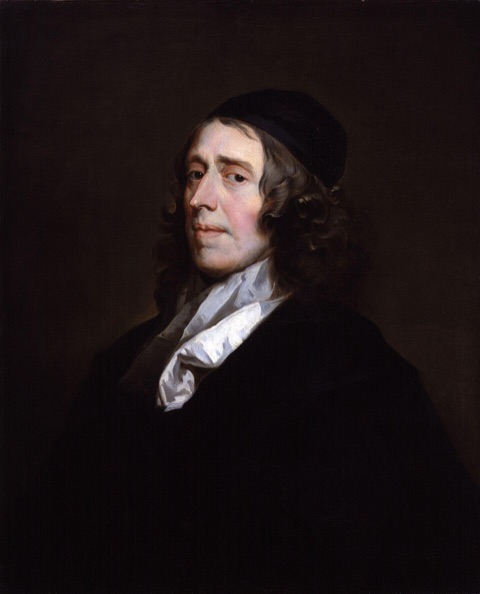
About the author
John Owen
John Owen (1616 to 1683 AD) was born in Stadham, Oxfordshire, the son of a Nonconformist minister, and entered Queen's College, Oxford, at twelve. A sermon heard in 1642 resolved a long spiritual crisis, and he became an Independent. His sermon to the House of Commons the day after the execution of Charles I made him known, and he served as Oliver Cromwell's chaplain, Dean of Christ Church from 1651 and Vice-Chancellor of Oxford from 1652. Ejected from Oxford after the Restoration in 1660, he spent his remaining years as a Nonconformist pastor and writer in London. In this book he describes himself as holding no professorship and living quietly at home. He died in London on August 24, 1683, and was buried at Bunhill Fields.