Modernized edition · Full text · Free PDF/EPUB
Questions About the Seventh-Day Sabbath in Modern English
Want the file? The PDF/EPUB is free with an account.
Summary
- Author
- John Bunyan (1628 to 1688 AD), English Puritan preacher and author
- Published
- London, 1685 AD, three years before Bunyan’s death
- Source edition
- George Offor’s The Works of John Bunyan, vol. 2 (1855)
- Type
- Short treatise in question form
- Length
- 24,000 words · 2 hours
What is Questions About the Seventh-Day Sabbath about?
Questions About the Seventh-Day Sabbath is John Bunyan’s 1685 argument that the seventh-day Sabbath was given to Israel at Sinai as a sign, not written into nature, and ended with the old covenant’s ministration, while the first day of the week, the day of Christ’s resurrection, is the Christian Sabbath.
Read the full summary (9 points, key themes)Show less
How the argument unfolds
- 01
To the Reader: a little book. Bunyan adds his weight to the scales and aims at those with “shallow purses, short memories, and little time to spare.” A Sabbath is moral; which day is God’s appointment.
- 02
Question 1: not known by nature. Adam was complete the day before the seventh day existed, so nature could not teach it. To say otherwise makes nature a prophet that needs no Scripture.
- 03
Question 2: nothing before Moses. No precept or example from Adam to Moses, and the penalty for Sabbath-breaking was still unknown when the stick-gatherer was caught. Christ and Paul restate the moral law without it.
- 04
Question 3: given to Israel only. “The Lord hath given you the sabbath” was said to Israel, as a sign. Nehemiah charged only the Jews, not the merchants of Tyre.
- 05
Question 4: fallen with the ceremonies. The law’s matter is moral, but its Sinai ministration was figurative and has ended. Romans 14, Colossians 2 and Hebrews 4 treat the old day as a shadow.
- 06
The first day: veiled intimations. Christ ceased from his works as God did from his, on his own day. Psalm 118 and Acts 13:33 point to it: “This day my dear Jesus came to life again.”
- 07
The first day: express texts. John 20, Pentecost, Acts 20:7 and 1 Corinthians 16:2 show the custom. Bunyan cites the proverb “The better day, the better deed.”
- 08
Objections answered. Paul’s synagogue preaching, the flight on the Sabbath in Matthew 24:20, and why no plainer command exists: “What need is there of more than enough?”
- 09
Closing appeal. The first day is the manna day; the old law for the seventh day “leads to blood.” Bunyan grieves to see “each fiction turn itself into a faction.”
Key themes
- Time is moral, the day is appointed. “The holiness of a Sabbath, then, lies not in the nature or place of a day, but in the ordinance of God.”
- Shadows end when the body comes. The seventh day was a sign of God’s rest in Christ, and “a sign cannot be both the thing signified and the substance too.”
- Apostolic practice as law. Bunyan does not need a written command for the first day: “the practice of the first church, with their Lord at their head to direct them in that practice, is as good as many commands.”
Reader questions (8)Hide the questions
Questions about Questions About the Seventh-Day Sabbath
Is there a modern English version of Questions About the Seventh-Day Sabbath?
Yes. This is Questions About the Seventh-Day Sabbath by John Bunyan in modern English. The language is modernized and the author's order and argument are kept. The full modernized text is free to read on this page.
Can I read Questions About the Seventh-Day Sabbath online for free?
Yes. The complete text of this modern English edition is on this page, with no sign-up or paywall.
Is there a free PDF of Questions About the Seventh-Day Sabbath?
Yes. The PDF and EPUB of this edition are free with an Updated Works account. Sign in with Google or an email link; no card is needed.
Did John Bunyan think Christians must keep the Saturday Sabbath?
No. He argues that the seventh-day Sabbath was given to Israel at Sinai, belonged to a ministration that has been done away, and has no sanction in the churches of the Gentiles. Those who hold to it, he says, are “Judaized, legalized.”
Is the Sabbath part of the moral law, according to Bunyan?
Partly. Setting aside time to worship God is moral and binds everyone. Which day that is was never fixed by nature but by God’s word, and Christ as “Lord also of the sabbath day” has fixed it on the first day.
Why doesn’t the New Testament command Sunday worship in so many words?
Bunyan’s reply: “No more! What need is there of more than enough?” Christ met his church on the first day, the Spirit came on it, and Paul ordered collections on it, and the practice of the first church counts as law.
What does Bunyan make of Matthew 24:20, praying that your flight not be on the Sabbath?
He says it was spoken to Jewish Christians, many of whom still felt bound by the old day. To a weak conscience, “a law that has lost its life may yet, through ignorance, be as binding as if it still stood on the authority of God.”
Why did Paul preach on the Sabbath if it was abolished?
He preached to unbelieving Jews and proselytes on the day they kept, “out of a divine and shrewd love for the salvation of the unbelieving Jews,” never to a church gathered for Christian worship.
Questions About the Seventh-Day Sabbath in Modern English · Full text
To the Reader
Some may think it strange that I should now offer this small treatise on the same subject, since God’s church has already been so well furnished with sound grounds and reasons, by so many wise and godly men, to prove that the first day of the week is our true Christian Sabbath. But when the scales are already even with what has been put in, a little more, you know, makes the weight the better.
Or grant that we had full weight before. Even so, something over and above may make the work harder for anyone who tries, by hanging fictions on the other end, to make things seem too light.
Besides, since this book is little, it may best suit those who have shallow purses, short memories, and little time to spare, which is usually the lot of ordinary and poorer people.
I have also written on this subject because I want, as in other gospel truths, to be a fellow witness with good men that the day on which our Lord rose from the dead should be highly valued by Christians.
I have observed that some who are otherwise sound in the faith are apt to be entangled with a Jewish Sabbath and things of that kind. I have also observed that some who are far from observing that Sabbath have little to say for their own practice, though their practice is good. If I might help them, I would be glad.
A Jewish seventh-day Sabbath has no promise of grace belonging to it, if what Paul says is true (as it surely is), that the command to honor parents is “the first commandment with promise” (Eph 6:1-3).
It also follows from this that the Sabbath which has a promise attached to keeping it is rather the one which the Lord Jesus will give to the churches of the Gentiles (Isa 56).
Perhaps my method here may not in every respect keep to the common path of argument taken by those who have gone before me. But I trust that the godly wise will find a taste of Scripture truth in what I present to them concerning the sanction of our Christian Sabbath.
By handling four questions, I have here proved that the seventh-day Sabbath was not moral. That must of necessity be done before it can be shown that the first day of the week is the Sabbath day for Christians. But at the same time it follows that if the seventh-day Sabbath was not moral, the first day is not moral either. What is it, then? Why, a Sabbath for holy worship is moral; but this or that day appointed for such service is sanctified by precept or by approved example. The timing of a Sabbath for us, then, lies in God, not man; in grace, not nature; nor does it lie in “the ministration of death, written and engraven in stones” (2 Cor 3:7). For God always reserves to himself a power to alter and change both time and modes of worship according to his own will.
A Sabbath, then, or a day of rest from worldly affairs in which to solemnize worship to God, all good men conclude by nature to be fitting, yes, necessary. Yet nature does not reveal that; God does.
Nor is the day or time God has fixed on better in its own nature than any other. The holiness of a Sabbath, then, lies not in the nature or place of a day, but in the ordinance of God.
Nor does our sanctifying of it, for the ends for which it is ordained, lie in a bare confession that it is such. It lies in a holy performance of the duty of the day to God by Christ, according to his word.
But I will not enlarge any further, so as not to keep the reader longer from the following pages. I will commit both the reader and these pages to the wise disposal of God, and rest,
Yours to serve you,
John Bunyan
Is the Seventh-Day Sabbath Known by the Light of Nature?
Whether the seventh-day Sabbath is part of the law and light of nature, or is made known to man by it.
Something must be laid down here before I show the grounds of this question. First, then, by the law or light of nature I mean that law which was created together with man. It is what is natural to him, being original with him and essential to him, and so it is invariable and unalterable, as that nature is. Second, I grant that by this law of nature man understands that there is one eternal God, that this God is to be worshiped according to his own will, and consequently that time must be allowed to do it in. But whether the law or light of nature teaches, and that of itself, without the help of revelation, that the seventh day of the week is that time sanctified by God and set apart for his worship, that is the question. And the grounds of it are these.
1. Because the law of nature comes before this day. Indeed, it was complete as a law before it was ever known or revealed to man that God either did or would sanctify the seventh day of the week at all.
Now this law, as I said, is natural to a man, for man is a law to himself (Rom 2). Being natural, it could teach only the things of a man, and that is where the apostle limits it (1 Cor 2:11). But to be able to determine things, and that about things which as yet had no being, either in nature or by revelation, is something that does not belong to a man as a man. And the seventh-day Sabbath, as yet, was such a thing. For Adam was completely made the day before, and God had not sanctified the seventh day before it existed in any other way than by his secret decree. Therefore Adam did not understand it by the law of nature; it was not made known to him that way.
2. To affirm the contrary is to make the law of nature supernatural, which is impossible. Indeed, those who do so make it a predictor, a prophet: a prophet about divine things to come; yes, a prophet able to foretell what shall be, and that without a revelation. That is a height no prophet ever yet claimed to reach.
Besides, to grant this is to run into a grievous error. For this not only makes the law of nature the first of the prophets, contrary to Genesis 3:10 compared with John 1:1, but it also seems to make the will of God made known by revelation a needless thing. For if the law of nature, as such, can predict or foretell God’s secrets, and that before he reveals them, and if this law of nature is universal in every single person in the world, what need is there of particular prophets or of their holy writings? And indeed, this is the very rock on which the Quakers and others split. For if the law of nature can of itself reveal to me one thing pertaining to instituted worship (for that is what we are dealing with now), even the exact time which God has not yet sanctified and set apart for performing it, why may it not reveal more to me, and still more, and at last all that I need to know, both as to my salvation and as to how God is to be worshiped in the church on earth?
3. If the seventh-day Sabbath is of the law of nature, then all people are by nature convinced of the necessity of keeping it, even though they have never read or heard of God’s revealed will about it. But this we do not find in the world.
For though it is true that the law of nature is common to all, and that all men to this day are under its power and command, yet we do not find that they are by nature convinced of the necessity of keeping a seventh-day Sabbath. Indeed, though we do not read that the Gentiles ever despised the law of nature, yet the Gentiles, as such, never had any reverence for a seventh-day Sabbath, but rather the contrary.
4. If, therefore, the seventh-day Sabbath is not of the law of nature, then it would seem not to be binding on all. For instituted worship, and the necessary circumstances belonging to it, is binding only on some. We do not read that Adam’s children might not have eaten the fruit of the tree that Adam was forbidden to eat from. And circumcision, the Passover and other parts of instituted worship were commanded only to some.
5. I suspect that the seventh-day Sabbath is not of the law of nature, and so not moral, for this reason: although we read that the law of nature was charged upon the world, and that before Moses, yet I do not find until then that the profaning of a seventh-day Sabbath was charged upon the world. And indeed, this very thing raises a great doubt for me in this case.
A law, as I said, we do read of, and that from Adam to Moses (Rom 5:13-14). We also read of the transgressions of that law, and in particular (Gen 4:8; Gen 6:5; Gen 9:21-22; Gen 12:13; Gen 13:13; Gen 18:12-15; Gen 19:5; Ezek 16:49-50; Gen 26:10; Gen 35:2; Gen 40:15; Gen 44:8-10; Deut 8:19-20; Deut 12:2; Ps 106:35-37), and in the first and second chapters of Romans (Rom 1-2).
But in all the Scriptures we do not read that the breaking of a seventh-day Sabbath was charged upon men as men in all that time. From this I gather one of two things. Either a seventh-day Sabbath was not discerned by the light of nature, and so was not imposed by that law; or else men in old times, by the help and assistance of that light (for we are speaking of men as men), kept it better than the church of God did in later ages with far better assistance. For the church is still found fault with there as a breaker of the Sabbath (Ezek 20:13).
It follows, therefore, that if the law of nature does not of itself reveal to us, as men, that the seventh day is the holy Sabbath of God, then that day, as to its sanction, is not moral. It rests rather on God’s choice; that is, it was imposed by the will of God upon his people until the time he thought fit to change it for another day.
And if so, we must conclude from this that, although men might see by the light of nature that time must be allowed and set apart for performing the worship which God would set up in his house, yet that light, as such, could not see what time the Lord would choose for that purpose. Nature, therefore, saw that by a positive precept, or a word revealing it, and by no other means.
Nor does this take away one bit of the sanction which God once put upon the seventh-day Sabbath. It would do so only if someone could say, and prove by sufficient argument, that an ordinance for divine worship receives greater sanction from the law of nature than from a divine precept, or that it stands stronger when it is established by a human law (for that is what the law of nature is) than when it is imposed by the revelation of God.
But the text will put an end to this controversy. The sanction of the seventh-day Sabbath, even as it was the rest of God, did not come until after the law of nature was completed. God rested on the seventh day and sanctified it (Gen 2:3). He sanctified it: that is, he set it apart for the end mentioned there, namely, to rest on it.
I could produce other grounds for this question, but for now I will stop here and conclude: if a seventh-day Sabbath was essentially necessary to the instituted worship of God, then it too, as to its sanction for that work, was founded only by a positive precept. Consequently it was not known by man at first except by the revelation of God.
Was the Sabbath Imposed on Anyone Before Moses?
Was the seventh-day Sabbath, as to man’s keeping it holy, ever made known to him, or imposed on him, by a positive precept before the time of Moses, which was about two thousand years after Adam?
Here too something must be laid down first, before I set out my grounds for this question. It is this: the seventh day was sanctified to the rest of God as soon as it had any being in the world (Gen 2:2-3), and he rested on it from all his works that he had made. But the question is this: when God sanctified this day to his own rest in this way, did he also, through the span of time mentioned above, impose it on men as a holy Sabbath of rest, so that they might worship him solemnly and in a special manner on it? And I question this for the following reasons.
1. Because we do not read that it was. And by reading I mean reading the divine testimony, which God has ordained as the means for us to find out his mind, both as to faith and as to our performance of service that is acceptable to him.
In our reading, we are also to look for two things:
(1) To see if we can find a precept; or
(2) An approved practice for what we do.
We are to search both these ways, so that we may find out what that good and acceptable will of God is. For the first of these we have Genesis 2:16-17, and for the second, Genesis 8:20-21 (that is, as to public worship, but not on a stated day).
Now, as to imposing a seventh-day Sabbath on men from Adam to Moses, we find nothing of that in Holy Scripture, either by precept or by example. True, we find that the saints who lived then performed solemn worship, for Abel, Noah, Abraham, Isaac and Jacob all sacrificed to God (Gen 4:4; Gen 8:20-21; Gen 12:7; Gen 13:4; Gen 35:1). But we do not read that the seventh day was the time God appointed for their worshiping in this way, or that they took any notice of it.
Some say that when Adam ate the forbidden fruit he also broke the seventh-day Sabbath, because he fell on that day. But we do not read that breaking a Sabbath was charged against him. What we read is this: “Hast thou eaten of the tree, whereof I commanded thee that thou shouldest not eat?” (Gen 3:11). Some also say that Cain killed Abel on a Sabbath day. But we do not read that God laid any such thing at his door when he charged him. What he stood guilty of before God was this: that his brother’s blood cried to God against him from the ground (Gen 4:10).
I therefore take little notice of what a man says, however much he decorates his case with fine words, if he does not bring a “Thus saith the Lord” with him (Ezek 3:11). For that, and that alone, ought to be the ground of my faith as to how my God wants me to worship him. In matters of substance in the worship of God, it is safest for me to be guided in my judgment this way, for only here do I see “the footsteps of the flock” (Song 1:8).
They say further that for God to sanctify a thing is to set it apart. If that is true, they argue, then it follows that the seventh-day Sabbath was sanctified, that is, set apart, for Adam in paradise, and so was ordained a Sabbath of rest for the saints from the beginning.
But I answer, as I hinted before, that God sanctified it to his own rest. So too “the LORD hath set apart him that is godly for himself” (Ps 4:3). But again, it is one thing for God to sanctify this or that thing for a use, and another for him to command that the thing be in force for us immediately. For example, the land of Canaan was set apart for the children of Israel many years before they possessed it (Deut 32:8). Christ Jesus was sanctified, that is, set apart to be our Redeemer, long before God sent him into the world (John 10:36).
So then, if by God’s sanctifying the seventh day for a Sabbath you understand a Sabbath for man (though the text does not say so), it still might have been set apart for man long before it was made known to him as such. And I say that the seventh-day Sabbath had not yet been made known to men.
2. Consider, secondly, that Moses himself seems to have come to know it at first not by tradition but by revelation. “This is that,” he says, “which the Lord hath said” (namely, to me, for we do not yet read that he said it to anybody else), “Tomorrow is the sabbath of the holy rest unto the Lord” (Exod 16:23).
Holy Nehemiah also suggests this when he says to God concerning Israel, “Thou madest known unto them thy holy sabbath … by the hand of Moses thy servant” (Neh 9:14). The first of these texts shows us that the news of a seventh-day Sabbath for men came first to Moses from heaven, and the second, that it was previously unknown to Israel.
But how could either the one or the other be so if the seventh-day Sabbath was taught to men by the light of nature, which is the moral law? Or if it was given to men from the beginning by a positive precept, to be kept?
This, therefore, strengthens my doubt about answering the first question in the affirmative. It also prepares an argument for what I am pleading in the question now under consideration.
3. This makes me still more doubtful, because the punishment due for breaking the seventh-day Sabbath was hidden from men until the time of Moses. This is clear, for it is said of the Sabbath-breaker, “They put him in ward, because it was not [as yet] declared what should be done to him” (Num 15:32-36).
But it seems to me that if this seventh-day Sabbath had been imposed on men from the beginning, the penalty or punishment due for breaking it would certainly have been known before then.
When Adam was forbidden to eat of the tree of the knowledge of good and evil, the penalty, if he disobeyed, was attached to the prohibition right then (Gen 2:16-17). So it was also with circumcision (Gen 17:13-14), the Passover (Exod 12:43-48; Exod 12:19), and other ordinances of worship. How then can anyone think that the seventh-day Sabbath was imposed on men from the beginning, and yet that the punishment for breaking it was hidden with God for the space of two thousand years!
4. God gave the seventh-day Sabbath with a view to fixed and prescribed worship in his church, and that kind of worship was not set up among his people until the time of Moses. Until then, things were being added, or growing: now a sacrifice, then circumcision, then again, long after that, the Passover, and so on.
But when Israel had come into the wilderness to receive there, as God’s congregation, a fixed, prescribed and limited way of worship, then he appointed them a time, and times, in which to perform this worship. But as I said before, it was not so before that, as all five books of Moses plainly show. Therefore the seventh-day Sabbath, as such a limited day, cannot be moral, or of the law of nature, nor was it imposed until then.
And it seems to me that Christ Jesus and his apostles declare this very thing plainly enough. For when they repeat the moral law to the people, or expound it before them, they leave out the seventh-day Sabbath entirely. Indeed, Paul makes that law complete for us without it.
We will first touch on what Christ does in this case, as in his Sermon on the Mount (Matt 5-7). In all that large and heavenly discourse on this law, you do not find one syllable about the seventh-day Sabbath.
So too when the young man came running and kneeling, asking what good thing he should do to inherit eternal life, Christ told him to keep the commandments. But when the young man asked which ones, Christ left out the seventh day entirely and directed him to the others (Matt 19:16-19; Mark 10:17-20; Luke 18:18-20).
You will say that he left out the first, second and third commandments as well. To this I say that was because the young man, by his question, presupposed that he had kept them. For in his request he professed to be a lover of what is naturally good, which is God, in that his petition reached so universally to everything God had commanded.
Paul too, when he mentions the moral law, leaves out of it the very name of the seventh-day Sabbath, and declares that for us Christians the law of nature is complete without it (Rom 3:7-19; Rom 13:7-10; 1 Tim 1:8-11).
“He that loveth another,” he says, “hath fulfilled the law. For this, Thou shalt not commit adultery, Thou shalt not kill, Thou shalt not steal, Thou shalt not covet; and if there be any other commandment, it is briefly comprehended in this saying, Thou shalt love thy neighbour as thyself. Love worketh no ill to his neighbour: therefore love is the fulfilling of the law” (Rom 13:8-10).
I do not make an argument of this; I only take the occasion to mention it as I go. But certainly, if the seventh-day Sabbath had been moral, or of the law of nature, as some would gladly persuade themselves, it would not have been passed over so lightly in all these repetitions of this law. Christ or his apostles would have pressed it on the people when so fair an opportunity offered itself to them at these times. But they knew what they were doing, and why they were so silent about a seventh-day Sabbath when they spoke so well of the law as moral.
5. Moses and the prophet Ezekiel both fully confirm what I have been suggesting: namely, that the seventh day, as a Sabbath, was not imposed on men until Israel was brought into the wilderness.
(1) Moses says to Israel, “Remember that thou wast a servant in the land of Egypt, and that the Lord thy God brought thee out thence through a mighty hand and by a stretched out arm: therefore the Lord thy God commanded thee to keep the sabbath day.” Indeed, he tells us that the covenant God made with them in Horeb, the one written on stones, was not made with their forefathers, that is, Abraham, Isaac and Jacob, but with them (Deut 5:1-15).
(2) Ezekiel is also precise on this point. “I caused them,” God says through that prophet, “to go forth out of the land of Egypt, and brought them into the wilderness. And I gave them my statutes, and showed them my judgments, which if a man do, he shall even live in them. Moreover also I gave them my sabbaths, to be a sign between me and them, that they might know that I am the Lord that sanctify them” (Ezek 20:10-12; Exod 20:8; Exod 31:13; Exod 35:2).
What could be plainer? And these two, to be sure, are notable witnesses for God, and as you see, they agree together on this: that it was not from paradise, nor from the fathers, but from the wilderness and from Sinai that men received the seventh-day Sabbath, to keep it holy.
True, it was God’s Sabbath before then, for we read that on the first seventh day God rested on it and sanctified it. That is why he calls it, in the first place, my Sabbath: I gave them my Sabbath. But it seems it was not given to the church until he had brought them into the wilderness.
But I say, if it had been moral, it would have been natural to man, and men would have understood it by the light of nature, both before it was given and otherwise. But as you see, we read nothing of this, either by positive law, or by approved example, or in any other way. Rather, we read the flat contrary. Moses had the knowledge of it first from heaven, not by tradition. Israel had it, not of or from their fathers, but in the wilderness, from him, that is, Moses, after he had brought them out of the land of Egypt. And that whole law in which this seventh-day Sabbath is placed was given to set bounds to them and better order them in their church state for their time, until the Messiah should come and, by a better ministration, put this out of his church, as I will show further on.
The seventh-day Sabbath, therefore, was not from paradise, nor from nature, nor from the fathers, but from the wilderness and from Sinai.
Did the Sabbath Given to Israel Bind the Gentiles?
When the seventh-day Sabbath was given to Israel in the wilderness, did it bind the Gentiles as such?
Before I show my grounds for this question, I must also first lay down this premise: the Gentiles, as such, were at that time outside the church of God and outside its pale. Consequently they had nothing to do with the essentials or the necessary circumstances of the worship that God had now set up for himself among the children of Israel.
Now, then, to the grounds of the question.
First, we do not read that God gave it to anyone but the seed of Jacob. That is why it is said to Israel, and to Israel only, “The Lord hath given you the sabbath” (Exod 16:29). And again, “also I gave them my sabbath” (Ezek 20:5, 12).
Now, if the gift of the seventh-day Sabbath was to Israel only, as these texts more than seem to say, then it was not given to the Gentiles as such. That is, unless someone wants to conclude that by doing this God promoted the Jew to the state of a Gentile, or that by doing this he bestowed on the Jews some high Gentile privilege. But that would be pure fiction. For, setting reasoning aside, the text always put the Jew in the first place where preference is concerned (Rom 2:10). And God’s giving them the seventh-day Sabbath was nothing other than a sign and token of that preference.
But the great objection is that the seventh-day Sabbath is found among the rest of those precepts so commonly called the moral law, and from this it is concluded that the Sabbath is of perpetual duration.
I answer that even that law, as it was given on Sinai, is not moral; I mean, as to the manner and the ends of its ministration. God permitting, we shall say more about this in our answer to the fourth question, and I direct you there for satisfaction.
Second, the Gentiles, as such, could not be concerned with God’s giving a seventh-day Sabbath to Israel, because, as I have shown before, it was given to Israel considered as a church of God (Acts 7:38). Nor was it given to them as such without the rites and ceremonies belonging to it (Lev 24:5-9; Num 28:9-10; Neh 13:22; Ezek 46:4).
Now, I say, suppose this Sabbath has ceremonies belonging to it, and these ceremonies were essential to the right keeping of the Sabbath. Suppose, again, that these ceremonies were given to Israel only, excluding everyone but those who were their proselytes. Then this Sabbath was given to them in a way that excluded the Gentiles as such. But if it had been moral, the Gentiles could as soon have been deprived of their very nature as of a seventh-day Sabbath, even if the Jews had claimed it for themselves alone.
Again, to say that God gave this seventh-day Sabbath to the Gentiles as such (and he must have, if it belongs to the moral law) is as much as to say that God ordained that that Sabbath should be kept by the Gentiles without its ceremonies, but by the Jews not without them. And what conclusion follows from this, except that God at one and the same time set up two sorts of acceptable worship in the world, one among the Jews and another among the Gentiles? But how ridiculous such a thought would be, and how contrary to the wisdom of God, you may easily see.
Yes, and what a disparagement it would be to God’s church as it then was for anyone to say that the Gentiles were to serve God with more liberty than the Jew! For the law was a yoke, and yet the Gentile is called the dog and is said to be without God in the world (Deut 7:7; Ps 147:19-20; Matt 15:26; Eph 2:11-12).
Third, when the Jews had returned from Babylon, the Gentiles came and offered their wares for sale to the children of Israel at Jerusalem on this Sabbath, and indeed sold them to them too. Yet it was not they, but the Jews, who were rebuked as the only breakers of that Sabbath. More than that, men of Tyre were living in Jerusalem at that time who sold their goods on this Sabbath to the Jews and the men of Judah. Yet not they, but the men of Judah, were contended with as the breakers of this Sabbath.
It is true that good Nehemiah threatened the Gentile merchants for staying around the walls of the city at that time, because by doing so they were a temptation to the Jews to break their Sabbaths. But he still charged the breaking of it only on his own people (Neh 13:15-20).
But can anyone imagine that, if the Gentiles had now been bound to this Sabbath by divine law, so holy a man as Nehemiah would have let them escape without a rebuke for so notorious a breach of it? Especially considering that they were now also on God’s ground, that is, inside and outside the walls of Jerusalem.
Fourth, that is why he says to Israel again, “Verily my sabbaths ye shall keep.” And again, “Ye shall keep the sabbath.” And again, “The children of Israel shall keep the sabbath, to observe the sabbath throughout their generations” (Exod 31:13-16; Exod 16:29).
With these things standing this way in the testament of God, what could be plainer than that the seventh-day Sabbath, as such, was given to Israel, and to Israel only, and that the Gentiles, as such, were not concerned in it?
Fifth, the very reason God gave the seventh-day Sabbath to the Jews also excludes the Gentiles, as such, from having any concern in it. For it was given to the Jews, as was said before, as they were considered God’s church, and as a sign and token by which they would know that he had chosen them and sanctified them to himself as a special people of his own (Exod 31:13-17; Ezek 20:12-13).
And it was a great token and sign that he had chosen them in this way. For in giving them this Sabbath he had given them his own rest, a figure and pledge of his sending his Son into the world to redeem them from the bondage and slavery of the devil. Of this, indeed, this Sabbath was a shadow or type (Col 2:16-17).
Thus I have concluded my grounds for this third question. I shall therefore now propose another.
Did the Seventh-Day Sabbath Fall with the Jewish Ceremonies?
Did not the seventh-day Sabbath, as such, fall with the rest of the Jewish rites and ceremonies? Or was that day, as a Sabbath, afterward imposed by the apostles on the churches of the Gentiles?
Before I show the grounds on which I put this question, I would now also lay down what needs to be said first. It is this: that time and day were both fixed by law for the solemn performance of divine worship among the Jews, and that time and day are also fixed by law for the solemn worship of God in the churches of the Gentiles. But whether the seventh-day Sabbath, as such, is that time, that day, is what I still question.
Now, before I show the grounds of my questioning it, I will inquire into the nature of that ministration at the very heart of which this seventh-day Sabbath is placed. And,
First, I say, as to that: the nature of that law is moral, but the ministration of it, and the circumstances belonging to that ministration, are shadowy and figurative.
By the nature of it, I mean its matter. By the ministration and the circumstances belonging to it, I mean its being given by such hands, at such a place and time, and in such a manner, as when it was given to Israel in the wilderness.
The matter of it, then, namely, “Thou shalt love the Lord thy God with all thy heart, and with all thy soul, and with all thy mind, and with all thy strength,” and “thy neighbour as thyself” (Mark 12:29-31), is everlasting. It does not come from Sinai, nor from the two tables of stone, but from nature. For this law began, and took its being and place, on the day that man was created. Yes, it was created together with him, and without it he cannot be a rational creature, as he was on the day God created him. But as for the ministration of it from Sinai, with the circumstances belonging to that ministration, they are not moral or everlasting, but only shadowy and figurative.
That ministration cannot be moral, for three reasons. (1) It did not begin when morality began, but two thousand years after. (2) It was not universal, as the law considered as moral is; it was given in those tables only to the church of the Jews. (3) As such a ministration, it has come to its end, though the same law, as to its morality, remains. Where are the tables of stone now, and this law as it was contained in them? As to that, all we have in the testament of God is the record of such a ministration, together with a rehearsal of the law and of the manner in which it was given.
But to come to particulars.
1. The very preface to that ministration carries in it a type of our deliverance from the bondage of sin, the devil, and hell; for Pharaoh, and Egypt, and Israel’s bondage there, were a type of these.
2. The very stones on which this law was engraved were a figure of the tables of the heart. The first two were a figure of the carnal heart, by which the law was broken; the last two, of the spiritual heart, in which the new law, the law of grace, is written and kept (Exod 34:1; 2 Cor 3:3).
3. The very mountain on which this ministration was given was a type of Mount Zion. See Hebrews 12:18-22, where the two are compared.
4. Yes, the very church to which that ministration was given was a figure of the church of the gospel, which is on Mount Zion. See the same scripture, and compare it with Acts 7:38 and Revelation 14:1-5.
5. That ministration was given by the hand and through the disposition of angels, to prefigure how the new law, or ministration of the Spirit, was afterward to be given to the churches under the New Testament by the hands of the angel of God’s everlasting covenant of grace, who is his only begotten Son (Isa 63:9; Mal 3:1; Acts 3:22-23).
6. It was also given to Israel by the hand of Moses as mediator, to show, or typify, that in later times the law of grace would come to the church of Christ by the hand and mediation of Jesus our Lord (Gal 3:19; Deut 5:5; Heb 8:6; 1 Tim 2:5; Heb 9:15; Heb 12:24).
7. As for this ministration, it was to continue only “till the seed should come” (Gal 3:19), and then, as such, it must give place to a better ministration: “A better covenant, established upon better promises” (Heb 8:6).
From all this, then, I conclude that a difference must be put between the morality of the law and the ministration of it on Sinai. The law, as to its morality, existed before; but as to this ministration, it did not exist until the church was with Moses, and Moses with the angels, on Mount Sinai in the wilderness.
Now in the law considered as moral, we conclude that a time is set forth, but no seventh-day Sabbath is commanded. But in that law as it was thus ministered (and that ministration has already been put out of doors), we find a seventh day commanded: that seventh day on which God rested, on which God rested from all his works. What follows, then? Why, since the whole ministration as written and engraved in stones has been removed, the seventh-day Sabbath must also be removed. For neither the time nor the day, as to our holy Sabbath or rest, was moral. It was imposed on the church with that whole ministration, as such, until the time of reformation. That time has now come, and so this ministration, as I said, ceases as such. And the whole law, as to its morality, is delivered into the hand of Christ, who imposes it now too, but not as a law of works, nor as that ministration written and engraved in stones. He imposes it as a rule of life to those who have believed in him (1 Cor 9:21).
So then, that law is still moral. And since it teaches that there is a God, it still supposes that time must be set apart for his church to worship him in, according to the will he has revealed in his word. But though that law requires time, that law, as moral, never fixed the time beforehand.
The time in former days, then, was appointed by such a ministration of that law as we have now been discussing; and when that ministration ceased, that time vanished with it too. And now, by our new Lawgiver, the Son of God, who is “Lord also of the sabbath day,” we have a time fixed, as the law of nature requires: a new day, appointed, I say, by him who is the Lord of it. On that day we may worship, not in the oldness of that letter written and engraved in stones, but according to his new and holy testament, and in the way that best agrees with it. And I confirm this further by the reasons that follow.
First, because from the resurrection of Christ to the end of the Bible we find nothing written that imposes that seventh-day Sabbath on the churches. Time, as I said, the law as moral requires; but that time we find imposed no longer. And in all duties concerning God and his true worship in his churches, we must be guided by his laws and testaments: by his old laws when his old worship was in force, and by his new laws now that his new worship is in force. And he has now truly said, “Behold, I make all things new” (Rev 21:5).
Second, I find, as I have shown, that this seventh-day Sabbath is tied, not to the law of nature as such, but to that ministration of it which was given on Sinai. And as that ministration has come to an end as such, so Paul rejects it as a ministration in no way able to remain in the church now, since the ministration of the Spirit has taken its place (2 Cor 3). So instead of setting it before the churches with arguments to persuade them to receive it, he seeks to wean the churches from any fondness for it by stripping it of its old luster and glory:
(1) By calling it the ministration of death, of the letter, and of condemnation: a most frightful name, and in no way attractive to the godly.
(2) By calling it a ministration that now has no glory, because of the far greater glory of that ministration under which the New Testament churches live by the Holy Spirit. And these are weaning considerations (2 Cor 3).
(3) By telling them that it is a ministration that tends to blind the mind and to veil the heart as to the knowledge of their Christ, so that while they are under it they cannot behold his beautiful face, except as their heart turns from it to him (2 Cor 3).
(4) And so that they might not be left in the dark, but know perfectly what ministration he means, he says expressly that it is the one “written and engraven in stones.” See again 2 Corinthians 3. And it is in that ministration that this seventh-day Sabbath is found.
But shall we think that the apostle says any of this to wean the saints from the law of nature as such? No, truly. That he keeps in the church, as it is administered there by Christ. But this ministration is dangerous now, because it cannot be kept up in the church except in a way that shows contempt for the ministration of the Spirit, and it detracts from the glory of that ministration.
Now these, as I said, are weaning considerations. I do not think any man who knows himself, or the glory of a gospel ministration, can wish that such a ministration should be kept in the churches, if he understands what Paul says here.
Third, this seventh-day Sabbath has lost its ceremonies (the ones to which the texts cited earlier have directed you), which were imposed with it on the old church for her proper performance of worship to God on that day. How then can this Sabbath be kept now? Kept, I say, according to law. For the church on which it was first imposed was not to keep it, indeed could not keep it lawfully, without practicing those ceremonies. And if those ceremonies are long since dead and gone, how will those who claim to believe that its sanction continues keep it, I say, as it is written?
If they say they keep the day but change their way of observing it, I ask: who has commanded them to do so? This is one of the laws of this Sabbath: “Thou shalt take fine flour, and bake twelve cakes thereof: two tenth deals shall be in one cake. And thou shalt set them in two rows, six on a row, upon the pure table before the Lord. And thou shalt put pure frankincense upon each row, that it may be on the bread for a memorial, even an offering made by fire unto the Lord. Every sabbath he shall set it in order before the Lord continually, being taken from the children of Israel by an everlasting covenant” (Lev 24:5-8). You may also see other places, such as Numbers 28:9-10, Nehemiah 13:22, and Ezekiel 46:4.
Now if these are the laws of the Sabbath, of this seventh-day Sabbath; and if God never commanded that his church should sanctify this Sabbath without them; and if, as was said before, these ceremonies have long since been dead and buried, how is this Sabbath to be kept?
Let men take heed lest, while they plead for the law and claim to be the only doers of God’s will, they are found to be its biggest transgressors. And why can they not just as well keep the other sabbaths, such as the sabbaths of months, of years, and the jubilee? For this, as I have shown, is no moral precept; it is only a branch of the ministration of death and condemnation.
Fourth, the seventh-day Sabbath, as such, was a sign and shadow of things to come, and a sign cannot be both the thing signified and the substance too. So when the thing signified, or the substance, has come, the sign, or the thing that shadowed it, ceases. And I say that since the seventh-day Sabbath was such a sign, it also ceases as a seventh-day Sabbath. See again Exodus 31:13-14, Ezekiel 20:12, 20, and Colossians 2:14.
Nor do I find that our Protestant writers, for all their reverence for the Sabbath, conclude otherwise. Though they hold that time for worshiping God must be contained within the moral law, as moral, yet for good reasons they refrain from fixing the seventh day there as that time too.
They do this, I say, for good reasons: reasons drawn from the Scripture, or rather, because the Scripture draws them to that conclusion. Yet they do not throw away the morality of a sabbath of rest for the church. It must be granted them that time for God’s worship abides forever, but the seventh day vanishes as a shadow and sign, because that is indeed what it was, as the Scripture cited above declares regarding its sanction as a Sabbath.
The law of nature, then, calls for time; but the God of nature assigns it, and has given his Son power to continue such time as he himself, in his eternal wisdom, judges most fit for the churches of the Gentiles to solemnly worship God by him in. That is why he is said to be “Lord even of the sabbath day” (Matt 12:8).
Fifth, I find by reading God’s word that Paul, by apostolic authority, takes away the sanctions of all the Jews’ festivals and sabbaths.
This is plain, because he leaves the observing or not observing of them, as things indifferent, to the mind and discretion of believers: “One man esteemeth one day above another: another esteemeth every day alike. Let every man be fully persuaded in his own mind” (Rom 14:5).
By this last clause of the verse, “Let every man be fully persuaded in his own mind,” he plainly declares that such days are now stripped of their sanction. For none of God’s laws, while they keep their sanction, are left to the will and mind of believers as to whether they will observe them or not. Men, I say, are not left to their liberty in such a case. For as long as the stamp of divine authority is on a law and remains there, we are bound, not to our mind, but to that law. But when a thing once sacred has lost its sanction, then, as to faith and conscience, it falls among other common or indifferent things. And so did the seventh-day Sabbath.
Sixth, again, this is what Paul writes to the church at Colossae: “Let no man therefore judge you in meat, or in drink, or in respect of an holyday, or of the new moon, or of the sabbath: which are a shadow of things to come; but the body is of Christ” (Col 2:16-17). Here too he treats the Sabbath as he treats the other holy days. He gives believers liberty to refuse to observe it, and commands that no one should judge against them for doing so. And as you read, his reason for this is that the body, the substance, has come. Christ, he says, is the body, that is, the thing of which these were a shadow or figure. “The body is of Christ.”
Nor, one would think, has the apostle left any hole for men’s inventions to slip out through, since he says “or of the sabbath.” But man has sought out many, and so he will use many.
But again, it is clear that by this word “sabbath” the apostle means the seventh-day Sabbath. For Moses himself counts it as a sign, as we have shown; and none of the other sabbaths was a clearer shadow of the Lord Jesus Christ than this one. For that day, and that day alone, is called “the rest of God”: on it God rested from all his works. That is why he calls it, by way of eminence, “My sabbath, and my holy day” (Isa 56:4; Isa 58:13).
Yet that rest could be nothing but typical. For since the world began, God has never really rested except in his Son: “This is he,” says God, “in whom I am well pleased” (Matt 3:17). This Sabbath, then, was God’s rest in type, and was given to Israel as a sign of his grace toward them in Christ. So when Christ had risen, it ceased, and no longer had any power to bind the conscience to observe it.
As for the words “or of the sabbath”: he distinctly singles out this seventh day as a most noble shadow, a most exact shadow. And then he puts it together with the others, saying that they are a shadow of things to come, and that Christ has answered them all: “The body is of Christ.”
Seventh, no one, I think, will deny that Hebrews 4:4 means the seventh-day Sabbath, on which God rested from all his works, for the text plainly says so. Yet the observant reader may easily see that both it and the rest of Canaan also (Heb 4:5) were types pointing to a day mentioned in Hebrews 4:7-8, which he calls “another” day. He would not afterward have spoken of another day if Joshua had given them rest. He would not. Now if they did not have that rest in Joshua’s days, you may be sure they did not have it through Moses, for he came still earlier.
All the rests, therefore, that Moses gave them, and that Joshua gave them too, were only types of another day, in which God would give them rest (Heb 4:9-10). And whether the day to come was Christ or heaven makes no difference. It is enough that the earlier ones failed, as shadows always do, and that therefore David speaks, and that later, of another day. “There remains therefore a rest to the people of God”: a rest to come, of which the seventh day on which God rested, and the land of Canaan, were a type. This rest begins in Christ now, and shall be completed in glory.
And when he says, “There remains a rest,” referring to what David said, what can it mean, if not that the other rests do not remain? So there remains a rest, a rest prefigured by the seventh day and by the rest of Canaan, though they have fled and are gone.
“There remains a rest”: a rest that does not now stand in signs and shadows, in the seventh day or in Canaan, but in the Son of God and his kingdom, to whom and to which the weary are invited to come for rest (Isa 28:12; Matt 11:28; Heb 4:11).
Yet this does not cast out the Christians’ holy day, or Sabbath. For that was not ordained to be a type or shadow of things to come, but to be a day in which to sanctify the name of their God, and to perform to him that worship which was also signified in a shadow by the ceremonies of the law, as the Epistle to the Hebrews abundantly declares.
And I say again, the seventh-day Sabbath cannot be that day, for the reasons shown before.
Eighth, this holds all the more if you add to all this that nothing of the ministration of death written and engraved in stones is brought by Jesus, or by his apostles, into the kingdom of Christ as a part of his instituted worship. That is why it is said of that ministration, at the very heart of which this seventh-day Sabbath is found, that it now has no glory: that its glory is done away in or by Christ, and so is laid aside, since the ministration of the Spirit, which excels in glory, has come in its place.
I will read you the text: “But if the ministration of death, written and engraven in stones, was glorious, so that the children of Israel could not steadfastly behold the face of Moses for the glory of his countenance; which glory was to be done away.” Notice here that it was given at first with this proviso: that it should not always keep its glory, that is, its sanction as a ministration. The text goes on: “How shall not the ministration of the Spirit be rather glorious? For if the ministration of condemnation be glory, much more doth the ministration of righteousness exceed in glory. For even that which was made glorious had no glory in this respect, by reason of the glory that excelleth. For if that which was done away was glorious, much more that which remaineth is glorious” (2 Cor 3:7-11).
What could be plainer? The text says expressly that this ministration does not remain. Yes, and it implies that at its first institution it was ordained with this proviso: it was to be done away. Now if at its first institution on Sinai it was ordained this way; and if by the coming in of the ministration of the Spirit this ordinance is now carried out; that is, if (as the apostle says) it is done away by a ministration that remains: then where is that seventh-day Sabbath?
So I have discussed this fourth question. And having shown by this discussion that the old seventh-day Sabbath is abolished and done away, and that it has nothing to do with the churches of the Gentiles, I must next show what day it is that must remain holy to Christians, the day on which they are to perform their New Testament church service.
So let me put the question this way.
The First Day of the Week as the Christian Sabbath
On this question hangs the weight of the whole subject now under consideration. But before I can speak to it distinctly, I must lay down something first, as I did before speaking to the earlier questions, to clear our way.
We are not now speaking of every kind of worship of God, nor of all the times in which every kind of worship is to be performed. We are speaking of that worship which is church worship, the worship to be performed by the assembly of saints when, by the will of God, they gather together in every part of his dominion to worship him. That worship has a time fixed beforehand and allotted to it for its performance, and without that time it cannot be done according to the mind of God. This, I say, is the time we are to discuss, and not all the time appointed for every kind of worship.
I do not question that the godly perform worship to God every day of the week, yes, and every night too, and that God appoints or allows time for performing such worship. But this time is not fixed to the same moment or hour for everyone. It is left to the discretion of believers, as their frame of spirit, or their occasions, or their needs, or their temptations, or their duty shall require.
We deal, then, only with the time in which the worship described above is to be performed. The law of nature, as such, takes for granted that there is such a time, but the God of nature chooses it. And we have proved that, for the churches of the Gentiles, this time is not the time assigned to the Jews, namely, that seventh day which was imposed on them by the ministration of death. For, as we have shown already, that ministration is indeed done away by a better and more glorious ministration, the ministration of the Spirit. And surely that ministration would be far inferior even to the one that now has no glory, if it were defective in this respect. That is, it would be inferior if it imposed a gospel service but appointed no time to perform that worship in; or if, for all the praise given it, it were forced to borrow from a ministration inferior to itself the very thing without which its most solemn worship can by no means be performed, namely, the time.
This, then, is the conclusion: time to worship God in is required by the law of nature. But that the law of nature, as such, fixes it on the seventh day from the creation of the world, I utterly deny, by what I have said already and by what I have yet to say on that point. Yes, I hope to make it plain, as I have already, that this seventh day is removed, and that God, by the ministration of the Spirit, has changed the time to another day, namely, the first day of the week. Therefore we conclude that the time for the worship of New Testament Christians, or the churches of the Gentiles, is fixed on that day.
Now in my discussion of this subject I shall first touch on those texts that are more veiled, yet carry a divine intimation of this thing in them; and then I shall come to texts that are more express.
Texts That Carry a Veiled Intimation
First, then, for those texts that are more veiled, yet carry a divine intimation of this thing in them.
1. The comparison the Holy Spirit makes between God’s rest from his works and Christ’s rest from his intimates such a thing: “He that is entered into his rest, he also hath ceased from his own works, as God did from his” (Heb 4:10).
Now God rested from his works and sanctified a day of rest to himself as a sign of that rest, and he also gave that day to his church as a day of holy rest likewise. And if Christ rested from his own works in the same way, and the Holy Spirit says he did, then he also has sanctified a day to himself as the day on which he finished his work. He has given that day to his church as well, to be an everlasting memorial of his doing so, and so that they should keep it holy for his sake.
And see: as the Father’s work came first, so his day went before; and as the Son’s work came after, so his day followed accordingly. The Father’s day was the seventh day from the creation; the Son’s was the first day following.
Nor may this be brushed aside, because the text says that as God finished his work, so Christ finished his: “He also hath ceased from his own works as God did from his.” He rested, I say, as God did. But God rested on his resting day, and therefore so did Christ. Not that Christ rested on the Father’s resting day, for it is evident that on that day he still had a great part of his work to do. He had not yet won his victory over death. But the next day he also entered into his rest, having finished his work by rising again; that is, he had conquered the powers of darkness, and by doing so had brought life and immortality to light.
So then, since that was the day of the Son of God’s rest, it must also be the day of rest for his churches. For God gave his resting day to his church to be a sabbath; and Christ rested from his own works as God did from his; therefore Christ, like the Father, also gave the day on which he rested from his works to the churches as a sabbath. Not that there are two sabbaths at once. The Father’s was imposed for a time, until the Son’s should come. Yes, as I have shown you, even at the very time it was imposed, it was also ordained to be done away. That is why he says that ministration “was to be done away” (2 Cor 3:7). Therefore we do not plead for two sabbaths at the same time. We plead that a time in succession to the old was ordained for the New Testament saints, or the churches of the Gentiles, to worship God in; and that time is the day on which the Son rested from his own works as God did from his.
2. This is why he calls himself “Lord even of the sabbath day” (Luke 6:5; Matt 12:8). Now to be a Lord is to have dominion, dominion over a thing, and so to have power to alter or change it according to that power. And where is the person who dares to say that Christ does not have this absolutely? We will therefore take it as granted on all sides that he has it. The question then is whether he has exercised that power by demolishing or removing the Jews’ seventh day and establishing another in its place. I think this is easily answered: he did not rest from his own works on that day, but chose another day for his own rest.
Surely, if the Lord Jesus had intended to establish the seventh day for the churches of the Gentiles, he would himself, in the first place, have rested from his own works on it. But he passed that day by and took no notice of it as the day of finishing his own works, as God took notice of it when he had finished his. It follows, then, that he fixed on another day, namely, the first day of the week. On that day, by rising again and showing himself to his disciples after his passion, he made it plain that, “as Lord of the sabbath,” he had chosen that day for his own rest, and consequently for the rest of his churches, and for his worship to be solemnly kept.
3. And on this day some of the saints who slept arose and began their eternal sabbath (Matt 27:52-53). See how the Lord Jesus has glorified this day! Never was such a stamp of divine honor put on any other day, no, not since the world began. “And the graves were opened; and many bodies of the saints which slept arose, and came out of the graves after his resurrection…” That is, they arose as soon as he had risen. But why was all this not done on the seventh day? No, that day was set apart so that saints might adore God for the works of creation, and so that through it saints might look for redemption by Christ. But now a work more glorious than that was to be done, and therefore another day is assigned for doing it in. A work of redemption, I say, was completed, so a day by itself must be assigned for this; and some of the saints were to begin their eternal sabbath with God in heaven, so a day by itself must be appointed for this. Yes, and so that this day might not lack the glory that could draw even the dimmest-sighted Christian to desire to keep it holy, the resurrection of Christ and the resurrection of those saints met together on it. Yes, both he and they began their eternal rest on it.
4. The psalmist speaks of a day that the Lord Jehovah, the Son of God, has made, and says, “we will rejoice and be glad in it.” But what day is this? Why, the day in which Christ was made the “head of the corner,” which must be applied to the day on which he was raised from the dead, which is the first day of the week.
That is why Peter says to the Jews, when he deals with Christ before them, and particularly with his resurrection, “This is the stone which was set at nought of you builders, which is become the head of the corner” (Acts 4:11). He was set at nought by them through the whole course of his ministry until his death, and he was made the head of the corner by God on that day when he rose from the dead. This day, therefore, is the day that the Lord Jehovah has made a day of rejoicing for the church of Christ, and we will rejoice and be glad in it (Ps 118:24).
For can anyone imagine that the Spirit, by the prophet, would single out this day so markedly for nothing, saying, “This is the day which the Lord hath made,” to no purpose? “Yes,” you may say, “it was for the resurrection of his Son.”
But I add that that is not all. It is a day that the Lord made both for that and so that we might “rejoice and be glad in it” (Ps 118:24): rejoice, that is, before the Lord while solemn divine worship is performed on it by all the people who share in the redemption accomplished then.
5. God the Father again puts on this day another stamp of divine note and honor such as he had never before put on any day, where he says to our Lord, “Thou art my Son, this day have I begotten thee” (Acts 13:33). This still, I say, has respect to the first day of the week, for that day and no other is the day the apostle intends here. This day, says God, is the day: “And as concerning that he raised him up from the dead, now no more to return to corruption, he said on this wise, I will give thee the sure mercies of David. Wherefore he saith also in another Psalm, Thou shalt not suffer thine Holy One to see corruption” (Acts 13:34-35). Therefore the day on which God did this work is greater than the day on which he finished the work of creation. For his making of the creation did not save it from corruption, but now he has done a work that corruption cannot touch. That is why the day on which he did this has this mark from his own mouth, “This day,” as a day that transcends.
And, as I said, this day is the first day of the week, for it was on that day that God begot his beloved Son from the dead. On this first day of the week, therefore, God found a pleasure that he did not find in the seventh day from the world’s creation, because on it his Son lived again to him.
Now when Christians read that God says, “This day,” and says it with reference to a work he did on it, a work so full of delight to him and so full of life and heaven to them, shall they not also take special note of it? Shall they not say, “This was the day of God’s pleasure, because his Son rose on it; and shall it not be the day of my delight in him?” This is the day on which his Son was both begotten and born, and became the firstfruits to God of those who sleep; yes, and on which God also made him the chief, and the head of the corner (Acts 13:33; Heb 1:5; Col 1:18; Rev 1:5). And shall we not rejoice in it?
Shall kings and princes and great men mark the day of their birth and of their coronation, and expect both subjects and servants to do them high honor on that day, and shall the day on which Christ was both begotten and born be a day despised by Christians, and his name be held in no more than common regard on that day?
I say again, shall God point, as with his finger, and that in the face of the world, at this day, saying, “Thou art my Son, this day…,” and shall not Christians fear, and rouse themselves from their ordinary employments to worship the Lord on this day?
If God remembers it, well may I! If God says, and says it with all gladness of heart, “Thou art my Son, this day have I begotten thee!” may I not, ought I not, also set this day apart to sing the songs of my redemption in?
This day my redemption was finished.
This day my dear Jesus came to life again.
This day he was declared to be the Son of God with power.
Yes, this is the day on which the Lord Jesus finished a greater work than any yet done in the world; yes, a work in which the Father himself took more delight than he did in making heaven and earth. And shall darkness and the shadow of death stain this day? Or shall a cloud rest on this day? Shall God regard this day from above, and shall his light not shine on this day? What shall be done to those who curse this day, and would not have the stars give their light on it? This day! After this day had come, God never again, so far as we read, mentioned the old seventh-day Sabbath with delight.
6. Nor should we wholly pass over what he says: “When he bringeth in the firstbegotten into the world, Let all the angels of God worship him” (Heb 1:6); that is, at that very time and day.
I do not know what our expositors say about this text, but to me it seems to be meant of his resurrection from the dead. One reason is that the apostle is speaking of that in Hebrews 1:5; another is that he closes that argument with this text: “Thou art my Son, this day have I begotten thee? And again, I will be to him a Father, and he shall be to me a Son? And again, when he bringeth in the firstbegotten into the world, he saith, And let all the angels of God worship him.”
So then, God’s bringing his firstborn into the world now was by raising him again from the dead, after they had turned him out of the world by crucifying him.
So God brought him into the world in this way, never again to be hurried out of it by them. For Christ, now raised from the dead, dies no more; death has no more dominion over him.
Now, says the text, when he brings him into the world in this way, he requires that worship be given to him. When? On that very day, and by all the angels of God. And if by all, then ministers are not excluded; and if ministers are not, then neither are churches, for what is said to the angels is said to the church itself (Rev 2:1-7, 8, 11, 12, 17, 18, 29; Rev 3:1, 6, 7, 13, 14, 22).
So then, if anyone asks when they must worship him, the answer is: when God brought him into the world, which was on the first day of the week. For then he brought him again from the dead, and gave the whole world and its government into his holy hand. This text, therefore, carries weight for what we now have under consideration, namely, that the first day of the week, the day on which God brought his firstborn into the world, should be the day on which he is worshiped by all the angels of God.
7. That is why this day is called “the Lord’s day,” as John says, “I was in the Spirit on the Lord’s day” (Rev 1:10), meaning the day on which Jesus rose from the dead.
“The Lord’s day.” Every day, some say, is the Lord’s day. This may indeed be granted for the sake of argument. But strictly speaking, no day can so properly be called the Lord’s day as this first day of the week, because no day of the week or of the year bears such badges of the Lord’s glory, or has such divine grace put on it, as the first day of the week.
We have already shown this in part, and we will show it much more fully before we have finished with it.
So far as I know, nothing bears this title except the Lord’s supper and this day (1 Cor 11:20; Rev 1:10). And since Christians count it an abuse to allegorize the first, let them also be ashamed to turn the second into a fantasy. The Lord’s day is without doubt the day on which he rose from the dead. It is certainly not the old seventh day, for from the day he arose to the end of the Bible, we do not find that he hung so much as one strand of glory on that day. But this day is adorned with glory upon glory, and that by both the Father and the Son, by the prophets, and by those who were raised from the dead on it. Therefore this day must be more than the rest.
But so far we are only dealing with divine intimations, drawn from texts which, if considered fairly, smile very much on this great truth, namely, that the first day of the week is to be counted the Christian sabbath, or holy day for divine worship in the churches of the saints.
Texts That Speak More Expressly
And second, I now come to the texts that are more express.
1. This was the day on which he was accustomed to show himself to his people and to gather with them after he rose from the dead. On the very first of these first days, the day on which he rose from the dead, he visited his people, both together and apart, over and over and over, as both Luke and John testify (Luke 24; John 20). And he preached to them such sermons about his resurrection, yes, and gave them such demonstration of the truth of it all, as was never given them from the foundation of the world. Showing, he showed them his risen body; opening, he opened their understandings; and scattering, he so scattered their unbelief on this day as he had never done before. And this went on in one way or another from before daybreak until evening.
2. On the next first day following, the church was “within” again; that is, gathered to wait on their Lord. And John relates the matter in a way that gives us to understand that they had not assembled together like this again until then. “After eight days,” he says, “again his disciples were within” (John 20:26). This clearly implies that they had not done so on the days in between, no, not on the old seventh day.
Now why should the Holy Spirit speak so precisely of their assembling together on the first day, if not to confirm us in this, that the Lord had chosen that day for the new sabbath of his church? Surely the apostles knew what they were doing when they met together on that day; yes, and so did the Lord Jesus. For his custom of visiting them when they were assembled in this way made his practice a law to them. Practice is enough for us New Testament saints, especially when the Lord Jesus himself is at the head of that practice, and that after he rose from the dead.
Perhaps some may stumble at the word “after,” “after eight days.” But the meaning is: at the close of the eighth day, or when they had spent practically the whole of their sabbath waiting on their Lord, in comes their Lord and finishes that day’s service of theirs to him by confirming Thomas’s faith and by letting fall among them other most heavenly treasure. Christ said that he must lie three days and three nights in the heart of the earth, and yet it is evident that he rose the third day (1 Cor 15:4).
We must, then, take a part for the whole and conclude that from the time the Lord Jesus rose from the dead to the time he showed his hands and his side to Thomas, eight days had almost run out. That is, he had sanctified to them two first days, and had accepted the service they had performed to him on them, as he testified by giving them so blessed a farewell at the close of both those days.
From this we now conclude that it was the custom of the church at that time to meet together on the first day of the week and to wait on their Lord on it. For the Holy Spirit counts it needless to repeat things continually; it is enough, therefore, if we have mention made of it now and then.
Objection. But Christ showed himself alive to them at other times also, as in John 21 and elsewhere.
Answer. The names of all the days on which he did so are obliterated and blotted out, so that they might not be idolized, for Christ did not set them apart for worship. But this day, the first day of the week, is kept alive by its name in the church. By this the Holy Spirit surely signifies that however hidden other days were, Christ would have his day, the first day, held in everlasting remembrance among the saints.
Churches also meet together now on weekdays, and they have the presence of Christ with them in their exercises too. But that does not take away from them the sacredness of the first day of the week, any more than it would take away the sacredness of the old seventh day if that day had continued holy to them. So this is no hindrance or objection to stop us from sanctifying the first day of the week to our God. But,
3. Add to this that on Pentecost, which was the first day of the week, mention is made of their being together again, for Pentecost was always the morrow after the sabbath, the old seventh-day sabbath. On this day, I say, the Holy Spirit says, they were again “with one accord together in one place.”
But oh, the glory that attended them then, through the presence of the Holy Spirit among them! Never until then had such a thing been done as was done on that first day. We will read the text: “And when the day of Pentecost was fully come, they were all with one accord in one place. And suddenly there came a sound from heaven as of a rushing mighty wind, and it filled all the house where they were sitting. And there appeared unto them cloven tongues like as of fire, and it sat upon each of them. And they were all filled with the Holy Ghost” (Acts 2:1-4).
Here is a first day glorified! Here is approval given to the day of their Christian assembling. But we will note a few things about it.
(1) The church was now, as on other first days, all with one accord in one place. We do not read that they came together by virtue of any previous revelation, or by accident. On the contrary, they were together by agreement, “with one accord,” or by appointment, in pursuit of their duty, setting apart that day, as they had done the first days before, to the holy service of their blessed Lord and Savior Jesus Christ.
(2) We read that this meeting of theirs did not begin on the old sabbath, but when Pentecost was fully come. By this the Holy Spirit intimates that they had now left, and were beginning to leave, the seventh-day sabbath to the unbelieving Jews.
(3) Nor did the Holy Spirit come down on them until every moment of the old sabbath was past. Pentecost, as was said, had fully come first: “And when the day of Pentecost was fully come, they were all with one accord in one place.” And then…
And why was this not done on the seventh-day sabbath? Possibly to show that the ministration of death and condemnation was not the means by or through which Christ the Lord would give so good a gift to his churches (Gal 3:1-5).
This gift must be referred to the Lord’s day, the first day of the week, to fulfill the Scripture, and to sanctify this holy day still further for the use of all New Testament churches of the saints. For since our Lord rose from the dead on the first day of the week, and by his special presence (I mean his personal presence) accompanied his church on it, and preached his holy truths to them as he did, it was most fitting that on the same day they should also receive the firstfruits of their eternal life in a most glorious way.
And I say again: since from the resurrection of Christ to this day the church received such glorious things as we have mentioned on the first day, but, as far as we read, on no other, that is enough to beget in the hearts of those who love the Son of God a high esteem for the first day of the week. But how much more, when there is added to these proof that it was the custom of the first gospel church, the church of Christ at Jerusalem, after our Lord had risen, to assemble together to wait on God on the first day of the week with their Lord as leader!
To say little more on this head, I will only repeat what was written of this day of old, namely, that it should be proclaimed on the selfsame day, that is, the morrow after the sabbath, which is the first day of the week, “that it may be an holy convocation unto you; ye shall do no servile work therein: it shall be a statute for ever in all your dwellings” (Lev 23:21).
This ceremony concerned the sheaf that was to be waved, and the bread of firstfruits, which was a type of Christ, for he is to God “the firstfruits of them that slept” (1 Cor 15:20).
This sheaf, or bread, must not be waved on the old seventh day, but on the morrow after it, which is the first day of the week, the day on which Christ rose from the dead and waved himself to God as the firstfruits of the elect. Now from this day they were to count seven sabbaths complete. And on the morrow after the seventh sabbath, which was again the first day of the week, and is this Pentecost we are now considering, they were to offer a new grain offering, with grain offerings and drink offerings, and so on.
And on that selfsame day they were to proclaim that this first day should be a holy convocation to them. The apostles did this. And they grounded their proclamation on the resurrection of Jesus Christ, not on ceremonies, with such effect that on that same day they brought three thousand souls to God (Acts 2:41).
Now what another signal of approval was put on the first day of the week here! It was the day on which our Lord rose from the dead, assembled with his disciples, poured out the Spirit so abundantly, and, by the very first haul his fishermen made with the gospel, gathered such a number of souls to God.
So they proclaimed, and so they gathered sinners on the first first day on which they preached. For though they had assembled together over and over with their Lord on that day before, they did not begin to preach jointly until this first day, Pentecost.
Now after this, the apostles never made mention of a seventh-day sabbath to the churches. For as the wave sheaf and the bread of firstfruits were a figure of the Lord Jesus, and the waving a figure of his life from the dead, so the morrow after the sabbath on which the Jews waved their sheaf was a figure of that morrow on which our Lord rose. Consequently, when their morrow after the sabbath ceased, our morrow after that sabbath began, and it has continued ever since that time as a blessed morrow after their sabbath, a holy sabbath to Christians.
4. We come yet closer to the custom of the churches; I mean, to the custom of the churches of the Gentiles; for so far we have spoken only of the practice of the church of God that was at Jerusalem. We will only add that the customs that were commendable and binding in the church at Jerusalem were to be reverently imitated by the churches of the Gentiles, for there was only one law of Christ for both of them to worship by.
Now, then, to come to the point: it was the custom of the churches of the Gentiles to come together on the first day of the week, and on no other day that we read of, to perform divine worship to their Lord.
That is why it is said, “And upon the first day of the week, when the disciples came together to break bread…” (Acts 20:7). As a matter of fact, this text cannot be contradicted by anyone, for it says plainly that they did so. The disciples then came together to break bread; the disciples among the Gentiles did so.
So you see that setting apart a first day for holy uses was not limited to the church at Jerusalem, though it was first preached by that church. The church at Jerusalem was the mother church, and not the one at Rome, as some falsely imagine; for it was from this church that the law and the holy word of God went out to the Gentiles. We must suppose, then, that this meeting of the Gentiles on the first day of the week to break bread came to them by holy tradition from the church at Jerusalem, since that church was the first to keep the first day as holy to the Lord their God.
And indeed, they had the best advantage for doing it, for they had their Lord at their head to back them in it by his presence and his preaching on that day.
But we will comment a little on the text. “Upon the first day of the week.” Here you see the day is named, and so it is kept alive among the churches. For since the day on which this religious exercise was performed is named, we must suppose that the Holy Ghost wanted it to live and to be taken notice of by the churches that came after.
It may also be named to show that the church at Jerusalem and the churches of the Gentiles were in harmony about their sabbath, jointly agreeing to solemnize worship on one and the same day. And it may be named, again, to show that they had all left the old Sabbath to the unbelievers and had jointly chosen to sanctify the day of their Lord’s rising to this work.
They “came together to break bread,” that is, to partake of the Supper of the Lord. And what day is as fit for this as the Lord’s day? This was to be the work of that day: to solemnize that ordinance among themselves, joining other solemn worship to it to fill up the day, as the following part of the verse shows. This day, then, was designed for this work, the whole day, for the text declares it. The first day of the week was set apart by them for this work.
“Upon the first day”: not upon a first day, or upon one first day, or upon such a first day. Had he said that, we would not have had so strong an argument from it for our purpose. But when he says that they did it “upon the first day of the week,” he implies that it was their custom. It was also on one of these days that Paul, being among them and ready to depart the next day, preached to them. Upon the first day: which first day? This one or that one, in the third or fourth week of the month? No, but upon the first day, every first day; for that is how the text allows us to judge.
“Upon the first day of the week, when the disciples came together” assumes a custom: when, that is, as they were accustomed to come together to perform such service to God among themselves. Then Paul preached to them.
It is also a text that assumes an agreement among them on this matter. They came together then to break bread. They had appointed to do it then, because that was the day of their Lord’s resurrection, and the day on which he himself, after he came back to life, gathered with the first gospel church, the church at Jerusalem.
So you see that breaking bread was the work, the work that the churches of the Gentiles agreed by general consent to perform on the first day of the week. I say, by the churches; for I do not doubt that the practice here was also the practice of the rest of the Gentile churches, just as it had earlier been the practice of the church at Jerusalem.
For this practice had now become universal, and this text implies as much. Here he speaks universally of the practice of all disciples as such, though he limits Paul’s preaching to the church he was with in person at the time. Upon the first day of the week, “when the disciples came together to break bread,” Paul, being at Troas at that time, preached to them on that day.
So you see how the Gentile churches used to break bread, not on the old Sabbath, but on the first day of the week. And, I say, they had it from the church at Jerusalem, where the apostles were first settled and saw the way of their Lord with their own eyes.
Now, I say, since we have so full an example, not only of the church at Jerusalem but also of the churches of the Gentiles, for keeping the first day to the Lord, and that as approved by Christ and his apostles, we should not be afraid to walk in their steps; for their practice is the same as a law and a commandment.
5. But we will add another text to this. “Now,” says Paul, “concerning the collection for the saints, as I have given order to the churches of Galatia, even so do ye. Upon the first day of the week let every one of you lay by him in store, as God hath prospered him, that there be no gatherings when I come” (1 Cor 16:1-2).
Some have tried hard to evade this text. They count the duty to be done here on this day too lowly a duty for the sanction of an old seventh-day Sabbath; and yet to show mercy to a donkey on the old Sabbath was a work our Lord in no way condemns (Luke 13:15; Luke 14:5).
But to pursue our purpose: we have a duty enjoined here, and one of no lowly sort. If charity is indeed, as it is, the very bond of perfectness (Col 3:14), and if without it all our doings, yes, and our sufferings too, are not worth so much as a rush (1 Cor 13), then we have here a duty, I say, that a seventh-day Sabbath, when it was in force, was not too great to have it performed in.
The work to be done, as you see, was to bestow their charity on the poor, yes, to provide for time to come. And I say it must be collected on the first day of the week. Upon the first day: not a first day, as if meaning one or two, but upon the first day, even every first day. That is how your old Bibles have it, and our later ones must be understood the same way, or else Paul would have left those he was writing to completely at a loss. For if he did not mean every first day, and yet did not specify a particular one, it could hardly ever have been understood which first day he meant. But we need not dwell on this. This work was a work for a first day, for every first day of the week.
Note again that this duty is commanded here and enforced by an apostolic order. “I have given order,” says Paul, for this; and his orders, as he says in another place, “are the commandments of the Lord.” You have it in the same epistle (1 Cor 14:37).
From this it follows that the apostles themselves gave the first day of the week a holy respect above all the other days of the week, yes, or of the year besides.
Further, I also find from this text that this order is universal. He has given this order, he says, not only to you but to the churches of Galatia; and so, by consequence, to all the others who were concerned in this collection (2 Cor 8; 2 Cor 9).
Now this, whatever others may think, puts still more glory on the first day of the week. For since all the churches are commanded not only to make their collections but to make them on this day, what does it mean but that this day, because of the sanction Christ put on it, had virtue to sanctify the offering through and by Christ Jesus, just as the altar and the temple formerly sanctified the gift and the gold that was on them and was offered on them? The proverb says, “The better day, the better deed.” And I believe that things done in his worship on the Lord’s day are better done than on other days of the week.
Objection. But, some say, there are no orders here to keep this first day holy to the Lord.
Answer. 1. That is supplied, for by this very text this day is appointed, above all the days of the week, as the day to do this holy duty in.
2. You must understand that this order is only additional. It is enjoined now to fill up what the churches had begun long before as to the holy exercise of religious worship.
3. The fact that this duty is enjoined universally for this day assumes that this day was already kept as holy by the churches universally.
4. And let whoever doubts this show me, if he can, that God, by the mouth of his apostles, ever commanded that all the churches should be confined to this or that duty on a certain day, and yet put no sanction on that day. Or let him show me that God has commanded this work to be done on the first day of the week, and yet has reserved other church ordinances, as a public solemnizing of worship to him, to be done on another day, as on a day more fit and more holy.
5. If charity, if a general collection for the saints in the churches, is commanded on this day, and on no other day but this day (for a church collection is commanded on no other), there must be a reason for it. And if that reason had no respect to the sanction of the day, I do not know why the duty should be so strictly confined to it.
6. But for the apostle now to give, along with this, a particular command to the churches to sanctify that day as holy to the Lord would have been utterly superfluous; for they had already done so, and that with the approval of their Lord and of his church at Jerusalem.
Before now, I say, it had become a custom, as is plain from what has already been said. So what need was there for so solemn a practice of theirs to be imposed on the brethren again? A hint now of continued respect for it, by the very naming of the day, is enough to keep its sanctity going in the churches. How much more, then, when the Lord is still adding holy duty to holy duty to be performed on that day! So then, in writing to the churches to do this holy duty on the first day of the week, the apostle puts them in mind of the sanction of the day, and implies that he would still have them give it due respect.
Question. But is there yet another reason why this holy duty should be commanded, specifically as it is, to be performed on the first day of the week?
Answer. 1. Yes, because at that time the churches had come together in their various places, the better to agree about collections and to gather them. You know that church worship is a duty as long as we are in the world, and so long also is this duty of making collections for the saints. And since the apostle speaks here, as I have hinted before, of a church collection, when is it more fit to be done than when the church has come together on the first day of the week to worship God?
2. This part of worship is most fittingly done on the first day of the week, and at the close of that day’s work. For by it the church shows not only her thankfulness to God for a Sabbath day’s mercy, but also returns to him, by giving to the poor, that sacrifice for their benefit which is most fitting to make manifest their professed subjection to Christ (Prov 19:17; 2 Cor 9:13-15). It is therefore necessary that this work be done on the first day of the week, as a fitting close to the worship we perform to the Lord our God on that day.
3. On the first day of the week, when the church is engaged in holy worship to God, the collection for the saints is most fitting to be made; because then, in all likelihood, our hearts will be warmest with the divine presence, and so most open and free to contribute to the needs of the saints. You know that when a man’s heart is open and taken with some excellent thing, then, if ever, it is most free to do something to promote it.
Now, waiting on God in the way of his appointments opens the heart and makes it free toward the poor. And because the first day of the week was the day on which such solemn service was now done to him, the apostle also commanded that on that same day, as on a day most fit, this duty of collecting for the poor should be done. “For God loveth a cheerful giver” (2 Cor 9:6-7).
So by this the apostle takes the churches, as it were, at their advantage, and, as we say, strikes while the iron is hot, so that he might, as far as lay in him, make their collections flow from cheerfulness, and not be sparing or come from a grudging mind. And the first day of the week, even setting its institution aside, tends most naturally to this, because it is the day, the only day, on which we received such blessings from God (Acts 3:26).
This is the day on which, at the first, it rained manna all day long from heaven on the New Testament church, and it continues to do so to this day.
Oh, the resurrection of Christ, which was on this day, and the riches we receive by it! Though it should be, and I hope is, thought on every day, yet when the first day of the week has fully come, then today! This day! This is the day to be warmed; this day he was begotten from the dead.
The thought of this will do much with an honest mind. This is the day, I say, on which the first saints found, and later saints still find, the blessings of God coming down on them; and therefore this is the day commanded here to be set apart for holy duties.
And although what I have said may be little valued by some, yet as a closing word on this, I do think that if even half as much could be produced, from the day Christ rose from the dead all the way down, for the sanction of a seventh-day Sabbath in the churches of the Gentiles, it would weigh heavily with me. But the truth is, neither the apostle Paul nor any of his fellows so much as once speaks one word to the churches that shows the least regard for a seventh-day Sabbath any longer as a matter of conscience toward God. No, the first day, the first day, the first day is now the whole cry of the apostles in the churches, as the day for performing church worship to God. Christ began it on that day; then the Holy Ghost seconded it on that day; then the churches practiced it on that day. And to conclude, the apostle, by the command now under consideration, continues the sanction of that day to the churches to the end of the world.
But as for the old seventh-day Sabbath, as has been said earlier in this treatise, Paul, who is the apostle of the Gentiles, has so taken away that whole ministration in whose very bowels it lies, yes, and has so stripped it of its Old Testament grandeur, both by plain terms and by arguments, that it is strange to me that anyone should still keep it up in the churches. This is especially so since the same apostle, and at the same time, has put a better ministration in its place (2 Cor 3).
But when the consciences of good men are captivated by an error, no one can stop them from pursuing it as if it were the best of truths.
Objection. But Paul often preached on the old Sabbath, and that after the resurrection of Christ.
Answer. I grant that he did, to the unbelieving Jews and their proselytes. But we do not read that he did so to any New Testament church on that day, nor did he celebrate the instituted worship of Christ in the churches on that day. For Paul, who had already cast out the ministration of death as something that had no glory, would not now take any part of it for New Testament instituted worship. He knew that this would veil the heart and blind the mind to the very thing that instituted worship was ordained to reveal.
So he preached on the seventh-day Sabbath out of a divine and shrewd love for the salvation of the unbelieving Jews.
I say, he preached on that day to them and their proselytes because, in their own esteem, that day was theirs. He did it, I say, out of great love for their souls, that if possible he might save some of them.
So if you observe, you will always find that where it is said that he preached on that day, it was to that people, not to the churches of Christ (Acts 9:20; Acts 13:14-16; Acts 16:13; Acts 17:1-3; Acts 18:4).
So though he had put away the sanction of that day as far as he himself was concerned, and had left the Christians who were weak to their liberty of conscience about it, yet he took the occasion it gave him to preach the faith to the Jews who were still wedded to it, that they might be saved by grace.
Paul also did many other things that were Jewish and ceremonial, though by then he did not do them out of any conscience at all, as if he believed some sanction was still in them.
Such was his circumcising of Timothy (Acts 16:1-3).
His shaving of his head (Acts 18:18).
His submitting to Jewish purifications (Acts 21:24-26).
His acknowledging himself a Pharisee (Acts 23:6).
His implicitly owning Ananias as high priest after Christ had risen from the dead (Acts 23:1-5).
He also tells us that “unto the Jews he became as a Jew,” that he might save the Jew; and “without law” to those who were without law, that he might gain them too. Yes, he became, as he says, “all things to all men,” that he might gain the more (1 Cor 9:19-23).
But, as I said, he did not do these things out of conscience toward the things themselves, for he knew that their sanction was gone. Nor would he allow them to be imposed on the churches, directly or indirectly; no, not even by Peter himself (Gal 2:11).
If I were in Turkey with a church of Jesus Christ, I would keep the first day of the week to God and for the edification of his people. And I would also preach the word to the infidels on their sabbath day, which is our Friday, and be glad too if I might have such an opportunity to try to persuade them to love their own salvation.
Objection. But if the seventh-day Sabbath is, as you say, to be laid aside by the churches of the Gentiles, why does Christ say to his own, “Pray ye that your flight be not in the winter, neither on the sabbath day” (Matt 24:20)? For by this saying, some argue, it appears that the old seventh-day Sabbath, as you have called it, will remain in force as to its sanction after Christ has ascended into heaven.
Answer. I say, first, that these words were spoken to the Jewish Christians, not to the Gentile churches. You will see the reason for this first hint more clearly later on.
The Jews had several sabbaths: their seventh-day Sabbath, their monthly sabbaths, their sabbath of years, and their jubilee (Lev 25).
Now if he means their ordinary sabbaths, that is, the one called the seventh-day Sabbath, why does he join the winter to it? For since he joins the winter with that sabbath in which he urges them to pray their flight might not fall, it would seem that he rather means their sabbath of years, or their jubilee. These went together far better than one day and a winter could.
And I say again: that Christ should suppose their flight would, or might, last a considerable part of a winter, and yet that they would then have their rest on those seventh-day Sabbaths, is somewhat beyond my reason. This is especially so if we consider, besides, that the Gentiles before whom they were then to flee were enemies to their sabbath, and so would take the opportunity of their sabbaths to afflict them all the more.
So I wish that those who plead from this text for the continuation of the seventh-day Sabbath would consider it better, along with the incoherence that seems to exist between such a sabbath and a winter.
But again, even if it were granted that it is the seventh-day Sabbath Christ intends here, yet its sanction, as we have proved, was taken away before this (I mean, before this flight would take place). So he did not urge them to pray this way because any law of heaven would then command them to keep it holy, but because some, through their weakness, would still have conscience about it until then. And if their flight should happen on that day, such people would be as grieved and perplexed as if it still stood binding on them by a law.
This seems to have some truth in it, because among the Jews who believed there continued for a long time many who were still wedded to the law, to its ceremonial part, and who were not as clearly evangelized as the churches of the Gentiles were. “Thou seest, brother,” said James to Paul, “how many thousands of Jews there are which believe; and they are all zealous of the law” (Acts 21:20; Acts 15:5).
Perhaps it is of these, and of such weak, unbelieving Jews, that Christ speaks when he exhorts them to pray this way. He knew their consciences would be weak, and that, being weak, once they were entangled with an error they would bind them as fast as if a law really bound them.
Again, though the seventh-day Sabbath and the ceremonies lost their sanction at the resurrection of Christ, yet they kept some kind of being in the church of the Jews until the desolation spoken of by Daniel should come.
That is why it is said that then the oblation and sacrifices shall cease (Dan 9:27). And that is why Jerusalem and the temple are still called the holy place, right up until this flight should take place (Matt 24:15).
Now if Jerusalem and the temple are still called holy even after the body and substance of which they were shadows had come, then it is no wonder that some who believed were entangled with such things up to that day. For it may very well be supposed that all conscience about them would not be quite taken away until all reason for that conscience was taken away too. But when Jerusalem, and the temple, and the Jews’ worship were completely wiped out in ruins by the Gentiles, then, as stands to reason, that conscience ceased. And it seems from some texts that all conscience about them was not taken away until then.
Question. But what kind of being did the seventh-day Sabbath and the other Jewish rites and ceremonies still have, seeing they were taken away by Christ’s resurrection?
Answer. These things had two kinds of being: a being in virtue, that is, in real force, and a being in name. As to their being in virtue, that died on the day Christ rose from the dead, for they had been crucified with him on the cross (Col 2).
But now, when their being in virtue was gone, they still kept their name with the weak, among many of the Jews who believed, until the abomination that makes desolate stood in the holy place. For in Paul’s time they were, as to that, only ready to vanish away.
Now, I say, since they still kept their grandeur in name, though not by virtue of any law, they could not be swept out of the way until time and dispensation came. We will make what has been said on this plain by a familiar comparison.
A lord or great man dies. Being dead, he has lost his life in virtue and real force. In reality he no longer has any relation to a wife or to children; yet his name still remains, and that in the very family to which he is otherwise dead. So they embalm him, and also keep him above ground for many days. Yes, he is still revered by those of the family, and that in several respects. Nor does anything but time and dispensation wear this name away.
In this way, then, the Old Testament signs and shadows went off the stage in the church of Christ among the Jews. They lost their virtue and meaning when Christ nailed them to his cross (Col 2). But as to their name, and the grandeur that went with it, that continued with many who were weak, and did not vanish until the abomination that made them desolate came.
The sum and conclusion of the matter, then, is this. The seventh-day Sabbath lost its glory when the ministration it belonged to lost its glory. Yet its name might remain a long time with the Jewish legal Christians, and so might still become binding on their consciences, though not by the law, just as circumcision and other ceremonies did. And to them it would be as grievous to flee on that day as if it were still in force by law.
For, I say, to a weak conscience a law that has lost its life may yet, through ignorance, be as binding as if it still stood on the authority of God.
Things, then, become binding in these two ways: (1) by an institution of God; (2) by the overruling power of a man’s misinformed conscience. And although divine worship is acceptable to God through Christ by virtue of an institution, yet conscience will see to it that a man has but little ease if the rules and dictates it imposes are not observed by him.
This is my answer, on the supposition that the seventh-day Sabbath is intended in this text; and the answer, I think, stands firm and good.
Also, notwithstanding this objection, there remains no divine sanction in or upon the old seventh-day Sabbath.
Some, indeed, will argue that Christ meant the first day of the week here, which he puts under the term “sabbath.” But this is foreign to my thinking, so I set it aside until I am better satisfied about it.
Question. But if the first day of the week really is the new Christian Sabbath, why is no more said about its institution in the testament of Christ?
Answer. No more! What need is there of more than enough? Yes, a great deal is found in the testament of the Lord Jesus to prove that its authority is divine.
(1) For we have shown from various scriptures that from the very day our Lord rose from the dead, the church at Jerusalem, in which the twelve apostles were, met together on that day and had the Lord himself for their preacher while they were his hearers; and so the day began.
(2) We have shown that the Holy Spirit, the third person in the Trinity, seconded this action of Christ, by coming down from heaven on this day to direct the apostles in their preaching; and on that very day he so directed them in that work that by his help they brought three thousand souls to God.
(3) We have also shown that after this the Gentile churches solemnly set this day apart for holy worship, and that they had from Paul both encouragement and orders to do so.
And now I will add that more need not be said. For the practice of the first church, with their Lord at their head to direct them in that practice, is as good as many commands. What, then, shall we say when we see a first practice turned into a holy custom?
I say, moreover, that though a seventh-day Sabbath is not natural to man as man, yet our Christian holy day is natural to us as saints, if our consciences have not already been clogged with some old fables or Jewish customs.
But if an old religion gets a footing and takes root in us, though the grounds of it have vanished away, the man concerned will be hard put to it, even if he is saved, to get clear of his clouds and devote himself to that service of God which God himself has prescribed.
Luther himself, though he saw that many things he had received as truth were without ground, still had work hard enough, as he himself suggests, to get his conscience clear of all those roots and strings of inbred error.
But, I say, to an untainted and well-taught Christian, we have good measure, shaken together and running over, for our Christian Lord’s Day. And I say again that the first day of the week and the spirit of such a Christian suit one another as nature suits nature. For there is, as it were, a natural instinct in Christians as such, when they understand what was brought forth on a first day, to fall in with it and keep it holy to their Lord.
1. The first day of the week! Why, it was the day of our life. “After two days he will revive us,” and in the third day “we shall live in his sight” (Hos 6:2). In “after two days” the Jews’ preparation day and the seventh-day Sabbath are passed over entirely. And in the third day, that is, the first day of the week, which is the day our Lord rose from the dead (John 20:1; 1 Cor 15:4), we began to live by him in the sight of God.
2. The first day of the week! That is the day on which, as I hinted before, our Lord was accustomed to preach to his disciples after he rose from the dead. On it he also used to show them his hands and his feet (Luke 24:38-39; John 20:25), so that they might be confirmed in the truth of his victory over death and the grave for them. It is the day on which he made himself known to them in the breaking of bread. It is the day on which he poured out the Holy Spirit on them so plentifully. It is the day on which the churches, both the church at Jerusalem and those of the Gentiles, used to perform divine worship to God. All this has been sufficiently proved already. And shall we not imitate our Lord, or the church that was directly moved by him in this, and the churches that were its fellows?
Shall the Lord Jesus, I say, do all this in his church, and they do it together with him! Shall the churches of the Gentiles also fall in with their Lord and with their mother at Jerusalem in this! And again, shall all this be so carefully committed to sacred history, with the day on which these things were done named over and over, saying, These things were done on the first day, on the first day, on the first day of the week, while all other days, as to their names, are buried in everlasting oblivion! And shall we not take enough notice of it to follow the Lord Jesus and the churches in this? Oh, what stupidity!
3. This day of the week! Those who will only observe what the Lord did of old for many sinners, and with his churches, on this day, must conclude that on this day the treasures of heaven were broken open and the richest things in them were given to his church. Shall the children of this world, in this matter too, be wiser in their generation than the children of light? Shall former saints, on whose shoulders we claim to stand, outdo us here also?
Jacob could gather by observation that the place where he lay down to sleep was none other than the house of God and the very gate of heaven (Gen 28:17).
Laban could gather by observation that the Lord had blessed him for Jacob’s sake (Gen 30:27).
David could gather from what he met with on Mount Moriah that this was the place where God would have the temple built, and so he sacrificed there (1 Chr 21:26-28; 1 Chr 22:1-2; 2 Chr 3:1).
Ruth was to mark the place where Boaz lay down to sleep (Ruth 3:4). And shall not Christians also mark the day on which our Lord rose from the dead?
I say, shall we not mark it, when so many memorable things were done on it, for and to and in the churches of God! Let saints be ashamed, when Satan tempts them to it, to think that such a day should be overlooked or counted common. For it was kept for religious service of old, and it was beautified with so many divine marks of holiness, as we have proved it was, by Christ, by his church, by the Holy Spirit, and by the command of apostolic authority.
But why, I say, is this day on which our Lord rose from the dead named as it is? Why was it not enough to say “he rose again,” or “he rose again the third day,” without specifying the very name of the day? For, as was said before, Christ appeared to his disciples on other days also after his resurrection, yes, and did miracles on them too. Why, then, did those days not live? Why, for all that, was their name blotted out, and this day alone kept alive in the churches?
The day on which Christ was born of a virgin, the day of his circumcision, the day of his baptism and of his transfiguration are not committed by name to holy writ by the Holy Spirit to be kept alive in the world. Neither are the days on which he did many great and wonderful things. But this day, this day is still named: the first day of the week is the day. Why, I say, are things left with us like this? Only because we, like the saints of old, should gather and separate what is of divine authority from the rest. For when this day is named so often while all other days lie dead in their graves, it is as much as if God should say, “Remember the first day of the week, to keep it holy to the Lord your God.”
Set this aside, and I do not know what reason can be given, or what prophecy should be fulfilled, by the bare naming of the day.
When God of old sanctified a day for the use of his church, as he did many, he always called them either by the day of the month, or of the week, or by some other sign by which they might be known for certain. Why, then, should we not conclude that for this very reason the first day of the week is named so often by the Holy Spirit in the testament of Christ?
Moreover, whoever takes away the first day, as to this service, now leaves us no day sanctified by God in which his churches may perform his solemn worship. As for the seventh-day Sabbath, that, as we have seen, has gone to its grave with the signs and shadows of the Old Testament. Yes, and apostolic authority has left such a blot on it that it is enough to make a Christian flee from it forever (2 Cor 3).
Now, I say, since that day has been removed by God, if we should allow the first day also to be taken away by man, what day with a divine stamp on it would be left for us to worship God in?
Alas! The first day of the week is the Christian’s market day, the day on which they trade so solemnly for their only provision for the whole week that follows. This is the day they gather manna in. The seventh-day Sabbath is certainly not that day, for of old the people of God could never find manna on it. “On the seventh day,” said Moses, “which is the sabbath, in it there shall be none” (Exod 16:26).
Manna could be found on any other day of the week, but on that day it was not to be found on the face of the ground. But now our first day is the manna day, the only day on which the churches of the New Testament, even of old, gathered manna. But more of this shortly.
Nor can I get it out of my mind that it is a very great piece of ingratitude, and unseemly behavior, to deny the Son of God his day, the Lord’s Day, the day that he has made. And as we have already shown, this first day of the week is that day. Yes, and it is a great piece of bad manners too for anyone to attempt to impose the old seventh day on the Son of God, when it has been so degraded as it is. To impose a day on him which Paul denies to be any branch of the ministration of the Spirit and of righteousness! Yes, to impose a part of that ministration which he says plainly is the thing “which was done away,” because a better ministration stripped it of its glory, is a bold attempt indeed (2 Cor 3).
Yet again, the apostle strikes the teachers of the law on the mouth, saying that they are “understanding neither what they say, nor whereof they affirm” (1 Tim 1:7).
The seventh-day Sabbath was indeed God’s rest from the works of creation. Yet the rest that he found in what the first day of the week produced (for Christ was born from the dead on it) pleased him more than all the seventh days the world ever brought forth. Therefore, as I said before, the well-taught Christian cannot help but set this day apart for solemn worship to God, and to sanctify his name in it.
Must the church of old be bound to remember the night in which they came out of Egypt (Exod 12:24)! Must Jephthah’s daughter have four days every year for the virgins of Israel to lament her hard case (Judg 11:39-40)! Yes, must two days be kept every year by the church of old for their deliverance from Haman’s fury (Esth 9:26-32)! And must not one day, to the world’s end, be kept by the saints for the Son of God, their Redeemer, when he has delivered them from a worse enemy than Pharaoh or Haman, even from the devil, and death, and sin, and hell! Oh, what stupidity!
“A day!” some say. “God forbid that he should not have a day!” But which day? Oh, the old day, the one shut up within the bounds and bowels of the ministration of death!
And is this the love you have for your Redeemer, to keep for him, in return for all the service he has done for you, a day that by its very nature tends to draw you away from considering the works of your redemption to the creation of the world? Oh, what stupidity!
But why must he have that day imposed on him? Has he chosen that day? Did he finish his work on it? Is there in all the New Testament of our Lord, from the day he rose from the dead to the end of his holy book, one syllable that signifies in the least the tenth part of such a thing? Where is the scripture that says that this Lord of the Sabbath commanded his church, from that time on, to do any part of church service on it? Where do we find the churches gathering together on it?
But why the seventh day? What is it, once you take away its shadow? Or what shadow is left in it now, since its institution for divine service was taken from it long ago?
Is there anything in the works that were done on that day that was more than shadow, or that tends in the least to put us in mind of Christ in any other way? And since he has come, what need do we have of that shadow? And I say again: since that day was to be observed by a ceremonial method and in no other way, as we find, and since the ceremonies have ceased, what way of divine appointment is left for Christians to keep that old Sabbath in?
If they say that the ceremonies have ceased, then by the same argument so has the sanction of the day on which they were to be performed. I would gladly see the place, if it can be found, where it is said, “That day keeps its sanction even though it has lost the method of service which God appointed for performing worship to him on it.”
When the worship of Canaan fell, the sanction of Canaan fell. When temple worship, altar worship and the sacrifices of the Levitical priesthood fell, down came the things themselves as well. In the same way, when the service, or the shadow and ceremonies, of the seventh-day Sabbath fell, the seventh-day Sabbath fell too.
On the seventh-day Sabbath, as I told you, manna was not to be found. But why? Because that day was of Moses and of the ministration of death, but manna was not of him. Moses, Christ says, “gave you not that bread of heaven” (John 6:31-32). Moses, as was said, gave that Sabbath in tables of stone, and God gave that manna from heaven. Neither Christ nor his Father gives grace by the law; no, not by that law in which the old seventh-day Sabbath itself is contained.
The law is not of faith. Why, then, should Christians expect grace by observing the law? The law, even the law written and engraved in stones, demands perfect obedience to it on pain of the curse of God. Nor can that part of it now under consideration be fulfilled by any man as it requires, even if the ceremony belonging to it were allowed to be laid aside (Isa 58:13). No man has ever yet kept it perfectly except the one whose name is Jesus Christ. In him, therefore, we have kept it, and by him we are set free from that law and brought under the ministration of the Spirit.
But why should we be bound to seek manna on that day, on which God says none shall be found?
Perhaps it will be said that the sanction of that day would not allow manna to be gathered on it.
But that was not all; for on that day there was none to be found. And if I might choose, I would rather sanctify to God the day on which I might gather this bread of God all day long than set my mind at all on the day on which no such bread was to be had.
The Lord’s Day, as was said, is to Christians the principal manna day.
On this day, on this very day, the disciples of our Lord gathered manna very early in the morning, as if it were newly springing out of the ground: the true bread of God. The sheaf of firstfruits, which is Christ from the dead, was ordained to be waved before the Lord on the morrow after the sabbath, the day on which our Lord ceased from his own work as God did from his (Lev 23).
Now, then, the disciples found their green ears of grain indeed! Now they read life both in and out of the tomb in which the Lord was laid. Now they could not come together or speak to one another without either their Lord being with them or their having heart-inflaming news from him. Now one cries out and says, “The Lord is risen!” And then another says, “He has appeared to such and such.”
Now comes news to the eleven that their women were at the tomb early, where they had a vision of angels who told them their Lord was risen. Then another comes and says, “The Lord is risen indeed.” Two also came from Emmaus and cried, “We have seen the Lord!” And soon, while they were still speaking, their Lord showed himself in the midst of them.
Now he calls to their minds some of the notable passages of his life, eats and drinks in their presence, and opens the Scriptures to them. Yes, and he opens their understanding too, so that their hearing might not be unprofitable to them. All this continued from early in the morning till late at night. Oh, what a manna day this was to the church! And you will find more than all this if you will only read the four Evangelists on this subject.
So began the day after the Sabbath, and so it has continued through all ages to this very day. The seventh-day Sabbath never yielded manna to Christians. A new world had now begun for the poor church of God, for so said the Lord of the Sabbath: “Behold, I make all things new” (Rev 21:5). A new covenant; why not, then, a new resting day for the church? Or why must the old Sabbath be joined to this new ministration? Let anyone who can, show a reason for it.
Christians, if I have not dealt with things as fully as some might expect, know that my brevity on this subject comes from my judgment that no more needs to be said on it, and because I may have occasion to write a second part.
Christians, beware of being entangled with Old Testament ministrations, lest by one of them you be brought into many troubles.
I have observed that though the Jewish rites have lost their sanction, yet some who are weak in judgment bring themselves into bondage by them. Yes, some have been carried so far by a pretended conscience toward these things that they have at last gone on to circumcision, to many wives, and to the observance of many other bad things besides.
Yes, I have talked with some who claimed to be Christians who have said, and argued as well as they could, that the Jewish sacrifices must be set up again.
But give no heed to these Jewish fables “that turn from the truth” (Titus 1:14). You who love the Lord Jesus, I say, keep close to his testament, his word, his gospel, and observe his holy day.
And in conclusion I would give this caution, to put a stop to this Jewish ceremony: a seventh-day Sabbath pursued according to its imposition by law (and I do not know that it is imposed by the apostles) leads to blood, and to stoning to death those who merely gather sticks on it (Num 15:32-36). That is a thing which in no way suits the gospel, that ministration of the Spirit and of righteousness (2 Cor 3), nor yet those who profess it (Luke 9:54-56).
Nor can it fairly be said that that Sabbath day remains although the law for it has been repealed. For I am confident that there is no more ground for such a conclusion than there is for saying that circumcision is still in force, though the law for cutting off the uncircumcised has been made null and void by the gospel.
I also told you in the epistle that if the fifth commandment was the first commandment with a promise, then it follows that the fourth, that is, the seventh-day Sabbath, had no promise attached to it. From this it follows that where you read in the prophet of a promise annexed to a Sabbath, it is best to understand it of our gospel Sabbath (Isa 56).
Now if it is asked, “What promise is attached to our first-day Sabbath?” I answer: the biggest of promises. For:
First, the resurrection of Christ was tied by promise to this day and to no other. He rose the third day after his death, and that was the first day of the week, “according” to what was promised beforehand in the Scriptures (Hos 6:1-2; 1 Cor 15:3-6).
Second, that we should live before God by him is a promise to be fulfilled on this day: “After two days will he revive us: in the third day … we shall live in his sight” (Hos 6:2). See also Isaiah 26:19, and compare them again with 1 Corinthians 15:4.
Third, the great promise of the New Testament, namely, the pouring out of the Spirit, fixes on these days. And so he began with the most wonderful outpouring of it on Pentecost, which was the first day of the week, so that the Scriptures might be fulfilled (Acts 2:16-19).
Nor could these three promises be fulfilled on any other days, because the Scripture had fixed them to the first day of the week.
It is my opinion that these things, though only briefly touched on, cannot fairly be objected to, however much some may dislike them.
Nor can I believe that any part of our religion as Christians consists in not kindling fires and not boiling food, or in binding men not to stir out of the places in which they were found at the dawning of the seventh day. And yet these are ordinances belonging to that seventh-day Sabbath (Exod 16:23-29).
It must certainly be an error to impose these things by divine authority on New Testament believers, since our worship now consists in things more weighty, spiritual and heavenly.
Nor can it be proved, as I have hinted before, that this day was, or is to be, imposed without those ordinances, together with others mentioned and attached in other places for the sanction of that day, since they were made necessary parts of the worship that was to be performed on it.
I have charity for those who wrong themselves and their Lord by their misplaced zeal and affection for continuing this day in the churches. For I conclude that if they either believed or thought about how little this day, with its rites and ceremonies, fits with the ministration of the Spirit, our New Testament ministration, they would not stand in their own light as they do, nor plead so stubbornly for a place for it in the churches of the Gentiles. But as Paul suggests in other cases, there is a readiness in men to be under the law because they do not hear it (Gal 4).
Nor can I get it out of my mind that if the seventh-day Sabbath was of divine authority and was to be kept holy by the churches of the Gentiles, it would not have remained in this way among the Jews, Christ’s deadliest enemies, and been kept so much hidden from the believers, his best friends. For who has kept up the pretended sanction of that day from Christ’s time all the way down in the world but the Jews and a few Jewish Gentiles? I grant there are some exceptions. But, I say, since a Sabbath is something without which the great worship of God under the gospel cannot be well performed, how can anyone think that the knowledge of it should be confined to so blasphemous a generation as the Jews, among whom that worship is not found?
I will rather conclude that those Gentile professors who hold to it are Judaized, legalized, and so far gone back from the authority of God, who has set his churches free from such bondage.
At this time I only touch on things, reserving a fuller argument on them for a more fitting time and place. There, and then, I may perhaps also show some other wild notions of those who cling so stubbornly to this.
Meanwhile, I ask those who are captivated by this opinion not to take it amiss that I speak my mind so freely. I also ask them to read my book without prejudice against my person. The truth is, one thing that has moved me to this work is the shame that has covered the face of my soul when I have thought of the fictions and fancies that are growing among professors, and when I see each fiction turn itself into a faction, to the loss of that good spirit of love and that oneness which formerly existed among good men.
I do not doubt that some of those into whose hands this book may come have had God’s seal that the first day of the week is to be sanctified by the church to Jesus Christ. They have it not only from his testimony, which is, and should be, the ground of our practice, but also from this: the first conviction that the Holy Spirit made on their consciences, to make them know that they were sinners, began with them for breaking this Sabbath day. And the same Spirit told them that this day was the one now called the first day, and not the day before; and the Holy Spirit is not in the habit of beginning this work with a lie. The Spirit has followed that first conviction so closely with other things tending to complete the same work that the soul, from so good a beginning, could not rest until it found rest in Christ. Let this, then, be to such people a second token that the Lord’s Day is to be kept by them in commemoration of their Lord and his resurrection, and of what he did on this day for their salvation. Amen.
Finis
Keep this book
Free PDF/EPUB
It stays free to read here. Choose how you would like to take it with you.
One free account opens 400+ books and saves your place on every device. Google sign-in or an email link. No card.
Theme
Typeface
Size
Save your place
A free account remembers where you stopped, on your phone or at your desk, and adds the PDF/EPUB to your library.
Create a free accountAlready have one? Log in
Readers like you keep these books free
Every edition takes real work to modernize and record. One gift funds the next classic, with no subscription.
Supporters receive
All 153 audiobooks, now and future
The whole ebook library as one download
Support the work Copied words
Take the whole book with you
Your passage is on your clipboard. If you want the full text to quote, print or read offline, the PDF/EPUB is free with an account.
Get the free PDF/EPUBGoogle sign-in or an email link. No card.

You are reading Questions About the Sabbath, free
Readers like you keep these books free
Every edition takes real work to modernize and record. One gift funds the next classic. No subscription.
- All 153 audiobooks, now and future
- The whole ebook library as one download
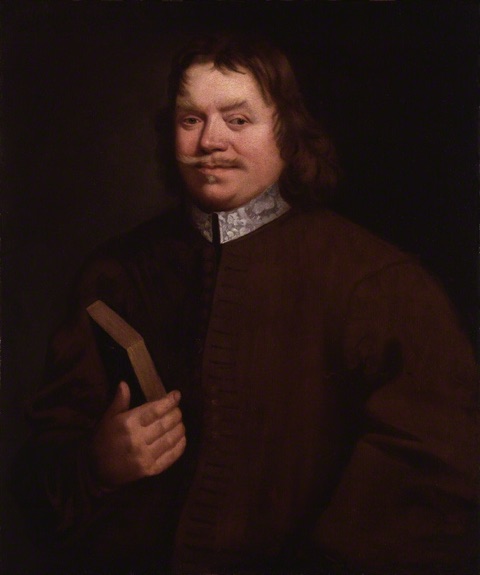
About the author
John Bunyan
John Bunyan (1628 to 1688 AD) was a tinker’s son from Elstow near Bedford who spent twelve years in Bedford jail from 1660 for refusing to stop preaching. By the time this book appeared in 1685 he had long been pastor of the Bedford congregation. He died in London three years later, in 1688.