Modernized edition · Full text · Free PDF/EPUB
Remarks on Important Theological Controversies in Modern English
Summary
- Published
- 1796 AD, after Edwards's death
- Type
- Numbered theological remarks, from single sentences to extended arguments
- Length
- 131,000 words · 9 hours
- Collection
- Puritan
What is Remarks on Important Theological Controversies about?
Remarks on Important Theological Controversies is a set of numbered notes by Jonathan Edwards, first published in 1796, defending Reformed doctrine against Arminian and universalist objections. In seven parts it argues for a future state and endless punishment, God's decrees and election, decisive grace, Christ's satisfaction for sin, the nature of saving faith, and the perseverance of the saints.
Read the full summary (8 points, quotes, key themes)Show less
How the argument unfolds
- 01
Moral Government and Immortality. Because man acts with understanding and will, God must govern him by law and sanctions, which requires a future state and a revelation.
- 02
Endless Punishment. A temporary, purifying hell would be a new trial in which sinners only harden, and Scripture fixes this life as the only day of grace.
- 03
Decrees and Election. Foreknowledge implies decree, sin is permitted for a greater good, and the self-determining will contradicts itself. Christ is the elect of God in the highest sense.
- 04
Efficacious Grace. Grace decides whether a sinner becomes holy, and eleven arguments show that saving grace differs in kind from common grace.
- 05
Satisfaction for Sin. Justice, holiness, majesty, law and truth require that sin be punished, and a theory of patron and client shows why one may be accepted for another's merit.
- 06
How Christ Bore Wrath. Christ suffered through a vivid sight of sin's hatefulness and of its punishment while the Father's comforts were withheld, and was sanctified by it.
- 07
Faith. Scripture's many words for faith lead to a definition, a critique of the division into assent, consent and affiance, and a discourse on 1 John 5:1.
- 08
Perseverance. The new covenant rests on a surety who cannot fail, and the warnings in Ezekiel and Hebrews do not show that true saints fall away.
Notable images & quotes
- The wheels of the chariot. Nature's cycles must be heading somewhere: “The wheels of God’s chariot, after turning around a thousand times, do not stand in the exact same place they started without having carried the chariot nearer to its journey’s end.”
- The rope thrown to the drowning. “Suppose several people are in the water in danger of drowning, and a friend on shore throws a rope out among them.” The one who grabs it owes his good sense to himself, which is all the credit Arminian principles leave to God.
- The thermometer. If saving grace differed from common grace only in degree, a borderline convert would pass in and out of salvation by the hour, “just like the mercury in a thermometer or barometer, never perfectly still”.
- The elephant and the turtle. Arminian accounts resemble Locke's Indian philosopher, who set the world on an elephant and the elephant on a turtle: “None of their explanations can bear being traced back.”
Key themes
- Retribution rather than reform. Pain may force outward compliance, but “Inflicted torment has no direct, inherent tendency to bring a wicked person to genuine repentance”.
- Two senses of God's will. God's command expresses what he loves in itself, his decree what he wills for the whole: “Thus God, though he hates something considered simply in itself, may incline toward it in view of the whole system of things.”
- God's work and ours. In conversion God is the author and the sinner the actor: “In different respects, we are wholly passive and wholly active.”
- The light that cannot go out. Adam's covenant failed through human weakness, so the second rests on Christ, and “when God lights it up a second time, he does it so that it may never be extinguished.”
Why read it today
Read it to watch Edwards think. These are working notes that test arguments, anticipate replies and turn an opponent's premises against him. Readers of Freedom of the Will will find the same reasoning applied to hell, election, grace and faith.
It records the controversies of its century from the inside, quoting what Whitby, Stebbing, Turnbull and Taylor argued and how a Calvinist answered them.
It joins doctrine to experience. The pages on how Christ bore God's wrath, on the quiet a convicted sinner finds in God's sovereignty, and on faith as the heart's consent are written for the believer as well as the debater.
Source edition: The 1834 Edward Hickman edition of The Works of Jonathan Edwards, Volume 2, in modern English
Reader questions (9)Hide the questions
Questions about Remarks on Important Theological Controversies
Is there a modern English version of Remarks on Important Theological Controversies?
Yes. This is Remarks on Important Theological Controversies by Jonathan Edwards in modern English. The language is modernized and the author's order and argument are kept. The full modernized text is free to read on this page.
Can I read Remarks on Important Theological Controversies online for free?
Yes. The complete text of this modern English edition is on this page, with no sign-up or paywall.
Is there a free PDF of Remarks on Important Theological Controversies?
Yes. The PDF and EPUB of this edition are free with an Updated Works account. Sign in with Google or an email link; no card is needed.
What is Remarks on Important Theological Controversies by Jonathan Edwards about?
It defends Reformed doctrine in seven parts, arguing from reason and Scripture for a future state, an endless hell, personal election, grace that decides the will, Christ's satisfaction, faith as the soul's reception of Christ, and the perseverance of believers.
Is it a continuous book?
No. It is a collection of numbered remarks grouped by subject. Some are a sentence or two, some are lists of proof texts, and some run for pages, such as the patron and client argument and the closing discourse on saving faith.
Why does Edwards reject the idea that hell purifies sinners?
A purifying hell would be a fresh trial, and sinners who resist greater means for ages grow harder and guiltier. If pain could reform, he adds, one day in a furnace of fire would do more than ages of torment.
Does election make God the author of sin?
Edwards holds that God decrees only to permit sin, knowing it will then occur, and that Arminians who grant permission and foreknowledge face the same difficulty. Only perfect wisdom could be trusted to permit evil for a greater good.
Why can repentance alone not gain forgiveness?
Sin against an infinite God carries infinite guilt, and no creature's sorrow bears any proportion to it. Repentance is accepted only because of its relation to the satisfaction Christ has made.
If believers cannot fall away, why does Scripture warn them?
Warnings are the means by which God secures perseverance, as Christ prayed and labored for a reward already certain. Holding out also gives believers evidence that their grace is real.
Remarks on Important Theological Controversies in Modern English · Full text
Chapter 1
God’s Moral Government and the Immortality of the Soul
1. The Creator of the world is no doubt also its Governor. The one who had power to give being to the world and set all its parts in order surely has power to direct it, either maintaining the order he established or altering it. He who first gave the laws of nature must hold all of nature in his hands. Clearly, then, God holds the world in his hands to direct as he pleases.
Just as God is able to govern the world, he is also inclined to govern it. Because he is an intelligent being, he had a purpose in what he made. Otherwise he would not have acted as a voluntary agent in creating the world. No being acts voluntarily when it has no purpose in what it does and aims at nothing at all. Neither God nor man is properly said to make anything that proceeds from them merely by necessity or accident, but only what they produce voluntarily.
Besides, we see in the particular parts of the world that God had a specific purpose in forming them, for they are fitted to serve that purpose. This shows that the Creator acted as a voluntary agent, setting final ends in the work of creation. And the one who made the individual parts for definite purposes surely made the whole for a definite purpose as well.
If God made the world for a purpose, he will certainly choose to have it directed so that his purpose is fulfilled. To propose an end implies choosing that it should be attained. It follows, therefore, that God chooses to see to it that the world is ordered toward attaining his own ends, which is the same as choosing to govern the world. In fact, it is plain that God is not indifferent to how the affairs and concerns of his world unfold, because he was not indifferent to them in creation itself. The manner and order in which things were created show that God, in creating them, provided for the future course and condition of the world. With this established, I now proceed to show that God must maintain a moral government over mankind.
2. If it is certain that God cares and takes thought for how things proceed in the world he has made, then he will care especially about how things proceed in the human world. Mankind is the chief part of the visible creation. Human beings have understanding, act as voluntary agents, and can produce works of their own will, design, and ingenuity, just as God does. The Creator himself regards them as the principal part of his visible creation, as is evident from his placing them at its head. The world is clearly made as a dwelling for man, and all things around him are subordinated to his use.
Now, if God takes care to regulate the world he has made so that his purpose may be fulfilled and not fail, he will be especially careful about its principal part. His care will match the degree to which that part is higher and more important in his own estimation than the rest. The greater regard God has for any part of the world he has made, the more concerned he will be for its condition. Creation itself makes clear that God has greater regard for man than for any other part of the visible world, since he plainly made and fitted the other parts for man’s use. Therefore, God will not abandon mankind to themselves without taking care to govern and order their state.
The way God formed and arranged other things shows his regard for beauty, good order, regulation, proportion, and harmony. We see this in the system of the universe, the seasons of the year, the structure of plants, and the various parts of the human body. Surely, then, he will not leave the chief part of creation, whose condition he evidently cares about most, without proper provision to keep it from falling into deformity, discord, and the most hateful and dreadful confusion.
3. From what has already been said, God is most concerned about the condition and government of what stands highest in his creation and what he values most. Consequently, he is chiefly concerned about ordering the condition of mankind, the part of creation he has made superior and prizes above all else. By the same reasoning, he must be chiefly concerned about regulating what he values most in human beings, namely, what belongs to their intelligence and voluntary actions.
If there is anything in the principal part of creation that the Creator values more than the other parts, it must be what raises it above them, or at least what distinguishes it from them. The only thing that sets mankind apart from the lower creation is intelligent perception and voluntary action. By this faculty the Creator has made man differ from the rest of creation, set him over it, and enabled him to govern the lower creatures and turn them to his own use. It must follow, then, that the Creator is chiefly concerned that mankind’s state be regulated according to his will in everything that pertains to man as an intelligent, voluntary creature.
Hence God must take care that a sound moral government is maintained over human beings. Their intelligent, voluntary actions must all be subject to rules, and in respect to all of them, human beings must be answerable to judicial proceeding. Otherwise, no care is taken to regulate mankind in their intelligent, voluntary acts at all. Everything would sink beyond remedy into the utmost deformity, confusion, and ruin.
Instead of being superior, mankind would become all the worse, more hateful, more vile, and more miserable for possessing reason and will. This highest part of creation would become the lowest and infinitely the most chaotic, deformed, and detestable, with no provision for setting its evils right. Then the God of order, peace, and harmony, who arranged the lower parts of the world with such decency, beauty, and harmony and subjected them to man’s service, would appear to have abandoned the chief part of his work, the very end of all the rest, to everlasting discord, confusion, and ruin. Man would contradict and war against his own nature and faculties. Possessing reason, he would act in everything contrary to it. Being human, he would live like a beast, setting bodily sense above reason and using reason only as a weapon of mischief to destroy God’s handiwork.
4. I argue again that God must maintain a moral government over mankind from another consideration. Clearly, it accorded with the Creator’s design that some moral government should exist among men. Without any government in nations, provinces, towns, or families, and without any divine government over the whole, the human race could not survive, but would destroy itself. Men would be not only far more destructive to one another than any species of animals is to its own kind, but a thousand times more destructive than any kind of beast is to another species.
Therefore, the nature God has given all mankind, along with the circumstances in which he has placed them, leads people in every age across the habitable world into moral government. The Creator surely intended this for the preservation of this highest species of creatures. Otherwise, he would have made far less provision for defending and preserving mankind than for any other creature. There is no kind of creature that he has left without proper means for its own preservation. Yet unless man’s own reason, applied in moral rule and order, is the means God provided to preserve mankind, he has provided no means at all.
It is therefore certainly the Creator’s original design that there should be moral subordination among men, and that there should be heads, princes, or governors to whom honor, subjection, and obedience are owed. This strongly argues that the Creator himself will maintain a moral government over the whole. Without it, the preservation of the human race is only very imperfectly provided for. If men have nothing but human government to restrain their lusts, and no rule or judgment of a universal, omniscient Governor to restrain their consciences, they remain in a most woeful condition. Then the preservation and common good of mankind, according to the needs of their place, nature, and circumstances in creation, would in no way be provided for as well as those of other species.
Now, is it reasonable to think that the Creator would so arrange human affairs that certain individuals, who possess only a faint image and shadow of his greatness and power, should exercise authority by issuing edicts and executing judgment, while he who is above all and the source of all exercises no such power himself? Mankind stands in far greater need of this exercise of his power than of the power of human rulers. He has infinitely the greatest right to exercise the authority of a moral governor if he pleases, and his relation to man as Creator leads most naturally to it. He is infinitely the most worthy of the respect, honor, and submission due to a moral governor. He has infinitely the highest qualifications for governing, being infinitely wise, powerful, and holy, and his government will be infinitely the most effective in fulfilling the ends of government.
5. It is plain that in establishing human moral governments, the Creator paid great regard to those qualifications, relationships, rights, and obligations in the rulers he appointed, and in placing others under their rule, which exist in himself to a vastly higher degree. Look especially at the government of parents over their children, which of all human moral governments is most clearly rooted in nature and most immediately needed to preserve the race. Here God has appointed the wiser and stronger to be moral rulers, and he has placed in subjection those who know less and are weaker, who received their very existence from their rulers, and who depend on them to be preserved and supported.
Would he not, then, maintain moral government himself over mankind, when he is their universal Father and Preserver? He sustains everyone, provides all with food, clothing, and every necessity and enjoyment of life, and is infinitely wiser and stronger than they are. Would he not maintain a moral government over human beings, who need his rule as children need the rule of their parents? Men are no more fit to be left to themselves in the world without his rules, guidance, authority, promises, warnings, and judgment than children are fit to be left to themselves in a house.
6. Because man is made capable of knowing his Creator, he is also capable of holding his perfections in high esteem: his power, wisdom, and goodness. He can properly esteem God for his wise, excellent, and wonderful works that he sees, and for the admirable design displayed in ordering all things so well. He can also feel gratitude toward God for all the goodness he receives. On the other hand, he is equally capable of slighting, despising, and hating God, finding fault with his works, reproaching him for them, and despising all the goodness he receives from him. Indeed, he can hate God for the way providence orders his life, and curse and blaspheme him for it.
Now it is unreasonable to suppose that God is an indifferent spectator of these things in a creature made in his own image, placed above all other creatures, and valued above the rest of creation. It cannot be equally pleasing to God whether man offers him proper esteem, love, honor, and gratitude, or instead unreasonably despises, hates, and curses him. And if God is not an indifferent spectator of these things, he will not act like one. He will not leave human beings wholly alone and order nothing differently one way or the other on account of these things. Yet that is exactly what he would do if he maintained no moral government over mankind.
7. Just as man is capable of knowing his Creator, he is also capable of knowing his Creator’s will in many matters, that is, knowing God’s purposes in the various works he observes. This is in fact the chief way he comes to know there is a God: by seeing the final causes of things and recognizing that particular things are plainly designed and fitted for particular ends. He is therefore capable of either complying with his Creator’s will or opposing it. He can align himself with God’s purposes, cooperate with what he sees his Creator aiming at, or set himself against the Creator’s designs.
Clearly, it is the Creator’s design that parents should nourish their children and that children should submit to their parents. If a man murders his children, or if children rise up and murder their parents, they oppose the Creator’s purposes. In the same way, people may use their bodily organs for purposes directly contrary to those for which they were given, or turn the faculties of their own minds to ends opposite to those for which they were fitted, since they were surely given and fitted for some end. Man can also perversely use his dominion over other creatures against the purposes for which those creatures were given.
No matter how far man may be from actually frustrating his Creator, he is still capable of showing that his will runs counter to his Creator’s ends. He can oppose his Creator in his will, dislike God’s purposes, and pursue others instead. Now, the Creator cannot be an indifferent spectator of this. It is a contradiction to suppose that opposition to his will and aims is just as agreeable to him in itself as compliance with his will. And if he is not an indifferent spectator, he will not act as one. Therefore, he must maintain a moral government over mankind.
8. This argument carries special force when we consider that man can either align with or oppose God’s purposes in his own creation and in endowing him with faculties above the rest of the world. It is abundantly clear that God must have made mankind for some purpose. This is evident not only because God must have made the world in general for some end, and because man is an intelligent voluntary agent, but also from the plain fact that God made mankind for a special purpose. We see in fact that God made the lower parts of the world for a purpose, and that the special purpose he made them for is to serve the good of mankind. Above all, then, we may conclude that God made mankind for a purpose.
Suppose a craftsman completes a great piece of workmanship, highly intricate and full of varied parts, yet all arranged and connected so that every other part serves one particular part. We would rightly conclude that the craftsman had a special purpose for that central part, and that his main aim in the entire work was what he intended to accomplish through it. Now man, the chief part of creation, can know his Creator and discern God’s purposes in forming other things. Since God reveals to man the ends for which he made other things, it would be very strange indeed if he did not let man know the end for which he himself was made and given those distinguishing faculties that set him above the rest of creation.
Therefore, in using his own faculties, man must either fall in with the Creator’s known design in giving them, or thwart it. He must either cooperate with his Creator by fulfilling the end of his own being, or knowingly set himself up as God’s enemy. The Creator cannot be an indifferent spectator of this. By the reasoning already given, he must maintain a moral government over mankind.
9. We may also argue that God maintains a moral government over mankind from the fact that man’s special end involves direct dealings with his Creator. The special end of the animal creation involves their relation to human beings. Man’s special end, however, consists in some exercise and use of his faculties toward God. Because God made man very different from any part of the lower creation, the special end for which he made mankind must be very different from and far superior to the ends for which he made lower creatures.
Man’s special end does not terminate in any other parts of the visible creation. All of them stand below him and, as we observed earlier, were made to serve his use. Their special end points to him, but his special end does not point to them. To suppose otherwise is unreasonable in itself. If those creatures are subordinated and subjected to him in their structure and purpose, then their Maker values him more than them, and therefore did not make him for their sake. That would imply that they are the most valuable things in their Maker’s eyes. In fact, mankind’s existence does not benefit the lower creatures any further than is necessary to turn them to human use and consume them in it.
We may add to this that the happiness of most people in their worldly enjoyments is neither great enough nor lasting enough to show that the sole purpose of the entire visible universe is that brief happiness. Nothing else remains, and no other supposition is possible, than that man’s special end is something in which he has immediate dealings with his Creator.
10. If God made human beings above other creatures with superior capacities for a special end not shared by other creatures, that end must be something unique to them, for which those higher faculties fit them. Now, the highest thing for which human faculties fit us, beyond the beasts, is fellowship with our Creator as intelligent and voluntary agents. Human beings are capable of knowing, esteeming, and loving him. They are capable of receiving instruction and commands from him, and of obeying and serving him if he is pleased to issue commands and reveal his mind.
Surely this capacity was not given without a purpose. He who made nothing in the lower world in vain has not given man this capacity in vain. The sun did not receive its light without a final cause. Shall we suppose, then, that mankind received the light of the knowledge of their Creator without a final cause?
Thus it is evident that the special end for which God made man involves communion with his Creator as an intelligent, voluntary agent. From this it follows with certainty that mankind is subject to God’s moral government. No fellowship or communication can be maintained between God and man, as between intelligent, voluntary agents, without moral government. In maintaining communication and fellowship, one must yield to and comply with the other, and there must be a union of wills: one clothed with authority, the other with submission.
If God made man to have communion with himself, he cannot be indifferent to how man treats him in that relationship. One kind of conduct must please his will, and another must displease it. Therefore, God cannot act with indifference in this matter. He cannot leave man alone to behave toward him just as he pleases. There must be moral government, because God cannot be indifferent to whether he is respected and honored, or despised and hated.
11. As the consequence of all this, I draw two conclusions:
(1) There must be a future state of rewards and punishments. Unless such a state exists, it follows with certainty that God maintains no moral government over mankind at all. Otherwise, it is plain that mankind is neither rewarded nor punished according to any visible rule, or indeed according to any order or method whatsoever. Without such sanctions, desires might be expressed, yet no true laws can be established and no authority maintained.
Nothing is more obvious than that in this world there is no regular, equitable distribution of rewards and punishments according to men’s moral condition. Nothing in God’s dealings with men in this life makes his distributive justice and judicial equity visible; instead, everything lies in the greatest confusion. Often the wicked prosper and are not in trouble like other men. They grow mighty in power. Indeed, in every age it has been common for them to hold the upper hand in the world. They dominate the righteous, sitting on thrones while the righteous remain in humble cottages. In this world, the cause of the just goes unvindicated. Many wicked men hold the righteous in their power, trample them underfoot, and become their cruel persecutors. The righteous are oppressed and suffer every sort of injury and cruelty, while the wicked live and reign in great glory and prosperity.
(2) What has been said also argues irresistibly for a divine revelation. If God maintains a moral government over mankind, there must be rewards and punishments, and those sanctions must be declared. For instance, the punishments that enforce God’s laws must be made known. It is utterly unreasonable to suppose that God maintains an equitable, perfect moral government over the world, yet leaves human beings completely in the dark about the nature, manner, degree, time, place, and duration of their punishment. Nor can we suppose he leaves it merely to their guesses, expecting them to deduce it as best they can from the nature of things, with each person judging according to whatever notions guide him.
If moral government is maintained, its order and method must be visible; otherwise it loses the very nature of moral government. There may be a forceful ordering of things, just as inanimate, unintelligent things are governed by God in a visible, established order, yet that is not moral government. The order of government serves to uphold authority and to influence and rule subjects morally only to the extent that it is visible. The idea of moral government without a revelation or declaration of the ruler’s mind, whether by his word or by some voluntary sign, is completely absurd. How absurd it is to imagine fellowship and moral government maintained between a ruler and his subjects, when both are intelligent, voluntary agents, without a voluntary communication of minds, expressions, thoughts, and inclinations between the head and the members of the society!
12. We need not regard it as any objection to men’s continuing in existence after bodily death that the animals made for man cease to exist when they die. In fact, man is clearly the end of all the other creatures in this lower world. This world, with all its inanimate, vegetative, and sentient parts, was made as a dwelling for man during his present state. If man is the end of the other creatures, for whom the rest were made and to whose use they are subordinated, then man is worth all the rest. The end of all is equivalent to the whole.
Therefore, nothing else needs to be preserved. Nothing is lost, and no part exists in vain. If the end of all is preserved, then all is preserved, because he is the whole, while the rest serves only for his temporary use. Animals serve man’s use in this present state. Even when they cease to be, their purpose has been attained, and their good, which is their end, remains in man. When the tent set up for man to lodge in during his time of probation is taken down because that season is over, that is surely no argument that its inhabitant ceases to exist as well.
Moreover, the fact that animals are made for man supplies a strong positive argument for man’s future existence. All other creatures in this lower world are made for man, and it is unreasonable to suppose that he himself was made for nothing more than they are, namely, a brief stay in this world to enjoy its good things.
13. The natural world, which carries on in such continual labor as described in Ecclesiastes 1, endlessly turning through its cycles, will surely come to an end. These revolutions are not for nothing. Some great outcome and culmination, some grand final stage, is aimed at. Does God keep the world restless, moving and revolving in all its parts, merely to make no progress? Does it labor with motions so mighty and vast only to arrive back at the very same spot? Surely some great end stands nearer to completion after a thousand cycles than after only one.
The waters of the sea do not labor so restlessly, continually rising into the heavens, falling upon the earth, and returning to the sea again, merely so that things may remain just as they were before. One generation of men does not come while another passes away, age after age, merely so that in the end there may be only what was there at the beginning, namely, mankind upon the earth. The wheels of God’s chariot, after turning around a thousand times, do not stand in the exact same place they started without having carried the chariot nearer to its journey’s end.
14. This confirms a future state. If these cycles lead to nothing in another state that follows this one, then they are all in vain. If anything of this world is to remain once its cycles end, surely it will be the part that stands as the head of all the rest: the creature for whom all the rest was made, namely, man. If he completely ceases to be and becomes extinct, it is just as if the entire world were totally extinct, because he is the end of all.
He is the creature whom all the labors and revolutions of this world serve and affect. Therefore, if he does not remain after those cycles cease, no end has been attained by them, because nothing abides as their fruit once they are finished. Everything comes to nothing more than what existed before the world began: universal nonexistence. All is extinct, and all is as though the world had never been. Therefore, all has been in vain, since no fruit remains. The passenger carried in the chariot would not remain after being brought with such vast labor and effort to the end of his journey, but would cease to exist just as the chariot itself does.
15. This confirms the divine origin of the Christian revelation. Christianity gives this very account of things: that this world is to come to an end and be dissolved, that the revolutions of the world have an appointed conclusion, and that man, the end of this lower world, is to continue in existence afterward. It offers a rational account of the great consummation, design, and outcome of all things, one worthy of the infinite wisdom and majesty of God.
16. Some part of the world, namely, its highest part, the head and end of all the rest, must endure eternally: intelligent, rational creatures. If these creatures, the head and end of all the rest of creation, come to an end and are annihilated, it is the same as if the entire universe were annihilated. And if the world lasts only temporarily and then drops into nothingness, it exists in vain; that is, no end is attained worthy of God.
Everyone will admit that if God had created the world and let it drop into nothingness the very next minute, it would have been created in vain, and no end worthy of God could have been attained. The sole reason is that the end would be far too small, because of the brief duration of the good obtained by it. Yet it remains infinitely small even if it stands for a million ages and then drops into nothingness. That is like a single moment in the sight of God. Compared with him, it is strictly equivalent to nothing, and therefore an end unworthy of him.
No end is worthy of an infinite God except an infinite end, and therefore the good obtained must be of infinite duration. If not, who will fix the limit? Who will say that a million years is long enough? And if it is, who will say that a good lasting a thousand years does not befit the wisdom of God? If that suffices, how can we say that a good of even shorter duration would not answer the ends of wisdom? And if that would do, who can say that God’s sovereignty might not settle on a good lasting a single minute as sufficient, since a minute is just as great in comparison with him as a million years? The sole reason a good lasting one minute is not great enough to befit the Creator of the world is that it is so tiny a good when compared with him. That very same reason stands with equal force against a good of any limited duration whatsoever.
17. The Old Testament repeatedly declares that God will bring every work into judgment and that there is truly a God who judges in the earth. His eyes are on the ways of man, and he considers all his goings. The sins of the wicked and the good deeds of the righteous are closely observed and written in a book of remembrance, with none of them forgotten. They are sealed and laid up among God’s treasures, and he will repay every person according to his works. The Judge of all the earth will do right, so God will not destroy the righteous with the wicked. It will be well with the righteous, for he will eat the fruit of his doings. It will go ill with the wicked, for the reward of his hands will be given him, and it cannot be otherwise.
Scripture further teaches that there is no darkness or shadow of death where the workers of iniquity can hide themselves from God the Judge. God cannot forget his people; a woman would sooner forget her nursing child, for God has engraved them on the palms of his hands. He sees and takes note of all their afflictions and pities them as a father pities his children. Yet he is the enemy of wicked men; their sins will find them out, and even if hand joins in hand, the wicked will not go unpunished. The path of righteousness is a certain path to happiness, and the path of sin is a sure path to misery.
Solomon himself speaks more abundantly than any other writer of the Old Testament about the difference between the righteous and the wicked in this respect, as well as the greatness and certainty of that difference (see Prov 1:31-32; Prov 2:11, 21-22; Prov 3:2, 4, 8, 13-18, 21-26, 32, 35; Prov 4:5-13, 22; Prov 8:17-21, 35-36; Prov 9:5-6, 11-12; Prov 10:16-17, 27-29; Prov 11:7-8, 18-19, 21, 30-31; Prov 12:2-3, 14, 21, 28; Prov 13:9, 13-15, 21; Prov 14:19, 26-27; Prov 15:3, 6, 24; Prov 16:3-7; Prov 19:23; Prov 21:15-16, 18, 21; Prov 22:4, 8; Prov 23:17-18; Prov 24:1-5, 12, 15-16, 19-22; Prov 28:10, 13-14, 18; Prov 29:6, and many other places in the book of Proverbs).
In Ecclesiastes 12:13-14, Solomon declares “that to fear God and keep his commandments, is the whole duty of man: because God will bring every work into judgment, with every secret thing, whether it be good or whether it be evil.” Again, in Ecclesiastes 5:8, he writes, “If thou seest the oppression of the poor, and the violent perverting of judgment and justice in a province, marvel not at the matter; for he that is higher than the highest regardeth, and there be higher than they.” And in Ecclesiastes 8:11, he says, “Because sentence against an evil work is not executed speedily, therefore the heart of the sons of men is fully set in them to do evil.” There must therefore be some other time, beyond this present life, for executing the sentence that he notes will so surely be carried out.
In Proverbs 10:7, Solomon says that the memory of the just is blessed, while the name of the wicked will rot. Speaking of this memory or good name of the just, he says that it is “better than precious ointment,” meaning the precious ointment with which people used to anoint the newborn children of great and wealthy men. For this reason, “the day of death” for a godly person, followed by a good name and so blessed a memory, is better “than the day of one’s birth” (Eccl 7:1).
18. Consider what follows if God has completely forgiven all the sins of the righteous and holds them so high in his favor. The great proof of this favor is the lasting nature of its benefits, and its chief fruit is life. We should therefore at least expect them to escape that mortality which is so striking a disgrace to human nature. Mortality is astonishing to see in those whom the Most High made so far above the beasts in capacity, dignity, purpose, and design.
We would surely expect these highly favored ones, in regard to life and lasting happiness, not to be mere beasts with no preeminence above them. They should not be like grass or the flower of the field, which flourishes and grows up in the morning, but in the evening is cut down and withered. All their happiness and all the blessings of God’s favor should not be like a shadow, a dream, or a tale that is told. Nor should they be merely a handbreadth long, passing away like swift ships or an eagle swooping on its prey, the very images to which Scripture compares human life.
Scripture speaks of the things of this world as having no profit or value, because they do not last and must be left behind at death. They are therefore mere vanity, unworthy of any person’s heart (Ps 49:6-20; Prov 23:4-5; Prov 11:7; Eccl 2:15-17; Eccl 3:1-10, 19; Eccl 5:14-16). By contrast, the rewards of righteousness are repeatedly portrayed as exceedingly valuable and worthy of our deepest devotion, precisely because they last (Prov 3:16; Prov 8:18; Isa 55:3; Ps 1:3-6; Jer 17:7-8, and countless other passages). How can these two representations agree with one another unless there is a future state?
Scripture also treats it as a remarkable and unexpected thing that good people should die just as wicked people do, as seems to happen when both suffer temporal death (Eccl 2:16; Eccl 9:3-5). We may therefore argue that it only seems to be so. In reality it will not be so, because although the righteous die a temporal death just like the wicked, their happiness does not die; they live forever in a future state.
Another proof of a future state is that the Old Testament makes so many promises to the godly about things that will happen after their death, as tokens and blessed rewards of God’s great favor to them. It makes promises about their good name, their descendants, and the future church of God in the world. Yet at the same time, the Old Testament repeatedly teaches that people gain no benefit from what happens on earth after they die, if we consider only this present life without any further state of existence (Job 14:21; Eccl 1-2; Eccl 3:22; Eccl 9:5-6).
Indeed, the wise man says explicitly that the dead have no more reward (Eccl 9:5), meaning in anything belonging to this world. That man should die like a beast is described as a vanity, an evil, and a kind of mischief and confusion appearing in the world (Eccl 3:16-22). This itself argues that God, the wise orderer of all things who brings order out of confusion, will set this disorder right by appointing a future state.
19. The Old Testament gives another proof of a future life and immortality by teaching that mortality entered through sin and comes as a punishment for sin. It is natural to suppose, therefore, that when complete forgiveness, full restoration to favor, deliverance from death, and the gift of life as the fruit of that favor are promised, eternal life and immortality are meant.
Furthermore, the better people are, the more terrible death would be if there were no future state. The better they are, the more they love God. Good people have discovered the fountain of good. Those who deeply love God take great delight in him and experience a far richer happiness in life than others do. Consequently, it would be all the more dreadful for them to have their existence permanently extinguished by death. From this we have a strong argument for a future state. We cannot suppose that God would make man capable of looking beyond death, and capable of knowing, loving, and delighting in him as the fountain of all good, and yet disappoint that very longing. Such knowledge and love inevitably deepen his dread of annihilation and his eager desire for immortality. If God left that longing unfulfilled, man’s very love for his Creator would in a sense make him more miserable.
20. Nothing is clearer than that for a person to be thoroughly, universally, and steadfastly virtuous, his mind and heart must be thoroughly weaned from this world. That is strong evidence that God intends another world for virtuous people. He would surely not require them to let go of this world in their thoughts, affections, and expectations if this were the only world they could ever hope for, if he had made them solely for this world as their only country, home, and resting place.
If all the creatures God has made must come to an end, and the world itself must come to an end as though it had never been, then all of God’s glorious and magnificent works would share the fate described for the temporary prosperity of the wicked. As Job 20:6-8 says: “Though its excellency be never so great, yet it shall perish for ever; it shall all fly away as a dream; it shall be chased away as a vision of the night.” Everything would vanish completely and be altogether as if it had never existed.
Chapter 2
The Endless Punishment of the Impenitent
1. The word everlasting appears in the very sentence of the Judge at the last day, whom we cannot suppose to use rhetorical tropes and figures. Scripture portrays the wicked who remain finally impenitent as wholly cast away, lost, and regarded as worthless, which is altogether inconsistent with their punishment being medicinal, aimed at their good and purification, and designed to fit them for final, eternal happiness. Eternal punishment is not eternal annihilation. Surely they will not be raised to life at the last day only to be annihilated.
As Dodwell writes in his sermon in answer to Whiston: “The words used to signify the duration of the punishment of the wicked do, in their etymology, truly signify a proper eternity; and if they are sometimes used in a less strict sense, when the nature of the thing requires it, yet that can never pass as any reason why they are not to be understood absolutely, when the subject is capable of it. They are terms the most expressive of an endless duration of any that can be used or imagined. And they always signify so far positively endless, as to be express against any other period or conclusion than what arises from the nature of the thing. They are never used in Scripture in any other limited sense than to exclude all positive abolition, annihilation, or conclusion, other than what the natural intent or constitution of the subject spoken of must necessarily admit. The Greek word generally used by the sacred writers is, we know, derived from the Greek adverb that signifies ‘forever,’ and cannot without force be used in any lower sense. And, particularly, this is the word by which the eternal and immutable attributes of Deity are several times expressed.”
2. If the torments of hell are purifying pains that purge the damned from their sins, they must do so by bringing them to repentance. They must convince them of the evil of sin, induce them to forsake it, turn them with a sincere heart from sin to God, and lead them heartily to choose virtue and holiness. There is no other way for sinners to be purged as moral agents. If hellfire produces any other kind of purification, it cannot be a moral purification.
If the wicked in hell suffer torments in order to be purified, fitted for eternal happiness, and finally brought to it, then they stand under a dispensation that is truly one of love, divine and infinite goodness, and benevolence toward them. And if the pains of hell are intended as kind and benevolent chastisement to bring sinners to repentance and submission to the divine will, we cannot suppose those pains will continue after the sinner has repented and actually yielded. That would mean continuing them for no purpose, still applying means and efforts to reach a goal that has already been completely attained.
Moreover, if the damned, after suffering extreme torment in hell for many ages, are to be delivered and made perfectly and eternally happy, then they must be in a state of probation during this long season of confinement in extreme misery. Suppose they are not in a state of probation, or on any trial of how they behave under these severe and terrible inflictions of wrath, but are guaranteed deliverance and eternal happiness at the end of a fixed period. What restraint would then keep them from giving unbounded license to their wickedness, expressing enmity against God in cursing, blaspheming, and whatever their hearts desire?
If they are in such a state, left to unrestrained wickedness with every curb on their vilest inclinations removed, and yet still certain of deliverance and everlasting happiness, how could that state possibly purify rational creatures and moral agents from sin? So far from providing means for repentance, reformation, and complete cleansing from sin, every such means is removed. Every restraint is lifted so completely that they are handed over entirely to sin. Instead of purifying them, such a state would do more than anything imaginable to harden them in sin and fix its habits hopelessly in place.
3. A state of purgation for moral agents, intended to bring sinners to repentance and reformation, that is not a state of trial is a gross absurdity.
Someone might object: “Even if we maintain that the pains of hell are purifying pains meant to bring sinners to repentance for their deliverance and eternal happiness, we do not have to suppose either that they can sin without restraint and impunity or that they are strictly in a state of probation. They have no probation over whether they will ultimately gain eternal happiness, because the benevolent Creator has absolutely determined that his intelligent creatures will finally be brought to happiness. Yet their circumstances may still strongly restrain their wickedness, because the length of their torment will be longer or shorter depending on how perversely they behave under chastisement, or their torment may be heightened and increased in proportion to the wickedness they commit in those purgatorial flames.”
Answer: Even on this view, they are in a state of probation for an earlier possession of eternal life and happiness and for deliverance from further misery and punishment. That makes their state in hell just as much a state of probation as their state in this present life. For these very writers suppose that in this life sinners are not on trial over whether they will ever obtain eternal happiness, since they claim that is already unconditionally determined and knowable for everyone without any trial. Rather, this life is only a trial of whether they will obtain eternal life as soon as this life ends or at the day of judgment. Nor are they on trial here over whether they will escape all affliction and chastisement for sin, but only whether they will be freed from suffering sooner and escape the harsher, longer chastisements that await many afterward.
On the objector’s assumption, hell must contain all the proper conditions of a state of probation just as earth does. There, too, the damned must remain in that state of free agency that makes them proper subjects of judgment and retribution. According to the objection, they will be punished for the wickedness they commit in hell by an increase in misery proportioned to their sin, and they will still be objects of God’s merciful strivings, efforts, and means to bring them to repentance, just as they are here.
There must also be a divine judgment after that trial to determine their retribution, just as there is after this life. The Supreme Judge will have to settle the very same kinds of questions that are settled at the day of judgment. On the view I oppose, what will be decided concerning the impenitent at that great day? Not what their eternal destiny will be, but only whether they will enter eternal happiness immediately. The question will merely be whether they have repented and are fit for immediate admission to heavenly glory, or whether its bestowal must be delayed while further chastisements are applied.
The exact same thing must happen again after their purifying pains. At the end of it all, there must be a judgment to determine whether they have now truly repented and met the condition for deliverance and immediate entry into the state of the blessed, or whether they must undergo another season of misery. This makes it in every respect a genuine judgment, just as much as the judgment at the general resurrection. Likewise, the preceding season of means and divine striving is just as much a proper time of trial leading up to judgment as this present life.
4. Now consider how unreasonable it is to suppose that the damned are in a state of trial. If they are on trial, they must possess liberty and moral agency, as these opponents will no doubt agree. According to their own view of liberty, then, the damned are under no necessity to continue in rebellion and wickedness, but may cast off their abominations and turn to God and their duty in thorough submission to his will very quickly.
Once that happens, the purpose of their probationary state and of the severe means God uses to bring them to repentance has been achieved. How unreasonable it would be to suppose that God would still keep them under the torments of hell for a long succession of ages afterward! Yet if God delivers them promptly upon their prompt repentance, how are the warnings and predictions of their everlasting punishment fulfilled in any sense? Even those who deny the strict eternity of hell’s misery, claiming that words like everlasting and forever are not to be taken strictly when applied to the damned, still admit that those words signify a very long duration, a great many ages.
5. Suppose devils and damned spirits are in a state of probation, possess freedom of will, and are placed under the final and most extreme means to bring them to repentance. Since these are the greatest means, with the strongest tendency to succeed, it is possible that most or even all of them might be reclaimed and brought to thorough repentance before the day of judgment. Indeed, it might happen very soon.
If that were possible, how could Scripture predict with certainty that the devil will carry out such great works against Christ and his church from age to age, and that in the end he will be judged and punished and have God’s wrath executed upon him even more terribly? As Revelation 20:10 declares, “And the devil that deceived them, was cast into the lake of fire and brimstone, where the beast and false prophet are, and shall be tormented day and night, for ever and ever.”
How, too, does Scripture say that when he fell, he was cast down from heaven and reserved under chains of darkness until judgment? That expression naturally signifies strong, unbreakable bonds that leave no comfort or hope of escape. Besides, being kept in chains for judgment is inconsistent with appointing another season of trial and opportunity to escape judgment and condemnation. As Jude 6 states, “They are reserved in everlasting chains under darkness unto the judgment of the great day.”
Furthermore, suppose any departed souls of the wicked, in the same state as the rich man who died and lifted up his eyes in hell in torment, were to repent and be delivered before the day of judgment, and thus appear at Christ’s right hand among the righteous on that day. How could Paul’s words in 2 Corinthians 5:10 be fulfilled: “For we must all stand before the judgment-seat of Christ, that every one may receive the things done in his body, whether good or bad”? Comparing this with other scriptures, we have strong reason to believe that the apostle is referring specifically to the day of judgment, as in his own words in Acts 17:31: “He hath appointed a day in which he will judge the world in righteousness, by that man whom he hath ordained,” along with many other passages.
6. How can the idea that many sinners remain in a state of trial for ages after death until the day of judgment, with opportunity to repent all that time, agree with Christ’s words in Mark 8:38: “Whosoever therefore shall be ashamed of me and my words in this adulterous and sinful generation, of him also shall the Son of man be ashamed, when he cometh in the glory of his Father, with the holy angels”? How can their continuing on trial from that generation and from the end of their lives until the day of judgment be consistent with God declaring to them beforehand that they will certainly be condemned on that day? How can it agree with Christ certifying in advance that whatever trial or opportunity for repentance and pardon God might give them over so many ages, it would all be in vain? That amounts to passing sentence already.
We may reason the same way from Matthew 10:14-15: “And whosoever shall not receive you, and hear your words, verily I say unto you, It shall be more tolerable for the land of Sodom and Gomorrah in the day of judgment, than for that city.” So also in Matthew 11:21-24: “Woe unto thee, Chorazin, woe unto thee, Bethsaida: I say unto you, It shall be more tolerable for Tyre and Sidon in the day of judgment, than for you. And thou, Capernaum, which art exalted to heaven, shalt be brought down to hell. I say unto you, It shall be more tolerable for the land of Sodom in the day of judgment, than for thee.”
Here Christ declares what the condition of those obstinate unbelievers will be at the day of judgment for their wickedness committed in the body, sealing it with the solemn affirmation, “I say unto you.” Sentence is in effect passed upon them beforehand by their Judge regarding the punishment to be executed on that day. The declaration takes the form of a solemn denunciation and sentence: “Woe unto thee, Chorazin, woe unto thee, Bethsaida,” etc.
Now ask yourself: the very Judge who will judge them at the end of the world flatly declares that they will not escape punishment on the day of judgment, solemnly dooming them to a special punishment for their lifelong obstinacy. Is it reasonable to suppose that he would also appoint another trial lasting many hundreds of years between their death and that day, during which they could escape that very punishment?
7. Notice also that the wicked inhabitants of Sodom and Gomorrah are to be condemned to misery at the day of judgment, even though on this opposing theory they had already spent ages in purifying flames and a state of probation.
The apostle repeatedly tells us when men will receive their retribution: “In the day when God shall judge the secrets of men according to my gospel” (Rom 2:16). This shows that this life is the only state of trial, and that all people will be judged at the end of the world according to their conduct in this life, not according to their conduct in some second state of trial between this life and that day.
The same truth is clear from 2 Thessalonians 1:5-9: “Which is a manifest token of the righteous judgment of God seeing it is a righteous thing with God to recompense tribulation to them that trouble you. When the Lord Jesus shall be revealed from heaven with his mighty angels, in flaming fire, taking vengeance on them that know not God, and obey not the gospel of Jesus Christ; who shall be punished with everlasting destruction,” etc. Clearly, all obstinate unbelievers who reject the gospel will be punished with everlasting destruction at the day of judgment, leaving no room for a state of trial and space to repent for ages in hell before that day.
Likewise, Matthew 25 makes clear that no one will be found at Christ’s right hand except those who have done the kind of good works that can only be done in this world. That could not be declared beforehand if millions of others were to be given an opportunity afterward to gain that privilege.
8. We can prove that the day of human trial, and the season of God’s striving through outward means and waiting for repentance, will not continue after this life from Genesis 6:3: “My Spirit shall not always strive with man, for that he also is flesh; yet his days shall be 120 years.” It is as if God were saying: “It is not fitting that this day of trial and opportunity should last forever for obstinate, perverse sinners. Bounds must be set to my striving and waiting on those who abuse the day of my patience. Merciful means and gracious calls should not continue without limit for those who trample every mercy underfoot, turn a deaf ear to every call and invitation, and treat them with steady contempt. Therefore, I will fix a definite limit. I will set their time at 120 years; if they do not repent by then, I will end their lives, and with their lives my striving and waiting will end.”
What Genesis calls God’s Spirit striving, the apostle Peter calls the waiting of God’s patience (1 Pet 3:20). Yet look at what the opposing doctrine claims. Instead of striving with those wicked people and waiting for them for 120 years, or until the end of their lives and no longer, God has supposedly kept striving with them for more than 4,000 years since then, using far more powerful means to bring them to repentance. Worse still, he would keep waiting on them for so long afterward that Scripture repeatedly calls that duration everlasting and forever and ever.
9. Christ’s words in John 9:4 also prove that there is no other day of trial after this life: “I must work the works of him that sent me while it is day, the night cometh wherein no man can work.” Because Christ undertook our cause, took on our nature, appeared in the form of a servant, and stood as our surety and representative, God appointed him a great work to accomplish in this life for eternity. He could obtain eternal life and happiness for himself in no other way than by doing that work in this life, which was his time of probation for eternity just as it is ours.
His words therefore mean in effect: “I must do the work God has appointed me for eternity, that great service required if I am to be eternally happy, now while the day of life lasts. This is the only day appointed to test human faithfulness in God’s service for acceptance to eternal rewards. Death is coming, which will be the setting of the sun and the close of this day. After it, no work will remain, and nothing can be done that will count toward gaining the reward of eternal blessedness.”
10. The passage in Ecclesiastes 9 carries the same meaning: “Whatsoever thy hand findeth to do, do it with thy might: for there is no work” (meaning no one can work), “nor device, nor knowledge, nor wisdom in the grave, whither thou goest.” That is to say, after this life nothing can be done, nothing devised or invented, to secure your happiness; no wisdom or skill will help you toward that end if you neglect this present life.
It is unreasonable to imagine that the wise man means only that we should work hard in temporal affairs to advance our earthly interests because nothing can be done for them after death. First, that would be a trivial observation. It would be as flat and irrelevant as saying, “Whatever your hand finds to do this year, do it with your might, for nothing you do or plan next year will promote your well-being this year.”
Second, the wise man himself tells us at the close of the book that his aim throughout is to move us to a spiritual work. He urges us to fear God and keep his commandments, not for happiness in this life (which he tells us throughout the book can never be expected), but for future happiness and retribution following a coming judgment (Eccl 12:13-14): “Let us hear the conclusion of the whole matter; Fear God, and keep his commandments: For this is the whole” (that is, the whole business and concern) “of man. For God will bring every work into judgment, whether it be good, or whether it be evil.”
11. If the wicked in hell are on trial under severe chastisement as the means to bring them to repentance and secure God’s favor in eternal rewards, then they must possess the kind of freedom that makes them moral agents and proper subjects of judgment and retribution. On this view, those terrible chastisements are used as the most powerful means of all, more effective than all the means used in this life. When earthly means prove insufficient to overcome sinners’ obstinacy and soften their hard hearts, God is forced to lay them aside and resort to these torments as the final, most powerful remedy.
Now, if the torments of hell must last for ages of ages, it must be because sinners in hell remain obstinate all that time. Even though they are free agents in the matter, they willfully and perversely refuse to repent, forsake their sins, and turn to God under such extraordinary means. We must also suppose that throughout all this time they receive offers of immediate mercy and deliverance if only they will comply.
Think what follows if they persist in such wickedness, obstinacy, and stubborn defiance for so many ages, as those who say their torments last so long must suppose. How desperately their guilt will increase! How many thousand times more guilty they will be at the end of that term than at the beginning! They will therefore be far more deserving of divine severity and God’s wrath, meriting chastisements a thousand times harsher or longer than what they have already suffered.
It is completely unreasonable, then, to suppose that all the damned will be delivered from misery, welcomed into God’s favor, and granted eternal salvation and glory at the very point when they are thousands of times less worthy of it and more deserving of continued misery than when they were first cast into hell. Surely the infinitely wise God would not order things that way. Yet if their misery is increased and extended much longer to answer for their newly contracted guilt, they must be supposed to remain impenitent until that second added period ends. At the close of that period, their guilt will have climbed higher still, vastly greater than before. At this rate, where could their misery ever find an end?
12. It follows further from what was just observed that if a sinner remains obstinate in wickedness for so long under such powerful means to reclaim him, he will not grow more purified or draw nearer to repentance, but will move steadily farther from it. Wickedness will become deeply entrenched and strengthened in his heart.
We may lay down three axioms here. First, the longer people continue willfully in wickedness, the more firmly the habit of sin takes hold and the harder the heart grows in it. Second, the greater and more powerful the means used to bring people to reform and repent that they resist with obstinacy, the more desperately hardened they become in sin, and the more the principle of sin is confirmed in their hearts. Third, long continuance in perverse, obstinate rebellion against any particular kind of means tends to render those means vain, ineffective, and hopeless.
Consider, then, the state of the damned in hell after they have held out with such monstrous perverseness and stubbornness for ages of ages in rebellion and enmity against God, refusing to bow to his will under constant, severe, mighty chastisements accompanied all along by offers of mercy. What a desperate hardness of heart and fixed strength of habitual wickedness they will have contracted by then! They will stand inconceivably farther from a penitent, humble, pure heart than when they were first cast into hell. And if their torments are lengthened still further, along with their impenitence (since by supposition one does not end before the other), the heart will move farther and farther from purification. At this rate, the torments will never achieve their purpose and must stretch on to all eternity.
13. In Matthew 5:25-26, Christ warns: “Agree with thine adversary quickly, while thou art in the way with him; lest at any time the adversary deliver thee to the judge, and the judge deliver thee to the officer, and thou be cast into prison. Verily I say unto thee, Thou shalt not come out thence, till thou hast paid the uttermost farthing.” These words imply that sinners are on the way with their adversary, with an opportunity for reconciliation, only for a short season. They must settle with him quickly, or they will cease to be on the way with him and lose all further opportunity to gain his favor. If instead they are kept in a state of probation after death until the end of the world, and for ages afterward, how far, how very far, these words of Christ would be from portraying things as they really are!
14. The fact that even in this world some people are utterly forsaken by God and given up to the lusts of their own hearts proves that they will never be purified from their sins. Suppose that in the future world God uses powerful means to purify them and fit them for eternal happiness and glory in enjoying him. That cannot be reconciled with the biblical fact that after using great means and efforts with them in this world, God gives them over to sin because of their incorrigible, perverse, obstinate rebellion under those means. He leaves them to become desperately hardened in sin, to go on increasing their guilt, and to multiply transgressions to their utter ruin, just as Scripture repeatedly declares.
This contradicts the system of those who claim that God is pursuing one continuous design, both before and after death, to purify and prepare them for eternal glory. Consider Psalm 92:7: “When the wicked spring as grass, and when all the workers of iniquity do flourish, it is that they shall be destroyed for ever.” Passages like this show that God has no merciful design toward those whom he abandons to sin.
15. The apostle writes in Hebrews 6:4-6: “It is impossible for those who were once enlightened, and have tasted of the heavenly gift, etc., if they fall away, to renew them again unto repentance, seeing they crucify to themselves the Son of God afresh, and put him to an open shame,” etc. The apostle treats their renewal to repentance as something never likely to happen, because they have proved irreclaimable under such great means, have desperately hardened their hearts, and have contracted immense guilt by sinning against great light and trampling on great privileges.
If that is true, how much more unlikely it is that they will ever be renewed to repentance after hardening their hearts still further through willful, obstinate sin for many thousands of years longer under far greater means! By then they will have done immensely more to entrench the habit of sin and deepen the hardness of their hearts, while their guilt has vastly increased rather than diminished.
If it is impossible to bring them to repentance after they rebel against the light and knowledge of Christ and the next world that they had in this life, how much more impossible is it once they have also beheld that infinitely greater, clearer manifestation of those realities at the day of judgment! On that day they will see Christ in the glory of his Father with all his holy angels. They will behold his great majesty and know the truth of his promises and warnings by sight and experience. They will witness every indescribable display of Christ’s glory: his power, omniscience, strict and inflexible justice, infinite holiness and purity, truth and faithfulness, and infinite mercy toward the penitent. They will see the dreadful outcome of rebellion and wickedness alongside the infinitely happy and glorious outcome of obedience.
On our opponents’ theory, even at that very moment they receive offers of mercy and deliverance from that dreadful misery. They are offered the favor of their great Judge and a share in all the happiness and glory of the righteous whom they see at his right hand, if only they will lay down the weapons of their rebellion, repent, and submit to his will. Yet out of deep enmity and perverseness they still willfully and obstinately refuse. They keep refusing even after actually feeling the terrible wrath of God and being cast into the lake of fire, and even after remaining there for many ages while mercy upon repentance is continually offered to them.
If it is already impossible to renew them to repentance after they rebel against the light, knowledge, and means of this world, because of the hardness and guilt they contract, how much less can it be expected at or after the day of judgment, after all this further obstinacy and guilt! Despising the privileges the apostle mentions in this life incurs guilt comparable to crucifying Christ afresh. How much greater, then, is their guilt when they openly despise Christ appearing before their very eyes in all the terrors, glories, and love of the day of judgment! Everything is offered to them if they will only submit, yet their enmity proves so desperate that they choose that dreadful lake of fire instead, and persist in that choice even after feeling its relentless torment day and night for many ages!
16. That not all people will finally be purified and saved is plain from Matthew 12:31-32: “Wherefore I say unto you, All manner of sin and blasphemy shall be forgiven unto men; but the blasphemy against the Holy Ghost shall not be forgiven unto men. And whosoever speaketh a word against the Son of man, it shall be forgiven him; but whosoever speaketh against the Holy Ghost, it shall not be forgiven him, neither in this world, neither in the world to come.”
See also Mark 3:28-29: “Verily I say unto you, All sins shall be forgiven unto the sons of men, and all blasphemies wherewithsoever they shall blaspheme; but he that shall blaspheme against the Holy Ghost, hath never forgiveness, but is in danger of eternal damnation.” And 1 John 5:16: “If any man see his brother sin a sin which is not unto death, he shall ask, and he shall give him life for them that sin not unto death. There is a sin unto death; I do not say he shall pray for it.”
Each of these passages makes clear that whoever is guilty of blasphemy against the Holy Spirit will certainly be damned, without any deliverance from punishment or end to it. The different expressions reinforce and fix one another’s meaning.
In Matthew 12:31, Christ says, “The blasphemy against the Holy Ghost shall not be forgiven unto men.” This negation is general and applies equally to all times. If this sin were forgiven at some distant point, that would contradict the statement just as much as if it were forgiven at once. To make certain we understand that Christ includes all times, even the most remote, and denies forgiveness at any time whatsoever, Mark states that he “hath never forgiveness” (Mark 3:29). And so that this “never” cannot be explained away as meaning merely “never as long as he lives” or “never in this world,” Matthew 12:32 adds, “It shall not be forgiven him, neither in this world, nor in the world to come.”
Yet someone might still object that even if he is never forgiven, his punishment might still end, since he could suffer all he deserves through a temporary punishment of long but limited duration; after all, a debtor acquitted by paying his full debt is not said to be forgiven his debt. To rule this out, Mark adds another expression showing that he will suffer damnation forever and never be delivered from his misery, whether through forgiveness or without it: “hath never forgiveness, but is in danger of eternal damnation” (Mark 3:29). Together with the words “neither in this world, nor in the world to come” (Matt 12:32), this shows that the word eternal here absolutely excludes any end or any time of favor when condemnation and punishment will have ceased.
What the apostle John says about those who commit the unpardonable sin confirms the whole argument. It proves that whoever commits this sin no longer stands under any dispensation of mercy, and that no favor can ever be hoped for from God; therefore, it is not our duty to pray for such favor. “There is a sin unto death, I do not say he shall pray for it” (1 John 5:16), meaning, “I give you no direction to pray for those who commit this sin unto death.”
17. It is evident, therefore, that not all wicked people will see an end to their damnation. When Scripture says they are in danger of eternal or everlasting damnation, the word eternal must be understood in its strictest sense. Scripture applies the very same terms to all impenitent sinners: they will be sentenced to eternal punishment, go away into everlasting punishment, their worm does not die and the fire is not quenched, and they will be tormented forever and ever. Those terms are used after this world ends, and when those who committed the unpardonable sin and all other wicked people are sentenced together to everlasting fire in the very same words.
It is unreasonable to suppose that the word everlasting means something infinitely different for some people than for others sentenced jointly in the exact same terms, so that the length of one group’s punishment is literally as nothing compared to the other’s, infinitely less than one second compared to a million ages. Such a difference is also unreasonable because there cannot be an infinite gap between the guilt of those who commit the unpardonable sin and the guilt of all other wicked people, some of whom are exceedingly and almost inconceivably wicked. There cannot be a strictly infinite difference in their guilt, whereas there is a strictly infinite difference in dreadfulness between torments that end, however long and severe they may be, and the torments of a truly everlasting fire.
18. If all the damned in hell are finally saved, they will be saved without Christ. Clearly, Christ’s saving work ends at the day of judgment. Christ holds a twofold office: Savior of the world and Judge of the world. The work of the second office properly follows the first. In the nature of things, it is not fitting that he should appear openly as universal Judge to settle everyone’s destiny based on their trial for salvation until that trial is finished and all its effects are complete. At that point, nothing more remains to be hoped for in changing their condition for the better through his salvation.
For this reason, at his first coming Christ came to save people from condemnation and eternal misery, not to judge them. As he tells us in John 12:47, “If any man hear my words and believe not, I judge him not: for I came, not to judge the world, but to save the world” (see also John 3:17; John 8:15). At his second coming, however, Scripture abundantly declares that his great business is to judge the world.
It is equally plain that Christ’s saving work ends at the day of judgment because we read in 1 Corinthians 15 that at the end of the world he will deliver up his kingdom and lay down his commission. That proves the work of salvation, which is the purpose of that commission, will then be finished. At that time all his enemies, all who rejected him, refused to let him reign over them, and thus missed his salvation, will be made his footstool, condemned, and destroyed. Instead of their becoming heirs of salvation, he will come in flaming fire to take vengeance on those who do not know God and do not obey the gospel of Jesus Christ. They will be punished with everlasting destruction when he comes to be glorified in his saints and marveled at in all who believe (2 Thess 1:8-10).
19. If the damned are to be delivered after suffering for a time and given eternal life, then the present dispensation of grace and life to fallen mankind, introduced by Christ and his apostles, is not the final one. Another dispensation would have to follow after this one proved unprofitable and ineffective. Yet Scripture gives no support to the idea that a new dispensation of grace will be introduced because the one brought in by Christ and his apostles proves weak and unprofitable through human corruption, leaving a need for a more effective one.
On the contrary, Scripture calls this dispensation the last and most perfect, the one in which perfection was reached: “For the law made nothing perfect, but the bringing in of a better hope did” (Heb 7:19), and “God having provided some better thing for us, that they without us should not be made perfect” (Heb 11:40). God found fault with the older dispensation because it proved ineffective through human corruption, and he therefore introduced a new administration not liable to defect, one that will never grow old, vanish away, or give way to another (Heb 8:6-13). Scripture describes the things of that older dispensation as things that could be shaken and removed, while the things of the new dispensation cannot be shaken and remain forever (Heb 12:25-29; 2 Cor 3:11). Old Testament prophecy likewise repeatedly calls the New Testament dispensation an everlasting dispensation (Jer 31:31-32; Jer 32:40; Isa 61:8; Ezek 37:26).
20. Scripture also opposes the idea that God keeps still more powerful means in reserve to use afterward that will infallibly make sinners holy. On that view, he uses them after all the means of grace used in this world (Moses and the prophets, Christ and the gospel, the warnings of God’s word, and the glorious displays of gospel grace) have been despised and stubbornly resisted until the case seems hopeless.
Look especially at Luke 16:27-31: “Then he said, I pray thee therefore, father, that thou wouldst send him to my father’s house: for I have five brethren; that he may testify to them, lest they also come into this place of torment. Abraham saith unto him, They have Moses and the prophets, let them hear them. And he said, Nay, father Abraham, but if one went unto them from the dead, they will repent. And he said unto him, If they hear not Moses and the prophets, neither will they be persuaded though one rose from the dead.”
This is even clearer in Revelation 22:10-12: “And he saith unto me, Seal not the sayings of the prophecy of this book: for the time is at hand. He that is unjust, let him be unjust still; and he that is filthy, let him be filthy still. And behold I come quickly, and my reward is with me, to give every man according as his works shall be.”
I think this passage must have one of two meanings. First, it may mean: “The time is coming quickly when every person’s state will be fixed, because I am coming quickly in judgment to fix every person’s state unalterably according to his works. After that there will be no change, and no further means or efforts toward change; instead, let the unjust remain unjust, and let the filthy remain filthy.” If this is the meaning, it clearly proves that Christ will not immediately turn around and apply the most powerful, infallibly effective means of all to change the unjust and filthy, purify them, make them holy, and fit them for eternal glory.
Or the passage carries a second meaning, which seems much the most probable. Christ has just given this final revelation to his church to complete and seal the canon of Scripture through the apostle John, who outlived all the other apostles and wrote this book after the rest had died. In verse 10, he commands John to publish this book, with its solemn revelations of coming judgment on the wicked and its moving portrayal of the future glory of the saints, in order to reinforce the rest of God’s word and means of grace. He then indicates that no further revelations are to be expected, and no further instructions or warnings will be added to God’s word as standing means of grace to confirm the rest.
The very next revelation Christ will make of himself to the world is his immediate appearance in judgment. He will fix every person’s state unalterably according to his works and according to the use he has made of those past revelations, instructions, and warnings. Therefore, those who refuse to be purified by these means must not expect other or better means ever to be used with them. The unjust must remain unjust still, the filthy must remain filthy still, the righteous will remain righteous still, and the holy will remain holy still.
In this way Christ takes leave of his church until his final coming. He warns them to make good use of the means of grace they already have and informs them that they will never have any others. It is as if to say: “They have Moses and the prophets, and in the writings of the New Testament they have still more glorious, powerful, and effective revelations of me. I now finish and seal these writings. Let them hear these and make good use of them, for these are the last means I will ever use to change the human heart.” That is completely inconsistent with his holding back his greatest and most powerful means, guaranteed to succeed, to deploy after the day of judgment.
21. Those who claim that the damned suffer hell’s torments for their purification assume that God is thereby carrying out a grand design of benevolence toward his creatures, including the sufferers themselves, and that he uses these harsh measures only out of necessity for their good because gentler remedies fail. Yet it is wholly unreasonable to suppose that God is under any necessity to inflict such extreme torments for so long to bring sinners to repentance.
(1) Consider the nature of things. Inflicted torment has no direct, inherent tendency to bring a wicked person to genuine repentance, if by repentance we mean a change in the disposition, appetites, and taste of the mind. We know by experience that pain inflicted for indulging an appetite may make people afraid to indulge it, yet it does not change the inclination or destroy the appetite. Pain may make people willing to perform outward actions they dislike and that their hearts naturally recoil from, not out of love for those actions, but out of hatred of pain and love of ease. The person complies in a sense, yet his heart does not comply; he is merely driven and forced.
Increasing the pain does not alter the nature of things. It may make a person long more intensely for relief from pain, yet nothing more can be expected from pain than what lies in its nature, which cannot impart a new nature, a new heart, or a new spiritual relish and disposition. Nor can we grant that even long-continued pain and outward practice will gradually produce a habitual love of virtue. Great, prolonged torments may convince the damned more and more of the folly of their carelessness and boldness in sin, and make them willing to take some trouble to avoid suffering. Yet pain will never show them the beauty of holiness or the ugliness of sin so as to make them hate sin for its own sake.
Can anyone who understands human nature, especially among those who deny an innate, desperate wickedness of heart (as the opponents in this controversy generally do), seriously doubt what a single day in a furnace of fire would do? Suppose a man spent just one day in a furnace of fire, alive and acutely conscious, and kept a full, vivid memory of his agony. Would that not be enough to make him submit to all the hardship and outward self-denial required for complete outward obedience to God’s word, rather than have those torments renewed for ages, or even endure one more such day?
What hardships would such a person not willingly suffer? What labors would seem too heavy? What worldly wealth or pleasures would he refuse to give up? Would not the most greedy person, after feeling such a rod, gladly surrender all his treasures of silver and gold? Would not the most ambitious person gladly live in a cottage or a wilderness? Would not the most pleasure-loving person gladly give up his indulgences? Would he first need to endure many ages of torment before becoming willing to comply that far?
Every principle of human nature refutes such an idea. As long as he retains a vivid impression of that torment, it must infinitely outweigh the most vivid, moving, and enticing impressions of worldly goods. To suppose that lesser torment would not secure his outward compliance is as absurd as supposing that a speck of dust would tip the scales against a talent of lead, or ten thousand talents. If the Most High pities these poor wretches and holds nothing toward them but a kind, gracious design of infinite mercy and generosity, why would he take such dreadful measures with them? Will nothing else work? Cannot infinite wisdom devise some gentler way to accomplish the same purpose?
Someone may reply that no gentler method can achieve this result consistently with freedom of will. I answer: consider such a rod, not merely held over them, but applied to them in so terrifying a way by an omnipotent hand. What means could possibly be devised with a stronger tendency than this to drive and force people to comply (if anything can do so) without acting freely or out of free choice?
(2) History itself proves that God has no need to use such dreadful, prolonged torments to bring sinners to repentance. It is utterly unreasonable to suppose that none of the sinners ever converted in this world were as wicked and hard-hearted before their conversion as some who have died impenitent. Think of Saul the persecutor, afterward the apostle Paul, and some of the converts in Acts 2 who had a hand in Christ’s crucifixion, along with countless persecutors and others brought to repentance since those days. They were converted by far gentler means than the pains of hell and what Scripture calls everlasting burnings, and without violating the liberty needed for moral agency. Likewise, we cannot suppose that all eighteen people on whom the tower of Siloam fell were good people. Yet Christ would not let his hearers imagine those eighteen were worse than themselves, while indicating that his hearers could still escape future misery through repentance.
(3) To whatever extent pain and affliction are used to bring people to repentance, God can plainly make infinitely lighter chastisement effective when joined with the influences and help of his Spirit, in ways wholly consistent with moral agency in forsaking sin and turning to God. If someone objects that none of those converted in this life had habits of sin as deeply rooted as everyone who dies in sin, I reply that this is a wholly unreasonable assumption. Even if we granted it, no one can claim that the difference in guilt and hardness of heart matches the staggering severity of hell’s supposed purifying chastisement. If ten degrees of pain, or one year of chastisement, suffice to overcome a sinful habit of five degrees of strength, one would surely think that less than a hundred thousand degrees, or a hundred thousand years of chastisement, should suffice to overcome ten degrees of strength in the same habit.
22. Suppose the torments of hell are purifying pains used by a God of universal benevolence as necessary means to purge the wicked from sin, fit them for eternal happiness, and finally bring them into the enjoyment of his love. Then it follows that the damned in hell remain objects of God’s mercy and kindness. Under their torments, they remain under a dispensation of grace and benevolence. Everything is for their good. Everything is the greatest kindness that can be shown them and the most benevolent treatment they are capable of receiving in their present condition.
In it all, God is simply chastising them as a wise, loving father, with a grieved and compassionate heart, disciplines sons he loves and whose highest good he seeks. In everything he does, he is simply pursuing a purpose of infinite kindness and favor. Indeed, some of the leading advocates of purifying pains explicitly claim that hell’s torments are not the fruit of retributive justice, but the effect of God’s benevolence, not only toward the universe of intelligent creatures as a whole, but toward the sufferers themselves.
Now consider how utterly contrary this is to the portrayal given in the Holy Scriptures.
Scripture represents the damned as thrown away by God, as good for nothing, and as things God holds in no regard (Matt 13:48). They are compared to dross, not gold, silver, or any valuable metal: “Thou puttest away all the wicked of the earth as dross” (Ps 119:119; see also Ezek 22:18; Jer 6:28-30). They are like salt that has lost its savor, good for nothing except to be thrown out and trampled underfoot. They are like leftover stubble and chaff tossed to the wind to blow wherever it carries them, rather than gathered and stored as something of value (Ps 1:4; Ps 35:5; Job 21:18). They are thrown away as completely worthless, like chaff, stubble, and weeds not worth saving, indeed thrown into the fire to be burned up as mere nuisances, fit for nothing but destruction, cast into the fire to be destroyed and done with (Matt 3:12; Matt 13:30; Job 21:18).
They are portrayed as barren trees that are good for nothing and merely use up the ground, and therefore must be cut down and thrown into the fire (Matt 3:10; Matt 7:19; Luke 13:7). They are barren branches in a vine, cut off, cast away as useless, gathered up, and burned (John 15:6). They are cast out and swept away as the filth of the world. Thus Job 20:7 declares “that the wicked shall perish for ever, as his own dung.” They are described as spewed out of God’s mouth and cast into the lake of fire, the great sink for all the filth of creation: “But the fearful, and unbelieving, and the abominable, and murderers, and whoremongers, and sorcerers, and idolaters, and all liars, shall have their share in the lake that burns with fire and brimstone” (Rev 21:8).
They are compared to briers and thorns, not merely worthless in a field but harmful and destructive, close to being cursed, whose end is to be burned (Heb 6). That is, the farmer throws them into the fire and is done with them forever; he does not keep tending them to turn them into fruitful, flourishing plants in his garden of delights. The wicked, Scripture says, will be driven from light into darkness and chased out of the world (Job 18:18). Instead of being treated with fatherly benevolence and compassionate discipline for their everlasting good, on the day when God gathers his children to enjoy a heavenly Father’s love, they will be shut out like dogs (Rev 21:7-8; Rev 22:14-15).
They are portrayed as vessels for dishonor and vessels of wrath, fit for nothing except to hold wrath and misery. Scripture speaks of them as those who perish, lose their souls, and are lost (2 Cor 4:3), who lose themselves and are cast away, destroyed, and consumed. None of these descriptions fits people under a dispensation of kindness and the care of a physician working toward their eternal life, health, and happiness, however harsh the remedy might be.
Notice the contrast with Old Testament prophecy. When God pronounced terrible judgments through his prophets against Jerusalem, Israel, Moab, Tyre, Egypt, Assyria, and other nations, judgments that were long yet not meant to be permanent, he always wove into those solemn denunciations, or added to them, promises and hints of future mercy. Yet whenever Scripture speaks of God’s dealings with the ungodly in the next world, there are only declarations and denunciations of wrath and misery, with not a single hint of mercy. No gentle terms are used, no signs of divine pity appear, and no calls are given to humble themselves under God’s mighty hand, seek his face and favor, or turn and repent. Scripture’s account of how the wicked will be treated after this life is utterly irreconcilable with the idea that they are subjected out of necessity to harsh medicine and severe chastisement with a gracious, benevolent purpose for their eternal good. Think especially of how Christ will address them at the day of judgment: he will command them to depart from him as cursed.
23. We read of no invitations to accept mercy and no counsel to repent so they may quickly escape their misery. Instead, Scripture says they will be made his footstool, and he will triumph over them. He will trample them as people tread grapes in a winepress, stomping with all their might specifically to crush them to pieces. He will tread them in his anger and trample them in his fury, and as he declares, their blood will be sprinkled on his garments and stain all his clothing (the beginning of Isa 63; Rev 14:19-20; Rev 19:15), where the last passage says he treads the winepress of the fierceness and wrath of Almighty God.
This bears no trace of compassionate, benevolent chastisement, as though Christ were still pursuing a design of love toward them in order to become their Savior and lead them to eternal glory. Nor is there anything in the biblical account of the day of judgment suggesting that the saints feel love or pity for the wicked over the terrible, prolonged torments they must suffer. In fact, the biblical accounts leave no room for such a thought. We read of the saints judging them, joining Christ in condemning them, and concurring in the sentence by which he banishes them as cursed with devils into eternal fire, yet we never read of them praying for them or urging them to consider their ways and repent.
Rather than grieving, the saints will rejoice at the glorious display of God’s justice, holiness, and majesty in their dreadful ruin, and will triumph with Christ (Rev 18:20; the beginning of Rev 19). Because the wicked are made Christ’s footstool, they become the footstool of the saints as well: “That thy foot may be dipped in the blood of thine enemies, and the tongue of thy dogs in the same” (Ps 68:23).
If the damned were objects of divine benevolence, destined by God to enjoy his eternal love, then surely all of God’s children would be required to love them, pity them, pray for them, and seek their good. Here on earth believers are commanded to love their enemies, show kindness to the evil and unjust, and pity and pray for the vilest persecutors, precisely because they still receive God’s mercy in many ways and remain eligible objects of infinite divine mercy and love. If Christ, the head of the whole church, pitied the damned and sought their good, his members would surely be obligated to do the same. And if the saints in heaven were obligated to pity the damned just as saints on earth must pity the wicked here, their pity would have to match the vastness of those calamities and the sheer multitude of the sufferers. Yet if the saints carried such intense pity and sympathetic grief for ages upon ages, what a heavy shadow it would cast over their heavenly joy!
Scripture portrays God as sharpening his glittering sword, bending his bow, setting his arrows on the string against wicked people, lifting his hand to heaven, and swearing to take vengeance on his enemies, repay those who hate him, make his arrows drunk with their blood, and let his sword devour their flesh (Deut 32:40-42; Ps 7:11-13). Surely this is the language and conduct of an enemy, not of a friend or a compassionate, chastising father.
24. The very degree of misery and torment inflicted proves that God is not acting out of benevolence and compassion or merely chastening with a kind and gracious purpose. When God afflicts people for their good and disciplines them in compassion, his way is to hold back his rough wind on the day of his east wind, to correct in measure, to consider the fragile frame of those he corrects, and to remember their weakness and how little they can bear. He turns away his anger and does not stir up all his wrath (Ps 78:37-39; Isa 27:8; Jer 30:11; Jer 46:28). Even amid the sharpest afflictions, he arranges mitigating circumstances and mixes in mercy.
The misery of the damned, however, is explicitly represented as unmixed. The wine of God’s wrath is poured out full strength into the cup of his indignation. They are tormented with fire and sulfur in the presence of the holy angels and of the Lamb, and the smoke of their torment rises forever and ever, with no rest day or night (Rev 14:10-11). They are tormented in a flame that burns inside them as well as around them, and they are denied even a single drop of water to cool their tongues.
God’s wrath is executed to display his anger and make his power known on the vessels of wrath. They are punished with everlasting destruction matching the glory of Christ’s power when he appears at the day of judgment in the glory of his Father, with power and great glory, in flaming fire, taking vengeance on those who do not know God and do not obey the gospel. Can anyone imagine that in all this God is merely correcting them in love, and that they belong among those blessed ones whom God disciplines to teach them out of his law, whom he wounds and then binds up (Job 5:17-18; Ps 94:12)?
Nothing in Scripture suggests that the damned are given any means to bring them to repentance. When God uses affliction to lead people to repentance, his clear practice is to pair it with instruction, warnings, and persuasive arguments. Judging by Scripture’s portrayal of the damned, they are left completely without any of these. There are no prophets, ministers, or godly people there to warn them, reason and plead with them, or set them good examples. A great chasm completely separates all the righteous from the wicked, so no one can cross from one side to the other. They are abandoned solely to the company of devils and others like themselves. When the rich man in hell cries out to father Abraham begging for a drop of water, Abraham refuses his request and adds no call to repentance.
In the book of Proverbs, Wisdom is repeatedly shown counseling, warning, calling, inviting, and pleading with those who are under the means of grace, waiting for them to turn at her reproof. Yet for those who remain stubborn under these means and calls until the time of their punishment arrives, Scripture warns that their terror will strike like a storm and their destruction like a whirlwind, that distress and anguish will overtake them, and that then it will be too late to seek wisdom. Though they seek her eagerly, they will not find her; though they call upon her, she will not answer. Instead, she will laugh at their calamity and mock when their terror comes.
That surely cannot be reconciled with the claim that the God of wisdom is still striving with them in benevolent compassion to draw them to embrace wisdom, still holding out wisdom with all her unspeakable benefits if only they will listen to her voice and heed her counsel. Could Wisdom really be applying her most powerful, infallibly effective means to bring them to happiness after they rejected all earlier calls and ignored her outstretched hand? Is God actually acting as their best friend to rescue them from distress and anguish instead of laughing at their calamity (the latter part of Prov 1)? If this warning of Wisdom is ever fulfilled at all, it will surely be fulfilled most completely when obstinate sinners receive their final and full punishment.
Moreover, if all mankind, even those who live and die in wickedness, are and always will be objects of Christ’s saving goodwill and mercy, whose eternal happiness he desires and pursues, then surely he would pray for all of them. Yet Christ explicitly declares that there are some he does not pray for. In John 17:9, he says, “I pray for them: I pray not for the world, but for them which thou hast given me; for they are thine.” Compare this with verse 14, “The world hath hated them, because they are not of the world, even as I am not of the world,” verse 25, “The world hath not known thee, but I have known thee; and these have known that thou hast sent me,” and verse 20, “Neither pray I for these alone, but for them also which shall believe on me through their word.”
This shows that Christ prayed for everyone who would ever become a true believer. He did not pray for those who would not be brought to believe in him through the apostles’ word and the means of grace used in this world, and who would continue not to know God and remain hostile to true holiness and Christianity. These are the ones for whom Christ did not pray.
25. Suppose that sin, misery, and the second death continue to reign for ages after the day of judgment over vast multitudes whom Christ will ultimately save and deliver after finally conquering and abolishing those evils. How, then, can Scripture truthfully state that all enemies will be placed under his feet at the end of the world, that the last enemy to be destroyed is death, and that having completely subdued all his enemies, he will hand the kingdom over to the Father and become subject to the Father himself, as taught in 1 Corinthians 15:20-28?
That Christ’s victory over death occurs at the general resurrection and the day of judgment is clear from verse 54 and its preceding context. Now, the chief enemies Christ came to destroy for those who are to be saved and belong to his church are sin and misery, that is, death consisting in sin and death consisting in suffering the second death, which is unspeakably the greatest enemy sin brought in, infinitely more terrible than temporal death. Yet if the view I am opposing were true, these worst and greatest enemies, instead of being subdued at that day, would enter upon their chief reign afterward for many ages, namely, sin and its bitter fruit in human misery. And God would wage his fiercest struggle against those enemies afterward, striving against them with his most powerful means.
26. We have overwhelming evidence that the devil is not under any dispensation of divine mercy and kindness, that God is pursuing no design of infinite goodness toward him, and that his pains are not purifying pains. Far from his torments drawing him any closer to repentance, from the beginning of his damnation he has constantly exerted all his might in pursuing wickedness and waging violent, proud, malignant warfare against God and man. He fights with special virulence against Christ and his church, opposes with all his strength everything that is good, and seeks the ruin and misery of all mankind with boundless, insatiable cruelty.
For this reason he is called Satan, the adversary, and Abaddon and Apollyon, the destroyer. Scripture pictures him as a roaring lion searching for someone to devour, a viper, the ancient serpent, and the great red dragon, red because of his bloody, cruel nature. He is called a murderer from the beginning. He murdered all mankind, destroying their souls as well as their bodies. He murdered Jesus Christ by inciting Judas and those who crucified him, and he has cruelly shed the blood of countless children of God.
He is emphatically called the evil one and the wicked one. He is a liar, the father of lies, and the father of all sin and wickedness that exists or has ever existed in the world. He is the spirit at work in the children of disobedience (Eph 2:2). Scripture says that whoever commits sin is of the devil, for the devil has sinned from the beginning, and all wicked people are called his children. He has set himself up as the god of this world in opposition to the true God and built a vast kingdom over the nations. He wages unceasing war with the utmost zeal, cunning, malice, and venom against Jesus Christ and all his holy, gracious purposes. He maintains a kingdom of darkness, wickedness, and misery against Christ’s kingdom of light, holiness, and peace, and Scripture prophecy shows he will continue to do so until the end of the world.
27. God’s dealings with the devil are infinitely far from those of a friend kindly seeking his infinite good and aiming in the end to make him eternally happy in love, favor, and blessed union with himself. Everywhere in Scripture, God acts as his enemy, seeking and intending nothing in the final outcome except his destruction. The grand work of God’s providence from the beginning to the end of the world, namely, the work of redemption, is aimed directly against him: to crush his head, cast him like lightning from heaven and from the height of power and dominion to which he exalted himself, trample him underfoot, enable God’s people to crush him beneath their feet, and triumph gloriously over him. When Christ conquered him, he made a public spectacle of him, triumphing over him openly.
It is equally clear that as it goes with the devil in this respect, so it will go with wicked people. This is entirely reasonable given the relation Scripture says wicked people bear to the devil: they are his children, servants, subjects, instruments, property, and possession. They are banded together with him in one kingdom, one cause, and one company. Many of them serve as great officers of his kingdom entrusted with his authority, such as the beast and the false prophet in Revelation.
How natural and reasonable it is that those so closely united should share the same lot and portion! Just as Christ’s disciples, subjects, followers, soldiers, children, instruments, and faithful ministers will share his eternal glory, we may reasonably believe that the devil’s disciples, followers, subjects, soldiers, children, instruments, and officers will share his doom. It is unthinkable that an infinite gulf should divide their fates, making the devil’s punishment eternal while theirs is merely temporary and thus infinitely smaller, out of all proportion, so that the ratio of theirs to his is as nothing, infinitely less than one to a million million. Such a gap makes no sense in itself, since the difference in their guilt and wickedness cannot be infinitely wide. On the contrary, the wickedness of a large share of damned human beings carries an enormous aggravation that the sin of devils never had, because it was committed against Christ and against gospel grace and love.
28. Just as the devil’s angelic servants and instruments, called “the devil’s angels,” will share his doom, for the very same reason his human servants and instruments will share it too. Not only is this reasonable in itself, but Scripture plainly teaches it. In Revelation 19:20, we read, “The beast and the false prophet were both cast alive into the lake of fire burning with brimstone.” Likewise, in Revelation 20:10, “The devil that deceived them was cast into the lake of fire and brimstone, where the beast and false prophet are, and shall be tormented day and night for ever and ever,” stating both the kind of misery and its duration.
The very same language is used for the followers of the beast in Revelation 14:9-11: “Saying with a loud voice, If any man worship the beast, etc., the same shall be tormented with fire and brimstone, and the smoke of their torment ascendeth up for ever and ever, and they have no rest day nor night.” And of wicked people in general, Revelation 21:8 says they will have their part in the lake that burns with fire and brimstone. Likewise, in Christ’s account of the day of judgment, the wicked are sentenced to the everlasting fire prepared for the devil and his angels. Nothing could show more plainly that they share with the devil both the same kind of misery and the same everlasting duration.
In fact, if the punishment of devils were eternal while that of wicked people were only temporary, their punishments would differ infinitely not only in amount and duration, but also, once known, in their very kind. Devils would suffer God’s hatred and sheer vengeance, inflictions devoid of pity or kindness; human beings would receive the fruit of God’s mercy, love, and infinitely kind intention. One would face absolute despair and the dark, crushing prospect of endless misery; the other would have the light of hope and the sustaining prospect not merely of an end to suffering, but of eternal, unspeakable happiness to follow.
On the view I oppose, the judgment at the end of the world would be far from a last judgment or a proper judgment settling everything in its final state. With respect to the wicked, it would be nothing more than the verdict of a physician deciding whether sharper, stronger remedies must be applied to relieve sinners and cure a disease that, if left uncured, would make them eternally miserable!
29. Another proof that the future misery of the wicked in hell will never end in eternal happiness, and does not serve to bring about their happiness, is that Scripture plainly indicates that those who die in their sins have received in this life all the good and comfort ever intended for them. “Woe unto you that are rich, for ye have received your consolation” (Luke 6:24). “Son, remember that thou in thy lifetime receivedst thy good things” (Luke 16:25). “Deliver my soul from the wicked … from the men of the world which have their portion in this life, and whose belly thou fillest with thy hid treasure” (Ps 17:13-14).
30. According to the opinion I am opposing, God will certainly deliver all the damned from misery in the end and make them happy, seeing to it that their purifying torments finally succeed in turning them from sin. Now, how can that be squared with God treating them as moral agents who turn from sin and become morally pure and virtuous through the freedom of their own wills? At least, how can it be squared on the view of freedom and moral agency that currently prevails and is vigorously defended by some of the leading advocates of temporary hell torments?
Their concept of freedom requires contingency and is completely incompatible with the outcome being necessary. If, after all the torments applied to bring sinners to repentance, the intended outcome (their turning from sin to virtue) is not necessary, but remains a contingent event that may or may not follow from those severe, prolonged chastisements, then how can anyone be certain that it will surely happen? How can a consequence of means be infallible if it has no necessary connection with those means and remains merely contingent?
If God has unconditionally decreed to make them all pure and happy, even though their purity and happiness depend on the freedom of their wills, then we have an absolute divine decree consistent with human free will, a doctrine flatly rejected by most of those who deny the eternity of hell’s torments.
Suppose someone replies that God has not fixed the exact length or intensity of their torments in advance, but plans to keep them going until they do repent, trying lighter torments first and increasing them if needed until they work, resolving to intensify or prolong them until the effect infallibly follows. That amounts to necessitating the outcome. There is just as much necessity in that case as when a metalworker puts a piece of metal into a furnace resolved to melt it. If leaving it there a short time does not dissolve it, he keeps it in until it does. And if its unusual hardness resists ordinary heat, he increases the heat of the furnace until the metal is certain to melt.
31. Now suppose someone adopts a different scheme of temporary future punishment. On this view, hell’s torments are not purifying pains, and the damned are not on trial for eventual entry into eternal happiness, so they are not objects of divine benevolence. They stand under retributive justice rather than a dispensation of mercy, suffering as severely and as long as their earthly obstinacy deserves (long enough to be called everlasting figuratively in Scripture), after which they are annihilated.
I observe that this scheme gains nothing and offers no escape from the scriptural arguments for strictly eternal future punishment. Suppose its defenders concede that Scripture’s expressions denote a strictly eternal punishment, yet claim it is eternal only because the annihilation, or state of nonexistence to which the wicked return, will be eternal. They claim this eternal annihilation is what Scripture means by death, perishing forever, everlasting destruction, being lost, and being utterly consumed. They argue that hellfire is called eternal fire only in the sense that the fire that destroyed Sodom and Gomorrah is called eternal fire (Jude 7), because it destroyed those cities so completely that they could never be rebuilt. Likewise, they say the fire is unquenchable only in the sense that nothing puts it out until it has consumed those thrown into it.
If that is all these expressions mean, then they say nothing at all about long torments or prolonged misery. The notion of extended torment is imported without any scriptural warrant, since Scripture would be saying nothing about it when it speaks of everlasting punishment. On that reading, Scripture’s language would be satisfied just as well by supposing that the wicked are annihilated instantly, with no prolonged pain at all, as long as their annihilation lasts forever.
32. Suppose next someone proposes that the torments of the damned are strictly penal, executing retributive justice, yet neither eternal nor ending in annihilation, continuing instead until justice is satisfied and sinners have suffered everything they deserve (long enough to be called everlasting), after which they are released and brought into everlasting happiness. On this theory, they are not on trial in the meantime, nor is God waiting for their repentance or using torment to produce it; rather, the length and measure of punishment are fixed, with no release on repentance or any other terms until justice is satisfied.
In reply, I point out a dilemma: while suffering in hell, the damned are either morally accountable for the wickedness they commit during that state (and subject to judicial reckoning for it), or they are not.
Suppose first that they are accountable. Then they must undergo a second period of suffering and punishment after the ages of suffering for the sins of this life end. Nor can we suppose this second period will be shorter than the first. The first was incurred solely for sins committed during a brief earthly life, which Scripture compares for its shortness to a dream, a tale that is told, a gust of wind, a vapor, a handbreadth, and a moment. The period of punishment, however, is always portrayed as exceedingly long, called everlasting, enduring forever and ever, and without end. If the sins of a moment must be followed by such vast punishment, then surely the sins of those endless ages must be followed by a second period of punishment far longer still.
For we must assume the damned keep sinning throughout their time of punishment. No one can rationally imagine God holding people under extreme torments and terrifying displays of his wrath after they have thoroughly repented, turned from sin, become pure and holy, conformed to God, and stopped sinning. Moreover, if they continue sinning during this punishment while assured that God still bears great benevolence toward them and intends to make them eternally happy in his love, their sin carries enormous aggravation. They have the evil and ill desert of sin set vividly before them in their own dreadful suffering, alongside proof that God is infinitely benevolent toward them and intends to bestow infinite blessings upon them.
Yet if this first vast period of punishment must be followed by a second as long or longer, then by the very same reasoning the second must be followed by a third as long or longer, the third by a fourth, and so on without end. At this rate, there can never be an end to their misery. Thus this scheme destroys itself.
33. Now take the other side of the dilemma: suppose the damned are not accountable for the wickedness they commit during their punishment. Then we must imagine that throughout the whole of that vast, virtually endless period of punishment, God abandons them to completely unrestrained wickedness. They know that no matter how far they go in expressing their malice and rage against God, Christ, saints, angels, and their fellow damned spirits, they have nothing to fear from it and will be none the worse for it. Surely continuing in such unrestrained wickedness for so long must hopelessly entrench the habit of sin and deepen its root and fountain in the heart.
How unreasonable it is to suppose that God would treat people in this way when they are objects of his infinite kindness, appointed to enjoy the unspeakable, endless fruits of his love in perfect holiness, purity, conformity, and union with himself! Would he first hand them over to unrestrained hatred against himself and every form of hellish wickedness, multiplying as it were infinitely the fountain of sin in their hearts and the strength of its principle and habit?
How incongruous, too, to imagine that for people toward whom God feels great benevolence and intends eternal favor, he would place them under a necessity of extreme, unbounded hatred, blasphemy, and rage against him for so many ages, a necessity that leaves them no liberty of their own! If God aims at purification as well as punishment through these torments, then on this view, far from being purified, they are driven infinitely farther from purification.
And if God intends to give them a second period of probation after their punishment ends to bring them to repentance and love for God, how can it be certain beforehand that they will finally be happy, as this view claims? How can it be certain they will not fail in their second trial, or in a third if there is one? Indeed, how much more likely they are to fail to turn sincerely from sin to the love of God in a second trial (if it is a genuine trial) once their hearts have fallen far deeper under the grip of habitual sin and enmity against God!
Think about it: the habit proved so strong in this life that the most powerful means and mighty inducements of the gospel could not overcome it, forcing God as it were to cut them down and deal so severely with them. How much less likely are they to be won over to love God and virtue when their hearts stand so much farther from both! Indeed, unless we assume a direct intervention of almighty, efficacious divine power to change the heart during this second trial, we can be sure that under such conditions the heart will never turn to love God.
34. Furthermore, think how absurd that picture is if they are placed under such a necessity of hating and blaspheming God for so many ages as just described. God would be placing those he destined for the eternal bounty and blessedness of dear children in circumstances where they must hate him and curse and blaspheme him with devilish fury for countless ages. Yet even after they are delivered and made happy in his love, they would never have reason to blame themselves for it, even though they see how infinitely hateful and unreasonable it was, because God placed them under such necessity that they could exercise no liberty of their own in the matter! I leave everyone to judge whether it is credible that God would arrange things this way for people whom, out of great benevolence, he intended for eternal happiness in blessed union with himself.
35. Consider the cast of mind, habit of thought, and way of looking at things that underlies the quibbles of many modern freethinkers and fashionable writers against the severity and eternity of hell’s torments. If followed consistently, that same mindset would make them object to almost anything intensely painful in future punishment. They would even object to enduring the pain of a thorn driven under a fingernail for a single year, day and night, without rest, pause, or relief.
Innumerable calamities occur in this very world under the permission and ordination of divine providence. Were they not visible before our eyes as universally known, undeniable facts, this same fault-finding, unbelieving spirit would fiercely reject them. If they were proposed only in theory as matters of faith, they would be attacked as utterly inconsistent with God’s moral perfections, and anyone asserting them would be denounced as contradicting God’s wisdom, justice, goodness, and mercy in countless ways.
Think of the countless horrors suffered by poor, innocent children at the hands of merciless, barbarous enemies, even being slowly roasted to death while shrieking and crying out for their fathers and mothers. Think of the agonizing pains children sometimes endure from terrible diseases. Think of the calamities brought upon entire cities under siege and captured by merciless soldiers who slaughter men, women, and children without pity. Think of the extreme miseries endured by millions of innocent people of every age, sex, and condition during times of persecution, when no refuge could be found on earth. Think finally of what befalls everyone universally in temporal death, something so dreadful to human nature.
Chapter 3
Divine Decrees and Election
1. Whether God has decreed everything that ever comes to pass or not, everyone who acknowledges the existence of God admits that he knows all things beforehand. Now, it is self-evident that if he knows all things beforehand, he either approves of them or does not approve of them; that is, he is either willing that they should happen, or he is not willing that they should happen. And to will that they should happen is to decree them.
2. Arminians ridicule the distinction between God’s secret will and his revealed will, or, more accurately, the distinction between God’s decree and God’s law, because we say he may decree one thing and command another. They argue that we are asserting a contradiction in God, as if one will of his opposed another. Yet even if they insist on calling this a contradiction of wills, we know for a fact that such a thing exists, so it is the height of absurdity to argue against it.
Both we and they know it was God’s secret will that Abraham should not sacrifice his son Isaac, yet God’s command was that he should do it. We know God willed that Pharaoh’s heart should be hardened, and yet the hardening of his heart was sin. We know God willed that the Egyptians should hate his people: “He turned their heart to hate his people, and deal subtly with his servants” (Ps 105:25).
We also know it was God’s will that Absalom should lie with David’s wives: “Thus saith the Lord, I will raise up this evil against thee, out of thine own house; and I will take thy wives before thine eyes, and give them unto thy neighbor; and he shall lie with thy wives in the sight of this sun. For thou didst it secretly; but I will do this thing before all Israel, and before the sun” (2 Sam 12:11-12). We know God willed that Jeroboam and the ten tribes should rebel. The same may be said of the plundering by the Babylonians, and other examples could be added. Scripture plainly tells us that God wills to harden some people (Rom 9:18), and that he willed Christ to be put to death by men, and so on.
3. It is completely certain that if any events are so contingent that there is an equal possibility of their happening or not happening, so that they may happen or may not happen, God foreknows from all eternity both that they may happen and that they may not happen. Everyone will grant we need no revelation to teach us that. Furthermore, if God knows everything that will come to pass, he also foreknows whether those contingent events will happen or not, at the very same time that they are contingent and may or may not happen.
Yet what a contradiction it is to say that God knows something will come to pass and at the same time knows it is contingent whether it will come to pass or not, that is, that he knows with certainty it will happen and yet knows with certainty it may not happen! What a contradiction it is to say that God certainly foreknew Judas would betray his Master, or Peter would deny him, and yet certainly knew it might turn out otherwise, or certainly knew he might be deceived! I suppose everyone will acknowledge that for God to know with certainty that something will happen, and at the same time to know with certainty that it may not happen, is the same as knowing with certainty that he may be deceived. I suppose everyone will also admit that to know something with certainty, while knowing at the same time that we may be deceived about it, is the same as certainly knowing it and certainly knowing that we are uncertain of it, or that we do not certainly know it. That amounts to knowing it with certainty and not knowing it with certainty at the same time. I leave it to the reader to consider whether this is not a plain contradiction.
4. The meaning of the word absolute, when used concerning the divine decrees, needs to be clearly stated. It is commonly said that God decrees nothing upon a foresight of anything in the creature, because doing so, people argue, would imply imperfection in God. Taken in the sense they usually intend, that is true. Yet no one, I believe, will deny that God decrees many things that he would not have decreed if he had not foreknown and foredetermined certain other things. We express our meaning completely when we say that God decrees all things harmoniously and in excellent order. One thing harmonizes with another, and such a relation exists among all the decrees as produces the most excellent order.
Thus God decrees rain in a drought because he decrees the earnest prayers of his people, or, put the other way, he decrees the prayers of his people because he decrees rain. I acknowledge that saying God decrees a thing because is an improper way of speaking, yet it is no more improper than all our other ways of speaking about God. God decrees the later event because of the earlier no more than he decrees the earlier because of the later. What we mean is this: when God decrees to give the blessing of rain, he decrees the prayers of his people, and when he decrees his people’s prayers for rain, he very commonly decrees rain. In this way there is harmony between these two decrees, the decree of rain and the decree of his people’s prayers.
In the same way, when he decrees diligence and industry, he decrees wealth and prosperity. When he decrees prudence, he often decrees success. When he decrees striving, he often decrees obtaining the kingdom of heaven. When he decrees the preaching of the gospel, he decrees bringing souls home to Christ. When he decrees sound natural abilities, diligence, and favorable opportunities, he decrees learning. When he decrees summer, he decrees the growth of plants. When he decrees conformity to his Son, he decrees calling. When he decrees calling, he decrees justification. And when he decrees justification, he decrees everlasting glory. Thus all the decrees of God are harmonious, and this is everything that can be said for or against absolute or conditional decrees. Yet I maintain this: it is just as improper to make one decree the condition of another as to make the second the condition of the first. Rather, there is a harmony between both.
5. It cannot be any injustice in God to determine who will certainly sin, and therefore who will certainly be condemned. Suppose for a moment the impossible scenario that God had not determined anything at all. Even then, things would happen just as necessarily as they do now. Consider the absolute contingency that opponents attribute to the human will, calling it the sovereignty of the will. If they mean by this sovereignty that a person can will as he wills, that is sheer nonsense. It is as if they spent vast time and effort, and grew quite heated, trying to prove that a person can will when he does will, that is, that what is can possibly be.
On the other hand, if they mean that there is a complete contingency in the human will, so that it happens purely by chance that a person wills one thing rather than another, that is an impossibility and a contradiction. A thing cannot happen without any cause or reason, when there was every bit as much reason why it should not have happened. Since, then, things unavoidably occur by necessity, and it is a contradiction to suppose they could happen otherwise, what injustice can there be in the Supreme Being decreeing that they should be as they are?
6. Contingency, as some hold it, is contradicted by those same people if they also hold divine foreknowledge. All that follows from an absolute, unconditional, irreversible decree is that it is impossible for the things decreed not to happen. Exactly the same thing follows from foreknowledge: it is absolutely impossible for what is certainly foreknown not to come to pass precisely as foreknown.
Suppose this universal principle holds true: no one can have absolutely perfect and complete happiness at a time when anything is otherwise than he desires it to be at that time. Put differently, if someone does not now possess absolute, perfect, infinite, and all possible happiness when he does not now have all that he wills to have now, then God himself, if anything is now otherwise than he wills it to be now, is not now absolutely, perfectly, and infinitely happy. If God is infinitely happy now, then everything is now as God would have it be now. If everything is so, that includes even the things that are contrary to his commands. If so, it is not ridiculous to say that things contrary to God’s commands are nevertheless, in a certain sense, agreeable to his will.
Consider this point as well. Is it not certainly true that anyone who can with infinite ease have a thing done, and yet will not have it done, wills that it not be done? That is, does not someone who wills not to have a thing done properly will that it not be done? Take this example: let the thing in question be that Judas should be faithful to his Lord. If God could with infinite ease have made that happen as he wished, yet would not have it done though he could if he wished, is it not proper to say that God willed that Judas should not be faithful to his Lord?
7. Objectors ask, “What is the use of praying, striving, and using the appointed means if everything was irreversibly determined by God beforehand?” Yet to say that everything was determined before these prayers and strivings is a very inaccurate way of speaking. It creates ideas in the mind that correspond to no reality in God.
The decrees concerning our eternal state did not exist before our prayers and strivings, because those prayers and strivings are just as present with God from all eternity as they are at the moment they are present with us. They are present as part of his decrees, or rather as the very same thing. They existed just as truly in eternity, with respect to God, as they exist in time, and just as much at one time as at another. Therefore, we can no more fairly argue that prayers and strivings will be in vain because God has foredetermined all things than we could argue they would be in vain if they existed as soon as the decree did. In fact, they do exist with the decree, since they are part of it.
8. We may say that God has decreed every human action, indeed every sinful action and every circumstance of those actions. We may say that he predetermines that they shall occur in every respect just as they afterward do, and that he determines that there shall be such actions, and just as sinful as they are. Yet it is wholly consistent to say at the same time that God does not decree sinful actions as sin, but decrees them as good. By decreeing an action as sinful, we do not mean decreeing an action so that it shall be sinful. Rather, by decreeing an action as sinful, I mean decreeing it for the sake of the sinfulness of the action. God decrees that actions shall be sinful for the sake of the good he causes to arise from their sinfulness, whereas human beings choose them for the sake of the evil that is in them.
9. When we distinguish between God’s revealed will and his secret will, or between his will of command and his will of decree, the word will is certainly used in two different senses. His will of decree is not his will in the same sense as his will of command. Consequently, there is no difficulty at all in supposing that the one may differ from the other. In both senses, his will is his inclination. Yet when we say that he wills virtue, loves virtue, or wills the happiness of his creature, we mean that virtue or the creature’s happiness, considered simply and in itself, is agreeable to the inclination of his nature. His will of decree, however, is his inclination toward something considered not simply in itself, but in relation to the whole universe of things that have been, are, or ever will be.
Thus God, though he hates something considered simply in itself, may incline toward it in view of the whole system of things. Though he hates sin in itself, he may will to permit it for the greater promotion of holiness across the entire universe, taking in all things and all times. In the same way, though he has no inclination toward a creature’s misery considered in itself, he may still will it for the greater promotion of happiness across the whole universe. God inclines toward excellence, which is harmony. Yet he may incline to allow what is unharmonious in itself in order to promote universal harmony, or to advance the harmony of the whole and make it shine all the brighter.
And this must necessarily be the case. No theory whatsoever can spare anyone from acknowledging these two wills in God. Everyone must admit that God sometimes wills not to hinder the breaking of his own commands, because in fact he does not hinder it. Clearly he wills to permit sin, because he does permit it, and no one will say that God himself does what he does not will to do.
Someone may reply, “God wills to permit sin because he wills that the creature should be left to its freedom, and if he hindered sin, he would do violence to the nature of his own creature.” I answer that this comes to the very same thing I am saying. You say that God does not will sin in itself, yet rather than alter the law of nature and the nature of free agents, he wills to permit it. He wills what is contrary to excellence in certain particulars for the sake of a more general excellence and order. Thus this Arminian scheme does not solve the matter at all.
10. It is fitting and excellent for infinite glory to shine forth. For the same reason, it is fitting that the shining forth of God’s glory should be complete. All parts of his glory should shine forth, and every beauty should radiate in due proportion, so that the beholder may gain a true conception of God. It would not be fitting for one aspect of his glory to be displayed brilliantly while another is not displayed at all, for then the outward radiance would not match the reality. For the same reason, it is not fitting for one aspect to be displayed abundantly and another very little. It is altogether proper that the radiant display of God’s glory should match his real excellence, and that his outward splendor should correspond to his real and essential glory, for the very same reason that it is proper and excellent for God to glorify himself at all.
Thus it is necessary that God’s awe-inspiring majesty, his authority, his awesome greatness, his justice, and his holiness should be manifested. Yet this could not take place unless sin and punishment had been decreed. Without them, the shining forth of God’s glory would be very incomplete, not only because those attributes of divine glory would fail to shine as the others do, but also because the glory of his goodness, love, and holiness would grow faint without them; indeed, they could scarcely shine forth at all. If it were not right for God to decree, permit, and punish sin, there could be no display of God’s holiness in hating sin, or in showing any preference in his providence for godliness over sin. There would be no manifestation of God’s grace or true goodness if there were no sin to be pardoned and no misery to be saved from.
No matter how much happiness God bestowed, his goodness would not be as deeply prized and marveled at, nor would the sense of it be nearly as great, as I have shown elsewhere. We seldom consider how deeply our sense of good is heightened by our sense of evil, both moral and natural. And just as evil is necessary because the display of God’s glory would inevitably be imperfect and incomplete without it, so evil is also necessary for the creature’s highest happiness and for the completeness of that communication of himself for which God made the world. The creature’s happiness consists in the knowledge of God and the sense of his love. If our knowledge of God is incomplete, our happiness must be proportionately incomplete. Moreover, the creature’s happiness would fall short on another account as well, because, as I have said, our sense of good is comparatively dull and flat without the knowledge of evil.
11. It is acknowledged that God chose people to eternal life upon a foresight of their faith. The real question, then, is whether God decreed that faith and chose them so that they would believe.
12. Consider the sin of crucifying Christ. We have abundant evidence that it was foreordained by God in his decree and ordered in his providence. This is clear from the nature of the event itself, and from the great purposes God intended to accomplish through that wicked act. It is, so to speak, the cause of all the decrees, the greatest of all decreed events, and the main foundation on which all other decreed events depend. It is the central event in that greatest work of God, the work of redemption, which is the end of all his other works. Furthermore, it was extensively prophesied and is plainly spoken of as being done according to the determinate counsel and foreknowledge of God. Since we have such clear evidence that this sin was foreordained in God’s decrees and ordered in his providence, and since it stands, as it were, as the head sin and representative of human sin in general, we have a clear argument that all human sins are foreordained and ordered by a wise providence.
13. Some object against absolute decrees concerning future human actions, and especially against decrees regarding the unbelief of sinners and their rejection of the gospel. They argue that such decrees cannot be reconciled with the sincerity of God’s calls and invitations to those sinners, since he has willed in his eternal secret decree that they shall never accept those invitations. To this I answer that there is something in God regarding the acceptance and compliance of sinners, even when God knows it will never occur and has decreed never to bring it about. Though it is not identical to our desiring and wishing for something that will never happen, it lacks nothing except what would imply imperfection. Everything that is good, perfect, and excellent in our desires and wishes for the conversion and salvation of wicked people is found in God.
For instance, there is in God a love of holiness considered in itself, or an agreeableness of holiness to his nature and will, in other words, to his natural inclination. The holiness and happiness of the creature, considered in themselves, are things that he loves, and they are infinitely more agreeable to his nature than they are to ours. Everything in our desire for the holiness and happiness of unconverted people and the reprobate belongs to God, except whatever implies imperfection. Everything consistent with infinite knowledge, wisdom, power, self-sufficiency, infinite happiness, and immutability is present in him. Therefore, there is no reason why his absolute foreknowledge, or his wise determination and ordering of what is future, should hinder him from expressing this disposition of his nature in the same way we habitually express such a disposition in ourselves, namely, by calls, invitations, and the like.
In the same way, the disagreeableness of human wickedness and misery, considered in themselves, to the nature of God is all that is good when pious and holy people lament past human misery and wickedness. Their lamenting is good only so far as it arises from the clash between those evils and their own holy, good nature. This is also all that is good in wishing for people’s future holiness and happiness. Nothing is lacking in God for him to have such desires and lamentations except imperfection, and nothing stands in the way of his having them except infinite perfection.
When God came down from his infinite perfection in his manner of existence, he accommodated himself to our nature and manner by becoming a man in the person of Jesus Christ. Therefore, it properly, naturally, and necessarily came to pass that he truly desired the conversion and salvation of the reprobate and lamented their obstinacy and misery. So we see him looking over the city of Jerusalem and weeping over it, saying, “O Jerusalem,” etc. In the same way, he also comes down from his infinite perfection not in his manner of being, but in his manner of manifestation, accommodating himself to our nature in how he speaks to us. When he does so, it is equally natural and fitting that he should express himself as though he desired the conversion and salvation of the reprobate and lamented their obstinacy and misery.
14. Maxim 1. There is no such thing truly as any pain, grief, or trouble in God.
Maxim 2. From this it follows that there is no such thing as any real disappointment in God, or his being truly crossed in his will, or things going contrary to his will. According to the very concept of will, to have one’s will is agreeable and pleasing, since being pleased or satisfied means having things as we will them to be. Conversely, having things go contrary to one’s will is disagreeable, troublesome, or uncomfortable. As Scripture says, “He is in one mind, and who can turn him? And what his soul desireth, that he doth” (Job 23:13).
First, I lay down a principle that I suppose no one will deny: regarding God’s own actions, God decrees or purposes them beforehand. No one would be so absurd as to say that God acts without intentions or without designing to act, or that he refrains from acting without intending to refrain. Second, whatever God intends or purposes, he intends and purposes from all eternity, and there are no new purposes or intentions in God. If God ever began to intend what he did not intend before, two consequences would follow.
(1) God would not be omniscient. If God ever began to design what he had not designed before, it would necessarily be from a lack of knowledge, from not knowing things earlier as he knows them now, or from not having the exact same view of things. If God begins to intend what he did not intend before, it must be because he now sees reasons to intend it that he did not see before, or because something new is presented to his understanding to influence him.
(2) If God began to intend or purpose things that he did not intend before, then God would certainly be changeable. In his own mind and will he would be subject to succession and change, because wherever new things arise, there is succession and change.
Therefore, I take these two points as granted and established in this controversy: regarding God’s own actions and his refrainings from action, he decrees and purposes them beforehand, and whatever God designs or purposes, he purposes from all eternity. Thus he decrees from all eternity all his own actions and all his refrainings from action.
Corollary. From this it follows that God decrees from all eternity to permit all the evil that he ever permits, because God’s permitting is God’s refraining from acting or from preventing it.
15. Reason can make it clear that nothing can come to pass except what it is God’s will and pleasure should come to pass. This can be argued from the infinite happiness of God. Every being would rather have things go according to his will than not, because if he would not rather have it so, then it is not his will. It is a contradiction to say he wills something and yet does not choose it, or would not rather have it be so than not. Now if God would rather have things go according to his will than not, then if anything turns out differently from what he willed, he meets with a frustration. On that supposition, he would rather have had it otherwise, and therefore he would have been better pleased if it had been otherwise. It is contrary to what he chose, and therefore he must necessarily be displeased.
It is necessary that every being is pleased when a thing is as he chooses or would rather have it be. To suppose otherwise is a contradiction, because the very concept of being pleased is having things agree with one’s pleasure. For the exact same reason, every being is crossed, or finds it displeasing, when something occurs that he chose and would rather should not have occurred. The very concept of something being frustrating or displeasing to someone is that it runs contrary to his pleasure.
Yet if God can meet with frustrations and things displeasing to him, then he is not perfectly and unchangeably happy. Wherever there is any displeasure or unpleasantness, it must necessarily diminish the subject’s happiness to some degree. Wherever a being’s choice is crossed, there is something contrary to happiness. Wherever there is any displeasure, there is something contrary to pleasure, which consequently diminishes pleasure. Nothing could possibly be plainer than this.
16. God’s commands and prohibitions are simply expressions of our duty and of his nature. Everyone acknowledges that sin, considered in itself, is infinitely contrary to God’s nature. Yet it does not follow that it cannot be God’s good pleasure to permit it for the sake of the good he will bring out of it. Out of something that in itself is contrary to his nature and that he abhors when considered in itself, God can bring a good that is deeply agreeable to his nature. When sin is spoken of as contrary to God’s will, it is contrary to his will when considered only in itself. As people commit it, it is contrary to God’s will, because people act with a view to what is evil. Yet as God permits it, it is not contrary to God’s will, because in permitting it God looks to the great good he will make it the occasion of bringing about.
If God viewed sin as people view it in committing it, it would be exceedingly contrary to his will. Considered, however, as God decrees to permit it, it is not contrary to his will. Take one example: the crucifixion of Christ was a great sin. As human beings committed it, it was exceedingly hateful and deeply provoking to God. Yet for many great reasons, it was God’s will that it should be done. Will anyone say that it was not God’s will that Christ should be crucified? Scripture explicitly says, “For to do whatsoever thy hand and thy counsel determined before to be done” (Acts 4:28).
17. Sin is an evil, yet the futurition of sin, that is, that sin should be future, is not an evil thing. Evil is an evil thing, yet it may be a good thing that evil exists in the world. There is certainly a difference between a thing being evil in itself and its being an evil thing that it ever came into existence. For example, crucifying Christ was an evil thing, yet it was a good thing that the crucifixion of Christ came to pass. As a human act it was evil, but as God ordered it, it was good. Who will deny that the occurrence of an evil may become the occasion of a greater good than it is an evil, resulting in more good on the whole than if that evil had never happened? If so, then it is a good thing that the evil comes to pass.
When we say something is evil in itself, we mean it is evil when considered strictly within its own bounds. When we say it is a good thing that it ever came to pass, we consider it as one event among events, belonging to the whole series of events and related to the rest of that series. If someone says it was a good thing that Joseph’s brothers sold him into Egypt, or that Pope Leo X sent out indulgences for the commission of future sins, no one would misunderstand such a speaker as justifying those wicked acts.
There is no contradiction in supposing that an act is an evil act and yet that it is a good thing such an act came to pass. A man may be a bad man, and yet it may be a good thing that such a man existed. That involves no contradiction, because there is no contradiction in supposing that his existence could become the occasion of more good on the whole than would have existed otherwise. In the same way, there is no contradiction in supposing that an action is a bad action and yet that it is a good thing such an action occurred. God’s commands, calls, and counsels imply something else, namely, that it is our duty to do these things. Even though they are our duty, it may still be certain beforehand that we will not do them.
And if there is any difficulty in this, the exact same difficulty faces the Arminian system, because Arminians admit that God permits sin. Therefore, as he permits it, it cannot be contrary to his will. If it were contrary to his will as he permits it, then it would be contrary to his will to permit it, since those are the same thing. Yet no one will say that God permits sin against his own will to permit it, because that would make him act involuntarily, or against his own will.
18. “The wrath of man shall praise thee, and the remainder of wrath shalt thou restrain” (Ps 76:10). If God restrains sin whenever he pleases, permits it only for the sake of some good it will occasion, and actually restrains it in all other cases, then clearly when he permits sin, it is his will that it should come to pass for the sake of that good. If he permits it for the sake of that good, then he does not permit it merely to avoid infringing on human liberty by restraining it. That is further proven by the fact that he does restrain sin whenever that good is not in view.
If it is his will to permit sin to come to pass for the sake of the good its occurrence will occasion, then it is his will to permit it so that by its occurrence he may obtain that good. Therefore, it must necessarily be his will that it should come to pass so that he may obtain that good. If he permits it in order to obtain a certain good through its occurrence, then his immediate aim in permitting it is that it may come to pass. And if he wills the means for the sake of the end, he thereby wills the end.
If God wills to permit something so that it may come to pass, then he wills that it should come to pass. This is self-evident. If he wills to permit it to come to pass so that by its happening he may obtain some end, then he wills to permit it so that it should come to pass. Willing to permit something to come to pass in order to gain good by its happening is the exact same thing as willing to permit it so that it may happen and the end be attained. To will to permit something to come to pass in order to gain an end through it, while being unwilling that it should come to pass, clearly involves a contradiction.
If the foundation of the distinction between one person and another, by which one is godly and another wicked, is God’s pleasure and causation, then God has absolutely elected the particular individuals who are to be godly. By supposition, that distinction is owing to his determination. As Scripture records, “At that time, Jesus answered and said, I thank thee, O Father, Lord of heaven and earth, because thou hast hid these things from the wise and prudent, and hast revealed them unto babes. Even so, Father, for so it seemed good in thy sight. All things are delivered unto me of my Father; and no man knoweth the Son, but the Father; neither knoweth any man the Father, save the Son, and he to whomsoever the Son will reveal him” (Matt 11:25-27).
19. It can also be argued from the infinite power and wisdom of God that nothing can come to pass unless it is agreeable to God’s will and pleasure that it should come to pass. As I observed earlier, every being would rather have things accord with his will than not. Therefore, if things do not accord with his will, it must be from a lack of power. By supposition, it cannot be from a lack of will. It must therefore be from a lack of sufficiency: either he cannot bring it about, or he cannot bring it about without some difficulty or inconvenience. All of this can be summed up in one phrase: he lacks sufficiency to have things as he wishes.
That cannot be true of a being of infinite power and infinite wisdom. If he possesses infinite power and wisdom, he can order all things to be exactly as he wills, and he can do so with perfect and infinite ease, without the slightest difficulty or inconvenience. Two options lie before him, both equally within his power: either to order a matter to be, or not to order it to be. Both are equally easy for him. One gives him no more trouble than the other; in terms of ease or trouble, they are perfectly equal.
Since it is just as easy for him to order it as not to order it, his decision, whether to order it or not to order it, must be a certain sign of his will in the case. If he orders it to be, that proves his will is that it should be. If he does not order it to be, but allows it not to be, that is an equally sure proof that he wills it not to be. Thus, however a thing turns out, it is a sure sign that God wills it to be as it is.
Nothing can be objected to this unless someone argues that things fail to be as God wants neither from a lack of will nor from a lack of power in God, but because the nature of the subject does not allow it. Yet how can that objection hold when the nature of the subject itself comes from God, lies wholly within his power, and is entirely the fruit of his own will? Cannot a God of infinite wisdom and infinite power make the natures of things such, and order them afterward in such a way, that he has things as he chooses without his will ever being crossed or things turning out differently from what he would rather have? For example, God foresaw who would comply with the terms of salvation and who would not. He could have refrained from giving existence to those he foresaw would not comply, unless for some wise reason it was his pleasure that there should be some who would not comply with the terms of salvation.
Objectors may say that God cannot always prevent human sins without acting contrary to the free nature of the subject, or destroying human liberty. Yet will they deny that an omnipotent and infinitely wise God could possibly devise and set before people such strong motives to obedience, and keep them before their minds in such a manner, as would influence all mankind to continue in obedience, just as the elect angels have done, without destroying their liberty? God will order things so that the saints and angels in heaven will never sin. Does it follow from this that their liberty is destroyed, that they are not free but forced in their actions, or that they are turned into lifeless blocks, as the Arminians claim Calvinist doctrine turns human beings?
20. God decrees all the good that ever comes to pass. Therefore, no more good will ever certainly happen than he has absolutely decreed to cause. And certainly and infallibly, no more people will believe, no more will be godly, and no more will be saved than God has decreed to cause to believe, to make godly, and to save.
21. God’s foreknowledge necessarily implies a decree. God could not foreknow that things would be unless he had decreed that they should be, because things would not be future unless he had decreed them to be. If God knew from all eternity that certain things were future, then they were future. Consequently, the proposition that such a thing would happen at such a time was true from all eternity.
Now it is just as impossible for a thing to be future without some reason for its being future as it is for a thing to actually exist without some reason why it exists. It is just as unreasonable to suppose that the proposition “such a thing will be” is true without any reason for its truth as to suppose that the proposition “such a thing actually is, or has been” is true without any reason why it is true or why the thing exists. Just as the existence of the thing is not necessary in its own nature, so the proposition that was true beforehand, namely that it shall be, is not a necessary truth in its own nature.
From this I draw the following conclusion. If there must be some reason for the futurition of the thing, or why the thing is future, that reason can be nothing other than God’s decree. In other words, the truth of the proposition that such a thing will be has been determined by God. By supposition, the truth of the proposition is already determined. I mean that it does not remain an open question; the matter is already settled whether the proposition shall be true or not.
In its own nature, the thing is not necessary, only possible. Therefore, it is not of itself future; it is not of itself in a state of futurition, if I may speak that way, but only in a state of possibility. Some cause must bring it out of mere possibility into a state of futurition. That cause must be God alone, because by supposition no other being existed then. Even though other things are future, it will not suffice to say that the futurition of other things is the cause of the futurition of this thing. All things that are merely possible rather than necessary in their own nature owe their futurition solely to the First Being, who exists necessarily and of himself. He alone brings them out of mere possibility into a state of futurition, making them certainly future.
Here is an effect already produced, namely, rendering what is in its own nature merely possible to be certainly future, so that it can be certainly known to be future. Something already existing must have caused this effect. Whatever does not exist of itself, or by the necessity of its own nature, is the effect of something else. By supposition, the futurition of such a thing is not of itself or by the necessity of its own nature. If things belonging to creatures, or things that come to pass in time, are not future of themselves and by their own nature, then they are future because God makes them future. This is abundantly clear, because nothing else exists at all besides God and things that come to pass in time. Therefore, if events in time do not have the reason for their futurition in themselves, that reason must be in God.
Suppose, however, someone claims that the ground or reason for their futurition lies in the things themselves. Then things are future prior to any decree, and their futurition precedes any decree of God in the order of nature. In that case, what purpose could any decree of God serve? On that supposition, God’s decreeing does not make anything future or not future, because it was already future before his decree. His decreeing or appointing that something shall or shall not happen changes nothing at all. A thing is not any more going to happen, or not going to happen, because God decrees it.
On this supposition, God has no freedom or choice in decreeing or appointing anything. It is not up to his choice what shall be future and what shall not, not even in a single instance, because the futurition of things is supposedly prior in nature to his choice, so that his choosing or refusing alters nothing. The things are already future in themselves. His decree cannot make them not future, because they cannot be future and not future at the same time. Nor can it make them future, because they are future already. Thus those who plead in this way for human liberty advance principles that destroy the freedom of God himself.
Everyone agrees that things are future before they come to pass, because God foreknows them. Either things are future prior to God’s decree and independently of it, or they are not. If they are not future prior to and independently of God’s decree, then they are made future by his decree; there is no middle ground. Yet if they are future prior to his decree, the absurdity just shown follows: God has no power by his decree to make anything future or not future, and he has no choice in the matter.
Furthermore, if it is already decided, something must have decided it, because, as already shown, a proposition is not true without a reason why it is true. If something has determined or decided its truth, it must be either God or something else. It cannot be chance or mere accident, which contradicts every rational assumption, because we are assuming there is a reason for it and something that decides it. Whatever happens by mere accident happens of itself without any reason.
If chance did not decide it, then either God or the creature must have decided it. It cannot be the creature as actually existing, because by supposition it is determined from all eternity before any creature exists. Therefore, if anything in the creature decides it in any way, it can only be the futurition of that thing in the creature. Yet that leads directly to the absurdity and contradiction that the same thing is both the cause and the effect of itself. The very effect whose cause we are seeking is the futurition of the thing, and if that futurition causes that effect, it is the cause of itself.
22. The first objection of the Arminians is that the divine decree infringes on the creature’s liberty. In answering this objection, we should look at the true concept of liberty and the absurdity of their concept of it. Their notion of liberty is that there is a sovereignty in the will, and that the will determines itself, so that its determination to choose or refuse this or that originates primarily within itself. That description of liberty contains a self-contradiction. It supposes that the will, in its very first act of choosing or refusing, is determined by itself. That implies an earlier act of the will before that first act, determining that act. If the will determines its own first act, there must be an act of the will before that first act, because determining is acting. That is a plain contradiction.
There can be no fallacy here, because we know that if the will determines its own act, it does not determine it without acting. Here, then, is the contradiction: there is an act of the will before the first act. There is an act of the will determining what it will choose before the first act of choice, which is the same as saying there is an act of volition before the first act of volition. For the will’s determining what it will choose is choosing, and the will’s determining what it will will is willing. On this notion of liberty, the will must choose before it chooses in order to determine what it will choose.
If the will determines itself, one act must certainly determine another. If the will determines its own choice, it must determine by a preceding act what it will choose. If the will determines its own act, an earlier act determines the later one, because determining is acting; the will cannot determine without acting. I ask, therefore, what determines that first act of the will, namely, its determination of its own act? According to their system, the answer must be that the will determines it by a preceding act. Here again we meet the exact same contradiction: the first act of the will is determined by an act before that first act.
If the phrase “the will determines itself” or “determines its own choice” means anything at all, it must mean that the will determines how it will choose, and then chooses according to that determination, or is directed in choosing by that determination. Then I ask whether that first determination directing the choice is not itself an act or volition. If so, what determines that act? Is it another determination still earlier in the order of nature? Then what determines the very first act or determination of all?
If the will, in its acts of willing or choosing, determines or directs itself how to choose, then the will does something prior to the act of choosing that gets determined, namely, determining or directing itself how to choose. That act of determining or directing must be distinct from the choice it determines or directs, and must precede it in the order of nature. Here are two acts of the will, one causing the other: the act of directing and determining, and the act or choice directed or determined. Now I ask, what determines that first directing and determining act to direct and determine as it does? If they say the will determines itself in that act too, that supposes another act of the will prior to it, which contradicts the supposition that it was the first act. And even if it were not, the question would simply return: what determines that very first determining act of the will?
If the will determines itself, one of three things must be meant:
(1) That the very same act of the will determines itself. That is as absurd as saying something makes itself, and it supposes the act to exist before it exists, because the act of determining precedes the thing determined just as the act of making precedes the thing made.
(2) That the will determines its own act by some other act prior to it in the order of nature. That implies the will acts before its first act.
(3) That the faculty of will, while remaining completely without any act at the same time, determines its own subsequent act. That is speaking without meaning and is a great absurdity. To suppose that a faculty, while remaining wholly inactive, can determine anything is a plain contradiction, because determining is acting.
Besides, even if the will does determine itself, that power of self-determination implies no freedom unless it operates through an act of the will, or unless that determination is itself an act of choice. What freedom or liberty is there in the will determining itself without an act of choice by which it can choose which way to determine itself? Therefore, those who claim the will has a power of self-determination must suppose that this very determination is an act of the will or an act of choice; otherwise it does nothing to give them what they want, namely, the liberty of the will. Yet if that very determination of how to act is itself an act of choice, the question immediately returns: what determines that act of choice?
Moreover, God’s foreknowledge contradicts their notion of liberty just as much, and in every respect in the exact same way, as a decree does. They do not claim that a decree contradicts liberty except by making it certain beforehand that the event will happen and impossible that it should fail to happen. In other words, the decree establishes an unbreakable connection beforehand between the subject and predicate of the proposition “such a thing shall be.” A decree implies no other necessity than that.
Yet God’s foreknowledge implies the exact same necessity for all practical purposes. If God foreknew from all eternity that a certain thing would happen, then the event was infallibly certain beforehand, and the proposition “such a thing will happen” was true from all eternity. Therefore, an unbreakable connection existed beforehand between the subject and predicate of that proposition. Since the proposition was true beforehand, its subject and predicate were already connected beforehand. From this it follows that it is utterly impossible for it not to prove true, for the simple reason that it is utterly impossible for something to be true and not true at the same time.
23. The very same kind of infallible certainty that an event will happen, or impossibility that it should fail to happen, which Arminians object to, must necessarily follow by another route, whether we hold the event to be decreed or not. As I have already shown, and as I suppose no one will deny, God decrees his own actions from all eternity. Therefore, he decrees from all eternity every punishment he has ever inflicted or ever will inflict. By their own reasoning, then, it is impossible for the punishment not to come to pass. Yet if it is impossible for the punishment not to come to pass, it is equally impossible for the sin not to come to pass. If it were possible for the sin not to happen while it remained impossible for the punishment not to happen, then it would be impossible for God not to punish a sin that might never exist.
24. For God to know with certainty that something will happen, when it may possibly happen and may possibly not happen, involves a contradiction. If it may possibly turn out otherwise, how can God know with certainty that it will happen? If it may possibly turn out otherwise, then he knows it may possibly turn out otherwise, and that is inconsistent with his knowing with certainty that it will not turn out otherwise.
If God certainly knows it will happen, and yet it may possibly turn out otherwise, then it may possibly turn out differently from what God certainly knows will happen. In that case, God might possibly be mistaken in his judgment even when he knows with certainty, because we are supposing it is possible for the event to turn out differently from what he judges. Turning out differently from what he judges and his being mistaken are the exact same thing. How unfair it is, then, for those who hold God’s foreknowledge to press this objection from human liberty against the divine decrees, when their own system faces the exact same difficulty in the exact same way!
25. Their other objection is that God’s decrees make God the author of sin. I answer that there is no more need to regard God as the author of sin on my view than on theirs. Suppose, according to my doctrine, that God has determined from all eternity the number and identity of those who will fulfill the condition of the covenant of grace. To uphold that doctrine, we need not maintain anything further about God’s decreeing sin than this: God has decreed that he will permit all the sin that ever comes to pass, and upon his permitting it, it will certainly come to pass.
Arminians hold the very same thing. They hold that God determines beforehand to permit all the sin that occurs, and that he certainly knows that if he permits it, it will come to pass. In their own system they grant both points: they grant that God permits all the sin that ever happens, and those who accept God’s foreknowledge also grant the second point, namely, that God knows concerning all the sin that actually occurs that it will occur upon his permitting it. Therefore, if this makes God the author of sin, they make him so in the very same way they accuse us of doing.
26. Another objection they raise against God’s decreeing or ordering, in any sense, that sin should come to pass is that no human being can do this without becoming sinful and in some measure guilty of the sin, and therefore God cannot do it either. To this I answer that the exact same objection applies to their own system in two ways.
(1) They themselves acknowledge that God permits sin, that he determines beforehand to permit it, and that he knows concerning every sin ever committed that upon his permitting it, it will come to pass. We hold nothing different from that.
(2) Their objection assumes that whatever is a sin in human beings is also a sin in God, and therefore to decree sin in any sense would be a sin. Yet if that argument is valid, it strikes just as strongly against God’s permission of sin, which they accept. It would be a sin for human beings to permit sin. We must not permit or allow sin when we have the opportunity to prevent it, and we cannot permit it without making ourselves in some measure guilty. Nevertheless, they admit that God permits sin and that his permitting it does not make him guilty of it. Why should the argument from human beings to God be any stronger in the one case than in the other?
27. Opponents say that in religion we ought to begin with the perfections of God and make them our rule for interpreting Scripture.
Answer: First, if this is the best rule, why is it not just as good a rule to argue from God’s omniscience, infinite happiness, infinite wisdom, and infinite power as from the other attributes they argue from? If it is not as good a rule to argue from these natural perfections as from those moral ones, it would have to be because these are less certain, or because we are less sure that God possesses them. Yet they will not maintain that, because God’s moral perfections are proved only by arguing from his natural perfections. Therefore, his natural perfections must be at least as certain as his moral ones, since whatever proves another truth must be at least as certain as the truth it proves. If an absolute and universal decree seems to conflict with some of God’s moral perfections, they must admit that the opposite view seems to conflict with God’s natural perfections.
Second, they lay it down as a rule to accept no doctrine that they cannot reconcile by their own reason with the moral perfections of God. Yet I will show the unreasonableness of this rule.
(1) If this is a sound rule, then it has always been a sound rule. Let us see what follows from that.
(2) We would then have reason to conclude that everything we cannot reconcile with God’s moral perfections is genuinely inconsistent with them. If we did not have reason to conclude it is inconsistent, we would have no reason to conclude it is untrue. Yet if we have reason to conclude that everything we cannot reconcile with God’s moral perfections truly contradicts them, then David had reason to conclude that some events he witnessed actually contradicted God’s moral perfections, because he could not reconcile them with those perfections (Ps 73). Job likewise would have had cause to reach the same conclusion about certain events in his own day.
(3) If it is a sound rule that we must pronounce anything inconsistent with the divine perfections whenever we cannot see how it agrees with them, that must assume it is impossible for our reason to fail to see how a true doctrine fits those perfections. On that basis, we would have to reject the doctrine of the Trinity, the incarnation of the Son of God, and other great truths of the faith.
Scripture itself assumes that it contains truths which human beings may not be able to reconcile with God’s moral perfections. Consider Romans 9:19: “Why doth he yet find fault? For who hath resisted his will?” Notice that the apostle does not answer the objection by showing us how to reconcile it with God’s moral perfections. Instead, he exposes the arrogance of quarreling with revealed doctrine under such a pretext without remembering the infinite distance between God and us: “Nay, but who art thou, O man, that repliest against God?” (Rom 9:20). God answered Job in the exact same way. He rebuked Job for darkening counsel by words without knowledge, and he answered him simply by declaring and displaying the infinite distance between God and Job. By doing so, God taught Job that it was his duty to submit humbly to God and acknowledge his justice even in matters too difficult for his reason, solving Job’s difficulties in no other way than by making him deeply aware of the weakness of his own understanding.
28. If there is no election, then it is not God who makes one person differ from another, which directly contradicts Scripture. No one would have reason to praise God for the happiness he enjoys above other people, or for the distinction between himself and others in that he is holy and saved while they are unholy and lost. The saints in heaven, looking upon the devils in hell, would have no reason to praise God for the difference between them. Among the harmful consequences of the Arminian doctrine are these: it robs God of the greater part of the glory of his grace, removes a primary motive to love and praise him, exalts human beings to God’s place, and ascribes to self the glory that belongs to God alone.
Scripture declares, “The election hath obtained, and the rest were blinded” (Rom 11:7). From the context, it is completely clear that the election here does not mean the Gentiles, but the elect remnant of the Jews. Furthermore, those Arminians who admit that some are elected, though not all who are saved, while denying that anyone is reprobated, undermine their own main objection against reprobation. Their main objection is that God offers salvation to everyone and encourages them to seek it, which they say would contradict God’s truthfulness if he had absolutely determined not to save them. Yet they will not deny that those who are elected are warned by God while they are still ungodly to beware of eternal damnation and to avoid certain sins so that they will not be damned. For God to warn people to beware of damnation even though he has absolutely determined that they shall not be damned is an exact parallel to his exhorting people to seek salvation even though he has actually determined that they shall not be saved.
29. Scripture clearly proves that election does not rest on a foresight of works, nor is it conditional upon the human will. Paul writes of God, “Who hath saved us, and called us with a holy calling, not according to our works, but according to his own purpose and grace, which was given us in Christ Jesus before the world began” (2 Tim 1:9). Again, “For it is God that worketh in you, both to will and to do of his own good pleasure” (Phil 2:13).
And again, “I will have mercy on whom I will have mercy, and will have compassion on whom I will have compassion. So then, it is not of him that willeth, nor of him that runneth, but of God that showeth mercy” (Rom 9:15-16). Even our labors and endeavors themselves come from God: “But by the grace of God, I am what I am; and his grace, which was bestowed upon me, was not in vain; but I labored more abundantly than they all. Yet not I, but the grace of God which was with me” (1 Cor 15:10).
30. God decrees all things, and even all sins. Scripture testifies of Christ, “Him, being delivered by the determinate counsel and foreknowledge of God, ye have taken, and by wicked hands have crucified and slain” (Acts 2:23), and again, “For to do whatsoever thy hand and thy counsel determined before to be done” (Acts 4:28). If someone claims this means only that Christ’s sufferings were to come to pass by some means or other, I answer that they could not possibly happen without sin, since contempt and disgrace were part of what he had to suffer.
Even the free actions of human beings are subject to God’s governance: “The king’s heart is in the hand of the Lord; he turneth it as the rivers of water, whithersoever it pleaseth him” (Prov 21:1). Likewise, “For through the anger of the Lord it came to pass in Jerusalem and Judah, till he had cast them out from his presence, that Zedekiah rebelled against the king of Babylon” (Jer 52:3). Even the failure to comply with the terms of the covenant of grace is decreed: “A stone of stumbling and a rock of offense to them that stumble at the word, being disobedient, whereunto also they were appointed” (1 Pet 2:8).
What human beings determine never comes to pass unless God determines it: “Who is he that saith, and it cometh to pass, and the Lord commandeth it not?” (Lam 3:37). Commanding here means willing, just as God is elsewhere said to speak and it was done, to command and it stood fast. God also determines the limits of human lives. This is exceedingly clear from Scripture: “Is there not an appointed time to man upon earth? Are not his days also like the days of a hireling?” (Job 7:1). The days of a hireling signify an appointed, fixed, limited span of time (Isa 16:14; Isa 21:16). Now if the limits of human lives are determined, then human free actions must also be determined, and even human sins, because people’s lives often depend on such acts (see also Job 14:5).
31. If God does not know all things, then his knowledge can increase, he can gain new insight, and he can grow wiser as he grows older. He can discover new facts and draw new conclusions from them. Moreover, he could be mistaken. If he does not know, he may guess wrong. If he does not know, he lacks infallible judgment, because an infallible judgment is knowledge. And if he can be mistaken, he may manage affairs poorly, he may be frustrated, and his plans may be overturned. No doubt, in matters that are uncertain, he would have to arrange things according to what seems most likely, or else fail in prudence; yet even in doing so, his plans could be broken.
In that case, most of the great events of history, namely events among rational creatures, would be uncertain to him, because most of them depend on human free actions. That God truly foreknows them is proved by his predicting and foretelling events, even human sins such as the sin of Judas. If God did not foreknow, he might change his will as his perspective changed. Yet Scripture insists that God is unchangeable especially with respect to his will and purposes. Having thus proved God’s foreknowledge, and since the majority of Arminians do not deny it, I will take it for granted from this point forward and argue only against those who accept it. For if God did not foreknow and could be disappointed, he might even have to regret his choices.
32. Opponents say that just as God’s power extends only to all things possible, so God’s knowledge extends only to all things knowable.
Answer: Impossible things, or contradictions, are not things at all, whereas events that come to pass are real things. God’s power extends to all things; otherwise it would not be infinite. In the same way, God’s knowledge is not infinite unless he knows all things. Saying that God cannot do what is impossible does not imply that his power can increase, whereas saying that God does not know human free actions does imply that his knowledge can increase.
Furthermore, to suppose that God’s decrees are conditional in the Arminian sense, depending on a foresight of something that will come to pass in time, is to suppose that something which first begins to exist in time causes something that has existed from all eternity. That is absurd, because nothing can cause an existence that precedes the existence of the cause itself. What an absurdity to imagine that an effect is produced by a cause when that cause does not yet exist, or has no being!
Suppose someone replies that the reason or cause of the decree is not the actual existence of the event, but God’s foresight of its existence. That foresight, they say, can exist at the same time as the decree and precede it in the order of nature, even though the actual event does not yet exist. Thus, they claim, the cause of the decree is not the actual foreseen event itself, but its existence in divine foreknowledge.
I answer that this does not solve the difficulty at all, but only pushes it one step further back. On their system, foreknowledge still depends on the future actual existence of the event, so the actual existence causes the divine foreknowledge, which existed infinite ages before it. It remains a massive absurdity to suppose that an effect flows from a cause before that cause even exists. No matter what is said, the absurdity remains unless we recognize that the divine decree is the ground both of the event’s futurition and of God’s foreknowledge of it. Then the cause precedes the effect; otherwise the effect precedes the cause.
33. If God absolutely determined that Christ’s death would succeed in gathering a church to him, it follows that a certain number were absolutely elected, or that God determined some would certainly be saved. If God determined that some would certainly be saved, that implies he determined to see to it that some would fulfill the conditions of salvation and be saved, or, in other words, that he would bring it about that they would certainly be saved. Yet he could not do this without fixing on the specific persons beforehand, because the cause precedes the effect. There is no such thing as God resolving absolutely beforehand to save some people while not determining who they will be until they are actually saved, or resolving to see to it that a certain number possess the requirements for salvation without deciding who they are until they already possess them.
Now God did absolutely determine beforehand that some would be saved, indeed a great multitude, after Christ’s death, because he absolutely promised it (Isa 49:6; Isa 53:10; see Ps 72 and other passages in the Psalms, as well as Titus 2:14). Having absolutely purposed this before Christ’s death, God must either have already determined the persons then, or resolved that he would determine them later, at least if he saw the need and saw that they did not come in on their own. Yet even that second supposition, if granted, overthrows the Arminian system. It proves that such predetermination or absolute election does not conflict with God’s perfections, the nature of the gospel arrangement, God’s moral government of the world, his promise of reward to believers and the obedient, or the purpose of gospel offers and commands, contrary to what Arminians claim. And if God has absolutely determined to save certain particular persons, then surely he has determined in the same way concerning everyone who will be saved.
God’s promising something implies not merely that the event is future, but that God himself will bring it about. If the outcome were left to chance or to a contingent human will, and happened to turn out right, God would be no more faithful for it. He would not be performing his promise or taking any effectual care to fulfill it; the one who promised would not be the one who performed. Instead, that thing, or rather nothing, called fortune would govern everything.
Opponents also claim that the prior certainty of any sin being committed, since it carries necessity with it, strips away all human liberty and turns warnings and exhortations to avoid sin into a mere illusion. Against this I offer the example of Peter. Christ explicitly told him that he would surely deny him three times that very night before the rooster crowed twice. Nevertheless, right after saying that, Christ exhorted all his disciples to watch and pray so that they would not fall into temptation, and directed that whoever had no sword should sell his cloak and buy one.
34. How clearly Scripture shows that God holds out a reward for virtue and our endeavors even when he has already determined it will never come to pass! Consider 1 Samuel 13:13: “And Samuel said unto Saul, Thou hast done foolishly; thou hast not kept the commandment of the Lord thy God, which he commanded thee. For now would the Lord have established thy kingdom upon Israel for ever.” Yet it is clear that God had long before decreed that the kingdom of Israel would be established in the tribe of Judah.
Consider also Luke 22:22: “The Son of man goeth as it was determined” (in Matthew 26:24 and Mark 14:21, “as it is written of him”), “but woe unto that man by whom the Son of man is betrayed.”
On the phrase as it was determined, Dr. Doddridge observes: “As this passage is not liable to the ambiguities which some have apprehended in Acts 2:23 and Acts 4:28 (which yet seem on the whole to be parallel to it in their most natural construction), I look upon it as an evident proof that those things are in the language of Scripture said to be determined or decreed (or exactly bounded and marked out by God, as the Greek word most naturally signifies) which he sees will in fact happen in consequence of his volitions, without any necessitating agency, as well as those events of which he is properly the author; and, as Beza expresses it, he who follows God certainly speaks accurately, so we need not fear falling into any impropriety of speech when we use the language which God has taught.”
35. Regarding the decrees of election, consider these passages of Scripture: “Blessed is the man whom thou choosest, and causest to approach unto thee, that he may dwell in thy courts: we shall be satisfied with the goodness of thy house, even of thy holy temple” (Ps 65:4). “Thou whom I have taken from the ends of the earth, and called thee from the chief men thereof, and said unto thee, Thou art my servant; I have chosen thee, and not cast thee away” (Isa 41:9). “So the last shall be first, and the first last; for many be called, but few chosen” (Matt 20:16). “For many are called, but few are chosen” (Matt 22:14). “For there shall arise false Christs and false prophets, and shall show great signs and wonders; in so much that, if it were possible, they shall deceive the very elect” (Matt 24:24).
Consider also the Gospel of John and Acts: “All that the Father giveth me, shall come to me; and him that cometh to me I will in no wise cast out,” etc. (John 6:37-46). “To him the porter openeth, and the sheep hear his voice; and he calleth his own sheep by name, and leadeth them out. And when he putteth forth his own sheep, he goeth before them, and the sheep follow him, for they know his voice. I am the good Shepherd; and know my sheep, and am known of mine. Therefore doth my Father love me; because I lay down my life, that I might take it again. But ye believe not, because ye are not of my sheep, as I said unto you,” etc. (John 10:3-4, 11, 14-17, 26-30).
Again, “I have manifested thy name unto the men thou gavest me out of the world: thine they were, and thou gavest them me; and they have kept thy word,” etc. “Neither pray I for these alone; but for them also which shall believe on me through their word” (John 17:6-20). “For I am with thee, and no man shall set on thee, to hurt thee: for I have much people in this city” (Acts 18:10).
Regarding reprobation, consider these passages: “Then began he to upbraid the cities wherein most of his mighty works were done, because they repented not,” etc. “Even so, Father, for so it seemed good in thy sight. All things are delivered unto me of my Father; and no man knoweth the Son, but the Father; neither knoweth any man the Father, save the Son, and he to whomsoever the Son will reveal him” (Matt 11:20-27). “No man can come to me, except the Father which hath sent me draw him: and I will raise him up at the last day,” etc. “Not that any man hath seen the Father, save he which is of God, he hath seen the Father” (John 6:44-46).
Likewise, “He that is of God, heareth God’s words: ye therefore hear them not, because ye are not of God” (John 8:47). “But ye believe not, because you are not of my sheep, as I said unto you” (John 10:26). “I pray for them: I pray not for the world, but for them which thou hast given me; for they are thine,” etc. (John 17:9-13).
See also the epistles: “For God hath not appointed us to wrath, but to obtain salvation by our Lord Jesus Christ” (1 Thess 5:9). “And a stone of stumbling, and a rock of offense, even to them which stumble at the word, being disobedient: whereunto also they were appointed” (1 Pet 2:8). “For there are certain men crept in unawares, who were before of old ordained to this condemnation, turning the grace of God into lasciviousness” (Jude 4). “We are of God. He that knoweth God, heareth us; he that is not of God, heareth not us. Hereby know we the spirit of truth, and the spirit of error” (1 John 4:6).
See also Revelation and John: “I know thy works: behold, I have set before thee an open door, and no man can shut it: for thou hast a little strength, and hast kept my word, and hast not denied my name” (Rev 3:8). “And I saw the dead, small and great, stand before God; and the books were opened: and another book was opened, which is the book of life: and the dead were judged out of those things which were written in the books, according to their works. And whosoever was not found written in the book of life, was cast into the lake of fire” (Rev 20:12-15). “But though he had done so many miracles before them, yet they believed not on him. Because that Esaias said, He hath blinded their eyes, and hardened their heart, that they should not see with their eyes,” etc. “These things said Esaias, when he saw his glory and spake of him” (John 12:37-41).
Consider especially Paul’s words in Romans 9: “Not as though the word of God hath taken none effect. For they are not all Israel, which are of Israel: neither because they are the seed of Abraham, are they all children: but, in Isaac shall thy seed be called. That is, they which are the children of the flesh, these are not the children of God; but the children of the promise are counted for the seed. For the children, being not yet born, neither having done any good or evil, that the purpose of God according to election might stand, not of works, but of him that calleth, it was said, The elder shall serve the younger,” etc. “What shall we say then? Is there unrighteousness with God? God forbid. So then, it is not of him that willeth, nor of him that runneth, but of God that showeth mercy,” etc. (Rom 9:6-8, 11-14, 16-18).
Paul continues in the same chapter: “Thou wilt say then unto me, Why doth he yet find fault? For who hath resisted his will? Hath not the potter power over the clay, of the same lump to make one vessel unto honor, and another to dishonor?” etc. “Even us whom he hath called, not of the Jews only, but also of the Gentiles. Esaias also crieth concerning Israel, Though the number of the children of Israel be as the sand of the sea, a remnant shall be saved: And as Esaias said before, Except the Lord of Sabaoth had left us a seed, we had been as Sodoma, and been made like unto Gomorrha. As it is written, Behold, I lay in Sion a stumbling-stone, and a rock of offense. And whosoever believeth on him shall not be ashamed” (Rom 9:19, 21-24, 27, 29, 33).
And again in Romans 11: “I say then, hath God cast away his people? God forbid. For I also am an Israelite, of the seed of Abraham, of the tribe of Benjamin,” etc. “Even so then at this present time also there is a remnant according to the election of grace. And if by grace, then is it no more of works: otherwise grace is no more grace. But if it be of works, then is it no more grace: otherwise work is no more work. What then? Israel hath not obtained that which he seeketh for; but the election hath obtained it, and the rest were blinded. God hath given them the spirit of slumber, eyes that they should not see, and ears that they should not hear, unto this day. Let their table be made a snare, and a trap, and a stumbling-block, and a recompense unto them,” etc. (Rom 11:1-11).
He adds later in the chapter: “And if some of the branches be broken off, and thou, being a wild olive-tree, wert grafted in among them, and with them partakest of the root and fatness of the olive-tree; thou wilt say then, The branches were broken off, that I might be grafted in,” etc. “And they also, if they abide not in unbelief, shall be grafted in: for God is able to graft them in again. For God hath concluded them all in unbelief, that he might have mercy upon all. For of him, and through him, and to him, are all things: to whom be glory for ever. Amen” (Rom 11:15, 17, 19-23, 32, 36).
36. All that we mean when we say God decrees everything that comes to pass is that all events are subject to the governance of providence, that God orders all things in his providence, and that he intended from eternity to order all things in providence just as he does. Furthermore, election does not signify merely something common to all professing Christians. Scripture says, “Many are called, but few are chosen” (Matt 20:16), and “He shall send forth his angels, and gather together his elect” (Matt 24:31).
37. God’s foreknowledge is evident from the fact that God has foretold there will be some godly people, as the Arminians themselves admit. Stebbing, in his Treatise Concerning the Operations of the Holy Spirit, writes: “So long as a man may be certain that those things will come to pass which God has foretold, he may be certain that God’s grace will prevail in multitudes of men before the end of all things. For by various predictions in Holy Writ we are assured that when Christ shall come to judgment, there will be some who shall be changed, and put on immortality.”
38. In teaching us this doctrine, Scripture does not force a harsh belief upon our minds that contradicts reason. Had Scripture taught the opposite doctrine, it would have been far more contrary to reason, and a far greater temptation for diligent, thorough thinkers to doubt the divine authority of Scripture.
39. Concerning the decreeing of sin, consider these two passages from Acts: “And now, brethren, I wot that through ignorance ye did it, as did also your rulers. But those things which God before had showed by the mouth of all his prophets, that Christ should suffer, he hath so fulfilled” (Acts 3:17-18), and “For they that dwell at Jerusalem, and their rulers, because they knew him not, nor yet the voices of the prophets which are read every sabbath-day, they have fulfilled them in condemning him” (Acts 13:27).
40. Some object that this is merely a speculative point. They might just as well say that Jesus being the Messiah is merely a speculative point.
41. Suppose God’s inviting or commanding someone to do something, when he has ordained in his decree that it will turn out otherwise, proved insincerity in the command or invitation. That insincerity would have to consist in this: he commands something to be done when his purpose in commanding is not that it should be done. That cannot be his purpose, because he knows with certainty at the very moment he commands it that it will not happen.
Yet it is undeniable that God’s commanding something to be done while knowing with certainty at the time that it will not be done is no evidence of insincerity in God. That is exactly how God commanded Pharaoh to let Israel go, even though God knew Pharaoh would not obey, and said so at the very time he ordered the command to be delivered: “And thou shalt come, thou and the elders of Israel, unto the king of Egypt, and you shall say unto him, The Lord God of the Hebrews hath met with us; and now let us go, we beseech thee, three days’ journey into the wilderness, that we may sacrifice to the Lord our God: and I am sure that the king of Egypt will not let you go; no, not by a mighty hand” (Exod 3:18-19). See also Exodus 4:21-23, Exodus 7:1-7, and Exodus 9:16 compared with Romans 9:17.
42. It is impossible for an infinitely wise and good being to do anything other than choose what he sees on the whole to be best. Reason certainly requires us to recognize that among all possible events regarding sin and the conversion and salvation of particular individuals, it is better for one of those possible, opposite outcomes to happen than the other. Therefore, an infinitely wise and good being must choose accordingly. Whatever God permits, he decrees to permit. If it is no stain on God’s character to permit sin, then it is no stain on him to purpose or intend to permit it. And if he is omniscient and deliberately permits the sin that actually occurs, then he deliberately permits that sin while knowing that if he permits it, it will actually occur. This is an effectual permission, and it is everything we contend for. Why, then, do our opponents quarrel with us, and why do they claim that we charge God with being the author of sin?
There is a way of drawing conclusions from Scripture that simply begs the question. For instance, Arminians say that many more texts plainly oppose election than seem to support it, pointing to passages that hold out general offers of salvation as though it were left to human choice whether to be saved or not. That begs the question, because the very point in dispute is whether an absolute decree is inconsistent with human liberty, and therefore inconsistent with a general offer of salvation, and similar matters.
43. Consider the Arminian claim about election, that when the apostles speak of election, they mean only the privilege by which professing Christians in those days were distinguished from others, just as the nation of Israel was in former times. Even on their own principles, this view is unreasonable. If those people were elected, and that election was the reason they embraced the gospel far enough to become Christians rather than others, then on Arminian principles no thanks were due to them for embracing the gospel. Neither were others to blame who continued openly to reject it. It was pointless to use any means to persuade anyone to join the Christian church, nor was anyone to blame for refusing or to be praised for joining, and so on. Moreover, their principles render all efforts to spread the gospel useless, because the gospel will certainly reach every nation that is elected, and all such nations will receive its offers whether anyone takes care to bring it to them or not.
44. To support his system, Dr. Whitby makes the word election mean two completely different things: first, election to a common profession of Christianity, and second, a conditional election to salvation. Anyone can clearly see how unreasonable it is to shift, vary, and twist a word into all kinds of shapes just to evade the force of Scripture.
45. Clearly the apostle in Romans 9 does not refer solely to God’s sovereignty in the election and preterition of nations, because he illustrates his point with the example of a particular individual, namely Pharaoh. The sovereignty he describes is also clear from his explicit words about vessels of mercy and vessels of wrath, vessels of honor and vessels of dishonor. He speaks of the vessels of mercy as prepared beforehand for glory. Plainly, these are the people who will be saved, and the vessels of wrath are those who perish. He explicitly speaks of those who will be saved: “A remnant shall be saved” (Rom 9:27).
What is left for God to decree on the Arminian system, if they try to keep it even minimally consistent with itself? On their view, God does not decree any of the great events of human history, which are the chief events to which all others are subordinated, because those depend on human free will. He does not absolutely decree any events that touch human welfare, because if he did, those matters could not, on their principles, be subjects of prayer. According to Arminians such as Dr. Whitby, it is absurd to seek or pray for things when we do not know whether God has already fixed them absolutely beforehand. We do not know whether he has determined absolutely and unchangeably from eternity that they will not happen, and in that case, on their system, we cannot pray in faith for them.
Yet if God does not decree and order those events beforehand, what becomes of God’s providence? And what room is left for prayer if there is no providence? Prayer is shut out by their approach as well. On their principles, we cannot reasonably pray for the accomplishment of things already fixed before our prayers, because then our prayers change nothing; and what, they ask, is the point of praying? Dr. Whitby goes so far as to insist that we cannot pray in faith for the salvation of others unless we know that Christ died intentionally for their salvation.
46. In response to Dr. Whitby’s observation that the apostle addresses churches as though all their members were elect, I answer that Paul speaks from a charitable judgment, as Dr. Whitby himself notes. God foreknows the elect in the sense that God is said to know his own sheep as distinct from strangers, just as Christ says he does not know the workers of iniquity, meaning he does not acknowledge them as his own. In that same sense, God is said to know the elect from all eternity: he knew them as a person knows his own possessions. He acknowledged them from eternity and owns them as his children. The reprobate he did not know; they were strangers to God from all eternity.
If God ever determined in general that some of mankind would certainly be saved, rather than leaving it completely undetermined whether even a single soul out of all humanity would ever believe in Christ, then he must have determined that certain particular individuals would certainly believe in him. Clearly, if he left it undetermined for this person, and that person, and the next, and so for every single individual in the world whether each would ever believe, a stark consequence follows. So far as any decree of God is concerned, there would be no necessity at all that this person, or that person, or anyone in the world should ever be saved by Christ. That would mean God sent his Son into the world while leaving it wholly undecided whether anyone would ever be saved by him. All this tremendous work of Christ’s birth, death, resurrection, ascension, and session at God’s right hand would have taken place while it remained undecided whether he would ever save a single soul or possess any mediatorial kingdom at all.
47. It is completely absurd to call the conditional election they describe by the name of election, because there is a necessary connection between faith in Jesus Christ and eternal life. According to God’s unbreakable arrangement, everyone who believes in Christ must be saved. What nonsense it is, then, to talk of choosing such people to life from all eternity out of the rest of mankind! Predestining them to life would be completely pointless and unnecessary. Through faith in the one who has satisfied for sin, the soul necessarily becomes free from sin. Through faith in the one who has purchased eternal life for them, believers unavoidably possess a right to eternal life.
What sense does it make to say that God, from all eternity and of his free grace, chose out those he foresaw would have no guilt of sin so that they would not be punished for their guilt like others? It is a plain contradiction to suppose they could be punished for guilt they do not have. Who can bring any charge against them when it is Christ who died? What can opponents mean by electing people to something that by its very nature cannot fail to happen whether they are elected to it or not, or by God choosing those who already have a right to eternal life so that they may possess it? What sense would it make to say a creditor chooses out from among his debtors those who owe him nothing in order to free them from debt?
Suppose they reply that election is merely God’s general decision that everyone who believes will be saved. In what sense can that be called election? On that view, it is not persons who are chosen. Humanity is divided into two classes, believers and unbelievers, and God chooses the believing class. That is not an election of persons, but of qualifications. God does choose from all eternity to bestow eternal life on those who have a right to it rather than on those who deserve condemnation. Is that really all the election we find taught in God’s word?
True election may well be acknowledged, because sovereign love certainly exists, that is, love bestowed not for any excellence in its object, but solely from God’s good pleasure. Even apart from the question of whether it is proper to say God loved the elect from all eternity, it is undeniably proper to say God loved human beings after the fall while they were still sinners and enemies, for God so loved the world that he gave his only-begotten Son to die. He did not do this for any goodness or excellence in us, but purely from his good pleasure, since he would not love the fallen angels.
48. Scripture often speaks of Christ as being, in the highest sense, the elect or chosen of God. “Behold my servant whom I uphold, mine elect in whom my soul delighteth” (Isa 42:1). “If he be the Christ, the chosen of God” (Luke 23:35). “A living stone, chosen of God, and precious” (1 Pet 2:4). “I have made a covenant with my chosen” (Ps 89:3), and “I have exalted one chosen out of the people” (Ps 89:19).
For this reason, the Old Testament figures who were the clearest types of Christ were also the subjects of a remarkable divine election, designating them for some special honor in the prophetic, priestly, or royal office. Moses was called God’s chosen specifically in the role where he most prominently foreshadowed Christ, namely as prophet, ruler, and mediator for his people: “Had not Moses, his chosen, stood before him in the breach” (Ps 106:23). Aaron was appointed high priest by a remarkable election of God (Num 16:5; Num 17:5; Deut 21:5).
King David likewise was the subject of a remarkable election: “Moreover, he refused the tabernacle of Joseph, and chose not the tribe of Ephraim, but chose the tribe of Judah, the mount Sion which he loved; and he built his sanctuary like high palaces; like the earth which he hath established for ever. He chose David also his servant, and took him from the sheepfolds, from following the ewes great with young; he brought him to feed Jacob his people, and Israel his inheritance” (Ps 78:67-71). And again, “The Lord hath not chosen this, neither hath the Lord chosen this; the Lord hath not chosen these” (1 Sam 16:7-10).
Christ is the chosen of God with respect to both his divine nature and his human nature. As to his divine nature, he was chosen of God not for any addition to his essential glory or real happiness, which are already infinite, yet to great declarative glory. As a man, he was chosen of God to the highest degree of real glory and happiness among all creatures. With respect to both natures, he was chosen of God to the office and glory of mediator between God and humanity, and head of the entire elect creation.
His election with respect to his divine nature rested on his worthiness, excellence, infinite loveliness in God’s sight, and perfect fitness for the office to which God chose him; his worthiness was the ground of that election. By contrast, his election with respect to his human nature was entirely free and sovereign. It did not rest on any prior worthiness; rather, his election was the foundation of his worthiness. His election as God displays God’s infinite wisdom. Just as any being’s wisdom is revealed by the wise choices he makes, so God’s infinite wisdom shines forth in his choice of his eternal Son. Christ alone was fit in every respect for the office of mediator, perfectly and infinitely fit. Yet his fitness was so profound that none but a being of infinite wisdom could discern it.
His election as a man displays God’s sovereignty and grace. God determined to exalt one creature so high that he would be one person with God, enjoy communion with God, possess glory corresponding in every way to that union, and stand as head over all other elect creatures so that they might be united to God and glorified in him.
God’s sovereignty in electing the man Jesus appears in several ways. It appears in choosing the species of creatures from which he would come, namely the human race rather than the angels, the higher species. It appears in choosing this creature from the offspring of fallen beings who had become enemies and rebels, abominable and miserable creatures. It appears in choosing him from a particular branch of humanity, selecting the line of David, originally a lowly man and the youngest in his family. As the seed of the woman, God’s sovereignty appears in his descending from specific women: Leah, the unappealing wife of Jacob whom her husband had not chosen; Tamar, a Canaanite and a prostitute; Rahab, a prostitute; Ruth, a Moabitess; and Bathsheba, who had committed adultery, along with many other humble ancestors. Finally, his sovereignty appears in the choice of that individual woman of whom Christ was born.
It was owing to this election of God that the man Jesus was not part of the corrupt race of humanity, so that his freedom from sin and condemnation is owing to God’s free, sovereign, electing love in him, just as it is in the rest of elect humanity. All holiness, obedience, good works, and perseverance in him were owing to God’s electing love, just as they are in his elect members. His freedom from eternal condemnation was also owing to God’s free, electing love in another way. Because of God’s electing love for him and his members, and for him first of all, Christ did not fail in the immense and difficult work he undertook, nor did he collapse under his extreme sufferings so as to remain under them forever.
Had he failed, had his courage, resolve, and love been conquered by his sufferings, he could never have been delivered from them. He would have failed in his obedience to God, and with his love overcome by suffering, his sufferings would have ceased to be an acceptable sacrifice to God. Their infinite value would have failed, and so they would have had to stretch into infinite duration to atone for his own deficiency. Because God had chosen Christ, however, he could not fail in this work, and so he was delivered from his sufferings, and from their endless continuance, by the electing love of God. Justification and glorification were fruits of God’s foreknowledge and predestination in him, just as they are in his elect members.
Thus the man Christ Jesus has God’s eternal, electing love to him to contemplate and marvel at, delighting and rejoicing his heart, just as all his elect members do. Like them, he has it before him to praise God forever for his free and sovereign election of him. He ascribes to that election both the praise for his glory and the praise for his freedom from eternal condemnation, which he, along with his elect members, beholds and has felt far more deeply than any of them, giving him all the greater cause for joy and praise for his deliverance from it. This election was not based on Christ’s works or worthiness, because all his works and worthiness are its fruits. God had the same sovereign power over this seed of the woman, to make it either a vessel for honor or for dishonor, as he had over all the rest.
Christ is called the elect of God in the highest sense. While other elect people are distinguished by election from the majority of humanity, they share that election with thousands and millions of others; and while the elect angels are distinguished from the angels that fell, they are chosen alongside myriads of others. This man, however, is vastly distinguished by his election from every other creature in heaven or on earth. In his election, Christ is the head of election and the pattern of all other election.
Christ is the head of all elect creatures, and both angels and human beings are chosen in him in a real sense, that is, chosen to be in him. All elect people are said to be chosen in Christ (Eph 1:4). Election includes two elements, foreknowledge and predestination, which are distinguished in Romans 8. The first is choosing persons to be God’s own, which is foreknowing them; the second is destining them to be conformed to the image of his Son in both holiness and blessedness. The elect are chosen in Christ with respect to these two elements in somewhat different senses. With respect to foreknowledge, we are chosen in him because God chose us to become actually his in this way, namely, by being in Christ as members of his Son. This is how God determined we would actually become his: he chose Christ, gave his elect people to him, and thus, viewing them as Christ’s, owned them as his own.
By predestination, however, which follows upon foreknowledge, we are elected in Christ in that we are elected in his election. Having given us to Christ in foreknowledge, God from then on beheld us as members and parts of him, and in ordaining the head to glory, he ordained the members to glory as well. In destining Christ to eternal life, he destined every part of Christ to it also. Thus we are appointed to eternal life in Christ, being in Christ as his members from eternity; in his appointment to life, we are appointed to life. Christ’s election is therefore the foundation of ours, just as his justification and glorification are the foundation of ours.
In Scripture, election sometimes refers specifically to this second part, namely, destination to conformity to Christ in life and glory: “God from the beginning hath chosen you to salvation” (2 Thess 2:13). It seems to be used chiefly in this sense in Ephesians: “Who hath blessed us with all spiritual blessings in heavenly places in Christ, according as he hath chosen us in him before the foundation of the world, that we should be holy and without blame before him in love; having predestinated us to the adoption of children by Jesus Christ to himself, according to the good pleasure of his will” (Eph 1:3-5).
49. Consider 2 Thessalonians 2:13: “But we are bound to give thanks alway to God for you, brethren, beloved of the Lord, because God hath from the beginning chosen you to salvation, through sanctification of the Spirit and belief of the truth.” Concerning this verse, I observe four things.
(1) The word translated chosen signifies to select or pick out from many others.
(2) This choosing is given as the reason why these believers differ from others who do not believe the truth but take pleasure in unrighteousness, as an instance of God’s distinguishing grace. Accordingly, the apostle cites their being chosen, their election, as the ground of their sanctification by the Spirit and belief of the truth.
(3) The apostle speaks of their being chosen to salvation as the ground of their perseverance, the reason why they will never fall away like those mentioned in the preceding verses, who thereby failed to obtain salvation (compare Heb 6:9).
(4) They are described as having been chosen in this way from the beginning.
Likewise, Matthew 20:21-23 provides an unanswerable argument for particular, personal predestination: “Grant that these my two sons may sit, one on thy right hand, and the other on thy left, in thy kingdom; it shall be given to them for whom it is prepared of my Father.”
Furthermore, it is clear that the apostle in Romans 9 does not have in view only an election and passing over of nations or public societies. One example he brings forward to illustrate and confirm his point is the passing over of a particular individual, namely Pharaoh (Rom 9:17). In the same way, he cites an instance of God’s mercy to a particular individual, namely Moses. When God said to Moses, “I will have mercy on whom I will have mercy, and will have compassion on whom I will have compassion,” etc., those words were spoken on the occasion of, and in reference to, his mercy toward a particular person, Moses (see Exod 33:19). In Romans 9, the language of that verse and the verses around it is tailored to particular individuals, as in verses 16, 18, 22, and 23.
Paul also makes clear in verses 27 and 29 that he is not speaking of an election of nations or public societies, but of a distinction among particular individuals within the same society. God distinguished particular persons by preserving some while others were destroyed by Nebuchadnezzar’s armies, and by bringing some back from captivity while leaving others behind. That was not showing mercy to one public society in distinction from another. In the same way, in Romans 11:4-5, where the apostle plainly continues discussing the same election, it was not by any national election or election of a public society that God set apart the seven thousand he had reserved who had not bowed the knee to Baal.
Consider also John 6:37, 39: “All that the Father hath given me shall come to me. And this is the Father’s will which sent me, that of all which he hath given me I should lose nothing, but should raise it up again at the last day.” As Green writes in Friendly Controversies: “What is this being given to Christ to be raised up again to everlasting life, but the election of particular persons to salvation? And since it is the Father’s will that of all that he has given to Christ he should lose nothing, this election must be so absolute as to ensure their salvation.”
Scripture plainly and abundantly teaches that election is not based on works. “That the purpose of God according to election might stand, not of works, but of him that calleth” (Rom 9:11). And in the same verse, “Neither of them having done either good or evil” (Rom 9:11). Again, “Even so at this present time also, there is a remnant according to the election of grace. And if by grace, then it is no more of works; otherwise grace is no more grace. But if it be of works, then it is no more grace; otherwise work is no more work” (Rom 11:5-6). And again, “Who hath saved us, and called us with a holy calling, not according to our works, but according to his own purpose and grace, which was given us in Christ Jesus before the world began” (2 Tim 1:9).
What an unanswerable proof of the Calvinistic doctrine of election is found in Romans 11:5: “Even so then at this present time also, there is a remnant according to the election of grace.” Dr. Doddridge notes on this verse that some interpret it as meaning people who have chosen grace, that is, the gospel. Yet that reading is thoroughly unnatural; it fits neither the phrasing itself, nor its connection with the preceding clause, nor the following verse, where the apostle explains his own words.
50. If God does not in some way order human volitions in his providence, and thus in his predeterminations, he would be just as dependent in governing the world as a skillful sailor is in steering his ship across a turbulent, stormy ocean. Throughout the entire voyage, the sailor constantly encounters forces that toss the ship, powerfully affect its course, and prove so contrary and distressing that he must simply adapt as best he can. He faces headwinds, violent storms, strong currents, and fierce opposition from enemies. None of these things are under his control; he is forced to endure them. He can only guide the ship, turning it this way and that by his skill, steering it to avoid dangers as well as circumstances allow.
51. Some object to the election the apostle speaks of in his epistles on the ground that if it distinguished those who would certainly be saved in the end, many whom he calls elect and chosen in Christ nevertheless turned into apostates. What Dr. Doddridge observes in his note on Ephesians 1:4 gives a sufficient answer. The apostle speaks of whole congregations generally as consisting of saints and believers because that was their predominant character, and in charitable judgment he had reason to believe the greater part were truly such (compare Phil 1:7). Nor did he always think it necessary to make exceptions for a few hypocrites who had crept in among them, any more than Christ thought it necessary to explicitly exclude Judas when he spoke of the twelve thrones of judgment on which the apostles would sit (Matt 19:28).
52. Many hold a notion concerning certain truths of religion, and especially concerning predestination, that even if they are true, it is better that they not be made known. Yet many strong reasons can be offered against that view.
53. What the devil did in afflicting Job was the expression and fruit of his devilish disposition, and his actions in doing so were thoroughly devilish. Nevertheless, it is completely clear that those actions and effects of the devil toward Job were appointed by infinite wisdom for holy ends, though not carried out by God in any other way than by permission.
54. In former times God gave many absolute promises that salvation would actually be accomplished and would extend to vast multitudes of humanity. He promised that “the seed of the woman should bruise the serpent’s head.” He promised, “In thee, and in thy seed, shall all the families of the earth be blessed” (Gen 28:14). “A seed shall serve him, and it shall be accounted to the Lord for a generation” (Ps 22:30). “He shall see his seed” (Isa 53:10). “Ask of me, and I will give thee the heathen for thine inheritance,” etc. (Ps 2:8). And in Psalm 110, “Sit thou at my right hand, till I make thine enemies thy footstool,” and “Thy people shall be willing in the day of thy power,” along with countless other passages.
Now if there were absolute promises of this, then there were absolute purposes for it, because whatever is sincerely and absolutely promised is accompanied by an absolute purpose to fulfill the promise. How could anyone imagine that God had an absolute, definite, infallible, and unchangeable purpose that Christ would actually save vast multitudes of humanity, and yet had no absolute purpose to save any single individual? On that view, every individual soul would be left wholly undetermined by God, decided instead by a contingent human will that might choose for or against salvation, with nothing to prevent every single person’s will from finally deciding against it.
Notice that these prophecies are not mere predictions; they have the nature of promises and are often called promises: “Which he hath promised by the mouth of all his holy prophets since the world began,” etc. God sees to it that he fulfills his own promises. On the Arminian scheme, however, it is not God who fulfills these promises, but human beings left to themselves and their contingent wills. The human will, which God does not determine, determines itself independently of God. Yet all the promises of God are yes and amen, and God himself makes them so; he sees to that matter himself.
55. Consider that major objection that this doctrine attributes partiality to God and deeply dishonors him as being contrary to his wide, universal benevolence toward his creatures. It can be shown that Arminian notions and principles on this subject lead straight to deism, and that on Arminian principles it is completely impossible to answer Tindal’s objections against revealed religion, especially in his fourteenth chapter. Besides, unjustifiable partiality cannot be charged against a sovereign who distributes his favors, no matter how unequally, unless he does so unwisely and in a way that harms the common good.
56. God takes conditions into account in his decrees insofar as he takes into account a wise order and connection of things. Such is his wisdom in his decrees and in all his acts and operations that, apart from that wise connection he has in view, many things would not have been decreed. One part of the wise system of events would not have been decreed unless the other parts had been decreed, and so forth.
57. In the decree of election, God is rightly viewed as decreeing the creature’s eternal happiness prior to any foresight of good works, in a sense in which he does not decree the creature’s eternal misery in reprobation prior to any foresight of sin. The reason is that the existence of sin is presupposed first in the decree of reprobation, which is God’s determination to glorify his vindictive justice, and the very idea of avenging justice, considered simply, presupposes an offense to be punished. Faith and good works, however, are not presupposed first in the decree of election. The first elements in the order of this decree are that God will impart his own happiness and glorify his grace, which appear to stand side by side; yet neither of these presupposes faith or good works.
When God decrees and aims to communicate his own happiness in the happiness of the creature, that idea, considered simply, neither presupposes nor implies anything of faith or good works. Nor does the concept of grace in itself presuppose any such thing. It does not necessarily follow from the nature of grace, or from God’s readiness to share his own happiness, that faith and good works must come first. Rather, faith and good works are simply a specific way appointed by God’s wisdom for bringing people to partake of his grace. Even so, God is far from having decreed damnation from a foresight of evil works in the Arminian sense. He does not depend in that decree on the creature’s sinful act as an event originating primarily from the creature’s decision, which would make the creature’s decision properly prior to God’s decision and God’s decision subsequent and dependent upon it.
58. When theologians speak of prior and posterior in the matter of God’s decrees, they do not mean that one decree comes before another in time, because all are from eternity. Rather, they mean that we must conceive of the consideration of one decree as coming before another insofar as God decrees one thing with a view to another decree he has made. Thus one decree must be understood as being in some way the ground of another, so that God decrees one because of another, or would not have decreed one had he not decreed that other. There are two ways in which one divine decree can be prior to another in this sense.
(1) When one decreed thing is the end or goal of another, it must in some respect be conceived of as prior to that other. In the mind of the one who decrees and orders all things, the good to be attained stands prior in some respect to the means of attaining it.
(2) When one decreed thing is the ground on which the disposer acts in seeking an end through another decreed thing, because it forms the basis for the capability or fitness of that second thing to reach that end. Thus the sinfulness of the reprobate is the ground on which God acts in deciding to glorify his justice by punishing that sinfulness, because that sinfulness is the foundation for the very possibility of reaching that end by such means. Having sin is the foundation of both the fitness and the possibility of justice being glorified in punishing sin. Therefore, in the mind of the disposer, the consideration of sin existing in the subject must in some respect precede the determination to glorify his justice in punishing sin, because the disposer must first consider the capability and suitability of the means for the end before appointing those means to that end.
Thus we must conceive of God as first taking into account Adoni-bezek’s cruelty in cutting off the thumbs and big toes of seventy kings, as an event that would occur, before decreeing to glorify his justice by punishing that cruelty through having Adoni-bezek’s own thumbs and big toes cut off. In that second decree, God has regard to the fitness and suitability of cutting off his thumbs and big toes to glorify his justice, and that suitability depends on the nature of the sin being punished. Therefore, in choosing those means for this end, the disposer must be conceived of as having that sin in view. Not only must God be conceived of as having an end in view before appointing the means to that end, he must also be conceived of as considering the capability and suitability of the means to reach that end before selecting them.
In different respects, both of these can be called prior to the decreed means in the mind of the disposer, and both, in different respects, are the ground or reason for appointing those means. The end is the ground or reason for appointing the means, and the capacity and fitness of the means to attain the end is also a ground or reason for appointing them.
Thus both the sin of the reprobate and the glory of divine justice can rightly be said to precede the decree of condemning the reprobate. In different respects, the decree of damnation can rightly be said to exist because of both; God would not have decreed the sinner’s damnation without regard to both. Both can rightly be considered the ground of the decree of damnation. The view of the reprobate’s sinfulness must be in some respect prior in the decree to God’s decree to glorify his justice in punishing their sinfulness, because sinfulness is necessarily presupposed as already existing in a decree to punish sinfulness. And the fact that the decree of damnation is posterior to the consideration of human sin in this respect clears God of any injustice in such a decree.
Consider whatever stands in the place of the ultimate end in a decree, that is, a pure end that is not a means to anything further or higher, namely the shining forth of God’s glory and the communication of his goodness. This must indeed be considered prior in the mind of the Supreme Disposer to everything except its bare possibility. Bare possibility must in some respects be conceived of as prior even to that, because possibility is necessarily presupposed in his decree.
Yet once we descend below the highest end and come to other decreed events that are not pure ends, but means to reach that end, we must necessarily bring in additional things as prior in some respect, in the exact same way that bare possibility is prior in the highest decree. More things must necessarily be presupposed or viewed as existing in the decree so that the decreed means can achieve the end for which they are appointed. More things must be presupposed for those means to be able to serve their end, and therefore those presupposed things hold the same place in lower decrees that bare possibility holds in the decree of the highest end.
God’s vindictive justice should not be viewed as a pure or ultimate end, but as a means to that end. God’s glorifying his justice, or rather glorifying his holiness and greatness, holds the place of a pure and ultimate end. Yet his glorifying his justice specifically by punishing sin, which is the same as exercising vindictive justice, should not be viewed as a pure end, but as a particular way or means of reaching an end. Vindictive justice is not a distinct attribute to be glorified, but a specific way and means of glorifying an attribute. Every distinct manner of glorifying or exercising a divine attribute might just as easily be called a separate attribute; that would merely attach a new name to it, multiplying attributes without end.
Treating the glorifying of vindictive justice as a pure end has led to serious misrepresentations and improper, unfortunate statements about the decree of reprobation. Because of this mistake, glorifying God’s vindictive justice upon particular individuals has been placed entirely prior in the decree to their sinfulness, and even to their very existence. In reality, since it is only a means to an end, everything necessarily presupposed for the fitness and possibility of this means must be conceived of as prior to it.
Consequently, God’s decree of the eternal damnation of the reprobate must not be conceived of as prior to the fall, or to the very existence of those persons, in the way that the decree of the eternal glory of the elect is. Glorifying his love and communicating his goodness stands in the place of a pure or ultimate end, and is therefore prior in the mind of the eternal Disposer even to the existence of the subject and to everything except bare possibility. God’s goodness bestows the creature’s existence as well as its happiness, rather than presupposing it.
Admittedly, glorifying God’s mercy presupposes that the subject is miserable, and glorifying his grace presupposes that the subject is sinful, unworthy, and ill-deserving. Therefore, these too are not ultimate ends, but particular ways and means of glorifying the overflowing fullness and abundance of God’s goodness and love. Accordingly, these decrees must not be viewed as prior to the decree of the subject’s creation and the permission of the fall. And the decree of election, insofar as it involves glorifying God’s mercy and grace, views people as cursed and fallen, because the very concept of such a decree presupposes sin and misery.
From this we can see clearly how much in the decree of predestination is prior to the creation and fall of humanity, and how much is posterior. God’s decree to glorify his love and communicate his goodness, and to glorify his greatness and holiness, is prior to creation and the fall. Because glorifying his love and communicating his goodness necessarily imply the creature’s happiness and bestow both existence and happiness, the design to communicate and glorify his goodness and love eternally to a certain number is prior in both of the ways mentioned to their existence and fall, since that design in itself presupposes neither.
Nothing in the decree of reprobation, however, can be viewed as prior to human existence and the fall in either respect, except the general decree that God will glorify his justice, or rather his holiness and greatness, which presupposes neither their existence nor their sinfulness. Whatever in this decree involves evil to particular individuals must be viewed as following the decree of their creation and the permission of their fall. Indeed, even though not everything in the decree of election that concerns good to its subjects is posterior to human existence and the fall, both the decree of election and the decree of rejection or reprobation, strictly so called, must be viewed as consequent upon the decrees concerning creation and the fall. Both decrees have in view the distinction or discrimination that is afterward actually made among human beings in carrying out those decrees.
Hence effectual calling, as the actual execution of election, is sometimes called election in Scripture, and the rejection of people in time is called reprobation. Therefore, the decrees of election and reprobation must be viewed as beginning at the point where the actual distinction begins, because distinction is built into the very concept of those decrees. Whatever precedes that actual distinction, namely the foresight and decree of that common state in which people were not yet distinguished, must be considered in some respect prior to the decree making the distinction. Everything prior is presupposed as already established in the decree, because the very essence of the decree is to make a distinction among those who previously stood in a common state. This matches Scripture’s own portrayal of these decrees: “Ye are not of the world, but I have chosen you out of the world, therefore the world hateth you” (John 15:19). See also Ezekiel 16:1-8.
We must conceive of God’s decrees in the exact same order, and as prior and posterior to one another in the exact same manner, as God’s acts in executing those decrees. Even if that did not hold for the effects of those acts, it certainly holds for the acts themselves. They depend on one another and are grounded on one another in the exact same way as the decrees they execute, and in no other way. On the one hand, God’s decrees are simply his eternal doing of what he executes in time. On the other hand, God’s acts in executing them can be conceived of only as decrees producing a present effect. They are acts of God’s will, for God brings things to pass solely by acts of his will. He speaks and it is done; his will says “let it be,” and it is.
This present act of his will cannot be regarded as truly different from the act of will that existed in him before, from all eternity, decreeing that this event should occur at this time. It differs only in its relation to time. There is no new act of will in God, only the very same acts of God’s will which earlier, before the appointed time arrived, looked toward the future and were therefore called decrees. Now that the time has come, they apply to the present and are no longer called decrees by us, but acts executing decrees. Yet in God they are clearly the exact same acts. Therefore, those acts of execution must certainly be conceived of in the same order and with the same mutual dependence as the decrees themselves.
An illustration may make this clearer. God’s decree, or the will of God decreeing events, can be pictured as a straight line of infinite length running through all past eternity and ending in the event itself. The final point of the line is the act of God’s will bringing the event to pass, and it does not differ at all from every other point along the line’s infinite length, except that this final point touches the event.
Now imagine this line in motion while always staying parallel to itself. As it moves, the near end of the line traces out events in the order they happen, or at least represents God’s acts bringing events to pass in their exact order, mutual dependence, priority, and sequence. Meanwhile, the motion of all the other points along the infinite length of the line behind the event represents the decrees in their order. Because the line always stays parallel to itself as it moves, that order is identical to the order of the final point’s motion. Every point along the entire line moves in every respect just like the final point where the line meets the event, and every part of its motion occurs in the exact same order.
Nor does the maxim “what is first in intention is last in execution” affect this argument at all. Last in execution refers only to order in time, without touching the logical priority or posteriority we are discussing. It does nothing to prevent one of God’s acts in executing his decrees from being the ground or reason for another act in the exact same way that the corresponding decree was the ground or reason for the other decree. God’s absolute independence argues no more against some of his decrees being grounded on decrees of other things that come to pass first than it argues against some of his acts in time being grounded on earlier acts of his.
It works the exact same way with God’s acts in execution as I have already explained for his decrees. In one respect, the end to be accomplished afterward is the ground of God’s acting; in another respect, something already accomplished is the ground of his acting, because it establishes the fitness or capacity of the act to reach the end. Nothing except the ultimate end of all things, namely God’s glory and the communication of his goodness, precedes all first acts in creating the world in one respect, and bare possibility precedes them in another. For subsequent acts, however, other ends are prior in one respect and earlier acts are prior in another, just as I have shown for God’s decrees.
With this established, we can illustrate even more clearly and prove fully what I have maintained about the order of the decrees: God’s decrees concerning things accomplished first in time are also logically prior, serving as the proper ground and reason for other decrees. Look at how it works in God’s acts executing his decrees. Will anyone deny that God’s act in rewarding righteousness is grounded on his earlier act of giving righteousness, and that he regards righteousness in a person because he has given righteousness to that person, since this later act necessarily presupposes the earlier one?
In the exact same way, God’s decree determining to reward righteousness is grounded on an earlier decree to give righteousness, because the decree to reward righteousness necessarily presupposes the decree to give it and implies it in its very concept. Likewise, who will deny that God’s act in punishing sin is grounded on what God has previously done in permitting sin to exist, since punishment necessarily presupposes permission, making the actual permission of sin prior in the order of nature to its punishment? Thus whenever an earlier act of God serves in any respect as the ground and reason for a later act, both that earlier act and its decree are prior to the later act and its decree.
Someone may object that if this is true, then the decree to bestow salvation on an elect soul is founded on the decree to bestow faith on him, since God actually bestows salvation in some respect because he has bestowed faith. That, the objector argues, would make the decree of election subsequent to the decree of giving faith, just as reprobation follows the decree of permitting sin. To this I answer that both God’s act and his decree of bestowing salvation on a fallen creature are indeed grounded in certain respects on his act and decree of giving faith, yet by no means in the same way that the decree or act of eternal punishment is grounded on sin. Punishment necessarily presupposes sin and cannot exist without it, whereas decreeing and bestowing the happiness of the elect is not founded on faith in that way. The two cases are vastly different.
Concerning eternal punishment, we can say that God would not, indeed could not, have decreed or executed it without decreeing and permitting sin. We cannot say, however, that God either could not or would not have decreed or bestowed the eternal happiness of the elect unless he had decreed and given faith. Granted, the salvation of an elect soul is grounded on the decree of giving faith in one specific sense. God’s decree to bestow happiness on the elect in this particular way, as a fallen creature through the righteousness of Christ made his own by being heartily received and embraced, is grounded on the decree to bestow faith in Christ, because it presupposes faith, just as the corresponding act does.
Yet the decree to bestow happiness in general, which we conceive of as prior to this, presupposes no such thing. Nor does simply bestowing happiness in execution presuppose faith, or the righteousness of Christ, or any act or suffering of a mediator, or even the fall of humanity. And God’s decree to communicate his goodness to a subject does not even presuppose the subject’s existence, because it gives that existence.
By contrast, there is no decree of evil toward such a subject that can be conceived of as prior to a decree of punishment. The very first decree of evil or suffering already implies punishment, because no evil is decreed for any other end than the glory of God’s justice. Therefore, the decree permitting sin is prior to everything else in the decree of reprobation. Failure to observe proper distinctions when asserting that all God’s decrees are unconditional has caused real confusion in controversies over the decrees. There are no conditional decrees in the sense that a decree depends on conditions which, in the decree that depends on them, must be considered as yet undecreed, just as that decree itself is. Yet decrees may in a real sense be conditions of other decrees, so that we can truly say God would not have decreed certain things had he not decreed others.
59. People will object against the divine decrees that according to this doctrine, God may do evil so that good may come of it.
Answer: I do not argue that God may commit evil so that good may come of it, but that he may will that evil should come to pass, and permit it to come to pass, so that good may come of it. It is absolutely evil in itself for any being to commit evil so that good may come of it. Yet it would not be evil, but good, even for a creature to will that evil should happen if that creature had sufficient wisdom to know with certainty that good would come of it, and that more good would result that way than in any other.
The sole reason why it is unlawful for a creature to permit evil to happen, and why doing so would be neither wise, good, nor virtuous in a creature, is that creatures lack perfect wisdom and sufficiency to be trusted with such an affair. By doing so, a creature steps out of his bounds, leaves his proper province, and meddles with things too high for him. Everyone’s duty is to do what fits his own sphere and matches his own power. God has never entrusted this providence to creatures of finite understanding, nor would it be fitting for him to do so.
Suppose a prince possessed perfect, all-comprehensive wisdom and foresight, and saw that an act of treason would greatly advance the welfare of his kingdom. It would be wise and virtuous in him to will that such an act of treason come to pass; indeed, it would be foolish and wrong if he did not. It would be prudent and wise for him not to restrain the traitor, but to leave him free to pursue the path he chose. At the very same time, that prince could sincerely hate the treason, enact laws forbidding it under penalty of death, and enforce those laws against the traitor.
Arminians themselves admit that God permits sin, and that once he permits it, it will come to pass. Thus the only difficulty regarding the act of will involved is that God should will evil to exist so that good may come of it. Yet it is demonstrably true that if God sees good will come of it, and more good than would otherwise exist, a clear conclusion follows. Suppose that when God surveys the entire series of events and balances everything, subtracting all that must be subtracted and adding all that must be added, the sum total of good with the evil is greater than without it, indeed greater than in any other possible case. Then if God is a wise and holy being, he must will it.
For if this sum total containing evil still holds the greatest good even after everything the evil subtracts is taken away, then it is the best sum total, better than another sum total containing no evil. And if, all things considered, it is genuinely the best, how could an infinitely wise and good being, whose very holiness and goodness consist in always choosing what is best, possibly fail to choose it? When two options are set before a being, one better and one worse, which shows greater wisdom or folly, a good disposition or an evil one: to choose the worse and refuse the better?
60. There is no inconsistency or contradiction between the decretive will and the preceptive will of God. It is wholly consistent to say that God hates a thing in itself and yet wills that it should come to pass. Indeed, I do not hesitate to assert that a thing itself may be contrary to God’s will, and yet it may be agreeable to his will that it should come to pass, because his will in the one case does not have the same object as his will in the other.
Attributing contrary wills to God toward the exact same object would be a contradiction, yet attributing contrary wills toward different objects is not. The thing itself and the coming to pass of the thing are clearly different objects, because it is possible for one to be good and the other evil. The thing itself may be evil, and yet it may be a good thing that it comes to pass. It can be a good thing that an evil thing occurs, and very often it most certainly and undeniably is so, and proves to be so.
61. Objectors against the doctrine of election may say that God cannot always keep people from sinning without destroying their liberty. Yet will they deny that an omnipotent, infinitely wise God could possibly devise and set before people such powerful motives to obedience, and keep those motives before them in such a manner, as would influence them to continue in obedience, just as the elect angels have done, without destroying their liberty? God will order things so that the saints and angels in heaven will never sin. Does it follow from this that their liberty is destroyed, that they are not free but forced in their actions, or that they are turned into machines and blocks, as Arminians claim Calvinistic doctrine turns human beings?
62. To conclude this chapter, I urge the reader to consider how unreasonable it is to reject plain biblical revelations simply because they puzzle our reason. The difficulties attending this doctrine are neither greater than those attending the opposite view, nor even as great. Even though the doctrine of the divine decrees is mysterious and attended with difficulties, the opposite doctrine is in itself far more mysterious, attended with far greater difficulties, and burdened with far more obvious contradictions to reason for anyone who thinks matters through thoroughly. Indeed, even if Scripture had never revealed this doctrine, we would still have strong reason to believe it. Since Scripture declares it so abundantly, the unreasonableness of rejecting it stands out all the more glaringly.
Chapter 4
Concerning Efficacious Grace
1. Scripture clearly assumes that if people are ever turned from sin, God must undertake it and he must be the doer of it. His action must decide the matter, and everything others can do will accomplish nothing without his agency. This is plain from such texts as these: “Turn thou me, and I shall be turned; Thou art the Lord my God. Surely after that I was turned, I repented; and after that I was instructed, I smote upon my thigh,” and so on (Jer 31:18-19), and “Turn thou us unto thee, O Lord, and we shall be turned” (Lam 5:21).
2. According to Dr. Whitby’s view of the Spirit’s assistance, the Spirit of God does nothing in human hearts or minds beyond the power of the devil. He does nothing the devil cannot do, and shows no greater power in any respect than the devil displays and exercises in his temptations. Whitby supposes that all the Spirit of God does is bring moral motives and inducements to mind, set them before the understanding, and so forth.
It is possible that God may infuse grace in some cases into the minds of people who are striving to obtain it in that other way, even though they may not realize it and may not recognize that it was not gained by gradual self-cultivation. Yet if a person has genuinely sought grace only in that way, with as much self-reliance and as much neglect of God in his efforts and prayers as such a doctrine naturally encourages, it is not very likely that he will obtain saving grace by the efficacious, mighty power of God.
God is far more likely to bestow this gift through earnest attention to divine truth and the use of the means of grace, coupled with reflection on one’s own sinfulness. It comes in a way of growing conviction of sin, total corruption, and the need for divine power to restore the heart and infuse goodness, along with deepening awareness of one’s own powerlessness, helplessness, and inability to attain goodness by one’s own strength. And if someone has acquired no other virtue than what appears to have grown entirely in the gradual, imperceptible manner one might expect from habit and practice in his own strength, he has good reason to suspect, however impressive his attainments may look, that he has no saving virtue at all.
3. Those who deny pure efficacious grace deny a great part of the gospel. They deny the very thing in which actual salvation and the application of redemption chiefly consist, and how unlikely such people are to succeed in their efforts toward actual salvation!
Consider George Turnbull’s explanation of Philippians 2:12-13 (“Work out your own salvation with fear and trembling; for it is God that worketh in you both to will and to do of his own good pleasure”) in his Christian Philosophy: “Give all diligence to work out your salvation; for it is God, the Creator of all things, who, by giving you, of his good pleasure, the power of willing and doing, with a sense of right and wrong, and reason to guide and direct you, has visibly made it your end so to do. Your constitution shows that to prepare yourselves for great moral happiness, arising from a well-cultivated and improved mind, suitably placed, is your end appointed to you by your Creator. Consider, therefore, that by neglecting this your duty, this your interest, you despise and oppose the good will of God toward you, and his design in creating you.”
4. Look through all the examples of conversion in Scripture: the conversion of the apostle Paul, of the Corinthians (“Such were some of you, but ye are washed,” and so on, 1 Cor 6:11), and of all the others to whom the apostles write. How far removed they were from this gradual kind of conversion by acquired habits and the sort of cultivation Turnbull describes! In his Christian Philosophy, Turnbull seems to think that the sudden conversions in the apostles’ days were instances of their miraculous power. He writes: “They appealed to the works they wrought, to the samples they gave of their power to foretell future events; their power to cure instantaneously all diseases of the body; their power to cure, in the same extraordinary manner, all diseases of the mind, or to convert bad into good dispositions; their power to bestow gifts and blessings of all sorts, bodily and spiritual.”
Now I would ask whether those who had the diseases of their minds cured in this way, and their bad dispositions converted into good ones, possessed any virtue. Were those good dispositions of theirs virtues, or anything praiseworthy? When they were converted in this way, did they become good people and heirs of salvation? Turnbull himself acknowledges that Scripture calls all who are not good people “children of the devil.” Yet he asserts that nothing is virtue except what is gained by our own cultivation, and that no habit is virtuous except an acquired one, owing to ourselves and our own diligence. He also holds that no one is a good person except the virtuous, and that no others are heirs of future happiness.
5. What God did for the apostle Paul and other early Christians was intended as a pattern for all future ages, for their instruction and encouragement (Eph 2:7; 1 Tim 1:16). It is only natural to expect that the firstfruits of the church, specially recorded in history and in the book that serves as the steady rule of the church in everything pertaining to salvation, would be a pattern to later ages in those privileges that concern all believers equally.
Perhaps someone will say that as soon as people make a strong resolution, God accepts them and regards them as penitents and converts. Then I ask: can there be a good person without good habits, or without principles of virtue and goodness in the heart?
6. In his Christian Philosophy, Turnbull speaks of good people as born again, meaning changed by cultivation. Yet can there be a good person without such inward principles as love to God and neighbor, Christian love, and humility? How can a resolution be so good if no principle of virtue is exercised in making it?
If someone argues that Paul was already a good man before his conversion, the answer is clear. He did not believe in Christ and was therefore in a state of condemnation. Besides, he speaks of himself as having been a wicked man at that time.
7. Bishop Butler and Turnbull, in his Christian Philosophy, advance the notion that everything God does, even miracles themselves, is carried out according to general laws, such as what we call the laws of nature, though unknown to us. Turnbull further supposes that everything may be done by angels acting through general laws. This view seems unreasonable. If angels perform these works while acting solely by general laws, they must do them without any immediate, special intervention at all, and without even the slightest indication of the divine mind about what to do or when God wants something done.
And what does this doctrine make of divine inspiration, which is one kind of miracle? On this view, even every communication of the divine mind to the prophets and apostles would have to happen by general laws, without any special intervention of divine agency at all.
8. God was so angry with Herod for failing to give him the glory for his eloquence that the angel of the Lord struck him immediately, and he died a miserable death, eaten by worms and breathing his last (Acts 12:23). If it is so sinful for a man to claim the glory of a mere gift like eloquence, how much worse is it for him to claim the glory of divine grace? Grace is God’s own image. It is infinitely his most excellent, precious, and glorious gift, and humanity’s highest honor, excellence, and happiness, through which we partake of the divine nature and become God-like creatures. If God was so jealous for the glory of so small a gift, how much more jealous must he be for so high an endowment, the one thing above all else by which a person becomes like God!
If a person claims the glory of grace for himself, he puts himself in the greatest danger of seizing the glory due to God alone. He sets himself up as a rival to God, competing with the Most High and making himself a god instead of a human being. If withholding from God the glory of what is least honorable provokes his jealousy, withholding the glory of what is infinitely most honorable must provoke him far more. Everyone admits that the apostle insists early Christians recognize that the glory of their spiritual gifts belonged to God and that they did not make themselves to differ. Yet how small a matter that would be if they made themselves to differ in what the apostle calls far more excellent than all gifts!
9. How much more careful God has shown himself to keep people from being proud of their virtue than of any other gift! See Deuteronomy 9:4, Luke 18:9, and innumerable other passages. The apostle plainly teaches us to ascribe to God the glory not only of our redemption, but also of our wisdom, righteousness, and sanctification, so that no flesh should boast in themselves over these things (1 Cor 1:29-31). Again, the apostle directly instructs that all who boast in their virtue should boast in the Lord (2 Cor 10:17). He is speaking there specifically of boasting in virtue and virtuous deeds. Plainly, he uses the phrase “glorying in the Lord” in a sense that means ascribing the glory of our virtue to God.
10. The doctrine that people are the determining causes of their own virtue teaches them to do even less than the proud Pharisee did, who at least thanked God for making him differ from other people in virtue (Luke 18). See Genesis 41:15-16; Job 11:12; Daniel 2:25 and following; 2 Corinthians 3:5-6; 2 Corinthians 4:7; and 2 Corinthians 10:17. Consider also Proverbs 20:12: “The hearing ear, and the seeing eye, the Lord hath made, even both of them.” Compare this with the many parallel passages that speak of God giving eyes to see, ears to hear, hearts to understand, and the like.
11. Arminians and our new philosophers teach that habits of virtue come only from custom, discipline, and gradual cultivation. They pair this with their doctrine of freedom of the will, claiming that anyone who has enough time has it in his own power to acquire these habits. Together, these doctrines powerfully encourage presumption in sinners while they are healthy and strong, and drive them to utter despair when death draws noticeably near through sickness or old age.
12. Observe that with some people, the question is whether the Spirit of God does anything at all in these days since the Scriptures have been completed. With those who grant that he does anything, the question cannot be whether his influence is immediate. If he does anything at all, his influence must be immediate. Nor can the question be whether his influence is efficacious regarding what he intends to accomplish.
The questions about efficacious grace disputed between us and the Arminians are two:
(1) Whether the grace of God, in giving us saving virtue, is determining and decisive.
(2) Whether saving virtue is decisively given by a supernatural and sovereign operation of the Spirit of God, or only by the kind of divine influence or assistance imparted in the course of common providence, whether according to established laws of nature or established laws of God’s universal providence toward mankind. That is, it would be one of two kinds:
[1] Assistance given in all natural actions, in which people merely exercise and make use of natural principles and laws of nature, reaching whatever attainments are connected with those exercises by the laws of nature alone. There is indeed a divine assistance in all such natural actions, because divine influence upholds the laws of nature, and a constant concurrence of divine power is necessary for us to live, move, or have our being. We may call this natural assistance.
[2] Assistance which, although it is something beyond upholding the laws of nature that operate in all ordinary affairs of life, is nevertheless tied by a divine, universal arrangement in religion to those voluntary exercises that flow from mere natural assistance. Under this arrangement, it extends indiscriminately to all mankind and is infallibly connected with such exercises and efforts by a fixed, established, known rule, just like any law of nature. Although many Arminians call this supernatural assistance, it differs little or nothing from natural assistance established by a law of nature. The law thus established is simply a particular law of nature, just as some laws of nature are more general and others more specific. This arrangement, which they suppose rests on a divine promise, differs in no way from many other particular laws of nature, except that this established arrangement is revealed in the Word of God, whereas others are left to be discovered by experience alone.
Calvinists hold a different view. They believe that the divine influence and operation by which saving virtue is obtained is entirely distinct from and above common assistance, or what is given in the course of ordinary providence according to universally established laws of nature. They hold that a principle of saving virtue is immediately imparted and implanted by an operation that is sovereign and efficacious in this sense: its effect does not flow from any established laws of nature.
I mention this as an entirely distinct question from the first one, namely, whether the grace of God by which we obtain saving virtue is determining or decisive. Grace could still be determining and decisive even if it were given wholly in the course of nature, or by an operation completely regulated and limited by established, invariable laws. No one disputes that God brings many things to pass in that way, things that are decisively ordered by him and accomplished by his determining providence.
In this sense, the controversy over efficacious grace includes four questions:
(1) Does saving virtue differ from common virtue, the kind possessed by those not in a state of salvation, in its nature and kind, or only in degree and circumstances?
(2) Is a holy disposition of heart, as an internal governing principle of life and conduct, immediately implanted or infused in the soul, or is it only acquired by repeated acts and attained through human cultivation and effort?
(3) Is conversion, the change of a person from a vicious or wicked character to a truly virtuous one, instantaneous or gradual?
(4) Is the divine assistance or influence by which people obtain true and saving virtue sovereign and free, or does God, in giving this assistance and its effects, bind himself to exact, stated rules revealed in his Word and established by his promises?
13. In Ephesians 1:19-20, Paul speaks of “What is the exceeding greatness of his power to us-ward, according to the working of his mighty power,” or “the effectual working,” as the Greek word signifies. We find these exact words, according to the effectual working of his power, applied to conversion, to growth in grace, and to our final resurrection. They are applied to conversion in Ephesians 3:7: “Whereof I was made a minister, according to the gift of the grace of God, given to me, by the effectual working of his power.” They are likewise applied to growth in grace in Ephesians 4:16: “The whole body increaseth with the increase of God, by the effectual working in the measure of every part.” And they are applied to the resurrection to glory at the last day in Philippians 3:21: “He will change our vile bodies, according to the effectual working of his mighty power, whereby he is able to subdue all things to himself.”
We can also argue that Paul here means God’s power in conversion, or in giving faith and the spiritual blessings that accompany it, from his change of phrasing. In the preceding verse, he spoke of the riches of the glory of Christ’s inheritance in the saints. Yet he does not continue by saying, “and what is the exceeding greatness of his power toward them” (meaning the saints), which would surely have been most natural if he still had in view only God’s power in bestowing the future inheritance of glory. Instead, he shifts his wording: “and what is the exceeding greatness of his power to us-ward who believe.” This plainly signals a shift in focus, or a look at the recipients of salvation in another respect. Before, he spoke only of the saints in their future state. Now he speaks of something experienced by the saints who live in this world and believe.
Because the apostle includes himself, it is all the more likely that he had God’s mighty power in conversion in mind, since his own conversion was such a visible and remarkable display of God’s marvelous power.
Furthermore, when the apostle prays that they may know “the exceeding greatness of God’s power,” and so on, he is praying for the very knowledge and conviction of God’s power to bring them to life and glory that would best cure the doubts to which the church was then most exposed. Their greatest fear was whether they would be preserved to glory and salvation through all their trials, persecutions, and fierce opposition from the enemies of Christ and their souls. So after mentioning the glory of their inheritance, he mentions God’s power to bring them into possession of it, for their comfort and stability, just as Peter does in 1 Peter 1:4-5: “To an inheritance incorruptible … who are kept by the power of God through faith unto salvation.” Paul speaks straight to their hearts, because this was their hardship and temptation to doubt.
Yet if keeping them in faith displays such great power, bringing them at first out of paganism and the power of sin, darkness, spiritual death, and ruin into a state of faith and salvation displays even greater power, making them alive when they were dead in trespasses and sins. It is a greater display of divine power to raise the dead than to sustain life that faces danger, and a greater work to reconcile us while we are enemies than to keep us as friends once reconciled. It was only natural for the apostle to remind them of the power God displayed in their conversion when he wanted to strengthen their faith in his power to raise them at the last day and glorify them for eternity.
Dr. Goodwin notes that most of the Greek church fathers interpreted this passage in the same way. He mentions Theophylact and Chrysostom, quoting Chrysostom’s words: “The apostle’s scope is to demonstrate by what already was manifested in them, namely, the power of God in working faith, and to raise up their hearts to believe what was not manifested, namely, the raising of them from death to life. It being (he says) a far more wonderful work to persuade a soul to believe in Christ, than to raise up a dead man, a far more admirable work of the two.”
Besides, what the apostle says as his discourse continues explains his meaning and puts it beyond all doubt that he meant to include God’s power shown in conversion. In the very next sentence he writes, “and you hath he quickened, who were dead in trespasses and sins” (Eph 2:1). Every word that follows to the end of the second chapter confirms the same point. I will mention a few examples. In verse 2 he says, “Wherein in time past ye walked according to the prince of the power of the air, the spirit that now worketh effectually in the children of disobedience” (Eph 2:2). This displays the exceeding greatness of God’s power in delivering them from a condition in which so strong an enemy held them captive.
In verses 5 and 6 he adds, “Even when we were dead in sins, hath quickened us together in Christ, and hath raised us up together, and made us sit together in heavenly places in Christ Jesus” (Eph 2:5-6). All of this shows that God’s power in their conversion, and the happy, honorable, and glorious change in their condition, matched the power that worked in Christ when he was made alive, raised up, and seated in heavenly places, as described in Ephesians 1:19-21.
Now let us support this with a parallel passage. Just as the apostle here speaks of the greatness of God’s power in producing faith and compares it with the power that raised Christ from the dead, he says the very same thing in Colossians 2:12-13: “Ye are buried with him in baptism, wherein also ye are risen with him through the faith of the operation of God, who hath raised him from the dead.” First, in Ephesians the apostle speaks of faith: “the power that works in us that believe,” and here in Colossians he says, “ye are risen through faith.” Second, in Ephesians and what follows in chapter 2, he compares believing to rising from the dead, and here in Colossians he says, “ye are risen with him through faith.”
Third, just as in Ephesians he treats God’s work in giving faith as parallel to his work in raising Christ, so he does here in Colossians: “Ye are risen with him, through the faith of the operation of God, who hath raised him from the dead.” Fourth, just as we are said in Ephesians to believe according to the efficacious working of God, the very same Greek word is used here in Colossians. It is called “the faith of the operation,” or effectual working, of God. And just as God is named in Ephesians as the author who raised Christ and works faith in believers, so here it is “the faith of the operation of God” who raised Christ from the dead. In every respect, one passage parallels the other.
Some claim that the phrase through the faith of the operation of God does not refer to God’s operation as the efficient cause of faith. They say it refers only to God’s operation in raising Christ as the object of faith, meaning the faith that believes in the power displayed in raising Christ and trusts that it is sufficient to raise us too. Yet verse 11, which introduces these words, proves that the apostle means God’s operation in giving faith: “In whom ye are circumcised with the circumcision made without hands, in putting off the body of the sins of the flesh by the circumcision of Christ” (Col 2:11). In Scripture, the phrase made without hands always denotes God’s immediate power, operating above the course of nature and above secondary causes. Thus, when Paul speaks of heaven in 2 Corinthians 5:1, he calls it “a house not made with hands.” Likewise, in Hebrews 9:11, the human nature of Christ, formed by such a wonderful and supernatural power of the Holy Spirit, is called a “tabernacle made without hands.”
The foregoing remarks on Ephesians 1:19-20 and Colossians 2:11-13 are taken chiefly from Dr. Goodwin’s works.
14. A doctrine very much in fashion today claims that God has promised his saving grace to people’s sincere endeavors in praying for it and using the proper means to obtain it. On this view, God’s sovereign will does not decide whether we receive saving grace; rather, the matter is left to us, to be settled by the sincerity of our endeavors.
There is immense confusion in all talk of this kind, because people never clearly explain what they mean by sincerity of endeavor, and they deceive themselves by using words without a clear meaning. I believe Scripture knows only one kind of sincerity in religion, and that is a truly pious, holy sincerity. The Bible offers no concept of sincere obedience, sincere endeavor, or any religious action at all other than acting out of love for God and genuine love for our duty.
Consider those who strive and take great pains, no matter how hard they work, yet do nothing freely or out of true love and delight in God, or any free inclination toward virtue. Instead, they act entirely for ulterior ends and from selfish, mercenary motives, driven and forced against their inclination or moved by concern for things outside holiness itself. I find nothing in Scripture that would lead us to call such people honest and sincere in their endeavors.
I have no doubt that Scripture promises supernatural, truly divine, saving blessings to the kind of sincere endeavor that flows from genuine love for our duty. Yet, as I understand it, that is simply promising more saving grace to the one who seeks it while already exercising saving grace, matching our Savior’s repeated saying: “To him that hath shall be given, and he shall have more abundance” (Matt 13:12). People who seek grace with this sincerity ask in faith. They seek these blessings in the exercise of saving faith, the great condition of the covenant of grace. I believe God’s promises are made to no sincerity except what includes this. Anyone who claims that divine promises are made to any other kind of sincerity will never be able to make his system work, for two reasons:
(1) On that assumption, the promises would be made to an undetermined condition.
(2) Even if the promises were made to some sincerity other than truly pious sincerity, the sovereign grace and will of God would still have to determine whether that condition exists, so everything would still depend on God’s determining grace.
(1) If promises of saving grace are made to some sincerity of endeavor that does not involve true, saving piety of heart, then they are made to an undetermined condition, and so they are in effect no promises at all.
Suppose something besides a free, pious inclination or true love for holiness deserves to be called sincerity in striving after holiness. Nothing better can be suggested than this: striving after holiness from a real willingness of heart to make the effort for one’s own sake. Such a person pursues ends that prudence and self-love propose, like his own eternal interest and escape from everlasting misery.
Notice that sincerity here does not mean any holy freedom or virtuous disposition or desire. It means nothing more than a genuine disposition and willingness to strive for some end, so long as that end serves self-preservation. What makes the endeavor “sincere” in this sense is simply the reality of the will or inclination to try, not the goodness of that will or inclination. Yet if this is the sincerity of endeavor people mean when they call it the condition of definite, decisive promises of saving grace, then no one has ever explained, so far as I know, and I believe no one ever will or can explain, what the condition of the promise actually is.
To know this condition, we would have to determine how great a degree of this sincerity, this real willingness of heart to strive, a person must have to qualify for the promise. There is no doubt that multitudes who live in gross wickedness and outrageous immorality have some degree of it. Conversely, even those who are strictest and most painstaking in their efforts possess it only very imperfectly and fail of this sincerity in many respects.
Keep in mind that the sincerity of heart we are discussing, when attached to religious duties, is merely a real willingness to make an effort. Every single person who makes any effort at all for salvation, or ever performs a religious duty in order to go to heaven and avoid hell, has this sincerity. Whatever people do voluntarily for that end, they do out of a real willingness and disposition of heart; if they were not willing to do it, they would not do it. Surely no voluntary action is ever performed without a person being willing to perform it. Yet will anyone claim that God has absolutely and decisively promised his saving grace to every person who ever lifts a finger or thinks a single thought toward his salvation?
On the other hand, even those who go furthest in their efforts still fail in countless instances to exercise this sincerity consisting in reality of will. They are guilty of innumerable sins. Whenever anyone commits a sin, instead of being sincerely willing to do his duty, he sincerely wills the opposite. Insofar as any action of his is sinful, his will is in what he does. No action is counted against us any further than it is voluntary and involves the real disposition of the heart. Even in his most painstaking effort, a person continually falls short of his duty, which is to say, of perfect obedience.
To that same extent, he falls short of sincerity of endeavor. No one is any more defective in obedience than he is defective in sincerity, because that is where the defect lies: in his will and the disposition of his heart. If people were perfect in these, they would be perfect in obedience and complete in holiness. Nothing, whether of omission or commission, is sin any further than it involves the real disposition and will. Therefore, people are sinful only to the degree that they are sincere in sinning; and insofar as they are sincere in sinning, they fall short of sincerely endeavoring their duty.
Where, then, is the exact boundary a person must reach to qualify for the promise? Some have a faint sincerity of endeavor, yet no one supposes they qualify for the promise. Even those with the greatest sincerity of endeavor fall far short of the degree of sincerity they ought to have and that God requires. Between these two groups lie infinite degrees. If not every degree of effort is enough, and yet some degree far short of what God requires is enough, then let someone tell us what that exact degree is.
Some have answered that if people sincerely try to do what they can, God has promised to help them do more, and so on. Yet this still leaves the question unanswered: does the promise require them to sincerely try to do what they can constantly, or only sometimes? No one constantly endeavors to do his duty to the utmost with this kind of sincerity consisting in real willingness. If he did, he would obey perfectly at all times. As I observed before, nothing else is required besides the will; people never fail in their duty or commit sin except when their real will is to sin.
If the condition of the promise is sincerely doing what one can only sometimes, then we must be told how often, or for what fraction of a person’s life, he must exercise this sincerity. Clearly people fail in their duty every day, indeed continually, so there is a continual defect of sincerity in the practice of duty.
Suppose someone answers that the condition of the promise of saving grace is that, taking one time with another and one duty with another, the sincerity of their will must lean mainly toward their duty. In other words, they must sincerely try to do more than half their duty, even though they sincerely neglect the rest. Where do they find such a promise in the Bible? Besides, I believe it can be demonstrated that not a single person on earth ever comes halfway to what God’s law requires, and consequently every person has more lack of sincerity than actual possession of it. Even aside from that, where is the evidence that if people sincerely strive to do more than half their duty, God has promised them saving mercy and grace even though, through a lack of sincerity, they neglect the rest?
By contrast, suppose the sincerity to which God makes his promises includes a true freedom of heart in religious efforts and actions, consisting in love for God and holiness that inclines our hearts to our duty for its own sake. Here we have something definite and precise. A claim to the promised benefit no longer depends on hitting some exact degree of sincerity discovered through baffling, unsearchable mathematical calculations. Instead, it depends on the nature of the sincerity itself, because this sincerity is completely distinct in nature and kind from anything found in those who have no share in the promises.
If people know they have this sincerity, they can know the promises are theirs, even while remaining acutely aware of a strong contrary principle in their hearts whose workings are just as real. This is the only religious sincerity that Scripture recognizes. According to the Word of God, sincere, universal obedience exists then, and only then, when people love all of God’s commands, love everything that belongs to holiness, and strive to obey every divine precept out of love and free choice. Otherwise, in the reckoning of Scripture, there is nothing but sincere disobedience and rebellion, with no sincerity on the other side at all. Their disobedience springs from free choice, sincere love for sin, and delight in wickedness, while their abstaining from certain sins and performing certain outward duties has not the slightest degree of free choice or sincere love.
Someone may object that people who lack saving piety of heart may still have some degree of love for virtue. They may insist that human beings are born with a moral sense that includes a natural approval and love of virtue. Therefore, people whose love for God and virtue is not yet strong enough to make them truly pious and entitled to heaven might still have enough of it to engage them, with a measure of genuine sincerity and free inclination, to seek greater degrees of virtue. That would be a sincerity higher than mere willingness driven by fear and self-interest.
Even if we grant this, it does not help their case at all. The exact same question comes right back: what degree of this sincerity forms the precise condition of the promise? They assume that all mankind possesses this moral sense, yet they do not assume that all mankind is entitled to the promises of saving mercy. Therefore, the promises still depend on the degree of sincerity, bringing back all the same difficulties, tangles, vagueness, and uncertainty noted earlier. Beyond the degree of this sincerity, other crucial points remain undetermined as well: how constant this sincerity of endeavor must be, how long it must continue, and how early in life it must begin.
Thus, if we assume that God has promised saving grace to the sincere endeavors of ungodly people, it follows that those promises are made to an undetermined condition.
Yet a supposed promise attached to an undetermined condition is truly no promise at all. It is absurd to speak of definite, binding promises made to something left undefined, or to a condition never fixed in the promise. If the condition is undecided, nothing in the whole arrangement is decisive. If the head of a household gave his servants a supposed promise like this, “I promise that if any of you will do something, though I will not tell you what, I will surely give him an inheritance among my children,” would that genuinely be any promise at all?
I now proceed to my second observation.
(2) Even if the promises of saving grace are made to some sincerity of endeavor other than truly pious sincerity, God’s sovereign grace and will must still determine whether that condition exists, so the whole matter still depends on God’s determining grace. This holds true whatever kind of sincerity short of truly pious, saving sincerity one imagines, whether it consists merely in a real willingness from external motives to put forth a certain degree of effort and use of means, or in a real willingness to strive arising from a natural love of virtue.
Everyone agrees that the sincerity to which the promises are made distinguishes some people from others, since no one supposes that all mankind without exception has the sincerity required by the promises. This sincerity must therefore be a distinguishing attainment. How is it, then, that some people attain it while others do not?
It must happen in one of two ways: either by the sovereign gift of God’s will, or by their own endeavors. Saying the former concedes the whole debate and admits that God’s sovereign grace and will determine whether the condition of the promises exists. On the other hand, if someone says this distinguishing sincerity of endeavor is gained by people’s own endeavors, I ask: what kind of endeavor gains it, sincere endeavor or insincere endeavor? No one would be absurd enough to claim that this great condition of saving promises is gained by insincere endeavors. What natural or moral tendency could exercising insincerity possibly have to produce or attain sincerity? Yet if someone says that distinguishing sincerity of endeavor is gained by distinguishing sincere endeavor, he is running around in a ridiculous circle. The difficulty stays right where it was, and the question returns: how did the very first distinguishing sincerity in the whole chain come into existence, if not by the determining grace of God?
Someone may reply that there is no need to assume any prior habitual sincerity or established principle going before; it is enough that free will sincerely determines itself to strive after holiness. I answer that it makes no difference whether we treat the sincerity that first qualifies a person for the promises as a settled habit and established principle or not. The difficulty remains as long as it is something distinguishing some people from others, preceding the qualifying endeavors and serving as their source and spring. This first distinguishing sincerity, the spring of the entire process, must come into existence somehow. It must come either from some previous sincere endeavor of the person’s own (which is a contradiction), or from God (which grants the very point we are arguing), or from chance, which is to say, from nothing.
Suppose we assume that the distinguishing sincerity of endeavor by which some people gain a share in the promises of saving grace, and others do not, is some particular degree of love for virtue, or anything else in the disposition or activity of the heart. Even then, one must admit that all people either are alike by nature in their love for virtue, or they are not. If they are not alike, and some naturally have a greater love for virtue than others, leading them rather than others to the required sincerity of endeavor for saving grace, then God determines the outcome by his sovereign will. After all, God, not people themselves, determines every distinguishing quality or advantage with which people are born.
On the other hand, if there is no natural difference and every person is born with the same love for virtue, how do some people first come to have more of this love for virtue than others, and so possess the distinguishing sincerity of endeavor that consists in it? To say it arises from an earlier distinguishing sincerity of endeavor, attempt, desire, or will is a contradiction. Therefore, it must come from the determining grace of God. Once that is granted, the central point in dispute is granted.
15. In Ephesians 2:8, Paul writes: “By grace are ye saved, through faith; and that not of yourselves: it is the gift of God.” Mr. Beach remarks, “This text does not mean that their faith is so God’s gift, as not to be of themselves, as is most evident to any who reads the original.” This is certainly a great mistake. What I suppose he means is that the Greek relative pronoun “that” is neuter in gender, while the Greek word for “faith” is feminine, so they do not agree grammatically. Yet if he translates the Greek relative as “that thing,” meaning the thing just mentioned, the entire difficulty vanishes. See Beza on this passage.
Passages such as 1 Corinthians 15:10, “Not I, but the grace of God that was with me,” and Galatians 2:20, “Not I, but Christ liveth in me,” likewise prove efficacious grace.
Rewardable virtuous actions are not left to the indifference of the human will, without divine ordering and efficacy, so that they might fail to happen. Scripture frequently makes them the very subject of God’s promises. How often God promises reformations! How often he promises that great revival of religion in the latter days!
Dr. Whitby seems to deny any physical influence of the Spirit of God on the will at all, allowing only an influence through moral persuasion and moral causes. That amounts to denying that the Spirit of God does anything at all, beyond inspiring the prophets and providing the means of grace along with God’s ordering of them in his providence. If God does anything physically, what he does must be efficacious and irresistible. Dr. Whitby himself maintains such an assistance and writes concerning it:
“First, then I say it must be granted, that in raising an idea in my brain by the Holy Spirit, and the impression made upon it there, the action is truly physical. Second, that in those actions I am wholly passive; that is, I myself do nothing formally to produce those ideas; but the good Spirit, without my operation, does produce them in me. Third, that these operations must be irresistible in their production, because they are immediately produced in us without our knowledge of them, and without our will, and so without those faculties by which we are enabled to act.”
Even if someone grants that God gives a physical assistance, yet insists it is only an obligated, promised assistance, then God does not actually perform, produce, or bestow the thing assisted any more than if he worked and assisted people solely through the established laws of nature. People could just as properly be said to do it by themselves and by their own power, for doing it would be in their power in the very same way.
Think of the assistance by which God enables a drunkard who goes to the tavern and drinks to excess, or enables an adulterer or a pirate in their actions. God upholds the laws of nature: the laws of the human soul that enable it to perform certain acts in sequence and dependence, and the laws uniting soul and body. He moves the body in a regular manner following the acts of the soul, upholds the laws of motion, and brings about corresponding effects in physical bodies and in human minds as a result of those motions. The only difference in the Arminian view is that the assistance God grants in religious duties follows a newer arrangement established somewhat later, and that this method of assistance is written down and revealed by way of promise or covenant, whereas the other is not.
Suppose someone responds that although God has promised assistance, he has not promised the exact degree, so that despite his promise he remains free to assist some much more than others following the very same endeavor. I answer that this gives up their entire system and inevitably brings back the Calvinist view of sovereign, free grace. On that admission, two people could have the exact same sincerity of endeavor, the same degree of effort, and the same use of means. Indeed, everything could be completely equal in both their persons and their conduct, yet one would receive through sovereign grace and God’s free pleasure the success denied to the other.
Conversely, suppose God has left himself no freedom of sovereign grace in giving success to human endeavors, and his consequent assistance is always tied strictly to those endeavors. Then human success in religion is just as much in a person’s own power, and just as much the product of his own doing, as the outcome of his efforts to commit adultery or murder. In fact, it is even more so. Success in adultery or murder is not guaranteed to follow those efforts; providence may frustrate it. Even though certain bodily motions follow certain acts of the will according to fixed laws of nature, a person’s success in such wickedness is not tied to his endeavors by any divine arrangement, the way Arminians claim success is tied to a person’s endeavors after conversion.
For by assisting in the way they describe, the Spirit of God does not become the efficient cause of these virtues, as Scripture certainly portrays him to be. If God is not the true bestower, author, and efficient cause of virtue, then our greatest benefits do not flow from him, do not owe their existence to his goodness, and give us no reason to thank him for them.
Dr. Whitby raises an objection: “Christ upbraids the cities wherein most of his mighty works were done, that they were worse than Sodom, etc., and the Jews of that generation, that they were worse than the men of Nineveh; and the Pharisees, that the tax collectors and harlots went into the kingdom of God before them. But why did he do this, if the only reason was, that the one was brought to repent by effectual grace, and the other not?”
I answer that the unbelief and impenitence of those cities, of that generation, and of those Pharisees, while tax collectors and Nineveh repented and the men of Sodom would have repented, really was evidence that they were worse, more perverse, and harder-hearted than the others. Although repentance comes from special, efficacious assistance, God in his ordinary way of dealing with humanity bestows it far more rarely on those who are more perverse, hard-hearted, and entrenched in evil than on others. The harder their hearts become, the less likely they are to be brought to repentance. Even though there are often exceptions in particular individuals, this still holds true as a general rule, especially regarding societies, nations, cities, and classes of people. Christ could therefore justly draw from the fact he mentioned an argument proving the greater perverseness and stubbornness of the societies and classes of people he addressed.
16. A command and a revelation of what God desires to happen are not the same thing. A command does not always imply a real desire that the thing commanded actually be done. That much is at least plain from God’s commanding Abraham to offer up Isaac. That command was not the same kind of expression of the divine will as commands to believe, repent, and the like.
17. Either the stronger a person’s habitual inclination to good is, the more virtuous he is, and the stronger his disposition to evil is, the more vicious he is; or else indifference and lack of inclination are essential to both virtue and vice.
18. Dr. Whitby’s inconsistency stands out clearly. At one time, when arguing against the decree of election, he insists that the epistles in which the apostle addresses the elect are not written exclusively to the converted, because it then serves his purpose for those addressed to be unconverted. Later, when arguing against efficacious grace, he insists that where the apostle says, “God worketh in you both to will and to do,” and so on (Phil 2:13), he speaks only to those who are already converted. Yet again, when it serves the doctor’s purpose while writing about perseverance, suddenly everyone the apostles address is a true saint, especially those Peter writes to who had obtained precious faith, and the Galatians addressed in Paul’s epistle.
19. When the psalmist prays, “Make me to go in the way of thy statutes” (Ps 119:33), does he really mean that God should give him only the general grace he gives to everyone, which is supposedly enough for all if they will simply make good use of it? Is that really all?
20. Arminians argue that God has bound himself to bestow a holy, saving disposition on certain conditions, and that what is given in regeneration is granted either because unregenerate people ask for it or because they make diligent use of common grace. Otherwise, they say, it would not be our fault that we lack it, nor our virtue that we have it. Yet if that reasoning is sound, then the holy qualities received by the regenerate are merely the fruits of virtue, not virtues themselves. All the virtue would lie solely in asking and in diligently using common grace.
21. Scripture declares in Proverbs 21:1: “The heart of the king is in the hand of the Lord, as the rivers of water; he turneth it whithersoever he will.” This proves that the Arminian concept of liberty of will is incompatible with the biblical doctrine of God’s providence and governance of the world. See also Jeremiah 31:18, “Turn me, and I shall be turned,” and Matthew 7:18, “A good tree cannot bring forth evil fruit; neither can a corrupt tree bring forth good fruit.”
Interpret that last verse however we please, it destroys the Arminian ideas of liberty, virtue, and vice. If it means only a great difficulty, then there is that much less liberty, and therefore on their principles that much less virtue or vice. Besides, the preceding verse would then be false, which says, “every good tree bringeth forth good fruit,” and so on.
Consider also Romans 8:6-9: “For to be carnally minded is death; but to be spiritually minded is life and peace: because the carnal mind is enmity against God; for it is not subject to the law of God, neither indeed can be. So then they that are in the flesh cannot please God. But ye are not in the flesh, but in the Spirit, if so be that the Spirit of God dwell in you. Now, if any man have not the Spirit of Christ, he is none of his.” The apostle’s whole point here overthrows Arminian notions of liberty, virtue, and vice.
Scripture makes clear that God gives such assistance toward virtue and virtuous acts as is genuinely a determining assistance, one that settles the outcome. That is wholly incompatible with Arminian ideas of liberty. Scripture shows that God’s influence in this matter makes him the cause of the effect: he causes it to exist. This demonstrates that his influence decides whether it will happen or not. Otherwise, countless expressions in Scripture would be wildly improper and completely devoid of meaning.
22. Dr. Whitby’s concept of the Spirit’s assistance belongs to the same category as miraculous inspiration, whereas what I take to be the true view is entirely different. As a result, their view is far more fanatical, fits far more closely with dangerous religious fanaticism, and exposes people to it far more than ours does. That is why we find that the grossest religious fanatics, such as Quakers and others, are generally Arminians regarding free will and similar doctrines.
23. According to all ordinary human language today, the expressions of Scripture everywhere contradict the Arminian system. Yet Arminians have a convenient escape here. They claim that ancient figures of speech differ vastly from ours, and that we in this distant age cannot judge the true meaning of expressions used so long ago without expertise in antiquity, deep familiarity with ancient history, and critical skill in the ancient languages.
They overlook the fact that the Scriptures were written for us in these ages on whom the ends of the world have come. Indeed, they were designed chiefly for the latter age of the world, when they will have their greatest and, comparatively speaking, almost their entire effect. They were written for God’s people in those ages, at least ninety-nine out of every hundred of whom cannot possibly acquire such scholarly knowledge given their circumstances and education, just like nine hundred and ninety-nine out of every thousand of God’s people who have been saved by the Scriptures so far. By certain methods of interpretation, it is easy to twist and criticize any book into a meaning utterly foreign to the mind of its author.
24. If God is truly unwilling that any moral evil should exist in the world, why does he not cause less moral evil to exist than actually does? Suppose someone gives the usual reply to such objections: although God is unwilling that moral evil exist, he will not infringe on human liberty or destroy human moral agency to prevent it. Then I ask: if that is the whole reason, why does God cause so much less moral evil to exist at certain times, and instead cause virtue to prevail gloriously? Scripture speaks of and promises other times when virtue will prevail vastly more still. Moreover, Scripture speaks of this as God’s own doing, abundantly promising it as what God himself will accomplish and no one will be able to hinder.
Arminian principles, which deny God’s efficacious, determining grace as the cause of human virtue and piety, are completely inconsistent with the promises and prophecies of the future flourishing of religion and virtue in the world, and can never be reconciled with them. That flourishing of religion is described as what God himself will bring about. It is the subject of his abundant promises, called his glorious work and the work of his almighty power, what he will accomplish with none able to hinder him, and what he will achieve against all opposition by removing and overcoming human wickedness.
25. Dr. Stebbing writes: “So much grace as is necessary to lead us to that obedience which is indispensably required in order to salvation, God will give to every one, who humbly and devoutly prays to him for it; for this is the condition, and the only condition prescribed by our Savior (Luke 11:9-13): ‘And I say unto you, Ask, and it shall be given you; seek, and ye shall find; knock, and it shall be opened unto you. For every one that asketh, receiveth; and he that seeketh, findeth; and to him that knocketh, it shall be opened. If then ye, being evil, know how to give good gifts unto your children; how much more shall your heavenly Father give the Holy Spirit to them that ask him?’ where the promise of the Spirit is made.”
Here humility and devotion are named as the condition of the obedience indispensably required for salvation. By “that obedience which is required in order to salvation,” Stebbing must mean either (1) the kind of virtue and obedience required for salvation, or (2) perseverance in it.
(1) If he means the kind of virtue required for salvation, then I ask: what kind of humility and devotion is it to which God has promised the grace needed to obtain the virtue that is the condition of salvation? Must it not be real, sincere humility and devotion? Surely if God has promised so great a gift to any humility and devotion, it must be to what is sincere and upright. What is not sincere is nothing; it is hypocrisy, a mere pretense of what is actually lacking. It would be utterly unreasonable to suppose that God promises such infinite rewards to hypocrisy, which he has so often declared abominable to him and which only provokes him the more.
Yet if it is true, sincere, upright humility and devotion, it is equally unreasonable to suppose that God makes it the condition of the grace needed to obtain the virtue required for salvation. Whoever already has this humility and devotion already has that kind of virtue! Scripture everywhere speaks of uprightness and sincerity of heart as saving virtue itself. Anyone who sincerely asks for grace to obey already possesses the sincerity and uprightness of heart exercised in sincere obedience, because sincerely asking for this means being sincerely willing to obey, or sincerely desiring to obey.
(2) On the other hand, suppose the doctor means by “that obedience indispensably required for salvation” perseverance in sincere virtue, and claims this is promised to devoutly and sincerely asking for it. Then this must mean either asking devoutly and sincerely once, or final perseverance in this sincere asking, or continuing in that asking for some limited period.
If final perseverance in asking is the condition of receiving grace to persevere, then once again saving virtue is made the condition of itself, since persevering sincerity becomes the condition of obtaining persevering sincerity. Yet if asking only once, or a limited number of times, or for a limited period is enough, that flatly contradicts the Arminian doctrine on perseverance. It would mean that a person in this life, based on a past condition, is already so confirmed in obedience before the end of his time of testing that it is impossible for him to fall away.
26. One danger of these Arminian notions is that they strongly tend to prevent conviction of sin.
27. The grand claims of Arminians to an accurate, clear view of the aim and design of the biblical writers, and to critical mastery of the original languages, will prove forever empty and powerless against the clear evidence Scripture presents for efficacious grace. I challenge anyone to show, if they can, that fuller or stronger terms are ever used more frequently, or in greater variety, to signify that God is the author, efficient cause, and bestower of any other benefit than they are for his bestowing true virtue and goodness of heart.
Compare it with any other work of God: delivering Israel out of Egypt, raining manna down from heaven, bestowing the blessings of Canaan, saving Noah and his family in the ark, raising the dead, Christ’s healing the sick, giving sight to the blind, feeding the hungry in the wilderness, or anything else whatever. Compare it with giving humanity existence at creation, giving them reason and their other natural faculties, giving them life and breath, giving them the beautiful form of their bodies, giving them life at the general resurrection, or giving them glory and happiness in heaven. Compare it with giving the prophets and his Word through them, giving the means of grace and salvation, or giving Christ and providing the means of salvation in him. Indeed, I know of no single thing in Scripture where such rich, forceful expressions are used in such vast variety, or even half as often, as in describing the gift of true goodness and piety of heart.
Yet after all this, we are confronted with supreme confidence and told that the Scriptures imply no more than offering means of instruction, while leaving the determining and proper causing of the effect entirely to human beings as the only proper, efficient, and determining cause. We are told that the whole drift of Scripture is against us, that we simply do not understand language, and that we are bigots and fools for imagining Scripture teaches anything of the sort. All of this, supposedly, is because our theologians do not understand Greek, do not read Scripture carefully, ignore its overall aim, overlook the context, and so on.
Perhaps someone will say that every single passage brought forward to prove efficacious grace can be given another interpretation through careful, critical study. Alas! Is that really how the Most High instructs humanity? Would he use such a multitude of expressions, in different languages and across many different ages, all of which in their natural, most ordinary sense inevitably convey one clear meaning? The whole thread and drift of everything God says, according to ordinary human speech, unavoidably leads his people in every age into that understanding. Would he really mean nothing of the kind, intending instead that the true meaning could never be discovered except through clever criticism that manages to stumble upon some strange, unusual, and startling sense?
28. Let us test this with an illustration. Suppose that after all the moral means God uses with us, instead of our being the determining and efficient causes of our own virtue and piety, some third person stood between God and us as the sovereignly determining and efficient cause of virtue in the exact same way. Suppose he had the power to bestow virtue on us, or cause us to possess it, in just the way Arminians say we have power to produce virtue in ourselves, so that our having virtue depended on this third person’s free will just as they say it depends on ours.
Suppose God used moral means to persuade this third person to bestow virtue on us, just as he uses moral means to persuade us to produce virtue in ourselves, and those moral means operated on his will in the same way. Yet in the end, it was left entirely to his free will to be the sole determining cause of whether we received virtue. God exerted no influence on his will that would in the least impair his sovereignty, free disposal, and completely unconstrained self-determination, leaving it wholly contingent whether he would bestow it or not.
Now suppose that under these circumstances, this third person happened to decide in our favor and bestow virtue on us. I ask: would it then be proper to ascribe the matter so completely to God, in such strong terms and such wide variety? Would it be proper to ascribe it so wholly to him as his gift, to pray to him for it beforehand, to thank him for it, and to give him all the glory?
On the contrary, would not this determining cause, whose unconstrained, self-determined, self-possessed, sovereign will decided the matter, rightly be viewed as the main cause, by far the truest cause, the real author and giver of the benefit? Would he not be practically everything in causing it? Would not the glory rightly belong to the one on whose pleasure the decision actually depended?
29. Contrary to Dr. Taylor, terms in the New Testament such as regeneration, being new creatures, and being raised from death in sin do not merely mean being brought into the outward status and privileges of professing Christians. When Christ tells Nicodemus, “Verily, verily, I say unto thee, except a man be born again he cannot see the kingdom of God” (John 3:3), he cannot simply mean that unless a person is brought to share in the new status and privileges of the Christian church, he cannot enter upon the possession and privileges of the Christian church. That would be nonsense. It would merely say that unless a person is born again, he cannot be born again, or that unless he enters the new order established by the Messiah, he cannot enter the new order established by the Messiah. Nor can Christ mean that unless a person is a professing Christian, he cannot see the future, eternal privileges of the kingdom of heaven, because Taylor himself assumes that many non-Christians will see the kingdom of God in that sense.
Besides, how unreasonable it would be to suppose that Christ would present mere admission into his newly organized church as one of his greatest, most vital, and foundational doctrines!
To make his system work, Taylor is forced to claim that “being born of God” has two different meanings in the New Testament (as in his Key and his work On Original Sin). In the same way, he is forced to claim that “the kingdom of God” has two meanings, and likewise “being of the truth,” “being of or in God,” and “knowing God.” He has to argue that many expressions describing what he calls antecedent blessings must be taken in a double sense.
See how plainly “being born of God” means something far different from merely being brought into the status of a professing Christian. In 1 John 2:29, we read: “If ye know that he is righteous, ye know that every one that doth righteousness is born of him.” In 1 John 3:9: “Whatsoever is born of God, doth not commit sin; for his seed remaineth in him, and he cannot sin, because he is born of God.” In 1 John 4:7: “Every one that loveth is born of God, and knoweth God.” In 1 John 5:4: “Whatsoever is born of God, overcometh the world.” And in 1 John 5:18: “We know that whosoever is born of God, sinneth not; but he that is begotten of God, keepeth himself; and that wicked one toucheth him not.”
It is equally obvious that “knowing God,” “being of God” and “in God,” and “having this hope in him” mean something beyond our outward Christian profession, principles, and privileges. In 1 John 2:3 and following: “Hereby do we know that we know him, if we keep his commandments. Whoso keepeth his word, in him verily is the love of God perfected. Hereby know we that we are in him.” In 1 John 3:3: “Every one that hath this hope in him, purifieth himself, even as he is pure.” In 1 John 3:14: “We know that we have passed from death unto life, because we love the brethren.” And in 1 John 4:12: “If we love one another, God dwelleth in us.” Yet Taylor claims that this very same apostle means by “being born of God” simply being admitted to the privileges of professing Christians (John 1:12; 1 John 5:1, 18; 1 John 3:1).
30. Why does the apostle say of apostates, “they were not of us: if they had been of us, they would no doubt have continued with us; but they went out, that they might be made manifest that they were not all of us” (1 John 2:19)? How could he say that if Dr. Taylor were right that all professing Christians truly belong to the Christian community in every sense and possess all its privileges? On Taylor’s view, they are all genuinely God’s children, members of Christ, of the household of God, saints, and believers who have obtained the same precious faith. They are all one body with one spirit, one faith, and one inheritance, with hearts purified and sanctified, all children of light, fellow citizens with the saints, and all sharing fellowship with Christ.
31. It is true that the nation of Israel is described in the Old Testament as elected, called, created, made, formed, redeemed, delivered, saved, bought, purchased, and begotten. Yet individual Jews are never spoken of that way, at least not with reference to the same event, namely, their national deliverance from Egypt and the like.
Think of David in the book of Psalms. He abounds in giving thanks to God for his mercies, and he frequently praises God for redeeming his people from Egypt and for the deliverance God worked for the nation and congregation of Israel at that time. Yet with reference to that deliverance, he never once blesses God for having chosen, redeemed, bought, or regenerated him personally. Referring to that event, he never speaks in the apostle’s language, “He loved me, and gave himself for me.”
He often speaks of the blessedness of the person whom God has chosen and brought near to himself, matching New Testament language, and he often blesses God for redeeming and saving him individually. Yet in none of these instances is he referring to those national privileges, nor is any other writer of the Psalms. That would be very strange if the privilege of being bought, made, created, and so forth, as applied to the nation of Israel, were the very same thing that Paul applies to himself individually in the New Testament and that he and the other apostles apply to many other specific individuals.
32. The fact that professing Christians are called sanctified, washed, and so on does not prove that every professing Christian actually is so. Taylor himself writes in his Key:
“It should be carefully observed, that it is very common in the sacred writings to express not only our Christian privileges, but also the duty to which they oblige, in the present or perfect tense; or to speak of that as done, which only ought to be done, and which, in fact, may possibly never be done: as in Matthew 5:13, ‘Ye are the salt of the earth,’ that is, ye ought to be. Romans 2:4, ‘The goodness of God leadeth thee to repentance;’ that is, ought to lead thee: Romans 6:2; Romans 8:9; Colossians 3:3; 1 Peter 1:6, ‘Wherein ye greatly rejoice;’ that is, ought to rejoice. 2 Corinthians 3:18, ‘We all with open face (enjoying the means of) beholding, as in a glass, the glory of the Lord, are (ought to be, enjoy the means of being) changed into the same image from glory to glory.’ 1 Corinthians 5:7, ‘Ye are unleavened,’ that is, obliged by the Christian profession to be. Hebrews 13:14, ‘We seek (that is, we ought to seek, or according to our profession, we seek) a city to come.’ 1 John 2:12-15; 1 John 3:9; 1 John 5:4-18; and in other places.”
This single admission overthrows all of Taylor’s supposed proofs that what he calls antecedent blessings truly belong to every professing Christian.
33. In the Christian church, the case regarding election, redemption, creation, and the like is the exact opposite of what it was with the Jews. With the Jews, election, redemption out of Egypt, and creation were national realities. They began with the nation as a whole and descended, so to speak, from the nation to particular individuals. Individuals first belonged to the nation and congregation of the Jews, and by that means gained a share in the election and redemption God wrought long ago. Belonging to the nation and congregation of Israel was the ground for sharing in these privileges.
With Christians, the reverse is clearly true. Election, redemption, creation, regeneration, and the rest are personal realities. They begin with particular individuals and ascend to public communities. People are first redeemed, bought, created, and regenerated, and by that means become members of the Christian church; this is the ground of their membership. Paul’s regeneration, and Christ’s loving him and giving himself for him, was the foundation of his belonging to the Christian church, that holy nation and special people. By contrast, David’s belonging to the nation of Israel was the proper ground of his sharing in Israel’s redemption from Egypt and the birth and formation of the people at that time. It is obvious that this was the case; it could not be otherwise. New creation, regeneration, calling, and justification are plainly personal realities, because they take place through personal influences of God’s Spirit on individual people and produce personal qualities.
Because their regeneration was personal, it is not called simply entering into the new creation or receiving a share in the new world or new Jerusalem. It is called putting off the old man and putting on the new man. Believers are first raised from the dead, and through that come to belong to the church of Christ. They are first living stones, and through that come to belong to the spiritual house and holy temple. By being living stones, they become parts of the living temple and fit for it, so their being alive comes prior to their belonging to the Christian church.
The Christian calling is likewise presented as the ground of belonging to the church. Believers are called into the church, called into the fellowship of Jesus Christ. Their spiritual baptism or washing precedes their place in the church: by one Spirit they are baptized into one body. They put on Christ, and in that way gain a share in Christ and fellowship with those who have a part in him. Through such a personal work of the Spirit of God, they were first made fit to share in the inheritance of the saints in light before actually sharing in it.
34. From Taylor’s system it would follow that Simon the sorcerer had a share in all these antecedent blessings. Yet the apostle tells him at that very time that he was in the gall of bitterness and in the bond of iniquity. If Simon was genuinely justified, washed, cleansed, and sanctified, how could he still be in the bond of iniquity? Justification and forgiveness are a release from the bond of iniquity. A heart purified by faith does not remain in the gall of bitterness.
35. Saving grace differs from common grace in nature and kind. Supposing only a difference of degree forces us to say that some people in a state of damnation are within an infinitely small distance of being as good as some in a state of salvation. That notion clashes sharply with the Arminian claim that people are saved by their own virtue and goodness. Worse still, when paired with the Arminian doctrine of falling from grace, it naturally implies that many who are once in a state of salvation may pass in and out of it dozens of times within a very short span.
Consider why. A person in a state of salvation might be barely inside it, infinitely close to the boundary line between salvation and damnation. On the Arminian scheme, habits of grace are acquired and raised solely through reflection, exercise, and mental exertion, and are lost when someone falls from grace by pausing those efforts and performing contrary acts. Because habits and principles of virtue are raised and lowered, brought into being and destroyed entirely by these activities, both their degree and their very existence depend wholly on them. Naturally, then, when a person first rises to the level of virtue that puts him in a state of salvation, hovering almost infinitely close to the dividing line, his standing will inevitably rise slightly above or sink below it every hour as his thoughts and mental efforts shift. He will be just like the mercury in a thermometer or barometer, never perfectly still, constantly rising or falling with the pressure of the atmosphere or the degree of heat.
36. The dispute over whether grace is resistible or irresistible is pure nonsense. The effect of grace is on the will itself. Calling it resistible or irresistible makes no sense unless it makes sense to say that a person can resist his own will with his will, or can desire to resist his own will, which means willing something and not willing it at the exact same time and in the exact same respect.
If you speak instead of enlightening grace and say it acts on the understanding, that is simply the same nonsense in different words. It would mean that after a person sees so plainly that something is best for him that he wills it, he can at the very same time refuse to will it. If you say he can will whatever he pleases, that is obviously true, for who can deny that a person can will what he already wills? That a person can will what he pleases is just as certain as saying that what is, is.
It is therefore nonsense to claim that after a person sees so clearly that something is best for him that he wills it, he could have not willed it if he had pleased. That simply says that if he had not willed it, he could have not willed it. Of course a person never does anything unless he is able to do it. Yet to say, after someone has willed a thing, that he could have not willed it if he had pleased assumes two wills inside a person: one will that goes first, and another will that pleases or chooses to will. By the same logic, we would have to assume another will to please to please to will, and so on to a thousand wills. Saying that a person could have willed otherwise if he had pleased amounts to nothing more than saying that if he had willed otherwise, we could be sure he could will otherwise.
37. Those who deny the infusion of grace by the Holy Spirit must necessarily deny that the Spirit does anything at all. Whatever one means by the Spirit’s infusing, anyone who says there is no infusion contradicts himself. After all, they admit that the Spirit does something in the soul, meaning he causes some impulse, affection, or perception to arise in the soul that would not be there at that moment without him. Now, God’s Spirit does what he does. He causes in the soul whatever he causes, however small that may be. Whatever is purely the effect of his immediate action is the effect of his immediate action, no matter how little it is, and that much is infused.
This is self-evident. Suppose the Spirit of God merely assists our natural faculties. Then something is accomplished between the two: human faculties do one part, and God’s Spirit does another, working together. The part the Spirit does, however small, is infused. Thus those who deny infused habits still admit that part of the habit is infused. They say the Holy Spirit helps a person acquire the habit so that it is acquired sooner than it otherwise would be. That means part of the habit owes its existence to the Spirit: some of the habit’s strength was infused, while the rest comes from the person’s natural faculties.
Or suppose they deny even this and say the whole habit comes from the natural faculty being assisted. What do they mean by “assisted”? Assisted to act more vitally and vigorously than it otherwise would? Then that vitality and vigor must be infused! That vitality and vigor is itself a habit, and therefore an infused habit; it is grace, and therefore infused grace. Grace consists very largely in an inward principle that produces vigor and energy in action! Even on the opposing party’s own terms, this is infusion. So as soon as any operation of the Holy Spirit at all is admitted, the only remaining dispute is how much is infused: one side says a great deal, and the other says only a little.
38. Several points are contained in the term efficacious:
(1) The main thing meant by the word efficacious is that grace is decisive. This seems to be the central question.
(2) It is immediate and free in the sense that it is not limited to the laws of nature.
(3) The principles of grace are supernatural in the sense that they are completely different from everything in the heart before conversion.
(4) They are infused rather than acquired by custom and practice.
(5) The change is instantaneous rather than gradual.
These last four points may be treated as subdivisions of a second general heading, so the division can be framed simply as: (1) the main point, that grace is decisive; and (2) that it is immediate and supernatural, with the last four points above serving as subdivisions of this second heading.
Thus there are two points concerning the doctrine of efficacious grace where the main difference between Calvinists and Arminians lies. First, that God’s grace is determining and decisive in a sinner’s conversion, in a person’s becoming good and possessing the virtuous qualities that bring a share in Christ and his salvation. Second, the power, grace, and operation of the Holy Spirit in or toward a sinner’s conversion is immediate: the habit of true virtue or holiness is immediately implanted or infused. This operation goes so far that a person receives habitual holiness instantly, wholly by the Spirit’s work, rather than gradually through assistance cooperating with our endeavors to build virtue bit by bit into a dominant habit. Besides these two, there is a third view held by many recently: that there is no immediate intervention of God at all, because everything takes place through general laws.
The first point is the one of greatest importance and consequence in the controversy with Arminians, though the others are also very important. That first point alone is what I will consider here; perhaps the others may be addressed, God willing, in another discourse.
39. Arminians claim these are merely speculative points. Yet all true devotion depends heavily on a sense and acknowledgment of our dependence on God, and this is one of the very chief aspects of that dependence. How much stress Scripture lays on our dependence on God!
Every assistance of the Spirit of God involving any present influence or effect must be accomplished by a physical operation on either the soul or the body. That includes anything a converted person receives through an immediate influence of the Spirit upon him, and indeed anything done by the Spirit since the completion and confirmation of the canon of Scripture.
The Holy Spirit does something to promote virtue in human hearts and make people good that goes beyond what angels can do. Angels can present motives, call to mind the words of promises and warnings, and persuade in that way through moral means. That much is obvious, because demons promote vice in the very same way.
40. Every objection raised against God’s producing effects or causing events through immediate, free acts of his will applies with equal force to human freedom. It would equally oppose God’s arranging the world so that human wills can intervene immediately, producing effects different from what the established laws of nature would have produced without human free intervention.
I ask the reader’s careful attention to the following quotations from Turnbull’s Moral Philosophy:
“That otherwise, the world cannot be the object of inquiry and science, and far less of imitation by arts: since imitation necessarily presupposes a certain, determinate object, or fixed ascertainable relations and connections of things; and that, upon the contrary supposition, the world must be absolutely unintelligible. Nature, in order to be understood by us, must always speak the same language to us. It must therefore steadfastly observe the same general laws in its operations, or work uniformly, and according to stated, invariable methods and rules. Those terms, order, beauty, general good, etc. plainly include, in their meaning, analogy; and constancy, uniformity amidst variety; or, in other words, the regular observance of general settled laws, in the make and economy, production, and operations or effects, of any object to which they are ascribed. Wherever order, fixed connections, or general laws and unity of design take place, there is certainty in the nature of such objects, and so knowledge may be acquired. But where these do not obtain, there can be nothing but unconnected independent parts. All must be disorder and confusion; and consequently such a loose disjointed heap of things must be an inexplicable chaos. In one word, science, prudence, government, imitation, and art, necessarily suppose the prevalence of general laws throughout all the objects in nature to which they reach. No being can know itself, project or pursue any scheme, or lay down any maxims for its conduct, but so far as its own constitution is certain, and the connection of things relative to it are fixed and constant. For so far only are things ascertainable; and therefore, so far only can rules be drawn from them.”
He writes again in the same work: “The exercise of all moral powers, dispositions, and affections of mind, as necessarily presuppose an established order of nature or general laws settled by the author of nature with respect to them, as the exercise of our bodily senses about qualities and effects of corporeal beings do with regard to them. We could neither acquire knowledge of any kind, contract habits, or attain to any moral perfection whatsoever, unless the author of our nature had appointed and fixed certain laws relating to our moral powers, and their exercises and acquisitions.”
Yet this very same Turnbull strenuously maintains a self-determining power in the human will! Arguments like his, if valid against any intervention at all, would rule out every intervention of God or man, including God’s ever intervening to bring the world to an end or to set it right, proving that everything must happen solely by general laws. They might just as well argue that the creation of the world too took place by general laws. Someone may answer that it is of great importance and absolute necessity for God to intervene at last and rectify the course of nature. I reply that this concedes the very point: in cases of great importance, it is reasonable to suppose there may be a direct, free intervention rather than merely general laws.
41. It is not necessary for people to be able to predict all future events from the connections of things, nor was that ever part of the Creator’s design. If it had been, he would have enabled us to know the future choices of human wills and the events that depend on them, which are by far the most important of all.
42. Because the nature of virtue is something positive, it can come from nothing other than God’s immediate influence, and must originate in creation or infusion by God. It must come either from that, or from our own choice and production, whether instantly or gradually through diligent cultivation. Yet it cannot begin or originate from the latter, namely, our choice or voluntary diligence.
If nothing of the nature of virtue exists beforehand, it cannot come from cultivation, because by assumption there is nothing of the nature of virtue to cultivate. Nor can it arise from repeated and multiplied acts of virtuous choice until it becomes a habit, because there cannot be even a single virtuous choice unless God immediately gives it.
The very first virtuous choice, or the disposition toward it, must either be given immediately by God or come from a preceding choice. If the first virtuous act of will or choice comes from a preceding act of choice, that preceding act would have to be a virtuous choice, which contradicts the assumption, because then there would be a virtuous choice before the first virtuous choice! And saying that the first virtuous act of choice comes from a preceding act of will that is not virtuous is absurd. A non-virtuous act of will cannot produce an act of will of an entirely higher nature, containing something positive and more excellent that the cause does not possess at all. That is no more possible than motion producing thought or understanding, the collision of two bodies producing thought, stones and lead producing a spirit, or nothing producing something.
43. Consider human inability to convert oneself. In those who are totally corrupt, there can be no tendency toward making their hearts better until they begin to repent of the badness of their hearts. As long as they do not repent, they still approve of their badness, and that only maintains and confirms it. Yet they cannot begin sincerely to repent of the badness of their hearts until their hearts begin to be better, because repentance consists in a change of mind and heart.
Therefore, repentance is not what first gives rise to their having a better heart, and no tendency in them to make their hearts better can give rise to it either. The heart can have no tendency to make itself better until it begins to have a better tendency, because its very badness consists in having no good tendency or inclination. Beginning to have a good tendency, or what is the same thing, a tendency and inclination to be better, is identical with already beginning to be better. Consequently, the heart’s inclination to be good cannot be what first brings about its being made good, because its inclination to be better is the very same thing as its becoming better.
44. If the Spirit of God exerts any immediate influence or action at all on any created beings anywhere in the universe since the days of the apostles, it is a physical operation. Whether he excites ideas of motives or assists and promotes any effect in any other way, it is still physical, every bit as much as immediately changing the temper and nature of the heart. It is just as closely akin to a miracle: if the latter is miraculous, so is the former.
45. Who ever thought the word irresistible was properly used of the power by which an infant is brought into existence, meaning irresistible by the infant? Who ever speaks of a person waking from a deep sleep irresistibly, meaning that he cannot resist waking? Or who says that Adam was formed out of the dust of the earth irresistibly? See what I have written about the use of terms such as irresistible and unfrustrable in my Inquiry about Liberty.
46. Opponents of efficacious grace and physical operation may be challenged to show how it is even possible for any creature to become righteous without a physical operation, either by being created with the habit of righteousness or by having it immediately infused. See what I have written in my book Original Sin, in the sections where I vindicate the doctrine of original righteousness and argue that if Adam had not been created righteous, no way can be invented by which he could ever have become righteous.
47. The promise in Matthew 7:7, “Seek and ye shall find,” is explained by passages such as Deuteronomy 4:29: “But if from thence thou shalt seek the Lord thy God, thou shalt find him, if thou seek him with all thy heart and with all thy soul.” It is also explained by Deuteronomy 30:2-6: “If thou shalt return unto the Lord thy God, and shalt obey his voice with all thy heart and with all thy soul; the Lord thy God will circumcise thine heart, and the heart of thy seed, to love the Lord thy God with all thy heart, and with all thy soul.” This runs directly parallel to the saying, “to him that hath shall be given.”
48. Scripture teaches that holiness, both in its inward principle and in its fruit, comes from God: “It is God who worketh in you, both to will and to do of his good pleasure” (Phil 2:13). And in Proverbs 16:1: “The preparation of the heart in man, and the answer of the tongue, is from the Lord.” Comparing this with other parts of the book of Proverbs shows clearly that it refers to a moral preparation and a morally right answer of the tongue.
49. Reason itself shows that the first existence of a principle of virtue cannot come from human beings themselves, nor from any created being whatever. It must be given immediately by God, or else it can never be obtained at all, regardless of whether that principle is love to God or love to neighbor. It must either come from God or be a habit acquired through repeated acts. Yet it is utterly absurd to imagine that the first existence of the principle of holy action could be preceded by a course of holy actions. There can be no holy action without a principle of holy inclination. No act done out of love can be the cause that first brings love itself into existence.
50. Scripture says that God gives true virtue and piety of heart to people, works it in them, creates it, and forms it, and that in this respect we are his workmanship. Indeed, so that there may be no room to explain this away in some loose sense, Scripture often declares it as God’s special character and title to be the author and giver of true virtue. He is called the Sanctifier, the one who sanctifies us: “I am he that sanctifieth you.” This is presented as God’s great prerogative in Leviticus 20:8 and parallel passages.
God expressly declares that the effect is infallibly joined to his action, to what he will do to bring it about: “I will sprinkle clean water, and you shall be clean” (Ezek 36:25). What God does is repeatedly described as thoroughly effectual, with the result following without fail: “Turn us, and we shall be turned” (Lam 5:21). Jesus Christ bears the great title of Savior for this very reason, that “he saves his people from their sins” (Matt 1:21). See Romans 11:26-27: “And so all Israel shall be saved; as it is written, there shall come out of Zion a deliverer, and shall turn away ungodliness from Jacob. For this is my covenant unto them, when I shall take away their sins.”
God says, “I will put my law into their heart; I will write my law in their inward parts, and they shall not depart away from me; I will take away the heart of stone, and give them a heart of flesh; I will give them a heart to know me; I will circumcise their hearts to love me; oh, that there were such a heart in them!” Scripture portrays it as his work to give, cause, and create such a heart and place it within them. God is said not merely to give his statutes, but to incline their hearts to his statutes.
Moses recounts the extraordinary moral means God used with the children of Israel to enlighten, convince, and persuade them, yet notes that they remained unpersuaded and unconverted. He gives the reason in Deuteronomy 29:4: “Yet the Lord hath not given you a heart to perceive, and eyes to see, and ears to hear, unto this day.” Scripture clearly distinguishes between presenting light and means of instruction and persuasion on the one hand, and giving eyes to see and circumcising the heart on the other.
51. Why would Christ teach us to pray in the Lord’s Prayer, “Thy will be done on earth as it is in heaven” (Matt 6:10), if bringing that about is not God’s work? On the Arminian view, it is left to human free will and cannot be otherwise, because otherwise it would not be virtue or true obedience and doing of God’s will. On that view, God already does all he can consistently with human liberty, yet those who enjoy the means he uses generally neglect and refuse to do his will. He does so much that he can rightly say, “What could I have done more?” and yet nearly everyone remains as far as possible from doing his will. See Colossians 1:9-10.
52. Arminians hold that all human virtue comes from the decision of people’s own free will, independent of any prior determining, deciding, and ordering of the outcome. On that view, it is no part of God’s ordering whether there are many virtuous people in the world or few, much virtue or little, where it will appear, in what nation or country, in what generation or age, or whether there will be any at all. If none of these things are at God’s disposal, then surely it does not belong to him to promise them. It does not belong to anyone to make promises about an affair over which he has no control.
How, then, can God promise, as he so often does in his Word, glorious times when righteousness will broadly prevail and his will will broadly be done? If that outcome is not his to determine, if it is left not to his decision but to the sovereign, unconstrained choice of others acting independently of him, then surely they ought to be the ones making the promises! For someone to promise what is not in his power to control and determine is a great absurdity. Yet in making these promises, God repeatedly speaks of himself as the sovereign disposer of the outcome, using language that overwhelmingly implies it. In Isaiah 60:22, he declares, “I the Lord do hasten it in its time.” Surely that is the language of one who promises, not merely one who predicts.
God promises Abraham that “all the families of the earth shall be blessed in him.” God swears that “every knee shall bow, and every tongue confess” (Rom 14:11). And it is given to Christ that every nation, and all peoples, will serve and obey him (Dan 7). The manner in which they will serve and obey him is richly described in other prophecies, such as Isaiah 11 and countless others, and the following chapter speaks of these as excellent things that God himself does.
53. If God is not the directing author of virtue, then he is not the giver of it, because the very idea of a giver implies a controlling cause of someone’s possessing the benefit. In 1 John 4:4, the apostle writes, “Ye are of God, little children, and have overcome them” (that is, you have overcome your spiritual enemies), “because greater is he that is in you, than he that is in the world.” Clearly that means he is stronger, and his strength wins the victory. Yet how could that be a reason if God does not exert an overcoming, effectual strength in the struggle, but leaves it to free will to win the victory and decide the outcome?
54. No class of benefits is more frequently the subject of Scripture’s promises than this one: the bestowal of virtue, or blessings that necessarily include it. How often the faith of the Gentiles, their coming into the Christian church, is promised to Christ in the Old Testament (Isa 49:6 and many other places) and promised to his church (Isa 49:18-21 and innumerable other places; see also Rom 15:12-13).
What a promise we have in Isaiah 60:21: “Thy people also shall be all righteous, they shall inherit the land for ever, the branch of my planting, the work of my hand, that I may be glorified.” Compare this with Isaiah 61:3: “That they may be called the trees of righteousness, the planting of the Lord, that he might be glorified” (see also Isa 61:8). Likewise, Isaiah 60:17-18 promises: “I will make thy officers peace, and thy exactors righteousness; violence shall no more be heard in thy land, wasting nor destruction within thy border, but thou shalt call thy walls Salvation, and thy gates Praise.” Here God promises that the rulers will be righteous, and then in verse 21 that the people will be righteous too.
The transformation of people into a peaceable disposition is promised in countless places, such as Isaiah 11:6-11: “The wolf also shall dwell with the lamb, and the leopard shall lie down with the kid,” and so on. In Isaiah 55:5: “Behold, thou shalt call a nation that thou knowest not, and nations that knew not thee shall run unto thee, because of the Lord thy God, and for the Holy One of Israel, for he hath glorified thee.” In Jeremiah 3:15: “And I will give you pastors according to mine heart, which shall feed you with knowledge and understanding.” That implies a promise that such pastors will exist and will faithfully feed the people with knowledge and understanding. In Jeremiah 10:23: “The way of man is not in himself.”
Stebbing admits that on Arminian principles, because conversion depends on the determination of free will, it is possible in the nature of things that no one would ever be converted. If that were true, all God’s promises of virtue and of the revival of religion would come to nothing.
Compare Jeremiah 31:18, “Turn thou me, and I shall be turned,” with Jeremiah 17:14, “Heal me, O Lord, and I shall be healed; save me, and I shall be saved; for thou art my praise.” This shows the force and meaning of such language: God alone can accomplish it, and if he undertakes it, it will be effectually done.
Read Jeremiah 31:32-34: “Not according to the covenant that I made with their fathers, in the day that I took them by the hand to bring them out of the land of Egypt; (which my covenant they brake, although I was a husband unto them, saith the Lord;) but this shall be the covenant that I will make with the house of Israel after those days, saith the Lord, I will put my law in their inward parts, and write it in their hearts, and I will be their God, and they shall be my people. And they shall teach no more every man his neighbor, and every man his brother, saying, Know the Lord; for they shall all know me, from the least of them unto the greatest of them, saith the Lord; for I will forgive their iniquity, and I will remember their sin no more.” Elsewhere the prophet explains what goes along with knowing God, namely, doing justice and righteousness, showing mercy, and the like (Jer 22:16).
Again, in Jeremiah 32:39-40: “And I will give them one heart and one way, that they may fear me for ever, for the good of them and their children after them; and I will make an everlasting covenant with them, that I will not turn away from them to do them good. But I will put my fear in their hearts, and they shall not depart from me.” In Jeremiah 33:2: “Thus saith the Lord, the maker thereof, the Lord that formed it,” and in verse 8 (Jer 33:8): “And I will cleanse them from all their iniquity, whereby they have sinned against me.”
In Ezekiel 11:18-20: “And they shall come thither, and they shall take away all the detestable things thereof, and all the abomination thereof from thence. And I will give them one heart, and I will put a new spirit within you; and I will take the stony heart out of their flesh, and I will give them a heart of flesh; that they may walk in my statutes, and keep mine ordinances, and do them; and they shall be my people, and I will be their God.”
In Zechariah 12:10 to the end of the chapter: “And I will pour upon the house of David, and upon the inhabitants of Jerusalem, the spirit of grace and of supplications; and they shall look upon me whom they have pierced,” and so on. And at the beginning of the next chapter (Zech 13): “I will cut off the names of the idols out of the land, and they shall be no more remembered,” and also, “I will cause the prophets, and also the unclean spirits, to pass out of the land.”
In Malachi 3:3-4: “And he shall sit as a refiner and purifier of silver; and he shall purify the sons of Levi, and purge them as gold and silver, that they may offer unto the Lord an offering in righteousness. Then shall the offering of Judah and Jerusalem be pleasant unto the Lord, as in the days of old, and as in the former years.”
55. We are told in Job 28:28 that “the fear of the Lord is wisdom, and to depart from evil is understanding.” The same truth is abundantly declared elsewhere. Yet it is declared just as plainly that God is the author and giver of wisdom, and its sole and exclusive author, which is denied of everything else. Throughout Job 28, it is abundantly stated that wisdom cannot be obtained from any creature by any means, and the close of the chapter implies that God alone gives wisdom, just as Proverbs 2:6 asserts: “For the Lord giveth wisdom; out of his mouth cometh knowledge and understanding.”
This is also the promise of God the Father in Psalm 110:3: “Thy people shall be willing in the day of thy power.” And the psalmist prays in Psalm 119:35, “Make me to go in the way of thy commandments,” and in verse 36 (Ps 119:36), “Incline my heart unto thy testimonies.”
56. At the beginning of Proverbs 2, we are directed to pray and cry out earnestly to God for wisdom and the fear of the Lord for this very reason: because it is he who gives wisdom. Compare Job 28 with Proverbs 21:1: “The king’s heart is in the hand of the Lord, as the rivers of water; he turneth it whithersoever he will.” Here God’s will is portrayed as determining human wills, so that whenever God chooses to intervene, he directs them according to his pleasure without fail in a single instance. This proves that God has not left human hearts so completely in their own hands as to be determined by themselves alone, independently of any prior determination.
In Proverbs 28:26, we read, “He that trusteth in his own heart is a fool.” Even making wise use of one’s outward possessions for one’s own enjoyment is praiseworthy, yet that too is the gift of God, as Ecclesiastes 2:24-26 states: “There is nothing better for a man, than that he should eat and drink, and that he should make his soul enjoy good in his labor. This also I saw that it was from the hand of God.”
In John 1:12-13: “As many as received him, to them gave he power to become the sons of God; which were born, not of the will of man, but of God.” Likewise we read in Luke 3:8: “God is able of these stones to raise up children unto Abraham.” In John 3:3: “Except a man be born again, he cannot see the kingdom of God.” In John 3:5-6: “Except a man be born of water, and of the Spirit, he cannot enter into the kingdom of God. That which is born of the flesh is flesh, and that which is born of the Spirit is spirit.” And in John 3:8: “The wind bloweth where it listeth, and thou hearest the sound thereof, but canst not tell whence it cometh, and whither it goeth; so is every one that is born of the Spirit.” In James 1:18: “Of his own will begat he us with the word of truth, that we should be a kind of first-fruits of his creatures.”
We can learn what Christ meant by being born again from how abundantly the same disciple who wrote this Gospel uses the same phrase in his first epistle. No doubt he learned this language from his Master, especially from those sayings about the new birth that struck him most deeply and left the strongest impression on his mind, which we may assume are the very ones he records when writing the history of Christ’s life.
In Matthew 4:19, Jesus says, “I will make you fishers of men” (compare Mark 1:16-20 and Luke 5: “From henceforth thou shalt catch men”). Consider this alongside the immediately preceding account of Christ giving them such an immense catch of fish, which was wholly his doing and ascribed to him. In Matthew 6:10: “Thy kingdom come; thy will be done.” In Matthew 11:25-27: “At that time Jesus answered and said, I thank thee, O Father, Lord of heaven and earth, that thou hast hid these things from the wise and prudent, and hast revealed them unto babes. Even so, Father, for so it seemed good in thy sight. All things are delivered unto me of my Father; and no man knoweth the Son, but the Father; neither knoweth any man the Father, save the Son, and he to whomsoever the Son will reveal him” (compare Luke 10:21-22). In John 6:37: “All that the Father giveth me shall come unto me.” And in John 6:44: “No man can come unto me, except the Father which hath sent me draw him.”
In John 10:16: “Other sheep I have, which are not of this fold; them also I must bring: and there shall be one fold and one shepherd.” And in John 10:26-29: “But ye believe not, because ye are not of my sheep, as I said unto you; my sheep hear my voice, and I know them, and they follow me; and I give unto them eternal life, and they shall never perish, neither shall any pluck them out of my hands. My Father which gave them me,” and so on.
In Acts 15:3-4: “Declaring the conversion of the Gentiles: and they declared all things that God had done with them.” And in Acts 15:9: “And put no difference between us and them, purifying their hearts by faith.” It is therefore improbable that the heart is first purified to prepare it for faith. In John 14:12-13: “Greater works than these shall he do, that the Father may be glorified in the Son.” Its meaning is confirmed by John 12:23-24, 28-32; John 17:1-3; Isaiah 49:3, 5; Isaiah 26:15; John 16:14; John 17:3-5, 16-17, 22, 24 (especially Isa 55:4-5); and Jeremiah 30:19.
In Romans 9:16, Paul writes, “It is not of him that willeth, nor of him that runneth, but of God that showeth mercy.” In the apostle’s usage, expressions like this repeatedly refer to the endeavors by which people seek the benefit they want to obtain. What he says here agrees with Romans 11:4-7, where he specifically shows that God preserves the remnant, and that it is by the election of his grace and free kindness rather than by their works, in a way of freedom completely incompatible with its being by works. And in verse 7, he shows that it is not determined by their seeking, but by God’s election. Here, as Dr. Taylor notes, the apostle refers to groups of people, the descendants of Esau and Jacob, and so on. Yet he applies this to a distinction made in those days of the gospel, namely the distinction between those who were in the Christian church and those who were not, and especially between some Jews in the Christian church and others of the same nation outside it. That distinction is made by some believing and accepting Christ while others reject him. It is made by that faith which they professed to exercise with all their hearts, a faith that was a mercy and a virtue, and whose absence was a fault. That is clear from the objection the apostle anticipates: “Why doth he yet find fault?” (Rom 9:19). The lack of that faith showed hardness of heart (Rom 9:18), exposed them to wrath and destruction as the punishment of sin (Rom 9:22), and exposed them to become like the inhabitants of Sodom and Gomorrah (Rom 9:29).
In Romans 11:4-6, Paul writes, “But what saith the answer of God unto him? I have reserved to myself seven thousand men, who have not bowed the knee to the image of Baal. Even so at this present time, there is a remnant according to the election of grace. And if by grace, then it is no more of works; otherwise grace is no more grace. But if it be of works, then it is no more grace; otherwise work is no more work” (compare 2 Tim 1:9; Eph 2:9; Titus 3:5). He then adds, “What then? Israel hath not obtained that which he seeketh for; but the election hath obtained it, and the rest were blinded” (Rom 11:7). Later in the chapter he warns, “If some of the branches are broken off, and thou, being a wild olive-tree, wert grafted in amongst them, and with them partakest of the root and fatness of the olive-tree; boast not against the branches” (Rom 11:17-18).
Paul also declares, “Blindness in part is happened to Israel, until the fullness of the Gentiles be come in; and so all Israel shall be saved. As it is written, There shall come out of Zion the Deliverer, and shall turn away ungodliness from Jacob. For this is my covenant unto them, when I shall take away their sins” (Rom 11:25-27). Put this together with his closing doxology: “Who hath first given unto him, and it shall be recompensed to him again? For of him, and through him, and to him, are all things, to whom be glory for ever and ever” (Rom 11:35-36).
57. The expression called to be saints (Rom 1:7; 1 Cor 1:2 and elsewhere) implies that God makes the distinction. Compare this with what Christ says: “My sheep hear my voice” (John 10:27), and “Other sheep have I, which are not of this fold; them also must I bring; and they shall hear my voice; and there shall be one fold and one shepherd” (John 10:16).
Paul presses the same point in 1 Corinthians 1:26-31: “For ye see your calling, brethren, how that not many wise men after the flesh, not many mighty, not many noble, are called: but God hath chosen the foolish things of … That no flesh should glory in his presence. But of him are ye in Christ Jesus,” and so on (compare the end of Romans 11; Heb 13:20-21). He states it just as plainly in 1 Corinthians 3:5-9: “Who then is Paul, or who is Apollos, but ministers by whom ye believed, even as the Lord gave to every man? I have planted, and Apollos watered; but God gave the increase. So neither is he that planteth any thing, neither he that watereth; but God that giveth the increase. We are laborers together with God, ye are God’s husbandry; ye are God’s building.”
On the Arminian scheme, Paul should have written something quite different: “I have planted, and Apollos watered, and God has planted and watered more especially, for we have done it only as his servants. Yet you yourselves have given the increase, for the fruit has been left to your free will.” That agrees with what Arminians repeatedly argue from the parable of the vineyard that God planted on a fruitful hill, looking for it to yield grapes, and asking, “What could I have done more unto my vineyard?”
Again, Paul writes in 2 Corinthians 3:3, “Ye are manifestly declared to be the epistle of Christ, ministered by us, written not with ink, but with the Spirit of the living God, not on tables of stone, but on the fleshy tables of the heart.” They were the epistle of Christ because the work of God’s Spirit in their hearts held forth the light of gospel truth and its evidence to the world, just as the church is compared to a candlestick and called the pillar and ground of the truth. This matches the Old Testament passages that speak of writing God’s law in the heart.
Add to this 2 Corinthians 4:6: “For God, who commanded the light to shine out of darkness, hath shined in our hearts, to give the light of the knowledge of the glory of God in the face of Jesus Christ.” Likewise, Paul writes in 2 Corinthians 5:14-18, “If one died for all, then were all dead; that they which live, should not henceforth live unto themselves, but unto him which died for them, and rose again. Therefore, if any man be in Christ, he is a new creature: old things are passed away: behold, all things are become new; and all things are of God.”
In 2 Corinthians 8:16-17, Paul says, “Thanks be to God who put the same earnest care into the heart of Titus for you. For indeed he accepted the exhortation. But being more forward, of his own accord he went unto you.” In the next chapter, he speaks of the Corinthians’ eagerness and readiness in their generosity to the poor saints, not out of compulsion, but freely and cheerfully, according to the purpose of their own hearts and wills. Yet he still treats their charity as just cause for abundant thanksgiving to God, and expressly speaks of thanking God for their subjection to the gospel and their liberal sharing with them.
Consider also Galatians 1:15-16: “But when it pleased God, who separated me from my mother’s womb, and called me by his grace, to reveal his Son in me, that I might preach him among the Gentiles.” Compare this with 2 Corinthians 4:6-7 and Paul’s own account of his conversion in Acts 26:16-18. In Galatians 2:19-20, he says, “I through the law am dead to the law, that I might live unto God. I am crucified with Christ; nevertheless I live; yet not I, but Christ liveth in me.” And in Galatians 5:22-23, he lists what grace produces: “The fruit of the Spirit is love, joy, peace, long-suffering, gentleness, goodness, faith, meekness, temperance,” and so on.
58. In Ephesians 1:18-20, the apostle speaks of an exceedingly great work of power by which believers are distinguished. A bodily resurrection is no such distinguishing work of power. Look at his exact words: “The eyes of your understanding being enlightened, that ye may know what is the hope of his calling, and what the riches of the glory of his inheritance in the saints, and what is the exceeding greatness of his power to us-ward who believe, according to the working of his mighty power, which he wrought in Christ Jesus, when he raised him from the dead, and set him at his own right hand in heavenly places.”
Paul repeats the substance of this in Ephesians 3:14 and the following verses. There he tells us what kind of knowledge he desired and earnestly prayed they would receive, and what power he is speaking of: “That they may be able to comprehend with all saints, what is the breadth and length, and depth and height; and to know the love of Christ which passeth knowledge, that ye might be filled with all the fullness of God” (Eph 3:18-19). He also tells us by what means God would dwell in their hearts by faith (Eph 3:16-17), and he specifies the power of God he means in Ephesians 3:20 (compare Rom 15:13; 1 Pet 1:3-5; 2 Thess 1:11-12; and what Paul describes as an effect of God’s glorious power in Colossians 1:11).
Paul’s words in Ephesians 1:18-20 must be read together with the opening of the next chapter, which continues the same discourse and abundantly explains it. Those opening verses unpack what Paul had just stated more figuratively. First, he observes that believers are the subjects of an exceedingly great power like the power exerted in Christ when God raised him from the dead and seated him at his own right hand in heavenly places. Then, as he carries the thought forward, he shows how this takes place: we were dead in trespasses and sins, and God raised us as Christ was raised and seated us with him in heavenly places.
Paul calls this not only the fruit of the exceeding greatness of God’s power, but also of the riches of his mercy and the exceeding riches of his grace. It is by grace, in direct opposition to works, and through faith, which is the gift of God. The apostle repeats again and again that it is by grace, and then explains how: it is not of works. Our very faith, by which salvation comes, is not from ourselves, but is God’s gift. We are wholly God’s workmanship, and everything is owing to God’s foreordaining that we should walk in good works. I do not know what more the apostle could have said (Eph 2:1-10).
59. In Ephesians 3, bringing the Gentiles in as fellow heirs, members of the same body, and partakers of God’s promise in Christ through the gospel is called a glorious mystery of God’s will, planned of old, determined from the foundation of the world, and grounded in his eternal purpose. This confirms the Old Testament promises. It proves that those events were not merely foretold because God foresaw them, but were foredetermined as what God himself would bring to pass. Elsewhere, as our adversaries acknowledge, this is likewise spoken of as the fruit of God’s eternal purpose and election.
60. Even sincerity itself is spoken of as coming from God: “That ye may approve the things that are excellent; that ye may be sincere and without offense in the day of Christ” (Phil 1:10). Elsewhere God is represented as creating a clean heart, renewing a right spirit (Ps 51:10), and giving a heart of flesh.
Paul likewise gives thanks for the Colossians’ faith and love and for their deliverance from the power of darkness. He prays that they may be filled with the knowledge of God’s will in all wisdom, strengthened in might in keeping with that knowledge, fruitful in every good work, persevering, and made fit for the saints’ reward (Col 1:3-4, 9-13). This proves that all of it flows from God as the giver. Their initial faith, the love attending their faith, their knowledge, spiritual wisdom, and prudence, their walking worthy of the Lord, their universal obedience, their every good work, their growth and strengthening in grace, their perseverance and cheerfulness in obedience, and their fitness for their reward all come from God. They come from God as the determining cause. Otherwise, why would the apostle pray that God would bestow or produce these things, if it did not rest with God’s determination whether they would have them or not? Indeed, he speaks of God’s glorious power as displayed in bestowing them.
Consider also Colossians 2:13: “And you being dead in your sins and the uncircumcision of your flesh, hath he quickened together with him.” And Colossians 3:10: “Have put on the new man, which is renewed in knowledge after the image of him that created him.”
Notice how many graces Paul thanks God for in the Thessalonians and prays for on their behalf (2 Thess 1:3-4, 11-12; 2 Thess 2:16-17; 2 Thess 3:3-5; 1 Thess 1:2-10; 1 Thess 2:13-14; 1 Thess 3:9-10, 12-13; 1 Thess 5:23-24). In 1 Thessalonians 3:12, he prays, “The Lord make you to increase and abound in love,” and so on. In 1 Thessalonians 4:9-10, he says, “But as touching brotherly love, ye need not that I should write unto you; for ye yourselves are taught of God to love one another. And indeed ye do it towards all brethren.”
In 1 Thessalonians 5:23-24, he writes, “And the very God of peace sanctify you wholly; and I pray God your whole spirit, and soul, and body, be preserved blameless unto the coming of our Lord Jesus Christ. Faithful is he that hath called you, who also will do it.” And in 2 Thessalonians 1:3-4, he adds, “We are bound to thank God always for you, because your faith groweth exceedingly, and the charity of every one of you all toward each other aboundeth; so that we glory in you, for your faith and patience in all your persecutions and tribulations.”
Paul even thanks God for his own prayers for others (2 Tim 1:3). If those prayers come from God, then surely our prayers for ourselves, including our very prayers for the Spirit, come from him as well. The prophet traces people’s prayers to their having the spirit of grace and supplication. True, acceptable prayer is described in Romans 8 as the language of the Spirit. I do not mean that the Spirit dictates the exact words, but that he gives the disposition. As Paul says in 2 Timothy 1:7, “God hath not given us the spirit of fear, but of power and of love, and of a sound mind.” And in 2 Timothy 1:9, “Who hath saved us and called us with a holy calling, not according to our works, but according to his own purpose and grace, which was given us in Christ Jesus before the world began.”
Look also at Hebrews 13:20-21: “Now the God of peace, who brought again from the dead our Lord Jesus, that great Shepherd of the sheep, through the blood of the everlasting covenant, make you perfect in every good work, and to do his will, working in you that which is well pleasing in his sight, through Jesus Christ, to whom be glory for ever and ever, Amen” (compare Eph 1:19-20 and the end of 1 Corinthians 1). In Hebrews 12:2, Christ is called “Jesus the author and finisher of our faith” (compare Phil 1:6).
James writes in James 1:5-8, “If any man lack wisdom, let him ask it of God, that giveth to all liberally and upbraideth not, and it shall be given him. But let him ask in faith, nothing wavering; for he that wavereth, is like a wave of the sea, driven of the wind and tossed. For let not that man think he shall obtain any thing of the Lord. A double-minded man is unstable in all his ways.” To have any reason to expect an answer, a person must first have faith and a sincere, undivided heart. What James means by wisdom we learn from James 3:17-18: “The wisdom that is from above is first pure, then peaceable, gentle, and easy to be entreated, full of mercy and good fruits, without partiality, and without hypocrisy. And the fruit of righteousness is sown in peace to them that make peace.”
In James 1:5 and the verses that follow, God is described as the giver of this wisdom and of every benefit of that kind, everything containing light, wisdom, or moral good. This is presented as the fruit of his sheer will and pleasure: “Do not err, my beloved brethren. Every good gift, and every perfect gift, is from above, and cometh down from the Father of lights, with whom is no variableness nor shadow of turning. Of his own will begat he us by the word of truth, that we should be a kind of first-fruits of his creatures” (Jas 1:16-18; compare John 1:13; John 3:8).
The drift and connection of James’s discourse clearly show that he means to assert that all moral good comes from God. In the preceding verses, he warned his readers not to blame God for their sins, pride, or lusts. On that occasion he wants them to realize that every good gift comes from God and no evil does. God is the Father of light, and only of light. No darkness comes from him because there is no darkness in him, no shift from light to darkness, not even the slightest shadow.
What James says closely parallels the apostle John’s assertion of God’s spotless holiness without any sin: “This, then, is the message which we have heard of him, and declare unto you, that God is light, and in him is no darkness at all. If we say that we have fellowship with him, and walk in darkness, we lie, and do not the truth” (1 John 1:5-6). Now, if all moral good comes down from God and is his gift, then the very first good choice of the will, and every good use of divine assistance, is his gift as well.
Peter speaks the same language in 1 Peter 1:2-5: “Elect according to the foreknowledge of God, through sanctification of the Spirit unto obedience. Blessed be the God and Father of our Lord Jesus Christ, who, according to his abundant mercy, hath begotten us again unto a lively hope” (that is, a living hope, begotten from the dead, since in New Testament usage to be begotten from the dead means the same as to be raised from the dead; see Col 1:18; Rev 1:5) “by the resurrection of Jesus Christ from the dead, to an inheritance incorruptible and undefiled, reserved in heaven for you, who are kept by the power of God through faith unto salvation” (compare Eph 1:18-20 and the beginning of Ephesians 2).
Finally, consider Philippians 2:13: “It is God that worketh in you both to will and to do of his good pleasure.” The plain meaning of this text is that God, by his active operation and power, gives the will and also enables us to carry out that will. In short, by his effectual working he gives both the will and the deed. That will remain the plain meaning of this text even if writers of this sort labor over it for another thousand years, should any of them stay on earth that long. It will remain its indisputable meaning despite their criticisms of the Greek word and the like. I doubt whether any word can be found in the entire Greek language more expressive of an effectual operation. Wherever the words effectual and effectually appear in our English Bible, this is the word used in the original, as the English concordance shows.
61. By the disposing or determining cause of a benefit, I mean a cause that orders or determines whether we actually possess the benefit or not. The same cause may also be called an efficacious or effectual cause. Only a cause whose active power determines, reaches, and produces the effect can properly be called an efficacious cause.
A being may be the determiner and disposer of an event without strictly being its efficient or efficacious cause. Even though he determines that the event will happen, no positive power or activity from him reaches out to produce it; he simply withholds or withdraws his power.
Regarding whether a giver is a disposer or determiner, consider the objection that when a man gives to a beggar, he merely makes an offer and leaves it to the beggar’s own will whether to possess what is offered. I answer that in the case before us, the very thing given is the fruit of the giver’s bounty. What is given is virtue, and virtue consists in the determination of the inclination and will. Therefore, the determination of the will itself is God’s gift. Otherwise virtue is not his gift, and it is inconsistent to pray for God to give it to us. Why pray to God to give us such a determination of will if it comes from ourselves rather than from him?
62. Everything in the Christian system shows that a person’s title to heaven and fitness for it depend on a great divine influence that produces a vast change all at once, not on a gradual change brought about by people themselves through their own power. The vast gulf between the states of people in the next world confirms this.
63. Arminians make a great fuss about the phrase irresistible grace. Yet the real heart of the controversy is what determines, disposes, and decides whether saving virtue will exist in the heart. The question is much more properly whether God’s grace in this matter is determining grace than whether it is irresistible.
Our situation would be miserable indeed if the book given to be our supreme and only rule, our light and guide, were everywhere as tangled, obscure, paradoxical, and hidden in its language as Scripture would have to be to fit Arminian opinions. It makes no difference whether this supposed obscurity arose from the distance of ages, differences of custom, or any other cause. Scripture was given as the rule for all ages, not merely for the most learned, exacting, penetrating critics with vast scholarship and mastery of antiquity, but for all kinds of people of every age and nation, learned and unlearned alike. If the Arminian reading were right, how poorly suited that provision would be, and how unfit for its intended purpose! If people take refuge in pretexts about massive shifts of idiom across ages and nations, what truth could they not hide from behind such an excuse? No words could hold or bind them. Words are not capable of it. On those terms, human language itself would have no power to communicate ideas.
64. In efficacious grace we are not merely passive, nor does God do part of the work while we do the rest. Rather, God does all and we do all. God produces all and we act all, for what he produces are our own acts. God is the only true author and fountain, while we alone are the actors. In different respects, we are wholly passive and wholly active.
In Scripture, the very same things are attributed both to God and to us. God is said to convert, and people are told to convert and turn. God makes a new heart, and we are commanded to make ourselves a new heart. God circumcises the heart, and we are commanded to circumcise our own hearts. This is not merely because we must use the means leading to the effect, but because the effect itself is our own act and our duty. All of this agrees with the text, “God worketh in you both to will and to do.”
65. Christ says that no one will come to him except those whom the Father draws. Stebbing supposes this means only those whom the Father draws by first giving them a teachable spirit and similar qualities. Yet in fact that was false in the case of the apostle Paul and others. At the very least, God did not give Paul such a spirit in answer to prayer, as the Arminian scheme assumes and must assume. Otherwise efficacious grace is established, and freedom of the will in their sense is overthrown.
66. When Christ says in John 10, “Other sheep have I which are not of this fold,” it is unreasonable to suppose he meant everyone in the world who happened to have a teachable disposition at that moment. Many of them would have died before the gospel could ever reach the Gentiles, and many Gentiles were no doubt brought in who were not of a teachable disposition at that time. Unless God’s decrees and efficacious grace made the difference, we have every reason to think that multitudes in lands where the apostles never preached were just as teachable as those in lands where they did go. Yet those people were never brought in, contrary to Christ’s words, “Those whom the Father hath given me, shall come unto me.” Notice too that Christ speaks of the Father’s giving them as something already past: “My Father which gave them me” (John 10:29).
When Christ speaks of people being drawn to him, he does not mean some prior preparation of disposition before they hear the gospel. He means being converted to Christ by faith in the gospel that reveals Christ crucified. This is clear from John 12:32, “And I, if I be lifted up from the earth, will draw all men unto me,” and from Acts 15:9, “Purifying their hearts by faith.” Therefore we must not suppose that God first purifies the heart with the noblest virtues in order to fit it for faith.
The apostle says, “without faith it is impossible to please God” (Heb 11:6). Therefore it is impossible for people to possess, before faith, those virtues that are uniquely pleasing to God, as Stebbing supposes.
67. The apostle James tells us that if we do not pray in faith, we have no reason to expect to receive anything, especially divine wisdom. It is therefore unreasonable to suppose with Stebbing that people first pray before they have a spirit of meekness, teachableness, humility, faith, or repentance, and that God has promised to answer such prayers.
Throughout Scripture, Christian virtues are spoken of as the special effect of grace, and are even called grace itself because they are the distinctive fruit of grace. That does not square at all with the Arminian notion of assistance. On their view, God is obligated to give us assistance sufficient to escape hell, because supposedly it would be unjust to condemn us for lacking what we have no sufficient means to avoid. Then, once God supplies those sufficient means, making good use of them comes wholly from ourselves and our own wills, not from God. Thus the very thing in which Christian virtue consists comes wholly and entirely from ourselves.
68. Efficacious grace does not contradict freedom. This is clear from 2 Corinthians 8:16-17: “Thanks be to God, which put the same earnest care into the heart of Titus for you; for indeed he accepted the invitation; but being more forward, of his own accord he went unto you.” God’s putting that eagerness into Titus’s heart and Titus’s being eager of his own accord do not contradict each other in the least.
69. According to Arminian principles, people already have a good and honest heart before they meet the proper condition of salvation, even though a good and honest heart is the very thing that forms the grand requirement for God’s acceptance and the proper condition of salvation, as Scripture often describes it.
Stebbing supposes that people possess this good, honest, meek, humble, and sincere heart before they have faith, repentance, or obedience. Indeed, Arminians themselves hold this prior qualification to be the grand, essential requirement for God’s acceptance and salvation through Christ. They insist so strongly on it that if people have it, they will surely be saved, even if they live and die ignorant of the gospel and without the faith, repentance, and holiness that Arminians themselves say are necessary for salvation.
70. I ask, how is it possible for us to acquire virtue at first, according to Arminian principles? How do we come by our very first virtue?
Is it natural? Are we born into the world with some virtuous disposition? How could that be virtue? What we bring into the world is necessary, something we had no chance to prevent and that does not come from our free will at all. By their principles, how could there be any virtue in it?
Or does our first virtue come wholly from the influence of God’s Spirit, with no effort of ours acting as part of its cause? By their principles, that certainly cannot be, since they hold that whatever is not from us, or not caused by us, is no virtue of ours.
Then does it come wholly from our own efforts, with no help from the Spirit at all? That contradicts what they claim to hold, for Stebbing and others assert that without divine assistance there can be no virtue.
If they say our first virtue arises partly from the influence of God’s Spirit and partly from our own efforts, I ask whether those efforts are good and virtuous in any degree. If the answer is yes, that contradicts the question itself. I am asking where the first virtue comes from. Our first virtue certainly cannot arise from virtuous efforts preceding the first virtue, because that supposes virtue before the first virtue.
If the answer is no, that those efforts are not good, having nothing of a good disposition, good aim, or virtuous sincerity in them, then I ask: what tendency can mental efforts wholly empty of all goodness have to produce true moral goodness in the heart? Can an action that has no moral goodness in its motives or goals tend to produce a habit of acting from good motives for good goals? For instance, can a person’s doing something purely to satisfy a bodily appetite or increase worldly profit have any tendency to produce a habit of true, unselfish benevolence, or to stir up any act from such a motive? Surely an act completely devoid of benevolence has no more tendency to produce a habit or act of benevolence than nothing has to produce something.
71. Stebbing supposes that the assistance God gives, or the Spirit’s work leading to faith, is to give a good and honest heart prepared to receive and make good use of the word, especially meekness, humility, and teachableness. He further supposes that these effects of the Spirit are to be obtained by prayer, yet he admits that the prayer must be offered acceptably. That presupposes some degree of virtue exercised in the prayer. Surely they do not think that anything other than virtue, whether in prayer or any other part of religion, is acceptable to God. They will not deny that there must be at least some virtuous regard for the Divine Being, along with some virtuous concern for the good of one’s own soul, to make any outward religious act acceptable to God, who is a Spirit and the Searcher of hearts.
We may also presume they admit that multitudes of people are currently so wicked and devoid of virtue that they do not have enough virtue to pray acceptably to God. They do not even have enough regard for God or their own souls to pray at all, and they live in total neglect of that duty.
Now I ask, how will these people obtain virtue in order to pray acceptably for it and receive it? Obtaining it through prayer contradicts our supposition, because we are supposing they do not yet have enough virtue to pray acceptably. The very question is how they acquire the virtue needed to offer acceptable prayer.
Shall they produce that virtue in themselves completely without God’s help? That contradicts what they claim, namely that all virtue comes from God’s grace and assistance, which they admit is plain from Scripture: “without me ye can do nothing.”
Or is God obligated to give it, or help them obtain it, without their praying for it or having enough virtue to ask him? They do not claim that either. They hold that the condition for obtaining the heavenly Spirit is our seeking and asking. Besides, if God gives it before they seek it, that makes God the first determining efficient cause, indeed the sole author of it, without their doing anything toward it, not even seeking or asking. That would completely overturn their whole system and, by their own principles, strip this virtue of all virtue, since it would owe nothing to them or their efforts.
Suppose they reply that these people must first consider. They are capable of reflection, and if they reflected as they ought and could, they would surely pray to God and ask his help. Every person, they might say, naturally has some virtue within him, which proper reflection would stir into action enough to make him pray somewhat acceptably without any new gift from God.
I answer that this contradicts several of their own principles. It contradicts their system to say people naturally have virtue in them. What is natural is necessary; it does not come from ourselves, our efforts, or our free acts, but precedes them all, and therefore cannot be our virtue.
What if they say instead, “No, reflection will not stir up a natural virtue to make them pray virtuously, but God has bound himself to give enough virtue for acceptable prayer and seeking if they will only reflect”? I answer that this goes beyond what they claim. They do not claim that God has promised new grace to anyone on any lower condition than asking, seeking, knocking, and the like. If they decide at last to claim a promise on lower terms, they had better produce those promises and tell us what and where they are.
Suppose they say that serious reflection itself is a degree of seeking one’s own good and contains an implicit prayer to the Supreme Being to guide them toward happiness. I answer that even if reflection includes an implicit prayer, they still admit that prayer must be at least somewhat acceptable to have a claim to an answer, and therefore must contain some virtuous regard for God. In that case, the same question returns with all the previous difficulties: how did this profane, thoughtless, vain, careless person come by this new virtue, this new regard for God, which he exercises at all in his serious reflection and implicit prayer?
What if they say there is no need to assume any implicit prayer in the first reflection? Suppose they argue instead that if a wicked, profane, careless person makes good use of the grace he already has, through proper reflection or otherwise, God has bound himself to give more by the general promise, “to him that hath shall be given, and he shall have more abundance” (Matt 13:12). I answer that making good use of common assistance that he previously neglected and failed to use well is itself a new virtue. How did he come by this new virtue? Here again all the same difficulties return.
Did it come wholly from himself? That contradicts what they claim. Or is God bound by some promise to give new assistance to produce this new virtue? If so, what is the condition of that promise? It is absurd to say the condition is making good use of the assistance they have, because that is the very thing we are asking about: how does he get the new virtue of making good use of what he has, when before he lacked enough virtue to do so? No matter what kind of assistance it is, whether an afflicting dispensation of providence, some other outward providence, or an inward influence, the difficulty stays the same. How does God become obligated to give this assistance, and what is the condition of the promise?
Their answer must be that this new virtue comes without any new assistance, and comes from God only in the sense that the previously neglected assistance serves as its occasion. Yet the question remains: where does the virtue of not neglecting, but making good use of, that earlier assistance come from? Does it make sense to say a person is assisted to use assistance by the very assistance he uses?
Suppose several people are in the water in danger of drowning, and a friend on shore throws a rope out among them. For a while all of them ignore it, until finally one grabs hold of it and uses it. If someone asked how that person came by the prudence and virtue of using the rope when others did not and he himself had neglected it before, would it be a sensible answer to say that the friend who threw the rope assisted him to use it wisely by throwing it to him? That would be absurd. The question is not how he got his opportunity, but how he got the virtue and willingness to use it. His friend on shore gave him the opportunity, and nothing more. The man’s virtue in using it did not come from his friend at all.
In such a case, how absurd it would be to proclaim again and again that this man’s discretion, virtue, and prudence were the gift of his friend on shore, his sheer gift, the fruit of his purpose, good pleasure, and power, and yet still maintain that it came from the man’s own will!
On Arminian principles, human virtue must consist wholly and entirely in making good use of assistance, for the exercise of free will lies in that alone, not in receiving the assistance. Therefore, by their principles, human virtue must come entirely from people themselves, and God has no hand in it. From this whole line of reasoning it follows that, according to Arminian principles, human virtue comes altogether from humanity, and God has no part in it at all.
72. When I say that the acts and influences of the Spirit determine the outcome, I do not mean that a person has nothing to determine in the matter. In every instance, the human soul undoubtedly makes a voluntary determination regarding its own consequent actions. Yet that very determination of the human will, that voluntary choice of the soul, is the effect being determined. We do not deny this determining act of the soul; we assume it, because it is the very effect that the influence of God’s Spirit determines.
73. Scripture gives this reason why good people have virtue: that God has given it to them. And it gives this reason why bad people lack it: that God has not given it to them. Put together, these two truths clearly prove that God is the determining or disposing cause of virtue and goodness in people.
74. Dr. Stebbing insists that conversion is the effect of God’s word, and thinks this proves beyond doubt that it must be the effect of human free will rather than the necessary effect of God’s Spirit. I reply that by their doctrine of self-determination, conversion cannot be the effect of God’s word in any proper sense at all. Its being the effect of the word is just as inconsistent with their system as they claim it is with ours. Self-determination is completely incompatible with conversion being the effect of either the word or the Spirit.
75. They say that commands, warnings, promises, invitations, and counsels serve no purpose in our system. In truth, however, they have no place in theirs, because their system excludes all motives.
76. In many respects their system contradicts common sense. It contradicts common sense that a being should continually meet with millions upon millions of real disappointments and frustrations of his genuine desires without continually living a distressed and unhappy life. It contradicts common sense that God should know an event will certainly happen while knowing at the same time that its not happening is possible. It contradicts common sense that a thing should cause itself, that something not necessary by nature should happen without any cause, and that the more indifferent and uncommitted a person is in a moral action, the more virtuous he is.
77. If God’s grace is not disposing and determining, then a gracious person’s difference from another is not owing to God’s goodness. He owes God no thanks for it, and therefore owes God no thanks that he is saved while others are not.
How contrary this is to Scripture! For Scripture describes both the gift of virtue and the possession of it as a fruit of God’s bounty.
78. A person’s conformity to the rule of duty is partly owing to assistance or motive. If his conformity reaches ten degrees, and five of those degrees are owing to sovereign assistance, then only the remaining five degrees belong to the person himself, and therefore he has only five degrees of virtue.
79. Dr. Stebbing says that “a man is indeed both passive and active in his own conversion,” representing God as partly the cause of conversion and the person himself as partly the cause. Again, Stebbing writes, “Faith and regeneration are our works, as well as his gifts, that is, they arise partly from God and partly from ourselves.” Yet on this system, they carry virtue only insofar as they are our own works.
In fact, their system attributes human salvation wholly and entirely to humanity, leaving none of its praise to God. A little careful attention makes this unmistakable.
(1) They hold that salvation is given as a reward for human virtue. Forgiveness of sin, deliverance from hell, and eternal life and glory in heaven are all granted for a person’s virtue.
(2) Rewardable virtue consists wholly in the exercise of a person’s own free will. They maintain that our actions are virtuous and rewardable only insofar as they come from ourselves. To whatever extent they come from an outside cause, they are not rewardable. Since the rewardable virtue in a person comes entirely from himself, he must credit himself alone for obtaining the reward. If the virtue that alone secures the reward comes wholly from himself, it surely follows that his obtaining the reward comes wholly from himself.
All their arguments assume that human actions are virtuous and rewardable only insofar as they come from people themselves, as the fruits of their own free will and self-determination. They also say that a person’s own virtue is the sole condition of salvation, and therefore the sole thing by which salvation is obtained. Since that comes from themselves alone, it surely follows that obtaining salvation comes from themselves alone.
They claim that their system gives almost all the glory to God. That claim can easily be tested, and we can show beyond dispute how much they credit to humanity and how much they do not.
On their view, salvation comes from God only in the sense that God provides the opportunity to obtain it, makes the offer, and gives the promise. Actually obtaining what is promised comes from human beings. The existence of the promise is from God, but their share in it comes wholly from themselves and their own free will.
Furthermore, even God’s making the offer and granting the opportunity for salvation, at least salvation from eternal misery, does not come from any genuine grace or kindness in him. They believe he was obligated to make the offer, and that withholding an opportunity for salvation would have tarnished his justice. They hold that it is unjust for God to make people miserable for Adam’s sin, unjust to punish them for sin they cannot avoid, and therefore unjust not to preserve or save everyone who does what he can and makes sincere efforts to do his duty. From this it certainly follows that it would be unjust for God not to give everyone an opportunity to be saved from misery. Consequently, granting that opportunity or making that offer is no fruit of grace or kindness in him at all.
Thus the only part of salvation that flows from God’s kindness is the positive happiness belonging to it. Neither deliverance from sin nor deliverance from misery, both of which depend on a person’s own virtue and holiness, is in any respect the fruit of God’s kindness. When a saved person looks hereafter upon the misery of the damned, he will have to conclude that his deliverance from that misery owes nothing whatever to God. That good people differ from others who will burn in hell forever is wholly owing to themselves.
When they stand at the day of judgment and see some placed on the Judge’s left while they stand on his right, seeing how they differ, they may, and if they act truthfully they ought to, take all the glory for that difference to themselves. Therefore the glory of their salvation belongs to them. Whenever a person makes himself differ from others in some great spiritual benefit, not receiving it from another but holding it above others by his own doing, that gives him ground to boast and glory in himself. This is clear from the apostle’s words: “Who maketh thee to differ? Why boastest thou, as though thou hadst not received it?” (1 Cor 4:7). Those words plainly imply it.
Clearly, God’s design in salvation is to shut out human boasting. Let us consider what, in Paul’s reckoning, gives ground for boasting and what cuts off all occasion for it. From the end of 1 Corinthians 1, it is clear that our complete and universal dependence on God is what cuts off boasting. We receive our wisdom, holiness, and redemption through Christ rather than through ourselves. Christ is made to us wisdom, justification, holiness, and redemption. Not only that, it is from God that we have any part in Christ: “Of him are ye in Christ Jesus.” More still, it is from God that we receive those benefits of wisdom and holiness through the Savior in whom we have a share.
If we may trust Scripture’s own account, the whole point is that God has designed salvation to exclude our boasting. We are to depend wholly and in every way on God for both the moral and natural good belonging to salvation, receiving everything from his hand by his power and grace. Surely that is completely incompatible with the idea that our holiness comes wholly from ourselves and that our share in Christ’s benefits rather than others’ comes solely from our own decision. That this universal dependence removes all ground for taking glory to ourselves, and grounds our ascribing all the glory of salvation to God, is plain from Romans 11:35-36: “Or who hath first given unto him, and it shall be recompensed to him again? For of him, and to him, and through him, are all things; to whom be glory for ever and ever. Amen.”
These words are remarkable and very significant. Look back over the entire argument from the beginning of Romans 9, which this doxology concludes. Not giving first to God, but having all these great benefits wholly from, through, and in God, means having them from God without their coming from or through ourselves. That some Jews were distinguished from others in enjoying Christian privileges did not come from themselves: not from him who wills or him who runs, but from God who shows mercy. It comes from him who has mercy on whom he will have mercy, and from God who makes out of the same lump one vessel for honor and another for dishonor. It does not come from us or our works, but from God’s calling, from him who calls (Rom 9:11, 23-24). It comes not first from our choice, but from election (Rom 9:11-27; Rom 11:5).
It is all of God’s grace in a way that is not of our works at all, and is indeed completely incompatible with being of our works (Rom 11:5-7). It does not come first from their seeking. Their seeking does not decide it; God’s election does (Rom 11:7). It comes from God and not from human beings that some who were wild olive branches, less likely in themselves than others to be branches, were gathered in (Rom 11:17). Their being grafted in is owing to God’s distinguishing goodness, while he chose to show severity toward others (Rom 11:22).
Indeed, God ordered things on purpose so that all would be shut up in unbelief and left in their sinfulness, that he might have mercy on all and display more visibly that the salvation of all depends purely on mercy. Then the apostle fittingly sums up the whole discourse: “Or who hath first given to him, and it shall be recompensed to him again? For of him, and to him, and through him, are all things; to whom be glory for ever. Amen” (Rom 11:35-36).
Again, in Paul’s reckoning, if a benefit comes from our works, it gives room for boasting. Therefore God has designed our salvation to be not of works, but of pure grace (Rom 3:27; Eph 2:9). Neither salvation itself nor its condition comes from our works. In every respect we are God’s workmanship and creation before our works, and his grace, power, and purpose in creating this workmanship all precede our works and cause them (see also Rom 11:4-6).
From Romans 3:27, it is also clear that having virtue from oneself rather than receiving it from another, and making oneself differ in great spiritual benefits, gives ground for boasting. Our opponents admit this with respect to spiritual gifts. If it holds for gifts, how much more does it hold for something a thousand times more excellent and ten thousand times more important and beneficial!
On the Arminian scheme, the infinitely most excellent thing of all, namely virtue and holiness, comes from people themselves. Scripture presents holiness as infinitely the most honorable attainment, bringing its possessors to the highest possible honor. Among all things belonging to salvation, it is the supreme dignity of human nature, beside which everything else in salvation is nothing. It does infinitely more than anything else to make one person more excellent, worthy, honorable, and happy than another. Yet on their view, this comes from themselves. In this they have received nothing from another. In this supreme matter, they and they alone make themselves differ from others, and that difference owes nothing to the power or grace of God.
Furthermore, in Paul’s reckoning, this system turns a vast benefit belonging to salvation into something of works rather than of grace.
Virtue is not only the most honorable attainment; it is also what people, when they think they possess it, are more tempted to boast in than anything else. What are people more prone to boast in than their own supposed excellence and virtue? And what kind of boasting does Scripture in fact guard against most of all? Boasting in one’s own righteousness, holiness, and good works.
Clearly, in the apostle’s view, a proper check against boasting is realizing that our distinction from others does not come from ourselves. This applies not only to having better gifts and principles, but also to sharing the great privileges of Christians, such as being grafted into Christ and partaking of the richness of that olive tree: “And if some of the branches be broken off, and thou, being a wild olive-tree, wert grafted in amongst them, and with them partakest of the root and fatness of the olive-tree, boast not against the branches” (Rom 11:17-18).
Here the very point Paul presses is the distinction made between some people and others. He urges them to consider this great distinction and trace it solely to God’s distinguishing goodness: “Behold therefore the goodness and severity of God; on them which fell, severity; but toward thee, goodness” (Rom 11:22). That this difference is owing not to them, but to God and his distinguishing goodness, is the exact reason Paul gives why they must not boast, but instead magnify God’s grace and distinguishing goodness. If that reason holds, and if God has designed salvation in every way (as the apostle elsewhere indicates) to shut out all room for boasting and give every reason to ascribe all to his grace, then surely Christians’ highest privileges, excellence, honor, and happiness are arranged the same way. They do not distinguish themselves. The difference is owing to God’s distinguishing goodness.
Stebbing strongly asserts that God is not the author of the difference between people, why some are good and others are bad.
80. Arminians disagree among themselves. Dr. Whitby supposes that God does nothing more than present moral motives, while we exercise our liberty in paying attention, turning our minds to them, and reflecting. Stebbing, on the other hand, supposes that this attention and reflection itself comes from the Spirit of God.
81. Stebbing shifts the question. He was discussing who deserves the chief glory for our conversion and virtue. Yet when answering objections, he tries to prove the affirmative of a different question: whether God is the author of the pardon and salvation of which conversion and virtue are the condition.
82. Stebbing supposes that part of the Spirit’s assistance consists in giving a meek, teachable, unbiased temper of mind to prepare people for faith in Christ, and that this is what the Father’s drawing in John 6:44 means.
He calls this God’s prevenient grace, which goes before conversion. He often speaks of a part that we do and a part that God does, and he calls this the part that God does. If this is the part God does, as distinct from the part we do (and that is how he speaks of it), then it is wholly done by God. Consequently, here is virtue coming wholly from God and not at all from the exercise of our free will, which contradicts both his own principles and every other Arminian principle. Stebbing calls these preparatory dispositions virtue, and indeed that in which virtue specially consists.
In the same discussion, he also contradicts himself. He supposes that God gives this meek, teachable temper by his prevenient grace, and also supposes that everyone who has it will surely come to the Father. He writes, “It is certainly true of the meek, disinterested man, that as he will not reject the gospel at first, so he will not be prevailed on by any worldly considerations to forsake it afterwards.”
He also says, “He who is under no evil bias of mind, by which he may be prejudiced against the truth (which is the notion of a meek and disinterested man), such a one, I say, cannot possibly fail of being wrought upon by the preaching of the word, which carries in it all that evidence of truth which reason requires,” and so on.
Again, commenting on John 6:37, 39, he writes: “‘All that the Father giveth me, shall come unto me;’ for to be given of the Father signifies the same thing with being drawn of the Father, as has been already shown. And to be drawn of the Father, signifies to be prepared or fitted for the reception of the gospel, by the prevenient grace of God, as has also been proved. Now, this preparedness consisting, as has likewise been shown, in being endowed with a meek and disinterested temper of mind; those who are given of the Father, will be the same with Christ’s sheep. And the sense of the place is the same with the preceding, where our Savior says that his sheep hear his voice and follow him, that is, become his obedient disciples. This text, therefore, being no more than a declaration of what will be certain, and (morally speaking) the necessary effect of that disposition, upon the account of which men are said to be given of the Father (to wit, that it will lead them to embrace the gospel, when once proposed to them).”
By these concessions, God’s prevenient grace, the part God does as distinct from our part, and what precedes and goes before anything we do, thoroughly decides and determines our conversion, faith, repentance, and obedience. That holds true despite whatever hand our free will is supposed to have in the matter, which Stebbing claims determines conversion and insists on so strenuously and dogmatically throughout his entire book.
Stebbing holds that the Spirit’s influence is necessary to prepare people’s hearts. He describes this as the Spirit’s work and his prevenient grace, and speaks of it as always effectual, so that all who have it, and only those who have it, will believe. He maintains that these dispositions must be effectual.
Throughout his writings, Stebbing speaks of this teachable, humble, meek spirit as what God’s Spirit gives prior to obedience. He insists that God’s assistance is necessary for obedience, and declares that our Savior expressly asserted this in John 15:5: “Without me ye can do nothing,” meaning, as Stebbing says, no good thing. From this it follows that this teachable, humble, meek disposition, this good and honest heart, is not the fruit of any good thing we do by our free will, but is purely the fruit of divine operation. Note carefully as well what Stebbing says about God’s giving grace sufficient for obedience in answer to prayer.
83. No reason in the world can be given why a meek, humble spirit and a sense of the importance of Christian truths should not be just as necessary for acceptable prayer as for hearing and believing the word acceptably. Scripture speaks of it in the exact same way. Praying without a good spirit in these and other respects is treated as no prayer at all, as ineffectual, and as something we have no reason to expect God to answer.
84. If that meekness and teachableness depend on some prior, self-determined act of their own, and are decided by it, then their belonging to Christ, being his sheep, and being distinguished from those who are not his sheep are not properly owing to the Father’s gift, but to their own gift. It cannot be traced to the Father’s good pleasure at all. On that view, the Father does nothing decisive and does not act freely, but acts under a prior, binding obligation to the people themselves. Their own pleasure, undetermined by God, is what disposes and decides the whole matter. How beside the point it would be to stress the Father’s gift when the thing spoken of does not come from him!
85. Stebbing supposes that the assistance God gives for obedience is granting this good and honest heart. Therefore this good and honest heart cannot be the fruit of our own obedience; it must be the fruit of assistance preceding our good works, which he often calls the prevenient grace of God. And if this grace determines the outcome and is certainly followed by faith and obedience, then all of Arminianism, along with his own system, collapses to the ground.
86. Stebbing interprets Luke 18:16-17, which speaks of being little children and receiving the kingdom of God as little children, as referring to meekness and humility prior to conversion. Yet Christ clearly speaks of this elsewhere as a result of conversion, in Matthew 18.
87. Clearly, God’s power overcomes resistance, and great resistance of some kind. Otherwise no uniquely great power, surpassing all creaturely power, would be displayed in making people willing to be virtuous. That such power is displayed is plain from Matthew 19:26: “But Jesus beheld them, and said unto them, With men this is impossible, but with God all things are possible.”
88. The Arminian system naturally and necessarily leads us to claim all the glory of all spiritual good for ourselves, even though spiritual good is vastly the chief, most important, and most excellent thing in all creation. We act as if, regarding those effects, we were supreme, the first cause, self-existent, independent, and absolute sovereign disposers. We leave God the glory of only the lower part of creation, while taking for ourselves all the glory of what is truly the life, beauty, and glory of creation, without which everything else is worse than nothing. Nothing is left for the great First and Last; no glory remains for the Father, the Son, or the Holy Spirit in the matter. This is not pushing things too far. It is a consequence that truly and certainly belongs to their system.
89. Someone who merely offers us money can be called the giver of money without determining whether we accept it. Yet if the acceptance of an offer is itself said to be given, no one can properly be called the giver of that acceptance unless he determines it. Now virtue consists precisely in accepting offers and making proper use of opportunities. Someone may give money or goods without determining a wise choice. If, however, the wise and good choice itself is the thing given, that implies that the giver determines that such a wise choice will exist. That is precisely what Scripture represents God as the giver of when it calls him the giver of virtue and holiness. For virtue and holiness, as all our opponents in these controversies admit and maintain, are the very things in which a wise and good choice consists.
90. In their writings and teachings, which they claim agree so much better with reason and common sense than Calvinist doctrine, Arminians commonly give no real account at all and offer no true answer to the questions raised. They act like the Indian philosopher Mr. Locke mentions: when asked what the world stood on, he answered that it stood on an elephant, and when asked what the elephant stood on, he replied, on a broad-backed turtle, and so on. None of their explanations can bear being traced back. You must never ask about the first link of the chain or the source of the stream. If you do, the whole thing ends in gross absurdity and self-contradiction. Yet after all that, they view everyone who disagrees with them as stupid bigots devoid of common sense, or at least running straight against common sense, deserving contempt and indignation.
91. No party of Christians, I suppose, will deny that the happiness of the saints in the next world consists largely in perfect holiness and its exalted exercises. Nor will they deny that saints’ souls enter upon it at once at death, or (if anyone questions that) at least at the resurrection, so that the saint is made perfectly holy the moment he enters heaven.
No one, I presume, will say that this perfection is achieved through repeated acts of holiness. All will grant that God produces it in the saint immediately by his power, and yet that it is still genuine virtue. Why, then, may the beginnings of holiness not be produced in the same way? Why should God not immediately produce the beginning of a holy nature in a soul of an entirely contrary nature, just as he perfects holiness in a soul where holiness already prevails? And if he does, why is the beginning so produced not just as truly virtue as the perfection so produced?
92. Saving grace differs from common grace, and from anything ever found in natural people, not merely in degree, but in nature and kind. This appears clearly from the following arguments.
(1) Conversion is a work done at once, not gradually. If saving grace differed only in degree from what came before, then making a person good would be a gradual process, simply increasing the grace he already had until it reached a saving degree, or at least it would often happen that way.
Yet Scripture shows that the conversion of the heart is not wrought gradually, but all at once, by representing Christ’s converting the soul as his calling it. Consider Romans 8:28-30: “And we know that all things work together for good to them that love God, to them who are the called according to his purpose. For whom he did foreknow, he also did predestinate to be conformed to the image of his Son, that he might be the first-born among many brethren. Moreover, whom he did predestinate, them he also called; and whom he called, them he also justified; and whom he justified, them he also glorified.”
Consider also Acts 2:37-39: “Men and brethren, what shall we do? Then Peter said unto them, Repent, and be baptized every one of you, in the name of Jesus Christ, for the remission of sins, and ye shall receive the gift of the Holy Ghost. For the promise is unto you, and to your children, and to all that are afar off, even as many as the Lord our God shall call.” Look too at Hebrews 9:15, “That they which are called might receive the promise of eternal inheritance,” and 1 Thessalonians 5:23-24, “And the very God of peace sanctify you wholly: and I pray God, your whole spirit, soul, and body, be preserved blameless, unto the coming of our Lord Jesus Christ. Faithful is he that calleth you, who also will do it.”
Nothing can be meant by calling in these passages except what Christ does in a sinner’s saving conversion. This shows plainly that it happens at once, not gradually. By this Christ displays his great power. He has only to speak the powerful word, and it is done. He has only to call, and the sinner’s heart comes immediately. This was pictured when he called his disciples and they immediately followed him. When he called Peter and Andrew, James and John, they were busy with other things and had no thought of following Christ, yet at his call they followed him at once (Matt 4:18-22). Peter and Andrew were casting a net into the sea; Christ passed by and said, “Follow me,” and immediately they left their nets and followed him. James and John were in the boat with their father Zebedee, mending their nets; he called them, and immediately they left the boat and their father and followed him.
The same happened when Matthew was called: “And as Jesus passed forth from thence, he saw a man, named Matthew, sitting at the receipt of custom; and he saith unto him, Follow me: and he arose and followed him” (Matt 9:9). The other Gospel writers note the same details, no doubt to picture how Christ effectually calls his disciples in every age. At that call, something wholly new is placed immediately into their hearts, something of which nothing existed there before, causing them at once to act in a completely new way, utterly unlike their former life.
That conversion happens at once is further shown by its comparison to creation. When God created the world, he worked immediately. He spoke and it was done; he commanded and it stood fast. He said, “Let there be light,” and there was light. It is also compared to raising the dead. Raising the dead is not gradual; it happens at once. God calls, and the dead come forth immediately. The change in conversion occurs in the twinkling of an eye, like that future change: “We shall be changed in a moment, in the twinkling of an eye, at the last trump. For the trumpet shall sound, and the dead shall be raised incorruptible, and we shall be changed.”
The way Christ performed all his miracles on earth shows that they were types of his great work of converting sinners. When he healed the leper, he reached out his hand, touched him, and said, “I will, be thou clean; and immediately his leprosy was cleansed” (Matt 8:3; Mark 1:42; Luke 5:13). When he opened the eyes of the blind men, he touched their eyes, and immediately they received sight and followed him (Matt 20:30 and following; Mark 10:52; Luke 18:43). When he healed the sick, particularly Peter’s mother-in-law, he took her by the hand and lifted her up, and immediately the fever left her and she served him.
Likewise, when the woman with a hemorrhage touched the hem of his garment, immediately her bleeding stopped (Luke 8:44). When Christ laid his hands on the woman bent double by a spirit of infirmity, immediately she was made straight and glorified God (Luke 13:12-13). When he told the man at the pool of Bethesda to rise, pick up his bed, and walk, the man was immediately made whole (John 5:8-9). In the same immediate way, Christ raised the dead, cast out demons, and stilled the winds and seas.
(2) The images Scripture uses for conversion show a difference in kind between saving grace and everything previously in the heart. In particular, Scripture represents conversion as a work of creation. When God creates, he does not merely improve or finish what already existed; he brings things into being wholly and immediately. The things that are seen were not made from things that appear. Saving grace in the heart is called the new man, a new creature, while corruption is the old man. If the virtue in a holy person’s heart did not differ in nature and kind from what he had before, he might have possessed that same virtue seventy years earlier and off and on from the start of his life, having it now only in a greater degree. How then would he be a new creature?
This is equally clear from its comparison to a resurrection. Natural people are called dead, and when converted they are raised from the dead by God’s mighty, effectual power. Now there is no middle ground between dead and alive. Someone who is dead has no degree of life; someone who has the slightest degree of life is alive. When a person is raised from the dead, life does not merely increase in degree; it is entirely new.
This is confirmed by Christ’s description of converting sinners in John 5:25: “Verily, verily, I say unto you, the hour is coming, and now is, when the dead shall hear the voice of the Son of God; and they that hear shall live.” Conversion is an immediate, instantaneous work, like the change in Lazarus when Christ called him from the tomb: life went with the call, and Lazarus was alive at once. That people are dead right up to the call, and wholly destitute of life, is clear from the phrase “the dead shall hear the voice” (John 5:25). Immediately upon the call they are alive. Indeed, life travels with the voice itself, as is clear not only because they shall live, but also because they shall hear his voice. The very first moment they have any life is the moment Christ calls them, and as soon as they are called they are converted, as we showed in the first argument, where we proved that being called and being converted are the same thing.
(3) Those in a natural state who go the farthest in religion still have no true Christian love, as the opening of 1 Corinthians 13 clearly implies. That means they have none of that kind of grace, disposition, or affection. Likewise, Christ rebukes the Pharisees, those who made the highest profession of religion among the Jews, because they did not have the love of God in them.
(4) In conversion, stones are raised up to become children of Abraham. While they are stones, they completely lack every quality that later makes them living children of Abraham; they do not possess those qualities in a smaller degree.
In keeping with this, conversion is pictured as taking away the heart of stone and giving a heart of flesh. While unconverted, a person has a heart of stone, which has no degree of the life or feeling found in a heart of flesh. It remains a stone, and nothing is farther from life and feeling than stone.
(5) A wicked person has none of the inward principle of nature that a godly person has, as 1 John 3:9 proves: “Whosoever is born of God doth not commit sin; for his seed remaineth in him; and he cannot sin, because he is born of God.”
The natural meaning of the metaphor shows that a seed means a principle of action. It may be as small as a mustard seed. A seed is a tiny thing; it may lie buried and hidden in the earth and seem dead for a while until sun and rain bring it to life. Yet any degree of a principle of that nature is what Scripture calls the seed. It does not need to reach a certain size or strength before being called a seed. Furthermore, this seed, this inward principle of nature, belongs solely to the saints, because whoever has that seed cannot sin. Therefore someone who lives in sin, a wicked person, does not have it at all.
(6) Natural people, those not savingly converted, have no degree of the source from which all gracious actions flow, namely the Spirit of God or of Christ. Scripture states this from both sides: those who do not have the Spirit of Christ do not belong to him (Rom 8:9), and those who have the Spirit of Christ do belong to him: “Hereby we know that he abideth in us, by the Spirit which he hath given us” (1 John 3:24). The Spirit of God is also called the pledge of our future inheritance (2 Cor 1:22; 2 Cor 5:5; Eph 1:14). Still more clearly, a natural person has nothing of the Spirit in him, no share or portion of him, because having the Spirit is given as a sure mark of being in Christ: “Hereby know we that we dwell in him, because he hath given us of his Spirit” (1 John 4:13).
From this it is clear that natural people have none of the holy principle that godly people have. And if they have nothing of the Spirit, they have nothing of the fruits of the Spirit listed in Galatians 5:22-23: “But the fruit of the Spirit is love, joy, peace, long-suffering, gentleness, goodness, faith, meekness, temperance.” Paul lists these fruits for the express purpose of helping us test whether we have the Spirit or not. In Galatians 5:18, he tells the Galatians that if they are led by the Spirit, they are not under the law. He then immediately lists first the works of the flesh and next the fruits of the Spirit, so that we can judge whether we are led by the Spirit or not.
(7) That natural, unregenerate people have none of the grace found in godly people is clear from Christ’s words about regeneration in John 3:6: “That which is born of the flesh is flesh; and that which is born of the Spirit is spirit.”
Here flesh means nature, and Spirit means grace, as is clear from Galatians 5:16-17, Galatians 6:8, 1 Corinthians 3:1, and Romans 8:7. That is Christ’s exact argument to show Nicodemus why regeneration is necessary: from our first birth we have nothing but nature, and we can have nothing else unless we are born again. This proves beyond doubt that those who are not born again have nothing else. It also proves that natural people do not have the Spirit, since this verse and its context make clear that those who have the Spirit receive that spiritual grace through regeneration. It is born in them; it enters them in no other way than by birth, and that birth is regeneration, as the surrounding verses make plain. In godly people, two opposite principles strive together: the flesh lusts against the Spirit, and the Spirit against the flesh (Gal 5:17). It is not so with natural people. Rebekah, with Esau and Jacob struggling together in her womb, was a type only of the true church.
(8) Natural people have nothing of the nature that true Christians possess, because that nature is the divine nature, and the saints alone have it. Not only do they alone enjoy higher degrees of it; they alone partake of it at all. Partaking of the divine nature is described as unique to the saints in 2 Peter 1:4. Clearly, Peter is speaking of true saints in this verse and the one before it: “According as his divine power hath given us all things that pertain unto life and godliness, through the knowledge of him that hath called us to glory and virtue; whereby are given unto us exceeding great and precious promises, that by these ye might be partakers of the divine nature; having escaped the corruption that is in the world through lust.”
Divine nature and lust are clearly presented here as two opposite principles in humanity. Those who belong to the world have only the latter principle. Partaking of the divine nature, however, is unique to those distinguished and separated from the world by God’s free, sovereign grace. He gives them everything pertaining to life and godliness, grants them the knowledge of Christ, and calls them to glory and virtue. He also gives them the exceedingly great and precious promises of the gospel and enables them to escape the corruption of this wicked world. It is described not only as unique to the saints, but as their highest privilege.
(9) A natural person has no degree of the taste and perception of spiritual things, the things of the Spirit, and their divine truth and excellence that a godly person has. This is clear from 1 Corinthians 2:14: “The natural man receiveth not the things of the Spirit of God; for they are foolishness unto him; neither can he know them, because they are spiritually discerned.”
Here the natural person is depicted as completely devoid of any sense, perception, or discernment of those things. He neither does nor can know or discern them. Far from it, they are foolishness to him. He is such a stranger to them that he does not know what talk of such things even means. They are empty words to him; he knows no more about them than a blind man knows about colors. Consequently, whatever religious feelings a natural person has do not merely fall short in degree; they differ in kind from what a godly person has.
Besides, if a natural person possessed fruit of the Spirit of the same kind as a spiritual person, he would experience the things of God’s Spirit within himself. How then could he be described as a complete stranger to them, with no perception or discernment of them? The reason natural people know nothing of spiritual things is that they have nothing of God’s Spirit dwelling in them. The context proves this, telling us that these things are taught by the Spirit (1 Cor 2:10-12). In this passage, godly people are called spiritual precisely because they have the Spirit, while unregenerate people are called natural because they have nothing but nature.
This continues the sixth argument. Natural people are not spiritual in any degree; they have only nature and no Spirit. If they had anything of the Spirit, even in a smaller degree than the godly, they would be taught spiritual things in that proportion, for the Spirit who searches all things would teach them to some measure. There would not be such a stark divide that one group perceives nothing and considers these things foolishness, while to the other they appear divinely and unspeakably wise and excellent, as Paul describes them in 1 Corinthians 2:6-9, and it is as such that the apostle speaks here of discerning them.
The reason natural people have no knowledge or perception of spiritual things is that they have none of the anointing spoken of in 1 John 2:27: “But the anointing, which ye have received of him, abideth in you, and ye need not that any man should teach you; but as the same anointing teacheth you of all things, and is truth, and is no lie, and even as it hath taught you, ye shall abide in him.”
This anointing is clearly described as unique to true saints. Sinners have never had any of that oil poured on them. Because ungodly people have none of it, they have no discernment of spiritual things. If they had any degree of it, they would discern to some measure. Therefore none of the sense natural people have of spiritual things shares the same nature as what the godly have. That natural people completely lack this knowledge is further proved by Scripture’s comparing conversion to opening the eyes of the blind. That image would be very poorly chosen if a person already had some sight, even if less clear and full, over and over for decades before his conversion.
(10) The grace of God’s Spirit is not only a precious oil with which Christ anoints the believer by giving it to him, but an oil with which the believer anoints Christ by exercising it toward him. This seems to be pictured by the precious ointment Mary poured on Christ’s head. In that act, it seems to me, Mary is a type of Christ’s church and of every believing soul. If so, surely the very thing in which she typifies the church must contain something unique to the church. God would not appoint a type specifically to picture something shared in common by the church and everyone else. Therefore unbelievers pour none of that sweet, precious ointment on Christ.
(11) Unbelievers have no degree of the grace the saints possess because they have no communion with Christ. If unbelievers shared at all in that Spirit, or in the holy inclinations, affections, and actions that the godly have from Christ’s Spirit, then they would have communion with Christ. The saints’ communion with Christ surely consists in receiving from his fullness and sharing his grace, as John 1:16 says: “Of his fullness have we all received, and grace for grace.” Partaking of the Spirit whom God gives to Christ without measure, and sharing in Christ’s holiness, grace, nature, inclinations, tendencies, affections, love, and desires, must be part of communion with him. Indeed, a believer’s communion with God and Christ consists chiefly in sharing the Holy Spirit, as 2 Corinthians 13:14 shows. That unbelievers have no communion or fellowship with Christ appears on two grounds.
[1] They are not united to Christ; they are not in Christ. Those who are not in Christ or united to him can have no degree of communion with him, because union with Christ, being in him, is the foundation of all communion with him. The union of the body’s members with the head is the foundation of all their sharing with the head. The union of the branch with the vine is the foundation of all its communion with the vine, of receiving any sap, life, or nourishment from it. Likewise, the union of a wife with her husband is the foundation of her sharing in his goods.
Yet no natural person is united to Christ, because everyone who is in Christ will be saved: “As in Adam all die, so in Christ shall all be made alive” (1 Cor 15:22), meaning all who are in Christ, since this speaks solely of the glorious resurrection and eternal life. Look also at Philippians 3:8-9: “Yea, doubtless, I count all things but loss, for the excellency of the knowledge of Christ Jesus, my Lord; for whom I have suffered the loss of all things, and do count them but dung, that I may win Christ, and be found in him, not having on my own righteousness,” and so on.
Again, in 2 Corinthians 5:17, Paul writes, “Now, if any man be in Christ, he is a new creature; old things are passed away; behold, all things are become new.” Look too at 1 John 2:5, “Hereby know we that we are in him”; 1 John 3:24, “And he that keepeth his commandments, dwelleth in him, and he in him, and hereby we know that he abideth in us,” and so on; and 1 John 4:13, “Hereby we know that we dwell in him, and he in us.”
[2] Scripture also teaches more directly that only true saints have communion with Christ. It speaks of this as belonging exclusively to the saints in 1 John 1:3-7: “That which we have seen and heard, declare we unto you, that ye also may have fellowship with us; and truly our fellowship is with the Father, and with his Son Jesus Christ. If we say we have fellowship with him, and walk in darkness, we lie, and do not the truth. But if we walk in the light, as he is in light, we have fellowship one with another; and the blood of Jesus Christ, his Son, cleanseth us from all sin.”
Paul teaches the same in 1 Corinthians 1:8-9: “Who shall also confirm you unto the end, that ye may be blameless in the day of our Lord Jesus Christ. God is faithful, by whom ye were called unto the fellowship of his Son, Jesus Christ our Lord.” This proves that those who have fellowship with Christ are those who cannot fall away, whom God’s faithfulness is pledged to confirm to the end so that they may be blameless in the day of Jesus Christ.
93. Ezekiel’s vision of the dry bones confirms that although natural people may experience great and wonderful operations of God’s power and Spirit, they do not truly partake of the Spirit before conversion. Through everything wrought in them to fit and prepare them for grace, until nothing is lacking except divine life, as long as they lack that life they have nothing of the Spirit. This confirms the distinction I have made elsewhere: God’s Spirit may influence the minds of natural people through common illuminations and convictions without imparting himself in his own proper nature before conversion. Saving grace differs from common grace not only in degree, but also in nature and kind. Thus Christ says to the church at Philadelphia, which he commends above all the other churches, “Thou hast a little strength” (Rev 3:8), clearly implying that ungodly people have none at all.
94. That there is no truly good work before conversion and actual union with Christ is clear from Romans 7:4: “Wherefore, my brethren, ye also are become dead to the law, by the body of Christ, that ye should be married unto another, even to him who is raised from the dead; that we should bring forth fruit unto God.” From this we may argue that no lawful child is born before that marriage. Apparent virtues and good works before union with Christ are not truly such; they are a spurious brood, illegitimate and not true children.
95. That those who turn out to be apostates never possessed the same kind of faith as true saints is confirmed by what Christ said of Judas before his apostasy: “But there are some of you who believe not. For Jesus knew from the beginning who they were that believed not, and who should betray him” (John 6:64). This makes it clear that Judas, who later proved an apostate (and is no doubt set forth as an example of all apostates), did not believe in Christ with true faith, even though he had a kind of faith in him. Before his apostasy he already lacked the kind of faith the true disciples had, and indeed he had lacked it all along from the very beginning.
From John 6:70-71, it is also clear that Judas did not merely lack the degree of goodness the others had; he was completely devoid of Christian piety and wholly under the dominion of wickedness. In that respect he was like a devil, despite all the faith and temporary regard he had for Christ: “Jesus answered them, Have I not chosen you twelve, and one of you is a devil? He spake of Judas Iscariot, the son of Simon. For he it was that should betray him, being one of the twelve.”
Chapter 5
The Necessity and Reasonableness of Satisfaction for Sin
Section 1. The necessity of satisfaction for sin, and the reasonableness of that Christian doctrine, can be seen from the following considerations:
1. Justice requires that sin be punished, because sin deserves punishment. What the demerit of sin calls for, justice calls for, since these are only the same thing in different words. The idea of deserving punishment is the very same as a just connection with punishment.
No one will deny that in some cases a crime carries a demerit that calls for or requires punishment. Saying that a crime’s demerit requires punishment is the same as saying it requires punishment because it deserves it. Thus the fitness of the connection between crime and punishment lies in its being deserved, and wherever punishment is deserved, that fitness exists.
No one will deny that some crimes are so horrid and so deserving of punishment that they must not go unpunished unless something very substantial is done to make up for them. There must be either a matching repentance or some other compensation that at least in some measure balances the guilt and, so to speak, removes or cancels it. Otherwise, while the guilt remains, everyone will agree that it is right, fitting, and desirable that the crime be severely punished. Why is that so, except because of the crime’s demerit, because it so strongly deserves such punishment? It justly arouses such abhorrence and indignation that a punishment matching that justified abhorrence and indignation is required.
Yet this grants everything needed to prove that deserving punishment inherently requires the deserved punishment. If great crimes strongly require punishment because of their great demerit, then lesser crimes must also require punishment, only to a lesser degree, in proportion to their demerit. The sole reason great crimes require punishment is their demerit; they must be punished simply because they deserve it.
Moreover, if we admit that great crimes require punishment matching their heinousness whenever nothing balances them (no matching repentance or other satisfaction), because of their great demerit and the deep abhorrence and indignation they justly arouse, it follows that God must punish every sin with infinite punishment. Every sin, because it is committed against God, is infinitely heinous, carries infinite demerit, is justly infinitely hateful to him, and therefore arouses infinite abhorrence and indignation in him. By what was just granted, therefore, God must punish it unless something in some measure balances that guilt, either matching repentance and sorrow or some other compensation. Now there can be no repentance of it, or sorrow for it, in any measure adequate or proportional to the heinousness of the crime’s demerit, because that demerit is infinite. Finite creatures cannot feel infinite sorrow for sin. Indeed, any sorrow they can feel falls infinitely short of it and bears no proportion to it. Repentance is as nothing compared with that guilt. Put in the scales alongside it, repentance weighs nothing at all. It does nothing to compensate for the crime or to lessen the desert or necessity of punishment, any more than if there were no repentance at all.
If anyone asks why God could not pardon the injury upon repentance, without other satisfaction and without wronging justice, I ask that same person another question. Why could God not also pardon the injury without repentance? For that same reason, he cannot pardon upon repentance without satisfaction, because all the repentance human beings are capable of is no repentance at all, or as good as none, compared with the greatness of the injury, because it bears no proportion to it. It would be just as dishonorable and unfitting for God to pardon the injury without any repentance at all as to pardon it merely on account of a repentance that bears no more proportion to the injury than none at all. Therefore, we are not forgiven upon repentance because repentance compensates in any way, or removes or reduces the desert or necessity of punishment. Rather, we are forgiven because of the relation that evangelical repentance has to compensation already made.
If sin deserves punishment, that is the same as saying it is fitting and proper for it to be punished. When sin deserves punishment from human beings, it is proper for it to receive punishment from them. A fault cannot properly be said to deserve punishment from anyone except those whose place it is to inflict punishment when it is deserved. Therefore, in every case where it belongs to human beings to inflict punishment, it is proper for them to inflict the punishment that is deserved from them.
Again, if sin’s desert of punishment is the proper ground of its fitting connection with punishment, or rather the very thing in which that fittingness consists, two conclusions follow. Not only is it fitting that sin which deserves punishment should be punished, but it is also fitting that it should be punished as it deserves.
It is proper that a person’s condition should match the quality of his dispositions and voluntary actions. Suffering suits and corresponds to the quality of sinful dispositions and actions. Those who will evil and do evil ought to receive evil in proportion to the evil they will or do. That is simply justice. When sin is punished, it receives only its own, or what is suitably connected with it. It is a contradiction to say both that sin is suitably connected with punishment and that it is suitable for it not to be connected with punishment.
All sin can be traced to hatred of God and our neighbor, just as all our duty can be traced to love for God and our neighbor. It is only fitting that this spirit of enmity should receive a return in its own kind, and meet with enmity in return. Sin by its very nature wishes ill and aims at ill toward God and man, but especially toward God. It strikes at God, and if it could, it would bring about his misery and death. It is only fitting that by the measure sin uses, it should be measured back to it again. It is only fitting that people should reap what they sow, and that every person should receive the due reward of his hands.
The consciences of all people naturally declare this truth. Once people come to the exercise of reason, there is nothing they know sooner than that when they have done wickedness, they deserve punishment. Not only the consciences of Christians and those raised in the principles of divine revelation tell them this, but the consciences of pagans do as well. Therefore, unless conscience has been numbed by repeated violations, a sense of guilt remains on people’s minds after they commit wickedness, along with a sense of liability to punishment. It is natural to expect what conscience or reason tells them ought to come. Because of this, they are fearful and wary, ready to flee when no one pursues them.
Since it is therefore necessary that sin be punished, because punishment is deserved and just, the justice of God obliges him to punish sin. As the Supreme Ruler of the entire universe, it belongs to God to maintain order and propriety in his kingdom, and to see that right order and righteousness prevail in every case. The perfection of his nature by which he is disposed to do this is his justice. Consequently, his justice naturally disposes him to punish sin as it deserves.
2. The holiness of God, which is the infinite opposition of his nature to sin, naturally and necessarily disposes him to punish sin. His justice is indeed part of his holiness. Yet when we speak of God’s justice inclining him to punish sin, we have only one exercise of his holiness in view. We mean his love for that holy, beautiful order which binds things together according to their nature, connecting sin with punishment, and his opposition to an unfitting break between them. Now, however, I speak of God’s holiness in a deeper sense. I mean not simply his hatred of an unfitting break between sin and its proper consequence, but his hatred of sin itself, the opposition of his nature to sin’s odious character.
If God’s nature is infinitely opposed to sin, then surely he has a corresponding disposition to oppose it in his acts and works. If by nature he is an enemy to sin with infinite enmity, then he is surely disposed to act as an enemy to it. Now acting against sin is the same as acting against the faultiness and blameworthiness of moral agents. Therefore, if God is naturally disposed to oppose sin, he is naturally disposed to act as an enemy toward those who are faulty, blameworthy, and chargeable with its guilt.
Indignation is the proper exercise of hatred toward anything viewed as a fault or blameworthy act. Neither in the Creator nor in a creature could hatred of a fault exist without indignation, unless the fault is thought or hoped to have been suffered for and the indignation thus satisfied. Whoever hates a fault, while charging it to the one who committed it, feels indignation against that person for it. By his necessary, infinite hatred of sin, God is therefore necessarily disposed to punish it with a punishment proportionate to his hatred.
It does not befit the Sovereign of the world, a being of infinite glory, purity, and beauty, to permit sin under his government without opposing it. Sin is an infinitely unseemly disorder and a detestable pollution. God cannot allow it to appear in his world without giving public signs of his infinite abhorrence of it. To do so would be to countenance it, which God cannot do, for “he is of purer eyes than to behold evil, and cannot look on iniquity” (Hab 1:13).
In such a case, it is natural to expect tokens of the utmost opposition. Imagine beholding the infinite fountain of purity and holiness, an infinitely pure flame shining so brightly that the heavens themselves look impure beside it. If some infinitely odious and detestable filth were brought and set before that flame, would we not naturally expect an inexpressibly fierce opposition? Would not the absence of such opposition be unseemly and shocking?
If it is to God’s glory that he is infinitely holy in his nature and opposed to sin, then it is to his glory to be infinitely displeased with sin. And if it is to his glory to be infinitely displeased with sin, then it must be to his glory to exercise and display that displeasure and act accordingly. Yet the proper exercise and testimony of displeasure against sin in the Supreme Being and absolute Governor of the world is taking vengeance. Human beings may show their hatred of sin by lamenting and mourning over it, by taking great pains and enduring great hardships to prevent or remove it, or by approving God’s vengeance against it. Taking vengeance is not the proper way for fellow subjects to express hatred of sin. It belongs instead to the Supreme Lord and Judge of the world, to whom vengeance belongs. Because he orders and governs all things, allowing sin to go unpunished would in him amount to conniving at it.
Taking vengeance is just as much the proper display of God’s displeasure against sin as a mighty work is the proper display of his power, or a wise work is the proper display of his wisdom. God could give other testimonies of his displeasure and abhorrence toward sin besides displaying it in deserved punishment. He might simply declare that he feels such displeasure and abhorrence. In the same way, there might be other testimonies of God’s power and wisdom besides a powerful and wise effect, since he might merely declare himself infinitely wise and powerful. Yet the proper manifestations of his power and wisdom would still be missing if he only declared that he possessed those attributes. Creatures might believe him to be all-wise and almighty, but by witnessing his mighty and wise works, they actually see his power and wisdom. So too, if God had only declared his abhorrence and displeasure against sin, creatures might have believed it, yet they could not have seen it unless he also took vengeance for it.
3. The honor of the greatness, excellency, and majesty of God’s being requires that sin be punished with an infinite punishment. Until now, I have spoken of the necessity of God’s punishing sin on account of its demerit and hatefulness considered in themselves, and not directly as God himself is concerned in the matter. Now, however, if we consider sin as aimed against God, not only compensative justice toward the sinner, but justice to God himself, requires that he punish sin with infinite punishment.
Sin casts contempt on the majesty and greatness of God. Its language is that God is a despicable being, unworthy to be honored or feared, not so great that his displeasure deserves to be dreaded, and that his threats of wrath are contemptible. The proper vindication and defense of God’s majesty in such a case is for God to contradict this language of sin in his providence toward the sin that speaks it, contradicting it in the outcome and fruit of sin. Sin says that God is a despicable being, unworthy of the sinner’s fear, and so it affronts him without fear. The proper vindication of God’s majesty is to show by the outcome that he is worthy of the sinner’s regard and fear, demonstrating through a fearful, dreadful outcome to the guilty person that he is an infinitely awesome and terrifying being. Sin says that God’s displeasure is not worth the sinner’s attention. The proper vindication of God against this language is to show, through the actual experience of the outcome, the infinite dreadfulness of that slighted displeasure.
In such a case, the majesty of God requires this vindication. It cannot be properly vindicated without it, nor can God be just to himself without it, unless there could be a repentance, humiliation, and sorrow proportionate to the greatness of the majesty despised. When God’s majesty has such contempt cast upon it and is trampled in the dust by vile sinners, it is not fitting that this infinite and glorious majesty should be left under that contempt. Rather, it must be wholly vindicated from it and lifted completely from the dust where it was trampled, by something opposite to the contempt that equals it or has enough weight to balance it: either an equivalent punishment, or an equivalent sorrow and repentance. Therefore, sin must be punished with an infinite punishment.
Sin also casts contempt on the infinite glory and excellency of God. Its language is that God is not an excellent being, but a hateful one, and therefore that hating him is no heinous thing. It is fitting that omniscience should declare and demonstrate on this occasion that it judges otherwise. It must show that it esteems God as infinitely excellent, and therefore regards casting such a reproach on God as an infinitely heinous thing, by infinite displays of indignation against that reproach and hatred.
In this matter, God is not merely the Governor of a world of creatures who orders affairs between one creature and another. He is the Supreme Regulator and Ruler of the universe. He orders everything across the whole compass of existence, including himself. His office is to uphold the rights of the whole, preserve propriety throughout the whole, and maintain his own rights and the due honor of his own perfections, as well as justice among his creatures. Someone must hold this office, and it properly belongs to the Supreme Being. If he failed to do justice to himself in a necessary vindication of his own majesty and glory, that would be an immensely greater failure of his rectoral justice than depriving creatures of their rights, since creatures are beings of infinitely less consequence.
4. Sin must also be punished with a deserved punishment because of God’s law, which threatens such punishment. Everyone except the Epicureans admits that all moral creatures are subjects of God’s moral government, and that he has therefore given them a law. Yet if God has given his creatures a law, that law must have sanctions. It must be enforced with threats of punishment. Otherwise it lacks the nature of a law and amounts only to counsel or advice, or rather to a mere request.
Suppose one being tells another that he desires some love or respect from him, but attaches no threat. He leaves it entirely up to the other person whether to grant it or refuse it, assuming refusal carries impunity. That is properly a request. It does not even rise to counsel or advice, because we counsel others for their own benefit. Expressing a wish for something we want from others, while leaving them free to refuse without penalty, is requesting rather than counseling.
No doubt this falls far short of lawgiving. Such an expression of will conveys no authority at all. Merely letting another person know our wishes holds forth no authority over him. Even promising rewards shows no authority over the person addressed. People often promise rewards for actions they have no right to require. Equals do this to equals, and a king may do it to those who are not his subjects. That is bargaining, not giving laws.
An expression of will is a law only when it reveals the lawgiver’s power over the person addressed. It must display his power to deal with him according to whether he obeys or refuses, obliging him to comply or making refusal cost him dearly.
For the same reason that God’s law must carry a threat of deserved punishment, that threat must be carried out. A threat points entirely to its execution. Without any connection to execution, it would be wholly void and no threat at all. Whenever its connection to execution weakens, to that exact degree the threat becomes void. It approaches the nature of no threat at all, just as if that weak connection had been written into the threat itself. For example, if sin escapes threatened punishment half the time, half the threat is voided. The threat then means no more than that sin will be punished half the time it is committed.
If every act of sin must be forbidden by law, with a prohibition and a threat of deserved punishment attached, then the threat must be universal. Consequently, its execution must also be universal. A threat from an omniscient and truthful being can signify no more punishment than he intends to execute, and cannot rightly mean more. Every meaningful threat signifies a connection between crime and punishment. Yet the threat of an omniscient being cannot signify a stronger connection with punishment than actually exists.
If there must be a divine law, it must be upheld in all the nature, life, authority, and strength proper to a law. Those qualities consist in its sanction, which binds the deed to its recompense, and they therefore depend on how firm that connection is. As the connection weakens, the law loses its force and fails of its true power. It degenerates into mere requests and expressions of desire for love and respect, unenforced by authority.
When a lawgiver sets aside his law so as not to execute it, his act does not differ in nature from abolishing it. The only exception would be a clause inside the law itself stating that it may be waived in certain cases or whenever the lawgiver pleases.
Yet that would be a contradiction. If the law contained such a clause, then not enforcing it would be in keeping with the law and a fulfillment of the law. There would be no setting aside of the law at all, because the lawgiver would simply be doing what the law itself directs. A law may contain exception clauses that exempt particular cases from general rules, but it cannot make provision for a dispensation from itself. Therefore, for the lawgiver to waive the law is truly to abrogate it. Even if it does not abolish the law completely, it still alters it to some degree. Setting aside the law by failing to execute it upon the one who breaks it makes the rule yield to the sinner. Certainly it is unseemly that sin, which provokes the law’s execution, should instead bring about the law’s abrogation.
The necessity of fulfilling the law, in the sense just explained, appears from Matthew 5:18: “For verily I say unto you, Till heaven and earth pass, one jot or one tittle shall in no wise pass from the law, until all be fulfilled.” Those words allow no other tolerable meaning.
God’s law must be upheld and executed, rather than set aside or abrogated for the sinner’s sake, for the following reasons:
(1) The very nature and being of the law require it. As already shown, setting the law aside strips it of its life and authority with respect to the subject. Yet it does not merely fail as a law in that respect; it also fails as a rule for the Supreme Judge. The law is the great rule of righteousness and propriety that the Supreme and Universal Ruler has established and published to govern the commonwealth of all intelligent beings and moral agents in all their relations with one another. It is a rule regulating not only relations between one subject and another, but also between the king and his subjects, serving as a rule of judgment for the one as well as a rule of duty for the other.
It is entirely reasonable that such a rule should be established and published for the good of all members of this universal commonwealth. It guides both their actions toward one another and their expectations of one another. Through it, they have a fixed, known standard by which to act and by which to be treated, both actively and passively, as members of this commonwealth. A subject cares deeply not only about the standard governing his own actions, but also about their consequences, the method by which his judge will decide his case.
No one who acknowledges a divine law with threats attached can deny that such a rule actually exists, governing both how the creature is to act and how the judge will act toward him as a subject of that law. No one will deny that the precepts govern the subject’s conduct, while the threats govern how the judge will proceed with the subject in consequence of his obedience or disobedience.
This great rule for governing affairs in the universal commonwealth must be fixed and settled, not vague and uncertain. Insofar as it fails to be fixed, it ceases to have the nature of a rule, because being fixed is essential to any rule. If the rule must be fixed, then its author, by whom it stands, must uphold and fulfill it rather than depart from it, because departing from it partially annuls it. Whenever he departs from it, the rule becomes unsettled and to that extent ceases to be a rule for the judge.
(2) Making the law yield to the sinner runs directly against the design of the law. The law was made so that the subject would be governed by it and yield to it, not so that the law would be governed by the subject and yield to him, especially to a wicked, vile, rebellious subject.
The law exists to prevent sin and keep it from happening, not so that sin may annul the law and put an end to it. It would therefore be deeply unseemly for the Supreme Ruler to make this great rule yield to the sinner’s rebellion.
(3) This great rule must not be abrogated to make room for a rebellious subject’s violation, both because of the law’s perfection and because it expresses the perfection of the lawgiver. The Supreme Lawgiver established this rule for the commonwealth of moral agents in complete holiness, uprightness, and goodness. Its universal fitness, wisdom, and absolute perfection make any partial abrogation for those who dislike it and refuse to obey it both needless and unseemly. Setting the rule aside for a rebel’s sake would look too much like an admission of limited wisdom or foresight in the lawgiver, or of some defect in the law’s holiness or righteousness. Whoever breaks the law finds fault with it and implies it is not a good law. If God partially abrogated the law in response, it would look far too much like conceding to the sinner’s objection.
Instead, God will magnify his law and make it honorable. He will give no occasion for any such reproach against it, nor leave the law under such a shadow.
Because this great rule of righteousness is so excellent and good, letting it yield to rebellion dishonors both the law and the lawgiver. It also harms the public good, of which the Supreme Ruler of the world is the guardian. If the rule is wholly right, just, and holy, adapted with infinite wisdom to the good of the whole, then the public good requires it to be firmly established. The more firmly it is settled and the more strongly it is defended, the better it serves the public good. Everything that weakens it brings damage and loss to the commonwealth of beings.
As I have already shown, every departure from the law weakens it, unfixes it, keeps it from functioning as a settled rule, and partially annuls it.
(4) The sacredness of the Divine Lawgiver’s authority and majesty requires him to uphold and fulfill his law when a rebellious subject violates it. Earlier I discussed how the greatness and majesty of his being are involved in this. Now I wish to consider the sacredness of his authority in his relation to his creatures as their lawgiver.
A ruler’s majesty consists largely in what inspires reverence and awe in his subjects, along with dread of despising him or rebelling against him. That awe and dread ought to match the ruler’s greatness, dignity, and authority. They come from grasping how terrible the consequences of contempt and rebellion are, and how certain the danger is. Therefore, if awe should match the ruler’s greatness and dignity, the consequences of despising the Supreme Ruler of the world must be infinitely terrible. The danger of punishment must be strong and certain, and the threats enforcing his laws must be sure and inviolable.
A ruler’s authority ought to be held sacred in proportion to its greatness. That means in proportion to the ruler’s greatness, his worthiness of honor and obedience, his exaltation above us, his absolute dominion over us, and the strength of his right to our submission. Yet the sacredness of a sovereign’s authority consists in how strongly it is enforced and guarded, namely, in the consequences of violating it and the certainty of those consequences. A ruler’s authority does not rest on influence through attractions, but through coercive sanctions. The fence guarding a prince’s authority as sacred is the connection between violation and terrible consequences, that is, the strength and certainty of the threat.
If that connection is partly broken, the fence is partly broken. In proportion as the threats are weak, the guard is weak. Surely, however, the authority of the infinitely great and absolute Lord of heaven and earth ought to be infinitely sacred, protected by an infinitely strong guard and an unbroken fence. He has established a perfectly holy, just, infinitely wise, and good law as the great rule for the universal commonwealth of beings. It does not befit his sacred majesty and authority to set that law aside to make way for the infinitely unreasonable, vile opposition of sinners and their horrid, daring rebellion.
(5) The truthfulness of the lawgiver makes it necessary for the law’s threat to be fulfilled in every detail. The threat of the law is absolute: “Thou shalt surely die.” It is true that the obligation here does not rest on a claim held by the person threatened, as it does with promises, since we cannot suppose the person threatened will claim the punishment. Strictly speaking, those who suppose that the certainty of future execution arises from an obligation laid on God after his threat seem to reason backward. The necessary connection between execution and threat runs the other way: it arises from the obligation on the omniscient God in making the threat, based on the future execution he knew would occur.
Strictly speaking, God is not obliged to execute punishment simply because he threatened it. Rather, he was obliged not to issue an absolute threat if he knew at the same time that he would not execute it, because doing so would contradict his truthfulness. Thus, because of God’s truth, an inviolable connection stands between an absolute threat and its execution, not primarily from an obligation to match the execution to a past threat, but from his obligation to match his absolute threat to the future execution. God was absolutely obliged to do this if he would speak the truth. If God issued an absolute threat contrary to what he knew would happen, then he threatened contrary to what he knew to be true. How anyone can speak contrary to what he knows to be true, whether in declaring, promising, threatening, or in any other way, and remain consistent with perfect and inviolable truth, I cannot conceive.
Threats signify something. If they are consistent with truth, or are true significations of anything, they must signify what is true. If absolute threats signify anything, they signify that the threatened thing will happen in the future. If its future occurrence is not true, how can the threats be true significations? If God speaks in them contrary to what he knows and intends, it is inconceivable to me how he can be speaking truthfully.
Absolute threats work just like predictions. When God foretells a future event that does not touch our personal interest, and so is neither a promise nor a threat, there is a necessary connection between the prediction and its fulfillment. That connection does not arise from any claim we have upon God, nor strictly from an obligation to fulfill created by the prediction. It arises instead from the obligation on an omniscient Being in making the prediction, based on what he knew he would fulfill: an obligation to conform the prediction to the future outcome. It violates God’s truthfulness just as much to threaten absolutely what he knows he will not carry out as to predict what he knows he will not bring to pass. To do either would be to declare that something will happen which at the same time he does not intend to happen.
Absolute threats are a kind of prediction in which God foretells or declares what will come to pass. They do not differ from bare predictions in the nature of declaring or foretelling. They differ partly in the thing foretold, since a threat foretells an evil coming upon us while a mere prediction concerns something else, and partly in the purpose of foretelling. In a threat, the purpose is to deter us from sinning, whereas predictions of neutral matters serve some other end.
Absolute threats are God’s declarations of something future, and God’s truth obliges him to keep truth in declarations of the future just as much as in declarations of the past or present. Past, present, and future are all alike before God, all equally present in his view. When God declares to others what he himself sees, he is equally bound to truth whether the thing declared is past, present, or yet to come.
Indeed, we do not even need to distinguish between present truth and future truth in this case. If any of God’s absolute threats are not to be fulfilled, they are declarations contrary not only to future truth, but also to present truth, because such a threat reveals the future certainty of punishment. That future certainty is present with God at the very moment he threatens, present in his mind and knowledge. If he signifies that something is future when he knows it is not future, then his statement contradicts present truth, namely, what God currently knows to be future. Moreover, an absolute threat signifies the present intention of the one who threatens. If he threatens what he does not intend to carry out, he signifies an intention that does not exist, which again contradicts present truth. God’s absolute threats reveal to his subjects the settled method by which their Judge will deal with their breaches of his law. If they do not reveal the actual intended method of the Judge’s proceeding, they are not a true revelation.
God’s absolute promises must be fulfilled in both ways. First, God is obliged to declare the future benefit according to what he foresaw and intended to happen. Second, once the promise is made, he is obliged to fulfill it by virtue of the claim held by the one to whom it was promised.
There is also an obligation on God to fulfill his absolute threats indirectly as a consequence of making them. If the outcome turned out contrary to the settled reliance and certain expectations raised by God’s threats in the persons threatened and in onlookers, many bad consequences would follow, consequences God may be obliged not to cause. Even so, threats do not strictly place an obligation on God simply because they are threats, in the way promises do.
As for threats that are not absolute or unconditional, the punishment they mention does not necessarily follow, because the possibility of escaping it is either stated or implied. Still, divine truth requires a certain connection between such threats and whatever amount of punishment they actually signify. If they do not signify certain suffering, then they carry no necessary connection with certain suffering.
Suppose a threat only signifies that people stand in great danger of suffering under God’s ordinary dealings with mankind. Because God sees no cause to reveal what he will do with them, rational people have strong reason to fear it. If that is all the threat truly means, then that is all it is connected with. Or if the threat properly means that suffering will come unless they repent, and nothing more can fairly be understood by it, then God’s truth requires no more. Yet God’s truth establishes a necessary connection between every threat and every promise and everything properly signified by it.
Section 2. Christ’s satisfaction for sin by his death is certainly a very rational thing. Suppose someone who was deeply indebted to me, dependent on me, and loved by me should mistreat me grievously and persist stubbornly in doing so year after year, despite everything I could say to him and despite continual fresh kindnesses on my part. Even if he eventually stopped, I would not forgive him, apart from gospel considerations.
Suppose, however, that another person who was a far dearer friend to me, one who had always been utterly true and constant to me, and who was also closely related to the one who offended me, should intercede for him. Suppose that out of complete love for the offender, this friend took on severe labors and hardships and endured great pains and miseries to win his forgiveness. Suppose further that the offender, with a changed mind, fled to this mediator and sought favor in his name, deeply aware of how much his mediator had done and suffered for him. In that case, I would be satisfied and feel inclined without difficulty to welcome him back into my full friendship. Yet I would not do so without that last condition, that he be genuinely aware of how much his mediator had done and suffered. If he remained ignorant of it, or thought his mediator had done only some small thing, I would not be at ease or satisfied. In the same way, a sense of Christ’s sufficiency appears necessary in faith.
Section 3. When the apostle Paul wanted to express his willingness to be made a sacrifice for his fellow Jews, he said, “I could wish myself accursed from Christ for my brethren” (Rom 9:3). See also what is recorded of Moses (Exod 32:32), and David’s lament in 2 Samuel 18:33: “O my son Absalom, my son, my son Absalom! would God I had died for thee.” Substitution is likewise expressed in Matthew 20:28: “To give his life a ransom for many.” On this text and the force of the Greek preposition translated “for,” see Moncrieff’s Review and Examination of the Principles of Campbell.
Laying hands on the head of a sacrifice was a token of placing the guilt of sin upon another, in keeping with the Hebrews’ customary way of expressing the imputation of guilt. Thus the phrase, his blood shall be upon his own head, or on our heads, and the like, expressed the imputation of bloodguilt (Josh 2:19). So we read in 1 Kings 2:32-33: “And the Lord shall return his blood upon his own head, who fell upon two men more righteous and better than he, and slew them with the sword, my father David not knowing thereof, to wit, Abner the son of Ner, captain of the host of Israel, and Amasa the son of Jether, captain of the host of Judah. Their blood shall therefore return upon the head of Joab, and upon the head of his seed for ever; but upon David, and upon his seed, and upon his house, and upon his throne, shall there be peace for ever from the Lord.”
Again in verse 37 we read: “For it shall be, that on the day thou goest out and passest over the brook Kidron, thou shalt know for certain that thou shalt surely die; thy blood shall be upon thine own head.” And in verse 44: “The king said moreover to Shimei, Thou knowest all the wickedness which thine heart is privy to, that thou didst to David my father; therefore the Lord shall return thy wickedness upon thine own head.”
When Abigail mediated between David and Nabal, after David had been provoked to wrath against Nabal and resolved to destroy him, she “fell at David’s feet and said, Upon me let this iniquity be, and let thy handmaid, I pray thee, speak in thy audience, and hear the voice of thy handmaid” (1 Sam 25:24). In verse 28 she even calls Nabal’s iniquity her own iniquity. This shows that in those days it was no strange idea for a mediator to step into the offender’s place. People did not think it absurd or contrary to natural reason for the offended party to impute the offense to the mediator, viewing him as having taken it on himself and standing as the debtor for whatever satisfaction was required.
Consider also Hebrews 12:24-26: “And to Jesus the mediator of the new covenant, and to the blood of sprinkling that speaketh better things than that of Abel. See that ye refuse not him that speaketh. For if they escaped not who refused him that spake on earth; much more shall not we escape, if we turn away from him that speaketh from heaven: whose voice then shook the earth. But now he hath promised, saying, Yet once more I shake not the earth only,” etc.
The one who speaks, whom the apostle warns us not to refuse, is the person named in verse 24: Jesus the mediator, whose blood speaks. He spoke once on earth when his voice shook the earth, and he now speaks from heaven with a voice that shakes not only the earth but heaven as well. The Greek word translated “spake” means to speak divine oracles, and in Scripture it is applied to God alone.
Saying that he spoke on earth refers to God’s giving the law at Mount Sinai, when his voice shook the earth. The entire history in Exodus makes it plain that this was not the voice of Moses or of any created angel. The people made great preparation to meet God. God descended on the mountain, surrounded by angels (Ps 68:17). “From his right hand went the fiery law” (Deut 33:2). In giving the law he says, “I am the Lord thy God,” etc. And the one who says in Haggai 2:6-7, to which the apostle refers in Hebrews 12:26, “Yet once more I shake the heaven and the earth,” is God.
Christ is often represented as bearing our sins for us. In Isaiah 53:4 we read, “Surely he hath borne our griefs and carried our sorrows.” In verse 11: “For he shall bear their iniquities.” In verse 12: “He bare the sin of many.” With an evident reference to that last verse, the apostle writes, “So Christ was once offered to bear the sins of many: and to them that look for him, he shall appear the second time, without sin unto salvation” (Heb 9:28). And with a plain reference to Isaiah 53:4-5, the apostle Peter writes, “Who his own self bare our sins in his own body on the tree” (1 Pet 2:24).
The same original word translated “borne” and “bare” in Isaiah 53:4, 12, along with the same phrase of bearing sin and bearing iniquity, is often used of the types of Christ’s priesthood and sacrifice, namely, the Levitical priests and sacrifices. This was no unusual phrase, but common and well understood among the Jews. We find it frequently applied to others besides Christ or the types of him. In those uses, its general meaning is plain: lying under the guilt of sin. That means having sin imputed and charged to a person so that he is liable to its punishment, obliged to answer and make satisfaction for it, or exposed to the calamities and miseries it brings. It seems always to be used in this sense, except in a few places where it means taking sin away by forgiveness. (See Owen on Hebrews 9:28 and Poole’s Synopsis on Isaiah 53. On laying hands on the head of the sacrifice, see Poole’s Synopsis on Leviticus 1:4.)
In the ceremonies God instituted concerning the scapegoat and the other goat sacrificed as a sin offering, he intended to depict laying the guilt of sin upon those goats (see Poole’s Synopsis on Leviticus 16:21-22, 28). Those two goats were to appear as though made sinful with the people’s sins, unclean with their uncleanness, and guilty with their guilt. One clear proof is that both the man who brought the one goat and the man who released the other became unclean and had to wash themselves with water (Lev 16:26, 28).
Transferring guilt or liability to punishment was not foreign to people’s thinking in Scripture times, either in the Old Testament or the New. This appears in what the woman of Tekoa said: “My lord, O king, the iniquity be on me and on my father’s house, and the king and his throne be guiltless” (2 Sam 14:9). It appears in what the Jews said after Pilate declared of Christ, “I am innocent of the blood of this just person, see ye to it,” and they answered, “His blood be on us and on our children” (Matt 27:24-25). It appears too in Rebekah’s words when Jacob objected to her plan for fear of bringing a curse upon himself rather than a blessing: “On me be thy curse, my son, only obey my voice” (Gen 27:13).
In his notes on 1 Corinthians 15:17, Doddridge observes that the words, “And if Christ be not raised, your faith is vain; ye are yet in your sins,” plainly show “how necessary it was, that there should be something more than reformation, which was plainly in fact wrought, in order to their being delivered from their sins; even that atonement, the sufficiency of which God attested by raising our Great Surety from the grave.”
Definition 1. By merit in this discussion, I mean anything whatsoever in a person or being, or connected with him or belonging to him, which in another’s view recommends him to that other’s regard, esteem, or affection. I am not considering at present whether what recommends him is real merit, something truly worthy according to the nature of things to inspire esteem. I mean simply whatever actually recommends him and appears worthy in the eyes of the one to whom it recommends him. This holds true of anything that actually serves as the ground of respect or affection in one person toward another, whether that ground is true worth, similarity of temperament, benefits received, close relationship, long acquaintance, or anything else. Whatever the respecting person sees in the other that actually exerts influence and effectively recommends him to respect is merit, or worthiness and fitness for respect, in his eyes.
Definition 2. By patron, I mean a person of superior dignity or merit who stands for and champions the welfare of another. He steps between that person and a third party to uphold, secure, or advance the other’s welfare through his influence with the third party, using his own merit and standing in the third party’s esteem toward that end. By client, I mean the person whose welfare the patron thus champions and works to uphold and advance.
Having explained how I use these terms, I would now observe the following points:
1. It is neither unreasonable, unnatural, nor baseless in the nature of things for respect to be shown to one person because of his relation to or union with another. Put differently, a person viewed in that relation may rightly be treated as an object of respect, even when he would not deserve it viewed singly and alone. Put yet another way, using merit as defined above, a person may rightly be counted worthy of respect on account of the merit of the one to whom he is related, even though he would not merit it by himself.
2. Suppose one person is viewed as having a merit of respect on account of another’s merit, though he lacks that merit in himself. In that case, the other person’s merit is imputed to him, and to that extent one person is substituted for the other. This is plain. Considered alone, the accepted person does not possess that merit. He possesses it only through his relation to another who has merit in himself, and so he is respected for that other’s sake. In our view, that is the very same thing as transferring merit from the other person to him. We view it in him as his own merit, a merit he shares in and whose recommending influence becomes his in some degree.
Thus in every such case there is imputation and substitution in some degree. The merit of the one becomes the merit of the other to some extent. In other words, the recommending quality, efficacy, and influence of the one become the influence that prevails for the other. We see this whenever someone respects a close relative, child, or spouse of a very dear, highly esteemed friend for that friend’s sake. He shows that relative greater regard, seeks his welfare more earnestly, and extends him more kindness than if that person stood outside such a relation and were viewed alone.
Accordingly, by the natural sense of all mankind, it is reasonable and natural for one person to be respected for another’s merit, so that the other’s merit is in some degree imputed to him and one person stands as substitute for another.
3. As already observed, one person’s relation to or union with another is the ground for the respect shown him for the other’s sake. It is thus the ground for substituting the other in his place and imputing the other’s merit in some degree. Clearly, then, the closer the relation and the tighter the union, the more strongly it prevails for accepting that person for his partner’s sake. The greater and closer the union, the stronger the ground for accepting him as one with the other, substituting the other for him, and imputing the other’s merit more fully, as if they were the same person.
4. Suppose a patron and a client are united in such a degree or manner that it becomes especially fitting to regard them as completely one in everything touching the client’s welfare before the patron’s friend. In that case especially, the friend may accept the patron as the client’s substitute and impute his merit to the client.
If anyone asks what degree or manner of union counts as this complete, I answer as follows. It is complete when the patron’s heart is so united to the client that, when the client faces destruction, the patron out of love willingly takes that destruction or its equivalent upon himself so the client may escape. Then the patron may properly be accepted as completely one with the client in everything touching the client’s welfare. His love thoroughly puts him in the client’s place in every concern of the client’s interest, taking in his entire welfare. It actually puts him in the beloved’s place under that very calamity which, being total destruction, swallows up and consumes the client’s entire welfare, leaving not the smallest part intact.
Love willing to accept that destruction clearly takes in the client’s whole welfare and proves an equal balance for it. His love puts him thoroughly in his client’s stead. If his love only made him willing to stand in the client’s place in lesser concerns, yet not when everything was at stake, the union would be partial rather than complete. When the patron’s love goes all the way, however, he stands in the other’s place even at the final extremity, when the beloved faces utter destruction. As to his love, he is then united closely enough for his friend to accept him as completely one with the client in everything concerning the client’s welfare.
5. Suppose a friend who is very dear to someone, and of great merit in his eyes, stands in a close union with another person. Suppose he also explicitly expresses a deep desire for that person’s welfare and earnestly seeks it. It is then natural that the welfare of the person united to him should be regarded for his sake, as if it were his own welfare. Through this desire, the other’s welfare becomes his own. Whatever good anyone desires, sets his heart upon, and seeks thereby becomes his own good. It becomes a good that pleases and delights him, for it pleases everyone to have his desires fulfilled.
In such a case, the dear and worthy friend makes the other’s welfare his own by explicit choice. By his own act he places his own interest in the interest of the other, and so substitutes himself in the other’s place in all that concerns that welfare.
Moreover, the stronger that desire appears, the more earnestly he seeks the other’s welfare, and the greater things he does to obtain it, the more completely the other’s welfare becomes his own, and the more fully he substitutes himself in the other’s place.
6. A client’s welfare is regarded with special naturalness for the sake of a dear and worthy patron when the patron seeks it by suffering and sacrificing part of his own personal welfare. Spending one’s own good for another properly transfers one’s interest from the good spent to the good sought. In the mind of the one bearing the cost, the good spent as the means is laid aside and parted with, while his regard rests on the good that is the end. The value of the price is given up for the value of what is purchased. That constitutes a true substitution of the one in place of the other.
In such a case, it is especially proper and natural for someone who deeply loves and esteems the patron to regard the client’s welfare for the patron’s sake and merit. Suppose, for example, that the client of this excellent and dear patron is a child or spouse held in captivity. Suppose the patron exerts himself to the utmost for the client’s redemption, enduring severe hardships and paying a vast price to secure it.
7. Suppose further that in seeking the client’s welfare, the patron applies directly and personally to the one who holds him in such high esteem and affection, presenting his desires as requests to him. Suppose all his efforts are directed to his friend, and whatever he expends for the client is given to his friend, spent for his sake, advancing his purposes or something his friend counts as his own interest. Then it is especially natural that the friend should be ready to grant the client’s welfare for the patron’s sake.
8. It is even more fitting and natural to credit the patron’s merit to the client’s account if that merit consists, or shines most clearly, in what he does for the client’s welfare. The same holds if his virtues find their chief exercise and display their greatest loveliness in the noble deeds he performs for the client’s good. That includes acting on the client’s behalf, appealing to his friend, serving as an intercessor, and rendering service to his friend on that account. In this case, accepting the client for the patron’s merit is especially natural, because that merit exists on the client’s account and for the client’s sake.
9. This is even more natural when the patron’s merit shines above all in the very sacrifice of his own welfare for the client’s welfare, in the very act of spending and exchanging the one for the other. As noted earlier, such an expense is rightly viewed as a price paid for the client’s welfare. Yet when such merit is added to the price, that merit becomes the true worth and preciousness of the price, a preciousness higher than merely the natural good given up. It adds a moral good to the price, equal to the natural good expended. Together, the patron’s worthiness and the value he gives up are offered as one price for the client’s welfare.
10. Accepting the patron’s merit as credited to the client’s account becomes even more natural if the patron steps into the client’s position through an immense change in his own circumstances. He undertakes to appear for him, represent him, and act in his stead. He clothes himself in his client’s form, goes where the client is, takes the client’s place in the universe, enters his circumstances, and is made like him in every respect consistent with keeping his own merit intact. Suppose the client is an unworthy offender who has deserved ill from the one whose favor he needs. In that case, laying aside resentment, or lessening and withholding the deserved evil for the patron’s merit, equals granting a positive favor for his sake where there had been no offense or desert of punishment.
11. Suppose the person needing favor is an unworthy offender. For the patron’s union and merit to work properly and move his friend to receive the client into favor, the patron’s union and intercession must not diminish his own merit. Specifically, they must not infringe in the slightest on two things: the patron’s own union with his friend whose favor he seeks, and his merit strictly speaking, namely, his own virtue.
If uniting with someone unworthy diminished his own worthiness, his power to recommend the client would collapse in one respect at the very moment it was built up in another. His recommending influence rests on those two pillars: his merit and his union with the client. If one is weakened or destroyed as the other is strengthened, nothing is gained on the whole toward recommending the client.
Therefore, for the client to be effectively recommended, the patron’s union with an offending, unworthy client must occur under circumstances in no way inconsistent with his regard for his friend or his regard for virtue and holiness. Those two things are what constitute his merit in his friend’s eyes. Consequently, his appearing united to an unworthy, offending client must take place under circumstances that plainly prove his complete disapproval of the client’s offense and unworthiness. At the same time, they must display a perfect regard for virtue and for the honor and dignity of his offended, injured friend.
No way does this so thoroughly and completely as when the patron undertakes to pay the debt owed to his injured friend’s honor and rights, and to honor the rule of virtue and righteousness the client broke. He steps into the offender’s stead, submitting to his offended friend’s injured rights and violated authority, and placing himself under the broken law belonging to the client’s condition. For the sake of his friend’s authority and the rule of righteousness, he suffers the full penalty due to the offender, the penalty the offender would have had to bear to uphold their honor and dignity.
Through such great condescension and self-denial, he honors those rights and rules by his own obedience and perfect conformity to them. In doing so, he gives all onlookers the clearest possible proof of his heart. Although he loves his client and seeks his welfare, he would rather humble himself so low, deny himself so deeply, and suffer so greatly than see his friend’s welfare diminished in the least, his authority weakened, or his honor and dignity degraded.
12. If the patron holds very great dignity in the eyes of the one whose favor is sought, reason and nature agree that this should procure greater favor for the client than if the patron held less dignity. When we ask whether the patron and his union with the client are enough to obtain the proposed favor, we must weigh his dignity in the scales alongside the favor sought to see whether it counterbalances it. By dignity here, I mean not only the patron’s virtue and his relation to his friend, but also the greatness of the patron’s person.
Suppose that in weighing this matter, the patron’s dignity and his friend’s regard for him are extraordinarily great. Taken together with the patron’s union with his client, they counterbalance all the favor the client needs, even the utmost he can receive. Then there is a perfect sufficiency in the patron to uphold the client’s entire welfare. Likewise, his friend’s regard for the patron is sufficient to embrace the client completely in everything touching his welfare. In short, the patron is fully sufficient to answer for the client as his representative and substitute in everything concerning his welfare.
13. Suppose the patron and client are equals in greatness of being, and suppose the patron’s union with his client were so close (if that were possible) that he valued the client’s interest equally with his own. Then it would be natural for the patron’s friend to regard the client’s welfare for the patron’s sake just as much as he regards the patron’s own welfare. In that case, the patron is as closely united to the client as to himself. The client’s welfare becomes completely, to all intents and purposes, his own personal interest. His friend’s love disposes him to regard whatever is the patron’s interest in proportion to how much it is his interest. Therefore, it must dispose him to regard the client’s welfare equally with the patron’s own, because by our assumption it is his interest equally.
One condition, however, must be supplied here. Not only must so close a union between patron and client be possible, it must also be proper, with no unfitness in it. If such a union were unfitting, uniting himself so closely to the client would diminish the patron’s merit, because merit consists at least partly in regard for what is fitting. An unfitting degree of union would reduce its power to recommend the client in one respect as much as it increased it in another.
14. Suppose the patron and client are not equals, and the patron is vastly superior in rank and degree of existence. That superiority gives greater weight to his union in recommending the client to the patron’s friend. A lesser degree of union on the patron’s part can therefore equal a greater union between equals. Even though the patron’s regard for the client’s interest is far less than his regard for his own personal interest, its recommending influence can still equal that of an equal union between equals. Thus it can serve the exact same purposes for the client and prove completely sufficient for the client’s whole welfare.
15. From these points we can draw a rule for judging whether the patron’s union with his client suffices to answer for the client’s entire welfare before the patron’s friend, assuming no lack of merit in other respects. We must weigh both the patron’s greatness and his degree of union together. Together, his union with the client must carry as much weight and recommending influence as if, were the two equals, the patron regarded the client’s welfare equally with his own.
16. The patron’s union meets this rule, and suffices to answer for the client’s entire welfare, when his regard for the client’s interest stands in the same proportion to his regard for his own interest as the client’s capacity stands to his own capacity. For degrees of capacity match the greatness or degrees of existence of the persons involved.
17. When the patron’s regard is proportioned in this way, valuing the client’s welfare as his own according to the client’s capacity, the union has an apt image. It is like the patron taking the client as a part or member of himself, a member of his own body. People love every part of themselves as themselves, yet not every part equally with the whole self. Rather, they love each part according to the measure of its capacity. A man loves his little finger as himself, though not equally with his head, yet still with the same self-love, proportioned to the place, measure, and capacity of the little finger.
18. The clearest test and proof of this sufficient union, consisting in that proportioned regard, is the patron’s willingness to bear sufferings for the client equal to the sufferings belonging to the client. That equivalence must be judged by weighing two things together: the degree of suffering and the greatness of the sufferer. Suppose the patron’s love produces suffering on the client’s behalf equal in value and weight to the client’s suffering, allowing for the difference in rank between them. That proves the love behind his suffering equals his love for himself, allowing for the same difference in rank.
The clearest test of anyone’s love for another’s welfare is how much suffering, or sacrifice of personal interest, he will undergo for the beloved. In exact proportion to how much a lover values the beloved’s welfare, he will part with that much weight of his own welfare for it. If the welfare obtained equals the welfare parted with in the sufferer’s estimation, the scales balance evenly. No excess weight of self-love will stop him from trading the one for the other. His love is therefore equal to self-love, allowing only for the difference in capacity or greatness of the persons, just as the sufferings are equal when allowing for that same difference.
19. According to the nature of things, only one more condition is needed for the patron to be accepted as completely one with the client, for his merit to be imputed to the client, and for the client to receive favor on his account. Because the client is an intelligent being capable of choice and action, he must actively and heartily concur in the arrangement. The union between patron and client must be mutual. Just as the patron’s heart is united to the client, the client’s heart must be united to the patron.
The patron displays the disposition and actions proper to a patron: appearing for the client before his friend as representative, guardian, deliverer, and savior, and stooping to do and suffer everything needed for the client’s help and advancement. Likewise, the client must display the dispositions and actions proper to a client. He must cling to the patron, entrust his cause to him, and rely on him with full approval of his friendship, gracious undertaking, and patronage.
He must heartily approve not only the patron’s union with himself, by which he is counted one with the patron, but also the patron’s union with his friend, by which the patron himself is accepted. He must also fully approve the benefits the patron seeks from his friend for him. In one word, there must be a hearty and complete faith of the client in his patron.
Suppose this mutual union exists between patron and client, along with a union throughout between both of them and the friend whose favor is sought, together with the things mentioned earlier. Then nothing is lacking to make it thoroughly proper in every respect for the client to be accepted on the patron’s account and to receive all the favor needed for his welfare. It accords with the nature of things and the common sense of intelligent beings, and carries no evil or improper consequence.
Section 4. As Deism Revealed expresses it: “Besides the dignity of Christ’s sufferings directly arising from the dignity of his person, there is another consideration, by which the value of our Savior’s sufferings ought to be estimated. As an indignity is always rated by the presumption, and as the presumption bears an exact proportion to the lowliness of the person insulting, and to the greatness of the party insulted; so, in like manner, all acts of condescension are estimated by the humility, and that again by the dignity, of the condescending person, and by the lowness and demerit of the party condescended to.”
Section 5. Rawlin writes in On Justification: “It would be (as an excellent writer has expressed it) manifestly more honorable and worthy of God, not to have exacted any recompense at all, than to have accepted, in the name of a sacrifice, one that was disproportionate, and beneath the value of what was to be remitted and conferred. Whatever was lower, must have been infinitely lower. Let anything be supposed less than God, and it falls immensely short of him. Such is the distance between created being and uncreated, that the former is as nothing to the latter. And therefore, bring the honor and majesty of the Deity to anything less than an equal value, and you bring it to nothing. And this would have been completely to lose the design of insisting upon a recompense: it would have been to make the majesty of heaven cheap, and depreciate the dignity of the divine government, instead of rendering it august and great.”
Section 6. Some say that God is not obliged to fulfill his threats of punishment for sin. Without arguing over the exact force of the word obliged, let us ask whether it is not fitting that God should fulfill his threats. If anyone answers no, I would ask further whether the fitness of things does not require God to pay some regard to the threats that serve as the sanction of his law. Is not the law with its sanctions published so that his subjects may look to it as the rule of dealing between the Lawgiver and his subjects? And can it have its intended influence, or indeed any real meaning, if it is not understood in some measure as such a rule?
Therefore, if it is unfitting for God to act pointlessly and meaninglessly, it is surely fitting that some regard be paid to the law, not only in the actions of the subject, but also in the proceedings of the Judge. And if some regard should be paid to it, how much regard? If the rule may be set aside and departed from in one instance, why not in two? Why not in four? Where are the limits? Threats function as sanctions only insofar as they are understood to be declarations of truth. Therefore, it is not fitting that the law’s threats be neglected. Truth must always accompany them inviolably. If God reserved the liberty to depart from the rule whenever he pleased, with no notice beforehand and no given reason to show what his pleasure will be, how could any subject know that he will not always depart from it?
Section 7. The following texts, gathered from Rawlin’s work on justification, show that God’s holiness and justice insist that sin be punished:
“Then Moses said unto Aaron, This is it that the Lord spake, saying, I will be sanctified in them that come nigh me, and before all the people I will be glorified” (Lev 10:3).
“Upon the wicked he shall rain snares, fire, and brimstone, and a horrible tempest; this shall be the portion of their cup. For the righteous Lord loveth righteousness: his countenance doth behold the upright” (Ps 11:6-7).
“Keeping mercy for thousands, forgiving iniquity, and transgression, and sin, and that will by no means clear the guilty; visiting the iniquity of the fathers upon the children, and upon the children’s children, unto the third and to the fourth generation” (Exod 34:7).
“Therefore hearken unto me, ye men of understanding. Far be it from God that he should do wickedness, and from the Almighty that he should commit iniquity. For the work of a man shall he render unto him, and cause every man to find according to his ways” (Job 34:10-11).
“If I sin, then thou markest me, and thou wilt not acquit me from mine iniquity” (Job 10:14).
“I have sinned, what shall I do unto thee, O thou preserver of men? Why hast thou set me as a mark against thee, so that I am a burden to myself?” (Job 7:20).
“And Joshua said unto the people, Ye cannot serve the Lord; for he is a holy God; he is a jealous God; he will not forgive your transgressions nor your sins” (Josh 24:19).
Section 8. A mediator who stands between two estranged and distant parties as the middle person to unite them had to be united to both himself. Otherwise, by stepping between them, he could not serve as a bond of union between them. To be a mediator between God and guilty human beings, Christ had to unite himself to them, taking them as it were to himself. Yet uniting himself to guilty creatures necessarily brings their guilt upon himself, just as uniting himself to debtors brings their debt upon himself.
He could not properly unite himself to a rebel against God, one liable to God’s wrath and condemned to deserved punishment, in order to mediate peace between God and him, without voluntarily taking the rebel’s sufferings upon himself. Otherwise, undertaking for such a rebel and uniting himself to him would look like countenancing his offense and rebellion. When he takes the rebel’s penalty upon himself at the very same time he unites himself to him, however, all such appearance is completely removed. He demonstrates that although he loves the rebel who affronted the Divine Majesty, he simultaneously feels the utmost abhorrence of the injury done to God’s majesty and the dishonor brought on his name. He proves this by honoring God’s majesty so highly that he is willing to endure such extreme sufferings so that the divine glory and majesty will not be injured, but fully upheld.
Section 9. Christ suffered the wrath of God for human sins in the only way he could suffer it. As an infinitely holy person, he knew God was not angry with him personally, and knew God did not hate him, but infinitely loved him. The wicked in hell will suffer God’s wrath by having the direct sense, knowledge, and sight of God’s infinite displeasure toward them and hatred of them. That was impossible for Jesus Christ. Therefore, Christ could bear the wrath of God in only these two ways:
1. First, by having a vast and clear sight of God’s infinite wrath against human sin and of the punishment sinners had deserved. It was most fitting for him to have this sight at the very time he was suffering in their place and paying their ransom to deliver them from that wrath and punishment. So that he might know what he was doing and act with full understanding when making expiation and paying the ransom to redeem sinners from hell, two things were required of him at that hour.
First, he needed a clear sight of the dreadful evil and hatefulness of the sin he was suffering for, so that he would know how thoroughly it deserved punishment. Only then could his undertaking and suffering such things for creatures so unworthy and hateful be genuine, conscious grace in him, which it could not be if he did not know how unworthy they were. Second, he needed a clear sight of the dreadfulness of the punishment he was suffering to deliver them from. Otherwise he would not have known how great a benefit he was bestowing on them in redeeming them from it. It could not be genuine, conscious grace to grant so immense a benefit if, in the moment of giving it, he did not know how much he was giving and acted blindfolded.
Christ therefore surely had a clear view of both these realities during his final sufferings. Everything in the circumstances of those sufferings combined to give him a vast and full sight of the first: the evil, hateful nature of human sin. Sin’s odious and malignant character never showed itself in its true colors so starkly as in the act of murdering the Son of God and treating him with such contempt and cruelty. Likewise, everything in the circumstances of his final sufferings served to give him a piercing view of the dreadful punishment of sin. The sight of sin’s evil worked toward this, as did his enduring physical death, which is a powerful image of eternal death. Its circumstances intensified that image: extreme pain, God hiding his face, dying an accursed death appointed by God, witnessing the malice and triumph of devils, and being forsaken by his friends.
Just as God arranged external circumstances to advance this purpose, we have every reason to believe that God’s inward influences on Christ’s mind worked in harmony with them, his Spirit acting alongside his providence to give Christ a full view of these realities. A clear view of each of these was necessarily unspeakably terrible to the man Christ Jesus. Having so clear and vivid a perception of sin and its hatefulness was infinitely repugnant to Christ’s holy nature. Unless balanced by an equally clear sight of the good coming out of this evil, it could not help causing an immensely painful sensation in Christ’s soul, which is to say, immense suffering. Yet that balancing clear view of good was not granted at that moment, because God forsook Christ, hid himself from him, and withheld comforting influences and clear perceptions of pleasant realities.
In this way Christ bore our sins. God laid on him the iniquities of us all, and he carried their burden. His bearing the burden of our sins can thus be distinguished from his suffering God’s wrath, since suffering wrath consisted more specifically in his sense of the second reality, the dreadfulness of sin’s punishment and of God’s wrath inflicted for it. Christ was therefore tormented not only in the fire of God’s wrath, but also in the fire of our sins. Our sins themselves were his tormentors. Christ endured the evil, malignant nature of sin directly, as well as more remotely in bearing its consequences.
In this respect, Christ suffered what even the damned in hell do not suffer. They do not see the hateful nature of sin. They have no perception of sin in itself that is infinitely repugnant to their nature, as the perception of sin was to Christ’s holy nature, even though their consciences are awakened to see sin’s dreadful guilt and desert. And just as the clear sight of sin’s hatefulness necessarily brought immense suffering on Christ’s holy soul, so did the sight of its punishment. Both the evil of sin and the evil of punishment are infinite evils, and both are infinitely repugnant to Christ’s nature: the first to his holy nature, or his nature as God, and the second to his human nature, or his nature as man.
Human nature is such that a vast, clear, full perception of suffering, without some pleasant and sweet perception to balance it, produces actual suffering. This follows from the nature of all spiritual perceptions: they are, at least in some degree, repetitions of the very things they represent. Suppose Christ had a perfectly clear and full perception of what the damned endure in hell, with no balancing perception of God’s love, his future reward, or the future salvation of his elect. Then the suffering caused simply by the presence of that perception would have been fully equal to hell itself. Because pleasant perceptions in that clearness were largely withheld when God hid his face, the dreadful perceptions of the eternal death his elect deserved, and of God’s dark wrath, inevitably filled Christ’s soul with unspeakable gloom.
Even though Christ knew God’s love for him and knew he would succeed through his sufferings, those dismal views and gloomy perceptions gripped and absorbed his mind when God forsook him. He still possessed habitual knowledge of those comforting realities, yet he could not fix his attention on them. He could draw comparatively little comfort or support from them, because they could give him support only to the extent that they were attended to and held in actual view.
Christ’s great love and pity for the elect, of which offering himself on the cross was the supreme act and fruit, and which he was therefore exercising at its highest pitch, was another source of his suffering. Intense love awakens a vivid perception of the beloved. Intense pity awakens a vivid perception of the misery under which the beloved suffers. Christ’s love brought his elect infinitely close to him in that great act and suffering where he stood specifically for them as their substitute. His love and pity fixed the image of them in his mind as if he were truly they, and fixed their calamity in his mind as though it were truly his own. Deep, keen love and pity for the miserable make their condition ours. Above all, they place us mentally in their stead under their misery, with an intense, feeling sense of it, as though we felt it for them and actually suffered it in their place through strong sympathy.
Corollary 1. From this we can see how the very same realities and perceptions that distressed Christ’s soul and caused his astonishing sufferings also moved him to go through with them. It was ordered that the bitterness of the cup, dreadful as it was, had such a nature that tasting its bitterness was the very thing that moved him to drink the cup to the bottom. This held true for each source of its bitterness just mentioned:
(1) It held true for the bitterness arising from his clear perception of the infinitely hateful, dreadful nature of sin. The more vivid this perception was, the more dreadful it was to Christ’s soul. Yet the more vivid his perception of sin’s hatefulness and dreadfulness, which consists in disobedience to God, the more strongly it moved him not to disobey that great command he himself had received from his Father, namely, to drink this cup and endure those sufferings.
The deeper his sense of how dreadful it is to despise God’s authority and dishonor his holy name, the more earnestly he was moved to remove and abolish that dishonor and to honor God’s authority himself. The deeper his sense of how odious and dreadful sin is, the more firmly his heart was set to do and suffer whatever was needed to remove it from those his heart loved, those the Father had given him.
(2) It was the keen exercise of love and pity toward those the Father had given him that helped produce so vivid a sight of the punishment they had brought upon themselves, filling his soul with dismal anguish and causing him to suffer. Yet this same keen love and pity simultaneously moved him to suffer for them in order to deliver them from the deserved punishment he beheld. Just as pity for his elect awakened a vivid perception of their misery, so in turn the deepening perception of their misery awakened still stronger exercises of pity, and that pity kept him steadfast in enduring those sufferings in their place.
Corollary 2. From what has been said, we can also learn how Christ was sanctified in his final sufferings. His soul’s suffering consisted largely in the deep, dreadful sense and perception of the horrid hatefulness of sin given him by the Spirit of God. Yet this could not happen without a corresponding increase in his aversion to and hatred of sin, and consequently in his inclination to the opposite, which is an increase in the holiness of his nature. Besides the immediate sight of sin’s hateful nature, he had that intense experience of sin’s bitter fruit and consequences to confirm his enmity against it.
Moreover, he was then performing his highest act of obedience and holiness. Just as bearing such great and abundant fruit strengthens and enlarges the root, exercising the principle of holiness deepened and increased it. Christ’s final sufferings were in one respect like a refining fire for gold. Though the furnace had no dross or impurity to burn away, it increased the preciousness of the gold, adding to the finite holiness of Christ’s human nature. That is why Christ calls offering himself up his sanctifying himself: “And for their sakes I sanctify myself, that they also may be sanctified through the truth” (John 17:19).
That is also why he calls those final sufferings a baptism with which he had to be baptized. They were a baptism to him in two respects: they purged him of imputed guilt, and they increased his holiness through the Spirit of God, who gave him those terrible yet sanctifying views. This is one way the Captain of our salvation was made perfect through sufferings (Heb 2:10; Heb 5:9; Luke 13:32). Thus, before he was glorified, Christ was prepared for the high glory and joy to which he would be exalted by first being sanctified in the furnace.
2. A second way Christ could endure the wrath of God was by enduring the effects of that wrath. Everything he suffered came by God’s special ordering. God’s hand was plainly visible in letting men and devils loose upon him to such a degree and in separating his own disciples from him. Thus it pleased the Father to bruise him and put him to grief. God dealt with him as though he were exceedingly angry with him and as though Christ were the object of his dreadful wrath. This made all of Christ’s sufferings far more terrible to him, because they came from the hand of his Father, whom he infinitely loved and whose infinite love he had known from eternity.
Moreover, God’s forsaking Christ was an effect of God’s wrath, causing him to cry out more than once, “My God, my God, why hast thou forsaken me?” (Matt 27:46). That was infinitely terrible to Christ. He knew the Father’s glory, loved the Father, and had lived experience of the worth of the Father’s love. Because of that, the withholding of pleasant perceptions and displays of his Father’s love was just as terrible to him as the sense and knowledge of God’s hatred is to the damned, who know nothing of God’s excellence, have no love for him, and have never tasted the infinite sweetness of his love.
It was also a special fruit of God’s wrath against our sins that he let the devil loose upon Christ, the devil who holds the power of death, acts as God’s executioner, and is the roaring lion that devours the damned in hell. Christ was handed over to the devil as his captive for a season. This true fulfillment of Jonah was cast to that great leviathan to be swallowed up as his prey. The time of Christ’s suffering was the hour when the devil’s power prevailed and Christ was delivered up to it, as implied in Luke 22:53: “When I was daily with you in the temple, ye stretched no hands against me: but this is your hour, and the power of darkness.” Therefore, as his final sufferings approached, Christ said, “The prince of this world cometh” (John 14:30). Satan was turned loose to torment Christ’s soul with dark and dismal thoughts, and he probably did his utmost to heighten Christ’s perception of the torments of hell.
Section 10. Throughout history, God required sacrifices in his church, requiring everyone who drew near to worship him or appear in his presence to do something to make atonement for sin. As a result, the practice of offering sacrifices spread across the entire world, in all nations and ages. God appointed a vast multitude of sacrifices to be offered continually, on countless occasions, joined with all public worship. All of this was a clear testimony from God that a real atonement, or satisfaction to his justice, was necessary, and that he did not intend to pardon and accept sinners without atonement.
Since there was no real atonement in the animals offered, those sacrifices surely proved that a greater sacrifice was coming to serve as genuine atonement and satisfaction. The animal sacrifices were only signs and foreshadowings of it, just as the symbolic actions God sometimes commanded the prophets to perform foreshadowed the great events they foretold.
From the beginning of the world, God testified abundantly through sacrifices that atonement for sin was necessary and had to be insisted on before he could accept the sinner. This proves that a sacrifice of infinite value was required, and that God would accept nothing less.
An atonement that bears no proportion to the offense is no atonement at all. The very idea of atonement includes payment or satisfaction. Suppose satisfaction were so little needed that the Divine Majesty readily accepted one amounting to nothing beside the offense, which is no real payment at all. Then he might just as well have forgiven sin with no atonement whatever. Atonement would never have been insisted on so strongly, as shown by the immense expense, labor, ceremonies, and solemn pomp prescribed with such exactness through so many ages for typical sacrifices, spreading from God’s church across the whole human race.
The Old Testament itself makes it clear that no mere creature could offer God that true sacrifice of real atonement, of which the Old Testament sacrifices were shadows and figures. For the Old Testament shows that nothing already belonging to God before it is offered can count with him as a real atonement or sacrifice for sin. In Psalm 50, we have a prophecy of Christ’s coming to establish his kingdom in the world. Starting in verse 5, it says, “Gather my saints together unto me: those that have made a covenant with me by sacrifice” (where we may notice that the necessity of sacrifices is implied).
The psalm continues: “And the heavens shall declare his righteousness; for God is judge himself. Selah. Hear, O my people, and I will speak; O Israel, and I will testify against thee: I am God, even thy God. I will not reprove thee for thy sacrifices, or thy burnt-offerings, to have been continually before me. I will take no bullock out of thy house, nor he-goats out of thy folds. For every beast of the forest is mine, and the cattle upon a thousand hills. I know all the fowls of the mountains, and the wild beasts of the field are mine. If I were hungry, I would not tell thee; for the world is mine, and the fullness thereof.” Yet no mere creature has anything to offer God that is not already his, because everything a creature possesses is God’s gift to him.
Section 11. Christ truly suffered the full punishment of the sin imputed to him, offering to God what was completely equivalent to what we owed divine justice for our sins. This is clear from Psalm 69:5: “O God, thou knowest my foolishness, and my sins” (in the Hebrew it is my guiltiness) “are not hid from thee.” Many New Testament passages apply this psalm to Christ, proving that the Messiah is its subject and speaker (John 15:25; John 2:17; Rom 15:3; 2 Cor 6:2; John 19:28-30, compare Matt 27:34, 48 and Mark 15:23; Rom 11:9-10; Acts 1:20). From the psalm itself, too, especially when compared with other psalms and Old Testament prophecies, it is plain that David did not speak here in his own name, but in the name of the Messiah. (This is shown more fully in Of the Prophecies of the Messiah.)
If it is the Messiah speaking here, then the sin and guiltiness he mentions cannot mean sin he committed himself. He must mean the sin laid upon him, or taken upon himself, as described in Isaiah 53. When Christ says, “O God, thou knowest my foolishness, and my guiltiness is not hid from thee” (Ps 69:5), he must mean that God did not forgive what was imputed to him, but punished it.
When God forgives sin and does not punish it, Scripture says he does not behold iniquity or see perverseness. It says he covers, hides, and buries people’s sins so they cannot be found, turns his face away from them, and remembers them no more. When God does not remit sin, however, but punishes it, Old Testament language says he finds out their sins, sets them before him in the light of his countenance, remembers them, brings them to remembrance, and knows them. Therefore, when the psalm says, “O God, thou hast known my foolishness, and my guiltiness hast thou not hid,” it means that God forgives nothing to the Messiah. He beholds all his guiltiness from imputed sin, sets every bit of it in the light of his countenance, and does not cover or hide the smallest part of it.
Section 12. Satisfaction for sin must be complete. God declares that sinners who are not forgiven will pay the very last farthing and the last mite, and that the entire debt will be exacted from them. It seems quite unreasonable to suppose that where God insists on an atonement made by a surety, he would show mercy by releasing the surety without a full atonement. That is no more reasonable than supposing he will show mercy to a punished sinner by failing to exact the full punishment.
Section 13. Christ’s awareness of his own infinite dignity and glory, keeping it in view during his humiliation, is noted as an important circumstance of great significance in that humiliation: “Jesus knowing that the Father had given all things into his hands, and that he was come from God, and went to God,” etc.
Section 14. Writing in Orthodoxy and Charity about the apostle’s statements concerning Christ’s satisfaction and righteousness, and the operations of the Spirit, Watts says: “Those expressions of the apostle are to be understood in the common sense and meaning of the words, and not as far-fetched metaphors. For it is evident, that in all this he does not affect the arts of oratory, nor assume a magnificent air of writing, nor does he raise himself into sublimity of style, nor rant in a fanatical manner, when he treats of these subjects. But while he is explaining to us these great things of the gospel, he avoids the wisdom of words and oratory, and he talks in a plain, rational, argumentative method, to inform the minds of men, and give them the clearest knowledge of the truth.”
Section 15. Imagine a perfectly wise, holy, and impartial Arbiter charged with ordering everything across the entire universe with complete propriety. Suppose a creature injured the Most High, cast contempt on his majesty, and trampled on the authority of the infinite Lord of the universe. How would such an Arbiter decide? Would he not decide that the injury must be repaired, God’s majesty vindicated, and the sacredness of his authority thoroughly upheld? Would he not judge it essential, if things are to be ordered most fittingly and beautifully, that such injuries never be forgiven while neglecting this?
If it is fitting that the honor of God’s majesty be upheld in any degree at all, which I assume no one will deny, then why is it not most fitting that it be upheld completely? Everyone would see how improper it would be to neglect the Supreme Being’s dignity and the sacred authority of the world’s infinitely great Governor. It would be utterly unfitting to let them be trampled on continually and to the worst degree with no defense, while the great King’s majesty remained obscured by his enemies forever with no vindication or reparation at all. Why then is it not most suitable and becoming that his vindication be thorough and his reparation complete and perfect?
These considerations show the reasonableness of Christ’s satisfaction. Suppose God decided to forgive those who had despised his infinite majesty and trampled on his authority as the infinitely high Lord over all, and to welcome them into favor. It is completely rational to expect that Infinite Wisdom would contrive a way to repair fully the injury done to the display of the great King’s dignity and sacred authority. That way would wholly vindicate his majesty and display it in all its awe-inspiring grandeur, inviolable sacredness, and worthiness of regard and reverence.
No one can reasonably object here that God is incapable of receiving any real benefit, arguing that a price offered to human beings satisfies for an injury because it gives them something valuable, whereas God cannot receive a benefit. God is just as capable of receiving satisfaction as he is of receiving injury. True, he cannot literally be profited, and neither can he literally be hurt. Yet rebelling against him rightly has the nature of an injury or wrong done to God, so that in a genuine sense he can be the object of injury. In the same way, he is equally capable of being the object of the opposite of injury, namely, the repairing of an injury.
Perhaps you ask why God should care about repairing the honor of his majesty when it can do him no good and adds nothing to his happiness. You might just as well ask why he should care when he is despised and dishonored and his authority and glory are trampled on, since that does him no hurt. It is futile to claim that God cares only because casting contempt on him hurts creatures’ own happiness. Does that square with the natural light of every mind, the natural sense of every heart, and the verdict of conscience that unavoidably rises after some direct, deeply profane, and daring defiance of the Most High? Does conscience tell us that God is angry and provoked solely because the brazen sinner has hurt himself and the neighbors who happened to watch him?
No. That directly contradicts the voice of natural conscience, which inevitably tells us that God is provoked as one who values himself for himself, having direct regard for his own dignity and majesty. That also agrees with the strictest reason. If God infinitely loves and honors himself as one infinitely worthy of love and esteem, he must by that very same principle proportionally abhor and oppose all opposition to himself and contempt of himself. If it is inherently fitting and proper for him to love himself this way, then it is inherently fitting and becoming for him to hate opposition to himself. By that same principle, when God is despised and injured, with his authority and glory trampled in the dust, he will be disposed to repair the injury to his honor and lift his injured majesty out of the dust again.
Section 17. Christ’s satisfaction, made by suffering the punishment of sin, must be carefully distinguished as different in its very nature from Christ’s merit. Merit consists solely in some excellence or moral worth. When we consider Christ’s sufferings strictly as satisfaction for another’s guilt, however, the moral excellence of Christ’s act in suffering does not come into consideration at all. Only two things enter in: first, the equality or equivalence of his sufferings to the punishment the sinner deserved; and second, the union between Christ and the sinner, or the propriety of accepting his suffering as the sinner’s representative.
Christ’s bearing our punishment for us is not strictly meriting that we should not bear it, any more than our bearing it all ourselves (had that been possible) would have been meriting not to be punished further. Christ’s sufferings do not satisfy through any excellence in them, but through fulfillment. Satisfying by fulfillment and satisfying by worthiness or excellence are two different things. Once the law is fulfilled, no excellence or merit is needed to satisfy it, because it is satisfied simply by taking effect and running its course. One may certainly ask how far the dignity and worthiness of Christ’s person matter in making it proper to accept him as sinners’ representative, so that his equivalent suffering counts as theirs. Yet that is an entirely separate question from our present point.
Section 18. The blood of Christ washes away sin. Scripture depicts us as washed from our filthiness in Christ’s blood. Strictly speaking, while Christ’s blood washes away our guilt, it is the Spirit of Christ who washes away the pollution and stain of sin. Still, Christ’s blood washes away the filth of sin as well, because it purchases sanctification: it clears the way for sanctification by making satisfaction, and purchases it through the merit of the obedience involved in it. The sacrifices under the law foreshadowed Christ’s sacrifice not only as satisfaction, but also as meritorious obedience. They are called a sweet aroma on both counts. That is why we find obedience compared with sacrifice (Ps 40:6, etc.).
Christ’s sacrifice is a sweet aroma, first, because as a satisfaction it paid great honor to God’s majesty, holiness, and law, serving as a glorious expression of Christ’s regard for that majesty and holiness. Even while loving humanity and longing deeply for our salvation, he had such high regard for God’s majesty and holiness that he would rather die than let human salvation bring any injury or dishonor to those attributes. Second, it was a sweet aroma as a marvelous act of obedience, expressing astonishing reverence for God’s authority. The value of Christ’s sacrifice was infinite, both as a propitiation and as an act of obedience, because he showed an infinite regard for God’s majesty, holiness, and authority by paying an infinite price out of regard for those divine attributes.
Section 19. The sacrifices under the law are called most holy, yet Christ’s sacrifice can rightly be called infinitely holy, because it expressed an infinite regard for the holiness, majesty, and authority of God.
Section 20. Recent philosophers seem quite ready to acknowledge how important it is for God to maintain the laws of the natural world steady and unbroken. It is worth considering whether it is not equally or even more important that God’s moral law, that great rule of righteousness between the supreme moral Governor and his subjects, be maintained unbroken.
Section 21. If the threat of death is not carried out, the devil’s horrid suggestion and our first parents’ vile suspicion will be proved right and fulfilled: namely, that God spoke contrary to what he knew when he threatened, “Thou shalt surely die.”
Section 22. As Charnock writes: “Had God violated his word in the threatening of death for sin, he would have justified the devil in his arguments for man’s rebellion. The devil’s argument is a plain contradiction to God’s threatening. God affirms the certainty of death; the devil affirms the certainty of life. ‘Ye shall not surely die.’ Had no punishment been inflicted, the devil would not have been a liar from the beginning. God would have honored the tempter, and justified the charge he brought against him, and admitted that envy the devil accused him of, and thereby have rendered the devil the fittest object for love and trust. As the devil charged God with a lie; so, had no punishment been inflicted, God would have condemned himself, and declared Satan, instead of a lying tempter, to be the truest counselor. He would have exposed himself to contempt, and advanced the credit of his enemy, and so set up the devil as God instead of himself. It concerned God therefore to manifest himself true, and the devil a liar, and acquaint the world, that not himself, but the evil spirit, was their deceiver; and that he meant as he spoke.”
Someone may raise an objection against the force of the foregoing arguments from the practice of human legislators, even the wisest of them, who set aside their own laws, refrain from executing them, and pardon offenders without requiring anyone to suffer in their place. Yet the case is vastly different between the Supreme Lawgiver and subordinate lawgivers, and between the Supreme Judge and subordinate judges. Those who make rules for only one small portion of the commonwealth of moral agents, covering only a few of their affairs and for a brief time, are weak, fallible, and deeply imperfect lawmakers exercising a limited, subordinate, and infinitely inferior authority. Their position is vastly different from his, who is the great, infinitely wise, omniscient, holy, and absolutely perfect Ruler of all. His office is to establish a rule governing the whole universe of beings throughout eternity, in everything concerning them, exercising an infinitely strong right of supreme, absolute dominion and sovereignty.
Human laws may be waived because human lawmakers cannot foresee every case that might arise. Even if they could, they do not hold both the laws and the condition of every subject completely in their own power, so as to fit the one universally and perfectly to the other. Moreover, there stands a higher law over all, the divine law, and a higher court to which everyone is accountable. When urgent affairs or extraordinary circumstances require it, lower courts may leave offenders to that higher tribunal while waiving inferior human laws.
Even so, every wise and good law demands care that it ordinarily be carried out. The closer any human law comes to the supreme divine law in perfection and scope of jurisdiction, the more care must be taken to execute it, as the wisdom of nations teaches. Besides, a person’s repentance can be proportional and adequate, at least to some degree, for offenses against fellow human beings.
As for the public truthfulness that must be upheld in executing the threats of human laws, great care should be taken to uphold it according to the real intent of those threats. Suppose that by the very nature of the public constitution on which every human law rests, those threats mean only that punishment will be inflicted unless pressing public needs or the sovereign’s pleasure dictates otherwise. Then public truthfulness obliges nothing further. When that is done, public truthfulness is preserved.
Chapter 6
Concerning Faith
1. Faith is believing a testimony: “When he shall come to be glorified in his saints, and to be admired in all them that believe (because our testimony among you was believed) in that day.” It is an assent to truth, as appears in Hebrews 11, and it is saving faith that is spoken of there, as appears from the closing verses of the preceding chapter: “And these all, having obtained a good report through faith, received not the promise: God having provided some better thing for us, that they, without us, should not be made perfect.”
Consider also these passages: “Saying, The time is fulfilled, and the kingdom of God is at hand: Repent ye, and believe the gospel.” “But these are written, that ye might believe that Jesus is the Christ, the Son of God, and that, believing, ye might have life through his name.” “But we are bound to give thanks always to God for you, brethren, beloved of the Lord, because God hath from the beginning chosen you to salvation, through sanctification of the Spirit, and belief of the truth.”
2. Faith is the proper act of the soul toward God as faithful: “For what if some did not believe? Shall their unbelief make the faith of God without effect? God forbid: yea, let God be true, but every man a liar; as it is written, That thou mightest be justified in thy sayings, and mightest overcome when thou art judged.”
3. It is a belief of the truth arising from a sense of its glory and excellence, or at least accompanied by such a sense: “Jesus saith unto him, Thomas, because thou hast seen me, thou hast believed: blessed are they that have not seen, and yet have believed.” “She said within herself, If I may but touch his garment, I shall be whole.” “Wherefore I give you to understand, that no man, speaking by the Spirit of God, calleth Jesus accursed; and that no man can say that Jesus is the Lord, but by the Holy Ghost.”
4. It is a belief of the truth arising from a spiritual taste and relish for what is excellent and divine: “Yea, and why, even of yourselves, judge ye not what is right?” (Luke 12:57). Believers receive the truth in the love of it and speak the truth in love: “But speaking the truth in love, may grow up into him in all things, which is the head, even Christ.”
5. The object of faith is the gospel as well as Jesus Christ: “And saying, The time is fulfilled, and the kingdom of God is at hand: Repent ye, and believe the gospel.” “For I have given unto them the words which thou gavest me; and they received them, and have known surely that I came from thee, and they have believed that thou didst send me.” “But they have not obeyed the gospel. For Esaias saith, Lord, who hath believed our report? So then, faith cometh by hearing, and hearing by the word of God.”
6. Faith includes a knowledge of God and Christ: “Grace and peace be multiplied unto you through the knowledge of God, and of Jesus our Lord; according as his divine power hath given unto us all things that pertain unto life and godliness, through the knowledge of him that hath called us to glory and virtue.” “And this is life eternal, that they might know thee the only true God, and Jesus Christ whom thou hast sent.”
7. Believing God’s promises is faith, or a great part of faith: “Now faith is the substance of things hoped for, the evidence of things not seen,” and so on (Heb 11:1). “And they rose early in the morning, and went forth into the wilderness of Tekoa; and as they went forth, Jehoshaphat stood and said, Hear me, O Judah, and ye inhabitants of Jerusalem; Believe in the Lord your God, so shall ye be established; believe his prophets, so shall ye prosper” (2 Chr 20:20). Depending on promises is an act of faith: “For we through the Spirit wait for the hope of righteousness by faith” (Gal 5:5).
8. Faith is receiving Christ: “But as many as received him, to them gave he power to become the sons of God, even to them that believe on his name” (John 1:12).
9. It is receiving Christ into the heart: “But the righteousness which is of faith, speaketh on this wise, Say not in thy heart, Who shall ascend into heaven? (that is, to bring Christ down from above:) or, Who shall descend into the deep? (that is, to bring up Christ from the dead.) But what saith it? The word is nigh thee, even in thy mouth, and in thy heart, (that is, the word of faith, which we preach,) That if thou shalt confess with thy mouth the Lord Jesus, and shalt believe in thine heart that God hath raised him from the dead, thou shalt be saved. For with the heart man believeth unto righteousness; and with the mouth confession is made unto salvation” (Rom 10:6-10).
10. True faith includes more than mere belief. It is accepting the gospel, and it includes full acceptance: “And the grace of our Lord was exceeding abundant with faith and love which is in Christ Jesus. That is a faithful saying, and worthy of all acceptation, that Christ Jesus came into the world to save sinners, of whom I am chief” (1 Tim 1:14-15). “For if he that cometh preacheth another Jesus, whom we have not preached; or if you receive another Spirit, which ye have not received, or another gospel, which ye have not accepted, ye might well bear with him” (2 Cor 11:4).
11. Faith is more than the mere assent of the understanding, because it is called obeying the gospel: “But they have not all obeyed the gospel. For Esaias saith, Lord, who has believed our report?” (Rom 10:16). “For the time is come that judgment must begin at the house of God: and if it first begin at us, what shall the end be of them that obey not the gospel of God?” (1 Pet 4:17).
It is obeying the doctrine from the heart: “But God be thanked, that ye were the servants of sin; but ye have obeyed from the heart that form of doctrine which was delivered you. Being then made free from sin, ye became the servants of righteousness,” and so on (Rom 6:17-18).
12. This phrase, obeying the gospel, seems to denote the heart’s yielding to the gospel in what it sets before us in its calls. It is more than merely believing the truth of the gospel: “Nevertheless, among the chief rulers also, many believed on him; but, because of the Pharisees, they did not confess him, lest they should be put out of the synagogue” (John 12:42). Philip also asked the eunuch whether he believed with all his heart. Faith is a full believing, or being fully persuaded. This passage shows that it is at least that much.
13. There are different kinds of faith that are not true and saving. This is evident from what the apostle James says: “Show me thy faith without thy works, and I will show thee my faith by my works” (Jas 2:18). His words assume that there may be a faith without works, which is not the right faith. When he says, “I will show thee my faith by my works,” he can mean nothing else than that he will show his faith is the right kind.
14. Faith is trusting in Christ: “Kiss the Son, lest he be angry, and ye perish from the way, when his wrath is kindled but a little: blessed are all they that put their trust in him” (Ps 2:12). “That we should be to the praise of his glory, who first trusted in Christ: in whom ye also trusted, after that ye heard the word of truth, the gospel of your salvation; in whom also, after that ye believed, ye were sealed with that Holy Spirit of promise” (Eph 1:12-13). “For the which cause I also suffer these things: nevertheless I am not ashamed; for I know whom I have believed, and am persuaded that he is able to keep that which I have committed unto him against that day” (2 Tim 1:12).
Many passages in the Old Testament speak of trusting in God as the condition of his favor and salvation, especially: “Therefore the Lord heard this, and was wroth: so a fire was kindled against Jacob, and anger also came up against Israel; because they believed not in God, and trusted not in his salvation” (Ps 78:21-22). Faith implies submission: “And again, Esaias saith, There shall be a root of Jesse; and he that shall rise to reign over the Gentiles, in him shall the Gentiles trust” (Rom 15:12). “For therefore we both labor and suffer reproach, because we trust in the living God, who is the Savior of all men, especially of those that believe” (1 Tim 4:10). “For which cause I also suffer these things; nevertheless I am not ashamed; for I know whom I have believed, and am persuaded that he is able to keep that which I have committed unto him against that day” (2 Tim 1:12).
Consider also these words: “Why are ye fearful, O ye of little faith?” (Matt 8:26). “Which Jesus, when he perceived, he said unto them, O ye of little faith, why reason ye among yourselves, because ye have brought no bread?” (Matt 16:8). “These things have I written unto you that believe on the name of the Son of God; that ye may know that ye have eternal life; and that ye may believe on the name of the Son of God. And this is the confidence that we have in him, that if we ask any thing according to his will, he heareth us” (1 John 5:13-14). What is called believing in Christ in one verse is called confidence in the next.
15. Faith is committing ourselves to Christ: “For the which cause I also suffer these things: nevertheless I am not ashamed; for I know whom I have believed, and am persuaded that he is able to keep that which I have committed unto him against that day” (2 Tim 1:12). This is a scriptural sense of the word believe, as is evident from the statement, “Jesus did not commit himself to them” (John 2:24). In the original Greek, the word translated commit is the very word for believe.
16. Faith is gladly receiving the gospel: “Then they that gladly received his word, were baptized; and the same day there were added unto them about three thousand souls” (Acts 2:41). It is approving the gospel: “But the Pharisees and lawyers rejected the counsel of God against themselves, being not baptized of him. But wisdom is justified of all her children” (Luke 7:30, 35). It is obeying the doctrine: “But God be thanked, that ye were the servants of sin; but ye have obeyed from the heart that form of doctrine which was delivered you” (Rom 6:17).
Faith may also be well understood through the biblical images of coming to Christ, looking to him, and opening the door to let him in. This is very clear in Scripture. It is coming to take the waters of life, eating and drinking Christ’s flesh and blood, and hearing Christ’s voice and following him: “But ye believe not; because ye are not of my sheep, as I said unto you. My sheep hear my voice, and I know them, and they follow me” (John 10:26-27).
“Then spake Jesus again unto them, saying, I am the light of the world; he that followeth me, shall not walk in darkness, but shall have the light of life” (John 8:12). “Look unto me, and be ye saved, all the ends of the earth: for I am God, and there is none else” (Isa 45:22).
17. Faith consists in two things: being persuaded of the promises and embracing them. “These all died in faith, not having received the promises, but having seen them afar off, and were persuaded of them, and embraced them, and confessed that they were strangers and pilgrims on the earth” (Heb 11:13). Again, “Charity believeth all things, hopeth all things” (1 Cor 13:7). If the faith, hope, and love spoken of in this verse are the same as those compared together in the last verse of the chapter, then faith arises from a loving disposition of heart, or from a principle of divine love.
Compare also “But I know you, that ye have not the love of God in you” (John 5:42), along with its context. “Thou shalt not hearken unto the words of that prophet, or that dreamer of dreams: for the Lord your God proveth you, to know whether you love the Lord your God with all your heart, and with all your soul” (Deut 13:3). “Whosoever believeth that Jesus is the Christ, is born of God: and every one that loveth him that begat, loveth him also that is begotten of him” (1 John 5:1).
18. Faith is being reconciled to God as he reveals himself by Christ in the gospel, or having our minds reconciled to him: “And all things are of God, who hath reconciled us to himself by Jesus Christ, and hath given to us the ministry of reconciliation; to wit, that God was in Christ, reconciling the world unto himself, not imputing their trespasses unto them; and hath committed unto us the word of reconciliation. Now then we are ambassadors for Christ; as though God did beseech you by us, we pray you in Christ’s stead be ye reconciled to God. For he hath made him to be sin for us who knew no sin; that we might be made the righteousness of God in him” (2 Cor 5:18-21).
“And you that were sometimes alienated, and enemies in your mind by wicked works, yet now hath he reconciled” (Col 1:21). Faith is the harmony of the whole soul, not merely of the understanding: “Blessed is he whosoever shall not be offended in me” (Matt 11:6).
19. Contained in the very nature of faith is a sense of our own unworthiness: “Truth, Lord; yet the dogs eat of the crumbs which fall from their masters’ table. Then Jesus answered and said unto her, O woman, great is thy faith” (Matt 15:27-28). See also the account of the centurion (Luke 7:6-9), the woman who was a sinner (Luke 7:37-38, 50), the prodigal son (Luke 15), and the penitent thief (Luke 23:41). Consult also “Behold, his soul which is lifted up, is not upright in him; but the just shall live by his faith” (Hab 2:4), together with Proverbs 28:25, Psalm 40:4, and Psalm 131.
20. Faith is being drawn to Christ, for no one can come to Christ unless the Father draws him. The freeness of the covenant of grace is presented this way: the only condition of finding is seeking, the condition of receiving is asking, and the condition of having the door opened is knocking. From this I infer that faith is a hearty applying to God through Christ for salvation, or the heart’s seeking salvation from God through him.
See also “If thou knewest the gift of God, and who it is that saith unto thee, Give me to drink, thou wouldest have asked of him, and he would have given thee living water” (John 4:10). In Luke 23:42, faith is calling on Christ. It is the opposite of disallowing and rejecting Christ Jesus: “I am come a light into the world, that whosoever believeth on me should not abide in darkness. And if any man hear my words, and believe not, I judge him not; for I came not to judge the world, but to save the world. He that rejecteth me, and receiveth not my words, hath one that judgeth him; the word that I have spoken, the same shall judge him in the last day” (John 12:46-48). “Unto you therefore which believe, he is precious: but unto them which be disobedient, the stone which the builders disallowed, the same is made the head of the corner” (1 Pet 2:7).
21. Love is either what faith arises from or what is included in faith, as shown by these words: “He that believeth not is condemned already; and this is their condemnation, that men loved darkness rather than light” (John 3:18-19). “And with all deceivableness of unrighteousness in them that perish; because they received not the love of the truth, that they might be saved. That they all might be damned who believe not the truth, but had pleasure in unrighteousness” (2 Thess 2:10, 12).
22. Thirsting for the waters of life is faith (Rev 21:6). It is a true, heartfelt seeking of salvation through Christ. Believing in Christ is heartily joining ourselves to Christ and to his cause, just as is said of the followers of Theudas (Acts 5:36). We are justified freely through faith, meaning we are saved by Christ simply on joining ourselves to him. It is being persuaded to join ourselves to him and belong to his side: “Then spake Jesus again unto them, saying, I am the light of the world: he that followeth me, shall not walk in darkness, but shall have the light of life” (John 8:12).
To believe in Christ is to listen to him as a prophet, to yield ourselves as subjects to him as a king, and to depend on him as a priest. Desiring Christ is an act of faith in Christ, because he is called the desire of all nations (Hag 2:7). That means he is the one who will be desired by all nations when all nations believe in him and submit themselves to him, according to the frequent promises and prophecies of God’s word. Although other things are included in the meaning of that phrase, this seems to be what is principally intended.
To faith belongs a sense of Christ’s ability and sufficiency to save, and of his fitness for the work of salvation: “And being fully persuaded, that what he had promised, he is able to perform” (Rom 4:21). It includes a sense of his faithfulness: “But when he saw the wind boisterous, he was afraid: and beginning to sink, he cried, saying, Lord, save me. And immediately Jesus stretched forth his hand, and caught him, and said unto him, O thou of little faith, wherefore didst thou doubt?” (Matt 14:30-31).
It also includes a sense of his readiness to save (Matt 15:22, and so on). “Now the end of the commandment is charity, out of a pure heart, and of a good conscience, and of faith unfeigned: and I thank Christ Jesus our Lord, who hath enabled me, for that he counted me faithful, putting me into the ministry” (1 Tim 1:5, 12). And it includes a sense of his ability: “And behold, there came a leper, and worshiped him, saying, Lord, if thou wilt, thou canst make me clean” (Matt 8:2). “The centurion answered and said, Lord, I am not worthy that thou shouldst come under my roof: but speak the word only, and my servant shall be healed” (Matt 8:8).
23. Faith is submitting to the righteousness of God: “For they, being ignorant of God’s righteousness, and going about to establish their own righteousness, have not submitted themselves unto the righteousness of God” (Rom 10:3). It may be well represented by fleeing for refuge, as in the Old Testament type of fleeing to a city of refuge: “That by two immutable things, in which it was impossible for God to lie, we might have a strong consolation, who have fled for refuge, to lay hold upon the hope set before us” (Heb 6:18).
Faith is a sense of the sufficiency and reality of Christ’s righteousness, and of his power and grace to save: “He shall convince the world of sin, of righteousness, and of judgment” (John 16:8). It is receiving the truth with love for it, receiving the love of the truth: “And with all deceivableness of unrighteousness in them that perish; because they received not the love of the truth, that they might be saved. That they all might be damned who believe not the truth, but had pleasure in unrighteousness” (2 Thess 2:10, 12). The heart must embrace the new covenant by depending on it and by love and desire: “Although my house be not so with God, yet he hath made with me an everlasting covenant, ordered in all things, and sure. This is all my salvation and all my desire, although he make it not to grow” (2 Sam 23:5).
24. On the whole, the best, clearest, and most complete definition of justifying faith that I can think of, and the one most agreeable to Scripture, is this: faith is the soul’s wholehearted embracing of the revelation of Jesus Christ as our Savior. The word embrace is a metaphor, yet I think it is much clearer than any literal term. This act is called believing because believing is the soul’s first act in embracing a message or revelation. Embracing, when directed toward a revelation or declared truth, is more properly called believing than loving or choosing. If it were directed toward a person alone, it would more properly be called loving. If it were directed only toward a gift, an inheritance, or a reward, it would more properly be called receiving or accepting, and so on.
The definition could also be expressed in these words: faith is the soul’s wholly clinging to and resting in the revelation of Jesus Christ as our Savior. Or thus: faith is the soul’s embracing that truth of God which reveals Jesus Christ as our Savior. Or thus: faith is the soul’s wholly resting in and depending on the truth of God revealing Christ as our Savior.
It is the whole soul harmonizing with the truth, assenting to it, and embracing it. There is a complete yielding of mind and heart to the revelation, uniting with it and clinging to it in belief, inclination, and affection. It is welcoming and receiving the revelation with complete trust and reverence. The soul receives it as true, worthy, and excellent. Because of the poverty of human language, faith can be more fully described than compressed into a brief definition; many words express it better than one or two. I keep using these metaphorical terms because they are much clearer than any strictly literal terms I know.
Faith is the soul’s wholly resting in this revelation from a sense of the sufficiency, dignity, glory, and excellence of the author of the revelation.
Faith is the whole soul’s active agreement, harmony, and accord with this truth, with all opposition in judgment and inclination removed so far as a person believes. It is called believing because fully believing this revelation is the first and principal exercise and expression of this harmony and agreement of soul.
25. Clinging to the truth and resting in it with the judgment arises from a sense of the glory of the one who reveals it and the sufficiency and excellence of the one who performs what is promised. Clinging to it and resting in it with the inclination and affection arises from the goodness and excellence of what is revealed and of the one who accomplishes it.
Suppose a person is pursued by an enemy and commits himself to a king or a captain for defense. That implies giving up all other efforts, turning to him for protection, placing himself under him, and hoping that he will defend him. If we view this purely as an act of the mind, a transaction between spiritual beings apart from any outward action, it is the mind’s giving up all other efforts, turning to the Savior for salvation, fully choosing salvation by him, and handing itself over to him. It is a willingness to be his, with the hope that he will save. Therefore, to commit oneself to Christ as a Savior is to abandon all other efforts and hopes, apply heartily to Christ for salvation, and choose salvation by him completely. It means resting in his way of salvation and giving the heart’s full consent to be wholly his, hoping in his sufficiency and willingness to save.
26. The first act of faith cannot be hoping in a promise, if we mean that such hope belongs to the essence of that act. The essence of the act must be performed before any conditional promise belongs to the person. Rather, the essence of the act exercised in justifying faith is abandoning other hopes, turning to Christ for salvation, and choosing and embracing salvation by him in his way, with a sense of his absolute, glorious sufficiency and mercy.
Hope in the promises may follow immediately in a moment, yet there can be no foundation for it before the essence of faith has been exercised, even though the same disposition leads the soul to lay hold of the promise afterward. A person cannot be encouraged by a conditional promise to trust in Christ if by trusting in Christ you mean depending on his promise made to the one who trusts. That would assume a dependence on the promise prior to the first dependence on it. It would mean that the very first time a person depends on the promise, he is encouraged to do so by already depending on the promise. The conditional promise says, “If you trust in Christ, you will be saved.” If you suppose that the essence of this trust is depending on that promise, and yet say the soul is encouraged to trust in Christ by depending on it, you are saying that the first time the soul depends on Christ’s promises, it is encouraged to do so by depending on his promises.
27. Faith is the soul’s wholly clinging to and resting in the revelation of Jesus Christ as our Savior, from a sense of the excellent dignity and sufficiency both of the one who reveals the doctrine and of the Savior himself. God is the revealer, and Christ is also the revealer. Christ’s excellence and sufficiency include the excellence of his person, the excellence of the salvation he has revealed, his full adequacy to accomplish it, and the excellence of his manner of saving.
From the excellence and sufficiency of the revealer and the Savior, we fully believe that what is declared is true. And from the glorious excellence of the Savior and his salvation, our whole inclination embraces the revelation. Depending on another person’s word implies two things. First, it means being deeply aware of how greatly it concerns us and how much our welfare and happiness truly hang on its truth. Second, it means believing that word so firmly that we dare to act on it as if it were truly so. I do not claim that my words are the only true definition of faith. I have simply used the terms that expressed it most naturally of any I could find. Other words of much the same meaning might have been used.
28. Although hope does not enter into the essential nature of faith, it is so closely bound to it that it is the natural, necessary, and immediate fruit of true faith. In the first act of faith, the soul is enlightened with a sense of the merciful nature of God and of Christ, believes what God’s word declares about that mercy, and humbly and heartily seeks Christ. It sees such a fittingness between God’s declared mercy and the disposition it now feels toward him that it cannot help hoping that this declared mercy will be shown to it. Indeed, the soul sees it would be unfitting for God to give it such inclinations and movements of heart toward Christ as a Savior if it were not to be saved by him.
29. Not everything that might be called receiving the revelation of the gospel is faith. Faith is receiving it in a manner suited to the nature of the gospel and its bearing on us. The reception suited to truth is believing it. The reception suited to what is excellent is choosing and loving it. The proper reception of a revelation of deliverance from evil and the gift of happiness is resting in it and depending on it. The proper reception of a Savior is committing ourselves to him and trusting in him. The proper reception of God’s favor is believing it, prizing it, and rejoicing in it. And a person who properly receives forgiveness for a fault rejoices in that pardon with a humble sense of his guilt.
For example, if someone reads a truth that does not affect his own welfare and believes it, we may rightly say he receives it. But if a glorious and excellent truth is declared that deeply concerns him, someone who merely believes it cannot be said to receive it. If a captain offers to rescue a distressed people, those who merely believe what he says without committing themselves to him and placing themselves under his command cannot be said to receive him. Similarly, if a prince offers someone his favor, a person who does not value that favor cannot be said heartily to accept it. Again, if someone who has been wronged offers pardon to the offender, the offender cannot be said to receive it if he has no sense of his fault and does not care about the other’s displeasure.
The complete act of reception suited to the nature of the gospel, its relation to us, and our condition with respect to it is best expressed, if put in a single word, by faith (as denoted by the Greek and Latin terms for it).
Anyone who offers the things just mentioned, and offers them solely on the condition of these proper acts of reception, may truly be said to offer them freely, indeed perfectly freely.
30. For a person to trust in his own righteousness is to hope that God’s anger will be appeased or lessened, or that God will be inclined to accept him into favor, at the sight of some excellence belonging to him. Or it is to have such a view of things that it seems right and fitting for God’s anger to be lessened, and for God to welcome him into favor, on account of some excellence he possesses.
31. The word faith seems to be the most fitting word to express the hearty reception of Christ and the truth, for three reasons.
(1) This revelation concerns things spiritual, unseen, strange, and wonderful. They are far removed from every object of our senses and from everything we ordinarily deal with in this world, and they are also deeply foreign to our fallen nature. Therefore, the first and principal sign of harmony between the soul and these divine realities is that it believes them and rests in them as true.
(2) In the gospel, the Lord Jesus Christ appears primarily in the character of a Savior, rather than simply as a person excellent in himself. Accordingly, the proper reception of him consists chiefly in a sense of our need of him, together with a sense of his sufficiency, ability, mercy, love, and faithfulness. It also includes a sense of the sufficiency of his method of salvation and the completeness of the salvation, deliverance, and happiness he provides, along with a matching appeal of the soul to him for salvation. No words express this as well as faith, affiance, confidence, trust, and similar terms. Among these, faith is by far the best and most expressive, because the others, in ordinary speech, carry added ideas that do not belong to the bare essence of faith.
(3) These realities are set before us to be received solely by divine testimony. We have nothing else that holds them out to us.
32. Justifying faith is the soul’s sense and conviction of the reality and sufficiency of Jesus Christ as a Savior, implying a hearty inclination of soul toward him as a Savior. It is the soul’s conviction and acknowledgment of God’s power in difficult things, of his mercy in wonderful things, of his truth in mysterious and unseen things, and of the excellence of holy things and of the salvation of Christ Jesus.
Faith prepares the way for removing guilt of conscience. Guilt of conscience is the sense of the connection between a person’s sin and punishment: first, by God’s law, and second, by God’s nature and the fittingness of the thing itself. The mind remains under the weight of guilt as long as it feels bound over to punishment by the reason and nature of things and by the demands of God’s moral government.
Faith prepares the way to remove this weight. Therefore, faith must include two things. First is a belief that the law is answered and satisfied by Jesus Christ. Second is such a sense of the way of salvation through Christ that it appears proper, beautiful, and consistent with the reason of things that our sin should not be punished in us, and yet that we should be accepted through Christ. When the mind sees a way this can be done, with nothing in the law, in the divine nature, or in the nature of things to prevent it, that sight by itself lightens the burden and creates hope. It shows the mind that it is not forever bound by the reason of things to suffer, even before it knows that it has met the condition of pardon. This is what it means to have a sense of the sufficiency of this way of salvation.
When a person sins and is aware of it, his soul naturally feels the fittingness of punishment in such a case. He senses that punishment belongs to him by the very reason of things, for the same reasons that all nations recognize the fittingness of punishing crimes.
The blood of bulls, goats, and calves could never clear the conscience of those who offered them, because the mind could never see any propriety, beauty, or rational fitness in being freed from punishment on their account. This sense of the sufficiency of Christ’s mediation depends on a sense of the glory and excellence of gospel realities in general: the greatness of God’s mercy, the greatness of Christ’s excellence, dignity, and dearness to the Father, the greatness of Christ’s love for sinners, and the like.
The quietness of mind that people often experience before they receive comfort from knowing they are converted arises from a sense of God’s sovereignty. They see nothing in the nature of God or in the nature of things that necessarily binds them to punishment. Instead, they see that God may condemn them if he pleases and may save them if he pleases. When people are brought to that point, they are ready to be comforted. Then their comfort is likely to rest on a true and unshakable foundation, because their dependence is not on themselves at all, but wholly on God. To have this sense of the sufficiency of God’s way of salvation, a person must see that God has neither the inclination nor the need to punish us. When a sinner reflects on how he has insulted and provoked God, he feels that the offense is so great that God’s majesty, honor, and authority require his punishment, and that God’s very nature must incline him to punish.
Corollary: From this we learn that our experience of the gospel’s sufficiency to give peace of conscience is a rational inward witness to the truth of the gospel. When the mind sees such fitness in this way of salvation that it lifts the burden of feeling necessarily bound to punishment by what we truly deserve and by the demands of reason and nature, that is a strong proof that the gospel is no human invention. When we experience its fitness to accomplish its purpose, this is the third of the three witnesses on earth. The Spirit bears witness by revealing the divine glory and marks of divinity in the gospel. The water bears witness through our experience of the gospel’s power to purify and sanctify the heart. And the blood bears witness by freeing the conscience from guilt.
No other kind of faith besides this sense of the sufficiency of Christ’s salvation gives such immediate glory and honor to Christ, or so necessarily and directly requires that Christ be known. Nothing else makes all Christianity hang on an active regard for Christ and center in him. Surely the more a sinner has an inward, immediate, sole, and explicit dependence on Christ, the more glory Christ receives from him for his salvation.
To have this sense of the fittingness of our sins being forgiven and punishment removed through Christ’s satisfaction, we must necessarily have a sense of our guilt. No fittingness can be seen without comparing the satisfaction with the guilt, and the two cannot be compared unless we have a sense of both. It is not enough merely to feel that God is very angry and that his anger is dreadful, without seeing the reasonableness of that anger. There must be a genuine sense of deserving wrath, such as belongs to repentance. It is indeed possible to have such a great sense of the glory of the Savior and his salvation that even if our sense of guilt were deeper than it is, we would still see their fittingness.
33. Sinners under conviction of guilt are generally afraid that God is so angry with them that he will never give them faith in Christ. They think God’s majesty and jealousy will not allow it. Therefore, alongside a sense of Christ’s sufficiency goes a sense of God’s sovereignty in mercy and judgment: that in Christ he can and will have mercy on whom he will have mercy, and leave to hardness whom he will. This relieves that burden.
34. For a person to trust in his own righteousness is to form hopes of some favor from God, or some escape from his displeasure, based on a false notion of his own goodness or excellence and the proportion it bears to that favor, or of his own badness and its relation to God’s displeasure. It is to hope for some divine favor from a mistaken notion of how our own goodness or excellence relates to that favor.
It makes no difference whether this supposed relation is thought to create an obligation in natural justice, in propriety and decency, or in wisdom and honor. Nor does it matter whether a person thinks that without granting it God would fail to act excellently or consistently with one of his declared attributes, or whether he imagines an obligation by virtue of God’s promise. Nor does it matter whether the hoped-for favor is the pardon of sin, the gift of heaven, the lessening or mitigation of punishment, the answering of prayers, converting grace, God’s delighting in us and prizing us, or any temporal or spiritual blessing.
The excellence in question may be real or imagined, positive or negative (such as not being as bad as others). Whether it is natural or moral excellence does not matter, nor whether the sinner himself considers it an excellence or merely assumes God considers it one. To trust in our own righteousness is to entertain hope of escaping any displeasure or obtaining any positive favor from God because we think too highly of our own moral excellence, or too lightly of our badness, in relation to that favor or displeasure.
35. Regarding the scriptures I have cited about faith, notice that they sometimes attach salvation to the natural and immediate effects of faith as well as to faith itself, such as asking, knocking, and the like (Rom 10:12-14). In verse 14, faith is distinguished from calling on him.
36. All trusting in our own righteousness is indeed expecting justification for our own excellence. Yet those who expect God to convert them because of their excellence, or to do anything else toward their salvation on that account, are also trusting in their own righteousness. To suppose that God will be more inclined to convert a person or enable him to come to Christ because of his excellence is to suppose that he is already justified, at least in part. It assumes that God’s anger at his sin is already partly appeased, and that God is more favorably inclined toward him for his excellence’s sake, disposing him to grant converting grace or take some step toward his conversion on that basis.
37. The difficulty in defining faith is that we have no single word that clearly and adequately expresses the whole act of acceptance, or the uniting of the soul and heart with Christ. Inclination expresses it only in part; conviction expresses it only in part; a sense of the soul does not capture it completely. If we use metaphors such as embrace or love, they remain somewhat vague and will not convey the exact same idea to every mind. All words used to describe such acts of the mind have somewhat imprecise boundaries, and it is hard to find words that display our ideas with exactness.
Another difficulty is finding a single word that clearly expresses the complete goodness or righteousness of the Savior and the gospel. Being true is one part of the gospel’s goodness. Being sufficient is one part of the Savior’s goodness. Being suitable is another part. Being bountiful and glorious is another part. Being necessary is another part. The idea of a truly good and lovely object that is perceived as real grips the heart quite differently from a very lovely idea that is merely imaginary. Thus both a sense of goodness and a sense of reality are needed to unite the heart to the Savior.
Faith is the soul’s embracing and resting in the revelation that God’s word gives us of Jesus Christ as our Savior, in a sense and conviction of his goodness and reality as such. I do not treat this sense of Christ’s goodness and reality as a Savior as something separate from embracing him; I use it only to explain what embracing him is. It is implied in it, and it is the first and main element of it. Everything belonging to embracing the revelation, such as approval, love, clinging, and resting in it, is virtually implied in a sense of Christ’s goodness, reality, and relation to us, or our personal concern in him.
I add the words as our Savior, because believing in Christ implies more than the movement of mind that arises simply from seeing his excellence and reality as a Savior. It also includes what arises from considering his relation to us and our personal concern in him: that he is a Savior for people like us, for sinful human beings, and a Savior offered to us with all his benefits. The angels have a sense of Christ’s reality and goodness as a Savior and may be said to embrace the revelation of it with joy. Yet they cannot be said to believe in Christ. The spirit they have and the knowledge they possess of Christ the Savior are the same, but there is a difference in the act because Christ as a Savior stands in a different relation to us than he does to them.
38. Objection 1: Someone may object that this definition seems to make the revelation, rather than Christ himself, the object of the essential act of faith.
Answer: No, for by this definition the revelation is the object only insofar as it brings and presents Christ to us. Faith is embracing the revelation in a sense and conviction of the goodness and reality of the Savior it displays. We do not embrace Christ by faith in any other way than as he is brought to us through revelation. When we embrace him presented in another way, it will no longer be faith. A person is saved by the faith that receives Christ in all his offices, yet he is justified by receiving Christ in his priestly office.
39. To believe is to have a deep sense and a vivid, realizing belief of what the gospel reveals about Christ’s mediation, especially as it concerns ourselves. Faith includes a conviction that redemption through the mediation of Christ revealed in the gospel truly exists, along with a sense of how it works and how it can apply to us personally.
A trusting in Christ belongs to the essence of true faith. The quietness and ease of mind that arise from sensing Christ’s sufficiency may rightly be called trusting in that sufficiency. It quiets the mind to see that there is a way it can be saved, a good and sufficient way in which salvation is truly possible and none of God’s attributes stand against it. This brings relief even before a person is certain that he himself will be saved. Believing Christ’s sufficiency so as to find this measure of quietness may rightly be called trusting in Christ, even though it is not yet trusting that he will certainly save us. To feel any degree of ease from a persuasion that something is sufficient for our good is a degree of trust.
Faith involves not only believing the gospel’s statement that Christ has satisfied for our sins and earned eternal life, but also having a living sense of it: a sense that Christ’s sufferings truly satisfy, and that he truly earned and was worthy that we should be accepted for his sake. There is a real difference between being convinced that something is true and having a living sense that it is true.
The essence of justifying faith also includes receiving Christ as a Savior from sin. We embrace him as the author of life as well as our Savior from misery. The sum of the eternal life Christ purchased is holiness; it is a holy happiness. Faith therefore includes a liking for the happiness Christ has obtained and offers. The Jews’ despising of the pleasant land is mentioned in Scripture as part of their unbelief. The soul must embrace Christ as the gospel reveals him, according to the gospel’s true portrait of him. Anyone who takes offense at Christ as the gospel presents him cannot be said to believe in him, for he is excluded from blessedness by Christ’s own saying: “Blessed is he whosoever is not offended in me” (Matt 11:6).
40. Faith implies not only believing that Christ is a real, sufficient, and excellent Savior for me and taking delight in him as such. In a complete act of faith, the soul also acts on that view and disposition by seeking him to be my Savior. This is clear because otherwise prayer would not be the expression of faith. Yet prayer is simply the voice of faith speaking to God through Christ. This is further confirmed by the fact that faith is described as coming to Christ and looking to him to be saved.
41. Hope is implied in the essence of justifying faith in this sense: there is hope that I may obtain justification through Christ, though its essence does not contain a hope that I have already obtained it. In the same way, trust in Christ is contained in the essence of faith. There is a trust implied in turning to Christ to be my Savior under the perception that he is a sufficient Savior, though not yet a trust in him as one who has promised to save me specifically on the ground that I have already met the condition of the promise.
Suppose a city is besieged and hard-pressed by a powerful enemy. Hearing of a great champion at a distance, and moved by reports of his courage and goodness, the citizens send to him for rescue. Because they believe what they have heard of his sufficiency and conceive hope that they may be delivered, those citizens, in the very act of sending to him, may be said to trust in that champion. In just this way, when the children of Israel sent to Egypt for help in ancient times, they were said to trust in Egypt.
Many have said that the soul’s immediately applying Christ to itself as its own Savior is essential to faith, so that one must believe Christ is already his Savior. No doubt an immediate application is necessary. Yet what is essential is not so much the soul’s immediately applying Christ to itself as its applying itself to Christ.
42. Good works are in some sense implied in the very nature of faith. This is implied in 1 Timothy 5:8, where the apostle, speaking of those who do not provide for their parents, says, “If any provide not for his own, and especially for those of his own house, he hath denied the faith.”
43. Faith is that inward sense and act of which prayer is the outward expression. This is evident for three reasons.
(1) Just as the freedom of grace under the gospel covenant is often expressed by saying that whoever believes receives, it is also often expressed by saying that whoever asks, prays, or calls on God receives. As we read in Matthew 7:7-10, “Ask and it shall be given you; seek and ye shall find; knock and it shall be opened unto you. For every one that asketh receiveth; and he that seeketh findeth; and to him that knocketh it shall be opened.” And again, “And all things whatsoever ye shall ask in prayer, believing, ye shall receive” (Matt 21:22). Mark 11:23-24 speaks to the same effect as that second passage in Matthew.
Consider also these promises: “If ye abide in me, and my words abide in you, ye shall ask what you will, and it shall be done unto you” (John 15:7). “The Lord is nigh unto all that call upon him, to all that call upon him in truth” (Ps 145:18). Speaking of gospel times, the prophet Joel says, “And it shall come to pass, that whosoever shall call on the name of the Lord shall be delivered; for in mount Zion and in Jerusalem shall be deliverance, as the Lord hath said, and in the remnant whom the Lord shall call” (Joel 2:32). And Paul echoes that passage in Joel: “For there is no difference between the Jew and the Greek: for the same Lord over all, is rich unto all that call upon him. For whosoever shall call on the name of the Lord shall be saved” (Rom 10:12-13).
(2) The same expressions Scripture uses for faith can equally be used for prayer, such as coming to God or Christ and looking to him: “In whom we have boldness and access with confidence by the faith of him” (Eph 3:12).
(3) Prayer is often plainly described as the expression of faith. This is very clear in Romans 10:11-14: “For the scripture saith, Whosoever believeth on him, shall not be ashamed. For there is no difference between the Jew and the Greek: for the same Lord over all, is rich unto all that call upon him; for whosoever shall call on the name of the Lord shall be saved. How then shall they call on him in whom they have not believed?” Christian prayer is called the prayer of faith (Jas 5:15), and believing is often named as the very life and soul of true prayer, as in Matthew 21:21-22.
See also these words: “I will that men every where lift up holy hands, without wrath and doubting” (1 Tim 2:8); “Draw near in full assurance of faith” (Heb 10:22); and “If any of you lack wisdom, let him ask it of God, that giveth to all men liberally and upbraideth not; and it shall be given him. But let him ask in faith, nothing wavering” (Jas 1:5-6).
Faith in God is expressed by praying to God. Faith in the Lord Jesus Christ is expressed by praying to Christ and praying in his name (John 14:13-14). The promises are attached to asking in Christ’s name in the exact same way they are attached to believing in Christ: “And whatsoever ye shall ask in my name, that will I do, that the Father may be glorified in the Son. If ye shall ask any thing in my name, I will do it” (John 14:13-14). And in John 16:23-24: “Verily I say unto you, Whatsoever ye shall ask the Father in my name, he will give it you. Hitherto you have asked nothing in my name: ask, and receive, that your joy may be full.”
44. Trusting in Christ is implied in the nature of faith, as is clear from the words, “As it is written, Behold, I lay in Sion a stumbling-stone, and rock of offense; and whosoever believeth on him, shall not be ashamed” (Rom 9:33). In that context, the apostle is speaking of justifying faith, and trusting in Christ is plainly part of what the word believeth means. Being ashamed, as Scripture uses the phrase, is the feeling that arises when trust or confidence is disappointed.
Justifying faith also implies trusting Christ’s truth and faithfulness, or believing what he declares and promises. This is clear because Scripture calls it not only believing in Christ and believing on Christ, but believing Christ himself: “He that believeth not the Son, shall not see life” (John 3:36). Trusting in Christ is often implied in faith according to Scripture’s own imagery: “Or let him take hold of my strength, that he may make peace with me; and he shall make peace with me” (Isa 27:5).
45. Why is this reception or active union of the soul properly expressed by the word faith?
Answer: Not simply because of the abstract nature of the act itself, which is uniting, receiving, or embracing. Rather, it is because of the nature of the act combined with the condition of the person acting and the nature of the object received, which together qualify and define that abstract idea of uniting, embracing, or receiving.
Consider the condition of the receiver: guilty, miserable, ruined, powerless, helpless, and unworthy. Consider the nature and worth of the one received: a divine, invisible Savior. Consider the purpose for which he is received: invisible benefits. Consider the ground on which he is received and embraced: the word of God, along with his invitations and promises. Consider the character of the things received: supernatural, incomprehensible, wonderful, difficult, and unsearchable. In such a case, the proper act of uniting or receiving is most fittingly expressed by the word faith.
Fearfulness is the opposite of faith: “Why are ye so fearful? How is it that ye have no faith?” (Mark 4:40), and “But the fearful and the unbelieving” (Rev 21:8). Justifying faith is also sometimes called hope in Scripture.
46. The condition of both the first and the second covenant is receiving, complying with, or yielding to a declaration or revelation from God. Receiving and yielding to a declaration of God’s will as our sovereign Lord and Lawgiver is most properly called obedience. Receiving and yielding to a strange, mysterious revelation and offer of mercy to sinners, a revelation of things spiritual, supernatural, invisible, and mysterious accomplished through God’s infinite power, wisdom, and grace, is properly called faith.
There is indeed obedience in the condition of both covenants, and there is faith, or believing God, in both. The difference in name arises from the striking difference in the nature of the revelations made. The one is a law; the other is a testimony and an offer. The one declares what God expects us to do toward him and what he expects to receive from us; the other reveals what he has done for us and offers what we may receive from him. The one expresses God’s great authority over us, calling for submission to that authority; the other reveals God’s mysterious and wonderful mercy, wisdom, and power for us, calling for a reception that matches such a revelation.
The reason this was not emphasized as fully under the Old Testament under the name of faith is that the revelation of this great salvation had not yet been made so explicitly and completely.
This response is most naturally called faith for three reasons.
(1) The word that is its object is a revelation that deeply concerns our welfare and good, and it is a revelation not of a work to be done by us, but of an offer made to us simply to be received. If it were manifested by some means other than testimony, receiving and yielding to it would not so naturally be called faith. If it were merely a declaration of something that did not closely concern us, it would not naturally be called faith, because idle stories that do not concern us are not objects of trust or dependence. And if it were a declaration pointing to some work expected from us, yielding to it would not so properly be called faith, since yielding would then imply more than simply receiving the testimony.
(2) The person who is its object is revealed in the character of a wonderful Savior. Receiving a person in the character of a Savior is properly an act of trust and reliance. Receiving a divine, invisible Savior who offers to save us by infinite power, wisdom, and mercy, and through deeply mysterious, supernatural works, is properly called faith.
(3) The benefits revealed, which are the objects of faith, are spiritual, invisible, wonderful, and future. Therefore, embracing and depending on them is properly called faith.
47. Faith implies clinging to Christ so firmly that we are ready to sell all and suffer all for him. See these words: “Nevertheless, among the chief rulers also, many believed on him; but because of the Pharisees they did not confess him, lest they should be put out of the synagogue; for they loved the praise of men more than the praise of God” (John 12:42-43). And again, “How can ye believe, which receive honor one of another, and seek not the honor that cometh from God only?” (John 5:44).
48. Faith is not just any kind of assent to God’s word as true and divine. The Jews in Christ’s time assented to the books of Moses, which is why Christ told them they trusted in Moses: “There is one that accuseth you, even Moses, in whom ye trust” (John 5:45). Yet the very thing Moses accused them of was not believing him, meaning not believing in a way that yields to his sayings, complies with him, and obeys him, just as the New Testament speaks of believing Christ. Christ therefore says in the very next verse, “For had ye believed Moses, ye would have believed me; for he wrote of me” (John 5:46). There can be a strong belief in divine truths in the understanding and yet no saving faith, as is plain from the words, “Though I have all faith, so that I could remove mountains, and have no charity, I am nothing” (1 Cor 13:2).
Faith is not only trusting in Christ as one who has already undertaken to save us and believing that he is our Savior. Applying to him and seeking him to become our Savior, with a sense of his reality and goodness as a Savior, is also faith. This is clear when we compare “In him shall the Gentiles trust” (Rom 15:12) with the prophecy it cites, “To it shall the Gentiles seek” (Isa 11:10), together with “And they that know thy name, will put their trust in thee: for thou, Lord, hast not forsaken them that seek thee” (Ps 9:10). This harmonizes with faith being called looking to Christ, coming to him for life, and fleeing to him for refuge and safety. This is the first act of saving faith, and the fact that prayer is the expression of faith confirms it.
It is confirmed further by “Woe to them that go down to Egypt for help, and stay on horses, and trust in chariots, because they are many; and in horsemen, because they are very strong: but they look not unto the Holy One of Israel, neither seek the Lord” (Isa 31:1). When the psalmist says, “Let not them that wait on thee, O Lord, be ashamed for my sake: let not those that seek thee be confounded for my sake” (Ps 69:6), it is equivalent to the scripture, “He that believeth shall never be confounded” (1 Pet 2:6). And when he says in verse 32, “And your heart shall live that seek the Lord” (Ps 69:32), it is equivalent to “The just shall live by faith” (Rom 1:17). See also Psalm 22:26 and Psalm 70:4.
In the same way, Amos says, “Seek the Lord, and ye shall live” (Amos 5:6), and again, “Seek him that made the seven stars and Orion, and turneth the shadow of death into the morning” (Amos 5:8). Consider also “Look from the top of Amana” (Song 4:8), and “At that day shall a man look to his Maker, and his eyes shall have respect to the Holy One of Israel, and he shall not look to the altars, the work of his hands: neither shall respect that which his fingers have made, either the groves or the images” (Isa 17:7-8). Add to these: “Look unto me, and be ye saved, all the ends of the earth” (Isa 45:22); “I will look again towards thine holy temple” (Jonah 2:4); “Therefore I will look unto the Lord; I will wait for the God of my salvation: my God will hear me” (Mic 7:7); and “They looked unto him, and were lightened; their faces were not ashamed” (Ps 34:5).
49. Faith is taking hold of God’s strength: “O let him take hold of my strength, that he may make peace with me, and he shall make peace with me” (Isa 27:5). Faith is also expressed by stretching out the hand to Christ: “Ethiopia shall soon stretch out her hands to God” (Ps 68:31). In the same way, Christ told the man with the withered hand, “Stretch forth thine hand” (Matt 12:13). Promises of mercy and help are often made in Scripture to rolling our burden, ourselves, or our way on the Lord: “Commit thy works unto the Lord, and thy thoughts shall be established” (Prov 16:3); “He trusted on the Lord that he would deliver him: let him deliver him, seeing he delighted in him” (Ps 22:8); and “Commit thy way unto the Lord; trust also in him, and he shall bring it to pass” (Ps 37:5).
50. There are different kinds of faith, and not every belief that Christ is the Son of God and Savior of the world is true, saving faith, the faith to which the New Testament usually assigns that name. This is abundantly clear from Christ’s words: “But there are some of you that believe not. For Jesus knew from the beginning, who they were that believed not, and who should betray him” (John 6:64).
Here all false disciples who had only a temporary faith, who thought him to be the Messiah yet would fall away, such as Judas and others, are called people who did not believe. This marks an essential difference between their belief and the grace to which the terms faith and believing properly belong. Faith is receiving Christ into the heart so as to believe that he is what he declares himself to be and esteem him highly as an excellent Lord and Savior. It is prizing and depending on him so deeply that we are neither ashamed nor afraid to confess him and stand openly and constantly on his side (Rom 10:8-13).
51. Trusting in riches, as Christ uses the phrase concerning the rich young man and as it is used elsewhere, is a broad expression that embraces many dispositions, affections, and movements of heart toward wealth. Faith in Christ, or trusting in Christ, is just as comprehensive. Faith is the soul’s active embracing of or uniting with Christ.
Yet the soul’s act of uniting with Christ must match the kind and nature of the union to be established between Christ and the saints, the union that subsists between them and forms the foundation of their communion with him. That union is not merely like the parts of a building cemented tightly together, or like marble and precious stones joined to become one. Rather, it is like the union between a head and its living members, or between a vine and its branches. Between the branches and the vine, or the members and the head, there is an entire, immediate, and continual dependence for nourishment, refreshment, beauty, fruitfulness, and every supply, indeed for life and existence itself. The union exists wholly for this purpose; deriving life from him is its goal and its most essential feature.
Now when such a union is put into action, so to speak, as the active union of an intelligent, rational being that matches this relationship and recognizes, expresses, and forms its living bond, it is something more than mere love. It is an act most fittingly named faith, according to the proper sense of the word translated faith in the days when Scripture was written.
52. Trusting in a prince or ruler, as the phrase was understood among the Jews, implied loyal adherence and complete subjection, submission, and obedience. The phrase plainly carries that meaning in Jotham’s parable: “And the bramble said unto the trees, If in truth ye anoint me king over you, then come and put your trust in my shadow; and, if not, let fire come out of the bramble, and devour the cedars of Lebanon” (Judg 9:15). We read the fulfillment of that parable in what follows, where the men of Shechem did not prove faithful subjects to Abimelech according to their covenant with him, but dealt treacherously with him (Judg 9:23), and Abimelech consequently became the instrument of their destruction.
The same figure of speech expresses the nations’ obedience to the king of Assyria: “All the fowls of heaven made their nests in his boughs, and under his branches did all the beasts of the field bring forth their young, and under his shadow dwelt all great nations” (Ezek 31:6). It also signifies the subjection of the nations to Nebuchadnezzar: “The tree grew, and it was strong: the beasts of the field had shadow under it, and the fowls of the heaven dwelt in the boughs thereof, and all flesh fed of it” (Dan 4:11-12). The blessing enjoyed by Christ’s true subjects is described in the very same terms: “In the mountain of the height of Israel will I plant it: and it shall bring forth boughs, and bear fruit, and be a goodly cedar; and under it shall dwell all fowl of every wing; in the shadow of the branches thereof shall they dwell” (Ezek 17:23).
In the same way, our trusting in God and Christ is often described as trusting in his shadow, under the shadow of his wings, and the like (Ps 17:8; Ps 36:7; Ps 57:1; Ps 63:7; Ps 91:1; Song 2:3; Isa 4:6; Isa 25:4). Compare also Ruth 2:12 with Ruth 1:16.
Consider also John 3:36: “He that believeth on the Son hath everlasting life: he that believeth not the Son.” The force of the Greek word translated believeth not may be seen in part from Acts 5:36-37, and from “And to him they agreed” (or obeyed) (Acts 5:40), where the same Greek root is used, as well as “But do not thou yield unto them” (Acts 23:21), which uses the same word in Greek. The negative form of that word appears in “I was not disobedient to the heavenly vision” (Acts 26:19) and “disobedient to parents” (Rom 1:30; 2 Tim 3:2). See also “Some of them believed, and consorted with Paul and Silas” (Acts 17:4), where the Greek literally means they were persuaded; “the unbelieving Jews” (Acts 14:2); and “the spirit that now worketh in the children of disobedience” (Eph 2:2). We can judge something of the force of this Greek word for believing or obeying from the verb it derives from, since it is the passive form of a verb that means to counsel, move, entice, draw, or persuade.
53. That saving belief in the truth arises from love, or from a holy disposition and spiritual taste of heart, appears from Philippians 1:9-10: “And this I pray, that your love may abound yet more and more in knowledge, and in all judgment, that ye may approve things that are excellent.” That approving what is excellent is an exercise of the knowledge and discernment produced by love appears even more clearly in the original Greek, where the grammatical connection literally reads “unto the approving.” The same truth is evident from the words, “That they all might be damned, who believed not the truth, but had pleasure in unrighteousness” (2 Thess 2:12).
54. In our fallen state, we depend so completely, universally, visibly, and strikingly on God for happiness, and God’s special design was to bring us into such deep and unmistakable dependence. It is therefore fitting that the act of the soul by which we share in this benefit, bestowed in this way, should match it: namely, looking to, seeking from, and depending on God for it. The uniting of heart that serves as the proper condition should involve turning to God, seeking his benefits solely and entirely from him, and doing so with a full sense of dependence on him. Just as the condition before the fall was obedience, or rendering something to God, so now it must be seeking and looking to him, drawing and deriving from him, and depending with the whole heart on his power and free grace.
Faith is the proper active union of the soul with Christ as our Savior, as he is revealed to us in the gospel. That active union means the soul actively agrees with and adapts itself to God’s presentation of Christ and his redemption. It adapts itself to the nature of that presentation as pure revelation of realities wholly beyond our senses and reason. It adapts itself to Christ himself in his revealed person and in the character under which he is presented to us, as well as to our own state in relation to him in that character. It answers to our need of him, our concern with him, and his relation to us, to the benefits offered with him in that revelation, and to God’s great design in that revealed plan and method of salvation. Of all the words language offers, the most fitting name for such an active union of the soul with Christ is faith.
55. The first revelation God made of himself displayed his authority, demanding that we render to him what nature and reason required. The act of the soul suited to that display is expressed by submitting, doing, obeying, and rendering to God. Since our fall, however, the revelation God makes of himself in the gospel is not a display of power and authority demanding from us, but of his sufficiency for us as needy, empty, and helpless, and of his grace and mercy to us as unworthy and miserable. Moreover, this display comes by pure revelation of realities entirely beyond our senses, our reason, and the reach of any created faculty, springing solely from God’s good pleasure. The act in us that properly matches and harmonizes with such a revelation is expressed by such words as believing, seeking, looking, depending, and resting, or, in a single word, faith.
56. That believing in the New Testament means much the same thing as trusting in the Old Testament is confirmed by comparing “Cursed is the man that trusteth in man, and maketh flesh his arm, and whose heart departeth from the Lord” (Jer 17:5) and verse 7, “Blessed is the man that trusteth in the Lord, whose hope the Lord is” (Jer 17:7), with “Take heed, brethren, lest there be in any of you an evil heart of unbelief, in departing from the living God” (Heb 3:12).
It is also confirmed by the fact that trusting in God and hoping in him are used interchangeably in the Old Testament, while hope is often used in the New Testament to mean the same thing expressed elsewhere by faith: “And again, Esaias saith, There shall be a root of Jesse, and he that shall rise to reign over the Gentiles, in him shall the Gentiles trust” (Rom 15:12); “Now the God of peace fill you with all joy and peace in believing, that ye may abound in hope through the power of the Holy Ghost” (Rom 15:13). Compare Daniel 3:28 with Daniel 6:23 and Hebrews 11:33-34.
That trusting in God has the same meaning as believing in him is also clear when we compare “They shall not be ashamed that wait for me” (Isa 49:23) with Isaiah 28:16, Romans 9:33, Romans 10:11, and 1 Peter 2:6-8. These passages show that waiting for God means the same thing as believing on him, and many passages of Scripture make clear that waiting on or for God means the same thing as trusting in him.
57. Saving faith implies divine love in its very nature, as is clear from 1 John 5:1: “Whosoever believeth that Jesus is the Christ, is born of God; and every one that loveth him that begat, loveth him also that is begotten of him.” The apostle’s purpose in this verse seems to be to show the connection between a true, sincere regard for God and regard for and union with Christ, so that whoever is united to the Son is united to the Father, and the reverse is equally true. Because a person believes in Christ and thus loves him, it is evident that he is a child of God, and conversely, whoever has his heart united to the Father is united to the Son as well. Whoever loves the one who begot loves the one begotten of him. Compare 1 John 2:22-24 and 1 John 4:15 with John 14:1 and John 15:23-24.
This is shown even more clearly in verses 3 through 5 of the same chapter (1 John 5:3-5): “This is the love of God, that we keep his commandments; and his commandments are not grievous.” That is, it is strong evidence of true love to God when we are enabled to triumph over the difficulties we face in this evil world, not regarding the yoke of denying our worldly lusts as a heavy and burdensome yoke that we are unwilling to take up. John adds, “For whosoever is born of God, overcometh the world; and this is the victory that overcometh the world, even our faith.” Here he explains what he had just said, that our love for God enables us to overcome the difficulties of keeping God’s commands. This shows that love is the chief element in saving faith, its life and power by which it produces great effects, agreeing with the apostle Paul when he calls saving faith “faith effectual by love.”
58. Seeking God is repeatedly spoken of as the condition of God’s favor and salvation, in the very same way as trusting in him: “He shall receive the blessing from the Lord, and righteousness from the God of his salvation. This is the generation of them that seek him; that seek thy face, O Jacob” (Ps 24:5-6). “Glory ye in his holy name. Let the heart of them rejoice that seek the Lord” (1 Chr 16:10; see the same words in Psalm 105:3). “The meek shall eat and be satisfied. They shall praise the Lord that seek him. Your heart shall live for ever” (Ps 22:26). “The young lions do lack and suffer hunger; but they that seek the Lord shall not want any good thing” (Ps 34:10).
Those who seek God are described as those who love God’s salvation: “Let all those that seek thee, rejoice and be glad in thee; and let such as love thy salvation, say continually, Let the Lord be magnified” (Ps 70:4; we find the same words in Psalm 40:16). This expression runs parallel to trusting in God’s salvation, “Because they believed not in God, and trusted not in his salvation” (Ps 78:22); hoping in God’s salvation, “I have hoped for thy salvation” (Ps 119:166); and waiting for God’s salvation, “I have waited for thy salvation, O God” (Gen 49:18). Compare also: “The Lord is good unto them that wait for him; to the soul that seeketh him. It is good that a man should both hope and quietly wait for the salvation of the Lord” (Lam 3:25-26), and “I will wait for the God of my salvation” (Mic 7:7). Consistent with this, despising the pleasant land is described as an exercise of the spirit of unbelief: “Yea, they despised the pleasant land; they believed not his word” (Ps 106:24).
59. Fleeing, resorting, or running to God as to a refuge are terms used as equivalents for trusting: “My refuge is in God. Trust in him at all times, God is a refuge for us” (Ps 62:7-8; see also Psalm 91:2). “The name of the Lord is a strong tower; the righteous runneth into it, and is safe” (Prov 18:10). “In thee, O Lord, do I put my trust. … Be thou my strong habitation, whereunto I may continually resort. Thou hast given commandment to save me; for thou art my rock and my fortress” (Ps 71:1, 3). “Who have fled for refuge to lay hold on the hope set before us” (Heb 6:18).
60. Waiting on the Lord, waiting for his salvation, and similar phrases are used in Scripture as equivalents for trusting in God. Thus in Psalm 25:2, 5, 21: “O my God, I trust in thee; let me not be ashamed”; “On thee do I wait all the day”; and “Let integrity and uprightness preserve me, for on thee do I wait.” Again, in Psalm 37:3, 5, 7: “Trust in the Lord”; “Trust also in him”; and “Rest on the Lord, and wait patiently for him.” And again: “I had fainted, unless I had believed to see the goodness of the Lord in the land of the living. Wait on the Lord, and be of good courage, and he shall strengthen thine heart; wait, I say, on the Lord” (Ps 27:13-14).
61. Hoping in God, hoping in his mercy, and similar expressions are used as equivalents for trusting in God: “That they might set their hope in God” (Ps 78:7); “Happy is that man that hath the God of Jacob for his aid; whose hope is in the Lord his God” (Ps 146:5); and “O the hope of Israel, and the Savior thereof in time of trouble” (Jer 14:8). In Jeremiah 17:7, 13, 17, we read: “Blessed is the man that trusteth in the Lord; whose hope the Lord is”; “O Lord, the hope of Israel, all that forsake thee shall be ashamed”; and “Thou art my hope in the day of evil,” and so on.
Consider also 1 Peter 1:3-9: “Hath begotten us again unto a lively hope, by the resurrection of Christ from the dead; to an inheritance incorruptible,” and so on, “who are kept by the power of God through faith unto salvation, wherein ye greatly rejoice; that the trial of your faith being much more precious … whom having not seen, ye love; in whom, though now ye see him not, yet believing, ye rejoice,” and so on, “receiving the end of your faith, even the salvation of your souls.”
Then in verse 13, Peter writes, “Be ye sober, and hope to the end, for the grace that is to be brought unto you at the revelation of Jesus Christ” (1 Pet 1:13), and in verses 21 and 22, “Who by him do believe in God, who raised him up from the dead, and gave him glory, that your faith and hope might be in God: seeing ye have purified your souls in obeying the truth through the Spirit” (1 Pet 1:21-22). In 1 Peter 3:15 he adds, “And be ready always to give an answer to every man that asketh you a reason of the hope that is in you.” Again, “Faith is the substance of things hoped for” (Heb 11:1). And in Matthew 12:21, “In his name shall the Gentiles trust,” the original Greek word is hope.
62. Looking to or looking for God are used as phrases equivalent to trusting, seeking, hoping, waiting, and believing on him: “And it came to pass, that if a serpent had bitten any man, when he beheld the serpent of brass, he lived” (Num 21:9), paired with “And as Moses lifted up the serpent in the wilderness, even so must the Son of man be lifted up; that whosoever believeth in him, should not perish, but have eternal life” (John 3:14-15). Compare also “Look unto me, and be ye saved, all the ends of the earth” (Isa 45:22), and “Unto thee I lift up mine eyes, O thou that dwellest in the heavens. Behold, as the eyes of servants look unto the hand of their master, and as the eyes of a maiden unto the hand of her mistress; so our eyes wait upon the Lord our God, until that he have mercy upon us” (Ps 123:1-2).
63. Rolling oneself or one’s burden on the Lord is an expression used as equivalent to trusting: “He trusted in the Lord, that he would deliver him” (Ps 22:8), where the original Hebrew reads, “He rolled himself on the Lord.” So too, “Commit thy way unto the Lord; trust also in him, and he shall bring it to pass” (Ps 37:5), which in the Hebrew is, “Roll thy way upon the Lord.” And again, “Commit thy works unto the Lord, and thy thoughts shall be established” (Prov 16:3), which in the Hebrew is, “Roll thy works.”
64. Leaning on the Lord and staying ourselves on him carry the same force: “Yet will they lean on the Lord” (Mic 3:11), and “Who is this that cometh up out of the wilderness, leaning on her beloved?” (Song 8:5).
65. Relying on God has the same meaning: “Thus the children of Israel were brought under at that time, and the children of Judah prevailed; because they relied upon the Lord God of their fathers” (2 Chr 13:18), compared with verses 14 and 15: “And when Judah looked back, behold, the battle was before and behind; and they cried unto the Lord, and the priests sounded with the trumpets. Then the men of Judah gave a shout, and as the men of Judah shouted, it came to pass that God smote Jeroboam and all Israel, before Abijah and Judah” (2 Chr 13:14-15).
66. Committing ourselves or our cause to God has the same force: “I would seek unto God, and unto God would I commit my cause, who doth great things, and unsearchable, marvelous things without number” (Job 5:8-9).
67. The common division of faith into three constituent parts or acts, namely assent, consent, and affiance, will not prove accurate or strictly true to the nature of things when closely examined. Those parts are not completely distinct from one another, so they end up overlapping. The last, affiance, already implies the other two, assent and consent. It is simply a person’s assent and consent applied directly to himself and his own case, together with the effect of both in his quietness and comfort of mind and his boldness to venture on this foundation in conduct and practice.
Affiance consists of five elements.
(1) Consent to something proposed to be obtained through another person as good, worthy of choice, and desirable, and thus consent to that person.
(2) Assent of the judgment to the reality of that good as obtainable through him, believing that he is sufficient, faithful, and the like.
(3) The mind’s applying itself to him for it. This is simply the soul’s desiring him to grant us this good we have consented to, and expressing those desires before him so that he may see and notice them. That is, we express these desires with an awareness that he sees our hearts, purposely spreading them before him so that he may observe and fulfill them.
(4) Hoping that the good will be obtained in this way. This hope consists of two things: expecting the good in this way, and enjoying some ease, quietness, or comfort of mind arising from that expectation.
(5) Venturing something of value on this hope in practice. This consists either in doing something that brings trouble, expense, or suffering, or in refraining from something we would otherwise do, by which we give up some good or bring on some hardship.
Even if these acts cannot all take place in the exact same instant of time, and instead follow one another in the order of nature, they are all implied in the act exercised at the very first moment, insofar as that act has a nature that necessarily tends toward what follows. Committing oneself to Christ as a Savior consists especially in the last three elements, while looking to Christ as a Savior consists especially in the third and fourth.
68. In the consent to God’s way or method of salvation that belongs to saving faith, the heart focuses especially on two features of that method that constitute its unique glory and make it especially contrary to our corrupt nature.
(1) It is a way in which God is exalted so high and man is brought so low. God is made all in all, and man is made nothing. God is magnified as self-sufficient and all-sufficient, as being all in all to us, with his power and grace and Christ’s satisfaction and merits counting for everything. Man is reduced to nothing; his power, his righteousness, his dignity, and his works count for nothing.
(2) It is a deeply holy way. It is a way of sheer mercy, yet of holy mercy, showing mercy in saving the sinner while giving no favor or approval to sin. It is a way of free grace, yet of holy grace, never exercised at the expense of God’s holiness. Rather, it uniquely displays God’s hatred of sin and opposition to it, his strict justice in punishing it, and his resolve that he will by no means clear the guilty. In every way, it displays the infinite evil and ugliness of sin far more vividly than if no salvation had ever been offered. Therefore, humility and holiness are the chief ingredients in consenting to this way of salvation.
So far I have spoken only of consenting to the way or method of salvation. Yet saving faith also includes consenting to the salvation itself, the benefits Christ procured. What is uniquely contrary to this in our corrupt nature is a worldly spirit. Therefore, this consent requires being dead to the world, weaned from it, and willing to sell everything for the pearl of great price.
Finally, besides all these, saving faith includes consenting to Christ himself, the heart and inclination embracing the very person of Christ. This implies all three things just mentioned: humility, holiness, and renouncing the world. It implies humility, because as long as people make gods of themselves, they will not adore Jesus Christ. It implies sanctification, because the beauty of Christ for which his person is delighted in and chosen is above all his holiness. And it implies forsaking the world, because as long as people set their hearts on the world as their chief good and make it the chief object of their taste and delight, they will not taste and delight in Christ or set their hearts on him as their best good. Thus the heart of a true believer consents to three things held out in the gospel of salvation: first, the person who is the author of salvation; second, the benefit, or the salvation itself; and third, the way or method by which this person brings about that benefit.
69. Faith implies the heart’s clinging to Christ, because trusting in others is described as the heart’s departing from the Lord: “Cursed is the man that trusteth in man, whose heart departeth from the Lord” (Jer 17:5). So an unbelieving heart is a heart that departs from the Lord: “Lest there be in any of you an evil heart of unbelief, in departing from the living God” (Heb 3:12).
As Thomas Manton writes, “Faith has a double office. It accepts Christ from God, and presents Christ to God. It accepts Christ in the word, and makes use of him in prayer. In the word, God offers him to you as Lord and Savior, to give you repentance and remission of sins. Now, when you consent to God’s terms, this is to believe in him. Faith presents Christ to God: ‘In whom we have boldness and access with confidence, by the faith of him’ (Eph 3:12). All religion lies in coming to God by him: ‘Wherefore he is able also to save them unto the uttermost, that come unto God through him; seeing he ever liveth to make intercession for them’ (Heb 7:25).”
70. We often read in the New Testament of the calling of Christians, of their high calling. That effect of God’s word and Spirit by which they are brought to saving faith is called their calling, and true believers are spoken of as the called of God, called saints, and the like. This call is often pictured as an invitation: an invitation to come to Christ, to join themselves to him, to follow him, to remain with him, and to belong to his side and fellowship, seeking his cause. It is an invitation to come to him for his benefits, for deliverance from calamity and misery, for safety, for rest, and to eat and drink; an invitation to come into his house and to a feast.
Likewise, faith is often denoted in the original Greek by words meaning hearing, heeding, yielding to, and obeying the gospel, obeying Christ, being obedient to the faith, obeying the pattern of teaching, and the like. From this we can learn the nature of saving faith. It is accepting, yielding to, and complying with the gospel as such a call and invitation. That implies the hearing of the mind, namely, understanding the call; believing the voice, the offer, and the promises it contains; and accepting, esteeming, and prizing the person and the benefits to which we are invited, with the full concurrence of our inclination, choice, and affection.
71. As the word is used in Scripture, faith signifies not only dependence as shown in venturing out in action, but also rest of mind in opposition to anxiety. This appears from Christ’s words: “Take no thought … shall he not much more clothe you, O ye of little faith?” (Matt 6:25, 30). And again: “Take no thought … how much more will he clothe you, O ye of little faith! Fear not, little flock, it is your Father’s good pleasure to give you the kingdom” (Luke 12:22, 28, 32), compared with Philippians 4:6-7 and 1 Peter 5:7. This agrees with the Old Testament phrase for trusting, “Roll thy burden on the Lord,” and with Peter’s experience on the water: “But when he saw the wind boisterous, he was afraid; and beginning to sink, he cried, saying, Lord, save me. And immediately Jesus stretched forth his hand, and caught him, and said unto him, O thou of little faith, wherefore didst thou doubt?” (Matt 14:30-31).
72. The following inquiries concerning saving faith are proper and important:
(1) Whether justifying faith, in its proper essence, implies an act of the inclination and will in addition to the act of the judgment.
(2) Whether it properly implies love in its essence.
(3) What the scriptural descriptions, marks, and representations of justifying faith are.
(4) What the true definition of justifying faith is, one that agrees with Scripture’s portrait of faith and leaves nothing out.
(5) Whether the word faith, as used in the gospel, has a meaning different from what it has in ordinary speech.
(6) Why the word faith is used to signify this complex act of the mind.
(7) How far trusting in Christ belongs to the nature and essence of faith.
(8) Whether assent, consent, and affiance are a proper division of the various distinct acts of faith.
(9) Whether hope, as the word is used in the New Testament, is properly distinct from saving faith.
(10) What the word trust implies in ordinary speech.
(11) What it implies as used in Scripture.
(12) In what sense faith implies obedience.
(13) What the nature of self-righteousness is.
(14) How self-righteousness is uniquely opposite to the nature of faith.
(15) In what sense there must be a personal application in the act of saving faith.
(16) Whether the first act of faith is necessarily more vivid and deeply felt than some of the weakest later acts of saving faith.
(17) In what sense perseverance in faith is necessary to salvation.
(18) What kind of evidence is the chief immediate ground of that assent of the judgment implied in saving faith.
73. Calling on the name of Christ is often spoken of as the proper expression of saving faith in Christ (Acts 2:21; Rom 10:13-14; 1 Cor 1:2; Acts 9:14, 21; Acts 22:16). Faith is trusting in Christ, as Philip Doddridge observes in his note on Acts 16:31.
What the prophecy of the Messiah in Isaiah 42:4 expresses as “The isles shall wait for his law” is cited in Matthew 12:21 as “In his name shall the Gentiles trust.”
Coming to Christ and believing in him are clearly used as equivalent expressions in John 6:29-30, 35, 37, 40, 44-45, 47, 64-65. That coming, in which believing consists, implies an attraction of the heart, as is evident from verses 44 and 45.
Likewise, by eating his flesh and drinking his blood, Christ clearly means the same thing he intends in the same chapter by believing in him and coming to him. Compare John 6:50-54, 56-58 with John 6:29-30, 35-37, 40, 44-45, 47, 64-65.
Saving faith is called “the confidence and the rejoicing of the hope” (Heb 3:6), which well expresses the act of the whole soul implied in saving faith: judgment, will, and affections. So also in Hebrews 10:23, “Let us hold fast the profession of our faith,” the original Greek word is hope.
Justifying faith is nothing other than true virtue in its genuine outbreathings adapted to our condition: to the revelation given, the state we are in, the benefit to be received, the way and means of receiving it, and our relation to all these things.
Faith is sincerely seeking righteousness and salvation from Christ and in Christ: “Hath not attained to the law of righteousness. Wherefore? Because they sought it not by faith, but as it were by the works of the law” (Rom 9:31-32). See also the promises made in both the Old and New Testaments to those who seek the Lord. Adoration, submission, and subjection also belong to saving faith in Christ, as appears from “Unto me every knee shall bow” (Isa 45:23), along with the surrounding verses.
The general description of justifying faith is a proper reception of Christ and his salvation, or a proper active union of the soul with Christ as a Savior. I say a proper reception, which implies receiving him in a manner that fits his office, character, and relation to us, in which he is presented and offered to us, with regard to the purposes and effects for which he is given to mankind, sent into the world, and appointed to be preached. It fits the way in which he is presented, made known, and offered, namely by divine revelation rather than to our physical senses. It fits the nature of his person, character, offices, benefits, and way of salvation, which are mysterious and incomprehensible to our faculties. And it fits our own circumstances, our specific needs, and our immediate, infinite personal stake in the revelation and offer of the Savior. A union of the soul with this Savior, and a reception of him and his salvation that is proper in all these respects, is most fittingly called faith.
74. That love belongs to the essence of saving faith is clear when we compare “Men have not heard nor perceived by the ear,” and so on, “what he hath prepared for him that waiteth for him” (Isa 64:4), with the way the apostle cites it: “It is for them that love him” (1 Cor 2:9). Waiting for God in the Old Testament clearly means the same thing as faith or trusting in God.
Thomas Goodwin says, “The papists say, wickedly and wretchedly, that love is the form and soul of faith.” Yet how does the truth of this charge of wickedness appear?
Under the old covenant, it was coming to the sacrifice, consenting to the offering, actively choosing and presenting it as one’s own offering, and looking to it as the means of atonement for one’s sins, that gave a person a share in the sacrifice. This appears from the words, “Could never make the comers thereunto perfect. For then, the worshipers, once purged, should have had no more conscience of sins” (Heb 10:1-2; compare Hebrews 9:9).
Believing in someone for a benefit, seeing him as able to provide it and disposed to do so, and accordingly entrusting our welfare to him regarding that benefit, is implied in trusting in him: “Wilt thou trust him, because his strength is great? Or wilt thou leave thy labor with him? Wilt thou believe him, that he will bring home thy seed, and gather it into thy barn?” (Job 39:11-12).
Because the whole soul in all its faculties is the proper subject and agent of faith, saving faith undoubtedly contains two things: belief of the truth and a matching disposition of heart. Faith may therefore be defined as a thorough believing of what the gospel reveals about a Savior of sinners as true and perfectly good, together with the exercise of a matching disposition toward him.
That true faith in the scriptural sense involves not only the understanding but also the heart or disposition is very clear. Many vital elements of saving religion that Scripture names after some act of the understanding also imply the disposition and exercise of the heart. Examples include knowing God, understanding the word of God, and having eyes to see and a heart to understand. In the same way, godliness is called wisdom, while human wickedness is called ignorance and folly. Being wise in one’s own eyes implies both a high opinion of oneself and a matching disposition.
It is clear that trusting in Christ implies the disposition or will, the receiving and embracing of the heart. We never trust in any person or thing except for something good, something agreeable to us that we choose, incline toward, and desire. Indeed, trusting is usually directed toward some great good that we choose and depend on for support, satisfaction, and happiness.
75. The following remarks on the nature of faith are taken from Thomas Sherlock’s Several Discourses Preached at the Temple Church:
“Faith, as some think, is no proper subject for exhortation. For if faith is a mere act of the mind judging upon motives of credibility, it is as reasonable to exhort a man to see with his eyes as to judge with his understanding. But then, if this be the true notion of faith, how comes it that in every page we find the praises of it in the gospel? What is there in this to deserve the blessings promised to the faithful? Or why is it that the whole of our salvation is placed on this footing? How come all these prerogatives to belong to faith, if faith be nothing else but believing things in themselves credible? Why are we not said to be justified by sight as well as by faith? For is there not the same virtue in seeing things visible as in believing things credible? Tell me then, what is faith, that it should raise men above the level of mortality, and make men become like the angels of heaven?
“But further, if it be only an act of the understanding formed upon due reasons, how comes it to be described in Scripture as having its seat in the heart? The apostle in the text (Heb 3:12) cautions against an evil heart of unbelief; and the same notion prevails throughout the books of Scripture, and is as early as our Savior’s first preaching. Faith, which is the principle of the gospel, respects the promises and declaration of God, and includes a sure trust and reliance on him for the performance. Beyond this, there is no further act of faith. We are not taught to believe this in order to our believing something else; rather, here faith has its full completion, and leads immediately to the practice of virtue and holiness.
“For this end was the Son of God revealed: to make known the mind and will of the Father, to declare his mercy and pardon, and to confirm the promises of eternal life to mankind. He that believes and accepts this deliverance from the bondage of sin, and through patience and perseverance in well-doing waits for the blessed hope of immortality, who passes through the world as a stranger and pilgrim, looking for another country and a city whose builder is God, this is he whose faith shall receive the promise, whose confidence shall have great recompense of reward.”
Here Dr. Sherlock speaks of true Christian faith, the principle of the gospel, as including a sure trust and reliance on God. Elsewhere in the same book, he describes reliance or dependence on God as arising from a principle of love to God, in these words:
“The duties we owe to God are founded in the relation between God and us. I observed likewise to you that love naturally transforms itself into all relative duties which arise from the circumstances of the person related. Thus, in the present case, if we love God and consider him as Lord and Governor of the world, our love will soon become obedience. If we consider him as wise, and good, and gracious, our love will become honor and adoration. If we add to these our own natural weakness and infirmity, love will teach us dependence, and prompt us in all our needs to flee for refuge to our Great Protector.”
76. The expression “Gather my saints, that have made a covenant with me by sacrifice” (Ps 50:5) seems to show that true faith in Christ has this nature: in faith, believers sincerely and wholeheartedly appoint Christ to be their sacrifice, and as such bring him as an offering to God. That is, they wholeheartedly concur with what he did in offering himself as a sacrifice for sinners, accepting it as a real sacrifice that is sufficient and fitting for them, and trusting in that sacrifice. Faith is the believer’s coming to God and giving himself up to God, hoping for acceptance through this sacrifice, and taking God as his God, hoping for a share in him as such through this sacrifice, so that God may be his God and he may be one of God’s people.
77. It does not seem fitting, nor is it proper in itself, for God simply to overlook sin, rebellion, and treachery and welcome the offender back into his full favor without repentance, sorrow, and hatred of the fault proportionate to its guilt, which a sinner can never produce. And suppose another steps forward in the offender’s place, doing and suffering enough to satisfy justice and pay the debt in full. Even then, it will not be proper to forgive the offender on the basis of what his representative has done for his atonement unless the offender accepts it for that purpose, senses its adequacy for the offense, directs his mind to his representative, and relies on him for satisfaction. This seems evident to me even from the light of nature.
78. Justifying faith is more properly called faith than acceptance, because the things received are spiritual and unseen, and because they are received as future and wholly as the free gift of God.
79. Even the existence of God can be made completely rational and unmistakably clear by divine revelation and gracious spiritual illumination, in the very same way we have shown that the Christian religion, the structure built on that foundation, is evident. Suppose the whole world had otherwise been ignorant of God’s existence before. People could still know it because God has revealed himself, shown himself, spoken a great deal to us, and conversed at length with us.
This is just as rational a way to be convinced of God’s existence as it is to be convinced of the existence of a man who arrives from an unknown land, shows himself to us, and speaks with us for a long time. We have no other reason to be convinced of his existence than that we observe a long, consistent series of outward signs of an understanding, a will, a purpose, and varied affections. God makes himself known to us in his word in the exact same way. When we gain a full and comprehensive grasp of the revelation given, of the things revealed, and of the varied relationships, harmonies, fitnesses, and mutual agreements among all its parts, unmistakable signs appear before us. They reveal a transcendent mind, a vast and mighty design, surpassing wisdom, magnificent power and authority, and marvelous purity, holiness, and goodness. Even if we had never known before that such a being existed, we could be certain that this must be such a being.
80. Someone who is well acquainted with the gospel and sees its beauties, harmonies, majesty, power, and glorious wisdom can know simply by looking at it that it is no human work. He can be just as certain of this as a man who knows mankind and human works knows, simply by looking at the sun, that it is not made by human hands. He is as sure as a traveler landing on an island who watches the trees grow, blossom, and bear fruit and knows they are not the work of man.
81. Scripture very often calls faith trust, especially in the Old Testament. Trusting is more than mere believing. Believing is assenting to any testified truth, while trusting always concerns a truth that closely affects ourselves regarding some personal benefit it reveals to us, a benefit of which the speaker is the author. Trust is the mind’s resting in the belief of someone who by his word reveals or presents himself to us as the author of some good that concerns us.
If the benefit is deliverance or protection from misery, trusting is feeling at ease in the belief that he will do it. When we say a man trusts in a fortress to save him from his enemies, we mean his mind is at ease and rests in the persuasion that it will keep him safe. If the benefit is the gift of happiness, trusting is the mind’s resting in the persuasion that he will bring it about, rejoicing with confidence in that assurance.
For instance, suppose a man has promised a child to make him his heir. When we say the child trusts in him to make him his heir, we mean he believes the promise so firmly that his mind rests and rejoices in it, undisturbed by doubts and questions about whether the man will keep his word. Everyone understands trust this way. The first fruit of trust is readiness to act and endure in expectation of the promised good. Someone who does not expect the benefit enough to make him willing to act or endure does not truly trust it; he dares not take the risk on it. Therefore, only those who are ready to do and endure everything Christ requires in expectation of his redemption can truly be said to trust in Christ. The faith of those who dare not do so is unsound, which is why such tests are called trials of faith.
We must bear in mind, however, that Christ promises to be the author of our redemption only on a condition, and we have not fulfilled that condition until we have believed. Therefore, until we have first believed, we have no ground to rest assured that Christ will save us. Accordingly, the first act of faith goes no further than the mind’s resting in what Christ declares unconditionally. It is the soul’s resting in him and clinging to him insofar as his word reveals him to all as a Savior for sinners: as one who has accomplished redemption, a sufficient Savior, a Savior suited to our need, a willing Savior, the author of an excellent salvation, and the like. This encourages the soul heartily to seek salvation from him, come to him, love, desire, and thirst after him as a Savior, and flee to him for refuge.
In substance, this is the very same thing as the trust we spoke of earlier, and it is its very essence. The only difference is that the fuller trust included the additional belief that the person had already met the condition, which does not belong to the essence of faith. Our earlier definition of trust still stands: the mind’s resting in the word of someone who reveals himself to us as the author of a good that closely concerns us.
Trusting is not merely believing that someone will accomplish the good he promises. The promised benefit may be very good, and the one who promises or offers it may be believed, yet still not truly trusted. The person receiving the offer may not perceive that the thing is good and may not desire it. If someone offers to rescue him from what is in fact his misery, perhaps he does not realize it is his misery. Or someone may offer what is truly his happiness, yet he does not perceive it as happiness.
In that case, even though he believes the speaker, he does not truly trust in him for it, because he does not seek or desire what is offered, and there is no clinging or resting of the mind. If a man offers to rescue a captive and bring him back to his own country, and the captive believes he would do it yet does not want it, he cannot be said to trust him for it. Likewise, even if the benefit is recognized as good and the offer is believed, if the person dislikes the one who offers it or dislikes the way it will be accomplished, there cannot be full trust, because there is no full clinging and resting of the mind.
82. There are two ways the mind can be aware that something is good or excellent.
(1) The mind may judge that something is what people generally agree to call good or excellent, namely what serves the common advantage, what rightly deserves reward, or what agrees with the law of the land or the law of God. This is merely being convinced in one’s judgment that a thing fits the ordinary meaning of the word good.
(2) The mind perceives good in a second way when it is so deeply aware of the thing’s beauty and loveliness that it feels pleasure and delight in the very thought of it. This kind of awareness carries an act of the will, inclination, or heart along with the understanding.
83. The conditions of justification are repentance and faith. The freedom of grace appears in God’s forgiving sin on repentance, or simply for our being willing to part with it, in the exact same way that eternal life is given simply for accepting it. Offering us freedom from something solely on condition of giving it up is equivalent to offering us possession of something solely on condition of receiving it. God makes us this offer: if in our hearts we will forsake sin, we will be freed from it and from every evil that belongs to it and flows from it. That is the very same thing as offering us freedom simply for accepting it. Accepting, in this case, is forsaking and parting with sin in our will and inclination. Thus repentance is implied in faith; it is part of our willing reception of the salvation of Jesus Christ, though faith regarding sin implies something more as well, namely looking to Christ as the one through whom we have deliverance. In this way, by faith we destroy sin (Gal 2:18).
84. As to the question whether embracing Christ in his kingly office belongs to the essence of justifying faith, I offer two points.
(1) Accepting Christ in his kingly office is surely the proper condition of sharing in Christ’s kingly office, and thus the condition of the salvation he bestows in executing that office, just as accepting the forgiveness of sins is the proper condition of forgiveness. Christ bestows salvation in his kingly office. Therefore, accepting him in that office, through a readiness to sell all and suffer all in duty to Christ and to give him proper reverence and honor, is the proper condition of salvation. This is plain from Hebrews 5:9, “And being made perfect he became the author of eternal salvation to all them that obey him,” and from Romans 10:10, “For with the heart man believeth unto righteousness, and with the mouth confession is made unto salvation.”
There the apostle speaks of confessing Christ openly, testifying to our loyalty to him and holding fast to our duty even when exposed to suffering, reproach, and persecution. That such a disposition and practice belong to the essence of saving faith is clear from John 12:42-43, “Nevertheless, among the chief rulers also, many believed on him; but because of the Pharisees they did not confess him, lest they should be put out of the synagogue: for they loved the praise of men more than the praise of God,” compared with John 5:44, “How can ye believe, which receive honor one of another, and seek not the honor that cometh from God only?”
(2) Accepting Christ as priest and as king cannot be separated. Not only can they never be separated in the believer who possesses them, they cannot even be separated in their very nature, because each is implied in the other. Accepting Christ as king is implied in accepting him as priest. As priest, he purchases a title to the benefits of his kingly office; therefore, accepting him as priest implies accepting him as king, because we cannot accept what his priesthood purchased without accepting the purchased benefits themselves. Even if someone supposed that faith immediately contains nothing more than accepting Christ as a Mediator for our justification, that very justification confers a title to the benefits of his kingly office: salvation from sin, conformity to his nature and will, actual deliverance from our enemies, and the gift of glory.
85. Divine faith is a spiritual conviction of the truth of the realities of religion. Some have objected to the idea that a spiritual sight of divine things in their glorious, excellent, and divine beauty can be the foundation of conviction regarding their truth or real existence. They argue that in the order of nature, the existence of a thing comes before its qualities as excellent or hateful, so knowledge of its existence must precede any sight of its beauty or quality; things must be known to exist before they can be seen to be excellent.
I answer that things must indeed be known to exist before they can be known really to exist as excellent, or really to exist with such and such beauty. All the force of the objection depends on taking the statement in that sense. Yet if the claim means that a thing must be known to exist before a person can have a clear understanding, idea, or grasp of the thing proposed to his view in its qualities as either hateful or beautiful, then the claim is false. Having a clear idea of something proposed to the mind as very beautiful or very hateful does not presuppose its real existence, even though conviction of its real existence may follow from that sight.
In fact, in our ordinary way of knowing things of every kind, we first form some view or grasp of a thing in its qualities before we know that it exists. So it is with things we know through our bodily senses, such as sight. We first see them, forming a clear impression of them by sight, before we know their existence through sight. We first see the sun and receive a strong, vivid, clear impression of its qualities, its shape, and its brightness before we conclude that such a body actually exists.
86. Faith in Christ is the condition of salvation. Notice how trusting in God, hoping in him, and waiting for him are repeatedly emphasized in the Old Testament, in the Psalms and elsewhere, as the main condition of God’s favor, protection, deliverance, and salvation. Notice too that in most of those passages, the people called to trust and hope are pictured in a state of trial, trouble, difficulty, danger, opposition, and oppression by enemies.
The clearer revelation and fuller light of the New Testament bring into sharp focus the condition all mankind are in regarding unseen realities: the invisible God, an invisible world, and invisible enemies. They expose our lost, miserable, captive, perilous, and helpless condition. At the same time, they reveal God’s infinite mercy and glorious all-sufficiency for such wretched, helpless creatures, and present Christ in the character of the Savior of the miserable and the great Redeemer of captives. Therefore, faith, trust, and hope are most fittingly required as the duty and qualification uniquely suited to all mankind. They are the proper virtue to exercise in our circumstances toward God and Christ as they reveal themselves in the gospel, in the character, relation, and concern they hold toward us. And they are the grand condition of our salvation, of our receiving the benefits we need as sinful, miserable, helpless creatures, which Christ as a Redeemer stands ready to bestow.
87. Thomas Manton reconciles the apostle James and the apostle Paul in the following manner:
“Justification has respect to some accusation. Now, as there is a twofold law, there is a twofold accusation and justification: the law of works and the law of grace. Now, when we are accused as breakers of the law of works, that is, as sinners liable to the wrath of God, we plead Christ’s satisfaction as our righteousness, no works of our own. But when we are accused as non-performers of the conditions of the covenant of grace, as being neglecters and rejecters of Christ the Mediator, we are justified by producing our faith or sincere obedience; so that our righteousness by the new covenant is subordinate to our universal righteousness, with respect to the great law of God, and that we have only by Christ.
“If we are charged that we have broken the first covenant, the covenant of works, we allege Christ’s satisfaction and merit. If charged not to have performed the conditions of the law of grace, we answer it by producing our faith, repentance, and new obedience, and so show it to be a false charge. Our first and supreme righteousness consists in the pardon of our sins, and our acceptance in the Beloved, and our right to impunity and glory. Our second and subordinate righteousness consists in having the true condition of pardon and life. In the first sense, Christ’s righteousness alone is our justification and righteousness. Faith and repentance, or new obedience, is not the least part of it. But in the second, believing, repenting, and obeying is our righteousness in their several respective ways, namely, that the righteousness of Christ may be ours, and continue ours.”
Faith is inseparably connected with obedience. Simply accepting Christ in his priestly office, as he makes atonement for sin by his blood and fulfills God’s law by his perfect obedience to death, and thus approving the attribute of God displayed there, an infinitely holy mercy, thoroughly secures holiness of heart and life in the redeemed of Jesus Christ. It secures their conformity to God’s law even though, through this very mercy and this very Savior, they are set free from the law as a covenant whose immediate sanctions and threats bind together its fulfillment with life and its violation with death.
Consider what our hearts’ approval of God’s holy mercy implies. God shows mercy to sinners by having the law perfectly satisfied, its full penalty suffered, and its commands perfectly fulfilled. Approving of this implies a heart that wholly approves of the law itself as supremely worthy to be fulfilled and satisfied, and approves of the authority that established the law as infinitely worthy to be obeyed. We approve of it that so great a person should submit to that authority and honor it by becoming a servant to obey God and a sacrifice to satisfy for the contempt done to his authority, and we approve of the holy law itself as worthy of such great honor.
It also implies a heart that utterly hates sin and senses in some measure its infinite hatefulness. We approve of God’s displaying his hatred of sin so powerfully, and we approve of the declared fitness and necessity of sin being punished with a penalty as great as the sufferings of Christ. Accepting such sufferings as an atonement for our sin implies a heart fully repenting of and renouncing sin. It involves not merely a conviction of conscience that we deserve such great punishment, but the heart’s approval of the connection between such sin and such punishment, which implies hatred of the sin punished. Likewise, the heart’s full approval of such extraordinary measures to fulfill the obedience of the law, by so great a person doing such great things and denying himself so deeply, implies the highest approval of the law and the authority of the Lawgiver.
Therefore, accepting Christ as a Savior through his obedience and atonement, and welcoming God’s holy mercy in forgiving sin and granting life in this way, fully secures universal obedience to God’s law as a law of liberty. It produces obedience with a free and willing spirit, the obedience of children rather than slaves. In this way, the faith that justifies the sinner destroys sin, and the heart is purified by faith. To the extent that this gospel spirit prevails, fear or a legal spirit becomes unnecessary to restrain us from sin, and that legal spirit fades and is driven away.
Corollary: What we have observed confirms that this is the true nature of justifying faith, and that its essence lies very much in the approval and acceptance of the heart.
88. “Whosoever believeth that Jesus is the Christ, is born of God; and every one that loveth him that begat, loveth him also that is begotten of him. By this we know that we love the children of God, when we love God, and keep his commandments. For this is the love of God, that we keep his commandments; and his commandments are not grievous. For whatsoever is born of God, overcometh the world: and this is the victory that overcometh the world, even our faith” (1 John 5:1-4).
This passage teaches the doctrine that saving faith differs from all common faith in its nature, kind, and essence. We infer this doctrine from the text as follows. John says, “Whosoever believeth that Jesus is the Christ, is born of God.” This clearly shows that there was a great virtue that the apostles and early Christians called faith, or believing that Jesus is the Christ, something uniquely distinguishing that belonged only to those born of God.
Therefore, John cannot mean merely a bare intellectual assent to the doctrine of the gospel, because that is common to both saints and sinners. The apostle James plainly teaches in James 2 that such faith can exist in people who are not in a state of salvation. And we read in the Gospels of many who believed in that sense, yet Jesus did not entrust himself to them because he knew what was in them (see the end of John 2, along with many other passages).
Nor, when John says, “Whosoever believeth that Jesus is the Christ, is born of God,” can he mean only someone whose assent is perfect and excludes every trace of remaining unbelief. It is clear that the faith of godly people does not exclude all unbelief. A true believer cried out, “Lord, I believe; help thou mine unbelief” (Mark 9:24). And Christ often reproved his true disciples for having so little faith, calling them “O ye of little faith” and speaking at times as if their faith were smaller than a mustard seed.
Nor can the apostle mean merely anyone who has a predominant assent, an assent that outweighs his doubt so that his judgment tips toward belief rather than disbelief. It is plain that not everyone who believes in that sense is born of God. Many natural, unregenerate people hold such a preponderating judgment that the gospel is true. Without it there is no belief at all, since believing in the lowest sense implies that judgment tips in favor of truth. Yet as we just saw, many unregenerate people do believe in this way; they judge that the doctrine is true, just as the demons do.
Again, John cannot mean merely that whoever reaches some specific middle degree of bare assent, somewhere between the lowest preponderating assent and a perfect assent free of all doubt, is born of God, while still meaning nothing more than bare assent by believing. He does not say that whoever assents to a certain degree that Jesus is the Christ is born of God. He says, “Whosoever believeth that Jesus is the Christ, is born of God.” That must mean that whoever exercises at all the act John calls by that name, whoever possesses any measure of that kind of virtue he calls believing, is born of God, while anyone not born of God lacks that virtue completely.
Besides, John here and elsewhere sets forth this believing as the grand dividing mark between those born of God and those who are not. It would be absurd to suppose it is merely a degree of assent that differs from an unregenerate person’s assent by less than 999 differs from 1,000, indeed by an infinitely small margin. Yet that would be the case if the difference were only one of degree, so that reaching a particular level of assent marked the new birth.
If that were John’s meaning, he would be using language inconsistently, giving wildly opposite names to things that are infinitely close to each other. He would portray the people who hold them as having utterly opposite characters, calling one a believer and the other an unbeliever, calling one a child of God born of God and the other a child of the devil, as John calls all who are not born of God in this letter (1 John 3:9-10). He would describe one as setting his seal that God is true and the other as making God a liar (1 John 5:10).
Moreover, if believers differed from unbelievers only by such a microscopic step in degree, faith could never serve as the prominent mark of distinction that John and the other apostles everywhere make it. Still less could it serve as a test by which people examine themselves, because such minute differences of degree, which on this view would be the only decisive mark, are practically impossible to discern and therefore unfit to serve as marks of the Christian character.
Suppose the Bible everywhere used faith in Christ to mean nothing more than intellectual assent, neither mere predominant assent nor perfect assent, but a precise intermediate point between the two. Then someone who hits that exact mark would be called a believer, while someone whose predominant assent rises within an infinitesimal hair of it would be called an unbeliever who wickedly makes God a liar. That would strip biblical language of any clear meaning suited to our understanding. Therefore, there is undoubtedly a vast, unmistakable difference between the faith of those in a state of salvation and the faith of those who are not, so much so that in ordinary biblical speech, those without saving faith can be said not to believe at all.
Furthermore, John plainly speaks of this distinguishing virtue of a child of God as something supernatural, something absent from natural people and given only in regeneration, the new birth from God, which is the great change from the natural to the supernatural. People receive what is natural through natural birth, and what is supernatural through being born again, born of God. Yet the apostle says, “Whosoever believeth that Jesus is the Christ, is born of God.” The same faith is plainly described as supernatural in the previous chapter: “Whosoever shall confess that Jesus is the Son of God, God dwelleth in him, and he in God” (1 John 4:15).
Common faith, however, is no more supernatural than believing any piece of history; it is acquired by the same ordinary means. If one faith is natural and the other supernatural, their difference cannot possibly be an infinitely small difference of degree. If everything depended on degrees of assent, suppose 1,000 degrees of assent were required for salvation, with no difference in kind from common faith. How unreasonable it would be to say that a person can naturally raise his assent to 999 degrees, yet cannot reach the thousandth degree by any effort, requiring a whole new birth just for that one extra degree!
Just as it is clear that the faith John speaks of differs in nature and kind from any faith unregenerate people possess, it is equally clear that this special faith is not reserved for only a select group of mature Christians. Every single person in a state of salvation has it, because Scripture repeatedly speaks of this very faith as what first brings a person into a state of salvation, not merely as a level Christians attain later after already meeting the terms of salvation.
How often are we taught that we are justified by faith in Christ, that whoever does not believe is under condemnation, and that through faith we cross from condemnation into salvation! Compare John 5:24, “Verily, verily, I say unto you, He that heareth my words, and believeth on him that sent me, hath everlasting life, and shall not come into condemnation, but is passed from death unto life,” with John 3:18, “He that believeth on him, is not condemned; but he that believeth not, is condemned already, because he hath not believed in the name of the only-begotten Son of God.”
This faith that brings us into life is described in the very same words as our text in John 20:31: “But these things are written, that ye might believe that Jesus is the Christ, the Son of God; and that believing, ye might have life through his name.” Thus it is clear that the faith in our text is the faith possessed by all who are saved, the faith by which they first enter salvation, and a faith differing essentially in nature and kind from all common faith.
In continuing this discourse, I will do two things: first, offer further arguments proving that saving faith differs from common faith in nature and essence; and second, show where that essential difference lies, confirming it from Scripture, which will give still further proof of the doctrine.
First, I will present further arguments to prove this doctrine. That there is some major difference is obvious from the sweeping distinction Scripture makes, repeatedly speaking of all who have faith as justified, saved, and entitled to eternal life: “The gospel is the power of God to salvation to every one that believeth” (Rom 1:16); “Even the righteousness of God, which is by faith of Jesus Christ, unto all and upon all that believe” (Rom 3:22); “Christ is the end of the law for righteousness to every one that believeth” (Rom 10:4); and “And by him all that believe are justified” (Acts 13:39).
In these and other passages, a state of salvation is affirmed of everyone who believes or has faith. Scripture does not say this of everyone who believes and walks accordingly, or everyone who believes and forms a fitting resolve to obey. Adding that condition would narrow the statement and create an exception, as if it meant not every believer, but only those believers who both believe and obey. That cannot square with these universal declarations: “The gospel is the power of God to salvation to every one that believeth”; “The righteousness of God is unto all and upon all them that believe”; “Christ is the end of the law for righteousness to every one that believeth.”
Conversely, those who lack saving faith are in a state of condemnation, as Scripture explicitly states: “He that believeth not, shall be damned” (Mark 16:16), and the like. Clearly, then, there is a vast difference between the virtue Scripture calls saving faith, whatever its nature may be, and anything that exists in unbelievers. Specifically, that difference must lie either solely in the degree of faith, solely in its effects, or in the very nature of the faith itself.
(1) I will show first that it is not merely a difference in degree.
[1] Other scriptures besides our text speak of saving faith as a supernatural gift. “He saith unto them, But whom say ye that I am? And Simon Peter answered and said, Thou art Christ, the Son of the living God. And Jesus answered and said unto him, Blessed art thou, Simon Bar-jona; for flesh and blood hath not revealed it unto thee, but my Father which is in heaven” (Matt 16:15-17). This must clearly refer to a supernatural way of arriving at belief, sharply distinguished from ordinary instruction or the judgment possessed by the wise and learned in worldly matters.
Similarly, we read: “In that hour, Jesus rejoiced in spirit, and said, I thank thee, O Father, Lord of heaven and earth, that thou hast hid these things from the wise and prudent, and hast revealed them unto babes: even so, Father, for so it seemeth good in thy sight. No man knoweth who the Son is, but the Father; and who the Father is, but the Son, and he to whom the Son will reveal him” (Luke 10:21-22). To the same effect are Christ’s words: “No man can come to me, except the Father, which hath sent me, draw him: and I will raise him up at the last day. It is written in the prophets, And they all shall be taught of God: every man therefore that hath heard, and hath learned of the Father, cometh unto me” (John 6:44-45).
This cannot mean merely that God gives such knowledge through ordinary providence, since God also gives the wise and learned their knowledge through providence. Rather, he gives it by the teaching of his Spirit: “No man can say that Jesus is the Lord, but by the Holy Ghost” (1 Cor 12:3). Nor does this refer to common influences of the Spirit that unregenerate people may experience, as Paul makes clear in the same letter: “But the natural man receiveth not the things of the Spirit of God; for they are foolishness unto him; neither can he know them, because they are spiritually discerned” (1 Cor 2:14). The things of the Spirit of God that Paul specifically has in mind are the doctrine of Christ crucified, as is plain from the beginning of chapter 2 and from chapter 1, where he calls it a stumbling block to the Jews and foolishness to the Greeks.
That the Spirit’s influence in giving saving faith is no common influence, but the creative power by which people become God’s workmanship and are made new creatures, is evident from Ephesians 2:8-10: “For by grace are ye saved, through faith; and that not of yourselves: it is the gift of God; not of works, lest any man should boast. For we are his workmanship, created in Christ Jesus unto good works, which God hath before ordained that we should walk in them.” Our main text proves the same point, showing that the influence giving this faith is a regenerating influence: “Whosoever believeth that Jesus is the Christ, is born of God; and every one that loveth him that begat, loveth him also that is begotten of him. By this we know that we love the children of God, when we love God, and keep his commandments,” and so on (1 John 5:1-3).
Saving faith is also described as a mighty work of God that remarkably displays his power: “Wherefore also we pray always for you, that our God would count you worthy of this calling, and fulfill all the good pleasure of his goodness, and the work of faith with power” (2 Thess 1:11). What makes the argument even clearer and more decisive is that one of the distinguishing marks of saving faith is that it is produced by the mighty working of God: “You are risen with him through the faith of the operation of God, who hath raised him from the dead” (Col 2:12).
Would this faith be a distinguishing mark of a true Christian if it were not different in kind from what others can have? Moreover, these words plainly suggest that it is wrought by a wonderful power comparable to raising Christ from the dead, especially when read with the next verse: “Buried with him in baptism, wherein also you are risen with him through the faith of the operation of God, who raised him from the dead. And you, being dead in your sins, and the uncircumcision of your flesh, hath he quickened together with him, having forgiven you all trespasses” (Col 2:12-13).
Compare this with Ephesians 1:18-19: “The eyes of your understanding being enlightened; that ye may know what is the hope of his calling, and what the riches of the glory of his inheritance in the saints, and what is the exceeding greatness of his power to us-ward who believe, according to the working of his mighty power.” Is it reasonable to think Scripture would draw such dramatic contrasts between saving faith and common faith if there were no essential difference between them, only a difference of degree where they come infinitely close to each other?
[2] The distinguishing titles and descriptions Scripture gives to saving faith point to a difference in nature and kind, not merely in degree. One such title is precious: “Like precious faith with us” (2 Pet 1:1). Preciousness points to quality rather than degree, just as the preciousness of gold refers to the quality of the metal rather than its amount. When gold is tested in the fire to see whether it is genuine gold, the fire tests the precious nature of the substance, not its quantity. It is the same when faith is tested to see whether it is saving faith: “That the trial of your faith being much more precious than of gold that perisheth, though it be tried with fire, might be found unto praise, and honor, and glory, at the appearing of Jesus Christ” (1 Pet 1:7). If the test were not of the nature and kind of faith, but only of its amount, how utterly unfitting this comparison between testing faith and refining gold would be!
Another distinguishing scriptural mark of saving faith is that it is the faith of Abraham: “Therefore it is of faith, that it might be by grace; to the end the promise might be sure to all the seed, not to that only which is of the law, but to that also which is of the faith of Abraham, who is the father of us all” (Rom 4:16). The faith of Abraham cannot mean faith of the same degree as Abraham’s, because multitudes are surely saved who do not reach Abraham’s towering strength of faith. It can mean nothing else than faith of the same nature and kind.
Another distinguishing mark is unfeigned faith: “Now the end of the commandment is charity, out of a pure heart, and of a good conscience, and of faith unfeigned” (1 Tim 1:5); and “When I call to remembrance the unfeigned faith that is in thee, which dwelt first in thy grandmother Lois, and thy mother Eunice; and I am persuaded that in thee also” (2 Tim 1:5). Unfeigned describes the nature of a thing, not its degree. Something may be genuine and unfeigned even in a small measure. To be unfeigned means to be truly what it claims to be, rather than a counterfeit or mere resemblance.
Still another mark of distinction clearly implied in Scripture is that saving faith differs from the faith of demons. This is implied in James 2:18-19: “Yea, a man may say, Thou hast faith, and I have works: show me thy faith without thy works, and I will show thee my faith by my works. Thou believest that there is one God; thou dost well: the devils also believe and tremble.” First, James implies a difference between saving faith and common faith that can be shown by works, a difference in the cause revealed by its effects. Second, he implies that this difference lies in something that sets saving faith apart from the faith of demons; otherwise his argument has no force. Yet that difference cannot lie in the degree of intellectual assent, because demons have just as high a degree of assent as any true Christian. The difference must therefore lie in the distinctive nature of saving faith itself.
[3] That the difference lies in nature and essence rather than degree also appears from the fact that those who are condemned are described as wholly lacking this faith. They are called unbelievers, people from whom the gospel is hidden, blind to this light: “But if our gospel be hid, it is hid to them that are lost: in whom the god of this world hath blinded the minds of them which believe not, lest the light of the glorious gospel of Christ, who is the image of God, should shine unto them” (2 Cor 4:3-4).
Could such words be spoken with any accuracy about the lost in general if many of them had the exact same kind of faith in the gospel as the saved, only in a slightly smaller degree, some falling short by perhaps one part in a million? On that view, true believers barely surpass the lost in degree of the same light. How then could Scripture describe believers as having the light of the knowledge of the glory of God shining into their hearts and beholding with unveiled face the glory of the Lord, while describing the others as lost, blinded in mind, and having the gospel hidden from them so its light cannot shine to them? Such interpretations of Scripture are completely unreasonable.
[4] The difference is in nature and kind rather than degree because Scripture says that saving faith, even when it is weakest and accompanied by heavy doubts, never fails: “And the Lord said, Simon, Simon, behold, Satan hath desired to have you, that he may sift you as wheat: but I have prayed for thee, that thy faith fail not; and when thou art converted, strengthen thy brethren” (Luke 22:31-32). Peter’s faith was shaken by very great doubts concerning Christ and his cause. If saving faith differed from common faith only in having a high degree of assent that left no serious questioning, then Peter’s faith would have failed; he would have been left with no saving faith at all. He seriously questioned the truth about Christ and his kingdom, especially when he denied him, and the other disciples did too, for they all forsook him and fled. It follows that there is something unique in the very nature of saving faith that endures even in times of deepest doubt and still distinguishes it from all common faith.
(2) I proceed now to show that the difference does not consist merely in different effects. The view I wish to refute claims that saving faith and common faith are identical in nature, and that the only difference is that in a saved person faith produces a different effect and works differently, creating a settled resolve to walk in universal and persevering obedience. In an unregenerate person, according to this view, faith is the exact same intellectual assent to gospel truths, yet it fails to bring him to such a resolve and matching conduct. Against this notion, I offer two observations.
[1] It contradicts human reason to suppose different effects without any difference in the cause. Reasoning from effect to cause has always been counted sound logic; common sense itself leads humanity to do it. If we cannot infer a difference in the cause from a difference in the effect, that whole way of reasoning collapses. If there is a difference in the effect that does not come from any difference in the cause, then something in the effect, namely that difference, does not come from its cause at all, since there is no difference in the cause to account for it. That difference would have to arise from nothing, and thus would not be the effect of anything, which contradicts the very premise.
So this hypothesis immediately collapses into contradiction. Any difference in an effect must arise from something, and whatever it arises from is its cause. If faith is supposed to be the cause of this difference in the effect, I ask: what is there in faith that can cause this difference when there is no difference in the faith to produce it? To say that a difference in the effect springs from sameness in the cause is a glaring absurdity; it is saying that difference is produced by no difference, which is the same as saying nothing produces something.
[2] If faith produced different effects without any difference in the faith itself, then no difference in faith could ever be proved by its effects. Yet that contradicts Scripture, especially James 2:18: “Yea, a man may say, Thou hast faith, and I have works: show me thy faith without thy works, and I will show thee my faith by my works.” The apostle can mean nothing else than that he will show by his works that he has the right kind of faith, a better faith than those who have no works; he will prove the difference in the causes by the difference in the effects.
James considered that sound reasoning, and Christ likewise considered it sound reasoning to infer the difference between trees from the difference in their fruit: “A tree is known by its fruit” (Matt 12:33). How could that hold if there were no difference in the tree, if the nature of the tree were identical and there were no difference at all in the faith that serves as the cause? If there is no difference in the faith, certainly no difference can be demonstrated by its effects.
When we see two human bodies, and see actions and works performed by one and not by the other, we conclude there is an internal difference in the bodies themselves. One is alive and the other is dead. One has an active, living spirit inside it and the other has none, which is an essential difference in the causes themselves. In the very same way, we infer an essential difference between saving faith and common faith from the works and effects produced, just as James observes in the final verse of that chapter: “For as the body without the spirit is dead, so faith without works is dead also” (Jas 2:26).
Second, I come now to show where the essential difference between saving faith and common faith lies, proving my point from Scripture, which will provide still further evidence for the doctrine.
In the very nature and essence of saving faith, the object of faith is received not only with the assent of the judgment, but also with the heart, the inclination, and the will of the soul. Saving faith receives the truth not merely with the assent of the mind, but with the consent of the heart. This is evident from 2 Thessalonians 2:10, “Received not the love of the truth that they might be saved.” Describing saving faith through the example of the ancient patriarchs in Hebrews 11:13, the apostle writes, “These all died in faith, not having received the promises; but, having seen them afar off, were persuaded of them, and embraced them.”
Likewise, the evangelist John calls faith a receiving of Christ: “But as many as received him, to them gave he power to become the sons of God, even to them that believe on his name” (John 1:12). Here the apostle explicitly declares that the person he calls a receiver is the exact same person as the believer on Christ, one who has saving faith. And what else can receiving or accepting Christ mean than accepting him in the heart? It is not grasping him with the hand or any outward taking; it is an acceptance of the mind. That acceptance is the movement of the mind toward an object as acceptable, and specifically an act of the inclination or will.
It is further evident that saving faith has its seat not only in the speculative understanding or judgment, but in the heart or will, because otherwise it would not properly be a virtue or any part of the mind’s moral goodness. Virtue has its proper and immediate seat in the will. Any quality not seated in the will, even if it causes virtue or results from virtue, is not itself a virtue of the mind, nor can it strictly be a moral qualification or a fulfillment of a moral rule. Yet Scripture makes plain that saving faith is one of the chief virtues of a saint, one of the greatest virtues commanded in God’s moral law: “Woe unto you, scribes and Pharisees, hypocrites; for ye pay tithe of mint, and anise, and cummin, and have omitted the weightier matters of the law, judgment, mercy, and faith: these ought ye to have done, and not to leave the other undone” (Matt 23:23).
Faith is a principal duty required by God: “Then said they unto him, What shall we do that we may work the works of God? Jesus answered and said unto them, This is the work of God, that ye believe on him whom God hath sent” (John 6:28-29). And again: “And this is his commandment, that ye believe on the name of his Son Jesus Christ, and love one another, as he gave us commandment” (1 John 3:23). For this reason it is called “most holy faith” (Jude 20). Yet if faith were not seated in the will, it would be no more a holy faith than the faith of demons. Calling it most holy implies that it is a central element in which Christian holiness consists.
Objection: Someone may object to this last point that the words faith and believing, in ordinary speech, mean nothing more than the assent of the understanding.
Answer 1: It is not at all surprising that in theology and the gospel of Christ, which deal with realities so vastly different from and above the ordinary affairs of life, some words are used in a somewhat specialized sense. Human languages were not originally formed to express the spiritual and supernatural realities of Christ’s gospel, but the ordinary concerns of human life. Consequently, everyday language is not perfectly tailored to express spiritual realities, so when everyday words are brought into the gospel of Christ, some of them must carry a sense somewhat broader than their usual meaning in temporal affairs.
Words were first devised for the common business of life. Even in human arts and sciences, people find it necessary to use familiar words in specialized senses, adapting them slightly from ordinary speech so that as technical terms they do not mean the exact same thing they mean in everyday talk. Everyone knows countless examples of this, because the subjects of the arts and sciences are so distinct from daily life that without borrowing everyday phrases and adjusting their meaning, there would be no words at all to name them. Yet the realities of Christ’s gospel differ far more vastly from ordinary earthly affairs than human arts and sciences do; they are heavenly realities, spiritual and sublime in the highest degree. Therefore, everyday speech cannot be treated as a universal rule to settle the meaning of words in the gospel. The rule is Scripture’s own usage. What we actually find to be the meaning of words in the Bible, by comparing one passage with another, must determine how we understand them.
Answer 2: Even in ordinary speech, the original biblical words translated faith and believing often implied more than mere assent of the understanding. They were frequently used to mean trust or reliance, which involves an act of the will as well as the understanding. Trusting implies that the thing believed is welcomed as good and desirable, not merely as true. Because trusting always looks toward some good we seek and aim at, it always implies the heart’s acceptance, the embrace of the inclination, and the desire of the soul. Therefore, trusting in Christ for salvation implies that Christ, his redemption, and the realities in which his salvation consists are welcome and acceptable to us.
Answer 3: Assuming saving faith is what Calvinist theologians have ordinarily understood it to be, no single word in ordinary language is better suited to express it than faith, the term most commonly used in the original. Orthodox theologians do not all use the exact same wording in their definitions of faith, yet they generally arrive at the same substance. Their descriptions amount to a person’s receiving Christ and his salvation as revealed in the gospel with his whole soul, resting in what is held out as true, excellent, and sufficient for him.
To express this complex act of the mind, I believe no word can be found more expressive than faith, signifying both assenting and consenting. Its object is wholly supernatural and beyond the reach of unaided reason, so it is presented only through revelation and divine testimony. The person to be believed in is presented and offered in that revelation above all in the character of a Savior, and thus as an object of trust. And the benefits offered are all spiritual, invisible, wonderful, and future.
If this is the true account of faith, beware of ever entertaining the doctrine that there is no essential difference between common faith and saving faith, and that both consist merely in an intellectual assent to the teachings of religion. That doctrine has been shown to be false, and if it is false, it must be exceedingly dangerous.
As you well know, saving faith is heavily emphasized throughout the Bible as the unique condition of salvation, the means by which we are justified. How powerfully the New Testament stresses this doctrine! We are told that we are justified by faith, and by faith alone; that by faith we are saved; that “this is the work of God, that we believe in him whom he hath sent” (John 6:29); that “the just shall live by faith” (Rom 1:17); that “we are all the children of God by faith in Jesus Christ” (Gal 3:26); and that “he that believeth shall be saved, and he that believeth not shall be damned” (Mark 16:16).
Surely, then, saving faith, whatever it is, is the grand condition of having a share in Christ and his great salvation. And if so, how enormously important it is that we hold right views of what it is! Nothing whatever in religion is more important than what teaches us how we may be saved. If salvation itself is of infinite importance, it is equally important not to mistake its terms. And if that is of infinite importance, any doctrine that declares something altogether different to be the terms of salvation is infinitely dangerous.
The chief reason we need a revelation from God is to teach us the terms of his favor and the way of salvation. What God’s revelation in the Bible teaches to be that way is faith in Christ. Therefore, any doctrine that declares saving faith to be something essentially different teaches an entirely different way of salvation. In effect, such teaching nullifies the revelation we have in the Bible, because it defeats its central purpose of showing us the true way of salvation.
The gospel is the revelation of the way of life through faith in Christ. Whoever teaches that faith is something essentially different from what Christ’s gospel teaches is preaching another gospel and, in effect, another religion than the religion of Christ. What is religion, after all, but that way of relating to God which is the condition of his favor and acceptance to a title to eternal rewards? Scripture specifically teaches that this condition is saving faith in Jesus Christ. Therefore, anyone who teaches a different faith in its place teaches a different religion. The doctrine I have opposed is destructive and damning, directly tending to people’s damnation by leading those who adopt it to rest in something essentially different from the grand condition of salvation. Therefore, I urge you, as you have any care for the salvation of your own soul and the salvation of your children after you, to beware of such teaching.
Chapter 7
The Perseverance of the Saints
1. It is certain that all who have true grace will persevere, yet Scripture still commands earnest care and laborious effort to persevere and warns against falling away. The reason for this is exactly the same as the reason for earnest efforts after godliness and making our calling and election sure, even though all the elect will undoubtedly be saved. In this respect, the case is the same whether there is a decree or not. Everyone who believes will be saved, and the one who does not believe will be condemned. Those who will not live godly lives discover for themselves that they are not elected, while those who live godly lives discover for themselves that they are elected. So it is here. The person who strives to the utmost to persevere in ways of obedience finds out that his obedience and righteousness are true. The person who does not strive reveals that his are false.
2. People are commanded and counseled to repent and be converted, even though it is already determined whether they will be converted or not. In the same way, and with the same fitness, people are commanded and counseled to persevere, even though their being already converted makes it certain that they will persevere. By resolutely and steadfastly persevering through all difficulties, opposition, and trials, they obtain evidence of the truth and soundness of their conversion. By their instability and backsliding, they bring out evidence of their unsoundness and hypocrisy.
It always happens that those who most need to be cautioned and counseled against falling and apostasy, because their grace is weak, also most need evidence that their grace is genuine. Conversely, those who have the least need of evidence, because of the strength and vital exercise of their grace, have the least need of warnings against falling, since they are in the least danger of it. The same holds true within the same person over time. When believers are in the greatest danger of falling because their graces are languishing, their disposition is disordered, and their corruption is active, they have the most need of evidence. When they have the least need of care and watchfulness against falling, because their grace is strong and active, they have the least need of evidence.
Therefore, people have just as much need to exercise care and diligence to persevere for their salvation as they do to give attention and care to repent and be converted. Our own care and diligence are as much the proper and decreed means of perseverance as of anything else. Likewise, a lack of perseverance is as much an evidence of the lack of true conversion as a lack of conversion is a sign of the lack of election. Labor and diligence to persevere are as rational a way to make sure of the truth of grace as they are to make sure of the truth of election.
God’s wrath and future punishment are held out to all sorts of people as motives to universal and constant obedience, not only to the wicked, but also to the godly. Those who have attained full assurance of their safe state are indeed not open to this motive, and they have no need of it. Yet people are most open to the fear of hell when, because of the weakness of their grace, they lack assurance and remain uncertain whether or not they are exposed to damnation. That is the very time when they have the greatest need of caution.
Corollary: Here we may observe that Scripture does not teach us to judge the truth of grace principally by the method and steps of the first work, but by the exercise and fruits of grace in a holy life.
3. Perseverance in faith is, in one sense, the condition of justification. That is, the promise of acceptance is made only to a persevering kind of faith, and the proper evidence that faith is of that kind is actual perseverance. This does not mean a person cannot have good evidence that his faith is of that kind before he has finished his course. He may have it even the very first time he exercises such faith, if its exercises are living and vigorous. Yet whenever those vigorous exercises of faith give a believer clear evidence of its persevering nature, he always feels the strongest inclination and resolve to persevere. At the same time, he feels the deepest spirit of dependence on God and Christ to enable him to do so.
4. Passages of Scripture like Ezekiel 18:24 declare the fatal consequences of turning or falling away from righteousness. Yet they do not argue at all against an essential difference in the very nature of the righteousness of those who persevere and those who fall away. The one is of a lasting kind, and the other is not. Thus, falling away or holding out are treated in those passages as natural fruits or manifestations of the character of the righteous or the wicked.
Suppose a man expected before long to fall into calamitous circumstances, becoming poor and an object of general contempt. Suppose he made a declaration concerning his friend, or someone who presently appeared to be his friend. If his friend would cling to him through all those hardships, he would receive him and treat him ever afterward as his true friend; otherwise, he would utterly cast him off as a false friend. That declaration would not imply that he saw no difference between a friendship that perseveres and one that fails when tested. It would simply mean that those hardships reveal the difference, showing whose love is of a lasting kind and whose is not. Scripture commonly attaches its promises to the signs of grace, even though God knows whether people are sincere without the signs by which humans know it.
5. God exerted himself to glorify his mercy and grace in redeeming poor fallen humanity. He did not think it fitting that those redeemed by Christ should be redeemed so imperfectly that the work of perseverance would still be left in their own hands. Humanity had already proved insufficient for this even in its state of perfection. If the care of perseverance were entrusted to believers in their fallen, broken state, with only imperfect sanctification, they would now be ten times more liable to fall away and fail to persevere than before.
On that supposition, even though a person is redeemed by Christ so as to have the Holy Spirit of God and spiritual life restored in some degree, he would still be left a poor, piteous creature. Everything would still hang on his perseverance as it did at first, and the care of that matter would still be left with him as it was then. He would be ten times more likely to fall away than at first, if we consider only what he has in himself to keep him from falling. The poor creature sees his own inability to stand from what has happened in the past. His own instability has already been his undoing, and now he is vastly more unstable than before.
The great deficiency of the first covenant was that fulfilling the righteousness of the covenant and maintaining perseverance were entrusted to humanity itself, with nothing better to secure them than human strength. Therefore, God introduces a better covenant, an everlasting covenant and a new and living way, in which what was lacking in the first is supplied. A remedy is provided against what proved humanity’s undoing under the first covenant, namely, human weakness and instability. This remedy comes through a Mediator who is the same yesterday, today, and forever, who cannot fail, and who undertakes for his people and takes care of them. He is able to save completely all who come to God through him, and he always lives to intercede for them.
God did not see fit to trust humanity to stand in its own strength a second time. In a covenant of grace, where everything is of pure, free, and absolute grace, it is not fitting that the reward of life should hang on human perseverance as dependent on the strength and steadfastness of human will. A covenant that suspends eternal life on the fruit of human strength is a covenant of works, not a covenant of grace. Eternal life under the first covenant was to have been by works in two respects: it was to be earned by human righteousness, and it hung on the fruit of human strength.
Our first parent indeed depended on the grace of God and the influence of his Spirit in his heart. Yet that grace was already given to him and dwelt in him constantly, without interruption, in a measure sufficient to hold him above any lust or sinful habit or principle. Even so, eternal life did not merely depend on the grace already given and dwelling in him, but on his faithful use of that grace. Nothing further was promised beyond his own strength to ensure his perseverance, and no extraordinary special assistance was promised. There was no promise that man would not be left to himself as he was.
By contrast, the new covenant is a covenant of grace, distinct from the old, in both of these respects: the reward of life hangs neither on our own strength nor on our own worthiness. It provides something above both. Suppose eternal life under the new covenant hung on our own perseverance, or on our diligent effort to stand without any promise beyond our own strength to guarantee it. In that respect, it would be even less worthy to be called a covenant of grace than the first covenant was. Our strength is far less now than it was then, and we are in far less favorable circumstances to persevere.
If a person obtained eternal life now by persevering in his own strength, eternal life would in that respect be much more from himself than it would have been under the first covenant. Perseverance now would be a much greater achievement than under those original conditions. Moreover, a believer has only an exceedingly small portion of the indwelling grace to assist him that Adam had then. What he does have does not operate in him by such a constant law as grace did then, but is brought into exercise by the Spirit of grace in a far more free and sovereign way.
6. Again, Christ came into the world to accomplish what mere human beings failed to do. He came as a better surety so that in him the defects that appeared in our first surety might be supplied, and so that we might have a remedy for the ruin that came through those defects. The defect of our first surety was that he did not persevere; he lacked steadfastness. Therefore, God sent us in our next surety one who could not fail, but would surely persevere.
Yet that does not supply that defect for us if the reward of life still hangs on a perseverance that has nothing greater on our side to secure it than mere human strength. In that case, the perseverance of our second surety would be no remedy against the same ruin that came through the failure of our first surety. On the contrary, we would be far more exposed to that ruin than before. The perseverance on which life hung depended then on the strength of mere man, whereas now, on that assumption, it would hang on the strength of fallen man.
Because our first surety did not persevere, we fell in and with him. Surely, if he had stood, we would have stood with him. God has now in mercy given us a better surety to supply the defects of the first, one able to stand and persevere, who has actually persevered through the greatest imaginable trials. Surely, then, we will stand and persevere in him. After all this, eternal life will not be left hanging on our persevering by our own poor, feeble, broken strength.
If our first surety had stood, he would have been brought to eat of the tree of life as a seal of a confirmed state of life in persevering, everlasting holiness and happiness. He would have eaten of that tree of life as a seal of confirmed, persevering life not only for himself, but as our head. When he ate of the tree of the knowledge of good and evil, he tasted as our head and so brought death on himself and all his posterity. In the same way, if he had persevered and eaten of the tree of life, he would have tasted of it as our head. In that act, life and confirmed holiness would have been sealed to him and to all his posterity.
Christ, the second Adam, performs the very part for us that the first Adam was to have performed but failed to do. He has fulfilled the law and has been admitted to the seals of confirmed and everlasting life. As a testimony and seal that he accepted what Christ had done as the condition of life, God raised him from the dead, exalted him with his own right hand, received him up into glory, and placed all things into his hands. Thus the second Adam has persevered not only for himself, but for us. He has been sealed to confirmed, persevering, eternal life as our head, so that all who belong to him, his spiritual posterity, are sealed in him to persevering life.
It is useless to object here that persevering in faith and holiness is the condition of being admitted as Christ’s posterity or gaining a right in him, and that no one is admitted as such until he has first persevered. That would amount to saying that Christ has no church in this world, and that no one on this side of the grave is admitted as his children or people because they have not yet actually persevered to the end of life. Such a claim contradicts the whole of Scripture.
By finishing the work of Adam for us, Christ does far more than merely bring us back to Adam’s probationary state, where he still had his work to finish and knew his eternal life was uncertain because it hung on his uncertain perseverance. That notion alone is inconsistent with Christ’s being a second Adam. Because Christ stepped into Adam’s place, accomplished and completed the work Adam was to have done, and did this as our representative and surety, he has not merely placed us back into Adam’s uncertain probationary state. Instead, he has carried us, who are in him and represented by him, right through Adam’s working probationary state into the confirmed state that Adam would have reached had he completed his own work.
7. That the saints will surely persevere necessarily follows from the fact that they have already performed the obedience that is the righteousness by which they have justification to life. Or rather, it is already performed for them and imputed to them, which means it counts in the sight of God as the same thing as if they had performed it themselves. Once the creature has actually performed and finished the righteousness of the law, he is immediately sealed and confirmed to eternal life, and nothing remains to keep him from the tree of life. As soon as a believer has Christ’s righteousness imputed to him, he has virtually finished the righteousness of the law.
It is evident that the saints will persevere because they are already justified. Adam would not have been justified until he had fulfilled and finished his work, and then his justification would have been a confirmation. It would have been God’s approval of him as having completed his work and now standing entitled to his reward. A servant sent out on a task is not justified by his master until he has finished. Then the master inspects the work, sees that it is done according to his orders, and approves and justifies him as having completed his work and being now entitled to the promised reward. His title to that reward no longer hangs on anything remaining to be done.
In the same way, because Christ has done our work for us, we are justified the moment we believe in him. Through what he has accomplished and finished, we are already actually entitled to the reward of life. Justification includes not only the forgiveness of sins, but also being adjudged to life, or accepted as entitled by righteousness to the reward of life. This is evident because believers are justified by sharing in Christ’s own justification.
Christ’s justification most certainly included both of these things. First, he was judged free of the guilt he had taken upon himself. Second, he had now fulfilled all righteousness, perfectly obeying the Father and doing enough to entitle him to the reward of life as our head and surety. Therefore, eternal life was then given to him as our head. The life that began when he rose from the dead was eternal life. Christ was justified then in the exact same sense that Adam would have been justified had he finished his course of perfect obedience, and his justification therefore carried confirmation in a title to life, just as Adam’s would have done. Accordingly, all who are risen with Christ, who have him as their surety, and who are justified in his justification, are certainly confirmed in the same way.
Furthermore, that a believer’s justification includes not only deliverance from the wrath of God, but also a title to glory, is evident from Romans 5:1-2, where the apostle mentions both as joint benefits included in justification: “Therefore, being justified by faith, we have peace with God through our Lord Jesus Christ. By whom also we have access into this grace wherein we stand, and rejoice in hope of the glory of God.” Likewise, forgiveness of sins and an inheritance among the sanctified are mentioned together as jointly obtained by faith in Christ in Acts 26:18: “That they may receive forgiveness of sins, and inheritance among them that are sanctified, through faith that is in me.” Both are undoubtedly included in that passing from death to life which Christ speaks of as the fruit of faith and contrasts with condemnation in John 5:24: “Verily I say unto you, he that heareth my word, and believeth on him that sent me, hath everlasting life, and shall not come into condemnation, but is passed from death unto life.”
To suppose that a right to life hangs on our own uncertain perseverance, with nothing more sure and steadfast to secure it than our own good will and resolutions, is profoundly out of harmony with the nature and design of the gospel plan. That remains true however we suppose it to depend on the strength of our wills and resolutions, whether with assistance, in making good use of assistance, or in seeking assistance. If it were so, it would unavoidably rob the believer of the comfort, hope, and joy of salvation. That would directly contradict God’s design in the plan of salvation, which is to make the ground of our peace and joy strong and sure in every respect. Otherwise, the believer would have to depend heavily on himself, and the ground of his joy and hope would rest largely on his own strength, the steadfastness of his own heart, and the unchangeableness of his own resolutions. That would be something very different from the gospel plan.
8. One act of faith is to commit the soul to Christ’s keeping, specifically to keep it from falling. Convinced of its own weakness and helplessness, its inability to resist its enemies, and its insufficiency to keep itself, the believing soul commits itself to Christ so that he will be its keeper. The apostle speaks of committing his soul to Christ by faith amid great sufferings and trials of his perseverance in 2 Timothy 1:12: “For which cause also I suffer these things. Nevertheless, I am not ashamed: for I know whom I have believed, and am persuaded that he is able to keep that which I have committed to him against that day.” We are also commanded to commit our way and our works to the Lord (Ps 37:5; Prov 16:3).
Faith depends on Christ for every good thing we need, and especially for good of this kind, which is so absolutely necessary for the salvation of our souls. The sum of all the good that faith looks for is the Holy Spirit. It looks for spiritual and eternal life, for perfect holiness in heaven, and for persevering holiness here. For the just shall live by faith.
It seems to be at least partly because continuance in faith is necessary to continuance in justification that the apostle writes as he does in Romans 1:17: “For therein the righteousness of God is revealed from faith unto faith; as it is written, The just shall live by faith.” By faith we first perceive and know this righteousness, and at first receive and embrace it. Once we have a share in it, the continuance of faith in future persevering exercises is made sure to us. In this way that word is fulfilled: “The just shall live by faith” (Rom 1:17).
This agrees with 1 Peter 1:5: “We are kept by the power of God through faith unto salvation.” It also agrees with Hebrews 10:35-39: “Cast not away therefore your confidence, which hath great recompense of reward. For ye have need of patience, that after ye have done the will of God, ye might receive the promise. For yet a little while, and he that shall come, will come, and will not tarry. Now, the just shall live by faith; but if any man draw back, my soul shall have no pleasure in him. But we are not of them who draw back unto perdition, but of them that believe to the saving of the soul.”
9. Calvinist theologians acknowledge that perseverance is necessary to salvation. Yet it seems to me that the manner in which it is necessary has not been sufficiently explained. They acknowledge that it is necessary as an indispensable condition. They also acknowledge that while it is not what first gives us a title to eternal life, it is necessary to actual possession of it as the road leading there. In that view, it is as impossible to reach eternal life without perseverance as it is to reach a city or town without traveling along the road that leads to it.
Yet we are really saved by perseverance in a deeper sense, so that salvation depends on perseverance as something that exerts a real influence in the matter, rendering it fitting that we should be saved. On our part, faith is the great condition of salvation; it is that by which we are justified and saved. Within this faith, the perseverance belonging to it is a fundamental ground of the fitness that faith gives for salvation. Perseverance enters into consideration even in the justification of a sinner, as one thing on which the fitness of acceptance to life depends.
God regards perseverance as virtually contained in the first act of faith, and looks upon it as if it were a property of the faith by which the sinner is justified at that moment. God has regard to continuance in faith, and the sinner is justified by it as though it already existed, because by divine appointment it will surely follow. Thus it is accepted as if it were a property contained in the faith that is then present. Without this, it would not be fitting for a sinner to be justified at his first act of believing; the act of justification would have to be suspended until the sinner had persevered in faith.
There is the same reason why the union between Christ and the soul must continue for salvation as why it must begin, because it begins for the very purpose of continuing. If it could begin without remaining, the beginning would be in vain. The soul is saved in no other way than by union with Christ, and through that union it is rightly regarded as his. It is saved in him. For that to happen, the soul must now be in him at the very moment salvation is actually bestowed, not merely have been in him once. Therefore, in justifying a sinner even at the first act of faith, God has regard to the fitness between justification and the perseverance of faith. Perseverance is thus necessary to salvation not merely as an indispensable condition or as the road to possession, but even to the very fitness of justification.
10. That perseverance is necessary to salvation in this way, not only as an indispensable condition but through such real influence and dependence, appears clearly from Scripture. Look especially at Hebrews 10:38-39: “Now the just shall live by faith. But if any man draw back, my soul shall have no pleasure in him. But we are not of them who draw back unto perdition, but of them that believe unto the saving of the soul.” Look also at Romans 11:20: “Well, because of unbelief they were broken off. But thou standest by faith. Be not high minded, but fear.” Consider John 15:7: “If ye abide in me, and my words abide in you, ye shall ask what ye will, and it shall be done unto you.” Consider Hebrews 3:14: “For we are made partakers of Christ, if we hold the beginning of our confidence firm unto the end.” And consider Hebrews 6:12: “Be ye followers of them, who through faith and patience inherit the promises.”
Therefore, not only the first act of faith, but subsequent acts of faith and perseverance in faith justify the sinner, even though salvation is already sure and certain in itself after the first act. The first act of faith does not justify by making the future realization of salvation certain in itself, for that is already just as certain in itself by God’s decree before the first act of faith as afterward. In some sense, salvation is the sinner’s right before he believes, since it was given to him in Christ before the world began. Yet before a sinner believes, he has nothing from God that he can lay hold of so as either to claim it or to hope for it on solid grounds. He cannot be said to have any right to it, because there is no fitness in him for it. As for the promise made to Christ, he has no hold on that, because it has not been revealed to him.
If God had declared and promised to the angels that a certain person would be saved, that would not give that person any right of his own or any ground to claim it. A promise is a revelation of a person’s intention to do some good to another, given so that the other may depend on it and rest in it. The certainty in the recipient arises from that revelation, and the obligation in justice toward him arises from the revelation being made to him so that he might depend on it.
Therefore, subsequent acts of faith may be said to give a sinner a title to salvation just as well as the first act does. From what has been said, it is clear that fitness arises from them just as from the first, since they likewise carry the nature of union with Christ as mediator. Indeed, they may play as great a part, or even a greater part, than the first act in revealing the future certainty of salvation to us for our dependence, because our knowledge of it may come mainly from later acts and from a steady course of faith. Scripture itself speaks of later acts of faith in both Abraham and Noah as giving a title to the righteousness that is the substance of justification (Rom 4:3; Heb 11:7).
11. The doctrine of perseverance is clear from the nature of the mediation of Christ. Because Christ is a mediator to reconcile God to humanity and humanity to God, standing as a middle person between both and sharing the nature of both, he undertakes for each and in some respect becomes surety for each with the other.
He undertakes and becomes a surety for humanity before God. He pledges on our behalf that the law given to us will be answered, that justice regarding us will be satisfied, and that the honor of God’s majesty will be vindicated. In the same way, he undertakes and pledges for the Father before humanity, so that we may be reconciled to God and drawn to come to him, love him, trust confidently in him, and rest quietly in him.
He undertakes for the Father’s acceptance and favor: “He that loveth me shall be loved of my Father” (John 14:21). He undertakes that the Father will hear and answer believers’ prayers, becoming surety to see that those prayers are answered: “Whatsoever ye shall ask of the Father in my name, that will I do, that the Father may be glorified in the Son” (John 14:13). He undertakes that they will receive all necessary supplies of grace from the Father. He pledges the continuance of God’s presence with them, the continuance of his favor, and the supplies of grace needed to uphold and preserve them and keep them from finally perishing. Thus he promises in John 14:16: “And I will pray the Father, and he shall give you another Comforter, that he may abide with you for ever.” And in John 14:23: “If a man love me, he will keep my words, and my Father will love him, and we will come to him, and make our abode with him.”
Christ does not merely announce that God will give us needed grace; he himself undertakes to see it done. He promises to bestow it from the Father: “But when the Comforter is come, whom I will send you from the Father” (John 15:26). Someone needed to undertake for God before humanity in this way, guaranteeing the continuance of his pardoning and sanctifying grace, so that the sinner could be fully reconciled to God and brought to rest fully and quietly in him as his God. Otherwise, conscious of his own weakness and sinfulness, the sinner could never rest quietly in God, for fear that the union between God and himself might break, incurring God’s displeasure and wrath and leaving God his enemy forever.
Christ is qualified to undertake for us and act as our surety with the Father because he puts himself in our place. He is also qualified to undertake for the Father and act as his surety with us because the Father has put him in his place. He puts himself in our place as Priest, answering for us and doing and suffering in that office what we should have done and suffered. God puts him in his own place as King. He is appointed to govern the world as God’s vicegerent, and in that office he answers for God to us, doing, ordering, and bestowing what we need from God.
He undertakes for us in what is expected of us as subjects because he places himself under our subjection, appearing in the form of a servant for us. Likewise, he undertakes for the Father in what is desired and hoped for from him as King, because the Father has placed him over his kingdom and dominion and has committed all authority and power to him. He is fully able to undertake for the Father with us because he can say, as in John 16:15: “All things that the Father hath are mine.”
12. The first covenant failed to bring humanity to the glory of God because of human instability, through which Adam failed to persevere. Human changeableness was the very point where it was weak; it was weak through the flesh. Yet God made a second covenant in mercy to fallen humanity, so that through this covenant we might be brought to the glory of God, which we failed to reach under the first.
It is God’s regular pattern in the things he appoints and establishes that when one arrangement fails to reach its proper goal, he appoints another to take its place. The second time, he introduces an arrangement in which the weaknesses and defects of the first are supplied, one that will never fail, will surely achieve its end, and will therefore remain as something that needs no successor.
So God removed the first dispensation under Moses: “For if the first covenant had been faultless, then should no place have been sought for the second,” and so on (Heb 8:7-13). So the priesthood of the order of Aaron came to an end because of its weakness and inability to achieve the ends of priesthood, namely, reconciling God to humanity. Therefore God introduces another priesthood, of the order of Melchizedek, which is sufficient, cannot fail, and remains forever (Heb 7). Moses, the first leader of Israel, failed to bring them into Canaan, but Joshua, the second leader, did not fail. The kingdom of Saul, the first anointed of the Lord, did not continue, but the kingdom of the second anointed remains forever. The first sanctuary built in Israel was a movable tabernacle, ready to vanish away or be removed permanently, and God forsook the tabernacle of Shiloh. The second sanctuary was a firm building, an immovable temple, which was, as a type, an everlasting sanctuary that God would never forsake (2 Sam 7:10-11).
In the very same way, the first covenant God made with Adam failed because it was weak through the weakness of human nature, to whose strength and stability its keeping was entrusted. Therefore God introduces another, better covenant, committed not to human strength, but to the strength of one who is mighty and unshakable, making it a sure and everlasting covenant. God entrusted human happiness to a weak foundation at first to show humanity that the foundation was weak and untrustworthy, so that we might trust in God alone. The first existed only to make way for the second. God lit up a divine light in the human soul at the beginning, but it rested on such a foundation that Satan found a way to extinguish it. Therefore, when God lights it up a second time, he does it so that it may never be extinguished.
13. Even after it has already become impossible for us to fail to obtain salvation, some things may still remain that are genuine conditions of salvation on which salvation depends. They can rightly stir us to the utmost caution not to fall short of eternal life and perish for lack of them.
Consider the man Christ Jesus. The condition on which he was to obtain eternal life was doing the work God had given him to do: rendering perfect, persevering obedience, conquering Satan, the world, and all opposition in doing so, and enduring every suffering he met. Therefore Christ used the utmost diligence to accomplish this work and exercised the utmost caution so that he would not fail in it. He prayed with loud cries and tears and wrestled with God in a bloody sweat, pleading that he might not fail but might have God’s help to carry it through.
Yet it was impossible for him to fail to obtain eternal life and the whole reward promised to him. The joy set before him was not only certain, but he also held a true title to it as God’s heir by virtue of his relation to God the Father as his only-begotten Son. It was impossible that he should fail in his appointed work, because God had promised him sufficient and effectual grace and help to persevere, and had already made known his election. Scripture says in Psalm 110:7: “He shall drink of the brook in the way, therefore shall he lift up the head.” And in Isaiah 42:1: “Behold my servant whom I uphold; mine elect, in whom my soul delighteth. I have put my Spirit upon him. He shall bring forth judgment to the Gentiles.”
In Isaiah 42:4 God adds: “He shall not fail nor be discouraged.” And in Isaiah 42:6: “I the Lord have called thee in righteousness: I will hold thine hand and keep thee.” The same was in effect promised in the revelations given to Mary, Joseph, Zechariah, and others, as well as to Christ himself in answer to his prayers by a voice from heaven: “I have both glorified it, and will glorify it again” (John 12:28). That everything was certain beforehand is also clear from the fact that God actually saved great numbers of people beforehand on the ground of Christ’s future perseverance in his work.
14. Grace is something God implants in the heart against the fierce opposition of enemies: strong opposition from the heart’s own corruption, from Satan, and from the world. All of these exert themselves mightily against its implantation, laboring to the utmost to keep it out. Since God displays his all-conquering power by giving grace a place in the heart despite these enemies, he will surely maintain it there against their united efforts to root it out.
He who so gloriously conquered them in bringing grace in will not in the end allow himself to be conquered by their driving out what he brought in by his mighty power. He who gloriously subdued those enemies under his feet by bringing his own image into the soul will not allow that image finally to be trampled under their feet. God alone could introduce it. It was what he undertook, it was wholly his work, and he will surely maintain it. He will not forsake the work of his own hands. Where he has begun a good work, he will carry it on to the day of Christ. Grace will endure all things and remain steadfast under all things, as the original expression in 1 Corinthians 13:7 literally means.
15. The Spirit of God was given at first, but was lost. God gives him a second time, never to be utterly lost. The Spirit is now given in a different manner than he was then. At first, he was indeed imparted and dwelt in human hearts, yet that gift did not convey at the same time any proper right or sure title to him. When God imparts him the second time, as he does to a true convert, he simultaneously gives him to the believer as his own, finally conveying him in a sure covenant. He is their purchased and promised possession.
In his first state, Adam had no benefit properly conveyed to him, because God conveys benefits only by covenant, and the condition of that covenant had not yet been fulfilled. Now, however, at the very moment of conversion, a believer is justified and adopted, received as a child and an heir, a joint heir with Christ. His fellowship is with the Father and with his Son Jesus Christ. God is theirs, Christ is theirs, the Holy Spirit is theirs, and all things are theirs.
The Holy Spirit, who is the sum of all good, is their inheritance, and the portion of him they receive in this life is the pledge of their future inheritance until the redemption of the purchased possession. Heaven is theirs, and their citizenship is there. They are citizens of that city and members of the household of God. Christians are described as having already come to heaven, to Mount Zion, the city of the living God, to an innumerable company of angels, and the rest. Heaven is the church’s true homeland. They are raised up together with Christ and made to sit together in heavenly places (Eph 2:6). “They are blessed with all spiritual blessings in heavenly places.” The entire tenor of the gospel shows that Christians actually have a full and final right to spiritual and heavenly blessings already conveyed to them.
16. That the saints should be earnestly exhorted and urged to care, caution, and diligent effort to persevere is entirely reasonable. Indeed, it could not be otherwise, even though they have an absolute, unchangeable promise that they will persevere. Perseverance is still their duty and what they must do in obedience to God, because perseverance simply means holding out in the way of God’s commandments. If it were absurd to command them to persevere as the work they are to do, how could they do it in obedience to him?
The angels in heaven are confirmed in holiness and have God’s promise that they will never sin. Yet it is still fitting for God to give them commands, even though in doing so he requires the active use of their care and effort to obey and fulfill his will exactly. It is not obedience if they do not take care and strive to obey. If they ceased to take care, that very thing would be their fall. In the same way, if Christians ceased to take care to persevere, that very thing would be falling away.
17. The infallible perseverance of true Christians is also shown by the fact that their spiritual life is a sharing with Christ in the life he received as risen from the dead. They live by Christ living in them, as Paul declares in Galatians 2:20: “I am crucified with Christ; nevertheless I live; yet not I, but Christ liveth in me; and the life which I now live in the flesh, I live by the faith of the Son of God, who loved me, and gave himself for me.” That is, they live by the life he has received since his resurrection, through his imparting to them the fullness he received when he rose from the dead.
When Christ rose, he received the promise of the Father, the Spirit of life without measure, and he pours him out on believers. The oil poured on the risen head flows down to the skirts of the garments, and thus Christ lives in believers by his Spirit dwelling in them. In their conversion, believers are said to be risen with Christ in Colossians 2:12-13: “Ye are risen with him through the faith of the operation of God, who hath raised him from the dead. And you, being dead in your sins, and the uncircumcision of your flesh, hath he quickened together with him.” And in Colossians 3:1: “If ye then be risen with Christ,” and so on. And in Ephesians 2:5-6: “Even when we were dead in sins, hath quickened us together with Christ, and hath raised us up together.” And in Romans 5:10: “For if, when we were enemies, we were reconciled to God by the death of his Son, much more, being reconciled, we shall be saved by his life.”
This spiritual resurrection and life is procured and purchased for Christ’s members by Christ’s suffering obedience, in the very same manner that his own resurrection and life were purchased by it. They receive life as united to him, as members of a risen Savior, and as married to him in their conversion.
18. The perseverance of faith is necessary to make salvation fitting. Several places in Scripture imply that if true believers failed to persevere in faith, they would be in a lost condition. Look at John 18:8-9: “Jesus answered, I have told you that I am he. If therefore ye seek me, let these go their way: that the saying might be fulfilled which he spake, ‘Of them which thou gavest me, have I lost none.’” That is, Christ saw to it that they could go away so they would not fall into the path of temptations that might overthrow them and keep them from persevering. This implies that if they had been overthrown and had not persevered, Christ would have lost them, and the saving relation in which they stood to him would have been dissolved.
The same truth seems clearly implied in Christ’s prayer in John 17. There he appeals not only to the fact that his disciples had received God’s word and believed that God had sent him, but also to their having kept his word, as a valid plea for their title to the Father’s favor and acceptance that he asks for them (John 17:6-8). The same is implied in John 17:11: “Holy Father, keep through thine own name those whom thou hast given me, that they may be one, as we are.” This implies that their being one, their standing in a saving relation to him and in union with his mystical body, depends on the perseverance of their faith. That is the very union on which a title to all spiritual and saving benefits depends, as Christ speaks of more fully in John 17:21 and the verses that follow. Indeed, this perseverance of believers appears to be the principal benefit sought throughout the entire prayer.
In Luke 22:31-32, it is implied that if Peter’s faith had failed, Satan would have had him: “And the Lord said, Simon, Simon, Satan hath desired to have you, that he may sift you as wheat; but I have prayed for thee that thy faith fail not.” In 1 Peter 1:5 we read: “Who are kept by the power of God, through faith unto salvation.” Here again it seems implied that if they were not kept through faith, or if their faith did not persevere, they would never reach salvation. Similarly, believers being overthrown in their faith, or failing to know Christ’s voice and follow him, is described as being plucked out of Christ’s hand, with the implied consequence that they would perish. It also seems implied that their possession of eternal life by Christ’s gift depends on their perseverance, as in John 10:27-28: “My sheep hear my voice, and I know them, and they follow me; and I will give unto them eternal life, and they shall never perish, neither shall any pluck them out of my hand.”
In John 15, believers’ persevering in faith in Christ, or abiding in him, is spoken of as necessary to the continuance of the saving union and relation between Christ and believers, and of Christ’s abiding in them. Thus in John 15:4-5: “Abide in me, and I in you. I am the vine, ye are the branches. He that abideth in me, and I in him, the same bringeth forth much fruit.” In John 15:6, if it were possible for them not to abide in Christ, the necessary consequence would be that the union between Christ and them would be completely broken and damnation would follow: “If a man abide not in me, he is cast forth as a branch, and is withered, and men gather them and cast them into the fire and they are burned.”
In John 15:7, this perseverance of faith is spoken of as the necessary means for the success of faith as expressed in prayer, which is faith’s voice, needed to obtain the good things faith and prayer seek: “If ye abide in me, and my words abide in you, ye shall ask what ye will, and it shall be done unto you.” In John 15:9-10, it is implied that Christ’s acceptance of us and favor toward us as his own depend on our perseverance: “As the Father hath loved me, so have I loved you. Continue ye in my love. If ye keep my commandments, ye shall abide in my love, even as I have kept my Father’s commandments, and abide in his love.”
This same perseverance is spoken of as necessary for continuing in the favor and grace of God: “Now, when the congregation was broken up, many of the Jews and religious proselytes followed Paul and Barnabas, who speaking to them, persuaded them to continue in the grace of God” (Acts 13:43). It is likewise spoken of as necessary for continuing in the goodness of God, with being cut off stated as the certain consequence of the opposite, in Romans 11:22: “Behold therefore the goodness and severity of God: on them which fell, severity; but towards thee, goodness, if thou continue in his goodness: otherwise, thou also shalt be cut off.”
The expression “standing fast in the Lord” (1 Thess 3:8; Phil 4:1) implies that perseverance is necessary for continuing in Christ, or in a saving relation to him. This is stated even more plainly in 1 John 2:24: “Let that therefore abide in you which you have heard from the beginning. If that which ye have heard from the beginning shall remain in you, ye also shall continue in the Son and in the Father.” See 1 Corinthians 15:2, 2 Timothy 4:7-8, and Hebrews 12:28; see also Jeremiah 3:19.
19. Consider the objection drawn from Ezekiel 18:24, “If the righteous shall fall from his righteousness and commit iniquity, all his righteousness shall not be remembered; but in the iniquity which he hath done shall he die,” and similar passages. God’s saying this does not prove at all that it is possible for a truly righteous person to fall from his righteousness, any more than does God’s statement in Leviticus 18:4-5: “Ye shall do my judgments and keep mine ordinances, to walk therein: I am the Lord your God: ye shall therefore keep my statutes and my judgments, which if a man do, he shall even live in them.”
When Scripture says that the one who does these things will live in them, it does not intend to teach us that we can keep them in a legal sense in our present condition. (And the legal sense is certainly the sense in which those words are put forward, as the apostle teaches.) Instead, it simply teaches the certain connection between doing these things and living in them, for wise purposes, and especially to lead us through such a legal standard to see our utter inability to obtain life by our own doings. In that way, the law is our schoolmaster to bring us to Christ.
In the same way, Scripture says that if the righteous person falls away from his righteousness he will die. This does not teach us that in the present state of things since the fall it is possible for a truly righteous person to fall from his righteousness. It simply teaches the certain connection between the antecedent and the consequent, for wise purposes, and especially so that those who consider themselves righteous may guard against falling from righteousness. It is no more unreasonable for God to direct us to beware of things that are already impossible than for him to direct us to seek and pray for things that are already promised and certain.
20. With regard to those texts in Ezekiel that speak of a righteous person falling away from his righteousness, remember that the doctrine of perseverance was not as fully revealed under that dispensation. Those warnings were useful to the godly to make them watchful, and especially useful to those who were merely legally righteous and trusted in their own righteousness, as Ezekiel’s hearers did. They convinced them of the sure connection between the antecedent, falling away, and the consequent, dying in their iniquity.
We read in Jeremiah 32:39-40: “And I will give them one heart and one way, that they may fear me for ever, for the good of them, and of their children after them; and I will make an everlasting covenant with them, that I will not turn away from them, to do them good; but I will put my fear in their hearts, that they shall not depart from me.” Ezekiel himself speaks of this same promise more than once (Ezek 11:17-21; Ezek 36:24-29).
Indeed, in this very chapter, after declaring the danger of falling away from righteousness, he seems to exhort the children of Israel to this very remedy against falling away: “Cast away from you all your transgressions, whereby ye have transgressed, and make you a new heart and a new spirit; for why will ye die, O house of Israel?” (Ezek 18:31). They needed not only to turn from their transgressions, but to cast them away utterly, to be finally done with them, and to make themselves a new heart. For the prophet declares that their old heart was a backsliding heart, bent toward backsliding, as the prophet often laments.
21. Furthermore, the godly themselves were genuinely exposed to dying in their iniquity in the sense of being liable to destruction by God’s fearful judgments in this world. The prophet has a special eye on the destroying judgments God had recently brought on the Jewish nation. Those calamities are a major subject of the prophecy, seem to have occasioned it, and were what the Jews had in view in the proverb they were using, which prompted everything said in this chapter. If the sinner turned from his outward wickedness even to an outward righteousness, he would save his life with respect to those outward calamities. Conversely, if the righteous fell away outwardly by committing some grievous sin and entering an evil course, they exposed themselves to die by their iniquity in that very way.
22. There is a real difference between those who fall away and those who persevere, even before they fall away. That is evident from the reasons Scripture gives for their falling away: they have no root in themselves, they have not counted the cost, and they have no oil in their vessels. Those who have no root already differ from those who have root, even before the effect of having no root appears. The same holds for those who have no oil, and the rest.
This appears again in John 2:23-25: “When Christ was at Jerusalem at the passover, on the feast day, many believed in his name, when they saw the miracles which he did. But Jesus did not commit himself unto them, because he knew all men, and needed not that any should testify of man: for he knew what was in man.” It appears likewise in 1 John 2:19: “They went out from us, because they were not of us. If they had been of us, they would no doubt have continued with us.”
23. Objection: In the same chapter, however, it is said that “if a wicked man turn from his wickedness and do that which is lawful and right, he shall live” (Ezek 18:21). Here, “doing that which is lawful and right” must surely mean sincere and gracious righteousness, because a promise of life is attached to it. And we must surely understand doing what is lawful and right in the same sense here as earlier in the chapter.
Answer: We may indeed understand it in the same sense, as referring to an external, visible, outward righteousness. When it says that if he turns from his iniquity and does what is lawful and right he will live, it must be understood with the condition that he continues to do so and does not turn from it again. Both Arminians and Calvinists agree that this condition must be understood, and that completely overthrows the objection.
Visible Christians are called saints, or holy, in Scripture, which is equivalent to calling them righteous. The Jews are called a holy nation, and the land is called a land of uprightness, when only visible standing is intended. Sometimes “righteous” means only innocent, or outwardly righteous in some particular matter. Thus Scripture asks, “Wilt thou also destroy a righteous nation?” (Gen 20:4), and commands, “The innocent and the righteous, slay thou not” (Exod 23:7), and “Ye shall justify the righteous, and condemn the wicked” (Deut 25:1), and asks, “How much more, when wicked men have slain a righteous person?” (2 Sam 4:11; see also 2 Kgs 10:9).
When the prophet Ezekiel speaks of a righteous person, he certainly does not restrict the term to those with pure and upright hearts. Rather, he includes those of unsound heart who trust in their own righteousness to commit iniquity (Ezek 33:13). These are people whose only motive is self-love and their own safety, who imagine they have enough righteousness to keep them safe even while they commit sin. Those who are restrained from sin only by fear, and who are eager and glad for opportunities to sin without punishment, cannot be the sincerely righteous people Scripture often describes. Scripture describes the truly righteous as people who love God with all their hearts and souls, who love the way of his commandments, and who choose the way of his commands. The reason some do not persevere is that there is not a right heart in them now, as is evident from Deuteronomy 5:29: “O that there were such an heart in them, that they would fear me and keep my commandments!” and so on.
24. When Scripture says, “If a righteous man turn from his righteousness, and commit iniquity, his righteousness shall not be remembered, but he shall die in his iniquity” (Ezek 18:26), the biblical manner of speaking requires us to understand nothing more than his apparent righteousness, the righteousness he seems to have. Christ often uses a saying like this: “Whosoever hath, to him shall be given, and he shall have more abundance; but whosoever hath not, from him shall be taken away even that he hath.” He applies this saying to the apparent godliness, grace, or piety that unregenerate people possess, as is clear from the contexts and occasions on which he uses it (Matt 13:12; Matt 25:29; Mark 4:25). In Luke 8:18, this is explained in these words: “Whosoever hath, to him shall be given; and whosoever hath not, from him shall be taken even that which he seemeth to have.”
Being a righteous person does commonly mean being truly and sincerely godly, and believing in Christ is likewise frequently mentioned as the distinguishing mark of a true disciple of Christ. Yet we read of some who are said to believe, who even at that very moment are described as lacking something essential to make them true disciples, as in John 2:23-25: “Now when he was in Jerusalem at the passover, in the feast day, many believed in his name, when they saw the miracles which he did. But Jesus did not commit himself to them, because he knew all men; and needed not that any should testify of men, for he knew what was in man.”
These words intimate that even though they believed, Christ knew they did not have within them at that time what could be relied upon for perseverance. That implies that if they had been true believers with a sound inward principle, their perseverance could be relied upon. Elsewhere we are told why some who believe endure only for a while and do not persevere: because they have no root in themselves.
25. That there is an essential difference between the faith and apparent grace of professing believers who fall away and those who persevere, even before any difference in perseverance appears and while both maintain their religion, is made unmistakably clear in John 6:64-65: “But there are some of you that believe not. For Jesus knew from the beginning who they were that believed not, and who should betray him. And he said, Therefore said I unto you, that no man can come unto me, except it were given unto him of my Father.” And in John 6:70: “And Jesus answered them, Have not I chosen you twelve, and one of you is a devil?”
Here, even before Judas fell away, he is said not to believe and to be a devil. Yet Judas was a professing disciple, and a distinguished one, a visible believer. Christ speaks of him as one who had forsaken everything and followed him in the regeneration (Matt 19:27-28), and as one who had continued with Christ in his trials (Luke 22:28; compare Luke 22:30). There were strong appearances of true grace in him, just as there were in Ahithophel, his Old Testament type, with whom David took sweet counsel. Accordingly, as though he were a righteous man, Christ had given him the extraordinary gifts of the Holy Spirit and sent him out to preach the gospel, heal the sick, and cast out demons. Yet even before he fell away, he is said not to believe, and to be a devil already. This agrees completely with what the apostle says of apostates: “They went out from us, because they were not of us. If they had been of us, they would no doubt have continued with us” (1 John 2:19).
26. That those who once truly believe in Christ never finally fall away and perish is also evident because those who do not believe now, and are in a state of condemnation, are spoken of as those who have never believed. Thus John 3:18 says: “Because he hath not believed in the name of the only-begotten Son of God.” This assumes that none of those who have truly believed are now unbelievers or in a state of condemnation.
Again, those who will be condemned at the day of judgment are described not merely as people whom Christ will not know then, but as people whom he never knew (Matt 7:23). How could that be a true description if some of them had once been true Christians, known and owned by Christ, who had simply apostatized later?
Bellamy writes in True Religion: “When St. Paul kept under his body lest he should be a castaway (1 Cor 9:27), he did no differently than he was accustomed to do in temporal concerns, in cases where he was certain beforehand of the outcome. So he sent word to the chief captain about the Jews lying in wait to kill him, lest he should be murdered by them, though it was revealed to him from God, the very night before, that he should live to see Rome (Acts 23:12-21). So he would not allow the sailors to leave the ship,” and so on.
Consider also 1 John 3:6: “Whosoever sinneth, hath not seen him, neither known him.” This could not be true if someone who has truly seen him and known him could finally fall away into sin.
27. As for Scripture’s cautions against falling away so that it does not end in damnation, observe how God was pleased to connect eternal life with eating the fruit of the tree of life. After Adam fell, it was utterly impossible for him to have eternal life in himself, since God’s decisive declaration and unalterable decree had made it impossible. Yet we are told that after the fall, God stationed cherubim and a flaming sword to guard the way to the tree of life, so that the man would not reach out his hand, take and eat the fruit of the tree, and live forever.
In the same way, God has connected damnation with living in indulged sin, being overcome by sin, and being brought under its power. Therefore, even though it is impossible for those who are once truly converted ever to perish, they are still warned against falling away and yielding to the power of sin so that they will not perish. For the same reason, the apostle Paul kept his body under discipline so that he would not become a castaway.
28. Consider objections based on hypothetical statements such as Hebrews 10:26, “If we sin willfully, after we have received the knowledge of the truth,” and so on, and Hebrews 6:4-6, “For it is impossible for those who were once enlightened, if they fall away,” and so on. Such hypothetical propositions can be completely true even when one or both parts of them are impossible. The truth of a hypothetical proposition lies in the connection between the antecedent and the consequent. So our Lord said to the Jews, “If I should say, I know him not, I should be a liar like unto you” (John 8:55).
29. Objection: We are required to take care and to pray that we may persevere.
It was impossible for Christ to fail under his trials, and yet how evident it is that he used means, effort, care, labor, and earnest prayers so that he might persevere! To show that an absolute promise of perseverance is entirely consistent with counsels and exhortations to strive and take care to persevere, I would lay down the following positions.
Position 1. Whatever it is proper for us to seek by earnest and persistent prayer, it is also proper for us to pursue with means, labor, and care for that end. The reason is plain: prayer is itself one kind of seeking the thing. It is using means, and it is one way of laboring for it, taking care to obtain it, and pursuing it. Scripture contains many examples of prayer, and commands to pray, for things already promised. Christ on earth prayed for things promised, and he continually intercedes in heaven for things promised.
Position 2. Whatever it is proper for people to pursue with effort, means, and care, it is also proper to exhort them to pursue with those means and efforts.
Position 3. Whatever it is proper for another person to pursue with means, labor, and care to obtain, even while knowing it is certainly promised, it is also proper for us to use means and effort to obtain for ourselves, even though it is promised. Now Christ used means, effort, and labor for the salvation of sincerely godly people, even though it was promised. He labored, took care, denied himself, and suffered for the salvation of sincerely godly people, even though it had already been abundantly promised to him and to humanity in the Old Testament, and Christ himself had promised it. Scripture portrays Christ as running a race to win a prize and enduring the cross for the joy that was set before him.
30. Suppose persevering were left to the freedom of our own will in the sense that Arminians imagine, that is, to a will not determined by God but self-determined. Then it would be absurd to pray to God that we may persevere, that he would keep us from falling, and that he would uphold our steps in his paths.
31. If grace implanted in the heart is not an infallible sign that a person will have eternal life, how can the Spirit of God be a pledge of glory? For on that view, a person could have the Spirit and yet have no assurance of being glorified, since everyone who has the grace of God implanted in his heart has the Holy Spirit of God in his sanctifying influences.
Finis
Keep this book
Free PDF/EPUB
It stays free to read here. Choose how you would like to take it with you.
One free account opens 550+ books and saves your place on every device. Google sign-in or an email link. No card.
Theme
Typeface
Size
Save your place
A free account remembers where you stopped, on your phone or at your desk, and adds the PDF/EPUB to your library.
Create a free accountAlready have one? Log in
Readers like you keep these books free
Every edition takes real work to modernize and record. One gift funds the next classic, with no subscription.
Supporters receive
All 153 audiobooks, now and future
The whole ebook library as one download
Support the work Copied words
Take the whole book with you
Your passage is on your clipboard. If you want the full text to quote, print or read offline, the PDF/EPUB is free with an account.
Get the free PDF/EPUBGoogle sign-in or an email link. No card.
You are reading Remarks on Important Theological Controversies, free
Readers like you keep these books free
Every edition takes real work to modernize and record. One gift funds the next classic. No subscription.
- All 153 audiobooks, now and future
- The whole ebook library as one download
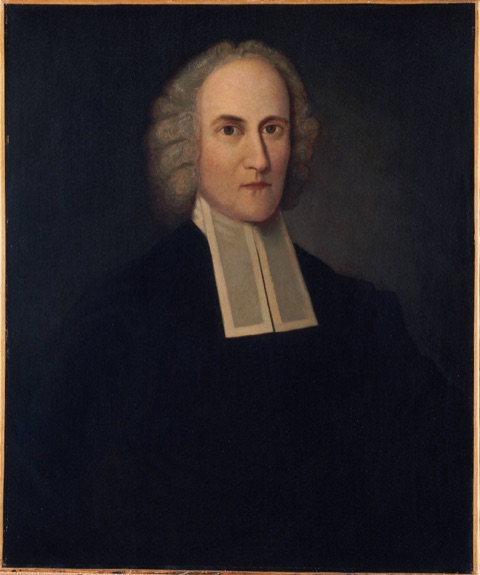
About the author
Jonathan Edwards
Jonathan Edwards (1703 to 1758 AD) was born in East Windsor, Connecticut, the only son of the Congregational minister Timothy Edwards, and graduated from Yale College in 1720. In 1727 he joined his grandfather Solomon Stoddard in the pulpit at Northampton, Massachusetts, becoming sole pastor in 1729. His preaching sparked a revival there in the mid 1730s, and he was a leading figure in the Great Awakening of 1740 to 1742. Dismissed from Northampton in 1750, he served the frontier mission at Stockbridge, where he wrote Freedom of the Will and Original Sin, works these remarks refer to. He became president of the College of New Jersey in 1758 and died that year after a smallpox inoculation.