Modernized edition · Full text · Free PDF/EPUB
Miscellaneous Discourses on Christian Doctrine and Practice in Modern English
Summary
- Published
- 1788 AD, thirty years after Edwards's death
- Type
- Sermons on Christian doctrine and conduct
- Length
- 168,000 words · 11 hours
- Collection
- Puritan
What is Miscellaneous Discourses on Christian Doctrine and Practice about?
Miscellaneous Discourses on Christian Doctrine and Practice is a collection of sixteen sermons by Jonathan Edwards, published in 1788. Each expounds one Scripture text by doctrine and application, covering man's enmity to God, the wisdom of redemption, Christian knowledge, charity, self-examination, judgment, hell, Christ's triumph, honesty, temptation, procrastination, the pilgrim life and natural blindness in religion.
Read the full summary (9 points, quotes, key themes)Show less
How the argument unfolds
- 01
Enmity and wisdom. Natural men oppose God in every faculty. Against this Edwards sets the wisdom that chose the Son and made the fall the occasion of a higher blessedness than Adam would have known.
- 02
Knowledge and charity. Every believer is a learner in the school of Christ. Giving to the poor is commanded as strictly as prayer and repaid as surely as seed.
- 03
Searching the heart. Edwards examines his hearers on worship, secret sins, neighbors and family, and warns that attending ordinances in known sin profanes them.
- 04
The last judgment. Christ will raise the dead, open the books, pronounce the two sentences and burn the world.
- 05
Sinners in Zion. The unconverted within the church will meet the sharpest terror, though for now the godly and Christ himself seek their salvation.
- 06
Christ above all evil. Every evil that rose high is brought under Christ's feet, while sinners soothe themselves with eight kinds of false hope.
- 07
Honesty and temptation. The eighth commandment reaches debts, trade, livestock and fruit trees, and Joseph's flight teaches the avoidance of whatever exposes us to sin.
- 08
Tomorrow and the road to heaven. No one may count on another day, and every comfort must serve the pilgrim's road.
- 09
Natural blindness. Idolatry, heresy and controversy show a blindness in religion that learning cannot cure and only revelation removes.
Notable images & quotes
- Hazael and the throne. Hazael never suspected his own cruelty until he had power. So with the sinner who feels no hatred of God: “Yet if God’s throne were within your reach, and you knew it, it would not be safe for a single hour.”
- The drowning man. The dying sinner clings to each hope of recovery: “Like a drowning man, he grabs at thin, brittle twigs and clenches his fists around anything within reach.”
- Bread upon the waters. Alms look like bread thrown into the sea, yet Providence keeps them and returns them in the day of need, often to the giver's children.
- The old sore. Party prejudice is a wound never healed: “Like an old sore that has skinned over without being healed, it begins to rage at a touch that would never hurt healthy flesh.”
Key themes
- Restraining grace. Nothing in natural men holds them back from any evil, so every restraint, whether conscience, laws, reputation or circumstance, is God's mercy, and believers owe their escape from gross sin to the same hand.
- Knowledge before affection. The heart is reached only through the understanding, so ordinary Christians must study Scripture and know themselves.
- Religion in daily dealings. Paying debts, honest trade, truthful speech and restitution bind as strictly as prayer and public worship.
- Revival as a test. Customs the awakening swept away and decline brought back are judged hostile to true religion, and a season of the Spirit is not to be lost.
Why read it today
These sermons show Edwards as a working pastor. He names the farmer still at work after the Sabbath begins, the man asleep in the sermon, the trader who hides a flaw in his goods and the guest who carries food home in secret.
The doctrinal sermons are as searching as the practical ones, setting out the plan of salvation in careful order and showing why his hearers took eternity seriously.
The book also preserves a congregation's life between revivals: its party quarrels, its returning frolics, its backsliders and its young converts.
Source edition: The sixteen discourses from the 1834 Works of Jonathan Edwards, in modern English
Reader questions (9)Hide the questions
Questions about Miscellaneous Discourses on Christian Doctrine and Practice
Is there a modern English version of Miscellaneous Discourses on Christian Doctrine and Practice?
Yes. This is Miscellaneous Discourses on Christian Doctrine and Practice by Jonathan Edwards in modern English. The language is modernized and the author's order and argument are kept. The full modernized text is free to read on this page.
Can I read Miscellaneous Discourses on Christian Doctrine and Practice online for free?
Yes. The complete text of this modern English edition is on this page, with no sign-up or paywall.
Is there a free PDF of Miscellaneous Discourses on Christian Doctrine and Practice?
Yes. The PDF and EPUB of this edition are free with an Updated Works account. Sign in with Google or an email link; no card is needed.
What is Miscellaneous Discourses on Christian Doctrine and Practice by Jonathan Edwards about?
It is a collection of sixteen sermons on sin and redemption, the last judgment and eternal punishment, and the practical duties of Christians, from studying divinity and giving to the poor to honest trade and using the present day well.
When were these sermons preached and published?
They were preached during Edwards's ministry and published together in 1788. Several address a congregation that had sat under Solomon Stoddard, had seen revivals and was split into two parties, which points to Northampton.
Why do people not feel their enmity to God, according to Edwards?
Because it works through doubt of God's existence and a false picture of a less holy God, is hidden by fear and hope, and has never had God within reach. Conduct, he says, is the truest interpreter of the heart.
Does public poor relief make private charity unnecessary?
No. Laws rightly provide for the utterly destitute but were never meant to cover every need, and if the town fails someone, the duty falls on those who can help.
What does Edwards say about singing in church?
The whole congregation should sing, not merely join silently. Those who cannot should learn, and parents should have their children taught.
How can a Christian tell whether a custom tends to sin?
Ask whether it borders on sins we are prone to, feeds lust in the imagination, is commonly followed by sin, has drawn us from prayer, vanishes in revival and returns in decline, or could not bear open practice by all.
Miscellaneous Discourses on Christian Doctrine and Practice in Modern English · Full text
Discourse 1: Men Naturally God’s Enemies
“For if, when we were enemies, we were reconciled to God by the death of his Son” (Rom 5:10).
From the beginning of this epistle to the start of this chapter, the apostle has pressed the doctrine of justification by faith alone. In this chapter he moves on to consider the benefits that follow justification: peace with God, present happiness, and the hope of glory. He mentions peace with God in the first verse: “Therefore being justified by faith, we have peace with God, through our Lord Jesus Christ” (Rom 5:1). In the next verse he speaks of present blessedness and the hope of glory: “By whom also we have access by faith into this grace, wherein we stand, and rejoice in hope of the glory of God” (Rom 5:2).
Concerning this benefit, the hope of glory, the apostle highlights two things in particular: the blessed nature of this hope, and its sure foundation.
1. He emphasizes the blessed nature of this hope, because it enables us to glory in tribulations. He describes this excellent quality of true Christian hope in Romans 5:3-5: “And not only so, but we glory in tribulations also, knowing that tribulation worketh patience; and patience, experience; and experience hope; and hope maketh not ashamed, because the love of God is shed abroad in our hearts by the Holy Ghost which is given unto us.”
It is as if he had said that through the hope of a blessed reward, which will far more than make up for all tribulation, we are enabled to bear tribulation with patience, patiently enduring and patiently waiting for the reward. Patience then produces experience. When we bear tribulation while patiently waiting for the reward, we experience the down payment of that reward, namely the earnest of the Spirit, as we feel the love of God poured out in our hearts by the Holy Spirit. Therefore our hope does not put us to shame or disappoint us. Even in the middle of our tribulation, we receive those blessed inflows of the Spirit in our souls that make a season of affliction sweet to us. Such an earnest richly confirms our hope, and in that way experience produces hope.
2. The apostle next points out the sure ground we have for this hope. We have abundant proof that we will obtain the glory we hope for because of the peace we have with God through justification by Christ’s blood. While we were without strength, at the right time Christ died for us, even while we were ungodly, sinners, and enemies to God and Christ (Rom 5:6-10).
The apostle’s argument is remarkably clear and forceful. If God has already done something so great for us as to give Christ to die and shed his precious blood for us, which was by far the greatest thing, we need not doubt that he will bestow life upon us. Actually giving eternal life after it has been purchased is a small thing for God compared with giving his own Son to die in order to buy it. Giving Christ to purchase salvation was virtually everything, for it included the whole grace of God in salvation. Once Christ had purchased salvation at such a costly price, every obstacle was overcome and the work was virtually finished.
By comparison, it is a small matter for God to bestow salvation after it has been bought at full price. Sinners who are justified by the death of Christ are already virtually saved. The work is, in effect, done, and what remains is simply the necessary result of what has been accomplished. When Christ died, he made an end of sin. When he rose from the dead, he virtually rose with the elect, bringing them up from death with him and ascending into heaven with them. Because this is already done, and we have been reconciled to God through the death of his Son, we need not fear that we will fail to be saved by his life. God’s love shines far more brightly in giving his Son to die for sinners than in bestowing eternal life after Christ’s death.
The text speaks of giving Christ to die for us as a much greater thing than the actual gift of life because that is where the entire difficulty lay. When God gave Christ for us, he did it while we were sinners and enemies. When he actually bestows salvation upon us after we are justified, he no longer views us as sinners, but as perfectly righteous persons in whom he sees no iniquity. We are no longer enemies, but reconciled. When God gave Christ to die for the elect, he looked on them as they are in themselves. When he actually bestows eternal life, he looks on them as they are in Christ.
Three descriptions appear in the text and its context for sinners as they are in themselves (Rom 5:6-8). They are without strength, unable to help themselves. They are ungodly or sinners. And they are enemies, as our text declares. Natural men are God’s enemies.
Even though God is the Creator of all things, he still has enemies in the world. People in general will admit that they are sinners. Few, if any, have consciences so blinded that they do not recognize they have been guilty of sin. Most sinners will even admit that they have bad hearts. They will confess that they do not love God as much as they should, that they are not as thankful for his mercies as they ought to be, and that they fail in many ways. Yet few of them realize that they are God’s enemies. They do not see how they can truly be called enemies, because they are not conscious of wishing God any harm or trying to do him any injury.
Yet Scripture speaks of them plainly as enemies to God. So it does in our text, and elsewhere as well: “And you that were sometime alienated, and enemies in your minds by wicked works” (Col 1:21). Again, “The carnal mind is enmity against God” (Rom 8:7). I will now seek to show in detail that all natural or unregenerate people truly are such enemies. I plan to treat the subject in this order: first, in what respects they are enemies to God; second, to what a great degree they are enemies; and third, why they are enemies. After that, I will answer several objections.
Section 1: In What Respects Natural Men Are God’s Enemies
1. Their enmity appears in their judgments, their natural taste, their wills, their affections, and their practice. First, they have a very low opinion of God. People readily hold a high view of their friends. They are quick to think well of their qualities, give them the praise they deserve, and cover over any faults they may have. Toward their enemies, however, people tend to hold low thoughts and dishonorable opinions, looking with contempt on anything praiseworthy in them.
That is just how natural men act toward God. They hold very low and contemptuous thoughts of him. Whatever honor and respect they may profess and put on display toward God, their actual conduct shows that they regard him as a Being who counts for very little. The language of their hearts is, “Who is the Lord, that I should obey his voice?” (Exod 5:2). They say in spirit, “What is the Almighty, that we should serve him? and what profit should we have if we pray unto him?” (Job 21:15).
They consider him worthy neither to be loved nor to be feared. They would never dare treat one of their fellow creatures, even someone raised only a little above them in power and authority, with the slight and disregard they boldly show toward God. They value one of their equals far more than God, and they are ten times more afraid of offending such a person than of displeasing the God who made them. They pour such extreme contempt on God that they prefer every vile lust before him. Every worldly enjoyment stands higher in their esteem than God does. A morsel of food or a few pennies of worldly gain is chosen ahead of him. In the esteem of natural men, God is placed last and lowest.
2. They are enemies in the natural relish of their souls. They have an inbred distaste and aversion for God’s perfections. God is not the kind of being they would choose to have. Even though they are ignorant of God, they still dislike him based on what they hear of him and what is plain by the light of nature. Because he possesses the attributes he does, they recoil from him.
They hear that God is an infinitely holy, pure, and righteous Being, and for that very reason they do not like him. They have no taste for such qualities and take no delight in thinking about them. For a natural man to be forced to sit and contemplate those attributes of God would feel like sheer drudgery and bondage. He sees no beauty or loveliness in them and tastes no sweetness in them. Because of their distaste for these perfections, natural men dislike all of God’s other attributes as well. They feel an even greater aversion to him because he is omniscient and knows everything, since his omniscience is a holy omniscience. They are not pleased that he is omnipotent and can do whatever he pleases, because his power is a holy omnipotence. They are enemies even to his mercy, because it is a holy mercy. They dislike his immutability, because it means he will never become anything other than what he is, an infinitely holy God.
This distaste for God’s attributes is the reason natural men do not love to have much to do with him. The natural bent of the human heart is to flee from God and keep as far away from him as possible. A natural man dislikes communion with God and is naturally disinclined to those religious duties in which he must deal directly with him. Scripture says of wicked people, “God is not in all their thoughts” (Ps 10:4).
It is plain that the human mind is naturally averse to thinking about God. If any thoughts of him enter the mind, they soon slip away, for such thoughts do not easily settle in the minds of natural men. If anything is said to them about God, they quickly forget it. It is like seed that falls on the hard path and is soon snatched away by the birds of the air, or like seed that falls on a rock. Other things stick in the mind, while divine things bounce off. When heavenly thoughts are cast into the mind, they meet something there that quickly drives them back out. They find no welcome there and are soon chased away.
This also explains why natural men are so hard to persuade to remain faithful in private prayer. They would not mind spending a quarter of an hour, morning and evening, in some physical labor. Their resistance comes from their aversion to a duty in which they deal so directly with God, because they naturally prefer to keep their distance from him.
3. Their wills are contrary to his will. God’s will and theirs run directly across each other. God wills the very things they hate and shrink from most, while they will the things that God hates. Therefore they oppose God in their wills. There is a dreadful, violent, and stubborn resistance in the will of natural men against the will of God.
They stand directly opposed to God’s commands. It is out of this enmity of the will that “the carnal mind is not subject to the law of God, neither indeed can be” (Rom 8:7). Consequently, natural men are enemies to God’s government. They are not loyal subjects, but enemies to God as Lord of the world. They are utter enemies to his authority.
4. They are enemies to God in their affections. In every natural man there is a seed of malice against God, and it often breaks out in dreadful ways. It may stay largely hidden in times of complacency, when God leaves people alone and they meet with no great trouble of body or mind. Yet if God merely touches their consciences by showing them a glimpse of his wrath for their sins, this often draws out the hidden malice against him.
That malice then shows itself in dreadful risings of the heart, inward quarreling and wrangling, and blasphemous thoughts, in which the heart acts like a viper hissing and spitting poison at God. No matter how free from such malice the heart may seem while left alone and complacent, a very small thing can throw it into a rage. Trials reveal what is inside the heart, and a change in a person’s circumstances often uncovers it.
Pharaoh had no more natural enmity against God than other people do. If other natural men had been placed in Pharaoh’s circumstances, the same corruptions would have erupted just as dreadfully. The scribes and Pharisees had no more natural malice in their hearts against Christ than anyone else. In their place, and with as little restraint, other natural men would have shown just as much malice against Christ as they did.
When wicked people are finally cast into hell, their malice against God will appear in full view. Their hearts will then be seen to be as full of malice as hell is full of fire. Yet no new corruptions will be planted in their hearts when they enter hell. The old ones will simply break out without restraint. That is the entire difference between a wicked person on earth and a wicked person in hell. In hell there will be more to stir up corruption and less to restrain it than on earth, but no new corruption will be added. A wicked person will have no principle of corruption in hell except what he carried there with him. The seeds of all the malice that will rage then are already present now. The malice of damned spirits is only a branch growing from the root already in the hearts of natural men. A natural man has a heart like the heart of a devil, except that corruption is held under greater restraint in humans than in devils.
5. They are enemies in their practice. They walk contrary to him. They are intensely active in their hostility against God and are actively engaged in war against him. Of course, they cannot actually injure God, because he is infinitely above them, yet they do everything they can. They set themselves against his honor and glory, against the cause of his kingdom in the world, against his will and commands, and against his government. They oppose God in his works and in his declared purposes. While he is carrying out one work, they are doing the opposite. God pursues one aim, and they pursue the exact opposite. They enlist under Satan’s banner and serve as his willing soldiers in opposing the kingdom of God.
Section 2: The Degree of Men’s Natural Enmity to God
I now move on to say something about the degree of this enmity, to show in some measure how great enemies to God natural men really are.
1. They have no love for God. Their enmity is pure enmity with no mixture of love. A natural man is completely without any principle of love to God, and therefore he has never had even the slightest exercise of true love for him. Some natural men have better temperaments than others, some have a better upbringing, and some live far more sober lives. Yet one has no more love for God than another, because none of them has even the smallest spark of it. The heart of a natural man is as devoid of love to God as a dead, stiff, cold corpse is devoid of living warmth. As Christ said, “I know you, that ye have not the love of God in you” (John 5:42).
2. Every faculty and principle of action is wholly under the dominion of enmity against God. Human nature is thoroughly infected with this hostility. A natural man is tainted by it throughout all his faculties and inner springs of action. Even more, every faculty is completely subdued and enslaved by it. This enmity against God holds absolute possession of the person. Speaking of what he was by nature, the apostle Paul says, “I am carnal, sold under sin” (Rom 7:14).
The understanding is under the reigning power of this enmity against God, so that it is completely darkened and blinded to God’s glory and excellence. The will is wholly under its reigning power. All the affections are governed by enmity against God. There is not a single affection or desire that a natural man has, or from which he is ever moved to act, that does not contain enmity against God. A natural man is as full of hostility against God as any viper or venomous beast is full of poison.
3. The strength of natural men’s enmity against God is so great that it is insuperable by any finite power. It holds far too strong a grip on the heart to be conquered by any created power. In truth, a natural man never sincerely tries to root out his enmity against God. His efforts are hypocritical, because he delights in his enmity and chooses it.
Nor can anyone else overcome it, even if they strive sincerely and with all their might. If godly friends and neighbors labor to persuade natural men to lay aside their enmity and become friends of God, they cannot win them over. Even if ministers bring forward countless arguments and appeals, set forth the loveliness of God, tell them of his goodness, hold out God’s own gracious invitations, and plead with them ever so earnestly to abandon their opposition and be reconciled, they still cannot break it down. Natural men remain just as hostile to God as before.
The tongues of men or angels cannot persuade them to give up their opposition to God. Even miracles cannot do it. How many miracles did the children of Israel witness in the wilderness! Yet their enmity against God remained, as their frequent grumbling proved. How often did Christ perform miracles for this purpose without effect, while the Jews stubbornly held out! “O Jerusalem, Jerusalem, thou that killest the prophets, and stonest them which are sent unto thee, how often would I have gathered thy children together, even as a hen gathereth her chickens under her wings, and ye would not” (Matt 23:37). After all of that, how great did their enmity prove to be! How spiteful and venomous were their hearts toward Christ, as seen in their cruel treatment of him during his final sufferings!
4. They are mortal enemies to God. That is, the enmity in their hearts strikes at the very life of God. One person may dislike another and harbor ill will toward him without being his mortal enemy, because that hostility stops short of wanting the other person dead. It is not that way with natural men toward God. They are mortal enemies. Their powerlessness is no proof that this is not the true direction of their hostility.
Natural men are enemies to God’s rule, and their nature shows their readiness to dethrone him if they could! Even more, they are enemies to the very being of God and would be glad if there were no God. It follows necessarily that they would destroy his existence if they had the power. Scripture says, “The fool hath said in his heart, There is no God” (Ps 14:1). This implies not merely a tendency to doubt God’s existence, but a desire that it might be so. His heart says it, meaning his inclination says it. The words in the original are, “The fool hath said in his heart, No God.” That means, “I would have none. I do not want any. I wish there were none, for that would suit my inclination best. Let the world be emptied of a God, because he stands in my way.” In this sense, every natural man is an atheist in his heart.
A viper’s poison is deadly poison, and when it bites, it strikes at precious life. In this respect, fallen men are a generation of vipers, because their poison, which is enmity against God, aims at the life of God. Scripture speaks of them in these very terms: “O generation of vipers” (Matt 3:7); “The wicked are estranged from the womb … Their poison is like the poison of a serpent” (Ps 58:3-4); “For their vine is the vine of Sodom, and of the fields of Gomorrah: their grapes are the grapes of gall, their clusters are bitter. Their wine is the poison of dragons, and the cruel venom of asps” (Deut 32:32-33).
Because the divine nature is immortal and infinitely beyond our reach, only one test could ever prove whether the enmity naturally in the human heart against God is mortal or not: for God to take human nature upon himself and become man, bringing himself within human reach. No other experiment was possible. And what was the outcome? As soon as God became man and came down to dwell among such vipers as fallen people, they hated and persecuted him, and they never stopped until they had drenched their hands in his blood.
A great crowd united in this purpose. Nothing would satisfy them short of putting him to death. They all cried out, “Crucify him, crucify him! Away with him!” They would rather have Barabbas, who thoroughly deserved death, go free than allow Christ to live. Nothing could hold them back, not all his preaching and not all his miracles. They were determined to kill him. Nor would an ordinary execution satisfy them; it had to be the cruelest and most shameful death they could devise. They made it even worse by mocking him, spitting on him, and scourging him. This reveals the true nature and direction of human enmity against God. Here it appeared in its true colors.
5. Natural men are greater enemies to God than they are to any other being whatsoever. They may be very bitter enemies to their fellow creatures, yet never so great as they are to God. No other being stands so directly in sinners’ way regarding the things on which they chiefly set their hearts. People usually hate their enemies in proportion to two things: how strongly the enemy opposes what they consider their own interest, and how much power and ability that enemy has. A mighty and powerful enemy is hated far more than a weak and helpless one, and no one is as powerful as God.
Enmity toward other people can be overcome. Time can wear it down, and reconciliation can happen. Yet natural men, apart from a mighty work of God to change their hearts, will never get over their enmity against God. They are greater enemies to God than they are to the devil. Indeed, they treat the devil as their friend and master, and they join forces with him against God. As Christ said, “Ye are of your father the devil, and the lusts of your father ye will do: he was a murderer from the beginning” (John 8:44).
Section 3: Why Men Are Enemies to God
The general reason is that God stands opposed to them in the worship of their idols. Humanity’s apostasy consists, in summary, of turning away from the true God to idols, forsaking our Creator, and setting up other things in his place. When God first created man, man was united to his Creator, and the God who made him was his God. The true God was the object of his highest regard and held possession of his heart. Love for God was the ruling principle in his heart, governing all other principles, and everything in the soul was wholly subject to it.
When man fell, however, he departed from the true God, and the bond between his heart and his Creator was broken. He completely lost his principle of love for God. From that point on, humanity clung to other gods and gave to the creature the devotion due only to the Creator. Once God ceased to be the object of supreme love and honor, other things inevitably took his place.
A human being will necessarily have something he treats as his god. If a person does not give his highest devotion to the God who made him, something else will claim it. People will either worship the true God or some idol. It is impossible for it to be otherwise, because something will always hold the human heart. Whatever a person gives his heart to may rightly be called his god. Therefore, when humanity extinguished all love for the true God in the fall, it set up the creature in his place. Having lost all esteem and love for the true God, and having installed rival gods in his place and in opposition to him while God still demands our worship and opposes those idols, enmity necessarily follows.
Whatever a person chooses as his god is the thing on which he chiefly sets his heart. Nothing stirs up hostility more quickly than opposition to what we hold dearest. A person will be the fiercest enemy to whoever opposes him in what he has chosen for his god. He will view no one as standing more in his way than the one who would strip him of his god: “Ye have taken away my gods; and what have I more?” (Judg 18:24).
In this respect, a person cannot serve two masters who compete for his loyalty. Not only is it impossible to serve the second if he serves the first, but clinging to one necessarily makes him hate the other: “No man can serve two masters; for either he will hate the one, and love the other, or else he will hold to the one, and despise the other. Ye cannot serve God and mammon” (Matt 6:24). That is the exact reason people hate God. It is just like two rival kings rising up against each other in one kingdom, both claiming the same throne and competing for the same crown. Those who are loyal, wholehearted subjects of the one are necessarily enemies of the other. Just as a person’s god is the object of his highest love, the God who chiefly opposes that idol must become the object of his deepest hatred.
The gods that a natural man worships in place of the God who made him are himself and the world. He has withdrawn his honor and esteem from God and proudly exalts himself. Just as Satan refused to remain in subjection and therefore rebelled and set himself up, so a natural man, in his proud and inflated view of himself, seats himself upon God’s throne. He also gives his heart to the world: worldly riches, worldly pleasures, and worldly honors take possession of the devotion that belongs to God.
The apostle John sums up all the idolatry of wicked people in their love of the world: “Love not the world, neither the things that are in the world. If any man love the world, the love of the Father is not in him. For all that is in the world, the lust of the flesh, the lust of the eye, and the pride of life, is not of the Father, but is of the world” (1 John 2:15-16). The apostle James likewise observes that anyone who is a friend of the world must necessarily be an enemy of the true God: “Whosoever therefore will be a friend of the world, is the enemy of God” (Jas 4:4).
Every sin people commit is an act done in the service of their idols. Not a single act of sin exists that is not an act of service to some false god. Therefore, wherever God opposes sin in people, he opposes their worship of their idols, and for that reason they are his enemies. God opposes them in the service of their idols in the following ways:
1. He reveals his utter abhorrence of their attachment to their idols. Their idols are what they love above everything else, and they refuse to part with them. This wickedness is sweet to them (Job 20:12). If you take their idols away, what have they left? To lose their idols is to lose their all. Having their idols torn from them feels more painful than tearing body and soul apart; it is like tearing their heart in two. They love their idolatry, while God not only disapproves of it but intensely hates it. He will never make peace with it, and therefore they hate him. God declares an infinite hatred of every act performed in the service of false gods. He reveals himself as a holy and jealous God, deeply jealous of his own honor and utterly intolerant of giving that honor to another.
2. He utterly forbids their clinging to those idols and all the service they render to them. He does not merely express displeasure; he strictly prohibits it. He demands that they worship him, serve him alone, and give their hearts completely to him, tolerating no rival. He does not allow them to serve their idols even in the smallest degree, but commands them to cast them away utterly and never worship them again at any time. He requires a final break with their idols, not merely abstaining for a season, but casting them off forever and never again indulging an idolatrous affection for them. This runs so deeply against their hearts, and they are so averse to it, that it makes them God’s enemies. They cannot bear God’s commands because those commands forbid everything in which their hearts are wrapped up. Since they hate God’s commands, they hate him whose commands they are.
3. He threatens them with everlasting damnation for serving their idols. He threatens them for their past idolatry, warning of his eternal wrath because they have departed from him and chosen other gods. He threatens them for the disposition in their hearts that clings to rival gods, even for the smallest degrees of idolatrous affection within them. He makes clear that he will not tolerate any regard for idols, and he has fixed eternal death as the wages of every degree of it. He will not excuse their guilt, he holds them to their obligations, and he will accept no atonement they try to make. He will not forgive them on the basis of any religious efforts, any labor they exert, or any tears they shed. He will accept no money or price they have to offer.
He also threatens every future act of their idolatry. Not only does he forbid them from ever committing the slightest act of it, he forbids it on pain of eternal damnation. That is how strictly God prohibits them from serving their beloved idols! He threatens them with everlasting wrath for every exercise of inordinate love for worldly gain, and for every expression of inordinate devotion to worldly pleasures or worldly honors. He threatens them with everlasting torment for their self-exaltation. He requires them to deny and renounce themselves, and to humble themselves at his feet, on pain of bearing his wrath to all eternity.
The strictness of God’s law is a chief cause of human enmity against God. If God did not hate sin so deeply, or if he allowed people to gratify their lusts to some degree, people would not hate him as much as they do. The same would be true if his warnings against sinful indulgence were not so dreadful and absolute, or if his displeasure could be bought off with a few tears or a minor reformation. Instead, God shows himself to be an implacable enemy to their idols and threatens everlasting wrath and infinite ruin for everything done in the service of their lusts. That is what makes them irreconcilable enemies to him.
For this very reason, the scribes and Pharisees were such bitter enemies to Christ. He showed himself to be an open enemy to their pride, their conceit of their own wisdom, their self-righteousness, and their inordinate craving for their own honor, which was their god. Natural men are enemies to God because he stands so directly against the very things in which they place their all. Try to take away what is dearest to a person, and nothing will provoke him more. God is infinitely opposed to what natural men look to for all their delight and happiness. He is an enemy to what they prize as their highest honor and dignity, and the very thing in which they place all their trust, namely their own righteousness.
This is why natural men are greater enemies to God than to any other being. Some fellow creatures may get heavily in their way concerning certain things they desire, yet God opposes them with respect to every single one of their idols, and his opposition is infinitely great. None of our fellow creatures ever oppose any of our interests as thoroughly as God opposes wicked people in their idolatry. His infinite opposition is shown by the infinite punishment he threatens, namely his dreadful wrath to all eternity, misery without end. We need not wonder, then, that natural men are enemies to God.
Section 4: Answering the Objection That Men Are Not Conscious of This Enmity
Natural men generally do not think of themselves as being this bad. They do not hold the view that they are enemies to God. When they hear this doctrine preached, they are quick to raise objections. Some may say, “I do not know or feel that I hate God and hold a mortal enmity against him. I sense nothing like that in myself. If I have such hostility, why do I not feel it? If I am a mortal enemy, why would I not know it better than anyone else? How can others see what is in my heart better than I can? When I hate one of my fellow creatures, I can feel it stirring inside me.”
To such an objection I offer the following answers.
1. If you simply watch yourself and search your own heart, unless you are strangely blinded, you can perceive the very things in which enmity fundamentally consists. In particular, you can see that you have at least held a low and contemptuous opinion of God. In your own judgment, you have placed the trifles and vanities of this world far above him, valuing the enjoyment of these things far ahead of enjoying God and prizing them more than his love.
You can also see that you despise God’s authority and care very little for his commands or his honor. Even if you have somehow blinded yourself into thinking you respect them now, you can surely look back and see that you have not regarded them. You can recognize that you have felt a distaste and aversion toward God, and a resistance to thinking about him, so that being confined to that occupation for any length of time would have felt deeply unpleasant. At the same time, the vanities of the world have pleased you greatly, absorbing your mind while you remained averse to the things of religion. If you look honestly into your heart, it is plain to see that there is enmity in your will, running directly contrary to God’s will, because you have opposed his will your whole life long. These facts are unmistakable; only a great delusion could hide them from you. They are the very foundation of all enmity, and if these things are in you, everything else we have described follows naturally.
2. One reason you have not felt more noticeable stirrings of malice against God is that your enmity is currently operating partly through your unbelief in God’s existence, which keeps it from showing itself in other ways. Humanity naturally carries a principle of atheism within, a reluctance to grasp the reality of God’s existence and a readiness to doubt it. God’s existence does not ordinarily feel real to natural men. All the displays of God’s being in his works do not overcome the atheism embedded in the heart. Even when people seem somewhat convinced in their reason, God still does not feel real to them. The conviction is faint, leaving no strong impression on the mind that God truly exists, and often they are tempted to think there is no God at all. This prevents the enmity from breaking out in ways it otherwise would, and in particular keeps them from feeling open surges of hatred.
An illustration may make this clearer. Suppose you held a deep-rooted, long-standing malice against another man, and then you heard that he was dead. You would no longer feel the active stirrings of malice that you felt when you knew he was alive. If you later heard that the report was false and realized your enemy was still living, you would immediately feel the same surges of hatred as before.
In the same way, your failure to grasp the reality of God’s existence can prevent the conscious stirrings of hatred you would otherwise feel. If wicked people in this world felt the reality of God’s being as the wicked do in the next world, they would feel far more of the hatred felt by those in the world to come. Corruption operating in one way can, and often does, prevent it from operating in another. Just as greed may suppress the display of pride, atheism may suppress open malice. Yet that is no sign that there is less enmity in the heart, because it is the very same enmity working through another channel.
The same enmity that works through atheism in this world will work through malice and blasphemy in the next, where no room for atheism remains. The same mortal hostility that would make you wish there were no God if you clearly saw that he exists now inclines you to think there is none. People very often persuade themselves that things are the way they wish them to be. The very same principle that leads you to think God does not exist would, if you knew he existed and had the power, move you to strip him of existence.
3. Even if you believe there is a God, you do not grasp that he is the God he truly is. You do not truly realize how holy he is, how intensely he hates sin, or how strictly just he is, a God who will by no means clear the guilty. The words of Psalm 50:21 apply directly to you: “These things hast thou done, and I kept silence: thou thoughtest that I was altogether such an one as thyself.” Your atheism shows up in this just as much as in thinking there is no God.
Your objection therefore rests on the fact that you do not feel conscious hatred toward the god you have invented to suit yourself, a god you like better than the true God. That is no evidence that you lack bitter enmity against the true God. On the contrary, it was your very enmity against the true God, and your dislike of him, that drove you to fashion a different god in your imagination whom you prefer. Your hostility to God’s holiness, justice, and similar attributes led you to imagine another being who is not so holy, does not hate sin so intensely, will not punish it so strictly, and whose wrath against sin is not so terrifying.
If you truly saw the emptiness of your own imaginations and recognized that God is not what you have pictured, you would feel very differently. If you realized that he is indeed an infinitely holy, just, sin-hating, and sin-avenging God who will neither tolerate nor endure idol worship, you would be far more likely to feel conscious stirrings of enmity against him than you are now. Experience confirms this. When people come under conviction and begin to realize that God is not the easygoing figure they once imagined, but a jealous, sin-hating God whose wrath against sin is dreadful, they become far more prone to feel open surges of hostility against him than before.
4. Having always been taught that God is infinitely above you and out of your reach has kept your enmity from showing itself in ways it otherwise would have. In particular, your enmity has not expressed itself in thoughts of revenge, because revenge has never found any opening or foothold here. Since you have never imagined such a thing as possible, that hostility has lain quiet. A serpent does not strike or spit poison at something far in the distance, though it would strike at once if the same object came near.
Opportunity often exposes what people truly are, whether friends or enemies. The chance to act puts action into people’s minds and awakens dispositions that lay dormant before. Opportunity stirs up active desire where previously there was only a quiet inclination that stayed still for lack of an opening. If someone has nursed an old grudge against another person and suddenly gets a clear chance to take revenge, that opportunity revives his malice and awakens a desire to strike back.
If a great sovereign prince wrongs a poor man, even in a way seen as very cruel, it will not ordinarily provoke schemes of active revenge, because the prince is too far above him and beyond his reach. Many a man has seemed calm and gentle while he had no power in his hands, appearing neither to himself nor to others to have any inclination toward cruelty. Yet later, when unexpected promotion or another turn gave him power and opportunity, he acted like a ravenous wolf or a devouring lion.
That was the case with Hazael: “And Hazael said, Why weepeth my lord? And he answered, Because I know the evil that thou wilt do unto the children of Israel: their strong holds wilt thou set on fire, and their young men wilt thou slay with the sword, and wilt dash their children, and rip up their women with child. And Hazael said, But what is thy servant a dog, that he should do this great thing? And Elisha answered, The Lord hath showed me that thou shalt be king over Syria” (2 Kgs 8:12-13).
Hazael was only a servant at that time. He had no power in his hands to do as he pleased, so his cruel nature stayed hidden, and he himself did not imagine it was there. Afterward, when he became king of Syria and held absolute power with no one to restrain him, it broke out into the open and he carried out everything the prophet had foretold. He committed the very cruelties he thought could never be in his heart. The lack of opportunity was the only difference. It was all in his heart beforehand. He was just as much a dog then, capable of committing such acts; he only lacked the chance. That is why, when Hazael seemed shocked that the prophet would say such a thing about him, the only reason Elisha gave was, “The Lord hath showed me that thou shalt be king over Syria” (2 Kgs 8:13).
Some natural men are just such “dogs” that, given the opportunity, they would do things they cannot now imagine are in their hearts. You object that you cannot have a mortal hatred against God because you have never felt any desire to dethrone him. One reason, however, is that you have always regarded it as utterly impossible. Yet if God’s throne were within your reach, and you knew it, it would not be safe for a single hour.
Who knows what thoughts would immediately spring up in your heart at such an opportunity, and what desires would awaken within you? Who would trust your heart not to conceive thoughts like these at once, even though it makes one tremble to put them into words? “Now I have the chance to set myself free, so I need no longer be kept in constant slavery by God’s strict law. Now I can take my freedom to live whichever way I like best, without living in continual slavish fear of God’s displeasure. Besides, God has not treated me well in many ways. He has acted most unjustly toward me in binding me over to destruction for unbelief and other things I cannot help. He has shown mercy to others, and not to me. Now I have an opening to deliver myself, with no danger of being harmed for it. Then there will be nothing left to terrify us and keep us in bondage.”
Who would trust your heart not to entertain thoughts like these, or others far more horrid and too dreadful to mention? Therefore I stop here. Those natural men who think there would be no danger of such stirrings in their hearts if they knew they had the chance are foolishly blind to what lives inside them.
5. You barely consider how much your lack of conscious surges of hatred toward God is due to being held back by fear. From the beginning you have been taught what a dreadful thing it is to hate God and how terrifying his displeasure is. You have been taught that God sees the heart and knows every thought, and that you are completely in his hands, so he can make you as miserable as he pleases, whenever he pleases.
These truths have restrained you. The fear they produce has kept you from showing what you really are, pressing your enmity down and making that serpent afraid to lift its head as it otherwise would. If an angry man were wholly in the power of an enemy, he would be afraid to act out his hatred openly without heavy disguise. Suppose further that this enemy, in whose power he stood, could read his heart and see every thought, and the man expected to be put to a terrible death if his enemy spotted any malice inside. How powerfully that would restrain him! He would be afraid even to admit to himself that he hated his enemy. Instead, there would be every kind of disguise, hypocrisy, and pretense, even in his own thoughts and feelings.
In just that way, your enmity has been kept under restraint from your very infancy. You have grown up inside it until it has become a habitual restraint. You dare not even think that you hate God. Whenever hatred stirs, you cover it with a disguise to hide it even from your own conscience, and so you have deceived yourself all along. Your self-deception is very old and deeply ingrained. There has only been restraint, never the putting of that enmity to death. Enmity against God has remained in full strength. It has simply been held back, like an enemy who dares not rise up and show his face.
6. Another reason you may not have felt more conscious hatred toward God is that what is in your heart has not yet been severely tested. Perhaps God has mostly left you alone up to now. The enmity in human hearts against God is like a serpent that lies still when left alone, yet if anyone disturbs it, it soon hisses, flies into a rage, and shows its venomous, spiteful nature.
Despite the good opinion you hold of yourself, a little testing would reveal you to be a viper, and your heart would erupt in rage against God. One thing restraining you right now is hope. You still hope to receive many good things from God, because your own self-interest is at stake. Thus hope and fear work together to keep your enmity from conscious outbursts. Once hope were gone, however, you would quickly show what you are, and you would feel your enmity against God burning in full rage.
7. If you claim that you feel no enmity against God while still acting like an enemy, you may be sure the reason is not that you are no enemy, but that you do not know your own heart. Actions are the truest interpreters of a person’s disposition. They reveal what is in the heart better than anything else. Only by ignoring your own behavior can you doubt whether you are God’s enemy.
How else can you explain your own conduct except by the fact that you are God’s enemy? How else can you explain opposing God in your ways, walking so sharply contrary to him, contrary to his counsels, contrary to his commands, and contrary to his glory? How else can you explain pouring such contempt on God, rating him so low, and acting so directly against his authority, his kingdom, and his cause in the world? How else can you explain setting your will against God’s will so stubbornly, for so long, in spite of so many warnings? How else can you explain siding so readily with Satan in his opposition to God’s kingdom in the world, joining him against God even though it runs directly against your own best interest and exposes you to everlasting misery?
Conduct like this from one person toward another would be more than enough proof of enmity. If someone were seen behaving that way as his steady pattern, no one would need further evidence that he was his neighbor’s enemy. If you had a servant who behaved toward you the way you behave toward God, you would not think you needed any stronger proof that he was your enemy.
Suppose your servant showed open contempt for you and ignored your orders as much as you ignore God’s commands. Suppose he went directly against you and in many ways did the exact opposite of what you commanded. Suppose he stubbornly and incorrigibly kept to ways contrary to your will, without changing at all despite your repeated calls, warnings, and threats, acting as crosswise to you day and night as you do to God. Would he not rightly be judged your enemy?
Suppose further that whenever you pursued one goal, he pursued the opposite, and whenever you built something, he did everything in his power to undo and destroy your work. Suppose he constantly aimed at ends meant to overturn the goals you sought, tried to defeat every plan you set out to accomplish, and opposed your interests as fiercely as you oppose God’s honor. Suppose, on top of all that, you saw him regularly meeting with your declared mortal enemies, taking them as his counselors, and listening to their advice just as you listen to Satan’s temptations. Would you not think you had ample proof that he was your enemy?
Therefore examine your ways seriously and weigh your own conduct: “How canst thou say, I am not polluted? … see thy way in the valley, know what thou hast done” (Jer 2:23).
Section 5: Answering the Objections That Men Show Respect to God and Experience Religious Affections
Natural men may also object by pointing to the respect they show to God from time to time. This leads many to think they are far from being such enemies to God. They pray to him in private, attend public worship, and take great care to do so in a proper manner. It seems to them that they show God plenty of respect, because they use very respectful language in prayer and act reverently in their speech, tone of voice, posture, and the like.
To this I answer that all of it is sheer hypocrisy. All this outward respect is put on, with no sincerity behind it. There is external respect, yet none in the heart. There is an outward show, and nothing more. You merely cover your enmity with a painted veil. You wear the disguise of a friend while remaining a mortal enemy in your heart. There is outward honor paired with inward contempt, a show of friendship and regard paired with inward hatred. You only deceive yourself with your display of respect and try to deceive God, forgetting that God does not look on the outward appearance, but on the heart. Consider these points in particular:
1. Much of the apparent respect natural men show to God comes simply from their upbringing. From infancy they have been taught that they ought to show great respect to God. They have been taught to use respectful language when speaking of God and to behave solemnly when taking part in religious duties that involve him. From childhood they have watched others use reverent expressions and adopt a reverent manner whenever they pray to God.
People who grow up in places where, from infancy, they constantly hear others take God’s name in vain, swear, curse, and blaspheme learn to do the very same things until it becomes second nature. You learned to behave respectfully toward God in the exact same way, and no other. It is not that you have any more true respect for God than they do; they were simply raised one way, and you another.
In some parts of the world, people are raised to worship idols of silver, gold, wood, and stone shaped like men and beasts: “They say of them, Let the men that sacrifice, kiss the calf” (Hos 13:2). In other parts of the world, people are raised to worship serpents and are taught from infancy to treat them with great reverence. In some places, people are brought up worshiping the devil, who appears to them in a bodily form, and they show him great outward reverence and honor. The respect you show to God has no better foundation than theirs; it comes from the same source and is worth no more.
2. The show of respect you put on is forced. You come before God making a great display of reverence. You use respectful terms with a solemn tone and manner of speaking. Your face looks grave and serious, you put on a humble expression, and you take humble, respectful postures out of fear. Because you are afraid God will pour out his wrath on you, you put on a great show of respect so that he will not be angry with you.
Scripture says, “Through the greatness of thy power shall thine enemies submit themselves unto thee” (Ps 66:3). In the original Hebrew it reads, shall thine enemies lie to thee, and therefore the margin renders it, shall yield feigned obedience to thee. Everything you do in religion is forced and feigned. Through the greatness of God’s power, you offer feigned obedience. You are in God’s hands and he is able to destroy you, so you put on a show of great respect to keep him from destroying you. You act just like a captive toward the enemy who holds him, even though at that very moment he would gladly escape, if he could, by taking his captor’s life.
3. It is not genuine respect for God that moves you to behave this way; you do it because you hope to gain something by it. Concern for yourself, not regard for God, drives you. You hope by your behavior to persuade God to give you the rewards promised to his children. You are like the Jews who followed Christ, called him Rabbi, and wanted to make him king. They did not truly honor him in their hearts as worthy of a king’s dignity, nor did they feel the loyalty of sincere subjects. They did it for the sake of the loaves.
As Scripture records, “Jesus perceived that they would come and make him a king. And when they had found him on the other side of the sea, they said unto him, Rabbi, how camest thou hither? Jesus answered and said unto them, Verily, verily I say unto you, Ye seek me, not because you saw the miracles, but because ye did eat of the loaves, and were filled” (John 6:15, 25-26).
None of these outward behaviors disproves that you are an implacable enemy to God. If you examine your prayers and other religious duties honestly, your own conscience will tell you that the respect you have shown to God in them was mere hypocrisy. Many times you have declared in prayer that God is great, glorious, and infinitely holy, as though you deeply honored him for those attributes, while feeling no sense in your heart of his greatness, his glory, or any beauty in his holiness.
Your own conscience will tell you that you have often pretended to be thankful. You have told God that you thanked him for keeping you alive and for various mercies, when you felt not the slightest trace of real gratitude in your heart. In the same way, you have spoken to God of your unworthiness and described what a vile creature you were, while having no genuinely humble sense of your own unworthiness.
If the restraints mentioned earlier were removed, you would quickly drop every show of respect. Take away fear and self-interest, and every appearance of love, honor, and reverence that you now display would soon vanish. None of these outward shows is at all inconsistent with the most implacable enmity. The devil himself made a show of respect to Christ when he was afraid Christ was about to torment him and hoped to persuade him to hold back longer: “When he saw Jesus, he cried out, and fell down before him, and with a loud voice said, What have I to do with thee, Jesus, thou Son of God most high? I beseech thee, torment me not” (Luke 8:28).
Some people may also object to the doctrine that they are God’s enemies by pointing to the religious affections they have sometimes experienced. They may say that when they have come before God in prayer, they have not only used respectful words and gestures, but have prayed with deep feeling. Their prayers have even been accompanied by tears, which they are inclined to think proves there is something good in their hearts. To this I answer that those feelings came from other sources, not from any true regard for God.
1. They have sprung from self-love rather than love for God. If you have wept before God while thinking about your own pitiful condition, that came from loving yourself, not from honoring God. If your tears came from sorrow over your sins, you mourned because you had harmed yourself, not because you had sinned against God. As the Lord asked through the prophet, “When ye fasted and mourned, did ye at all fast unto me, even unto me?” (Zech 7:5).
2. Pride and a high opinion of themselves very often play a major part in the religious feelings of natural men. They think well of what they are doing while they pray, and reflecting on that moves them; they are touched by their own supposed goodness. Self-righteousness frequently brings on tears. A high view of themselves before God, along with the notion that they are people of considerable standing with him, stirs their emotions in their religious exercises. A great deal of pride often mingles with tears, and frequently pride is largely their source. In that case, your tears are so far from proving you are not God’s enemy that they actually prove you are. In the very act of weeping, you are exalting yourself against God in a vain conceit of your own goodness.
3. The religious affections of natural men often spring from false notions about God. They picture God the way they think of human beings, as though his feelings could be swayed and worked upon. They imagine him as someone whose heart can be won over and whose affections can be overcome by what he sees in them. They picture him as deeply impressed with them and their religious performances. That thought stirs their feelings, so one tear draws out another, and their emotions grow as they reflect on themselves.
Often they also imagine God as one who loves them and is their friend, and such a mistake can move their feelings strongly. Yet feelings stirred toward a god they merely imagine are no proof that they do not harbor the same implacable hatred toward God as he really is.
We cannot conclude that people are not enemies merely because they are emotionally moved and shed tears in prayer or other duties. Saul was deeply moved when David pleaded with him about hunting him down and trying to kill him. David’s words worked powerfully on Saul’s emotions: “And it came to pass when David had made an end of speaking these words unto Saul, that Saul said, Is this thy voice, my son David? and Saul lift up his voice and wept” (1 Sam 24:16; see also 1 Sam 26:1 and following).
Saul was so moved that he wept aloud and called David his son, even though moments earlier he had been trying to kill him. Yet this rush of feeling in Saul was no sign that he had stopped being David’s enemy. He was David’s mortal enemy before, seeking his life, and he remained so afterward. It was only a passing pang. His enmity had neither been put to death nor removed. The very next news we hear of Saul is that he is once again pursuing David and seeking his life.
Section 6: Restraining Grace Is a Great Privilege
If natural men are God’s enemies, we can see at once how deeply we are indebted to God for his restraining grace. If all natural men are God’s enemies, what would they not do if they were not held back! What is there inside an enemy to keep him from acting against the one he hates? Hatred will never restrain someone from harming the object of his hatred. Nothing is too wicked for pure hatred with no mixture of love. Hatred shows no kindness either in what it does or in what it holds back from doing. It will never stop a person from acting against God, because the very nature of hatred is to seek harm.
Wicked people, as we have seen, are pure enemies to God. They have hatred with no love at all. Therefore natural men have nothing in their own nature to keep them back from any evil. Whatever restraint they experience cannot be credited to their nature, but to God’s restraining grace.
Every sin we have been kept from committing was prevented not because we were too good to commit it, but because God held us back. No worse principle can exist than hatred toward God, and no principle will drive a person further into wickedness if it is neither put to death nor restrained. In natural men it is not put to death, so everything that keeps them from any degree of wickedness is restraint.
If we have seen others do things we have never done, and if they have acted worse than we have, that difference is due to restraining grace. If we have not acted as badly as Pharaoh, it is due to divine restraint. If we have not acted as badly as Judas, the scribes and Pharisees, Herod, or Simon Magus, it is because God has restrained our corruption. If we have ever heard or read of people worse than ourselves, and if we have not gone as far in sin as the most wicked pirates or carnal persecutors, that too is due to restraining grace. By nature, we are just as much God’s enemies as they are. Even if we have not committed the unpardonable sin, we owe that to restraining grace. No worse principle operates in that sin than enmity against God. The entire fountain and foundation of the sin against the Holy Spirit lies in the enmity against God that naturally reigns in us.
We do not restrain ourselves from committing the worst imaginable wickedness, because enmity against God reigns in us and over us. We are under its power and dominion, sold under it. We do not control what rules over us. A slave, as long as he remains a slave, cannot govern his master. As Christ said, “He that committeth sin, is the servant of sin” (John 8:34). Therefore the curbing of this cruel tyrant is due to God, not to us. What can a weak, helpless subject do to restrain an absolute lord who holds him wholly in his power?
Think how deeply the world owes its safety to God’s restraining grace when we consider that the world is filled with God’s enemies. The earth is crowded with people, and nearly all of them are God’s implacable, mortal enemies. What havoc would they not wreak, and what ruin would they not cause, if God did not hold them back?
God’s restraint over a wicked world is a glorious work. His holding the reins on the corruptions of sinful humanity and setting bounds to their wickedness is a more glorious work than ruling the raging sea, setting limits to its proud waves, and saying, “Hitherto shalt thou come, and no further.” In hell, God drops the reins and lets the wickedness of evil spirits rage without limit. Earth would closely resemble hell if God did not restrain human wickedness. To understand more clearly how we owe our protection from the worst acts of sin to God’s restraining grace, consider the following points.
1. Whenever people are kept from sinning by the common influence of God’s Spirit, they are held back by restraining grace. When sinners are awakened and made to feel the heavy guilt of sin and the dreadful punishment it threatens, they dare not indulge in willful sin. God curbs them through the convictions of his Spirit, and their being kept from sin is due to restraining grace.
Unawakened sinners living under the gospel, even though they remain largely complacent, ordinarily experience some measure of the Spirit’s influence working through God’s ordinances on their natural conscience. Even when those influences are not enough to rouse them completely from their false security or lead them to reform, they still keep them from plunging as far into sin as they otherwise might. That too is restraining grace. Such people are indeed spiritually dull and senseless, yet they would be far worse if God left them entirely alone.
2. All the restraints people experience through God’s Word and ordinances come from grace. Even without any direct influence of God’s Spirit, God’s Word and ordinances can still exert some force on people’s natural self-love to hold them back from sin. Even then, that is God’s restraining grace, because God’s goodness and mercy to a sinful world shine in his giving his Word to curb human wickedness. When people are restrained by fear of the punishments Scripture threatens, or by its warnings, offers, and promises, and when God’s Word works on hope, fear, or natural conscience to keep them from sin, that is the restraining grace of God and comes from his mercy. It is a mercy from God that he has revealed hell to check human wickedness, and that he has revealed a way of salvation and the possibility of eternal life. Whatever powerfully holds people back from sin in this way is God’s restraining grace.
3. When people are kept from sin by the light of nature, that too is from grace. Even when people lack the light of God’s written Word, the light of natural conscience teaches them that sin brings guilt and exposes them to punishment. The light of nature teaches that there is a God who governs the world and will reward good and punish evil. God is the author of the light of nature just as surely as he is the author of revelation. Out of mercy to humanity, he makes many truths known through natural light to work on people’s fear and self-love and so curb their corruptions.
4. When God restrains human corruption through his providence, that also comes from grace. This is true whether through his general providence in ordering the condition of humanity, or through his particular providential dealings with individuals.
(1) God greatly restrains the corruption of the world by ordering the general condition of humanity. He has placed people here in a mortal state and in a state of probation for eternity, which serves as a powerful check on wickedness. God has so ordered human society that many kinds of sin and wickedness are normally disgraceful and damage a person’s reputation and standing among others, which is another strong restraint.
He has also arranged the world so that many sins run directly against people’s worldly interest, leading societies to forbid many forms of wickedness through human laws. That too provides a major restraint. In addition, God has established a church in the world, made up of those who, if they are true to their profession of faith, carry the fear and love of God in their hearts. By holding out revealed light, maintaining God’s ordinances, and warning others, they strongly check the wickedness of the world.
In all these arrangements, God’s restraining grace is evident. It is God’s mercy to humanity that he has ordered our life on earth so that fear and self-interest provide so many checks on our corruption. It is a mercy to the world that human life here differs from the state of the damned in hell, where none of these restraints remain. Both the wisdom of God and the richness of his grace shine brightly in arranging things to restrain human wickedness.
(2) God also greatly restrains human corruption through his particular providence toward individuals, placing them in circumstances that hold them in check. That is often the exact reason why some natural men never plunge as far into sin, or commit such shocking crimes, as others do: Providence has placed them in different circumstances. Apart from that, thousands of natural men who now lead quiet, orderly lives would act just like Pharaoh. They do not only because Providence placed them in a different setting. Placed in the same circumstances as Pharaoh, they would do as he did; placed in the same circumstances as Manasseh, Judas, or Nero, they would act just like them.
Providence restrains their corruption by putting them in situations that do not open the same doors or outlets for evil that opened for those men. Likewise, some people never commit terrible crimes or live shockingly vicious lives because Providence restrained them by granting them a better upbringing. Providence arranged for them to be born to godly parents, perhaps, or to live where they enjoy abundant means of grace, and thus kept them under restraint. This is restraining grace, the gracious goodness of God at work in holding people back.
Often God also curbs human corruption through specific events of providence. Through particular afflictions or unexpected turns of events, God blocks a person’s path in a course of sin or interrupts some wickedness he had planned and would otherwise have carried out. Something unforeseen happens to stop him from doing what he was about to commit.
In this way God providentially restrained David from shedding blood as he had intended: “Now therefore, my lord, as the Lord liveth, and as thy soul liveth, seeing the Lord hath withholden thee from coming to shed blood, and from avenging thyself with thine own hand …” (1 Sam 25:26). God held David back simply by arranging in his providence for Abigail to meet him and, through her wisdom, cool his anger, calm him, and persuade him to change his mind (1 Sam 25:32-34).
5. Godly people are also deeply indebted to restraining grace for keeping them from dreadful acts of sin. We just saw that in David’s case. Even godly people, when God has stepped back and ceased to restrain them, have fallen into terrible sins. David did so in the matter of Uriah, as did Lot and Peter. Whenever other godly believers are kept from falling into such sins, or far worse ones, they owe it to the restraining grace of God.
Merely having a principle of grace in the heart, or simply being a godly person, will not keep anyone from grievous sin without God’s restraining presence. The reason godly people do not plunge into the worst imaginable sins is not mainly that such sins are incompatible with having grace in the heart, but because of God’s covenant mercy. He has promised never to leave or forsake his people, and he will not allow them to be tempted beyond what they can bear, but with the temptation will provide a way of escape. Whenever saving grace itself holds believers back from great sin, it is because God grants fresh exercises of grace at the very moment temptation strikes.
Therefore let godly people never grow blind to how much they owe to God’s restraining grace. Even though they cannot be called enemies to God because enmity no longer reigns over them, they still carry the same root and seed of enmity within them, though it has been subdued. Though it no longer rules, it still has immense strength, far too much for them to handle without God’s almighty power to help them. Even though they are not enemies to God because they have a principle of love, their old self, the body of sin and death that still remains in them, is a mortal enemy to God. Remaining corruption in a believer is no better than corruption in the wicked; its nature is every bit as vile as what dwells in a mortal enemy of God. Though it no longer reigns, it would break out in dreadful fury if not for God’s restraining grace.
God grants restraining grace to both natural and godly people, yet with one vital difference. To his children, he gives restraining grace in the way of covenant mercy, as part of the mercy promised in his covenant. God is faithful and will not leave them to sin as wicked people do, for otherwise they would act every bit as badly. Let believers therefore never credit themselves or their own goodness when they avoid the horrific crimes they hear of in others. Let them recognize that they owe it not to themselves, but to God’s restraints. Thus everyone, godly and ungodly alike, may learn from this doctrine how deeply we are indebted to the restraining grace of God.
Section 7: Why Natural Men Are Unwilling to Come to Christ, and Their Dreadful Condition
From this truth we can also understand why natural men will not come to Christ: they do not come because they will not come. As Jesus said, “Ye will not come to me, that ye might have life” (John 5:40). When we say natural men are unwilling to come to Christ, we do not mean they are unwilling to be rescued from hell, because no natural man wants to go to hell. Nor do we mean they are unwilling for Christ to keep them out of hell; awakened sinners often desire that intensely.
Yet that does not prove they are willing to come to Christ. Despite wanting deliverance from hell, their hearts do not embrace Christ, but recoil from him. They see nothing in Christ to make them desire him, no beauty or loveliness to draw their hearts to him. They are unwilling to receive Christ as he truly is; they would gladly divide him. There are certain things in him they like, and others they intensely dislike. Considered as he really is and as he is offered in the gospel, they refuse to accept him. To receive him, they must part with all their sins, give up the world, and let go of their own righteousness. For now, they would rather take their chances with going to hell than do that.
When people are truly willing to come to Christ, they are freely willing. They are not merely driven and forced by threats; they want to come and choose to come without being coerced. Natural men have no such free willingness, but an active aversion instead. The root of that aversion is what we have just seen: they are enemies to God. This reigning hostility against God makes them stubbornly refuse to come to Christ.
Anyone who is an enemy to God is necessarily an enemy to Christ as well. Christ is the Son of God, infinitely close to God, sharing the divine nature as well as human nature. He is the Savior appointed by God, whom God anointed and sent into the world. In carrying out the work of redemption, he did the works of God, always did what pleased him, and does everything as Savior for his glory. One central goal of his redemption was to deliver sinners from their idols and bring them back to God. Since that is true, and sinners are God’s enemies, they inevitably resist coming to Christ. Christ comes from God and as Savior seeks to bring them to God alone, while natural men are not of God, but set against him.
Here we also see how dreadful the condition of natural men truly is. Their state is a state of enmity with God. Once we think about who God is and what human beings are, we can easily see that anyone who is God’s enemy must be miserable. Consider, you who are God’s enemies, how great he is. He is the eternal God who fills heaven and earth, whom even the highest heavens cannot contain. He is the God who made you, who holds your very breath in his hand and governs all your ways. He is the God in whom you live, move, and have your being, holding your soul and body in his hands every single moment.
You would count yourself in a miserable condition if all your neighbors were your enemies and not one fellow human being was your friend. If everyone turned against you, despised you, and hated you, you would feel you were better off out of the world than in it. Yet if enmity between you and your fellow creatures is such a disaster, what is it to live in enmity with almighty God? What does either the friendship or the hostility of your neighbors, mere worms of the dust, amount to compared with the friendship or enmity of the great God of heaven and earth? Consider the following truths carefully.
1. If you continue in your enmity a little longer, there will be mutual enmity between God and you to all eternity. God will become your dreadful and irreconcilable enemy. If you die an enemy to God, there is no such thing as reconciliation after death. God will then deal with you in pure hatred, without any love, pity, or mercy at all. Just as you hate God, he will hate you, and these words will come true of you: “My soul loathed them, and their soul abhorred me” (Zech 11:8).
Then God will be your enemy forever. If you are not reconciled to him so as to become his friend in this life, God will never become your friend after death. If you remain his enemy until death, he will remain your enemy to all eternity. No mediator will be offered to you, and no arbiter will stand between you. Therefore you ought to consider seriously what it means to have God as your enemy forever, with no possibility of reconciliation.
Consider also what it will mean for this enmity to be mutual and carried on forever from both sides. Just as God will remain your enemy forever, you will remain God’s enemy forever. If you stay God’s enemy until death, you will always be his enemy. After death your hostility will lose all restraint and break out to rage without limit. When you become a firebrand of hell, you will be one in two senses: you will be filled with the fire of God’s wrath, and you will blaze with spite and malice against God. You will burn as fiercely with malice as with divine vengeance, and both will fill you with torment.
Then you will appear for what you truly are, a viper indeed. Now you wear a thick disguise, like a wolf in sheep’s clothing, yet then your mask will be torn off; you will lose your garments and walk naked (Rev 16:15). Then you will pour out your rage and malice in terrifying blasphemies. The very tongue you will long to cool with a drop of water will spend eternity cursing and blaspheming God and Christ. That will not happen because any new corruption is planted in your heart, but solely because God removes his restraining hand from your old corruption. What a wretched way to spend eternity!
2. Consider what the consequence of mutual enmity between you and God will be if it continues. Even if you have not yet faced major upheavals, they are coming. In a little while your time to die will arrive, and what will this enmity bring you then? The God whose enemy you are holds your physical body in his hands. Your times are in his hand, and he alone sets the boundaries of your life.
When he sends death to arrest you, alter your face, break down your body, and tear you away from all your earthly friends and everything dear and pleasant to you in this world, what will be the outcome? Will you not desperately need God’s help then? In that hour, would he not be the best of friends, worth more than ten thousand earthly friends? If God is your enemy, whom will you turn to for a friend? When you launch out into the boundless gulf of eternity, you will need a friend to care for you, yet if God is your enemy, where will you go? Your soul must enter another world naked, separated forever from every earthly thing, with no power to defend or govern itself. Will you not need God as a friend then, into whose hands you can commit your spirit? How dreadful it will be to have God as your enemy!
The day is also coming when the whole fabric of this world will dissolve. Christ will descend in the clouds of heaven in the glory of his Father, and you, along with all humanity, must stand before his judgment seat. What will be the result of mutual enmity between God and you on that day? If God is your enemy, who will stand as your friend? Right now, having God as your enemy may not seem terribly frightening to you. Once those great changes arrive, however, everything will look completely different. Then God’s favor will appear infinitely precious. Those alone will seem truly blessed who have the love of God, and you will realize at last how miserable God’s enemies are. Under this heading, weigh four things in particular.
(1) Consider what God can do to his enemies. Or rather, what can he not do? How miserable can the Almighty make those who oppose him! Ask yourself, you who are God’s enemies, whether you will be able to hold your own against him: “Do we provoke the Lord to jealousy? Are we stronger than he?” (1 Cor 10:22). Do you have such an inflated view of your own strength that you intend to test yourself against God? Do you mean to risk a contest with him? Do you imagine your hands can remain strong or your heart hold up? Do you think you can defend yourself or slip out of his grasp? Do you imagine you can keep your spirits up when God acts toward you as an enemy?
If so, brace yourself and see what the outcome will be: “Therefore thus will I do unto thee … and because I will do this unto thee, prepare to meet thy God” (Amos 4:12). How pointless it is to line up briers and thorns in battle against devouring flames! Even though they bristle with sharp spikes, the fire sweeps right through them and burns them together (Isa 27:4).
If you try to brace yourself under God’s wrath, cannot God lay such misery on you that your spirit completely collapses, leaving you no strength to resist him or hold yourself together? Why should a worm imagine holding its own against an omnipotent adversary? Remember that God created your soul and can fill it with misery; he created your body and can inflict whatever torment he wills upon it. The God who made you gave you the very capacity to feel torment, and he holds that capacity in his hands. How terrifying it must be to fall into the hands of such an enemy! Surely, “it is a fearful thing to fall into the hands of the living God” (Heb 10:31).
(2) If God is your enemy, you can reasonably expect him to treat you as an enemy. We have already seen that your hostility contains no love or genuine respect. In the same way, if you persist in this state, God will act toward you purely as an enemy, forever and without reconciliation. Once that is settled, he will certainly act accordingly. If he hates you eternally, he will deal with you as one who hates you without any love or pity. The natural aim of pure hatred is the misery of the one hated, so you must expect God to make you miserable without sparing you.
Right now God does not treat you purely as an enemy. When he corrects you, he does so in measured restraint. Even now he shows you abundant mercy. He warns and threatens you, yet he does so as a merciful caution. He still calls, invites, and pleads with you, waiting to be gracious to you. Hereafter, however, all of that will end. In the next world God will cease to show you mercy.
(3) If you insist on remaining God’s enemy, you may reasonably conclude that God will deal with you in a way that displays just how terrifying it is to have him as an enemy. Even having a mighty earthly king as an enemy is terrifying: “The wrath of a king is as the roaring of a lion” (Prov 19:12). If the anger of a mortal man, a fellow worm, is so frightening, what must the wrath of God be! God will certainly show his wrath to be infinitely more dreadful. If you choose to remain his enemy, God will act so as to glorify the attributes he displays toward his foes: his majesty, his power, and his justice. His great majesty, dreadful justice, and mighty power will be demonstrated on you: “What if God, willing to show his wrath, and to make his power known, endured with much long-suffering the vessels of wrath fitted to destruction” (Rom 9:22).
(4) Consider what God himself has declared he will do to his enemies. He has stated plainly that they will not escape, but that he will surely punish them: “Thine hand shall find out all thine enemies, thy right hand shall find out all those that hate thee” (Ps 21:8); “And repayeth them that hate him to their face, to destroy them: he will not be slack to him that hateth him, he will repay him to his face” (Deut 7:10); “The Lord shall wound the head of his enemies, and the hairy scalp of such an one as goeth on still in his trespasses” (Ps 68:21).
Indeed, God has sworn to take vengeance on them in the most solemn and terrifying manner: “For I lift up my hand to heaven, and say, I live for ever. If I whet my glittering sword, and mine hand take hold on judgment; I will render vengeance to mine enemies, and I will reward them that hate me. I will make mine arrows drunk with blood, (and my sword shall devour flesh,) and that with the blood of the slain … from the beginning of revenges on the enemy” (Deut 32:40-42).
Notice how vividly the terror of this threatened destruction is portrayed here. God “whets his glittering sword” (Deut 32:41), like one preparing for a great execution. His hand “takes hold on judgment,” signifying that he will surely pay them back exactly as they deserve. He will “render vengeance to his enemies, and reward them that hate him,” meaning he will give them their full repayment. He declares, “I will make mine arrows drunk with blood” (Deut 32:42), which signifies the vastness of the slaughter; a little of their blood will not suffice, for his arrows will be drenched in it. “And my sword shall devour flesh.” That means it will make dreadful havoc of it. That is the terrifying way God will one day rise up and execute vengeance on his enemies!
Again, the completeness of their ruin is pictured in these words: “The wicked shall perish, the enemies of the Lord shall be as the fat of lambs, they shall consume: into smoke shall they consume away” (Ps 37:20). When the fat of lambs burns in the fire, it burns up completely, leaving not even a cinder behind; all of it vanishes into smoke. This illustrates the total destruction of God’s enemies under his wrath. Likewise, God promised Christ that he would make his enemies his footstool (Ps 110:1), meaning he would pour the utmost contempt on them and trample them underfoot. Remember that every one of these threats will be carried out on you if you continue as God’s enemy.
Section 8: God May Justly Withhold Mercy
Since natural men are God’s enemies, we can see how justly God may refuse to show you mercy. Is God obligated to show mercy to his enemies? Is he bound to set his love on people who have no love for him, but hate him with complete hatred? Is he required to come and dwell with those who shrink from him, choose to stay far away from him, and flee from him as someone hateful? Even if you want your soul to be saved, is God obligated to grant your wishes while you constantly resist and oppose his will? Is God bound to honor you and raise you to the dignity of being a child of the King of kings and an heir of glory while you rate him too low to grant him even the lowest corner of your heart?
This doctrine supplies a powerful argument for the absolute sovereignty of God in saving sinners. If God is pleased to show mercy to those who hate him, it is certainly fitting that he do so in a sovereign way, under no obligation whatsoever. God will indeed show mercy to mortal enemies, yet he refuses to be bound; he keeps full freedom to choose the recipients of his mercy, showing mercy to whichever enemy he pleases and punishing and destroying whichever of his haters he pleases.
That is completely fitting and reasonable. It is right that God should distribute saving blessings in this way and no other, namely in a sovereign way according to his own free pleasure. The only reason anyone ever imagined another way for God to show mercy, other than having mercy on whom he will have mercy, is ignorance of their own hearts, which blinded them to what bitter enemies to God they naturally are. Consider these three points carefully.
1. Consider how causelessly you are enemies to God. You have no reason at all for your hostility, neither from who God is nor from what he has done. You have no reason for it from who he is. He is an infinitely lovely and glorious Being, the fountain of all excellence. Everything truly good and lovely in the universe exists originally and supremely in him. Nothing lovely can even be imagined in God that is not already in him to the highest possible degree.
Nor do you have any reason for your hostility from what God has done. He has been a good and generous God to you. He has showered kindness upon you, carried you from the womb, preserved your life, cared for you, and provided for you all your days. He has shown great patience and forbearance toward you. Apart from God’s kindness, what would have become of you? What would have happened to your body, and what would already have happened to your soul? Every single day and hour, you are sustained by God’s goodness and bounty. Every new breath you draw is a fresh gift from his hand. How utterly without cause, then, you are such dreadful enemies to God! How justly he could cut you off from all mercy forever, when this is how you repay him for his kindness and mercy to you!
2. Consider how you would resent it if other people were the kind of enemies to you that you are to God. If their hearts were filled with such hostility toward you, if they treated you with such contempt and opposed you the way you oppose God, how bitterly you would resent it! Do you not find yourself quick to feel deep resentment whenever anyone opposes you and shows ill will toward you? Even though you try to excuse your own enmity against God by pointing to the corrupt nature you were born with and could not help, you do not excuse other people’s hostility toward you because of the corrupt nature they were born with and could not help. You still resent it bitterly all the same.
Think about that. If you, a poor, unworthy, unlovely creature, feel such resentment when people hate you, how justly may God resent your hostility toward him, an infinitely glorious Being from whom you have received such boundless kindness!
3. Consider how unreasonable it is to imagine that you can put God under obligation to favor you by anything you do while remaining his enemy. You may think you have prayed, read Scripture, and done quite a bit for God, yet who cares for the pretended kindness of an enemy? What value would you place on someone putting on a show of friendship when you knew all along that in his heart he was your mortal enemy? Would you feel indebted to him for such respect and kindness? Would you not rather detest it?
Would you consider respect like Joab’s toward Amasa worth anything, when Joab took him by the beard, kissed him, and said, “Art thou in health, my brother?” while stabbing him under the fifth rib and killing him at the very same instant? So what if you pray to God? Is he obligated to listen to the prayers of an enemy? Even if you have gone to great lengths in religion, is God obligated to hand out heaven in exchange for an enemy’s prayers? He may justly abhor your prayers and all your religious efforts as the flattery of a mortal enemy.
Section 9: Practical Application
From this truth we may learn two vital lessons.
1. How wonderful is the love displayed in giving Christ to die for us! This is love shown to enemies: “While we were enemies, we were reconciled to God by the death of his Son” (Rom 5:10). How astonishing was the love of God the Father in giving such a gift to people who not only could bring him no benefit, but were his enemies to such an extreme degree! Their hostility against him was intense, yet he loved them so deeply that he gave his own Son to lay down his life to save theirs. Even though their enmity aimed to pull God down from his throne, he loved them enough to send Christ down from heaven, from his throne there, to take the form of a servant. Instead of a throne of glory, he gave him over to be nailed to the cross and laid in the grave so that we might be brought to a throne of glory.
How astonishing too was the love of Christ in showing dying love to his enemies! He loved those who hated him with a hatred that sought his life, and he willingly laid down his life so that they might have life through him: “Herein is love; not that we loved him, but that he loved us, and laid down his life for us” (1 John 4:10).
2. If we are all naturally God’s enemies, we can see what kind of spirit we ought to show as Christians toward our own enemies. Even though we are God’s enemies by nature, we hope that God has loved us, that Christ has died for us, and that God has forgiven us or will forgive us, doing us good and pouring infinite mercies and blessings on us to make us happy forever. All this mercy we hope has been, or will be, shown to us.
Surely, then, it does not become us to nurse bitter spirits against those who are our enemies, who have wronged and mistreated us, even when they still harbor ill will toward us. Since we depend so completely on God forgiving us while we were his enemies, we ought to practice a forgiving spirit toward ours. That is why our Savior included this petition in the prayer he gave as a general guide for all believers: “Forgive us our debts, as we forgive our debtors.” He placed it there to press this duty upon us and show us how reasonable it is. We ought to love our enemies even while they remain enemies, because we hope God has done the very same for us. We should prove ourselves children of our Father, who is kind to the unthankful and the evil (Luke 6:35).
If we refuse to act this way and keep a harsh, unforgiving spirit, we can justly expect God to withhold his mercy from us, just as he has warned: “If ye forgive men their trespasses, your heavenly Father will also forgive you: but if ye forgive not men their trespasses, neither will your Father forgive your trespasses” (Matt 6:14-15). We see the very same warning in the parable of the servant who owed his master ten thousand talents (Matt 18:23-35).
Discourse 2: The Wisdom of God Displayed in the Way of Salvation
“To the intent that now unto the principalities and powers in heavenly places, might be known by the church the manifold wisdom of God” (Eph 3:10).
Introduction
In this passage the apostle is speaking of the glorious doctrine of the redemption of sinners through Jesus Christ, and how it remained largely hidden during past ages of the world. It was a mystery people did not previously understand, yet now it had been gloriously brought to light. As Paul writes in Ephesians 3:3-5, “By revelation he made known unto me the mystery, (as I wrote afore in few words; whereby when ye read ye may understand my knowledge in the mystery of Christ,) which in other ages was not made known unto the sons of men, as it is now revealed unto his holy apostles and prophets, by the Spirit.” He adds in Ephesians 3:8-9, “Unto me who am less than the least of all saints is this grace given, that I should preach among the Gentiles the unsearchable riches of Christ; and to make all men see what is the fellowship of the mystery, which, from the beginning of the world, hath been hid in God, who created all things by Jesus Christ.”
In our text the apostle tells us that what Christ accomplished for his church in the work of redemption has not only unveiled this mystery to the church on earth, but has also opened it more clearly and fully to the understanding of the angels themselves. One of God’s deliberate purposes in it was to reveal the glory of his wisdom to the angels: “To the intent that now unto the principalities and powers in heavenly places, might be known by the church the manifold wisdom of God” (Eph 3:10).
One goal of revealing God’s plans for redemption is to make known God’s wisdom. It is called manifold wisdom because of the many glorious ends it achieves. The excellent purposes accomplished through it are rich and varied. God’s wisdom here is vast beyond measure. The design is so many-sided that one could spend an eternity discovering more of the wonderful purposes it accomplishes, along with the countless varied elements that divine wisdom weaves together to bring those purposes about.
Notice next to whom God chooses to display this wisdom by unveiling the mystery of our redemption: not only to human beings, but to the angels (Eph 3:10). “To the intent that now unto the principalities and powers in heavenly places might be known … the manifold wisdom of God.” Angels are frequently called principalities and powers because of the exalted dignity of their nature, since they excel in strength and wisdom.
In the apostle’s vocabulary, the wise men of the earth are called princes: “Howbeit we speak wisdom among them that are perfect, yet not the wisdom of this world, nor of the princes of this world” (1 Cor 2:6), and “Which none of the princes of this world knew; for had they known it, they would not have crucified the Lord of glory” (1 Cor 2:8). In the same way, angels are called principalities because of their great wisdom. They may also bear this title because of the honor God has bestowed on them by employing them as his ministers and instruments in governing the world, which is why Scripture calls them thrones, dominions, principalities, and powers (Col 1:16).
They are called principalities and powers in heavenly places to distinguish them from those holding earthly power and rank. The offices and stations of dignity that the angels occupy are not earthly, but heavenly. They hold places of honor and authority in the heavenly city and the heavenly kingdom.
One purpose God had in unveiling his plan of redemption so fully and gloriously through Jesus Christ was that the angels in heaven might gaze upon the glory of his wisdom in it. Even though angels are such radiant intelligences, always beholding the face of God the Father and possessing vast knowledge, there is still fresh instruction here for them. In this work they see more of God’s wisdom than they had ever seen before. It was a brand-new unveiling of divine wisdom to them.
The time when this display of God’s wisdom was especially unveiled to the angels was when Christ ushered in the gospel dispensation, as implied in the words, “To the intent that now unto the principalities,” and so on. Christ came into the world, died, and actually completed the work of redemption. He plainly and fully revealed God’s plans concerning it, established the gospel dispensation, and built up the gospel church. Then the angels grasped far more of the mystery of human redemption and the manifold purposes of divine wisdom than they ever had before.
In the previous verse, after speaking of revealing God’s wisdom to men (“And to make all men see, what is the fellowship of this mystery,” and so on, Eph 3:9), Paul describes this mystery as something kept hidden from the beginning until now: “The mystery, which from the beginning of the world had been hid in God” (Eph 3:9), “that now,” and so on (Eph 3:10). In our text he states another purpose: to let the angels also see God’s wisdom in his glorious plan of redemption at the very same time. The phrase “now at this time” implies that earlier it was a mystery largely hidden from them compared with what they see now. Even so, there remains boundless room for the angels to discover more and more of God’s wisdom in this work to all eternity.
Notice also the medium through which the angels gain this knowledge, namely the church: “That now unto principalities … might be known by the church.” That means through what they see done in the church, for the church, and concerning the church. So it has pleased the sovereign God that angels should receive their most glorious views of divine wisdom through his dealings with his church, a race of beings far beneath them. God has been pleased to place this honor upon us.
The wisdom appearing in the way of salvation by Jesus Christ is far above the wisdom of the angels. Here it is expressly named as one of God’s purposes in revealing the plan of our salvation that the angels might see and understand how great and manifold God’s wisdom is. God holds divine wisdom up for the angels’ gaze and wonder. Why would that be true if this wisdom were not higher than their own? Scripture would never state that one goal of unveiling the plan of redemption was to let the angels see how manifold God’s wisdom is if the wisdom displayed in it were no greater than theirs.
It is described as a wisdom unlike anything they had ever witnessed before, not even in God’s earlier works, much less in themselves. Now they would learn how manifold God’s wisdom is, now, four thousand years after creation. Throughout all those millennia, the angels had continually gazed upon the face of God and studied his works of creation, yet until that day they had never seen anything like this. They had never known how manifold God’s wisdom is until they saw it through the church.
Section 1: Wonderful Things Done by Which Salvation Is Procured
These wonders include the choice of the person appointed to be our Redeemer, the substituting of him in our place, his incarnation, his life, his death, and his exaltation.
1. Let us consider the choice of the person to be our Redeemer. When God planned the redemption of humanity, his great wisdom appeared in choosing his own only-begotten Son to carry out the work. Because he was a Redeemer of God’s own choosing, Scripture calls him God’s elect (Isa 42:1). The wisdom of choosing this person to be our Redeemer shows itself in the fact that he is in every way a fit person for the undertaking.
It was essential that the Redeemer be a divine person. No one less than a divine person was equal to this great task, for the work lies infinitely beyond any creature. It was necessary that the Redeemer of sinners be infinitely holy himself. No one could remove the infinite evil of sin except one who was infinitely removed from and opposed to sin himself. On this ground, Christ is a fit person.
To be sufficient for this work, the Redeemer also had to possess infinite dignity and worthiness so that he could merit infinite blessings. On this ground too, the Son of God is a fit person. He needed infinite power and wisdom, because this task is so difficult that nothing less could accomplish it. On this ground as well, Christ is a fit person. He also needed to be infinitely dear to God the Father so that his work would carry infinite value in the Father’s eyes, and so that the Father’s love for him could outweigh the offense and provocation of our sins. On this ground too, Christ is a fit person, and therefore he is called the beloved: “He hath made us accepted in the beloved” (Eph 1:6).
Furthermore, the Redeemer had to be someone who could act of his own absolute right, someone who in himself is neither a servant nor a subject. Anyone who cannot act by his own right cannot merit anything. A servant who can do no more than he is already obligated to do cannot earn merit, and someone who owns nothing strictly as his own cannot pay a ransom to redeem another. On this ground Christ is a fit person, and no one but a divine person could be fit.
He also had to be a person of infinite mercy and love, because no one else would take on so difficult a work for a creature as unworthy as man. On this ground also, Christ is a fit person. Finally, he had to be a person of unchanging, perfect truth and faithfulness, or else we could never safely trust him with so immense an affair. On this ground too, Christ is a fit person.
God’s wisdom in choosing his eternal Son shines not only in that he is a fit person, but in that he was the only fit person among all beings, created or uncreated. No created person, neither human nor angel, was qualified for this work. We have just seen that the Redeemer must possess infinite holiness, dignity, power, and wisdom; must be infinitely dear to God; must have infinite love and mercy; and must be able to act by his own absolute right. No creature, no matter how exalted, possesses even one of these qualifications.
There are three uncreated persons: the Father, the Son, and the Holy Spirit. Among these three, Christ alone was suited to be the Redeemer. It was not fitting for the Redeemer to be God the Father, because in the divine economy of the Trinity, the Father upholds the rights of the Godhead. He is the offended party whose justice required satisfaction and who was to be reconciled through a mediator.
Nor was it fitting for the Holy Spirit to be the Redeemer. In serving as mediator between the Father and the saints, Christ also acts in a sense as mediator between the Father and the Spirit. In all their spiritual dealings with God, believers act by the Spirit, or rather, the Spirit of God acts within them, since they are temples of the Holy Spirit. The Holy Spirit dwelling in them is their inner spring of action in all their communion with God. Yet in all these spiritual dealings with God, believers approach him through a mediator. Coming from fallen creatures, even these holy exercises cannot be acceptable or effective with God apart from a mediator. Therefore Christ, by mediating between the Father and the saints, may be said to mediate between the Father and the Holy Spirit who works in the saints.
Accordingly, it was fitting that the mediator be neither the Father nor the Spirit, but the middle person between them both. It is the Spirit in believers who seeks God’s blessings through faith and prayer, and, as the apostle says, with groanings that cannot be uttered: “Likewise the Spirit also helpeth our infirmities: for we know not what we should pray for as we ought: but the Spirit itself maketh intercession for us, with groanings that cannot be uttered” (Rom 8:26). Because the Spirit in the saints seeks divine blessings from God through a mediator, that mediator must not be the Spirit himself, but another person.
It required divine wisdom even to recognize that Christ was a fit person. No one lacking divine wisdom could have perceived it, and no one short of infinite wisdom could ever have thought of choosing him to redeem sinners. As God, he himself is one of the persons offended by sin, the very one against whom humanity had rebelled. Who but an infinitely wise God could ever have thought of him as the Redeemer of sinners, the very ones who had sinned against him, treated him as their enemy, and deserved infinite wrath from him? Who would ever have imagined him setting his heart on fallen humanity, showing infinite love and pity toward us, and displaying infinite wisdom, power, and merit to redeem us?
2. Next, let us consider the substituting of this person in our place. After selecting the person to be our Redeemer, the next step of divine wisdom was to devise how he would accomplish the work. If God had merely announced who would perform the task and stopped there, no creature could ever have guessed how this person would carry it out. Even if God had told all created minds that his own Son must be the Redeemer, and that he alone was completely qualified and sufficient for the task, and then asked them to design a way for him to proceed, we may be sure every created intellect would have been completely baffled.
The first thing required was that this Son of God become our representative and surety, stepping into the sinner’s place. Yet which created intelligence would ever have dreamed of the eternal and infinitely beloved Son of God taking the place of sinners, standing in the stead of a sinner, a rebel, an object of God’s wrath? Who would ever have conceived of a person of infinite glory representing sinful worms who had made themselves infinitely offensive and detestable by their sin?
For if the Son of God steps into the sinner’s place, then the sinner’s sin must be charged to his account. He must take the sinner’s guilt upon himself and come under the very same law that bound humanity, both its commands and its penalties. Who could ever have imagined anything like that happening to the Son of God?
3. Next, let us consider the incarnation of Jesus Christ. The next step of divine wisdom in planning how Christ would redeem sinners was appointing his incarnation. Suppose God had revealed his plan this far to created minds: that his own Son was chosen for the work, substituted in the sinner’s place, and appointed to take on the sinner’s obligations and guilt, and had revealed nothing more, leaving them to work out the rest. Even then, it is completely unlikely they could ever have discovered how he could actually carry out redemption.
If the Son of God stands in the sinner’s place, he assumes the sinner’s obligations. For instance, he must take on the sinner’s duty to render perfect obedience to the divine law. Yet it is hardly conceivable that any creature could have figured out how that was possible. How could one who is the eternal Jehovah become a servant, come under law, and even obey human law?
Again, if the Son of God takes the sinner’s place, he assumes the sinner’s liability to suffer the punishment human sin deserved. Who could ever have thought that possible? How could a divine person, who is essentially, unchangeably, and infinitely blessed, experience pain and torment? How could the one who is the object of God’s infinitely dear love endure his own Father’s wrath? We cannot imagine created wisdom ever finding a way past these obstacles.
Divine wisdom, however, found the way through the incarnation of the Son of God: that the Word should become flesh, so that he might be both God and man in one person. What created mind could ever have conceived that such a union was possible? Yet these truths can never be proved to be impossible. Careful attention to this distinction exposes the emptiness of many Socinian objections.
Even if God had told created minds that this incarnation was possible and would indeed take place, while leaving them to figure out how it could happen, they would all have been bewildered and baffled. How could a human being be united to the eternal Son of God so that both form a single person, so that one who is truly human in every respect is also the very same Son of God who was with God from all eternity?
This remains a profound mystery to us. Through this union, a person who is infinite, almighty, and unchanging becomes, in a real sense, a finite, fragile man, subject to our sinless weaknesses, human emotions, and sufferings! The great God, sovereign of heaven and earth, becomes a worm of the dust: “I am a worm, and no man” (Ps 22:6). The eternal, self-existent One is by this union born of a woman! The great original Spirit is clothed in flesh and blood just like one of us! He who is independent, self-sufficient, and all-sufficient now comes to need food and clothing. He becomes poor, “has not where to lay his head” (Matt 8:20), depends on human charity, and is supported by it! It lies far beyond our grasp to conceive how this is done. It is a great wonder and mystery to us, yet it was no mystery to divine wisdom.
4. Next we consider the life of Christ in this world. God’s wisdom shines both in the circumstances of his life and in the work and mission of his life.
(1) Look first at the circumstances of his life. If God had announced that his own Son would become incarnate and live on earth in human nature, and had left it to human beings to decide what kind of life best suited him, human wisdom would have insisted he appear in supreme magnificence. People would have expected extraordinary outward trappings of honor, authority, and power far above any earthly king, picturing him reigning in dazzling visible pomp and splendor over every nation.
That is precisely what human wisdom did decide before Christ came. The learned and prominent leaders among the Jews, the scribes and Pharisees, whom Paul calls “Princes of this world” (1 Cor 2:6), expected the Messiah to arrive in just that fashion. God’s wisdom chose the exact opposite. It decreed that when the Son of God became man, he would begin life in a stable, live obscurely for many years in a humble family, and occupy lowly outward circumstances. He would be poor, with nowhere to lay his head, supported by the charity of some of his disciples. He would “grow up as a tender plant, and as a root out of a dry ground” (Isa 53:2), and “not cry, nor lift up, nor cause his voice to be heard in the streets” (Isa 42:2). He would enter Zion humbly, “riding on an ass, and a colt the foal of an ass” (Matt 21:5), and be “despised and rejected of men, a man of sorrows, and acquainted with grief” (Isa 53:3).
Now that God’s choice has been revealed, we can see clearly that it is by far the most fitting way. It would not have suited God at all, when manifested in the flesh, to parade in earthly pomp, wealth, and grandeur. No! Those things are infinitely too lowly and worthless for the Son of God to appear as if he desired or prized them. If this plan had been proposed to human beings beforehand, they would have dismissed it as foolish and utterly unworthy of the Son of God. “But the foolishness of God is wiser than men” (1 Cor 1:25). “And God hath brought to nought the wisdom of this world, and the princes of this world” (1 Cor 2:6).
By appearing in such humble, lowly outward circumstances, Christ poured contempt on all earthly wealth and glory and taught us to look down on them. If it is right for ordinary people to treat such pomp lightly, how much more fitting was it for the Son of God! In doing so, Christ also taught us to be humble in heart. If he who was infinitely high and great chose to be so lowly, how humble ought we to be, who are truly so sinful and small!
(2) God’s wisdom also shines in the work and business of Christ’s life. In particular, it appears in his perfectly obeying God’s law under fierce temptation, engaging and conquering the powers of earth and hell for us through obedience, and submitting not only to the moral law but also to the ceremonial law, that heavy yoke of bondage.
Christ also spent the years of his public ministry delivering divine instruction and doctrine to us. God’s wisdom is displayed in giving us as our prophet and teacher a divine person, who is himself the very wisdom and Word of God and lived from eternity in the Father’s bosom. His word carries far greater authority and weight than if it had come through an ordinary prophet. How wisely too God arranged for our teacher and our Redeemer to be the very same person, so that his love and role as Redeemer might make his teaching all the sweeter and dearer to us! We gladly listen to those we love, and our affection for them makes us delight in their words. Therefore it was wonderfully wise to appoint the very one who has done so much to win our hearts to be our great prophet and bring us divine truth.
5. Next we consider the death of Christ. This way of saving poor sinners is something nothing short of divine wisdom would ever have chosen. When it was revealed, it surely stunned all the hosts of heaven, and they will never stop marveling at it.
How astonishing it is that one who is blessed forever, infinitely and essentially happy, should endure the deepest sufferings ever felt on earth! How astonishing that the supreme Lord and Judge of the world should be put on trial, stand before the judgment seat of mortal worms, and be condemned! How astonishing that the living God and fountain of life should be put to death, and that the Creator who gives life to every creature should be killed by his own creatures! How astonishing that one of infinite majesty and glory, the object of angels’ love, praise, and worship, should be mocked and spit upon by the vilest of men! How astonishing that one who is infinitely good, who is love itself, should suffer the worst cruelty! How astonishing that one infinitely beloved by the Father should be plunged into unspeakable anguish beneath his own Father’s wrath! How astonishing that the King of heaven, whose throne is heaven and whose footstool is the earth, should be buried in the prison of the grave!
How wondrous all of this is! Yet this is the very path God’s wisdom selected as the way to save sinners, finding it neither unfitting nor dishonorable to Christ.
6. The final step accomplished to secure salvation for sinners is Christ’s exaltation. Divine wisdom judged it necessary and most fitting that the very same person who died on the cross should sit at God’s right hand on his own throne as supreme Governor of the world, hold absolute authority over everything connected with human salvation, and serve as Judge of the world.
This was necessary because the same person who purchased salvation needed to be the one who bestows it. It is not fitting for God to deal with fallen creatures in mercy except through a mediator. Knowing this also powerfully strengthens the faith and comfort of believers. The one who endured so much to buy their salvation now holds all authority in heaven and on earth so that he can bestow eternal life on those for whom he purchased it. Even more, the very one who loved them enough to shed his precious blood for them will be their final Judge.
Here, then, is another marvel filled with wonder: he who is man as well as God, who became a servant and died like a criminal, is now made sovereign Lord of heaven and earth, over angels and humans alike. He is the absolute disposer of eternal life and death, the supreme Judge of all created intelligent beings for eternity, entrusted with all the governing authority of God the Father, not merely as God, but as God-man, without excluding his human nature.
Just as it is astonishing that a truly divine person should stoop so low as to become a servant and suffer as a criminal, so it is equally astonishing that the God-man, still uniting our manhood with his deity, should be raised to the power and honor of the great God of heaven and earth. Such are the wonders infinite wisdom devised and carried out to bring about our salvation.
Section 2: In This Way of Salvation God Is Greatly Glorified
God has greatly glorified himself in creation and providence. All his works praise him, and his glory shines brightly through every one of them. Yet just as one star differs from another in splendor, God’s glory shines brighter in some of his works than in others. Among them all, the work of redemption is like the sun shining in full strength. In this work, the glory of its Author radiates with by far its greatest brilliance.
1. Each attribute of God is glorified in the work of redemption. How greatly God has glorified his wisdom will become even clearer before we finish this subject. More specifically, consider five attributes in turn.
(1) God has magnificently glorified his power in this work. Uniting two natures as infinitely different as the divine and human natures in a single person displays God’s vast, inconceivable power. If God can make one who is truly God and truly man the very same person, what can he not do? This is a greater and more marvelous work than creation itself.
God’s power shines with supreme glory in actually saving and redeeming sinners in this way, bringing them out of sin and misery into likeness to God and finally into the full, perfect enjoyment of God. This is a more glorious display of divine power than creating the universe out of nothing, for two main reasons. First, the effect is greater and more excellent. Producing a new creature is a far higher work than merely producing a creature. Making a holy being who bears God’s spiritual image, reflects divine beauty, and shares in the divine nature is a greater achievement than simply granting existence. Because the result is greater, it reveals greater power.
Second, in the actual redemption of sinners, the starting point is much farther from the end point than in creation. In creation, the starting point is nothing, and the end point is existence. In redemption, however, the starting point is a state infinitely worse than nothing, while the end point is a holy and happy being, a state infinitely better than mere existence. The two points bridged in redemption lie far farther apart than those in creation.
Moreover, redemption displays God’s power more gloriously than creation because in creation, even though nothing is far removed from being, nothing offers no resistance. Nothingness puts up no fight against God’s creative power. In redemption, by contrast, divine power confronts and conquers intense opposition. A state of sin fiercely resists a state of grace; human lusts and corruptions stand violently opposed to grace and holiness and fight hard against the change. Yet in actual redemption, all that opposition is completely overcome.
Beyond that, there is fierce opposition from Satan. God’s power shines brightly in this work because it defeats the strongest and most formidable enemies, and power never appears more illustrious than in conquest. In this work, Jesus Christ conquers and triumphs over thousands of devils, mighty evil spirits who unite all their strength against him: “When a strong man armed keepeth his palace, his goods are in peace: but when a stronger than he shall overcome him, he taketh from him all his armor wherein he trusted, and divideth his spoil” (Luke 11:21-22); “And having spoiled principalities and powers, he made a show of them openly, triumphing over them in the cross” (Col 2:15).
(2) The justice of God is magnificently glorified in this work. God is so strictly and unchangeably just that he would not spare even his beloved Son when he took upon himself the guilt of human sin and stepped into the sinners’ place. God would not forgive even the smallest fraction of the debt that justice demanded. Justice had to be satisfied, even though it cost his infinitely dear Son his precious blood, along with extraordinary disgrace, agony, and death in its most dreadful form.
(3) The holiness of God also shines with surpassing glory in this work. Never did God reveal his hatred of sin as clearly as in the sufferings and death of his only-begotten Son. By this he demonstrated that he is utterly unappeasable toward sin and can never be at peace with it.
(4) God has likewise glorified his truth in this way, both in his warnings and in his promises. Here the threats of the law are fulfilled, where God declared, “In the day thou eatest thereof thou shalt surely die” (Gen 2:17), and, “Cursed is every one that continueth not in all things written in the book of the law to do them” (Gal 3:10). God proved by this that not only would heaven and earth pass away, but, far more astonishingly, the blood of the eternal Jehovah would be poured out rather than let a single jot or tittle of his word fail before all was fulfilled.
(5) Finally, God has magnificently glorified his mercy and love in this work. God’s mercy was an attribute never before seen in action until it appeared in redemption and its fruits. God’s goodness appeared toward the angels in granting them existence and blessedness, and it shone gloriously toward humanity in our original state of holiness and happiness. Now, however, God has shown that he can find it in his heart to love sinners who deserve his infinite hatred.
He has shown not only that he can love them, but that he loves them enough to give them more and do greater things for them than he ever did for the holy angels, who never sinned or offended their Creator. He loved sinful human beings enough to give them a greater gift than he ever gave the angels: his own Son, not merely to be their treasure and delight, but to be their sacrifice. In doing so, he has done more for them than if he had given them the entire visible universe, indeed more than if he had given them all the angels and all of heaven besides. God loved them so deeply that through Christ he purchased their rescue from eternal misery and their inheritance of immortal glory.
2. Each person of the Trinity is magnificently glorified in this work. In this respect, redemption stands apart from all of God’s other works. God’s attributes shine in his other works, yet the three persons of the Trinity are never glorified so distinctly anywhere else as in redemption. In this work, each distinct person has his own distinct role and office assigned to him, fitting their distinct personal properties, relations, and roles in the economy of redemption. Redeemed believers have an equal relationship with and dependence on each person in this work, and owe equal honor and praise to each of them.
The Father appoints and provides the Redeemer, and accepts the price of redemption. The Son is both the Redeemer and the price, redeeming us by offering up himself. The Holy Spirit directly imparts to us what Christ purchased. Indeed, he himself is the good that was purchased. The sum of what Christ bought for us is holiness and happiness, and the Holy Spirit is the great source of both holiness and happiness. The Holy Spirit is the sum of everything Christ purchased for us: “He was made a curse for us, that we might receive the promise of the Spirit, through faith” (Gal 3:13-14).
The blessedness of the redeemed lies in sharing Christ’s fullness, which means sharing that Spirit who is given to him without measure. This is the anointing oil poured on the head of the church, flowing down to the members of his body, even to the hems of his robe. Thus we have an equal relationship with and dependence on each person of the Trinity distinctly: on the Father, because he provides the Redeemer and is the one to whom the purchase price is paid; on the Son, as both the purchaser and the price; and on the Holy Spirit, as the very blessing purchased.
Section 3: The Variety and Greatness of the Good Obtained in Salvation
The good obtained through salvation is wonderfully varied and exceedingly great. Here we may consider distinctly both the variety and the greatness of the good secured for humanity.
1. The good obtained through salvation is wonderfully varied. Every kind of good is secured here for fallen humanity that we actually need, could ever need, or are capable of receiving. The wisdom of God shines in the way of salvation because this way is altogether worthy of an infinitely wise God, being in every respect perfect and sufficient.
In our fallen state, we are deeply needy creatures, full of needs. Yet every one of them is answered here. Every sort of good is secured, including whatever genuinely contributes to our happiness and even many things we never could have imagined if Christ had not purchased and revealed them to us. Every demand of our circumstances and every craving of our nature is answered with exact precision. For example:
(1) We stand in need of peace with God. We had provoked God to anger, his wrath rested upon us, and we needed to have it appeased. This is accomplished in this way of salvation. By shedding his blood, Christ has fully satisfied justice and appeased God’s wrath for everyone who believes in him. By the sentence of the law we were condemned to hell, and we needed our sins pardoned so we might be delivered from hell. In this work, both pardon of sin and deliverance from hell are fully purchased for us.
(2) We needed more than to have God’s wrath appeased and our sins pardoned. We also needed God’s favor. We needed God not merely to cease being our enemy, but to become our friend. Now God’s favor is purchased for us by the righteousness of Jesus Christ.
(3) We needed more than deliverance from hell. We needed some satisfying happiness bestowed upon us. Humanity has a natural craving and thirst for happiness, and we will keep thirsting and craving until our capacity is filled. That capacity is vast, and nothing less than an infinite good can fill and satisfy our desires. Even so, provision is made in this way of salvation to meet those needs. A satisfying happiness is purchased for us, one that fully answers the capacity and cravings of our souls.
Here is nourishment procured to satisfy all the appetites and faculties of our souls. God made the human soul spiritual in nature, and therefore we need a matching happiness, some spiritual object in whose enjoyment we may be happy. Christ has purchased the enjoyment of God, the great and original Spirit, as the portion of our souls. He has also purchased the Spirit of God to come and dwell in us as an eternal principle of happiness.
God has also made us rational, intelligent creatures. We therefore need some good that is a fitting object for our understanding to contemplate, where our spacious faculties may find full and sufficient exercise to their utmost reach. Here is an object great, noble, and worthy of the highest powers of the rational soul. God himself is given to his people for them to behold and contemplate forever. His glorious perfections and works are the worthiest objects of study, offering endless room to grow in knowing them and to exercise our minds to all eternity. What object could be more worthy to occupy the understanding of a rational soul than the glories of the Divine Being, in which the heavenly intelligences, and even the infinite understanding of God himself, take delight?
Our souls also need a good that is a fitting object for the will and affections, a suitable object for the choice, restful consent, love, and joy of a rational soul. Provision is made for this as well in this way of salvation. An infinitely excellent Being is offered to us to be chosen, rested in, loved, and rejoiced in. That Being is God himself, who is infinitely lovely and the fountain of all good. He is a fountain that can never be exhausted, where we face no danger of going too far in our love and joy. Here we can be assured that we will always find joy and delight in enjoyments fully matching our love and desires.
(4) Every possible enjoyment of this object is secured in this way of salvation. When people wholly set their love on someone, they naturally long to see that person. Merely hearing about the beloved does not satisfy love. So provision is made here that we should see God, the object of our supreme love. We do not merely hear and read about him in his word. We see him with a spiritual eye in this life, and even more, we will have the satisfaction of seeing God face to face in the life to come. This is promised: “Blessed are the pure in heart; for they shall see God” (Matt 5:8). We are promised that we will not see God as through a glass darkly, as we do now, but face to face (1 Cor 13:12). We are promised that we will see Christ as he is (1 John 3:2).
We naturally desire not only to see those we love, but to commune with them. Provision is made for this too. We are granted spiritual fellowship with God while in this world, and hereafter we will be admitted to the most intimate fellowship with Christ possible. In this way of salvation, we are able to commune with God far more intimately than could otherwise ever have been possible. Because Christ is incarnate, he shares our nature and has become one of us. That places us in a position for immensely freer and closer fellowship with him than we could ever have known if he had remained solely in the divine nature, infinitely distant from us.
We naturally desire not only to commune with those we deeply love, but to dwell with them. Through Christ, provision is made for this as well. It is purchased and arranged that we should dwell with God in his own house in heaven, which is called our Father’s house, living forever in God’s presence and at his right hand.
We naturally desire to have a right in the one we deeply love. In this way of salvation, provision is made that we should have a right in God, a right to him. This is the promise of the covenant of grace, that he will be our God. God, with all his glorious perfections and attributes, with all his power and wisdom, and with all his majesty and glory, will be ours. We may call him our inheritance and the portion of our souls. We can humbly claim him by faith, because this portion is made over to us by a firm legal title, by a covenant ordered in all things and sure. In the same way, we may also claim a right to Jesus Christ.
Love desires that this right be mutual. The lover wants not only to have a right to the beloved, but for the beloved also to have a right to him. He wants to belong to his beloved just as his beloved belongs to him. Provision is made for this too in this wise plan of salvation. God has a special ownership in the redeemed, so that they are in a distinctive way his, his own treasured people. We are told that God sets apart the godly for himself (Ps 4:3). They are called God’s jewels. The bride speaks of this with great satisfaction and joy: “My beloved is mine, and I am his” (Song 2:16).
Love desires to stand in a close relationship to the beloved. Through Christ, provision is made for us to stand in the closest possible relationship to God, so that he is our Father and we are his children. The Holy Scriptures often teach us that God is the Father of believers and that they are his family. Not only so, they stand in the closest possible relationship to Christ Jesus, united to him in the tightest bond imaginable. The souls of believers are married to Christ. The church is the bride, the Lamb’s wife. Yet there is an even closer relationship than marriage can portray. Believers are the very members of Christ, of his flesh and of his bones (Eph 5:30). Even that is not close enough, for they are one spirit with him (1 Cor 6:17).
Love naturally inclines toward conformity to the beloved. The lover wants the very excellences that make the beloved so dear to be copied into himself. Provision is made in this way of salvation for us to be conformed to God and transformed into the same image: “We all with open face, beholding as in a glass the glory of the Lord, are changed into the same image from glory to glory” (2 Cor 3:18). And hereafter we will see him as he is and be like him.
It is also the natural desire of love to do something for the beloved, either for his pleasure or for his honor. Provision is made for this too in this way of salvation. We are made instruments of glorifying God and advancing his kingdom here on earth, and of glorifying him to all eternity.
(5) In this way of salvation, provision is made for us to receive every sort of good that people naturally crave, including honor, wealth, and pleasure. Provision is made for us to be brought to the highest honor. God has promised that those who honor him, he will honor, and that true Christians will be kings and priests to God. Christ has promised that as his Father has appointed a kingdom to him, so he will appoint one to them, that they may eat and drink at his table in his kingdom. He has promised to crown them with a crown of glory and that they will sit with him on his throne. He has promised that he will confess their names before his Father and before his angels, that he will give them a new name, and that they will walk with him in white.
Christ has also purchased the greatest wealth for them. Everyone who is in Christ is rich. They are now rich. They possess the best riches, being rich in faith and in the graces of the Spirit of God. They have gold refined in the fire, durable riches and righteousness. They have treasure in heaven, where no thief approaches and no moth destroys. They have an inheritance that is incorruptible, undefiled, and unfading. They are possessors of all things.
Christ has also purchased pleasure for them. These pleasures are immensely superior to all pleasures of the senses, exquisitely sweet and deeply satisfying. He has purchased for them fullness of joy and pleasures forevermore at God’s right hand, and they will drink from the river of God’s delights.
(6) Christ has purchased all needed good both for soul and for body. While we live in this world, we need earthly provisions, and Christ has purchased whatever earthly things are best for us. For the body, he has purchased that God will feed and clothe us: “How much more shall he feed you, O ye of little faith!” (Matt 6:26). How much more will he clothe you! Christ has purchased that God will care for us and supply what we need of these things, just as a father provides for his children: “Casting your care upon him, for he careth for you” (1 Pet 5:7).
(7) Christ has purchased good suited to his people in every condition. In this way of salvation, God has considered and provided for every circumstance his people can face. Provision is made for a time of affliction, for a time of poverty and pinching need, for a time of bereavement and mourning, for spiritual darkness, for a day of temptation, for a time of persecution, and for the hour of death.
The provision made here is sufficient to carry a person above death and all its terrors, giving him complete triumph over that king of terrors. Here is enough to sweeten the grave and strip it of its dread. Indeed, there is enough here to make death look desirable in prospect, and when it draws near, not terrifying but joyful.
(8) Provision is made in this way of salvation for the life and blessedness of soul and body to all eternity. Christ has purchased our deliverance from temporal death as well as from spiritual and eternal death. The bodies of the saints will be raised to life. He has purchased every perfection the body is capable of receiving. It will be raised a spiritual body in incorruption and glory, made like Christ’s glorious body, to shine like the sun in the kingdom of his Father, and to exist in a glorified state united with the soul forever.
(9) Yet fallen humanity still needs something more for happiness than merely having these blessings purchased. We need to be qualified to possess and enjoy them. To hold a title to these blessings of the covenant of grace, a certain condition must be fulfilled by us. We must believe in the Lord Jesus Christ and accept him as offered in the gospel for a Savior. Since we cannot do this on our own, Christ has purchased this too for all the elect. He has purchased that faith will be given to them, through which they are united to Christ and thus hold a title to his benefits.
Even then, something further is necessary before a person enters into actual possession of the inheritance. As soon as a person believes, he has a title to the inheritance. Yet to arrive at its actual possession, he must persevere in a life of holiness. There is not only a gate to enter, there is also a narrow road to travel before reaching heavenly blessedness, and that road is a path of comprehensive, persevering holiness. Believers cannot persevere in holiness by their own strength after they have believed. Yet sufficient provision is made for this as well in the way of salvation through Jesus Christ. The perseverance of every saint is fully secured by Christ’s purchase.
Still one more thing is needed to qualify a person to enter upon the enjoyments and employments of glory: he must be made perfectly holy. Every last remainder of sin must be removed, because no sin can enter heaven. No soul can come into the glorious presence of God carrying the slightest stain of sin’s filth. Here again, provision is made. Christ has purchased that all sin will be removed from the hearts of believers at death and that they will be made perfectly holy. In this way they will be completely qualified to enter the pleasures and enjoyments of the new Jerusalem.
Christ has purchased everything, both objective good and inherent good. He has secured not only a portion for us to enjoy, but also every inward qualification needed to enjoy it. He has purchased not only justification, but sanctification and glorification, both holiness and happiness. Having considered the good obtained in this way of salvation as manifold and varied, I now proceed, as proposed, to the second point.
2. Let us consider the good obtained for us by this way of salvation as exceedingly great. Not only is every sort of good we need provided, but every sort is given in a measure that matches the full reach of our capacity, the utmost stretch of our desires, and indeed the farthest bounds of our imagination. These blessings are not only greater than we can conceive here on earth; they are greater than we could ever conceive at all, if God’s own account and our own future experience did not teach us.
They are greater than the tongue of angels can declare. The deliverance we have in Christ is exceedingly great, for it delivers us from guilt, from sin itself, from the anger of God, and from the miseries of hell.
How great is the good conferred! The objective good is the infinite God and our glorious Redeemer, Jesus Christ. How great is the love of the Father and the Son! How close is the relationship between them and the true believer! How tight the union, how intimate the communion, and how clear the vision in glory will finally be!
Great measures of grace are imparted to the believing soul on earth, but how much greater will they be in heaven! There believers’ conformity to God will be perfect, their enjoyment of him complete, their honor great and unstained, and the glory of both body and soul beyond words. The Christian’s riches are immense, for all things are included in his treasure. Unspeakably and inconceivably great pleasures await him, rivers of delight and fullness of joy, all lasting forever.
The benefit secured for us is doubly infinite. Our deliverance is an infinite benefit because the evil from which we are rescued is infinite. And the positive good bestowed on us is eternal, consisting in the full enjoyment of all these merited blessings.
Section 4: How Angels Benefit from the Salvation of Men
God’s wisdom has arranged this work so wonderfully that its benefits reach even the elect angels. The work of redemption is worked out for humanity, and everything properly called redemption, or included in it, belongs solely to humanity. Having never fallen, the angels cannot share in redemption itself. Yet they gain vast indirect benefit from it.
God has wisely ordered things so that what was done directly and especially for human beings overflows to the immense benefit of all intelligent creatures who stand in God’s favor. Its blessing spreads so wide that it reaches heaven itself. So great and varied is the good achieved in this work that even those glorious spirits, who stand so far above us and were already so highly exalted in happiness, receive a great increase of joy through it. I will show how in several particulars.
1. Through this work, the angels behold a great and wonderful display of the glory of God. The happiness of angels, like that of humanity, consists largely in beholding God’s glory. The excellence of the Divine Being is a deeply delightful subject of contemplation to saints on earth, and far more so to the angels in heaven. The holier any being is, the sweeter and more delightful it finds the glory and beauty of the Supreme Being. Beholding the glory of God must therefore be ravishing to the holy angels, who are perfected in holiness and have never had their minds tainted by sin. Displays of God’s glory are, so to speak, the food that satisfies the angels. They live on it. It is their highest happiness.
Without question, much of their calling is to behold God’s glory shining through his works. This work of redemption therefore adds tremendously to their happiness and delight, because God’s glory shines in it with unmatched brightness. What God accomplishes here takes place in the sight of the angels, as many passages of Holy Scripture show. And they watch God’s glory appear in it with deep fascination and delight, as is clear from 1 Peter 1:12: “Which things the angels desire to look into.”
The angels now enjoy the advantage of seeing God’s glory in the face of Jesus Christ, where it shines with distinctive brilliance and radiance: “Great is the mystery of godliness, God was manifest in the flesh, justified in the spirit, seen of angels” (1 Tim 3:16). Perhaps every attribute of God is displayed more gloriously in this work than in any other the angels have ever witnessed. Certainly some of his attributes appear more fully here than the angels ever saw before, as our text makes clear.
This is especially true of God’s mercy, that sweet and endearing attribute of the divine nature. The angels of heaven had never seen so much grace displayed before as they see in the work of redemption, nor anything remotely equal to it. What joy fills the angels’ hearts as they look upon such a boundless, bottomless ocean of love and grace in their God! No wonder all the angels praise Christ with such rejoicing for having been slain: “And I beheld and heard the voice of many angels round about the throne, and the beasts and the elders: and the number of them was ten thousand times ten thousand, and thousands of thousands; saying with a loud voice, Worthy is the Lamb that was slain to receive power, and riches, and wisdom, and strength, and honor, and glory, and blessing” (Rev 5:11-12).
2. The angels also benefit because through this work Jesus Christ, the God-man, becomes their head. God, existing in three persons, Father, Son, and Holy Spirit, was already the King of the angels and would have remained so apart from our redemption. Yet it is because of what is accomplished in this work that Jesus Christ, specifically as the God-man, becomes head of the angels. Christ is now their head not simply as God, but as God-man. Scripture declares, “And ye are complete in him, who is the head of all principality and power” (Col 2:10). And again, “Which he wrought in Christ, when he raised him from the dead, and set him on his own right hand in heavenly places, far above all principality and power, and might and dominion, and every name that is named, not only in this world, but also in that which is to come. And hath put all things under his feet, and gave him to be head over all things to the church” (Eph 1:20-22).
This exaltation is part of the honor and glory God bestows on Christ as his reward. Yet it also works powerfully for the angels’ good. In dealing with his elect creatures, God’s way is to bless them most through the very works in which he glorifies himself or his Son. The very acts that bring him the highest glory bring them the greatest good. That Christ, the God-man, is made head of the angels benefits them in several ways.
(1) They become more closely related to that glorious person, the Son of God, than they otherwise would have been. The angels count it a great honor to be related to a person so infinitely honorable as Jesus Christ, the God-man. Because Christ is their head, the angels are gathered together with the saints as one in Christ (Eph 1:10). Through this union, even though Christ is not their Redeemer as he is ours, they share a right and ownership in this glorious person just as we do. He belongs to them. Though he is not their Savior, he is their head of government and their head of blessing.
(2) This greatly serves their benefit by giving them far closer fellowship with God. The divine nature stands at an infinite distance from the nature of angels, just as it does from human nature. That infinite distance prevents close familiarity of fellowship. It is therefore an immense privilege for the angels that God has come down to them in a created nature and become their head in that nature, making their communion and enjoyment far more intimate. The kindred qualities of the created nature with which the Son of God is clothed invite them into closer nearness.
(3) It benefits the angels because the elect of humanity are gathered into their company. Through the work of redemption, Christ brings redeemed men and women to join the angels of heaven: “That in the dispensation of the fullness of times, he might gather in one all things in Christ, both which are in heaven, and which are on earth, even in him” (Eph 1:10). Human beings are brought in to join the angels in praising God and to share in their joys.
The angels rejoice greatly at this. They rejoice when even a single person is gathered in, as Christ teaches us: “Likewise I say unto you, there is joy in the presence of the angels of God over one sinner that repenteth” (Luke 15:10). The heavenly society becomes fuller through this addition of the saints, and angels and saints contribute to one another’s happiness. The angels delight that others are brought in to join and assist them in praising God, filling the gap left by the angels who fell.
(4) It leads the angels to prize their own happiness even more when they see what it cost to purchase that same happiness for humanity. For all their vast knowledge, the angels are not beyond learning more and more of the worth of their own blessedness. When they saw what it took to buy that same happiness for human beings, nothing less than the precious blood of the Son of God, it gave them a deep sense of the infinite value of their joy. They had never before seen such a proof of what the eternal enjoyment of God is worth.
We have now seen how God’s wisdom shines in the work of redemption through the good ends achieved for God, for humanity, and for the good angels.
But are any good ends achieved with respect to evil angels, God’s chief enemies? Undoubtedly there are, as the following considerations make clear. Satan and his angels rebelled against God in heaven and proudly dared to match their strength against his. When God’s almighty power crushed Satan’s strength and hurled him and his whole army like lightning from heaven to hell, Satan still hoped to win by cunning. Though he could not prevail by force, he hoped to succeed by craft, using his subtlety to defeat God’s purpose in creating this lower world. God has therefore displayed his great wisdom in overturning Satan’s plot. He has frustrated the schemes of the crafty so they cannot carry out their plans, and he has brought their counsel to ruin.
1. Satan hoped to rob God of the glory he intended in creating this lower world, and to turn humanity to serve his own glory by setting himself up as god over them. Yet through what Christ has done in redemption, he has overthrown Satan and completely frustrated this aim. God is exceedingly glorified in the elect, to the astonishment of both angels and devils. Through redemption, God receives all the glory he intended, and far more than men, angels, or devils ever imagined he intended.
God could have glorified his justice by destroying all humanity. Yet his purpose in creating the world was to glorify his goodness and love, and not merely to be glorified in the outcome, but to be actively served and glorified by human beings. Satan set out to defeat that purpose, but through the redemption of Jesus Christ his scheme is shattered.
2. Another aim of the devil was to indulge his envy through the total ruin of humanity. Through the redemption of Jesus Christ, this malicious plan is also thwarted. Every one of the elect is brought to the happiness God designed for them, a happiness far greater than Satan ever imagined was in God’s heart to bestow on humanity. Although some people are left in misery, that still does not fulfill Satan’s aim, because even this is ordered for God’s glory. No more are left miserable than God saw fit to use for the glory of his justice.
One reason God permitted Satan to bring about the fall of humanity was so that his Son might be glorified in conquering that strong, cunning, and proud spirit and triumphing over him. How glorious Jesus Christ appears as he baffles and triumphs over this proud prince of darkness and all the arrogant allied rulers of hell! What a glorious sight it is to see the meek and patient Lamb of God leading that proud, malicious, mighty enemy in triumph! What songs of praise this awakens in heaven!
It was a glorious sight in Israel to see David carrying Goliath’s head in triumph to Jerusalem. It thrilled the daughters of Israel, who came out with tambourines and dancing and sang, “Saul hath slain his thousands, and David his ten thousands” (1 Sam 18:7). How much more glorious it is to see the Son of David, the Son of God, carrying the head of the spiritual Goliath, the champion of hell’s armies, in triumph into the heavenly Jerusalem! It is chiefly with this victory in view that Christ is called “the Lord of hosts, or armies, and a man of war” (Exod 15:3), and that Scripture asks, “Who is this king of glory? The Lord strong and mighty, the Lord mighty in battle” (Ps 24:8).
Section 5: Wonderful Glory to God Through Divine Wisdom
In this way of salvation, wonderful glory redounds to God as the fruit of his divine wisdom.
1. Through this plan of redemption, God’s greatest dishonor becomes the occasion of his greatest glory. Sin greatly dishonors God. Its very nature is enmity against God and contempt for him, and humanity’s rebellion has deeply dishonored him. Yet through the plan of redemption, that very dishonor becomes the occasion for the greatest display of God’s glory ever seen. Sin, the greatest evil, becomes the occasion for the greatest good.
By nature, sin tries to dethrone God. Yet here it becomes the occasion for the highest display of God’s royal majesty and glory. Through sin, humanity has slighted and despised God. Yet here that becomes the occasion for him to appear all the more honorable. Sin pours contempt on God’s authority and law. Yet through redemption, that becomes the occasion for the highest honor ever paid to that very authority and that very law. Christ’s subjection and obedience to God’s law honored the law far more than if all humanity had obeyed it. His deep reverence and complete submission to God’s authority honored that authority far more than the perfect obedience of all the angels in heaven.
By sin, humanity showed its enmity against God’s holiness. Yet here that becomes the occasion for the supreme display of his holiness. God’s holiness never shone so brightly as when he executed vengeance on his own dear Son.
2. God’s wisdom has also ordered things so that the very attributes whose glory seemed to demand humanity’s destruction are glorified in our salvation. When humanity fell, several of God’s attributes seemed to require our ruin. God’s justice demands that sin be punished as it deserves, and sin deserves nothing less than eternal destruction. God proclaims it as part of the glory of his nature that he will by no means clear the guilty (Exod 34:7).
God’s holiness also seemed to require humanity’s destruction. By his holiness, God infinitely hates sin, which seemed to demand that he show a matching hatred toward the sinner and remain his enemy forever. God’s truth likewise seemed to require our destruction, because God had threatened eternal death for sin, and not one jot or tittle of that threat can ever pass away.
Yet God has so designed this plan that these very attributes not only permit our redemption and raise no objection to it, they are positively glorified in it. Even retributive justice is glorified in the sufferings and death of Christ. God’s holiness, his holy hatred of sin that seemed to demand our damnation, shines brightly in Christ’s dying for sinners. And God’s truth in the threats of the law is displayed and glorified here as well.
3. More than that, things are now arranged so that the glory of these very attributes requires the salvation of everyone who believes. The justice of God that once demanded our damnation, and seemed completely incompatible with our salvation, now demands the salvation of believers in Christ just as strongly as it once demanded their ruin. Salvation is an absolute debt owed to the believer from God, so that he may justly claim it on the basis of what his Surety has done.
Because Christ has fully satisfied justice for the believer’s sin, release from punishment is a right that may be claimed. It is simply justice for a creditor to release a debtor once the debt has been paid in full. Furthermore, the believer may claim eternal life because Christ has merited it by a strict merit of condignity. Thus the very justice that seemed to demand humanity’s destruction now demands our salvation.
In the same way, God’s truth, which seemed to require our damnation, now requires our salvation. At the very same time that the law’s threat stands in full force, there is also a promise of eternal life to many who have broken that law. Both stand valid together, and God’s truth demands that both be fulfilled. No matter how sharply they seemed to collide, this way of salvation is so arranged that both are fulfilled without interfering with each other.
At the very moment God spoke the threat, “In the day thou eatest thereof thou shalt surely die” (Gen 2:17), and at the moment Adam first ate the forbidden fruit, a promise already existed that many thousands of Adam’s race would receive eternal life. That promise had been made to Jesus Christ before the world began. What a seeming tangle and contradiction that appeared to be! Yet it posed no difficulty to the wisdom of God, who brought both the promise and the threat to complete fulfillment, glorifying his truth in each: “Mercy and truth are met together, righteousness and peace have kissed each other” (Ps 85:10).
4. Those very attributes that seemed to demand humanity’s destruction shine more gloriously in our salvation than they would have in our destruction. God’s avenging justice is far more manifested in the death of Christ than it would have been if all humanity had suffered to all eternity. If humanity had remained under the guilt and imputation of sin, God’s justice would never have faced a test like the one it met when his own Son stood under the imputation of sin. If all humanity had stood guilty and justice had cried out for vengeance against them, that would never have tested the unbending, unchangeable nature of God’s justice the way it was tested when his own Son, the object of his infinite love and delight, stood bearing the imputation of guilt.
This was the supreme test to reveal whether God’s justice was truly perfect and unchangeable, whether God was so just that he would not reduce justice’s demands on any account, and whether he would show any favoritism in judgment.
Likewise, God’s majesty shines far more brightly in Christ’s sufferings than it would have in the eternal sufferings of all humanity. A ruler’s majesty appears greater in the just punishment of noble personages guilty of treason than in the punishment of lowly subjects. Moreover, Christ’s sufferings have a distinct advantage over the eternal sufferings of the wicked for impressing on onlookers a sense of God’s dread majesty and infinite hatred of sin. The eternal sufferings of the wicked will never be seen fully finished and completed. By contrast, onlookers have seen the full equivalent of those eternal sufferings actually endured and finished in the sufferings of Christ.
5. Such is the wisdom of this way of salvation that the more any of the elect have dishonored God, the more God is glorified in redeeming them. Wonders like these are achieved by the wisdom of this saving plan. If such outcomes had been proposed to any created mind before the counsels of divine wisdom were unfolded, they would have sounded like strange, unsolvable paradoxes.
So sufficient is this way of salvation that it clashes with none of God’s attributes to save even the chief of sinners. No matter how great a sinner someone has been, God can save him, if he pleases, without dimming the glory of a single attribute. Even more, the more sinful a person has been, the more God glorifies himself in saving him. He magnifies his power all the more when he redeems someone in whom sin abounded and over whom Satan held tight control. Christ wins an even greater triumph over his chief adversary when he frees those who were Satan’s greatest vassals. The sufficiency of Christ shines all the brighter when it proves enough for such wretched sinners. And the sovereignty and boundless reach of God’s mercy appear all the more clearly when it proves sufficient to redeem the most undeserving: “Where sin abounded, grace did much more abound” (Rom 5:20).
Section 6: Divine Wisdom in the Manner of Obtaining Salvation
We come now to notice several wonderful circumstances in the way our good is obtained, which further display the greatness of God’s wisdom in this plan.
1. God has arranged things in this way so that a sinful creature becomes not guilty, and one who has no righteousness of his own becomes righteous. If these two outcomes had been proposed beforehand, they would have seemed contradictory to every mind except God’s.
Suppose someone had asked any created intelligence to devise a way for a sinful creature not to be a guilty creature. How impossible it would have seemed that any such way could exist! Every creature would surely have concluded that whoever commits sin must stand guilty of the sin he committed. If sin necessarily binds one to punishment, it must bind the one who sinned. If sin and punishment cannot be separated, then the sinner and punishment cannot be separated. If the law pronounces death on the guilty and cannot fail to take effect, then the one who sinned must die. That is how any created mind would have reasoned.
And suppose someone had asked for a way in which a person could be righteous without fulfilling righteousness himself, so that he could reasonably and rightly be viewed and accepted as righteous and awarded the prize of righteousness while having no righteousness of his own, and in fact the very opposite. Suppose he had to be counted righteous by the perfect righteousness of the law, even though he had broken the law and done nothing but break it. Surely any created mind would have dismissed that as impossible and self-contradictory.
Yet the wisdom of God has truly accomplished both. He has brought it about that sinners stand free of guilt, because he found a way for the law’s threats to be genuinely fulfilled and punishment executed on sin without falling on the sinner. Christ’s sufferings meet the demands of the law for the sins of all who believe in him, and justice is truly satisfied. Likewise, Christ’s obedience fulfills and answers the law so that his righteousness genuinely becomes ours. Though we did not perform it, it is rightly and reasonably credited to us as fully as if we had performed it ourselves.
Divine wisdom has made this exchange of sin and righteousness completely consistent with reason, with the law, and with God’s holy attributes. Jesus Christ has so united himself to us, and us to himself, that he has made himself ours, our head. Christ’s love for the elect is so great that God the Father counts it fitting and right to treat Christ and the elect as one, crediting what Christ does and suffers as if they did and suffered it themselves. That immense love, which made Christ willing to step into the place of the elect and bear the misery they deserved, so unites Christ and the elect in the Father’s reckoning that they are regarded as legally one.
2. It shows wonderful wisdom that our good is secured by such seemingly unlikely and opposite means as the humiliation of the Son of God. When Christ undertook the great work of redemption, he did not follow the method any created wisdom would have judged best. Created wisdom would have reasoned that to accomplish so vast a work effectively and gloriously, he should be exalted even higher, if that were possible, rather than humbled so low. When earthly kings and princes embark on a great and difficult campaign, they display their strength and appear in full majesty and power to ensure success.
Yet when Christ undertook the great work of redeeming a lost world, divine wisdom took the opposite course. It determined that he should be humbled to a lowly condition and appear in poor circumstances. He did not clothe himself in glory, but laid it aside and emptied himself: “Being in the form of God … he made himself of no reputation, and took on him the form of a servant, and was made in the likeness of men: and being found in fashion as a man, he humbled himself, and became obedient unto death, even the death of the cross” (Phil 2:6-8). Created wisdom would have expected Christ to arm himself with all his strength for this work. Divine wisdom determined instead that he should be made weak and take on the frailties of human nature.
Why did divine wisdom determine that he should become so weak? So that he might be exposed to poverty, suffering, and the power and malice of his enemies. Yet what possible advantage could there be in exposing himself to his enemies’ power and malice? He came into the world for the very purpose of conquering his enemies. Who would have imagined that the way to overthrow them was to become weak and frail for the express purpose of falling under their power and malice? Yet this was the exact means God chose for Christ to triumph over his foes: he submitted to their power so that they might prevail against him and bring him to disgrace, agony, and death.
What mind other than divine wisdom could ever have chosen this path to success in our redemption? To created wisdom, this would have looked like the surest road to defeat ever devised. Yet it was the path to glorious triumph, and the only path. “The foolishness of God is wiser than men” (1 Cor 1:25). God has brought strength out of weakness, and glory out of shame and reproach. Christ’s shame and reproach are the sole means that opened the way to our eternal honor.
The wisdom of God has made Christ’s humiliation the means of our exaltation. His coming down from heaven is what brings us up to heaven. God’s wisdom has made life the fruit of death. Christ’s death was the only means by which we could gain eternal life, and the death of a person who was God was the only way we could come to have life in God.
Here favor rises out of wrath, for our acceptance into God’s favor comes from God’s wrath poured out on his Son. Blessing rises out of a curse, for our everlasting blessedness flows from Christ being made a curse for us. Our righteousness rises out of Christ’s imputed guilt. He was made sin for us so that we might become the righteousness of God (2 Cor 5:21). By such astonishing means has God’s wisdom secured our salvation.
3. By this plan, our very sin and misery become the occasion of our greater blessedness. This is truly astonishing. It would have been wonderful enough if we had merely been restored from sin and misery to our original state. How much more wonderful it is that we are raised to a higher blessedness than ever before, and that our own sin and misery serve as the occasion that opens the way to it!
(1) It was astonishing that sin should become the occasion of our greater blessedness, because sin deserves misery. By sin we had earned everlasting misery, yet divine wisdom turns it so that it becomes the occasion of our greater happiness. What a strange wonder that sin should give rise to anything other than misery! Yet God’s wisdom has found a way for the sinner not only to escape misery, but to become happier than before he sinned, indeed happier than he would have been if he had never sinned at all. His very sin and unworthiness become the occasion of this greater blessedness.
(2) It was equally astonishing that humanity’s own misery should become the occasion of greater happiness. Happiness and misery are opposites, and our misery was dreadful indeed. We stood under God’s wrath and curse, sentenced to everlasting flames. Yet through this plan, our sin and misery become the occasion of making us happier not only than we were before the fall, but even than we would have been if we had never fallen.
If our first parents had stood firm and persevered in perfect obedience until God gave them the fruit of the tree of life as the seal of their reward, they would probably have been raised to higher happiness. Before that, they were only in a state of probation for their reward. Surely their happiness would have been greater once they had persisted in obedience and actually received the reward than while they were still on trial for it. Yet through Christ’s redemption, the sin and misery of the elect become the occasion of raising them to a higher happiness than humanity would have known even if Adam had persevered in obedience and won the reward. Consider why:
[1] Humanity is brought into a greater and closer union with God. If we had never fallen, God would have remained our friend. We would have enjoyed God’s favor, including Christ’s favor along with that of all the persons of the Trinity. Yet now, because Christ has become our Surety and Savior and has taken on our nature, there is a union of an altogether different kind and a closer relationship between Christ and us than could ever otherwise have existed.
The fall is the occasion of Christ becoming our head and the church becoming his body. Believers become his brothers, sisters, and bride in a way that otherwise never would have been. Through our union with Christ, we also enter a deeper union with God the Father. We become sons and daughters through our union with the natural Son of God: “When the fullness of time was come, God sent forth his Son, made of a woman, made under the law, to redeem them that were under the law, that we might receive the adoption of sons. And because ye are sons, God hath sent forth the Spirit of his Son into your hearts, crying, Abba, Father” (Gal 4:4-6). That is why Christ taught us in all our prayers to call God our Father, just as he calls him Father: “Go tell my brethren, behold I ascend to my Father, and your Father” (John 20:17).
This is one of the marvels accomplished by redemption: our very separation from God becomes the occasion of a deeper union than existed before or would otherwise ever have existed. When we fell, a terrible gulf opened between God and us, yet that gulf becomes the occasion of a closer union still: “Neither pray I for these alone, but for them also which shall believe on me through their word; that they all may be one, as thou Father art in me, and I in thee; that they also may be one in us: that the world may believe that thou hast sent me. And the glory which thou gavest me I have given them; that they may be one, even as we are one: I in them, and thou in me, that they may be made perfect in one” (John 17:20-23).
[2] Humanity now receives greater displays of the glory and love of God than we otherwise would have known. Our happiness consists primarily in witnessing these two things, and through redemption we receive richer revelations of both than we would otherwise have had. We have already seen what the angels gain from witnessing God’s glory in this work. If they gain so much from it, how much more must humanity, who are far more directly involved in it than the angels!
Here are immediate displays of God’s love far greater than humanity had before the fall, or than we could reasonably suppose we would have had if we had never fallen. God now displays his love to his people by sending his Son into the world to die for them. No such proof of God’s love would ever have existed if we had not fallen.
Christ displays his love by coming into the world and laying down his life. That is the greatest demonstration of divine love conceivable. Surely the clearer the revelations God’s people receive of his love for them, the greater reason they have to rejoice in that love. Here is a delightful theme for the saints to contemplate forever, one they never could have known if humanity had never fallen: the dying love of Christ. Now they will have reason to sing this song forever: “Unto him that loved us, and washed us from our sins in his own blood, and hath made us kings and priests unto God and his Father; to whom be glory and dominion for ever. Amen” (Rev 1:5-6).
[3] Humanity now has stronger motives to love God than we otherwise ever would have had. Human happiness consists in mutual love between God and us, in seeing God’s love for us and loving God in return. The more we see of God’s love for us, and the more we love him, the happier we must be. Loving God is just as essential to our happiness as seeing his love for us, because we cannot take joy in beholding his love unless we love him. This is why the saints prize God’s love for them: because they love him. If they did not love God, seeing his love for them would not make them happy. The more deeply you love someone, the more delighted you are by every expression of that person’s love.
Redemption provides for both sides of this joy. It brings greater displays of God’s love to us than would have existed without the fall, and it also gives us stronger motives to love him in return. We are under deeper obligations to love him, because God has done far more to win our love. Christ has died for us.
Moreover, humanity is now brought into a more total, immediate, and deeply felt dependence on God than we otherwise would have known. All our happiness is now of him, through him, and in him. If humanity had never fallen, we would have received our happiness from God through our own righteousness. Now it comes through the righteousness of Christ. We would still have owed all our holiness to God, yet we would not have felt that dependence as keenly, since we would have been holy from the very first moment of our existence. Now we are first sinful and thoroughly corrupt, and afterward made holy.
If humanity had kept its integrity, misery would have been a stranger to us. Happiness would not have been experienced so vividly as a gift flowing directly from God as it is now, when a sinner looks to God from the depths of distress, cries out to him again and again, and waits on him. Abundant experience convinces him that he has no refuge anywhere except God. And God graciously answers his earnest, persevering plea, coming to his rescue, lifting him out of the miry clay and the horrible pit, setting his feet on a rock, making his steps secure, and putting a new song in his mouth. Through this more immediate, complete, and deeply felt dependence, God secures our undivided devotion even more firmly. We have a stronger motive to make God our all in all, to love him and rejoice in him as our only portion.
[4] Through this plan of salvation, human sin and misery become the occasion for a fuller, freer fellowship with God and enjoyment of him than would otherwise have been possible. As we have already observed, the union is closer, and the closer the union, the fuller the communion and the more intimate the fellowship. Christ has come down to us in our own nature, allowing us to commune with him far more intimately than the infinite distance of the divine nature alone would permit. This privilege goes beyond even what the angels enjoy. Christ did not merely take a created nature; he took our own human nature.
We also gain a great advantage for a fuller enjoyment of God. Because of Christ’s incarnation, the saints will see God with their bodily eyes as well as with the eye of the mind. After the day of judgment, the saints will have both body and soul, possessing outward sight as well as spiritual sight. Divine wisdom has ordered that God himself, in a divine person, will be the supreme delight of both kinds of sight, spiritual and physical. The saints in heaven will not only behold God intellectually; they will see a divine person just as they see one another, outwardly as well as spiritually.
The body of Jesus Christ will shine with transcendent visible majesty and beauty, richly expressing the divine majesty, beauty, and glory. Christ’s body will appear bearing the glory of God, as he tells us: “The Son of man shall come in the glory of his Father” (Matt 16:27). Seeing God in this way will be an immense joy to the saints. Job comforted himself with the hope of seeing God with his bodily eyes: “And though after my skin, worms destroy this body, yet in my flesh shall I see God” (Job 19:26).
[5] Human sin and misery become the occasion of greater happiness because we now have a keener relish for happiness through knowing both good and evil. True happiness requires two things: union with a fitting object, and a relish for that object. Through redemption, our misery becomes the occasion of increasing both. We have already seen how our union is deepened. Our relish is deepened too, through our experience of evil.
Opposites like good and evil sharpen our awareness of each other. The forbidden tree was called the tree of the knowledge of good and evil: of evil, because through it we came to experience evil; of good, because we never would have understood so clearly what good is without it. Knowing its opposite, evil, teaches us the worth of good. It trains us to prize what is good and makes us savor and rejoice in it far more deeply. The saints know something of what sin and alienation from God are like. They know something of God’s anger and of standing in danger of hell. That knowledge makes them rejoice all the more intensely in God’s favor and enjoyment.
Consider two people. One has never known evil, having been happy from the first moment of his existence, enjoying God’s favor and countless tokens of it. The other lies in a wretched, ruined condition. Now bestow on both people the very same blessings and place both in the same glorious circumstances. Which one will rejoice the more? Surely the one lifted into this happiness out of a miserable, wretched state. In the same way, the saints in heaven will rejoice in God and his love all the more forever, because they were lifted into it out of so lamentable a condition.
Section 7: Wonderful Circumstances in the Overthrow of Satan
God’s wisdom shines remarkably in how thoroughly he baffles and confounds all the cunning of the ancient serpent. Power never looks so conspicuous as when it meets fierce opposition and conquers it. The same holds true of wisdom. It never shines more brightly or clearly than when confronted by the cunning of a deeply crafty enemy, baffling and overturning all his schemes.
The devil is exceedingly subtle. The serpent’s craftiness is an emblem of his own (Gen 3:1). He was once one of the brightest intelligences in heaven, perhaps the very brightest of them all. Every devil was once a morning star of dazzling intellectual brilliance. They still retain those same natural faculties, though they are no longer guided and influenced by the Holy Spirit of God. As a result, their heavenly wisdom has twisted into hellish craft and cunning. Yet in the work of redemption, God has marvelously baffled the utmost craft of all the devils, even though they joined forces to thwart God’s designs for his own glory and for humanity’s good. God’s wisdom shines gloriously here for two reasons.
1. Consider the weak and seemingly contemptible means and weapons God uses to overthrow Satan. Christ poured extra scorn on Satan in this victory by the way he prepared for battle and the weapons he chose to wield. Christ chose to meet Satan in human nature, in a poor, frail, afflicted condition.
He acted just as David did. When David went out to face the Philistine, he refused Saul’s armor, his bronze helmet, coat of mail, and sword, and laid them all aside. Goliath marched out heavily armed against David, wearing a bronze helmet on his head, a coat of mail weighing five thousand shekels of bronze, bronze greaves on his legs, and a bronze javelin slung between his shoulders. His spear shaft was like a weaver’s beam, its iron point weighed six hundred shekels, and a shield-bearer marched ahead of him. David took nothing but a staff in his hand, a shepherd’s pouch, and a sling, and walked out to meet the Philistine.
In the same way, the weapons Christ used were his poverty, afflictions, reproaches, sufferings, and death. His chief weapon was his cross, the very instrument of his own shameful death. These looked like weak, contemptible weapons to wield against a giant like Satan. No doubt the devil sneered at them just as Goliath sneered at David’s staff and sling. Yet with weapons like these, Christ in a weak, mortal human nature overthrew and baffled all the craft of hell.
What disgrace and contempt Christ has poured on Satan! David’s victory over Goliath was all the more glorious because he defeated him with such humble weapons, just as Samson’s victory over the Philistines was heightened by slaying so many with so lowly a weapon as a donkey’s jawbone. Scripture celebrates it as Christ’s glorious triumph over the devil that he conquered him with so despised a weapon as his cross: “Blotting out the hand-writing of ordinances that was against us, which was contrary to us, and took it out of the way, nailing it to his cross: and having spoiled principalities and powers, he made a show of them openly, triumphing over them in it” (Col 2:14-15).
God displays his infinite wisdom by choosing this method to confound the wisdom and cunning of his enemies. He demonstrates how effortlessly he can do it, and how infinitely wiser he is than they are: “God hath chosen the foolish things of the world, to confound the wise; and God hath chosen the weak things of the world, to confound the things that are mighty: and the base things of the world, and things that are despised, hath God chosen; yea, and things that are not, to bring to nought the things that are” (1 Cor 1:27-28).
2. God has also confounded Satan with his own weapons. The work of redemption is so designed that our chief enemy becomes the instrument of his own defeat. Through the very acts by which he tries to rob God of glory and destroy humanity, he ends up frustrating his own plots. His craftiest and mightiest efforts to achieve his goals are turned into the means of shattering them and advancing their exact opposite. I will mention just two examples.
(1) Satan’s bringing about humanity’s fall is turned into the occasion for the exact opposite of what he intended. True, he succeeded in bringing ruin on multitudes of people, which was part of his aim. Yet even in that he fails to thwart God’s eternal purpose to glorify himself, and the misery of those multitudes will bring him no satisfaction, only deepening his own misery.
What Satan did in tempting humanity to fall backfired completely, because it gave God occasion to glorify himself even more and opened the way for the elect to rise to higher happiness. Satan envied humanity’s happy state. His pride could not stomach seeing a creature formed from dust raised to such honor while he, originally of a far nobler nature, was cast down into disgrace. How Satan must have gloated when he pulled humanity down!
The devil baited our first parents with the promise that if they ate the forbidden fruit, they would be like gods. It was a barefaced lie on Satan’s lips. His only aim was to cheat humanity out of happiness and turn us into his own slaves and vassals, lured by a blinded hope of becoming like God. Little did Satan dream that God would turn the tables so that humanity’s fall became the occasion for God becoming man, raising human nature into the closest possible union with God!
As a result, one who wears human nature now sits at God’s right hand, clothed in divine power and glory, ruling heaven and earth with God-like dominion. So Satan is outwitted in his own craftiness. As he meant that promise, “Ye shall be as gods” (Gen 3:5), it was a lie to decoy and fool humanity. Little did he imagine it would come true in such a way through the incarnation of the Son of God. And this also becomes the occasion for all the elect to be united to this divine person so that they become one with Christ. Believers are members and parts of Christ; indeed, the church itself is called Christ. Little did Satan imagine that telling our first parents that lie, “Ye shall be as gods” (Gen 3:5), would lead to their becoming members of Christ, the Son of God.
Satan is made the instrument of his own defeat in yet another way here. When he tempted humanity to sin, his plan was to make us his captives and slaves forever, to torment and gloat over us. Yet that very act brings it about that humanity, instead of being his vassal, becomes his judge. Instead of being Satan’s captives to be tormented and triumphed over forever, the elect will sit as judges to sentence him to everlasting torment.
It has brought about that one who wears human nature will be Satan’s supreme Judge. Human nature was the very thing Satan envied and sought to prey upon. Yet on the last day, Jesus Christ will come in human nature, all the devils will be dragged trembling before his bar, and he will judge them, condemn them, and execute God’s wrath upon them. And not only will Christ in human nature judge the devils, but all the saints will sit beside him as fellow judges: “Know ye not that we shall judge angels?” (1 Cor 6:3).
(2) Satan is also made the instrument of his own defeat in bringing about the death of Christ. As soon as Christ appeared, Satan set himself to oppose him. He tried every means to destroy him. He stirred up the Jews against him, filled the minds of the scribes and Pharisees with bitter, persecuting malice against him, and sought by every possible scheme to have him put to the most shameful death.
We read that Satan entered into Judas and tempted him to betray Christ (Luke 22:3). Christ himself described his sufferings as the work of the power of darkness: “When I was daily with you in the temple, ye stretched forth no hands against me: but this is your hour and the power of darkness” (Luke 22:53). Yet by this very stroke, Satan overthrew his own kingdom. Christ came into the world to destroy the works of the devil, and the very thing that accomplished it was Christ’s blood and death. The cross was the devil’s own weapon, and by that very weapon he was cut down, just as David cut off Goliath’s head with Goliath’s own sword.
Christ’s turning Satan into the agent of his own defeat was foreshadowed long ago when Samson took honey from the lion’s carcass. Far more lay hidden in Samson’s riddle, “Out of the eater came forth meat, and out of the strong came forth sweetness” (Judg 14:14), than the Philistines ever uncovered. Christ fulfilled it in a far more glorious way. God’s enemies and ours have fallen into the pit they dug themselves, and their own soul is caught in the net they laid. Thus we have seen, in some measure, the wisdom of this way of salvation through Jesus Christ.
Section 8: The Superiority of This Wisdom to That of Angels
The wisdom of this plan clearly rises far above the wisdom of the angels, as several facts demonstrate.
1. The angels did not fully comprehend this plan until they saw it carried out. They knew long before Christ came into the world that humanity was to be redeemed, yet they did not fully grasp how until they saw it done. This is evident from the wording of our text: “That now might be known unto the principalities … the manifold wisdom of God,” that is, now that Jesus Christ has actually accomplished the work. That implies it was newly revealed to them. If they understood no more of it now than they had all along, the apostle would never have spoken that way, for he describes it as a mystery partly hidden until now.
Remember that the angels had four thousand years to study this matter, and Scripture tells us they did not lack eagerness or desire to understand and look into it. They also had every incentive to study it closely. When God first made known that he had such a plan, it must have struck them as something altogether new and astonishing. They had watched their fellow angels destroyed without mercy, so the redemption of a fallen, sinful creature was an entirely new thing.
It must have amazed them when God revealed this plan of mercy immediately after the fall and hinted at it by saying, “The seed of the woman shall bruise the serpent’s head.” They knew God had such a design, because from the beginning they were ministering spirits sent out to serve those who were heirs of salvation. They were also present at the founding of the Old Testament economy, which was so rich in shadows of gospel truth (Ps 68:17).
The angels’ contemplation of our redemption was symbolized by the posture of the cherubim over the mercy seat, the cover of the ark, which were shaped bending down toward the ark and mercy seat. The apostle Peter is thought to allude to this in 1 Peter 1:12. Yet even though the angels studied this plan for four thousand years, they did not fully comprehend it until they saw it accomplished. This proves its wisdom far surpasses theirs. If they could not fully grasp it even after God revealed that such a plan existed, and after so much of it had been foreshadowed in the Old Testament, how much less could they ever have invented it themselves!
2. Consider the purpose for which God’s wisdom in this work was made known to the angels: so that they might marvel at it and treasure it. It was revealed to them so they might see how manifold, how great, and how glorious it is, gazing into the unspeakable “depths of the riches of the wisdom and knowledge of God,” as the apostle puts it (Rom 11:33). It was unveiled to them so they might see the glory of God in it and realize how great and wonderful the mystery was: “Great is the mystery of godliness; God was manifest in the flesh, justified in the spirit, seen of angels” (1 Tim 3:16). If the wisdom of this plan were not far above their own minds, it would not be held up before them for the very purpose of moving them to marvel and praise God for it.
3. This wisdom proves itself superior to that of the angels because they are still contemplating it and striving to see deeper into it. In fact, there is enough in it to occupy their minds to all eternity. 1 Peter 1:11-12 makes clear that they are still engaged in seeking to see more and more of God’s wisdom in redemption: “Searching what, or what manner of time the Spirit of Christ which was in them did signify, when it testified beforehand of the sufferings of Christ, and the glory that should follow. Unto whom it was revealed, that not unto themselves, but unto us they did minister the things, which are now reported unto you by them that have preached the gospel unto you, with the Holy Ghost sent down from heaven; which things the angels desire to look into.”
They still long to look into it even after seeing it accomplished. They still do not exhaustively comprehend all the wisdom displayed in it. They keep gazing and peering into it to see more and more, and there will always be room left in this work to occupy angelic minds.
Section 9: Practical Applications of This Subject
1. From this we see the deep blindness of the world, that the wisdom shining in the work of redemption is so little marveled at. God has revealed this glorious plan to the world. He sends out his gospel and has it preached far and wide to declare that his infinite wisdom has been at work for human salvation. Yet how little regard it receives! Some have their eyes opened to behold the wonders of the gospel, seeing God’s glory in it and marveling at its wisdom. The great majority, however, are completely blind to it. They see nothing glorious or wonderful in any of it. While the angels judge it worthy of their deepest, most absorbed contemplation, most people pay it scarcely any attention. To many, it is nothing but a dull story and a dead letter. They see nothing in it above human wisdom; indeed, to many the gospel looks like sheer foolishness.
Even though the light shining in the world is so dazzlingly bright, how few actually see it! The glory of God’s wisdom in this work outshines the brightness of the sun, yet the world is so blind that it sees nothing. It does not even realize that the Sun of righteousness is shining. So it has been in every age and wherever the gospel has been preached. In every generation, ministers of God’s word have had reason to cry out, “Who hath believed our report, and to whom is the arm of the Lord revealed?” (Isa 53:1). The prophets were sent to many on that very errand: “Go and tell this people, Hear ye indeed, but understand not; and see ye indeed, but perceive not. Make the heart of this people fat, and their ears heavy, and shut their eyes; lest they should see with their eyes, and hear with their ears, and understand with their heart, and convert, and be healed” (Isa 6:9-10).
When Christ, that glorious Prophet, came and revealed God’s counsels of redemption even more fully, how many remained blind! How often Christ lamented their blindness! How blind were the scribes and Pharisees, the sect most renowned among the Jews for wisdom! They saw no glory at all in the gospel Christ preached to them, giving him reason to call them fools and blind (Matt 23:17).
It was the same in the apostles’ day. Everywhere they preached, some believed and others did not (Acts 28:24). “As many as were ordained to eternal life believed” (Acts 13:48). “The election obtained, but the rest were blinded” (Rom 11:7). And it remains the same wherever the gospel is preached today. A few see the glory of the gospel. God opens the eyes of a small number, calling them out of darkness into marvelous light and giving them understanding to see the wisdom and fitness of the way of life.
Yet how many sit under gospel preaching all their lives and never see any divine wisdom or glory in it! Right up to their dying day they remain untouched by it. When they hear it, nothing catches their interest, much less stirs their wonder. Preaching the gospel serves nicely to lull them to sleep, but produces almost no other effect on them. What a revelation of the sheer wickedness of the human heart! How sobering it is to think that infinite wisdom should go to work in a way that astonishes the angels and delights them from age to age, while to human beings, right in front of their eyes, it looks like foolishness! “The preaching of the cross is to them that perish foolishness” (1 Cor 1:18).
2. This is a powerful confirmation of the truth of the gospel. The gospel does not need external proofs of its truth and divine origin. It carries its own light and evidence within itself. To anyone spiritually enlightened, its very nature sets it unmistakably apart from every human invention. It bears unmistakable marks of God’s perfections, the stamp of divine glory, and divine wisdom is not the least part of that stamp.
There is as much in the gospel to prove it is no human work as there is in the sun in the sky. Any mature, rational person who looks at the sun and considers its nature, its astonishing height, its course, its brightness, and its heat knows at once that no human hand made it. In the same way, when the gospel is duly examined and its true nature seen, we can know it is no human work and must come from God. When the wisdom displayed in the gospel is rightly considered, it clearly outshines all human wisdom just as sunlight outshines fires kindled by our own hands.
The plan of our salvation is of such a character that no one can rationally conclude humanity had any hand in inventing it. It stands so far beyond all human thought, so unlike every human invention, and so vastly more sublime, excellent, and worthy, that it carries not the slightest trace of human craft or subtlety. It bears the unmistakable mark of God alone.
Anyone inclined to think human beings could have devised such a way of saving sinners, one so honorable to God, his holiness, and his authority, has not reckoned with how limited human understanding really is. Humanity was poorly equipped for any such feat. Until the gospel enlightened the world, people had pitiful notions of what honors God. They could have only feeble ideas of what would suit God’s perfections, because they were woefully in the dark about those very perfections until the gospel spread across the earth.
They held bizarre ideas about Deity. Most believed in many gods. “They changed the glory of the incorruptible God into an image like to corruptible man, and to birds and four-footed beasts and creeping things” (Rom 1:23). They attributed vices to their gods. Even the philosophers, their wisest thinkers, held flawed and incomplete notions of the Supreme Being. How could people who lacked the wisdom to form even tolerable ideas of God before the gospel was revealed ever invent a way of salvation so glorious, so honorable to God, and so harmonious with all his perfections? They groped in the dark. Their own beliefs proved how hopelessly inadequate blind human reason was to design a way of salvation completely honorable to God and fully suited to a fallen creature’s needs.
Yet now that the gospel has disclosed God’s counsels and shown how he planned our salvation, people are quick to despise it, foolishly exalt their own intellect, and imagine they could have devised just as good a plan themselves. Alas, left to themselves, human beings had no grasp of what honors God or befits a Divine Being! They never even thought of the necessity of satisfying God’s law and justice. And even if they had, how hopelessly baffled they would have been to figure out how!
Who would ever have thought of a Trinity of persons in the Godhead, with one upholding the rights of the Godhead, another serving as Mediator, and a third applying redemption? Who would have imagined three distinct persons and yet only one God, all the very same Being and yet three persons, in order to find a way to satisfy justice? Who would have thought of a way to satisfy a law threatening eternal death without the sinner suffering eternal death? Who would have dreamed of a divine person suffering the wrath of God? And even if someone had, who could have figured out how he could suffer, since the divine nature cannot suffer?
Who would ever have conceived of God becoming man, two natures in one person? These truths lie infinitely beyond human thought and invention. It is utterly unreasonable to suppose that a world so blind about God and spiritual things before the gospel came could invent a plan that fulfills every single end, meets every demand of the case, brings the highest glory to God, and answers every human need. Everything is provided for down to the last detail, with not a single absurdity in the whole design, every part speaking the most perfect wisdom. That there should be no compromise of holiness or justice, nothing dishonorable to God’s majesty, no encouragement to sin, every possible motive to holiness, every kind of happiness provided, and Satan thoroughly confounded and overthrown: how truly wonderful!
Suppose for a moment that, despite all this, the gospel were still a human invention. Whose invention could it possibly be? Who would be the likeliest author? It was not invented by the Jews, for they were its bitterest enemies. The moment their learned men heard of it, they conceived deep malice against it and persecuted everyone who held it. Nor was it invented by the Gentiles, for they knew nothing of it until the apostles preached it to them, and their wise men mocked it as sheer folly. The message of Christ crucified was not only a stumbling block to the Jews, but foolishness to the Greeks (1 Cor 1:23). Besides, it contradicted all their ideas about Deity, and they knew nothing of the fall of humanity or related truths until the gospel revealed them.
Nor was it invented by the apostles. Left to themselves, the apostles had no capacity for so profound a design. They were poor fishermen and tax collectors, obscure and unlettered men until they were extraordinarily taught. They themselves were astonished when they first heard it. When told that Christ had to die for sinners, they were offended by it, and it took a long time before they were brought fully to accept it.
Only one theory remains: to claim that Christ was a mere man, a deeply clever and crafty man, who invented the whole thing himself. Yet that is just as absurd as the rest, because it would have worked entirely against himself to invent a way of salvation through his own crucifixion, a death of extreme torture and public shame.
3. How great a sin they commit who despise and reject this way of salvation! God has displayed such unsearchable riches of wisdom. All the persons of the Trinity have, as it were, held council from all eternity to provide a way of salvation for sinful, miserable worms like us. They prepared a way wholly sufficient and suited to us in every respect, complete in every detail, offering not only full pardon of all our sins and rescue from hell, but full blessedness in heaven forever. How deeply provoked God must be when, after all this, people reject his way of salvation!
When salvation is preached and offered to them in this way, when they are invited to receive its benefits, and they still despise and refuse it, they practically deny that it is a wise way and call the wisdom of God foolishness. How provoking it must be when so frail a creature as man rises up to find fault with wisdom that towers far above the angels! This is one reason the sin of unbelief is so heinous: it rejects and despises the divine wisdom displayed in salvation through Jesus Christ.
Unbelief finds fault with God’s wisdom in choosing the person to carry out this work. It dislikes the person of Christ, seeing no form or majesty in him, no beauty that it should desire him. The very person whom God’s wisdom judged fittest of all, indeed the only fit person, is despised and rejected by unbelief. Through unbelief, people also find fault with the salvation Christ purchased. They do not want to be saved on Christ’s terms. They do not want to be made holy or to have God himself as their happiness and portion.
It will be helpful here to mention three ways people commit a provoking contempt of God’s wisdom in this way of salvation.
(1) Those who live in careless neglect of their salvation commit a provoking contempt of God’s wisdom. They rest complacently in their sins and care very little about either salvation or damnation. In practice, they accuse God of folly. Their lives say that all his work is pointless and wasted, that God planned and counseled for our salvation when there was no real need for it. They think they are fine as they are. They feel no urgent need for a Savior. They like their present condition and have little desire to be rescued from it. They do not thank God for all his planning and design, thinking he might as well have spared the cost. God has poured his utmost attention into what they think not worth noticing, and has made lavish provision for what they never bother their heads about.
(2) Those who try to devise ways of their own also show provoking contempt for the wisdom of this way of salvation. Unsatisfied with salvation through the righteousness of Christ that God has provided, they try to invent some way to be saved by their own righteousness. They find fault with the wisdom of God’s way and pit their own wisdom against it. How deeply such conduct must provoke God!
(3) Those who give way to discouraged and despairing thoughts about their salvation also pour contempt on the wisdom of God. Because they have been such great sinners, they imagine God will not be willing to pardon them and Christ will not be willing to receive them. They fear that Christ’s gospel invitations do not apply to people as wicked as they are, and that because they have sinned so deeply, they have sinned beyond the reach of mercy. They decide it is useless to seek salvation. In doing so, they cast contempt on God’s wisdom in salvation, treating it as if it were not all-sufficient, as if God’s wisdom had failed to devise a way capable of saving great sinners.
Section 10: The Misery of Unbelievers
Unbelievers have no share in any of this. Here is a most glorious way of salvation, yet you who are unbelievers have no part in it. God’s wisdom has been gloriously put to work to rescue people from a miserable, wretched state, yet you gain nothing from it because you reject it. If you remain in that state, all this wisdom will do you no good.
Christ is a glorious person, fully qualified in every way to save sinners. He has sufficient power, sufficient wisdom, sufficient merit, and sufficient love to complete this work, and he is the only qualified Savior. Yet you have no claim to him. You can claim no benefit from his power, wisdom, love, or merit. God’s wisdom has devised a way for this Savior to satisfy justice and fulfill the law for us, a way for him to be capable of suffering in our place. Yet you have no share in the incarnation, sufferings, and death of Jesus Christ.
God’s wisdom has designed a way of salvation that secures perfect, everlasting happiness for us, a happiness ideally suited to our nature and matching the salvation of our souls. Here is the most glorious portion imaginable: the Divine Being himself, with all his glorious perfections. Here it is purchased that we should see God face to face, commune and dwell with God in his own glorious home, become his children, and be conformed to his image. Here are the highest honors, the richest wealth, and the most solid, satisfying pleasures forevermore. Here is prepared every needed good for both the souls and bodies of sinners: every needed earthly blessing in this life, and glory for both body and soul throughout eternity.
Yet you are none the better for any of it. You have no lot or share in a single bit of it. Despite all this lavish provision, you stay in the same miserable state in which you entered the world. Though the gospel banquet is so full, your poor soul stays starving and perishing. You remain dead in trespasses and sins, under Satan’s dominion, under condemnation, with God’s wrath resting on you and daily exposed to its dreadful execution in hell. Despite all this provision, you remain wretched, pitiable, poor, blind, and naked.
Oh, that you would turn to God through Jesus Christ, be counted among his disciples and faithful followers, and gain a right to their privileges! They have a share in this glorious Savior and are entitled to all the unspeakable blessedness of his kingdom, to the fullest stretch of their capacities. Yet you remain without Christ, alienated from the commonwealth of Israel, strangers to the covenant of promise, with no solid hope, and without God in the world. Consider four further truths.
1. The fact that God exercised his wisdom to such an extraordinary degree to find a way to rescue sinners proves their great misery. Their condition must have been utterly desperate, since it took infinite wisdom to find a way out. Angelic wisdom was not enough; nothing short of divine wisdom could reach and heal their plight. All the persons of the Trinity entered into council over it. If human misery were not immense, divine wisdom would never have gone to such lengths to deliver us from it. God does not devise and execute such astonishing wonders for a trivial problem. If a sinner’s salvation were not a mighty salvation from an overwhelming misery, we could never expect God’s wisdom to be more conspicuously displayed here than in any other work.
Yet so it is. Scripture treats this plan as the masterpiece of divine wisdom. The work of redemption is presented as the most wonderful of all God’s works and praised in more exalted terms than any other. Surely, then, salvation is an immense blessing, and the misery from which sinners are rescued is an immense, unspeakable misery. That is the very misery all of you are in who remain in your natural, unconverted condition. That is the condemnation hanging over you. That is the wrath of God resting upon you. God’s wisdom knew what a dreadful thing it is to lie in a natural state, and therefore exerted itself to deliver miserable sinners from it. Yet many among us still remain in that very state.
2. Realize that if you stay as you are, so far from gaining anything from this plan, you will be far more miserable because of it. The very justice and wisdom of this way of salvation will seal your condemnation. “This is the condemnation, that light is come into the world, and men loved darkness rather than light” (John 3:19). If you remain in your present state, it would have been better for you if Christ had never died for sinners, and if God had left all humanity to perish as he did the fallen angels. Your punishment then would have been light compared to what awaits you now. You will have far greater sins to answer for, and every sin you commit will be vastly more aggravated.
Earlier in this discourse, I observed that the work of redemption becomes the occasion for the elect to reach greater happiness than humanity could have known had we never fallen. The reverse is just as true for the reprobate: it will become the occasion of deeper misery than they would have suffered had there been no redemption. As Paul writes, “For we are unto God a sweet savor of Christ, in them that are saved, and in them that perish. To the one we are a savor of death unto death; and to the other we are a savor of life unto life” (2 Cor 2:15-16). If you perish at last, the sheer glory of the gospel’s blessings will deepen your misery, because your crime in despising and rejecting them will be all the more heinous: “How shall we escape, if we neglect so great salvation?” (Heb 2:3).
3. As long as you remain an unbeliever, the more you hear of this way of salvation, the more miserable your condition becomes. The longer you sit under gospel preaching, the darker your case grows. Your guilt steadily piles up because your refusals of the gospel and rejections of this way of salvation are repeated over and over. Every time you hear the gospel preached, you commit a fresh rejection of it, adding new guilt to your account. And the more you hear of the beauty and fitness of this way, the heavier your guilt becomes for continuing to turn it away. Every new illustration of God’s wisdom and grace in redemption adds to your guilt: “O Jerusalem, Jerusalem … how often would I have gathered thy children together, even as a hen gathereth her chickens under her wings, but ye would not!” (Matt 23:37). What makes your misery even worse is that as long as it lasts, it is a growing evil.
4. Consider the real danger that you may never have any share or lot in this salvation at all, since so few do. Christ himself warned us that the gate is narrow and the road is hard that leads to life, and only a few find it. There have been only a few in every age of the world. Many seek it, and many hope they will gain it. Very few people plan on being damned, while many assume they will somehow find a way to escape eternal misery. Yet when all is said and done, only a few are saved and receive the blessings of redemption.
Section 11: An Exhortation to Come to Christ
I close with an exhortation to come to Christ and accept salvation in this way. You are invited to come to Christ, heartily embrace him, and trust in him for salvation. If you do, all the blessings of this glorious plan will be yours, as completely as if the entire plan had been designed for you alone.
God has already arranged everything needed for your salvation, and nothing is lacking except your consent. Because God took the redemption of sinners into his own hands, he made thorough work of it and did not leave it for you to finish. Justice is already satisfied, righteousness is already worked out, and death and hell are already conquered. The Redeemer has already taken possession of glory and holds it in his hands to bestow on everyone who comes to him. Many obstacles once stood in the way, yet every one of them has been removed. The Savior has already triumphed over all and now sits at God’s right hand to give eternal life to his people.
Salvation has been brought right to your door. The Savior stands there knocking and calling for you to open to him so he can bring it inside. Nothing remains except your consent. The only obstacle left lies in your own heart. If you perish now, the fault will lie entirely at your own door. It will be solely because you refused to come to Christ to have life, effectively choosing death over life: “He that sinneth against me, wrongeth his own soul: all they that hate me love death” (Prov 8:36). All that is asked of you now is for your heart to embrace Christ as your Savior. Consider three compelling reasons.
1. God’s wisdom has arranged this plan so thoroughly that he has anticipated and answered every one of your objections. Any objection you raise against Christ and this way of salvation must be wholly unreasonable. You cannot reasonably object that your sins are so terrible that God’s honor cannot allow your pardon. True, God insists on his own honor. He is a God who will be honored and whose majesty will be vindicated, and when sinners pour contempt on him, his honor demands vengeance. Yet God has designed this way so that his honor is fully upheld through the punishment of sin without the sinner suffering, no matter how monstrous the sin. The wisdom of this way shines precisely here: it is wholly sufficient for the greatest and most heinous offenders.
Nor can you object that God the Father will be unwilling to accept you for the Mediator’s sake, for he himself chose his own Son to be Mediator specifically to silence such fears. You can therefore be certain God will welcome you when you come to him through Christ. Nor can you object that God the Father has not given strong enough assurance of salvation to believers. The hardest part, the part most difficult to believe, is already done: God has already given his Son to die for us. Before it happened, that was far more astonishing and harder to believe than that he would give eternal life to sinners once Christ had died for them: “He that spared not his own Son, but delivered him up for us all, how shall he not with him freely give us all things?” (Rom 8:32).
There is no room to doubt that if we accept Christ, God will give us eternal life, because he has already placed it in our Savior’s hands for us. He has entrusted the entire matter to him, placing all things in his hands so he may give eternal life to as many as come to him. The Father has appointed the very one who died for believers to be their Judge, holding the final decision and the distribution of the reward in his own hands. And you cannot doubt that Christ is willing to give eternal life to those for whom he bought it. If he were not willing to give it, he surely never would have died to buy it. Who could imagine that Christ longed so deeply for sinners to be saved that he endured so much to secure it, yet would refuse to give it to them once he had won it?
2. God’s wisdom has placed every possible attraction in the person of the Savior to draw us to him. He possesses every possible excellence, holding all the beauty and glory of the Godhead. No kind or degree of excellence we could ever imagine is missing from the Savior’s person. Yet God’s wisdom has been so superabundant in providing attractions to draw us to Christ that it also placed every human excellence in him. If there is anything winning in the thought that Christ shares our own nature and is one of us, that is true of Christ. He exists not only in the divine nature, but in human nature too. He is truly a man, possessing every possible human excellence. He showed the finest spirit: wise and holy, graciously humble and meek, lowly, kindly, and benevolent in heart.
Furthermore, God’s wisdom chose a person of immense love for sinners, one who displays that love in the most endearing way imaginable. What more self-humbling love could exist than the love of a divine person for worms of the dust like us? What freer love could exist than love for enemies? What greater love could exist than dying love? And what more endearing expression of love could there be than dying for the beloved? God’s wisdom also arranged for Christ to hold the very office most suited to endear him to us and draw us to him: the office of a Redeemer, a Redeemer from eternal misery and the Purchaser of all happiness.
As if all that were not enough to draw us, God’s wisdom went still further. It gave us a Savior who offers himself to us in the most tender relationships. He offers to welcome us as friends, to receive us into union with himself, and to become our spiritual husband and portion forever. And God’s wisdom gave us a Savior who woos us in the way best suited to win our hearts. His word is deeply attractive. He stands at our door and knocks. He does not merely command us to receive him; he graciously stoops to appeal to us in a far more tender way, entreating and pleading with us in his word and through his messengers.
3. God’s wisdom has also placed every possible attraction in the benefits Christ offers you. Not only do the excellences of Christ’s person draw you to him, so do the rich blessings he holds out. Everything here matches the deepest cravings of human nature.
When people are distressed and burdened, they long for ease and rest: Christ offers it to us. “Come unto me,” he says, “all ye that labor and are heavy laden, and I will give you rest” (Matt 11:28). When people fear danger, they long for safety: Christ provides it for us. God promises to be a shield and buckler, a strong rock and high tower, to everyone who trusts in him. Those who mourn need comfort: Christ tells us that he came to comfort those who mourn (Isa 61:2). The blind need their eyes opened, and light is sweet to human eyes: Christ offers to anoint our eyes with salve so we may see glorious light. He will be our sun and the light of God’s face.
What is dearer to humanity than life? Christ has purchased eternal life for us: “He asked life of thee, and thou gavest it him, even length of days for ever and ever” (Ps 21:4). How eagerly the children of men prize and covet a crown! Christ offers one, not a perishable crown, but an imperishable crown far more glorious than any earthly monarch ever wore: a crown of glory whose brilliance will never fade or decay, together with an everlasting kingdom. Do people love pleasures? Here are pleasures forevermore. What more could possibly exist to draw our hearts to Jesus Christ and make us willing to accept him as our Savior, with all his unspeakable benefits?
Discourse 3: Christian Knowledge
“For when for the time ye ought to be teachers, ye have need that one teach you again which be the first principles of the oracles of God; and are become such as have need of milk, and not of strong meat” (Heb 5:12).
In these words, the apostle complains against the Christian Hebrews for failing to reach the level of proficiency in the doctrines and mysteries of religion that should have been expected of them. He rebukes them for not having made the progress they should have made in understanding the truths taught in the oracles of God.
Notice that he is reproving them not merely for lacking spiritual and experiential knowledge of divine things, but for lacking doctrinal mastery of the principles of religion and the truths of Christian divinity. The way he introduces this rebuke makes that clear. Two verses earlier, he spoke of Christ as “Called of God an high priest after the order of Melchizedek” (Heb 5:10). In the Old Testament, the oracles of God, Melchizedek stood out as a notable type of Christ, and the scriptural account of him holds many gospel mysteries.
The apostle wanted to explain these mysteries to the Christian Hebrews, yet he feared their weak grasp of Scripture would keep them from understanding him. He therefore paused his discussion of Melchizedek for the moment, saying, “Of whom we have many things to say, and hard to be uttered; seeing ye are all dull of hearing” (Heb 5:11). In other words, there are many truths about Melchizedek containing wonderful gospel mysteries that I would love to share with you. I hold back only because I fear your dullness and slowness to understand would leave you puzzled and confused, getting no benefit from my teaching. It would be too hard for you, like solid food that is too heavy to digest.
Then come the words of our text: “For when for the time ye ought to be teachers, ye have need that one teach you again which be the first principles of the oracles of God; and are become such as have need of milk, and not of strong meat” (Heb 5:12). It is as if he said: Surely by now you should have known enough of the Holy Scriptures to understand and digest such mysteries, yet that is not the case with you. The apostle is speaking of proficiency in the kind of knowledge imparted through human teaching, as shown by the phrase “When for the time ye ought to be teachers” (Heb 5:12). That includes not only practical and experiential knowledge, but also doctrinal knowledge of the truths and mysteries of religion.
Moreover, the apostle speaks of the kind of knowledge that enables Christians to grasp the deeper and more difficult truths of divinity, which demand real skill in spiritual matters. He spells this out more fully in the next two verses: “For every one that useth milk, is unskillful in the word of righteousness; for he is a babe. But strong meat belongeth to them that are of full age, even those who, by reason of use, have their senses exercised to discern both good and evil” (Heb 5:13-14). It is the kind of knowledge in which real growth carries people beyond the elementary truths of religion. As our text says, “Ye have need that one teach you again which be the first principles of the oracles of God” (Heb 5:12). For that reason, at the opening of the next chapter, the apostle urges them to leave behind the elementary principles of the doctrine of Christ and move forward to maturity (Heb 6:1).
Notice where their fault lay: they had not made progress in proportion to the time they had been believers. Considering the time, they should have been teachers. As Christians, their calling was to learn and gain Christian knowledge. They were students in the school of Christ. If they had made good use of their time in learning, as they should have done, they would have been qualified to teach in that school by the time the apostle wrote. In any trade or calling a person devotes himself to, we expect his mastery to match the time he has had to learn and improve. Christians must not remain infants forever. They should grow in Christian knowledge and, leaving behind the food of infants, learn to digest solid food.
Doctrine: Every Christian should make it a regular business to strive to grow in the knowledge of divinity.
People usually treat this as the exclusive work of theologians and ministers. It is widely assumed to be their job to gain knowledge by studying the Scriptures and other instructive books, while most people suppose it can be left to them as something that does not belong to everyone else. Yet if the apostle had held that view, he never would have blamed the Christian Hebrews for not knowing enough to be teachers. Nor, if he had thought this concerned ordinary Christians only as a side matter that need not take up much of their time, would he have blamed them so sharply for failing to match their progress in knowledge to the time they had been given to learn.
In unfolding this subject, I will show four things: what is meant by divinity; what kind of knowledge in divinity is intended; why knowledge in divinity is necessary; and why all Christians should make it a regular business to strive to grow in this knowledge.
Section 1: What Divinity Means as the Object of Christian Knowledge
Writers on this subject have offered many different definitions of divinity. I will not stop here to debate which definition is most technically exact according to the rules of logic, but will define or describe it in the way that best conveys a clear understanding of it. Divinity is that science or doctrine that encompasses all the truths and rules concerning the great business of religion.
Many arts and sciences are taught and studied in the schools, each dealing with its own field. Some deal with the works of nature in general, like natural philosophy; others with the visible heavens, like astronomy; the sea, like navigation; or the earth, like geography. Others study the human body, like medicine and anatomy; or the human soul in its natural powers and qualities, like logic and mental philosophy; or human government, like politics and jurisprudence.
Yet one science, one body of knowledge and doctrine, stands above all the rest, because it deals with God and the great business of religion. Divinity is not learned like other sciences, merely by cultivating human reason. It is taught by God himself in a book filled with instruction, given to us for that very purpose. This book is the rule God has given the world to guide our search for this knowledge, and it contains a complete summary of everything of this kind we need to know. For this reason, divinity is more properly called a doctrine than an art or science.
True, there is such a thing as natural religion. Many truths about God and our duty to him are evident by the light of nature. Yet Christian divinity, properly speaking, is not known by the light of nature; it depends on revelation. In our present fallen condition, nothing we need to know about God is made clear by the light of nature in the way we actually need to know it. No truth in divinity has saving value for us except as it belongs in some way to the gospel plan and relates to a Mediator. The light of nature teaches us nothing at all about that. We cannot say, therefore, that we learn any part of Christian truth from the light of nature. Only the word of God, contained in the Old and New Testaments, teaches us Christian divinity.
Christian divinity encompasses everything taught in Scripture, and therefore everything we need to know, or can know, about God and Jesus Christ, our duty to God, and our happiness in him. Divinity is commonly defined as the doctrine of living to God, and by some who aim for greater precision, as the doctrine of living to God by Christ. It includes all Christian doctrines as they center in Jesus, and all Christian rules guiding us to live to God through Christ. Not a single doctrine, promise, or rule in Scripture fails to relate in some way to the Christian and divine life, our living to God by Christ. They all serve this end in two ways: by guiding us to live to God in this world in a life of faith and holiness, and by bringing us to a life of perfect holiness and happiness in the full enjoyment of God hereafter.
Section 2: The Kind of Knowledge Intended in This Doctrine
There are two kinds of knowledge of divine truth: speculative and practical, or in other words, natural and spiritual.
The first remains purely in the head, involving no faculty beyond the understanding. It consists in a natural or rational grasp of religious truths, the sort of knowledge a person can acquire through the ordinary use of his own faculties without any special illumination from the Spirit of God. The second does not stay in the head or in abstract ideas alone, but engages the heart. It consists primarily in a sense of the heart. Its seat is not the bare intellect apart from the will and inclination. It may rightly be called not just seeing, but feeling or tasting. There is thus a real difference between having a sound speculative grasp of the doctrines in God’s word and having a true, heartfelt sense of them. The first is speculative or natural knowledge; the second is spiritual or practical knowledge.
Our doctrine does not mean one of these to the exclusion of the other. Rather, it calls us to seek the first for the sake of the second. Spiritual and practical knowledge is of supreme importance, because speculative knowledge without spiritual knowledge accomplishes nothing except to make our condemnation heavier. Yet speculative knowledge is also infinitely important in this respect: without it, we can have no spiritual or practical knowledge at all.
As I have already shown, the apostle is speaking not solely of spiritual knowledge, but also of the kind of knowledge that can be learned and taught from one person to another. Still, we must not suppose he wants this kind alone. He wants the Christian Hebrews to pursue the one in order to gain the other. The first is therefore most directly intended here: Christians should use reading and other proper means to gain a solid rational knowledge of divinity. The second is indirectly intended, because it is to be sought through the first. This brings me to my next point.
Section 3: The Usefulness and Necessity of Knowing Divine Truths
No means of grace of any kind can benefit us except through knowledge. All teaching is pointless without learning. Preaching the gospel would accomplish nothing at all if it conveyed no knowledge to the mind. Christ has appointed a distinct order of men to serve as teachers in his church, yet they teach in vain if their teaching imparts no knowledge of these truths. It is impossible for their teaching and preaching to act as a means of grace, or do any good in their listeners’ hearts, except through knowledge brought to the understanding.
Otherwise, a minister might just as well preach to the congregation in an unknown foreign language. The sole difference is that preaching in a known language conveys meaning to the understanding, while preaching in an unknown tongue does not. That is why preaching in an unknown tongue is profitless. Listeners gain nothing when they understand nothing, and they are not built up at all unless knowledge is communicated, just as the apostle argues (1 Cor 14:2-6).
No spoken word can function as a means of grace except by conveying knowledge. Otherwise the speech is just as wasted as if no one were listening and the speaker were talking into empty air, as Paul goes on to say (1 Cor 14:6-10). God deals with us as rational creatures, and active faith never rests on something a person knows nothing about. Hearing is therefore essential to faith, because hearing is essential to understanding: “How shall they believe in him of whom they have not heard?” (Rom 10:14).
In the same way, there can be no love without knowledge. It goes against the very nature of the human soul to love an object that is completely unknown. The heart cannot be set on something of which the mind has no idea. The reasons that move the soul to love must be understood first before they can exert any genuine, reasonable influence on the heart.
God has given us the Bible as a book of instruction. Yet this book cannot profit us in the slightest except as it conveys knowledge to our minds. Without that, it would do us no more good than if it were written in Chinese or Tartar, of which we do not know a single word. The sacraments of the gospel likewise produce their proper effect solely by conveying knowledge. They picture spiritual realities through visible signs, and what is the purpose of signs except to convey knowledge of the realities they signify?
Such is human nature that nothing can reach the heart except through the doorway of the understanding. There can be no spiritual knowledge of a truth unless there is first a rational knowledge of it. No one can see the truth or beauty of any gospel doctrine who does not know what that doctrine is. A person cannot behold the astonishing excellence and love of Christ in what he did for sinners unless his mind is first informed of what Christ did. Nor can anyone taste the sweetness and beauty of divine truth without first knowing that such a truth exists.
Without the knowledge of divinity, none of us would differ from the most ignorant and uncivilized pagans. They remain in thick darkness precisely because they have never been instructed and have not gained the knowledge of divine truths.
Furthermore, if a person has no knowledge of these truths, his faculty of reason exists entirely in vain. Reason and understanding were given to us for actual understanding and knowledge. If a person possesses no actual knowledge, the mere capacity to know does him no good. And even if he has other kinds of knowledge, yet lacks knowledge of the very things that form the ultimate purpose of his existence, the very things for whose sake God gave him greater understanding than the beasts, then his reason is still wasted. He might just as well have been a beast as a human being. Divine truths are the exact objects for which God gave us the faculty of reason. They belong to the purpose of our existence and the great calling for which we were made. A person therefore uses his understanding to no good purpose beyond the measure in which he knows divine truth.
This knowledge is therefore absolutely necessary. Other branches of learning can be very useful. Sciences such as astronomy, natural philosophy, and geography may be admirable in their own sphere. Yet the knowledge of this divine science is infinitely more useful and important than all other sciences combined.
Section 4: Why Every Christian Should Strive to Grow in Knowledge
Christians must never settle for whatever degree of knowledge in divinity they have already gained. They should not be satisfied simply because they know enough to be saved, but should press on to make steady progress.
Nor should this effort to grow in knowledge be treated as a side matter. Every Christian should make a serious business of it, treating it as a genuine part of his daily work, and no small part either. It should be pursued as a major part of the work of our high calling. Consider why:
1. Our life’s business should surely consist largely in using the faculties that distinguish us from animals on the very objects for which those faculties were made. God gave us powers superior to those of animals because he designed us for a superior calling. What the Creator meant to be our main occupation stands above what he designed for beasts, which is why he equipped us with higher powers. Without question, then, a substantial part of our life’s business should be to cultivate those higher faculties.
Now the faculty that chiefly distinguishes us from animals is the understanding. It follows that we should make cultivating our understanding a primary business, never treating it as an incidental sideline. Treating the cultivation of our understanding as a mere sideline effectively turns the understanding itself into a side faculty, if I may put it that way, a faculty of lesser rank than the rest, when in truth it is the highest faculty we possess.
Yet we cannot make a serious business of cultivating our intellect except by making a serious business of growing in actual knowledge. Those who neglect this work, devoting themselves instead to their lower powers to indulge their senses and satisfy their animal appetites, not only behave in a way unworthy of Christians, but act as though they have forgotten they are human beings whom God set above the beasts by giving them understanding.
God gave human beings some things in common with animals, such as outward senses, bodily appetites, a capacity for physical pleasure and pain, and other animal powers. Yet he also gave us powers superior to animals, chief among them the faculty of understanding and reason. God never gave us these higher powers to make them serve the powers we share with beasts. That would turn creation upside down, reducing humanity to a servant of the animals. On the contrary, God gave us those lower powers to serve our understanding. A major part of human life’s main business must therefore be to cultivate the understanding by gaining knowledge. And if so, then a central part of our business must be to cultivate our understanding by gaining divine knowledge, the knowledge of divinity, because knowing divine things is the chief purpose of this faculty. God gave us the power of understanding above all so that we might understand divine truth.
Even the wiser pagan thinkers recognized that humanity’s main business was to cultivate and exercise the understanding. Yet they did not know the true object on which the understanding should chiefly be fixed. Many of them thought philosophy was the supreme subject for the mind, and so they made studying philosophy their chief business. We who live in the light of the gospel are far more blessed, because we are not left in the dark on this point. God himself has told us what should chiefly occupy our minds. He has given us a book filled with divine instruction, setting before us glorious truths on which every rational creature should focus his understanding.
These instructions are suited to people of every ability and station. They are meant to be studied not only by scholars, but by people of every kind: learned and unlearned, young and old, men and women. Gaining knowledge of these truths should therefore be a primary business for everyone who enjoys the privilege of having the Holy Scriptures.
2. The truths of divinity possess supreme excellence, making them wholly worthy of every Christian’s earnest effort to grow in knowing them. They rise as high above the subjects of other sciences as heaven rises above the earth. God himself, the eternal Three in One, is the chief object of this science. Next come Jesus Christ as God-man and Mediator, and the glorious work of redemption, the most magnificent work ever performed. Then come the great realities of the heavenly world and the glorious, eternal inheritance purchased by Christ and promised in the gospel; the work of the Holy Spirit in human hearts; our duty to God; and the path by which we ourselves may become like the angels, and like God himself in our measure. All these are the subjects of this science.
Truths like these formed the lifelong study of the holy patriarchs, prophets, apostles, and the noblest people who ever lived, and they remain the study of the angels in heaven (1 Pet 1:10-12). They are so sublime and worthy to be known that knowing them will richly repay every ounce of effort and labor spent in earnestly seeking them.
Suppose a vast treasure of gold and pearls were suddenly discovered and opened up so that everyone was free to gather as much as he could while it lasted. Would not everyone think it well worth his while to make gathering that treasure his main business? Yet the treasure of divine knowledge stored up in Scripture, open for everyone to gather as much as he can, is infinitely richer than any hoard of gold and pearls. Look how tirelessly people of every sort across the world toil to get rich! Yet this knowledge is a vastly better kind of wealth than the riches they chase with such labor and diligence.
3. Divine truths do not concern ministers alone; they are of infinite importance to every Christian. Divinity is not like philosophy or other human sciences. Those fields deal largely with speculative questions that carry little weight in ordinary life, making very little difference to our temporal or spiritual welfare whether we know them or not. Philosophers argue over them, taking opposite sides. While they carry on heated debates, ordinary people may sensibly leave them to argue among themselves without troubling their heads over it, since it matters little to them which side is right.
Divinity is altogether different. Its doctrines touch every single person closely, because they deal with what governs every person’s eternal salvation and happiness. Ordinary people cannot say, “Let us leave these matters to ministers and theologians; let them debate them among themselves as best they can; they do not concern us.” These truths are of infinite importance to every human being.
The doctrines concerning God’s essence, attributes, and personal subsistences concern everyone, because it matters infinitely to ordinary people, just as much as to ministers, to know what kind of Being God is. He is the Being who made us all, “in whom we live, and move, and have our being” (Acts 17:28). He is Lord of all, the Being to whom we are all accountable, the ultimate end of our existence, and the sole fountain of our happiness.
The doctrines concerning Jesus Christ and his mediation, including his incarnation, life, death, resurrection, ascension, sitting at the Father’s right hand, satisfaction, and intercession, are likewise of infinite concern to ordinary people as well as theologians. Ordinary believers stand in just as much need of this Savior, and of a share in his person, his offices, and all he has done and suffered, as any minister or theologian. The same is true of the doctrines explaining a sinner’s justification, the way a person comes to share in Christ’s mediation. They concern everyone equally, because everyone stands in equal need of justification before God, and the eternal condemnation to which we are all naturally exposed is equally dreadful for all. The same holds for the doctrines concerning the Holy Spirit’s work on the heart in applying redemption through effectual calling and sanctification. All are equally concerned in them. There is not a single doctrine of divinity that does not touch the eternal welfare of every Christian in one way or another.
4. We can also argue for this duty from the great things God has done to instruct us in these truths. In other sciences, God left us to ourselves and the light of our own reason. Because divine truths are infinitely more vital to us, however, he did not leave us to an uncertain guide. He personally gave us a revelation of the truth in these matters and performed mighty works to deliver and confirm it to us. He raised up many prophets across different ages, directly inspiring them with his Holy Spirit and confirming their teaching with countless miracles, wonderful works outside the ordinary course of nature. Indeed, he maintained a succession of prophets that endured for ages.
A major reason God separated the people of Israel so remarkably from all other nations and kept them distinct was so he might entrust them with the oracles of God, from whom they would be communicated to the world. He also repeatedly sent angels to bring divine instruction to humanity, often appeared himself in miraculous symbols of his presence, and in these last days has sent his own Son into the world as his great Prophet to teach us divine truth (Heb 1:1 and following).
God has given us a book of divine instruction containing the entire sum of divinity. He did all this not merely to instruct ministers and scholars, but to instruct everyone of every kind: learned and unlearned, men, women, and children. Surely if God goes to such great lengths to teach us, we ought to put real effort into learning.
Instructing humanity in these truths is no side matter to God. It is a work he has undertaken and carried forward across a succession of great and wonderful dispensations, a cause in which his heart has been deeply engaged. Scripture expresses this by speaking of God rising early to teach us and send us prophets and teachers: “Since that day that your fathers came forth out of the land of Egypt, unto this day, I have even sent unto you all my servants the prophets, daily rising up early, and sending them” (Jer 7:25). And again, “I spake unto you, rising up early, and speaking” (Jer 7:13). This is figurative language signifying that God pursued this as a work of prime importance, taking great care in it with his whole heart engaged, just as people rise early to carry out business they are deeply committed to. If God has been so earnest in teaching, surely we must not be lazy in learning, but should make growing in knowledge a major business of our lives.
5. This duty is further proved by the sheer abundance of instruction God has given us, the breadth of the book he provided to teach us divinity, and the rich variety within it. Much was taught long ago through Moses and handed down to us. Afterward, other books were added from time to time. Much is taught to us by David and Solomon, and many rich instructions were delivered by the prophets. Yet God did not consider even all that enough. Afterward he sent Christ and his apostles, adding a magnificent new treasure to that holy book, which serves as our rule in studying this vital subject.
This book was written for everyone’s use. All are commanded to search the Scriptures: “Search the Scriptures, for in them ye think ye have eternal life; and they are they that testify of me” (John 5:39); and again, “Seek ye out of the book of the Lord, and read” (Isa 34:16). Those who read and understand are pronounced blessed: “Blessed is he that readeth, and they that understand the words of this prophecy” (Rev 1:3). If this is true of that particular book of the Revelation, how much more is it true of the Bible as a whole! Nor is it believable that God would have given instructions in such abundance if he had intended receiving instruction to be merely a side concern with us.
Consider that all those abundant instructions contained in the Scriptures were written so that they might be understood. Otherwise they are not instructions at all. Whatever is not given for the learner to understand is not given for the learner’s instruction. Unless we endeavor to grow in the knowledge of divinity, a very great part of those instructions will be in vain for us, because we can benefit from no more of the Scriptures than we understand. We have reason to bless God for giving us such varied and plentiful instruction in his word. Yet our thanksgiving will be hypocritical if, after all this, we content ourselves with only a little of it.
Suppose God has opened a vast treasure before us to supply our needs, and we thank him for giving us so much. If we are willing at the same time to remain destitute of most of it because we are too lazy to gather it, that shows no sincere thankfulness. We now enjoy far greater advantages for gaining knowledge in divinity than the people of God had of old, because since that time the canon of Scripture has been greatly enlarged. Still, if we neglect our advantages, we may be none the better for them and remain with as little knowledge as they had.
6. However diligently we apply ourselves, there is always room to increase our knowledge of divine truth. No one can excuse a lack of diligence in studying divinity by claiming to know everything already. Nor can anyone claim there is no need for diligent effort in order to learn all that can be known. No one can excuse himself for lack of work to occupy his mind. There is room enough in this divine science to employ ourselves forever with the utmost application.
Those who have applied themselves most closely, studied the longest, and reached the highest attainments in this knowledge still know only a little of what is to be known. The subject is inexhaustible. That divine Being who is the main subject of this science is infinite, and there is no end to the glory of his perfections. His works are also wonderful and cannot be searched out to perfection. Especially the work of redemption, with which the science of divinity is chiefly concerned, is full of unsearchable wonders.
The word of God, given for our instruction in divinity, contains enough to occupy us to the end of our lives. Even then, we will leave enough uninvestigated to occupy the minds of the ablest theologians to the end of the world. The psalmist found an end to human things, yet he could never find an end to what is contained in the word of God: “I have seen an end to all perfection; but thy command is exceeding broad” (Ps 119:96). There is enough in this divine science to occupy the minds of saints and angels to all eternity.
7. Surely it concerns everyone to strive to excel in the knowledge of things belonging to his profession or principal calling. If it matters for people to excel in anything at all, or in any wisdom or knowledge, it certainly matters for them to excel in the affairs of their main profession and work. Now the calling and work of every Christian is to live to God. Scripture calls this his high calling (Phil 3:14). This is the business and, if I may speak so, the trade of a Christian. It is his main work, and indeed it should be his only work. No business should be done by a Christian except as it forms, in one way or another, a part of this calling. Therefore a Christian should certainly strive to be well acquainted with everything that belongs to this work, so that he may fulfill it and be thoroughly equipped for it.
It befits a soldier to excel in the art of war. It befits a mariner to excel in the art of navigation. It befits a physician to excel in the knowledge of everything pertaining to medicine. In the same way, it befits all who profess to be Christians, and devote themselves to the practice of Christianity, to strive to excel in the knowledge of divinity.
8. This duty may also be argued from the fact that God has appointed an order of men for this very purpose, to help people gain knowledge in these things. He has appointed them to be teachers: “And God hath set some in the church; first apostles, secondarily prophets, thirdly teachers” (1 Cor 12:28). Again, “He gave some apostles, some prophets, some evangelists, some pastors and teachers, for the perfecting of the saints, for the work of the ministry, for the edifying of the body of Christ” (Eph 4:11-12). If God has set them apart to be teachers, making that their business, then he has made it their business to impart knowledge. And what kind of knowledge? Not the knowledge of philosophy, human laws, or mechanical arts, but the knowledge of divinity.
If God has made it the business of some to be teachers, it follows that he has made it the business of others to be learners. Teachers and learners are correlates; one was never intended to exist without the other. God has never made it the duty of some to take pains to teach people who are under no obligation to take pains to learn. He has not commanded ministers to spend themselves in imparting knowledge to hearers who have no duty to apply themselves to receive it.
The name by which Christians are commonly called in the New Testament is disciples, which means scholars or learners. All Christians are placed in the school of Christ. There their business is to learn and receive knowledge from Christ, their common Master and Teacher, and from the subordinate teachers appointed by him to instruct in his name.
9. God has plainly revealed in the Scriptures that it is his will for all Christians to strive diligently to excel in the knowledge of divine things. It is his revealed will that Christians should not merely possess a little knowledge of such matters, but be enriched with all knowledge: “I thank my God always on your behalf, for the grace of God that is given you by Jesus Christ, that in every thing ye are enriched by him, in all utterance, and in all knowledge” (1 Cor 1:4-5). In the same way, the apostle earnestly prayed that the Philippian Christians might abound more and more not only in love, but in Christian knowledge: “And this I pray, that your love may abound yet more and more in knowledge, and in all judgment” (Phil 1:9).
The apostle Peter likewise advises us to “give all diligence to add to faith virtue, and to virtue knowledge” (2 Pet 1:5). And the apostle Paul, in the chapter immediately following our text, counsels the Christian Hebrews to leave the first principles of the doctrine of Christ and press on to maturity. He would by no means have them stop at those fundamental doctrines of repentance, faith, the resurrection from the dead, and eternal judgment. Those were the truths taught at baptism, at their first entrance into Christianity (see Heb 6:1 and following).
Section 5: An Exhortation to Diligently Pursue Christian Knowledge
Consider yourselves as scholars or disciples placed in the school of Christ, and be diligent to make real progress in Christian knowledge. Do not content yourselves with having been taught your catechism in childhood, or with knowing just enough of the principles of religion to be saved. Otherwise you will be guilty of what the apostle warns against: going no further than laying the foundation of repentance from dead works and the like.
You are all called to be Christians, and this is your profession. Strive, therefore, to gain knowledge in the things that belong to your profession. Do not give your teachers reason to complain that while they spend and are spent to impart knowledge to you, you take little pains to learn. It is a great encouragement to an instructor to teach people who make a business of learning and bend their minds to it. That makes teaching a pleasure, whereas otherwise it becomes a very heavy and burdensome task.
You all have beside you a vast treasure of divine knowledge, because you hold the Bible in your hands. Do not be content to possess only a little of this treasure. God has spoken much to you in the Scriptures; labor to understand as much of what he says as you can. God has made you all reasonable creatures, so do not let the noble faculty of reason and understanding lie neglected. Do not content yourselves with whatever knowledge happens to fall in your way, whether received almost unavoidably through frequent preaching of the word, which you are bound to hear, or picked up by chance in conversation. Instead, make it a major business of your lives to search for divine truth, with the same diligence and labor men use when digging in mines of silver and gold.
I would especially urge those who are young to employ themselves in this way. People are never too old to learn, yet youth is especially the season for learning. It is uniquely suited for gaining and storing up knowledge. Further, to stir up everyone, both old and young, to this duty, let me plead with you to consider the following reasons.
1. If you apply yourselves diligently to this work, you will never lack worthwhile occupation when you are at leisure from your ordinary daily work. In this way you will always have something profitable to do. You will have something better to occupy you than going from house to house, spending hour after hour in fruitless talk, or at best trying only to amuse yourselves and pass the time. Indeed, there is reason to fear that much of the time spent in evening visits is put to a far worse use than mere amusement. Solomon tells us that “in the multitude of words, there wanteth not sin” (Prov 10:19). Is this not proved true in those who find little else to do than visit one another’s houses and spend their time in whatever talk comes to mind, or whatever their passing mood suggests?
Some recreation is no doubt lawful. Yet for Christians to spend so much of their time and so many long evenings in no other conversation than what diverts and amuses them, even if nothing worse happens, is a sinful waste of time. It leads at least to poverty of soul, if not to outward poverty: “In all labor there is profit; but the talk of the lips tendeth only to penury” (Prov 14:23). Besides, when people have nothing else to do for so much of their time except sit and chat, they run a great risk of falling into foolish and sinful talk. They end up venting their corrupt dispositions, speaking against others, and airing their jealousies and evil suspicions about their neighbors. They forget what Christ has said: “Of every idle word that men shall speak, shall they give account in the day of judgment” (Matt 12:36).
If you complied with what you have heard from this doctrine, you would find something better to occupy your time than quarreling or arguing over public affairs that stir up contention. Young people would find something else to do besides spending their time in empty company. They would have something far more profitable to themselves, something that truly turns to good account, keeps them further out of the path of temptation, and places them more in the way of duty and divine blessing. Even the elderly would have something to occupy them after they are no longer able to do bodily labor. Their time would not hang heavy on their hands, as it now so often does. Instead, they would be engaged with both profit and pleasure in searching the Scriptures, comparing passages, and meditating on the many truths they discover there.
2. This would be a noble way of spending your time. The Holy Spirit gives the Bereans this very title because they applied themselves diligently to this business: “These were more noble than those of Thessalonica, in that they received the word with all readiness of mind, and searched the Scriptures daily, whether those things were so” (Acts 17:11).
Much of the work of heaven is just like this. The inhabitants of that world spend much of their time searching into the great things of divinity and growing in the knowledge of them, as we are told of the angels: “Which things the angels desire to look into” (1 Pet 1:12). This fits closely with what you hope will be your business to all eternity, since you no doubt hope to join the angels of light in that very pursuit. Solomon says, “It is the honor of kings to search out a matter” (Prov 25:2). Surely, above all other things, it is an honor to search out divine matters. If this is an honor even for kings, is it not equally, or even much more, an honor for you?
3. This is a pleasant way of using your time well. Knowledge is pleasant and delightful to intelligent creatures, and above all, the knowledge of divine things. In them are held out to view the most excellent truths and the most beautiful and lovely objects. However tiring the labor required for this study may be, the knowledge once gained will richly repay all the pains taken to obtain it. “When wisdom entereth the heart, knowledge is pleasant to the soul” (Prov 2:10).
4. This knowledge is exceedingly useful in Christian practice. Those who have much knowledge in divinity possess great means and advantages for spiritual and saving knowledge, because no means of grace has a saving effect except through the knowledge it imparts. The more rational knowledge of divine things you possess, the greater opportunity you will have, when the Spirit is breathed into your heart, to see their excellence and taste their sweetness. The nations without the gospel, who have no rational knowledge of it, have no opportunity to see its excellence. Therefore, the more rational knowledge of these truths you gain, the greater advantage and opportunity you have to behold their divine excellence and glory.
Again, the more knowledge you have of divine things, the better you will know your duty. Your knowledge will serve you well by guiding your duty in particular situations. You will also be better armed against the devil’s temptations. He often takes advantage of people’s ignorance to press them with temptations that otherwise would have no hold on them.
With deeper knowledge, you will be better able to conduct yourselves with prudence and discretion in your Christian walk, living much more to the honor of God and religion. Many people who mean well and have a good spirit still wound religion for lack of prudence. Many have a zeal for God that does more harm than good because it is not according to knowledge (Rom 10:2). Often good people fail to behave better not so much because they lack grace, as because they lack knowledge. Besides, growing in knowledge would greatly enrich profitable conversation. It would supply you with worthy subjects when you gather together or visit your neighbors, leaving you less tempted to spend your time in talk that harms both yourselves and others.
5. Consider the advantages you enjoy for growing in the knowledge of divinity. We enjoy far greater advantages for gaining much of this knowledge now than God’s people did under the Old Testament. Both the canon of Scripture is much larger since that time, and gospel truths are now far more plainly revealed. As a result, ordinary Christians today have advantages in some respects to know more than the greatest prophets knew then. In a real sense, those words of Christ apply to us: “Blessed are the eyes which see the things which ye see. For I tell you, that many prophets and kings have desired to see those things which ye see, and have not seen them; and to hear those things which ye hear, and have not heard them” (Luke 10:23-24).
We also enjoy far greater advantages in some respects for gaining knowledge in these later ages of the church than earlier Christians did. Above all, God has given us the benefit of printing. It has multiplied Bibles and other books of divinity so widely that people can now obtain helps for Christian knowledge far more easily and cheaply than ever before.
6. We do not know what opposition we may face regarding the religious principles we hold. We know that the gospel and its truths have many adversaries. If we embrace those truths, we must expect to be attacked by those adversaries. Unless we are well informed in divine things, how will we be able to defend ourselves? Besides, the apostle Peter commands us always to be ready to give an answer to anyone who asks us for a reason for the hope that is in us. We cannot expect to do that without substantial knowledge of divine things.
Section 6: Directions for Acquiring Christian Knowledge
1. Be diligent and constant in reading the Holy Scriptures. This is the fountain from which all knowledge in divinity must be drawn. Do not let this treasure lie beside you neglected. Every person of ordinary understanding who can read can, if he chooses, become well acquainted with the Scriptures. And what an excellent attainment that would be!
2. Do not content yourselves with a hasty, superficial reading that pays no attention to the sense. That is a poor way of reading, yet many accustom themselves to it all their lives. When you read, pay close attention to what you read. Observe how one thing connects with another. Notice the flow and aim of the passage, and compare one scripture with another. Scripture, by the harmony of its different parts, sheds great light upon itself. Christ expressly directs us to search the Scriptures, which clearly means far more than a casual glance. Use every means to discover the meaning of Scripture. When it is explained in the preaching of the word, pay close attention. Whenever a passage you did not understand is cleared up to your satisfaction, mark it, store it up, and remember it if you can.
3. Obtain and diligently use other books that can help you grow in this knowledge. Many excellent books are available that could greatly advance your understanding and give you both profitable and enjoyable engagement in your leisure hours. No doubt there is a serious shortcoming in many people who, out of reluctance to spend a little money, provide themselves with no more helps of this kind. They own a few books that they read now and then on Sabbaths, yet they have owned them so long and read them so often that they have grown weary of them. Reading them has become a stale story and a mere chore.
4. Make good use of conversation with others for this purpose. How much people might advance one another’s knowledge of divine things if they used their conversations as they could! Imagine what would happen if those who are ignorant were not ashamed to show their ignorance and were willing to learn from others. Imagine if those who have knowledge shared it without pride or showiness, and everyone were more ready to enter into conversation aimed at mutual instruction and upbuilding.
5. Do not seek to grow in knowledge mainly for applause or to equip yourself to argue with others. Seek it for the good of your soul and in order to put it into practice. If applause is your goal, you are unlikely to be led into the knowledge of the truth. Instead, as often happens with those who are proud of their knowledge, you may justly be led into error to your own ruin. If that is your aim, even if you gain much intellectual knowledge, it will do you no good and will only puff you up with pride: “Knowledge puffeth up” (1 Cor 8:1).
6. Look to God to guide and bless you in this pursuit of knowledge. This is the apostle’s direction: “If any man lack wisdom, let him ask it of God, who giveth to all liberally, and upbraideth not” (Jas 1:5). God is the fountain of all divine knowledge: “The Lord giveth wisdom: out of his mouth cometh knowledge and understanding” (Prov 2:6). Labor to feel your own blindness, ignorance, and need of God’s help, so that you are not led into error instead of true knowledge: “If any man would be wise, let him become a fool, that he may be wise” (1 Cor 3:18).
7. Practice what you already know. This is the surest way to learn more. The psalmist warmly recommends this path to growing in divine truth from his own experience: “I understand more than the ancients, because I keep thy precepts” (Ps 119:100). Christ recommends the very same thing: “If any man will do his will, he shall know of the doctrine, whether it be of God, or whether I speak of myself” (John 7:17).
Discourse 4: Christian Charity
“If there be among you a poor man of one of thy brethren within any of thy gates in thy land which the Lord thy God giveth thee, thou shalt not harden thine heart, nor shut thine hand from thy poor brother: but thou shalt open thine hand wide unto him, and shalt surely lend him sufficient for his need, in that which he wanteth. Beware that there be not a thought in thy wicked heart, saying, The seventh year, the year of release, is at hand; and thine eye be evil against thy poor brother, and thou givest him nought; and he cry unto the Lord against thee, and it be sin unto thee. Thou shalt surely give him, and thine heart shall not be grieved when thou givest unto him: because that for this thing the Lord thy God shall bless thee in all thy works, and in all that thou puttest thine hand unto. For the poor shall never cease out of the land: therefore I command thee, saying, Thou shalt open thine hand wide unto thy brother, to thy poor, and to thy needy, in thy land” (Deut 15:7-11).
Section 1: The Words Explained
The duty commanded here is giving to the poor: “If there be among you a poor man of one of thy brethren, thou shalt not harden thine heart, nor shut thine hand from thy poor brother: … Thou shalt surely give him.” Here thy poor brother means the same thing that neighbor means in other places. In Leviticus 25:35, this is explained to include not only people of their own nation, but even strangers and sojourners: “And if thy brother be waxen poor, and fallen in decay with thee; then thou shalt relieve him: yea, though he be a stranger, or a sojourner.” The Pharisees indeed interpreted it to refer only to someone of their own nation. Yet Christ condemns that interpretation (Luke 10:29 and following). In direct contradiction to their opinion, he teaches that the rules of charity in the law of Moses extend even to the Samaritans. They were not of the Jewish nation, they were very troublesome to the Jews, and bitter hostility existed between the two peoples.
God also instructs us how we are to give in such cases: namely, bountifully and willingly. We should give bountifully and sufficiently to supply the needs of the poor: “Thou shalt not shut up thine hand from thy poor brother; but thou shalt open thine hand wide unto him, and lend him sufficient for his need, in that which he wanteth” (Deut 15:7-8). And again: “Thou shalt open thine hand wide unto thy brother, to thy poor, and to thy needy, in thy land” (Deut 15:11). We should also give willingly and without grudging: “Thou shalt not harden thine heart from thy poor brother” (Deut 15:7), and “And thine heart shall not be grieved when thou givest him” (Deut 15:10).
Observe also how strictly this duty is commanded and how strongly it is pressed upon us. It is repeated over and over again in the most forceful terms: “Thou shalt not harden thine heart, nor shut thine hand from thy poor brother” (Deut 15:7); “But thou shalt open thine hand wide unto him” (Deut 15:8); “Thou shalt surely give him” (Deut 15:10); “I command thee, saying, Thou shalt open thine hand wide unto thy brother, to thy poor, and to thy needy” (Deut 15:11).
Moreover, God strictly warns against making objections: “Beware that there be not a thought in thy wicked heart, saying, The seventh year, the year of release, is at hand; and thine eye be evil against thy poor brother, and thou givest him nought, and he cry unto the Lord against thee, and it be sin unto thee” (Deut 15:9).
The law of the seventh year, or year of release, worked like this. God had commanded Israel that every seventh year would be a year of release. If anyone had lent something to a poor neighbor, and the neighbor could not repay it before that year, the lender had to cancel the debt rather than collect it, giving it to him outright. Therefore God warns the Israelites not to use the approaching year of release as an excuse against helping their poor neighbors. They might reason that the borrower could not repay them in time and that they would lose the whole amount when forced to cancel the debt. God foresaw that the wickedness of their hearts would be quick to raise such an objection. He warns them strictly against it, so that they would not hold back from supplying the needy on that account, but would gladly give: “Thou shalt be willing to lend, expecting nothing again.”
People are extraordinarily prone to raise objections against duties like this, and God calls those objections a display of a wicked heart: “Beware that there be not a thought in thy wicked heart,” and so on (Deut 15:9). The warning is very strict. God does not merely say, “Beware that you do not actually refuse to give to him,” but, “Beware that you do not entertain a single objecting thought against it, rising out of reluctance to be generous.” God warns against the very first stirrings of uncharitableness in the heart, and against everything that moves us to hold back from giving: “And thou give him nought, and he cry unto the Lord against thee, and it be sin unto thee” (Deut 15:9). He warns them by pointing to the guilt they would bring upon themselves.
We may also observe several enforcements of this duty in the text. One reason for it is implied in God’s calling the needy person our brother: “Thou shalt not shut thine hand from thy poor brother” (Deut 15:7); “Beware that thine eye be not evil against thy poor brother” (Deut 15:9); “Thou shalt open thine hand wide to thy brother” (Deut 15:11). We are to view ourselves as related to all mankind, and especially to those who belong to the visible people of God. We should look upon them as brothers and sisters and treat them accordingly. We would be shameful indeed if we were unwilling to help a brother in need.
Another enforcement of this duty is God’s promise to bless us in all our work and in everything we put our hands to. He promises that we will not lose by giving, but gain by it (Deut 15:10). Still another is that we will never lack proper objects of our charity and generosity: “For the poor shall never cease out of thy land” (Deut 15:11). God says this to the Jewish church, and Christ says the same to the Christian church: “The poor ye have always with you” (Matt 26:11). This cuts off an excuse uncharitable people are quick to make for not giving: that they could find no one to give to, because they saw no one in need. God removes that excuse by telling us that he will so order things in his providence that his people everywhere, in every age, will have occasion to exercise this virtue.
From this passage the doctrine is clear: it is the absolute and indispensable duty of the people of God to give bountifully and willingly to supply the needs of the poor. More specifically:
1. It is the duty of the people of God to give bountifully for this purpose. The text commands it again and again: “Thou shalt open thine hand wide unto thy poor brother” (Deut 15:8). Merely giving something is not enough. That does not meet the standard or measure up to God’s holy command. We must open our hand wide. Considering our neighbor’s need and our own ability, what we give should truly deserve to be called a liberal gift. What it means for those who are able to open their hand wide is explained in Deuteronomy 15:8: “Thou shalt open thine hand wide unto him, and shalt surely lend him sufficient for his want, in that which he needeth.” As the two following verses make clear, and as we have just shown, lend here does not mean merely lending with the expectation of repayment. In Scripture the word lend is sometimes used for giving outright, as in Luke 6:35: “Do good and lend, hoping for nothing again.”
We are therefore commanded to give our poor neighbor what is sufficient for his need. No one should be allowed to live in pinching poverty among a visible people of God who have the means to help, except in cases of idleness, wastefulness, or other exceptions noted in God’s word. The law says the Israelites should lend to the poor and cancel the debt in the year of release, save when there should be no poor among them. The margin renders this, to the end there be no poor among you, meaning you should supply the needs of the poor so well that no one among you suffers in pinching poverty. This marginal translation seems more likely to be right, because God says in Deuteronomy 15:11 that there will never be a time without poor people who are proper objects of charity.
When people give very sparingly, it shows no spirit of charity, but the very opposite: “Therefore I thought it necessary to exhort the brethren, that they would go before unto you, and make up beforehand your bounty, whereof ye had notice before, that the same might be ready, as a matter of bounty, and not as of covetousness” (2 Cor 9:5). Here the apostle calls a stingy contribution a matter of covetousness.
2. It is the duty of the visible people of God to give to the needy freely and without grudging. Our giving does not meet God’s rule at all if it is done with inward reluctance, or if our heart is grieved and it hurts us inwardly to part with what we give. “Thou shalt surely give,” God says, “and thine heart shall not be grieved” (Deut 15:10). God looks at the heart, and the hand is not accepted without it: “Every man according as he purposeth in his heart, so let him give, not grudgingly, or of necessity; for God loveth a cheerful giver” (2 Cor 9:7).
3. This is a duty under which God’s people stand with very strict obligations. Being kind and generous to the poor is not merely a nice or commendable thing. It is our binding duty, just as much a duty as praying, attending public worship, or anything else whatever. Neglecting it brings heavy guilt upon anyone.
Section 2: The Christian Obligation of Charity to the Poor
This duty is positively commanded and strongly emphasized in the word of God. Where in the entire Bible do we find any command stated in stronger terms, or pressed with greater urgency, than the command to give to the poor? The same law is laid down positively in Leviticus 25:35 and the verses that follow: “And if thy brother be waxen poor, and fallen in decay with thee, then thou shalt relieve him; yea, though he be a stranger or a sojourner, that he may live with thee.” At the end of verse 38, God reinforces it by saying, I am the Lord thy God.
Scripture speaks of this not merely as a duty, but as a great duty. Most people readily admit that being kind to the needy is a duty, yet many seem not to regard it as a duty of major importance. Scripture, however, presents it as one of the greater and more essential duties of religion: “He hath showed thee, O man, what is good; and what doth the Lord thy God require of thee, but to do justly, to love mercy, and to walk humbly with thy God?” (Mic 6:8). Here to love mercy is listed as one of the three great things that sum up all religion. In the same way, the apostle James names it as one of the two things in which pure and undefiled religion consists: “Pure religion, and undefiled, before God and the Father, is this, To visit the fatherless and widows in their affliction, and to keep himself unspotted from the world” (Jas 1:27).
Christ also tells us that it is one of the weightier matters of the law: “Ye have omitted the weightier matters of the law, judgment, mercy, and faith” (Matt 23:23). Again and again Scripture teaches that mercy is weightier and more essential than attending the outward ordinances of worship: “I desired mercy, and not sacrifice” (Hos 6:6; Matt 9:13; Matt 12:7). I know of scarcely any duty so strongly insisted on, and so urgently pressed upon us in both the Old Testament and the New, as this duty of charity to the poor.
The very nature of the case strongly binds us to it. God does not merely command it positively and frequently; it is thoroughly reasonable in itself, and that is why God insists on it so strongly.
1. It is thoroughly reasonable in light of the general state and nature of mankind. Our common nature makes it completely fitting that we should love our neighbor as ourselves. All human beings are made in the image of our God, and on that account they are worthy of our love. Besides, we are closely bound to one another by nature. We share the same nature, similar faculties, similar inclinations, similar desires for good, similar needs, and a similar aversion to misery. We are made of one blood, and we are designed to live in society and union with one another. God has formed us with such a nature that we cannot survive without one another’s help. In this respect, human beings are like the parts of a physical body: no single member can subsist alone, apart from union with the rest and help from them.
This condition of mankind shows how reasonable and fitting it is that people should love their neighbors, and that each of us should look not only to his own interests, but also to the interests of others (Phil 2:4). A selfish spirit clashes deeply with the nature and condition of humanity. Someone who is all for himself and not at all for his neighbors deserves to be cut off from the benefits of human society and turned out among wild beasts to fend for himself as best he can. A private, stingy spirit befits wolves and other beasts of prey far more than human beings.
Loving our neighbor as ourselves is the sum of the moral law toward our fellow creatures, and helping them and contributing to their relief is the most natural expression of that love. It is empty to claim a spirit of love for our neighbors when it pains us to part with anything to help them in distress. Those who love only in word and tongue, and not in deed, have no true love. Any profession without practical help is an empty pretense. Refusing to give to the needy is also unreasonable because we treat others contrary to how we would want them to treat us in the same circumstances. We feel our own troubles keenly. When we suffer, we are quick to think our situation calls for the compassion and help of others, and quick to judge it harsh if they will not deny themselves to help us in hardship.
2. This duty is especially reasonable in light of our circumstances under the gospel dispensation of grace. Think of how much God has done for us, how greatly he has loved us, and what he has given us when we were so unworthy and could add nothing to his happiness. Silver, gold, and earthly crowns were in his eyes small things to give us, so he gave us his own Son.
Christ loved and pitied us when we were poor. He spent himself to help us and even shed his own blood for us without grudging. He did not think it too much to deny himself and pay an infinite cost for vile wretches like us, so that he might make us rich and clothe us in royal robes when we were naked. He did it to feast us at his own table with priceless delicacies when we were starving, and to lift us from the ash heap and seat us among princes. He makes us inherit the throne of his glory and enjoy boundless wealth and abundance forever. As Scripture says, “For ye know the grace of our Lord Jesus Christ, that though he was rich, yet for your sakes he became poor, that ye through his poverty might be rich” (2 Cor 8:9).
Considering all this, how wretched it is for those who hope to share these benefits not to give something to relieve a poor neighbor without grudging! How shameful that it should grieve them to part with a small sum to help a fellow servant in distress, when Christ did not grudge to shed his own blood for them! How unfitting for us, who live solely by kindness, to be unkind! What would have become of us if Christ had been as sparing of his blood, and as reluctant to bestow it, as many people are with their money or goods? What if he had been as quick to excuse himself from dying for us as people commonly are to excuse themselves from showing charity to their neighbors? If Christ had chosen to raise the kinds of objections people ordinarily raise against showing charity to a neighbor, he would have found plenty of them.
Besides, by his redemption Christ has brought us into a closer relationship with one another. He has made us children of God, children in the same family. We are all brothers and sisters, having God as our common Father, which means far more than being siblings in any earthly family. He has also made us all one body. Therefore we ought to be united, serve one another’s good, and bear one another’s burdens, just as the parts of a single human body do. If one member suffers, all the other members share the burden with it (1 Cor 12:26). If one part is sick or wounded, the other parts of the body minister to it and help it. Surely it should be the same in the body of Christ: “Bear ye one another’s burdens, and so fulfill the law of Christ” (Gal 6:2).
Apply these truths to yourselves, and ask whether you do not lie under guilt for neglecting this duty and withholding the charity God requires of you toward the needy. You have often been urged to examine yourselves to see whether you live in any way displeasing to God. Perhaps at those times it never crossed your mind whether you were guilty on this score. Yet neglecting this duty certainly brings guilt upon the soul in God’s sight, as our text makes plain: “Beware that thine eye be not evil against thy poor brother, and thou givest him nought, and he cry unto the Lord against thee, and it be sin unto thee” (Deut 15:9).
Scripture repeatedly names this among the sins of Judah and Jerusalem for which God was about to bring terrible judgments upon them. It was also one of the sins of Sodom for which that city was destroyed, that she did not give to supply the poor and needy: “This was the iniquity of thy sister Sodom, pride, fullness of bread, and abundance of idleness in her, and in her daughters; neither did she strengthen the hand of the poor and needy” (Ezek 16:49).
Do we not have reason to fear that heavy guilt rests on this land on this very account? We hold a high opinion of ourselves for religion, yet do not many other countries put us to shame? Do not Roman Catholics shame us in this respect? As far as I can understand the spirit of the Christian religion and the rules of God’s word, the ordinary practice of most people in this land falls nowhere near meeting them. Many make a high profession of religion, yet do not many of them need the apostle James to teach them what true religion is?
Let each of us examine himself to see whether he lies under guilt in this matter. Have you not held back from giving when you saw your brother in need? Have you not closed your deepest compassion toward him and refused to deny yourself even a little for his relief? Or when you have given, have you not done it grudgingly, so that it hurt and grieved you inwardly? You looked on what you gave as lost, so that your gift became, as the apostle puts it, a matter of covetousness rather than generosity. Have opportunities to give not been unwelcome to you? Have you not felt uneasy when they arose and felt a strong reluctance to give? Out of a grudging, reluctant spirit, have you not been quick to raise objections against giving and excuse yourselves? Things like these bring guilt upon the soul and often draw down God’s curse on those in whom they are found, as we will show more fully in what follows.
Section 3: An Exhortation to Charity Toward the Poor
We profess Christianity. We claim to be followers of Jesus and to take the gospel as our rule, and we have the Bible in our homes. Let us not behave in this area as if we had never seen the Bible, as if we were ignorant of Christianity and did not know what sort of religion it is. What does it amount to if we claim to be Christians while living in neglect of the very rules Christianity emphasizes most? Let me set several considerations before you.
1. Consider that what you have is not your own; you hold only a subordinate right to it. Your possessions are only lent to you by God to be used well in the ways he directs. You yourselves are not your own: “Ye are not your own, for ye are bought with a price; your body and your spirit are God’s” (1 Cor 6:20). If you yourselves are not your own, then neither are your possessions your own. Many of you have by covenant surrendered yourselves and all you own to God. You have disowned and renounced any independent right to yourselves or anything you possess, yielding all absolute ownership to God. If you are true Christians, you have done this from the heart.
Your money and goods do not belong to you. They are entrusted to you only as stewards, to be used for the one who put them in your hands: “Use hospitality one to another without grudging. As every man hath received the gift, even so minister the same one to another, as good stewards of the manifold grace of God” (1 Pet 4:9-10). A steward has no right to use his master’s goods for anything other than the good of his master and his household, in accordance with his master’s directions. He has no right to treat them as if he were the owner. His only role is to manage them for his master and give everyone in the household his portion of food at the proper time.
Suppose instead that he hoards his master’s goods for himself and withholds them from members of the household, leaving some in the family pinched for food and clothing. By doing so, he is guilty of robbing his master and embezzling his property. Would any master put up with such a steward? If he caught him doing that, would he not take the goods out of his hands and entrust them to another steward who would give each member of the household his portion of food in due season? Remember that all of us must give an account of our stewardship and how we used the resources our Master placed in our hands. When our Master comes to settle accounts with us, if it is found that we denied some of his family their proper provision while hoarding for ourselves as if we owned his goods, what account will we be able to give?
2. God tells us that he regards whatever is done in charity for our needy neighbors as done to himself, and whatever is denied to them as denied to himself. “He that hath pity on the poor lendeth to the Lord” (Prov 19:17). God has been pleased to make our needy neighbors his representatives to receive what is due to him. In his infinite mercy he has identified himself so closely with their condition that he counts what is given in charity to them as given to himself. When we deny them what their circumstances require of us, he considers us to be robbing him of his own right.
Christ teaches us to look upon our fellow Christians in such cases as himself, telling us that our giving to them or withholding from them will be counted as our treatment of him. In Matthew 25:40, Christ says to the righteous on his right hand, who had supplied the needs of the poor, “In that ye have done it to one of the least of these my brethren, ye have done it unto me.” In the same way, he says to the wicked who had shown no mercy to the poor, “Inasmuch as ye did it not unto one of the least of these, ye did it not to me” (Matt 25:45). What stronger motive for this duty could ever be imagined or devised than this: that Jesus Christ regards our kind and generous, or unkind and uncharitable, treatment of our needy neighbors as treatment of himself?
If Christ himself were on earth, living among us in a frail body as he once did, and were in distressed and needy circumstances, would we not be willing to supply him? Would we be quick to make excuses to avoid helping him? Would we not gladly provide for him so that he could live free from distressing poverty? If we acted otherwise, would we not bring heavy guilt upon ourselves, and might not God justly be deeply displeased with our conduct? Christ was once here in a frail body, stood in need of charity, and was supported by it: “And certain women which had been healed of evil spirits and infirmities, Mary called Magdalen, out of whom went seven devils, and Joanna the wife of Chuza, Herod’s steward, and Susanna, and many others, which ministered unto him of their substance” (Luke 8:2-3). In many of his members, he still needs the charity of others today.
3. Consider that we must absolutely obey the difficult duties of religion. Giving to the poor in the manner and measure the gospel prescribes is indeed a difficult duty, because it runs directly against our corrupt nature, with all the covetousness and selfishness lodged in the sinful human heart. By nature, human beings are ruled only by self-love. It goes hard against corrupt nature for people to deny themselves their present financial advantage while trusting God to make it up to them hereafter. Yet how often has Christ told us that we must perform difficult duties if we would be his disciples! We must sell all, take up our cross daily, deny ourselves, renounce our worldly profits and interests, and the like. If this duty seems hard and demanding to you, do not let that become an objection against doing it. You have formed an entirely wrong idea of Christianity if you expect to reach heaven without performing hard duties, or expect the way to life to be anything other than a narrow way.
4. Scripture teaches us that this specific duty is necessary. In particular:
(1) Scripture teaches that God will deal with us as we deal with our fellow creatures in this matter, and that the measure we use for others will be measured back to us. Scripture states this both ways. If we have a merciful spirit, God will be merciful to us: “Blessed are the merciful, for they shall obtain mercy” (Matt 5:7); “With the merciful thou wilt show thyself merciful” (Ps 18:25).
On the other hand, Scripture declares that if we are not merciful, God will not be merciful to us. All our claims to faith and conversion will do us no good in obtaining mercy unless we show mercy to those in need: “For he shall have judgment without mercy, that hath showed no mercy. … What doth it profit, my brethren, though a man say he hath faith, and have not works? can faith save him? If a brother or sister be naked, and destitute of daily food; and one of you say unto them, Depart in peace, be you warmed, and filled; notwithstanding ye give them not those things which are needful to the body; what doth it profit?” (Jas 2:13-16).
(2) Scripture often mentions this very practice as an essential mark of a godly person. “The righteous showeth mercy, and giveth” (Ps 37:21), and again, “He is ever merciful, and lendeth” (Ps 37:26). “A good man showeth favor, and lendeth” (Ps 112:5), and again, “He hath dispersed, and given to the poor” (Ps 112:9). Likewise, “He that honoreth God, hath mercy on the poor” (Prov 14:31). Again, in Proverbs 21:26 and Isaiah 57:1, a righteous man and a merciful man are used as interchangeable terms: “The righteous perisheth, and merciful men are taken away,” and so on.
The New Testament presents this as so essential that its opposite cannot exist alongside sincere love to God: “But whoso hath this world’s goods, and seeth his brother have need, and shutteth up his bowels of compassion from him, how dwelleth the love of God in him? My little children, let us not love in word, neither in tongue, but in deed and in truth. And hereby we know that we are of the truth, and shall assure our hearts before him” (1 John 3:17-19). So too, when the apostle Paul writes to the Corinthians and proposes a collection for the needy saints, he tells them why he does it: as a test of their sincerity. “I speak to prove the sincerity of your love” (2 Cor 8:8).
(3) Christ teaches that judgment on the great day will be passed according to people’s works in this very matter. He teaches this in the most detailed account of the proceedings of that day anywhere in the Bible (see Matt 25:34 and following). Clearly Christ portrayed the trial and verdict of that great day as turning on this single point on purpose, intending to impress firmly upon our minds that a charitable spirit and practice toward our brothers and sisters is necessary to salvation.
5. Consider what abundant assurance God’s word gives that you will never lose by your charity and generosity to those in need. Just as there is scarcely any duty in God’s word insisted on more strongly than this, so there is scarcely any duty accompanied by so many promises of reward. This virtue especially carries promises for both this life and the life to come. If we believe the Scriptures, when someone gives charitably to a neighbor in need, the giver gains the greatest advantage, even greater than the receiver: “I have showed you all things, how that so laboring ye ought to support the weak, and to remember the words of the Lord Jesus, how he said, It is more blessed to give than to receive” (Acts 20:35). The one who gives generously is happier than the one who receives generously: “He that hath mercy on the poor, happy is he” (Prov 14:21).
Many people are quick to look on whatever is given to charity as lost. Yet we should never consider it lost, because it benefits those whom we ought to love as ourselves. Not only that, it is not lost to us either, if we put any trust in the Scriptures. Look at the counsel Solomon gives: “Cast thy bread upon the waters, for thou shalt find it after many days” (Eccl 11:1). By casting our bread upon the waters, Solomon means giving it to the poor, as the next words show: “Give a portion to seven, and also to eight” (Eccl 11:2). In Scripture, waters are sometimes used to represent peoples and crowds.
How strange this advice seems to many people, to cast their bread upon the waters! It sounds to them like throwing it away. What surer way could there be to lose our bread than to go throw it into the sea? Yet the wise man tells us, No, it is not lost; you will find it again after many days. It has not sunk; you have entrusted it to Providence. You commit it to the winds and waves, and yet it will come back around to you after many days. Even if many days pass first, you will find it at last, at the very time when you need it most.
Whoever gives to the poor lends to the Lord, and God is not someone who fails to repay what is lent to him. When you lend anything to God, you place it in faithful hands: “He that hath pity on the poor lendeth to the Lord, and that which he hath given will he pay him again” (Prov 19:17). God will not merely repay you; he will repay you with abundant increase: “Give, and it shall be given you” (Luke 6:38), that is, in “good measure, pressed down, and shaken together, and running over.”
People do not consider money lost when it is lent out at interest. Whatever is given in charity is lent to the Lord, and he repays with rich increase: “The liberal deviseth liberal things, and by liberal things shall he stand” (Isa 32:8). Here I would note two points in particular.
(1) If you give with a spirit of true charity, you will be rewarded with something infinitely more valuable than what you give: eternal riches in heaven. “Whosoever shall give to drink unto one of these little ones, a cup of cold water only, in the name of a disciple; verily I say unto you, he shall in no wise lose his reward” (Matt 10:42).
Scripture calls giving to our needy brothers and sisters laying up treasure in heaven, in purses that never wear out: “Sell what ye have and give alms, provide for yourselves bags that wax not old, a treasure in the heavens that faileth not, where no thief approacheth, nor moth corrupteth” (Luke 12:33). When people lock their money away in strongboxes, they do not think they have thrown it away; on the contrary, they consider it safely stored. Far less is treasure thrown away when it is stored in heaven. What is laid up there is infinitely safer than what is locked in chests or safes.
You cannot store up treasure on earth without exposing it to theft or decay. In heaven, however, no thief approaches and no moth destroys. It is entrusted to God’s safekeeping, and he will guard it for you. When you die, you will receive it back with infinite increase. In place of the small part of your earthly wealth you gave away, you will receive heavenly riches on which you can live in the highest fullness, honor, and happiness forever, never lacking anything again. After sharing your bread with those who cannot repay you, you will be rewarded at the resurrection and eat bread in the kingdom of God: “When thou makest a feast, call the poor, the maimed, the lame, and the blind: and thou shalt be blessed; for they cannot recompense thee: for thou shalt be recompensed at the resurrection of the just. And when one of them that sat at meat with him, heard these things, he said unto him, Blessed is he that shall eat bread in the kingdom of God” (Luke 14:13-15).
(2) Even if you give to the needy only in the exercise of moral virtue, you are still on the path to gain greatly in your temporal affairs. Those who give out of gracious charity are on the path to gain both here and hereafter, while those who give out of moral generosity and kindness also have many temporal promises made to them. God’s word teaches that they are on the path to prospering in their outward affairs. Ordinarily they do not lose by giving; instead, such a blessing rests on their affairs that they are repaid doubly: “There is that scattereth, and yet increaseth; there is that withholdeth more than is meet, but it tendeth to poverty. The liberal soul shall be made fat: and he that watereth, shall be watered also himself” (Prov 11:24-25). And again: “He that giveth to the poor, shall not lack” (Prov 28:27).
When people give to the needy, it is as if they are sowing seed for a harvest. When farmers sow seed, they look as if they are throwing it away. Yet they do not regard it as wasted, because even though they do not expect to pick up the exact same seeds again, they expect far more as its fruit. Even if a crop is not guaranteed, they gladly take the venture, because sowing is the ordinary way people gain an increase. It is the same with giving to the poor. Even if the promises of temporal gain in our outward affairs are not absolute in every case, increase is just as much the ordinary outcome of giving as a harvest is of sowing seed.
In this very way, Ecclesiastes 11:6 compares giving to the poor to sowing seed: “In the morning sow thy seed, and in the evening withhold not thine hand: for thou knowest not whether shall prosper, either this or that, or whether they both shall be alike good.” By withholding the hand, the wise man means failing to give to the poor (see Eccl 11:1-2). He implies that giving to the poor is just as likely a path to prosperity and increase as sowing seed in a field. A farmer does not count his seed as lost, but is glad to have an opportunity to sow it. It does not grieve him to have ground to plant; he rejoices in it. For the very same reason, it should not grieve us when we find needy people on whom to bestow our charity, because this is just as much an opportunity for increase as the other.
Some may think this is strange teaching, and it is to be feared that few believe it strongly enough to give to the poor as cheerfully as they sow their fields. Yet it is the plain teaching of God’s word: “But this I say, He which soweth sparingly, shall reap also sparingly: and he which soweth bountifully, shall reap also bountifully. Every man according as he purposeth in his heart, so let him give; not grudgingly, or of necessity: for God loveth a cheerful giver. And God is able to make all grace abound toward you; that ye always having all sufficiency in all things, may abound to every good work” (2 Cor 9:6-8).
It is an easy thing for God to repay people for what they give in charity. Many give little thought to how completely their success or failure in outward affairs depends on Providence. A thousand turns of Providence affect our affairs, by which God can either add to our outward estate or take away from it far more than we are ever called to give our neighbors. How easily God can diminish what people own through family illness, drought, frost, mildew, or pests, or through accidents, tangled affairs, and business setbacks! And how easily he can increase their wealth through favorable seasons, health and strength, fair opportunities to advance their business dealings, and providential guidance that brings their plans to success, along with countless other ways! How often does a single act of Providence add to a person’s estate, or subtract from it, more than he would need to give to the poor in an entire year!
God has told us that giving is the way to have his blessing rest on our affairs. So our text declares: “Thou shalt surely give him, and thine heart shall not be grieved when thou givest unto him; because that for this thing the Lord thy God shall bless thee in all thy works, and in all that thou puttest thine hand unto” (Deut 15:10). And again: “He that hath a bountiful eye, shall be blessed” (Prov 22:9). How little reality religion has for many people, whatever they claim! Despite all these promises to generosity, they remain reluctant to do this duty and afraid to trust God with a small share of their wealth. That is striking proof of how little they truly believe Scripture is God’s word or that he speaks the truth. Everyday observation confirms what God’s word teaches on this point: in his providence, God generally smiles upon and prospers people of a liberal, charitable, generous spirit.
6. God has threatened to pursue with his curse those who are uncharitable to the poor: “He that giveth to the poor shall not lack; but he that hideth his eyes, shall have many a curse” (Prov 28:27). Scripture says he that hideth his eyes because that is the habit of uncharitable people: they shut their eyes to their neighbor’s needs. A charitable person whose heart inclines toward generosity is quick-sighted in spotting the needs of others. He has no trouble discovering who is in need, and he finds plenty of opportunities for charity wherever he goes.
By contrast, someone with a stingy spirit, for whom giving goes completely against the grain, is always at a loss to find objects of charity. Such people excuse themselves by saying they cannot find anyone to give to. They hide their eyes and refuse to see their neighbor’s need. When a specific person in need is pointed out to them, they are slow to recognize his situation and take a long time to be convinced that he truly deserves charity. They hide their eyes, and it is hard work to make them aware of their neighbor’s hardships, or at least to persuade them that his need is great enough to call for any substantial help.
People of a generous spirit notice objects of charity with ease, whereas the uncharitable are slow both to see genuine needs and to recognize their own duty. The reason is that they are the very kind of people the wise man describes: they hide their eyes. People see readily when they are willing to see; when they hate to see, they shut their eyes.
God declares that anyone who hides his eyes in this matter will have many a curse. Such a person is on the path to being cursed in soul and body, in both his spiritual and temporal affairs. We have already seen how those who are charitable to the poor are on the path to blessing. God has given so many promises of blessing that we may consider giving just as sure a path to blessing in our outward affairs as sowing seed in a field is to a harvest.
In the same way, being tight-fisted and uncharitable is just as sure a path to a curse as charity is to a blessing. Withholding more than is right tends as surely to poverty as scattering tends to increase (Prov 11:24). Therefore, if you withhold more than is right, you work against your own desires and defeat your own goal. Your aim in withholding from your neighbor is to protect your temporal interest and outward estate. Yet if you believe Scripture is the word of God, you must believe there is no more direct route to loss, frustration, and curse in your temporal affairs than withholding from your needy neighbor.
7. Consider that you do not know what painful and needy circumstances you or your children may someday face. Perhaps you congratulate yourselves in your hearts as if there were no danger of your ever falling into distressing hardship. Right now there seems to be no sign of it, and you hope to provide well for your children. Yet you think too little about what a shifting, changing, uncertain world you live in. How often have people been brought down from the height of prosperity to the depths of adversity! How often have the children of the rich been reduced to pinching poverty!
This agrees with the wise man’s counsel: “Cast thy bread upon the waters; for thou shalt find it after many days. Give a portion to seven, and also to eight; for thou knowest not what evil shall be upon earth” (Eccl 11:1-2). You do not know what calamitous circumstances you yourself may face in this changeable, uncertain world. You do not know what hardships you or your children may be brought into through captivity or other unforeseen providences.
Providence governs all things. You may trust your own wisdom to keep your prosperity going, yet you cannot alter what God decrees and orders in providence. The words immediately following that passage in Ecclesiastes make this plain: “If the clouds be full of rain, they empty themselves upon the earth; and if the tree fall toward the south, or toward the north; in the place where the tree falleth, there it shall be” (Eccl 11:3). That is, you cannot change the decrees of Providence. You may rely on your own shrewdness for future prosperity, yet if God has ordained adversity, it shall come. Just as clouds full of rain empty themselves on the earth, whatever lies in the womb of Providence will certainly come to pass. Wherever Providence fells the tree, whether south or north, whether to prosperity or adversity, there it will lie despite everything you can do to change it. As the wise man observes elsewhere, “Consider the work of God; for who can make that straight which he hath made crooked?” (Eccl 7:13).
This thought, that you do not know what calamity and need you or your children may face, powerfully reinforces the duty of charity in several ways.
(1) It should lead you to consider how your own hearts would be affected if that happened. Suppose you or one of your children were brought into the same circumstances as your needy neighbors. How painful it would be to you! Right now, perhaps, you say of this or that poor neighbor that he can manage well enough; even if he is pinched a little, he can still get by. So you brush off his struggles. Yet if Providence brought you or your children into those very circumstances, would you make light of them then? Would you not speak a very different language? Would you not feel that your situation called for your neighbors’ kindness and that they ought to be ready to help you? And would you not feel deeply hurt if you saw the opposite spirit in them and saw them brushing off your struggles?
If one of your children were reduced to poverty through captivity or some other misfortune, how would your heart feel? If you heard that certain people had taken pity on your child and been wonderfully generous to him, would you not think they had done well? Would you ever be tempted to accuse them of folly or wastefulness for giving so much?
(2) If such a day ever comes, your kindness to others now will prove to have been stored up for that very hour. If you yourselves fall into calamity and need, you will find what you gave in charity lying ready in store for you. “Cast thy bread upon the waters, and thou shalt find it after many days,” says the wise man. When will we find it? He tells us in the very next verse: “Give a portion to seven, and also to eight; for thou knowest not what evil shall be upon the earth” (Eccl 11:2). That is when you will find it, when the day of trouble arrives. You will find the bread you cast upon the waters at the very moment you lack it most and stand in deepest need of it. God will keep it safe for you until then. When other bread runs out, God will bring back to you the bread you once cast upon the waters, so that you will not starve. Whoever gives to the poor will not lack.
Giving to the needy is like laying up supplies for winter or for a season of disaster. It is the best way to provide for yourselves and your children. In a time of need, children very often discover their fathers’ bread, the very bread their fathers cast upon the waters. “I have been young and now am old, yet have I not seen the righteous forsaken, nor his seed begging bread” (Ps 37:25). Why? What is the reason? The very next verse answers: “He is ever merciful and lendeth, and his seed is blessed” (Ps 37:26).
Whether or not the day ever comes when we or our children suffer an urgent shortage of bread, trouble will certainly come on the earth. We will all face seasons of distress when we greatly need God’s pity and help, if not the help of our fellow creatures. God has promised that in such a time, anyone who has lived with a charitable spirit and practice will find help: “Blessed is he that considereth the poor; the Lord will deliver him in time of trouble. The Lord will preserve him, and keep him alive, and he shall be blessed upon the earth; and thou wilt not deliver him unto the will of his enemies. The Lord will strengthen him upon the bed of languishing: thou wilt make all his bed in his sickness” (Ps 41:1-3). God will not forget those who have been merciful and generous to others in distress. He will so order events that they receive help when their own distress arrives. Indeed, their children will reap the fruit of it in the day of trouble.
(3) God has threatened uncharitable people that if they ever fall into calamity and distress, they will be left helpless: “Whoso stoppeth his ears at the cry of the poor, he shall cry himself and not be heard” (Prov 21:13).
Section 4: Objections to Charity Answered
I now turn to answer several objections that are sometimes raised against this duty.
Objection 1: “I am in an unconverted state. If I give to the poor, I will not do it with a right spirit, and so I will get nothing by it.”
To this I answer:
1. We have already shown that temporal blessing is promised even to moral generosity and liberality. This is the path to prosperity and increase. Throughout Scripture we find promises of temporal blessings attached to moral virtues such as diligence in business, honesty in dealings, faithfulness, and temperance. In the same way, many blessings are promised to generosity and liberality.
2. You could just as easily raise the exact same objection against any other religious duty. You could object against keeping the Sabbath, against praying, against attending public worship, or against doing anything in religion at all, because while unconverted you perform none of these duties with a truly gracious spirit. Perhaps you say that you do those duties because God has commanded them, and neglecting them would be a great sin that increases your guilt and exposes you to heavier condemnation and punishment. The exact same thing holds true for neglecting charity to the poor; neglecting it is just as provoking to God.
Or perhaps you say that you read, pray, and attend public worship because that is the appointed way to seek salvation. Generosity to the poor belongs to that appointed way just as much as those duties do. The appointed path for seeking God’s favor and eternal life is the path of obeying all known duties, and giving to the poor is just as clearly known and just as necessary as reading Scripture, praying, or anything else. Showing mercy to the poor belongs to the appointed way of seeking salvation as much as any other duty. That is why Daniel urged Nebuchadnezzar to seek mercy in this very way: “Wherefore, O king, let my counsel be acceptable to thee, and break off thy sins by righteousness, and thine iniquities by showing mercy to the poor” (Dan 4:27).
Objection 2: “If I am liberal and generous, I will only turn it into self-righteousness, and so it will do me more harm than good.”
To this I answer:
1. The same answer applies here as to the previous objection: you could just as easily raise this objection against performing any religious or moral duty at all. If this is a valid objection against acts of charity, it is equally valid against prayer, because nothing is more common than for people to rely on their prayers for righteousness. It would also be a valid objection against keeping the Sabbath, attending public worship, or ever reading the Bible, since you are in danger of turning all of those into self-righteousness. Indeed, if this objection holds against charity, it holds just as well against basic justice. You might as well stop telling the truth, stop paying your debts, and neglect acts of common humanity, because you risk making a righteousness of all of them too. If your objection is sound, you could abandon all religion, live like heathens or atheists, and become thieves, robbers, fornicators, adulterers, and murderers, committing every sin you can imagine, for fear that doing otherwise might lead you into self-righteousness.
2. Your objection implies that it is not best for you to do what God commands and counsels you to do. Scripture is full of commands to show charity to the poor, and you are not exempted from them. God makes no exception for particular kinds of people who face special danger of making a righteousness of their deeds. Instead, he repeatedly directs and counsels people to practice this duty. Will you presume to say that God has not pointed you to the best course? He has advised you to do this, yet you think it is not best for you and would do you more harm than good. In effect, you claim there is better counsel than God’s, and that your safest course is to go directly against his commands.
Objection 3: “I have given to the poor in the past, yet I never found myself any better off for it. I have heard ministers preach that giving to the poor is the way to prosper, yet I do not see that I am any more prosperous than before. In fact, I have met with many misfortunes, setbacks, and disappointments in my affairs since then.” Some may even say, “That very year, or right after I gave to the poor hoping to be blessed for it, I suffered heavy losses and things went hard with me. My own experience does not match what I hear preached about giving to the poor as the way to blessing and prosperity.”
To this objection I offer three answers.
1. Perhaps you looked for the fulfillment of the promise too soon, before you had met its condition. In particular, perhaps your giving to the poor was so sparing and grudging that it displayed a covetous, stingy spirit rather than true generosity. God’s promises are not made to everyone who gives anything at all to the poor, no matter how tiny the gift or how grudging the manner. If you understood the promises that way, you misread them. A person may give something to the poor and still have no claim to any promise, temporal or spiritual. The promises are made to mercy and liberality. Yet someone can give in such a stingy, reluctant spirit that his gift is what the apostle calls a matter of covetousness. What he does may reveal his greed and tight-fistedness more than anything else, and God makes no promises to reward expressions of covetousness.
Perhaps what you gave was not given freely, but almost under pressure. It was given grudgingly, and your heart ached as you parted with it. Even if you gave a sizable amount once or twice, that still does not fulfill the rule. For all that, in the general course of your life you may have been far from kind and generous to your neighbors. Perhaps you assumed that giving a few shillings to the poor once or twice entitled you to every promise of blessing, increase, and being established by liberal things, even though you ordinarily lived in neglect of charity.
You raise objections from experience before you have actually tested the promise. Giving once, twice, or three times is not a fair test, even if the gifts were sizable. You cannot truly test it until you become a generous person, someone whose ordinary way of life is genuinely liberal and bountiful. Let someone who truly is such a person, and has lived that way as the habit of his life, tell what he has found by experience.
2. Even if you have been generous to the poor and have suffered setbacks since, how do you know how much worse your calamities and losses would have been if you had been stingy? You say you have met with troubles, disappointments, and frowns of Providence. If you expected to meet with no trouble in this world simply because you gave to the poor, you misunderstood the matter. Although God has made many great promises to the generous, he has nowhere promised that they will find this world free of trouble. Trouble belongs to everyone here. Man is born to sorrow and must expect to meet sorrow in this life. Yet how can you tell how much heavier sorrow would have struck you if you had been tight-fisted and unmerciful to the poor? How can you tell how much greater losses you would have suffered? How much more vexation and trouble would have followed you? Has no one ever met with sharper setbacks in his outward affairs than you have?
3. How can you know what blessings God still holds in reserve for you if you only continue doing good? Although God has promised great blessings to generosity toward the poor, he has not tied himself to your timetable for bestowing them. Even if you have not yet seen obvious fruit from your kindness to the poor, the time may come when you will see it unmistakably, at the very moment you need it most. You cast your bread upon the waters and immediately watched for it to come right back. Sometimes it does, yet that is not what was promised. What was promised is this: “Thou shalt find it again after many days.” God knows how to choose the right moment for you far better than you do. Therefore wait for his timing. If you keep on doing good, God may bring it back to you when your need is greatest.
Perhaps some winter is coming, some day of trouble, and God is holding your bread in reserve for that day. Then he will return it to you in good measure, pressed down, shaken together, and running over. We must trust God’s word for the promised reward, whether or not we can see how it will come about. Directly on point are the wise man’s words: “He that observeth the winds shall not sow; and he that regardeth the clouds shall not reap” (Eccl 11:4).
In this passage, Solomon is speaking of charity to the poor and comparing it to sowing seed, urging us to trust Providence for the outcome just as farmers do when they sow. Someone who constantly watches the wind and clouds to predict whether his seed will thrive, refusing to trust Providence with it, is unlikely ever to sow or to harvest grain for bread. In the same way, someone who will not trust Providence for the reward of his charity is likely to miss the blessing.
Immediately after those words comes his counsel: “In the morning sow thy seed, and in the evening withhold not thine hand; for thou knowest not whether shall prosper, either this or that, or whether they both shall be alike good” (Eccl 11:6). Therefore, “Let us not be weary in well doing; for in due season we shall reap, if we faint not” (Gal 6:9). You think you have not reaped yet. Whether you have or not, keep giving and doing good, and you will reap in due time. God alone knows the due time, the best time, for your harvest.
Objection 4: Some may object against showing charity to certain individuals on the ground that, although they are needy, they are not in extreme destitution. They do face hardship, it is true, yet they can still get by even while suffering some difficulties.
It does not satisfy the rules of Christian charity to help only those who are reduced to extreme destitution, as could be shown at length. For now I will mention just two proofs.
1. We are commanded to love and treat one another as brothers and sisters: “Have compassion one of another; love as brethren; be pitiful” (1 Pet 3:8). Is it the way of brothers and sisters to refuse to help one another, or to do nothing for each other’s comfort and relief under hardship, until they reach utter extremity? Does it not befit brothers and sisters to show a far friendlier spirit than that, and to be quick to feel compassion under difficulties even when they are not extreme?
The rule of the gospel is that whenever we see our brother under any difficulty or burden, we should be ready to share the load with him: “Bear ye one another’s burdens, and so fulfill the law of Christ” (Gal 6:2). Likewise we are commanded “by love to serve one another” (Gal 5:13). The Christian spirit makes us ready to sympathize with our neighbor whenever we see him in difficulty: “Rejoice with them that do rejoice, and weep with them that weep” (Rom 12:15). When our neighbor faces hardship, he is afflicted, and our love for him should make us feel afflicted alongside him in his affliction. If we ought to share his affliction, it follows that we ought to be ready to relieve him. If his affliction pains us, then relieving him relieves ourselves as well. His relief becomes our own relief in proportion as his affliction is our affliction. Christianity teaches us to feel our neighbor’s affliction as our own, and human nature itself moves us to seek relief when we are afflicted.
We ought to treat one another as brothers and sisters who are fellow travelers, because we are pilgrims and strangers here on earth, traveling on a journey together. If siblings are on a journey and one runs into trouble along the way, should the others help him only if he suffers an extremity like broken bones, or should they also share provisions for the road if his own run short? Surely fellow travelers should share out of their own supplies, without being overly fussy, calculating, and afraid of giving him too much. After all, it is only provision for the road, and everyone will be fully supplied when we reach our journey’s end.
2. Relieving our neighbor only in extremity does not square with the rule of loving our neighbor as ourselves. That rule requires our love for our neighbor to operate and express itself in the same ways as our love for ourselves. We feel our own difficulties keenly, so we should be just as ready to feel theirs. Out of love for ourselves, whenever we face hardships and difficulties, we care deeply about getting relief, actively seek it, and exert ourselves to obtain it. If we are to love our neighbor as ourselves, we ought to show the same concern when our neighbor faces difficulty and work for his relief. We care deeply about our own struggles even when we have not reached utter extremity, and we gladly exert ourselves to ease them. In the same way, loving our neighbor as ourselves requires us to exert ourselves to bring him relief even when his troubles are not extreme.
Objection 5: Some may object against showing charity to a particular person because he is an unpleasant sort of man who does not deserve kindness. He has a nasty temper and an ungrateful spirit, and in particular he has not treated them well. He has mistreated them, wronged them, and even now harbors ill will toward them.
Yet both the general and the particular rules of God’s word bind us to relieve people in need despite all this.
1. We are bound to do so by the general rules of Scripture. I will mention two.
(1) The first is the rule of loving our neighbor as ourselves. A person can be our neighbor even if he is a bad sort of person and even our enemy, as Christ himself teaches in his conversation with the lawyer (Luke 10:25 and following). A lawyer came to Christ and asked what he must do to inherit eternal life. Christ asked him what was written in the law, and the lawyer replied, “Thou shalt love the Lord thy God with all thy heart, and with all thy soul, and with all thy strength, and with all thy mind; and thy neighbor as thyself.” Christ told him that if he did this, he would live. Then the lawyer asked who his neighbor was, because the Pharisees taught that no one was their neighbor except their friends and people of their own nation and religion.
Christ answered him with a parable about a man traveling from Jerusalem to Jericho who fell among robbers. They stripped him of his clothes, beat him, and went away, leaving him half dead. Soon a priest came down that road, saw the poor man who had been treated so cruelly, and passed by without offering any help. A Levite did the same. Then a Samaritan came by. As soon as he saw the half-dead man, he had compassion on him, lifted him up, bound up his wounds, placed him on his own animal, carried him to an inn, and cared for him. He paid the innkeeper for both his present and future expenses, and promised to pay even more if it proved necessary to spend anything further on the man’s behalf.
Then Christ asked the lawyer which of the three, the priest, the Levite, or the Samaritan, proved to be a neighbor to the man who fell among robbers. Christ framed the question so clearly that the lawyer could not help admitting the Samaritan had done right in helping the Jew and had fulfilled the duty of a neighbor to him. Now, a deep, longstanding hostility existed between the Jews and the Samaritans. They hated each other more than any other people in the world, and the Samaritans were exceedingly troublesome to the Jews. Even so, Christ teaches that the Jews ought to act as neighbors to the Samaritans, meaning they should love them as themselves, since that was the very command under discussion.
The conclusion was unmistakable. If the Samaritan was neighbor to the injured Jew, then by the very same reasoning the Jews were neighbors to the Samaritans. If the Samaritan did right in helping a Jew who was his enemy, then the Jews would do right in helping Samaritans who were their enemies. What I especially point out here is that Christ plainly teaches that our enemies, those who abuse and injure us, are still our neighbors, and therefore fall under the rule of loving our neighbor as ourselves.
(2) Another general rule that binds us to the same duty is the command to love one another as Christ has loved us: “A new commandment I give unto you, that ye love one another; as I have loved you, that ye also love one another” (John 13:34). Christ calls it a new commandment in comparison with the older command to love our neighbor as ourselves. This command to love our neighbor as Christ has loved us opens up our duty in a new way and raises it to a higher standard. We must not only love our neighbor as ourselves, but as Christ has loved us. We hear the same command again in John 15:12: “This is my commandment, that ye love one another, as I have loved you.”
This does not mean that we must love one another to the exact same degree that Christ loved us, though there should be a real proportion suited to our nature and capacity. Rather, it means we should exercise our love toward one another in the same manner. Christ loved us so deeply that he was willing to deny himself and suffer greatly to help us; in the same way, we should be willing to deny ourselves to help one another. Christ loved us and showed us great kindness even though we were far beneath him; so we should show kindness to fellow human beings who are far below us in station. Christ denied himself to help us even though we can never repay him; so we should gladly exert ourselves to help our neighbor freely, expecting nothing in return.
Furthermore, Christ loved us, showed us kindness, and willingly rescued us even though we were thoroughly evil, corrupt in disposition, undeserving of any good, and worthy only of hatred and wrath. In the same way, we should be willing to show kindness to those who have a sour disposition and are utterly undeserving. Christ loved us and spent himself to rescue us while we were his enemies and had mistreated him. So if we would love one another as Christ has loved us, we must relieve even our enemies, who hate us, harbor ill will toward us, and have treated us badly.
2. We are also bound to this duty by many particular rules. Scripture specifically commands us to be kind to the ungrateful and the evil, imitating our heavenly Father, who makes his sun rise on the evil and on the good and sends rain on the just and on the unjust. We are required to show kindness not only to those who are kind to us, but also to those who hate us and mistreat us. I need not list all the particular passages that teach this.
Of course, when people are virtuous, godly, grateful, and friendly toward us, they are all the more fitting objects of our charity, and our obligation to show kindness to them is even stronger. Still, when the opposite is true, that does not disqualify them from our charity or release us from our duty to show them kindness.
Objection 6: Some may object based on their own circumstances, saying they have nothing to spare and have no more than enough for themselves.
I answer:
1. It must certainly be granted that in some cases a person’s own circumstances exempt him from giving to others. For example, when a collection is taken for the poor, people who are in just as much need as the recipients are not obligated to contribute. For them to contribute alongside others for people no needier than themselves smacks of foolish vanity. It betrays a proud desire to hide their real condition and make people think they are better off than they actually are.
2. On the way most people define “enough,” almost anyone could raise this objection. Scarcely anyone could not say he has no more than enough for himself, depending on what he means by enough. He may mean he does not have more than he wants, or more than he can put to his own use, or that having any less would leave him feeling worse off than he is now. He will admit he could survive on less, yet he will say he could not live as comfortably. Rich people can just as easily claim they have no more than enough for themselves, since they say they need it all to maintain the honor and style suited to their rank and station. The poor will certainly say they do not have too much for themselves. Those in the middle will say they do not have too much for themselves. And the rich will say they do not have too much for themselves. By that reasoning, no one at all will be left to give to the poor.
3. In many cases, the rules of the gospel require us to give to others even when we cannot do so without feeling the pinch ourselves. If our neighbor’s hardships and needs are far greater than ours, and we see he is unlikely to find help elsewhere, we should be willing to suffer alongside him and take part of his load onto our own shoulders. Otherwise, how is the rule of bearing one another’s burdens ever obeyed? If we are never obligated to lighten another’s load except when it costs us no burden at all, how are we bearing our neighbor’s burden when we carry no weight ourselves?
Even when we have no surplus, we may still be obligated to help those in far deeper need, as that clear rule teaches: “He that hath two coats, let him impart to him that hath none; and he that hath meat, let him do likewise” (Luke 3:11). Even people who are very poor may be obligated to give to relieve others in much greater distress than themselves. When no other help is available, those carrying the lighter load are still bound to take on part of their neighbor’s heavier burden to make it bearable. One brother may be bound to help another in extreme distress even though both are very poor. The apostle commends the Macedonian Christians for giving generously to their brothers and sisters even out of deep poverty: “Moreover, brethren, we do you to wit of the grace of God bestowed on the churches of Macedonia: how in a great trial of affliction, the abundance of their joy, and their deep poverty, abounded unto the riches of their liberality” (2 Cor 8:1-2).
4. Even people who have no surplus are willing to spare seed to sow so that they may reap a harvest later. They may feel the lack of the grain they scatter in the field, which looks as if it is being thrown away. They may even need it for bread for their own families, yet they still spare seed to sow so they can provide for the future and gain an increase. We have already seen that Scripture compares giving to the poor to sowing seed and declares it just as sure a path to increase as sowing a field. Giving does not lead to poverty; it leads to the opposite. It does not shrink our estate; it enlarges it. The entire difficulty comes down to trusting God with what we give and trusting his promises. If people could only trust God’s faithfulness to his own promises, they would give freely.
Objection 7: Some may object regarding a particular person that they do not know for sure whether he is truly a proper object of charity. They are not fully acquainted with his circumstances, nor do they know what kind of person he is. They do not know whether he is really as needy as he claims, or if he is, whether he brought it on himself through laziness or wastefulness. Therefore they argue they are under no obligation until they know these facts with certainty.
I reply:
1. This is Nabal’s very objection, for which Scripture severely condemns him (see 1 Sam 25). David, while living in exile, came and asked Nabal for help. Nabal objected: “Who is David? And who is the son of Jesse? There be many servants nowadays that break away every man from his master. Shall I then take my bread and my water, and my flesh that I have killed for my shearers, and give it unto men, whom I know not whence they be?” (1 Sam 25:10-11). His excuse was that David was a stranger to him; he did not know who he was or what his situation was. For all he knew, David might be a runaway servant, and he was under no obligation to feed and shelter a runaway. He argued that he did not know David was a worthy object of charity, and for all he knew he might be the very opposite.
Yet Abigail did not defend his conduct for a moment; she strongly condemned it. She called him a worthless man, saying he matched his name: Nabal was his name, and folly was with him. Her own behavior was the exact opposite of his, and Scripture praises her highly for it. The Holy Spirit tells us in 1 Samuel 25:3 that “she was a woman of a good understanding.” At the same time, God showed his severe displeasure at Nabal’s conduct: about ten days later, the Lord struck Nabal so that he died (1 Sam 25:38).
No doubt this story was recorded partly to discourage excessive hesitation about the recipients of our charity, and to forbid using uncertainty about someone’s circumstances as a bare excuse for refusing to help. When we have the opportunity to learn the facts about someone’s situation, it is certainly wise to use it, and being guided to a reasonable degree by likelihood is not wrong. Even so, it is far better to give to several people who are not truly deserving than to send away empty-handed a single person who is.
2. Scripture commands us to show kindness to strangers whose identity and circumstances we do not know. This is commanded in many places, though I will cite only one: “Be not forgetful to entertain strangers; for thereby some have entertained angels unawares” (Heb 13:2). By strangers, the apostle clearly means people we do not know and whose circumstances are unknown to us, as the reason he gives proves: “for thereby some have entertained angels unawares.” Those who welcomed angels without realizing it obviously did not know who their guests were or what their circumstances were; otherwise, how could they have done it unawares?
Objection 8: Some may say they are not obligated to give to the poor until they ask. “If anyone is in need, let him come and tell me his troubles, and then it will be soon enough to give. Or if he needs a public collection, let him come and request it. I do not see that the church or congregation is obligated to help until help is asked for.”
I answer:
1. The most charitable course is surely to help the needy in the way that shows them the greatest kindness. It is beyond doubt a far greater kindness to look into their circumstances and relieve them without forcing them to beg. Every one of us, if we were in their shoes, would feel our neighbors were far kinder if they asked after our situation and helped us on their own initiative. Forcing our neighbors to beg in order to get relief is painful for them. Relieving them without making them beg is more charitable, more brotherly, and far more fitting for Christians and disciples of Jesus. That is self-evident and needs no proof.
2. Waiting to be asked does not match the portrait Scripture gives of a generous person, namely, one who devises liberal things (Isa 32:8). Holding back all generosity until the poor come begging at our door is not devising liberal things. Seeking out who stands in need of our help and planning how to relieve them in the kindest possible way: that is devising liberal things.
3. We would never praise someone for treating his own brother that way. If a man had a brother or sister in deep hardship and was fully able to help, yet held back on the pretext, “If they need anything, let them come ask and I will give it,” we would scarcely think he acted like a brother. Christians are commanded to love as brothers and sisters, to regard one another as family in Christ, and to treat one another accordingly.
4. We would readily praise other people for doing the exact opposite of what this objector proposes. Imagine hearing or reading about a community so charitable and attentive to the poor that they were determined no deserving person among them should suffer. Picture them regularly inquiring into their neighbors’ circumstances to find who was in need and generously supplying them on their own initiative. Would that not strike us as admirable? Would we not think far more highly of such a people for acting that way?
Objection 9: “He brought himself to poverty by his own fault.”
In answer to this, we must ask what you mean by “his own fault.”
1. If you mean he lacks a natural ability to manage financial affairs well, that should be viewed as his misfortune, not his crime. Business skill is a gift God gives to some and withholds from others; people do not create it in themselves. You ought to be thankful that God has given you an ability he withheld from this person. A very fitting way to express your gratitude is to help those who lack that gift and let them share its benefits with you. This is just as reasonable as expecting someone blessed with sight to help a blind man, sharing the benefit of his eyes with one who has none, or expecting someone gifted with wisdom to share the benefit of his knowledge with those who lack it.
2. If they fell into need through some mistake or poor judgment, and are genuinely to blame for not planning better, that still does not release us from all duty of charity toward them. Refusing forever to help someone on that account would turn a piece of carelessness or bad judgment into an unforgivable crime, directly contradicting the gospel, which places so much weight on forgiveness. We would not hold such a harsh grudge against someone we deeply love, like our own children or close friends. We would not refuse to rescue them from distress just because they brought it on themselves through thoughtlessness. We ought to feel genuine affection and concern for the welfare of all our fellow Christians, whom we are commanded to love as brothers and sisters and as Christ has loved us.
3. Even if they fell into poverty through sinful laziness and wastefulness, we are still not excused from all duty to help them unless they continue in those sins. If they have turned away from those vices, the rules of the gospel require us to forgive them. Once their fault is forgiven, it can no longer stand as a barrier to showing them charitable relief. Acting otherwise directly violates the rule of loving one another as Christ has loved us. Christ loved us, pitied us, and poured himself out to rescue us from the poverty and ruin we brought on ourselves by our own folly and wickedness. We foolishly and stubbornly threw away the riches God gave us, on which we could have lived in happiness forever.
4. Even if they still persist in those bad habits, that does not excuse us from showing charity to their innocent families. Even if we cannot relieve their family members without the wasteful head of the household getting some benefit from it, that must not stop our charity. We are assuming that the family members are genuine objects of charity, and we are strictly obligated to help those who are; the command is plain and unconditional. Even if we count whatever the head of the household uses as completely wasted, it is far better to lose a bit of our money than to leave genuinely needy people without relief.
Objection 10: Some object by saying, “Others are not doing their duty. If others did their duty, the poor would be adequately supplied. If others did as much as we do in proportion to their ability and responsibility, the poor would have plenty to pull them out of hardship.” Others say, “This responsibility belongs to someone else more than to us. They have relatives who ought to help them, or other people who are more directly responsible than we are.”
Answer: We are still obligated to help people in need even when they were brought there by someone else’s fault. If our neighbor is poor because others failed him, that does not excuse us from helping. Even if the duty belongs more directly to others than to us, if those others neglect their duty and our neighbor remains in need, the obligation to help him falls on us. If someone is reduced to distress by the injustice of others, say by thieves or robbers like the poor Jew whom the Samaritan helped, we are still bound to relieve him even though his suffering came from other people’s sin rather than ours. Whether that fault is an active wrong or a failure to act makes no difference to our duty.
In the case of the poor Jew who fell among robbers between Jerusalem and Jericho, the duty of caring for him belonged first of all to the very robbers who put him in that condition. Yet since they refused to do it, no one else was excused, and the Samaritan did nothing more than his plain duty in helping him, even though the responsibility belonged first to others. In the same way, if a needy person has children or other relatives who ought first to support him, yet they refuse to do it, the duty of relieving him falls on others. For the exact same reason, we should do even more for the poor when others neglect their share, because their neglect leaves the poor in greater need.
Objection 11: Some argue that because the law already provides for the poor and requires each town to support its own needy residents, private individuals have no need to practice charity in this way. They claim our situation is different from that of the early church, when Christians lived under pagan government. Admirable as private charity was back then, they say, our changed circumstances remove the need for it now, since the poor are already provided for by law.
This objection rests on two assumptions, both of which are false.
1. The first assumption is that towns are legally required to relieve everyone who would otherwise be a proper object of charity. That is false, unless you assume no one is a proper object of charity until he has literally no property left to live on. That claim is completely unreasonable, and I already disproved it in answering the fourth objection, showing that Christian charity does not wait until people reach utter extremity.
Nor was it ever the purpose of laws requiring towns to support their poor to eliminate all need for Christian charity, nor should any such law exist. It is right for the law to provide for those who have no means of their own, because people reduced to that extreme should not be left to anything as uncertain as voluntary charity. They are in desperate need and ought to have a reliable source of support. In a fallen world, voluntary charity is too uncertain, so wise lawmakers refused to leave the destitute hanging on so fragile a thread for survival. Yet the law was never meant to cover every form of need so thoroughly that no room remained for Christian charity.
2. This objection also rests on a second assumption that is equally false: that in actual fact no one is a proper object of charity except those already supported by the town. Whatever the law intends, if there actually are people in such need that they require our charity, then the law does not release us from our obligation to help them. As we just showed in answering the previous objection, even when relieving someone belongs more directly to others, if they fail to do it, we are not excused. Even if it belongs to the town to relieve every proper object of charity, if the town in fact fails to do so, we are not let off the hook.
Whether one of our neighbors suffers through the fault of a private individual, a thief or robber, or a town makes no difference at all. If he is suffering and has no relief, helping him is an act of Christian charity required of us. And it is far too obvious to deny that people really do stand in such need that helping them is genuine charity, despite everything the town provides. A man would have to shut the eyes of his mind to think otherwise.
Discourse 5: Christian Cautions
“Search me, O God, and know my heart; try me, and know my thoughts; and see if there be any wicked way in me, and lead me in the way everlasting” (Ps 139:23-24).
Introduction
This psalm is a meditation on God’s omniscience, his complete sight and knowledge of everything. The psalmist illustrates this first by God’s perfect knowledge of all his actions (his sitting down and rising up), of his thoughts (which God knows from afar), and of his words: “There is not a word in my tongue,” says the psalmist, “but thou knowest it altogether” (Ps 139:4). Next he illustrates it by the impossibility of escaping God’s presence or hiding from him. Even if he went up to heaven, made his bed in hell, or flew to the farthest parts of the sea, he could not hide from God. Even if he tried to cover himself in darkness, darkness could not conceal him, because darkness and light are both alike to God. Then he points to God’s knowledge of him even in his mother’s womb: “My substance was not hid from thee, when I was made in secret; thine eyes did see my substance, yet being imperfect; and in thy book all my members were written” (Ps 139:15-16).
After this, the psalmist draws a necessary consequence from God’s omniscience: God will surely slay the wicked, since he sees all their wickedness and none of it is hidden from him. Finally, the psalmist puts this meditation on God’s all-seeing eye to practical use, pleading with God to search and test him, to see if there is any wicked way in him, and to lead him in the way everlasting.
Three things may be noted in these words.
1. Notice the act of mercy the psalmist asks God to do for him, namely, to search him: “Search me, O God, and know my heart; try me, and know my thoughts.”
2. Notice what he wants searched out, namely, to see if there is any wicked way in him (Ps 139:24). We must not take this to mean that the psalmist wants God to search him for God’s own information. Everything he just said about God’s knowing all things shows God has no need of that. In the second verse, the psalmist already declared that God understands his thought from afar, meaning everything stands completely open before God, seen effortlessly without his needing to draw near and inspect it closely. Whatever is completely plain can be seen even from a distance.
Therefore, when the psalmist prays for God to search him and see whether there is any wicked way in him, he does not mean so that God may learn it, but so that the psalmist may see and know it. He asks God to search him with his revealing light, leading him to know himself thoroughly and discover whether any wicked way lurks inside him. Scripture often uses figurative language like this. The word of God is called a discerner of the thoughts and intentions of the heart. That does not mean the word itself does the discerning, but that it searches and opens our hearts to view so that we can discern our own inner motives and desires. In the same way, God is often said to try people. He does not test them to inform himself, but to uncover and reveal what is in them to themselves or to others.
3. Notice the goal for which he asks God to search him: that he might be led in the way everlasting (Ps 139:24). He does not want merely a path that looks plausible and seems right for a while, offering temporary peace and comfort. He wants the path that will hold up and stand the test, the path he can confidently stay on forever, always approve as good and right, and walk in with lasting peace and joy. Scripture says that “the way of the ungodly shall perish” (Ps 1:6). By contrast, our text describes the way of the righteous as one that will last forever.
Section 1: The Need to Know Whether We Live in Sin
Everyone should be deeply concerned to know whether he is living in any way of sin. David was deeply concerned to know this about himself. He searched himself and examined his own heart and ways, yet he did not trust his own examination alone. He still feared that some wicked way might be hidden in him without his noticing it, so he cried out to God to search him. His urgency shines through in how he repeats the same plea in different words: “Search me, O God, and know my heart; try me, and know my thoughts” (Ps 139:23). He was intensely earnest to know whether he was continuing in some evil way without realizing it.
1. We ought to be deeply concerned to know whether we are living in a state of sin. All unregenerate people live in sin. We are born under sin’s power and rule, sold under sin; every unconverted sinner is a devoted slave to sin and Satan. We should treat it as a matter of supreme importance to know what spiritual state we are in. We must know whether our hearts have ever truly changed from sin to holiness or whether we still remain in the gall of bitterness and the bond of iniquity. We must know whether sin has ever truly been put to death in us, and whether we are living in the sin of unbelief and rejecting the Savior.
This is what the apostle urges on the Corinthians: “Examine yourselves, whether ye be in the faith; prove your own selves; know ye not your own selves, how that Jesus Christ is in you, except ye be reprobates?” (2 Cor 13:5). Those who believe and hope they are godly should take great care to verify that their foundation is sound. Those who are in doubt should give themselves no rest until the matter is settled.
Every unconverted person lives in a sinful way. He does not merely indulge in one particular evil habit; the entire course of his life is sinful. Every inclination of the thoughts of his heart is only evil continually. He not only does evil, he does no true good: “They are altogether become filthy: there is none that doeth good, no not one” (Ps 14:3). Sin is an unconverted person’s trade, the work and business of his life, because he is the servant of sin. And ordinarily, hypocrites, who are wicked people imagining themselves godly and professing faith accordingly, are especially hateful and detestable to God.
2. We ought also to be deeply concerned to know whether we are living in some particular way that offends and displeases God, and this is my main focus here. We should earnestly ask whether we are indulging some lust in our actions or our thoughts, whether we are neglecting some duty God expects of us, or whether we have fallen into some habit or pattern of behavior that is not warrantable. We should examine whether we are living in any practice that goes against our conscience and light, and whether we are indulging in known sins.
We should also inquire strictly whether we have allowed ourselves to walk in some sinful way because of wrong principles and mistaken notions of our duty, or practiced things offensive to God through lack of care, watchfulness, and self-observation. We should be concerned to know whether we live in any way unworthy of the profession we make, and whether parts of our conduct are unbecoming Christians, out of step with Christian standards and unfitting for disciples and followers of the holy Jesus, the Lamb of God. We ought to care deeply about knowing this for five reasons.
(1) God requires us to exercise the utmost watchfulness and diligence in his service. Reason itself teaches that we must take the greatest care to learn God’s mind, will, and every branch of our duty, and strive with all our might to carry it out. Serving God is the great business of our lives, the very purpose for which we exist, and God is worthy of being served with all our strength in every area. God often commands this explicitly in Scripture: “Take heed to thyself, and keep thy soul diligently, lest thou forget the things that thine eyes have seen, and lest they depart from thy heart all the days of thy life” (Deut 4:9). Again: “Take ye therefore good heed to yourselves, lest ye corrupt yourselves” (Deut 4:15-16). Again: “You shall diligently keep the commandments of the Lord your God, and his testimonies, and his statutes which he hath commanded thee” (Deut 6:17). And again: “Keep thy heart with all diligence; for out of it are the issues of life” (Prov 4:23).
Christ likewise commands us to “watch and pray” (Matt 26:41), and warns, “Take heed to yourselves, lest at any time your hearts be overcharged with surfeiting, and drunkenness, and the cares of this life” (Luke 21:34, 36). Paul adds, “See that ye walk circumspectly” (Eph 5:15). Therefore, if we are found in any evil way, it will be no excuse to say it happened through carelessness or that we were unaware of it, so long as our ignorance stems from failing to maintain the care and watchfulness God requires.
(2) If we live in any way of sin, we live in a way by which God is dishonored, yet God’s honor ought to be every person’s supreme concern. Suppose everyone made it his chief aim to obey God in all things, to live righteously and holily, and to walk by Christian rules in every detail. Suppose each person kept a strict, watchful, searching eye on himself to see whether any wicked way remained in him, worked diligently to correct whatever was wrong, and avoided every unholy, unchristian, sinful habit.
If the lives of all believers consistently matched what befits Christians, how greatly that would glorify God and Jesus Christ! How greatly it would honor and commend true religion! How powerfully it would awaken respect for religion in onlookers, recommend a holy life, and silence objectors and critics! How beautiful and lovely religion would appear when displayed in the lives of Christians, not maimed and mutilated, but whole and complete in its true form, with every part intact and shining in its proper beauty! Religion would then appear truly lovely indeed.
Suppose those who call themselves Christians walked consistently in every path of virtue and holiness. That would do more to advance Christ’s kingdom in the world, convict sinners, and spread the gospel among unbelievers than all the sermons ever preached while professing Christians live as they do today. Because they lack the degree of concern and watchfulness they ought to have, many genuinely godly people fail to adorn their profession as they should and instead dishonor it in some areas. Because they do not care enough to find out whether they are walking in ways unbecoming a Christian and offensive to God, their conduct in certain matters becomes ugly, acts as an offense and stumbling block to others, and gives the enemy occasion to blaspheme.
(3) We should care deeply about knowing whether we live in any way of sin out of concern for our own interest. Living in any way of sin will harm us terribly. Just as sin is the most hateful evil, it is also the thing most damaging to our well-being and most destructive of anything in the world. Living in any way that displeases God can ruin our souls. Even if a person reforms every other wicked habit, living in just one unforsaken way of sin may prove his eternal undoing.
Whenever we live in any way of sin, we provoke God to anger and pile guilt on our souls. It will not excuse us that we failed to see how evil our path was, never thought about it, or were blind to the sin in it. We incur guilt not only by walking in ways we know to be sinful, but also in ways we might have known to be sinful if we had cared enough to learn right from wrong and to examine our own hearts and lives. Walking in an evil way without knowing it, simply for lack of watchfulness and careful thought, gives us no excuse, because we ought to have watched, reflected, and searched diligently.
Walking in an evil way also harms us deeply in this world. It robs us of the comfort we might otherwise enjoy and exposes us to heavy soul-trouble, sorrow, and spiritual darkness we could have escaped. In the original language, a wicked way is a way of pain or grief. It exposes us to God’s judgments even in this life, and it inflicts massive loss on our eternal interest. That remains true even if we do not walk in sin willfully and by deliberate choice, but carelessly through the deceitfulness of our own corruptions. Either way, we offend God and hinder the flourishing of grace in our hearts, if not its very existence.
Many people take great care not to fall into mistakes where their financial interests are at stake. They are fiercely careful not to be led blindfolded into bad bargains. In their business dealings with others, they keep their eyes wide open to make sure they act safely. Why should we not be at least as careful where the eternal welfare of our souls is at stake?
(4) We should be deeply concerned to know whether we live in any way of sin because we are exceedingly prone to fall into such ways. The human heart naturally leans toward sin; the natural weight of the soul pulls in that direction, just as a stone’s weight pulls it downward. Even in true saints, a strong proneness to sin remains. Although sin has been put to death in them, a body of sin and death still lingers, filled with all kinds of lusts and corrupt impulses. We are remarkably quick to drift onto one bad path or another. Human beings are so prone to sinful ways that without keeping a constant, strict watch over ourselves, nothing else can be expected than that we will fall into some way of sin.
Our hearts are so full of sin that they stand ready to betray us. Whatever people are prone to, they slip into before they realize it. Sin has a way of stealing in on us unawares. On top of that, we live in a world where we constantly encounter temptations. We walk in the middle of snares, and the devil, a cunning enemy, watches us nonstop, using every kind of scheme and trick to draw us aside onto crooked paths: “I am jealous over you. I fear, lest by any means, as the serpent beguiled Eve through his subtlety; so your minds should be corrupted from the simplicity that is in Christ” (2 Cor 11:2-3). And again: “Be sober; be vigilant; because your adversary the devil, as a roaring lion, walketh about, seeking whom he may devour” (1 Pet 5:8). All of this should make us all the more watchful and suspicious of our own hearts.
(5) We ought to be concerned to know whether we live in any way of sin because many people live in sinful ways without considering it or even realizing it. Knowing this is vital, yet such knowledge does not come easily. Many live in ways offensive to God while remaining completely unaware of it, strangely blinded to their own condition: “Who can understand his errors? Cleanse thou me from secret faults” (Ps 19:12). By secret faults, the psalmist means faults hidden even from himself, sins inside him or committed by him that he had never noticed.
Section 2: Why Many Live in Sin Without Knowing It
Finding out whether we live in any way of sin is difficult, yet not because the rules for judging are unclear or scarce. God has taught us abundantly what we should and should not do, and the rules we must walk by are constantly set before us in the preaching of the word. The difficulty of discovering whether there is any wicked way in us does not come from a lack of external light, or from any failure of God to tell us plainly and fully what wicked ways are. Rather, many live in ways displeasing to God without realizing it for the following reasons.
1. It happens because of the blinding, deceitful nature of sin. The human heart is full of sin and corruption, and that corruption has a deeply darkening, blinding effect. Sin always brings a measure of darkness with it, and the more it rules in us, the more it darkens and deludes the mind. That is why knowing whether any wicked way exists in us is so hard. The problem is not at all a lack of light outside us, nor any lack of clarity in God’s word or rules. The problem is the darkness inside us. The light shines brightly enough around us, yet the fault lies in our eyes, which are dimmed and blinded by a deadly disease.
Sin is deceptive because to the degree it takes hold, it wins over our inclination and will, and our will sways and biases our judgment. To whatever extent a lust gains power over us, it biases our mind to approve of it. To whatever extent a sin captures our desire or will, that sin looks pleasant and good to us, and whatever pleases us, our mind is prejudiced to consider right. Therefore, once a lust has gained enough ground to draw a person into a sinful habit or practice, having won his will, it immediately biases his understanding as well. And the more waywardly someone walks, the more darkened and blinded his mind becomes, because sin is gaining ever stronger control over him.
As a result, many people live in ways directly contrary to God’s word while remaining completely unaware of it. It is very hard to open their eyes, because the very same lust that led them into the evil path blinds them while they walk in it. If someone lives in malice or envy, the stronger his malice or envy grows, the more it blinds his mind into approving of it. The more a person hates his neighbor, the more convinced he becomes that he has good reason to hate him, that his neighbor is hateful and deserves to be hated, and that he has no duty to love him. Likewise, if someone lives in sexual impurity, the more his impure lust dominates him, the sweeter and more enticing the sin appears, and the more biased he becomes to think there is nothing wrong with it.
In the same way, the more deeply someone lives in covetousness, or the more excessively he craves worldly profit, the more excusable he thinks himself and the more convinced he becomes that these things are necessities he cannot live without. And if they are necessities, he concludes, he is justified in chasing them so eagerly. The same holds true for every lust in the human heart. The stronger a lust grows, the more it blinds the mind and tilts the judgment to defend it. All lusts are deceitful lusts: “That ye put off, concerning the former conversation, the old man which is corrupt according to the deceitful lusts” (Eph 4:22). Even genuinely godly people can be blinded and deluded by a lust for a season, far enough to live in a way that displeases God.
The lusts of our hearts prejudice us in favor of the sinful practices they crave and enjoy. They then stir up carnal reason and drive us to use every ounce of cleverness we possess to invent excuses and arguments justifying those practices. When people feel strongly drawn and tempted toward some wicked habit and conscience begins to trouble them, they rack their brains for arguments to silence conscience and convince themselves they may legitimately keep going.
Once people have stepped into a bad practice and continued in it, their self-love biases them to defend it. People hate condemning themselves. They are prejudiced in their own favor and in favor of whatever they find in themselves. So they invent respectable names for their evil attitudes and habits, dressing them up as virtues or at least as harmless quirks. They call their covetousness prudence and diligence in business. If they gloat over someone else’s misfortune, they claim it is only because they hope it will do him good and humble him. If they indulge in heavy drinking, they say their health requires it. If they slander and gossip maliciously about a neighbor, they call it zeal against sin, claiming they must bear witness against such wickedness. If they stubbornly pit their own wills against others in public affairs, they call their willfulness conscience or concern for the public good. In this way they find flattering names for every one of their evil ways.
People are far too quick to bend their principles to fit their practices, instead of bringing their practices into line with their principles as they ought. They do not bring their lives into obedience to their consciences; instead, all their effort goes into forcing their consciences to approve their lives.
Because sin is so deceitful and so much sin still dwells in our hearts, it is hard to form an honest judgment of our own habits and ways. For that very reason we must search diligently and care deeply to learn whether any wicked way is hidden in us: “Take heed, brethren, lest there be in any of you an evil heart of unbelief in departing from the living God. But exhort one another daily, while it is called today, lest any of you be hardened through the deceitfulness of sin” (Heb 3:12-13).
People spot faults in others far more easily than in themselves. When they see others stepping out of line, they condemn them at once, even when they themselves are doing, or have done, the very same thing and justified it in themselves. People can spot specks in other people’s eyes far better than logs in their own: “Every way of man is right in his own eyes” (Prov 21:2). In this matter the heart is exceedingly deceitful, as Jeremiah 17:9 says: “The heart is deceitful above all things, and desperately wicked: who can know it?” We ought not to trust our own hearts in this matter. Instead, we should keep a watchful, suspicious eye on ourselves, search deeply into our own hearts and ways, and cry out to God to search us. “He that trusteth his own heart is a fool” (Prov 28:26).
2. Satan also joins with our deceitful lusts and works hard to blind us in this matter. He continually tries to lead us into sinful ways, and he allies with carnal reason to flatter us in those ways and blind our consciences. He is the prince of darkness. His work is to blind and deceive, and he has been doing it ever since he began with our first parents.
3. Sometimes people are unaware of their sin because they are stupefied through habit. Habit in an evil practice dulls the mind. Any way of sin that at first offended the conscience comes, after a while, to seem harmless.
4. Sometimes people live in ways of sin without realizing it because they are blinded by common custom and the examples of others. So many follow the practice, and it is so widespread a custom, that people think it brings little or no discredit and seldom speak against it. As a result, things appear innocent that are deeply displeasing to God and abominable in his sight. Perhaps we see them practiced by people we highly esteem, by our superiors, or by those regarded as wise. That strongly biases our minds in favor of those practices and dulls our sense of their evil. Or if we see them commonly practiced by those regarded as godly and spiritually experienced, that tends greatly to harden the heart and blind the mind toward an evil habit.
5. People are in great danger of living in ways of sin without realizing it because they fail to consider their duty in its full extent. Some hear that they must turn from all sin and attend to all duty, so they set themselves to perform certain duties while neglecting others. Perhaps their thoughts are wholly absorbed in explicitly religious duties: secret prayer, reading the Scriptures and other good books, attending public worship with careful attention, keeping the Sabbath, and serious meditation. They treat these things as though they made up the whole extent of their duty and their entire work. Meanwhile, they give little thought to moral duties toward their neighbors or their duties in their various relationships, such as husbands or wives, brothers or sisters, or neighbors.
They do not consider the necessity of these duties. When they hear that they must earnestly seek salvation by diligently attending to every duty, they leave these out of their minds, as though they were not included, and think only of reading, praying, keeping the Sabbath, and the like. Or if they pay attention to some parts of their moral duty, they overlook other branches of it. For example, they may be honest in their business dealings yet neglect deeds of charity. They know they must not defraud their neighbor, must not lie, and must not commit sexual impurity. Yet they seem not to consider what an evil it is to speak lightly against others, to pass along a slander against them, to argue and quarrel with them, to live contrary to the rules of the gospel in their family relationships, or to neglect instructing their children and servants.
Many people appear very conscientious in certain areas of duty on which they fix their eyes, while entirely neglecting other important areas and taking no notice of them at all. They do not regard their duty in its full extent.
Section 3: How to Discover Whether We Live in Any Way of Sin
Knowing whether we live in some way of sin is, as we have seen, a difficult thing. Yet it is not so difficult that it cannot generally be discovered if people are truly concerned about it and strict and thorough in searching themselves. Under the light we enjoy, people who are deeply concerned to please and obey God do not need to go on in ways of sin through ignorance.
It is true that our hearts are exceedingly deceitful. Yet God, in his holy word, has given light concerning our duty that is suited to our state of darkness. Through thorough care and inquiry, we can know our duty and know whether we live in any sinful way. Everyone who has any true love for God and his duty will welcome help in this search. For such people, walking in every way as God commands, so as to please and honor him, is a concern that weighs heavily on their spirits. If they live in any way that offends God, they want to know it and have no desire to keep it hidden from themselves.
All those who earnestly ask, “What shall I do to be saved?” will also be glad to know whether they live in any sinful habit. Living in any such way is a great hindrance to that supreme concern. Everyone seeking salvation needs to know and forsake every sinful way in which they live. There are two means by which we must come to this knowledge: knowing the rule, and knowing ourselves.
First, if we want to know whether we live in some way of sin, we must take great pains to become thoroughly acquainted with the rule. God has given us a true and perfect rule by which we ought to walk. So that we might know our duty despite our darkness and disadvantages, he has laid that rule before us abundantly. What a full and abundant revelation of the mind of God we have in the Scriptures! How plain it is in everything that relates to practice! How often its rules are repeated, and in how many different forms they are revealed so that we may understand them all the more clearly!
Yet what good will all this care of God to instruct us do if we neglect his revelation of his mind and make no effort to learn it? We cannot possibly know whether we live in a way of sin unless we know the rule by which we must walk. The sinfulness of any way consists in its disagreement with the rule, and we cannot know whether it agrees with the rule unless we know the rule itself. “By the law is the knowledge of sin” (Rom 3:20).
Therefore, so that we do not walk in ways that displease God, we ought to study the rules he has given us with the greatest diligence. We should read and search the Holy Scriptures often, aiming to know the whole of our duty so that the word of God may be “a lamp unto our feet, and a light unto our paths” (Ps 119:105). Everyone should strive to gain knowledge of divine things and grow in that knowledge, so that he may know his duty and know what God would have him do.
Since this is so, are not most people deeply to blame for taking so little care or effort to gain knowledge of divine things? Why do they not study the Holy Scriptures and other helpful books more, instead of acting as though only ministers needed to work hard at gaining this knowledge? Why is it a minister’s work to strive for knowledge at all, if not so that others may gain knowledge through him? Will not many be found without excuse for the sinful ways they live in through ignorance and mistake, because their ignorance is willful and allowed? They do not know their duty, yet the fault is their own. They have ample opportunity to know it and could know it if they would. They work hard to gain knowledge and skill in their outward affairs, where their earthly interests are at stake, yet they will not take pains to learn their duty.
We ought to work hard to be well informed, especially in matters that immediately concern us or relate to our particular circumstances.
Second, the other means is knowledge of ourselves, as accountable to the rule. If we want to know whether we live in some way of sin, we must take the utmost care to know ourselves as well as the rule, so that we can compare ourselves with it. Once we know what the rule is, we must examine ourselves strictly to see whether we conform to it. This is the direct way to uncover our true character. One thing that sets human beings apart from animals is our capacity for self-reflection: we can reflect on our own actions and on what passes in our own minds, and examine their nature and quality. Surely God gave us this power, which he denied to other creatures, partly so that we might know ourselves and examine our own ways.
We should examine our hearts and ways until we have clearly determined whether they agree or disagree with the rules of Scripture. This requires the utmost diligence, so that we do not overlook our own faults or allow some evil habit to hide in disguise and pass unnoticed. One might think we have every advantage for knowing ourselves better than anything else, since we are always with ourselves and directly conscious of our own actions. Everything that happens within us or is done by us takes place right before our eyes. Yet in some respects, nothing is harder to obtain than self-knowledge. We should therefore search diligently into the secrets of our hearts and examine all our ways and practices. To use these two means more effectively in discovering whether you live in any way of sin, take the following advice.
1. Always join self-reflection with reading and hearing the word of God. As you read or hear, reflect on yourselves along the way, comparing yourselves and your habits with what you read or hear. Consider what agreement or disagreement exists between the word and your ways. The Scriptures testify against every kind of sin and give direction for every duty. As the apostle says, “And is profitable for doctrine, for reproof, for correction, for instruction in righteousness” (2 Tim 3:16). Therefore, whenever you read the rules given by Christ and his apostles, pause and ask yourself: “Do I live according to this rule? Or do I live in any respect contrary to it?”
When you read in the historical parts of Scripture about the sins others committed, reflect on yourselves as you go and ask whether you live to some degree in the same or similar practices. When you read how God rebuked the sins of others and executed judgment on them, examine whether you are guilty of things of the same kind. When you read the examples of Christ and of the saints recorded in Scripture, ask whether you live in ways contrary to those examples. When you read how God commended and rewarded people for their virtues and good deeds, ask whether you perform those duties or instead live in the opposite sins and vices. Let me further urge you to read the Scriptures specifically for this purpose: to compare and examine yourselves in this way.
In the same way, whenever you hear any sin testified against or any duty urged in the preaching of the word, be careful to turn your eyes back on yourselves. Compare yourselves and your habits with what you hear. Strictly examine whether you live in this or that sinful way being rebuked, and whether you practice the duty being urged. Use the word as a mirror in which you may see yourselves.
How few do this as they ought! How few are busy examining their own hearts and ways while the minister testifies against sin! Most people think instead about others, noticing how this or that person lives contrary to what is preached. Hundreds of things may be spoken in the preaching of the word that apply directly to them and fit their exact condition, yet it never once enters their minds that what is said concerns them at all. Their minds quickly fasten on others, ready to accuse them, while they never consider whether they themselves are the ones described.
2. If you live in any ways that are generally condemned by the better and more sober sort of people, examine those practices with special care to see whether they are ways of sin. Perhaps you have convinced yourselves that a certain practice is lawful and can see no evil in it. Even so, if godly ministers and the better, more devout sort of people generally condemn it, it certainly looks suspicious. That alone gives you good reason to investigate with the utmost strictness whether it is sinful. The fact that those most likely to judge rightly in such matters generally disapprove of the practice should move you to an unusually careful and diligent inquiry into whether it is lawful or unlawful.
3. Examine yourselves as to whether all the ways you live in are likely to be pleasant to think of on a deathbed. While in good health, people often allow and defend things they would never dare to do if they saw themselves about to leave the world. They largely quiet their consciences about the paths they walk and keep themselves fairly at ease while death seems far away. Yet thoughts of those very same ways become deeply distressing when they are about to leave this world. Conscience is not so easily blinded and muffled then as at other times.
Consider and search carefully, therefore, whether you live in some practice whose lawfulness will trouble you on your deathbed, making you wish you had better proof and firmer grounds than you now have to be at ease about it. Review your specific habits, and test yourselves with the solemn expectation of soon leaving this world for eternity. Strive earnestly and impartially to judge which ways you will approve of and rejoice in on a deathbed, and which you will condemn and wish you had left alone.
4. Take care to consider what others say of you, and put it to good use in discovering whether you live in some way of sin. Although people are blind to their own faults, they easily spot the faults of others and are quick enough to talk about them. Sometimes people live in ways wholly unbecoming to them, yet remain blind to it themselves. They do not see the ugliness of their own conduct while it is completely obvious to everyone else. They cannot see it, yet others cannot close their eyes to it or help seeing it.
For instance, some people act with obvious pride and are unaware of it, though it is glaring to everyone around them. Some have a deeply worldly spirit, so bent on the world that they are known for it and have a reputation for it, yet they seem unaware of it themselves. Some have a deeply malicious and envious spirit. Others see it and find it hateful, yet they themselves never reflect on it. Because we cannot trust our own hearts and our own eyes in such cases, we should put what others say of us to good use. Pay attention to what they accuse us of and what faults they find in us, and examine strictly whether there is not real ground for it.
If others charge us with being proud, or worldly, tight-fisted, and stingy, or spiteful and malicious, or with any other bad temper or practice, we should turn that into self-reflection and ask whether it is true. Even if the accusation seems completely groundless and we think those who make it are moved by no good spirit, wisdom calls us to take enough notice of it to make it an occasion for examining ourselves.
In this way we should make good use of what our friends say to us and about us when, out of friendship, they point out something wrong they observe in us. It is both foolish and unchristian to take offense and resent being told of our faults. We should rather rejoice that our spots have been shown to us.
In the same way, we should make good use of what our enemies say of us. If they reproach and revile us to our faces out of an evil spirit, we should still consider it enough to look inward and ask whether there is truth in their charges. Even when something is spoken in a bitter, abusive way, there may be all too much truth in it. When people attack others out of ill will, they are likely to fasten on real faults. They tend to strike us where we are weakest and most flawed, and where we have given them the most opening. An enemy will attack us quickest where we can least defend ourselves. So a person who reviles us, though acting from an unchristian spirit and in an unchristian manner, is still very likely to speak of the very thing for which we are genuinely most to blame and most blamed by others.
Similarly, when we hear that others are talking against us behind our backs, though they act very wrongly in doing so, the right response is to reflect on ourselves and consider whether we actually have the faults they lay to our charge. That is a far wiser and more Christian response than flying into a rage, reviling them in return, and nursing ill will against them for their slander. It is the most prudent use we can make of such treatment. In this way we draw good out of evil, and it is the surest way to defeat our enemies’ aims in slandering and backbiting us. They act out of ill will to harm us, yet in this way we turn it to our own good.
5. Be advised, when you see others’ faults, to examine whether the same faults are not in yourselves. Many fail to do this, as is clear from how readily they talk about others’ faults and magnify them when they have the exact same faults themselves. Nothing is more common than for proud people to accuse others of pride and rail against them for it. Just as commonly, dishonest people complain of being wronged by others. When a person sees bad dispositions and practices in others, he does not face the same hindrance to seeing their ugliness and deformity as when he looks at them in himself. He can clearly see how odious those things are in someone else. He easily recognizes what a hateful thing pride is in another person, and the same with malice or any other evil habit. In others he easily sees the deformity, because he is not looking through the deceitful mirror he uses when viewing the same faults in himself.
Therefore, whenever you see others’ faults, notice how someone acts wrongly, see what an ugly spirit he displays, and observe how unbecoming his conduct is, pause and reflect. When you hear others speak of someone’s faults, or when you yourself find fault with others in their dealings with you or in any matter involving you, look inward and consider whether nothing of the same nature exists in you.
Remember that these things are just as deformed and hateful in you as they are in anyone else. Pride, a haughty spirit, and arrogant conduct are just as odious in you as in your neighbor. A malicious and vengeful spirit in you toward your neighbor is just as hateful as a malicious and vengeful spirit in him toward you. It is just as unreasonable for you to wrong and deal dishonestly with your neighbor as it is for him to wrong and deal dishonestly with you. It is just as harmful and unchristian for you to talk against others behind their backs as it is for others to do the same to you.
6. Consider the ways in which others are blinded to the sins they live in, and strictly ask whether you are not blinded in the same ways. You know well that others are blinded by their lusts; consider whether some dominant fleshly appetite or lust of the mind has blinded you. You see how others are blinded by their earthly self-interest; ask whether your own temporal interests blind you in some areas, leading you to excuse things that are not right. You are just as liable to be blinded by inclination and self-interest, and you have the same deceitful and wicked heart as everyone else. “As in water face answereth to face, so the heart of man to man” (Prov 27:19).
Section 4: Examining Ourselves Concerning the Lord’s Day and God’s House
I urge all who are concerned not to live in any way of sin to examine themselves strictly in the following particulars. I hope a considerable number of such people are present now. That will certainly be true of all who are godly, and of all who are properly concerned for their own salvation.
1. Examine yourselves concerning the Sabbath day, whether you live in some way of breaking or profaning God’s holy Sabbath. Do you strictly keep this day sacred to God in all things, governing your thoughts, words, and actions as the word of God requires on this holy day? Ask not only whether you fail in isolated instances, but whether you live in some settled way that profanes this day. In particular, examine yourselves on three points.
(1) Ask whether it is a frequent habit with you to encroach on the Sabbath at its beginning, staying out at your work after the Sabbath has begun, or carrying on worldly business that belongs only to our own six days. If you allow yourselves to do this, you live in a way of sin, for it can by no means be justified. You have no more right to be out with your team, cutting wood, or doing any other worldly business right after the Sabbath begins than you have to do it in the middle of the day. The time near the beginning of the Sabbath is just as holy as the middle. We are commanded to rest, keep holy, and devote to God the whole day. We have no license to take any part of it for ourselves.
When people repeatedly encroach on the Sabbath like this, no genuine necessity can justify them. It comes solely from a lack of due care and proper regard for holy time. With reasonable care, they could finish their work so as to stop by a set hour. This is obvious, because whenever people are under a natural necessity to finish their work by a fixed time, they take the care needed to finish before that hour arrives. For instance, when they know it will grow dark at a certain time and they will no longer be able to work, facing a natural necessity to stop, they ordinarily take care to finish before dark. They manage this even though darkness sometimes comes earlier and sometimes later.
This proves that with proper care, people can ordinarily complete their work within a set time. If proper care finishes their work on time under a natural necessity, the same care would finish it on time when we are under a moral necessity. If people knew that pitch darkness would fall the very moment the Sabbath began, forcing them by natural necessity to stop all outdoor work by that hour, we would see them generally finish their work beforehand. This proves that it is simply lack of care and lack of regard for God’s holy command that leaves people so often still finishing outdoor work after the Sabbath has begun.
Nehemiah took great care that no burden should be carried after the Sabbath began: “And it came to pass, that when the gates of Jerusalem began to be dark before the sabbath” (that is, darkened by the shadow of the mountains before sunset), “I commanded that the gates should be shut, and charged that they should not be opened till after the sabbath; and some of my servants set I at the gates, that there should be no burden brought in on the sabbath-day” (Neh 13:19).
(2) Examine whether it is your habit to talk on the Sabbath about things unsuitable for holy time. Even if you do not start such talk yourselves, when you fall into company that sets the example, do you readily join in entertaining chatter or talk of worldly affairs completely unrelated to the business of the day? There is just as much reason to keep the Sabbath holy with your tongues as with your hands. If it is unsuitable to use your hands on common and worldly matters, why is it not just as unsuitable to use your tongues on them?
(3) Ask whether it is your habit to loiter away the time of the Sabbath and spend much of it in idleness, doing nothing. Do you spend more time in bed on the Sabbath than on other days, or idle away the hours instead of making good use of them as a precious opportunity to seek God and your own salvation?
2. Examine yourselves whether you live in some way of sin with respect to the institutions of God’s house. Here I will mention several examples.
(1) Do you wholly neglect any of those institutions, especially the sacrament of the Lord’s Supper? Perhaps you claim doubts of conscience, saying you are not fit to come to that ordinance and questioning whether you are commanded to come. Yet are those scruples the result of serious and careful inquiry? Are they not rather a cloak for your own negligence, laziness, and thoughtlessness about your duty? Are you truly satisfied? Have you thoroughly searched and looked into this matter? If not, do you not live in sin by failing to inquire more thoroughly? Are you excusable for neglecting a direct command of Christ when you feel uncertain about your duty yet never take the trouble to find out clearly what it is?
Suppose it is true that you are unprepared. Is that not your own sin and your own fault? Can your sin excuse you from attending an ordinance Christ has directly instituted? When people are about to have children baptized, they manage to convince themselves that it is their duty to come. If conscience alone kept them back before, why does it not keep them back now as well? Or if they are now inquiring more thoroughly into their duty, ought they not to have inquired just as thoroughly long before?
(2) Do you live in sin by neglecting to sing God’s praises? If singing praise to God is an ordinance of public worship, as it surely is, then the whole worshiping assembly ought to perform it. If God commands us to worship him in this way, then all ought to obey that command, not merely by joining silently in their hearts with others, but by singing themselves. If we assumed it fulfilled God’s command merely to join in our hearts while others sang, that would lead to the absurdity that everyone could do so. Then no one would sing at all, and there would be no one left to join with.
If God has appointed Christian congregations to sing praises to him, then it is surely the duty of all. Where the rule makes no exception, all ought to comply with it, unless they are truly unable, or unless singing would hinder their other work in God’s house. That may sometimes be true of ministers, who after public prayers may greatly need that brief rest and pause to recover their breath and strength so that they are fit to preach the word.
Yet if people are unable to sing now simply because they do not know how, that does not excuse them unless they have been unable to learn. Because God commands all to sing, all should make it a matter of conscience to learn to sing, since it cannot be done decently at all without learning. Those who neglect learning to sing therefore live in sin, because they neglect what is necessary to participate in one of the ordinances of God’s worship. Not only should people make it a matter of conscience to learn to sing themselves, but parents should conscientiously see to it that their children are taught this along with the rest of their education and instruction, which is their responsibility.
(3) Are you guilty of allowing yourselves to live in sin by neglecting to do your part toward the removal of scandals from among us? All who are in the church, along with the children of the church, are under the watch of the church. One of the duties to which we are bound by the covenant we make, explicitly or implicitly, when uniting with a local church is to watch over our brothers and sisters and do our part to uphold God’s ordinances in their purity. That is the very purpose for which local churches are instituted: to maintain the ordinances of divine worship in the manner God has appointed.
Examine whether you have allowed yourselves to live in sin in this matter out of fear of offending your neighbors. When you have seen open scandals, have you knowingly neglected the proper steps for addressing them, whether reproving the offender privately where the case allowed, or telling it to the church where the case required? Instead of watching over your brother, have you hidden yourselves so that you would not have to serve as witnesses against him? When you have seen scandalous sin in him, have you avoided taking the proper steps that the situation called for?
(4) Are you one whose habit is to arrive late to the public worship of God, especially in winter when the weather is cold? Do you not live in sin by doing so? Consider whether this habit can be justified. Does it bring honor to God and religion? Does it not look as though you think lightly of public worship and the ordinances of God’s house? Does it not show that you do not prize these opportunities and are glad to have as little of them as you can? Is it not a disorderly practice? If everyone did as you do, what confusion it would cause!
(5) Are you one whose common habit is to sleep during public service? Is that not living in a way of sin? Consider the matter reasonably. Can it be justified for you to settle back and go to sleep while present during divine worship, professing to be part of the worshiping assembly and listening to a message from God? Would it not be seen as a gross insult and disgraceful conduct if you did that in the presence of an earthly king while one of his servants was delivering a message to you in his name? Could you show greater contempt for the message the King of kings sends you, concerning matters of the utmost importance, than to repeatedly settle down and compose yourself to sleep while the messenger is delivering it to you?
(6) Are you one who is not careful to keep your mind focused on what is said and done in public worship? Even in the midst of the most solemn acts of worship, do you allow your thoughts to wander after worldly objects, worldly cares and concerns, or perhaps the objects of your wicked lusts and desires? Do you not live in a way of sin in doing this?
Section 5: Examining Ourselves Concerning Secret Sins
Now I call on you to examine whether you live in some secret sin: whether you neglect some secret duty, or secretly continue in some practice offensive to the pure, all-seeing eye of God. Examine yourselves regarding all secret duties, such as reading Scripture, meditation, and secret prayer. Ask whether you practice them at all, or if you do, whether you perform them in an unsteady, careless way. Examine yourselves also regarding all secret sins. Search strictly into how you behave when hidden from the eyes of the world, when you are under no restraint other than conscience, when you have no fear of human eyes and nothing to fear except the all-seeing eye of God. Among many things that might be mentioned here, I will point out two in particular.
1. Ask whether you live in the neglect of reading the Holy Scriptures. The Holy Scriptures were surely written to be read. Unless we adopt Roman Catholic principles, we hold that they were given not only for ministers to read, but for the people as well. It does not fulfill the purpose for which they were given simply to have read them once, or to read a little in them once in a great while. They were given to remain always with us, to be kept in constant use as our rule of life. A craftsman must always keep his measuring rule with him in his work. A blind man walking must always keep his guide beside him, and one walking in darkness must carry his light with him. In the very same way, the Scriptures were given to be a lamp to our feet and a light to our path.
To use the Scriptures continually as our rule of life, we must make them our daily companion and keep them constantly with us: “This book of the law shall not depart out of thy mouth, but thou shalt meditate therein day and night” (Josh 1:8; see also Deut 6:6-9). Christ likewise commands us to search the Scriptures (John 5:39). They are the mines in which we must dig for wisdom as for hidden treasure. Ask, therefore, whether you live in neglect of this duty, or neglect it so badly that you may be said to live in a way of sin.
2. Ask whether you live in some way of secretly gratifying some sensual lust. There are many ways and degrees in which a fleshly lust may be indulged, and every one of them provokes a holy God. Consider whether, even though you restrain yourselves from grosser indulgences, you still secretly gratify your lusts in some way and to some degree from time to time, allowing yourselves to taste the sweetness of forbidden pleasure.
People can deeply provoke God simply by willingly indulging their lusts in their thoughts and imaginations. They can also deeply provoke God by excess and intemperance in gratifying their bodily appetites even with things that are lawful in themselves. Ask, therefore, whether you live in some sinful way by secretly gratifying a sinful appetite.
Section 6: Examining Our Disposition and Dealings Toward Our Neighbors
I now urge you to examine whether you live in some way of sin toward your neighbors.
1. Examine the spirit and temper of mind you allow toward your neighbor.
(1) Do you allow and indulge a hot-tempered, furious disposition? If your natural temper is hasty and quick to anger, do you truly fight against it and work to govern your spirit? Do you grieve over it and watch over yourselves to restrain it, or do you let yourselves indulge a fiery temper? Such a disposition is unworthy of a Christian, and even unworthy of a human being. It is unworthy of a human being because it strips him of his humanity, turning him from a rational creature into something like a wild beast. When people are gripped by furious anger, they have little exercise of reason left. Scripture warns us to avoid such people as dangerous creatures: “Make no friendship with an angry man; and with a furious man thou shalt not go, lest thou learn his ways, and get a snare to thy soul” (Prov 22:24-25).
(2) Do you live in hatred toward any of your neighbors? Do you hate someone for real or imagined wrongs you have received from him? Do you hate him because he is unfriendly toward you, because you think he harbors an ill spirit against you and hates you, because he opposes you, or because he does not show you the respect you think you deserve or eagerly advance your interests and honor? Do you hate him because you think he looks down on you, holds low thoughts of you, and takes opportunities to show it? Do you hate him because he belongs to the opposite faction from the one that serves your interests, and holds considerable influence in that faction?
No doubt you will be reluctant to call it by so harsh a name as hatred. Yet ask seriously and impartially whether it is anything better. Do you not harbor ill feelings toward him? Do you not feel a settled readiness to be pleased when you hear him criticized and run down, and to be glad when you hear of any disgrace falling on him or any setback happening to him? Would you not welcome a chance to get even with him for the wrongs he has done you? How else does hatred work than in ways like these?
(3) Ask whether you live in envy toward at least one of your neighbors. Does his prosperity, his wealth, or his rise in honor make you uneasy? Do you feel ill will toward him, or at least less goodwill, because you see him as standing in your way and feel lowered by his advancement? Would it please you right now if he were deprived of his wealth or his honors, not out of pure regard for the public good, but because you consider him an obstacle to you? Is it not purely a selfish spirit that makes you so uneasy at his prosperity?
2. Next, consider whether you live in some way of sin and injustice in your dealings with your neighbors.
(1) Ask whether you repeatedly injure and defraud those with whom you do business. Are your dealings with your neighbor completely just, able to stand trial by the strict rules of God’s word and be justified before God? Are you a trustworthy person? Can your neighbors rely on your word? Are you strictly and firmly faithful to your trust, to everything entrusted to you, and to everything you undertake? Or does your conduct plainly show that you are not conscientious in such matters?
Do you live in a careless, sinful neglect of paying your debts? Do you sinfully withhold from your neighbor, to his harm, what does not belong to you but to him? Are you in the habit of oppressing your neighbor? When you see someone in dire need, do you seize the chance to squeeze him? When you see someone who is ignorant and notice an opportunity to profit from his ignorance, do you take advantage of it? Do you deceive in buying and selling, working to blind the eyes of the person you buy from or sell to with dishonest words? Do you hide the defects of what you sell, deny the good qualities of what you buy, and bend the truth whenever you see that falsehood will give you an edge in your bargain?
(2) Do you live in some past wrong you have done your neighbor without repairing it? Are you conscious that at some point in the past you wronged your neighbor, yet you go on living with it and have never made restitution for the injury you caused him? If so, you live in a way of sin.
Section 7: Examining Our Charity and Conduct With Our Neighbors
I urge you to examine yourselves on two further points.
1. Examine whether you live in neglect of the duties of charity toward your neighbor. You may live in sin toward your neighbor even when you cannot charge yourself with any injustice in your business dealings. Here also I will mention two things.
(1) Ask whether you are guilty of sinfully withholding from a neighbor in need. Giving to the poor, and giving freely and generously, is a duty strictly required of us. It is not left to our choice to do as we please, nor is it merely something praiseworthy for those who happen to be generous to the needy. It is a duty just as strictly and absolutely commanded as any other duty whatsoever, a duty from which God will not release us, as you may see in Deuteronomy 15:7-8 and the verses that follow. Neglecting this duty deeply provokes God: “Whoso stoppeth his ears at the cry of the poor, he also himself shall cry, and not be heard” (Prov 21:13).
Ask, therefore, whether you have lived in a way of sin in this respect. Do you see your neighbor suffering and pinched by need, and even though you are aware of it, harden your heart against him and pay no heed? In such a case, do you fail to look into his needs and do something for his relief? Is it your habit to look the other way? Are you so far from planning generous deeds and seeking out proper recipients and occasions for charity that you instead scheme to avoid even knowing about them? Are you quick to raise objections to such duties and excuse yourself? Do you resent occasions when you are forced to give something to protect your reputation? Are such demands burdensome to you? If these things are true of you, you surely live in sin, and great sin at that. You have reason to ask whether you bear a mark that never belongs to God’s children.
(2) Do you live in neglect of reproving your neighbor when you see him continuing in a way of sin? God commands this of us as a duty of love and Christian charity that we owe our neighbor: “Thou shalt not hate thy brother in thine heart; thou shalt in any wise rebuke thy neighbor, and not suffer sin upon him” (Lev 19:17). When we see our neighbor going on in sin, we ought to go to him and deal with him about it in a Christian manner. Nor does it excuse us that we fear it will do no good, since we cannot know for certain what effect it will have. Beyond doubt, if Christians generally carried out this duty as they ought, it would prevent a flood of sin and wickedness and rescue many a soul from the paths of death.
If a person continuing in ways of sin saw that his behavior was widely disliked, discouraged, and spoken against by others, it would exert a strong pressure on him to reform. Concern for his own reputation would strongly urge him to change, because he would see that his way of life makes him hateful in the eyes of others. When people go on in sin and no one says a word against it, they assume their ways are accepted and do not realize how much disgrace they bring on themselves. The approval of others tends to blind people’s eyes and harden their hearts in sin. Conversely, seeing that others thoroughly disapprove of their ways tends to open their eyes and bring conviction.
Even if others neglect their duty in this matter so that our reproof alone is less likely to succeed, that still does not excuse us. If one person individually could be excused on that ground, then everyone could be excused, and we would wipe out the duty altogether. People often need the rebukes and warnings of others to realize that the ways they live in are sinful, because, as we have already seen, people are often blind to their own sins.
2. Examine whether you live in some way of sin in your social conduct and speech with your neighbors. People commit a great deal of sin not only in their business dealings with their neighbors, but also in their talk and companionship with them.
(1) Ask whether you keep company with people of lewd and immoral behavior, people who pay no conscientious regard to their ways and do not live sober lives, but instead are profane, unruly, and impure in their speech. God’s word forbids and testifies against this: “Go from the presence of a foolish man, when thou perceivest not in him the lips of knowledge” (Prov 14:7). Again: “A companion of fools shall be destroyed” (Prov 13:20). The psalmist declares himself clear of this sin: “I have not sat with vain persons; neither will I go with dissemblers: I have hated the congregation of evil doers, and will not sit with the wicked” (Ps 26:4-5).
Do you live in this sin? Do you keep company with such people, and have you not found them a snare to your soul? If you have any serious thoughts about the great concerns of your soul, have you not found this company a major hindrance? Have you not found it a strong temptation that has repeatedly led you into sin? Perhaps it seems hard to break completely with your old wicked companions. You are afraid they will mock you and make sport of you, so you lack the courage to do it. Yet whether it is hard or not, know this: if you continue in such associations, you live in a way of sin, and as Scripture says, you shall be destroyed. You must either cut off your right hand and pluck out your right eye, or else go with them into the fire that shall never be quenched.
(2) Consider whether in your conversation with others you make a habit of evil speaking. How common it is for people, when they gather together, to sit and spend their time talking against others, passing judgment on them, spreading damaging and unverified rumors they have heard, tearing down one person after another, and mocking their weaknesses! How often is this kind of talk the main entertainment of groups when they meet! What conversation seems more amusing, gains a quicker ear, and engages people more eagerly than talk like this? You cannot help knowing how widespread it is.
Examine, therefore, whether you are guilty of it. Can you justify it? Do you not know it is a way of sin, condemned by many rules in God’s word? Are you guilty of eagerly picking up every bad report you hear about your neighbor, glad to have a piece of news that you think will entertain others? Do you often spread unfavorable rumors before you know whether there is any truth to them? Do you take pleasure in being the one to pass along such news? Are you in the habit of passing judgment on others and their conduct without speaking to them first and hearing what they have to say for themselves? Does not the folly and shame spoken of in Scripture belong to you: “He that answereth a matter before he heareth it, it is folly and shame unto him” (Prov 18:13)?
This common habit is sheer iniquity and a deeply unchristian practice. When people hear or know something bad about someone else, they will not act as Christians by going to speak with that person and reprove him. Instead, they wait until they are behind his back before opening their mouths, and there they are quick to speak and judge to the harm of their neighbor’s good name. Consider whether you are guilty of this. Consider too how quick you are to be upset when you hear that others have been talking against you! How ready you are to apply the rules then, insisting that they should have come and spoken to you first instead of spreading a bad report before knowing what you had to say in your defense! How quick people are to resent it when others meddle in their private affairs, busy themselves with their lives, judge them, find fault, and speak against them! How readily they say it is none of their business! Yet are you not guilty of the very same thing?
(3) Is it your habit to approve of and fall in with the talk of whatever company you are in when that talk is evil? When a group grows empty in its speech and slips into lewd talk or foolish joking, do you go along with them and act pleased with their talk, or even join in and help carry it on just to fit in, even though in your heart you disapprove of it? Ask also whether you fall in with your companions when they speak against others. Do you help push the talk forward, or at least appear to agree with their criticisms, the slurs they cast on others, and the cutting remarks they make about their neighbors’ reputations?
Some people, whenever a dispute arises between individuals or factions, are double-tongued and appear to side with both sides. When they are with one side, they seem to agree with them and join them in speaking against their opponents. Later, when they are with the other side, they seem to comply with them and condemn the first party. This is a vile and deceitful practice. Acting friendly to both to their faces, they are enemies to both behind their backs, and all for so petty a motive as pleasing whichever group they happen to be sitting with. They harm both sides and do all they can to deepen the divide between them. Ask whether this is your habit.
(4) Is it your habit to fail to hold yourselves to strict truth in your speech with your neighbors? Lying is regarded as shameful and disgraceful among people, and they fiercely resent being called liars. Yet how many fail to govern their tongues so as to stick strictly to the truth! There are different degrees of sinning in this area. Some who avoid crossing one line allow themselves to cross another. People who ordinarily avoid telling a flat, direct lie about a plain fact may still not be strictly truthful when speaking of their own thoughts, desires, feelings, and intentions. Nor are they exact with the truth in the stories they tell in conversation. They do not hesitate to alter details or add embellishments to make a story more entertaining. They exaggerate and inflate events to make their account sound more remarkable. Whenever their self-interest or reputation is at stake, they misrepresent the facts. They resort to dishonest evasion and crafty language that grossly abuses words.
To preserve a claim to truthfulness, they have to twist words and sentences far away from their natural, established meaning. Yet whatever interpretation such people put on their own words, they do not escape the guilt of lying in the sight of God. Examine whether you are guilty of living in sin in this matter.
Section 8: Examining Ourselves Concerning Our Families
Examine whether you live in some way of sin in the families to which you belong. Many people look respectable among their neighbors and appear honest and polite in their business and interactions away from home. Yet if you follow them into their own houses and families, you will find them thoroughly perverse in their ways, living in habits deeply displeasing to the pure, all-searching eyes of God. You have already been urged to examine your conduct in public. You have been urged to search the house of God to see whether you have brought any defilement into it, and to search your private rooms to see whether any pollution or provocation hides there. Now be advised to search your houses. Examine how you behave in the families to which you belong, and look closely at your ways and habits there.
Our homes are the places where most of us spend the greater part of our time. If we view the world as a person’s field of action, a person’s own house is the greater part of the world to him; that is, most of his actions and conduct take place within that sphere. We should therefore examine our behavior carefully not only in public, but at home. A large share of human wickedness that will be brought to light on the day of judgment will consist of sins committed inside our own families.
Ask, therefore, how you conduct yourselves in the family relationships in which you stand. Because the duties we owe to members of the same family belong to the second table of the law, love is the overarching duty that includes them all.
1. Examine whether you live in any way contrary to the love owed to those who belong to the same family. Love, meaning hearty goodwill and conduct matching it, is a duty we owe to all humanity. We owe it to our neighbors simply because they are our neighbors. Indeed, we owe it to those who have no other tie to us than that they are human beings, rational creatures, the sons and daughters of Adam. We owe it even to our enemies. How much more, then, do we owe it to those who stand in so close a relationship to us as husband or wife, parents or children, brothers or sisters!
Every obligation we have to love the rest of humanity binds us to love our family members as well. We must love them as fellow human beings, as our neighbors, and as members of the same Christian church. Beyond all that, an added obligation arises from the close bond we share with them. The closer the relationship, the greater the duty of love. Living in hatred or in any unloving way toward anyone deeply displeases God, and how much more toward someone in the same family! Love is the uniting band of every society: “And above all these things, put on charity which is the bond of perfectness” (Col 3:14).
The bond of love inside our own family should be all the stronger because that household is uniquely our own, entrusted especially to us, and a community in which we have the deepest stake. Christ says, “I say unto you, whosoever is angry with his brother without a cause, shall be in danger of the judgment; and whosoever shall say to his brother, Raca, shall be in danger of the council; and whosoever shall say, Thou fool, shall be in danger of hell-fire” (Matt 5:22).
If this is true of those who are our brothers only as fellow human beings or professing Christians, how much more is it true of those in the same family! If quarreling is so evil in a town among neighbors, how much more hateful is it between members of the same household! If hatred, envy, or revenge toward mere fellow creatures deeply offends God, how much more provoking must it be between natural brothers and sisters who are one bone and flesh! If simply being angry with a neighbor without cause is so sinful, how much sin must be committed in the bitter brawls and quarrels between the closest relations on earth!
Let each person examine himself. Do you allow yourselves to live in some way of sin here? Are you often clashing and arguing with those who live under the same roof? Is your spirit frequently stirred up with anger toward someone in your family? Do you sometimes go so far as to wish harm on them in your heart, wishing some trouble would strike them? Are you guilty of harsh, abusive speech toward them, if not outright vengeful acts? Do you neglect and refuse the acts of kindness and mutual help that belong to members of one household? Indeed, are there not some who actually go so far as to harbor settled hatred or malice against some of their closest relatives? Here I want to speak directly to three groups.
(1) To husbands and wives. Examine whether you live in some way of sin in this relationship. Do you make it a matter of conscience to fulfill all the duties God’s word requires of husbands and wives, or do you indulge in habits directly opposed to them? Do you live in ways that contradict the obligations you entered into in your marriage covenant? The promises you made then are not merely binding like ordinary promises between one person and another. They have the force of vows or solemn oaths made in the presence of God, invoking him as witness. That is why the marriage covenant is called the covenant of God: “which forsaketh the guide of her youth, and forgetteth the covenant of her God” (Prov 2:17). Having vowed to treat the spouse to whom you are united as God’s word directs, are you careless about it, giving no further thought to what you promised and vowed, and paying no attention to how you keep those vows?
In particular, are you commonly guilty of bitterness of spirit toward one another, and unkindness in your words and actions? If anger, quarreling, and harsh, abusive speech provoke God even between neighbors, what must they be between those whom God has joined together as one flesh, commanding them to maintain so deep and tender a friendship? “So ought men to love their wives, as their own bodies. He that loveth his wife, loveth himself. For no man ever yet hated his own flesh; but nourisheth and cherisheth it, even as the Lord the church” (Eph 5:28-29). Again: “Husbands, love your wives, even as Christ also loved the church, and gave himself for it” (Eph 5:25).
It is no excuse for either spouse to indulge bitterness and quarreling simply because the other is at fault. When has there ever been one fallen human being without faults? When God commanded such complete friendship between husband and wife, he knew that fallen people would have faults, yet he made no exception. If you think your spouse has faults, consider whether you have faults of your own as well. There will never be peace between husband and wife if the other’s faults are treated as a valid reason for strife. True friends cover each other’s faults, for love covers a multitude of faults: “Hatred stirreth up strife; but love covereth all sins” (Prov 10:12). Yet are you instead quick to spot faults and eager to make the most of them? Do trivial matters constantly spark arguments between you? Does the slightest thing easily ruffle your spirit toward your spouse? Once a misunderstanding starts, do you provoke each other with unkind words until you fan a spark into a blaze?
Do you work to accommodate one another’s temperaments and seek to please each other? Or do you pit your own wills against one another, each determined to have your own way in managing household affairs? Do you make it your aim to make one another’s lives pleasant and happy? Or does a spirit of ill will often exist between you, a readiness to irritate and oppose one another?
Husbands sometimes sin grievously against God by treating their wives in an unkind, domineering manner, as if they were servants. To mention one specific example of such treatment, some place their wives under unjust and unreasonable restrictions in the use and disposal of their shared property, forbidding them even to give anything in charity according to their own judgment and wisdom. This directly contradicts the word of God, which says of the virtuous wife that “she stretcheth out her hand to the poor; yea, she reacheth forth her hands to the needy” (Prov 31:20). If God has made this her duty, then he has also given her the right and authority to do it, because a duty presupposes the right. It cannot be the duty of a woman who has no right to dispose of anything to stretch out her hand to the poor and reach out her hands to the needy.
On the other hand, do not many make light of God’s commands, the rules of his word, and the solemn vows of the marriage covenant regarding the proper submission that belongs in this relationship? “Wives, submit yourselves to your own husbands, as unto the Lord” (Eph 5:22; see also Col 3:18). What God has commanded, and what has been solemnly vowed and sworn in his presence, must never be treated as a joke. Anyone who lightly breaks these obligations will surely be dealt with as one who despises God’s authority and takes his name in vain.
(2) Now I turn to parents and heads of families. Examine whether you live in some way of sin regarding your children or others entrusted to your care. In particular, examine two things.
[1] Examine whether you live in sin by neglecting to instruct them. Do you wholly neglect the duty of instructing your children and servants? Or even if you do not wholly neglect it, do you give them so little instruction, act so inconsistently, and take so little care with it that you live in sinful neglect? Do you put forth effort anywhere near proportionate to the importance of the matter? You cannot deny that it is of vast importance for your children to be prepared for death and saved from hell, and that every possible care should be taken to do this quickly, since you do not know how soon your children may die. Are you as careful about the welfare of their souls as you are about their bodies? Do you work as hard for them to have eternal life as you do to leave them property to live on in this world?
Let every parent ask whether he lives in a way of sin in this respect. And let employers and masters ask whether they live in a way of sin by neglecting the poor souls of their servants, caring only to use them for worldly gain with no concern for what becomes of them for all eternity.
[2] Do you live in sinful neglect of governing your families? Do you live in the sin of Eli, who counseled and rebuked his children yet failed to exercise authority over them? He rebuked them very solemnly (1 Sam 2:23-25), yet he did not restrain them. By that failure he deeply provoked God and brought an everlasting curse on his house: “In that day I will perform against Eli all things which I have spoken concerning his house. When I begin, I will also make an end. I will judge his house for ever; because his sons made themselves vile, and he restrained them not” (1 Sam 3:12-13).
If you say you cannot restrain your children, that is no excuse. It only shows that you have raised them without discipline, so that they have no regard for your authority. Once parents lose authority over their children, their rebukes and advice carry little weight. How many parents are deeply at fault on this score! How few are thorough in maintaining order and discipline in their homes! How largely has family government vanished, and how many are in danger of bringing a curse on their families just as Eli did! This is one main root of the corruption spreading across the land. This is the source of so much immorality and corrupt behavior among young people: family discipline has nearly died out. By neglecting this duty, parents bring the guilt of their children’s sins on their own heads, and their children’s blood will be required at their hands.
Parents sometimes undermine each other in this work: one parent disapproves of what the other does; one smiles on a child while the other frowns; one shields the child while the other corrects him. When things run like this in a home, children are likely to be ruined. Let every parent therefore examine whether he lives in some way of sin in this regard.
(3) Now I turn to children. Examine yourselves to see whether you live in some way of sin toward your parents. Are you guilty of indulging in undutiful behavior toward them? Are you guilty of looking down on your parents for weaknesses you notice in them? Undutiful children are quick to despise their parents for their infirmities. Are you like sons of Ham, who saw and mocked his father’s nakedness and brought a curse on himself and his descendants to this day, rather than sons of Shem and Japheth, who covered their father’s nakedness? Are you guilty of dishonoring and despising your parents for natural weaknesses or the infirmities of old age? “Despise not thy mother when she is old” (Prov 23:22). Does not this curse fall on you: “Cursed be he that setteth light by his father or his mother” (Deut 27:16)?
Are you in the habit of despising the advice and rebukes of your parents? When they warn you against sin and correct you for wrongdoing, do you brush it aside and grow impatient under it? Do you honor your parents for it, or instead meet it with resentment and proudly reject it? Does their correction stir up corruption and a stubborn, defiant spirit in you, making you harbor ill will toward your parents instead of loving and honoring them? Are you not among the fools of whom Scripture says, “A fool despiseth his father’s instruction” (Prov 15:5)? Does not this curse belong to you: “The eye that mocketh at his father, and despiseth to obey his mother, the ravens of the valley shall pick it out, and the young eagles shall eat it” (Prov 30:17)?
Do you indulge a resentful, irritable temper toward your parents whenever they cross your wishes? Are you quick to find fault with them and lose your temper with them? Consider that if you live in ways like these, you not only live in sin, but in a sin threatened with a curse in God’s word perhaps as often as any other.
Section 9: Awakening Considerations for Self-Examination
We now come to several considerations designed to convince those who discover, on examining themselves, that they live in some way of sin how urgent it is to recognize and amend their way of life. You have been given directions for finding out whether you live in any way of sin, and you have heard many specific areas set before you for self-examination. How do things stand with you? Do you find yourselves clear of living in any way of sin? I do not mean clear of all sin, for that is not expected of anyone in this life, since there is not a person on earth who does good and never sins (1 Kgs 8:46). Rather, is there some way of sin in which you live, which is your settled habit or practice? Surely there are some who are clear in this matter, some “who are undefiled in the way, and do no iniquity” (Ps 119:1-3).
Let your own consciences answer how things stand with you in light of what has been laid before you. Do you find that you are guilty, that you live in a way of sin and indulge yourselves in it? If so, consider the following points.
1. If you have been long seeking salvation and have not yet found it, perhaps this has been the cause. You may have wondered why you have been concerned about your salvation for so long, taken such pains, and seen it all seem to come to nothing. Many times you have cried earnestly to God, yet he does not answer. Others receive comfort, while you are left in darkness. Yet is it any wonder at all if you have been living in some way of sin this whole time? Living in any sinful habit is reason enough for all your prayers and efforts to be blighted.
If you have lived in some sinful way all along, to that extent you have failed to seek salvation in the right way. The right way to seek salvation is in the diligent performance of all duty and the renunciation of all ungodliness. If even one limb is corrupt and you refuse to cut it off, there is danger that it will drag you to hell (Matt 5:29-30).
2. If grace has not been flourishing in your soul, but instead is in a weak and languishing condition, perhaps this is the cause. The way to grow in grace is to walk in obedience to all God’s commands and be thorough in the practice of godliness. Grace flourishes in the hearts of those who live like this. Yet if you live in some way of sin, it acts like a hidden disease in your vital organs, keeping you impoverished, weak, and failing.
A single habit of sin lived in will drastically hold back your spiritual health and the growth and strength of grace in your heart. It grieves the Holy Spirit of God and largely drives him away from you. That blocks the word and ordinances of God from having their healthy effect of making grace flourish in you. It becomes a major obstacle to their blessing. It acts like an internal ulcer that, as long as it remains, keeps a person weak and thin no matter how nourishing the food you feed him or how richly you set his table.
3. If you have been left to fall into great sin, perhaps this opened the door to it. If you have been left to wound your soul grievously, perhaps the reason was that you allowed yourself to continue in some settled way of sin. A person who does not shun every sin and aim at universal obedience cannot stay well guarded against major sins. The sin he lives in will always serve as an inlet, an open door through which Satan repeatedly enters. It is like a breach in a fortress wall through which the enemy can break in and reach you to inflict severe wounds.
Any way of sin kept as an outlet for corruption is like a breach in a dam: left alone and unstopped, it grows wider and wider until it threatens the whole structure. Any habit of sin lived in will become like Gideon’s ephod, which proved a snare to him and his household.
4. If you live much in spiritual darkness, without the comforting presence of God, perhaps this is the cause. You may complain that you enjoy little sweet communion with God, that you seem forsaken and deserted by him, and that he seems to hide his face from you and seldom grants you sweet views of his glory and grace. You may feel left to grope in darkness and wander in a wilderness. Perhaps you have wondered what is wrong. You have cried out to God again and again for the light of his face, yet he does not hear you, and you pass sorrowful days and nights because of it.
If what has been said has shown you that you live in some way of sin, it is very likely that this is the cause. That is the root of your trouble. That is the Achan, the troubler that offends God, causes him to withdraw, and brings so many dark clouds over your soul. You grieve the Holy Spirit by the way you live, and that is why you receive no more comfort from him.
Christ has promised to reveal himself to his disciples, yet on the condition that they keep his commands: “He that hath my commandments, and keepeth them, he it is that loveth me; and he that loveth me, shall be loved of my Father; and I will love him, and will manifest myself to him” (John 14:21). If you habitually live in disobedience to any of Christ’s commands, it is no wonder that he withholds the comforting manifestations of himself. The way to receive God’s special favors and enjoy comforting communion with him is to walk closely with him.
5. If you have long been doubting your spiritual condition, perhaps this is the cause. If a person is truly converted, the surest way to keep the evidences of conversion clear, and to have the Spirit of God witnessing with our spirit that we are children of God, is to walk closely with him. As we have already seen, this is the way for grace to flourish in the soul, strengthening the habits of grace and making its exercises active and vigorous. The more vigorous the exercises of grace are, the more clearly they will be seen. Moreover, this is the way for God to reveal himself to us as our Father and our friend, granting us the manifestations and inward testimonies of his love and favor.
On the other hand, if you live in some way of sin, it is no wonder that your evidences grow dark, since that sin suppresses the exercises of grace and hides the light of God’s face. You may never reach a comforting assurance of whether you are truly converted until you have completely forsaken the way of sin in which you live.
6. If you have met with the frowns of Providence, perhaps this has been the cause. When you have faced severe rebukes and chastisements, that way of sin has probably been your troubler. Sometimes God is exceedingly terrifying in how he deals with his own people in this world for their sins. Moses and Aaron were not allowed to enter Canaan because they did not believe God and spoke rashly with their lips at the waters of Meribah. How fearful was God’s discipline of David! What affliction did he send on David’s household! One of his sons raped his sister. Another murdered his brother, drove his father out of his kingdom, openly defiled his father’s concubines on the palace roof in the sight of all Israel and in the light of the sun, and at last came to a miserable end. Right after that came the rebellion of Sheba, and David faced the distressing sorrow near the end of his life of seeing yet another son try to seize the crown.
How dreadfully God dealt with Eli for living in the sin of failing to restrain his children from wickedness! God killed both his sons in a single day, brought a violent death on Eli himself, let the ark be taken from him into captivity, and cursed his house forever. He swore that the iniquity of Eli’s house would never be purged by sacrifice or offering, that the priesthood would be stripped from him and given to another family, and that there would never again be an old man in his house.
Might some way of sin you live in be the reason for the frowns and rebukes of Providence you have experienced? True, it is not your neighbors’ place to judge you by the events of Providence. Yet you yourself ought to ask why God is contending with you (Job 10:2).
7. If death is terrifying to you, perhaps this lies at the root of it. Whenever you think of dying, you shrink back at the thought. Whenever you fall ill or face anything that seems to threaten your life, fear grips you. The thought of dying and stepping into eternity feels dreadful to you, even though you hold a hope that you are converted. If you live in some way of sin, that is probably a major reason for your dread. It keeps your mind earthly and sensual, blocking any vivid sense of heaven and heavenly joys. It keeps grace weak and dulls that taste for heavenly joys you would otherwise have. It keeps you from a comforting sense of God’s favor and presence, and without that, no wonder you cannot look death in the face without terror.
The way to face death with comfort, and to have undisturbed peace and calm when we meet it, is to walk closely with God and stay undefiled in obeying his commands. When truly godly people lack that peace, it is very often because they are living in ways that displease God.
8. If what has been laid before you shows that you have been living in a way of sin, remember that if you keep living in that same way from now on, you will be living in known sin. Whether it was known sin in the past or not, and even if up to now you lived in it through ignorance or carelessness, once you are aware of it, continuing in it will no longer be a sin of ignorance. From this point on, you will prove yourself to belong to the class of people who live in ways of known sin.
Discourse 6: A Warning to Professing Christians
“That they have committed adultery, and blood is in their hands, and with their idols have they committed adultery, and have also caused their sons, whom they bare unto me, to pass for them through the fire to devour them. Moreover this they have done unto me: they have defiled my sanctuary in the same day, and have profaned my sabbaths. For when they had slain their children to their idols, then they came the same day into my sanctuary to profane it; and, lo, thus have they done in the midst of mine house” (Ezek 23:37-39).
Introduction
Samaria and Jerusalem, or Israel and Judah, are represented here by two women, Aholah and Aholibah. Their idolatry and treachery toward their covenant God are pictured as the adultery of these women. They forsook God, who was their husband and the guide of their youth, and prostituted themselves to others. The wickedness of Aholah and Aholibah toward God their husband is pointed out in two things, adultery and bloodshed: “They have committed adultery, and blood is in their hands.”
1. They committed adultery with other lovers, namely their idols: “With their idols have they committed adultery.”
2. They not only committed adultery, but took the children they had borne to God and killed them for their lovers. Their hearts were completely alienated from God their husband, and they were so bewitched with lust for those other lovers that they took their own children, whom they had by their husband, and put them to cruel deaths to make a feast for their lovers. As Ezekiel 23:37 says, “And have also caused my sons whom they bare unto me, to pass for them through the fire to devour them.”
The text sets before us a twofold wickedness in these actions.
1. There is the wickedness of the actions considered in themselves, for who can express the dreadful baseness of treating God, their husband, in such a way?
2. There is an added wickedness arising from joining these actions with sacred things. Beyond the monstrous evil of these deeds in themselves, what vastly increased their guilt was that on the very same day they walked into God’s sanctuary. While living in such wickedness, they came and attended the holy ordinances of God’s house, professing to worship and adore the very God they were treating so horribly. By doing so, they defiled and profaned holy things, as Ezekiel 23:38-39 declares: “Moreover, this have they done unto me; they have defiled my sanctuary in the same day, and have profaned my sabbaths. For when they had slain their children to their idols, then they came the same day into my sanctuary, to profane it; and, lo, thus have they done in the midst of mine house.”
Doctrine: When those who attend the ordinances of divine worship allow themselves to live in known wickedness, they are guilty of dreadfully profaning and polluting those ordinances.
Used in its broadest sense, a divine ordinance means anything appointed or instituted by God. In that sense we call marriage a divine ordinance because God appointed it. Civil government is likewise called an ordinance of God: “Let every soul be subject to the higher powers; for there is no power but of God; the powers that be are ordained of God. Whosoever, therefore, resisteth the power, resisteth the ordinance of God” (Rom 13:1-2).
More commonly, however, the term refers specifically to an instituted, appointed means of worship. Thus the sacraments are ordinances, as are public prayer, singing praise, preaching the word, and hearing the word preached. Setting apart certain officers in the church, exercising the appointed order of church discipline, public confession of scandals, admonition, and excommunication are also ordinances. These are called the ordinances of God’s house, or of public worship, and these are what the doctrine means. It is the profanation of these ordinances that the text speaks of: “They came into my sanctuary to profane it; and, lo, thus have they done it in the midst of mine house,” says God (Ezek 23:39). This doctrine contains two propositions.
Section 1: The Ordinances of God Are Holy
Divine ordinances are holy in the following respects.
1. They are concerned wholly and directly with God and divine things. When we attend the ordinances of divine worship, we stand in the special presence of God. People who come to attend God’s ordinances are said to come before God and enter his presence: “Come and stand before me, in this house which is called by my name” (Jer 7:10); “Come into his presence with singing” (Ps 100:2).
In divine ordinances, people have direct dealings with God. Sometimes we address him, as in prayer and singing praises. Sometimes we receive from him, waiting solemnly and directly on him for spiritual good, as in hearing the word. And sometimes we both address him and receive from him, as in the sacraments. Ordinances were appointed for the express purpose that in them people might commune and hold fellowship with God. We are poor, ignorant, blind worms of the dust, and God did not see fit to leave our way of approaching him to our own invention. Instead, he has given us his ordinances as the appointed means of communing with him.
In these ordinances, holy and divine things are displayed and represented. In the preaching of the word, holy doctrine and the divine will are set forth. In the sacraments, Christ Jesus and his benefits are represented. In prayer and praise, and in attending the word and sacraments, our faith, love, and obedience are expressed.
2. The purpose of God’s ordinances is holy. Their immediate goal is to glorify God. They are instituted to guide us in the holy exercises of faith and love, godly fear and reverence, submission, thankfulness, holy joy and sorrow, and holy desires, resolutions, and hopes. True worship consists in these holy, spiritual exercises. Because divine ordinances are ordinances of worship, they are meant to help and direct us in worship of this kind.
3. They carry the sanction of divine authority. Not only are they concerned with a divine and holy object and designed to help us in holy exercises, but they also have a divine and holy Author. The infinitely great and holy God instituted them, the eternal Three in One. Each person of the Trinity had a part in establishing them. God the Father appointed them through his own Son. They are of Christ’s own institution, and he appointed them just as he received them from the Father: “I have not spoken of myself, but the Father, which sent me, he gave me commandment what I should say, and what I should speak” (John 12:49). The Father and the Son then more fully revealed and confirmed them through the Spirit, and they were recorded in writing by the inspiration of the Holy Spirit.
They are holy because God himself has hallowed and consecrated them. They deal with holy things, and God ordained them so that we might engage with holy things in them. They are set apart for a holy use, and it is God who by his own direct authority ordained them for that use, making them far more sacred than they could otherwise be.
4. They are attended in the name of God. We are commanded to do everything we do, in word or deed, in the name of Christ (Col 3:17), and this applies especially to our attendance on ordinances. Ordinances are administered in the name of God. When authorized ministers preach the word, they speak in God’s name as Christ’s ambassadors and coworkers with him: “Now we are ambassadors for Christ” (2 Cor 5:20), and “We are workers together with him” (2 Cor 6:1). When a true minister preaches, he speaks as the oracles of God (1 Pet 4:11) and is to be heard as one representing Christ.
Similarly, in administering the sacraments, the minister represents the person of Christ: he baptizes in Christ’s name, and in the Lord’s Supper he stands in Christ’s place. In administering church discipline, he still acts, as the apostle puts it, in the person of Christ (2 Cor 2:10). On the other hand, when the congregation addresses God in ordinances such as prayer and praise, they act in the name of Christ the Mediator, having him represent them and drawing near to God through him.
Section 2: How Those Living in Wickedness Dreadfully Profane God’s Ordinances
People who come to the house of God and into his holy presence, attending the duties and ordinances of public worship, profess with others to call on God’s name, praise him, hear his word, and commemorate Christ’s death according to divine institution. When they do all this while knowingly and willingly continuing in wicked courses, or in any habit contrary to the plain rules of God’s word, they dreadfully profane God’s holy worship, defile his temple, and pollute the sacred ordinances they attend. The truth of this proposition is clear from the following considerations.
1. By attending ordinances while living in allowed wickedness, they show immense irreverence and contempt for those holy ordinances. People who have been committing known wickedness, still live in it, and have no intention other than to keep going in it come straight from their sin, as it were the same day, as the text puts it, to attend God’s sacred worship. Then they walk straight out of God’s house right back to the same allowed wickedness. By doing so, they show a profoundly irreverent spirit toward holy things and cast shocking contempt on God’s sacred institutions and on the holy realities with which those ordinances deal.
They show that they have no reverence for the God who hallowed these ordinances. They show contempt for the divine authority that instituted them. They display a horribly irreverent spirit toward the God into whose presence they come, with whom they deal directly in ordinances, and in whose name those ordinances are administered and attended. They show contempt for the adoration of God, the faith and love, and the humility, submission, and praise that ordinances were meant to express. What an irreverent spirit it reveals that they care so little how they come before God! They take no care to cleanse and purify themselves so that they may be fit to approach him. Worse still, they take no care to stop making themselves more and more unclean and filthy!
They have been taught many times that God is of purer eyes than to look on evil, that he cannot tolerate iniquity, and how deeply sin offends him. Yet they do not care how unclean and abominable they are when they step into his presence. It shows dreadful irreverence and contempt that they are so bold as to feel no fear in coming before God like this, and that they dare to walk out from God’s presence and from holy worship straight back to their sinful habits. If they felt any genuine reverence for God and holy things, approaching his presence and attending those sacred ordinances would leave such awe on their minds that they would never dare go directly from them back to ways of known wickedness.
Anyone would show deep irreverence toward an earthly king if he cared nothing about how he entered the king’s presence, appearing in filthy garments and indecent behavior. How much more dreadful an irreverence do people show when they willingly and deliberately defile themselves with the filth God infinitely hates, and still come again and again into his presence!
2. By making a show of respect to God in ordinances while acting the exact opposite in their lives, they mock God. In attending ordinances, they put on a show of respect toward him. By joining in public prayer, adoration, confession, petition, and thanksgiving, they make a show of high thoughts of God, of humbling themselves before him, of sorrow for sin, of gratitude for mercies, and of desiring grace and help to obey and serve him. By sitting to hear the word preached, they make a show of a teachable spirit and a readiness to practice what they are taught. By coming to the sacraments, they make a show of faith in Christ, of choosing him as their portion, and of feeding spiritually on him.
Yet all the while, their actions declare the exact opposite. Their lives declare that they have no high regard for God, but despise him in their hearts. They declare that they are so far from repenting of their sins that they intend to continue in them. They declare that they have no desire for the grace and help to live a holy life that they prayed for, and that they would rather live wickedly. Wickedness is what they choose and are resolved on for the present. Their actions prove there is no truth in what they profess when hearing the word preached, as though they wanted to learn God’s will in order to follow it. In fact, their actions declare that they do not want to do God’s will and have no intention of doing it, but intend instead to disobey him and put their carnal interests above his authority and glory.
Their actions likewise prove there is no truth in what they profess at the sacraments, as though they wanted spiritual nourishment, conformity to Christ, and fellowship with him. By their habits they show that they care nothing for Christ and would rather gratify their lusts than feed on his spiritual food. They show that they do not want to become like Christ, but prefer to remain unlike him and opposite to his character. Instead of desiring fellowship with Christ, they prove themselves his deliberate, settled enemies, willfully acting against him, dishonoring him, and advancing Satan’s cause against him.
What can this be except mockery: to put on a show of deep respect, reverence, love, and obedience while willfully declaring the exact opposite by one’s actions? If a rebel or traitor sent formal addresses to his king professing great loyalty and devotion, while openly carrying out plots to dethrone him right in the king’s sight, how could those addresses be seen as anything other than mockery? If a man bowed and knelt before his superior, addressing him with polite, respectful titles while striking him or spitting in his face, could his bowing and respectful words be viewed as anything other than mockery? When the Jews knelt before Christ and said, “Hail, King of the Jews,” while spitting in his face and striking him on the head with a reed, could their kneeling and greetings be seen as anything but mockery?
People who attend ordinances while willingly continuing in wicked habits treat Christ in the very same way those Jews did. They come to public worship and profess to pray to him, sing his praises, and sit to hear his word. They come to the Lord’s Supper professing to remember his death. In doing so, they kneel before him and say, “Hail, King of the Jews.” Yet at the very same time they live in ways of wickedness that they know Christ has forbidden, that he has declared he hates most deeply, and that bring him great dishonor. In that way they strike him and spit in his face. They act just like Judas, who came to Christ saying, “Hail, Master,” and kissed him while betraying him into the hands of those seeking his life.
How else can it be interpreted when people come to public worship and attend ordinances, yet remain drunkards and profane swearers, or live in sexual immorality, dishonesty, or some other known wickedness? If a man prayed to God to keep him from drunkenness while putting the bottle to his own mouth and drinking himself drunk, the absurdity and shocking wickedness of his conduct would be obvious to everyone. Yet the exact same thing, though less visible to human eyes, is done by those who profess deep respect for God and repeatedly pray for him to keep them from sin, while having no intention of forsaking their known sins and intending instead to keep committing them.
God sees people’s intentions and resolutions more clearly than we see their outward actions. Therefore, for a person to pray to God to be kept from sin while intending to sin is a mockery just as plain in God’s sight as praying to be kept from a specific sin while openly committing it at that very moment.
Such people are guilty of dreadfully profaning God’s ordinances because they turn them into occasions for a greater insult to God, occasions to display their boldness and presumption. Someone who lives in willful wickedness without enjoying God’s ordinances does not commit so great a presumption as someone who attends those ordinances while allowing himself in wickedness. The latter acts as though he entered God’s presence on purpose to insult him. He comes again and again to hear God’s will, all the while planning disobedience, and then walks away and does the exact opposite.
A servant insults his master by willfully disobeying his orders in any way. Yet he insults him far more deeply if he keeps coming to ask his master’s will as though eager to do whatever his master commands, and then immediately walks off and does the exact opposite.
3. They put God’s ordinances to a profane use. God’s ordinances are holy because God has set them apart for a holy use and purpose. They are the worship of God, instituted to give him honor and glory and to serve as means of grace and spiritual good for us. Yet people who attend ordinances while living in allowed wickedness aim at neither of those goals. In attending ordinances, they neither seek to honor God and express love, esteem, or gratitude, nor sincerely seek the good of their own souls. Obtaining grace and becoming holy is not their genuine aim. Their actions prove plainly that they do not want holiness; they choose wickedness and intend to pursue it.
Therefore, they do not make good use of God’s holy ordinances for their intended purpose, but twist them to another, profane use. They attend ordinances to avoid the bad reputation that voluntary, habitual absence would bring among their neighbors, or to avoid the penalties of human laws, or for worldly advantage, or to offset their other sins, or for some other carnal motive. In this way they profane God’s ordinances by perverting them to profane purposes.
4. When people treat God’s holy ordinances this way, it tends to breed contempt for them in others. When others see sacred things treated so irreverently, attended with carelessness and disrespect, and handled without any sacred regard, it affects them. When they see people grow bold with holy things and treat them without solemnity, and see them routinely profaned, it weakens their own sense of how sacred those ordinances are and makes them seem no longer solemn or awe-inspiring. In short, it emboldens them to do the same.
The holy vessels and utensils of the tabernacle and temple were never to be put to common use or handled without the utmost care and reverence. If they had been treated casually as a rule, reverence for them could never have been maintained, and they would have seemed no more sacred than anything else. The same holds true for the ordinances of Christian worship.
Section 3: A Call to Self-Examination
Let this doctrine lead everyone to examine whether he allows himself in known wickedness. You are people who enjoy the ordinances of divine worship. You come into the holy presence of God, attending ordinances that God, by his sacred authority, has hallowed and set apart so that in them we may have direct communion with him, worship and adore him, express humble, holy, supreme reverence toward him, and receive direct spiritual blessings from him.
Here you come and speak to God, professing to express how glorious he is and how worthy he is for you to fear and love him, humble yourselves before him, devote yourselves to him, obey him, and value his commands and honor above any earthly interest, ease, or pleasure of your own. Here you profess before God that you realize how unworthily you have acted in past sins and that you deeply desire not to commit them again. You profess to confess your sins and humble yourselves over them. Here you pray that God would give you his Spirit to help you against sin, keep you from committing it, enable you to overcome temptation, and help you walk in holiness in all your conduct, as though you truly longed to avoid the sins you committed in the past. You make similar professions whenever you attend the other ordinances, such as hearing the word, singing praise, and the like.
Now consider whether you do not horribly defile and profane public prayer and the other ordinances. Despite all your professions and everything your attendance claims to express, are you not living all the while in known wickedness against God? For all your claims of respect for God, sorrow for sin, and desire to avoid it, have you not come straight from the allowed practice of known sin to God’s ordinances? At the very moment you stood before God making those professions, did you feel no repentance for what you had done and no real sorrow for it? Have you not stood there with no plan to reform, intending instead to return to the very same practice as soon as you left God’s presence?
I ask you: has this not been your way of attending the ordinances of divine worship on many occasions? More than that, is it not still your habit, your regular way of attending these ordinances right up to this very day? Do you not lie to God with your tongues when you profess that he is a great God and that you are poor, guilty, unworthy creatures who deserve his wrath for your sins, and when you claim you earnestly desire him to keep you from repeating them? Are you not guilty of horrifying mockery of God when all the while you intend no such thing, but the very opposite?
Do you not allow yourselves in known sins on the very same day you come into God’s house and attend his ordinances? Do you not look back with approval and pleasure on the sinful practices you allowed yourselves in during the past week? On the very day you attend ordinances, do you not willingly indulge and gratify a wicked imagination, committing wickedness in your thoughts and plotting how to carry it further? Indeed, are you not sometimes guilty of these things during the very time of worship itself, while standing in the immediate presence of God, while others are having direct communion with him and you claim to be doing the same? Even in those moments, do you not allow yourselves in wicked thoughts and imaginations, voluntarily wallowing in known wickedness?
Are not some of you guilty of willfully breaking God’s holy Sabbath by exercising no control over your thoughts, letting your mind wander carelessly over whatever pops into it, and not only thinking but talking about common, worldly affairs? Sometimes you even talk in ways that would be wrong on any other day, speaking profanely or in an unclean manner, joking and amusing yourselves with such conversation on God’s holy day. Indeed, it would be surprising if some have not been guilty of this during the very time of attending public worship.
Examine yourselves and see how it has been with you. You all attend many of the ordinances of divine worship. You come to God’s house and take part in public prayer, singing, and the preaching of the word. Many of you also come to the Lord’s Supper. That holy ordinance was instituted to commemorate the greatest and most wonderful of all God’s acts toward humanity, and to set forth visibly the most glorious and wonderful truths of our faith. It is appointed for the most solemn profession and renewal of your covenant commitment to God, and for special communion with Jesus Christ. Let all who come to it examine whether they allow themselves in known sin, to the dreadful profanation and pollution of this most sacred ordinance.
Examine yourselves to see whether you allow yourselves in any way of dealing with your fellow human beings that you have enough light to know is wrong. See whether you allow yourselves in known sinful conduct toward anyone in your own family, whether husbands, wives, children, or servants, or toward your neighbors, in your attitude, your behavior, or your talk about them.
Examine whether you willingly indulge an impure appetite in any way, in lesser or grosser acts of sexual impurity, in your speech, or in your imagination. Do you give way to a craving for strong drink, or indulge in any sinful excess in gratifying your bodily appetites with food, drink, or anything else? Are you willingly guilty of emptiness and wild excess in your conduct and conversation?
Despite all your attendance on ordinances, do you continue in the allowed neglect of your precious soul, neglecting secret prayer or some known duty of private devotion? Do you allow yourselves in Sabbath-breaking? In all these ways the ordinances of God’s sacred worship are polluted and profaned.
People tend to act very treacherously and perversely when it comes to self-examination. When urged to examine themselves, they very often refuse and will not enter into any serious self-examination at all. They hear calls to self-examination pressed on them, yet pass them off onto others and never seriously apply them to themselves. Even if they do examine themselves when pressed, they are overwhelmingly biased in their own favor. They spare themselves. They do not search, look closely, and pass judgment according to truth, but twist the examination to excuse and justify themselves. Even when brought to ask whether they allow themselves in known wickedness while attending divine ordinances, they refuse to judge impartially. Their real goal is not to learn the truth of their case and give an honest answer to their consciences. Instead, they aim to blind themselves and flatter themselves into believing they do not allow themselves in known sin, whether it is true or not. There are two ways in particular in which people act falsely and perversely in this matter.
1. People very often act perversely by claiming that the sins they live in are not known sins. Surely nothing is more common than for people to flatter themselves with this excuse regarding the wickedness they practice. Almost no matter what the sin is, they argue with their consciences and try to quiet them by claiming there is no evil in it, or that they do not know it is evil. People’s own consciences know best how often they do this.
There is scarcely any kind of wickedness people commit for which they will not offer this excuse. They plead it for their cheating and dishonesty, their hatred of their neighbors, their slander, their vengeful spirit, their excessive drinking, their lying, their neglect of secret prayer, their lustfulness, and their impure flirtations. Indeed, they even invent excuses for gross acts of sexual immorality, such as fornication, adultery, and the like. They have empty excuses and carnal arguments ready to defend all their evil deeds. They ask, “What harm or evil is there in doing this or that?” Even when a plain rule forbids it, they claim their circumstances are unique and exempt them from the general rule, or that their temptation is so strong that they are excusable. They will always find something to plead.
When their lusts are deeply set on something that stings their conscience, they will keep scheming and reasoning with all the craft and subtlety they can muster until they find some argument or excuse to quiet their conscience to some degree. Even if after all their efforts they fail to blind their conscience completely, they still insist their argument holds and that the act is no sin, or at worst only a sin of ignorance. That is how people defend the wickedness they commit in the dark. No doubt some very gross sinners argue like this with their own consciences, as we would see if we could look inside their hearts. In truth, however, the strongest argument they have that there is no evil in such a thing is simply the sheer strength of their lust for it and their overpowering desire to do it.
As someone once said, “We all perish by lawful things.” That is to say, people commonly live wickedly and go to hell in ways they flatter themselves are lawful, or at least flatter themselves are sins of ignorance because they claim not to know them to be unlawful. I have no doubt some will try to do this very thing when applying this call to self-examination, if they can be persuaded to apply it to themselves at all. Let your own consciences speak as to whether this is true of you: you who neglect secret prayer; you who engage in secret, impure, lustful acts; you who indulge a craving for strong drink; you who defraud or oppress others; you who nurse a spirit of revenge and hatred toward your neighbor. Here I ask you to consider three things.
(1) Not every sin that a person fails to know with absolute certainty to be sinful can rightly be called a sin of ignorance. People often excuse themselves for venturing on a sinful act or habit by saying they do not know it is sinful. At best, that is only true in the sense that they do not know it with certain knowledge or the evidence of absolute demonstration. Yet at the very same time it is a sin against their light, and against great light. They have been taught well enough to be aware that it displeases God and is neither authorized nor permitted by him. In their consciences they actually think it is sinful and are secretly convinced of it, no matter how hard they claim the opposite and labor to deceive themselves into thinking there is no evil in it.
Sins committed against sufficient instruction and information, and against the honest voice of a person’s own conscience and judgment, whether accompanied by demonstrative certainty or not, are what I mean when I speak of known sins. Light like that, even without absolute demonstrative certainty, is enough to make the act wholly inexcusable, and when allowed, to make it a horrifying profanation and pollution of God’s holy ordinances.
(2) It is pointless for people to claim that practices are sins of ignorance when they have heard them clearly and repeatedly condemned from the word of God. That will prove true in the end. For people who have lived under the light of the gospel, where every kind of wickedness is testified against, claiming that their immoral and vicious habits are sins of ignorance will prove empty, unless the situation is truly extraordinary.
(3) It is pointless for you to claim that practices are sins of ignorance when you would not dare continue in them if you knew your soul would be required of you tonight. People do many things they defend and claim to think harmless, yet they would as soon eat fire as do those same things if they knew they would stand before the judgment seat of Christ within twenty-four hours. That proves people are merely dodging the truth when they claim their sins are sins of ignorance.
2. Another way people act falsely and perversely in this matter is by claiming that they do not allow themselves in the sins they practice. Either they claim they do not know them to be sins, or, if they cannot help admitting that, they say they do not allow themselves in them, hoping God is not deeply provoked. They claim this even while they make a regular trade of those sins. They go on repeating one act after another without ever seriously repenting of past acts or resolving against future ones. Watch out that you do not deceive yourselves here. Such claims may help quiet your consciences now, yet they will do nothing for you when you stand before your righteous and holy Judge.
Section 4: An Address to Those Who Attend Ordinances While Living in Known Sin
Consider how holy and sacred the ordinances of God are, and what mockery you commit by putting on such a show and making such professions in attending them while willfully acting the exact opposite. Consider that there is no class of sinners with whom God is more deeply provoked, and who stand more guilty before him, than those who profane his ordinances.
Nothing kindles the fire of God’s wrath more fiercely than polluting holy things. Polluters of holy things are singled out as especially guilty before God in the third commandment: “The Lord will not hold him guiltless that taketh his name in vain” (Exod 20:7). Why is that solemn warning attached to this commandment rather than any of the other nine, except because breaking it makes a person especially guilty in God’s sight?
Taking God’s name in vain includes profaning and polluting his ordinances and holy things. Those who attend his ordinances while living in known sin take God’s name in vain in a dreadful manner. As we have shown, they display the utmost irreverence toward him and contempt for divine things. They display contempt for his authority, contempt for the purpose and meaning of his ordinances, and an utterly careless, irreverent spirit in acts where they have direct communion with God. Because ordinances are attended in the name of God, attending them this way grievously profanes his name. You who attend ordinances like this take God’s name in vain to such a degree that you use it merely in mockery, exposing it to contempt. Attending ordinances in this manner tramples everything sacred underfoot.
In all of Scripture, we find scarcely any examples of God’s immediate, miraculous vengeance so terrifying as those against people who profaned holy things. How fiercely God consumed Nadab and Abihu for offering unauthorized fire before him! How suddenly he broke out against Uzzah for handling the ark with irreverence (2 Sam 6:6-7)! How terribly he struck the people of Israel at Beth-shemesh for profaning the ark: “He smote of the people fifty thousand threescore and ten men” (1 Sam 6:19).
In the New Testament as well, God threatens that if anyone “defile the temple of God, him shall God destroy; for the temple of God is holy” (1 Cor 3:17). Notice the special emphasis in those words. God will destroy all sinners, whatever sin they commit and persist in. Yet Scripture specifically says, “If any man defile the temple of God, him shall God destroy.” It is as if God were saying there is something uniquely severe in this case: God is specially provoked to destroy such people, consume them in the fire of his wrath, and bring on them an especially dreadful destruction.
God has likewise declared that “he will not be mocked” (Gal 6:7). That is, anyone who dares to mock him will discover by bitter experience that he is no being to treat with contempt. God will vindicate his holy majesty against the scorn of those who dare mock him, and he will do it thoroughly. They will discover to the full how dreadful a being he is whose name they have boldly profaned and polluted.
Those who defile and profane God’s ordinances by known, allowed wickedness provoke God more than pagans who have no ordinances at all. Thus the wickedness of Judah and Jerusalem is declared far worse than that of Sodom, even though we have reason to think Sodom’s inhabitants were among the worst of all pagans. See Ezekiel 16:46-47 and the verses that follow. There the sin of Sodom is spoken of as a light thing compared to the sins of Judah. What could be the reason, except that Judah possessed holy things which they profaned and polluted, whereas Sodom had no such opportunity? We need not suppose Judah had otherwise sunk to the same outward depravity as Sodom.
Consider this, therefore, you who live in known wickedness while coming time after time to God’s house and his ordinances. You come with no serious intention of forsaking your sins, intending instead to keep on in them, and you frequently walk straight from God’s house back to your wicked habits. Consider how guilty you have made yourselves in God’s sight, and how dreadfully he is provoked against you. It is a wonder of God’s patience that he does not break out against you and strike you dead in an instant. You profane holy things in a more dreadful manner than Uzzah did, yet God struck him dead for his offense. Whereas he was struck dead for a single offense, you commit the same sin week after week and day after day.
It is a wonder that God allows you to remain alive on earth, and that he has not long ago struck you down to the bottomless pit with a thunderbolt of his wrath. You who willingly and deliberately live in sin, who have gone on in sin until now, are still going on in it, and have no plan except to keep going on: it is a wonder that the Almighty’s thunder stays silent and allows you to sit in his house or even live on the earth. It is a wonder that the earth still bears your weight and that hell has not swallowed you up. It is a wonder that fire does not fall from heaven or rise from hell to devour you, that the flames of hell do not widen to reach you, and that the bottomless pit has not already closed over you.
Yet do not think that because you have been spared so far, your condemnation is asleep. God’s anger is not like human passions, driven by impatience and haste. A day of vengeance and repayment is appointed for the vessels of wrath. When that day arrives and your iniquity is full, no one will deliver you out of God’s hand. Then he will repay you in full, right into your own lap.
Discourse 7: The Final Judgment
“Because he hath appointed a day, in the which he will judge the world in righteousness by that man whom he hath ordained” (Acts 17:31).
Introduction
These words come from the speech Paul delivered on Mars’ Hill, a gathering place for the judges and learned men of Athens. Athens was the chief city of that part of Greece that was once an independent commonwealth, and it was the most famous center in the entire world for learning, philosophy, and human wisdom. It held that reputation for many ages until the Romans conquered Greece. From that time its fame began to decline, while Rome, having borrowed its learning from Greece, began to rival it in knowledge and in the refined and civic arts. Even so, Athens remained very famous in the days of Christ and the apostles as a gathering place for wise and learned men.
When Paul arrived there and began preaching about Jesus Christ, a man who had recently been crucified at Jerusalem (Acts 17:18), the philosophers crowded around him to hear what he had to say. The unfamiliarity of his teaching stirred their curiosity, because they spent their time trying to find out new things and prided themselves greatly on being authors of new discoveries, as we are told in Acts 17:21. In their hearts they despised his teaching and thought it ridiculous, calling the apostle a babbler, for the preaching of Christ crucified was foolishness to the Greeks (1 Cor 1:23). Still, the Epicurean and Stoic philosophers, two rival schools, wanted to hear what this babbler had to say.
At that, Paul stood up in the middle of them and delivered a speech. Because he was addressing philosophers and men of learning, he spoke quite differently from his usual manner of address. His discourse clearly shows deeper thought, more philosophical reasoning, and a more elevated style than his ordinary sermons to common crowds. His speech was well suited to draw the attention and gain the assent of philosophers. He proved himself no babbler, but a man able to offer reasoning that they, for all their pride in their own wisdom, could not refute. His approach here matches what he says of himself, that he “became all things to all men, that he might by all means save some” (1 Cor 9:22). Not only did he become weak to the weak to win the weak, but to the wise he became wise so that he might win the wise.
First, he reasons with them about their worship of idols. He declares the true God to them and shows how unreasonable it is to imagine that God delights in such superstitious worship. He starts here because they were most likely to listen to it, since it agreed so clearly with the natural light of human reason and even with what some of their own poets and philosophers had said (Acts 17:28). He does not immediately begin telling them about Jesus Christ, his death for sinners, and his resurrection from the dead. Instead, he first captures their attention with truths they were readier to hear, and then, having gained a hearing, moves on to speak of Jesus Christ.
He tells them that God overlooked the times of this ignorance concerning the true God in which they had previously lived, allowing the world to lie in pagan darkness. Now, however, the appointed time had come when he expected people everywhere to repent, “because he had appointed a day, in the which he will judge the world in righteousness by that man whom he hath ordained.” To enforce the duty of turning to God from ignorance, superstition, and idolatry, the apostle brings forward this truth: God has appointed such a day of judgment. And as proof of it, he cites the resurrection of Christ from the dead.
Concerning the words of this text, we may observe four things. First, the apostle speaks of the general judgment: He will judge the world. Second, he names the time when this will take place, on the appointed day: He hath appointed a day. Third, he tells us how the world is to be judged: In righteousness. Fourth, he identifies the man by whom it will be judged: Christ Jesus, whom God raised from the dead.
Doctrine: A day is coming in which there will be a general, righteous judgment of the whole world by Jesus Christ.
In speaking on this subject, I will show that God is the supreme judge of the world, and that a time is coming when he will judge the whole world in the most public and solemn manner. I will also show that the person by whom he will judge it is Jesus Christ, that the transactions of that day will be deeply momentous and truly awe-inspiring, and that everything will be done in righteousness. Finally, I will consider the things that will immediately follow the judgment.
Section 1: God Is the Supreme Judge of the World
1. God is the supreme judge by right. By right, he is the supreme and absolute ruler and disposer of all things, both in the natural and the moral world. The rational, understanding part of creation is indeed under a different kind of government from irrational creatures. God governs the sun, moon, and stars, and he governs even the specks of dust floating in the air. Not a hair of our heads falls to the ground without our heavenly Father. God also governs the animals, ordering by his providence every event that concerns them according to his own decrees.
Rational creatures are subject to this same kind of providential government as well. All their actions and every event relating to them are ordered by superior providence according to absolute decrees, so that nothing relating to them ever happens outside God’s disposal. The rule of this government is God’s wise decree, and nothing else.
Yet because rational creatures are intelligent and voluntary agents, they are also subjects of another kind of government. They are under it only with respect to those actions in which they act as causes by counsel, that is, their voluntary actions. This government is called moral government, and it consists of two things: giving laws and judging.
With respect to this moral government, God is by right the sovereign ruler of the world. He holds this right because of his infinite greatness and excellence, by which he deserves the office of supreme ruler and is solely and perfectly fit for it. Because he is infinitely worthy of the highest respect from every creature, he has a right to that respect. He deserves it by strict, intrinsic merit, so that to deny it to him is injustice. And because he is perfectly wise and true, and alone deserves to be regarded as such, he has a right to be respected in everything and to have his decisions heeded and obeyed.
God also has a right to the office of supreme ruler because every creature depends on him absolutely. All creatures, rational creatures no less than others, derive their entire being from him and depend on him every moment for existence and for every good. Therefore they are rightly his possession. By virtue of this, he has a right to give his creatures whatever rules of conduct he pleases, or whatever rules agree with his own wisdom. Likewise, the mind and will of the creature ought to be wholly conformed to the nature and will of the Creator, and to the rules he gives that express his will.
For the same reason, God has a right to judge his creatures’ actions and conduct, and to carry out the sanctions of his law. Whoever has an absolute and independent right to give laws always has the same right to judge those to whom the laws are given. It is absolutely necessary that rational creatures have a judge, and sanctions, namely rewards and punishments attached to rules of conduct, are necessary for laws to exist at all.
A person may instruct another without sanctions, but cannot give laws without them. Yet sanctions themselves are empty, and as good as nothing, without a judge to determine how they are carried out. Just as God has a right to be judge, he also has a right to be the supreme judge. No one has a right to reverse his judgments, to hear appeals from him, or to ask him, “Why do you judge like this?”
2. God is, in fact, the supreme judge of the world. He possesses sufficient power to enforce his own right. Just as his right cannot be disputed, so his power cannot be controlled. He possesses omnipotence to maintain his dominion over the world, and he actually maintains it in the moral world as well as the natural.
People may refuse to submit to God as lawgiver, and they may shake off the yoke of his laws through rebellion, yet they cannot escape his judgment. Though they will not have God as their lawgiver, they will have him as their judge. The strongest of creatures can do nothing to restrain God or avoid him when he acts as judge. He is able to summon them to his judgment seat, and he is just as able to execute whatever sentence he pronounces.
Once there was a remarkable attempt to shake off the yoke of God’s moral government by force, rejecting him both as lawgiver and as judge. That attempt was made by the angels, the mightiest of all creatures, yet they failed miserably. Despite their power, God acted as their judge by casting those proud spirits out of heaven and binding them in chains of darkness for a further judgment and a further execution. “God is wise in heart and mighty in strength; who hath hardened himself against him, and hath prospered?” (Job 9:4). Whenever God’s enemies deal proudly, he is above them. He has always acted as judge in bestowing whatever rewards and inflicting whatever punishments he pleased upon humanity. He still does so today, daily fulfilling the promises and warnings of his law as he disposes of human souls, and he will always act in this way.
God acts as judge toward humanity more especially in two ways:
(1) In each person’s particular judgment at death. At that moment the sentence is executed and the reward is bestowed in part, and this does not happen without a judgment. When the soul leaves the body, it appears before God to be disposed of by him according to his law. By appearing before God to be judged at death, we need understand nothing more than this: the soul is made immediately aware of God’s presence as God reveals himself directly to it in the glory and majesty of a judge. God brings the sins of the wicked and the righteousness of the saints directly before their consciences, so that they know the reason for the sentence given and their own consciences testify to its justice. In this way God’s will to fulfill the law, in either their reward or their punishment, is made known to them and carried out. This undoubtedly takes place at every person’s death.
(2) In the great and general judgment, when all people will appear together before the judgment seat to be judged. That judgment will be far more solemn, and the sanctions of the law will be fulfilled to a further degree. This brings me to the next branch of the subject.
Section 2: A Time Is Coming When God Will Publicly and Solemnly Judge the Whole World
The doctrine of a general judgment cannot be adequately discovered by the light of nature. Some pagans did hold obscure notions of a future judgment, yet the light of nature, or unassisted human reason, was never sufficient to instruct a fallen world in this truth. It is one of the distinctive doctrines of revelation, a doctrine of the gospel of Jesus Christ.
There were indeed hints of it in the Old Testament. As we read in Scripture, “The Lord cometh to judge the world with righteousness, and his people with his truth” (Ps 96:13). Again, “For God will bring every work into judgment, with every secret thing, whether it be good, or whether it be evil” (Eccl 12:14). There are other passages like these as well. Yet this doctrine is revealed with far greater clarity in the New Testament, where it is frequently and specifically declared and described in its full circumstances.
Even though it is a doctrine of revelation brought to light by the gospel, the brightest and most glorious revelation God has given to the world, it is completely agreeable to reason and strongly confirmed by it. That a time will come before the dissolution of the world when its inhabitants will stand before God and give an account of their conduct, and that God will publicly set all moral affairs to rights by a general and just judgment, is thoroughly reasonable. I will now seek to show why.
First, let me clarify what we are asking. The question is not whether all humanity will be judged by God, for the light of nature clearly teaches that, and we have already touched on it. The question is whether it is rational to expect a public judgment of all humanity together. This will appear very reasonable from the following considerations.
1. Such a judgment will be a more glorious display of God’s majesty and dominion, because it will be more open, public, and solemn. Even now, God exercises absolute sovereign dominion over the earth, reigning and doing all things according to his own will and ordering every event as seems good to him. He also actually acts as judge on earth, continually disposing of people’s souls according to their works. Yet for now he rules in a more hidden and secret manner.
Because his rule is hidden, proud human beings commonly refuse to acknowledge his dominion. Wicked people question the very existence of a God who cares for the world, orders its affairs, and judges in it, and so they cast off the fear of him. Many kings and great rulers of the earth fail to acknowledge the God who is above them. Instead, they seem to view themselves as supreme, tyrannizing over humanity as if they were in no way accountable for their conduct.
There have been, and still are, many atheistic people who refuse to recognize God’s moral dominion over humanity and throw off the yoke of his laws and government. Think too of how large a part of the world now refuses, and always has refused, to acknowledge that the government of the world belongs to the God of Israel, the God of Christians. Instead, they pay homage to imaginary deities as though those idols were their sovereign lords and supreme judges. Over how vast a part of the earth has Satan usurped dominion, setting himself up as God in opposition to the true God!
How agreeable to reason is it, then, that when God winds up human history and brings the present state of humanity to a close, he should manifest his dominion over the earth’s inhabitants in the most open and public way! He will bring them all together before him, high and low, rich and poor, kings and subjects, to be judged for everything they ever did in the world. Thus he will openly display his dominion in this very world where his authority has been so widely questioned, denied, and proudly resisted.
Those very people who denied and opposed God’s authority will themselves be brought with the rest of the world before his tribunal. Even though God is not now visibly present on earth, ruling and judging openly as earthly kings do, at the end of the world he will make his dominion visible to all and over all humanity. Every eye will see him, and even those who denied him will learn that God is supreme Lord over them and over the whole world!
2. The purpose of judgment will be more fully accomplished by a public and general judgment than by a private, individual judgment alone. The purpose of any judgment is to display and glorify the righteousness of God. That purpose is far more fully achieved when God calls people to account, puts their actions on trial, and settles their eternal state with the whole world, both angels and human beings, watching, rather than doing it privately.
On the day of judgment, God will make the most glorious display of his justice that has ever been seen. He will appear completely righteous toward every individual, and the justice of his entire moral government will be revealed all at once. Every objection will be silenced, every human conscience will be satisfied, and the blasphemies of the ungodly will be quieted forever. Saints and angels will have endless reason to praise God: “And after these things I heard a great voice of much people in heaven, saying, Alleluia; salvation, and glory, and honor, and power be to the Lord our God: for true and righteous are his judgments” (Rev 19:1-2).
3. It is wholly agreeable to reason that the glaring disorders of this world should be publicly set right by the supreme Governor when the world comes to an end. The infinitely wise God made this world to be a home for humanity, placed us here, and appointed our purpose and work. Surely he must care about the order and good government of the world he made. He is not indifferent to how things go on earth; to imagine so would insult his wisdom and the perfect uprightness of his nature.
Yet this world is a place of confusion. It has been filled with disorder and turmoil ever since the fall. Its disorders are not merely private, limited to the actions of individuals. States, kingdoms, nations, churches, cities, and human societies in every age have been full of public disorder. So far as human affairs lie in human hands, they are carried on in the most disorderly and confused way.
Although justice sometimes prevails, how often do injustice, cruelty, and oppression triumph! How often are the righteous condemned while the wicked are acquitted and rewarded! How common it is for virtuous and godly people to be pushed down while the wicked are promoted! Thousands of the best people have endured intolerable cruelties purely for their virtue and piety, with no help and no refuge to flee to in this world. The world is largely governed by human pride, greed, and unruly passions. Solomon notices many such disorders of this present life in the book of Ecclesiastes, using them to show the vanity of the world.
How reasonable it is, then, that when God comes to bring humanity’s present state to an end, he will publicly rectify all these disorders before the whole world! He will put everything on trial in a general judgment so that the oppressed may be delivered, the righteous cause may be pleaded and vindicated, and wickedness that was once applauded, honored, and rewarded may receive its due disgrace and punishment. Then the deeds of kings and earthly judges will be examined by him whose eyes are like a flame of fire, and people’s public actions will be publicly tried and repaid according to what they deserve. How fitting this is to divine wisdom, and how worthy of the supreme Governor of the world!
4. Through a public and general judgment, God more fully carries out both the reward he plans for the godly and the punishment he plans for the wicked. Part of the reward God intends for his saints is the honor he will bestow on them. He will honor them in the most public and open way, before the angels, before all humanity, and before the very people who hated them. Nothing could be more fitting than that those holy, humble souls who were hated, cruelly mistreated, shamed, and haughtily domineered over by wicked people should be openly acquitted, commended, and crowned before the entire world.
In the same way, part of the punishment of the ungodly will be the open shame and disgrace they must endure. Many of them lifted their heads proudly in this world, thought very highly of themselves, and won outward honor among their peers. Yet God will put them to open shame by exposing all their wickedness and moral filthiness before the entire assembly of angels and humanity. He will display his abhorrence of them by placing them on his left hand among devils and foul spirits, and by sending them away into the most loathsome and dreadful pit of hell to dwell there forever. All these ends can be accomplished far more fully in a general judgment than in a private one.
Section 3: The World Will Be Judged by Jesus Christ
The person by whom God will judge the world is Jesus Christ, the God-man. The second person of the Trinity, the very same person we read about in our Bibles, who was born of the Virgin Mary, lived in Galilee and Judea, and was crucified outside the gates of Jerusalem, will come to judge the world in both his divine and human natures. He will return in the same human body that was crucified, rose again, and ascended into heaven: “This same Jesus that is taken up from you into heaven, shall come in like manner, as ye have seen him go into heaven” (Acts 1:11). It is his human nature that people’s bodily eyes will see. Yet his divine nature, united to his human nature, will also be present, and it is by the wisdom of that divine nature that Christ will see and judge.
Here a natural question arises: why is Christ appointed to judge the world rather than the Father or the Holy Spirit? We cannot claim to know all the reasons behind God’s dispensations, and God is under no obligation to give us an account of them. Still, divine revelation teaches us enough to discern marvelous wisdom in what he has appointed in this matter. We learn six reasons.
1. God sees fit that the one who shares human nature should be the judge of those who are of human nature: “And hath given him authority to execute judgment also, because he is the Son of man” (John 5:27). Since one person of the Trinity is united to human nature, God chooses to conduct all his dealings with humanity through him.
God did this of old in his revelations of himself to the patriarchs, in giving the law, in leading the children of Israel through the wilderness, and in manifesting himself in the tabernacle and temple. Though Christ was not yet actually incarnate then, he was incarnate in God’s design, since it had already been ordained and agreed in the covenant of redemption that he would take on flesh. Since the incarnation, God governs both the church and the world through Christ, and in the end he will also judge the world through him. All people will be judged by God, and yet at the same time by one clothed in their own nature.
God also sees fit that those who have bodies, as all humanity will on the day of judgment, should see their judge with bodily eyes and hear him with bodily ears. If one of the other persons of the Trinity had been appointed judge, some extraordinary outward display would have been needed as a visible token of the divine presence, just as in ancient times before Christ’s incarnation. Now there is no need for that. One person of the Trinity is actually incarnate, so God can appear to bodily eyes through him without any miraculous visionary form.
2. Christ is given the honor of judging the world as a suitable reward for his sufferings. This belongs to his exaltation, which was given to him in reward for his humiliation and suffering. It was stipulated in the covenant of redemption, and Scripture explicitly tells us it was granted in reward for his sufferings: “And being found in fashion as a man, he humbled himself, and became obedient unto death, even the death of the cross. Wherefore God also hath highly exalted him, and given him a name which is above every name: that at the name of Jesus every knee should bow, of things in heaven, and things in earth, and things under the earth; and that every tongue should confess, that Jesus Christ is Lord, to the glory of God the Father” (Phil 2:8-11).
God sees fit that the one who first appeared among humanity in such a lowly estate, without form or beauty, with his divine glory veiled, should appear among them a second time in his own proper majesty and glory, unveiled. Those who first saw him as a poor, frail man with nowhere to lay his head, enduring hardship and affliction, will see him the second time in power and great glory, clothed with the dignity of the absolute Lord of heaven and earth. He who once lived among people and was despised and rejected by them will have the honor of arraigning all humanity before his throne and judging their eternal state (John 5:21-24).
God likewise sees fit that he who was once arraigned before a human judgment seat, vilely mistreated, mocked, spat upon, condemned, and finally crucified, should be rewarded by having those very people brought before his tribunal. There they will see him in glory and be confounded, and he will hold their eternal destiny in his hands. As Christ told the high priest while standing on trial before him, “Hereafter ye shall see the Son of man sitting on the right hand of power, and coming in the clouds of heaven” (Matt 26:64).
3. It is necessary that Christ judge the world so that he may finish the work of redemption. God wills that the redeemer of the world should be a complete redeemer, with the entire work of redemption entrusted to his hands.
The redemption of fallen humanity does not consist merely in purchasing salvation by obeying God’s law and making atonement for sinners, or in preparing the way for their deliverance. It also consists in large part, and reaches its actual fulfillment, in converting sinners to the knowledge and love of the truth, carrying them forward in grace and true holiness through life, and finally raising their bodies from the dead. It includes glorifying them, pronouncing the blessed sentence upon them, crowning them with honor and glory before angels and humanity, and completing and perfecting their reward.
Christ must do all this in order to finish the work he has begun. Raising the saints from the dead, judging them, and executing the sentence are part of their salvation. Therefore Christ had to be appointed judge of the world so that he might finish his work (John 6:39-40; John 5:25-31). The redemption of the saints’ bodies is part of redemption itself; indeed, the resurrection to life is called the redemption of their bodies (Rom 8:23).
It is God’s will that Christ himself should fulfill the purpose for which he suffered and died so much. That purpose was the complete salvation of his people, which will be obtained at the last judgment and not before. Therefore Christ had to be appointed judge so that he could fully accomplish the very goal of his suffering and death. Once Christ finished his appointed sufferings, God placed the purchased inheritance, as it were, into his hands to keep for believers and bestow upon them on the day of judgment.
4. It was fitting that the one appointed king of the church should reign until he puts all his enemies under his feet. To do that, he must be the judge of his enemies as well as his people. One of Christ’s offices as Redeemer is that of king; he is appointed king of the church and head over all things for the church. For his kingdom to be complete and the purpose of his reign fulfilled, he must conquer all his enemies, and then he will deliver the kingdom to the Father: “Then cometh the end, when he shall have delivered up the kingdom to God, even the Father; when he shall have put down all rule, and all authority and power. For he must reign till he hath put all enemies under his feet” (1 Cor 15:24-25).
When Christ brings to his judgment seat all his enemies who denied, opposed, and rebelled against him, and passes and executes sentence on them, that will be a final and complete victory over them, a victory that ends the war. It is only right that he who now reigns and wages war against the opposing kingdom should have the honor of winning the victory and bringing the conflict to a close.
5. Appointing Christ as judge brings abundant comfort to the saints. God has designed the covenant of grace, with all its circumstances and every event connected to it, to give strong consolation to believers. Because God intended the gospel as a glorious display of his grace to them, he has ordered every part of it to show the greatest grace and mercy.
What abundant consolation it gives the saints that their own Redeemer is appointed to be their judge! The very person who shed his blood for them holds the decision of their eternal state in his hands. Therefore they need never doubt that they will receive what he paid so great a price to obtain.
What joy it will give them on the last day to lift their eyes and see their Judge approaching! He is the very person in whom they trusted for salvation, to whom they fled for refuge, and on whom they built their foundation for eternity. His is the very voice they so often heard inviting them to himself for safety and protection.
6. Appointing Christ as judge of the world will bring more abundant conviction to the ungodly. It will deeply convict them to be judged and condemned by the very person they rejected, by whom they might have been saved. He shed his blood to give them an opportunity to be saved, regularly offered them his righteousness during their time of trial, and called and invited them again and again to come to him for salvation. How justly will they be condemned by the one whose salvation they rejected, whose blood they despised, whose repeated calls they refused, and whom they pierced by their sins!
How deeply it will convict them when they hear the sentence of condemnation pronounced, and reflect within themselves: “How often did this very person, who now condemns me, call me in his word and through his messengers to accept him and give myself to him! How often did he knock at the door of my heart! Were it not for my own folly and stubbornness, I might have had him as my Savior, who is now my angry Judge!”
Section 4: Christ’s Coming, the Resurrection, the Judgment, and the Sentence
1. Christ Jesus will descend from heaven in the most magnificent manner with all the holy angels. The man Christ Jesus is now in the heaven of heavens, or as the apostle puts it, far above all heavens (Eph 4:10). There he has been ever since his ascension, enthroned in glory amid millions of angels and blessed spirits. When the appointed time for the day of judgment arrives, notice will be given in those happy realms, and Christ will descend to earth accompanied by all those heavenly hosts in the most solemn, awe-inspiring, and glorious manner. He will come with divine majesty, in the glory of the Father: “For the Son of man shall come in the glory of his Father, with his angels” (Matt 16:27).
We can now conceive very little of the holy, awe-inspiring magnificence in which Christ will appear as he comes in the clouds of heaven, or of the splendor of his retinue. How paltry and contemptible the grandest display of earthly princes looks beside it! A glorious visible light will shine all around him, and the earth and all nature will tremble at his presence. How vast and innumerable will be the host appearing with him! Heaven itself will be emptied of its inhabitants for the occasion.
We may gauge the glory of Christ’s coming from his appearances on other occasions. At his transfiguration, his face shone like the sun, and his clothing became as white as light. Long afterward, the apostle Peter spoke of that scene in exalted terms: “We were eye-witnesses of his majesty; for he received from God the Father honor and glory, when there came such a voice to him from the excellent glory” (2 Pet 1:16-17). His appearances to Paul at his conversion and to John in Revelation 1:13 and the verses that follow were also grand and magnificent. Yet we may conclude that his appearance on the day of judgment will vastly surpass all of them, just as the occasion will be immeasurably greater. We have good reason to think that human nature in its present frail condition could not endure the sight of the majesty in which he will then appear.
We may also judge the glory of his coming from the appearances of individual angels to human beings, such as the angel at Christ’s tomb after his resurrection: “His countenance was like lightning, and his raiment white as snow” (Matt 28:3). No doubt every angel will appear at least as gloriously on the day of judgment as any angel ever did before. How glorious, then, will Christ’s retinue be, made up of thousands upon thousands of such angels! And how much more glorious will Christ the Judge appear than his attendants! Surely their God will shine immeasurably brighter than they.
Christ will descend into our sky to such a distance above the earth that everyone, once gathered together, will see him: “Behold, he cometh with clouds, and every eye shall see him” (Rev 1:7). He will appear suddenly, taking the earth’s inhabitants completely by surprise. That is why his coming is compared to a cry at midnight that startles people awake in sudden shock.
2. At the sound of the last trumpet, the dead will rise, and the living will be changed. As soon as Christ descends, the last trumpet will sound as a summons to all humanity to appear. At that mighty blast, the dead will immediately be raised and the living transformed: “For the trumpet shall sound, and the dead shall be raised incorruptible, and we shall be changed” (1 Cor 15:52). Again, “And he shall send his angels with a great sound of a trumpet” (Matt 24:31). And again, “For the Lord himself shall descend from heaven with a shout, with the voice of the archangel, and with the trump of God” (1 Thess 4:16). Some great and extraordinary signal will mark the rising of the dead, apparently a mighty sound produced by the angels attending Christ.
At this signal, all the dead will rise from their graves, small and great alike, everyone who has ever lived on earth since the foundation of the world. Those who died before the flood, those drowned in the flood, all who have died since, and all who will die until the end of the world will come forth. There will be a great stirring across the face of the earth and in the waters as bone joins to bone, graves open, and all the scattered particles of dead bodies are gathered together. The earth will give up the dead in it, and the sea will give up the dead in it.
No matter how widely the parts of human bodies have been divided and scattered, God will reunite them. Many have been burned to ashes and smoke and blown to the four winds. Many have been devoured by wild beasts, birds of the air, and fish of the sea. Many have decayed on the surface of the ground, much of their substance rising into the air as vapors. Yet the all-wise and almighty God can immediately bring every part back to its proper place.
Out of this vast multitude, some will rise to life and others to condemnation: “All that are in the graves shall hear his voice, and shall come forth, they that have done good, unto the resurrection of life; and they that have done evil, unto the resurrection of damnation” (John 5:28-29).
Once the bodies are prepared, departed souls will reenter them and be reunited with them, never to be separated again. The souls of the wicked will be brought up out of hell, though not out of misery, and will most unwillingly reenter bodies that will serve only as eternal prisons for them: “And death and hell delivered up the dead that were in them” (Rev 20:13). They will lift their eyes in utter shock and horror to behold their dreadful Judge. Perhaps the bodies in which they are raised will be filthy and loathsome, fittingly matching the inward moral corruption of their souls.
Meanwhile, the souls of the righteous will descend from heaven together with Christ and his angels: “Them also which sleep in Jesus will God bring with him” (1 Thess 4:14). They too will be reunited with their bodies so that they may be glorified together. They will receive bodies prepared by God to be mansions of delight for all eternity, fitted in every way for the service, activity, and joy of perfectly holy and glorified souls. They will be clothed with surpassing beauty, resembling Christ’s own glorious body: “Who shall change our vile body, that it may be fashioned like unto his glorious body” (Phil 3:21).
Their bodies will rise incorruptible, never again subject to pain or disease, and full of extraordinary vigor and energy, like spirits that are a flame of fire: “It is sown in dishonor, it is raised in glory: it is sown in weakness, it is raised in power: it is sown a natural body, it is raised a spiritual body” (1 Cor 15:43-44). With what joy will the souls and bodies of the saints be reunited! With what delight will they lift their heads from their graves to behold the glorious sight of Christ’s appearing! And what a glorious spectacle it will be to watch those saints rising from their graves, shedding corruption and putting on incorruption and glory!
At the exact same moment, those still alive on earth will be changed. Their bodies will undergo a great transformation in a single instant: “Behold, I show you a great mystery; We shall not all sleep, but we shall all be changed, in a moment, in the twinkling of an eye, at the last trump” (1 Cor 15:51-52). The bodies of the wicked then alive will be transformed into hideous forms matching the loathsome souls inside them, made capable of enduring and inflicting eternal torment without disintegrating. But the bodies of the righteous will be changed into the same glorious, immortal form as the saints who rise from their graves.
3. Everyone will then be brought before Christ, the godly placed on his right hand and the wicked on his left (Matt 25:31-33). The wicked, however unwilling and filled with terror, will be brought or driven before the judgment seat. They may try to hide, creeping into mountain dens and caves and crying to the mountains to fall on them and hide them from the face of the one sitting on the throne and from the wrath of the Lamb. Yet not a single one will escape. To the Judge they must come, and they must take their stand on his left hand with the devils.
On the other hand, the righteous will be joyfully escorted to Jesus Christ, likely by the angels. Their joy will, as it were, give them wings to carry them there. With ecstasies and raptures of delight, they will meet their friend and Savior, enter his presence, and take their place at his right hand.
Besides one group standing on the right and the other on the left, there seems to be another distinction between them. When the dead in Christ rise, they will all be caught up into the air where Christ is, remaining at his right hand throughout the judgment and never setting foot on this earth again. The wicked, however, will be left standing on the earth to face their judgment there: “The dead in Christ shall rise first; then we which are alive and remain, shall be caught up together with them in the clouds to meet the Lord in the air: and so shall we ever be with the Lord” (1 Thess 4:16-17).
What a vast assembly that will be, comprising all the men, women, and children who have ever lived on earth from the beginning of the world to its end! “And I saw the dead, small and great, stand before God” (Rev 20:12).
4. Next, the books will be opened: “I saw the dead, great and small, stand before God; and the books were opened” (Rev 20:12). These appear to be two books: the book of God’s remembrance and the book of Scripture. The first supplies the evidence of the deeds to be judged, and the second supplies the rule of judgment. The works of both the righteous and the wicked will be brought forward to be judged, and those works will be tested by the appointed written standard.
(1) The works of both the righteous and the wicked will be recounted. First, the book of God’s remembrance will be opened. Human deeds are, as it were, recorded by God in a book of remembrance: “A book of remembrance was written before him” (Mal 3:16). Ungodly people may easily make light of their sins and forget them, yet God never forgets a single one. Neither does God forget any good work done by the saints. Even if they give only a cup of cold water in a spirit of Christian love, God remembers it.
The evil deeds of the wicked will then be brought into the light. They will have to hear of all their profanity, impenitence, stubborn unbelief, abuse of God’s ordinances, and countless other sins. Every aggravating circumstance will also be displayed: how one person sinned after specific warnings, another after receiving particular mercies, one after enjoying great outward light, and another after experiencing inward conviction stirred by the direct agency of God. They will be called to answer for these sins and see what defense they can offer: “But I say unto you, that every idle word that men shall speak, they shall give account thereof in the day of judgment” (Matt 12:36). And again, “So then every one of us shall give account of himself to God” (Rom 14:12).
The good works of the saints will also be brought forward as evidence of their sincerity and of their share in Christ’s righteousness. Their evil works, however, will not be brought against them on that day. The guilt of those sins no longer rests on them, because they are clothed in the righteousness of Jesus Christ. The Judge himself has borne the guilt of their sins, so those sins will not stand against them in the book of God’s remembrance. The record of them will appear already canceled before that day. The account found in God’s book for them will not be one of debt, but of credit. God cancels their debts, records their good works, and graciously chooses, as it were, to make himself their debtor by his own free act.
Both the good and the bad will be judged according to their works: “And the dead were judged out of those things that were found written in the books, according to their works” (Rev 20:12), and “And they were judged every man according to their works” (Rev 20:13). Although the righteous are justified by faith and not by works, they will still be judged according to their works, because their works will be produced as evidence of their faith. On that great day, faith will be tested by its fruits. If a person’s works have been evil and their life proves unchristian, that will condemn them without further inquiry. But if their works, when examined, prove good and genuine, they will surely be justified, since those works will stand as certain proof that they believed in Jesus Christ and are clothed in his righteousness.
By “works” we must understand every voluntary exercise of the soul’s faculties. This includes people’s words and conduct, not merely what they do with their hands: “By thy words thou shalt be justified, and by thy words thou shalt be condemned” (Matt 12:37). Nor does it mean only outward acts or spoken thoughts, but thoughts themselves and all the inward movements of the heart. Human beings judge by outward appearance, but God judges the heart: “I am he that searcheth the heart and the reins, and I will give unto every one of you according to his works” (Rev 2:23). And not only positive sins will be brought to judgment, but also omissions of duty, as Christ makes clear: “For I was an hungred, and ye gave me no meat; I was thirsty, and ye gave me no drink,” and so on (Matt 25:42).
On that day, secret and hidden wickedness will be brought to light. All the impurity, injustice, and violence committed in secret will stand exposed before angels and humanity alike. It will be made plain how one person indulged wicked imaginations and lustful, greedy, malicious, or impious desires, and how others harbored hostility against God and his law in their hearts. Their impenitence and unbelief will also be revealed, despite all the means used with them and all the motives set before them to move them to repent, return, and live.
The good works of the saints done in secret will likewise be made public, down to the godly and loving affections and intentions of their hearts. Thus the true, hidden character of both saints and sinners will be clearly and openly displayed.
(2) The book of Scripture will be opened, and human works will be tested against that touchstone. Their deeds will be measured by the word of God. The very rule God gave people to direct their actions during this life will become the rule of their judgment. God has told us beforehand what the standard will be. In Scripture we are told the exact terms on which we will be justified and the terms on which we will be condemned. What God gave us as our rule of life, he will make his own rule in judgment.
This rule of judgment will be twofold. The primary rule of judgment will be the law. The law has always stood, and will always remain in force, as a rule of judgment for those to whom it was given: “For verily I say unto you, Till heaven and earth pass, one jot or one tittle shall in no wise pass from the law, till all be fulfilled” (Matt 5:18). The law will remain the standard to such a degree that no one on that day will be justified or condemned in any way inconsistent with what the law establishes. For the wicked, the sentence pronounced against them will be the sentence of the law itself. For the righteous, although their sentence will not be the bare sentence of the law, it will never conflict with the law; instead, it will be a sentence the law approves, because they will be justified by the righteousness that satisfies the law.
Every person, righteous and wicked alike, will be examined to see whether the law stands against them or whether they have a fulfillment of the law to present. The righteous will have a fulfillment to show. They will be able to plead that the Judge himself has fulfilled the law on their behalf, having both made satisfaction for their sins and fulfilled the law’s righteousness for them: “Christ is the end of the law for righteousness to every one that believeth” (Rom 10:4). As for the wicked, when the book of God’s remembrance shows that they have broken the law and have no fulfillment of it to plead, the sentence of the law will be pronounced upon them.
A secondary rule of judgment will be the gospel, or the covenant of grace, which declares, “He that believeth shall be saved, and he that believeth not shall be damned.” As Paul writes, “In the day when God shall judge the secrets of men by Jesus Christ according to my gospel” (Rom 2:16). By the gospel, or covenant of grace, eternal blessedness will be awarded to believers. Once it is established that the law raises no bar against them and its curse and condemnation do not rest upon them, the reward of eternal life will be granted according to the glorious gospel of Jesus Christ.
5. Next, the sentence will be pronounced. To the wicked on his left hand, Christ will say, “Depart, ye cursed, into everlasting fire, prepared for the devil and his angels” (Matt 25:41). How dreadful those words of the Judge will sound to the poor, miserable, despairing wretches on his left! How overwhelming every syllable will be! How deeply they will pierce their souls! Those words express the utmost wrath and abhorrence. Christ will command them to depart. He will send them away from his presence, banishing them forever out of his sight into everlasting separation from God, as loathsome beings wholly unfit to dwell in his presence or enjoy fellowship with him.
Christ will call them cursed: Depart, ye cursed. Everlasting wrath and ruin belong to them. By their own wickedness they have fitted themselves for nothing but to be firebrands of hell, the proper objects and vessels of the Almighty’s vengeance and fury. Into fire: he will not merely lock them in a foul prison, the dumping ground for the filth and rubbish of the universe, but cast them into a furnace of fire. That must be their dwelling place, where they will be tormented with the most agonizing pain and anguish.
It is everlasting fire. Eternity is built into the sentence, infinitely aggravating their doom and making every word immeasurably more dreadful, crushing, and terrifying to the souls who hear it. Prepared for the devil and his angels: this expresses the intensity and greatness of the torment, just as the preceding words express its duration. It shows how terrible that fire must be, since it is the very fire prepared for the devils, those foul spirits and great enemies of God. In many respects their state will match that of the devils, above all in burning in that fire forever.
No doubt this sentence will be pronounced in a solemn, dreadful manner that displays the terrible wrath of the Judge. Divine, holy, almighty wrath will show itself in his face and voice, and we cannot know what other displays of anger will accompany it. Perhaps it will be joined by thunder and lightning far more terrifying than what shook Mount Sinai when the law was given. Matching these displays of divine wrath will be scenes of terror and utter horror among the condemned. How pale their faces will turn! How death itself will settle on their expressions when those words ring out! What mournful cries, shrieks, and groans will arise! What trembling, wringing of hands, and gnashing of teeth will fill the air!
Yet with the most gracious look, in the most endearing manner, and with the sweetest expressions of love, Christ will invite his saints on his right hand into glory: “Come, ye blessed of my Father, inherit the kingdom prepared for you from the foundation of the world” (Matt 25:34). He will not tell them to depart from him, but to come with him, to go where he goes, to dwell where he dwells, to enjoy him, and to share in his glory. He will call them blessed, blessed of his Father, blessed by the one whose blessing is infinitely the most desirable of all, namely God himself.
Inherit the kingdom: they are not merely invited to go with Christ and live with him, but to inherit a kingdom with him, to sit with him on his throne, and to receive the honor and happiness of a heavenly kingdom. “Prepared for you from the foundation of the world” (Matt 25:34): these words point to the sovereign, eternal love of God as the fountain of their blessedness. Christ reminds them that God chose to set his love upon them long before they existed, even from eternity, and therefore made heaven specifically for them and fitted it for their delight and happiness.
6. Immediately after this, the sentence will be executed, as Scripture tells us: “These shall go away into everlasting punishment; but the righteous into life eternal” (Matt 25:46). Once the words of the sentence leave the Judge’s mouth, that vast, innumerable throng of ungodly people will depart. They will be driven away, forced to go off with the devils, and amid dismal cries and shrieks they will be cast into the great furnace of fire prepared to punish devils, with the unending thunder and lightning of God’s wrath pursuing them. Into that furnace they must go in both soul and body, never to come out again. There they will spend eternal ages wrestling with excruciating torments, crying out in the midst of dreadful flames under insupportable wrath.
On the other hand, the righteous will ascend to heaven in their glorified bodies alongside Christ, his angels, and the whole heavenly host that descended with him. They will rise joyfully and triumphantly, entering with Christ into that glorious, blessed world that had stood empty of its created inhabitants during the judgment. Christ will adorn his church with perfect beauty and crown it with all the glory, honor, and happiness promised in the covenant of redemption before the world began and purchased by his death. Having made it a truly glorious church, complete in every respect, he will present it to the Father without spot, wrinkle, or any blemish. So the saints will be settled in everlasting glory, dwelling with Christ, who will shepherd them and lead them to living fountains of water, into the full enjoyment of God and an eternity of holy, glorious, and joyful service.
Section 5: All Will Be Done in Righteousness
Christ will give every person what is due according to a completely righteous standard. Those who are condemned will be condemned with utter justice, assigned the exact punishment they rightly deserve, and God’s justice in condemning them will be made completely evident. Today God’s justice in punishing wicked people, and especially the severity of their punishment, is often blasphemously questioned. On that day it will be plain and unmistakable to all. Their own consciences will confirm that the sentence is just, and every quibble will be silenced.
In the same way, those who are justified will be awarded eternal life with complete justice. Even though they too were great sinners who deserved eternal death, justifying them will not violate justice or the law, because they will be in Christ. Acquitting them will simply be granting the reward earned by Christ’s righteousness: “That God may be just, and the justifier of him that believeth in Jesus” (Rom 3:26).
Christ will judge the world in righteousness especially by giving everyone a due proportion of reward or punishment according to their true character. The punishments of the wicked will be carefully proportioned to the number and aggravating circumstances of their sins. Likewise, the rewards of the righteous will be carefully proportioned to the number of their holy acts and affections, as well as the degree of true virtue contained in them. I would add two further observations.
1. Christ cannot fail to judge justly through mistake. He cannot mistake hypocrites for sincere, godly people, nor mistake truly sincere believers for hypocrites. His eyes are like a flame of fire, and he searches the hearts and tests the innermost minds of humanity. He can never misjudge what justice requires in a specific case, as human judges often do. Nor can prejudice ever blind him, as it so easily blinds earthly judges: “He regardeth not persons, nor taketh reward” (Deut 10:17).
It is impossible for Christ to be fooled by the excuses, false disguises, and clever pleas of the wicked, which deceive human judges so often. It is equally impossible for him to miscalculate the exact proportion of reward or punishment each person deserves for their wickedness or good works. Because his knowledge is infinite, it completely guards him against every such error.
2. Christ cannot fail to judge righteously through an unrighteous disposition, because he is infinitely just and holy by nature: “He is the rock, his work is perfect; for all his ways are judgment: a God of truth, and without iniquity, just and right is he” (Deut 32:4). An infinitely powerful, self-sufficient being cannot possibly face any temptation to act unjustly. Nor can an infinitely wise being who knows all things fail to choose justice. Whoever knows all things perfectly sees how far lovelier justice is than injustice, and must therefore choose it.
Section 6: What Will Immediately Follow the Day of Judgment
1. After the sentence has been pronounced and the saints have ascended with Christ into glory, this world will be dissolved by fire. The conflagration will follow immediately upon the judgment. Once humanity’s present state has ended, this world, which served as their home during that state, will be destroyed because it has no further purpose.
This earth, the stage on which so many scenes were played out, where so many great and famous kingdoms and sprawling cities stood, and where so many wars were fought and so much trade and business carried on across the ages, will then be destroyed. These continents and islands, these seas and rivers, these mountains and valleys will never be seen again. Devouring flames will consume them all.
God’s word teaches this plainly: “But the heavens and the earth which are now, by the same word are kept in store, reserved unto fire against the day of judgment, and perdition of ungodly men” (2 Pet 3:7). Again, “But the day of the Lord will come as a thief in the night; in the which the heavens shall pass away with a great noise, and the elements shall melt with fervent heat, the earth also and the works that are therein shall be burnt up” (2 Pet 3:10). And again, “wherein the heavens being on fire shall be dissolved, and the elements shall melt with fervent heat” (2 Pet 3:12).
2. Both the misery of the wicked and the happiness of the saints will increase beyond what they experienced before the judgment. The misery of the wicked will increase because they will suffer not only in their souls, but also in their bodies, which will be fitted both to endure torment and to inflict it on their souls. No doubt there will be the same close connection between soul and body then as there is now, so the pains and torments of one will intensify the other.
Why should we not expect their torments to increase just as the devils’ torments will? Scripture tells us that the devils believe there is one God and tremble (Jas 2:19), no doubt expecting him to inflict far severer torments on them in due time than what they suffer now. We are also told that they are bound “in chains of darkness, to be reserved unto judgment” and “unto the judgment of the great day” (2 Pet 2:4; Jude 6). This implies that their full punishment has not yet been carried out; they are currently held like prisoners in hell awaiting their just recompense on the day of judgment. That is why they asked if Christ had come to torment them before the time (Matt 8:29). Thus neither wicked people nor devils receive their complete punishment before the final judgment.
Neither will the happiness of the saints be complete before that day. That is why the New Testament so often encourages believers with promises of the resurrection of the dead and the second coming of Christ, presenting these as the great objects of Christian hope and expectation. For human beings, the separation of soul and body is an unnatural state. Therefore, when the saints’ bodies are raised and reunited with their souls, their state will be more natural and no doubt far happier. Their bodies will be glorious bodies, fitted to serve their happiness just as powerfully as the bodies of the wicked will serve their misery.
We have every reason to expect a great increase in the happiness of the saints’ souls as well, since that occasion is pictured as the marriage of the church and the Lamb: “The marriage of the Lamb is come, and his wife hath made herself ready” (Rev 19:7). Their joy will grow because they will have fresh reasons for joy. The body of Christ will be complete, and the church will be whole. Every member of it will have come into existence, which is not true before the end of the world. None of its members will remain under sin or affliction. All will be in a perfected state, gathered together by themselves with no ungodly people mixed among them. Then the church will be like a bride adorned for her husband, and she will rejoice exceedingly.
At that time, too, the Mediator will have completely finished his work. He will have destroyed and triumphed over all his enemies, received his full reward, and fully carried out the purpose that had been in his heart from all eternity. For all these reasons, Christ himself will greatly rejoice, and his members will necessarily rejoice with him in proportion.
God himself will then have reached the goal of all the great works he has been performing since the beginning of the world. All his designs will be unfolded in their final outcomes, and his marvelous wisdom in his hidden, intricate, and once-inexplicable ways will shine brightly now that their goals are achieved. With God’s works brought to perfection, his glory will appear far more abundantly. Beholding all this will bring a tremendous increase of happiness to the saints. God will have fully glorified himself, his Son, and his elect; he will look upon everything, see that it is very good, and rejoice wholly in his own works. Viewing God’s works thus brought to perfection, the saints will rejoice in the sight and draw from it a vast increase of joy.
God will then make richer displays of his own glory and the glory of his Son. He will pour out his Spirit more plentifully and add corresponding glory to the saints. By all these means, he will enlarge their happiness in a way fitting for the opening of the final, most perfect state of all things and the joyful completion of his entire plan. In that glory and happiness the saints will remain forever and ever.
Section 7: Applications of This Doctrine
Application 1: Instruction
The first application to draw from this doctrine is instruction. Through it, many mysteries of divine providence can be unfolded. Many things in God’s dealings with humanity look deeply puzzling if we view them without looking ahead to the final judgment, yet once we consider that judgment, the difficulty vanishes.
1. God allows the wicked to live and prosper in this world. The infinitely holy and wise Creator and Governor of the world must necessarily hate wickedness. Yet we see many wicked people flourishing like a spreading green bay tree. They live with apparent impunity; things seem to go well for them, and the world smiles upon them. Many who were scarcely fit to live, who treated God and religion with utter contempt, who stood as open enemies to everything good, and whose wickedness made them a plague to humanity, have lived in immense wealth and outward splendor. Many cruel tyrants, whose barbarities fill us with horror even to hear or read about, have ruled over vast kingdoms and empires and been honored like earthly gods.
It looks deeply mysterious that the holy and righteous Governor of the world, whose eyes watch over all humanity, would allow such things, until we look forward to the day of judgment. Then the mystery unravels. Although God keeps silent for now and seems to leave them alone, on that day he will display his displeasure against their wickedness, and they will receive their deserved punishment. Old Testament believers were greatly troubled by these providences, as you can see in Psalm 73 and Jeremiah 12. Their struggle was all the sharper because a future state and a day of judgment had not yet been revealed to them as clearly as they are to us now.
2. God sometimes allows some of the best people to endure severe affliction, poverty, and persecution. The wicked rule while they must submit. The wicked are the head, and the godly are the tail. The wicked domineer while the godly serve, suffer oppression, and are even trampled underfoot like mud in the streets. These things happen constantly, yet they seem to speak of total disorder. When wicked people rise to power and oppress the godly, everything is out of joint: “A righteous man falling down before the wicked, is as a troubled fountain, and a corrupt spring” (Prov 25:26). Sometimes a single wicked ruler sacrifices hundreds or even thousands of precious saints to his lust, cruelty, or hatred of virtue and truth, putting them to death for the very qualities that deserve the highest esteem and praise.
If we look no further than this present life, such things seem strange and inexplicable. Yet we must not confine our vision within such narrow borders. Once God brings this present state to an end, every one of these wrongs will be set right. Although God allows things to go on this way for now, they will not continue like this forever. By comparison, the present state lasts only for a moment. When everything is settled and fixed by divine judgment, the righteous will be exalted, honored, and rewarded, while the wicked will be brought low and put under their feet. No matter how much the wicked prevail against the righteous today, in the end the righteous will gain the upper hand, emerge as conquerors, and witness God’s just vengeance executed on those who now hate and persecute them.
3. Another mystery of providence is that God allows so much public injustice to occur in the world. Beyond private wrongs left unsettled in this life, countless public wrongs are committed by officials acting in public authority, harming nations, kingdoms, and entire communities. Many people suffer at the hands of public rulers from whom there is no refuge and against whose decisions there is no appeal. It seems baffling that such abuses are tolerated when the rightful Supreme Judge and Governor of the world is perfectly just. Yet at the final judgment, all these public wrongs will be rectified, just as surely as private ones.
Application 2: Awakening for Sinners
Our second application of this subject is to apply it to the awakening of sinners. You who do not keep the fear of God before your eyes and are not afraid to sin against him, think seriously about what you have heard concerning the day of judgment. Although these events are still future and unseen, they are real and certain. If God leaves you to yourselves for now, keeps silent, and does not execute judgment immediately, do not suppose he is indifferent to how you live and behave.
Right now God is invisible to you, and his wrath is invisible, yet on the day of judgment you will see him with your own bodily eyes. You will not be able to hide from his sight or avoid looking at him: “Behold he cometh with clouds; and every eye shall see him, and they also which pierced him: and all kindreds of the earth shall wail because of him” (Rev 1:7). You will see him coming in the clouds of heaven. Your ears will hear the last trumpet, that dreadful blast, and the voice of the archangel. Your eyes will see your Judge seated on his throne and witness the wrath burning in his face, and your ears will hear him pronounce your sentence.
Think seriously: if you continue living in sin and appear on that day bearing its guilt, how will you endure seeing and hearing these things? Will not horror and panic seize you when you see the Judge descending and hear the trumpet of God? What account will you give when you are asked why you led such a sinful, wicked life? What will you say for yourself when asked why you neglected specific duties, such as private prayer, or why you habitually practiced specific sins and lusts? You may be careless about your conduct now, make light of sin, and rush into it freely with little dread or remorse. Yet you will have to give an account of every sin you commit, every idle word you speak, and every sinful thought of your heart. Every time you depart from justice, self-control, or Christian love, and every time you indulge any lust in secret or in public, you must answer for it. Nothing will be forgotten; it all stands written in the book that will be opened on that day.
Consider the standard by which you will be judged. It is the perfect rule of God’s law, exceedingly strict and exceedingly broad. How will you ever meet the demands of that law? Consider four more truths about your Judge as well.
1. The Judge will be your supreme judge. You will have no opportunity to appeal his verdict. In this world, when we are dissatisfied with a judge’s ruling, we can often appeal to a higher, wiser, or fairer court. No such appeal can be made from our divine Judge. No such allowance will be granted, and even if it were, there is no higher judge to whom an appeal could go. You must abide by his decision.
2. The Judge will be omnipotent. If he were a mere human being like you, no matter what verdict he passed, you might resist, and either by your own strength or with others’ help you might prevent or escape the execution of the sentence. Because the Judge is omnipotent, escape is completely impossible. All resistance is useless, whether on your own or with all the allies you could gather: “Though hand join in hand, the wicked shall not be unpunished” (Prov 11:21). You might as well “set the briers and thorns in battle against God” (Isa 27:4).
3. The Judge will be inexorable. Human judges can sometimes be persuaded to overturn a sentence or at least soften its severity. With the great Judge of the world, all your pleading, cries, and tears for mercy will be completely in vain. Today he still bends his ear and is ready to hear the prayers, cries, and pleas of everyone. Then, however, the day of grace will be over and the door of mercy shut. Though you stretch out your hands, the Judge will hide his eyes from you; even though you offer many prayers, he will not listen (Isa 1:15). He will deal in fury; his eye will not spare, nor will he show pity, and even though you cry loudly in his ears, he will not hear you (Ezek 8:18). You will find no change of mind in God, even if you seek it earnestly with tears.
4. On that day, the Judge will not mix mercy with justice. The season for showing mercy to sinners will have passed. Christ will no longer appear in the role of merciful Savior. Laying aside the inviting attributes of grace and mercy, he will clothe himself with justice and vengeance. Not only will he require sinners to meet the law’s demands in general, he will demand the entire debt with zero reduction, down to the very last penny (Matt 5:26). Then Christ will fulfill the words of Scripture: “The same shall drink of the wine of the wrath of God, which is poured out without mixture, into the cup of his indignation” (Rev 14:10). The punishment threatened against the ungodly is without any pity: “Neither shall mine eye spare; neither will I have any pity” (Ezek 5:11). In this life every judgment contains a mixture of mercy, yet then God’s wrath will be poured out upon the wicked unmixed, and vengeance will fall with its full weight.
Application 3: Counsel to Different Kinds of People
Third, I will address several distinct kinds of people.
1. To those who live in secret wickedness: remember that God will bring you into judgment for all these things. Secrecy is your temptation. Counting on staying hidden, you practice things and indulge lusts under cover of darkness and in hidden corners that you would be ashamed to do in broad daylight before the world. Yet that temptation rests on a lie. All your secret abominations are already fully known to God, and one day they will be exposed to both angels and humanity: “For there is nothing covered, that shall not be revealed; neither hid, that shall not be known. Therefore whatsoever ye have spoken in darkness, shall be heard in the light: and that which ye have spoken in the ear in closets, shall be proclaimed upon the house-tops” (Luke 12:2-3).
Only what is publicly known can be brought before human judges, yet before this Judge will be brought the most “hidden things of darkness, and even the counsels of the heart” (1 Cor 4:5). All your secret impurity, secret fraud and injustice, lustful desires, wishes, and schemes, all your inward greed (which is idolatry), and all your malicious, envious, and vengeful thoughts and plans, whether carried out in action or not, will be brought into the open, and you will be judged for them. However secret they were, no other evidence will be needed besides the testimony of God and your own conscience.
2. To those who are not just and upright in their dealings with others: remember that all your transactions with your fellow human beings must be examined, brought into judgment, and measured against the rules of God’s word. Everything you do will be judged by what stands written in the book of Scripture. If your way of dealing with others does not match those rules of righteousness, it will be condemned. God’s word commands complete justice: “That which is altogether just shalt thou follow” (Deut 16:20), and it requires us to do to others as we would have them do to us. Yet how many people’s dealings with their neighbors would fail completely if strictly tested by these rules!
In his word, God has forbidden all deceit and fraud in our dealings with one another (Lev 19:13), and he has forbidden us to oppress one another (Lev 25:14). Yet how widespread are practices that contradict these rules and could never survive being tested by them! How common are fraud and trickery in commerce! How eagerly people try to keep trading partners in the dark so they can gain an unfair advantage! Even outright lying in business is far too common among us. How often we see the very behavior Scripture describes: “It is nought, it is nought, saith the buyer; but when he is gone his way, then he boasteth” (Prov 20:14).
Many people take advantage of another’s ignorance to increase their own profit at the other’s expense, and they seem to feel no scruple about doing it. Even apart from blatant lies, people use countless ways to blind and deceive one another in trade. None of these are right in God’s sight, and all of them will look deeply unjust when tested by God’s word on the day of judgment. How common too are oppression and extortion, when people seize every possible leverage to squeeze the highest price from a neighbor for something they have to sell and their neighbor desperately needs!
Let such people remember that a God in heaven watches them, sees how they conduct their daily business with one another, and will try their works on another day. Justice will certainly triumph in the end. The righteous Governor of the world will not allow injustice to go unchecked; he will restrain and rectify it by returning the injury upon the head of the one who inflicted it: “With what measure ye mete, it shall be measured to you again” (Matt 7:2).
3. To those who argue for the lawfulness of practices generally condemned by God’s people: remember that your practices must be put on trial on the day of judgment. Ask yourself whether they are likely to win approval from the most holy Judge on that day: “The ways of man are before the eyes of the Lord; and he pondereth all his goings” (Prov 5:21). By carnal reasoning you may fool your own heart, yet you will never fool the Judge. He will not listen to your excuses, but will measure your ways against his standard and know immediately whether they are straight or crooked.
Whenever you defend the liberties you take, ask whether the Judge is likely to permit them on that last great day. Will they bear examination by eyes too pure to look upon evil, which cannot tolerate iniquity?
4. To those who make a habit of excusing their wickedness: will the excuses you offer for yourself be accepted on the day of judgment? Perhaps you soothe your conscience by saying you faced temptations you could not resist, or that corrupt nature prevailed and you could not overcome it. Perhaps you claim that doing otherwise would have hurt your interests, caused you hardship, displeased certain friends, or exposed you to scorn and ridicule. Or perhaps you argue that you only followed common custom, did no more than many godly people have done or than certain respectable people currently practice, and would have looked odd if you had acted differently. If these are your excuses for the sins you commit or the duties you neglect, let me ask you: will they hold up when they are examined on the day of judgment?
5. To those who live in impenitence and unbelief: some people avoid open vice and perhaps even conscientiously avoid secret immorality, yet still live in impenitence and unbelief. They are called to repent and believe the gospel, to forsake their evil ways and thoughts, and to return to God so that he may have mercy on them. They are invited to come to Christ, laboring and heavy-laden with sin, to find rest in him. They are assured that if they believe, they will be saved, and if they do not believe, they will be condemned. The strongest motives are set before them to move them to obey these calls, especially motives drawn from the eternal world. Yet they persist in sin, remain impenitent and unhumbled, and refuse to come to Christ so that they may have life.
Such people will be brought to judgment for their conduct just as surely as flagrant sinners, and they will be no better able to stand in the judgment than the rest. They resist the most powerful means of grace, continue sinning against the clear light of the gospel, refuse to heed the kindest calls and invitations, reject the loveliest Savior (who is the Judge himself), and despise free offers of eternal life, glory, and joy. How will they ever answer for this before the tribunal of Christ?
Application 4: Strict Self-Examination
If a day of judgment is appointed, let everyone examine their own sincerity with utmost strictness. On that day God will reveal the secrets of every heart. That judgment will act like fire, burning up everything that is not true gold; wood, hay, stubble, and dross will all be consumed by its scorching heat. The Judge will be like a refiner’s fire and fuller’s soap, stripping away all filth no matter how carefully it was disguised: “Who may abide the day of his coming? and who shall stand when he appeareth? for he is like a refiner’s fire, and like fuller’s soap” (Mal 3:2), and “For behold the day cometh that shall burn as an oven, and all the proud, yea, and all that do wickedly, shall be stubble, and the day that cometh shall burn them up, saith the Lord of hosts” (Mal 4:1).
Multitudes of people wear the outward disguise of saints, appear godly, and seem to be in a good state both in their own eyes and in their neighbors’ eyes. They wear sheep’s clothing. Yet no disguise can hide them from the Judge of the world. His eyes are like a flame of fire, searching the hearts and testing the innermost minds of all humanity. He will see whether they are sound at heart and uncover the real motives from which they acted. A fair outward show will never deceive him the way it deceives people today.
It will mean nothing to say, “Lord, we have eaten and drunk in thy presence; and in thy name have we cast out devils, and in thy name have done many wonderful works” (Matt 7:22). It will mean nothing to claim great comfort and joy, vivid religious affections, and many religious and moral deeds unless you possess solid evidence of genuine sincerity.
Therefore let every person take care not to be deceived about themselves, and never rely on anything that will not withstand examination on the day of judgment. Do not rest satisfied because other people, even godly people or ministers, think well of you. Remember that they will not be your judges in the end. Frequently compare your heart with the word of God, the rule by which you will finally be tested and judged. Test yourself by your works as well, since you must be tried by them at last. Ask whether you lead a holy Christian life, whether you render wholehearted and unconditional obedience to all of God’s commands, and whether you do so out of truly gracious reverence for God.
Frequently beg God the Judge to search you and test you now, revealing you to yourself so you can see if there is any insincerity in your religion, and ask him to lead you in the everlasting way. Plead with him that if you are not standing on a sound foundation, he would unsettle you and establish you on the sure foundation. The psalmist’s example here is well worth imitating: “Judge me, O Lord, examine me, and prove me; try my reins and mine heart” (Ps 26:1-2), and “Search me, O God, and know my heart: try me, and know my thoughts. And see if there be any wicked way in me, and lead me in the way everlasting” (Ps 139:23-24). God will search us hereafter and reveal what we truly are both to ourselves and to the entire world; let us pray that he will search us and reveal our hearts to us now. We desperately need divine help in this, for the heart is deceitful above all things.
Application 5: Self-Judgment and Repentance
If God has appointed a day to judge the world, let us judge and condemn ourselves for our sins now. We must do this if we hope not to be judged and condemned for them on that day. To escape condemnation, we must recognize that we could justly be condemned. We must feel our vileness and guilt deeply enough to see that we deserve every bit of the condemnation and punishment threatened, and that we lie completely in the hands of God, our sovereign disposer, who will do with us as seems good to him. Let us therefore reflect often on our sins, confess them before God, condemn and abhor ourselves, be genuinely humbled, and repent in dust and ashes.
Application 6: Refraining from Judging Others
If these things are true, let us by no means be quick to judge others. Some people are eager to judge others, pronouncing verdicts on their hearts both in general and on specific occasions, and claiming to determine the principles, motives, and aims behind their actions. Doing so invades God’s own office and sets us up as lords and judges: “Who art thou, that thou judgest another man’s servant?” (Rom 14:4). Again, “Speak not evil one of another, brethren. He that speaketh evil of his brother, and judgeth his brother, speaketh evil of the law, and judgeth the law” (Jas 4:11). Acting with a harsh, judgmental spirit toward others is the sure way to be judged and condemned ourselves: “Judge not, that ye be not judged. For with what judgment ye judge, ye shall be judged: and with what measure ye mete, it shall be measured to you again” (Matt 7:1-2).
Application 7: Consolation for the Godly
Finally, this doctrine brings great consolation to the godly. This day of judgment, so terrifying to the ungodly, holds no cause for terror to you, but abundant reason for joy and deep satisfaction. Even though you now face more affliction and trouble than most wicked people do, on that day you will be delivered from every affliction and every sorrow. When wicked people mistreat and abuse you unjustly, what comfort it brings to know that you can appeal to God, who judges righteously! The psalmist often comforted himself with this very truth.
For all these reasons, the saints have cause to love the appearing of Jesus Christ: “Henceforth there is laid up for me a crown of righteousness, which the Lord, the righteous judge, shall give me at that day: and not to me only, but to all those that love his appearing” (2 Tim 4:8). To the saints this is a blessed hope: “Looking for that blessed hope, and the glorious appearing of the great God, and our Savior Jesus Christ” (Titus 2:13). That day may well be the object of their eager longing, and when they hear of Christ’s coming to judgment, they can gladly say, “Even so come, Lord Jesus” (Rev 22:20). It will be the most glorious day the saints have ever seen, both for those who die and whose souls go to heaven and for those still living on earth. It will be the wedding day of the church. Surely, then, looking ahead to the approach of this day gives rich consolation to all the saints.
Discourse 8: Sinners in Zion Tenderly Warned
“The sinners in Zion are afraid; fearfulness hath surprised the hypocrites. Who among us shall dwell with the devouring fire? who among us shall dwell with everlasting burnings?” (Isa 33:14).
Section 1: Who Are Sinners in Zion
There are two kinds of people among God’s professing people. The first are those who are truly godly, described in the verse right after our text: “He that walketh righteously, and speaketh uprightly,” and so on (Isa 33:15). The second kind consists of sinners in Zion, or hypocrites. Notice that throughout this chapter the prophet speaks alternately to one group and then to the other, solemnly threatening and pronouncing God’s wrath against the one while comforting the other with gracious promises.
Thus in Isaiah 33:5-6, you will see comforting promises to the godly, and then in the eight verses that follow, dreadful judgments are threatened against the sinners in Zion. Again, in the next two verses and the first part of Isaiah 33:17, blessed promises are spoken to the sincerely godly. Then in the latter part of Isaiah 33:17 and in Isaiah 33:18-19, terrible warnings fall on sinners in Zion, followed once more by gracious promises to the godly in the verses after that.
Our text belongs to what is spoken in this chapter to sinners in Zion. In Isaiah 33:10, the Lord says, “Now will I rise, saith the Lord; now will I be exalted; now will I lift up myself.” That is, “Now I will arise to execute wrath on the ungodly; I will leave them alone no longer. They will see that I am not asleep and that I am not indifferent to my own honor.” “Now will I be exalted”: “Even though they have treated me with contempt, I will vindicate the honor of my majesty. I will exalt myself and display my greatness and awe-inspiring majesty in their destruction.” “Now will I lift up myself”: “No longer will I let my honor be trampled in the dust by them; instead, my glory will be revealed in their misery.”
In Isaiah 33:11, the prophet continues, “Ye shall conceive chaff, ye shall bring forth stubble.” That is, “You pursue happiness in paths of wickedness, yet you will never attain it. You are like barren soil that yields no fruit, as if only chaff had been sown in it; it produces nothing but stubble, fit only to be burned.”
In that land, where the grain grew very thick, the custom after reaping and gathering the wheat off the field was apparently to set fire to the remaining stubble. The prophet alludes to that practice when he adds, “Your breath, as fire, shall devour you.” That is, your own wicked speech, the sins you commit with your breath and your tongues, will set the stubble ablaze and consume it.
Then it follows in Isaiah 33:12, “And the people shall be as the burnings of lime.” Just as people burn lime in a huge, fiercely hot fire until stones, bones, and other materials are reduced to lime, so the wicked will be burned in the fire of God’s wrath. “As thorns cut up shall they be burnt in the fire.” Just as briers and thorns burden and curse the field where they grow and are routinely cut down and burned, so it will be with wicked people who live among God’s people and grow in God’s field. As Scripture says, “For the earth which drinketh in the rain that cometh oft upon it, and bringeth forth herbs meet for them by whom it is dressed, receiveth blessing from God: but that which beareth thorns and briers, is rejected, and is nigh unto cursing; whose end is to be burned” (Heb 6:7-8).
Then it follows in Isaiah 33:13, “Hear ye that are far off, what I have done; and ye that are near, acknowledge my might.” This implies that through the destruction of ungodly people, God will display his glory publicly before the whole world, both to those nearby and to those far away. “Acknowledge my might.” This means God will execute wrath on the ungodly in such a way as to display his mighty power in an extraordinary manner. The destruction and misery of the wicked will be so dreadful that it will prove God’s omnipotence in being able to inflict such suffering, agreeing with Paul’s words: “What if God, willing to show his wrath, and to make his power known, endured with much long-suffering the vessels of wrath fitted to destruction” (Rom 9:22).
Next come the words of our text: “The sinners in Zion are afraid; fearfulness hath surprised the hypocrites. Who among us shall dwell with the devouring fire? who among us shall dwell with everlasting burnings?” (Isa 33:14). The meaning is that a time will come when sudden terror will overtake the sinners in Zion, because they will know they are about to be cast into a devouring fire that they must endure forever and ever, and which no one can bear.
Someone may ask, “Who are the sinners in Zion?” I answer that they are those who remain in an unconverted, natural condition while living among God’s visible people. Zion, the ancient city of David, was a type of the church, and Scripture perhaps calls God’s church by the name Zion more often than by any other name. Commonly Zion refers to the true church of Christ, the invisible church of genuine saints. Sometimes, however, the name denotes the visible church, made up of those who are outwardly God’s people by profession and external privileges. That is what Zion means in this text.
Most of the world consists of sinners; Christ’s flock is, and has always been, only a little flock. The sinners of the world fall into two groups. First are those who visibly belong to Satan’s kingdom, living outside the boundary of the visible church, neither professing the true religion nor attending its outward ordinances. Beside them are the sinners in Zion. Both groups stand under God’s displeasure and wrath, yet Scripture directs his wrath especially against the latter. Sinners in Zion will occupy by far the lowest place in hell.
They are lifted nearest to heaven in this world, and they will sink lowest in hell in the next. The same people are meant by hypocrites. All sinners in Zion are hypocrites, because they profess the true religion, attend God’s ordinances, and put on a show of worshiping God, yet it is all hypocrisy.
Section 2: How Fearfulness Will Hereafter Surprise Sinners in Zion
1. They will hereafter be afraid. Right now many of them seem to feel little or no fear. They stay quiet and complacent. Nothing awakens them; even the most solemn threats and loudest warnings barely move them. They are so little disturbed that they go right on eating, drinking, sleeping, and tending to their worldly affairs with ease.
Yet the time will come when the hardest and most spiritually numb wretches will be awakened. Preaching may not awaken them now, and watching others die may not make them afraid. Seeing others awakened and converted may barely touch them. They may even stand unmoved amid everything seen and heard during a widespread outpouring of the Spirit of God. Still, the day is coming when they will be awakened and fear will grip them. They will be terrified of God’s wrath. However numb they are now, they will yet feel the awe-inspiring greatness of God and realize what a fearful thing it is to fall into his hands.
2. They will be surprised with fear. This implies two things: the greatness of their fear and the suddenness of it.
(1) The greatness of their fear. Surprise points to an overwhelming degree of terror. Their fear will reach the pitch of utter shock. Some sinners in Zion already feel a measure of fear now and then. They are not thoroughly convinced that hell exists, yet they are afraid it does. They are not fully awakened, yet neither are they completely at ease. From time to time their consciences trouble them inwardly, though never strongly enough to drive them into earnest efforts to escape coming wrath.
Hereafter, however, they will have fear enough, far more than they can bear up under. Their fear will rise to sheer horror. They will be horribly afraid, and terrors will sweep over them like rushing waters. Thus Scripture speaks of their fear coming as a desolation, and of distress and anguish coming upon them (Prov 1:27). It also declares emphatically of the wicked person that trouble and anguish shall prevail against him, as a king ready to the battle (Job 15:24).
The boldest heart among them will melt with terror then. People of a tough, unyielding spirit, who would scorn to admit fear of any human being and feel ashamed even to admit fear of God’s wrath, will become as weak as water, as frail as the heart of a little child. Even the most guarded among them will be unable to conceal his terror. Their faces will turn pale, shock will freeze their features, every joint will tremble, all their bones will shake, and their knees will knock together. They will be powerless to stop themselves from crying out in terror and splitting the air with dismal shrieks.
(2) They will be suddenly seized with fear. Sinners in Zion often remain complacent until terror overtakes them like a cry at midnight. They will be jolted awake out of their complacent sleep in a dreadful panic. They will watch an unexpected calamity rush upon them, far more terrible than they ever imagined, and arriving at an hour they never expected.
With respect to the time when the wicked will be surprised with fear like this:
1. It often happens on a deathbed. Many events occur during their lives that one might expect to strike terror into their souls. They watch others die who are as young as they are and in the very same circumstances, showing plainly how uncertain their own lives are and how unsafe their souls remain. Many sinners might well be startled to notice how old they have grown while still without Christ, how much of their opportunity to gain a share in Christ is gone beyond recovery, how little time remains, and how much heavier their disadvantages are now than before. Yet none of these things terrifies them. As their years increase, the hardness and numbness of their hearts only deepen.
When death arrives, however, the sinner is often overwhelmed with shock. Perhaps when illness first strikes, he clings to strong hopes of recovery, since people readily flatter themselves into hoping things will turn out as they wish. Then the illness takes a firmer hold, and he sees himself heading into eternity. He sees that every medicine the doctors give is useless, that all the care and efforts of his friends accomplish nothing, that nothing helps him, that his strength is spent, and that his friends are weeping over him and treating his condition as hopeless.
He reads in the doctor’s face and manner that the doctor has given up hope. Perhaps he overhears whispering in the room as his friends tell one another that he is marked for death, that his hands and feet are turning cold, that his face, breathing, and pulse all signal death, and that a cold death sweat has broken out on him. Then someone feels bound by duty and faithfulness to tell him the worst, steps up, and asks whether he realizes he is dying.
Then how fearfulness surprises the sinner in Zion! How his heart melts with terror! This is the very thing he feared from the moment he fell sick, yet until now he still hoped to pull through. Either the physician stayed quiet, or even while despairing, prescribed one medicine after another as suitable, and the sinner hoped each would work. When one failed and the doctor tried something new, the sinner hoped that would work. So even as he grew steadily worse, he still expected to recover.
At the same time he cried to God to spare him, promised how differently he would live if God let him live, and hoped God would answer. He also noticed his friends, and perhaps the minister, praying earnestly for him, and he could not help hoping those prayers would be answered and his health restored.
Now, however, how his heart sinks and dies within him! How he darts his eyes around with a terrified face! How fast his eyes move in inward panic, and how frantic and abrupt all his movements become! What dreadful agitation grips him as he sees pale, grim death staring him in the face and a vast eternity only hours or minutes away!
Perhaps he still fights for a shred of hope. Reluctant to believe what he is told, he tells those around him that he hopes they are more alarmed than necessary and that his symptoms come from some other cause. Like a drowning man, he grabs at thin, brittle twigs and clenches his fists around anything within reach.
Yet as death creeps steadily closer, he feels those twigs snap. Every hope of life collapses, and he knows he must die. Oh, there is nothing left before him now but death! He kept hoping, yet all his hopes are shattered. He sees that this world and everything in it are slipping away. Now thoughts of hell rush into his mind in sheer horror. How can he leave this world? He knows he has no share in Christ, and his sins stare him in the face. Oh, the terrifying gulf of eternity!
Perhaps ever since he fell sick he has been crying out to God to save him, hoping that even if this proved his final illness, God would still take pity on him and grant him pardoning grace before he died. He begged and pleaded, hoping God would pity his poor soul. He asked others to pray for him and watched day after day for some ray of light to shine into his heart. Alas, now he is actually dying! His friends ask how death looks to him, whether any light has dawned, whether God has given him any token of favor. He answers “No” in a weak, faltering, trembling voice, if he can speak at all; or if they ask for any sign of hope, he cannot give a single one.
Now death presses closer still, and he stands on the very brink of eternity. Who can describe the terror, the dread, the pulling back, and the horrible panic and shock of his soul? Some who could still speak in those final moments have cried out, “O eternity! Eternity!” Others have cried, “Oh, a thousand worlds for an inch of time!” Oh, if only they could live a little while longer! Yet it cannot be; go they must. They feel their bodily frame dissolving and sense the soul just about to depart, since reason sometimes stays clear to the very last breath.
What a Christless soul feels in those final moments, as it snaps its ties with the body and prepares to take its leap on the edge of eternity and the very brink of hell, with no Savior and not the faintest sign of divine mercy, no one can tell. It lies beyond anything we can imagine.
2. Besides what a sinner’s departed soul already suffers, a great part of its misery consists in terrifying dread of what is yet to come. The instant the bond between soul and body breaks and the body draws its final breath, the soul leaves its old home and falls into the hands of devils, who pounce on it and seize it more fiercely than hungry lions ever sprang upon their prey. With what horror it falls into those cruel clutches!
Picture the sheer terror of a lamb or young goat falling into the jaws of a wolf that clamps down on it with open mouth. Or picture a small child chased down by a lion, caught, and looking straight into the beast’s devouring jaws about to tear it apart. Or picture those forty-two children who mocked Elisha when they fell into the paws of the bears that tore them to pieces. Even if we could grasp every bit of the terror and shock a little child feels in such a moment, we would still hold only a faint idea of what a departing sinner’s soul feels when it falls into the clutches of those cruel devils, those roaring lions, waiting to seize it!
Once the soul is dragged to hell and tormented there, enduring the wrath of the Almighty and crushed beneath its weight, it will also be horrified by the thought of what still remains. To think that an entire eternity of this torment still lies ahead, oh, how that thought will overwhelm, crush, and sink the wretched soul! How the thought of endless duration will melt the heart like wax and plunge the soul into a bottomless abyss of darkness and gloom!
Even those proud, hardened spirits, the devils, tremble at the thought of the greater torment waiting for them at the day of judgment. So will the damned souls of human beings. They already suffer more than they can bear; how fiercely, then, will they tremble at the prospect of having their misery multiplied so vastly!
People in this world sometimes grow afraid of the day of judgment. When an earthquake hits, or unusually violent thunder and lightning strike, or some strange sight appears in the sky, their hearts tremble for fear that judgment day has arrived. How much more, then, must the poor souls in hell dread it! They know far more about it from what they already feel. They know for certain that whenever that day arrives, they will stand at the Judge’s left hand to hear the dreadful sentence. Then, in both soul and body, they must enter the everlasting burnings prepared for the devil and his angels. In all likelihood they also know their misery will become a hundred times worse than it is now.
3. Fearfulness will surprise them at the last judgment. When Christ appears in the clouds of heaven and the last trumpet sounds, wicked hearts will be overtaken by terror. From the very moment it leaves the body, the damned soul trembles every day and every hour expecting that day. It does not know when the day will come, yet it knows it will come. When the alarm sounds through hell that the day has finally arrived, it will be a dreadful alarm indeed. It will fill the caverns of hell with shrieks. When the souls of the damned reenter their bodies, they will do so in utter horror of what awaits them. And when they lift their heads from their graves and see the Judge, it will be a terrifying sight. Gladly would they crawl back into their graves and hide there if they could. Gladly would they sink back into hell, their former state of misery, just to hide from that dreadful sight if it could spare them.
Sinners in Zion who are still alive on earth when they see this sight will likewise be overtaken by terror. The fear and horror many sinners feel on their deathbeds are immense, far beyond our imagination, yet they are nothing compared to the terror that will grip them when they behold this sight.
Not a single wicked person on earth will be able to stand it, whoever they may be: rich or poor, old or young, male or female, servant or master, king or subject, educated or uneducated, no matter how proud, brave, or tough. Not one will be able to hold themselves steady. The instant they see it, their courage will collapse, their strength will give way, and their faces will look more ghastly than death itself. Rich captains, valiant generals, and princes, who scorn to show fear before an enemy or flinch at the roar of cannon, will tremble and shriek when they hear the last trumpet and behold the majesty of their Judge. Their teeth will chatter, and they will run to hide in mountain caves and rocks, crying out to the rocks and mountains to fall on them and shelter them from the Judge’s wrath.
Fearfulness will surprise them again when they are dragged before the judgment seat. Wicked people pull back desperately when facing death, yet that is nothing compared to how they will shrink back from facing their great Judge. As they stand before him and are placed on his left hand, terror and panic will overwhelm them. The majesty of the Judge will be unbearable. His pure, holy eye, gazing upon them, searching them, and piercing straight through them, will terrify their souls a thousand times more than bolts of lightning stabbing their hearts. There they will stand in trembling dread, waiting for the moment when the words of that dreadful sentence leave Christ’s lips. Horrible dread of that sentence will grip them. What can they do? Where can they flee to get out of earshot? They cannot plug their ears to shut it out.
Fearfulness will surprise them again when the sentence is actually pronounced. At the close of the judgment, the Judge will utter that dreadful doom, and it will be the most terrifying voice ever heard. The blast of the last trumpet summoning humanity to judgment will be a more frightening sound than wicked people had ever heard up to that moment, yet the sound of the final sentence will be far worse. Not one among all those millions on his left hand, high or low, king or subject, will be able to stay on their feet beneath that voice; all of them will collapse under it.
Finally, fearfulness will surprise them when they see the fire kindle across the world in which they are to be tormented forever. Once the sentence is pronounced, Christ will leave this lower world and ascend to heaven with his blessed saints and glorious angels. Then the flames will begin to blaze, with fire likely descending from heaven, and before long the fire will seize that accursed multitude. Then terror will overwhelm their hearts, for that fire will prove dreadful indeed.
Oh, what chattering of teeth, what shaking of limbs, what twisting of bodies there will be when they see and begin to feel the fierceness of those flames! What will they do? Where will they run to escape? Where can they hide? Even if they crawl into holes and caves in the earth, or somehow burrow down to the very center of the earth, it will do no good, because that fire will ignite the foundations of the mountains and burn down to the lowest hell. They will see no refuge to flee to and no hiding place anywhere.
Then their hearts will be filled with fearfulness and sink completely into despair. This is what lies ahead for everyone found to be a sinner on that day, and above all for sinners in Zion.
Section 3: Why Sinners in General Will Hereafter Be Surprised with Fear
1. Fearfulness will surprise them because they will know they are about to be cast into devouring fire. Nothing gives us a more terrifying picture of torment and misery than the thought of being thrown alive into a raging fire, especially if our senses remain sharp and alive rather than dulled by the flames. Wicked people will have this to terrify them: they are not merely being cast into an ordinary fire, but into devouring fire, meaning a fire of extraordinary intensity that nothing can withstand.
Scripture calls the fire into which they will be cast a furnace of fire. Furnaces are built to generate extreme heat for the tasks they perform, such as smelting and refining metals or melting raw materials into glass. Even earthly furnaces may be called devouring fire, because some burn so fiercely that stones immediately melt inside them. Imagine being led to the mouth of such a furnace, watching how the fire glows white-hot, turning everything tossed into it bright with flame in an instant, and knowing you were about to be thrown in immediately. Would not terror overwhelm you?
In some pagan lands, people dispose of dead bodies by digging a huge pit, filling it with a great pile of fuel, laying the bodies on top, and setting it ablaze. That offers a faint image of the burning of dead souls in the pit of hell. If a living person were brought to the rim of such a pit, roaring with glowing flames, knowing he was about to be thrown in at once, would not terror seize his heart?
The flames of a massive fire, such as a house wholly engulfed in blaze, give some sense of the fierceness of God’s wrath, so furiously do the flames rage. Moreover, the larger a fire is, the hotter every part of it burns, because each part heats the rest. The heat at any single point comes not only from the fuel burning right there, but from the surrounding inferno all around it. From this we can begin to grasp how fierce that fire will be when this entire visible world is turned into one colossal furnace. That will be devouring fire indeed. Its heat will be so intense that, as the apostle writes, “the elements shall melt with fervent heat” (2 Pet 3:10).
Using burning glasses, human beings can generate heat intense enough to melt solid stone and sand in moments. Very likely the heat of the great fire that burns the world will melt the rocks and the ground itself into liquid fire, turning the entire earth into a vast lake or molten globe of fire, a boundless ocean of flame in which the wicked will be engulfed. It will be an ocean of fire tossed in an endless storm, flinging the wicked to and fro without rest day or night while mountainous waves and billows of flame roll continually over their heads.
Yet all of this is only an image of the dreadful fire of God’s wrath that the wicked will suffer in their souls at the same time. In Revelation 19:15, we read of “the fierceness and wrath of Almighty God.” That is an extraordinary phrase, carrying a terrifying picture of the coming misery of the wicked. Even to speak simply of the wrath of God expresses something dreadful; if a king’s wrath is like a lion’s roar, what must the wrath of God be? Yet Scripture does not stop at the wrath of God. It speaks of the fierceness and wrath of God, the raging fury of his anger, and more than that, the fierceness and wrath of Almighty God.
Oh, what is that! The fierceness and raging fury of omnipotence, of a Being of infinite strength! What a picture that gives of the state of frail worms who must endure the fierce wrath of such an Almighty Being! Is it any wonder that terror overwhelms their hearts when they see this about to fall on them?
2. A second reason our text gives for why fearfulness will overtake sinners is that they will realize this devouring fire is everlasting. If someone were led to the mouth of a roaring furnace to be thrown in, knowing he would endure its torment for just one single minute, even that one minute would be so horrifying that terror and shock would overwhelm him. How much worse if he were being thrown into a far hotter fire, the fire in which the wicked will be tormented! The very thought of enduring that devouring fire for a single minute would fill anyone with overwhelming dread. What terror, then, will seize them when they realize they must bear it not for a minute, a day, a year, an age, a hundred ages, or even a million ages one after another, but forever and ever, without end, never to be delivered!
They will know that the fire itself is everlasting fire, a fire that will never go out: “To go into hell, into the fire that never shall be quenched; where their worm dieth not, and the fire is not quenched” (Mark 9:43-44). They will know that their torment in that fire will never end (Rev 14:10-11). They will know they will remain keenly alive to pain inside and out forever. Their heads, eyes, tongues, hands, feet, bodies, and vital organs will be filled forever with glowing, molten fire hot enough to melt rock and the very elements, while their senses remain sharp and vivid to feel every agony.
They will know they will never stop thrashing and plunging restlessly in that vast ocean of flame. They will know that those billows of fire, towering higher than the tallest mountains, will roll over them wave after wave forever and ever.
At the same time, they will have a far more vivid grasp of eternity than we can ever have in this life. Here we have only a faint sense of what endless duration means; indeed, no one can comprehend it. It swallows up all thought and imagination, so that when we try to think deeply about it, our minds are immediately lost. They, however, will have a vastly clearer awareness of it than we do. Oh, how endless eternity will stretch before them when they think of spending it in such burnings! This is another reason fearfulness will overtake them: the thought of eternity will continually horrify them and plunge them into a bottomless depth of despair.
3. The third reason our text gives for why fearfulness will overtake them at the prospect of this punishment is that they will know they will not be able to bear it. As they see themselves heading into that devouring fire, they will know they cannot endure it. They will know they are powerless to wrestle with the rage and fury of those flames, because they will see the fierceness of God’s wrath inside them and behold a dreadful display of omnipotence in the fury of that glowing furnace. At that sight their hearts will utterly fail them; their hands will lose all strength, and their courage will collapse. They will see that all their strength is sheer weakness and that they can do nothing in such a struggle.
When they reach the rim of the pit and the burning lake and peer down into the furnace, they will cry out in anguish: “Oh, what shall I do? How can I bear the torments of this fire? How can I endure them? Who could possibly endure this? Where is the person stout-hearted enough, where is the giant with strength and courage enough, to bear this? Oh, what shall I do? Must I really be thrown in there? I cannot bear it; I can never endure it! Oh, that I could return to my original nothingness! How can I bear it for a single moment, let alone forever and ever? Must I really suffer this forever? What, forever and ever, with no end, never finding refuge, never allowed to fade back into nothingness, and after millions of ages still no closer to the end of these sufferings?” Oh, what dismal contortions and shrieks, what trembling limbs and gnashing of teeth will erupt then! No wonder fearfulness will overtake the wicked.
Section 4: Why This Will Especially Be True of Sinners in Zion
Hereafter there will be a vast difference between sinners in Zion and other sinners. There will be a huge gulf between the most painted hypocrite among God’s visible people and the drunkards, adulterers, sodomites, thieves, and murderers among pagans who sinned only against the light of nature. Although the terror that overtakes pagan sinners will be dreadful, it will come nowhere near the crushing horror that will grip sinners in Zion. The fierce wrath of Almighty God that pagans endure will seem mild and moderate beside what sinners in Zion must suffer.
God’s word certainly reveals his wrath against wicked pagans, yet it reveals ten times as much wrath against sinners who profess to be God’s people and enjoy their privileges while remaining God’s enemies. Both the Old Testament and the New are filled with terrifying warnings against them. Read the books of Moses and the prophets, and you will find them packed with dreadful threats against such people.
Read the record of Christ’s life and the messages he preached on earth, and see what woes and curses he repeatedly pronounced on them. How often did he declare that it would be more bearable for Sodom and Gomorrah on the day of judgment than for the towns where most of his mighty miracles were done! Read the Acts of the Apostles and their letters, and you will find the exact same thing. Sinners in Zion, or hypocrites, are consistently called the people of God’s wrath in Scripture: “I will send him against a hypocritical nation, against the people of my wrath will I give him a charge, to take the spoil” (Isa 10:6).
The chief reasons for this are three:
1. They sin against far greater light. Scripture frequently highlights this as a major aggravation of the guilt of sinners in Zion. The servant who did not know his master’s will and failed to do it is declared worthy of far fewer blows than the servant who knew his master’s will and disobeyed anyway. If people are blind, they have comparatively no sin; yet when they see, when they have clear light to know their duty and obligation, their sin is great (John 9:41). When the light inside a person is darkness, how great is that darkness! And when people live in wickedness right in the middle of brilliant light, that light will turn into the blackest darkness indeed.
2. They sin against solemn professions and vows. Pagans never claimed to be worshipers of the true God. They never professed to be Christ’s disciples or entered into covenant obligations to follow him. Sinners in Zion have done all of these things. God deeply abhors falsehood and treachery. Judas, who betrayed Christ with a kiss, was a far greater sinner and far more an object of God’s wrath than Pilate, who condemned Christ to crucifixion and had him put to death.
3. They sin against far greater mercy. The infinite mercy of God in giving his own Son is repeatedly set before them. Christ’s dying love is vividly held out to them. Again and again this mercy, this glorious Savior, and his blood and righteousness are freely offered to them. They possess a blessed opportunity to obtain salvation for their souls, with a priceless treasure placed right in their hands for that purpose. They hold the precious Holy Scriptures, enjoy Sabbaths and sacraments, and share in all the means of grace. Yet they abuse, despise, and reject every one of these privileges, opportunities, offers, mercies, and invitations.
No wrath compares to the wrath provoked by abused and rejected mercy. When mercy is turned into wrath this way, it becomes the fiercest wrath of all. Besides their fall in the first Adam, sinners in Zion also suffer a fall over the second Adam. He becomes a stone of stumbling and a rock of offense over which they trip and fall, and no fall compares to that; the fall in the first Adam is light beside it.
For all these reasons, when we witness the day of judgment, as every single one of us will, we will easily tell sinners in Zion apart from all other sinners. We will know them by their shriller cries, their louder, more bitter, and more mournful shrieks, the deeper horror on their faces, and the more violent shaking of their limbs and contortions of their bodies.
Section 5: An Earnest Exhortation to Sinners in Zion
You have often been urged to flee from the “wrath to come.” This devouring fire, these everlasting burnings we have been considering, are the wrath to come. Right now you are only hearing about this fire, these burnings, and the terror that will seize and overtake sinners in Zion hereafter. Oh, what reason you have to thank God that you only hear about them, that you do not yet feel them, and that they have not already overtaken you! Yet they are, as it were, chasing you and drawing closer every single day. Those fierce flames are already kindled in God’s anger; indeed, the fierce wrath of Almighty God already burns against you and stands ready for you. That pit is already prepared for you, piled high with fire and wood, and the wrath of the Lord, like a stream of brimstone, kindles it.
Lot was urgently hurried out of Sodom and commanded to run for his life and escape to the hills so that he would not be consumed in the flames that burned Sodom and Gomorrah. Yet that fire was a mere spark beside the devouring fire and everlasting burnings threatening you. Therefore make good use of the present opportunity.
Right now, God is pleased to pour out his Spirit among us once again, and he is doing great things in our midst. God has truly returned, the very same great God who appeared so wonderfully among us some years ago, and who afterward departed from us because of our sins, leaving us so long in a dull, lifeless condition and leaving sinners alone in their sins until scarcely any signs of conversion could be seen. That very God has come back. He has truly returned in the same way and is beginning, just as before, to display his mighty power and the riches of his grace gloriously.
He is bringing sinners out of darkness into marvelous light. He is rescuing captive souls from Satan’s grip and snatching people out of the devouring fire, plucking one and another like burning sticks from the flames. He is throwing open prison doors, knocking off chains, and leading poor prisoners free. Right now he is working salvation right among us, delivering people from the very destruction you have just been hearing about.
Now, now is the time! Now is the blessed opportunity to escape those everlasting burnings. Once more God has opened the same fountain among us and granted another precious chance for souls to escape. He has thrown open a wide door and stands right in the doorway, calling and pleading loudly to the sinners in Zion: “Come,” he says, “come, flee from the wrath to come. Here is a refuge for you; flee here for refuge; take hold of the hope set before you.”
Not long ago, it was uncertain whether we would ever see another season like this. If things had stayed the way they were for the past several years, almost all of you would surely have gone to hell. Before long, terror would have overtaken you, and you would have been thrown into that devouring fire and those everlasting burnings. Yet in infinite mercy God grants you another opportunity, and blessed are your eyes to see it, if only you recognize your moment!
God has spared your life through these past six years right up to this very moment, to another outpouring of his Spirit. What would have become of you if you had died before it arrived? How tragic your state would have been! You have every reason to bless God that it did not happen, that you are still alive, and that you once again see a blessed day of grace. Will you not make good use of it? Do you not love your own soul enough to seize an opportunity like this?
There is good reason to believe that some among us have already fled to Christ for refuge. Are you really willing to stay behind as miserable captives, sentenced to suffer forever in the lake of fire? One day you will watch those neighbors and acquaintances of yours who were converted rising as if on wings, with songs of joy, to meet their Lord. If you remain unconverted, at that very same moment terror will overtake you, and horror will seize you at the sight of the devouring fire and everlasting burnings.
It is a solemn, dreadful thought that right now in this very congregation, scattered here and there, are people who will experience this exact misery we have been discussing, even though it is so terrifying, so unbearable, and so eternal! Probably some who are reading or hearing this message right now will stand on the day of judgment among the devils at the Judge’s left hand, with terrified, ghastly faces, wringing their hands, gnashing their teeth, shrieking and crying out.
Today we do not know their names or where to look for them. Yet God knows their names. Right now he sees and knows what they are thinking and how lightly they take the warnings given to them today. We have no reason to doubt that some of you will one day watch others enter glory with Christ, the saints, and the angels, while you watch the fire begin to kindle around you in dreadful horror. Perhaps those very people are reassuring themselves in their hearts right now, each saying to himself, “Well, I do not intend for it to be me.” Everyone hopes to go to heaven; nobody wants to miss it. If anyone truly thought they would miss it, they would be shocked. Yet not everyone will go there. Undoubtedly it will be the lot of some to toss and tumble forever amid the fiery billows of God’s wrath.
We cannot suppose otherwise than that some here will refuse to get in earnest. No matter how good an opportunity they are given to gain heaven, they will never make full use of it. Tell them about hell as often as you please, and paint it in the most vivid colors you can, yet they stay slack and lazy. They will never obtain heaven while they keep sleeping, dreaming, intending, and merely hoping. The wrath of God, which pursues them, will take them by the heels. Hell, which follows right behind, will overtake them. Fearfulness will surprise them, and a tempest will sweep them away.
Nor should we suppose that everyone who is now seeking will hold out. Some will backslide and prove unsteady. Even if they seem deeply engaged right now, it will not last. Times will probably change before long, and because they have not obtained grace, many temptations to backsliding will arise, and they will give in to them. Human hearts are very unsteady and cannot be trusted. People are short-winded. They do not know how to wait patiently on God, and they are soon discouraged.
Some who are now under conviction may lose it. Perhaps they will not stop seeking salvation all at once, but they will drift away by degrees. After a while, they will begin to listen to excuses and stop being quite so constant in duty. They will start thinking they do not need to be quite so strict. They will tell themselves that they see no harm in this or that, and that they can probably practice such things without any great guilt. By giving way to temptation and listening to excuses like this, they will gradually lose their convictions and grow complacent in sin.
There were some who backslid during the last revival of religion among us. As long as talk about spiritual matters stayed lively on every side, they kept seeking. Yet when that interest began to cool, and they saw others less zealous than before, and especially when they noticed the moral failings of professing Christians, they began to grow more careless. They sought less earnestly and used those things as an excuse. They are left behind to this day. Right now they remain in a miserable, condemned state, in danger of the devouring fire and everlasting burnings, in a condition twice as dangerous as before they were ever awakened. God alone knows what will become of them. And just as it happened then, we dread that it will happen now.
No doubt some who are still in a natural condition are near death and do not have long to live in this world. If they seek halfheartedly, or if they seek for a while and then backslide, death will come upon them long before another opportunity like this arrives. When they stop seeking, they still plan to seek again sometime or other, yet death will be too quick for them. Death does not wait around for people while they indulge their laziness and gratify their lusts. When death’s appointed hour arrives, it will do its work. Will you put things off in hope of seeing another season like this seven years from now? Alas, how many who are now in a natural condition may be in hell before another seven years pass!
Therefore let every one of you look to yourself right now. Your own soul’s salvation is at stake. If you are foolish and refuse to listen to counsel, if you will not make good use of the opportunity given to you and will not walk through such an open door, you alone must bear the consequences.
If you miss this opportunity and quench your convictions now, and another outpouring of the Spirit should come later, you will be far less likely to profit from it. Look at what we see right now: God is chiefly moving on the hearts of the very young. They have stepped onto the stage of life since the last outpouring of the Spirit, when they had not yet reached years of full understanding and were not then in the same way under the Spirit’s influences. As for those who were already grown up, felt convictions back then, and quenched them, most of them are far more hardened now and seem to be passed over. The same will probably happen to you in the future if you miss this opportunity and quench the convictions of the Spirit that you feel today.
As for you who were awakened during the last outpouring of the Spirit, quenched those convictions, and remain in a natural condition to this day, let me call upon you as well, now that God is granting you one more opportunity like this. If passing through one such season in impenitence hardened you so deeply and put you at such a severe disadvantage, how tragic will your case be if you now miss another! Will you not wake up completely from sleep, rouse yourself for your salvation, and resolve right now to begin again and never stop? Many fled for refuge from the devouring fire before, and you were left behind. Others have fled for refuge now, and still you are left behind. Will you stay behind forever? Think about it: can you dwell with devouring fire? Can you dwell with everlasting burnings? Will children, even babes and nursing infants, enter the kingdom of God ahead of you?
How will you bear it hereafter when you see them coming and sitting down with Abraham, Isaac, and Jacob in the kingdom of God, while you yourself are thrust out and seized with fearfulness at the sight of that devouring fire and those everlasting burnings into which you are about to be thrown? Take care that a warning like the one in Numbers 14:22-23 is not fulfilled on you: “Because all those men which have seen my glory, and my miracles which I did in Egypt, and in the wilderness, and have tempted me now these ten times, and have not hearkened to my voice; surely they shall not see the land which I sware unto their fathers; neither shall any of them that provoked me see it.” Consider Numbers 14:31 along with it: “But your little ones, which ye said should be a prey, them will I bring in, and they shall know the land which ye have despised.”
Discourse 9: The End of the Wicked Contemplated by the Righteous
“Rejoice over her, thou heaven, and ye holy apostles and prophets; for God hath avenged you on her” (Rev 18:20).
Introduction
In this chapter we have a very detailed account of the fall of Babylon, or the antichristian church, and of God’s vengeance executed upon her. Here it is proclaimed that Babylon the great has fallen and become a dwelling place for demons, a haunt for every foul spirit, and a cage for every unclean and hateful bird. Her sins had reached up to heaven, and God remembered her iniquity. God gave the command to pay her back as she had paid others, to repay her double according to her works, to mix a double portion in the cup she had filled, and to give her torment and sorrow in proportion to how much she had glorified herself and lived in luxury. It is further declared that her plagues will come in a single day, death, mourning, and famine, and that she will be utterly burned with fire, because strong is the Lord who judges her.
These words refer partly to the overthrow of the antichristian church in this world, and partly to God’s vengeance upon her in the world to come. We do not need to assume that such extreme torments as those described here will ever be carried out upon papists, or upon the antichristian church, in this world. There will indeed be a dreadful and visible overthrow of that idolatrous church here on earth. Yet we must not understand the plagues mentioned here as excluding the vengeance God will execute in the next world on the wicked upholders and promoters of antichristianism, and on its cruel persecutors.
This is clear from Revelation 19:3, which speaks of the very same destruction of Antichrist described in chapter 18 and says, “Her smoke rose up for ever and ever.” Those words plainly refer to the eternal punishment of Antichrist. Here Antichrist is depicted as being cast into hell and remaining there forever, with no place anywhere else except hell. This is also clear from Revelation 19:20, which says of Antichrist’s destruction, “And the beast was taken, and with him the false prophet that wrought miracles before him, with which he deceived them that received the mark of the beast, and them that worshiped his image. These both were cast alive into a lake of fire burning with brimstone.”
This does not mean that wicked antichristians only go to hell at the final fall of Antichrist, for they have gone there as they died in every age. Rather, at that time the wrath of God against Antichrist, of which damnation is the fruit, will be made strikingly visible here on earth through many remarkable signs. Then Antichrist will be confined to hell and have no more place on earth. It is much the same as when the devil is said to be cast into the bottomless pit at the beginning of Christ’s thousand-year reign on earth, as we see at the opening of chapter 20. It is not that he had no place in the bottomless pit before, since he was cast down to hell when he first fell: “Cast them down to hell, and delivered them into chains of darkness” (2 Pet 2:4). Yet once he is no longer allowed to deceive the nations, his kingdom will be confined to hell.
Our text contains part of what John heard spoken on this occasion. In these words we may observe three things:
1. To whom this voice is addressed, namely, to the holy prophets and apostles, and the rest of the inhabitants of the heavenly world. When God pours out his wrath on the antichristian church, all the inhabitants of heaven, including the holy prophets and apostles, will see it and take notice of it. Nor will they watch as unconcerned spectators.
2. What the voice calls upon them to do, namely, to rejoice over Babylon now destroyed and lying under the wrath of God. They are not told to rejoice over her in prosperity, but in flames, as they watch the smoke of her burning rise up forever and ever.
3. The reason given: for God hath avenged you on her. That is, God has executed just vengeance upon her for shedding your blood and cruelly persecuting you. Scripture represents Antichrist as guilty of shedding the blood of the holy prophets and apostles, as in Revelation 16:6: “For they have shed the blood of saints and of prophets.” And in Revelation 18:24, within this very context, we read, “In her was found the blood of prophets and of saints, and of all them that were slain on the earth.”
This does not mean that Antichrist literally shed the blood of the prophets and apostles themselves, but that he shed the blood of their followers, who shared the same spirit, belonged to the same church, and were part of the same mystical body. The prophets and apostles in heaven are closely related and united to the saints on earth. In a sense, they live on in true Christians of every age. By slaying true Christians, persecutors show that they would slay the prophets and apostles if they could, and indeed they do so as far as it lies in their power.
For the very same reason, Christ says of the Jews of his own day, “That the blood of all the prophets, which was shed from the foundation of the world, may be required of this generation; from the blood of Abel, unto the blood of Zacharias, which perished between the altar and the temple: verily I say unto you, it shall be required of this generation” (Luke 11:50-51). In the same way, Christ himself is said to have been crucified in the antichristian church: “And their dead bodies shall lie in the street of the great city, which spiritually is called Sodom and Egypt, where also our Lord was crucified” (Rev 11:8).
Thus all the inhabitants of heaven, all the saints from the beginning of the world, and the angels as well, are called to rejoice over Babylon because of God’s vengeance on her, by which he avenges them. In effect, they had all been wronged and persecuted by Antichrist. They are not called to rejoice in having personal revenge satisfied, but in seeing justice carried out, and in seeing God’s love and tenderness toward them displayed in his severity toward their enemies.
Section 1: Seeing God’s Wrath on the Ungodly Brings Rejoicing, Not Grief, to the Saints
When the saints in glory see the wrath of God executed on ungodly people, it will give them no cause for grief, but rather for rejoicing.
It is not only the sight of God’s wrath executed on the wicked members of the antichristian church that will give the saints in glory cause to rejoice. The sight of the destruction of all God’s enemies will do the same. Whether they were followers of Antichrist or not makes no difference if they have been enemies of God and of Jesus Christ. All wicked people will at last be destroyed together, since they are united in the same cause and interest as members of Satan’s army. On the day of judgment, they will all stand together as one company.
Even if we take the text to refer only to a temporal execution of God’s wrath on his enemies, that does not change the point. What the heavenly hosts are called to rejoice at is the execution of God’s wrath on his enemies and theirs. If it gives them cause for joy to see justice carried out in part, or to witness its beginning in this world, then for the very same reason they will rejoice with even greater joy when they behold it fully carried out. The reason given here as the foundation of their joy is the execution of just vengeance: Rejoice, for God hath avenged you on her.
Proposition 1. The glorified saints will see the wrath of God executed upon ungodly people. Scripture plainly teaches us that the righteous and the wicked in the other world see one another’s condition. Thus the rich man in hell, and Lazarus and Abraham in heaven, are portrayed as seeing each other’s opposite states in Luke 16. The wicked in their misery will see the saints in the kingdom of heaven: “There shall be weeping and gnashing of teeth, when ye shall see Abraham, and Isaac, and Jacob, and all the prophets in the kingdom of God, and you yourselves thrust out” (Luke 13:28-29).
In the same way, the saints in glory will see the misery of the wicked under the wrath of God: “And they shall go forth and look on the carcasses of the men that have transgressed against me: for their worm shall not die, neither shall their fire be quenched” (Isa 66:24). And again: “If any man worship the beast and his image, and receive his mark in his forehead, or in his hand, the same shall drink of the wine of the wrath of God, which is poured out without mixture, into the cup of his indignation; and he shall be tormented with fire and brimstone, in the presence of the holy angels, and in the presence of the Lamb” (Rev 14:9-10). The saints are not named separately here because they are included in Christ as his members. The church is the fullness of Christ and is called Christ (1 Cor 12:12). Likewise, in Revelation 19:2-3, the smoke of Babylon’s torment is portrayed as rising up forever and ever in full sight of the inhabitants of heaven.
At the day of judgment, the saints in glory at Christ’s right hand will see the wicked at his left hand in their terror and horror. They will hear the Judge pronounce sentence upon them, saying, “Depart, ye cursed, into everlasting fire, prepared for the devil and his angels” (Matt 25:41), and they will watch them go away into everlasting punishment.
Yet Scripture appears to teach us even more than this. The saints will not only see the misery of the wicked on the day of judgment. The passages just cited imply that the state of the damned in hell will remain in view of the inhabitants of heaven, and that the two worlds of happiness and misery will stand within view of each other. We do not know by what means or in what manner this will take place. Still, Scripture certainly leads us to believe that in some way or other they will have a direct and immediate perception of each other’s condition. The saints in glory will see how the damned are tormented. They will see God’s warnings fulfilled and his wrath executed upon them.
Proposition 2. When the saints see this, it will be no cause of grief to them. The miseries of the damned in hell will be inconceivably great. When they come to bear the wrath of the Almighty poured out on them undiluted, executed without pity, restraint, or any relief, it will surely produce anguish, horror, and terror vastly beyond every suffering and torment anyone has ever endured in this world, and indeed beyond the reach of our words or thoughts. In executing wrath on ungodly people, God will act like an Almighty God. Scripture calls this wrath God’s fury and the fierceness of his wrath. We are told that this is done to show God’s wrath and to make his power known, that is, to reveal how dreadful his wrath is and how great his power is.
The saints in glory will see all of this, and they will be far more keenly aware of it than we can possibly be now. They will grasp far more clearly how dreadful the wrath of God is, and they will understand far better how terrible the sufferings of the damned are. Yet this will be no cause of grief to them. They will not feel sorry for the damned, and it will bring them no uneasiness or dissatisfaction. On the contrary, the sight will move them to joyful praise. Two truths give clear evidence of this:
1. For the sight of God’s wrath on the damned to cause grief in the saints in glory would contradict the state of perfect happiness they enjoy. Nothing like grief can ever enter to dilute the happiness and joy of that blessed world. Grief is a complete stranger there. God has promised to wipe away all tears from their eyes, and there will be no more sorrow (Rev 21:4; Rev 7:17).
2. The saints in heaven possess all things as their own, and therefore all things contribute to their joy and happiness. Scripture teaches that the saints in glory inherit all things. God spoke this in John’s hearing during his vision of the New Jerusalem (Rev 21:7). Scripture also teaches us to understand this comprehensively, covering all the works of creation and providence: “All things are yours, whether Paul, or Apollos, or Cephas, or the world, or life, or death, or things present, or things to come; all are yours” (1 Cor 3:21-22).
Here the apostle teaches that everything in the world to come, the future and eternal world, belongs to the saints. Not only life, but death; people, angels, and devils; heaven and hell, all are theirs to serve their joy and happiness. Therefore the damned and their misery, their sufferings and the wrath of God poured out on them, will be a cause of joy to the saints. If anything whatsoever failed to contribute to their joy and instead caused them grief, then there would be something that was not theirs.
Several passages in the book of Revelation state very clearly that the torments of the damned are no source of grief, but of joy, to the inhabitants of heaven, especially Revelation 16:5-7 and the opening of Revelation 19.
Section 2: Why the Sufferings of the Wicked Will Cause Rejoicing Rather Than Grief
1. Negatively, it will not be because the saints in heaven have any cruel or wicked disposition. On the contrary, their rejoicing will be the fruit of a lovely and excellent disposition. It will flow from perfect holiness and complete conformity to Christ, the holy Lamb of God. The devil delights in human misery out of cruelty, envy, and spite, taking pleasure in misery for its own sake from a malicious heart.
It will be from completely different principles, and for entirely different reasons, that the just damnation of the wicked will give the saints in glory cause to rejoice. They will not rejoice because they take pleasure in seeing others suffer considered simply in itself. The damned undergoing divine vengeance will bring no joy to the saints merely as the suffering of others, or because watching another’s pain is pleasant in itself.
The rejoicing of the saints on this occasion does not prove that they lack a most lovely and excellent spirit, or that there is any flaw in them, or anything missing that would make their character more gracious. It does not suggest that a spirit of goodness and love fails to reign in them in absolute perfection, or that in love they fail to surpass the highest examples of it on earth as far as the stars rise above the earth, or as brightly as the sun outshines a glowworm.
And when our text calls the inhabitants of heaven to rejoice over Babylon because God has avenged them on her, this does not mean they are to rejoice in having personal revenge satisfied. Rather, they are to rejoice in seeing God’s justice executed, and in seeing his love for them displayed as he carries it out on his enemies.
2. Positively, the sufferings of the damned will cause no grief to the inhabitants of heaven because they will have no love or pity for the damned as such. Their lack of love for the damned will not show any lack of a loving spirit in them. The inhabitants of heaven will know it is not right to love them, because they will then know that God has no love for them and no pity on them, and that they are the objects of God’s eternal hatred. The saints will then be perfectly conformed to God in their wills and affections. They will love what God loves, and only that. No matter how dearly the saints in heaven may have loved the damned while here on earth, especially those who were near and dear to them in this world, they will have no love for them hereafter.
It will also be a cause of rejoicing to them because the glory of God will shine forth in it. God’s glory appears in all his works, and therefore every work of God that the saints in glory behold and contemplate will give them cause to rejoice. God glorifies himself in the eternal damnation of ungodly people. He glorifies himself in everything he does, yet he glorifies himself above all in his eternal ordering of his intelligent creatures, appointing some to everlasting life and leaving others to everlasting death.
The saints in heaven will be perfect in their love for God. Their hearts will be entirely aflame with love for him, so they will prize his glory supremely and take the deepest delight in seeing him glorified. Saints value God’s glory highly even in this world, and how much more will they value it in the world to come! They will therefore rejoice greatly in everything that contributes to that glory. In their eyes, the glory of God will matter far more than the welfare of thousands and millions of souls. Specifically:
(1) They will rejoice in seeing the justice of God glorified in the sufferings of the damned. Dreadful as the misery of the damned is, it is simply what justice demands. Those in heaven will see and know this far more clearly than any of us do here. They will see how completely just and righteous that punishment is, and therefore how rightly it is inflicted by the supreme Governor of the world. They will rejoice deeply to see justice prevail, to see that all the sin and wickedness committed in the world is remembered by God and receives its due punishment. The sight of this strict, unchanging justice of God will make him lovely and adorable in their eyes. They will rejoice when they behold him who is their Father and eternal portion appearing so glorious in his justice.
Then no lingering difficulties will remain about the justice of God, about his absolute decrees, or about anything connected with his dealings toward humanity. Instead, divine justice in the destruction of the wicked will appear like light without darkness and shine like the sun without clouds. For this reason they will sing joyful songs of praise to God, just as we see the saints and angels do when God pours out the bowls of his wrath on Antichrist (Rev 16:5-7). They sing joyfully to God because his judgments are true and righteous (Rev 19:1-6). Seeing God so strictly just will also make them value his love all the more. Mercy and grace become more precious in light of his justice. The more they see of God’s justice, the more they will treasure and rejoice in his love.
(2) They will rejoice in it because it will be a glorious display of the power and majesty of God. God will display his own greatness in executing vengeance on ungodly people. Scripture names this as one purpose of the destruction of the ungodly: “What if God, willing to show his wrath, and make his power known, endured with much long-suffering the vessels of wrath fitted to destruction?” In this way God will show how infinitely he stands above his enemies. Many people in the world right now lift themselves up proudly against God. Many openly oppose the cause and kingdom of Christ. “They set their mouth against the heavens, and their tongue walketh through the earth” (Ps 73:9). Then God will display his glorious power in destroying those enemies.
Scripture sometimes celebrates the glory of God’s power as it appeared in the temporal destruction of his enemies: “Thy right hand, O Lord, is become glorious in power; thy right hand, O Lord, hath dashed in pieces the enemy” (Exod 15:6). Yet how much more glorious will that power appear when he triumphs over and shatters all his enemies at once, wicked people and devils together, all his proud foes! God’s power will appear gloriously as he smashes his enemies to pieces like a potter’s vessel. Moses rejoiced and sang when he saw God glorify his power in destroying Pharaoh and his army at the Red Sea. How much more will the saints in glory rejoice when they see God triumphing gloriously over all his enemies in their eternal ruin!
Then it will be plain how dreadful God is, and how terrible a thing it is to disobey and despise him. It is often spoken of as part of God’s glory that he is an awesome and fearsome God. Seeing the majesty, greatness, and dreadfulness of God shining out in the destruction of his enemies will fill the saints with joy. And when they see how great and awesome a being God is, how deeply will they prize his favor! How they will rejoice that they are the objects of his love! How much more joyfully will they praise him for choosing them to be his children and to live in the enjoyment of him!
It will also move them to rejoice because seeing the opposite misery will heighten their sense of their own happiness. It is in the very nature of pleasure and pain, happiness and misery, to sharpen our awareness of each other. Watching the happiness of others makes people feel their own hardships more keenly, and witnessing the calamities of others deepens our appreciation of our own blessings.
When the saints in glory look upon the wretched condition of the damned, how deeply will it heighten their sense of their own blessed state, so utterly different from it! They will see how miserable others of their fellow creatures are, people who by nature stood in the very same condition as themselves. They will see the smoke of their torment and the raging flames of their burning, and hear their mournful shrieks and cries, while realizing that they themselves are in the most blissful state and will remain in it safely to all eternity. How they will rejoice!
This will also fill them with a joyful sense of the grace and love of God toward them, because they will see how immense a benefit they have received through it. They will behold the dreadful miseries of the damned and recognize that they deserved the very same fate. They will know that sovereign grace, and nothing else, made them differ so completely from the damned, and that without it they would have been in that exact condition. Instead, from all eternity God was pleased to set his love on them, Christ laid down his life for them, and he has made them gloriously happy forever. Oh, how they will marvel at that dying love of Christ, which redeemed them from such dreadful misery, purchased for them such great happiness, and set them apart from others of their fellow creatures! How joyfully will they sing to God and the Lamb when they behold this!
Section 3: An Objection Answered
The objection runs like this: “If we fear that others are headed for damnation right now, it is completely unfitting for us to rejoice at it. Instead, we ought to grieve over it. When we see others in immediate danger of going to hell, we count it a very sorrowful thing, and viewing it any other way is taken as proof of a callous and wicked spirit. When spiritual life is at a low ebb, and a community grows deeply degenerate and corrupt, we regard it as something to mourn deeply, precisely because at such times few are converted and saved while many perish.
“Paul tells us he felt great heaviness and continual sorrow in his heart because so many of the Jews were in a perishing state: ‘I say the truth in Christ, I lie not, my conscience also bearing me witness in the Holy Ghost, that I have great heaviness and continual sorrow in my heart. For I could wish that myself were accursed from Christ, for my brethren, my kinsmen according to the flesh’ (Rom 9:1-3). And when a neighbor dies under circumstances that look dark regarding the state of his soul, we count it a sad thing because he left us no comforting grounds to hope for his salvation. Why, then, is it not equally unfitting for the saints in glory to rejoice when they witness the damnation of the ungodly?”
Answer 1: It is our duty right now to love all people, even though they are wicked, but it will not be our duty to love wicked people hereafter. Through many commands in his word, Christ has made it our duty to love everyone. We are commanded to love wicked people, including our enemies and persecutors. Yet that command does not extend to the saints in glory with respect to the damned in hell, nor is there the same reason why it should.
We ought to love everyone right now, even wicked people, because for all we know God may love them. No matter how wicked a person may be, we do not know whether he is someone God loved from eternity. We do not know whether Christ loved him with a dying love, carried his name on his heart before the world began, and had him in view when he endured those bitter agonies on the cross. For all we know, he may be our companion in glory to all eternity.
That will not be the case in the next world. The saints in glory will know for certain about the damned in hell that God never loved them, that he hates them, and that they will be hated by God forever. God’s hatred of them will be openly declared to the saints. They will see it and witness its fruit in the misery of the damned. Once God has thus declared his hatred of the damned and the saints behold it, it would be completely unfitting for the saints to love them or to mourn over them. It is fitting for the saints to agree fully and perfectly with everything God does, without any reluctance or inner resistance. Indeed, it is fitting for them to rejoice in everything God sees fit to do.
Answer 2: We ought to seek and care deeply about the salvation of wicked people now because they are still capable of receiving mercy. Wicked people, however deep in sin they may be, remain capable subjects of salvation. It is still a day of grace for them, and salvation is still offered to them. Christ himself is still seeking their salvation. He calls to them, invites them, and woos them. He stands at the door and knocks. He uses many means with them, calling out, “Turn ye, turn ye, why will ye die?” His patience still waits on them, and if Christ is seeking their salvation, surely we ought to seek it too.
God ordinarily uses human beings as instruments of one another’s salvation. Indeed, that is his regular way of working. He uses the concern and efforts of his people to bring many home to Christ. Therefore believers ought to feel deeply concerned for others and work for their salvation.
In the next world, however, it will not be so. There wicked people will no longer be capable of receiving mercy. The saints will know it is God’s will that the wicked remain miserable to all eternity. Thus it will no longer be their duty to seek the salvation of the wicked or to grieve over their misery. On the contrary, it will be their duty to rejoice in God’s will and glory. Even now, it is not our duty to feel sorry that God has executed just vengeance on the devils, because God’s will concerning their eternal state is already known to us.
Answer 3: Rejoicing at the calamities of others in this world does not rest on the same foundation as the rejoicing of the saints in glory. What makes rejoicing over another’s calamity sinful right now is that it feeds our envy, spite, or some similar wicked attitude, rather than springing from God being glorified and his majesty and justice shining forth brightly.
Answer 4: The different circumstances of our human nature now, compared with what they will be hereafter, make something a virtue today that will not be a virtue then. For example, if someone has a virtuous character now, the conditions of our present nature are such that it will necessarily express itself in natural family affection. To be without natural affection in this life is a deeply wicked disposition, as noted in Romans 1:31. Yet natural affection is not a virtue in the saints in glory. There their virtue will express itself in a far higher way.
Answer 5: The vengeance inflicted on many of the wicked will be a display of God’s love for the saints. One way God shows his love for his people is by destroying their enemies. God has declared, “He that toucheth you, toucheth the apple of mine eye” (Zech 2:8). Scripture often points to God’s fierce anger when his people are wronged and injured as a mark of his great love for them. Thus Christ promised that God will avenge his own elect (Luke 18:7), and he said that “if any man offend one of his little ones, it were better for him that a millstone were hanged about his neck, and that he were drowned in the depth of the sea” (Matt 18:6).
In the same way, the saints in glory will see God’s great love for them in the dreadful vengeance he inflicts on those who harmed and persecuted them. Beholding that love of God toward them will give them just cause to rejoice. So in our text, heaven and the holy apostles and prophets are called to rejoice over their enemies because God has avenged them on them.
Section 4: A Warning to the Ungodly
I will apply this subject in only one way: as a warning to ungodly people. To bring this home, I ask you to consider five things.
1. Consider how empty of every comforting thought your condition will be if you perish at last. You will have no one to pity you. Look in whatever direction you please, ahead or behind, to the right or to the left, look up to heaven or look around you in hell, and you will see no one to sympathize with your case or show you any pity in your dreadful state. You must endure those flames, that torment, and that terror day and night forever, without ever having the comfort of knowing that even one person pities you. Not a single tear will ever be shed for you.
(1) You have already been taught that you will receive no pity from the created inhabitants of heaven. If you look up to them, you will see them all rejoicing at the glory of God’s justice, power, and awesome majesty revealed in your torment. You will see them in a blissful and glorious state. You will see Abraham, Isaac, and Jacob, and all the prophets, in the kingdom of God. You will see many coming from the east and the west, from the north and the south, and sitting down in that glorious kingdom.
You will see them all with one voice and united joy praising God for glorifying himself in your destruction. You will wail and gnash your teeth in your own torments and in envy of their happiness, while they rejoice and sing: “Therefore thus saith the Lord, Behold, my servants shall eat, but ye shall be hungry: behold, my servants shall drink, but ye shall be thirsty: behold, my servants shall rejoice, but ye shall be ashamed: behold, my servants shall sing for joy of heart, but ye shall cry for sorrow of heart, and shall howl for vexation of spirit” (Isa 65:13-14).
(2) God will show no pity toward you. If you could have his pity even to the smallest degree, it would be worth more to you than thousands of worlds. It would keep your condition from being utterly without comfort and hope. Yet God will have no pity on you. He has often declared concerning wicked people that his eye will not spare, nor will he have pity (Ezek 5:11; Ezek 7:4, 9; Ezek 8:18). He will pour wrath on you and not spare. You will see nothing in God and receive nothing from him except pure hatred and the fierceness of his wrath, nothing but mighty torrents and outpourings of wrath crashing upon you every moment. No cries will avail to move God to any pity, or even to make him lighten his hand in the slightest, ease the fierceness, or lessen the force of your torments.
Jesus Christ, the Redeemer, will have no pity on you. Although he loved sinners so much that he willingly laid down his life for them, and although he offers you the benefits of his blood while you are in this world and often calls you to accept them, then he will have no pity on you. You will never hear another word of instruction from him. He will utterly refuse to be your teacher. Instead, he will be your Judge, pronouncing sentence against you.
(3) You will find no one to pity you in hell. The devils will not pity you. They will be your tormentors, tearing you to pieces continually like roaring lions or hounds of hell. The other wicked people there will be like devils. They will have no pity on you, but will hate, curse, and torment you. And you yourself will be like a devil, a devil to yourself and your own tormentor.
2. Consider how deeply what you have heard under this doctrine will intensify your misery. Think of how it will be on the day of judgment, when you see Christ coming in the clouds of heaven and begin to wail and cry out because you know you are among those about to be condemned. Perhaps you will feel ready to run to some of your godly friends, yet you will get no help from them. You will see them unconcerned for you, rising with joyful faces to meet the Lord, and not a bit less joyful for the horror in which they see you.
When you stand before the judgment seat on the left hand among devils, trembling and terrified, and hear the dreadful sentence passed upon you, at that very same moment you will see the blessed company of saints and angels on the right hand rejoicing. You will hear them shout forth the praises of God while your sentence is pronounced. You will see those godly people you knew on earth, who were your neighbors and with whom you now often talk, rejoicing at the pronouncing and execution of your sentence.
Perhaps there are godly people right now to whom you are near and dear, who care tenderly for you, are ready to pity you in every trouble, and are eager to help you. Above all, they are tenderly concerned for your poor soul and have offered many fervent prayers for you. How will you bear to hear them singing for joy of heart while you cry for sorrow of heart and howl for vexation of spirit, and even singing more joyfully because of the glorious justice of God they behold in your eternal condemnation?
Think of this, you who have godly parents who have tenderly loved you in this world, who treated your welfare as their own and grieved for you whenever trouble struck you here. Above all, they cared deeply for the good of your soul, worked hard for it, and prayed earnestly for your salvation. How will you bear to see them in the kingdom of God, crowned with glory? How will you bear to see them receiving the blessed sentence and ascending with shouts and songs to enter with Christ into the kingdom prepared for them from the foundation of the world? At that same moment, you will stand among a company of devils and be driven away with the most bitter cries into everlasting burnings prepared for the devil and his angels.
How will you bear to see your parents, who loved you so dearly in this life, now without any love for you, approving the sentence of condemnation as Christ indignantly commands you to depart, wretched and cursed, into eternal burnings? How will you bear to watch and hear them praising the Judge for his justice in pronouncing that sentence, listening to it with holy joy shining on their faces, and shouting out praises and hallelujahs to God and Christ because of it?
They will see the terror seizing you at the hearing of that dreadful sentence, as every syllable pierces you like a thunderbolt and sinks you into the lowest depths of horror and despair. They will look at your terrified, stunned face, trembling and appalled, and hear you groan and gnash your teeth. Yet none of it will move them in the least to pity you. Instead, you will see holy joyfulness on their faces and hear songs pouring from their mouths. When they watch you turned away and beginning to enter the great furnace, seeing how you shrink back and hearing how you shriek and cry out, they will not feel the slightest grief for you. At that very moment, you will hear them lift up renewed praises and hallelujahs for God’s true and righteous judgments in dealing with you so.
Then you will no doubt remember how deeply those glorified parents cared for your salvation while you were here in this world. You will remember how they used to counsel and warn you, how lightly you treated their advice, and how troubled and grieved they seemed when their efforts for your soul produced so little fruit. Then you will watch them praising God for executing just vengeance on you for thinking so lightly of their counsels and reproofs.
However much they loved you and cared for you here, then they will rise up in judgment against you. They will testify how your sins were made worse by all the efforts they used with you in vain to bring you to forsake sin, practice virtue, and seek and serve God, while you stayed stubborn through it all and refused to listen. They will declare how inexcusable you are on that account. And when the Judge executes more terrible wrath upon you because you made no better use of your parents’ instructions, they will joyfully praise God for it. Even after they have watched you lie in hell for thousands of years, while your torment still continues without rest day or night, they will not begin to pity you then. They will praise God that his justice shines forth in the eternity of your misery.
You who have godly husbands or wives, or brothers or sisters, with whom you have lived under the same roof and eaten at the same table, think about how it will be when the time comes to part from them, when they are taken and you are left: “I tell you, in that night, there shall be two men in one bed; the one shall be taken and the other left. Two women shall be grinding together; the one shall be taken and the other left. Two men shall be in the field; the one shall be taken and the other left” (Luke 17:34-36).
No matter how bitterly you wail and mourn when you see them separated from you, taken while you are left behind, you will see no sign of sorrow in them that you are not taken with them. They will feel no grief that you do not rise with them to meet the Lord in the air, and are instead left below to be consumed with the world kept for fire against the day of the destruction of ungodly people.
Wicked people who go to hell from under the ministry of godly and faithful pastors will likewise see those ministers rejoicing and praising God at their destruction. Think about this, you who lived for so long under Mr. Stoddard’s ministry and are still in a natural condition. How dreadful it will be for you to see him, who cared so tenderly for the good of your souls while he was here and sought your salvation so earnestly, rising up in judgment against you!
He will declare how inexcusable you are. He will testify how often he warned you, and how plainly he set your danger before you and told you of your opportunity. He will testify how fully he showed you your miserable condition and your need to obtain a share in Christ, and how movingly and earnestly he urged you to seek a better state. He will testify how careless you were, how little attention you paid to everything he told you, and how you went right on in your sins, stiffened your necks, made your hearts as hard as flint, and refused to turn back!
How dreadful it will be for you to hear him declare how inexcusable you are for all of this! How deeply will it cut you to the heart when you see him approving the sentence of condemnation the Judge pronounces against you! He will sit alongside Christ to judge and sentence you, for the saints will judge the world (1 Cor 6:2). And you will see him rejoicing in the execution of justice upon you for all your fruitlessness under his ministry!
3. Consider what a blessed opportunity you hold in your hands right now. Your condition today is vastly different from the condition of wicked people in the next world that you have just heard about, especially in three ways.
(1) God makes it the duty of all godly people right now to care about your salvation. Toward those who are damned in hell, the saints in glory feel no concern for their welfare and hold neither love nor pity for them. If you perish hereafter, it will be a cause of joy to all the godly. Right now, however, God makes it the duty of all godly people to love you with sincere goodwill and earnest affection. God does not excuse anyone from loving you because of your faults. Even though you are wicked and undeserving, God requires everyone to wish you well sincerely, and it is a grievous sin in his sight for anyone to hate you. He calls everyone to care about your salvation and to seek it by every proper means. It is their duty today to grieve over your danger and to pray for mercy for you, so that you may be converted and brought home to Christ.
Right now, the godly people who know you long for your salvation and stand ready to seek it and pray for it. If you are distressed today about the state of your soul, you are not in the forsaken, helpless condition of the damned. Instead, you can find many to pray for you and many willing to help you with advice and counsel, all with tender concern and heartfelt wishes that your soul may prosper. Some of you have godly friends who are near and dear to you. You are loved by people who have great favor with heaven and power with God through their prayers, and you enjoy the blessing of living under the same roof with them. Some of you have godly parents to pray for you, counsel you, and teach you, and you can be sure they will do so with sincere love and concern for you.
God has not merely commanded others to seek your salvation. He has also given them encouragement to seek it. He encourages them to hope that they may gain help for you through their prayers and serve as instruments of your spiritual good. God reveals that it is his way to make our sincere efforts a means of doing good to one another. How different your case is from those who are already damned! And what a wonderful opportunity you have in your hands, if only you will make good use of it!
(2) Right now you live where a whole order of men has been set apart to make seeking your salvation the work of their lives. Today you have ministers, not to rise up in judgment against you, but in Christ’s place to plead with you to be reconciled to God (2 Cor 5:20). God has not only made it everyone’s duty to wish your soul well and occasionally try to advance your spiritual good. He has also set apart certain men to make it their whole calling, spending their days and their strength on it.
(3) Christ himself is now seeking your salvation. He seeks it through the means just mentioned, by appointing men to make it their life’s work to seek it. He seeks it through them. They are his instruments, pleading with you in Christ’s place to be reconciled to God. He seeks it by commanding your neighbors to seek it.
Scripture pictures Christ as wooing the souls of sinners. He uses means to persuade them to choose and accept their own salvation. He frequently invites them to come to him so that they may have life and find rest for their souls, and to come and take the water of life freely. He stands at the door and knocks, and he does not stop even when sinners refuse him for a long time. He endures repeated rejections from them and still mercifully keeps knocking, saying, “Open to me, so that I may come in and dine with you, and you with me.” At the doors of many sinners he stands knocking like this for many years in a row.
Christ has become a persistent suitor to sinners, seeking to become their sovereign Lord. He continually sets before them how deeply they need him, how miserable their condition is, and what rich provision has been made for the good of their souls. He invites them to accept that provision and promises it will be theirs simply upon their accepting it.
See how earnestly Christ sought the salvation of Jerusalem, weeping over the city when they refused him: “And when he was come near, he beheld the city, and wept over it, saying, If thou hadst known, even thou, at least in this thy day, the things which belong unto thy peace! but now they are hid from thine eyes” (Luke 19:41-42). And again: “O Jerusalem, Jerusalem, thou that killest the prophets, and stonest them which are sent unto thee, how often would I have gathered thy children together, even as a hen gathereth her chickens under her wings, and ye would not!” (Matt 23:37). In this same way Christ is now seeking your salvation. Such is the opportunity you hold in your hands today. Consider how many means Christ is using with you to bring you to salvation.
Beyond all these outward means, some of you also experience a measure of the inward strivings and influences of the Spirit, which makes your opportunity far greater still. You have Christ’s inward calls and knockings. All three persons of the Trinity are now seeking your salvation. God the Father has sent his Son, who has opened the way for your salvation and removed every obstacle except those in your own heart. He waits to be gracious to you. The door of his mercy stands open before you, and he has opened a fountain for you to wash away your sin and uncleanness. Christ is calling, inviting, and wooing you, and the Holy Spirit is striving with you through his inward promptings and influences.
4. If you repent now, before it is too late, the saints and angels in glory will rejoice over your repentance. If you wait to repent until it is too late, they will rejoice, as you have heard, in seeing justice executed upon you. Yet if you repent today, they will rejoice in your welfare, that you who were lost have been found, and you who were dead are alive again. They will rejoice that you have already entered so happy a state and that in due time you will inherit eternal happiness (Luke 15:3-10). If you will make good use of your opportunity right now, heaven will have a very different reason to rejoice over you than the one described in our doctrine: not rejoicing over your misery, but rejoicing over your unspeakable blessedness.
5. If you repent before it is too late, you yourself will belong to that joyful company. Far from rejoicing over your ruin, they will welcome you into that glorious company who rejoice in all the works of God, who have every tear wiped from their eyes, who know no more death, sorrow, or crying, and from whom sorrow and sighing flee away. You yourself will be among those who rejoice at the glorious display of God’s majesty and justice in his wrath on his enemies. You will be among those who sing for joy of heart on the day of judgment, while others mourn for sorrow of heart and howl for vexation of spirit. You will enter into the joy of your Lord, and there will never be any end or lessening of your joy.
Discourse 10: Christ Exalted
“For he must reign, till he hath put all enemies under his feet. The last enemy that shall be destroyed, is death” (1 Cor 15:25-26).
In this chapter the apostle specifically refutes certain people among the Corinthian Christians who denied the resurrection of the dead and were infecting the church with their teaching. In that age there were two groups of people who strongly opposed the doctrine of the resurrection: one among the Jews, and the other among the pagans. Among the Jews were the Sadducees, of whom we read in Acts 23:8 that the Sadducees say there is no resurrection, neither angel nor spirit, and we find the same account elsewhere.
Among the pagans, the chief opponents of this doctrine were their philosophers. The doctrine of the resurrection of the dead did not fit their philosophy, whose principles held it impossible for anyone once deprived of life ever to receive it again. Because of that, they ridiculed the doctrine when the apostle preached it among them in Athens (Acts 17). The church at Corinth probably absorbed this error from the philosophers rather than from the Sadducees, since Corinth lay close to Athens, the main center of the Greek philosophers.
In refuting this error, the apostle first insists on Christ’s resurrection from the dead, and next on the resurrection of all the saints at the end of the world. In the verses right before our text, he shows how the two are connected, or how the second arises and follows from the first. Then he adds, “then cometh the end, when he shall have delivered up the kingdom to God, even the Father; when he shall have put down all rule, and all authority, and power. For he must reign till he hath put all enemies under his feet. The last enemy that shall be destroyed is death” (1 Cor 15:24-26). Notice two things here:
1. Here we see one aspect of the glory of the exaltation and dominion that Christ holds as our Redeemer: it ends in bringing all enemies under his feet. It does not say all his enemies, perhaps because those who will be put under his feet are not only his enemies, but also the enemies of his Father and of his people. Their being under his feet signifies that they are completely subdued and that he is gloriously exalted over them. This will be true of God’s, Christ’s, and his people’s enemies universally, without a single exception. That universality is expressed here in two ways: all enemies, and the very last enemy. When only one enemy remains, that one too will be put under his feet.
2. We can also see what is meant here by enemies from the specific example named as the last to be destroyed, namely, death. This shows that enemies does not mean persons only, who set themselves against God and his people, but evils as well: everything that stands against God and his people and opposes Christ or his saints, whether persons or things.
Section 1: How Evil of All Kinds Has Prevailed and Exalted Itself in the World
Evil of every kind has risen to an extraordinary height in the world and has lifted itself up proudly against God, Christ, and the church. This becomes clear from the following points.
1. Satan has exalted himself greatly and prevailed to a remarkable degree. In his natural capacity and powers, he is vastly superior to humanity. Originally he held one of the highest ranks among created beings, yet he proudly exalted himself in rebellion against God in heaven. Scripture tells us that pride was the condemnation of the devil (1 Tim 3:6). He grew proud of his superior dignity, his mighty abilities, and the glory his Creator had bestowed on him. Most likely he thought it beneath him to submit to the Son of God and tried to lift his throne above him. And he succeeded in drawing vast multitudes of the heavenly host into open rebellion against God.
Even after he was cast out of heaven, he proudly exalted himself in this world and succeeded in accomplishing great evils. Through his subtle temptations he brought about the fall of our first parents, and with it the ruin of their entire race. He brought ruin on both body and soul, and death to both, exposing humanity to every kind of misery in this world and eternal ruin in the next. He prevailed so far that he drew people away from serving their Maker and set himself up as the god of this world. Before long he plunged the world into that nearly universal corruption that brought on the flood of waters by which it was destroyed.
After the flood, he drew every nation except the descendants of Jacob away from the worship of the true God and covered the whole world in pagan darkness. He held them under that darkness for many ages, being worshiped as God almost everywhere on earth. The nations of the earth offered sacrifices to him, and multitudes even sacrificed their own children. Throughout that time, he often prevailed so far against God’s people that he nearly swallowed them up, repeatedly bringing the church to the very brink of ruin.
When Christ himself appeared in the world, how boldly Satan exalted himself against him! He prevailed so far as to move people to hate and despise Christ all the days of his life, and at last he persuaded one of Christ’s own disciples to betray him. As a result, Christ was handed over to men to be mocked, beaten, spit upon, and treated with the worst humiliation unrestrained malice could invent, and at last Satan saw him put to the most cruel and shameful kind of death.
Since that time, Satan has continued to exalt himself fiercely against Christ’s gospel and kingdom. He has caused the church, for the most part, to suffer heavy persecution, and has often pushed it to the edge of utter destruction. He accomplished massive works in raising up the great kingdoms of Antichrist and Muhammad, plunging a vast part of the world that had once been enlightened by the gospel of Christ into darkness worse than paganism. He has also infected the Christian world with countless heresies and false forms of worship, while spreading atheism and unbelief far and wide. That is how high the devil has exalted himself against God, Christ, and the elect, and how far he has prevailed.
2. Guilt is another evil that has risen to an extraordinary height in the world. All guilt is a dreadful evil. The smallest degree of it is enough to undo any creature utterly. It reaches up to heaven, cries out to God, and calls down his wrath. The guilt of even a single sin is so terrible that it binds the guilty person over to suffer everlasting burnings. In a real sense it is infinite, because it subjects the sinner to a punishment that never ends, making it infinitely terrifying.
Yet this evil has climbed to an astonishing height in this world, where not merely a few people are guilty, but everyone in every nation and age is naturally a guilty wretch. Those who live and act for any length of time in this world are guilty not of one sin, but of thousands, and thousands upon thousands. What multiplied and aggravated sins some people commit! What a load of guilt rests on certain individuals! How much more rests on populous cities, and how much more still on this wicked world as a whole! How far does the world’s guilt exceed all reckoning, all words, and every power of number or measure! Above all, how vast is the guilt of the world across all ages, from its beginning to its end! To what a staggering height has guilt climbed! The world is weighed down by it on every side, like mountains heaped upon mountains, towering above the clouds and the stars of heaven.
When guilt was imputed to Christ, it even prevailed mightily against him, though he was innocent in himself and the eternal Son of God. It held him a prisoner of justice for a time, opened the floodgates of God’s wrath upon him, and brought God’s waves and billows crashing over him.
3. Corruption and wickedness of heart is another evil that has risen to an extreme height in the world. Sin has prevailed so completely that it has become universal: all mere human beings have become sinful, corrupt creatures. Listen to Paul’s description of the world (Rom 3:9-18): “Jews and Gentiles are all under sin. As is written, There is none righteous, no not one; there is none that understandeth, there is none that seeketh after God. They are all gone out of the way, they are together become unprofitable, there is none that doeth good, no not one.”
Not only is every person corrupt, but people are corrupt through and through, in every power, faculty, and inner principle. Every part is depraved. Scripture pictures this through the corruption of the various parts of the body, the throat, the tongue, the lips, the mouth, and the feet: “Their throat is an open sepulcher, with their tongues they have used deceit, the poison of asps is under their lips; whose mouth is full of cursing and bitterness: their feet are swift to shed blood.”
Not only is every part corrupt, it is deeply corrupt, filled with dreadful principles of corruption and horribly evil inclinations that are rightly compared to the poison of vipers, making people like serpents and devils. Within them lie principles of all uncleanness, pride, deceit, injustice, enmity, malice, blasphemy, and murder. Their throats are compared to an open sepulcher, their mouths are full of cursing and bitterness, and destruction and misery mark their ways.
Moreover, these sinful principles are not only deeply evil. Every kind of evil is present. There is no form of wickedness whose seed does not lie inside human beings. And those seeds and principles do not merely exist in human hearts. They dwell there in great strength. They hold absolute possession and mastery over people, so that they are sold under sin. Indeed, wicked principles, and only wicked principles, occupy the heart. The imagination of the thoughts of their heart is evil only. Bad principles alone are there, and no good ones. “There is no fear of God before their eyes.” Thus the hearts of all people are deceitful and desperately wicked (Jer 17:9).
If we look beyond the natural corruption of the heart to the habits of sin built up through wicked upbringing and custom, how full of wickedness we find the world in that respect as well! Through sinful habits, people have broken down every restraint on natural corruption and virtually surrendered themselves to wickedness. Corruption and evil have prevailed so widely and risen so high in the world that they have become a vast, universal flood, topping everything and surging with the force of raging ocean waves ready to sweep everything away before them.
4. Many of the devil’s instruments have prevailed greatly and climbed to towering heights in the world. This has been true in almost every age of history. Many of Satan’s agents have prospered and advanced until they stood at the head of vast kingdoms and empires, commanding immense wealth and mighty power.
The four great pagan monarchies that rose before Christ (the Babylonian, Persian, Grecian, and Roman monarchies) are described in Scripture as kingdoms erected in opposition to the kingdom of Christ. That is how they are portrayed in the interpretation of Nebuchadnezzar’s dream (Dan 2:35-36). Those empires were extraordinarily powerful. The last two ruled over most of the known world of their day. The fourth especially, the Roman Empire, was immensely mighty.
Scripture says it would be different from all other kingdoms and would devour the whole earth, tread it down, and break it in pieces (Dan 7:23). It is pictured as the fourth beast, dreadful, terrifying, and exceedingly strong, with great iron teeth that devoured and crushed and trampled whatever was left with its feet (Dan 7:7). All four kingdoms persecuted the church of God in their turn, and the last most fiercely of all. One of its governors put Christ to death. Afterward, emperor after emperor made dreadful havoc of the church, making it their deliberate policy, with the full force of the empire, to torture and destroy Christians and try to wipe the Christian name from under heaven.
In later ages, how powerfully have those two great instruments of the devil, Antichrist and Muhammad, prevailed! To what heights of power have they climbed, ruling vast empires with immense wealth, pride, and might, so that the earth has practically been subdued beneath them! Antichrist has set himself up as the vicar of Christ and for centuries has usurped the authority of God, “sitting in the temple of God, and showing himself that he is God; and exalting himself above all that is called God, or that is worshiped.” How terribly he has ravaged the church of God, drunk with the blood of the saints and the martyrs of Jesus! Time and again he has practically flooded the world with Christian blood, shed with the worst cruelty human ingenuity and malice could invent. And today many other instruments of the devil, heretics, atheists, and other unbelievers, exert themselves against Christ and his church with immense pride and contempt.
5. Affliction and misery have also prevailed and climbed to an unspeakable height in the world. The spiritual misery into which the elect are born by nature is immense. They are wretched captives of sin and Satan, bound over to suffer eternal burnings, the same misery all humanity naturally shares. Spiritual troubles and sorrows have often risen very high among the elect as well. The anguish of a wounded spirit and guilty conscience has pressed down with unbearable weight. “A wounded spirit who can bear?” (Prov 18:14). Even after conversion, the darkness that has fallen on God’s people through Satan’s temptations and attacks, the hiding of God’s face, and the sense of his displeasure has been terrifying. Earthly afflictions too have often surged exceedingly high. Throughout history, the church of God has largely been a place of deep affliction and tribulation.
Yet nowhere does the height of affliction appear so vividly as in the sufferings Christ himself endured. The evil of affliction and sorrow rose so high that it laid hold of the Son of God himself, pressed him into a bloody sweat, and made his soul deeply sorrowful even to death. It forced from him the cry, “My God, my God, why hast thou forsaken me?” Affliction never prevailed to such a degree in this world as it did in Christ, whose soul was plunged, as it were, into an ocean of sorrow.
6. Death is an evil that has prevailed mightily and caused terrible devastation in this world. How relentlessly it wastes and devours humanity, generation after generation, sparing no one, high or low, rich or poor, good or bad! Wild beasts have killed many, and cruel rulers have slaughtered thousands and laid waste to whole countries, yet death devours everyone. No one is allowed to escape. Even the bodies of the saints fall prey to this great devourer.
Indeed, this enemy rose so high that it laid hold of Christ himself and swallowed him along with the rest. He became the prey of this vast, insatiable monster. By death his bodily frame was broken down and laid lifeless in the dark, silent grave. Death still goes on destroying thousands every single day. That is why the grave is one of the things Agur says never has enough (Prov 30:16). Thus evils of every kind have prevailed and lifted themselves up to an astonishing height in the world.
Section 2: How Jesus Christ Appears Gloriously Above All Evil in the Work of Redemption
It was not the will of the infinitely wise and holy Governor of the world that things should stay in this chaos, under this reign of evil that had prevailed and exalted itself so high. Instead, he planned to subdue it, rescue an elect portion of humanity from it, and lift them out of subjection to all these evils into the possession of the highest good, to reign in the highest glory. He chose his Son as the one most fitted for an undertaking infinitely too great for any mere creature, and the Son took up the work of our redemption.
Although these evils are so many and so mighty, although they have prevailed so far, risen so high, and joined forces together, yet at every point where they have exalted themselves, Christ in the work of redemption rises above them. He has gloriously triumphed over them all and brings them under his feet. He rides forth in the chariots of salvation over their heads, or drags them in triumph behind his chariot wheels. In this work he appears infinitely higher and mightier than they are, completely able to carry his people above them and utterly destroy them all.
1. Christ appears gloriously above all evil in what he did to procure redemption for us in his state of humiliation, through the righteousness he worked out and the atonement he made for sin. Never did these evils appear to prevail over him more completely than during his sufferings, yet in those very sufferings he laid the foundation for their total overthrow.
In his sufferings he rose above Satan. Although Satan never lifted himself higher than when he engineered Christ’s sufferings, right then Christ laid the foundation to destroy his kingdom completely. He slew Satan, as it were, with his own weapon. The spiritual David cut off this Goliath’s head with his own sword and triumphed over him on the cross: “Having spoiled principalities and powers, he made a show of them openly, triumphing over them in it” (Col 2:15), that is, in his cross, mentioned in the preceding words.
There the wisdom of Christ shone gloriously above the cunning of Satan. Satan, that ancient serpent, used immense cunning to bring about Christ’s death, and once he achieved it he no doubt thought he had won a total victory, being ignorant of God’s plan of redemption. Yet Christ’s wisdom ordered matters so that Satan’s very cunning and malice became the exact means of undermining the foundations of his own kingdom. Christ wisely led him straight into the pit he himself had dug.
In his sufferings Christ also rose gloriously above human guilt. He offered a sacrifice sufficient to take away all the guilt of the whole world. Although human guilt stood like towering mountains lifting their peaks to the heavens, his dying love and merits rolled in like a mighty flood that covered the highest peaks, or like a boundless ocean that swallowed them whole. They shone like an immense fountain of light whose overflowing brightness absorbs humanity’s greatest sins as tiny specks of dust vanish in the disk of the sun.
In this work Christ rose above all human corruption, because through it he purchased holiness for the chief of sinners. By undergoing such extreme affliction, Christ won victory over all misery and laid the foundation for abolishing it completely for his elect. In dying he became the plague and destruction of death itself. When death slew him, it slew itself, for through death Christ destroyed the one who held the power of death, that is, the devil (Heb 2:14). In doing so he laid the foundation for the glorious resurrection of all his people to immortal life.
2. Christ appears gloriously exalted above all evil in his resurrection and ascension into heaven. When Christ rose from the dead, it became unmistakable that he stood above death. Though death had taken him captive, it could not hold him.
Then he appeared above the devil. That Leviathan which had swallowed him was forced to vomit him up again, just as the Philistines who captured the ark were forced to return it after Dagon fell before it with his head and hands broken off and only the stump remaining. Then he appeared above our guilt, for he was justified in his resurrection (Rom 4:25; 1 Tim 3:16). In his resurrection he also appeared above all affliction. Though he had been subjected to deep suffering and overwhelmed by it, he emerged victorious, never to wrestle with sorrow again.
When he ascended into heaven, he rose far beyond the reach of the devil and all his agents, who had once held him in their hands. Now he has sat down at the right hand of God, appointed head over all things for the church, to secure a complete and perfect victory over sin, Satan, death, and every enemy. Then it was said to him, “Sit thou on my right hand, until I make thine enemies thy footstool” (Ps 110:1). He entered a state of glory in which he is exalted far above all these evils, serving as the forerunner of his people and interceding for them until they too are brought to be with him, exalted in the same way above every evil.
3. Christ appears gloriously above all evil in his work in the hearts of the elect, in their conversion and sanctification. This is what the application of redemption consists of so far as it takes place in this world, and it is carried out by the Holy Spirit as the Spirit of Christ.
In this work within the hearts of his elect, Christ appears gloriously above Satan. The strong man armed is overpowered, all the armor he trusted in is stripped from him, and his plunder is divided. Here the spiritual David rescues the lamb from the jaws of the lion and the bear, freeing the poor captive from mighty and cruel enemies.
In this work Christ appears gloriously above the corruption and wickedness of the heart. He overcomes its natural darkness by driving it out and letting in light. He overcomes its enmity and resistance by conquering it, drawing the heart powerfully and irresistibly to himself, and turning a heart of stone into a heart of flesh. He overcomes the stubbornness and perversity of the will by making his people willing in the day of his power. He rises above all their lusts, because in this work every sin is put to death and the soul is freed from its power and mastery. In this work Christ’s grace triumphs gloriously over human guilt, coming over the mountains of their sins to visit them with his salvation.
In this work, whether at its beginning or in its progress, God also often grants his people spiritual comforts through which Christ shines gloriously above all affliction and sorrow, frequently enabling them to triumph over the devil and his powerful, cruel instruments. Sustained by the influences of Christ’s Spirit in their hearts, many saints have rejoiced and triumphed while enduring the worst tortures and cruelties of their persecutors. Sometimes in this work Christ also shines gloriously above death, lifting his people far beyond the fear of it and enabling them to say, “O death, where is thy sting? O grave, where is thy victory?” (1 Cor 15:55).
4. Christ appears gloriously above all these evils when he glorifies the souls of departed saints in heaven. There he grants a glorious victory over death. Through it, death is transformed from an enemy into a servant, and because of the glorious change that comes over their souls, their death becomes a resurrection rather than a death. Christ lifts the soul into a state of glory where it is completely freed from Satan, all his temptations, and all his agents, as well as from every remaining trace of sin, corruption, and affliction: “They shall hunger no more, neither thirst any more, neither shall the sun light on them, nor any heat,” and “God shall wipe away all tears from their eyes” (Rev 7:16-17).
5. Christ appears gloriously above these evils in what he does by his providence in the world as head and Redeemer of his church. He shines gloriously above Satan and all his instruments by upholding his church from its very beginning through every powerful assault launched against it by earth and hell, fulfilling his promise that the gates of hell would never prevail against it (Matt 16:18).
Christ triumphed gloriously over these enemies through the remarkable spread of his gospel soon after his ascension, when thousands in Jerusalem and across the world were turned so swiftly from darkness to light and from the power of Satan to God. He caused his Word to advance and prosper, and his church to grow and prevail against the united opposition of the pagan world, even when it pooled all its power to stop and uproot it. Despite everything the philosophers, wise men, emperors, and princes could do, the gospel quickly overthrew Satan’s ancient pagan kingdom across the entire Roman Empire, then the principal part of the world, bringing about the greatest and most glorious revolution in history. Instead of a single nation, most of the nations of the known world became God’s people.
Christ’s exaltation above all evil in his providential rule as Redeemer has also shone gloriously since then in reviving his church through the Reformation from popery, after the church had lain largely hidden for centuries, dwelling in the wilderness under antichristian persecution.
Yet he will triumph far more gloriously still over Satan and all his instruments, and over all the mighty kingdoms raised up against Christ’s kingdom, at the fall of Antichrist and the dawning of those glorious days so often foretold in Scripture prophecy. “Then shall the stone that has been cut out without hands smite all these kingdoms, and break them to pieces; and they shall become like the chaff of the summer threshing-floors, and the wind shall carry them away, that no place should be found for them: and the stone which smote them shall become a great mountain, and fill the whole earth” (Dan 2:34-35). “Then shall the God of heaven set up a kingdom, which shall never be destroyed; and it shall break in pieces, and consume all these kingdoms, and it shall stand for ever” (Dan 2:44). “And then the kingdoms of this world shall become the kingdoms of our Lord and of his Christ, and he shall reign for ever and ever” (Rev 11:15).
Even though great and mighty empires have risen one after another in opposition to Christ’s kingdom across so many ages, Christ’s kingdom will be the final and universal kingdom, given to him as heir of the world. Whatever mighty works Satan has accomplished, the final result and outcome of everything, as history winds toward its close in the last ages of the world, will be the glorious kingdom of Christ filling the earth, a kingdom of righteousness and holiness, of love and peace, established everywhere.
This fulfills the ancient prophecy: “I saw in the night visions, and behold, one like the Son of man, came with the clouds of heaven, and came to the Ancient of days, and they brought him near before him. And there was given him dominion and glory, and a kingdom, that all people, nations, and languages should serve him: his dominion is an everlasting dominion, which shall not pass away, and his kingdom that which shall not be destroyed. And the kingdom and dominion, and the greatness of the kingdom under the whole heaven, shall be given to the people of the saints of the Most High, whose kingdom is an everlasting kingdom, and all dominions shall serve and obey him” (Dan 7:13-14, 27).
Then Christ will indeed appear gloriously exalted above all evil. All the saints on earth and in heaven will triumph gloriously in him and sing, “Hallelujah, salvation, and glory, and honor, and power unto the Lord our God; for true and righteous are his judgments; for he hath judged the great whore, which did corrupt the earth with her fornication, and hath avenged the blood of his servants at her hand. Hallelujah: for the Lord God omnipotent reigneth” (Rev 19:1-2, 6).
6. Christ will appear gloriously above all evil in the consummation of the redemption of his elect church at the end of the world. Then, and not until then, the entire work of redemption will be complete for everyone Christ died to save, both in its purchase and in its application. Then Christ’s exaltation above all evil will be displayed most fully and completely, and his conquest and triumph over every evil will be finished.
All the devils and all their agents will be brought before Christ to be judged and condemned. Their ruin will be completed in their final, everlasting misery when they are all cast into the lake of fire, never again to roam the earth, usurp dominion, or have freedom to oppose God and Christ. They will be shut up forever, from then on only to suffer. Death itself will be utterly destroyed. Every saint will be delivered from it forever, and even their bodies will be rescued from death’s grasp through a glorious resurrection.
Then all guilt, all sin and corruption, all affliction, and all sighs and tears will be completely and eternally wiped away for every one of the elect. All of them will be gathered into one complete body and brought into their final, unchanging glory, all as the fruit of Christ’s blood and the fulfillment of his redemption.
Then every evil that has prevailed, exalted itself, usurped power, raged, and reigned will be thrust down and destroyed forever for all the elect, and they will all be lifted into a state immensely above all such things forever: “And there shall be no more death, neither sorrow nor crying, neither shall there be any more pain: for the former things are passed away” (Rev 21:4).
Section 3: Practical Application
1. Here we see how brightly the glory of the Lord Jesus Christ shines in the work of redemption. Because the Father planned from eternity to glorify his Son exceedingly, he appointed him to triumph in this way over all evil in the world. The work of redemption is the most glorious of all God’s works made known to us. God’s glory shines out in it more remarkably than anywhere else. One chief way its glory appears is that in it Christ stands so gloriously above Satan and all his instruments, above all guilt, all corruption, all affliction, above death, and above every evil. This shines all the brighter because evil had exalted itself so high in the world, as we have seen, and had lifted itself up against Christ in particular.
Satan has always harbored a special enmity against the Son of God. Most likely his first rebellion, which brought his condemnation, sprang from his proud disdain when God announced the decree in heaven that his Son, in human nature, would be King of heaven and that all the angels would worship him. However that may be, it is certain that Satan’s warfare has always been aimed especially against the Son of God. The enmity has always stood between the seed of the woman and the serpent. That is why the war the devil wages against God is pictured as the devil and his angels fighting against Michael and his angels (Rev 12:7). This Michael is Christ (Dan 10:21; Dan 12:1).
God appointed his Son to be heir of the world, yet the devil has disputed that claim with him and has striven to set himself up as god of the world. How boldly the devil has exalted himself against Christ! How he opposed him while Christ dwelt among the Jews in his tabernacle and temple! How he opposed him during his life on earth, and how he has opposed him since his ascension! What vast and mighty works Satan has achieved in the world! How many Babels he has built up to heaven in his defiance of the Son of God! How intensely proud and arrogant he has been in his opposition! How fiercely he and his instruments, along with sin, affliction, and death, of which he is the father, have raged against Christ!
Yet Christ, in the work of redemption, rises infinitely above them all. In this work he triumphs over them, no matter how proudly they have acted, and every one of them ends up under his feet. In this, the glory of the Son of God in the work of redemption shines out remarkably.
The beauty of good appears to greatest advantage when set beside its opposite evil. The glory of excellence displays itself most brightly when it triumphs over its opposite and towers far above it at its highest pitch. And Christ’s glory in this triumph over such massive evil, which exalted itself so fiercely against him, appears even more remarkable because he rose to it from so low a state. Though he entered the world as a tiny child, how mightily he triumphs over the most gigantic enemies of God and humanity! He who was “a man of sorrows, and acquainted with grief” is a man of war who has triumphed over his enemies in all their might. He who was meek and lowly in heart has conquered those proud foes, and he is exalted above them all by the very instrument that looked most shameful, his cross.
2. This gives extraordinary encouragement to every sinful, miserable person in the world to come to Christ. No matter how sinful or how miserable people may be, Christ in the work of redemption is gloriously exalted above all their sin and misery.
No matter how high their guilt has climbed, even if they have heaped mountain upon mountain every day of their lives until the pile towers to heaven and rises above the very stars, Christ in the work of redemption stands gloriously exalted above all that height. Even if they feel buried under a mighty flood of woe and misery, a flood rising not only over their heads but over the tops of the highest mountains, and they see no possible way of escape, they still have no reason to lose heart or hold back from looking to Christ for help. In the work of redemption, he rises gloriously above the flood of evil. Even if they see dreadful corruption in their own hearts, and their lusts loom like giants or surge like the raging waves of the sea, they need not despair of help. They may look to Christ, who appears gloriously above all this corruption in the work of redemption.
Perhaps they see themselves as wretched captives of Satan and find him far too strong an enemy for them, as the devil constantly tempts, batters, and triumphs over them with fierce cruelty. Even if it feels as though the devil has swallowed them whole and taken complete possession of them, just as the great fish swallowed Jonah, there is still encouragement for them. They may look again, as Jonah did, toward God’s holy temple and trust Christ to deliver them from Satan, over whom he is so gloriously exalted in redemption.
If they feel ready to sink beneath darkness and sorrow, distress of conscience, or God’s frowns upon them, until God’s waves and billows seem to sweep over them, they still have ample encouragement to look to Christ for rescue. Those very waves and billows once rose up against Christ, and he proved infinitely above them. And if they fear death, if it looks terrifying like a monster ready to swallow them up, let them look to Christ, who has appeared so gloriously above death, and their fears will turn into joy and triumph.
3. What reason those who have a share in Christ have to glory in their Redeemer! Many evils often hem them in, and many mighty enemies surround them on every side with open mouths ready to devour them. Yet Christ has triumphed over the world, over guilt, and over death. Since their Redeemer is mighty and exalted above every evil, they too will be exalted in him. Even now, in a real sense, they are already exalted, for nothing can truly harm them. Christ carries them as on eagle’s wings, high out of the reach of every evil, so that nothing can come near them to do them any real injury. And before long they will be carried so far beyond the reach of all evils that those enemies will never be able even to trouble them again forever.
Discourse 11: The Vain Self-Flatteries of the Sinner
“For he flattereth himself in his own eyes, until his iniquity be found to be hateful” (Ps 36:2).
In the preceding verse, David says, “The transgression of the wicked saith within my heart, that there is no fear of God before his eyes.” That is, when he saw the wicked continuing on in sin in an open, allowed course of wickedness, it convinced him that they did not fear the terrible judgments and wrath with which God has threatened sinners. If the sinner feared those judgments, he could never go on so complacently in sin as he does.
It was a strange thing that people who enjoyed such great light in the land of Israel, who read and heard all the solemn warnings written in the book of the law, should still not be afraid to go on in sin. Yet the psalmist explains why: They flatter themselves in their own eyes. They find one thing or another to use as a basis for reassurance, convincing themselves that they will escape those judgments, and that causes them to put the evil day far out of mind.
The sinner carries on like this until his iniquity is found to be hateful, that is, until he discovers by experience that sinning against God and breaking his holy commands is far more dreadful than he ever imagined. He thinks sin is sweet and hides it like a sweet morsel under his tongue. He loves it and flatters himself in it, until at last he discovers by experience that it is as bitter as gall and wormwood. Although he thinks committing sin is delightful, he will find its fruit hateful and unbearable: “At last it will bite like a serpent, and sting like an adder” (Prov 23:32).
Notice three things here. First, the subject spoken of is the wicked person whom the psalmist had just described in the previous verse. Second, his action is flattering himself in his own eyes. That is, he makes himself and his condition appear to himself, in his own eyes, far better than they really are.
Third, notice how long he keeps doing this: until his iniquity be found to be hateful. This may refer to his sin itself, because the wicked person will see how odious sin is to God when he feels the effects of God’s hatred, and how hateful it is to angels and saints. Or, more likely, the cause is put here for the effect, the tree for its fruit, so that he finds his iniquity to be hateful when he discovers the hatefulness and feels the terror of its fruit. From this we see the truth before us: Wicked people generally flatter themselves with hopes of escaping punishment until it actually comes upon them.
Few sinners fall into despair, give up their cause, and conclude in themselves that they are going to hell. Yet few avoid going to hell. There is reason to fear that many go to hell every day from this very country, yet very few of them allow themselves to believe they stand in any real danger of that punishment. They keep on sinning, traveling straight down the road to the pit, while still convincing themselves that they will never fall into it.
Section 1: Sinners Flatter Themselves with the Hope of Impunity
The word of God teaches us this plainly: “Lest there should be among you man, or woman, or family, or tribe, whose heart turneth away this day from the Lord our God. Lest there should be among you a root that beareth gall and wormwood, and it come to pass when he heareth the words of this curse, that he bless himself in his heart, saying, I shall have peace, though I walk in the imagination of mine heart, to add drunkenness to thirst” (Deut 29:18-19). This assumes that those whose hearts turn away from God, who are roots bearing gall and wormwood, generally reassure themselves in their hearts, saying, We shall have peace.
See also Psalm 49:17-18: “When he dieth, he shall carry nothing away: his glory shall not descend after him, though whilst he lived he blessed his soul.” And Psalm 50:21: “These things thou hast done, and I kept silence: thou thoughtest that I was altogether such a one as thyself: but I will reprove thee, and set them in order before thine eyes.”
It is completely obvious that sinners flatter themselves that they will escape punishment. Otherwise they would live in dreadful, unbroken distress and could never go on so cheerfully as they do now. Their lives would be filled with sorrow and mourning, and they would live in constant uneasiness and agony, as much as someone racked by violent physical pain. Yet clearly people are careless and falsely at ease. They feel little concern about future punishment and cheerfully pursue their business and amusements. Therefore they unquestionably flatter themselves that they will not be eternally miserable in hell as God’s word threatens.
It is also clear that they flatter themselves with hopes of escaping punishment because otherwise they would certainly be held back, at least from many of the sins they now live in. They would not persist in willful courses of sin. The transgression of the wicked convinced the psalmist, and is enough to convince anyone, that there is no fear of God before their eyes and that they flatter themselves in their own eyes. People could never deliberately keep doing the very things they know are threatened with everlasting destruction unless they somehow convinced themselves they would escape that destruction anyway.
Section 2: Various Ways Sinners Flatter Themselves in Their Own Eyes
1. Some flatter themselves with a secret hope that there is no such thing as another world. They hear a great deal of preaching and talk about hell and eternal judgment, yet none of it seems real to them. They have never seen hell, nor the devils and damned spirits, so they are quick to say to themselves, “How do I know there is any such thing as another world? When animals die, that is the end of them, and how do I know it will not be the same with me? Perhaps all these things are nothing but human inventions, nothing more than cleverly devised fables.”
Thoughts like these easily spring up in sinners’ minds, and the devil steps in to reinforce them. Such ideas bring sinners relief. Therefore they wish they were true, and that makes them all the more ready to believe they are true. In this way they grow hardened in sin through unbelief and atheistic thoughts: “The fool hath said in his heart, There is no God” (Ps 14:1). And again: “They slay the widow and the stranger, and murder the fatherless. Yet they say, The Lord shall not see: neither shall the God of Jacob regard it” (Ps 94:6-7).
2. Some flatter themselves that death is a long way off and that they will have plenty of time later to seek salvation. They think that if they seek it earnestly, even a long time from now, they will obtain it. Although they have no solid reason to assume they will live long, and perhaps do not explicitly tell themselves they will, it simply does not sink into their minds that their lives are truly uncertain and that it is doubtful whether they will live even another year. A thought like that never takes hold of them. Even though they do not explicitly decide they will live to middle age or old age, they secretly flatter themselves with that assumption. They are inclined to believe it, they act on it, and they take the risk.
People believe things will turn out the way they want them to, without reason and sometimes without even the appearance of reason, as is clearest right here: “Their inward thought is, that their houses shall continue for ever, and their dwelling-places to all generations; they call their lands after their own names” (Ps 49:11). People’s preconceived bias and desire to have it so is the main thing that makes them believe it.
Still, they also lean on several other arguments to flatter themselves. Perhaps they figure that because they are currently healthy or young, or because they are useful people who do a great deal of good, and both they and others pray for their lives to continue, they are not likely to be carried off by death anytime soon. If they live many years in the world, they think it very likely they will be converted before they die, expecting to have far more convenient opportunities to be converted later than they have now. One way or another, they expect to finish that work before they reach old age.
3. Some flatter themselves that they lead moral and orderly lives, and therefore suppose they will not be damned. They tell themselves they do not live in any open vice, that they take care to wrong no one and deal fairly and honestly, that they are not given to heavy drinking, sexual immorality, or foul speech, and that they keep the Sabbath strictly, attend public worship faithfully, and maintain family worship in their homes. Because of all this, they hope God will not cast them into hell. They cannot see why God should be angry enough with them to do that, when their conduct is so orderly and upright! They do not see that they have done enough to provoke him to that degree. And if they have angered him, they imagine they have also done a great deal to appease him.
Even if they are not yet converted, and even if some further conversion is necessary for salvation, they hope their strict, orderly lives will move God to grant them converting grace. They hope God surely will not watch people who live as they do go to hell. Thus they flatter themselves just like those “that trusted in themselves that they were righteous” (Luke 18:9).
4. Some turn the advantages they enjoy into an excuse for self-flattery. They flatter themselves that they live where the gospel is preached powerfully, among religious people where many have been converted, and they imagine it will be much easier for them to be saved on that account. In this way they abuse God’s grace to their own destruction, doing what Scripture calls despising the riches of God’s goodness: “Or despisest thou the riches of his goodness, and forbearance, and long-suffering; not knowing that the goodness of God leadeth thee to repentance?” (Rom 2:4).
Others flatter themselves because they were born to godly parents who are dear to God and have often prayed earnestly for them. They hope those prayers will be answered, and that emboldens them to keep neglecting their souls. The Jews leaned heavily on being the children of Abraham, boasting, “We be Abraham’s seed” (John 8:33), and saying in John 8:39, “Abraham is our father.”
5. Some flatter themselves with their own intentions. They plan to allow themselves a little more freedom for a while, and then to reform. Even though they neglect their souls right now and keep going on in sin, they intend before long to rouse themselves, leave their sins behind, and set themselves to seek God. They hear there is great encouragement that those who earnestly seek God will find him. That is what they intend to do. They plan to seek with real earnestness. They are told that many will seek to enter the kingdom of heaven and not be able, so they plan not only to seek, but to strive. For the present, however, they indulge themselves in ease, laziness, and pleasure, caring only for earthly things.
And if a fatal illness should strike them and bring them near the grave before the time they had penciled in for reform, they imagine how earnestly they would pray and cry out to God for mercy. Since they have heard that God is merciful and takes no delight in the death of sinners, they flatter themselves that they will move God to pity them.
Few sinners who know they are sinners lack intentions of future repentance and reform. Few fail to flatter themselves that they will seek God in earnest sometime or other. Hell is full of good intenders who never became true performers: “Go thy way for this time; when I have a convenient season, I will call for thee” (Acts 24:25).
6. Some flatter themselves that they do, and have done, a great deal for their salvation, and therefore hope to obtain it. In reality, they neither do what they ought to do nor even what they could do in their present unconverted state, nor are they on any likely path to conversion. They think they are striving when they actually neglect many moral duties and several appointed duties of worship. They do not exert themselves as if their lives depended on it. They are not pressing forcefully for the kingdom of heaven.
No doubt there are many such people. Many feel concerned, seek in some measure, do many religious things, and think they are well on their way to entering God’s kingdom, yet stand in grave danger of proving at last to be among the foolish virgins found without oil in their jars.
7. Some hope by their own strivings to obtain salvation by themselves. They harbor a secret notion that by degrees they will work up sorrow and repentance for sin within themselves, along with love for God and Jesus Christ. Their striving is not so much an earnest seeking to God as an attempt to do for themselves what only God can do. Many who are currently seeking hold this illusion: they work hard, read, pray, listen to sermons, and attend private meetings aiming to make themselves holy and produce holy affections within themselves.
Many who only plan and intend to turn to God later also assume conversion is an easy matter, something that will lie within their own power anytime they decide to apply themselves to it in earnest.
8. Some sinners flatter themselves that they are already converted. They settle down and rest in a false hope, convincing themselves that all their sins are forgiven, that God loves them, that they will go to heaven when they die, and that they need not trouble themselves anymore: “Because thou sayest, I am rich, and increased with goods, and have need of nothing; and knowest not that thou art wretched, and miserable, and poor, and blind, and naked” (Rev 3:17).
Sinners very generally keep flattering themselves in one or more of these ways until punishment actually overtakes them. These are the baits Satan uses to catch souls and pull them into his trap. Self-flatteries like these blind people to their danger and keep them moving complacently forward, “as the bird hasteth to the snare, and knoweth not that it is for his life” (Prov 7:23).
Those who flatter themselves with hopes of living much longer in the world very commonly keep doing so right up until death arrives. Death comes upon them when they least expect it. They picture it far in the distance when there is only a single step between them and the grave. They did not expect to die then, or anytime near it. When they were young, they counted on living much longer. If they make it to middle age, they cling to the exact same thought, that they are still nowhere near death. That thought travels with them all their lives, right up to the moment they are about to die.
People often lean on their own righteousness and are never pried loose from it as long as they live. Multitudes prop themselves up with their good intentions until death smashes every one of their plans to pieces. They put off the work they must do until a certain time. When that time arrives, they push it off to another time, until death, which cannot be put off, overtakes them. Many also cling to a false hope, convinced that they belong to God, and throughout their whole lives no mark or test of true conversion can ever persuade them to let go of that hope, until death tears it out of their hands.
In this way people ordinarily prop themselves up and keep themselves comfortable until hellfire shatters their ease. Everlasting ruin springs on them like a trap, and all their hopes are cut off in an instant and turned into everlasting despair: “When they shall say, Peace and safety; then sudden destruction cometh upon them, as travail upon a woman with child; and they shall not escape” (1 Thess 5:3).
Section 3: Practical Application
1. From this we learn one reason why so few are saved and why so many perish even under the gospel. Everyone knows they must die. Everyone who sits under the light of the gospel has been told over and over that another world lies beyond this one, and that there are only two states in that world: a state of eternal happiness and a state of eternal misery. They have been told there is only one way to escape that misery and gain eternal blessedness, namely by obtaining a share in Christ through faith in him, and that this life is the only opportunity to gain that share in Christ. Yet people are so prone to flatter themselves in the ways we have examined that very few attend to their salvation while there is still time. They cannot help feeling some measure of concern about their souls, yet they soothe themselves with one excuse or another so that they keep moving steadily and without interruption down the broad road to destruction.
2. From this we also learn why awakening truths of Scripture and awakening sermons make no deeper impression on people. Taken by itself, it is astonishing and shocking that God’s declarations of eternal misery, and his warnings about casting sinners into the lake that burns with fire and brimstone forever and ever, fail to move or startle them. The real reason is that they flatter themselves, by the methods we have seen, that this dreadful misery is not for them, that they will escape it even though multitudes of others fall into it. They do not take those warnings to heart for themselves. They seem to think those warnings do not apply to them.
How many people remain complacent in sin despite every awakening sermon they have heard! Even though they are aware that they are without Christ and are still going on in sin, they still intend to go to heaven and expect to get there somehow or other. They are repeatedly told that God is deeply angry with them, yet they tell themselves God is very merciful and they will be able to win him over. When told how uncertain life is, that does not wake them up, because they flatter themselves with long life. When told how dangerous it is to delay the work of religion, they promise themselves they will throw themselves into it later with more earnestness than others, and so reach the goal, the salvation of their souls. Others, when told that many will seek and not be able to enter, assume that they, having done so much for salvation, will surely not be turned away.
3. Let every sinner examine whether he is flattering himself in any of the ways just described. What in your own mind makes you think it is safe for you to delay turning to God? What emboldens you to take such a terrible risk by putting off this urgent work? Is it that you hope there is no heaven or hell, and suspect there is no God? Is that what keeps you complacent? Or do you feel little fear because you count on having plenty of time a long way off to attend to these things? Are you relying on plans to seek God later at a more convenient season, convinced that God will listen to you then after you have turned a deaf ear for so long to his commands and gracious invitations? Do you feel bold to commit sin because you plan to repent of it? Does God’s mercy actually encourage you to stay his enemy, and are you determined to keep provoking him to anger because you think he is easily appeased?
Or do you assume your conversion lies in your own power, so you can turn to God whenever you please? Are you so complacent because you were born to godly parents, or do you imagine you are already well on your way to conversion? Do you suppose what you have done in religion will obligate God to pity you, and that he could never bring himself to condemn someone who has lived such an orderly life? Or do you assume you are already converted, and does that embolden you to take liberties in sinning? Or are you complacent simply because you are so spiritually numb that you think nothing about these things at all? Do you leave these concerns completely alone and scarcely ever think about what will happen to you after you die?
Certainly one or more of these things is what keeps you in your false safety and encourages you to keep on in sin. Examine yourself, then, and see which of them it is.
4. Be persuaded to stop flattering yourself in your own eyes. You have been shown here that people who act as you do normally keep right on doing so until punishment actually strikes them. That alone should convince you how empty all such self-flatteries are. Beware of what you know for certain is the devil’s bait: “Surely in vain is the net spread in the sight of any bird” (Prov 1:17).
Not only does Scripture tell you that sinners are generally lured to hell in this way, but your own reason can prove it to you as well. No doubt other sinners have just as much reason to hope they will escape punishment as you do, and clearly they generally do expect to escape. Almost everyone under the gospel thinks they will not go to hell. If they thought otherwise, they could have no peace or comfort in this world. Yet what multitudes we have reason to believe go down from under the preaching of the gospel straight to the pit of destruction! Surely that is enough to convince any sober, sensible person of the folly of such flattery, and the folly of anyone who does not immediately throw all their strength into this great work. If you could visit the damned, you would hear many of them cursing themselves for flattering themselves like this while they lived in this world, and their wails and shrieks would preach to you the exact same truth delivered to you today.
If your temptation to false safety is unbelief in the basic truths of religion, such as the existence of God, another world, and eternal judgment, consider that even though unbelief keeps you comfortable now, it will not hold forever. It will not stand by you when you come to die. In good health, the fool often says, There is no God, yet when death approaches, he cannot rest in any such notion. Then his own conscience usually convinces him so powerfully that there is a God that he is filled with dreadful terror at the fear of his eternal wrath. It is sheer folly, then, to flatter yourself right now with an assumption you will not be able to hold onto then.
If you are counting on a long life, think of how many people who counted on the exact same thing, and had just as much reason to count on it as you do, have died within your own memory.
Do you think you will be saved because you lead an outwardly orderly life and conduct? How unreasonable it is to suppose that God would feel obligated by actions he knows are not done out of the least love or regard for him, but purely for self-centered reasons! Are you unafraid because you enjoy great spiritual advantages, assuming you will be converted sooner or later and therefore neglecting yourself and your spiritual good? Did the people of Bethsaida, Chorazin, and Capernaum not enjoy advantages just as great as yours, when Christ himself preached the gospel to them almost continually and worked so many miracles among them? Yet he declared that it will be more bearable on the day of judgment for Sodom and Gomorrah than for those cities.
Do you expect to be saved no matter how you neglect yourself because you were born to godly parents? Listen to what John the Baptist says: “Think not to say within yourselves, We have Abraham to our father” (Matt 3:9). Do you flatter yourself that you will obtain mercy even though others do not, because you intend to seek it more earnestly later than others do? You deceive yourself if you imagine your intentions are any better than those of many others, or any better than what many people now in hell once intended.
If you think you are already seeking earnestly, ask yourself whether you do not care about other things even more. If you imagine it lies in your own power to work yourself up to repentance, remember that you must certainly abandon that illusion before true repentance can ever be worked in you. And if you think you are already converted, and that thought encourages you to give yourself more freedom to sin, that very attitude is a sure sign that you are not converted.
Therefore abandon every one of these ways of flattering yourself. Stop chasing the devil’s bait, and let nothing encourage you to go on in sin. Instead, immediately and from this moment forward, seek God with all your heart, soul, and strength.
Discourse 12: Dishonesty, or the Sin of Theft and Injustice
“Thou shalt not steal” (Exod 20:15).
This is one of the Ten Commandments, which form a summary of human duty as revealed by God. God gave many revelations to the children of Israel in the wilderness through Moses, yet this revelation in the Ten Commandments stands above them all. Most of those other revelations contained ceremonial or civil laws, whereas this contains the moral law. Most of those other laws applied to the Jewish nation, whereas here is a summary of laws binding on all humanity. Those others were meant to last until Christ came and established the Christian church. These carry perpetual obligation and endure to the end of the world. Everywhere through Moses and the prophets, God shows far greater regard for the duties of these commandments than for any rites of the ceremonial law.
These commandments were given at Mount Sinai before any of the rules of the ceremonial or civil law. They were spoken by a mighty voice from the middle of the fire, making all the people in the camp tremble, and were afterward engraved on tablets of stone and placed inside the ark. The first tablet contained the first four commandments, teaching our duty to God. The second tablet contained the last six, teaching our duty to our neighbor. The sum of the duties on the first tablet lies in what Christ calls the first and greatest commandment of the law: “Thou shalt love the Lord thy God with all thy heart, and with all thy soul, and with all thy mind” (Matt 22:37). The sum of what the second tablet requires is what Christ calls the second commandment, like the first: “The second is like unto it, Thou shalt love thy neighbor as thyself” (Matt 22:39).
Among the commandments of the second tablet, the first (the fifth of the ten) concerns the honor due to our neighbor. The second guards his life; the third, his chastity; the fourth, his estate; the fifth, his good name; and the sixth and last concerns his possessions and enjoyments in general. It is the commandment guarding our neighbor’s estate, the fourth of the second tablet and the eighth of the Ten Commandments, that I now intend to examine. I will take the commandment itself as it stands before us as my subject. Since its words take the form of a prohibition forbidding a specific kind of sin, I will consider carefully what this commandment forbids.
The sin forbidden here is called stealing, yet we cannot reasonably restrict it only to the act called stealing in the ordinary, narrow sense of the word. The sin this commandment forbids may be summed up like this: An unjust usurping of our neighbor’s property, without his consent.
At least this much is certainly included in the text, yet it covers far more than the ordinary sense of the word stealing, which means only secretly taking someone else’s belongings out of his possession without either his consent or his knowledge. The Ten Commandments are not to be narrowed down to the strictest literal sense of their words. They are to be understood broadly enough to include everything of the same nature or kind. That is why Christ rebukes the Pharisees’ narrow reading of the sixth commandment (Matt 5:21-22), and likewise their reading of the seventh commandment (Matt 5:27-28). From this we see that the commandments do not forbid only the specific acts named in their narrowest sense, but every other sin of the same nature or kind.
Therefore what this commandment forbids is every unjust usurpation of our neighbor’s property. Notice here that an unjust usurpation of our neighbor’s property takes two forms: it can happen either by withholding what belongs to our neighbor, or by taking it from him.
Section 1: The Dishonesty of Withholding What Belongs to Our Neighbor
There are many ways people can unjustly usurp their neighbor’s property by withholding what is due to him, yet I will single out only two.
1. People’s unfaithfulness in not fulfilling their engagements. Ordinarily, when people promise something to their neighbor, or enter into an agreement by taking on some task their neighbor entrusts to them, that agreement gives their neighbor a rightful claim to what was promised. If they withhold it, they usurp what belongs to their neighbor.
This happens when people break their promises because they find them inconvenient and cannot fulfill them without difficulty and trouble, or simply because they have changed their minds since promising. They decide they did not look out well enough for their own interest when they made the promise, and that if they had thought it through as carefully beforehand as they have since, they never would have promised! So they take the liberty of setting their own promises aside. People also sometimes break this commandment by failing to fulfill their commitments out of a careless, negligent spirit.
They likewise violate this commandment, withholding what belongs to their neighbor, when they are unfaithful in any work they have undertaken for him. Suppose a neighbor hires them to work for a set period of time, and they are not careful to use that time wisely. Suppose they are hired for a day’s labor and fail to make good use of the day as they have every reason to know their employer rightly expected.
Or suppose they are hired to complete a specific job and do not take care to do it well, failing to do it as if it were for themselves, or as they would want others to do for them if they entrusted someone with work of their own. Or suppose they are entrusted with managing a particular matter and fail to use the care, planning, and diligence needed to handle it for the benefit of the one who trusted them, the way they would manage it, or insist it be managed, if the matter were their own. In every one of these cases, they unjustly withhold what belongs to their neighbor.
2. Another way people unjustly withhold what belongs to their neighbor is by neglecting to pay their debts. Sometimes this happens because they run so deeply into debt that they have no reasonable hope of paying it back, doing so either out of pride and the pretense of living beyond their means, or out of a grasping, greedy spirit, or some other corrupt motive.
Sometimes they neglect to pay their debts out of sheer carelessness, barely caring whether their debts are paid or not, taking no trouble to go to their creditor or send word to him, and saying nothing about what they owe even when they see him from time to time. Sometimes they neglect to pay their debts because doing so would cause them some inconvenience. The reason they do not pay is not that they cannot, but that they cannot do it as conveniently as they would like. So they choose to inconvenience their creditor by leaving him without what properly belongs to him, rather than to inconvenience themselves by going without what does not belong to them and what they have no right to keep. In any of these cases, they unjustly take over their neighbor’s property.
Sometimes people have the money on hand to pay their debts if they would, yet they want to spend it on something else. They may want to buy showy clothing for their children, expand their estates, or pursue some other goal. They have other plans in motion that would fail if they paid what they owe. When people withhold what is due for reasons like these, they unjustly seize what is not their own.
At other times, people neglect to pay their debts with the excuse that their creditor does not need the money. They say he has a plentiful estate and can easily afford to wait for it. Yet no matter how rich a creditor may be, his wealth gives the debtor no right to withhold what belongs to him. If it is due, it ought to be paid, for that is the very meaning of its being due. It is no more lawful to withhold what belongs to a man without his consent because he is rich and able to do without it than it is lawful to steal from him because he is rich and able to bear the loss.
Section 2: The Dishonesty of Unjustly Taking a Neighbor’s Property
There appear to be four main ways of unjustly taking a neighbor’s property: by negligence, by fraud, by violence, or by stealing strictly so called.
1. The first way of unjustly depriving our neighbor of what is his is by negligence. This happens when we carelessly neglect what neighbors rightly expect from one another and what is necessary to keep our neighbor from suffering loss in his estate through us or through anything belonging to us. Such care is needed so that neighbors may live side by side without harming one another’s lawful interests, rights, and possessions.
For example, people fail in this duty when they do not take proper care to prevent their cattle or other livestock from damaging their neighbor’s crops or enclosures. This negligence may concern the animals themselves, as when owners keep unruly livestock and let them roam free even though they know the animals are not fit to run loose and habitually break into their neighbor’s enclosures to his great damage. Or it may consist in neglecting the upkeep that is justly expected of them to protect neighboring fields from harm caused by the adjoining land. In either case, people are guilty of unjustly taking away their neighbor’s property.
The law of Moses says, “If a man shall cause a field or vineyard to be eaten, and shall put in his beast, and shall feed in another man’s field; of the best of his own field, and of the best of his vineyard, shall he make restitution” (Exod 22:5). A man may unjustly cause his neighbor’s field or vineyard to be eaten either by putting his animal into it, doing what he should not do, or by neglecting what he ought to do to keep his animal out.
The closing two verses of Psalm 144 suppose that a people who conduct themselves as befits those whose God is the Lord will take thorough care that livestock do not break into their neighbors’ enclosures: “That our oxen may be strong to labor; that there be no breaking in, nor going out; that there be no complaining in our streets. Happy is that people that is in such a case; yea, happy is that people whose God is the Lord” (Ps 144:14-15).
2. Taking away what belongs to our neighbor by fraud, or by deceiving him, is another way of seizing his property. This happens when people in their dealings take advantage of a neighbor’s ignorance, oversight, or mistake to gain something from him. It also happens when they profit by hiding the defects of what they sell, passing off bad goods as good, even if they tell no direct lie and only keep silent. The same wrong occurs when they charge a higher price than the item is really worth and more than they could get if its hidden flaws were known, or when they sell as good what is not fit for market at all. Scripture condemns this practice: “Yea, and sell the refuse of the wheat” (Amos 8:6).
Suppose a man sells something with hidden flaws, knowing that the buyer accepts it as sound and pays a price on the assumption that it has no notable defect beyond what he can see. If the seller accepts the price offered under that impression, he knows he is taking money for something the buyer never received from him. The buyer is deceived and pays for qualities missing in what he buys. It is just the same as accepting a payment that someone offers by mistake for goods he never received, thinking he had them from you when he did not.
A man likewise takes his neighbor’s property by fraud when he gets his money by praising what he sells above what he knows to be its true quality, claiming good qualities for it that he knows it does not have. Even if he stops short of inventing qualities, he still defrauds if he exaggerates its merits beyond what he knows to be true, or minimizes its defects and flaws as far smaller than he knows they are. On the other side, a buyer commits the same wrong when he talks down what he intends to buy contrary to his real opinion of its worth.
However common these practices may be in business dealings, they are nothing less than wickedness, fraud, and a serious violation of the commandment we are considering. As Scripture observes, “It is nought, it is nought, saith the buyer; but when he is gone his way then he boasteth” (Prov 20:14). There are many other ways in which people deceive one another in trade and fraudulently take what belongs to their neighbor.
3. Another way of unjustly invading and taking a neighbor’s property is by violence. Violence occurs in different degrees. People may take a neighbor’s goods by sheer open force, using superior strength to seize what is his, or forcing him to hand it over through direct or implied threats, as in open robbery and piracy.
Yet violence also occurs when people use advantages they hold over a neighbor in their dealings to force him into an unreasonable bargain. For instance, they may exploit a neighbor’s poverty to extort an unfair price for necessities he must obtain for himself or his family. God has expressed strong displeasure against such oppression in his word. “And if thou sell ought unto thy neighbor, or buyest ought of thy neighbor, ye shall not oppress one another” (Lev 25:14). “Rob not the poor, because he is poor, neither oppress the afflicted in the gate; for the Lord will plead their cause, and spoil the soul of those that spoiled them” (Prov 22:22-23). Again, Scripture warns, “Hear this word, ye kine of Bashan, that are in the mount of Samaria, which oppress the poor, which crush the needy, the Lord hath sworn in his holiness, that he will take you away with hooks, and your posterity with fish-hooks” (Amos 4:1-2).
When the desperate need of poor, destitute people becomes the very occasion for others to raise the price of provisions above the market rate, that is true oppression. Many poor families are in such urgent need of bread that in their extremity they will pay almost any price rather than go without it. Sellers who hold that advantage in their hands surely ought not to exploit it by driving up the price of food.
We would certainly feel we had just cause to complain if we were reduced to such desperate circumstances and treated that way. Let us remember that we owe it solely to the distinguishing goodness of God that we are not in their place. Whatever our present circumstances may be, we never know whether a time may still come when their condition becomes ours.
People can also oppress those who are not poor by exploiting a neighbor’s special necessities to extort an unreasonable price. At certain times, even someone who is not poor may have a particular and urgent need for something we own or some work we can do, so that going without it would bring him heavy loss or disadvantage. Taking advantage of his pressing circumstances to extract an unreasonable price is a violent way of dealing with our neighbors.
It is wholly unreasonable to say, “These men are so rich and earn money so much more easily than I do. There is no harm in taking advantage of their special need and making them pay far more for my work than I would ask of anyone else.” Let anyone who thinks this way consider whether, if he should later prosper in the world and come into a plentiful estate, he would want others to act toward him on those same principles. The fact that people are rich gives us no more right to take what is theirs in this way than it does to steal from them because they come by their wealth easily and can spare it better than we can.
Still another kind of violent taking from a neighbor is using the law to gain from others when their cause is just and good in honesty and conscience. Human affairs, rights, possessions, and dealings are so varied that no body of human laws can possibly be framed to cover every conceivable case and circumstance. As a result, even the best laws can be abused and twisted to ends contrary to the general purpose of law, which is to uphold the rights and secure the property of mankind.
Human laws deserve genuine respect, yet always in subordination to the higher laws of God and nature. Therefore, whenever the letter of the law gives us an opening to take what the rules of moral honesty forbid, using that advantage is oppression and violence. The fact that human laws permit it will never excuse us before God, the Judge of the world, who will judge us on the last day by his own laws and not by the laws of the commonwealth.
4. The fourth way of unjustly taking what belongs to our neighbor is stealing, strictly so called. In the broadest sense of the word, every unjust invasion or seizure of a neighbor’s property is called stealing, and all of them are included in the wording of this commandment. In ordinary speech, however, the word stealing has a narrower meaning. It does not refer to every unjust taking of a neighbor’s property, only to one particular kind. When we speak in everyday language of fraudulent dealing, extortion, unfaithfulness to a trust, and stealing, we mean different sins, even though each is an unjust seizure of what belongs to our neighbor.
Stealing, strictly so called, may be defined as a deliberate taking of our neighbor’s goods from him without his consent or knowledge. First, it is not merely withholding what belongs to our neighbor, but taking it away. In this respect it differs from unfaithfulness in our agreements and trusts, and also from neglecting to pay debts. Second, it is a deliberate and willful depriving of our neighbor of what is his, which distinguishes it from harming his estate through carelessness or negligence. Third, it is taking his goods without his knowledge, in a private and secretive manner, which distinguishes it from robbery by open violence.
Stealing also differs from extortion, because in extortion the victim knows what is being taken from him. The extortioner fully intends him to know it, since he relies not on the owner’s ignorance to get his property, but on violence or pressure to force him to surrender it. It differs from fraudulent dealing or trade as well. In fraud, the lawful owner does not understand the trick by which he parts with his goods and his neighbor gains them, yet he knows the transaction itself is taking place; the deceiver deliberately hides only the method. In stealing strictly so called, the thief intends that the taking itself remain unknown.
Finally, stealing differs from both extortion and fraud in that it occurs completely without the owner’s consent. In extortion, although there is no free consent, the owner’s consent is in some sense extracted through oppressive means. In fraud, consent is likewise obtained in a way, though by deceit. In stealing, no consent of any kind is obtained.
A person may still steal from another even if the owner happens to know about it, because the owner may discover it by accident and see what is being done without the thief realizing it. For that reason I have defined stealing as a deliberate taking without the owner’s consent or knowledge. Even when the owner accidentally learns of it, it is not known according to the thief’s plan and intention. The thief is at least secretive enough to give the owner no notice at the time.
The taking must also be without the owner’s consent. A person can take something without the owner’s knowledge and yet not without his consent. The owner may not know of the taking at that moment, or of the exact items taken, while still having given implicit consent. There may be a general consent that is implied even if not spoken aloud. The circumstances may allow consent to be reasonably presumed, either from an established custom accepted by everyone or from the nature of the thing itself, when it is clear no one would refuse permission. Such was the case of a traveler passing incidentally through a neighbor’s vineyard in Israel and eating his fill of grapes. Consent may also be presumed from the relationship between the people involved, as in the many instances of freedom that close neighbors and intimate friends naturally take with one another’s belongings.
In all such cases, although the owner does not know the particular act at the time, the person who takes does not act with any planned or deliberate secrecy. And though there is no express permission for that specific act, consent is either implied or rightly presumed, so the taker does not deliberately act without consent.
In some cases, someone may take another’s goods both without his knowledge and without his explicit or implicit consent, yet do so by honest mistake. Such a person is not guilty of stealing. Therefore the intention of the one who takes must be weighed. When a person deliberately takes what belongs to his neighbor without his consent or knowledge, he steals. Thus, if he intends to do so secretly and without permission, he steals even if the owner happens to know and consent without his realizing it. Conversely, if he takes something without the owner’s consent or knowledge, yet without any intention to do so, he does not steal. I ask you to keep this definition clearly in mind, namely, that theft or stealing is a deliberate taking of our neighbor’s goods without his consent or knowledge, because it will clarify much of what remains to be said on this subject.
Section 3: Dishonest Excuses
I will now examine several excuses people are quick to offer for privately taking their neighbor’s goods. None of them can justify the act, nor do they prevent such a taking from being theft.
1. The first excuse is that the person whose goods are taken owes a debt to the one who takes them. Some are ready to say that they are not taking what belongs to their neighbor, only what is their own, because he owes them that much and unjustly withholds it. They do not know whether they will ever recover what he owes. Since their neighbor refuses to do them justice, they conclude they must right themselves.
Pleas like these will never justify going in a private, secretive way to take something out of a neighbor’s possession without his consent or knowledge. Doing so is truly stealing. Even if your neighbor owes you something equal in value to what you take, that debt does not give you the right to help yourself to whichever of his goods you choose, at whatever time and in whatever manner you please. The fact that he owes you money does not make you your own judge, entitled to decide for yourself which of his belongings will settle the debt and to act purely on your own private judgment without so much as informing him.
To justify proceeding in that way, everything your neighbor owns would have to belong to you. No one may pick whatever he pleases out of a collection of goods without another person’s consent or knowledge unless the entire store is his own to dispose of as he wills. Using goods at our own discretion, taking what we want whenever we want, can be justified by nothing short of ownership over the whole. Even though a debtor may commit grave injustice by withholding what he owes, it does not follow that the creditor cannot also commit grave injustice against him. The method he uses to right himself may be disorderly and unreasonable, and if everyone were permitted to act that way, human society would be thrown into chaos.
When people acquire ownership of any of the possessions of this life, they are at the same time invested with the right to keep possession of them until they are removed through some fair and orderly process. Every person has a right to hold his estate and keep his property so that no one else may lawfully treat it as his own, until he either parts with it willingly or loses it according to an established rule through open justice. Therefore, anyone who privately takes his neighbor’s goods without consent under the pretext of a just claim takes them unjustly and is guilty of stealing.
2. Much less does it keep a secret taking from being theft that the taker has done a kindness or given a gift equal in value to what he takes. When someone does a neighbor a substantial kindness, whether through labor or a gift, that act is understood to be voluntary. He does not make his neighbor his debtor by it. Consequently, taking anything privately on that basis is blatant stealing.
Consider what happens when someone needs a task done that requires many hands. Neighbors commonly gather to help him, and food and drink are often provided for their hospitality. Suppose one of the helpers at such a meal thinks to himself, “The work I have done is worth far more than what I will eat and drink here,” and takes the liberty of secretly carrying off some of the food set before him, deliberately hiding it from his host. That is blatant stealing, and the excuse offered for so base and shameful an act is absurd.
People in that situation may tell themselves that the food was prepared for them and set right in front of them, that the occasion is one of generous hospitality, and that after doing so much for their host they may take home more than they eat and drink there. If so, let them be open about it. Let them inform the host who provided the meal. Let it never be done in a secretive, underhand way with the slightest attempt to avoid notice; on the contrary, let them take care to let the host know and obtain his consent.
When people do such things in secret, they condemn themselves by their own actions. Their secrecy proves they are fully aware that they are going beyond what is expected and doing what would never be permitted if it were known. However lightly they treat it, such an act is detestable theft, something any person of true religion, or even any sense of personal dignity, would utterly despise and reject.
3. It is not enough to keep a secret taking without consent from being stealing that the item taken is a small matter. Even if the thing has little worth, if it is worth deliberately hiding from the owner, its value is great enough to make taking it genuine theft. If someone claims the item is too trivial to bother asking for, then surely it is too trivial to hide deliberately from the owner when taking it. Anyone who hides what he takes under that pretext contradicts his own excuse in the very act. His secrecy shows that he realizes, or at least suspects, that small as the item may be, the owner would not approve of his taking it if he knew; otherwise the taker would feel no need to conceal it.
The owner of the goods, not other people, is the proper judge of whether what he owns is worth keeping and worth withholding his consent. The one who possesses an item, not the one who takes it away, has the right to decide what importance his property holds for him. He has the right to place whatever value he chooses on it and to treat it accordingly. Moreover, the mere fact that something is small in value cannot give others a right to take it deliberately without the owner’s knowledge or consent. If smallness of value gave such a right, then everyone would share that right, and a large crowd of people, each taking a small amount from a man, could strip him of everything he owns.
Therefore, the small value of an item does not justify deliberately taking fruit from a neighbor’s trees, gardens, or fields without his knowledge or consent, nor does it keep the act from being theft properly so called. By the same reasoning, the modest value of what is secretly carried away from feasts and hospitality gatherings does not make taking it anything less than stealing.
In some situations, the slight value of something may help justify an incidental taking, insofar as both its value and accepted custom let us reasonably presume the owner’s consent. Yet when that is truly the case, and a person takes something genuinely believing the owner consents, he will make no effort to act secretly or escape notice. The mere smallness of a thing’s value can never justify secretly taking what belongs to another.
Section 4: The Subject Applied: A Warning to the Dishonest
The first application I would make of this doctrine is to warn against every kind of injustice and dishonesty involving our neighbor’s material goods and possessions. Let me warn everyone to avoid all unjust ways of invading or seizing what belongs to a neighbor. Let me urge upon you the apostle’s exhortation: “Provide things honest in the sight of all men” (Rom 12:17). This means that the things we obtain for ourselves and use as our own must be gained honestly. Above all, we must avoid every secretive or underhand way of acquiring what belongs to a neighbor, whether through fraud or through the unconsented taking we have been examining.
I warn you to guard against dishonesty in withholding what belongs to your neighbor, whether by unfaithfulness to a trust in any work you undertake or by holding back your neighbor’s fair and rightful dues. Consider the apostle’s words: “Owe no man anything, but to love one another” (Rom 13:8). Be warned as well against damaging your neighbor’s enclosures or any of his rightful property through careless neglect of what neighbors reasonably expect of one another so they may live together without mutual harm. Let everyone beware of bringing guilt upon his soul before God by exploiting an advantage to oppress anyone. Especially beware of taking advantage of the poverty of others to extort from them, for God will defend their cause, and you will gain nothing by such oppression.
Guard also against every form of injustice through deceitful and fraudulent dealing. You will no doubt encounter plenty of temptations to fraud and must keep a strict watch over yourselves. Many temptations to falsehood arise in trade, both in what you seek to buy and in what you have to sell. In buying, you are tempted to act out the proverb, “It is nought, it is nought, saith the buyer” (Prov 20:14). In selling, you are tempted to use indirect tactics to mislead those you deal with about the quality of your wares, downplaying or hiding defects and passing off bad goods as good. No doubt people meet with many other temptations to deceive one another that your own experience will call to mind better than I can.
Here I must speak of one particular kind of fraud that is deeply aggravated, because it is even more a defrauding of God than of man. I mean giving what is bad as though it were good in public offerings. Shameful and lamentable as it is, there is reason to fear from what has sometimes been observed that when a public collection is taken for the poor or for some other pious and charitable work, certain people seize the opportunity to pass off their bad money. The very coins or bills they know or suspect their neighbors would refuse, because people would have a chance to inspect them and see how worthless they are, those they take the opportunity to pass off on God.
By doing this they try to protect their reputation, supposing their deceit will stay hidden. They step forward with the rest to make their contribution, since no one can see that what they drop in is worthless. Yet they cheat the church of God and defraud the hopes of the poor, or rather, they lie to God himself. Those who receive the collection stand as Christ’s receivers, not as men acting on their own behalf.
People who act this way commit a sin closely akin to the one against which God pronounces that terrible curse: “Cursed be the deceiver which hath in his flock a male, and voweth and sacrificeth unto the Lord a corrupt thing: for I am a great King, saith the Lord of hosts, and my name is dreadful among the heathen” (Mal 1:14). “That hath in his flock a male,” that is, someone who has in his flock what is sound and fit to be offered to God, since under the law of Moses it was chiefly the male of the flock that was appointed for sacrifice.
He has what is good in his flock, yet he vows and sacrifices to the Lord “the torn, the lame, and the sick,” as the preceding verse states: “Ye said also, Behold what a weariness is it, and ye have snuffed at it, saith the Lord of hosts; and ye brought that which was torn, and the lame, and the sick; thus ye brought an offering: should I accept this of your hands, saith the Lord?” (Mal 1:13).
Charitable contributions in the Christian church take the place of sacrifices in the Jewish church; mercy takes the place of sacrifice. What is offered in mercy is offered to God just as truly as the sacrifices of old. For what is done to the poor is done to Christ, and whoever has pity on the poor lends to the Lord (Prov 19:17). The Jews who offered the sick and lame of the flock knew very well that if they had offered such animals to their governor to pay the tribute or public taxes owed to earthly rulers, they would never have been accepted. So they were quite willing to pass them off on God. “And if ye offer the blind for sacrifice, is it not evil? And if ye offer the lame and sick, is it not evil? Offer it now unto thy governor, will he be pleased with thee, or accept thy person, saith the Lord of hosts?” (Mal 1:8).
In the same way, people who deliberately put bad money into charitable collections know that it would never be accepted if they tried to pay their public taxes with it. Indeed, they know their neighbors would refuse to take it from their hands, so they gladly save themselves the loss by passing it off on God.
This practice also bears a close likeness to the sin of Ananias and Sapphira. Their offering was a contribution for charitable relief. The believers had sold their property, brought the proceeds into a common fund, and placed everything under the care of deacons so that every needy person could be supplied. Ananias and Sapphira brought part of their proceeds and laid it in the common fund. Their sin was presenting it as more than it truly was: it was only a portion of what they had received, yet they wanted it accepted as if it were the whole. In the same way, those among us whom I am addressing pass off what they put into the charitable fund as more than it really is. They drop it in under the appearance of giving something of value, intending the church that watches them come forward to think so, when in truth they have given nothing at all.
Ananias and Sapphira were charged with lying to God and committing fraud against God himself: “Whilst it remained, was it not thine own? And after it was sold, was it not in thine own power? Why hast thou conceived this thing in thine heart? Thou hast not lied unto men, but unto God” (Acts 5:4). Likewise, anyone who knowingly puts bad money in place of good into a charitable collection commits, as far as lies in his power, an act of fraud and deceit against God. For the deacons who receive the offering do not receive it in their own names, but as Christ’s receivers. I hope these considerations will be enough to keep every reader from ever daring to do such a thing in the future.
I must warn you next against stealing properly and strictly so called, that is, deliberately taking any of your neighbor’s goods without his consent or knowledge. I want especially to warn against a practice very common in the countryside, particularly among children and young people: stealing fruit from their neighbors’ trees or enclosures. Many children and young people take an unruly liberty in helping themselves to their neighbors’ fruit, and it is to be feared that their parents and many older people tolerate and excuse them far too much.
I am well aware that the chief excuse offered to justify this tolerated liberty is an abusive and unreasonable interpretation of Deuteronomy 23:24: “When thou comest into thy neighbor’s vineyard, then thou mayest eat grapes thy fill. But thou shalt not put any in thy vessel.” Because this verse is so widely misunderstood and misapplied, I will carefully explain the matter of taking a neighbor’s fruit and place this passage in a clear and accurate light.
The permission given in that verse was to eat their fill of grapes when they happened incidentally to enter or pass through a neighbor’s vineyard, not to go there on purpose to eat grapes. The very phrasing makes this clear: “When thou comest into thy neighbor’s vineyard, thou mayest eat” (Deut 23:24), meaning when you come there on some other errand. If God had intended to permit them to go there specifically for that purpose and no other, it would not have been worded that way. It would have read instead, “You may go into your neighbor’s vineyard and eat your fill of grapes.”
Moreover, the circumstances of Israel were such, and vineyards were so widespread among them, that there was no danger of harmful consequences from this liberty. Throughout the history of Israel, it is clear that vineyards were so common that the people in general owned them. Every farmer was a vinedresser, and much of a farmer’s work consisted in tending and caring for his vineyards. Grapes appear to have been their most abundant fruit. Because no permission was given to go to a vineyard specifically to eat its fruit, neighbors faced no danger of suffering loss at one another’s hands. That liberty did not lead to crowds flocking into a vineyard to eat grapes and severely depleting the harvest.
Under those circumstances, the consent of vineyard owners in general could reasonably be presumed even without an express command. Remember that in defining stealing, I noted that explicit consent is not always required when the situation allows consent to be fairly presumed. Consent could be presumed in the case of eating grapes because there was no real harm and no risk of bad effects that would noticeably reduce a man’s enjoyment of his vineyard.
This makes it easy to judge what that text would and would not justify among us. Suppose one person in our community owned a vineyard like those of the children of Israel. That text would not justify others in taking the same liberty while passing through it on another errand, because a vineyard would be rare here, and the scarcity of the fruit would make it far more valuable. Besides, if only one man possessed such a vineyard, allowing that liberty would carry far greater risk of abuse than when vineyards were common throughout Canaan. Many people would be tempted to invent false errands just to walk through the vineyard for the sake of rare fruit.
Nor would the case be parallel if people here generally owned a few vines each. That would be very different from people generally owning large vineyards, and this verse would not authorize passersby to eat their fill of grapes in such a setting. And even if everyone did own large vineyards as in Canaan, the passage would still never justify going into a neighbor’s vineyard on purpose to eat the fruit. The text grants no such liberty. If it had, harmful results would quickly follow: to save their own grapes, people would make a habit of going and sending their children into their neighbors’ vineyards to eat their fill again and again.
The liberty granted to Israel in this passage is closely parallel to the liberty we take when we pick up an apple or two to eat while incidentally passing through a neighbor’s orchard. Given our circumstances, we may do that and reasonably presume the owner’s consent, and no harm comes of it. Vineyards in the land of Canaan were much like orchards among us. In countries where apples are rare, however, it would be completely wrong to take the same liberty when passing a neighbor’s apple tree that we rightly take here when walking through an orchard.
These considerations expose the gross misuse of this verse when people cite it to excuse children and others who go to their neighbors’ fruit trees specifically to take and eat the fruit. Far from being justified by the law of Moses, this practice is unreasonable in itself and contrary to the law of nature. Its effects are destructive, leaving a landowner with no assurance that he will enjoy the fruit of his labor or the benefit of property he may prize highly. He has no assurance that he will not be largely stripped of what is his while others reap the main benefit. Nor can he be sure his whole purpose will not be largely defeated in planting and cultivating what was meant to yield the fruits of the earth, which God has given for human use, comfort, and delight.
Section 5: An Exhortation to Honesty
Under this application, since many other points have already been addressed, I will limit myself to two particular exhortations.
1. First, I urge parents to restrain their children from stealing, and especially from committing theft by taking fruit from their neighbors’ trees or fields. Christian parents are obligated to bring up their children in the nurture and admonition of the Lord. How far from that duty are those who bring them up in theft! Parents are guilty of this even if they do not directly teach their children to steal by example or instruction, whenever they tolerate them in it.
Parents must take effective care not only to instruct their children better and warn them against thievish habits, but also to restrain them firmly. Children who practice stealing make themselves vile. By the universal judgment of mankind, stealing is a disgraceful vice. Parents who refuse to take thorough care to restrain their children from it commit the very sin that provoked God’s fierce displeasure and solemn punishment in Eli: “For I have told him, that I will judge his house for ever, for the iniquity which he knoweth; because his sons made themselves vile, and he restrained them not” (1 Sam 3:13).
2. Second, I urge all who are aware in their own consciences that they have wronged their neighbor in the past to make restitution. The obligation of this duty is unmistakably plain. If a person was wronged when something belonging to him was taken away, he is just as surely wronged while it is withheld from him. For as long as someone who has wronged his neighbor neglects to make restitution, he continues living in that wrong. He does not merely remain unrepentant over the first offense; he continually wrongs his neighbor. Anyone who has obtained something wrongfully from another goes on wronging him every single day he neglects to return it once he has the opportunity. The injured person did not suffer injustice only on the day his property was first taken; he suffers fresh injustice all the while it is wrongfully kept from him.
Therefore, I counsel all of you who know you have wronged a neighbor, whether by fraud, oppression, unfaithfulness, or stealing, whether recently or long ago, even many years in the past, to go promptly and make restitution for every wrong your neighbor has suffered at your hands. The fact that it happened long ago does not release you from the duty to restore what you took. This is an obligation you must fulfill; you cannot be cleared without it.
As long as you neglect restitution, you have no reasonable ground to expect forgiveness from God. What reason can you have to think God will pardon you while you willfully continue in the same sin and wrong the same person day after day by keeping what is his? In your prayers you ask God to forgive all your sins, yet your very prayers are mockery if you willfully go on in those sins. Of course, if you go and confess your wrong to your neighbor and he freely releases you from making restitution, your obligation ends, because in doing so he gives you what previously belonged to him. Otherwise, you cannot be acquitted.
I leave this counsel with all of you as direction for your deathbeds. You must by no means put this off until you come to die, for you run the most fearful risk in delaying. Yet if you refuse to do it now while you are in health, remember this when you lie down on your deathbed. No doubt, if you still have the use of your reason then, you will be deeply concerned for the salvation of your poor soul. Let this be one thing fixed in your mind as indispensable for your salvation: before you die, you must make restitution for every wrong you have done to any neighbor, or at least leave clear orders that restitution be made.
Otherwise you will, as it were, leave this world and step before your great Judge with stolen goods in your hands. Surely it will be neither comforting nor safe to carry them into his infinitely holy and fearful presence, when he sits on his throne of judgment with eyes like a flame of fire, too pure to look upon iniquity, ready to pronounce sentence on your everlasting, unalterable state.
Every person here who has wronged a neighbor and has not made restitution must die. Let all such people remember this counsel now given them when the day of death draws near, if they are foolish enough to neglect it until then.
Discourse 13: Temptation and Deliverance
“And he left his garment in her hand, and fled, and got him out” (Gen 39:12).
Here and in the surrounding verses we have an account of Joseph’s remarkable conduct in Potiphar’s house, which led both to his severe affliction and to his high advancement and prosperity in Egypt.
At the beginning of the chapter we read how Joseph, after being cruelly treated by his brothers and sold into Egypt as a slave, rose to honor in the house of Potiphar, who had bought him. Joseph feared God, and therefore God was with him. God so moved the heart of Potiphar his master that instead of keeping him as a mere slave, the purpose for which he had been sold, Potiphar made him steward and overseer of his entire household, placing everything he owned under Joseph’s care. We are told “that he left all that he had in his hand; and he knew not ought that he had, save the bread which he did eat” (Gen 39:6). While Joseph enjoyed these prosperous circumstances, he met with a severe temptation in his master’s house. Because he was handsome and well-built, his mistress set her eyes on him, lusted after him, and used all her craft to entice him into sexual immorality with her.
Many aspects of this temptation and of Joseph’s response deserve careful notice.
First, we may observe how great the temptation was. Joseph was in his youth, the season of life when people are most easily overcome by temptations of this kind. He was also enjoying unexpected prosperity in Potiphar’s house, which tends to puff people up, especially the young, making them fall more easily before temptation.
Moreover, the superiority of the person presenting the temptation made it much stronger. She was his mistress, and he was a servant under her. The manner of her tempting him added further weight. She did not merely behave toward Joseph in a way that let him suspect he might be welcomed into sinful intimacy with her; she openly proposed it to him, leaving no doubt about her desire. There was no fear of rejection to hold him back, only an open display of eagerness to draw him in. Indeed, she seemed thoroughly determined in the matter. Alongside her eagerness to entice him stood her authority over him to press the temptation. Because she was his mistress, he could easily foresee that a flat refusal would provoke her anger, and as his master’s wife she had the power to harm him greatly and make his life in the household miserable.
The temptation was greater still because she did not solicit him only once, but persistently, day by day (Gen 39:10). At last she became aggressive, grabbing him by his garment and saying, “Lie with me.”
Joseph’s conduct under these temptations was extraordinary. He refused all compliance outright. He gave no answer suggesting the temptation had gained the slightest hold on him, or that he would even pause to hesitate or weigh the offer. He yielded in no degree, neither to the gross sin she proposed nor to anything tending toward it or gratifying her wicked desires. He stood firm and unshaken through all her repeated advances: “And it came to pass as she spake to Joseph day by day, that he hearkened not unto her, to lie by her, or to be with her” (Gen 39:10). To the utmost of his power, he avoided even being in the same place with her.
The motives and principles governing his actions, revealed in his reply to her advances, are equally striking. First, he set before her how deeply he would wrong his master if he complied: “Behold, my master … hath committed all that he hath to my hand; there is none greater in this house than I; neither hath he kept back any thing from me, but thee, because thou art his wife” (Gen 39:8-9). Then he declared what held him back above everything else: it would be great wickedness and sin against God. “How shall I do this, and sin against God?” (Gen 39:9). He refused to wrong his master, yet what governed him above all on this occasion was the fear of sinning against God. On that ground he held fast to his resolve to the very end.
In our opening text we see his conduct under her final and strongest assault. The temptation was especially sharp because no one else was in the house besides Joseph and his mistress (Gen 39:11), giving an opportunity to commit the act in total secrecy. At that moment she grew more aggressive than ever before. She caught him by the garment, laying hold of him as though determined to have her way with him.
In those circumstances Joseph did not merely refuse her. He fled from her as he would have fled from an assassin; he escaped as for his very life. Not only would he refuse the sin itself, he would not remain in the house with her where he stood in the path of her temptation. No doubt Joseph’s example is recorded for the instruction of us all. From these words, therefore, I draw this doctrine: it is our duty not only to avoid things that are sinful in themselves, but also, as far as possible, to avoid things that lead and expose us to sin.
Section 1: Why We Should Avoid What Tends to Sin
This is exactly what Joseph did. He not only refused to commit immorality with his mistress when she enticed him, he refused to stay where he would stand in the way of temptation (Gen 39:10). He refused to lie beside her or even to be with her. As our text tells us, “he fled, and got him out,” refusing to remain in her company at all. Being in the house where his mistress lived was no sin in itself, yet in those circumstances it exposed him to sin.
Joseph was keenly aware that he carried a naturally corrupt heart ready to betray him into sin. Therefore he would not stay in temptation’s path, but fled in haste from the place of danger. Because staying in that house exposed him to sin, he ran out of it as urgently as if it were on fire, or filled with enemies standing ready with drawn swords to stab him through the heart. When she seized his garment, he left it in her hands. He would rather lose his cloak than linger one moment where he stood in such danger of losing his purity.
I said that people should avoid things that expose them to sin as far as possible, because there are times when God calls a person into situations of temptation. When that happens, he may rightly look for divine strength and protection under trial.
A person’s clear duty may require taking on an office or task accompanied by heavy temptation. Ordinarily, for example, a Christian ought not to rush into persecution for the true faith, for fear the trial prove too hard for him, but should avoid it as far as he can. That is why Christ instructs his disciples, “When ye be persecuted in one city, flee to another” (Matt 10:23). Yet circumstances may arise in which a person is called not to flee persecution, but to face the risk of that trial, trusting God to uphold him through it. Ministers and magistrates may be obligated to remain with their people in such times, just as Nehemiah asked, “Should such a man as I flee?” (Neh 6:11). The apostles faced the same call. Indeed, servants of God may be called to walk straight into places where they can expect nothing else than severe trials. Thus Paul traveled up to Jerusalem knowing beforehand that bonds and affliction awaited him there (Acts 20:23).
In other areas of life as well, necessary duties may require people to engage in work accompanied by special temptations. Yet in those cases they are actually least endangered, because we are always safest in the path of duty: “He that walketh uprightly, walketh surely” (Prov 10:9). Even when extraordinary temptations surround the work they have undertaken, if they have a clear call, it is no presumption to trust God for support and preservation in it.
Needlessly exposing ourselves to temptation, however, and engaging in practices that tend toward sin, is wholly unwarranted and directly contrary to Joseph’s noble example. That we must avoid not only what is sinful in itself, but also what leads and exposes us to sin, is clear from the following arguments.
1. Plainly, we ought to use our utmost efforts to avoid sin, and doing so is incompatible with needlessly doing what leads and exposes us to it. The greater an evil is, the greater care and earnestness we must use to stay clear of it. When evils strike us as vast and terrifying, we take proportionately great care to avoid them. The greatest evil of all therefore demands our utmost vigilance.
Sin is an infinite evil because it is committed against an infinitely great and excellent Being and violates an infinite obligation. No matter how great our care to avoid sin may be, it can never exceed the measure of the evil we seek to escape. Our care and effort cannot be infinite as the evil of sin is infinite, yet they must reach the utmost of our ability. We ought to use every lawful means that helps us keep clear of sin.
Reason itself makes this plain, and God’s word directly commands it. “Take diligent heed to do the commandment and the law, which Moses the servant of the Lord charged you, to love the Lord your God, and to walk in all his ways, and to keep his commandments, and to cleave unto him, and to serve him with all your soul” (Josh 22:5). “Take ye therefore good heed unto yourselves, lest ye corrupt yourselves” (Deut 4:15-16). “Take heed to thyself, that thou be not snared,” and so on (Deut 12:30). “Take heed and beware of covetousness” (Luke 12:15). “Let him that thinketh he standeth take heed lest he fall” (1 Cor 10:12). “Take heed to thyself, keep thy soul diligently” (Deut 4:9). These and many other passages of Scripture plainly demand the highest possible diligence and caution in avoiding sin.
Yet how can anyone claim to use the utmost diligence and caution against sin while willingly doing what naturally leads and exposes him to it? How can a man claim to use maximum caution against an enemy while voluntarily placing himself right in his enemy’s path? How can a parent claim to use utmost care to protect his child’s life while letting the child walk along the edge of cliffs and pits, play beside a deep chasm, or wander through a forest haunted by beasts of prey?
2. We ought to avoid what leads and exposes us to sin because a proper awareness of sin’s evil and a right hatred of it will inevitably move us to do so. If we truly grasped the evil and dreadful nature of sin, a deep dread of it would rest on our spirits. We would hate it worse than death, fear it more than the devil himself, and shrink from it as we shrink from damnation. Whatever people deeply dread, they instinctively shun, and they stay clear of whatever they believe will expose them to it. A child terrified by the sight of a wild beast cannot be persuaded to walk where he fears he might cross its path.
Just as sin is infinitely hateful in its nature, it is infinitely dreadful in its tendency. All sin tends to ruin the soul eternally. Every sin naturally carries hell inside it! Therefore, we must treat every sin as something infinitely terrible. If even the smallest sin does not inevitably drag us into eternal ruin, that is solely because of God’s free grace and mercy, not because of anything harmless in sin itself.
Surely we ought not to grow less careful to avoid sin and its occasions simply because God’s mercy is free and great and offers hope of pardon. That would be a vile and ungrateful abuse of mercy. Suppose we knew for certain that the next deliberate act of a particular sin would damn us beyond any remedy or escape. Would we not recoil in dread from committing it? Would we not watch closely and keep the greatest possible distance from that sin, from everything that exposes us to it, and from whatever stirs up our lusts or betrays us into it? Consider, then, that although the next deliberate act of known sin may not automatically issue in final damnation, it will certainly deserve it. By it we will truly deserve to be cast off without hope or remedy, and only free grace could prevent such punishment from following inevitably. Shall we commit so vile an abuse of God’s mercy as to let it embolden us to expose ourselves to sin?
3. We ought to avoid not only sin itself, but also what leads and exposes us to sin, because this is how we already act in our earthly affairs. People avoid not only what directly injures or ruins their worldly welfare, but also whatever endangers or threatens it. Because they value their earthly lives, they do not merely refrain from killing themselves; they carefully avoid putting their lives in danger, even when they do not know for certain that harm will happen.
People take care not to cross rivers and deep waters on rotten ice, even though they cannot be sure they will fall through and drown. They do not merely avoid actions that directly destroy their property, such as setting fire to their own houses and burning their possessions or throwing their money into the sea. They also guard against whatever leaves their estates vulnerable. They keep their eyes open, choose carefully whom they deal with, watch against being cheated in bargains, and refuse to leave themselves open to swindlers and dishonest men.
When someone suffers from a dangerous illness, he carefully avoids everything that might worsen the disease, not only what he knows will be fatal, but also whatever he fears might harm his recovery. That is how people ordinarily guard their worldly interests. If we show less care to avoid sin than we show to avoid earthly loss, we reveal a careless attitude toward sin and duty, proving that we care little whether we sin against God. Surely God’s glory matters at least as much as our earthly affairs. We ought to guard against sinning against the Majesty of heaven and earth at least as carefully as people guard a few pounds of money. Indeed, earthly riches are mere trifles compared with the honor of God.
4. We naturally act this same way toward our dear earthly friends. We do not merely avoid actions that directly destroy their lives or bring calamity upon them; we also avoid whatever even remotely tends toward their harm. We work to prevent any occasion of loss to them and stay alert against anything that might threaten their comfort or good name, simply because they are dear to us. Parents watch over the welfare of their children in just this way, dreading the approach of any danger that might touch them. We ourselves would feel deeply hurt if our friends failed to treat us with that same care.
Surely we ought to treat God as a dear friend. We should act toward him as people who hold sincere love and unfeigned devotion for him, staying watchful against all occasions of anything contrary to his honor and glory. If we lack the heart and desire to do so, it proves that whatever our claims may be, we are not God’s true friends and have no genuine love for him. If we would justly take offense when professed friends showed so little care for our well-being, surely God may justly be offended when we show so little care for his glory.
5. We want God, in his providence toward us, not to arrange circumstances that tend to our harm or endanger our welfare. For the same reason, we certainly ought to avoid everything that leads us to sin against him.
We want God’s providence to keep our well-being secure. Nobody enjoys living exposed, uncertain, and surrounded by danger. Living that way is miserable because it keeps us in constant fear. Because we dread calamity, we ask God to order our lives so that we may be free from the fear of harm and so that no evil may come near our home. We dislike even the approach or shadow of trouble and want it kept far away. We long for God to be a wall of fire around us to defend us, and to surround us as the mountains surround the valleys, shielding us from every danger and enemy so that no harm comes near.
This makes our duty plain. Just as we want God in his providence to keep disaster and misery far from us and not to expose our welfare, so we in our conduct toward God must keep far from sin and from everything that exposes us to it.
6. Since we are taught to pray that we may not be led into temptation, we certainly ought not to run into it ourselves. Christ included this very petition in the prayer he taught his disciples: “Lead us not into temptation” (Matt 6:13). How inconsistent we are if we pray to God not to lead us into temptation while taking no care to stay out of it, walking straight into temptation by doing what leads and exposes us to sin! What a contradiction it is to ask God to keep us from something we make no effort to avoid! By praying to be kept from temptation, we profess before God that temptation is an evil to be shunned. By running into it, we show that we choose the exact opposite, namely, not to shun it.
7. The apostle instructs us to avoid even things lawful in themselves when they tend to draw others into sin. Surely, then, we must avoid what tends to draw ourselves into sin. Paul commands, “Take heed lest … this liberty of yours become a stumbling-block to them that are weak” (1 Cor 8:9). Again, “That no man put a stumbling-block, or an occasion to fall, in his brother’s way” (Rom 14:13). “But if thy brother be grieved with thy meat, now walkest thou not charitably. Destroy not him with thy meat” (Rom 14:15). “For meat destroy not the work of God. All things indeed are pure; but it is evil for that man who eateth with offense. It is good neither to eat flesh nor to drink wine, nor any thing whereby thy brother stumbleth, or is offended, or is made weak” (Rom 14:20-21).
If this apostolic rule agrees with the word of Christ, as we must accept unless we cut it out of the canon of Scripture, then the same principle binds us even more strongly regarding whatever leads ourselves into sin.
8. Many direct commands of Scripture plainly require us to avoid whatever tends to sin.
Christ himself commands this in Matthew 26:41, telling us to watch so that we do not enter into temptation. Running into temptation is the exact opposite of watching against it. We are also commanded to abstain from every appearance of evil. That means we must treat sin the way someone treats an object whose very sight he hates: he stays clear of anything that even resembles it and refuses to come near or within view of it.
Again, Christ commands us to cut away whatever serves as a stumbling block or occasion of sin, no matter how dear it is to us. “If thy right eye offend thee, pluck it out and cast it from thee” (Matt 5:29). “And if thy right hand offend thee, cut it off” (Matt 5:30). For the right hand to offend us does not mean that it hurts or pains us. The original word means to be a stumbling block: if your right hand proves to be a stumbling block or occasion to fall, that is, an occasion to sin. In the New Testament, offenses or stumbling blocks are things that cause us to fall into sin.
Christ tells us we must part with them no matter how precious they are, even if they are as dear as our right hand or right eye. If any habit naturally leads and exposes us to sin, we must have done with it, however much we love it and however reluctant we are to let it go. Even if parting with it feels as painful as cutting off our own right hand or plucking out our own right eye, we must do it on pain of damnation, for Christ warns that if we do not, we will go with two hands and two eyes into hellfire.
God also took great care to forbid the Israelites practices that tended to draw them into sin. For that reason he forbade them to marry foreign wives: “Neither shalt thou make marriages with them … for they will turn away thy sons from following me, that they may serve other gods” (Deut 7:3-4).
For the same reason they were ordered to destroy everything the Canaanite nations had used in idolatry. If anyone tried to entice another into idolatry, that person was to be put to death without mercy, no matter how close and dear a relative or friend. They were not merely to separate from him, but to stone him to death, laying their own hands on him first, even if it were a son, a daughter, or a closest friend: “If thy brother … or thy son, or thy daughter, or the wife of thy bosom, or thy friend, which is as thine own soul, entice thee secretly, saying, Let us go and serve other gods … thou shalt not consent unto him … neither shall thine eye pity him, neither shalt thou spare, neither shalt thou conceal him. But thou shalt surely kill him; thine hand shall be first upon him to put him to death” (Deut 13:6-9).
The wise man likewise warns us to shun whatever leads and exposes us to sin, especially sexual immorality: “Can a man take fire in his bosom, and his clothes not be burnt? Can one go upon hot coals, and his feet not be burnt? … So, whosoever touches her, shall not be innocent” (Prov 6:27-29). Here is the clear lesson: stay away from customs and practices that naturally inflame lust.
Scripture also gives us many examples that carry the force of command, recorded not only as admirable, but as calling for our imitation. Joseph’s conduct is one; King David’s is another: “I said I will take heed to my ways, that I sin not with my tongue; I will keep my mouth with a bridle, while the wicked is before me. I was dumb with silence, I held my peace, even from good” (Ps 39:1-2). Notice those words, “even from good.” David watched over his speech so carefully, and kept so far from anything that might slide into sin, that in certain settings he refrained even from lawful words so he would not be betrayed into sinful ones.
9. A wise awareness of our own weakness and vulnerability to temptation compels us to avoid whatever leads or exposes us to sin.
Think of anyone who truly knows himself. He knows how weak he is and how constantly exposed he is to falling into sin. He sees how full of corruption his heart is, like dry fuel ready to catch fire and destroy him. He feels how much within him pulls him toward sin and how powerless he is to stand on his own. If a person knows all this and cares at all about his duty, will he not keep a strict watch against everything that leads and exposes him to sin? That is why Christ told us to watch and pray so that we do not enter into temptation (Matt 26:41), immediately adding the reason: the flesh is weak! Anyone who trusts his own strength and boldly risks sinning by walking into temptation displays reckless presumption and a foolish blindness to his own frailty. “He that trusteth in his own heart is a fool” (Prov 28:26).
Some of the wisest, strongest, and holiest men who ever lived have been brought down this way. So was David; so was Solomon, whose wives turned away his heart. If men so eminent in holiness were drawn into sin through unguarded exposure to temptation, surely their fall should warn us: “Let him that thinketh he standeth, take heed lest he fall.”
Section 2: What Things Lead and Expose Us to Sin
Whenever something is clearly proved from reason and the word of God to be our duty, that ought to settle the matter for every Christian. Will a follower of Christ keep objecting and arguing against what has been decisively demonstrated to be his duty?
Still, some may ask, “How can we tell which things truly lead and expose us to sin? No matter what a person does, he cannot avoid sinning as long as he carries a corrupt heart inside him, and there is nothing he can do without finding some temptation in it. Even granting that we should avoid what leads and exposes us to sin, especially things with a strong tendency that way, how are we to judge which practices have a natural tendency toward sin or especially lead to it?”
I will answer with several clear, straightforward rules that no one can deny without falling into utter absurdity.
1. Whatever borders closely on sins to which the lusts of the human heart strongly incline belongs to this class. People enter the world with strong, unruly desires in their hearts and are deeply prone to sin even in the safest surroundings. Naturally, the closer they walk to a sin toward which they already feel a powerful pull, the greater their danger. Suppose we as parents saw our child standing near the rim of a deep pit or on the edge of a steep mountain cliff, with slippery ground sloping sharply straight down toward the drop. Would we not recognize immediately that the child was in grave danger? Would we not rush to pull him back from so perilous a spot?
The Israelites built their houses with flat roofs where people regularly walked. Therefore God enacted a law requiring every homeowner to build a parapet around the edge of his roof so no one would fall off and be killed: “When thou buildest a new house, then thou shalt make a battlement for thy roof, that thou bring not blood upon thine house, if any man fall from thence” (Deut 22:8).
Surely we ought to take equal care not to fall into sin, which carries eternal death within it. We should, so to speak, build a railing and a guard to keep us away from the cliff’s edge. Still more must we refuse to walk out onto a roof that not only lacks a railing, but slopes steeply so that we naturally slide toward a fall. Our lusts are like strong enemies straining to pull us into sin. If a man stood near a sheer cliff with enemies crowding around him, tugging and pulling to hurl him over, would he dare linger near the edge? Would he not fight for his own safety by staying well back?
2. Anything that feeds lust in the imagination belongs to this class. It directly leads and exposes people to sin. Whatever naturally calls up images in the mind of what a lust craves inevitably feeds and strengthens that lust. What could be more obvious than that displaying the object stirs up the appetite? Both reason and experience confirm this. Therefore, every word or action that excites sinful thoughts and pictures in the mind leads and exposes us to sin.
Feeding lust even in the imagination is already wrong and directly violates the holy standard of God’s word. “The thought of foolishness is sin” (Prov 24:9). “Whosoever looketh on a woman to lust after her, hath committed adultery” (Matt 5:28). By indulging lust in his thoughts and imagination, a man turns his soul in God’s sight into a haunt of foul spirits and a cage of every unclean and hateful bird. Moreover, sinful imaginations eventually produce sinful deeds and outward behavior. Lust is always conceived first in the imagination and then brought forth in action. James traces that progression clearly: “Then when lust hath conceived, it bringeth forth sin” (Jas 1:15). Such things are detestable in the sight of a pure and holy God. We are commanded to stay far away from spiritual pollution and to hate even the “garment spotted with the flesh” (Jude 23).
3. Whatever the common experience and observation of mankind show is normally accompanied or followed by sin belongs to this class. Experience is a reliable guide in matters of this sort. How else do we learn the natural tendency of anything except through observation and experience? People watch and notice that certain things are regularly accompanied or followed by certain results, and from this they conclude that the one naturally tends toward the other. We have no other way to discover the tendency of anything.
Through observation and experience, people learn that sunshine and rain are followed by the growth of plants, and so conclude they tend to make plants grow. In the same way, they discover that the bite of certain snakes is commonly followed by sickness and often death, and so learn that their bite naturally brings disease and exposes a person to death. Likewise, if common observation and experience show that a particular custom or habit is regularly accompanied by serious sin, we may safely conclude that it tends to sin, and leads and exposes people to it.
By this rule we can judge that frequenting taverns and gambling tend toward sin, because universal observation and experience show that these practices bring a flood of sin and wickedness. The testimony of every age and nation proclaims it with one voice. Wherever taverns are heavily frequented for drinking and carousing, they become centers of profanity and vice. Towns where such habits thrive rarely see anything good flourish, and people who spend much of their time in taverns are most commonly immoral. The same holds true for gambling, such as playing cards for stakes. Experience shows that those who practice it generally fall into much sin, which is why these habits have gained a bad name among all sober, virtuous people.
4. Another way people can tell that certain practices lead and expose them to sin is through their own personal experience, by what they have observed in themselves. Surely that is enough to convince anyone, for what could persuade a person if his own experience will not? If someone has discovered by undeniable experience that a custom or habit stirs up lust in him and betrays him into foolish, sinful behavior or sinful thoughts, he can be sure it leads to sin.
If, on examining themselves, people must admit that a practice has inclined them to neglect known duties such as private or family prayer, or left them disinclined toward reading Scripture and spiritual meditation, that settles the matter. The same is true if they notice that since taking up a custom they are less watchful over their hearts and less open to serious reflection, that their frame of mind has grown frivolous, and that their hearts are less set on the next world and more drawn toward empty pursuits. These are sinful effects. Whenever experience proves that a custom produces such fruits, experience proves that it leads and exposes us to sin.
5. We can tell whether a practice has an evil tendency by watching what happens to it during an outpouring of the Spirit of God and a widespread flourishing of true religion. If a revival of godliness puts a stop to a custom and roots it out, that strongly indicates the custom has no good tendency. If there were no harm in it and it led to no harm, why would the Spirit of God destroy it? The Spirit of God has no impulse to wipe out anything that is neither sinful nor prone to lead to sin. Why would he? Why should we imagine him hostile to something entirely harmless?
The flourishing of true religion never drives out what does not oppose religion. Religion does not fight against what is not against it. This rule holds across all opposites: the opposition is equal on both sides. Just as light opposes darkness, darkness opposes light. To whatever degree the flourishing of religion opposes a custom, to that exact degree that custom opposes the flourishing of religion. Any habit that true religion tends to destroy will, if it gains ground, tend to destroy true religion. Therefore, when a flourishing of religion and an outpouring of God’s Spirit overthrow a prevailing custom, we may confidently conclude that the custom is either sinful in itself or leads and exposes people to evil.
6. Conversely, we can test whether practices have a sinful tendency by observing what happens during a general decline of religion. If certain habits arrive with spiritual decline and creep back in as godliness fades, we can conclude they have no good tendency. The withdrawal of good does not make room for good; it makes room for evil. Evil, not good, rushes in as good retreats. What else enters when light withdraws except darkness?
Therefore, when religion decays in a town or in individual lives, and certain customs immediately reappear and gain acceptance that were completely laid aside and renounced while religion flourished, we may safely conclude that those customs conflict with true religion and are either sinful in themselves or tend toward sin.
7. In many cases, we can judge whether a custom has a good tendency by considering what would happen if everyone openly endorsed and practiced it. Many habits that people practice somewhat privately, claiming they are harmless, would quickly produce a miserable state of affairs if everyone practiced them openly and freely. Whenever a custom cannot stand up to open, universal practice and endorsement, we may conclude that that custom has a harmful tendency. If a practice is neither sinful in itself nor tends toward anything sinful, there is no reason to hide it; we never need to fear that a truly harmless custom will become too widespread or open.
Section 3: A Serious Warning to All, Especially Young People
I have now set forth several clear, general rules for judging which practices carry a bad and sinful tendency. They are so plain that denying them would be absurd and ridiculous. In the name of God, I now warn all people to stay away from everything that, measured by these rules, leads and exposes them to sin. In particular, I warn young people, as they wish to prove themselves true fearers of God, to avoid all practices in social company that fail these tests and tend toward sin. Avoid every way of speaking and acting that leads in that direction, and follow the example of Joseph.
Scripture strictly forbids not only gross acts of sexual immorality, but every degree of indecency in speech or behavior, declaring that such things must not even be named among Christians. “Now the works of the flesh are manifest, adultery, fornication, uncleanness, lasciviousness” (Gal 5:19). “But fornication, and all uncleanness, let it not be once named among you, as becometh saints; neither filthiness, nor foolish talking, nor jesting, which are not convenient; for this ye know, that no whoremonger, nor unclean person, hath any inheritance in the kingdom of Christ, and of God” (Eph 5:3-5). We are to hate even the garment spotted with the flesh, meaning we must hate and shun everything that even remotely borders on such impurity.
I urge you to test certain customs that have grown far too common among young people against the rules we have established. Consider in particular the custom of young men and young women reclining together. No matter how lightly people speak of it, and no matter how readily some laugh when it is condemned, testing it by these rules proves beyond contradiction that it leads and exposes people to sin. Experience and plain fact bear abundant witness to this; it has been one of the main causes behind the growth of sexual immorality in the land.
There are also other familiar liberties taken by young people in company that those who practice them know full well lead to sin. They know these liberties stir up lust, and in fact they take them for that very purpose, to indulge their desires up to a point. How little they consider what a holy God is soon to judge them, a God who abhors the impurity of their hearts! If these practices actually arouse and feed lust, then they inevitably push people toward greater degrees of sin and grosser acts. Whatever inflames lust makes it stronger and leaves a person far more vulnerable to being overcome by it. How plain and undeniable this is, and how strange that anyone should mock it!
Perhaps you feel confident in your own strength and tell yourself there is no danger, that there is no temptation in these liberties you cannot easily resist. Yet remember that the most self-confident are in the greatest danger. Peter was entirely confident he would never deny Christ, and how dreadful the outcome was! If others who have fallen into gross sins could tell their story, they would no doubt say that at first they saw no danger at all. They were far from imagining they would ever commit such wickedness, yet by venturing step after step closer, they fell at last into the foulest transgressions.
A person may resist temptation for a long time and then be overcome in an instant. Nobody is in greater danger than the boldest. The safest people are those most aware of their own weakness, most distrustful of their own hearts, and most conscious of their constant need for God’s restraining grace. In the sin of impurity, the devil deals with young people much as some describe snakes charming birds and small animals right into their jaws. Once the snake fixes them with its gaze, even though they seem frightened, they will not fly away; they keep their eyes locked on the snake and edge nearer and nearer until they become its prey.
Another custom I ask you to examine by these same rules is that of young men and young women gathering in groups for revelry and staying out late into the night in frolicking and jollity. I urge our young people to keep their ears open to what I have to say on this point, since I speak to them as the messenger of the Lord of hosts, and not to decide beforehand that they will refuse to listen. I hope few among us are so hardened as to resolve to continue a practice whether it is proved unlawful or not, even in the face of undeniable arguments.
Let us examine this custom fairly by what has already been established. We have proved beyond doubt that we must not continue in any practice that leads and exposes us to sin, and we have laid down clear, undeniable rules to test what does so. Surely a genuine Christian will not resist having his habits tested by reason and God’s word, but will welcome it. I especially ask that this practice be tested by the reliable touchstone of experience. One of our rules was that any custom which common observation and experience show is regularly accompanied by sin must be judged unlawful. Look across the countryside, and I have no doubt you will find two facts everywhere:
1. In those places where this late-night revelry is carried on most among young people, since some towns engage in it more than others, it holds true universally that the young people there are generally a loose, shallow, and irreligious generation, caring little for God, heaven, or hell, or for anything except empty amusement. In the towns where the most frolicking goes on, gross sins, and fornication in particular, break out most frequently.
2. Traveling through the country, we generally find that the individuals most devoted to this practice are the farthest from serious reflection and the most reckless and disorderly in other areas of life. How could this be unless the practice itself were sinful or had a natural tendency to draw people into sin?
Now I appeal directly to those of you who have professed serious religion and saving faith. You once professed to keep up devotion in your private rooms and in your own souls. Ask yourselves honestly whether you have not found that this practice has indisposed you toward serious godliness and pulled your mind away from it. Has it not led you to neglect private prayer? Even when you have not abandoned prayer altogether, have you not found yourself far quicker to hurry through it in any sloppy way just to get it over with? Have you not grown more reluctant toward reading Scripture and serious meditation, finding your mind deeply distracted from spiritual things for quite some time afterward? I do not send you far away, across the sea, to discover whether this custom has a bad tendency. I send you to your own conscience; let the matter be settled there.
Next, let us test this custom by the effect an outpouring of God’s Spirit has upon it. We have a unique advantage here, because this very town has recently experienced the most remarkable outpouring of the Spirit of God that has ever occurred in New England, and perhaps anywhere in the world since the days of the apostles. Everyone knows that before that revival this custom did prevail in our town, and that after it the custom was completely laid aside and remained abandoned for several years. No reason can be given why the Spirit of God and the flourishing of religion abolished this practice unless the practice is, either in its nature or in its tendency, an enemy to the Spirit of God and to true religion.
The fruits of God’s Spirit are good, so removing this custom was good, since that was clearly one of his effects. And if removing it was good, that must be because the custom itself is bad in its nature or tendency; otherwise there would have been no good in its removal. The Spirit of God ended this custom because, had it continued in the town, it would have directly hindered the work the Spirit was doing among us. That reason is undeniable.
Imagine if, right in the middle of that recent outpouring of the Spirit, the young people across town had suddenly started up this custom again. Would any wise person who truly loves the cause of religion have rejoiced? Would not every thoughtful Christian have immediately concluded that it posed a grave danger of pulling people’s minds away from God, making them frivolous, and quenching the revival of religion? Every sensible observer would have seen it at once. And if such a custom would have had a harmful effect then, it has the same harmful effect now.
Objection: The town is not in the same condition now as it was then. That custom might have caused harm then by cutting short the great spiritual awakening, yet now it may do no harm because there is no great awakening for it to interrupt.
Answer: Even though the town is not in the same condition now as it was then, there ought to be just as much earnestness about religion, just as much concern among sinners, and just as much devotion among the godly as there was then. It is to our shame that there is not. If this practice would have tended to destroy serious religious concern when it was present, it certainly tends to prevent it now. It is a settled rule that whatever tends to destroy something when it exists also tends to prevent it when it does not exist.
Are we not praying from Sabbath to Sabbath, and from day to day, for such a spiritual awakening to return? Do not even those who profess to be converted, yet have recently revived this custom, pray for the same thing? Are you a convert, a saint, and yet without any desire for another outpouring of God’s Spirit? The town has reason to be ashamed of such converts, if it has any. And if you truly do desire revival, why do you engage in what tends to prevent it?
Let us also test this practice by the effect of a general decay of religion. We have a live test right before our eyes. Religion has greatly declined among us right now, and the result is that this custom returns hand in hand with that decline. Young people are once again reviving their old habit of frolicking, as it is called, spending a great part of the night at it and disrupting household order. If this custom were not bad in its nature or tendency, why did it not appear earlier when religion was vibrant? Why did it wait until it could take advantage of the retreat of godliness? This proves it is a custom that shrinks from vital religion as darkness shrinks from light, never creeping back until the light fades.
Here again I point you to your own experience. How did this practice return in your own life, you who two or three years ago seemed so earnest in religion? Did it not creep back in, and did you not resume it, just as your sense of spiritual things wore off? Why did that happen? Why did you not take up this habit back when your heart was absorbed in reading Scripture, meditation, and private prayer? If late-night frolicking does not interfere with those duties and poses no hindrance to them, why were you not doing both together?
What explanation can you offer? Why did you give up this custom and stay away from it then? What sense does this shifting back and forth make, treating it as evil one season and defending and practicing it as good the next? Reversing yourselves like this looks terrible and brings no honor to religion in the eyes of the world. Whether the practice were lawful or not, such inconsistency is sure to be used against our faith. Your avoiding it before signaled to the whole region that you condemned it, so your returning to it now will look to everyone like plain backsliding. Fickle people who swing from one side to the other always bring deep disgrace on their profession of faith, whatever it may be.
In truth, as it is practiced, this custom does not merely tend toward sin; it is disorderly, sinful, and shameful in itself. It is carried on late at night and into the dead of night, causing the neglect of family prayer and overturning all household order, which is both disorderly and profane. Is it right to rob God of his regular evening worship for the sake of your amusement, entertainment, and merriment? Do you seriously think it fitting that the regular worship of the great God should step aside for your parties and diversions? Is that how God’s holy children behave?
Things habitually done in the dead of night carry a dark mark from the apostle, and Christians are warned to have nothing to do with them: “Let us cast off the works of darkness, and let us put on the armor of light. Let us walk honestly, as in the day; not in rioting and drunkenness; not in chambering and wantonness” (Rom 13:12-13). The word translated rioting here means something very different from the legal term in our statutes for three or more people forcibly committing an unlawful act together. Here it properly denotes a disorderly gathering of people meeting to spend their time in pleasure and revelry. That is how Scripture regularly uses the word: “Be not amongst riotous eaters of flesh” (Prov 23:20); “He that is a companion of riotous men, shameth his father” (Prov 28:7); and the prodigal son “wasted his substance with riotous living” (Luke 15:13).
Scripture sets a similar mark on nocturnal revelry elsewhere: “Ye are all the children of light, and the children of the day: we are not of the night, nor of darkness. Therefore let us not sleep, as do others; but let us watch and be sober. For they that sleep, sleep in the night; and they that be drunken are drunken in the night” (1 Thess 5:5-7).
Many of you who have recently revived this habit of frolicking and carousing profess to be children of light and of the day, not children of darkness. Then walk as in the day, and stop engaging in works of darkness carried on at unseasonable hours of the night. Not only does the apostle condemn such habits, sober people in every age have looked on them with disgrace, as all past writings show. It is therefore a practice of bad reputation, and for that reason forbidden: “Whatsoever things are of good report; if there be any virtue … any praise, think on these things” (Phil 4:8).
Objection: Yet the wise man permits this practice when he says, “There is a time to mourn and a time to dance” (Eccl 3:4).
Answer: That proves nothing to the point. The very most anyone can claim from that verse is that dancing may be lawful in some circumstances, not at all that the dancing and other behaviors of our young people in their late-night frolics are lawful in these circumstances. It no more proves that than the previous verse, “there is a time to kill” (Eccl 3:3), proves that a man may commit murder.
Denying that dancing could ever be lawful under any circumstances would be absurd, for there was religious dancing in the Jewish church as an expression of spiritual joy. David danced before the Lord and called on others to praise God in the dance, and there may be other situations in which dancing is not unlawful. None of that does anything to prove that this particular custom is free from harmful tendency. Besides, saying “there is a time to dance” hardly proves that the dead of night is the time for it. The very same wise man does not approve of worldly revelry, but condemns it: “I said of laughter, it is mad; and of mirth, what doth it?” (Eccl 2:2).
Objection: If we stay away from all such gatherings, our young people will never learn how to conduct themselves in company.
Answer: Think carefully about what that objection actually claims. It amounts to saying that the outpouring of the Spirit of God upon a people drives away good manners, good breeding, and decent conduct, sinking a community into boorishness and barbarism! After all, the Spirit of God actually did put a stop to this practice among us. Who would not be ashamed to make such an argument? Will any of our young converts talk like that? Will you, who believe you were converted by the recent outpouring of God’s Spirit, made holy people and heirs of eternal life, speak so blasphemously of his work?
If our young people remain determined to continue this practice in spite of everything that has been said, I hope that those among them who call themselves converted will at least first produce some rational, satisfactory answer to the arguments raised against it. That much may fairly be expected of people making such a profession. Today you have partaken of the sacrament of the Lord’s Supper, solemnly renewing your covenant vows. If, after such clear light and such mercy, you press on anyway, know for certain that your eating today, and on other occasions, will prove only an eating and drinking of judgment to yourselves.
I also urge heads of families, if you exercise any authority over your children or any governance over your own homes, not to tolerate your children in these habits or allow such gatherings under your roofs. I have no wish to rob young people of any lawful and proper liberties. Yet this custom brings no benefit or good in the world; it tends only to harm. No doubt Satan would love to regain the foothold he once held among us, and he is striving to slip back in while we sleep. Let us wake up and vigorously resist his advances.
I close by repeating the apostle’s words and leaving them for the serious reflection of everyone, old and young alike: “The night is far spent, the day is at hand; let us therefore cast off the works of darkness, and let us put on the armor of light. Let us walk honestly as in the day, not in rioting and drunkenness, not in chambering and wantonness, not in strife and envying. But put ye on the Lord Jesus Christ, and make no provision for the flesh, to fulfill the lusts thereof” (Rom 13:12-14).
Discourse 14: Procrastination
“Boast not thyself of tomorrow; for thou knowest not what a day may bring forth” (Prov 27:1).
The purpose of the wise man in the book of Proverbs is to give us the rules of true wisdom and teach us how to live wisely through the course of our lives. Wisdom consists largely in making good use of time and of the opportunities we enjoy. Scripture often highlights this as a major part of true wisdom: “O that they were wise, that they understood this, that they would consider their latter end!” (Deut 32:29). Again, “So teach us to number our days, that we may apply our hearts unto wisdom” (Ps 90:12). Likewise, the wisdom of the five wise virgins consisted largely in making good use of the right season to buy oil.
Consistent with his aim, the wise man repeatedly presses this aspect of wisdom throughout Proverbs and Ecclesiastes. He tells us the blessing of seeking Christ early (Prov 8:17). He urges us “to do what our hand findeth to do, with our might” (Eccl 9:10). He counsels young people to remember their Creator in the days of their youth, before the evil days arrive when they will say they have no pleasure in them (Eccl 12:1). Here too he urges us to make wise use of the present moment. Two things in our text call for special attention:
1. The command not to boast of tomorrow, that is, not to speak or act as though tomorrow belonged to us. It is absurd to boast of something we do not own. The wise man warns us never to live as if any time were ours except the present. Anyone who boasts of tomorrow acts as though he already held tomorrow in his hand, or possessed some guarantee by which he could count on it and call it his own.
2. The reason given for this command: “for thou knowest not what a day may bring forth.” We have the best of reasons not to live as if tomorrow were ours, because in fact it is not. We have no certainty of it and no grip on future time. We do not know whether we will even see tomorrow, and even if we knew we would see it, we do not know what we will meet when it arrives. Consequently, we ought to live every single day as though we could count on no other.
Section 1: Necessary Precautions
To keep this doctrine from being misunderstood, let me clarify what it does not mean. It does not mean we must behave in every respect as though we knew we would not live another day. Not counting on another day is very different from concluding that we will not live another day. We have solid reason for the first, yet no reason for the second. We have every reason not to depend on tomorrow, yet no reason to conclude we will not see tomorrow.
In some respects, we truly ought to live as though we knew we would not see another day, using every day as if it were our last. Specifically, we should live each day as conscientiously and holily as if we knew it were our final day on earth. We should be just as careful every day to avoid all sin as if we knew our souls would be required of us that very night. We should be just as diligent in every duty God calls us to, and just as concerned to have a good account to render to our Judge for how we spent the day, as if we were certain we would be summoned before his judgment seat before morning.
In many other respects, however, we are not required to act as though we were certain we would die before tomorrow. If we actually had reason to conclude we would not live another day, some things that are now our clear duty would cease to be our duty. For example, no one would have any duty to provide for his physical livelihood beyond today. Yet neglecting such provision as things actually stand would be reckless and foolish, as the ruinous outcome would soon prove if everyone acted that way.
On that basis, it would never be anyone’s duty to plow, sow a field, or store up food for winter. Yet Scripture affirms these very duties: “Go to the ant, thou sluggard; consider her ways, and be wise: which having no guide, overseer, or ruler, provideth her meat in the summer, and gathereth her food in the harvest” (Prov 6:6-8). Again, “He that gathereth in the summer is a wise son: but he that sleepeth in harvest, is a son that causeth shame” (Prov 10:5). Many other passages teach the same lesson.
On the other hand, if we knew for certain that we would not live another day, some duties would bind us today that do not bind us now. For instance, it would be right to spend all our hours giving dying counsel to our families and putting our estates in order. If God revealed to us that we would die before tomorrow morning, we would rightly treat that as a direct call to devote our remaining hours exclusively to matters surrounding our departure, far more than is ordinarily our duty. Therefore, the command not to boast of tomorrow cannot be stretched to mean we must live in every way as if we knew we would not see another day. Yet it unquestionably means we must never live in any respect as though we counted on another day.
Section 2: The Precept Explained
Boast not thyself of tomorrow. Two distinct presumptions appear to be forbidden in this command.
1. First, it forbids boasting about what will happen tomorrow, that is, acting as though we could count on particular events taking place in this world at some future time. People do this when they live as though they were sure of growing rich, rising to honor later on, or completing some particular project on another day. That was the folly of the rich fool in the Gospel, who promised himself not only many years of life, but many years of wealth, telling his soul that he had plenty of goods laid up for many years.
People also boast of tomorrow, and fail to live as though they depended on no other day, when they act as though they could count on accomplishing spiritual goals for their souls on some future day. They behave as if they could rely on having favorable spiritual opportunities later, on feeling the strivings of God’s Spirit later, on finding themselves willing to seek salvation earnestly later, on enjoying a more convenient time later, and on finding God still standing ready later to hear their prayers and show them mercy.
The same presumption appears whenever people count on having ample time on a deathbed to seek mercy, or rely on anything else they promise themselves will happen to them in this world. Whenever they act as though they can count on it, they are boasting of tomorrow.
2. Second, the command forbids boasting of future time itself, acting as though we could count on our lives continuing for even one more day. God’s command here is broken not only by those who count on seeing and gaining certain things tomorrow, but also by those who count on simply remaining alive in this world tomorrow.
The apostle James rebukes both forms of boasting in James 4:13: “Go to now, ye that say, Today or tomorrow we will go into such a city, and continue there a year, and buy and sell, and get gain.” By promising themselves that they will carry out those plans and make a profit, they boast about what will happen in the future.
In the very next verse James teaches them that they must not do this, nor even presume they will see another day or remain alive: “Whereas ye know not what shall be on the morrow: for what is your life? It is even a vapor that appeareth for a little time, and then vanisheth away” (Jas 4:14). In the verse that follows, he shows that both matters are uncertain and depend entirely on the will of God: whether we will live another day and, if we do, whether our plans will come to pass. He tells us we ought to say, “If the Lord will, we shall live, and do this or that” (Jas 4:15). Therefore he concludes, “But now you rejoice in your boastings: all such rejoicing is evil” (Jas 4:16).
Section 3: When People Act as Though They Depend on Another Day
1. People act as though they depend on another day when they set their hearts on the enjoyments of this life. I do not mean having any affection for them at all. We may rightly feel a measure of affection for earthly blessings; otherwise they would cease to be blessings, and if we could take no joy in them, we could not thank God for them. We may legitimately take delight in earthly friends and other earthly comforts, just as the wise man counsels: “It is good and comely for one to eat and to drink, and to enjoy the good of all his labor that he taketh under the sun” (Eccl 5:18).
Yet when we set our hearts on these things, resting our happiness in them and letting the full current of our affections run out after them, we show that we are counting on another day. When we fix our desires on earthly comforts so tightly that we cannot bear to be without them, pouring the main strength of our minds into them, we live as though we had tomorrow, and indeed many tomorrows, guaranteed to us in this world. Plainly, if earthly enjoyments cannot be counted on for even one more day, they are not worth setting our hearts upon or making the foundation of our happiness.
We may rejoice in the blessings of this world, yet never in a way that rests our souls in them. As the apostle writes, we should rejoice in them as though we did not rejoice (1 Cor 7:30). Then, if earthly joy fails, our true treasure remains intact. We will respond as someone who has lost a small side stream of joy while still possessing the fountain in full. Our deepest joy must stand unshaken even when lesser comforts fall away; the main body of our happiness, so to speak, must rest on an immovable foundation.
People who are carried away and elated by worldly pleasures clearly behave as though they counted on those pleasures lasting for more than a day or two. Those who give themselves over to empty merriment and lead a carefree, jovial life prove that their hearts are set on this world and that they count on many days beyond today. If they truly realized they could not rely on any future time, and that death might put an eternal end to all their worldly merriment before tomorrow, they would have no heart to spend today as they do now. That realization would instantly replace levity and vanity with sober seriousness.
Similarly, when people collapse in despair over losing an earthly comfort or meeting a worldly disappointment, they reveal that their hearts were set on those things and that they were boasting of tomorrow and counting on a long stay here. Without that presumption, disappointment would not crush or overwhelm them. When losing an earthly comfort sinks a person’s spirit and wrecks the peace of his life, it proves that earthly enjoyments formed far too much of the foundation on which his comfort rested. What makes a building totter and threaten to collapse is not stripping off a few exterior trimmings, but removing a substantial part of the foundation on which the house stands.
2. When people take pride in their worldly standing, it shows they are counting on tomorrow. Nobody would think it worth his while to boast in something he could rely on only for a single day. Even if a man owns a vast estate today, he will not be puffed up over it unless he expects to hold it tomorrow. Someone who knows he has no guarantee against lying in the grave tomorrow, where the small and the great are on one level (Job 3:19), will not be inflated with pride over rising to a post of honor.
No one will boast of rich and fine clothing while clearly aware that death may strip him tomorrow and send him out of this world as naked as he entered it. No one will take great pride today in personal beauty while realizing he has no assurance of escaping tomorrow the stroke of death that will ruin all beauty and turn the face he now thinks so handsome into a ghastly, horrifying sight. Instead of a ruddy, glowing complexion, the blood will be settled, cold, and congealed, the flesh stiff and clayey, the teeth clenched, and the eyes fixed and sunken into the skull. Nor will a person care much today about decking out in gaudy, showy clothing a body he knows may be wrapped in a burial shroud tomorrow, carried to the grave to rot, and covered and filled with worms.
3. When people envy others their worldly blessings, their wealth, their ease, their titles and high offices, their sensual pleasures, or any of their earthly advantages, it proves their hearts are set on this world and they do not grasp that none of these things can be counted on for another day. If they truly grasped that, they would never think such passing things worth envying. Those prizes would look so empty in their eyes that they would not care who owned them and who went without.
The same is true whenever people quarrel and fight over worldly property and privileges, which is what nearly all disputes in the world are about. Their quarreling proves they count on tomorrow; otherwise they would never think earthly goods worth fighting over. Instead, they would display the spirit Christ commended: “He that will sue thee at the law, and take away thy coat, let him have thy cloak also” (Matt 5:40).
4. People act as though they depend on another day whenever they rest comfortably today in a spiritual condition from which they must be delivered before they die. Whenever a person’s mind is at ease, it rests on some foundation, real or imagined. Yet if a man stands in a condition from which he knows he must sooner or later be rescued or else be eternally ruined, he cannot possibly feel at peace with the thought of staying in that state forever. No one is willing to be ruined; no one can relax inside a condition he knows leads straight to misery and destruction. Therefore, if he rests easy in that state today, he must be assuming he will be delivered from it later. Resting in it today proves he counts on being rescued on another day, and thus counts on living to see another day.
In our land, people generally acknowledge that by sinful nature we are exposed to eternal death and must therefore be brought out of our unconverted state sometime before we die. Even those who know they have never experienced what Scripture calls being born again, though they may not be deeply persuaded of hell, still hold a vague belief in it, or at least cannot conclude there is no such place. They cannot help knowing it would be terrible to die unconverted. Therefore, if they feel largely calm and untroubled in their present condition, it can only be because they count on being rescued from it sometime before death arrives.
Because they sit calmly in that condition today without any prospect of immediate deliverance, they show unmistakably that they are counting on another day. If they were not, they could feel no peace in their souls, for if there is no guarantee of any further opportunity, what they risk by letting today’s opportunity slip away is infinitely dreadful. People living under the light of the gospel who remain complacent in their sins, unless they are deluded by a false hope, are almost always complacent because they boast of tomorrow. They count on future opportunities, flatter themselves with hopes of a long life, rely on what they imagine will happen later, and trust their own good intentions about what they will do at a more convenient season.
5. People act as though they depend on another day when they put off anything today that must be done before they die. Suppose something is strictly necessary to do before death, and its necessity has been clearly laid out before a person. If he puts off starting on it immediately, sincerely, and with all his might, his delay plainly reveals that he counts on getting it done later and therefore counts on having future opportunity. Where something is absolutely necessary, a bare possibility of future time is not enough; acting responsibly requires solid ground to count on having that time.
Therefore, anyone living under the gospel who does not thoroughly reform his life today, casting off every wicked habit and denying every sinful desire, and who does not immediately give himself to his whole duty toward God and his neighbor and make religion his chief concern, acts as someone counting on another day. He has been taught over and over that these things must be done before he dies.
Likewise, those who have been seeking salvation for a long time in a dull, insincere, and superficial way, with no good result, have ample reason to see that before they die they must not merely seek, but strive to enter through the narrow gate and press with earnest force into the kingdom of heaven. If they do not begin doing so today, they act as those who count on another day. The same holds for anyone who has been neglecting a specific known duty, whether private prayer, paying a long-overdue debt to a neighbor, confessing a fault to a brother who has something against him, or making restitution for an injury: he acts as someone depending on another day.
6. People act as though they depend on another day whenever they do something today that will eventually have to be undone. Many things people do must be undone, or they will be ruined forever; they must retrace their steps from the path they have walked. By doing such things, they show they are counting on future opportunity to undo them. For example, when a man cheats or defrauds his neighbor, he acts as one boasting of tomorrow. He must undo what he has done before he dies and make restitution, or divine justice, which oversees all things, governs the entire world, and ensures that right is done, will never release its grip on him.
In the same way, whenever people listen to temptation and give in to their lusts to commit any sin, they act as though they depended on another day. They do what must be undone through heartfelt, thorough repentance, or they are lost forever. Again, if people have been seeking salvation for a time and then backslide, turning back after putting their hand to the plow, they act as those counting on another day. What they do now must eventually be undone; they must turn back from their backsliding and do all their work over again. And all of this must be undone here in this world while life lasts, because there will be no undoing it afterward. Sins may be suffered for in eternity, yet never undone.
Section 4: Why We Ought Not to Boast of Tomorrow
I now come to show why we ought never to boast of tomorrow, and instead should live today as though we had no guarantee of another day. There is one plain and decisive reason: we have no ground whatever to count on another day. We have no solid basis to expect either that specific hopes and plans will come to pass tomorrow, or that we will even enjoy another day in this world. Both reason and experience confirm that we have no foundation at all to count on not standing in eternity before tomorrow arrives.
We hold no promise from God that we will ever see another day. We are in God’s hands; our lives are in his hands. He has fixed our boundaries, the number of our months and days is with him, and he has never disclosed that number to us. We see plainly that human life at its longest is very brief and nothing is more uncertain. Across the whole human race, no one knows the day of his death. Great natural intelligence, sharp wit, and keen insight reveal nothing here; the wisest people are just as uncertain of their lifespan as anyone else.
There are so many ways human life can end that no earthly condition offers any safety against death. The mere fact that tomorrow is only hours away gives no reliable ground to expect we will live until then. Deaths as sudden as dying before tomorrow morning happen constantly around us. We continually see or hear of sudden deaths. How many people pass in a few minutes from full health to death in broad daylight, struck down by diseases that give no warning of their approach or by unforeseen accidents! How many lie down to sleep in perfect health and are found dead in their beds the next morning! Our present good health gives no sound reason to count on seeing another day.
Being young gives no ground to depend on another day, because sudden, unexpected deaths occur regularly even among those in the full bloom of youth. Nor is an unusually strong and healthy constitution any guarantee. Experience proves that the vigorous are just as vulnerable to sudden death as anyone else: “One dieth in his full strength. His breasts are full of milk, and his bones are moistened with marrow” (Job 21:23-24).
Having already lived through many days after being warned repeatedly in the past about life’s uncertainty provides no guarantee of future time. Neither does a strong desire to live longer, nor being utterly unprepared for death in both worldly and spiritual affairs. Death waits for no one; it comes whenever and to whomever it is sent and strikes its fatal blow whether the person is ready or not. Even having been deeply useful in life, so that a person’s survival seems vital to his family and neighbors, gives no assurance of tomorrow. The most useful men are often cut down by death right in the height of their usefulness.
The same holds even when we cannot imagine any way death might reach us before tomorrow. How many accidents and illnesses threaten us that could prove fatal overnight, yet are completely impossible to foresee! Even if we guard our health and safety with extreme care and avoid every known risk, that still gives us no guarantee of future time. Death arrives by paths no one anticipated. People no more foresee the instrument of their death than fish swimming carelessly in the water foresee the net, or a bird feeding carelessly on bait sees the trap. As the wise man observes, “For man also knoweth not his time; as the fishes that are taken in an evil net, and as the birds that are caught in the snare; so are the sons of men snared in an evil time, when it falleth suddenly upon them” (Eccl 9:12).
Section 5: Serious Inquiries
I will apply this doctrine by calling you to examine yourselves: are you boasting of tomorrow, living in ways you would never live if you were not counting on future time and future opportunity in this world? Would your behavior not look dramatically different if every single day you lived and acted without counting on seeing one day more? You cannot help acknowledging how reasonable it is to live that way. You cannot help admitting that you have no reliable ground to depend on another day, and therefore that the only wise course is to act as someone with no such guarantee. Examine, then, whether you are acting wisely and reasonably on this point.
1. Do you not set your hearts far more on this world than you would if you had no dependence on tomorrow? Is the speech of the rich fool in the Gospel not the secret language of your own heart: “Soul, thou hast much goods laid up for many years,” and so on (Luke 12:19)? Is that not what your heart says about what you already own, causing you to rest so much of your happiness in it? And regarding the worldly goods you are still chasing and trying to acquire, are you not pursuing them in the expectation of enjoying them for a long time once you get them? In your own imagination, do the lands and possessions you hold, or hope to gain, not belong to you for a long time to come?
Would your mind be so crowded with thoughts and anxieties about earthly things, shutting out the next world, and would you put your soul at such grave disadvantage by entangling yourself in worldly cares, if you had no assurance of dealing with these things beyond today? If you were not counting on considerably more time in this world, would your constant question be, “What shall we eat, what shall we drink, and what shall we wear?” and so rarely, “How shall we make our calling and election sure? How shall we know we stand on a solid foundation for eternity, in a state where death cannot harm us? How shall we be certain we are ready to appear before the judgment seat of a heart-searching God?”
Would you pour so much of your time into storing up treasure on earth, and so little into storing up treasure in heaven as a lasting provision for the day of death, if you were not pushing death far away in your mind? Would earthly success lift your spirits so high, and worldly setbacks and disappointments sink you so low, if you did not assume you could count on staying in this world for many days beyond today? Let those who are so eager to adorn their bodies in showy clothes ask themselves this. Would they think it worth spending so much time dressing up and displaying themselves as finer than everyone else if they really had no assurance that their bodies would be preserved one day longer from being clasped in the cold arms of death?
2. Ask yourself whether you would meddle far less in the concerns of others, and spend far more time examining your own heart, if each day you did not count on living another day. If you truly realized that you had no other day to depend on than today, you would see that you have great affairs of your own to attend to. You would find a great deal of urgent business at home between God and your own soul. Knowing you cannot depend on tomorrow, you would feel how short your time is and how deeply engaged you must be.
You would say, as Christ did, “I must work while the day lasts, for the night cometh, wherein no man can work.” You would find so much to do, and so much difficulty in doing it, that you would have little leisure and little heart to meddle in the business of others. Your focus would narrow greatly. You would have so much to attend to at home, in private prayer and with your own heart, that you would find no need to go looking abroad for other people’s affairs to fill your time.
The truth is that people imagine they have a great deal of time to fill up, and so they go looking for something to occupy themselves. They depend on tomorrow, the day after, next month, next year, and indeed many years to come. When they are young, they count on reaching middle age. When they are middle-aged, they count on reaching old age, always pushing the day of death far away. Whether young or old, there always seems to be a vast empty stretch between them and death, so they wander here and there looking for business to fill that space.
By contrast, if people truly felt the uncertainty of life, they would first make sure of their own affairs. They would tend to the business of their own precious, immortal souls before troubling themselves with other people’s concerns. They would have no desire or inclination to get involved in every private quarrel that breaks out in the neighborhood. They would not feel it was their business to pry into the matter and pass judgment on it. They would find far better things to do than sit for hours discussing and criticizing the conduct of this person or that, collecting or repeating stories that circulate to someone else’s harm.
We seldom, if ever, see people on their sickbeds, who believe they are dangerously ill, inclined to spend their time this way. The reason is clear: they doubt whether they will live much longer. Unlike others, they do not assume they have plenty of time to spare, so their minds are far more occupied with the concerns of their own souls than with the affairs of others. People in good health would live the same way if their health did not make them assume they have plenty of time left in the world.
3. If each day you counted on no other day than the present, would you not involve yourselves far less in party schemes and factions than you are now accustomed to do? Among a people divided into two parties, as this town has been for a long time, partisans commonly spend much effort forming plans to oppose one another. There is always a struggle over who will get their own way and carry their point. This often draws them, if not into open quarrels, then into secret plots. The fact that so much energy goes into these things is certain proof that people boast of tomorrow and put death at a distance.
People would certainly find themselves far less inclined to such behavior if they felt the uncertainty of life deeply enough to depend on no day beyond today. It is therefore very fitting that you examine yourselves on this point right now. If you truly depended on no other day than this one, would your hearts be so caught up in party strife as they often are? Would your spirits be so easily stirred up and ruffled? Would you walk around harboring so much prejudice against particular people, nursing the old bitter leaven that so often flares up in heated tempers? Like an old sore that has skinned over without being healed, it begins to rage at a touch that would never hurt healthy flesh.
In the course of party strife, there is usually a great deal of envy. Whenever members of one party seem to prosper, the other party envies them and feels grieved by it. There is also much contempt. When one side gains a slight upper hand over the other, they are eager to make the most of it and insult their rivals. Alongside this comes a great deal of mutual secret slander. When people of one party gather together, that is their moment to attack those of the other side and broadcast their supposed injustice and dishonesty. That is when they pass judgment on their words and actions. That is when they air their own guesses and suspicions about what the other party intends, what it is aiming at in this or that matter, what individuals are planning, and what they suppose is happening behind closed doors.
That is also the time for allies in the cause, joined in the same designs, to entertain one another by mocking the words and actions of the opposing party and making sport of their mistakes and disappointments. Much energy goes into calling one another Raca and fools, or other names just as bad or far worse. Then they put their heads together to plot and scheme how to manage an affair so as to frustrate the other side and get their own way.
Brothers and sisters, these things ought not to be so among a Christian people, especially a people who have made the profession we have made. Nor would they be so if you were not counting on a long future in this world. If you felt your continual vulnerability to death so keenly that every day were the last you depended on, these divisions would certainly cease.
Just consider what death does to such conflicts. It puts an end to all party quarrels. Many people nurse these grudges as long as they live. They begin in youth and cling to them through many heavy afflictions and corrections of providence. The old sore remains even when the body’s strength gives way, the eyes grow dim, and the hands tremble with age. Yet when death comes, it ends all their quarreling in this world. Death silences the loudest, most critical, and most backbiting tongue. Once people are dead, they stop plotting against another faction. Death shatters all their schemes, at least as far as they have any part in them. “His breath goeth forth, he returneth to his earth; in that very day his thoughts perish” (Ps 146:4).
When people die, they stop biting and devouring others. As an old Egyptian proverb reportedly put it, “Dead men do not bite.” Many will bite and devour as long as they live, but death tames them. No one could feel peaceful or safe around them while they were alive, yet no one fears them once they are dead. The bodies of those who raised such noise and commotion in life lie as quietly in death among their neighbors’ graves as anyone else. Their enemies, over whom they fought to get their own way in life, get their way over them in death. Nothing pleases their enemies more than having them out of the way. It suits them well that those who gave them so much trouble are locked safely in the silent grave, where they can never stand in their way again. Gone are all the fruits of their pride, craftiness, hatred, and envy. “Also their love, and their hatred, and their envy is now perished” (Eccl 9:6).
The time will soon come when you who have contended so fiercely with one another for many years will be completely peaceful as far as this world is concerned. Your dead bodies will likely lie quietly side by side in the same burial ground. If you do not stop contending before death, how natural it will be for others, looking at your corpses, to think to themselves, “What! Is this the man who used to be so busy advancing the plans of his party? Oh, now he is finished. Now he has no part left in any of these things. Now it does not matter to him at all who gets their way or which party comes out on top. We will never hear his voice in our town meetings again. He will never sit again to slander and laugh at others. He has gone to appear before his Judge and receive what his conduct in life deserves.”
Reflecting on truths like these would surely have a powerful effect among us if we did not push the day of death far away. If we all lived each day without counting on another, we would be a peaceful, quiet people.
4. Ask yourself whether you indulge in certain practices, trying to flatter yourself that there is no evil in them, which you would never dare to do if you did not count on living until tomorrow. It is very common for people, when strongly tempted toward a sinful practice by worldly gain or fleshly appetites, to claim they see nothing wrong with it, even though they really know better. Their claim is only a pretext to serve a passing desire. If they expected their souls to be required of them that very night, they would never dare continue in the practice.
Test the liberties you take by this standard. What would you think of them if a messenger from heaven brought you this word right now: “John, or Thomas” (or whatever your name may be), “this night shall thy soul be required of thee”? How those words would strike you! How they would change the whole appearance of things! No doubt your thoughts would race. You would immediately begin reflecting on yourself and examining your past and present conduct.
In what light would the liberties you now take appear to you then? Would you still conclude there is no evil in them? Would you not feel far less bold to go forward and face death after continuing in such practices? Would you dare to commit those acts again before you die, the very acts you now claim are lawful? Would your few remaining hours not be all the more troubled because you had done such things? Would you not immediately wish you had left them alone? Indeed, would they not look frightening and terrifying to you? If so, it is a clear sign that the only reason you indulge in them now, and argue for their lawfulness, is that you put death at a distance and count on many more days in this world.
5. Ask yourself whether you do certain things on the assumption that you will repent of them later. Is this not the very reason you dare to commit certain sins? Is it not the very ground on which you venture to gratify your lusts? Let young people examine all their secret conduct, everything they do alone in the dark and in hidden corners. God knows it, and your own hearts know it, even if no one else does.
Put the question honestly to your own conscience: is this not what gives you boldness, that God is very merciful, and that in his sovereign mercy he often grants repentance for great sins, even willful sins, and forgives those who repent? So you hope that someday he will do the same for you. You plan to seek him earnestly at some future time, and you hope you will be awakened. If you become very earnest, as you intend to be, you hope you will be converted and forgiven, and then everything will be as well as if you had never committed those sins.
If this is how you think, consider how you boast of tomorrow and foolishly depend on a future opportunity to repent. At the same time, you foolishly presume on God’s mercy to grant you repentance while pursuing a course that provokes him to give you over forever to sealed hardness, blindness, and a most fearful damnation. You fail to consider that God will glorify his avenging justice as well as his mercy. Nor do you remember the tragic example of Esau, “who for a morsel of meat sold his birthright; and afterwards, when he would have inherited the blessing, he was rejected, for he found no place of repentance, though he sought it carefully with tears” (Heb 12:16-17).
6. Ask yourself whether you make good use of today as someone who does not count on ever having another Sabbath to keep, or another sermon to hear or read. From what has already been said, you have no reason to count on any more such opportunities. Today is right here, so you are in the best position to judge how things stand with you. You only need to reflect on yourself, look inward, and see your state at this very moment.
How does it stand with you? Are you as careful and diligent in keeping this Sabbath, guarding your thoughts, watching your heart, striving in both public and private duties, and making good use of God’s ordinances as one would expect of someone who counts on no future opportunity? Do you live like someone who does not expect ever to set foot inside the walls of God’s house again? Do you listen to this message with the care, desire, and effort to profit from it that you would show if you could not count on your body staying out of the grave, and your soul staying out of its unalterable state in eternity, before the next Sabbath arrives?
7. Are you careful to make sure the grounds of your hope are solid? Suppose a man has some hope that he is accepted by God, yet he is not certain. If he did not count on having any other day to make it sure, he would examine himself very strictly, test the foundation of his hope, and refuse to rest in uncertainty. He would thoroughly inform himself about what counts as genuine evidence of a saving share in Christ and what does not. He would search his own heart with extreme rigor to see whether anything in him meets the requirements laid down in Scripture.
If what looked hopeful in him seemed dim and unclear, he would earnestly set himself to obtain clearer, unmistakable evidence. He would cry out earnestly to God for it and apply himself diligently to all the means appointed for it. And with good reason, for he depends on no other opportunity to make his calling and election sure than what he has today. Ask yourself, then, whether you examine your hope this thoroughly. Are you this careful to make certain you are standing on a firm foundation? If not, you are acting like someone who depends on tomorrow.
Section 6: How to Spend Every Day
God has hidden the day of our death from us, no doubt partly so that we would be moved to stay always ready and live as people continually waiting for the coming of their Lord, just as Christ counsels us (Matt 24:42-44; Matt 25:13; Mark 13:32 and following). A watchman is unfaithful if, stationed to guard a house against thieves or a city against a nearby enemy, he dares to fall asleep during any hour, assuming the thief or enemy will not arrive. Therefore, a watchman is expected to conduct himself every hour of the night as one who does not count on the enemy waiting until the next hour.
In Christ’s name, then, let me renew Jesus Christ’s call and counsel to you: watch, as those who do not know what hour your Lord will come. Let me appeal especially to you who are still in an unrenewed state. Do not count on not being in hell before tomorrow morning. You have no ground for any such confidence. God has not promised to keep you out of it, or to hold back his wrath that long.
How can you reasonably feel at ease or quiet for a single day or night in such a condition, when you do not know whether your Lord will come tonight? If you were found unregenerate as you are right now, how unprepared you would be for his coming, and how dreadful the outcome would be! For your own sake, then, be urged to wake up immediately from the sleep of sin, rouse yourself from slumber, and sleep no more, counting on no other day.
Let me urge you to place no reliance on future time. Keep every Sabbath and hear every sermon as if it were your last. When you enter your private room and pray to your Father who sees in secret, do so without counting on another chance to perform that duty. When you young people go into company for amusement and recreation, remember that it may be the last occasion of its kind you ever have. In all your dealings with your neighbors, act as if you will never strike another bargain. Conduct yourself in your family every day as though you depended on no other. To press this home, I offer you two motives.
1. Consider how greatly heeding this counsel will promote your safety and peace in life and in death. This is the way to be truly ready for death, fit either to live or to die, ready for affliction and adversity, and ready for whatever God in his providence brings upon you. It keeps you not only in a general state of readiness, but in actual, active preparedness for every change, especially your final change.
It is the way to possess your soul in serene, undisturbed peace. It gives you immovable spiritual courage to face the most frightening changes, confront the fiercest enemies, and triumph over death with unshaken confidence whenever you meet it. Your heart will be steadfast, trusting in God, like one standing on solid ground whose dwelling is a fortress of rocks, unafraid of bad news and laughing at the terror of the enemy. This is how you come to enjoy the quietness and assurance Scripture speaks of: “The work of righteousness shall be peace, and the effect of righteousness, quietness and assurance for ever” (Isa 32:17).
The servant who always stands watch will not be taken off guard by the news that his Lord is coming. Living this way lifts you above the fear of death. Even if heaven and earth should shake, you can stand firm and unmoved, anchored on a rock that cannot be shaken and endures forever. How happy are the people who possess such safety and peace! What a blessed peace flows from this constant readiness for death! How blessed indeed is that servant whom his Lord, when he comes, finds acting this way.
2. Consider the dismal calamities and miseries humanity suffers for lack of this, for failing to live each day without counting on any future day. The way of the world is to depend foolishly on one day after another, and indeed on many days ahead. What is the result? For the greater part of mankind, the result is that they live all their days without any true peace or rest of soul. All their lives they remain in bondage through the fear of death. When death noticeably draws near, they are thrown into terrible fright. They look back over their past lives with dread. Their wasted time and the sins they have committed stare them in the face, terrifying them more than a host of devils. And when they look ahead into the eternity they are about to enter, how dark the prospect is! How their hearts shrink back at the thought of it! They go before the judgment seat of God like prisoners dragged there, wishing they could hide themselves in the caves and dens of the earth.
Yet worse than all the inner turmoil and terror of conscience in this world is the final consequence of such living for the bulk of mankind: their eternal ruin. They flatter themselves that they will see another day, and then another, trusting in that hope until at last most of them are swallowed up in hell, to grieve over their folly for all eternity in the lake that burns with fire and brimstone. Remember what happened to all the foolish virgins who counted on the bridegroom delaying his coming. When he arrived, they were caught off guard and unprepared, with no oil in their lamps. While they went off to buy some, those who were ready went in with him to the wedding feast, and the door was shut against the rest. Afterward they came crying in vain, “Lord, Lord, open to us.”
Discourse 15: The Christian Pilgrim
“And confessed that they were strangers and pilgrims on the earth. For they that say such things, declare plainly that they seek a country” (Heb 11:13-14).
In this passage, the apostle highlights the excellence of faith by pointing to its glorious effects and happy outcome in the Old Testament saints. Earlier in the chapter, he spoke specifically of Abel, Enoch, Noah, Abraham and Sarah, Isaac, and Jacob. After listing these examples, he notes that “these all died in faith, not having received the promises, but having seen them afar off, were persuaded of them, and embraced them, and confessed that they were strangers,” and so on (Heb 11:13). In these words, the apostle seems to have Abraham, Sarah, and the relatives who came with them from Haran and from Ur of the Chaldees especially in mind. That is clear from verse 15, where he says, “and truly if they had been mindful of that country from whence they came out, they might have had opportunity to have returned.”
Two things stand out here:
1. What these saints confessed about themselves: that they were strangers and pilgrims on the earth. We have a specific record of Abraham saying, “I am a stranger and a sojourner with you” (Gen 23:4). That this was the shared outlook of the patriarchs appears from what Jacob said to Pharaoh: “And Jacob said to Pharaoh, The days of the years of my pilgrimage are an hundred and thirty years: few and evil have the days of the years of my life been, and have not attained to the days of the years of the life of my fathers in the days of their pilgrimage” (Gen 47:9). So also Scripture records the confession, “I am a stranger and a sojourner with thee, as all my fathers were” (Ps 39:12).
2. The conclusion the apostle draws from this confession: that they sought another country as their home. “For they that say such things, declare plainly that they seek a country.” By confessing they were strangers, they declared plainly that this world is not their country and not the place where they belong. By confessing they were pilgrims, they declared plainly that this is not their permanent home, but that their eyes are fixed on another country, which they are seeking and toward which they are traveling.
Section 1: Spending This Life Only as a Journey Toward Heaven
On this point, I would make six observations.
1. We ought not to settle down in this world and its enjoyments, but rather desire heaven. We should “seek first the kingdom of God” (Matt 6:33). Above all else, we should long for heavenly happiness, to be with God and to dwell with Jesus Christ. Even when surrounded by outward blessings and settled in families with dear friends and relatives, we must not rest in them. Even if we have companions whose company delights us, children who show much promise, good neighbors, and the affection of everyone who knows us, we still must not treat these things as our ultimate portion. Far from settling into them, we should desire to leave them all in God’s due time. We should possess, enjoy, and use them with no other aim than to let them go readily whenever we are called to do so, exchanging them willingly and cheerfully for heaven.
A traveler does not settle down in whatever pleasant sights he meets along the road. If he passes through lovely countryside, flowery meadows, or shady groves, he does not make them his resting place, but only enjoys a passing glimpse as he moves on. Fine scenery does not tempt him to forget about continuing his trip. Instead, his destination stays firmly in mind. If he finds comfortable lodging at an inn, he has no thought of moving in permanently. He remembers that these things do not belong to him and that he is only a visitor. Once he has refreshed himself or stayed the night, he is eager to press on. And it pleases him to think how much of the journey lies behind him.
In the same way, we should desire heaven far more than the comforts and pleasures of this life. The apostle offers it as an encouraging, comforting thought to Christians that they are drawing closer to their happiness: “Now is our salvation nearer than when we believed” (Rom 13:11). Our hearts ought to hold earthly things loosely, like a man on a journey, so that we can part with them just as cheerfully whenever God calls. “But this I say, brethren, the time is short, it remaineth, that both they that have wives be as though they had none; and they that weep, as though they wept not; and they that rejoice, as though they rejoiced not; and they that buy, as though they possessed not; and they that use this world, as not abusing it; for the fashion of this world passeth away” (1 Cor 7:29-31). These things are only lent to us for a little while to serve a passing need, but we should set our hearts on heaven as our inheritance forever.
2. We ought to seek heaven by traveling the road that leads there. That road is the path of holiness. We should choose and desire to travel to heaven by this road and no other, parting with all fleshly appetites that weigh us down and slow our progress. “Let us lay aside every weight, and the sin which doth so easily beset us, and let us run with patience the race set before us” (Heb 12:1). No matter how pleasant it feels to indulge any appetite, we must lay it aside if it proves a hindrance or a stumbling block on the way to heaven.
We must walk in obedience to all God’s commands, the hard ones as well as the easy ones, denying every sinful desire and selfish interest. The road to heaven climbs upward. We must be willing to travel uphill, even when it is hard, tiring, and contrary to the natural pull of our flesh. We should follow Christ, for the path he walked is the true road to heaven. We should take up our cross and follow him in meekness and humility of heart, obedience and love, diligence in doing good, and patience under affliction. The road to heaven is a heavenly life, imitating those already in heaven in their holy joys, loving, adoring, serving, and praising God and the Lamb. Even if we could reach heaven while indulging our lusts, we should still prefer the path of holiness and conformity to the spiritual, self-denying rules of the gospel.
3. We should travel this road with earnest effort. Long journeys bring toil and weariness, especially when the route runs through a wilderness. Anyone making such a journey expects nothing less than hardship and fatigue. In the same way, we should travel the path of holiness using our time and strength well to overcome every difficulty and obstacle along the way. The land we must cross is a wilderness filled with mountains, rocks, and rough terrain. Because we must cross them, we must exert all our strength.
4. Our entire lives ought to be spent traveling this road. We should begin early. This should be our first concern as soon as we are old enough to act for ourselves. When young people first set out in the world, they should set out on this journey. We must also travel with steady diligence. It ought to be the work of every day. We should think often of our destination and make it our daily business to press forward on the road that leads there. A traveler thinks frequently of his goal, and it is his daily care and work to make headway and use his time well to get closer to home. In the same way, heaven should remain continually in our thoughts, and the immediate entrance to it, namely death, should stay before our minds.
Finally, we must persevere on this road as long as we live. “Let us run with patience the race that is set before us” (Heb 12:1). Even when the road is steep and exhausting, we must hold out patiently and be willing to endure hardship. Even when the journey is long, we must not stop halfway, but keep going until we reach the place we seek. Nor should we grow discouraged by the length and difficulty of the road, as the children of Israel did, and want to turn back. Our single thought and aim must be to press forward until we arrive.
5. We ought to grow continually in holiness, drawing nearer and nearer to heaven in that way as well. We should strive to come closer to heaven by becoming more heavenly, growing more like the inhabitants of heaven in holiness and likeness to God, in the knowledge of God and Christ, and in clear views of God’s glory, Christ’s beauty, and the excellence of divine things as we draw nearer to the beatific vision.
We should labor to grow continually in love for God, so that it becomes an ever-increasing flame in our hearts until our hearts ascend wholly in that flame. We should grow in obedience and a heavenly way of life, doing God’s will on earth as the angels do in heaven, and grow in spiritual comfort, joy, and felt communion with God and Jesus Christ. Our path should be like “the shining light, that shines more and more to the perfect day” (Prov 4:18). We should hunger and thirst after righteousness, longing for an increase in it. “As new-born babes, desire the sincere milk of the word that ye may grow thereby” (1 Pet 2:2). The perfection of heaven should be our target. “This one thing I do, forgetting those things which are behind, and reaching forth unto those things that are before, I press toward the mark, for the prize of the high calling of God in Christ Jesus” (Phil 3:13-14).
6. Every other concern of life ought to be completely subordinate to this one. When a man is on a journey, every step he takes serves the single aim of reaching his destination. If he carries money or supplies with him, it is only to sustain him along the way. Likewise, we ought to subordinate all our other business and all our earthly enjoyments completely to this business of traveling to heaven. Whenever anything we possess becomes a drag or a hindrance to us, we should let it go at once. We should use our worldly goods and pleasures in a manner and with a purpose that helps us onward toward heaven. That is how we should eat, drink, dress, and make good use of the company and fellowship of friends. Whenever we are about to start any business or pursue any plan, we should ask ourselves whether it will help us forward on our way to heaven. If not, we should abandon the plan.
Section 2: Why the Christian’s Life Is a Journey or Pilgrimage
1. This world is not our permanent home. Our stay here is very brief. Human days on earth pass like a shadow. God never intended this world to be our home, nor did he give us earthly comforts for that purpose. If God has blessed us with ample wealth, children, or dear friends, he did not design them to furnish us for a settled residence here. He meant for us to use them for the present and leave them in a very short time.
When we are called to ordinary work or entrusted with the care of a family, all our labor is wasted if we direct our lives to any purpose other than a journey toward heaven. If we spend our lives chasing temporary happiness, such as wealth, sensual pleasure, human praise and reputation, or delighting in our children and hoping to see them well raised and well settled, all these things will amount to very little for us. Death will shatter all our hopes and end all these enjoyments. “The places that have known us, will know us no more,” and “the eye that has seen us, shall see us no more.” We must be taken away from all of them forever, and we never know when. It may happen soon after we first come to enjoy them. Where will all our worldly jobs and pleasures be once we are laid in the silent grave? “So man lieth down and riseth not again, till the heavens be no more” (Job 14:12).
2. The world to come was designed to be our settled and everlasting home. That is where we were meant to remain permanently. There alone is an enduring dwelling place and an enduring inheritance. Our present life is brief and passing, but our state in the next world is eternal. And however we enter that state, so we must remain without change. Because our future state is eternal, it is infinitely more important than our present life, and all our concerns in this world should be completely subordinated to it.
3. Heaven is the only place where our highest purpose and highest good can be attained. God made us for himself. “Of him, and through him, and to him are all things.” Therefore, we reach our highest purpose only when we are brought to God, and that happens when we are brought to heaven, for heaven is God’s throne and the place of his special presence.
In this world we have only a very imperfect union with God, a very dim knowledge of him amid much darkness, and a very flawed likeness to him mixed with much estrangement. Here we can serve and glorify God only in a very imperfect way, because our service is stained with sin that dishonors him. When we reach heaven, if indeed we ever do, we will be brought into perfect union with God and see him clearly. There we will be fully conformed to God with no trace of sin remaining, for “we shall see him as he is.” There we will serve God perfectly and glorify him in an exalted manner, to the utmost capacity of our nature. Then we will give ourselves wholly to God, our hearts pure and holy offerings presented in a flame of divine love.
God is the highest good of every rational creature, and enjoying him is the only happiness that can ever satisfy our souls. Going to heaven to enjoy God fully is infinitely better than the finest comforts here. Fathers and mothers, husbands, wives, children, and the company of earthly friends are only shadows, while the enjoyment of God is the substance. They are only scattered rays, while God is the sun. They are only streams, while God is the fountain. They are only drops, while God is the ocean. It is only right, then, that we spend this life solely as a journey toward heaven, making the pursuit of our highest purpose and true good the whole work of our lives, and subordinating every other concern to it. Why should we labor for anything else, or set our hearts on anything else, besides our true purpose and real happiness?
4. Our present life, and everything that belongs to it, was designed by the Creator of all things to serve entirely as preparation for another world. This world was made to be a training ground for the next. Mortal life was given to us so that we might prepare for our permanent state. Everything God gives us here is given for that end. The sun shines, the rain falls, and the earth yields its harvest for this purpose. Civil, church, and family affairs, along with all our personal concerns, are designed and ordered by the Maker and Ruler of all things in subordination to the world to come. Therefore, we ought to subordinate them to that same end.
Section 3: Instruction From Viewing Life as a Journey Toward Heaven
1. This doctrine teaches us to moderate our grief when we lose dear friends who used their lives well while they lived. If they lived a holy life, their life was a journey toward heaven. Why should we grieve excessively when they have reached their destination? Though death looks frightening to us, to them it is a great blessing. Their end is happy and far better than their beginning. “The day of their death is better to them than the day of their birth” (Eccl 7:1). While they lived, they longed for heaven and chose it above this world and all its pleasures. They desired it earnestly, so why should we grieve now that they have attained it?
Now they have reached their Father’s house. They find a thousand times more comfort now that they are home than they ever knew along the road. In this world they endured much labor and toil, crossing a wilderness full of mountains, rough terrain, and obstacles. The road was exhausting, and they passed through many weary days and nights. Now they have entered their everlasting rest. “And I heard a voice from heaven, saying unto me, Write, blessed are the dead which die in the Lord, from henceforth: yea, saith the Spirit, that they may rest from their labors; and their works do follow them” (Rev 14:13). They look back over all the hardships, sorrows, and dangers of life, rejoicing that they have overcome them all.
We are prone to view death as their tragedy. We mourn that those so dear to us lie in the dark grave, turned to decay and worms, separated from their beloved children and earthly joys, as though they were in dreadful circumstances. Yet that reflects only our own weakness. In reality, they are in a happy, unimaginably blessed condition. They do not mourn, but rejoice with overflowing joy. Their mouths are filled with glad songs, and they drink from rivers of pleasure. They feel not a trace of regret at exchanging earthly pleasures and mortal company for heaven. Their life here, even at its best, was mixed with much hardship and sorrow, but now all adversity has ended forever. “They shall hunger no more, nor thirst any more; neither shall the sun light on them, nor any heat. For the Lamb which is in the midst of the throne, shall feed them, and shall lead them unto living fountains of waters: and God shall wipe away all tears from their eyes” (Rev 7:16-17).
It is true that we will not see them again in this world. Yet we should remember that we are traveling toward the very same place, so why should we break our hearts because they arrived there ahead of us? We are following right behind them and hope to be reunited with them in far better circumstances as soon as we reach the end of our journey.
A measure of grief over the death of close relatives is not contrary to Christianity, but wholly fitting for it, because as long as we are flesh and blood we have natural human feelings and affections. Still, we have every reason to mingle our sorrow with joy. “But I would not have you to be ignorant, brethren, concerning them that are asleep, that ye sorrow not, even as others that have no hope” (1 Thess 4:13). That is, believers should not grieve like unbelievers who know nothing of future happiness. The next verse makes this clear: “for if we believe that Jesus died and rose again, even so them also which sleep in Jesus, will God bring with him.”
2. If our lives ought to be solely a journey toward heaven, how poorly do those people use their lives who spend them traveling toward hell! Some spend their entire lives, from infancy to their dying day, rushing down the broad road to destruction. They not only grow closer to hell in time, but grow riper for destruction every day, becoming more and more like the inhabitants of hell itself. While others press forward along the narrow road to life and toil uphill toward Zion against the pull of the flesh, these rush headlong down toward eternal death.
This is the daily occupation of all wicked people, and they spend the whole day at it. As soon as they wake up in the morning, they set out again on the road to hell and spend every waking moment on it. They start early in life. “The wicked are estranged from the womb, they go astray as soon as they are born, speaking lies” (Ps 58:3). They keep at it with steady persistence. Many who live to old age never grow tired of it. Even if they live to be a hundred, they will not stop traveling the road to hell until they arrive there.
Every concern of their lives serves this same course. A wicked person is a slave to sin. His powers and abilities are spent serving sin and making him fit for hell, and all his possessions are turned to the same end. People spend their time storing up wrath for the day of wrath. This is true of all impure people who indulge in secret lusts, all malicious people, and all ungodly people who neglect the duties of religion. It is true of all dishonest people who cheat and oppress others in their dealings. It is true of all slanderers and revilers, all greedy people whose hearts are set chiefly on earthly wealth, all tavern-goers and seekers of corrupt company, and many others besides. In this way, the bulk of mankind rushes down the broad road to destruction, crowding it as they march together with one accord. Every day thousands pass from this broad road into hell. Multitudes continually pour down into the great lake of fire and brimstone, just as a mighty river constantly empties its waters into the ocean.
3. From this we also learn that when people are converted, they have only just begun their work and stepped onto the road they must travel. Before conversion, they never did a single stroke of the work to which their entire lives should be devoted. Before conversion, a person never takes a single step in that direction. A man first begins his journey when he is brought home to Christ. Far from having finished his work, his care and labor in the Christian life have only just begun, and he must devote the rest of his days to them.
People act wrongly when, after being converted and gaining some hope that they are in a safe state, they stop striving as earnestly as they did while under conviction. From that moment on, for as long as they live, they ought to be just as earnest, hardworking, watchful, and careful as ever, and indeed grow even more so. Having been converted is no valid excuse to slacken. Should we not be just as diligent to serve and glorify God as we were to secure our own happiness? Even if we have received grace, we ought to strive just as hard for the greater degrees of grace ahead of us as we did for the small measure already behind us. The apostle tells us that he forgot what was behind and reached forward to what lay ahead (Phil 3:13).
Indeed, those who are converted now have an added reason to strive for grace, because they have seen something of its beauty and worth. Someone who has already tasted the fruit of Canaan has even more reason to press toward it than he did before. Moreover, converted believers must strive to “make their calling and election sure.” Not everyone who is converted has full assurance of it, and those who do have assurance cannot assume it will automatically remain. Continuing to seek and serve God with utmost diligence is the way both to gain assurance and to keep it.
Section 4: An Exhortation to Spend This Life as a Journey Toward Heaven
Work earnestly to cultivate a heart that chooses heaven as your inheritance and home, longs deeply for it, and is willing to trade this world and all its pleasures for heaven. Strive to have your heart so filled with heaven and heavenly joys that you can rejoice when God calls you to leave your dearest earthly friends and comforts to go and enjoy God and Christ.
Be persuaded to walk the road that leads to heaven: the road of holiness, self-denial, putting sin to death, obeying all God’s commands, following Christ’s example, and living a heavenly life in imitation of the saints and angels above. Make this your daily work from morning until night, and persevere in it to the end. Let nothing stop you, discourage you, or turn you aside from this path. Subordinate every other concern to it. Remember the reasons already given for living this way: this world is not your permanent home, the world to come is your everlasting dwelling, and all the enjoyments and affairs of this life are given purely to prepare for the next. Consider these further motives as well.
1. Consider how worthy heaven is of having your entire life spent as a journey toward it. To what better purpose could you devote your life, whether you look at your duty or your own best interest? What finer destination could you set for your journey than heaven? You have been placed in this world with a choice before you to travel whichever road you please, and one of those roads leads to heaven. Can you direct your course any better than that? Everyone lives for some goal. Some pursue mainly worldly things and spend their days chasing them. Yet is not heaven, where there is fullness of joy forever, infinitely more worthy of your pursuit?
How could you better spend your strength, your resources, and your days than traveling the road that leads to the eternal enjoyment of God, to his glorious presence, to the New Jerusalem, and to the heavenly Mount Zion, where every desire will be satisfied with no danger of ever losing your happiness? No one is truly at home in this world, whether he chooses heaven or not. Here every person is only passing through. Where could you possibly choose a better home than heaven?
2. This is the way to make the thought of death comforting. Spending your life solely as a journey toward heaven frees you from the bondage of fear and makes the prospect of death welcome. Does a traveler think of his journey’s end with dread and terror? Is it frightening to him to realize he has almost reached home? Were the children of Israel sad, after forty years of wandering in the wilderness, when they had almost reached Canaan? Living this way also enables you to part with this world without bitter grief. Does a traveler grieve, once he arrives home, at setting down his walking staff and the pack of provisions that sustained him along the road?
3. When you come to die, no more of your life will be pleasant to look back on than what was spent in this way. If none of your life was spent traveling toward heaven, your entire past will be terrifying to remember, unless you die under some terrible delusion. You will see then that every part of your life spent on other aims was completely wasted. You will see the emptiness of every other goal you set for yourself. Remembering what you owned and enjoyed here will bring you no comfort unless you can also recall that you subordinated those things to this heavenly journey.
4. Remember that anyone who is willing to spend his life as a journey toward heaven may actually have heaven. High and glorious as heaven is, it is within reach for poor, unworthy creatures like us. We may enter that glorious realm where angels dwell, where the Son of God lives, and where the glorious presence of the great Jehovah shines. And we may have it freely, without money and without price. If we are only willing to walk the road that leads there and keep our course set toward it as long as we live, we can and will have heaven as our eternal resting place.
5. Remember that if our lives are not a journey toward heaven, they will be a journey toward hell. After staying here a short while, every human being goes to one of two great destinations for all who leave this world. One is heaven, toward which comparatively few travel. The other is hell, toward which the great majority of mankind crowds. One or the other must be the end of our course in this life.
I will close by offering a few practical directions.
1. Work to gain a deep sense of the emptiness of this world, considering how little real satisfaction it gives, how briefly it lasts, and how useless it becomes when we need help most, namely on a deathbed. Anyone who lives in the world for any length of time sees enough to be convinced of its emptiness, if only he would stop and think. Be persuaded, then, to pause and reflect whenever you see or hear of someone’s death. Intentionally turn your thoughts in that direction. See the emptiness of this world in that mirror.
2. Work to become deeply familiar with heaven. If you know little of it, you are unlikely to spend your life traveling toward it. You will not appreciate its worth, nor will you long for it. Unless your mind dwells regularly on a far better good, it will be extremely hard to hold earthly things loosely, use them only in subordination to something higher, and part with them willingly for its sake. Strive, then, to gain a vivid, real sense of the heavenly world, to build a firm conviction of its reality, and to keep your thoughts constantly engaged with it.
3. Seek heaven solely through Jesus Christ. Christ tells us that he is the way, the truth, and the life (John 14:6). He tells us that he is the door for the sheep: “I am the door, by me if any man enter in he shall be saved; and go in and out and find pasture” (John 10:9). If we want to spend our lives as a journey toward heaven, we must seek it through him and not through our own righteousness. We must expect to obtain it solely for his sake, looking to him and depending wholly on him, who earned it for us by his merit. And we must look to him alone for strength to walk in holiness, the road that leads to heaven.
4. Let Christians help one another along this journey. There are many ways believers can greatly encourage one another on their way to heaven, such as through spiritual conversation and fellowship. Let them be urged to make this journey together in company, talking with one another and helping each other along. Good company is welcome on any journey, but on none more than this. Let them walk in unity and not quarrel along the way, which only slows one another down. Instead, let them use every means they can to help one another up the hill. Doing so will make their journey far more fruitful and their reunion at their Father’s house in glory all the more joyful.
Discourse 16: Man’s Natural Blindness in Religion
“Understand, ye brutish among the people: and ye fools, when will ye be wise? He that planted the ear, shall he not hear? he that formed the eye, shall he not see? He that chastiseth the heathen, shall not he correct? he that teacheth man knowledge, shall not he know? The Lord knoweth the thoughts of man, that they are vanity” (Ps 94:8-11).
Section 1: Introductory Observations
Six distinct points stand out in these words:
1. Certain people are charged with a spiritual disease, namely darkness and blindness of mind, showing itself in their ignorance and folly.
2. We see the great degree of this disease. It turns those who suffer from it into fools: “Ye fools, when will ye be wise?” It even reduces them to a brutish level: “Ye brutish among the people.” Their ignorance and folly were so extreme that they became like beasts.
3. We see the obstinacy of this disease, captured in the question, “When will ye be wise?” Their blindness and folly were not only extreme, but deeply rooted and settled, resisting every cure.
4. We see the nature of this blindness. It concerns especially the things of God. They were shockingly ignorant of his perfections, like unthinking animals. They held foolish ideas about him, imagining that he did not see or know, and that he would not execute justice by disciplining and punishing the wicked.
5. We see the unreasonableness and stupidity of their notions about God. They imagined he did not hear or notice their insults against him and his people, yet he is the one who planted the ear. It is absurd to suppose that the one who gave others the power to hear words cannot hear them himself. Equally senseless was their failure to recognize God’s all-seeing eye, especially his sight of their wicked deeds, since God is the one who formed the eye and gave others the power to see. The folly of thinking God did not know what they were doing is exposed by the fact that he is the fountain and source of all knowledge. And the absurdity of expecting to escape God’s righteous discipline and judgment for sin is shown by the fact that he corrects even the nations, who never sinned against such clear light, received such great mercies, or made such a profession as the wicked in Israel did.
6. Finally, this dreadful disease is attributed to humanity as a whole: “The Lord knoweth the thoughts of man, that they are vanity.” After exposing the emptiness and absurdity of the thoughts of some people, the psalmist immediately observes that this emptiness and folly of mind are common and natural to all mankind.
From these points we may fairly draw the following doctrine: an extreme and brutish blindness in the things of religion naturally possesses the human heart. This doctrine casts no slur on the capacity of human nature, for God created human beings with noble and excellent capacities. The blindness I am speaking of is not merely a negative ignorance, like that of trees and stones, which know nothing because they have no faculties of understanding or perception to make knowledge possible. Nor is it like that of lower animals, which have sensory perception yet are incapable of intellectual insight. There is nothing wrong with human natural faculties. God has given us truly noble and excellent minds, fully capable of true wisdom and the knowledge of God. Nor is this blindness like the ignorance of a newborn infant, which comes from lacking the opportunity to exercise those faculties.
The blindness in the human heart spoken of in our text and doctrine arises neither from a lack of faculties nor from a lack of opportunity to know, but from an active, positive cause. A principle resides in the human heart so blinding and stupefying in its nature that it blocks the proper exercise of our faculties in matters of religion, the very things God made us fully capable of knowing and gave us abundant opportunity to learn.
To prove that this extreme, brutish blindness in religion naturally possesses human hearts, I will show how it appears first in what men openly profess, and second in what we discover through inward experience and see in human practice.
Section 2: Natural Blindness Manifested in Open Profession
I will now show how a senseless, brutish blindness in religious matters is plainly revealed by what people openly profess.
1. It appears in the grossness of the ignorance and delusions that have prevailed across humanity. Human beings possess faculties fully capable of inferring the Creator’s existence from his creation. The invisible attributes of God are clearly visible in the things he has made, and the perfections of the divine Being, his eternal power and deity, shine unmistakably in the work of his hands. Yet grossly absurd ideas about God have dominated the world. Instead of acknowledging and worshiping the true God, people turned away to worship idols. Instead of acknowledging the one true God, they invented a multitude of gods. Instead of worshiping an almighty, infinite, all-wise, and holy Spirit, they worshiped the hosts of heaven, the sun, moon, and stars, and the work of their own hands: images of gold, silver, bronze, iron, wood, and stone. They bowed to gods that can neither hear, see, walk, speak, act, nor know anything. Some were carved in the shape of men, others as oxen and calves, some as serpents, others as fish, and so on.
The prophet Isaiah vividly and powerfully exposes the stupidity of worshiping lifeless images people make with their own hands: “The smith with the tongs both worketh in the coals, and fashioneth it with hammers, and worketh it with the strength of his arms. Yea, he is hungry, and his strength faileth; he drinketh no water, and is faint. The carpenter stretcheth out his rule; he marketh it out with a line: he fitteth it with planes, and he marketh it out with the compass, and maketh it after the figure of a man, according to the beauty of a man, that it may remain in the house. He heweth him down cedars, and taketh the cypress and the oak, which he strengtheneth for himself among the trees of the forest; he planteth an ash, and the rain doth nourish it. Then shall it be for a man to burn for he will take thereof and warm himself; yea, he kindleth it, and baketh bread; yea, he maketh a god, and worshippeth it: he maketh it a graven image, and falleth down thereto. He burneth part thereof in the fire: with part thereof he eateth flesh: he roasteth roast, and is satisfied: yea, he warmeth himself, and saith, Aha, I am warm, I have seen the fire. And the residue thereof he maketh a god, even his graven image: he falleth down unto it, and worshippeth it, and prayeth unto it, and saith, Deliver me, for thou art my god. They have not known, nor understood: for he hath shut their eyes, that they cannot see, and their hearts, that they cannot understand. And none considereth in his heart, neither is there knowledge nor understanding to say, I have burned part of it in the fire, yea, also I have baked bread upon the coals thereof; I have roasted flesh, and eaten it, and shall I make the residue thereof an abomination? shall I fall down to the stock of a tree?” (Isa 44:12-19).
Many of the idols pagan peoples worshiped were crafted in the most monstrous and terrifying forms they could invent. The more hideous and frightening an image looked, the better suited they thought it was to serve as a god. Some idols were deliberately made into the most obscene representations, images of men shamelessly exposing their nakedness. Yet they judged these filthy images to look godlike and worthy of worship. Instead of worshiping a holy, good, and infinitely perfect Being, many attributed blatant vices to their gods. One god was famed for drunkenness, others for sexual immorality; to some they attributed lying and stealing, and to others cruelty, yet still regarded them as worthy of divine worship!
Many worshiped devils that appeared to them and that they themselves recognized as evil spirits. Still they built temples and offered sacrifices to them out of sheer fear. Many worshiped beasts, birds, and fish, and often the most repulsive and loathsome creatures received the highest devotion. Serpents in particular were worshiped more widely than any other animal. People worshiped rivers, trees, mountains, and even diseases. There is scarcely anything in existence that human beings have not turned into a god.
This blinding principle in religious matters has gone so far that in many minds it has nearly snuffed out all light even in morality and subjects only distantly tied to religion. Whole nations have openly approved practices directly contrary to the light of nature. The most horrid vices and immoralities have been treated as harmless and even praised as virtues, including revenge, cruelty, and incest. Many nations have openly permitted sodomy, and some have regarded marrying one’s closest relatives as praiseworthy. Many have even worshiped their gods inside their temples through acts of drunkenness, prostitution, and the vilest lewdness. The filthier their immorality, the more pleased and delighted they imagined their gods to be.
Many nations have been so dominated by mental blindness that they lost all civility, sinking to a way of life scarcely above the animals, and in many respects far below them. If I may put it this way, they became much more beastly than the beasts themselves. This did not happen because those people lacked the faculties we have. The reason we are not as ignorant as they were is not that we have better natural minds, clearer native insight, or hearts less prone by nature to folly and delusion. It is solely because God has not left us to ourselves as much as he left them. He has given us greater instruction to protect us against delusion. In his providence, God arranged for us to have his good Word to teach us and caused us to grow up from infancy under Christian instruction.
2. The extreme blindness and folly natural to the human heart appear not only in embracing errors that are immense, but also in embracing errors that are deeply unnatural. People have accepted delusions contrary not only to truth, but to basic humanity, opposing not just the light of nature, but even nature’s most innocent instincts. Such has been, and still is, the blindness of many nations that they embrace beliefs which wipe out not only true virtue and holy dispositions, but even the harmless natural affections of the human heart.
Thus people have embraced gross delusions as contrary as possible to natural affection, such as sacrificing their own children to idols, a widespread custom in the pagan world. Parents did not merely put their children to death; they brought them to suffer the most cruel and agonizing deaths, such as being burned alive or roasted to death in red-hot bronze. That was how children were sacrificed to Moloch. A bronze statue of the idol, shaped in a hideous form, was heated glowing hot, and the poor child was laid naked in the scorching metal and burned to death. The parents themselves brought the child to this altar, no matter how sweet and lovable the child was. The innocent child was tormented until it died, with no pity for its agonizing cries. In some nations, the custom was to sacrifice their finest and most beloved child. In this way, thousands upon thousands of helpless infants were slaughtered. So powerful is the human heart’s bent toward delusion that it overpowered the deepest natural love parents feel for their own flesh and blood.
Many of these delusions also ran directly against our natural love of ease and dread of pain. Many peoples have worshiped their idols, and still do today, with excruciating, self-inflicted rituals: cutting, gashing, and mangling their own flesh. That is how people senselessly worshiped Baal in ancient times: “And they cried aloud, and cut themselves after their manner with knives and lancets, till the blood gushed out upon them” (1 Kgs 18:28). Even today, in some nations, people grievously torment themselves, lighting fires to scorch their own bodies miserably and subjecting themselves to prolonged, varied tortures to please their idols. In some countries it is customary on certain occasions for people to kill themselves, even choosing cruel deaths by throwing themselves into blazing fires to burn alive. How mighty must the delusions of the human mind be, and how fierce the heart’s drive toward them, to carry people to such extremes and crush the tenderest instincts of human nature!
3. The extreme blindness of the human mind becomes even clearer when we consider how widespread gross ignorance and delusion have been. For most of history, they have dominated the greater part of the world. Throughout most of the period from Noah’s flood to the coming of Christ, every nation except Israel was covered in thick pagan darkness, given over to empty, ridiculous beliefs and every kind of superstitious, cruel, absurd, and unnatural practice. And for most of the time since Christ came, the majority of nations have remained shrouded in deep darkness.
So it remains to this day. Many nations lie under papal darkness, trapped in delusions so gross that they worship the Virgin Mary and a huge crowd of dead people canonized by their church as saints, some of them true believers and others shockingly wicked men. They worship the bread in the Lord’s Supper, treating it not merely as the literal body of Christ, but as Christ himself in body, soul, and deity. They carry a wafer, a tiny piece of bread, in procession, bow down before it, adore it, and regard it as Christ himself in both his divine and human natures, while believing that Christ’s body is in heaven and in ten thousand different places on earth at the same moment.
They believe they can perform works of supererogation, that is, more good works than they are required to do, thereby placing God in their debt. They whip themselves and endure other absurd penances and sufferings, imagining this appeases God’s anger over their sins. They pay money to priests to buy forgiveness for their sins, and even purchase indulgences for future crimes, paying for pardon before committing the sin. They imagine they can ward off evil spirits by sprinkling holy water. They pay money to buy the souls of departed friends out of purgatory. They worship the relics of dead saints, such as fragments of their bones, teeth, hair, scraps of clothing, and similar objects. They live under countless other foolish delusions of the same kind.
A large portion of the nations are Muslims, many of whose religious tenets are too childish and absurd to mention aloud in a solemn gathering. Yet the largest share of earth’s inhabitants remain to this day gross, uncivilized pagans who have no knowledge of the true God, worship idols and devils with all kinds of foolish rituals and ceremonies, and lack even basic civility, with whole populations living like beasts in human form. The vast scale and long endurance of this barbarous ignorance and delusion prove that its cause is universal, rooted in the corrupted nature of humanity, namely our natural blindness and the heart’s bent toward delusion.
4. The senseless blindness and folly of the human heart also appear in how prone people are to slip into gross delusions soon after enjoying clear light. If human minds were not exceedingly dark, they would never entertain such absurd ideas at all, because those ideas contradict reason at every turn. Still less would people fall into them after having already been taught the truth. Unless human stupidity were truly astonishing, people who had learned the truth and could compare it side by side with gross error would see such clear reasonableness in the truth, and such obvious absurdity in error, that they would never risk being deceived by those errors again. Yet look at what actually happens: even after being thoroughly instructed and living in bright light, people have again and again quickly lost the knowledge of the truth and traded it for the crudest, most brutish notions.
This happened right after the flood. The openly wicked world had just been swept away, leaving only those who professed the true religion, with a man as deeply holy as Noah to teach them. Even though the true God had revealed himself so dramatically and awesomely in that great judgment against his enemies, a large part of Noah’s descendants quickly lost the knowledge of the true God and fell into idolatry, even while Noah was still alive. Abraham’s own ancestors were corrupted by that idolatry, including his own father Terah: “And Joshua said unto all the people, thus saith the Lord God of Israel, your fathers dwelt on the other side of the flood in old time, even Terah the father of Abraham, and the father of Nachor: and they served other gods. And I took your father Abraham from the other side of the flood,” and so on (Josh 24:2-4). It appears that Abraham was called out of his father’s house and homeland precisely because the region had been overrun by idolatry.
Even many descendants of Abraham and Isaac, namely Abraham’s children through Hagar and Keturah and Isaac’s line through Esau, quickly abandoned the true God and turned to idols. They did so even though true religion had been faithfully taught and practiced in the households of those godly patriarchs, and God had repeatedly revealed himself to them in miraculous ways. Before long, we read of Jacob’s descendants as the only people God had left on the entire earth. Likewise, the people in that part of Canaan ruled by the godly king Melchizedek soon cast off the worship of the one true God that he had taught and upheld. By the time Joshua led Israel into Canaan, its inhabitants were wholly given over to idolatry. The same happened to the people of the land of Uz, who had lived under the leadership of a man as great and holy as Job: they soon lost the knowledge of the true God and all the truths once known among them, sinking into gross idolatry.
Even Jacob’s own descendants, despite all the wonders God had shown and worked for them in the days of Jacob and Joseph, soon turned to worship the gods of Egypt. Joshua’s words confirm this: “Put away the gods which your fathers served on the other side of the flood, and in Egypt” (Josh 24:14). And how quickly they turned to worship a golden calf in the wilderness, right in the midst of the awesome, miraculous displays of the one true God! Even though idolatry was strictly forbidden, and its folly and wickedness were made unmistakable in the law of Moses and in God’s providence, how quickly they fell into idolatry once they entered Canaan! Time and again, when God raised up remarkable judges to teach, govern, and turn them back from their idols, they professed to see their folly, yet soon plunged back into the most senseless idolatry. They did the same right after enjoying extraordinary spiritual light in the days of Samuel, David, and Solomon, repeating the cycle all the way down to the Babylonian captivity.
In the time of the apostles, when mighty works roused the world’s attention and bright light spread across many nations, great numbers who had been taught Christianity by the apostles and others still fell away into the grossest heresies and embraced corrupt, absurd doctrines. After the Roman Empire turned from paganism to Christianity, and gospel light drove out the senseless ignorance and absurdities of pagan idolatry in which they had lived so long, people soon began drifting away from the truth into antichristian superstition and idolatry, adopting beliefs and practices no less absurd than those of the pagans. Meanwhile, a vast part of the Christian world fell away to Islam.
Even since the Reformation, only about two hundred years ago, when God wonderfully restored gospel light to a large part of the Christian world, many have fallen away again, some to Roman Catholicism, some to gross heresies, and some to atheistic principles, greatly shrinking the Reformed church. Look especially at our own nation, which since the Reformation has been blessed with light as much as any nation on earth, if not more. How quickly a large part of it has fallen away! Many have turned to atheism, deism, and outright unbelief, while others have turned to Arminianism and to the Socinian and Arian heresies, claiming that Christ is a created, dependent god and embracing other foolish absurdities. Many have recently even openly argued against and denied the moral evil of some of the gravest, most heinous vices.
All these facts show how desperately prone humanity is to blindness and delusion, and how deeply addicted we are to darkness. Now and then, God lifts certain nations out of thick darkness through his Word, yet how quickly they sink right back into it the moment his hand is withdrawn! They act like a heavy stone: though forced upward for a time, it drops back down and plunges swiftly lower and lower if nothing holds it up. That is the tragic bent of the human mind since the fall, despite all its noble powers and faculties: to sink back into a kind of brutishness, snuff out every helpful light, and plunge deeper and deeper into darkness.
5. The extreme, brutish blindness that naturally possesses human hearts also shows itself in how confident people are in gross errors and delusions. Some facts already mentioned prove how certain and assured they feel, especially their willingness to take extreme risks like sacrificing their own children or cutting and mangling their own flesh. Multitudes live and die holding the most foolish, absurd principles and never seem to feel the slightest doubt that they are right.
Muslims seem to have no doubt that when they die they will enter the paradise Muhammad promised them, where they will indulge in every sensual pleasure and spend eternity gratifying the desires of the flesh. Muhammad promised that everyone who dies fighting to defend Islam will enter this paradise, and they do not doubt it for a moment. As a result, many of them willingly rush straight onto the point of the sword.
Many Roman Catholics, likewise, have no doubt about their foolish beliefs regarding purgatory and the power of priests to release them from it and grant them eternal life. Consequently, they will spend vast sums of money to buy deliverance from those imaginary torments. How confident many heretics are in the worst heresies! And how bold many deists are in their unbelief!
6. The hopeless depth of the blindness in the human heart appears in the fact that no nation or people on earth has ever found a cure or deliverance from such gross ignorance and delusion by themselves. Not a single example can be named of any people who, once fallen into pagan darkness or other gross superstitions and absurd religious beliefs, ever cured themselves through their own wisdom or grew wiser on their own by using their faculties and teaching one another. Nor has any people ever found a remedy through wise teachers who did not explicitly claim to speak as moved and directed by God and to have received their teaching from him in the first place.
Consider the pagan world. Before the time of Christ, the entire world outside the Jews lay in darkness for many centuries, stretching back beyond all reliable human records. There was no cure and no sign of a cure. Age after age, they only grew worse and sank deeper. Among all the nations of the earth, not one ever came to its senses and climbed out of its brutish darkness. Some nations did rise out of slavery, throw off the yoke of foreign oppressors, grow powerful, and conquer huge parts of the globe, yet they never conquered the blindness of their own hearts.
Some nations excelled in other branches of knowledge, such as the Greeks and Romans. They excelled in statecraft and civil government. They had shrewd political leaders and admirable laws for ordering civil society, many of which Christian nations have imitated as models ever since. They surpassed many other peoples in arts, governance, and civility almost as much as human beings in general surpass animals. Yet they could never rescue themselves from paganism. Wise as they were in other fields, in religion they remained utterly absurd and brutish. Even at the peak of their glory, the Greeks and Romans worshiped countless gods, attributed glaring vices to some, worshiped others with filthy and horrifying rituals, and offered human sacrifices to some. The Romans even built a temple to the Furies and worshiped them, alongside countless childish myths and fables about their gods.
Even when wise men and philosophers arose among the Greeks and Romans, borrowing some truths about the true God from the Jews, their teachings never rescued a single nation, or even one city or town, from barbarous paganism. They could not even get one community to unite in the public worship of the true God. And those philosophers themselves mixed plenty of grossly absurd notions in with the fragments of truth they had collected.
Likewise, whenever the Jews fell into idolatry, as they frequently did, they never recovered on their own. No remedy ever appeared unless God raised up and specially moved someone to confront and teach them. Look too at our own age of knowledge, an era when human scholarship has reached unprecedented heights: even many highly educated men remain swept away by the gross errors and follies of the papal religion.
Europe is the most renowned part of the world for arts and sciences, and these fields have risen far higher in our day than in most past ages. Yet many learned men across Europe today, who shine in human scholarship and literature, still sit under papal darkness. A deceived heart has turned them aside. They seem powerless to rescue their own souls, and it never crosses their minds that there is a lie in their right hand.
Many men in France and other lands, men of genuine scholarship, learning, and intellect, still appear sincerely convinced that the Church of Rome is the only true church of Christ and work zealously to defend and spread it. Over the past century, human learning has advanced dramatically and reached a higher level than ever before in history, growing rapidly not only in our nation, but in France, Italy, and other Roman Catholic countries. Yet it has produced no noticeable turning away from papal delusions. On the contrary, the Church of Rome has recently grown rather than declined.
And in England, a country where scholarship flourishes as richly as anywhere on earth, and which is perhaps blessed with more spiritual light than any other, many men of vast learning and sharp reasoning have embraced, and still embrace today, the gross errors of the Arians and deists. For all its light and learning, our nation is filled with unbelievers who stand even further from Christianity than the Muslims themselves. Of how little use are human strength, human reason, and scholarship as a cure for the extreme blindness of the human mind! The mind’s blindness, its bent toward delusion in religion, is so strong that it overpowers the greatest learning and the sharpest natural reason.
Left to themselves, people will neither help one another nor help themselves. The disease always proves incurable unless God brings deliverance. Scripture observed this long ago: “And none considereth in his heart, neither is there knowledge nor understanding to say, I have burnt part of it in the fire; yea, also I have baked bread upon the coals thereof; I have roasted flesh, and eaten it: and shall I make the residue thereof an abomination? shall I fall down to the stock of a tree? He feedeth on ashes: a deceived heart hath turned him aside, that he cannot deliver his soul, nor say, Is there not a lie in my right hand?” (Isa 44:19-20).
Whenever God leaves humanity alone, no light dawns; instead, the darkness grows thicker and thicker. Look at the state today of all the nations where the light of the gospel has never reached. Many of their ancestors have no doubt sat in the midnight darkness of paganism for more than three thousand years, and not a single people has ever rescued itself without the light of the gospel. This is not because they lack natural abilities as good as ours, nor because they are any more inclined to neglect or misuse their abilities than we are.
7. The extreme blindness of the human heart in religion appears in how people fall into gross delusions, or persist in them, at the very time they enjoy great means of instruction from God. We have many examples of this, such as Rachel in Jacob’s household and the Israelites in the wilderness. The Israelites possessed extraordinary means of instruction, yet they built the golden calf and fell into other sins. After Joshua’s time, they clung to their delusions and folly again and again, even under the warnings of the prophets, continuing in horrors so unnatural as sacrificing their own children to Moloch and burning them alive in the cruelest fashion.
In the time of Christ and the apostles, the Jews had extraordinary means of instruction, and most nations of the world were given tremendous advantages to come to the knowledge of the truth. Yet what was the outcome? We could easily trace the same pattern among Roman Catholics during and since the Reformation, and among the Arians and deists of our own day, but what has already been said is quite enough if the reader will pause to reflect on it.
8. Finally, humanity’s extraordinary blindness in religion is displayed in the endless disputes and controversies that have raged, and still rage, over religious matters. In ancient times, the wise men and philosophers of the pagan world were, so to speak, endlessly divided among themselves. Varro, himself one of them, counted several hundred competing opinions on a single question: What does human happiness consist in? They argued with one another nonstop, yet all their debating produced neither greater unity nor closer agreement. After debating for centuries, they were just as divided as when they started, and indeed far more so.
In the same way, disputes over religious doctrines and principles have raged for ages across the Christian world. There is a staggering array of sects and opinions. Debates have been carried on century after century with intense heat, and thousands of books have been written against one another. Yet all these arguments have settled none of the divisions. The disputes persist as fiercely as ever and keep multiplying more and more. Instead of ending controversy, one argument merely lays the groundwork for the next. So the world goes on bickering and fighting, writing and printing every day, practically flooded with controversial books, and all to no effect.
The growth of human learning does not resolve these controversies; it actually multiplies them. There has probably never been a time in our nation with such a bewildering variety of religious opinions as today. Every little while a brand-new system is proposed, conflicting opinions are mixed and scrambled together, divided and subdivided, and every new writer wants the credit of inventing some novel idea.
So this miserable world stumbles on in endless confusion, like a huge crowd of reckless people wandering in the dark, tripping and jostling against one another, unable to find a cure for their own calamity or offer one to their neighbors. Thus I have shown how the extreme blindness possessing human hearts is clearly manifested in what people openly profess.
Section 3: Blindness Manifested in Inward Experience and Practice
I come now to show how this blindness is revealed in what we discover through inward experience and see in human practices under the light of the gospel.
1. It appears in how prone people are to be deceived in so many ways, falling prey to a whole multitude of deceits. Thousands of delusions in religious matters routinely mislead people even while they live under the light of the gospel.
People are deceived in many ways about God. They picture him as an altogether different kind of being from what he truly is, imagining him to be altogether like themselves (Ps 50:21). They are deceived about his holiness, failing to grasp that he is as holy as he truly is or that he hates sin as fiercely as he declares he does. They are not truly convinced of his truth, or that he will certainly fulfill both his warnings and his promises. They are not convinced of his justice in punishing sin as he does. They also hold very wrong ideas about Christ. They are not convinced of his ability to save them, the sufficiency of his sacrifice and righteousness, or his willingness to receive them.
People commonly fall into many errors about their duty. They eagerly twist their principles to match their behavior instead of conforming their behavior to their principles, as they ought. They place countless false interpretations on the rules of God’s Word to bend them to their own lusts, and so they “put darkness for light, and light for darkness; bitter for sweet, and sweet for bitter.”
They fall for deceits and delusions about the things of this world. They imagine that true happiness and satisfaction can be found in earthly profits, pleasures, and honors. They believe every flattering, deceptive promise of an empty world. They cling to that grand delusion that earthly things are the highest good, act accordingly, and choose them as their portion. They also hold and live by the lie that these things last a long time and can be counted on.
They are deeply deceived about the things of the world to come. They undervalue the heavenly glory promised to the saints. Nor are they much alarmed by what they hear of the damnation of hell. They cannot bring themselves to realize that its torments are truly as dreadful as Scripture declares, and they readily imagine that those torments are not eternal, but will end someday.
They are deceived about the condition of godly people, supposing they are unhappy and live a gloomy life. At the same time, they are deceived about the wicked, envying many of them as fortunate. They “call the proud happy” (Mal 3:15), and they “bless the covetous, whom God abhors” (Ps 10:3). And they strive far harder for the pleasures of the wicked than for the inheritance of the godly.
They are subject to a thousand deceits and delusions about themselves. They think themselves wise when they are fools. They are deceived about their own hearts, believing them to be far better than they really are. They think they see much good inside themselves when in truth nothing good is there. They look attractive in their own eyes, while their hearts are like the inside of a tomb, full of dead men’s bones, rotting flesh, crawling worms, and all filth, or rather like the inner vault of hell, a dwelling place of demons and every foul spirit. The very things they prize most in their hearts are an abomination in the sight of God.
People are easily deceived about their own spiritual state, thinking themselves something when they are nothing, and supposing themselves “rich and increased in goods, and to have need of nothing; when they are wretched, and miserable, and poor, and blind, and naked.” They are deeply deceived about the motives behind their actions. They assume they are sincere when there is no sincerity in them, and they think they act out of love for God when they act purely out of love for themselves. They mistake mere intellectual or natural knowledge for spiritual knowledge, conscience for saving grace, servile dread for childlike reverence, and fleeting natural affections that leave no lasting fruit for high spiritual insights and eminent workings of grace. Indeed, people routinely disguise vicious traits with the names of virtues, calling their anger and malice zeal for a righteous cause or the public good, and calling their greed frugality.
They are vastly deceived about their own righteousness. They think their religious feelings and performances are pleasing to God when in fact they are hateful to him. They imagine their tears, moral reforms, and prayers are enough to atone for their sins, when even if all the angels in heaven offered themselves in sacrifice to God, it would not atone for a single one of their sins. They regard their prayers, good works, and religious duties as a sufficient price to buy God’s favor and eternal glory, when, as they perform them, those works deserve nothing but hell.
They are deeply deceived about their own strength. They believe they can fix their own hearts and cultivate good dispositions within themselves, when they can do no more toward it than a dead corpse can toward raising itself to life. They flatter themselves that they can come to Christ whenever they choose, when they cannot. They are also greatly deceived about the stability of their own hearts, foolishly trusting their own good intentions and promises of what they will do later, when those resolutions cannot be relied on at all. Likewise, they are deceived about their opportunities. They assume their time of opportunity will stretch far ahead and boast of tomorrow, when it is utterly uncertain. They flatter themselves that they will have a better chance to seek salvation later than they have right now, when that is not probable at all, but highly improbable.
They are deeply deceived about their own actions and habits. Their own faults are strangely hidden from their sight. They live in ways completely unworthy of Christians without seeming to notice it at all. Evil habits that are glaringly obvious to everyone else remain invisible to them. Indeed, they excuse in themselves the very things they condemn as serious faults in others. They grow furious at others for sins they themselves commit at the very same time, often to a far worse degree, without giving it a second thought. While eager to pull the speck out of their brother’s eye, they never realize a beam is lodged in their own.
Even regarding the sins they do recognize as sins, they are terribly deceived. They call major sins minor ones and invent endless excuses to shrink their guilt, while all the heinous circumstances that make it worse remain hidden from their eyes. They are deeply deceived when they compare themselves with others, ranking themselves higher than neighbors who are far better than they are. Above all, they are deceived when they compare themselves with God. Blind to the infinite gulf between God and themselves, they act in many ways as if they were his equals, or even above him. So countless are the deceits and delusions into which human beings fall.
2. The desperate blindness natural to humanity also appears in how ignorant and blind people remain in matters that are utterly clear and plain. Consider how great God is, how dreadful sin against him must be, how much sin we have committed, and how vital it is that his infinite majesty be upheld. How plain it is that human righteousness is wholly inadequate! Yet how fiercely people trust in it, attributing more worth to their own righteousness than could ever be claimed for the righteousness of the sinless, glorious angels in heaven!
What could be plainer in itself than that eternal things matter infinitely more than temporary things? Yet how hard it is to truly convince anyone of it! How plain it is that eternal misery in hell is infinitely to be dreaded, yet how few seem genuinely convinced of it! How plain it is that life is uncertain, yet how differently most people think! How plain it is that in matters of infinite consequence, the highest wisdom is to seize the first opportunity rather than gamble on another, yet how few accept it! How reasonable it is, knowing God is wise and just, to expect a future state of rewards and punishments where every person receives according to his works! Yet to most people this feels like a distant dream.
What could be more obvious and easier to know, were it not for a strange blindness, than ourselves? We are always with ourselves, never absent from ourselves, always in our own sight, with every chance to look inside our own hearts and observe everything that happens there. Yet what are people more ignorant of than themselves? Again, there are many wicked practices whose wrongness is unmistakable, gross sins that violate both God’s Word and the light of nature, such as blatant sexual immorality, fraud, injustice, and dishonesty. Still, people routinely argue there is no harm in them.
Nothing in the universe is plainer, clearer, or more easily proven than the existence of God. It shines in ourselves, in our bodies and souls, and in everything around us wherever we turn our eyes, whether to the sky, the earth, the air, or the seas. Yet how prone the human heart is to question even this! So bent is our heart toward blindness and delusion that it inclines even toward atheism itself.
3. The deep blindness of the human heart appears in how tiny a thing can deceive a person and warp his judgment. A shred of self-interest, the brief bait of a fleshly appetite, or a small surge of anger or emotion will blind people’s eyes, making them reason and judge perversely and leap to absurd conclusions that they would immediately recognize as completely unreasonable if they were impartial. The devil has an easy time fooling them a thousand ways, which proves the extreme weakness and blindness of our minds, just as a young child weak in understanding is easily deceived.
4. The tragic blindness that naturally holds human hearts appears in the fact that all people by nature are completely ignorant of the one thing in God they most need to know: the glory and excellence of his nature. The higher faculties that lift us above the animals were given chiefly so we might know this. Without this knowledge, all other knowledge amounts to nothing. Our minds are just as capable of knowing it as any other truth, and God displays it plainly and abundantly in countless ways throughout his Word and works. Yet every natural person is utterly blind to it, as blind as someone born without sight is to colors. Unregenerate people of the greatest intellect and scholarship are just as ignorant of it as the simplest and most uneducated, indeed as blind as blocks of wood and stone, for they neither see nor can see anything of it at all.
5. This blindness also appears in the fact that people are blind to the very same principles in religion that they understand perfectly well in ordinary life. In worldly affairs, they clearly see the wisdom of seizing the first opportunity in matters of great importance. Yet in religion, which is infinitely more important, they lack that discernment. In worldly matters, they know it is sheer folly to delay and procrastinate when life is in danger and everything hangs in the balance. Yet in the affairs of their souls, they feel none of this urgency.
In earthly business, they recognize the prudence of making the most of special seasons of advantage and accepting a good offer when it comes. They understand that lasting realities matter more than temporary ones. Yet in spiritual matters, none of these truths sink in. In daily life, they have enough sense to plan ahead, storing up in summer for winter and providing for their families after they are gone, yet most people fail to see the wisdom of preparing for eternity. In important earthly transactions, they know how smart it is to check carefully that they are on solid ground, yet they show no such care for their souls. Our Savior pointed out this very contradiction in the Jews during his ministry: “Ye hypocrites, ye can discern the face of the sky, and of the earth: but how is it that ye do not discern this time?” (Luke 12:56).
6. Finally, the desperate blindness naturally possessing human hearts under the gospel appears in how dully insensible and deceived people remain despite enjoying such powerful means of instruction and conviction. If they had grown up in pagan darkness, the proof would not be half so stark. Instead, they stay blind under the brightest light, the glorious light of the gospel, where God’s own Word teaches them fully and plainly and sets truth and evidence before them again and again. They hear the proofs of God’s existence, his perfections, and the world to come. They are told how far eternal realities outweigh temporary ones, how vital it is to escape eternal ruin, how worthwhile it is to labor for heavenly glory, and how useless their own righteousness is. Yet it accomplishes so little!
They enjoy powerful means of instruction not only in God’s Word, but in his providence as well. They see daily proof of how brief and uncertain life is: “He seeth that wise men die, likewise the fool and the brutish person perish, and leave their wealth to others.” Yet “their inward thought is, that their houses shall continue for ever, and their dwelling-places to all generations: they call their lands after their own names. Nevertheless man being in honor, abideth not: he is like the beasts that perish. This their way is their folly: yet their posterity approve their sayings” (Ps 49:10-13). People experience firsthand how empty and unsatisfying the world is. They see the instability and deceitfulness of their own hearts and how unreliable their best intentions and resolutions prove to be. Again and again they watch their attempts to reform themselves fail. Yet, sadly, how little effect it all has!
Such overwhelming evidence exists, both in what people openly profess and in what is discovered in inward experience and visible in practice, of the extreme, brutish ignorance and blindness that naturally possess the human heart.
Section 4: Practical Inferences and Application
Having shown how plainly this doctrine is proven by human open profession, inward experience, and visible practice, I now turn to apply this subject.
1. From this we can see how unmistakable are the ruins of humanity’s fall. In every other kind of creature God has made, we observe qualities and abilities perfectly suited to its purpose. None of them lacks anything or needs a higher degree of perfection to fulfill the specific role for which it was designed. Birds, land animals, fish, and insects, countless in their varieties, each possess the exact level of perception and ability suited to their place in creation, their way of life, and the ends for which they were made. No flaw mars them; each is complete in its kind, lacking nothing needed to fill its appointed place in the world.
There can be no reasonable doubt that humanity was created the same way at first. God formed thousands of species in this lower world, placed one highest species at the head of all the rest, and made every lower creature complete in its kind and fully equipped for its purpose. It makes no sense to think he would do all this and yet leave only this noblest creature severely defective, glaringly lacking what he needs most to fulfill the purpose of his existence. The chief faculty by which God set humanity above all other earthly creatures is the understanding. Would God distinguish us this way at creation and then seal up our understanding in extreme blindness, rendering it useless for its highest purpose, disabling us from fulfilling our calling as intelligent beings, turning our minds into a source of misery rather than blessing, and making us far more destructive than useful? Even if Scripture had never told us, we could safely conclude that human beings are not now as they were first created, but exist in a fallen state.
2. From what we have seen, the necessity of divine revelation stands out with complete clarity. The deists deny that Scripture is the Word of God and insist there is no revealed religion. They claim God gave humanity no guide besides human reason, and that reason alone, without any word or revelation from heaven, is sufficient to give us a sound understanding of divine truth and moral duty.
Yet how does that claim hold up against actual fact? How vast an experiment has already tested whether human reason without revelation is enough! Every nation on earth except one ran that test right up to the coming of Christ. Was that not long enough to see whether human reason alone could enlighten mankind? All those nations that sat for centuries in thick darkness and helpless misery possessed the exact same natural reason the deists boast of today. Nor was it merely one person, or a small chain of individuals, running the test; it was every nation on earth, sharing the very same human faculties we possess.
If human reason is truly sufficient and nothing else is needed, why has it never once proved so? Why has not a single nation, city, town, or community ever reached even tolerable views of God apart from the revelation given in Scripture? If only one nation had remained in darkness, the test might seem inconclusive, since one people could have faced unique disadvantages. Instead, this has been true of all nations outside Scripture, in every age. Where is a single people that to this day has rescued itself by its own reason, or been delivered without light drawn from Scripture and the gospel of Jesus Christ?
Consider what has happened in recent centuries as sea travel advanced and America and other previously unknown parts of the globe were explored. If human reason is sufficient without Scripture, is it not striking that not one nation anywhere was found already enlightened with true views of God and his perfections through the human reason they had possessed for thousands of years? The many poor, uncivilized nations here in America had the faculty of reason to use as they saw fit before Europeans arrived bringing the light of the gospel. If reason alone were enough, it is extraordinary that not one people in any corner of the land was rescued by it in the chief concern of human life.
Another massive test of what unaided reason can achieve was carried out through those endless philosophical debates. If human reason alone could cure humanity, surely those debates would have dispelled the darkness. Pagan philosophers had hundreds of years to test their skill in that arena, yet came up empty. The divine revelation preserved by God’s church has stood in this world “as a light shining in a dark place” (2 Pet 1:19). It is the sole remedy God has provided for humanity’s wretched, brutish blindness, a remedy without which our fallen world would have sunk forever into hopeless barbarism. It is the only means the true God has blessed in his providence to bring nations to the knowledge of himself and turn them from false gods.
If human reason were the only intended means for enlightening mankind, how strange that it has never once proved adequate or reached its goal in a single case! Every accurate intellectual idea about the true God that the deists themselves hold was actually borrowed from divine revelation. How pointless it is to argue against hard facts and thousands of years of human history, claiming reason suffices without revelation when millennia of experience across hundreds of nations, of every temperament, circumstance, and interest, have proved the exact opposite! Anyone ought to admit that such a vast stretch of time is trial enough, especially when we remember the horrors those nations suffered all along for lack of light. They endured countless earthly calamities and miseries, such as sacrificing children and many other cruelties inflicted on others and even on themselves, to say nothing of the eternal ruin that we may reasonably suppose follows such darkness.
3. This doctrine should awaken us to what an extraordinary mercy it is that God sent his own Son into the world to be the light of the world. Everything we have seen proves our desperate need for a teacher sent from God. Even some of the wiser thinkers among the pagans recognized this need. Seeing that they argued and quarreled endlessly without ever reaching a satisfying grasp of truth, they spoke openly of needing a teacher sent from heaven.
What an astonishing display of divine mercy that God looked upon us in our low condition and provided such a glorious cure! He did not merely send a created angel to instruct us, but his own Son, who dwells in the bosom of the Father, sharing the very same nature and essence with him, and is therefore infinitely better acquainted with God and fully able to teach a blind world. He sent him to be the light of the world, as Christ declares of himself: “I am come a light into the world” (John 12:46). When he arrived, he brought glorious light, like the sunrise from on high visiting a dark world, as Zechariah testified. Once Christ came, the glorious gospel began to spread abroad, rescuing those “that had sitten in darkness, and in the region of the shadow of death” (Luke 1:77-79).
What reason we have to rejoice and praise God for making such wonderful provision for us! He placed so glorious a “Sun of righteousness” in our sky after we had extinguished our original light and reduced the world, so to speak, to its first condition when it was “without form, and void, and darkness was on the face of it” (Jer 4:22-23). The brilliance of the light God sent into the world fully matches the depth of the darkness that covered it, for Christ who came to enlighten us is truth and light itself, the very fountain of all light: “He is the light, and in him is no darkness at all” (1 John 1:5).
4. From this we also learn what alone will bring about those glorious days of light promised in God’s Word. Although humanity has plunged into deep darkness and most of the world still lies in the kingdom of darkness, Scripture repeatedly promises a glorious day when light will fill the earth. “For behold the darkness shall cover the earth, and gross darkness the people; but the Lord shall arise upon thee, and his glory shall be seen upon thee. And the Gentiles shall come to thy light, and kings to the brightness of thy rising” (Isa 60:2-3). Again, “And he will destroy in this mountain, the face of the covering cast over all people, and the veil that is spread over all nations” (Isa 25:7). And again, “The knowledge of God shall fill the earth, as the waters cover the sea” (Isa 11:9).
From what we have seen, we can confidently conclude that when this finally happens, it will not be achieved by human scholarship or the brilliance of great thinkers. Our own educated age already gives strong evidence of that, since spiritual darkness is actually growing right alongside the rise of learning. God will once again turn the wisdom of this world into foolishness and, as it were, ask in his providence, “Where is the wise? where is the scribe? where is the disputer of this world?”
When that day arrives, it will come through a remarkable outpouring of God’s own Spirit accompanying the plain preaching of the gospel of his Son, preaching the spiritual, mysterious doctrines of Christ crucified. Those doctrines look like foolishness to the learned minds of this world and serve as the stumbling block of this learned age. “Not by might, nor by power, but by my Spirit, saith the Lord of hosts.” It will not happen through the persuasive words of human wisdom, but through the demonstration of the Spirit and of power. It will not come from the wisdom of this world or its rulers, who come to nothing, but through the gospel that reveals God’s hidden wisdom in a mystery, a wisdom completely unknown to the world’s rulers who have nothing but their own scholarship to guide them.
The Spirit of God, who searches all things, even the deep things of God, must reveal it. No matter how worldly-wise and educated unregenerate people become, they do not accept the things of the Spirit. Those things seem foolish to them, and they cannot know them because they are spiritually discerned. When God brings this great day to pass, it will be a truly glorious work, carried out in a way that proves unmistakably that it is the work of God and of God alone. It will be an even more glorious work than the creation recorded at the opening of Genesis: “And the earth was without form and void, and darkness was upon the face of the deep. And the Spirit of God moved upon the face of the waters: and God said, Let there be light, and there was light” (Gen 1:2-3).
5. From this doctrine we also learn the deep misery of everyone who remains under the power of the darkness that naturally possesses the human heart. There are two degrees of this misery.
(1) The first degree belongs to everyone still in a natural, unregenerate condition. Our doctrine shows that all such people are in a miserable state because they live in extreme darkness and blindness. Living in darkness is wretched. What a bleak existence ours would be if the sun never rose again, the moon stopped shining, the stars went out, and we had to spend the rest of our lives in pitch darkness! The world would soon die in such darkness. It was a dreadful plague in Egypt when total darkness covered the land for three days. People deprived of physical sight lose the noblest of the senses and gain no benefit from outward light, one of the most wonderful and essential gifts in visible creation. Yet those without spiritual sight and light lack something infinitely more precious and necessary.
The fact that unregenerate people do not feel their blindness or the misery it brings does not mean they are not miserable. It is the very nature of this calamity to hide itself from those trapped in it. Fools never recognize their own folly. Solomon observes, “The fool is wiser in his own conceit, than seven men that can render a reason” (Prov 26:16). The most uncivilized, brutish pagans do not sense their own darkness; they imagine they possess just as much light and sound understanding as the most enlightened nations on earth.
(2) The second degree of this misery belongs to those whom God has judicially handed over to the blindness of their own minds. Scripture explicitly teaches that such people exist. “What then; Israel hath not obtained that which he seeketh for, but the election hath obtained it, and the rest were blinded” (Rom 11:7). “But their minds were blinded; for until this day remaineth the same veil untaken away” (2 Cor 3:14). “And he said, Go and tell this people, Hear ye indeed, and understand not; and see ye indeed, and perceive not. Make the heart of this people fat, and their ears heavy, and shut their eyes; lest they see with their eyes, and hear with their ears, and understand with their hearts, and convert and be healed” (Isa 6:9-10). This judgment usually falls on people for despising and abusing the light offered to them, committing deliberate sins, persisting stubbornly in rebellion, and resisting the Holy Spirit along with many gracious calls, counsels, warnings, and rebukes.
Human beings do not know which specific individuals have been judicially given over by God to mental blindness. Yet we have no reason to doubt there are multitudes of them, and mostly in places blessed with the brightest light. There is no reason at all to suppose that this judgment spoken of in Scripture was limited to ancient times. Just as many fell under it in the days of the prophets, Christ, and his apostles, no doubt many do today as well. Even though we cannot name the individuals, surely there is far greater reason to fear this for some than for others. Everyone held under the blindness of his own mind is miserable, yet those judicially handed over to it are miserable beyond measure, for they are reserved and sealed over to the blackness of darkness forever.
Section 5: Address to Sinners
Reflecting on everything said about the desperate blindness that naturally possesses all our hearts should fill those who are still without Christ with alarm, especially in this place of bright light, where the gospel has been enjoyed for so long and where God has poured out his Spirit so wonderfully in the past. To awaken you, consider four sobering truths.
1. You are blinded by the god of this world. Your blindness comes straight from hell. The darkness hanging over unregenerate people comes from the prince of darkness himself. The apostle states this plainly about those who remain blind and unbelieving under the gospel: “But if our gospel be hid, it is hid from them that are lost; in whom the god of this world hath blinded the minds of them that believe not” (2 Cor 4:3-4). You belong to the kingdom of darkness. In the darkness that rules your soul, the devil himself reigns and holds his dominion.
2. Consider how God in his Word expresses his disgust and wrath toward those who remain so senselessly blind and ignorant in the midst of light. Listen to how God speaks of them! “Have all the workers of iniquity no knowledge?” (Ps 14:4). “Forty years long was I grieved with this generation, and said, It is a people that do err in their heart, and they have not known my ways. Unto whom I sware in my wrath, that they should not enter into my rest” (Ps 95:10-11). “The ox knoweth his owner, and the ass his master’s crib: but Israel doth not know, my people doth not consider. Ah, sinful nation! … they have provoked the Holy One of Israel unto anger” (Isa 1:3-4).
Hear him again: “It is a people of no understanding; therefore he that made them will not have mercy on them, and he that formed them will show them no favor” (Isa 27:11). “My people is foolish, they have not known me, they are sottish children, and they have no understanding: they are wise to do evil, but to do good they have no knowledge” (Jer 4:22). “Declare this in the house of Jacob, and publish it in the house of Judah, saying, Hear now this, O foolish people, and without understanding, which have eyes and see not, which have ears and hear not. Fear ye not me, saith the Lord; will ye not tremble at my presence?” (Jer 5:20-22).
3. Consider how much willfulness lies at the root of your ignorance. Sinners are quick to excuse themselves completely for their blindness. Yet, as we saw earlier, the blindness natural to the human heart is not merely passive or negative; people are blinded by “the deceitfulness of sin” (Heb 3:13). There is stubborn perverseness in their blindness, not a mere absence of light, but hostile resistance against the light. As God declares, “they know not, neither will they understand, they walk on in darkness” (Ps 82:5). Christ likewise says “that every one that doeth evil, hateth the light, neither cometh to the light,” and that “this is their condemnation, that light is come into the world, yet men loved darkness rather than light” (John 3:19-20).
Let me appeal to your own conscience. Have you not willfully rejected the many instructions you have received and refused to listen? Have you not neglected to seek the light and neglected your Bible? Have you not been a careless hearer of the preached Word and neglected other proper means of gaining knowledge? Have you not failed to cry out to God for the wisdom you need? More than that, have you not actively resisted the means of knowledge? Have you not resisted and quenched the promptings of the Spirit you felt at times? Have you not steadily dulled your own soul by stifling the convictions of conscience and acting against its light, searing your conscience and making yourself ever more numb and senseless?
4. Consider what method God will use to teach those who refuse to learn from the instructions of his Word. He will teach them with briers and thorns and with the flames of hell. Although unregenerate people will remain forever ignorant of the excellence and beauty of God’s nature, and therefore will never possess true spiritual knowledge, in the next world God will force them to grasp thoroughly many truths that unawakened sinners foolishly ignore here.
In many respects, their eyes will be opened wide in hell. Their judgment will be set straight, and they will come to agree with the godly. They will be fully convinced of the reality of everything they refused to believe on earth: the existence of God, his power, holiness, and justice; that the Scriptures are God’s Word; that Christ is the Son of God; and that life is brief and uncertain. They will realize the emptiness of the world, the priceless opportunity they once enjoyed, and how wise it is to use one’s time well. We read of the rich man, so senselessly blind in this life, that “in hell he lift up his eyes, and saw Abraham afar off, and Lazarus in his bosom” (Luke 16:23). Tragically, for many people, the very first time they open their eyes is in hell.
God will make every person know the truth of the great realities declared in his Word, one way or another, because he will vindicate his own truth. He has undertaken to convince all mankind. Those who refuse to be convinced in this world by the gentle, gracious methods God uses now will be convinced afterward by severe means. If they will not be convinced for salvation, they will be convinced by damnation. God will make them know that he is the Lord and that he rules supreme. “Consume them in wrath, that they may not be; and let them know that God ruleth in Jacob, unto the ends of the earth” (Ps 59:13). And again: “Let them be confounded and troubled for ever: yea, let them be put to shame, and perish. That men may know that thou, whose name is Jehovah, art the Most High over all the earth” (Ps 83:17-18).
How deeply careful we all need to be that we are not deceived in matters of religion! If all our hearts are naturally gripped by such extreme, brutish ignorance and blindness in spiritual things, and we are so terribly prone to delusion, then surely we must take the greatest care to avoid it. Our natural proneness to delusion reveals our danger, and the greater our danger of disaster, the greater our watchfulness must be. Let this warn us to guard closely against being deceived about our duty, our own hearts, our habits, our spiritual state, and our opportunities. Thousands are deceived in these very areas, and thousands perish because of it. Multitudes fall on our right hand and on our left, ruined forever by their delusions about these things.
How foolish it is for anyone to lean on his own understanding and trust his own heart! If we are this blind, our own wisdom cannot be trusted. The wise man’s counsel is completely reasonable: “Trust in the Lord with all thine heart, and lean not to thine own understanding” (Prov 3:5), and “he that trusteth in his own heart, is a fool” (Prov 28:26). Those are fools indeed who trust their own intellect and reject the mysterious doctrines of religion simply because they cannot see through them, refusing to trust the infinite wisdom of God.
Let us therefore become fools and face our own natural blindness and folly. A treasure of wisdom lies packed into that single sentence: “If any man among you seemeth to be wise in this world, let him become a fool, that he may be wise” (1 Cor 3:18). Recognizing our own ignorance and blindness is the first step toward true knowledge: “If any man think that he knoweth any thing, he knoweth nothing yet as he ought to know” (1 Cor 8:2).
Let us ask wisdom from God. Because we are so blind in ourselves, we cannot draw true knowledge from our own store; we must seek it from another source, and we have nowhere else to turn except the fountain of light and wisdom. True wisdom is a priceless jewel. None of our fellow creatures can give it to us, nor can we purchase it at any price we can offer. It is the sovereign gift of God. The way to obtain it is to come to him, keenly aware of our weakness, our blindness, and our misery on that account: “If any lack wisdom, let him ask of God” (Jas 1:5).
Finis
Keep this book
Free PDF/EPUB
It stays free to read here. Choose how you would like to take it with you.
One free account opens 550+ books and saves your place on every device. Google sign-in or an email link. No card.
Theme
Typeface
Size
Save your place
A free account remembers where you stopped, on your phone or at your desk, and adds the PDF/EPUB to your library.
Create a free accountAlready have one? Log in
Readers like you keep these books free
Every edition takes real work to modernize and record. One gift funds the next classic, with no subscription.
Supporters receive
All 153 audiobooks, now and future
The whole ebook library as one download
Support the work Copied words
Take the whole book with you
Your passage is on your clipboard. If you want the full text to quote, print or read offline, the PDF/EPUB is free with an account.
Get the free PDF/EPUBGoogle sign-in or an email link. No card.

You are reading Miscellaneous Discourses on Christian Doctrine and Practice, free
Readers like you keep these books free
Every edition takes real work to modernize and record. One gift funds the next classic. No subscription.
- All 153 audiobooks, now and future
- The whole ebook library as one download
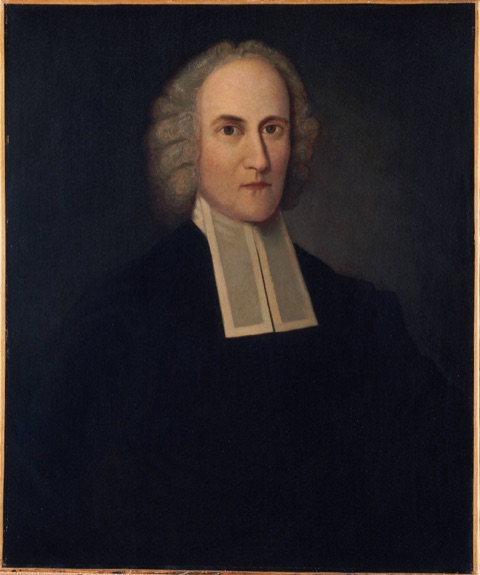
About the author
Jonathan Edwards
Jonathan Edwards (1703 to 1758 AD) was born in East Windsor, Connecticut, the only son of the Congregational minister Timothy Edwards. He entered Yale College at thirteen and graduated in 1720. In 1727 he became assistant to his grandfather Solomon Stoddard at Northampton, Massachusetts, and succeeded him as pastor in 1729. His preaching sparked a local revival in the 1730s, and he took a leading part in the Great Awakening of 1740 to 1742. Dismissed from Northampton in 1750 over qualifications for communion, he served the frontier mission at Stockbridge, where he wrote Freedom of the Will and Original Sin. He was made president of the College of New Jersey in 1758 and died that March after a smallpox inoculation. Several sermons in this collection address his Northampton hearers directly.