Modernized edition · Full text · Free PDF/EPUB
Five Discourses on Important Subjects in Modern English
Summary
- Published
- 1738 AD
- Occasion
- Four sermons preached during the revival in his congregation; the fifth added by Edwards
- Length
- 97,000 words · 6 hours
- Collection
- Puritan
What is Five Discourses on Important Subjects about?
Five Discourses on Important Subjects is a 1738 collection of sermons by Jonathan Edwards, four of them preached during the Northampton revival. It opens with a long defense of justification by faith alone, then urges sinners to press into the kingdom of God, to follow converted friends, to own God's justice, and to come to Christ.
Read the full summary (7 points, quotes, key themes)Show less
How the argument unfolds
- 01
Preface. Edwards says his people chose these sermons for the press and links the start of the revival to his defense of justification.
- 02
Justification by Faith Alone. A sinner is justified only by faith, which joins him to Christ, as Edwards proves from the guilt of sin, Paul's letters, free grace and imputed righteousness.
- 03
Obedience and objections. Works count only as expressions of persevering faith. Six objections are answered, and the opposing scheme is shown to lay another foundation.
- 04
Pressing into the Kingdom of God. Salvation must be sought with desire, resolve and effort, with directions for awakened, careless, older and younger hearers.
- 05
Ruth's Resolution. As Ruth clung to Naomi while Orpah turned back, sinners should cling to friends who have turned to God.
- 06
The Justice of God in the Damnation of Sinners. Eternal rejection would be just, and would match each hearer's conduct toward God, Christ, neighbor and self.
- 07
The Excellency of Jesus Christ. Christ joins excellencies that seem opposed, in his birth, life, death, exaltation and judgment, and so invites sinners to trust him.
Notable images & quotes
- The infinite cylinder. “Imagine an infinitely long cylinder.” It cannot grow longer, yet its volume can grow, so every sin is infinitely heinous while some are far worse.
- The bride's consent. “When a man offers himself to a woman in marriage, he does not give himself to her as a reward for her accepting him.” Faith unites; it does not earn.
- The morning star. John the Baptist goes before Christ as the morning star goes before the sun, fading as the gospel day rises.
- The briers after rain. Old sinners who outlast many seasons of grace are like ground where each shower thickens the briers, until the farmer burns it.
- The weak fort. No frightened man runs gladly into a fort he thinks too weak, and no sinner who doubts Christ's sufficiency gladly flees to him.
- The Lamb where a Lion was promised. John is told the Lion of Judah will open the sealed book, and looks to see a slain Lamb.
Key themes
- Union with Christ. Faith justifies by joining the soul to Christ, a natural fitness that shows God's love of order, not a reward for the beauty of faith.
- Free grace. Kindness to the wholly unworthy shows greater goodness in the giver and lays a deeper debt of gratitude on the receiver.
- The season of revival. “A door of mercy always stands open for sinners, but on a day like this God throws open an extraordinary door.”
- The beauty of Christ. Majesty and meekness meet in one person, a defender to trust and a friend to love.
Why read it today
Read it for the sermon Edwards linked to the beginning of the Northampton revival, a careful argument from Romans and Galatians that a sinner is accepted for Christ's sake alone.
It shows how Edwards preached in the middle of an awakening, naming his hearers' fears, excuses and temptations to give up.
It ends on Christ himself, moving from the Lion and the Lamb of Revelation to a plea to trust him and take him as a friend.
Reader questions (9)Hide the questions
Questions about Five Discourses on Important Subjects
Is there a modern English version of Five Discourses on Important Subjects?
Yes. This is Five Discourses on Important Subjects by Jonathan Edwards in modern English. The language is modernized and the author's order and argument are kept. The full modernized text is free to read on this page.
Can I read Five Discourses on Important Subjects online for free?
Yes. The complete text of this modern English edition is on this page, with no sign-up or paywall.
Is there a free PDF of Five Discourses on Important Subjects?
Yes. The PDF and EPUB of this edition are free with an Updated Works account. Sign in with Google or an email link; no card is needed.
What is Five Discourses on Important Subjects by Jonathan Edwards about?
It gathers five sermons on salvation: a long defense of justification by faith alone, three appeals to unconverted hearers during a revival, and a closing sermon on the excellency of Christ.
Why did Edwards publish these sermons?
His congregation asked for them, hoping reading them would renew their first effect and keep the revival in memory. Some ministers also urged him to print the sermon on justification.
Why is the discourse on justification so long?
Edwards enlarged it well beyond what he preached at two public lectures, to answer those who held that we are justified by sincere obedience. He quotes Tillotson and Locke where they concede his points.
Does Edwards think justification by faith makes obedience unimportant?
No. Obedience is the path to salvation, the evidence of an accepted state, and the measure of the saints' degrees of glory.
Why does Edwards speak separately to older hearers?
He judges that God's calls to those who have resisted for years are more likely to be the last. Some had lived unchanged through Mr. Stoddard's ministry and earlier awakenings.
Why does the book end with The Excellency of Jesus Christ?
Edwards chose it himself, thinking that sermons meant to awaken should be followed by one on the excellency of the Savior.
Five Discourses on Important Subjects in Modern English · Full text
Preface
All of the following discourses, except the last, were delivered during the recent wonderful work of God’s power and grace in this place. They are now published at the earnest desire of those to whom they were preached. These particular discourses were selected for the press, rather than others delivered in that remarkable season, by their own choice. What guided them in this choice was the special spiritual benefit they hope they received from these discourses.
Their desire to have them in print has been evident for a long time and often expressed to me. Their earnestness is unmistakable. Even though this has been the year of the greatest public expense they have ever faced, because of the cost of building a new meetinghouse, they still chose to take on this considerable additional expense now rather than delay it another year.
I am fully aware that their high regard for these discourses comes more from the state of mind in which they heard them, and from the good they received through God’s sovereign blessing, than from any real worth in the sermons themselves. Yet whatever these discourses may be in themselves, those who heard them should not be blamed or thought strange for holding dear what they hope God made a means of saving and everlasting benefit.
They strongly pressed one argument to persuade me to grant their request. They hoped that reading these discourses would help renew in some measure the same effect produced when they heard them. They also hoped it would revive the memory of that great work of God which this town has so much reason to remember forever. That argument carried the greatest weight in inclining me to view compliance as my duty, though I cannot say that no other considerations joined in moving me to it.
With respect to the discourse on justification, besides the desire of my own people to publish it, I also received advice from certain reverend ministers, my fathers in the ministry. They happened to hear it, or at least part of it, when it was preached. In such a matter, I thought their opinions and advice ought to carry as much weight with me as those of almost anyone I knew.
The beginning of the recent work of God in this place occurred under circumstances that led me to view it as a remarkable testimony of God’s approval of the doctrine of justification by faith alone, which is asserted and vindicated here. Because of the stir that had been raised in this country shortly before concerning that doctrine, people here seemed to have their minds thrown into an unusual agitation. Some began to doubt that way of acceptance with God which they had been taught from infancy was the only way. Many others were stirred to examine more thoroughly the grounds of the doctrines in which they had been educated.
The following discourse on justification, which was preached at two public lectures (though not as fully as it is printed here), seemed to be remarkably blessed. It not only established the convictions of many in this truth, but also engaged their hearts in a more earnest pursuit of justification in the way that had been explained and defended. And at that very time, while I was sharply reproached for defending this doctrine in the pulpit, and right after I suffered very open abuse for it, God’s work broke forth wonderfully among us. Souls began to flock to Christ as the Savior in whose righteousness alone they hoped to be justified. Thus this was the doctrine on which the work was founded at its beginning, just as it evidently was throughout its entire progress.
A major objection is raised against the old Protestant doctrine of justification by faith alone, and against the system of the theologians who have chiefly defended it, by those who pride themselves on the new-fashioned theology. They claim this system is overly encumbered with hair-splitting speculations and subtle distinctions that serve only to entangle the subject in endless controversy and dispute. By contrast, they suppose their own system offers a plain, easy, and natural account of things.
Yet I humbly think their prejudice against distinctions in theology is carried to a great extreme. Modern philosophers and theologians have raised so loud, general, and forceful a cry against the subtle distinctions of the Scholastics, for their learned irrelevance, that many people recoil at anything that looks like a fine distinction and condemn it as nonsense without examination. On that same principle, we might expect St. Paul’s epistles, which are full of very fine distinctions, to be dismissed as nonsense and unintelligible jargon, if they did not happen to be universally received by all Christians as part of Holy Scripture.
Uncovering the absurdity of the irrelevant and abstruse distinctions of the Scholastic theologians may rightly give us a distaste for those kinds of distinctions that put on a show of learning in obscure words without bringing light to the mind. Yet I see no reason why we should also discard distinctions that are clear, rational, and grounded in truth, even if they require diligence and close mental attention to grasp clearly. The part of the biblical teaching on justification that is absolutely necessary to salvation may be very plain and within reach of the weakest Christians. Still, it does not follow that Scripture teaches us nothing more about it that would be exceedingly profitable to know. By gaining that knowledge, we may reach a fuller and clearer understanding of this doctrine, become better able to resolve doubts concerning it, and defend it against the sophistry and quibbles of subtle opponents.
It is the same with most of the great doctrines of Christianity that are regarded as first principles of the Christian faith. Though they contain what is simple, they also contain great mysteries. There is room for growth in the knowledge of them, and no doubt there will be until the end of the world. Yet it is unreasonable to expect such progress in high and mysterious truths without careful distinction and close application of thought.
It is equally unreasonable to think that this doctrine, the justification of a sinner by a mediator, should have no mysteries. We all acknowledge it to be a matter of pure revelation, above the light of natural reason. Indeed, the infinite wisdom of God revealed in the gospel appears chiefly in this: he has devised a way of reconciliation that neither human beings nor angels could ever have conceived. After all that, should we expect this way, once devised and declared, to contain nothing beyond what is obvious at a cursory glance? Should we expect it to be fully and clearly comprehended without diligence, accuracy, and careful distinction?
If the distinctions I have used in treating this subject prove to be inconsistent, trivial, and unscriptural quibbles that only cloud the matter, I ought to be willing for them to be rejected. Yet if, upon fair examination, they prove to be both scriptural and rational, I humbly judge it unjust to condemn them merely because they are distinctions. Precision in theology does not always confuse and darken it. I make my appeal to God’s own revelation. By that revelation alone can we know how he is pleased to receive back into favor those who have offended him and incurred his displeasure.
If any part of the system laid down here, or any distinction used here, is not warranted by Scripture, let it be rejected. And if any opposite system can be found that is simpler and plainer, with fewer and more rational distinctions, and not demonstrably inconsistent with itself and with the word of God, let it be received. Let the Arminian system of justification by our own virtue be as plain and natural as it pleases. If it is still plainly contrary to the certain and demonstrable doctrine of the gospel in Scripture, we are bound to reject it. Otherwise we would have to reject the Scriptures themselves as confused and absurd, make ourselves wiser than God, and claim to know his mind better than he does himself.
This discourse on justification is printed at much greater length than it was preached. The practical discourses that follow, however, have had little added to them. They now appear in the same plain and unpolished dress in which they were first prepared and delivered. Most of them were composed when the circumstances of the congregation were enough to make a minister neglect, forget, and despise such ornaments as polish and fashionable style and arrangement. He was coming as a messenger from God to souls deeply impressed with their danger of God’s everlasting wrath, to deal with them about their eternal salvation.
However unable I may be to preach or write with polish even if I wished to, I have this comfort under such a shortcoming. God has shown us that he does not need such human talents to carry on his own work, and he has been pleased to smile upon and bless a very plain, unfashionable way of preaching. Do we not have reason to think that it has always been, and always will be, God’s way to bless the foolishness of preaching to save those who believe? Surely he will do so no matter how high the elegance of language and excellence of style may be carried by the learning and wit of the present and future ages.
The discourse published at the end, concerning the excellency of Christ, is added on my own initiative. I thought a discourse on such a gospel subject would fittingly follow others that were chiefly aimed at awakening. Something on the excellency of the Savior rightly succeeds sermons meant to show the necessity of salvation. I settled on that particular discourse partly because some in another town, where it was preached on a special occasion, had earnestly pressed me for a copy of it for the press.
I ask every reader for a candid reception and a faithful spiritual use of what is offered here. Above all, I earnestly urge the people under my own pastoral care not to fail to put these discourses to the good use they named as their reason for wanting them published. Then I will have no cause to regret my labor in transcribing them, nor they their cost in printing them.
How happy it would be for us, and what an unspeakable mercy from heaven, if God would bless what is printed here! May he use it to revive the memory of his past great work among us and rekindle the vivid impressions and sense of divine things that people then felt in their minds. May it make us mourn our spiritual decline, so that the same work might break forth anew and go forward among us! Surely we have seen much to stir our longings for such a mercy and to encourage us to cry to God for it!
Discourse 1: Justification by Faith Alone
“But to him that worketh not, but believeth on him that justifieth the ungodly, his faith is counted for righteousness” (Rom 4:5).
Four things may be noted in this verse.
1. Justification regards a person as ungodly. This is evident from the words that justifieth the ungodly. Those words cannot mean less than that God, in the act of justification, pays no regard to anything in the justified person as godliness or goodness. Immediately before this act, God views him only as an ungodly creature. Therefore, godliness in the person to be justified does not precede his justification as its ground. When Scripture says that God justifies the ungodly, it is absurd to suppose that our godliness, viewed as some goodness in us, is the ground of our justification. That would be just as absurd as supposing, when it is said that Christ gave sight to the blind, that sight came before Christ’s act of mercy and was the ground of it. Or it would be like saying that a generous benefactor made a poor man rich, and then claiming it was the poor man’s wealth that grounded this generosity and served as the price that obtained it.
2. In this verse, him that worketh not does not mean someone who merely fails to conform to the ceremonial law. He that worketh not and the ungodly are clearly synonymous expressions, signifying the same person, as the way they are joined together shows. Otherwise, why is the second phrase, the ungodly, introduced at all? The context gives no other reason for it than to show that by the grace of the gospel, God in justification has no regard to any godliness of ours. The preceding verse says, “Now to him that worketh, is the reward not reckoned of grace, but of debt.” In that verse, gospel grace clearly consists in the reward being given without works. In this verse, which immediately follows and connects directly in meaning, gospel grace consists in a person being justified as ungodly. This makes it completely plain that him that worketh not and him who is ungodly mean the same thing. Therefore, not only works of the ceremonial law are excluded in justification, but works of morality and godliness as well.
3. These words show that the faith by which we are justified is not the same thing as a course of obedience or righteousness, because the faith here is described as believing on him that justifies the ungodly. Those who oppose the Solifidians, as they call them, insist strongly that we should take the words of Scripture on this doctrine in their most natural and obvious sense. How loudly they protest that we cloud this doctrine with obscure metaphors and unintelligible figures of speech! Yet is it interpreting Scripture in its most obvious sense to take its words about believing on him that justifies the ungodly, or the breakers of his law, and claim they mean performing a course of obedience to his law and avoiding breaches of it? Believing on God as a justifier is certainly different from submitting to God as a lawgiver. This is especially true of believing on him as a justifier of the ungodly, or rebels against the lawgiver.
4. The subject of justification is viewed as destitute of any righteousness in himself, as shown by the phrase it is counted or imputed to him for righteousness. As the apostle uses this phrase here and in the surrounding context, it plainly means that God, in his sovereign grace, is pleased to deal with a sinner who has no righteousness so that the outcome is the same as if he had it. This may still rest on the relation it bears to something that is truly righteous.
That this is the force of the expression is clear from the preceding verses. Two verses earlier, the apostle rests the weight of his argument for God’s free grace, drawn from the Old Testament passage about Abraham, on the word counted or imputed. He assumes that God displays his grace specifically by counting something for righteousness in his subsequent dealings with Abraham that was not righteousness in itself. Then, in the verse immediately before our text, “Now to him that worketh, is the reward not reckoned of grace, but of debt,” the word translated reckoned is the same word rendered imputed and counted in the other verses. It is as though the apostle had said, “As for him that works, there is no need for any gracious reckoning or counting it for righteousness so that the reward follows as if it were a righteousness. If he has works, he has what is a righteousness in itself, to which the reward rightly belongs.”
This is confirmed even further by the verses that follow: “Even as David also described the blessedness of the man unto whom God imputeth righteousness without works” (Rom 4:6). What can imputing righteousness without works mean here, except imputing righteousness to someone who has none of his own? Paul continues: “Saying, Blessed are they whose iniquities are forgiven, and whose sins are covered: blessed is the man to whom the Lord will not impute sin” (Rom 4:7-8). How do these words of David serve the apostle’s purpose, or prove that righteousness is imputed without works, unless it is because the word imputed is used and the recipient of imputation is named as a sinner, and thus destitute of moral righteousness? David says nothing about being forgiven without the works of the ceremonial law. There is no hint of the ceremonial law, nor any reference to it, in his words.
I will therefore draw this doctrine from the text as the subject of my present discourse:
We are justified only by faith in Christ, and not by any kind of virtue or goodness of our own.
I am well aware that many will quickly call such an assertion absurd, claiming it betrays deep ignorance and contains major inconsistencies. Yet I ask for everyone’s patience until I have finished.
In handling this doctrine, I intend to do five things:
1. Explain its meaning, and show how I wish to be understood in making this assertion.
2. Examine the evidence for its truth.
3. Show how evangelical obedience relates to this matter.
4. Answer objections.
5. Consider the importance of the doctrine.
1. The Meaning of Justification by Faith Alone
I will first explain the meaning of this doctrine, showing the sense in which I assert it and intend to prove its truth. This can be done by answering two questions: first, what is meant by being justified; and second, what is meant when we say this is “by faith alone, without any kind of virtue or goodness of our own”?
What Justification Is
I want to show first what justification is, or what Scripture means by being justified.
A person is said to be justified when God approves him as free from the guilt of sin and its deserved punishment, and as possessing the righteousness that entitles him to the reward of life. Understanding the word in this sense means the judge accepts a person as having both a negative and a positive righteousness belonging to him. The judge therefore views him not only as free from any liability to punishment, but also as just and righteous, and thus entitled to a positive reward. This agrees most closely both with the origin and natural meaning of the word, which is to pronounce someone righteous in judgment, and with the force of the word as it is used in Scripture.
Some suppose that Scripture means nothing more by justification than simply the remission of sins. If we consider the nature of the case, however, that view is very strange. It is completely obvious, and no one will deny it, that we are said in Scripture to be either justified or condemned in relation to the rule or law of God under which we stand. Now what is it to justify a person as the subject of a law or rule, except to judge him as standing right with respect to that rule? To justify someone in a particular case is to approve him as standing right under the law in that case. To justify him in general is to pronounce him in judgment as standing right in a state corresponding to the law or rule in general.
Surely, however, for someone to be viewed as standing right with respect to the rule in general, or in a state matching God’s law, more is needed than merely lacking the guilt of sin. Whatever that law may be, whether an old one or a new one, something positive is certainly required to satisfy it. Through a mere pardon of sin, we are no more justified by the voice of the law, or of him who judges by it, than Adam, our first surety, was justified by the law at the first moment of his existence. He was not justified before he had fulfilled its obedience or even been tested on whether he would fulfill it. If Adam had finished his course of perfect obedience, he would have been justified. His justification would surely have involved more than something merely negative. He would have been approved as having fulfilled the righteousness of the law, and would accordingly have been awarded its promised reward.
In the same way, Christ is our second surety, in whose justification all those for whom he stands as surety are virtually justified. Yet he was not justified until he had completed the work the Father appointed for him and kept the Father’s commandments through every trial. Then, in his resurrection, he was justified. After he had been put to death in the flesh, but made alive by the Spirit (1 Pet 3:18), he who was manifested in the flesh was justified in the Spirit (1 Tim 3:16). When God justified him by raising him from the dead, he did not merely release him from his humiliation for sin and acquit him from any further suffering or abasement. He also admitted him to that eternal, immortal life and to the beginning of that exaltation which was the reward of what he had done.
Indeed, the justification of a believer is nothing other than his being admitted to share in the justification of this head and surety of all believers. Christ suffered the punishment of sin not as a private individual, but as our surety. Likewise, when he was raised from the dead after that suffering, he was justified not as a private individual, but as the surety and representative of all who would believe in him. He was therefore raised again not only for his own justification, but also for ours, as the apostle says: “Who was delivered for our offenses, and raised again for our justification” (Rom 4:25). For that same reason Paul asks, “Who is he that condemneth? It is Christ that died, yea rather, that is risen again” (Rom 8:34).
Scripture also teaches even more directly that a believer’s justification includes more than remission of sins or acquittal from deserved wrath. It also includes admission to a title to that glory which is the reward of righteousness. This appears especially in Romans 5:1-2, where the apostle names both as joint benefits included in justification: “Therefore being justified by faith, we have peace with God through our Lord Jesus Christ, by whom also we have access into this grace wherein we stand, and rejoice in hope of the glory of God.”
Likewise, forgiveness of sins and an inheritance among the sanctified are joined together as jointly obtained through faith in Christ: “That they may receive forgiveness of sins, and inheritance among them that are sanctified, through faith that is in me” (Acts 26:18). Both benefits are without doubt included in that passing from death to life which Christ speaks of as the fruit of faith and contrasts with condemnation: “Verily I say unto you, he that heareth my word, and believeth on him that sent me, hath everlasting life, and shall not come into condemnation; but is passed from death unto life” (John 5:24).
What “by Faith Alone” Means
I now move on to show what is meant when we say that this justification is by faith only, and not by any virtue or goodness of our own. This inquiry divides into two parts: first, how justification is by faith; and second, how it is by faith alone, without any kind of goodness of ours.
1. How justification is by faith. The great difficulty here has concerned the force and meaning of the little word by. What is the exact influence that faith has in justification, expressed in Scripture by being justified by faith?
To express humbly what seems clear to me, although faith is indeed the condition of justification in a way nothing else is, the matter is not clearly and adequately explained merely by calling faith the condition of justification. The word condition is ambiguous both in ordinary speech and in theology. In one sense, Christ alone performs the condition of our justification and salvation. In another sense, faith is the condition of justification. In yet another sense, other qualities and acts are conditions of salvation and justification as well. There is considerable ambiguity in common expressions (which we are still forced to use), such as the condition of salvation, what is required for salvation or justification, the terms of the covenant, and the like. I believe different people understand them in very different senses.
Besides, as the word condition is very often (and perhaps most commonly) used in ordinary language, faith is not the only thing in us that is a condition of justification. By condition, we usually mean anything that fills the place of a condition in a conditional statement and is truly connected with its result, especially when the statement holds true both positively and negatively, whether the condition is affirmed or denied. Whenever something is such that with it a result occurs, and without it that result does not occur, we call it a condition of that thing.
In that sense, however, faith is not the only condition of salvation or justification. Many things accompany and flow from faith, with which justification is present and without which it will not occur. Accordingly, Scripture places them in conditional statements alongside justification and salvation in countless passages. Such are love to God, love to our fellow believers, forgiving others their trespasses, and many other good qualities and actions. Many other things besides faith are directly set before us to pursue or perform for eternal life: if they are done or obtained, we will have eternal life; if not, we will surely perish.
Even if faith were the only condition of justification in this sense, I do not think saying faith is the condition of justification would capture the meaning of the biblical phrase being justified by faith. There is a difference between being justified by something and that thing universally, necessarily, and inseparably accompanying justification. Many things inseparably accompany justification that we are never said to be justified by. What the Holy Spirit signifies (and what such wording naturally expresses) is not mere inseparable connection with justification, but some specific influence that faith has in the matter, or some particular dependence of justification on faith’s influence.
Recognizing this, some have thought this influence or dependence is well expressed by calling faith the instrument of our justification. Those who deny justification by faith alone have misunderstood, unfairly misrepresented, and ridiculed this phrase, as if its defenders imagined faith to be a tool in God’s hand by which he performs his act of approving and justifying the believer. That was never the intended meaning. They did not mean that faith is the instrument with which God justifies, but the instrument with which we receive justification. It is not the instrument by which the justifier acts in justifying, but the one by which the recipient acts in accepting justification.
Even so, it must be admitted that this is an obscure way of speaking. Calling faith an instrument by which we receive or accept justification carries a real awkwardness. The very people who explain it this way also speak of faith as being the reception or acceptance itself. If faith is the reception itself, how can it also be the instrument of reception? Surely there is a difference between an act and the instrument used to perform it. Besides, by their own descriptions of faith, Christ the mediator (by whom we are justified) and his righteousness (for which we are justified) are more directly the objects of this acceptance, while justification is the benefit that follows more indirectly. Therefore, if faith is an instrument at all, it is more properly the instrument by which we receive Christ than the instrument by which we receive justification.
Yet I humbly think we have been looking too far afield to find faith’s influence in our justification, or the dependence signified by being justified by faith, while overlooking what the phrase most obviously points to. Given that there is a mediator who has purchased justification, faith in this mediator is what makes it fitting and suitable in God’s sight that the believer, rather than others, should have this purchased benefit assigned to him.
Here is a purchased benefit. God sees it to be more fitting and suitable to assign it to some people rather than others because he sees them differently qualified. That qualification in which fitness for this benefit consists, as things now stand, is the thing in us by which we are justified. If Christ had not come into the world, died, and so forth to purchase justification, no qualification in us whatsoever could make it fitting for us to be justified. Yet things stand otherwise now, because Christ has truly purchased justification by his own blood for infinitely unworthy creatures. As a result, a qualification found in some people can make it fitting and becoming in God’s sight for them to share in this purchased benefit, either through its relation to the mediator and his merits or on some other ground. Conversely, lacking it makes it unfit and unsuitable for anyone to receive it.
God’s wisdom in his established arrangements no doubt shines brightly in their fitness and beauty. He ordains those things to be done that are fitting to be done, and he links together in his plan things that genuinely agree with one another. So God justifies a believer according to his revealed arrangement because he surely sees something in this qualification that, as things stand, makes it fitting for such a person to be justified. This holds true whether we describe faith as the instrument (the hand, so to speak) by which the one who purchased justification is laid hold of and accepted, or as the acceptance itself, or however else we describe it. To be justified is to be approved by God as a proper recipient of pardon with a right to eternal life. Therefore, when Scripture says we are justified by faith, what else can it mean than that faith is what renders us approvable, fittingly and properly, as subjects of this benefit as the case now stands?
This is different from saying faith is merely the condition of justification because it is inseparably connected with it. Many other things are inseparably connected with justification as well. Yet nothing in us except faith makes it fitting that justification should be assigned to us, as I will shortly show in answering the next question.
2. How justification is by faith alone, without any virtue or goodness of our own. To some, this may appear to raise two difficulties. First, how can justification be by faith alone, without any virtue or goodness of ours, when faith itself is a virtue and part of our goodness? Indeed, faith is not merely some minor goodness in us, but a very excellent quality and a chief part of a Christian’s inherent holiness. If part of our inherent goodness or excellence (whether faith or anything else) makes it becoming or congruous for Christ’s benefit to be assigned to us, how does that differ from what some call a merit of congruity?
Second, suppose this part of our Christian holiness qualifies us in God’s sight for Christ’s benefit and makes it fitting for us to receive it. Why, then, should not other parts of holiness and conformity to God qualify us just as much? They are also very excellent, bear just as much of Christ’s image, and are no less lovely in God’s eyes. Why should they not have equal influence in making us fit for this benefit?
To these difficulties I answer: when we say we are not justified by any righteousness or goodness of our own, we mean that God does not judge it fitting to make Christ’s benefit ours out of regard for the excellence or goodness of any qualities or actions in us whatsoever. It is not in any degree because of any excellence or worth in faith that God sees it fitting for the believer to receive Christ’s benefit. Rather, it is purely because of the relation faith bears to the person in whom this benefit is found. Faith justifies solely as it unites us to the mediator in and by whom we are justified. For greater clarity, I will explain this in detail under three propositions.
(1) It is certain that Christ’s people stand in a union or relation to him that Scripture repeatedly expresses as being in Christ. Scripture frequently portrays this through the metaphors of being members of Christ, or united to him as members to the head and branches to the stock, and compares it to the marriage union between husband and wife.
As Dr. Tillotson writes in his sermons: “Our Savior compares his mystical body, that is, his church, to a vine, which his Father, whom he compares to a husbandman, has planted: ‘I am the true vine, and my Father is the husbandman’ (John 15:1). To represent to us the union that is between Christ and all true Christians, and the influence of grace and spiritual life, which all that are united to him do derive and receive from him, he sets it forth to us by the resemblance of a vine and branches. As there is a natural vital union between the vine and the branches, so there is a spiritual union between Christ and true Christians; and this union is the cause of our fruitfulness in the works of obedience and a good life. There are some indeed that seem to be grafted into Christ by an outward profession of Christianity, who yet derive no influence from him, so as to bring forth fruit, because they are not vitally united to him.”
This shows that the vital union between Christ and true Christians was not considered an unreasonable doctrine even by one of the greatest theologians on the other side of this question. Yet vital union is far more mysterious than a relational union, and necessarily implies it.
I do not now claim to determine what exact sort of union this is, nor do I need to enter into any disputes about it for my present purpose. If anyone dislikes the word union as obscure and unintelligible, the word relation serves my purpose just as well. I do not want to insist on any more about it right now than people of all views will readily grant. There is a special relation between true Christians and Christ that does not exist between him and others. That is what Scripture signifies by metaphorical expressions such as being in Christ, being members of Christ, and the like.
(2) This relation or union to Christ by which Christians are said to be in Christ (whatever its exact nature may be) is the ground of their right to his benefits. This needs no proof; the very nature of the case shows it at first glance. It is also completely clear from Scripture: “He that hath the Son, hath life; and he that hath not the Son, hath not life” (1 John 5:12). Again, “Of him are ye in Christ Jesus, who of God is made unto us … righteousness” (1 Cor 1:30). First we must be in him, and then he is made righteousness or justification to us. Likewise, “Who hath made us accepted in the beloved” (Eph 1:6). Our being in him is the ground of our being accepted.
The same principle holds in the unions to which the Holy Spirit has chosen to compare this one. The union of the body’s members with the head is the ground of their sharing in the life of the head. The union of the branches to the stock is the ground of their sharing in the sap and life of the stock. The relation of a wife to her husband is the ground of her joint share in his estate, because in several respects they are regarded as one in law. In the same way, there is a legal union between Christ and true Christians, so that (as everyone except Socinians admits) one is accepted in certain respects for the other by the Supreme Judge.
(3) Thus faith is the qualification in a person that makes it fitting in God’s sight for him to possess Christ’s satisfaction and righteousness. It does so specifically because faith is what, on his part, forms this union between him and Christ. As just noted, being in Christ (to use Scripture’s phrase) is the ground of possessing Christ’s satisfaction and merits and having a right to the benefits they procured.
The reason is plain. It is easy to see how possessing Christ’s merits and benefits follows from possessing (if I may speak this way) Christ himself, or being united to him. If so, it is equally easy to see why whatever establishes the union between a soul and Christ on the believer’s part should be the very thing on account of which God counts it fitting for Christ’s merits to belong to him. For God to grant someone a right to Christ’s merits out of regard for a qualification in this unifying role is completely different from doing so out of regard for the value or loveliness of that qualification, or as a reward for its excellence.
No one will deny that a special relation exists between Christ and his true disciples, by which Scripture speaks of them as one. In the same way, I suppose no one will deny that the true Christian does something on his part by which he is active in entering this relation or union. There is some uniting act, something done toward this union or relation (or whatever one chooses to call it) on the Christian’s part. Now I take faith to be that act.
I am not trying here to define justifying faith completely, or to determine precisely everything contained in it. I only wish to establish this much: faith is what enables a soul, formerly separate and alienated from Christ, to unite itself to him. By faith it leaves that state of alienation behind and enters the union or relation to him just mentioned. Or, to use Scripture’s own wording, faith is that by which the soul comes to Christ and receives him.
This is clear because Scripture uses these exact expressions to signify faith. “He that cometh to me, shall never hunger; and he that believeth on me, shall never thirst. But I said unto you, that ye also have seen me and believe not. All that the Father giveth me, shall come to me; and him that cometh to me, I will in no wise cast out. For I came down from heaven, not to do mine own will, but the will of him that sent me” (John 6:35-38). And in verse 40: “And this is the will of him that sent me, that every one which seeth the Son, and believeth on him, may have everlasting life; and I will raise him up at the last day” (John 6:40).
Again, “Whom he hath sent, him ye believe not. Search the Scriptures, for … they are they which testify of me. And ye will not come unto me, that ye might have life” (John 5:38-40). And in verses 43 and 44: “I am come in my Father’s name, and ye receive me not: if another shall come in his own name, him ye will receive. How can ye believe, which receive honor one of another …?” (John 5:43-44). And again, “But as many as received him, to them gave he power to become the sons of God, even to them that believe on his name” (John 1:12).
Someone might object that these are obscure figures of speech that, however well understood in ancient times among those who commonly used such metaphors, are hard to understand today. I grant that receiving Christ and coming to Christ are metaphorical expressions. Even if I also granted that they are obscure metaphors, this much at least is unmistakably clear in them. Faith is that by which people who were previously separated and far from Christ (not related and united to him as his people are) cease to be at such a distance and enter into that relation and nearness. Unless those expressions are so unintelligible that nothing at all can be understood from them, they certainly teach that much.
God does not give believers union with the Savior, or a share in him, as a reward for faith. He does so simply because faith is the soul’s active uniting with Christ, the very act of uniting on their part. God sees that for a union to be established between two intelligent, active beings so that they are counted as one, there should be a mutual act of both, each receiving the other and actively joining together. By requiring this for union with Christ as one of his people, God treats human beings as rational creatures capable of action and choice. Therefore he sees it fitting that only those who are one with Christ by their own act should be counted as one in law.
What is real in the union between Christ and his people is the foundation of what is legal. Something real in them and between them unites them, and that real bond makes it suitable for the Judge to count them as one. Suppose an act or qualification in believers has such a uniting nature that the Judge fittingly counts them as one with Christ on account of it. Then it is no wonder that, on account of that same act, he accepts the satisfaction and merits of the one for the other as if they were their own. That necessarily follows, or rather is already implied.
This, then, is how faith justifies, giving us a share in Christ’s satisfaction and merits and a right to the benefits they procured: it makes Christ and the believer one in the acceptance of the Supreme Judge. We have a title to eternal life by faith because it is by faith that we have the Son of God, in whom life is found. When the apostle John writes, “He that hath the Son, hath life” (1 John 5:12), he clearly refers back to Christ’s own words recorded in his Gospel: “He that believeth on the Son, hath everlasting life; and he that believeth not the Son, shall not see life” (John 3:36).
Wherever Scripture speaks of faith as the soul’s receiving or coming to Christ, it also presents that receiving, coming to, or joining with Christ as the ground of sharing in his benefits. To as many as received him, “to them gave he power to become the sons of God” (John 1:12). And again, “Ye will not come unto me that ye might have life” (John 5:40).
There is a vast difference between two ideas. One is that Christ’s satisfaction and merits should fittingly belong to believers because a share in them is a proper reward for faith, or a fitting display of God’s regard for the loveliness and excellence of that grace. The other is that Christ’s satisfaction and merits should fittingly belong to believers because Christ and they are so united that in the Judge’s eyes they may be viewed and counted as one.
Even though faith in a believer makes it fitting and congruous in God’s sight for him to be viewed as in Christ and sharing in his merits, this is still far removed from any merit of congruity, or indeed any moral congruity at all. There is a twofold fitness for a state. I do not know how to distinguish them better than by calling one a moral fitness and the other a natural fitness.
A person has a moral fitness for a state when his moral excellence commends him to it, so that placing him in that good state expresses regard for the moral excellence, value, or loveliness of his qualities or actions. A person has a natural fitness for a state when it appears fitting and becoming for him to be in that state purely from the natural harmony or agreement between those qualities and those circumstances. It is not because the qualities are lovely or unlovely, but solely because the qualities and the circumstances match, agree with, or unite with one another by their very nature.
It is on this latter ground alone, by a natural fitness, that God sees it fitting for one whose heart sincerely unites itself to Christ as Savior to be counted as united to that Savior and thus as sharing in him. It does not stem from any moral fitness between the excellence of a quality like faith and a blessing as glorious as having a share in Christ. When God bestows Christ and his benefits on a soul upon faith purely out of regard for the natural harmony between that soul’s act and union with Christ, the case is vastly different from bestowing it out of regard for moral suitability. In the former case, God bestows these things upon faith purely out of his love of order. In the latter case, he would do so out of love for the grace of faith itself.
God will neither count Christ’s merits as ours nor award his benefits to us until we are in Christ. Nor will he view us as being in him without an active uniting of our hearts and souls to him. He is a wise God who delights in order rather than confusion, and delights that things should be joined or kept apart according to their nature. Establishing such an arrangement is a testimony of his love of order.
By contrast, if it rested on a moral fitness or suitability between faith and such blessedness, it would be a testimony of his love for the act or qualification itself. One view makes this divine arrangement a display of God’s regard for the beauty of the act of faith. The other makes it solely a display of his regard for the beauty of that order which unites things having a natural agreement, harmony, and union with each other. A moral suitability or fitness for a state does include a natural one, because wherever it is morally fitting for someone to be in a given state, it is also naturally fitting. Yet the kind of natural suitability I have described by no means necessarily includes a moral one.
This is clearly what our theologians mean when they say that faith does not justify as a work or a righteousness. They mean it does not justify as part of our moral goodness or excellence. Nor does it justify in the way humanity was to be justified under the covenant of works, where God granted a title to eternal life as a testimony of his pleasure in a person’s works and his regard for the inherent excellence and beauty of that obedience.
And this is surely what the apostle Paul means when he insists so strongly that we are not justified by works: we are not justified by them as good works, or by any goodness, worth, or excellence in them. To prove this, I will mention just one fact for now. Paul repeatedly speaks of our not being justified by works as the very thing that excludes all boasting (Eph 2:9; Rom 3:27; Rom 4:2). In what way do works give occasion for boasting, except as good? What do people boast of, except something they consider good or excellent? And why do they boast of anything at all, except for the supposed excellence in it?
From all this we can see in what sense faith is the only condition of justification and salvation. It is not the only condition in the broad sense of standing alone as a condition in a hypothetical statement whose result is justification and salvation. Yet it is the condition of justification in a way unique to itself, so that nothing else exerts a parallel influence. Faith includes the whole act of uniting to Christ as Savior. The entire active uniting of the soul, everything Scripture means by coming to Christ and receiving him, is called faith. And however excellent other graces and virtues may be, it is not the nature of any other grace or virtue to directly embrace Christ as mediator, except insofar as it enters into the makeup of justifying faith and belongs to its nature.
I have now explained my meaning in asserting, as a doctrine of the gospel, that we are justified by faith only, without any kind of goodness of our own.
2. Proofs of Justification by Faith Alone
I now proceed to the proof of this doctrine, which I will present through the following arguments.
Argument 1: The Nature of Things and the Condemnation of the Law
First, consider our condition and the state of things. Neither faith, nor any other qualification, act, or course of acts, can make it suitable for someone to share in the Savior and hold a title to his benefits on account of any excellence in it. It can do so only as something in him unites him to the Savior. It is not suitable for God to give a fallen human being a share in Christ and his merits as a testimony of his regard for anything in him as personal loveliness. Until a sinner is actually justified, it is not fitting that anything in him should be accepted by God as excellence or loveliness of his person, or that God should express pleasure in him or favor toward him on account of anything inherent in him. There are two reasons for this.
1. The nature of things will not allow it. This follows from the infinite guilt that rests on a sinner until he is justified, which arises from the infinite evil or heinousness of sin. Because some people deny that sin is infinitely heinous, I will first establish that point, and then show the consequence: until a sinner is actually justified, it cannot be fitting for God by any act to show pleasure in or acceptance of any excellence or loveliness of his person.
That the evil and blameworthiness of sin are infinitely great is completely demonstrable. The evil or iniquity of sin consists in violating an obligation, or doing what we ought not to do. Therefore, the greater the obligation violated, the greater the iniquity of the violation. Surely our obligation to love or honor any being is great in proportion to the greatness or excellence of that being, that is, his worthiness to be loved and honored. We are under a greater obligation to love a lovelier being than a less lovely one. And if a being is infinitely excellent and lovely, our obligation to love him is infinitely great. The point is so plain that little more needs to be said about it.
Some have argued very strangely against the infinite evil of sin being rooted in its infinite object. They claim that on the same logic, there would also have to be infinite value or worthiness in our holiness and love to God, since that too has an infinite object. Yet the same line of reasoning actually proves the exact opposite! A creature’s sin against God is blameworthy in proportion to the distance between God and the creature; the greatness of the object and the lowliness of the subject aggravate it. With the worthiness of the creature’s respect for God, however, the reverse is true: it is worthless, not worthy, in proportion to the lowliness of the subject. The greater the distance between God and the creature, the less worthy the creature’s respect is of God’s notice or regard.
The unworthiness of sin or opposition to God rises in proportion to the dignity of the object and the inferiority of the subject. Conversely, the value of respect rises in proportion to the value of the subject. The reason is simple. The evil of disrespect matches the obligation resting on the subject toward the object, and that obligation is obviously increased by the excellence and superiority of the object. On the other hand, the worthiness of respect offered to a being matches the obligation resting on the object (or rather the reason he has) to regard the subject, which surely depends on the subject’s own value or excellence.
Sin or disrespect is evil in proportion to what it denies the object and, as it were, takes from him, namely his excellence and worthiness of honor. Respect, by contrast, is valuable in proportion to what is given to the object in that respect. Other things being equal, that gift is great in proportion to the subject’s own value or worthiness of regard, because in giving his respect the subject can give no more than himself. Insofar as he gives respect, he gives himself to the object, so his gift has greater or lesser value in proportion to his own worth.
Incidentally, this shows why Christ’s love, honor, and obedience toward God have infinite value: they flow from the infinite excellence and dignity of the person in whom those qualities dwell. And the reason we needed a person of infinite dignity to obey for us was our own infinite comparative lowliness as the ones who disobeyed, which infinitely aggravated our disobedience. We needed someone whose obedience carried a worthiness matching the unworthiness of our disobedience. Therefore we needed someone as great and worthy as we were unworthy.
Another objection (though perhaps hardly worth mentioning) is that calling sin infinitely heinous makes all sins equally heinous, since how can any sin be more than infinitely heinous? All that follows from this, however, is that no sin can be greater with respect to one particular aggravation: the worthiness of the object against whom it is committed. One sin cannot be more aggravated than another in that respect, because that aggravation is infinite in every sin. Still, that does not prevent some sins from being more heinous than others in other respects.
Imagine an infinitely long cylinder. It cannot be made greater in length, because its length is already infinite, yet its volume can be doubled, tripled, or multiplied a thousandfold by increasing its other dimensions. Among sins that are all infinitely heinous, some can be far more heinous than others. In the same way, among various punishments that are all infinitely dreadful calamities, so that no finite calamity fails to be infinitely less dreadful or more bearable than any of them, some may still be a thousand times more dreadful than others. A punishment can be infinitely dreadful because of its infinite duration, and so cannot be greater in that respect, namely its length of continuance, yet it can still be vastly more terrible in other ways.
Having made it clear, I trust, that all sin is infinitely heinous, and that the sinner before justification therefore lies under infinite guilt in God’s sight, I must now show the consequence. From this it follows that it is not fitting for God to give a sinner a share in Christ’s merits and a title to his benefits out of regard for any qualification, act, or course of acts in him for their own excellence or goodness, but only as uniting him to Christ. Equivalently, it is not fitting for God by any act to express, in any way or degree, acceptance of or pleasure in anything as virtue, excellence, loveliness, or worth in the sinner’s person until he already possesses a share in Christ’s merits.
From these premises it follows that before a sinner already shares in Christ and is justified, God cannot possibly have any acceptance of or pleasure in the sinner’s person as lovely in any degree, or even as any less an object of his displeasure and wrath. By hypothesis, the sinner still remains infinitely guilty in God’s sight. Guilt is removed only by pardon, and to suppose the sinner is already pardoned is to suppose him already justified, which contradicts the premise. Yet if the sinner still remains infinitely guilty before God, that means God still views him as infinitely the object of his displeasure and wrath, infinitely hateful in his eyes. If so, where is there any room for anything in him to be accepted as personal worth or acceptableness in God’s sight, or for any act of favor or gift to be bestowed on him as a testimony of God’s regard for something lovely and pleasing in him?
Suppose a sinner could have faith or some other grace in his heart while still remaining separate from Christ, not viewed as being in Christ or related to him. It would not be fitting for God to accept even that true grace as loveliness of his person. To accept it as loveliness of his person would be to regard his person as in some degree lovely to God. Yet that cannot square with his still lying under infinite guilt and infinite unworthiness in God’s sight, which no goodness of his can outweigh.
While God views the person as separate from Christ, he must view him as he is in himself. His goodness cannot be viewed apart from his guilt and hatefulness, but must be placed in the scales alongside them. Placed in that balance, his goodness comes to nothing, because a finite weight weighed against an infinite one bears no proportion to it at all. When someone is viewed as he is in himself, the excess weight in one scale over the other defines his standing. When opposites are weighed together, one subtracts from the other like one number subtracted from another, and the person stands before God according to the remainder.
Under our premise, every act of grace or favor that would refrain from imputing guilt as it really is must be excluded. Any such act would already assume some degree of pardon and therefore justification, contradicting the premise that the sinner is not yet justified. Things must therefore be taken strictly as they are. Thus the sinner remains just as infinitely unworthy and hateful in God’s sight as before, without any reduction, because his goodness bears no proportion to his unworthiness and amounts to nothing when weighed together with it.
This brings out even more clearly the force of our text’s phrase, believing on him that justifieth the ungodly. Although something really and spiritually good does exist in a person prior to justification, nothing is accepted as godliness or personal excellence until after justification. Personal goodness or loveliness in God’s acceptance does not come before justification, but after it, in the order and method of God’s work. Although regard for the natural suitability between faith and union with Christ precedes justification, God’s acceptance even of faith as goodness or loveliness in the believer follows justification. For the reason just given, that goodness is rightly counted as nothing until the person is justified, and therefore in justification the person is regarded as utterly hateful in himself. In this way, the very nature of things prevents anyone from receiving a share in the Savior’s merits or benefits on account of anything in himself as righteousness, virtue, or excellence.
2. A divine arrangement prior to the gospel stands in the way. Before the arrangement that establishes justification through a Savior, and indeed before any need for a Savior existed, humanity was placed under an original constitution or law. By that law the sinner stands condemned until he actually has a share in the Savior, through whom he is set free from that condemnation.
Now, to suppose that God gives a person a share in Christ in reward for his righteousness or virtue conflicts with his remaining under condemnation until he has a share in Christ. It assumes that the sinner’s virtue is accepted, and he is accepted for it, before he has a share in Christ, since a share in Christ is supposedly given as the reward for his virtue. Virtue must first be accepted before it can be rewarded, and the person must first be accepted for his virtue before he is rewarded for it with so great and glorious a prize. By definition, a reward is some good bestowed to show regard for and acceptance of virtue in the person rewarded.
It is beneath the honor and majesty of the King of heaven and earth to accept anything from a condemned criminal, condemned by the justice of his own holy law, until that condemnation is removed. Furthermore, such acceptance directly contradicts remaining condemnation. The law condemns its violator to be totally rejected and cast off by God. How can someone remain under that condemnation, utterly rejected and cast off by God, and at the very same time have his righteousness or virtue accepted, and himself accepted on account of it, so as to receive so glorious a reward as a share in Christ in testimony of that acceptance?
I know what the reply will be. Opponents will say we are no longer subject to the constitution humanity was first placed under. They claim God, in mercy to mankind, abolished that strict constitution, placed us under a new law, and introduced a milder arrangement. Since the old law no longer stands, they argue, its condemnation no longer remains to block the acceptance of our virtue.
Indeed, there is no other way to escape this difficulty. Unless the original law or constitution itself is abolished, its condemnation must remain in force against a sinner until he actually shares in the Savior who satisfied and answered that law, effectively blocking any acceptance of his virtue either before or in order to gain that share.
Yet the system of these modern theologians who claim the old law is abolished is full of absurdity and self-contradiction. They maintain that the old law given to Adam, which required perfect obedience, is completely repealed. In its place, they say, we are under a new law requiring only imperfect, sincere obedience, adapted to our weak, fallen, powerless condition since the fall, because we are unable to render the perfect obedience demanded by the first law. They strenuously insist it would be unjust for God to require anything beyond our present power and ability to perform. Yet at the same time, they maintain that Christ died to make satisfaction for the imperfections of our obedience, so that our imperfect obedience might be accepted instead of perfect obedience.
Now, how can these two claims hang together? Let me ask: what law are the imperfections of our obedience a breach of? If they are not a breach of any law, then they are not sins; and if they are not sins, what need was there for Christ to die to satisfy for them? On the other hand, if they are sins and thus a breach of some law, what law is it? They cannot be a breach of their new law, because that law requires nothing more than imperfect obedience, that is, obedience with imperfections. Nor can they be a breach of the old law, because they claim the old law was completely abolished and we were never under it, and we cannot break a law we were never under.
They say it would be unjust for God to demand perfect obedience from us, because it would be unjust to require more than we can perform in our present state and punish us for falling short. By their own system, then, the imperfections of our obedience do not deserve punishment. Why, then, did Christ need to die to satisfy for them? Why did Christ need to suffer to satisfy for what is no fault and by its own nature deserves no suffering? Why did Christ need to die to purchase the acceptance of our imperfect obedience when, on their view, it would be inherently unjust to require any other obedience than imperfect obedience? Why did Christ need to die to make way for God to accept an obedience that it would be unjust in itself for him not to accept? Was there any need for Christ to die in order to persuade God not to act unjustly?
Suppose they reply that Christ died to satisfy the old law for us so that we would not be under it, but might be delivered from it and placed under a milder law. Still I ask: why did Christ need to die so that we would not be under a law which, according to their system, it would be inherently unjust for us to be under in the first place, since we cannot keep it in our present state? What need was there for Christ to die to keep us out from under a law that it would be unjust to put us under, whether Christ died or not?
Thus far I have argued mainly from reason and the nature of things.
Argument 2: The Teaching of the Apostle Paul
I now proceed to the second argument: this doctrine is taught abundantly in the Holy Scriptures, the revelation God has given us of his mind and will, by which alone we can ever know how those who have offended God can be accepted by him and justified in his sight. The apostle Paul teaches extensively that we are justified by faith alone, without the works of the law. There is no doctrine he insists on more strongly, or handles with greater clarity, explaining it, giving reasons for it, and answering objections.
No one denies that the apostle declares we are justified by faith without the works of the law, because his words are explicit. Opponents only claim that we misunderstand his words and read into them something that never entered his mind. When Paul excludes the works of the law, they say, we take him to mean God’s whole law, the moral rule he has given mankind to live by, whereas Paul intended only the ceremonial law.
Some who oppose this doctrine say that Paul occasionally means we enter a justified state by faith, that is, by a hearty embracing of the gospel in its first act, without any prior holy life. Yet they claim we remain in a justified state, and are finally justified, by persevering obedience. That amounts to saying that when a person first embraces the gospel, he is only conditionally justified and pardoned. To pardon sin is to free the sinner from its punishment, the eternal misery it deserves. If someone is supposedly pardoned and freed from that misery when he first embraces the gospel, yet is not finally freed because his actual freedom still depends on future conditions, it is impossible to see how he is pardoned in any way except conditionally. That means he is not actually pardoned and freed from punishment at all; he merely has God’s promise that he will be pardoned if he meets future conditions. God promises him that if he perseveres in obedience, he will be finally pardoned and freed from hell.
That reduces the apostle’s great doctrine of justification by faith alone to nothing at all. Such a conditional pardon is no more a pardon or justification than what all mankind already has, whether they embrace the gospel or not. On this view, everyone equally has a promise of final justification on condition of future sincere obedience, just as much as the person who embraces the gospel.
Not to argue that point further, however, let us suppose there really were something at a sinner’s first embracing of the gospel that could properly be called justification or pardon, even though final justification and actual freedom from punishment remained suspended on unfulfilled conditions. Even then, those who hold this view suppose sinners are justified upon embracing the gospel only because it is a leading act of obedience, or at least an instance of virtue and moral goodness in them. Therefore, if we grant that Paul means the moral law when he excludes works of the law, that act would be excluded by Paul just as much as any other virtue or obedience. Consequently, once it is established that Paul means the moral law and not merely the ceremonial law, their entire system collapses.
Because the whole argument from Paul’s epistles turns on settling this point, I will examine it carefully.
When opponents deny that Paul means the moral law (the whole rule of life God has given mankind) by the law, some prefer to say that Paul means only the Mosaic dispensation. Yet that comes to the exact same thing as saying Paul only excludes the works of the ceremonial law. If they mean anything by saying we are not justified by the works of the Mosaic dispensation, they must mean we are not justified by observing what was specifically Mosaic in that dispensation, what was unique to it and set it apart from the Christian dispensation. That is precisely what was ceremonial and positive, rather than moral, in that administration. What I must disprove, therefore, is the claim that when Paul speaks of works of the law in justification, he means only works of the ceremonial law or observances unique to the Mosaic administration.
Notice first that no one disputes whether works of the ceremonial law are included, or whether Paul specifically argues against justification by circumcision and other ceremonial rites. The entire question is whether Paul means only the ceremonial law when he denies justification by works of the law, or whether the moral law is also included and intended. Any argument that merely proves Paul had the ceremonial law in view proves nothing at all unless it shows he meant the ceremonial law only.
Opponents insist heavily that what moved Paul to write against justification by works of the law was the Judaizing Christians’ strong attachment to circumcision and other ceremonies, and their heavy reliance on them. Even supposing that their trust in ceremonial works was the sole occasion of Paul’s writing (which we have no reason to grant, as will appear shortly), how would it follow that Paul did not use that occasion to write against trusting in all works of righteousness whatsoever? What is absurd about supposing that, observing some people trusting in one particular work as a work of righteousness, Paul took that fitting occasion to write against trusting in any works of righteousness at all?
Indeed, Paul could scarcely argue against trusting in a specific work in its character as a work of righteousness (a general category) without thereby arguing against trusting in works of righteousness in general. Suppose another specific class of works, such as works of charity, had prompted Paul to write and tell believers not to trust in their works. Could Paul then be understood as excluding nothing except works of charity? Would it be absurd to take him as warning against trusting in any works at all simply because reliance on one kind of work gave rise to his letter?
Opponents also cite another supposed proof that Paul means only the ceremonial law: he argues that the law he speaks of was given long after God’s covenant with Abraham. “And this I say, that the covenant that was confirmed before of God in Christ, the law which was four hundred and thirty years after, cannot disannul” (Gal 3:17). Only the Mosaic administration, they say, and not the covenant of works, was given so long afterward.
Yet they completely mistake the apostle’s argument. Paul is not speaking of a law that first began to exist four hundred and thirty years later. If he were, their objection would have some weight. Instead, he refers to a specific solemn event well known among the Jews as “the giving of the law” at Mount Sinai (Exod 19-20). That event consisted above all in God’s delivering the Ten Commandments (the moral law) with an awesome voice, and afterward inscribing that law on tablets of stone.
The Jews in Paul’s day misinterpreted that event, treating it as God’s establishing that law as a rule of justification. Against this mistaken notion Paul brings an unanswerable argument: God would never overturn his covenant with Abraham, which was plainly a covenant of grace, by a transaction with Abraham’s descendants four hundred and thirty years later that was clearly built upon it. God would not overthrow a covenant of grace long established with Abraham and his offspring (which is repeatedly cited as the very reason God made Israel his people) by suddenly establishing a covenant of works with them at Mount Sinai, as the Jews and Judaizing Christians imagined.
That Paul does not mean only works of the ceremonial law when he excludes works of the law from justification, but also the moral law and all works of obedience, virtue, and righteousness whatsoever, is evident from eleven considerations.
1. Paul does not merely say we are not justified by the works of the law; he says we are not justified by works, using a general term. So in our text: “to him that worketh not, but believeth on him that justifieth,” and so on. Again, “God imputeth righteousness without works” (Rom 4:6). Again, “And if by grace, then is it no more of works, otherwise grace is no more grace: but if it be of works, then it is no more grace; otherwise work is no more work” (Rom 11:6). And again, “For by grace are ye saved, through faith … not of works” (Eph 2:8-9).
There is no reason in the world to understand Paul here as speaking of anything other than works in general, works that correlate with a reward, good works, or works of virtue and righteousness. When the apostle says we are justified or saved not by works, adding no qualifying term like of the law to narrow the expression, what right has anyone to restrict it to the works of one particular law or institution while leaving other laws out? Are not acts of obedience to other divine laws just as much works as acts of obedience to that law?
Arminian theologians seem to admit, in interpreting several passages where Paul mentions works without qualification, that he means our own good works in general, though they claim he only excludes strict merit in those works. Yet to claim that Paul means one thing when he says we are not justified by works and something else when he says we are not justified by works of the law, when both phrases appear together in the same discourse and belong to the very same argument, is wholly unreasonable. It is to dodge and flee from Scripture rather than open our minds and submit to its teaching.
2. In Romans 3, Paul uses our guilt in breaking the moral law as his very argument for why we cannot be justified by the works of the law. Starting at verse 9, he proves from the Old Testament that all people are under sin: “There is none righteous, no not one: their throat is an open sepulcher; with their tongues they have used deceit: their mouth is full of cursing and bitterness; and their feet swift to shed blood” (Rom 3:9-15). He continues in the same vein, naming exclusively breaches of the moral law. Then, once finished, he draws his conclusion: “Now we know that whatsoever things the law saith, it saith to them that are under that law, that every mouth may be stopped, and all the world may become guilty before God. Therefore, by the deeds of the law, shall no flesh be justified in his sight” (Rom 3:19-20).
His argument is completely clear. Because all have sinned (as he states in verse 9) and are guilty of those breaches of the moral law (repeated again in verse 23, “For all have sinned, and come short of the glory of God”), no one at all can be justified by the deeds of the law. Now, if Paul meant only that we cannot be justified by the deeds of the ceremonial law, what sort of reasoning would that be? “Their mouth is full of cursing and bitterness, their feet are swift to shed blood” (Rom 3:14-15); therefore they cannot be justified by the deeds of the Mosaic administration!
They are guilty of breaking the moral law, and therefore they cannot be justified by the deeds of the ceremonial law! Surely the apostle’s real argument is that the very same law people have broken can never justify them as keepers of it, because every law necessarily condemns those who violate it. Therefore, our breaches of the moral law prove nothing more than that we cannot be justified by the law we have broken.
Notice too that the apostle’s argument here is the very same one I used earlier. In ourselves and outside of Christ, we lie under the condemnation of the original law God established with mankind. Therefore it is completely unfitting that anything we do, any virtue or obedience of ours, should be accepted, or we accepted on account of it.
3. Throughout the entire preceding section of Romans, wherever Paul uses the phrase the law, he plainly intends the moral law above all. Consider the previous chapter: “For as many as have sinned without law, shall also perish without law” (Rom 2:12). Two verses later it is obvious he means the written moral law: “For when the Gentiles, which have not the law, do by nature the things contained in the law” (Rom 2:14). That refers to the moral law that the Gentiles possess by nature. So does the next verse: “Which show the work of the law written in their hearts” (Rom 2:15). It is the moral law, not the ceremonial law, that is written on the hearts of those without divine revelation.
The same holds in verse 18: “Thou approvest the things that are more excellent, being instructed out of the law” (Rom 2:18). It is the moral law that shows us the nature of things and teaches us what is excellent. Again, in verse 20: “Thou hast a form of knowledge and of the truth in the law” (Rom 2:20). That this means the moral law is proved by the verses right after it: “Thou that sayest a man should not commit adultery, dost thou commit adultery? Thou that abhorrest idols, dost thou commit sacrilege? Thou that makest thy boast of the law, through breaking the law, dishonorest thou God?” (Rom 2:22-23).
Adultery, idolatry, and sacrilege are surely violations of the moral law, not the ceremonial law. Again, in verse 27: “And shall not uncircumcision which is by nature, if it fulfill the law, judge thee, who by the letter and circumcision dost transgress the law?” (Rom 2:27). That is, the Gentiles whom you despise as uncircumcised, if they live moral and holy lives in obedience to the moral law, will condemn you even though you are circumcised.
Thus there is not a single place in the whole preceding part of the epistle where Paul mentions the law without clearly meaning the moral law primarily. Yet when he continues the exact same discourse and concludes that we cannot be justified by the works of the law, our opponents insist he suddenly means only the ceremonial law! They claim this even though the entire preceding discussion of the moral law, demonstrating that Jews and Gentiles alike have broken it, directly prepares for and introduces that very conclusion: “That no flesh” (that is, none of mankind, neither Jews nor Gentiles) “can be justified by the works of the law” (Rom 3:20).
4. Paul’s own reason for saying we cannot be justified by works of the law proves he means the moral law as well as the ceremonial law: “By the deeds of the law shall no flesh be justified in his sight; for by the law is the knowledge of sin” (Rom 3:20). The law through which we come to the knowledge of sin is chiefly and primarily the moral law. Suppose the apostle’s argument is valid: we cannot be justified by the deeds of the law because the law brings us the knowledge of sin. Then it proves we cannot be justified by the deeds of the moral law or by the commands of Christianity either, because through them comes the knowledge of sin. If the reason is sound, then wherever the reason applies, the conclusion applies.
It is a miserable evasion, doing violence to the text, to claim Paul means that the law of circumcision brings the knowledge of sin because circumcision symbolizes the removal of sin and thus reminds people of sin. Paul’s plain meaning is that because the law strictly forbids sin, it convicts us of sin and brings our own consciences to condemn us rather than justify us. Its function is to expose our guilt and unworthiness, which is the exact opposite of justifying and approving us as virtuous or worthy.
We know this is Paul’s meaning if we let him interpret himself. Later in this very epistle he explicitly explains how the law gives us the knowledge of sin, namely by forbidding sin: “I had not known sin, but by the law; for I had not known lust, except the law had said, Thou shalt not covet” (Rom 7:7).
There Paul settles two points. First, the way “by the law is the knowledge of sin” is through the law’s forbidding sin. Second, and even more directly to our point, it is the moral law through which we come to the knowledge of sin. “For,” he says, “I had not known lust, except the law had said, Thou shalt not covet.” It is the moral law, not the ceremonial law, that says, “Thou shalt not covet.” Therefore, when Paul argues that by the deeds of the law no living person will be justified because through the law comes the knowledge of sin, his argument proves (unless he misunderstood the force of his own reasoning) that we cannot be justified by the deeds of the moral law.
5. Paul clearly does not mean only the ceremonial law because he gives another reason why we receive righteousness and the privileges of God’s children by faith rather than by the law: “the law worketh wrath.” He writes: “For the promise that he should be the heir of the world, was not to Abraham, or to his seed through the law, but through righteousness of faith. For if they which are of the law be heirs, faith is made void, and the promise made of none effect. Because the law worketh wrath; for where no law is, there is no transgression. Therefore it is of faith, that it might be by grace” (Rom 4:13-16).
By Paul’s own explanation in the clause he immediately adds, the way the law works wrath is by forbidding sin and aggravating the guilt of transgression: “for,” he says, “where no law is, there is no transgression” (Rom 4:15). Likewise he writes later, “That sin by the commandment might become exceeding sinful” (Rom 7:13). If this reasoning of the apostle is sound, it tells far more strongly against justification by the moral law than against the ceremonial law. Wrath comes chiefly from transgressions of the moral law, because those sins are most strictly forbidden and most terribly threatened.
6. When Paul says we are not justified by works of the law, he plainly excludes all our own virtue, goodness, and excellence, as shown by the reason he gives: “That boasting might be excluded.” He writes: “To declare, I say, at this time his righteousness: that he might be just, and the justifier of him which believeth in Jesus. Where is boasting then? It is excluded. By what law? of works? Nay; but by the law of faith. Therefore we conclude, that a man is justified by faith without the deeds of the law” (Rom 3:26-28). And again: “For by grace are ye saved, through faith; and that not of yourselves; it is the gift of God: not of works, lest any man should boast” (Eph 2:8-9).
What do people normally boast of, except what they consider their own goodness and excellence? Even if we are not justified by works of the ceremonial law, how does that exclude boasting if we are still justified by our own excellence, virtue, and goodness, or by righteous deeds we have done?
Some object that boasting is excluded simply because circumcision was excluded, since the Jews especially gloried in circumcision and prided themselves on it over other nations. To this I reply that the Jews did not boast only of circumcision; they were notorious for boasting of their moral righteousness. Most Jews of that era admired and followed the Pharisees, who were full of boasts about their moral righteousness.
We see this in the Pharisee of Luke 18, whom Christ sets forth to illustrate the general attitude of that sect: “Lord,” he says, “I thank thee, that I am not as other men, an extortioner, nor unjust, nor an adulterer” (Luke 18:11). The deeds he boasts of are chiefly moral works. He relied on works of the law for justification, which is why Christ tells us that the tax collector, who renounced all his own righteousness, “went down to his house justified rather than he” (Luke 18:14). Elsewhere we read of the Pharisees praying on street corners and sounding a trumpet before them when they gave alms. Those works they so vainly boasted of were moral works.
Moreover, in this very epistle to the Romans, what Paul condemns the Jews for is boasting in the moral law: “Thou that sayest a man should not commit adultery, dost thou commit adultery? Thou that abhorrest idols, dost thou commit sacrilege? Thou that makest thy boast of the law, through breaking the law, dishonorest thou God?” (Rom 2:22-23). The law they boasted in was the law broken by adultery, idolatry, and sacrilege, namely the moral law.
That is the boasting Paul condemns them for. If they were justified by the works of that law, how could he say their boasting is excluded? Furthermore, even when they boasted of ceremonial rites, they did so thinking those rites were part of their own goodness and excellence, making them holier and more attractive in God’s sight than other people. If they were not justified by that portion of their supposed goodness and holiness, yet were justified by another portion of it, how would that exclude boasting? How could their boasting be excluded unless all goodness and excellence of their own were excluded?
7. In Galatians 3, Paul’s reason why we can be justified only by faith and not by works of the law again proves he does not mean merely the ceremonial law. He insists in that chapter that Abraham was justified by faith, and that only by faith, not by works of the law, can we be justified, become Abraham’s children, and share in Abraham’s blessing. His reason is that those who rely on works of the law are under a curse: “For as many as are of the works of the law, are under the curse; for it is written, Cursed is every one that continueth not in all things which are written in the book of the law to do them” (Gal 3:10).
Those words quoted from Deuteronomy are obviously spoken not merely of the ceremonial law, but of the whole law of God given to mankind, and chiefly of the moral law. All mankind, as they stand in themselves, lie under that curse, not only while the ceremonial law lasted, but now after it has ended. Therefore all who are justified are redeemed from that curse because Christ bore it for them: “Christ hath redeemed us from the curse of the law, being made a curse for us: for it is written, Cursed is every one that hangeth on a tree” (Gal 3:13).
Now either the declaration that everyone is cursed who does not continue in all things written in the book of the law is a sound reason why we cannot be justified by the works of that law, or it is not. If it is a sound reason, then it equally proves we cannot be justified by the works of the moral law and of the whole rule God has given mankind to live by. Those words apply to the moral law as well as the ceremonial law. They cover every command God has given mankind, and above all the moral commands, which are most strictly enjoined and whose violation is threatened with the most dreadful curse in both the New Testament and the Old, including the books of Moses themselves.
8. Paul argues against justification by our own righteousness in the very same way he argues against justification by works of the law, clearly using both phrases interchangeably to mean the same thing. This stands out in Romans 10:3: “For they being ignorant of God’s righteousness, and going about to establish their own righteousness, have not submitted themselves unto the righteousness of God.” This plainly asserts the same truth as the verses near the end of the preceding chapter: “But Israel, which followed after the law of righteousness, hath not attained to the law of righteousness. Wherefore? because they sought it, not by faith, but as it were by the works of the law” (Rom 9:31-32).
On several grounds it is completely unreasonable to suppose that by their own righteousness Paul means only ceremonial righteousness. When Paul warns us against trusting our own righteousness for justification, it is surely right to interpret that phrase in harmony with other passages of Scripture that warn us not to think we obtain God’s favor and blessing for the sake of our own righteousness.
Take Deuteronomy 9:4-6: “Speak not thou in thine heart, after that the Lord thy God hath cast them out from before thee, saying, For my righteousness the Lord hath brought me in to possess this land: but for the wickedness of these nations the Lord doth drive them out from before thee. Not for thy righteousness, or for the uprightness of thine heart, dost thou go to possess their land: but for the wickedness of these nations, the Lord thy God doth drive them out from before thee, and that he may perform the word which he sware unto thy fathers, Abraham, Isaac, and Jacob. Understand therefore, that the Lord thy God giveth thee not this good land to possess it, for thy righteousness; for thou art a stiff-necked people.”
No one will claim that thy righteousness here means only ceremonial righteousness. It means all virtue and goodness of their own, including inward goodness of heart as well as outward goodness of life. That is clear from the start of verse 5, “Not for thy righteousness, or for the uprightness of thy heart” (Deut 9:5), and from the contrast in verse 6, “Not for thy righteousness, for thou art a stiff-necked people” (Deut 9:6). Their stiff-neckedness was their moral wickedness, stubbornness, and perversity of heart. By righteousness, its opposite, Moses therefore means moral virtue and uprightness of heart and life. From this I argue that when Scripture speaks of our own righteousness in relation to God’s favor, and warns us against treating it as the means of obtaining that favor or its fruits, it does not mean merely ceremonial righteousness, but every kind of goodness of our own.
In the New Testament as well, the Jews are condemned for trusting in their own righteousness in this very sense: “And he spake this parable unto certain that trusted in themselves that they were righteous” (Luke 18:9). This refers chiefly to moral righteousness, as the parable itself proves. In his prayer, the Pharisee rests his trust primarily on moral qualities and conduct, claiming he is not an extortioner, unjust, an adulterer, and so on.
Yet we do not even need to turn to other writers of Scripture. If we let Paul be his own interpreter, when he speaks of our own righteousness as what cannot justify or save us, he does not mean only ceremonial righteousness. Nor does he mean merely a self-invented religion of serving God without divine command. By our own righteousness he means a righteousness of our own doing, whether it is an obedience God himself prescribed or an unauthorized worship of our own making. Whether it is obedience to the ceremonial law, gospel obedience, or anything else, if it is a righteousness of our own doing, Paul excludes it from justification, as Titus 3:5 makes plain: “Not by works of righteousness which we have done.” Because I want to examine this verse closely, it forms my next argument.
9. Paul’s statement in Titus 3:3-7 proves that when he denies justification by works, works of the law, and our own righteousness, he does not mean ceremonial works alone: “For we ourselves also were sometimes foolish, disobedient, deceived, serving divers lusts and pleasures, living in malice and envy, hateful, and hating one another. But after that the kindness and love of God our Savior toward man appeared, not by works of righteousness which we have done, but according to his mercy he saved us, by the washing of regeneration, and renewing of the Holy Ghost; which he shed on us abundantly, through Jesus Christ our Savior: that being justified by his grace we should be made heirs according to the hope of eternal life.”
Works of righteousness that we have done are excluded here as something by which we are neither saved nor justified. Paul explicitly says we are not saved by them, and he clearly has justification in view. Two verses later, in the same sentence, he shows that not being saved by them means not being justified by them: “That being justified by his grace, we should be made heirs according to the hope of eternal life” (Titus 3:7).
Several facts prove that by “works of righteousness which we have done,” Paul does not mean merely works of the ceremonial law. First, verse 3 shows it: “For we ourselves also were sometimes foolish, disobedient, deceived, serving divers lusts and pleasures, living in malice and envy, hateful, and hating one another” (Titus 3:3). These are breaches of the moral law that Paul notes they lived in before they were justified. That contrast clearly prompts him to point out in verse 5 that they were not saved or justified by works of righteousness they had done.
Yet we do not even need the surrounding context; the words themselves make it completely obvious that Paul does not mean only ceremonial works. Had he simply said it is not by our own works of righteousness, what could works of righteousness mean other than righteous works, that is, good works? Saying we are justified by our own righteous works, just not by one particular kind of them, would flatly contradict his statement. Moreover, the added phrase which we have done makes his meaning even stronger, clearer, and more decisive. It shows Paul intends to exclude all our own righteous or virtuous works universally. Suppose someone declared that a certain commodity, treasure, or precious jewel could not be bought with money, and then, to make the claim even stronger, added that it could not be bought with money that people possess. How absurd would it be, after all that, to insist he only meant it could not be bought with brass coins?
What makes restricting this text to ceremonial works even more absurd is that ceremonial works were not truly works of righteousness at all, but were only falsely thought to be so by the Jews. Indeed, our opponents themselves claim that is the exact reason we are not justified by ceremonial works: they are not genuine works of righteousness, or now that the ceremonial law is abolished, there is no real obedience in them. How ridiculous, then, to claim that when Paul says we are not justified by works of righteousness which we have done, he meant only ceremonial works, and specifically because they are not works of righteousness!
To use the same illustration: if someone stated that a treasure could not be bought with money that people possess, how absurd would it be to claim he only meant it could not be bought with counterfeit money, precisely because counterfeit money is not real money? What passage of Scripture can stand if people take such liberties with it? What verse in the entire Bible could not be explained away and twisted into whatever meaning people prefer?
Furthermore, even if we granted that Paul only intended here to oppose justification by works of the ceremonial law, his wording still shows he opposes them under the description and quality of being works of righteousness of our own doing. If Paul argues against justification by ceremonial works because they belong to that category, namely works of our own doing, then his argument applies with equal force not only to ceremonial works, but to every work of that category, everything of our own doing.
If there were no other verse in the entire Bible on justification, this passage alone would clearly and decisively prove our doctrine. It states so fully and forcefully that we are not justified by any goodness, virtue, or righteousness of our own, or for the excellence or righteousness of anything we have done in religion. At the same time, it powerfully confirms Paul’s other statements denying justification by works of the law.
No one can reasonably doubt that when Paul says God does not save us by “works of righteousness that we have done” (Titus 3:5), and that we are “justified by grace” (Titus 3:7), contrasting salvation by works with salvation by grace, he means the same works he opposes to grace everywhere else. He means the same works as in Romans 11:6: “And if by grace, then it is no more of works: otherwise grace is no more grace. But if it be of works, then is it no more grace: otherwise work is no more work.” He means the same works as in Romans 4:4: “Now to him that worketh, is the reward not reckoned of grace, but of debt.”
He likewise means the same works spoken of in the context of Romans 3:24, which he calls “works of the law, being justified freely by his grace,” and in Romans 4:16, “Therefore it is of faith, that it might be by grace,” where the righteousness of faith stands opposite the righteousness of the law. Here God’s saving us according to his mercy and justifying us by grace is opposed to saving us by works of righteousness we have done, in the very same way that justifying us by his grace is opposed in those passages to justifying us by works of the law.
10. Paul cannot mean only works of the ceremonial law when he says we are not justified by works of the law, because this is asserted of Old Testament saints as well as New Testament saints. If people are justified by their sincere obedience, it follows that formerly, before the ceremonial law was abolished, believers were justified by works of the ceremonial law just as much as by the moral law. If we are justified by sincere obedience, it makes no difference whether the commands are moral or positive, as long as they are God’s commands and our obedience is obedience to God.
Under the Old Testament, therefore, works of the moral law and works of the ceremonial law had to stand on the same footing, according to the measure of genuine obedience in each. Of course, obedience to the ceremonial law would have had no part in justification unless it was sincere; yet the same holds for works of the moral law. If obedience were the ground of justification, then obedience to the ceremonial law while it was in force and obedience to the moral law would play the exact same role, in proportion to the obedience contained in each.
Similarly, under the New Testament today, if obedience justifies us, that obedience must surely include all of God’s commands now in force, both the positive ordinances of baptism and the Lord’s Supper and the moral commands. If obedience is what justifies, it does so not because of the particular category of command, but because it is obedience. On that assumption, Old Testament saints had to be justified, at least in part, by their obedience to the ceremonial law.
Yet it is completely clear that Old Testament saints were not justified in any measure by works of the ceremonial law. This can be proved even on our opponents’ own interpretation of Paul’s phrase “the works of the law,” supposing it meant only the ceremonial law. Take David as an example. Romans 4:6-8 proves he was not justified in any way by ceremonial works: “Even as David also describeth the blessedness of the man unto whom God imputeth righteousness without works, saying, Blessed are they whose iniquities are forgiven, and whose sins are covered. Blessed is the man to whom the Lord will not impute sin.”
From the preceding verse and the whole context, Paul is plainly speaking of justification here. Moreover, the very thing mentioned, forgiving iniquities and covering sins, is what our opponents themselves consider to be justification, even the entirety of justification. According to Paul’s interpretation, David says of himself that he received this without works. Indeed, in these words cited from the opening of Psalm 32, David is clearly speaking of himself and of his own sins being forgiven and not imputed to him, as the verses immediately following confirm: “When I kept silence, my bones waxed old; through my roaring all the day long. For day and night thy hand was heavy upon me; my moisture is turned into the drought of summer. I acknowledged my sin unto thee, and mine iniquity have I not hid; I said, I will confess my transgressions unto the Lord; and thou forgavest the iniquity of my sin” (Ps 32:3-5).
Therefore, however we interpret works when Paul says, “David describes the blessedness of the man to whom the Lord imputes righteousness without works” (Rom 4:6), whether as all kinds of works or as ceremonial works alone, it is at least undeniable that David was not justified by works of the ceremonial law. Here, then, is the argument: if our own obedience is what justifies people, then under the Old Testament saints were justified partly by obedience to the ceremonial law, as just proved. Yet Old Testament saints were not justified partly by works of the ceremonial law. Therefore, our own obedience is not what justifies us.
11. Another proof that Paul does not mean only works of the ceremonial law when he contrasts the two opposite ways of justification (by works of the law and by faith) comes from Romans 10:5-6: “For Moses describeth the righteousness which is of the law, that the man which doth those things, shall live by them. But the righteousness which is of faith, speaketh on this wise,” and so on. Two points stand out clearly here.
(1) Paul is speaking of the very same two opposite ways of justification, the righteousness of the law and the righteousness of faith, that he treated earlier in the epistle, so the same law must be in view. He means the exact same law mentioned at the close of the previous chapter, where he says the Jews had “not attained to the law of righteousness. Wherefore? Because they sought it, not by faith, but as it were by the works of the law” (Rom 9:31-32). Anyone glancing at the context can see at once that Paul is continuing the same argument and speaking of the same thing.
(2) When Moses describes the righteousness of the law (the way of justification by the law) in the words cited here, “He that doth those things, shall live in them” (Rom 10:5), he clearly does not speak only, or even chiefly, of ceremonial works. No one will claim God ever made a covenant with humanity promising that whoever kept the ceremonial law would live by it, or that there was ever a time when people lived and were justified chiefly by ceremonial works. Indeed, as David’s example in Romans 4 just proved, there was never a time when people were justified to any degree by works of the ceremonial law.
Therefore, in the words Paul cites as Moses’s description of the righteousness of the law, Moses cannot mean only the ceremonial law. It follows that when Paul contrasts justification by works of the law with justification by faith, he does not mean only the ceremonial law, but also the works of the moral law, which are the very things Moses speaks of when he says, “He that doth those things, shall live in them” (Rom 10:5). And those are the exact works Paul argues here cannot justify us, as the close of the preceding chapter makes clear: “But Israel, which followed after the law of righteousness, hath not attained to the law of righteousness. Wherefore? Because they sought it, not by faith, but as it were by the works of the law,” and so on (Rom 9:31-32). And again in verse 3 of this chapter: “For they being ignorant of God’s righteousness, and going about to establish their own righteousness, have not submitted themselves unto the righteousness of God” (Rom 10:3).
Furthermore, how can Paul’s description from Moses of this rejected way of justification by works of the law possibly square with the Arminian system? Arminians claim that justification by the virtue of sincere obedience still remains as the true and only way of justification under the gospel. Paul’s obvious aim is to describe both the rejected legal way and the valid gospel way of justification precisely in what sets them apart from each other.
Yet on the Arminian system, how can “he who doth those things, shall live in them” distinguish justification by the works of the law from the way Christians are justified under the gospel? According to Arminians, the exact same thing can still be said of the commands of the gospel: he who does these things shall live by them. The only difference lies in which things must be done, not in whether doing them is the condition of living by them. In both cases, doing them is equally the condition of life. The words, “He that doth them, shall live in them” (Gal 3:12), describe the Arminian gospel just as well as the law.
When Paul writes that the righteousness of the law is described as he who does these things shall live by them, but the righteousness of faith speaks this way, he plainly signals that the righteousness of faith speaks in an opposite manner. Besides, since Moses plainly spoke those words of the moral law as well as the ceremonial law, it is even more absurd to imagine Paul quoting them as the distinguishing mark between justification by ceremonial obedience and justification by sincere moral obedience, as Arminians must suppose.
That completes my second argument proving we are not justified by any kind of virtue or goodness of our own: to suppose otherwise directly contradicts the doctrine urged and thoroughly defended by the apostle Paul in his epistles.
Argument 3: Free Grace in the Gospel
I now proceed to a third argument: supposing that we are justified by our own sincere obedience, or by any virtue or goodness of our own, detracts from gospel grace.
Any system of justification that clearly takes away from or diminishes God’s grace must certainly be rejected. God’s declared purpose in the gospel is to exalt the freedom and riches of his grace in the way he justifies sinners and admits them to his favor and its blessed fruits. Scripture teaches that the way of justification established in the gospel covenant was appointed specifically so that free grace might be displayed and glorified: “Therefore it is of faith, that it might be by grace” (Rom 4:16). Exercising and magnifying free grace is manifestly the chief design of the gospel plan for justifying and saving sinners, and Scripture everywhere speaks of the freedom and riches of that grace as the gospel’s chief glory. Any doctrine that detracts from God’s free grace in justifying sinners directly opposes God’s purpose and must therefore be deeply offensive to him.
Those who maintain we are justified by our own sincere obedience claim their system does not diminish gospel grace. They say God’s grace is wonderfully displayed in appointing a way of salvation through sincere obedience, in helping us perform that obedience, and in accepting imperfect obedience instead of perfect obedience.
Let us examine whether their system of justification by our own virtue and sincere obedience actually detracts from God’s grace, or whether free grace is not far more exalted by our view that we are justified without any goodness of our own. To test this, I lay down this self-evident proposition: whatever displays more abundant benevolence in the giver and deepens the obligation to gratitude in the receiver magnifies free grace. I think no one will dispute this principle. And it is scarcely less obvious that showing kindness without any goodness or excellence in the recipient to prompt it both displays more abundant benevolence in the giver and deepens the receiver’s obligation to gratitude.
1. It displays more abundant goodness in the giver. Showing kindness without any excellence in our persons or actions to move the giver to love and generosity proves a far richer goodness. The less loveliness or excellence there is to attract generosity, the more overflowing is the giver’s goodness and readiness to impart good. The less there is in the recipient to draw out goodwill and kindness, the stronger the principle of goodwill and kindness must be in the giver. Someone with only a small measure of love and benevolence may still be drawn to do good and show kindness when there is much in the recipient to attract him, much excellence and loveliness to stir goodwill. By contrast, someone whose goodness and benevolence are more abundant will show kindness where there is less to draw it out. He does not need so much external prompting; he has enough goodness within himself to move him on its own.
Wherever the principle of goodness is strongest, it is most self-sufficient and needs the least outside stimulus to awaken it. A richer goodness naturally flows forth more easily with less to pull or prompt it than a smaller goodness does. Put differently, the more inclined someone is on his own, the less he needs from outside himself to move or stir him to act.
Therefore his kindness and goodness shine far more wonderfully when bestowed without any excellence or loveliness at all in the recipient, when the recipient is regarded in the gift as wholly lacking excellence. And how much more still when the giver’s benevolence not only finds nothing in the recipient to attract it, but finds a great deal of hatefulness to repel it! Then the abundance of goodness is displayed not merely by flowing forth without any outside inducement, but by overcoming fierce resistance in the recipient. Kindness and love appear most triumphant and astonishingly great when the recipient is not only utterly devoid of beauty or excellence to attract them, but completely, even infinitely, vile and hateful.
2. It deepens the obligation to gratitude in the receiver. Common human sense agrees that the less worthy or excellent the recipient of kindness is, the more deeply indebted he is and the greater gratitude he owes. The person who is most deeply indebted of all is the one who receives kindness with no goodness or excellence in himself, but with complete and thorough hatefulness. Just as this agrees with common human sense, it agrees with the word of God. How often in Scripture does God press this very point upon people to move them to love him and acknowledge his kindness! How strongly he urges this as their obligation to gratitude: that they are so sinful, undeserving, and deserving of punishment!
From this it certainly follows that our doctrine exalts God’s free grace in justification, and our obligation to gratitude for such favor, far more than the opposing view. Our doctrine teaches that when God justifies a person and shows him the immense kindness of giving him a right to eternal life, he does not do so for any obedience or goodness of his, but regards him as ungodly and completely devoid of any virtue, beauty, or excellence. That surely magnifies free grace far more than claiming that God, in showing this kindness, regards a person as sincerely obedient and virtuous, possessing something truly excellent, lovely, and acceptable in his sight, and makes that human goodness the fundamental condition of granting the kindness or distinguishing him from others by that gift.
Argument 4: The Honor of Christ and Imputed Righteousness
I hasten now to a fourth argument for the truth of this doctrine. Supposing that a person is justified by his own virtue or obedience detracts from the honor of the Mediator and gives to human virtue what belongs solely to the righteousness of Christ. It puts man in Christ’s place and makes him his own savior in a respect in which Christ alone is his Savior. It therefore runs directly counter to the nature and purpose of the gospel, which is to humble humanity and ascribe all the glory of our salvation to Christ the Redeemer. It is also wholly inconsistent with the gospel doctrine of the imputation of Christ’s righteousness.
Here I will do three things: explain what we mean by the imputation of Christ’s righteousness, prove that what it signifies is true, and show that this doctrine is completely incompatible with being justified by our own virtue or sincere obedience.
First, I will explain what we mean by the imputation of Christ’s righteousness. Sometimes our theologians use this phrase in a broader sense for the imputation of everything Christ did and suffered for our redemption, by which we are freed from guilt and stand righteous before God, including both his satisfaction and his obedience. Here, however, I use it in the stricter sense for the imputation of that righteousness or moral goodness consisting in Christ’s obedience. By that righteousness being imputed to us, we mean simply that Christ’s righteousness is accepted on our behalf and admitted in place of the perfect personal righteousness that ought to have been in us. Christ’s perfect obedience is credited to our account, so that we receive the benefit of it just as if we had performed it ourselves. Thus a title to eternal life is granted to us as the reward of his righteousness.
Scripture uses the word impute in this exact sense, for crediting something belonging to one person to another person’s account. Thus Paul writes in Philemon 18, “If he hath wronged thee, or oweth thee ought, put that on mine account.” In the original Greek it reads, “Impute that to me.” The verb shares the same root as the word translated impute in Romans 4:6, “To whom God imputeth righteousness without works,” and it is the very same word translated impute in Romans 5:13, “sin is not imputed when there is no law.”
Opponents of this doctrine claim it is absurd to say God imputes Christ’s obedience to us. They argue this would mean God is mistaken and imagines we performed the obedience Christ actually performed. Yet why cannot Christ’s righteousness be credited to our account and accepted for us without any such absurdity? Is there any more absurdity in it than in a merchant transferring a debt or credit from one person’s account to another, when one man pays a price for another so that it is accepted as if the other had paid it?
Why is it any more absurd to suppose Christ’s obedience is imputed to us than that his satisfaction is imputed to us? If Christ suffered the penalty of the law in our place, then his suffering that penalty is imputed to us. That is, it is accepted on our behalf and credited to our account as though we had suffered it. Why cannot his obeying God’s law be credited to our account just as reasonably as his suffering its penalty? Why cannot a payment that creates a credit be transferred from one person’s account to another just as reasonably as a payment that cancels a debt?
Having explained what we mean by the imputation of Christ’s righteousness, I now proceed to the second point.
Second, I will prove that Christ’s righteousness is indeed imputed to us.
1. There is the very same need for Christ to obey the law in our place so we may gain the reward as for him to suffer the law’s penalty in our place so we may escape the penalty. There is also the very same reason why one should be accepted on our account as the other. Both are equally necessary to satisfy God’s law. That was unquestionably why Christ had to suffer the penalty for us, so that the law might be answered, as Scripture plainly teaches. Scripture gives the law’s threatened curse as the very reason Christ was made a curse for us (Gal 3:10, 13).
Yet the very same law that attaches God’s curse to failing to continue in all things written in the law (Gal 3:10) just as firmly attaches doing those things as the prerequisite to living in them (Gal 3:12). The connection established by the law is just as firm in one case as in the other. Therefore, under the law, there is the exact same necessity for perfect obedience to be fulfilled so we may obtain the reward as for death to be suffered so we may escape punishment. Perfect obedience must precede life by the same legal necessity that death follows disobedience. The law is surely just as much a fixed rule in the one case as in the other.
By suffering the penalty and making atonement for us, Christ only removes the guilt of our sins and places us in the same condition Adam stood in at the first moment of his creation. It is no more fitting that we should receive eternal life on that basis alone than that Adam should have received eternal life, a confirmed and unchangeable state of blessedness, at the first moment of his existence without any obedience at all. Adam was not to receive the reward merely because he was innocent. Had that been so, the reward would have been settled upon him the instant he was created, for he was as innocent then as he could ever be. Instead, he was to receive the reward on account of his active obedience, not merely for doing no wrong, but for doing well.
For the exact same reason, we do not receive eternal life merely as freed from guilt, which we gain through Christ’s atonement, but on account of Christ’s active obedience and doing well. Christ is our second covenant head and is called the second Adam (1 Cor 15:22), because he carried out for us the role the first Adam should have fulfilled. When he undertook to stand in our place, he was regarded and treated as though he bore our guilt. By bearing the penalty, he freed himself, so to speak, from that guilt. Yet by doing so, the second Adam only brought himself to the point where the first Adam stood at the first moment of his existence: mere freedom from guilt and from any liability to punishment. Even once that was accomplished, something more was still required, namely positive obedience, for him to obtain the reward of eternal life as our second Adam.
God saw fit to place humanity first in a state of testing, rather than giving Adam a title to eternal life the moment he created him, because it was his will that man should first honor his authority by submitting fully to it in will and deed and obeying his law perfectly. God insisted that his holy majesty and law receive from man the acknowledgment and honor due to the Creator before he would bestow the reward of confirmed, everlasting happiness. Therefore God gave man a law so that, by honoring his authority through obedience, man might obtain that happiness.
Accordingly, when Christ took our nature upon himself to obtain a title to eternal happiness for humanity after we had broken the law, it was fitting that he should place himself under God’s authority in the form of a servant. By his obedience, he could then give God’s authority the honor God first required of man as the condition of that reward. Christ came into the world to harmonize the honor of God’s authority and law with the salvation and eternal life of sinners. He came to save sinners while at the same time upholding and vindicating the honor of the Lawgiver and his holy law.
Now, if a sinner were given eternal life after his sin was paid for, without any active righteousness, the honor of God’s law would not be sufficiently vindicated. Even suppose a sinner could somehow pay his own debt by suffering, and afterward stood where he was before his probation, negatively righteous or merely free from guilt. If he then received eternal life without fulfilling the condition of obedience, God would be backing down from his law. He would grant the promised reward while his law never received the respect and honor of being obeyed.
Instead, by subjecting himself to the law and obeying it, Christ has brought immense honor to the law and to the authority of God who gave it. That so glorious a person became subject to the law and fulfilled it has honored the law far more than if a mere human being had obeyed it. It brought infinite honor to God that a person of infinite dignity was not ashamed to call him his God and to adore and obey him as such. That glorified God far more than if any mere creature, of any conceivable excellence and dignity, had done the same.
For a sinner to be justified, it is absolutely necessary that the righteousness of another be credited to his account. Scripture declares that the person justified is viewed as ungodly in himself. Yet God neither will nor can justify anyone without a righteousness, because justification in Scripture is clearly a forensic term, a judicial act, the act of a judge. If someone were justified without a righteousness, the verdict would not be according to truth. A sentence of justification would be a false sentence unless a genuine righteousness has been performed that the judge can rightly count as his.
Saying that God does not justify the sinner without sincere, though imperfect, obedience does not solve the problem, because an imperfect righteousness before a judge is no righteousness at all. Accepting something that falls short of the rule in place of what actually satisfies the rule is not a judicial act, the act of a judge, but a pure act of sovereignty. An imperfect righteousness is no righteousness in court, for “righteousness,” as one writer observes, “is a relative thing, and has always relation to a law. The formal nature of righteousness, properly understood, lies in a conformity of actions to that which is the rule and measure of them.” Therefore, in the sight of a judge, only what satisfies the law counts as righteousness.
That perfect obedience is what the New Testament calls righteousness, and that this perfect obedience is by God’s fixed, unalterable rule the condition of justification, is admitted from the plain force of truth even by a famous thinker whom no one will suspect of bias toward our doctrine. Indeed, he did not hold it himself. Locke, in his The Reasonableness of Christianity, as Delivered in the Scriptures, writes: “To one that thus unbiased reads the Scripture, what Adam fell from, is visible, was the state of perfect obedience, which is called justice in the New Testament, though the word, which in the original signifies justice, be translated righteousness.”
A few pages later he adds: “For righteousness, or an exact obedience to the law, seems by the Scripture to have a claim of right to eternal life: ‘To him that worketh,’ that is, does the works of the law, ‘is the reward not reckoned of grace but of debt’ (Rom 4:4). … On the other side, it seems the unalterable purpose of divine justice, that no unrighteous person, no one that is guilty of any breach of the law, should be in paradise; but that the wages of sin should be to every man, as it was to Adam, an exclusion of him out of that happy state of immortality, and bring death upon him. And this is so conformable to the eternal and established law of right and wrong, that it is spoken of too as it could not be otherwise.”
He continues: “Here then we have the standing and fixed measures of life and death; immortality and bliss belong to the righteous. Those who have lived in an exact conformity to the law of God are out of the reach of death; but an exclusion from paradise and loss of immortality, is the portion of sinners, of all those who have any way broken that law, and failed of a complete obedience to it, by the guilt of any one transgression. And thus mankind, by the law, are put upon the issues of life or death, as they are righteous or unrighteous.”
The law is the judge’s rule. If he pardons and hides what really is, and so does not pass sentence according to things as they are in themselves, he either does not act the part of a judge, or else he judges falsely. The very idea of judging is to determine what is true and what is not in a person’s case. A judge’s work is twofold: first, to determine the facts, and then to determine whether those facts agree with the rule or law. If a judge has no law established beforehand by which to proceed, he has no basis for judging, no occasion to act as a judge, and no possibility of fulfilling a judge’s role. To judge without a law or rule is impossible, because judging by its very nature means determining whether the case accords with the rule. Therefore God has declared that when he acts as Judge, he will not justify the wicked and cannot clear the guilty. By the same reasoning, he cannot justify anyone without righteousness.
John Locke confirms this very point in The Reasonableness of Christianity, describing those under the law as “just or unjust, that is, exact performers or transgressors of the law.” He adds, “The way of works then in short is, that law which requires perfect obedience, without any remission or abatement; so that by that law a man cannot be just or justified, without an exact performance of every tittle. Such a perfect obedience in the New Testament is termed what we translate righteousness.”
Notice also that in this passage Locke does not mean the ceremonial law by “the law of works,” but the covenant of works. He expresses this more fully two paragraphs later: “Where this law of works was to be found, the New Testament tells us, namely, in the law delivered by Moses: ‘The law was given by Moses, but grace and truth came by Jesus Christ’ (John 1:17). ‘Did not Moses give you the law,’ says our Savior, ‘and yet none of you keep the law?’ (John 7:19). And this is the law which he speaks of: ‘This do, and thou shalt live’ (Luke 10:28). This is that which St. Paul so often styles the law, without any other distinction: ‘Not the hearers of the law are just before God, but the doers of the law are justified’ (Rom 2:13). It is needless to quote any more places; his epistles are all full of it, especially this to the Romans.”
Nor does the theory that the old law was abolished and a new law introduced help at all with this difficulty. An imperfect righteousness cannot satisfy the law of God we are under, whether that law is old or new, because every law requires perfect obedience to itself. Every rule whatever demands perfect conformity to itself. It is a contradiction to suppose otherwise. To say there is a law that does not require perfect obedience to itself is to say there is a law that does not require all that it requires.
The law that now forbids sin is certainly the law we are now under, whether old or new. Otherwise sin would not be sin. What is not forbidden and does not break a law is no sin. But if we are now forbidden to commit sin, it must be by a law we are now under, for we are surely under neither the prohibitions nor the commands of a law that does not bind us. Therefore, if all sin is now forbidden, we are now under a law that requires perfect obedience. Nothing can be accepted as righteousness in the sight of our Judge except perfect righteousness. Our Judge cannot justify us unless he sees a perfect righteousness belonging to us in some way, either performed by ourselves or performed by another and justly and duly credited to our account.
In the sentence of justification, God pronounces a person perfectly righteous. Otherwise he would need a further justification after already being justified. Having his sins removed by Christ’s atonement is not enough for his justification. As I have already shown, justifying a person is not merely pronouncing him innocent or free from guilt, but pronouncing him right with respect to the rule he is under and righteous for life. According to the established rule of nature, reason, and divine appointment, that requires a positive, perfect righteousness.
There is the same need for Christ’s obedience to be credited to our account as for his atonement to be credited to us, and there is the same reason why it should be. If Adam had persevered and finished his course of obedience, we would have received the benefit of his obedience, just as we now suffer the harm of his disobedience. In the same way, there is every reason for us to receive the benefit of the second Adam’s obedience, just as we receive the benefit of his atonement for our disobedience.
Scripture represents believers as being so united to Christ that the Supreme Judge accepts them as legally one with him. Christ took on our nature, and in that nature he drew all who belong to him into such a union with himself that he became their Head and took them as his members. Therefore, what Christ did in our nature to honor God’s law and authority by his righteous deeds is credited to the believer’s account, just as his reparation to the law’s honor by his sufferings is credited to us. Thus the believer is made happy because his Head acted so well and worthily, just as he is freed from misery because his Head suffered for our wicked and unworthy deeds.
Once Christ undertook with God to stand in our place and put himself under our law, that law bound him to suffer and that same law bound him to obey. After he took humanity’s guilt upon himself, he stood as our surety. Under that law, he could not be acquitted until he had suffered, nor rewarded until he had obeyed. Yet he was not acquitted as a private person, but as our Head, and believers are acquitted in his acquittal. Neither was he accepted for the reward of his obedience as a private person, but as our Head, and we are accepted for the reward in his acceptance.
Scripture teaches that when Christ was raised from the dead, he was justified. As I have already shown, that justification included both his acquittal from our guilt and his acceptance into the exaltation and glory that rewarded his obedience. Believers, as soon as they believe, are admitted to share with Christ in this justification. That is why we are told that he was “raised again for our justification” (Rom 4:25). This is true not only of the part of his justification that consists in his acquittal, but also of his acceptance to his reward. Scripture teaches that he is exalted and has gone into heaven to take possession of our glory in our name, as our forerunner (Heb 6:20). We are, as it were, both raised up together with Christ and made to sit together with Christ in heavenly places in him (Eph 2:6).
Someone might object here that there is a reason why Christ’s sufferings should be accepted on our account rather than his obedience: namely, that he was obligated to obey for himself, whereas he was obligated to suffer only on our account. To this I answer that Christ was under no obligation on his own account to undertake to obey. In his original state, Christ was in no subjection to the Father, being wholly equal with him. He was under no obligation to put himself in humanity’s place and under humanity’s law, or to enter into any state of subjection to God whatsoever.
There was a covenant transaction between the Father and the Son before Christ became man and was made under the law. In that transaction, he undertook to place himself under the law, both to obey and to suffer. In God’s sight, those things were already virtually done in that transaction. We know this because God acted on the basis of it, justifying and saving sinners as if what Christ undertook had already been performed long before it actually took place.
To judge the value and validity of what Christ did and suffered, we must therefore look back to that transaction in which these things were first undertaken and virtually accomplished in God’s sight. Looking at the position and circumstances in which Christ acted then, we find that he was under no obligation at all either to obey the law or to suffer its penalty. Afterward he was equally obligated to both, because from then on he stood as our surety and representative. Consequently, that later obligation would tell as much against the validity of his suffering the penalty as against his obedience. When we look to the original transaction between the Father and the Son, where both were undertaken and accepted as virtually done in the Father’s sight, we find Christ acting in both respects in his own full right, with no prior obligation hindering the validity of either.
2. To suppose that all Christ does is make atonement for us by suffering is to make him only half a Savior. It robs him of half his glory as Savior. On that view, all he does is deliver us from hell. He does not purchase heaven for us. The opposing system claims that he purchases heaven for us by satisfying for the imperfections of our obedience. In this way, they say, he purchases that our sincere though imperfect obedience may be accepted as the condition of eternal life, and thus purchases an opportunity for us to gain heaven by our own obedience.
Yet to purchase heaven for us only in this sense is not to purchase it at all. Everything it describes amounts to no more than making satisfaction for our sins, or removing the penalty by suffering in our place. All the “purchasing” they speak of, that our imperfect obedience might be accepted, merely pays a debt for us. It makes no positive purchase of any good.
Scripture teaches that heaven itself is purchased for us. It is called the purchased possession (Eph 1:14). The gospel presents the eternal inheritance not as something yet to be earned, as the first covenant did, but as already earned and purchased. A person who pays another’s debt and frees him from slavery cannot be said to buy an estate for him merely because he sets him free to work for an estate by his own manual labor. According to this opposing system, the saints in heaven would have no reason to thank Christ for purchasing heaven for them, or for redeeming them to God and making them kings and priests, as Scripture tells us they do (Rev 5:9-10).
3. Scripture teaches justification by Christ’s righteousness and obedience in the fullest terms: “By the righteousness of one, the free gift came upon all men unto justification of life. For as by one man’s disobedience many were made sinners; so, by the obedience of one, shall many be made righteous” (Rom 5:18-19). In one verse we are told that we have justification by Christ’s righteousness. Then, so that there could be no room to limit this righteousness merely to Christ’s atonement by suffering the penalty, the next verse puts it in other words and declares that it is by Christ’s obedience that we are made righteous.
Nothing could possibly be fuller or more decisive. Each term fixes its own meaning, and together they fix the meaning of each other. These words prove that we are justified by that righteousness of Christ which consists in his obedience, and that we are made righteous, or justified, by that obedience of his, that is, his righteousness or moral goodness before God.
Here someone may possibly object that this text means only that we are justified by Christ’s passive obedience. To this I answer that whether we call it active or passive does not change the argument at all. The words clearly show that what justifies us or makes us righteous is not merely an atonement for disobedience or a satisfaction for unrighteousness, but a positive obedience and a righteousness, or moral goodness. Both words, righteousness and obedience, are used, and both are set in direct contrast to sin, disobedience, and an offense: “Therefore as by the offense of one, judgment came upon all men to condemnation; even so, by the righteousness of one, the free gift came upon all men to justification of life. For as by one man’s disobedience many were made sinners; so, by the obedience of one, shall many be made righteous” (Rom 5:18-19).
What can righteousness mean, when set opposite to sin or moral evil, except moral goodness? What is the righteousness opposite to an offense, except conduct that is well-pleasing? And what can obedience mean, when set opposite to disobedience or going against a command, except positive obeying and actual compliance with the command? No invented distinction between active and passive obedience can weaken the argument from this passage. It is as clear as anything can be that believers are justified by Christ’s righteousness and obedience considered as his moral goodness: his positive obeying, his actual compliance with God’s commands, and his conduct that, because it conformed to God’s commands, was well-pleasing in God’s sight. That is all anyone ever needs to have granted in this debate.
This also shows that if Christ’s dying is included here in the words righteousness and obedience, it is not merely as a propitiation or as bearing the penalty of a broken law in our place. Rather, his voluntary submission and yielding of himself to those sufferings was an act of obedience to the Father’s commands, and therefore a part of his positive righteousness or moral goodness.
Indeed, all obedience considered as righteousness is active, something done in voluntary compliance with a command. Whether it is done without suffering or involves hardship and pain, as obedience, righteousness, or moral goodness it must be voluntary and active. If someone is commanded to go through hardships and sufferings and voluntarily does so in compliance with that command, he truly obeys. Because he does it voluntarily in compliance with a command, his obedience is as active as any obedience can be.
It is the very same kind of obedience as when someone performs hard service or goes through heavy labor in compliance with a command. There is no basis for treating such obedience as though it were of a completely different nature by using opposite terms like active and passive. The only distinction that can be claimed is between obeying an easy command and obeying a difficult one. Does that give any ground for inventing two species of obedience, one active and the other passive? There is not the slightest trace of any such distinction entering the minds of the writers of Scripture.
True, in recent times, when someone refuses to obey the precept of a human law and patiently submits to suffer its penalty, people call that passive obedience. Yet this is merely a modern use of the word obedience, a sense completely foreign to Scripture. It is improperly called obedience unless the law actually contains a command requiring him to submit patiently to suffering, so that doing so is an active, voluntary compliance with that command. Suffering the penalty of a law may in some sense be called a conformity to the law, but no conformity to a law is properly called obedience except an active, voluntary conformity to its commands. The word obey appears often in Scripture in relation to God’s law for humanity, and never in any other sense.
It is true that Christ’s willing endurance of his sufferings is a great part of that righteous obedience by which we are justified. Scripture views Christ’s sufferings in two ways. First, they are viewed simply as his standing in our place to bear the penalty of the law, and in this respect his sufferings are a satisfaction and propitiation for sin. Second, they are viewed as his voluntary submission to those sufferings in obedience to a command of the Father, actively yielding himself up to bear them; in this respect they are counted as his righteousness and a part of his active obedience.
Christ underwent death in obedience to the Father’s command: “Sacrifice and offering thou didst not desire, mine ears hast thou opened: burnt-offering and sin-offering hast thou not required. Then said I, Lo, I come: in the volume of the book it is written of me: I delight to do thy will, O my God; yea, thy law is within my heart” (Ps 40:6-8). Again, he says, “I lay down my life, that I might take it again. No man taketh it from me, but I lay it down of myself: I have power to lay it down, and I have power to take it again. This commandment have I received of my Father” (John 10:17-18). And again: “The cup which my Father hath given me, shall I not drink it?” (John 18:11). This is part, and indeed the principal part, of the active obedience by which we are justified.
It is no valid objection to say that the Father’s command for Christ to lay down his life was no part of the law we broke, and therefore his obeying it could not be part of the obedience he performed for us. Although Christ’s obedience must repair the honor of the same legislative authority that our disobedience injured, the law Christ obeyed did not need to be identical to Adam’s in having no positive commands omitted and none added. The command about the forbidden fruit was absent, and the ceremonial law was added. What was required was perfect obedience. Whether the positive commands were identical did not matter, provided they were equivalent.
The positive commands given to Christ were far more than equivalent to what was absent, because they were infinitely harder, especially the command to lay down his life. That was his supreme act of obedience, and above all others it is involved in our justification. The act of disobedience by which we fell was disobedience to a positive command Christ was never under, namely abstaining from the tree of the knowledge of good and evil. In the same way, the act of obedience by which we are chiefly redeemed is obedience to a positive command Adam was never under, namely laying down his life. It was fitting that a positive command should test both Adam’s obedience and Christ’s. Positive commands are the greatest and truest test of obedience, because the lawgiver’s authority and will alone, rather than anything inherent in the things themselves, is the ground of the obligation. Therefore they most thoroughly test a person’s regard for that authority and will.
Moreover, in a real sense the law Christ was under and obeyed was the same law given to Adam. Countless specific duties are required by the law only conditionally, and when those circumstances arise, they fall under some broad general rule of that law. For example, the law of nature given to Adam requires countless acts of respect and obedience to human authorities, yet not unconditionally, only when certain conditions are met: that people stand in those relations to us, that they issue such commands, and the like.
In the same way, many acts of respect and obedience to God are conditionally included in the moral law whenever certain circumstances arise. Abraham’s preparing to sacrifice his son, the Jews’ circumcising their sons on the eighth day, and Adam’s refraining from the forbidden fruit were all virtually contained in one great general rule of the moral law: that we must obey God and submit to him in whatever he pleases to command us. Surely the moral law requires us to obey God’s positive commands at least as much as it requires us to obey the positive commands of our parents. Thus everything commanded to Adam and everything commanded to Christ, including his observance of Jewish rites and ceremonies and his laying down his life, was virtually included in this same great law.
John Locke makes the same observation in The Reasonableness of Christianity: “Nay, whatever God requires anywhere to be done, without making any allowance for faith, that is a part of the law of works. So that forbidding Adam to eat of the tree of knowledge was part of the law of works. Only we must take notice here, that some of God’s positive commands, being for particular ends and suited to particular circumstances of times, places, and persons, have a limited and only temporary obligation, by virtue of God’s positive injunction: such was that part of Moses’s law which concerned the outward worship or political constitution of the Jews, and is called the ceremonial and judicial law.”
And again he writes, “Thus then, as to the law, in short, the civil and ritual part of the law delivered by Moses obliges not Christians, though to the Jews it were a part of the law of works; it being a part of the law of nature, that men ought to obey every positive law of God, whenever he shall please to make any such addition to the law of his nature.”
Nor can anyone object against including Christ’s laying down his life in the moral law given to Adam on the ground that the law itself allowed no occasion for such an act. The moral law virtually includes all right actions on every possible occasion, even occasions that the law itself forbids. Thus the moral law obligates us to put our sinful desires to death and repent of our sins, even though it allows no sinful desire to put to death and no sin to repent of.
Indeed, there is only one great law of God, the very law that says, “if thou sinnest, thou shalt die,” and, “cursed is every one that continues not in all things contained in this law to do them.” All duties of positive appointment are virtually comprehended in this law. That is why when the Jews broke the ceremonial law, it exposed them to the penalty of the law, or covenant of works, which threatened, “thou shalt surely die.” The law is the eternal and unalterable rule of righteousness between God and humanity, and therefore the rule of judgment by which everything a person does will be either justified or condemned. No sin exposes anyone to damnation except by the law. Thus anyone today who refuses to obey the commands requiring observance of the New Testament sacraments is exposed to damnation by virtue of the law or covenant of works.
We may further argue that all sins whatsoever are breaches of the law or covenant of works because all sins, including breaches of positive commands just as much as any others, have atonement made for them by Christ’s death. Yet Christ died specifically to satisfy the law and bear the curse of the law, as Scripture shows (Gal 3:10-13; Rom 7:3-4).
Therefore Christ’s laying down his life could well be part of the obedience by which we are justified, even though it was a positive command not given to Adam. It was certainly Christ’s chief act of obedience, because it obeyed a command attended with infinitely the greatest difficulty and thus served as the supreme test of his obedience. The respect he showed to God in it, and the honor he gave to God’s authority, were correspondingly great.
Scripture itself speaks of this as Christ’s supreme act of obedience: “But made himself of no reputation, and took upon him the form of a servant, and was made in the likeness of man: and being found in fashion as a man, he humbled himself, and became obedient unto death, even the death of the cross” (Phil 2:7-8). And again: “Though he were a son, yet learned he obedience by the things that he suffered” (Heb 5:8).
It was mainly by this act of obedience that Christ purchased so glorious a reward for himself: “He became obedient unto death, even the death of the cross. Wherefore God also hath highly exalted him, and given him a name which is above every name” (Phil 2:8-9). From what has already been established, it follows that it is mainly by this same act of obedience that believers in Christ receive the reward of glory and come to share with Christ in his glory.
We are saved by the death of Christ just as much because his yielding himself to die was an act of obedience as because it was a propitiation for our sins. His death was not his only meritorious act of obedience, for he performed meritorious obedience throughout his entire life. Neither was it his only propitiatory suffering, for all his sufferings throughout his life were propitiatory, just as every act of his obedience was meritorious. Still, his death was his chief suffering, and it was just as much his chief act of obedience.
From this we can see how Christ’s death not only made atonement, but also merited eternal life. We can also see how by Christ’s blood we are not merely redeemed from sin, but redeemed to God. This is why Scripture everywhere attributes the whole of salvation to the blood of Christ. That precious blood is as much the chief price by which heaven is purchased as it is the chief price by which we are redeemed from hell. Christ’s positive righteousness, the price by which he merited, was of equal value with the price by which he made satisfaction, for in truth it was the very same price.
He shed his blood to make satisfaction, and because of the infinite dignity of his person, his sufferings were accounted of infinite value, equivalent to the eternal sufferings of a finite creature. At the same time, he shed his blood out of reverence for the honor of God’s majesty and in submission to the authority of the Father who had commanded him to do so. His obedience in this was of infinite value, both because of the infinite dignity of the person who performed it and because he submitted to infinite cost to perform it, displaying in this way an infinite regard for God’s authority.
One may well wonder what Arminians mean by Christ’s merits. They talk of Christ’s merits as much as anyone, yet they deny the imputation of Christ’s positive righteousness. What could anyone possibly merit or deserve a reward by, other than righteousness or goodness? If anything Christ did or suffered merited or deserved anything, it must have been because of its goodness, righteousness, or holiness. If Christ’s sufferings and death merited heaven, it must be because there was an excellent righteousness and transcendent moral goodness in that act of laying down his life. And if by that excellent righteousness he merited heaven for us, then surely that righteousness is credited to our account so that we receive its benefit, which is the very same thing as saying it is imputed to us.
Thus, I hope, I have made it clear that Christ’s righteousness is indeed imputed to us. I now proceed to the third and final point under this argument.
Third, this doctrine of the imputation of Christ’s righteousness is utterly inconsistent with the doctrine that we are justified by our own virtue or sincere obedience. If acceptance into God’s favor and a title to life are given to believers as the reward of Christ’s obedience, then they are not given as the reward of our own obedience. In whatever respect Christ is our Savior, that surely rules out our being our own saviors in that same respect. If we can be our own saviors in the same respect that Christ is, then Christ’s salvation is needless in that respect. That is Paul’s exact reasoning: “Christ is rendered of no effect unto you, whosoever of you are justified by the law” (Gal 5:4). Surely it is Christ’s exclusive prerogative to be our Savior in the very sense in which he is our Savior. Therefore, if we are justified by his obedience, we are not justified by our own.
Someone may reply here that a title to salvation is not given directly as the reward of our obedience, since that comes only through Christ’s satisfaction and righteousness, yet a share in that satisfaction and righteousness is given as the reward of our obedience.
This does not help their case at all. It credits just as much to our obedience as if it attributed salvation to our obedience directly, without Christ’s righteousness intervening. For God to give us Christ, together with his satisfaction and righteousness, as a reward for our obedience would be just as great a gift as giving us heaven directly. It would be just as great a reward and just as great a testimony of regard for our obedience. And if God gives something as great as salvation for our obedience, why could he not simply give salvation itself directly? Then there would have been no need for Christ’s righteousness at all.
In fact, if God gives us Christ, or a share in him, as a proper reward for our obedience, he truly does give us salvation as a reward for our obedience. The first implies the second, just as the greater implies the less. Indeed, it exalts our virtue and obedience even more to suppose that God gives us Christ as a reward for our virtue and obedience than to suppose he gives us salvation without Christ.
What Scripture guards against and opposes is our imagining that our own goodness, virtue, or excellence places us in God’s acceptance and favor. Yet supposing that God gives us a share in Christ as a reward for our virtue implies that our virtue places us in God’s favor just as strongly as if he granted a title to eternal life as its direct reward. If God gives us a share in Christ as a reward for our obedience, it follows that our own obedience places us in God’s acceptance and favor before we have any share in Christ.
Rewarding someone’s excellence always presupposes favor and acceptance because of that excellence. By its very definition, a reward is a good thing bestowed as a testimony of regard and favor for the virtue or excellence rewarded. On this view, we do not first come into God’s favor by virtue of our share in Christ and his merits. Instead, we are already in God’s favor before we have any share in those merits, since that share is given to us as a fruit of God’s favor for our own virtue.
If our share in Christ is the fruit of God’s favor, then it cannot be the ground of it. If God did not already accept us and favor us for our own excellence, he would never bestow so great a reward upon us as a right to Christ’s satisfaction and righteousness. Thus this scheme destroys itself. It assumes that Christ’s satisfaction and righteousness are necessary to recommend us to God’s favor, and yet it also assumes that we have God’s favor and acceptance before we have Christ’s satisfaction and righteousness, receiving them as a fruit of God’s favor.
In truth, neither salvation itself nor Christ the Savior is given as a reward for anything in us. They are not given as a reward for faith or for anything else of ours. We are not united to Christ as a reward for our faith; rather, we have union with him by faith simply because faith is the very act of uniting with or embracing him on our part. When a man offers himself to a woman in marriage, he does not give himself to her as a reward for her accepting him. Her receiving him is not viewed as a meritorious deed for which he pays her back by giving himself to her. Rather, her receiving him is what forms the union by which she has him as her husband. On her part, it is the uniting itself.
From all this we see how contrary to the gospel of Christ their system is who claim that faith justifies as a principle of obedience, or as a leading act of obedience, or, as others say, as the sum and substance of all evangelical obedience. On that view, the obedience or virtue in faith is what gives faith its justifying power. That is simply another way of saying that we are justified by our own obedience, virtue, or goodness.
3. How Christian Obedience Relates to Justification
Having considered the evidence for the truth of this doctrine, I now proceed to the third point I proposed: to show in what sense the acts of a Christian life, or of evangelical obedience, may be regarded as having a part in justification.
From what has already been said, it is clear that they can have no part in this matter as good works, or by virtue of any moral goodness in them. They do not function as works of the law, nor as that moral excellence, or any part of it, which fulfills the great, universal, and everlasting law or covenant of works that the great Lawgiver established as the highest and unalterable rule of judgment. Christ alone satisfies that law, and nothing of ours contributes anything toward it.
Scripture shows that we are justified solely by faith, that is, by the soul’s receiving and uniting with the Savior who has worked out our righteousness. Therefore, the acts of a Christian life cannot have any part in justification except insofar as they imply and express faith, and may be regarded as so many acts of receiving Christ the Savior.
Determining what part acts of Christian obedience can have in justification in this sense depends on resolving another question: whether any act of faith besides the first act has a part in our justification, or how far perseverance in faith, through continued and renewed acts of faith, bears on this matter. It seems clear that justification is by the first act of faith in a distinctive sense, because a sinner is actually and finally justified as soon as he performs one act of faith. Furthermore, faith in its first act depends on God, at least virtually, for perseverance and entitles the believer to perseverance among other blessings. Yet perseverance in faith is not excluded from this matter. It is not merely connected with justification with certainty; it is also not to be excluded from what a sinner’s justification depends upon, or that by which he is justified.
I have shown that justification depends on faith because faith is the qualification on which the congruity, or fitness, of having a share in Christ’s righteousness depends. Yet perseverance in faith cannot be excluded from this congruity or fitness. It is fitting that the person who believes in Christ should share in Christ’s righteousness, and thus in the eternal benefits it purchased, because faith is what unites the soul with Christ. There is a natural congruity in those who are one with Christ sharing jointly with him in his eternal benefits.
Still, this congruity depends on that union being an abiding union. Just as the branch must abide in the vine to receive the lasting nourishment of the root, so the soul must abide in Christ to receive the lasting benefits of God’s final acceptance and favor. Jesus says, “If a man abide not in me, he is cast forth as a branch. If ye abide in me, and my words abide in you, ye shall ask what ye will, and it shall be done unto you” (John 15:6-7). And again, “Continue ye in my love. If ye keep” (or abide in) “my commandments, ye shall abide in my love: even as I have kept my Father’s commandments, and abide in his love” (John 15:9-10).
There is the very same reason why our union with Christ must continue as why it must begin, and why it must endure as why it must once exist. If it began without continuing, the beginning would be in vain. For the soul to be in a justified state now and free from condemnation now, it must be in Christ now, not merely have been in him once: “There is no condemnation to them which are in Christ Jesus” (Rom 8:1). The soul is saved in Christ by being in him now when salvation is bestowed, not merely by remembering that it once was in him.
Paul prays, “That I may be found in him, not having mine own righteousness, which is of the law, but that which is through the faith of Christ, the righteousness which is of God by faith” (Phil 3:9). John exhorts believers, “And now, little children, abide in him; that when he shall appear, we may have confidence, and not be ashamed before him at his coming” (1 John 2:28). To be blessed after death, people must not only have been in Christ once. They must die in him: “Blessed are the dead that die in the Lord” (Rev 14:13). And there is the same reason why faith, the uniting qualification, must remain for the union to continue as why it had to exist for the union to begin.
Thus, although the sinner is actually and finally justified on the first acts of faith, the perseverance of faith enters into consideration even then as part of what makes acceptance for life fitting. When God passes the sentence of justification at a sinner’s first believing, he has regard to perseverance as virtually contained in that first act of faith. The Judge views and treats perseverance as if it were a property already belonging to that faith.
God takes the believer’s continuance in faith into account, and the believer is justified by it as though it already existed, because by God’s own appointment it will certainly follow. Because divine ordinance binds perseverance to that first faith as closely as if it were an inherent property of it, God views it as such right away, so justification is not put on hold. Were it not for this, justification would have to be suspended until the sinner had actually finished persevering in faith.
Another consideration makes it even clearer that God, in the final justification he pronounces at conversion, takes perseverance in faith and future acts of faith into account as virtually implied in the first act. In a sinner’s justification at conversion, there is virtually contained a forgiveness of eternal, deserved punishment not only for all past sins, but also for all future weaknesses and acts of sin the believer will ever commit, because that first justification is decisive and final.
Yet in the order of nature, pardon properly follows the offense, and it also follows the acts of repentance and faith directed toward the offense being pardoned. Both reason and Scripture confirm this. At the beginning of Psalm 32, David speaks of the forgiveness of sins that were surely committed long after he first became godly, describing that forgiveness as following those sins and following his repentance and faith concerning them. Yet in Romans 4, the apostle Paul cites this very forgiveness as an example of justification by faith.
Most likely the sin David refers to is the sin he committed in the matter of Uriah, so the pardon is the same release from death, or eternal punishment, that the prophet Nathan announced: “The Lord also hath put away thy sin; thou shalt not die” (2 Sam 12:13). Not only does the realization of this pardon follow the sin in time, but the pardon itself, in the order of nature, follows David’s repentance and faith concerning that sin, for Psalm 32 speaks of it as depending on them.
Since a sinner in his first justification is forever justified and freed from all liability to eternal punishment, it necessarily follows that future faith and repentance are beheld in that first justification as virtually contained in his first faith and repentance. God’s promise now guarantees repentance for those future sins and faith in the Redeemer regarding them, or at least the continuance of that inward disposition and principle in the heart whose very nature and bent produce such actual repentance and faith.
If the forgiveness of sins committed after conversion follows, in the order of nature, the faith and repentance that come after them, then future sins are taken into account in our first justification only insofar as future faith and repentance are also taken into account in it. The God who justifies regards future repentance and faith as virtually implied in our first repentance and faith, in the exact same way that justification from future sins is virtually implied in our first justification. That is precisely what needed to be proved.
Furthermore, if no act of faith except the first could have any part in justification, it would follow that Christians ought never to seek justification through any later act of faith. If justification is not obtained through subsequent acts of faith, then seeking it through them cannot be a duty. It could never be the duty of converted believers to look to God in faith for the forgiveness of sin or deliverance from its guilt, because deliverance from the guilt of sin is part of justification.
And if it were improper for converts to look to God through Christ in faith for forgiveness, it would also be improper for them to pray for it. Christian prayer for a blessing is simply an expression of faith in God for that blessing; prayer is only the voice of faith. On that assumption, the petition in the Lord’s Prayer, “forgive us our debts,” would not be appropriate for Christ’s disciples to pray or for Christian congregations to use, and Christ would have been wrong to teach his disciples that petition when all of them except Judas were already converted.
The debt Christ teaches his disciples to pray to have forgiven can mean nothing other than the punishment sin deserves, the debt we owe to divine justice, the ten thousand talents we owe our Lord. Praying that God would forgive our debts is undeniably the same as praying that God would release us from liability to deserved punishment. Yet releasing us from liability to the punishment sin deserves, and forgiving the debt we owe to divine justice, is precisely what belongs to justification.
In addition, supposing that no later acts of faith have any part in justification, and thus that it is never proper to seek justification by them, would forever cut off Christians who doubt their first act of faith from the joy and peace of believing. The proper work of justifying faith is to obtain pardon and peace with God by looking to God and trusting in him for these blessings. Accordingly, the joy and peace of that faith come from grasping the pardon and peace obtained through such trust.
A Christian who doubts his first act of faith cannot draw that joy and peace from that first act, because by definition he doubts whether it was genuine faith and therefore doubts whether he obtained pardon and peace through it. The proper remedy in such a situation is to look to God in Christ by faith right now for those blessings. Yet this view cuts him off from that remedy, because he cannot know whether he has warrant to do so. He does not know whether he has already believed, and if he has, then on this theory he has no warrant to look to God by faith for those blessings now, since no new act of faith would be a proper means of obtaining them.
As a result, such a believer could never rightly attain the joy of faith. Some acts of genuine faith are very weak, and the first act may be just as weak as any other. It may be like the first faint movement of an infant in the womb, so weak that a Christian examining it may never be able to tell whether it was a true act of faith or not. Abundant experience shows that many genuine Christians are forever unable to identify which act was their first act of faith. Even saints who once had strong assurance of their faith may suffer serious declines and falls, leaving them exposed to deep fears of eternal punishment. Their proper path to deliverance is to forsake their sin in repentance and come to Christ in faith right now for deliverance from deserved eternal punishment. Yet that could not be the right path if deliverance from that punishment were not to be obtained in this way.
There is still plainer and more direct proof of what I am arguing. Consider the act of faith Abraham exercised in the great promise of the covenant of grace that God gave him, of which Scripture expressly says, “It was accounted to him for righteousness” (Gal 3:6). This is the supreme example and proof that Paul insists upon throughout Romans 4 and Galatians 3 to establish his doctrine of justification by faith alone. Yet this was not Abraham’s first act of faith. He exercised it long after he had left his homeland by faith (Heb 11:8) and had already been treated as an eminent friend of God.
Moreover, in Philippians 3, the apostle Paul tells us how earnestly he sought justification by faith, seeking to win Christ and obtain the righteousness that comes through faith in him, in what he did long after his conversion: “For whom I have suffered the loss of all things, and do count them but dung that I may win Christ, and be found in him, not having mine own righteousness which is of the law, but that which is through the faith of Christ, the righteousness which is of God by faith” (Phil 3:8-9).
In the next two verses he expresses the same thing in other words, describing how he endured sufferings and became conformed to Christ’s death so that he might share with Christ in the benefit of his resurrection. Elsewhere Paul teaches that this benefit is especially justification. Christ’s resurrection was his justification: he who was put to death in the flesh was justified by the Spirit, and he who was delivered for our offenses was raised again for our justification. And in the verses that follow in Philippians 3, Paul tells us that he kept pursuing the righteousness that comes through faith in Christ, and thus a share in the benefit of his resurrection, still pressing on as though he had not already attained it.
On the whole, then, perseverance in faith is necessary even to the congruity of justification. This is no less true because the sinner is justified, and perseverance is promised, on the very first act of faith. In that justification, God has regard not only to the past act of faith, but also to his own promise of future acts and to the fitness of a qualification beheld as yet only in his promise.
Many passages of Scripture make it clear that perseverance in faith is necessary to salvation, not merely as an indispensable condition or invariable accompaniment of it, but by virtue of this real influence and dependence. I will mention a few: “Whose house are we, if we hold fast the confidence, and the rejoicing of the hope firm unto the end” (Heb 3:6). “For we are made partakers of Christ, if we hold the beginning of our confidence steadfast unto the end” (Heb 3:14). “Be ye followers of them, who through faith and patience inherit the promises” (Heb 6:12). “Well, because of unbelief they were broken off; but thou standest by faith. Be not high minded, but fear” (Rom 11:20).
Just as the congruity of final justification depends on perseverance in faith as well as on the first act, so the assurance and manifestation of justification in the conscience often arises far more from subsequent acts of faith than from the first. Any special role that the first act of faith has in this matter seems to be merely circumstantial, arising from the timing of its being first in sequence, rather than from any distinct regard God has for it or any unique kind of influence it exerts in our salvation.
This, then, is how a truly Christian walk and the acts of an evangelical, childlike, believing obedience have a part in our justification and are sometimes spoken of in Scripture in that way: namely, as expressions of a persevering faith in the Son of God, the only Savior. Faith unites us to Christ and thus gives a congruity to justification, not merely by lying dormant in the heart, but by living and showing itself in active expression.
Insofar as a Christian’s obedience is truly evangelical and performed through the Spirit of the Son sent into the heart, it relates entirely to Christ the Mediator and is simply an expression of the soul’s believing union with him. All evangelical works are works of that faith which works by love. Every such act of obedience, considered inwardly as an act of the soul, is simply a new, active reception of Christ and clinging to our glorious Savior. That is why Paul writes, “I live; yet not I, but Christ liveth in me; and the life that I now live in the flesh, is by the faith of the Son of God” (Gal 2:20). And that is why we are commanded, in whatever we do in word or deed, to do all in the name of the Lord Jesus Christ (Col 3:17).
Scripture also confirms that God, in justification, takes into account not only the first act of faith, but also future persevering acts expressed in life: “For therein is the righteousness of God revealed from faith to faith: as it is written, The just shall live by faith” (Rom 1:17). And again: “Now the just shall live by faith; but if any man draw back, my soul shall have no pleasure in him. But we are not of them who draw back unto perdition; but of them that believe, to the saving of the soul” (Heb 10:38-39).
Therefore, what was said earlier about faith may also be said about childlike, believing obedience: it has no part in justification by any virtue or excellence of its own, but solely insofar as Christ is received in it. This no more contradicts Paul’s repeated assertion that we are justified apart from works of the law than saying we are justified by faith does. Faith itself is just as much a work or act of Christian obedience as the expressions of faith in a believer’s spiritual life and walk. Just as we say that faith does not justify as a work, so we say the same of all these active expressions of faith.
This is the exact reverse of the system taught by our modern theologians. They hold that faith justifies only as an act or expression of obedience; in truth, obedience has no part in justification except as an expression of faith.
4. Objections Answered
I now proceed to the fourth point I proposed: to answer objections.
Objection 1: Promises Made to Virtue and Obedience
We frequently find promises of eternal life and salvation, and sometimes of justification itself, made to our own virtue and obedience. Eternal life is promised to obedience: “To them, who by patient continuance in well doing, seek for glory, honor, and immortality; eternal life” (Rom 2:7), and the same appears in countless other passages. Justification itself is promised to the virtue of a forgiving spirit in us: “For, if ye forgive men their trespasses, your heavenly Father will also forgive you: but if ye forgive not men their trespasses, neither will your Father forgive your trespasses” (Matt 6:14-15). Everyone agrees that justification consists largely in the forgiveness of sins.
To this I answer:
1. The fact that these blessings are promised to our virtue and obedience proves no more than that there is a connection between them and evangelical obedience. As I have already noted, that is not what is in dispute. All that connecting obedience and salvation in a promise can prove is that obedience and salvation are connected in fact. Nobody denies that, and whether it is affirmed or denied has nothing to do with the point at issue.
For such promises to be true, our title to salvation does not have to be granted on account of our obedience. If Scripture contains a promise that whoever obeys shall be saved, or whoever is holy shall be justified, all that is required for that promise to be true is that whoever obeys will in fact be saved, and that holiness and justification will indeed go together. The statement “he who obeys shall be saved” can be entirely true because obedience and salvation are connected in fact, even though a title to salvation is not granted on the basis of any virtue or obedience of ours. What is a promise, after all, but a declaration of a future truth given for the comfort and encouragement of the person to whom it is spoken? Promises are conditional statements, and as I have already pointed out, the question in dispute is not whether things other than faith can stand as the condition in statements where pardon and salvation are the result.
2. Promises may reasonably be made to signs and evidences of faith without the promised blessing being granted on account of the sign rather than on account of the thing signified. For instance, a civil government may reasonably promise certain privileges to anyone who can produce proof of being a citizen of a particular city, a member of a certain guild, or a descendant of a particular family. Those people are not granted the privilege for the sake of the certificate or sign itself, but purely for the sake of what it proves.
Although God does not need signs to know whether we have true faith, our own consciences do. It is therefore a great comfort to us that promises are attached to the signs of faith. Finding a forgiving spirit and disposition in ourselves can serve as a natural and fitting evidence to our consciences that our hearts, deeply aware of our own utter unworthiness, have truly embraced the way of free and infinitely gracious forgiveness of our sins through Jesus Christ. This enables us to apply Christ’s promises of forgiveness to ourselves with greater comfort.
3. As I have just shown, acts of evangelical obedience really do have a part in our justification itself and are not excluded from the condition on which justification depends, without taking away anything from the doctrine of justification by faith apart from any goodness of our own. Therefore, the fact that Scripture sometimes attaches promises of pardon and acceptance to such acts of obedience is no objection against this doctrine.
4. Promises of specific benefits involved in justification and salvation are especially well suited to those expressions and evidences of faith that bear a natural likeness and correspondence to them. Thus forgiveness is fittingly promised to a forgiving spirit in us, obtaining mercy is fittingly promised to mercifulness in us, and so on.
There are several reasons for this. Such graces are the most natural evidences that our hearts have embraced those benefits by faith, because they especially display the sweet harmony and agreement between our hearts and the blessings promised. Because of the natural likeness between the virtue and the benefit, the one readily calls the other to mind. Practicing the virtue tends to renew our awareness and refresh our hope of the promised blessing, while also convincing the conscience that it is just to be denied the blessing if the duty is neglected.
Moreover, the sense and assurance of divine forgiveness in our own consciences, as well as many exercises of God’s forgiving mercy with respect to his fatherly displeasure granted after justification throughout the Christian life, may be bestowed as genuine rewards for a forgiving spirit without conflicting at all with the doctrine we have maintained. This will become even clearer when we answer a later objection.
Objection 2: Holiness as Preparation for Heaven
Our own obedience and inherent holiness are necessary to prepare people for heaven, and therefore they are surely what recommend us to God’s acceptance as heirs of heaven.
To this I answer:
1. The fact that our own obedience is necessary to prepare us for actually receiving glory is no argument that it is the ground on which we are accepted and given a right to glory. God can do, and does do, many things to prepare the saints for glory after he has already accepted them as heirs of glory. A parent may do much through education to prepare a child for an inheritance after the child is already an heir. Indeed, many things are necessary to fit a child for actually taking possession of an inheritance that are not necessary for giving the child a legal right to it.
2. If everything necessary to prepare people for glory had to be the proper condition of justification, then perfect holiness would be the condition of justification. People must be made completely holy before they are admitted to the enjoyment of heaven’s blessedness, because no spiritual defilement can ever enter there. That is why, when a saint dies, he leaves all his sin and corruption behind when he leaves the body.
Objection 3: Eternal Blessings as Rewards for Good Works
Our obedience is not only inseparably connected with salvation and preparatory to it, but Scripture explicitly speaks of bestowing eternal blessings as rewards for the good deeds of the saints. Jesus promises, “Whosoever shall give to drink unto one of these little ones a cup of cold water only, in the name of a disciple, he shall in no wise lose his reward” (Matt 10:42). Paul declares, “Every man shall receive his own reward, according to his own labor” (1 Cor 3:8). Many other passages speak the same way. This seems to argue against the doctrine we have maintained in two ways:
(1) Bestowing a reward implies a regard for moral fitness in the thing rewarded. The very concept of a reward is a benefit granted as a testimony of acceptance and regard for the goodness or loveliness of some quality or work in the person rewarded. Scripture itself seems to explain this in Revelation: “Thou hast a few names, even in Sardis, which have not defiled their garments; and they shall walk with me in white; for they are worthy” (Rev 3:4). The reason given for their reward is “because they were worthy.” Even if this implies no strict merit, it at least implies a moral fitness, meaning that the excellence of their virtue in God’s sight recommends them to such a reward. That seems directly contrary to our claim that we are accepted and approved by God as heirs of salvation not out of regard for the excellence or moral fitness of our own virtue, but solely on account of the dignity and moral fitness of Christ’s righteousness.
(2) Being eternally rewarded for our own holiness and good works necessarily implies that our future happiness will be greater or smaller in some proportion to our holiness and obedience. Scripture teaches clearly and frequently that there are different degrees of glory corresponding to different degrees of virtue and good works. Yet this seems wholly inconsistent with every saint receiving future blessedness as the reward of Christ’s righteousness. If Christ’s righteousness is imputed to all, and this is what entitles each believer to glory, then the very same righteousness entitles one believer to glory as entitles another. If all receive glory as the reward of the same righteousness, why do they not all receive the same glory? Does not the same righteousness merit as much glory when imputed to one person as when imputed to another?
In answer to the first part of this objection, I observe that the promise of eternal blessings as rewards for our good deeds does not prove that we are justified by our good deeds. On the contrary, it is only as a consequence of our justification that our good deeds become rewardable with spiritual and eternal rewards. The acceptableness of our virtue, and therefore its rewardableness, does not precede justification; it follows justification and rests entirely upon it.
This is the exact reverse of what the opposing scheme of justification assumes, namely that justification rests on the acceptableness and reward of our virtue. Those who hold that scheme suppose that a saving share in Christ is given as a reward for our virtue, or, which is the same thing, as a testimony of God’s acceptance of the excellence in our virtue. The truth is the opposite: God’s regard for our virtue as lovely in his sight, and his acceptance of it as rewardable, rests entirely on our share in Christ already being established.
Our union with Christ, by which Scripture says believers are in Christ, is the very foundation on which our virtues and good deeds are accepted by God and thus rewarded, for a reward is a testimony of acceptance. Both we and everything we do are accepted only in the Beloved (Eph 1:6). Our sacrifices are acceptable only through our share in him, and through his worthiness and preciousness being made ours, as it were. Peter writes, “To whom coming, as unto a living stone, disallowed indeed of men, but chosen of God, and precious. Ye also as lively stones, are built up a spiritual house, an holy priesthood to offer up spiritual sacrifices, acceptable to God by Jesus Christ” (1 Pet 2:4-5). Being built upon this stone, precious to God, is presented here as the entire ground of why our good works are acceptable to God and become precious in his eyes.
Similarly, Hebrews prays that God will “make you perfect in every good work to do his will, working in you that which is well pleasing in his sight, through Jesus Christ” (Heb 13:21). That is why we are commanded to offer whatever we bring to God in Christ’s name, expecting it to be accepted in no other way than through the value God places on that name: “And whatsoever ye do in word or deed, do all in the name of the Lord Jesus, giving thanks to God and the Father by him” (Col 3:17). To act in Christ’s name is to act under him as our Head, having him stand for us and represent us before God.
The reason for this is clear from what has already been said to show why nothing in us can fittingly be accepted by God as an excellence of our persons until we are actually in Christ and justified through him. The loveliness of fallen creatures’ virtue counts for nothing in God’s sight until he beholds them in Christ, clothed with his righteousness.
1. Until then, we stand condemned before God by his holy law to utter rejection and abhorrence.
2. We are infinitely guilty before him, and the loveliness of our virtue bears no proportion to our guilt, so it must count for nothing before a strict Judge.
3. Even our good deeds and virtuous acts themselves are corrupt in a real sense. If we are viewed as we are in ourselves, apart from Christ, the hatefulness of the corruption in our good deeds infinitely outweighs the loveliness of the good in them. Even if no other sin were considered except the sin attending the virtuous act itself, the loveliness vanishes into nothing beside it. Therefore, outside of Christ, our virtue must count for nothing.
Not only are our best duties defiled by the sins and corruptions that precede, follow, and mingle with them, but the holy acts themselves, even the gracious exercises of the godly, are defective. Although the act considered most simply is good, when we consider its measure, dimensions, and the manner in which it is performed, it is sinfully defective. There is a defect in it that may rightly be called its corruption.
That defect is genuinely sin, an expression of a vile sinfulness of heart, and it tends to provoke God’s just anger. This is not because our exercise of love or other graces fails to equal God’s loveliness, since no creature, whether human or angelic, could ever reach that. Rather, it is because our act is so grossly disproportionate to the occasion given for love and other graces, considering God’s loveliness, the revelation of it, his acts of kindness, the capacity of human nature, and all our advantages taken together.
A negative expression of corruption can be just as truly sinful, and just as just a cause of offense, as a positive one. Suppose a noble and generous person exerted himself greatly and, at immense cost and suffering, saved someone’s life or rescued him from extreme ruin. If the rescued person never thanked him or showed the slightest gratitude in any way, that would be a negative expression of ingratitude and baseness. Yet it would amount to an active display of a base, unworthy spirit and bring as much blame as if he had positively injured his benefactor.
The same would be true, only in a lesser degree, if his gratitude were tiny and completely out of proportion to the favor and obligation. Suppose that for such extraordinary kindness he showed no more thanks than would fit someone who had merely handed him a cup of water when thirsty, pointed out the road when he was lost, or done some other small favor. If he approached his benefactor and expressed his gratitude in that manner, he would truly act unworthily and odiously, showing a deeply ungrateful spirit. Everyone might rightly abhor such conduct, even though the tiny bit of gratitude, taken purely by itself and as far as it goes, is good.
So it is with our love, gratitude, and other graces toward God. They are defectively corrupt and sinful, and taken as they actually are in their manner and measure, they would rightly be odious and provoking to God if he viewed us apart from Christ. Because that defect is sin, it is infinitely hateful, and the hatefulness of the act infinitely outweighs its loveliness. Every sin carries infinite hatefulness and heinousness, whereas our holiness has very little value and loveliness, as has been demonstrated elsewhere.
Therefore, although it is true that the saints are rewarded for their good works, it is solely for Christ’s sake, not for the excellence of their works considered in themselves or apart from Christ. Viewed apart from Christ, their works have no excellence or acceptableness in God’s sight, as has now been shown.
Certainly, when God rewards the holiness and good works of believers, he does in a sense grant them happiness as a testimony of his regard for the loveliness of their holiness and good works in his sight, for that is the very meaning of a reward. Yet this is in a very different sense from what would have occurred if humanity had never fallen. In that case, God would have granted eternal life as a testimony of his regard for the loveliness of what a person did considered in itself and in him by himself, not as a member of Christ. That is also the sense in which the opposing system of justification must assume our virtue is respected and rewarded, because it claims that a saving share in Christ itself is granted as a reward for our virtue.
Two things happen regarding the saints’ reward for their inherent righteousness by virtue of their union with Christ.
1. The guilt of their persons is completely removed, and the pollution and hatefulness that attend and reside in their good works are covered.
2. Their union with Christ adds positive value and dignity to their good works in God’s sight. Their small holiness and their faint, feeble acts of love and other graces take on surpassing value in God’s eyes because he beholds them in Christ, as members of one who is infinitely worthy in his sight. He esteems their persons to have far greater dignity on this account: “Since thou wast precious in my sight, thou hast been honorable” (Isa 43:4).
For Christ’s sake, and because believers are members of his own righteous and dear Son, God sets an extraordinary value on their persons, and consequently on their good deeds and offerings. The very same love and obedience in a person of greater dignity and value in God’s sight are worth more in his eyes than in someone of lesser dignity. Love is valued in proportion to the dignity of the person who gives it, because to the extent that anyone gives his love to another, he gives himself by giving his heart. That offering is more excellent in proportion to the worth of the person whose self is offered.
By virtue of their union with Christ, believers become immensely more honorable in God’s esteem than humanity would have been on its own even without sin, just as a lowly person becomes more honorable when married to a king. Thus God will probably reward the small, weak love and the poor, very imperfect obedience of believers in Christ with a more glorious reward than he would have given for Adam’s perfect obedience. Under the terms of the first covenant, the person was to be accepted and rewarded solely for the sake of the work. Under the covenant of grace, the work is accepted and rewarded solely for the sake of the person, because the person is first beheld as a member of Christ and clothed in his righteousness.
Thus, even though the saints’ inherent holiness is rewarded, that very reward rests no less completely on the worthiness and righteousness of Christ. None of the value their works hold in God’s sight, and none of the acceptance they find with him, lies outside Christ and his righteousness. His worthiness as Mediator is the first and sole foundation on which everything is built, and the universal source from which it all flows.
God does indeed do great things out of regard for the saints’ loveliness, yet only as a secondary and derivative loveliness. By derivative loveliness, I do not mean merely that the lovely qualities themselves come from Christ by his power and purchase. I mean also that their acceptance as lovely, all the value placed upon them, and their entire connection with the reward are founded in and derived from Christ’s righteousness and worthiness.
Even if we suppose that not only higher degrees of glory in heaven, but heaven itself, is in some respect granted as a reward for the saints’ holiness and good works in this secondary, derivative sense, it does not undermine the doctrine we have maintained. There is no impossibility in God bestowing heaven’s glory wholly out of regard for Christ’s righteousness, and yet also as a reward for human inherent holiness, in different respects and different ways.
God may regard Christ’s righteousness alone for its own sake, since its independent acceptableness and dignity are entirely sufficient to secure a title to glory for all who believe in Christ, so that through this alone believers enter into their title to heaven and hold their primary right to it. At the same time, God may also have regard to the saints’ own holiness for Christ’s sake, as deriving value from Christ’s merit, and testify to that regard in bestowing heaven upon them.
Because the saints are beheld as members of Christ, God regards their obedience as belonging to Christ, being the obedience of Christ’s members, just as the sufferings of Christ’s members are regarded in some sense as the sufferings of Christ. Thus Paul speaks of his own sufferings: “Who now rejoice in my suffering for you, and fill up that which is behind of the afflictions of Christ in my flesh” (Col 1:24). To the same effect is Christ’s declaration, “I was an hungred, naked, sick, and in prison,” and so on (Matt 25:35-36). So too is the passage in Revelation: “And their dead bodies shall lie in the street of the great city, which spiritually is called Sodom and Egypt, where also our Lord was crucified” (Rev 11:8).
Through the merit and righteousness of Christ, such favor of God toward believers may already be secured that God is already disposed, as it were, to make them perfectly and eternally happy. Yet this does not prevent God in his wisdom from choosing to bestow that perfect and eternal happiness in this way, namely in some respect as a reward for their holiness and obedience. It is entirely possible for blessedness to be bestowed as a reward for what is done after a share has already been obtained in that favor which (speaking of God in human terms) disposes him to bestow it.
Our heavenly Father may already hold such favor toward a child that he is fully ready to give the child an inheritance simply because he is his child, a status purchased by Christ’s righteousness. Yet the Father may still choose to bestow that inheritance on the child as a reward for dutiful, childlike conduct. Nor would so great a reward be judged excessive for his dutifulness. Yet the reason so great a reward is judged fitting does not lie in the excellence of the obedience taken by itself, but in his standing in so close and honorable a relation to God as a child, a relation obtained solely through Christ’s righteousness.
Thus both the reward and its greatness arise properly from Christ’s righteousness, even though it is genuinely in some sense a reward for their obedience. A human father might rightly judge an estate to be no more than a fitting reward for the obedience of his own child, while judging it far too great a reward for the obedience of a servant. The favor from which a believer’s heavenly Father bestows the eternal inheritance, together with the believer’s title as an heir, rests entirely on that filial relationship purchased by Christ’s righteousness, even though God in his wisdom chooses to bestow it in this manner to express his pleasure in the believer’s obedience in Christ.
Having a title to heaven by faith prior to our obedience, and having it unconditionally promised beforehand, does not prevent the actual bestowment of heaven from also testifying to God’s regard for obedience performed afterward. So it was with Abraham, the father and model of all believers.
God bestowed on him the blessing of multiplying his offspring like the stars of heaven and blessing all nations through his seed as a reward for his obedience in offering up his son Isaac: “And said, By myself have I sworn, saith the Lord, for because thou hast done this thing, and hast not withheld thy son, thine only son; that in blessing I will bless thee, and in multiplying I will multiply thy seed as the stars of heaven, and as the sand which is upon the sea shore; and thy seed shall possess the gate of his enemies; and in thy seed shall all the nations of the earth be blessed; because thou hast obeyed my voice” (Gen 22:16-18). Yet those very same blessings had already been promised to Abraham repeatedly in the most emphatic terms, and confirmed and sealed to him with great solemnity (Gen 12:2-3; Gen 13:16; Gen 15:1, 4-7; Gen 17; Gen 18:10, 18).
From what has been said, we can easily resolve the difficulty raised by the text in Revelation: “They shall walk with me in white, for they are worthy” (Rev 3:4), which parallels Luke’s words: “But they which shall be accounted worthy to obtain that world, and the resurrection from the dead” (Luke 20:35). I grant, as the objection states, that this worthiness surely denotes a moral fitness for the reward, meaning that God views these glorious blessings as a fitting testimony of his regard for the value their persons and works have in his sight.
1. God views these glorious blessings as a fitting testimony of his regard for the value their persons have in his sight, yet he places that value on their persons purely for Christ’s sake. They are such jewels, and so precious in his eyes, solely because they are beheld in Christ, by virtue of the worthiness of the Head whose members they are and the rootstock into which they are grafted. The value God places on them on this account is so great that he judges it fitting, out of regard for it, to admit them to such surpassing glory.
Because of their union with Christ, the saints are such precious jewels in God’s sight that they are deemed worthy of a place in his own crown (Mal 3:17; Zech 9:16). To whatever extent the saints are valuable in God’s sight, on whatever basis, to that extent they may rightly be called worthy, or suited for the honor corresponding to the value God sets upon them. A prince’s child or wife is worthy of great honor. If a lowly woman were adopted as a prince’s child or married to a prince, it would be completely natural to say she is worthy of such honor and respect. There would be no strain on the language in saying she ought to receive such honor because she is worthy, even though she is worthy solely because of her relationship to the prince.
2. Because of the value God sets on their persons for the sake of Christ’s worthiness, he also sets a high value on their virtue and deeds. Their meek and quiet spirit is of great price in his sight. Their fruits are pleasant fruits, and their offerings are a fragrant aroma to him, precisely because of the value he sets on their persons, as I have already explained. This preciousness and high value of believers constitutes a moral fitness for a reward, yet all of that value rests in Christ’s righteousness as its foundation.
What God regards is not an excellence in them considered apart by themselves, or in their virtue taken by itself; rather, their value in God’s accounting arises from other considerations. This is the natural meaning of “They which shall be accounted worthy to obtain that world,” and so on (Luke 20:35), “That ye may be accounted worthy to escape all these things that shall come to pass, and to stand before the Son of man” (Luke 21:36), and “That ye may be counted worthy of the kingdom of God, for which ye also suffer” (2 Thess 1:5).
There is a vast gulf between this teaching and the system of those who oppose justification by faith alone. Our doctrine lays the foundation of initial acceptance with God, and all actual salvation that follows, wholly in Christ and his righteousness. By contrast, their system puts regard for human excellence or virtue first, making it the primary foundation of actual salvation, though not of the ineffectual redemption they suppose is common to all. They lay the foundation of all distinguishing salvation in human virtue and moral excellence. That is the very bottom stone of their entire system, because they suppose that even a saving share in Christ is granted out of regard for our virtue. Because the foundation is opposite, the entire system becomes thoroughly contrary: theirs is utterly incompatible with justification by Christ’s righteousness, while ours is not at all.
From this we can also understand not only how the forgiveness of sin granted in justification is inseparably linked with a forgiving spirit in us, but also how many later exercises of God’s forgiving mercy may be bestowed as rewards for our forgiving those who sin against us. No one will deny that God performs many acts of forgiveness toward believers that do not assume they were in an unjustified state right before that forgiveness. No one will deny that saints who never fall out of a justified state still commit many sins that God afterward forgives by laying aside his fatherly displeasure. That forgiveness may be given as a reward for our forgiving spirit without undermining the doctrine we have maintained, just like other mercies and blessings that follow justification.
Now let me answer the second part of this objection, which concerns the different degrees of glory. It appears inconsistent to say that different saints receive greater or lesser degrees of glory according to their inherent holiness and good works, while every saint’s glory is purchased with the price of the very same imputed righteousness.
To this I answer that Christ, by his righteousness, purchased complete and perfect happiness for every believer according to his capacity. This does not prevent saints of different capacities from enjoying different degrees of happiness, while all of their happiness remains the fruit of Christ’s purchase. Strictly speaking, we should not say that Christ purchased some fixed degree of happiness, as if the value of Christ’s righteousness in God’s sight were sufficient to lift a believer to a certain height of joy and no higher, so that making him happier would exceed the value of Christ’s righteousness. Rather, in general, Christ purchased eternal life, or perfect happiness, for all believers according to their respective capacities.
The saints are like vessels of different sizes cast into an ocean of happiness, where every single vessel is completely full. That fullness Christ purchased for all. Yet it remains entirely within God’s sovereign pleasure to determine the size of each vessel; Christ’s righteousness does not settle that question. Paul writes, “There is one body, and one Spirit, even as ye are called in one hope of your calling; one Lord, one faith, one baptism,” and so on, and adds, “But unto every one of us is given grace according to the measure of the gift of Christ” (Eph 4:4-7). God may distribute capacity by whatever rule he pleases, no less freely because of what Christ has done. He may distribute it either unconditionally or upon whatever condition he chooses to establish.
Clearly Christ’s righteousness does not determine each believer’s capacity, because Christ’s work was to fulfill the covenant of works, and the covenant of works did not determine capacity at all. If Adam had persevered in perfect obedience, he and his descendants would have enjoyed complete and full happiness; every person’s happiness would have matched his capacity so that he would be wholly blessed. Yet God would still have been completely free to make some of one capacity and others of another, as he pleased. The holy angels obtained eternal life, a state of confirmed glory, through a covenant of works whose condition was perfect obedience, yet some angels stand higher in glory than others according to the different capacities God sovereignly gave them.
Because it still rests with God, even after the perfect obedience of the second Adam, to determine each believer’s capacity by whatever rule he pleases, he has been pleased to determine the measure of capacity, and therefore of glory, in proportion to the saints’ grace and fruitfulness in this life. He grants higher degrees of glory as a reward for higher degrees of holiness and good works because it pleases him to do so, and yet all the happiness of every saint is truly the fruit of what Christ’s obedience purchased.
Suppose Christ had obeyed and died for only one person, and it had pleased God to give that person a very large capacity. Christ’s perfect obedience would have purchased the filling of that entire capacity, and all his happiness would rightly be called the fruit of Christ’s perfect obedience. If God had given him a smaller capacity, he would not have enjoyed as much happiness from that same obedience, yet he still would have received everything Christ merited for him. Christ’s righteousness does not settle the degree of happiness except by meriting that it be full and complete according to capacity. It determines happiness insofar as perfect is a degree compared with imperfect, but it does not settle the varying degrees of perfect happiness.
This becomes even clearer if we consider that Christ and the whole church of saints form, as it were, one body, with Christ as the Head and believers as members of different roles and capacities. The entire body, both Head and members, shares in Christ’s righteousness and partakes of its benefit. Christ the Head is rewarded for it, and every member shares in that benefit and reward. Yet it does not follow that every part must share equally; each part shares according to its place and capacity. The Head shares far more than the other parts, and the more vital members share more than the lesser ones.
In a healthy human body, the head, heart, and lungs enjoy a greater share of that health, having it more deeply seated in them, than the hands and feet, because they have greater capacity. Yet the hands and feet enjoy just as complete and perfect health as those nobler organs. In the same way, in the mystical body of Christ, all members share in the benefit of the Head, each according to its particular place and capacity in the body.
God appoints that place and capacity as he pleases, making one a foot, another a hand, and another the lungs: “God hath set the members every one of them in the body, as it hath pleased him” (1 Cor 12:18). God effectually determines each member’s place and capacity through the differing measures of grace and help he gives them in making good use of that grace in this world. To those he designs for the highest places in the body, he gives the largest measure of his Spirit, the fullest share of the divine nature, the Spirit and nature of Christ Jesus the Head, and the help by which they perform the most excellent works and abound in them most richly.
Objection 4: Being Accounted Unworthy of Christ
Someone may object against our claim that rewards are given to good works only as a consequence of an established share in Christ, as a testimony of God’s regard for their value built upon Christ’s imputed righteousness. Scripture, they say, speaks of a share in Christ himself as being granted out of regard for our moral fitness: “He that loveth father or mother more than me, is not worthy of me: he that loveth son or daughter more than me, is not worthy of me: he that taketh not up his cross, and followeth after me, is not worthy of me: he that findeth his life, shall lose it,” and so on (Matt 10:37-39). Worthiness here at least means moral fitness, or an excellence that recommends a person. This passage seems to suggest that people are admitted even to union with Christ and a share in him out of regard for moral fitness. If so, this worthiness cannot be a result of already being in Christ, or of his worthiness being imputed, or of value our actions gain when beheld in Christ.
To this I answer that although people are not accepted as worthy when they are received, they are rejected as unworthy when they are cast out. Whoever does not love Christ above everything else, but treats him with such insult as to rank him below earthly things, will be treated as unworthy of Christ. His unworthiness of Christ, especially in that very respect, will be charged against him and held to his account. Even if he professes Christianity, lives under the gospel, and has been visibly grafted into Christ and numbered among his disciples as Judas was, he will be cast out in wrath as punishment for his contemptuous treatment of Christ.
Christ’s words do not imply that if someone loves Christ above father and mother, he is therefore worthy. At most they imply that a professing Christian who fails to do so will be treated and cast out as unworthy. The believer is not welcomed for the worthiness or moral fitness of his faith, yet the nominal Christian is cast out by God for the unworthiness and moral unfitness of his unbelief. Being received as one of Christ’s own is not a reward for believing, yet being cast out from Christ’s disciples after a visible admission among them is truly a punishment for unbelief. As Scripture says, “He that believeth on him, is not condemned; but he that believeth not, is condemned already, because he hath not believed in the name of the only begotten Son of God. And this is the condemnation, that light is come into the world, and men loved darkness rather than light, because their deeds were evil” (John 3:18-19).
Salvation is promised to faith as a free gift, whereas damnation is threatened against unbelief as a debt and a deserved punishment. Those who believed in the wilderness did not enter Canaan because of the worthiness of their faith; rather, God swore in his wrath that those who did not believe would not enter because of the unworthiness of their unbelief. Admitting a soul into union with Christ is an act of free, sovereign grace. By contrast, excluding at death and on the day of judgment those who professed Christianity, received the offers of a Savior, and enjoyed great privileges as God’s people is a judicial sentence and a just punishment for their unworthy treatment of Christ.
Christ spoke these words to make people feel the unworthiness of professing him as Lord and Savior while placing him beneath father and mother, not to teach that loving him above father and mother makes them worthy. Suppose a beggar is offered a great and precious gift, and the moment it is held out he tramples it under his feet. It may rightly be taken from him as unworthy to have it.
Or suppose a condemned criminal is offered a royal pardon to free him from execution, and he only scoffs at it. The pardon may rightly be refused him as unworthy of it. Yet if he had accepted it, he would not have received it for his worthiness or because his virtue recommended him. His very status as a criminal presupposes his unworthiness, and offering him pardon simply upon his accepting it shows that the king looks for no worthiness in him for which to bestow pardon as a reward. This also teaches us how to understand Paul’s words in Acts: “It was necessary that the word of God should first have been spoken unto you; but seeing ye put it from you, and judge yourselves unworthy of everlasting life, lo, we turn to the Gentiles” (Acts 13:46).
Objection 5: Repentance as a Condition of Forgiveness
It is objected against the doctrine of justification by faith alone that Scripture clearly speaks of repentance as the special condition of the forgiveness of sins, and everyone agrees that justification consists, at least in large part, in the forgiveness of sins.
Supposing that faith and repentance are two distinct things that serve in the same way as conditions of justification must certainly arise from misunderstanding what Scripture means by repentance. Scripture makes it entirely plain that the condition of justification, that in us by which we are justified, is only one thing, and that is faith. Faith and repentance are neither two separate conditions of justification nor two separate things that combine to form one condition. Rather, faith comprehends the whole of that by which we are justified and come to share in Christ, and nothing else plays a parallel role alongside it in our salvation. Even the theologians on the opposing side recognize this, which is why they claim that the justifying faith Paul speaks of includes repentance.
In answer to this objection, therefore, I reply that when Scripture speaks of repentance as the condition of pardon, it does not mean some distinct grace or act separate from faith that exerts a parallel influence alongside faith in our pardon or justification. Rather, by repentance Scripture means nothing separate from active conversion, considered in relation to the starting point we turn away from.
Active conversion is a movement or exercise of the mind involving two endpoints: sin and God. Repentance denotes this conversion, this active change of mind, specifically as it concerns the endpoint we turn away from, namely sin. That is the exact meaning of the word repentance in the original language of the New Testament: it signifies a change of mind, or, which is the same thing, the turning or conversion of the mind. Repentance is this turning viewed in relation to what we turn away from. Thus Paul testifies: “Whereupon, O king Agrippa, I showed unto them of Damascus, and at Jerusalem, and throughout all the coasts of Judea, and then to the Gentiles, that they should repent, and turn to God” (Acts 26:20). Both phrases describe the very same turning, viewed with respect to opposite endpoints: the first expresses the mind’s action toward sin in this turning, and the second expresses the mind’s turning toward God.
If we survey the passages of Scripture that speak of evangelical repentance, we will immediately see that repentance must be understood in this sense. Jesus says, “I am not come to call the righteous, but sinners to repentance” (Matt 9:13). Again, “Except ye repent, ye shall all likewise perish” (Luke 13:3). And again, “There is joy in heaven over one sinner that repenteth,” that is, over one sinner who is converted (Luke 15:7, 10). In Acts we read, “Then hath God also to the Gentiles granted repentance unto life” (Acts 11:18). The Jewish believers in Jerusalem said this after Peter reported the conversion of Cornelius and his household and their embracing of the gospel, even though Peter had said nothing explicitly about their sorrow for sin.
Likewise, Scripture declares, “But now commandeth all men every where to repent” (Acts 17:30). Again, “Nay, father Abraham, but if one went to them from the dead, they would repent” (Luke 16:30). And Peter writes, “The Lord is not slack concerning his promise, as some men count slackness, but is long-suffering to us-ward, not willing that any should perish, but that all should come to repentance” (2 Pet 3:9). Clearly, in all these passages and others like them, repentance means conversion.
Now it is certainly true that conversion is the condition of pardon and justification. Yet if so, how absurd it is to say that conversion is one condition of justification and faith is another, as if they were two distinct, parallel conditions! Conversion is the condition of justification precisely because it is the great change by which we are brought from sin to Christ and become believers in him. As Christ says, “And ye, when ye had seen it, repented not afterward, that ye might believe him” (Matt 21:32). When Scripture commands us to repent so that our sins may be blotted out, it is saying, “Let your minds and hearts be changed, so that your sins may be blotted out.” If someone says, “Let your hearts be changed so that you may be justified,” and also says, “Believe so that you may be justified,” does it follow that having a changed heart is one condition of justification and believing is another? Not at all; our minds must be changed so that we may believe and thus be justified.
Besides, evangelical repentance, being active conversion, should not be treated as a separate grace completely distinct from faith, as some seem to treat it. What is conversion but the sinful, alienated soul embracing Christ, or the sinner being brought to believe in Christ? The soul’s movement in conversion regarding sin cannot be left out of the nature of faith in Christ. There is an element in faith, in embracing Christ, that directly concerns sin, and that element is evangelical repentance.
The repentance that Scripture calls repentance for the forgiveness of sins is that very principle and activity of the mind called faith, insofar as it is directed toward sin. Justifying faith in a Mediator deals with two things: sin, the evil to be rejected and delivered from, and the positive good to be received and obtained through the Mediator. Insofar as faith deals with the first, it is evangelical repentance, or repentance for the forgiveness of sins.
Those who think that the repentance by which forgiveness of sins is obtained can be complete in everything essential to it without any reference to Christ, or any turning of the mind to the Mediator who alone made atonement for sin, must be deeply ignorant or very thoughtless about the whole message of the gospel. Surely so great a part of salvation as the forgiveness of sins cannot be obtained without looking or coming to the great and only Savior. True, repentance in its broad, abstract sense is simply sorrow for sin and forsaking it, which is a duty of natural religion. Yet evangelical repentance, repentance for the forgiveness of sins, has something more that belongs to its very essence: the soul’s reliance on the Mediator for deliverance from sin.
That justifying repentance has the nature of faith is evident from Paul’s words in Acts: “Then said Paul, John verily baptized with the baptism of repentance, saying unto the people, that they should believe on him which should come after him, that is, on Christ Jesus” (Acts 19:4). The latter words, “saying unto the people, that they should believe on him,” and so on, plainly explain the former words and show how John preached repentance for the forgiveness of sins. When Scripture says he preached repentance for the forgiveness of sin by telling the people to believe in Christ, his telling them to believe in Christ was obviously meant to direct them what to do to receive the forgiveness of sins.
Similarly, Paul writes, “In meekness instructing those that oppose themselves; if God peradventure will give them repentance to the acknowledging of the truth” (2 Tim 2:25). The acknowledgment of the truth that belongs to believing is here presented as included in repentance. Conversely, that faith includes repentance in its very nature is clear because Paul speaks of sin as destroyed by faith (Gal 2:18). In the preceding verses, Paul mentions an objection against justification by faith alone, namely that it encourages people in sin and makes Christ a minister of sin. He rejects and refutes this by saying, “If I build again the things that I destroyed, I make myself a transgressor.” If faith destroys sin, it must do so through the repentance of sin included within it. For we know that it is our repentance of sin, our change and turning of mind away from sin, that destroys our sin.
That aspect of justifying faith which directly concerns sin, the evil from which the Mediator delivers us, includes two things. It is a deep awareness of our own sinfulness and its hatefulness, with a heartfelt acknowledgment that it deserves the threatened punishment. At the same time, it looks to the free mercy of God in a Redeemer for deliverance from both sin and its punishment.
Concerning this, three things may be noted: first, that it is the very same thing as the evangelical repentance to which Scripture promises the forgiveness of sins; second, that it belongs to the essence of justifying faith, and is the same thing as justifying faith insofar as faith deals with the evil from which the Mediator delivers us; and third, that it is indeed the proper and special condition of the forgiveness of sins.
1. All of this is essential to evangelical repentance and is the very thing meant by the repentance to which the gospel promises forgiveness of sins. No one will deny that the first part of this description, an awareness of our sinfulness and its hatefulness together with a heartfelt acknowledgment that it deserves God’s wrath, belongs to repentance. Yet that alone does not comprise the whole essence of evangelical repentance. What follows belongs just as properly and essentially to its nature: looking to the free mercy of God in a Redeemer for deliverance from sin and its punishment.
The repentance to which forgiveness is promised not only always has this looking to Christ accompanying it. It contains it as part of its proper nature and essence. Whenever forgiveness is promised to repentance, Scripture has regard to this element in its nature, and it is especially because of this element that the promise is given. If this second part is absent, it falls short of the evangelical repentance to which forgiveness of sins is promised. If repentance stops at sorrow for sin and never reaches out to look to God’s free mercy in Christ for pardon, it is not the condition of pardon, nor will pardon be obtained through it.
Evangelical repentance is a humbling of oneself for sin before God, yet a sinner never actually comes and humbles himself before God in any repentance except one that includes hoping in his mercy for forgiveness. If sorrow lacks that hope, there will be no coming to God in it, only fleeing further away from him. There is genuine worship of God in justifying repentance, which is absent from any repentance that lacks awareness of and faith in divine mercy to forgive sin: “There is forgiveness with thee, that thou mayest be feared” (Ps 130:4).
Proverbs expresses the promise of mercy to a true penitent in these words: “Whoso confesseth and forsaketh his sins, shall have mercy” (Prov 28:13). Yet there is faith in God’s mercy right in that confession. In Psalm 32, the psalmist speaks of the blessedness of the person whose transgression is forgiven, whose sin is covered, and to whom the Lord does not impute sin. He says that while he kept silent, his bones wasted away, but then he acknowledged his sin to God and did not hide his iniquity; he resolved to confess his transgressions to the Lord, and God forgave the iniquity of his sin.
The psalmist’s way of speaking plainly shows that it was then that he began to take courage in God’s mercy, whereas his bones had wasted away while he kept silent. That is why Paul cites this very example in Romans 4 to confirm the doctrine of justification by faith alone. Whenever sin is rightly confessed to God, faith is always present in that act. Confession of sin joined with despair, as in Judas, is not the confession to which the promise is given.
In Acts, those who were pierced to the heart with a sense of guilt were told to repent and be baptized in the name of Jesus Christ for the forgiveness of their sins (Acts 2:38). Being baptized in the name of Christ for the forgiveness of sins implied faith in Christ for that forgiveness. Repentance for the forgiveness of sins was foreshadowed in the Old Testament when the priest confessed the people’s sins over the scapegoat with his hands laid upon it (Lev 16:21). This signified that only the repentance and confession of sin made over Christ, the great sacrifice, in reliance upon him obtains forgiveness. Many other passages of Scripture confirm this same point, though these are sufficient.
2. Everything just described belongs to the essence of justifying faith and is not distinct from it, insofar as faith deals with sin, the evil from which the Mediator delivers us. Surely it is of the very essence of justifying faith to embrace Christ as a Savior from sin and its punishment, and everything involved in that act belongs to the nature of faith itself.
Yet embracing Christ as a Savior from our sin and its punishment implies an awareness of our sinfulness, a hatred and abhorrent rejection of our sins, and a conviction that we deserve punishment. Embracing Christ as a Savior from sin necessarily implies the opposite movement, rejecting sin. When we flee to the light to escape darkness, that very act turns against darkness and rejects it. In exact proportion to the earnestness with which we embrace Christ as a Savior from sin is the abhorrence with which we reject sin in the very same act.
Indeed, even if faith as it relates to sin consisted of nothing more than heartily embracing Christ as a Savior from the punishment of sin, that single act would still imply everything described above. First, it implies an awareness of our own sinfulness. Heartily embracing a Savior from the punishment of our sin necessarily involves sensing that we are sinful; we cannot heartily embrace Christ to save us from the punishment of something we do not know we are guilty of.
Second, the same act involves a deep conviction that we deserve the threatened punishment. We cannot heartily embrace Christ as a Savior from a punishment we do not believe we deserve. If we do not recognize that we deserve the punishment, we will not see that we need a Savior from it, or at least we will suspect that the God who offers the Savior is unjustly making him necessary, and we can never heartily welcome such an offer.
Third, heartily embracing Christ as a Savior from punishment implies not merely a bare conviction of conscience that we deserve punishment, such as demons and the damned have, but a sincere acknowledgment of it with inward submission, consenting with our hearts that God would be completely just in punishing us. If our hearts rise up against God’s judgment in holding us liable to punishment when he offers his Son to save us from it, we cannot willingly receive him as that Savior. Yet when people submit to the justice of so dreadful a punishment for sin, that very submission carries within it a hatred of sin.
Scripture repeatedly shows that this deep awareness of our sinfulness, utter unworthiness, and just desert of punishment belongs to the nature of saving faith. Consider the Canaanite woman in Matthew: “But he answered and said, It is not meet to take the children’s bread, and to cast it to dogs. And she said, Truth, Lord; yet the dogs eat of the crumbs which fall from their master’s table. Then Jesus answered, and said unto her, O woman, great is thy faith” (Matt 15:26-28).
Consider also the centurion in Luke: “The centurion sent friends to him, saying unto him, Lord, trouble not thyself, for I am not worthy that thou shouldst enter under my roof. Wherefore neither thought I myself worthy to come unto thee; but say in a word, and my servant shall be healed: for I also am a man set under authority,” and so on. And Scripture adds, “When Jesus heard these things, he marveled at him, and turned him about, and said unto the people that followed him, I say unto you, I have not found so great faith, no, not in Israel” (Luke 7:6-9).
So too with the sinful woman in the same chapter: “And behold, a woman in the city, which was a sinner, when she knew that Jesus sat at meat in the Pharisee’s house, brought an alabaster box of ointment, and stood at his feet behind him weeping, and began to wash his feet with tears, and did wipe them with the hairs of her head, and kissed his feet, and anointed them with the ointment” (Luke 7:37-38). And Jesus declared to her, “Thy faith hath saved thee; go in peace” (Luke 7:50).
This does not necessarily mean that repentance and faith are words of the exact same meaning, for only that part of justifying faith which deals with the evil to be delivered from by the Savior is called repentance. Moreover, taken simply in their general nature, repentance and faith are entirely distinct: repentance is sorrow for sin and forsaking it, while faith is trusting in God’s sufficiency and truth. Yet as evangelical duties, as justifying faith and repentance for the forgiveness of sins, both contain more than this, imply a reference to a Mediator, and involve each other’s nature.
John Locke agrees with this in his Second Vindication of the Reasonableness of Christianity: “The believing him therefore to be the Messiah is very often, with great reason, put both for faith and repentance too, which are sometimes set down singly, where one is put for both, as implying the other.” They still carry the names of faith and repentance from those general moral virtues (that repentance which is a duty of natural religion, and that faith which was required under the first covenant). Those virtues are contained within this single evangelical act and appear distinctly when the act is viewed with respect to its different endpoints and objects.
Someone may object here that Scripture sometimes mentions faith and repentance together as though they were wholly distinct things, as when Jesus says, “Repent ye, and believe the gospel” (Mark 1:15). Yet there is no need to take these as two separate conditions of salvation. Rather, the two phrases explain each other. Christ is teaching us how we must repent, namely by believing the gospel, and how we must believe the gospel, namely by repenting.
These words prove faith and repentance to be completely distinct no more than the passages already cited: “And ye, when ye had seen it, repented not afterward, that ye might believe him” (Matt 21:32), or “If peradventure God will give them repentance to the acknowledging of the truth” (2 Tim 2:25). In Acts 19:4, Paul appears to refer to John the Baptist’s words: “John baptized with the baptism of repentance, saying unto the people, that they should believe,” and so on, where the second clause, as we already noted, explains how John preached repentance.
Another passage where faith and repentance are mentioned together is Acts: “Testifying both to the Jews, and also to the Greeks, repentance toward God, and faith toward the Lord Jesus Christ” (Acts 20:21). Someone may object that here faith and repentance are spoken of not only as distinct things, but as having distinct objects.
To this I answer that in their general nature, faith and repentance are indeed distinct things. Furthermore, repentance for the forgiveness of sins, or that aspect of justifying faith concerned with the evil from which we need deliverance, looks toward God as its object insofar as he is the one offended by sin and needing to be reconciled. That is what especially gives it the name repentance. Meanwhile, that aspect of this justifying act which gives it the name faith looks more specifically toward Christ. Yet however we interpret this verse, the objection that faith is here distinguished from repentance tells just as heavily against those who oppose justification by faith alone as against us, because they themselves hold that the justifying faith Paul speaks of includes repentance, as I have already noted.
3. The repentance I have described is indeed the special condition of the forgiveness of sins. Scripture makes this very clear. Mark writes, “John did baptize in the wilderness, and preach the baptism of repentance for the remission of sins” (Mark 1:4). Luke says, “And he came into all the country about Jordan, preaching the baptism of repentance, for the remission of sins” (Luke 3:3), and later, “And that repentance and remission of sins should be preached in his name among all nations” (Luke 24:47).
In Acts we read, “Him hath God exalted with his right hand to be a Prince and a Savior, for to give repentance unto Israel, and forgiveness of sins” (Acts 5:31). Again, “Repent, and be baptized every one of you in the name of Jesus Christ, for the remission of sins” (Acts 2:38), and “Repent ye therefore, and be converted, that your sins may be blotted out” (Acts 3:19). The same truth appears in many other passages (Lev 26:40-42; Job 33:27-28; Ps 32:5; Prov 28:13; Jer 3:13; 1 John 1:9).
The reason for this should now be clear from what has been said. We need not be surprised that the aspect of faith which especially concerns sin should be especially the condition of the forgiveness of sins. This movement of the soul rejects and flees from evil while embracing Christ as a Savior from evil, so naturally it is the condition of freedom from that evil. In the very same way, when this same principle seeks good and clings to Christ as the giver of good, it is the condition of obtaining that good.
With respect to good, faith is accepting; with respect to evil, faith is rejecting. Indeed, rejecting evil is itself an act of acceptance: it is accepting freedom and separation from that evil, and that freedom and separation are the very blessing granted in forgiveness. No wonder, then, that the part of faith which directly concerns this blessing and accepts it should be the special condition of receiving it.
The same holds true for every blessing Christ has purchased. Trusting God through Christ for a particular blessing we need is the special condition of receiving that blessing. When we need protection from enemies, exercising faith specifically for that protection, trusting Christ to guard us from enemies, is especially the way to receive it rather than trusting Christ for something else, and the same applies to every other blessing. Likewise, prayer, which is the expression of faith, for a specific mercy we need is especially the way to obtain that mercy.
If repentance justified us or obtained pardon of sin in any other way than this, it would have to do so either as a virtue, righteousness, or lovely quality in us, or else by having our sorrow and self-condemnation for past sins accepted as a kind of atonement for them. Both views are equally contrary to the gospel doctrine of justification by Christ.
Therefore, no argument can be drawn from repentance against the doctrine of justification by faith alone. In fact, there is something in the very nature of repentance that uniquely establishes the exact opposite of justification by works. Nothing renounces our own worthiness and excellence as thoroughly as repentance does. Its very essence is to confess our utter sinfulness and unworthiness, to abandon all claim to our own goodness and all confidence in self, and thus to trust solely in the propitiation of the Mediator and ascribe all the glory of forgiveness to him.
Objection 6: Justification by Works in James 2
The final objection I will address is the passage in James 2 where people are explicitly said to be justified by works. James asks, “Was not Abraham our father justified by works?” (Jas 2:21). He concludes, “Ye see then how that by works a man is justified, and not by faith only” (Jas 2:24). And he adds, “Was not Rahab the harlot justified by works?” (Jas 2:25).
In answer to this objection, I offer four points:
1. Notice first the glaring unfairness of the theologians who oppose us in the use they make of this passage against us. Everyone agrees that in James’s statement, “By works a man is justified, and not by faith only,” one of the two key terms, either the word faith or the word justify, is not used in the exact same sense as when Paul uses it. Both they and we assume that the apostle James did not intend to contradict the apostle Paul’s teaching on justification by faith alone, in which Paul had instructed the churches. If we took both words in the exact same sense in both apostles, then what one asserts would be a direct, complete, head-on contradiction of the other, one affirming and the other denying the very same thing.
The entire debate over this passage therefore comes down to one question: which of these two terms is used in a different sense from Paul? Our opponents claim it is the word faith. They suppose that when Paul says we are justified by faith alone, faith means compliance with and practice of Christianity as a whole, encompassing all saving Christian virtue and obedience. By contrast, when James uses faith here, they claim it means only an intellectual assent to the truth of gospel doctrines, apart from good works and all saving grace.
We, on the other hand, hold that it is the word justify that James uses in a different sense from Paul. Thus our opponents have to go just as far as we do in taking one of the terms in a sense different from Paul’s. Yet while they freely alter the meaning of the first term, faith, the moment we understand the second term, justify, in a different sense from Paul, they cry out against us: “What need is there to invent this distinction except to prop up a theory? At this rate, anyone can defend any opinion, however contrary to Scripture, and evade the plainest text in the Bible!”
Yet they never show why we do not have just as good a warrant to take justify in a different sense from Paul as they have to take faith in a different sense. One of the words must vary in sense under either system to bring James into harmony with Paul, and varying one term is all that either system requires. If varying justify is in itself just as reasonable as varying faith, then the text stands on equal footing for both systems and cannot fairly be urged against ours any more than against theirs. And if that is true, what becomes of this great objection from James?
2. If nothing in the text itself makes varying the sense of one word any harder than varying the other, then we must certainly choose the interpretation that best agrees with the whole sweep of Scripture and with the passages where this subject is treated most fully and directly. That means we should understand the word justify in James in a sense somewhat different from Paul’s. As we have already seen, no doctrine in the entire Bible is more thoroughly asserted, explained, and pressed upon us than the doctrine of justification by faith alone, apart from any righteousness of our own.
3. There is a completely fair interpretation of this passage in James that agrees entirely with the doctrine of justification taught abundantly throughout Scripture, fits the wording just as naturally as our opponents’ view, and matches the surrounding context far better. It is that James speaks of works as justifying as evidences.
A person can be said to be justified by what clears him, vindicates him, or demonstrates the soundness of his case. When someone has a case tried in a civil court and is cleared, he may be said in two different senses to be justified or cleared: by the justice of his case, and by the strength of the evidence for it. He is cleared by the evidence that proves his case is good, yet not in the same sense as he is cleared by what actually makes his case good.
What makes his case good is the true ground of his justification, the reason he deserves acquittal. Evidence justifies him only by showing that his case is in fact good, whether or not the evidence did anything to make it good. By works, our case appears to be good; by faith, our case not only appears good, but becomes good, because through faith we are united to Christ.
Using the word justify in the first sense as well as the second matches everyday speech, as when we say someone stood up to justify another person, meaning he sought to show and prove that his case was good. It is equally certain that Scripture sometimes uses the word in this sense when speaking of our being justified before God. For example, Christ says we will be justified by our words: “For by thy words thou shalt be justified, and by thy words thou shalt be condemned” (Matt 12:37).
This cannot mean that people are accepted by God on account of their spoken words. God has told us nothing more plainly than that he looks at the heart, and that when he acts as Judge to justify or condemn people, he tests the heart: “But, O Lord of hosts, that judgest righteously, that triest the reins and the heart, let me see thy vengeance on them; for unto thee have I revealed my cause” (Jer 11:20). So too the Psalms declare: “The Lord shall judge the people: judge me, O Lord, according to my righteousness, and according to mine integrity that is in me. O let the wickedness of the wicked come to an end; but establish the just; for the righteous God trieth the hearts and reins” (Ps 7:8-9); and “God judgeth the righteous” (Ps 7:11). Many other passages teach the same thing.
People can therefore be justified by their words in no other sense than as evidences and manifestations of what is in the heart. That is clearly how Christ speaks of words in that very passage, as the preceding verses show: “Out of the abundance of the heart the mouth speaketh. A good man out of the good treasure of the heart,” and so on (Matt 12:34-35). Spoken words or sounds by themselves are neither parts of godliness nor proofs of godliness, except as signs of what lies within.
God himself, when he acts as Judge to pronounce a declarative judgment, makes use of evidences and judges people according to their works. On the day of judgment, God will judge people according to their works. Although God needs no evidence to inform himself of what is right, he will sit in judgment then not as earthly judges do to discover the truth of a case, but to declare and display publicly what is right. That is why Paul calls it “the day of the revelation of the righteous judgment of God” (Rom 2:5).
To be justified is to be approved and accepted, yet a person may be approved and accepted in two ways: really and declaratively. Justification is twofold: it is either the Judge’s actual acceptance and approval itself, or the declaration and manifestation of that approval by a sentence announced either to our own consciences or to the world.
If justification is understood in the first sense, as the approval itself, it is solely by what makes us fit to be approved. If it is understood in the second sense, as the manifestation of that approval, it is by whatever provides valid evidence of that fitness. In the first sense, only faith has a part, because faith alone in us renders us fit to be accepted and approved. In the second sense, everything that gives evidence of our fitness has an equal part. Taken in this declarative sense, faith and all other graces and good works play a shared and equal role, for any other grace or holy deed proves our qualification for acceptance just as much as faith does.
In everyday speech, to justify has always been used interchangeably for either simple approval or testifying to that approval, sometimes meaning the one and sometimes the other, because they are essentially the same thing, the one outward and the other inward. We, and perhaps all nations, habitually use the same word for two things when one simply declares the other. Thus judging sometimes means merely forming a judgment in our thoughts, and at other times proclaiming and announcing a verdict. Likewise, words such as justify, condemn, accept, reject, prize, slight, approve, and renounce sometimes stand for inward mental acts and at other times for outward treatment.
In the sense in which James uses justify for declarative, manifestative justification, a person is justified not only by faith, but also by works, just as a tree is shown to be good not only by inspecting the tree directly, but also by its fruit: “Even a child is known by his doing, whether his work be pure, and whether it be right” (Prov 20:11).
The apostle’s overall argument does not require us to read him in any other sense. Looking at the context, all he aims to do is prove that good works are necessary. The error he was opposing was the notion that good works are unnecessary for salvation: that as long as people believed there was one God, that Christ was the Son of God, and similar truths, and were baptized, they were safe no matter how they lived. That teaching strongly encouraged moral recklessness, and proving the opposite is plainly James’s aim.
A careful look at the context naturally leads us to understand James as speaking of works justifying as an evidence in a declarative judgment. Clearly James is insisting on works as the necessary display and proof of faith, the way the genuineness of faith is made visible: “Show me thy faith without thy works, and I will show thee my faith by my works” (Jas 2:18). And when he adds, “As the body without the spirit is dead, so faith without works is dead also” (Jas 2:26), it is far more reasonable and natural to take him as referring to works as the proper signs and evidences of the reality, life, and soundness of faith.
Works or actions themselves are not literally the life of faith, the way the spirit is in the body. Rather, the active, working nature of faith, of which works and actions are the signs, is itself the life and spirit of faith. Scripture often calls the sign of a thing by the name of the thing itself, just as in the very analogy James uses. The physical movements of a body are not literally the life or spirit of the body; rather, the active living principle, of which those motions are the signs, is the body’s life. What leads people to pronounce anything alive is seeing that it has an active, operating nature, which they can observe only through the actions and motions that reveal it.
James’s plain purpose is to prove that if faith has no works, that proves it is not a genuine kind of faith. That argument would be beside the point if his goal were to prove that we are not accepted by God through faith alone, even genuine faith, but on account of obedience as well as faith. His reasoning clearly shows that works are necessary not because they stand alongside faith as a parallel ground of salvation; he speaks of works strictly as tied to faith and expressing it. This still leaves faith as the sole fundamental condition, with nothing else holding a parallel role alongside it, and other graces serving as conditions only as various expressions and evidences of faith.
That James speaks of works justifying solely as a sign or evidence in God’s declarative judgment is further confirmed by his example of Abraham: “Was not Abraham our father justified by works, when he had offered up Isaac his son upon the altar?” (Jas 2:21). Here James clearly refers to God’s declarative judgment regarding Abraham’s sincerity, announced to him for the peace and assurance of his own conscience right after he offered Isaac on the altar: “Now I know that thou fearest God, seeing thou hast not withheld thy son, thine only son, from me” (Gen 22:12).
Notice that in the very words of justification and approval themselves, it is stated plainly that Abraham’s offering of his son on the altar justified him as an evidence. When James says we are justified by works, we ought to understand him in a sense that fits the very example he brings to prove it, and in that example the words of God himself show that justification was by works as evidence. Moreover, wherever else the New Testament mentions this act of Abraham’s obedience, it presents it as a fruit and evidence of his faith: “By faith Abraham, when he was tried, offered up Isaac; and he that had received the promises, offered up his only-begotten son” (Heb 11:17).
The same is true of the second example James cites: “Likewise also was not Rahab the harlot justified by works, when she had received the messengers, and had sent them out another way?” (Jas 2:25). Here again, James refers to a declarative judgment, the specific testimony of God’s approval of Rahab as a believer when he directed Joshua to spare her while the rest of Jericho was destroyed: “And Joshua saved Rahab the harlot alive, and her father’s household, and all that she had; and she dwelleth in Israel even unto this day: because she hid the messengers which Joshua sent to spy out Jericho” (Josh 6:25).
This deed was accepted as an evidence and expression of her faith: “By faith the harlot Rahab perished not with them that believed not, when she had received the spies with peace” (Heb 11:31). By the way James asks, “Was not Rahab the harlot justified by works?” he is pointing to a known event in her recorded story, and Scripture records no other justification of Rahab besides this one.
4. Even if someone still prefers to take justification in James in the exact same sense as in Paul’s letters, meaning God’s actual acceptance and approval rather than any declaration of it, what I have already explained about how acts of evangelical obedience relate to justification provides a simple, clear, and complete answer. If we view works as active expressions of faith, they are not excluded. In that sense, a person is justified not by faith alone, but also by works. That is, he is justified not merely by faith as a dormant principle in the heart or in its first inward acts, but also by its active expressions in life, which manifest the life of faith just as the actions of a body manifest its life, in full agreement with James 2:26.
What has been said in answering these objections should also abundantly answer another objection often raised against this doctrine: that it encourages moral recklessness in living. As we have seen, the biblical doctrine of justification by faith alone, apart from any goodness or excellence of our own, does not diminish in the slightest either the necessity or the value of sincere, universal evangelical obedience.
Not only is salvation inseparably bound to obedience, and damnation to the lack of it in all who have opportunity for it, but our salvation depends on obedience in many ways. It is the path to salvation and the necessary preparation for it. Eternal blessings are bestowed as rewards for it. Our justification in our own consciences and at the day of judgment depends on it as the proper evidence of our accepted state. Even in accepting us as heirs of life in justification, God takes persevering obedience into account as part of what makes that justification fitting. Thus our salvation depends on obedience just as truly as if we were justified for its moral excellence. Beyond all this, the degree of our happiness throughout eternity hinges upon and is measured by the degree of our obedience. Far from encouraging license, this gospel doctrine of justification supplies every incentive to strict, universal obedience and the highest possible attainment of holiness, indeed unspeakably more than any other system ever devised.
5. The Importance of This Doctrine
I come now to the fifth and final point I proposed: to consider the importance of this doctrine.
I know many people act as if this controversy were of little importance. They treat it as mostly a matter of hair-splitting speculation resting on subtle distinctions that many who use them do not even understand themselves. They claim the difference is not serious enough to warrant real zeal, and that debating it does more harm than good.
Certainly I am far from thinking that people must necessarily understand and agree on every fine distinction needed to explain and defend this doctrine against every quibble and objection. Still, every Christian ought to strive to grow in knowledge, and no one should settle for lacking a clear, distinct grasp of this truth. At the very least, we must firmly believe, in keeping with the clear and abundant revelation of God’s word, that nothing of our own excellence, virtue, or righteousness is the ground on which we are brought from condemnation into God’s acceptance, but solely Jesus Christ, his righteousness, and his worthiness, received by faith. I believe this is of the highest importance, especially as it applies to ourselves, for the following reasons.
1. Scripture itself treats this doctrine as a truth of supreme importance. No one can deny that Paul insists upon a specific doctrine of justification by faith, in direct opposition to justification by works of the law, as a matter of the utmost consequence; nothing in the Bible is more obvious. Guided by the infallible Spirit of God, Paul considered it worth his most strenuous and zealous defense and debate.
At the end of Romans 9 and the beginning of Romans 10, he speaks of the opposing doctrine as fatal and ruinous to human souls. He calls it a subversion of the gospel of Christ, labels it “another gospel,” and declares that if anyone, “though an angel from heaven, preach it, let him be accursed” (Gal 1:6-9), as the rest of Galatians confirms. Surely we must grant that the apostles, or at least the Holy Spirit speaking through them, are reliable judges of the importance and danger of doctrines. We are surely on safe ground, in no danger of harshness or censoriousness, when we simply follow the Spirit and hold closely to his explicit teaching in what we believe and say about the destructive tendency of an error. Why should we be blamed for saying what the Bible teaches us to say, or for believing what the Holy Spirit has taught us precisely so that we would believe it?
2. The opposing system lays a completely different foundation for human salvation than the one God has laid. I am not speaking now of that ineffectual redemption they suppose is universal and shared equally by all humanity. I am speaking of actual, distinguishing salvation, the salvation by which true Christians differ from the wicked.
We hold that the foundation of this salvation is Christ’s worthiness and righteousness. Their system holds that the foundation is human virtue, to the point that human virtue is the very ground of receiving a saving share in Christ himself. It removes Christ from his place as the cornerstone and puts human virtue in his place, so that Christ himself, in the matter of actual distinguishing salvation, rests upon our virtue as his foundation. When the very foundations are so opposite, I leave it to everyone to judge whether the difference between the two systems comes down to trifling details. Because their foundations are directly contrary, the entire systems are deeply opposite: one is a gospel system, and the other is a legal one.
3. This doctrine marks the most essential difference between the covenant of grace and the first covenant. The opposing system claims that we are justified by our works in the very same sense in which humanity was to be justified by works under the first covenant. Under that first covenant, our first parents were not going to receive eternal life for any strict merit in their obedience, because their perfect obedience was a debt they already owed to God. Nor was it to be granted because the dignity of their obedience equaled the value of the reward. Rather, it was to be granted out of regard for a moral fitness in the virtue of their obedience for the reward of God’s favor, giving them a title to eternal life as a testimony of God’s pleasure in their works and his regard for the inherent beauty of their virtue.
That is the exact same way those who hold the opposing system claim we are now received into God’s special favor and granted the saving blessings that testify to it. I recognize that theologians on that side completely disavow the Roman Catholic doctrine of merit and speak freely of our utter unworthiness and the deep imperfections of all our service. Yet when all is said and done, it is still our virtue, imperfect as it is, that recommends us to God, enabling good people rather than others to gain a saving share in Christ and God’s favor, with those blessings granted in testimony of God’s regard for their goodness. Whether they accept the word merit or not, they still hold that we are accepted by our own merit in the same sense, though not in the same degree, as under the first covenant.
Yet the great, defining difference between that first covenant and the covenant of grace is that under the covenant of grace we are not justified by our own works at all, but solely by faith in Jesus Christ. It is chiefly for this reason that the new covenant deserves the name covenant of grace, as Paul makes clear: “Therefore it is of faith, that it might be by grace” (Rom 4:16). Again, he writes, “Therefore by the deeds of the law there shall no flesh be justified in his sight,” and “Being justified freely by his grace, through the redemption that is in Jesus Christ” (Rom 3:20, 24). Likewise, “And if by grace, then it is no more of works; otherwise grace is no more grace; but if it be of works, then it is no more grace; otherwise work is no more work” (Rom 11:6), and “Whosoever of you are justified by the law, ye are fallen from grace” (Gal 5:4).
That is why Paul, speaking of justification by works in Galatians as another gospel, immediately adds, “which is not another” (Gal 1:6-7). It is not gospel at all. It is law. It is not a covenant of grace, but a covenant of works, not an evangelical teaching, but a legal one. Surely the doctrine in which the greatest and most essential difference between the covenant of grace and the first covenant consists must be a doctrine of immense importance. The doctrine of the gospel that, above all others, makes it worthy of the name gospel is surely a vital doctrine of the gospel.
4. This is the chief reason fallen humanity needed divine revelation: to teach us how we who have sinned can be accepted by God again, which is the same thing as how a sinner can be justified. Revelation beyond the light of nature is necessary for salvation chiefly for this reason. Natural reason alone offered no way for us to discover this, since it depended wholly on the sovereign pleasure of the God we had offended by sin.
This appears to be the central thrust of all the revelation God has given, and of all the mysteries it unveils, all those great truths that belong uniquely to revelation and rise above the light of nature. It seems to have been largely for this reason that even the doctrine of the Trinity needed to be revealed to us. By seeing the part each of the divine persons plays in the great work of our salvation, we might more clearly understand how completely we depend on God, how our entire sufficiency is in him and not in ourselves, and how he is all in all in this work. As Paul writes, “That no flesh should glory in his presence. But of him are ye in Christ Jesus, who of God is made unto us wisdom, and righteousness, and sanctification, and redemption: that, according as it is written, He that glorieth, let him glory in the Lord” (1 Cor 1:29-31).
What is the gospel except the glad tidings of a new way of acceptance with God for eternal life, a way in which sinners can be freed from the guilt of sin and receive a title to eternal life? If, once this way is revealed, it is rejected and a humanly invented way is put in its place, that must undoubtedly be an error of immense importance, and Paul could rightly call it another gospel.
5. The opposing scheme of justification detracts greatly from the honor of God and of the Mediator. I have already shown how it diminishes the glory of the Mediator by attributing to human virtue and goodness what belongs to his worthiness and righteousness alone. In Paul’s judgment, it makes Christ unnecessary: “Christ is become of no effect to you, whosoever of you are justified by the law” (Gal 5:4). Followed to its logical conclusions, that system utterly overturns the glory of all the great things planned, accomplished, and suffered in the work of redemption: “If righteousness come by the law, Christ is dead in vain” (Gal 2:21).
I have also shown how it diminishes the glory of divine grace, the very attribute God has especially set out to glorify in the work of redemption, and how deeply it weakens the saved sinner’s obligation to gratitude. Indeed, in Paul’s words, it nullifies the defining grace of the gospel: “Whosoever of you are justified by the law, are fallen from grace” (Gal 5:4). It lowers the glory of God’s grace and of the Redeemer while exalting humanity in equal measure, treating the goodness and excellence of fallen creatures as something when I have shown they are nothing.
I have also already demonstrated that justifying a sinner for his own virtue contradicts God’s truth in the warnings of his holy law. Yet even apart from contradicting God’s truth, it is a system deeply unworthy of God. It pictures God, when about to lift up a wretched, condemned criminal sentenced to eternal misery for sinning against his majesty, and make him unspeakably and eternally happy by giving him his Son and himself, as putting all of this up for sale at the price of the criminal’s virtue and excellence.
I know our opponents admit that the price is tiny compared with the gift bestowed, and argue that God’s grace shines wonderfully in accepting so little virtue and granting so glorious a reward for such imperfect righteousness. Yet consider how infinitely sinful and abominable we are in God’s sight, how our infinite guilt has plunged us into such wretched and pitiful ruin, and how all our righteous deeds are nothing, indeed ten thousand times worse than nothing, when God views them in themselves. Is it not infinitely more worthy of God’s boundless majesty and glory to rescue and bless such wretched outcasts and captives without any money or price from them, and without expecting any excellence or virtue in them to recommend them?
Would it not betray a foolishly inflated opinion of ourselves, and a low opinion of God, to imagine offering anything of ours to recommend ourselves to such favor? Think of what that favor is: being lifted from wallowing like filthy swine in the mire of our sins, and from the enmity and misery of demons in the lowest hell, into the state of God’s beloved children held in the everlasting arms of his love in heavenly glory. How absurd to imagine that God has ordained that we bring our filthy rags and offer them to him as the price of such glory!
6. The opposing system directly leads people to trust in their own righteousness for justification, which is fatal to the soul. People are already extraordinarily prone to do this on their own, even when tirelessly taught the opposite, because of their biased, inflated opinions of themselves and their deep dullness in grasping so great a mystery as being accepted for the righteousness of another. Yet this system explicitly teaches people to trust in their own righteousness for justification, telling them that this is indeed what they must be justified by, as the very way God himself has appointed. Even if someone had no natural inclination to trust in his own righteousness, embracing this system and acting consistently with it would drive him straight into it.
Scripture plainly teaches that trusting in our own righteousness is fatal to the soul. It warns us that doing so makes Christ of no benefit and no effect to us (Gal 5:2-4). Although Paul speaks specifically of circumcision there, he is not condemning the mere fact of being circumcised, but trusting in circumcision as a righteousness. He could not have meant that simply being circumcised renders Christ useless to a person, since we read that Paul himself, for practical reasons, took Timothy and circumcised him (Acts 16:3). The surrounding context and the rest of Galatians confirm the same point.
Paul likewise describes trusting in their own righteousness as fatal to the Jews: “But Israel, which followed after the law of righteousness, hath not attained to the law of righteousness. Wherefore? Because they sought it not by faith, but as it were by the works of the law; for they stumbled at the stumbling-stone” (Rom 9:31-32). To this he adds, “For they being ignorant of God’s righteousness, and going about to establish their own righteousness, have not submitted themselves unto the righteousness of God” (Rom 10:3).
Christ also spoke of this as fatal to the Pharisees in the parable of the Pharisee and the tax collector, which he told specifically to rebuke them for trusting in themselves that they were righteous. The point of the parable is to show them that even tax collectors will be justified rather than they, as Christ’s closing remark makes clear: “I tell you, this man went down to his house justified rather than the other” (Luke 18:14), meaning this man and not the other. The fatal tendency of trusting in our own righteousness could also be proved from its clash with the very nature of justifying faith and with the humility Scripture repeatedly declares indispensable to salvation, yet these passages are so explicit that no further arguments are needed.
How far a wonderful and mysterious work of God’s Spirit may so influence some people’s hearts that their actual living runs counter to their stated beliefs, keeping them from trusting in their own righteousness even while they profess that people are justified by it, I will not presume to determine. Nor will I determine how far they may hold the doctrine of justification by human righteousness in theory without applying it to themselves in practice, or how far an error they picked up through upbringing or someone else’s clever sophistry may actually clash with the prevailing bent of their hearts and lives.
Likewise, I will not determine how far some may appear to hold a doctrine opposed to this gospel truth when they really do not, merely expressing themselves differently from others, or appearing to oppose it because they misunderstand our language or we misunderstand theirs while our actual convictions agree in substance. Some may seem to differ more than they truly do because they use terms without sharply defined meanings, or they may drift far from this doctrine simply for lack of clear understanding, while their hearts fully agree with it and would immediately embrace it once it was clearly explained to them. I will not settle how far any of these cases reach. Still, I am fully convinced that generous allowances must be made on these and similar grounds in countless cases, even though it remains undeniable from everything we have seen that teaching and spreading contrary doctrines and systems has a destructive and fatal tendency.
Discourse 2: Pressing into the Kingdom of God
“The law and the prophets were until John: since that time the kingdom of God is preached, and every man presseth into it” (Luke 16:16).
Two things may be observed in these words. First, we see what the work and office of John the Baptist consisted of, namely, preaching the kingdom of God to prepare the way for it to succeed the law and the prophets. By “the law and the prophets” in this text, Christ means the ancient dispensation under the Old Testament, which was received from Moses and the prophets. They are said to have lasted until John. This does not mean that the revelations given through them became useless after that time. Rather, the state of the church founded and regulated under God by them (the dispensation of which they were the ministers, in which the church depended mainly on light received from them) continued in full force until John.
John first began to introduce the New Testament dispensation, the gospel state of the church. With its glorious, spiritual, and eternal privileges and blessings, this state is often called the kingdom of heaven or the kingdom of God. John the Baptist preached that the kingdom of God was at hand. “Repent,” he said, “for the kingdom of heaven is at hand.” “Since that time,” says Christ, “the kingdom of God is preached.” John first began to preach it, and after him Christ and his disciples preached the same message. Thus Christ preached: “From that time Jesus began to preach, and to say, Repent, for the kingdom of heaven is at hand” (Matt 4:17). So the disciples were instructed to preach: “And, as ye go, preach, saying, the kingdom of heaven is at hand” (Matt 10:7).
It was not John the Baptist, but Christ, who fully brought in and actually established this kingdom of God. Yet John, as Christ’s forerunner sent to prepare his way before him, took the first step toward introducing it. The old dispensation was abolished and the new brought in by degrees, just as night gradually fades and gives way to the increasing day that takes its place. First the morning star rises. Next comes the light of the sun itself, dimly reflected in the dawn. That light grows and shines brighter and brighter, while the stars that gave light through the preceding night gradually fade and cease to be needed. At last the sun rises and lights the world with its own direct rays, growing brighter as it climbs higher above the horizon, until the morning star itself disappears. This agrees with what John says of himself: “He must increase, but I must decrease” (John 3:30).
John was the forerunner of Christ and the herald of the gospel day, much as the morning star is the forerunner of the sun. He held the most honorable office of any of the prophets. The other prophets foretold a Christ to come, while John revealed him as already come. He had the honor of being the servant who came immediately before Christ to introduce him, and even of serving as the instrument of his solemn inauguration by baptizing him. He was the greatest of the prophets who came before Christ, just as the morning star is the brightest of all the stars (Matt 11:11). He came to prepare human hearts to receive the kingdom of God that Christ was about to reveal and establish more fully, “To make ready a people prepared for the Lord” (Luke 1:17).
Second, we may observe how John’s success appeared: ever since he began his ministry, every man pressed into the kingdom of God that he preached. The greatness of his success appeared in two ways:
1. It appeared in how widespread it was with respect to the kinds of people affected: “every man.” This is a universal expression, yet it is not meant universally of every individual, but of all kinds of people, as such universal terms are often used in Scripture. When John preached, an extraordinary outpouring of the Spirit of God attended his ministry. An unusual awakening and concern for salvation appeared in the minds of all sorts of people, even the most unlikely, from whom such a response might least be expected.
Among them were the Pharisees, who were exceedingly proud, self-sufficient, and conceited about their own wisdom and righteousness. They thought themselves fit to teach others and scorned to be taught. There were also the Sadducees, a kind of skeptics who denied any resurrection, angel, spirit, or future state. John himself seemed surprised to see them coming to him in such concern for their salvation: “But when he saw many of the Pharisees and Sadducees come to his baptism, he said unto them, O generation of vipers, who hath warned you to flee from the wrath to come?” (Matt 3:7). Besides these, tax collectors, who were among the most despised and infamous of men, came to him asking what they should do to be saved. Even soldiers, who were no doubt a very profane, loose, and reckless class of men, made the same inquiry: “Then came also publicans to be baptized, and said unto him, Master, what shall we do? And the soldiers likewise demanded of him, saying, And what shall we do?” (Luke 3:12, 14).
2. His success appeared in the manner in which his hearers sought the kingdom of God: they pressed into it. Elsewhere this is described as being violent for the kingdom of heaven and taking it by force: “From the days of John the Baptist until now, the kingdom of heaven suffers violence, and the violent take it by force” (Matt 11:12).
The doctrine I observe from these words is this: It concerns everyone who would obtain the kingdom of God to be pressing into it.
In treating this subject, I will first show what way of seeking salvation is signified by pressing into the kingdom of God. Second, I will give the reasons why everyone who hopes to obtain the kingdom of God must seek it in this way. Then I will make application.
1. What Pressing into the Kingdom of God Means
I will first show what manner of seeking salvation is meant by “pressing into the kingdom of God.”
1. This expression denotes strength of desire. People in general who live under the light of the gospel, and are not atheists, desire the kingdom of God, meaning they would rather go to heaven than to hell. Most of them, however, are not much concerned about it. On the contrary, they live a complacent and careless life. Even some who are far above them, being under some degree of the Spirit’s awakening, are still not pressing into the kingdom of God.
Those who truly press into it have strong desires to escape their natural state and gain a saving share in Christ. They have such a deep conviction of the misery of their present condition, and of the urgent need to obtain a better one, that their minds are practically possessed by and wrapped up in concern about it. They desire salvation above everything else in the world. This concern is so strong that it largely shuts out other concerns. Previously, the stream of their desires flowed toward other things, or their care was divided between salvation and the world. But when they truly answer the description in our text of pressing into the kingdom of God, this concern rises above all others. It brings everything else low and absorbs the care of the mind. Seeking eternal life should not be merely one concern among many that occupy our souls. Salvation should be sought as the one thing needful (Luke 10:42) and the one thing desired (Ps 27:4).
2. Pressing into the kingdom of heaven denotes earnestness and firmness of resolution. Strength of resolution must accompany strength of desire, just as it did in the psalmist in the passage just cited: “one thing have I desired, and that will I seek after.” For the mind to be thoroughly engaged in this work, both desire and resolution must meet together. Beyond desiring salvation, a person must earnestly resolve to pursue this good with all the power he has. He must determine to use his utmost strength in attending to every duty, resisting and warring against every kind of sin, and continuing in that pursuit.
Two things are necessary in a person to produce such strong resolutions. There must be a deep sense of the great importance and necessity of the mercy sought, and there must also be a sense of opportunity to obtain it, or of the encouragement there is to seek it. The strength of a person’s resolution depends on the sense God gives to the heart of these two realities. Without that inward sense, people may seem to themselves to make resolutions. They may force a promise from themselves and say inwardly, “I will seek as long as I live; I will not give up until I obtain.” Yet they only deceive themselves. Their hearts are not in it, and they have not truly made the resolution they suppose they have. It is a resolution of the mouth rather than of the heart, for their hearts are not strongly bent to carry out what their lips say.
Firmness of resolution lies in a full readiness of heart to do what has been resolved. Those who are pressing into the kingdom of God have a heart disposed to do everything required of them, everything within their power, and to keep doing it. They have not only earnestness, but steadiness of resolution. They do not seek with a wavering, unsteady heart, by fits and starts, off and on. Instead, it is the constant bent of their souls to obtain the kingdom of God if at all possible.
3. Pressing into the kingdom of God signifies greatness of endeavor. In Ecclesiastes 9:10, this is expressed as doing with all our might whatever our hand finds to do. This is the natural and necessary fruit of the two qualities already named. Where there is strength of desire and firmness of resolution, matching efforts will follow. People whose hearts are thus engaged will “strive to enter in at the strait gate” and will be violent for heaven.
Their practice will agree with the wise man’s counsel in Proverbs 2:1-5: “My son, if thou wilt receive my words, and hide my commandments with thee; so that thou incline thine ear unto wisdom, and apply thine heart to understanding; yea, if thou criest after knowledge, and liftest up thy voice for understanding; if thou seekest her as silver, and searchest for her as for hid treasures; then shalt thou understand the fear of the Lord, and find the knowledge of God.” Here earnestness of desire and strength of resolution are represented by inclining the ear to wisdom and applying the heart to understanding. Greatness of endeavor is shown by crying after knowledge, lifting up the voice for understanding, seeking her as silver, and searching for her as for hidden treasure. Such desires, resolutions, and efforts always go together.
4. Pressing into the kingdom of God denotes an earnestness and engagement focused directly on the business of entering that kingdom. People may experience very great distress and agitation of mind over the state of their souls. Their thoughts and cares may be deeply occupied with spiritual matters, and yet they may not be pressing into the kingdom of God, or even moving toward it. The exercise of their minds is not aimed directly at seeking salvation through diligent use of the means God has appointed. Instead, it is spent on something outside their proper business.
Perhaps they occupy themselves with God’s decrees and secret purposes, prying into them and searching for signs by which to determine, or at least guess, what those decrees are before God reveals them by their fulfillment. They torment themselves with fears that they are not elected, or that they have committed the unpardonable sin, or that their day of grace is past and God has given them over to judicial and final hardness, never intending to show them mercy, so that seeking salvation is useless. Or they entangle themselves in the doctrine of original sin and other mysterious truths of religion that lie beyond their comprehension. Many who appear to be in great distress about eternity fall into this habit of perplexing themselves with such questions.
When this happens, no matter how deeply concerned and occupied their minds may be, they cannot be said to be pressing toward the kingdom of God. Their mental labor is not in their true work, but rather in what hinders their work. If they exert force, they only work violently to tangle themselves up and pile obstacles in their own path. Their pressure does not carry them forward. Instead of making progress, they lose their time, and worse than merely lose it. Instead of fighting the giants that stand in the way to keep them out of Canaan, they spend their time and strength battling shadows along the roadside.
Therefore we must not judge how hopeful a person’s course is, or how likely he is to succeed in seeking salvation, merely by the degree of his concern and distress. Many people suffer needless distresses that they would be far better off without. This happens very often with people overwhelmed by the affliction of melancholy, which the adversary of souls readily exploits to his great advantage. People are in the most promising way to obtain the kingdom of heaven when the focus of their minds and the earnestness of their spirits are directed to their proper work and business, and when the whole bent of their souls is to attend to God’s appointed means and do what he commands and directs. The apostle Paul tells us that he did not fight as one who beats the air (1 Cor 9:26). Our time is short enough; we have no need to spend it on things that serve no purpose. There are enough real difficulties and real enemies to employ all our strength without wasting it in fighting phantoms.
5. Pressing into the kingdom of God denotes breaking through opposition and difficulties. The very phrase plainly implies difficulty. If there were no opposition and the way were wide open and clear, there would be no need to press forward. Those who press into the kingdom of God advance with such determination that they break right through the obstacles in their path. They are so set on salvation that the things which discourage, halt, and turn back others do not stop them. They force their way through.
People ought to be so resolved for heaven that, if by any means they can obtain it, they will. Whether the required means are hard or easy, painful or pleasant, if they are necessary means of salvation, they must be embraced. When a duty is set before you, the question should not be, “Is this easy or hard? Does it suit my carnal inclinations and self-interest, or cut across them?” The question should be, “Is this a required means for obtaining a share in Jesus Christ and eternal salvation?” So the apostle spoke: “If by any means I might attain unto the resurrection of the dead” (Phil 3:11). In that same passage he tells us what difficulties he broke through: he suffered the loss of all things and was willingly conformed even to Christ’s death, though it involved extreme torment and disgrace.
The person who presses into the kingdom of God commonly meets many things along the way that go against the grain. Yet he is not stopped by the cross lying in front of him; he takes it up and carries it. Suppose a duty lies upon him that runs counter to his natural temperament and feels deeply irksome. Suppose there is something he cannot do without suffering financial loss, or something he expects will look odd and strange to others and expose him to ridicule and scorn. Suppose it will offend a neighbor and earn his ill will, or cut sharply across his own carnal appetite. Still, he will press through all such obstacles. Everything that proves to be a weight hindering him in this race he throws off, even if it is a weight of gold or pearls. Indeed, if a right hand or foot causes him to stumble, he will cut it off, and he will not hesitate to pluck out a right eye with his own hands.
To those who are not thoroughly engaged in seeking salvation, these things are insurmountable barriers, stumbling blocks they never get past. It is not so with the one who presses into the kingdom of God. Before he was thoroughly roused from his complacency, he used to carry on long debates and negotiations with his own conscience, using carnal reason to invent arguments and excuses. Now he hesitates over those things no longer. He is done with endless arguing and excuse-making, and he presses forcefully through every difficulty. Whatever stands in his way, heaven is what he must and will obtain, not merely if he can have it without trouble, but if it can be had at all.
He also meets with temptation. The devil is constantly whispering in his ear, holding out lures before him, magnifying the hardships of his work, telling him they are insurmountable and that he can never conquer them, and trying every scheme imaginable to discourage him. Yet still he presses forward. God has given and sustains in him such an earnest spirit for heaven that the devil cannot halt his course. He has no time to stop and listen to what the enemy has to say.
2. Why We Must Seek the Kingdom in This Way
I come now to show why the kingdom of heaven should be sought in this manner. It should be sought in this way for six reasons.
1. We must seek it this way because of our extreme need to enter the kingdom of heaven. We are in perishing need of it; without it, we are utterly and eternally lost. Outside the kingdom of God there is no safety and no other hiding place. This is the only city of refuge where we can be safe from the avenger who pursues all the ungodly. God’s vengeance will pursue, overtake, and eternally destroy all who are outside this kingdom. Everyone left outside this enclosure will be swallowed up in an overflowing, fiery flood of wrath.
They may stand at the door and knock, crying, “Lord, Lord, open to us,” yet it will be in vain. They will be thrust back. God will have no mercy on them, and they will be eternally abandoned by him. His fearful vengeance will seize them, devils will lay hold of them, every evil will fall upon them, and no one will pity or help them. Their condition will be utterly desperate and infinitely sorrowful. It will be a hopeless case.
Every offer of mercy and every display of divine goodness will be withdrawn forever, and all hope will perish. God will have no regard for their well-being and will take no care to protect them from any enemy or any harm. Instead, he himself will be their dreadful enemy, executing wrath with fury and taking vengeance in a manner beyond all words. Those who fall into this state will be lost and ruined indeed! They will sink down into perdition infinitely deeper than we can imagine. Who knows the power of God’s anger? And who can fathom the misery of that poor worm on whom that anger is poured out without mercy?
2. We must seek it this way because the opportunity to enter this kingdom is brief and uncertain. When a few days have passed, all our opportunity will be gone. Our time is strictly limited. God has set our boundaries, and we do not know where they lie. As long as people remain outside this kingdom, they are in danger every hour of being overtaken by wrath. We do not know how soon we will cross that line beyond which there is no work, device, knowledge, or wisdom. Therefore we should do whatever we have to do with all our might (Eccl 9:10).
3. We must seek it this way because getting into the kingdom of God is difficult. Countless obstacles stand in the way, obstacles that very few overcome. Most who try lack sufficient resolution, courage, earnestness, and constancy. They fail, give up, and perish. The difficulties are too many and too great for anyone who does not press forward with holy violence. Such people never advance; they stall along the way, turn aside, or turn back to their own ruin. “Strait is the gate, and narrow is the way, which leadeth unto life, and few there be that find it” (Matt 7:14). “Strive to enter in at the strait gate; for many, I say unto you, will seek to enter in, and shall not be able” (Luke 13:24).
4. We must seek it this way because obtaining it is possible. Although the work is full of difficulty, it is not impossible. “If perhaps the thought of thine heart may be forgiven thee” (Acts 8:22). “If peradventure God will give them repentance to the acknowledging of the truth” (2 Tim 2:25). No matter how sinful a person is, and no matter what his circumstances may be, there is still a real possibility of his salvation. He is capable of receiving it, God is able to accomplish it, and God has mercy sufficient for it. Through Christ, sufficient provision has been made for God to save him in full harmony with the honor of his majesty, justice, and truth.
Thus there is neither any lack of sufficiency in God nor any lack of capacity in the sinner. The greatest and vilest sinner alive, the blindest, deadest, and most hard-hearted, is still a subject capable of saving light and grace. Since, then, the necessity of entering the kingdom of God is so urgent, the time so short, and the difficulty so great, while salvation remains genuinely possible, we have every reason to press into it (Jonah 3:8-9).
5. It is fitting that the kingdom of heaven be sought this way because of its surpassing excellence. We readily pursue earthly things of trivial worth with great diligence and through many hardships. Surely, then, it becomes us to seek with utmost earnestness what is of infinitely greater worth and excellence. And how rightly may God expect and require us to seek it in such a manner in order to obtain it!
6. Seeking in this manner is needed to prepare people for the kingdom of God. Such earnestness and thorough effort are the ordinary means God uses to bring people to a true knowledge of themselves, a sight of their own hearts, a sense of their own helplessness, and despair of their own strength and righteousness. Moreover, such engaged and steady seeking prepares the soul to receive the kingdom more joyfully and thankfully, and to prize and value it far more highly once it is obtained. Therefore it is both in mercy to us and for the glory of his own name that God has appointed earnest seeking as the way in which he bestows the kingdom of heaven.
Application
The application I would make of this doctrine is an exhortation to all who are without Christ: press into the kingdom of God. Some of you are asking what you should do. You seem to want to know how salvation is to be sought and how you may hope to obtain it. You have now heard the way to which God’s holy word points. Some among you are seeking, yet it cannot be said of them that they are pressing into the kingdom of heaven.
In times past, many have sought salvation, but not in this manner. Because they did not press in, they never obtained it, and they are now in hell. Some of them sought it year after year, yet they fell short and perished at last. Divine wrath overtook them, and they are now suffering the fearful misery of damnation. They have no rest day or night, and no more opportunity to seek, but must suffer in misery throughout the endless ages of eternity. Be urged, therefore, not to seek salvation as they did. Let the kingdom of heaven suffer violence from you.
Here I will first answer an objection or two, and then offer some directions on how to press into the kingdom of God.
Objections Answered
Objection 1: Some may be ready to say, “We cannot do this on our own. The strength of desire and firmness of resolution you have described are beyond our reach. When I try to resolve and seek with an engaged spirit, I fail. My thoughts immediately wander from the task, I feel dull, and my earnestness slackens in spite of everything I can do.”
Answer:
1. Although earnestness of mind is not immediately within your own power, seriously considering what has just been said about the need for it may be the very means of stirring you up to it. It is true that people will never become thoroughly engaged in this business except through God’s influence, yet God influences people through means. No one is stirred to thorough earnestness without considerations that move him to it. Suppose people are made deeply aware of how urgent salvation is, and duly weigh its extreme difficulty, the strength of the opposition, and how brief and uncertain their time is. Suppose they also realize that they have an opportunity and a real possibility of obtaining it. Then they will need nothing more to become thoroughly engaged and resolved. Whenever we see people slack, undecided, and unsteady, it is because they do not weigh these truths enough.
2. Even though strong desires and resolutions of mind are not directly in your power, painstaking effort is in your power. You have it in your power to take pains in using the means of grace, indeed very great pains. You can be painstaking and diligent in watching your own heart and fighting against sin. Even though every kind of corruption is constantly ready to stir in your heart, you can laboriously watch and strive against those corruptions. You have it in your power to attend with great diligence to your duty toward God and toward your neighbor. You can attend all the ordinances of God, and all the public and private duties of religion, and do so with all your might.
It would be a contradiction to say that a man cannot do these things with all the might he has, even though he cannot do them with more might than he has. Dullness and deadness of heart, and a sluggish disposition, do not make people unable to take pains, though they make them unwilling. In fact, striving against your own dullness is one of the very ways your laborious effort should appear. Having a dead and sluggish heart does not prove that a person cannot take pains. Far from it: it gives occasion for taking pains. It is one of the very difficulties in the path of duty that people must wrestle with, calling for struggle and labor.
If seeking salvation involved no difficulties, there would be no room for striving; a person would have nothing to strive against. Indeed, great difficulty attends every duty required of those who seek heaven. It is exceedingly hard for them to keep their thoughts focused. It is hard to consider matters of the greatest weight seriously and to good effect. It is hard to listen, read, or pray attentively. Yet difficulty does not prove that a person cannot strive in these duties. On the contrary, he could not strive at all if there were no difficulty. What else is there in any business or undertaking to strive and struggle against except difficulties? Earnestness of mind and diligence of effort also reinforce one another. The person whose heart is earnestly engaged will take pains; and the person who is diligent and painstaking in every duty will likely not continue long before finding the responsiveness of his heart and the earnestness of his spirit greatly increased.
Objection 2: Some may object that if they are earnest and take great pains, they will be in danger of trusting in what they do. They are afraid of doing their duty for fear of making a righteousness out of it.
Answer: Ordinarily, no seekers trust so much in what they do as slack and dull seekers. It is true that all who seek salvation before undergoing thorough humiliation trust in their own righteousness, yet some do so far more completely than others. Some, even while trusting in their own righteousness, find no peace in it. And those who are most shaken out of their self-confidence, and therefore most likely to be brought wholly off from it, are not those who seek in a lax way, but those who are most earnest and thoroughly engaged.
This is partly because earnest seeking keeps the conscience more awake and sensitive. A more awakened conscience will not rest as quietly in moral and religious duties as one less awakened. A dull seeker’s conscience is largely satisfied and soothed by his own works and performances, whereas a thoroughly awakened conscience cannot be stilled or pacified by such things. In earnest seeking, people also gain far more self-knowledge and acquaintance with their own hearts than in a negligent, superficial way of seeking, because they have much more direct experience of themselves. God commonly uses that experience of ourselves, that discovery of what we really are, to break us off from all self-dependence.
People never come to know themselves so quickly as in the most earnest way of seeking. Those on this path have more to make them face their sins, examine themselves closely, and deal directly with their own hearts. Such a person gains far more experience of his own weakness than someone who never puts forth and tests his strength, and he will therefore sooner see himself dead in sin. Though he still has a bent to keep running back to his own righteousness, he finds rest in nothing. He wanders from one thing to another, looking for something to ease his troubled conscience. Driven from refuge to refuge, he goes from mountain to hill seeking rest and finding none, and thus he learns far sooner that no rest can be found, and no trust placed, in any creature whatsoever.
It is therefore completely mistaken for people to suppose that the more they do, the more they will depend on it. The exact opposite is true. The more they do, and the more thorough they are in seeking, the less likely they are to rest in their doings, and the sooner they will see the emptiness of everything they perform. People make a grievous mistake if they ever neglect any duty toward God or man, whether of religion, justice, or Christian love, under the notion that doing it exposes them to trusting in their own righteousness.
Certainly, it is common for people who earnestly seek salvation to trust in the pains they take. Yet those who seek in a halfhearted way commonly trust far more complacently in their dull performances than the person pressing into the kingdom of God trusts in his earnestness. Slackness in religion and trust in one’s own righteousness strengthen and reinforce each other. Trusting in what they have done and are now doing lulls them into a lazy ease and keeps them from feeling any need to rouse themselves and press forward.
On the other hand, their negligence tends to numb them and keep them in such ignorance of themselves that they dully rest in the most wretched refuges as if they were sufficient. That is why, when people have gone on this way for a long time and God later awakens them more thoroughly, he stirs them to real earnestness. He shakes all their old foundations and drives them out of their old resting places, so that they can no longer soothe themselves with the things that once kept them complacent.
Directions for Pressing into the Kingdom
I will now give some directions on how you should press into the kingdom of God.
1. Sacrifice everything to your soul’s eternal welfare. Let seeking salvation be so deeply your aim, and let your mind be so fixed upon it, that you make everything else give way to it. Let nothing stand in the path of your resolve to seek the kingdom of God. Whatever convenience, comfort, ease, or desirable thing you used to prize on any account, if it stands in the way of this great concern, dismiss it without hesitation. If it is something likely always to hinder you, be done with it completely and never expect anything from it again.
If in the past, for the sake of worldly gain, you have tangled yourself in more business and care than agrees with being thoroughly devoted to religion as you ought to be, find another course, even if you suffer financially by doing so. Or if you have kept company with companions whom you have reason to regard as a snare to you and a hindrance to this great design in any way, break off from their society, even if it exposes you to scorn from your old friends, and regardless of what comes of it.
Whatever stands in the way of your seeking salvation to the best advantage, let it all go. It may be some cherished sinful pleasure, a strong carnal appetite, or your reputation and honor. It may be the goodwill of people whose friendship you want and whose esteem you have highly valued, along with the danger that doing what you ought will make you look odd, ridiculous, and contemptible in their eyes. Or it may be your love of ease, your laziness, your dislike of steady labor, or some outward convenience by which you might dodge hardships of one kind or another.
Offer up all such things together, as it were in one sacrifice, to the welfare of your soul. Let nothing compete with this, but make everything fall before it. If the flesh must be crossed, cross it. Do not spare it. Crucify it, and do not be afraid of treating it too harshly. “They that are Christ’s, have crucified the flesh, with the affections and lusts” (Gal 5:24). Place no reliance on any earthly enjoyment whatsoever. Let salvation be the one thing with you.
This is certainly required of you, and this is where many stall. Giving up other things for salvation is a stumbling block that very few get over. While others pressed into the kingdom of God at John the Baptist’s preaching, Herod was considerably stirred by him. We are told that Herod listened to him, respected him, and did many things. Yet when John told him he had to part with his beloved Herodias, Herod stopped short and would never yield (Mark 6:18-20).
The rich young man was seriously concerned about salvation, and accordingly lived very strictly in many respects. Yet when Christ told him to go sell all that he had, give to the poor, and come follow him, he could not bring himself to comply and went away sorrowful. He had great possessions, his heart was set on his wealth, and he could not bear to part with it. Perhaps if Christ had told him to give away only a large part of his property, or even half of it, he would have complied. When Christ told him to surrender all, however, he could not bring himself to accept such a proposal. Much of the narrowness of the gate consists in this very thing, and for this reason so many seek to enter in and are not able. Many people have a strong desire for salvation and spend much of their time wishing they had it, yet they will not submit to the necessary means.
2. Forget the things that are behind. That is, do not keep dwelling on and making much of what you have already done; instead, keep your mind wholly fixed on what you still have to do. In one sense you ought to look back: you should look back on your sins. “See thy way in the valley, know what thou hast done” (Jer 2:23). You should look back on the wretchedness of your religious performances and consider how far short you have fallen in them, how deeply polluted all your duties have been, and how justly God might reject and loathe both them and you on account of them.
Yet you must not spend your time looking back as many do, dwelling on how much they have done for their salvation and what great pains they have taken. They tell themselves they have done all they can and do not see how they can do more. They count how long they have been seeking, and how much more they have done than others, even more than certain people who have obtained mercy. They brood over how harshly God deals with them in withholding mercy and turning a deaf ear to their cries, and thus they discourage themselves and complain against God.
Do not waste your time staring at what is past. Look forward and consider what lies ahead of you. Consider what you can do, what you must do, and what God is still calling you to do for your own salvation. In the third chapter of Philippians, the apostle Paul lists all he had done as a Jew and how much he had to boast of if anyone could boast. Yet he tells us that he forgot those things and everything else behind him, reaching forward to what lay ahead and pressing toward the mark for the prize of the high calling of God in Christ Jesus.
3. Labor to get your heart thoroughly disposed to go on and hold out to the end. Many who seem earnest do not have hearts disposed in this way. It is common for people to appear deeply moved for a little while, only for it all to pass away soon, leaving nothing behind. Labor, therefore, to gain a thorough willingness and readiness of spirit to keep seeking with your utmost efforts without setting a time limit. Do not think your whole life too long. To this end, take two pieces of counsel.
(1) Remember that if God ever bestows mercy on you, he will exercise his sovereign pleasure over when he gives it. He bestows it on some in a short time, and on others only after they have sought it long. If other people are quickly enlightened and comforted while you remain long in darkness, there is no other course for you than to wait. God acts with complete sovereignty in this matter, and you cannot change it. You must simply be content to wait in laborious, earnest striving until his time comes.
If you refuse, you will only ruin yourself. When you later find yourself undone and see that your case is past remedy, how bitterly you will condemn yourself for throwing away a strong probability of salvation merely because you lacked patience to hold out and were unwilling to undergo persevering labor! What good will it do before God or your own conscience to say you could not bear being required to seek salvation so long when God bestowed it on others who sought it only briefly? Even if God gave the tokens of his favor to others within a few days or hours after they began earnestly seeking him, how does that alter your situation if it turns out you must laboriously seek for many years before receiving them? Is salvation any less worth taking great pains for because, through God’s sovereign pleasure, others obtained it with comparatively little pain?
Suppose two people are saved: one receives converting grace with comparative ease, and the other receives it only after continuing for many years in the hardest and most earnest labors. Once salvation is obtained, how little difference does that make at last! Put all the toil, pain, long difficulties, and struggles of the one into the scale against salvation, and how little does it subtract! Put the ease of the other into the scale with salvation, and how little does it add! Whatever is added or subtracted is lighter than vanity and not worth considering compared with the infinite blessing obtained.
Indeed, if you lived ten thousand years and spent all that time striving and pressing forward as earnestly as anyone ever did for a single day, all of it would bear no proportion to the worth of the benefit. It will surely look tiny to you once you enter actual possession of eternal glory and see what eternal misery you have escaped. Do not make much of your pains or the length of time. Press toward the kingdom of God, do your utmost, hold out to the end, and learn to count it as nothing when you have done it. Undertake the work of seeking salvation on these terms and with no other expectation than this: if God ever bestows mercy, it will be in his own time; and even when you have done all, God is under no obligation to show you mercy at last.
(2) Endeavor now to weigh the difficulty thoroughly in your mind and count the cost of persevering in seeking salvation. You who are just setting out in this work (and there are many here who have very recently begun, praised be the name of God that he has stirred you up to it!) are urged to heed this counsel. Do not enter this pursuit with any expectation other than giving yourself wholly to it for the rest of your life and passing through many great hardships in it. Be careful not to make a secret bargain in your heart that you will obtain mercy quickly, promising yourself it will happen during this present season of the outpouring of God’s Spirit, or setting any other time limit whatsoever.
Many who seem to start very earnestly do not expect that they will have to seek very long, and so they do not brace themselves for it. Consequently, when they find it otherwise and meet unexpected hardship, they are caught off guard and easily overthrown. Let me advise all of you who are now seeking salvation not to entertain self-flattering thoughts. Weigh the utmost difficulties of perseverance and prepare for them, with your mind settled to push through them no matter what they are.
Think beforehand how wearisome it would be to strive after salvation with utmost earnestness and labor for many years while receiving no joyful or comforting evidence that you have obtained it. Consider what a heavy temptation to discouragement that would bring, how ready you would be to give up the pursuit, and how quick to think it is useless to seek any longer because God never intends to show you mercy, since he has not done so yet. Think how tempted you would be to say to yourself, “What an uncomfortable life I live! How much more unpleasantly I spend my time than others who never trouble their minds about the next world, but live at ease and enjoy their worldly pleasures!”
Consider too what a temptation it would be to watch others brought in who began seeking the kingdom of heaven long after you. They would be rejoicing in hope and a sense of God’s favor after very little pain and a brief awakening, while you seemed to labor in vain day after day and year after year. Prepare for such temptations now. Arm yourself beforehand for such trials and hardships, so that when they arrive you will not think something strange has happened to you.
I hope those who have paid attention to what has been said now understand in some measure what the text means and how they ought to press into the kingdom of God. Here is what should persuade you to follow these directions: if you sit still, you die; if you turn back, you will surely die; if you go forward, you may live. Although God has not bound himself to anything a person does while lacking faith and outside of Christ, there is strong probability that by heeding this counsel you will live, and that by pressing onward and persevering you will at last take the kingdom of heaven as it were by violence.
Those of you who not only hear these directions but, through God’s merciful help, put them into practice are the ones who will likely overcome. We may well hope to see such people at last standing with the Lamb on Mount Zion, clothed in white robes, with palms in their hands. Then all your labor and toil will be abundantly repaid. You will never regret having taken such pains, denied yourself so much, and waited so long. All that self-denial and waiting will look small and vanish into nothing in your eyes, swallowed up in the very first minute’s enjoyment of the glory you will then possess and enjoy without interruption for all eternity.
4. Make good use of the present season of the outpouring of God’s Spirit upon this town. Wisdom in any matter consists largely in recognizing and using our opportunities. If you want spiritual prosperity, you must exercise the same prudence in the affairs of your soul that you exercise in outward affairs when you seek material prosperity. The wise farmer watches his opportunities, makes full use of seedtime and harvest, and takes advantage of the rain and sunshine from heaven. The shrewd merchant discerns his opportunities; he does not stand idle on market day, and he is careful not to let his seasons for gaining wealth slip away. In the same way, those who wisely seek the fruits of righteousness and the gain of wisdom will seize their opportunities for eternal wealth and happiness.
God is pleased at this time to pour out his Spirit among us in a very remarkable way (glory be to his name!). You who want to obtain converting grace and go to heaven when you die, now is your season! Now, if you have any prudence for your own salvation and no desire to go to hell, make good use of this season! Now is the accepted time! Now is the day of salvation! You who in the past were called upon yet turned a deaf ear to God’s voice, long standing out and resisting his commands and counsels, hear God’s voice today while it is still called today! Do not harden your hearts on such a day as this! Right now a special and remarkable price is placed in your hands to obtain wisdom, if only you have a heart to use it.
God has his appointed days and set seasons for exercising both mercy and judgment. There are remarkable times of wrath appointed by God for his solemn visitation and the execution of his anger. Scripture calls these “days of vengeance” (Prov 6:34), times when God visits for sin (Exod 32:34). In the same way, God has appointed in his sovereign counsels seasons of remarkable mercy, when he reveals himself in the exercise of his grace and loving-kindness far more than at other times. Scripture calls such seasons preeminently “accepted times,” “days of salvation,” and “days of God’s visitation,” because they are days when God visits in mercy. As Christ declared over Jerusalem: “And shall lay thee even with the ground, and thy children within thee; and they shall not leave in thee one stone upon another; because thou knewest not the time of thy visitation” (Luke 19:44).
Such a time has come right now to this town; this is for us a day of God’s gracious visitation. Indeed, it is a day of grace for us as long as we live in this world enjoying the means of grace. Yet a season like this is especially and distinctively a day of grace. A door of mercy always stands open for sinners, but on a day like this God throws open an extraordinary door.
We are commanded to seek the Lord while he may be found and call upon him while he is near (Isa 55:6). Unless you who are still without Christ are strangely blinded and deluded, you will by all means use an opportunity like this to gain heaven, when heaven is brought so near and the fountain is opened among us in such an extraordinary way.
Now is the time to have the needs of your poor, perishing souls supplied! This is the day for sinners who want to be converted before they die, when God is giving so liberally and generously among us, when the work of conversion and salvation moves forward from Sabbath to Sabbath, and when many are pressing into the kingdom of God! Do not hang back now, but press in with the rest! Others have been stirred up to genuine earnestness and have taken heaven by violence. Let me plead with you to follow their example, if you want a share in the inheritance with them and do not want to be left behind on the great day when they are taken!
How deeply it should move you to consider that you hold this opportunity in your hands right now! You actually possess it! Once it has passed, neither you nor any creature will have the power to recover it or bring it back. Yet it is not past; it is here now, on this very day. Now is the accepted time, even while it is called today! Will you sit still at such a time? Will you sleep through such a harvest? Will you work with a lazy hand and linger behind out of sheer sloth, love for some sin, or reluctance to face a minor difficulty or put yourself slightly out of your way, while so many are flocking to the goodness of the Lord?
You are still behind. If you do not earnestly rouse yourself, you are in danger of being left behind when the full number of those entering in is complete! To be left behind at the close of a season like this will be dreadful, second only to being left behind on that day when God’s saints rise as on wings to meet the Lord in the air, and it will be a grim warning of that very fate.
God is calling you now in an extraordinary way. In accordance with the will and word of Christ, I now call you in his name as one set over you and sent to you for that purpose, and it is his will that you heed what I say as his own voice. I therefore implore you in Christ’s place to press into the kingdom of God now! Whoever you are, young or old, small or great, even if you are a great sinner, a backslider, or one who has quenched the Spirit, stop raising objections! Rise and apply yourself to your work! Do what you have to do with all your might. Christ stands ahead calling you and holding out his grace and everlasting blessings, while wrath pursues you from behind. Flee for your life, and do not look back!
Here I want to address several particular groups of people.
1. To Awakened Sinners
First, I speak to those sinners who are to some degree awakened and concerned for their salvation. You have reason to be glad for such an opportunity and to prize it above gold. To move you to prize and make good use of it, consider ten truths.
1. God surely intends at this time to bestow saving blessings on a number of souls. He has already done so for some, and it is unlikely that he has finished his work among us. We have good reason to hope that we will still see others brought out of darkness into his marvelous light. And therefore:
2. God comes today and knocks at many doors, and at your door among the rest. God seems to have come among us in a very unusual way on a gracious, merciful mission: to rescue a number of poor, miserable souls from a lost and perishing state and bring them into a happy condition and eternal glory! This salvation is offered to you not only as it has always been offered in the word and ordinances, but also through the particular influences of the Spirit of Christ awakening you right now! This special offer is being made to many among us, and you have not been passed over. Christ has not forgotten you. He has come to your door and stands waiting, as it were, for you to open to him. If you have wisdom and discretion to recognize your own good, you will know that now is your opportunity.
3. Consider how much more easily converting grace is obtained at a time like this than at other times! The work is equally easy for God at every time, yet far fewer obstacles stand in the way on the human side at such a time than at others. As I said earlier, this is a day of God’s gracious visitation, a day he has set apart to dispense his grace more liberally and generously, a day when God’s hand is opened wide. Experience proves it. God appears more ready to help, to give clear convictions, to aid against temptations, and to pour in divine light. He carries on his work with a more glorious display of his power, and Satan is more tightly chained than at other times.
Difficulties and temptations that stalled people year after year are quickly overcome. God’s work moves with greater speed and swiftness, and sudden conversions happen often at such times. So it was in the apostles’ days, during the most extraordinary outpouring of the Spirit in history. How swift and sudden conversions were then! Cases like the Philippian jailer abounded in fulfillment of the prophecy: “Before she travailed, she brought forth: before her pain came, she was delivered of a man-child. Who hath heard such a thing? Who hath seen such things? For as soon as Zion travailed, she brought forth her children” (Isa 66:7-8). So it is to some degree whenever God pours out his Spirit in an extraordinary way, in proportion to the greatness of that outpouring. Such quick work is rarely seen at other times. People are not delivered so soon from their temptations and entanglements, but wander much longer in a wilderness, groping in the dark. And yet:
4. There are probably some people right here, currently concerned about their salvation, who will never obtain it. We must not imagine that everyone who is now moved and awakened will be savingly converted. Surely many are seeking right now who will not be able to enter. When has there ever been a great outpouring of God’s Spirit in the past without many who inquired for a time along with others, “What must we do to be saved?” only to fall short and later grow hardened and complacent?
All of you who are now awakened want to be saved, and probably hope to gain a title to heaven during this present moving of God’s Spirit. Yet, dreadful as it is to speak and dreadful as it is to think, we have no reason to believe otherwise than that some of you will burn in hell for all eternity. You all fear hell and seem willing right now to take pains to escape it. Even so, it would be unreasonable to suppose anything else than that some of you will have your portion in the lake that burns with fire and brimstone. Although so many seem to obtain mercy easily after only a short period of conviction, some will still never obtain it.
Some will soon lose the sense of things they feel today. Though their awakenings look quite serious for the moment, they will not last, because their hearts are not disposed to hold out through many hardships. Some who have set out for heaven and hope just as strongly as others to obtain it are actually superficial and slack even now, in the middle of such a season as this. Others who seem more earnest at present will likely decline before long, fall away, and gradually return to what they were before.
For some, convictions seem strong only while the event that triggered them is fresh; once the novelty wears off, their convictions gradually fade and die. Perhaps you were awakened by hearing of someone’s conversion, or by witnessing such an extraordinary work of providence as God is now displaying among us. Before long, the newness and freshness of these events will fade. They will no longer strike your mind as they do now, and your convictions may vanish along with them.
Although this is a season when God bestows his grace more freely, making it a time of greater advantage for obtaining salvation, in some respects there is also a greater danger of backsliding than when people are awakened at ordinary times. Extraordinary seasons usually do not last long, and when they end, multitudes lose their convictions together.
We speak of it as a happy blessing that God has granted such a season among us, and indeed it is. Yet for some it will bring no benefit at all; it will become the occasion of their greater misery. They will wish they had never seen this day. It will be more tolerable on the day of judgment for those who never witnessed this time, or anything like it, than for them. It is a solemn and dreadful thought that people are probably sitting here whom the great Judge will one day call to a strict account on this very point. He will demand why they did not make better use of this opportunity when he opened the fountain of his grace, called them so loudly, and strove with them personally by the awakening work of his Spirit. They will have no answer to give the Judge; their mouths will be shut, and they will stand speechless before him.
You therefore need to be deeply earnest and firmly resolved in this matter, so that you will not be among those who fail, and so that you may fight not with aimless blows, and run so as to win the prize.
5. Consider the sad condition in which times of extraordinary outpouring of God’s Spirit commonly leave people when they leave them unconverted. Such seasons find them in a miserable state because they are in their natural condition, yet they commonly leave them in a far more miserable state. They are left dreadfully hardened, burdened with far greater guilt, and under a stronger grip and dominion of Satan. Often, when seasons of extraordinary spiritual advantage pass over people who fail to use them or receive good from them, those seasons seal their damnation. As the season leaves them, God leaves them forever and hands them over to judicial hardness. “And when he was come near, he beheld the city, and wept over it, saying, If thou hadst known, even thou, the things which belong unto thy peace! but now they are hid from thine eyes” (Luke 19:41-42).
6. Consider how uncertain it is whether you will ever see another time like this. Even if another such season should come, it is very uncertain whether you will live to see it. Many among us who are now concerned for their salvation will probably be in their graves, and perhaps in hell, before that day arrives. If you miss this opportunity, that may be your own fate. What good will it do you for God’s Spirit to be poured out on earth in the town where you once lived, while you are tormented in hell? What will it help you that others are crying, “What must I do to be saved?” while you are locked forever in the bottomless pit, weeping and gnashing your teeth in everlasting flames?
Therefore seize this opportunity while God is pouring out his Spirit, while you are still on earth, while you live in the very place where his Spirit is poured out, and while you yourself feel his awakening work. Do so now, so that you may never weep and gnash your teeth in hell, but instead sing forever in heaven with the redeemed from among mankind, and with those redeemed right here among us.
7. Even if you should live to see another such season, you will face it under far greater disadvantages than you have now. You will likely be much older and will have hardened your heart far more, leaving you much less likely to receive any good. Some people are already so hardened in sin and abandoned by God that they can live right through a time like this without being much awakened or moved; they hold their ground barely touched. By the time another revival comes, if another ever comes among us and you live to see it, that could be true of you. Your condition will almost certainly be far worse by then. If you remain without Christ and without grace until then, you will be much farther from the kingdom of God and tangled much deeper in snares and misery, while the devil will have a vastly greater advantage over you to tempt and ruin you.
8. For all we know, God may now be gathering in his elect before bringing some great and severe judgment. It has been God’s pattern, before casting off a visible people or bringing devastating judgments upon them, first to gather in his elect so that they will be safe. So it was before the Jews were cast off from being God’s people. First came a remarkable outpouring of the Spirit and an ingathering of the elect through the preaching of the apostles and evangelists, as we read at the beginning of Acts. Once that harvest and its gleanings were finished, however, the rest were blinded and hardened. The gospel had little success among them, the nation was abandoned and cast off, and their city and land were terribly destroyed by the Romans. They have remained cast off by God for many centuries and still remain a hardened, rejected people.
Likewise, we read at the beginning of the seventh chapter of Revelation that when God was about to send destroying judgments on the earth, he first sealed his servants on their foreheads. He set his seal on the hearts of the elect, giving them the saving work and indwelling of his Spirit by which they were sealed for the day of redemption. “And after these things, I saw four angels standing on the four corners of the earth, holding the four winds of the earth, that the wind should not blow on the earth, nor on the sea, nor on any tree. And I saw another angel ascending from the east, having the seal of the living God: and he cried with a loud voice to the four angels, to whom it was given to hurt the earth and the sea, saying, Hurt not the earth, neither the sea, nor the trees, till we have sealed the servants of our God in their foreheads” (Rev 7:1-3).
It may be the same right now: God may be about to forsake this land in great measure, give up this people, and bring dreadful, overwhelming judgments upon it, while gathering in his elect beforehand to shelter them from the calamity. The state of the nation and of this land has never looked so threatening of such a judgment as it does today. The present outlook gravely threatens to drive vital religion, and even the very foundational truths of religion, out of this land. If that should happen, how dreadful will the condition be of those who are left behind and not brought in while God still continues the work of his Spirit to gather those who are to be redeemed from among us!
9. If you neglect this present opportunity and remain finally unbelieving, those who are converted during this outpouring of God’s Spirit will rise up in judgment against you. Your neighbors, relatives, acquaintances, and companions who are converted will appear against you on that day. Not only will they be taken while you are left behind, rising joyfully to meet the Lord in the air and standing at his right hand with glorious saints and angels while you stand at his left with devils, but they will also rise up in judgment against you.
No matter how close and friendly you have been together, how much pleasure you took in one another’s company, or how often you talked together intimately, they will surely stand against you then. They will step forward as witnesses and testify to what a precious opportunity you had and failed to use. They will declare how you stayed in unbelief and rejected the offers of a Savior when those offers came in so extraordinary a manner and won over so many others, and how you were careless and slack and did not recognize the things that made for your peace in your day.
Even more than that, they will serve as your judges, sitting as co-judges with the great Judge, and in that office they will appear against you and join him in passing sentence on you. “Know ye not that the saints shall judge the world?” (1 Cor 6:2). Christ will grant them the honor of judging the world with him: “They shall sit with him in his throne” (Rev 3:21). They will sit with Christ on his throne of rule and on his throne of judgment, and as judges with him when you are judged, they will condemn you.
10. Finally, you do not know whether you will live through this present season of the outpouring of God’s Spirit. You could be taken away in the middle of it, or even near the beginning of it. God in his providence is reminding you of this by the recent death of a young person in this town. God has lately been very solemn and severe in his dealings with us through the repeated deaths of young people among us. This should spur everyone to greater urgency in pressing into the kingdom of God, so that you will be safe whenever death arrives.
This is a blessed season and opportunity, yet you do not know how little of it you will have. You may have far less of it than others and be snatched away suddenly by death from every spiritual advantage enjoyed here. Therefore hurry and escape for your life. A single moment’s delay is dangerous, for wrath is in pursuit and divine vengeance hangs over every unconverted person.
Let these considerations move every one of you to seize this opportunity. Do not be left behind while others receive saving grace and become heirs of eternal glory. Do not remain in the same wretched, sorrowful condition in which you entered the world, a poor captive to sin and Satan, a lost sheep, a perishing, ruined creature sinking into everlasting destruction. Do not be like those spoken of in Jeremiah, who “shall be like the heath in the desert, and shall not see when good comes” (Jer 17:6). If you fail to use this opportunity, remember that I have warned you: you will lament it later. And if you do not lament it in this world, I leave it with you to remember throughout a miserable eternity.
2. To Those Who Remain Unawakened
Second, I want to address those who still remain unawakened. It is a dreadful thing that even a single person should remain complacent among us at a time like this, yet it is to be feared that there are some of this sort. Let me reason briefly with such people.
1. When do you expect to be more likely to be awakened and changed than you are right now? You are without Christ, yet you no doubt intend to go to heaven, which means you intend to be converted sometime before you die. That cannot be expected, however, until you are first awakened, deeply concerned about your soul’s welfare, and brought earnestly to seek God’s converting grace. When do you plan for that to happen? How have you laid things out in your mind, and what plan do you have for this?
Is a person ever as likely to be awakened as at a time like this? Look how many who were once complacent are now roused from sleep, crying, “What must I do to be saved?” Yet you remain complacent! Do you flatter yourself that you are more likely to be awakened during a dull and spiritually dead season? Have you mapped it out in your mind that though you remain numb while others around you are widely awakened, you will somehow wake up when everyone else is asleep? Or do you hope to see another outpouring of God’s Spirit later on, imagining you will be more easily moved then than now?
Why would you think so? Will your heart grow softer and more tender as you get older? Will standing out much longer against the calls of the gospel and every means of grace help you? Do you think God will be more likely to grant the needed work of his Spirit then because you will have provoked him so much more and piled up so much greater sin and guilt? Do you really imagine it will benefit you to resist through this present season of grace, proving yourself impervious to these extraordinary means of awakening? Do you suppose that will make a good preparation for a saving work of the Spirit later?
2. By what means do you expect to be awakened? As for the solemn, awakening truths of God’s word, they have been set before you countless times, in the most moving manner that preachers of the word could deliver them. As for specific, solemn warnings aimed directly at people in your condition, you have heard them often and still hear them repeatedly. Do you expect to be awakened by solemn providences? You have lately witnessed those too, of the most startling kind, one after another. Do you expect to be moved by the deaths of others? We have lately seen repeated instances of them, both old and young. This very year has been marked by the deaths of young people in the prime of life, some of them strikingly sudden.
Will the conversion of others move you? Hardly anything has a stronger power to stir people up than this, and you have been tested with it repeatedly of late, yet so far you remain untouched by it. Will a widespread outpouring of the Spirit, seeing concern for salvation among all kinds of people, do it? You have that very means right before your eyes, yet without effect. In fact, you have all of these combined: the solemn warnings of God’s word, solemn instances of death, the conversion of others, and a general concern for salvation. Yet all of them together fail to stir any real concern for your own precious, immortal, and miserable soul. Ask yourself, then, by what means you ever expect to be awakened.
You have heard that some who are now awakened will probably never obtain salvation. How dark, then, do things look for you who remain numbly unawakened! Adults who are not moved at a season like this have reason to fear whether they have been handed over to judicial hardness. I do not say they have reason to conclude it, but they certainly have reason to fear it. How grim it looks for you that God comes knocking at so many doors and passes yours by, pouring out the strivings of his Spirit so widely among us while leaving you untouched!
3. Do you expect to obtain salvation without ever seeking it? If you recognize that seeking is necessary in order to obtain it, and if you ever intend to seek it at all, one would think you could hardly avoid doing so at a time like this. Ask yourself honestly, then, whether you intend to go to heaven while spending all your days in a complacent, negligent, careless life. Or:
4. Do you think you can endure the damnation of hell? Do you imagine you can bear up tolerably under devouring fire and everlasting burnings? Do you hope to wrestle with the vengeance of God Almighty when he girds himself with strength and clothes himself with wrath? Do you think you can brace yourself against God and hold your own with him? “Do we provoke the Lord to jealousy? are we stronger than he?” (1 Cor 10:22). Do you flatter yourself that you will find ways to ease and comfort yourself, and manage well enough to keep your spirits up in those everlasting flames prepared for the devil and his angels? “Can thine heart endure, or can thine hands be strong, in the days that I shall deal with thee?” (Ezek 22:14). It is hard to imagine what Christless people are thinking when they stay unconcerned at a time like this.
3. To Older Sinners
Third, I want to address those who have grown considerably advanced in years and are still in their natural, unconverted condition. I take this occasion to urge you earnestly to make good use of this extraordinary opportunity and press into the kingdom of God. You have already lost many advantages you once possessed, and you no longer have the advantages others enjoy. Your situation is very different from that of many of your neighbors. You, above all others, need to seize an opportunity like this. Now is the time to rouse yourself and take the kingdom of heaven! Consider two things.
1. Right now a door appears to be open even for old sinners. God is giving freely to all kinds of people. His hand is wide open, and he does not pass by older people as much as he used to. You do not have the advantages that younger people have, yet God has so wonderfully arranged things that you are not left without a great advantage. Even though you are old in sin, God has placed a new and extraordinary advantage in your hands. Oh, make good use of this price in your hands to gain wisdom!
You who have long been seeking to enter the narrow gate and still remain outside, seize your opportunity now and press in! You who have wandered long in the wilderness, battling temptations, weighed down by discouragements, ready to give up the pursuit, and often tempted to despair, look now at the door God is opening before you! Do not give way to discouragement now; this is no time for it. Do not waste time brooding over the thought that you have already done all you can, or that you are not elected, or yielding to other confusing, weakening, disheartening temptations. Do not throw away this precious opportunity on such thoughts. You have no time to spare for them; God is calling you to something else right now. Spend this season seeking and striving for salvation, not indulging what hinders it. This is no time to stand around talking with the devil. Listen to God, and throw yourself into the work to which he is now calling you so loudly.
Some of you have often lamented the loss of past opportunities, especially the lost days of your youth. You have wished you could have such a good opportunity again and have said, “Oh, if only I were young again, how I would make use of such an advantage!” That past opportunity is gone beyond recovery; you can never have it back. Yet God can grant you other advantages of a different kind that are very great, and he is doing so today. He is placing a fresh opportunity in your hands. Though it is not the same kind you once had and lost, in some ways it is just as great.
If you truly regret your folly in neglecting and wasting past opportunities, do not repeat that folly by neglecting the opportunity God gives you right now. You could never have bought this opportunity if you had offered everything you own in the world for it. Yet God himself is putting it into your hands out of his free, sovereign mercy, without any price from you. Now that you have it, do not throw it away.
2. For people in your position, it is far more likely than for others that this is your last time. There will be a final special offer of salvation to impenitent sinners. God’s “Spirit shall not always strive with man” (Gen 6:3). Sometimes God keeps knocking for a long time at the doors of wicked hearts, yet there always come the last knocks and the last calls they will ever hear. Sometimes God’s final calls are the loudest, and when sinners still refuse to listen, he leaves them for good. How long has God been knocking at the doors of many of you who are old in sin! It is far more likely that these are his final knocks. You have resisted God’s Spirit in the past and hardened your heart again and again, yet God will not be treated this way forever. There is real danger that if you still refuse to listen after all this time, he will completely forsake you and leave you to walk in your own ways.
By God’s providence, it appears that God still has an elect number among the older sinners in this place whom he may now be bringing in. It looks as though there are some who lived for many years under Mr. Stoddard’s ministry whom God has not wholly cast off, even though they resisted such great spiritual means in those days. We may hope that God will now gather in a remnant from among them. Yet precisely because they have been under such extraordinary means for so long, it is all the more likely that God is now bringing his dealings with them to a close, one way or the other.
You have lived through earlier outpourings of God’s Spirit on this town, when others were taken and you were left behind, when others were called out of darkness into marvelous light and brought into a glorious, happy state while you saw no good when good came. How dark your condition will look if you resist through this opportunity as well and are still left behind! Take care that you do not become like those described in Hebrews 6:7-8, who resemble earth that receives frequent rain yet bears only briers and thorns. We see certain patches of ground where the more showers fall and the better the growing season, the thicker the briers and other useless, harmful weeds rooted there grow and flourish.
Of such ground the apostle says it “is rejected, and is nigh unto cursing, whose end is to be burned.” The way a farmer deals with ground like that is to set fire to it and burn off its growth. If you miss this opportunity, you are in danger of being utterly rejected, with burning as your end. And if that is to be your end, it is to be feared that you are not far from cursing, but very close to it.
Those of you who have already grown old in sin and are now under awakening: if you ever feel your convictions beginning to fade, remember what you have just been told. That thought may well pierce you to the heart!
4. To Young People Under First Convictions
Fourth, I direct this counsel to those who are young and now under their first special convictions. I earnestly urge you to seize this opportunity and press into the kingdom of God. Consider two things.
1. Every kind of advantage is converging upon you right now. This is a season of great advantage for everyone, yet your advantages surpass all others. No other group has so great and happy an opportunity as you do. You share the great advantage common to everyone living in this town: it is a time of an extraordinary outpouring of God’s Spirit. Beyond that, do you not have the great advantage of the Spirit’s awakening work on your own heart in particular? In addition, you have the special advantage of youth. And on top of all this, you have another priceless advantage: you are under your very first convictions.
Happy is the person who has never hardened his heart and blocked his own way to heaven by backsliding, and who now feels the awakening work of God’s Spirit, if God enables him to make full use of it! Such people, above all others in the world, have the brightest prospect of entering the kingdom of God. God is accustomed to bestow the saving grace and comforts of his Spirit on them more readily and easily, as it were, than on any other class of people. Instances of swift and sudden conversion appear most often among them. Happy are those who have the Spirit of God working with them and have never quenched him, if only they realize the prize they hold in their hands!
If you feel your need for salvation and grasp its immense worth, you will want to take the surest road to it, the course with the greatest likelihood of success. That course is unmistakably to make thorough use of your first convictions. If you do so, you are unlikely to fail; you have the strongest probability of succeeding. What is it not worth to hold such an advantage in your hands for gaining eternal life? For many of you now under awakening, this outpouring of God’s Spirit is the first you have ever seen since reaching the age of understanding. For that reason, it is the greatest opportunity you have ever had, and probably by far the greatest you will ever have. Many people sitting right here wish they had such an opportunity, yet they can never have it and cannot buy it with money. You hold it in your hands right now, and you can use it if you will. Yet:
2. In some respects, people in your situation face a greater danger than others of failing to follow through on their convictions with steadfastness and perseverance. Young people are more changeable than older people. Those who have never experienced convictions before have less awareness of how hard the work they have begun really is. They are quicker to assume they will obtain salvation easily, and therefore more easily discouraged by setbacks. Young people also have less settled judgment and reflection to fortify them against temptations to backslide.
For that reason, you must labor all the more now to guard against those temptations. By all means, make one single work of seeking salvation! Do a thorough job the very first time! People bring massive disadvantages upon themselves when they go through repeated bouts of seeking broken up by long intervals of neglect. By living that way, they deeply wound their own souls and tangle themselves in many snares. Who are the people who commonly run into so many obstacles and toil so long in darkness and confusion? They are the ones who have had several rounds of seeking salvation, feeling convictions for a while, then quenching them, then starting up again, then backsliding once more, going on in that cycle.
The children of Israel would not have spent forty years in the wilderness if they had kept their courage and pressed on as they began. Instead, they were unstable in mind and longed to go back to Egypt. Had they marched straight forward without losing heart as God led them, they would quickly have entered and taken possession of Canaan. They had reached its very borders when they turned back, and it took them thirty-eight more years to get through the wilderness. Therefore, as you care for your soul’s welfare, do not bring that same hardship on yourself through unsteadiness, interruptions, and backsliding. Press straight forward from this moment on, and make one single work of seeking converting and pardoning grace, no matter how great, difficult, and long that work may be.
Discourse 3: Ruth’s Resolution
“And Ruth said, Entreat me not to leave thee, or to return from following after thee: for whither thou goest, I will go: and where thou lodgest, I will lodge: thy people shall be my people, and thy God my God” (Ruth 1:16).
The historical events recorded in the book of Ruth appear to have been included in the canon of Scripture for two main reasons. First, Christ descended from Ruth’s posterity. The Holy Spirit saw fit to take special notice of the marriage of Boaz and Ruth, from which the Savior of the world sprang. We may often observe that the Holy Spirit who inspired the Scriptures frequently highlights small details and minor events that relate even remotely to Jesus Christ.
Second, this history appears to be a type of the calling of the Gentile church, and indeed of the conversion of every believer. Ruth was not originally of Israel, but a Moabitess, an alien from the commonwealth of Israel. Yet she forsook her own people and the idols of the Gentiles to worship the God of Israel and join herself to his people. In this she serves as a type of the Gentile church and of every sincere convert.
Ruth was a distant mother of Christ, who came from her line. In the same way, the church is Christ’s mother, as she is pictured at the beginning of Revelation 12, and every true Christian is also his mother: “Whosoever shall do the will of my Father which is in heaven, the same is my brother, and sister, and mother” (Matt 12:50). Christ is the one with whom the soul is in labor at the new birth. Ruth gave up all her natural relatives, her native country, and all her former possessions there for the sake of the God of Israel, just as every true Christian forsakes everything for Christ: “Hearken, O daughter, and consider, and incline thine ear; forget also thine own people, and thy father’s house” (Ps 45:10).
Naomi was now returning from the land of Moab to the land of Israel with her two daughters-in-law, Orpah and Ruth. These two women represent two kinds of people who profess religion. Orpah represents those who make a promising profession and appear to start well, yet continue only for a while and then turn back. Ruth represents those who are genuine and sincere, and who therefore stay steadfast and persevere on their way. In the preceding verses, Naomi lays before her daughters-in-law the hardships of leaving their own country to go with her. In our text we may observe two things:
1. We see Ruth’s remarkable conduct and behavior on this occasion, and the unyielding resolution with which she clings to Naomi and follows her. When Naomi first set out to return from Moab to the land of Israel, both Orpah and Ruth started out with her, and Naomi urged them both to turn back. Both wept, seemed unable to bear the thought of leaving her, and appeared determined to go with her: “And they said unto her, Surely we will return with thee unto thy people” (Ruth 1:10). Then Naomi spoke to them again: “Turn again, my daughters, go your way,” and so on. Once more they were deeply moved, and this time Orpah turned around and went back. Now Ruth’s steadfastness of purpose faced a harder test, yet she was not overcome: “She clave unto her” (Ruth 1:14). Then Naomi spoke to her yet again: “Behold, thy sister-in-law is gone back unto her people, and unto her gods; return thou after thy sister-in-law” (Ruth 1:15). In response, Ruth declares her unshakable resolve in our text and the verse that follows.
2. I especially want to highlight what made her resolution virtuous: it was for the sake of the God of Israel, and so that she might become one of his people, that she resolved to cling to Naomi. “Thy people shall be my people, and thy God my God” (Ruth 1:16). She acted for God’s sake, and for that reason her conduct is later commended as virtuous: “And Boaz answered and said unto her, It hath fully been showed me, all that thou hast done unto thy mother-in-law since the death of thine husband; and how thou hast left thy father, and thy mother, and the land of thy nativity, and art come unto a people which thou knewest not heretofore. The Lord recompense thy work, and a full reward be given thee of the Lord God of Israel, under whose wings thou art come to trust” (Ruth 2:11-12).
Ruth left her father, her mother, and the land of her birth to come and take shelter under the shadow of God’s wings. And she truly received a full reward, just as Boaz prayed. Beyond immediate spiritual blessings to her own soul and eternal rewards in the world to come, she was blessed with abundant, prosperous outward circumstances in the household of Boaz. God raised up David and Solomon from her line and established the crown of Israel, the very people she chose over her own, in her descendants. Far greater still, from her line he raised up Jesus Christ, in whom all the families of the earth are blessed.
From the text thus explained, I take this as the subject of my present discourse: When those with whom we have formerly associated are turning to God and joining themselves to his people, it ought to be our firm resolution that we will not leave them, but that their people shall be our people, and their God our God.
It sometimes happens that among people who have lived closely together, who have been neighbors, frequent companions, or bound by family ties, and who have shared darkness, bondage, and misery in the service of Satan, some are enlightened and changed in mind. They are made to see the great evil of sin, and their hearts are turned to God. Moved by the Holy Spirit, they leave the company of those on Satan’s side and join that blessed company who belong to Jesus Christ. They become willing to forsake the tents of wickedness in order to dwell in the land of uprightness with the people of God.
Sometimes this creates a final parting and separation between them and their former companions. Outwardly there may be no parting; they may still live side by side and speak with one another. Yet in deeper ways it puts a vast distance between them. One is a child of God, and the other is his enemy. One is in a miserable state, and the other in a happy one. One is a citizen of the heavenly Zion, while the other stands under condemnation to hell.
They are no longer united in the ways they used to be. Once they were of one mind in serving sin and doing Satan’s work; now their minds run in opposite directions. Once they walked together in worldliness and sinful vanity; now their whole inward disposition is completely different. They are separated because they belong to different kingdoms: one remains in the kingdom of darkness, while the other has been transferred into the kingdom of God’s dear Son. And sometimes that separation becomes final: while one lives in the land of Israel and the house of God, the other, like Orpah, lives and dies in the land of Moab.
Now it is heartbreaking and dreadful to be parted like that. It is sorrowful when some who once walked together in sin turn to God and join his people, and that turning becomes a parting between them and their former friends and acquaintances. In such a case, it ought to be our firm, unbending resolution that there will be no parting, but that we will follow them, so that their people will be our people, and their God our God. This should be our resolve for five reasons.
1. Their God Is a Glorious God
First, their God is a glorious God. There is no one like him, for he is infinite in glory and excellence. He is the Most High God, glorious in holiness, awesome in praises, doing wonders. His name is excellent in all the earth, and his glory rises above the heavens. Among the gods there is none like him. No one in heaven can be compared to him, nor can any among the sons of the mighty be likened to him.
Their God is the fountain of all good, an inexhaustible fountain. He is an all-sufficient God, able to protect and defend them and to do all things for them. He is the King of glory, the Lord strong and mighty, the Lord mighty in battle, a strong rock and a high tower. There is none like the God of Jeshurun, who rides upon the heavens to help them, and in his majesty upon the skies. The eternal God is their refuge, and underneath are the everlasting arms.
He holds all things in his hands and does whatever he pleases. He kills and makes alive; he brings down to the grave and brings up; he makes poor and makes rich. The pillars of the earth belong to the Lord. Their God is infinitely holy; there is none holy like the Lord. And he is infinitely good and merciful. Many beings whom others worship and serve as gods are cruel spirits that seek the ruin of souls, but this God delights in mercy. His grace is infinite and endures forever. He is love itself, an infinite fountain and ocean of love.
Such a God is their God! Such is the excellence of Jacob! Such is the God of those who have forsaken their sins and been converted! Those who have chosen him as their God have made a wise choice. They have made a blessed exchange indeed, trading sin and the world for such a God!
They also have an excellent and glorious Savior, the only-begotten Son of God, the brightness of his Father’s glory, the one in whom God has taken infinite delight from eternity. He is a Savior of infinite love, who shed his own blood, made his soul an offering for their sins, and is able to save them to the uttermost.
2. Their People Are an Excellent and Happy People
Second, their people are an excellent and happy people. God has renewed them, stamped his own image upon them, and made them sharers in his holiness. The righteous are more excellent than their neighbors (Prov 12:26). Indeed, they are the excellent of the earth (Ps 16:3). They are lovely in the sight of the angels, and their souls are adorned with graces that are of great price in the sight of God himself.
The people of God are the most excellent and happy community in the world. The God whom they have chosen as their God is their Father. He has pardoned all their sins, they are at peace with him, and he has granted them all the privileges of his children. Just as they have given themselves to God, he has given himself to them. He has become their salvation and their portion; his power, his mercy, and all his attributes are theirs.
They stand in a safe state, free from all possibility of perishing, for Satan has no power to destroy them. God carries them on eagles’ wings, far beyond the reach of Satan and all the enemies of their souls. God is with them in this world; they enjoy his gracious presence. Since God is for them, who can be against them? Just as the mountains surround Jerusalem, so Jehovah surrounds them. God is their shield and their exceedingly great reward. Their fellowship is with the Father and with his Son Jesus Christ, and they hold God’s promise and oath that in the world to come they will dwell forever in his glorious presence.
The fact that God is with them should be reason enough to make us resolve to cling to those who forsake their sins and idols to join this people: “Thus saith the Lord of hosts, in those days it shall come to pass, that ten men shall take hold out of all languages of the nations, even shall take hold of the skirt of him that is a Jew, saying, We will go with you; for we have heard that God is with you” (Zech 8:23). In the same way, people should take hold of the robe of their neighbors and companions who have turned to God, resolving to go with them because God is with them.
3. Happiness Is Found Nowhere Else
Third, happiness is found nowhere else except in their God and among their people. There are many so-called gods and many lords. Some make gods of their pleasures; some choose Mammon as their god; some make gods of their own supposed excellence or their outward advantages over their neighbors. One chooses this for his god, and another chooses that. Yet no one can be truly happy in anyone but the God of Israel, for he is the only fountain of happiness.
Other gods cannot help in times of calamity, nor can any of them supply what the poor, empty soul truly needs. No matter how devoutly people adore those other gods, how earnestly they call on them, or how diligently they serve them, they remain poor, wretched, unsatisfied, ruined creatures. Every other people is miserable except the people whose God is the Lord.
The world is divided into two societies. On one side are the people of God, the little flock of Jesus Christ, the company we read of in Revelation: “These are they which were not defiled with women; for they are virgins: these are they which follow the Lamb whithersoever he goeth: these were redeemed from among men, being the first-fruits unto God, and to the Lamb” (Rev 14:4). On the other side are those who belong to the kingdom of darkness, who are without Christ, aliens from the commonwealth of Israel, strangers to the covenants of promise, having no hope and without God in the world. All who belong to this second company are wretched and undone. They are enemies of God, living under his wrath and condemnation. They are the devil’s slaves, serving him blindfolded, deceived and trapped by him, and rushed along the broad road to eternal destruction.
4. Their Example Should Move Us
Fourth, when those with whom we have formerly associated turn to God and his people, their example ought to move us. We should view their example as God’s call to us to do what they have done. When God changes one person’s heart, he calls to another, and he calls especially loudly to that person’s friends and acquaintances.
We let their example influence us toward evil. Shall we stop following them now, when they make the wisest choice they have ever made and do the best thing they have ever done? If we were their companions in worldliness, vanity, and unprofitable, sinful conduct, how hard a thing it will be if we must part ways now simply because we refuse to be their companions in holiness and true happiness! People are strongly stirred when they see one another prospering in earthly affairs. When close acquaintances grow wealthy or gain great worldly advantages, it wakes up ambition and eager desire for the same success. How much more should we be moved and stirred to follow them and become like them when they obtain spiritual and eternal happiness worth infinitely more than all the prosperity and glory of this world!
5. The Difficulty Calls for Firm Resolution
Fifth, our resolution to cling to and follow those who are turning to God and joining his people must be settled and strong because the task is so difficult. If we are to cling to them and have their God as our God and their people as our people, we must put to death and deny all our lusts, cross every evil appetite and desire, and part with all sin forever. Yet our lusts are many and violent. Sin is naturally very dear to us; parting with it is compared to plucking out our right eye. People can hold back from habitual sins for a short time and deny their lusts partially with less trouble. Yet it is heart-rending work to break finally with all sin, handing our dearest lusts a bill of divorce and sending them away for good.
That is what we must do, however, if we would follow those who are truly turning to God. Indeed, we must forsake not only sin, but in a real sense the whole world: “Whosoever he be of you that forsaketh not all that he hath, he cannot be my disciple” (Luke 14:33). That means a person must forsake everything in his heart and come to a settled readiness to give up everything for God and the glorious spiritual privileges of his people whenever the situation calls for it. He must do so without any prospect of worldly compensation to make up for it, setting out for a strange, unseen land. He must be like Abraham, who when called by God went out of his own country, from his relatives, and from his father’s house toward a land God would show him (Gen 12:1), “not knowing whither he went” (Heb 11:8).
In the same way, it was hard for Ruth to leave her native country, her father and mother, her relatives and friends, and all the pleasant things she had in Moab to go live in the land of Israel, where she had never been. Naomi reminded her of those hardships again and again. They proved too much for her sister Orpah; thinking of them turned her back after she had already started out. Her resolution was not strong enough to overcome them. Ruth, however, was so firmly resolved that she broke through every obstacle. She was steadfastly determined that, no matter what the hardship, she would not leave her mother-in-law. In the same way, people need very firm resolution to conquer the obstacles standing in the way of clinging to those who are genuinely turning from sin to God.
Clinging to them, and having their God as our God and their people as our people, depends on our resolution and choice in two ways.
1. Firmness of resolution in using the appointed means is the way for those means to become effective. God has appointed means by which we become part of the true Israel and come to have their God as our God. Using those means thoroughly is the path to success, not a slack or superficial use of them. To be thorough requires strength of resolution: a firm, unbending bent of mind to use every appointed means, to do what we do with all our might, and to persevere in it. “The kingdom of heaven suffereth violence, and the violent take it by force” (Matt 11:12).
2. Choosing their God and their people with full determination and with the whole soul is the condition of union with them. God sets a choice before every person in this matter, just as Orpah and Ruth had their choice whether to go with Naomi to the land of Israel or remain in Moab. An unconverted person may choose escape from hell, yet no one ever heartily chooses God, Christ, the spiritual blessings Christ purchased, and the happiness of God’s people until he is converted. On the contrary, he has an aversion to them, no taste for them, and complete ignorance of their priceless worth.
Many carnal people appear to choose these things without truly doing so. Just so, Orpah seemed at first to choose leaving Moab for the land of Israel. Yet when Naomi set the hardship clearly before her, she turned back, showing that she was not fully settled in her choice and that her whole soul was not in it as Ruth’s was.
Application
The application I will make of what has been said is to urge sinners to adopt this resolution toward those among us who have lately turned to God and joined the flock of Christ. Through God’s abundant mercy and grace to us in this place, it can be said of many of you who remain without Christ that you have recently been left behind by people who used to share your condition. Some of your former companions have lately abandoned a life of sin and Satan’s service, turned to God, fled to Christ, and joined the blessed company who walk with him. Once they stood beside you in sin and misery, but they are with you in that condition and way of life no longer. They have been changed and have fled from the wrath to come. They have chosen a life of holiness here and the enjoyment of God hereafter. Once they were your partners in bondage and in Satan’s work, yet you no longer have their company in those things.
Many of you have watched people who live under the very same roof turn away from sharing your life of sin to join the people of Jesus Christ. Some of you husbands have seen your wives turn, and some of you wives have seen your husbands turn. Some of you children have seen your parents turn, and parents have seen their children turn. Many of you have seen brothers and sisters, close neighbors, acquaintances, and dear friends turn, and many young people have seen their companions turn. Yes, many of you have seen those closest to you leaving behind the sorrowful life and wretched state in which you still remain.
Out of his good pleasure and wonderful grace, God has lately led multitudes in this town to leave their old homes in the land of Moab, under the gods of Moab, and travel into the land of Israel to place their trust under the wings of the Lord God of Israel. Although you and they have been closely related, lived together, or spent much time in intimate friendship, they have been taken while you so far have been left! Oh, do not let this become the beginning of a final parting! Follow them earnestly, and be firm in your resolve!
Do not act like Orpah, who at first made a show of following Naomi yet turned back once the hardship was laid before her. Instead, speak as Ruth spoke: “I will not leave thee; but where thou goest, I will go: thy people shall be my people, and thy God my God” (Ruth 1:16). Say what she said, and do what she did. Think of the excellence of their God and their Savior, the happiness of their people, the blessed state they now enjoy, and the sorrowful state you are still in.
You who are old sinners, who have lived long in Satan’s service, have lately seen some who walked beside you on the paths of sin for many years turn to God. They enjoyed the same great spiritual means and advantages you did, heard the same calls and warnings, lived with you through earlier remarkable outpourings of God’s Spirit in this place, hardened their hearts and resisted alongside you, and grew old in sin with you. Yet now you have seen some of them turning to God, showing the kind of evidence from which you can reasonably judge that it is real. Oh, do not let it become a final parting! You stayed together so long in sin and under condemnation. Make it your firm resolution that, if at all possible, you will still be with them now that they have entered a holy and happy state, and that you will follow them into that holy and pleasant land.
You who speak of having sought salvation for many years (though surely in a poor, dull way compared with what you ought to have done) have seen old sinners and long-time seekers like yourselves obtain mercy. God has recently roused them from their dullness, led them to change their approach, and moved them to more thorough efforts. After so long a time, they have finally heard God’s voice and fled for refuge to the Rock of Ages. Let that awaken earnestness and resolve in you. Resolve that you will not leave them.
You who are young, how many of your own age and standing have you seen recently, as we have good hope, choose God as their God and Christ as their Savior! You followed them in sin, and perhaps followed them into empty, worldly company. Will you not follow them now to Christ? And you who are children, know that there have recently been some your own age who have repented of their sins, loved the Lord Jesus Christ, trusted in him, and become God’s children, as we have reason to hope. Let that stir you to resolve with all your strength to seek and cry out to God, asking that the same change be worked in your hearts, so that their people may be your people, and their God your God.
You who are great sinners, who have made yourselves conspicuously guilty by the wicked practices you have lived in, know that some like you have recently (as we have reason to hope) had their hearts broken over sin, forsaken it, and trusted in the blood of Christ for pardon. They have chosen a holy life and turned to the ways of wisdom. Let that stir and encourage you to cling resolutely to them and follow them earnestly.
Consider these five things carefully.
1. Your soul is just as precious as theirs. It is just as immortal, needs happiness just as much, and can bear eternal misery no better than theirs. You were born in the same wretched condition they were, with the same wrath of God resting on you. You must stand before the same Judge, who will judge you just as strictly as he judges them. Your own righteousness will help you no more before him than theirs could, so your need of a Savior is just as absolute as theirs. Carnal confidences can no more save you than they could save them, nor can this world and its pleasures make you happy without God and Christ any more than it could them. When the bridegroom arrives, the foolish virgins need oil just as much as the wise, as we read at the beginning of Matthew 25.
2. Unless you follow them in turning to God, their conversion will become the start of an eternal separation between you and them. As long as you live, you will belong to opposite sides and live in vastly different states: they as children of God, and you as children of Satan. And you will be parted in the next world. At death, a vast gulf will separate you: “And besides all this, between us and you there is a great gulf fixed: so that they which would pass from hence to you, cannot; neither can they pass to us, that would come from thence” (Luke 16:26).
You will be parted on the day of judgment as well. You will be parted at Christ’s very first appearance in the clouds of heaven. While they are caught up in the clouds to meet the Lord in the air and be forever with the Lord, you will remain below, trapped on this cursed earth that is kept in store and reserved for fire against the day of judgment and destruction of ungodly men. You will stand separated from them before the great judgment seat, they on the right hand and you on the left: “And before him shall be gathered all nations; and he shall separate them one from another, as a shepherd divideth his sheep from the goats; and he shall set the sheep on his right hand, but the goats on the left” (Matt 25:32-33).
You will stand there in wildly different conditions. While you stand with devils, bearing the image and deformity of devils, overwhelmed with unspeakable horror and dread, they will appear in glory, seated on thrones as co-judges with Christ, passing judgment upon you (1 Cor 6:2). What shame and confusion will cover you then, when so many of your peers, neighbors, relatives, and companions are honored, openly acknowledged, and confessed by the glorious Judge of the universe and Redeemer of the saints, and you watch them sitting with him in such glory! You will be exposed as one who neglected salvation, wasted your opportunities, and rejected the Lord Jesus Christ, the very person sitting there as your great Judge. You will become an object of wrath, trampled down in eternal contempt and disgrace: “Some shall rise to everlasting life, and some to shame and everlasting contempt” (Dan 12:2).
And what a vast gulf the sentence pronounced and carried out that day will open between you and them! While you are driven out of the Judge’s presence with indignation and loathing as cursed, detestable creatures, they will be warmly greeted and invited into his glory as his dear friends and the blessed of his Father! You, along with that immense crowd of wicked, accursed people and devils, will plunge with loud wailing and horrifying shrieks into the dreadful gulf of fire and brimstone, swallowed up in that great, everlasting furnace. Meanwhile, they will ascend with joy and sweet songs of glory and praise alongside Christ and that radiant, blessed company of saints and angels into eternal happiness, in the glorious presence of God and the sweet embrace of his love.
You and they will spend eternity in such separation and in such vastly different states! In this world you have been intimately acquainted, closely related, tightly bonded, and constantly in one another’s company, taking real delight in each other. After spending so long together ruining yourselves, adding to your guilt, and storing up wrath, shall their wise change of heart and course, choosing such happiness for themselves, now become the start of an overwhelming, everlasting separation between you and them? How dreadful it will be to be parted like that!
3. Consider the great encouragement God gives you to strive earnestly for the same blessing others have obtained. God’s word holds out tremendous encouragement for sinners to seek salvation. It reveals the abundant provision made to save even the chief of sinners, sets forth so many means appointed to be used with and by sinners for their salvation, and shows the blessing God connects in his word with those appointed means. On that basis, there is great encouragement at all times for anyone who uses those means thoroughly.
Right now, however, God adds extraordinary encouragement in his providence by pouring out his Spirit so remarkably among us and bringing home to himself all kinds of people: young and old, rich and poor, wise and simple, upright and vicious, old self-righteous seekers and those who live recklessly. No class is shut out. Today among us there is the loudest call, the greatest encouragement, and the widest door opened for sinners to escape sin and condemnation that God has perhaps ever granted in New England. Who that possesses an immortal soul could be so senseless as not to seize such an opportunity, and not to exert himself with all his might? How unreasonable is neglect, and how completely unreasonable is discouragement, on a day like this! Will you be so dull and senseless as to neglect your soul now? Will any mortal among us be so foolish as to lag behind or turn back in discouragement when God opens such a door? Let everyone wake up completely! Let everyone take courage now to press forward and flee for his life!
4. Consider how earnestly those who have obtained mercy want you to follow them, so that their people will be your people and their God your God. They long for you to share the great good God has given them and the unspeakable, eternal blessedness he has promised them. They wish and long for it. If you do not go with them and remain in their company, it will not be for lack of willingness on their part, but on yours.
Moses’s words to Hobab express the heart of every true saint among your friends toward you: “We are journeying unto the place of which the Lord said, I will give it you: come thou with us, and we will do thee good; for the Lord hath spoken good concerning Israel” (Num 10:29). Moses was marching through the wilderness behind the pillar of cloud and fire when he invited Hobab, whom he had known back in Midian where Moses once lived, to travel with him and his people to Canaan and share the good God had promised them. In the same way, your friends and acquaintances invite you out of the land of darkness and wickedness they once shared with you to travel with them to the heavenly Canaan.
The fellowship of the saints, the true church of Christ, invites you. The lovely bride calls you to the marriage supper. She has authority to invite guests to her own wedding, and you should treat her invitation and longing as the call of Christ the bridegroom, because it is the voice of his Spirit speaking through her: “The Spirit and the bride say, Come” (Rev 22:17). This appears to refer back to what was said earlier in the book: “The marriage of the Lamb is come, and his wife hath made herself ready. And to her was granted, that she should be arrayed in fine linen, clean and white; for the fine linen is the righteousness of saints. And he saith unto me, Write, blessed are they which are called to the marriage-supper of the Lamb” (Rev 19:7-9).
It is to this marriage supper that the bride, moved by the Spirit of the Lamb within her, says, “Come.” You are invited from every side; all join together to call you. God the Father invites you; he is the King who has prepared a wedding feast for his Son and sends out his servants, the ministers of the gospel, to call the guests. The Son himself invites you. It is he who speaks: “And let him that heareth say, Come; and let him that is athirst, come; and whosoever will, let him come” (Rev 22:17). He tells us who he is in the previous verse: “I Jesus, the root and offspring of David, the bright and morning star” (Rev 22:16). God’s ministers invite you, the whole church invites you, and there will be joy in the presence of the angels of God the very hour you accept the invitation.
5. Consider what a sorrowful company will be left behind once this extraordinary season of mercy ends. We have reason to expect that a number will be left behind. We read that even when Ezekiel’s healing waters rose so abundantly and spread healing far and wide, certain places the waters reached were never healed: “And it shall come to pass, that every thing that liveth, which moveth, whithersoever the rivers shall come, shall live. And there shall be a very great multitude of fish, because these waters shall come thither: for they shall be healed, and every thing shall live whither the river cometh. And it shall come to pass, that the fishers shall stand upon it, from En-gedi even unto En-eglaim; they shall be a place to spread forth nets: their fish shall be according to their kinds, as the fish of the great sea, exceeding many. But the miry places thereof, and the marshes thereof, shall not be healed, they shall be given to salt” (Ezek 47:9-11).
Even in the apostles’ days, when the gospel achieved wonderful success wherever they went, some still did not believe. “And when the Gentiles heard this, they were glad, and glorified the word of the Lord: and as many as were ordained to eternal life, believed” (Acts 13:48). And again: “And some believed, and some believed not” (Acts 28:24).
So we have no reason to expect anything else than that some will be left behind among us. We hope it will be only a small company, yet what a sorrowful company it will be! How dark and dreadful their condition will appear! If you end up in that group, how deeply your friends and relatives will have reason to grieve over you and mourn your dark, perilous state! If you do not want to be one of them, hurry, do not delay, and do not look back. Shall people of every sort obtain mercy, and shall everyone press into the kingdom of God, while you linger behind in a miserable, ruined state? Shall everyone else take heaven while you are left with nothing but this world as your portion?
Make that resolution right now: if at all possible, you will cling to those who have fled for refuge to take hold of the hope set before them. Count the cost of a thorough, forceful, lifelong pursuit of salvation, and forsake everything, just as Ruth forsook her own country and all its pleasant comforts. Do not act like Orpah, who set out, grew discouraged, and turned back. Hold out with Ruth through every discouragement and obstacle. As you look at others who have chosen the better part, let this resolution stay forever firm in your heart: “Where thou goest, I will go; where thou lodgest, I will lodge: thy people shall be my people, and thy God my God.”
Discourse 4: The Justice of God in the Damnation of Sinners
“That every mouth may be stopped” (Rom 3:19).
The main subject of the doctrinal part of this epistle is the free grace of God in saving sinners through Jesus Christ. This appears especially in the doctrine of justification by faith alone. To prove this doctrine clearly and show the reason for it, the apostle first establishes a foundational truth: no living person can be justified by the deeds of the law.
To prove this point, Paul goes to great lengths to show that all humanity, Jews as well as Gentiles, are under sin and therefore under the condemnation of the law. This is his sustained argument from the beginning of the letter up to our text. He begins with the Gentiles in the first chapter, showing that they are under sin by exposing the extreme corruption and hideous wickedness spread across the Gentile world. Then, through the second chapter and the first part of this third chapter, right down to our text and the following verse, he proves the same about the Jews. They stand in the very same condition as the Gentiles.
The Jews thought highly of themselves because they were God’s covenant people, circumcised, and children of Abraham. They despised the Gentiles as polluted, condemned, and accursed. Meanwhile, because of their outward privileges and their ceremonial and moral righteousness, they viewed themselves as a pure, holy people and the children of God, as the apostle notes in the second chapter. It therefore sounded strange to them that they too were unclean and guilty in God’s sight, lying under the condemnation and curse of the law.
Because of their strong prejudices against such teaching, the apostle presses the point with special care. He shows that they are no better than the Gentiles, as he writes in verse 9 of this chapter: “What then? are we better than they? No, in no wise; for we have before proved both Jews and Gentiles, that they are all under sin” (Rom 3:9). To convince them, he cites passages from their own law, the Old Testament, to whose authority they professed great reverence.
We can observe three steps in the passages he quotes from verse 9 to our text. First, he cites Scripture to prove that all people are corrupt: “As it is written, There is none righteous, no not one: There is none that understandeth, there is none that seeketh after God: They are all gone out of the way, they are together become unprofitable, there is none that doeth good, no not one” (Rom 3:10-12).
Second, the next passages prove that not only are all people corrupt, but each person is wholly corrupt, unclean from the crown of the head to the soles of the feet. That is why several distinct parts of the body are named: the throat, the tongue, the lips, the mouth, and the feet. “Their throat is an open sepulcher; with their tongues they have used deceit; the poison of asps is under their lips; whose mouth is full of cursing and bitterness: their feet are swift to shed blood” (Rom 3:13-15).
Third, he quotes further passages to show that each person is not only corrupt throughout, but corrupt to a desperate degree. He affirms the utterly destructive tendency of their wickedness: “Destruction and misery are in their ways.” Then he denies that any goodness or godliness remains in them: “And the way of peace have they not known: There is no fear of God before their eyes” (Rom 3:16-18).
Then, so the Jews would not imagine that these passages of their law applied only to the Gentiles and did not concern them, the apostle shows in our text that they are not only included, but are especially addressed: “Now we know that whatsoever things the law saith, it saith to them who are under the law” (Rom 3:19). Those under the law are the Jews, and those without law are the Gentiles, as appears from verse 12 of the preceding chapter. There is every reason to understand the law as speaking to and about those to whom it was directly given. The Jews would be utterly unreasonable to exempt themselves. In fact, if we examine the Old Testament passages from which Paul quotes, we see plainly that every one of them had special reference to the wickedness of that nation. Thus the law shuts everyone up in universal, desperate wickedness, that every mouth may be stopped. This silences the mouths of the Jews as well as the Gentiles, despite every privilege that distinguished them from the Gentiles.
What the law declares is enough to stop the mouths of all humanity in two ways.
1. It stops them from boasting of their own righteousness, as the Jews used to do, which the apostle notes in verse 23 of the preceding chapter. We see that Paul has this in mind from verse 27 of this chapter: “Where is boasting then? It is excluded” (Rom 3:27). The law silences every plea for life, for God’s favor, or for any positive good on the basis of our own righteousness.
2. It stops them from making any excuse for themselves, or raising any objection against the execution of the law’s sentence and the punishment it threatens. That this is intended appears from the words immediately following our text: “That all the world may become guilty before God” (Rom 3:19). That means they must stand visibly convicted before God, justly liable to the condemnation of his law, and guilty of death, according to the Jewish way of speaking.
In this way the apostle proves that no person can be justified in God’s sight by the deeds of the law, as he concludes in the next verse. He thereby clears the ground for establishing the great doctrine of justification by faith alone, which he develops through the rest of the chapter and the epistle.
Doctrine: God Is Just in Eternally Casting Off Sinners
It is just with God eternally to cast off and destroy sinners. That is the very punishment to which the law condemns them. The truth of this doctrine becomes clear when we consider two things together: human sinfulness and God’s sovereignty.
1. Proof from Human Sinfulness
This truth appears from human sinfulness, whether we consider the infinitely evil nature of all sin or the sheer amount of sin of which people are guilty.
(1) Consider first the infinite evil and heinousness of sin in general. It is not unjust for God to inflict whatever punishment is deserved, because the very meaning of deserving a punishment is that it may be justly inflicted. A deserved punishment and a just punishment are the same thing. To say someone deserves a punishment and yet does not justly deserve it is a contradiction. If a person justly deserves it, then it may be justly inflicted.
Every crime or fault deserves a greater or lesser punishment in proportion to how great or small the fault itself is. If a fault deserves punishment at all, then the greater the fault, the greater the punishment deserved. The faulty nature of an act is the very ground and reason it deserves punishment. The more of that faulty nature an act possesses, the more punishment it deserves. Therefore, the dreadfulness of a punishment, no matter how terrible, is no argument against its justice, provided it matches the heinousness of the crime. If there is such a thing as an infinitely heinous fault, it follows that an infinitely dreadful punishment is just.
A crime is more or less heinous according to the greatness of our obligations to the contrary. This is self-evident. The very faultiness or criminality of an act consists in its being contrary to what we are bound to do, or what ought to be in us. Thus the fault of hating another being is proportional to our obligation to love him. The crime of despising and casting contempt on another is more or less heinous in proportion to our obligation to honor him. The fault of disobeying another grows in proportion to our obligation to obey him. Therefore, if there is a Being whom we are under infinite obligations to love, honor, and obey, then acting contrary to him must be infinitely faulty.
Our obligation to love, honor, and obey any being corresponds to that being’s loveliness, honorableness, and authority. That is the very meaning of the words. When we say someone is very lovely, we mean he is very worthy of being loved. When we say one person is more honorable than another, we mean we are under a greater obligation to honor him. When we say someone has great authority over us, we mean he has a strong right to our subjection and obedience.
Now God is an infinitely lovely Being, because he possesses infinite excellency and beauty. To have infinite excellency and beauty is the same as to be infinitely lovely. He is a Being of infinite greatness, majesty, and glory, and therefore he is infinitely honorable. He is infinitely exalted above the greatest rulers of the earth and the highest angels in heaven, so he is infinitely more honorable than they. His authority over us is infinite, and the ground of his right to our obedience is infinitely strong. He is infinitely worthy in himself to be obeyed, and we have an absolute, universal, and infinite dependence on him.
Therefore, sin against God violates infinite obligations. It must be an infinitely heinous crime, deserving infinite punishment. Nothing agrees better with the common sense of humanity than that an offense is heinous in proportion to the dignity of the being offended and wronged. Scripture agrees as well: “If one man sin against another, the Judge shall judge him” (that is, judge him and inflict a finite punishment, such as finite judges can inflict); “but if a man sin against the Lord, who shall entreat for him?” (1 Sam 2:25). This was the aggravation of sin that made Joseph shrink back from it: “How shall I commit this great wickedness, and sin against God?” (Gen 39:9). This was the aggravation of David’s sin, beside which he counted all other aspects as nothing, because they were infinitely exceeded by it: “Against thee, thee only have I sinned” (Ps 51:4). The eternity of the punishment of ungodly people makes it infinite, and it makes it no more than infinite. Thus it is no more than proportionate to the heinousness of their guilt.
If there is any evil or faultiness at all in sin against God, there is certainly infinite evil in it. If it is any fault at all, it carries one infinite aggravation: it is committed against an infinite Object. No matter how small it might seem in other respects, if it is any fault at all, it has one infinite dimension, and so it is an infinite evil. An illustration makes this plain. Suppose something has infinite length, but zero breadth and thickness, like a mere mathematical line: its volume is nothing. Yet if it has any breadth and thickness, however tiny, along with infinite length, its quantity is infinite. It exceeds the volume of any object whose length, breadth, and thickness are all finite, no matter how vast.
This answers the objections raised against infinite punishment on the ground of the necessity, or rather the prior certainty, of sin arising from our unavoidable original corruption of nature. If those objections prove anything, they prove there is no faultiness in sin at all. For if that necessity or certainty leaves any evil in sin, that fault must be infinite because of the infinite Object against whom it is committed.
Yet every objector who tries to argue from this that there is no fault in sin refutes himself and exposes his own insincerity. At the very same time he argues that human acts are necessary and that such necessity eliminates blame, his own daily conduct proves he does not believe his own objection. Otherwise, why does he ever blame anyone? Why do such people ever grow angry with others for abusive, harmful, and ungrateful behavior toward them? Whatever they claim, their actions prove they truly believe no such necessity in human acts removes blame. And if their objection is that this prior certainty comes from God’s own ordering, and that wherever God orders an antecedent certainty of acts he transfers all fault from the actor to himself, their own practice refutes that too. When wronged by other people, they are displeased with those people, and not with God alone.
The light of nature teaches all humanity that when an injury is voluntary, it is faulty, without inquiring what previously determined that evil act of the will. It teaches this just as truly to those who object and quibble most as to anyone else, as their universal practice proves. Such objections are therefore insincere and perverse. In fact, when people feel deeply wronged by someone, they point to his corrupt nature as something that aggravates his crime and makes up part of his guilt. How often do people denounce someone who has injured them by saying, “He has a most perverse spirit. He is naturally selfish, stingy, or proud and haughty. He has a base, vile disposition.” Yet men bring up their own natural, corrupt dispositions as an excuse for their sins against God, as if corruption made them blameless!
(2) That God is just in eternally casting off wicked people appears even more abundantly when we consider how much sin they are guilty of. From what we have already seen, even a single sin would be sufficient ground for eternal rejection and condemnation. To be sinners is enough. That alone should keep us from ever lifting up our heads and make us beat our breasts with the tax collector who cried, “God be merciful to me a sinner.”
Yet sinful people are full of sin, both sinful principles and sinful acts. Their guilt is like huge mountains heaped one upon another until the pile reaches heaven. They are totally corrupt in every part and in every faculty: in all the principles of their nature, their understandings, their wills, and all their dispositions and affections. Their heads and hearts are totally depraved. Every member of their bodies serves only as an instrument of sin. All their senses, sight, hearing, taste, and the rest, are mere inlets and outlets of sin, channels of corruption. There is nothing but sin, and no good at all: “In me, that is, in my flesh, dwells no good thing” (Rom 7:18).
Every kind of wickedness lives in them. The seeds of the greatest and blackest crimes are there. Every principle of wickedness against neighbors dwells within, along with every wickedness against God. There is pride, enmity, contempt, quarreling, atheism, and blasphemy. These exist in overwhelming strength. The heart lies under their dominion, sold under sin and utterly enslaved to it. There is hard-heartedness harder than rock or diamond. There is stubbornness, perversity, and unyielding rebellion in sin that refuses to bend under threats or promises, awakenings or encouragements, judgments or mercies, whether terrifying or tender. Not even the very blood of God our Savior will win the heart of a wicked person.
Added to all this are actual sins without number or measure. Every command has been broken in thought, word, and deed. It is a whole life filled with sin, days and nights packed with transgression. Mercies have been abused and frowns despised. Mercy, justice, and all the divine perfections have been trampled underfoot, and the honor of each person of the Trinity has been trodden in the dirt. Now, if a single sinful word or thought holds enough evil to deserve eternal destruction, how thoroughly do those who are guilty of so much sin deserve to be eternally cast off and destroyed!
2. Proof from God’s Sovereignty
When we consider God’s sovereignty alongside human sinfulness, it clears God’s justice in the eternal rejection and condemnation of sinners even further from human quibbles and objections. I will not attempt here to define precisely what does and does not belong to the proper exercise of God’s holy sovereignty. I will simply affirm that God’s sovereignty extends to the following three points.
(1) Such is God’s sovereign power and right that he is originally under no obligation to keep people from sinning. In his providence, he may permit and leave them to sin. He was under no obligation to keep either angels or human beings from falling.
It is unreasonable to suppose that when God creates a rational creature capable of knowing his will, receiving his law, and living under his moral government, God is obliged at the same time to make it impossible for that creature to sin or break his law. If God were obliged to do that, it would abolish all use of commands, laws, promises, and threats, along with the very concept of God’s moral government over rational creatures. What purpose would it serve for God to give laws, declare his holy will, and attach promises and warnings to motivate diligent obedience, if the creature could think to himself all along that God is bound to make it impossible for him to break those laws? How could God’s warnings stir anyone to watchfulness when God is supposedly obliged to keep him from ever becoming exposed to them?
Why give a law at all? On that supposition, God rather than the creature is under law. Seeing that the law is obeyed becomes the Lawgiver’s responsibility rather than the subject’s, and an absolute obligation on the Lawgiver at that! If God were obliged never to permit a creature to fall, divine law, government, and authority over creatures would come to an end. They could serve no purpose whatsoever.
God may permit sin even though the existence of sin will certainly follow that permission. Thus, by permission, he may govern and order the outcome. Even if there were such a thing as chance or bare contingency, and the very idea were not grossly absurd (as could easily be shown), it would have been utterly unfitting for God to leave humanity’s fall to blind chance. Chance, if it existed, is blind and purposeless. Surely it is far more fitting that an event of such immense importance, carrying an endless train of vast consequences, should be ordered by infinite wisdom than left to blind chance.
Someone might object that God did not need to intervene to make sin impossible, yet did not need to leave it to blind chance either; he could simply have left it to human free will to decide whether to sin or not. I answer that if God left it to human free will without any kind of disposal or ordering in the case making it previously certain how that will would choose, then that first choice of the will would still be purely contingent, or by chance. No prior act of the will could determine it, because we are speaking of the very first act or movement of the will in the matter, the primary root and source of the event. To suppose that a first act is determined by an earlier act is a contradiction.
Moreover, God’s ordering that choice of the will through his permission does not infringe the creature’s liberty in the slightest. It is no more inconsistent with liberty than blind chance or contingency would be. If the will’s determination came from blind, purposeless chance, it would come no more from the agent himself, or from the will itself, than when we recognize a wise, divine ordering by permission.
(2) It was fitting that divine wisdom and good pleasure should decide whether each individual should stand for himself, or whether the first father of humanity should be appointed as the moral and federal head and representative of the rest. If God did not have the liberty to choose either arrangement as he pleased, it could only be because appointing our first father to represent the rest, rather than having each person stand alone, is injurious to humanity. If it does humanity no wrong, how could it be unjust?
Yet it is not injurious to humanity. Nothing in the nature of the case makes it better for each individual to stand on his own than for all to be represented by their common father, as a moment’s reflection will show anyone. And if nothing in the nature of the thing makes the first arrangement better for humanity than the second, it follows that humanity is not harmed by God’s choosing the second rather than the first. In other words, it does humanity no wrong.
(3) Once people have fallen and become sinful, God by his sovereignty has every right to determine their redemption as he pleases. He has the right to decide whether to redeem anyone at all. Had he pleased, he might have left all to perish, or he might have redeemed all. Or he may redeem some and leave others, and in doing so, he may take whom he pleases and leave whom he pleases. To grant that all have forfeited his favor and deserved to perish, and yet to claim that he may not leave any single individual to perish, is a contradiction. That claim assumes the individual still has a right to God’s favor and is not justly liable to perish, which flatly contradicts the premise.
It is fitting that God should order all these matters according to his own pleasure. Because of his greatness and glory, by which he stands infinitely above all, he is worthy to be sovereign, and worthy that his pleasure should govern everything. He is worthy to make himself his own highest end, and to take nothing but his own wisdom as his rule in pursuing it, asking neither permission nor advice from anyone, and giving no account of his ways. It is fitting that the One who is absolutely perfect, infinitely wise, and the Fountain of all wisdom should determine everything by his own will, even matters of the highest moment. He deserves this sovereignty because he is the first and eternal Being from whom all other beings come. He is the Creator of all things, and all depend on him absolutely and universally. Therefore it is altogether fitting that he should act as the sovereign Possessor of heaven and earth.
Application: Conviction for Awakened Sinners
In applying this doctrine, I want to speak chiefly to sinners who are afraid of damnation, to bring home the conviction of God’s justice. Let this convince you that God would be completely just and righteous to cast you off and destroy you forever.
This is the very danger you stand in. You who are a Christless sinner are a poor, condemned creature. God’s wrath still abides on you, and the sentence of condemnation lies upon you. You are in God’s hands, and it is uncertain what he will do with you. You fear what will become of you. You fear that everlasting burnings will be your portion, and your fears are well founded. You have reason to tremble every moment.
Yet no matter how terrified you are, and no matter how dreadful eternal damnation is, it is still just. God can inflict it and remain righteous, holy, and glorious. Even though you cannot bear eternal damnation, and your heart recoils at the very thought of it, God’s justice can shine gloriously in it. How dreadful the punishment feels to you, and how deeply you dread it, do not make it any less righteous on God’s part. If you think otherwise, it is a sure sign that you do not see yourself clearly. You do not grasp what sin truly is, or how much of it you have committed. Therefore, to bring you to conviction, let me give you two directions.
Direction 1: Look Over Your Past Life
First, review your past life. Question your own conscience and listen to its testimony. Consider who you are, what light you have enjoyed, and what means of grace you have lived under, and then see how you have behaved! What have all the days and nights of your life been filled with? How have the years that rolled over your head, one after another, been spent? Why has the sun shone on you day after day, while you used its light to serve Satan? Why has God kept breath in your nostrils and given you food and drink, only for you to spend the life and strength they sustained in opposing God and rebelling against him?
How many kinds of wickedness have you committed! How countless have been the abominations of your life! What profanity and contempt for God have you shown! How little regard have you paid to the Scriptures, to the preached word, to Sabbaths, and to the sacraments! How profanely many of you have spoken about holy things! Look at how many of you have kept God’s holy day, disregarding the holiness of the time and caring nothing about what filled your minds. You did not merely spend those hours in worldly, empty, unprofitable thoughts, but in immoral thoughts, delighting to replay past sins and plotting new ones. Have you not spent much holy time indulging your lusts in your imagination, not only on the Sabbath, but even during God’s public worship, when you stood in God’s immediate presence? Instead of attending to worship, you were feasting your lusts and wallowing in filthy uncleanness!
How many Sabbaths have you wasted, one after another, in a wretched manner! Some of you sinned not only in worldly and wicked thoughts, but in blatantly wicked outward conduct. When you gathered with wicked companions on Sabbath days, how was holy time treated among you? What kind of talk went on? Some of you, by indecent behavior, openly dishonored and mocked the sacred worship of God’s house and holy day. And as for what some of you did alone, what secret wickedness went on even during holy time, God and your own consciences know.
How have you conducted yourself during family prayer? Many of you made a regular habit of skipping your family’s worship for the sake of empty company. How persistently have you neglected private prayer, willfully living in known sin and marching directly against as plain a command as any in the Bible! Have you not cast off the fear of God and restrained prayer before him?
What wicked behavior have some of you shown toward your parents! How far short have you fallen of giving them the honor God requires! Have you not harbored ill will and malice toward them? When they displeased you, have you not wished them harm and displayed a vile spirit in how you treated them? You are fortunate if you have not mocked them behind their backs, like accursed Ham and Canaan, exposing and ridiculing your parents’ weaknesses instead of covering them and turning your eyes away. Have not some of you often disobeyed your parents and refused to submit to them? It is a wonder of mercy and patience that the proverb has not already been fulfilled on you: “The eye that mocketh at his father, and refuseth to obey his mother, the ravens of the valley shall pick it out, and the young eagles shall eat it” (Prov 30:17).
What revenge and malice have you harbored against your neighbors! You indulged the very spirit of the devil, hating others, wishing them harm, rejoicing when trouble struck them, and resenting their prosperity, living that way for a long time. Have not some of you given way to a hot-tempered, furious spirit, acting in your anger more like wild beasts than Christians?
What covetousness has ruled in many of you! Your excessive love for the world and anxiety over its goods took over your heart, leaving no room for God or true religion. You cared more for the world than for your eternal salvation. For the world’s empty trifles, you neglected reading, prayer, and meditation. For the world’s goods, you broke the Sabbath. For the world, you spent much of your time in quarreling. For the world, you envied and hated your neighbor. For the world, you threw God, Christ, and heaven behind your back. For the world, you sold your own soul. You drowned your soul in worldly cares and desires, living like a mere earthworm that is never at home unless groveling and buried in the dirt.
How much pride has appeared in you, the very spirit and condemnation of the devil! Some of you boasted in your clothes, others in your wealth, and still others in your knowledge and abilities. How it stung you to see anyone above you! How it went against the grain to give others the honor due to them! You showed your pride by asserting your own will against others, stirring up division and a factious spirit in public affairs.
How sensual you have been! Are there not some here who have sunk below the dignity of human nature, wallowing in sensual filth like pigs in the mire, or like filthy vermin feasting with delight on rotten carrion? What drunkenness and excess have some of you committed! How many precious hours have you wasted at the tavern and in drinking company, when you should have been at home seeking God and your salvation in your families and private rooms!
What abominable lasciviousness have some of you practiced! Day after day and night after night, you indulged every kind of unclean fantasy. Has your soul not been so crammed with them that it became a haunt for foul spirits and a cage for every unclean and hateful bird? How foul-mouthed some of you have been, delighting in lewd, suggestive talk and dirty songs full of things unfit to be spoken! Company where such talk flourished was your greatest delight.
With what unclean acts have you defiled yourself! God and your own conscience know what shameful impurities you practiced in private, things unfit to be named, when you should have been reading, meditating, or kneeling before God in secret prayer. Nor did you only pollute yourself; you corrupted others too! What vile uncleanness have you practiced with others! What abominations have you committed in the dark, such as the apostle surely had in mind when he wrote, “For it is a shame even to speak of those things that are done of them in secret” (Eph 5:12). Some of you corrupted others and did everything in your power to destroy their souls, if you have not already succeeded. By your vile practices and example, you made room for Satan, invited his presence, and strengthened his stronghold in the very town where you lived.
What lying have some of you been guilty of, especially in childhood! And have your heart and lips not often disagreed since you grew older? What fraud, deceit, and dishonesty have many of you practiced in dealing with your neighbors, sins your own heart knows well even if nobody else caught them.
How have some of you behaved in your family relationships! How badly you neglected your children’s souls! Worse still, you corrupted their minds by your bad example. Instead of raising them in the discipline and instruction of the Lord, you practically trained them in the devil’s service!
How carelessly some of you attended the sacred ordinance of the Lord’s Supper, with no serious preparation, in a trivial, halfhearted state of mind, mainly out of custom! Did you not dare to put the sacred symbols of Christ’s body and blood into your mouth while living in known sin and intending to keep right on in those wicked ways? Perhaps you even sat at the Lord’s table with bitterness in your heart against fellow believers sitting there with you. You came to that holy feast of love among God’s children carrying the yeast of malice and envy in your heart, and so ate and drank judgment on yourself.
What spiritual dullness and senselessness marked your whole course of wickedness! It showed itself in your stubbornness under awakening messages of God’s word and providence. Some of you backslid after making a start in religion and quenched God’s Spirit while he was striving with you. What instability, laziness, and long misuse of the Spirit’s strivings stand against your name!
Now, after living like this, can you seriously think God is obliged to show you mercy? Are you not ashamed, after all this, to talk as if God would be harsh to cast you off? Does it fit someone who has lived such a life to open his mouth in self-excuse, to challenge God’s justice in condemning him, or to complain that God is hard if he does not grant converting and pardoning grace, adopt him as a child, and give him eternal life? Does it become you to boast of your religious duties and great efforts, as if such performances deserved God’s acceptance and could win his heart to a creature like you? If that has been your attitude, does it not prove how little you have examined yourself, and how faint a sense you have of your own sinfulness?
Direction 2: See How Eternal Rejection Matches Your Own Conduct
Second, consider that if God were to reject and destroy you forever, there would be an exact, fitting correspondence between his treatment of you and your own spirit and conduct. There would not only be fairness, but a striking likeness. God declares that his dealings with people will match their disposition and practice: “With the merciful man, thou wilt show thyself merciful; with an upright man, thou wilt show thyself upright: with the pure thou wilt show thyself pure; and with the froward, thou wilt show thyself froward” (Ps 18:25-26). No matter how much you dread damnation, or how frightened and anxious the thought makes you, if God did condemn you forever, he would simply meet you on your own terms. You would be dealt with exactly according to your own dealings. Surely it is only fair that you should buy by the same measure you used to sell.
I want to show four specific ways this is true: if God should eternally destroy you, it would match your treatment of God, your treatment of Jesus Christ, your behavior toward your neighbors, and your own foolish behavior toward yourself.
1. Eternal rejection matches your treatment of God. To feel the force of this, consider seven things.
(1) You have never exercised the slightest degree of love to God. Therefore, it matches your treatment of him if he never shows any love to you. When God converts and saves a sinner, it is a wonderful, unspeakable display of divine love. When a poor lost soul is brought home to Christ, forgiven all his sins, and made a child of God, all eternity will be needed to tell the greatness of that love. Why should God be obliged to lavish such amazing love on you, when you have never felt the least spark of love for him in your whole life?
You have never loved God, who is infinitely glorious and lovely. Why then is God under any obligation to love you, who are thoroughly deformed and loathsome, like a filthy worm, or rather a hateful viper? You have no goodwill in your heart toward God. You have never rejoiced in his happiness. If it were possible for God to be miserable, you would have liked it just as well as seeing him happy. You would have cared no more about his misery, nor grieved over it, than you now grieve over the devil’s misery.
Why then should God be thought obliged to care so deeply for your happiness as to perform all the great works he does for the saved? Why call God harsh if he does not take pains to rescue you from misery? You care nothing about God’s glory. You are not distressed no matter how badly his honor suffers in the world. Why then should God care any more for your welfare? Has it not been true that as long as you could advance your private self-interest and gratify your lusts, you did not care how much God’s glory suffered? Why then may God not advance his own glory in the ruin of your welfare, without regard to how your interests suffer?
You have never taken a single sincere step with God’s glory as your goal, or acted out of genuine respect for him. Why then is it harsh if God does not perform immense wonders for you? Why must he change your nature, raise you from spiritual death to life, conquer the powers of darkness for you, transfer you out of the kingdom of darkness into the kingdom of his dear Son, rescue you from eternal misery, and bestow eternal glory on you? You were never willing to deny yourself for God or put yourself out of your way for Christ. Whenever anything difficult or inconvenient crossed your path where God’s glory was at stake, you dodged it and excused yourself. You refused to suffer the least pain for Christ, because you did not think him worth it. Why then should it be called harsh and cruel if Christ chose not to spill his blood and suffer a tormenting death for such a sinner?
(2) You have slighted God, so why may God not justly slight you? When sinners feel some awareness of their misery, they quickly think it harsh that God takes no more notice of them. They complain that he sees their sad, distressed condition, watches their burdens and tears, and seems to ignore them and show no pity. Their souls, they think, are precious. It would be dreadful if they perished and burned in hell forever. They cannot make sense of God making so light of their salvation.
Yet ought they not to realize that just as their souls are precious, God’s honor is precious too? The honor of the infinite God, the great King of heaven and earth, matters at least as much, and may rightly be prized as highly by God, as the happiness of a poor little worm like you. Yet you have treated God’s honor as worth no more than the dirt under your feet. You were told that certain actions went against the will and honor of a holy God, and you did not care. God called to you and urged you to guard his honor carefully, and you marched right on without paying him any attention. That is how you slighted God! Is it really harsh if God slights you in return? Are you more honorable than God, that he must make much of you no matter how lightly you treat him and his glory?
Nor did you merely slight God in the past; you slight him still. True, you now put on a show of honoring him in your prayers, your outward religious duties, your solemn face, and your pious words and manners. Yet it is all pretense. That downcast look and outward reverence do not come from any genuine honor for God in your heart, though you want God to accept them as if they did. You who have not believed in Christ do not have the smallest shred of true honor for God. Your show of it is forced, driven solely by fear, like those described in Scripture: “Through the greatness of thy power shall thine enemies submit themselves to thee” (Ps 66:3). In the original Hebrew it reads, “shall lie unto thee,” meaning they offer feigned submission and pretend to respect and honor him. A rod hangs over your head, forcing you to act as if you respect God. If that threat were lifted, all your religion and devotion, even the outward appearance of it, would vanish overnight.
Sometimes you may even weep during prayer or while hearing sermons, hoping God will notice and count it as honor paid to him. Yet he sees through it all as hypocrisy. You weep for yourself because you are afraid of hell. Do you really think God should take special notice of you just because you can cry when you face the danger of damnation, while you still care nothing at all for his honor? Seeing how you disregard so great a God, is it any outrage for him to slight you, a tiny, wretched, despicable creature, a worm, a mere nothing and less than nothing, a vile insect rising up in contempt against the Majesty of heaven and earth?
(3) Why should God be considered obliged to grant you salvation when you have been so ungrateful for the mercies he has already poured out on you? God has tested you with immense kindness, and you have never sincerely thanked him for a single bit of it. He has watched over you, preserved you, provided for you, and followed you with mercy all your days, yet you kept right on sinning against him. He gave you food and clothing, and you used both in the service of sin. He protected you while you slept, and when you woke up, you went straight back to your old trade of sinning.
Despite all this ingratitude, God continued his mercy. Still, his kindness never won your heart or led you to behave more gratefully toward him. Perhaps you received remarkable mercies: recoveries from sickness, or narrow escapes from fatal accidents when death would have sent you straight to hell. Yet you never felt true thankfulness for any of them. God kept you out of hell and extended your day of grace and the offers of salvation for so long, while you cared so little for your own salvation that you would not even ask him for it in private. And now God has crowned his mercy by giving you the strivings of his Spirit, placing a priceless opportunity for salvation right in your hands. What thanks has he received? What return have you made for all this kindness? As God multiplied his mercies, you multiplied your provocations.
Yet now you are ready to quarrel with him for mercy! You find fault with God not merely because he withholds a little more mercy, but because he does not give you infinite mercy: heaven with all it holds, and even himself as your eternal portion. What inflated ideas of yourself must you hold, to imagine God is obliged to do so much for you when you have repaid his lifelong kindness with such ingratitude!
(4) You have voluntarily chosen to stand with Satan in his enmity and opposition to God. How justly, then, may you share his punishment! You did not choose God’s side. Instead, you chose to side with the devil and stubbornly stayed there despite God’s repeated calls and counsels. You chose to listen to Satan rather than God, and you were glad to join him in his work. You handed yourself over to his power and rule in opposition to God. How justly, then, may God also hand you over to him and leave you in his power to finish your ruin!
Since you surrendered yourself to Satan’s will to do whatever he wanted, surely God may leave you in his hands to carry out his will on you. If people insist on joining God’s enemy and standing on his side, why is God obliged to rescue them from his hands once they have done his work? No doubt you would love to serve the devil and live as God’s enemy all your life, and then have God become your friend and rescue you from the devil when it comes time to die. Would God be unjust to deal otherwise with you? Surely not! It is completely and perfectly just that you should share the portion of the master you chose to serve, and remain in the grip of the tyrant whose rule you willingly accepted. If you cry to God for deliverance, he may most justly answer you as Scripture says: “Go to the gods which you have chosen” (Judg 10:14).
(5) Consider how often you refused to hear God’s calls to you, and how just it would be if he refused to hear you when you call on him. Perhaps you are quick to complain that you have prayed often, begged earnestly for mercy, and still received no answer. One person says, “I have been faithful in prayer for so many years, and God has not heard me.” Another says, “I have done everything I can. I have prayed as earnestly as I know how. I do not see how I can do more, and it seems harsh if after all this I am denied.”
Stop and think how often God called, and you turned him down! God called earnestly and for a long time. He called again and again in his word and in his providence, and you refused. You were not anxious for fear you might fail to give his calls enough attention. You let him call as loudly and as long as he pleased. For your part, you had no time to listen to what he said. You had other business to attend to, lusts to indulge and satisfy, and worldly affairs to manage. You could not spare a moment to consider what God was saying to you.
When Christ’s ministers stood and pleaded with you in his name, Sabbath after Sabbath, spending their very strength on you, how little you were moved! It did not change you. You went right on as before. When you walked out, you went straight back to your sins, your sensuality, your empty laughter, your greed, and your drunkenness. The language of your heart and life was this: “Who is the Lord, that I should obey his voice?” (Exod 5:2).
Was it no crime for you to refuse to listen when God called? Yet now you think it terribly harsh that God does not answer your urgent cries, even though your calling on him comes not from any respect for him, but purely from self-love! The devil himself would beg just as earnestly as you if he had any hope of gaining salvation by it, even a thousand times as earnestly, and remain just as much a devil as he is now.
Are your cries more worthy to be heard than God’s? Is God more bound to heed what you say to him than you were to heed his commands, counsels, and invitations to you? What could be more just than this word of Scripture? “Because I have called, and ye refused, I have stretched out my hand, and no man regarded; but ye have set at nought all my counsel, and would none of my reproof: I will also laugh at your calamity, I will mock when your fear cometh; when your fear cometh as desolation, and your destruction cometh as a whirlwind; when distress and anguish cometh upon you. Then shall they call upon me, but I will not answer; they shall seek me early, but they shall not find me” (Prov 1:24-28).
(6) Have you not encouraged yourself to sin against God on the very presumption that he would show you mercy whenever you sought it? Then may God not justly deny you the mercy you presumed upon? You flattered yourself that even if you sinned, God would still show mercy as soon as you cried out earnestly for it. How righteous it would be for God to shatter such a wicked presumption! That very hope was what emboldened you to insult the Majesty of heaven so shockingly. Can you now be so blind as to imagine God is obliged not to disappoint that hope?
Think of a sinner who uses God’s mercy as an excuse to neglect secret prayer, gratify his lusts, live a worldly, empty life, defy God, and scorn him to his face. He tells himself, “Even if I do this, God will not damn me. He is a merciful God, so when I seek his mercy he will give it to me.” Should God be called harsh because he refuses to act according to that sinner’s presumption? Can God not withhold mercy from such a sinner when it suits him to ask for it without being accused of injustice?
If that were true, God would have no freedom to vindicate his own honor and majesty. He would have to leave himself open to every insult and submit to the abuse of wicked people, no matter how brazenly they disobey, despise, and dishonor him. Then, once they had their fill, his mercy and pardoning grace would no longer be at his own disposal; he would be forced to hand it out at their beck and call. He would have to take in these bold, brazen mockers of his majesty the moment they found it convenient to ask, forgive all their sins, adopt them into his family, make them his children, and crown them with eternal glory. What low, shabby, bizarre notions of God people must hold to think of him like that! Consider that you wronged God all the more, and acted as a worse enemy to him, precisely because he is a merciful God. That is how you treated his attribute of mercy! How just it is, then, that you should never enjoy any benefit from that attribute!
There is something uniquely heinous about sinning against God’s mercy more than against his other attributes. To treat God worse because he is infinitely good and gracious displays a base, hideous ingratitude that makes wickedness utterly detestable. His goodness ought to win us over and move us to serve him better. To sin against him all the more because of it has something unspeakably foul in it, sharply deepening guilt and kindling wrath. Scripture points directly to this: “Or despisest thou the riches of his goodness, and forbearance, and long-suffering; not knowing that the goodness of God leadeth thee to repentance? But after thy hardness and impenitent heart, treasurest up unto thyself wrath against the day of wrath, and revelation of the righteous judgment of God” (Rom 2:4-5).
The greater God’s mercy is, the more it should bind you to love him and live for his glory. Instead, you turned it upside down. The very thought that God’s mercy is so vast was what emboldened you in sin. You heard that God’s mercy had no bounds and could pardon the greatest sinner, and on that very basis you dared to become a very great sinner. Even when you knew your sins deeply offended God, hated infinitely by him and flatly opposed to his nature, will, and glory, it did not trouble you. You heard he was a very merciful God with grace enough to pardon you, so you cared nothing for how offensive your sins were to him.
How long some of you continued in sin, and what terrible sins you committed, on that presumption! Your own conscience testifies that this very presumption made you reject God’s calls and ignore his repeated commands. How righteous it would be if God swore in his wrath that you would never gain anything from his infinite mercy!
Your ingratitude runs deeper still. You did not merely abuse God’s attribute of mercy to keep sinning; you presumed that God would show infinite mercy to you in particular, a thought that should have endeared him to you above all else. You even drew encouragement to sin from the truth that Christ came into the world and died to save sinners. What repayment Christ has received from you for enduring such an agonizing death for his enemies! How justly might God refuse to let you ever benefit from his Son laying down his life! Because of these very truths, you put off seeking salvation. You wanted to enjoy the pleasures of sin a little longer, hardening yourself with the thought that mercy was infinite and it would not be too late if you sought it later. How justly may God frustrate that scheme and order things so that it truly is too late!
(7) How some of you have risen up against God and in your frame of mind opposed him in his sovereign dealings! How justly, then, may God oppose you and set himself against you! You have never yet submitted to God. You have never willingly agreed that God should have dominion over the world and govern it for his own glory according to his own wisdom. You, a poor worm, a shard of broken pottery, have dared to find fault and quarrel with God. Scripture warns, “Woe to him that strives with his Maker. Let the potsherd strive with the potsherds of the earth: shall the clay say to him that fashioned it, What makest thou?” (Isa 45:9). And again: “Who art thou, O man, that repliest against God?” (Rom 9:20). Yet you thought yourself big enough to do it! You took it upon yourself to call God to account for why he acts as he does, demanding of Jehovah, “What are you doing?”
Even if fear restrained you from openly venting your heart’s hostility against God’s rule, it lived inside you. Your spirit was never quiet under his hand. You carried the heart of a viper within, ready to spit venom at God. You are fortunate if you have not actually done so by entertaining blasphemous thoughts and bitter uprisings of heart against him. Indeed, that inner disposition has already shown itself in your impatient, fretful behavior.
Now, since you have opposed God like this, how just it is for God to oppose you! Are you so much better and greater than God that it is a crime for him to oppose you in the very way you oppose him? Do you imagine the right to make opposition belongs exclusively to you, so that you may be God’s enemy while God is forbidden to be yours, and must still be considered obliged to help you, save you by his blood, and lavish his highest blessings on you?
Think too of how your mind has fought against God in the very displays of mercy toward others that you are seeking for yourself. Seeing God extend his infinite grace to your neighbors threw you into a sour mood, and perhaps stirred a storm inside you. How justly, then, may God refuse ever to extend that mercy to you! Have you not resented God’s showing mercy to others at the very moment you professed to plead with him for pity and help for yourself, and while trying to scrape together something to recommend yourself to him? Yet will you still come to God demanding mercy as a right and arguing with him for it? Can anyone with such a heart and such conduct come to God asking for anything other than pure sovereign mercy?
2. Eternal rejection matches your treatment of Jesus Christ. God would have been completely just to cast you off forever without ever offering you a Savior. Yet he did not do that. He provided a Savior for sinners and offered him to you: his own Son Jesus Christ, the only Savior of humanity. Everyone who is not cast off forever is saved through him. God offers salvation through Christ and promises that if we come to him, we will not be cast out. Yet you have treated, and still treat, this Savior in such a way that eternal rejection matches your own conduct toward him. Why? Because you reject Christ and will not have him as your Savior.
If God offers you a Savior from deserved punishment and you refuse to receive him, surely it is just for you to go without a Savior. Is God obliged to provide you another Savior just because you dislike this one? He gave an infinitely honorable and glorious person, his only-begotten Son, as a sacrifice for sin, and thus provided salvation. That Savior is offered to you. If you refuse to accept him, is God unjust if he does not save you? Is he bound to save you in your chosen way because you dislike his way? Will you charge Christ with injustice for not becoming your Savior when you refuse him as he offers himself to you and pleads with you to accept him?
I know that by now many of you are ready to object. If everyone spoke aloud what they are thinking right now, a murmur would sweep across the whole meetinghouse. One person after another would say, “How can it be true that I am unwilling for Christ to be my Savior, when I would give the whole world for him to be my Savior? How could I be unwilling to have Christ as my Savior when that is the very thing I am seeking, praying for, and striving for as if my life depended on it?”
Let me try to convince you that you are making a serious mistake here. First, I will expose the weak grounds of your mistake. Second, I will demonstrate that you have willfully rejected, and still reject, Jesus Christ.
(1) To see the weak grounds of your mistake, consider two distinctions.
[1] There is a vast difference between being willing not to be damned and being willing to receive Christ as your Savior. You certainly have the first. Nobody imagines you love misery enough to choose an eternity of it, so of course you want to be rescued from eternal suffering. Yet that is a completely different thing from being willing to come to Christ. People constantly confuse the two, though they are entirely separate. You can love the deliverance while hating the Deliverer.
You claim to have a willingness, so look closely at its actual object. It does not aim at Christ. The way of salvation through him is not its object at all. It begins and ends solely with your escape from misery. Your will moves no further than self; it never reaches Christ. You want not to be miserable, which simply means you love yourself, and right there your will and choice stop. Calling that a willingness to accept Christ is an empty pretense and self-deception.
[2] There is an equally vast difference between forced compliance and free willingness. Force and freedom cannot exist together. That so-called willingness by which you imagine you want Christ as your Savior is purely forced. Your heart does not reach out toward Christ of its own accord; fear drives and forces you to seek a saving share in him. Christ has no place in your heart at all. There is no genuine embracing of him by the heart.
Forced compliance is not what Christ asks of you. He seeks a free, willing acceptance: “Thy people shall be willing in the day of thy power” (Ps 110:3). He does not want you to take him against your will, but with a free will. He seeks a genuine welcome in your heart and choice. If you refuse to receive Christ in that way, how just it is for Christ to refuse to receive you! How reasonable are Christ’s terms, when he offers to save everyone who gladly and willingly accepts him as Savior! Who could reasonably expect Christ to force himself upon anyone as Savior? What could be more reasonable than that all who want to be saved by Christ should welcome him freely and from the heart? Surely it would deeply dishonor Christ to offer himself on any lower terms.
(2) Now let me demonstrate that you truly are not willing to have Christ as your Savior. Consider four proofs.
[1] How could you possibly be willing to accept Christ as a Savior from a deserved punishment when you are not convinced you deserve it? If you truly want Christ as Savior, you must accept him as a sacrifice making atonement for your guilt. Christ came into the world on this very mission: to offer himself as an atonement answering for the punishment we deserve. Yet how can you want Christ to save you from the hell you deserve if you do not truly believe you deserve hell?
If you have not actually deserved everlasting fire in hell, then the very offer of an atonement for such guilt is an insult. If you carry no such guilt, offering satisfaction for it wrongs you, because it implies a charge of guilt of which you believe you are innocent. Therefore, no one unconvinced of his guilt can willingly accept such an offer, because he cannot willingly accept the accusation built into it. A person who is not convinced he deserves such a dreadful punishment cannot gladly submit to being charged with it. If he thinks he is willing, it is only a forced, pretended compliance. Deep in his heart he feels deeply wronged, so he cannot freely receive Christ as a Savior from a punishment he deserves. Accepting him that way is an implicit confession that he truly deserves that punishment.
I do not deny that someone may want to be spared an undeserved punishment; naturally anyone prefers not to suffer it. Yet nobody can willingly accept a Savior at God’s hands as a deliverer from a punishment justly deserved from God when he believes he does not deserve it. Nobody can freely welcome a Savior on those terms. Such a person cannot love the way of salvation through Christ. If he believes he does not deserve hell, he views escape from hell as a debt owed to him, and therefore cannot gladly and gratefully receive it as a free gift.
Suppose a king condemned a man to a painful death that the man felt he did not deserve, viewing the sentence as cruel and unjust. If, when the hour of execution drew near, the king offered him a pardon as an extraordinary act of grace and mercy, the condemned man could never gladly and wholeheartedly accept it on those terms, because he believed himself unjustly condemned.
This proves you are not willing to accept Christ as your Savior. You have never yet had such a sense of your own sinfulness and such conviction of your enormous guilt before God as to believe sincerely that you stand justly condemned to hell. You have never been convinced that you forfeited every claim to favor and lie in God’s hands, at his sovereign disposal, to be destroyed or saved just as he pleases. You have never yet been convinced of God’s sovereignty. That is why so many objections keep rising in your mind against the justice of your condemnation, over original sin, God’s decrees, mercy shown to others, and the like.
[2] Your unwillingness to accept Christ as Savior also appears in this: you have never been convinced that he is sufficient for the work of your salvation. You have never seen or felt such excellency and worthiness in Christ as gives his blood and mediation enough value to be accepted on behalf of deeply guilty creatures who have so provoked God and brought such terrible wrath on themselves. Repeating what others say and agreeing with it on the surface is completely different from being deeply convinced of it in your own heart. Christ’s sufficiency depends on, or rather consists in, his excellency. Because he is so glorious a person, his blood has enough value to atone for sin, his obedience carries such worth in God’s sight, and his intercession prevails so powerfully. Anyone who has never had a spiritual sight and sense of Christ’s excellency cannot be convinced of his sufficiency.
That sinners are unconvinced of Christ’s sufficiency becomes unmistakable whenever they come under heavy conviction of their sin and danger of God’s wrath. Earlier they may have thought they believed Christ was sufficient, since it is easy to trust someone’s defense when we see no real danger. Yet the moment they truly feel their guilt and God’s anger, what gloomy, despairing thoughts flood their minds! How quickly they sink toward despair, as if there were no hope or help for creatures as wicked as they! Why? Because they cannot conceive of any way God’s majesty can be vindicated except through their misery. Telling them about the blood of Christ accomplishes nothing; it brings no relief to their sinking, despairing hearts.
That proves beyond doubt they are not convinced Christ is sufficient to be their Mediator. And as long as they remain unconvinced of that, they cannot willingly accept him as Mediator and Savior. A terrified man will not gladly flee into a fort he thinks is too weak to protect him from the enemy. Nobody willingly sails out onto the open ocean in a ship he suspects is leaking and bound to sink halfway across.
[3] Clearly you are unwilling to take Christ as your Savior because you have so low an opinion of him that you dare not trust his faithfulness. Someone who undertakes to save souls must be utterly faithful, for if he fails in such a trust, the loss is catastrophic. Yet you are not convinced of Christ’s faithfulness. We see this whenever you feel a strong sense of your guilt and God’s anger: you cannot bring yourself to believe that Christ is willing to accept you or stands ready to receive you if you come to him. You doubt him even though he invites you so warmly and has explicitly declared he will never reject anyone who comes: “Him that cometh to me, I will in no wise cast out” (John 6:37). Nobody can wholeheartedly trust his eternal welfare to someone he suspects is unfaithful.
[4] You are unwilling to be saved in Christ’s way because you are unwilling for your own goodness to be counted as nothing. In God’s way of salvation through Christ, human goodness is completely set aside; zero credit is given to it. You cannot gladly accept a salvation that treats your own goodness as nothing when you yourself think so highly of it. You make much of your prayers and religious efforts, and your mind constantly returns to them. How impressive they look to you when you review them! Some of you keep tallying how much more you have done than other people, expecting God to pay some special regard to your efforts.
If you place such high value on what you do, it is impossible for you to be freely willing for God to make nothing of it. We see the same principle everywhere else. If a man takes pride in a large estate, an honorable office, or impressive abilities, it is impossible for him to be pleased and warmly approve when others treat those things lightly and disregard them.
Since it is so clear that you refuse to accept Christ as your Savior, how can Christ be blamed for not saving you? Christ offered himself to you as Savior in the past, and he still offers himself today. You keep rejecting him, and yet complain that he does not save you! How strangely unreasonable and self-contradictory gospel sinners are!
Objection: I expect many of you are still raising an objection in your hearts right now: “If I am not willing to have Christ as my Savior, I cannot make myself willing.”
Answer: I answer this objection with two truths that are unmistakably clear.
(1) Your inability to receive Christ on your own is no excuse unless you would receive him if you could. This is so obvious it scarcely needs proof. If people would not act even if they could, their blame is identical whether they have the ability or not. If you were genuinely willing and then discovered you could not act, your inability would change things and might offer some excuse, because the failure would lie in your power rather than your will. Yet as long as you will not, it makes no difference whether you have the ability or not.
Furthermore, if you are unwilling to accept Christ, it follows that you have no sincere willingness to become willing. The will always approves of and rests in its own present choice. To imagine otherwise is a contradiction: it assumes a person’s will opposes itself, willing the opposite of what it wills. Just as you are unwilling to come to Christ and cannot make yourself willing, you have no genuine desire to be willing, and therefore you may most justly perish without a Savior.
You have no excuse whatsoever. Say whatever you like about your inability. The true seat of your guilt lies in your perverse will, which is an enemy to the Savior. Complaining about your lack of power is pointless as long as your will is corrupt. Suppose a man hated you and struck you in the face, and then told you he hated you so intensely that he could not help choosing and wanting to hit you. Would that make you take the blow more patiently? Would it not stir up your indignation all the more?
(2) Even if you say you would be willing if you could, that is still no excuse unless your willingness to be willing is sincere. Whatever is hypocritical, forced, and not from the heart must be discarded as worthless. Common sense teaches that a hollow show of something that is not really there is nothing at all, and what is good for nothing must count for nothing. Set aside everything that is forced, and call nothing willingness except a free, heartfelt willingness. Then look at where your case stands, and see if you have not lost every last defense for holding out against the gospel call.
You say you would make yourself willing to accept Christ if you could. Yet that desire does not come from any good motive. It does not spring from free affection, genuine respect for Christ, love for your duty, or a spirit of obedience. It does not arise from any real inclination in your heart toward goodness, or from any motive higher than what lives in the hearts of devils, which would give them the very same sort of “willingness” in your shoes. Clearly, then, there is no goodness in that claimed desire to be willing to come to Christ. And what contains no goodness can never excuse what is evil. If there is no good in it, it counts for nothing and adds zero weight to the scales to balance out your guilt.
Sinners therefore waste their time in foolish arguments and objections, making much of what is worthless and offering excuses not worth speaking. Keep raising objections if you like, but it is all in vain. You stand justly condemned. The blame lies at your own door. Shove it away as often as you please, and it comes right back to you. Sew fig leaves together as long as you want, and your nakedness still shows. You go on willfully and wickedly rejecting Jesus Christ and refusing him as your Savior. It is sheer folly and madness to charge Christ with injustice for not saving you.
Here is the sin of unbelief, and its heavy guilt rests squarely on you! Even if you had never mistreated a Savior, you could most justly have been damned for all eternity, strictly matching your treatment of God. Yet on top of all that, God offered you his own dear Son to rescue you from the endless misery you deserved, and not only that, to make you eternally happy in enjoying him. You refused him. You would not have him as your Savior, and you still refuse the offers of the gospel. What could leave anyone more thoroughly without excuse? If you perish forever now, what could you possibly say?
This makes God’s justice in your destruction stand out in two ways.
(1) It becomes even more unmistakably clear that your destruction is just. Justice never shines brighter than after mercy has been offered, refused, and trampled. The justice of damnation stands out with blinding clarity after a willful rejection of offered salvation. What more can an offended king do than freely offer pardon to a condemned criminal? If the criminal refuses to accept it, will anyone dare say his execution is unjust?
(2) God’s justice will also shine in your greater destruction. Beyond all the guilt you would already carry if no Savior had ever been offered, you pile on the massive added guilt of ungratefully spurning offered rescue. What baser, viler treatment of God is imaginable? You stand justly condemned to eternal misery, ready for execution. God graciously sends his own Son, who comes and knocks at your door holding not only a pardon in his hand, but the deed to eternal glory! What could be worse than refusing those gifts from his hands out of dislike and hostility toward God and his Son? How justly that kindles and intensifies God’s anger! When a sinner ungratefully rejects mercy like this, his last sin is worse than his first. It is more heinous than all his earlier rebellion, and justly calls down a far more terrifying wrath.
The sheer wickedness of rejecting a Savior stands out especially in two things.
[1] Consider the greatness of the benefits offered. Look at the greatness of the deliverance: rescue from unspeakable corruption and wickedness of heart and life, the tiniest trace of which is infinitely evil, and rescue from everlasting misery. Look too at the greatness and glory of the inheritance purchased and offered: “How shall we escape if we neglect so great salvation?” (Heb 2:3).
[2] Consider the astonishing way these benefits were won and offered. When our plight was so hopeless that no mere creature could help us, God laid help on his own Son. Christ stepped forward for us, came into the world, and took on our nature. He did not merely live in lowly circumstances; he died a hideous death, enduring agony and contempt for sinners while we were still his enemies! How astonishing is that! What tongue or pen can describe the ingratitude, baseness, and perversity of a perishing sinner who desperately needs salvation and rejects it after it was won at such a price? That so glorious a person should be treated like this when he comes on such a gracious errand! That he should stand knocking so long, offering himself, calling, and inviting many of you, only to be brushed aside and counted as nothing! Surely you could justly be thrown into hell without one more offer of a Savior, yes, thrust down into the deepest pit of hell!
In this you have outdone the very devils, for they never rejected the offer of such glorious mercy, nor indeed any mercy at all. This will be the defining condemnation of gospel sinners: “He that believeth not, is condemned already, because he hath not believed in the name of the only-begotten Son of God” (John 3:18). Your smooth outward behavior toward Christ, your polite looks, words, and pious gestures, cannot disguise the fact that you despise him in your heart. You can display all those outward signs of respect and still be just like Judas, who betrayed the Son of Man with a kiss, or like those mockers who bowed the knee before him while spitting in his face.
3. Eternal rejection matches your treatment of others. It corresponds directly to how you have treated your fellow human beings, who share the same human nature, stand in the same natural condition as you, and whom you are commanded to love as yourself. This appears especially in two ways.
(1) Many of you have harbored a spirit opposed to the salvation of others. Unconverted people show this hostility to the salvation of souls in several ways. Sometimes it shows up in a secret fear that their friends, neighbors, or equals might obtain mercy and become far happier than they are. Sometimes it shows up in uneasiness when they hear good news about what others have hopefully received. It appears when they envy others for it, dislike them more than before, lose all taste for their conversation, avoid their company, and cannot stand hearing their spiritual talk, especially warnings or counsel from them. Often it shows up in a reluctance to think generously of them, a stubborn refusal to believe they have really found mercy, and an eagerness to pounce on anything that seems to contradict it.
The devil hated admitting Job’s sincerity (Job 1:7-11; Job 2:3-5). That very spirit of the devil often surfaces in unconverted people. Sometimes they mock others’ professed godliness, speaking of the foundation of others’ hopes just as the enemies of the Jews mocked the wall they were rebuilding: “Now Tobiah the Ammonite was by him, and he said, That which they build, if a fox go up, he shall even break down their stone-wall” (Neh 4:3). Many today side with Sanballat and Tobiah and breathe the same spirit. There has always been, and always will be, enmity between the offspring of the serpent and the offspring of the woman. It appeared in Cain, who hated his brother because Abel was accepted by God while he was not. It still appears in our own day and in this very place. Many resemble the elder brother in the parable, who could not bear seeing the returning prodigal welcomed with joy and a feast, and grew bitter against both his returning brother and the father who welcomed him (Luke 15).
In this way, many of you have resented the salvation of others who need it just as desperately as you do. You begrudged their rescue from everlasting misery, though they can bear it no better than you. Their salvation would not have harmed you, nor would their damnation have helped you, except by feeding that ugly, devilish spirit that refuses to let others be happy because it is miserable itself. How just, then, is it for God to oppose your salvation!
You have so little love or mercy in you that you begrudge salvation to your neighbor, whom you have no reason to hate and whom the law of God and nature requires you to love. Why, then, must God show infinite love and mercy to you and save you at the price of his own blood? He has no obligation to love you; you have deserved his hatred a thousand times over. You do not want others converted when they have wronged you. Yet will you call it harsh if God withholds converting grace from you, when you have wronged God ten thousand times worse than any neighbor ever wronged you? You resent God’s showing mercy to people you consider corrupt and deeply unworthy. Is their unworthiness a valid reason for God not to show them mercy? Then would God be harsh if, given all your unworthiness and the ugliness of your heart and life in his sight, he withheld mercy from you?
You want God to give to you generously without finding fault, yet the moment he shows mercy to someone else, you start finding fault! Instantly you recall every wrong they ever did, and perhaps your tongue runs wild listing and magnifying their past sins. You want God to bury all your faults and blot out every transgression, yet when he blesses someone else, you seize the moment to dig up every old flaw you can remember. You scarcely stop to examine or condemn yourself for this petty, unjust resentment against others’ salvation. You do not quarrel with yourself over it, yet in your heart you quarrel with God and fume at his ways whenever he seems slow to show mercy to you. Surely facing this truth ought to stop your mouth forever!
(2) Consider also how you have actually helped lead others to damnation. By your bad example, by corrupting others’ minds, by your sinful talk and behavior, by drawing them into sin or emboldening them in it, and by all the other harm you have spread through society, many of you have done what pushed others toward damnation. You stood on the side of sin and Satan, strengthened their cause, acted as an accomplice to others’ sins, hardened their hearts, and worked toward the ruin of their souls.
No doubt there are people sitting in this very room who have played a major part in the damnation of others. One person can genuinely be an instrument of another’s damnation just as truly as of another’s salvation. Christ charged the scribes and Pharisees with this very crime: “Ye shut up the kingdom of heaven against men; for ye neither go in yourselves, neither suffer ye them that are entering, to go in” (Matt 23:13). We have no reason to assume this congregation has nobody in it who is cursed day after day by lost souls crying out in hell whose damnation they helped cause or speed along.
Many parents even contribute to their own children’s damnation by neglecting their spiritual instruction, setting bad examples, and raising them in sinful habits. They care somewhat for their children’s bodies, yet neglect their precious souls. They put bread on the table for them, yet withhold the bread of life that their starving souls desperately need. Are there no such parents here who have treated their children that way? If their children have not gone to hell, it is no thanks to them; they did plenty that pointed straight toward their destruction. Since you cared so little for others’ salvation and actively promoted their damnation, how justly might God leave you to perish yourself!
4. Eternal rejection matches your own behavior toward yourself. This is true in two ways.
(1) You have been utterly careless about your own salvation. You refused to take care of your soul when God counseled and commanded you time and again. Why then may God not neglect it now that you ask him for it? Is God bound to care more about your happiness than you care about either your own happiness or his glory? Is God obliged out of love for you to take the care for you that you refused to take for yourself, out of either self-love or respect for his authority?
How long and how deeply you neglected your precious soul! While God was calling to you, you refused to exert yourself, deny yourself, or step even slightly out of your way for salvation. Neither duty to God nor love for your own soul could move you to do small things for your eternal good. Yet now you expect God to do immense things, exerting almighty power and infinite mercy for you!
You were urged to tend to your salvation and not put it off. You were warned that earlier was the best time, before you grew older, and that if you kept delaying, God might not listen later. Yet you refused to listen; you chose to gamble with your soul. How justly may God now make it too late, leaving you to seek in vain! You were warned you would regret delaying, yet you would not hear. How justly may God now give you reason to regret it by denying you mercy! When God saw you walking in ways opposed to his commands and glory, commanded you to leave them, warned you they led to your soul’s ruin, and urged you to turn aside, you refused. How just would it be if God, provoked by your refusal, became just as indifferent to your soul’s welfare as you were yourself!
(2) You did not merely neglect your salvation; you willfully took direct steps to undo yourself. You walked deliberately in paths leading straight to damnation, persisting stubbornly and perversely. You cannot plead ignorance. You had all the light set before you that anyone could ask for. God told you plainly that you were ruining yourself, yet you insisted on doing it. He told you the road you were traveling led to destruction and urged you to turn off it, yet you refused to listen. How justly, then, may God leave you to your ruin!
For a long time you stubbornly traveled the road to hell against God’s continual warnings and commands, until perhaps at last you have nearly reached the end of the journey and stand right at hell’s gate. Only now do you begin to feel your danger and misery, and suddenly you call it harsh and unjust if God will not rescue you! You destroyed yourself, and did so willfully, against God’s repeated counsels, even fighting against God to do it. Whom can you blame besides yourself if you are destroyed?
If you insisted on ruining yourself while defying God, brushing aside his calls, his counsels, and perhaps even the convictions of his Spirit, what objection can you raise if God now leaves you to be ruined? You insisted on having your own way, resented God’s standing in your path, and your chosen way was the ruin of your soul. How just it is if God at last stops opposing you, steps aside, and lets your soul be destroyed, even putting his own hand to finish the destruction you chose! The paths you walked naturally led to your misery. If you insist on drinking poison in defiance of God and in contempt of his warning, whom can you blame but yourself when the poison kills you? If you plunge straight into the fire past every barrier of God’s mercy and authority, you have only yourself to blame when you are burned.
I have now set before you truths that, unless you are extraordinarily blind, numb, and perverse, will stop your mouth. They prove you stand justly condemned before God. He would not deal harshly with you at all, but altogether justly, if he denied you every drop of mercy and refused to answer your prayers, no matter how earnestly, often, or persistently you prayed. God may completely disregard your tears and groans, your heavy heart, your urgent longings, and your strenuous efforts. He may cast you into eternal destruction without a thought for your welfare, withhold converting grace, hand you over to Satan, and at last throw you into the lake burning with fire and sulfur. There you would remain forever, finding no rest day or night, eternally glorifying his justice in the presence of the holy angels and in the presence of the Lamb.
Objection: God Shows Mercy to Worse Sinners
Objection: Many may still object (for I know how hard it is to stop sinners’ mouths): “God shows mercy to others who have done these very things just as I have, and even far worse than I have.”
Answer: I give three answers to this objection.
1. That does not prove God is in any way bound to show mercy to you, or to them either. When God bestows mercy on others, he does not do so because he is bound to bestow it. Had he pleased, he could have denied it to them with glorious justice. Showing mercy to some does not prove he is bound to show it to any. And if he is bound to show it to no one, then he is not bound to show it to you. God owes nothing to anyone. Giving freely to some whom he owes nothing, simply because it pleases him, does not put him in debt to anyone else. Whether others receive mercy or not does not change your case at all. You deserve damnation no less than if mercy had never been shown to a single person. As Christ asked, “Is thine eye evil, because mine is good?” (Matt 20:15).
2. If this objection held, then the exercise of God’s mercy would not belong to his own right, and his grace would not be his own to give. Anything God cannot dispose of as he pleases is not truly his own, because owning something means having the freedom to dispose of it. If it is not God’s own, then he cannot make a free gift of it to anyone; you cannot give as a gift what you owe as a debt.
What would you reduce God to? Must the great God be tied down so that he cannot act according to his own pleasure in giving his own gifts? If he gives to one, must he be considered obliged to give to another? Does God not deserve the same right over the gifts of his grace that a human being has over his own money or property? Is God so inferior, and so much more under constraint than humans, that we deny him that right? If you choose to show kindness to one neighbor, do all your other neighbors march up and insist you now owe them the exact same gift? Yet that is how you treat God, as if he did not deserve as full an ownership over his own goods as you hold over yours!
On that reasoning, God cannot give a gift at all; he has nothing of his own to bestow. If he chooses to show special favor to some, or bind certain people to himself in special gratitude, he cannot do it, because he has no free gift at his disposal. If that were true, why even bother praying to God for saving grace? If God would be acting unfairly to deny it to you simply because he gave it to others, you have no need to pray for it. You can march up, remind him he gave it to people as bad as or worse than you, and demand it from him as a debt!
On that basis, nobody would ever need to thank God for salvation either. Why thank God for something that was not truly his to give, and that he could not fairly have withheld? The real root of this objection is that people hold low thoughts of God and high thoughts of themselves. That is why they imagine God has so few rights and they have so many. Scripture answers them directly: “Is it not lawful for me to do what I will with mine own?” (Matt 20:15).
3. God may justly show greater favor to others than to you, because you have shown greater favor to others than to God. You chose to offend God rather than offend people. God merely shows greater favor to others who are by nature your equals than he does to you. You, on the other hand, showed greater regard to beings infinitely inferior to God than you did to him. You showed greater regard to wicked people than to God, honoring them more, loving them better, and sticking closer to them than to him. You even honored the devil more than God in countless ways, choosing his will and his cause over God’s will and glory. You chose your own petty worldly self over God. You valued a vile lust above him. You chose all these things and rejected God. You set your heart on them and threw God behind your back.
Where is the injustice, then, if God chooses to show greater favor to others than to you, choosing them and passing over you? You gave your devotion to vile, worthless things and showed zero respect for God’s glory. Why may God not set his love on others and pay no regard to your happiness? You showed great respect to others while withholding respect from God, whom you were under infinite obligation to honor above all. Why may God not show favor to others and pass over you, who have never placed him under the slightest obligation?
After all this, will you not finally be ashamed to open your mouth and quibble about God’s decrees and other truths beyond your full comprehension? Whatever God’s decrees may be, they do not interfere with your liberty any more than bare foreknowledge would. And why blame God for decreeing things, especially since he decrees nothing but good? How unworthy of an infinitely wise Being it would have been to create a world and let everything drift at random, without ordering events or deciding beforehand how things should unfold!
Besides, what business is it of yours how God has ordered things beforehand, when your constant experience proves it does not stop you from doing whatever you choose? You know this well, and your everyday dealings with other people prove you are fully convinced of it, both for yourself and for others. To keep objecting merely because some aspects of God’s ways lie beyond your understanding is utterly unreasonable. Regardless of God’s secret counsels, your own conscience convicts you of massive guilt and of every sin I have named. Your conscience charges you with vile attitudes and shameful conduct toward God that you would fiercely resent if your neighbor treated you that way, and not a bit less because of God’s secret purposes and mysterious providence. It is pointless to exalt yourself against an infinitely great, holy, and just God. If you keep it up, it will end in your eternal shame and ruin when the day comes that you see clearly at whose door all the blame for your misery lies.
A Caution Against Discouragement
I want to close what I have to say to unconverted people with a word of caution: do not twist this doctrine into discouragement. Even though it would be completely righteous for God to cast you off and destroy you forever, it would also be completely just for him to save you in and through Jesus Christ, who has made full satisfaction for every sin. Scripture declares him to be the one “Whom God hath set forth to be a propitiation, through faith in his blood, to declare his righteousness for the remission of sins that are past, through the forbearance of God; to declare, I say, at this time his righteousness, that he might be just, and the justifier of him which believeth in Jesus” (Rom 3:25-26).
Through this Mediator, God can show you mercy not only justly, but honorably. The blood of Christ is so precious that it is completely sufficient to pay the debt you have piled up, and fully vindicate God’s majesty from all the dishonor brought upon it by the many great sins we have named. Christ’s death was just as great a thing, and indeed a much greater thing, than if you and the entire human race had burned in hell for all eternity. Christ holds such dignity and excellency in God’s eyes that, because he suffered so much for poor sinners, God is willing to be at peace with them, no matter how vile and unworthy they have been, and no matter how many reasons would make their punishment just. Therefore, you have no reason at all to be discouraged from seeking mercy. There is more than enough in Christ.
Of course, it would never fit the glory of God’s majesty to show mercy to so sinful and vile a creature for anything you have done, for worthless, pitiful performances like your prayers and religious duties. Doing so would be deeply dishonorable and unworthy of God, and expecting it is useless. God shows mercy solely on Christ’s account, and according to his sovereign pleasure, on whom he pleases, when he pleases, and how he pleases. You cannot put him under any obligation by your works. Do whatever you want. He will never count himself indebted to you. Yet if it pleases him, he can honorably show mercy through Christ to any sinner among you, without a single exception in this entire congregation.
Here, then, is real encouragement to keep seeking and waiting on God despite all your wickedness. Take to heart Samuel’s words to the people of Israel when they stood terrified by the thunder and rain God sent, with their guilt staring them in the face: “Fear not; ye have done all this wickedness; yet turn not aside from following the Lord, but serve the Lord with all your heart” (1 Sam 12:20).
Closing Word to Believers
I conclude this discourse by reminding believers of the sheer freeness and wonder of God’s grace toward them. For such were some of you! Your case was identical to everything you have just heard. You had that same wicked heart, you lived that same wicked life, and God would have been completely just to cast you off forever. Yet he had mercy on you! He made his glorious grace shine in your everlasting salvation.
You had no love for God, yet he lavished unspeakable love on you. You despised God and treated him lightly, yet his grace placed such value on you and your happiness that you were redeemed at the price of his own Son’s blood. You chose to stand with Satan in his service, yet God made you a joint heir with Christ in his glory. You were ungrateful for past mercies, yet God not only continued those mercies, he poured out immeasurably greater mercies on you. You refused to listen when God called, yet God listened when you called. You abused God’s infinite mercy to embolden yourself in sin against him, yet God displayed the infinity of that very mercy toward you. You rejected Christ and counted him as nothing, yet he became your Savior. You neglected your own salvation, yet God did not neglect it. You destroyed yourself, yet in God you found your help. God magnified his free grace toward you and not toward others solely because he chose you and delighted to set his love upon you.
Oh, what reason you have to praise him! What deep obligation rests on you to bless the Lord, who has dealt so generously with you, and to magnify his holy name! What reason to praise God in deep humility and walk humbly before him! As Scripture says, “That thou mayest remember and be confounded, and never open thy mouth any more because of thy shame, when I am pacified toward thee for all that thou hast done, saith the Lord God” (Ezek 16:63). Never open your mouth in boasting or self-justification; instead, bow all the lower before God because of his mercy to you. At the same time, you have every reason to open your mouth all the wider in praising God, keeping his praise continually on your lips both here and throughout eternity, for the rich, unspeakable, sovereign mercy by which he, and he alone, has made you to differ from others.
Discourse 5: The Excellency of Jesus Christ
“And one of the elders saith unto me, Weep not: behold, the Lion of the tribe of Juda, the Root of David, hath prevailed to open the book, and to loose the seven seals thereof. And I beheld, and, lo, in the midst of the throne, and of the four beasts, and in the midst of the elders, stood a Lamb as it had been slain …” (Rev 5:5-6).
The apostle John’s visions and revelations of future events in God’s providence open here with a vision of the book of God’s decrees, by which those events were foreordained. In verse 1, it appears as a book in the right hand of him who sat on the throne, “written within and on the back side, and sealed with seven seals.”
Ancient books were broad sheets of parchment or paper joined along one edge, rolled up into a scroll, and then sealed or fastened so they could not unfold and open. That is why Scripture speaks of “the roll of a book” (Jer 36:2). John clearly saw such a scroll in his vision. That explains why it was “written within and on the back side,” meaning on the inner surface and also on the outer surface that got rolled up inside when the scroll was wound together. It was “sealed with seven seals” to signify that its contents were completely hidden and secret. God’s decrees of future events are sealed tight, beyond any creature’s power to uncover until God chooses to reveal them. Scripture frequently uses seven as the number of perfection to denote the highest, most complete degree of something. This probably traces back to the seventh day, when God looked on the finished works of creation and rested and rejoiced in them as complete and perfect.
When John saw this scroll, he tells us he “saw a strong angel proclaiming with a loud voice, Who is worthy to open the book, and to loose the seals thereof? And no man in heaven, nor in earth, neither under the earth, was able to open the book, neither to look thereon” (Rev 5:2-3). He wept bitterly because “no man was found worthy to open and read the book, neither to look thereon” (Rev 5:4). Then he tells us how his tears were dried: “one of the elders said unto him, Weep not; Behold the Lion of the tribe of Judah hath prevailed,” and so on, as in our text (Rev 5:5).
No human, no angel, and no mere creature was found either able to break the seals or worthy of the privilege of reading the scroll. Yet for the comfort of this beloved disciple, it was announced that Christ was found both able and worthy. In the following chapters we read how he actually did it, breaking the seals one by one and revealing what God had decreed would come to pass. And in this chapter we read of his stepping forward to take the scroll from the right hand of the One seated on the throne, and of the joyful songs of praise lifted up to him in heaven and on earth.
Many truths could be drawn from our text, yet for my present purpose I want to focus only on the two titles given to Christ here.
1. He is called the Lion: Behold, the Lion of the tribe of Judah. He is given this title in allusion to Jacob’s deathbed blessing over the tribes. When Jacob blessed Judah, he compared him to a lion: “Judah is a lion’s whelp; from the prey, my son, thou art gone up: he stooped down, he couched as a lion, and as an old lion; who shall rouse him up?” (Gen 49:9). It also echoes the banner of Judah’s camp in the wilderness, which according to ancient Jewish tradition displayed a lion. Jacob’s prophetic blessing compared the tribe of Judah to a lion largely because of the mighty deeds of David, who came from Judah, and even more with an eye to Jesus Christ. Christ also sprang from that tribe, descended from David, and is called “the Root of David” in our text. That is why he is named “the Lion of the tribe of Judah.”
2. He is called a Lamb. John heard about a Lion who had prevailed to open the scroll, and he probably expected to see a lion in his vision. Yet while he looked, a Lamb stepped forward to open the scroll, a creature vastly different from a lion! A lion is a predator that brings terrifying slaughter on other creatures, and no animal falls prey to a lion more easily than a lamb. Even more, Christ is shown here not merely as a Lamb, a creature easily killed, but as a “Lamb as it had been slain,” still bearing the visible marks of its fatal wounds.
The truth I want to draw from these words as the subject of this discourse is this:
There is a wonderful union of diverse excellencies in Jesus Christ.
Though the lion and the lamb are completely different creatures, each has its own distinctive excellencies. The lion excels in strength and in the majesty of his form and roar. The lamb excels in meekness and patience, along with its great usefulness in giving us food, supplying wool for clothing, and serving as a fitting sacrifice to God. In our text, Christ is compared to both, because the diverse excellencies of both meet wonderfully in him.
In unfolding this subject, I will first show what makes up this wonderful union of diverse excellencies, second show how it appears in Christ’s acts, and then apply the truth to our lives.
1. What Makes Up This Wonderful Union of Excellencies
First, I will show in what ways this wonderful union of diverse excellencies exists in Jesus Christ. This appears in three ways:
1. There is a union in Christ of excellencies that are very diverse in our way of conceiving them.
2. There is a union in him of truly distinct excellencies that would otherwise have seemed utterly incompatible in the same person.
3. Diverse excellencies are exercised by him toward humanity that would otherwise have seemed impossible to exercise toward the same object.
1. Excellencies Diverse in Our Way of Conceiving Them
In Christ there is a union of excellencies that seem very diverse in how we think of them. These are the various divine perfections and excellencies Christ possesses. Because Christ is a divine person, he has every attribute of God. The distinction among them is chiefly relative, belonging to our finite way of conceiving them. Yet the attributes that seem most contrasting to us meet together in the person of Christ. I will mention two examples.
1. Infinite highness and infinite condescension meet in Jesus Christ. As God, Christ is infinitely great and exalted above all. He is higher than the kings of the earth, for he is King of kings and Lord of lords. He is higher than the heavens and higher than the highest angels in heaven. He is so great that all humans, all kings and princes, are like worms of the dust before him. All nations are like a drop from a bucket and the fine dust on a scale. Even angels themselves are as nothing before him. He is so high that he stands infinitely above any need of us, above our reach so we cannot benefit him, and above our understanding so we cannot comprehend him: “What is his name, and what is his Son’s name, if thou canst tell?” (Prov 30:4). No matter how far we stretch our minds, we cannot climb up to his divine glory: “It is high as heaven, what canst thou do?” (Job 11:8).
Christ is the Creator and supreme Possessor of heaven and earth. He is sovereign Lord of all, ruling the whole universe and doing whatever pleases him. His knowledge has no limits. His wisdom is flawless, beyond anyone’s power to outwit. His power is infinite, and no one can resist him. His riches are boundless and inexhaustible. His majesty inspires infinite awe.
Yet at the same time, he possesses infinite condescension. Nobody is too lowly or insignificant for Christ’s condescension to take gracious notice of them. He stoops not only to the angels, humbling himself to behold what goes on in heaven, but also to frail creatures like us. Nor does he stoop merely to notice princes and great figures; he cares for those of the humblest rank and station, “the poor of the world” (Jas 2:5). Those whom their fellow human beings despise, Christ does not despise: “Base things of the world, and things that are despised, hath God chosen” (1 Cor 1:28). Christ stoops to take notice of beggars (Luke 16:22) and people from the most looked-down-upon nations. In Christ Jesus there is neither “Barbarian, Scythian, bond nor free” (Col 3:11). Though so unimaginably high, he stoops to welcome little children: “Suffer little children to come unto me” (Matt 19:14). Even more astonishing, his condescension reaches down to take gracious notice of the most unworthy, sinful creatures, people with no merit at all and infinite demerit.
Indeed, his condescension is so vast that it does not stop at taking kind notice of such people; it reaches to every conceivable act of stooping love. His condescension is great enough to become their friend, to walk as their companion, and to unite their souls to himself in spiritual marriage. It is great enough to take their very nature on himself, becoming one of them so he can be one with them. It is even great enough to lower himself still further for them, exposing himself to shame and spitting and yielding himself to a humiliating death on their behalf! What greater act of condescension could anyone imagine? Yet his condescension stooped to that very thing for creatures so lowly, poor, despicable, and unworthy!
What a marvelous union of infinite height and deep condescension in one person! We see from countless examples how high status tends to produce the exact opposite attitude in human beings. If one worm rises a little above another by owning a little more dust or a bigger dunghill, how impressed he is with himself! What distance he keeps from those below him! And if he stoops even slightly, he expects everyone to make a big fuss and shower him with thanks. Christ stoops to wash our feet, yet how degraded great men (or rather, bigger worms) would feel by acts of far smaller humility!
2. Infinite justice and infinite grace meet in Jesus Christ. As a divine person, Christ is infinitely holy and just. He hates sin and is resolved to inflict the full punishment sin deserves. He is the Judge of the world, its infinitely just Judge, who will never acquit the wicked or clear the guilty.
Yet he is also infinitely gracious and merciful. Even though his justice is so strict toward every sin and every breach of the law, he possesses grace enough for every sinner, even the chief of sinners. His grace is not merely enough to show mercy to the most unworthy and grant them a few blessings; it is enough to give them the greatest good, indeed to give them all good and do everything for them. No blessing they could ever receive is too great for Christ’s grace to bestow on the worst sinner who ever lived.
Even more, his grace is so vast that no cost is too high to purchase this good. It is strong enough not only to do great things, but to suffer for them, and to suffer to the uttermost, even to death, the most terrifying of natural evils. Nor was it an ordinary death, but the most shameful, agonizing, and horrific death human cruelty could devise. Worse still, he endured sufferings far heavier than human hands could inflict, since men can only torture the body. He endured agonies in his soul that were the direct outpouring of God’s wrath against the sins of those he represented.
2. Excellencies Otherwise Incompatible in One Person
In the person of Christ meet truly distinct excellencies that would otherwise have seemed completely incompatible in the same being. They are united in no other person anywhere, whether divine, human, or angelic. Neither humans nor angels would ever have dreamed they could coexist in one person, had they not seen them united in Christ. Let me give seven examples.
1. Infinite glory and the lowest humility meet in Christ. Infinite glory and the virtue of humility meet in no other person except Christ. They cannot meet in any mere creature, because no creature has infinite glory. Nor can they meet in any other divine person besides Christ. While the divine nature infinitely abhors pride, humility cannot properly be attributed to God the Father or the Holy Spirit, who exist solely in the divine nature. Humility is a virtue belonging strictly to a created nature, because at its root it consists in sensing one’s comparative smallness and lowliness before God and the infinite distance between God and oneself. It would be a contradiction to ascribe that to God as God alone.
Yet in Jesus Christ, who is both God and man, those two diverse excellencies blend together sweetly. He is infinitely exalted in glory and dignity: “Being in the form of God, he thought it not robbery to be equal with God” (Phil 2:6). He deserves equal honor with the Father: “That all men should honor the Son, even as they honor the Father” (John 5:23). God himself says to him, “Thy throne, O God, is for ever and ever” (Heb 1:8). The angels of heaven pay him the same supreme reverence and divine worship they pay to God the Father: “Let all the angels of God worship him” (Heb 1:6).
Yet exalted as he is above everything, he is the lowest of all in humility. No human or angel ever matched the humility of Jesus. Nobody ever felt the distance between God and himself so deeply, or carried a heart so lowly before God, as the man Christ Jesus (Matt 11:29). What a breathtaking spirit of humility shone in all his conduct here on earth! See it in his contentment with lowly outward circumstances, living quietly in the household of Joseph the carpenter and Mary his mother for thirty full years, and afterward choosing obscurity, poverty, and contempt over earthly greatness. See it in his washing his disciples’ feet and in all his words and manner toward them. See it in his cheerfully bearing the form of a servant through his whole life and submitting to such profound humiliation in death!
2. Infinite majesty and transcendent meekness meet in Christ. Once again, these two qualities unite in no one else but Christ. Strictly speaking, meekness is a creaturely virtue. Scripture rarely if ever calls meekness a divine attribute, certainly not in the New Testament, because it denotes a calm, quiet spirit springing from humility in changeable beings naturally tempted to grow ruffled by the attacks of a stormy, hostile world. Because Christ is both God and man, he possesses both infinite majesty and supreme meekness.
Christ is a person of infinite majesty. Scripture speaks of him when it says, “Gird thy sword upon thy thigh, O most mighty, with thy glory and thy majesty” (Ps 45:3). He is the mighty One who rides upon the heavens, whose majesty rides across the skies. He is awesome from his holy places, mightier than the thunder of many waters and the crashing waves of the sea. Fire goes before him and consumes his enemies on every side. At his presence the earth shakes and the mountains melt. He sits enthroned above the circle of the earth, and its inhabitants look like grasshoppers. He rebukes the sea and dries it up, parching all the rivers.
His eyes blaze like flames of fire. From his presence and the glory of his power, the wicked will be punished with everlasting destruction. He is the blessed and only Sovereign, the King of kings and Lord of lords, whose throne is heaven and whose footstool is the earth. He is the high and lofty One who inhabits eternity, whose kingdom is everlasting and whose dominion has no end.
Yet he was also the most astonishing model of meekness and humble quietness of spirit the world has ever seen. This fulfilled the prophecies about him: “All this was done, that it might be fulfilled which was spoken by the prophet, saying, Tell ye the daughter of Sion, Behold, thy King cometh unto thee, meek, and sitting upon an ass, and a colt the foal of an ass” (Matt 21:4-5). It matched what Christ declared about himself: “I am meek and lowly in heart” (Matt 11:29). And it shone unmistakably in his daily conduct. Never on earth has anyone shown such meekness under insults, slander, and hostility from enemies. When reviled, he did not revile in return. He showed an amazing spirit of forgiveness, ready to pardon his worst enemies and praying for them with fervent, effective prayers. Look at his meekness standing inside the ring of soldiers mocking and abusing him: he stayed silent, did not open his mouth, and went like a lamb to the slaughter. Thus Christ is a Lion in majesty and a Lamb in meekness!
3. Deepest reverence toward God and equality with God meet in Christ. While on earth, Christ overflowed with holy reverence toward the Father. He offered him the most reverent worship, praying with humble postures of reverence. We read of his “kneeling down and praying” (Luke 22:41). This befitted Christ because he had taken on human nature. At the very same time, he existed in the divine nature, making his person equal in every respect to the person of the Father. God the Father holds no attribute or perfection that the Son does not possess in equal measure and equal glory. These two realities meet in no other person except Jesus Christ.
4. Infinite worthiness of good and supreme patience under suffering evil are united in Christ. He was completely innocent and deserved no suffering at all. He deserved no punishment from God for any guilt of his own, and he deserved no mistreatment from human beings. Far more than being merely harmless and undeserving of pain, he was infinitely worthy: worthy of the Father’s infinite love, worthy of infinite, eternal joy, and infinitely worthy of all possible honor, love, and service from every human being.
Yet he remained utterly patient under the worst sufferings ever endured in this world: “He endured the cross, despising the shame” (Heb 12:2). He suffered from his Father not for his own faults, but for ours. He suffered from men not for any wrongdoing, but for the very goodness that made him infinitely worthy of their love and honor. That made his patience all the more astonishing and glorious!
As Peter writes, “For what glory is it, if when ye be buffeted for your faults, ye shall take it patiently, but if when ye do well, and suffer for it, ye take it patiently; this is acceptable with God. For even hereunto were ye called; because Christ also suffered for us, leaving us an example, that we should follow his steps: who did no sin, neither was guile found in his mouth: who when he was reviled, reviled not again; when he suffered, he threatened not; but committed himself to him that judgeth righteously: who his own self bare our sins in his own body on the tree, that we being dead to sin, should live unto righteousness: by whose stripes ye were healed” (1 Pet 2:20-24). Nowhere else can we find such a union of innocence, worthiness, and patience under suffering as in the person of Christ.
5. An extraordinary spirit of obedience is united in Christ with supreme dominion over heaven and earth. Christ is Lord of all things in two distinct ways. First, he is Lord as God-man and Mediator, holding an authority appointed and given to him by the Father. Holding it by delegation from God, he acts as the Father’s royal deputy. Yet he is Lord of all in a second, deeper way: as God by his original nature. By natural right he is Lord of everything, just as supreme over all things as the Father. In that sense, he rules the universe not by delegation, but in his own right. He is not a lesser, subordinate god, as the Arians claim, but in every sense supreme God.
Yet in this very same person lives the deepest spirit of obedience to God’s laws and commands in the entire universe, displayed openly in his life on earth. He said, “As the Father gave me commandment, even so I do” (John 14:31), and again, “even as I have kept my Father’s commandments, and abide in his love” (John 15:10). The greatness of his obedience shows both in its flawlessness and in the sheer difficulty of the commands he obeyed. No one ever received harder commands from God, or faced so severe a test of obedience, as Jesus Christ.
One of God’s commands to him was to lay down his life in those dreadful sufferings: “No man taketh it from me, but I lay it down of myself. … This commandment received I of my Father” (John 10:18). Christ obeyed that command to the full: “Though he were a Son, yet he learned obedience by the things that he suffered” (Heb 5:8). And again: “He humbled himself, and became obedient unto death, even the death of the cross” (Phil 2:8). Neither man nor angel ever offered obedience like this, and he offered it while remaining supreme Lord of angels and humanity alike!
6. Absolute sovereignty and perfect resignation are united in Christ. This is another unmatched union. As God, Christ is the absolute Sovereign of the universe, the supreme disposer of every event. All of God’s decrees are his sovereign decrees. Creation and every work of providence are his sovereign works. He works all things according to the counsel of his own will: “By him, and through him, and to him, are all things” (Col 1:16-17). He declared, “The Father worketh hitherto, and I work” (John 5:17), and to the leper he spoke as Sovereign: “I will, be thou clean” (Matt 8:3).
Yet Christ was also the most extraordinary model of submission ever seen in the world. He was completely and perfectly resigned even when staring straight into his coming agony and the dreadful cup he had to drink. The sight and anticipation of it overwhelmed his soul with sorrow even to death, plunging him into such agony that his sweat fell to the ground like great drops or clots of blood. Even in that extremity, he surrendered completely to God’s will: “O my Father, if it be possible, let this cup pass from me: nevertheless, not as I will, but as thou wilt” (Matt 26:39). And again: “O my Father, if this cup may not pass from me, except I drink it, thy will be done” (Matt 26:42).
7. Self-sufficiency and complete trust and reliance on God meet in Christ. Here is yet another union unique to the person of Christ. As a divine person, he is completely self-sufficient and needs nothing. Every creature depends on him, while he depends on no one and is absolutely independent. His eternal generation as the Son from the Father implies no dependence on the Father’s will, because that eternal generation is natural and necessary, not a matter of choice. Yet as man, Christ trusted entirely in God. Even his enemies acknowledged it when they mocked him: “He trusted in God that he would deliver him” (Matt 27:43). And the apostle testifies “That he committed himself to God” (1 Pet 2:23).
3. Excellencies Exercised Toward Humanity That Seemed Mutually Exclusive
Christ also exercises diverse excellencies toward human beings that otherwise would have seemed impossible to exercise toward the same people, especially justice, mercy, and truth. Scripture celebrates their meeting: “Mercy and truth are met together, righteousness and peace have kissed each other” (Ps 85:10).
God’s strict justice, even his avenging justice against human sin, was never displayed more gloriously than in Christ. Christ showed an infinite devotion to God’s justice: when he chose to save sinners, he willingly endured extreme suffering rather than let their salvation harm the honor of God’s justice. Moreover, as Judge of the world, he personally enforces strict justice; he will not clear the guilty or acquit the wicked in judgment.
Yet how astonishingly does infinite mercy toward sinners shine in him! What glorious, indescribable grace and love he has poured out, and still pours out, on sinful people! Though he is the righteous Judge of a sinful world, he is also the Savior of the world. Though he is a consuming fire to sin, he is the light and life of sinners. God set him forth “to be a propitiation, through faith in his blood, to declare his righteousness for the remission of sins that are past, through the forbearance of God; to declare, I say, at this time his righteousness, that he might be just, and the justifier of him which believeth in Jesus” (Rom 3:25-26).
In the same way, God’s unchangeable truth in the warnings of his law against sin was never demonstrated more vividly than in Jesus Christ. Never was the unalterable truthfulness of those warnings put to a greater test than when sin was imputed to God’s own Son. In Christ we have already witnessed an actual, finished fulfillment of those threats, something that has never happened and will never happen in any other case, because the eternity required to fulfill those threats on lost sinners will never come to an end.
Christ demonstrated infinite devotion to God’s truth through his sufferings. And when he judges the world, he takes the covenant of works, containing those dreadful threats, as his rule of judgment. He will see to it that not a single letter or stroke of it is broken; he will do nothing contrary to the law’s warnings and their full execution. Yet in him we also receive vast, precious promises: promises of total deliverance from the law’s penalty. And this is the promise he has promised us, even eternal life. In him, all the promises of God are Yes and Amen!
2. How This Wonderful Union Appears in Christ’s Acts
Having shown what makes up this wonderful union of excellencies, I now proceed, second, to show how this union appears in Christ’s acts.
1. In Taking on Our Nature
This union shines first in what Christ did when he took on our nature. His infinite condescension blazed forth in the fact that he who was God became man, that the Word became flesh and took on a nature infinitely below his own! It shines even more vividly in the lowly circumstances of his incarnation. He was conceived in the womb of a poor young woman. We see her poverty in the purification sacrifice she brought after his birth: she brought the offering permitted by the law only for the poor, “According to what is said in the law of the Lord, a pair of turtle-doves, or two young pigeons” (Luke 2:24). That offering was allowed only when a mother was too poor to afford a lamb (Lev 12:8).
Yet even as his infinite condescension shone in the manner of his incarnation, his divine dignity shone right beside it. Though conceived in the womb of a poor virgin, he was conceived there by the power of the Holy Spirit. His divine dignity also shone in the spotless holiness of his conception and birth. Though conceived in the womb of a member of our corrupt human race, he was conceived and born completely without sin. As the angel told the blessed Virgin, “The Holy Ghost shall come upon thee, and the power of the Highest shall overshadow thee; therefore also that holy thing which shall be born of thee, shall be called the Son of God” (Luke 1:35).
His infinite condescension appeared just as marvelously in the manner of his birth. He was born in a stable because there was no room for them in the inn. The inn was filled with people regarded as far more important. Poor and overlooked, the blessed Virgin was shut out. Even in her urgent need, those who thought themselves her betters would not give up a place for her, so when her time of labor came she had to shelter in a stable. When the child was born, he was wrapped in strips of cloth and laid in a feeding trough. There Christ lay, a tiny infant, appearing unmistakably as a lamb.
Yet this helpless baby, born in a stable and laid in a manger, was born to conquer and triumph over Satan, that roaring lion! He came to subdue the mighty powers of darkness and put them to open shame, restoring peace on earth, revealing God’s goodwill toward humanity, and bringing glory to God in the highest. That very purpose of his birth was proclaimed at the exact moment he lay in the manger by the joyful songs of glorious heavenly hosts appearing to the shepherds, unmistakably revealing his divine dignity.
2. In the Acts and Events of His Life
This wonderful union of excellencies also appears throughout the acts and events of Christ’s life. Although he lived in lowly outward circumstances that highlighted his condescension and humility and veiled his majesty, his divine dignity and glory repeatedly broke through the veil. Time and again he shone unmistakably not just as the Son of Man, but as the great God.
In his infancy, his outward lowliness was plain to see. Yet even then his divine dignity shone forth when wise men from the East were stirred to travel to honor him, guided by a miraculous star, falling down to worship him and presenting gifts of gold, frankincense, and myrrh. His humility and meekness shone wonderfully in his boyhood submission to his mother and foster father; there he appeared as a lamb. Yet his divine glory blazed forth when, at twelve years old, he reasoned with the teachers in the temple; in that scene he appeared in some measure as the Lion of the tribe of Judah.
After he entered his public ministry, his astonishing humility and meekness shone in his choosing such humble circumstances and living contentedly in them. He was so poor he had nowhere to lay his head, depending on the charity of some of his followers for his daily support, as we see at the beginning of Luke 8. How meek, gracious, and warm he was in dealing with his disciples, talking with them as a father with his children, and even as friends and companions! How patiently he endured affliction, slander, and endless abuse from the scribes, Pharisees, and others! In all these ways he appeared as a Lamb.
Yet at the very same time, he displayed his divine majesty and glory in countless ways, especially through his miracles. They were unmistakably works of God, displaying almighty power and declaring him to be the Lion of the tribe of Judah. His astonishing miracles proved him to be the God of nature, showing that he held all of nature in his hands and could halt or redirect its course at will. By healing the sick, opening blind eyes, unstopping deaf ears, and restoring the lame, he proved himself to be the God who formed the eye, created the ear, and designed the human body. When the dead rose at his command, it proved he is the author and fountain of life, “God the Lord, to whom belong the issues from death.”
When he walked across the sea in a storm over surging waves, he revealed himself as the God spoken of in Scripture, “That treadeth on the waves of the sea” (Job 9:8). When he hushed the storm and calmed the raging sea with his authoritative command, “Peace, be still,” he proved he commands the entire universe. He is the God who accomplishes everything by the word of his power, who speaks and it happens, who commands and it stands firm. He is the One “Who stilleth the noise of the seas, the noise of their waves” (Ps 65:7), “That maketh the storm a calm, so that the waves thereof are still” (Ps 107:29). As the psalmist declares, “O Lord God of hosts, who is a strong Lord like unto thee, or to thy faithfulness round about thee? Thou rulest the raging of the sea: when the waves thereof arise, thou stillest them” (Ps 89:8-9).
By casting out demons, Christ stood out strikingly as the Lion of the tribe of Judah, proving himself stronger than the roaring lion who prowls around seeking whom he may devour. He ordered them out, and they had to obey. Terrified of him, they fell down before him and begged him not to torment them. With a single commanding word, he forced an entire legion of them to abandon their stronghold, and they could not even enter a herd of pigs without his permission. He also displayed the glory of his omniscience by reading people’s thoughts, as the Gospels frequently record, proving himself to be the God “That declareth unto man what is his thought” (Amos 4:13). Thus, right in the middle of his lowliness and humiliation, his divine glory blazed out in his miracles: “This beginning of miracles did Jesus in Cana of Galilee, and manifested forth his glory” (John 2:11).
Although Christ normally walked without outward splendor and in great obscurity, on one occasion he pulled back the veil and appeared in divine majesty, as brightly as human eyes in this mortal state could bear, when he was transfigured on the mountain. Peter was an “eye-witness of his majesty, when he received from God the Father honor and glory, when there came such a voice to him from the excellent glory, This is my beloved Son, in whom I am well pleased; which voice that came from heaven they heard, when they were with him in the holy mount” (2 Pet 1:16-18).
And even while Christ continually showed such meekness, grace, and humility in intimate conversation with his disciples, appearing as the Lamb of God, he also stepped forward as the Lion of the tribe of Judah, clothed in divine authority and majesty, when he sharply rebuked the scribes, Pharisees, and other hypocrites.
3. In Offering Himself as a Sacrifice in His Final Sufferings
This wonderful union of excellencies shone most strikingly of all when Christ offered himself as a sacrifice for sinners in his final sufferings. Since this was the supreme act in the entire work of redemption, here above anywhere else that marvelous union comes into full view. Christ never appeared more truly as a lamb than when he was slain: “He came like a lamb to the slaughter” (Isa 53:7). There he was offered to God as a lamb without blemish or spot, fulfilling the Passover lamb: “Christ our Passover sacrificed for us” (1 Cor 5:7). Yet in that very act he also appeared supremely as the Lion of the tribe of Judah, more gloriously than in any other act, as seven contrasts make clear.
1. Christ reached the deepest point of his humiliation, yet through it his divine glory shone brightest. His humiliation was already profound when he was born in poverty to a humble virgin in a stable. It was profound when he lived in obedience to Joseph the carpenter and Mary his mother, and later walked in poverty without a place to lay his head, enduring bitter slander while preaching and working miracles. Yet his humiliation never went deeper than in his final sufferings, from his agony in the garden until he breathed his last on the cross.
Never did he face such disgrace, such bodily pain, or such agony of soul. Never did he exercise greater condescension, humility, meekness, and patience. Never was his divine majesty hidden behind a thicker, darker veil. Never did he empty himself and make himself of no reputation more completely than in that hour.
And yet never was his divine glory displayed more brightly by anything he did than by surrendering himself to those sufferings! When the fruit of the cross appeared and its mystery and purpose unfolded in its outcome, its glory burst forth as the most magnificent act Christ ever performed toward creation.
Angels and the hosts of heaven celebrate this very act with special praise as the most glorious of all, as we read in our chapter: “And they sung a new song, saying, Thou art worthy to take the book, and to open the seals thereof: for thou wast slain, and hast redeemed us to God by thy blood, out of every kindred, and tongue, and people, and nation; and hast made us unto our God kings and priests: and we shall reign on the earth. And I beheld, and I heard the voice of many angels round about the throne, and the beasts, and the elders: and the number of them was ten thousand times ten thousand, and thousands of thousands; saying with a loud voice, Worthy is the Lamb that was slain, to receive power, and riches, and wisdom, and strength, and honor, and glory, and blessing” (Rev 5:9-12).
2. He never displayed greater love to God, yet never displayed greater love to God’s enemies, than in that act. Nothing Christ ever did proved his love to the Father more vividly than laying down his life under unspeakable torment to obey the Father’s command and uphold the honor of his authority and majesty. No mere creature ever offered a fraction of such love to God.
Yet that exact same act was his supreme expression of love to sinful human beings, God’s enemies: “When we were enemies, we were reconciled to God, by the death of his Son” (Rom 5:10). Nothing reveals the depth of Christ’s love for sinners like its being dying love. The blood that dropped heavily to the ground in his agony was shed out of love for God’s enemies and his own. The shame and spitting, the torn body, and the soul-crushing sorrow even to death were all endured out of love for rebels against God, to rescue them from hell and buy them eternal glory. Never did Christ defend God’s honor more fiercely than by offering himself as a victim to justice; yet in that very sacrifice he poured out his greatest love on the very people who had dishonored God so terribly that nothing less than his blood could atone for it.
3. Christ never stood up more gloriously for divine justice, yet never suffered more terribly from divine justice, than when he offered himself for our sins. His infinite commitment to the honor of God’s justice shone unmistakably in his sufferings, because it was out of devotion to that justice that he humbled himself so low. Yet in those very sufferings, Christ became the target of the full avenging force of that same divine justice.
Avenging justice spent all its fury on him because of our guilt. It forced sweat like blood from his pores, wrung his cry of agony on the cross, and probably ruptured his vital organs, breaking his heart (the fountain of blood) or nearby blood vessels, separating the blood through violent inward distress. The blood and water that flowed from his spear-pierced side appear to have been blood that had pooled outside ruptured vessels, providing a near-literal fulfillment of Scripture: “I am poured out like water, and all my bones are out of joint: my heart is like wax, it is melted in the midst of my bowels” (Ps 22:14).
That was the very means by which Christ defended the honor of God’s justice: by enduring its terrible sentence himself. Once he stood in the place of sinners as their substitute, divine justice could receive its full due in no other way than by his bearing its full penalty. Here again Christ’s diverse excellencies shine together: infinite devotion to God’s justice joined with such love for those exposed to it that he gave himself as a sacrifice to satisfy it.
4. Christ’s holiness never blazed more brightly than in his final sufferings, yet he was never treated more thoroughly as guilty. His holiness never faced a sterner test than it did then, so it never shone with greater brilliance. Tried in that furnace, it came forth like gold or silver refined seven times. His holiness shone brightest in his unshakable pursuit of God’s honor and his obedience to him, for yielding himself to death was incomparably the greatest act of obedience ever rendered to God since the foundation of the world.
Yet at that very moment Christ was treated like the worst of criminals. He was arrested and bound like a felon. His accusers painted him as a vile wretch. Before his crucifixion, he was abused as if he were the scum of the earth. Then he was executed by a death reserved exclusively for the lowest criminals, people of the most despised status convicted of the darkest crimes. Even from God himself he suffered as though guilty, because our guilt was imputed to him. He who knew no sin was made sin for us. He was subjected to wrath as if he himself had sinned; he became a curse for us.
Christ never showed greater hatred of sin as an offense against God than by dying to remove the dishonor sin had brought on God. Yet never was he subjected so completely to the terrifying effects of God’s hatred and wrath against sin. Once again, his diverse excellencies meet in dazzling harmony: supreme love for God alongside boundless grace for sinners.
5. He was never treated as more unworthy than in his final sufferings, yet it is chiefly because of them that he is counted worthy. On the cross he was treated as unfit even to live. The crowd screamed, “Away with him! away with him! Crucify him” (John 19:15), preferring Barabbas over him. Even from the Father he suffered as one carrying infinite demerit, because our demerits were laid on him.
Yet it was above all through submitting himself to those sufferings that he earned, and is chiefly counted worthy of, the glory of his exaltation: “He humbled himself, and became obedient unto death; wherefore God hath highly exalted him” (Phil 2:8-9). That is why saints and angels acclaim his worthiness in our chapter: “Worthy,” they say, “is the Lamb that was slain” (Rev 5:12). Here we see an astonishing union of infinite dignity with infinite condescension and love for the infinitely unworthy.
6. In his final sufferings, Christ suffered most deeply from the very ones toward whom he was showing his greatest love. He never suffered more heavily from his Father, not because the Father hated him, of course, but because the Father hated our sins. The Father forsook him, withdrawing the comfort of his felt presence, and “it pleased the Lord to bruise him, and put him to grief” (Isa 53:10). Yet as we have already seen, Christ never gave a greater demonstration of love to God than in that moment.
Likewise, Christ never suffered worse cruelty at human hands than he did then, yet never exercised deeper love toward humanity. Never was he treated worse by his own disciples: they were so numb to his agony that they could not stay awake with him for one hour in the garden, and when he was arrested, every single one abandoned him and fled except Peter, who denied him with oaths and curses. Yet right then Christ was suffering, shedding his blood, and pouring out his soul to death for them! In fact, he was probably shedding his blood for some of the very men who shed his blood, men for whom he prayed as they nailed him up, and who were likely brought home to Christ later under Peter’s preaching (compare Luke 23:34; Acts 2:23, 36-37, 41; Acts 3:17; Acts 4:4). What a breathtaking meeting of justice and grace in Christ’s redemption!
7. Above all, in his final sufferings Christ was handed over to the power of his enemies, yet through those very sufferings he won complete victory over them. Never had Christ fallen so completely into his enemies’ hands as in his final hours. They had tried to kill him earlier, yet each time they were held back and he slipped away, because his time was not yet come. Now, however, they were permitted to work their full cruelty on him. He was handed over to the malice and brutality of wicked men and demons alike. When his enemies arrived to arrest him, he told them, “When I was daily with you in the temple, ye stretched forth no hand against me: but this is your hour, and the power of darkness” (Luke 22:53).
Yet it was precisely through those sufferings that he crushed and overthrew his enemies! Christ never crushed Satan’s head more decisively than when Satan bruised his heel. The very weapon Christ wielded against the devil to win a total, glorious triumph was the cross, the exact instrument with which Satan thought he had ruined Christ and brought him to shameful destruction: “Blotting out the handwriting of ordinances, … nailing it to his cross: and having spoiled principalities and powers, he made a show of them openly, triumphing over them in it” (Col 2:14-15).
In his final sufferings, Christ undermined the very foundations of Satan’s kingdom. He defeated his enemies on their own turf and beat them with their own weapons, just as David cut off Goliath’s head with Goliath’s own sword. The devil swallowed Christ down as the great fish swallowed Jonah, only to discover he had swallowed deadly poison that tore open his own insides! Satan quickly grew sick of his prey and had to give him up as the fish gave up Jonah. To this very day, Satan is sick to his heart over what he swallowed as his prize.
In those sufferings Christ laid the foundation for every glorious victory he has already won over Satan, including the overthrow of Satan’s pagan empire in Rome and every triumph of the gospel since, as well as the still more glorious victory yet to come across the whole earth. Samson’s riddle finds its highest fulfillment here: “Out of the eater came forth meat, and out of the strong came forth sweetness” (Judg 14:14). Thus the true Samson destroys far more of his enemies in his death than in his life. By yielding himself to death, he pulls down the temple of Dagon and crushes thousands of his foes at the very moment they make sport of his pain. And he whose foreshadowing was the ark of the covenant topples Dagon and snaps off his head and hands inside Dagon’s own temple, right while being brought in as Dagon’s captive!
So at the very same moment, in the very same act, Christ stood forth as both Lion and Lamb. He appeared as a lamb in the grip of cruel enemies, a lamb trapped in the paws and devouring jaws of a roaring lion, even a lamb actually slain by that lion. Yet in that exact instant, as the Lion of the tribe of Judah, he conquers and triumphs over Satan, tearing his own devourer apart just as Samson tore apart the roaring lion like a young goat. Never did Christ display the conquering strength of a lion more gloriously than when he was led like a lamb to the slaughter. In his deepest weakness he was mightiest, and at the height of his suffering at his enemies’ hands he brought total ruin on them. Thus this wonderful union of diverse excellencies blazed out when Christ offered himself to God in his final sufferings.
4. In His Present Exaltation in Heaven
This union still shines in Christ’s acts during his present exaltation in heaven. In his exalted state, he shines most prominently in those qualities for which he is compared to a lion, yet he still appears as a lamb: “And I looked, and lo, a Lamb stood on mount Sion” (Rev 14:1). Conversely, in his humiliation on earth he appeared chiefly as a Lamb, yet never without flashes of his divine majesty and power as the Lion of the tribe of Judah.
Even though Christ now sits at God’s right hand, exalted as King of heaven and Lord of the universe, he still bears human nature and therefore still excels in humility. Though the man Christ Jesus is the highest of all creatures in heaven, he surpasses all of them in humility just as far as he surpasses them in glory and dignity, because no one sees the infinite distance between God and himself as clearly as he does.
Though he now shines in awesome majesty and dominion in heaven, he still deals with his saints there as a lamb, with gentle, sweet condescension. He remains a Lamb even at the center of his exalted throne! The Shepherd of the whole flock is himself a Lamb, leading them in heaven as one: “For the Lamb, which is in the midst of the throne, shall feed them, and shall lead them unto living fountains of waters, and God shall wipe away all tears from their eyes” (Rev 7:17). While every knee in heaven bows before him and angels fall down in worship, he treats his saints with infinite condescension, gentleness, and affection.
In his dealings with believers still on earth, he also remains a lamb. He shows extraordinary love and tenderness as he intercedes for them, like someone who knows affliction and temptation firsthand. He has not forgotten what they feel like, nor has he forgotten how to sympathize with those who face them. He continually reveals his lamb-like character toward his people on earth in amazing patience, love, gentleness, and compassion. Watch him teaching, supplying, upholding, and comforting them, coming to them often and revealing himself by his Spirit to dine with them and let them dine with him. Watch him welcoming them into sweet fellowship, giving them boldness and confidence to draw near, and cheering their hearts. And in heaven Christ still bears, as it were, the marks of his wounds, appearing as a Lamb as though slain, just as he appeared in John’s vision in our text to open the seven-sealed scroll, which is part of the glory of his exaltation.
5. At the Last Judgment
Finally, this wonderful union of excellencies will blaze forth in Christ’s acts at the Last Judgment. Then, more than at any other time, he will appear as the Lion of the tribe of Judah in infinite greatness and majesty. He will come in the glory of his Father with all the holy angels, while the earth trembles before him and the mountains melt. He is the One “that shall sit on a great white throne, before whose face the earth and heaven shall flee away” (Rev 20:11).
To the wicked, he will appear in utter terror and awe. Even demons tremble at the thought of that day. When it arrives, kings, great officials, the wealthy, military commanders, the mighty, and every slave and free person will hide in caves and among mountain rocks, crying out to the mountains and rocks to fall on them and hide them from the face and wrath of the Lamb. Nobody can describe or imagine the terrifying wrath he will unleash toward them, or the trembling, horror, shrieking, and grinding of teeth with which they will stand before his judgment seat and hear his dreadful sentence.
Yet at that very same hour he will appear as a Lamb to his saints! He will welcome them as friends and brothers, treating them with infinite gentleness and love. Nothing about him will frighten them; toward them he will clothe himself completely in sweetness and affection. Then the church will be welcomed to him as his bride; that will be her wedding day! All the saints will be warmly invited to come with him, inherit the kingdom, and reign with him forever.
Application
1. Why Scripture Uses So Many Titles and Images for Christ
From this doctrine we learn one clear reason why Scripture calls Christ by so many names and portrays him through such a rich variety of images. It does so to capture and display for us the rich variety of excellencies that meet and unite in him. Many of these titles appear together in a single verse: “For unto us a Child is born, unto us a Son is given, and the government shall be upon his shoulder: and his name shall be called Wonderful, Counselor, the mighty God, the everlasting Father, the Prince of Peace” (Isa 9:6). What an astonishing union of excellencies, that the same person can be a Son, born and given, and yet be the everlasting Father without beginning or end; that he can be a Child, and yet bear the names Counselor and Mighty God! Well may the One in whom such wonders unite be called Wonderful!
For the same reason, Scripture pictures Christ through a vast array of visible, tangible things that each excel in their own way. In one place he is called a Sun (Mal 4:2), in another a Star (Num 24:17), and especially the Morning Star, which outshines all other stars in brilliance and heralds the dawn (Rev 22:16). Just as our text compares him to a lion in one verse and a lamb in the next, elsewhere he is compared to a gazelle or a young stag, another creature completely unlike a lion.
In some places he is called a rock; in others he is compared to a pearl. In some places he is called a man of war and the Captain of our salvation; in others he is pictured as a bridegroom. In Song of Solomon 2:1, he is compared to a rose and a lily, fragrant and beautiful flowers, and just two verses later to a tree bearing sweet fruit. In Isaiah 53:2, he is called a root out of dry ground, while elsewhere he is called the Tree of Life, growing not in dry, barren soil, but “in the midst of the paradise of God” (Rev 2:7).
2. Receive and Trust Christ as Your Savior
Let this wonderful meeting of diverse excellencies in Christ move you to accept him and embrace him as your Savior. Because every kind of excellency unites in him, every possible reason and motive unites in him to persuade you to choose him as your Savior, along with every encouragement for poor sinners to come and trust him. His fullness and complete sufficiency as a Savior shine brilliantly through this rich harmony of excellencies.
Fallen humanity lies in terrible misery, utterly helpless, like a newborn infant abandoned in its blood on the day of its birth. Yet Christ is the Lion of the tribe of Judah: he is strong where we are weak, and he has prevailed to do for us what no mere creature could ever do. Fallen man is a lowly, despicable creature, a contemptible worm; yet Christ, who stepped in for us, is infinitely honorable and worthy. Fallen man is defiled, yet Christ is infinitely holy. Fallen man is hateful, yet Christ is infinitely lovely. Fallen man is the object of God’s anger, yet Christ is infinitely dear to him. We have terribly provoked God, yet Christ accomplished a righteousness infinitely precious in God’s eyes.
Nor is there only infinite strength and infinite worthiness in him, but infinite condescension, love, and mercy just as vast as his power and dignity. If you are a distressed sinner whose heart is sinking with fear that God will never show you mercy, do not be afraid to go to Christ out of fear that he is either unable or unwilling to help you. Here is an unshakable foundation and an inexhaustible treasure to meet every need of your poor soul, paired with infinite grace and gentleness to invite and embolden any unworthy, trembling sinner to come.
If Christ accepts you, you never need fear for your safety, because he is a mighty Lion for your defense. And if you come to him, you never need fear being turned away, because he is like a Lamb to everyone who comes, welcoming them with infinite grace and tenderness. True, he possesses awe-inspiring majesty; he is the great God, infinitely high above you. Yet let this embolden the poor sinner: Christ is man as well as God. He is a creature as well as the Creator, and he is the humblest, lowliest in heart of every creature in heaven or on earth.
Surely that should give even the most unworthy sinner boldness to come to him! Do not hesitate for a single moment. Run to him and throw yourself on him. He will certainly welcome you with grace and meekness. Though he is a lion, he will be a lion only to your enemies; to you he will be a lamb. Nobody could ever have imagined, had we not seen it in Christ himself, that any Savior could unite so much to invite and encourage sinners to trust him!
Whatever your condition may be, do not be afraid to come to a Savior like this. No matter how wicked you have been, there is worthiness enough in him. No matter how poor, lowly, and ignorant you are, there is zero danger of his despising you. Though he is infinitely greater than you, he is also immeasurably humbler than you. Any father or mother here would never scorn one of your own children coming to you in distress. How much less danger is there of Christ scorning you if you come to him in your heart! Let me pause here and reason gently with the burdened, distressed soul.
1. What are you afraid of, that you dare not risk your soul on Christ? Are you afraid he cannot save you, that he is not strong enough to conquer your soul’s enemies? How could you ask for anyone stronger than “the mighty God” (Isa 9:6)? Do you need strength greater than infinite strength?
Are you afraid he will not be willing to stoop low enough to take gracious notice of you? Look at him standing inside the ring of soldiers, exposing his blessed face to their blows and spitting! Watch him bound, with his back bared to the whips! Look at him hanging on the cross! Do you really think the One who had condescension enough to stoop to all that, even for the men who crucified him, will turn you away if you come to him?
Or are you afraid that even if Christ accepts you, God the Father will not accept him on your behalf? Stop and think: will God reject his own Son, in whom his infinite delight has rested from all eternity, and who is so united to him that rejecting the Son would mean rejecting himself?
2. What could you possibly desire in a Savior that is not already in Christ? In what single way could you wish a Savior to be different from Christ? What excellency is missing? What is great or good, venerable or winning, worthy of adoration or endearing, or encouraging in any way, that is not found in the person of Christ?
Would you like your Savior to be great and honorable, because you do not want to depend on someone lowly? Is Christ not honorable enough to be worthy of your dependence, and high enough to be appointed to so noble a work as your salvation?
Would you want a Savior who is not only exalted in dignity, but also brought low, so that he knows affliction and trial firsthand and has learned through suffering to sympathize with the suffering and tempted? Has Christ not been brought low enough for you? Has he not suffered enough?
Would you want him to know not only the earthly troubles you face right now, but also that dreadful wrath you fear hereafter, so he knows how to pity those in danger and afraid of it? Christ experienced that wrath firsthand, and that experience gave him a sense of it a thousand times deeper than you or anyone alive possesses.
Would you want a Savior who stands close to God so that his intercession carries full weight with the Father? Could he be any closer to God than Christ, his only-begotten Son, sharing the very same essence with the Father?
And would you want him not only close to God, but close to you, giving you free access to him? Could he come any closer to you than sharing your own human nature and uniting himself to you in a spiritual union as intimate as husband and wife, vine and branch, head and body, becoming one spirit with you? That is how closely he will unite himself to you if you accept him.
Would you want a Savior who proved his mercy and love for sinners not merely by words, but by extraordinary deeds? Can you imagine greater deeds than Christ has done? Was it not astonishing for him, being God, to take on human nature and become not only God, but man from that moment through all eternity?
And would you consider suffering for sinners an even greater proof of love than merely doing, no matter how extraordinary the deed? Could you wish any Savior to suffer more than Christ has suffered for sinners? What is missing? What could you possibly add, even if you could, to make him more suited to be your Savior?
To persuade you even further to accept Christ as your Savior, consider two special encouragements.
(1) Look at how much Christ appears as the Lamb of God in his invitations calling you to come and trust him. With what sweet grace and kindness he calls and invites you again and again: “Unto you, O men, I call, and my voice is to the sons of men” (Prov 8:4). And again: “Ho, every one that thirsteth, come ye to the waters, and he that hath no money; come ye, buy and eat; yea, come, buy wine and milk without money, and without price” (Isa 55:1). Look how graciously he invites everyone who thirsts, repeating his invitation over and over: “Come ye to the waters; come, buy and eat; yea, come!” (Isa 55:1). Notice the richness of the feast he invites you to enjoy: “Come, buy wine and milk!” Your poverty, having nothing to pay with, is no barrier: “Come, he that hath no money, come without money, and without price!”
Listen to the tender reasoning he uses with you: “Wherefore do ye spend money for that which is not bread? and your labor for that which satisfieth not? Hearken diligently unto me, and eat ye that which is good, and let your soul delight itself in fatness” (Isa 55:2). It is as if he were saying, “There is no reason to keep wearing yourself out for things that can never satisfy you, hunting for rest in the world and in your own righteousness. I have prepared an abundant feast of what is truly good, everything that will fill your desires and meet your deepest need, and I stand ready to welcome you. Do not be afraid. Come to me, and I pledge to supply all your needs and make you truly happy.” So he promises in the next verse: “Incline your ear, and come unto me: Hear, and your soul shall live, and I will make an everlasting covenant with you, even the sure mercies of David” (Isa 55:3).
Look too at the sweet, gracious invitation at the beginning of Proverbs 9: “Whoso is simple, let him turn in hither.” No matter how poor, ignorant, and blind you are, you are welcome! Immediately afterward, Christ sets out the feast he has prepared for you: “Come, eat of my bread, and drink of the wine which I have mingled” (Prov 9:5). You are starving and have nothing to feed your perishing soul. You have searched for something, yet remain empty. Listen to Christ calling you to eat of his bread and drink of the wine he has mixed!
See how deeply Christ appears as a lamb in these words: “Come unto me, all ye that labor and are heavy laden, and I will give you rest. Take my yoke upon you, and learn of me, for I am meek and lowly in heart; and ye shall find rest to your souls. For my yoke is easy, and my burden is light” (Matt 11:28-30). Oh, poor distressed soul, whoever you are, realize that Christ is naming your exact condition when he calls out to those who labor and carry heavy burdens! Look how he doubles his promise of rest if you come to him: in verse 28 he says, “I will give you rest,” and in verse 29, “Ye shall find rest to your souls.”
This is what you need! This is what you have chased in vain for so long! How sweet rest would feel to you if you could only find it! Come to Christ, and it is yours. Listen to how Christ portrays himself as a lamb to draw you near: he tells you he is meek and lowly in heart. Can you really be afraid to come to someone like that?
Listen again: “Behold, I stand at the door and knock: if any man hear my voice, and open the door, I will come in to him, and I will sup with him, and he with me” (Rev 3:20). Christ stoops not only to call you to come to him, but to come all the way to you, right up to your door, and knock! He could send an officer to arrest you as a rebel and a vile criminal. Instead, he comes personally and knocks at your door, asking you to welcome him into your house as your Friend and Savior. He does not just knock once; he stands there waiting while you hesitate and hold back. And he promises what he will do for you if you let him in, what intimate privileges he will share with you: he will dine with you, and you with him.
Listen once more: “I am the root and the offspring of David, and the bright and morning star. And the Spirit and the bride say, Come. And let him that heareth, say, come. And let him that is athirst come. And whosoever will, let him take of the water of life freely” (Rev 22:16-17). How graciously Christ sets his own winning, radiant beauty before you! He stoops to send you not only his own invitation, but the invitation of the Spirit and the bride as well, doing everything possible to encourage you to come! He invites everyone who is willing to “take of the water of life freely,” taking it as a completely free gift, priceless though it is, even the water of life itself!
(2) If you do come to Christ, he will step forward as a Lion in glorious power and dominion to defend you. Every lion-like perfection in him will belong to you, working for your defense, your safety, and your glory. He will be like a lion fighting against your enemies. Anyone who touches or harms you provokes his wrath like someone poking a lion! Unless your enemies can defeat this Lion, they can never destroy or harm you. Unless they are stronger than he is, they can never block your happiness: “For thus hath the Lord spoken unto me, Like as the lion and the young lion roaring on his prey, when a multitude of shepherds is called forth against him, he will not be afraid of their voice, nor abase himself for the noise of them; so shall the Lord of hosts come down to fight for mount Zion, and for the hill thereof” (Isa 31:4).
3. Love Christ and Choose Him as Your Friend and Portion
Apply everything we have seen to move your heart to love the Lord Jesus Christ and choose him as your Friend and eternal portion. Because such a marvelous union of diverse excellencies meets in Christ, everything that makes him worthy of your love and choice, and everything that can win your heart, lives in him. Whatever could possibly be desired in a friend exists in Christ to the highest imaginable degree.
Do you want a friend of great dignity? People naturally find it captivating to be befriended by someone far above them, because they feel honored by such a friendship. Think how thrilling it would be for a humble young woman to become the cherished love of a great and noble prince. Christ stands infinitely above you and above every prince on earth, for he is the King of kings. And this infinitely honorable person offers himself to you in the closest, dearest friendship!
Do you want a friend who is not only great, but also good? In Christ, infinite greatness and infinite goodness unite, each giving fresh luster and glory to the other. His greatness is made lovely by his goodness. The greater someone is without goodness, the more dangerous and evil he becomes; yet when infinite goodness joins with greatness, it becomes a glorious greatness worthy of adoration. Conversely, his infinite goodness gains radiance from his greatness. Someone with vast wisdom and power who also has a kind, noble heart rightly commands greater admiration than a lesser being with the same goodwill. Goodness is always beautiful wherever it is found; it is beauty and excellency itself, ennobling whoever possesses it. Yet it shines brightest when united with greatness, just as the precious qualities of gold make a larger bar far more valuable than a tiny flake.
How glorious a sight it is to behold the great Creator and supreme Lord of heaven and earth overflowing with condescension, tender pity, and mercy toward the lowly and unworthy! His almighty power, infinite majesty, and self-sufficiency make his astonishing love and grace all the more breathtaking. At the same time, his condescension and compassion endear his majesty, power, and dominion to us, turning attributes that would otherwise terrify us into our delight.
Would you not want your friend, great and honorable as he is, to be so gracious and approachable that you have wide-open access to him, with his exalted height never getting in the way of freely enjoying his friendship? And beyond seeing his infinite greatness and majesty softened and sweetened by condescension and grace, would you also want your friend brought even closer to you, far above you and yet standing right on your level too? Captivating as it is to have a close friend of far higher rank, people also long for a friend who shares their own life and circumstances.
Christ is exactly that friend! Though he is the great God, he stepped down to stand on our level, becoming human just like us so he could be not only our Lord, but our brother, a fitting companion for a worm of the dust. One great purpose of Christ taking on human nature was so his people could enjoy far closer, more familiar fellowship with him than the infinite distance of the divine nature alone would allow. That is why the church longed for Christ’s incarnation: “O that thou wert my brother, that sucked the breasts of my mother! when I should find thee without, I would kiss thee, yea, I should not be despised” (Song 8:1).
One great goal of God in the gospel is to make himself the object of our undivided devotion, capturing every affection of our hearts so he becomes the center of every natural longing in our souls, that God may be all in all. Yet God built into human nature not only a longing to worship a Lord and Sovereign, but also a longing to delight in a close friend, to love and enjoy someone we can talk and walk with as a companion. Holiness and virtue do not erase or weaken that built-in human longing. Instead, in his wisdom for our redemption, God arranged for a divine person to become the object of that very longing! To make that possible, the Son of God came down to us, took our nature, became one of us, and calls himself our friend, brother, and companion: “For my brethren and companions’ sake, will I now say, Peace be within thee” (Ps 122:8).
But is it not already enough to draw you into free fellowship with so exalted a friend that he overflows with condescending grace and has taken your own human nature? And to embolden and win your heart even more, would you want him also to be a man of astonishing meekness and humility? That is the exact Savior Christ is! He not only became a man for you; he is by far the meekest and humblest of all human beings, the supreme embodiment of those sweet virtues who has ever lived or ever will live.
Besides these, he possesses every other human excellency in absolute perfection. Strictly speaking, these add nothing to his divine excellencies; Christ has no more personal worth since his incarnation than he had before, because divine perfection is infinite and cannot be increased. Still, his human excellencies are additional manifestations of his glory and beauty to us, recommending him all the more warmly to finite hearts and minds like ours.
Even though his human excellencies are reflections and streams flowing from his divine perfection, and reflected light falls infinitely short of the direct blazing fountain of divine light, that reflection brings priceless advantages for our sight and affection. In his human character, Christ’s glory meets us in virtues of our own kind, lived out in our own human manner, making them uniquely suited to invite our friendship and draw our love. The direct splendor of his divinity, though infinitely brighter, dazzles our weak eyes and outstrips our comprehension. Shining through Christ’s human virtues, however, that glory steps down to the level of our understanding and fits our human nature, while keeping the unmistakable fragrance and beauty of divine sweetness.
When divine and human excellencies meet together in Christ, each sets off and enhances the other for us. Knowing that divine majesty and holiness belong to someone in our own nature, one of us, our brother, the meekest and humblest of men, endears those awesome attributes to our hearts. It emboldens us to gaze on those towering divine perfections, because we have a close stake in them and freedom to enjoy them. And looking the other way, how much more dazzling and astonishing do Christ’s meekness, humility, obedience, resignation, and every other human virtue appear when we remember they belong to the eternal Son of God, the Lord of heaven and earth!
By choosing Christ as your Friend and portion, you will gain two infinite blessings.
1. Christ will give himself to you, with all these diverse excellencies united in him, for your full and everlasting enjoyment. From that moment on, he will treat you as his cherished friend. Before long, you will be where he is, gazing on his glory and dwelling with him in the freest, most intimate communion and joy.
When believers arrive in heaven, they will not merely see Christ from afar or relate to him only as subjects and servants before a gracious Sovereign. Christ will welcome them as friends and brothers! We know this from the way Christ walked with his disciples here on earth. Even though he was their sovereign Lord and never refused, indeed required, their highest worship and adoration, he did not treat them the way earthly monarchs treat their subjects. He never kept them at a stiff, intimidating distance. All along he walked with them in warm, friendly intimacy, like a father among his children, even like a brother among brothers. That is how he treated the Twelve, and how he treated Mary, Martha, and Lazarus. He told his disciples he no longer called them servants, but friends, and we read of one disciple leaning back against his chest.
Surely he will not treat his disciples with less warmth and intimacy in heaven! He will not hold them farther away because he is exalted; instead, he will draw them up into his exaltation with him! This is the very use Christ will make of his own glory: sharing it with his beloved friends and glorifying them in his glory, just as he prayed to his Father, “And the glory which thou hast given me, have I given them, that they may be one, even as we are one; I in them,” and so on (John 17:22-23).
Remember that although Christ is supremely exalted, he is not exalted merely as a private individual for himself alone, but as the Head of his people. He is exalted in their name and on their behalf, as the firstfruits representing the entire harvest. He is not lifted high to put more distance between himself and them, but so they may be lifted up with him! Raising and honoring the head does not pull the head farther from the body. The members keep their exact union with the head and share its honor; instead of growing distant, the union becomes closer and more complete. When believers reach heaven, Christ will conform them to himself. Just as he sat down on his Father’s throne, they will sit down with him on his throne and be made like him according to their capacity.
When Christ was leaving for heaven, he comforted his disciples with the promise that after a little while he would return and take them to himself so they could be with him. We must not imagine that when the disciples arrived in heaven, they found him holding them at arm’s length! Surely he embraced them as dear friends and welcomed them into his and their Father’s house, into his and their glory. Those who had been his friends in this world, walking beside him and sharing sorrows and trials with him here, are welcomed by him into rest and invited to share his glory.
He took them by the hand, led them into his royal chambers, and showed them all his glory, fulfilling his own prayer: “Father, I will that they also whom thou hast given me, be with me, that they may behold the glory which thou hast given me” (John 17:24). He led them to his living springs of water and shared his own delights with them, answering his prayer, “That my joy may be fulfilled in themselves” (John 17:13). He seated them beside him at his table in his kingdom to feast on his royal delicacies, as he promised (Luke 22:30). He brought them into his banqueting hall to drink new wine with him in his heavenly Father’s kingdom, just as he foretold when he instituted the Lord’s Supper (Matt 26:29).
In fact, the saints’ fellowship with Christ in heaven will not merely be as close and unrestricted as the disciples’ was on earth; in many respects it will be far closer! In heaven, the vital union that remains so imperfect here will finally be perfected. While believers live in this world, heavy remnants of sin and darkness still cloud and hinder their closeness to Christ; in heaven all of that will be gone forever. This present life is not yet the time for the full intimacy and radiant outpourings of love Christ has prepared for his people hereafter. That seems to be part of what he meant when he spoke to Mary Magdalene as she reached to embrace him after his resurrection: “Jesus saith unto her, Touch me not; for I am not yet ascended to my Father” (John 20:17).
When believers behold Christ’s glory and exaltation in heaven, the sight will indeed fill their hearts with deeper wonder and adoring awe. Yet it will never frighten them into keeping their distance. Instead, it will heighten their astonishment and joy as they discover Christ stooping to welcome them into such intimate closeness and sharing himself so freely and fully with them! If we choose Christ as our Friend and portion, we will be welcomed so completely into his embrace that nothing will ever hinder our fullest enjoyment of him, satisfying the deepest cravings of our souls. We will be free to indulge our spiritual appetite for these holy joys to the fullest! Christ himself will invite us, “Eat, O friends, drink, yea, drink abundantly, O beloved” (Song 5:1). That will be our feast for all eternity! This happiness will never end, and nothing will ever interrupt our joy or disturb us in the slightest!
2. Through union with Christ, you will enjoy a far more glorious union and fellowship with God the Father than could ever otherwise be possible. Through Christ, believers’ relationship with God becomes vastly closer; they become God’s children in a higher sense than could ever otherwise exist. Because they are members of God’s own Son, they share in a real sense in his own relationship to the Father. They are sons of God not only by new birth, but by sharing in the sonship of the eternal Son! Paul seems to point to this very mystery: “God sent forth his Son, made of a woman, made under the law, to redeem them that are under the law, that we might receive the adoption of sons. And because ye are sons, God hath sent forth the Spirit of his Son into your hearts, crying, Abba, Father” (Gal 4:4-6). The church is God’s daughter not only because he birthed her by his word and Spirit, but also because she is the bride of his eternal Son.
Likewise, because we are members of the Son, we share according to our measure in the Father’s own love for the Son and delight in him: “I in them, and thou in me … Thou hast loved them as thou hast loved me” (John 17:23); “That the love wherewith thou hast loved me may be in them” (John 17:26); and “The Father himself loveth you, because ye have loved me, and have believed that I came out from God” (John 16:27). In the same way, according to our capacity, we will share in the Son’s own enjoyment of God and have his joy fulfilled in us (John 17:13).
Through this union we rise into an immeasurably higher, closer, and fuller enjoyment of God than could ever have existed otherwise. Between the Father and the Son there is surely an infinite intimacy, expressed by Scripture’s saying that the Son is in the Father’s bosom. Because believers are united to the Son, they will share with him, in their own creaturely measure and manner, in that very intimacy and blessedness.
See how wondrously our redemption has been arranged! Through it we are lifted into an immeasurably more exalted union with God and enjoyment of both the Father and the Son than could ever have been possible otherwise. Because Christ united himself to human nature, we have far freer, fuller enjoyment of him than we could ever have had if he had remained solely in the divine nature. And on the other side, because we are united as members to a divine person, we enjoy far deeper union and fellowship with God the Father, who exists solely in the divine nature, than could ever otherwise be possible. Christ, a divine person, took on our nature, stepped down across the infinite height and distance above us, and drew near to us so we could enjoy him fully. And in turn, by being united to Christ, a divine person, we rise as it were up to God across that infinite distance, gaining full enjoyment of the Father too!
This was Christ’s supreme purpose: that he, his Father, and his people might all be united as one. As he prayed, “That they all may be one, as thou, Father, art in me, and I in thee; that they also may be one in us; that the world may believe that thou hast sent me. And the glory which thou hast given me, I have given them, that they may be one, even as we are one; I in them and thou in me, that they may be made perfect in one” (John 17:21-23). Christ has brought it to pass that everyone the Father gave him is welcomed into the very household of God, so that he, his Father, and his people form one society, one family, and the church is welcomed, as it were, into the fellowship of the blessed Trinity.
Finis
Keep this book
Free PDF/EPUB
It stays free to read here. Choose how you would like to take it with you.
One free account opens 550+ books and saves your place on every device. Google sign-in or an email link. No card.
Theme
Typeface
Size
Save your place
A free account remembers where you stopped, on your phone or at your desk, and adds the PDF/EPUB to your library.
Create a free accountAlready have one? Log in
Readers like you keep these books free
Every edition takes real work to modernize and record. One gift funds the next classic, with no subscription.
Supporters receive
All 153 audiobooks, now and future
The whole ebook library as one download
Support the work Copied words
Take the whole book with you
Your passage is on your clipboard. If you want the full text to quote, print or read offline, the PDF/EPUB is free with an account.
Get the free PDF/EPUBGoogle sign-in or an email link. No card.
You are reading Five Discourses on Important Subjects, free
Readers like you keep these books free
Every edition takes real work to modernize and record. One gift funds the next classic. No subscription.
- All 153 audiobooks, now and future
- The whole ebook library as one download
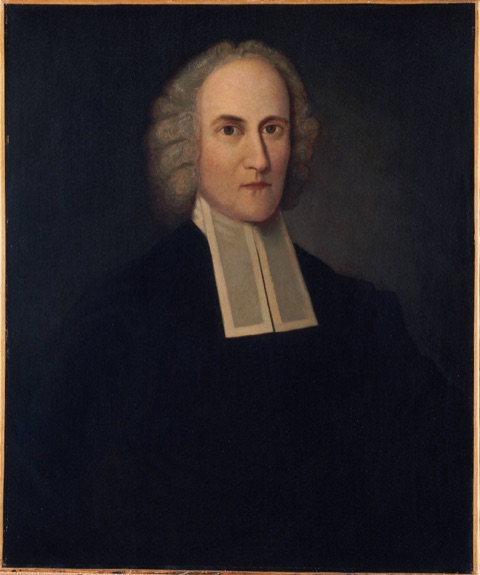
About the author
Jonathan Edwards
Jonathan Edwards (1703 to 1758 AD) was born in East Windsor, Connecticut, the only son of the Congregational minister Timothy Edwards. He entered Yale at thirteen and graduated in 1720. In 1727 he became assistant to his grandfather Solomon Stoddard at Northampton, Massachusetts, and succeeded him as pastor in 1729. His preaching on justification by faith sparked the Northampton revival of the mid-1730s, which he described in A Faithful Narrative (1737); these discourses followed in 1738. He preached Sinners in the Hands of an Angry God in 1741 and published Religious Affections in 1746. Dismissed in 1750, he moved to Stockbridge, wrote Freedom of the Will, and died at Princeton in 1758, weeks after arriving as president of the College of New Jersey.