Full text in modern English · Free PDF/EPUB
Light for Them That Sit in Darkness
Want the file? The PDF/EPUB is free with an account.
Summary
- Author
- John Bunyan (1628 to 1688 AD), English Puritan preacher and pastor at Bedford
- Published
- 1675 AD
- Source edition
- George Offor's The Works of John Bunyan, vol. 1 (1855)
- Type
- Doctrinal discourse on a single verse
- Length
- 45,000 words · 3 hours
What is Light for Them That Sit in Darkness about?
Light for Them That Sit in Darkness is John Bunyan's 1675 discourse on Acts 13:23. It shows that God promised a Savior in every age, that Jesus took our flesh, our sins and our curse, and that his resurrection, ascension and gift of the Spirit prove he paid the full price for sinners.
Read the full summary (9 points, key themes)Show less
How the argument unfolds
- 01
To the Reader: why he wrote. For readers in danger of losing the true knowledge of Christ's person and work. “I have not written at random, nor borrowed my doctrine from libraries.”
- 02
Opening: who this Jesus is. God before all worlds and David's son by birth, “both the root and the offspring of David.”
- 03
Promise: a Savior in every age. From the seed of the woman to Malachi's messenger of the covenant, with types such as the Passover lamb, the red cow, the manna and the rock.
- 04
Fulfillment: Jesus of Nazareth. Bunyan marks every detail of the birth and the real human weakness, and notes that even from heaven Jesus still says, “I am Jesus of Nazareth.”
- 05
Redemption: four steps. He took our flesh, was made under the law, was made sin, and was made a curse. Each step is God's doing: “The Lord bruised him, the Lord put him to grief.”
- 06
Objections answered. Was Christ counted a sinner? Did he suffer hell? Is he only our pattern? In his death, Bunyan answers, he is “both sacrifice and example.”
- 07
Nine demonstrations. Resurrection, ascension, the Spirit, the conquering gospel, peace and holiness, prayer and thanks in his name, waiting for his return, and God's threats all show the price was paid.
- 08
Uses: the cross applied. What the cross shows of God and of ourselves, encouragement for sinners and the tempted, and why “Unto you therefore which believe, he is precious.”
- 09
Last use: a warning. Against a religious spirit that thinks venturing on a crucified Christ is not essential to salvation.
Key themes
- Sin charged, not pretended. Bunyan will not separate sin from its guilt at the cross. If the charge was “only feigned,” then so is the rescue, and we get “only a feigned salvation at last.”
- More than satisfaction. Payment alone would only bring us back to zero. Christ's blood also redeems, washes, purges, brings near, and makes us “kings and priests unto God and his Father.”
- Grace that makes holy. Free forgiveness does not license sin. For “where this gospel comes in truth, it naturally produces” peace and holiness, and nothing moves a heart to holiness like the cost of that forgiveness.
Reader questions (6)Hide the questions
Questions about Light for Them That Sit in Darkness
Can I read Light for Them That Sit in Darkness online for free?
Yes. The complete text of this modern English edition is on this page, with no sign-up or paywall.
Is there a free PDF of Light for Them That Sit in Darkness?
Yes. The PDF and EPUB of this edition are free with an Updated Works account. Sign in with Google or an email link; no card is needed.
What is Light for Them That Sit in Darkness about?
It is a discourse on Acts 13:23 about who Jesus is and what he did. Its refrain is that Christ “has paid full price to God for sinners and obtained eternal redemption for them.”
Who did Bunyan write it for?
Not for those already hardened against Christ, he says, but “for the sake of those who are in danger of it but are not yet overcome,” readers being drawn away from Christ's person and work.
Did Christ suffer the torments of hell, according to Bunyan?
He bore God's wrath and curse, but despair and endless punishment could not fasten on him. “It is one thing, therefore, to suffer for sin by the stroke of eternal justice, and another to remain a sufferer there for ever. Christ did the first; the damned do the second.”
Is Christ's death only an example for us?
No. He was an example in his meekness and his prayer for his enemies, but Bunyan separates the two sides of his death: “as he suffered by God’s hand, he suffered for sin; but as he suffered from men, he suffered for righteousness’ sake.”
Light for Them That Sit in Darkness · Full text
To the Reader
Gentle Reader,
It was the great care of the apostle Paul to deliver his gospel to the churches in its own simplicity, because that is how it is “the power of God unto salvation to every one that believeth” (Rom 1:16). And if it was his care to deliver it to us that way, it should be ours to seek to keep it that way. All the more so because the minds even of the saints themselves are so poorly fitted to retain it without mixing something into it.
For, to say nothing of the schemes of hell, and of the cunning craftiness of some who lie in wait to deceive even the godly themselves, the godly are dull of hearing, and much duller still in receiving and holding fast the simplicity of the gospel of Jesus Christ. Out of their own sense and reason, their unbelief and darkness, arise many imaginations and high thoughts that exalt themselves against the knowledge of God and the obedience of Jesus Christ. That is why they themselves have a hard time standing complete in all the will of God. And if they were not included in electing love, by which they are bound up in the bundle of life and blessed with the enjoyment of saving grace, which enlightens their souls and maintains their faith and hope, they would not only be assaulted and afflicted by their own corruptions but, like others, overcome by them.
Alas! How common it is for professing Christians to fall from the knowledge they have had of the glorious gospel of the blessed God, and to be turned to fables, seducing spirits and doctrines of devils, through the intoxication of delusions and the witchcraft of false preachers!
Now, this swerving of theirs from the gospel arises either (1) from their not having, or, having it, not retaining, the true knowledge of the person of the Lord Jesus Christ; or (2) from their not believing the true reasons for his coming into the world, together with his doing and suffering there. On one or both of these grounds, I say, they perish everlastingly. For if they do not have, and do not also retain, the knowledge of his person, they are without the He; and if they do not believe on him, they must die in their sins (John 8:24). And if they do not know the reason for his coming, doing and suffering, they are in the same condition too.
Now, as for those professing Christians who have had some knowledge of these things and yet have lost it, this has happened to them because they first lost the knowledge of themselves and of their sins. They do not know themselves to be the nothings the Scriptures report them to be, nor their sins to be as heinous as the law has concluded them to be. So they either turn again, like the dog, to their vomit, or cling to a few rags of their own fleshly righteousness. And so they become pure in their own eyes, yet are not purged by blood from their filthiness.
For the person and doings of Jesus Christ are precious only to those who get and keep the true knowledge of themselves, and of the reward their sins deserve by the law. These are desolate, driven out of everything; these embrace the rock in place of a shelter. The sinner who is aware of his sin receives him joyfully.
And because going wrong on this great truth is the most dangerous and damning way of going wrong, professing Christians should be all the more afraid of swerving from it. The man who rejects the true knowledge of the person of the Lord Jesus, and the reasons for his doing and suffering in the world, takes the shortest road to becoming guilty of that transgression which is not to be purged with sacrifice forever. That is the fearful transgression for which no offering at all is left, nor anything to be expected by the one who commits it but fearful judgment and fiery indignation, which shall devour the adversary.
Now, it is for the sake of those who have not sinned this sin, for the sake of those who are in danger of it but are not yet overcome, for their sakes that I have written this little book. In it, at length and yet in few words, I lay open the doctrine of the person, doings and sufferings of Christ, with their true cause, and I also remove the objections that the crafty children of darkness have framed against it.
And I have been all the more plain and simple in my writing because the sin against the Holy Spirit is more common in these days than it used to be, and the way to it is more beautified with the color and pretense of truth. I may say of the way to this sin that it is, as the way to Jerusalem once was, strewn with boughs and branches; and some cry out a kind of hosanna to those who are treading these steps to hell. Oh, the plausible pretenses, the golden names, the feigned holiness, the demure behavior, mixed with damnable hypocrisy, that go along with those who have forsaken the Lord Jesus, who have despised his person, trampled on him, and counted the blood of the covenant with which he was sanctified an unholy thing! They have crucified him to themselves, and think they can go to heaven without him. Yes, they pretend to love him when they hate him; they pretend to have him when they have cast him off; they pretend to trust in him when they defy all that he undertook for the world.
Reader, let me beg you to hear me patiently: read, consider and judge. I have presented you with what I have received from God, and the holy men of God, who spoke as they were moved by the Holy Spirit, bear me witness. You will say, “Everyone claims that.” Well, then, give me a hearing. Take me to the Bible, and if you find me swerving from the standard, let me find no favor in your heart.
I say again, receive my doctrine. I beg you, on Christ’s behalf, receive it. I know it to be the way of salvation. I have ventured my own soul on it with gladness; and if all the souls in the world were mine, as my own soul is, I would, through God’s grace, venture every one of them there. I have not written at random, nor borrowed my doctrine from libraries. I depend on the sayings of no man. I found it in the Scriptures of truth, among the true sayings of God.
I will close by urging you to pray and to give heed to the words of God as revealed in Holy Scripture. May the Lord Jesus Christ himself give you light and life by faith in him; to whom, with the Father and the good Spirit of grace, be glory and dominion, now and forever. Amen.
John Bunyan
The Text Opened: A Savior Raised Up for Israel
Of this man’s seed hath God, according to his promise, raised unto Israel a Savior, Jesus (Acts 13:23).
These words are part of a sermon that Paul preached to the people who lived at Antioch in Pisidia, where many of the Jews also lived. He begins by preparing them for his message: “Men of Israel, and ye that fear God, give audience” (Acts 13:16). Having prepared their minds to listen in this way, he goes on to give a detailed account of God’s special dealings with his people Israel, from Egypt down to the time of David their king. Of David he speaks in particular: that he was the son of Jesse, that he was a king, that God raised him up in mercy, that God bore witness to him, that he was a man after God’s own heart, and that he would fulfill all God’s will (Acts 13:22).
He did this on purpose, both to hold their attention all the more and because they knew well that God had promised the Messiah would come from the fruit of David’s loins.
So, having gathered up their minds to listen, he presents them with his errand: that the Messiah had come, and that the promise that a Savior would be born to Israel was indeed fulfilled. “Of this man’s seed,” he says, “hath God, according to his promise, raised unto Israel a Savior, Jesus.”
In this statement he concludes three things. First, that the promise had kept its proper course in presenting a Savior to Israel, that is, in David’s loins: “Of this man’s seed.” Second, that the time of the promise had come, and the Savior was revealed: “God hath raised unto Israel a Savior.” Third, that Jesus of Nazareth, the son of Joseph, was he: “He hath raised unto Israel a Savior, Jesus.”
To open up the words, we may ask four questions arising from these things. First, what is this Jesus? Second, what did it mean for this Jesus to be of the seed of David? Third, what did it mean for Jesus to be of this man’s seed according to the promise? And fourth, what did it mean for him to be raised unto Israel? These things may give us light on what will be said afterward.
Question 1. What is this Jesus?
He is God, and he had personal being before all worlds. So he is not someone who began to exist when he was formed in the world. He is God’s natural Son, the eternal Son of his begetting and love: “God sent forth his Son” (Gal 4:4). He existed, and was God’s Son, before he was revealed: “What is his name, and what is his Son’s name, if thou canst tell?” (Prov 30:4; Ezek 21:10). He has an eternal generation that no one can declare, neither man nor angel (Isa 53:8). He was his Father’s delight before the Father had made either mountain or hill, while as yet he had not made the earth or the fields, or the highest part of the dust of the world (Prov 8:26). All things were made by him, and without him was not anything made that was made (John 1:3). He is before all things, and by him all things consist (Heb 1:2-3; Col 1:17). He is the one the Father consulted when he was about to make man (Gen 1:26), when he intended to overthrow Babel (Gen 11:7), and when he sent Isaiah to harden the hearts of Israel (Isa 6:8). This is the person intended in the text.
That is why he also testifies of himself that he came down from the Father (John 16:28), and that he had glory with the Father before the world was (John 17:5). And again: “What and if ye shall see the Son of man ascend up where he was before?” (John 6:62).
Question 2. What did it mean for Jesus to be of David’s seed?
To be of David’s seed is to spring from his loins, to come of his race according to the flesh (Luke 2:4; Rom 1:3; 2 Tim 2:8). And so, as he is David’s God, he is likewise David’s Son: both the root and the offspring of David. The Lord himself acknowledges this, saying, “I am the root” (that is, God), “and the offspring” (that is, Son) “of David, and the bright and morning star” (Rev 22:16). This is indeed the great mystery, the mystery of godliness. “If David then call him Lord, how is he his Son?” (Matt 22:45). And that is why he is called “wonderful”: because he is both God and man in one person. “Unto us a child is born, unto us a Son is given; and the government shall be upon his shoulder, and his name shall be called Wonderful” (Isa 9:6). Wonderful indeed! Wonderful God, Wonderful man, Wonderful God-man, and so a Wonderful Jesus and Savior. He also has wonderful love; he bore wonderful sorrows for our wonderful sins, and obtained for us a wonderful salvation.
Question 3. What did it mean for Jesus to be of this man’s seed according to the promise?
This word “promise” sometimes takes in all the promises that God made to our fathers, from the first promise to the last. That is how the Holy Spirit speaks of them: “The promise made unto the fathers, God hath fulfilled the same unto us their children” (Acts 13:32-33). But the word “promise” here means in particular the promise God made to David himself. “Men and brethren,” said Peter, “let me freely speak unto you of the patriarch David, that he is both dead and buried, and his sepulchre is with us unto this day. Therefore being a prophet, and knowing that God had sworn with an oath to him, that of the fruit of his loins, according to the flesh, he would raise up Christ to sit on his throne; he seeing this before, spake of the resurrection of Christ…” (Acts 2:29-31).
Question 4. What did it mean for Jesus to be raised up in this way by God to Israel?
Here we have two things to consider: first, who Israel is; and second, what it meant for Jesus to be raised up unto them.
1. Who Israel is. By “Israel” we should sometimes understand the whole stock of Jacob, the natural children of his flesh. They have that name from him, for he obtained it when he wrestled with the angel and prevailed, and it remained with his descendants through their generations (Gen 32). And by “Israel” we are to understand all those whom God has promised to Christ: “The children of the promise are counted for the seed” (Rom 9:8), that is, the elect Jews and Gentiles. These are called “the Israel of God” (Gal 6:16), and the seed of Abraham, whom Jesus had especially in view when he undertook the work of man’s redemption (Heb 2:14-16).
2. What it meant for Jesus to be raised up unto them. This phrase “raised up” is used in different ways in Scripture.
(1) It is taken for “sending.” When he says he raised them up judges, saviors, and prophets (Judg 2:16, 18; Judg 3:9, 15; Amos 2:11), he means he sent them such men. And in this way he raised up Jesus; that is, he sent him. “I have not spoken of myself; but the Father which sent me, he gave me a commandment” (John 12:49).
(2) To be raised up implies someone invested with power and authority. So God raised up David to be the king of Israel: he anointed him and invested him with kingly power (1 Sam 16:13; Acts 13:22). And so Jesus Christ was raised up. That is why he is called “the horn of salvation”: “He hath raised up an horn of salvation for us in the house of his servant David” (Luke 1:69).
(3) To be raised up implies being given life and strength to oppose and overcome all opposition. In this way Jesus was raised up from under sin, death, the rage of the world, and hell, on the day that God raised him out of the grave.
So this is how Jesus was raised up to Israel: he was sent, authorized, and strengthened for the work of their salvation and in that work, until he had completed it.
The words, opened up in this way, set before us these two observations. First, that in all ages God gave his people a promise, and so a ground for a believing remembrance, that he would one day send them a Savior. Second, that when Jesus came into the world, that promise of God was fulfilled.
God’s Promise of a Savior in Every Age
To begin with the first: that in all ages God gave his people a promise, and so ground for a believing remembrance, that he would one day send them a Savior.
Zacharias testifies to this when he was filled with the Holy Spirit. Speaking of the Messiah, or the Savior, he says that God spoke of him by the mouth of all the prophets who have been since the world began (Luke 1:69-70). To this I will add Peter’s words: “Yea, and all the prophets from Samuel, and those that follow after, as many as have spoken, have likewise foretold of these days” (Acts 3:24).
From these texts it is evident that in every generation or age of the world God gave his people a promise, and so ground for a believing remembrance, that he would one day send them a Savior. For indeed the promise is ground not only for a remembrance, but for a believing remembrance. What God says is sufficient ground for faith, because he is truth, and cannot lie or repent. But that is not all. His heart was engaged, yes, all his heart, in the promise he spoke of sending us a Savior.
From this observation I will inquire into these three things: first, what it is to be a Savior; second, how it appears that God in all ages gave his people a promise that he would one day send them a Savior; and third, that this was ground for a believing remembrance that a Savior would one day come.
1. What It Is to Be a Savior
1. This word “Savior” is easy to understand, for it means the same as Deliverer, Redeemer, and the like. “A Savior, Jesus”: both words have the same meaning, and they are doubled, perhaps to teach us that the person mentioned in the text is not called “Jesus” only to distinguish him from other men (for names are given to distinguish), but also and especially to specify his office. His name is Savior because saving was to be his work, his office, his business in the world. His name was to be called Jesus, “for he shall save his people from their sins” (Matt 1:21).
2. This word “Savior” is so broad that it has a place in all the undertakings of Christ. Whatever he does in his mediation, he does as a Savior. He steps in between God and man as a Savior. He engages against sin, the devil, death, and hell as a Savior, and triumphed over them by himself as a Savior.
3. The word “Savior,” as I said, means the same as Redeemer, Deliverer, Reconciler, Peacemaker, or the like. Though the terms vary, Savior is what all of them intend. By redeeming he becomes a Savior, by delivering he becomes a Savior, by reconciling he becomes a Savior, and by making peace he becomes a Savior. But I pass over this now, intending to speak more to the same question afterward.
2. How God Promised a Savior in All Ages
It appears plainly. As soon as man had sinned, God came to him with a heart full of promise, and he went on renewing it, and renewing it, till the time came for the promised Messiah to be revealed.
1. He promised him under the name of “the seed of the woman,” after our first father had sinned: “I will also put enmity between thee and the woman, and between thy seed and her seed. He shall bruise thy head, and thou shalt bruise his heel” (Gen 3:15). The apostle has his eye on this when he says, “When the fulness of the time was come, God sent forth his Son, made of a woman, made under the law, to redeem them that were under the law” (Gal 4:4-5).
2. God renewed this promise to Abraham, and there told him that Christ would be his seed, saying, “In thy seed shall all families of the earth be blessed” (Gen 12:3). “Now,” says Paul, “to Abraham and his seed were the promises made. He saith not, And to seeds, as of many; but as of one, And to thy seed, which is Christ” (Gal 3:16).
3. He was promised in the time of Moses under the name of a “prophet.” “I will raise them up,” God says to him, “a prophet from among their brethren like unto thee” (Deut 18:18). Peter expounds this of Christ: “For Moses truly said unto the fathers, A prophet shall the Lord your God raise up unto you of your brethren, like unto me; him shall ye hear in all things whatsoever he shall say unto you” (Acts 3:22).
4. He promised him to David under the title of a “son,” saying, “I will be his Father, and he shall be my Son” (2 Sam 7:14). For the apostle expounded this of the Savior, saying, “Thou art my Son, this day have I begotten thee”; and again, “I will be to him a Father, and he shall be to me a Son” (Heb 1:5).
5. He was promised in the days of Uzziah, Jotham, Ahaz, and Hezekiah, kings of Judah:
(1) By the name of a “branch”: “In that day shall the branch of the Lord be beautiful and glorious” (Isa 4:2).
(2) Under the name of the “son of a virgin”: “Therefore the Lord himself shall give you a sign; Behold, a virgin shall conceive, and bear a son, and shall call his name Immanuel” (Isa 7:14). Matthew expounds this of Christ (Matt 1:23).
(3) He was promised under the name of a “rod”: “There shall come forth a rod out of the stem of Jesse, and a branch shall grow out of his roots, and the Spirit of the Lord shall rest upon him” (Isa 11:1-2). This fits the text: David was the son of Jesse, and Christ the Son of David.
(4) He is promised under the title of a “king”: “Behold, a king shall reign in righteousness, … and a man shall be as an hiding-place from the wind, and a covert from the tempest; as rivers of water in a dry place, as the shadow of a great rock in a weary land” (Isa 32:1-2).
(5) He was promised under the name of an “elect servant”: “Behold my servant, whom I uphold; mine elect, in whom my soul delighteth; I have put my Spirit upon him: he shall bring forth judgment to the Gentiles. He shall not cry, nor lift up, nor cause his voice to be heard in the street. A bruised reed shall he not break, and the smoking flax shall he not quench” (Isa 42:1-3; Matt 12:17-20).
(6) He was promised to Jeremiah under the name of “the Lord our Righteousness”: “Behold, the days come, saith the Lord, that I will raise unto David a righteous Branch, and a King shall reign and prosper; and shall execute judgment … in the earth. In his days Judah shall be saved, and Israel shall dwell safely; and this is his name whereby he shall be called, THE LORD OUR RIGHTEOUSNESS” (Jer 23:5-6).
(7) He was promised by the prophet Ezekiel under the name of “David, a shepherd”: “And I will set up one shepherd over them, and he shall feed them, even my servant David; he shall feed them, and he shall be their shepherd. And I the Lord will be their God, and my servant David a prince among them; I the Lord have spoken it” (Ezek 34:23-24; John 10:1-3).
(8) He was promised by the prophet Daniel under the name of “Messiah, or Christ, the most holy”: “And after threescore and two weeks shall the Messiah be cut off, but not for himself” (Dan 9:26).
(9) He was promised by the prophet Micah under the name of the “ruler in Israel”: “But thou, Bethlehem-Ephratah, though thou be little among the thousands of Judah, yet out of thee shall he come … that is to be ruler in Israel” (Mic 5:2; Matt 2:6).
(10) He was promised to Haggai as “the desire of all nations”: “I will shake all nations, and the desire of all nations shall come, and I will fill this house with glory, saith the Lord of hosts” (Hag 2:7).
(11) He was promised by Zechariah under the name of “servant and branch”: “For, behold, I will bring forth my servant the BRANCH” (Zech 3:8). And again, “Behold the man whose name is the BRANCH; and he shall grow up out of his place, and he shall build the temple of the Lord; and he shall bear the glory” (Zech 6:12-13).
(12) He was promised by Malachi under the name of “the Lord, and the messenger of the covenant”: “Behold, I will send my messenger, and he shall prepare the way before me: and the Lord, whom ye seek, shall suddenly come to his temple, even the messenger of the covenant, whom ye delight in: behold, he shall come, saith the Lord of hosts” (Mal 3:1).
Indeed, the Scriptures of the Old Testament are filled with promises of the Messiah to come: prophetic promises and typical promises. For all the types and shadows of the Savior are, in effect, so many promises.
6. Having touched, then, on the prophetic promises, I will briefly touch on the typical promises also. For as God spoke at sundry times to the fathers, so he also spoke in diverse manners: prophetically, providentially, typically, and all of it about the Messiah (Heb 1:1). The types of the Savior were various. Sometimes he was pictured in types by men, sometimes by beasts, and sometimes by lifeless creatures.
(1) Sometimes he was set forth in types by men. Adam was his type in many things, especially as he was the head and father of the first world. He was “the figure of him that was to come” (Rom 5:14). Moses was his type as Mediator, and as builder of the tabernacle (Heb 3:2-3). Aaron was his type as high priest, and so was Melchizedek before him (Heb 5:4-5; Heb 7:1, 21). Samson was his type in the effects of his death. As Samson gave his life to deliver Israel from the Philistines, so Christ gave his life to deliver us from sin and devils. Joshua was his type in giving the land of Canaan to Israel, as Jesus will give the kingdom of heaven to the elect (Heb 4:8). David was his type in many things, especially in subduing Israel’s enemies and feeding Israel. That is why he is sometimes called David their king, and David their shepherd (Ezek 34:23-24). Solomon was his type in building the temple and in his peaceable kingdom. That is why it is said, “He shall build the temple of the Lord” (Zech 6:12); and again, “Of his government and peace there shall be no end” (Isa 9:7).
(2) Beasts were his types. To give some instances:
[1] The Passover lamb was his type (Exod 12). It was his type in its spotlessness: Christ was “a lamb without blemish and without spot” (1 Pet 1:18-19). In being roasted it was a figure of the cursed death of Christ, for to be roasted signified one who was accursed (Jer 29:22; Gal 3:13). It was his type in that it was to be eaten: “Whoso eateth my flesh and drinketh my blood,” says Christ, “hath eternal life” (John 6:54). It was his type in that its blood was to be sprinkled on the doors of their houses for the destroying angel to look on; so the blood of Christ is sprinkled on the elect for the justice of God to look on (Heb 9; 1 Pet 1:2). By eating the Passover lamb, the people went out of Egypt; by feeding on Christ by faith, we come out from under the Egyptian darkness and the tyranny of Satan.
[2] The red cow was his type (Num 19:2 and following). She was his type in that she was to be without blemish. She was his type in that she was to be slain outside the camp: “Jesus also, that he might sanctify the people with his own blood, suffered without the gate” (Heb 13:12). Her flesh was to be burned, a type of the grievous death of Christ. Her ashes were to be carried into a clean place outside the camp, a type of the clean tomb where the body of Jesus was laid (John 19:38-41).
There were also various other sacrifices, such as bulls, goats, and birds, which were types of him, but I leave them out here.
(3) Lifeless creatures were his types. For example:
[1] The manna in the wilderness (Exod 16). It was his type, first, in that it came down from heaven, for so did Christ. “I came down from heaven,” he says (John 6:38); and again, “I am the living bread which came down from heaven” (John 6:51). The manna was to be eaten; so is Christ, by faith: “If any man eat of this bread, he shall live for ever; and the bread that I will give is my flesh, which I will give for the life of the world” (John 6:51). The manna was to be gathered daily; so Christ is to be eaten daily. The manna was all the bread Israel had in the wilderness; Christ is all the bread believers have in this life for their souls. The manna did not come by Moses’ law, and neither does Christ come by our merits: “Moses gave you not that bread from heaven, but my Father giveth you the true bread from heaven” (John 6:32).
[2] Again, the rock that gave them water for their thirst was a type of him (Num 20). They “did all drink the same spiritual drink, for they drank of that spiritual Rock that followed them; and that Rock was Christ” (1 Cor 10:4). This rock was his type in four things. (a) It gave drink to the people in the wilderness when they had come out of Egypt; Christ gives drink to those who forsake the world for him. (b) The rock yielded water by being struck with Moses’ rod; Christ gives drink, even his blood, by being stricken by Moses’ law (Num 20:11; Isa 53). (c) The water out of this rock was given to the thirsty: “I will give unto him that is athirst,” says Christ, “of the fountain of the water of life freely” (Rev 21:6). (d) The water of the rock in the wilderness ran after the people; they drank of that rock that followed them: “He opened the rock, and the waters gushed out, they ran in the dry places like a river” (Ps 105:41). Christ also is said, by that type, to follow us: “They drank of that spiritual Rock that followed them; and that Rock was Christ” (1 Cor 10:4).
[3] Again, Mount Moriah was his type. That mount stood in Jerusalem; Christ also stands in his church. On that rock the temple was built (2 Chr 3:1). “And upon this rock,” said Christ, “I will build my church, and the gates of hell shall not prevail against it” (Matt 16:18).
Other things might be urged. But these carry in effect the force of promises, and they also serve as a key to open the promises. So I thought it good to place them here with the promises, because, as they stand alongside them, so they are written to beget faith in the same Lord Jesus Christ.
3. The Promises a Ground for Believing Remembrance
I come now to the third thing: that these promises were ground for a believing remembrance that a Savior would one day come.
There is a remembering, and there is a believing remembering, that is, a remembering that begets and maintains faith in the heart. Jacob had a believing remembrance when he said, “I have waited for thy salvation, O Lord” (Gen 49:18). And so had David when he cried, “O that the salvation of Israel were come out of Zion” (Ps 53:6). These, together with Simeon and Anna, had not merely a remembrance, but a believing remembrance that God would send them a Savior. They had the promise not only in the book, but in their hearts. This gospel was mixed with faith in them. Therefore they, with their fellows, remembered and believed; that is, they made the promise the ground of their believing that God would one day send them a Savior.
Use of This Doctrine
Let me now make some use of this doctrine. Here we may see how much the heart of God was set on the salvation of sinners. He studied it, contrived it, set his heart on it, and promised, and promised, and promised to complete it by one day sending his Son to be a Savior (2 Sam 14:14; Eph 1:3; Titus 1:2). No wonder, then, that when he speaks of the new covenant, in which the Lord Jesus is wrapped up and presented to the world in a word of promise, he says, I will do it “assuredly with my whole heart, and with my whole soul” (Jer 32:41).
Now this is a singular comfort to sinners who feel their sin. Indeed, what greater ground of consolation could such people have than to hear that the God against whom they have sinned should himself take care to provide them a Savior? There are some poor sinners in the world who have given way so far to discouragement, from a sense of how great their sins are, that they dare not think about God, or about the sins they have committed. But the reason is that they do not know that God’s heart was wrapped up in this good work of providing and sending a Savior. Let such people listen now to the call of God: “Return unto me, for I have redeemed thee” (Isa 44:22). Ho! Turn back! Listen! The heart of God is greatly set on mercy. From the beginning of the world he resolved and promised, yes, and swore, that we would have a Savior.
The Promise Fulfilled: Jesus Comes into the World as Savior
I now proceed to the second observation: that when Jesus came into the world, then the promise of God was fulfilled, namely, that he would one day send us a Savior.
Take three texts to confirm this point.
1. “This is of a truth that prophet that should come into the world” (John 6:14). These words were spoken by those who were present at that miracle of Jesus when he fed five thousand with five barley loaves, which a boy in the crowd had with him. For when these men had seen the wonder, they were amazed at it and confessed him to be the Savior.
2. “Lord, I believe that thou art the Christ, the Son of God, which should come into the world” (John 11:27).
3. “This is a faithful saying, and worthy of all acceptation, that Christ Jesus came into the world to save sinners” (1 Tim 1:15).
To explain this observation, I will briefly deal with three questions. First, how is this Jesus to be distinguished from others of that name? Second, what was it for this Jesus to come into the world? Third, what was it for him to come to be a Savior?
Question 1. As to the first: the Jesus in the text is distinguished from all others of that name.
1. He is distinguished by the manner of his birth. He was born of a virgin, a virgin engaged to a man named Joseph; but Joseph “knew her not till she had brought forth her first-born son, and he called his name Jesus” (Matt 1:25).
2. He is distinguished from others of that name by the place of his birth, that is, Bethlehem, the city of David. There he had to be born, and there he was born (John 7:42; Matt 2:4-6).
3. He is distinguished by his lineage: he came “of the house and lineage of David” (Luke 2:4-6).
4. He is distinguished by the time of his birth, that is, the time the prophets had fixed beforehand (Gal 4:4).
5. But the common way he is distinguished is as Jesus of Nazareth. By this name he is distinguished twenty-one times in the New Testament.
(1) His enemies called him “Jesus of Nazareth” (Matt 26:71; Mark 14:67; John 18:5).
(2) His disciples called him “Jesus of Nazareth” (Matt 21:11; Luke 24:19; John 1:45; Acts 2:22).
(3) The angels called him “Jesus of Nazareth” (Mark 16:6).
(4) And he calls himself “Jesus of Nazareth” (Acts 22:8).
(5) Yes, and he also goes by the name of “Jesus of Nazareth” among the devils (Mark 1:24; Luke 4:34).
He was called “Jesus of Nazareth” because he lived there with his mother Mary and her husband. Nazareth was his city, where he had been brought up (Luke 4:16). It was there that Joseph took him for shelter when he came out of Egypt with him (Matt 2:23). Nazareth was his usual home until the time that John was thrown into prison (Matt 4:12-13). So he might well say, “I am Jesus of Nazareth.” Yes, he could say it even though he was by then in heaven; for heaven will not make us forget what country we came from when we lived in the world. You see here that Jesus, though glorified in heaven, still does not forget what country he came from when he lived in the world. “I am Jesus of Nazareth,” he says; that is, I am the Jesus you are persecuting; and so that you may know I am he, I tell you that I once lived in the city of Nazareth in Galilee. Joseph and my mother Mary brought me up there, and I lived there with them many years. “I am Jesus of Nazareth, whom thou persecutest” (Acts 22:8).
Question 2. What was it for Jesus to come into the world?
Answer. It is not his coming into his people, or by his Spirit in them, for in that sense he was never out of the world. Nor is it his appearing in his ordinances. Nor is it that coming of his by which he destroys Antichrist. Nor is it his appearing in his dreadful providences or judgments. But by the coming of Jesus, according to the text, we are to understand that coming, or such a coming, by which he was shown to be God and man in one person: God in our flesh outside of us, that is, distinct in his own person by himself. It is such a coming by which he was shown to be like men in every point, sin alone excepted. It is such a coming in which, or by which, the Son of God also became the Son of man.
To clear this further, you find it expressly said that he was born into the world (Luke 1:35; Luke 2:11), and that Mary was the one “of whom was born Jesus” (Matt 1:16). Now, when Jesus was born, it is said, “Where is he that is born King of the Jews?” (Matt 2:1-2). And Herod “demanded of them where Christ should be born” (Matt 2:4).
Now, to see that this was fulfilled according to the very word of the text, without any trickery, evasion, or cunningly devised fable, consider the following.
1. He is called this woman’s first-born, the male child that opened her womb (Luke 2:7, 23).
2. He was not born until he had been nourished in her womb for the full time, according to the natural course of life: “And so it was, that while they were there [at Bethlehem], the days were accomplished that she should be delivered. And she brought forth her first-born son, and wrapped him in swaddling-clothes, and laid him in a manger” (Luke 2:6-7).
3. At the birth of Jesus she also kept her time of separation, like other women at the birth of their children, until “the days of her purification according to the law of Moses were accomplished” (Luke 2:22).
4. He himself, like other Hebrew children, was also brought to Jerusalem to be presented to the Lord: “As it is written in the law of the Lord, Every male that openeth the womb shall be called holy to the Lord” (Luke 2:23-24).
5. So Jesus too, like other Hebrew children, was circumcised when the appointed day came: “And when eight days were accomplished for the circumcising of the child, his name was called Jesus, which was so named of the angel before he was conceived in the womb” (Luke 2:21).
6. After this he is often called the young child, the child Jesus (Matt 2:20-21). And further, it is said of him that he grew, and that he increased in wisdom and stature (Luke 2:40, 52).
See how carefully, down to the smallest circumstance, the Holy Spirit sets out the birth of the Lord Jesus! And all of it is to convince an unbelieving world of the true manner in which the Savior came into the world.
Second, the reality of the manhood of this Lord Jesus is made still more evident: first, by the natural weaknesses that come with human flesh; and second, by the names the prophets gave him in the days of the Old Testament and the New.
1. By the natural weaknesses that come with human flesh. For example, at his birth he could not go anywhere except as his parents carried him. He felt hunger (Luke 4:2). He felt thirst (John 19:28). He felt weariness (John 4:6). He was refreshed by sleep (Mark 4:38). He was subject to grief (Mark 3:5). He was subject to anger (Mark 3:5). He was subject to weeping (John 11:35; Luke 19:41). He had joy as a man, and rejoiced (Matt 11:25; Luke 10:21). These things, I say, Jesus was subject to as a man, as the son of the Virgin.
2. The reality of his manhood is shown further by the names the prophets gave him, both in the Old Testament and in the New. For example:
(1) He is called the “seed”: the seed of the woman (Gen 3:15), the seed of Abraham (Gen 12; Gen 22; Gal 3:16-17), the seed of David (Rom 1:3). By this is meant that he was to come from their children.
(2) Therefore, where the fathers are mentioned, it is added, “of whom as concerning the flesh Christ came” (Rom 9:5). He was made of the seed of David according to the flesh (Rom 1:3), and so again he calls himself the offspring of David (Rev 22:16). Therefore, I say, he is said to be of their flesh and of their loins (Acts 2:30), and he is called their Son.
(3) So he is frequently called “a man, and the Son of man”: “Then shall you see the Son of man coming in the clouds of heaven” (Matt 26:64). “When the Son of man shall come in his glory, and all the holy angels with him” (Matt 25:31). “This man, because he continueth ever, hath an unchangeable priesthood” (Heb 7:24). “Wherefore, it is necessary that this man have somewhat also to offer” (Heb 8:3; Heb 10:12).
(4) What more shall I say? He himself gave undeniable proof of all this when he said that he “was dead” (Rev 1:18); and when he called Thomas to put his finger here and look at his hands, and to reach out his hand and thrust it into his side, and told him not to be faithless but believing (John 20:27). Another time, when he stood among the eleven while they were troubled with thoughts of unbelief, he said, “Behold my hands and my feet, that it is I myself; handle me, and see, for a spirit hath not flesh and bones, as ye see me have” (Luke 24:39).
So I have shown you what it was for Jesus to come into the world: namely, to be born of a woman, to take flesh, and to become God-man in one person. I come now to the third question. But before I speak particularly to that, I will bring forward further testimony that we find on record concerning the truth of all this.
Testimonies That Jesus Came to Save Us
The Testimony of Simeon. Simeon the Just gives testimony of him: “And the Holy Ghost was upon him. And it was revealed unto him by the Holy Ghost that he should not see death, before he had seen the Lord’s Christ. And he came by the Spirit into the temple; and when the parents brought in the child Jesus, to do for him after the custom of the law, then took he him up in his arms, and blessed God, and said, Lord, now lettest thou thy servant depart in peace … for mine eyes have seen thy salvation” (Luke 2:25-32).
The Testimony of Anna. Anna, a prophetess, was one “of a great age … which departed not from the temple, but served God with fasting and prayers night and day. And she, coming in at that instant, gave thanks likewise unto the Lord, and spake of him to all them that looked for redemption in Jerusalem” (Luke 2:36-38).
The Testimony of John the Baptist. As John the Baptist fulfilled his ministry, he cried out concerning this Jesus, “Behold the Lamb of God, which taketh away the sin of the world. … And he,” says John, “that sent me to baptize with water, the same said unto me, Upon whom thou shalt see the Spirit descending, and remaining,” or abiding, “the same is he which baptizeth with the Holy Ghost. And I saw, and bare record that this is the Son of God” (John 1:29-34).
The Testimony of the Star and the Wise Men. The star that appeared in the east at his birth, and that traveled across the heavens until it came over the place where the young child Jesus was, gave testimony that he was the Savior. This star stirred up many, especially the wise men of the east, who were brought by it from far away to worship him: “And lo, the star which they saw in the east, went before them till it came and stood over where the young child was. When they saw the star, they rejoiced with exceeding great joy. And when they were come into the house, they saw the young child, with Mary his mother, and fell down and worshipped him; and when they had opened their treasures, they presented unto him gifts, gold, and frankincense, and myrrh” (Matt 2:9-11).
The Testimony of the Angels.
1. To Mary herself: “And in the sixth month the angel Gabriel was sent from God unto a city of Galilee, named Nazareth, to a virgin espoused to a man whose name was Joseph … and the virgin’s name was Mary. And the angel came in unto her, and said, Hail, thou that art highly favoured. … And the angel said unto her, Fear not, Mary; for thou hast found favour with God. And, behold, thou shalt conceive in thy womb, and bring forth a son, and shalt call his name Jesus. He shall be great, and shall be called the Son of the Highest; and the Lord God shall give unto him the throne of his father David, and he shall reign over the house of Jacob for ever; and of his kingdom there shall be no end” (Luke 1:26-33).
2. The angels’ testimony to the shepherds, as they were tending their flocks in the fields by night: “And, lo, the angel of the Lord came upon them, and the glory of the Lord shone round about them; and they were sore afraid. And the angel said unto them, Fear not: for, behold, I bring you good tidings of great joy, which shall be to all people. For unto you is born this day in the city of David a Savior, which is Christ the Lord” (Luke 2:9-11).
3. How the angels celebrated his birth among themselves: “And suddenly there was with the angel a multitude of the heavenly host praising God, and saying, Glory to God in the highest, and on earth peace, goodwill towards men” (Luke 2:13-14).
The Testimony of God the Father.
1. He gave it when Jesus was baptized: “And Jesus, when he was baptized, went up straightway out of the water; and, lo, the heavens were opened unto him, and he saw the Spirit of God descending like a dove, and lighting upon him: and, lo, a voice from heaven, saying, This is my beloved Son, in whom I am well pleased” (Matt 3:16-17).
2. The Father gave his testimony of him at his transfiguration: “And he took Peter and John and James, and went up into a mountain to pray. And as he prayed, the fashion of his countenance was altered, and his raiment was white and glistering.” Then Moses and Elijah appeared, talking with him, and a cloud from heaven overshadowed them, and at this the three disciples began to be afraid. Then “there came a voice out of the cloud, saying, This is my beloved Son, hear him” (Luke 9:28-35). This is the testimony of God that Peter speaks of when he says, “We have not followed cunningly devised fables, when we made known unto you the power and coming of our Lord Jesus Christ, but were eye-witnesses of his majesty. For he received from God the Father honour and glory, when there came such a voice to him from the excellent glory, This is my beloved Son, in whom I am well pleased. And this voice which came from heaven we heard, when we were with him in the holy mount” (2 Pet 1:16-18).
3. God gave testimony of him by signs and wonders: “Believest thou not that I am in the Father, and the Father in me? The words that I speak unto you I speak not of myself: but the Father, that dwelleth in me, he doeth the works” (John 14:10). “God also bearing them witness” (that is, those who preached salvation by Jesus) “both with signs and wonders, and with divers miracles and gifts of the Holy Ghost, according to his own will” (Heb 2:4).
How Jesus Put Himself to the Test Among His Adversaries
The Lord Jesus also puts himself to the test among his adversaries in various ways.
First. He urges that the time for the Messiah to appear has come: “The time is fulfilled, and the kingdom of God is at hand: repent ye, and believe the gospel” (Mark 1:15).
For this he had a threefold proof.
1. The heathen had invaded and taken the land, according to the word of Daniel (Dan 9:25-26).
2. The scepter had departed from Judah, according to the word of Jacob (Gen 49:10). That prophecy also fitted this: “Before the child shall know to refuse the evil, and choose the good, the land that thou abhorrest shall be forsaken of both her kings” (Isa 7:16).
3. The Roman emperor had not only subdued the nation and put down the royal line of the Jews, but had set up and established his own power over them. In the fifteenth year of the reign of Tiberius Caesar, Pontius Pilate was governor of Judea, Herod was tetrarch of Galilee, Philip was tetrarch of Ituraea, and Lysanias was tetrarch of Abilene: all of them heathen, and all of Tiberius’s making.
Besides this, the royal line of Judah had by this time sunk so low under the Roman oppression that the chief of them were forced to earn their living with their own hands. Even Joseph, the supposed father of Jesus, had by then become a carpenter. Poor man! When Jesus was born, he had to crowd into a stable, for there was no room in the inn for guests like them. The offering, too, that was brought to God when Jesus was presented to the Lord was two turtledoves or two young pigeons. That was a sacrifice allowed only for those who were poor and could provide nothing bigger: “And if she be not able to bring a lamb, then she shall bring two turtles, or two young pigeons, the one for the burnt-offering, and the other for a sin-offering” (Lev 12:8). Besides, Jesus himself says, “Foxes have holes, and birds of the air have nests; but the Son of man hath not where to lay his head” (Matt 8:20).
Now, I say, all these things were so plain to the Jews that they could not object. They felt that the Romans had come; they knew that the scepter was gone; they smarted under the Roman tyranny; and they knew that the royal line of Judea had been overthrown. How, then, could they object that the time had not come for Christ to be born?
Further, the people in general were convinced that the time had come, and therefore, says the text, they were in expectation: “And as the people were in expectation, and all men mused in their hearts of John, whether he were the Christ or not” (Luke 3:15). The unbiased people, looking at the face of things, could do nothing else but look for the Messiah. And this is why the Lord Jesus gives the Pharisees, those deadly enemies of his, such sharp rebukes, saying, “O ye hypocrites, ye can discern the face of the sky, but can ye not discern the signs of the times?” (Matt 16:3). The kingdom is lost, the heathen have come, and the scepter has departed from Judah. “Ye hypocrites, ye can discern the face of the sky, and of the earth, but how is it that ye do not discern this time?” (Luke 12:56).
Second. He puts himself to the test yet again by the miracles that he worked before them: “Believe me, that I am in the Father, and the Father in me, or else believe me for the very works’ sake” (John 14:11). “For the works which the Father hath given me to finish, the same works that I do, bear witness of me, that the Father hath sent me” (John 5:36).
This proof they could not withstand. They granted that he did many miracles, while they themselves did nothing: “Then gathered the chief priests and the Pharisees a council, and said, What do we? for this man doeth many miracles. If we let him thus alone, all men will believe on him, and the Romans shall come, and take away both our place and nation” (John 11:47-48).
Yes, Jesus so confounded them that by their own records and laws, the very laws by which they were to prove persons clean or unclean, they justified him and overthrew themselves as they read their lessons. For instance, it was written in their law, “If he that hath an issue spit upon him that is clean,” that spittle should make him unclean (Lev 15:8). Now Jesus, whom they counted most unclean because he said he was the Son of God (which, as they thought, was speaking blasphemy), spits on people and makes them whole. He spat, made clay with the spittle, and with that clay made a blind man see (John 9:6). He also spat on the eyes of another and made him see (Mark 8:23-25). Again, he spat, and with his spittle touched the tongue of a man who could not speak, and made him speak immediately (Mark 7:33-35). In this way he proved himself clear of their accusations, and maintained before them that by their own law he was guiltless and was the Son of God; for the miracles that he worked were to prove him to be so.
Again, it was written in their law that whoever touches the altar of incense shall be holy (Exod 29:37). A woman with a bloody issue touched him and was made whole of her plague (Mark 5:28). Yes, they brought many diseased people to him, “and besought him that they might only touch the hem of his garment; and as many as touched were made perfectly whole” (Matt 14:36).
So he was justified before them out of their own law, and his glory was shown before their faces, to their everlasting confusion and contempt.
The Jews did, indeed, raise one objection against Jesus Christ that seemed to them to carry weight, and that was that he first began to appear and show his glory in Cana of Galilee (John 2:1, 11). At this, I say, they stumbled. It was their great temptation; for whenever some affirmed that he was the Christ, others just as quickly objected, “Shall Christ come out of Galilee?” (John 7:40-42). “Art thou also of Galilee? Search and look; for out of Galilee ariseth no prophet” (John 7:52).
But this stumble of theirs might have arisen either from the cruelty of Herod or from their own failure to take note of, and keep in mind, the alarm that God gave them at his birth.
1. It might have arisen, or been occasioned, through the cruelty of Herod. For Jesus was born in Bethlehem, the city where David lived. But when Herod sent out to kill him, and for his sake killed all the young children in Bethlehem, Joseph was warned by an angel of God to take the young child and his mother and flee into Egypt. So he did, and he stayed there until the death of Herod (Matt 2:1, 13, 16). After this the angel comes to them in Egypt and tells them to take the young child and return to the land of Israel, so they got up and went. But hearing that Herod’s son, that tyrant, reigned in his father’s place, they were afraid to go to Bethlehem, and turned aside into the region of Galilee, where they remained until the time of his showing to Israel (Matt 2:19-23).
2. This stumble of theirs might have arisen from their failure to take note of, and keep in mind, the alarm that God gave them of his birth.
(1) God began to sound the alarm at the birth of John the Baptist, when it was declared that he was to go before the face of the Lord Jesus and prepare his ways. “And fear came on all that dwelt round about them, and all these sayings were noised abroad throughout all the hill country of Judea” (Luke 1:65).
(2) Again, how the alarm continued at the birth of Jesus, which was about three months after John the Baptist was born! Now the angels come from heaven. Now a strange star comes over the country to lead the men of the east to the stable where Jesus was born. Now Herod, the priests, the scribes and the city of Jerusalem were all awakened and greatly troubled, for the wise men spread the news that Christ the King and Savior was born. Besides the shepherds, Simeon and Anna told the people about him. They should therefore have kept these things in memory, and have followed God through all his dark providences, until his Sun of Righteousness should rise among them with healing under his wings.
3. I may add another cause of their stumbling: they did not understand the prophecies that went before concerning him.
(1) He was to come to them out of Egypt: “Out of Egypt have I called my Son” (Matt 2:15; Hos 11:1).
(2) He turned aside into Cana of Galilee, and lived in the city of Nazareth, “that it might be fulfilled which was spoken by the prophets, He shall be called a Nazarene” (Matt 2:23).
(3) That saying also had to be fulfilled: “The land of Zabulon, and the land of Nephthalim, by the way of the sea, beyond Jordan, Galilee of the Gentiles; the people which sat in darkness saw great light, and to them which sat in the region and shadow of death light is sprung up” (Matt 4:15-16; Isa 9:2; Isa 42:7).
At these things, then, they stumbled, and it was a great judgment of God on them. Besides, there seemed to be a contradiction in the prophecies of Scripture concerning his coming. He was to be born in Bethlehem, and yet to come out of Egypt. How could he be the Christ, and yet come out of Galilee, out of which no prophet arises? So they stumbled.
Note from this that even when the prophecies and promises are as full and plain as these were, that he should be born in Bethlehem, men’s sins may cause them to be fulfilled in such obscurity that, instead of benefiting from them, men stumble at them and split their souls upon them. Take heed, then. Do not hunt Christ away from plain promises, as Herod did. Do not hunt him from Bethlehem, or he may appear, to your amazement and destruction, out of Egypt or in the land of Zebulun! But this is enough on the second question, namely, what it was for Jesus to come into the world.
I come now to the third question.
Question 3. What it was for him to come to be a Savior.
To handle this question further, I must show, first, what it is to be a Savior; second, what it is to come to be a Savior; and third, what it is for Jesus to come to be a Savior. I will speak briefly to these three.
First. What it is to be a Savior.
1. A savior supposes some who are in misery, and himself as one who is to deliver them.
2. A savior is such either ministerially or meritoriously.
A person is a savior ministerially when, by virtue of the regard or command of his superiors, he undertakes, or is engaged, to go and win the captives, or those oppressed by the tyranny of an enemy, either by conquest or by the king’s ransom. In this way Moses and Joshua, and the judges and kings of Israel, were saviors: “Thou deliveredst them into the hands of their enemies, who vexed them: and in the time of their trouble, when they cried unto thee, thou heardest them from heaven; and according to thy manifold mercies thou gavest them saviors, who saved them out of the hand of their enemies” (Neh 9:27). In this way Jesus Christ was a Savior. He was engaged by virtue of the regard and command of God to win the captives, those oppressed, by conquest and redemption. God sent his Son to be “the Savior of the world” (John 4:42).
A person is a savior meritoriously when the one who undertakes the work gives, at his own proper cost and charge, a sufficient value or price for those he redeems. In this way those under the law were redeemed by the money called the redemption money: “And Moses gave the money of those that were redeemed unto Aaron and to his sons” (Num 3:46-51). And in this way Jesus Christ was a Savior. He paid the full price to divine justice for sinners, even his own precious blood: “Forasmuch as ye know that ye were not redeemed with corruptible things, as silver and gold, from your vain conversation, received by tradition from your fathers, but with the precious blood of Christ” (1 Pet 1:18-19).
And since, in man’s redemption, the one who undertakes it must attend not only to paying a price but also to winning a victory (for there is not only justice to satisfy, but death, the devil, hell and the grave to conquer), he has therefore also won the victory over these by himself. He has abolished death (2 Tim 1:10). He has destroyed the devil (Heb 2:14-15). He has been the destruction of the grave (Hos 13:14). He has gotten the keys of hell (Rev 1:18). And this, I say, he did by himself, at his own proper cost and charge, when he triumphed over them on his cross (Col 2:14-15).
Second. What it is to come to be a Savior.
1. To come to be one supposes someone ordained and prepared beforehand for that work: “Then said he, Lo, I come, a body hast thou prepared me” (Heb 10).
2. To come to be a Savior supposes someone commissioned or authorized for that work: “The Spirit of the Lord is upon me, because he hath anointed me” (that is, authorized me) “to preach the gospel to the poor; he hath sent me to heal the broken-hearted, to preach deliverance to the captives, and recovering of sight to the blind, to set at liberty them that are bruised” (Luke 4:18). And it is on this account that he is so often called Christ, or the Anointed One: the anointed Jesus, or Jesus the anointed Savior. “Thou art the Christ, the Son of God, which should come into the world” (John 11:27). “This Jesus whom I preach unto you is Christ” (Acts 17:3). Paul “testified to the Jews that Jesus was Christ” (Acts 18:5), “and confounded the Jews which dwelt at Damascus, proving” from the Scriptures “that this is very Christ” (Acts 9:22), that is, the very Anointed of God, the one whom God authorized and qualified to be the Savior of the world.
3. To come to be a Savior supposes a resolution to do that work before he goes back: “I will ransom them from the power of the grave; I will redeem them from death: O death, I will be thy plagues; O grave, I will be thy destruction; repentance shall be hid from mine eyes” (Hos 13:14). And as he resolved, so he has done. He has purged our sins (Heb 1:3). By one offering he has perfected forever those who are sanctified (Heb 10:14). He has obtained eternal redemption for them (Heb 9:12; 2 Tim 1:10; Heb 9:26; Col 2:15; Heb 6:18-20).
Third. I come now to the third point: what it is for Jesus to come to be a Savior.
1. It is the greatest revelation of man’s misery, and of his inability to save himself from it, that was ever made in the world. Must the Son of God himself come down from heaven? Or else can there be no salvation? Can one sinner not save another? Can a man not by any means redeem his brother, or give God a ransom for him? Can an angel not do it? Can all the angels not do it? No; Christ must come and die to do it.
2. It is the greatest revelation of the love of God that the world ever had: for God so to love the world as to send his Son (John 3:16)! For God so to commend his love to the world as to send it to them in the blood of his Son (Rom 5:8)! Amazing love!
3. It is the greatest revelation of the condescension of Christ that the world ever had: that he should not come “to be ministered unto, but to minister, and to give his life a ransom for many” (Matt 20:28); that he should be manifested for this purpose, “that he might destroy the works of the devil” (1 John 3:8); that he should come so that we “might have life, and that we might have it more abundantly” (John 10:10); that the Son of God should “come to seek and to save that which was lost” (Luke 19:10); that he should not come “to judge the world, but to save the world” (John 12:47); that “Christ Jesus should come into the world to save sinners, of whom I am the chief” (1 Tim 1:15); that he should “love us, and wash us from our sins in his own blood” (Rev 1:5). What amazing condescension and humility this is (Phil 2:6-9)!
How Christ Set About Our Redemption: He Took Our Flesh
I come, then, in the next place, to show you how Jesus Christ set about the work of man’s redemption.
Scripture says that “he became poor” (2 Cor 8:9); that he made himself of no reputation and took on himself the form of a servant; and that he humbled himself to death, even the death of the cross (Phil 2:7-8). But in particular: first, he took our flesh upon himself; second, he was made under the law; third, he took our sins upon himself; fourth, he bore the curse due to our sins.
First, then: he took our flesh upon himself. I showed you before that he came in our flesh, and now I must show you the reason for it. It was because that was the way to set about the work of our redemption.
That is why, when the apostle dealt with the incarnation of Christ, he added the reason along with it: that Christ might be able to work out the redemption of men.
There are three things to consider under this first head. First, that he took our flesh for this reason, that he might be a Savior. Second, how he took flesh so that he might be our Savior. Third, that it was necessary for him to take our flesh if he means indeed to be our Savior.
He Took Our Flesh to Be Our Savior
For the first: he took our flesh for this reason, that he might be a Savior. “For what the law could not do, in that it was weak through the flesh, God, sending his own Son in the likeness of sinful flesh, and for sin, condemned sin in the flesh” (Rom 8:3).
The sum of these words is this. The law could do us no good, because of the inability in our flesh to do what it requires; for the law can do us no good until it is fulfilled. And God desired that good should come to us. Therefore he sent his Son in our likeness, clothed with flesh, to destroy, by his doing the law, the tendency of the sin that dwells in our flesh. He took our flesh, then, so that our sin, with its effects, might be condemned and overcome by him.
The reason he took flesh, therefore, is that he would be our Savior: “Forasmuch then as the children are partakers of flesh and blood, he also himself likewise took part of the same; that through death he might destroy him that had the power of death, that is, the devil; and deliver them who through fear of death were all their lifetime subject to bondage” (Heb 2:14-15).
In these words it is asserted that he took our flesh for certain reasons.
1. Because the children, the heirs of heaven, are partakers of flesh and blood: “Forasmuch then as the children are partakers of flesh and blood, he also himself took part of the same.” If the children, the heirs, had been without flesh, he would not have taken it upon himself. If the children had been angels, he would have taken on himself the nature of angels. But because the children were partakers of flesh, he passed by angels, or refused to take hold of angels, and took flesh and blood, the nature of the children. He did this to put himself in a position to save and deliver the children. Therefore it follows, “that through death he might destroy him that had the power of death, that is, the devil.”
2. This, then, was another reason: that he might destroy the devil.
The devil had set himself against the children. He is their adversary, and he goes out to make war with them: “Your adversary, the devil” (1 Pet 5:8); “And he went to make war with the remnant of her seed” (Rev 12:17). Now the children could not destroy him, because he had already thrown them into sin, defiled their nature, and laid them under the wrath of God. Therefore Christ puts himself among the children, and into the nature of the children, so that by dying in their flesh he might destroy the devil. That is, he would take away sin, the devil’s work, so that he might destroy the works of the devil. For sin is the great engine of hell, by which the devil overthrows all who perish. Now Christ destroyed this by taking on himself the likeness of sinful flesh, of which I will say more shortly.
3. “That he might destroy him that had the power of death, that is, the devil, and deliver them.” This was the chief thing intended: that he might deliver the children, deliver them from death, the fruit of their sin, and from sin, the sting of that death: “That he might deliver them who through fear of death were all their lifetime subject to bondage.”
He took flesh, therefore, because the children had it. He took it so that he might die for the children. He took it so that he might deliver the children from the works of the devil: “that he might deliver them.” No deliverance would ever have come to the children if the Son of God had not taken their flesh and blood. Therefore he took our flesh, that he might be our Savior.
Again, a Savior must have not only merit but compassion and sympathy, because the children have yet to live by faith and have not yet come into the inheritance: “Wherefore it behoved him in all things to be made like unto his brethren, that he might be a merciful and faithful high priest in things pertaining to God, to make reconciliation for the sins of the people” (Heb 2:17-18).
This text gives two reasons why he must take flesh. One is that he might be their priest to offer sacrifice, that is, his body and blood for them. The other is that he might be merciful and faithful, to pity them and preserve them until they come to the kingdom appointed for them.
Notice, then, how the apostle, when he asserts that the Lord Jesus took our flesh, presses the reason why he took it: that he might destroy the devil and death, that he might deliver them. He had to be made like his brothers, so that he might be merciful and faithful, and so that he might make reconciliation for the sins of the people. The reason he took our flesh is declared, then: that he might be our Savior. And that is why you find it recorded so often. He has “abolished in his flesh the enmity”; he has “slain the enmity” by his flesh (Eph 2:15-16). “And you that were sometimes alienated and enemies in your mind by wicked works, yet now hath he reconciled in the body of his flesh through death, to present you holy and unblameable in his sight” (Col 1:21-22).
How He Took Our Flesh
Second, I come now to the second question, namely, how he took our flesh. This must be looked into, for his taking flesh did not happen in the ordinary way. Since the foundation of the world, no one has ever taken man’s flesh upon himself as he did.
1. He did not take our flesh as Adam did, who was formed out of the ground, who was made of the dust of the ground (Gen 2:7; Gen 3:19).
2. He did not take our flesh as we do, by carnal generation. Joseph did not know his wife, nor did Mary know any man, until she had brought forth her firstborn son (Matt 1:25; Luke 1:34).
3. He took flesh, then, by the immediate working and overshadowing of the Holy Spirit. That is why it is said expressly, “She was found with child of the Holy Ghost.” “Now the birth of Jesus Christ was on this wise: When as his mother Mary was espoused to Joseph, before they came together, she was found with child of the Holy Ghost” (Matt 1:18). And that is why, again, when Joseph doubted her chastity (for he saw that she was with child, and he knew he had not touched her), the angel of God himself came down to settle his doubt, and said, “Joseph, thou son of David, fear not to take unto thee Mary thy wife, for that which is conceived in her is of the Holy Ghost” (Matt 1:20).
But again, though the Holy Spirit was the one by whom the child Jesus was formed in the womb, so that he came without carnal generation, yet he was not formed in her without her conception, but by it: “Behold, thou shalt conceive in thy womb, and bring forth a son, and shalt call his name Jesus” (Luke 1:31). So he took flesh not only in the Virgin, but of her. That is why he is called her son, the seed of the woman. And that is also why he is called the seed of Abraham and the seed of David, their seed according to the flesh (Gen 12; Gen 13:15; Gen 22; Luke 1:31; Luke 2:7; Rom 1:3; Rom 9:5; Gal 3:16; Gal 4:4).
And the work he undertook required this.
1. It required that he should take our flesh.
2. It required that he should take our flesh without sin. That could not have been if he had taken it by way of carnal generation, for in that way all children are conceived in sin and polluted with it (Ps 51). And the least pollution, either of flesh or of spirit, would have utterly disabled him for the work he came down from heaven to do. Therefore, “such an high priest became us, who is holy, harmless, undefiled, separate from sinners, and made higher than the heavens” (Heb 7:26).
This mystery of the incarnation of the Son of God was completed in this way, I say, so that he might be in all points like us, yet without sin. For sin in the flesh disables a person and makes him incapable of doing the commandment. That is why he was made as he was, made of a woman in this way. And the angel gives this as the reason for his marvelous incarnation: “The Holy Ghost,” he says, “shall come upon thee, and the power of the Highest shall overshadow thee; therefore also that holy thing that shall be born of thee shall be called the Son of God” (Luke 1:35).
The overshadowing of the Holy Spirit and the power of the Highest, that is, the Father and the Holy Spirit, brought this wonderful thing to pass. For Jesus is a wonderful one in his conception and birth. This mystery stands next to the mystery of three persons in one God; it is a great mystery: “Great is the mystery of godliness: God was manifest in the flesh” (1 Tim 3:16).
The conclusion is this: Jesus Christ took our flesh that he might be our Savior; and so that he might be our Savior indeed, he took our flesh in this way.
Why He Had to Take Our Flesh
Third, I come now to the third thing, namely, that it was necessary for him to take our flesh if he means to be our Savior.
1. This appears, first, from the nature of the work. His work was to save: to save man, sinking man, man who was “going down to the pit” (Job 33:24). Now whoever would save someone who is sinking must take hold of him. And since he was not to save one man but men, it was necessary for him to take hold, not of one person, but of the common nature, clothing himself with part of it. He did not take hold of angels, “but he took on him the seed of Abraham” (Heb 2:16). For that flesh was the same as the whole lump of the children to whom the promise was made, and it included in itself the body of those who shall be saved, just as the whole world was included in Adam at first (Rom 5).
That is why we are said to be chosen in him, to be gathered together, being in him, to be dead by him, to be risen with him, and to be set with him, or in him, in heavenly places already (Rom 7:4; Eph 1:4, 10; Col 2:12-13; Col 3:1-3). This, then, was the wisdom of the great God: that the eternal Son of his love should take hold of the sinking souls of perishing sinners, and so secure them, by taking on their flesh.
2. The manner in which he was to do the work of a Savior called for his taking our flesh.
He must do the work by dying. “Ought not Christ to have suffered?” (Luke 24:26). “Christ must needs have suffered” (Acts 17:3), or else no glory follows. “The prophets testified beforehand the sufferings of Christ, and the glory that should follow” (1 Pet 1:11). Yes, and they did it by the Spirit, even by the Spirit of Christ himself. This Spirit, then, told them to tell the world, yes, to testify, that Christ must suffer, or no one could be blessed with glory. For the threat of death and the curse of the law lay in the way between the gates of heaven and the souls of the children, because of their sins. Therefore whoever would save them must satisfy divine justice; otherwise God must lie, by saving them without inflicting the punishment he had threatened.
Christ, then, had to suffer. The manner of the work laid on him a necessity to take our flesh upon himself. He must die; he must die for us; he must die for our sins. And this was clearly foretold by all the bloody sacrifices that were offered under the law: the blood of bulls, the blood of lambs, the blood of rams, the blood of calves, and the blood of goats and birds. These bloody sacrifices, what did they signify? What were they figures of, but of the bloody sacrifice of the body of Jesus Christ? Their blood was a shadow of his blood, and their flesh was a shadow of his flesh.
Therefore, when God declared that he took no pleasure in them, because they could not make the worshipers perfect in matters of the conscience, then Jesus Christ comes to offer his sinless body and soul for the sin of the people: “For it is not possible that the blood of bulls and of goats should take away sin. Wherefore, when he cometh into the world, he saith, Sacrifices and offering thou wouldest not, but a body hast thou prepared me; in burnt offerings and sacrifices for sin thou hast had no pleasure. Then said I, Lo, I come, in the volume of the book it is written of me, to do thy will, O God.” That is, since burnt offerings cannot do your will, my body shall; since the blood of bulls and goats cannot do your will, my blood shall. Then follows: by the will of God “we are sanctified, through the offering up of the body of Jesus Christ once for all” (Heb 10:4-10).
3. The end of the work required that Christ, if he means to be our Savior, should take our flesh upon himself.
The end of our salvation is that we might enjoy God, and that he might be glorified by us for ever and ever.
(1) That we might enjoy God. “I will dwell in them, and they shall be my people, and I will be their God” (2 Cor 6:16). This indwelling of God, and so our enjoyment of him, begins first in its highest form by his possessing our flesh in the person of Jesus Christ. That is why his name is called “Immanuel, God with us” (Matt 1:23), and why “the Word was made flesh, and dwelt among us” (John 1:14). The flesh of Christ is the tabernacle which the Lord pitched, according to that saying, “The tabernacle of God is with men, and he will dwell with them, and they shall be his people, and God himself shall be with them, and be their God” (Rev 21:3). Here God begins to reveal his glory, and to be desirable to the sons of men.
God could not impart himself to us, nor take us into the enjoyment of himself, except with respect to that flesh which his Son took of the Virgin, because sin stood between us. Now this flesh alone was the holy lump; in this flesh God could dwell. And this flesh is the same as ours, and was taken up with the intent that what was done in it and by it should be imparted to all the children. Therefore it is through that flesh that God imparts himself to his people: “God was in Christ, reconciling the world unto himself” (2 Cor 5:19). And “I am the way,” says Christ, “no man cometh unto the Father but by me” (John 14:6).
That passage in Hebrews is very much to our purpose. We have boldness, brothers, “to enter into the holiest,” the place where God is, “by the blood of Jesus, by a new and living way, which he hath consecrated for us, through the veil, that is to say, his flesh” (Heb 10:19-20).
So it is by the flesh and blood of Christ that we enter into the holiest: “through the veil,” he says, “that is to say, his flesh.”
(2) As the end of our salvation is that we might enjoy God, so it is also that he might be glorified by us forever: “That God in all things might be glorified, through Jesus Christ our Lord” (1 Pet 4:11).
Here indeed the mystery of his grace, wisdom, justice, power, holiness, and glory will live in eternal praise. Meanwhile we who are counted worthy of the kingdom of God will marvel at the mystery, and will see ourselves, apart from anything in ourselves, effectually and eternally saved, even by the flesh and blood of Christ through faith in it. Oh, this will be the refrain of our eternal joy: God loved us and gave his Son for us; Christ loved us and gave his flesh for our life, and his blood for our eternal redemption and salvation!
Christ Made Under the Law
Second, Christ was made under the law: “When the fulness of the time was come, God sent forth his Son, made of a woman, made under the law” (Gal 4:4).
By right, once he was found in flesh, he had to be under the law, for there is no creature above God’s law or without law to God. But that is not the point at hand. Christ was not under the law simply because he was found in flesh. Rather, he took flesh and deliberately put himself under the law, or was made under it. That is why the text adds that he was made under the law “to redeem,” to redeem them that were under the law. Here, then, is a design, a heavenly contrivance and plan already at work. Christ is made (that is, by design subjected) under the law for the sake of others and on their account, “to redeem them that were under the law” (Gal 4:5).
Made under the law: that is, he put himself into the place of sinners, into the condition of sinners. He made himself subject to the same pains and penalties that we were liable to. We were under the law, and it had dominion over us. It bound us, on pain of eternal damnation, to do completely all things written in the law. Christ put himself into this condition so “that he might redeem,” for otherwise we would certainly have perished.
The law had dominion over us, and since we had sinned, it rightly pronounced the curse and made all men subject to the wrath of God. So Christ came not only into our flesh, but also into our condition, into the valley and shadow of death where we were, and where we are, as we are sinners. Whoever is under the law is under the edge of the axe. When David was to go and visit his brothers and save them from the hand of Goliath, he was to look how his brothers fared and to “take their pledge” (1 Sam 17:18). This is true of Jesus Christ when he came to save us from the hand of death and the law. He looked how his brothers fared, took their pitiful condition to heart, and put himself into the same plight, that is, under the law, that he might redeem them that were under the law.
I told you before that he came into the world sinless, that he had a miraculous conception and a wonderful birth. Here you see a reason for it: he was to be put, or made, under the law “to redeem.” Whoever will be made under the law to redeem others needs to be sinless and spotless himself. For the law finds fault with the least thing, and condemns a man for the very first beginning of sin.
Without this, then, there could have been no redemption, and no sons of God by adoption. There could be no redemption, because the sentence of death had already passed upon all. There could be no sons by adoption, because adoption is the fruit of redemption. “God sent forth his Son, made of a woman, made under the law, to redeem them that were under the law, that we might receive the adoption of sons” (Gal 4:4-5). So Christ, by being made under the law, has recovered his own from under the law, and obtained for them the privilege of the adoption of sons.
For, as I told you before, Christ stood as a public person, presenting in himself the whole lump of the promised seed, that is, the children of the promise. So he comes under the law for them. He takes upon himself to do what the law required of them, and he takes it upon himself to do it for them.
He began, then, at the first tittle of the law, and going through the law in man’s flesh, for man, he becomes “the end of the law for righteousness to every one that believeth.” The end of the law: what is the end of the law but perfect and sinless obedience? That is the end of the law, both with respect to its nature and with respect to the reason it was imposed. God gave the law so that complete righteousness might by it be found on men. But because sin had gotten into man’s flesh, this righteousness could not be completed by us.
Now comes Christ the Lord into the world. He clothes himself with the children’s flesh, sets himself to the work of their redemption, and is made under the law. Going through every part of the law without sin, he becomes “the end of the law for” justifying “righteousness to every one that believeth” (Rom 10:4). For he did not obey the law for himself; he needed no obedience to it. It was we who needed obedience. It was we who lacked an answer to the law. We lacked it but could not obtain it, because the law was then weak through the flesh. Therefore God sent his own Son, and he did our duty for us, even to become the end of the law to everyone who believes.
In this, then, Christ labored for us: he was made under the law to redeem. So, as I said before, he had to be sinless, because the law binds a man over to answer for sin at the bar of God’s judgment. That is why his Godhead took on our human flesh in a clean and spotless way, that he might come under “the law, to redeem them that were under the law.”
For he consists of two natures, and his personhood lies in the Godhead, which gave value and worth to everything the manhood did for us. So the obedience takes its name from the Godhead: it is the obedience of God. The Son’s righteousness and the Son’s blood are the righteousness of God and the blood of God (Heb 5:8-9; Phil 3:9; Acts 20:28; 1 John 3:16).
So Jesus Christ came into the world under the law to redeem, not simply as God, but as God-man, both natures making one Christ. The Godhead, then, influenced the human flesh of Christ and gave it value in all its obedience to the law. Otherwise there would have been lacking that perfection of righteousness which alone could answer the demands and expectation of the justice of God, namely, perfect righteousness by flesh.
But the second Person in the Godhead, the Son, the Word, came under the law for men in their flesh, and by that flesh subjected himself to every tittle and demand of the law. So all and every bit of what was acted and done by Jesus Christ, God-man, for us, was and is the righteousness of God. And since it was not done for himself but for us, as he says in the text, “to redeem,” the righteousness by which we are set free from the law is none other than the righteousness that resides in the person of the Son of God alone.
And it is evident that it is absolutely necessary that it should be so, both with respect to God and with respect to man.
With respect to God: the righteousness is demanded by God. Therefore whoever comes to redeem must present before God a righteousness absolutely perfect, and this can be done by none but God.
With respect to man: man was to present this righteousness to God. Therefore the one who undertakes it must be man. Man for man, and God for God: God-man between God and men. This umpire can lay his hand upon us both, and bring God and man together in peace (Job 9:33).
Question. But someone may say, “What need is there for the righteousness of one who is by nature God? If Adam, who was only a man, had stood in his innocence and done his duty, he would have saved himself and all his posterity.”
Answer. If Adam had stood, he would have secured himself from the wages of sin as long as he stood, and his posterity too, as long as they were in him. But once Adam had sinned, even if he had not defiled his nature with filth, he could never afterward have redeemed himself from the curse of the law, because he was not equal with God. For the curse of the law is the curse of God, and no man who has once transgressed can deliver himself from the curse of God. This is evident, because the angels lie bound in chains for sin and can never deliver themselves. Whoever redeems man from under the law, then, must not only do all the good that the law requires, but also bear all the penalty that is due by the law for sin.
If an angel were to take on human flesh, and in that flesh keep the law, this righteousness would not redeem a sinner. It would be only the righteousness of an angel, and so would fall far short of the kind of righteousness that can secure a sinner from the wrath of God. But the law says, “Thou shalt love the Lord thy God with all thy soul, with all thy heart, with all thy mind, with all thy strength” (Mark 12:30). Even if nothing more than this were required of us now to redeem ourselves, it would be utterly impossible for us to do it, because in the best of us there is sin, which will mix itself into every duty a man performs. This being so, all the heart, all the soul, all the strength and all the mind, to the exact requirement of the justice of the law, can never be found in a natural man.
Besides, this work requires a perfect memory, always keeping in mind the whole duty of man, the whole of every tittle of the entire law, lest sin come in by forgetfulness. It requires perfect knowledge and judgment, lest sin come in by ignorance. And it requires an everlasting tirelessness in everything, lest sin and continual temptation wear out the soul and cause it to fail before the whole is done.
To accomplish this last, he must have (1) a perfect willingness, without the least thought to the contrary; (2) such a hatred of sin as is found nowhere but in the heart of God; (3) a full delight in every duty, and that in the midst of all temptations; and (4) a continuing in all things to the full satisfaction of the justice of God.
I say, if the penalty of the law were taken away, if God forgave the penalty and punishment due to past sins and only demanded good works now, according to the terms of the law, no man could be saved. That heart, that soul, that mind and that strength would not be found anywhere in the world.
So this must cease forever, unless the Son of God will put his shoulder to the work. But, blessed be God, he has done it: “When the fulness of the time was come, God sent forth his Son, made of a woman, made under the law, to redeem them that were under the law” (Gal 4:4-5).
Christ Made Sin for Us
Third, Christ our Savior takes our sins upon himself. This is another step in the work of our redemption: “He hath made him to be sin for us.” Strange doctrine! A fool would think it blasphemy, but Truth has said it. Truth, I say, has said, not that he was made to sin, but that God made him to be sin: “He hath made him to be sin for us” (2 Cor 5:21).
This shows us, then, how effectually Christ Jesus undertook the work of our redemption: he was made to be sin for us. Sin is the great block and bar to our happiness; sin is what brings all miseries upon men, both here and forever. Take away sin, and nothing can hurt us, for death temporal, death spiritual, and death eternal are the wages of sin (Rom 6:23).
Sin, then, and man for sin, is the object of the wrath of God. And if man is the object of the wrath of God, his case is most dreadful; for who can bear, who can grapple with, the wrath of God? Men cannot, angels cannot, the whole world cannot. All, therefore, must sink under sin except the one who is made to be sin for us. He alone can bear sins, and he alone can bear them away; and that is why they were laid upon him: “The Lord hath laid upon him the iniquity of us all” (Isa 53:6).
Notice, then, and you will find that the reason God made him to be sin for us was “that we might be made the righteousness of God in him” (2 Cor 5:21). He took our flesh, he was made under the law, and he was made to be sin for us, so that the devil might be destroyed, and the captives might be redeemed and made the righteousness of God in him.
And since Paul says that God “hath made him to be sin,” it shows that the design of God, and the mystery of his will and grace, was in it. “He hath made him to be sin.” God has done it so that we might be made the righteousness of God in him. There was no other way. The wisdom of heaven could find no other way; by no other means could we stand just before the justice of God.
Now, what remains but that we who are reconciled to God by faith in his blood are acquitted, discharged, and set free from the law of sin and death? Yes, and what encouragement there is to trust in him when we read that God “made him to be sin for us”!
Question. But how was Jesus Christ made by God to be sin for us?
Answer. Just as if he himself had committed all our sins. That is, they were charged upon him as really as if he himself had been the doer and committer of them all. “He hath made him to be sin,” not only as a sinner, but as sin itself. On the day he stood before God in our place, he was as the sin of the world.
Some, indeed, will not allow that Jesus Christ our Lord was made sin for us. Their wicked reasoning, it seems, thinks this would be wrong judgment in the Lord. They suppose that because they cannot imagine how it could be, God, if he does it, must do it at his peril, and must be charged with wrong judgment, and so with things unworthy of his heavenly Majesty. But against this dunce-like sophistry we set Paul and Isaiah: Isaiah still telling us, “the Lord hath laid on him the iniquity of us all” (Isa 53:6); and Paul, that “God made him to be sin for us” (2 Cor 5:21).
But these men, as I suppose, think it enough for Christ to die under that title alone, without knowing or feeling the burden of sin and the wrath of God that is due to it. They make him as senseless in his dying, and as much without reason, as a poor dumb sheep or goat. Those beasts also died for sin, but only in name, in show, in shadow; they did not feel the real weight, guilt, and judgment of God for sin. But you, sinner, who are a sinner in your own eyes and who feel guilt in your own conscience, know this: Jesus Christ, the Son of the living God in flesh, was made to be sin for you. That is, he stood before God guilty of all your sins, and felt it, and bore them in his own body upon the cross.
God charged our sins upon Christ, and that in their guilt and burden. What remains, then, but that the charge was either real or feigned? If it was real, then he has either perished under them or carried them away from before God. If the charge was only feigned, then his death for them was only feigned, and we shall have only a feigned benefit from his death, and only a feigned salvation at last. And that is not to mention how this cursed doctrine charges God and Christ with hypocrisy: God, in saying that he made Christ to be sin; Christ, in saying that he bore our sin; when in deed and in truth our guilt and burden were never really upon him.
Question. But could Christ not die for our sins without necessarily bearing their guilt or burden?
Answer. Whoever can sever sin and guilt, and sin and burden, from each other, laying sin and no guilt, sin and no burden, on the person who dies for sin, must do it only in his own fanciful head. No scripture, no reason, no sense understands or feels sin charged without its guilt and burden.
And here we must distinguish between sin charged and sin forgiven. Sin forgiven may be seen without guilt or burden, though not, I think, without shame in this world. But when sin is charged, and that by the justice of God (for so it was upon Christ), it cannot be otherwise: guilt and burden, as inseparable companions, must unavoidably lie on that person.
Poor sinner, be advised: beware of such deluded preachers who, with their tongues smoother than oil, would rob you of that excellent doctrine, “God hath made him to be sin for us.” For such men, as I said, not only present you with a feigned deliverance and forgiveness, with a feigned heaven and happiness, but also charge God and the Lord Jesus with being mere impostors. While they tell us that Christ was made by God to be sin for us, they affirm that it was not really so, offering this sophistical reason: “No wrong judgment comes from the Lord.” I say again, this wicked doctrine is the shortest road to turning the gospel, in your thoughts, into no more than a cunningly devised fable (2 Pet 1:16), and to making Jesus Christ, in his dying for our sins, as brutish as the Passover lamb in the law of Moses.
Therefore, distressed sinner, when you find it recorded in the Word of truth that Christ died for our sins, and that God has made him to be sin for us, then consider sin as it is a transgression against the law of God. Consider that, as such, it brings on the judgment of God, torments and afflicts the mind with guilt, and binds the soul over to answer for it. Do not sever sin and guilt from each other, lest you become a hypocrite like these wicked men and rob Christ of his true sufferings.
Besides, to see sin upon Christ but not its guilt, to see sin upon Christ but not its legal punishment, what is this but to conclude either that there is no guilt and punishment in sin, or that Christ bore our sin but we bear the punishment? For the punishment must be borne, because the sentence has gone out from the mouth of God against sin.
Therefore, as I have said, consider sin as a transgression of the law (1 John 3:4) and a provoker of the justice of God. When you have done that, turn your eye to the cross and behold those sins, in their guilt and punishment, sticking in the flesh of Christ. “God condemned sin in the flesh” of Christ (Rom 8:3). He “bare our sins in his own body on the tree” (1 Pet 2:24).
I would only give you this caution. I do not mean sin in the nature of sin, for sin was not in the flesh of Christ in that way. I mean sin in its natural punishment, namely, guilt and the chastising hand of justice. “He was wounded for our transgressions, he was bruised for our iniquities; the chastisement of our peace was upon him, and with his stripes we are healed” (Isa 53:5).
Look, then, upon Christ crucified as the sin of the world, as if he alone had broken the law. When you have done that, behold him perfectly innocent in himself, and so conclude that he was stricken for the transgression of God’s people; that when the Lord made him to be sin, he made him to be sin for us.
Christ Made a Curse for Us
Fourth, just as he was made flesh, made under the law, and also made sin, so he was made a curse for us: “Christ hath redeemed us from the curse of the law, being made a curse for us; as it is written, Cursed is every one that hangeth on a tree” (Gal 3:13). This sentence is taken from Moses, where it is passed on those who for sin are worthy of death: “And if a man have committed a sin worthy of death, and thou hang him on a tree, his body shall not remain all night upon the tree, but thou shalt in anywise bury him that day, for he that is hanged is accursed of God” (Deut 21:22-23). By this sentence Paul concludes that Jesus Christ was justly hanged, because sin worthy of death was upon him: sin not of his own, but ours. Since, then, he took our sins, he must be cursed by God. For sin is sin wherever it lies, and justice is justice wherever it finds it. Therefore, since Jesus Christ will bear our sin, he must be “numbered with the transgressors” (Isa 53:12), and counted worthy to die the death.
Whoever commits sin is worthy of death. Christ did not commit sin personally, but his members did, his body, which is his church. And since he would undertake for them with God, and stand in their sins before the eyes of God’s justice, he must die the death by the law.
Sin and the curse cannot be separated. Sin must be followed by the curse of God. So when sin is removed from us to the back of Christ, the curse goes there too. For if sin is found upon him, he is the person worthy to die: worthy by our sins.
So Paul here sets forth Christ clothed with our sins, and so taking from us the guilt and the punishment. And what punishment is that, but the wrath and displeasure of God? “Christ hath redeemed us from the curse of the law, being made a curse for us.”
Two things are included in this word curse.
1. The reality of sin. For there can be no curse where there is no sin, whether the person’s own sin, or sin made to be his by his own consent or by the imputation of divine justice. And since sins are made to be Christ’s by imputation, they are his, though not naturally, yet really; and consequently the wages due to them are his as well. God has made him to be sin; he was made a curse for us.
2. This word curse, therefore, includes the punishment of sin, that punishment properly due to sin from the hand of God’s justice. This punishment consists in three things.
(1) It consists in charging sin upon the body and soul of the person concerned. That is why we read that both the body and the soul of Christ “were made an offering for sin” (Isa 53:10; Heb 10:10).
(2) The punishment consists in God’s inflicting the just deserts of sin on the one who stands charged with it, and that is death in its own nature and strength; that is, death with its sting: “The sting of death is sin” (1 Cor 15:56). Christ died this death, because he died for our sins.
(3) Therefore the sorrows and pains of this death must be undergone by Jesus Christ.
Now there are various sorrows in death. There are such sorrows as animals are subject to. There are such sorrows as people are subject to who stand in sin before God. And there are such sorrows as those undergo who are swallowed up by the curse and wrath of God forever.
Now whatever measure of every kind of sorrow the imputation of our sin could justly bring from the hand of divine justice, he had that much of it. He had death. He had the sting of death, which is sin. He was forsaken by God. But he could not by any means have those sorrows which belong to those who are everlastingly swallowed up by them: “It was not possible that he should be holden of it” (Acts 2:24).
For where sin is charged and borne, the wrath and curse of God must of necessity follow. And where the wrath and curse of God are, the effects must of necessity follow, the natural effects (I say, the natural effects): that is, the sense, the sorrowful sense, of the displeasure of an infinite Majesty, and his chastisements for the sin that has provoked him. There are natural effects and there are accidental effects. The accidental effects are those that flow from our weakness while we wrestle with the judgment of God, such as hellish fear, despair, rage, blasphemy, and the like. These did not befall Jesus Christ, since he was in his own person perfect in every way. Nor did he endure the natural effects forever; his merits relieved and delivered him. God loosed the pains of death, “because it was not possible that he should be holden of it.”
So Christ was made a curse for us, for he bore our sin. Therefore the punishment from the avenging hand of God had to fall upon him.
So by these four things we see how Christ became our Savior: he took hold of our nature, was born under the law, was made to be sin, and was made the accursed of God for us. And notice this: all this, as I said before, was the handiwork of God. God made him flesh, made him under the law; God made him to be sin, and also a curse for us. The Lord bruised him, the Lord put him to grief, the Lord made his soul an offering for sin (Isa 53:10). This was not because God hated him, considering him in his own harmless, innocent, and blessed person, for he was daily his delight. But by an act of grace toward us, our iniquities were laid upon him, and he was bruised and chastised for them in our place. God loved us, and made him a curse for us. He was made a curse for us “that the blessing of Abraham might come on the Gentiles through [faith in] Jesus Christ” (Gal 3:14).
Further Demonstration of This Truth
Before I move on from this truth, I will present you, courteous reader, with two or three demonstrations to confirm it further.
First. That Christ bore our sins and curse is clear, because he died, and died without a mediator.
He died: “The wages of sin is death” (Rom 6:23). Now if death is the wages of sin, and it is true that Christ died and did not sin, then either the course of justice is perverted, or else he died for our sins. There was “no cause of death in him,” yet he died (Acts 13:28). He did no evil, and guile was not found in his mouth (1 Pet 2:22), yet he received the wages of sin. Sin, therefore, though not his own, was found upon him and laid to his charge, because “he died.” “Christ died for our sins” (1 Cor 15:1-3); Christ “gave himself for our sins” (Gal 1:4).
So whoever concludes that Christ did not bear our sin charges God foolishly for delivering him up to death, for laying the wages on him when he in no sense deserved them. Yes, he overthrows the whole gospel, for the gospel hangs on this hinge: “Christ died for our sins.”
Objection. But not all who die bear the curse of God for sin.
Answer. But all who die without a mediator do. Angels died the cursed death because Christ did not take hold of them. And those for whom Christ never prays die the cursed death, for they perish everlastingly in the unutterable torments of hell. Christ, too, died that death which is the proper wages of sin, for he had no one to stand for him. “I looked,” he says, “and there was none to help; and I wondered that there was none to uphold: therefore mine own arm brought salvation unto me” (Isa 63:5). “And he saw that there was no man, and wondered that there was no intercessor; therefore his arm brought salvation unto him, and his righteousness it sustained him” (Isa 59:16).
So Christ died, or endured the wages of sin, and did so without an intercessor, without anyone between God and him. He grappled directly with the eternal justice of God, who inflicted death on him, the wages of sin. There was no one to hold off the hand of God. Justice had its full blow at him and made him a curse for sin. He died for sin without a mediator; he died the cursed death.
Second. A second thing that demonstrates that Christ died the cursed death for sin is the frame of spirit he was in at the time when he was to be taken.
Never was a poor mortal so beset with dread of approaching death as this Lord Jesus Christ was. Amazement beyond measure and sorrow beyond all bounds seized upon his soul. “My soul,” he says, “is exceeding sorrowful, even unto death” (Matt 26:38). “And he began,” says Mark, “to be sore amazed, and to be very heavy” (Mark 14:33).
Add to this that Jesus Christ was better able to grapple with death, even better able to do it alone, than the whole world joined all together.
1. He was anointed with the Spirit without measure (John 3:34).
2. He had all grace perfect in him (John 1:16).
3. No one was ever so soaked in the bosom of his Father’s love as he was (Prov 8:23-30).
4. No one was ever so harmless and without sin as he was, and consequently no one ever had so good a conscience as he had (Heb 7:26).
5. No one ever prepared such a stock of good works to keep him company at the hour of death as he did.
6. No one ever had greater assurance of being with the Father eternally in the heavens than he did.
And yet, look how weak he is when he comes to die, how amazed at death, how heavy, how exceeding sorrowful! And, I say, no cause is given for it but the approach of death.
Alas! How often we see that we poor sinners can laugh at destruction when it comes, and even “rejoice exceedingly when we find the grave” (Job 3:22), looking on death as part of our portion (1 Cor 3:22), yes, as something that will be a means of present relief and help to us. Jesus Christ could not do this, considered as dying for our sin. Instead, the nearer death came, the heavier and more oppressed he was with thoughts of the avenging hand of God. So he falls into an agony and sweats, and not at the common rate as we do when death is severing body and soul: “His sweat was as it were great drops [clots] of blood falling down to the ground” (Luke 22:44).
What, I say, could be the reason for this, but that death assaulted him with its sting? If Jesus Christ had been going to die for his virtues only, no doubt he would have borne it lightly. And so he did, insofar as he died bearing witness to the truth: “He endured the cross, despising the shame” (Heb 12:2). How the martyrs have despised death, and, as it were, not cared about it, having peace with God through Jesus Christ, scorning the cruelest torments that hell and men could devise and invent! But Jesus Christ could not do so, since he was a sacrifice for sin. He died for sin; he was made a curse for us. O my brothers, Christ died many deaths at once! He made his grave with the wicked, and with the rich in his death. Look how many thousands shall be saved: so many deaths did Jesus die, and yet he died only once. He died your death and my death, and as many deaths as all our sins deserved, all of us who shall be saved from the wrath to come.
Now, to pretend that these sorrows and this bloody agony were not real, but only for show: what greater condemnation could be passed on Jesus Christ, who loved to do all things in the most unfeigned simplicity? It was, therefore, sin, the sin that was put into the death he died, and the curse of God that was due to sin, that made death so bitter to Jesus Christ. “It is Christ that died” (Rom 8:34). The apostle speaks as if no one had ever died but Christ, and indeed no one ever did die so wonderful a death as he. Death, considered simply as the loss of natural life, could not have had these effects in a person who was personally more righteous than an angel. Why, even carnal, wicked men whose consciences are not awakened, how complacently they can die! It must therefore also be concluded that the sorrows and agony of Jesus Christ came from a higher cause, namely from the guilt of sin, and from the curse of God that was now approaching for that sin.
It cannot be attributed to the fear of men. Their terror could not make him afraid; that was contrary to his own teaching, and did not befit the dignity of his person. It was sin, sin, sin, and the curse due to sin.
Third. It is evident that Christ bore and died the cursed death for sin from God’s conduct and dealings toward him.
1. From God’s conduct. God now becomes like an enemy to him.
(1) He forsakes him: “My God, my God, why hast thou forsaken me?” (Matt 27:46). Yes, the sense of the loss of God’s comforting presence stayed with him even until he breathed his last.
(2) He deals with him as with one who has sinned. He chastises him, he bruises him, he strikes and smites him, and was pleased (that is, his justice was satisfied) in doing so: “It pleased the Lord to bruise him; he hath put him to grief” (Isa 53:10).
These things could not have happened if God had considered him only in his own personal standing. Where was the righteous ever forsaken? Apart from the consideration of sin, God does not willingly afflict or grieve the children of men; that is, not for pleasure, or without sufficient cause.
Since Jesus Christ, then, is under this withdrawing, chastising, bruising, and afflicting displeasure of God, he is all that time under sin, under our sins, and therefore accursed in this way by God, his God.
2. Not only God’s conduct, but his dealings, his visible dealings, plainly declare that Christ stood before God in our sins. Vengeance did not allow him to live. Therefore God delivered him up: “He spared not his own Son, but delivered him up for us all” (Rom 8:32).
(1) He delivered him into the hands of men (Mark 9:31).
(2) He was delivered into the hands of sinners (Luke 24:7).
(3) He was delivered to death (Rom 4:25).
(4) Yes, he was so delivered up that they had him in their power to put him to death, and God left him in their hands for that purpose. Indeed, God was so far from rescuing him that he gave way to everything that tended to take his life from the earth.
Now men may do what they will with him; he was delivered to their will. Judas may sell him; Peter may deny him; all his disciples forsake him. The enemy arrests him and binds him, and they take him away like a thief to Caiaphas the high priest. In his house he is mocked and spit upon, and his beard is plucked from his cheeks. Now they strike him with their fists and scornfully bow the knee before him. Yes, “his visage was so marred more than any man, and his form more than the sons of men” (Isa 52:14).
Now he is sent to the governor, disfigured with blows and blood, and the governor delivers him into the hands of his soldiers. They whip him, crown him with thorns, and drive the points of the thorns fast into his temples with a blow from a staff in their hands. Now he is made a spectacle to the people, and then sent away to Herod, who with his men of war treated him with contempt, with no God appearing to help him.
In the end they condemn him to death, even the death of the cross, where they hang him up by wounds made through his hands and his feet, between the earth and the heavens. There he hung for six hours, from nine in the morning until three in the afternoon. Still no God appears to help him. While he hangs there, some rail at him, others wag their heads, and others say tauntingly, “He saved others, himself he cannot save.” Some divide his clothing, casting lots for his garments before his face. Others mockingly tell him to come down from the cross, and when he longs for relief, they give him vinegar to drink. Still no God appears to help him.
Now the earth quakes, the rocks are split, the sun turns black, and Jesus still cries out that he was forsaken by God; and then he bows his head and dies (Matt 26-27; Mark 14-15; Luke 22-23; John 18-19).
And for all this, God gives no cause but sin: “He was wounded for our transgressions, he was bruised for our iniquities; the chastisement of our peace was upon him, and with his stripes we are healed” (Isa 53:5).
The sum, then, is this: Jesus Christ the Lord, by taking part of our flesh, became a public person. He did not act or die in a private capacity, but in the place and stead of sinners, whose sin deserved death and the curse of God; and Jesus Christ bore all of this in his own body on the tree. I conclude, then, that my sin is already crucified and accursed in the death and curse that Christ underwent.
Objections to the Doctrine Answered
I come now to some objections.
Objection 1. Christ was never a sinner. God never supposed him to be a sinner, nor did our sins really become his, and God never counted him to have been one. Therefore God could not hate him or punish him as a sinner, for no false judgment can belong to the Lord.
Answer. 1. That Christ was not a sinner personally, by acts or deeds of his own, is granted. In this sense it is true that God never supposed him to be a sinner, and did not punish him as that kind of sinner. Nor did he really become our sin, if by really you mean naturally, and God never counted him so.
2. But that Christ stood before God in our sins, and that God not only supposed him to stand there but set him in them, put them on him, and counted them as his own, is so true that whoever denies it cannot at present be a Christian: “The Lord hath laid upon him the iniquities of us all” (Isa 53:6; 1 Pet 2:24).
3. So then, though God did not punish him for sin of his own committing, he did punish him for sin of our committing: “The just suffered for the unjust” (1 Pet 3:18).
4. Therefore it is true that though Christ never really became sin of his own, he did really become our sin, and did really become our curse for sin. If this is denied, it follows that he became our sin only in pretense, and that he was made our curse, or a curse for us, only in appearance, in show, or in dissimulation. But no such action or work can come from the Lord. So God really did lay on him our sin, and his own curse for our sin.
Objection 2. But if Christ has indeed suffered for our sins, and endured for them the curse that justice says is due to them, then he has also endured for us the proper torments of hell, for they are the wages of our sins.
Answer. Many things might be said in answer to this objection, but briefly: first, what God charges on the soul for sin is one thing, and what follows on that charge is another. Second, a difference in the person suffering may make a difference in the consequences that follow on the charge. Let us then consider both these things.
First, the charge is sin: God charged him with our sins. The person charged then stands guilty before the judgment of God. The consequences are these: first, the person charged bears or suffers the wrath of God; second, this wrath of God is expressed and inflicted on body and soul.
What follows is this: God forsakes the person charged, and once he is left alone, if he cannot stand, he falls under the power of guilt and its horror.
If the person falls completely under this charge, being unable to wrestle with this wrath of God and overcome it, then despair, horror of hell, rage, blasphemy, darkness and damnable anguish immediately swallow him up, and he lies for ever and ever in the pains of hell, a monument of eternal vengeance.
Now it is evident that Christ underwent the wrath of God, because he bore our curse. That God forsook him, he himself acknowledged with strong crying and tears. And so it must follow from these premises that he was under the soul-afflicting sense of the loss of God’s favor, and under the sense of his displeasure.
But now, because Christ Jesus the Lord was a person infinitely different from all others who fall under the wrath of God, the things that flow from damned sinners could not flow from him.
1. Despair would not rise in his heart, for his flesh rested in hope, and even while he suffered he said, “Thou wilt not leave my soul in hell” (Acts 2:27).
2. Therefore neither the everlastingness of the punishment nor the terrors that go with it could fasten on him, for he knew that in the end God would justify him, that is, would approve his works as meritorious.
And mark this: everlasting punishment is not the proper wages of sin except on the supposition that the person suffering is not able to pay the debt. “Thou shalt not depart thence, till thou hast paid the very last mite” (Luke 12:59).
So the difference between the persons suffering may make a difference, not in the nature of the punishment, but in its duration and its consequences.
Under the sentence, Christ, as to his own personal acts, was altogether innocent; the damned are altogether sinners and nothing else. Even then Christ had in him the utmost perfection of all graces and virtues; the damned have the perfection of sin and vileness. Christ’s humanity still had union with his Godhead; the damned have union only with sin. Now an innocent person, perfect in all graces, as truly God as he is man, can wrestle with the curse for sin better than either sinful men or angels can.
While they despair, Christ hopes. While they blaspheme, Christ submits. While they rage, Christ justifies God. While they sink under the burden of sin and wrath, Christ recovers by virtue of his worthiness: “Thou wilt not leave my soul in hell, neither wilt thou suffer thine Holy One to see corruption” (Acts 2:27). He was God’s Holy One, and his holiness prevailed.
So it does not follow that because Christ underwent the curse due to our sins, he must therefore have those incidental consequences that are found to accompany damned souls.
Objection 3. But the Scripture says that the wages of sin is everlasting punishment: “Depart from me, ye cursed, into everlasting fire, prepared for the devil and his angels” (Matt 25:41).
Answer. This objection is partly answered already in my answer to the one before it. But further:
1. Consider that the wages of sin is death, and punishment under the wrath of God, until those who die the death for sin have paid the utmost farthing (Matt 5:26; Luke 12:58-59).
2. So the everlastingness of the punishment lies here: in the person suffering being unable to make amends to justice for the sins he suffers for. Otherwise justice, because it is just, neither would nor could keep such a person still under punishment.
3. The reason, then, why fallen angels and damned souls have an everlasting punishment allotted to them is that by what they suffer they cannot satisfy the justice of God.
4. The conclusion, then, is this: though God’s rebukes for sin, by death and by punishment after death, are the rebukes of eternal vengeance, yet the eternity of that punishment comes from lack of merit. If the damned could merit their own deliverance, justice would let them go.
5. It is one thing, therefore, to suffer for sin by the stroke of eternal justice, and another to remain a sufferer there for ever. Christ did the first; the damned do the second.
6. His rising from the dead on the third day, therefore, does nothing to invalidate his sufferings; rather, it shows the power of his merit. And here I would ask a question: Would Christ Jesus have been more the object of faith if weakness and endless infirmity had kept him under the curse, than he is by rising again from the dead? Lack of merit would have caused the one; sufficiency of merit caused the other.
7. If men will not believe that Christ has removed the curse because he has risen again, they would have doubted it much more strongly had he still been in the grave. But O amazing darkness! They make an argument that his sufferings lacked merit out of the very thing that is sufficient proof to God himself that he has purged our sins for ever: “For this man, after he had offered one sacrifice for sins for ever, sat down on the right hand of God” (Heb 10:12).
Objection 4. But the Scripture says that Christ is our example, and that in his very death (1 Pet 2:21).
Answer. In his sufferings and death Christ is both sacrifice and example.
1. He is a sacrifice: “Christ our passover is sacrificed for us” (1 Cor 5:7). And again, “He gave himself for us, an offering and a sacrifice to God, for a sweet-smelling savour” (Eph 5:1-2). And so he made reconciliation for iniquity, and brought in everlasting righteousness (Dan 9:24).
2. He was also exemplary in his sufferings, and that in several particulars: (1) in his meek behavior while he was being arrested (Isa 53:7); (2) in doing good to those who sought his life (Luke 22:50-51); (3) in praying for his enemies while they were in their fury (Luke 23:34); (4) “When he was reviled, he reviled not again; when he suffered, he threatened not; but committed himself to him that judgeth righteously” (1 Pet 2:23).
In these respects, I say, he was exemplary, and brought honor to his profession by his good behavior. And O how beautiful Christianity would be in the eyes of men, if the disciples of our Lord would imitate him more in these things!
But what? Because Christ is our pattern, is he not our Passover? Or because we should follow his steps in these things, did he not die for our sins? To conclude that way would not only show you to be badly in error; such a conclusion would overthrow the gospel. It is nothing but a great trick of Satan to shut out the whole by means of a part, and to make us blasphemers while we plead for holiness.
Look, then, on the death of Christ under a double consideration: first, as he suffered from the hand of God; second, as he suffered from the hand of men. Now as he suffered by God’s hand, he suffered for sin; but as he suffered from men, he suffered for righteousness’ sake.
Observe, then, that as he suffered for sin, no man took his life from him; but as he suffered for righteousness, they killed him with wicked hands. What, then, is the case? Christ had to suffer, and the wisdom of God had so ordained it, that “those things which God before had showed by the mouth of all his prophets, that Christ should suffer, he hath so fulfilled” (Acts 3:18). This, then, is how we ought to distinguish between the causes and the ends of the death of Christ.
Again, as Christ suffered for sin, he would neither be taken at man’s pleasure nor die at man’s time. First, not at man’s pleasure: this is why they so often sought his life in vain, “for his hour was not yet come,” that is, the hour in which he was to be made a sacrifice for our sin (John 13; John 17:1-2; John 18:1-2). Second, not at their time: contrary to all expectation, when the due time had come, “he bowed his head and gave up the ghost” (John 19:30).
And for this last work he had power given him by God, that is, power to die when he chose. “I have power,” he said, “to lay down my life, and I have power to take it again” (John 10:18). No man ever had this power before. This made the centurion wonder and made Pontius Pilate marvel, and well they might, for it was as great a miracle as any he worked in his life. It showed him to be the Son of God (Mark 15:38-39). The centurion, knowing that by the course of nature he might have lived longer, concluded that his dying at that instant could only be a miracle. And when he “saw that he so cried out, and gave up the ghost, he said, Truly this man was the Son of God.”
And the reason he had power to die was that he might offer his offering willingly, and at its proper season. First, willingly: “If his offering be a burnt sacrifice of the herd, let him offer a male without blemish: he shall offer it of his own voluntary will, at the door of the tabernacle of the congregation before the Lord” (Lev 1:3). Second, he must offer it at its season: “Thou shalt keep this ordinance,” the Passover, “in his season” (Exod 13:10).
Now both these offerings looked directly to the offering of the body of Christ for sin, for he came in the place of all the burnt sacrifices (Heb 10:3-6), and the Passover also was a type of him (1 Cor 5:7-8). Therefore, since he was now the priest as well as the sacrifice, he had to have the power and the will to offer his sacrifice so that it would be accepted. And the Scripture testifies that he did this, where it says, “In due time Christ died for the ungodly” (Rom 5:6). In due time, that is, at the time appointed, at the acceptable time.
You must therefore, unless you are willing to be deceived, look on the sufferings of Christ under a double consideration, and distinguish between his sufferings as our example and his suffering for our sins. And know that as he suffered as our example, he suffered only for righteousness’ sake, from the hands of wicked men. But as he suffered for our sins, he suffered, as one whom God counted wicked by imputation, the punishment that was due to sin, even the dreadful curse of God. Not that Christ died two deaths, one after the other; but he died at the same time on a double account: for his righteousness’ sake from men, and for our sins from the hand of God.
And as I said before, had he suffered only for righteousness’ sake, death would not have so amazed him, nor would he have been so exceedingly heavy at the thought of it. That would never have put him into an agony, nor made him sweat as it were great drops of blood. Besides, when men suffer only for righteousness’ sake, God does not usually hide his face from them, forsake them, and make them accursed; “but Christ hath delivered us from the curse of the law, being made a curse for us” (Gal 3:13).
Objection 5. But if Christ has indeed paid the full price for us by his death, in suffering the punishment that we should have suffered, why is the Scripture so silent that it does not declare that by his death he has made satisfaction?
Answer. No one may teach God knowledge. He knows best how to express his mind in such words and terms as best agree with his eternal wisdom, and with the consciences of those who truly desire salvation, being overburdened with the guilt of sin. Perhaps the word “satisfaction” will hardly be found in the Bible. And where is it said in so many words, “God is dissatisfied with our sins”? Yet it is plain enough that there is nothing God hates but sin, and sinners for the sake of sin. What did he mean by turning Adam out of paradise, by drowning the old world, by burning up Sodom with fire and brimstone from heaven? What did he mean by drowning Pharaoh, by making the ground swallow up Korah and his company, and by destroying Israel in the wilderness, if not to show that he was dissatisfied with sin?
That God is also satisfied, yes, more than satisfied, by Christ’s sufferings for our sins is evident, granting that he died for them, as these scriptures declare (Isa 49:4-6; Isa 53; 1 Cor 5:8; 1 Cor 15:1-4; 2 Cor 5:21; Gal 1:4; Gal 3:13; 1 Pet 2:24; 1 Pet 3:18; 1 John 2:2; 1 John 3:16; 1 John 4:14; Rev 1:5; Rev 5:9).
1. It is evident because it is said that in that offering of the body of Christ for our sins God smelled a sweet-smelling savor: “He gave himself for us an offering and a sacrifice to God, for a sweet-smelling savour” (Eph 5:2).
2. It is evident because it is said expressly that God now forgives for Christ’s sake: “Be ye kind one to another, tender-hearted, forgiving one another, even as God for Christ’s sake hath forgiven you” (Eph 4:32).
3. It is evident that God is satisfied with Christ’s blood for our sins, because he has declared that he can justify, in a way of justice and righteousness, those who believe in that blood, or rely on it, for life: “Being justified freely by his grace, through the redemption that is in Christ Jesus: whom God hath set forth to be a propitiation through faith in his blood, to declare his righteousness for the remission of sins that are past, through the forbearance of God; to declare, I say, at this time his righteousness: that he might be just, and the justifier of him that believeth in Jesus” (Rom 3:24-26).
Now, I say, what is it to object against such plain testimonies but to deny that Christ died for sin; or to conclude that, having done so, he is still in the grave; or that there is no such thing as sin; or no such thing as avenging justice in God against it; or that we must die for our sins ourselves; or that sin may be pardoned without a satisfaction; or that every man may merit his own salvation? But “without shedding of blood is no remission” (Heb 9:22).
To avoid these cursed absurdities, therefore, it must be granted that Jesus Christ did make satisfaction for sin by his death.
But perhaps the Holy Spirit does not use the word “satisfaction” because it is too short and scanty a word to express the blessedness that comes to sinners by the blood of Christ.
1. To make satisfaction amounts to no more than completely answering a legal demand for harms and injuries done. Now this, when done in full, leaves the offender where he was before he committed the injury. If Christ had done no more than this, he would only have paid our debt, and would not have obtained eternal redemption for us.
2. For a full satisfaction given by one man for harms done by another may obtain neither the love of the person offended nor the smallest gift that the offending person has not deserved. Suppose I owe this man ten thousand talents, and someone else pays him every farthing. That complete satisfaction leaves over and above not one single halfpenny for me. Christ has therefore done more by his blood than make satisfaction for sin. He has also “made us kings and priests unto God and his Father,” and we “shall reign with him for ever and ever” (Rev 1:6; Rev 22:5).
But take a few more scriptures in proof of the doctrine asserted above.
1. “We have redemption through his blood” (Col 1:14): (1) redemption from sin (Eph 1:7); (2) redemption from death (Heb 2:14-15; Hos 13:14); (3) redemption from Satan (Heb 2:14); (4) redemption from the world (Gal 1:4); (5) redemption to God (Rev 5:9); (6) eternal redemption: “Neither by the blood of goats and calves, but by his own blood, he entered in once into the holy place, having obtained eternal redemption for us” (Heb 9:12).
2. We are also said to be washed in his blood. (1) Our persons are washed: he “loved us, and washed us from our sins in his own blood” (Rev 1:5). (2) His blood also washes our performances: our robes are washed, and made white in the blood of the Lamb (Rev 7:14).
3. We are said to be purged by his blood. (1) Purged from sin before God: “When he had by himself purged our sins, he sat down on the right hand of God” (Heb 1:3). (2) Purged from evil consciences: “How much more shall the blood of Christ, who through the eternal Spirit offered himself without spot to God, purge your conscience from dead works to serve the living God?” (Heb 9:14).
4. We are said to be brought near to God by his blood: “But now in Christ Jesus, ye who sometimes were far off, are made nigh by the blood of Christ” (Eph 2:13).
5. Peace is said to be made by his blood: (1) peace with God (Col 1:20); (2) peace of conscience (Heb 10:19-23); (3) peace with one another (Eph 2:14).
6. We are said to be justified by his blood: “Much more then, being now justified by his blood, we shall be saved from wrath through him” (Rom 5:9). Justified, that is, acquitted: (1) acquitted before God (Eph 5:26-27); (2) acquitted before angels (Matt 28:5-8); (3) acquitted by the law (Rom 3:21-23); (4) acquitted in the court of conscience (Heb 9:14).
7. We are said to be saved by his blood (Rom 5:8-9).
8. We are said to be reconciled by his blood (Col 1:20-22).
9. We are said to be sanctified by his blood (Heb 13:12).
10. We are said to be admitted into the holiest by his blood (Heb 10:19).
11. We are said to have eternal redemption by his blood (Heb 9:12).
Yes, and lastly, this blood which was once spilled on the cross will be the refrain of our song in heaven itself for ever and ever (Rev 5:9).
Now, if we are redeemed, washed, purged, brought near to God, and have peace with God; if we stand just before God, and are saved, reconciled, sanctified, and admitted into the holiest; if we have eternal redemption by his blood, and if his blood will be the refrain of our song for ever; then Christ has paid the full price for us by his death, and then he has done more than make satisfaction for our sins.
First Demonstration: His Resurrection
But before I conclude this answer, I will give you nine or ten more undeniable demonstrations of the truth of this great doctrine, to satisfy you, if God will bless them to you. The doctrine is this: that Jesus Christ, by what he has done, has paid the full price to God for the souls of sinners, and obtained eternal redemption for them.
And first, I begin with his resurrection. The God who delivered him up to death, and who made him a curse for sin, is the God who raised him up from the dead: “But God raised him from the dead” (Acts 3:15; Acts 13:30). Now consider this. At his death he was charged with our sins and cursed to death for our sins. So the justice that delivered him up for them must have amends made to it before it acquits him of them, for there can be no change in justice. If God had found him in the grave still in our sins, as he found him in them on the tree (for he had them in his body on the tree, 1 Pet 2:24), he would have left him there, just as he left him on the tree. Yes, he would as surely have rotted in the grave as he ever died on the tree. But when God visited Christ in the grave, he found him a holy, harmless, undefiled, and spotless Christ, and therefore he raised him up from the dead: “He raised him up from the dead, having loosed the pains of death; because it was not possible that he should be holden of it” (Acts 2:24).
Question. But why was it now not possible for him to be held by death?
Answer. Because the cause was removed. Sin was the cause: “He died for our sins” (1 Cor 15:1-3); “He gave himself for our sins” (Gal 1:4). These sins brought him to death. But when God, who had made him a curse for us, looked on him in the grave, he found him there without sin, and therefore loosed the pains of death. For justice says that this is not possible, because it is not lawful, that he who lies sinless before God should be swallowed up by death. Therefore God raised him up.
Question. But what did he do with our sins, since he had them on his back?
Answer. It is said that he took them away: “Behold the Lamb of God which taketh away the sin of the world” (John 1:29). It is said that he put them away: “Now once in the end of the world hath he appeared to put away sin by the sacrifice of himself” (Heb 9:26). That is, by the merit of his undertaking he brought into the world, and set before the face of God, a righteousness that outweighs that sin and goes far beyond it, and so he hid sin from the sight of God. That is why the one who is justified is said to have his sins hidden and covered: “Blessed is he whose transgression is forgiven, whose sin is covered” (Ps 32:1). They are covered with the righteousness of Christ: “I spread my skirt over thee, and covered thy nakedness” (Ezek 16:8), that is, your sins. Since Christ Jesus, then, by the infinite worth of his merit, had taken away, put away, or hidden our sins from the face of God, God therefore raised him up from the dead.
In the sixteenth chapter of Leviticus you find mention of two goats. One was to be slain for a sin offering; the other was to be left alive. The goat that was slain was a type of Christ in his death; the goat that was not slain was a type of Christ in his merit. Now this living goat carried away the sins of the people into the land of forgetfulness: “And Aaron shall lay both his hands upon the head of the live goat, and confess over him all the iniquities of the children of Israel, and all their transgressions in all their sins, putting them upon the head of the goat, and shall send him away by the hands of a fit man into the wilderness; and the goat shall bear upon him all their iniquities unto a land not inhabited” (Lev 16:21-22). In the same way Jesus Christ, by the merit of his death, bore away the sins and iniquities of those who believe. Therefore, when God came to him in the grave, he found him holy and undefiled, and raised him up from the dead.
And notice this: as his death was for our sin, so his rising again was for our discharge. For both in his death and in his resurrection he had our benefit directly in view. He died for us; he rose from the dead for us: “He was delivered for our offences, and was raised again for our justification” (Rom 4:25). By his death he carried away our sins; by his rising he brought justifying righteousness to us.
There are also five circumstances attending his resurrection that show us how well pleased God was with his death.
1. It had to be solemnized with the company, attendance, and testimony of angels (Matt 28:1-8; Luke 24:3-7; John 20:11-12).
2. At his resurrection, or just upon it, the graves where many of the saints for whom he died lay asleep opened, and they followed their Lord in full triumph over death: “The graves were opened, and many bodies of the saints which slept arose, and came out of the graves after his resurrection, and went into the holy city, and appeared unto many” (Matt 27:52-53). These saints came out of their graves after him. What a testimony that is that he had taken away sin for them, and destroyed him who had the power of death! Yes, what a testimony it was that he had made amends to God the Father, who granted him at his resurrection to have out of the grave at once, in return for the price of his blood, even the bodies of many of the saints who slept! He was declared to be the Son of God with power by the Spirit of holiness and the resurrection from the dead (Rom 1:4). It does not say “by his resurrection,” though that is true, but “by the resurrection,” meaning the resurrection of the bodies of the saints who slept, because they rose by virtue of his blood. And by that he was declared with power to be the Son of God. These saints, I say, were part of his purchase, some of those for whom Christ died. Now for God to raise them, and to do it upon his resurrection and by virtue of it, what is that but an open declaration from heaven that Christ by his death has made amends for us and obtained eternal redemption for us?
3. When he had risen from the dead, God, to confirm his disciples in the faith of the redemption that Christ had obtained by his blood, brings him to the church, presents him to them alive, and shows him openly: sometimes to two or three, sometimes to eleven or twelve, and once to more than five hundred brethren at once (Acts 1:3; Acts 10:40; Luke 24:13-16; John 20:19; John 21:1-23; 1 Cor 15:3-8).
4. At his resurrection God gives him the keys of hell and of death (Rev 1:18). Hell and death are the effects and fruits of sin: “The wicked shall be turned into hell” (Ps 9:17), and “the wages of sin is death” (Rom 6:23). But then, what are sinners the better for the death and blood of Christ? Oh, those who dare to venture on him are much the better! For they shall not perish unless the Savior chooses to damn them, since he has the keys of hell and of death. “Fear not,” he says, “I am the first and the last, I am he that liveth, and was dead, and, behold, I am alive for evermore, and have the keys of hell and of death.” These were given to him at his resurrection, as if God had said, “My Son, you have spilled your blood for sinners. I am pleased with it. I delight in your merits, and in the redemption you have accomplished. As a token of this I give you the keys of hell and of death; I give you all power in heaven and earth. Save whom you will, deliver whom you will, bring to heaven whom you will.”
5. At Christ’s resurrection God bids him ask him for the heathen, with a promise to give him the uttermost parts of the earth for his possession. This sentence is in the second Psalm (Ps 2:8). And Paul’s interpretation of the words just before it shows that they were spoken to Christ at his resurrection: “Thou art my Son, this day have I begotten thee.” “I have begotten thee,” that is, says Paul, from the dead (Acts 13:33-34).
“He hath raised up Jesus again, as it is also written in the second Psalm, ‘Thou art my Son, this day have I begotten thee.’” Now notice: when he raises him from the dead, he bids him ask, “Ask of me,” and ask for “the heathen.” It is as if God had said, “My Son, your blood has pacified and appeased my justice. I can now in justice, for your sake, forgive poor mortals their sin. Ask them of me. Ask for them, though they are heathen, and I will give them to you, to the utmost ends of the earth.” This, then, is the first demonstration to prove that Jesus Christ, by what he has done, has paid full price to God for the souls of sinners, and obtained eternal redemption for them: namely, his being raised again from the dead.
Second Demonstration: His Ascension and Exaltation
A second thing that demonstrates this truth is that he ascended and was received up into heaven: “So then, after the Lord had spoken to them, he was received up into heaven” (Mark 16:19). This demonstration consists of two parts: first, his ascending; second, his being received.
First. As for his ascending: “He ascended up on high” (Eph 4:8). This act of ascending answers to the high priest under the law. After the sacrifice had been killed, he was to bring the blood into the most holy place, that is, the inner temple, and the way to it was by ascending, or going up (2 Chr 9). Now consider the circumstances that attended his ascending, when he went to carry his blood and present it before the mercy seat, and you will find that they all say amends has been made to God for us.
1. At this he is again attended and accompanied by angels (Acts 1:10-11).
2. He ascends with a shout, and with the sound of a trumpet, with “Sing praises, sing praises, sing praises” (Ps 47:6).
3. The enemies of man’s salvation are now tied to his chariot wheels: “When he ascended up on high, he led captivity captive” (Eph 4:8). That is, he led captive death, devils, and hell, and the grave, and the curse, for these things were our captivity. And this is how Deborah prophesied of him when she cried, “Arise, Barak, and lead thy captivity captive, thou son of Abinoam” (Judg 5:12). David also foresaw this when he said, “Thou hast ascended on high, thou hast led captivity captive” (Ps 68:18).
4. The apostles must be the eyewitnesses of his going up, and must see the cloud receive him out of their sight (Acts 1:9-12).
Considering these things strongly drives home this conclusion: he has spoiled those things that would have spoiled us, had he not taken them away by the shedding of his blood. And I say this: for God to adorn him with all this glory in his ascension; to make him ride as conqueror up into the clouds; to have him go up with the sound of a trumpet, with the shout of angels, and with songs of praise; and, let me add, to have him accompanied also by those who rose from the dead after his resurrection, who were the very price of his blood: all this greatly demonstrates that Jesus Christ, by what he has done, has paid full price to God for the souls of sinners, and obtained eternal redemption for them. Otherwise he would never have ridden to heaven in such triumph.
Second. I come now to his being received: “He was received up into heaven.” When the high priest under the law ascended into the holiest, he was to offer the blood there, and that holiest was the type of heaven (Exod 19:10-11; Heb 9:24). But because the sacrifices under the law could not make those who did the service perfect as far as the conscience is concerned, the priests were to stand, not to sit; to come out again, not to stay there. “For it is not possible that the blood of bulls and of goats should take away sins. Wherefore, when he cometh into the world, he saith, Sacrifice and offering thou wouldest not, but a body hast thou prepared me: in burnt offerings and sacrifices for sin thou hast had no pleasure. Then said I, Lo, I come (in the volume of the book it is written of me), to do thy will, O God” (Heb 10:4-7).
Christ, therefore, entered into heaven as the high priest of the church of God, and so he did not go in without blood either. And so, when he came to be “an high priest of good things to come, by a greater and more perfect tabernacle, not made with hands, that is to say, not of this building; neither by the blood of goats and calves, but by his own blood, he entered in once into the holy place, having obtained eternal redemption for us” (Heb 9:11-12). He entered in having obtained, or because he had obtained, eternal redemption for us. But I will pass over that.
Consider now also the glorious circumstances that accompanied his approach to the gates of the everlasting dwelling place.
First. The everlasting gates are set open; yes, they are commanded to stand open. Be open, “ye everlasting doors, and the King of glory shall come in.” This King of glory is Jesus Christ, and the words are a prophecy of his glorious ascending into the heavens, when he went up as the high priest of the church to carry the price of his blood into the holiest of all: “Lift up your heads, O ye gates; even lift them up, ye everlasting doors; and the King of glory shall come in” (Ps 24:7, 9).
Second. At his entrance he was received, and the price he paid for our souls was accepted. That is why it is said that he entered in by his blood, that is, by its merit. “To receive” is an act of pleasure and delight, and it includes well-pleasedness in the one who receives, who is God the Father. And considering that this Jesus, now received, is to be received on our account, or as the one undertaking the salvation of sinners (for he entered into the heavens for us), it is plain that he entered there by virtue of his infinite righteousness, which he accomplished for us on the earth.
Third. At his reception he received glory, and that too for our encouragement: “God raised him up, and gave him glory, that your faith and hope might be in God” (1 Pet 1:19-21). He gave him glory as a testimony that he had accepted his undertaking of the work of our redemption.
1. He gave glory to his person by granting him to sit at his own right hand. And he had this, I say, for, or on account of, the work he accomplished for us in the world. When he had offered up one sacrifice for sins forever, he sat down at the right hand of God (Heb 10:12-13), and this by God’s appointment: “Sit thou at my right hand” (Ps 110:1). This glory is the highest. It is above all kings, princes, and potentates in this world; it is above all angels, principalities, and powers in heaven. “He is gone into heaven, and is on the right hand of God, angels and authorities and powers being made subject unto him” (1 Pet 3:22).
2. He gave glory to his name, to his name Jesus, that name being exalted above every name: “He hath given him a name above every name, that at the name of Jesus every knee should bow, of things in heaven, and things in earth, and things under the earth; and that every tongue should confess that Jesus Christ is Lord, to the glory of God the Father” (Phil 2:9-11).
In another place this name is said to be a name above every name that is named, “not only in this world, but also in that which is to come” (Eph 1:21).
But would Jesus have been such a name (seeing he undertook for sinners) if he who undertook it had failed in his work, if his work, even the work of our redemption by his blood, had not been accepted by God? No, truly. It would have stunk in the nostrils of both God and man; it would have been the most abhorred of names. But Jesus is the name. Jesus he was called, with a view to his work: “His name shall be called Jesus, for he shall save” (Matt 1:21). He was so named by the angel before he was conceived in the womb, and he goes by that name now that he is in heaven, by the name Jesus: “Jesus of Nazareth,” because he once lived there. This name, I say, is the highest name, the everlasting name, the name he is to go by, to be known by, to be worshiped by, and to be glorified by. Yes, it is the name by which the most glory will also come to God the Father. Now, what does this name mean but Savior? He has this name, therefore, for his work’s sake. And because God delighted in his undertaking and was pleased with the price he had paid for us, the Divine Majesty has given it to him, has made it high, and has commanded all angels to bow to it; yes, it is the name in which he rests, and by which he has magnified all his attributes.
(1) This is the name by which sinners should go to God the Father.
(2) This is the name through which they obtain forgiveness of sins, and “anything”: “If ye shall ask anything in my name, I will do it” (John 14:14).
(3) This is the name through which our spiritual services and sacrifices are accepted, and by which an answer of peace is returned into our hearts (1 Pet 2). But more of this later.
(4) At this name devils tremble; at this name angels bow the head; at this name God’s heart opens; at this name the godly man’s heart is comforted. As for this name, none but devils hate it, and none but those who must be damned despise it. “No man speaking by the Spirit of God calleth Jesus accursed” (1 Cor 12:3), or counts him still dead, and his blood ineffectual to save the world.
3. He has also given him the glory of office.
(1) He is there a priest forever, standing between the divine presence and all that hate us, by his blood. Sin, Satan, death, hell, the law, the grave, or the like cannot be heard if his blood is presented to God as the atonement for us. This is called the blood of sprinkling, which speaks better things than the blood of Abel (Heb 12:24). By this blood he entered into heaven; by this blood he secures from wrath “all that come unto God by him” (Heb 7:25). But would his blood have had a voice in heaven to save with, if it had not first merited, even in its shedding, the ransom and redemption of souls? It is true that a man whose blood cannot save may, like Abel’s, cry out for vengeance and wrath on the head of the one who shed it. But this blood speaks for better things. This blood speaks for souls, for sinners, for pardon, “having obtained eternal redemption for us.”
(2) He is there a forerunner for us: “Whither the forerunner is for us entered, even Jesus” (Heb 6:20). This office of harbinger is distinct from his priestly office, though it comes by virtue of it. That is why both are mentioned in the text: “Whither the forerunner is for us entered, even Jesus, made an high priest for ever, after the order of Melchisedec.” He is therefore our forerunner by virtue of his priesthood, his blood giving worth to all he does.
In this office of harbinger, or forerunner, he prepares for believers their dwelling places in the heavens, their dwelling places according to their place, state, calling, service, or work in his body, the church: “In my Father’s house,” he says, “are many mansions; if it were not so, I would have told you. I go to prepare a place for you” (John 14:2).
This is what is mentioned in the forty-seventh Psalm: “He shall choose our inheritance for us, the excellency of Jacob, whom he loved.” But would he have had power to choose our inheritance for us, to prepare our dwelling places for us? Would he have had power to give even heaven itself to a company of poor men, if he had not first obtained by his blood the deliverance of our souls from death?
(3) He is there a prophet for us. By this office he has received the commission to communicate the whole will of the eternal God, so far as it is fit for us to know in this world, or in that which is to come. That is why he is called the prophet of the church: “The Lord shall raise you up a prophet,” and “this is of a truth that prophet that should come into the world” (John 6:14). But he also holds this office now in heaven by virtue of the blood he shed for us on earth. That is why the new testament is called “the new testament in his blood,” and his blood is said to be “the blood of the everlasting covenant” (Heb 13:20), or testament. Yes, his blood gives such virtue to the new testament, or covenant of grace, that severed from his blood it is worth nothing: “for a testament is of force after men are dead: otherwise it is of no strength at all while the testator liveth” (Heb 9:17). So every word of God that he has given us by Christ for our everlasting comfort is dipped in blood, is founded in blood, and stands good to sinners purely (I mean with respect to merit) on account of blood, or because his blood that was shed for us on the cross prevailed for us for the forgiveness of our sins.
Let no one think to receive any benefit by Christ’s prophetic office, by any of the good words of grace and forgiveness of sins that are sprinkled up and down in the new testament, if he does not look for that good to come to him for the sake of the blood by which this testament is established. For “neither was the first testament dedicated without blood. For when Moses had spoken every precept to all the people according to the law, he took the blood of calves and of goats, with water, and scarlet wool, and hyssop, and sprinkled both the book, and all the people, saying, This is the blood of the testament which God hath enjoined unto you” (Heb 9:18-20).
The prophetic office of Christ consists of two parts: first, promises of grace; second, directions for worship. But even this last, that is, the doctrine of worship, or our submission to that worship, is of no value any further than it too is sprinkled with his blood. For as in the first testament the tabernacle and all the vessels of the ministry were sprinkled with blood, and it was necessary that it should be so, so the heavenly things themselves must also be purified with sacrifices, but “with better sacrifices than these.” For now not Moses but Christ does the sprinkling, not with the blood of calves but with his own blood. Nor does he sprinkle as one entered into places made with hands; rather, from heaven Jesus sprinkles all that doctrine of worship, and the submission of his saints to it, which he himself has instituted and commanded (Heb 9:23-26).
(4) He has received there the office of a king, by which he rules in the church, and over all things for her sake. “The government shall be upon his shoulder” (Isa 9:6); the Lord God has given him the throne of his father David. That is why he says, “All power is given unto me in heaven and in earth” (Matt 28:18). But this kingly office he has by his blood: because he humbled himself to death, therefore God has highly exalted him and given him the highest name. And this, again, is why he is called a Lamb on the throne: “In the midst of the throne, and of the four beasts, and in the midst of the elders, stood a Lamb as it had been slain, having seven horns,” which is a demonstration of kingly power. But mark this: he was a Lamb on the throne; he had his horns as a lamb. Now by “Lamb” we are to understand not only his meek and sweet disposition but his sacrifice, for he was as a lamb to be slain and sacrificed. And so his having a throne and seven horns as a lamb gives us to understand that he obtained this dignity of king by his blood (Rev 5). “When he had by himself purged our sins, he sat down on the right hand of the Majesty on high” (Heb 1:3). When “he had offered one sacrifice for sins for ever, he sat down on the right hand of God” (Heb 10:12).
Now put all these together, that is, his resurrection from the dead, his ascension, and his exaltation to office. Remember also that the person so exalted is the same Jesus of Nazareth who was once made accursed by God for sin, and also that he obtained this glory by virtue of the blood that was shed for us. Then it must unavoidably follow that Jesus Christ, by what he has done, has paid a full price to God for sinners, and obtained eternal redemption for them.
Third Demonstration: The Gift of the Holy Spirit
But to proceed. A third demonstration that Jesus Christ, by what he has done, has paid full price to God for sinners and obtained eternal redemption for them is this: he has received the Holy Spirit of God for them.
“This Jesus hath God raised up,” said Peter, “whereof we all are witnesses. Therefore, being by the right hand of God exalted, and having received of the Father the promise of the Holy Ghost, he hath shed forth this, which ye now see and hear” (Acts 2:32-33).
He received the Holy Spirit at the hand of the Father, the very Father who had bruised him before for the transgressions of his people. He received the Spirit, I say, upon his resurrection, and received him to give to those for whom, just before, he had spilled his blood to make atonement for their souls. This shows that the Divine Majesty found rest and contentment in that precious blood, and found it full price for the sinners for whom he shed it.
And if you consider how necessary it was that this good Spirit be given to men, and the benefit they receive when he comes upon them, you will see still further into the truth I am now contending for. First, then, of the necessity of giving this good Spirit; and then, second, of the benefit we receive at his coming.
The Necessity of Giving the Spirit
1. Otherwise Jesus could never have been proved to be the Savior. For the promise was that the Messiah would have the Spirit given to him, and given to him to pass on to others: “As for me, this is my covenant with them, saith the Lord, My Spirit that is upon thee, and my words which I have put in thy mouth” (meaning the Redeemer) “shall not depart out of thy mouth, nor out of the mouth of thy seed, nor out of the mouth of thy seed’s seed, saith the Lord, from henceforth and for ever” (Isa 59:20-21).
Here is the promise of the Spirit to be given to Christ, and by him to his seed forever. And this was signified long before in the anointing of Aaron and his sons: “And thou shalt anoint Aaron and his sons, and consecrate them” (Exod 30:30).
Jesus promised to send this Spirit to his own people at his exaltation to the right hand of God; the Spirit, I mean, in the plentiful pourings out of him. True, the church in every age had something of the Spirit, by virtue of the Lord Jesus standing as its surety. But compared with what was to come into the church after his resurrection, this is not counted a pouring forth. Therefore the pourings forth are reserved for the time of the ascension and exaltation of this Jesus: “I will pour out of my Spirit in those days” (Acts 2:16-17; Joel 2:28).
That is why Jesus holds the Spirit back until he goes away (John 14:26; John 15:26; John 16:7). And it is expressly said, “The Holy Ghost was not yet given, because that Jesus was not yet glorified” (John 7:39). Accordingly, after his resurrection, the apostles waited for the pouring forth of the Holy Spirit, and at the appointed time they received him (Acts 1:4-5). And by giving the Spirit, Jesus declared himself to be the Son of God and the Savior of the world (Rom 1:4).
2. Without the giving of the Holy Spirit, there would have been no testimony that his gospel was the gospel of the Messiah. The ministry of Moses was confirmed by signs and wonders and mighty deeds, in Egypt, in the wilderness, and at the Red Sea. So it was necessary that the doctrine of redemption by blood, which is the doctrine of the gospel of this Jesus, should also be “confirmed with signs following.” That is why both he himself and his apostles worked miracles and did mighty deeds as often as his ministers now preach. These signs and miracles and wonders confirmed their doctrine, even though they themselves, both master and disciples, were in outward appearance the lowliest of men. Yes, by means of the Holy Spirit they have so ratified, confirmed and settled the gospel in the world that no philosopher, tyrant or devil has yet been able to move it out of its place. He confirmed “the word with signs following” (Mark 16:20; Heb 2:4).
3. As the giving of the Holy Spirit was necessary in this way, so it was also necessary to strengthen those who were entrusted with the gospel: (1) to preach it effectually; (2) to stand by it boldly; and (3) to prove it, beyond all contradiction, to be the doctrine of the Messiah.
(1) To preach it effectually, “in demonstration of the Spirit” (1 Cor 2:4; John 16:8-9; Acts 8:13).
(2) To stand by it boldly (2 Cor 6:4-6): “Then Peter, filled with the Holy Ghost, said” (Acts 4:8). “And they saw the boldness of Peter and John” (Acts 4:13).
(3) To prove the doctrine beyond all contradiction: “I will give you a mouth and wisdom which all your adversaries shall not be able to gainsay nor resist” (Luke 21:15). “And they were not able to resist the wisdom and spirit by which he spake” (Acts 6:10).
Now I say, that God should give the Holy Spirit to Jesus to confirm this gospel, redemption from sin by his blood: what does that show, but that by his blood he has paid full price to God for sinners and obtained eternal redemption for them?
The Benefit We Receive at His Coming
But again, the benefit we receive at the coming of the Holy Spirit demonstrates this truth even more. Has Christ purchased sinners? Are they the price of his blood? Yes. But how does that appear? Why, because by the Holy Spirit, whom he has received to give us, we are fitted for the inheritance that has been prepared for us by his blood.
1. By the Spirit of God we are made alive and raised from a state of sin. But that could never happen to us unless an atonement had first been made for us by the blood of Christ our Savior. This is true, for those who are made alive by the Holy Spirit are made alive by him through the word of the gospel, which offers justification to sinners through faith in his blood. Yes, we are said to be made alive together with him, dead and risen with him, and yet this is done by the Spirit of God.
2. We are not only made alive by the Holy Spirit, but possessed by him as well. He is given to dwell in our hearts: “Because ye are sons, God hath sent forth the Spirit of his Son into your hearts” (Gal 4:6). This Spirit is also our pledge of heaven, “until the redemption of the purchased possession”; that is, until our body, which is the purchased possession, is also redeemed out of the grave by the power of the same mighty Spirit of God (Eph 1:13-14).
3. By this Holy Spirit we are made to believe (Rom 15:13).
4. By this Holy Spirit we are helped to pray and to call God Father.
5. By this Holy Spirit we are helped to understand and apply the promises.
6. By this Holy Spirit the joy of heaven and the love of God are poured out in the hearts of the saved.
7. By this Holy Spirit we are made to wait for the hope of righteousness by faith; that is, to stand firm through our Lord Jesus in the day when he judges the world.
And all this is the fruit of redemption by blood, of redemption by the blood of Christ.
This is still further evident for these reasons.
(1) Because the work of the Spirit is to lead us into the sayings of Christ. And as to our redemption from death, his sayings are such as these: I lay down my life, that you may have life; I give my life a ransom for many; and, “The bread that I will give is my flesh, which I will give for the life of the world” (John 6:51).
(2) Because, in the wisdom of heaven, the Spirit is not counted a sufficient testimony on earth except as joined with the blood of Christ: “There are three that bear witness on earth, the Spirit, the water, and the blood” (1 John 5:8). These are the witnesses of God. The Spirit bears witness because he gives life (Rom 8:16); the blood, because it has merited; and the water (that is, the word), because by it we are made clean in our life and conduct (Eph 5:26; Ps 119:9).
(3) Because, as we are sanctified by the Spirit, so we are sanctified by faith in the blood of Jesus (Heb 13:12).
(4) Because, when we are most full of the Spirit, and when he works most mightily in us, then we are most taken up with believing in our deliverance from death by the blood of Jesus, and most filled with wonder at it (Rev 5:9; Rev 15).
(5) The Holy Spirit breathes nowhere as he breathes in the ministry of this doctrine. This doctrine is sent with the Holy Spirit from heaven. Yes, as I have hinted, one of the great works of the Holy Spirit under the Old Testament was to testify “of the sufferings of Christ, and the glory that should follow” (1 Pet 1:11-12).
Put all these things together, and see whether Jesus Christ, by what he has done, has not paid full price to God for sinners; whether he has not “obtained eternal redemption for them.”
Fourth Demonstration: The Conquering Power of the Preached Cross
That Jesus Christ, by what he has done, has paid the full price to God for sinners and obtained eternal redemption for them is evident if you consider how the preaching of it has been, from that time to this, a mighty conqueror over all kinds of sinners. What nation, what people, what kind of sinners have not been subdued by the preaching of a crucified Christ? He who rides the white horse with his bow and his crown has conquered, does conquer, and still goes forth “conquering and to conquer” (Rev 6:2). “And I,” he says, “if I be lifted up from the earth, will draw all men unto me” (John 12:32). But what was it to be lifted up from the earth? Why, it may be explained by that saying, “As Moses lifted up the serpent in the wilderness, even so must the Son of man be lifted up, that whosoever believeth in him should not perish, but have eternal life” (John 3:14-15).
He was lifted up then, when he was hanged on a tree between the heavens and the earth, as the accursed of God for us. The revelation of this conquers all nations, tongues, and peoples. “And they sung a new song, saying, Thou art worthy to take the book, and to open the seals thereof: for thou wast slain, and hast redeemed us to God by thy blood, out of every kindred, and tongue, and people, and nation” (Rev 5:9). This is why the apostle Paul chose, above all doctrines, to preach up a crucified Christ, and resolved to do so. “For I determined,” he says, “not to know anything among you, save Jesus Christ and him crucified” (1 Cor 2:2).
1. The doctrine of the forgiveness of sin conquered his very murderers. They could not stand against that grace. Those bloodthirsty men, who would kill him whatever it cost them, could hold out no longer. They received his doctrine, fell into his bosom, and obtained the salvation that is in Christ Jesus: “They shall look upon me whom they have pierced, and they shall mourn for him as one mourneth for his only son, and shall be in bitterness for him, as one that is in bitterness for his first-born” (Zech 12:10). This scripture was eminently fulfilled when the kindness of a crucified Christ broke to pieces the hearts of those who had before been his betrayers and murderers. Then there was great mourning in Jerusalem; then there was wailing and lamentation, mixed with joy and rejoicing.
2. Paul was mad, exceedingly mad, against Jesus Christ of Nazareth. Yes, he was his avowed enemy, seeking to blot out his name from under heaven. Yet the voice from heaven said, “I am Jesus…,” “I am the Savior,” and how it conquered him! It made him throw down his arms, fall down at his feet, and accept the forgiveness of sins freely by grace, through redemption by faith in his blood!
3. The people of Samaria worshiped and admired the devil in Magus before Philip preached to them. Yet when they believed Philip’s preaching of Christ to them, and of the forgiveness of sins through faith in his name, there was great joy among them, and they were baptized, both men and women (Acts 8). “He preached,” says the text, “the things concerning the kingdom of God, and the name of Jesus Christ”; that is, all the blessings of life through the name of Jesus Christ. For he is the Mediator, and without his blood no spiritual blessings come to men.
4. How the sturdy jailer was overcome by a promise of the forgiveness of sins by faith in Jesus Christ! It stopped his hand from killing himself, it eased him of the gnawing of a guilty conscience and the fear of hellfire, and it filled his soul with rejoicing in God (Acts 16:30-34).
5. Those who practiced magic arts were next to witches, if not witches indeed. Yet how they were prevailed upon and overcome, I say, by the word of God, which is the gospel of good tidings, through faith in the blood of Christ (Acts 19:17-18)!
6. The Ephesians were once far from God. How, I say, they were brought near by the blood of Christ (Eph 2:13)!
7. The Colossians were once dead in their sins. Yet how they were made alive by God through the forgiveness of all their trespasses! And they had that through his blood (Col 1:14; Col 2:13).
What shall I say? No one has yet been able to stand before the revelation of the forgiveness of sins through a crucified Christ (as hanged, as dying, as accursed for sinners) and not fall under it. He draws all men to himself, men of all sorts and of all ranks. Shall I add this? How men have broken through the very goads to get to Jesus when he has been revealed to them! Neither lions, nor fires, nor sword, nor famine, nor nakedness, nor peril; “neither death, nor life, nor angels, nor principalities, nor powers, nor things present, nor things to come, nor height, nor depth, nor any other creature, shall be able to separate us from the love of God, which is in Christ Jesus our Lord” (Rom 8:35-39).
Fifth Demonstration: Peace and Holiness in Awakened Souls
That Jesus Christ, by what he has done, has paid full price to God for sinners and obtained eternal redemption for them is evident by the peace and holiness that, by that doctrine, take possession of men’s souls: the souls of men who are awakened, and who continue so. By awakened men I mean those who, through the revelation of their sin and misery, groan for lack of Jesus to save them, and who continue aware that they must surely perish if his benefits are not bestowed on them. For otherwise the gospel ministers neither peace nor holiness to any of the souls of the sons of men; that is to say, not saving peace and holiness.
The gospel of grace and salvation is, above all doctrines, the most dangerous if it is received in word only by graceless men; if it is not attended with a revelation of men’s need of a Savior; if it is not accompanied in the soul by the power of the Holy Spirit. For men who have only the notions of it are, of all men, liable to the greatest sins, because their notions lack the power of love, which alone can constrain them to love Jesus Christ. And this is the reason for these scriptures that speak of men turning the grace of God into wantonness: “They turn the grace of our God into lasciviousness” (Jude 4).
For some, when they hear of the riches of grace through Christ, and that hearing is not attended with the faith and love that is in Christ Jesus, receive the notions of this good doctrine only to cloak their wickedness and to harden themselves in their villainies.
Others, when they hear it, having been leavened beforehand with the leaven of some other doctrine (some doctrine of the world’s righteousness, or doctrine of devils), immediately set themselves against this blessed doctrine and speak evil of it. And because some who profess it are not cleansed from their filthiness of flesh and spirit, and do not perfect holiness in the fear of God, these others conclude that all who profess it are like that, and that the doctrine itself tends to encourage, or at least to tolerate, licentiousness. So they imagined and claimed of Paul that he said, “Let us do evil, that good may come” (Rom 3:8).
The ground of that wicked conclusion of theirs was that Paul, with God’s approval, affirmed that as sin had reigned to death, so grace reigned to life in a way of righteousness by Jesus Christ our Lord. “Why, then,” says the adversary, “we may be as unholy as we like, and that by the very doctrine you preach. For if where sin abounds grace abounds more, then the result of a wicked life is only the heightening, advancing, and magnifying of grace.” But what does the apostle say? His conclusions are true, that grace does reign above sin; but as for anyone who says, “Let us therefore sin,” that man’s damnation is just, because such a person abuses the most blessed doctrine that was ever heard of in the world among men, and makes the most devilish use of it. Besides, it is evident that such people do not know its power, and have neither felt nor savored its blessedness. For where this gospel comes in truth, it naturally produces peace and holiness.
First, peace. He is our peace, he is the Prince of peace, he gives peace in his high places. This word peace has a double reference.
1. It has reference to God. He has “made peace by the blood of his cross” (Col 1:20); that is, he has made peace for us with God, having appeased the rigor of his law and satisfied justice for us. Hence it is said, “The peace of God, which passeth all understanding, shall keep your hearts and minds through Christ Jesus” (Phil 4:7). “The peace of God”: that is, the doctrine of reconciliation by Christ’s being made sin for us, that shall keep the heart; that is, keep it from despair or fainting under the fears that rise from our weakness and from God’s justice. Yet this peace of God cannot be grasped, nor be of any comfort to the heart, except as the man looks for it through Christ Jesus. That is why the clause “through Christ Jesus” is added. For he is the peacemaker; it is he who reconciles us to God “in the body of his flesh through death” (Col 1:22). For by his doing and suffering he presented God with everlasting righteousness, with everlasting righteousness for sinners. On this ground we have peace with God.
Hence Christ is called King of righteousness first: “first being by interpretation King of righteousness, and after that also King of Salem, which is, King of peace” (Heb 7:1-2). For he could not make peace with God between us and him except by first being the Lord of righteousness, the Lord our righteousness. But having first completed righteousness, he then came and preached peace, and commanded his ambassadors to proclaim it to the world; for it was the lack of righteousness that caused the lack of peace (2 Cor 5:19-21). Now, then, since righteousness has been brought in, it follows that he has made peace. “For he is our peace, who hath made both one, and hath broken down the middle wall of partition between us; having abolished in his flesh the enmity, even the law of commandments contained in ordinances; for to make in himself of twain one new man, so making peace; and that he might reconcile both unto God in one body by the cross, having slain the enmity thereby: and came and preached peace to you which were afar off, and to them that were nigh. For through him we both have access by one Spirit unto the Father” (Eph 2:14-18).
2. This word peace also has reference to the inward quietness of heart that we obtain by beholding this reconciliation that Christ has made with God for us. “Being justified by faith, we have peace with God, through our Lord Jesus Christ” (Rom 5:1). “The God of peace fill you with all joy and peace in believing” (Rom 15:13).
This peace is expressed in various ways.
(1) Sometimes it is called quietness, for it calms the soul from those troubling fears of being damned because of sin. “And the work of righteousness shall be peace, and the effect of righteousness, quietness and assurance for ever” (Isa 32:17).
(2) Sometimes it is called boldness, for by the blood of Christ a man has encouragement to approach God. “Having, brethren, boldness to enter into the holiest by the blood of Jesus, by a new and living way, which he hath consecrated for us, through the veil, that is to say, his flesh” (Heb 10:19-20).
(3) Sometimes it is called confidence, because by Jesus Christ we have not only encouragement to come to God, but confidence that if we ask anything according to his will, he not only hears but grants the request we put up to him (1 John 5:14-15). “In whom we have boldness and access with confidence, by the faith of Jesus” (Eph 3:12).
(4) Sometimes this peace is expressed by rest, because a man who has found a sufficient fullness to answer all his wants sits down and looks no further for satisfaction. “Come unto me, all ye that labour and are heavy laden, and I will give you rest” (Matt 11:28).
(5) It is also expressed by singing, because the peace of God, when it is received into the soul by faith, puts the conscience into a heavenly and melodious frame. “And the ransomed of the Lord shall return, and come to Zion with songs and everlasting joy upon their heads; they shall obtain joy and gladness, and sorrow and sighing shall flee away” (Isa 35:10).
(6) Sometimes it is expressed or shown by a heavenly glorying and boasting in Jesus Christ, because this peace makes the soul look its enemies in the face, with faith that it has the victory over them forever by its Lord Jesus. “Let him that glorieth, glory in the Lord” (Jer 9:23-24). And, “My soul shall make her boast in the Lord; the humble shall hear thereof, and be glad” (Ps 34:2).
(7) Sometimes it is expressed or shown by joy, “joy unspeakable,” because the soul, having seen itself reconciled to God, has not only quietness, but is now so possessed by a sense of the unspeakable benefits it receives by Christ with respect to the world to come that it is swallowed up with them. “Whom having not seen, ye love; in whom, though now ye see him not, yet believing, ye rejoice with joy unspeakable, and full of glory” (1 Pet 1:8).
(8) Lastly, it is expressed or shown by the triumph that sometimes rises in the hearts of believers. For at times they are able to see death, sin, the devil, and hell, and all adversity, conquered by Jesus Christ and tied as captives to his chariot wheels; taken captive, I say, and overthrown forever. “Thanks be unto God which always causeth us to triumph in Christ” (2 Cor 2:14). “O clap your hands, all ye people; shout unto God with the voice of triumph” (Ps 47:1).
Now, that all this should be a cheat is impossible. That is, it is impossible that believers should have peace with God in this way through the blood of his cross if he had not paid full price to God for them. This is especially so if you consider that the authors of this peace are all three in the Godhead, and that on a double account.
1. They are its authors in that they have given us a gospel of peace (Rom 10:15), or a new testament that sets forth peace with God through the redemption that is in Christ. Now as this is called the gospel of peace, so it is called the gospel of God (1 Thess 2:9), the gospel of Christ (Rom 15:19; 2 Thess 1:8), and a gospel composed by the Holy Spirit (1 Thess 4:8). I say, therefore, that since redemption and salvation come through Christ, and the truth of it is proclaimed by the Father, the Word, and the Holy Spirit in the word of the truth of the gospel, it must surely be that we who believe shall be saved, “if we hold fast the confidence and the rejoicing of the hope firm unto the end” (Heb 3:6).
2. As the three in the Godhead are the authors of this peace by composing for us the gospel of peace, or the good news of salvation by Jesus Christ, so they are the authors of our peace by working with that word of the gospel in our hearts. And so:
(1) The Father is called the God of peace. “Now the God of peace be with you all” (Rom 15:33). “And the very God of peace sanctify you” (1 Thess 5:23). And because he is the God of peace, he fills those who believe in his Christ with joy and peace through believing (Rom 15:13).
(2) Again, Christ is called the Prince of peace; therefore the prayer is, “Grace unto you, and peace, from God our Father, and the Lord Jesus Christ” (2 Thess 1:2).
(3) The Holy Spirit also is the author of this peace, this inward peace, even “righteousness and peace, and joy in the Holy Ghost” (Rom 14:17).
And I say, as I have already said, that the procuring or meritorious cause of this peace is the doings and sufferings of Christ. Therefore by his doings and sufferings he paid full price to God for sinners and obtained eternal redemption for them. Otherwise God would never have drawn up a proclamation of peace for them, and made the substance of that proclamation the worthiness of the Lord Jesus. Yes, he would never have worked with that word in the hearts of those who believe, to create within them peace, peace.
Second, holiness. As peace with God is evidence (the blood of Christ being its cause) that Christ has by that blood paid full price to God for sinners, so holiness in their hearts, taking its beginning from this doctrine, makes this fifth demonstration doubly strong.
1. It is evident that holiness, true gospel holiness, possesses our hearts by this doctrine, because the ground of holiness, which is the Spirit of God in us, is ministered to us by this doctrine. When the apostle had suggested that the Galatians were bewitched because they had turned from the doctrine of Christ crucified, he asks them whether “they received the Spirit by the works of the law, or by the hearing of faith” (Gal 3:1-4). That is, whether the Spirit took possession of their souls by their obedience to the Ten Commandments, or by their giving credit to the doctrine of the forgiveness of their sins by faith in this crucified Christ. And he concludes strongly: not by the law, but by the hearing or preaching of faith; that is, of the Lord Jesus as crucified, who is the object of faith.
2. As this doctrine conveys the ground or groundwork, which is the Spirit, so it also works in the heart those three graces, faith, hope, and love, all of which purify the heart from wickedness as naturally as soap and lye cleanse cloth. He purified “their hearts by faith” (Acts 15:9), by faith in Christ’s blood. “And every man that hath this hope in him, purifieth himself, even as he is pure” (1 John 3:3-4). And as for love, you will see what that does if you look into the text (1 Cor 13). Now, I say, this faith grounds itself in the blood of Christ (Rom 3:24); hope waits for the full enjoyment, in another world, of what that blood purchased (1 Cor 15:19); and love is begotten by, and works by, the love that Christ has expressed by his death, and by the kindness he presented us with in his heart’s blood (2 Cor 5:14).
Besides, what arguments are so prevailing as those that are purely gospel? To give a few instances:
(1) What is stronger than a free forgiveness of sins? “A certain man had two debtors, the one owed five hundred pence, and the other fifty; and when they had nothing to pay, he frankly forgave them both; tell me therefore which of them will love him most?” (Luke 7:41-42, 47).
(2) What stronger argument for holiness is there than to see that though forgiveness comes free to us, yet it cost Christ Jesus his heart’s blood to obtain it for us? “Herein is love, not that we loved God, but that he loved us, and sent his Son to be the propitiation for our sins” (1 John 4:10). And as for this love of God in giving his Christ, and of Christ in dying for us, there is no argument stronger to prevail with a sinner who is aware of his condition and awakened, so that he judges he should live to him that died for him, and rose again (2 Cor 5:15).
(3) What stronger argument for holiness is there than this: “If any man sin, we have an advocate with the Father, Jesus Christ the righteous” (1 John 2:1)? Unsanctified and graceless wretches do not know how to use these words of God; the hypocrites also fly in our faces because we press these words in this way. But a heart that is possessed with a gospel nobleness of spirit, or, to speak more properly, that is possessed with gospel grace and with divine considerations, cries, “If it is so, O let me never sin against God, ‘for the love of Christ constraineth me’” (2 Cor 5:14).
(4) What greater argument for holiness is there than to see the holy Scriptures so furnished with promises of grace and salvation by Christ that a man can hardly cast his eye into the Bible without spotting one or another of them? Who would not live in such a house, or be servant to such a prince, who, besides excelling in good qualities, has gold and silver as common in his palace as stones are by the highway side? “Having, therefore, these promises, dearly beloved, let us cleanse ourselves from all filthiness of the flesh and spirit, perfecting holiness in the fear of God” (2 Cor 7:1).
(5) What greater argument for holiness is there than to have our services, though weak and feeble as they come from us, yet accepted by God in Jesus Christ (1 Pet 2:4-6)?
(6) What greater argument for holiness is there than to have our soul, our body, our life, hidden and secured with Christ in God? “Mortify therefore your members which are upon the earth, fornication, uncleanness, inordinate affection, evil concupiscence, and covetousness, which is idolatry” (Col 3:1-5).
(7) What greater argument for holiness is there than to be made members of the body, of the flesh, and of the bones of Jesus Christ (Eph 5:30)? “Shall I then take the members of Christ, and make them the members of an harlot? God forbid” (1 Cor 6:15).
Now all these, and five times as many more, having their foundation in the love, blood, and righteousness of Christ, and working in the soul by faith, are the great arguments for that holiness to which eternal life is annexed. It is worth our observing that in Acts 26:18 the inheritance belongs “to them which are sanctified by faith in Jesus Christ.” For all other pretenses to holiness are only a stolen likeness of what is true and acceptable; though it is common for even the counterfeit to be called the true by those who are deluded, and to be reckoned as present in those who are utter strangers to faith and to the holiness that comes by faith. “But whosoever compoundeth any like it, or whosoever putteth any of it upon a stranger, shall even be cut off from his people” (Exod 30:33). God knows which is the holiness that comes by faith in the forgiveness of sins and acceptance with God through Christ; and God knows which is holiness only in pretense. And he will deal with sinners accordingly in that great day of God Almighty.
Sixth Demonstration: Prayers Accepted in His Name
That Jesus Christ, by what he has done, has paid the full price to God for sinners and obtained eternal redemption for them is evident, because prayers are accepted by God only on account of, and for the sake of, the name of Jesus Christ: “Verily, verily, I say unto you, whatsoever ye shall ask the Father in my name, he will give it you” (John 16:23). In my name: in the name of Jesus Christ of Nazareth, in the name of him who came into the world to save sinners by dying a grievous, bloody death for them; in the name of him who has put away sin by himself and brought to God an acceptable righteousness for sinners. In his name! Why in his name, if he is not accepted by God? Why in his name, if what he undertook for us is not well-pleasing to God? But these words, “in my name,” imply that his person and his work, as the one who undertook for us, are accepted by the Father of spirits.
We may not go in our own names, because we are sinners; nor in the name of one another, because all are sinners. But why not in the name of an angel? Because the angels are not the ones who undertook for us; and even if they had, they could not have done our work for us. “He putteth no trust in his saints; yea, the heavens are not clean in his sight” (Job 4:18; Job 15:15). It may be objected further:
“Since Jesus Christ is God, equal with the Father, and so has by nature the same power to give to us that the Father has, why should the Father, rather than the Son, be the great giver to the sinners of the world? And why may we not go to Christ in the name of the Father, just as well as to the Father in the name of Christ?”
I say, how else can these questions be resolved except by considering that sin and justice made it necessary for our salvation to be obtained in just this way? Sin and justice could not be reconciled, nor could any means be found to bring the sinner and a holy God together, except by the Son stepping in between. He had to take it upon himself to answer justice, and to do it by taking our sins away from before the face of God by a bloody sacrifice. And this was not by the blood of others, as with the high priests under the law: “For every high-priest is ordained to offer gifts and sacrifices; wherefore it is of necessity that this man have somewhat also to offer” (Heb 8:3). Now, since this offering and sacrifice of his is able to perfect forever those who are sanctified and set apart for eternal life, the name of the person who offered it (even Jesus, made a high priest by God) is acceptable with God. Yes, for this reason he is made forever, by what he did for us, the one who appeases the justice of God and reconciles sinners to him.
This is why his name is the one we ought to mention when we come before God for what God has determined, in his counsels of grace, to bestow on sinners; for it is for his name’s sake that God forgives them. “I write unto you, little children, because your sins are forgiven you for his name’s sake” (1 John 2:12). “To him give all the prophets witness, that through his name, whosoever believeth in him shall receive remission of sins” (Acts 10:43).
Those, therefore, who would obtain the forgiveness of sins must ask it of God through the name of Jesus. And whoever does this with true feeling and in all sincerity will receive the forgiveness of them: “Whatsoever ye shall ask the Father in my name, he will give it you.” From this it is evident that he has not only paid the full price to God for them, but has also obtained eternal redemption for them.
And notice this: the Lord Jesus wants his disciples to put this to the test, and he promises that if they do, they will find by experience that it is so. “Hitherto,” he says, “have ye asked nothing in my name: ask, and ye shall receive, that your joy may be full” (John 16:24). It is as if he said, “O my disciples, you have heard what I have promised you: that my Father will do for you whatever you ask him in my name. So ask now, and test me, and see whether I do not make my words good. Ask, I say, for what you need, and see whether you do not receive it, to the joy of your hearts.”
“At that day ye shall ask in my name, and I say not unto you that I will pray the Father for you” (John 16:26). That is to say: “I do not bid you ask in my name as if the Father were still hard to reconcile, or unwilling to receive you into mercy. My coming into the world was my Father’s own design and the fruit of his love to sinners. But there is sin in you and justice in God; therefore, so that you might be reconciled to him, my Father has made me mediator. So ask in my name, for ‘there is none other name under heaven given among men whereby we must be saved’ (Acts 4:12). Ask in my name. Love is let out to you through me; it is let out to you by me in a way of justice, which is the only safe way for you. Ask in my name, and my Father will love you: ‘The Father himself loveth you, because ye have loved me, and have believed that I came out from God’ (John 16:27). My Father’s love is set first on me, for my name is chief in his heart; and all who love me are loved by my Father, and will have what they need, if they ask in my name.”
But, I say, what reason would there be to ask in his name rather than in the name of someone else (since our sin had provoked justice), if he had not undertaken to make up the breach that sin had made between justice and us? For though there is in this Jesus infinite worth, infinite righteousness and infinite merit, yet if he does not use these to win favor for us, we get no more benefit from them than if there were no mediator at all. But this worth and merit is in him for us, for he undertook to reconcile us to God. That is why his name prevails so with God for us poor sinners, and why we ought to go to God in his name. From this, then, it is evident that Jesus Christ has paid the full price to God for sinners and obtained eternal redemption for them.
Seventh Demonstration: Thanks Given in His Name
That Jesus Christ, by what he has done, has paid the full price to God for sinners and obtained eternal redemption for them is evident, because we are commanded also to give God thanks in his name: “By him, therefore, let us offer the sacrifice of praise to God continually, that is, the fruit of our lips, giving thanks to his name” (Heb 13:15).
“By him therefore.” Why by him? Because he also, that he might “sanctify us with his own blood, suffered without the gate” (Heb 13:12).
He sanctified us with his blood. But why should the Father be thanked for this? Precisely because the Father gave him for us, so that he might die to sanctify us with his blood: “Giving thanks unto the Father, which hath made us meet to be partakers of the inheritance of the saints in light; who hath delivered us from the power of darkness, and hath translated us into the kingdom of his dear Son; in whom we have redemption through his blood, even the forgiveness of sins” (Col 1:12-14).
The Father is to be thanked, for the plan was also his. But the blood, the righteousness, or that worthiness for the sake of which we are accepted by God, is the worthiness of his own dear Son. So as it is right that God should have thanks, it is also necessary that he have them in the name of the one for whose sake we are truly accepted by him.
Let us therefore offer praise by him, first for the gift of his Son, and for the fact that through him we stand acquitted in God’s sight; and that in spite of all inward weakness, and in spite of all outward enemies.
When the apostle had taken such a view of himself that it threw him into bewilderment, so that he cried out, “Who shall deliver me?” he quieted himself with this sweet conclusion: “I thank God through Jesus Christ” (Rom 7:24-25). He found more in the blood of Christ to save him than he found in his own corruptions to damn him. But that could not be if Christ had not paid the full price for him, if he had not obtained eternal redemption for him. And can a holy and just God require us to give thanks to him in Christ’s name, if it was not effectually done for us by Christ?
Further, when the apostle looks at death and the grave, and makes them stronger by adding sin and the law to them, saying, “The sting of death is sin, and the strength of sin is the law,” he immediately adds, “But thanks be to God, which giveth us the victory, through Jesus Christ” (1 Cor 15:56-57). That is the victory over sin, death, and the law, the victory over these through our Lord Jesus Christ. God has given us the victory, but it is through our Lord Jesus Christ: through his fulfilling the law, through his destroying death, and through his bringing in everlasting righteousness. Elisha told the king of Israel that if he had not regarded the presence of Jehoshaphat, he would not have looked at him or regarded him (2 Kgs 3:14). Neither would God have looked at you or regarded you at all, if he had not respected the person of Jesus Christ.
“Let the peace of God [therefore] rule in your hearts, to the which also ye are called in one body; and be ye thankful” (Col 3:15). As for the peace of God, we have spoken of that before. But how should this peace rule in our hearts? The apostle directs you in the very next words: “Let the word of Christ dwell in you richly” (Col 3:16), that is, the word that reveals the death and blood of Christ, and the peace that is made with God for you by them.
“Giving thanks always for all things unto God and the Father, in the name of our Lord Jesus Christ” (Eph 5:20). For all things, because all things come to us through this name Jesus: redemption, translation, the kingdom, salvation, with all the good things with which we are blessed.
These are the works of God. He gave his Son, and he brings us to him (John 6), and puts us into his kingdom, that is, his true body. Jeremiah calls this a putting among the children, and a giving us “a goodly heritage of the hosts of nations” (Jer 3:19).
“Now thanks be unto God, which always causeth us to triumph in Christ” (2 Cor 2:14).
See here: our cause of triumph is through Christ Jesus. God causes us to triumph through him, first and chiefly because Christ Jesus has done our work for us, has satisfied God for our sins, and has plundered the powers of darkness. God gave Jesus Christ to undertake our redemption. Christ did undertake it; he engaged our enemies and plundered them. He “spoiled principalities and powers, and made a show of them openly, triumphing over them” on the cross (Col 2:14-15). It is evident, therefore, that he paid the full price to God for sinners with his blood, because God commands us to give thanks to him in Christ’s name, through his name: “And whatsoever ye do in word or deed, do all in the name of the Lord Jesus, giving thanks to God and the Father by him” (Col 3:17).
Take this conclusion from the whole: no thanks are accepted by God that do not come to him in the name of his Son. His Son must have the glory of conveying our thanks to God, because he is the one who by his blood conveys God’s grace to us.
Eighth Demonstration: Waiting for His Second Coming
Next, it is evident that Jesus Christ, by what he has done, has paid full price to God for sinners and obtained eternal redemption for them, because we are exhorted to wait for, and to expect, the full and glorious enjoyment of that eternal redemption at the second coming of the Lord from heaven: “Let your loins be girded about, and your lights burning; and ye yourselves like unto men that wait for their Lord, that when he cometh and knocketh, they may open unto him immediately” (Luke 12:35-36).
Jesus Christ has obtained eternal redemption for us by his blood, and has now taken it up in the heavens. As I have shown, he is preparing everlasting mansions of rest for us there, and then he will come again for us. This coming is what this text means, and this coming is what we are exhorted to wait for. To show the truth of this demonstration more fully, consider the following texts.
1. It is said that he shall choose our inheritance for us: “He shall choose our inheritance for us; the excellency of Jacob whom he loved. Selah. God is gone up with a shout…” (Ps 47:4-5). These last words refer to the ascension of Jesus Christ: his ascension when he had made reconciliation for iniquity on the cross, his ascension into the heavens to prepare our mansions of glory for us. For our inheritance is in the heavens. Our house, our hope, our mansion-house, and our incorruptible and undefiled inheritance is in heaven (2 Cor 5:1-2; Col 1:5-6; John 14:1-2; 1 Pet 1:3-5).
This is called the eternal inheritance, and we who are called have already received the promise of it (Heb 9:14-15).
This inheritance, I say, he has gone to choose for us in the heavens, because he obtained it for us by his blood (Heb 9:12). And we are commanded to wait for it. But how ridiculous, yes, what a great cheat this would be, if he had not obtained it for us by his blood!
2. “We wait for his Son from heaven, whom he raised from the dead, even Jesus Christ, which delivered us from the wrath to come” (1 Thess 1:10). He delivered us by his blood and obtained the kingdom of heaven for us. And he has promised that he will go and prepare our places, and come again and fetch us there: “And if I go and prepare a place for you, I will come again, and receive you unto myself, that where I am, there ye may be also” (John 14:3). This, then, is why we wait for him: we who have served the Lord Christ in this world look for the reward of the inheritance at his coming.
3. “For our conversation is in heaven, from whence also we look for the Savior, the Lord Jesus Christ” (Phil 3:20). We look for him to come still as a Savior. A Savior he was at his first coming, and a Savior he will be at his second coming. At his first coming he bought and paid for us; at his second coming he will fetch us to himself. At his first coming he gave us the promise of the kingdom; at his second coming he will give us possession of the kingdom. At his first coming he also showed us, by his own transfiguration, what we shall be like; at his second coming “he will change our vile body, that it may be fashioned like unto his glorious body” (Phil 3:21).
4. That is why his coming is called our blessed hope: “Looking for that blessed hope, and the glorious appearing of the great God and our Savior Jesus Christ” (Titus 2:13). A blessed hope indeed, if he has bought our persons with his blood, and an eternal inheritance for us in the heavens! A blessed hope indeed, if at his coming we are also certainly carried there! No wonder, then, that saints are told to wait for it, and that saints themselves long for it. But what a disappointment these waiting believers would have if all their expectations were rewarded with a fable! And the outcome of their blessed hope can amount to no more than that, if our Savior the Lord Jesus Christ either refuses to come, or, when he comes, does not bring with him the hope, the blessed hope that is laid up for us in heaven, of which we have certainly been informed by “the word of the truth of the gospel” (Col 1:5).
5. “For Christ was once offered to bear the sins of many; and unto them that look for him shall he appear the second time without sin unto salvation” (Heb 9:28). Here we have the promise that he shall come, that he shall appear the second time. But he will not come with sin, as he did before, that is, with and in the sin of his people, when he bore them in his own body. Now he will come without sin, for he put them away before by the sacrifice of himself. So then, let the saints look for him, not to die to purchase their persons by blood, but to bring them that salvation, and to bring them to it as well: the salvation that he obtained from God for them by his death when he died before.
These things, therefore, are to be expected by those who believe in and love Jesus Christ, and who serve him in this world out of faith and love. They are to be expected by them because Jesus Christ has obtained them for them. And he will give the crown, says Paul, “not to me only, but to all them also that love his appearing” (2 Tim 4:8).
Now since this inheritance in the heavens is the price, purchase, and reward of his blood, how plainly it appears that he has paid full price to God for sinners! Otherwise, would God have given him heaven to dispose of to us who believe? And otherwise, would he have told us so? Yes, and what comfort could we have in looking for his coming, and kingdom, and glory as the fruits of his death, if his death had not been sufficiently effective for that purpose? Oh, “the sufferings of Christ, and the glory that shall follow!” (1 Pet 1:11).
Ninth Demonstration: God’s Threats Against Those Who Refuse Christ
That Jesus Christ, by what he has done, has paid full price to God for sinners and obtained eternal redemption for sinners is evident because of the threats with which God has threatened, and the punishments with which he punishes, those who refuse to be saved by Christ or try to make the doctrine of righteousness by faith in him insignificant.
This demonstration has three parts. First, it suggests that some refuse to be justified or saved by Christ, and also try to make the doctrine of righteousness by faith in him insignificant. Second, that God threatens these. Third, that God will punish these.
First. That some refuse to be saved by Christ is evident from many texts. He is the stone which the builders have rejected (Ps 118:22; Matt 21:42). He is also refused by men (1 Pet 2:4). The Jews stumble at him, and to the Greeks he is foolishness (1 Cor 1:23), both of them saying, This man shall not rule over us (Luke 19:14), or, How can this man save us?
The causes of people’s refusing Christ are many: first, their love of sin; second, their ignorance of his excellence; third, their unbelief; fourth, their putting off coming to him in the acceptable time; fifth, their leaning on their own righteousness; sixth, their embracing of damnable doctrines; seventh, their love of the praise of men; eighth, the lowliness of his ways, his people, and so on; ninth, the just judgment of God upon them; tenth, that the kingdom is given to others.
Now all these, as they all refuse him, so they also try, more or less, to make the doctrine of righteousness by faith in him insignificant: some in practice only, others in both practice and judgment. One does it by preferring his sins to him. Another does it by preferring his own righteousness to him. Another does it by preferring his delusions to him. Another does it by preferring the world to him.
Now these God threatens; these God punishes.
Second. God threatens them.
1. Whoever does “not hear that prophet shall be destroyed from amongst the people” (Acts 3:23). The prophet is Jesus Christ. The doctrine he preached was that he would lay down his life for us, and that he would give us his flesh to eat and his blood to drink by faith; and he promised that if we ate his flesh and drank his blood, we would have eternal life. Therefore whoever does not see this, or is afraid to venture his soul for salvation on the flesh and blood of Christ by faith, refuses this prophet. He does not hear this prophet, and God has purposed to cut him off. But would God have threatened like this if Christ, by his blood and its merits, had not paid full price to God for sinners and obtained eternal redemption for them?
2. “Sit thou at my right hand, until I make thine enemies thy footstool” (Ps 110:1; Matt 22:44; Heb 1:13). The honor of sitting at God’s right hand was given to him because he died and offered his body once for all. “This man, after he had offered one sacrifice for sins for ever, sat down on the right hand of God, from henceforth expecting till his enemies be made his footstool” (Heb 10:12-13). He is expecting, since God accepted his offering, that those who refused him will be trodden underfoot; that is, sunk by him into and under endless and unbearable vengeance. But would God have given the world such an account of his sufferings, that by one offering he perfected forever those who are sanctified? Yes, and would he have threatened to make those foes his footstool who refuse to venture themselves upon his offering (for they are indeed his foes), if his eternal Majesty had not been well pleased with the price Christ paid to God for sinners, if Christ had not obtained eternal redemption for them?
3. He will come “from heaven with his mighty angels, in flaming fire, taking vengeance on them that know not God, and that obey not the gospel of our Lord Jesus Christ” (2 Thess 1:7-8). Here he expressly tells us why they will be punished: because “they know not God, and obey not the gospel of our Lord Jesus Christ.” Here it is also plainly implied that whoever does not obey the gospel of Christ does not know God, either in his justice or in his mercy. But what is the gospel of our Lord Jesus Christ but good tidings of good things, namely, forgiveness of sins by faith in his blood, and an inheritance in heaven by faith in his blood, as the whole of the foregoing discourse has shown? Now, I say, can anyone imagine that God would threaten to come upon the world with this flaming, fiery vengeance to punish them for not submitting to his Son’s gospel, if the Son had not himself paid full price to God for the souls of sinners, if he had not obtained eternal redemption by his blood for sinners?
4. “And Enoch also, the seventh from Adam, prophesied of these, saying, Behold, the Lord cometh with ten thousands of his saints, to execute judgment upon all, and to convince all that are ungodly among them of all their ungodly deeds, which they have ungodly committed, and of all their hard speeches which ungodly sinners have spoken against him” (Jude 14-15).
The Lord who is said here to come with ten thousands of his saints is Jesus Christ himself. Those who come with him are called his saints because they were given to him by the Father for the sake of the shedding of his blood. Now, in that he is said to come to execute judgment upon all, and especially upon those who speak hard speeches against him, it is evident that the Father holds dear his name, which is Jesus, a Savior, and holds dear his undertaking for our redemption. It is just as evident that the hard speeches meant by the text are those that vilify him as Savior, counting the blood of the covenant unholy and trampling him who is Prince of the covenant under the feet of their reproachful language. This is counted a putting of him to open shame (Heb 6:6), and a despising of the riches of his goodness (Rom 2). Time would fail me if I tried to give you a view of the revilings, the spiteful sayings and the ungodly speeches which these abominable children of hell let fall in their pamphlets, doctrines and discourses against this Lord the King. But the threat is that he will “execute judgment upon them for all their ungodly deeds, and for all the hard speeches which ungodly sinners have spoken against him.”
5. “Beware therefore, lest that come upon you which is spoken of in the prophets; Behold, ye despisers, and wonder, and perish: for I work a work in your days, a work which ye shall in no wise believe, though a man declare it unto you” (Acts 13:40-41).
This work is the same thing we have been treating all this while, namely, redemption by the blood of Christ for sinners; or, that Christ has paid full price to God for sinners and obtained eternal redemption for them. This is clear from Acts 13:23-29.
Now observe: there are, and there will be, despisers of this doctrine, and they are threatened with the wrath of God: “Behold, ye despisers, and wonder, and perish.” But would God so carefully have warned sinners to beware of despising this blessed doctrine, and have backed up his warning with a threat that they will perish if they persist, if he himself had not received full price for the souls of sinners by the blood of Christ?
Third. As God threatens, so he punishes those who refuse his Son, or who try to vilify the doctrine of righteousness by faith in him or make it insignificant.
1. He punishes them with the abiding of his wrath: “He that believeth not the Son shall not see life, but the wrath of God abideth on him” (John 3:36).
The wrath of God against people for their sin already stands, for sin is already condemned by the law. And the judgment is that those who refuse the Lord Jesus Christ shall have this wrath of God lie and abide upon them forever. For they lack a sacrifice to pacify wrath for the sin they have committed, since they have resisted and refused the sacrifice of the body of Christ. Therefore those who have refused to accept the undertaking of Christ for them cannot possibly get out from under their present condition.
Besides this, God, to show that he takes it ill at the hands of sinners that they should refuse the sacrifice of Christ, has resolved that there shall be no more sacrifice for sin. Therefore, “if we sin wilfully after that we have received the knowledge of the truth, there remaineth no more sacrifice for sins” (Heb 10:26). God will neither appoint another sacrifice nor accept another, whoever brings it. And here these sayings carry their own natural force: “How shall we escape if we neglect so great salvation?” (Heb 2:3). And again, “See that ye refuse not him that speaketh. For if they escaped not who refused him that spake on earth (Moses), much more shall not we escape, if we turn away from him (Christ) that speaketh from heaven” (Heb 12:25).
This, therefore, is a mighty demonstration that Christ, by what he has done, has paid full price to God for the souls of sinners, because God so severely threatens, and also punishes, those who refuse to be justified by his blood. He threatens, as you have heard; and he punishes by leaving such people in their sins, under his heavy and unbearable vengeance here.
2. “He that believeth not shall be damned” (Mark 16:16): damned in hellfire. “He that believeth not.” But what should he believe?
(1) Why, that Jesus is the Savior. “If,” he says, “ye believe not that I am he, ye shall die in your sins” (John 8:24).
(2) Whoever does not believe that Jesus has undertaken and completely perfected righteousness for us will die in his sins, will be damned, and will perish in hellfire. For such people have no cloak for their sin, but must stand naked, their shame on show, before the judgment of God, that fearful judgment. Therefore, after the writer has said that for such “there remaineth” “no more sacrifice for sin,” he adds, “but a certain fearful looking for of judgment” (Heb 10:26-27). For them nothing is left but the judgment of God and his fiery indignation, which shall devour the adversaries. “He that despised Moses’ law died without mercy under two or three witnesses; of how much sorer punishment, suppose ye, shall he be thought worthy, who hath trodden under foot the Son of God, and hath counted the blood of the covenant, wherewith he was sanctified, an unholy thing, and hath done despite unto the Spirit of grace” (Heb 10:28-29).
See here whether fury does not now come up into the face of God! Now mention is made of his fearful judgment and fiery indignation. Now, I say, mention is made of it, when it is suggested that some have light thoughts of him, count his blood unholy, and trample his sacrificed body under the feet of their reproaches. Now he is a consuming fire, and will burn to the lowest hell. “For we know him that hath said, Vengeance belongeth unto me, I will recompense, saith the Lord. And again, The Lord shall judge his people” (Heb 10:30). The Holy Spirit urges these words on purpose to beget reverent thoughts in the hearts of the rebellious, and a high esteem of the sacrifice which our Lord Jesus offered once for all upon Mount Calvary to God the Father for our sins; for that is the very argument of the whole epistle.
It is said to this purpose in one of Paul’s epistles to the Thessalonians that because people do not receive the love of the truth, that they might be saved, “for this cause God shall send them strong delusion, that they should believe a lie; that they might be damned” (2 Thess 2:11-12).
“The truth” mentioned in this place is Jesus Christ. “I am the truth,” he says (John 14:6). The love of the truth is nothing else but the love and compassion of Jesus Christ in shedding his blood for the redemption of mankind. “Greater love hath no man than this, that a man lay down his life for his friends” (John 15:13). This, then, is the love of the Truth (that is, of Jesus): that he has laid down his life for us. Now the rejecters of this love, by their rejecting it, bring such wrath of God upon themselves that, rather than let them miss damnation, he himself will choose their delusions for them, and also give them up to the effectual working of those delusions. What does this show, but that God is displeased with those who do not accept Jesus Christ for righteousness, and will certainly order it so that their end shall be everlasting damnation? Therefore Jesus Christ has paid full price to God for sinners and obtained eternal redemption for them.
First Use: God Revealed in a Crucified Christ
I come now to make some use of this blessed doctrine and to apply it: the doctrine of the undertaking of Jesus Christ, of his paying full price to God for sinners, and of his obtaining eternal redemption for them.
By this doctrine we come to understand many things that otherwise stay hidden and utterly unknown. For this doctrine comes accompanied by the Holy Spirit, that revealer of secrets and searcher of the deep things of God (1 Pet 1:12; 1 Cor 2). The Holy Spirit comes down with this doctrine as that in which alone he delights. That is why he is called “the Spirit of wisdom and revelation in the knowledge” of Jesus Christ (Eph 1:17). He also gives “the light of the knowledge of the glory of God in the face of Jesus Christ” (2 Cor 4:6). Little of God is known in the world where the gospel is rejected. The religious Jew and the wise Gentile may see more of God in a crucified Christ than in all of heaven and earth besides. For in him “are hid all the treasures of wisdom and knowledge” (Col 2:3), not only in his person as God, but also in his undertakings as Mediator. That is why Paul tells us that he “determined not to know anything among” the Corinthians but “Jesus Christ and him crucified” (1 Cor 2:2). I say it again: more of God is revealed to us in this doctrine than we can see of him in heaven and earth without it.
1. Here more of his wisdom is seen than in his making and upholding all the creatures. His wisdom, I say, in devising a way to reconcile sinners to a holy and infinite Majesty; to be a just God, and yet a Savior (Isa 45:21); to be just to his law, just to his threatening, just to himself, and yet save sinners: this can never be understood until you understand why Jesus Christ hung on the tree. For here alone is the riddle unfolded: “Christ died for our sins” (1 Cor 15:3), and therefore God can save us in justice. And that is why Christ is called the Wisdom of God. It is not only because he is wisdom in his very being, but because through him comes the greatest revelation of God’s wisdom toward man. So in redemption by the blood of Christ, God is said to abound toward us in all wisdom (Eph 1:7-8). Here we see the greatest contradictions reconciled. Here justice kisses the sinner. Here a man stands just in the sight of God while he is confounded at his own pollutions. And here the one who has done no good still has a sufficient righteousness, even the righteousness of God, which is by faith of Jesus Christ.
2. Here the justice of God is seen more than in punishing all the damned. “He spared not his own Son” (Rom 8:32) is a sentence that reveals more of the nature of God’s justice than if it had said, “He spared not all the world.” True, he cast angels out of heaven and drowned the old world. He turned Sodom and Gomorrah into ashes, with many more judgments of the same kind. But what were all these compared with the cursing of his Son? Yes, what were ten thousand such displays of his wrathful indignation against sin compared with this: striking, afflicting, and chastising the darling of his bosom, and making him the object of his wrath and judgment? Here it is seen that he shows no favoritism but judges sin, and condemns the one on whom it is found, yes, even though it is found on Jesus Christ, his well-beloved (Gal 3:13).
3. Here the mystery of God’s will is seen more than in his hanging the earth upon nothing. For he condemns Christ, though righteous, and justifies us, though sinners (1 Pet 3:18); he makes him to be sin for us, and us the righteousness of God in him (2 Cor 5:21).
4. Here the power of God is seen more than in the making of heaven and earth. When someone bears sin and gets the victory over it while charged with it by the justice of an infinite Majesty, in doing so he shows the height of the highest power. For where sin is charged by the law, and charged by God directly, there an infinite Majesty stands opposed, and opposed with the whole of his justice, holiness, and power. So then, the one who is charged in this way and has taken responsibility for the sin of the world must not only be equal with God. He must also show it by overcoming the curse and judgment that infinite justice lays on him for sin.
When angels and men had sinned, how they fell and crumbled before the anger of God! They had no power to withstand the terror, nor could any worth be found in their persons or doings to appease offended justice. But look! Here stands the Son of God before him, bearing the sin of the world. His Father, finding him there, curses him and condemns him to death. But he, by the power of his Godhead and the worthiness of his person and doings, vanquishes sin, satisfies God’s justice, and so becomes the Savior of the world. Here, then, power is seen. Sin is a mighty thing; it crushes all in pieces except him whose Spirit is eternal (Heb 9:14). Set Christ and his sufferings aside, and you see neither the evil of sin nor God’s displeasure against it; at least you do not see them at their utmost. Suppose you could view all the legions who are now in the pains of hell. Suppose you could hear all their shrieks and groans together at once, and feel the whole of all their burden. Even then much of the evil of sin, and of God’s justice against it, would still be unknown to you, for you would lack the power to feel and bear the utmost. A giant does not show his power by killing a little child, nor is his might seen by the resistance such a little one puts up. He shows his power when he deals with one like himself. Yes, and the power of the other is then made manifest too, in saving himself from being swallowed up by the giant’s wrath. In the same way, Jesus Christ made his eternal power and Godhead more manifest by bearing and overcoming our sins than in making or upholding the whole world. That is why Christ crucified is called “the power of God” (1 Cor 1:23-24).
5. The love and mercy of God are seen more in and by this doctrine than in any other way. Mercy and love are seen in God’s giving us rain and fruitful seasons, and in his filling our hearts with food and gladness. These come from the bounty he bestows on us as men, as his creatures. Oh, but here love is made manifest, in that “Christ laid down his life for us” (1 John 3:16). “And God commendeth his love toward us, in that, while we were yet sinners, Christ died for us” (Rom 5:8). There was never love like this, nor has God ever given such a discovery of his love from the beginning until this day. “Herein is love, not that we loved God, but that he loved us, and sent his Son to be the propitiation for our sins” (1 John 4:10).
Here is love: that God sent his Son, his darling, his Son who never offended, his Son who was always his delight! Here is love: that he sent him to save sinners, and to save them by bearing their sins, by bearing their curse, by dying their death, and by carrying their sorrows! Here is love, in that while we were still enemies, Christ died for us. Yes, here is love, in that while “we were yet without strength, Christ died for the ungodly” (Rom 5:6).
Second Use: Ourselves, Our Righteousness, and Our Souls Revealed
But as this doctrine gives us the best view of God, so it also gives us the best view of ourselves and of what is our own.
1. It gives us the best view of ourselves. Sinner, do you want to know what you are? Look up to the cross, and see a weeping, bleeding, dying Jesus. Nothing would do but that; nothing could save you but his blood. Angels could not, saints could not, God could not, because he cannot lie, because he cannot deny himself. What a thing sin is, that it should sink all who carry its burden! Yes, it sank the Son of God himself into death and the grave. And it would have sunk him into hellfire forever too, had he not been the Son of God, had he not been able to take it on his back and carry it away!
O this Lamb of God! Sinners were going to hell. Christ was the delight of his Father and had a whole heaven to himself. But that did not content him; heaven could not hold him. He must come into the world to save sinners (1 Tim 1:15). Yes, and if he had not come, your sins would have sunk you. Your sins would have provoked the wrath of God against you, to your ruin and destruction forever. There is no one who is not a sinner, and there is no sin that would not damn an angel, if God should lay it to his charge.
Sinner, the doctrine of Christ crucified therefore cries aloud to you that sin has made your condition dreadful. See yourselves, your sin, and so the condition your souls are in, by the death and blood of Christ. Christ’s death gives us the clearest view of the dreadful nature of our sins. I say again, if sin is so dreadful a thing that it breaks the heart of the Son of God (for he said it did), how will a poor, wretched, impenitent, damned sinner wrestle with the wrath of God? Wake up, sinners! You are lost, you are undone, you are damned, and hellfire is your portion forever, if you remain in your sins and are found without a Savior on the dreadful day of judgment.
2. For your good deeds cannot help you; the blood of Christ tells you so. By this doctrine, “Christ died for our sins” (1 Cor 15:3), God condemns the righteousness of the world to death and hell. Christ must die, or man must be damned. Where is there any room now for the righteousness of men? Room, I mean, for man’s righteousness as the ground of his acceptance and justification?
Bring your righteousness, then, to the cross of Jesus Christ, and in his blood see the demands of justice. See them, I say, in the cries and tears, in the blood and death of Jesus Christ. Look again, and see the person who is dying. He is one who never sinned or offended at any time, and yet he dies. If a holy life, an innocent and harmless way of living, could have saved anyone from death, Jesus would not have died. But he must die. Sin was charged to him, and therefore Christ must die. So people need go no further than the death of Christ to prove what their own righteousness is worth. They need not wait to find out about that until they stand before the judgment seat.
Question. But how should I test the goodness of my own righteousness by the death and blood of Christ?
Answer. Like this. If Christ must die for sin, then all your righteousness cannot save you. “If righteousness come by the law, then Christ is dead in vain” (Gal 2:21). By this text it is plain that either Christ died in vain or your righteousness is vain. If your righteousness can save you, then Christ died in vain. If nothing below the death of Christ, or besides it, could save you, then your righteousness is in vain. One of the two must be thrown away, either Christ’s or yours.
Christ crucified to save the world exposes two great evils in man’s own righteousness, I mean when it is brought forward for justification and life. First, it opposes the righteousness of Christ. Second, it accuses God of foolishness.
(1) It opposes the righteousness of Christ, because it seeks to stand where the righteousness of Christ should stand, that is, in God’s affection, for the justification of your person. And this is one of the highest insults to Christ that poor man is capable of giving him. Very rightly, therefore, the doctrine of the gospel damns the righteousness of men and promises the kingdom of God to tax collectors and prostitutes instead.
(2) It accuses God of foolishness. For if works of righteousness that we can do can justify us from the curse of the law in the sight of God, then all the treasures of wisdom are not found in the heart of God and Christ. This blockhead of a sinner has now found out a way of his own, without God’s knowing it, to secure his soul from wrath and vengeance. I say, without God’s knowing it, for God never imagined that such a thing could be. If he had, he would never have purposed, before the world began, to send his Son to die for sinners. Christ is the wisdom of God, as you have heard, and he is that wisdom as he is our justifying righteousness. That God was manifest in the flesh to save us is the great mystery of godliness. But where is the depth of this wisdom of God in our salvation, if man’s righteousness can save him (Job 40:10-14)?
Yes, and why has God also declared that there is no other name given to men under heaven by which we must be saved? I say again, why is it affirmed that “without shedding of blood is no remission” (Heb 9:22), if man’s good deeds can save him?
This doctrine of the righteousness of Christ, then, when it is rightly preached and truly believed, arraigns man’s righteousness and condemns it to hell. It casts it out as Abraham cast out Ishmael. Blood, blood, the very sound of blood, brings all its glory low! When men have said everything and shown us all they can, they have no blood to offer to God’s justice. Yet it is blood that makes an atonement for the soul, and nothing but blood can wash away our sins from us (Lev 17:11; Rev 1:5; Heb 9).
Justice calls for blood, sins call for blood, the righteous law calls for blood; yes, the devil himself must be overcome by blood. Sinner, where is your righteousness now? Bring it before a consuming fire, for our God is a consuming fire. Bring it before the justice of the law. Yes, test whether anything but the blood of Christ can save you from your sins and from devils. Test it, I say, by this doctrine. Do not go one step further until you have tested it.
3. By this doctrine we are made to see the worth of souls. The soul must be of wonderful value, when the Son of God does not hesitate to spill his blood for it. O sinners, you who will gamble your souls for a little pleasure, surely you do not know what your souls are worth! Now, if you want to know what your souls are worth, and the price God sets on them, read that price in the blood of Christ. The blood of Christ was spilled to save souls. “For ye are bought with a price,” and that price is none other than the blood of Christ; “therefore glorify God in your body and in your spirit, which are God’s” (1 Cor 6:20). Sinners, you have souls. Can you look on a crucified Christ and not bleed, and not mourn, and not fall in love with him?
Third Use: Sinners Encouraged to Come to God for Mercy
By this doctrine sinners, as sinners, are encouraged to come to God for mercy, for the curse due to sin has been taken out of the way. I am speaking now to sinners who are awake and see themselves as sinners.
There are two things in particular that kill people’s thoughts of being saved when they begin to be awakened: first, a sense of sin; second, the wages due to it. These kill the heart. For who can bear up under the guilt of sin? “If our sins be upon us, and we pine away in them, how should we then live?” (Ezek 33:10). How indeed! It is impossible. Nor can anyone grapple with the justice of God. “Can thine heart endure, or can thine hands be strong?” (Ezek 22:14). They cannot. “A wounded spirit who can bear?” (Prov 18:14). Men cannot; angels cannot. So if Christ is now hidden from such people, and the blessing of faith in his blood is denied them, woe to them! They go the way of Saul and Judas, the one to the sword and the other to the rope, and so end their days in misery. For they dare not come to God; the very thought of that eternal Majesty strikes them through.
But now, set a crucified Christ before such poor, downcast sinners. Persuade them that the sins under which they shake and tremble were laid long ago on the back of Christ. Then the noise and sense and fear of damnation begin to cease, depart and fly away. Sorrows and terrors fade and vanish, and that soul begins to hope for life. For this is how the soul reasons: “Is this really the truth of God, that Christ was made to be sin for me? That he was made the curse of God for me? Has he really borne all my sins, and spilled his blood for my redemption? O blessed news! O welcome grace! ‘Bless the Lord, O my soul, and all that is within me, bless his holy name’ (Ps 103:1).” Now peace has come. Now the face of heaven is changed: “Behold, all things are become new” (2 Cor 5:17). Now the sinner can bear to be in God’s presence; yes, he sees unspeakable glory and beauty in him, for here he sees justice smite.
While Jacob was afraid of Esau, how heavily he plodded along, even toward the promised land! But when Esau’s killing thoughts were turned into kissing, and Jacob’s fear of the sword’s point was turned into brotherly embraces, what does he say? “I have seen thy face as though it had been the face of God, and thou wast pleased with me” (Gen 33:10).
So it is with a poor, distressed sinner, and far better, when the grace of God through Jesus Christ is revealed to him. “God was in Christ, reconciling the world unto himself, not imputing their trespasses unto them” (2 Cor 5:19). Oh, what work such a word will do on a wounded conscience, especially when the next words follow: “For he hath made him to be sin for us, who knew no sin, that we might be made the righteousness of God in him!” (2 Cor 5:21).
Now the soul sees qualifications able to clear him in the sight of God, qualifications already prepared. Prepared already, I say, and prepared by God through Christ, such as can perfectly answer the law. What does the law require? If obedience, here it is. If a bloody sacrifice, here it is. If infinite righteousness, here it is! So now the law no longer condemns before God the one who believes. For all its demands are answered, and all its curses are swallowed up in the death and curse that Christ underwent.
Objection. But reason says that since personal sin brought death, surely personal obedience must bring us life and glory.
Answer. True, reason says so, and so does the law itself (Rom 10:5). But God, we know, is above them both, and in the covenant of grace he says otherwise: namely, that “if thou shalt confess with thy mouth the Lord Jesus, and shalt believe in thine heart that God hath raised him from the dead, thou shalt be saved” (Rom 10:9).
Let reason, then, hold its tongue. Yes, let the law, with all its wisdom, submit itself to the one who made it. Let it look for sin where God has laid it. Let it approve the righteousness that God approves, even though that is not the righteousness of the law but the righteousness that comes by faith in Jesus Christ.
God has made him our righteousness, God has made him our sin, God has made him our curse, God has made him our blessing. It seems to me that this word, “God has made it so,” should silence the whole world.
Fourth Use: Help for the Tempted Against the Devil
By this doctrine, the tempted are given arguments enough to withstand the assaults of the devil.
When souls begin to seek after the Lord Jesus, Satan begins to afflict and distress them, just as the Canaanites did to the Gibeonites for making peace with Joshua (Josh 10:1, 6).
There are three things that usually afflict the soul that is earnestly looking after Jesus Christ. First, dreadful accusations from Satan. Second, grievous, defiling and infectious thoughts. Third, a strange readiness in our nature to fall in with both.
1. By the first of these, the heart is made to tremble continually. That is why his temptations are compared to the roaring of a lion (1 Pet 5:8). For as the lion by its roaring kills the heart of its prey, so Satan kills the spirit of those who listen to him. When he tempts, especially by way of accusation, he does to us what Rabshakeh did to the Jews: he speaks to us in our own language. He speaks our sin at every word, and our guilty conscience knows it. He speaks our death at every word, and our doubting conscience feels it.
2. Besides this, there now arise, even in the heart, such defiling, foul and infectious thoughts that the tempted are driven to their wits’ end. For now it seems to the soul that the very floodgates of the flesh are opened, and that there is no stopping sin at all. Now the air seems covered with darkness, and the man feels as if he had been changed into the nature of a devil. Now, if ignorance and unbelief prevail, he concludes that he is a reprobate, made to be taken and destroyed.
3. Now also he feels in himself a readiness to fall in with every temptation; a readiness, I say, that is continually present (Rom 7:21). This throws everything down. Now despair begins to swallow him up. Now he can neither pray, nor read, nor hear, nor meditate on God, but fire and smoke keep bursting out of his heart against him. Now sin and great confusion show themselves in everything. Yes, the more the sinner longs to do a duty sincerely, the further from it he always finds himself. For the more the soul struggles under these distresses, the more Satan exerts himself to resist, still pouring in more poison, so that, if possible, it might never struggle again; for struggling is poison to Satan too.
The fly in the spider’s web is a picture of the soul in this condition. The fly is entangled in the web, and at this the spider shows himself. If the fly stirs again, down comes the spider to her and claps a foot on her. If the fly still makes a noise, then the spider lays hold of her with his poisoned mouth. If the fly struggles still, then he poisons her more and more. What shall the fly do now? Why, she dies, unless somebody quickly sets her free. This is the case of the tempted. They are entangled in the web; their feet and wings are tangled up. Now Satan shows himself. If the soul now struggles, Satan labors to hold it down. If it now makes a noise, then he bites with his blasphemous mouth, more poisonous than the gall of a serpent. If it struggles again, then he poisons it more and more, so that in the end it must die in the net, unless the man, the Lord Jesus, helps it out.
The afflicted conscience understands my words.
Further, though the fly in the web is altogether incapable of looking for relief, this awakened, tempted Christian is not. What, then, must he do? How can he keep any hope of life? If he looks to his heart, there is blasphemy. If he looks to his duties, there is sin. If he tries to mourn and lament, perhaps he cannot; unbelief and hardness get in the way. Shall this man lie down and despair? No. Shall he trust in his duties? No. Shall he stay away from Christ until his heart is better? No. What then? Let him now look to Jesus Christ crucified. Then he will see his sins answered for. Then he will see death dying. Then he will see guilt borne by another, and there he will see the devil overcome. This sight destroys the power of the first temptation, purifies the heart, and inclines the mind to all good things.
And to encourage you, tempted creature, to this duty, which is so thoroughly a gospel duty, consider this. When Jesus Christ read out his commission as he entered on his ministry, he proclaimed, “The Spirit of the Lord is upon me, because he hath anointed me to preach the gospel to the poor; he hath sent me to heal the broken-hearted, to preach deliverance to the captives, and recovering of sight to the blind, to set at liberty them that are bruised, to preach the acceptable year of the Lord” (Luke 4:18-19).
So these are the things the tempted should believe. But believing is sweating work now, for Satan will hold on as long as he can, and only steadfast faith can make him flee. But oh, the toil of a truly gracious heart in this combat! If faith is weak, he can scarcely get higher than his knees: “Lord, help! Lord, save!” And then down he goes again, until an arm from heaven takes him up, until Jesus Christ is clearly set forth as crucified for him and cursed for his sin. For then, and not till then, the temptation truly ceases, at least for a while. Now the soul is free to look about itself and reason like this: “If Christ has borne my sin and curse, then it is taken away from me. And seeing that this way of taking away sin was devised by the God of heaven, I will bless his name, hope in his mercy, and look upon death and hell with comfort.” “Thine heart shall meditate terror,” and you shall see the land that is very far off (Isa 33:16-18).
Fifth Use: Christ Made Precious to Believers
This doctrine makes Christ precious to believers: “Unto you therefore which believe, he is precious” (1 Pet 2:7).
This point could be greatly enlarged on and branched out into a thousand particulars, each one full of weight and glory: first, by considering what sin is; second, by considering what hell is; third, by considering what wrath is; fourth, by considering what eternity is; fifth, by considering what the loss of a soul is; sixth, what the loss of God is; seventh, what the loss of heaven is; and eighth, what it is to be in utter darkness with devils and damned souls forever and ever. And then, after all this, to conclude that the Lord Jesus has delivered me from all these miseries!
Further, this makes Christ precious if I go on to consider these things:
1. How he delivered me. It was with his life, his blood. It cost him tears, groans, agony, and separation from God. To do it he endured his Father’s wrath, bore his Father’s curse, and died thousands of deaths at once.
2. He did this while I was his enemy, without my desiring it, without my knowledge, and without my deserving it. He did it when I was not even aware of it.
3. He did it freely and cheerfully. Yes, he longed to die for me. Yes, heaven would not hold him, such was the love he had for my salvation, and he has effectually accomplished that salvation for me at Jerusalem.
Honorable Jesus! Precious Jesus! Loving Jesus! Jonathan’s kindness captivated David and made Jonathan precious in his eyes forever. “I am distressed for thee, my brother Jonathan,” he said; “very pleasant hast thou been unto me; thy love to me was wonderful, passing the love of women” (2 Sam 1:26). Why, what had Jonathan done? Oh, he had delivered David from the wrath of Saul. But how much more precious should the one who has saved me from death and hell be to me! He has delivered me from the wrath of God! “The love of Christ constraineth us” (2 Cor 5:14).
Nothing will so sharpen the spirit of a Christian as this: “Thou wast slain, and hast redeemed us to God by thy blood.” This makes the very heavens ring with joy and shouting. Mark the words: “Thou wast slain, and hast redeemed us to God by thy blood, out of every kindred, and tongue, and people, and nation; and hast made us unto our God kings and priests: and we shall reign on the earth.” What follows now? “And I beheld, and I heard the voice of many angels round about the throne, and the beasts and the elders: and the number of them was ten thousand times ten thousand, and thousands of thousands; saying with a loud voice, Worthy is the Lamb that was slain, to receive power, and riches, and wisdom, and strength, and honour, and glory, and blessing. And every creature which is in heaven, and on the earth, and under the earth, and such as are in the sea, and all that are in them, heard I saying, Blessing, and honour, and glory, and power, be unto him that sitteth upon the throne, and unto the Lamb, for ever and ever” (Rev 5:9-14).
So it is also with the song, that new song which is said to be sung by the hundred and forty-four thousand who stand with the Lamb on Mount Zion, with his Father’s name written on their foreheads. These are also called harpers harping with their harps: “And they sung as it were a new song before the throne, and before the four beasts, and the elders: and no man could learn that song but the hundred and forty and four thousand, which were redeemed from the earth” (Rev 14:1-3).
But why could others not learn that song? Because they were not redeemed. No one can sing this song but the redeemed. They can give glory to the Lamb, the Lamb that was slain and that redeemed them to God by his blood. It is faith in his blood on earth that will make us sing this song in heaven. These shoutings and heavenly songs must surely come from love put into a flame by the sufferings of Christ.
The Last Use: A Warning to Those Who Despise a Crucified Christ
If all these things are true, what follows but a demonstration of the accursed condition of those among the religious people of these nations whose notions keep them far from Jesus, and far from venturing their souls on his bloody death? I have observed a spirit like this in the world, one that does not care about knowing Jesus. Those possessed by it think that venturing on a crucified Christ is not essential to salvation. Nor do they trouble their heads or their hearts with asking whether Christ Jesus is risen and ascended into heaven, or whether they will ever see him again. Instead, they lean toward concluding that there will be no such thing. These people do not speak by the Holy Spirit, for in sum they call Jesus accursed. But I do not hesitate to say that many of them are accursed by God, and will stand so until the coming of the Lord Jesus, to whom be glory forever and ever. Amen.
Finis
Keep this book
Free PDF/EPUB
It stays free to read here. Choose how you would like to take it with you.
One free account opens 400+ books and saves your place on every device. Google sign-in or an email link. No card.
Theme
Typeface
Size
Save your place
A free account remembers where you stopped, on your phone or at your desk, and adds the PDF/EPUB to your library.
Create a free accountAlready have one? Log in
Readers like you keep these books free
Every edition takes months to modernize and record. One gift funds the next classic, with no subscription.
Supporters receive
All 153 audiobooks, now and future
The whole ebook library as one download
Support the work Copied words
Take the whole book with you
Your passage is on your clipboard. If you want the full text to quote, print or read offline, the PDF/EPUB is free with an account.
Get the free PDF/EPUBGoogle sign-in or an email link. No card.
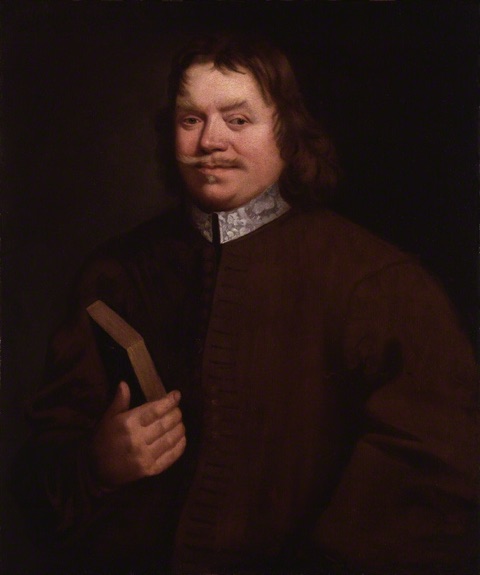
About the author
John Bunyan
John Bunyan (1628 to 1688 AD) was a tinker's son from Elstow, near Bedford, who spent twelve years in Bedford jail from 1660 for his preaching. Light for Them That Sit in Darkness came a few years after his release, while he was pastor of the Bedford congregation. He died in London in 1688.