New: 105 audiobooks, 866 hours of narration, many never recorded before.
Philosophy books
On Benefits

Modern English edition · 62 AD

On Benefits

by Seneca

Discover the ancient Roman art of giving and receiving gracefully in this fresh translation of Seneca's masterwork on social relationships and gratitude. From handling awkward gifts to building lasting friendships, this timeless guide reveals how the exchange of favors and kindnesses can transform your relationships and enrich your life.

Read a free sample

About this book

Seneca's "On Benefits" (De Beneficiis) stands as one of antiquity's most comprehensive examinations of gratitude, gift-giving, and social relationships. Written around 62 AD, this philosophical work explores not just the mechanics of giving and receiving, but the deeper moral and social implications of benefits and obligations in human society.

Throughout the work's seven books, Seneca examines what constitutes a true benefit, arguing that the intention behind a gift matters more than the gift itself. He emphasizes that a benefit is not merely the thing given, but the benevolent intention of the giver. This distinction becomes crucial as he explores how benefits create social bonds and moral obligations between people.

Seneca devotes considerable attention to the proper way of giving benefits. He argues that gifts should be given with careful consideration of the recipient's needs and character, not merely their social status or potential for reciprocation. The timing, manner, and discretion of giving are all crucial elements that determine whether a benefit truly serves its purpose of creating genuine social bonds.

The philosopher also explores the complexities of receiving benefits, arguing that accepting gifts graciously is as important as giving them properly. He criticizes those who receive benefits grudgingly or who immediately seek to discharge their obligation, arguing that true gratitude involves maintaining a lasting appreciation for both the gift and the giver's goodwill.

A significant portion of the work addresses the problem of ingratitude, which Seneca considers one of society's greatest vices. He examines various forms of ingratitude, from simple forgetfulness to active denial of benefits received, and explores why people often fail to appreciate or acknowledge the good done to them.

The enduring relevance of "On Benefits" lies in its deep understanding of human nature and social relationships. Its insights into gratitude, generosity, and social obligation continue to resonate in modern discussions of gift-giving, social reciprocity, and moral psychology.

Book 1

1. Among the many faults of those who live recklessly and without thinking, my good friend Liberalis, I would say that there's hardly any fault more harmful to society than this: we neither know how to give nor how to receive a benefit. This leads to benefits being poorly invested and becoming bad debts. In these cases, it's too late to complain about them not being returned because they were wasted when we gave them. It's no surprise that while the greatest vices are common, none is more common than ingratitude.

I see this is caused by various reasons. The first is that we don't choose worthy people to give our help to. Although when we are about to lend money, we first carefully check the means and habits of our debtor and avoid sowing seed in worn-out or unfruitful soil, yet we scatter our benefits randomly rather than bestow them thoughtfully.

It's hard to say whether it's more dishonorable for the receiver to deny a benefit or for the giver to demand it back. A benefit is a loan, the repayment of which depends merely on the good feeling of the debtor. To misuse a benefit like a spendthrift is most shameful because we don't need our wealth but only our intention to free us from the obligation of it; for a benefit is repaid by being acknowledged.

Yet while those who don't even show enough gratitude to acknowledge their debt are to blame, we ourselves are no less to blame. We find many people ungrateful, yet we make more people so because sometimes we harshly and reproachfully demand something in return for our help, other times we are fickle and regret what we have given, and other times we are peevish and quick to find fault with small things.

By acting this way, we destroy all sense of gratitude, not only after we have given something but while we are in the act of giving it. Who has ever thought it enough to be asked for something in an off-hand manner or to be asked only once? Who, when suspecting they were going to be asked for something, hasn't frowned, turned away their face, pretended to be busy, or purposely talked without stopping to avoid giving their friend a chance to ask for help, and avoided by various tricks having to help their friend in need?

And when cornered, hasn't either put the matter off, which is a cowardly refusal, or promised help ungraciously, with a wry face, and with unkind words they seemed to grudge saying? Yet no one is glad to owe what they haven't so much received from their benefactor as wrung out of them.

Who can be grateful for what has been disdainfully thrown to them, or angrily cast at them, or given out of weariness to avoid further trouble? No one should expect any return from those they have tired out with delays or sickened with expectation. A benefit is received in the same spirit in which it is given and shouldn't, therefore, be given carelessly, for a person thanks themselves for what they receive without the giver's knowledge.

Neither should we give after long delay because in all good deeds the will of the giver counts for much, and someone who gives tardily must have long been unwilling to give at all. Nor, certainly, should we give in an offensive manner because human nature is such that insults sink deeper than kindnesses; the memory of the latter soon fades, while that of the former is treasured in memory.
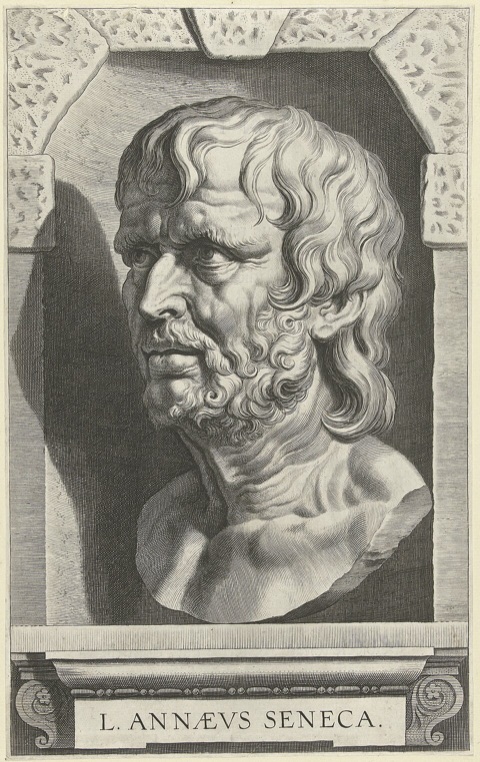
Portrait of Seneca

About the author

Seneca

Lucius Annaeus Seneca, known as Seneca the Younger, was a Roman Stoic philosopher, statesman, and dramatist who served as tutor and later advisor to Emperor Nero. His philosophical works, including "Letters to Lucilius" and essays like "On Benefits" and "On the Shortness of Life," present Stoic philosophy in an accessible, practical manner. Seneca addressed everyday challenges like anger, grief, and the proper use of time, offering wisdom that remains remarkably relevant today. Despite his philosophical teachings on simplicity and virtue, Seneca accumulated great wealth, a tension that critics noted even in his lifetime. He was eventually forced to commit suicide by Nero, meeting his death with the composure his philosophy prescribed. His writings continue to influence those seeking practical wisdom for living well.