Modernized edition · Full text · Free PDF/EPUB
Christian Leaders of the Eighteenth Century in Modern English
Summary
- Published
- 1869 AD, as The Christian Leaders of the Last Century; or, England a Hundred Years Ago
- Type
- Church history and collective biography
- Length
- 142,000 words · 9 hours
- Collection
- Christian Living
What is Christian Leaders of the Eighteenth Century about?
Christian Leaders of the Eighteenth Century is J.C. Ryle's history of the evangelical revival in England, published in 1869. After describing the country's spiritual darkness around 1750, Ryle tells the lives, preaching and character of eleven Church of England clergymen, from Whitefield and Wesley to Fletcher, and draws lessons for his own day.
Read the full summary (9 points, quotes, key themes)Show less
How the argument unfolds
- 01
England a hundred years ago. From 1700 to the French Revolution, church and chapel slept, unbelief spread, and vice was fashionable in every rank.
- 02
The agency of revival. The change came through a few men preaching a definite gospel everywhere, plainly and fervently.
- 03
George Whitefield. The innkeeper's son who took the gospel into the fields in 1739 and preached for thirty-one years on both sides of the Atlantic.
- 04
John Wesley. The Fellow of Lincoln who found peace after Georgia and spent fifty-three years preaching and organizing.
- 05
Grimshaw and Romaine. One worked the Yorkshire moors from Haworth; the other held London pulpits against fierce opposition until he settled at Blackfriars.
- 06
Rowlands and Berridge. The Welsh curate whose license was revoked at the pulpit steps, and the eccentric Vicar of Everton who burned his moral sermons.
- 07
Henry Venn. Twelve crowded years at Huddersfield, then quiet usefulness at Yelling through letters and counsel.
- 08
Four lesser leaders. Walker of Truro, Hervey the writer, Toplady the hymn writer, and Fletcher of Madeley.
- 09
Conclusion. The same doctrine and the same kind of men, Ryle argues, are what his own age needs.
Notable images & quotes
- The colliers' tears. At Kingswood the miners' awakening first showed in “the white gutters made by their tears, which plentifully fell down their black cheeks as they came out of their coal pits.”
- Cavalry, infantry and artillery. Whitefield and Wesley were cavalry and Grimshaw an infantryman, while Romaine was “a commander of heavy artillery who held a fortress in the heart of a metropolis and seldom stirred beyond his walls.”
- The rained-off races. Unable to stop the drunken Haworth races, Grimshaw prayed, and rain fell for three days, until it was said that “old Grimshaw put a stop to the races by his prayers.”
- The walking-staff and the crutch. Berridge on his early trust in Christ: “I used him as a healthy man will use a walking-staff: lean an ounce upon it, and flourish it in the air.”
- The empty streets of Truro. Walker drew such crowds that “you might fire a cannon down every street of Truro in church time, without a chance of killing a single human being.”
Key themes
- Preaching as the weapon. The revival was carried by sermons in churches, barns, fields and marketplaces, in language the poor could follow.
- A Church asleep and her irregular sons. Ryle loves the Church of England yet exposes the bishops and clergy who resisted these men: “Left to herself, the Church of England would probably have died of dignity and sunk at her anchors.”
- Many gifts, one cause. Orator, organizer, scholar, writer and pastor each served in his own sphere, and none could have been spared.
- Dying as they lived. Nearly every chapter closes with a deathbed, offered as proof that the doctrines held firm at the end.
Why read it today
Read it for the scenes: Whitefield's candle burning to the socket, Rowlands breaking up a cockfight, Berridge facing his bishop, Venn teaching a frightened boy to sit in the dark.
It is a study of effective preaching. Ryle keeps asking why these men were heard by miners and noblemen alike, and why their printed sermons often read so flatly.
It is also a call to the ministers of Ryle's day, whom he measures against these men without sparing himself.
Source edition: Ryle's Preface and all fourteen chapters, in modern English
Reader questions (9)Hide the questions
Questions about Christian Leaders of the Eighteenth Century
Is there a modern English version of Christian Leaders of the Eighteenth Century?
Yes. This is Christian Leaders of the Eighteenth Century by J.C. Ryle in modern English. The language is modernized and the author's order and argument are kept. The full modernized text is free to read on this page.
Can I read Christian Leaders of the Eighteenth Century online for free?
Yes. The complete text of this modern English edition is on this page, with no sign-up or paywall.
Is there a free PDF of Christian Leaders of the Eighteenth Century?
Yes. The PDF and EPUB of this edition are free with an Updated Works account. Sign in with Google or an email link; no card is needed.
What is Christian Leaders of the Eighteenth Century by J.C. Ryle about?
It tells how England was awakened from religious and moral sleep in the eighteenth century. Ryle names the men God used, describes what they taught, and tells the story of eleven of them in turn.
When was the book written?
Ryle wrote ten of the biographies for The Family Treasury in 1866 and 1867; the Whitefield chapter grew out of a London lecture of 1852. He signed the Preface in August 1868, and the volume appeared in 1869.
How did Ryle choose and rank his eleven subjects?
He ranks Whitefield first and Wesley second, places Grimshaw, Romaine, Rowlands, Berridge and Venn with them in the first rank, and presents Walker, Hervey, Toplady and Fletcher as men of lesser public gifts. He admits his bias: “I am a thorough enthusiast about them.”
Did these men leave the Church of England?
No. All eleven were ordained clergymen of the Church of England. Whitefield and Wesley held no living and never formally separated. Rowlands alone was put out, when his bishop revoked his license in 1763.
What doctrines did the revival preachers teach?
Ryle lists seven heads: the supremacy of Scripture, human corruption, Christ's death as the only satisfaction for sin, justification by faith, the new birth, the link between faith and holiness, and God's hatred of sin with his love for sinners.
Does Ryle criticize any of the men he admires?
Yes. He faults Whitefield's hasty judgments, regrets Wesley's teaching on perfection, calls Berridge's quaintness a warning, finds Hervey's prose overdressed, and condemns Toplady's bitterness in controversy.
Christian Leaders of the Eighteenth Century in Modern English · Full text
Preface
The volume now in the reader’s hands requires a few prefatory sentences of explanation. I would be sorry if there were any mistake about its nature and intention.
It consists of a series of biographical papers contributed to a well-known and valuable monthly periodical, The Family Treasury, during 1866 and 1867. My aim in writing these papers was to bring before the public in a comprehensive form the lives, characters, and work of the leading ministers through whom God was pleased to revive Christianity in England a hundred years ago. I had long felt that these great men were not well enough known, and that their merit was therefore not adequately recognized. I thought the Church and the world ought to know far more than they seem to know about men such as Whitefield, Wesley, Romaine, Rowlands, Grimshaw, Berridge, Venn, Toplady, Hervey, Walker, and Fletcher.
For twenty years I waited anxiously for some worthy account of these mighty spiritual heroes. At last I grew weary of waiting, resolved to take up the pen myself, and did what I could in the pages of a periodical. In compliance with the wishes of friends, these papers are now brought together in a portable form. How far my attempt has succeeded, I must now leave the public to judge.
This volume makes no claim to literary merit. Its chapters were written from month to month in the midst of many ministerial engagements, under a pressure that no one can understand except those who write for periodicals. To expect such a volume to be a model of polished composition would be absurd. I claim only a reasonable degree of accuracy in historical facts. I have been careful to make no statement for which I could not find solid authority.
The reader will soon see that I am an enthusiastic admirer of the men whose portraits I have sketched in this volume. I confess it honestly. I am a thorough enthusiast about them. I firmly believe that, except for Luther and his Continental contemporaries and our own martyred Reformers, the world has seen no such men since the days of the apostles. I believe no others have preached so much clear scriptural truth, lived such lives, shown such courage in Christ’s service, suffered so much for the truth, or done so much good. If anyone can name better men, he knows more than I do.
I now send this volume out with an earnest prayer that God may pardon all its defects, use it for his own glory, and raise up in his Church men like those described here. Surely, when we look at the state of England, we may well say, “Where is the Lord God of Whitefield and of Rowlands, of Grimshaw and of Venn? O Lord, revive thy work!”
J. C. Ryle
Stradbroke Vicarage, August 10, 1868
Postscript: I think it right to add that the main substance of the biography of Whitefield in this volume was originally delivered as a lecture in London in 1852. It now appears remolded and enlarged. The other ten biographies were written expressly for The Family Treasury.
Chapter 1
The Religious and Moral Condition of England
The subject I propose to handle in this volume is partly historical and partly biographical. If any reader expects from the title a work of fiction, or something drawn partly from my imagination, I fear he will be disappointed. That kind of writing is not my field, and I would have no leisure for it even if it were. Facts, plain facts, and the stern realities of life absorb all the time I can spare for the press.
I trust, however, that with most readers my chosen subject needs no apology. A man who feels no interest in the history and biography of his own country is surely a poor patriot and a worse philosopher.
“Patriot” he cannot be called. True patriotism makes an Englishman care for everything that concerns England. A true patriot wants to know something about everyone who has left his mark on English character, from the Venerable Bede down to Hugh Stowell, and from Alfred the Great down to Pounds, the founder of Ragged Schools.
“Philosopher” he certainly is not. What is philosophy except history teaching by examples? Knowing the steps by which England has reached her present position is essential to understanding both our national privileges and our national dangers. Knowing the men whom God raised up to do his work in days gone by will guide us as we look for standard-bearers in our own day and in the days to come.
I venture to think that no period of English history is so thoroughly instructive to a Christian as the middle of the eighteenth century. We are still feeling its influence today. It is the period with which our grandfathers and great-grandfathers were directly connected. Not least, it is a period from which we can draw the most useful lessons for our own times. Let me begin by trying to describe the actual condition of England a hundred years ago. A few simple facts will make this plain.
The reader should remember that I am not going to speak of our political condition. I could easily tell him that in the days of Sir Robert Walpole, the Duke of Newcastle, and the elder Pitt, England’s position was very different from what it is now. We had great statesmen and orators, no doubt. Yet our standing among the nations of the earth was comparatively poor, weak, and low. Our voice among the nations carried far less weight than it has since gained.
The foundation of our Indian Empire had hardly been laid. Our Australian possessions were a part of the world only just discovered, not yet colonized. At home, a strong party in the country still longed for the restoration of the Stuarts. In 1745 the Pretender and a Highland army marched from Scotland to invade England and got as far as Derby. Corruption, self-dealing, and mismanagement in high places were the rule, and integrity was the exception. Civil and religious disabilities still abounded, and the Test and Corporation Acts remained unrepealed. To be a Dissenter was to be regarded as only one step better than being seditious and a rebel. Rotten boroughs flourished. Bribery among all classes was open, shameless, and widespread. Such was England politically a hundred years ago.
The reader should also remember that I am not going to speak of our condition from a financial and economic point of view. Our vast cotton, silk, and linen industries had hardly begun to exist. Our enormous mineral treasures of coal and iron were scarcely touched. We had no steamboats, no locomotive engines, no railways, no gas, no electric telegraph, no penny post, no scientific farming, no macadamized roads, no free trade, no sanitary arrangements, and no police deserving the name. Let any Englishman imagine, if he can, his country without any of the things I have just mentioned. Then he will have some faint idea of the economic and financial condition of England a hundred years ago.
I leave these things to the political economists and historians of this world. Interesting as they certainly are, they form no part of the subject I want to examine. I wish to treat this subject as a minister of Christ’s gospel. I shall confine my attention to the religious and moral condition of England a hundred years ago. That is the point to which I want to direct the reader’s eye.
The religious and moral state of this country in the middle of the eighteenth century was so painfully unsatisfactory that it is hard to convey an adequate idea of it. English people today who have never looked into the subject can have no conception of the darkness that prevailed. From 1700 until about the era of the French Revolution, England seemed barren of everything truly good.
How such a state of affairs could have arisen in a land of open Bibles and professed Protestantism is almost beyond comprehension. Christianity seemed to lie like one dead, so much so that you might have said, “She is dead.” Morality, however much praised in pulpits, was thoroughly trampled underfoot in the streets. There was darkness in high places and darkness in low places. There was darkness in the court, the military camp, Parliament, and the legal bar. There was darkness in country and town, among rich and poor alike. It was a gross, thick religious and moral darkness, a darkness that could be felt.
Does anyone ask what the churches were doing a hundred years ago? The answer is quickly given. The Church of England existed in those days with her admirable Articles, her time-honored liturgy, her parish system, her Sunday services, and her ten thousand clergy. The Nonconformist body also existed, with its hard-won liberty and its free pulpit. Unhappily, however, the same report must be given of both groups. They existed, yet they could hardly be said to live. They did nothing; they were sound asleep.
The curse of the Act of Uniformity seemed to rest on the Church of England. The blight of ease and freedom from persecution seemed to rest upon the Dissenters. Natural theology without a single distinctive doctrine of Christianity, cold morality, or barren orthodoxy formed the staple teaching in both church and chapel. Sermons everywhere were little better than miserable moral essays, utterly empty of anything likely to awaken, convert, or save souls. Both sides seemed agreed at last on one point: to leave the devil alone and do nothing for hearts and souls. As for the weighty truths for which Hooper and Latimer had gone to the stake, and for which Baxter and scores of Puritans had gone to jail, they seemed completely forgotten and laid on the shelf.
With such a state of things in churches and chapels, it can surprise no one to learn that the land was flooded with unbelief and skepticism. The prince of this world made good use of his opportunity. His agents were active and zealous in spreading every kind of strange and blasphemous opinion. Collins and Tindal denounced Christianity as priestcraft. Whiston declared the miracles of the Bible to be grand frauds. Woolston claimed they were mere allegories. Arianism and Socinianism were openly taught by Clarke and Priestley and became fashionable among the intellectual classes.
One single fact shows the utter inability of the pulpit to stem this flood of evil. Early in the reign of George III, the celebrated lawyer Blackstone had the curiosity to go from church to church and hear every clergyman of note in London. He said he did not hear a single sermon with more Christianity in it than the writings of Cicero. From what he heard, he added, it would have been impossible to tell whether the preacher was a follower of Confucius, Muhammad, or Christ!
Evidence on this painful subject is, unhappily, only too abundant. My difficulty is not finding witnesses, but choosing among them. This was the period when Archbishop Secker said in one of his charges, “In this we cannot be mistaken, that an open and professed disregard of religion has become, through a variety of unhappy causes, the distinguishing character of the age. Such are the dissoluteness and contempt of principle in the higher part of the world, and the profligacy, intemperance, and fearlessness of committing crimes in the lower part, as must, if the torrent of impiety does not stop, become absolutely fatal. Christianity is ridiculed and railed at with very little reserve, and the teachers of it without any at all.”
This was also the period when Bishop Butler, in his preface to the Analogy, used these remarkable words: “It has come to be taken for granted that Christianity is no longer a subject of inquiry, but that it is now at length discovered to be fictitious. And accordingly it is treated as if, in the present age, this were an agreed point among all persons of discernment, and nothing remained but to set it up as a principal subject for mirth and ridicule.”
Nor were such complaints confined to Churchmen. Dr. Watts declared that in his day “there was a general decay of vital religion in the hearts and lives of men, and that it was a general matter of mournful observation among all who lay the cause of God to heart.” Dr. Guyse, another most respectable Nonconformist, said, “The religion of nature makes up the darling topic of our age; and the religion of Jesus is valued only for the sake of that, and only so far as it carries on the light of nature, and is a bare improvement of that kind of light. All that is distinctively Christian, or that is unique to Christ, everything concerning him that has not its apparent foundation in natural light, or that goes beyond its principles, is waived, and banished, and despised.”
Testimony like this could easily be multiplied tenfold, but I will spare the reader. Enough has surely been brought forward to prove that I am not exaggerating when I call the moral and religious condition of England at the beginning of the eighteenth century painfully unsatisfactory.
What were the bishops of those days like? Some of them were undoubtedly men of powerful intellect, learning, and blameless lives. Yet even the best of them, like Secker, Butler, Gibson, Lowth, and Horne, seemed unable to do more than lament evils they saw clearly but did not know how to remedy. Others, like Lavington and Warburton, thundered fierce charges against religious extremism and fanaticism, and seemed afraid that England might become too religious!
The majority of the bishops, to tell the truth, were mere men of the world, unfit for their office. The prevailing tone of the Episcopal bench may be judged from one fact: Archbishop Cornwallis hosted balls and lavish evening parties at Lambeth Palace until the king himself intervened by letter and asked him to stop.
The king’s letter on that occasion is so remarkable that I will give it in full, as I find it in that interesting though poorly arranged book, The Life and Times of Lady Huntingdon. The letter was evidently written following an interview Lady Huntingdon had with the king. A careful reader will remember that the king was probably more familiar with German than with English:
“My Good Lord Prelate, I could not delay giving you the notification of the grief and concern with which my breast was affected at receiving authentic information that lavish parties have made their way into your palace. At the same time, I must signify to you my sentiments on this subject, which hold these levities and vain dissipations as utterly inexpedient, if not unlawful, to pass in a residence for many centuries devoted to divine studies, religious retirement, and the extensive exercise of charity and benevolence. I add, in a place where so many of your predecessors have led their lives in such sanctity as has thrown luster on the pure religion they professed and adorned. From the dissatisfaction with which you must perceive I behold these improprieties, not to speak in harsher terms, and on still more pious principles, I trust you will suppress them immediately, so that I may not have occasion to show any further marks of my displeasure, or to interpose in a different manner. May God take your grace into his almighty protection! I remain, my Lord Primate, your gracious friend, G. R.”
Let me also add another telling detail. When the occupants of the Episcopal bench were alarmed by the rapid spread of Whitefield’s influence, it was seriously suggested in high quarters that the best way to stop his influence was to make him a bishop.
What were the parish clergy of those days like? The vast majority of them were sunk in worldliness and neither knew nor cared anything about their calling. They neither did good themselves nor wanted anyone else to do it for them. They hunted, shot, farmed, swore, drank, and gambled. They seemed determined to know everything except Jesus Christ and him crucified.
When they gathered together, it was usually to toast “Church and King” and to encourage one another in earthly-mindedness, prejudice, ignorance, and empty formality. When they returned to their own homes, it was to do as little and preach as seldom as possible. And when they did preach, their sermons were so unspeakably and indescribably bad that it is comforting to reflect that they were usually delivered to empty benches.
What kind of theological literature did a hundred years ago leave behind for us? The poorest and weakest in the English language. That is the age to which we owe such theology as The Whole Duty of Man and the sermons of Tillotson and Blair. Ask at any secondhand bookstore, and you will find that no theology is so unsalable as the sermons published in the middle and latter part of the eighteenth century.
What kind of education did the lower classes have a hundred years ago? In most parishes, and especially in rural districts, they had no education at all. Nearly all our rural schools have been built since 1800. So extreme was the ignorance that a Methodist preacher in Somersetshire was brought before the magistrates on a charge of swearing, because in preaching he quoted the text, “He that believeth not shall be damned!” Not to be outdone by Somersetshire, Yorkshire produced a constable who hauled Charles Wesley before the magistrates as a supporter of the Pretender, because in public prayer he asked the Lord to “bring back his banished ones!”
To cap it all, the vice-chancellor of Oxford actually expelled six students from the university because “they held Methodistic tenets, and took on them to pray, read, and expound Scripture in private houses.” To swear extemporaneously, some remarked, got an Oxford student into no trouble at all. To pray extemporaneously was an offense not to be tolerated!
What were the morals of a hundred years ago? It is enough to say that dueling, adultery, fornication, gambling, swearing, Sabbath-breaking, and drunkenness were hardly regarded as vices at all. They were the fashionable practices of people in the highest ranks of society, and no one was thought any the worse for indulging in them. The best evidence on this point can be found in Hogarth’s paintings and prints.
What was the popular literature of a hundred years ago? I pass over the fact that Bolingbroke, Gibbon, and Hume the historian were all deeply steeped in skepticism. I am speaking of the light reading that was most in fashion. Turn to the pages of Fielding, Smollett, Swift, and Sterne, and you have the answer. The cleverness of these writers is undeniable. Yet the indecency of much of their writing is so glaring and coarse that few people nowadays would allow their works to be seen on a living-room table.
My picture, I fear, is a very dark and gloomy one. I wish it were in my power to throw a little more light into it. But facts are stubborn things, especially facts about literature. The best literature of a hundred years ago is found in the moral essays of Addison, Johnson, and Steele. Yet the effect of such writing on the general public, it may be feared, was infinitesimally small. In fact, I believe Johnson and the essayists had no more impact on the religion and morality of the masses than the broom of the famous Mrs. Partington had on the waves of the Atlantic Ocean.
To sum up and bring this part of my subject to a close, I ask my readers to remember that the good works familiar to everyone today did not exist a hundred years ago. Wilberforce had not yet attacked the slave trade. Howard had not yet reformed prisons. Raikes had not yet founded Sunday schools. We had no Bible societies, no ragged schools, no city missions, no pastoral aid societies, and no missions to the heathen. A spirit of slumber hung over the land. From a religious and moral point of view, England was sound asleep.
As I bring this chapter to a conclusion, I cannot help remarking that we ought to be more thankful for the times in which we live. I fear we are far too quick to look at the evils around us and forget how much worse things were a hundred years ago. For my part, I have no faith in those “good old times” some people delight to talk about, and I say so boldly. I regard them as a pure fable and a myth. I believe our own times are the best times England has ever seen.
I do not say this boastfully. I know we have many things to lament. Still, I do say that we could be worse, and I do say that we were much worse a hundred years ago. The general standard of religion and morality is undoubtedly far higher. At the very least, in 1868 we are awake. We see and feel evils to which people were oblivious a hundred years ago. We struggle to break free from these evils, and we long to do better.
That is a vast improvement. With all our many faults, we are not sound asleep. On every side there is stir, activity, movement, and progress rather than stagnation. Bad as we are, we confess our sinfulness; weak as we are, we acknowledge our failings; feeble as our efforts are, we strive to improve; little as we do for Christ, we do try to do something. Let us thank God for this! Things could be worse. When we compare our own days with the middle of the eighteenth century, we have reason to thank God and take courage. England is in a better state than it was a hundred years ago.
Chapter 2
The Agency by Which Christianity Was Revived
That a great change for the better has come over England in the last hundred years is a fact I suppose no well-informed person would ever try to deny. You might as well deny that there was a Protestant Reformation in the days of Luther, a Long Parliament in the time of Cromwell, or a French republic at the end of the eighteenth century. There has been a vast change for the better. In both religion and morality, the country has undergone a complete revolution. People neither think, talk, nor act as they did in 1750. It is a massive fact that the children of this world cannot deny, however they may try to explain it. They might as well try to persuade us that high tide and low tide at London Bridge are the same thing.
By what agency, then, was this great change brought about? To whom do we owe the immense improvement in religion and morality that has undeniably come over the land? Who, in short, were the instruments God used to bring about the great English Reformation of the eighteenth century? This is the one question I want to examine in general terms in the present chapter. I shall reserve the names and biographies of the chief agents for later chapters.
The government of the country can claim no credit for the change. Morality cannot be called into being by penal laws and statutes. People have never yet been made religious by Acts of Parliament. In any case, the Parliaments and administrations of the eighteenth century did as little for religion and morality as any that ever existed in England.
Nor did the change come from the Church of England as a body. The leaders of that venerable communion were completely unequal to the times. Left to herself, the Church of England would probably have died of dignity and sunk at her anchors.
Nor did the change come from the Dissenters. Content with their hard-won triumphs, that worthy body of men seemed to rest on their oars. In the full enjoyment of their rights of conscience, they forgot the great vital principles of their forefathers along with their own duties and responsibilities.
Who, then, were the reformers of the eighteenth century? To whom are we indebted, under God, for the change that took place?
The men who brought deliverance for us a hundred years ago were a handful of individuals, most of them clergymen of the Established Church, whose hearts God touched around the same time in different parts of the country. They were neither wealthy nor highly connected. They had no money to buy followers and no family influence to command attention and respect. No Church, party, society, or institution put them forward. They were simply men whom God stirred up and sent out to do his work, without prior coordination, scheme, or plan.
They did his work in the old apostolic way, by becoming the evangelists of their day. They taught one set of truths. They taught them in the same way: with fire, reality, and earnestness, as men wholly convinced of what they declared. They taught them in the same spirit: always loving, compassionate, and like Paul even weeping, yet always bold, unflinching, and unafraid of any human face. And they taught them on the same plan, always taking the offensive. They did not wait for sinners to come to them, but went out looking for sinners. They did not sit idle until sinners offered to repent, but assaulted the strongholds of ungodliness like soldiers storming a breach, giving sinners no rest so long as they clung to their sins.
The movement of these brave evangelists shook England from one end to the other. At first, people in high places pretended to despise them. Literary men sneered at them as fanatics, and wits cracked jokes and invented clever nicknames for them. The Church shut her doors on them, the Dissenters gave them the cold shoulder, and the ignorant mob persecuted them.
Yet the movement of these few evangelists pressed on and made itself felt in every corner of the land. Many were aroused and awakened to think about religion. Many were shamed out of their sins, while others were restrained and alarmed at their own ungodliness. Many were gathered together and led to profess a decided, wholehearted faith. Many were truly converted. Even many who claimed to dislike the movement were secretly stirred to follow its example.
The little sapling grew into a strong tree. The little stream widened into a deep, broad river. The little spark became a steady, burning flame. A candle was lit whose light we still enjoy today. The outlook of every class in the land toward religion and morality gradually took on a totally different character. And all this, under God, was accomplished by a few unsponsored, unpaid pioneers! When God takes a work in hand, nothing can stop it. When God is for us, no one can stand against us.
The means by which the spiritual reformers of the eighteenth century carried on their work was of the simplest kind. It was neither more nor less than the old apostolic weapon of preaching. The sword the Apostle Paul wielded with such mighty effect when he assaulted the strongholds of paganism eighteen hundred years ago was the same sword by which they won their victories.
To say, as some have claimed, that they neglected education and schools is completely false. Wherever they gathered congregations, they cared for the children. To say, as others have claimed, that they neglected the sacraments is equally false. Anyone who makes that charge only exposes his complete ignorance of English religious history a hundred years ago. I could easily name leading reformers of that century whose communicants were numbered by the hundreds, and who honored the Lord’s Supper more than forty-nine out of fifty clergymen of their day.
Beyond all doubt, however, preaching was their favorite weapon. They wisely returned to first principles and took up apostolic methods. With Paul, they held that a minister’s primary task is “to preach the gospel.”
They preached everywhere. If the pulpit of a parish church was open to them, they gladly used it. If it could not be had, they were just as ready to preach in a barn. No place was unsuitable to them. In a field or by the roadside, on a village green or in a marketplace, in lanes or alleys, in cellars or attics, standing on a tub, a table, a bench, or a mounting block, wherever hearers could be gathered, the spiritual reformers of the eighteenth century were ready to speak to them about their souls. They were ready in season and out of season to do the fisherman’s work, and they crossed sea and land to carry on their Father’s business. All this was something new. Can we wonder that it produced such a powerful effect?
They preached simply. They rightly judged that the very first quality to aim for in a sermon is to be understood. They saw clearly that thousands of able, well-crafted sermons are completely useless because they fly over the heads of the listeners. They worked hard to come down to the level of ordinary people and speak in language the poor could grasp.
To achieve this, they were not ashamed to crucify their style and sacrifice their reputation for scholarship. They used illustrations and anecdotes in abundance, and like their divine Master, drew lessons from every object in nature. They practiced Augustine’s maxim: “A wooden key is not so beautiful as a golden one, but if it can open the door when the golden one cannot, it is far more useful.” They revived the style of preaching in which Luther and Latimer had been so remarkably effective. In short, they recognized the truth of what the great German Reformer meant when he said, “No one can be a good preacher to the people who is not willing to preach in a manner that seems childish and vulgar to some.” Once again, all this was quite new a hundred years ago.
They preached fervently and directly. They threw aside that dull, cold, heavy, lifeless delivery that had long made sermons a byword for boredom. They proclaimed the words of faith with faith, and the story of life with life. They spoke with fiery zeal, like men thoroughly convinced that what they said was true and of supreme importance to your eternal welfare.
They spoke like men who had a message from God to you, who had to deliver it, and who insisted on your attention while they did. They poured heart, soul, and feeling into their sermons, sending their listeners home convinced at the very least that the preacher was sincere and wished them well. They believed you must speak from the heart if you want to speak to the heart, and that unmistakable faith and conviction must live in the pulpit if faith and conviction are to grow in the pews. All this, I repeat, had become nearly obsolete a hundred years ago. Can we wonder that it took people by storm and produced an immense effect?
What, though, was the substance and subject matter of the preaching that produced such astonishing results a hundred years ago? I will not insult my readers’ common sense by merely saying that it was “simple, earnest, fervent, real, genial, brave, lifelike,” and so on. I want it clearly understood that it was deeply doctrinal, positive, firm, and distinct. Mere earnestness and negative teaching could never have torn down the strongholds of eighteenth-century sin. The trumpets that brought down the walls of Jericho gave no uncertain sound. The English evangelists of the eighteenth century were not men of an uncertain creed. What, then, did they proclaim? A brief summary on this point may prove useful.
First, the spiritual reformers of the eighteenth century constantly taught the sufficiency and supremacy of Holy Scripture. The Bible, whole and unmutilated, was their sole rule of faith and practice. They accepted all its statements without question or dispute. They knew nothing of any part of Scripture being uninspired. They never conceded that human beings possess some inner “verifying faculty” by which Scripture’s statements may be weighed, rejected, or accepted.
They never flinched from asserting that there can be no error in the Word of God, and that whenever we cannot understand or reconcile some part of its contents, the fault lies in the interpreter rather than the text. In all their preaching they were unmistakably men of one book. To that book they were content to pin their faith, and by it to stand or fall. That was one grand hallmark of their preaching: they honored, loved, and revered the Bible.
Second, the reformers of the eighteenth century constantly taught the total corruption of human nature. They knew nothing of the modern notion that Christ is already in everyone, and that all people possess something good within that they only need to stir up and use in order to be saved. They never flattered men and women like that. They told them plainly that they were spiritually dead and had to be made alive again, and that they were guilty, lost, helpless, hopeless, and in immediate danger of eternal ruin. Strange and paradoxical as it may seem to some, their first step toward making people good was to show them they were utterly bad. Their primary argument in urging people to do something for their souls was to convince them that they could do nothing at all.
Third, the reformers of the eighteenth century constantly taught that Christ’s death upon the cross was the only satisfaction for human sin, and that when Christ died, he died as our substitute, “the just for the unjust.” This, in fact, was the central point in almost all their sermons. They never taught the modern doctrine that Christ’s death was merely a great example of self-sacrifice. They saw in it something far higher, greater, and deeper: the payment of humanity’s mighty debt to God. They loved Christ’s person, rejoiced in his promises, and urged people to follow his example. Above all else concerning Christ, however, the one theme they delighted to dwell on was the atoning blood he shed for us on the cross.
Fourth, the reformers of the eighteenth century constantly taught the great doctrine of justification by faith. They told people that faith was the one thing needed to obtain a share in Christ’s work for their souls. Before we believe, they declared, we are dead and have no share in Christ. The moment we do believe, we live and hold a full title to all Christ’s benefits. Justification through church membership, or justification without believing and trusting, were notions they refused to tolerate. Everything if you will believe, and the very moment you believe, and nothing if you do not believe: that was the very marrow of their preaching.
Fifth, the reformers of the eighteenth century constantly taught the universal necessity of heart conversion and a new creation by the Holy Spirit. Everywhere they proclaimed to the crowds before them, “Ye must be born again.” Becoming a child of God merely by baptism, or claiming sonship to God while doing the will of the devil, was a kind of sonship they never accepted. The regeneration they preached was no dormant, sluggish, motionless thing. It was something visible, recognizable, and known by its effects.
Sixth, the reformers of the eighteenth century constantly taught the inseparable connection between true faith and personal holiness. They never allowed for a moment that church membership or religious profession proved anyone to be a true Christian if he lived an ungodly life. A true Christian, they insisted, must always be known by his fruits, and those fruits must be plain and unmistakable in every relationship of life. “No fruits, no grace” was the unvarying note of their preaching.
Finally, the reformers of the eighteenth century constantly taught, as two equally true doctrines, God’s eternal hatred against sin and God’s love toward sinners. They knew nothing of a “love lower than hell,” or of a heaven where the holy and the unholy will all eventually gain admission. About both heaven and hell they used the utmost plainness of speech. They never shrank from declaring in the clearest terms the certainty of God’s judgment and coming wrath if people persisted in impenitence and unbelief. Yet they never stopped magnifying the riches of God’s kindness and compassion, pleading with all sinners to repent and turn to God before it was too late.
Such were the main truths the English evangelists of the eighteenth century constantly preached. These were the core doctrines they always proclaimed, whether in town or country, in church or in the open air, among the rich or among the poor. With these doctrines they turned England upside down, made plowmen and coal miners weep until their dirty faces were streaked with tears, caught the attention of peers and philosophers, stormed the strongholds of Satan, plucked thousands like brands from the burning, and transformed the character of the age.
Call them simple and elementary doctrines if you like. Say, if you please, that you see nothing grand, striking, new, or unusual in this list of truths. Yet one fact remains undeniable: God blessed these very truths to the reformation of England a hundred years ago. What God has blessed, we have no business despising.
Chapter 3
George Whitefield and His Ministry
Part 1: Life and Labors
Who were the men that revived religion in England a hundred years ago? What were their names, so that we may honor them? Where were they born, and how were they educated? What are the leading facts of their lives, and what was their special sphere of labor? To these questions I hope to give some answers in this chapter and those that follow.
I pity anyone who takes no interest in such questions. The instruments God uses to do his work in the world deserve close inspection. Anyone who did not care to look at the rams’ horns that blew down Jericho, the hammer and nail that slew Sisera, the lamps and trumpets of Gideon, or the sling and stone of David might fairly be called cold and heartless. I trust that all who read this volume will be glad to learn about the English evangelists of the eighteenth century.
The first and foremost whom I will name is the well-known George Whitefield. Although he was not the first in order by date of birth, I place him first in order of merit without the least hesitation. Of all the spiritual heroes of a hundred years ago, no one saw as quickly as Whitefield what the times demanded, and no one stepped forward so boldly in the great work of spiritual advance. I would feel I had committed an act of injustice if I placed any name before his.
Whitefield was born in Gloucester in 1714. That venerable county town, his birthplace, is linked with more than one name that should be dear to every lover of Protestant truth. Tyndale, one of the first and ablest translators of the English Bible, was a Gloucestershire man. Hooper, one of the greatest and best of our English Reformers, was Bishop of Gloucester and was burned at the stake for Christ’s truth within sight of his own cathedral during Queen Mary’s reign.
In the next century, Miles Smith, Bishop of Gloucester, was one of the first to protest the Romanizing measures of Laud, who was then Dean of Gloucester. In fact, he carried his Protestant convictions so far that when Laud moved the communion table in the cathedral to the east end and placed it “altar-wise” for the first time in 1616, Bishop Smith was so offended that he refused to set foot inside the cathedral from that day until his death. Places like Gloucester, we need not doubt, possess a rich, lasting inheritance of many prayers. The city where Hooper preached and prayed, and where the zealous Miles Smith protested, was the birthplace of the greatest preacher of the gospel England has ever seen.
Like many other famous men, Whitefield came from humble origins and had no wealthy or noble connections to help him rise in the world. His mother kept the Bell Inn in Gloucester and appears not to have prospered in business. At any rate, she never seems to have been able to do anything for Whitefield’s advancement in life. The inn itself is still standing and is reputed to be the birthplace not only of our greatest English preacher, but also of a well-known English prelate, Henry Phillpotts, Bishop of Exeter.
Whitefield’s early life, by his own account, was anything but religious, though like many boys he had occasional pricks of conscience and sudden spells of devout feeling. Yet habits and general tastes are the only true test of young people’s character. He confesses that he was “addicted to lying, filthy talking, and foolish jesting,” and that he was a “Sabbath-breaker, a theater-goer, a card-player, and a romance-reader.” All this, he says, went on until he was fifteen years old.
Poor as he was, living in Gloucester gave him the advantage of a good education at the city’s Free Grammar School. He attended as a day scholar until he was fifteen. Nothing is known of his progress there. Still, he can hardly have been altogether idle, or he would not have been ready to enter a university later at eighteen. His letters also show an acquaintance with Latin through frequent quotations, a skill rarely gained unless picked up at school. The only known fact from his school days is a remarkable one: even then he stood out for his clear elocution and strong memory, and he was chosen to recite speeches before the Corporation of Gloucester at their annual visitation of the Grammar School.
At the age of fifteen, Whitefield appears to have left school and laid aside Latin and Greek for a time. In all likelihood, his mother’s financial hardship made it necessary for him to help her in the business and earn his own living. He therefore began helping in the daily work of the Bell Inn. “At length,” he says, “I put on my blue apron, washed cups, cleaned rooms, and, in one word, became a professed common drawer for nearly a year and a half.”
That arrangement, however, did not last long. His mother’s business at the Bell failed to prosper, and she eventually retired from it altogether. An old schoolmate revived in Whitefield’s mind the idea of going to Oxford, so he returned to the Grammar School and resumed his studies. Friends stepped forward who used their influence for him at Pembroke College, Oxford, where the Gloucester Grammar School held two scholarships. At last, after several providential circumstances smoothed the way, he entered Oxford as a servitor at Pembroke at the age of eighteen.
Happening to be in Oxford in June 1865, I went to Pembroke College and asked whether anyone knew which rooms Whitefield had occupied while at Oxford. The porter told me that nothing whatever was known about them. The rooms the famous Dr. Johnson occupied at Pembroke are still pointed out, and Johnson left Oxford just before Whitefield arrived.
Whitefield’s time at Oxford was the great turning point of his life. His journal tells us that for two or three years before entering the university he had not been without religious convictions. From the moment he entered Pembroke College, however, those convictions rapidly ripened into decided Christianity. He diligently attended every means of grace within his reach. He spent his free time visiting the city prison, reading to the inmates, and trying to do good.
He became acquainted with the famous John Wesley and his brother Charles, along with a small circle of like-minded young men that included James Hervey, the well-known author of Theron and Aspasio. These were the devoted group to whom the nickname “Methodists” was first applied because of their strict “method” of living. For a time Whitefield seems to have greedily devoured books such as Thomas à Kempis and Castanuza’s Spiritual Combat. He was in danger of becoming a semi-papist, an ascetic, or a mystic, reducing all religion to self-denial.
He writes in his journal, “I always chose the worst sort of food. I fasted twice a week. My clothing was poor. I thought it unbecoming a penitent to have his hair powdered. I wore woolen gloves, a patched gown, and dirty shoes; and though I was convinced that the kingdom of God did not consist in meat and drink, yet I resolutely persisted in these voluntary acts of self-denial, because I found in them great promotion of the spiritual life.”
Out of all this darkness he was gradually delivered, partly through the counsel of one or two experienced Christians and partly through reading books such as Scougal’s Life of God in the Heart of Man, Law’s Serious Call, Baxter’s Call to the Unconverted, Alleine’s Alarm to Unconverted Sinners, and Matthew Henry’s Commentary. “Above all,” he says, “my mind being now more opened and enlarged, I began to read the Holy Scriptures upon my knees, laying aside all other books, and praying over, if possible, every line and word. This proved meat indeed and drink indeed to my soul. I daily received fresh life, light, and power from above. I got more true knowledge from reading the book of God in one month than I could ever have acquired from all the writings of men.”
Once taught to understand the glorious liberty of Christ’s gospel, Whitefield never turned back to asceticism, legalism, mysticism, or strange notions of Christian perfection. The experience gained through bitter spiritual conflict proved priceless to him. Once thoroughly grasped, the doctrines of free grace struck deep roots in his heart and became, as it were, bone of his bone and flesh of his flesh. Of all the little band of Oxford Methodists, no one seems to have gained clear views of Christ’s gospel as early as he did, and no one held them more unwaveringly to the end.
At the early age of twenty-two, Whitefield was ordained to holy orders by Bishop Benson of Gloucester on Trinity Sunday, 1736. His ordination was not of his own seeking. Having heard of Whitefield’s character from Lady Selwyn and others, the bishop sent for him, gave him five guineas to buy books, and offered to ordain him whenever he wished, even though he was only twenty-two. This unexpected offer reached him when he was full of misgivings about his own fitness for the ministry. It cut the knot and brought him to the point of decision. “I began to think,” he says, “that if I held out longer I should fight against God.”
Whitefield preached his first sermon in his native city, at the church of St. Mary-le-Crypt in Gloucester. His own description is the best account that can be given:
“Last Sunday, in the afternoon, I preached my first sermon in the church of St. Mary-le-Crypt, where I was baptized, and also first received the sacrament of the Lord’s Supper. Curiosity, as you may easily guess, drew a large congregation together upon this occasion. The sight at first a little awed me. But I was comforted with a heartfelt sense of the divine presence, and soon found the unspeakable advantage of having been accustomed to public speaking when a boy at school, and of exhorting the prisoners and poor people at their private houses while at the university. By these means I was kept from being daunted too much. As I proceeded I perceived the fire kindled, till at last, though so young and amidst a crowd of those who knew me in my childish days, I trust I was enabled to speak with some degree of gospel authority. Some few mocked, but most seemed for the present struck; and I have since heard that a complaint was made to the bishop that I drove fifteen mad the first sermon! The worthy prelate wished that the madness might not be forgotten before next Sunday.”
Almost immediately after his ordination, Whitefield returned to Oxford and took his Bachelor of Arts degree. He then began his regular ministerial work by taking temporary duty for two months at the Tower Chapel in London. While serving there, he preached constantly in many London churches, including the parish churches of Islington, Bishopsgate, St. Dunstan’s, St. Margaret’s in Westminster, and Bow in Cheapside.
From the very first, he attained a popularity that probably no preacher before or since has ever matched. Whether on weekdays or Sundays, wherever he preached, the churches were packed and an immense stir followed. The plain truth is that a genuinely eloquent extemporaneous preacher, proclaiming the pure gospel with extraordinary gifts of voice and manner, was a complete novelty in London at that time. Congregations were taken by surprise and swept off their feet.
From London he moved for two months to Dummer, a small rural parish in Hampshire near Basingstoke. That was a completely new sphere of work, and at first he felt like a man buried alive among poor, illiterate people. Yet he soon grew reconciled to it, and afterward believed he had gained great benefit from talking with the poor.
From Dummer he accepted an invitation, strongly urged upon him by the Wesleys, to visit the colony of Georgia in North America and help care for an Orphan House established near Savannah for the children of colonists. After preaching for a few months in Gloucestershire, especially at Bristol and Stonehouse, he sailed for America late in 1737 and stayed there about a year. It is worth noting that the affairs of this Orphan House occupied much of his attention from that time until his death. Well-meant as it was, it seems to have been a project of very questionable wisdom, and it certainly brought Whitefield a world of anxiety and responsibility to the end of his days.
Whitefield returned from Georgia late in 1738, partly to receive priest’s orders from his old friend Bishop Benson and partly on business for the Orphan House. He soon discovered, however, that his standing was no longer what it had been before he sailed for Georgia. Most of the clergy were no longer friendly toward him, viewing him with suspicion as a religious extremist and a fanatic. They were especially scandalized by his preaching regeneration, or the new birth, as something many baptized people desperately needed!
The number of pulpits open to him shrank rapidly. Churchwardens who had no eyes for drunkenness and immorality were filled with fierce indignation over what they called “breaches of order.” Bishops who could tolerate Arianism, Socinianism, and Deism grew outraged at a man who plainly declared the atonement of Christ and the work of the Holy Spirit, and they began to denounce him openly. In short, from this point in his life, Whitefield’s room for usefulness within the Church of England narrowed rapidly on every side.
The decisive step that changed the entire course of Whitefield’s ministry was his adoption of open-air preaching. Seeing that thousands everywhere attended no place of worship, spent their Sundays in idleness or sin, and could never be reached by sermons inside church walls, he resolved in a spirit of holy boldness to go out after them “into the highways and hedges,” on his Master’s principle, and “compel them to come in.”
His first attempt took place among the coal miners at Kingswood near Bristol in February 1739. After much prayer, he went one day to Hannam Mount, stood on a hill, and began preaching to about a hundred miners on Matthew 5:1-3. Word soon spread. The number of listeners swelled rapidly until the crowd reached many thousands. His own account of the response of these neglected miners, who had never been inside a church in their lives, is deeply moving:
“Having,” he writes to a friend, “no righteousness of their own to renounce, they were glad to hear of a Jesus who was a friend to publicans, and came not to call the righteous but sinners to repentance. The first sign of their being affected was the sight of the white gutters made by their tears, which plentifully fell down their black cheeks as they came out of their coal pits. Hundreds of them were soon brought under deep conviction, which, as the outcome proved, happily ended in a sound and thorough conversion. The change was visible to all, though numbers chose to impute it to anything rather than the finger of God. As the scene was quite new, it often occasioned many inward conflicts. Sometimes, when twenty thousand people were before me, I had not in my own mind a word to say either to God or them. But I was never totally deserted, and frequently (for to deny it would be lying against God) was so assisted that I knew by happy experience what our Lord meant by saying, ‘Out of his belly shall flow rivers of living water.’ The open firmament above me, the prospect of the adjacent fields, with the sight of thousands, some in coaches, some on horseback, and some in the trees, and at times all affected and in tears, was almost too much for, and quite overcame me.”
Two months later, on April 27, 1739, Whitefield began open-air preaching in London. The circumstances were unusual. He had gone to Islington to preach for the vicar, his friend Mr. Stonehouse. Right in the middle of the prayers, the churchwardens came up to him and demanded to see his license to preach in the diocese of London. Whitefield, of course, had no such license, any more than any visiting clergyman not regularly officiating in a diocese has today. The upshot was that, forbidden by the churchwardens to enter the pulpit, he walked outside after the communion service and preached in the churchyard. “And,” he says, “God was pleased so to assist me in preaching, and so wonderfully to affect the hearers, that I believe we could have gone singing hymns to prison. Let not the adversaries say, I have thrust myself out of their synagogues. No; they have thrust me out.”
From that day on, he became a regular field preacher whenever weather and season allowed. Two days later, on Sunday, April 29, he records: “I preached in Moorfields to an exceeding great multitude. Being weakened by my morning’s preaching, I refreshed myself in the afternoon by a little sleep, and at five went and preached at Kennington Common, about two miles from London, when no less than thirty thousand people were supposed to be present.”
From then on, wherever large open spaces lay around London and crowds of idle, godless, Sabbath-breaking people gathered, in Hackney Fields, Marylebone Fields, May Fair, Smithfield, Blackheath, Moorfields, and Kennington Common, there Whitefield went and lifted up his voice for Christ. Remember that all this happened a hundred years ago, when London was comparatively small. Most of the open grounds where Whitefield preached are now covered with buildings, and only Kennington Oval and Blackheath remain open today.
The gospel proclaimed in those places was heard and eagerly received by hundreds who never dreamed of entering a church. The cause of pure religion advanced, and souls were snatched from Satan’s hand like brands from the burning. Yet it was all moving far too fast for the Church of those days. With a few honorable exceptions, the clergy flatly refused to endorse this unusual preacher. In the true spirit of the dog in the manger, they neither cared to go after the half-heathen masses themselves nor wanted anyone else to do the work for them.
As a result, Whitefield’s ministry in Church of England pulpits practically came to an end from that time onward. He loved the Church in which he had been ordained, gloried in her Articles, and used her Prayer Book with delight. Yet the Church did not love him, and so she lost the use of his services. The plain truth is that the Church of England in that day was not ready for a man like Whitefield. She was too sound asleep to understand him, and she resented a man who refused to sit still and leave the devil alone.
From this point until the day of his death, the outward story of Whitefield’s life has one steady pattern. One year looked just like another, and trying to trace his movements year by year would only mean covering the same ground again and again. From 1739 until his death in 1770, a span of thirty-one years, his life had one unbroken employment. He was unmistakably a man of one purpose, always about his Master’s business. From Sunday morning to Saturday night, from January 1 to December 31, except when laid aside by illness, he was almost ceaselessly preaching Christ and traveling the world pleading with people to repent, come to Christ, and be saved.
Hardly a sizable town in England, Scotland, or Wales missed a visit from him as an evangelist. When churches opened to him, he gladly preached in churches. When only chapels were available, he cheerfully preached in chapels. When both churches and chapels were closed, or too small to hold the crowds, he stood ready and willing to preach in the open air. For thirty-one years he labored in this way, always proclaiming the same glorious gospel and always, so far as human eyes can judge, with immense effect. In one single Whitsuntide week after preaching in Moorfields, he received a thousand letters from people under spiritual concern and admitted three hundred and fifty persons to the Lord’s table. Over the thirty-four years of his ministry, it is estimated that he preached publicly eighteen thousand times.
His travels were astounding when you consider the roads and modes of travel in his day. If any man in modern times knew “perils in the wilderness and perils in the seas,” Whitefield did. He visited Scotland fourteen times and was nowhere more welcomed or useful than in that Bible-loving land. He crossed the Atlantic seven times, back and forth in cramped, slow sailing ships, capturing the attention of thousands in Boston, New York, and Philadelphia. He crossed over to Ireland twice, and on one occasion was nearly murdered by an ignorant Popish mob in Dublin. As for England and Wales, he covered every county in both, from the Isle of Wight to Berwick-on-Tweed and from Land’s End to the North Foreland.
Even his regular winter ministry in London, when field preaching had to pause, was staggering. His weekly schedule at the Tabernacle in Tottenham Court Road, built for him after the pulpits of the Established Church closed, looked like this: every Sunday morning at six-thirty, he administered the Lord’s Supper to several hundred communicants. Next, he read prayers and preached both morning and afternoon. Then he preached again in the evening at five-thirty, closing with exhortations to a large gathering of widows, married people, young men, and unmarried women seated in separate sections of the Tabernacle, speaking to each group according to its walk of life. On Monday, Tuesday, Wednesday, and Thursday mornings, he preached regularly at six o’clock. On Monday, Tuesday, Wednesday, Thursday, and Saturday evenings, he delivered lectures. Notice that this came to thirteen sermons a week! All the while, he kept up an extensive correspondence with people in nearly every part of the world.
That any human body could endure such labors for so long truly seems astonishing. That his life was not cut short by the violence he so often faced is no less astonishing. Yet he was immortal until his work was done. At last he died very suddenly at Newburyport in North America on Sunday, September 30, 1770, at the relatively early age of fifty-six.
He had married a widow named James from Abergavenny, who died before him. Judging from how rarely she is mentioned in his letters, the marriage does not seem to have added much to his happiness. He left no children, yet he left a name far better than that of sons and daughters. Perhaps there has never been a man of whom it could be said more truly than of George Whitefield that he spent and was spent for Christ.
The circumstances of this great evangelist’s death are so deeply moving that I make no excuse for dwelling on them. His end matched the entire course of his life in striking harmony. Just as he had lived for more than thirty years, so he died, preaching to the very last. He almost literally died in harness. “Sudden death,” he had often said, “is sudden glory. Whether right or not, I cannot help wishing that I may go off in the same manner. To me it would be worse than death to live to be nursed, and to see friends weeping about me.” The desire of his heart was granted. He was cut down in a single night by a spasmodic attack of asthma, almost before his friends realized he was ill.
On the morning of Saturday, September 29, the day before he died, Whitefield set out on horseback from Portsmouth, New Hampshire, to keep a preaching engagement at Newburyport on Sunday. Along the way, unfortunately, he was earnestly urged to preach at a town called Exeter, and though feeling very ill, he did not have the heart to refuse. Before he preached, a friend noticed he looked more uncomfortable than usual and said, “Sir, you are more fit to go to bed than to preach.”
Whitefield replied, “True, sir.” Then, turning aside, he clasped his hands together, looked up, and prayed, “Lord Jesus, I am weary in your work, but not of your work. If I have not yet finished my course, let me go and speak for you once more in the fields, seal your truth, and come home and die.” He then went out and preached for nearly two hours to a vast crowd in the open fields from 2 Corinthians 13:5. It was his final sermon, and a fitting close to his entire career.
An eyewitness left this striking account of that closing scene of Whitefield’s life:
“He rose from his seat, and stood erect. His appearance alone was a powerful sermon. The thinness of his visage, the paleness of his countenance, the evident struggling of the heavenly spark in a decayed body for utterance, were all deeply interesting; the spirit was willing, but the flesh was dying. In this situation he remained several minutes, unable to speak. He then said: ‘I will wait for the gracious assistance of God, for he will, I am certain, assist me once more to speak in his name.’ He then delivered perhaps one of his best sermons. The latter part contained the following passage: ‘I go; I go to a rest prepared: my sun has given light to many, but now it is about to set, no, to rise to the zenith of immortal glory. I have outlived many on earth, but they cannot outlive me in heaven. Many shall outlive me on earth and live when this body is no more, but there (oh, thought divine!) I shall be in a world where time, age, sickness, and sorrow are unknown. My body fails, but my spirit expands. How willingly would I live forever to preach Christ. But I die to be with him. How brief, comparatively brief, has been my life compared to the vast labors which I see before me yet to be accomplished. But if I leave now, while so few care about heavenly things, the God of peace will surely visit you.’”
After the sermon ended, Whitefield dined with a friend and rode on to Newburyport, though deeply exhausted. Arriving there, he ate an early supper and prepared for bed. Tradition says that as he climbed the stairs with a lit candle in his hand, he could not resist turning around at the top of the landing to speak to the friends who had gathered to greet him. As he spoke, the fire kindled within him, and before he finished, the candle in his hand had actually burned down to the socket.
He retired to his bedroom, never to come out alive again. A violent attack of spasmodic asthma seized him soon after he got into bed, and before six o’clock the next morning the great preacher was dead. If any man was ever ready for his final change, Whitefield was that man. When his hour came, he had nothing left to do but die. He was buried where he died, in a vault beneath the pulpit of the church where he had been scheduled to preach. His tomb is still shown to this day, and nothing makes the little town where he died so famous as the fact that it holds the bones of George Whitefield.
Such are the leading facts in the life of the prince of English evangelists of a hundred years ago. His personal character, the true extent of his usefulness, and an account of his style of preaching are subjects I must reserve for the second part of this chapter.
Part 2: Impact, Preaching, and Character
George Whitefield, in my judgment, stood so completely first and foremost among the English reformers of the eighteenth century that I make no apology for offering further information about him. The real amount of good he did, the distinctive character of his preaching, and the private character of the man are all points that deserve careful attention. They are also points, I may add, about which a vast amount of misconception exists.
This misconception is perhaps unavoidable and should not surprise us. The materials for forming an accurate judgment of a man like Whitefield are necessarily very scanty. He wrote no world-famous book for the masses like Bunyan’s The Pilgrim’s Progress. He led no crusade against an apostate Church with a nation behind him and princes at his side, like Martin Luther. He founded no religious denomination that pinned its faith to his writings and carefully preserved his best deeds and words, like John Wesley. There are Lutherans and Wesleyans today, yet there are no Whitefieldites. No! The great evangelist of the eighteenth century was a simple, guileless man who lived for one thing alone: to preach Christ. As long as he did that, he cared for nothing else. The records of such a man are large and full in heaven, I have no doubt, even if they are few and sparse on earth.
Besides this, we must not forget that the majority in every age see nothing in a man like Whitefield except fanaticism and religious extremism. They despise everything like “zeal” in religion. They resent anyone who turns the world upside down, departs from old traditional ways, and refuses to leave the devil alone. Such people would no doubt tell us that Whitefield’s ministry produced only temporary excitement, that his preaching was commonplace rant, and that his character held nothing especially worth admiring. Eighteen hundred years ago, one suspects, they would have said much the same about the Apostle Paul.
To the question, “What good did Whitefield do?” I answer without the slightest hesitation. I believe the direct good he did for immortal souls was enormous. I will go further: I believe it is incalculable. Credible witnesses in England, Scotland, and America have put on record their conviction that he was the instrument of converting thousands of people. Wherever he preached, many were not merely pleased, stirred, or stopped in their tracks, but genuinely turned from sin and made wholehearted servants of God.
I do not forget that “numbering the people” is always a questionable practice. God alone can read hearts and distinguish the wheat from the tares. In days of religious excitement, many are no doubt counted as converted who are not converted at all. Still, I want my readers to understand that my high estimate of Whitefield’s usefulness rests on a solid foundation. I ask them to note carefully what Whitefield’s contemporaries thought of the value of his labors.
Franklin, the famous American philosopher, was a cool-headed, calculating man, a Quaker by profession, and hardly the sort to overestimate any minister’s work. Yet even he admitted that “it was wonderful to see the change soon made by his preaching in the manners of the inhabitants of Philadelphia. From being thoughtless or indifferent about religion, it seemed as if all the world were growing religious.” It is also worth noting that Franklin himself was the leading printer of religious works in Philadelphia. His eagerness to print Whitefield’s sermons and journals shows his own estimate of the grip Whitefield had on the American mind.
Maclaurin, Willison, and Macculloch were Scottish ministers whose names are well known north of the Tweed, and the first two deservedly rank high as theological writers. All three repeatedly testified that Whitefield was used to do immense good in Scotland. Willison in particular says “that God honored him with surprising success among sinners of all ranks and persuasions.”
Old Henry Venn of Huddersfield and Yelling was a man of strong common sense as well as great grace. His judgment was that “if the greatness, extent, success, and disinterestedness of a man’s labors can give him distinction among the children of Christ, then we are warranted to affirm that scarce anyone has equaled Mr. Whitefield.” Again he says: “He was abundantly successful in his vast labors. The seals of his ministry, from first to last, I am persuaded, were more than could be credited could the number be fixed. This is certain, his amazing popularity was only from his usefulness; for he no sooner opened his mouth as a preacher, than God commanded an extraordinary blessing upon his word.”
John Newton was a shrewd observer as well as an eminent minister of the gospel. His testimony is this: “That which finished Mr. Whitefield’s character as a shining light, and is now his crown of rejoicing, was the singular success which the Lord was pleased to give him in winning souls. It seemed as if he never preached in vain. Perhaps there is hardly a place in all the extensive compass of his labors where some may not yet be found who thankfully acknowledge him as their spiritual father.”
John Wesley disagreed with Whitefield on several theological points of no small importance. Yet when he preached Whitefield’s funeral sermon, he asked: “Have we read or heard of any person who called so many thousands, so many myriads of sinners to repentance? Above all, have we read or heard of anyone who has been the blessed instrument of bringing so many sinners from darkness to light, and from the power of Satan unto God?”
Valuable as these testimonies undoubtedly are, there is one area they leave completely untouched: the amount of indirect good Whitefield did. Great as the direct results of his labors were, I firmly believe the indirect results were even greater. His ministry became a blessing to thousands who perhaps never saw or heard him.
He was among the first in the eighteenth century to revive attention to the old truths that produced the Protestant Reformation. His constant proclamation of the doctrines taught by the Reformers, along with his repeated appeals to the Articles, the Homilies, and the theology of the best English divines, forced many to think and stirred them to examine their own principles. If the whole truth were known, I believe it would show that the rise and progress of the Evangelical movement in the Church of England received a mighty impulse from George Whitefield.
Nor was that the only indirect good Whitefield did in his day. He was among the first to demonstrate the right way to answer the attacks of unbelievers and skeptics against Christianity. He saw clearly that the most powerful weapon against such men is not cold metaphysical argument and dry critical debate, but preaching the whole gospel, living the whole gospel, and spreading the whole gospel. It was not the writings of Leland, the younger Sherlock, Waterland, and Leslie that rolled back the tide of unbelief half as much as the preaching of Whitefield and his companions. They were the true champions of Christianity. Unbelievers are rarely shaken by abstract reasoning alone; the surest arguments against them are gospel truth and gospel life.
Above all, Whitefield was the very first Englishman who seems to have fully understood what Dr. Chalmers aptly called the aggressive system. He was the first to see that Christ’s ministers must do the work of fishermen. They must not wait for souls to come to them, but go out after souls and “compel them to come in.” He did not sit tamely by his fireside like a cat on a rainy day, lamenting the wickedness of the land. He went out to confront the devil in his strongholds. He met sin and wickedness face to face and gave them no peace. He dived into every dark alley and corner after sinners, hunting out ignorance and vice wherever they could be found.
In short, he set in motion a method of outreach that until his day had been largely unknown in this country, yet once begun has never stopped being used down to the present. City missions, town missions, district visiting societies, open-air preachings, home missions, special services, and theater preachings all prove that the value of the “aggressive system” is now fully recognized by all the churches. We understand better how to carry on such work today than we did a hundred years ago. Still, let us never forget that the first man to launch operations of this kind was George Whitefield, and let us give him the credit he deserves.
The distinctive character of Whitefield’s preaching next calls for our consideration. People naturally want to know the secret of his unmatched success. That subject is surrounded by real difficulty, and forming an accurate judgment of it is no easy task.
The popular impression among many people, that he was merely a commonplace ranting Methodist notable for nothing beyond easy fluency, strong doctrine, and a loud voice, will not stand up to a moment’s scrutiny. Dr. Johnson was foolish enough to claim that “he vociferated and made an impression, but never drew as much attention as a mountebank does; and that he did not draw attention by doing better than others, but by doing what was strange.” Johnson, however, was anything but infallible when he began talking about ministers and religion. That theory will not hold water; it flies in the face of undeniable facts.
It is a fact that no preacher in England has ever held the attention of crowds as large as those Whitefield routinely addressed around London. No preacher has ever been so universally popular in every country he visited, across England, Scotland, and America. No preacher has ever kept such a firm hold on his hearers for thirty-four unbroken years. His popularity never faded; it was just as great at the end of his life as at the beginning. Wherever he preached, workers left their shops and trades to gather around him and listen like people listening for eternity. That fact alone speaks volumes. To command the ear of “the masses” for a quarter of a century while preaching almost nonstop is proof of no ordinary power.
It is another fact that Whitefield’s preaching made a powerful impact on people in every walk of life. He won the admiration of high and low, rich and poor, educated and uneducated alike. Had his preaching appealed only to the uneducated and the poor, we might have suspected there was little in it beyond noise and theatrical delivery. On the contrary, he was welcomed by many of the nobility and gentry. The Marquis of Lothian, the Earl of Leven, the Earl of Buchan, Lord Rae, Lord Dartmouth, and Lord James A. Gordon were among his warmest admirers, along with Lady Huntingdon and a host of noble ladies.
It is also a fact that leading critics and literary men, such as Lord Bolingbroke and Lord Chesterfield, were frequently his delighted hearers. Even the cold, calculating Chesterfield was known to warm under Whitefield’s eloquence. Bolingbroke remarked, “He is the most extraordinary man in our times. He has the most commanding eloquence I ever heard in any person.” Franklin the philosopher spoke in glowing terms of his preaching power. Hume the historian declared it was worth going twenty miles to hear him.
Facts like these can never be explained away. They completely overturn the notion that Whitefield’s preaching was mere noise and rant. Bolingbroke, Chesterfield, Hume, and Franklin were not men easily fooled. They were capable judges of oratory, probably among the best-qualified critics of their age. Their unpaid, unbiased verdicts seem to me to furnish unanswerable proof that something truly extraordinary marked Whitefield’s preaching.
Even so, the question remains: what was the secret of Whitefield’s unrivaled popularity and power? I freely admit that with the scanty materials left to us, that question is very hard to answer. Anyone who opens the seventy-five sermons published under Whitefield’s name will probably feel deeply disappointed. He will find no commanding intellect or philosophical depth, and no especially striking thoughts.
In fairness, however, most of those sermons were taken down in shorthand by reporters and published without revision. Those worthy reporters seem to have done their work very poorly, showing equal ignorance of punctuation, paragraphing, grammar, and the gospel. As a result, many passages in those seventy-five sermons are what Bishop Latimer would have called a “mingle-mangle,” and what we today would call “a complete mess.” No wonder poor Whitefield wrote in one of his final letters, dated September 26, 1769: “I wish you had advertised against the publication of my last sermon. It is not verbatim as I delivered it. In some places it makes me speak false concord, and even nonsense. In others the sense and connection are destroyed by injudicious, disjointed paragraphs, and the whole is entirely unfit for the public review.”
Still, I venture to say boldly that, with all their flaws, Whitefield’s printed sermons will well repay a fair-minded reading. The reader must keep in mind that they were not carefully prepared for print like the sermons of Melville or Bradley, but miserably reported, paragraphed, and punctuated. He must also remember that English written for spoken delivery and English written for private reading are almost two different languages, so that sermons that “preach” well often “read” poorly. Let a reader keep those two facts in mind and judge accordingly, and I will be much mistaken if he does not find a great deal to admire in many of Whitefield’s sermons. For my part, I must say plainly that I think they are greatly underrated.
Let me now point out what appear to have been the distinctive characteristics of Whitefield’s preaching.
First, Whitefield preached a singularly pure gospel. Few men, perhaps, ever gave their listeners so much wheat and so little chaff. He did not step up to talk about his party, his cause, his own advantage, or his office. He was constantly speaking to you about your sins, your heart, Jesus Christ, the Holy Spirit, and the absolute necessity of repentance, faith, and holiness, just as the Bible sets forth these mighty themes. “Oh, the righteousness of Jesus Christ!” he would often exclaim. “I must be excused if I mention it in almost all my sermons.” Preaching like that is the preaching God delights to honor. Above all else, it must be a manifestation of truth.
Second, Whitefield’s preaching was singularly lucid and simple. Whatever his listeners thought of his doctrine, they could never mistake what he meant. His manner of speaking was easy, plain, and conversational. He seemed to hate long, tangled sentences. He always saw his target and aimed straight for it, rarely troubling his hearers with dense argument or intricate reasoning. Plain Bible statements, fitting illustrations, and vivid anecdotes were his usual weapons. As a result, his hearers always understood him; he never shot over their heads. Here again lies a major element of a preacher’s success: he must labor by every means to be understood. Archbishop Ussher put it wisely: “To make easy things seem hard is every man’s work; but to make hard things easy is the work of a great preacher.”
Third, Whitefield was a singularly bold and direct preacher. He never hid behind that vague word “we,” which is so common in English pulpit oratory and only leaves a listener’s mind in a fog. He met people face to face, like someone bringing a personal message from God: “I have come here to speak to you about your soul.” Consequently, many listeners often felt that his sermons were aimed directly at them. Nor was he content, like so many preachers, to tack a meager tailpiece of application onto the end of a long discourse. Instead, a constant vein of application ran straight through all his sermons: “This is for you, and this is for you.” His hearers were never left off the hook.
Another striking feature of Whitefield’s preaching was his singular power of description. An Arabian proverb says, “He is the best orator who can turn men’s ears into eyes.” Whitefield seems to have possessed a special gift for doing just that. He dramatized his subject so vividly that it seemed to move and walk right before your eyes. He painted such lifelike pictures of the scenes he described that his listeners felt they were actually seeing and hearing them.
“On one occasion,” writes one of his biographers, “Lord Chesterfield was among his hearers. The great preacher, in describing the miserable condition of an unconverted sinner, illustrated the subject by describing a blind beggar. The night was dark, and the road dangerous. The poor mendicant was deserted by his dog near the edge of a precipice, and had nothing to aid him in groping his way but his staff. Whitefield so warmed with his subject, and enforced it with such graphic power, that the whole audience was kept in breathless silence, as if it saw the movements of the poor old man; and at length, when the beggar was about to take the fatal step which would have hurled him down the precipice to certain destruction, Lord Chesterfield actually made a rush forward to save him, exclaiming aloud, ‘He is gone! he is gone!’ The noble lord had been so entirely carried away by the preacher, that he forgot the whole was a picture.”
Another leading mark of Whitefield’s preaching was his tremendous earnestness. One poor, uneducated man said of him that “he preached like a lion.” He made people see that he himself deeply believed everything he said, and that his heart, soul, mind, and strength were bent on making them believe it too. His sermons were not like the morning and evening cannon at Portsmouth, a routine formal firing that disturbs nobody. They were all life and fire. There was no escaping them, and sleep was next to impossible. You had to listen whether you wanted to or not. A holy intensity about him took your attention by storm, sweeping you off your feet before you even had time to decide how to react. That, we may be sure, was one great secret of his power. We must convince people that we are in earnest ourselves if we want to be believed. Often the difference between one preacher and another lies less in what is said than in how it is said.
One of his biographers records that an American gentleman once went to hear him for the first time after hearing reports of his preaching power. The day was rainy, the crowd was relatively thin, and the opening of the sermon felt rather sluggish. Our American friend began thinking to himself, “This man is no great wonder after all.” Looking around, he saw the congregation just as uninterested as he was. One old man right in front of the pulpit had fallen fast asleep.
Suddenly Whitefield stopped short. His face changed, and he burst out in a completely different tone: “If I had come to speak to you in my own name, you might well rest your elbows on your knees, and your heads on your hands, and sleep; and once in a while look up, and say, ‘What is this babbler talking of?’ But I have not come to you in my own name. No! I have come to you in the name of the Lord of Hosts” (here he brought down his hand and foot with a crash that made the building ring), “and I must and will be heard.”
The congregation jumped, and the old man woke up on the spot. “Ay, ay!” cried Whitefield, fixing his eyes on him. “I have waked you up, have I? I meant to do it. I have not come here to preach to stocks and stones. I have come to you in the name of the Lord God of Hosts, and I must, and will, have an audience.” In an instant the listeners shook off their apathy. Every word of the sermon afterward was heard with rapt attention, and the American gentleman never forgot it.
One more feature of Whitefield’s preaching deserves special mention: the immense amount of pathos and feeling it always carried. It was nothing unusual for him to weep freely in the pulpit. Cornelius Winter, who often traveled with him on his later journeys, went so far as to say he hardly ever saw him finish a sermon without shedding tears. There seems to have been nothing staged or artificial about it. He felt deeply for the souls in front of him, and his feelings overflowed in tears.
Of all the elements in his preaching success, I suspect none was more powerful than this. It awakened people’s affections and touched hidden springs within them that no amount of argument and logic could ever have moved. It melted away the prejudices many had formed against him. They could not hate the man who wept so earnestly over their souls. “I came to hear you,” one man told him, “with my pocket full of stones, intending to break your head; but your sermon got the better of me, and broke my heart.” Once people are convinced that a man truly loves them, they will listen gladly to anything he has to say.
Now add to this picture of Whitefield’s preaching the fact that even by nature he possessed several of the rarest gifts that make a great orator. His action was flawless, so flawless that even the famous actor Garrick gave it unqualified praise. His voice was just as extraordinary as his action: powerful enough to make thirty thousand people hear him at once, yet so musical and well-modulated that some claimed he could move people to tears simply by pronouncing the word “Mesopotamia.” His manner in the pulpit was so remarkably graceful and captivating that people said no one could listen to him for five minutes without forgetting that he had a squint. His fluency and command of the right language were of the highest order, always leading him to choose the exact word and set it in the right place. Put these natural gifts together with everything already mentioned, and ask whether we do not have ample explanation for his power and popularity as a preacher.
For my own part, I have no hesitation in saying that no English preacher has ever combined such a range of gifts as Whitefield did. Some have no doubt surpassed him in certain areas, and others have matched him in others. Yet for a balanced blend of the finest qualities a preacher can possess, joined to an unrivaled voice, manner, delivery, gesture, and command of words, Whitefield, I repeat, stands alone. No Englishman, dead or alive, has ever equaled him. And I suspect we shall always find that just as closely as preachers approach that unusual combination of rare gifts Whitefield possessed, so closely will they attain what Clarendon defined as true eloquence: “a strange power of making themselves believed.”
I will not linger at length over the inner life and personal character of this great spiritual hero of the eighteenth century. In truth, there is no need to do so. He was a remarkably transparent man, with nothing about him needing defense or explanation. Both his faults and his virtues stood out as clear as noonday. I will therefore simply highlight the standout traits of his character, as seen in his letters and the reports of his contemporaries, and then bring my portrait of him to a close.
He was a man of deep and unfeigned humility. No one can read the fourteen hundred letters of his published by Dr. Gillies without noticing this. Over and over, at the very height of his fame, we find him speaking of himself and his work in the lowliest terms. “God be merciful to me a sinner,” he writes on September 11, 1753, “and give me, for his infinite mercy’s sake, a humble, thankful, and resigned heart. Truly I am viler than the vilest, and stand amazed at his employing such a wretch as I am.”
“Let none of my friends,” he writes on December 27, 1753, “cry to such a sluggish, lukewarm, unprofitable worm, ‘Spare yourself.’ Rather spur me on, I pray you, with an ‘Awake, you sleeper, and begin to do something for your God.’” Language like this no doubt sounds like foolishness or false modesty to the world. Yet the well-taught Bible reader recognizes in it the genuine experience of all the brightest saints. It is the language of men like Baxter, Brainerd, and M’Cheyne. It is the very mind that lived in the inspired Apostle Paul. Those who have the most light and grace are always the humblest people.
He was a man of burning love to our Lord Jesus Christ. That name which is “above every name” shines out constantly through all his correspondence. Like fragrant ointment, it gives a sweet aroma to all his letters. He never seemed to grow tired of speaking about Jesus. “My Master,” as George Herbert said, was never long out of his thoughts. Christ’s love, his atonement, his precious blood, his righteousness, his readiness to receive sinners, and his patient, tender care for his saints were themes forever fresh before his eyes. In this respect at least, there is a striking likeness between Whitefield and that glorious Scottish theologian, Samuel Rutherford.
He was a man of unwearied diligence and laboriousness in his Master’s work. It would be hard to name anyone in church history who worked harder for Christ or spent himself more completely in his service. In a funeral sermon preached for him at Bath, Henry Venn bore this testimony:
“What a sign and wonder was this man of God in the greatness of his labors! One cannot but stand amazed that his mortal frame could, for the space of near thirty years, without interruption, sustain the weight of them; for what is so trying to the human frame, in youth especially, as long-continued, frequent, and violent straining of the lungs? Who that knows their structure would think it possible that a person little above the age of manhood could speak in a single week, and that for years, in general forty hours, and in very many weeks sixty, and that to thousands; and after this labor, instead of taking any rest, could be offering up prayers and intercessions, with hymns and spiritual songs, as his manner was, in every house to which he was invited? The truth is, that in point of labor this extraordinary servant of God did as much in a few weeks as most of those who exert themselves are able to do in the space of a year.”
He was to the very end a man of eminent self-denial. His way of living was extremely simple, and he was famous for his moderation in eating and drinking. All his life he was an early riser, usually getting up at four o’clock in both summer and winter, and just as punctual about going to bed around ten at night. A man of prayerful habits, he often spent whole nights in reading and devotion. Cornelius Winter, who often shared a room with him, says he would sometimes get up during the night for that purpose. He cared little for money except as it helped the cause of Christ, and once refused £7,000 when it was pressed upon him for his own use. He built no fortune and founded no wealthy estate; the small sum he left at his death came entirely from bequests left to him by friends. The Pope’s coarse remark about Luther, “This German beast does not love gold,” could just as easily have been said of Whitefield.
He was a man of remarkable unselfishness and singleness of purpose. He seemed to live for only two goals: the glory of God and the salvation of souls. He knew nothing of hidden agendas or secondary aims. He built no personal following bearing his name, and founded no denominational system built around his own writings. One of his favorite sayings sums up the man completely: “Let the name of George Whitefield perish, so long as Christ is exalted.”
He was a man of a singularly happy and cheerful spirit. Nobody who met him could ever doubt that he genuinely enjoyed his faith. Tested as he was throughout his ministry, slandered by some, looked down on by others, misrepresented by false brethren, opposed everywhere by the ignorant clergy of his day, and worn down by constant controversy, his resilience never failed him. He was unmistakably a joyful Christian whose very demeanor made his Master’s service attractive. After his death, a respected older lady in New York, speaking of the influences the Spirit used to win her heart to God, spoke these memorable words: “Mr. Whitefield was so cheerful that it tempted me to become a Christian.”
Last, but not least, he was a man of extraordinary love, catholicity, and generosity in his religion. He knew nothing of that narrow-minded spirit that makes some people imagine everything outside their own camp must be barren, and that their own party holds a monopoly on truth and heaven. He loved all who loved the Lord Jesus Christ in sincerity. He measured everyone by the standard the angels use: “Did they profess repentance toward God, faith toward our Lord Jesus Christ, and holiness of life?” If they did, he embraced them as his brothers and sisters. His heart beat with such people, whatever denominational label they wore. Secondary differences were wood, hay, and stubble to him; the marks of the Lord Jesus were the only marks he cared about.
This broad-hearted spirit is all the more remarkable when we consider the climate of his era. Even the Erskines in Scotland tried to restrict him to preaching for no denomination except their own, namely, the Secession Church. He asked them, “Why only for them?” and got the famous reply that “they were the Lord’s people.” That was more than Whitefield could take. He asked “if there were no other Lord’s people besides themselves.” He told them that “if all others were the devil’s people, they certainly had more need to be preached to,” and finished by declaring that “if the Pope himself would lend him his pulpit, he would gladly proclaim the righteousness of Christ in it.”
Whitefield held fast to this generous spirit all his days. When other Christians misrepresented him, he forgave them; when they refused to work alongside him, he loved them still. Nothing offers stronger proof against narrow-mindedness than his request, shortly before he died, that John Wesley be asked to preach his funeral sermon. He and Wesley had long ceased to agree on Calvinistic doctrines, yet to the very end Whitefield was determined to look past lesser differences and regard Wesley just as Calvin regarded Luther, “only as a good servant of Jesus Christ.” On another occasion, a fault-finding professing Christian asked him “whether he thought they would see John Wesley in heaven.” “No, sir,” came the striking reply. “I fear not. He will be so near the throne, and we shall be at such a distance, that we shall hardly get a sight of him.”
Far be it from me to claim that the subject of this chapter had no faults. Like all of God’s saints, he was an imperfect human being. He sometimes erred in judgment. He often jumped to hasty conclusions about providence and mistook his own impulses for God’s leading. He was often quick with both his tongue and his pen. He had no business saying that “Archbishop Tillotson knew no more of the gospel than Muhammad.” He was wrong to label some people the Lord’s enemies and others the Lord’s friends as rashly and dogmatically as he sometimes did. He was at fault for denouncing many of the clergy as “letter-learned Pharisees” because they could not accept the doctrine of the new birth.
Yet even after all this has been said, there is no doubt that on the whole he was a deeply holy, self-denying, and consistent man. “The faults of his character,” says an American writer, “were like spots on the sun, detected without much difficulty by any cool and careful observer who takes pains to look for them, but to all practical purposes lost in one general and genial effulgence.” How well it would be for the churches of our own day if God were to give them more ministers like England’s great evangelist of a hundred years ago!
It only remains to add that anyone who wants to know more about Whitefield would do well to read the seven volumes of his letters and other works edited by Dr. Gillies in 1770. I will be greatly mistaken if readers are not pleasantly surprised by what they find there. To me it is astonishing that among all the reprints of the nineteenth century, no publisher has yet undertaken a complete reprint of the works of George Whitefield.
A brief excerpt from the close of a sermon Whitefield preached on Kennington Common may interest some readers and give them at least a faint glimpse of the great preacher’s style. It was a sermon on the text, “What think ye of Christ?” (Matt 22:42).
“O my brethren, my heart is enlarged toward you. I trust I feel something of that hidden but powerful presence of Christ, while I am preaching to you. Indeed, it is sweet; it is exceedingly comforting. All the harm I wish you who without cause are my enemies, is that you felt the like. Believe me, though it would be hell to my soul to return to a natural state again, yet I would willingly change states with you for a little while, that you might know what it is to have Christ dwelling in your hearts by faith. Do not turn your backs. Do not let the devil hurry you away. Be not afraid of convictions. Do not think worse of the doctrine because preached outside the church walls. Our Lord, in the days of his flesh, preached on a mount, in a ship, and in a field; and I am persuaded many have felt his gracious presence here. Indeed, we speak what we know. Do not therefore reject the kingdom of God against yourselves. Be so wise as to receive our witness.
“I cannot, I will not let you go. Stay a little, and let us reason together. However lightly you may esteem your souls, I know our Lord has set an unspeakable value on them. He thought them worthy of his most precious blood. I beseech you, therefore, O sinners, be ye reconciled to God. I hope you do not fear being accepted in the Beloved. Behold, he calls you. Behold, he goes before and follows you with his mercy, and has sent forth his servants into the highways and hedges to compel you to come in.
“Remember, then, that at such an hour of such a day, in such a year, in this place, you were all told what you ought to think concerning Jesus Christ. If you now perish, it will not be from lack of knowledge. I am free from the blood of you all. You cannot say I have been preaching damnation to you. You cannot say I have, like legal preachers, been requiring you to make bricks without straw. I have not bidden you to make yourselves saints and then come to God. I have offered you salvation on as cheap terms as you can desire. I have offered you Christ’s whole wisdom, Christ’s whole righteousness, Christ’s whole sanctification and eternal redemption, if you will but believe on him. If you say you cannot believe, you say right; for faith, as well as every other blessing, is the gift of God. But then wait upon God, and who knows but he may have mercy on you.
“Why do we not entertain more loving thoughts of Christ? Do you think he will have mercy on others and not on you? Are you not sinners? Did not Jesus Christ come into the world to save sinners?
“If you say you are the chief of sinners, I answer that will be no hindrance to your salvation. Indeed it will not, if you lay hold on Christ by faith. Read the Evangelists, and see how kindly he behaved to his disciples, who had fled from and denied him. ‘Go, tell my brethren,’ says he. He did not say, ‘Go, tell those traitors,’ but, ‘Go, tell my brethren and Peter.’ It is as though he had said, ‘Go, tell my brethren in general, and Peter in particular, that I am risen. Oh, comfort his poor drooping heart. Tell him I am reconciled to him. Bid him weep no more so bitterly. For though with oaths and curses he thrice denied me, yet I have died for his sins; I have risen again for his justification: I freely forgive him all.’ Thus slow to anger and of great kindness was our all-merciful High Priest. And do you think he has changed his nature and forgets poor sinners, now that he is exalted to the right hand of God? No; he is the same yesterday, today, and forever; and sits there only to make intercession for us.
“Come, then, you harlots; come, you publicans; come, you most abandoned sinners, come and believe on Jesus Christ. Though the whole world despise you and cast you out, yet he will not disdain to take you up. Oh amazing, oh infinitely condescending love! Even you he will not be ashamed to call his brethren. How will you escape if you neglect such a glorious offer of salvation? What would the damned spirits now in the prison of hell give if Christ were so freely offered to them? And why are we not lifting up our eyes in torments? Does anyone out of this great multitude dare say he does not deserve damnation? Why are we left, and others taken away by death? What is this but an instance of God’s free grace, and a sign of his goodwill toward us? Let God’s goodness lead us to repentance. Oh, let there be joy in heaven over some of you repenting!”
Chapter 4
John Wesley and His Ministry
Wesley’s Life and Character
The second English reformer of the eighteenth century whose history I propose to consider is a man of worldwide reputation: the famous John Wesley.
The name of this great evangelist is perhaps better known than that of any of his fellow laborers a hundred years ago. This, however, is easily explained. He lived to the ripe old age of eighty-eight. For sixty-five years he stood continually before the public eye, doing his Master’s work in every part of England. He founded a new religious denomination, remarkable to this very day for its numbers, hard work, and success, and justly proud of its great founder. His life has been repeatedly written by his friends and followers. His works have been constantly reprinted, and his precepts and maxims have been reverently treasured up and preserved, like Joseph’s bones. In fact, if ever a good Protestant has been practically canonized, it has been John Wesley! It would be strange indeed if his name were not well known.
Of such a man as this, I cannot claim to give more than a brief account in the short space of a few pages. The leading facts of his long, well-spent life and the main features of his distinctive character are all that I can possibly compress into the limits of this sketch. Those who want more must look elsewhere. The principal biographies of Wesley written by Methodists are those of Whitehead, Moore, and Watson. Southey’s well-known life of Wesley is not a fair book, and the author’s hostile bias is painfully obvious throughout. The best, most impartial, and most complete account of Wesley is an anonymous biography published by Seeley in 1856.
John Wesley was born on June 17, 1703, at Epworth, in North Lincolnshire, where his father was rector of the parish. He was the ninth in a family of at least thirteen children, consisting of three sons and ten daughters. Of the daughters, those who grew up made remarkably foolish and unhappy marriages. Of the sons, the eldest, Samuel, served for some years as usher of Westminster School, became a close friend of the famous Bishop Atterbury, and finally died as headmaster of Tiverton School. The second, John, founded the Methodist communion. The third, Charles, was almost throughout life John’s companion and fellow laborer.
John Wesley’s father was a man of considerable learning and great mental energy. As a writer, he was always publishing something in prose or verse, though unhappily for his pocketbook, nothing he wrote ever pleased the reading public or is much cared for today. As a politician, he was a zealous supporter of the Revolution that brought the House of Orange to England. On that account Queen Mary presented him to the Crown living of Epworth. As a clergyman, he appears to have been a diligent pastor and preacher of the theological school of Archbishop Tillotson.
As a manager of his worldly affairs, however, he was thoroughly unsuccessful. Although he held a parish living now valued at £1,000 a year, he was always in financial trouble, was once imprisoned for debt, and finally left his widow and children almost destitute. On top of that, he was not on good terms with his parishioners. Poor as he was, he also insisted on traveling up to London every year to attend the very unprofitable meetings of Convocation for months at a time. The reader will probably agree with me that, like too many others, he had more book learning and cleverness than good sense.
John Wesley’s mother was clearly a woman of extraordinary strength of mind. She was the daughter of Dr. Annesley, a man well known to readers of Puritan theology as one of the chief promoters of the Morning Exercises, who was ejected from St. Giles’s, Cripplegate, in 1662. From him she seems to have inherited the vigorous good sense and strong, decisive judgment that marked her character. John Wesley was no doubt indebted to his mother’s early training and example for many of his distinctive habits of mind and qualifications.
Her own account of how she educated all her children, preserved in one of her letters to her son John, is enough to show that she was no ordinary woman, and that her sons were not likely to turn out ordinary men. She writes:
“None of them was taught to read till five years old, except Keziah, in whose case I was overruled; and she was more years in learning than any of the rest had been months. The way of teaching was this: the day before a child began to learn, the house was set in order, everyone’s work appointed them, and a charge given that none should come into the room from nine to twelve, or from two to five, which were our school hours. One day was allowed the child in which to learn its letters, and each of them did in that time know all its letters, great and small, except Molly and Nancy, who were a day and a half before they knew them perfectly, for which I then thought them very dull.
“But the reason why I thought them so was because the rest learned so readily, and your brother Samuel, who was the first child I ever taught, learned the alphabet in a few hours. He was five years old on the 10th of February; the next day he began to learn, and as soon as he knew the letters, began at the first chapter of Genesis. He was taught to spell the first verse, then to read it over and over till he could read it offhand without any hesitation; so on to the second, etc., till he took ten verses for a lesson, which he quickly did.
“Easter fell low that year, and by Whitsuntide he could read a chapter very well, for he read continually, and had such a prodigious memory that I cannot remember ever to have told him the same word twice. What was stranger, any word he had learned in his lesson he knew wherever he saw it, either in his Bible or any other book, by which means he learned very soon to read an English author well.”
Her energetic and resolute conduct as the wife of a parish clergyman is strikingly shown in a surviving correspondence between her and her husband on an unusual occasion. During Mr. Wesley’s long absences from home while attending Convocation, Mrs. Wesley grew dissatisfied with the state of things at Epworth. She began gathering a few parishioners at the rectory on Sunday evenings and reading to them. As might naturally have been expected, the attendance soon became so large that her husband grew alarmed at the reports he heard and raised objections to the practice.
Mrs. Wesley’s letters on this occasion are a model of strong, clear-headed Christian good sense, and they deserve to be read by many timid believers today. After defending what she had done with many wise and unanswerable arguments, and urging her husband to weigh seriously the bad consequences of stopping the meeting, she concludes with this remarkable paragraph:
“If you do, after all, think fit to dissolve this assembly, do not tell me that you desire me to do it, for that will not satisfy my conscience. But send me your positive command in such full and express terms as may absolve me from all guilt and punishment for neglecting the opportunity of doing good, when you and I shall appear before the great and solemn tribunal of our Lord Jesus Christ.”
A mother of this stamp was just the person to leave deep marks and impressions on the minds of her children. Of the old rector of Epworth we can trace little in his sons John and Charles, except perhaps their poetic gift. In John’s career and character throughout life, however, there is much that shows the hand of his mother.
John Wesley’s early years appear to have passed quietly in his Lincolnshire home. The only remarkable event recorded by his biographers is his marvelous escape from being burned alive when Epworth rectory caught fire. This happened in 1709, when he was six years old, and it left a vivid impression on his mind. At the last moment he was pulled through a bedroom window by a man who, for lack of a ladder, stood on another man’s shoulders. At that very instant the roof fell in, but happily it fell inward, and both the boy and his rescuer escaped unhurt. Describing the event himself, Wesley writes, “When they brought me to the house where my father was, he cried out, ‘Come, neighbors, let us kneel down! Let us give thanks to God! He has given me all my eight children; let the house go; I am rich enough.’”
In 1714, at the age of eleven, John Wesley was placed at Charterhouse School in London. That mighty plunge in life, a boy’s first entrance at a public school, seems to have done him no harm. He had probably been well grounded at home in all the basics of a classical education, and he soon stood out for his diligence and progress at school. When he was sixteen, his elder brother, then an usher at Westminster, described him as “a brave boy, learning Hebrew as fast as he can.”
In 1720, at the age of seventeen, John Wesley went up to Oxford as an undergraduate, having been elected to Christ Church. Little is known of his first three or four years at the university, except that he was steady, studious, and notable for his classical knowledge and skill in composition. Clearly, though, he made the best use of his time at college. He picked up as much learning as he could in an era when academic honors lists were unknown and incentives to study were very few. Like most great theologians, he reaped the benefit of a university education all his life. Men might dislike his theology, but they could never say he was a fool with no right to be heard.
Early in 1725, at the age of twenty-two, he seems to have gone through serious inward wrestling over the choice of a profession. Naturally enough, he thought of entering the ministry, yet he felt somewhat daunted as he reflected on the solemnity of the step. That very reflection, however, proved deeply helpful to him. It awakened deeper thoughts about God, his own soul, and religion in general than he had ever known before. He began to study theology and follow a regular course of reading for the ministry.
At this stage he probably had no very trustworthy guide in his choice of religious books. The works that apparently influenced him most were Jeremy Taylor’s Holy Living and Dying and Thomas à Kempis’s Imitation of Christ. Devout and well-meaning as those authors are, they were hardly likely to give him clear views of scriptural Christianity, or cheerful and happy views of Christ’s service. In short, while they did him good by making him feel that true religion is a serious business and a matter of the heart, they clearly left him in much darkness and perplexity.
At this point in John Wesley’s life, his letters back and forth with his father and mother are especially interesting and reflect great credit on both parents and son. He clearly opened his mind to them and shared all his mental and spiritual struggles. His letters and their replies are well worth reading. All of them show more or less a lack of spiritual light and clear views of the gospel, yet a striking vein of honesty and conscientiousness runs through every page. Reading them, one feels, “This is just the spirit that God will bless. This is the single eye to which more light will be given.”
Let us hear what his father says in answer to the question, “Which is the best commentary on the Bible?” He writes, “I answer, the Bible itself. For the several paraphrases and translations of it in the Polyglot, compared with the original and with one another, are in my opinion, to an honest, devout, industrious, and humble man, infinitely preferable to any comment I ever saw.”
Let us hear what his mother says on the question of entering holy orders:
“The alteration of your temper has occasioned me much speculation. I, who am apt to be sanguine, hope it may proceed from the operation of God’s Holy Spirit, that by taking off your relish for earthly enjoyments he may prepare and dispose your mind for a more serious and close application to things of a more sublime and spiritual nature. If it be so, happy are you if you cherish those dispositions. And now in good earnest resolve to make religion the business of your life; for, after all, that is the one thing that, strictly speaking, is necessary: all things beside are comparatively little to the purposes of life.
“I heartily wish you would now enter upon a strict examination of yourself, that you may know whether you have a reasonable hope of salvation by Jesus Christ. If you have the satisfaction of knowing, it will abundantly reward your pains; if you have not, you will find a more reasonable occasion for tears than can be met with in a tragedy. This matter deserves great consideration by all, but especially by those designed for the ministry, who ought above all things to make their own calling and election sure, lest, after they have preached to others, they themselves should be cast away.”
Let us hear what his mother says about Thomas à Kempis’s opinion that all mirth or pleasure is useless, if not sinful. She observes:
“I take Kempis to have been an honest, weak man, that had more zeal than knowledge, by his condemning all mirth or pleasure as sinful or useless, in opposition to so many direct and plain texts of Scripture. Would you judge of the lawfulness or unlawfulness of pleasures? of the innocence or malignity of actions? Take this rule: whatever weakens your reason, impairs the tenderness of your conscience, obscures your sense of God, or takes off the relish of spiritual things; in short, whatever increases the strength and authority of your body over your mind, that thing is sin to you, however innocent it may be in itself.”
Let us hear what John Wesley himself says in a letter about Jeremy Taylor’s opinion: “Whether God has forgiven us or no, we know not; therefore let us be sorrowful for ever having sinned.” Wesley remarks:
“Surely the graces of the Holy Spirit are not of so little force as that we cannot perceive whether we have them or not. If we dwell in Christ, and Christ in us, which he will not do unless we be regenerate, certainly we must be aware of it. If we never can have any certainty of being in a state of salvation, good reason is it that every moment should be spent, not in joy, but in fear and trembling; and then, undoubtedly, in this life we are of all men most miserable. God deliver us from such a fearful expectation as this.”
Letters of this kind could hardly fail to do good to a young man in John Wesley’s frame of mind. No doubt they led him to closer study of the Scriptures, deeper self-examination, and more fervent prayer. Whatever misgivings of conscience he had were finally removed, and he was ordained deacon on September 19, 1725, by Dr. Potter, then Bishop of Oxford and later Archbishop of Canterbury.
In 1726 John Wesley was elected Fellow of Lincoln College after an unusually fierce contest. His adversaries tried to use his newly adopted seriousness of behavior and general religiousness against him. His high character, however, carried him triumphantly through all opposition, to the great delight of his father. Hard-pressed as his father apparently was at the time in his financial circumstances, he wrote, “Whatever will be my own fate before the summer is over God knows; but, wherever I am, my Jack is Fellow of Lincoln.”
The eight years following John Wesley’s election to his Lincoln fellowship, from 1726 to 1734, form a remarkable period in his life and certainly gave tone and color to all his later history. Throughout those years he lived at Oxford, and for part of the time he served as tutor and lecturer in his college. Gradually, however, he gave himself more and more to doing good to others, and toward the end he was wholly absorbed in it.
His method was completely simple and unassuming. Assisted by his brother Charles, then a student at Christ Church, he gathered a small group of like-minded young men to spend several evenings a week studying the Greek New Testament together. This began in November 1729. At first the society had four members: John Wesley, Charles Wesley, Mr. Morgan of Christ Church, and Mr. Kirkman of Merton. Somewhat later they were joined by Mr. Ingham of Queen’s, Mr. Broughton of Exeter, Mr. Clayton of Brazenose, the famous George Whitefield of Pembroke, and the well-known James Hervey of Lincoln.
As might reasonably be expected, this little band of witnesses soon began to think of doing good to others as well as receiving good themselves. In the summer of 1730 they started visiting prisoners in the castle and poor people in the town, sending neglected children to school, giving material help to the sick and needy, and distributing Bibles and Prayer Books to those who had none. They took their first steps very cautiously, frequently writing to John Wesley’s father for advice. Following his counsel, they laid all their activities before the Bishop of Oxford and his chaplain, and did nothing without full church approval.
Cautious and almost childish as these young men’s proceedings may appear to us today, they were too far ahead of their times to escape notice, hatred, and opposition. A wave of persecution and outcry rose against Wesley and his companions as religious zealots, fanatics, and troublers of Israel. They were nicknamed the “Methodists” or the “Holy Club,” and were met with a storm of ridicule and abuse. Through it all, however, they pressed on courageously and held their course, greatly encouraged by the letters of the old rector of Epworth. In one letter he wrote, “I hear my son John has the honor of being styled the Father of the Holy Club. If it be so, I am sure I must be the grandfather of it, and I need not say that I had rather any of my sons should be so dignified and distinguished than have the title His Holiness.”
How much real spiritual good John Wesley accomplished during these eight years at Oxford cannot easily be measured. For all his devotion, asceticism, and self-denial, we must remember that at this period he knew very little of the pure gospel of Christ. To say the least, his views of religious truth were dim, misty, defective, and unclear. No one was more aware of this later than Wesley himself, and no one was more ready and willing to confess it. Books such as Law’s Serious Call, Law’s Christian Perfection, Theologia Germanica, and mystical writers represented about the highest level of theology he had yet reached. Yet we need not doubt that he gained experience during these years that proved valuable in later life. At any rate, he became thoroughly trained in habits of hard work, redeeming the time, and austere self-discipline, which he carried with him to the day of his death. God has his own way of tempering and preparing instruments for his work, and whatever we may think, we may be sure his way is best.
In 1734 John Wesley’s father died, and the family home was broken up. Just at that moment God’s providence opened a new sphere of duty before him, and accepting it had a profound effect on his entire spiritual history. This new sphere was the colony of Georgia in North America. The trustees of that infant settlement were greatly in need of suitable clergymen to send out, both to preach the gospel to the Indians and to provide the means of grace for the colonists. At this juncture John Wesley and his friends were recommended to them as the fittest men they could find, because of their strong reputation for orderly behavior, devotion to religious duty, and readiness to endure hardship. After consulting Mr. Law, his mother, his elder brother, and other friends, John Wesley accepted the trustees’ offer. Together with his brother Charles and their mutual friend Mr. Ingham, he set sail for Georgia.
Wesley landed in Georgia on February 6, 1736, after a long, stormy four-month voyage, and remained in the colony for two years. I will not take up the reader’s time with a detailed account of his work there. It is enough to say that, so far as any visible good he accomplished, his mission was almost useless. Several causes combined against him. An English clergyman’s position in a colony carried built-in difficulties, and the young settlement where he was stationed was confused and disorderly. Added to this were his striking lack of tact and discretion in dealing with people and affairs, and above all his own very imperfect grasp of the gospel. Wesley’s expedition to Georgia proved a great failure, and he was clearly glad to leave.
God’s ways, however, are not man’s ways. There was a “need be” for those two years in America, just as there was for Philip’s journey down the desert road to Gaza and Paul’s imprisonment at Caesarea. If Wesley achieved nothing in Georgia, he certainly gained a great deal. If he taught little to others, he undoubtedly learned much.
On the outward voyage he became acquainted with some Moravians on board and was deeply struck by their freedom from “the fear of death” during a storm. After landing in Georgia he kept up his fellowship with them and discovered to his astonishment that there was such a thing as personal assurance of forgiveness. These encounters, combined with the particular trials, difficulties, and disappointments of his colonial ministry, worked powerfully on his mind. They showed him more of himself and of the gospel than he had ever learned before. As a result, he landed at Deal on February 1, 1738, a far humbler and far wiser man than he had ever been. In plain words, he had become the subject of a real inward work of the Holy Spirit.
Wesley’s own accounts of his spiritual experience during these two years are deeply interesting. I will quote a few of them. On February 7, 1736, he records:
“On landing in Georgia I asked the advice of Mr. Spangenberg, one of the German pastors, with regard to my own conduct. He said in reply, ‘My brother, I must first ask you one or two questions. Have you the witness within yourself? Does the Spirit of God bear witness with your spirit that you are a child of God?’ I was surprised, and knew not what to answer. He observed it, and asked, ‘Do you know Jesus Christ?’ I paused, and said, ‘I know he is the Savior of the world.’ ‘True,’ replied he; ‘but do you know he has saved you?’ I answered, ‘I hope he has died to save me.’ He only added, ‘Do you know yourself?’ I said, ‘I do.’ But I fear they were vain words.”
On January 24, 1738, aboard ship on his homeward voyage, he made this entry:
“I went to America to convert the Indians; but oh, who shall convert me? Who, what is he that will deliver me from this evil heart of unbelief? I have a fair summer religion; I can talk well; nay, and believe myself, while no danger is near. But let death look me in the face, and my spirit is troubled, nor can I say to die is gain.”
On February 1, 1738, the day he landed in England, he wrote:
“It is now two years and almost four months since I left my native country in order to teach the Georgian Indians the nature of Christianity; but what have I learned of myself in the meantime? Why, what I least suspected, that I, who went to America to convert others, was myself never converted to God! I am not mad, though I thus speak; but I speak the words of truth and soberness.
“If it be said that I have faith (for many such things have I heard from miserable comforters), I answer, so have the devils a sort of faith; but still they are strangers to the covenant of promise. … The faith I want is a sure trust and confidence in God that through the merits of Christ my sins are forgiven, and I reconciled to the favor of God. I want that faith which St. Paul recommends to all the world, especially in his Epistle to the Romans; that faith which makes everyone that has it to cry, ‘I live, yet not I, but Christ liveth in me; and the life which I now live in the flesh, I live by the faith of the Son of God, who loved me, and gave himself for me.’ I want that faith which none can have without knowing that he has it.”
Records like these are deeply instructive. They teach an essential lesson that human beings are so slow to learn. We may have great earnestness and religiousness without any true, soul-saving, soul-comforting religion. We may be diligent in fasting, prayers, forms, ordinances, and the Lord’s Supper without knowing anything of inward joy, peace, or communion with God. Above all, we may live moral lives and work hard at good deeds without being true believers in Christ or fit to die and meet God.
How well it would be for the churches if truths like these were proclaimed from every pulpit and pressed upon every congregation! For lack of such truths, thousands are walking in a vain shadow, completely unaware that they are still dead in sin. If anyone wants to know how far a person can go in outward goodness without being a true Christian, let him carefully study the experience of John Wesley. I make bold to say that it is preeminently truth for our times.
A man hungering and thirsting after righteousness, as Wesley now was, was not left long without more light. The good work that the Holy Spirit had begun within him moved rapidly forward after he landed in England, until the sun rose on his mind and the shadows passed away. Several means brought him to a clear grasp of the gospel: conversations with Peter Bohler and other Moravians in London, study of the Scriptures, and earnest prayer for living, saving, justifying faith as the gift of God. He discovered the meaning of joy and peace in simply believing. Let me add one thing as an act of justice to a man of whom the world was not worthy. By his own confession, Wesley was greatly helped at this period by Martin Luther’s preface to the Epistle to the Romans.
That year, 1738, was beyond doubt the turning point in Wesley’s spiritual history and set the direction for all his remaining life. In the spring of that year he started a religious society at the Moravian Chapel in Fetter Lane, London, which served as the rough model and pattern for all later Methodist societies. The rules of that little society still survive, and with some additions, modifications, and improvements, they contain the inward organization of Methodism today. During this same period he began preaching the new truths he had learned in many London pulpits. Like Whitefield, he soon discovered that proclaiming salvation by grace and justification by faith was seldom allowed a second time. In the winter of 1738, after returning from a visit to the Moravian settlement in Germany, he launched an aggressive assault on paganism at home. In the neighborhood of Bristol he followed Whitefield’s example by preaching in the open air, in rooms, or wherever people could be gathered.
We have now reached the point where John Wesley’s history, like that of his great contemporary Whitefield, becomes one steady, unwavering narrative down to his death. It would be pointless to dwell on one year more than another. He was always engaged in the exact same business: always traveling up and down the land preaching, and always carrying forward evangelistic work of one kind or another. For fifty-three years, from 1738 to 1791, he held his course, always busy, and always busy about one thing. Everywhere he attacked sin and ignorance and preached repentance toward God and faith toward our Lord Jesus Christ. Everywhere he awakened open sinners, guided inquirers, and built up saints. He never grew weary, never swerved from the path he had marked out, and never doubted success. Only those who read the journals he kept for fifty years can grasp the immense amount of work he accomplished. Perhaps no man ever had so many irons in the fire at once and succeeded in keeping so many hot.
Like Whitefield, Wesley rightly regarded preaching as God’s chosen instrument for doing good to souls. Wherever he went, his first step was to preach. Like Whitefield, too, he was ready to preach anywhere and at any hour: early in the morning or late at night; in church, chapel, or room; in streets, fields, or on commons and village greens. Like him, again, Wesley preached the same great truths from one end of the year to the other: sin, Christ, and holiness; ruin, redemption, and regeneration; the blood of Christ and the work of the Spirit; faith, repentance, and conversion.
In one important respect, however, Wesley was very unlike Whitefield. He did not forget to organize as well as preach. He was not content simply to reap the fields he found ripe for harvest. He took care to bind up his sheaves and gather them into the barn. He was as far superior to Whitefield as an administrator and man of method as he was inferior to him as a sheer preacher.
A writer in the North British Review has well and forcibly described the difference between the two great English evangelists of the eighteenth century: “Whitefield was soul, and Wesley was system. Whitefield was the summer cloud which burst at morning or noon a fragrant exhalation over an ample track, and took the rest of the day to gather again; Wesley was the polished conduit in the midst of the garden, through which the living water glided in pearly brightness and perennial music, the same vivid stream from day to day. All force and impetus, Whitefield was the powder-blast in the quarry, and by one explosive sermon would shake a district, and detach materials for other men’s long work; deft, neat, and painstaking, Wesley loved to split and trim each fragment into uniform plinths and polished stones.
“Whitefield was the bargeman or the wagoner who brought the timber of the house, and Wesley was the architect who set it up. Whitefield had no patience for ecclesiastical polity, no aptitude for pastoral details; Wesley, with a leader-like propensity for building, was always constructing societies, and with a king-like craft of ruling, was most at home when presiding over a class or a conference. It was their infelicity that they did not always work together; it was the happiness of the age, and the furtherance of the gospel, that they lived alongside of one another.”
Shut out from the Church of England by the folly of its rulers, Wesley laid the foundation of a new denomination with matchless skill and a rare insight into the needs of human nature. His aims were clear: to unite his people as one body, to give everyone something to do, to make each person care for his neighbor and seek his edification, to draw out hidden talent and put it to use, and, to borrow his quaint saying, to keep “all at it and always at it.” The machinery he created was admirably suited to carry out those aims. His preachers, lay preachers, class leaders, band leaders, circuits, classes, bands, love feasts, and watch nights formed a spiritual engine that stands to this day and in its own way can hardly be improved. If one thing more than another gave permanence and solidity to Methodism, it was its founder’s masterful gift for organization.
It goes without saying for any Christian reader that Wesley constantly had to fight opposition. The prince of this world never lets his captives be rescued without a struggle. Sometimes Wesley’s life was in danger from violent, ignorant, semi-heathen mobs, as at Wednesbury, Walsall, Colne, Shoreham, and Devizes. Sometimes bishops denounced him as a religious fanatic, a visionary, and a sower of dissent. Often, far too often, parish clergymen preached against him and held him up to scorn as a heretic, a mischief-maker, and a meddling troubler of Israel. Yet none of these things moved the good man. Calmly, resolutely, and fearlessly he held his course, and in scores of cases he lived down every bit of opposition. His letters answering the attacks made upon him are always dignified and sensible, doing equal honor to his heart and his head.
I have probably told the reader enough by now to give a general picture of John Wesley’s life and history. I dare not go further. Indeed, the last fifty years of his life were so consistently of one character that I would not know where to stop if I continued. When I have said that they were years of constant traveling, preaching, organizing, conferring, writing, arguing, reasoning, counseling, and warring against sin, the world, and the devil, I have said all that I dare attempt.
He died at last in 1791, in the eighty-eighth year of his life and the sixty-fifth of his ministry, full of honor and respect, and in the “perfect peace” of the gospel. He had always enjoyed remarkable health and scarcely knew what it was to feel weariness or pain until he was eighty-two. At last the weary wheels of life stood still, and he died of no disease, only sheer old age.
The manner of his dying harmonized beautifully with his life. He preached within a few days of his death, and the texts of his final two sermons were strikingly characteristic of the man. The next-to-last was at Chelsea on February 18, on the words, “The king’s business requireth haste” (1 Sam 21:8). The very last was at Leatherhead on Wednesday the 23rd, on the words, “Seek ye the Lord while he may be found” (Isa 55:6). After this he gradually sank, and he died on Wednesday, March 2. He kept his full clarity of mind to the end and showed plainly where his heart and thoughts rested to the very last.
Two days before he died he slept much and spoke little. Once he said in a low but clear voice, “There is no way into the holiest but by the blood of Jesus.” Later he asked what text he had preached from a little while before at Hampstead. Told that it was, “Ye know the grace of our Lord Jesus Christ, that though he was rich, yet for your sakes he became poor, that ye through his poverty might be rich” (2 Cor 8:9), he replied, “That is the foundation, the only foundation; there is no other.”
The day before he died, he said suddenly, “I will get up.” While they were preparing his clothes, he broke out singing in a way that amazed everyone present, considering his weakness:
“I’ll praise my Maker while I’ve breath,
And when my voice is lost in death,
Praise shall employ my noblest powers;
My days of praise shall ne’er be past,
While life, and thought, and being last,
Or immortality endures.”
Not long afterward, when someone came into the room, he tried to speak but could not make himself understood. Seeing that they could not follow him, he paused a moment, then cried out with all his remaining strength, “The best of all is, God is with us.” Soon afterward, lifting his dying voice in token of victory and raising his feeble arm in holy triumph, he repeated the heart-reviving words again: “The best of all is, God is with us.” The following night he tried several times to repeat the hymn he had sung earlier, but could only utter the opening words, “I’ll praise; I’ll praise.” About ten o’clock the next morning he was heard to speak the word “Farewell,” and then without a groan he fell asleep in Christ and rested from his labors. Truly this was a glorious sunset! “Let me die the death of the righteous, and let my last end be like his.”
Wesley was married once. At the age of forty-eight he married a widow named Vizelle, of a suitable age and with some independent property, which she took care to keep settled on herself. The marriage was deeply unhappy. Whatever good qualities Mrs. Wesley may have had were buried and swallowed up in the fiercest and most absurd jealousy. One of his biographers remarks, “Had he searched the whole kingdom, he could hardly have found a woman more unsuitable to him in all important respects.” After making her husband as miserable as possible for twenty years, by opening his letters, putting his papers into the hands of his enemies in the vain hope of ruining his reputation, and sometimes even laying violent hands on him, Mrs. Wesley finally left home, leaving word that she never intended to return. Wesley simply recorded the fact in his journal, saying he did not know the cause, and briefly adding, “I did not forsake her, I did not dismiss her, I will not recall her.”
Like Whitefield, John Wesley left no children. Yet he left behind him a large and influential communion that he not only saw spring up, but lived to see reach vigorous, healthy maturity. At the time of his death, Methodist preachers numbered 313 in the British dominions and 198 in the United States of America. Methodist members numbered 76,968 in the British dominions and 57,621 in the United States. Facts like these need no comment; they speak for themselves. Few laborers for Christ have ever been as successful as Wesley, and to none certainly was it ever granted to see so much fruit with his own eyes.
In taking a general view of this great spiritual hero of the eighteenth century, it is helpful to point out a few prominent traits of his character that call for special attention. Whenever God puts special honor on any of his servants, it is wise to examine their gifts and observe carefully what those gifts were. What, then, were the distinctive qualifications that marked John Wesley?
The first thing I ask the reader to notice is his extraordinary singleness of eye and tenacity of purpose. Once launched on his evangelistic voyage, he pressed forward and never flinched for a single day. “One thing I do,” seemed to be his motto and driving motive. To preach the gospel, to work hard to do good, and to strive to save souls: these became his sole objects and the ruling passion of his life. In pursuing them he crossed sea and land, setting aside all thought of ease and rest and forgetting all earthly feelings.
Few men besides him could have gone to Epworth, stood on his own father’s tombstone, and preached to an open-air congregation, “The kingdom of God is not meat and drink, but righteousness, and peace, and joy in the Holy Ghost.” Few besides him could have watched fellow laborers carried one after another to their graves until he stood almost alone in his generation, and yet preached on with undiminished vigor, as if the ranks around him were still full. His marvelous singleness of purpose carried him through it all. “Beware of the man of one book,” an old philosopher advised his pupils. The man of “one thing” is the man who in the long run does great things and shakes the world.
The second thing I ask the reader to notice is his extraordinary diligence, self-denial, and economy of time. It leaves one almost breathless to read the good man’s journals and watch how much work he crowded into a single year. To all appearances he was always working and never at rest. “Leisure and I,” he said, “have taken leave of one another. I propose to be busy as long as I live, if my health is so long indulged to me.” He made that resolution in the prime of life, and never was a resolution more faithfully kept.
“Lord, let me not live to be useless,” was the prayer he offered after seeing someone he had once known as an active, useful man reduced by old age to a sad shadow of his former self, feeble in body and mind, slow in speech and understanding. Even the time Wesley spent traveling was not wasted. “History, poetry, and philosophy,” he said, “I commonly read on horseback, having other employment at other times.”
When you passed him in the street of a crowded city, he caught your eye not only by his clerical bands and cassock and long silvery hair, but by his pace and bearing. Everything about him showed that all his minutes were numbered and not one was to be lost. “But though I am always in haste,” he said, “I am never in a hurry, because I never undertake any more work than I can go through with perfect calmness of spirit.” Here again is one secret of great usefulness. We must hate idleness and redeem the time. No one knows how much can be done in twelve hours until he tries. It is precisely those who do the most work who discover that they can do more.
The final thing I ask the reader to notice is his marvelous versatility of mind and capacity for a variety of things. Perhaps no one can fully appreciate this without reading the major biographies that record all his doings or studying his remarkable journals. Matters utterly opposite and unlike, matters petty and trifling, matters thoroughly secular and matters thoroughly spiritual, were all alike mastered by his wide-ranging mind. He found time for everything and gave directions about everything.
One day we find him condensing old theology and publishing fifty volumes called the Christian Library. Another day we find him writing a complete commentary on the entire Bible. Another day he is composing hymns that still live in the praises of many congregations. Another day he is drawing up detailed instructions for his preachers. He forbids them to shout, scream, or preach too long, insists that they read regularly so that their sermons do not grow threadbare, requires them not to drink liquor, and charges them to rise early in the morning. Another day we find him calmly reviewing current literature and critiquing all the new books with cool, shrewd remarks, as if he had nothing else to do.
Like Napoleon, nothing seemed too small or too great for his mind to handle. Like Calvin, he wrote as if he had nothing to do but write, preached as if he had nothing to do but preach, and administered as if he had nothing to do but administer. Versatility like this is a mighty secret of power and a striking trait of most people who leave their mark on the world. To be a steam engine and a penknife, a telescope and a microscope, all at the same time, is probably one of the highest attainments of the human mind.
I would consider my sketch of Wesley incomplete if I did not address the objection continually raised against him: that he was an Arminian in doctrine. I fully admit the seriousness of this objection. I do not try either to explain the charge away or to defend his objectionable opinions. Personally, I cannot understand how any well-taught Christian can hold doctrines such as sinless perfection and the loss of saving grace, or deny doctrines such as election and the imputed righteousness of Christ.
Yet after all, we must be careful not to condemn men too harshly for not seeing everything from our point of view, or to excommunicate and curse them because they do not pronounce our password. It is written in God’s Word, “Why dost thou judge thy brother? or why dost thou set at naught thy brother?” We must think and let think. We must learn to distinguish between things that belong to the essence of the gospel and things that belong to the perfection of the gospel. We may rightly judge a man’s gospel imperfect when he denies election and treats justification as nothing more than forgiveness. We may feel the same when he tells believers in one sermon that they may reach perfection in this life, and in another sermon that they may fall completely away from grace.
Still, if that same man boldly exposes and denounces sin, clearly and fully lifts up Christ, and plainly invites people to repent and believe, shall we dare say that he does not preach the gospel at all? Shall we dare say that he will do no good? I, for one, certainly cannot say so. If asked whether I prefer Whitefield’s gospel or Wesley’s, I answer at once that I prefer Whitefield’s. I am a Calvinist, and not an Arminian. Yet if asked to go further and say that Wesley preached no gospel at all and did no real good, I answer just as quickly that I cannot do so. I have not the slightest doubt that Wesley would have done even better if he had laid aside his Arminianism. At the same time, I no more doubt that he preached the gospel, honored Christ, and did vast good than I doubt my own existence.
Let those who belittle Wesley as an Arminian read his own words from the funeral sermon he preached on the occasion of Whitefield’s death. Speaking of his great fellow laborer and brother, Wesley says:
“His fundamental point was to give God all the glory of whatever is good in man. In the business of salvation he set Christ as high and man as low as possible. With this point he and his friends at Oxford (the original Methodists, so-called) set out. Their grand principle was, there is no power by nature, and no merit in man. They insisted, ‘all grace to speak, think, or act right, is in and from the Spirit of Christ; and all merit is not in man, however high in grace, but merely in the blood of Christ.’ So he and they taught. There is no power in man, till it is given him from above, to do one good work, to speak one good word, or to form one good desire. For it is not enough to say all men are sick of sin: no, we are all dead in trespasses and sins.
“And we are all helpless, both with regard to the power and the guilt of sin. For who can bring a clean thing out of an unclean? None less than the Almighty. Who can raise those that are dead, spiritually dead, in sin? None but he who raised us from the dust of the earth. But on what consideration will he do this? Not for works of righteousness that we have done. The dead cannot praise you, O Lord, nor can they do anything for which they should be raised to life. Whatever, therefore, God does, he does it merely for the sake of his well-beloved Son. ‘He was wounded for our transgressions, he was bruised for our iniquities. He himself bore all our sins in his own body on the tree. He was delivered for our offenses, and rose again for our justification.’
“Here, then, is the sole meritorious cause of every blessing we can or do enjoy, and, in particular, of our pardon and acceptance with God, of our full and free justification. But by what means do we come to share in what Christ has done and suffered? ‘Not by works, lest any man should boast, but by faith alone.’ ‘We conclude,’ says the apostle, ‘that a man is justified by faith without the deeds of the law.’ And ‘to as many as receive Christ he gives power to become sons of God; even to them which believe in his name, who are born not of the will of man but of God.’
“Except a man be thus born again he cannot enter into the kingdom of God. But all who are thus born of the Spirit have the kingdom of God within them. Christ sets up his kingdom in their hearts: righteousness, peace, and joy in the Holy Ghost. That mind is in them which was in Christ Jesus, enabling them to walk as Christ walked. His indwelling Spirit makes them holy in mind, and holy in all manner of conversation. But still, seeing all this is a free gift through the blood and righteousness of Christ, there is eternally the same reason to remember: he that glorieth, let him glory in the Lord.
“You are not ignorant that these are the fundamental doctrines which Mr. Whitefield everywhere insisted on; and may they not be summed up, as it were, in two words: ‘the new birth, and justification by faith’? These let us insist upon with all boldness, and at all times, in all places, in public and in private. Let us keep close to these good old unfashionable doctrines, however many contradict and blaspheme.”
Such were the words of the Arminian, John Wesley. I offer no commentary on them. I only say this: before anyone looks down on this great man because he was an Arminian, let him make sure he actually knows what Wesley’s views were. Above all, let him make sure he thoroughly understands the kind of doctrines Wesley preached in England a hundred years ago.
Wesley’s Preaching and Writings
England a hundred years ago received such deep impressions from John Wesley that I would not feel I had done him justice without giving my readers a few select specimens of his writings. Before we turn away from the father of Methodism, let us try to gain a clear sense of his style of thought and his way of expressing himself. Let us see how his mind worked.
We must all recognize that the man who left so lasting a mark on his countrymen as John Wesley did could have been no ordinary man. A man who could hold the attention of crowds until he was in his eighties, and produce effects second only to Whitefield’s, must clearly have possessed distinctive gifts. Two or three extracts from his sermons and other writings will probably prove interesting and instructive to most Christian readers.
The materials for forming a judgment here are happily abundant and easy to access. Right now a volume of fifty-seven sermons lies open before me, prepared for publication by Wesley’s own hand and first published in 1771. It is a book that deserves far more attention than it generally receives today. I must honestly confess that the doctrine of some of the sermons is at times very defective. Nevertheless, the volume contains many noble passages, and quite a few pages in it are perfect models of good style for their clarity, terseness, pointedness, vigor, and pure Saxon phrasing.
Wesley’s preface to his volume of sermons is itself remarkable. I will begin by giving several extracts from it. He says:
“I design plain truth for plain people. Therefore, of set purpose, I abstain from all subtle and philosophical speculations; from all perplexed and intricate reasonings; and, as far as possible, from even the show of learning, unless in sometimes citing the original Scriptures. I labor to avoid all words which are not easy to be understood, all which are not used in common life; and in particular those technical terms that so frequently occur in Bodies of divinity, those modes of speaking which men of reading are intimately acquainted with, but which to common people are an unknown tongue. Yet I am not assured that I do not sometimes slide into them unawares; it is so extremely natural to imagine that a word which is familiar to ourselves is so to all the world.
“Nay, my design is, in some sense, to forget all that ever I have read in my life. I mean to speak in general, as if I had never read one author, ancient or modern, always excepting the inspired. I am persuaded that, on the one hand, this may be a means of enabling me more clearly to express the sentiments of my heart, while I simply follow the chain of my own thoughts without entangling myself with those of other men; and that, on the other, I shall come with fewer weights upon my mind, with less of prejudice and prepossession, either to search for myself or to deliver to others the naked truth of the gospel.
“To candid, reasonable men I am not afraid to lay open what have been the inmost thoughts of my heart. I have thought, ‘I am a creature of a day, passing through life as an arrow through the air. I am a spirit come from God, and returning to God, just hovering over the great gulf, till a few moments hence I am no more seen! I drop into an unchangeable eternity! I want to know one thing, the way to heaven, how to land safe on that happy shore. God himself has condescended to teach the way; for this very end he came from heaven. He has written it down in a book. Oh, give me that book! At any price give me the book of God! I have it: here is knowledge enough for me. Let me be a man of one book.
“‘Here, then, I am free from the busy ways of men. I sit down alone: only God is here. In his presence I open, I read his book; for this end: to find the way to heaven. Is there a doubt concerning the meaning of what I read? Does anything appear dark and intricate? I lift up my heart to the Father of lights: Lord, is it not your word, “If any man lack wisdom, let him ask of God”: you give liberally, and do not upbraid. You have said, if any be willing to do your will he shall know. I am willing to do; let me know your will. I then search after and consider parallel passages of Scripture, comparing spiritual things with spiritual. I meditate on them with all the earnestness and attention of which my mind is capable. If any doubt still remains, I consult those who are experienced in the ways of God; and then the writings by which, being dead, they yet speak. And what I thus learn that I teach.’
“But some may say, I have mistaken the way myself, although I have undertaken to teach it to others. It is probable that many will think this, and it is very possible that I have. But I trust, in whatever way I have mistaken, my mind is open to conviction. I sincerely desire to be better informed. I say to God and man, ‘What I know not teach thou me.’
“Are you persuaded you see more clearly than me? It is not unlikely that you may. Then treat me as you would desire to be treated yourself upon a change of circumstances. Point me out a better way than I have yet known. Show me it is so by plain proof of Scripture. And if I linger in the path I have been accustomed to tread, and therefore I am unwilling to leave it, labor with me a little; take me by the hand and lead me as I am able to bear.
“But be not discouraged if I entreat you not to beat me down in order to quicken my pace: I can go but feebly and slowly at best: then I should not be able to go at all. May I not request you, further, not to give me hard names, in order to bring me into the right way. Suppose I was ever so much in the wrong, I fear this would not set me right. Rather it would make me run so much the further from you, and so get more and more out of the way.
“Nay! perhaps if you are angry, so shall I be too; and then there will be small hopes of finding the truth. If once anger arises, its smoke will so dim the eyes of my soul that I shall be able to see nothing clearly. For God’s sake, if it be possible to avoid it, let us not provoke one another to wrath. Let us not kindle in each other this fire of hell; much less blow it up into a flame. If we could discern truth by that dreadful light, would it not be loss rather than gain? For how far is love, even with many wrong opinions, to be preferred before truth itself without love! We may die without the knowledge of many truths, and yet be carried into Abraham’s bosom. But if we die without love, what will knowledge avail? Just as much as it avails the devil and his angels!”
The next specimen of John Wesley’s mind is an extract from a sermon he preached at St. Mary’s, Oxford, before the University on June 18, 1738, from the words, “By grace ye are saved through faith” (Eph 2:8). It concludes with these passages:
“At this time more especially will we speak, that by grace ye are saved through faith, because never was the maintaining this doctrine more seasonable than it is at this day. Nothing but this can effectually prevent the increase of the Romish delusion among us. It is endless to attack one by one all the errors of that Church. But salvation by faith strikes at the root, and all fall at once when this is established. It was this doctrine, which our Church justly calls the strong rock and foundation of the Christian religion, that first drove Popery out of these kingdoms, and it is this alone can keep it out.
“Nothing but this can give a check to that immorality which has overspread the land as a flood. Can you empty the great deep drop by drop? Then you may reform us by dissuasion from particular vices. But let the righteousness which is of God by faith be brought in, and so shall its proud waves be stayed.
“Nothing but this can stop the mouths of those who glory in their shame, and openly ‘deny the Lord that bought them.’ They can talk as sublimely of the law as he that has it written by God in his heart. To hear them speak on this head might incline one to think they were not far from the kingdom of God. But take them out of the law into the gospel; begin with the righteousness of faith, with Christ the end of the law to every one that believeth; and those who but now appeared almost if not altogether Christians, stand confessed the sons of perdition, as far from life and salvation (God be merciful to them) as the depth of hell from the height of heaven.
“For this cause the adversary so rages whenever salvation by faith is declared to the world. For this reason did he stir up earth and hell to destroy those who preached it. And for the same reason, knowing that faith alone could overturn the foundation of his kingdom, did he call forth all his forces, and employ all his arts of lies and calumny, to frighten that champion of the Lord of hosts, Martin Luther, from reviving it. Nor can we wonder at that; for as that man of God observes, How would it enrage a proud, strong man, armed, to be stopped and set at naught by a little child coming against him with a reed in his hand? Especially when he knew that little child would surely overthrow him and tread him under foot.
“Even so, Lord Jesus! Thus has your strength been even made perfect in weakness! Go forth then, you little child who believe in him, and his right hand shall teach you terrible things. Though you are helpless and weak as an infant of days, the strong man shall not be able to stand before you. You shall prevail over him, and subdue him, and overthrow him, and trample him under your feet. You shall march on with the great Captain of your salvation, conquering and to conquer, until all your enemies are destroyed, and death is swallowed up in victory.”
The next example of John Wesley’s preaching is the conclusion of his sermon on justification by faith. The text is Romans 4:5, and the sermon ends with this striking paragraph:
“You ungodly one who hear or read these words, you vile, helpless, miserable sinner, I charge you before God, the judge of all, go straight to Jesus with all your ungodliness. Take heed that you do not destroy your own soul by pleading your righteousness more or less. Go as altogether ungodly, guilty, lost, destroyed, deserving and dropping into hell; and thus shall you find favor in his sight, and know that he justifies the ungodly. As such you shall be brought to the blood of sprinkling, as an undone, helpless, damned sinner. Thus look to Jesus! There is the Lamb of God, who takes away your sins!
“Plead no works, no righteousness of your own! No humility, contrition, sincerity. By no means. That would be, in very deed, to deny the Lord that bought you. No! Plead singly the blood of the covenant, the ransom paid for your proud, stubborn, sinful soul. Who are you who now see and feel both your inward and outward ungodliness? You are the man! I want you for my Lord. I challenge you for a child of God by faith. The Lord has need of you. You who feel you are just fit for hell are just fit to advance his glory, the glory of free grace, justifying the ungodly and him that worketh not. Oh, come quickly! Believe in the Lord Jesus; and you, even you, are reconciled to God.”
The last specimen of John Wesley’s preaching that I will bring before the reader is part of a sermon he preached at St. Mary’s, Oxford, before the University in 1744. The text is Acts 4:31, and the title of the sermon is “Scriptural Christianity.” After asking the question, “Where does Scriptural Christianity exist?” he addresses his hearers in the following words. We must remember that his audience was the University of Oxford: heads of colleges, professors, fellows, tutors, and other residents:
“I beseech you, brethren, by the mercies of God, if you do account me a madman or a fool, yet as a fool bear with me. It is utterly needful that someone should use great plainness of speech toward you. It is more especially needful at this time; for who knows but it may be the last. Who knows how soon the righteous Judge may say: ‘I will no more be entreated for this people. Though Noah, Daniel, and Job were in this land, they should but deliver their own souls.’ And who will use this plainness if I do not? Therefore I, even I, will speak. And I adjure you, by the living God, that you steel not your hearts against receiving a blessing at my hands. Do not say in your hearts, ‘You will not persuade me, even if you do persuade me’; or, in other words, ‘Lord, you shall not send by whom you will send. Let me rather perish in my blood than be saved by this man.’
“Brethren, I am persuaded better things of you, though I thus speak. Let me ask you then, in tender love, and in the spirit of meekness, is this city of Oxford a Christian city? Is Christianity, Scriptural Christianity, found here? Are we, as a community of men, so filled with the Holy Ghost as to enjoy in our hearts, and show forth in our lives, the genuine fruits of the Spirit? Are all the magistrates, all heads and governors of colleges and halls, and their respective societies (not to speak of inhabitants of the town), of one heart and one soul? Is the love of God shed abroad in our hearts? Are our tempers the same that were in him? Are our lives agreeable thereto? Are we holy, as he who has called us is holy, in all manner of conversation?
“In the fear, and in the presence of the great God before whom both you and I shall shortly appear, I pray you that are in authority over us (whom I reverence for your office’s sake), to consider not after the manner of dissemblers with God, Are you filled with the Holy Ghost? Are you living portraits of him whom you are appointed to represent among men? I have said, ye are gods, you magistrates and rulers; you are by office so nearly allied to the God of heaven.
“In your several stations and degrees you are to show forth to us the Lord our Governor. Are all the thoughts of your hearts, all your tempers and desires, suitable to your high calling? Are all your words like those which come out of the mouth of God? Is there in all your actions dignity and love, a greatness which words cannot express, which can flow only from a heart full of God, and yet consistent with the character of man that is a worm, and the son of man that is a worm?
“You venerable men, who are more especially called to form the tender minds of youth, to dispel therein the shades of ignorance and error, and train them up to be heirs to salvation, are you filled with the Holy Ghost, and with those fruits of the Spirit which your important office so indispensably requires? Is your heart whole with God, and full of love and zeal to set up his kingdom on earth? Do you continually remind those under your care that the one rational end of all our studies is to know, love, and serve the only true God and Jesus Christ whom he has sent? Do you inculcate upon them day by day that love alone never fails, and that without love all learning is but splendid ignorance, pompous folly, vexation of spirit?
“Has all you teach an actual tendency to the love of God, and of all mankind for his sake? Have you an eye to this end, in whatever you prescribe, touching the kind, manner, and measure of their studies, desiring and laboring that wherever the lot of these young soldiers of Christ is cast, they may be so many burning and shining lights, adorning the gospel of Christ in all things? And, permit me to ask, do you put forth all your strength in the vast work you have undertaken? Do you labor herein with all your might, exerting every faculty of your souls, using every talent which God has lent you, and that to the uttermost of your power?
“Let it not be said that I speak here as if all under your care were intended to be clergymen. Not so; I only speak as if they were all intended to be Christians. But what example is set them by us who enjoy the beneficence of our forefathers, by fellows, students, scholars, more especially those who are of some rank and eminence? Do you, brethren, abound in the fruits of the Spirit, in lowliness of mind, in self-denial and mortification, in tenderness and composure of spirit, in patience, meekness, sobriety, temperance, and in unwearied, restless endeavors to do good unto all men, to relieve their outward needs and to bring their souls to the true knowledge and love of God?
“Is this the general character of Fellows of colleges? I fear it is not. Rather, have not pride and haughtiness of spirit, impatience and peevishness, sloth and indolence, gluttony and sensuality, and even a proverbial uselessness, been objected to us, perhaps not always by our enemies nor wholly without ground? Oh! that God would roll away this reproach from us, that the very memory of it might perish forever!
“Many of us are men immediately consecrated to God, called to minister in holy things. Are we, then, patterns to the rest, in word, in conversation, in charity, in spirit, in faith, in purity? Is there written on our foreheads and on our hearts, Holiness to the Lord? From what motive did we enter upon the office? Was it indeed with a single eye to serve God, trusting that we were inwardly moved by the Holy Ghost to take upon us this ministration for the promotion of his glory, and the edifying of his people? And have we clearly determined, by God’s grace, to give ourselves wholly to this office? Do we forsake and set aside, as much as in us lies, all worldly cares and studies? Do we apply ourselves wholly to this one thing, and draw all our cares and studies this way? Are we apt to teach? Are we taught of God, that we may be able to teach others also?
“Do we know God? Do we know Jesus Christ? Has God revealed his Son in us? And has he made us able ministers of the new covenant? Where, then, are the seals of our apostleship? Who that were dead in trespasses and sins have been made alive by our word? Have we a burning zeal to save souls from death, so that for their sakes we often forget even to eat our bread? Do we speak plainly, by manifestation of the truth commending ourselves to every man’s conscience? Are we dead to the world, and the things of the world, laying up all our treasure in heaven?
“Do we lord it over God’s heritage, or are we the least, the servants of all? When we bear the reproach of Christ does it sit heavy on us, or do we rejoice therein? When we are smitten on the one cheek, do we resent it? Are we impatient of affronts? or do we turn the other cheek also, not resisting evil, but overcoming evil with good? Have we a bitter zeal, inciting us to strive sharply and passionately with them that are out of the way? or, is our zeal the flame of love, so as to direct all our words with sweetness, lowliness, and meekness of wisdom?
“Once more, what shall we say concerning the youth of this place? Have you either the form or the power of Christian godliness? Are you humble, teachable, open to advice; or stubborn, self-willed, heady, and high-minded? Are you obedient to your superiors as to parents, or do you despise those to whom you owe the tenderest reverence? Are you diligent in your every business, pursuing your studies with all your strength? Do you redeem the time, crowding as much work into every day as it can contain?
“Rather are you not conscious to yourselves that you waste away day after day, either in reading what has no tendency to Christianity, or in gambling, or in, you know not what? Are you better managers of your fortune than of your time? Do you, out of principle, take care to owe no man anything? Do you remember the Sabbath day to keep it holy, to spend it in the more immediate worship of God? When you are in his house, do you consider God is there? do you behave as seeing him that is invisible?
“Do you know how to possess your bodies in sanctification and honor? Are not drunkenness and uncleanness found among you? Yea, are there not a multitude of you who glory in their shame? Do not many of you take the name of God in vain, perhaps habitually, without either remorse or fear? Yes, are there not a multitude among you that are forsworn? I fear a swiftly increasing multitude. Be not surprised, brethren. Before God and this congregation I own myself to have been of this number, solemnly swearing to observe all those customs which I then knew nothing of, and those statutes which I did not so much as read over, either then or for some years after. What is perjury if this is not? But if it be, oh, what a weight of sin, yea, sin of no common dye, lies upon us! And does not the Most High regard it?
“May it not be one of the consequences of this that so many of you are a generation of triflers, triflers with God, with one another, and with your own souls? For how few of you spend, from one week to another, a single hour in private prayer? How few of you have any thought of God in the general tenor of your conduct? Who of you is in any degree acquainted with the work of his Spirit, his supernatural work in the souls of men? Can you hear, unless now and then in a church, any talk of the Holy Spirit? Would you not take it for granted, if one began such a conversation, that it was either hypocrisy or fanaticism? In the name of the Lord God Almighty, I ask what religion are you of? Even the talk of Christianity, you cannot, will not bear. Oh, my brethren, what a Christian city is this! It is time for thee, Lord, to lay to thine hand.
“For, indeed, what probability, what possibility rather, speaking after the manner of men, is there that Christianity, Scriptural Christianity, should be again the religion of this place, and that all orders of men among us should speak and live as men filled with the Holy Spirit? By whom should this Christianity be restored? By those of you that are in authority? Are you convinced, then, that this is Scriptural Christianity? Are you desirous it should be restored? Do you count your fortune, liberty, life, not dear unto yourselves so you may be instrumental in restoring of it? But suppose you have the desire, who has any power proportioned to effect? Perhaps some of you have made a few vain attempts, but with how small success!
“Shall Christianity, then, be restored by young, unknown, inconsiderable men? I know not whether you yourselves would allow it. Would not some of you cry out, ‘Young man, in so doing thou reproachest us!’ But there is no danger of your being put to the proof; so has iniquity overspread us like a flood. Whom then shall God send? The famine, the pestilence (God’s last messengers to a guilty land), or the sword? the armies of Romish aliens to reform us into our first love? Nay, rather let us fall into thy hand, O Lord; and let us not fall into the hand of man.
“Lord, save, or we perish! Take us out of the mire, that we sink not! Oh, help us against these enemies, for vain is the help of man. Unto thee all things are possible. According to the greatness of thy power, preserve thou those that are appointed to die, and preserve us in the manner that seemeth to thee good; not as we will, but as thou wilt.”
The reader will probably agree with me that this is a remarkable sermon, and one of a kind not often heard in university pulpits. What the vice-chancellor, the heads of colleges, and the fellows and tutors thought of it in 1744 we have little way of knowing. In his journal, Wesley simply remarks:
“I preached this day for the last time, I suppose, at St. Mary’s. Be it so. I am now clear of the blood of these men. I have fully delivered my own soul. The beadle came to me afterward, and told me, ‘that the Vice-chancellor had sent him for my notes.’ I sent them without delay, not without marveling at the wise providence of God. Perhaps few men of note would have given a sermon of mine the reading, if I had put it in their hands. But by this reason it came to be read, probably more than once, by every man of eminence in the University.”
Many will perhaps agree with me that if Oxford had heard more such plain preaching over the last hundred and twenty years, it would have been well for the Church of England.
Turning from Wesley’s preaching, I will now offer a glimpse of his mind of a very different kind. Here are the twelve rules he laid down to guide his helpers in evangelistic work within the Methodist communion. They strikingly display the man’s shrewdness and good sense, and they are also fine examples of his terse, pithy style. He says to his helpers:
“1. Be diligent. Never be unemployed for a moment; never be triflingly employed. Never while away time; neither spend any more time at any place than is strictly necessary.
“2. Be serious. Let your motto be, Holiness to the Lord. Avoid all lightness, jesting, and foolish talking.
“3. Converse sparingly and cautiously with women, particularly with young women in private.
“4. Take no step toward marriage without first acquainting me with your design.
“5. Believe evil of no one; unless you see it done, take heed how you credit it. Put the best construction on everything: you know the judge is always supposed to be on the prisoner’s side.
“6. Speak evil of no one; else your words especially would eat as doth a canker. Keep your thoughts within your own breast till you come to the person concerned.
“7. Tell everyone what you think wrong in him, and that plainly, and as soon as may be, else it will fester in your heart. Make all haste to cast the fire out of your bosom.
“8. Do not affect the gentleman. You have no more to do with this character than with that of a dancing-master. A preacher of the gospel is the servant of all.
“9. Be ashamed of nothing but sin; not of fetching wood (if time permit), or of drawing water; not of cleaning your own shoes, or your neighbor’s.
“10. Be punctual. Do everything exactly at the time; and, in general, do not mend our rules, but keep them; not for wrath, but for conscience’ sake.
“11. You have nothing to do but to save souls. Therefore spend and be spent in this work. And go always not to those who need you, but to those who need you most.
“12. Act in all things, not according to your own will, but as a son in the gospel. As such, it is your part to employ your time in the manner which we direct, partly in preaching and visiting the flock from house to house; partly in reading, meditation, and prayer. Above all, if you labor with us in the Lord’s vineyard, it is needful that you should do that part of the work which we advise, at those times and places which we judge most for his glory.”
Comment on these rules is unnecessary. They speak for themselves. Although originally drawn up for the specific needs of Methodist helpers, they contain wisdom for all bodies of Christians. How happy it would be for all the churches of Christ if every minister of the gospel lived out the spirit of these rules and remembered their wise counsel far more than they do.
Let us look next at an example of how he used to advise his preachers individually. To one who was in danger of becoming a noisy, clamorous preacher, he writes:
“Scream no more at peril of your soul. God now warns you by me, whom he has set over you. Speak as earnestly as you can, but do not scream. Speak with all your heart, but with a moderate voice. It was said of our Lord, ‘He shall not cry.’ The word means properly, he shall not scream. Herein be a follower of me, as I am of Christ. I often speak loud, often vehemently; but I never scream; I never strain myself; I dare not; I know it would be a sin against God and my own soul.”
To another preacher who neglected private reading and regular study, he wrote:
“Hence your talent in preaching does not increase; it is just the same as it was seven years ago. It is lively, but not deep; there is little variety; there is no compass of thought. Reading only can supply this, with daily meditation and daily prayer. You wrong yourself greatly by omitting this; you never can be a deep preacher without it, any more than a thorough Christian. Oh begin! Fix some part of every day for private exercises. You may acquire the taste which you have not; what is tedious at first will afterward be pleasant. Whether you like it or not, read and pray daily. It is for your life! There is no other way; else you will be a trifler all your days, and a pretty superficial preacher. Do justice to your own soul; give it time and means to grow: do not starve yourself any longer.”
The final specimen of John Wesley’s mind that I will offer is an extract from a letter he wrote to the Bishop of Lincoln. He sent it as a public protest against the disgraceful persecution that some intolerant magistrates had carried on against the Lincolnshire Methodists. It is a striking letter, not only for the holy boldness of its style, but also for the age of the writer. He says:
“My Lord, I am a dying man, having already one foot in the grave. Humanly speaking, I cannot long creep upon the earth, being now nearer ninety than eighty years of age. But I cannot die in peace before I have discharged this office of Christian love to your Lordship. I write without ceremony, as neither hoping nor fearing anything from your Lordship or from any man living. And I ask, in the name and in the presence of him, to whom both you and I are shortly to give an account, why do you trouble those that are quiet in the land, those that fear God and work righteousness?
“Does your Lordship know what the Methodists are: that many thousands of them are zealous members of the Church of England, and strongly attached, not only to His Majesty, but to his present ministry? Why should your Lordship, setting religion out of the question, throw away such a body of respectable friends? Is it for their religious sentiments? Alas, my Lord, is this a time to persecute any man for conscience’ sake? I urge you, my Lord, do as you would be done to. You are a man of sense; you are a man of learning; indeed, I truly believe (what is of infinitely more value), you are a man of piety. Then think, and let think. I pray God to bless you with the choicest of his blessings.”
With this letter I bring my illustrations of John Wesley’s mind and its working to a close. It would be easy to add further extracts from the large store of materials still available to anyone who chooses to look for them. Yet there is such a thing as overloading a subject and hurting it by excessive quotation. I believe I have said enough to give my readers the means to judge John Wesley’s mental caliber.
Has anyone been accustomed to view the father of Methodism as a mere fanatic, a man of modest abilities and shallow education, a successful popular preacher and leader of an ignorant sect, and nothing more? I ask such a person to examine carefully the specimens of Wesley’s mind I have given and reconsider his judgment. Whether people like Methodist doctrine or not, I think they must honestly concede that the old Fellow of Lincoln was a scholar and a sensible man. The world, which always sneers at evangelical religion, may please itself by saying that the men who shook England a hundred years ago were weak-minded, hot-headed fanatics, and unlearned, ignorant men. The Jews said the same of the apostles in early days. Yet the world cannot get past facts. The founder of Methodism was a man of no small reputation at Oxford, and his writings prove him to have been well-read, logical, and intelligent. Let the children of this world deny this if they can.
Finally, has anyone been accustomed to look on Wesley with dislike because of his Arminian views? Has anyone been in the habit of turning away from his name with prejudice, refusing to believe that so imperfect a preacher of the gospel could do any good? I ask such a person to reshape his opinion, take a kinder view of the old soldier of the cross, and give him the honor he deserves.
What if John Wesley did not use every weapon of truth that our great Captain has provided? What if he often said things that you and I feel we could not say, and left unsaid things we feel ought to be said? Even so, he was a bold fighter on Christ’s side, a fearless warrior against sin, the world, and the devil, and an unflinching servant of the Lord Jesus Christ in a very dark day. He honored the Bible. He cried down sin. He made much of Christ’s blood. He exalted holiness. He taught the absolute need of repentance, faith, and conversion. Surely these things ought not to be forgotten. Surely there is a deep lesson in our Master’s words: “Forbid him not: for there is no man which shall do a miracle in my name, that can lightly speak evil of me. For he that is not against us is on our part” (Mark 9:39-40).
Then let us thank God for what John Wesley was, rather than endlessly poring over his shortcomings and talking only of what he was not. Whether we like it or not, John Wesley was a mighty instrument for good in God’s hand. Next to George Whitefield, he was the foremost evangelist of England a hundred years ago.
Chapter 5
William Grimshaw of Haworth
Early Years and Ministry at Haworth
The third spiritual hero of the eighteenth century whom I wish to introduce to my readers is one who is very little known. The man I mean is William Grimshaw, Perpetual Curate of Haworth in Yorkshire. Thousands, I can well believe, are familiar with the history of Whitefield and Wesley who have not so much as heard of Grimshaw’s name. Yet he was a mighty man of God, of whom the Church and the world were not worthy. If greatness is to be measured by usefulness to souls, I believe there were not three greater men in England a hundred years ago than William Grimshaw.
The reasons why this good man is so little known are soon explained. For one thing, Grimshaw never withdrew from his position as a beneficed clergyman of the Church of England. He lived and died incumbent of a Yorkshire parochial district. He founded no new sect and drew up no new articles of faith. He found as much liberty as he wanted within the bounds of a beneficed clergyman’s position, and with that liberty he was content.
Such a man, in the very nature of things, will rarely emerge from comparative obscurity. No zealous partisan will chronicle his actions and movements. No persecuted followers will publish accounts of his life and opinions. The man who remains in the ranks, or behind the entrenchments, will never be as conspicuous as the one who carries on single-handed guerrilla warfare or stands forth outside on the plain.
It ought to be remembered, however, that neither Wesley nor Whitefield ever held a living in the Church of England. It is therefore incorrect to speak of them as men who seceded from the Church. They resigned no living or official position, simply because they had none to resign. They were practically excluded from the pulpits of the Establishment because the clergy as a body refused to admit them. Yet they never formally separated themselves from the communion in which they had been ordained.
For another thing, Grimshaw never went to London or opened his mouth even once in a London pulpit. He moved in a purely provincial orbit in days when railways, telegraphs, and penny postage were not even dreamed of. Within that orbit, no doubt, he was a star of the first magnitude. Beyond it, however, he was never heard or seen.
We need not wonder that he was little known in his day and generation. The minister who never preaches in London and writes nothing must not be surprised if the world knows nothing of him. Like some of the judges of Israel, he may be great in his own district, yet some of the tribes will scarcely be acquainted with his name.
After all, fame depends greatly on position and opportunity. It is not enough to possess gifts and powers; there must also be the means of exhibiting them. For lack of opportunity, some of the greatest men are perhaps buried in obscurity. There may be great physicians who could never find a practice, great lawyers who could never get a brief, and great soldiers who never had a chance of distinguishing themselves. The main reason why the Church has done so little honor to Grimshaw’s name may be that it had so little opportunity of knowing him.
William Grimshaw was born at Brindle, in Lancashire, on September 3, 1708. Brindle is an agricultural parish containing at present about thirteen hundred people, lying not far from the three manufacturing towns of Preston, Chorley, and Blackburn. Nothing whatever is known of the rank and position of his parents. Who his mother was, whether he had any brothers and sisters, and what his father’s occupation and employment were are all points now veiled in complete obscurity. Beyond the fact that one of the churchwardens of Brindle in 1728 was a certain William Grimshaw, nothing has ever been ascertained. I think it right to say that almost the only accessible source of information about Grimshaw is a biography of him lately published by Mr. Spence Hardy. It is an interesting volume and well worth reading, though the author’s predilections in favor of Methodism are rather too manifest.
About Grimshaw’s early life and education, I can tell my readers almost nothing. He went to the Grammar Schools of Blackburn and Hesketh, entered Christ’s College, Cambridge, at the age of eighteen, and in due course took his degree as Bachelor of Arts. Those are the only facts I can collect about the first twenty-one years of his life. As for his character as a boy and young man, and his conduct at school and college, I cannot supply the slightest information because none exists. There are, however, no grounds for supposing that he spent his time any better than other young men of his day, or that he showed any concern about religion.
In the year 1731, Grimshaw was ordained deacon and entered holy orders as curate of Rochdale. He seems to have taken on himself this solemn office without any spiritual feeling and in utter ignorance of the duties of a minister of Christ’s gospel. Like too many young clergymen, he appears to have been ordained without knowing anything rightly either about his own soul or about the way to do good to the souls of others. In fact, in later life he deeply lamented that he had sought ordination from the lowest and most unworthy of motives: the desire to be in a respectable profession and, if possible, to get a good living.
Grimshaw’s stay at Rochdale, for some reason we cannot now explain, was very short. In September 1731, the very year he was ordained, he became curate of Todmorden and left Rochdale entirely. Todmorden lies in a romantic valley between Rochdale and Leeds, well known to all who travel by the Lancashire and Yorkshire Railway. Before the steam engine was invented, it must have been a singularly beautiful place. Ecclesiastically, it is a chapelry in the patronage of the Vicar of Rochdale, standing partly in the great parish of Rochdale and partly in the equally large parish of Halifax. Here Grimshaw remained for no less than eleven years.
The eleven years during which Grimshaw resided at Todmorden were, beyond doubt, the turning point in his spiritual history. It is much to be regretted that we possess nothing but the most scanty information about this period of his life. Enough exists, however, to throw some light on the way he was led to become the man of God he was in later days.
According to Middleton, one of his biographers, about the year 1734, three years after coming to Todmorden, Grimshaw began for the first time to feel deep concern about his own soul and the souls of his parishioners. A change came over his life and outward behavior. He laid aside the diversions in which he had previously spent most of his time, such as hunting, fishing, card-playing, reveling, and merry-making. Instead, he began to visit his people and press on them the importance of religion like one who really believed it. At the same time, he began the practice of praying in secret four times a day, a practice there is reason to believe he never left off.
There is nothing to show that his views of Christianity at this period were anything but dark and obscure. Of the distinctive doctrines of the gospel, such as salvation by grace, justification by faith, free pardon through Christ’s blood, and the converting power of the Holy Spirit, he probably knew nothing at all. He had none but books of a very legal character, most of them given by Dr. Dunster, Vicar of Rochdale, when Grimshaw was his curate. He had no friend to deal with him as Peter did with Cornelius, or as Aquila and Priscilla did with Apollos, and “show him the way of God more perfectly.”
Yet he was honest in seeking light, and light came, though not immediately. He prayed much, like Saul in the house of Judas at Damascus, and after many days his prayer was heard. He used such means as he had, and in using those means God met him and helped him. He had a sincere desire to do God’s will, and the promise of the Lord Jesus was verified: “He shall know of the doctrine whether it be of God” (John 7:17).
The struggle between light and darkness in Grimshaw’s mind appears to have continued for several years. Long as this delay may seem to us, we must not forget that he was entirely without human help and had to work out every spiritual problem unassisted and alone. Yet though the work within him went on slowly, it went on solidly and surely. The illness and death of his first wife, leaving him a desolate widower with two children after four years of married life, appears to have been a powerful means of drawing him nearer to God.
Reading two most valuable Puritan books, Brooks’s Precious Remedies Against Satan’s Devices and Owen’s On Justification, seems to have been extremely helpful and strengthening to his soul. The final result was that after several years of severe conflict, Grimshaw no longer “walked in darkness, but had the full light of life” (John 8:12). The scales completely fell from his eyes. He saw and knew the whole truth, and the truth made him free. He left Todmorden a far wiser and happier man than he entered it. Hard as the schooling was, he learned lessons there that he never forgot to his life’s end. Few men, perhaps, have ever so thoroughly verified the truth of Luther’s saying: “Prayer and temptation, the Bible and meditation, make a true minister of the gospel.”
Grimshaw’s testimony to the power of the Scriptures at this crisis in his spiritual history is very striking and instructive. Like many others, he found the Bible almost a new book to his mind. Up to this time he had known it only in the letter, but now he became acquainted with it in its spiritual power. He afterward told a friend that “if God had drawn up his Bible to heaven, and sent him down another, it could not have been newer to him.” So true is it that when a person becomes a new creature, “old things pass away and all things become new.”
Grimshaw’s people at Todmorden soon found that a change had come over their minister’s mind. In the middle of his spiritual conflict, before he had found peace, a poor woman came to him in great distress of soul and asked what she must do. He could only say, “I cannot tell what to say to you, Susan, for I am in the same state myself; but to despair of the mercy of God would be worse than all.”
Another woman, named Mary Scholefield of Calf Lees, had sought his advice at the beginning of his ministry and received the following answer: “Put away these gloomy thoughts. Go into merry company. Divert yourself; and all will be well at last.” At a later period he went to her house and said, “O Mary, what a blind leader of the blind was I, when I came to take off your burden by exhorting you to live in pleasure, and to follow the vain amusements of the world!” Incidents like these, we may be sure, would soon be known throughout Todmorden. True conversion, like the presence of Christ, is a thing that cannot be hid.
It would indeed be interesting if we had any authentic records of Grimshaw’s history during these momentous eleven years at Todmorden. But God has thought fit to withhold them from us. It is certainly remarkable that without the least coordination with the other great evangelists who were his contemporaries, he should have arrived at the same doctrinal conclusions and taken up the same line of action. Yet it is an established and well-ascertained fact that the entire time he was at Todmorden, he was a complete stranger to Whitefield and Wesley and never read a line of their writings.
It is no less striking to observe how God was pleased to wean him from the love of worldly things by taking away his beloved wife, whose loss he seems to have felt most keenly. The well-instructed Christian will see in all this part of his history the hand of perfect wisdom. The tools that the great Architect intends to use much are often kept long in the fire to temper them and fit them for work. The discipline Grimshaw went through at Todmorden was no doubt very severe. Yet the lessons he learned under it could probably have been learned in no other school.
In May 1742, Grimshaw was appointed minister of Haworth in Yorkshire, and he remained there twenty-one years until his death. How and by whose influence he got the appointment, we do not know. At the present time, the patronage is in the hands of the Vicar of Bradford and certain trustees. It is not unlikely that his first wife’s family had something to do with it.
Haworth is best known today as the birthplace and residence of the unhappy Charlotte Brontë, whose father was incumbent of the place. It is a chapelry in the parish of Bradford, about four miles from the town of Keighley. It stands in a cold, desolate, bleak moorland country on the hills that divide Yorkshire from Lancashire and run down from the Lake District to the Peak of Derbyshire, forming the “backbone” of England.
Only those who have traveled from Manchester to Leeds by the Lancashire and Yorkshire Railway, from Manchester to Huddersfield by the London and North-Western, or from Manchester to Sheffield by the Great Northern line can have any adequate idea of the rugged, weather-beaten, mountainous character of this district. Its valleys are beautiful, highly cultivated, and teeming with life and manufacturing activity. The upper parts of the country, however, are often as wild, steep, uncultivated, and unapproachable as a Highland moor. At the top of one of the roughest parts of this mountain district lies the village of Haworth, the principal scene of Grimshaw’s ministerial labor.
Haworth a hundred years ago was perhaps as rough and uncivilized a place as a minister could go to. Even the Domesday Book specially describes it as “desolate and waste.” It is a long, narrow village built of brown stone, approached by a steep ascent from Keighley or Hebden Bridge. The street is so steep that one can understand why wheeled carriages began going there only recently. Indeed, there is a legend that when the first carriage came to Haworth, the villagers brought out hay to feed it, under the idea that it was an animal! Such was the parish in which Grimshaw set up the standard of the cross. A less promising field can hardly be imagined.
Grimshaw began his work at Haworth in a manner very different from his beginning at Todmorden. He began preaching the gospel of Christ to his wild and rough parishioners in the plainest and most familiar way, and he followed up his preaching by house-to-house visitation. His preaching was not confined to the walls of the church. Wherever he could gather people together, whether in a room, a barn, a field, a quarry, or by the roadside, he was ready to preach. Nor was his visiting a mere going from family to family to gossip about everyday matters, sickness, and children. Wherever he went, he took his Master with him and spoke plainly to people about their souls.
In this kind of work his whole life at Haworth was spent. Preaching publicly and privately repentance toward God and faith toward our Lord Jesus Christ, after the manner of St. Paul, was his one employment throughout the entire twenty-one years of his ministry. He himself describes his mode of action in the following letter:
“The method which I, the least and most unworthy of my Lord’s ministers, take in my parish, is this: I preach the gospel (glad tidings of salvation to penitent sinners through faith in Christ’s blood only) twice every Sunday the year round, except when I expound the Church Catechism and Thirty-Nine Articles, or read the Homilies, which in substance I think my duty to do in some part of the year annually, on the Lord’s Day mornings. I have found this practice, I bless God, of inexpressible benefit to my congregation, which consists, especially in the summer season, of perhaps ten or twelve hundred souls, or, as some think, many more. We have also prayer, and a chapter expounded every Lord’s Day evening.
“I visit my parish in twelve separate places monthly, convening six, eight, or ten families in each place, allowing any people of the neighboring parishes that please to attend the exhortation. This I call my monthly visitation. I am now entering into the fifth year of it, and wonderfully has the Lord blessed it. The only things more are our funeral expositions and exhortations, and visiting our societies in one or other of the three last days of the month. This I purpose, through the grace of God, to make my constant business in my parish so long as I live.”
In carrying on this kind of work, Grimshaw gladly availed himself of every help he could obtain from like-minded men. He became acquainted with John Nelson, the famous Yorkshire stonemason and one of the most remarkable lay preachers Wesley sent forth, and frequently received him at Haworth. He welcomed those few clergymen who were of one heart with himself, seizing every opportunity to get them to preach to his people. Whitefield, the two Wesleys, Romaine, and Venn were among those whom he was only too glad to place in his pulpit.
On such occasions it was no uncommon thing to leave the church and preach in the churchyard to accommodate the crowds who gathered. When the Lord’s Supper was administered at such seasons, it was sometimes necessary for the first congregation of communicants to leave the church and give way to others until all had partaken of the ordinance. In one instance, when Whitefield was present, the numbers who came to the Lord’s Table were so great that no fewer than thirty-five bottles of wine were used!
The effect produced by this new and fervent style of ministry, as might well be expected, was very great indeed. An interest in religion was aroused throughout the whole district around Haworth, and multitudes began to think who had never thought before. Grimshaw himself says, in a letter to Dr. Gillies, author of Historical Collections:
“Souls were affected by the word, brought to see their lost estate by nature, and to experience peace through faith in the blood of Jesus. My church began to be crowded, so much that many were obliged to stand out of doors. Here, as in many places, it was amazing to see and hear what weeping, roaring, and agony many people were seized with, at the realization of their sinful state and wrath of God. After a season I joined people, such as were truly seeking, or had found the Lord, in society, for meetings and exercises. These meetings are held once a week, about two hours, and are called classes, consisting of about ten or twelve members each. We have much of the Lord’s presence among them, and greatly in consequence must such meetings contribute to Christian edification.”
The style of preaching Grimshaw adopted was especially well suited to the rough and uneducated population he had to deal with. He was eminently a plain preacher. His first aim, undoubtedly, was to preach the whole truth as it is in Jesus. His second was to preach so as to be understood. To accomplish this end he was willing to make many sacrifices, to crucify his natural taste as an educated clergyman who had been at Cambridge, and to be thought a fool by intellectual men. He cared nothing for that so long as he could succeed in reaching the hearts and consciences of his hearers.
John Newton, who knew him well, has left some remarks on this characteristic of Grimshaw’s preaching that are well worth reading. He says:
“The desire of usefulness to persons of the weakest capacity, or most destitute of the advantages of education, influenced his phraseology in preaching. Though his abilities as a speaker, and his fund of general knowledge, rendered him very competent to stand before great men, yet as his regular hearers were chiefly of the poorer and more unlettered classes, he stooped to accommodate himself, in the most familiar manner, to their ideas, and to their modes of expression. Like the apostles, he disdained that elegance and excellence of speech which is admired by those who seek entertainment perhaps not less than instruction from the pulpit. He rather chose to deliver his sentiments in what he used to term ‘market language.’
“And though the warmth of his heart and the rapidity of his imagination might sometimes lead him to clothe his thoughts in words which even a fair-minded critic could not justify, yet the general effect of his plain manner was striking and impressive, suited to make the dullest understand, and to fix for a time the attention of the most careless. Frequently a sentence which a delicate hearer might judge quaint or vulgar conveyed an important truth to the ear, and fixed it on the memory for years after the rest of the sermon and the general subject were forgotten. Judicious hearers could easily excuse some slips of this kind, and allow that, though he had a singular felicity in bringing down the great truths of the gospel to a level with the humblest capacity, he did not degrade them.
“The solemnity of his manner, the energy with which he spoke, the spirit of love which beamed in his eyes and breathed through his addresses, were convincing proofs that he did not trifle with his people. I may give my judgment on this point, something in his own way, by quoting a plain and homely proverb which says, ‘That is the best cat which catches the most mice.’ His improprieties, if he was justly chargeable with any, are very easily avoided; but few ministers have had equal success. But if his language was more especially suited to the taste of his unpolished rustic hearers, his subject matter was calculated to affect the hearts of all, whether high or low, rich or poor, learned or ignorant; and they who refused to believe were often compelled to tremble.”
The manner in which he conducted public worship at Haworth seems to have been as remarkable as his preaching. There was a life, fire, reality, and earnestness about it that made it seem a totally different thing from what it was in other churches. The Prayer Book seemed like a new book, and the reading desk was almost as arresting to the congregation as the pulpit. Middleton, in his life of him, says: “In performance of divine service, and especially at the communion, he was at times like a man with his feet on earth and his soul in heaven. In prayer, before sermon, he would indeed ‘take hold (as he used to say) of the very horns of the altar,’ which, he added, ‘he could not, he would not, let go till God had given the blessing.’ And his fervency often was such, and attended with such heartfelt and melting expressions, that scarcely a dry eye was to be seen in his numerous congregation.”
The life Grimshaw lived appears, by the testimony of all his contemporaries, to have been as remarkable as his preaching. In the highest sense he seems to have adorned the doctrine of the gospel and made it beautiful in the eyes of all around him. He was not like some of whom the bitter remark has been made: that when they are in the pulpit it is a pity they ever get out of it, and when out of it, a pity they should ever get in. The same Christ he preached in the pulpit was the Christ he endeavored to follow in his daily life.
He was a man of rare diligence and self-denial. None ever worked harder than he did in his calling, and few worked as hard. He seldom preached fewer than twenty, and often nearly thirty, times in a week. In doing this he would constantly travel scores of miles, content with the humblest fare and the roughest accommodations.
He was a man of rare charity and brotherly love. He loved all who loved Christ, by whatever name they might be called, and he was kind to everyone in temporal as well as spiritual things. “In fact,” says Middleton, “his charity knew no bound but his circumstances. As his grace and faithfulness rendered him useful to all, so his benevolent liberality particularly endeared him to the poor. He frequently used to say, ‘If I shall die today I have not a penny to leave behind me.’ And yet he did not quit the world in debt, for he had prudence as well as grace.”
He was preeminently a peacemaker. “The animosities and differences of men,” says Middleton, “afforded his affectionate spirit nothing but pain. No labor was too great or too long if their reconciliation might be his reward. When he met with cases of uncommon perseverance or stubbornness, he was known to fall on his knees before them, pleading with them, for Christ’s sake, to love one another, and offering to let them tread on his neck if they would only be at peace among themselves.”
He was, above all, a man of rare humility. Few gifted men, perhaps, ever thought so lowly of themselves or were so truly ready to honor others above themselves. “What have we to boast of?” he said. “What have we that we have not received? Freely by grace we are saved. When I die I shall then have my greatest grief and my greatest joy: my greatest grief that I have done so little for Jesus, and my greatest joy that Jesus has done so much for me. My last words shall be, Here goes an unprofitable servant!”
That such a man as Grimshaw should soon obtain immense influence in Haworth is nothing more than we might expect. Preaching as he did and living as he did, we can well understand that he produced a mighty impression on his wild parishioners. Sin was checked, Sabbath-breaking became unfashionable, and immorality was greatly restrained. Like John the Baptist in the wilderness, he shook the little corner of Yorkshire where he was placed and stirred men’s minds to the very bottom. Hundreds learned to fear hell who did not really love heaven. Scores were restrained from sin even though they were not converted to God.
But this was not all. There can be no doubt that Grimshaw was the means of true conversion to many souls. Year after year the Holy Spirit applied his sermons to the hearts and consciences of not a few of his hearers, adding to the true Church of Christ such as should be saved. In one single year, after burying eighteen persons, he said that “he had great reason to believe that sixteen of them were entered into the kingdom of God.”
“Not long before his death,” says one of his biographers, “he stood with the Rev. John Newton upon a hill near Haworth surveying the picturesque prospect. He then said that at the time he first came into that part of the country he might have gone half a day’s journey on horseback toward the east, west, north, and south, without meeting one truly serious person, or even hearing of one. But now, through the blessing of God upon his labors, he could tell of several hundreds of persons who attended his ministry, and were devout communicants with him at the Lord’s Table; and of nearly all the last-named he could say that he was as well acquainted with their various temptations, trials, and mercies, both personal and domestic, as if he had lived in their families.”
The extra-parochial labors Grimshaw undertook, the persecutions they brought upon him, his early death, and an account of his few literary remains are subjects of so much interest that I must defer them to the next section.
Itinerant Labors, Persecution, and Final Days
The religious condition of England a hundred years ago was so deplorably bad that a man like Grimshaw was not likely to confine his labors to his own parish. Led by the force of circumstances, he soon began to preach outside his parochial boundaries. Finally, he “did the work of an evangelist” throughout the whole region within fifty miles of Haworth.
The circumstances that led Grimshaw into this course of action are soon explained. Hundreds of his regular hearers at Haworth were not his parishioners, having come together from distant places. Once taught of God to know the value of the gospel, they left their own parishes to get the spiritual food they could not find at home. It was only natural that these people should feel for their families and neighbors, desiring that they too might hear what had done good to themselves.
They asked Grimshaw to come and preach at their houses, laying before him the ignorance and spiritual destitution all around their homes. They entreated him to come and tell their friends and relatives the same things he told his congregation at Haworth every week. They told him that souls were perishing for lack of knowledge, unshepherded, uncared for, and untaught, and promised him a hearty welcome if he would “come over” his parish boundaries and “help” them.
Appeals like these, we can well believe, were not made in vain. In a short time these extra-parochial labors became a regular and systematic business. The voice of the incumbent of Haworth was soon heard in many other places besides his parish church. For many years he was known throughout Yorkshire, Lancashire, Cheshire, and North Derbyshire as the apostle and preacher of the district.
It would be interesting to name all the places Grimshaw habitually visited as an evangelist, but it is impossible to do so. No accurate record remains of the extent of his labors, and he left no journal behind him. It is known, however, that in Yorkshire he used to preach at Leeds, Halifax, Bradford, Manningham, Todmorden, Birstal, Keighley, Otley, Bingley, Bramley, Heptonstall, Luddenden, and Osmotherley. In Lancashire, he visited Manchester, Bolton, Rochdale, Colne, Padiham, Holme, Bacup, and Rossendale. In Cheshire, we find him at Stockport, Tarvin, and Rostherne, and in Derbyshire at Mellor. These places are probably not a tenth part of those he visited, yet they are the ones specially mentioned by his biographers.
In all these places, the people who valued preaching like Grimshaw’s were banded together in societies, generally under the direction of one man. The incumbent of a large parish like Haworth could of course leave his own work only for a short time and visit distant preaching stations at long intervals. Between his visits, the societies were necessarily left very much to themselves and their local leaders.
Conferring with these leaders, receiving reports from them on the spiritual condition of the societies, and arranging with them to break up new ground while keeping old ground in cultivation made up no small part of Grimshaw’s extra-parochial work. To these society leaders was left the provision of rooms, barns, or convenient fields for preaching, along with the collection of money to cover expenses. Thus, when the incumbent of Haworth or some like-minded friend paid his periodic visit, he had nothing to do but preach.
The managers or leaders of these societies, scattered across Yorkshire, Lancashire, and Cheshire, were seldom above the middle class and were frequently no more than intelligent small farmers. There is no evidence that Grimshaw’s ministry ever had much effect upon the upper ranks, or indeed was ever brought to bear upon them. Yet only an ignorant person will think the worse of it on that account. To reach the lower-middle and working classes of society and enlist them in the service of Christ is today one of the greatest problems the Churches have to solve. If Grimshaw succeeded in doing this, it is enough to prove he was no common man. A church is never in so healthy a state as when “the common people hear gladly.”
Let the following extract from Hardy’s Life of Grimshaw supply an instance of the sort of people Grimshaw won over in his itinerant labors outside his own parish:
“At Booth Bank, in the parish of Rostherne, Cheshire, Grimshaw’s services used to be held in the house of John and Alice Cross. Alice was a woman of great spirit and intrepidity, and a heroine in Christ’s service. Her husband was a quiet, sober man, but for some time after her conversion he remained in his old ways. When going out to worship, with her straw hat in one hand and the door-latch in the other, she would say to him, ‘John Cross, will you go to heaven with me? If you will not, I am determined not to go to hell with you!’ John yielded at last; a pulpit was fixed in the largest room of their house at Rostherne, and the messengers of God were made welcome to their fare and farm.
“When beggars came to the door she told them of the riches that are in Christ Jesus, and, kneeling by their side, commended them to the grace of God, and then sent them away, grateful for her charity, and impressed by her earnestness in seeking their souls’ good. Nor were the more honorable of the land beyond the reach of her reproofs. On one occasion she stopped the Cheshire hunt, when passing her house, and addressed the horsemen, especially Lord Stamford and Sir Harry Mainwaring, who listened to her warning and rode on. When the expected preacher did not come, though the pulpit was not occupied, the congregation did not go empty away. Alice Cross herself, in her simple and earnest way, dealt out the bread of life.”
Such were the households Grimshaw made centers of operation in his extra-parochial evangelism. Such were the people who valued his labors, welcomed his visits, and proved the worth of his preaching throughout the district within fifty miles of Haworth.
No doubt these extra-parochial labors of Grimshaw will appear wrong to many in the present day. Many are such excessive lovers of parochial order that they feel scandalized at the idea of an incumbent preaching in other men’s parishes. Such people would do well to remember the condition of England in Grimshaw’s time. There were scores and hundreds of parishes all over the north of England with no resident clergyman. Even when the services of the Church were performed, they were cold, brief, and utterly unprofitable.
To tell us that Grimshaw ought to have left the inhabitants of these parishes to perish in ignorance rather than commit a breach of parochial order is simply ridiculous. Men might as well tell us that we must not knock at a person’s door and awaken him when his house is on fire because we do not have the honor of his acquaintance! The parochial system of the Church of England was designed for the good of men’s souls. It was never intended to ruin souls by cutting them off from the sound of the gospel.
What is truly wonderful in the history of Grimshaw’s extra-parochial labors is the non-interference of ecclesiastical authorities. How the incumbent of Haworth could have gone on for fifteen or twenty years preaching all over Lancashire, Yorkshire, and Cheshire without being stopped by bishops and archdeacons is very hard to understand! Let us charitably hope that many felt in their secret hearts that some such evangelism as his was absolutely needed.
The enormous size of parishes like Bradford and Halifax in Yorkshire; Whalley, Rochdale, and Prestwich in Lancashire; and Stockport, Astbury, and Prestbury in Cheshire made it utterly impossible for the clergymen of the mother churches to provide the means of grace for their parishioners. We may well believe that stopping labors like Grimshaw’s in these unwieldy parishes would have been so unwise that even bishops and archdeacons of the last century shrank from attempting it. Whatever the cause may be, it is a remarkable fact that Grimshaw was never entirely stopped in his extra-parochial ministry. The hand of the Lord was with him, and he carried on his itinerant work alongside his regular services at Haworth right up to his death.
Yet though Grimshaw was never actually stopped, we must not suppose that he escaped persecution. The prince of this world will never willingly part with any of his subjects. He will stir up opposition against anyone who tries to pull down his kingdom. The incumbent of Haworth was often obliged to face abuse and personal violence of a kind we can hardly imagine today. “Mad Grimshaw” was the name given to him by many throughout the district where he labored. None opposed him more than some of the clergy. With a true dog-in-the-manger spirit, they neither did good themselves nor liked anyone else to do it for them.
The most violent of Grimshaw’s opponents was the Rev. George White, perpetual curate of Colne and Marsden in Lancashire. This notable opponent began his attack by publishing a sermon against the Methodists, preached at his two churches in August 1748. In this sermon he charged Grimshaw and all his fellow laborers with being “authors of confusion; open destroyers of the public peace; flying in the face of the very Church they craftily pretend to follow; occasioning many bold insurrections, which threaten our spiritual government; schismatical rebels against the best of Churches; authors of a further breach in our unhappy divisions; despisers of the great command, ‘Six days shalt thou labor’; defiers of all laws, civil and ecclesiastical; professed disrespecters of learning and education; causing a visible ruin of trade and manufactures; and, in short, promoters of a shameful progress of fanaticism and confusion not to be paralleled in any other Christian dominion.”
Not content with preaching this stuff and nonsense, White proceeded to stir up a mob to stop the preaching of Grimshaw and his companions by force and violence. To collect a mob, he actually issued a proclamation in the following words:
“Notice is hereby given, that if any men be mindful to enlist into His Majesty’s service, under the command of the Rev. George White, commander-in-chief, and John Banister, lieutenant-general of His Majesty’s forces, for the defense of the Church of England, and the support of the manufactures in and about Colne, both which are now in danger, let them now come to the cross, when each man shall have a pint of ale for advance, and other proper encouragements.”
The consequence of this outrageous proclamation was just what might have been expected. “Lewd fellows of the baser sort” are always ready to make a riot against religion, just as they were in the days of St. Paul. When Grimshaw and John Wesley went to Colne to preach on August 24, 1748, they were attacked by an overwhelming mob of drunken people armed with clubs and dragged before White like thieves and criminals. After a vain attempt to extort a promise from them that they would stop coming to preach at Colne, they were allowed to leave the house.
As Hardy relates, as soon as they got outside, “the mob closed in upon them, and tossed them about with great violence, throwing Grimshaw down, and covering both of them with mire, there being no one to come to their rescue. The people who had assembled to hear the word of God were treated with even greater cruelty. They had to run for their lives, amidst showers of dirt and stones, and no regard was paid to either sex or age. Some were trampled in the mire; others dragged by the hair; and many were unmercifully beaten with clubs. One was forced to leap from a rock, ten or twelve feet high, into the river, to prevent being thrown in headlong. When he crawled out, wet and bruised, they swore they would throw him in again, and were with difficulty prevented from executing their threat. White, well pleased, was watching his mad followers all this time without a word to stay them.”
None of these things moved the lion-hearted incumbent of Haworth. Not long afterward he went to Colne again and was once more shamefully treated: pelted with mud and dirt and dragged violently along the road. In the following year, 1749, he published a long reply to White’s sermon, extending to eighty-six pages, in which he powerfully and triumphantly refuted White’s charges.
White must have been a very extreme specimen of the careless, worthless clergyman of the last century. Educated at Douay College for the Roman Catholic priesthood, he recanted and was recommended for preferment to the Vicar of Whalley by Archbishop Potter. He frequently abandoned his parish for weeks at a time. On one occasion, he is said to have read the funeral service more than twenty times in a single night over the dead bodies that had been buried in his absence! He died at Langroyd in 1751. It is pleasant to record that he is said to have sent for Grimshaw on his deathbed and expressed sorrow for the part he had taken in the riotous proceedings just described.
Persecution of this rough kind was not the only harsh treatment Grimshaw had to undergo as a result of his extra-parochial evangelism. He was more than once called to account for his conduct by the Archbishop of York, and he seems to have escaped suspension or removal from his living in a most marvelous manner.
On one occasion, as Hardy relates, “a charge was preferred against him for having preached in a licensed meeting-house at Leeds. Had proof been forthcoming to substantiate the charge, he would have been dismissed from his cure for irregularity. Though no act of delinquency was proved, he was obliged to promise the archbishop that he would not preach in any place that had been licensed for the worship of dissenters; while he repeated his determination to continue preaching outside his parish so long as there were souls for whom no one seemed to care.
“On another occasion, when accused of preaching out of his own parish, he was asked by the archbishop, ‘How many communicants had you when you first came to Haworth?’ He answered, ‘Twelve, my lord.’ ‘How many have you now?’ was the next question. The reply was, ‘In the winter, from three to four hundred; and in the summer, near twelve hundred.’ On hearing this the archbishop expressed his approbation, and said, ‘We cannot find fault with Mr. Grimshaw when he is instrumental in bringing so many persons to the Lord’s Table.’”
On another occasion, as recorded in Strachan’s Life of the Rev. G. Lowe, a Methodist minister, “when complaint was made to the archbishop of his ramblings and intrusions into other men’s folds, the archbishop announced his intention to hold a confirmation service in Mr. Grimshaw’s church, and to have an interview with him on the occasion. On the day appointed they met in Haworth vestry, and while the clergy and laity were assembling in great numbers, the following conversation took place:
“‘I have heard,’ said the archbishop, ‘many extraordinary reports respecting your conduct, Mr. Grimshaw. It has been stated to me that you not only preach in private houses in your parish, but also travel up and down, and preach where you have a mind, without consulting your diocesan or the clergy into whose parishes you obtrude your labors; and that your discourses are very loose; that, in fact, you can and do preach about anything. That I may be able to judge for myself, both of your doctrine and manner of stating it, I give you notice that I shall expect you to preach before me and the clergy present in two hours hence, and from the text which I am about to name.’ After repeating the text, the archbishop added: ‘Sir, you may now retire, and make what preparation you can while I confirm the young people.’
“‘My lord,’ said Grimshaw, looking out of the vestry door into the church, ‘see what multitudes of people are here! Why should the order of the service be reversed, and the congregation kept out of the sermon for two hours? Send a clergyman to read prayers, and I will begin immediately.’
“After prayers Mr. Grimshaw ascended the pulpit, and began an extempore prayer for the archbishop, the people, and the young persons about to be confirmed, and wrestled with God for his assistance and blessing, until the congregation, the clergy, and the archbishop himself were moved to tears. After the service was over, the clergy gathered round the archbishop to ascertain what proceedings he intended to adopt in order to restrain the preacher from such rash and extemporaneous expositions of God’s Word. To their surprise the archbishop, taking Mr. Grimshaw by the hand, said with a tremulous voice, ‘I would to God that all the clergy in my diocese were like this good man!’ Mr. Grimshaw afterward observed to a party of friends who came to take tea with him that evening, ‘I did expect to be turned out of my parish on this occasion; but if I had been I would have joined my friend John Wesley, taken my saddlebags, and gone to one of his poorest circuits.’”
From Grimshaw’s remark about the order of service, it is evident that the confirmation described in this story must have been held on a Sunday.
It is impossible to turn from this part of Grimshaw’s history without feelings of righteous indignation. There is something revolting in the idea of a holy and zealous minister of the Church of England being persecuted for overstepping the bounds of ecclesiastical etiquette, while hundreds of clergymen whose lives and doctrine were beneath contempt were left alone and undisturbed. All over England, country livings were often filled by hunting, shooting, gambling, drinking, card-playing, swearing, ignorant clergymen who cared neither for law nor gospel and utterly neglected their parishes. When they did preach, they either preached to empty benches or else “the hungry sheep looked up, and were not fed.”
Yet these men lived under their own vines and fig trees enjoying great quietness, untouched by bishops, eating the fat of the land, and calling themselves the true supporters of the Church! But the moment a man like Grimshaw rose up, who gloried in the Articles, Liturgy, and Homilies and preached the gospel, he was treated like a felon and criminal, and his name was cast out as evil! Truly God’s patience with the Church of England a hundred years ago was something marvelous. Marvelous that he did not remove our candlestick altogether! Marvelous that he granted her such a revival and raised up so many burning and shining lights among her ministers!
To talk of Grimshaw being no Churchman and being an enemy to the Church of England is preposterous and absurd. If attachment to the standards and formularies of his own communion is a mark of Churchmanship, he was a Churchman in the truest sense. No doubt he loved all who loved Jesus Christ in sincerity. No doubt he made nothing of parochial boundaries when souls were perishing and other clergymen neglected their duties. Yet to the day of his death he was a steady adherent of the Church in which he had been ordained, used her services devoutly and regularly, and did more for her real interests than any clergyman in the north of England.
One of his biographers specially mentions “that he greatly admired the Homilies, and regarded their disuse, and neglect of the Thirty-Nine Articles, as the chief occasion of all the mischief to the Church, believing it probable that if they had been constantly read Methodism would never have appeared.” He said once that an old clergyman of his acquaintance, when asked by his curate if he might read the Homilies in the pulpit, answered, “No! for if you should do so, the whole congregation would turn Methodists.”
On another occasion he wrote to Charles Wesley these remarkable words: “I see nothing so materially amiss in the liturgy, or the Church constitution, as to disturb my conscience or justify my separation. No: where shall I go to mend myself? I believe the Church of England to be the soundest, purest, and most apostolical national Christian Church in the world. Therefore I can in good conscience (as I am determined, God willing, to do) live and die in her.” Yet this is the man who, some dare to tell us, was no Churchman!
Grimshaw’s holy and useful career was brought to an end on April 7, 1763. He died in his own house at Haworth of a putrid fever, in the fifty-fifth year of his age and the twenty-first of his ministry at Haworth. The fever of which he died had been raging in his parish since the beginning of the year and had proved fatal to many of the inhabitants. “On its first breaking out,” says Hardy, “he had a presentiment that it would prove fatal to some member of his family, and had exhorted all to be ready.” While visiting a parishioner he caught the prevailing epidemic and at once predicted that he would not recover.
To the physician who attended him, “he expressed in strong terms the humbling feelings he had on a retrospect of his whole life, and how disproportionate, defective, and defiled his best services had been, compared with the obligation under which he felt himself, and the importance of the cause in which he had been engaged; and that he hoped, if the Lord should prolong his days and raise him up, to be much more active and diligent.”
To his friend and brother in the gospel, the Rev. Mr. Ingham, he said: “My last enemy is come! The signs of death are upon me. But I am not afraid. No! no! Blessed be God, my hope is sure, and I am in his hands.” Afterward, when Mr. Ingham prayed for the lengthening of his life so that he might still be useful to Christ’s cause, Grimshaw said, “Alas! what have my wretched services been? I have now need to cry, at the end of my unprofitable course, God be merciful to me a sinner!” At another time, laying his hand on his heart, he said, “I am quite exhausted; but I shall soon be at home, forever with the Lord, a poor miserable sinner redeemed by his blood.”
His valued fellow laborer, the Rev. Henry Venn, then Vicar of Huddersfield, came over from Huddersfield to see him and asked how he felt. To him Grimshaw replied, “Never had I such a visit from God since I first knew him. I am as happy as I can be on earth, and as sure of glory as if I were in it.” After this, finding that his disease was especially infectious and dangerous, he requested his friends to visit him as little as possible. Yet his peace and hope are reported to have continued unshaken to the end. As he lived, so he died, rejoicing in Christ Jesus and putting no confidence in the flesh.
He was buried, by his own desire, beside his first wife in the chancel of Luddenden Church, in the valley of the Calder not far from Haworth. Like Joseph, “he gave commandment concerning his bones.” He had drawn up full and detailed directions about his funeral long before he was taken ill, and these directions were carefully followed. The number of attendants was to be twenty, “religious or relative friends, or both.” He would have only a plain, poor man’s burial suit and a plain, poor man’s coffin of elm boards, with the words on the cover, “To me to live is Christ, and to die is gain.”
All the way to the church, suitable verses were to be sung in various selected meters and tunes from Psalms 23, 39, and 91, along with suitable hymns. At least one of the attendants was to be a Methodist preacher, who was to preach a funeral sermon from the text on his coffin (Phil 1:21). The Methodist preacher selected for the occasion was his old friend and fellow laborer, Henry Venn. A hundred years ago, all evangelical clergymen of the Church of England used to be called “Methodists.”
The church at Luddenden was too small to hold the immense congregation that assembled, so the preacher had to take his stand in the graveyard. “Tradition reports,” says Hardy, “that Venn’s voice rose like the swell of a full-toned bell as he told forth the virtues of his departed friend, and exhorted the people to follow him as he had followed Christ.” Never, indeed, had any man a more honorable burial. Like Stephen, “devout men carried him to his grave, and made great lamentation over him.” He had, as Venn well remarks, “what is more ennobling than all the pomp of solemn dirges, or of a royal funeral. He was followed to the tomb by a great multitude, who beheld his corpse with affectionate sighs and many tears, and who cannot still hear his much-loved name without weeping for the guide of their souls.”
Grimshaw was twice married and twice left a widower. His first wife was Sarah, daughter of John Lockwood of Ewood Hall. She had been twice married before, first to William Sutcliffe of Scaitcliffe Hall and secondly to John Ramsden, both of whom died without children. Grimshaw was evidently deeply attached to his first wife, and her death on November 1, 1739, made a deep impression on him. His second wife was Elizabeth, daughter of Henry Cockcroft of Mayroyd, near Hebden Bridge. I can find no record of the date of her death.
Grimshaw had only two children, both by his first wife: a son and a daughter. His daughter died when only twelve years old while at school at Kingswood, near Bristol. Charles Wesley says that “she departed in the Lord.” His son survived his father by only three years and died childless. During his father’s lifetime he had been careless and intemperate, causing great grief. When he visited his father on his deathbed, Grimshaw told him to take care what he did, as he was not fit to die. To him also he spoke those remarkable words that “his body felt like a boiling vessel, but his soul was as happy as it could be made by God.”
John Grimshaw died at Ewood on May 17, 1766, and by God’s great mercy there was hope in his death. His father’s dying words perhaps sank into his heart, and at any rate his father’s many prayers for him were heard. After his father’s death, he used to ride a horse that had formerly belonged to him. One day, meeting an inhabitant of Haworth, the man remarked, “I see you are riding the old parson’s horse.” “Yes,” was the reply; “once he carried a great saint, and now he carries a great sinner.” Long before his death, young Grimshaw had given clear evidence of repentance leading to salvation and had found pardon and peace in Christ. A little while before he died, he was heard to exclaim, “What will my old father say when he sees I have got to heaven?”
Literary Remains, Anecdotes, and Testimonies
To form a correct estimate of a great man’s character, there are two sources of information to which we should always turn, if possible, in addition to the events of his life. The literary remains he leaves behind form one of these sources. The anecdotes handed down about him by contemporaries form another. From both these sources I will endeavor to supply the reader of these pages with some further information about William Grimshaw.
The literary remains of a man like Grimshaw are necessarily few and scanty. It could hardly be otherwise. A clergyman who was constantly preaching twenty or thirty times a week, while carrying on a system of aggressive evangelism all over Yorkshire, Lancashire, and Cheshire, was not likely to have much time for writing. In fact, his Reply to White, already referred to, is the only formal publication he ever put forth. He says himself in the Reply, “I have as little leisure for writing as for anything I do.” There are, however, a few valuable surviving relics of his thoughts that reveal his turn of mind and will probably be found interesting by all Christian readers.
His covenant with God, given at length by Hardy, is a very striking and interesting document, though too long for the pages of a memoir like this. In giving this covenant to my readers, I would carefully abstain from saying that such covenants ought always to be made or pressed on all Christians. Far from it: I think they are likely to do harm to some minds. Let everyone use his liberty. He who finds it good to make a covenant, let him make it. Yet let him not condemn his neighbor who makes none. The following disconnected extracts will give some idea of Grimshaw’s covenant:
“Eternal and unchangeable Jehovah! You great Creator of heaven and earth, and adorable Lord of angels and men! I desire with the deepest humiliation and abasement of soul to fall down at this time in your solemn presence, and earnestly pray that you will penetrate my heart with a suitable sense of your unutterable and inconceivable glories.” …
“I know that through Jesus, the Son of your love, you condescend to visit sinful mortals, and to allow their approach to you and this covenant fellowship with you. Indeed, I know that the scheme and plan are entirely your own, and that you have graciously sent to propose it to me, as none untaught by you could have been able to join it, or inclined to embrace it, even when actually proposed.” …
“To you, therefore, do I now come, invited by your love, and trusting his righteousness alone, laying myself at your feet with shame and confusion of face, and smiting on my breast, saying with the publican, God be merciful to me a sinner! I acknowledge, O Lord, that I have been a great transgressor. My sins have reached to heaven, and my iniquities have been lifted up to the skies. My base corruptions and lusts have in numberless ways worked to bring forth fruit to death, and if you were extreme to mark what I have done amiss, I could never abide it. But you have graciously called me to return to you, though I am a prodigal son and a backsliding child.
“Behold, therefore, I solemnly come before you. O my Lord, I am convinced of my sin and folly. You know, O Lord, I solemnly covenanted with you in the year 1738. And now, once more and forever, I most solemnly give up, devote, and resign all I am, spirit, soul, and body to you, and to your pleasure and commands in Christ Jesus my Savior, this 4th of December 1752; deeply aware of my vileness and unworthiness, but yet aware that I am your pardoned, justified, and regenerated child in the spirit and blood of my dear and precious Savior, Jesus Christ, by clear experience.” …
“Glory be to you, O my Triune God! Permit me to repeat and renew my covenant with you. I desire and resolve to be wholly and forever yours. Blessed God, I most solemnly surrender myself to you. Hear, O heaven, and give ear, O earth! I declare this day the Lord to be my God, Father, Savior, and portion forever. I am one of his covenant children forever. Record, O eternal Lord, in your book of remembrance that henceforth I am yours forever.
“From this day I solemnly renounce all former lords (world, flesh, and devil) in your name. No more, directly or indirectly, will I obey them. I renounced them many years ago, and I renounce them forever. This day I give up myself to you, a living sacrifice, holy and acceptable to you; which I know is my reasonable service.
“To you I consecrate all my worldly possessions; in your service I desire and purpose to spend all my time, desiring you to teach me to spend every moment of it to your glory and the setting forth of your praise, in every station and relation of life I am now or may hereafter be in. And I earnestly pray that whatever influence you may in any way give me over others, you would give me strength and courage to exert it to the utmost to your glory, resolving not only myself to do it, but that all others, so far as I can rationally and properly influence them, shall serve the Lord. In that cause would I, O Lord, steadfastly persevere to my last breath, steadfastly praying that every day of my life may supply the defects and correct the irregularities of the former; and that by divine grace I may be enabled not only in that happy way to hold on, but to grow daily more active in it.
“Nor do I only consecrate all I have to your service, but I also most humbly resign and submit to your holy and sovereign will all that I have. I leave, O Lord, to your management and direction all I possess and all I wish, and set every enjoyment and interest before you to be disposed of as you please. Continue or remove what you have given me, bestow or refuse what I imagine I need, as you see good; and though I dare not say I will never complain, yet I hope I may say I will labor not only to submit but to acquiesce; not only to bear your heaviest afflictions on me, but to consent to them and praise you for them; contentedly resolving, in all your appointments, my will into yours; esteeming myself as nothing, and you, O God, as the great Eternal All, whose word shall determine, and whose power shall order all things in the world.” …
“Dispose my affairs, O God, in a manner which may be wholly subservient to your glory and my own true happiness; and when I have done, borne, and endured your will upon earth, call me home at what time and in what manner you please. Only grant that in my dying moments, and the near approach of eternity, I may remember this my engagement to you, and may employ my latest breath in your service; and do you, when you see me in the agonies of death, remember this covenant too, though I should be incapable of recollecting it. Look down upon me, O Lord, your languishing, dying child; place your everlasting arms underneath my head; put strength and confidence into my departing spirit, and receive it to the embrace of your everlasting love.” …
“And when I am thus numbered with the dead and all the interests of mortality are over with me forever, if this solemn memorial should fall into the hands of any surviving friends or relations, may it be the means of making serious impressions on their minds, and may they read it not only as my language, but as their own, and learn to fear the Lord my God, and with me to put their trust under the shadow of his wings for time and for eternity.” …
“I solemnly subscribe this dedication of myself to the ever-blessed Triune God, in the presence of angels and all invisible spectators, this fourth day of December 1752. William Grimshaw.”
The next document from which I will supply some extracts is a Creed or Summary of Belief that Grimshaw sent to Romaine in December 1762, only four months before his death. It is to be found in full in Middleton’s Biographia Evangelica. This creed is a regular, systematic statement of Grimshaw’s religious views, drawn out into twenty-six heads, and is of course far too long to insert here. A few paragraphs are all I can give the reader. They prove, at any rate, that however much Grimshaw may have agreed with Wesley on many points, he certainly was not an Arminian.
It is worthy of remark that in one of his letters, on another occasion, Grimshaw uses this language: “My perfection is to see my own imperfection; my comfort, to feel that I have the world, flesh, and devil to overthrow through the Spirit and merits of my dear Savior; and my desire and hope is to love God with all my heart, mind, soul, and strength, to the last gasp of life. This is my perfection. I know no other, expecting to lay down my life and my sword together.”
Here are the closing paragraphs of his creed:
“22. I believe it is by the Spirit we are enabled, not to eradicate (as some affirm), for that is absurd, but to subjugate the old man; to suppress, not root out, the excesses of our fleshly appetites; to resist and overcome the world and the devil, and to grow in grace gradually, not suddenly, until the perfect and eternal day. This is all I acknowledge or know to be Christian perfection or sanctification.
“23. I believe that all true believers will be daily tempted by the flesh, as well as by the world and the devil, even to their lives’ end; and they will feel an inclination, more or less, to comply, yes, and do comply with it. So that the best believer, if he knows what he says, and says the truth, is but a sinner at the best.
“24. I believe that their minds are incessantly subject to a thousand distracting, unprofitable thoughts, even amidst their reading, meditation, and prayers; that all their religious exercises are deficient; that all their graces, however eminent, are imperfect; that God sees iniquity in all their holy things; and though it be granted that they love God with all their hearts, yet they must continually pray with the psalmist, ‘Enter not into judgment with thy servant.’
“25. But I believe that Jesus is a full as well as a free Savior, the same yesterday, today, and forever. He alone is not only the believer’s wisdom and righteousness, but his sanctification and redemption; and in him is a fountain ever open for sin and uncleanness until the last breath of his life. This is my daily, necessary privilege, my relief, and my comfort.
“26. I believe, lastly, that God is faithful and unchangeable; that all his promises are yes and amen; that he never, never will, as the apostle says, leave me; will never, never, never forsake me; but that I, and all that believe, love, and fear him, shall receive the end of our faith, the salvation of our souls.
“Here is the sum and substance of my creed. It is at least what I presume to call my form of sound words. In it I can truly say I have no regard to men or books, ancient or modern, but to the Holy Scriptures, reason, and experience. According to this creed hitherto I have proceeded, and I hope hereafter to proceed in all my preaching, debasing man and exalting my dear Lord in all his offices.”
The last specimen I will give of Grimshaw’s remains is a letter addressed by him to certain Christians in London. It is dated January 9, 1760, and is found in Hardy’s Life:
“Grace, mercy, and peace be to you from God our Father and from our Lord Jesus. It is well with some sorts of people that you have had, or now have to do with. It is well with those of you in Christ who are gone to God; it is well with those of you in Christ who are not gone to God; it is well with those of you who earnestly long to be in Christ, that they may go to God; it is well for those who neither desire to be in Christ nor to go to God; and it is only bad with such who, being out of Christ, are gone to the devil. Them it is best to let alone, and say no more about them.
“It is well with those of you who, being in Christ, are gone to God. You, ministers and members of Christ, have no more doubt or pain about them. They are now and forever out of the reach of the world, flesh, and devil. They are gone where the wicked cease from troubling, and where the weary are at rest. They are sweetly reposing in Abraham’s bosom. They dwell in his presence who has redeemed them, where there is fullness of joy and pleasure forevermore. They are waiting the joyful morning of the resurrection, when their vile bodies shall be made like to his glorious body, shall be reunited to the soul, shall receive the joyful sentence, and inherit the kingdom prepared for them from the foundation of the world.
“It is well also with those of you who are in Christ though not gone to God. You live next door to them. Heaven is begun with you too. The kingdom of God is within you; you feel it. This is a kingdom of righteousness, and peace, and joy in the Holy Spirit. It is begun in grace, and shall terminate in glory. Yes, it is Christ within you the hope of glory. Christ the rock, the foundation laid in your hearts, hope in the middle, and glory at the top. Christ, hope, glory! Christ, hope, glory!
“You are washed in the blood of the Lamb; justified, sanctified, and shall shortly be glorified. Yes, your lives are already hid with Christ in God. You have your citizenship already in heaven. Already you sit in heavenly places in Christ Jesus. What heavenly sentences are these! What can come nearer Paradise? Bless the Lord, O you happy souls, and let all that is within you bless his holy name. Sing to the Lord as long as you live, and praise your God while you have your being. And how long will that be? Through the endless ages of a glorious eternity!
“It is well with all those of you who truly desire to be in Christ, that you may go to God. Surely he owns you. Your desires are from him; you shall enjoy his favor. Before long you shall have peace with him through our Lord Jesus Christ. Go forth by the footsteps of the flock, and feed by the Shepherd’s tents. Be constant in every means of grace. He will be found by those who diligently seek him. Blessed are they that mourn, for they shall be comforted.
“Though your sins be ever so many, ever so monstrous, all shall be forgiven. He will have mercy upon you, and will abundantly pardon. For where sin has abounded, grace does much more abound. He who has begun this good work in you will accomplish it to your eternal good and his eternal glory. Therefore doubt not, fear not; a broken and a contrite heart God will not despise. The deeper is your sorrow, the nearer is your joy. Your extremity is God’s opportunity. It is usually darkest just before daybreak. You shall shortly find pardon, peace, and plenteous redemption, and at last rejoice in the common and glorious salvation of his saints.
“And lastly, it is well for you who neither truly desire to be in Christ, nor to go to God. For it is well for you that you are not in hell. It is well your day of grace is not utterly past. Behold, now is your accepted time; behold, now is your day of salvation! Oh that you may employ the remainder of it in working out your salvation with fear and trembling. Now is faith to be had: saving faith. Now you may be washed from all sins in the Redeemer’s blood, justified, sanctified, and prepared for heaven.
“Take, I urge you, the time, while the time is. You have now the means of grace to use, the ordinances of God to enjoy, his Word to read and hear, his ministers to instruct you, and his members to converse with. You know not what a day may bring forth. You may die suddenly. As death leaves you judgment will find you. And if you should die as you are (out of Christ, void of true faith, unregenerate, unsanctified), fire and brimstone, storm and tempest, God will rain upon you, as your eternal, intolerable portion to drink.
“Bear with me, therefore, thus far, one and all of you. God’s glory and your everlasting salvation is all I aim at. What I look for in return from you is, I confess, much more than I deserve: your prayers.”
It would be easy to supply many more extracts than these, but I will stop here. I make no apology, however, for the length of those I have already given. The reader will probably agree with me that they are full of interesting matter in themselves. Yet that is not all. They hold an additional value as a vivid picture of Grimshaw’s way of expressing himself and the topics on which his mind constantly dwelt.
In fact, they furnish a pretty accurate idea of what the good man’s preaching must have been. He evidently wrote as he thought and spoke. His remains are simply the overflowings of a heart full of Scripture, full of Christ, and full of deep thoughts on the sinfulness of sin, the value of the soul, the need for repentance and faith, the happiness of holy living, and the importance of the world to come. Let anyone analyze Grimshaw’s writings carefully and thoughtfully, and I suspect he will gain a very fair conception of the style in which Grimshaw used to preach.
The anecdotes and traditions handed down about the good incumbent of Haworth are very many and very remarkable. Perhaps not all of them are true, and some may be greatly exaggerated. Many, however, after making every fair allowance, are undoubtedly credible and genuine. I will mention some of them.
The influence he gradually obtained in his own parish was very great. Even those who were not converted looked up to him and feared him. John Newton says: “One Sunday, as a man was passing through Haworth on horseback, his horse lost a shoe. He applied to a blacksmith to put it on. To his surprise, the man told him he could not shoe a horse on the Lord’s Day without the minister’s leave. They went together to Mr. Grimshaw, and the man satisfying him that he was really in haste, going for a doctor, Mr. Grimshaw permitted the blacksmith to shoe the horse, which otherwise he would not have done for double pay.”
“It was his frequent custom,” adds Newton, “to leave the church at Haworth while the psalm before sermon was singing, to see if any were absent from worship and idling their time in the churchyard, the street, or the alehouses; and many of those whom he so found he would drive into church before him. A friend of mine, passing a public house in Haworth on a Lord’s Day morning, saw several persons making their escape out of it, some jumping out of the lower windows, and some over a low wall. He was at first alarmed, fearing the house was on fire; but upon inquiring what was the cause of the commotion, he was only told that they saw the parson coming. They were more afraid of the parson than of a justice of the peace. His reproof was so authoritative, and yet so mild and friendly, that the stoutest sinner could not stand before him.”
According to Hardy, there is a tradition in Haworth that Grimshaw sometimes used a stick or horsewhip on these occasions, and that he occasionally gave out Psalm 119 to be sung during his absence from church so that he might have longer to pursue his search for the disorderly. These stories, however, are probably apocryphal.
Newton continues: “He endeavored likewise to suppress the common custom of walking in the fields on the Lord’s Day in summer, instead of coming to God’s house. He not only bore his testimony against it from the pulpit, but went into the fields in person to detect and reprove the delinquents. There was a spot at some distance from the village, where many young people used to assemble on Sundays in spite of all his warnings.
“At last he disguised himself one evening, that he might not be known till he was near enough to discover who they were. He then threw off his disguise, and charged them not to move. He took down all their names with his pencil, and ordered them to attend on him on a day and hour which he appointed. They all waited on him accordingly, as punctually as if they had been served with a warrant. When they came, he led them into a private room, when, after forming them into a circle and commanding them to kneel down, he kneeled down in the midst of them, and prayed for them with much earnestness for a considerable time. After rising from his knees, he gave them a close and affecting lecture. He never had occasion to repeat this friendly discipline. He entirely broke the objectionable custom.”
One of the most remarkable and well-authenticated anecdotes about Grimshaw is connected with the Haworth races. These races were an annual festival got up by the innkeepers and a great occasion for drunkenness, riot, profligacy, and confusion. For some time Grimshaw tried in vain to stop them.
“At last,” says John Newton, “unable to prevail with men, he addressed himself to God. For some time before the races he made it a subject of fervent prayer that the Lord would be pleased to interfere, and to stop these evil proceedings in his own way. When the race-time came, the people assembled as usual, but they were soon dispersed. Before the races could begin, dark clouds covered the sky, and such excessively heavy rain fell, that the people could not remain on the ground, and it continued to rain incessantly during the three days appointed for the races. This event was much spoken of at Haworth. It became a sort of proverbial saying among the people that old Grimshaw put a stop to the races by his prayers. And it proved an effectual stop. There were no more races at Haworth.”
“He was particularly watchful,” says Newton, “over those of his flock who made an open profession of religion, to see if they adorned the doctrine of God our Savior in all things, and maintained a consistent character; and he was very severe in his censures if he found any of his communicants guilty of wrong practices. When he suspected hypocrisy, he sometimes took such strange methods to detect it as perhaps few men but himself would have thought of.
“He had a suspicion of the sincerity of some of his hearers, who made great pretense to religion. In order to find out one of them, he disguised himself as a poor man, and applied to him for relief and a lodging; and, behold! this person who wished to be thought very good and charitable treated him with some abuse. He then went to another house, to a woman who was almost blind. He touched her gently with his stick, and went on doing it until she, supposing it was done by some children in the neighborhood, began not only to threaten but to swear at them. Thus he was confirmed in his suspicions.”
“At a cottage prayer-meeting,” says Hardy, “some of Grimshaw’s people had to endure much annoyance and persecution, and for a long time no one could discover who the delinquents were. At last the incumbent came to their assistance and solved the mystery. He put on an old woman’s cap, and peeped stealthily from behind the door, and then appeared to grow rather bolder, while he quietly made the observation he wished. He found there was a set of rude boys who only came to make sport and annoy others. They soon began to make fun of the old woman (as she seemed to be), and defied her with mocks and menaces. In this way they were all found out and brought to justice, and then the persecution ceased.”
He carried his humility and simplicity of living to such an extent that he thought anything good enough for himself if he could only show a Christian brother kindness and hospitality. A godly friend who once came to stay a night with him was horrified, on looking out of his bedroom window in the morning, to see Grimshaw cleaning his guest’s boots with his own hands! Nor was that all. On coming downstairs, the guest discovered that Grimshaw had actually given up his own bedroom for his comfort and spent the night in a hayloft!
His ways in his own parish, as he went about doing the work of a pastor, were very unusual. Hardy says: “When he met with anyone in the lanes he would enter into familiar conversation with them, and generally asked if they were accustomed to pray. When they answered in the affirmative, and he doubted their sincerity, he bade them kneel down and show him how they performed this duty. There were sometimes scenes by the roadside, in consequence, that a stranger could not look at without a smile; but to the persons concerned these inquiries were, in some instances, the means of awakening concern about their souls. The tradition of the district is that ‘he would pull them from horseback to make them pray.’
“But he was as ready to do an act of courtesy as to administer reproof. Once on his way to Colne, he overtook an old woman, and asked her where she was going. She replied, ‘To hear Grimshaw.’ He pitied her many infirmities; but she said her heart was already there, and she would make the body follow. Struck by her earnestness, he actually took her up behind him on the pillion of his own horse, and thus enabled her to reach the place without further toil.”
Hardy adds: “Grimshaw was not unmindful of himself, while watchful over the souls of others. Once he had a very fine cow, in which he took so much pride, that the thought of her followed him into the service of the Church, and hindered his communion with God. He determined that she should no longer ruffle his mind, and so announced her for sale. When a farmer came to look at her, he asked, as usual, whether she had any fault. To this Grimshaw made this quaint reply, ‘Her fault in my eyes will be no fault to you; she follows me into my pulpit.’”
The things Grimshaw did inside his church, both in the reading desk and in the pulpit, may certainly seem very eccentric and strange to us today. Undoubtedly, they are not examples for imitation, and unless a man is “a Grimshaw,” he has no right to attempt them. Before condemning them too strongly, however, we should call to mind the times and the population he had to deal with. We are, in fact, dealing with a man who lived a hundred years ago.
Hardy, in his biography, gives an interesting description of Haworth Parish Church, which according to him is very little altered since Grimshaw’s death. Among other things, he says: “Appropriate inscriptions, in various parts of the church, remind the worshipers of their duty. Under the sounding-board of the pulpit, in gilt letters, there is the sentence, ‘I determined not to know anything save Jesus Christ and him crucified.’ His favorite text, ‘To me to live is Christ,’ appears on the pulpit, on the brass chandelier, and on a tablet with the names of the church officers. On the baptismal font is the sentence, ‘I indeed baptize with water, but he shall baptize with the Holy Ghost.’”
Grimshaw was very particular in enforcing order and devout behavior among the worshipers in his church at Haworth. Carelessness and inattention were instantly observed and openly rebuked, and he would not proceed with the service until he saw every person present in an attitude of devotion. Some of his hearers certainly deserved great attention and encouragement. Not a few came ten or twelve miles every Sunday to attend his ministry. As the Methodist Magazine for 1811 records, one John Madden of Bacup often walked to Haworth on the Sabbath and returned the same evening, a distance, out and home, of nearly forty miles.
In giving out the hymns to be sung in church, he sometimes took unusual liberties. A valued friend of mine was told by an old man in Haworth that he remembered his grandfather speaking of Grimshaw and telling this story. His grandfather was in Haworth Church when Grimshaw gave out the well-known hymn of Dr. Watts, beginning:
“Come, ye that love the Lord,
And let your joys be known;
Join in a song with sweet accord,
And so surround the throne.”
He said that when Grimshaw had read the first verse, he looked at the people and cried out, “Now, unconverted sinners here present, can you sing that?”
His sermons were seldom short when he occupied his own pulpit at Haworth. Indeed, he sometimes preached for two hours! For this he once gave an explanation to John Newton: “If I were in some places,” he said, “I might not think it needful to speak so much. But many of my hearers, who are wicked and careless, are likewise very ignorant and slow of understanding. If they do not understand me, I cannot hope to do them good; and when I think of the uncertainty of life, that, perhaps, it may be the last opportunity, and that it is not impossible I may never see them again till the great day, I know not how to be explicit enough. I try to set the subject in a variety of lights. I express the same thoughts in different words, and can scarcely tell how to leave off, for fear I should have omitted something, for lack of which my preaching and their hearing should be vain.”
His prayers after a sermon must sometimes have been very remarkable. John Pawson, a well-known Methodist preacher, said in 1803 that fifty years earlier he had heard Grimshaw preach a most comforting discourse on the words, “O fear the Lord, ye his saints, for there is no want to them that fear him” (Ps 34:9). In that sermon Grimshaw spoke very strongly about God’s faithfulness to his promises and said, “Before the Lord will allow his promise to fail, he will lay aside his divinity and un-God himself.” He then offered this prayer:
“Lord, dismiss us with your blessing. Take all these poor people under your care, and bring them in safety to their own houses, and give them their supper when they get home. But let them not eat a morsel till they have said a grace. Then let them eat and be satisfied, and return thanks to you when they have done. Then let them kneel down and say their prayers before they go to bed. Let them do this for once at any rate, and then you will preserve them till the morning.”
Although Grimshaw’s ministry was almost entirely among the poor and lower-middle classes, he was quite able to hold his own and speak wisely and shrewdly in any company. On one occasion he was invited to meet a nobleman who had adopted unbelieving principles and had resisted the efforts of two eminent clergymen to convince him of his error. The nobleman wished at once to draw Grimshaw into a discussion, but Grimshaw firmly and decidedly declined.
“My lord,” he said, “I do not refuse to argue because I have nothing to say, or because I fear for my cause. I refuse because argument will do you no good. If you really needed any information, I would gladly assist you. But the fault is not in your head, but in your heart, which can only be reached by a divine power. I shall pray for you, but I will not dispute with you.” The nobleman afterward said that he was more impressed by the honesty and firmness of those simple words than by all the arguments he had heard.
“To a lady,” says Hardy, “with whom Grimshaw was conversing, he once gave a striking reproof. She was expressing her admiration of a certain minister who had more talents than grace. ‘Madam,’ said Grimshaw, ‘I am glad you never saw the devil. He has greater talents than all the ministers in the world. I fear, if you saw him, you would fall in love with him, as you have so high a regard for talents without sanctity. Pray, do not be led away with the sound of talents.’”
Anecdotes like these tell a tale that ought not to be overlooked. The subject of them must surely have been no ordinary man. When sayings and doings are so carefully treasured up and handed down from generation to generation, the character around which they cluster was one of no common mold. I repeat the opinion I expressed at the beginning of this biography: there were not three greater spiritual heroes in England a hundred years ago than William Grimshaw.
I will now conclude this sketch with three short extracts from men of proven character in the last century, which show the high esteem in which Grimshaw was held by his contemporaries.
Romaine said publicly in a sermon preached at St. Dunstan’s in the West, shortly after Grimshaw’s death: “Mr. Grimshaw was one of the most laborious and indefatigable ministers of Christ that I ever knew. For the good of souls he rejected all hopes of affluent fortune, and for the love of Christ cheerfully undertook difficulties, dangers, and tribulations. He preached Christ and Christ alone; and God gave him very numerous seals to his ministry. He himself has told me that not fewer than 1,200 were in communion with him, most of whom, in charitable judgment, he could not but believe to be one with Christ.
“When some of his friends, in tenderness to his health, would wish him to spare himself, he would answer, ‘Let me labor now: I shall have rest enough by and by. I cannot do enough for Christ, who has done so much for me.’ He was the most humble walker with God I ever met with; so much so that he could never bear to hear any commendations of his usefulness, or anything which belonged to him. His last words were, ‘Here goes an unprofitable servant!’”
Henry Venn, who preached his funeral sermon, said, among other things:
“It is hard to determine whether we have more cause to lament his removal from our world, or to rejoice that God was pleased to enrich him with divine knowledge in so large a measure, to make him so long an eminent instrument in his hand of converting sinners, and to enable him to persevere with an unblemished character till he finished his course with joy. Few have ever expressed so great ardency of affection to the service of Christ as your late much-loved pastor.
“Never was there any sordid child of this world more engrossed by the love of money, and more laborious in heaping it up, than your late pastor was in teaching and preaching the kingdom of God, and the things concerning the Lord Jesus Christ.”
John Newton says: “I knew Mr. Grimshaw, and had repeated conversations with him for four or five years. I number it among the many great mercies of my life that I was favored with his notice, edified (I hope) by his instruction and example, and encouraged and directed by his advice, at the critical time when my own mind was engaged with the desire of entering the ministry. I saw in him, much more clearly than I could have learned from books or lectures, what it was to be a faithful and exemplary minister of the gospel; and the remembrance of him has often both humbled and animated me.”
These testimonies are weighty and powerful. Yet they are not mere flattering words. They are well deserved, and they are true.
Chapter 6
William Romaine and His Ministry
Early Life and London Lectureships
The true Church of Christ is remarkably like a well-equipped army. The soldiers of an army all owe allegiance to one common sovereign and fight in one common cause. They are commanded by one general and face one common foe. Yet there are marked varieties and differences among them. Cavalry, infantry, and artillery each have their own distinctive way of fighting, and each branch is useful in its own way. It is the well-balanced combination of all three that gives the whole army efficiency and power.
It is just the same with the true Church of Christ. Its members all love the same Savior and are led by the same Spirit. They all wage the same warfare against sin and the devil, and they all believe the same gospel. Yet the work of one soldier of Christ is not the work of another. The Great Captain appoints each one to fill his own particular position, and each is specially useful in his own department.
Thoughts like these come to my mind when I turn from Whitefield, Wesley, and Grimshaw to the fourth spiritual hero of the last century, William Romaine. In doctrine and practical piety, these four good men were, in the main, of one mind. In their way of working, they were strikingly unlike one another. Whitefield and Wesley were spiritual cavalry who scoured the country and were found everywhere. Grimshaw was an infantry soldier who had his headquarters at Haworth and never went far from home. Romaine, meanwhile, was a commander of heavy artillery who held a fortress in the heart of a metropolis and seldom stirred beyond his walls.
Yet all four of these men were mighty instruments for good in God’s hand, and not one of them could have been spared. Each did great service in his own sphere. Not the least useful, as I hope to show, was William Romaine, the rector of Blackfriars. In what are called popular gifts, he was no doubt not equal to his three great contemporaries. Yet none of the three was probably so well fitted as he was to fill the post he occupied in London.
William Romaine was born at Hartlepool, in the county of Durham, on September 25, 1714. His father was one of the French Protestants who took refuge in England after the revocation of the Edict of Nantes. He settled at Hartlepool as a grain merchant and appears to have prospered in business. At any rate, he raised a family of two sons and three daughters, and left behind a high reputation as a kind and admirable man when he died in 1757 at the ripe age of eighty-five.
There is every reason to believe that Romaine’s parents were decidedly religious people, and that from his earliest years he saw true Christianity both taught and lived out in his own home. The value of this rare privilege can hardly be overstated. The seeds of a long life of service and usefulness were certainly sown by the Holy Spirit in that Hartlepool home, and Romaine never forgot it. In a letter written to a friend when he was seventy years old, he uses these words: “Mr. Whitefield used often to put me in mind how singularly favored I was. He had none of his family converted; while my father, mother, and three sisters were like those blessed people of whom it is written, ‘Jesus loved Martha and her sister, and Lazarus.’ And as they loved him again, so do we.”
At the age of ten, Romaine was sent to a well-known grammar school at Houghton-le-Spring, in the county of Durham, founded by the famous Bernard Gilpin at the time of the Protestant Reformation. He remained at this school for seven years. From there, in 1731, he was sent to Oxford. After first entering Hertford College, he was finally moved to Christ Church. For the next six years he appears to have resided mainly at Oxford, until he took his Master of Arts degree in October 1737.
Of Romaine’s manner of life at Oxford we know nothing, except that he was a diligent student and had a high reputation as a man of ability. Of his friends, companions, and associates, we have no record. At first sight this seems somewhat remarkable, since it was precisely during this period that “Methodism,” so-called, took its rise at the university. In fact, it was the very time when John Wesley, Charles Wesley, Whitefield, Ingham, and Hervey were beginning to work for Christ in Oxford and had formed a kind of religious society. There is not, however, the slightest trace of any connection between them and Romaine. The most natural explanation is that he was wholly absorbed in literary studies and left himself no time for other work. To this we may add that the natural bent of his temperament probably inclined him to keep to himself and stand alone.
The high reputation he gained at the university as a learned man is clearly shown by an anecdote told after his death by his curate and successor, Mr. Goode. He says in his funeral sermon: “Dress was never a foible of Mr. Romaine’s. His mind was superior to such borrowed ornaments. Immersed in the noble pursuit of literature, before his consecration to a still more exalted purpose, he paid but little attention to outward decoration. Being observed at Oxford, on one occasion, to walk by rather negligently attired, a visitor inquired of a friend, Master of one of the colleges: ‘Who is that slovenly person with his stockings down?’ The master replied: ‘That slovenly person, as you call him, is one of the greatest geniuses of the age, and is likely to be one of the greatest men in the kingdom.’”
Praise like this was, of course, somewhat exaggerated and extravagant. Still, there can be no doubt that Romaine left Oxford a thorough scholar and a well-read man. His worst enemies in later life could never charge him with being “unlearned and ignorant.” They might dislike his doctrinal views, yet they could never deny that on any question of Hebrew, Greek, or Latin scholarship, his opinion deserved respect. It would be well for the churches if more evangelical ministers followed in Romaine’s footsteps in this respect. Grace, soundness in the faith, diligence, and personal piety are undoubtedly the main things. Yet book learning ought not to be despised. In days of intellectual activity, an ignorant and ill-read ministry must sooner or later fall into contempt.
Romaine was ordained deacon at Hereford in 1736 by Bishop Egerton, and priest in 1738 by the Bishop of Winchester, the notorious Dr. Hoadley. The history of the first eleven years of his ministry is shrouded in much uncertainty. I cannot tell the reader who gave him his title for ordination, or why he was ordained at Hereford. I can only discover that his first post was the curacy of Lewtrenchard, near Okehampton, in Devonshire. He went there on a visit to an Oxford friend whose father lived at Lidford, on the express condition that his friend would find him work. He stayed there only about six months.
From Lewtrenchard he moved into the diocese of Winchester and served as curate of Banstead, near Epsom, for an unbroken period of ten years, as far as we can tell. Much of his later life probably hinged on this curacy. It was here that he met Sir Daniel Lambert, an alderman of London who lived in the parish and served as Lord Mayor in 1741. Lambert thought so highly of Romaine that he appointed him his chaplain during his year as mayor. That appointment brought Romaine into notice as a preacher at St. Paul’s Cathedral and in many other London pulpits.
It is very likely that the ten years Romaine spent at Banstead were years of deep study and literary labor. During this time he published two volumes in reply to Warburton’s Divine Legation of Moses, in which he ably refuted the main arguments of that mischievous book. He also prepared for the press a new edition of the Hebrew Concordance and Lexicon of Marius de Calasio, in four large volumes. This work demanded very close attention and occupied him for no less than seven years. The small size of his parish at Banstead no doubt left him ample time for study, and that time was well spent. The remarkably firm and unwavering stand he took on points of doctrine in later life can almost certainly be traced to those quiet ten years in his Surrey curacy. In such a post, foundation stones are often laid in a young minister’s mind that nothing in later life can ever shake or move.
Whatever else is uncertain about Romaine’s ministerial beginnings, one thing is very sure. From the time of his ordination onward, there never seems to have been a period when he did not preach clear, distinct, and unmistakable evangelical doctrine. The truths of the glorious gospel appear to have been applied to his heart by the Holy Spirit from his childhood days at Hartlepool. From the very first he was a well-instructed theologian, and unlike many clergymen, he had nothing to unlearn after his ordination.
The proof of this can be seen in the sermon he preached in St. Paul’s Cathedral, as chaplain to the Lord Mayor, on September 2, 1741. Remember that at this time he was only twenty-seven years old. The title of the sermon is “No Justification by the Law of Nature,” and its text is Romans 2:14-15. Cadogan, his biographer, rightly remarks on this sermon: “Although we do not discover in this discourse the same fertile experience, use, and application of the truth as are to be found in his later writings, yet we discover the same truth itself by which he was then made free from the errors of the day, and in the enjoyment of which he lived and died. … The truth is, he was a believer possessed of that unfeigned faith which dwelt in his father and mother before him, and we are persuaded that it was in him also.”
The second distinct period of Romaine’s ministerial life extends from 1748 to 1766. Within these eighteen years he faced some of his greatest trials and filled many different posts in the Lord’s vineyard, always in London. I may add that at no time in his life, perhaps, was he more useful or more popular. He was in the full vigor of body and mind, and he held a reputation throughout the metropolis as a bold, uncompromising preacher of evangelical doctrine that few living men equaled and fewer still surpassed.
The first regular post Romaine held in London was that of lecturer at St. Botolph’s, Billingsgate. The circumstances that led to his appointment were so remarkable that they are worth recording. They offer a wonderful illustration of how God works by his providence to place his people where they belong.
After finishing his edition of Calasio’s Lexicon, Romaine apparently intended to return to his native county and look for work near home. He had actually packed his trunks and sent them aboard ship for that purpose. As he walked down to the waterside to secure his own passage, he was met by a gentleman who was a complete stranger to him. The man stopped and asked if his name was Romaine. He had once known Romaine’s father and had been led to ask because of the strong family likeness he noticed in the clergyman.
After some conversation about his family, this gentleman, a man of influence in the City, told him that the lectureship of St. Botolph’s, Billingsgate, was currently vacant. If Romaine wished to become a candidate, he would gladly use his influence on his behalf. Seeing the finger of God in this unexpected providence, Romaine agreed at once, on the condition that he would not have to canvass the voters in person, a custom he always considered beneath the office of a clergyman. As a result, in the autumn of 1748 he was chosen lecturer of St. Botolph’s and began his long career as a London clergyman.
It is deeply instructive to observe in a case like this how God chooses the dwelling place of his people and stations them where he knows it is best for them to be. Cadogan, Romaine’s excellent biographer, comments on this turn in his life:
“A settlement in the metropolis was the thing of all others which he last thought of, and to which he was the least inclined. From the bent of his genius to the study of nature, of minerals, fossils, and plants, and the wonders of God in creation, a country life, so favorable to these pursuits, would have been chosen by him. But God chose otherwise for him; and by a circumstance trivial and accidental to appearance, but in reality a turn of providence such as decides the condition of most men, called him to a city-lectureship, and so detained him in London, where he was kept to the end of his existence as a witness for Jesus Christ, with abilities as truly suited to this meridian as those of the Apostle Paul to the meridian of Ephesus, Corinth, or Rome.”
In 1749 he was chosen lecturer of St. Dunstan’s in the West. This appointment brought down on him one of the fiercest storms of persecution he ever had to face in his ministry. For some reason, the rector of St. Dunstan’s disputed Romaine’s right to the pulpit and occupied it himself during the time of prayers in order to keep him out. Romaine, meanwhile, appeared steadily in his place to assert his right to the lectureship and his readiness to perform its duties. The dispute was finally carried to the Court of King’s Bench. After hearing the case argued, Lord Mansfield ruled that Romaine was legally entitled to the lectureship, and that seven o’clock in the evening was a suitable hour to preach the lecture.
Even then, however, the troubles of the lectureship were not over. Cadogan reports that even after Lord Mansfield’s ruling, the churchwardens refused to open the church doors until seven o’clock and refused to light the building when darkness required it. As a result, Romaine frequently read prayers and preached by the light of a single candle held in his own hand. Furthermore, because the church doors stayed locked until the exact moment the lecture began, the congregation usually gathered outside in Fleet Street waiting to enter. This created a large crowd in one of the main thoroughfares of London. Though neither noisy nor disorderly, it caused considerable inconvenience to passersby, and this state of affairs actually went on for some time.
Happily for all concerned, Dr. Terrick, Bishop of London, who had once held the lectureship himself, happened to pass through Fleet Street one evening while the congregation waited outside St. Dunstan’s. Noticing the crowd, he asked what had caused it. On being told it was Romaine’s congregation, he intervened with the rector and churchwardens on their behalf. He expressed great respect for the lecturer and secured an agreement that the service would begin at six, that the doors would be opened in good time, and that lights would be provided during the winter season. From that time forward, Romaine exercised his ministry at St. Dunstan’s quietly, without disturbance, and to the spiritual benefit of many until the end of his life. In fact, he held this lectureship for forty-six years, even though it was worth only eighteen pounds a year!
In 1750 Romaine was appointed assistant morning preacher at St. George’s, Hanover Square, a post he held for five years. Of all the many pulpits he filled during his long ministry, this was by far the most important. The church stood in an extremely prominent location in the West End of London and was well known as the mother church of the most fashionable quarter of the metropolis. It opened before him a great and effective door of usefulness.
In many respects, Romaine was just the man for the post. His undeniable powers as a preacher drew attention. His well-known scholarship commanded respect even from those who disagreed with him. Best of all, his bold, uncompromising proclamation of the true gospel of Christ and his plain denunciations of fashionable sins were precisely the message that the Bible leads us to expect God will bless. It is perhaps not too much to say that from the day St. George’s, Hanover Square, was built until this very day, its pulpit has never been so well filled on Sunday mornings as it was for five years by Romaine.
The conditions of the times in which he preached at St. George’s made his testimony especially valuable and important. A cold, heartless skepticism toward all the leading truths of Christianity prevailed widely among the upper and middle classes of society. Bishop Butler had complained not long before that “many persons seemed to take it for granted that Christianity was fictitious, and that nothing remained but to set it up as a principal object of mirth and ridicule.” No Bible reader will be surprised to hear that such views naturally produced extreme profligacy, recklessness, and immorality in practice. In fact, the sheer ungodliness of the age was so thorough that few living today can have the slightest idea of it.
Against this ungodliness Romaine boldly lifted up a standard and blew the trumpet of the gospel with no uncertain sound. In the highest sense he was a man for the times, and he stood in exactly the right place. Anyone who wishes to see how boldly and powerfully he delivered his Master’s message would do well to read two sermons he preached at St. George’s: “A Method for Preventing the Frequency of Robberies and Murders,” and “A Discourse on the Self-Existence of Jesus Christ.”
Right around the time he was removed from the pulpit of St. George’s, the residents of London were thoroughly frightened by two severe earthquake shocks. Coming at the same time as the terrible earthquake that overthrew Lisbon in an instant and killed forty thousand people, these tremors caused widespread alarm. Thousands fled to Hyde Park and spent the night there. Hundreds crowded into places of worship where so-called Methodist doctrines were preached, anxiously seeking comfort. Even Sherlock, Bishop of London, felt compelled to publish a letter to his diocese on the subject, urging the clergy “to awaken the people, to call them from their lethargy, and make them see their own danger.”
Here again Romaine was just the man for the moment. He preached and published two sermons that will still richly repay reading today: “An Alarm to a Careless World” and “The Duty of Watchfulness Enforced.” Delivered when they were, we cannot doubt that they represent the kind of sermons Romaine normally preached during that period of his ministry. I find it impossible to read them without feeling deep regret that the Church of England in the West End of London has not heard more of such preaching.
Romaine’s ministry as assistant morning preacher at St. George’s, Hanover Square, began in April 1750 and ended in September 1755. During those years he preached occasionally at Bow Church in exchange with Dr. Newton, later Bishop of Bristol, and also at Curzon Chapel, then called St. George’s, Mayfair, in exchange with its rector. The circumstances under which he left St. George’s are so remarkable that they deserve special notice.
The post of assistant morning preacher was not a regularly endowed, independent office. It depended entirely on the rector and was maintained at his discretion and expense. The rector of St. George’s, who first invited Romaine to take the office and then removed him five years later, was Dr. Andrew Trebeck. Romaine’s appointment owed itself to his high character and reputation rather than to personal friendship. His removal was caused by the popularity and plainness of his ministry.
The real truth was that his preaching drew such crowds to the old parish church that the regular pewholders took offense and complained of the inconvenience. Heavy pressure was brought to bear on the rector, and he, “willing to please” the parishioners, gave Romaine notice to end his engagement. Romaine received the notice quietly, saying that “he was willing to relinquish the office, hoping that his doctrine had been Christian, and owning the inconvenience which had attended the parishioners.”
A more disgraceful episode than this has probably never stained the parish records of the diocese of London. An eminent, godly clergyman was removed from his post because he attracted too many hearers! Yet at that very time, scores of clergymen in London churches were no doubt preaching every week to empty benches or to congregations of half a dozen people, and no one interfered with them!
It is comforting to know that at least one parishioner at St. George’s, Hanover Square, made a noble protest against the way Romaine was treated. This was the old Earl of Northampton. He rebuked those who complained that the parish church was crowded, reminding them that they put up with far larger crowds at a ballroom, an assembly, or a theater without a word of complaint. “If,” he said, “the power to attract be imputed as a matter of admiration to Garrick, why should it be urged as a crime against Romaine? Shall excellence be considered exceptionable only in divine things?”
Another member of the congregation who is said to have stood loyally by Romaine’s cause at this crisis was Mr. John Sanderson, afterward state coachman to George III. This worthy man lived to the great age of eighty-nine and died in 1799, having long adorned the doctrine he professed by an exemplary and godly life.
During the five years Romaine was preaching at St. George’s, he also held for a short time the post of Professor of Astronomy at Gresham College. Little record survives of what he did in this office, and it is doubtful whether he achieved great success in it. In all likelihood he was a far better theologian than astronomer, better fitted to lecture on Christ and heaven than on the sun, moon, and stars. Yet whatever credit he lost as a professor of astronomy, he won back a hundredfold by his stand on the bill for removing Jewish disabilities. He felt it his duty to oppose that bill vehemently, to the great satisfaction of many citizens of London. In fact, his arguments were so highly thought of that his various letters on the subject were collected into a pamphlet and reprinted by his friends in the City in 1753.
From the time of Romaine’s removal from St. George’s, Hanover Square, until his appointment to the rectory of St. Anne’s, Blackfriars, we find him holding several different posts and never staying long in any one of them. The only office he never gave up was the lectureship at St. Dunstan’s, Fleet Street.
At the start of 1756 he became curate and morning preacher at St. Olave’s, Southwark, remaining there until 1759 and living most of that time in Walnut Tree Walk, Lambeth. After leaving St. Olave’s, he served for two years as morning preacher at St. Bartholomew the Great, near West Smithfield. From there he moved to Westminster Chapel, where he preached for only six months. The sudden end of his ministry there resulted from another act of persecution: the Dean and Chapter of Westminster withdrew their patronage and protection from the chapel and refused to nominate him for a license to preach there. From that point on, he held no settled church post except the lectureship of St. Dunstan’s until he was chosen rector of St. Anne’s, Blackfriars, in 1766.
We must not suppose for a moment, however, that Romaine was idle during the years when he had no regular Sunday morning post. He appears to have preached charity sermons constantly in London churches, where his great popularity made his services eagerly sought after. He also preached very often at the chapel of the Lock Hospital when that charity was first founded.
During this period of his life, he was several times invited to preach before the University of Oxford. That came to an end, however, after he preached two sermons titled “The Lord our Righteousness” on March 20, 1757, in St. Mary’s. Those sermons gave great offense, and he was never permitted to enter the university pulpit again. They remain among his published works today and provide a sad proof of the spiritual darkness in which Oxford was sunk a hundred years ago! The governing body of a university that could bar a man from its pulpit for preaching the doctrine contained in those sermons must have been in a miserably benighted state of mind.
Romaine’s dedication of these sermons to Dr. Randolph, President of Corpus Christi and Vice-Chancellor of the University, is well worth reading. He says:
“When I delivered these discourses I had no design to make them public; but I have been since compelled to it. I understand they gave great offense, especially to you, and as a consequence I am refused the university pulpit. In justice, not to myself, for I desire to be out of the question, but to the great doctrine here treated of, namely, the righteousness of the Lord Jesus Christ, as the only ground of our acceptance and justification before God the Father, I have sent to the press what was delivered from the pulpit. I leave the friends of our Church to judge, whether there be anything herein advanced contrary to the Scriptures and to the doctrines of the Reformation. If not, I am safe. If there be, you are bound to make it appear. You have a good pen, and have great leisure; make use of them; and I hope and pray you may make use of them for your good and mine.”
Comment on the whole affair is unnecessary. The treatment Romaine received at Oxford brought as little credit to the university as his treatment in the West End of London brought to the parishioners of St. George’s, Hanover Square.
About this period of his life, Romaine became closely acquainted with the well-known Lady Huntingdon, who appointed him one of her domestic chaplains. In this role he frequently preached at her house, both in London and near Ashby-de-la-Zouch, and at the various chapels or preaching houses she built at Brighton, Bath, and elsewhere. Indeed, he was finally indebted to her friendship for his appointment to the rectory of St. Anne’s, Blackfriars, in his fifty-second year. The story of his appointment to that post, the history of his twenty-nine years of ministry there, and an account of his writings, letters, and character are matters I shall reserve for the next section.
Rector of St. Anne’s, Blackfriars
Anyone writing a biography of William Romaine can hardly miss how naturally his life divides into three parts. The first extends from his birth to the start of his London ministry in 1746. The second runs from 1746 to his final settlement at St. Anne’s, Blackfriars, in 1764. The third covers his ministry at Blackfriars down to his death in 1795. It is this third and final portion of his story that I intend to take up here.
Romaine’s appointment to the rectory of St. Anne’s, Blackfriars, came at a very critical moment in his ministerial life. He was now about fifty years old. After preaching as a lecturer in London for eighteen years, he still had no settled position as the rector of a parish. Every door seemed shut against him, and opposition and persecution followed him wherever he went. In short, it seemed an open question whether he ought not to leave London altogether and turn his steps elsewhere. Lord Dartmouth offered him a parish in the country. Whitefield urged him to accept a large church in Philadelphia, in America. Hot-headed friends pressed him to let them build him a chapel of his own. It seemed far from unlikely that he might fulfill the predictions of his enemies and end up leaving the Church of England to become a regular Dissenter.
Romaine, however, had a very deep sense of the value of the Church of England. He loved her Articles and Prayer Book with no ordinary love. Whatever her defects in administration, and however badly she treated her best children, he believed that the man who filled her pulpits enjoyed special advantages, and he steadfastly refused to leave her. He was broad-hearted, kind, and generous toward those who were not Churchmen, and he enjoyed friendly fellowship with many of them. Even John Wesley, Arminian though he was, bore strong testimony to this. Writing to Lady Huntingdon in 1763, Wesley says, “Mr. Romaine has shown a truly sympathizing spirit, and acted like a brother.”
Yet nothing could persuade Romaine to abandon his own position and become a Nonconformist. At this crisis his resolve was greatly strengthened by the counsel of that excellent clergyman, Walker of Truro. He determined to stand by the Church in which he had been ordained and to wait patiently for a door to open. His patience was rewarded at last. Through a remarkable chain of providences, he became rector of an important parish in the City, and there he spent the last twenty-nine years of his life in the undisturbed exercise of his ministry.
The circumstances of Romaine’s appointment to this new post were quite unusual. The right of appointment to the united parish of St. Andrew by the Wardrobe with St. Anne’s, Blackfriars, belonged alternately to the Lord Chancellor and the parishioners. Romaine’s immediate predecessor was Mr. Henley, nephew of the sitting Lord Chancellor Henley. He held the parish for only about six years before dying of putrid fever caught while visiting a parishioner. Upon his death, the choice fell to the parishioners. At once, several friends of Romaine, without his knowledge or consent, resolved to nominate him as a candidate for the vacant parish. It soon became clear that at least two-thirds of the parishioners favored him. Though he refused to canvass for votes himself, his candidacy was warmly backed by Lady Huntingdon, Mr. Thornton, and Mr. Madan.
Two other candidates stood alongside Romaine. In keeping with the custom on such occasions, he was invited to preach a trial sermon before the parishioners. Preached on September 30, 1764, from 2 Corinthians 4:5, this sermon appears in his printed works and does credit to both his heart and his head. One passage, in which he explains why he would not canvass the voters in person, deserves special notice. He says:
“Some have insinuated that it was from pride that I would not go about the parish, from house to house, canvassing for votes; but truly it was from another motive: I could not see how this could promote the glory of God. How can it be for the honor of Jesus that his ministers, who have renounced fame, riches, and ease, should be most anxious and earnest in the pursuit of those very things which they have renounced? Surely this would be getting into a worldly spirit, as much as the spirit of parliamenteering. And as this method of canvassing cannot be for Jesus’ sake, so neither is it for our honor; it is far beneath our function: nor is it for your profit.
“What good is it to your souls, what compliment to your understanding, what advantage to you, in any shape, to be directed and applied to by every person with whom you have any connection, or on whom you have any dependence? Is not this depriving you of the freedom of your choice? Determined by these motives, when my friends, of their own accord, put me up as a candidate, to whom I have to this hour made no application, directly or indirectly, I left you to yourselves. If you choose me, I desire to be your servant for Jesus’ sake; and if you do not, the will of the Lord be done.”
It is worth noting that this sermon did the preacher’s cause no harm, but rather worked in his favor. The parishioners received it warmly and requested that it be published.
Despite the strong support Romaine enjoyed, his appointment was not secured without great difficulty and opposition. A hotly contested election, a poll, a scrutiny, and an appeal to the Court of Chancery stood between the first efforts of his friends and the fulfillment of their hopes. At last, after eighteen months of delay, every obstacle was cleared away. Lord Henley issued a decree in his favor, and Romaine was instituted and inducted as rector of St. Anne’s, Blackfriars, in February 1766.
No one, perhaps, worked more wholeheartedly for him through this anxious period of suspense than Lady Huntingdon. She clearly saw how vital it was for such a champion of Christ’s gospel to be settled in a prominent London post, and she left no stone unturned to secure his success. Help also came from unexpected quarters. A tavern keeper in the parish is said to have been one of his most active supporters and canvassers, and at first no one could guess why. When it was all over and Romaine called to thank him, the worthy tavern keeper replied, “Indeed, sir, I am more indebted to you than you to me; for you have made my wife, who was one of the worst, the best woman in the world.”
Romaine entered on his new sphere with a very deep sense of his own inadequacy. The God who intended him to be a wise master builder taught him to lay a solid foundation of humility and self-abasement. His letters at the time of his election paint a vivid picture of his state of mind. In one letter he writes: “My friends are rejoicing all around me, and wishing me a joy that I cannot take. It is my Master’s will, and I submit. He knows best what is for his own glory and his people’s good; and I am certain he makes no mistakes on either of these points. But my head hangs down upon the occasion, through the solemn apprehension which I ever had of the care of souls. I am frightened to think of watching over two or three thousands, when it is work enough to watch over one. The plague of my own heart almost wearies me to death; what can I do with so vast a number?”
In a letter to Lady Huntingdon of the same date, he says:
“Now, when I was setting up my rest, and had begun to say unto my soul, Soul, take thine ease, I am called into a public station, and to the sharpest engagement, just as I had got into winter quarters. I can see nothing before me, so long as breath is in my body, but war; and that with unreasonable men, a divided parish, an angry clergy, and a wicked world, all to be resisted and overcome. Besides all these, a sworn enemy, subtle and cruel, with whom I can make no peace (no, not a moment’s time, night and day), with all his children and his host, is aiming at my destruction.
“When I take counsel of the flesh I begin to faint; but when I go to the sanctuary, I see my good cause, and my almighty Master and true Friend, and then he makes my courage revive. Although I am no way fit for the work, yet he called me to it, and on him I depend for strength to do it, and for success to crown it. I utterly despair of doing anything as of myself, and therefore the more I have to do, the more I shall be forced to live by faith on him. In this view I hope to get a great income by my living. I shall need Jesus more, and shall get closer to him.”
Whatever troubles Romaine may have braced himself to meet, he encountered comparatively few at Blackfriars. Compared with his earlier years, his twenty-nine years of ministry there were a season of peace. Enemies and opponents he no doubt still had, as does every faithful clergyman who preaches the gospel, but they could do little to disturb him. As a result, the later years of his life, though no less useful than the earlier ones, were certainly less eventful.
Like a river that first rushes noisily down the mountainside but glides quietly along once it reaches the plains and becomes navigable, Romaine’s ministry after settling at Blackfriars made less noise yet probably brought even greater benefit to the Church of Christ. He necessarily became less of an itinerant and missionary preacher. The demands of his own parish and pulpit kept him largely at home and absorbed most of his time and energy. Whatever hasty observers might have thought, however, his usefulness did not shrink; it almost certainly grew much greater.
The plain truth is that as rector of a London parish, Romaine became a rallying point for everyone in London who loved evangelical truth in the Church of England. Man after man and family after family gathered around his pulpit, until his congregation became the center of a vast amount of good in the metropolis. His steady, unflinching proclamation of Christ’s whole truth quietly made a deep impression on people’s minds, showing them what a true clergyman of the Church of England ought to be. His undeniable learning made him an opponent few cared to take on, giving his words a weight they did not always carry when spoken by half-educated men.
His location also gave him special advantages. Almost within sight of both St. Paul’s and Westminster Abbey, he held a post from which he was always ready to step out and do battle with tongue or pen. If error sprang up boldly, he was right on the spot, ready to attack it. If truth was assaulted, he was just as ready to march out and defend it. In short, the good he did as rector of Blackfriars, though less showy, was probably more solid and lasting than all he accomplished in the rest of his life.
Trying to chronicle every event of his twenty-nine years at Blackfriars would serve little purpose, even if we had the materials to do so. From the very beginning of his rectorate, he took great pains to see that the services of his church were conducted with strict reverence and good order. Like many other clergymen, he never rested until he had put the church building in sound repair, built a good parsonage, and made the parish schools thoroughly effective. Once those tasks were finished, he gave himself wholly to the direct duties of his calling. He was never idle and seldom passed a silent Sabbath. Preaching, visiting, writing for the press, and answering letters from the many who sought his counsel filled nearly all his hours to the end of his life.
He was perhaps not what people nowadays would call a “genial” man. He was “naturally close and reserved,” says Cadogan, “irritable to a certain degree, short and quick in his replies, and frequently mistaken as being rude and morose where he meant nothing of the kind. Had he paid more attention than he did to the various distresses of soul and body which were brought before him, he would have had no time left for reading, meditation, and prayer, and, in short, for what every man must attend to in private who would be useful in public.
“It was not uncommon for him to tell those who came to him with cases of conscience and questions of spiritual concern, that he said all he had to say in the pulpit. Thus people might be hurt for the moment by such a dismissal, but they had only to attend his preaching, and they soon found that their difficulties had impressed him as well as themselves; that they had been submitted to God, and that they had been the subject of his serious and affectionate consideration.”
These remarks of Cadogan deserve close attention. Sad to say, Romaine is not the only minister whose reputation has suffered from gross misrepresentation and misunderstanding. Few men are so open to unfair judgment as ministers who fill prominent posts and are distinguished for their gifts and graces. Even Christians are far too quick to label them haughty, proud, cold, distant, reserved, and unsociable without any fair ground for doing so. The heavy demands continually made on their time and strength, the many private burdens they often carry, and their absolute need for daily reading, meditation, and communion with God are all too often completely forgotten. Ministers endure many painful wounds from the unkind remarks of unreasonable friends. The cup Romaine had to drink is a cup many clergymen still have to drink today.
The few anecdotes preserved about Romaine all fit the portrait Cadogan draws of him. They show a man who was extremely brief and abrupt in conversation, so much so that we can easily see why touchy people took offense at him. Yet these stories also consistently prove that he was a man of uncommon grace, gifts, and good sense.
One evening he was invited to a friend’s house. After tea, the lady of the house asked him to play cards, and he raised no objection. The cards were brought out, and when everyone was ready to start, Romaine said, “Let us ask the blessing of God.” “Ask the blessing of God!” the lady cried in great surprise. “I never heard of such a thing before a game of cards.” Romaine then asked, “Ought we to engage in anything on which we cannot ask God’s blessing?” That rebuke put an end to the card playing.
On another occasion a lady came up to him, spoke of the great pleasure she found in his preaching, and added that she could comply with all his requirements except one. “And what is that?” asked Romaine. “Cards, sir,” was her reply. “You think you could not be happy without them?” “No, sir, I know I could not.” “Then, madam,” he said, “cards are your god, and they must save you.” It is recorded that this pointed reply led her to serious reflection and finally to giving up cards altogether.
When the unhappy Dr. Dodd was sentenced to death for forgery, Romaine, among others, felt a deep and sorrowful concern for him. At one time he and Dodd had been close friends, drawn together by their shared enthusiasm for Hebrew scholarship. When poor Dodd began to love the world more than Christ, however, their friendship gradually died out, and Dodd actually told Romaine he hoped he would not acknowledge him if they met in public! Before his execution, Romaine visited him in Newgate at Dodd’s special request. Many were eager to know what Romaine thought of the prisoner’s spiritual condition, but the only answer they could draw from him was this: “I hope he may be a real penitent; but there is a great difference between saying, ‘God be merciful to me a sinner,’ and really feeling it.”
Brief and abrupt as the rector of Blackfriars clearly was in his manner, he was deeply aware of his own faults of temper and very ready to admit when he was wrong. On one occasion a Dissenting minister who often attended his lectures called on him to complain about some harsh remarks he thought Romaine had made against Dissenters. After he stated his complaint, Romaine replied, “I do not want to have anything to say to you, sir.” “If you will hear me,” the visitor added, “I will tell you my name and profession. I am a Protestant dissenting minister.” “Sir,” said Romaine, “I neither wish to know your name nor your profession.” At that, the poor Nonconformist bowed and left.
Not long afterward, to the great surprise of his hearer and critic, Romaine returned the visit. After the usual greeting, he began: “Well, Mr. T., I am not come to renounce my principles, I have not changed my sentiments, I will not give up my preference for the Church of England; but I am come as a Christian to make some apology. I think my behavior to you, sir, the other day, was not becoming, nor such as it should have been.” They shook hands and parted good friends.
Romaine’s final illness found him still about his Father’s business and happy in his work. He lived to the great age of eighty-one and kept the full use of his mental powers to the very end. During his last ten years he seems to have mellowed and softened greatly, becoming a beautiful picture of that lovely sight, a godly old man, “a hoary head found in the way of righteousness.” He walked gradually down the valley toward the river with all the golden richness of a summer sunset. There seemed to be little else but heaven in his sermons or in his life. Like the dying Baxter, he spoke of his future home with easy familiarity, like someone who had already seen it.
Some of his friends remarked during those final days of his ministry that he was a true diamond, naturally rough and sharp-edged, yet the more he was worn by the years, the brighter he shone. There was often a light on his face, especially while he preached, that looked like the dawn or a faint glimmer of glory. Whenever anyone asked how he was doing, his usual reply was, “As well as I can be out of heaven.” Shortly before his death, he gave that answer to a friend of another denomination and added, “There is but one central point, in which we must all meet: Jesus Christ and him crucified.” That was the object he always kept before his eyes, the wonderful God-man, whom, in his own words, he had “taken for body and for soul, for time and for eternity, his present and everlasting all.”
Romaine’s simple, regular habits of life no doubt had much to do with his long years and vigorous old age. There are certainly some ministers who seem able to ignore regular meals and fixed hours, with iron constitutions that withstand any strain, but their number is small. Of Romaine, Cadogan writes:
“His hour of breakfast was six in the morning; of dinner, half-past one in the afternoon; and of supper, seven in the evening. His family were assembled to prayer at nine o’clock in the morning, and at the same hour at night. His Hebrew Psalter was his constant companion at breakfast, and he often said how much his first repast was sanctified by the Word of God and prayer. From ten o’clock to one he was generally employed in visiting the sick and friends. He retired to his study after dinner, and sometimes walked again after supper in summer. After evening service in his family, he retired again to his study, and to his bed at ten. From this mode of living he never deviated, except when he was a guest in the house of friends; and then he breakfasted at seven, dined at two, and supped at eight.
“His adherence to rules, in this respect, was never more marked than in a circumstance which happened during the last years of his life. He was invited by an eminent dignitary of the Church to dine with him at five o’clock. He felt respect for the inviter, and wished to show it. Instead, therefore, of sending a written apology, he waited upon him himself, thanked him for the invitation, and excused himself by pleading his long habits of early hours, his great age, and his often infirmities.”
Romaine’s deathbed was a beautiful illustration of John Wesley’s saying: “Our people die well! The world may find fault with our opinions, but the world cannot deny that our people die well.” That was eminently true of Romaine. His fatal illness struck him on Saturday, June 6, 1795, and ended his life on July 26. The last sermon he preached was on the preceding Thursday evening at St. Dunstan’s. It was an exposition of the eighteenth chapter of John’s Gospel, and he remarked to his curate that he must press on as fast as he could, for fear he might not finish the Gospel before the lectures closed for the summer. His last sermon at Blackfriars was preached on the preceding Tuesday morning from Psalm 103:13: “Like as a father pitieth his children, so the Lord pitieth them that fear him.” Those dates are worth special notice. At the age of eighty-one, this fine old servant of Christ was clearly still preaching at least three days every week!
From the moment his illness took hold of him, he regarded it as his last. Although he showed occasional signs of recovery during the seven weeks it lasted, he never entered the pulpit again. He spoke of himself as a dying man, yet always as one who had peace in believing. On the morning of his seizure, he came down to breakfast as usual at the house on Balham Hill where he was staying and led family worship. Those present noticed that he prayed most earnestly to God that “he would fit them for, and support them in their trials that day, which might be many.” He returned the same day to his own house in London and talked most profitably and encouragingly along the way about the approach of death and the near prospect of eternity. He said, “How animating is the view which I have now of death, and the hope laid up for me in heaven, full of glory and immortality!” Upon arriving home, his final illness struck him.
He remained at his own London house under medical care for three weeks and faithfully followed every remedy his doctor prescribed. Yet he told the physician, “You are taking much pains to prop up this feeble body; I thank you for it: it will not do now.” His Hebrew Psalter lay right beside him, and from it he often read a verse or two, unable to manage more. Because of the nature of his illness he could speak only a little. When asked once whether he would like to see some of his friends, he replied that “he needed no better company than he enjoyed.”
“On the 26th of June,” says his biographer Cadogan, “he left town, and went to a friend’s house at Tottenham for a fortnight, where he was so much better that he was able to walk about the garden. Upon his return to town, he told his curate that he had laid long in the arms of death, and if recovering, it was very slowly. ‘But,’ said he, ‘this is but a poor dying life at best; however, I am in his hands who will do the best for me; I am sure of that. I have lived to experience all I have spoken and all I have written, and I bless God for it.’
“To another friend he said, ‘I have the peace of God in my conscience, and the love of God in my heart; and that, you know, is sound experience. I knew before that the doctrines I preached were truths, but now I experience them to be blessings.’ Thanking another friend for a visit, he told him ‘that he had come to see a saved sinner.’ This he often affirmed should be his dying breath; he desired to die with the language of the publican in his mouth: ‘God be merciful to me a sinner!’”
He stayed in London for a few days in this blessed frame of mind, then returned on July 13 to the house of his friend Mr. Whitridge at Balham Hill, where he had been the day he first fell ill. From that date his strength failed rapidly, but his faith and patience never wavered. He was often heard saying, “How good is God! What comforts does he give me! What a prospect do I see before me of glory and immortality! He is my God in life, in death, and throughout eternity.”
On July 23, as he sat at breakfast, he said, “It is now nearly sixty years since God opened my mouth to publish the everlasting sufficiency and eternal glory of the salvation in Christ Jesus; and it has now pleased him to shut my mouth, that my heart might feel and experience what my mouth has so often spoken.”
On July 24, after being helped downstairs for the last time, he said, “Oh, how good is God! With what a night has he favored me!” At the same time he asked that prayer without ceasing be made for him, that his faith and patience might not fail. He spoke with great kindness and affection of his wife, and thanking her for all her care, he said, “Come, my love, that I may bless you: the Lord be with you a covenant God forever to save and bless you!” Seeing and hearing him bless his wife, Mrs. Whitridge, in whose house he was dying, asked, “Have you not a blessing for me, sir?” “Yes,” he answered, “I pray God to bless you.” And he spoke in the same way to everyone who came to him.
On Saturday, July 25, he was unable to come downstairs and lay on a couch all day, very weak in body, yet strong in faith, giving glory to God, with the power of Christ resting on him. Toward the end of the day, some thought they heard him say, “Though I walk through the valley of the shadow of death I will fear no evil, for thou art with me.”
About an hour before his death, Mr. Whitridge, his host and friend, said, “I hope, my dear sir, you now find the salvation of Jesus Christ precious, dear, and valuable to you.” His answer was, “He is a precious Savior to me now.” Those were the last words he spoke to any human being. To the Lord he was heard to say, “Holy! holy! holy! blessed Jesus! to you be endless praise!” Around midnight, as the Sabbath began, he breathed his last and entered that eternal rest that remains for the people of God. As Scripture rightly says, “Mark the perfect man, and behold the upright: for the end of that man is peace” (Ps 37:37).
Romaine’s friends and relatives had fully intended to hold a private funeral, but that proved impossible. The many hearers of a minister who had preached the gospel in London for forty-five years could not be kept from showing their respect and affection by following him to the grave. Scores looked up to him as their spiritual father. Hundreds revered his character and consistency, even if they had not fully embraced the gospel he preached. Despite every wish and plan to the contrary, his funeral turned out to be an unusually public one.
Fifty coaches followed the hearse from Clapham Common, along with many people on foot. By the time the procession reached the obelisk in St. George’s Fields, an immense crowd had gathered, yet silence, solemnity, and dignity prevailed. At the foot of Blackfriars Bridge, the City marshals waited with their men in black silk scarves and hatbands, and rode ahead of the hearse to the church entrance. The Lord Mayor had sent them out as a mark of respect for a man whose character had stood so high in the City of London.
So on August 3, 1795, surrounded by every outward sign of respect and affection, the venerable rector of Blackfriars went to his long home. At the end of his forty-five years of ministry, not a single person spoke a word against him. The winds and waves of persecution had died down at last. He had fairly lived down all opposition and died honored and mourned. How true is that word of Scripture: “When a man’s ways please the Lord, he maketh even his enemies to be at peace with him” (Prov 16:7).
Romaine married once, though somewhat later in life than many ministers. His wife was a Miss Price, and as we have seen, she outlived him. They had children, one of whom, a son, died at Trincomalee in 1782 to Romaine’s great grief. Another son was with him during his final illness, and Romaine spoke of him with deep affection, expressing his hope that he was a son in the faith as well as a son in the flesh. Of his other children I have been able to find no record.
Most of Romaine’s writings are so well known that I need not detain my readers with a long account of them. His largest work, The Life, Walk, and Triumph of Faith, has been reprinted many times and holds an honored place among English evangelical classics. His Twelve Sermons on the Law and the Gospel has also been republished more than once, and in my judgment deservedly so. I consider it the best and most valuable book he ever sent to the press. His expository sermons on the 107th Psalm and on Solomon’s Song are not nearly as well known as they ought to be. The latter especially sheds more light on a very difficult book of Scripture than many works with far grander pretensions. His individual sermons are of course very little known, yet anyone who wants a fair idea of what kind of preacher Romaine was should not neglect to read them. For simplicity, pith, point, and force, and for short, true, vigorous sentences, they compare favorably with almost any evangelical sermons of the last century.
Many letters in his published correspondence are also very valuable. Like John Newton, he lived in days when the modern machinery of societies, committee meetings, Exeter Hall gatherings, and the like was completely unknown, and when a man had far more leisure to write long letters than he has now. Readers who enjoy Newton’s Cardiphonia and Omicron will find Romaine’s letters well worth reading. Christ and the Bible are the two golden threads running through all his correspondence.
Yet perhaps one of the most useful works Romaine ever published is one that is hardly known at all. I may be mistaken, but I firmly believe that my estimate of its usefulness will be proved right at the last day. The tract I mean is titled “An Earnest Invitation to the Friends of the Established Church to join with several of their brethren, clergy and laity, in London, in setting apart an hour of every week for Prayer and Supplication during the present troublesome times.” There is strong reason to believe that this little tract was remarkably useful when it first appeared and sparked an extraordinary succession of supplications, intercessions, and prayers reaching down to our own day. Beyond all doubt, it was a move in the right direction. It directed men to him who alone holds all hearts in his hands and alone can revive his Church in dead times. Who can say how much of the Spirit’s work in the past sixty years will prove at last to be the answer to Romaine’s prayers?
One fact, at least, deserves special remembrance. When Romaine first issued this invitation in 1757, he knew only about a dozen clergymen in all of England willing to unite with him and join his plan of prayer. By the time he died in 1795, he reckoned that the number of like-minded men in the Established Church had grown to at least three hundred. That fact alone speaks for itself.
Here I take leave of the fourth spiritual hero of the eighteenth century and ask my readers to give his name the honor it deserves. He did not have all the popular gifts of some of his contemporaries, nor did he possess the genial, winning traits of many in his day. Yet take him all in all, he was a great man and a mighty instrument for good in God’s hand. For forty-five years he stood in a highly prominent post in London, testifying to the gospel of the grace of God and never flinching for a single day. He stood alone, with scarcely any backers, supporters, or fellow laborers. He stood in the same place, preaching continually to the same hearers, unable like Whitefield, Wesley, Grimshaw, and other itinerant brethren to repeat old sermons. He stood there bearing witness to deeply unpopular truths that brought down opposition, persecution, and scorn upon him. He stood in a highly public post, constantly watched and scrutinized by unfriendly eyes ready to seize on any fault in a moment.
Yet through all those forty-five years he maintained a blameless character, stood firmly by his first principles to the end, and died at last like a good soldier at his post, full of days and honor. A man of whom such things can be said was no ordinary man. It is place and position that truly test what we are. In England a hundred years ago, there were not four spiritual champions greater or more honorable than William Romaine.
Chapter 7
Daniel Rowlands and His Ministry
Life and Ministry in Wales
One of the greatest spiritual champions of the last century, whom I wish to introduce to my readers in this chapter, is a man who is very little known. I mean the Rev. Daniel Rowlands of Llangeitho in Cardiganshire. Thousands of my countrymen, I suspect, have at least a passing acquaintance with Whitefield, Wesley, and Romaine, yet have never even heard the name of the great apostle of Wales.
We need not be surprised that this is so. Rowlands was a Welsh clergyman and seldom preached in English. He lived in a very remote corner of the Principality and rarely visited London. His ministry was carried on almost entirely among the middle and lower classes in about five Welsh counties. Those facts alone easily explain why so few know anything about him. Whatever the reason, not many Englishmen understand Welsh or can even pronounce the names of the parishes where Rowlands preached. Given those circumstances, we have no right to wonder that his fame has stayed within the land of his birth.
Added to this is the fact that no biography of Rowlands was ever written by his contemporaries. One of his sons gathered materials for such a memoir and sent them to Lady Huntingdon. Unfortunately, her death immediately afterward kept those papers from being used, and no one has ever discovered what became of them.
The only biographies of Rowlands are two short lives written by clergymen who are still living: the Rev. John Owen, rector of Thrussington, and the Rev. E. Morgan, vicar of Syston, both in Leicestershire. Both volumes are excellent and useful in their way, though they naturally suffer from having been written long after their mighty subject had passed away. Those two books, along with some very valuable private information supplied to me by a kind Welsh correspondent, the Rev. William Rowlands of Fishguard in South Wales (a relative of the great Welsh apostle, though not in direct descent), are the only sources I have had in preparing this sketch. My readers may be interested to know that a few of these facts come directly from an eighty-five-year-old man who heard Rowlands preach when he was a boy.
Enough, however, and more than enough, survives to prove that Daniel Rowlands was, in the highest sense, one of the spiritual giants of the last century. It is a fact that Lady Huntingdon, a very capable judge of clergymen, held the highest opinion of him. Few people had better opportunities to evaluate preachers than she did, and she ranked Rowlands second only to Whitefield. It is a fact that no British preacher of the last century held together such enormous congregations in one district for fifty years as Rowlands did. Above all, it is a fact that no man a hundred years ago seems to have preached with such unmistakable power of the Holy Spirit accompanying him as Rowlands. These are great, indisputable facts. Like the scattered bones of extinct mammoths and mastodons, they speak volumes to anyone with an ear to hear. They tell us that in studying Daniel Rowlands, we are dealing with no ordinary man.
Daniel Rowlands was born in 1713 at Pant-y-beudy, in the parish of Llancwnlle, near Llangeitho in Cardiganshire. He was the second son of the Rev. Daniel Rowlands, rector of Llangeitho, and his wife Jennet. When he was a child of three, like John Wesley, he had a narrow escape from death. A heavy stone fell down the chimney onto the very spot where he had been sitting two minutes earlier. Had he not providentially moved away, it must have killed him. Nothing else is known of his first twenty years, except that he was educated at Hereford Grammar School and lost his father when he was eighteen. A memorial tablet in Llangeitho Church shows that when Rowlands was born, his father was fifty-four and his mother forty-five. His father’s death was therefore not premature, as he had reached the ripe age of seventy-two.
For some reason we cannot now explain, Rowlands never attended a university. His father’s death may have changed the family’s financial circumstances. At any rate, the next event we hear of after his father’s death is his ordination in London in 1733, at the early age of twenty. He was ordained by letters dimissory from the Bishop of St. David’s, and as a striking proof of both his poverty and his earnestness, it is recorded that he walked all the way to London on foot.
Rowlands was ordained to serve as curate to his older brother John, who had succeeded their father and held the three neighboring parishes of Llangeitho, Llancwnlle, and Llandewibrefi. Like thousands of others in his day, he entered the ministry without the slightest real grasp of his responsibilities and completely ignorant of the gospel of Christ. According to Owen, he was a fine classical scholar who had made rapid progress in all secular learning at Hereford School.
Yet in the neighborhood where he was born and began his ministry, he is said never to have shown any sign of fitness to be a clergyman. People knew him only as a man of great natural energy, of medium height, sturdy build, and quick, nimble movement. He was skilled and successful in every kind of sport and athletic contest, and as ready as anyone, once Sunday morning church duty was over, to spend the rest of the Lord’s day in games and revelry, if not in drunkenness. Such was the character of the great apostle of Wales for some time after his ordination! Afterward, he was never likely to forget Paul’s words to the Corinthians, “Such were some of you” (1 Cor 6:11), or to doubt that anyone could be converted.
The exact time and manner of Rowlands’s conversion are wrapped in considerable obscurity. According to Morgan, what first roused him from his spiritual sleep was discovering that, try as he might in the pulpit, he could not stop one of his congregations from being completely thinned out by a Dissenting minister named Pugh. This reportedly drove him to change his sermons and adopt a more awakening and alarming style of preaching. According to Owen, he was first brought to his senses by hearing an eminent, godly clergyman named Griffith Jones preach at Llandewibrefi. On that occasion, as Rowlands stood in the crowd before the pulpit, his manner looked so full of vanity, conceit, and flippancy that Mr. Jones paused in his sermon and offered a special prayer for him, asking God to touch his heart and make him an instrument for turning souls from darkness to light. That prayer reportedly made a tremendous impression on Rowlands, and he was a changed man from that very day.
I make no attempt to reconcile these two accounts, for I can easily believe both are true. When the Holy Spirit takes in hand the conversion of a soul, he often weaves several different circumstances together to bring it about. Every experienced believer, I am sure, would testify to this. Owen preserved one set of facts, and Morgan another. Both probably happened around the same time, and both are very likely true.
One thing, at any rate, is beyond question. From about 1738, when Rowlands was twenty-five, a complete transformation came over his life and ministry. He began to preach like a man in dead earnest, speaking and acting like one who had discovered that sin, death, judgment, heaven, and hell are massive realities. Gifted beyond most men in both body and mind for pulpit work, he consecrated himself wholly to it and threw body, soul, and mind into his sermons.
The result, as might be expected, was immense popularity. The churches where he preached were packed to suffocation. The power of his ministry in awakening and alarming sinners was overwhelming. “The impression,” says Morgan, “on the hearts of most people, was that of awe and distress, and as if they saw the end of the world drawing near, and hell ready to swallow them up. His fame soon spread throughout the country, and people came from all parts to hear him. Not only the churches were filled, but also the churchyards. It is said that, under deep conviction, numbers of the people lay down on the ground in the churchyard of Llancwnlle, and it was not easy for a person to pass by without stumbling against some of them.”
Strange as it may seem, however, it is clear that at this stage Rowlands was not yet preaching the full gospel. His message was unmistakably true, yet it was not the whole truth. He pictured the spirituality and condemning power of the law in such vivid colors that his hearers trembled before him and cried out for mercy. Still, he did not yet lift up Christ crucified in all his fullness as a refuge, a physician, a redeemer, and a friend. Because of this, though many were wounded, they were not healed.
At this distance of time it is very hard to tell how long he continued preaching in this strain. As far as I can judge by comparing dates, it lasted about four years. I have no doubt that the work he did for God during that period was deeply useful as preparation for the message of later days. I, for one, believe there are places, times, seasons, and congregations where powerful preaching of the law is of the highest value. I strongly suspect that many evangelical congregations today would benefit enormously from a broad, forceful presentation of God’s law. Still, the fragmentary accounts of his ministry make it plain that for four years after his conversion there was too much law in Rowlands’s preaching, both for his own comfort and for the good of his hearers.
His biographers have not fully explained how Rowlands’s mind was gradually led into the full light of the gospel. Perhaps the simplest explanation lies in the words of our Lord Jesus Christ: “If any man will do his will, he shall know of the doctrine” (John 7:17). Rowlands clearly lived honestly up to the light he had and pressed on to know the Lord. His Master made sure he did not walk long in darkness, but showed him “the light of life.”
One key instrument in guiding him into the whole truth was that very Mr. Pugh who had earlier thinned his congregation! Pugh took a deep interest in Rowlands at this turning point in his spiritual journey and gave him wise, faithful counsel. “Preach the gospel, dear sir,” he would say; “preach the gospel to the people, and apply the balm of Gilead, the blood of Christ, to their spiritual wounds, and show the necessity of faith in the crucified Savior.” Happy indeed are young ministers who have an Aquila or a Priscilla nearby, and who are willing to listen when good advice is given! The friendship of the eminent layman Howell Harris, whom Rowlands met around this time, was no doubt another great help to his soul. One way or another, the great apostle of Wales was steadily led into the full noonday light of Christ’s truth. Around 1742, in his thirtieth year, he stood firmly established as the preacher of a remarkably full, free, clear, and well-balanced gospel.
From that time until the end of his life, the effect of Rowlands’s ministry was so vast and extraordinary that it almost takes one’s breath away to hear of it. Sadly, we see so little spiritual power in our own day, and the work of the Holy Spirit seems confined within such narrow bounds and reaches so few, that the harvests reaped at Llangeitho a hundred years ago sound almost unbelievable. Yet the evidence of the results of his preaching is so abundant and undeniable that no room is left for doubt.
Witness after witness testifies that Rowlands was made a blessing to hundreds of souls. People flocked to hear him from every part of Wales, thinking nothing of traveling fifty or sixty miles to do so. On Communion Sundays it was nothing unusual for him to have 1,500, or 2,000, or even 2,500 communicants! On those occasions the people traveled in companies, like the Jews going up to the temple feasts in Jerusalem, and returned home afterward singing hymns and psalms along the road, caring nothing for weariness.
It is pointless to try explaining away the effects of the great Welsh preacher’s ministry, as many do, by calling them mere religious excitement. Such critics would do well to remember that Rowlands’s influence over his hearers never faded for at least forty-eight years. It had its ebbs and flows, to be sure, and rose several times to the high tide of revival, yet at no point did his ministry lack vast and unmatched fruit. According to Charles of Bala and many other thoroughly reliable witnesses, his preaching was just as compelling and effective at seventy as it had been at fifty. Remember too the remarkable fact that on Sundays, at least, Rowlands was very rarely absent from Llangeitho. For forty-eight years he preached constantly in the very same place, rather than continually addressing fresh crowds like Whitefield and Wesley. Bearing that in mind, we must surely admit that few preachers since the days of the apostles have known such extraordinary spiritual success.
Of course, it would be foolish to claim there was no mere excitement, shallow profession, hypocrisy, or false fire among the thousands who thronged to hear Rowlands. No doubt there was plenty of it, as there always will be wherever large crowds gather. Nothing, perhaps, spreads faster than a counterfeit, sensational Christianity, especially among uneducated and ignorant people. The Welsh, moreover, are notoriously an excitable people. Yet no one was more alert to those dangers than the great preacher himself, and no one warned his hearers more tirelessly that a Christianity without practical fruit is worthless and empty. After all allowances are made, the results of Rowlands’s ministry were far too plain and tangible to be misread. Overwhelming evidence proves that the lives of vast numbers of his hearers were dramatically reformed after hearing him, that sin was curbed, and that clear Christian knowledge spread widely throughout Wales.
No Christian will be surprised to hear that Rowlands soon found it impossible to confine his labors to his own parish. The religious and moral state of the country was so dismal, and the pleas for his help were so numerous, that he felt he had no choice. The way he first came to preach outside his own neighborhood is so interesting, as Owen tells it, that I will give his account in full:
“There was a farmer’s wife in Ystradffin, in the county of Carmarthen, who had a sister living near Llangeitho. This woman came at times to see her sister, and on one of these occasions she heard some strange things about the clergyman of the parish (that is, Rowlands). The common saying was, that he was not right in his mind. However, she went to hear him, and not in vain; but she said nothing then to her sister or to anybody else about the sermon, and she returned home to her family.
“The following Sunday she came again to her sister’s home at Llangeitho. ‘What is the matter?’ said her sister, in great surprise. ‘Are your husband and your children well?’ She feared, from seeing her again so soon and so unexpectedly, that something unpleasant had happened. ‘Oh, yes,’ was the reply, ‘nothing of that kind is amiss.’ Again she asked her, ‘What, then, is the matter?’ To this she replied, ‘I don’t well know what is the matter. Something that your cracked clergyman said last Sunday has brought me here today. It stuck in my mind all the week, and never left me night nor day.’ She went again to hear, and continued to come every Sunday, though her road was rough and mountainous, and her home more than twenty miles from Llangeitho.
“After continuing to hear Rowlands about half a year, she felt a strong desire to ask him to come and preach at Ystradffin. She made up her mind to try; and, after service one Sunday, she went to Rowlands, and accosted him in the following manner: ‘Sir, if what you say to us is true, there are many in my neighborhood in a most dangerous condition, going fast to eternal misery. For the sake of their souls, come over, sir, to preach to them.’
“The woman’s request took Rowlands by surprise; but without a moment’s hesitation he said, in his usual quick way, ‘Yes, I will come, if you can get the clergyman’s permission.’ This satisfied the woman, and she returned home as much pleased as if she had found some rich treasure. She took the first opportunity of asking her clergyman’s permission, and easily succeeded. Next Sunday she went joyfully to Llangeitho, and informed Rowlands of her success. According to his promise he went over and preached at Ystradffin, and his very first sermon there was wonderfully blessed. Not less than thirty persons, it is said, were converted that day! Many of them afterward came regularly to hear him at Llangeitho.”
From that time forward, Rowlands never hesitated to preach outside his own parish whenever a door of usefulness opened. When he could, he preached in churches. When churches were closed to him, he preached in a room, a barn, or the open air. At no period of his ministry, however, was he as much of an itinerant as some of his contemporaries. He rightly saw that hearers of the gospel needed to be built up as well as awakened, and for that work he was especially well fitted. Whatever he did on weekdays, Sunday generally found him at Llangeitho.
The way he first took up open-air preaching was just as striking as his call to Ystradffin. After his own conversion, he felt deep concern for the spiritual state of his old companions in sin and folly. Most of them were reckless, headstrong young men who thoroughly disliked his searching sermons and finally refused to come to church at all. “Their custom,” says Owen, “was to go on Sunday to a suitable place on one of the hills above Llangeitho, and there amuse themselves with sports and games.”
Rowlands tried every means to stop this sinful desecration of the Lord’s day, yet for a while he failed completely. At last he decided to go up there himself on a Sunday. Since these rebels against God would not come to him in church, he resolved to go to them on their own ground. He went accordingly, broke suddenly into the ring while a cockfight was underway, and spoke to them boldly and powerfully about the sinfulness of what they were doing. The effect was so overpowering that not one voice was raised to answer or oppose him, and from that day the Sunday gathering on that hill was completely abandoned. For the rest of his life, whenever the occasion called for it, Rowlands never hesitated to preach in the open air.
Rowlands did not let the fruit of his preaching outside his parish fall to the ground. He followed it up with care. No one understood better than he did that souls need almost as much attention after they are awakened as before, and that spiritual farming calls for watering as well as planting. Assisted by a few zealous coworkers, both lay and clerical, he established a regular network of societies across most of Wales on John Wesley’s model. Through these societies he stayed in constant touch with all who valued the gospel he preached and kept them closely united.
All of these societies were linked to one great Association that met four times a year, with Rowlands usually serving as moderator. The extent of his influence at these Association meetings can be measured by one striking fact: more than a hundred ministers in Wales looked up to him as their spiritual father! From the very start, this Association was a wisely organized and deeply useful body, and from it grew the Calvinistic Methodist Church in Wales that exists to this very day.
Yet this mighty instrument whom God used to accomplish all this good was not spared heavy trials. For wise and gracious reasons, no doubt to keep him humble amid his vast success and prevent him from being exalted too much, he was called to drink many bitter cups. Like his divine Master, he was “a man of sorrows and acquainted with grief.” The hardest of all these trials was surely his expulsion from the Church of England in 1763, after thirty years of faithful service as an ordained clergyman for next to nothing. The manner in which that disgraceful act was carried out is so extraordinary that it deserves to be told in full.
It must be remembered that Rowlands was never a parish incumbent. From his ordination in 1733 until 1760, he was simply curate of Llangeitho under his older brother John. What sort of clergyman his older brother was is not entirely clear. He drowned at Aberystwith, and all we know is that for twenty-seven years he seems to have left everything at Llangeitho in Daniel’s hands and let him do as he pleased.
Upon John Rowlands’s death, the Bishop of St. David’s, who held the appointment to Llangeitho, was asked to give the parish to Daniel, on the very reasonable ground that he had served it as curate for twenty-seven years! Sadly, the bishop refused, claiming he had received many complaints about Daniel’s irregularities. Instead, he took the very odd step of giving the parish to Daniel’s son John, a young man of twenty-seven. By this strange arrangement, Daniel Rowlands became curate to his own son, just as he had been curate to his brother, and continued his labors at Llangeitho uninterrupted for three more years. For the key to all this tangled history, I am entirely indebted to the Rev. William Rowlands of Fishguard. Unless these facts are kept clearly in mind, it is impossible to understand how Daniel Rowlands could be turned out of his post so easily: the simple truth is that he was only a curate.
It is easy to guess why the Bishop of St. David’s refused to make Rowlands rector of Llangeitho. As long as he remained only a curate, the bishop knew he could silence him easily. Once instituted and inducted as incumbent, Rowlands would have held a position from which he could not have been removed without great difficulty. Influenced no doubt by considerations like these, the bishop allowed Rowlands to keep preaching at Llangeitho as his son’s curate, while warning him that the Welsh clergy kept complaining of his irregularities and that he could not overlook them much longer.
Remember what those “irregularities” were. They were not drunkenness, breaking the seventh commandment, hunting, shooting, or gambling! His entire offense was preaching outside his own parish wherever he could gather hearers! To the bishop’s threats Rowlands replied “that he had nothing in view but the glory of God in the salvation of sinners, and that as his labors had been so much blessed he could not desist.”
At last, in 1763, the fatal step was taken. The bishop sent Rowlands an official order revoking his license, and was foolish enough to have it served on a Sunday! The niece of an eyewitness describes what happened:
“My uncle was at Llangeitho church that very morning. A stranger came forward and served Mr. Rowlands with a notice from the bishop, at the very time when he was stepping into the pulpit. Mr. Rowlands read it, and told the people that the letter which he had just received was from the bishop, revoking his license. Mr. Rowlands then said, ‘We must obey the higher powers. Let me beg you will go out quietly, and then we shall conclude the service of the morning by the church gate.’ And so they walked out, weeping and crying. My uncle thought there was not a dry eye in the church at the moment. Mr. Rowlands accordingly preached outside the church with extraordinary effect.”
It is literally impossible to imagine a more unfortunate, ill-timed, blundering exercise of episcopal authority! Here was a man of rare gifts and graces, who objected to nothing in the Thirty-Nine Articles or the Prayer Book, driven out of the Church of England for no other fault than excess of zeal. Worse still, this expulsion took place at a time when scores of Welsh clergymen were shamefully neglecting their duties and were too often drunkards, gamblers, and sportsmen, if not worse!
That the bishop later bitterly regretted what he had done is poor comfort indeed. It was too late. The deed was done. Rowlands was shut out of the Church of England, and a vast multitude of his people across Wales followed him. A breach was torn in the walls of the Established Church that will probably never be healed. As long as the world stands, the Church of England in Wales will never recover from the wound inflicted by the preposterous, foolish revocation of Daniel Rowlands’s license.
There is every reason to believe that Rowlands felt his expulsion deeply. Still, it did not alter his course of action in the least. His friends and followers soon built him a large, spacious chapel in the parish of Llangeitho and moved there in a body. He did not even have to leave Llangeitho rectory, since his son, as rector, allowed him to live there for the rest of his life. In truth, the Church of England lost everything by ejecting him and gained nothing at all. The great Welsh preacher was practically never silenced for a single day, while the Church of England reaped a harvest of resentment and dislike in Wales that still bears bitter fruit to this very hour.
From the time of his expulsion until his death, Rowlands’s life ran a comparatively peaceful course. No longer harassed and snubbed by ecclesiastical superiors, he pressed on for twenty-seven years in great quietness, undiminished popularity, and immense usefulness. At last he died in Llangeitho rectory on October 16, 1790, at the ripe age of seventy-seven.
“He was unwell during the last year of his life,” says Morgan, “but able to go on with his ministry at Llangeitho, though he scarcely went anywhere else. It was his particular wish that he might go direct from his work to his everlasting rest, and not be kept long on a death-bed. His heavenly Father was pleased to grant his desire, and when his departure was drawing near, he had some pleasing idea of his approaching end.”
One of his children has left us this moving account of his final days: “My father made the following observations in his sermons two Sundays before his departure. He said, ‘I am almost leaving, and am on the point of being taken from you. I am not tired of work, but in it. I have some presentiment that my heavenly Father will soon release me from my labors, and bring me to my everlasting rest. But I hope that he will continue his gracious presence with you after I am gone.’
“He told us, conversing on his departure after worship the last Sunday, that he should like to die in a quiet, serene manner, and hoped that he should not be disturbed by our sighs and crying. He added, ‘I have no more to state, by way of acceptance with God, than I have always stated: I die as a poor sinner, depending fully and entirely on the merits of a crucified Savior for my acceptance with God.’ In his last hours he often used the expression, in Latin, which Wesley used on his death-bed, ‘God is with us’; and finally departed in great peace.”
Rowlands was buried at Llangeitho, at the east end of the church. His enemies could shut him out of the pulpit, but not out of the churchyard. An old resident of the parish, now eighty-five years old, says: “I well remember his tomb, and many times have I read the inscription, his name, and age, with that of his wife’s, Eleanor, who died a year and two months after her husband. The stone was laid on a three feet wall, but it is now worn out by the hand of time.”
Rowlands married once. His wife is believed to have been the daughter of Mr. Davies of Glynwchaf, near Llangeitho. Seven of his children survived him, and two died in infancy. What became of his whole family, and whether any direct descendants still live, I have not been able to learn with certainty.
The engraving facing the title page of the biographies by Morgan and Owen gives the impression that Rowlands was a grave, solemn-looking man. It was probably copied from the painting Lady Huntingdon sent an artist to make near the very end of his life. The worthy old saint disliked having his portrait painted. “Why do you object, sir?” the artist finally asked. “Why?” replied the old man with great force. “I am only a bit of clay like yourself.” Then he cried out, “Alas! alas! alas! taking the picture of a poor old sinner! alas! alas!” “His countenance,” says Morgan, “altered and fell at once, and this is the reason why the picture appears so heavy and cast down.”
I still have more to tell about Rowlands. His preaching and the many revealing anecdotes about him deserve careful attention, but I must reserve those subjects for the next section.
His Preaching and Private Character
When we survey the ministry of Daniel Rowlands of Llangeitho as a whole, the main feature that strikes us is the extraordinary power of his preaching. There was clearly something very uncommon about his sermons. On this point we have the plain, unmistakable testimony of a great cloud of witnesses. In an age when God raised up several preachers of tremendous power, competent judges considered Rowlands equaled by only one man and surpassed by none. Whitefield was thought to match him, yet even Whitefield was not thought to excel him.
That is high praise indeed, and an account of this good man’s sermons will probably interest most of my readers. What were their distinctive marks? What were they like?
I must admit frankly at the outset that the subject is full of difficulties. The materials from which we must form our judgment are exceedingly scanty. Eight sermons, translated from Welsh into English in 1774, are the sole literary record surviving from the great Welsh apostle’s fifty-year ministry. Beyond those eight sermons and a few fragments of occasional addresses, we have almost no way of testing the remarkably high estimate his contemporaries formed of his preaching powers. When I add that those eight surviving sermons appear to be poorly translated, the reader will appreciate the difficulties I face.
Let me say once and for all, however, that once the generation that heard a great preacher has passed away, it is often very hard to uncover the secret of his popularity. Every well-read person knows that Luther and Knox in the sixteenth century, Stephen Marshall in Commonwealth times, and George Whitefield in the eighteenth century were the most popular and famous preachers of their respective eras. Yet scarcely anyone can read their printed sermons today without secretly feeling that they do not live up to their reputation. In short, it is useless to deny that pulpit power holds a hidden secret that defies every attempt at definition. Anyone who tries to belittle Rowlands’s preaching because his few surviving printed remains look unimpressive takes an untenable stand. He might just as well try to belittle the great champions of the German and Scottish Reformations.
Besides, no one has a right to criticize the surviving works of great popular preachers until he has seriously thought through what a popular sermon must be. The vast majority of sermon hearers do not want polished rhetoric, intricate reasoning, deep philosophy, metaphysical abstractions, hair-splitting distinctions, elaborate composition, or profound scholarship. They delight in plain language, clear ideas, vivid illustrations, direct appeals to heart and conscience, short sentences, and a warm, loving earnestness of manner. A man who has those qualities will rarely preach to empty benches. A man who has them in high measure will always be a popular preacher. Judged by that standard, the popularity of Luther and Knox is easy to understand. Rowlands was clearly a man of this mold. Even with all the disadvantages under which we read his surviving sermons, an intelligent judge of popular preaching can hardly fail to spot some of the secrets of his marvelous success.
Having cleared the ground with these opening remarks, I will now point out some of the leading characteristics of the great Welsh evangelist’s preaching, based on a close study of his literary remains. Weak and bare as they undoubtedly look in the dress of a poor translation, I believe the following four traits stand out clearly in Rowlands’s sermons and give us a fair sense of what his preaching was generally like.
The first thing I notice in Rowlands’s remains is the constant presence of Christ in every address. The Lord Jesus stands out prominently on almost every page. I need not waste words saying that his doctrine was always thoroughly “evangelical,” since every man I am writing about was of that stamp. Yet of all the spiritual champions of the last century, none seems to me to have brought Christ forward more prominently than Rowlands. The blood, the sacrifice, the righteousness, the kindness, the patience, the saving grace, the example, and the greatness of the Lord Jesus run through every sermon and surface at every turn.
It feels as if the preacher could never say enough about his Master and never grew tired of commending him to his hearers. Christ’s divinity and humanity, his office and character, his death and life are pressed on our attention in every possible connection. Yet it all flows in naturally and effortlessly, as the steady outpouring of the preacher’s mind and the speech of a heart speaking from its abundance. Here, I suspect, lay one of the great secrets of Rowlands’s power. A ministry full of the Lord Jesus is precisely the kind of ministry I expect God to bless. Christ-honoring sermons are the very sermons the Holy Spirit seals with success.
The second thing I notice in Rowlands’s remains is a remarkable richness of thought and substance. Tradition tells us that he was a diligent student all his life and spent great labor preparing his sermons. I can easily believe it. Even in the poor fragments we possess, I think I detect strong internal evidence that he was deeply read in Puritan theology. I suspect he knew the writings of men like Gurnall, Watson, Brooks, Clarkson, and their contemporaries very well, and continually stocked his mind with fresh thoughts from their pages.
People who imagine the great Welsh preacher was merely an empty declaimer of stale commonplaces, dull platitudes, and worn-out phrases, backed by an animated manner and a loud voice, are completely mistaken. Even in the tattered rags of his translated sermons, they will find ample proof that Rowlands read much, thought much, and gave his hearers plenty to carry home.
Even in the slim little volume of eight sermons in my hands, I find frequent quotations from Chrysostom, Augustine, Ambrose, Bernard, and Theophylact. I find frequent references to Greek and Latin classical authors, with names like Homer, Socrates, Plato, Aeschines, Aristotle, Pythagoras, and Carneades. Alexander the Great, Julius Caesar, Nero, the Augean stable, Thersites, and Xantippe all appear here and there. I have no doubt that Rowlands owed most of these illustrations to his Puritan friends. Wherever he gathered his learning, however, he plainly possessed it and knew how to put it to use in the pulpit. In this respect I think he outshone all his contemporaries. Not one of them displays as much reading in his sermons as the curate of Llangeitho. Here again, I venture to suggest, was a major secret of Rowlands’s success. The preacher who takes great pains with his sermons and never offers what has “cost him nothing” is just the man I expect God to bless. We need well-beaten oil for the service of the sanctuary.
The third thing I notice in Rowlands’s remains is the remarkable felicity of the language in which he clothed his ideas. Naturally I must speak modestly on this point, since I know literally nothing of the Welsh language and depend wholly on translation. Still, no one can miss certain striking qualities of style that shine through everything from the great Welsh apostle’s mind. He abounds in short, terse, pithy, epigrammatic, proverbial sentences, the very sort that seize attention and stick in a hearer’s memory. He has a wonderfully apt way of quoting Scripture to confirm and drive home his point.
Above all, he is rich in images and illustrations drawn from almost every corner of life, always phrased so clearly that the simplest mind can grasp them. Much of the special appeal of his preaching, I suspect, came from this gift for putting truth in vivid, pictorial form. He made his hearers feel they were looking right at the things he described. No thoughtful Bible reader needs to be reminded that in all this Rowlands followed in the footsteps of his divine Master. The sermons of him who “spake as never man spake” were not elaborate rhetorical treatises. Parables drawn from subjects familiar to the humblest mind, along with terse, broad, pithy sayings, formed the core of our Lord Jesus Christ’s preaching. Much of Rowlands’s marvelous success may well be traced to his wise imitation of the highest pattern, the great Head of the Church.
The fourth and final thing I notice in Rowlands’s remains is the large measure of practical and experiential teaching woven through all his sermons. Eager as he undoubtedly was to convert sinners and awaken the careless, he never forgot the importance of guiding the Church of God and building up believers. Warnings, counsels, encouragements, and comforts suited to professing Christians appear constantly throughout his discourses.
The distinctive nature of his ministry may partly explain this. On Sundays he almost always preached in the same place and to many of the same hearers. He was far less of an itinerant than many of his contemporaries. Unlike Whitefield, Wesley, and Berridge, he could not preach the same sermon over and over while feeling confident that few in his audience had heard it before. Stationed in defense of the gospel at Llangeitho every Sunday, looking down week after week at the same faces, he probably felt compelled to “bring forth new things as well as old” and frequently urge his hearers not to linger in elementary truths, but to “go on unto perfection.”
Whatever the cause, Rowlands’s sermons give abundant proof that he never overlooked the believers among his people and regularly made sure to say much for their special growth. Here again, I believe, we find another key to his extraordinary usefulness. He “rightly divided the word of truth” and gave every hearer his proper portion. Most gospel preachers, I fear, fail badly here. They neglect either the unconverted or the true Christians in their congregations, spending all their energy either repeating elementary truths or dwelling exclusively on the privileges and duties of God’s children. From that one-sided style of preaching Rowlands was remarkably free. Even in the middle of his plainest appeals to the ungodly, he never missed an opportunity to address the godly as well. In short, his ministry of God’s truth was thoroughly balanced and well proportioned, and that is the very ministry we may expect the Holy Spirit to bless.
Rowlands’s manner and delivery in the pulpit also deserve special notice. Every sensible Christian knows how much voice and delivery have to do with a speaker’s effectiveness, especially in the pulpit. A sermon flawless in both doctrine and writing will often sound dull and tiresome when read tamely in a heavy, monotonous voice. By contrast, a sermon of little real depth, containing scarcely half a dozen ideas, will often pass as brilliant and eloquent when delivered by an animated speaker with a fine voice. For lack of good delivery some men make gold look like copper, while others, by sheer force of delivery, make a few pennies pass for gold. Divine truths really seem “mended” on some men’s tongues, while others mar and spoil them.
There is deep wisdom and insight into human nature in the ancient orator’s reply when asked what were the first qualifications of an orator: “The first qualification,” he said, “is action; and the second is action; and the third is action.” His meaning, of course, was that it is almost impossible to overrate the importance of manner and delivery.
By all accounts, Rowlands’s voice was remarkably powerful. We can easily believe this when we remember how often he preached to thousands in the open air and made himself heard effortlessly by all. Yet we must not suppose that volume was his only vocal gift, or that he merely screamed, shouted, and bellowed louder than other ministers. Competent judges who heard him unanimously testify that his voice was extraordinarily moving, touching, and tender, with a strange power to draw out the sympathies of his hearers. In this respect he resembled Baxter and Whitefield. Like Whitefield too, emotion never choked his voice. Even when his affections moved him to tears in the pulpit, he went on speaking with unbroken clarity.
A striking proof of the moving quality of his voice is that a remarkable revival began at Llangeitho while Rowlands was reading the Litany of the Church of England. The deeply touching, melting tone in which he repeated the words, “By thine agony and bloody sweat, good Lord, deliver us,” so overcame the whole congregation that almost everyone began to weep aloud, sparking a spiritual awakening that spread throughout the entire district.
Everyone who writes about Rowlands comments on his manner, bearing, and gestures while preaching. All describe them as something so striking and unusual that no one but an eyewitness could truly picture them. He seems to have blended solemnity and liveliness, dignity and warmth, depth and fervor in an extraordinary degree. His plainness and directness made even the poorest feel at home when he preached, yet he never sank into flippancy or clowning. His images and comparisons brought truth home with such vivid force that his hearers sometimes could not help smiling. Still, he never cheapened his Master’s business with pulpit joking. If he occasionally said things that made people smile, he far more often said things that made them weep.
The following description by the famous Welsh preacher Christmas Evans gives us probably the clearest picture we can now obtain of Rowlands in the pulpit. It deserves special attention because it comes from a Welshman, an eyewitness, a keen observer, a genuine admirer of his hero, and a man who became quite extraordinary himself in later years:
“Rowlands’s mode of preaching was peculiar to himself, inimitable. I seem to see him now entering in his black gown through a little door from the outside to the pulpit, and making his appearance suddenly before the immense congregation. His countenance was in every sense adorned with majesty, and it bespoke the man of strong sense, eloquence, and authority. His forehead was high and prominent; his eye was quick, sharp, and penetrating; he had an aquiline or Roman nose, proportionable comely lips, projecting chin, and a sonorous, commanding, and well-toned voice.
“When he made his appearance in the pulpit, he frequently gave out, with a clear and audible voice, Psalm 27:4 to be sung. Only one verse was sung before sermon, in those days notable for divine influences; but the whole congregation joined in singing it with great fervor. Then Rowlands would stand up, and read his text distinctly in the hearing of all. The whole congregation were all ears and most attentive, as if they were on the point of hearing some evangelic and heavenly oracle, and the eyes of all the people were at the same time most intensely fixed upon him. He had at the beginning of his discourse some stirring, striking idea, like a small box of ointment which he opened before the great one of his sermon, and it filled all the house with its heavenly perfume, as the odor of Mary’s alabaster box of ointment at Bethany; and the congregation being delightfully enlivened with the sweet odor, were prepared to look for more of it from one box after the other throughout the sermon.
“I will borrow another similitude in order to give some idea of his most energetic eloquence. It shall be taken from the trade of a blacksmith. The smith first puts the iron into the fire, and then blows the bellows softly, making some inquiries respecting the work to be done, while his eye all the time is fixed steadily on the process of heating the iron in the fire. But as soon as he perceives it to be in a proper and pliable state, he carries it to the anvil, and brings the weighty hammer and sledge down on the metal, and in the midst of stunning noise and fiery sparks emitted from the glaring metal, he fashions and molds it at his will.
“Thus Rowlands, having glanced at his notes as a matter of form, would go on with his discourse in a calm and deliberate manner, speaking with a free and audible voice; but he would gradually become warmed with his subject, and at length his voice became so elevated and authoritative, that it resounded through the whole chapel. The effect on the people was wonderful; you could see nothing but smiles and tears running down the face of all. The first flame of heavenly devotion under the first division having subsided, he would again look on his scrap of notes, and begin the second time to melt and make the minds of the people supple, until he formed them again into the same heavenly temper. And thus he would do six or seven times in the same sermon.
“Rowlands’s voice, countenance, and appearance used to change exceedingly in the pulpit, and he seemed to be greatly excited; but there was nothing low or disagreeable in him; all was becoming, dignified, and excellent. There was such a vehement, invincible flame in his ministry, as effectually drove away the careless, worldly, dead spirit; and the people so awakened drew near, as it were, to the bright cloud, to Christ, to Moses, and to Elias, with eternity and its amazing realities rushing into their minds.
“There was very little, if any, inference or application at the end of Rowlands’s sermon, for he had been applying and enforcing the glorious truths of the gospel throughout the whole of his discourse. He would conclude with a very few striking and forcible remarks, which were most overwhelming and invincible; and then he would make a very sweet, short prayer, and utter the benediction. Then he would make haste out of the pulpit through the little door. His exit was as sudden as his entrance. Rowlands was a star of the greatest magnitude that appeared the last century in the Principality; and perhaps there has not been his like in Wales since the days of the apostles.”
It seems almost unnecessary to add further testimony to this vivid sketch, though plenty could easily be added. The late Mr. Jones of Creaton, a very capable judge who heard the greatest preachers in England and Wales, used to declare that “he never heard but one Rowlands.” The very first time he heard him, he was so struck by both his delivery and his message that it started a serious train of thought that eventually led to his conversion. Charles of Bala, himself an eminent minister, spoke of a distinctive “dignity and grandeur” in Rowlands’s ministry, “as well as profound thoughts, strength and melodiousness of voice, and clearness and animation in exhibiting the deep things of God.” A Birmingham minister who happened to come upon a place in Wales where Rowlands was preaching to a huge open-air crowd said: “I never witnessed such a scene before. The striking appearance of the preacher, and his zeal, animation, and fervor were beyond description. Rowlands’s countenance was most expressive; it glowed almost like an angel’s.”
After saying so much about this great preacher’s gifts and power, it may seem hardly fair to offer specimens of his sermons. Quite apart from the fact that we have them only in translation, we must never forget that true pulpit eloquence can rarely be captured on paper. Experienced observers know well that the best sermons to listen to are often the very sermons that do not “read” well. Still, since I have generally given my readers samples of the style of my eighteenth-century heroes, they might be disappointed if I did not include a few passages from Rowlands.
My first specimen comes from his sermon on the words, “All things work together for good to them that love God” (Rom 8:28).
“Observe what he says. Make no exception, when he makes none. All! remember he excepts nothing. Be confirmed in your faith; give glory to God, and resolve, with Job, ‘Though he slay me, yet will I trust in him.’ The Almighty may seem for a season to be your enemy, in order that he may become your eternal friend. Oh! believers, after all your tribulation and anguish, you must conclude with David, ‘It is good for me that I have been afflicted, that I might learn thy statutes.’ Under all your disquietudes you must exclaim, ‘O the depth of the riches both of the wisdom and knowledge of God! how unsearchable are his judgments, and his ways past finding out!’
“His glory is seen when he works by means; it is more seen when he works without means; it is seen, above all, when he works contrary to means. It was a great work to open the eyes of the blind; it was a greater still to do it by applying clay and spittle, things more likely, some think, to take away sight than to restore. He sent a horror of great darkness on Abraham, when he was preparing to give him the best light. He touched the hollow of Jacob’s thigh, and lamed him, when he was going to bless him. He smote Paul with blindness, when he was intending to open the eyes of his mind. He refused the request of the woman of Canaan for a while, but afterward she obtained her desire. See, therefore, that all the paths of the Lord are mercy, and that all things work together for good to them that love him.
“Even affliction is very useful and profitable to the godly. The prodigal son had no thought of returning to his father’s house till he had been humbled by adversity. Hagar was haughty under Abraham’s roof, and despised her mistress; but in the wilderness she was meek and lowly. Jonah sleeps on board ship, but in the whale’s belly he watches and prays. Manasseh lived as a libertine at Jerusalem, and committed the most enormous crimes; but when he was bound in chains in the prison at Babylon his heart was turned to seek the Lord his God. Bodily pain and disease have been instrumental in rousing many to seek Christ, when those who were in high health have given themselves no concern about him.
“The ground which is not rent and torn with the plow bears nothing but thistles and thorns. The vines will run wild, in process of time, if they be not pruned and trimmed. So would our wild hearts be overrun with filthy, poisonous weeds, if the true Vine-dresser did not often check their growth by crosses and sanctified troubles. ‘It is good for a man that he bear the yoke in his youth.’ Our Savior says, ‘Every branch that beareth fruit, my Father purgeth, that it may bring forth more fruit.’ There can be no gold or silver finely wrought without being first purified with fire, and no elegant houses built with stones till the hammers have squared and smoothed them. So we can neither become vessels of honor in the house of our Father till we are melted in the furnace of affliction, nor lively stones in the walls of new Jerusalem till the hand of the Lord has beaten off our proud excrescences and tumors with his own hammers.
“He does not say that all things will, but do, work together for good. The work is on the wheel, and every movement of the wheel is for your benefit. Not only the angels who encamp around you, or the saints who continually pray for you, but even your enemies, the old dragon and his angels, are engaged in this matter. It is true, this is not their design. No! They think they are carrying on their own work of destroying you, as it is said of the Assyrian whom the Lord sent to punish a hypocritical nation, ‘Howbeit, he meaneth not so’; yet it was God’s work that he was carrying on, though he did not intend to do so.
“All the events that take place in the world carry on the same work: the glory of the Father and the salvation of his children. Every illness and infirmity that may seize you, every loss you may meet with, every reproach you may endure, every shame that may color your faces, every sorrow in your hearts, every agony and pain in your flesh, every aching in your bones, are for your good. Every change in your condition: your fine weather and your rough weather, your sunny weather and your cloudy weather, your ebbing and your flowing, your liberty and your imprisonment, all turn out for good. Oh, Christians, see what a harvest of blessings ripens from this text! The Lord is at work; all creation is at work; men and angels, friends and foes, all are busy, working together for good. Oh, dear Lord Jesus, what have you seen in us that you should order things so wondrously for us, and make all things, all things, to work together for our good?”
My second specimen comes from his sermon on Revelation 3:20:
“Oh, how barren and unfruitful is the soul of man, until the word descends like rain upon it, and it is watered with the dew of heaven! But when a few drops have entered and made it supple, what a rich harvest of graces do they produce! Is the heart so full of malice that the most suppliant knee can expect no pardon? Is it as hard to be pacified and calmed as the roaring sea when agitated by a furious tempest? Is it a covetous heart; so covetous that no scene of distress can soften it into sympathy, and no object of wretchedness extort a penny from its grip? Is it a wanton and adulterous heart, which may as soon be satisfied as the sea can be filled with gold?
“Be it so. But when the word shall ‘drop on it as the rain, and distill as the dew,’ behold, in an instant the flint is turned into flesh, the tumultuous sea is hushed into a calm, and the mountains of Gilboa are clothed with herbs and flowers, where before not a green blade was to be seen!
“See the mighty change! It converts Zaccheus, the hard-hearted publican and rapacious tax-gatherer, into a restorer of what he had unjustly gotten, and a merciful reliever of the needy. It tames the furious persecuting Saul, and makes him gentle as a lamb. It clothes Ahab with sackcloth and ashes. It reduces Felix to such anguish of mind that he trembles like an aspen leaf. It disposes Peter to leave his nets, and makes him to catch thousands of souls at one draught in the net of the gospel. Behold, the world is converted to the faith, not by the magicians of Egypt, but by the outcasts of Judea!”
The last specimen I will offer comes from his sermon on Hebrews 1:9:
“Christ took our nature upon him that he might sympathize with us. Almost every creature is tender toward its own kind, however ferocious to others. The bear will not be deprived of her whelps without resistance: she will tear the spoiler to pieces if she can. But how great must be the jealousy of the Lord Jesus for his people! He will not lose any of them. He has taken them as members of himself, and as such watches over them with fondest care. How much will a man do for one of his members before he allows it to be cut off? Think not, O man, that you would do more for your members than the Son of God. To think so would be blasphemy, for the pre-eminence in all things belongs to him.
“Yes, he is acquainted with all your temptations, because he was in all things tempted as you are. Are you tempted to deny God? So was he. Are you tempted to kill yourself? So was he. Are you tempted by the vanities of the world? So was he. Are you tempted to idolatry? So was he; yes, even to worship the devil. He was tempted from the manger to the cross. He was a man of sorrows and acquainted with grief. The Head in heaven is sympathizing with the feet that are pinched and pressed on earth, and says, ‘Saul, Saul, why persecutest thou me?’”
I could easily add more extracts if my space allowed. Weak and inadequate as they undoubtedly are in translation, they may still give my readers some idea of what Rowlands was in the pulpit, at least in the working of his mind. Of his manner and delivery, of course, they can give no idea at all. One could easily fill pages with short, pithy, proverbial sayings gathered from his sermons, for many passages abound with them. Still, enough has probably been offered to convey a general impression of the preaching that worked such wonders at Llangeitho. Readers who want to know more should try to obtain the little volume of translated sermons from which these extracts are taken. Faintly and inadequately as it represents the great Welsh preacher, it is still a book well worth owning and deserves to be far better known. Scores of books are reprinted today that are not half as valuable as Rowlands’s eight sermons.
The inner life and private character of the great Welsh preacher would make a deeply absorbing study if only we knew more about them. Yet the complete lack of materials, apart from a few scattered anecdotes, leaves us largely in the dark. Unless the memoirs of great men are written by relatives, neighbors, or contemporaries, we will naturally know little beyond their public conduct and achievements. That is especially true of Daniel Rowlands. He had no Boswell beside him to record the details of his long, hard-working life and show him to us at home. As a result, a vast store of rich material that the Church of Christ would gladly know lies buried with him in his grave.
One thing, at any rate, is completely certain: his private life was as holy, blameless, and consistent as a Christian’s life can be. Some fifteen years ago, the Quarterly Review published an article insinuating that he was addicted to drunkenness. That slur drew an indignant and thorough refutation from many reliable witnesses in South Wales, especially from the neighborhood of Llangeitho. We should never be surprised when such charges are leveled against good men. Slander and lying are the devil’s favorite weapons when he wants to damage the mightiest attackers of his kingdom. Satan is preeminently “a liar.” Bunyan, Whitefield, and Wesley all had to drink from the same bitter cup as Rowlands. That the accusation against Rowlands was a groundless, malicious falsehood was thoroughly proved by Mr. Griffith, the vicar of Aberdare, in a reply to the Quarterly Review article printed at Cardiff.
If we read our Bibles, we hardly need reminding who it was of whom the wicked Jews said, “Behold a man gluttonous, and a winebibber, a friend of publicans and sinners” (Matt 11:19). When the children of this world cannot stop the gospel from being preached, they try to blacken the character of the preacher. What does Scripture say? “The disciple is not above his master, nor the servant above his lord. It is enough for the disciple that he be as his master, and the servant as his lord. If they have called the Master of the house Beelzebub, how much more shall they call them of his household?” (Matt 10:24-25).
The only light we can shed on Rowlands’s character and private habits comes from the few anecdotes that still survive. I will therefore close my account of him by laying them before my readers without further comment.
One leading feature of Rowlands’s character was his humility. Like every eminent servant of God about whom much is known, he had a deep, abiding sense of his own sinfulness, weakness, and corruption, and of his constant need for God’s grace. Seeing a vast crowd streaming in to hear him, he would often cry out, “Oh, may the Lord have mercy on me, and help me, a poor worm, sinful dust and ashes!” When someone pointed out a backslider who had once been among his followers, he said, “It is to be feared indeed that he is one of my disciples; for had he been one of my Lord’s disciples, he would not have been in such a state of sin and rebellion.”
During his later years he often said that there were four lessons he had labored to learn throughout his entire Christian life, yet he remained a slow student even in old age. Those lessons were (1) to repent without despairing, (2) to believe without being presumptuous, (3) to rejoice without falling into flippancy, and (4) to be angry without sinning. He also used to say that a self-righteous, legalistic spirit in man is like his shirt, the garment he puts on first and takes off last.
A habit of praying much was another leading trait of Rowlands. It is said that he often climbed to the top of the Aeron Hills and poured out his heart before God with the utmost tenderness and earnestness for the salvation of the multitudes living in the countryside below.
“He lived,” says Morgan, “in the spirit of prayer, and hence his extraordinary success. On one occasion having engaged to preach at a certain church which stood on an eminence, he had to cross a valley in sight of the people, who were waiting for him in the churchyard. They saw him descend into the bottom of the valley, but then lost sight of him for some time. At last, as he did not come up by the time they expected, and service-time had arrived, some of them went down the hill in search of him. They discovered him, at length, on his knees in a retired spot a little out of the road. He got up when he saw them, and went with them, expressing sorrow for the delay; but he added, ‘I had a delightful opportunity below.’ The sermon which followed was most extraordinary in power and effect.”
Diligence was another marked trait in Rowlands’s character. He continually strengthened his mind through reading, meditation, and study. He used to be up and reading as early as four o’clock in the morning, and he took immense care in preparing his sermons. Morgan says: “Every part of God’s Word, at length, became quite familiar to him. He could tell chapter and verse of any text or passage of Scripture that was mentioned to him. Indeed the word of God dwelt richly in him. He had, moreover, a most retentive memory, and when preaching, could repeat the texts referred to, off-hand, most easily and appropriately.”
Self-denial was another prominent trait of Rowlands. All his life he was a very poor man, yet always a contented one who lived in the simplest way. Twice he turned down offers of good parishes, one in North Wales and the other in South Wales, choosing instead to remain a dependent curate with his flock at Llangeitho. One of those offers came from the excellent John Thornton. When Thornton learned that Rowlands had declined it and heard his reasons, he wrote to Rowlands’s son: “I had a high opinion of your father before, but now I have a still higher opinion of him, though he declines my offer. The reasons he assigns are highly creditable to him. It is not a usual thing with me to allow other people to go to my pocket; but tell your father that he is fully welcome to do so whenever he pleases.”
Throughout his life, the great Welsh evangelist lived in nothing more than a small cottage with very modest accommodations. On his preaching tours he traveled on horseback, until at last a small carriage was left to him as a legacy in his old age. When traveling in his Master’s service, he was content with very plain food and very rough lodgings. He tells us himself: “We used to travel over hills and mountains, on our little nags, without anything to eat but the bread and cheese we carried in our pockets, and without anything to drink but water from the springs. If we had a little buttermilk in some cottages we thought it a great thing. But now men must have tea, and some, too, must have brandy!” No one ever seemed to live out more fully the early apostolic rule of life: “Having food and raiment, let us be therewith content.”
Courage was another standout trait in Rowlands’s character. He often met fierce persecution on his preaching journeys, and at times even his life was in danger. Once, while he was preaching at Aberystwith, a man swore dreadfully that he would shoot him on the spot. He aimed his gun and pulled the trigger, but it would not fire. On another occasion, his enemies actually planted gunpowder beneath the spot where he was about to stand to preach and laid a fuse to a distant point, planning to light it at the right moment and blow up both preacher and congregation. Before the time came, however, a good man providentially uncovered the whole plot and stopped it. At other times riotous mobs gathered, threw stones, beat drums, and tried every possible trick to drown out the sermon.
None of these things ever seems to have deterred Rowlands for a moment. As long as he had strength to work, he went on with his Master’s business, unmoved by opposition or persecution. Like Colonel Gardiner, he “feared God, and beside him he feared nothing.” He had dedicated himself to preaching the gospel, and he allowed neither clergy nor laity, neither bishops nor gentry, neither rich nor poor to hold him back.
Fervent and deep feeling was the final trait I note in Rowlands. He never did anything halfway. Whether preaching or praying, whether in a church or in the open air, he seems to have done everything with heart, soul, mind, and strength. “He possessed as much animal spirits,” says one witness, “as were sufficient for half a dozen men.” That energy carried an inspiring power that swept everything before it like a fire.
One man who traveled every month from Carnarvonshire to hear him left a vivid account of his extraordinary fervor while preaching on John 3:16: “He dwelt with such overwhelming, extraordinary thoughts on the love of God, and the vastness of his gift to man, that I was swallowed up in amazement. I did not know that my feet were on the ground; indeed, I had no idea where I was, whether on earth or in heaven. But soon he cried out with a most powerful voice, ‘Praised be God for keeping the Jews in ignorance respecting the greatness of the Person in their hands! Had they known who he was, they would never have presumed to touch him, much less to drive nails through his blessed hands and feet, and to put a crown of thorns on his holy head. For had they known, they would not have crucified the Lord of glory.’”
I will close this account of Rowlands with a little incident that the famous Rowland Hill often told in his later years. On one of his visits to Wales, Hill was attending a meeting of Methodist ministers when a man nearly a hundred years old rose from a corner of the room and addressed the gathering: “Brethren, let me tell you this: I have heard Daniel Rowlands preach, and I heard him once say, Unless your consciences are cleansed by the blood of Christ, you must all perish in the eternal fires.” By that time Rowlands had been dead for more than a quarter of a century. Yet even after all those years, “though dead he spoke.”
It is a faithful saying, worthy of all remembrance, that the ministry which exalts Christ crucified most is the ministry that leaves the most lasting mark. Never, perhaps, did any preacher exalt Christ more than Daniel Rowlands, and never did a preacher leave behind such deep and abiding fruit in that remote corner of the world where he labored a hundred years ago.
Chapter 8
John Berridge and His Ministry
Life and Ministry
A hundred years ago, there were spiritual giants in the Eastern Counties of England, as well as in Lancashire and Wales. The sixth leader of the great revival of the last century whom I wish to introduce to my readers was a man as remarkable in his own way as either Grimshaw or Rowlands. Like them, he lived in an obscure, out-of-the-way village. Yet like them, he shook the earth around him and was one of those who “turn the world upside down.” The man I mean is John Berridge, Vicar of Everton, in the county of Bedfordshire.
Of all the English evangelists of the eighteenth century, this good man was undeniably the most quaint and eccentric. Beyond dispute, he was a very odd person. He was a comet rather than a planet, a man who must be placed in a class by himself, and a minister who said and did things nobody else could say or do. Yet the eccentricities of the Vicar of Everton are probably better known than his graces. With all his peculiarities, he was a man of rare gifts and was deeply taught by the Holy Spirit. Above all, he was a mighty instrument for good within the orbit in which he moved. Few preachers a hundred years ago, perhaps, were more honored by God and more useful to souls than the eccentric John Berridge.
My account of this good man is compiled from very scanty materials. A single volume of modest size, containing his literary remains and a short biography by his curate, Mr. Whittingham, is the only source of information about him that I can find. Yet there is nothing surprising in this. Berridge never married and lived entirely alone. He resided in an isolated rural parish, far from London, in days when there were no railways and even turnpike roads were poor. He settled far from his own family, in a county where he apparently had no relatives or connections. He wrote very little and was known chiefly by his preaching. Add to all these facts the weighty one that Berridge belonged to “a sect everywhere spoken against,” and we need not wonder that so few records of him remain. Still, there is a memorial of him that will never perish. The last day will show that his Master kept “a book of remembrance” and that “his record was on high.”
John Berridge was born at Kingston, in Nottinghamshire, on March 1, 1716, within a very few years of Whitefield, Wesley, Grimshaw, Romaine, and Rowlands. Anyone traveling north along the Midland Railway can still see his birthplace any day from Kegworth Station. His father was a wealthy farmer and grazier at Kingston who married Miss Sarah Hathwaite in 1714. John Berridge was his eldest son. He had three other sons, about whom I can discover nothing, except that his brother Thomas lived and died at Chatteris, in the Isle of Ely, and outlived the subject of this memoir. A well-informed correspondent, however, expresses some doubt about whether Thomas Berridge died at Chatteris, noting there is reason to think he lived and died at Draycott in Derbyshire. The same correspondent adds that in 1841 a direct lineal descendant of one of John Berridge’s brothers was living at Sutton-Bonnington in Nottinghamshire.
Berridge spent the first fourteen years of his life chiefly with an aunt at Nottingham, with whom he was a special favorite. There he also received the groundwork of his education, though I have been unable to discover at what school or under what teacher. Even as a boy, he was clearly remarkable for his seriousness and steadiness, so much so that he drew the notice of everyone who knew him. There is not, however, the slightest proof that he knew anything of scriptural religion at this time, nor was he likely, I fear, to hear anything about it in Nottingham in those days. No doubt he had abundant reason in later life to be thankful for his early morality. Steadiness and upright living are not conversion, of course, and they save no one’s soul. Still, they are not to be despised. Even after forgiveness and full reconciliation with God, the scars left by youthful sins are never wholly erased, and the memory of them often brings bitter sorrow.
Berridge himself traced his first serious impressions to an unusual incident: “One day, as he was returning from school, a boy who lived near his aunt invited him into his house and asked if he might read to him out of the Bible. He consented. When this was repeated several times, however, he began to feel a secret aversion and would gladly have declined if he had dared. But having gained the reputation of being pious, he was afraid to risk it by refusing.
“One day, as he was returning from a fair where he had been spending a holiday, he hesitated to pass his neighbor’s door for fear he would be invited in as before. The boy, however, was waiting for him, and not only invited him in to read the Bible, but also asked if they should pray together. It was then that Berridge began to perceive he was not right before God, or else he would not have felt such aversion to the boy’s invitations. And such, he says, was the effect of that day’s meeting that not long afterward he himself began a similar practice with his companions.”
Facts like these are always fascinating to anyone who studies God’s ways of dealing with souls. Clearly, God often “moves on the face” of hearts by his Spirit long before he brings in light, order, and life. We must never despise the “day of small things.” The impressions and convictions of children, in particular, should never be treated harshly or brushed aside. There is often a green spot in their character that ought to be carefully tended with sound advice, warm encouragement, and prayer. Unfortunately, Berridge seems to have had no one near him at this critical time to guide and direct him. Who can tell whether the counsel of some Aquila or Priscilla at Nottingham might not have spared him many years of darkness and many agonizing struggles of mind?
At the age of fourteen, Berridge left school and returned home to Kingston, intending to enter his father’s business. That plan, however, soon fell through. For some time, his father took him around to markets and fairs so that he might learn the prices of cattle, sheep, and pigs through observation and hands-on experience. The next step, naturally, was to ask him to judge the value of animals his father wished to buy. The whole secret of a grazier’s success necessarily lies in that skill. Here, however, poor John was so invariably wrong in his estimates that old Mr. Berridge began to despair of ever making him fit for the trade. He used to say often, “John, I find you cannot form any idea of the price of cattle, and I shall have to send you to college to be a light to the Gentiles.”
We have no way of knowing how long this suspense over Berridge’s future lasted. In all likelihood it dragged on for two or three years and caused considerable family friction. An old Nottinghamshire grazier was hardly likely to let his eldest son abandon oxen and sheep for college without a determined fight to stop him. Yet the son’s distaste for his father’s calling was deep and unshakable. Moreover, his religious impressions were kept alive and deepened by conversations with a tailor in Kingston. He grew so close to this man that his friends threatened to bind him to the tailor under articles of apprenticeship. At last old Mr. Berridge saw that his son had no real inclination for anything besides reading and religion. He had the good sense to surrender his cherished plans and let him go to Cambridge. Thus John Berridge finally entered Clare Hall on October 28, 1734, in his nineteenth year.
God’s ways are certainly not man’s ways. Strange as it may seem, for fourteen or fifteen years after entering Clare Hall, John Berridge appears to have gone backward rather than forward in spiritual things. He took his B.A. in 1738 and his M.A. in 1742. Around the same time he was elected Fellow of his college, where he resided until 1749 doing comparatively little. He was a diligent student and made such progress in every branch of learning that he won a high reputation at the university as a thorough scholar. A clergyman who knew him well for fifty years remarked that he was as familiar with Greek and Latin as with his mother tongue. Berridge himself says that during this period he sometimes read fifteen hours a day.
Yet his very cleverness became a snare to him. His natural love of humor and sociable temperament exposed him to many temptations. People of high rank and standing courted his company, and men like the elder Pitt, afterward Lord Chatham, were among his close friends and associates. All of this was very pleasant to flesh and blood, no doubt, but ruinous for his soul. In short, he had to learn through bitter experience that wit and brilliant conversational gifts, like beauty, musical talent, and a fine voice, are dangerous possessions. They seem to carry people forward in this world, yet in reality they are full of peril to those who own them.
Whittingham, his biographer, says of him at this period: “Hudibras was so familiar to him that he was never at a loss in using any part of it on any occasion. While he was at college, if it was known he would be present at any public dinner, the table was sure to be crowded with company delighted by the singularity of his conversation and his witty sayings. But as ‘evil communications corrupt good manners,’ so Berridge speedily caught the spirit of his company, and drank in the Socinian scheme of religion to such a degree that he lost all his serious impressions, and discontinued private prayer for the space of ten years, a few intervals excepted! In these intervals he would weep bitterly, reflecting on his sad state of mind compared with what it was when he first came to the university; and he would often say to a fellow student, afterward an eminent clergyman, ‘Oh that it were with me as in years past!’”
This chapter of Berridge’s history paints a truly melancholy picture. It becomes sadder still when we remember that during this very season he must have taken holy orders as a Fellow of Clare Hall, professing that he was “inwardly moved by the Holy Ghost” to enter the ministry! He was probably ordained by the Bishop of Ely. Whittingham’s account shows at a glance how utterly unfit he was for the pastoral office.
Yet it is a sorrowful fact, I fear, that Berridge’s case has been the case of thousands. No earthly station seems more deadening to a man’s soul than that of a resident college Fellow in the society of an Oxford or Cambridge common room. If Berridge gave way for a time to the influences pressing on his soul at Clare Hall, fairness requires us to remember the extraordinary temptations he faced. How hard it is for resident Fellows of colleges to enter the kingdom of God! It was a miracle of grace that he was not cast away forever and did not sink beneath the waters never to rise again.
In 1749 it pleased God to awaken his conscience once more and revive his former religious impressions. After eleven years of apparent idleness, he began to feel a desire to do something as a clergyman and accepted the curacy of Stapleford, near Cambridge. Remember that he was now thirty-three years old and had already lost no less than ten valuable years.
Berridge entered his duties as curate of Stapleford with great zeal and a sincere desire to do good. He served the church regularly from college for six full years. He took great pains with his parishioners and pressed upon them very earnestly the importance of sanctification, yet without producing the slightest effect on their lives. Even then, his preaching was striking, plain, and engaging. His personal life was moral, upright, and blameless. His diligence as a pastor was beyond question. Still, throughout all six years his ministry bore no fruit at all, to his own deep frustration and mortification.
The truth was that up to this point he was completely ignorant of the gospel. He did not really know what message he had to deliver to his hearers. He had no true understanding of Christ crucified, of justification by faith in his blood, of salvation by grace, of the complete present forgiveness of all who believe, or of the absolute necessity of coming to Christ as our Savior as the very first step toward heaven. At that time, these blessed truths were hidden from the Fellow of Clare College, and he could tell his people nothing about them. No wonder he did no good! If he wounded, he could not heal. If he tore down, he could not build up. If he showed his flock they were wrong, he had no idea what could set them right. In short, his Christianity was like a solar system without the sun, and naturally it did his congregation no good.
No doubt he learned lessons as curate of Stapleford that he remembered to the very last day of his life. He learned the utter uselessness of any ministry, however zealous, in which Christ does not hold his rightful office and faith does not hold its rightful place. We may well believe, too, that the clever and accomplished Fellow of Clare learned that lesson through deep humiliation and many bitter tears.
In 1755 his college presented Berridge to the vicarage of Everton, in Bedfordshire. He took up residence on his living immediately and never moved again until he was called away to a better world, after holding that charge for thirty-eight years. It was here that his eyes were opened to the whole truth as it is in Jesus, and the entire tone of his ministry was transformed. Here he first discovered the enormous errors he had committed as a teacher of others and began to preach the true gospel of Christ in a scriptural way. His biographer Whittingham describes the circumstances of this change so well that I think it best to give the account in his own words.
“At Everton,” he says, “Mr. Berridge at first pressed sanctification and regeneration on his hearers as strenuously as he had at Stapleford, but with just as little success. Nor was it to be wondered at, since his preaching tended rather to make them trust in themselves as righteous than to depend on Christ for the remission of sins. Having continued for two years in this unsuccessful mode of preaching, while his desire to do good continually increased, he began to grow discouraged. A doubt arose in his mind whether he was right himself and preached as he ought to do. For some time he rejected this suggestion with disdain, supposing that the advantages of education, which he had cultivated to a high degree, could not have left him ignorant of the best way to instruct his people.
“This happened about Christmas 1757. Unable to repel these secret misgivings, however, his mind was brought into a state of perplexity and distress to which he had previously been a stranger. Yet this had the happy effect of making him cry mightily to God for direction. The constant language of his heart was this: ‘Lord, if I am right, keep me so; if I am not right, make me so, and lead me to the knowledge of the truth as it is in Jesus.’ After the incessant repetition of this childlike prayer, it is no wonder that God lent a gracious ear and returned him an answer, which he did almost two days later.
“As he sat one morning musing on a text of Scripture, the following words seemed to dart into his mind like a voice from heaven: ‘Cease from thine own works; only believe.’ At once the scales seemed to fall from his eyes, and he perceived the application. He saw the rock on which he had been splitting for many years, by endeavoring to blend the Law and the Gospel and to unite Christ’s righteousness with his own. Immediately he began to think on the words ‘faith’ and ‘believe,’ and looking into his Concordance, found them very frequently used. This surprised him so much that he instantly resolved to preach Jesus Christ and salvation by faith. He therefore composed several sermons of this kind and addressed his hearers in a very unusual manner, far more pointed than before.
“God very soon began to bless this new style of ministry. After he had preached in this strain for two or three Sabbaths, and was wondering whether he was yet right, since he had perceived no better effect from them than from his former discourses, one of his parishioners came to inquire for him. Being shown in, he said, ‘Well, Sarah, what is the matter?’ ‘Matter!’ she replied. ‘Why, I don’t know what is the matter. Those new sermons! I find we are all to be lost now. I can neither eat, drink, nor sleep. I don’t know what is to become of me.’ The same week came two or three more on a similar errand.
“It is easy to imagine what relief these visits must have brought to his mind in a state of anxiety and suspense. So confirmed was he by them in the persuasion that his recent impressions were from God that he determined in future to know nothing but Jesus Christ and him crucified. He was deeply humbled that he should have spent so many years of his life to no better purpose than confirming his hearers in their ignorance. He therefore immediately burned all his old sermons and shed tears of joy over their destruction. This incident aroused the neighborhood. His church soon became crowded with hearers, and God gave testimony to the word of his grace in the frequent conviction and conversion of sinners.”
Describing this period of his life, Berridge writes in a letter to a friend: “I preached up sanctification by the works of the law very earnestly for six years in Stapleford, and never brought one soul to Christ. I did the same at Everton for two years, without any success at all. But as soon as I preached Jesus Christ, and faith in his blood, then believers were added to the Church continually; then people flocked from all parts to hear the glorious sound of the gospel, some coming six miles, others eight, and others ten. And what is the reason why my ministry was not blessed when I preached up salvation partly by faith and partly by works? It is because this doctrine is not of God, and because he will prosper no ministers except those who preach salvation in his own appointed way, namely, by faith in Jesus Christ.”
I pity the person who can read an account like this without deep interest. If there was ever a case in which we can clearly see the hand of the Holy Spirit, it is this case of John Berridge. Here is a clergyman in the prime of his bodily and mental vigor, suddenly changed from a preacher of morality into a preacher of Christ’s gospel. He is no mere boy, but a man of forty-two, well read, of recognized scholarly attainments, and the very opposite of a fool. He is not persuaded or influenced by any living person, and seems to have no earthly friend or adviser at hand.
Yet all at once he begins to preach the exact same doctrine as Whitefield, Wesley, Grimshaw, Romaine, and Rowlands, and with the exact same results. Only one explanation can be given for the whole affair. It was the finger of God. Flesh and blood did not reveal the truth to Berridge, but our Father who is in heaven. How much better it would be for the churches if there were more cases like his!
Once enlightened by the Holy Spirit and brought into the liberty of God’s children, John Berridge advanced rapidly in both preaching and practice. Whether unconverted or converted, he was not a man to do anything by halves. As soon as he was converted, he threw himself with all his native energy into his Master’s service, with all his might, soul, and strength. The learned Fellow of Clare soon gave up reading written sermons, having discovered by a providential accident that he possessed the happy gift of preaching without notes. His next step was to begin preaching outside his own parish, traveling like a missionary across the entire surrounding district. He began this work on June 22, 1758. One of the firstfruits of these itinerant efforts was a clergyman named Hicks, rector of Wrestlingworth, near Everton, who afterward became a very useful man and a faithful laborer in Christ’s vineyard.
His third and crowning step was to begin preaching out of doors. He started doing this on May 14, 1759, and describes it himself in a letter quoted by Whittingham: “On Monday week, Mr. Hicks accompanied me to Meldred. On the way we called at a farmhouse. After dinner, I went into the yard, and seeing nearly a hundred and fifty people, I called for a table and preached for the first time in the open air. We then went to Meldred, where I preached in a field to about four thousand people. In the morning at five, Mr. Hicks preached in the same field to about a thousand. Here the presence of the Lord was wonderfully among us; and I trust, besides many who were slightly wounded, nearly thirty received heartfelt conviction.”
Berridge had now climbed to the very top of the tree as an evangelist. He preached the pure gospel. He preached extempore. He preached anywhere and everywhere he could gather hearers, and like his Master he preached in the open air whenever the need arose. We cannot wonder, then, that he was soon publicly recognized as a fellow laborer with Whitefield, Wesley, Grimshaw, and Romaine, and as a popular preacher scarcely inferior to any of those great men.
From this time onward, with little interruption, he spent more than thirty years preaching the gospel. To this work he gave himself wholly. In season and out of season, outdoors or indoors, in churches or barns, in streets or fields, inside his parish or outside it, the old Fellow of Clare College was constantly telling the story of the Cross and urging sinners to repent, believe, and be saved. He became acquainted with Lady Huntingdon, John Thornton, John Wesley, Fletcher, John Newton, and other eminent Christians of his day, keeping up warm fellowship with them. Sometimes he traveled to London in the winter and preached occasionally at the well-known Tabernacle on Tottenham Court Road. As a general rule, however, he rarely strayed far from his own district and seldom went into polite society. He found enough, and more than enough, to occupy him in meeting the spiritual needs of congregations within his own region, and seldom traveled beyond it.
The sheer extent of his labors was prodigious. He preached throughout Bedfordshire, Cambridgeshire, and Huntingdonshire, and in many parts of Hertfordshire, Essex, and Suffolk. Curiously, I can find no record of Berridge ever having visited Nottinghamshire or preached in his own native county. I can only suppose that his relatives did not sympathize with him and gave him no encouragement to come among them. He often preached twelve times and rode a hundred miles in a single week.
Nor was he satisfied merely with preaching. He watched carefully over those awakened by his sermons and provided lay evangelists to care for them after he moved on. Some of these evangelists appear to have been simple laboring men whom he supported out of his own pocket. Yet he cheerfully paid such expenses from his own purse as long as he had a shilling to spare, counting it an honor to spend his income advancing Christ’s gospel. When he had nothing left of his own to give, he turned to the well-known London merchant John Thornton. To that good man’s honor, Berridge never seems to have asked in vain.
The spiritual results of his preaching were immense. Indeed, a remarkable blessing seems to have rested on his ministry from the very moment he began to preach the gospel. When we learn that he was the means of awakening no fewer than four thousand people in a single year, we gain some glimpse of the good he accomplished across his district over thirty years of preaching. In estimates like these, we must always make generous allowance for exaggeration, temporary excitement, and false profession. Yet even after every reasonable deduction is made, there is no fair ground for doubting that Berridge was the instrument of spiritual good to thousands of souls. Wherever he went, he left a mark. Some were reclaimed from sin, some were awakened and convinced, and some were thoroughly converted to God. If this is not doing good, there is no such thing as doing good in the world.
Spiritual work in rural parishes is perhaps less “seen of men” than any other branch of Christian ministry. The work Berridge did among farmers and laborers had few observers to proclaim and record it. Yet I strongly suspect the last day will show that he seldom preached in vain. How few there are of whom that can be said!
It is undeniable that at certain stages of Berridge’s ministry, very strange physical effects appeared in people aroused by his preaching. Some hearers cried out hysterically, some fell into violent convulsions, and others sank into a prolonged trance or catalepsy. John Wesley and other eyewitnesses noted these manifestations carefully, and they certainly tended to bring discredit on the gospel and prejudice worldly onlookers. In fairness to Berridge, however, he never encouraged these outbursts and certainly never treated them as a necessary mark of conversion.
Within the last twenty years, the Irish revival has thoroughly established several facts about such occurrences: phenomena like these will sometimes appear under intense religious excitement; they are unusually contagious, especially among young women; and even the most scientific physicians are greatly puzzled to explain them. Trying to belittle Berridge’s usefulness on account of these incidents is simply ridiculous. Whatever the faults of the Vicar of Everton may have been, he certainly did not favor fanaticism. The utmost that can be said against him on this score is that he was perplexed by these physical manifestations and at first attached more value to them than they deserved. After all, the same could be said of many calm, sober-minded witnesses of the Ulster revival in 1858. In short, the whole subject, like demon possession, is deep and mysterious, and we must be content to leave it there. A minister should certainly not be dismissed as a fanatic merely because people go into convulsions under his preaching.
It is unnecessary to tell any Christian that Berridge was fiercely persecuted by the world throughout his entire ministry. No name was too bad to throw at him, and his enemies left no method untried to halt his useful career. Foremost among his persecutors, naturally, were the unconverted clergy of Bedfordshire, Huntingdonshire, and Cambridgeshire. Like the dog in the manger, they would neither do good themselves nor allow anyone else to do it for them.
Yet strangely enough, no weapon forged against the Vicar of Everton seemed to prosper. Like Grimshaw at Haworth, he was surrounded by an invisible wall of protection that his bitterest foes could not tear down. Irregular as his methods undoubtedly were, and offensive as they must have been to the idle, worldly clergymen living around him, they seemed powerless to lay hold of him or silence him from the start of his ministry to the end. For some extraordinary reason we cannot now explain, the itinerant evangelist of Everton was never stopped by his persecutors for a single day! How true is the Word of God: “When a man’s ways please the Lord, he maketh even his enemies to be at peace with him.”
One special intervention of God to shield Berridge from his enemies was so remarkable that it deserves particular notice. It carries special interest because the story has come down to us in the good man’s own words. He writes:
“Soon after I began to preach the gospel of Christ at Everton, the church was filled from the surrounding villages, and the neighboring clergy felt hurt at seeing their churches deserted. A man in my own parish was also much offended. He did not like to see so many strangers and be so inconvenienced. Between them, it was resolved, if possible, to turn me out of my living. For this purpose they complained of me to the bishop of the diocese, charging that I had preached outside my parish. Soon afterward I was summoned by the bishop. I did not much like my errand, but I went.
“When I arrived, the bishop accosted me very abruptly: ‘Well, Berridge, they tell me you go about preaching out of your own parish. Did I institute you to the livings of A…y, or E…n, or P…n?’
“‘No, my lord,’ said I, ‘neither do I claim any of these livings. The clergymen enjoy them undisturbed by me.’
“‘Well, but you go and preach there, which you have no right to do!’
“‘It is true, my lord, I was one day at E…n, and a few poor people were gathered together, and I admonished them to repent of their sins and believe in the Lord Jesus Christ for the salvation of their souls. And I remember seeing five or six clergymen that day, my lord, all out of their own parishes on E…n bowling green.’
“‘Poh!’ said his lordship. ‘I tell you, you have no right to preach out of your own parish; and if you do not desist from it, you will very likely be sent to Huntingdon jail.’
“‘As to that, my lord,’ said I, ‘I have no greater liking for Huntingdon jail than other people; but I would rather go there with a good conscience than live at liberty without one.’
“At this his lordship looked very hard at me and very gravely assured me ‘that I was beside myself, and that in a few months’ time I should either be better or worse.’
“‘Then, my lord,’ said I, ‘you may make yourself quite happy in this business; for if I should grow better, you suppose I shall desist from this practice of my own accord; and if worse, you need not send me to Huntingdon jail, as I shall be provided with accommodation in Bedlam.’
“His lordship now changed his mode of attack. Instead of threatening, he began to entreat. ‘Berridge,’ said he, ‘you know I have long been your friend, and I wish to remain so. I am continually pestered with the complaints of the clergymen around you. Only assure me that you will keep to your own parish; you may do as you please there. I have only a little time to live; do not bring down my gray hairs with sorrow to the grave.’
“At this instant two gentlemen were announced who desired to speak with his lordship. ‘Berridge,’ said he, ‘go to your inn, and come back at such an hour and dine with me.’ I went, and on entering a private room, fell immediately upon my knees. I could bear threatening, but knew not how to withstand entreaty, especially the entreaty of a respectable old man.
“At the appointed time I returned. At dinner I was treated with great respect. The two gentlemen also dined with us. I found they had been told who I was, since they sometimes glanced toward me the way one would look at a monster. After dinner his lordship took me into the garden.
“‘Well, Berridge,’ said he, ‘have you considered my request?’
“‘I have, my lord,’ said I, ‘and have been upon my knees concerning it.’
“‘Well, and will you promise me that you will preach no more out of your own parish?’
“‘It would afford me great pleasure,’ said I, ‘to comply with your lordship’s request, if I could do it with a good conscience. I am satisfied the Lord has blessed my labors of this kind, and I dare not desist.’
“‘A good conscience!’ said his lordship. ‘Do you not know that it is contrary to the canons of the Church?’
“‘There is one canon, my lord,’ I replied, ‘which says, “Go preach the gospel to every creature.”’
“‘But why should you wish to interfere with the charge of other men? One man cannot preach the gospel to all the world.’
“‘If they would preach the gospel themselves,’ said I, ‘there would be no need for my preaching it to their people; but since they do not, I cannot desist.’
“His lordship then parted with me in some displeasure. I returned home not knowing what would befall me, yet thankful to God that I had kept a conscience void of offense.
“I took no measures for my own protection, but Divine Providence worked for me in a way I never expected. When I was at Clare Hall, I was well acquainted with a certain Fellow of that college, and we were both on intimate terms with Mr. Pitt, the late Lord Chatham, who was also at the university at that time. When I began to preach the gospel, this Fellow of Clare Hall became my enemy and did me some injury. At length, however, when he heard I was likely to fall into trouble and be turned out of my living at Everton, his heart relented. He began to think to himself, ‘We shall ruin this poor fellow among us.’
“This happened right around the time I was summoned by the bishop. Of his own accord he wrote a letter to Mr. Pitt, saying nothing about my Methodism, but writing to this effect: ‘Our old friend Berridge has got a living in Bedfordshire, and I am told one of his neighbors gives him a great deal of trouble, has accused him to the bishop, and, it is said, will turn him out of his living. I wish you would contrive to stop his proceedings.’
“Mr. Pitt was then a young man, and not wishing to approach the bishop directly, spoke about it to a certain nobleman to whom the bishop owed his promotion. Within a few days this nobleman made it his business to see the bishop, who was then in London. ‘My lord,’ he said, ‘I am informed you have a very honest fellow named Berridge in your diocese who has been ill-treated by a litigious neighbor. I hear this man has accused him to your lordship and wishes to turn him out of his living. You would oblige me, my lord, if you would take no notice of this person and not allow the honest man to be interrupted.’ The bishop was astonished and could not imagine how matters had taken this turn. It would not do, however, to object. He was obliged to bow compliance, and so I continued ever after uninterrupted in my sphere of action.”
Immense as Berridge’s labors were, they do not seem to have damaged his physical health. He appears to have possessed one of those iron constitutions that nothing but old age can finally wear down. He lived to be seventy-seven. Though in his final years he was a feeble old man, living in deep solitude without wife, sister, or brother to care for him, he was mercifully kept in great peace to the very end. Henry Venn’s account of a visit to him in 1792, the year before his death, is deeply moving.
He writes: “I lately visited my dear brother Berridge. His sight is very dim, his ears can scarcely hear, and his faculties are fast decaying, so that if he lives much longer he may outlive the use of them. Yet in this ruin of his earthly tabernacle, it is surprising to see the joy on his face and the living hope with which he looks for the day of his dissolution. In his prayer with me and my children, we were much moved as he commended himself to the Lord as quite alone, unable to read, or hear, or do anything. Yet he said, ‘Lord, if I have your presence and love, that suffices.’”
Berridge died at Everton vicarage on January 22, 1793. For some little time the natural infirmities of his age had kept him from much public work. Yet he was mercifully spared any long season of pain or disease and died after an illness of only a few days. The weary wheels of life were not so much broken by sickness as worn out and standing still. His frame of mind during his final days was deeply comforted and peaceful. He spoke little, yet what he did say overflowed with gratitude for the rich support he felt in the face of eternity. He sensed the firmness of the rock on which he had long rested his hopes of heaven. Speaking of the excellence and preciousness of the Savior, he said emphatically, “What should I do now if I had no better foundation to rest upon than what Dr. Priestley the Socinian points out?”
He was buried in Everton churchyard the following Sunday amid a vast crowd gathered from every part of the countryside. Six clergymen, “devout men, carried him to his grave, and made great lamentation over him.” The well-known Charles Simeon then preached a funeral sermon from 2 Timothy 4:7-8, a text admirably suited to the occasion. Old Henry Venn of Yelling, his son John Venn, and Charles Simeon were among the few neighbors with whom the good old Vicar of Everton felt complete sympathy. His letters frequently show how highly he valued them and how much pleasure he took in their company.
Berridge’s tomb stands on the northeast side of Everton churchyard, a section where formerly only those who had come to a dishonorable end were buried. Before his death, however, he often declared that his remains should be laid in that corner of the churchyard, remarking with characteristic good humor that it might be “a means of consecrating it.” His epitaph, written by himself, is so remarkable in its own way that I need make no apology for giving it in full. It is inscribed on the south side of his tomb and at the time of his death needed nothing added except the date of that event to complete it. True to himself, Berridge remained quaint right down to his grave:
Here lie
the earthly remains of
John Berridge,
late Vicar of Everton,
and an itinerant servant of Jesus Christ,
who loved his Master and his work,
and after running on his errands many years
was called up to wait on him above.
Reader,
Art thou born again?
No salvation without a new birth!
I was born in sin, February 1716.
Remained ignorant of my fallen state till 1730.
Lived proudly on faith and works for salvation till 1754.
Was admitted to Everton vicarage, 1755.
Fled to Jesus alone for refuge, 1756.
Fell asleep in Christ, January 22, 1793.
I leave the Vicar of Everton here for the moment. I still have more to tell about him, though I have no room to include it now. A few anecdotes illustrating his character, together with some account of his sermons, literary remains, and correspondence, will form the substance of the second part of this chapter.
Character, Preaching, and Letters
Every student of natural history knows well that some of God’s creatures are strangely odd-looking and grotesque. There are birds like the American toucan with bills so enormous that we can hardly understand how they use them. There are beasts like the mandrill baboon marked with such brilliant blue and red colors that we are quite at a loss to explain their purpose. Yet they are all the work of an all-wise Creator. Our Father made them all, and not one of them could have been made better. Every single one, we need not doubt, is perfectly fitted for the place in creation it was meant to fill.
Thoughts like these cross my mind whenever I survey the character of John Berridge, Vicar of Everton. Never, perhaps, did the grace of God dwell in a vessel of such strangely tempered clay. There was an odd vein of quaintness woven into his mental makeup that seemed to crop out and bubble up on every occasion. He was constantly saying odd things and using odd illustrations to convey his point. I do not believe for a moment that he was a deliberate “joker of jokes,” or that he truly wanted to set people laughing. Rather, his mind was so uniquely put together that he simply could not help expressing things in a comic way.
His friends warned him in vain against his besetting sin and begged him to lay it aside. The poor old evangelist owned up to his weakness, pleading that he was born with a fool’s cap on and that a fool’s cap is not so easily taken off as a nightcap. Hard as he fought to keep his enemy down, it was never wholly conquered. “Odd things,” he said, “break from me as abruptly as croaking from a raven.” This habit of quaintness was bone of his bones and flesh of his flesh. It clung to him as tightly as his skin and never left him until he was laid in the grave. Quaintly he thought and quaintly he spoke, quaintly he preached and quaintly he wrote, quaint he lived and quaint he died. In this respect I fully grant that he stands as a warning beacon to avoid, not an example to imitate.
Yet while I admit that Berridge was painfully quaint and odd, I do not accept for a moment the fairness of Southey’s verdict that he was “buffoon as well as fanatic.” That judgment is unwarrantably harsh. The twenty-six Outlines of Sermons published by his biographer offer abundant proof that the Vicar of Everton never deliberately prepared buffoonery for the pulpit. On the contrary, with one or two minor exceptions, there is a “conspicuous absence” of anything likely to raise a smile. Whoever reads those Outlines will find them very simple, saturated with Scripture, deeply spiritual, and thoroughly evangelical. No doubt he will find nothing particularly deep or profound, nothing especially striking or original. Still, he will always find man painted in his true colors and put in his proper place, while Christ is magnified, glorified, and exalted on every page. Anyone expecting to find something comic, joking, or absurd, or expecting quaint anecdotes and ridiculous illustrations, will be completely disappointed.
I wish those who dismiss poor Berridge as a mere pulpit jester would carefully read the hundred pages in which Whittingham recorded the remains of his preaching. If they did not revise their opinion significantly, I would be greatly surprised. They would probably agree with me that if the author of such Outlines of Sermons was a “buffoon and a fanatic,” it would do the Church of England no harm to have a few more such “buffoons and fanatics” among her clergy.
In fairness to Berridge, my deliberate conclusion is that whatever quaintness appeared in his sermons belonged strictly to the extemporaneous delivery and to illustrations that flashed into his mind on the spur of the moment. At any rate, scarcely a trace of it appears in his written Outlines. A man like the old Fellow of Clare Hall, gifted with great natural genius, a keen eye for the absurd, and a mind steeped in Aristophanes and Hudibras, surely deserves a charitable judgment if odd expressions occasionally slipped out in his sermons. The excitement of seeing a vast crowd hanging on his lips was undoubtedly intense. His eagerness to say something that would seize attention and awaken sleepers was no doubt overwhelming. What wonder if he sometimes broke away from his sermon outlines and spoke things in the heat of his zeal that he might have regretted in calmer moments?
One thing, at least, stands out clearly in the remains of his preaching: he was a methodical preacher. If he did occasionally jump the fence and drop an eccentric remark, he always got back onto the road and was soon marching forward in good order.
After all, I venture to think that people are often far too squeamish in judging preachers. Great allowance ought always to be made for men who, like Berridge, preach constantly in rural districts to uneducated congregations. Nobody who has not preached for many years in such settings can have the faintest idea of a preacher’s difficulties. There is a wide gulf between his mind and the minds of his hearers that few people ever imagine. The grand problem to solve is how to reach their understanding and make them grasp what we are saying.
Their standard of taste is not the standard of Oxford or Cambridge. Expressions that sound coarse, vulgar, and unrefined to a trained mind and an educated ear do not sound that way to them. Their first and foremost need is to understand what the preacher is talking about, and the minister who can make poor farmers and laborers understand him deserves the highest praise. They care nothing for subtle abstractions and polished figures of speech. They only care to hear what they can carry away.
This, I suspect, is the exact truth Berridge never forgot. His supreme aim was to make his hearers understand, and to reach that goal he sacrificed everything else. If he made them smile, he also made them weep. If he stirred them up, he never let them fall asleep. If he broke the rules of polite taste and made people laugh, he also succeeded in breaking hard hearts and bringing them to repentance. All honor to him for his boldness! Better a thousand times for people to smile and be converted than to sit stiff, solemn, and drowsy in their pews while remaining dead in trespasses and sins.
I do not defend Berridge’s excesses or his lapses in good taste, nor do I hold him up as a model for young preachers. I simply say that those who run him down and belittle him for his quaintness would do well to remember that he accomplished what many never do: he awakened and converted souls. Thousands of correct, smooth, prim, and proper clergymen creep through this world without ever violating a rule of pulpit taste, telling an anecdote, using a homespun illustration, or raising a smile. They have their reward! Their educated friends and relatives admire them, and the world applauds them. Yet they never prick a conscience, never alarm a sinner, never build up a saint, never pull down a single stone of the devil’s kingdom, and never save a soul. Give me the man who, like Berridge, may commit many blunders and offend many fastidious ears, yet reaches hearts and helps fill heaven.
Anyone wishing to form an accurate picture of the uniquely quaint workings of Berridge’s mind must turn from his Outlines of Sermons to his other literary remains. These consist of a collection of hymns called Zion’s Songs, a prose work titled The Christian World Unmasked, and a selection of private letters to friends. I shall leave the hymns alone. The Vicar of Everton was no more a poet than Cicero or Julius Caesar. Although the doctrine in his hymns is thoroughly sound, the poetry is very poor, and the images they occasionally conjure up are painfully ludicrous.
The Christian World Unmasked is a dialogue between two imaginary characters on the way of salvation. It contains much that is sharp and clear, yet it is written throughout in so unrefined a style that it is unlikely to be widely useful. His letters to private friends, however, are excellent and are worth all the rest of Whittingham’s volume put together. From these letters and from Christian World, I will now select a few specimens of Berridge’s quaintness. Having spoken so much about it, it is only right and fair to let the reader see what it was actually like.
Let us hear how Berridge speaks of human nature: “Nature lost her legs in Paradise, and has not found them since; nor has she any will to come to Jesus. The way is steep and narrow, full of self-denials, crowded up with stumbling blocks: she cannot like it; and when she does come, it is with huge complaining. Moses is obliged to flog her tightly and make her heart ache before she casts a weeping look on Jesus. Once she doted on this Jewish lawgiver, was fairly wedded to him, and sought to please him by her works, and he seemed a kindly husband; but now he grows so grim a tyrant, there is no bearing of him. When she takes a wrong step, his mouth is always full of cursing, and his resentment so implacable, no weeping will appease him, nor promise of amendment.”
Let us hear Berridge on The Whole Duty of Man: “The Whole Duty of Man was sent abroad with a good intent, but has failed of its purpose, as all such teaching ever will. Morality has not thriven since its publication, and never can thrive unless founded wholly upon grace. The heathen, for lack of this foundation, could do nothing. They spoke some noble truths, but spoke to men with withered hearts and loathing appetites. They were like way-posts, which show a road but cannot help a cripple forward; and yet many of them preached higher morals than are often taught by their modern friends.
“In their way they were skillful fishermen, but fished without the gospel-bait, and could catch no fry. And after they had toiled long in vain, we take up their angle-rods and dream of more success, though not possessed of half their skill. God has shown how little human wit and strength can do to bring about reformation. Reason has explored the moral path, planted it with roses, and fenced it round with motives, but all in vain.”
Let us hear him again: “Men are rightly treated in the reading-desk and called by their proper name of miserable sinners. But in the pulpit they are complimented on the dignity of their earthly, sensual, devilish natures, are flattered with a princely will and power to save themselves, and ornamented with a lusty seam of merit. Justification by faith, the jewel of the Gospel covenant, the groundwork of the Reformation, the glory of the British Church, is now derided as a poor old beggarly element, which may suit a negro or a convict, but will not save a lofty scribe nor a lewd gentleman. And the covenant of grace, though executed legally by Jesus, purchased by his life and death, written and sealed with his blood, is deemed of no value till ratified by Moses.
“Paul declares no other foundation can we lay beside that which is laid, Christ Jesus. But men are growing wise above that which is written, and will have two foundations for their hopes. These are fancied merit added to the meritorious life and death of Christ. If an angel should visit our earth and proclaim such a kind of gospel as is often hawked from the press and pulpit, though he preached morality with most seraphic power and till his wings dropped off, he would never turn one soul to God, nor produce a single grain of true morality, arising from the love of God and aiming only at his glory.”
Let us hear him again: “Once I went to Jesus as a coxcomb and gave myself fine airs, fancying that if he were something, so was I; if he had merit, so had I. I used him as a healthy man will use a walking-staff: lean an ounce upon it, and flourish it in the air. But now he is my whole crutch; no foot can stir a step without him. He is my all, as he ought to be if he will become my Savior, and bids me cast all my care on him. My heart can have no rest unless it leans upon him wholly, and then it feels his peace.
“But I am apt to leave my resting-place; and when I ramble from it, my breast will quickly brew up mischief. Some evil temper now begins to boil, or some care would eagerly perplex me, or some idol wants to please me, or some deadness or lightness creeps upon my spirit, and communion with my Savior is withdrawn. When these thorns stick in my flesh, I do not try, as before, to pick them out with my own needle; but I carry all my complaints to Jesus, casting every care on him. His office is to save, and mine to look to him for help. If evil tempers arise, I go to him as some demoniac. If deadness creeps upon me, I go as a paralytic. If dissipation comes, I go as a lunatic. If darkness clouds my face, I go as a Bartimaeus. And when I pray, I always go as a leper, crying, as Isaiah did, Unclean, unclean.”
Let us hear what he writes in a letter to John Newton, dated October 18, 1771: “The foulest stain and highest absurdity in our nature is pride. And yet this base hedgehog so rolls himself up in his bristly coat that we can seldom get a sight of his claws. It is the root of unbelief. Men cannot submit to the righteousness of Christ, and pride cleaves to them like a pitched shirt to the skin, or like leprosy to the wall. No sharp culture of plowing and harrowing will clear the ground of it. The foul weed will be sure to spring up again with the next kindly rain.
“This diabolical sin has brought more scourges on my back than anything else; and it is of so insinuating a nature that I know not how to part with it. I hate it, and love it; I quarrel with it, and embrace it; I dread it, and yet allow it to lie in my bosom. It pleads a right, through the fall, to be a tenant for life, and has such a wonderful appetite that it can feed kindly both on grace and garbage. It will be as warm and snug in a cloister as in a palace, and be as much delighted with a fine prayer as a foul oath.”
Let us hear what he writes in a letter to Samuel Wilkes, dated August 16, 1774: “Sitting closely on the beach is very sweet after a stormy voyage; but I fancy you will find it more difficult to walk closely with Jesus in a calm than a storm, in easy circumstances than in straits. A Christian never falls asleep in the fire or in the water, but grows drowsy in the sunshine. We love to nestle, but cannot make a nest in a hard bed. God has given you good abilities. This, of course, will make you respected by men of business, and tempt you at times to admire yourself, and thus bring a smart rod upon your back.
“Sharp genius, like a sharp knife, often makes a wrong gash and cuts a finger instead of food. We scarcely know how to turn our backs on admiration, though it comes from the vain world; yet a kick from the world does believers less harm than a kiss. I suspect a main part of your trial will lie here. When you are tempted to think gaudily of yourself and spread your feathers like a peacock, remember that fine talents in themselves are like the fine wings of a butterfly, which garnish out the moth and grub beneath. Remember, too, that a fiend has sharper talents than the sharpest of us, and that one grain of godly grace is of more worth than a hundred thousand headsful of Attic wit, or of philosophic, theologic, or commercial science.”
Let us hear what he writes to Lady Huntingdon about the marriage of ministers on March 23, 1770: “Before I parted with honest G., I cautioned him much against petticoat snares. He has burned his wings already. Surely he will not imitate a foolish gnat and hover again about the candle? If he should fall into a sleeping-lap like Samson, he will soon need a flannel nightcap and a rusty chain to fix him down, like a chained Bible to the reading-desk. No trap is so mischievous to the field-preacher as wedlock, and it is laid for him at every hedge corner.
“Matrimony has quite maimed poor Charles Wesley, and might have spoiled John Wesley and George Whitefield, if a wise Master had not graciously sent them a brace of ferrets. Dear George has now got his liberty again, and he will escape well if he is not caught by another tenterhook. Eight or nine years ago, having been grievously tormented with housekeeping, I truly had thought of looking out for a Jezebel myself. But it seemed highly needful to ask advice of the Lord. So, kneeling down on my knees before a table, with a Bible between my hands, I implored the Lord to give me a direction.” I may add that Jeremiah 16:2 settled the question, to Berridge’s satisfaction, in the negative.
In another letter he writes: “A man may be constitutionally meek as the lamb, constitutionally kind as the spaniel, constitutionally cheerful as the lark, and constitutionally modest as the owl; but these things are not sanctification. No sweet, humble, heavenly tempers, no sanctifying graces, are found except from the cross.”
In another letter he says: “A Smithfield fire would unite the sheep of Christ and frighten the goats away; but when the world ceases to persecute the flocks, they begin to fight each other. Indeed, the worst part of the sheep is in his head, which is not half so good as a calf’s head; and with this they are ever butting at each other.”
In another letter he writes: “I told my brother Mr. Henry Venn he need not fear being hanged for sheep-stealing, while he only whistles the sheep into a better pasture and meddles neither with the flock nor fleece. And I am sure he cannot sink much lower in credit, for he has lost his character right honestly by preaching law and gospel without mincing. The scoffing world makes no other distinction between him and me than between Satan and Beelzebub. We have both got tufted horns and cloven feet; only I am thought the more impudent devil of the two.”
Here I leave the subject of John Berridge’s quaintness. It would be easy to multiply extracts like these, yet I have probably quoted enough to give my readers a clear glimpse into the strange workings of the good Vicar of Everton’s mind. I make no attempt to defend his eccentric sayings, and I freely admit they were likely to hinder his usefulness. Yet once and for all, I ask my readers not to judge them too harshly, and above all to beware of writing off their eccentric author as a ranting fool.
You may depend on it, Berridge was nothing of the sort. Quaint as his sayings were, a Christian reader will seldom fail to catch in them a deep vein of common sense, shrewdness, and sagacity. Odd and unrefined as his illustrations often were, they were the exact kind of thing that seizes and holds the attention of country listeners. Let us grant that he erred in an excess of quaintness, yet let us never forget that hundreds of preachers err in an excess of correct dullness and never do good to a single soul.
I would be sorry to leave my reader thinking that quaintness was the defining feature of the good Vicar of Everton. There were other prominent qualities in his character just as remarkable as his quaintness, though his detractors have found it convenient to overlook them. This old evangelist possessed many noble and admirable traits that deserve to be remembered and that everyone who loves pure and undefiled religion will know how to prize. I will mention a few of them briefly before bringing my sketch of him to a close.
First, Berridge was a man of deep humility. That queen of all the graces, which adorned Whitefield and Grimshaw so strikingly, stood out vividly in his character. No one could be more deeply aware of his own weaknesses than he was, and no one could speak of himself more disparagingly than he did. He wrote in 1773: “Ten years ago, I hoped to be something long before this time, and seemed in a promising way; but a nearer view of the spiritual wickedness in my heart, and of the spiritual demands of God’s laws, has forced me daily to cry, ‘O wretched man that I am! God be merciful to me a sinner!’ I am now sinking from a poor something into a vile nothing, and wish to be nothing, that Christ may be all. I am creeping down the ladder from self-complacence to self-abhorrence; and the more I abhor myself, the more I must hate sin, which is the cause of that abhorrence.”
“As the heart is more washed, we grow more aware of its remaining defilement, just as we are more displeased with a single spot on a new coat than with a hundred stains on an old one. The more wicked men grow, the less ashamed they are of themselves; and the more holy men grow, the more they learn to abhor themselves.”
Second, Berridge was a man who gloried in our Lord Jesus Christ, delighting to make much of him in all his preaching, conversation, and writing. In one of his letters he says: “Once I was aware of my lameness, but did not know that Christ was to be my whole strength as well as righteousness. I saw his blood could purge away the guilt of sin, but I thought I had some natural might against the power of sin. Accordingly, I labored to cut away my own corruptions and pray away my own will, but labored in the fire. At length God has shown me that John Berridge cannot drive the devil out of himself; rather, Jesus Christ, blessed be his name, must say to the Legion, ‘Come out.’ I see that faith alone can purify the heart as well as purify the conscience, and that Christ is worthy to be my all in everything, in wisdom, righteousness, sanctification, and redemption.”
Third, Berridge was a man of singular kindness and self-denial. Perhaps no one ever carried on Christ’s work with more thoroughly unselfish motives. Whether at home or on the road, he was always giving and never taking, carrying out all his immense labors free of charge. He rented houses and barns for preaching, supported lay preachers in every direction, and paid his own traveling expenses himself. Whenever he preached in a cottage, he invariably left half a crown for the use of it, and during his itinerant ministry he actually spent £500 in this way alone. Cases of distress and suffering always received generous relief from his hand. His entire income, both private and clerical, was spent year after year in doing good, and he even sold his family silver to buy clothes for his itinerant preachers.
His own personal habits at home were simple in the extreme. When the Honorable and Reverend W. Shirley came to supply his pulpit during an absence, Berridge sent him this quaint note: “You must eat what is set before you and be thankful. I get hot victuals only once a week for myself, namely, on Saturday; but because you are an Honorable man, I have ordered two hot joints to be prepared each week for you. Use what I have just as your own. I make no feasts, but save all I can, to give all I can. I have never yet been worth a groat at the year’s end, nor desire it.”
As for his fare on the road while itinerating in the eastern counties, he writes in another letter: “I fear my weekly circuit would not suit a London or Bath divine. Long rides and miry roads in sharp weather! Cold houses to sit in, with very moderate fuel, and three or four children roaring or rocking about you! Coarse food and meager liquor! Lumpy beds to lie on, too short for the feet, with stiff blankets like boards for a covering! Rise at five in the morning to preach; at seven, breakfast on poor tea; at eight, mount a horse with boots never cleaned, and then ride home praising God for all mercies!”
Fourth, Berridge was a man of uncommon shrewdness, good sense, and sagacity. Nothing could be further from the truth than supposing that he, any more than Romaine, was a ranting, weak-headed fanatic. A careful reading of his literary remains reveals them to be full of deep, thoughtful, and far-sighted observations. His critique of Cowper’s Poems, his letters on Lady Huntingdon’s college at Trevecca, his well-balanced statements on some of the sharpest disputes in the Calvinistic controversy, and his sensible handling of fanatics under his ministry all offer strong evidence of this side of his character. I know few wiser or more comprehensive letters of advice to a young minister on preparing a sermon than an undated one Whittingham placed at the end of his collection. Among other things, Berridge writes:
“When you open your commission, begin with laying open the innumerable corruptions of the hearts of your audience. Moses will lend you a knife, which may be often whetted at his grindstone. Lay open the universal sinfulness of men’s natures, the darkness of the mind, the perverseness of the will, the fretfulness of the temper, and the earthliness and sensuality of the affections. Speak of the evil of sin in its nature, its rebellion against God as our Sovereign, ingratitude to God as our Lawgiver, and contempt both of his authority and love. Declare the evil of sin in its effects, bringing all our sicknesses, pains, and snares, all the evils we feel, and all the evils we fear.”
“Lay open the spirituality of the law and its extent, reaching to every thought, word, and action, and declaring every transgression, whether by omission or commission, deserving of death. Declare man’s utter helplessness to change his nature or make his peace.”
“When your hearers are deeply affected with these things, which is often seen by the hanging down of their heads, then preach Christ. Lay open the Savior’s almighty power to soften the hard heart and give it repentance, to bring pardon to the broken heart, a spirit of prayer to the prayerless heart, holiness to the filthy heart, and faith to the unbelieving heart. Let them know that all the treasures of grace are lodged in Jesus Christ for the use of the poor needy sinner, and that he is full of love as well as of power; he turns no beggar from his gate, but receives all comers kindly, loves to bless them, and bestows all his blessings free.
“Here you must wave the gospel flag and magnify the Savior supremely. Speak it with a full mouth, that his blood can wash away the foulest sins, and his grace subdue the stoutest corruptions. Entreat the people to seek his grace, to seek it immediately, to seek it diligently, to seek it constantly, and tell them plainly that all who thus seek shall assuredly find the salvation of God.”
Fifth, Berridge was a man of extraordinary courage and boldness. He was one of those who could say with David: “I will speak of thy testimonies before kings, and not be ashamed.” In carrying out his Master’s business and delivering his Master’s message, he never paused for a moment out of fear of personal danger or concern for the world’s opinion. Neither bishops, squires, nor parsons held any terror for him. Early in his evangelical ministry he chose his course, and from that course he never swerved. The occasion on which he first resolved never to be afraid is vividly told in the following anecdote, which I take from the Churchman’s Monthly Penny Magazine for 1852:
“In one of the villages where he was known as a preacher of the new doctrines then beginning to stir a great sensation in various parts of England, he was exposed whenever he passed through to the hootings and revilings of the mob, to an extent that frequently chafed his excitable spirit. This village consisted almost entirely of one long, straggling street. As in many similar hamlets in England and elsewhere, it was skirted on one side by a narrow lane that branched off at one end and rejoined the street at the other by a much wider circuit. One day, as Berridge was about to pass through this village, his spirit quailed within him at the thought of the rough reception he was sure to face from the bigoted inhabitants. Feeling unable to confront it, he turned aside into the narrow lane just as a pig-driver of his acquaintance entered the main street with his noisy herd.
“It happened that each pursued his own course and they met again at the far end of the village. The pig-driver, who not only knew Berridge, but knew his principles and knew the truth, looked up into his face with a most telling expression and said, ‘So you are ashamed on’t.’
“The saying pierced his heart. ‘Yes,’ he replied, ‘I have been ashamed on’t; I resolve, in the strength of God, to be ashamed of it no more, but from now on to press after it, firm to the end.’ It was a resolution undertaken by a determined mind in the fear of God, and perhaps never more faithfully carried out through the course of a long and devoted life.”
Last, but not least, Berridge was a man of deep acquaintance with Christian experience, and tender sympathy with the people of God. Those who imagine him as a rough, coarse, ranting outdoor preacher, forever bubbling with jokes and high spirits and always dwelling only on elementary truths, know very little of the good man’s true character. Let them read the following letters carefully and see how the itinerant evangelist of Everton wrote to his friends. The first of the three was written to a friend upon the death of his wife and appears in Whittingham’s volume. The other two reached me from private hands and have never been printed before:
Everton, March 26, 1771
“Dear Brother, Mr. W… informs me of the loss of your dear wife. You once knew she was mortal, but she has now put off mortality and become immortal. Can this grieve you? Oh, that I were where she now is!
‘Safe landed on that peaceful shore,
Where pilgrims meet to part no more.’
“She was once a mourning sinner in the wilderness, but she is now a glorified saint in Zion; the Lord has become her everlasting light, and the days of her mourning are ended. Does this trouble you? She was once afflicted with bodily pains and weakness, hemmed in by cares, and harassed by a crowd of anxious, needless fears; but she has now arrived at her Father’s house, and Jesus has wiped away all tears from her eyes and freed her in a moment from all pains, cares, fears, and wants. And shall this distress you? You have not lost your wife; she has only left you for a few moments, left an earthly husband to visit a heavenly Father, and expects your arrival there soon, to join the hallelujah for redeeming love.
“Are you still weeping? Fie upon you, brother! Weeping because your wife can weep no more! Weeping because she is happy, because she has joined that assembly where all are kings and priests! Weeping because she is daily feasted with heavenly manna and hourly drinking new wine in her Father’s kingdom! Weeping because she is now where you would be, and long to be eternally! Weeping because she is singing, and singing sweet anthems to her God and your God! O shameful weeping!
“Jesus has fetched your bride triumphantly home to his kingdom to draw your soul more ardently there. He has broken up a cistern to bring you nearer and keep you closer to the fountain; he has caused a moment’s separation to divorce your affections from the creature; and he has torn a wedding-string from your heart to set it bleeding more freely and panting more vehemently for Jesus.
“Hereafter you will see how gracious the Lord has been in calling a beloved wife home in order to betroth the husband more effectually to himself. Remember that the house of mourning becomes and befriends a sinner, and that sorrow is a safe companion for a pilgrim who walks much astray until his heart is well broken. May all your tears flow in a heavenly channel, and every sigh waft your soul to Jesus! May the God of all consolation comfort you through life, and in death grant you a triumphant entrance into his kingdom! So prays your friend and brother in the gospel of Christ, J. Berridge.”
Everton, September 14, 1773
“Dear Sir, I received your kind letter and thank you for it. You need nothing but an opened eye to see the glory of Christ’s redemption; and he must give it, and will bestow it, when it is most for his glory and your advantage. Had you Daniel’s holiness, Paul’s zeal, John’s love, and Magdalen’s repentance (and I wish you had them all), yet all together they would give you no title to a pardon. You must at last receive it as a ruined sinner, even as the Cross-thief received it.
“No graces or services of your own can give you a right to pardon; you must come to Jesus for it, weary and heavy-laden. If you are afflicted for sin and desirous of being delivered from its guilt and power, no past iniquities in your life, nor present corruptions of your heart, will be a bar to pardoning mercy. If we are truly seeking salvation by Jesus, we shall be disposed, as we are really bound, to seek after holiness.
“But remember, though holiness is the walk to heaven, Christ is the way to God; and when you seek for pardon, you must go wholly out of your walk, be it good or bad, and look only to him who is the way. You must look to him as a miserable sinner, justly condemned by his law, a proper brand for hell, and look to be plucked from the fire by rich and sovereign grace. You have just as much worthiness for a pardon as the Cross-thief had, which is none at all; and in your best estate you will never have any more.
“A pardon was freely given to him upon asking for it freely, and given instantly because no room was left for delays; and a pardon is as ready for you as for him when you can ask for it as he did, with self-loathing and condemnation. Yet the proper seasons of bestowing the pardon are kept in Jesus’ own hand. He makes his mercy manifest to the heart when it will most glorify his grace and benefit the sinner. Only continue asking for mercy, and seek it only through the blood of the cross without any eye to your own worthiness, and that blood in due time will be sprinkled on your conscience, and you shall cry, Abba, Father.
“Present my kindest love to my dear brother Mr. Romaine. May the Lord continue his life and usefulness. Kind respects and Christian salutation to Mrs. Olney. Grace and peace be with both, and with your affectionate and obliged servant, J. Berridge.”
Everton, November 7, 1786
“Dear Sir, I received your kind letter along with your present. I thank you for the present as a token of your respect, and attended, I find, with your daily prayers for me, which I value more than human presents. The Lord bless you, and lift up the light of his countenance upon you, and give you a sweet enjoyment of his peace.
“I have hitherto found that Christian people who live in the dark, fearing and doubting, yet waiting on God, usually have a very happy death. They are kept humble, hungering and praying, and the Lord clears up their evidences at length in a last sickness, if not before, and they go off with hallelujahs.
“From what I know of you, and from the account you give of yourself, I have no doubt of the safety of your state: yet rest not here, but seek further. Two things should be carefully attended to by all upright people: one is the evidence of the Word, and the other is the evidence or witness of the Spirit. The Word says: ‘All that believe are justified from all things’ (Acts 13:39). I ask, then, do you not place your whole dependence on Jesus Christ for salvation? Do you not heartily accept Jesus Christ in all his offices, and are you not daily looking to him to teach you and rule you, as well as to pardon you? Then you are certainly a believer, and as such are justified in God’s sight from all your sins, according to the plain declaration of God’s Word.
“Let this encourage you to seek with confidence for the evidence of the Spirit, to proclaim that justification to your heart. The evidence of the Word is given to hold up the heart in a season of doubts and fears, and the evidence of the Spirit comes to scatter those fears. Remember also that salvation does not depend on the strength of faith, but the reality of it. In the gospels, Jesus often rebukes weak faith, but never rejects it. Weak faith brings little comfort, yet is as much entitled to salvation as strong faith.
“I have had much of my nervous fever this summer; never once stirred out of my parish, and never further in it than to my church! Through mercy I am somewhat better; and when alone with a Bible before me, I am composed and comfortable, yet scarcely able to bear visits, so weak are my spirits. … Give my love to Mr. G…, and tell him from first to last he has been the friend of my heart. I send my kind respects to your partner. Grace and peace be with you both, and with your affectionate servant, John Berridge.”
I close my account of the good old Vicar of Everton with one final remark. A man who could write letters like these is not one to be lightly esteemed. John Berridge is a minister who has never been rightly valued because of his one besetting infirmity. That single “dead fly in his ointment” has led the Church to overlook his many gifts and graces. Yet he was a man of whom the world was not worthy. Good judges of men, such as John Thornton, Lady Huntingdon, Wesley, Venn, Fletcher, John Newton, Rowland Hill, Charles Simeon, and Jones of Creaton, all agreed about him and all held him in honor. Let us revise our judgment of this good man and lay our prejudices aside. Whatever some may choose to say, we may rest assured that there were few greater, better, holier, and more useful ministers a hundred years ago than old John Berridge.
Chapter 9
Henry Venn and His Ministry
Early Life and Spiritual Awakening
The seventh spiritual hero of the eighteenth century to whom I wish to direct my readers’ attention is better known than several of his contemporaries. I mean Henry Venn, for some time Vicar of Huddersfield in Yorkshire, and afterward Vicar of Yelling in Huntingdonshire. He is the only English minister of that century whom I consider worthy to be ranked with the six whose memoirs I have already written: Whitefield, Wesley, Grimshaw, Romaine, Rowlands, and Berridge. In some respects, these seven men appear to stand alone in the religious history of England a hundred years ago. Alongside them, no doubt, were many others of eminent grace and gifts, yet none rose to the level of these first seven.
One reason Henry Venn is better known than many of his day is the excellence of the sole biography written about him. Few men have been as fortunate in their biographers as the evangelical Vicar of Huddersfield. In the entire range of Christian memoirs, I know few books as truly valuable as the single volume of Henry Venn’s Life and Letters. I never take it down from my shelves without recalling the words our great poet puts in the mouth of Queen Katherine (Henry VIII, Act 4, Scene 2):
“After my death I wish no other herald,
No other speaker of my living actions,
To keep mine honor from corruption,
But such an honest chronicler as …”
In fact, almost the only fault I find with the book is a very rare one in a biography: it is too short!
Another reason Henry Venn’s name is so familiar to English evangelical Christians is the happy fact that he left behind children who followed him “even as he followed Christ.” His son, and his son’s sons, have all been thoroughly like-minded with him. For more than a century, the Church of England has never lacked a minister of his name to preach the same doctrine he preached in the pulpit of Huddersfield. Consequently, the name of Venn has never ceased to be before the public. When Whitefield, Wesley, and Berridge were laid in their graves, they left no sons “to keep their name in remembrance,” however numerous their spiritual children may have been. The family name of Venn, however, has been on men’s lips for three generations, so few English Christians are unacquainted with it.
Yet while I fully admit that Henry Venn’s name is well known in this country, I believe there is much confusion in people’s minds about the period of his ministry and the time of his death. Some, I know, routinely speak of him as a contemporary of Scott, Cecil, and Simeon. Even a writer like Sir James Stephen, in an article contributed to the Edinburgh Review, calls him the “last of four evangelical fathers,” of whom Scott, Newton, and Milner were the first three! All such ideas about Venn are completely inaccurate. Their authors, I suspect, confuse Henry Venn with his son, John Venn of Clapham.
Henry Venn belonged to an earlier generation. He was well known and popular long before Newton, Scott, Cecil, Simeon, or Milner were ever heard of. To place him alongside those good men is an outright mistake. His true place is with Whitefield, Wesley, Grimshaw, Rowlands, Romaine, and Berridge. Those were the men beside whom he labored, and those are the men with whom he must be ranked. My aim in this memoir is to clear up Henry Venn’s true history and share accurate information about the main facts of his life and ministry. Once for all, I want it clearly understood that the men I write about in this work are men of the eighteenth century. Men of the present century I purposely leave alone.
Henry Venn was born at Barnes, in Surrey, on March 2, 1724, within twenty-one years of the birth of John Wesley. He descended from a long line of clergymen reaching down in unbroken succession from the time of the Reformation. William Venn died Vicar of Otterton, Devonshire, in 1621. His son, Richard Venn, succeeded him at Otterton. After suffering greatly for his steadfast loyalty to the Church of England during the Commonwealth period, he died peacefully in possession of his parish. After him, his son, Dennis Venn, died Vicar of Holberton, in Devonshire, in 1691. Finally, his son, Richard Venn, Rector of St. Antholin’s in the City of London, became the father of the subject of this memoir. These facts are full of interest. To this day, the name of Venn has appeared for seven generations on the clergy list of the Church of England!
Henry Venn’s father is described as “an exemplary and learned minister, very zealous for the interests of the Church of England, and remarkable for great liberality toward the poor, and especially toward distressed clergymen.” Little is known about him, except that he was the son of a very strong-minded mother who declared that “Richard should not go to school till he had learned to say ‘No.’”
He was once brought into considerable public notice, and incurred severe criticism, because he joined Bishop Gibson in opposing Dr. Rundle’s appointment to the Bishopric of Gloucester. His objection rested on certain statements of a deistical tendency that he had heard Dr. Rundle make. As a result, Dr. Rundle was actually kept out of the see of Gloucester and had to content himself with the Irish bishopric of Derry. In fairness to the character of someone long dead, I should note that living descendants or relatives of Dr. Rundle deny the accuracy of this account of his opinions; my only authority for it is Mr. Venn’s biography. When we remember what kind of times those were, and what sort of man Dr. Rundle’s patron, Sir Robert Walpole, was, we cannot help admiring the courage and conscientiousness Richard Venn showed in the matter. He died at the early age of forty-eight, when his son Henry was only fifteen years old.
The facts recorded about Henry Venn as a boy are few, yet interesting. They are enough to show that from earliest childhood he had a “thorough” and decisive character, and never did anything by halves. In fact, Dr. Gloucester Ridley was so struck by his youthful energy of character that he said, “This boy will go up Holborn, and either stop at Ely Place (then the London palace of the Bishop of Ely), or go on to Tyburn!” (the place where criminals were hanged). The following three anecdotes show what sort of boy he was. I give them in his son’s own words:
“While he was yet a child, Sir Robert Walpole attempted to introduce more extensively the system of Excise. A violent opposition was excited, and the popular feeling ran strongly against the measure. Young Henry Venn caught the alarm, and could not sleep in his bed for fear that the Excise Bill should pass. On the day when it was to be submitted to Parliament, his boyish zeal made him leave his father’s house early, and wander through the streets, crying ‘No Excise!’ till the evening, when he returned home exhausted with fatigue, and with his voice totally lost by his patriotic exertions.”
“A gentleman, who was reported to be an Arian, called one day upon his father. Young Henry Venn, then a mere child, came into the room, and with a grave countenance earnestly surveyed him. The gentleman, observing the notice which the child took of him, began to show him some civil attentions, but found all his friendly overtures sternly rejected. At length, upon his earnestly soliciting him to come to him, the boy indignantly replied, ‘I will not come near you; for you are an Arian.’”
“As he adopted with all his heart the opinions which he imbibed, he early entertained a most vehement dislike of all Dissenters. It happened that a Dissenting minister’s son, two or three years older than himself, lived in the same street in London with his father; and young Henry Venn, in his zeal for the Church, made no scruple to attack and fight the unfortunate Nonconformist whenever he met him. It was a curious circumstance, that, many years after, he became acquainted with this very individual, who was then a Dissenting minister. He frankly confessed that young Venn had been the terror of his youthful days, and acknowledged that he never dared leave his father’s door till he had carefully looked on every side to see that this young champion of the Church was not in the street.”
Henry Venn’s formal education began at age twelve at a school in Mortlake, near Barnes. From there he was moved to a school kept by a Mr. Croft at Fulham, where he stayed only a few months. He left at his own request under very unusual circumstances. He complained to his mother, as very few boys ever do, “that his master was too indulgent, and the discipline was not sufficiently strict.” From Fulham he went to a school in Bristol kept by Mr. Catcott, the author of a work on the Flood and an excellent scholar, though a strict master. From there he moved to a school kept by Dr. Pitman at Markgate Street in Hertfordshire, where he completed his early education.
In June 1742, at the age of seventeen, Henry Venn entered St. John’s College, Cambridge. He remained a member of that college for only three months, moving to Jesus College in September after winning a scholarship there, and stayed on the rolls of Jesus College for seven years. In 1745, he earned his bachelor of arts degree. In 1747, Dr. Battie, who had been a ward of his father’s, appointed him to one of the university scholarships he had just founded. In June of that same year, Bishop Gibson ordained him deacon without a parish title, out of respect for his father’s memory. In 1749, he received his master of arts degree and was elected a Fellow of Queen’s College. That was the last of the many steps and transitions in his academic career. At this point his ministerial life began. Although he kept his fellowship until his marriage in 1757, from this time forward he had little close connection with Cambridge.
Henry Venn’s ministerial life began in 1749, when he was twenty-five years old. Comparing the dates, it appears that he became a Fellow, was ordained, and took a curacy near Cambridge in the very same year that the famous John Berridge became curate of Stapleford, near Cambridge, though I can find no proof that they were friends at that time. Venn first served the curacy of Barton, near Cambridge, and afterward officiated for various friends at Wadenhoe in Northamptonshire, Little Hedingham in Essex, and other places whose names I have been unable to discover. In 1750, he ceased living at Cambridge and became curate to Mr. Langley, rector of St. Matthew, Friday Street, London, and West Horsley, near Guildford. Venn’s duty was to serve the London church during part of the summer and live the rest of the year at Horsley. He remained in this post continuously for four years, until he became curate of Clapham in 1754.
I can find no evidence that Venn held any distinct theological convictions for some time after his ordination. Like too many others, he seems to have entered the sacred office of the ministry without any adequate grasp of its duties and responsibilities. Clearly he was moral and conscientious, and he held a high standard for the conduct fitting a clergyman. Yet it is equally clear that he knew nothing at all of evangelical religion. In later years he looked back on his college days as “days of vanity and ignorance.”
One trait, however, stands out clearly in Venn’s early life: he was scrupulously honest and conscientious in acting faithfully on whatever he believed was right. Indeed, he often said “that he owed the salvation of his soul to the resolute self-denial which he exercised, in following the dictates of conscience in a point which seemed itself of only small importance.”
“The case,” says his son, “was this: He was extremely fond of cricket, and was reckoned one of the best players in the university. In the week before he was ordained he played in a match between Surrey and All England, which excited great interest, and was attended by a very numerous body of spectators. When the game terminated in favor of the side on which he was playing, he threw down his bat, saying, ‘Whoever wants a bat which has done me good service may take that, as I have no further occasion for it.’ His friends inquiring the reason, he replied, ‘Because I am to be ordained on Sunday; and I will never have it said of me, “Well struck, parson.”’ To this resolution, despite the remonstrances of friends, he strictly adhered; and, though his health suffered by a sudden transition from a course of most violent exercise to a life of comparative inactivity, he never could be persuaded to play any more. From being faithful in a little, more grace was imparted to him.”
“His first considerable religious impressions,” adds his son, “arose from an expression in the form of prayer, which he had been accustomed to use daily, but, like most persons, without paying much attention to it: ‘That I may live to the glory of thy name.’ The thought powerfully struck his mind, ‘What is it to live to the glory of God? Do I live as I pray? What course of life ought I to pursue to glorify God?’ After much reflection, he came to the conclusion that to live to God’s glory required that he should live a life of piety and religion in a degree in which he had not yet lived; and that he ought to be more strict in prayer, more diligent in reading the Scriptures and pious books, and more generally holy in his conduct.
“And, seeing the reasonableness of such a course of life, he showed his honesty and uprightness by immediately and steadily pursuing it. He set apart stated seasons for meditation and prayer, and kept a strict account of the manner in which he spent his time and regulated his conduct. I have heard him say that, at this period, he used to walk almost every evening in the cloisters of Trinity College while the great bell of St. Mary’s was tolling at nine o’clock, and amidst the solemn tones of the bells, and in the stillness and darkness of the night, he would indulge in impressive reflections on death and judgment, heaven and hell.”
Anyone who attentively reads the biographies of both men cannot fail to be struck by the close resemblance between Henry Venn’s experience at Cambridge and George Whitefield’s at Oxford.
“In this frame of mind,” his son continues, “Law’s Serious Call to a Devout and Holy Life was particularly useful to him. He read it repeatedly, with special interest, and immediately began, with great sincerity, to frame his life according to the Christian model there delineated. He kept a diary of the state of his mind, a practice from which he derived great benefit, though not in the way he expected, for it chiefly made him better acquainted with his own deficiencies. He also allotted the hours of the day, as far as was consistent with the duties of his station, to particular acts of meditation and devotion. He kept frequent fasts; and was accustomed often to take solitary walks, in which his soul was engaged in prayer and communion with God. I have heard him mention, that in these retired walks in the meadow behind Jesus College he had such a view of the goodness, mercy, and glory of God, as elevated his soul above the world, and made him aspire toward God as his supreme good.”
Such was Henry Venn’s spiritual condition when he first entered the active work of the Christian ministry. Earnest, zealous, moral, conscientious, and scrupulously determined to do his duty, he put his hand to the plow and pressed forward. At Barton he handed out religious tracts and talked with the poor so affectionately that some remembered him thirty years later. At Horsley he taught many of the poor in his own home on weekdays. Thirty or forty poor neighbors attended his family prayers, and the number of communicants rose from twelve to sixty. In fact, the neighboring clergy began to view him as a religious fanatic and a Methodist. Sadly, however, his zeal was still entirely without knowledge. He knew nothing of the true gospel of Christ, and of course he could tell his hearers nothing about it. As a result, for nearly four years of his ministry, his labors were in vain.
Yet Henry Venn’s four years at Horsley were by no means wasted. If he did little good to others, he certainly learned lessons there of lasting benefit to his own soul. The quiet seclusion of his parish gave him ample time for reading, meditation, and prayer. As he honestly used the means he had, God was graciously pleased to give him more light and lead him forward into the full knowledge of the gospel.
Little by little, he began to realize that Law’s theology was deeply defective, and that his favorite author did not give enough honor to Christ. Little by little, he began to see that he was really trying to “work out a righteousness” of his own when he had nothing to boast of. With all his straining after perfection, he was nothing better than a poor, weak sinner. Little by little, he saw that true Christianity is God’s provision for human need as ruined, fallen, and corrupt creatures. The root of all living religion, he realized, is faith in the blood, righteousness, mediation, and mercy of a divine Savior, Christ the Lord.
The scales began to fall from his eyes, and the tone of his preaching began to change noticeably. Even when he left Horsley for Clapham, he had not yet reached full light. Yet he clearly left the parish in a wholly different state of mind from the one in which he had arrived. It was true that even then he “saw men as trees, walking”; yet it is equally true that he could have said, “I was blind, and now I see.”
I pity the person who can read the story of Henry Venn’s religious experience without deep interest. The steps by which God leads his children from one degree of light to another are full of instruction. God seldom seems to bring his people into the full enjoyment of spiritual knowledge all at once. Therefore, we must not “despise the day of small things.” Instead, we should respect those who fight their way out of darkness and grope after truth. What is won by hard fighting often lasts the longest. Theological principles picked up secondhand frequently have no root and last only a little while. The similarity between the experiences of Whitefield, Berridge, and Venn is both striking and remarkable. They all had to fight hard for spiritual light, and once they found it, they held it fast and never let it go.
The five years Henry Venn spent as curate of Clapham completely settled his theological convictions and marked the turning point of his spiritual history. His workload there was very heavy, since he held two lectureships in London in addition to his curacy. His regular Sunday duties included a full service at Clapham in the morning, a sermon in the afternoon at St. Alban’s, Wood Street, and another in the evening at St. Swithin’s, London Stone. On Tuesday morning he preached again at St. Swithin’s; on Wednesday morning at seven o’clock at his father’s old church, St. Antholin’s; and on Thursday evening at Clapham.
Preaching six sermons every week was certainly a heavy demand on a curate of only four years’ standing! Yet the very pressure of his position probably drew out hidden strength. People never know how much they can do until they are put under the screw and forced to exert themselves. In any case, because he simply could not write out six full sermons a week, Venn had to learn to preach from notes. In doing so, he gained a fluency in extemporaneous speaking that proved immensely useful to him later.
Spiritually, three circumstances deeply shaped Venn’s character during his five years at Clapham. The first was a severe illness lasting eight months in 1756, which laid him aside from work and gave him time for reflection and self-examination. The second was his marriage in 1757 to the daughter of Dr. Bishop, minister of the Tower Church in Ipswich, a woman whose piety and good sense made her admirably suited to be a clergyman’s wife. The third, and probably most important circumstance, was the friendship he formed with several eminent Christians who were of great help to his soul. At Horsley he seems to have had no human help at all, and whatever he learned there he did not learn from man. At Clapham, by contrast, he quickly became close friends with the well-known layman John Thornton and Dr. Haweis, and afterward with George Whitefield and Lady Huntingdon.
Henry Venn seems to have owed a special debt to Lady Huntingdon for her advice and counsel. The following extract from a letter she wrote to him about the flaws in his early preaching at Clapham offers a striking example of her faithfulness. It also sheds clear light on the exact state of Venn’s mind at that time. She writes:
“O my friend, we can make no atonement to a violated law; we have no inward holiness of our own; the Lord Jesus Christ is ‘the Lord our righteousness.’ Cling not to such beggarly elements, such filthy rags, mere cobwebs of Pharisaical pride; but look to him who has worked out a perfect righteousness for his people. You find it a hard task to come naked and miserable to Christ; to come divested of every recommendation but that of abject wretchedness and misery, and receive from the outstretched hand of our Immanuel the riches of redeeming grace. But if you come at all you must come thus; and, like the dying thief, the cry of your heart must be, ‘Lord, remember me.’ There must be no conditions; Christ and Christ alone must be the only mediator between God and sinful men; no miserable performance can be placed between the sinner and the Savior.
“And now, my dear friend, no longer let false doctrine disgrace your pulpit. Preach Christ crucified as the only foundation of the sinner’s hope. Preach him as the Author and Finisher as well as the sole Object of faith, that faith which is the gift of God. Exhort Christless sinners to flee to the City of Refuge; to look to him who is exalted as Prince and Savior, to give repentance and the remission of sins. Go on, then, and may your bow abide in strength. Be bold, be firm, be decided. Let Christ be the Alpha and Omega of all you advance in your addresses to your fellow-men. Leave the consequences to your Divine Master. May his gracious benediction rest upon your labors! And may you be blessed to the conversion of very many, who shall be your joy and crown of rejoicing in the great day when the Lord shall appear.”
The date of this faithful letter is not given. I am inclined to think, however, that it was written between Venn’s illness in 1756 and his marriage in 1757. In any event, his son records the remarkable fact that Venn used to say that after 1756 he could no longer preach the sermons he had composed earlier. Lady Huntingdon’s faithful letter was probably not written in vain.
Whatever flaws remained in Venn’s doctrinal views during the first years of his Clapham ministry appear to have vanished completely after his recovery in 1757. He was soon recognized as a worthy fellow laborer with that noble little band of evangelists who, under Whitefield and Wesley, were beginning to shake the land. Because of his gifts as a preacher, he held no minor place among them. Whitefield seems to have taken special delight in him. Writing to Lady Huntingdon sometime in 1757, Whitefield says:
“The worthy Venn is valiant for the truth, a son of thunder. He labors abundantly, and his ministry has been owned by the Lord to the conversion of sinners. Thanks be to God for such an instrument to strengthen our hands! I know the news will gladden your ladyship. Your exertions in bringing him to a clearer knowledge of the everlasting gospel have indeed been blessed. He owes your ladyship much, under God, and I believe his whole soul is gratitude to the Divine Author of mercies, and to you the honored instrument in leading him to the fountain of truth.”
Testimony like this is beyond dispute. George Whitefield was one of the last men on earth to be satisfied with any preaching that fell short of the full gospel. We cannot doubt for a moment that during the last two years of Venn’s curacy at Clapham, he finally walked in the full light of Christ’s truth and “declared all the counsel of God.”
In 1759, Sir John Ramsden appointed Henry Venn Vicar of Huddersfield in Yorkshire, at the urging of Lord Dartmouth. Venn accepted the post from the purest of motives: a desire to do good to souls. The town itself offered few attractions, and financially he lost income by leaving Clapham. Yet he felt deeply that the offer opened “a great and effectual door” of usefulness, and he dared not turn away from it. He also had a strong impression that his ministry at Clapham had not been fruitful, which he took as a sign that he should not refuse a move. His wife was reluctant to leave, and her hesitation no doubt caused him much perplexity. The outcome, however, proved beyond question that he decided rightly. In leaving Clapham for Yorkshire, he was in God’s way.
Henry Venn became Vicar of Huddersfield at the age of thirty-five and remained there only twelve years. He arrived a poor man, with neither rank nor influence, and with nothing on his side but God’s truth. He found the place a huge, dark, ignorant, immoral, irreligious manufacturing town. He left it shaken to its core by the lever of the gospel, and leavened by the influence of many faithful servants of Jesus Christ whom he had been the instrument of turning from darkness to light. Few modern ministers appear to have exerted so powerful an influence on a town population as Henry Venn did on Huddersfield. The closest parallel seems to be the work of Robert M’Cheyne at Dundee.
The story of Henry Venn’s life from the time he settled at Huddersfield is a subject I must reserve for the next section. I could not possibly do it justice here. How he lived, worked, preached, and prospered in his great manufacturing parish, and how he turned the world upside down across the surrounding district to become a center of light and life to hundreds, must wait. So too must the story of how his health collapsed under his labors, forcing him to leave Huddersfield, and how he spent his last twenty years in the quiet retirement of a small rural parish in Huntingdonshire. I cannot take up these matters now, but I hope to tell my readers something about them in the next section.
Ministry at Huddersfield and Yelling
Henry Venn served as Vicar of Huddersfield from 1759 to 1771. Those twelve years were undoubtedly the season of his greatest public usefulness. In the full vigor of his physical and mental powers, settled in his mind on all the leading doctrines of the gospel, and wholly devoted to his Master’s business, he entered his new field with remarkable power and acceptance. He soon “made full proof of his ministry.” Measured by years alone, his time there was short because of his failing health. Yet measured by action and usefulness, like the reign of Edward the Sixth, it was very long indeed.
Venn’s ministry at Huddersfield holds a special interest for more than one reason. First, he was the only one of the seven spiritual heroes of the eighteenth century who ever served as the settled pastor of a large town population. Wesley and Whitefield were itinerant evangelists whose parish was the world. Romaine was rector of a small, confined district in the City of London. Rowlands lived and died among Welsh mountains, Grimshaw on Yorkshire moors, and Berridge on Bedfordshire plains. Venn alone among the seven could count his lawful parishioners by the thousands.
Second, he was the first evangelical clergyman in the Church of England to prove that the gospel can thoroughly reach our manufacturing masses. He proved beyond dispute that the working classes in our great northern towns can be reached just like any other people, if they are approached in the right way. He proved that the preaching of the cross meets the needs of all Adam’s children, and that it can “turn the world upside down” among looms and coal mines just as completely as in resort towns, country parishes, or London chapels of ease. We all know this today, and no one would dream of denying it. Yet we must remember that it was not widely known a hundred years ago. Let honor be given where honor is due. The first clergyman in England who clearly demonstrated the power of an evangelical offensive in a manufacturing parish was Henry Venn.
A clergyman’s work in a large town parish in the eighteenth century looked very different from what it looks like today. A vast array of religious machinery familiar to everyone now simply did not exist then. City missions, Scripture readers’ societies, pastoral aid societies, Bible women, and mothers’ meetings were completely unknown. Even schools for the children of the poor were few, relatively inadequate, and utterly unequal to the needs of the population. In short, an evangelical minister in a great town a hundred years ago was left almost entirely with a single weapon. The good old apostolic plan of relentless preaching, both “publicly and from house to house,” was practically the only method available to him. He was forced to be preeminently a man of one thing and a soldier with one weapon: a constant preacher of God’s Word.
Whether, in the long run, the minister of the eighteenth century did not accomplish more good with his single weapon than many accomplish today with an enormous train of parish machinery is a question open to serious doubt. My own private opinion is that we have lost far too much of apostolic simplicity in our ministry. We need more men of “one thing” and “one book,” men who make everything else secondary to preaching the Word. It is hard to keep many irons in the fire at once and keep them all hot. It is all too easy to make an idol of parish machinery and slight the pulpit for its sake.
We should keep these facts firmly in mind when evaluating Venn’s ministry at Huddersfield. Never forget that he entered his great Yorkshire parish like David facing Goliath, with nothing but his sling and stones and an unshakable faith in the power of God. He went with no sympathetic London committee writing to him, encouraging him, and supplying him with funds. He went with no long-tested plans or approved strategies of evangelical outreach in his pocket. He went with nothing but his Bible and his Master at his side. With that in mind, the following extracts from his admirable biography should hold special interest for us.
His son, John Venn, writes:
“As soon as he began to preach at Huddersfield, the church became crowded to such an extent that many were not able to procure admission. Numbers became deeply impressed with concern about their immortal souls; persons flocked from the distant hamlets, inquiring what they must do to be saved. He found them in general utterly ignorant of their state by nature, and of the redemption that is in Christ Jesus. His heart yearned over his flock, and he was never satisfied with his labors among them, though they were continued to a degree ruinous to his health.
“On the Sunday he would often address the congregation from the desk, briefly explaining the psalms and the lessons. He would frequently begin the service with a solemn and most impressive address, exhorting the worshipers to consider themselves as in the presence of the great God of heaven, whose eye was in a particular manner upon them, while they drew near to him in his own house. His whole soul was engaged in preaching; and as at this time he only used short notes in the pulpit, ample room was left to indulge the feelings of compassion, tenderness, and love, with which his heart overflowed toward his people. In the week he regularly visited the different hamlets in his extensive parish; and collecting some of the inhabitants at a private house, he addressed them with a kindness and earnestness which moved every heart.”
A letter written to Lady Huntingdon in 1762 tells us that in that year, besides his regular Sunday duties, the Vicar of Huddersfield generally preached eight or ten sermons during the week in outlying parts of the parish. Many came to hear him there who would never attend church. The letter also notes that his open-air preaching proved especially effective.
His grandson, Henry Venn, gathered several additional facts about his Huddersfield ministry that deserve to be recorded. He tells us that “Mr. Venn made a great point of the due observance of the Sabbath, both in the town and parish. He induced several of the most respectable and influential inhabitants to perambulate the town, and by persuasion, rather than by legal intimidation, to repress the open violation of the day. By such means a great and evident reformation was accomplished.”
“He endeavored to preserve the utmost reverence and devotion in public worship, constantly pressing this matter upon his people. He read the service with special solemnity and effect. The Te Deum, especially, was recited with a triumphant air and tone, which often produced a perceptible sensation throughout the whole congregation. He succeeded in inducing the people to join in the responses and singing. Twice in the course of his ministry at Huddersfield he preached a course of sermons in explanation of the Liturgy. On one occasion, as he went up to church, he found a considerable number of persons in the churchyard, waiting for the commencement of the service. He stopped to address them, saying, he hoped they were preparing their hearts for the service of God, and that he had himself much to do to preserve his heart in a right frame of mind. He concluded by waving his hand for them to go into the church before him, and waited till they had all entered.”
“He took great pains in catechizing the younger members of his congregation, chiefly those who were above fourteen years of age. The number was often very considerable; and he wrote out for their use a very copious Explanation of the Church Catechism, in the way of questions and answers.”
I cannot determine whether this Explanation of the Church Catechism was ever published. It certainly does not appear in a complete manuscript catalog of Mr. Venn’s writings that, through the kindness of one of his descendants, now lies before me. If it was ever published, it is a pity that it has dropped out of sight and is not better known. Perhaps something is still known of it in the town of Huddersfield today. Can any reader shed light on the point?
The immediate effects of Henry Venn’s preaching seem to have been remarkably deep, powerful, and lasting. Both his son and his grandson provide striking examples of them. His son relates:
“A club, chiefly composed of Socinians, in a neighboring market-town, having heard much censure and ridicule bestowed upon the preaching of Henry Venn, sent two of their ablest members to hear this strange preacher, detect his absurdities, and furnish matter of merriment for the next meeting. They accordingly went to Huddersfield Church; but were greatly struck, on entering, by seeing the multitude that was assembled together, and by observing the devotion of their behavior, and their eagerness to attend the worship of God. When Mr. Venn ascended the reading-desk, he addressed his flock, as usual, with a solemnity and dignity which showed him to be deeply interested in the work in which he was engaged.
“The subsequent earnestness of his preaching, and the solemn appeals he made to conscience, deeply impressed the visitors, so that one of them observed, as they left the church, ‘Surely God is in this place! There is no matter for laughter here!’ This gentleman immediately called on Mr. Venn, told him who he was, and the purpose for which he had come, and earnestly begged his forgiveness and his prayers. He requested Mr. Venn to visit him without delay, and left the Socinian congregation; and from that time to the hour of his death became one of Mr. Venn’s most faithful and affectionate friends.”
This gentleman was James Kershaw, Esq., of Halifax. Venn’s son adds another illustration:
“Another gentleman, highly respectable for his character, talents, and piety, the late William Hey, Esq., of Leeds, used frequently to go to Huddersfield to hear Mr. Venn preach, and he assured me that once returning home with an intimate friend, they neither of them opened their lips to each other till they came within a mile of Leeds, a distance of fifteen miles, so deeply were they impressed by the truths which they had heard, and the manner in which they had been delivered.”
Henry Venn’s grandson visited Huddersfield in 1824, fifty-three years after his honored grandfather had left the town. Making inquiries, he discovered that even after half a century, the fruits of that remarkable ministry still remained on earth. The recollections he gathered from those surviving members of the old congregation are so moving that I am sure my readers will be glad to hear them, even in a somewhat abridged form. Mr. Venn’s grandson writes:
“Through the kind assistance of Benjamin Hudson, Esq., of Huddersfield, I saw all the old people then living in the town and neighborhood who had received their first religious impressions under my grandfather’s ministry, and still maintained a religious character. They were all in the middle or lower ranks of life; none of a superior class had survived. What I am about to record must, therefore, be received as the genuine and unstudied testimony of persons of plain, unpolished sense.
“Mr. William Brook of Longwood gave me the following account of the first sermon he heard at Huddersfield Church: ‘I was first led to go by listening with an uncle of mine, named W. Mellor, at the door of a prayer-meeting: we thought there must be something uncommon to make people so earnest. My uncle was about nineteen, and I was about sixteen; and we went together to the church one Thursday evening. There was a great crowd within the church, all silent, and many weeping. The text was, “Thou art weighed in the balances, and art found wanting.” W. Mellor was deeply attentive; and when we came out of church we did not say a word to each other till we got some way into the fields.
“‘Then W. Mellor stopped, leaned his back against a wall, and burst into tears, saying, “I can’t stand this.” His conviction of sin was from that time most powerful, and he became quite a changed character. I was not so much affected at that time; but I could not after that sermon be easy in sin. I began to pray regularly; and so, by degrees, I was brought to know myself, and to seek salvation in earnest.
“‘The people used to go from Longwood in droves, to Huddersfield Church, three miles off. Some of them came out of church together, whose ways home were in this direction; and they used to stop at the Firs’ End, about a mile off, and talk over, for some time, what they had heard, before they separated to go to their homes. That place has been to me like a little heaven below!
“‘I never heard a minister like him. He was most powerful in unfolding the terrors of the law. When doing so, he had a stern look that would make you tremble. Then he would turn off to the offers of grace, and begin to smile, and go on entreating till his eyes filled with tears.’
“The next person I saw was George Crow, aged eighty-two, of Lockwood, a hamlet about a mile from the town. When I asked him whether he ever thought of old times, he answered, ‘Ah, yes! and shall do to the last. I thought when Mr. Venn went I should be like Rachel for the rest of my days, weeping and refusing to be comforted. I was abidingly impressed the first time I heard him, at an early period of his ministry. He was such a preacher as I never heard before or since; he struck upon the passions like no other man. Nobody could help being affected: the most wicked and ill-conditioned men went to hear him, and fell like slaked lime in a moment, even though they were not converted. I could have heard him preach all the night through.’
“I also visited Ellen Roebuck, eighty-five, living at Almondbury. She was very deaf and infirm, but when she understood the object of my visit she talked with great energy. ‘I well remember his first coming to Huddersfield, and the first sermon he preached. It was on that text, “My heart’s desire and prayer to God for Israel is that they may be saved”: and it was as true of himself as it was of St. Paul. He took every method for instructing the people; he left nothing unturned. Always at work! it was a wonder he had not done for himself sooner. The lads he catechized used to tell him that people said he was teaching a new doctrine, and leading us into error; but he always replied, “Never mind them; do not answer them; read your Bibles, and press forward, dear lads; press forward, and you cannot miss heaven.”’
“I saw also John Starkey of Cawcliff, aged eighty. As I conversed with him, he seemed gradually to wake up, till his countenance glistened with joy. He said, ‘I esteemed Mr. Venn too much for a man. I almost forgot that he was a creature and an instrument. His going away went nearer to my heart than anything. He was a wonderful preacher. When he got warm with his subject, he looked as if he would jump out of his pulpit. He made many weep. I have often wept at his sermons. I could have stood to hear him till morning. When he came up to the church, he used to go round the churchyard and drive us all in before him.’”
I make no apology for quoting these extracts at length. They speak for themselves, and I pity anyone who can read them without being moved. If living witnesses like these could still be found fifty years later to testify to the power of Henry Venn’s ministry, what must the effect of his preaching have been in his own generation? If the direct good he did was so clear and unmistakable, what a vast amount of indirect good must have flowed from his presence in the district where God placed him?
We must not suppose for a moment that Henry Venn confined his labors for Christ solely to Huddersfield while he was vicar there. Far from it. There is ample evidence that he occasionally did the work of an evangelist in many parts of England far from Yorkshire. We have no journal of his travels, yet a close reading of that interesting though oddly arranged book, Lady Huntingdon’s Life and Times, shows plainly that the Vicar of Huddersfield preached every year in many pulpits besides his own.
It could hardly have been otherwise. He was on close terms of friendship with all the leading evangelists of his day, including Wesley, Whitefield, Grimshaw, and Fletcher. These apostolic men often found their way to Huddersfield vicarage and preached for him in his pulpit. Naturally, as long as his health held out, Venn helped them in return. In fact, he seems to have made frequent excursions across England, laboring as an itinerant preacher whenever his parish duties allowed. We hear of him constantly at Lady Huntingdon’s chapels at Oathall near Brighton and at Bath. At one time he is at Bretby near Burton-on-Trent; at another he is at Fletcher’s famous college at Trevecca in South Wales. Occasionally we read of him preaching at Bristol, Cheltenham, Gloucester, Worcester, and London. Probably half of his work outside his own parish remains entirely unrecorded.
The truth must be stated plainly on this point. It is pointless to try to draw a sharp line between Henry Venn and his great contemporaries in the eighteenth-century revival. No doubt his large town parish made it harder for him than for others to be away from home for long stretches. Yet in all spiritual matters, in doctrine and practice, and in his judgment of what the times demanded, he was completely one with Whitefield and Grimshaw. He delighted in their labors and stood beside them to help whenever he had the chance. When Grimshaw died, it was Henry Venn who preached his funeral sermon in Luddenden Church. When Whitefield died, the man who preached the noblest funeral sermon in Lady Huntingdon’s chapel at Bath was the same Henry Venn.
Conduct like this, I fear, will not commend my hero to some Churchmen. They will think he would have done better to confine his ministry to Huddersfield and avoid apparent irregularities. I will simply say that I cannot agree with them. By maintaining close fellowship with the itinerant evangelists of the eighteenth century, Venn did what was best and wisest for the days in which he lived. His unwavering devotion to Whitefield right to the end strikes me as a remarkably noble trait in his character. It should never be forgotten that the last sermon Whitefield preached in Yorkshire, before sailing to America to die, was delivered in the pulpit of Huddersfield Church.
An extract from a letter Venn wrote to Lady Huntingdon around 1768 gives a clear picture of the decisive course he followed and the boldness with which he supported Whitefield. It was written when Whitefield preached from a tombstone in the churchyard of Cheltenham Parish Church, after permission to preach inside the church had been refused. Venn writes:
“To give your ladyship any just description of what our eyes have witnessed and our hearts have felt within the last few days at Cheltenham, exceeds my feeble powers. My inmost soul is penetrated with an overwhelming sense of the power and presence of Jehovah, who has visited us with an effusion of his Spirit in a very eminent manner. There was a visible appearance of much soul-concern among the crowd that filled every part of the burial-ground. Many were overcome with fainting; others sobbed deeply; some wept silently; and a solemn concern appeared on the countenance of almost the whole assembly.
“But when he pressed the injunction of the text (Isa 55:1) on the unconverted and ungodly, his words seemed to act like a sword, and many burst out into piercing cries. At this juncture Mr. Whitefield made a solemn pause of a few seconds, and wept himself. During this interval Mr. Madan and myself stood up and requested the people, as much as possible, to restrain themselves from making a noise. Oh, with what eloquence, what energy, what melting tenderness, did Mr. Whitefield implore sinners to be reconciled to God, to come to him for life everlasting, and to rest their weary souls on Christ the Savior!
“When the sermon was ended the people seemed chained to the ground. Mr. Madan, Mr. Talbot, and myself, found ample employment in trying to comfort those who seemed broken down under a sense of guilt. We separated in different directions among the crowd, and each was quickly surrounded by an attentive audience still eager to hear all the words of this life. Of such a season it may well be said, ‘I have heard thee in a time accepted, and in the day of salvation I have succored thee; behold! now is the accepted time; behold! now is the day of salvation!’”
In 1771, Henry Venn’s fruitful Yorkshire ministry came to an end. Most reluctantly, he left Huddersfield and became rector of Yelling, a small country parish in Huntingdonshire. He was only forty-seven years old at the time. Many blamed him for the move, believing he should have died at his post in Yorkshire. Yet when the facts of the case are fairly weighed, it is impossible to say he was wrong.
During his final years at Huddersfield, his health had collapsed so completely that his public usefulness was nearly over. He suffered from a cough, spitting of blood, and other symptoms of approaching tuberculosis. He could preach only once every two weeks, and even that effort left him unable to rise from his couch for several days. Clearly, if he had stayed at Huddersfield much longer, he would have died. At that very crisis, his friend Lord Chief Baron Smythe, one of the Commissioners of the Great Seal, offered him the Chancellor’s living of Yelling. The offer seems to me to have been a providential opening, and I believe Venn was entirely right to accept it.
It is easy to fault Venn for “overworking” himself at Huddersfield and to hold him up as a warning to young, zealous ministers who labor intensely. Yet I doubt whether that judgment is altogether fair. Overwork alone did not break down his health. Mental burdens weighed on him as well as physical ones. Nothing, I suspect, had more to do with his leaving Huddersfield than the death of his wife in 1767, which left him a widower with five young children. Up to that time, his post at Huddersfield had brought many trials, partly from the bitter hostility of those who hated evangelical religion and partly from the financial hardship caused by his meager income. Yet while his wife lived, none of those things seemed to shake him.
Mrs. Venn was a woman of rare prudence, calmness, good sense, affection, and sympathy. She was, in fact, her husband’s right hand. When she died, such a crushing weight of care and anxiety fell upon him that his health steadily gave way.
People who have never been placed in similar circumstances may not understand all this. Those who have carried that cross can testify that there is no position in this world so exhausting to body and soul as that of a minister left a widower with a young family and a large congregation. Such a man bears anxieties no one fully knows except the one who has walked through them, anxieties able to crush the strongest spirit and wear out the strongest body. That, I strongly suspect, was a main hidden cause of Venn’s departure from Huddersfield. He left, no doubt, because he felt too ill to continue his work there, yet the deeper reason for his breakdown was the heavy load of care brought on by his wife’s death. It was one of those hidden blows from which a man’s physical health never truly recovers.
Venn’s own private feelings on leaving Huddersfield are best captured in a letter he wrote at the time to Lady Huntingdon:
“No human being,” he says, “can tell how keenly I feel this separation from a people I have dearly loved. But the shattered state of my health, occasioned by my unpardonable length and loudness in speaking, has reduced me to a state which incapacitates me for the charge of so large a parish. Providence has put it into the heart of the Lord Commissioner to offer this small living to me. Pray for me, my most faithful friend, that God’s blessing may go with me, and render my feeble attempts to speak of his love and mercy efficacious to the conversion of souls. At Yelling, as at Huddersfield, I shall still be your ladyship’s willing servant in the service of the gospel; and when I can be of any use in furthering your plans for the salvation of souls and the glory of Christ, I am your obedient servant at command.”
The last two or three months of Venn’s stay in Huddersfield were deeply moving. Whenever he preached, the church filled early, forcing vast crowds to turn away. Many traveled long distances to say goodbye and tell him how much they owed him for the spiritual blessings received under his ministry. Mothers held up their children, saying, “There is the man who has been our faithful minister and our best friend!” The entire parish was deeply stirred, and when he preached his farewell sermon (Col 3:2), he could scarcely speak for emotion.
The parish of Yelling, to which Henry Venn retired after leaving Huddersfield, is a small farming community on the southeast border of Huntingdonshire, about seven miles south of Huntingdon, five miles east of St. Neots, and twelve miles west of Cambridge. Today it has a population of about four hundred souls. One could scarcely imagine a sharper contrast than what the great Yorkshire evangelist found between his new parish and his old one. Huge indeed is the shift from the warmhearted, alert worshipers of a northern manufacturing district to the dull, cold, unresponsive inhabitants of a purely rural parish in the south of England! Venn felt it keenly. Writing to Stillingfleet, he says:
“Your letter found me under great searchings of heart, upon the point of beginning my ministry in this place. What a change from thousands to a company of one hundred! from a people generally enlightened, and many converted, to one yet sitting in darkness, and ignorant of the first principles of the gospel! from a house resounding with the voice of thanksgiving, like the noise of many waters, to one where the solitary singers please themselves with empty sounds, or gratify their vanity by the imagination of their own excellence! from a Bethel to myself, and many more, to a nominal worship of the God of Christians! A change painful indeed, yet unavoidable. With a heavy heart, therefore, did I begin yesterday to address my new hearers.”
Painful as the transition was to Venn’s mind, however, it was unquestionably a great blessing to his body. The relative quiet and complete change of pace in all probability saved his life. Little by little, his constitution rallied and regained its strength, until he could handle the work of his small parish with comparative ease. After leaving Huddersfield seemingly on the brink of death, he lived another twenty-six years, to the great joy of his friends, the lasting advantage of his family, and the immense benefit of the Church of Christ. How little we know what is truly best for one another! Had the Vicar of Huddersfield stayed at his post and died in harness, his children would have lost perhaps the finest upbringing children ever received, and the world would have lost a treasure of priceless letters.
Venn’s life at Yelling was remarkably quiet and uneventful. His second marriage, shortly after settling there, added greatly to his happiness. The lady he married was the widow of Mr. Smith of Kensington and daughter of the Rev. James Ascough, Vicar of Highworth in Wiltshire. In her he enjoyed the comfort of a true helper and a wise, affectionate stepmother for his children. She lived with him twenty-one years and was buried at Yelling.
The daily routine and family life in his country home were genuinely simple and uplifting. The following sketch, written by Venn himself for a friend in Huddersfield, gives a pleasant glimpse of how his days passed:
“You tell me you have no idea how we go on. Take the following sketch. I am up one of the first in the house, soon after five o’clock; and when prayer and reading the blessed Word is done my daughters make their appearance, and I teach them till Mrs. Venn comes down at half past eight. Then family prayer begins, which is often very sweet, as my own servants are all, I believe, born of God. The children begin to sing prettily; and our praises, I trust, are heard on high. From breakfast we are all employed till we ride out, in fine weather, two hours for health, and after dinner employed again.
“At six, I have always one hour for solemn meditation and walking in my house till seven. We have then sometimes twenty, and sometimes more, of the people, to whom I expound God’s Word. Several appear much affected; and sometimes Jesus stands in the midst, and says, ‘Peace be unto you!’ Our devotions end at eight, we sup and go to rest at ten. On Sundays I am still enabled to speak six hours, at three different times, to my own great surprise. Oh the goodness of God in raising me up!”
Quiet though Henry Venn’s life at Yelling was, we must not imagine he lacked opportunities to be useful to souls. Far from it. He lived within reach of good old John Berridge, and the two fellow laborers often met and strengthened each other’s hands. Although he rarely appeared before the public as he had in his Huddersfield years, he still found many ways to carry on his Master’s business and proclaim the gospel he loved. The value of his preaching was soon recognized even in his secluded neighborhood, and he had the joy of seeing spiritual fruit in Huntingdonshire just as genuine, if not as plentiful, as in Yorkshire.
Occasionally he preached outside his own parish, though perhaps not as often as his friend and neighbor Berridge would have liked. He delighted in the company of the good Vicar of Everton whenever he could enjoy it. “Just such a Calvinist as Mr. Berridge is,” he used to say, “I wish all ministers of Christ to be.” At times he preached in London, and as late as 1786 he was not ashamed to stand in the pulpit of Surrey Chapel. Living close to Cambridge also gave him many opportunities to meet university men who prized evangelical truth. Men like Simeon, Jowett, Robinson, and Farish long testified to the deep benefit they gained from his company and conversation. Above all, the leisure he enjoyed at Yelling allowed him to carry on a wide correspondence. He lived in the good old days when letters were thoughtfully written and well worth reading, and the letters that went out from Yelling parsonage prove to this day how wisely and effectively he used his pen.
On the whole, the evening of Henry Venn’s life was remarkably happy. He enjoyed the immense comfort of seeing his four surviving children walking in their father’s footsteps, holding firmly to the doctrines he loved and preached, and faithfully serving their father’s God. Not least, he had the joy of seeing his son John become an able minister of the New Testament, leaving him Rector of Clapham and a man honored by all who knew him. Indeed, few texts were more frequently on Henry Venn’s lips in his later years than Solomon’s saying, “A wise son maketh a glad father.”
At the age of sixty-eight, Venn withdrew almost entirely from public ministry. His body had never fully recovered from the strain of his Huddersfield labors, and old age came upon him early. Even then, however, he was never idle; in fact, he did not know what it was to have a dull or empty hour. His final days are described so beautifully by his grandson in his admirable biography that I will give the account just as he wrote it. He tells us:
“He found constant employment in reading and writing, and in the exercise of prayer and meditation. He often declared that he never felt more fervency of devotion than while imploring spiritual blessings for his children and friends, and especially for the success of those who were still engaged in the ministry of the blessed gospel, from which he was himself laid aside.
“For himself, his prayer was, that he might die to the glory of Christ. ‘There are some moments,’ he once said, ‘when I am afraid of what is to come in the last agonies; but I trust in the Lord to hold me up. I have a great work before me, to suffer and to die to his glory.’ But the spread of his Redeemer’s kingdom lay nearer to his heart than any earthly or personal concerns. Even when the decay of strength produced occasional torpor, this subject would rouse him to a degree of fervency and joy, from which his bodily frame would afterward suffer. I have understood that nothing so powerfully excited his spirits as the presence of young ministers whose hearts he believed to be devoted to Christ.
“About six months before his death he finally left Yelling, and settled at Clapham, near his son. His health from this time rapidly failed, and he was often on the brink of the grave. A medical friend, named Pearson, who often visited him, observed that the near prospect of death so elated his mind with joy, that it actually proved a stimulus to life. On one occasion Mr. Venn remarked some fatal appearances, and said, ‘Surely these are good symptoms.’ Mr. Pearson replied, ‘Sir, in this state of joyous excitement you cannot die!’
“At length, on June 24, 1797, his happy spirit was released, and, at the age of seventy-three, Henry Venn entered into the long anticipated joy of his Lord.”
I still have more to say about this good man. His preaching, his published writings, his correspondence, and the leading traits of his character all deserve closer attention. But I must reserve all of this for the next section.
Preaching, Writings, and Character
In the latter part of the nineteenth century, it is no easy task to form a fair estimate of Henry Venn’s gifts and character. The surviving evidence is remarkably scarce. He was preeminently a man of one thing, absorbed in the direct work of his calling, always about his Master’s business, and unconcerned with the verdict of posterity. He spent most of his life in Yorkshire and Huntingdonshire, in an era when the public press was in its infancy and communication between counties was limited. The only trustworthy biography of him is a brief memoir begun by his son, left unfinished, and completed by a grandson who never met him. As a biography, Venn’s Life is beyond all praise, yet it remains the work of a loving relative rather than an outside observer. Under these circumstances, I feel unusual difficulty in handling the subject of this section. I cannot help thinking that the famous Vicar of Huddersfield is scarcely understood by the present generation. Still, I must ask my readers’ indulgence and do the best I can.
I have two goals in this section. First, I will give an account of my hero as a preacher, a writer, and a letter-writer. Second, I will highlight certain prominent traits in his character that strike me as so rare in beauty and excellence that they deserve the special attention of Christians.
As a preacher, I venture to think we know almost nothing of what Venn truly was. The sermons that survive consist of fourteen preached at Clapham before his move to Huddersfield, along with eight single discourses preached on special occasions between 1758 and 1785. These most certainly fail to give us any real sense of his pulpit power. Perhaps the best among them are his funeral sermons for Grimshaw and Whitefield. Doctrinally, they are all sound, scriptural, and evangelical. Yet it is pointless to deny that today they read as rather tame and commonplace. Nothing in them strikes the reader as brilliant or gripping. Nothing seems likely to seize the mind or hold attention. In short, reading these sermons, you find it hard to believe that the man who delivered them was ever regarded as a great preacher.
Yet it is clear as daylight that Henry Venn was a great preacher. The extraordinary impact of his sermons at Huddersfield, his undeniable popularity with congregations used to mighty orators like Whitefield, and the high regard held for his gifts by Lady Huntingdon and other shrewd judges are all facts that cannot be explained away. The Vicar of Huddersfield may not have possessed the glowing eloquence of Rowlands or Whitefield. Even so, he must clearly have been a man of formidable pulpit power.
The truth of the matter, I suspect, is simple. Venn’s sermons were exactly the kind that are wonderful to hear, yet not wonderful to read. Spoken aloud, they are clear, satisfying, engaging, and instructive. Written down on the page, they appear thin, ungrammatical, wordy, and ordinary. Whether people believe it or not, spoken English and written English are almost two different languages. Speeches and sermons that sound admirable when you hear them often look strangely flat and lifeless when you sit down to read them in cold blood. Of all the examples of this principle in rhetoric, I suspect there has rarely been a more striking one than Venn. Reading his sermons over, there seems to be no more life or fire in them than in an empty stove in July. Yet by the unanimous testimony of his contemporaries, the Vicar of Huddersfield was a mighty preacher.
Add to this the fact that Venn’s gestures and delivery were, by all accounts, remarkably lively and forceful. His Huddersfield hearers were unanimous on this point. His face, voice, hands, eyes, and entire bearing in the pulpit commanded attention and clothed everything he said with power. Who can deny the immense force of good delivery? The ancients went so far as to call it the first, second, and third qualification of a great orator. Who can fail to see, from the eyewitness accounts already quoted, that Venn had a special gift of delivery? The sermons of a man who “looked as if he would jump out of the pulpit” may contain nothing original or remarkable on paper, yet those are precisely the sermons that often turn the world upside down. Printed sermons show us a preacher’s matter, not his manner of delivery. Second-rate matter well delivered will always outperform first-rate matter badly delivered, as long as the world stands.
Above all, we must never forget that we know nothing directly of Venn’s sermons during the years of his greatest power. They were extempore sermons, or sermons preached from brief notes, and that fact alone speaks volumes. Not one of them, I believe, was taken down in shorthand as most of Whitefield’s were, so we simply have no idea what they were like. Every thoughtful listener today knows that a man can be a powerful extempore preacher while remaining a dull, unengaging writer. Scores of men are a joy to hear yet exhausting to read. Perhaps if we had good shorthand transcripts of Venn’s best Huddersfield sermons, we would see at a glance the secret of his popularity. As things stand, I must frankly admit the matter remains wrapped in some obscurity. I have done my best to shed some plausible light on it, and there I must leave it. I only wish to remind my readers in passing that few things in this world are less understood than the true sources of pulpit power.
As a writer, Venn’s reputation rests almost entirely on two fairly well-known books: The Complete Duty of Man and Mistakes in Religion. The first is a “system of doctrinal and practical Christianity,” written to offer something better than that harmful and defective book, the Whole Duty of Man. The second is a collection of essays on the prophecy of Zacharias (the father of John the Baptist), faithfully and scripturally exposing the error of many common religious views. Besides these, Venn published two or three smaller pamphlets that are scarcely known.
These two main works were undoubtedly very useful in their day and still stand on the shelves of most collectors of religious literature. They are sound, scriptural, and evangelical. Yet I strongly suspect that they stay glued to the shelves and are known by name far more than by reading. The plain fact is that every age has its own distinctive style of writing. Popular as the Spectator, the Tatler, and the Rambler were in their own time, it is very doubtful they would be widely read if published today. Even the pens of Addison, Johnson, and Steele would not ensure success now.
The same applies to the sound, scriptural writings of Henry Venn. They served well in an age when readers admired a somewhat stiff, classical style and looked down on any other kind of English prose as beneath an educated person. Today, however, like the jawbone of a donkey that Samson once wielded so effectively, they have been laid aside. Their work is done. Like the famous longbows our forefathers used at Crécy and Agincourt, we still view them with respect and take pride in the victories they won. Yet we do not use them ourselves. Rifled artillery and breech-loaders have replaced them; the fashion of our weapons has changed.
A close look at Venn’s two volumes quickly shows any thoughtful reader why they are no longer popular. Their prose follows the stately, somewhat high-flown standard of excellence prized in the eighteenth century. The sentences are often very long and rather tangled. Many words come from Latin or French roots. There is a notable absence of the rich supply of ready, fitting illustrations that Whitefield and Rowlands had at their fingertips. Appeals to the imagination are rare, and when they do appear, they enter stiffly and awkwardly, like men wearing new or borrowed clothes. In short, the style of these books is neither plain Anglo-Saxon nor sparkling, vigorous, pithy, anecdotal, or vivid.
We should not be surprised that they are no longer popular. Let us thank God for them. In their own generation they were read by hundreds who probably would have read no other evangelical books. They may still bless serious believers and appeal to those truly hungering for spiritual food. Yet we must not insist that everyone admire them, or label people graceless and ungodly because they do not enjoy reading them. We should not find it strange if many call them heavy, dry, and cold.
As a correspondent and letter-writer, however, Henry Venn deserves the highest admiration. Nothing gives me a higher estimate of his mental and spiritual stature than the collection of letters printed with his biography. When I read those letters, I never wonder at his reputation. I consider them beyond all praise, and I strongly recommend them to anyone who wants to form a fair estimate of the seventh great evangelist of eighteenth-century England. The true measure of the Vicar of Huddersfield and Yelling is found in his letters far more than in his books or printed sermons.
Letter-writing, we must never forget, was a far more serious business in the eighteenth century than it is today. The daily newspaper was a very different thing from what it is now, and periodicals and inexpensive publications had very limited circulation. As a result, letters served as powerful instruments for good or evil. Men of the world like Lord Hervey, Lord Chesterfield, and Horace Walpole were not ashamed to pour their whole minds into their correspondence. Religious men likewise went so deeply into doctrinal, practical, and experiential questions with their correspondents that their letters were nearly as useful as their sermons. John Newton’s famous volume of letters, Cardiphonia, has perhaps done as much good for Christ’s cause as anything he ever wrote.
In such an age, it is no small praise to say that Henry Venn stood second to none as a letter-writer. Compare the letters he wrote after settling in Huntingdonshire with the very best Newton published. I will boldly say that no fair judge would hesitate to declare that the epistolary mine at Yelling yielded ore just as rich as the one at Olney.
It is striking to see how free Venn’s letters are, by comparison, from the flaws that limit the usefulness of his books and printed sermons. The stiff, labored style I mentioned earlier is conspicuously absent. He writes easily, naturally, and warmly, making you wish to hear again from such a correspondent. As with the letters of Mrs. Savage (Matthew Henry’s sister), you cannot help regretting that the editor printed so small a selection from the store in his hands. You close the volume wishing it were twice as long.
For my part, I strongly suspect that Venn’s published correspondence holds the real key to his popularity as a preacher. I suspect his extempore sermons closely resembled his letters. I offer this simply as my own conjecture, nothing more. All I say is that if the Vicar of Huddersfield preached from his pulpit in the same clear, pithy, direct way he wrote to his friends, I am not surprised that he was a preacher of mighty power. Once again, I urge anyone who wants to understand the secret of Venn’s reputation to study his letters.
It now remains only to point out what appear to me to have been the standout traits of Henry Venn’s character. I approach this task with genuine hesitation. I have no source for my judgment other than a careful study of my hero’s life and letters. I am well aware that I may err, saying too much on some points and too little on others. Still, after spending so much time on this good man’s life and ministry, I cannot resist calling my readers’ attention to five qualities that seem to shine with special brightness as we look back at him from a distance.
1. The first excellence I notice in Venn’s character is the soundness of his judgment on difficult and disputable points in theology. He lived at a time when the controversy between Calvinism and Arminianism raged at its height, and extreme, exaggerated claims were constantly made on both sides. In such an era, he seems to have been remarkably gifted in keeping the true proportion of biblical doctrine. I cannot point to a single leading minister of the eighteenth century whose view of the gospel appears more thoroughly scriptural and well balanced. Naturally, extreme partisans on both sides alternately claimed him as an ally or attacked him as an enemy. Yet I know of no man of that era who understood so clearly the relative weight of every part of evangelical Christianity.
Let us hear what he says about Calvinism:
“As to Calvinism, you know I am moderate. Those who exalt the Lord Jesus as all their salvation, and abase man, I rejoice in. I would not have them advance further till they see more of the plan of sovereign grace, so connected with what is indisputable, that they cannot refuse their assent. Difficulties, distressing difficulties, are on every side, whether we receive that scheme or no. We must be as little children; we must be daily exercising ourselves in humble love and prayer; we must be looking up to our Savior for the Holy Spirit. And after this has been our employment for many years, we shall find how much truth there is in that divine assertion, ‘If any man think that he knoweth anything yet as he ought to know, that man knoweth nothing.’
“I used to please myself with the imagination, fifteen years ago, that by prayer for the Holy Spirit, and reading diligently the living oracles, I should be able to understand all Scripture, and to give it all one clear and consistent meaning. That it is perfectly consistent I am very sure; but it is not so to any mortal’s apprehension here. We are so proud, that we must have something to humble us; and this is one means to that end.” (February 15, 1772.)
Let us hear what he says about assurance:
“I believe that the knowledge of our acceptance with God is to be constantly urged as one of the greatest motives to lead a strict life, and to abstain from all appearance of evil, seeing the Holy Spirit, whose testimony alone can satisfy the conscience, will never dwell with the slothful or lukewarm, much less with presumptuous offenders. Scripturally to state, and firmly to maintain by sound argument, the knowledge of salvation, is, I believe, a most useful way of preaching, guarding against hypocrites, who will sometimes speak great swelling words about these matters, though themselves the servants of corruption, and conscious of the lie they tell in speaking of their joy in the Lord. I judge that one great reason of the worldliness prevailing among orthodox Dissenters is their teachers not pressing this point; and that, amidst very much error, one great cause of Mr. Wesley’s success, some years ago, was his urging Christians not to rest without joy in God from receiving the atonement.” (1775.)
Let us hear what he says about holiness:
“True holiness is quite of another character than we, for a long time, in any degree conceive. It is not serving God without defect, but with deep self-abasement, with astonishment at his infinite condescension and love to sinners, to ungodly enemies, and to men who in their lost estate are exceedingly vile. It is pleasing to consider how we are all led into this point, however we may differ in others; and were it not for the demon of controversy, and a hurry of employment which leaves no time for self-knowledge or devout meditation on the oracles of God, I am persuaded we should very soon be so grounded on this matter, that bystanders would no longer reproach us for our divisions.” (1776.)
Let us hear what he says about weak faith:
“Weak faith seeks salvation only in Christ, and yields subjection to him, and brings the soul to his feet, though without assurance of being as yet saved by him. There is not one duty a weak believer slights. Weak faith is attended with sorrow and humiliation; as in his case who said with tears, ‘Lord, I believe; help thou mine unbelief.’ It produces new desires and affections, new principles and purposes, and a new practice, though not in such strength and vigor as is found in old established believers.
“Ask the weakest and most disconsolate believer, whether he would forsake and give up his hope in Christ; and he will eagerly reply, ‘Not for the whole world!’ There is, therefore, no reason why weak believers should conclude against themselves; for weak faith unites as really with Christ as strong faith, just as the least bud in the vine draws sap and life from the root no less than the strongest branch. Weak believers, therefore, have abundant cause to be thankful; and while they reach after growth in grace, ought not to overlook what they have already received.” (1784.)
Hear, lastly, what he says about indwelling sin:
“I sympathize with you in your troubles from the corruption of nature. I feel myself harassed with hardness of heart and coldness of affection toward God and man, and by carelessly performing secret duties, when I know so well that God is ‘a rewarder (only) of those who diligently seek him.’ How totally does the estimate I made of myself thirty-five years ago differ from what I know now to be my real condition! I then confidently expected to be holy very soon, even as St. Paul was; and then there would be no other difference here between me and angels than that I, by watching, fasting, and praying without ceasing, had conquered and eradicated sin, which they had never even known. Now, when I compare myself with the great apostle, I can scarcely perceive a diminutive feature or two of what shines so prominently in that noble saint.” (1787.)
2. The second excellence I notice in Venn is his singular wisdom and good sense in offering advice to others about duties. This is a rare gift. I sometimes think it is almost easier to find a man of grace than a man of good sense. How few people there are to whom we can turn for counsel on practical religious questions and feel confident they will advise us well! The Vicar of Huddersfield seems to have possessed the spirit of counsel and a sound mind to a remarkable degree.
His letters to Jonathan Scott, John Brasier, and Lady Mary Fitzgerald, which offer guidance on living the Christian life and resolving doubts and fears, need to be read in full to be truly appreciated. They are so uniformly excellent from start to finish that quoting snippets does not do them justice. I know of nothing brief in the English language more likely to help someone just beginning the Christian life. His letter to a clergyman on studying Hebrew and the value of Bible translations is a model of sensible advice. It also proves decisively that the evangelical clergymen of the eighteenth century were not, as their enemies often insinuated, “unlearned and ignorant men.”
Last but not least, his letters to his son and other clergymen on the ministerial office, its duties and trials, and the mistakes of young ministers form a storehouse of Christian wisdom that richly repays study. Indeed, there are few books I would recommend more strongly to young clergymen than Venn’s Life and Letters. The entire volume brims with sturdy Christian common sense, making it hard to know where to begin and where to stop when choosing excerpts. The following passages must suffice.
To a friend at Huddersfield he writes in 1763:
“The first thing I would press upon you is to beg of God more light. There is not a more false maxim than this, though common in almost every mouth, that ‘Men know enough if they would but practice better.’ God says, on the contrary, ‘My people are destroyed for lack of knowledge.’ And as at first men live in sin easy and well pleased, because they know not what they do; so after they are alive and awake they do little for God, and gain little victory over sin, through the ignorance that is in them. They have no comfort, no establishment, no certainty that they are in the right path, even when they are going to God, because the eyes of their understanding are so little enlightened to discern the things that make for their peace. In all your prayers, therefore, call much upon God for divine teaching.”
To a wealthy widow living in London he writes:
“In the day when the eternal state of man is determined, the greater part of those that are lost will perish, not through any gross and scandalous iniquity, but through a deadness to God and his love, an ignorance of their own sinfulness, and, in consequence of that, through reigning pride and self-sufficiency. Now, the one great source of all this miserable disorder, or that at least by which it is maintained and strengthened, is keeping much company with those whom the Scripture marks out as engaged in talk without sense: company, not with near relatives or chosen friends, not with those for whom we have any real regard, but with those who come to see us and we go to see them, only because the providence of God has brought us into one town.
“It is this that devours infinitely precious time, and engages us in mere trifling, when we otherwise should be drawing near to God and growing rich in divine knowledge and grace; and such slaves are we naturally to the love of esteem, so eagerly desirous of having everyone’s good word, that we are content to go on in the circle of fashionable folly, while our hearts condemn us, and a secret voice whispers, ‘This manner of spending time can never be right.’”
To the same lady he writes:
“You certainly judge right not to restrain your son from balls, cards, and so on, since a mother will never be judged, by a son of his age, capable of determining for him; and perhaps, after your most strict injunctions to have done with such sinful vanities, he would be tempted even to violate your authority. The duty you are called of God to exercise now is to bear the cross borne at different times and in various measures by all the disciples of a crucified Savior. True, it is painful to see one’s dear child a lover of pleasure more than of God; painful to see a young creature, born for communion with God and acquaintance with heavenly joys, wedded to trivial gratifications and the objects of sense alone. But such are we! God went before us with his goodness, and sounded an alarm in our souls, or we had been such to this hour. He expects, then, that your experience should teach you to wait with patience till mercy lay hold of him also.
“From the whole, you see you are to learn two most important lessons from the painful situation you remain in with regard to your son. The one is, your own weakness and inability to give a single ray of light, or to excite the faintest conviction of sin, or to impart the least particle of spiritual good, to one who is dearer to you than life. How ought this to take away every proud thought of our own sufficiency, and to keep us earnest importunate suppliants at the door of Almighty mercy and free grace! The other lesson is, that your own conversion, and reception of the Lord Jesus Christ as your portion and righteousness, ought to be marvelous in your eyes. You have many kind thoughts and the highest esteem for me, for which I desire to retain a dear sense in my mind; but you know I am merely a voice which said, ‘Behold the Lamb of God!’”
3. The third excellence that strikes me in Venn’s character is his singular prudence and tenderness in the management of his children. Few ministers have ever been more successful in raising and educating their families. Few have trained their sons and daughters with such tireless care, diligence, affection, watchfulness, and prayer. The children of godly ministers, like the sons of Samuel and David, have too often brought disgrace on their father’s house, or, like the children of Moses, have shown nothing remarkable. Henry Venn’s family stands as a bright exception. All turned out well, all proved to be Christians of uncommon depth, and all gladdened their father’s heart in his old age.
Within the brief limits of this book, it is impossible to convey an adequate picture of how Venn dealt with his children. Readers interested in the subject who wish to learn how a remarkably successful parent communicated with his children would do well to study the hundred pages of family letters in his Life and Letters. Rarely does a father combine faithfulness, deep spirituality, and warm, intimate affection in letters to his sons and daughters as seamlessly as Henry Venn did. I have room here for only three examples.
To his daughter Catherine he writes in 1781 on the proper observance of the Sabbath:
“When I was of your age, I was, alas! a mere pretender to religion. Though I constantly went to the house of God on the Sabbath, I saw not the glory of the Lord; I understood not his Word; I did not hear it when it was read; I asked for nothing; I wanted nothing for my soul, so foolish and ignorant was I! I was glad when the worship was over and the day was over, that my mouth might pour out foolishness, and that I might return to my sports and amusements. Oh, what a wicked stupidity of soul! I am astonished how God could bear with me.
“Had he said: ‘I swear you shall never ascend into the hill of the Lord, nor see my face, who find it such a weariness to be at church, and are so proud and profane in spirit. No: dwell forever with those whom you are like; dwell with the devil and his angels, and with all who have departed this life enemies to my name and glory.’ Oh! had the Lord spoken thus to me in displeasure, I would have received the due reward of my deeds.
“But adore him for his love to your father. In this state he opened my eyes and allured my heart, and gave me to seek him and his strength and face, and to join all his saints who keep holy his day, and to be glad to hear them say, ‘Come, and let us go up to the house of the Lord.’ Nay, more than this, he gave me your blessed mother for a companion, who loved exceedingly the house and day of the Lord; and repaired to you and me her loss, by giving me another of his dear children who sanctifies each Sabbath with delight, and reverences God’s house with her whole heart. Thus, instead of casting me into hell, he has made me the father of one dear saint in glory, and of four more, all of whom, I trust, fear and love the God of their father and mother, and all of whom, I have a living hope, I shall meet in the courts above.”
To his daughter Jane he writes in 1785:
“A great part of our warfare is to overcome our natural propensity to seek happiness in food and drink, in dress and show; which only nourish our disease, and keep us from communion with God as our chief good. More than thirty-seven years ago he was pleased, in his adorable mercy, to give me a demonstration that all was vanity and vexation of spirit but himself. From that hour (such is the energy of divine teaching), rising up and lying down, going out and coming in, I have felt this truth. I began and continued to seek the Lord and his strength and his face evermore. I was then led to know how the poverty and emptiness of all terrestrial good could be well supplied from the fullness of an adorable Jesus.
“And, oh! how unspeakably blessed I am that I see my children impressed with the same precious and invaluable feelings, and that I hope, upon the best grounds, that we shall enjoy an eternity together in glory, where you shall know your father, not the poor, polluted, hasty, sinful creature he now is, but holy, without spot, wrinkle, or any such thing; and when I shall know my dear children, not as emerging from a sea of corruption, and struggling against the law of sin in their members, and needing frequent reminders to do what is right, but when naturally and continually all within and without will be perfectly holy. Oh! what a meeting will that be, when all my prayers for your precious souls ever since you were born, when all my poor yet well-meant instructions and lessons from God’s Word, and all your own petitions, shall be fully answered, and we shall dwell in a perfect union together!”
To his son John, on his appointment to the rectory of Clapham, he writes in 1792:
“Children, the old adage says, are careful comforts. I find the truth of this now, particularly respecting you. I was anxious to see you called out to usefulness; and now providentially a great door is found, I am in daily concern for fear that you should be hurt and suffer loss in your new station. You must beware of company; you must be much in secret and retirement. Visiting friends, and being seldom in a solemn spirit before the throne of grace, ruin most of those who perish among those who profess godliness.”
The following facts, shared with me by a relative of Henry Venn’s, are so touching and shed such clear light on how he handled little children that I make no apology for including them here. One of his daughters married a widower with a family of young children. These motherless little ones deeply stirred Venn’s heart, and he took one of them, only three years old, to live with him at Yelling so he could train the child for God. My correspondent writes:
“The first thing he found out was that the poor child was afraid of the dark. That very evening he took him by the hand, led him into his study, where the shutters were already closed, and seating him on his knee, with his arm close round him, he told the timid boy so wonderful a story out of God’s Book as to make the child forget all beside. This he repeated day by day, till the evening story came to be eagerly expected.
“‘You will sit by my side today, John, and hold my hands, while you hear a new Bible story,’ said the venerable man, after many a story had been told on the knee; ‘and tomorrow you will like to sit by me without holding my hands, will you not?’ This point once gained, a seat at a little distance was chosen, still in the dark; then one opposite; then one at the furthest end of the study; till, before winter closed, my father had entirely forgotten his fears of the dark, nor did they at any period of his life ever recur to him.”
The parting counsel given to the boy by this more-than-grandfather when he left Yelling for school was often recalled. Although for a time he threw off the restraints of religion and chased happiness in the world, he never forgot his venerable friend’s closing words. In later life he repeated them to his children and grandchildren dozens, if not hundreds, of times: “Remember, little John, if anything could make heaven not heaven to me, it would be the not having you with me there.”
God’s blessing followed that Christian teaching. After a long life spent first in actively doing and then in patiently suffering his Father’s will, that “Little John” rejoined his loved and honored teacher in heaven, often saying, “When I get to heaven, how I shall bless God for the early lesson of dear old Henry Venn!”
4. The fourth excellence I notice in Venn is his singular unworldliness and cheerfulness of spirit. He had his full share of earthly trials, and of every kind. Illness and severe bodily weakness, the loss of his wife in the midst of his heavy labors at Huddersfield, and financial hardship caused by his exceedingly scanty ministerial income all broke in upon him from time to time and sorely tested his faith. Yet he seems to have been wonderfully sustained through every trouble. He kept a cheerful frame of mind under every cross and trial, always able to spot blue sky even on the gloomiest day.
His very portrait leaves the impression of a joyful Christian. Looking at it, we can easily understand the story that on more than one occasion clergymen who did not know him invited him to preach, assuming he was a jolly parson of the old school rather than a Methodist preacher! Many people today are unaware that all evangelical clergymen a hundred years ago were called “Methodists.” Judging by his smiling face, those clergymen could not imagine that a man with such a cheerful look could be a friend of Whitefield, Berridge, and Wesley. What a striking lesson that incident teaches! It would be far better for the Church of Christ if all preachers of the gospel took greater care to commend their message by their demeanor, showing by their whole bearing that their Master’s service is truly joyful.
A single excerpt from his letters is enough to display the unworldly spirit of the Vicar of Huddersfield. Learning that a lady who knew and esteemed him had made a will leaving him a large sum of money, he immediately wrote to her firmly declining it. Part of his letter reads as follows:
“I understand by my wife your most kind and generous intention toward me in your will. The legacy would be exceedingly acceptable: and I can assure you the person from whom it would come would greatly enhance the benefit. I love my sweet children as much as is lawful; and as I know it would give you pleasure to administer to the comfort of me and mine, I should with greater joy accept of your liberality.
“But an insurmountable bar stands in the way: the love of him to whom we are both indebted, not for a transient benefit, for silver or gold, but for an ‘inheritance incorruptible, undefiled, and that fadeth not away, reserved in heaven for you.’ His honor, his cause, is, and must be, dearer to his people than wife, children, or life itself. It is the pious resolve of his saints, ‘I count all things but loss for the excellency of the knowledge of Christ Jesus my Lord.’ To be, therefore, a stumbling-block in the way of any that are seeking him, to give the least countenance to any that would gladly bring his followers into contempt, would grieve me while in health, darken my mind in sickness, and load me with self-condemnation on my deathbed. After the most mature deliberation, therefore, it is our request that you will not leave us any other token of your regard than something of little value.”
5. The last excellence I note in Henry Venn is his extraordinary catholicity and kindliness of spirit, and his readiness to love and honor his brothers. Sadly, jealousy is all too common among ministers of Christ. Nowhere, perhaps, are men slower to recognize the gifts of others and quicker to spot their faults than among preachers of religion. Yet of all the eminent and useful men of the eighteenth century, I find none as free from jealousy as Henry Venn. He seemed to delight in speaking well of his fellow laborers and rejoicing in their gifts and success.
It would take far too much space to quote all his generous comments about his contemporaries. Let it suffice to say that in his Life I find repeated kind words about the following men: Whitefield, Wesley, Grimshaw, Romaine, Walker, Conyers, Hervey, Howell Harris, Berridge, Fletcher, Robinson, Newton, Adams, Cecil, Scott, and Abraham Booth the Baptist. That list alone shows the breadth and warmth of Venn’s heart. To imagine that he agreed with all these good men on every single point would be absurd. Yet he had a quick eye to recognize grace and a ready mind to acknowledge and admire it. How well it would be for the Church of Christ if all ministers shared more of his frame of mind and spirit in this matter! Envy and jealousy are too often the darkest blots on the character of great men.
It only remains for me to close this account of Henry Venn by quoting the words of three discerning judges, each very different from the others.
First, let us hear what the poet Cowper thought of him. In a letter to Newton written in 1791, he says: “I am sorry that Mr. Venn’s labors below are so near to a conclusion. I have seen few men whom I could have loved more, had opportunity been given me to know him better; so at least I have thought as often as I have seen him.”
Next, let us hear what Charles Simeon of Cambridge thought of him. He says:
“I most gladly bear my testimony that not the half, nor the hundredth part, of what might have been justly said of that blessed man of God has been spoken. If any person now living, except his children, is qualified to bear this testimony, it is I, who, from my first entrance into orders to his dying hour, had most intimate access to him, and enjoyed most of his company and conversation. How great a blessing his conversation and example have been to me will never be known till the day of judgment. I dislike the language of panegyric, and therefore forbear to expatiate on a character which, in my estimation, was above all praise.
“Scarcely ever did I visit him but he prayed with me, at noonday, as well as at common seasons of family worship. Scarcely ever did I dine with him but his ardor in returning thanks, sometimes in an appropriate hymn, sometimes in prayer, has inflamed the souls of all present. In all the twenty-four years that I knew him, I never remember him to have spoken unkindly of anyone but once; and then I was struck with the humiliation he expressed for it in prayer next day.”
Finally, let us hear what Sir James Stephen thought of Henry Venn. In his Essays on Ecclesiastical Biography (amidst some things I cannot agree with), he closes his portrait of the Vicar of Huddersfield and Yelling with these words:
“With a well-stored memory, he was an independent, if not an original, thinker. With deep and even vehement attachments, he knew how to maintain, on fit occasions, even to those he loved most, a judicial gravity, and even a judicial sternness. He acted with indefatigable energy in the throng of men, and yet in solitude could meditate with unwearied perseverance. He was at once a preacher at whose voice multitudes wept and trembled, and a companion to whose privacy the wise resorted for instruction, the wretched for comfort, and all for sympathy. In all the exigencies, and in all relations of life, the firmest reliance might always be placed on his counsel, his support, and his example. Like St. Paul, he became all things to all men, and for the same reason, that he might by any means save some.”
Such was the last of the seven great spiritual heroes of the eighteenth century. I have dwelt long on his story, yet I feel he deserves it. He was not the commanding orator that Whitefield or Rowlands was. He did not possess the polish of Romaine or the originality of Grimshaw or Berridge. Yet, take him for all in all, Henry Venn was a great man.
Chapter 10
Samuel Walker of Truro
An intelligent Christian needs no reminder that the Church of Christ has always recognized two classes of prophetic writers in the Old Testament. Four are called “the greater” prophets, and twelve are called “the less.” All wrote by the direct and equal inspiration of God. In Scripture’s words, “all spake as they were moved by the Holy Ghost.” Yet we do not hesitate to assign a higher importance to one class than to the other.
A well-informed person knows well that in the solar system some planets surpass others in size and glory. All are bright, beautiful, and perfect. All proclaim to the student of the heavens that the hand that made them was divine. Yet the glory of bodies such as Jupiter and Saturn is far greater than that of Mars, Venus, or the moon.
Thoughts like these come to mind as I turn from the seven leading champions of the revival of English religion in the last century to some of their lesser contemporaries. Not a few eminent ministers in our country were entirely of one mind with Whitefield and his fellow workers, yet never attained their greatness. They sympathized with the great leaders in all matters of doctrine. They cooperated with them in the main and rejoiced in their success. They cheerfully bore their share of the reproach cast on “Methodism” or evangelical religion. They shrank from no sacrifices and spared no pains in advancing Christ’s gospel. Yet they did not possess the extraordinary public gifts of their seven brethren, and therefore did not leave so deep a mark on their generation. Like Silas and Timothy in St. Paul’s days, they did good work in their own stations. Still, their work did not draw the public attention won by the mighty “masters of assemblies” whom I have described in preceding chapters.
We must be careful, however, not to undervalue men merely because they do not occupy prominent places in the Church of Christ. Various and manifold are the gifts of the Holy Spirit, and he distributes them to each person individually as he sees fit. One minister is called to preach to thousands and shake the world like a “son of thunder.” Another is called to write hymns or compose books in an obscure corner of the earth. One man has gifts of voice, delivery, gesture, fluency, memory, and invention that fit him to stand before multitudes like Paul on Mars’ Hill, Luther at Worms, or Whitefield in Moorfields, and carry all before him. Another is shy, gentle, and retiring, and can only make his mind work in solitude, quiet, and silence. Yet each may be an instrument of mighty influence in God’s hand.
The last day, indeed, may prove that the work of one whose voice was never “heard in the street,” and who dwelt among his own people, produced a more lasting effect on souls than the most brilliant open-air sermons. I fear we are all prone to exaggerate the value of public gifts and to undervalue gifts that make no show before the world. Yet a time may come when the last shall be found first, and the first last.
Keeping these things in mind, I wish to give some account of four men of the last century who are far less known than some of their contemporaries, yet were eminently useful in their day and generation. The first whom I will introduce to my readers is Samuel Walker, the curate of Truro, in Cornwall.
Walker was born at Exeter in 1714 and died in 1761, at the early age of forty-seven. His name is scarcely known to many Christians, partly because he spent his entire ministerial life in one of the most remote corners of England before railroads were invented. It is also partly due to his cast of mind, which led him to decline all public work of an aggressive, extra-parochial kind. Yet in his day he was most highly esteemed by men such as Wesley, Whitefield, Romaine, and Venn for his eminent spirituality and soundness of judgment. Above all, he cultivated his own corner of the Lord’s vineyard with such remarkable success that few places in England could show such striking results from preaching the gospel as Truro.
The recorded facts of Walker’s life are few and soon told. His family lived in Exeter and was well connected. He was a direct descendant of the good Bishop Hall, who was for a time Bishop of Exeter and whose granddaughter married a Walker. His grandfather, Sir Thomas Walker, was Member of Parliament for Exeter. John Walker, Rector of St. Mary the More in Exeter, who wrote a well-known volume on the Sufferings of the Ejected Clergy under the Commonwealth, was also a relative of the subject of this chapter. In fact, the first edition of that work was published in the very year Samuel Walker was born.
We know little of Walker’s boyhood and youth beyond the fact that he was educated at Exeter Grammar School. He remained there for ten years, from the age of eight until he was eighteen. In 1732 he went to Exeter College, Oxford, and in due course took his bachelor of arts degree at that university. He seems to have made good use of his time at college and acquired much knowledge that proved valuable in later life.
His biographer particularly notes that “he cultivated logic with much success, and always considered his early devotion to that science as the foundation of the facility he afterward attained in a clear and methodical arrangement of his ideas. When complimented by his friends, who admired the lucid and argumentative mode in which he treated every subject, he always observed that logic had been his favorite pursuit in youth, and that he recommended it to young divines.” Besides being a studious reader, he seems to have been thoroughly upright and moral in his conduct. Though utterly devoid of spiritual light or religion, he was mercifully kept from the excesses into which many young men plunge at college, to their own later bitter sorrow.
We know nothing more of Walker’s university life, and we have no account of his companions, friends, or acquaintances. It is a striking fact, however, clear from a comparison of dates, that he was an undergraduate at Exeter College at the very time when the so-called Methodist movement began, and when Wesley, Whitefield, and Hervey were starting their work as aggressive evangelists at Oxford. Another striking fact is that Lincoln College, where John Wesley was a Resident Fellow, stands within fifty yards of Exeter College. Romaine was also at Christ Church at the same time. Yet there is not the slightest proof that Walker was acquainted with any of these good men.
Walker entered the ministry in 1737, at the age of twenty-three. He first served as curate of Dodescomb Leigh, near Exeter, though he remained there only one year. He then traveled on the Continent for two years as private tutor to the younger brother of Lord Rolle. When that engagement ended, he became first curate and immediately afterward vicar of Lanlivery, near Lostwithiel, in Cornwall. He held this living only during the minority of a nephew of the patron, and finally resigned it in 1746. He then accepted the post of stipendiary curate of Truro, in Cornwall, and held that position for fifteen years until his death in 1761.
It is beyond all doubt that Walker was profoundly ignorant of spiritual religion when he was ordained. Like hundreds of clergymen, he took up an office for which he was certainly not “inwardly moved by the Holy Ghost,” and professed to be a teacher of others while knowing nothing himself of the truth as it is in Jesus. In a letter dated 1756, he wrote: “The week before my ordination I spent with the other candidates (as dissolute, I fear, as myself) in a very light and unbecoming manner; dining, supping, drinking, and laughing together, when, God knows, we should all have been on our knees, and warning each other to fear for our souls in the view of what we were about to put our hands to. I cannot but attribute the many careless, ungodly years I spent in pleasure after that time to this profane introduction; and, believe me, the review shocks me. While I write, I tremble in the recollection of the wounds I then gave Jesus.”
In this painful and unsatisfactory state of mind Walker spent the first ten years of his ministerial life. Throughout that time he was diligent and conscientious in performing the outward duties of his office. He preached, visited, catechized, reproved, exhorted, and rebuked, yet did no good at all. Ignorant both of his own heart’s disease and of the glorious remedy provided by Christ’s gospel, he labored completely in vain. Indeed, he said in later years “that though he was well thought of, and, indeed, esteemed beyond most of his brethren for regularity, decency, and endeavor to keep up external attendance, and even for his public addresses, yet he felt he ought to go sorrowing to the grave, upon a review of the years so misspent.”
The circumstances under which a complete change came over Walker’s heart, character, and ministry were very remarkable. They furnish a most instructive illustration of God’s plan of leading people to Christ by ways “which they know not.”
Walker had come to Truro in 1746 with special pleasure because of the town’s notorious gaieties and festivities, in which the young curate then took great delight. He entered the place as a dancing, card-playing, party-going clergyman, and was known solely in that character during the first twelve months of his ministry. It is said that at this time “his only ambition was to be courted for his gaiety and admired for his eloquence, and to become the reformer of the vicious by the power of persuasion and example.”
He was not altogether ignorant, for like every well-read man he had historical notions of the leading doctrines of Christianity. Yet, in his own words, “what he knew notionally, he neither felt nor sought practically.” He acknowledged that even amid all his official decorum, he “was actuated by two hidden principles, as contrary to God as darkness is to light: a desire of reputation and a love of pleasure.” Such were the beginnings of Walker’s ministry! Such was the unpromising material that God was pleased to take in hand, and mold and fashion into a noble vessel of grace!
One of Walker’s biographers describes the manner of his conversion as follows: “He had been at least a year in his curacy at Truro before he fell under any suspicion or uneasiness about himself or his preaching. The first impression that he was in error arose from a conversation between himself and a few of his parishioners on the subject of justifying and saving faith, to which he was judiciously led by a pious individual. This was a Mr. Conon, master of the Grammar School at Truro, who, he often said, was the first person he had ever met truly possessed of the mind of Christ, and by whose means he became aware that all was wrong within and without.”
Mr. Conon was one of those rare servants of God who, like Job, are found in places where you would think no good thing could grow. Men like him show that grace, not place, makes the Christian. Fellowship between this good man and the curate of Truro gradually ripened into close friendship. The result was the complete conversion of the minister through the godly instrumentality of one of his hearers.
The change that came over the curate of Truro soon became unmistakable, both in his preaching and in his daily life. It could not be hidden. He gave up the frivolous worldly amusements that had once absorbed his attention. He frankly admitted that he did not adopt this new course without a mighty inward struggle. It was, he said, “long before he could bring himself to any reasonable measure of indifference about the esteem of the world, and then only with heartfelt pangs of fear and disquietude.” Yet he fought hard, and by God’s grace he became more than a conqueror.
At the same time, says his biographer, “he began to preach as he felt, declared the alteration in his views, and faithfully pointed out the evil of the empty pleasures in which the inhabitants of his parish were absorbed, and the danger of resting on the mere formalities of Sabbath worship for salvation. Repentance, faith, and the new birth became the topics of his sermons, truths which, though treated with all the power of his highly cultivated mind, brought down on him hatred as a fanatic, derision as a madman, and vehement opposition as the destroyer of harmless joys. An infidel went even so far as to insult him in the pulpit, an affront which he bore with singular patience and dignity.”
The effects of Walker’s new style of preaching were deep and extraordinary. Astonishment and surprise were the first feelings in every mind. Hearing their curate denounce the very practices he had lately indulged in himself, and press home the very doctrines he had neglected or despised, was enough to make men’s hair stand on end! Anger and irritation naturally flared up in the hearts of hundreds who loved pleasure more than God and were determined to cling to the world. Yet all alike were thoroughly aroused and deeply impressed.
His biographer writes: “The earnestness of the preacher, and the striking alteration of his habits as well as of his sermons, stirred up the curiosity of the people, who, while they were enraged at the fidelity, were enchained by the eloquence and trembled at the sternness of their reprover. Even out of the pulpit they feared the presence of their minister. The Sabbath loiterers would retire at his approach, saying, ‘Let us go; here comes Walker.’ His manner is said to have been commanding and solemn in the extreme, and his life so truly consistent that at length he awed into silence those who were at first most clamorous against him. At last such crowds attended his ministry, that the thoroughfares of the town seemed to be deserted during the hours of service, so that it was said you might fire a cannon down every street of Truro in church time, without a chance of killing a single human being.”
No well-informed Christian will be surprised that a man preaching and living as Walker did was assailed by every kind of persecution. The great enemy of souls will never let his kingdom be pulled down without a struggle to preserve it. If he cannot stop a faithful minister from working, he will labor in every way to hinder and obstruct his work.
The worldly part of Truro’s population resolved to get rid of a man who pricked their consciences and made them uncomfortable. They first tried to undermine the curate of Truro with the bishop of the diocese, though happily that attempt failed. They then tried to persuade the rector of Truro to dismiss him from his post. That effort produced a remarkable result.
His biographer tells the story: “Mr. Walker’s enemies, being some of the wealthiest inhabitants of Truro, found the rector only too willing to listen to their complaints, and he promised that he would go to his curate and give him notice to quit his charge. He went; but like the Gaul who was sent to the Roman hero to dispatch him in prison, he retired startled and abashed at his lofty tone and high bearing. On entering Walker’s apartment, he was received with an elegance and dignity of manner which were natural to one who had long been the charm of society, and became so embarrassed as to be perfectly unable to advert to his errand. He at length made some remark which afforded an opportunity of speaking of the ministerial office and character, which Walker immediately embraced, and enlarged on the subject with such acuteness of reasoning and solemnity of appeal to his rector, as a fellow laborer in the gospel, that he retreated overwhelmed with confusion, and unable to say a word about the intended dismissal.
“He was in consequence reproached with a breach of his promise, and went a second time to fulfill it. He again retreated without daring to allude to the object of his visit. He was pressed to go a third time by one of his principal parishioners, but replied, ‘Do you go and dismiss him, if you can; I cannot. I feel in his presence as if he were a being of superior order, and I am so abashed that I am uneasy till I can retire.’ A short time after this the rector was taken ill, when he sent for Mr. Walker, entreated his prayers, acknowledged the propriety of his conduct, and promised him his hearty support if he recovered.”
From that time to the end of his ministry, no weapon formed against the curate of Truro seemed to prosper. He kept on his way without obstacle or hindrance, though certainly not without much hatred, opposition, and petty persecution. Nothing his opponents could do or devise could stop or silence him. How true is that word of Scripture: “When a man’s ways please the Lord, he maketh even his enemies to be at peace with him” (Prov 16:7).
There can be no doubt that Walker’s position at Truro was greatly strengthened by his eminent holiness, self-denial, and consistency of life. Whatever his enemies thought of his preaching, they could not deny that he was a singularly holy man. Like Daniel, they could find no fault in him except concerning the law of his God.
Two remarkable examples of his self-denial and selflessness deserve special mention. The first was his voluntary resignation of the vicarage of Talland, to which he had been appointed about the time he came to Truro, with the bishop’s license for non-residence. Once converted, his conscience told him he ought not to receive an income for which he performed no ministerial duty. Acting on this conviction, he cheerfully gave up the appointment unasked and unpersuaded, relinquished all his accustomed comforts, and moved into humble lodgings of the plainest kind.
The second instance is even more striking. He turned down the opportunity to marry a lady eminently suited to be his wife, who would readily have accepted his hand, solely on the ground that she had too much fortune. To a friend who seriously urged him to propose to her, he gave this remarkable answer:
“I certainly never saw a woman whom I thought comparable to Miss …, and I believe I should enjoy as much happiness in union with her as it is possible to enjoy in this world. I have reason also to think that she would not reject my suit. Still it must never be! What would the world say of me? Would not they imagine that the hope of obtaining such a prize influenced my profession of religion? It is easy, they would say, to preach self-denial and heavenly-mindedness, but has not the preacher taken care to get as much of this world’s good as he could possibly obtain? It must never be! I can never allow any temporal happiness or advantage to be a hindrance to my usefulness.”
Conscientiousness like this is certainly very rare, and to many people it may seem completely incomprehensible and absurd. Whether there was also a touch of unhealthy scrupulosity in Walker’s conduct toward the lady, and whether a happy marriage might not have lengthened his life and usefulness, are questions open to debate. Yet there is no denying that not a few evangelical ministers have withered their own usefulness by marrying wealthy wives. One thing is completely certain: Walker’s reputation for eminent selflessness and unworldliness became so firmly established that on this vital point the breath of slander never touched him to the very end of his days.
The direct, visible effects of Walker’s ministry at Truro were remarkable and far-reaching. Worldliness and wickedness were curbed to an extraordinary degree, and even those who loved sin were ashamed to practice it as openly as they had done in the past. Not long after he began preaching the true gospel and calling people to repentance, both the theater and the cockpit in the town were forsaken and given over to other uses. Similar reforms spread to neighboring places through his influence. Indeed, the power of his ministry was deeply felt by many who were never converted. He said himself that he had reason to think almost all his hearers at Truro were awakened more or less at one time or another, “although I fear many of them have rejected the counsel of God against themselves.”
A wise person will always speak cautiously about positive spiritual results in the saving of souls through any ministry. We see through a glass darkly and are easily deceived in such matters. Yet I see every reason to believe that Walker’s ministry at Truro was genuinely the means of turning hundreds from darkness to light, and from the power of Satan to God. It is a documented fact that in 1754, after he had preached the gospel at Truro for only seven years, he recorded that no fewer than eight hundred people had come to him privately, from time to time, asking what they must do to be saved.
Even making full allowance for many in that number who no doubt drew back after their first convictions and returned to their sins, this simple fact ought to fill us with astonishment. Even today, the parish of Truro contains no more than ten thousand people. A hundred years ago it must have been much smaller. A ministry that in seven years could arrest the attention of eight hundred people in such a parish must have been one of singular power, and singularly blessed by God.
One of the most striking examples of his ministerial success was the extraordinary effect he produced on a regiment of soldiers quartered in Truro in 1756. As soon as they arrived, Walker began a Sunday afternoon sermon for their special benefit, which was called “the soldiers’ sermon.” Before long, attendance grew very large. The simple fact that it was a voluntary service meant especially for soldiers no doubt helped greatly to bring hearers. The men’s attention was thoroughly gripped, and within three weeks no fewer than a hundred of them came to Walker’s house asking what they must do to be saved.
He himself wrote to a correspondent: “The effects of the soldiers’ sermon have been very striking. You would have seen their countenances changing, tears often bursting from their eyes, and confessions of their exceeding sinfulness and danger breaking from their mouths. I have scarcely heard such a thing as self-excusing from any of them; while the desire to be instructed, and uncommon thankfulness for any pains for them used by any of us, have been very remarkable.”
His biographer continues: “Mr. Walker’s exertions in the regiment at first met with great opposition. The commander publicly forbade his men to go to him for private instruction, though, at last, no less than two hundred and fifty of them sought the persevering servant of Christ for that purpose. Those also whom religion had separated from the sinful habits and company of their unawakened comrades, were much derided; but grace enabled them to stand. A great alteration, however, soon took place. Punishment diminished, and order prevailed in the regiment, to a degree never before witnessed; and at length the commander discovered the excellent cause of this salutary change. Genuine zeal had now its full triumph and rich reward. The officers waited on Mr. Walker in a body, to acknowledge the good effects of his wise and sedulous exertions, and to thank him for the reformation he had produced in their ranks.”
“These interesting men left Truro after nine weeks’ stay. The parting scene was indescribably affecting. They assembled the last evening in the society-room, to hear their beloved minister’s farewell prayer and exhortation. ‘Had you,’ said Walker to a friend, ‘but seen their countenances, what thankfulness, love, sorrow, and joy sat upon them! They hoped they might bring forth some fruit; they hoped to meet us again at the right hand of Jesus at the great day.’ It was an hour of mingled distress and comfort; the hearts of many were so full, that they clasped the hand of the beloved instrument of their conversion, and turned away without a word. They began their morning march praising God for having brought them under the sound of the gospel; and as they slowly passed along, turned round to catch occasional glimpses of the town, as it gradually receded from their sight, exclaiming, ‘God bless Truro!’ They saw their spiritual leader no more upon earth, but were consoled by the hope of a triumphant meeting among the armies of heaven.”
One great distinctive feature of Walker’s ministry at Truro was the system of private meetings for mutual edification that he successfully established among the spiritually minded members of his congregation. He was deeply convinced of the need to follow up the work done in the pulpit, and of the value of stirring up true Christians to be useful to one another. There can be no doubt he was right. “Edify one another” is an apostolic principle far too often overlooked (1 Thess 5:11). Most Christians are far too ready to leave everything to their minister. They forget that a minister has only one body and one tongue, and cannot be everywhere or do everything. Above all, most Christians forget that mutual fellowship among believers is a valuable means of grace, and that in trying to water others we are likely to be watered ourselves.
Yet the best and wisest way to conduct such meetings for mutual edification is a subject of vast difficulty, and one on which good men differ widely. Scores of excellent ministers have attempted something in this direction and have failed completely. It was precisely here that Walker proved eminently gifted and achieved extraordinary success.
My limited space makes it impossible to give a full account of all the plans and arrangements Walker designed for these religious societies. Readers who wish to learn more will find them fully described in Sidney’s Life of Walker. One leading feature of his system, however, deserves special mention: his careful grouping of the members of his societies. He always formed them into two divisions. One was composed entirely of men, into which no woman was admitted. The other consisted of married men, their wives, and unmarried women, from which all single men were excluded. The wisdom and good sense of this arrangement will be obvious to every thoughtful Christian. Simple as it may seem, neglecting this very precaution has been the ruin of many similar private movements among religious people.
The rules drawn up for running the meetings are marked throughout by the same soundness of judgment. The goals to keep steadily in view, the admission of members, the hours to observe, the order of proceedings, and the habits members must avoid are all carefully defined. They give us a very favorable picture of Walker’s rare Christian good sense. I have space to quote only two rules, which offer a fair specimen of the tone and spirit running through all the regulations.
One rule is: “That every member of this Society do esteem himself especially obliged to live in an inoffensive and orderly manner, to the glory of God and the edification of his neighbors; that he study to advance, in himself and others, humility and meekness, faith in Christ, love to God, gospel repentance, and new obedience, in which things Christian edification consists, and not in vain janglings. And that in all his conduct and articles of faith he stick close to the plain and divine meaning of Holy Scripture, carefully avoiding all intricate subtleties and refinements upon it.”
The other rule, or rather explanatory definition, is:
“By a disorderly behavior we mean not only the commission of gross and scandalous sins, but also what are esteemed matters of little moment in the eyes of the world, such as the light use of the words, Lord, God, Jesus, and so on, in ordinary conversation, which we cannot but interpret as an evidence of the lack of God’s presence in the heart; the buying and selling of goods which have not paid custom; the doing needless work on the Lord’s day; the frequenting ale-houses or taverns without necessary business.
“And considering the consequence of vain amusements so generally practiced, we do, in Christian love to the souls of others, as well as to avoid the danger of such things ourselves, think ourselves obliged to use particular caution about many of them, however innocent they may be in themselves, such as cards, dancings, clubs for entertainments, playhouses, sports at festivals and parish feasts, and as much as may be parish feasts themselves, for fear that by joining in them we are a hindrance to ourselves and others.”
This is sound speech that cannot be condemned. Regulations like these need no comment. Objections may certainly be raised against private societies like the ones Walker formed at Truro, on the ground that they tend to create a church within a church. Yet one thing at least is sure: a system that produced such a high standard of life and conduct in its members deserves serious consideration.
Walker’s deeply useful career came to an end in 1761. He died at the early age of forty-seven of pulmonary consumption, hastened if not brought on by his exhausting labors for Christ at Truro. We cannot wonder at his breaking down at a comparatively early age when we consider the immense ministerial workload he carried single-handed and unassisted for nearly fourteen years in his large Cornish parish.
In a letter dated 1755, he wrote: “My stated business (beside the Sunday duty, prayers Wednesdays and Fridays, burials, baptisms, and attendance on the sick) is, on Mondays, Wednesdays, and Fridays, to talk with such as apply to me in private from six to ten in the evening; Tuesday, to attend the society; and Thursday, a lecture in church in the evening. Saturday, and as much of Friday as I can give, is bestowed in preparing the Sunday’s sermons. To all this must be added what I may well call the care of the church, that is, of above a hundred people, who, on one account and another, continually need my direction. You will not wonder if my strength proves unequal to this labor, and I find myself debilitated, and under necessity of making my time shorter by lying in bed longer than formerly. In short, what I am going through seems evidently to be hastening my end, though there be no immediate danger.”
The plain truth is that far from wondering why such a man died so soon, we should rather wonder that he worked and lived so long.
He died at Blackheath, near London, after a long and painful illness lasting more than a year. During that time he received every care that could be shown to his frail earthly body through the kindness of Lord Dartmouth. He died in the full enjoyment of the peace he had so faithfully preached to others, and his deathbed was without a cloud. He had never married, and like Berridge he had no brother, sister, or near relative to stand beside him as he went down into the river. Yet he had something far better than earthly relatives: the strong consolation of a living hope, and the presence of that Savior who “sticketh closer than a brother,” and who has said, “I will never leave thee nor forsake thee.”
The following letter, written on his deathbed to his beloved friend Mr. Conon only two weeks before he died, gives a deeply pleasing picture of Walker’s peaceful frame of mind as he faced eternity. He says:
“My dearest, most faithful friend: My disorder, though by no means affording the least prospect of recovery, yet seems to affect me at present more with weakness than with that violent heat which rendered me incapable of thought. I can now, blessed be God, think a little; and with what comfort do I both receive your thoughts and communicate mine to you! Oh, my dear friend, what do we owe to the Lord for one another! More than I could have conceived, had not God sent me to die elsewhere. We shall have time to praise the Lord, when we meet in the other world.
“I stand and look upon that world with an established heart. I see the way prepared, opened, and assured to me in Jesus Christ. Forever blessed be the name of God, that I can look upon death, that introduces that glorious scene, without any kind of fear. I find my grand duty still is submission, both as to time and circumstances. Why should I not say to you that I find nothing come so near my heart, as the fear that my will should thwart God’s will in any circumstances? Thus, I think, I am enabled to watch and pray in some poor measure. Well, my dear friend, I am but stepping a little before you. You will soon also get your release, and then we shall triumph forever in the name, love, and power of the Lamb. Farewell! Yours in the Lord Jesus Christ forever. Amen.”
This touching letter was probably the last Walker ever wrote. One week later, Mr. Burnet, a dear and valued friend of both Walker and Venn, sent the following account of him in a letter to a friend:
“On Saturday, the 11th July, I reached Mr. Walker’s lodging at Blackheath. There I saw the dear man lying on his bed of sickness, pining away in the last stage of consumption, burnt up with raging fever, and wasted almost to a skeleton. He was fully lucid, and so was able to express himself much to our satisfaction. The first thing which struck me exceedingly was his patient submission under God’s hand, and his thankful tender concern for all those who were near to him. So little was his mind engaged with things merely pertaining to himself, that in the smallest things concerning my own convenience and comfort he behaved as if I had been the sick person.
“He said he had been uneasy, at the beginning of his sickness, at the lack of perceptible frames of feeling, but was relieved by that Scripture, ‘They that worship God must worship him in spirit,’ with the noble powers of the soul; and that he now found experientially the work of God’s Spirit on his heart in a degree he had never before experienced. ‘I am now enabled,’ he said, ‘to see when it was that the Lord Jesus first laid effectual hold of my heart, which I was never able to discover before. I have a perfect satisfaction in the principles I have preached, and the methods I have generally taken. I have no doubt respecting my state in Christ, or my future glory. Behold, I am going down to the gates of the grave, and holy angels wait for me. Why do you trouble yourselves, and weep? Cannot you rejoice with me? I am going to heaven. Christ died: my Lord! Oh, had I strength to express myself, I could tell you enough to make your hearts weep for joy. God is all love to me, and my trials are very slight.’”
On Tuesday, July 14, Walker dictated these words to Mr. Conon: “My dearest friend: With great confusion of thought, I have no doubts, great confidence, great submission, no complaining. As to actual views of the joys that are coming, I have none; but a steadfast belief of them in Christ.” That same day, when someone sitting by his bedside remarked that his soul was ripe for heaven and eternity, Walker interrupted him, saying “that the body of sin was not yet done away, but that he should continue a sinner to the last gasp, and desired that he would pray for him as such.”
On Sunday, July 19, in that same happy and peaceful frame of mind, the holy curate of Truro fell asleep in Christ and went home. “Let me die the death of the righteous, and let my last end be like his.”
Walker’s literary remains are not numerous, yet they deserve far more attention than many writings from the period in which he lived. His Lectures on the Church Catechism, his Nine Sermons on the Covenant of Grace, and his eleven sermons entitled The Christian are all excellent books. They ought to be better known and more widely read today. His sermons give me a most favorable impression of his powers as a preacher. For simplicity, directness, energy, and pointed appeals to the heart and conscience, I would assign them a very high rank among the sermons of a hundred years ago. It is my deliberate conviction that if he had been an itinerant like Whitefield instead of confining himself to his pulpit at Truro, he would probably have been reckoned one of the finest preachers of his day.
The following excerpt from the last sermon Walker preached at Truro is not only moving in itself, but also offers a fair specimen of his preaching style. His subject was the second coming of Christ to judge the living and the dead. At the close he said:
“Can I think of this day, so honorable to him whom my soul loveth, without longing and wishing for its appearing? When I consider that his people shall partake with him in the glories of that day, and hear him say those ravishing words never to be recalled, ‘Come, ye blessed of my Father,’ can I do other than say, ‘Come, Lord Jesus, come quickly’? Surely I should rejoice to see and be forever with the Lord; to behold his beauty as the express image of his Father’s person; to contemplate with endless and insatiable transport the glory which the Father has given him; to make my acknowledgment, amid the praises of heaven, among the multitude which no man can number, as saved, forever saved, by his love and care, his power and grace.
“What! when the least beam of his glory let in upon my soul now turns my earth into heaven, and makes me cry out with Peter, ‘It is good for us to be here,’ can I wish to delay his coming? When, remaining in this vale of misery, I groan under corruptions, and am burdened with a corruptible body, can I say, ‘This is better than to be fashioned in soul and body like unto the Lord’? When I find here nothing but vanity and vexation of spirit, shall I be averse to the Lord’s coming to change my sorrows into joy unspeakable and full of glory? Here, beset as I am with enemies, would I not long for that blessed day when I shall see them again no more forever? And would I not be glad to be taken from a world lying in wickedness, into that new heaven and earth wherein dwelleth righteousness?
“I know that my Redeemer liveth. I know that he shall stand at the latter day upon the earth. I have a humble confidence that he will own me among the children. And shall I, like those who know no better joys than this world can afford them, are ignorant of a Redeemer’s righteousness, and lie under the unconscious guilt of unnumbered and unpardoned sin, shall I, like them, cleave to this base life as my all for happiness, and not wait, and wish, and long for the day of my Master’s glorious appearing? No! I will not abide in that low measure of faith, which only begets a hope that I may be well when the Lord comes, but knows not what it is to love the day of his appearing. My endeavor shall be to be strong in the faith, and abounding in hope through the power of the Holy Ghost, always fruitful in good works, and hasting unto the day of the Lord.
“As for you, my dear hearers, I am grieved at heart for many, very many of you, to think how you will make your appearance before Christ’s judgment-seat. You have no works to speak there for your belonging to Christ; I can see none. I see works of various kinds that prove you do not belong to him. If a life of pleasure, idleness, indulgence, drunkenness, pride, covetousness, would recommend you to the favor of the Judge, few would be better received than numbers of you! In the name of God, my friends, when you know this moment in your own consciences that if, as you have been and are, you should be called to judgment, you would be surely cast into hell, why will you live at such a rate?
“Well! we shall all be soon before the judgment-seat of Christ. There the controversy between me, persuading you by the terrors of the Lord to repent, and you, determined to abide in your sins, will be decided. There it will appear whether your blood will be upon your own heads for your obstinate impenitences, or upon mine for not giving you warning. Christ will certainly either acquit or condemn me on this account; and if I should be acquitted, what will become of you? I tremble to think how many words of mine will be brought up against you on that day. What will you say, what will you answer, how will you excuse yourselves? Oh, sirs, if you will not be prevailed upon, you will, with eternal self-reproach, curse the day that you knew me, or heard one word from my mouth. Why, why will you die with so aggravated a destruction? May the Lord incline you to think! May he cause this word to sink deep into your hearts! May he show you all your dangers, and with an outstretched arm bring you out of the hands of the devil, and translate you into the kingdom of his dear Son.”
The letters that Mr. Sidney collected in his biography of Walker are all interesting, especially those addressed to the two Wesleys and to Mr. Adam of Winteringham, author of Private Thoughts upon Religion. Indeed, the whole book is valuable. I regret only that the author thought it necessary to elaborate so carefully his favorite notion that Mr. Walker was a sound Churchman and not a Dissenter. That may be perfectly true, no doubt. Still, it is pressed and thrust upon our attention far too often. Walker lived in a day when the very existence of Christianity in England was at stake, when the chief business of true-hearted Christians was to keep the very foundations of revealed religion from being swept away. In my eyes, Walker’s thorough Christianity stands out far more conspicuously than his Churchmanship.
After all, I leave the subject of this chapter with a deep conviction that we know comparatively little about Walker. Half of his work, I suspect, has never yet been recorded. He lived near Land’s End. He seldom left his own parish. His life was never fully written until fifty or sixty years after his death. What wonder, then, if we know so little of the man! Yet I venture to surmise that on the last day, when the secrets of all ministries are disclosed, few will be found to have done better work for Christ in their day and generation than Walker of Truro.
Chapter 11
James Hervey of Weston Favell
There is a striking chapter in the Book of Judges in which Deborah and Barak sing a triumphal hymn after the defeat of Sisera’s armies. In one part of this hymn they recount the names of the tribes that came forward most readily to battle for Israel’s freedom. Some tribes are mentioned with high praise. Others are dismissed with sharp reproach. None are commended so highly as Zebulun and Naphtali. They were “a people who jeoparded their lives unto the death in the high places of the field.” Yet one sentence in the account of Zebulun deserves special notice: “Out of Zebulun,” it says, “came down they that handle the pen of the writer” (Judg 5:14).
The expression is a strange one, and its exact meaning is admittedly somewhat obscure. There is some probability in the view that it refers to scribes who mustered the levies of Zebulun and recorded the names of those going to war (compare Jer 52:25). Whatever its precise meaning may be, one thing is abundantly clear. Zebulun’s zeal in God’s cause was so great that among her warriors on the day of battle were men more accustomed to wielding the pen than the sword. When God’s work had to be done, the soldier and the writer stood shoulder to shoulder and side by side.
That expression has often come back to my mind lately while studying the history of English religion a hundred years ago. I am struck by the variety of instruments God used to carry forward the great revival of Christianity that took place then. I see some men who were mighty with the tongue, bowing the hearts of assemblies by their preaching as the wind bows the trees of the forest. I see others who were mighty in governance, skilled in organizing, directing, systematizing, and administering. Yet alongside them, I see others who were mighty with the pen, doing work for Christ just as real and lasting as any of their contemporaries.
They made no public show. They did not cry out, quarrel, or let their voice be heard in the street. Still, they labored in their own way most effectively to advance pure evangelical religion. They reached minds that were never brought under the influence of Whitefield, Wesley, or Romaine. They produced results in many quarters that will never be fully known until the judgment day. Foremost, perhaps, in this class of men during the last century was the subject of this chapter, James Hervey of Weston Favell, the author of Theron and Aspasio.
James Hervey was born on February 26, 1713, at Hardingstone, near Northampton. His father was rector of the neighboring parishes of Collingtree and Weston Favell, though for some reason he appears to have lived outside his parish. About his parents I can find no certain information regarding either their religious opinions or their practice. The parishes his father served are small rural villages very close to the town of Northampton, on its southeastern side. The date of Hervey’s birth deserves notice for one reason: it shows that he belonged to the little band whom God sent into the world at a special time to do a special work together in England. Whitefield, Wesley, Grimshaw, Berridge, Rowlands, Romaine, Venn, Walker, and Hervey were all born during the first twenty years of the eighteenth century, between 1700 and 1720.
The facts and events of Hervey’s life are singularly few. He was educated at Northampton Grammar School, remaining there from age seven until he was seventeen. Only two things are recorded about his schoolboy days. First, he was very skillful and quick at all games and sports. Second, he made great progress in Latin and Greek, and would have advanced even faster if his schoolmaster had allowed him. It seems this worthy teacher made it a rule never to let any pupil learn faster than his own son! The fiction of “Do-the-boys Hall,” one fears, rests on a very broad foundation of fact. Obscure Yorkshire schools are not the only academies where little boys are mistreated and dealt with unfairly.
In 1731 Hervey was sent to Oxford and entered Lincoln College. He appears to have spent the first two years of his university life in idleness. Like many young men, he suffered greatly from the lack of a wise friend to advise and guide him in his studies. In 1733, however, he became acquainted with the two Wesleys, Whitefield, Ingham, and other steady young men, and gained great benefit from their company. Under their influence and example he began a steady course of reading, mastering books such as Derham’s Astro-Theology, Ray’s Wisdom of God in Creation, and other similar works. He also began studying the Hebrew language.
Nor was that all. He began following his new companions in their efforts to attain and promote a high standard of religion. Like them, he began living by method, receiving communion every Sabbath, visiting the sick and the prisoners in jail, and reading to the poor. Thus the last three years of his Oxford life were put to good use. As a result, he left the university in 1736 with a solid foundation of steady habits and a very respectable measure of knowledge and scholarship. His literary remains, indeed, provide abundant proof that for the times in which he lived he was a well-read and well-educated man.
No one seems to have been more helpful to Hervey during this period than John Wesley. Even at a later date, after doctrinal differences had separated the two men, the Rector of Weston Favell bore grateful and honorable testimony to this fact. In one of his letters he wrote: “I heartily thank you, as for all other favors, so especially for teaching me Hebrew. I have cultivated this study, according to your advice. I can never forget that tender-hearted and generous Fellow of Lincoln, who graciously stooped to take such compassionate notice of a poor undergraduate, whom almost everybody despised, and whose soul no man cared for.” Happy is the college where Fellows show kindness to undergraduates instead of neglecting them! Attentions like these cost little, yet they are worth much, win influence, and bear fruit after many days.
In 1736 Hervey was ordained by Dr. Potter, Bishop of Oxford, and that same year became curate to his father at Weston Favell. He seems to have held that post for only a short time. In 1738 we find him curate of Dummer, near Basingstoke, in Hampshire, a post that, remarkably enough, Whitefield had also filled around the same year. In 1740 he moved to Bideford, in North Devonshire, where he stayed until August 1743. He then returned to Weston Favell and once more became curate to his father. This was his final move. On his father’s death in 1752, he succeeded him as Rector of Weston Favell and Collingtree, though he survived him by only six years. He died at Weston Favell on Christmas Day, 1758, of pulmonary consumption, at the comparatively early age of forty-five. Unlike most ministers, he preached the gospel among the people who had known him from earliest infancy, and he was buried only a few miles from his birthplace. In life and in death he “dwelt among his own people.”
Hervey’s spiritual history presents several interesting features. I can find no evidence that he knew anything of vital religion as a boy or a young man. Though mercifully kept from the wild excess and immorality into which young men often plunge, he seems to have been completely careless and thoughtless about his soul. The beginning of a work of grace in his heart can undoubtedly be traced to his time at Oxford and his fellowship with Wesley and Whitefield, which began when he was twenty.
Yet even then he remained much in the dark for several years, comparatively ignorant of the distinctive doctrines of true Christianity. His college friends, it must be admitted, knew little more than he did. Their early struggles toward light took place through a fog of mysticism and asceticism that slowed their progress for years. The freeness and simplicity of the gospel, and Christ’s finished work on the cross, eluded them for a long time. So did the true meaning of justification by faith without works of the law, and the folly of putting doing before believing. This little band of Oxford men were slow to grasp all these truths.
Each in turn fought through his mental difficulties and came out on the right side. Yet one of the last to reach solid ground and lay hold of the whole truth as it is in Jesus was undoubtedly James Hervey. In fact, it was not until 1741, five years after his ordination, that he fully received the whole gospel into his heart and embraced the entire system of evangelical doctrine. Two sermons he preached at Bideford around 1741, in which he openly declared his change of views, were commonly called his “Recantation” sermons.
The state of Hervey’s heart during the seven years before 1741 must have been one of constant conflict and inward dissatisfaction. Enlightened enough to feel the worth of his soul and see something of the sinfulness of sin, he still did not know the way of peace. His letters from this period, both before and after ordination, reveal a mind full of pious thoughts, holy desires, and lofty aspirations, yet with everything out of proportion and out of place. He says fine things about the soul, sin, God, the Bible, the world, and duty, and even speaks much about Christ. You cannot help admiring his unmistakable sincerity, purity of mind, and zeal to do good.
Yet you cannot help feeling that he has taken hold of things by the wrong end and does not see religion as a whole. He is like a fine, well-built ship without a compass or rudder. He has not yet set his feet upon the Rock. He is constantly putting things in the wrong order, placing the last first and the first last. He does not say what is untrue, yet he does not say it in the right way, and he leaves out much that needs to be said.
The unsatisfactory character of Hervey’s theology early in his ministry is well illustrated by the following story. In one of the Northamptonshire parishes where he preached before 1741 lived a plowman who usually attended Dr. Doddridge’s ministry and was well grounded in the doctrines of grace. Hervey’s physicians had ordered him, for his health, to follow the plow so he could breathe in the smell of fresh earth, and he often walked alongside this plowman while he worked. Knowing the man was earnest about religion, Hervey asked him one morning, “What do you think is the hardest thing in religion?”
The plowman replied, “Sir, I am a poor man, and you are a minister; I beg leave to return the question.”
Then Mr. Hervey said, “I think the hardest thing is to deny sinful self,” grounding his answer on our Lord’s admonition, “If any man will come after me, let him deny himself.” “I argued,” said Mr. Hervey, “upon the import and extent of the duty, showing that merely to forbear sinful actions is little, and that we must deny admittance and entertainment to evil imaginations and quench irregular desires. In this way I shot my random bolt.”
The plowman quietly replied: “Sir, there is another instance of self-denial to which the injunction of Christ equally extends, which is the hardest thing in religion, and that is, to deny righteous self. You know I do not come to hear you preach, but go every Sunday with my family to hear Dr. Doddridge at Northampton. We rise early in the morning, and have prayer before we set out, in which I find pleasure. Walking there and back I find pleasure. Under the sermon I find pleasure. When at the Lord’s Table I find pleasure. We return, read a portion of Scripture, and go to prayer in the evening, and I find pleasure. But yet, to this moment, I find it the hardest thing to deny righteous self, I mean to renounce my own strength and righteousness, and not to lean on that for holiness or rely on this for justification.”
In telling this story later to a friend, Mr. Hervey remarked: “I then hated the righteousness of Christ. I looked at the man with astonishment and disdain, and thought him an old fool, and wondered at what I fancied the motley mixture of piety and oddity in his notions. I have since seen clearly who was the fool; not the wise old plowman, but the proud James Hervey. I now discern sense, solidity, and truth in his observations.”
During this period of Hervey’s life, his old Oxford friend, the famous George Whitefield, corresponded with him frequently. That mighty man of God had been brought into the full light of the gospel and, like the Samaritan woman, burned with desire to bring everyone he knew and loved into the same glorious liberty. The following letter shows Whitefield’s deep concern for his friend’s salvation while clearly exposing Hervey’s defective theological views at the time:
“I long to have my dear friend come forth and preach the truth as it is in Jesus; not a righteousness or holiness of our own, by which we make ourselves fit, but the righteousness of another, even the Lord our righteousness; upon the imputation and apprehending of which by faith we shall be made fit by his Holy Spirit to live with and enjoy God. Dear Mr. Hervey, it is an excellent thing to be convinced of the freeness and riches of God’s grace in Christ Jesus. It is sweet to know and preach that Christ justifies the ungodly, and that all good works are not so much as partly the cause, but the effect of our justification. Till convinced of these truths, you must own free will is in man, which is directly contrary to the Holy Scriptures and to the Articles of our Church.
“Let me advise dear Mr. Hervey, laying aside all prejudices, to read and pray over St. Paul’s Epistles to the Romans and Galatians, and then to tell me what he thinks of this doctrine. Most of our old friends are now happily enlightened. God sets his seal to such preaching in an extraordinary manner, and I am persuaded the gates of hell will never be able to prevail against it. O that dear Mr. Hervey would also join with us! O that the Lord would open his eyes to behold aright this mystery of godliness! How would it rejoice my heart! How would it comfort his own soul! He would no longer groan under a spirit of bondage; no, he would be brought into the glorious liberty of the children of God.”
This letter was dated Philadelphia, November 10, 1739.
Hervey’s excellent biographer, John Brown of Whitburn, gives this clear account of his state of mind at that time:
“It is evident that he was seeking salvation; but he sought it, as it were, by the works of the law. One of his leading errors was, that he had low, scanty, inadequate views of the love of God. From this unavoidably followed a disesteem of imputed righteousness, a conceit of personal qualifications, a spirit of legal bondage, and a tincture of Pharisaical pride. He conceived faith to be no more than a mere believing of promises if he did well, and of threatenings if he did ill. He wished for a salvation to be bestowed upon some sincere, pious, and worthy persons, and was distressed because he could not find himself of that number.
“To use his own words, when he felt he was deplorably deficient in duty, he would comfort himself with saying, ‘Soul, your God only requires sincere obedience, and perhaps tomorrow may be more abundant in acts of holiness.’ When overcome by sin, he would call to mind his righteous deeds, and so think to commute with divine justice, and quit scores for his offenses by his duties. In order to be reconciled to God, and to ease his conscience, he would promise stricter watchfulness, more alms, and renewed fastings. Overlooking entirely the active obedience of our Redeemer, he foolishly imagined that through the death of Christ he might have pardon of his sins, and could by his own doings secure eternal life.”
“For some time,” his biographer continues, “letters from Whitefield were disregarded, or answered with stubborn silence; but at length, by this and other means, a saving change took place in Mr. Hervey’s mind. Says he, The two great commandments, ‘Thou shalt love the Lord thy God with all thy heart; Thou shalt love thy neighbor as thyself,’ made the first awakening impression on my heart. Amazing! thought I; are these commands of God as obligatory as the prohibition of adultery or the observation of the Sabbath? Then has my whole life been a continued act of disobedience; not a day nor an hour in which I have performed my duty!
“This conviction struck me as the handwriting upon the wall struck the presumptuous monarch. It pursued me, as Saul pursued the Christians, not only to my own house, but to distant cities; nor even gave up the great controversy till, under the influence of the Spirit, it brought me, weary and heavy laden, to Jesus Christ. Then God, who commanded the light to shine out of darkness, shined into my heart, and gave me the light of the glory of God in the face of Jesus Christ.”
After all, it would be hard to give a more vivid and moving account of the change that came over Hervey than the one he himself wrote to his faithful friend George Whitefield. He says:
“You are pleased to ask how the Holy Spirit convinced me of self-righteousness, and drove me out of my false rest. Indeed, sir, I cannot tell. The light was not instantaneous; it did not flash upon my soul, but arose like the dawning of the day. A little book by Jenks, upon Submission to the Righteousness of God, was made serviceable to me. Your journals, dear sir, and sermons, especially that sweet sermon on the text, ‘What think ye of Christ?’ were a means of bringing me to the knowledge of the truth. Another piece has been also like precious eye-salve to my dim and clouded understanding: I mean Marshall’s Gospel Mystery of Sanctification.
“These, blessed be he who is a light to them that sit in darkness, have in some degree convinced me of my former errors. I now begin to see I have been laboring in the fire, and wearying myself for very vanity, while I have attempted to establish my own righteousness. I trusted I knew not what, while I trusted in some imaginary good deeds of my own. These are no hiding-place from the storm; they are a refuge of lies. If I had the meekness of Moses and the patience of Job, the zeal of Paul and the love of John, I dare not advance the least plea to eternal life on this footing. As for my own beggarly performances, wretched righteousnesses, gracious Emmanuel! I am ashamed, I am grieved that I should thrust them into the plan of your divine, your inconceivably precious obedience! My schemes are altered. I now desire to work in my blessed Master’s service, not for life, but from life and salvation. I would study to please him in righteousness and holiness all the days of my life.”
In another letter to Whitefield, written around the same time, Hervey says:
“I own, with shame and sorrow, I have been a blind leader of the blind. My tongue and my pen have perverted the good ways of the Lord, have darkened the glory of redeeming merit and sovereign grace. I have dared to invade the glories of an all-sufficient Savior, and to pluck the crown off his head. My writings and discourses have derogated from the honor, the everlasting, incommunicable honor of Jesus. They presumed to give works a share in the redemption and recovery of a lost sinner. They have placed filthy rags on the throne of the Lamb, and by that means have debased the Savior and exalted the sinner.
“But I trust the divine truth begins to dawn upon my soul. Oh, may it, like the rising sun, shine more and more till the day break in all its brightness, and the shadows flee away! Now, was I possessed of all the righteous acts that have made saints and martyrs famous in all generations, could they be transferred to me, and might I call them my own, I would renounce them all that I might win Christ.”
I make no apology for the length at which I have dwelt on this chapter of Hervey’s history. A merely worldly person may see nothing interesting in it, yet a true Christian, unless I am greatly mistaken, will find it full of instruction. It is valuable to notice the varied ways in which the Spirit works. How slowly and gradually he carries on his work in some hearts, compared with the rapid progress he makes in others! It is also valuable to observe the thoroughness of his work. How completely he can turn a man’s theological opinions upside down! How little we know what a young, self-righteous minister may one day become by God’s grace! It would be well for the Christian Church if more ministers within her fold were taught by God and brought to sit at Christ’s feet, like James Hervey.
Hervey spent the last seventeen years of his life in quiet retirement at Weston Favell. “My house,” he wrote to a friend, “is quite retired. It faces the garden and the field, so that we hear none of the tumultuous din of the world, and see nothing but the wonderful and charming works of the Creator. Oh, that I may be enabled to make good use of this advantageous solitude!” Willing as he no doubt was to go out in public and do the work of an evangelist like his beloved friend Whitefield, his delicate health made that completely impossible. From his youth he had shown a marked tendency toward pulmonary consumption. He had neither the voice nor the physical strength to preach in the open air, address large congregations, and grip the attention of crowds like many of his contemporaries.
He saw this clearly and wisely submitted to God’s appointment. Those whom he could not reach with his voice, he resolved to approach with his pen. From his quiet study in his Northamptonshire parish he sent out arrows that proved sharp in the hearts of the King’s enemies. In a word, from the time of his conversion until he was laid in his grave, he became a diligent writer for the gospel.
Ill health, no doubt, often interrupted his work and laid him aside. Yet though faint, he was always pursuing. Weak and frail as he always was, his pen was seldom idle, and he was always doing “what he could.” The task to which he devoted himself required a large measure of faith and patience. He labored on without the cheer of admiring crowds and without the physical excitement that often carries a weary preacher forward. Yet as long as health and strength lasted, he never stopped laboring, and he seldom labored in vain. Hundreds were reached by Hervey’s writings who would never have stooped to listen to Whitefield’s voice.
The very seclusion of Weston Favell had its real advantages. It gave the worthy rector unbroken leisure for writing. He could sit down in his study without fear of the endless petty interruptions that plague dwellers in large towns and make sustained thought nearly impossible. Above all, it gave him ample time for reading and storing his mind. It has been well said that “reading maketh a full man,” and no one can look through Hervey’s literary remains without seeing abundant proof that he was a great reader.
He had been familiar with Greek and Roman classical authors from his youth. Among theological writers, his special favorites are said to have been Chrysostom, Gerhard, Alting, Owen, Manton, Goodwin, Reynolds, Hall, Beveridge, Bunyan, Hopkins, Howe, Bates, Flavel, Caryl, Poole, Charnock, Traill, Turretin, Witsius, Vitringa, Hurrion, Leighton, Polhill, Gill, Brine, Guyse, Boston, Rawlins, Coles, Jenks, Marshall, Erskine, Milton, Young, and Watts. Those names speak for themselves. A man familiar with their works was bound to be full of substance, and when he wrote for the press he had a fair right to ask for a patient hearing. The ways of God’s providence are mysterious and deeply instructive. Had ill health not kept Hervey at home, he would probably never have had time for so much reading. And had he not found time to read, he would never have written what he did.
The English Puritans appear to have been particular favorites of Hervey. Again and again in his biography we find him praising them in the highest terms. In one place he says, “Be not ashamed of the name Puritan. The Puritans were the soundest preachers, and, I believe, the truest followers of Christ in their day.” Again he writes, “For my part I esteem the Puritans as some of the most zealous Christians that ever appeared in our land.” And again: “The Puritans, one and all of them, glory in the righteousness of their great Mediator; they extol his imputed righteousness in almost every page, and pour contempt on all other works compared with their Lord’s. For my part I know no set of writers in the world so remarkable for this doctrine and diction. It quite distinguishes them from the generality of our modern treatises.”
I make no apology for quoting these passages. They shed broad, clear light on Hervey’s theological convictions. Nothing reveals a man’s distinctive religious views so clearly as his choice of books. Tell me what theologians a minister loves to read, and I will soon tell you what school of theology he belongs to.
The chief literary works Hervey published during his lifetime were two volumes of Meditations and Contemplations, and three volumes of Dialogues and Letters between two fictional characters whom he named Theron and Aspasio. The Meditations consist of soliloquies and reflections inspired by subjects such as tombs, a flower garden, creation, night, and the starry heavens. The Dialogues touch on many theological topics, especially the great doctrine of justification by faith in the imputed righteousness of Christ.
Had his life been spared, Hervey intended to add a fourth volume of Dialogues on Christian holiness. His early death cut that plan short, and he could only tell his friends to treat his favorite book, Marshall on sanctification, as his deputy and representative. His words were: “I do, by these presents, depute Marshall to supply my lack of service. Marshall expresses my thoughts, prosecutes my schemes, and not only pursues the same end, but proceeds in the same way. I shall therefore rejoice in the prospect of having the Gospel Mystery of Sanctification stand as a fourth volume to Theron and Aspasio.”
Both works achieved extraordinary popularity from the moment they appeared, winning their author a worldwide reputation. They formed, in fact, the entire basis of his fame. Thousands and tens of thousands of Christians have never known anything of Hervey except as “the author of Theron and Aspasio.” His first work, the Meditations, ran through twenty editions in a very short time and was even translated into Dutch! Theron and Aspasio met with warm acceptance across England and Scotland and forced even worldly critics to take notice of it. These are plain, indisputable facts. They naturally stir our curiosity and make us wonder what kind of religious writing was popular in England a hundred years ago.
The first reaction that will probably arise in us as we read Hervey’s Meditations and Dialogues is unmixed surprise and amazement. His style is so unusual that we wonder how our forefathers could possibly have liked it. From start to finish he writes in such a florid, high-flown, lush, bombastic, and stilted manner that it almost takes your breath away. You can hardly believe he is in earnest, or that the whole thing is not an assumed mannerism and affectation. The long words, the grandiose phrasing, the starched and painted dress of the sentences: all of it is so utterly unlike the writing of our own century that the reader stands dumbfounded, scarcely knowing whether to laugh or to cry. In the entire range of popular English books, I do not hesitate to say that I know no writing style less worthy of admiration than the style of Theron and Aspasio. One cannot help thinking inwardly, “What a strange standard of public taste must have prevailed when writing like this was deliberately published and universally admired!”
First impressions, however, are not always right. We must not hastily dismiss Hervey’s writings as worthless simply because their style does not suit our taste. A little calm reflection will show us that far more can be said in their favor than appears at first glance. A second look at the writings of the Rector of Weston Favell will very likely soften our verdict. To those inclined to think lightly of Hervey’s books, I submit the following considerations.
First, in simple fairness, we must remember the age in which Hervey wrote. The middle of the last century was an era in English literature when the public would accept no writing that was not somewhat stilted, classical, long-worded, and stiff. Today’s short, plain, direct style would have been dismissed as the mark of a vulgar, uneducated mind. Poor Hervey wrote in days when moral essays were modeled on the Spectator, the Tatler, and the Rambler, and novels were written like Sir Charles Grandison and Clarissa Harlowe. If he wanted to gain the public’s ear, he had no choice but to write according to public taste. Let us freely admit that his English prose is far too ornate and florid, yet let us lay the blame at the right door. His faults were the faults of his era. Had he written Theron and Aspasio in a plain, unadorned style, the book would probably have fallen to the ground unnoticed.
Second, we must do Hervey the justice of remembering that beneath all the gaudy ornament of his prose, his Master’s business is never forgotten. The more we read his books, the more we must concede that even when he offends our taste, he is always thoroughly faithful to Christ’s truth. It is impossible not to admire the vein of piety running through every page, and the skill with which he defends doctrines that the natural human heart detests. The only real wonder is that books containing so much scriptural truth ever became so widely popular.
Even Whitefield did not expect them to receive such acceptance. “I foretell the fate of these volumes,” he wrote in a letter; “nothing but your scenery can screen you. Self will never consent to die, though slain in so genteel a manner, without showing some resentment against the artful murderer.” In fact, I always feel that God gave a special blessing to Hervey’s writings because of his eminent faithfulness to the gospel in evil times. I look on them with reverence and respect as weapons that did good service in their day, even though their fashion does not suit my taste. In the author’s own words, they were an “attempt to dress the good old truths of the Reformation in such drapery of language as to allure people of all conditions.” God was pleased to honor that effort in its day, and we need not be ashamed to honor it as well.
No well-informed Christian will be surprised that Hervey’s writings did not please everyone. Naturally, they were far too scriptural to escape the hostility of the children of this world. Unhappily, however, that was not the only opposition the author of Theron and Aspasio had to face. His clear, sharp statements on justification gave great offense to Christians of the Arminian school of theology. John Wesley openly attacked his teaching on imputed righteousness. Sandeman, a Scottish Independent, fiercely assaulted his views of faith. In short, the gentle Rector of Weston Favell had to learn, like many other good men, that even the most polished writing will not win universal approval. The path of accurate scriptural theology is a path many will always call “heresy” and speak against.
I will not weary my readers with the details of Hervey’s controversial campaigns. Without claiming to endorse every sentence he wrote, I have no doubt that on the whole he was right and his adversaries were wrong. Cudworth, Ryland, and others defended him ably. My only remark is that Hervey’s spirit and temper under these assaults were beyond all praise. Never was a theologian so completely free from theological bitterness. It would have been well for the honor of Christ’s Church if all the controversialists of the last century had been as meek, gentle, amiable, and kind-tempered as the author of Theron and Aspasio.
The letters Hervey wrote on a wide range of subjects are exceedingly good and will repay careful reading. Sitting in his quiet country parsonage, he had time to think through everything he wrote. His correspondence, like that of his contemporary Venn, is one of the finest parts of his literary remains. Readers of his letters will find their style, as a rule, very different from that of Theron and Aspasio. The writer seems to climb down from his high horse and speak simply and naturally with people. The following letter to a dying young lady is a lovely specimen of his epistolary style. It is so good from beginning to end that my readers will probably not blame me for printing it in full. A facsimile of it faces the title page of my copy of Brown’s Life of Hervey, displaying a flawless specimen of small, delicate, finished copperplate handwriting:
“Dear Miss Sarah, So you are going to leave us, and will be at your eternal home before us! I heartily wish you an easy, a comforting, and a bright journey. Fear not. He that died for you on the cross will be with you when you walk through the valley of the shadow of death (Ps 23:4).
“People that travel often sing by the way, to render their journey more pleasant. Let me furnish you with a song most exactly and charmingly suited to your purpose: ‘Who shall lay anything to my charge? It is God that justifieth me. Who is he that condemneth me? It is Christ that died; yea, rather, that is risen again, who is even at the right hand of God, who also maketh intercession for me.’ Shall the law lay anything to my charge? That has been fully satisfied by the obedience and death of my divine Lord. Shall sin condemn me? That has all been fully borne, all been abolished, by the Lamb of God which taketh away the sin of the world. Shall Satan accuse me? What will that avail when the Judge himself justifies me, the Judge himself pronounces me righteous! (See Rom 8:33-34; Gal 3:13; 1 Pet 2:24; Dan 9:24; John 1:29.)
“But shall I be pronounced righteous who have been and am a poor sinner? Hear what the Holy Spirit says: ‘Christ loved the Church and gave himself for it, that he might present it to himself a glorious Church, not having spot or wrinkle, or any such thing.’ What reason have they to be afraid or ashamed who have neither spot nor wrinkle, nor any blemish? And such will be the appearance of those who are washed in Christ’s blood, and clothed in Christ’s righteousness. They will be presented faultless and with exceeding joy before the throne (see Eph 5:25, 27; Jude 1:24).
“But what shall I do for my kind companions and dear friends? You will exchange them for better, far better. You will go to Mount Zion, to the city of the living God, the heavenly Jerusalem. You will go to an innumerable company of angels, to the general assembly and Church of the first-born which are written in heaven, and to the spirits of just men made perfect. You will go to God, your reconciled God, the Judge of all, and to Jesus the Mediator of the new covenant, and to the blood of sprinkling that speaketh better things for you than your heart can wish or your thoughts imagine (see Heb 12:22-24).
“Perhaps your spirits are weak. Therefore I will not tire you. The Lord Jesus make these sweet texts a cordial to your soul. I hope to follow you before long, to find you in the mansions of peace and joy, and to join with you in singing praise, everlasting praise, to him who hath loved us, and washed us from our sins in his own blood (Rev 1:5).
“Into his hands, his ever merciful and most compassionate hands, I commend your spirit. Your truly affectionate friend, J. Hervey. Weston, April 26, 1755.”
I offer no commentary on this letter; it needs none. Not many such letters are written in these days of universal hurry, under the influence of railroad travel, electric telegraphs, and penny postage. The art of writing such letters is fast dying out of the world. Yet my readers will probably agree with me that the man who could write to his friends like this was no ordinary correspondent.
The published sermons of James Hervey are very few in number, and it is much to be regretted that we have no more of them. The few that were published are so remarkably good, in both substance and style, that one wishes he had given the world a hundred more like them. Of course he could never be a popular preacher. His weak health, feeble voice, and fragile constitution made that impossible. He often lamented his inability to serve his people better in the pulpit, comparing himself to a soldier wounded, bleeding, and disabled, only just short of slain. He would frequently say, “My preaching is not like sending an arrow from a bow, for which some strength of arm is necessary, but like pulling the trigger of a gun ready charged, which the feeblest finger can do.” That remark was completely true. No doubt his lack of striking gesture and delivery robbed his sermons of force. Still, they were always full of solid material, excellently put together.
Anyone who reads Hervey’s sermons will notice at once that they are written in a style very different from Theron and Aspasio. He will find comparatively little of the lushness and ornamentation I mentioned earlier. To his surprise, he will encounter a style remarkably simple, clear, pointed, and direct, yet never sinking into rant or coarseness. The Rector of Weston Favell clearly held wise and realistic views of the needs of a mixed country congregation. He knew that next to proclaiming sound doctrine, a minister’s first aim should be to be understood. So whenever he climbed into his Northamptonshire pulpit, he deliberately left behind his flowers and feathers, his paint and gilding, his fine words and long sentences, his classical allusions and elaborate arguments. Usefulness was the one thing he wanted to achieve, and to achieve it he was not ashamed to speak very plain English to plain people.
The following paragraphs come from a sermon he preached in 1757 on “The Means of Safety,” from Hebrews 11:28. They will probably be read with interest as a fair specimen of his preaching style:
“Let me give a word of direction. Fly to Christ, alarmed sinners! Come under the covert of his blood. Appropriate the blessed Jesus; look unto him, and his merits are your own. Thus sprinkle his blood: sprinkle it upon your lintel and doorposts; upon all you are, upon all you have, and all you do; upon your consciences, that they may be purged; upon your souls, that they may be sanctified; upon your works, that they may be accepted.
“Say, every one of you, I am a poor, guilty, helpless creature; but in Jesus Christ, who is full of grace and truth, I have righteousness and strength. I am a poor, polluted, loathsome creature; but Jesus Christ, who is the image of the invisible God and the brightness of his Father’s glory, has loved me and washed me from my filthiness in his own blood. I am by nature a perverse, depraved creature, and by evil practices a lost, damnable sinner; but Jesus Christ who made the world, Jesus Christ whom heaven and earth adore, Jesus Christ himself came from the mansions of bliss on purpose to save me, to give himself for me. And how can I perish who have such a ransom?
“Should you say, Have I a warrant for such a trust? I reply, You have the best of warrants, our Lord’s express permission, ‘Whosoever will let him take the water of life freely.’ It is not said, this or that person only, but whosoever, including you and me, excluding no individual man or woman. It is not said, whosoever is worthy, but whosoever is willing. Wilt thou be made whole? was our Lord’s question to the helpless man at the pool of Bethesda. Wilt thou, all terms and conditions apart, inherit grace and glory? is his most benevolent address to sinful men in all ages.
“You have our Lord’s most gracious invitation; ‘Come unto me.’ And whom does he call? The righteous? No. The excellent? Quite the reverse. He calls sinners, miserable sinners, even the most miserable of sinners. Those who are weary and heavy-laden, overwhelmed with iniquities, bowed down to the brink of hell, and ready to think, ‘There is no hope.’ Yet them he encourages, them he invites; to them he declares, ‘I will give you rest,’ rest in the enjoyment of peace with God, and peace in your own consciences.
“Observe and marvel at the riches of your Redeemer’s grace. He says not, You are vile, wretched, polluted by sin, and enslaved to the devil, therefore keep at a distance; but therefore come. Come, and be cleansed by my blood; come, and be made free by my Spirit. He says not, Furnish yourselves with this or that or the other recommending accomplishment; but only come. Come just as you are, poor, undone, guilty creatures. Yes, come to me for pardon and recovery; to me, who have given myself, my life, my all for your ransom.
“Should you still question whether these inestimable blessings are free for you? Remember, brethren, they are free for sinners. Is this your character? Then they are as free for your acceptance as for any person in the world. To us eternal life is given, not to us who had deserved it by our goodness, but us who had forfeited it by our sins. To you is preached the forgiveness of sins, not to you whose transgressions are inconsiderable, but you whose iniquities are more in number than the hairs of your head. Even to you who are the lost and perishing sinner of Adam’s family, is the word of this salvation sent. And by God’s commission we publish it, that as sinners you may receive it, that receiving it you may commence believing, and that believing you may have life through his name.
“Come then, fellow-sinners, believe the record of heaven. Set to your seal that God is true. Honor his word, which cannot lie. Honor his grace, which is absolutely free. Honor his dear Son, who has obtained eternal redemption for such unworthy creatures as you and I.”
I have only two remarks to make on this excerpt before moving on. First, if any reader of Hervey’s works has picked up the notion that he could only write English in the style of Theron and Aspasio, I urge him to revise his estimate of the good man’s abilities. The Rector of Weston Favell could be plain enough to reach the humblest mind whenever he chose. Second, if anyone assumes that today’s English pulpit stands far ahead of the last century’s, I venture to think he still has something to learn. My deliberate judgment is that it would be a great blessing to this country if we had more of the direct preaching that certain Northamptonshire parishes heard a hundred years ago.
Hervey’s private life was in complete harmony with his writing and preaching. All who knew him testify with one voice that he was an eminently holy man. Even neighboring clergy who disliked his theology and had no sympathy with his views and practices could find no fault in his daily walk. In fact, they used to call him “Saint James.” He never married, and because of ill health he seldom left home and was largely confined to his house. Yet indoors or outdoors, he was always absorbed in his Master’s business, always redeeming the time, always reading, writing, or speaking about Christ. He always behaved like a man who had just come from his Lord’s presence with a message to deliver and was soon going back again.
His humility was remarkable. He never thought of himself as James Hervey, the celebrated author, but as a poor guilty sinner, just as indebted to divine grace as the lowest day laborer in his parish. To two criminals condemned to be hanged, he said: “You have just the same foundation for hope as I must have when I shall depart this life. When I shall be summoned to the great tribunal, what will be my plea, and what my dependence? Nothing but Christ. I am a poor unworthy sinner; but worthy is the Lamb that was slain. This is my only hope, and this is as free for you as it is for your friend and fellow-sinner James Hervey.”
When publishing his famous Fast-Day Sermons, he remarked: “May the Lord Jesus himself, who was crucified in weakness, deign to work by weakness, or, in other words, by James Hervey!” Near his death he wrote to a friend: “I beg Mr. … to unite his supplication with yours, for I am afraid that I should disgrace the gospel in my languishing moments. Pray for me, the weakest of ministers and the weakest of Christians.”
His charity and self-denial were extraordinary. He literally gave away almost everything he had and lived on a tiny fraction of his income. In his giving he was always prudent. “I am God’s steward,” he said, “for his poor, and I must husband the little pittance I have to bestow on them, and make it go as far as possible.” Yet when money would do special good, as in cases of long illness or sudden loss, he would give away five, ten, or fifteen guineas at once, taking care that no one knew where the gift came from.
His income was never large, and one might wonder how he spared such sums for charity. The answer was simple: he saved nothing and gave away all the profits from his books (which were sometimes considerable) in doing good. Indeed, those earnings served as his bank for the poor. “I have devoted this fund,” he said, “to God. I will, on no account, apply it to any worldly uses. I write, not for profit or fame, but to serve the cause of God; and, as he has blessed my attempt, I think myself bound to relieve the distresses of my fellow-creatures with the profit that comes from that quarter.” He maintained this principle to the very end. Even after his death, it was discovered that he had ordered all profits from any future sale of his books to be permanently applied to charitable uses.
Time and space would fail me if I tried to dwell on every leading feature of Hervey’s private character. The portrait is far too large to fit inside the frame of a short memoir like this. One could speak of his spirit of universal Christian love toward all God’s people of every denomination, his delight in the company and conversation of godly people, and his faithfulness in reproving sin. One could speak too of his deep love for Christ and delight in his finished work and atonement, his devotional diligence, his reverence for Scripture, and his meekness, gentleness, and tenderness of spirit. On all these themes much could be written, and much will be found in his biography. As far as I can judge, he was as eminently saintly a man as this country can point to, worthy to stand beside Bradford, Baxter, and George Herbert. Few evangelical leaders of the last century can be named who had so few enemies and lost so few friends. None, certainly, was so universally mourned.
The closing scene of James Hervey’s life was singularly beautiful. He died as he had lived for seventeen years, in the full faith and peace of Christ’s gospel. His life had long been a constant struggle against disease, so when his final illness arrived, it found him thoroughly prepared. Invalids have at least one great advantage over healthy people: a sudden onset of pain and illness does not startle them, and they are seldom caught by surprise. The holy Rector of Weston Favell had looked death in the face for so long that death was no stranger to him. When he stepped down into the cold waters of the great river, he walked calmly, quietly, and undisturbed. The glorious evangelical doctrines he had proclaimed and defended as truth in life proved to be strong consolations in death.
His final illness began in October 1758 and carried him off on Christmas Day. Lung disease, with all its distressing symptoms, was the instrument used to take down his earthly tent, and he appears to have endured even more than the usual suffering such illness brings. Yet nothing shook the dying sufferer’s faith. He had his days of conflict and inward struggle, like most of Christ’s faithful soldiers, yet he always emerged more than a conqueror through him who loved him. An abundant entrance into rest was granted to him. He entered harbor at last, not like a shipwrecked sailor clinging to a broken plank, but like a stately ship with all her sails spread, carried forward by a favorable wind.
The dying words of eminent saints, when God allows them to say much, are always instructive. That was notably true of James Hervey. Like dying Jacob, he was able to speak to all around him and testify to his deep sense of the worth of Christ’s great salvation. Like Christiana in The Pilgrim’s Progress, he was able to speak comforting words to those standing near him who walked with him down to the riverside.
Early in his final illness he wrote to his doctor: “I now spend almost all my whole time in reading and praying over the Bible. Indeed, you cannot conceive how the springs of life in me are relaxed, and relaxing. ‘What thou doest, do quickly,’ is a proper admonition for me as I approach dissolution. My dear friend, attend to the one thing needful. I have no heart to take any medicine; all but Christ is to me unprofitable. Blessed be God for pardon and salvation through his blood! Let me prescribe this for my dear friend. My cough is very troublesome; I can get little rest; but my never-failing remedy is the love of Christ.”
On December 15, the month he died, he spoke very earnestly to his curate, Mr. Maddock, about the assurance of faith and the great love of God in Christ. “Oh!” he said, “how much has Christ done for me, and how little have I done for so loving a Savior! If I preached even once a week it was but a burden to me. I have not visited the people of my parish as I ought to have done, and thus preached from house to house. I have not taken every opportunity of speaking for Christ. Do not think I am afraid to die. I assure you I am not. I know what my Savior has done for me. I want to be gone. But I wonder and lament to think of the love of Christ in doing so much for me, and how little I have done for him!”
On December 25, the day he died, his loving friend and physician, Dr. Stonehouse, visited him about three hours before he passed away. Hervey seized the moment, speaking earnestly and affectionately to him about his soul’s concerns and pleading with him not to be weighed down by the cares of this life. Seeing his extreme weakness and exhaustion, the doctor begged him to spare himself.
“No, doctor,” the dying man replied with fervor, “no! You tell me I have but a few minutes to live; let me spend them in adoring our great Redeemer.” He then repeated the words, “Though my heart and my flesh fail, God is the strength of my heart, and my portion forever”; and also dwelt delightfully on St. Paul’s words, “All things are yours; whether life, or death, or things present, or things to come.”
“Here,” he exclaimed, “here is the treasury of a Christian! Death is reckoned among this inventory; and a noble treasure it is. How thankful I am for death, as it is the passage through which I go to the Lord and Giver of eternal life, and as it frees me from all the misery which you see me now endure, and which I am willing to endure as long as God thinks fit! I know that he will by and by, in his own good time, dismiss me from the body. These light afflictions are but for a moment, and then comes an eternal weight of glory. Oh, welcome, welcome death! You may well be reckoned among the treasures of the Christian! To live is Christ, and to die is gain!”
After this he lay for a long while without seeming to breathe, and his friends thought he was gone. Then he revived a little and, lifted up in his chair, said: “Lord, now lettest thou thy servant depart in peace, according to thy most holy and comfortable words; for mine eyes have seen thy most holy and comfortable salvation! Here, doctor, is my cordial. What are all the cordials given to support the dying, in comparison of that which arises from the promises of salvation by Christ? This, this supports me!”
He spoke little after this and was rapidly drawing near his end. About three o’clock in the afternoon he said, “The conflict is over; now all is done.” After that he said hardly anything intelligible except the words, “Precious salvation!” At last, around four o’clock, without a sigh or a groan, he closed his eyes and departed on Christmas Day, 1758, in the forty-fifth year of his age. Never, perhaps, was there a more triumphant illustration of the saying of a great spiritual champion of the last century: “The world may not like our Methodists and evangelical people, but the world cannot deny that they die well!”
I leave James Hervey here, having traced his story from cradle to grave. He was a man of whom the world was not worthy, and one to whom even the Church of God has never given his due measure of honor. I am well aware that he was not perfect. I do not claim to agree entirely with everything he wrote, either on the nature of faith or on assurance. Yet whatever his faults and shortcomings, I believe he was one of the holiest and finest ministers in England a hundred years ago, and that he did a work in his time whose good fruit will be seen on the last great day.
I know well that Hervey was a writer, and nothing but a writer. I know well that the usefulness of his books has largely passed away. Like our old wooden three-deckers, they did good service in their day, yet are now largely obsolete and laid aside. Still, I believe the day will never come when the Church does not need pens as well as tongues, able writers as well as able preachers. And I venture to think it would be well for the Church of our own day if we had a few more diligent students and careful writers of the stamp of James Hervey. I therefore boldly claim for him a high place among the spiritual heroes of the last century. Let us admire Whitefield and Wesley, yet let us not begrudge Hervey his crown. He deserves to be held in remembrance.
I close this sketch with a few testimonies to Hervey’s worth that, to say the least, merit serious attention. All of these witnesses are men of mark, men who had ample opportunity to weigh the merits of preachers and writers. Let us hear what they thought of our subject, the Rector of Weston Favell.
My first witness is William Romaine. He says: “I never saw one who came up so near to the Scripture character of a Christian, as Mr. Hervey. God enriched him with great gifts and great graces. He had a fine understanding and a great memory. He was very well skilled in Hebrew, and an excellent critic in Greek. There was great experience of heart-love upon his tongue. He used to speak of the love of the adorable Redeemer like one who had seen him face to face in the fullness of his glory. As to his writings, I leave them to speak for themselves. They stand in no need of my praises.”
My next witness is Henry Venn. He says: “Mr. Hervey was the most extraordinary man I ever saw in my life, as much beyond most of the excellent as the swan for whiteness and stately figure is beyond the common fowl. His Meditations and Contemplations deserve your most sincere regard. You may look upon them as you would upon Aaron’s rod, by which such wonders were wrought. These Thoughts have been the means of giving sight to the blind, life to souls dead in trespasses and sins, and winning the young, the pleasure-loving, and the rich, to see greater charms in a crucified Savior than in all that dazzles vain minds.”
My next witness is Cowper the poet. He says: “Perhaps I may be partial to Hervey; but I think him one of the most scriptural writers in the world.”
My next witness is Richard Cecil. He says: “Let us do the world justice. It has seldom found considerate, gentle, but earnest, heavenly, and enlightened teachers. When it has found such, truth has received a very general attention. Such a man was Hervey, and his works have met their reward.”
My next witness is the late Edward Bickersteth. He says: “Few books have been so useful as Hervey’s Theron and Aspasio; though like every human writing, it is not free from error. But, with a few exceptions, the clear statements of divine truth in the book, and the Christian addresses of the author, full of kindness and affection, gentleness and sweetness of spirit, draw out your best feelings, and win you over to evangelical principles.”
My last witness is Daniel Wilson, Bishop of Calcutta. He writes in his Journal, July 24, 1846: “I have been reading tranquilly and pleasantly a volume of Hervey’s Letters, full of that thorough devotedness of heart, deadness to all earthly things, and longings after grace and holiness, which characterized the leaders of the revival in our church. Oh! that the spirit of Hervey might pervade our younger clergy and myself. To walk with God is the only spring of happiness and usefulness.”
Testimonies like these deserve serious attention. My firm conviction is that they are well deserved.
Chapter 12
Augustus Toplady and His Ministry
A complete orchestra contains many different musical instruments. Each has its own merit and value, yet some are curiously unlike others. Some depend on a player’s breath, while others depend on the skill of his hand. Some are large, and some are small. Some produce very gentle sounds, while others produce very loud ones. Yet all of them are useful in their own place and way. Composers like Handel, Mozart, and Mendelssohn find work for every one of them. There is work for the flageolet as well as for the trumpet, and work for the violoncello as well as for the organ. Played separately and alone, some instruments may sound harsh and unpleasant. Combined together and properly played, they fill the ear with one mighty volume of harmonious sound.
Thoughts like these cross my mind when I survey the spiritual champions of England a hundred years ago. Among the leaders of religious revival in that day, I see men of remarkably varied traits. Each in his own way was an eminent instrument for good in the hands of the Holy Spirit. From each of them the word of God rang out across the land with no uncertain sound. Yet some of these good men were strangely put together, unusually constituted, and oddly framed. Perhaps this remark applies to none more thoroughly than to the subject of this chapter, the well-known hymn writer Augustus Toplady.
I would consider no account of English religion in the last century complete without some information about this remarkable man. In some respects, I am bold to say, none of his contemporaries surpassed him, and hardly any equaled him. He was a man of rare grace and gifts who left a deep mark on his own generation. For soundness in the faith, singleness of eye, and devotedness of life, he deserves to be ranked alongside Whitefield, Grimshaw, or Romaine. Yet for all that, he was a man in whom grace and human weakness were mixed in the most extraordinary way. Unhappily, hundreds know much about his faults who know little about his graces. In the following pages, I shall try to supply a few materials for forming a fair estimate of his character.
Augustus Montague Toplady was born at Farnham, in Surrey, on November 4, 1740. He was the only son of Major Richard Toplady, who died at the siege of Cartagena shortly after his birth, so Augustus never saw his father. His mother’s maiden name was Catherine Bates. Nothing is known of her except that she had a brother who was rector of St. Paul’s, Deptford. I can discover nothing about his family history, and I can only guess that some of them must have been natives of Ireland. Who his parents were, what they were doing at Farnham when he was born, and what kind of people they were are all matters about which no record seems to exist.
Few spiritual heroes of the last century, I must freely confess, have suffered more from the lack of a good biographer than Toplady. Whatever the cause may be, a real life of the man was never written. The only memoir of him is as meager a production as can possibly be imagined. In fairness, we should remember that he was an only child and died unmarried, so he had neither brother, sister, son, nor daughter to gather up his literary remains. Moreover, he lived much in his study and among his books, spent much time in private communion with God, and went very little into society. Like Romaine, he was not what the world would call a genial man. He had very few intimate friends and was probably more feared and admired than loved. Whatever the reasons, the undeniable fact is that no good biography of Toplady exists. As a result, there is hardly any man of his caliber in the last century of whom so very little is known.
The main facts of Toplady’s life are few and quickly told. His widowed mother raised him with the utmost care and tenderness, and throughout his life he kept a deep and grateful sense of his debt to her. For some reason we no longer know, she appears to have settled at Exeter after her husband’s death. To that circumstance we may probably trace her son’s later appointment to pastoral charges in Devonshire. Young Toplady was sent early to Westminster School, where he showed considerable ability. After passing through Westminster, he entered Trinity College, Dublin, and earned his bachelor of arts degree there.
He was ordained a clergyman in 1762, though I cannot find out where or by which bishop he was ordained. Shortly after his ordination, he was appointed to the living of Blagdon, in Somersetshire, though he did not hold it long. He was next appointed to Venn-Ottery, with Harpford, in Devonshire, a small parish near Sidmouth. In 1768 he exchanged that post for the rural parish of Broad Hembury, near Honiton, in Devonshire, a charge he retained until his death. In 1775 poor health forced him to move from Devonshire to London, where he became preacher for a short time at a chapel in Orange Street, Leicester Square. He seems, however, to have gained no real benefit from the change of climate. At last, like Walker and Hervey, he died of a wasting illness in 1778, at the early age of thirty-eight.
The story of Toplady’s inner life and spiritual history is short and simple, yet it has features of great interest. The work of God seems to have begun in his heart when he was only sixteen years old, under the following circumstances. He was staying at a place called Codymain, in Ireland, and was led by God’s providence to hear a layman named Morris preach in a barn. The text, Ephesians 2:13, “Ye who sometimes were far off are made nigh by the blood of Christ,” and the sermon based on it came home to young Toplady’s conscience with such power that from that time on he became a new man and a thoroughgoing believer in vital Christianity.
This took place in August 1756. In later life he often looked back on his conversion with special thankfulness. In 1768 he wrote: “Strange that I, who had so long sat under the means of grace in England, should be brought nigh to God in an obscure part of Ireland, amidst a handful of God’s people met together in a barn, and under the ministry of one who could hardly spell his name! Surely it was the Lord’s doing, and is marvelous! The excellency of such power must be of God, and cannot be of man. The regenerating Spirit breathes not only on whom, but likewise when, where, and as he wills.”
Although converted and made a new creature in Christ Jesus, Toplady did not reach a full knowledge of the gospel in all its completeness for at least two years. Like most of God’s children, he had to fight his way into full light through many defective opinions, and only by slow degrees was he brought to complete establishment in the faith. Remember that his experience here is simply that of the vast majority of true Christians. Like infants born into the world, God’s children are not born again in full possession of all their spiritual faculties. It is well and wisely ordered that it should be so. What we win easily, we seldom value enough. The very fact that believers must struggle and fight hard before gaining real soundness in the faith makes them prize it far more once they have reached it. The truths that cost us a battle are precisely the ones we grasp most firmly and never let go.
Toplady’s own account of his early experience on this point is clear and explicit. He says: “Though awakened in 1756, I was not led into a clear and full view of all the doctrines of grace till the year 1758, when, through the great goodness of God, my Arminian prejudices received an effectual shock in reading Dr. Manton’s sermons on the seventeenth chapter of St. John. I shall remember the years 1756 and 1758 with gratitude and joy in the heaven of heavens to all eternity.”
In 1774 Toplady gave the following striking account of his experience during that period of his life: “It pleased God to deliver me from the Arminian snare before I was quite eighteen. Up to that period there was not (I confess it with abasement) a more haughty and violent free-willer within the compass of the four seas. One instance of my warm and ignorant zeal occurs now to my memory. About a year before divine goodness gave me eyes to discern and a heart to embrace the truth, I was haranguing one day in company on the universality of grace and the power of free agency. A good old gentleman, now with God, rose from his chair, and coming to me, held me by one of my coat-buttons, while he mildly said: ‘My dear sir, there are marks of spirituality in your conversation, though tinged with an unhappy mixture of pride and self-righteousness. You have been speaking largely in favor of free-will; but from arguments let us come to experience. Do let me ask you one question: How was it with you when the Lord laid hold on you in effectual calling? Had you any hand in obtaining that grace? Nay, would you not have resisted and baffled it, if God’s Spirit had left you alone in the hand of your own counsel?’ I felt the conclusiveness of these simple but forcible interrogations more strongly than I was then willing to acknowledge. But, blessed be God, I have since been enabled to acknowledge the freeness of his grace, and to sing what I trust will be my everlasting song, ‘Not unto me, Lord, not unto me; but unto thy name give the glory.’”
From that time to the end of his life, a span of twenty years, Toplady pressed straight ahead in his Christian course and never seems to have swerved or turned aside for a single day. His attachment to Calvinistic theology grew with his growth and strengthened with his strength. Undoubtedly it led him to judge too harshly all who favored Arminianism. More than likely, it also earned him a reputation as a narrow-minded and sour theologian, causing many to keep their distance and disparage him. Yet no one ever dared to doubt his extraordinary devotedness and singleness of eye, or to question the purity and holiness of his life. For one reason or another, however, he always seems to have stood alone and had little interaction with his fellow men. As a result, throughout his life he was little known and little understood, yet he was most loved where he was best known.
One would greatly like to know what young Toplady was doing between his conversion in 1756 and his ordination in 1762. From the fact that he studied Manton on the seventeenth chapter of John before turning eighteen, we can guess that he was reading hard and storing his mind with knowledge that he put to good use in later life. Beyond that, however, there is an utter lack of information about our hero during these years. We only know that he took up the office of a minister not merely as a scholar or someone making an outward profession of religion, but as an honest man. He says himself that “he subscribed the articles and liturgy from principle; and that he did not believe them merely because he subscribed them, but subscribed them because he believed them.”
One would also like to know exactly where he began his ministry and in what parish he was first heard preaching the gospel. On these points I can find nothing. One interesting fact about his early preaching, however, I gather from a remarkable letter he wrote to Lady Huntingdon in 1774. In that letter he says: “As to the doctrines of special and discriminating grace, I have thus much to observe. For the first four years after I was in orders, I dwelt chiefly on the general outlines of the gospel in this remote corner of my public ministry. I preached of little else but of justification by faith only, in the righteousness and atonement of Christ, and of that personal holiness without which no man shall see the Lord. My reasons for thus narrowing the truths of God were these two (I speak it with humiliation and repentance): 1. I thought these points were sufficient to convey as clear an idea as was absolutely necessary of salvation; 2. And secondly, I was partly afraid to go any further.
“God himself (for none but he could do it) gradually freed me from that fear. And as he never at any time permitted me to deliver, or even to insinuate anything contradictory to his truth, so has he been graciously pleased, for seven or eight years past, to open my mouth to make known the entire mystery of the gospel, as far as his Spirit has enlightened me into it. The consequence of my first plan of operations was, that the generality of my hearers were pleased, but only few were converted. The result of my latter deliverance from worldly wisdom and worldly fear is, that multitudes have been very angry; but the conversions which God has given me reason to hope he has wrought, have been at least three for one before. Thus I can testify, so far as I have been concerned, the usefulness of preaching predestination; or, in other words, of tracing salvation and redemption to their first source.”
An anecdote told by Toplady himself deserves repeating. It offers a striking illustration of clerical habits at the time of his ordination, as well as his superiority to the habits of his contemporaries. He says: “I was buying some books in the spring of 1762, a month or two before I was ordained, from a very respectable London bookseller. After the business was over, he took me to the furthest end of his long shop, and said in a low voice, ‘Sir, you will soon be ordained, and I suppose you have not laid in a very great stock of sermons. I can supply you with as many sets as you please, all original, very excellent ones, and they will come for a trifle.’ My answer was: ‘I certainly shall never be a customer to you in that way; for I am of opinion that the man who cannot, or will not make his own sermons, is quite unfit to wear the gown. How could you think of my buying ready-made sermons? I would much sooner buy ready-made clothes.’ His answer shocked me. ‘Nay, young gentleman, do not be surprised at my offering you ready-made sermons, for I assure you I have sold ready-made sermons to many a bishop in my time.’ My reply was: ‘My good sir, if you have any concern for the credit of the Church of England, never tell that news to anybody else henceforward forever.’”
We can gather some idea of Toplady’s manner of life during the fifteen or sixteen years of his short ministry from a diary he began in 1768 and kept for about a year. That diary is a far more interesting record of a good man’s life than such documents usually are, and it leaves a very favorable impression of the writer’s character and habits. It shows him to have been preeminently a man of one thing, completely absorbed in his Master’s business. He was much alone, kept little company, and was always preaching, visiting his people, reading, writing, or praying. Had it been continued for a few years longer, it would have shed immense light on many events in Toplady’s ministry. Even in its present state, it is the most valuable record we possess of him, and there is no reason to doubt that it gives a fairly accurate picture of how he lived from his ordination to his death.
So little is known of the specific events of Toplady’s last fifteen years that it is impossible to give more than a general outline of his career. At a very early date he seems to have won a high reputation as a thoroughgoing supporter of Calvinistic views and a leading opponent of Arminianism. His correspondence shows that he was on close terms with Lady Huntingdon, Sir Richard Hill, Whitefield, Romaine, Berridge, Dr. Gill, Ambrose Serle, and other prominent Christians of that era. When and how he became acquainted with them, we have no record. From the time he moved to Broad Hembury in 1768, his pen was constantly at work in defense of evangelical religion.
He kept up his early habits of study with unabated diligence. None of the spiritual heroes of the last century seems to have read more widely than he did, or to have possessed a deeper knowledge of theology. Even his bitterest opponents in controversy could never deny that he was a scholar, and a mature one. Indeed, it is a serious question whether his habits of relentless study did not shorten his life. He wrote to a relative on March 19, 1775: “Though I cannot entirely agree with you in supposing that extreme study has been the cause of my late indisposition, I must yet confess that the hill of science, like that of virtue, is in some instances climbed with labor. But when we get a little way up, the lovely prospects which open to the eye make infinite amends for the steepness of the ascent. In short, I am wedded to these pursuits, as a man stipulates to take his wife, namely, for better, for worse, until death us do part. My thirst for knowledge is literally inextinguishable. And if I thus drink myself into a superior world, I cannot help it.”
One trait of Toplady’s character, I may note here, can hardly fail to strike an attentive reader of his posthumous writings. That trait is the deeply spiritual tone of his religion. There could be no greater mistake than to view him as a mere student and deep reader, or as a hard, dry controversialist. Such an estimate is thoroughly unjust. His letters and published papers offer abundant proof that he lived in very close communion with God and had deep personal experience of divine things. Living much alone, seldom entering society, and having few friends, he was misunderstood by many who knew him only through his controversial writings, and especially through his unflinching defense of Calvinism.
Yet if the truth be told, I scarcely know any man of the last century who seems to have soared so high and aimed so loftily in his personal dealings with his Savior as Toplady. There is a spiritual power and fragrance in some of his writings that few of his contemporaries equaled and none surpassed. I freely admit that he left behind many things that cannot be commended. Yet he also left behind works that will live in the hearts of all true Christians as long as English is spoken. His writings contain “thoughts that breathe and words that burn,” if any writings of his age do. And we must never forget that the man who wrote them was lying in his grave before he turned thirty-nine!
Toplady spent the last three years of his life in London. He moved there in 1775 on medical advice, under the belief that the damp air of Broad Hembury was harming his health. Whether that advice was sound or not may be open to question today. At any rate, the change of climate did him no good. Little by little, the insidious chest disease under which he labored progressed and wasted his strength. He was certainly able to preach at Orange Street Chapel in 1776 and 1777, yet it is equally certain that throughout this time he was steadily drawing near his end.
Never, perhaps, was he more deeply appreciated than during these last three years of his ministry. A select London congregation like his was able to value gifts and abilities that were completely wasted on a rural parish in Devonshire. His metropolitan hearers rightly prized his stores of theological reading and his clear doctrinal teaching. In short, humanly speaking, if he had lived longer he might have done a mighty work in London. Yet he who holds the stars in his right hand, and knows best what is good for his Church, saw fit to withdraw him soon from his new sphere of usefulness. It seemed as if he came to London only to be known and highly valued, and then to die.
The closing scene of this good man’s life was singularly beautiful and, at the same time, singularly characteristic. He died just as he had lived, in the full hope and peace of the gospel, and with unwavering confidence in the truth of the doctrines he had championed for fifteen years with both tongue and pen. About two months before his death, he was deeply pained to hear a rumor that he had retreated from his Calvinistic opinions and had expressed a wish to recant in the presence of Mr. John Wesley. That report troubled him so deeply that he resolved to appear before his congregation one more time and issue a public denial before he died.
His physician pleaded with him in vain. He was told the attempt would be dangerous and that he would probably die in the pulpit. The vicar of Broad Hembury, however, was not a man to be swayed by such concerns. He replied that “he would rather die in the harness than die in the stall.” He actually carried out his resolve. On Sunday, June 14, in the final stage of consumption and only two months before his death, he climbed into the pulpit of Orange Street Chapel after his assistant had preached, to the astonishment of his people. There he delivered a brief but moving exhortation based on 2 Peter 1:13-14: “I think it meet, as long as I am in this tabernacle, to stir you up by putting you in remembrance.”
He then closed his address with the following remarkable declaration: “It having been industriously circulated by some malicious and unprincipled persons that during my present long and severe illness I expressed a strong desire of seeing Mr. John Wesley before I die, and revoking some particulars relative to him which occur in my writings, now I do publicly and most solemnly aver that I have not nor ever had any such intention or desire; and that I most sincerely hope my last hours will be much better employed than in communing with such a man. So certain and so satisfied am I of the truth of all that I have ever written, that were I now sitting up in my dying bed with a pen and ink in my hand, and all the religious and controversial writings I ever published, especially those relating to Mr. John Wesley and the Arminian controversy, whether respecting fact or doctrine, could be at once displayed to my view, I should not strike out a single line relative to him or them.”
Toplady’s final days were spent in deep peace. He walked down the valley of the shadow of death with abounding consolations and was able to speak many edifying words to those around him. The following recollections, jotted down by friends who cared for him and shared with his biographer, can hardly fail to interest a Christian reader.
One friend observes: “A remarkable jealousy was apparent in his whole conduct as he drew near his end, for fear of receiving any part of that honor which is due to Christ alone. He desired to be nothing, and that Jesus might be all and in all. His feelings were so very tender upon this subject, that I once undesignedly put him almost in an agony by remarking the great loss which the Church of Christ would sustain by his death at this particular juncture. The utmost distress was immediately visible in his countenance, and he exclaimed, ‘What! by my death? No, no! Jesus Christ is able, and will, by proper instruments, defend his own truths. And with regard to what little I have been enabled to do in this way, not to me, not to me, but to his own name, and to that only, be the glory.’
“The more his bodily strength was impaired the more vigorous, lively, and rejoicing his mind seemed to be. From the whole turn of his conversation during our interview, he appeared not merely placid and serene, but he evidently possessed the fullest assurance of the most triumphant faith. He repeatedly told me that he had not had the least shadow of a doubt respecting his eternal salvation for near two years past. It is no wonder, therefore, that he so earnestly longed to be dissolved and to be with Christ. His soul seemed to be constantly panting heavenward, and his desire increased the nearer his dissolution approached. A short time before his death, at his request, I felt his pulse, and he desired to know what I thought of it. I told him that his heart and arteries evidently beat almost every day weaker and weaker. He replied immediately, with the sweetest smile on his countenance, ‘Why, that is a good sign that my death is fast approaching; and, blessed be God, I can add that my heart beats every day stronger and stronger for glory.’
“A few days before his dissolution I found him sitting up in his armchair, but scarcely able to move or speak. I addressed him very softly, and asked if his consolations continued to abound as they had hitherto done. He quickly replied, ‘O my dear sir, it is impossible to describe how good God is to me. Since I have been sitting in this chair this afternoon I have enjoyed such a season, such sweet communion with God, and such delightful manifestation of his presence with and love to my soul, that it is impossible for words or any language to express them. I have had peace and joy unutterable, and I fear not but that God’s consolation and support will continue.’ But he immediately recollected himself, and added, ‘What have I said? God may, to be sure, as a sovereign, hide his face and his smiles from me; however, I believe he will not; and if he should, yet will I trust him. I know I am safe and secure, for his love and his covenant are everlasting!’”
To another friend, speaking about his dying declaration in the pulpit of Orange Street Chapel, he said: “My dear friend, these great and glorious truths which the Lord in rich mercy has given me to believe, and which he has enabled me (though very feebly) to defend, are not, as those who oppose them say, dry doctrines or mere speculative points. No! being brought into practical and heartfelt experience, they are the very joy and support of my soul; and the consolations flowing from them carry me far above the things of time and sense. So far as I know my own heart, I have no desire but to be entirely passive, to live, to die, to be, to do, to suffer whatever is God’s blessed will concerning me, being perfectly satisfied that as he ever has, so he ever will do that which is best concerning me, and that he deals out in number, weight, and measure, whatever will conduce most to his own glory and to the good of his people.”
When another friend mentioned the report circulating abroad that he had recanted his former principles, he answered with some vehemence and emotion, “I recant my former principles! God forbid that I should be so vile an apostate!” To this he immediately added, with great apparent humility, “And yet that apostate I should soon be, if I were left to myself.”
Within an hour of his death, he called his friends and his servant to his side and asked if they could give him up. When they answered that they could, since it pleased the Lord to be so gracious to him, he replied: “Oh, what a blessing it is that you are made willing to give me up into the hands of my dear Redeemer, and to part with me! It will not be long before God takes me; for no mortal man can live, after the glories which God has manifested to my soul.” Soon afterward he closed his eyes and quietly fell asleep in Christ on Tuesday, August 11, 1778, in the thirty-eighth year of his age.
He was buried in Tottenham Court Chapel, under the gallery opposite the pulpit, in the presence of thousands who came from all parts of London to honor him. His high reputation as a champion of truth, the unfair rumors circulated about his change of opinion, his power as a preacher, and his relative youth all combined to draw out an extraordinary display of sympathy. “Devout men carried him to his burial, and made great lamentation over him.”
Foremost among the mourners was a man then young in the ministry who lived long enough to serve as a connecting link between the last century and our own: the well-known and eccentric Rowland Hill. Before the burial service began, he could not refrain from breaking one of Toplady’s last requests, that no funeral sermon be preached for him. With deep affection, he declared to the vast assembly the love and veneration he felt for the deceased, and his high regard for Toplady’s graces, gifts, and usefulness. Thus, amid the tears and thanksgivings of true-hearted mourners, the much-abused vicar of Broad Hembury was gathered to his people. Curiously, Toplady had expressly requested to be buried at least nine feet, and if possible twelve feet, underground! He gave no reason for this wish, though perhaps it was because he wanted to be buried inside his church.
The following passage from Toplady’s last will, written and signed six months before his death, is so remarkable and characteristic that I cannot refrain from sharing it with my readers: “I most humbly commit my soul to Almighty God, whom I honor, and have long experienced to be my ever gracious and infinitely merciful Father. Nor have I the least doubt of my election, justification, and eternal happiness, through the riches of his everlasting and unchangeable kindness to me in Christ Jesus, his co-equal Son, my only, my assured, and my all-sufficient Savior; washed in whose propitiatory blood, and clothed with whose imputed righteousness, I trust to stand perfect, sinless, and complete; and do verily believe that I most certainly shall so stand, in the hour of death, and in the kingdom of heaven, and at the last judgment, and in the ultimate state of endless glory. Neither can I write this my last will without rendering the deepest, the most solemn, and the most ardent thanks to the adorable Trinity in Unity, for their eternal, unmerited, irreversible, and inexhaustible love to me a sinner. I bless God the Father for having written from everlasting my unworthy name in the book of life, even for appointing me to obtain salvation through Jesus Christ my Lord. I adore God the Son for having been pleased to redeem me by his own most precious death, and for having obeyed the whole law for my justification. I admire and revere the gracious benignity of God the Holy Spirit, who converted me to the saving knowledge of Christ more than twenty-two years ago, and whose enlightening, supporting, comforting, and sanctifying agency is, and (I doubt not) will be my strength and song in the hours of my earthly pilgrimage.”
Having now traced Toplady’s history from his cradle to his grave, it only remains for me to offer a general estimate of his worth and attainments. Frankly, this is no easy task. Not only is his biography miserably deficient (which is bad enough on its own), but his literary remains were edited in such a slovenly, careless, ignorant manner, without order or arrangement, that they fail to represent the author’s real merits. Surely the reputation of great writers and ministers can suffer grievously from the mishandling of unwise friends. If ever a man fell into the hands of the Philistines after his death, as far as I can judge, that man was Augustus Toplady. I shall do the best I can with the materials at hand, though I trust my readers will remember how very scanty they are.
1. As a preacher, I would assign Toplady a very high place among the second-rank men of the last century. In all probability, his frail constitution and weak lungs made it impossible for him to do what Whitefield and Berridge did. Constant open-air sermons and impassioned extemporaneous appeals to thousands of hearers were entirely outside his line. Yet there is strong evidence that he enjoyed no small reputation as a pulpit orator and possessed considerable powers. The mere fact that Lady Huntingdon occasionally chose him to preach in her chapels at Bath and Brighton speaks volumes on its own. Add to that the fact that he was put forward as one of the leading preachers at one of the great Methodist gatherings at Trevecca, and it is clear his sermons carried high merit.
The following notes on preaching, which he recorded in his diary as advice received from an old friend, probably shed much light on the general bent of his ministry: “(1) Preach Christ crucified, and dwell chiefly on the blessings resulting from his righteousness, atonement, and intercession. (2) Avoid all needless controversies in the pulpit; except it be when your subject necessarily requires it, or when the truths of God are likely to suffer by your silence. (3) When you ascend the pulpit, leave your learning behind you: endeavor to preach more to the hearts of your people than to their heads. (4) Do not affect much oratory. Seek rather to profit than to be admired.”
Specimens of Toplady’s ordinary preaching are unfortunately very rare. Only ten sermons appear in his collected works, and most of them were preached on special occasions, so they cannot be taken as fair samples of his routine pulpit work. All of them show a certain lack of fire, animation, and directness. Yet all of them also contain a wealth of solid substance and a quiet, decisive, knockdown, sledgehammer way of stating truth that I can well believe proved extremely effective, especially with educated congregations. The following three extracts may give some idea of what Toplady sounded like in the pulpit of Orange Street Chapel. Of his ministry at Broad Hembury, I suspect we know next to nothing.
The first extract forms the conclusion of a sermon preached in 1774 at the Lock Chapel, titled Good News from Heaven: “I perceive the elements are upon the sacramental table. And I doubt not many of you mean to present yourselves at that throne of grace which God has mercifully erected through the righteousness and sufferings of his co-equal Son. Oh, beware of coming with one sentiment on your lips and another in your hearts! Take heed of saying with your mouths, ‘We do not come to this thy table, O Lord, trusting in our own righteousness,’ while perhaps you have in reality some secret reserves in favor of that very self-righteousness which you profess to renounce, and are thinking that Christ’s merits alone will not save you unless you add something or other to make it effectual. Oh, be not so deceived! God will not thus be mocked, nor will Christ thus be insulted with impunity. Call your works what you will, whether terms, causes, conditions, or supplements; the matter comes to the same point, and Christ is equally thrust out of his mediatorial throne by these or any similar views of human obedience. If you do not wholly depend on Jesus as the Lord your righteousness; if you mix your faith in him with anything else; if the finished work of the crucified God be not alone your acknowledged anchor and foundation of acceptance with the Father, both here and ever: come to his table and receive the symbols of his body and blood at your peril! Leave your own righteousness behind you, or you have no business here. You are without the wedding garment, and God will say to you, ‘Friend, how camest thou here?’ If you go on, moreover, to live and die in this state of unbelief, you will be found speechless and excuseless in the day of judgment; and the slighted Savior will say to his angels concerning you, ‘Bind him hand and foot, and cast him into outer darkness, … for many are called, but few are chosen.’”
My second extract comes from a sermon on Free Will, preached at St. Anne’s, Blackfriars, in 1774: “I know it is growing very fashionable to talk against spiritual feelings. But I dare not join the cry. On the contrary, I adopt the apostle’s prayer that our love to God and the manifestation of his love to us may abound yet more and more in knowledge and in all feeling. And it is no fanatical wish in behalf of you and myself, that we may be of the number of those godly persons who, as our Church justly expresses it, ‘feel in themselves the workings of the Spirit of Christ, mortifying the works of the flesh, and drawing up their minds to high and heavenly things.’ Indeed, the great business of God’s Spirit is to draw up and to bring down: to draw up our affections to Christ, and to bring down the unsearchable riches of grace into our hearts. The knowledge of this, and earnest desire for it, are all the feelings I plead for; and for these feelings I wish ever to plead, satisfied as I am that without some experience and enjoyment of them we cannot be happy living or dying.
“Let me ask you, as it were one by one, has the Holy Spirit begun to reveal these deep things of God in your soul? If so, give him the glory of it. And as you prize communion with him, as ever you value the comforts of the Holy Spirit, endeavor to be found in God’s way, even the highway of humble faith and obedient love, sitting at the feet of Christ, and imbibing those sweet sanctifying communications of grace which are at once an earnest of and a preparation for complete heaven when you die. God forbid that we should ever think lightly of religious feelings. If we do not in some measure feel ourselves sinners, and feel that Christ is precious, I fear the Spirit of God has never been savingly at work upon our souls.”
My final extract comes from a sermon preached at St. Anne’s, Blackfriars (Romaine’s church, remember), in 1770, titled A Caveat against Unsound Doctrine: “Faith is the eye of the soul, and the eye is said to see almost every object but itself; so that you may have real faith without being able to discern it. God will not despise the day of small things. Little faith goes to heaven no less than great faith; though not so comfortably, yet altogether as surely. If you come merely as a sinner to Jesus, and throw yourself, at all events, for salvation on his alone blood and righteousness, and the grace and promise of God in him, you are as truly a believer as the most triumphant saint that ever lived. Amidst all your weakness, distresses, and temptations, remember that God will not cast out nor cast off the lowliest and unworthiest soul that seeks salvation only in the name of Jesus Christ the righteous. When you cannot follow the Rock, the Rock shall follow you, nor ever leave you for a single moment on this side the heavenly Canaan. If you feel your absolute need of Christ, you may on all occasions and in every exigence betake yourself to the covenant-love and faithfulness of God for pardon, sanctification, and safety, and with the same fullness of right and title as a traveler leans upon his own staff, or as a weary laborer throws himself upon his own bed, or as an opulent nobleman draws upon his own banker for whatsoever sum he wants.”
I make no comment on these extracts. They speak for themselves. Most Christians, I suspect, will agree with me that a man who could address congregations like this was no ordinary preacher. The hearers of such sermons could never complain, “The hungry sheep look up, and are not fed.” I am bold to say that the Church of the nineteenth century would be in a far healthier condition if it had more preaching like Toplady’s.
2. As a writer of miscellaneous papers on religious subjects, I do not think Toplady has ever received his due appreciation. His pen never seems to have been idle, and his collected works contain a large number of short, useful essays on a wide range of topics. Anyone who takes the trouble to inspect them will be surprised to find that the worthy vicar of Broad Hembury was well versed in many matters besides the Calvinistic controversy, and could write about them in a very engaging way.
A reader will find short, well-written biographies of Bishop Jewel, Bishop Carleton, Bishop Wilson, John Knox, Foxe the martyrologist, Lord Harrington, Witsius, Allsop, and Dr. Watts. He will find a rich collection of extracts from the works of eminent Christians, along with anecdotes, incidents, and historical passages gathered by Toplady himself. He will even find a sketch of natural history and several interesting observations on birds, meteors, animal intelligence, and the solar system. No doubt these papers vary in merit, yet they all display the remarkable energy and fertility of their author’s mind. They certainly deserve republication far more than many modern reprints.
Of Toplady’s Family Prayers I will say nothing, since they are probably too well known to need my praise. Of his seventy-eight letters to friends, I will only say that they are fine specimens of eighteenth-century correspondence: sensible, well composed, full of thought and substance, and providing ample proof that their author was a Christian, a scholar, and a gentleman. I cannot do more here than point to these productions of Toplady’s pen. Those who want to know more must examine his works for themselves. If they do, I venture to predict they will agree with me that his miscellaneous writings are neither sufficiently known nor sufficiently valued.
3. As a controversialist, I find it rather difficult to give a fair estimate of Toplady. In fact, the subject is a painful one that I would gladly avoid. Yet I feel I would not be dealing fairly and honestly with my readers if I passed over it in silence. The vicar of Broad Hembury played such a prominent role in the doctrinal controversies of the last century, and was so widely recognized as the champion and standard-bearer of Calvinistic theology, that no memoir of him could be considered complete without examining this side of his character.
I begin by saying that, on the whole, Toplady’s controversial writings appear to me to be scriptural, sound, and true in principle. I do not mean for a moment that I can endorse everything he says. I consider his statements often extreme, and he is frequently more systematic and narrow than the Bible itself. Indeed, he often seems to go further than Scripture, drawing conclusions Scripture has not drawn and settling questions Scripture has wisely left unsettled. Still, for all that, I will never shrink from saying that the cause for which Toplady contended all his life was decidedly the cause of God’s truth.
He was a bold defender of Calvinistic views on election, predestination, perseverance, human inability, and irresistible grace. On all these subjects I hold firmly that Calvin’s theology is far more scriptural than the theology of Arminius. In a word, I believe Calvinistic theology is the theology of the Bible, of Augustine, of the Thirty-nine Articles of my own Church, and of the Scottish Confession of Faith. While I repeat, then, that I cannot endorse every sentiment in Toplady’s controversial writings, I claim for them the merit of being scriptural, sound, and true in principle. How well it would be for the Churches if we had far more clear, distinct, sharply cut doctrine in the present day! Vagueness and indistinctness are marks of our degenerate condition.
I go even further. I do not hesitate to say that Toplady’s controversial works show extraordinary ability. Take, for example, his Historic Proof of the Doctrinal Calvinism of the Church of England. It is a treatise showing an immense amount of research and reading. No one could have written such a book without deep study, careful thought, and a thorough investigation of a vast body of theological literature. You see immediately that the author has completely digested everything he read and can bring all his learning to bear on every point he addresses.
The best proof of the book’s power is the simple fact that down to the present day it has never really been answered. It has been reviled, sneered at, abused, and held up to scorn. Abuse, however, is not argument. The book remains unanswered to this hour for the simplest of all reasons: it is unanswerable. It proves beyond refutation, whether people like it or not, that Calvinism is the doctrine of the Church of England, and that all her leading theologians down to Laud’s time were Calvinists. All this is argued logically, clearly, and powerfully. No one, I venture to think, could read the book from cover to cover without feeling forced to admit that its author was an able man.
Yet while I claim for Toplady’s controversial writings the merit of soundness and ability, I must sorrowfully admit that I cannot praise his spirit or his language when speaking of his opponents. I am forced to confess that he often uses expressions about them so violent and bitter that one feels thoroughly ashamed. Never, I regret to say, did an advocate of truth seem to forget the text, “In meekness instructing those that oppose themselves,” so completely as the vicar of Broad Hembury. Arminianism seems to have affected him exactly as a scarlet cloak affects a bull. He appears to think it impossible for an Arminian to be saved, and he never hesitates to lump Arminians together with Pelagians, Socinians, Papists, and heretics. He says things about Wesley and Sellon that never should have been written. It is melancholy work indeed! Anyone familiar with Toplady’s controversial writings knows well that I am stating plain truths.
I will not stain my pages or waste my readers’ time by reproducing proofs of Toplady’s controversial bitterness. That would be entirely unprofitable. The epithets he hurls at his opponents are astonishing. In fairness, we must remember that the language of his opponents was also exceedingly violent, enough to provoke any man. Nor should we forget that a hundred years ago, under a different standard of public taste, men said things in debate that were not viewed as harshly as they are today. Men were perhaps more blunt and outspoken then, and their bark was worse than their bite.
Yet all these considerations only soften the case; they do not excuse it. The fact remains that as a controversialist, Toplady was extremely bitter and intemperate, causing his good to be evil spoken of. He pushed the principle, “Rebuke them sharply, that they may be sound in the faith,” to an absurd extreme. He forgot the example of his Master, who “when he was reviled, reviled not again”; and he thoroughly spoiled the force of his arguments by the violence and uncharitableness with which he pressed them. Thousands who neither cared for nor understood his favorite cause could plainly see that no cause ought to be defended in such a spirit and temper.
I leave this painful subject with one general observation: Toplady stands as a warning beacon to the Church, showing us the evils of controversy. “The beginning of strife is like letting out water.” “In the multitude of words there wanteth not sin.” We must never shrink from controversy when necessary to defend Christ’s gospel, yet we must never enter it without jealous watchfulness over our own hearts and over the manner in which we conduct it. Above all, we must strive to think as charitably as possible of our opponent. It was Calvin himself who said of Luther, “He may call me a devil if he will; but I shall always call him a good servant of Jesus Christ.” How much better it would have been for Toplady’s reputation if he had been more like Calvin! Perhaps when we open our eyes in heaven, we shall be amazed to discover how many things both Calvinists and Arminians did not thoroughly understand.
4. There is only one point left about Toplady on which I wish to comment, and that is his character as a hymn writer. Thankfully, this is a point on which I feel no hesitation at all. I give it as my settled judgment that he was one of the finest hymn writers in the English language. I know full well that this may sound like extravagant praise, yet I speak deliberately. I maintain that there are no hymns better than his.
Good hymns are an immense blessing to the Church of Christ. I believe the last day alone will reveal to the world the full measure of good they have done. They suit everyone, rich and poor alike. A truly great hymn has an uplifting, stirring, soothing, spiritualizing effect that nothing else can produce. It lodges in people’s memories long after texts are forgotten. It trains us for heaven, where praise will be one of our chief employments. Preaching and praying will one day cease forever, yet praise will never die. The makers of good ballads are said to shape national opinion. In the same way, the writers of good hymns leave the deepest marks on the life of the Church. Thousands of Christians rejoice in the “Te Deum” and “Just as I am” who neither prize the Thirty-nine Articles, know anything about the first four church councils, nor understand the Athanasian Creed.
Yet truly great hymns are exceedingly rare. Only a handful of people in any age can write them. You could name hundreds of first-rate preachers for every single first-rate hymn writer. Hundreds of so-called hymns fill our collections of congregational praise that are not really hymns at all. They are very sound, very scriptural, very proper, very correct, and very passably rhymed, yet they are not real, living, genuine hymns. There is no life in them. At best they are tame, pointless, weak, and milk-and-watery. In many cases, if written out straight without line breaks, they would make decent prose, yet poetry they are not. It may startle some ears to hear that there are no more than two hundred first-rate hymns in the English language, yet startling as it sounds, I believe it is true.
Of all English hymn writers, none perhaps has succeeded so thoroughly in uniting truth, poetry, life, warmth, fire, depth, solemnity, and unction as Toplady. I pity the person who does not know, or who knowing does not admire, those glorious hymns beginning: “Rock of Ages, cleft for me”; “Holy Ghost, dispel our sadness”; “A debtor to mercy alone”; “Your harps, ye trembling saints”; “Christ, whose glory fills the skies”; “When languor and disease invade”; and “Deathless principle, arise.” By these seven hymns alone, their author has laid the Church under a lasting debt to him. Heretics have been overheard in absent-minded moments whispering “Rock of Ages,” as if clinging to it after letting everything else slip away. Great statesmen have translated it into Latin, as if to preserve its fame forever. The only regret is that the writer of such magnificent hymns wrote so few. Had he lived longer, written more hymns, and fought fewer controversies, his memory would have been held in greater honor and men would have been far better pleased.
That hymns of such singular beauty and tenderness flowed from the very same pen that wrote such bitter controversial tracts is certainly a strange anomaly. I do not claim to explain it or offer any solution. I simply lay it before my readers as a bare fact. At the very least, it should teach us not to be hasty in condemning a man before we know every side of his character. God’s best saints are neither quite so good, nor his faultiest quite so bad, as they appear. Anyone who reads only Toplady’s hymns will find it hard to believe he could have written his controversial tracts. Anyone who reads only his controversial works will scarcely believe he composed his hymns. Yet the fact remains that the same man wrote both. Alas! Even the holiest among us is a very poor, mixed creature!
Here I leave the subject of this chapter. I ask my readers to put a favorable construction on Toplady’s life and judge him with righteous judgment. I fear he has never been fairly estimated and has never had many friends. Ministers with his decisive, sharply cut doctrinal convictions are rarely very popular. Yet I plead earnestly that Toplady’s undeniable faults should never make us forget his equally undeniable excellencies. For all his weaknesses, I firmly believe he was a good man and a great man, and that a hundred years ago he did a work for Christ that will never be overthrown. He will stand in his allotted place on the last day in high honor, when many whom the world liked better may be put to shame.
Chapter 13
John Fletcher of Madeley
Part 1: Early Life, Conversion, and Call to Madeley
I believe no one ever reads his Bible thoughtfully without being struck by the deep beauty of the fourteenth chapter of John’s Gospel. Few readers of that marvelous chapter, I suspect, fail to notice the wondrous saying of our Lord: “In my Father’s house are many mansions: if it were not so, I would have told you.” Cold and dull indeed must be the heart that is not roused and stirred by those words.
In recent years, however, this beautiful saying has been painfully twisted from its true meaning. Men of whom better things might have been expected have misapplied it sadly and forced a false sense upon it. They have dared to claim that people of all faiths and creeds will find a place in heaven at last, and that “every man shall be saved by the law or sect which he professes, so that he be diligent to frame his mind according to that law and the light of nature.” They would have us believe that heaven’s inhabitants will form a mixed company, including heathen idolaters and Muslims as well as Christians, and comprising members of every religious denomination in the world, however opposite and hostile their beliefs may be. Miserable indeed is such theology! Wretched is the prospect it holds out to us for eternity! Small would be the harmony in such an ill-assorted assembly! At that rate, heaven would be no heaven at all.
Yet we must not let human misinterpretations blind us to great truths. It is true, in a most comforting sense, that “in our Father’s house there are many mansions,” and that all who are washed in Christ’s blood and renewed by Christ’s Spirit will find a place in heaven, even though they may not see eye to eye on earth. There is room in our Father’s house for all who hold fast to the Head, however much they may differ on minor points. There is room for Calvinists and room for Arminians, room for Episcopalians and room for Presbyterians, room for Thomas Cranmer and room for John Knox, room for John Bunyan and room for George Herbert, room for Henry Martyn and room for Dr. Judson, room for Edward Bickersteth and room for Robert McCheyne, room for Chalmers of Edinburgh and room for Daniel Wilson of Calcutta. Yes! Thank God, our Father’s house is a very wide one. There is room in it for all truehearted believers in the Lord Jesus Christ.
Thoughts like these crowd into my mind as I pick up my pen to write an account of the eleventh spiritual hero of the eighteenth century whom I wish to introduce to my readers. The man I mean is the well-known Fletcher, vicar of Madeley. I cannot forget the wide doctrinal gulf between him and my previous hero, Toplady. One was a Calvinist of Calvinists; the other was an Arminian of Arminians. Yet I will never shut my eyes to the fact that Fletcher was a Christian as well as an Arminian. Mistaken as I believe he was on some points, he was thoroughly right on others. He was a man of rare grace and a minister of remarkable usefulness. In short, no account of English religion a hundred years ago could be considered fair, just, and complete without giving some account of Fletcher of Madeley.
John William Fletcher was a native of Switzerland, born at Nyon on September 12, 1729. His real surname was De La Flechiere, and he is probably known by that name among his own countrymen to this day. In England, however, he was always called Fletcher, and for convenience I shall use only that name. His father served first as an officer in the French army and afterward as a colonel in the militia of his own country. His family was said to be one of the most respectable in the canton of Berne, a branch of an earldom of Savoy.
Fletcher showed remarkable talent even as a boy. At his first school in Geneva, he carried off all the prizes and drew flattering praise from the teachers and directors. During his time in Geneva, his biographer records that “he allowed himself but little time either for recreation, refreshment, or rest. After studying hard all day, he would often consume the greater part of the night in writing down whatever had occurred in the course of his reading which seemed worthy of observation. Here he acquired that true classical taste which was so frequently and justly admired by his friends, and which all his studied plainness could never entirely conceal. Here, also, he laid the foundation of that extensive and accurate knowledge for which he was afterward distinguished, both in philosophy and theology.”
From Geneva his father sent him to a small Swiss town called Lenzburg, where he learned German while diligently continuing his earlier studies. After leaving Lenzburg, he spent some time at home studying Hebrew and perfecting his knowledge of mathematics. Such was Fletcher’s early training and education. I ask the reader to take special note of it. It provides one more proof that those who dismiss the leaders of England’s eighteenth-century religious revival as “poor, ignorant, illiterate fanatics” only expose their own ignorance. They know neither what they are saying nor what they are so confidently asserting. In sheer learning, Wesley, Romaine, Berridge, Hervey, Toplady, and Fletcher were second to few men of their day.
Once young Fletcher’s education was complete, his parents hoped he would turn at once to the ministry, a calling for which they thought him eminently suited. At first, however, their hopes met a curious disappointment. Partly from a sense of personal unfitness and partly from conscientious doubts about the doctrine of predestination, young Fletcher announced that he had given up all thought of ordination and wanted to enter the army. He laid aside his theological books for the military treatises of Vauban and Cohorn, and despite all his friends’ protests, he seemed bent on becoming a soldier.
That strange determination, however, was blocked by a remarkable chain of providences. The same overruling hand that refused to let Jonah sail to Tarshish and sent him to Nineveh in spite of himself prevented the young Swiss student from carrying out his military plans. At first, when his parents flatly refused to let him enter the army, young Fletcher went off to Lisbon and, like many of his countrymen, offered his services under a foreign flag. Once accepted at Lisbon, he quickly gathered a company of Swiss recruits and booked passage aboard a Portuguese warship bound for Brazil. He then wrote home asking his parents for money, only to receive a firm refusal. Undeterred, he resolved to sail without the money as soon as the ship weighed anchor. On the very morning he was to set sail, however, the servant at breakfast dropped the kettle and scalded his leg so severely that he was confined to bed for a long time. Meanwhile, the ship sailed for Brazil and, remarkably enough, was never heard from again!
Fletcher returned to Switzerland, completely unshaken by his Lisbon setback. Hearing that his uncle, then a colonel in the Dutch service, had secured a commission for him, he set off joyfully for Flanders. Just then, however, peace was concluded, the continental armies were reduced, and his uncle died soon afterward. With his military prospects completely shattered, he gave up all thought of becoming a soldier.
Now free from other obligations and seeing every military path closed, young Fletcher thought it might be worthwhile to spend some time in England. He arrived around 1750, almost entirely ignorant of our language, and immediately began looking for someone to teach him English. He was recommended to a boarding school kept by a Mr. Burchell, first at South Mimms and later at Hatfield, in Hertfordshire. Fletcher stayed with him for eighteen months. During that time, he not only gained complete mastery of English, but also became exceedingly popular as a clever, warm, and likable man both in his tutor’s household and throughout the surrounding neighborhood. While staying with Mr. Burchell, a French minister named Mr. Dechamps, to whom he had been recommended, secured for him the post of private tutor in the family of Mr. Hill of Tern Hall, in Shropshire. Accepting that position in 1752, in his twenty-second year, proved the turning point of his life, shaping his entire course, both spiritually and temporally, to the very end of his days.
Up to this point, there is not the slightest evidence that Fletcher knew anything of spiritual and experiential religion. As a well-educated man, he naturally knew the facts and evidences of Christianity. Yet he seems to have been profoundly ignorant of the inward work of the Holy Spirit and the distinctive doctrines of Christ’s gospel.
Happily for him, he had received a careful moral upbringing and possessed a fair measure of outward religion as a boy. From early life he knew the letter of Scripture, and he traced his preservation from unbelief and many youthful vices to that knowledge. In addition, a series of providential escapes from death, carefully recorded by his biographers, clearly had a restraining influence on him. Even so, there is no reason to think he truly experienced a work of grace in his heart until he had lived for some time in Mr. Hill’s household. Until then, he had believed in God and feared God after a fashion, yet he had never felt God’s love in Christ Jesus poured into his heart by the Holy Spirit. He had never truly seen his own sinfulness or the preciousness of Christ’s atoning blood.
The first thing that awakened Fletcher to a right conviction of his fallen state was a simple remark from a servant in Mr. Hill’s household. Coming up into Fletcher’s room one Sunday evening to build the fire, the man found him writing out music and looked at him with concern, saying, “Sir, I am sorry to see you so employed on the Lord’s day.” At first Fletcher’s pride was stung and his resentment flared at receiving a rebuke from a servant. Upon reflection, however, he realized the rebuke was just. He put away his music and from that very hour became a strict observer of the Lord’s day. How true is that word of Solomon: “Reproofs of instruction are the way of life!” (Prov 6:23).
The next step in his spiritual journey was becoming acquainted with the people called Methodists. He later told John Wesley how this came about: “When Mr. Hill went to London to attend Parliament, he took his family and me with him. On one occasion, while they stopped at St. Alban’s, I walked out into the town, and did not return till they were set out for London. A horse being left for me, I rode after them and overtook them in the evening. Mr. Hill asked me why I stayed behind. I said, ‘As I was walking I met with a poor old woman, who talked so sweetly of Jesus Christ, that I knew not how the time passed away.’ Said Mrs. Hill, ‘I shall wonder if our tutor does not turn Methodist by-and-by.’ ‘Methodist, madam,’ said I; ‘pray what is that?’ She replied, ‘Why, the Methodists are a people that do nothing but pray; they are praying all day and all night.’ ‘Are they?’ said I; ‘then, by the help of God, I will find them out, if they be above ground.’ I did find them out not long after, and was admitted into the society.”
The third important step in Fletcher’s spiritual history was hearing the Methodist clergymen preach about faith. Under the stirrings of newly awakened feelings, he had begun working hard to make himself acceptable to God through his own efforts. One day, however, hearing a sermon preached by a clergyman named Green, he became convinced that he did not understand the nature of saving faith. That conviction came only through deep humiliation of soul. “Is it possible,” he thought, “that I, who have always been accounted so religious, who have made divinity my study, and received the premium of piety (so-called) from a Swiss university for my writings on divine subjects, is it possible that I should yet be so ignorant as not to know what faith is?”
The more he examined himself and pondered the question, the more convinced he became of that momentous truth. The more clearly he saw his own sinfulness and the total corruption and depravity of his whole nature, the faster his hope of reconciling himself to God by his own works died away. He still tried, through the strictest austerities, to conquer his evil nature and bring heaven-born peace into his soul. Alas! The harder he strove, the more deeply he saw and felt that his entire soul was sinful. In short, like Bunyan’s Christian before seeing the way to the wicket-gate, he felt his imminent danger yet did not know which way to flee.
How long this inward struggle lasted in Fletcher’s mind is not entirely clear. It seems likely that at least two years passed before his soul found peace, was set at liberty, and felt its burden roll away. Evangelists were rare in those days, and few could guide an anxious conscience into the light. His diary shows that he endured an immense amount of inward conflict. At one point we find him writing: “I almost gave up all hope, and resolved to sin on and go to hell.” At another time he says: “If I go to hell, I will serve God even there; and since I cannot be an instance of his mercy in heaven, I will be a monument of his justice in hell; and if I show forth his glory one way or the other, I am content.”
At another time he writes: “I have recovered my ground. I thought Christ died for all, and therefore he died for me. He died to pluck such sinners as I am as brands out of the burning. And as I sincerely desire to be his, he will surely take me.” Elsewhere he records: “I heard a sermon on justification by faith, but my heart was not moved in the least. I was only still more convinced that I was an unbeliever, that I am not justified by faith, and that till I am, I shall never have peace with God.” And again he writes: “I have found relief in Mr. Wesley’s journal, when I heard that we should not build on what we feel, but go to Christ with all our sins and all our hardness of heart.”
Mental struggles like these are nothing unusual among God’s people. They are deep waters through which some of the best and holiest saints have had to pass at the start of their journey toward heaven. John Bunyan’s little book Grace Abounding gives a striking account of the inward agony that the author of The Pilgrim’s Progress had to endure before finding peace. There are many points of likeness between Bunyan’s experience and Fletcher’s. It is a cheering thought, however, that sooner or later these painful struggles end in solid peace. Often, the fiercer the conflict at the outset, the deeper the peace in the end.
The men whom God intends to use most powerfully as instruments in his work are frequently tempered for his service by being placed repeatedly into the fire. The truths we lay hold of through intense struggle are the very truths we afterward grasp most firmly and proclaim most clearly and powerfully. The man who has embraced justification by faith alone through hand-to-hand combat with Satan, in a contest to the death, is the very man who will preach that doctrine to his fellow men with unction, demonstration of the Spirit, and crushing power. That was the experience of the mighty evangelist George Whitefield. And that was the experience of Fletcher of Madeley.
Once freed from the burden of unforgiven sin and tasting the blessedness of peace with God, Fletcher naturally longed to tell others the way of life. Long before he was ordained, he began speaking to people about their souls whenever he found an opportunity. Both in London, where he accompanied Mr. Hill during sessions of Parliament, and around Tern Hall, he seized every chance to do spiritual good. Even in those early days, his labors were not in vain. His biographer says: “Though he was at present by no means perfect in the English tongue, particularly in the pronunciation of it, yet the earnestness with which he spoke, then seldom to be found in English preaching, and the unspeakably tender affection to poor, undone sinners, which breathed in every word and question, drew multitudes of people to hear him, and few went empty away.”
We can easily understand why Fletcher’s views about entering the ministry now underwent a complete change. Little by little, his doubts, fears, and conscientious scruples about his fitness for the ministerial office melted away. Correspondence with John Wesley encouraged him to move forward toward ordination. Obstacles that once looked insurmountable disappeared unexpectedly. A gentleman he barely knew offered him a parish living that was about to become vacant. A clergyman to whom he had never even spoken voluntarily offered him a title to orders. At length, in 1757, he was ordained deacon on Sunday, March 6, and priest on the following Sunday, by the Bishop of Bangor, in the Chapel Royal at St. James’s.
How Fletcher overcame the hurdles of being a foreigner and holding no university degree, I cannot explain. I can only suppose that the influence of the Hill family, in which he was still serving as tutor, persuaded a bishop of those days to ordain him as a “literate person.” On what exact title he was ordained, I also cannot say. Putting the pieces together, however, I conjecture that he was nominated curate of Madeley, the parish where he later became vicar. Judged by today’s standards, the whole affair of his ordination seems marked by strange irregularities. Yet things were strangely managed in the Church of England a hundred years ago.
With characteristic energy, Fletcher wasted no time entering the work of the ministry. On the very day he was ordained priest, he went straight from the Chapel Royal to West Street Chapel and assisted John Wesley in administering the Lord’s Supper. Over the next two months, until Mr. Hill’s family left London for Shropshire, he preached in many London pulpits in both English and French whenever opportunity offered. Laboring in this way, he quickly became well known as a fellow worker with the leading evangelists of the day and rapidly earned a high reputation.
In May 1757 he went down into Shropshire with Mr. Hill’s family, where he found relatively few openings for ministry. In fact, a friend noted that he preached no more than six times in six months. Partly, no doubt, his time was taken up educating his young pupils; partly, in all likelihood, the Shropshire clergy feared him and refused to admit him into their pulpits. The only churches in which he preached were Atcham, Wroxeter, Madeley, St. Alkmund’s, and the Abbey Church in Shrewsbury.
Whatever the reason, I cannot discover that Fletcher held any regular, settled pastoral charge during the first three years after his ordination. From March 1757 until the latter part of 1760, he appears to have kept his post as tutor in Mr. Hill’s household. In that role he traveled regularly to London for part of the year and spent the rest generally in Shropshire. Wherever he went, however, he seems to have found time to travel and preach extensively. Naturally, we may suppose he was not required to devote his entire time to supervising Mr. Hill’s sons.
I must admit that I cannot trace Fletcher’s movements very accurately during the first three years of his ministry. Memoirs of that period are so often written with reckless disregard for dates that at this distance in time it is impossible to follow their subjects closely. Sometimes I read of him in Bristol, preaching for John Wesley at Kingswood. Sometimes I find him in London, preaching in Lady Huntingdon’s drawing room. Sometimes he is in Brighton, filling the pulpit of Lady Huntingdon’s Chapel. Sometimes he is at Tunbridge, preaching to French prisoners. Sometimes he is traveling across the countryside, turning up in all sorts of unexpected places. The sequence and reasons for his movements during those three years are matters I cannot claim to explain. One thing alone is clear: he became publicly known as a supporter of the great religious revival whose mainspring was Lady Huntingdon, and he formed friendships with all its leading figures that lasted until death.
It was about this time in his life that Fletcher became acquainted with the famous Berridge of Everton. Their meeting happened under such unusual circumstances that I shall quote it in full in the words of Lady Huntingdon’s biographer. It seems Fletcher went to Everton vicarage uninvited and unexpected, and “introduced himself as a raw convert who had taken the liberty to wait on Berridge for the benefit of his instruction and advice. From his accent and manner the shrewd vicar of Everton perceived at once that he was a foreigner, and inquired from what country he came. ‘I am a Swiss, from the canton of Berne,’ was the reply. ‘From Berne!’ said Berridge; ‘then probably you can give me some account of a young fellow-countryman of yours, one John Fletcher, who has lately preached a few times for Mr. Wesley, and of whose talents, learning, and piety, he speaks in high terms. Do you know him?’ ‘Yes, sir,’ said Fletcher; ‘I know him intimately; and did the Messrs. Wesley know him as well as I do, they would not speak of him in such terms, for which he is more obliged to their partial friendship than to his own merits.’ ‘You surprise me,’ said Berridge, ‘by speaking so coldly of a countryman in whose praise they are so warm.’ ‘I have the best reason,’ he rejoined, ‘for speaking as I do, for I am myself John Fletcher.’ ‘If you are John Fletcher,’ said his host, ‘you must do me the favor to take my pulpit tomorrow, and when we are better acquainted, without implicitly receiving either your statement or that of your friends, I shall be able to judge for myself.’ Thus commenced an intimacy between Fletcher and Berridge, which no subsequent controversy could ever entirely interrupt.”
The turning point of Fletcher’s ministry was his appointment to the vicarage of Madeley in October 1760. Madeley is a large, unattractive parish near Wellington, in Shropshire, containing today between eight and nine thousand inhabitants employed almost entirely in coal mines and ironworks. There is no reason to think it looked very different a hundred years ago, though the population has probably grown. The circumstances through which he obtained the living were remarkable and are vividly told in his own letters.
The first link in the chain of providence that brought him to Madeley was an offer of the living of Dunham in Cheshire from his friend Mr. Hill. Hill told Fletcher that the parish was small, the duties light, the income generous (four hundred pounds a year), and the location in fine sporting country. After thanking Mr. Hill most warmly for his kindness, Fletcher replied, “Alas, sir! Dunham will not suit me. There is too much money, and too little work.”
“Few clergymen make such objections,” said Mr. Hill. “It is a pity to resign such a living, as I do not know that I can find you another. What shall we do? Would you like Madeley?”
“That, sir, would be the very place for me.”
“My object, Mr. Fletcher, is to make you comfortable in your own way. If you prefer Madeley, I shall find no difficulty in persuading Chambers, the present vicar, to exchange it for Dunham, which is worth twice as much, and in getting Madeley for you.”
In this way, strange as it appears today, John Fletcher found himself in October 1760 in the unusual position of an English parish incumbent and vicar of a large parish in Shropshire.
He did not go to Madeley without many doubts and misgivings. More than a few of his closest friends thought the move showed very questionable wisdom. Even now, one cannot help wondering whether his valuable life might have lasted longer, and his broader usefulness outside the parish grown greater, had he accepted the lighter duties and smaller population of Dunham. Yet we must not forget that the “steps of a good man are ordered by the Lord.” Often it is a man’s assigned post that draws out his grace. For all we know, Fletcher might have sunk into comparative ease and obscurity had he not been planted at Madeley. His letters from this period clearly show, however, that the move was not made without deep anxiety and inward struggle.
To Charles Wesley he writes: “My heart revolts at the idea of being at Madeley alone, opposed by my superiors, hated by my neighbors, and despised by all the world; without piety, without talents, without resolution, how shall I repel the assaults and surmount the obstacles which I foresee if I discharge my duty at Madeley with fidelity? On the other hand, to reject this presentation, burn the certificate, and leave in the desert these sheep whom the Lord has evidently brought me into the world to feed, appears to me nothing but obstinacy and refined self-love. I will hold a middle course between these extremes. I will be wholly passive in the steps I must take, and yet active in praying the Lord to deliver me from the evil one, and to conduct me in the way that he would have me go. If you can see anything better, inform me of it speedily; and at the same time remember me in all your prayers, that if this matter be not of the Lord, the enmity of the Bishop of Lichfield, who must countersign my testimonials, the threats of the Bishop of Hereford’s chaplain who was a witness to my preaching at West Street Chapel, the objections drawn from my not being naturalized, or some other obstacle, may prevent the kind intention of Mr. Hill.”
It is written that “when a man’s ways please the Lord, he maketh his enemies to be at peace with him.” That text was strikingly illustrated in Fletcher’s appointment to Madeley. Obstacles that once seemed impossible melted away in an extraordinary manner, and almost in spite of himself he was formally installed in the living. In a letter to Lady Huntingdon on October 3, he writes: “I seem to be the prisoner of God’s providence, who is going, in all probability, to cast my lot for life among the colliers and forgemen of Madeley. The two thousand souls of that parish, for whom I was called into the ministry, are many sheep in the wilderness, which, after all, I cannot sacrifice to my own private choice. When I was once permitted to attend them for a few days, some began to return to the Shepherd of their souls, and I found it in my heart to spend and be spent for them. When I was afterward sent away from them, that zeal, it is true, cooled to such a degree that I have wished a thousand times they might never be committed to my charge. But the impression of the tears of those who, when I left them, ran after me crying, ‘Who shall now show us the way to heaven?’ never quite wore off from the bottom of my heart; and, upon second thoughts, I always concluded that if the Lord made my way plain to this church, I could not run away from it without disobeying the order of providence. That time is come, the church is vacated, the presentation to it brought unasked into my hands; the difficulty of getting proper testimonials, which I looked upon as insurmountable, vanishes at once; the three clergymen who had opposed me with most bitterness signed them; the Bishop of Lichfield countersigns them without the least objection; the lord of the manor, my great opponent, leaves the parish; and the very man, the vicar, who told me I should never preach in that church, now recommends me to it, and tells me he will induct me himself. Are not these intimations of the will of God?”
On October 28, 1760, he writes to Lady Huntingdon as follows: “Since I had the honor to write last, all the little circumstances of my institution and induction have taken such an easy turn that I question whether any clergyman noted for good fellowship ever got over them with less trouble. I preached last Sunday, for the first time, in my church, and shall continue to do so, though I propose staying with Mr. Hill till he leaves the country, partly to comply with him to the last, and partly to avoid falling out with my predecessor, who is still at Madeley, but who will remove about the same time. If I know anything of myself, I shall be much more ready to resign my benefice, when I have had a fair trial of my unprofitableness to the people committed to my care, than I was to accept it. Mr. John Wesley bids me do it without a trial. He will have me see in this appointment to Madeley ‘the snare of the devil, and fly from it at the peril of my soul.’ I answer, I cannot see it in that light. He says, ‘Others may do well in a living; you cannot, for it is not your calling.’ I tell him I readily own I am not fit either to plant or water any part of the Lord’s vineyard, but that if I am called at all, I am called to preach at Madeley, where I was first sent into the ministry, and where a chain of providences I could not break has again fastened me. I tell him, that though I should be as unsuccessful as Noah before the flood, yet I am determined to try to be to them a preacher of Christ’s righteousness; and that, despite my universal inability, I am not quite without hope that he who reproved a prophet’s madness by the mouth of an ass, may reprove a collier’s profaneness even by my mouth.”
The doubts and misgivings with which Fletcher accepted the living of Madeley seem to have clung to him for several months after he began his parish duties. Naturally, we must make large allowance for a young Swiss clergyman’s unfamiliarity with the habits and customs of a neglected English mining population. Judging from the following three letters, however, he evidently went through intense mental distress after taking up residence at Madeley. I make no apology for quoting these letters at length.
On November 19, 1760, he writes to Lady Huntingdon as follows: “I have hitherto written my sermons, but I am carried so far beyond my notes when in the pulpit, that I propose preaching with only my sermon-cover in my hand next Friday, when I shall venture on an evening lecture for the first time. I question whether I shall have half-a-dozen hearers, as the god of a busy world is doubly the god of this part of the world; but I am resolved to try. The weather and the roads are so bad, that the way to church is almost impracticable; nevertheless, all the seats were full last Sunday. Some begin to come from the adjacent parishes, and some more, as they say, threaten to come when the season permits. I cannot yet discern any deep work, or, indeed, anything but what will always attend the crying down man’s righteousness and exalting Christ’s: I mean a general liking among the poor, and offense and ridicule and opposition among the respectable and rich people. Should the Lord be pleased to plant the gospel in this country, my parish seems to be the best center of a work, as it lies just among the most populous, profane, and ignorant parts. But it is well if, after all, there is any work in my parish. I despair of this when I look at myself, and fall in with Mr. John Wesley’s opinion about me. Yet sometimes, too, I hope the Lord has not sent me here for nothing; and I beg for strength to stand still and see the salvation of the Lord. Nevertheless, I am still fully determined to resign my living after a while, if the Lord does not think me worthy to be his instrument. If your Ladyship could at any time spare me a minute, I should be glad to know whether you do not think I should then be at full liberty to do it before God. I abhor the title of a living for a living’s sake. It is death to me.
“There are three meetings in my parish, a Papist, Quaker, and Baptist; and they begin to call the fourth the Methodist one (I mean the church). But the bulk of the inhabitants are stupid heathens, who seem past all curiosity, as well as all sense of godliness. I am ready to run after them into their pits and forges, and I only wait for God’s providence to show me the way. I am often reduced to great perplexity, but the end of it is sweet. I am driven to the Lord, and he comforts, encourages, and teaches me. I sometimes feel that zeal which forced Paul to wish to be accursed for his brethren’s sakes, but I want to feel it without interruption. The devil, my friends, and my heart, have pushed hard at me to make me fall into worldly cares, and creature snares: first by the thought of marrying, then by the offer of several boarders, one of whom offered me sixty pounds a year; but I have been enabled to cry, ‘Nothing but Jesus, and the service of his people’; and I trust the Lord will keep me in the same mind.”
On January 6, 1761, he writes to Lady Huntingdon again, in an even lower key and a more downcast frame of mind. He says: “I had a secret expectation to be the instrument of a work in this part of our Church, and I did not despair of soon becoming a little Berridge! Thus warmed with sparks of my own kindling, I looked out to see the rocks broken in pieces and the water flowing out; but, to the great disappointment of my hopes, I am now forced to look within, and to see the need I have of being broken, and of repenting myself. If my being stationed in this howling wilderness is to answer no public end as to the gospel of Christ, I will not give up the hope that it may answer a private end as to myself, in humbling me under a sense of universal unprofitableness. If I preach the gospel ten years here, and see no fruit of my labors, in either case I promise to bless God, if I can only say from my heart, ‘I am nothing, I have nothing, I can do nothing.’
“As to my parish, all that I see hitherto in it is nothing but what one may expect from speaking plainly, and with some degree of earnestness. Many cry out, ‘He is a Methodist, a downright Methodist’; while some of the poorer sort say, ‘Nay, but he speaks the truth.’ Some of the best farmers and most respectable tradesmen talk often among themselves, I hear, about turning me out of my living as a Methodist or a Baptist, and spread about such stories as your Ladyship may guess at without my writing them. My Friday lecture took better than I expected, and I propose to continue it till the congregation desert me. The number of hearers then is larger than that which my predecessor had on Sunday. The number of communicants is increased from thirty to above a hundred, and a few seem to seek grace in the means. May they do it in sincerity!”
The last letter I shall quote in this account was addressed to Lady Huntingdon on April 27, 1761. He writes: “I learn by slow experience, that in me dwelleth no good thing. This I find cannot be learned of man, nor by man. It is a lesson that grace alone teaches effectually in the furnace of affliction. I am still at the first line; but I think I read it and understand it in a manner quite different from what I did before. Surely the Savior speaks as no man ever spake; and he teaches with authority, not as the scribes. His words are recorded in the heart, while those of men only graze the surface of the understanding. I have met with several trials since Providence cast me, I shall not say into this part of the Lord’s vineyard, but into this part of our spiritual Sodom. Nevertheless, they did not work upon me as they ought to have done. I stood out against them in a kind of self-resolution, supported by human fortitude rather than divine humility; and so they did not bring down the pride of nature, but rather increased it. The old man, if he cannot have his own food, will live quietly and comfortably on spiritual food; yea, he is often pampered by what the natural mind supposes will poison him.
“Of late I have met with a trial that, by God’s infinite mercy, has found its way to my heart. Oh, may the wound be deep enough to let in the mind of Jesus! A young woman, daughter of one of my most substantial parishioners, giving place to Satan by pride and impatience, is driven in her convictions into a kind of madness. I could not bear patiently enough, before this, the reports that went about that I drove people mad; but the fear of having this laid to my charge, backed with so glaring an instance, has thrown me into some agonies of soul.
“Why God permits these offenses to arise, has not a little staggered me. Once I was for taking to my heels, and hireling-like, flying at the first approach of the wolf. But, thanks to divine grace, I now try to commit to the Lord the keeping of his own work, and pray for a blind faith in him who calls light out of darkness. Had not this trial staggered me, I should have great hopes that a few living stones may be gathered here for the temple of the Lord. There is a considerable stir about religion in the neighborhood; and though most people rise up against it, yet some begin to inquire in earnest what they must do to be saved; and some get a sight of the way. My church is full, despite the oaths that some of my parishioners have sworn never to hear me preach again. I am insensibly led into exhorting sometimes in my house and elsewhere. I preach on Sunday morning and Friday evening; and on Sunday evening, after catechizing or preaching to the children, I read one of the Homilies, or a sermon of Archbishop Ussher, insisting on all that confirms what I advanced in the morning, which greatly stops the mouth of the gainsayers, till God shall turn their hearts.”
Such were the beginnings of Fletcher’s ministry at Madeley. His later history requires more space than can be given here. How he persevered in his evangelistic labor at Madeley for twenty-five years, how he became principal of Lady Huntingdon’s College at Trevecca, how his health broke down under his overwhelming labors, how he lived through evil report and good report, how he married and how he died, and how he preached and wrote: all these matters I think it best to reserve for a separate section.
Part 2: Ministry at Madeley, Later Years, and Character
The position of a parish clergyman in the Church of England who faithfully does his duty carries special difficulties and discouragements. He is not dealing with a voluntary congregation whose members have no tie to him beyond free choice and personal preference. Rather, he holds the nominal spiritual charge of everyone living within fixed territorial borders, and whether they like him or not, in the eye of the law he is bound to do all he can for their souls.
The larger an English parish’s population, the heavier the clergyman’s difficulties become. Many a minister finds himself surrounded by dense crowds whose spiritual needs he is utterly unable to overtake. All around him, he watches hundreds of immortal souls steadily passing out of time into eternity, ignorant, immoral, without God, without Christ, and without hope, while he has neither the time nor the strength to reach half of them! Such a post is dreadfully trying and crushing to the spirit of a conscientious man. Yet that was the exact situation in which Fletcher found himself at Madeley. Who can wonder that at first he felt sorely cast down and half inclined to agree with Wesley that he had mistaken his calling?
Those initial feelings of discouragement, however, gradually passed away. Little by little, he grew fitted to his post and saw clearly that he was right where God wanted him. Once settled into his work at Madeley, he never abandoned it. For twenty-five years he did the work of an evangelist among his semi-heathen parishioners in a way few have ever equaled and none have probably surpassed. No other parish charge ever tempted him away. Where he began his ministry, there he finished it. Madeley was his first charge, and Madeley was his last.
The methods Fletcher used to carry out his work at Madeley were utterly simple and apostolic. He was persistent in season and out of season, always “preaching the Word.” Publicly in church, privately from house to house, by the roadside, in the fields, and at the mouth of the coal pit, he continually lifted up his voice, “teaching and preaching Jesus Christ.” He counted any day lost on which he was not actively engaged in his Master’s business. He kept up a steady warfare of holy aggression against sin and Satan’s kingdom across the whole district, leaving no one untouched.
Indeed, his zeal was so intense that people determined to keep their sins agreed to lock their doors and refuse him entry. Like Ahab, they hated him because he did not prophesy good concerning their condition, but evil. Even John Wesley, who had thought him wrong for going to Madeley, bore this witness to his ministry: “From the beginning of his settling there, he was a laborious workman in the Lord’s vineyard, endeavoring to spread the truth of the gospel and to suppress vice in every possible way. Those sinners who tried to hide themselves from him he pursued to every corner of his parish, by all sorts of means, public and private, early and late, in season and out of season, entreating and warning them to flee from the wrath to come. Some made it an excuse for not attending the church service on a Sunday morning, that they could not awake early enough to get their families ready. He provided for this also. Taking a bell in his hand, he set out every Sunday for some months at five in the morning, and went round the most distant parts of the parish inviting all the inhabitants to the house of God.”
He found plenty of organized wickedness in his neglected, overgrown parish. Young men and women routinely gathered in large crowds on appointed evenings for what they called “recreation.” That recreation usually consisted of dancing, drinking, reveling, and immorality, lasting all night long. Against these licentious gatherings Fletcher firmly set his face, using every effort to shut them down. He would often burst suddenly into the room where the disorderly crowd had assembled, rebuke the thoughtless revelers with holy indignation, and confront Satan in his strongholds. Nor was his labor wasted in that unpromising field. After withstanding the first outbursts of rudeness and brutality, he generally saw his warnings received in silent submission, and in some cases he had the comfort of witnessing a real change in the revelers’ conduct.
In a mining district like Madeley, illness was inevitably frequent, and coal-pit accidents were no doubt many and often fatal. In caring for such cases, Fletcher was especially zealous and tireless. “It was a work,” says Wesley, “for which he was always ready. If he heard a knock at his door in the coldest winter night, his window was thrown open in a moment. And when he understood that someone was hurt in a pit, or that a neighbor was likely to die, no consideration was ever had of the darkness of the night or the severity of the weather. One answer was always given: ‘I will attend you immediately.’”
“In all labor there is profit.” No Christian will be surprised to hear that Fletcher’s labors at Madeley made a deep impact on many souls. At first, it is true, he seemed to labor in vain and spend his strength for nothing. People were not converted in crowds or all at once. Gradually, however, a large number of hearers were led by the Spirit to Christ and became faithful witnesses for God amid the sin and darkness surrounding them. With success, of course, came opposition and unusual persecution. That will not surprise any Bible-reading Christian. Satan never lets his kingdom be pulled down without a fierce fight, and his wrath is never hotter than when he sees he has only “a short time.” Let a wide and effective door open for the gospel, and there will never fail to be “many adversaries.” It is an unfailing mark of a genuine work of God that it advances “through much persecution.”
One Sunday, for example, after completing his regular duties at Madeley, Fletcher was about to ride to a place called Madeley Wood to preach and catechize. Just as he was leaving, sudden word arrived that a child needed to be buried, forcing him to wait for the funeral. Waiting until the child’s body was brought delayed his arrival at Madeley Wood well past the scheduled hour. In that delay, God’s providence appeared in a striking way. At the very hour set for his preaching, a group of coal miners who feared neither God nor man were baiting a bull right beside the spot where he was expected. Having drunk heavily, they had agreed to “bait the parson” the moment he arrived. Some were assigned to drag him off his horse, and the rest to set the dogs on him. Before he got there, however, the bull broke loose, smashed the booth where the ringleaders were drinking, and scattered the crowd. As a result, the godly people who had gathered to hear him preach held their meeting in quietness and safety.
To enter into all the details of Fletcher’s twenty-five-year ministry at Madeley is clearly impossible within the narrow boundaries of a brief memoir. Attempting it would only mean telling the same story over and over again. Throughout that entire span, with scarce interruption, he was always doing one and the same thing: always preaching, always teaching, always trying to awaken sinners, always trying to build up saints, yet always the very same man, giving himself wholly to his Master’s business.
Now and then he found time to spend a few Sundays at Lady Huntingdon’s chapel in Bath. Occasionally he exchanged pulpits for a short season with friends like Mr. Sellon at Bredon, in Leicestershire. At times he wrote long controversial treatises in defense of what he believed was Christ’s truth against what he called Calvinism and Antinomianism. At other times ill health laid him completely aside from active work. Yet wherever he went and whatever his condition, John Fletcher was unmistakably the “man of God,” always Christ’s minister, always delighting in service, always insatiably eager to do good to souls. Whatever his doctrinal flaws may have been, I know no man of the last century to whom the scriptural motto “One thing I do” could be applied more justly.
Around 1768 Lady Huntingdon invited Fletcher to become superintendent of her training college for young ministers at Trevecca, in Wales. He accepted this important post on the clear condition that he would not generally reside there, feeling strongly that his duty to his flock at Madeley did not permit it. Instead, it was agreed that he would visit as often as he could, advise on appointing teachers and admitting or dismissing students, oversee their studies and conduct, and judge their fitness for the ministry.
Whether a native of Switzerland who had never seen England or spoken English until age twenty-one was the ideal head for a training college might admit of some doubt. In all probability, however, Fletcher was the finest man among the evangelists of the day whom Lady Huntingdon could find. His reputation as tutor to Mr. Hill’s son was likely a strong recommendation. His learning and scholarship were undeniable, and his character as a holy, resolute Christian stood very high. In short, if he was not the fittest person in the world to lead a college, it would not be easy to name anyone in that day who was fitter.
At any rate, Fletcher appears to have done everything in his power to make the new institution succeed. A letter to Lady Huntingdon dated January 1768 gives a very favorable picture of his sound judgment. He plainly saw the raw material he had to work with and wisely chose not to set the academic bar too high. He proposed instructing the students in grammar, logic, rhetoric, church history, geography, a little natural philosophy, and a great deal of practical theology. The books he especially wanted for the library were Henry’s and Gill’s Commentaries on the Bible, Baxter’s Works, Keach on Metaphors, Taylor on Types, Gurnall’s Christian Armor, Edwards on Preaching, Wesley’s Christian Library, Ussher’s Body of Divinity, Scapula’s Greek Lexicon, Lyttleton’s Latin Dictionary, and Johnson’s English Dictionary. Short and modest as that list may look for founding a college library, it was undeniably well chosen for the times. The inclusion of Gill’s commentary is also noteworthy, proving that Fletcher’s Arminianism did not stop him from valuing the work of a thoroughly Calvinistic writer.
The finest account of Fletcher’s ways as principal of Trevecca comes from the writings of one of the assistant masters. It is so engaging that I offer no apology for quoting it in full. He writes: “I went to reside at Trevecca in 1770. The young men whom I found there were serious, and made considerable progress in learning, and many of them seemed to have talents for the ministry. Mr. Fletcher visited us frequently, and was received as an angel of God. It is not possible for me to describe the veneration in which we all held him. Like Elijah in the school of the prophets, he was revered, he was loved, he was almost adored; and that not only by every student, but by every member of the family. And indeed he was worthy. Prayer, praise, love, and zeal, all-ardent, elevated above what we would think attainable in this state of frailty, was the element in which he continually lived. And as to others, his one employment was to call, entreat, and urge them to ascend with him to the glorious source of being and blessedness. He had leisure, comparatively, for nothing else. Languages, art, sciences, grammar, electricity, logic, even divinity itself, so-called, were all laid aside when he appeared in the schoolroom among the students. His full heart would not allow him to be silent; he must speak. The students were readier to hearken to this servant and minister of Christ than to attend to Sallust, Virgil, Cicero, or any Latin or Greek historian, poet, or philosopher they had been engaged in reading. And they seldom hearkened long before they were all in tears, and every heart caught fire from the flame which burned in his soul. Such seasons generally terminated in this. Being convinced that to be filled with the Holy Spirit was a better qualification for the ministry of the gospel than any classical learning, after speaking awhile in the schoolroom he used often to say, ‘As many of you as are athirst for the fullness of the Spirit, follow me into my room.’ On this many of us have instantly followed him, and there continued for two or three hours, wrestling, like Jacob, for the blessing; and praying one after another, till we could not bear to kneel any longer.”
I make no comment on this remarkable account. I dare not say it would be wise to turn college lectures continually into prayer meetings. Yet I will not hesitate to say that a few more school headmasters and college principals as spiritually minded and prayerful as the vicar of Madeley would be an immense blessing to the Church of Christ. Too often headmasters and principals swing to the exact opposite extreme. Too often they are cold, dry, hard, and unsympathetic, seeming to forget altogether that young men have hearts, consciences, and souls.
Fletcher’s tie to Trevecca College lasted only three years. It ended in 1771 because of his firm loyalty to Arminian principles and his determination to stand beside John Wesley on doctrinal matters. He parted from the college on good terms with Lady Huntingdon, with no bitterness or harshness on either side. Whether the doctrinal gap between him and Lady Huntingdon’s circle was really as wide as he thought is something I seriously doubt. At any rate, I suspect it was greatly magnified. There is no getting around the striking fact that for three years he took a leading role in the college’s great anniversary gatherings, preaching side by side with men like Whitefield, Rowlands, Berridge, and Venn. That plain fact speaks volumes.
In times of controversy, bystanders love to exaggerate differences and fan the flames of division. When men can preach and pray together with true freedom, we may be sure that at heart they do not greatly differ. Let us try to believe that the whole separation was ordered for good. Fletcher could almost certainly not have carried the double load of principal of Trevecca and vicar of Madeley much longer; the combined strain would have killed him. Very likely he saw that himself and was not sorry when a door opened for him to step down.
Around 1776 Fletcher’s health broke down so severely that he was laid completely aside from public ministry and forced to leave Madeley for a full five years. He had never been physically robust, and for several years before 1776 he had shown early warning signs of consumption. Like many unmarried ministers, he lived alone and neglected his own care, so by age forty-seven he appeared to be collapsing under the sheer weight of his labors. He himself realized he had often been imprudent and had overtaxed his constitution. That is a lesson ministers usually learn too late, once the damage is already done. Over-laziness is so much more common a besetting sin than over-zeal that a conscientious man may well be excused if he turns a deaf ear to the suggestion, “Spare yourself,” and suspects it is a temptation from the devil. I have little doubt that was Fletcher’s case.
Fletcher spent the first two years of his forced retirement in England, staying partly at Brislington near Bristol, partly at Newington near London, and partly elsewhere, always in the homes of loving friends. His sole occupation was that most exhausting and depressing task: searching for health. He appears to have tried many strange and varied remedies in pursuit of it.
Yet perhaps at no point in his life did his Christian graces shine brighter than during these years. He proved thoroughly that he could bear God’s will as well as do it, suffer patiently as well as labor actively, and sit still doing nothing just as faithfully as he could run about accomplishing great things. Let me state my own firm conviction here: this is the highest point of Christian maturity. Self-conceit and love of human praise will often drive us to preach, speak, write, and make a stir in the world. Nothing but deep grace can make us content to do nothing, sit still, and wait. No wonder a visitor who went to see him at Newington, when he was thought to be dying, later remarked: “I went to see a man that had one foot in the grave, but I found a man that had one foot in heaven.”
Fletcher spent the final three years of his illness on the Continent, dividing his time between the south of France and Switzerland. That continental journey proved a wisely planned measure and succeeded wonderfully. Returning to his native air, enjoying a complete change of scene and routine, escaping a thousand English cares and anxieties, and sharing the company of his valued and kind traveling companion, Mr. Ireland of Brislington, all worked powerfully on Fletcher’s shattered health. Little by little he began to rally, shedding the many alarming symptoms with which he had left England. At last, to his immense joy, he was able to preach without difficulty. Finally, in June 1781, like a man miraculously raised from the dead, he returned once more to his vicarage at Madeley.
Late in 1781, the very year he returned to Madeley, Fletcher married. He was now in declining years, a man of broken health in his fifty-second year, and the step probably took his friends by surprise. Yet it proved a wise and well-ordered decision that brought great comfort to his final years. His chosen bride, Miss Bosanquet, was someone he had known well as a committed Christian for at least twenty years. In both age and character, she seemed eminently suited to be a helpmate for him. The full account of their wedding, given by Fletcher’s biographer Mr. Benson, is fascinating and well worth careful reading. Rarely, perhaps, has a wedding been celebrated in a manner so utterly unlike the ways of the world. Yet Fletcher was no ordinary man, and his wedding was no ordinary wedding.
A letter the vicar of Madeley wrote to a friend shortly after his marriage is illuminating, especially for the light it sheds on his reasons for marrying. He writes: “I am married in my old age, and have a new opportunity of considering a great mystery, in the most perfect type of our Lord’s mystical union with his Church. I have now a new call to pray for a fullness of Christ’s holy, gentle, meek, loving spirit, that I may love my wife as he loved his spouse the Church. But the emblem is greatly deficient. The Lamb is worthy of his spouse, and more than worthy: whereas I must acknowledge myself unworthy of the yokefellow whom Heaven has reserved for me. She is a person after my own heart; and I make no doubt we shall increase the number of the happy marriages in the Church militant. Indeed, they are not so many but it may be worth a Christian’s while to add one more to the number. God declared that it was ‘not good for man,’ a social being, ‘to live alone’; and therefore he gave him a help-meet for him. For the same reason our Lord sent forth his disciples two and two. Had I searched the three kingdoms, I could not have found one brother willing to share, freely, my weal, woe, and labor, and complaisant enough to unite his fortune to mine. But God has found me a partner, ‘a sister, a wife,’ to use St. Paul’s language, who is not afraid to face with me the colliers and bargemen of my parish, until death part us. Buried together in our country village, we shall help one another to trim our lamps, and to wait, as I trust you do continually, for the coming of the heavenly Bridegroom.”
In another letter, written early in 1782, he says: “Strangely restored to health and strength, considering my years, by the good nursing of my dear partner, I ventured to preach of late as often as I did formerly: and, after having read prayers, I preached twice on Christmas Day. I did last Sunday what I had never done: I continued doing duty from ten till past four in the afternoon, owing to christenings, churchings, and the sacrament, which I administered to a churchful of people; so that I was obliged to go from the communion table to begin the evening service, and then to visit some sick. This has brought back upon me one of my old dangerous symptoms, so that I had flattered myself in vain to do the whole duty of my parish. But my dear wife nurses me with the tenderest care, gives me up to God with the greatest resignation, and helps me to rejoice that life and death, health and sickness, work all for our good, and are all sure, as blessed instruments, to forward us in our journey to heaven.”
Fletcher’s immensely fruitful ministry did not last long after his return to Madeley. He died on Sunday, August 14, 1785, after a brief illness lasting only ten days, apparently from typhus fever, in the fifty-sixth year of his age. Long-continued labors in Christ’s cause and a chronic tendency toward consumption had probably broken down his constitution, leaving him no strength or stamina to resist disease when the final enemy struck. Right to the end he remained the same man he had been for twenty-five years, and his stubborn resolve to work to the uttermost likely turned his bout of fever fatal.
Although taken ill on Thursday, August 4, he insisted on conducting the full morning service in his church the following Sunday. He read prayers, preached, and administered the Lord’s Supper, even though he nearly fainted several times during the service. From the church he had to be supported into his bedroom, where he lay in a faint for some time, and from that day on he never left his house alive. Never, perhaps, was there a more vivid example of the “ruling passion being strong in death.” Like Whitefield, he practically died in harness.
All through the early part of the week he lay very ill, barely able to speak, yet overflowing with joy and peace. He took deep delight in listening to his wife read hymns and treatises on faith and love. On Thursday and Friday he spoke very little, yet seemed to draw special comfort from the text “God is love,” and from a hymn verse containing these lines:
“The blood of Christ through earth and skies,
Mercy, free, boundless mercy cries;
Mercy’s full power I soon shall prove,
Loved with an everlasting love.”
On Saturday afternoon the fever seemed to lift for a short while, and he became so much more like himself that a friend asked, “Do you think the Lord will raise you up?” He struggled to answer, managing only the words, “Raise me up in the resurrection.” To another who asked the same question, he replied, “I leave it all to God.”
On Saturday evening the fever returned with greater fury than before, and it became clear he was dying fast. His wife then said, “My dear creature, I ask not for myself (I know your soul), but I ask for the sake of others: if Jesus is very present with you, lift up your right hand.” Immediately he raised it. “If the prospect of glory sweetly opens before you, repeat the sign.” He lifted his hand at once, and half a minute later raised it a second time. Then he threw it upward, as if trying to reach the top of the bed. After that he neither moved nor spoke again, except when Mrs. Fletcher asked, “Are you in pain?” and he answered, “No.”
From then on he lay in a kind of sleep, eyes open and fixed, sitting upright in bed with his head resting on pillows. For eighteen hours he remained in that position, breathing quietly like someone in ordinary sleep, with a face so calm and peaceful that not a trace of death could be seen upon it. During those hours, many of his grieving parishioners who had gathered for Sunday service were permitted to walk through the house, pass the open door of his bedroom, and look once more upon his dearly loved face. At last, at half-past ten on Sunday night, August 14, he fell asleep in Christ without a struggle or a groan, and entered into the joy of his Lord. On August 17 he was buried in Madeley churchyard amid the tears and mourning of thousands, many of whom never realized the true worth of their vicar until they lost him.
I have now followed Fletcher from his cradle to his grave. It only remains for me to offer some estimate of his real worth as a preacher, a writer, and a man.
As a preacher, I would place Fletcher in a very high rank. Even in the last century, when there were “giants of pulpit power on the earth,” I suspect scarcely half a dozen men surpassed the vicar of Madeley. He was naturally eloquent, with a well-trained mind thoroughly stocked with Scripture. His manner of presenting truth was notably direct, bold, and conscience-stirring. Not least, he possessed a fine voice and a remarkably fervent, winning presence. It is recorded that many English people used to go hear him preach in French to French congregations in London, even though they could not understand a word he said. “We go,” they used to say, “to look at him, for heaven seems to beam from his countenance.”
A minister blessed with gifts like these was surely a man of mighty pulpit power. John Wesley, no ordinary judge, used to say that if Fletcher had possessed greater physical strength, he would have been the foremost preacher in England. That probably claims too much; nothing, I suspect, would ever have placed Fletcher on a level with Whitefield or Rowlands. Still, we need not hesitate to rank him in the first class of English Christian orators a hundred years ago.
The following passage should give a fair idea of what Fletcher was like in the pulpit. I have drawn it from his Address to a Serious Reader Who Inquires What Must He Do to Be Saved. The address was not published in sermon form, yet I would be greatly mistaken if it had not first been preached. Ministers who spend their whole lives preaching, as Fletcher did, seldom have time to think and write in more than one style; Henry Venn was perhaps the sole exception among the great leaders of the last century. I feel thoroughly convinced that Fletcher preached the following passage from the Madeley pulpit before sending it to the press. After quoting a long series of encouraging promises and invitations from Scripture, he continues:
“Are these, O sinner, the gracious sayings of God to you? The compassionate expostulations of God, become incarnate for you? Did God so love you as to set forth his only-begotten Son, as a propitiation through faith in his blood, thus to declare his righteousness for the remission of sins that are past? May the Almighty now be just, and yet the justifier of him that believes in Jesus? Is there no difference, no respect of persons, with him? And is the same Lord over all rich unto all that call upon him? Then shout, you heavens! Triumph, you earth! And you, happy sinner, know the day of your visitation; be wise, ponder these things, and you shall understand the loving-kindness of the Lord.
“Be no longer afraid that it will be presumption in you to believe, and that God will be offended with you if you make so free with Jesus as to wash instantly in the fountain of his atoning blood. He not only gives you leave to believe, but he invites you to do it freely. Nay, he commands you to believe; for ‘this is his commandment, that we should believe on the name of his Son Jesus Christ.’ He even enforces the precept by a double promise, that if thou believest thou ‘shalt not perish, but have everlasting life.’ And that nothing may be lacking to stir you up to this important business, he is gracious enough to threaten the neglect of it with the most dreadful punishment; for ‘he that believeth not shall not enter into his rest,’ and ‘shall be damned’; and he that to the end remains ‘fearful and unbelieving’ ‘shall be cast into the lake that burneth with fire and brimstone, which is the second death.’ How can you doubt, then, whether you are welcome to receive the Son by believing on his name?
“Come to him just as you are, and he will make you what you should be. When he counsels you to buy of him the gold of faith, and the garment of salvation, take him at his gospel-word. Come without regarding your stuff; the poorer you are the better. The oil of his grace flows most abundantly into empty vessels. His charity is most glorified in the relief of the most miserable objects. His royal bounty scorns the vile compensation of your wretched merits; he sells like a king, like the King of kings, ‘without money and without price.’
“‘Ask and have,’ and ‘take freely,’ are the encouraging mottoes written upon all the unsearchable treasures of his grace.
“Be of good comfort, then; rise, he calleth thee; stretch out thy withered hand, and he will restore it. Open thy mouth wide, and he will fill it. Bring an empty vessel, a poor hungry heart, and he will give into thy bosom good measure, pressed down, shaken together, and running over.
“And now, what do you mean, sleeper? Why do you tarry? Arise, and wash away your sins, calling on the name of the Lord. Lose not time in conferring with flesh and blood; much less in parleying with Satan, or consulting your unbelieving heart. These delays lead to ruin. The Philistines are upon you; instantly shake yourself. If you are not altogether blinded by the god of this world, and led captive by him at his will, this moment, in the powerful name of Jesus, burst the bonds of spiritual sloth; break, like a desperate soul, out of the prison of unbelief; escape for your life; look not behind you; stay not in all the plain. This one thing do: leaving the things that are behind, Sodom and her ways, press forward toward Zoar, and escape to the mount of God, or you will be consumed. By the new and living way consecrated for us, in full assurance of faith, fly to the Father of mercies, pass through the crowd of Laodicean professing believers, press through the opening door of hope, take the kingdom of heaven by violence.
“With halting, yet wrestling, Jacob, say to the Friend of sinners, ‘I will not let thee go unless thou bless me.’ If he makes as if he would go farther, with the two mournful disciples, ‘constrain him to stay’; or rather, with the distressed woman of Canaan, ‘follow him whithersoever he goeth,’ take no denial. Through the veil, that is to say, his flesh, torn from the crown of his head to the sole of his feet; through this mysterious veil, rent from the top to the bottom, rush into the blood-besprinkled sanctuary; embrace the horns of the golden altar; lay all your guilt on the head of the sin-atoning victim; read your name on the breast of your merciful high priest. Claim the safety, demand the blessings, receive the consolations bestowed on all that fly to him for refuge, and begin a new, delightful life, under the healing and peaceful shadow of his wings.”
As a writer, Fletcher’s reputation will perhaps never stand as high as it deserves. Unfortunately, a very large part of his published work consists of controversial treatises attacking Calvinism and defending Arminianism. In those treatises, I must say plainly, the worthy vicar of Madeley says many things with which I cannot agree, because I cannot reconcile them with Scripture. Yet even where I disagree with him, honesty compels me to admit that Fletcher is a very able opponent, makes the strongest possible case for a weak cause, and writes with real courtesy. Indeed, I can never quite shake the suspicion that in his heart he was far less of an Arminian than he imagined, and that in the heat of debate he was pushed into saying things he later regretted.
The following passage from Fletcher’s Checks to Antinomianism gives a very fair sample of his power as a writer and shows how thoroughly his mind was saturated with Scripture. Hardly need I add that, like many controversialists, he was often fighting shadows of his own making, and that his Calvinistic opponents hated antinomianism and unholy living just as fiercely as he did. Still, the passage is a fine specimen of his writing style. In it he lays out a long catalog of the sad inconsistencies of those who profess religion:
“Who can number the ‘adulterers and adulteresses’ who know not that the friendship of the world is enmity against God? The concealed idolaters, who have their ‘chambers of imagery’ within, and ‘set up their idols in their hearts’? The envious Cains, who carry murder in their breast? The profane Esaus, who give up their birthright for a sensual gratification; and covetous Judases, who ‘sell the truth’ which they should ‘buy,’ and part with Christ ‘for filthy lucre’s sake’? The sons of God, who look at the fair daughters of men, and take to themselves wives of all which they choose? The frivolous Dinahs, who ‘visit the daughters of the land,’ and come home polluted in body or in soul? The prophets of Bethel, ‘who deceive the prophets of Judah,’ entice them out of the way of self-denial, and bring the roaring lion and death upon them? The fickle Marcuses, who depart when they should ‘go to the work’? The self-made prophets, who ‘run before they are sent,’ and scatter instead of ‘profiting the people’? The spiritual Absaloms, who rise against their fathers in the gospel, and, in order to ‘reign without them,’ raise a rebellion against them? The furious Zedekiahs, who ‘make themselves horns of iron to push’ the true servants of the Lord, because they will not ‘prophesy smooth things and deceit’ as they do?
“Who can count the fretful Jonahs, who are ‘angry to death’ when the ‘worm’ of disappointment ‘smites the gourd’ of their creature-happiness? The weak Aarons, who dare not resist a multitude, and are carried by the stream into the greatest absurdities? The jealous Miriams, who rise against the ministers that God honors? The crafty Zibas, who calumniate and supplant their brethren? The treacherous Joabs, who ‘kiss’ them to get an opportunity of ‘stabbing them under the fifth rib’? The busy sons of Zeruiah, who perpetually stir up resentment and wrath? The mischievous Doegs, who carry about poisonous scandal, and blow up the fire of discord? The hypocritical Gehazis, who look like saints before their masters and ministers, and yet can impudently lie and impiously cheat? The Gibeonites, always busy in hewing wood and drawing water, in going through the drudgery of outward services, without ever aspiring at the adoption of sons? The halting Naamans, who serve the Lord and bow to Rimmon? The backsliding Solomons, who once ‘chose wisdom,’ but now pursue folly in her most extravagant and impious forms? The apostatizing Alexanders, who ‘tread under foot the Son of God, and count the blood of the covenant, wherewith they are sanctified, an unholy thing’? And, to include multitudes in one class, the Samaritans, who, by a common mixture of truth and error, of heavenly and earthly mindedness, ‘worship the Lord and serve their gods,’ are one day for God, and the next for mammon? Or the thousands in Israel who ‘halt between two opinions,’ crying out, when Elijah prevails, ‘The Lord he is the God!’ and when Jezebel triumphs, returning to the old song, ‘O Baal, save us!’ O trinity of the world, money, pleasure, and honor, make us happy!”
It is really unfair, however, to judge Fletcher as a writer by his controversial treatises alone. Out of the eight volumes of his works, at least four contain many admirable pieces that are far less known than they deserve to be. His excellent Letter to Mr. Prothero in Defense of Experimental Religion, his Critical Vindication of the Catholic Faith, in Reply to Priestley, his Portrait of St. Paul, and his Pastoral Epistles to his Madeley flock are all, generally speaking, worthy of high praise. Last but not least, his letters to friends, like most of the correspondence of the eighteenth-century spiritual heroes, are often superb. If a collected volume of letters by Whitefield, Venn, and their contemporaries were ever compiled and published (and I have long regretted that this has not been done), I am bold to say Fletcher’s letters would occupy a prominent place among them.
As a man, Fletcher’s character stands above all praise. I know very few men of a hundred years ago about whom there is such striking agreement on every side that he was preeminently and uniquely a most holy man, a true saint, a living epistle of Christ. His deep humility, extraordinary self-denial, tireless diligence, courage in Christ’s cause, constant spirituality of tone, fervent love to God and man, and singleness of eye were traits so strongly marked and developed that even his adversaries never dared deny them. Wrong as he was on some points of doctrine, his fiercest foes never ventured to question his singular holiness of life. On that score, at any rate, the vicar of Madeley stood high among his contemporaries. Like every earthen vessel, he no doubt had his cracks and flaws, and no one knew them better than he did himself. Yet those cracks and flaws were far less visible than they unhappily are in many of God’s saints.
Let us hear what John Wesley thought of Fletcher. No doubt Wesley was an Arminian like Fletcher and inclined to think well of him. Yet Wesley was a calm, cool-headed man who never praised anyone strongly without solid grounds. Here is his testimony:
“I was intimately acquainted with Mr. Fletcher for thirty years. I conversed with him morning, noon, and night, without the least reserve, during a journey of many hundred miles; and in all that time I never heard him speak an improper word, or do an improper action. To conclude, within fourscore years I have known many excellent men, holy in heart and life; but one equal to him I have not known, one so uniformly devoted to God. So unblamable a man, in every respect, I have not found, either in Europe or America, nor do I expect to find another such on this side eternity.”
Finally, let us hear what Henry Venn thought of Fletcher. Venn’s testimony, at any rate, is beyond challenge. Though not an extreme Calvinist, he was certainly not in the least an Arminian. He had little or no direct connection with the vicar of Madeley and did not walk in the same path. Above all, he was a man of rare good sense as well as grace, blessed with extraordinary soundness of judgment.
His testimony was as follows: “Mr. Fletcher was a luminary. A luminary, did I say? He was a sun. I have known all the great men for these fifty years, but I have known none like him. I was intimately acquainted with him, and was under the same roof with him once for six weeks, during which I never heard him say a single word which was not proper to be spoken, and which had not a tendency to minister grace to the hearers. One time meeting him when he was very ill with a hectic fever, which he had brought on himself by excessive labor, I said, ‘I am sorry to find you so ill.’ Mr. Fletcher answered with great sweetness and energy, ‘Sorry, sir! Why are you sorry? It is the chastisement of my heavenly Father, and I rejoice in it. I love the rod of my God, and rejoice therein, as an expression of his love and affection toward me.’”
With John Fletcher I now bring to a close my biographical sketches of the ministers who served as the prime movers in England’s religious revival a hundred years ago. I have shown, I think, that in the best sense “there were giants in those days.” My readers will probably agree with me that the vicar of Madeley was by no means the least among them.
Chapter 14
Conclusion: Lessons from the Eighteenth-Century Leaders
My contribution to the religious history of England a hundred years ago is now complete. I have fairly exhausted the list of leading ministers who served as the spiritual reformers of our land in the last century. I do not deny for a moment that there were other great and good men besides the eleven I selected. I only claim that none equaled them in public usefulness. Other laborers worked in England’s gospel field whose record is on high, yet they “attained not to the first” eleven.
In compiling these biographies, I am keenly aware of many shortcomings. I know they might have been made fuller. Yet I cannot forget that we do not live in a reading age, and that “great books are great evils.” I know they might have been better written. Still, I hope the reader will remember that they were prepared amid immense difficulties and under the daily pressure of other ministerial duties. At any rate, I have the satisfaction of knowing that this volume gathers a mass of facts never brought together before, and sheds light on points in English church history that have never yet been properly understood.
A few general facts about my eleven heroes deserve attention. Reading their lives singly, one by one, we might easily overlook them. Viewed together as a whole, they will probably strike the reader as noteworthy.
First, every one of the eleven leading ministers in last century’s revival was an ordained clergyman of the Church of England. This fact should not be overlooked. I am not what is called a High Churchman. I do not hold the divine right of episcopacy, and I wish to regard all ministers who love Christ and preach the truth as my brothers. Still, honor should be given where honor is due. It is a complete mistake to assume, as many do, that English religion a hundred years ago was revived by Dissenters. Nothing of the kind! The men who carried out the mighty work of that era and lifted Christianity out of the dust were all clergymen of the Church of England. They were clergymen of whom the Church was unworthy, yet still clergymen just as truly as George Herbert, Andrewes, or Bull. Never let that fact be forgotten. How much better it would have been for the Church of England if she had raised up more sons like Rowlands and Berridge, and fewer like Laud!
Second, the majority of the leaders of last century’s revival were university men. Five of them, namely Wesley, Whitefield, Romaine, Hervey, and Walker, earned their degrees at Oxford. Three of them, namely Grimshaw, Berridge, and Venn, took their degrees at Cambridge. Toplady was educated at Trinity College, Dublin. Only Rowlands and Fletcher attended no university at all. Let this fact also be carefully remembered. The common notion that the men who turned England upside down a hundred years ago were commonplace, illiterate, ignorant, uneducated fanatics is a foolish mistake. Far from it: the eleven clergymen portrayed in this volume were in all probability better read and better furnished with solid knowledge than most ministers of their day.
Third, most of the eleven clergymen who led last century’s revival were married men. Of the four who never married, three died relatively young of consumption, namely Hervey, Toplady, and Walker. The most prominent of the eleven who died unmarried was Berridge, and as we have seen, he was so eccentric that he was always unlike other men. This fact, too, should not be overlooked. In an age when celibacy is held up for admiration as the grand secret of exalted spirituality, it is worth remembering that devoted servants of God like Grimshaw, Rowlands, Venn, and Romaine could walk with God like Enoch and yet, like Enoch, “live according to God’s ordinance in the holy estate of matrimony.” A minister who has no sons and daughters of his own suffers an immense loss in his study of human nature.
It only remains for me to draw out a few practical lessons that flow naturally from the biographies filling this book. They are lessons deeply impressed on my own mind, and I would be truly thankful if I could impress them on the minds of others!
1. In the first place, do we want to know the right means for doing good in the present day? Evil surrounds us and presses upon us on every side: evil from Romanism, evil from Tractarianism, evil from theological rationalism, evil from infidelity, evil among the working classes, and evil among the educated classes. What is the true cure for the disease? What weapon must we wield to face the foe? Can anything be done? Is there any hope?
I answer boldly that the true remedy for all the evils of our day is the very same remedy that proved effective a hundred years ago: the same pure, unadulterated doctrine preached by the men I have written about, and the same kind of preachers. I am bold to say that we need nothing new: no new systems, no new school of teaching, no new theology, no new ritual, no new gospel. We need nothing but the old truths faithfully preached and brought straight home to consciences, minds, and wills. Evangelical theology revived England a hundred years ago, and I have faith to believe it can revive her again.
No real good has ever been done in the world except through the faithful preaching of evangelical truth. From the days of the apostles down to the present hour, no victories have been won and no spiritual triumphs achieved except by the doctrines that brought deliverance a hundred years ago. Where are the conquests of theological rationalism and Tractarianism over heathenism, irreligion, and immorality? Where are the nations they have Christianized, the parishes they have evangelized, or the towns they have turned from darkness to light? You may well ask where! You will receive no answer. Whatever good has been accomplished in the world, however small, has always been done by evangelical doctrines. And when men who are not called “evangelical” have achieved real success, they have done so by using evangelical weapons. They have plowed with our heifer, or they would never have had any harvest to show at all.
I repeat it emphatically, because I believe it with all my heart. The first need of our day is a return to the old, simple, sharply cut doctrines of our fathers in the last century. The second need is a generation of like-minded and like-gifted men to preach them. Give me in any county of England and Wales a man like Grimshaw, Rowlands, or Whitefield, and there is nothing in the present day that would make me afraid. I firmly believe that before such men and such preaching, ritualism, theological rationalism, and unbelief would be paralyzed and wither away.
2. Next, do we want to know why the ministers who claim to follow the evangelical fathers of the last century are so much less successful than they were? The question is delicate and important, and it ought not to be pushed aside. Naturally, the suspicion crosses some minds that the doctrines that won such victories a hundred years ago are worn out and have lost their power. I believe that theory is completely mistaken. The answer I give to this inquiry is of a very different kind.
I am compelled to state plainly that, in my judgment, we have among us neither the men nor the doctrines of days gone by. We have no one who preaches with the extraordinary power of Whitefield or Rowlands. We have no one who matches Grimshaw, Walker, Venn, and Fletcher in self-denial, singleness of eye, diligence, holy boldness, and unworldliness. It is a humbling conclusion, yet I have long been convinced it is true. We lack both the men and the message of the last century. What wonder if we do not see last century’s results? Give us the same kind of men and the same message, and I have no doubt the Holy Spirit will grant the same results.
Where do evangelical churchmen fall short of their great predecessors in the last century? Let us face this question squarely and come to particulars. They fall short in doctrine. They are neither so full, so distinct, so bold, nor so uncompromising. They are afraid of strong statements. They are far too quick to hedge, guard, and qualify all their teaching, as if Christ’s gospel were a little baby that could not be trusted to walk on its own.
They fall short as preachers. They possess neither the fervor, fire, depth of thought, vivid illustration, directness, holy boldness, nor noble simplicity of language that marked the last century. Above all, they fall short in life. They are not men of one thing, separated from the world, unmistakable men of God, ministers of Christ everywhere, indifferent to human opinion regardless of who takes offense so long as they preach the truth, always about their Father’s business as Grimshaw and Fletcher were. They do not make the world sense that a prophet is among them, nor do they carry with them their Master’s presence as Moses did when he came down from the mountain. I write these words in sorrow, and I desire to take my full share of the blame. Yet I truly believe I am speaking the truth.
It is useless to evade the truth on this matter. As a general rule, I fear the evangelical ministry in England has fallen far below the standard of the last century. The plain explanation for the lack of success to which so many point is the low standard of doctrine and life that prevails today. Ease, popularity, and the absence of persecution prove ruinous to some. Political debates drain away the spiritual vitality of others. An excessive, disproportionate obsession with petty details of parish machinery withers the ministry of others. A foolish straining after a reputation for being “intellectual” and original is the curse of still others. A desire to seem charitable and liberal, and to stay on good terms with everybody, paralyzes the ministry of others. The plague is spreading. We need a revival among evangelical ministers. Once England’s evangelical ministry returns to the ways of the last century, I firmly believe we shall see as much success as before. We are where we are because we have fallen short of our fathers.
3. Last of all comes the all-important question: What ought we to do? I answer confidently that there are three things we will do well to remember if we want our work to prosper.
First, let us resolve to cast in our lot boldly on the side of what I must call “evangelical” religion in England. Let us not be shaken by the sneers and contempt poured upon it in some quarters. Let us cling to it, hold it fast, and never let it go. Let us beware of the plausible-sounding tolerance that says, “All earnest men hold the truth. No earnest man can err.” Let us beware of the idolatry of intellect that says, “A man cannot make mistakes in doctrine if he is a clever man.” Let us guard against both dangers. Let us hold firmly to evangelical religion as the truth of God and never be ashamed to confess it. Let us stand by it, and it will stand by us in the hour of sickness, on the bed of death, in the swellings of Jordan, and on the day of judgment.
Next, let us resolve to work wholeheartedly for evangelical truth, each in his own place. There is always work for every believer right outside his own door. Let us never stand idle just because we are in a minority. What if we stand alone in a house of business, alone in a banking house, alone in a regiment, alone on a ship, or alone in a family? What of it? Let us remember the little company that shook England a hundred years ago, and keep working. Truth, not numbers, will always prevail in the end. The three hundred at Thermopylae were stronger than the million Persians. A small minority of evangelical Christians with the gospel in their hearts is stronger than a whole host of servants of the Pope, the devil, and the world.
Finally, let us pray as well as work. Let us pray night and day that God would revive his work in England and raise up many more instruments to do his will. Let us pray with the abiding conviction that God’s arm is not shortened, that what he has done he can do again, and that the same God who worked so mightily for England a hundred years ago can do greater things still. Let us ask him who holds the stars in his right hand to revive his work among our ministers and raise up men for our own times. He can do it. He is willing to do it. He waits to be entreated. Then let all who pray cry out night and day to the Lord of the harvest: “Lord, send forth more laborers into your harvest.”
Finis
Keep this book
Free PDF/EPUB
It stays free to read here. Choose how you would like to take it with you.
One free account opens 550+ books and saves your place on every device. Google sign-in or an email link. No card.
Theme
Typeface
Size
Save your place
A free account remembers where you stopped, on your phone or at your desk, and adds the PDF/EPUB to your library.
Create a free accountAlready have one? Log in
Readers like you keep these books free
Every edition takes real work to modernize and record. One gift funds the next classic, with no subscription.
Supporters receive
All 153 audiobooks, now and future
The whole ebook library as one download
Support the work Copied words
Take the whole book with you
Your passage is on your clipboard. If you want the full text to quote, print or read offline, the PDF/EPUB is free with an account.
Get the free PDF/EPUBGoogle sign-in or an email link. No card.
You are reading Christian Leaders of the Eighteenth Century, free
Readers like you keep these books free
Every edition takes real work to modernize and record. One gift funds the next classic. No subscription.
- All 153 audiobooks, now and future
- The whole ebook library as one download
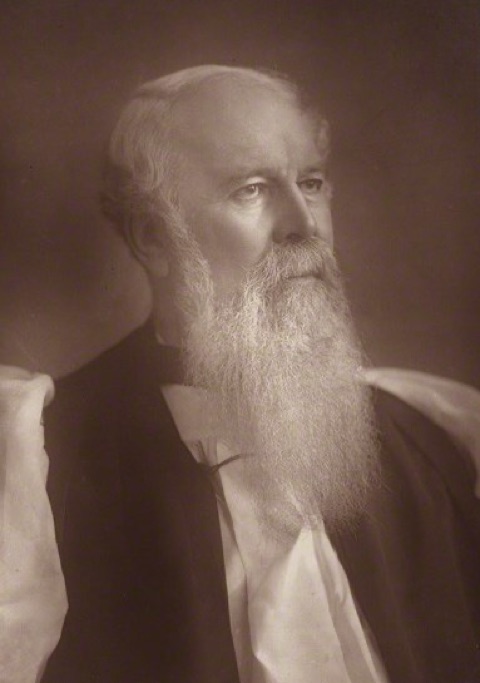
About the author
J.C. Ryle
John Charles Ryle (1816 to 1900 AD) was born on May 10, 1816, in Macclesfield, Cheshire, the son of a wealthy banker, and was educated at Eton and Christ Church, Oxford. When his father's bank failed in 1841, he turned to the ministry and was ordained in 1842, serving rural parishes in Suffolk for the next thirty-eight years. He signed the Preface to this book at Stradbroke Vicarage in August 1868. His penny tracts circulated in the millions, and his Expository Thoughts on the Gospels and Holiness (1877) became standard works for ordinary readers. In this book he calls himself a Calvinist. In 1880 he was appointed the first Bishop of Liverpool, and he served there for twenty years until his death on June 10, 1900.