Modernized edition · Full text · Free PDF/EPUB
Knots Untied in Modern English
Want the file? The PDF/EPUB is free with an account.
Summary
- Author
- J.C. Ryle (1816 to 1900 AD), Evangelical clergyman of the Church of England and first Bishop of Liverpool
- Published
- 1874 AD; the text follows the tenth edition of 1885
- Source edition
- Knots Untied: Being Plain Statements on Disputed Points in Religion, 10th edition (London, 1885), in modern English
- Type
- Doctrinal and controversial papers
- Length
- 169,000 words · 11 hours
What is Knots Untied about?
Knots Untied is J.C. Ryle's 1874 collection of nineteen papers on questions disputed in the Victorian Church of England. Writing as an Evangelical Churchman, he tests each by Scripture and the Thirty-Nine Articles, from baptism, regeneration and the Lord's Supper to the priesthood, confession, worship, the Sabbath and idolatry.
Read the full summary (8 points, key themes)Show less
How the argument unfolds
- 01
Evangelical Religion. Five leading features of Evangelical religion, the charges against it, and the duties of Evangelicals in the Church of England.
- 02
Salvation, Private Judgment and the Articles. Salvation by Christ alone, the duty of testing teachers by the Bible, and the Articles as the Church's confession of faith.
- 03
Baptism and Regeneration. Three papers on the nature, mode and subjects of baptism, the marks of the new birth, and the baptismal service.
- 04
The Lord's Supper and the Real Presence. The Supper is a memorial and a strengthening of faith, not a sacrifice. Christ's body is in heaven, and his presence in the ordinance is spiritual, to the faithful receiver.
- 05
The Church, the Priest and Confession. The true Church is the company of all believers, Christ is its only priest, and confession belongs at his throne.
- 06
Worship and the Sabbath. The principles, parts and tests of public worship, and a defense of the Lord's Day as a lasting law.
- 07
Warnings Against Error. Papers on the Pharisees and Sadducees, on strange doctrines and on Peter at Antioch warn against adding to the gospel or taking from it.
- 08
Apostolic Fears and Idolatry. The simplicity that is in Christ, and idolatry: its definition, cause, forms and end at Christ's return.
Key themes
- Scripture above every other authority. Fathers, councils, bishops, the Prayer Book and one's own minister are all tested by the written Word, which alone is infallible.
- The proportion of truth. Error often comes by putting secondary things first, so that baptism, the Supper, the Church or the ministry crowd out repentance, faith and holiness.
- Christ's sole priesthood. No minister is a sacrificing priest or confessor; Christ in heaven presents his finished sacrifice, intercedes for his people and receives sinners himself.
- Truth before peace. Ryle values unity but will not buy it with doctrine: “Peace without truth is a false peace; it is the very peace of the devil.”
Reader questions (8)Hide the questions
Questions about Knots Untied
Is there a modern English version of Knots Untied?
Yes. This is Knots Untied by J.C. Ryle in modern English. The language is modernized and the author's order and argument are kept. The full modernized text is free to read on this page.
Can I read Knots Untied online for free?
Yes. The complete text of this modern English edition is on this page, with no sign-up or paywall.
Is there a free PDF of Knots Untied?
Yes. The PDF and EPUB of this edition are free with an Updated Works account. Sign in with Google or an email link; no card is needed.
What is Knots Untied by J.C. Ryle about?
It treats the points most disputed among English Churchmen of Ryle's day, especially the sacraments, the ministry and worship. Ryle defines each question, gives the Evangelical answer from Scripture and the Church of England's formularies, and closes with practical counsel.
Why is the book called Knots Untied?
Ryle believed that many religious quarrels come from undefined terms, and his preface describes the book as an attempt to untie theological knots with plain statements. Most papers therefore begin by asking exactly what a word such as Evangelical, regeneration, Church or presence means.
Did Ryle reject infant baptism?
No. He defends the baptism of the children of professing Christians and allows dipping or sprinkling alike, but denies that grace always accompanies the outward act or that every baptized infant is born again.
What does Ryle mean by charitable supposition?
It is his key to the Prayer Book. Services are written for worshipers as they profess to be, so the Church calls every baptized child regenerate and every buried member a brother resting in Christ, without claiming each statement is literally true.
Did Ryle advise Evangelicals to leave the Church of England?
No. He urged them to stay and contend while the Articles and Prayer Book remain unaltered, likening secession to abandoning a ship for a small leak. He did allow a layman to leave a parish church where false doctrine is plainly preached.
Knots Untied in Modern English · Full text
Preface to the Tenth Edition
In sending out a tenth edition of this volume, I do not think it necessary to add anything to the original preface I wrote when it first appeared.
The general principles I asserted and maintained when I was much younger than I am now, I still firmly assert and maintain in 1885. I find nothing to retract, cancel, or withdraw in the nineteen papers that make up this volume.
I frankly admit, after carefully examining Knots Untied, that I notice occasional sharp and strong expressions in its pages that I might not use if I were writing the book over again this year. Yet I think it is better to make no change and to leave the original language alone. I want my readers to understand that the views I held as a presbyter I still hold as a bishop. I fear that any alteration might lead to misunderstanding and misrepresentation.
That God may continue to bless this book and make it useful is my earnest prayer.
J. C. Liverpool Palace, Liverpool February 9, 1885
Preface
The volume now in the reader’s hands calls for a few words of explanation. It consists of nineteen papers on disputed subjects among English Churchmen today, arranged in systematic order. A quick glance at the table of contents will show that hardly any point of theological controversy in our era goes unexamined, with more or less fullness, in these pages.
The doctrinal tone of this volume will be found distinctly and decidedly “Evangelical.” I avow that without hesitation from the start. The views expressed and advocated on the matters discussed are those of an Evangelical Churchman. Every intelligent Englishman knows what that means, and it is mere pretense to claim ignorance on the point.
I am well aware that these opinions are not popular, and perhaps they are held by only a minority of the English clergy. Yet they are the only opinions I can find in Holy Scripture, in the Thirty-Nine Articles, in the Prayer Book fairly interpreted, in the works of the Reformers, or in the writings of the pre-Caroline theologians. In the faith of these convictions I have lived for thirty-five years, and I have seen no reason to be ashamed of them, however rudely they may have been attacked.
My purpose in sending out this volume is to meet the needs of those who want to see theological questions fully examined from an “Evangelical” standpoint, yet complain that they cannot find a book that does so. Hundreds of English Churchmen will never look at a tract (though St. Paul’s Epistles, when first sent out, were only tracts), yet they are willing to read a volume. To them I offer this book, and I respectfully invite their attention to its contents. If it accomplishes nothing else, I hope it convinces some readers that in the controversies of our day, the reasoning and arguments are not all on one side.
Friendly readers of the many popular tracts God has enabled me to write over the past twenty-five years will not find much here that is new to them. They will meet some of their old acquaintances, though altered, remodeled, recast, and partly stripped of their direct and familiar style. Still, they will find the same argument, the same matter, and the same substance, presented in a new form and adapted to the tastes of a different class of minds. I am sure they will agree with me that it is right to use every means of doing good and, if possible, to meet the needs of every kind of reader.
Whether this volume will do any good remains to be seen. At any rate, it is an honest effort to untie some theological knots and to provide clear statements of truth from the standpoint of an Evangelical Churchman. That God may bless the effort, and make it useful to the cause of Christ and to the Church of England, is my earnest prayer.
J. C. Ryle Stradbroke Vicarage 1877
Chapter 1
Evangelical Religion
We may lay it down as a rule, with fair confidence, that the lack of accurate definitions is the very lifeblood of religious controversy. If people would only define their theological terms with precision, many disputes would die at once. Scores of heated disputants would discover that they do not really disagree at all, and that their quarrels grew out of their own failure to explain the meaning of words.
In opening the subject of this paper, I want to keep that important rule carefully in mind. Without further delay, I will begin by explaining what I mean when I speak of “Evangelical Religion.”
By “Evangelical Religion,” I do not mean Christianity as compared with heathenism, or Protestantism as compared with Romanism, or Trinitarianism as compared with Socinianism or Deism. I do not propose to argue here with the skeptic or the theological rationalist, with the Papist or the Jew. What I want to consider is the religion distinctive to that party in the Church of England commonly called “Evangelical.” I will confine myself to that point, and to that point alone.
I will not waste time proving that such a group as “the Evangelical party” exists. That fact is as plain as the sun in heaven. When it first received this name, and why it was called so, are questions not worth investigating right now. It is a simple fact that it exists.
Whether we like it or not, and whether it is right or wrong, the well-known threefold division is accurate and may be taken as true. There are three great schools of thought in the Church of England: High Church, Broad Church, and Evangelical. Anyone who cannot see them is in a very strange state of mind.
Beneath this threefold division there are, no doubt, many subdivisions and smaller shades of difference. There is certainly a very clear dividing line between the old High Church party and the modern Ritualistic section of the Church of England. The famous pamphlet titled Quousque is a striking proof of this.
Now, what are the distinctive features of the religion held by the Evangelical school? That it possesses certain leading tenets or principles is unmistakable and undeniable. What are the principles that distinguish it from other schools? In plain words, that is my subject. Does Evangelical Religion have any distinctive principles? I answer that it does. Are they worth contending for? I answer that they are.
I approach this subject with a deep sense of its difficulty. It cannot be handled without touching points of fine distinction and stepping onto very delicate ground. It requires comparing one section of our Church with another, and all comparisons are unpopular. It exposes a writer to the charge of being “party-spirited, narrow-minded, combative, pugnacious,” and the like.
Yet there are times when comparisons are a positive duty. We have an apostolic command to “try things that differ” (Philippians 1:10). The existence of parties in the Church of England is a fact that cannot be ignored. To pretend that we do not see them is absurd. Everyone else sees them, talks about them, and criticizes them. Trying to deny their existence is mere squeamishness and pretense. Whether we like it or not, there they are, and the world around us knows it.
While I have a deep sense of the difficulty of this subject, I have an even deeper sense of its importance. Dark clouds are gathering around the Church of England, and her very existence is in danger. Conflicting opinions threaten to tear her in two. Over the last thirty or forty years, a conflict has broken out within her bounds, not over the trappings and vestments of religion, but over the very foundations of the Gospel. It remains to be seen whether our beloved Church will survive the struggle.
Surely it is high time for Evangelical clergy and laity to review their position calmly and consider seriously what they have to maintain and defend. Let us walk around our lines. Let us inspect our bulwarks carefully. Let us see clearly the Malakhoffs and Redans we have to man. Let us understand distinctly the principles that define our body. Doing so must do us good; it can do us no harm.
In defining what Evangelical Religion is, I admit at the outset that I have no written creed and no formal declaration of principles to cite. The reader will do me the justice to believe that I feel that lack very keenly. I can bring forward only the results of such reading, study, and observation as lie within the reach of any ordinary person. Still, for many years I have carefully examined the published works of most of the fathers of the Evangelical school, especially the men of the last century, and I have formed firm convictions about their distinctive principles. I may be mistaken in my estimate of their merits, but I can honestly say I have not reached my conclusions without prayer, thought, and painstaking effort.
Of course, my readers will understand that throughout this paper I am expressing only my own personal opinion. I do not pretend for a moment to be a mouthpiece for the Evangelical party, or to speak for anyone other than myself. Indeed, I am not sure that everyone called Evangelical will agree with everything this paper contains. I am only describing what I personally believe to be the leading convictions of most Evangelical Churchmen, and my description must be taken for what it is worth.
There are three questions I wish to set before the readers of this paper:
1. What Evangelical Religion is.
2. What it is not.
3. What makes much religion not Evangelical.
I will try to address each of these questions very briefly.
1. What Evangelical Religion Is
To the question, “What is Evangelical Religion?” the simplest answer I can give is to point out what appear to be its leading features. I consider these to be five in number.
1. The first leading feature in Evangelical Religion is the absolute supremacy it assigns to Holy Scripture, as the only rule of faith and practice, the only test of truth, and the only judge of controversy.
Its principle is that no one is required to believe anything as necessary to salvation that is neither read in God’s written Word nor provable from it. It completely denies that there is any other guide for the human soul equal to or alongside the Bible. It refuses to listen to arguments like “the Church says so,” “the Fathers say so,” “primitive antiquity says so,” “Catholic tradition says so,” “the Councils say so,” “the ancient liturgies say so,” “the Prayer Book says so,” “the universal conscience of mankind says so,” or “the verifying light within says so,” unless it can be shown that what is said agrees with Scripture.
The supreme authority of the Bible, in a word, is one of the cornerstones of our system. Show us anything plainly written in that Book, and however hard it may be for flesh and blood, we will receive it, believe it, and submit to it. Show us anything presented as religion that contradicts that Book, and however specious, plausible, beautiful, and appealing it may look, we will not accept it at any price.
It may come to us endorsed by Church Fathers, medieval schoolmen, and Catholic writers. It may be commended by reason, philosophy, science, the inner light, the verifying faculty, or the universal conscience of mankind. That means nothing. Give us rather a few plain texts of Scripture. If a teaching is not in the Bible, deducible from the Bible, or in clear harmony with the Bible, we will have none of it. Like the forbidden fruit, we dare not touch it, or we will die. Our faith can find no resting place except in the Bible or in biblical arguments. Here is rock; everything else is sand.
2. The second leading feature in Evangelical Religion is the depth and prominence it assigns to the doctrine of human sinfulness and corruption.
Its teaching is that because of Adam’s fall, all people are as far gone as possible from original righteousness and are by their own nature inclined to evil. They are not merely in a miserable, pitiable, and bankrupt condition. They stand in a state of guilt, imminent danger, and condemnation before God. They are not only at enmity with their Maker and without any right to heaven; they also have no will to serve their Maker, no love for their Maker, and no fitness for heaven.
We hold that a mighty spiritual disease like this requires a mighty spiritual medicine for its cure. We dread giving the slightest encouragement to any religious system for dealing with the human soul that even seems to suggest its deadly wound can be easily healed. We dread feeding humanity’s favorite notion that a little churchgoing and sacrament-receiving (a little patching, mending, whitewashing, gilding, polishing, varnishing, and painting of the outside) is all that a sinner’s case requires.
For this reason, we protest with all our hearts against formalism, sacramentalism, and every form of merely external or secondhand Christianity. We maintain that all such religion rests on an inadequate view of human spiritual need. It takes far more than this to save, satisfy, or sanctify a soul. It requires nothing less than the blood of God the Son applied to the conscience, and the grace of God the Holy Spirit thoroughly renewing the heart. Humanity is radically diseased, and humanity needs a radical cure. I believe that ignorance of the extent of the Fall, and of the whole doctrine of original sin, is one major reason why so many can neither understand, appreciate, nor receive Evangelical Religion. Next to the Bible itself as its foundation, it rests on a clear view of original sin.
3. The third leading feature of Evangelical Religion is the paramount importance it attaches to the work and office of our Lord Jesus Christ, and to the nature of the salvation he has accomplished for humanity.
Its teaching is that the eternal Son of God, Jesus Christ, by his life, death, and resurrection as our Representative and Substitute, has won a complete salvation for sinners and a redemption from the guilt, power, and consequences of sin. All who believe in him are, even while they live, completely forgiven and justified from all things. They are counted completely righteous before God, and they have a full share in Christ and all his benefits.
We hold that nothing whatever is needed between the soul of the sinner and Christ the Savior except simple, childlike faith. All means, helps, ministers, and ordinances are useful just so far as they assist that faith, and no further. Once they are rested in and relied upon as ends rather than means, they become downright poison to the soul.
We hold that a personal, experiential knowledge of Christ crucified and interceding is the very essence of Christianity. In teaching the Christian religion, we can never dwell too much on Christ himself, and we can never speak too strongly of the fullness, freeness, present availability, and simplicity of the salvation found in him for everyone who believes.
Not least, we hold firmly that the true doctrine of Christ is precisely what the natural human heart dislikes most. The religion people naturally crave is one of sight and sense, not of faith. What human nature loves is an external religion whose essence is “doing something,” rather than an inward, spiritual religion whose essence is “believing.”
Therefore, we maintain that people must be continually warned not to make a Christ out of the Church, the ministry, forms of worship, baptism, or the Lord’s Supper. We say that eternal life is to know Christ, believe in Christ, abide in Christ, and enjoy daily heart communion with Christ through simple personal faith. Everything in religion is useful only insofar as it advances that life of faith, and no further.
4. The fourth leading feature in Evangelical Religion is the high place it assigns to the inward work of the Holy Spirit in the human heart.
Its teaching is that the root and foundation of all vital Christianity in any person is a work of grace in the heart. Until there is real, personal, experiential work going on inside someone, that person’s religion is a mere husk, shell, name, and form that can neither comfort nor save. We maintain that the things we must press most urgently on people’s attention are those mighty works of the Holy Spirit: inward repentance, inward faith, inward hope, inward hatred of sin, and inward love for God’s law. To tell people to take comfort in their baptism or church membership when these all-important graces are unknown to them is not merely a mistake, but positive cruelty.
We hold that just as an inward work of the Holy Spirit is necessary for salvation, it is also something that must be inwardly felt. We readily admit that feelings are often deceptive, and that a person may feel much, weep much, or rejoice much, and yet remain dead in trespasses and sins. Still, we maintain firmly that there can be no real conversion to God, no new creation in Christ, and no new birth by the Spirit where nothing is felt and experienced within. We hold that the witness of the Spirit, however much it may be abused, is a real and true thing. We consider it a solemn duty to be just as vigilant about the work of the Holy Spirit, in its proper place and measure, as we are about the work of Christ. And we insist that where nothing is felt within the human heart, nothing is truly possessed.
5. The fifth and final leading feature in Evangelical Religion is the importance it attaches to the outward and visible work of the Holy Spirit in a person’s life.
Its teaching is that the true grace of God will always show itself in the conduct, behavior, tastes, ways, choices, and habits of the person who possesses it. It is not a dormant thing that can lie hidden inside someone without showing itself on the outside. The heavenly seed is “not corruptible, but incorruptible.” It is a seed distinctly said to “remain” in everyone born of God (1 Peter 1:23; 1 John 3:9). Wherever the Spirit is, he will always make his presence known.
We hold that it is wrong to tell people they are “children of God, and members of Christ, and heirs of the kingdom of heaven” unless they truly overcome the world, the flesh, and the devil. We maintain that telling someone he is “born of God,” or regenerated, while he is living in carelessness or sin is a dangerous delusion likely to do endless harm to his soul.
We affirm confidently that “fruit” is the only reliable evidence of a person’s spiritual condition. If we want to know to whom someone belongs and whom he serves, we must look first at his life. Where the grace of the Spirit is present, there will always be more or less of the fruit of the Spirit. Grace that cannot be seen is no grace at all, and nothing better than antinomianism. In short, we believe that where nothing is seen, nothing is possessed.
Such are the leading features of Evangelical Religion. Such are the core principles that characterize the teaching of the Evangelical school in the Church of England. To my eyes, they stand out on the theological horizon like Tabor and Hermon among the mountains, and tower upward like cathedral spires across our English plains.
Readers will easily see that I have only sketched them in outline. I have purposely omitted much that could have been added by way of expansion and proof. I have left out many subjects that belong as parts of our system, not because they are unimportant, but because they are comparatively secondary. Enough has probably been said for my present purpose. I have pointed out what I conscientiously believe are the five distinctive doctrinal marks by which members of the Evangelical body may be recognized. Rightly or wrongly, I have stated them plainly. I venture to think my statement will hold water and stand the fire.
Let it be remembered that I do not deny for a moment that many Churchmen outside the Evangelical body are broadly sound on these five points if you take them one by one. Present them separately as doctrines to be believed, and they would accept every single one. Yet they do not give them the prominence, position, rank, degree, priority, dignity, and precedence that we do. I regard this as a crucial difference between us and them. It is the position we assign to these points that is one of the grand characteristics of Evangelical theology. We declare boldly that these are the first, foremost, chief, and principal things in Christianity, and that neglecting their proper position mars and spoils the teaching of many well-meaning Churchmen.
Showing all the foundations on which Evangelical Religion rests would clearly be impossible in a paper like this. We appeal boldly to the Holy Scriptures and challenge anyone to test our system by the light of the New Testament. We appeal boldly to the Thirty-Nine Articles of our own Church and assert without hesitation that they are on our side. We appeal boldly to the writings of our leading theologians from the Reformation down to the time of Archbishop Laud, and invite anyone to compare our teaching with theirs.
We reject with scorn the crude charge of novelty, and tell anyone who makes it that he only exposes his own ignorance. We ask him to turn again to his New Testament, study the Thirty-Nine Articles afresh, and take down and read once more the English theology of the pre-Caroline era. We welcome the fullest, strictest investigation of our case and will await the verdict without fear.
Of ourselves and our imperfections we may well be ashamed, but of what is called “Evangelical Religion” we have no reason to be ashamed at all. Let people say what they please. Nothing is easier than calling names, pinning on ugly labels, and frightening ignorant people by shouting “Calvinism” or “Puritanism” at the Evangelical school. “The curse causeless shall not come” (Proverbs 26:2). I firmly believe that impartial inquiry will always show that Evangelical Religion is the religion of Scripture and of the Church of England.
2. What Evangelical Religion Is Not
I turn now to the negative side of my subject. Having shown what Evangelical Religion is, it becomes my duty next to show what it is not.
I am almost ashamed to spend time on this point. Yet slanders and false reports about Evangelical Religion are so sadly common, and shameless misrepresentations of its nature circulate so widely, that I can hardly pass over this part of my subject. We are not perfect; we know that to our sorrow. We have many faults and shortcomings, as we humbly confess. Yet to many of the charges brought against us we plead “Not guilty.” We say plainly that they are not true.
1. I begin by saying that Evangelical Religion does not despise learning, research, or the wisdom of past ages. It is not true to say that we do. In deep appreciation for anything that throws light on God’s Word, we yield to no one. Look over the roster of those who in past generations stood out for theological scholarship in this country, and I boldly say you will find some of the most eminent were Evangelical men. Ridley, Jewel, Ussher, Lightfoot, Davenant, Hall, Whitaker, Willet, Reynolds, Leighton, Owen, Baxter, and Manton are names that stand second to none for profound learning. To what school do they belong, I ask, if not to the Evangelical?
What school, I ask confidently, has done more for the exposition and interpretation of Scripture than the Evangelical school? What school has given the world more commentaries? Poole’s Synopsis and Owen on Hebrews alone prove that Evangelical scholars do read and can think. Even during the Egyptian darkness of the last century, few English theologians displayed more genuine learning than Hervey, Romaine, and Toplady.
Turn even to our own day, and I say without hesitation that we have no reason to be ashamed. Naming theologians of our own generation is a delicate matter. Yet I do not hesitate to say that Dean Goode’s three great books on Scripture, Baptism, and the Lord’s Supper remain unanswered to this day by the opponents of the Evangelical school. Coarse sneers about ignorance and shallowness can safely be ignored while books like these remain unrefuted.
Still, while we do not despise learning, we steadily refuse to place any uninspired writings on the same level as revelation. We refuse to call any man “father” or “master,” however learned or brilliant he may be. We will follow no guide but Scripture. We acknowledge no master over the conscience in religious matters except the Bible. We leave it to others to talk about “primitive antiquity” and “Catholic truth.” For us there is only one test of truth: “What is written in the Scripture? What does the Lord say?”
2. I go on to say that Evangelical Religion does not undervalue the Church, or think lightly of its privileges. It is not true to say that we do. In sincere and loyal devotion to the Church of England, we yield to no one. We value its form of government, its Confession of Faith, and its pattern of worship as much as anyone within its bounds. We have stood by it through bad report and good report, while many who once boasted more loudly about their Churchmanship have seceded and gone over to Rome. We stand by it still, and we will resist every attempt to Romanize it to the very death! We know its worth, and we want to hand it down unimpaired to our children’s children.
Yet we steadily refuse to exalt the Church above Christ, or to teach our people that membership in the Church is the same thing as membership in Christ. We refuse to grant the Church an authority for which we find no warrant either in Scripture or in the Thirty-Nine Articles. We protest against the modern habit of first personifying the Church, then deifying it, and finally idolizing it.
We hold that Church councils, Church synods, and Church convocations can err, and that “things ordained by them as necessary to salvation have neither strength nor authority, unless it may be declared that they are taken out of Holy Scripture.” We find no proof in the Bible that the Lord Jesus Christ ever intended a body of fallible mortals, whether ordained or unordained, to be treated as infallible. Consequently, we hold that a vast amount of talk today about “the Church” and the “voice of the Church” is empty verbiage. It is “the talk of the lips, which tendeth only to penury” (Proverbs 14:23).
3. I go on to say that Evangelical Religion does not undervalue the Christian ministry. It is not true to say that we do. We regard it as an honorable office instituted by Christ himself, and generally necessary for carrying on the work of the Gospel. We view ministers as preachers of God’s Word, God’s ambassadors, God’s messengers, God’s servants, God’s shepherds, God’s stewards, God’s overseers, and laborers in God’s vineyard.
Yet we steadily refuse to admit that Christian ministers are in any sense sacrificing priests, mediators between God and humanity, lords over people’s consciences, or private confessors. We refuse this not only because we cannot find it in the Bible, but also because we have read the lessons of Church history. We see that sacerdotalism, or priestcraft, has often been the curse of Christianity and the ruin of true religion. And we declare boldly that exalting the ministerial office to an unscriptural position and extravagant dignity in the Church of England today is likely to alienate the affections of the laity, ruin the Church, and breed every kind of error and superstition.
4. I go on to say that Evangelical Religion does not undervalue the Sacraments of Baptism and the Lord’s Supper. It is not true to say that we do. We honor them as holy ordinances appointed by Christ himself, and as blessed means of grace that, in all who receive them rightly, worthily, and with faith, “have a wholesome effect or operation.”
Yet we steadily refuse to admit that Christ’s Sacraments convey grace automatically by the mere performance of the outward act, so that in every case where they are administered, spiritual good must necessarily follow. We refuse to admit that they are the chief channels between Christ and the soul, ranked above faith, preaching, and prayer.
We protest against the notion that using water in the name of the Trinity in baptism is always and necessarily accompanied by regeneration. We protest against encouraging anyone to come to the Lord’s Table unless he truly repents of sin, has a living faith in Christ, and lives in love with all people. We protest against the theory that the Lord’s Supper is a sacrifice, a theory equally contrary to the Bible, the Articles, and the Prayer Book. Above all, we protest against the idea of any bodily presence of Christ’s flesh and blood in the Lord’s Supper under the forms of bread and wine, as an “idolatry to be abhorred by all faithful Christians.”
5. I go on to say that Evangelical Religion does not undervalue the English Prayer Book. It is not true to say that we do. We honor that excellent book as a matchless form of public worship, admirably suited to the needs of human nature. We use it with pleasure in our public services, and we would grieve to see the day its use was forbidden.
Yet we do not presume to say there can be no acceptable worship of God without the Prayer Book. It does not possess the same authority as the Bible. We steadily refuse to give the Prayer Book the honor due only to the Holy Scriptures, or to treat it as forming, together with the Bible, the rule of faith for the Church of England. We deny that it contains a single religious truth beyond, over, and above what is contained in God’s Word. And we hold that calling the Bible and Prayer Book together “the Church’s Creed” is foolish and absurd.
6. I go on to say that Evangelical Religion does not undervalue Episcopacy. It is not true to say that we do. We give our Bishops as much honor and respect as any section of the Church of England does, and in reality a great deal more. We thoroughly believe that Episcopal government, rightly administered, is the best form of Church government to be had in this evil world.
Yet we steadily refuse to believe that Bishops are infallible, or that their words must be believed when they disagree with Scripture. We refuse to believe that Episcopacy is the primary test of a true Church, that Presbyterian ordinations are invalid, or that non-Episcopal Christians must be left to the uncovenanted mercies of God. We hold as firmly as anyone that “from the beginning there have been bishops, priests, and deacons.” Still, we refuse to join in the bigoted cry, “No Bishop, no Church.”
I repeat that in proper respect for the Episcopal office we yield to no one. Yet we will never admit that the actions, proceedings, and pronouncements of any Bishops, however numerous and by whatever name they meet, whether a Pan-Anglican Synod or not, should be received as infallible and placed beyond free criticism. We cannot forget that erring Bishops ruined the Church of England in the days of Charles I, nearly ruined it again in 1662 when they drove out the Puritans, and almost ruined it once more in the last century when they shut out the Methodists. No! We have read history. We have not forgotten that while we have had a Cranmer and a Parker, we have also had a Sheldon and a Laud. While we have had bright stars in our church sky like Hooper, Ridley, and Jewel, we have also had men who disgraced their office, like the semi-papists Cheyney and Montague, and the shrewd politician Atterbury.
7. I go on to say that Evangelical Religion does not object to handsome churches, fine church architecture, a well-ordered liturgy, and a well-conducted service. It is not true to say that we do. We appreciate attractive, well-arranged places of worship when we can have them. We hate carelessness and disorder in God’s service as much as anyone. We want all things done “decently and in order” (1 Corinthians 14:40).
Yet we steadily maintain that simplicity should be the chief mark of Christian worship. Human nature is so easily led astray, and so strongly inclined to idolatry, that ornament in Christian worship should be used with a very sparing hand. We firmly believe that excessive ornament and theatrical ceremony tend to defeat the very purpose for which worship was established. They draw people’s minds away from Christ and make them walk by sight rather than by faith. Above all, we hold that the inward, spiritual character of the congregation matters far more than the architecture and decorations of the church building. We dare not forget the great biblical principle that “man looketh on the outward appearance, but the Lord looketh on the heart” (1 Samuel 16:7).
8. I go on to say that Evangelical Religion does not undervalue unity. It is not true to say that we do. We love harmony and peace as much as any Christians in the world. We long for the day when there will be no more controversy, strife, and division, when Ephraim will no longer trouble Judah, nor Judah Ephraim.
Yet we firmly maintain that there can be no real unity without oneness in the faith. We protest against the idea of unity built on a shared Episcopacy rather than a shared belief in Christ’s Gospel. As for the proposals of those who make overtures to Rome and extend a hand to the Church of Bonner and Gardiner, while turning their backs on the Church of Knox, Rutherford, Chalmers, and M’Cheyne, we reject them with indignation as unworthy of English Churchmen. We recoil from the very thought of reunion with Rome unless Rome first purges herself of her many false doctrines and superstitions.
9. Last, but not least, I say that Evangelical Religion does not undervalue Christian holiness and self-denial. It is not true to say that we do. We desire as much as anyone to cultivate habitual spirituality of heart and life in Christians. We yield to no one in exalting humility, love, meekness, gentleness, self-control, purity, self-denial, good works, and separation from the world. With all our faults, we are second to no part of Christ’s Church in placing the highest value on private prayer, private Bible reading, and private communion with God.
Yet we steadily deny that true holiness consists in calling everything in religion “holy” and parading the word “holy” with sickening frequency at every turn. We will not grant that holiness is truly advanced by an ostentatious observance of Lent, keeping church fasts and saints’ days, frequent communion, joining Houses of Mercy, doing penance, going to confession, wearing distinctive robes, decorating ourselves with oversized crosses, making frequent gestures and postures of humility in public worship, walking in processions, and the like.
On the contrary, we believe that such so-called holiness too often starts from the outside and is a complete delusion. It has a “show of wisdom,” and it may satisfy foolish young women and thoughtless young men who like to make up for horse races and balls during one part of their week by asceticism and self-imposed worship during another. But we flatly deny that it is the holiness recommended by St. Paul and St. Peter, St. James and St. John.
I am aware that what I have just said is likely to be misinterpreted and may give offense. A fault-finding reader may claim that I consider keeping Lent, saints’ days, and fasts to be wrong. I remind him that I say nothing of the kind. I only say that these things do not make up Christian holiness. I will go even further. The history of the last three hundred years in England does not incline me to think that these observances, however well-meant, actually foster real holiness.
I am quite sure that the substance of this warning is urgently needed in our times. Matters have reached such a pass in England that thousands of Churchmen are making the whole of religion consist in externals. Against such a religion I intend to protest as long as I live. It may suit an Italian bandit who swings back and forth between Lent and Carnival, between fasting and robbing. It ought never to satisfy a Bible-reading Christian. It is the religion the natural heart likes, not the religion of God.
When I speak of an “ostentatious” observance of Lent, I do so with good reason. Hundreds of people “scruple” over weddings and dinner parties during Lent, yet rush off to balls, theaters, and horse races the moment Lent is over! If that is Christian holiness, we may throw our Bibles to the winds.
I will stop my list of negatives here. I do not have time to expand on them further. The sum of the whole matter is this: we give all lawful honor to learning, the Church, the ministry, the Sacraments, Episcopacy, the Prayer Book, church ornament, unity, and holiness, but we firmly refuse to give them more honor than God’s Word gives them.
We dare not take any other stance because of the plain teaching of Scripture. We read there how the ark itself was utterly useless to Israel when trusted in as a savior and put in the place of God. We read there how God himself declared that the very sacrifices and feasts he had appointed became “abominations” and a “weariness” to him when people rested on them as ends rather than means. We read there how the very temple itself, with all its divinely ordained services, was denounced as a “den of thieves” by Christ himself (1 Samuel 4:1-11; Isaiah 1:11-15; Luke 19:46).
What do we learn from all this? We learn to be very careful about giving primary honor to things invented by human beings, or even to secondary things ordained by God. Above all, we learn that those who accuse us of undervaluing these things, simply because we refuse to turn them into idols, only expose their own ignorance of Scripture. They do not know what they are talking about or what they so confidently assert.
We can listen to their slanderous charges and misrepresentations with calm indifference. Let them prove that we fail to value learning, the Church, the ministry, the Sacraments, the Prayer Book, Episcopacy, unity, and holiness according to the standard of Scripture, and we will confess that we have erred. Until they can do that, we will firmly maintain that we are right and they are wrong.
3. What Makes Much Religion Not Evangelical
It only remains for me to say a few words on the final question I proposed to consider: “What is it that makes much religion appear to us not Evangelical?”
This is certainly a delicate point, yet a very serious and important one. I repeat here what I have said before. We do not claim that people who are not professedly Evangelical ignore or disbelieve the leading doctrines of the Evangelical creed. We say nothing of the kind. What we do say with confidence is that there are many ways to mar and spoil the faith of Christ without openly denying it. Here, I believe, is the real reason so much religion called Christian is not truly Evangelical. The Gospel is, in fact, an intricately and delicately compounded medicine, and a medicine that is very easily spoiled.
You may spoil the Gospel by substitution. You only have to remove from the sinner’s eyes the grand object the Bible sets before faith, Jesus Christ, and put another object in his place (the Church, the ministry, the confessional, baptism, or the Lord’s Supper), and the damage is done. Substitute anything for Christ, and the Gospel is completely spoiled! Do this directly or indirectly, and your religion ceases to be Evangelical.
You may spoil the Gospel by addition. You only have to add to Christ, the grand object of faith, other objects treated as equally worthy of honor, and the damage is done. Add anything to Christ, and the Gospel ceases to be a pure Gospel! Do this directly or indirectly, and your religion ceases to be Evangelical.
You may spoil the Gospel by interposition. You only have to push something between Christ and the eye of the soul, drawing the sinner’s attention away from the Savior, and the damage is done. Place anything between a person and Christ, and that person will neglect Christ for the thing placed in between! Do this directly or indirectly, and your religion ceases to be Evangelical.
You may spoil the Gospel by disproportion. You only have to attach exaggerated importance to the secondary things of Christianity and reduced importance to the first things, and the damage is done. Once alter the proportion of the parts of truth, and truth soon turns into outright error! Do this directly or indirectly, and your religion ceases to be Evangelical.
Lastly, but not least, you may completely spoil the Gospel by confused and contradictory directions. Complicated, obscure statements about faith, baptism, Church privileges, and the benefits of the Lord’s Supper, all jumbled together and dumped without order before hearers, turn the Gospel into no Gospel at all! Confused and disorderly presentations of Christianity are almost as bad as no presentation at all! Religion of this kind is not Evangelical.
I do not know whether I am succeeding in making my meaning clear. I am very eager to do so. Countless numbers of our fellow countrymen are utterly unable to tell the difference between one thing and another in religion, and so they are continually led astray. Thousands see no clear distinction between one sermon and another, or one preacher and another, and feel only a vague sense that “sometimes all is not right.” I will endeavor, therefore, to clarify my point with two familiar examples.
A doctor’s prescription for a medicine often contains five or six different ingredients. There is so much of one drug and so much of another, a little of this and a good deal of that. Now, what person of common sense can fail to see that the whole value of the prescription depends on following it faithfully and honestly? Take away one ingredient and substitute another. Leave out one ingredient altogether. Add a little to the amount of one drug, and reduce the amount of another. Do that to your prescription, my friend, and it is a thousand chances to one that you spoil it completely. The very thing meant for your health you have turned into outright poison.
Apply this simple parable to the Gospel. View it as a medicine sent down from heaven to cure humanity’s spiritual disease by a Physician of infinite skill and power, a medicine of extraordinary effectiveness that humanity, with all its wisdom, could never have invented. Tell me now, as a person of common sense, does it not stand to reason that this medicine should be used without the slightest alteration, in the exact manner and proportion the great Physician intended? Tell me whether you have the least right to expect good from it if you have tampered with it in the smallest degree?
You know what the answer to these questions must be; your conscience supplies the reply. Spoil the proportions of your doctor’s prescription, and you spoil its usefulness, even if you still call it medicine. Spoil the proportions of Christ’s Gospel, and you spoil its power. You may call it religion if you like, but you must not call it Evangelical. The individual doctrines may all be there, yet they are useless if you have failed to keep the proportions.
The bronze serpent provides another valuable illustration of my meaning. Remember that the entire power of that miraculous remedy depended on using it in the exact way God directed. It was the serpent of bronze, and nothing else, that brought healing to the one who looked at it. Anyone who thought it wiser to look at the bronze altar, or at the pole on which the serpent hung, would have died of his wounds.
It was the serpent looked at, and only looked at, that cured the bitten Israelite. Anyone who imagined it would be better to touch the serpent, or offer a sacrifice to it, would have gained no benefit. It was the serpent looked at by each sufferer with his own eyes, and not through the eyes of another, that healed. Anyone who asked someone else to look on his behalf would have found a secondhand look useless. Looking, looking, only looking was the prescription. The sufferer, and only the sufferer, had to look for himself with his own eyes. The serpent, the bronze serpent, and nothing but the serpent, was the object for the eye.
Let us apply that marvelous and richly symbolic history to the Gospel. We have no warrant to expect the slightest spiritual benefit from Christ’s salvation unless we use it in the exact way Christ appointed. If we add anything to it, take anything away from it, try to improve its terms, or depart in the smallest degree from the path the Bible marks out for us, we have no right whatever to expect any good to come of it. God’s plan of salvation cannot possibly be mended or improved. Whoever tries to amend or improve it will find that he ruins it altogether.
In a word, I close this final part of my subject by saying that for a religion to be truly “Evangelical” and truly good, it must be the Gospel, the whole Gospel, and nothing but the Gospel, as Christ prescribed it and explained it to the Apostles. It must be the truth, the whole truth, and nothing but the truth. It must be the terms, the whole terms, and nothing but the terms, in all their fullness, all their freeness, all their simplicity, and all their present availability.
Here, I am sorry to say, a vast amount of so-called religion today seems to me to break down. It does not measure up to the standard I have just given. Things are added to it, or things are taken away, or things are put in the wrong place, or things are presented in the wrong proportions. Painful as it is, I cannot escape the conclusion that much of the religion of our own times does not deserve to be called Evangelical.
I do not accuse all clergymen who are not “Evangelical” of not being “Christians.” I do not say that the religion they teach is not Christianity. I trust I am not so uncharitable as to say anything of that sort. But I do say that, for the reasons already given, they appear to me to teach something less than Christ’s whole truth. In short, they do not give full weight, full measure, and the Gospel prescription accurately compounded. The parts are there, but not the proportions.
Present Duties of the Evangelical Body
I cannot bring this paper to a close without offering a few practical suggestions about the present duties of the Evangelical body. We have considered what Evangelical Religion is and what it is not. A few pages given to our immediate duties, in the present condition of the Church, can hardly seem out of place.
The times are undoubtedly very critical, full of danger to our beloved Church and full of danger to the nation. Never has there been such an open, unashamed avowal of Popish opinions among Churchmen, and such shameless additions to the faith defined in our Articles. The great question is whether our Protestantism will live or die. Much now depends on the posture and course of action taken by the Evangelical body. If they understand the times and do their duty, there is hope for the Church. If they are timid, passive, compromising, wavering, and lazy, there is no hope at all.
1. I suggest, for one thing, that we exercise a special vigilance over our own personal religion. Let us make sure it is thoroughly and completely Evangelical. The times we live in are fiercely hostile to a sharply defined, decisive, distinct, doctrinal Christianity. A fog of vague liberalism hangs over the ecclesiastical horizon. Everywhere we meet a settled determination to think that everyone is right and no one is wrong, that everything is true and nothing is false. The world is possessed by a spirit of false charity in religion. Like Gallio, people try to persuade us that the differences between creeds and schools of thought are only about “words and names,” and that it is “all the same thing.”
In times like these, let us stay on our guard and watch over our souls. “Watch ye: stand fast in the faith. Quit you like men: be strong” (1 Corinthians 16:13). Let us resolve firmly to stand fast in the old paths, the good way of our Protestant Reformers. Some may call that way narrow, old-fashioned, and obsolete, yet they will never show us a better one. The nearer we draw to the great realities of death, judgment, and eternity, the more excellent that way will appear.
When I walk down the valley of the shadow of death and my feet touch the cold waters, I want something better than vague, high-sounding phrases, or the painted playthings and gilded trifles of man-made ceremonies. Give me no stone altars and would-be confessors. Give me no surpliced priests or pretended sacrifice in my bedroom. Put no man and no ritual between me and Christ.
Give me a real staff for my hand like David had, and real food and drink for my soul like aged Paul felt within him when he cried, “I am not ashamed” (2 Timothy 1:12). I must know clearly whom I believe, what I believe, why I believe, and in what way I believe. Nothing, nothing at all will answer these questions satisfactorily except thorough, downright Evangelical Religion. Let us make sure that this religion is our own.
2. I suggest next that ministers who call themselves Evangelical should be especially careful not to compromise their principles and damage their testimony through vain attempts to win over the world.
This is a major danger in our day. It is a hidden reef on which I fear many are running aground and doing themselves immense harm. The plausible excuse of making our services more attractive, and undercutting the Ritualists, too often tempts Evangelical ministers to do things they would be far better off leaving alone. New church decorations, new church music, and a semi-theatrical way of conducting worship are things I urge us to watch most closely and keep at arm’s length. On these points we must be careful not to let in the Pope and the devil.
We may be sure that tampering with these things does no real good. It may seem to please the world and have a “show of wisdom,” yet it never converts the world or brings the world to faith. We are far better off leaving it alone. Some Evangelical clergymen, I suspect, began flirting and trifling with these things with the best intentions, and ended by ruining their own reputations, alienating their genuinely believing hearers, making themselves miserable, and leaving this world under a cloud.
Oh, no! In these days we cannot be too watchful against the slightest departure from the “faith once delivered to the saints,” and from the worship handed down to us by the Reformers. We cannot be too careful to add nothing to, and take nothing away from, the simplicity of the Gospel, and to do nothing in our worship that casts the slightest shadow on Evangelical principles. “A little leaven leaveneth the whole lump” (Galatians 5:9). “Take heed and beware of the leaven of the Pharisees and Sadducees” (Matthew 16:6).
Let us notice the testimony of Scripture on this subject. The Epistle to the Galatians is the inspired handbook for our times. Notice how St. Paul declares in that letter, “Though we, or an angel from heaven, preach any other Gospel unto you than that which we have preached unto you, let him be accursed.” Notice how he repeats it: “As we said before, so we say again, If any man preach any other Gospel than that ye have received, let him be accursed.” Notice how he tells us that “when he came to Antioch he withstood Peter to the face, because he was to be blamed.” Notice how he says to the Galatians, “Ye observe days, and months, and times, and years.” And then comes the solemn, weighty warning that ought to ring in many ears: “I am afraid of you” (Galatians 1:8-9; Galatians 2:11; Galatians 4:10-11).
Let us observe carefully how little good those accomplish who try to mix Evangelical preaching with Ritualistic ceremony. Did I say little? They accomplish no good at all! The world is never won by hedging and compromising, facing both ways, and trying to please everyone. The cross of Christ is never made more acceptable by sawing off its corners, or by polishing, varnishing, and decorating it. Processions, banners, flowers, crosses, excessive music, elaborate services, and gorgeous vestments may amuse children and shallow minds. They have never advanced heart conversion or heart sanctification, and they never will. Scores of English clergymen, I strongly suspect, have discovered too late the deep truth of St. Paul’s words: “It is a good thing that the heart be established with grace; not with meats, which have not profited them that have been occupied therein” (Hebrews 13:9).
I freely admit that we need great patience in these times. No doubt it is irritating to be taunted about the supposed bareness, poverty, and meagerness of Evangelical worship. It is frustrating to watch our younger members drift away to churches with processions, banners, flowers, incense, and a thoroughly theatrical, dazzling ceremonial. It is discouraging to hear them say that “they feel so much better after these services.”
Yet none of these things must shake us. “He that believeth shall not make haste” (Isaiah 28:16). The end never justifies unlawful means. Let us never abandon the high ground of principle under false pressure, from whatever quarter it comes. Let us stay on our course and guard jealously against any departure from simplicity. Popularity gained by catering to the senses or emotions of our hearers is worth nothing. Worshipers who are not satisfied with the Bible, the cross of Christ, simple prayers, and simple praise are worshipers of little value. Trying to please them is useless, because their spiritual appetite is diseased.
Not least, let us remember the enormous harm we can do to souls if we once allow ourselves to depart in the slightest degree from the simplicity of the Gospel, either in our doctrine or in our worship. Who can calculate the shipwrecks that might happen in a single night, and the lives that might be lost, if a lighthouse keeper dared to alter the color of his light even a little? Who can calculate the deaths that might occur in a town if a pharmacist took it upon himself to depart even a little from the doctor’s prescriptions? Who can calculate the widespread disaster that might follow in a war from maps a little wrong and charts a little inaccurate? Who can calculate these things? Then perhaps you can grasp something of the spiritual harm ministers do when they depart in the smallest degree from the Scriptural proportions of the Gospel, or try to attract the world by dressing simple old Evangelical Religion in new clothes.
3. Finally, I suggest that we must not allow Evangelical Religion to be pushed out of the Church of England without a struggle.
It is a religion worth fighting for, because it can point to works that no other school in the Church of England has ever equaled. On this point we fear no comparison, if it is made honestly and fairly. We confess with sorrow that we have done far too little compared with what we ought to have done. Yet we say boldly that both abroad and at home, no Churchmen have done so much good for souls as those called Evangelical.
What Sierra Leone can the extreme Ritualists point to as the fruit of their system? What Tinnevelly bears witness to the truth of their school? What manufacturing towns have they rescued from near-heathenism? What mining districts have they Christianized? What crowded populations of the poor in our large cities can they point to as evangelized by their efforts? We boldly challenge an answer. Let them step forward and name them.
The day Evangelical Religion is driven out of the Church of England, the usefulness of the Church will be finished and gone. Nothing gives the Church of England such power and influence as genuine, active, well-led Evangelical Religion. Yet it can be preserved among us right now only by a great effort and a mighty struggle. For our nation’s sake, for our children’s sake, for the world’s sake, and for the honor and glory of our God, let us brace our minds for action and resolve that the struggle will be made.
We can honestly call the world to witness that this struggle is not of our choosing. The controversy has been forced upon us, whether we like it or not. We face a painful dilemma. Either we sit by in silence, like cowards and shirkers, and let the Church of England be stripped of its Protestantism and reunited with Rome; or we basely desert our dear old Church and let traitors have their way; or we face the danger courageously and fight!
Our fight, of course, is to be waged with the same Word that Cranmer, Latimer, and Ridley fought with, not with worldly weapons. Yet as they did, so must we do: we must stand up and fight. Yes! Even if our opponents secede as a result, we must not shrink from the fight. Let every man go to the place that suits him best. Let Papists join the Pope, and let Romanists return to Rome.
I trust that no one will misunderstand me here. If anyone supposes that I want to narrow the bounds of the Church of England and turn it into the church of one particular party, he is completely mistaken. I am well aware that my Church is remarkably broad, truly comprehensive, and tolerant of wide differences of opinion. Yet I deny that the Church ever intended its members to be outright Papists.
The Church has always found room in its ranks for people of very different schools of thought. There has been room for Ridley and room for Hooper, room for Jewel and room for Hooker, room for Whitgift and room for Tillotson, room for Ussher and room for Jeremy Taylor, room for Davenant and room for Andrewes, room for Waterland and room for Beveridge, room for Chillingworth and room for Bull, room for Whitby and room for Scott, room for Toplady and room for Fletcher. Where is the Churchman who would want any one of these men shut out of the Church of England? If there is such a person, I do not agree with him.
But if anyone wants me to believe that our Church ever meant to allow its clergy to teach the Romish doctrine of the Real Presence, the sacrifice of the Mass, and the practice of private confession without check or hindrance, I tell him plainly that I cannot believe it. My common sense revolts against it. I would just as soon believe that black is white, or that two and two make five.
Between the old High Churchman and the Ritualists I draw a broad line of distinction. With all his faults and mistakes, in my judgment the old High Churchman is a true Churchman, thoroughly and heartily opposed to Popery. The Ritualists, on the other hand, scorn the very name of Protestant. If words mean anything, they are so close to Roman Catholics that a plain person can see no difference between their tenets and those of Rome.
Yet if we want our Church to remain Protestant and Evangelical, we must not be afraid to fight. There are times when there is a mine of deep meaning in our Lord’s words: “He that hath no sword, let him sell his garment, and buy one” (Luke 22:36). To such times we have come.
Does anyone ask me what needs to be done? I answer that the path of duty, to my mind, is clear, plain, and unmistakable. We need union and organization among all Protestant and Evangelical Churchmen, and untiring exposure of the Popish dealings of our opponents through the pulpit, the platform, and the press. We need lawsuits whenever there is a reasonable prospect of success, appeals to Parliament for clarifying statutes and the reform of our ecclesiastical courts, and bold, decisive, prompt action the moment necessity requires it. These are the weapons of our warfare. From one end of the country to the other, we ought to wield them boldly, untiringly, and unflinchingly, whatever the sacrifice and cost may be. I say, “No surrender! No desertion! No compromise! No disgraceful peace!”
Let us resolve, then, to “contend earnestly for the faith.” By preaching and by praying, by pulpit and by platform, by pen and by voice, by printing and by speaking, let us labor to maintain Evangelical Religion within the Church of England and resist the enemies we see around us. We are not weak if we stand together and act together. The middle classes and the poor are still sound at heart; they do not love Popery. God himself has not forsaken us, and truth is on our side.
Whatever the outcome of the conflict may be, let us nail our colors to the mast, and if need be, go down with our colors flying. Let us settle it deeply in our minds that without Protestant and Evangelical principles, a Church is as useless as a well without water. In a word, when the Church of England becomes Popish once more, it will be a Church not worth preserving.
Chapter 2
Only One Way of Salvation
Is there more than one road to heaven? Is there more than one way in which a human soul can be saved? That is the question I propose to consider in this paper. I will begin by quoting a text of Scripture: “Neither is there salvation in any other: for there is none other name under heaven given among men, whereby we must be saved” (Acts 4:12).
These words are striking in themselves, and they are even more striking when we notice when and by whom they were spoken. They were spoken by a poor, friendless Christian standing in the middle of a persecuting Jewish Council. It was a grand confession of Christ.
They came from the lips of the apostle Peter. This is the man who, just a few weeks earlier, forsook Jesus and fled. This is the very man who denied his Lord three times. Now there is another spirit in him! He stands up boldly before priests and Sadducees and tells them the truth to their faces: “This is the stone that was set at naught of you builders, which is become the head of the corner. Neither is there salvation in any other: for there is none other name under heaven given among men, whereby we must be saved.”
I hardly need to tell a well-informed reader that this text is one of the chief foundations of the Eighteenth Article of the Church of England. That article runs as follows: “They also are to be had accursed that presume to say that every man shall be saved by the law or sect he professes, provided he is diligent to frame his life according to that law and the light of nature. For Holy Scripture sets out to us only the name of Jesus Christ whereby men must be saved.”
There are few stronger statements anywhere in the Thirty-Nine Articles. It is the only anathema pronounced by our church from one end of her great confession of faith to the other. The Council of Trent anathematizes continually in its decrees. The Church of England uses an anathema, or curse, once and only once. I propose to show from the apostle Peter’s words that she does so on good grounds.
In considering this solemn subject, there are three things I wish to do:
1. First, I wish to explain the doctrine laid down here by the apostle.
2. Second, I wish to supply some reasons why this doctrine must be true.
3. Third, I wish to show some consequences that naturally flow from this doctrine.
1. The Doctrine Laid Down by St. Peter
First, let me explain the doctrine laid down by St. Peter. Let us make sure we rightly understand what the apostle means. He says of Christ, “Neither is there salvation in any other.” What does this mean? Very much depends on our seeing it clearly.
He means that no one can be saved from sin, its guilt, its power, and its consequences, except by Jesus Christ. He means that no one can have peace with God the Father, obtain pardon in this world, and escape the wrath to come in the next, except through the atonement and mediation of Jesus Christ.
In Christ alone God’s rich provision of salvation for sinners is treasured up. By Christ alone God’s abundant mercies come down from heaven to earth. Christ’s blood alone can cleanse us. Christ’s righteousness alone can clothe us. Christ’s merit alone can give us a title to heaven. Jews and Gentiles, learned and unlearned, kings and poor people, all alike must either be saved by the Lord Jesus or be lost forever.
The apostle adds emphatically, “There is none other name under heaven given among men, whereby we must be saved.” No other person is commissioned, sealed, and appointed by God the Father to be the Savior of sinners except Christ. The keys of life and death are committed to his hand, and all who would be saved must go to him.
There was only one place of safety in the day when the flood came upon the earth: Noah’s ark. All other places and devices, including mountains, towers, trees, rafts, and boats, were completely useless. In the same way, there is only one hiding place for the sinner who wants to escape the storm of God’s anger. He must stake his soul on Christ.
There was only one man to whom the Egyptians could go in the time of famine when they needed food. They had to go to Joseph. It was a waste of time to go to anyone else. In the same way, there is only one to whom hungering souls must go if they do not want to perish forever. They must go to Christ.
There was only one word that could save the lives of the Ephraimites when the Gileadites fought against them and seized the fords of the Jordan (Judges 12). They had to say “Shibboleth,” or die. Just so, there is only one name that will count for us when we stand at the gate of heaven. We must name the name of Jesus as our only hope, or be cast away forever.
Such is the doctrine of our text: “No salvation except by Jesus Christ. In him there is plenty of salvation, salvation to the uttermost, salvation for the very chief of sinners. Outside of him there is no salvation at all.”
It is in perfect harmony with our Lord’s own words in St. John’s Gospel: “I am the way, the truth, and the life: no man cometh unto the Father, but by me” (John 14:6). It is the same truth Paul tells the Corinthians: “Other foundation can no man lay than that is laid, which is Jesus Christ” (1 Corinthians 3:11). It is the same truth St. John tells us in his first Epistle: “God hath given to us eternal life, and this life is in his Son. He that hath the Son hath life, and he that hath not the Son of God hath not life” (1 John 5:11-12). All these texts come to the exact same point: no salvation except by Jesus Christ.
Let us make sure we understand this before moving on. People are quick to think, “This is all old news. These are ancient things. Who does not know truths like these? Of course we believe there is no salvation except by Christ.” Yet I ask my readers to pay close attention to what I say. Make sure you grasp this doctrine, or else later on you will stumble and take offense at the statements I have yet to make in this paper.
We must stake the whole salvation of our souls on Christ, and on Christ alone. We must cast loose completely and entirely from all other hopes and trusts. We are not to rest partly on Christ, partly on doing all we can, partly on attending church, and partly on receiving the sacrament. In the matter of our justification, Christ is to be all. This is the doctrine of the text.
Heaven is before us, and Christ is the only door into it. Hell is beneath us, and Christ alone can deliver us from it. The devil is behind us, and Christ is the only refuge from his wrath and accusations. The law is against us, and Christ alone can redeem us. Sin weighs us down, and Christ alone can put it away. This is the doctrine of the text.
Do we see it now? I hope we do. Yet I fear many think they see it who may find, before setting this paper down, that they do not.
2. Reasons Why This Doctrine Must Be True
In the second place, let me supply some reasons why the doctrine of the text must be true.
I could cut this part of the subject short with one simple argument: “God says so.” “One plain text,” said an old theologian, “is as good as a thousand reasons.”
I will not stop there, however. I want to meet the objections ready to rise in many hearts against this doctrine by pointing out the strong foundations on which it stands.
1. First, the doctrine of the text must be true because man is what man is.
What, then, is man? There is one broad, sweeping answer that takes in the whole human race: man is a sinful being. All children of Adam born into the world, whatever their name or nation, are corrupt, wicked, and defiled in the sight of God. Their thoughts, words, ways, and actions are all, to one degree or another, defective and imperfect.
Is there any country on the face of the globe where sin does not reign? Is there any happy valley or secluded island where innocence can be found? Is there any tribe on earth where, far away from civilization, commerce, money, gunpowder, luxury, and books, morality and purity flourish? No! There is none.
Look through all the voyages and travel accounts you can lay your hands on, from Columbus down to Cook, and from Cook to Livingstone. You will see the truth of what I am asserting. The most solitary islands of the Pacific Ocean, cut off from the rest of the world, where people were equally ignorant of Rome and Paris, London and Jerusalem, were found when first discovered to be full of impurity, cruelty, and idolatry. The footprints of the devil have been traced on every shore. The truth of the third chapter of Genesis has been confirmed everywhere. Whatever else isolated tribes have been ignorant of, they have never been ignorant of sin.
Are there, then, no men and women in the world who are free from this corruption of nature? Have there not been high-minded, exalted people who lived faultless lives now and then? Have there not been a few who did everything God requires, proving that sinless perfection is possible? No! There have been none.
Read the biographies and lives of the holiest Christians. Notice how the brightest and best of Christ’s people have always felt the deepest sense of their own defectiveness and corruption. They groan, they mourn, they sigh, and they weep over their shortcomings. It is one of the common grounds on which they all meet. Patriarchs and apostles, Fathers and Reformers, Episcopalians and Presbyterians, Luther and Calvin, Knox and Bradford, Rutherford and Bishop Hall, Wesley and Whitefield, Martyn and M’Cheyne, all agree in feeling their own sinfulness. The more light they have, the more humble and self-abased they appear. The holier they become, the more keenly they feel their own unworthiness.
What does all this prove? To my eyes, it proves that human nature is so tainted and corrupt that, left to himself, no one could be saved. Our case is hopeless without a Savior, and a mighty Savior at that. There must be a Mediator, an atonement, and an Advocate to make such poor, sinful beings acceptable to God. I find this nowhere except in Jesus Christ. Heaven without an almighty Redeemer, peace with God without a divine Intercessor, eternal life without an eternal Savior, in one word, salvation without Christ: in the face of the plain facts about human nature, all of these are utter impossibilities.
I lay these things before thinking people and ask them to consider them. I know it is one of the hardest things in the world to realize the sinfulness of sin. To say we are all sinners is one thing; to have any idea of what sin must be in the sight of God is quite another. Sin is too much a part of ourselves for us to see it as it truly is. We do not feel our own moral deformity. We are like those creatures in nature that are vile and loathsome to our senses, yet not to themselves or to one another. Their loathsomeness is their nature, so they do not perceive it. In the very same way, our corruption is part and parcel of who we are, and even at our best we have only a feeble grasp of its intensity.
Yet of this we may be sure: if we could see our own lives through the eyes of the angels who never fell, we would never doubt this point for a moment. In a word, no one can truly know what human nature is without seeing that the doctrine of our text must be true. We are forced to the apostle Peter’s conclusion. There can be no salvation except by Christ.
2. Let me give a second reason. The doctrine of our text must be true because God is what God is.
What is God? That is a deep question indeed. We know something of his attributes. He has not left himself without witness in creation, and he has mercifully revealed many things about himself in his Word. We know that God is a Spirit, eternal, invisible, almighty, the Maker of all things, and the Preserver of all things. He is holy, just, all-seeing, all-knowing, all-remembering, and infinite in mercy, wisdom, and purity.
Yet, alas, how low and groveling our highest ideas are when we try to put down on paper what we believe God to be! How many words and phrases we use whose full meaning we cannot fathom! How many things our tongues say about him that our minds are utterly unable to conceive!
How small a part of him we see! How little of him we can possibly know! How poor and paltry our words are to convey any idea of him who made this mighty world out of nothing, and with whom one day is as a thousand years, and a thousand years as one day! How weak and inadequate our feeble minds are to form any conception of him who is perfect in all his works, perfect in the greatest as well as in the smallest! He is perfect in appointing the days, hours, minutes, and seconds in which Jupiter and all its satellites travel around the sun. He is equally perfect in forming the smallest insect that creeps across a few feet of our little globe!
How little can our busy helplessness comprehend a Being who is constantly ordering all things in heaven and earth by universal providence! He orders the rise and fall of nations and dynasties like Nineveh and Carthage. He orders the exact limits to which conquerors like Alexander, Tamerlane, and Napoleon extend their campaigns. He orders the smallest step in the life of the humblest believer among his people. He does it all at the same time, unceasingly, perfectly, and all for his own glory.
A blind man is no judge of the paintings of Rubens or Titian. A deaf man cannot sense the beauty of Handel’s music. A Greenlander can have only a faint notion of a tropical climate. A South Sea islander can form only a remote idea of a locomotive engine, no matter how well you describe it. There is no faculty in their minds that can take these things in. They have no set of thoughts that can comprehend them, and no mental fingers to grasp them. In the exact same way, the best and brightest ideas humanity can form of God, compared with the reality we will one day see, are weak and faint indeed.
Yet one thing, I think, is very clear. The more calmly anyone considers what God really is, the more he must feel the immeasurable distance between God and himself. The more he meditates, the more he must see the great gulf between himself and God. If he will let his conscience speak, it will tell him that God is perfect and he is imperfect; that God is very high and he is very low; that God is glorious majesty and he is a poor worm. It will tell him that if he is ever to stand before God in judgment with comfort, he must have some mighty Helper, or he will not be saved.
What is all this except the very doctrine of the text with which I began this paper? What is all this except coming round to the conclusion I am urging on my readers? With such a one as God to give account to, we must have a mighty Savior. To give us peace with such a glorious Being as God, we must have an almighty Mediator, a Friend and Advocate on our side. We need an Advocate who can answer every charge laid against us and plead our cause with God on equal terms. We need this, and nothing less than this. Vague notions of mercy will never give true peace. Such a Savior, such a Friend, and such an Advocate can be found nowhere except in the person of Jesus Christ.
I lay this reason also before thinking people. I know well that people can hold false notions of God, as of everything else, and shut their eyes against the truth. Still, I say boldly and confidently that no one can hold truly high and honorable views of what God is and escape the conclusion that the doctrine of our text must be true. We are forced to the truth of St. Peter’s declaration. There can be no possible salvation except by Jesus Christ.
3. In the third place, this doctrine must be true because the Bible is what the Bible is. If we do not believe this doctrine, we must give up the Bible as the only rule of faith.
All through the Bible, from Genesis down to Revelation, there is only one simple account of the way in which a sinner must be saved. It is always the same: only for the sake of our Lord Jesus Christ, through faith, and not for our own works and merits.
We see it dimly revealed at first. It looms through the mist of a few promises, yet there it is.
We have it more plainly afterward. It is taught through the pictures and emblems of the law of Moses, the schoolmaster dispensation.
We have it still more clearly later on. The prophets saw in vision many details about the Redeemer yet to come.
We have it fully at last, in the sunshine of New Testament history: Christ incarnate, Christ crucified, Christ rising again, and Christ preached to the world.
One golden chain runs through the whole volume: no salvation except by Jesus Christ. The bruising of the serpent’s head foretold on the day of the fall, the clothing of our first parents with skins, and the sacrifices of Noah, Abraham, Isaac, and Jacob all point to it. The Passover and all the details of the Jewish law point to it as well: the high priest, the altar, the daily offering of the lamb, the Holy of Holies entered only by blood, the scapegoat, and the cities of refuge. All of these are so many witnesses to the truth set forth in the text. All preach with one voice: salvation only by Jesus Christ.
In fact, this truth appears to be the grand goal of the Bible, and all its different parts are meant to shed light on it. I can gather from Scripture no idea of pardon and peace with God except in connection with this truth. If I could read of even one soul in the Bible who was saved without faith in a Savior, I might not speak so confidently. Instead, I see that faith in Christ, whether a coming Christ or a crucified Christ, was the defining feature of the religion of all who went to heaven.
I see Abel acknowledging Christ in his “better sacrifice” at one end of the Bible, and the saints in glory in John’s vision rejoicing in Christ at the other end. I see a man like Cornelius, who was devout, feared God, gave alms, and prayed, not told that he had done enough and would automatically be saved, but commanded to send for Peter and hear of Christ. When I see all these things, I feel bound to believe that the doctrine of the text is the doctrine of the whole Bible. The Word of God, fairly examined and interpreted, leaves me no choice but the truth laid down by St. Peter. There is no salvation and no way to heaven except by Jesus Christ.
These are the reasons that seem to me to confirm the truth at the heart of this paper. What man is, what God is, and what the Bible is all lead to the same great conclusion: no possible salvation without Christ. I leave these reasons here and move on.
3. Consequences That Flow from This Doctrine
And now, in the third and last place, let me show some consequences that flow naturally from the doctrine declared by St. Peter.
Few parts of this subject seem to me more important. The truth I have been trying to set before my readers bears so heavily on the condition of a large part of humanity that it would be mere affectation on my part to say nothing about it. If Christ is the only way of salvation, how should we view many people in the world? That is the question I will now take up.
I know many people will go with me as far as I have come, and no further. They will accept my premises, yet want nothing to do with my conclusions. They think it uncharitable to say anything that seems to condemn others.
For my part, I cannot understand such charity. It seems to me the kind of charity that would watch a neighbor drink slow poison and never step in to stop him. It would let emigrants board a leaky, unseaworthy ship and never intervene to prevent them. It would watch a blind man walk toward a cliff and think it wrong to shout out and warn him of danger.
The greatest charity is to tell the greatest amount of truth. It is no charity to hide the legitimate consequences of St. Peter’s words or to shut our eyes against them. I solemnly appeal to everyone who truly believes there is no salvation in anyone except Christ, and no other name under heaven by which we must be saved. Give me your attention while I lay before you some of the tremendous consequences this doctrine involves.
I am not going to speak about the heathen who have never heard the gospel. Their final state is a great mystery that the mightiest minds have been unable to fathom, and I am not ashamed to leave it alone. I will say only one thing. If any of those who die without hearing the gospel are saved, I believe they will owe their salvation, however little they may know it on this side of the grave, to the work and atonement of Christ. Just as infants and those without the capacity of reason among us will discover at the last day that they owed everything to Christ, though they never knew him, so I believe it will be with those who never heard. If any of them are saved, whether many or few, they will owe all to him.
Of one thing I am certain: there is no such thing as creature merit. My own private opinion is that even the highest archangel, though in a very different way and degree from us, will be found to owe his standing to Christ. Things in heaven as well as things on earth will prove in the end to be indebted to the name of Jesus. Still, I leave the question of those who have never heard to others, and I will speak of matters closer to home.
1. One mighty consequence to be learned from the keynote text of this paper is the utter uselessness of any religion without Christ.
Many people in Christendom today hold a religion of this sort. They would not like to be called Deists, yet Deists they are. That there is a God, that there is what they choose to call Providence, that God is merciful, and that there will be life after death: this is just about the sum and substance of their creed. As for the distinctive truths of Christianity, they do not seem to recognize them at all.
I denounce such a system as a baseless structure. Its supposed foundation is human imagination, and its hopes are an utter delusion. The god of such people is an idol of their own invention, not the glorious God of the Scriptures. Even on their own terms, he is a miserably imperfect being, without holiness, without justice, and without any attribute except vague, indiscriminate mercy. Such a religion may serve as a toy to live with, but it is far too unreal to die with. It utterly fails to meet the needs of the human conscience. It offers no remedy. It provides no rest for the soles of our feet. It cannot comfort, because it cannot save. Let us beware of it, if we love life. Let us beware of a religion without Christ.
2. Another consequence to be learned from the text is the folly of any religion in which Christ does not have the first place.
I do not need to remind my readers how many hold a system of this kind. The Socinian tells us that Christ was a mere man, that his blood had no more power than anyone else’s, and that his death on the cross was not a real atonement and propitiation for human sins. In the end, he says, doing is the way to heaven, not believing.
I solemnly declare my conviction that such a system is ruinous to human souls. It strikes at the root of the entire plan of salvation God has revealed in the Bible, and practically nullifies the greater part of Scripture. It overthrows the priesthood of the Lord Jesus and strips him of his office. It turns the whole system of the law of Moses, with its sacrifices and ordinances, into a meaningless form. It effectively says that Cain’s sacrifice was just as good as Abel’s. It sets humanity adrift on a sea of uncertainty by pulling out from under us the finished work of a divine Mediator.
Let us beware of this error no less than of Deism, if we love life. Let us guard against the slightest attempt to downgrade or undervalue Christ’s person, offices, or work. The name by which alone we can be saved is a name above every name, and the slightest contempt poured on it is an insult to the King of kings. God the Father laid the salvation of our souls on Christ and on no other. If he were not very God of very God, he could never have accomplished it, and there could be no salvation at all.
3. Another consequence to be learned from our text is the great error committed by those who add anything to Christ as necessary to salvation.
It is easy to profess belief in the Trinity and reverence for our Lord Jesus Christ, while still adding something to Christ as the ground of hope. Doing so overthrows the doctrine of the text just as surely and completely as denying it altogether.
The Church of Rome does this systematically. She adds requirements of her own invention to Christianity, over and above the gospel. She speaks as if Christ’s finished work were not a sufficient foundation for a sinner’s soul, and as if it were not enough to say, “Believe on the Lord Jesus Christ, and thou shalt be saved.” She sends people to priests and confessors, to penances and absolution, to masses and extreme unction, to fasting and bodily mortification, and to the Virgin Mary and the saints, as if these things could add to the safety found in Christ Jesus. In doing this, she sins brazenly against the doctrine of God’s Word. Let us beware of any Romish longing for additions to the simple way of the gospel, from whatever quarter it may come.
Yet I fear the Church of Rome does not stand alone in this matter. I fear there are thousands of professing Protestants who often err in the same direction, though in a very different degree. They slip, perhaps without realizing it, into adding other things to the name of Christ, or attaching an importance to them that they should never receive.
Consider the ultra Churchman in England, who thinks God’s covenanted mercies are tied to episcopacy. Consider the ultra Presbyterian in Scotland, who cannot reconcile prelacy with an intelligent knowledge of the gospel, and the ultra Free Kirk member beside him, who seems to think lay patronage and vital Christianity are almost incompatible. Consider the ultra Dissenter, who traces every evil in the church to its connection with the state and can talk of nothing but the voluntary system. Consider the ultra Baptist, who bars from the Lord’s Table everyone who does not hold his distinctive views of adult baptism. Consider the ultra Plymouth Brother, who believes all knowledge resides in his own group and dismisses everyone outside as a poor weak babe.
All of these, however unwittingly, show a deeply troubling tendency to add to the doctrine of our text. All seem to me to be practically declaring that salvation is not found simply and solely in Christ. All seem to be adding another name to the name of Jesus by which people must be saved: the name of their own party and sect. All seem to be answering the question, “What shall I do to be saved?” not merely with “Believe on the Lord Jesus Christ,” but also with “Come and join us.”
I call on every true Christian to beware of such ultraism, in whatever form he may be tempted by it. Do not misunderstand me. I like everyone to hold decided views on church matters and to be fully persuaded of their correctness. All I ask is that people do not put these things in Christ’s place, place them anywhere near him, or speak of them as if they were necessary for salvation. However dear our own distinctive views may be, let us never thrust them between the sinner and the Savior. In the things of God’s Word, remember, addition is just as great a sin as subtraction.
4. The last consequence to be learned from our text is the utter absurdity of supposing that we should be satisfied with a person’s spiritual state simply because he is earnest and sincere.
This is a very common heresy, and one against which we all need to be on guard. Thousands say today, “We have nothing to do with the opinions of others. They may be mistaken, though it is possible they are right and we are wrong. Either way, if they are sincere and earnest, we hope they will be saved just as we are.” All of this sounds broad-minded and charitable, and people love to think their own views are just that! This mistaken idea has gone so far that many are content to define a Christian simply as “an earnest man,” as if that vague label were quite enough!
I believe such notions flatly contradict the Bible, whatever else they may be. Nowhere in Scripture do I find that anyone ever reached heaven merely by sincerity, or was accepted by God simply for holding his own views earnestly.
The priests of Baal were earnest and sincere when they cut themselves with knives and lancets until the blood gushed out, yet that did not stop Elijah from treating them as wicked idolaters. Manasseh, king of Judah, was no doubt earnest and sincere when he burned his children in the fire to Moloch, yet everyone knows he brought great guilt on himself by doing so. The apostle Paul, when he was a Pharisee, was earnest and sincere while making havoc of the church, yet once his eyes were opened he mourned over it as a special wickedness.
Let us never grant for a moment that sincerity is everything, or that we have no right to question a person’s spiritual state over his beliefs so long as he is earnest in holding them. On those principles, Druid sacrifices, the car of Juggernaut, Indian suttees, the systematic murders of the Thugs, and the fires of Smithfield could each and all be defended. The idea will not hold up. It cannot pass the test of Scripture. Once we allow such notions to be true, we might as well throw our Bibles away altogether. Sincerity is not Christ, and therefore sincerity cannot put away sin.
I have no doubt these consequences sound very unpleasant to some who read them. Still, I state calmly and deliberately that a religion without Christ, a religion that takes away from Christ, a religion that adds anything to Christ, and a religion that puts sincerity in place of Christ are all dangerous. All must be avoided, because all are equally contrary to the teaching of Scripture.
Some readers may not like this, and I am sorry for it. They may call me uncharitable, illiberal, narrow-minded, bigoted, and the like. So be it. Yet they cannot tell me my doctrine is not the doctrine of God’s Word and of the Church of England, whose minister I am. That doctrine is salvation in Christ to the very uttermost, and outside of Christ no salvation at all.
I feel it my duty to bear solemn witness against the spirit of our age and to warn people against its infection. What I fear most today is not Atheism, but Pantheism. It is not the system that says nothing is true, so much as the system that says everything is true. It is not the system that says there is no Savior, so much as the system that says there are many saviors and many ways to peace!
It is a system so liberal that it dares not call anything false, and so charitable that it allows everything to be true. It seems ready to honor others alongside our Lord Jesus Christ, classing them all together and speaking well of all. Confucius and Zoroaster, Socrates and Muhammad, the Indian Brahmins and African devil-worshipers, Arius and Pelagius, Ignatius Loyola and Socinus: all are to be treated respectfully, and none condemned.
It bids us smile complacently on every creed and religious system. The Bible and the Koran, the Hindu Vedas and the Persian Zend-Avesta, the old wives’ fables of rabbinical writers and the rubbish of patristic traditions, the Racovian Catechism and the Thirty-Nine Articles, the revelations of Emanuel Swedenborg and Joseph Smith’s Book of Mormon: all must be given a hearing, and none denounced as lies. It is so overly careful about other people’s feelings that we must never say they are wrong. It is so liberal that it labels a man a bigot if he dares to say, “I know my views are right.”
This is the system and the cast of mind I fear in our day, and this is the system I wish to testify against and denounce emphatically. What is it all except bowing down before a great idol deceptively called liberality? What is it except sacrificing truth on the altar of a caricature of charity? What is it except worshiping a shadow, a phantom, and an unreality? What could be more absurd than declaring ourselves satisfied with “earnestness,” when we do not know what we are earnest about?
Let us take care not to be swept away by this delusion. Has the Lord God spoken to us in the Bible, or has he not? Has he shown us the way of salvation plainly and distinctly in that Bible, or has he not? Has he declared the dangerous condition of all who are outside that way, or has he not? Let us brace our minds, face these questions squarely, and give them an honest answer.
Tell us there is some other inspired book besides the Bible, and then we will know what you mean. Tell us the whole Bible is not inspired, and then we will know where to meet you. Once you grant for a moment that the Bible, the whole Bible, and nothing but the Bible is God’s truth, I see no way to escape the doctrine of our text. From the liberality that says everyone is right, from the charity that forbids us to say anyone is wrong, and from the peace bought at the expense of truth, may the good Lord deliver us!
For my own part, I frankly confess that I find no resting place between downright, distinct Evangelical Christianity and downright unbelief, whatever others may find. I see no halfway house between them, or only roofless houses that cannot shelter my weary soul. I can see consistency in an unbeliever, much as I pity him. I can see consistency in holding fast to full Evangelical truth. As for a middle course between the two, I cannot see it, and I say so plainly.
Call it illiberal and uncharitable if you will. I hear God’s voice nowhere except in the Bible, and in the Bible I see no salvation for sinners except through Jesus Christ. In him I see abundance; outside of him I see none. As for those who hold religions in which Christ is not all, whoever they are, I have a deep uneasiness about their safety. I do not say for a moment that none of them will be saved. I do say that any of them who are saved will be saved by disagreeing with their own principles and in spite of their own systems. The man who wrote the famous line,
“He can’t be wrong whose life is in the right,”
was undoubtedly a great poet, but he was a wretched theologian.
Let me conclude this paper with a few words of application.
1. First of all, if there is no salvation except in Christ, let us make sure we have a personal share in that salvation ourselves. Do not settle for hearing, approving, and agreeing with the truth while going no further. Seek a personal share in this salvation. Do not rest until you know and feel that you truly possess the peace with God that Jesus offers, and that Christ is yours and you are Christ’s. If there were two, three, or more ways to reach heaven, there would be no need to press this point. Since there is only one way, who can wonder that I say, “Make sure that you are in it”?
2. Second, if there is no salvation except in Christ, let us try to do good to the souls of all who do not know him as a Savior. Millions are in this miserable condition: millions in foreign lands, millions in our own country, millions who are not trusting in Christ. If we are true Christians, we ought to feel for them, pray for them, and work for them while there is still time. Do we really believe Christ is the only way to heaven? Then let us live as if we believed it.
Look around the circle of your own relatives and friends. Count them up one by one, and think how many of them are not yet in Christ. Try to do them good in some way, and act as anyone should act who believes his friends are in danger. Do not rest content because they are kind, amiable, gentle, good-tempered, moral, and courteous. Rather, be deeply troubled about them until they come to Christ and trust in him.
I know all this may sound like zealotry and fanaticism. I wish there were more of it in the world. Anything, I am sure, is better than quiet indifference toward the souls of others, as if everyone were already on the road to heaven. Nothing, in my view, proves how small our faith is more clearly than how little we feel for the spiritual condition of those around us.
3. Third, if there is no salvation except in Christ, let us love all who love the Lord Jesus in sincerity and exalt him as their Savior, whoever they may be. Let us not pull back or treat others coldly because they do not see eye to eye with us on every point. Whether a man is a Free Kirk member or an Independent, a Wesleyan or a Baptist, let us love him if he loves Christ and gives Christ his rightful place. We are all traveling fast toward a place where names, forms, and church government will count for nothing, and Christ will be all. Let us get ready for that place in good time by loving all who walk the road that leads there.
This is true love: to believe all things and hope all things, so long as we see Bible doctrines upheld and Christ exalted. Christ must be the single standard by which every opinion is measured. Let us honor all who honor him, while never forgetting that the same apostle Paul who wrote about love also says, “If any man love not the Lord Jesus Christ, let him be Anathema.” If our love and breadth are wider than the Bible’s, they are worth nothing at all. Indiscriminate love is no love at all, and indiscriminate approval of all religious opinions is just a new name for unbelief. Let us extend the right hand of fellowship to all who love the Lord Jesus, while taking care not to go beyond that boundary.
4. Lastly, if there is no salvation except by Christ, we should not be surprised if gospel ministers preach much about him. They cannot tell us too much about the name that is above every name. We cannot hear of him too often. We may hear too much controversy in sermons, or too much about works and duties, forms and ceremonies, sacraments and ordinances. Yet there is one subject we can never hear too much of: we can never hear too much of Christ.
When ministers grow weary of preaching him, they are false ministers. When people grow weary of hearing of him, their souls are in an unhealthy state. Even when ministers have preached him all their lives, half of his excellence will remain untold. When hearers see him face to face on the day of his appearing, they will find there was far more in him than their hearts ever conceived.
Let me close this paper with the words of an old writer, to which I humbly add my own assent: “I know no true religion but Christianity; no true Christianity but the doctrine of Christ; the doctrine of his divine person, of his divine office, of his divine righteousness, and of his divine Spirit, which all that are his receive. I know no true ministers of Christ but such as make it their business, in their calling, to commend Jesus Christ, in his saving fullness of grace and glory, to the faith and love of men; no true Christian but one united to Christ by faith and love, to the glorifying of the name of Jesus Christ, in the beauty of gospel holiness. Ministers and Christians of this spirit have been for many years my brethren and companions, and I hope shall ever be, wherever the hand of God shall lead me” (Robert Traill).
Chapter 3
Private Judgment
“Prove all things; hold fast that which is good.” (1 Thessalonians 5:21)
Three great doctrines or principles won the battle of the Protestant Reformation: (1) the sufficiency and supremacy of Holy Scripture, (2) the right of private judgment, and (3) justification by faith alone, apart from the deeds of the law.
These three principles were the keys to the entire controversy between the Reformers and the Church of Rome. When we hold firmly to them in arguing with a Roman Catholic, our position is unassailable. No weapon the Church of Rome can forge against us will prosper. If we surrender any one of them, our cause is lost. Like Samson with his hair shorn, our strength is gone. Like the Spartans betrayed at Thermopylae, we are outflanked and surrounded. We cannot hold our ground. Resistance becomes useless. Sooner or later, we will have to lay down our arms and surrender unconditionally.
Let us keep this clearly in mind. The Roman Catholic controversy is upon us once again. We must put on the old armor if we do not want our faith overthrown. The sufficiency of Holy Scripture, the right of private judgment, and justification by faith alone are the three great principles to which we must always cling. Let us grasp them firmly and never let them go.
One of those three great principles stands out plainly in the verse of Scripture at the head of this paper: the right of private judgment. I want to say something about that principle. The Holy Spirit, through the mouth of St. Paul, tells us, “Prove all things; hold fast that which is good.” In these words we find two great truths:
1. The right, duty, and necessity of private judgment: “Prove all things.”
2. The duty and necessity of keeping a firm hold on truth: “Hold fast that which is good.”
In this paper I propose to dwell briefly on both of these points.
1. The Right, Duty, and Necessity of Private Judgment
Let me speak first of the right, duty, and necessity of private judgment.
When I speak of the right of private judgment, I mean that every individual Christian has the right to judge for himself by the Word of God whether what is presented to him as religious truth is God’s truth or not.
When I speak of the duty of private judgment, I mean that God requires every Christian to exercise that right. Each believer must compare human words and human writings with God’s revelation, making sure he is not deceived and taken in by false teaching.
And when I speak of the necessity of private judgment, I mean that every Christian who loves his soul and refuses to be deceived absolutely needs to exercise this right and fulfill this duty. Experience proves that neglecting private judgment has always caused immense evils in the church of Christ.
The apostle Paul presses all three of these points on us in those remarkable words, “Prove all things.” I ask your close attention to that phrase. From every angle, it is deeply weighty and instructive.
Remember that Paul is writing here to the Thessalonians, a church he himself had founded. He is an inspired apostle writing to young, inexperienced Christians. He addresses the whole professing church in a city, laity as well as clergy, and he writes specifically about doctrine and preaching, as the previous verse shows: “Despise not prophesyings.” Yet look at what he says: “Prove all things.”
He does not say, “Whatever apostles, evangelists, pastors, teachers, bishops, or ministers tell you is true, you must believe.” No! He says, “Prove all things.” He does not say, “Whatever the universal church declares true, you must hold.” No! He says, “Prove all things.”
The principle laid down is this: “Test everything by the Word of God. Test all ministers, all teaching, all preaching, all doctrines, all sermons, all writings, all opinions, and all practices by the Word of God. Measure everything by the standard of the Bible. Compare everything with the rule of the Bible. Weigh everything in the scales of the Bible. Examine everything by the light of the Bible. Test everything in the crucible of the Bible. Whatever can stand the fire of the Bible, receive, hold, believe, and obey. Whatever cannot stand the fire of the Bible, reject, refuse, repudiate, and throw away.”
This is private judgment. This is the right we must exercise if we love our souls. We are not to believe religious claims simply because they come from popes or cardinals, bishops or priests, presbyters or deacons, churches, councils, or synods, or even Fathers, Puritans, or Reformers. We must never argue, “Such and such must be true because these men say so.” Not at all. We must test everything by the Word of God.
I know this teaching sounds startling to some ears, yet I write it deliberately and believe it cannot be disproved. I would be sorry to encourage ignorant presumption or ignorant contempt in anyone. I have no praise for the person who rarely reads his Bible yet sets himself up to pick holes in his minister’s sermons. I have no praise for the person who knows nothing beyond a few New Testament verses yet tries to settle deep theological questions that have puzzled God’s wisest children.
Still, I agree with Bishop Bilson (AD 1575) that “all hearers have both liberty to discern and a charge to beware of seducers; and woe to them that do not do it.” I say with Bishop Davenant (AD 1627), “We are not to believe all who undertake to teach in the Church, but must take care and weigh with serious examination whether their doctrine is sound or not.”
Bishop Jewel, author of the Apology of the Church of England (1583), puts it just as plainly: “The people of God are called to try the truth, to judge between good and ill, between light and darkness. God has made them the promise of his Spirit, and has left to them his Word. They of Berea, when they heard the preaching of Paul, searched the Scriptures daily, whether those things were so as he taught them, and many of them believed. So do you: give heed to instruction, and yet do not receive all things without proof and trial that they are not contrary to the wholesome doctrine of the Word of God.”
Some people, I know, refuse to accept this doctrine of private judgment, yet I state confidently that it is taught throughout the Word of God.
This is the principle laid down by the prophet Isaiah (Isaiah 8:19-20). Remember that his words were written when God ruled more directly as King over his church and spoke to it more immediately than he does today. They were written when people on earth received direct revelations from God. Yet what does Isaiah say? “When they shall say unto you, Seek unto them that have familiar spirits, and unto wizards that peep, and that mutter: should not a people seek unto their God? for the living to the dead? To the law and to the testimony: if they speak not according to this word, it is because there is no light in them.” If that is not private judgment, what is?
This is also the principle laid down by our Lord Jesus Christ in the Sermon on the Mount. The Head of the church says there, “Beware of false prophets which come to you in sheep’s clothing, but inwardly they are ravening wolves. Ye shall know them by their fruit” (Matthew 7:15-16). How could anyone identify false prophets without exercising private judgment to evaluate their fruit?
This is the practice commended in the Bereans in the book of Acts. They did not take even the apostle Paul’s word for granted when he came to preach to them. We are told that they “searched the Scriptures daily, whether those things were so,” and “therefore,” Scripture adds, “many of them believed” (Acts 17:11-12). Once again, what was this except private judgment?
This is the very spirit of the counsel given in 1 Corinthians 10:15, “I speak as unto wise men; judge ye what I say,” and in Colossians 2:8, “Beware lest any man spoil you through philosophy and vain deceit.” We hear the same counsel in 1 John 4:1, “Beloved, believe not every spirit, but try the spirits, whether they are of God,” and in 2 John 1:10, “If there come any unto you, and bring not this doctrine, receive him not into your house.” If these passages do not urge the use of private judgment, I do not know what words mean. To my mind, they say to every individual Christian, “Prove all things.”
Whatever people may say against private judgment, we can be sure it cannot be neglected without immense danger to the soul. We may dislike the responsibility, yet we never know where we may end up if we refuse to use it. No one can tell what depths of false teaching we may be dragged into if we refuse to obey God’s command and “prove all things.”
Suppose that, out of fear of private judgment, we decide to believe whatever the Church believes. Where is our safeguard against error? The church is not infallible. There was a time when nearly all of Christendom embraced the Arian heresy and refused to acknowledge the Lord Jesus Christ as equal with the Father in all things. There was a time before the Reformation when the darkness over Europe was thick enough to be felt.
The General Councils of the church are not infallible. When the whole church gathers in a General Council, what does our Twenty-First Article say? “They may err, and sometimes have erred, even in things pertaining to God. Therefore, things ordained by them as necessary to salvation have neither strength nor authority, unless it may be declared that they are taken out of Holy Scripture.”
The particular branches of the Church are not infallible either. Any one of them can err. Many have fallen shamefully or been swept away. Where is the church of Ephesus today? Where is the church of Sardis now? Where is Augustine’s church of Hippo in Africa? Where is Cyprian’s church of Carthage? They are all gone! Not a trace of any of them remains!
Should we then be content to go wrong simply because the church goes wrong? Will having company excuse our error? Will erring alongside the church remove our personal responsibility for our own souls? Surely it is a thousand times better to stand alone and be saved than to err in company with the church and be lost. It is better to “prove all things” and go to heaven than to say, “I dare not think for myself,” and go to hell.
Now suppose that, to cut matters short, we decide to believe whatever our minister believes. Once again I ask, where is our safeguard against error? Ministers are no more infallible than churches. Not all of them have the Spirit of God. Even the very best of them are only human. Call them bishops, priests, deacons, or whatever title you please: they are all earthen vessels.
I am not talking merely about popes who promoted dreadful superstitions and lived abominable lives. I would rather point to the very best Protestants and say, “Beware of treating them as infallible. Beware of thinking that any man, whoever he may be, cannot make a mistake.” Luther held consubstantiation, and that was a mighty error. Calvin, the Geneva Reformer, advised the burning of Servetus, and that was a mighty error. Cranmer and Ridley urged putting Hooper in prison over a trifling dispute about vestments, and that was a mighty error. Whitgift persecuted the Puritans, and that was a mighty error. Wesley and Toplady in the last century quarreled fiercely over Calvinism, and that was a mighty error.
All these examples are warnings, if only we will heed them. All of them say, “Cease ye from man.” All show that when a person’s religion rests on ministers rather than on the Word of God, it leans on a broken reed. Let us never turn ministers into popes. Let us follow them as far as they follow Christ, and not a hair’s breadth further. Let us believe everything they can prove to us from the Bible, and not a single word more.
If we neglect the duty of private judgment, we may learn to our cost the truth of Whitby’s remark: “The best of overseers do sometimes make oversights.” We may experience firsthand what our Lord said of the Pharisees: “If the blind lead the blind, both shall fall into the ditch” (Matthew 15:14). We may be certain that no one is safe from error unless he acts on St. Paul’s charge and “proves all things” by the Word of God.
I have said that it is impossible to overstate the evils that arise from neglecting private judgment. I will go further and say it is impossible to overstate the blessings private judgment has brought to both the world and the church.
Remember that the greatest discoveries in science and philosophy, beyond all dispute, came from the exercise of private judgment. To it we owe Galileo’s discovery that the earth travels around the sun, not the sun around the earth. To it we owe Columbus’s discovery of the continent of America. To it we owe Harvey’s discovery of the circulation of the blood. To it we owe Jenner’s discovery of vaccination. To it we owe the printing press, the steam engine, the power loom, the electric telegraph, railways, and gas.
For all these breakthroughs we are indebted to people who dared to “think for themselves.” They were not content with the beaten track of those who went before them. They refused to take for granted that whatever their fathers believed must be true. They ran their own experiments. They put old, established theories to the test and found them worthless. They announced new systems and invited others to examine and test their truth. They stood firm under storms of abuse and ridicule. They heard the clamor of prejudiced defenders of old traditions without flinching. And they succeeded. We see the results today, and we who live in the nineteenth century are reaping the harvest of their private judgment.
Just as it has been in science, so it has been in the history of the Christian faith. Consider the martyrs who stood alone in their day and shed the blood that became the seed of Christ’s gospel around the world. Consider the Reformers who rose up one after another to challenge the Church of Rome. They all did what they did, suffered what they suffered, and proclaimed what they proclaimed for one simple reason: they exercised their private judgment on what Christ’s truth really was.
Private judgment moved the Waldensians, the Albigensians, and the Lollards to hold their lives cheap rather than accept the doctrines of the Church of Rome. Private judgment led Wycliffe to search the Bible in our own land, denounce the Romish friars and all their frauds, translate the Scriptures into the common language, and become “the morning star” of the Reformation. Private judgment led Luther to test Tetzel’s abominable system of indulgences by the light of God’s Word. Step by step, private judgment carried him forward under that same light until the gulf between him and Rome became impassable, and the pope’s power in Germany was completely broken.
Private judgment moved our own English Reformers to examine and investigate for themselves the true nature of the corrupt system under which they had been born and raised. It led them to cast off the abominations of Popery and put the Bible in the hands of the laity. It led them to draw our Articles from Scripture, compile our Prayer Book, and establish the Church of England as we know it. They broke the chains of tradition and dared to think for themselves. They refused to take Rome’s claims and assertions on trust. They tested them all by the Bible, and because those claims could not stand the test, they broke with Rome completely. Every blessing of Protestantism in England that we enjoy today we owe to the right use of private judgment. Surely if we do not honor private judgment, we are thankless and ungrateful indeed!
Let us not be swayed by the common argument that private judgment can be abused, that it has done great harm, and that it should therefore be avoided as dangerous. Never was there a weaker argument! Never was there one that, once threshed, turns out so full of chaff!
Private judgment has been abused! I would like the objector to tell me what good gift of God has not been abused. What noble principle can you name that has not been twisted to the worst of ends? Strength can become tyranny when the strong use it to crush the weak, yet strength is a blessing when rightly used. Liberty can become lawlessness when everyone does what is right in his own eyes without regard for the rights and feelings of others, yet liberty, rightly used, is a mighty blessing. Because many things can be misused, must we give them up completely? Because some misuse opium, should it never be used as medicine on any occasion? Because money is misused, should all money be thrown into the sea? You cannot have good in this world without evil. You cannot have private judgment without some people abusing it and turning it to bad ends.
People also claim that private judgment has done more harm than good! I would like to know what harm private judgment has done in religion compared with the harm done by neglecting it. Some love to tell us that among Protestants, who allow private judgment, there are divisions, whereas in the Church of Rome, where private judgment is forbidden, there are no divisions.
I could easily show such objectors that Romish unity is far more appearance than reality. Bishop Hall, in his book The Peace of Rome, counts no fewer than three hundred differences of opinion inside the Roman Church. I could easily show that Protestant divisions are wildly exaggerated, and that most of them concern minor points. I could show that for all the “varieties of Protestantism,” as people call them, there remains a vast foundation of unity and substantial agreement among Protestants. No one can read the Harmony of Protestant Confessions without seeing that.
Even suppose for a moment that private judgment has produced divisions and varieties. Those divisions and varieties are only a drop of water compared with the flood of abominations that have poured from the Church of Rome’s practice of forbidding private judgment altogether. Put the evils in two scales: the evils arising from private judgment on one side, and those arising from forbidding anyone to think for himself on the other. Weigh them against each other, and I have no doubt which scale will sink lower.
Give me Protestant divisions any day over Popish unity and the fruit it bears. Give me Protestant variations, whatever a writer like Bossuet may say about them, over Romish ignorance, Romish superstition, Romish darkness, and Romish idolatry. Give me the Protestant diversities of England and Scotland, with all their drawbacks, over the intellectual and spiritual deadness of the Italian peninsula. Let the two systems be judged by their fruits: the system that says, “Prove all things,” and the system that says, “Dare to hold no opinion of your own.” Judge them by their fruits in human hearts, minds, lives, and conduct, and I have no doubt about the verdict.
In any case, let us never be moved by the plausible-sounding argument that it is humility to renounce private judgment and hold no opinion of our own, or that it is the mark of a true Christian not to think for himself! I say boldly that such humility is a false humility, unworthy of that blessed name. Call it instead laziness, idleness, and sloth.
It makes a person strip off all personal responsibility and dump the whole burden of his soul into the hands of the minister and the church. It gives him a mere secondhand religion, one in which he hands his conscience and all his spiritual concerns over to others. He no longer needs to trouble himself! He no longer needs to think for himself! He has boarded a safe ship, handed his soul over to a safe pilot, and assumes he will reach heaven!
Oh, let us beware of imagining that this deserves the name of humility! It is refusing to use the gift God has given us. It is refusing to wield the sword of the Spirit that God has forged for our hands. Thank God our forefathers never acted on such principles! If they had, we would never have had the Reformation. We might be bowing down to an image of the Virgin Mary right now, praying to the spirits of departed saints, or sitting through a service conducted in Latin. From such humility may the good Lord ever deliver us!
As long as we live, let us resolve to read for ourselves, think for ourselves, and judge by the Bible for ourselves in the great matters of our souls. Let us dare to hold an opinion of our own. Let us never be ashamed to say, “I think this is right, because I find it in the Bible,” and “I think this is wrong, because I do not find it in the Bible.” Let us “prove all things,” and test them by the Word of God.
As long as we live, let us beware of the blindfold system so many praise today: the system of blindly following a leader and holding no opinion of our own. That system practically says, “Just attend your church, receive the sacraments, and believe whatever the ordained ministers set over you say, and all will be well.” I warn everyone that this will not do. If we settle for that kind of religion, we are endangering our immortal souls. Let the Bible, and not any church on earth or any minister on earth, be our rule of faith. “Prove all things” by the Word of God.
Above all, as long as we live, let us regularly look ahead to the great day of judgment. Think of the solemn account each of us must give on that day before the judgment seat of Christ. We will not be judged as churches. We will not be judged as whole congregations. We will be judged individually, each one by himself.
What good will it do us on that day to say, “Lord, Lord, I believed everything the church told me. I accepted and believed everything ordained ministers put before me. I thought whatever the church and the ministers said must be right”? What good will that plea do if we held some deadly error? Surely the voice of him who sits on the throne will answer, “You had the Scriptures. You had a book plain and clear to anyone who reads and searches it in a childlike spirit. Why did you not use the Word of God when it was given to you? You were given a rational soul to understand that Bible. Why did you not ‘Prove all things,’ and so stay clear of error?” If we are tempted to neglect private judgment, let us think of that dread day, and beware.
2. Holding Fast to God’s Truth
Now let me speak of the duty and necessity of keeping a firm hold on God’s truth.
The apostle’s words on this subject are crisp and forceful: “Hold fast,” he says, “that which is good.” It is as if he were telling us, “Once you have found the truth for yourself, and once you are convinced that it is Christ’s truth, the truth set forth in Scripture, get a firm grip on it. Grasp it, keep it in your heart, and never let it go.”
St. Paul speaks as one who knew the hearts of all Christians. He knew that our grip on the gospel, even at our best, is very cold. He knew that our love soon grows weak, our faith soon wavers, and our zeal soon falters. He knew that familiarity with Christ’s truth often breeds a kind of contempt. He knew that, like Israel, we easily grow discouraged by the length of our journey, and that, like Peter, we are ready to sleep one moment and fight the next, yet not ready to “watch and pray.” St. Paul remembered all of this, and like a faithful watchman he cries out by the Holy Spirit, “Hold fast that which is good.”
He speaks as if he foresaw by the Spirit that the good news of the gospel would soon be corrupted, spoiled, and snatched away from the church at Thessalonica. He speaks as one who foresaw that Satan and all his agents would labor hard to tear down Christ’s truth. He writes to forewarn believers of this danger, crying out, “Hold fast that which is good.”
This counsel is always needed, as long as the world lasts. There is a tendency to decay in even the finest human institutions. The best visible church of Christ is not immune to decline. It is made up of fallible people, and there is always a pull within it to leave its first love. We see the leaven of evil creeping into many churches even in the apostle’s own day: evils in the Corinthian church, evils in the Ephesian church, and evils in the Galatian church. All of these are meant to stand as warning beacons in these later times. All show the urgent need laid on the church to remember the apostle’s words: “Hold fast that which is good.”
Many churches of Christ have fallen away since then for lack of remembering this principle. Their ministers and members forgot that Satan is constantly laboring to slip in false doctrine. They forgot that he can disguise himself as an angel of light, making darkness look like light and light like darkness, truth like falsehood and falsehood like truth. If he cannot destroy Christianity, he always tries to corrupt it. If he cannot prevent the outward form of godliness, he tries to rob churches of its power. No church is ever safe if it forgets these realities and ignores the apostle’s charge: “Hold fast that which is good.”
If there was ever a time in history when churches were put on trial to see whether they would hold fast the truth, that time is now, and those churches are the Protestant churches of our own land. Popery, that old enemy of our nation, is rushing in upon us today like a flood. We are assaulted by open enemies outside and betrayed continually by false friends within. The number of Roman Catholic churches, chapels, schools, convents, and monasteries is steadily growing around us. Month after month brings news of some fresh defection from the ranks of the Church of England to the ranks of the Church of Rome.
Already the clergy of the Church of Rome speak in grand, swelling terms about what lies ahead, boasting that sooner or later England will be pulled back into the orbit from which she fell and resume her place in the Catholic system. Already the pope has parceled out our country into bishoprics and speaks like someone expecting to divide the spoil before long. Already he seems to picture a day when England will belong to the patrimony of St. Peter’s, when London will be like Rome, when St. Paul’s will be like St. Peter’s, and when Lambeth Palace will be like the Vatican itself. Surely now or never, we must all wake up and “Hold fast that which is good.”
Perhaps some of us, in our blindness, imagined that the power of the Church of Rome was finished. We foolishly dreamed that the Reformation had ended the Popish controversy, or that if Romanism survived, it had completely changed. If we thought so, we have lived to discover our grievous mistake. Rome never changes. It is her boast that she is always the same.
The snake is not dead. It was wounded at the time of the Reformation, not destroyed. The Romish Antichrist is not dead. He was cast down for a little while, like the fabled giant buried under Mount Etna, yet his deadly wound is healed, the grave is opening again, and Antichrist is coming forth. The unclean spirit of Popery has not been laid to rest. Instead, he seems to say, “My house in England is now swept and garnished for me; let me return to the place from which I came out.”
The question now is whether we will sit quietly, fold our hands, and do nothing to resist the assault. Are we truly people who understand the times? Do we recognize the day of our visitation? Surely this is a crisis in the history of our churches and our nation. It will soon prove whether we know the value of our privileges, or whether, like Amalek, “the first of the nations,” our “latter end shall be that we perish for ever.” It will soon prove whether we will allow our lampstand to be removed, or repent and do our first works so that no one takes our crown.
If we love the open Bible and the preaching of the gospel, we must act. If we prize the freedom to read that Bible with no one obstructing or hindering us, and the opportunity to hear that gospel with no one forbidding us, we must act. If we love civil liberty and religious liberty, and if these things are precious to our souls, we must make up our minds to “hold fast,” so that in the end we do not lose everything.
If we mean to “hold fast,” every parish, every congregation, every Christian man, and every Christian woman must do their part in contending for the truth. Each of us should work, pray, and labor as if preserving the pure gospel depended on us alone and on no one else. Bishops must not leave the task to priests, nor priests to bishops. Clergy must not leave it to the laity, nor the laity to the clergy. Parliament must not leave it to the country, nor the country to Parliament. The rich must not leave it to the poor, nor the poor to the rich.
We must all work. Every living soul has a sphere of influence; let each one see that he fills it. Every living soul can throw some weight onto the side of the gospel; let each one make sure he casts it in. Let everyone recognize his own personal responsibility in this struggle, and by God’s help all will be well.
If we want to “hold fast” that which is good, we must never tolerate or encourage any doctrine that is not the pure doctrine of Christ’s gospel. There is a hatred that is downright love: the hatred of false doctrine. There is an intolerance that is genuinely praiseworthy: intolerance of false teaching in the pulpit. Who would ever think of tolerating a small dose of poison given to him day by day?
If preachers come among us who do not proclaim “all the counsel of God,” who do not preach Christ, sin, and holiness, or ruin, redemption, and regeneration in a scriptural way, we should stop listening to them. We should act on the charge given by the Holy Spirit in the Old Testament: “Cease, my son, to hear the instruction which causes to err from the words of knowledge” (Proverbs 19:27). We should carry out the spirit shown by the apostle Paul in Galatians 1:8: “Though we, or an angel from heaven, preach any other doctrine unto you than that which we have preached, let him be accursed.”
Suppose we can bear to hear Christ’s truth mangled or watered down. Suppose we see no harm in listening to another gospel, sit comfortably while counterfeit Christianity is poured into our ears, and walk home afterward without burning with holy indignation. If that is our condition, there is little chance we will ever do much to resist Rome. If we are content to hear Jesus Christ denied his rightful place, we are not likely to do Christ much service or fight a good fight on his side. The person who is not zealous against error is unlikely to be zealous for truth.
If we want to hold fast the truth, we must also be ready to unite with all who hold the truth and love the Lord Jesus Christ in sincerity. We must be ready to set aside minor questions as matters of secondary importance. Establishment or no establishment, liturgy or no liturgy, surplice or no surplice, bishops or presbyters: however important these differences may be in their proper place and proportion, all of them must be treated as secondary questions.
I ask no one to give up his private convictions about them. I want no one to violate his conscience. All I say is that these matters are wood, hay, and stubble when the very foundations of the faith are in danger. The Philistines are upon us. Can we make common cause against them, or can we not? That is the one question before us. Surely it is wrong to say we expect to spend eternity with fellow believers in heaven, yet refuse to work alongside them for a few years on earth. Talking about alliance and union is nonsense if there is no cooperation. Facing a common enemy ought to bury minor differences. We must stand together if we mean to “hold fast that which is good.”
Some people may say, “This is very troublesome.” Others may ask, “Why not sit still and stay quiet?” Still others may sigh, “Oh, that dreadful controversy! What need is there for all this trouble? Why should we care so much about these points of difference?”
I ask you: what good thing was ever won, or ever kept, without trouble? Gold does not lie in English grainfields; it lies at the bottom of California rivers and in Australian quartz reefs. Pearls do not grow on English hedges; they lie deep down in Indian seas. Difficulties are never overcome without struggle. Mountains are seldom climbed without fatigue. Oceans are not crossed without tossing on the waves. Peace is rarely won without war. In the same way, Christ’s truth is seldom made a nation’s possession, and kept as a nation’s possession, without effort, struggle, and trouble.
Let the person who complains about “trouble” tell us where we would be today if our forefathers had not been willing to take some trouble. Where would the gospel be in England if martyrs had not given their bodies to be burned? Who can measure our debt to Cranmer, Latimer, Hooper, Ridley, Taylor, and their fellow believers? They “held fast that which is good.” They would not surrender a single jot of Christ’s truth. They did not count their lives dear for the gospel’s sake. They labored and suffered, and we have entered into their labors. Shame on us if we will not take a little trouble to keep what they so nobly won!
Trouble or no trouble, effort or no effort, controversy or no controversy, one thing is certain: nothing except Christ’s gospel will ever do good to our own souls. Nothing else will sustain our churches. Nothing else will ever bring God’s blessing down on our land. If, therefore, we love our own souls, our country’s prosperity, or the survival of our churches, we must remember the apostle’s words, “hold fast” firmly to the gospel, and refuse to let it go.
I have set forth two things in plain language. One is the right, duty, and necessity of private judgment. The other is the duty and necessity of keeping a firm hold on truth. It only remains to apply these truths to the individual consciences of my readers with a few closing words.
1. First, if it is our duty to “prove all things,” let me urge and exhort all English Churchmen to arm themselves with a thorough knowledge of the written Word of God. Let us read our Bibles regularly and grow deeply familiar with their contents. Let us test all religious teaching brought before us by the Bible.
A shallow acquaintance with Scripture will not do. You must know your Bible well to test religion by it, and you must read it regularly to know it well. There is no royal road to Bible knowledge. There must be patient, daily, systematic reading of the Book, or the Book will never be known. As someone put it quaintly yet very truly, “Justification may be by faith, but a knowledge of the Bible comes only by works.”
The devil himself can quote Scripture. He came to our Lord and quoted a verse when he wanted to tempt him. When you hear Scripture misquoted, twisted, and misapplied, you must be able to answer, “It is written again,” so that you are not deceived. Let anyone neglect his Bible, and I see nothing to keep him from becoming a Roman Catholic, an Arian, a Socinian, a Jew, or a Muslim, if a persuasive advocate of any of those false systems happens to cross his path.
2. Second, if it is right to “prove all things,” let us take special care to test every Roman Catholic doctrine, whoever promotes it, by the written Word of God. Believe nothing, no matter how plausibly it is presented; believe nothing, no matter what weight of authority stands behind it; believe nothing, even if supported by all the Fathers; believe nothing at all unless it can be proved from Scripture. The Bible alone is infallible. It alone is light. It alone is God’s standard of truth and falsehood. “Let God be true, and every man a liar.”
The New Zealander’s answer to the Romish priests when they first arrived among his people should never be forgotten. Those converts heard the priests urge the worship of the Virgin Mary. They heard them commend prayer to dead saints, the use of images, the mass, and the confessional. They heard them speak of the authority of the Church of Rome, the supremacy of the pope, and the antiquity of the Romish communion. Because they knew the Bible, they listened calmly to it all and gave one simple, memorable reply: “It cannot be true, because it is not in the Book.”
All the scholarship in the world could never have supplied a better answer. Latimer, Knox, or Owen could never have delivered a more crushing reply. Let that be our rule whenever we are approached by Romanists or semi-Romanists. Hold fast the sword of the Spirit, and answer all their arguments with the words, “It cannot be true, because it is not in the Book.”
3. Last of all, if it is right to “hold fast that which is good,” let us make sure that each of us has laid personal hold on Christ’s truth for ourselves. Knowing every controversy and spotting every falsehood will not save us. Head knowledge will never bring us to heaven. Being able to debate Roman Catholics or detect the errors in papal bulls and pastoral letters will not save us. Let each of us lay hold on Jesus Christ for ourselves through our own personal faith. Let each of us flee for refuge and lay hold on the hope set before us in his glorious gospel.
Do this, and all will be well with us, whatever else goes wrong. Do this, and all things are ours. The church may fail. The state may collapse in ruin. The foundations of every institution may be shaken. The enemies of truth may prevail for a season. Yet for us, all will be well. In this world we will have peace, and in the world to come, everlasting life; for we will have Christ, and having him, we have all.
This is true “good,” lasting good: good in sickness, good in health, good in life, good in death, good in time, and good in eternity. Everything else is uncertain. All other things wear out. They fade. They droop. They wither. They decay. The longer we possess them, the emptier we find them, and the more convinced we become that everything here below is “vanity and vexation of spirit.”
Hope in Christ, however, is always good. The longer we use it, the better it proves. The longer we wear it in our hearts, the brighter it shines. It is good when we first receive it. It is far better as we grow older. It is better still in the day of trial and the hour of death. And it will prove best of all in the day of judgment.
Chapter 4
The Thirty-Nine Articles
I must begin this paper with an apology. At first sight, my subject may seem dry, dull, and uninteresting. Yet I ask my readers to believe that it is not so in reality. There are few topics on which English Churchmen need clear and accurate views more than the nature, position, and authority of the Thirty-Nine Articles.
Marriage settlements and wills are not very engaging reading. Like all carefully drawn legal documents, they are extremely unattractive to general readers. Their language feels cramped and old-fashioned, and their wordiness and roundabout phrasing appear astonishing. Yet only a child or a fool would ever dare say that wills and marriage settlements are useless. The happiness of whole families often turns on the meaning of their contents. It is just the same with the Thirty-Nine Articles. Dry, dull, and uninteresting as they may look to some, they are in one sense the backbone of the Church of England. Surely every sensible and thoughtful member of our communion ought to seek some knowledge of them.
Who is the “true Churchman”? That question is shaking the Established Church of England to its very center. I suspect it will shake her a good deal more before the end of the world comes. It is becoming a very large and serious question, and it urgently demands an answer.
It is not enough to say that everyone who goes to church is a “true Churchman.” That reply, I think, will satisfy no one. Every Sunday, scores of people fill our pews and benches who know nothing at all about religion. They could not tell you, if their lives depended on it, what they believe or do not believe, hold or do not hold, think or do not think about any doctrine of Christianity. They are completely in the dark on the whole subject. Politics they know, business they know, science perhaps they know, and possibly they know something about the amusements of this world. Yet as for what makes up a “true Churchman’s” creed, they can tell you nothing at all. They “go to church” on Sundays, and that is all. Surely this will never do! Complete ignorance can never qualify anyone to be a true Churchman.
Perhaps, then, it is enough to say that everyone who goes to church and is zealous and earnest in his religion is a “true Churchman”? That is a very broad question and opens up an entirely new line of thought. Still, I fear it will not lead us to any satisfactory conclusion. “Earnestness” belongs to people of the most opposite and contradictory creeds. It marks religious people who stand as far apart as black and white, light and darkness, bitter and sweet, hot and cold.
You see it outside the Church of England. The Muslims who overran the decayed churches of Africa and Western Asia, crying “the Koran or the sword,” were earnest. The Hindu fakir who stands on one leg for twenty years, or throws himself under the chariot of Juggernaut, is earnest. The Jesuit who undermines and plots, crossing sea and land to win a single convert, is earnest. The Mormon who crosses half the globe to die in Salt Lake City and calls Joe Smith a prophet is earnest. All of these undeniably were and are earnest men.
You see the same thing inside the Church of England today. The Ritualist, the Rationalist, and the Evangelical are all in earnest. Mr. Mackonochie and Dr. McNeile, Dean Stanley and Archdeacon Denison, Mr. Bennett of Frome and Mr. Daniel Wilson in London were or are all unquestionably earnest men. Yet everyone knows that their differences are grave, wide, deep, and irreconcilable. Surely this will never do.
Earnestness alone is no proof that a man is a true Churchman. The devil is in earnest. Infidels are in earnest. Deists are in earnest. Socinians are in earnest. Papists are in earnest. Pharisees were in earnest. Sadducees were in earnest. Earnestness alone proves nothing more than that a man has plenty of steam, energy, and “go” about him, and will not fall asleep. It certainly does not prove that he is a “true Churchman.” What is the man earnest about? That is the question that ought to be asked, and it deserves an answer.
Once and for all, I must protest against the modern notion that it does not matter in the least what religious opinions a man holds, as long as he is “earnest” about them. Many assume that one creed is just as good as another, and that all “earnest” people will somehow find themselves in heaven at last. I cannot hold such a view as long as I believe that the Bible is a revelation from God. I would extend the widest liberty and toleration to everyone. I detest the idea of persecuting anyone for his opinions. I would “think and let think.” Yet as long as I have breath in my body, I will always contend that revealed truth exists. People can discover what truth is if they will honestly seek it. Mere earnestness and zeal, without Scriptural knowledge, will never give anyone comfort in life, peace in death, or boldness on the day of judgment.
“But how are we to find out who the ‘true Churchman’ is?” someone will ask me. People complain with good reason that they feel puzzled, perplexed, confused, bewildered, stumped, and mystified by the question. Rationalists, Ritualists, and Evangelicals all call themselves “Churchmen.” Who is right? The name “Churchman” is batted back and forth like a shuttlecock, and men lay claim to it who are diametrically opposed to one another on many points. How, then, are we to settle the matter? What are we to believe? What are we to think? How shall we tell the good coin from the counterfeit? In a word, is there any legal, authorized test of a true Churchman?
My answer to all these questions is short, plain, and decisive. I assert with confidence that the Church of England has provided a test of true Churchmanship, and one recognized by the law of the land. That test is found in the Thirty-Nine Articles of Religion. I say further that any plain person can easily understand the Thirty-Nine Articles if he will only put his mind to studying them. An honest examination of these Articles will show anyone today who is the best, truest, and most genuine kind of Churchman. My simple aim in sending out this paper is to set forth the authority, nature, and characteristics of the Thirty-Nine Articles.
1. What Are the Thirty-Nine Articles?
First of all, what are the Thirty-Nine Articles? Many people will be ready to ask this question, and we absolutely must answer it. Explain it however we may, it is a sad fact that for the last two hundred years the Articles have fallen into great and undeserved neglect. Thousands and tens of thousands of Churchmen, I am fully convinced, have never read them, never even looked at them, and naturally know nothing at all of their contents. I make no apology, therefore, for starting with what every Churchman ought to know. I will briefly state what the Thirty-Nine Articles are.
The Thirty-Nine Articles are a brief, condensed statement, arranged under thirty-nine headings or propositions, of the chief doctrines that the Church of England holds her members ought to believe. Most of them were gathered by our Reformers directly from Holy Scripture. They were carefully condensed and summarized in the most accurate, precise language, in which every word was delicately weighed and carried a special meaning. Some of the Articles are positive, stating directly what the Church of England regards as Bible truth worthy of belief. Others are negative, declaring what the Church considers erroneous and unworthy of trust. A few simply state the Church’s judgment on points that were somewhat debated even among Protestants three hundred years ago, and on which Churchmen needed a clear expression of opinion.
Such is the document commonly called the Thirty-Nine Articles. Anyone who wishes to read it will find it at the back of every properly printed Prayer Book. At any rate, a Prayer Book that omits the Articles is a deeply imperfect, mutilated, and barely honest copy of the Liturgy.
When and by whom were these Articles first drawn up? They were first composed by our Reformers in the days of that admirable young king, Edward VI. History does not reveal who took the leading hand in the work, but there is every reason to believe that Cranmer and Ridley, our two most learned martyrs, had more to do with it than anyone else. When first published, they numbered forty-two. Later, when Queen Elizabeth came to the throne, Archbishop Parker and his helpers, among whom Bishop Jewel was probably the chief, reduced them to their present number with a few minor revisions. They were finally confirmed and ratified by Crown, Convocation, and Parliament in 1571. From 1571 down to this day, not a single word in them has been altered.
The purpose for which the Articles were drawn up is clearly stated in their title, which anyone can find in a complete Prayer Book. They are called “Articles agreed upon by the Archbishops and Bishops of both provinces, and the whole clergy, in the Convocation held at London in the year 1562, for avoiding of diversities of opinion, and for the establishment of consent touching true religion.” There ought to be no doubt about the plain, honest meaning of that title. It proves that the Thirty-Nine Articles are meant to be the Church of England’s Confession of faith.
Every well-organized Church throughout Christendom has its Confession of faith. That is, it has a carefully written statement of the main religious truths it expects its members to believe. Every well-read person knows this. The Augsburg Confession, the Creed of Pope Pius IV, the Decrees of the Council of Trent, and the Westminster Confession are documents familiar to every student of church history. Common sense shows both the need and the usefulness of such Confessions. In a fallen world like ours, the terms of membership in any church body must be written down in black and white, or the whole body is liable to fall into disorder and confusion. Every Church member ought to be able to give a reason for his membership and state the great principles of his Church. To help him do this, his Church provides a short creed, manual, or Confession that he can show to inquirers at any time. That was the purpose of the Thirty-Nine Articles of the Church of England. They were intended to be “the Churchman’s Confession of his faith.”
I will say little at present about the substance of the Thirty-Nine Articles, because I plan to examine it more closely soon. For now, it is enough to say that they contain admirable, concise, and clear statements of Scriptural truth, according to the judgment of our Reformers, on nearly every point of the Christian religion. The titles speak for themselves:
A Table of the Articles
1. Of Faith in the Holy Trinity.
2. Of Christ the Son of God.
3. Of his going down into Hell.
4. Of his Resurrection.
5. Of the Holy Ghost.
6. Of the Sufficiency of the Scripture.
7. Of the Old Testament.
8. Of the Three Creeds.
9. Of Original or Birth-sin.
10. Of Free-will.
11. Of Justification.
12. Of Good Works.
13. Of Works before Justification.
14. Of Works of Supererogation.
15. Of Christ alone without Sin.
16. Of Sin after Baptism.
17. Of Predestination and Election.
18. Of obtaining Salvation by Christ.
19. Of the Church.
20. Of the Authority of the Church.
21. Of the Authority of General Councils.
22. Of Purgatory.
23. Of Ministering in the Congregation.
24. Of Speaking in the Congregation.
25. Of the Sacraments.
26. Of the Unworthiness of Ministers.
27. Of Baptism.
28. Of the Lord’s Supper.
29. Of the Wicked which eat not the Body of Christ.
30. Of both kinds.
31. Of Christ’s one Oblation.
32. Of the Marriage of Priests.
33. Of Excommunicate Persons.
34. Of the Traditions of the Church.
35. Of Homilies.
36. Of Consecrating of Ministers.
37. Of Civil Magistrates.
38. Of Christian Men’s Goods.
39. Of a Christian Man’s Oath.
Some of these topics are handled in a firmer, stronger, and more decisive manner than others. I will have more to say shortly about the remarkably different tone of the Articles depending on their subject matter. Yet taking them as a whole, as a Church’s statement of beliefs, I think no Church on earth has a better Confession of faith than the Church of England. I have no desire to find fault with other Churches. God forbid! We have faults and defects enough within the Anglican Communion to keep us humble. Still, after carefully examining other Confessions of faith, I find none comparable to our own. Some Confessions are too long. Some go into too much detail. Some define what would better be left undefined, and close off sharply what would better be left slightly open. For a combination of fullness, boldness, clarity, brevity, moderation, and wisdom, I know of no Confession that comes close to the Thirty-Nine Articles of the Church of England.
The famous historian Bingham, in his fascinating book on the French Protestant Church, quotes a remarkable testimony to the Articles from the French theologian Le Moyne, a man of great renown in his day: “No Confession can be contrived more wisely than the English is, and the Articles of Faith were never collected with a more just and reasonable discretion.”
So much for what we mean when we speak of the Thirty-Nine Articles. I make little apology for spending so much time on this point. Its own importance, combined with the remarkable ignorance of most Churchmen about it, is my best excuse. The times we live in make it urgently necessary to bring up and openly examine these old questions. The perilous state of the Church of England calls on all her sons to spread light and sound information. Anyone who wants to know what a true Churchman is must begin by learning what is meant by the Thirty-Nine Articles.
2. The Rank, Authority, and Position of the Articles
I must now take up a question of great and serious importance. To prevent misunderstanding, I will state it as clearly and logically as I can. “What is the precise rank, authority, and position of the Thirty-Nine Articles? Are they, or are they not, the chief, foremost, primary, and principal test of true Churchmanship?”
My reasons for addressing this point are plain. Some clergymen and laypeople today love to claim that the Prayer Book, and not the Articles, is the true measure and standard of a Churchman. “The Prayer Book! The Prayer Book!” is their constant cry. “We want no other standard of doctrine besides the Prayer Book.” Is a point about the Church in dispute? “What does the Prayer Book say?” Is a doctrine contested? “What does the Prayer Book say?” Are we discussing the effect of baptism or the nature of the Lord’s Supper? “What does the Prayer Book say?” Toward the Articles, these men seem to feel a strange dislike, a hydrophobic aversion. They rarely mention them, except perhaps to sneer at them as the “forty stripes save one.” They never quote them and never bring them forward if they can possibly avoid it.
What thoughtful observer of religious issues among Churchmen does not recognize the exact class of people I have in mind? They are found all across England. We meet them in newspapers and books. We hear them in pulpits and on public platforms. They are constantly pushing on the public their favorite “Diana of the Ephesians,” their cherished idea that the Prayer Book, and not the Articles, is the test of a Churchman.
In a recently published volume titled Studies in Modern Problems, edited by Mr. Orby Shipley, a prominent place is given to a paper bearing the ominous title “Abolition of the Articles.” In its forty-eight pages much is said about the origin of the Articles, and the Continental Reformers are not spoken of favorably. Yet I cannot discover in the paper the slightest proof that the Articles are not the true test of a Churchman’s soundness in the faith. Nor can I see any reason for the writer’s wish to abolish subscription to the Articles, except his dislike of Protestant doctrine.
Now, with all respect to these worthy people, I dare to say that their favorite notion is as real an idol as the Ephesian “Diana” was in ancient times. I will try to show the reader that in exalting the Prayer Book above the Articles, they have taken a position that cannot possibly stand. I will try to prove, by evidence that cannot be denied, that the true state of affairs is the exact opposite of what they so eagerly proclaim. I am not going to say a word against the Prayer Book. It is a matchless book of devotion. Yet I am going to state, and prove, that the Articles, and not the Prayer Book, are the first, foremost, and principal test of a true Churchman.
I will briefly set aside four points that I could dwell on at length if it were worthwhile.
1. I pass over the obvious suspiciousness of any Churchman who ignores the Articles, gives them the cold shoulder, and talks only about the Prayer Book when discussing the tests of a Churchman’s faith. That many do so goes without saying. Yet the fifth Canon of 1604 contains these words:
“Whoever shall hereafter affirm that any of the Thirty-Nine Articles agreed upon by the Archbishops and Bishops of both provinces, in the Convocation held at London in the year of our Lord God 1562, for avoiding diversities of opinion, and establishing of consent touching true religion, are in any part superstitious, or erroneous, or such as he may not with a good conscience subscribe to, let him be excommunicated by the very fact, and not restored except only by the Archbishops, after his repentance and public revocation of such his wicked errors.”
Plain language, that! Certain Churchmen who love pelting Evangelical Churchmen with Canons would do well to remember that Canon.
2. I pass over the implied suggestion that the Articles and the Prayer Book contradict each other. Many people speak and write as if they did. That idea is unworthy of anyone with common sense. The person who imagines that theologians of such grace and learning as the Elizabethan Reformers would use the same hands to compose Articles and a Prayer Book teaching two opposing doctrines must be in a strange state of mind! Reason itself tells us that the Prayer Book and the Articles were meant to teach the same doctrines, and that no interpretation making them clash and contradict each other can be right. Lord Chatham’s famous remark, that the Church of England has a Popish Liturgy, an Arminian clergy, and a Calvinistic set of Articles, was no doubt very clever, but it was not true.
3. I pass over the unreasonableness of setting up a book of devotion, like the Liturgy, as a better test of Churchmanship than a Confession of faith like the Articles. By their very nature, prayers are not worded with the same precision as cold, dry, dogmatic statements of doctrine. They are to the Articles what an advocate’s rhetorical speech is to a judge’s carefully weighed decision. “In the Prayer Book,” says Dean Goode, “we have a collection of national formularies of devotion, written at a time when a large proportion of the people were inclined to Romanism, and at the same time compelled to attend the services of the national Churches, and consequently carefully drawn up, so as to give as little offense as possible to Romish prejudices. Is such a book calculated to serve the purposes of a standard of faith?”
“In the Articles,” he adds, on the other hand, “we have a precise Confession of faith on all the great points of Christian doctrine, drawn up in dogmatic propositions, as a test of doctrinal soundness for the clergy.” The Liturgy is an excellent book. Yet to claim that in the nature of things it can serve as a standard of faith as well as the Articles is absurd.
4. I pass over the glaring folly of the common claim that those who uphold the primary authority of the Articles cast discredit on the Creeds. The authors of that remarkable charge must surely have forgotten that an entire Article, the eighth, is devoted to the three Creeds! Far from dishonoring or belittling the Creeds, admirers of the Articles are specially bound to honor, revere, and defend them. Such sloppy reasoning goes far to show that many who speak lightly of the Articles do not even know what the Articles contain! They “speak evil of things which they know not” (Jude 1:10).
Still, I set all these points aside. I want to go straight to the mark and give direct proof for the position I hold. What I deliberately assert is that the Thirty-Nine Articles were always intended to be, and still are today, the first, foremost, chief, and principal test of a Churchman. In this respect, nothing else stands on a level with them. To prove this assertion, I will now call forward several witnesses.
1. My first witness is a very simple one: the title of the Articles printed at their head in every complete and unmutilated Prayer Book. They are called “Articles agreed upon for the avoiding of Diversities of Opinion, and for the establishing of Consent touching true Religion.” This title was first given to them by Thomas Cranmer, Archbishop of Canterbury, in 1552 during the reign of Edward VI. It was given a second time by Matthew Parker, Archbishop of Canterbury, in 1562 during Queen Elizabeth’s reign. I need no plainer words than this title. Anyone who tries to evade or get around it is like a viper biting a file.
Archbishop Parker’s Correspondence, published in the Parker Society series, provides remarkable evidence of the importance the Elizabethan Reformers attached to the Thirty-Nine Articles. This evidence appears in a letter to the Queen from the Archbishop and thirteen other Bishops, urging her to help pass a Bill through Parliament confirming the Articles. The Queen’s delay did not come from any dislike of the Articles, but from her characteristic Tudor jealousy of anything done in Church or State that did not originate with herself; in short, she pretended to consider the Commons’ initiation of a religious Bill an infringement on her ecclesiastical supremacy!
The reasons against delay that the Bishops pressed on her deserve special notice. They say: “First, the matter itself tends to the glory of God, the advancement of true religion, and the salvation of Christian souls, and therefore ought principally, chiefly, and before all other things to be sought. Secondly, in the book which is now desired to be confirmed are contained the principal Articles of Christian religion most agreeable to God’s Word, publicly, since the beginning of your Majesty’s reign, professed, and by your Highness’ authority set forth and maintained. Thirdly, various and sundry errors, and especially such as have been in the realm wickedly and obstinately by the adversaries of the Gospel defended, are by the same Articles condemned. Fourthly, the approbation of these Articles by your Majesty shall be a very good means to establish and confirm all your Majesty’s subjects in one consent and unity of true doctrine, to the great quiet and safety of your Majesty and this free realm; whereas now, for lack of plain certainty of Articles of doctrine by law to be declared, great distraction and dissension of minds is at this present among your subjects.”
Despite this letter, the Bishops’ request was apparently not granted until 1571. It is only one of many examples of the immense difficulties the Elizabethan Reformers faced because of their sovereign’s arbitrary, self-willed character. Few English monarchs, in my opinion, have been so over-praised and misunderstood as Elizabeth. I suspect the English Reformation would have been a far more complete work if the Queen had allowed the Reformers to do all they wished.
2. My second witness is the statute law of the realm. I refer to two Acts of Parliament. One is the 13th of Elizabeth, chapter 12, titled “An Act for Ministers of the Church to be of sound religion.” The other is the 28th and 29th of Victoria, chapter 122, passed in 1865 and titled “An Act to Amend the Law as to the declarations and subscriptions to be made, and Oaths to be taken by the Clergy.”
The second section of Elizabeth’s Act declares that “if any person ecclesiastical, or who shall have any ecclesiastical living, shall advisedly maintain or affirm any doctrine directly contrary or repugnant to any of the said Thirty-Nine Articles; and being convicted before the Bishop of the Diocese, or the Ordinary, or before the Queen’s Commissioner in causes ecclesiastical, shall persist therein, or not revoke his error, or after such revocation affirm such untrue doctrine, such maintaining, or affirming, or persisting shall be just cause to deprive such person of his ecclesiastical functions; and it shall be lawful for the Bishop of the diocese, or Ordinary, or such Commissioner, to deprive such person.”
This witness needs no commentary. There is no honest way to escape the sharp edge of this still unrepealed Act of Parliament. In a decision of all the judges in the twenty-third year of Elizabeth, it was declared that the Act of 13th Elizabeth was passed to avoid diversity of opinion, and that “prevention of such diversity was the scope of the statute.” The provisions of Elizabeth’s Act remain in full force today and form the legal basis for proceedings against any clergyman in matters of religion.
The Act of the 28th and 29th of Victoria is even more striking than the 13th of Elizabeth. Its seventh section requires every person instituted to any church living, on the first Lord’s Day he officiates in his church, “publicly and openly in the presence of his congregation, to read the whole Thirty-Nine Articles of Religion, and immediately after reading to make the declaration of assent to them.” Remember that until 1865 a clergyman had to read the entire Morning and Evening Service as well as the Articles, and then declare his assent and consent to using the Book of Common Prayer. Victoria’s Act dropped the requirement to read the services. Yet the requirement to read the Thirty-Nine Articles was carefully retained! As a result, every beneficed clergyman in the Church of England has not only declared his assent to the Thirty-Nine Articles, but has done so in the most public manner possible, right after reading them aloud before his congregation.
3. My third witness is the Royal Declaration prefixed to the Articles in 1628 by King Charles I. You will find it printed in full in every complete, unmutilated Prayer Book. It contains the following passage:
“We hold it most agreeable to this our Kingly office, and our own religious zeal, to conserve and maintain the Church committed to our charge, in unity of true religion, and in the bond of peace; and not to suffer unnecessary disputations, altercations, or questions to be raised, which may nourish faction both in the Church and Commonwealth. We have therefore, upon mature deliberation, and with the advice of so many of our Bishops as might conveniently be called together, thought fit to make this declaration following:
“That the Articles of the Church of England (which have been allowed and authorized heretofore, and which our clergy generally have subscribed to) do contain the true doctrine of the Church of England agreeable to God’s Word: which we do therefore ratify and confirm, requiring all our loving subjects to continue in the uniform profession thereof, and prohibiting the least difference from the said Articles.”
Admirable words indeed! How much better it would have been if the unhappy monarch who issued this declaration had later held more firmly to the doctrine of the Articles, instead of ruining both himself and the Church by patronizing and backing men like Archbishop Laud.
4. My fourth witness is a remarkable letter or circular issued by the Crown in 1721, titled “Directions to our Archbishops and Bishops for the preservation of unity in the Church and the purity of the Christian faith, particularly in the doctrine of the Holy Trinity.” The charge given to the Bishops reads as follows:
“You shall, without delay, signify to the clergy of your several dioceses this our Royal command, which we require you to see duly published and decreed: namely, that no preacher whatever in his sermons or lectures do presume to deliver any other doctrines concerning the great and fundamental truths of our most holy religion, and particularly concerning the blessed Trinity, than what are contained in the Holy Scriptures, and are agreeable to the three Creeds and the Thirty-Nine Articles of religion.”
The circular goes on to direct the Bishops to enforce the famous statute of Elizabeth already quoted. Yet from beginning to end, we do not find a single word about the Prayer Book. Of course, these “directions” have no binding legal force today. Still, as evidence of what people considered the test of Church doctrine in 1721, they are remarkable.
5. My fifth witness is Thomas Rogers, chaplain to Archbishop Bancroft, who in 1607 published the first Exposition of the Articles ever written. Remember that this book appeared within forty years of the Articles’ final ratification. It carried great authority in its day and was dedicated to the Archbishop. In the preface, Rogers writes:
“The purpose of our Church is best known by the doctrine which she does profess: the doctrine by the Thirty-Nine Articles established by Act of Parliament; the Articles by the words whereby they are expressed: and other doctrine than in the said Articles is contained, our Church neither has nor holds, and other sense they cannot yield than their words do import.”
Strong language from an Archbishop’s chaplain! I heartily wish we had a few more chaplains like him.
6. For brevity’s sake, I will present my sixth and final piece of evidence all at once, in the words of five well-known Bishops of the Church who have long since passed away. They were men very unlike one another and belonged to very different schools of thought. Yet their testimonies to the value and rightful place of the Articles agree so closely that it is striking to place them side by side.
(1) Let us hear first what the great and good Bishop Hall says in his work The Old Religion: “The Church of England, in whose motherhood we have all come to pride ourselves, has in much wisdom and piety delivered her judgment concerning all necessary points of religion, in so complete a body of divinity as all hearts may rest in. These we read, these we write under, as professing not their truth only, but their sufficiency also. The voice of God our Father, in his Scriptures, and, out of them, the voice of the Church our mother, in her Articles, is that which must both guide and settle our resolutions. Whatever is beside these, is either private, or unnecessary, or uncertain.”
(2) Let us hear next what Bishop Stillingfleet says in his Unreasonableness of Separation: “This we all say, that the doctrine of the Church of England is contained in the Thirty-Nine Articles; and whatever the opinions of private persons may be, this is the standard by which the sense of our Church is to be taken.”
(3) Let us hear next what Bishop Burnet says: “The Thirty-Nine Articles are the sum of our doctrines, and the confession of our faith.”
(4) Let us hear next what Bishop Beveridge says in the preface to his great work on the Articles: “The Bishops and clergy of both provinces of this nation, in a Council held at London, 1562, agreed upon certain Articles of Religion, to the number of thirty-nine, which to this day remain the constant and settled doctrine of our Church; which, by an Act of Parliament of the 13th of Queen Elizabeth, 1571, all that are entrusted with any ecclesiastical preferments, are bound to subscribe to.”
(5) Let us hear, finally, what Bishop Tomline says in his Elements of Theology: “The Thirty-Nine Articles are the criterion of the faith of the members of the Church of England.”
These are the testimonies I lay before my readers to prove that the Articles, far more than the Prayer Book, are the true test of Churchmanship. Consider them together. We have the title prefixed by Cranmer and Parker, and the famous statutes of the 13th of Elizabeth and the 28th and 29th of Victoria. We have the Royal Declaration of Charles I in 1628 and the Royal Circular to the Bishops in 1721. We have the explicit judgment of Rogers, Archbishop Bancroft’s private chaplain, alongside the carefully weighed verdict of five such men as Hall, Stillingfleet, Burnet, Beveridge, and Tomline. Taken together, these witnesses form a mass of evidence that appears to me completely unanswerable. In the face of such proof, I dare not, as an honest man, avoid the conclusion that the truest Churchman is the person who agrees most faithfully with the Thirty-Nine Articles.
It would be easy to multiply witnesses and overload the case with further evidence. Yet in these matters, enough is as good as a feast. Enough has probably been said to satisfy any fair and open-minded reader that I have not taken my stand on the Articles without solid ground. Anyone who wants to examine the question more deeply would do well to read Dean Goode’s writings in his controversy with the late Bishop of Exeter. In that remarkable debate, I am bold to say, the Dean proved himself more than a match for the Bishop. (Goode’s Defence of Thirty-Nine Articles, and Vindication of Defence, Hatchard, 1848.)
Before leaving this part of my subject, I must add one word in self-defense. I earnestly ask that no reader misunderstand the position I have taken. Let no one imagine that I think lightly of the Prayer Book simply because I do not treat it as the Church of England’s primary standard and test of truth. Nothing could be further from the truth. In loyal love for the Prayer Book and deep admiration of its contents, I yield to no one. Taken as a whole, as an uninspired book, it is an incomparable manual of devotion for a Christian congregation. I would defend that claim anywhere and everywhere.
Still, the Church of England’s Book of Common Prayer was never intended to serve as the Church’s doctrinal standard in the way the Articles were. That was not its role, and that was not why it was compiled. It is a manual of public worship, not a Confession of faith. Let us love it, honor it, treasure it, revere it, admire it, and use it. Yet let us never elevate it to the place that only the Thirty-Nine Articles can fill, the place assigned to them unanimously by common sense, statute law, and the explicit judgment of eminent theologians. Far more than the Prayer Book, the Articles are the Church’s standard of sound doctrine and the real test of true Churchmanship.
If any reader imagines there is anything unusual or extreme in my view of the Articles’ authority compared with the Prayer Book, let him remember that Lord Hatherley took the exact same ground in his recent judgment in the famous “Voysey” case. As reported in the Guardian, his words were: “We have not, in this our decision, referred to any of the formularies of the Church, other than the Articles of Religion. We have been mindful of the authorities which have held that pious expressions of devotion are not to be taken as binding declarations of doctrine.”
Commenting on this ruling, the Solicitor’s Journal, certainly no organ of any theological party, used these remarkable words: “The Judicial Committee have adhered to the principles of previous decisions in their recent judgment. The Articles of Religion, and these alone, are to be considered as the code of doctrine of the Church of England.”
3. The Leading Characteristics of the Articles
One more point remains, and it is so important that I dare not pass over it. We have seen what the Articles are. We have also seen their position and authority in the Church of England. Should we not now ask, what are the great leading characteristics of the Articles? I think we should, unless we mean to leave our subject unfinished. Without going into every detail, certain grand features stand out prominently in them, like mountains in a landscape. We ought to know what those features are. I will therefore point them out and try to fix them firmly in the reader’s mind. If anyone led by this paper to read the Articles carefully is not struck by the clear prominence of these leading traits, I will be greatly surprised. To my eyes, they stand out in bold, sharp relief. Give me your attention for a few minutes, and I will show you what I mean.
1. As we read the Articles, let us notice the strong and decisive language they use when speaking of things that are essential to salvation.
Consider the nature of God and the Holy Trinity. Consider the sufficiency and authority of Scripture. Consider the sinfulness and helplessness of fallen humanity, justification by faith alone, the place and value of good works, and salvation only in the name of Christ. On all these great foundations of the Christian religion, it is hard to imagine language more decisive, clear, distinct, ringing, and trumpet-toned than that of the Thirty-Nine Articles. There is no doubt, hesitation, faltering, timidity, uncertainty, or compromise in their statements. They make no attempt to please undecided theologians by saying, “It is probably so,” or “Perhaps it may be so,” or “There are some grounds for thinking so,” and all that vague style so pleasing to so-called “broad” Christians. Nothing of the kind! On every point I have listed, the Articles speak out boldly, plainly, frankly, and honestly, with an unmistakable ring. “This is the Church of England’s judgment,” they seem to say, “and these are the views every Churchman ought to hold.”
I ask for special attention to this point. We live in days when many loudly claim it is wrong to be certain about anything in religion. Any clergyman who dares to say of a theological issue, “This is true and that is false; this is right and that is wrong,” is almost sure to be branded as narrow-minded, illiberal, and uncharitable. Nothing pleases many Churchmen more than announcing that they “belong to no party,” that they are “moderate men,” and that they “hold no extreme views.” Well, I simply ask those Churchmen to settle accounts with the Thirty-Nine Articles. I do not want any clergyman to go a single step beyond the authoritative statements of his own Church, but I do want every clergyman not to fall short of them. I will always maintain, in public and in private, that calling someone an “extreme” man or a “party” man because his doctrinal views agree with the bold, decisive statements of the Articles is neither just, fair, reasonable, nor consistent with common sense.
Give me the clergyman who, after reading the Articles to his congregation and solemnly promising to abide by them, keeps his word and speaks out boldly, decisively, and unhesitatingly, like a man, on all the core doctrines of Christianity. As for the clergyman who declares his assent to the Articles and then shrinks from their doctrinal clarity, preaching hesitantly as if he scarcely knew what he believed, I feel sorry for him. He may be charitable, broad-minded, and learned, but he does not belong in a Church of England pulpit.
2. As we read the Articles, let us notice their studied moderation about things non-essential to salvation, and matters on which good Christians may differ.
Look at what they say about sin after baptism, predestination and election, the definition of the Church, the ministry, and the ceremonies and rights of every particular or national Church. On all these points, it is striking to observe the calm, gentle, tender, conciliatory tone that runs through the Articles. That tone is all the more remarkable when set beside the firm, decisive language on essential truths that I have just described.
It is as clear as daylight to me that the authors of the Articles intended to allow room for differing opinions on the points I have just listed. They foresaw that good men might differ over predestination and election, just as Fletcher and Toplady later did. How cautious their statements are, and how carefully guarded and fenced! They believed there could be Churches organized differently from our own, many good Christian ministers who were not Episcopalians, and many helpful rites and ceremonies of worship unlike those of the Church of England. They take care to say nothing that could needlessly give offense. They scrupulously avoid condemning or denouncing other Churches and other Christians. In short, their guiding motto seems to have been, “In essentials, unity; in non-essentials, liberty; in all things, charity.”
I deeply admire this moderation in non-essentials. I heartily wish that the rulers of the Church of England had acted more faithfully in that spirit in past generations. We owe an enormous share of English Dissent to the blind intolerance and fanaticism of earlier times. It sprang from the senseless urge to cram Episcopacy and the Liturgy down every man’s throat by force, and to excommunicate him if he refused to swallow them. And the root of all that mischief was a departure from the spirit of the Thirty-Nine Articles.
I frankly admit that I belong to a school within the Church of England that is inaccurately and unfairly labeled “low.” Why are we called “low”? Simply because we refuse to condemn every Church that is not governed by bishops, and because we refuse to denounce as gravely mistaken everyone who worships without a surplice and a Prayer Book! Yet I tell our accusers that their charges sit very lightly on us. When they can prove that our standard is not the standard of the Thirty-Nine Articles, when they can show that we take lower ground than our own Church takes in her authorized Confession of faith, then we will grant they have a case against us. Until they can do that, and they have not done it yet, I tell them we will remain unmoved. People may call us “low” Churchmen, but we are “true” ones.
3. As we read the Articles, let us notice their wise, discreet, and well-balanced statements about the Sacraments. They plainly declare the divine authority of Baptism and the Lord’s Supper. They use high and reverent language for both as means of grace, “by which God works invisibly in us, and not only enlivens, but strengthens and confirms our faith in him.”
After saying all this, however, it is deeply instructive to see how carefully the Articles reject the Romish teaching that the Sacraments impart grace automatically through the mere performance of the outward act. “The Sacraments,” says Article 25, “were not ordained by Christ to be gazed upon, or to be carried about, but that we should duly use them. And only in those who worthily receive them do they have a wholesome effect or operation.”
If there is one charge constantly brought against us Evangelical clergy, it is that we deny sacramental grace. “Excellent, worthy, hard-working men,” people sometimes call us, “but unhappily they do not hold sound Church views about the Sacraments.” People who talk like this speak rashly and assert what they cannot prove. Evangelical clergymen yield to no one in their readiness to give rightful honor to Baptism and the Lord’s Supper. All we say is that grace is not tied to the Sacraments, and that a person may receive them and be none the better for it. And what is that except the exact doctrine of the Thirty-Nine Articles?
4. As we read the Articles, let us notice the thoroughly Protestant spirit that runs through them and the boldness of their language against Romish error.
What does Article 19 say? “The Church of Rome has erred, not only in living and manner of ceremonies, but also in matters of faith.”
What does Article 22 say? “The Romish doctrine concerning purgatory, pardons, worshiping and adoration, as well of images as of relics, and also of invocation of saints, is a foolish thing vainly invented, and grounded upon no warranty of Scripture, but rather repugnant to the Word of God.”
What does Article 24 say? It forbids the Romish custom of holding public prayers and administering the Sacraments in Latin.
What does Article 25 say? It declares that the five Romish sacraments of confirmation, penance, orders, matrimony, and extreme unction are not to be counted as sacraments of the Gospel.
What does Article 28 say? It declares that “transubstantiation, or the change of the substance of bread and wine in the Lord’s Supper, cannot be proved by Holy Writ, is repugnant to the plain words of Scripture, overthrows the nature of a sacrament, and has given occasion to many superstitions.” It also declares that “the Sacrament of the Lord’s Supper was not by Christ’s ordinance reserved, carried about, lifted up, or worshiped.”
What does Article 30 say? “The cup of the Lord is not to be denied to the laypeople.”
What does Article 31 say? “The sacrifices of masses, in which it was commonly said the priest offered Christ for the living and the dead, to have remission of pain and guilt, were blasphemous fables and dangerous deceit.”
What does Article 32 say? “Bishops, priests, and deacons are not commanded by God’s law to vow the state of single life, or to abstain from marriage.”
What does Article 37 say? “The Bishop of Rome has no jurisdiction in this realm of England.”
Now, what shall we say to all this? Nine times over, the Thirty-Nine Articles condemn the leading doctrines of the Church of Rome in plain, unmistakable language and declare in favor of what must be called Protestant views. Yet people dare to tell us that we Evangelical clergymen have no right to denounce Popery. They claim it is wrong and uncharitable to be so eager for Protestantism, and that Romanism is a fairly good thing. They say that by making such a fuss over Popery, Protestantism, Ritualism, and semi-Popery, we are only troubling the country and doing more harm than good. Well, I am content to point to the Thirty-Nine Articles. There is my justification! There is my defense!
I will take no other ground for now. I will not even argue here, as I well might, that Popery is an unscriptural system which every free nation ought to dread and every Bible-reading Christian in any nation ought to oppose. I simply point to the Thirty-Nine Articles. I ask anyone to explain how an English clergyman can act consistently if he does not oppose, denounce, expose, and resist Popery in every shape, both inside the Church and outside it. Other Christians may do as they please and tolerate Popery if they wish. Yet as long as the Articles stand unrepealed and unaltered, it is the binding duty of every Church of England clergyman to oppose Popery.
5. Finally, as we read the Articles, let us notice the unvarying reverence with which they always speak of Holy Scripture. Granted, the inspiration of the Bible is never stated as a separate proposition. It is clearly taken for granted as a first principle that needs no proof. Yet if constant references to Scripture and constant appeals to its authority as God’s Word prove anything, then no document honors the Bible more highly than the Articles.
Article 6 declares that “Holy Scripture contains all things necessary to salvation, and that whatever is not read in it, nor may be proved by it, is not to be required of any man, that it should be believed as an article of faith, or be thought requisite and necessary to salvation.”
Article 8 says that “the three Creeds ought thoroughly to be believed and received, for they may be proved by most certain warranty of Holy Scripture.”
Article 20 says, “It is not lawful for the Church to ordain anything that is contrary to God’s Word written, neither may it so expound one place of Scripture that it be repugnant to another.”
Article 21 says that “things ordained by General Councils as necessary to salvation, have neither strength nor authority, unless it be declared that they be taken from Holy Scripture.”
Article 22 condemns certain Romish practices “because they are grounded on no warranty of Scripture, but are rather repugnant to the Word of God.”
Article 28 condemns Transubstantiation “because it cannot be proved by Holy Writ, but is repugnant to the plain words of Scripture.”
Article 34 says that “traditions and ceremonies of the Church may be changed, so long as nothing is ordained against God’s Word.”
In all this, I see abundant proof that the Bible is the rule of faith in the Church of England, and that no teaching is “Church doctrine” if it cannot be reconciled with God’s Word. I see a complete answer to those who tell us we make an idol of the Bible and ought to look instead to the voice of the Church and the Prayer Book for guidance. I see that any meaning placed on any part of the Prayer Book that cannot be reconciled with Scripture must be an error and ought not to be accepted. Above all, I see that everyone who pours contempt on the Bible as an uninspired, imperfect, defective book that should be rejected whenever it clashes with “modern thought” stands directly against the Church’s own Confession of faith. Such people may be clever, liberal, scientific, and self-assured, yet they contradict the Articles and are not sound Churchmen.
Such, in my judgment, are the leading features of the Thirty-Nine Articles. I commend them to my readers’ attention and ask that they be carefully weighed. No doubt some will say that the Articles admit of more than one interpretation, and that my reading is wrong. My reply is short and simple. In what sense did the Reformers who drew up the Articles mean them to be understood? Let people answer that. In interpreting all public documents, such as treaties, covenants, wills, articles of faith, and religious formularies, it is a recognized rule that in any case of doubt or dispute, the true meaning is the meaning of those who framed and imposed them. Waterland and Sanderson have amply proved that principle. On that ground I take my stand. I only ask that the Thirty-Nine Articles be interpreted in the sense in which the Reformers first imposed them. Once you do that, I believe you cannot escape one conclusion: in their overall tone, temper, spirit, intention, and meaning, the Thirty-Nine Articles are thoroughly Protestant and thoroughly Evangelical.
And now I bring my subject to a close. To the best of my ability, I have shown the reader what the Articles are, what position and authority they hold in the Church of England, and what the leading features of their contents are. It only remains for me to draw a few practical conclusions that I believe are especially suited to our times.
1. I ask every Churchman who reads this paper to read the Thirty-Nine Articles regularly at least once every year, and to become thoroughly familiar with their contents. I fear we do not live in a reading age. Newspapers, magazines, and cheap novels swallow up most of the time people give to reading. I am sorry for it. If I could reach the ear of every thoughtful lay Churchman, I would say, “Do read your Articles.” As for clergymen, if I had my way, I would require them to read the Articles publicly in church once every year.
Ignorance, I must say, is one of the greatest dangers facing members of the Church of England. The vast majority of her people neither know, understand, nor seem to care about the heart of the great religious questions of the day. Presbyterians know their system. Baptists, Independents, and Methodists know theirs. Papists are all trained controversialists. Churchmen alone, as a body, remain largely ignorant of their own Church and all its privileges, doctrines, and history. Not one in twenty could tell you why he is a Churchman.
Let us throw off this reproach. Let all Churchmen wake up, rub their eyes, and begin to study their own Church and its doctrines. And if anyone asks where to begin, I advise him to start with the Thirty-Nine Articles. The best book for anyone wishing to study the Articles thoroughly is a volume by the late Dr. Boultbee, Head of St. John’s Hall, Highbury, titled The Theology of the Church of England.
2. I ask everyone who reads this paper to teach the Thirty-Nine Articles to all young people who are still of an age to learn. It is a burning shame that the Articles are not made an essential part of the curriculum in every school connected with the Church of England, whether for high or low, rich or poor.
I do not say this without reason. It is a simple fact that the beginning of any clear doctrinal views I have ever gained myself came from studying the Articles at Eton for the Newcastle Scholarship, and from attending a college tutor’s lecture on the Articles at Christ Church, Oxford. I will always thank God for what I learned then. Before that time, I really knew nothing systematically about Christianity. I did not know what came first or what came last. I had a religion without any order in my head. What proved good for me, I commend to others. If you love young people’s souls and want to ground them, establish them, and arm them early against error, make sure you teach them not only the Catechism, but the Articles as well.
3. I advise everyone who reads this paper to test all Churchmanship by the test of the Articles. Do not be swept away by people who talk about “nice Church views,” “Catholic ceremonies,” “holy, earnest parish priests,” and the like. Measure everything that is preached and taught by one simple standard: does it agree with the Articles, or does it not? You have an unquestionable right to do this, and no English clergyman has any right to object. If he does object, tell him, “You publicly read and subscribed to the Articles when you accepted your pastoral charge. Do you abide by your subscription, or do you not?”
This is the simple ground we take in the various societies that, amid much abuse, scorn, and opposition, are laboring to preserve the Protestant character of the Church of England. They are not intolerant, whatever some may choose to say. They have no wish to narrow the boundaries of our Church. We simply say that anyone who holds an official position in the Church of England ought to be bound by the laws of the Church of England as long as those laws remain unrepealed. Repeal the Act of Parliament called the 13th of Elizabeth and throw out the Thirty-Nine Articles, and we will stop opposing Ritualism and concede that a Churchman may hold any opinion or every opinion. Yet while things stand as they are, we have every right to demand that the Articles be respected.
4. Finally, let me urge every Churchman who values his soul never to be ashamed of the great leading doctrines so nobly set forth in the Articles.
Never mind if people call you extreme, partisan, going too far, Puritanical, ultra-Methodist, or anything like that. Ask them whether they have ever read the first nineteen Articles of their own Church. Tell them that as long as you are a Churchman, you will never be ashamed of holding Church doctrine, and that you know what Church doctrine is even if they do not.
Remember above all that nothing except clear, distinct doctrinal truth, such truth as you will find in the Articles, will ever give you peace while you live and comfort when you die.
“Earnestness” is a fine, vague, high-sounding word, pleasant to admire and talk about when we are healthy, happy, and prosperous. Yet when the harsh realities of life break in on us and we are in trouble, when the valley of death looms ahead and the cold river must be crossed, in hours like those we need something far stronger than mere “earnestness” to hold up our souls. Oh, no! It is cold comfort then, as our feet touch the chill waters, to be told, “Never mind! Be in earnest! Take comfort! Only be in earnest!” It will never, never do! In that hour we need to know whether God is our God, whether Christ is our Christ, whether we have the Spirit within us, whether our sins are pardoned, whether our souls are justified, whether our hearts are changed, and whether our faith is genuine and real.
“Earnestness” will not be enough then. It will prove nothing more than a fair-weather religion. Nothing at all will do in that solemn hour except clear, distinct doctrine, embraced by our inner being and made our own. “Earnestness” then turns out to be nothing but a dream. Doctrines like those set forth in the Articles are the only doctrines that bring life, health, strength, and peace. Let us never be ashamed of laying hold of them, defending them, and making them our own. Those doctrines are the religion of the Bible and of the Church of England!
Chapter 5
Baptism
There is perhaps no subject in Christianity about which such difference of opinion exists as the sacrament of baptism. The very name brings to mind an endless list of strifes, disputes, bitter resentments, controversies, and divisions. Even eminent Christians have long been deeply divided over it. Praying, Bible-reading, holy people who agree on every other point find themselves hopelessly divided about baptism. The fall of humanity has affected the understanding as well as the will. Human nature must be fallen indeed when millions who agree about sin, Christ, and grace stand poles apart on baptism.
In the following pages, I propose to offer a few remarks on this disputed subject. I am not vain enough to suppose that I can shed new light on a controversy that so many great and good people have handled in vain. Still, every additional witness is useful in a disputed case. I want to strengthen the hands of those who agree with me, and show them that we have no reason to be ashamed of our convictions. I also want to suggest a few points for the consideration of those who disagree with me, showing that the scriptural argument in this matter is not, as some suppose, all on one side.
There are four points I propose to examine:
1. What baptism is: its nature.
2. In what manner baptism should be administered: its mode.
3. Who ought to be baptized: its subjects.
4. What place baptism ought to occupy in religion: its true position.
If I can supply a satisfactory answer to these four questions, I believe I will have helped clear many minds.
1. The Nature of Baptism
Let us consider first the nature of baptism. What is it?
1. Baptism is an ordinance appointed by our Lord Jesus Christ for the continual admission of new members into his visible Church. In the army, every new soldier is formally added to the muster roll of his regiment. In a school, every new student is formally entered on the school’s rolls. In the same way, every Christian begins church membership by being baptized.
This point deserves careful notice. Here lies the one simple reason why the children of Baptists, or any other unbaptized persons, cannot have the Burial Service of the Prayer Book read over them when they are buried. That service is expressly intended for members of the professing Church, and an unbaptized person is not such a member. There is therefore no service we can read. To suppose that we pronounce judgment on a person’s soul and consider him lost because we read no service over him is simply absurd! We pronounce no opinion at all. For all we know, he may be in paradise with the penitent thief. His soul after death is not affected either by reading a service or by not reading one. The plain reason is we have nothing to read!
2. Baptism is an ordinance of great simplicity. The outward part, or sign, is water, administered in the name of the Father, the Son, and the Holy Spirit, or in the name of Christ. The inward part, or thing signified, is that washing in the blood of Christ and inward cleansing of the heart by the Holy Spirit, without which no one can be saved. The Twenty-Seventh Article of the Church of England states it rightly: “Baptism is not only a sign of profession and mark of difference, whereby Christian men are discerned from others who are not christened, but it is also a sign of regeneration or new birth.”
3. Baptism is an ordinance through which we may confidently expect the highest blessings when it is rightly used. It is unreasonable to suppose that the Lord Jesus, the great Head of the Church, would solemnly appoint an ordinance as useless to the soul as a mere human enrollment or an act of civil registration. The sacrament we are considering is no human invention, but an institution appointed by the King of kings. When faith and prayer accompany baptism, and a diligent use of scriptural means follows it, we have every reason to look for rich spiritual blessing. Without faith and prayer, baptism becomes a mere form.
4. Baptism is an ordinance expressly named in the New Testament about eighty times. Almost the last words of our Lord Jesus Christ were a command to baptize: “Go ye, and teach all nations, baptizing them in the name of the Father, and of the Son, and of the Holy Ghost” (Matthew 28:19). On the day of Pentecost, Peter said, “Repent, and be baptized every one of you” (Acts 2:38). In the house of Cornelius, he asked, “Can any man forbid water, that these should not be baptized?” (Acts 10:47). We also find that Paul was not only baptized himself, but baptized disciples wherever he went. To say, as some do in the face of these texts, that baptism is an institution of no importance is to pour contempt on the Bible. To say, as others do, that baptism is only a matter of the heart and not an outward ordinance at all seems flatly contradictory to the Bible.
I am well aware that the whole body of Christians called Friends, or Quakers, reject water baptism and accept no baptism except the inward baptism of the heart. To their own Master they must stand or fall; I am not their judge. The grace, faith, and holiness of many Quakers are beyond question. They are simple matters of fact. Christians like Mrs. Fry and J. J. Gurney most evidently had received the Holy Spirit and would bring honor to any church. I wish to God that many baptized Christians were like them!
Yet the best people are fallible at their best. How people as sensible and well-read as many Quakers have been and are can refuse to see water baptism in Scripture as an ordinance binding on all professing Christians is a problem I cannot pretend to solve. It passes my understanding. I can only suppose that God allows the Quakers to stand as a perpetual testimony against Roman Catholic views of water baptism, and as a living witness to the churches that God can, in some cases, give grace without the use of any sacraments at all!
5. Baptism is an ordinance that, according to Scripture, a person may receive and yet gain no good from it. Can anyone doubt that Judas Iscariot, Simon Magus, Ananias and Sapphira, Demas, Hymenaeus, Philetus, and Nicolas were all baptized people? Yet what benefit did they receive from baptism? Clearly, so far as we can see, none at all! Their hearts were “not right in the sight of God” (Acts 8:21). They remained “dead in trespasses and sins” (Ephesians 2:1), and were “dead while they lived” (1 Timothy 5:6).
6. Baptism is an ordinance that in apostolic times went hand in hand with the very beginnings of a person’s Christian life. On the very day many early Christians repented and believed, they were baptized. Baptism was the expression of their newborn faith and the starting point of their Christianity. No wonder that in such cases it was regarded as the vehicle of all spiritual blessings. Scriptural expressions such as “buried with Christ in baptism,” “putting on Christ in baptism,” and “baptism doth also save us” would have been full of deep meaning to such people (Romans 6:4; Colossians 2:12; Galatians 3:27; 1 Peter 3:21). Those words matched their own experience. Yet to apply such expressions indiscriminately to the baptism of infants in our own day is, in my judgment, unreasonable and unfair. It is an application of Scripture that I believe was never intended.
7. Baptism is an ordinance that a person may never receive and yet be a true Christian and be saved. The case of the penitent thief is enough to prove this. Here was a man who repented, believed, was converted, and gave evidence of true grace, if anyone ever did. We read of no one else to whom such marvelous words were addressed as that famous promise: “Today shalt thou be with me in paradise” (Luke 23:43). Yet there is not the slightest proof that this man was ever baptized at all! Without baptism or the Lord’s Supper, he received the highest spiritual blessings while he lived and was with Christ in paradise when he died! To assert, in the face of such a case, that baptism is absolutely necessary to salvation is monstrous. To say that baptism is the only means of regeneration, and that all who die unbaptized are lost forever, cannot be proved by Scripture and revolts common sense.
I leave this part of my subject here, commending these seven propositions to the serious attention of everyone who wants clear views of baptism. When considering the two sacraments of the Christian religion, I hold it to be of primary importance to cast aside the vagueness and mystery with which too many surround them. Above all, let us be careful to believe neither more nor less about them than we can prove from plain texts of Scripture.
There is indeed a baptism that is absolutely necessary to salvation, beyond all question. There is a baptism without which no one, old or young, has ever entered heaven. What baptism is this? It is not the baptism of water, but the inward baptism that the Holy Spirit gives to the heart. No human being can confer it, whether ordained or unordained. It is the baptism that belongs uniquely to the Lord Jesus Christ to give to all his mystical members. It is not a baptism human eyes can see, but an invisible work upon the inner nature. “Baptism,” says Peter, “saves us.” Yet what baptism does he mean? Not the washing of water, “not the putting away the filth of the flesh” (1 Peter 3:21). Again, “By one Spirit are we all baptized into one body” (1 Corinthians 12:13). It is the exclusive prerogative of the Lord Jesus to give this inward, spiritual baptism. “He it is,” said John the Baptist, “which baptizeth with the Holy Ghost” (John 1:33).
Let us make sure that we know something of this saving baptism, the inward baptism of the Holy Spirit. Without it, what we think about water baptism matters little. High Churchman or Low Churchman, Baptist or Episcopalian, no one was ever saved without the baptism of the Holy Spirit. It is a weighty and true saying of Bucer, the Regius Professor of Divinity at Cambridge during the reign of Edward VI, commenting on John 1:33: “By the baptism of water we are received into the outward Church of God; by the baptism of the Spirit into the inward.”
2. The Mode of Baptism
Let us now consider the mode of baptism. In what way ought it to be administered?
On this point a wide difference of opinion prevails. Some Christians insist strongly that complete immersion in water is absolutely necessary and essential for a valid baptism. They hold that no one is truly baptized unless he is entirely “dipped” and covered with water. Others maintain with equal conviction that immersion is not necessary at all, and that sprinkling or pouring a small amount of water on the person fulfills all of Christ’s requirements.
My own opinion is clear and decided: Scripture leaves this point an open question. I find nothing in the Bible to warrant claiming that either dipping, pouring, or sprinkling is essential to baptism. I believe it is impossible to prove that one way of baptizing is exclusively right, or that the other is downright wrong. As long as water is used in the name of the Trinity, the exact mode of administering the ordinance is left open.
This is the position adopted by the Church of England. Its Baptismal Service expressly sanctions “dipping” in the plainest terms. The rubric for the Public Baptism of Infants directs: “If the godfather and godmother shall certify to the priest that the child may well endure it, he shall dip it in the water discreetly and warily.” To say, as many Baptists do, that the Church of England is opposed to baptism by immersion is a sad proof of the ignorance in which many Dissenters live. Thousands, I fear, find fault with the Prayer Book without ever having read it! If anyone wishes to be baptized by “dipping” in the Church of England, let him understand that the parish clergyman is just as ready to dip him as any Baptist minister, and that he may be baptized by “immersion” in church just as well as in a Baptist chapel.
A large body of Christians, however, is not satisfied with this moderate position. They insist that baptism by dipping or immersion is the only scriptural baptism. They claim that everyone whose baptism is recorded in the Bible was “dipped.” In short, they hold that where there is no immersion, there is no baptism.
I fear it is almost a waste of time to say anything on this much-disputed question. So much has been written on both sides without effect over the last two hundred years that I cannot hope to shed new light on it. The most I can do is suggest a few considerations for anyone whose mind is in doubt. I only ask them to remember that I do not say baptism by “dipping” is wrong. All I say is that it is not absolutely necessary and is not commanded as the only way in Scripture.
I ask any doubting mind to consider whether it is even remotely probable that every baptism described in Scripture was a case of complete immersion. Think of the three thousand baptized in a single day at the feast of Pentecost (Acts 2:41), or the jailer at Philippi suddenly baptized at midnight in prison (Acts 16:33). Is it likely or probable that they were all “dipped”? Trying to take an impartial view, it seems to me in the highest degree improbable. Let those believe it who can.
Consider further whether it is probable that Christ would command a mode of baptism as essential that is impracticable in some climates. At the North and South Poles, for example, temperatures stay far below freezing for many months of the year. In tropical regions, by contrast, water is often so scarce that people can scarcely find enough for drinking. Will anyone maintain that in such climates there can be no baptism without “immersion”? Will anyone claim that every candidate in such places must be completely “dipped”? Let those believe it who can.
Consider further whether Christ would command a mode of baptism that in certain states of health is simply impossible. Thousands of people have lungs and constitutions so delicate that total immersion in water, especially cold water, would mean certain death. Will anyone maintain that such people must be barred from baptism unless they are “dipped”? Let those believe it who can.
Consider also whether a mode of baptizing would be commanded that in many nations would practically exclude women from baptism. The strictness and sensitivity of Eastern nations regarding the treatment of their wives and daughters are well-known facts. In many parts of the world, women are so completely secluded from men that there is great difficulty in even speaking to them about religion. To speak of baptizing them by “immersion” would, in hundreds of cases, be out of the question. Fathers, husbands, and brothers, however open to Christian teaching, would be repelled by the very mention of it. Will anyone maintain that such women must be left unbaptized altogether because they cannot be “dipped”? Let those believe it who can.
I might well leave the mode of baptism right here. Yet advocates of immersion constantly bring forward two favorite arguments, and I think it right to address them.
1. The first favorite argument rests on the meaning of the Greek word in the New Testament that we translate “to baptize.” People constantly assert that this word can mean nothing except dipping, or complete “immersion.” The reply is short and simple: that assertion has no foundation whatsoever. Those best acquainted with New Testament Greek are firmly agreed that to baptize means “to wash or cleanse with water,” while whether immersion is involved must be decided entirely by the context.
We read in Luke 11:38 that when our Lord dined with a certain Pharisee, “the Pharisee marveled that he had not first washed before dinner.” It may surprise some readers to learn that these words would be rendered more literally as “that he had not first been baptized before dinner.” Yet common sense makes it obvious that the Pharisee did not expect our Lord to plunge himself headfirst under water before eating! He simply expected him to perform a ritual washing, or pour water over his hands, before the meal. If that is true, what becomes of the claim that to baptize always means complete “immersion”? The ground is cut out from under the advocate of “dipping,” and arguing further about it is a waste of time.
2. Another favorite argument for immersion is drawn from the phrase “buried with Christ in baptism,” which Paul uses twice (Romans 6:4; Colossians 2:12). It is claimed that going down into the water and being completely “dipped” beneath it is an exact picture of Christ’s burial and rising from the grave, representing our union with Christ and share in the benefits of his death and resurrection.
Unfortunately for this argument, there is no proof at all that Christ’s burial meant going down into a pit dug in the ground. On the contrary, it is far more probable that his tomb was a cave cut into the side of a rock, like that of Lazarus, on a level with the surrounding ground. That, at least, was the common manner of burial around Jerusalem. On that basis, there is no resemblance whatever between stepping down into a bath or baptistery and the burial of our Lord. The two actions are not alike. By professing a living faith in Christ at baptism, a believer undoubtedly declares his union with Christ in both his death and his resurrection. Yet to say that by “going down into the water” he is burying his body just as his Master’s body was buried in the grave is to claim what cannot be proved.
In saying all this, I would be very sorry to be misunderstood. God forbid that I should wound the feelings of any brother who has conscientious scruples on this matter and prefers dipping to sprinkling. I do not condemn him. To his own Master he stands or falls. Whoever conscientiously prefers dipping may be dipped in the Church of England, and have all his children dipped too, if he wishes. What I contend for is liberty. I find no fixed law laid down as to the mode of baptism, provided water is used in the name of the Trinity. Let every person be fully convinced in his own mind. The one who sprinkles or pours water has no right to excommunicate the one who dips; and the one who dips has no right to excommunicate the one who sprinkles or pours. Neither can prove that the other is completely wrong.
I leave this part of my subject here. Whatever others may think, I am content to treat the precise mode of baptizing as something non-essential, an area where everyone may exercise liberty. I firmly believe God intended this liberty. It fits the pattern of many other things under the Christian covenant. I find no rigid rules in the New Testament about ceremonies, vestments, liturgies, church music, the shape of church buildings, hours of service, the quantity of bread and wine at the Lord’s Supper, or the posture of communicants. On all these points, I see a generous discretion allowed to the Church of Christ. So long as things are “done to edifying,” the principle of the New Testament is to allow wide liberty.
For myself, I hold firmly that the validity and benefit of baptism do not depend on the quantity of water used, but on the state of heart in which the sacrament is received. Both those who insist on plunging every adult completely under water in a baptistery and those who insist on splashing a huge handful of water into the face of every tender infant at the font are, in my judgment, greatly mistaken. Both attach far more weight to the amount of water than I can find warranted in Scripture. As the great theologian Witsius well said, “A little drop of water may serve to seal the fullness of divine grace in baptizing, as well as a small piece of bread and the least tasting of wine in the Holy Supper.” To that opinion I entirely subscribe.
3. The Subjects of Baptism
Let us next consider the subjects of baptism. To whom ought baptism to be administered?
It is impossible to treat this branch of the question without colliding directly with the opinions of others. Still, I hope it is possible to handle it in a kind and temperate spirit. In any case, it does no good to avoid discussion for fear of offending Baptists. Disputed points in theology are never likely to be settled unless people on both sides state plainly what they think and give reasons for their views. Avoiding a subject merely because it is controversial is neither honest nor wise. A clergyman has no right to complain when his parishioners become Baptists if he never teaches them about infant baptism.
I begin by laying down a point almost universally agreed upon: all adult converts at missionary stations among non-Christian peoples ought to be baptized. As soon as they embrace the gospel and make a credible profession of repentance and faith in Christ, they should receive baptism at once. This is the doctrine and practice of Episcopal, Presbyterian, Wesleyan, and Independent missionaries just as much as it is of Baptists. Let there be no mistake on this point. To talk, as some Baptists do, of “believer’s baptism” as if it were unique to their own denomination is simply nonsense! Believer’s baptism is known and practiced in every successful Protestant mission throughout the world.
Now I go a step further. I lay it down as a Christian truth that the children of all professing Christians have a right to baptism, if their parents desire it, just as their parents do. Of course, the children of professed unbelievers and pagans have no title to baptism while they remain under their parents’ charge. The children of professing Christians, however, stand in an altogether different position. When their fathers and mothers present them for baptism, the Church ought to receive them and has no right to refuse them.
It is precisely here that the serious division exists between Baptists and the majority of Christians worldwide. The Baptist asserts that no one should be baptized without making a personal profession of repentance and faith, and since children cannot do this, they should not be baptized. I do not believe Scripture supports this claim, and I will now give my reasons. I believe it can be shown that the children of professing Christians have a right to baptism, and that refusing to baptize them is a serious mistake.
Let me remind the reader at the outset that the question before us is not the Baptismal Service of the Church of England. Whether that service is right or wrong, or whether having godfathers and godmothers is useful, is not the point in dispute. It is a waste of time to discuss those matters here. Readers who wish to examine the true meaning of the Baptismal Service may consult the later chapter in this volume titled “Prayer Book Statements on Regeneration.”
The question before us is simply whether infant baptism is right in principle. Presbyterians, Independents, and Methodists, who use no Prayer Book at all, hold that it is right just as firmly as Anglicans do. To this single question I will strictly confine myself. There is no necessary connection whatsoever between the Liturgy and infant baptism. I heartily wish some people would remember this. Dragging the Liturgy into the abstract question of infant baptism shows neither good logic, fairness, nor common sense.
Let me clear the way further by stating that I will not be distracted from the real issue by the mocking caricatures Baptists often draw of the abuse of infant baptism. No doubt it is easy for popular Baptist writers and preachers to paint a vivid scene of an ignorant, prayerless couple of peasants bringing an unconscious infant to be sprinkled at the font by a careless, sport-loving clergyman! It is easy to finish the picture by asking, “What good can infant baptism do?” Such scenes may be amusing, perhaps, but they are no argument against the principle of infant baptism. The abuse of a thing does not prove it is wrong or should be abandoned. Besides, those who live in glass houses had better not throw stones. Strange pictures might also be drawn of what sometimes happens in chapels at adult baptisms! But I will hold back. I want the reader to look not at caricatures, but at scriptural principles.
Let me now offer four simple reasons why I hold, in common with Episcopalians, Presbyterians, Methodists, and Independents throughout the world, that infant baptism is right and that Baptists are mistaken in denying baptism to children.
1. Children were admitted into the Old Testament Church by a formal ordinance from the time of Abraham onward. That ordinance was circumcision. God himself appointed it and denounced its neglect as a great sin. The New Testament speaks of it in the highest terms. Paul calls it “a seal of the righteousness of faith” (Romans 4:11). If children were regarded as capable of admission into the Church by an ordinance under the Old Testament, it is hard to see why they cannot be admitted under the New. The whole thrust of the gospel is to enlarge spiritual privileges, not to shrink them.
Nothing, I believe, would have astonished a Jewish convert more than being told his children could not be baptized! “If they are fit to receive circumcision,” he would reply, “why are they not fit to receive baptism?” It has long been my firm conviction that no Baptist could answer him. In fact, I have never heard of a converted Jew becoming a Baptist, and I have never seen an argument against infant baptism that could not equally be aimed at infant circumcision. Yet no one in his right mind would presume to say that infant circumcision was wrong.
2. The baptism of children is nowhere forbidden in the New Testament. Not a single text from Matthew to Revelation hints, directly or indirectly, that infants should not be baptized. Some may see little in this silence, but to my mind it is full of meaning and instruction. Remember that many of the first Christians were Jews by birth. Before their conversion, they had been accustomed in the Jewish Church to having their children admitted into church membership through a solemn ordinance as a matter of course. Without a clear prohibition from our Lord Jesus Christ, they would naturally follow the same practice and bring their children to be baptized.
Yet we find no such prohibition! That absence of a prohibition speaks volumes to me. It convinces me that Christ intended no change regarding children. Had he intended a change, he would have said something to teach it. Yet he says not a word! That very silence is, in my judgment, a powerful and convincing argument. Just as God commanded Old Testament children to be circumcised, so God intends New Testament children to be baptized.
3. The baptism of households is specifically mentioned in the New Testament. We read in Acts that Lydia was baptized “and her household,” and that the jailer of Philippi “was baptized, he and all his” (Acts 16:15, 33). We read in First Corinthians that Paul baptized “the household of Stephanas” (1 Corinthians 1:16). What meaning would anyone attach to these expressions if he had no theory to defend and looked at them fairly? Would he not understand “household” to include young as well as old, children as well as adults?
When we read Joseph’s words in Genesis, “take food for the famine of your households” (Genesis 42:33), or “take your father and your households, and come unto me” (Genesis 45:18), who doubts that children are included? Who could deny that when God said to Noah, “Come thou and all thy house into the ark” (Genesis 7:1), he meant Noah’s sons? For my part, I do not see how these questions can be answered without establishing the principle of infant baptism. I freely admit that Scripture does not directly state that Paul baptized little children. Still, it seems to me in the highest degree probable that the “households” he baptized included children as well as adults.
4. The attitude of our Lord Jesus Christ toward little children, as recorded in the Gospels, is remarkable and full of meaning. The well-known passage in Mark’s Gospel illustrates what I mean: “They brought young children to him, that he should touch them: and his disciples rebuked those that brought them. But when Jesus saw it, he was much displeased, and said unto them, Suffer the little children to come unto me, and forbid them not: for of such is the kingdom of God. Verily I say unto you, Whosoever shall not receive the kingdom of God as a little child, he shall not enter therein. And he took them up in his arms, put his hands upon them, and blessed them” (Mark 10:13-16). In the parallel passage in Luke’s Gospel, the word “infants” is used, and the Greek word translated that way can refer only to infants too young to speak or reason.
Now I do not pretend for a moment that this passage is a direct proof of infant baptism. It is nothing of the kind. Yet it gives a striking answer to several common arguments raised against infant baptism. That infants are capable of receiving blessing from our Lord, that trying to keep them from him was wrong in his eyes, and that he was ready and willing to bless them even when they were too young to understand what he said or did: all these truths stand out as clearly as if written with a sunbeam! A direct argument for infant baptism the passage certainly is not, yet a stronger indirect testimony is impossible to imagine.
I could easily add more to these arguments. I could strengthen my position with several weighty historical considerations. I could show from the writings of old Dr. Lightfoot that the baptism of little children was a practice thoroughly familiar to the Jews: when proselytes were received into the Jewish Church by baptism before Christ came, their infants were received and baptized with them as a matter of course. I could show that infant baptism was uniformly practiced by the early Christians. Every Christian writer of any note during the first 1,500 years after Christ, with the single possible exception of Tertullian, speaks of infant baptism as a custom the Church had always maintained.
I could also show that the vast majority of eminent Christians from the Protestant Reformation down to the present day have upheld the right of infants to be baptized. Luther, Calvin, Melanchthon, and all the Continental Reformers; Cranmer, Ridley, Latimer, and all the English Reformers; the great body of the English Puritans; and the Episcopal, Presbyterian, Independent, and Methodist churches of our own day are all of one mind on this point. They all hold infant baptism!
Yet I will not weary the reader by going over that ground. Instead, I will examine two arguments commonly used against infant baptism that some consider unanswerable. Whether they really are so, I leave the reader to judge.
1. The first favorite argument against infant baptism is the total absence of any direct text or command for it in the New Testament. “Show me a plain text,” says many a Baptist, “commanding me to baptize little children. Without a plain text, it ought not to be done.”
I reply, first, that the absence of any text about infant baptism is, to my mind, one of the strongest proofs in its favor. No one can deny that for 1,800 years before Christ came, infants were formally admitted into the Church by an outward ordinance. Had Christ meant to alter that practice and exclude infants from baptism, I would expect a plain text announcing the change. I find none, and therefore I conclude there was to be no change. The very absence of a direct command, on which Baptists lay such stress, is actually one of the strongest arguments against them! No change, and therefore no text!
I reply, second, that the absence of a single direct command is not a sufficient argument against infant baptism. Quite a few things can be proved and inferred from Scripture even though they are not stated in one explicit precept. Let the Baptist show us a single plain text directly authorizing the admission of women to the Lord’s Supper. Let him show us one directly commanding the observance of the Sabbath on the first day of the week instead of the seventh. Let him show us one directly forbidding gambling. Any well-instructed Baptist knows it cannot be done. Surely, if that is true, this famous argument against infant baptism collapses and falls to the ground!
2. The second favorite argument against infant baptism is the inability of infants to repent and believe. “What could be more monstrous,” says many a Baptist, “than administering an ordinance to an unconscious baby? It cannot possibly know anything of repentance and faith, and therefore it ought not to be baptized. Scripture says, ‘He that believeth and is baptized shall be saved,’ and ‘Repent, and be baptized’” (Mark 16:16; Acts 2:38).
In reply, I ask to be shown a single text saying that nobody ought to be baptized until he repents and believes. I will ask in vain. The texts just quoted prove conclusively that adults who repent and believe when missionaries preach the gospel to them should be baptized at once. They do not prove that their children should not be baptized with them, even though they are too young to believe. I read that Paul baptized “the household of Stephanas” (1 Corinthians 1:16), yet I do not find a word about their believing at the time of their baptism.
The truth is that the oft-quoted texts “He that believeth and is baptized shall be saved” and “Repent ye, and be baptized” cannot bear the weight Baptists place on them. To claim they forbid anyone to be baptized unless he repents and believes forces a meaning on those words they were never meant to carry. They leave the question of infants entirely out of view. A text saying “Nobody shall be baptized except he repents and believes” would indeed be decisive. But no such text exists!
After all, will anyone claim that an intelligent profession of repentance and faith is absolutely necessary for salvation? Would even the strictest Baptist say that because infants cannot believe, all infants must be damned? Yet our Lord said plainly, “He that believeth not shall be damned” (Mark 16:16). Will anyone claim that infants cannot receive grace and the Holy Spirit? We know that John the Baptist was filled with the Holy Spirit from his mother’s womb (Luke 1:15). Will anyone dare tell us that infants cannot be elect, cannot be in the covenant, cannot be members of Christ, cannot be children of God, cannot have new hearts, cannot be born again, and cannot go to heaven when they die?
These are solemn, serious questions. I cannot believe any well-informed Baptist would give them more than one answer. Surely, then, those who may belong to the glorious Church above may be admitted to the Church below! Those washed in the blood of Christ may surely be washed with the water of baptism! Those capable of being baptized with the Holy Spirit may surely be baptized with water! Let these points be weighed calmly. I have seen many arguments against infant baptism that, carried to their logical conclusion, become arguments against infant salvation and condemn all infants to eternal ruin!
I leave this part of my subject here. I am almost ashamed of having spent so much space on it, yet the times in which we live are my plea and justification. I write not so much to convince Baptists as to steady and confirm Anglicans. I have often been surprised to see how ignorant some members of the Church of England are of the grounds on which infant baptism can be defended. If I have done anything to show them the strength of their own position, I will feel I have not written in vain.
4. The True Position of Baptism
Let us now consider, in the last place, what position baptism ought to hold in our religion.
This is a matter of great importance. In matters of opinion, human beings are always prone to extremes. Nowhere does this tendency appear more strongly than in religion, and in no part of religion are we in greater danger of erring to the right or to the left than regarding the sacraments. To reach a sound judgment about baptism, we must guard against both the error of defect and the error of excess.
First, we must beware of despising baptism. This is the error of defect. Many today seem to treat baptism with total indifference. They pass it over and give it no real place in their religion. Because in many cases it appears to confer no benefit, they jump to the conclusion that it can confer none. They do not care if baptism is never mentioned in a sermon. They dislike having it administered publicly in the congregation. In short, they regard the whole subject as a troublesome question they are determined to leave alone. They are neither satisfied with it nor without it.
I only ask such people to consider seriously whether this attitude is justified by Scripture. Remember our Lord’s clear, explicit command to “baptize” when he sent his disciples into the world. Remember the unvarying practice of the apostles wherever they preached the gospel. Notice the language used about baptism in several places in the Epistles. Is it likely, is it probable, is it consistent with reason and common sense that baptism can safely be treated as a forgotten subject and quietly laid on the shelf? Surely these questions admit only one answer.
It is simply unreasonable to suppose that the great Head of the Church would burden his people in every age with an empty, powerless, unprofitable institution. It is ridiculous to imagine his apostles would speak of baptism as they do if, in no case and under no circumstances, it could be of any help to a person’s soul. Let us weigh these things calmly. Let us be careful so that in fleeing blind superstition, we do not prove equally blind in the opposite direction and pour contempt on an ordinance of Christ.
Second, we must beware of making an idol of baptism. This is the error of excess. Many today exalt baptism to a place nothing in Scripture can justify. If they hold infant baptism, they tell you that the grace of the Holy Spirit invariably accompanies the ordinance. They claim that in every single case a seed of divine life is implanted in the heart, to which all later spiritual movement must be traced, and that all baptized children are, as a matter of course, born again and made partakers of the Holy Spirit!
If they reject infant baptism, they tell you that going down into the water with a profession of faith and repentance is the turning point of a person’s religion. They claim that until we go down into the water we are nothing, and that once we go down into the water we have taken the first step toward heaven! It is well known that many High Churchmen and many Baptists hold these views, though not all. Although they may not intend it, I say they are practically making an idol of baptism.
I ask everyone who holds such lofty views of baptism to consider seriously what warrant they have in the Bible. Quoting texts that link great privileges and blessings with baptism is not enough. What we need are plain texts proving that these blessings are always and invariably conferred. The question to be settled is not whether a child may be born again and receive grace in baptism, but whether all children are born again and receive grace when baptized. The question is not whether an adult may “put on Christ” when going down into the water, but whether all do so as a matter of course. Surely these questions call for sober, calm reflection!
It is genuinely wearisome to read the sweeping, illogical claims often made on this subject. To tell us, for instance, that our Lord’s famous words to Nicodemus (John 3:5) teach anything more than the general necessity of being “born of water and the Spirit” is an insult to common sense. Whether all baptized persons are “born of water and the Spirit” is an altogether different question, and one the text never touches. Claiming that the text teaches this is just as illogical as the common Baptist claim that because Jesus said, “He that believeth and is baptized shall be saved,” nobody may be baptized until he believes!
The rightful place of baptism can be settled only by carefully observing how Scripture speaks of it. Let a person read the New Testament honestly and impartially for himself, bringing a fair, unbiased mind. Let him set aside preconceived notions and blind deference to any uninspired writing, any individual, or any party. Let him simply ask, “What does Scripture teach about baptism and its place in Christian theology?” I have little doubt what conclusion he will reach. He will neither trample baptism underfoot nor exalt it above his head.
1. He will find that baptism is mentioned frequently, yet not so frequently as to suggest it is the very first, chief, and foremost thing in Christianity. In fourteen of the twenty-one Epistles, baptism is not even named. In five of the remaining seven, it is mentioned only once. In one of the remaining two, it is mentioned only twice. In the two Pastoral Epistles to Timothy, it is not mentioned at all. In short, there is only one Epistle, namely First Corinthians, where baptism is named more than twice. Remarkably enough, that is the very letter in which Paul says, “I thank God that I baptized none of you,” and “Christ sent me not to baptize, but to preach the Gospel” (1 Corinthians 1:14, 17).
2. He will find that baptism is spoken of with deep reverence and closely linked to the highest privileges and blessings. Baptized people are described as “buried with Christ,” as having “put on Christ,” as having “risen again,” and even (by straining a disputed text) as having the “washing of regeneration.” Yet he will also find that Judas Iscariot, Ananias and Sapphira, Simon Magus, and others were baptized and gave no evidence of having been born again. He will see that in the First Epistle of John, people “born of God” bear clear marks and traits that countless baptized people never display at any point in their lives (1 John 2:29; 1 John 3:9; 1 John 5:1, 4, 18). Not least, he will find Peter declaring that the baptism which saves is “not the putting away the filth of the flesh,” the mere washing of the body, but the “answer of a good conscience” (1 Peter 3:21).
3. Finally, he will discover that while baptism is mentioned often in the New Testament, other subjects are mentioned far more often. Faith, hope, love, God’s grace, Christ’s offices, the work of the Holy Spirit, redemption, justification, and the nature of Christian holiness all receive far more attention than baptism. Above all, if he notices how Scripture speaks of the Old Testament sacrament of circumcision, he will see that the value of God’s ordinances depends entirely on the spirit in which they are received and the heart of the receiver. As Paul writes, “In Jesus Christ neither circumcision availeth anything, nor uncircumcision; but faith which worketh by love,” and again, “but a new creature” (Galatians 5:6; Galatians 6:15). And elsewhere: “He is not a Jew which is one outwardly; neither is that circumcision which is outward in the flesh: but he is a Jew which is one inwardly; and circumcision is that of the heart, in the spirit, and not in the letter; whose praise is not of men, but of God” (Romans 2:28-29).
Practical Conclusions
It remains only to offer a few words of practical conclusion to the whole paper. We have examined the nature, mode, subjects, and position of baptism one by one. Now let me point out four special lessons that deserve our attention.
1. I urge everyone who studies this much-disputed subject to aim for simple views of the sacrament. The dim, hazy, inflated language often used by writers on baptism has bred strange and unscriptural ideas about the ordinance. Poets, hymn writers, and Roman Catholic theologians have flooded the world with such high-flown, rhapsodic language that many minds have been thoroughly swamped and confused. Thousands have absorbed notions about baptism from poetry without realizing it, notions for which they can show no warrant in God’s Word. Milton’s Paradise Lost is the sole parent of many a popular view of Satan’s activity, and uninspired poetry is the sole parent of many a person’s views of baptism today.
Once for all, I plead with every reader of this paper to hold no doctrine about baptism that is not plainly taught in God’s Word. Beware of clinging to any theory, however plausible, that cannot be supported by Scripture. In religion, it does not matter who says a thing or how beautifully he says it. The only question we ought to ask is this: “Is it written in the Bible? What does the Lord say?”
2. I urge many of my fellow Anglicans to consider the dangerous tendency of extravagantly high views of the power of baptism. I have no wish to hide my meaning. I refer to those Anglicans who maintain that grace invariably accompanies baptism, and that all baptized infants are born again in baptism. In all courtesy and brotherly kindness, I ask them to think seriously about where their views lead and the consequences that logically follow from them.
To me and to many others, they appear to degrade a holy ordinance appointed by Christ into a mere charm that operates mechanically, like medicine acting on the body, without any movement of the heart or soul. Surely this is dangerous!
They encourage the notion that it makes no difference in what spirit parents bring their children to be baptized. It matters nothing whether they come with faith, prayer, and solemn reverence, or whether they come careless, prayerless, godless, and as ignorant as pagans! The effect, we are told, is always identical in every case! In every case, we are told, the infant is born again the moment it is baptized, even though it has no right to baptism at all except as the child of Christian parents. Surely this is dangerous!
They also foster the perilous, soul-ruining delusion that a person may have grace in his heart while none can be seen in his life. Multitudes of our churchgoers show not a spark of spiritual life or grace. Yet we are told they must all be addressed as regenerate possessors of grace simply because they were baptized! Surely this is dangerous!
I firmly believe that hundreds of good Anglicans have never fully weighed these points. I ask them to do so now. For the honor of the Holy Spirit and the honor of Christ’s holy sacraments, I invite them to consider the tendency of their views. I am certain there is only one safe ground to take regarding the effects of baptism, and it is the old ground stated by our Lord: “Every tree is known by his own fruit” (Luke 6:44). When baptism is used carelessly and irreverently, we have no right to expect a blessing to follow it, any more than we expect one for a careless recipient of the Lord’s Supper. When no grace can be seen in a person’s life, we have no right to declare that he is regenerate and received grace in baptism.
3. I urge all Baptists who may read this paper to practice the duty of moderation in stating their views of baptism and in judging those who disagree with them. I say this with sorrow. I respect many members of the Baptist community and believe they are men and women I will meet in heaven. Yet when I see the extravagantly fierce language some Baptists use against infant baptism, I cannot help feeling they may fairly be asked to judge more moderately those who differ from them.
Does the Baptist mean to say that his distinctive views of baptism are essential to salvation, and that no one who holds infant baptism will be saved? I cannot think any intelligent Baptist in his senses would assert this. By that standard, he would shut out of heaven the whole Church of England, all Methodists, all Presbyterians, and all Independents! By that standard, Cranmer, Ridley, Latimer, Luther, Calvin, Knox, Baxter, Owen, Wesley, Whitefield, and Chalmers would all be lost! Every one of them firmly maintained infant baptism, so by that reasoning they would all be in hell! I cannot believe any Baptist would say anything so monstrous and absurd.
Does the Baptist mean to say that his distinctive views of baptism are necessary for a high degree of grace and holiness? Will he claim that Baptists have always been the most eminent Christians in the world, and remain so today? If he makes that claim, we may fairly ask for proof, and he cannot supply it. He can point, no doubt, to many excellent Christian Baptists. Yet he will find it hard to prove they are one bit better than many Episcopalians, Presbyterians, Independents, and Methodists who all believe infants ought to be baptized.
Surely, then, if the distinctive views of Baptists are necessary neither to salvation nor to eminent holiness, we may fairly ask Baptists to speak with moderation about those who disagree with them. By all means, let them hold their own views if they believe they have found a “more excellent way.” Let them use their liberty and be fully persuaded in their own minds. The narrow way to heaven is wide enough for believers of every name and denomination. For the sake of peace and love, however, I plead with Baptists to exercise moderation in their judgment of others.
4. Finally, I urge all Christians to remember the immense importance of giving every part of Christianity its proper proportion and value, and nothing more. Let us beware of wrenching things out of their proper places, putting second things first and first things second. Let us give all due honor to baptism and the Lord’s Supper as sacraments ordained by Christ himself. Yet let us never forget that, like every outward ordinance, their benefit depends entirely on the manner in which they are received.
Above all, let us never forget that just as a person may be baptized, like Judas, and yet never be saved, so a person may never be baptized, like the penitent thief, and yet be saved. The things needful for salvation are a personal share in Christ’s atoning blood and the presence of the Holy Spirit in the heart and life. Whoever is wrong on these two points will gain no benefit from his baptism, whether baptized as an infant or as an adult. He will discover at the last day that he is wrong forevermore.
Chapter 6
Regeneration
The subject of regeneration is of the utmost importance in every age. Those words of our Lord Jesus Christ to Nicodemus are deeply solemn: “Except a man be born again, he cannot see the kingdom of God” (John 3:3). The world has undergone many changes since those words were spoken. Eighteen hundred years have passed away. Empires and kingdoms have risen and fallen. Great and wise people have lived, labored, written, and died. Yet there stands the rule of the Lord Jesus, unaltered and unchanged. And there it will stand until heaven and earth pass away: “Except a man be born again, he cannot see the kingdom of God.”
This subject is also especially urgent for members of the Church of England today. Events in recent years have drawn unusual attention to it. People’s minds are full of it, and their eyes are fixed on it. Regeneration has been debated in newspapers, discussed in private society, and argued in courts of law. Surely this is a time when every true Anglican should examine himself on the subject and make sure his views are sound. This is no time to waver between two opinions. We should know what we hold and be ready to give a reason for our belief. When truth is under attack, those who love truth must grasp it more firmly than ever.
In this paper, I propose to attempt three things:
1. To explain what regeneration, or being born again, means.
2. To show the necessity of regeneration.
3. To point out the marks and evidences of regeneration.
If I can make these three points clear, I believe I will have done my readers a great service.
1. What Regeneration Means
First of all, let me explain what regeneration, or being born again, means.
Regeneration means that change of heart and nature a person goes through when he becomes a true Christian.
Surely no one can question that an immense difference exists among those who profess and call themselves Christians. Beyond all dispute, there are always two classes in the outward Church: those who are Christians in name and form only, and those who are Christians in deed and in truth. Not all were Israel who were called Israel, and not all are Christians who are called Christians. “In the visible Church,” says an Article of the Church of England, “the evil are ever mingled with the good.”
Some, as the Thirty-Nine Articles put it, are “wicked and void of a living faith.” Others, as another Article says, “are made like the image of God’s only-begotten Son Jesus Christ, and walk religiously in good works.” Some worship God as a mere formality, while others worship in spirit and in truth. Some give their hearts to God, and others give them to the world. Some believe the Bible and live as if they believe it; others do not. Some feel their sins and mourn over them; others do not. Some love Christ, trust in him, and serve him; others do not. In short, as Scripture says, some walk in the narrow way and some in the broad; some are the good fish in the gospel net and some are the bad; some are the wheat in Christ’s field and some are the tares.
As Bishop Latimer preached in 1552: “There are two kinds of men. Some there are who are not justified, nor regenerated, nor yet in the state of salvation; that is to say, not God’s servants. They lack the renovation or regeneration; they have not come yet to Christ.”
No one with open eyes can fail to see all this, both in the Bible and in the world around us. Whatever a person thinks about the subject I am addressing, he cannot deny that this difference exists.
Now what explains this difference? I answer unhesitatingly: regeneration, or being born again. True Christians are what they are because they are regenerate, and formal Christians are what they are because they are not regenerate! The heart of the true Christian has been changed. The heart of the nominal Christian has not been changed. That change of heart makes the entire difference.
The reader must not imagine there is anything new or modern in this statement. It would be an endless task to quote all the standard Church of England theologians who use “regenerate” and “unregenerate” to describe this exact distinction. Pious and godly members of the Church are called “the regenerate,” while the worldly and ungodly are called “the unregenerate.” No one well-read in English theology can question this for a moment.
Scripture speaks continually of this change of heart under various emblems and figures.
Ezekiel calls it “a taking away the stony heart, and giving an heart of flesh,” and “a giving a new heart, and putting within us a new spirit” (Ezekiel 11:19; Ezekiel 36:26).
The apostle John sometimes calls it being “born of God,” sometimes being “born again,” and sometimes being “born of the Spirit” (John 1:13; John 3:3, 6).
The apostle Peter, in Acts, calls it “repenting and being converted” (Acts 3:19).
The Epistle to the Romans speaks of it as “being alive from the dead” (Romans 6:13).
Second Corinthians calls it “being a new creature: old things have passed away, and all things become new” (2 Corinthians 5:17).
Ephesians speaks of it as a resurrection with Christ: “You hath he quickened, who were dead in trespasses and sins” (Ephesians 2:1). It also describes it as “a putting off the old man, which is corrupt, … being renewed in the spirit of our mind, … and putting on the new man, which after God is created in righteousness and true holiness” (Ephesians 4:22-24).
Colossians calls it “a putting off the old man with his deeds; and putting on the new man, which is renewed in knowledge after the image of him that created him” (Colossians 3:9-10).
Titus calls it “the washing of regeneration, and renewing of the Holy Ghost” (Titus 3:5).
First Peter speaks of it as “a being called out of darkness into God’s marvelous light” (1 Peter 2:9), and Second Peter as “being made partakers of the divine nature” (2 Peter 1:4).
First John calls it “a passing from death to life” (1 John 3:14).
All these expressions come to the same thing in the end. They present the same truth viewed from different angles, and they share one single meaning. They describe a great, radical change of heart and nature, a thorough transformation of the whole inner person, a share in the resurrection life of Christ. Or, to borrow the words of the Church of England Catechism, it is “a death unto sin, and a new birth unto righteousness.” As Bishop Hopkins wrote in 1670, “All these expressions set forth the same work of grace upon the heart, though they may be understood under different notions.”
This change of heart in a true Christian is thorough and complete, so complete that no word fits it better than “regeneration,” or “new birth.” Certainly it brings no outward bodily alteration, yet it brings an entire transformation of the inner person. It adds no new faculties to the mind, but it gives an altogether new bent and bias to every existing one. His will is so new, his tastes so new, his opinions so new, and his views of sin, the world, the Bible, and Christ so new that he is for all intents and purposes a new person. The change seems to bring a new being into existence. It may well be called being “born again.”
This change is not always given to believers at the same time in their lives. Some are born again as infants and seem, like Jeremiah and John the Baptist, filled with the Holy Spirit even from their mother’s womb. A few are born again in old age. The great majority of true Christians are probably born again after they grow up. A vast multitude, it is to be feared, go down to the grave without ever having been born again at all.
Nor does this change of heart always begin in the same way among those who experience it as adults. With some, like the apostle Paul and the jailer at Philippi, it is sudden and dramatic, accompanied by deep distress of mind. With others, like Lydia of Thyatira, it is gentler and more gradual: their winter turns to spring almost without their knowing how. With some, the Spirit works through afflictions or providential events. With others, and probably the greater number of true Christians, the Word of God preached or written is the instrument that effects it.
As Bishop Hopkins wrote in 1670: “The preaching of the Word is the great means which God has appointed for regeneration: ‘Faith cometh by hearing, and hearing by the Word of God’ (Romans 10:17). When God first created man, it is said that he breathed into his nostrils the breath of life, but when God newly creates man, he breathes into his ears. This is the Word that raises the dead, calling them out of the grave; this is that Word that opens the eyes of the blind, that turns the hearts of the disobedient and rebellious. And though wicked and profane men scoff at preaching, and count all ministers’ words, and God’s words too, as so much wind, yet they are such wind, believe it, as is able to tear rocks and rend mountains; such wind as, if ever they are saved, must shake and overturn the foundations of all their carnal confidence and presumption. Be exhorted therefore to prize more and frequent more the preaching of the Word.”
This change is also one that can be known and recognized only by its effects. Its beginnings are hidden and secret; we cannot see them. Our Lord Jesus Christ tells us this plainly: “The wind bloweth where it listeth, and thou hearest the sound thereof, but canst not tell whence it cometh or whither it goeth; so is every one that is born of the Spirit” (John 3:8). Do we want to know whether we are regenerate? We must test the question by examining what we know of the effects of regeneration. Those effects are always the same. The paths by which true Christians are led through this great change vary widely, yet the state of heart and soul into which they are brought at last is always identical. Ask them what they think of sin, Christ, holiness, the world, the Bible, and prayer, and you will find them all of one mind.
Finally, this change is one that no person can give to himself, nor to anyone else. It would be just as reasonable to expect the dead to raise themselves, or to ask a sculptor to breathe life into a marble statue. The children of God are born “not of blood, nor of the will of the flesh, nor of the will of man, but of God” (John 1:13). Sometimes the change is attributed to God the Father: “The God and Father of our Lord Jesus Christ hath begotten us again unto a lively hope” (1 Peter 1:3). Sometimes it is attributed to God the Son: “The Son quickeneth whom he will” (John 5:21), and “If ye know that he is righteous, ye know that every one that doeth righteousness is born of him” (1 John 2:29). Sometimes it is attributed to the Spirit, who is in fact the great agent by whom it is always accomplished: “That which is born of the Spirit is Spirit” (John 3:6).
Human beings have no power to produce this change; it lies far beyond our reach. “The condition of man after the fall of Adam,” says the Tenth Article of the Church of England, “is such that he cannot turn and prepare himself, by his own natural strength and good works, to faith and calling upon God.” No minister on earth can convey grace to anyone in his congregation at will. He may preach as truly and faithfully as Paul or Apollos, but God must “give the increase” (1 Corinthians 3:6). He may baptize with water in the name of the Trinity, yet unless the Holy Spirit accompanies and blesses the ordinance, there is no death to sin and no new birth to righteousness. Jesus alone, the great Head of the Church, can baptize with the Holy Spirit. Blessed and happy are those who have the inward baptism as well as the outward.
Many weighty witnesses confirm this truth. Bishop Hopkins wrote in 1670: “The Scripture carries it, that no more than a child can beget itself, or a dead man make himself alive, or a nonentity create itself; no more can any carnal man regenerate himself, or work true saving grace in his own soul.” Bishop Hooper wrote in 1547: “There are two kinds of baptism, and both necessary: the one interior, which is the cleansing of the heart, the drawing of the Father, the operation of the Holy Ghost; and this baptism is in man when he believes and trusts that Christ is the only method of his salvation.” Richard Hooker declared: “It is on all parts gladly confessed, that there may be, in various cases, life by virtue of inward baptism, where outward is not found.” And Bishop Jeremy Taylor stated in 1660: “There is a baptism of the Spirit as of water.”
I believe this account of regeneration is thoroughly scriptural and accurate. It is that change of heart which is the distinguishing mark of a true Christian, the invariable companion of justifying faith in Christ, the inseparable consequence of vital union with him, and the root and beginning of inward sanctification. I ask my readers to ponder it carefully before moving on. It is of the utmost importance that our views be crystal clear on this point: what regeneration really is.
I know well that many will not accept my definition of regeneration. They will consider it far too strong. Some hold that regeneration means only admission into a state of ecclesiastical privilege through church membership, not a change of heart. Some tell us that a regenerate person receives an inner capacity enabling him to repent and believe if he chooses, yet he still needs a further change to become a true Christian. Some claim there is a difference between regeneration and being born again, while others draw a line between being born again and conversion.
To all of this I have one simple reply: I find no such regeneration spoken of anywhere in the Bible. A regeneration that means merely admission to church privilege may be ancient and early for all I know, yet something more than antiquity is required. We need a few plain texts of Scripture, and those texts have never been found.
Such a view of regeneration contradicts everything John teaches in his First Epistle. It forces people to invent the awkward theory of two regenerations, which only confuses ordinary readers and opens the door to false doctrine. Nor does it match the solemnity with which our Lord introduced the subject to Nicodemus. When Jesus said, “Verily, verily, except a man be born again, he cannot see the kingdom of God,” did he mean only unless a person is admitted to church privileges? Surely he meant far more than that. A person might have that sort of regeneration, like Simon Magus, and never be saved. Another might never have it, like the penitent thief, and yet see the kingdom of God. Surely our Lord meant a change of heart. As for the claim that being regenerate differs from being born again, it will not survive scrutiny. It is the settled judgment of everyone who knows Greek that the two expressions mean one and the same thing.
To me, there seems to be widespread mental fog on this simple question of what regeneration really is, and all of it comes from failing to stick closely to God’s Word. I do not deny for an instant that someone enters a position of great privilege when he becomes a member of a pure church of Christ. I readily grant that his soul stands in a far more favorable position than if he did not belong to the Church, and that a wide door stands open before him that is not open before the poor pagan. Yet I do not see that the Bible ever calls this regeneration, and I cannot find a single text in Scripture supporting that assumption. In theology, it is vital to distinguish things that differ. Church privileges are one thing; regeneration is another. For my part, I dare not confuse them. As Hooker observed in 1595, “The mixture of those things by speech, which by nature are divided, is the mother of all error.”
I am well aware that some great and good men have clung to this lower view of regeneration. For instance, Bishop Davenant and Bishop Hopkins often speak of a “sacramental regeneration” when discussing baptism, treating it as entirely distinct from spiritual regeneration, even though the general thrust of their writings calls the godly “the regenerate” and the ungodly “the unregenerate.” With every respect for two such good men, the question remains: What scriptural warrant do we have for claiming there are two regenerations? I answer without hesitation: none at all. When a doctrine of the everlasting gospel is at stake, I can call no man master. We must never forget the old philosopher’s words: “I love Plato, I love Socrates, but I love truth better than either.”
I say unhesitatingly that those who teach two regenerations cannot produce a single plain text to prove it. I firmly believe no plain reader of the Bible alone would ever discover that theory for himself, which strongly convinces me it is a human invention. The only regeneration I find in Scripture is not a change of state, but a change of heart. That, I repeat, is the very view the Church Catechism takes when it speaks of a “death unto sin, and a new birth unto righteousness,” and on that view I take my stand.
The doctrine before us is of vital importance. I am not writing about mere names, words, and forms. Regeneration is something each of us must personally feel and know by experience if we are to be saved. Let us seek to know it firsthand. Do not let the noise and smoke of controversy pull our attention away from our own hearts. Have our hearts been changed? Alas, it is miserable business to wrangle, argue, and dispute about regeneration while knowing nothing of it within.
2. The Necessity of Regeneration
Second, let me show the necessity of our being regenerate, or born again.
Our Lord Jesus Christ’s words in the third chapter of John’s Gospel make this necessity unmistakably plain. Nothing could be clearer or more decisive than his words to Nicodemus: “Except a man be born again, he cannot see the kingdom of God.” And again: “Marvel not that I say unto thee, Ye must be born again” (John 3:3, 7).
The reason for this necessity is the deep sinfulness and corruption of our natural hearts. Paul’s words to the Corinthians are literally true: “The natural man receiveth not the things of the Spirit of God, for they are foolishness unto him” (1 Corinthians 2:14). Just as rivers flow downhill, sparks fly upward, and stones fall to the ground, so the human heart naturally leans toward evil. We love our soul’s enemies and dislike our soul’s friends. We call good evil and evil good. We take pleasure in ungodliness and find no pleasure in Christ. We do not merely commit sin; we also love sin. We need not only cleansing from sin’s guilt, but deliverance from its power. The natural bent, bias, and direction of our minds must be completely changed. God’s image, which sin has blotted out, must be restored. The rebellion and chaos reigning inside us must be subdued. First things must no longer come last, nor last things first. The Spirit must flood our hearts with light, put everything in its proper place, and make all things new.
We should always remember that the Lord Jesus Christ does two distinct things for every sinner he undertakes to save. He washes him from his sins in his own blood and gives him a free pardon: this is his justification. He puts the Holy Spirit into his heart and makes him an altogether new person: this is his regeneration.
Both are absolutely necessary to salvation. The change of heart is just as necessary as the pardon, and the pardon is just as necessary as the change. Without the pardon, we have no right or title to heaven. Without the change, we would not be fit and ready to enjoy heaven even if we got there.
These two things are never separate; they are never found apart. Every justified person is also regenerate, and every regenerate person is also justified. When the Lord Jesus grants forgiveness of sins, he also grants repentance. When he gives peace with God, he also gives “power to become a son of God.” Two great standing truths of the glorious gospel should never be forgotten. One is: “He that believeth not shall be damned” (Mark 16:16). The other is: “If any man hath not the Spirit of Christ, he is none of his” (Romans 8:9).
Anyone who denies the universal necessity of regeneration knows very little about the corruption of the human heart. Blind indeed is the person who imagines that pardon is all we need to reach heaven, failing to see that pardon without a change of heart would be a useless gift. Blessed be God that both are freely offered to us in Christ’s gospel, and that Jesus is able and willing to give the one just as surely as the other!
Surely we must recognize that the vast majority of people in the world see nothing, feel nothing, and know nothing in religion as they ought. How and why this happens is not our present question. I simply appeal to the conscience of every reader of this book: is it not a fact?
Tell people about the sinfulness of many things they do every day. What is their usual answer? “They see no harm.”
Tell them about the terrible danger their souls face, the shortness of time, the nearness of eternity, the uncertainty of life, and the reality of judgment. They feel no alarm.
Tell them about their need for a mighty, loving, divine Savior, and the impossibility of escaping hell except through faith in him. It all falls flat and dead on their ears. They see no great barrier between themselves and heaven.
Tell them about holiness and the high standard of living the Bible requires. They cannot grasp why such strictness is needed. They see no point in being so very good.
Thousands upon tens of thousands of such people live all around us. They hear these truths all their lives. They may even sit under the most striking preachers and listen to the most powerful appeals to their consciences. Yet when you visit them on their deathbeds, they are like men and women who never heard these truths at all. They know none of the core doctrines of the gospel by personal experience, and they can give no account of their own hope.
And why is all this so? What is the explanation? What causes such a condition? It all comes down to this: by nature, human beings have no spiritual perception. In vain the Sun of Righteousness shines before them, for the eyes of their soul are blind and cannot see. In vain the music of Christ’s invitations rings around them, for the ears of their soul are deaf and cannot hear. In vain God’s wrath against sin is set before them, for their spiritual senses are stopped up; like a sleeping traveler, they do not see the coming storm.
In vain the bread and water of life are offered to them, for their soul neither hungers for the one nor thirsts for the other. In vain they are urged to flee to the Great Physician, for their soul feels no sickness, so why should they go? In vain you place a price in their hands to buy wisdom, for their mind wanders like a madman who calls straws a crown and dust diamonds, saying, “I am rich, and increased with goods, and have need of nothing.” Alas, nothing is so sad as the utter corruption of our nature! Nothing is so painful as examining the anatomy of a dead soul.
What, then, does such a person need? He needs to be born again and made a new creature. He needs a complete putting off of the old nature and a complete putting on of the new. We do not live our natural life until we are born into the world, and we do not live our spiritual life until we are born of the Spirit.
We must also face another undeniable fact: the vast majority of people are utterly unfit to enjoy heaven in their present state. I state this as a plain fact. Is it not true?
Look at the crowds of men and women gathered in our cities and towns, and observe them carefully. Every one of them is a dying creature, an immortal being heading toward the judgment seat of Christ, certain to live forever in heaven or in hell. Yet where is the slightest sign that most of them are in any way fit and ready for heaven?
Look at the majority of those called Christians across the whole land. Pick any parish you like, in city or country, choosing the one you know best. What are the tastes and pleasures of most people living there? What do they choose when given a choice? What do they enjoy most when they can have their own way? Watch how they spend their Sundays. Notice how little delight they take in the Bible and prayer. Observe the low, earthly notions of pleasure and happiness prevailing everywhere, among young and old, rich and poor. Take careful note of these things, and then think quietly about one question: “What would these people do in heaven?”
You and I, it may be said, know little about heaven, and our ideas of it may be dim and faint. Yet surely we agree on this much: heaven is a deeply holy place. God is there, Christ is there, and saints and angels are there. Sin is absent in every shape, and nothing is ever said, thought, or done that displeases God. Grant only that much, and there can be no doubt that the great majority of people around us are no more fit for heaven than a bird is fit to swim beneath the sea, or a fish to live on dry land.
As Bishop Hopkins asked so searchingly: “Tell me, you who in holy duties grudge at every word that is spoken; who think every summons to public worship as unpleasant as the sound of your funeral bell; who say, ‘When will the Sabbath be gone, and the ordinances be over?’ What will you do in heaven! What shall such an unholy heart do there, where a Sabbath shall be as long as eternity itself; where there shall be nothing but holy duties; and where there shall not be a spare minute, so much as for a vain thought or an idle word? What will you do in heaven, where whatever you shall hear, see, or converse with, all is holy? And by how much more perfect the holiness of heaven is than that of the saints on earth, by so much the more irksome and intolerable would it be to wicked men; for if they cannot endure the weak light of a star, how will they be able to endure the dazzling light of the sun itself?”
What, then, do people need to make them fit to enjoy heaven? They need to be regenerated and born again. A slight adjustment or outward moral improvement is not enough. Merely restraining raging passions or quieting unruly desires will not do. Old age, lack of opportunity, or fear of human opinion can produce all of that. A tiger is still a tiger even when chained, and a serpent is still a serpent even when coiled motionless.
The change needed is far deeper and greater. Everyone must receive a new nature within and become a new creature. The fountainhead must be purified; the root must be set right; each person needs a new heart and a new will. The required transformation is not like a snake shedding its skin while remaining a reptile still. It is like a caterpillar dying so its crawling life ends, and from its body rises a butterfly, a new creature with a new nature. All of this, and nothing less, is required. As the Homily of Good Works well puts it: “They are as much dead to God who lack faith as those are to the world who lack souls.”
The plain truth is that the vast majority of professing Christians in the world have nothing of Christianity except the name. The reality of Christianity, its graces, experience, faith, hopes, life, spiritual conflict, tastes, and hungering and thirsting after righteousness, are all things of which they know nothing at all. They need conversion just as genuinely as the Gentiles to whom Paul preached, and they need to turn from idols and be renewed in the spirit of their minds just as truly, even if not in the same outward form. One chief part of the message that must be preached continually to most of every congregation on earth is this: “Ye must be born again.” I write this deliberately, knowing it will sound harsh and uncharitable to many ears. Yet I ask anyone to pick up the New Testament, read what it calls Christianity, compare that with the lives of professing Christians, and deny the truth of what I have written if he can.
Let every reader remember this grand principle of biblical religion: “No salvation without regeneration, no spiritual life without a new birth, no heaven without a new heart.”
Never imagine for a moment that this subject is a mere theological debate, an empty question for scholars to argue over that does not concern us. It concerns us deeply. It touches our own eternal welfare. It is something we must know, feel, and experience for ourselves if we are ever to be saved. No man, woman, or child will ever enter heaven without having been born again. As Bishop Hopkins warned in 1670: “Make sure to yourselves this great change. It is no notion that I have now preached to you. Your nature and your lives must be changed, or, believe it, you will be found at the last day under the wrath of God. For God will not change or alter the word that is gone out of his mouth. He has said it; Christ, who is the truth and word of God, has pronounced it, that without the new birth, or regeneration, no man shall inherit the kingdom of God.”
Nor should we imagine for a moment that people can undergo regeneration after they die, having missed it while alive. That idea is absurd. Now or never is the only time to be saved. Now, in this world of toil, labor, money-making, and business, now we must be prepared for heaven if we are ever to be prepared at all. Now is the only time to be justified, now the only time to be sanctified, and now the only time to be “born again.” As surely as the Bible is true, whoever dies without these three things will rise at the last day only to be lost forever.
We can be saved and reach heaven without many things people prize highly: without wealth, education, books, worldly comforts, health, home, land, or friends. Without regeneration, however, we shall never be saved at all. Without our natural birth, we would never have lived, moved, and read these pages on earth; without a new birth, we shall never live and move in heaven. I bless God that the saints in glory will form a multitude no one can count. I take comfort in knowing there will be “much people” in heaven. Yet one thing I know and am persuaded of from God’s Word: among all who reach heaven, there will not be a single soul who has not been born again.
As Bishop Hopkins stated so forcefully in 1670: “Regeneration, or the new birth, is of absolute necessity to eternal life. There is no other change simply necessary, but only this. If you are poor, you may so continue, and yet be saved. If you are despised, you may so continue, and yet be saved. If you are unlearned, you may so continue, and yet be saved. Only one change is necessary. If you are wicked and ungodly, and continue so, Christ, who has the keys of heaven, who shuts and no man opens, has himself doomed you, that you shall by no means enter into the kingdom of God.”
3. The Marks of Regeneration
Third, let me point out the marks of being regenerate, or born again.
Having clear, distinct views on this part of our subject is essential. We have seen what regeneration is and why it is necessary for salvation. The next step is to identify the signs and evidences by which a person may know whether he is born again or not, whether his heart has been changed by the Holy Spirit or that change is still to come.
Scripture lays down these signs and evidences plainly. God has not left us in the dark here. He foresaw that some would torment themselves with doubts and questions, never daring to believe all was well with their souls. He also foresaw that others would casually assume they were “regenerate” when they had no right to think so at all. In his mercy, therefore, he gave us a test and standard of our spiritual condition in the First Epistle of John. There he recorded for our instruction what the regenerate person is and does: his ways, habits, manner of life, faith, and experience. Anyone who wants the key to understanding this subject thoroughly should study the First Epistle of John with great care.
I invite the reader’s close attention as I set forth these marks and evidences of regeneration in order. I could easily cite other evidences from elsewhere in Scripture, yet I choose to stay within the First Epistle of John because of how remarkably explicit its statements are about the person born of God. Let anyone who has ears hear what the beloved apostle says about the marks of regeneration.
1. John says, “Whosoever is born of God doth not commit sin,” and again, “Whosoever is born of God sinneth not” (1 John 3:9; 1 John 5:18).
A regenerate person does not commit sin as a habit. He no longer sins with his heart, will, and full inclination, as an unregenerate person does. There was probably a time when he never stopped to ask whether his actions were sinful and never grieved after doing wrong. There was no quarrel between him and sin; they were friends. Now he hates sin, flees from it, fights against it, considers it his greatest plague, groans under the weight of its presence, mourns whenever he falls under its influence, and longs to be freed from it altogether. In a word, sin no longer pleases him, nor is it even a matter of indifference: it has become the abominable thing he hates.
He cannot keep sin from dwelling inside him. “If he said he had no sin, there would be no truth in him” (1 John 1:8). Yet he can honestly say that he wholeheartedly abhors it, and his deepest desire is not to sin at all. He cannot prevent bad thoughts from rising within him, or shortcomings, omissions, and flaws from appearing in his words and deeds. He knows, as James says, that “in many things we offend all” (James 3:2). Still, he can say truthfully, as in the sight of God, that these failings cause him daily grief and sorrow, and that his whole nature does not consent to them the way an unregenerate person’s nature does.
2. John says, “Whosoever believeth that Jesus is the Christ, is born of God” (1 John 5:1).
A regenerate person believes that Jesus Christ is the only Savior by whom his soul can be pardoned and justified. He believes that Jesus is the divine Person appointed and anointed by God the Father for this very purpose, and that apart from him there is no Savior at all. In himself he sees nothing but unworthiness, yet in Christ he sees ground for the fullest confidence. Trusting in him, he believes all his sins are forgiven and all his iniquities put away. Because of Christ’s finished work and death on the cross, he believes he is counted righteous in God’s sight and can face death and judgment without terror.
He may have his fears and doubts. Sometimes he may tell you he feels as if he has no faith at all. Yet ask him whether he is willing to trust in anything else instead of Christ, and listen to his answer. Ask him whether he will rest his hope of eternal life on his own goodness, his own improvements, his prayers, his minister, or his religious activities inside or outside church, either in whole or in part, and hear his reply. Ask him whether he will give up Christ and place his confidence in any other way of salvation. Depend on it, he will tell you that weak and flawed as he feels, he would not give up Christ for the whole world. Depend on it, he will say he has found a preciousness in Christ, a fitness for his own soul in Christ, that he has found nowhere else, and that he must cling to him.
3. John says, “Every one that doeth righteousness is born of God” (1 John 2:29).
The regenerate person is a holy person. He endeavors to live according to God’s will, to do what pleases God, and to avoid what God hates. His aim and desire are to love God with all his heart, soul, mind, and strength, and to love his neighbor as himself. He wants to look continually to Christ as his example as well as his Savior, and to prove himself Christ’s friend by doing whatever Christ commands.
No doubt he is not perfect, and no one will admit that sooner than he will. He groans under the burden of indwelling corruption clinging to him. He finds an evil principle inside him constantly warring against grace and trying to pull him away from God. Yet though he cannot prevent its presence, he does not consent to it. Despite all his shortcomings, the steady bent and bias of his life is holy: his deeds are holy, his tastes are holy, and his habits are holy.
Despite all his swerving and tacking aside, like a ship beating into a headwind, the overall course of his life moves in one direction, toward God and for God. Even when he feels so low that he questions whether he is a Christian at all, in calmer moments he can usually say with old John Newton: “I am not what I ought to be; I am not what I want to be; I am not what I hope to be in another world; but still I am not what I once used to be, and by the grace of God I am what I am.”
As Bishop Hopkins reminded believers in 1670: “Let none conclude that they have no grace because they have many imperfections in their obedience. Your grace may be very weak and imperfect, and yet you may be truly born again to God, and be a genuine son and heir of heaven.”
4. John says, “We know that we have passed from death unto life, because we love the brethren” (1 John 3:14).
A regenerate person has a special love for all true disciples of Christ. Like his Father in heaven, he loves all people with a broad, general love, yet he has a special love for those who share his faith. Like his Lord and Savior, he loves the worst of sinners and could weep over them, yet he has a distinctive affection for believers. He is never so much at home as in their company; he is never so happy as among the saints and the godly of the earth.
Others may choose their companions for learning, cleverness, charm, wealth, or rank. The regenerate person prizes grace. Those who have the most grace and look most like Christ are the ones he loves most. He senses that they belong to the same family as he does: his brothers and sisters, children of the same Father. He feels they are fellow soldiers fighting under the same Captain against the same enemy. He knows they are fellow travelers walking the same road, tested by the same hardships, and soon to rest with him in the same eternal home. He understands them, and they understand him. There is a kind of unspoken spiritual kinship between them. They may differ widely in rank, social standing, and wealth. What does that matter? They belong to Jesus Christ; they are his Father’s sons and daughters. Therefore, he cannot help loving them.
5. John says, “Whatsoever is born of God, overcometh the world” (1 John 5:4).
A regenerate person does not make the world’s opinion his rule of right and wrong. He does not mind swimming against the current of worldly ways, notions, and customs. “What will people say?” is no longer a deciding factor for him. He overcomes the love of the world. He finds no joy in the amusements most people around him call happiness. He cannot enjoy their entertainments; they tire him and strike him as empty, unprofitable, and beneath an immortal soul.
He also overcomes the fear of the world. He is willing to do many things everyone around him thinks unnecessary, to say the least. They criticize him, and it does not move him. They mock him, and he does not give way. He loves God’s approval more than human praise, and he fears offending God more than offending people. He has counted the cost and taken his stand. Whether he is praised or blamed matters little to him now. His eyes are fixed on the One who is invisible, and he is resolved to follow him wherever he leads. Following Christ may require stepping out from the world and living distinctly, and the regenerate person will not shrink from doing so. Tell him he is unlike everyone else, that his views clash with polite society, and that he is making himself odd and out of step. You will not shake him. He is no longer a servant of fashion and custom. Pleasing the world is strictly secondary for him; his first aim is to please God.
6. John says, “He that is begotten of God keepeth himself” (1 John 5:18).
A regenerate person is very careful of his own soul. He strives not only to stay clear of sin, but also to stay clear of anything that leads to it. He is careful about the company he keeps, knowing that bad company corrupts the heart and that evil spreads far more easily than good, just as disease is more contagious than health. He is careful about how he uses his time, wanting above all to spend it profitably. He is careful about the books he reads, fearing his mind may be poisoned by harmful writings.
He is careful about the friendships he forms. It is not enough that people are kind, pleasant, and good-natured. All that is fine, yet he asks: will they do good to my soul? He watches closely over his own daily habits and conduct. He remembers that his own heart is deceitful, that the world is full of wickedness, and that the devil is constantly working to harm him. Therefore he longs to stay always on his guard. He seeks to live like a soldier in enemy territory, wearing his armor continually and staying ready for temptation. Experience teaches him that his soul is always surrounded by enemies, so he trains himself to be watchful, humble, and prayerful.
Such are the six great marks of regeneration God has given for our instruction. Let everyone who has followed me this far read them carefully and take them to heart. I believe they were written to settle the great controversy of our day and prevent endless disputes. Once more, then, I ask the reader to examine and weigh them.
I know there is a vast range in the depth and clarity of these marks among those who are “regenerate.” In some people they are faint, dim, feeble, and barely visible; you almost need a microscope to make them out. In others they are bold, sharp, clear, plain, and unmistakable, so that anyone can read them at a glance. Some marks show more clearly in one person, and other marks in another. Rarely are all six equally obvious in the same soul. All of this I readily grant.
Even after every allowance, however, here we see boldly painted the six marks of being born of God. John lays down clear, positive traits as parts of the regenerate person’s character, as plain and distinct as the features of a face. Here is an inspired apostle, writing one of the last general epistles to the Church of Christ, telling us that a person born of God does not practice sin, believes that Jesus is the Christ, does righteousness, loves the brothers and sisters in Christ, overcomes the world, and keeps himself. More than once in that very same letter, after naming these marks, the apostle declares that whoever lacks this or that mark is “not of God.” I ask the reader to take careful note of all this.
What, then, shall we say to these things? What those who claim regeneration is merely admission to outward church privileges can say, I truly do not know. For myself, I state boldly that I can reach only one conclusion: those people alone are “regenerate” who display these six marks, and all men and women who lack them are not “regenerate” and have not been born again. I firmly believe this is the exact conclusion the apostle intended us to draw.
I commend what I have written to the serious reflection of all my readers. I believe I have spoken nothing but God’s truth. We live in a day of deep darkness regarding regeneration. Thousands obscure God’s counsel by confusing baptism with regeneration. Let us guard against that error. Let us keep the two subjects distinct in our minds. Let us first gain clear views of regeneration, and then we are unlikely to fall into error about baptism. And once we have clear views, let us hold them fast and never let them go.
Chapter 7
Prayer Book Statements on Regeneration
“Except a man be born again, he cannot see the kingdom of God.” (John 3:3)
“This child is regenerate.” (Baptismal Service of the Church of England)
In this chapter I have one simple goal in view. I want to shed light on certain expressions about regeneration in the Baptismal Service of the Church of England.
The subject is of no small importance. The minds of many true Christians in the Church of England are troubled by it. They do not understand why our excellent Reformers placed such language in a Prayer Book service. They are perplexed and silenced by the bold, reckless assertions of opponents of evangelical religion within the Church, and of Dissenters outside it. Though unconvinced, they do not know what to answer.
I intend in this chapter to answer the common arguments for baptismal regeneration that rest on the Prayer Book’s Baptismal Service. I want to show that in this matter, as in many others, the truth is not nearly so one-sided as many suppose. Above all, I want to show that a person can be a consistent, honest, thoughtful member of the Church of England without holding the doctrine of baptismal regeneration.
In examining this subject, I will keep strictly to the single point at issue. I intentionally pass over the broader questions of the nature of regeneration and the scriptural warrant for infant baptism. I will offer only a few preliminary remarks by way of explanation, to prevent any misunderstanding about the meaning of words.
1. My first remark is this: according to Scripture, regeneration is that great change of heart and character which is absolutely necessary for salvation. “Except a man be born again, he cannot see the kingdom of God” (John 3:3). Sometimes Scripture calls it conversion. Sometimes it calls it being made alive from the dead, putting off the old self and putting on the new, a new creation, being renewed, or being made a partaker of the divine nature. All these biblical expressions come to the same thing. They describe the same truth viewed from different angles. Every one of them points to that mighty, radical change of nature which is the special work of the Holy Spirit to grant, and without which no one can be saved.
I know that many people refuse to accept this definition of regeneration. They treat it as nothing more than admission to church privileges, a change of external status rather than a change of heart. Yet what plain text of Scripture can they produce to support that view? I answer boldly, “Not one.”
I willingly concede that this lower view of regeneration is held by many holy and godly men, such as Bishop Davenant and Bishop Hopkins, whose doctrinal views are in all other respects scriptural and sound. Still, I can call no human teacher master. I can find no warrant anywhere in Scripture for drawing a distinction between baptismal and spiritual regeneration.
2. My second remark is this: according to Scripture, there is only one sure evidence that someone is a regenerate person. That evidence is the fruit produced in heart and life. “Every tree is known by his own fruit.” Those fruits are laid down clearly and plainly in the New Testament. The Sermon on the Mount and the closing sections of most of St. Paul’s Epistles give unmistakable descriptions of the person born of the Spirit.
Nowhere, however, are the marks of regeneration stated more fully than in the First Epistle of St. John. “Whosoever is born of God sinneth not.” “Whosoever believeth that Jesus is the Christ is born of God.” “Every one that doeth righteousness is born of him.” “Whatsoever is born of God overcometh the world.” “He that is begotten of God keepeth himself.” “In this the children of God are manifest, and the children of the devil: whosoever doeth not righteousness is not of God, neither he that loveth not his brother” (1 John 5:18; 1 John 5:1; 1 John 2:29; 1 John 5:4; 1 John 5:18; 1 John 3:10).
As Bishop Hopkins wrote in 1670 regarding the words “He that is born of God doth not commit sin”: “The interpretation of this passage that I judge to be the most natural and unforced is this: ‘He that is born of God doth not commit sin’; that is, he does not sin in that malignant manner in which the children of the devil do. He does not make a trade of sin, nor live in the constant and allowed practice of it. There is a great difference between regenerate and unregenerate persons in the very sins that they commit. All indeed sin; but a child of God cannot sin. That is, though he does sin, yet he cannot sin after such a manner as wicked and unregenerate men do.”
Of course, I know that many theologians maintain we may call people “regenerate” even when none of these marks are seen in them, or have ever been seen since they were born. They tell us, in short, that people may possess the gift of the Spirit and the grace of regeneration when neither the gift nor the grace can be observed. Such teaching appears to me dangerous in the highest degree. To my mind, it is little better than Antinomianism.
3. My third remark is this: according to Scripture, regeneration and baptism do not necessarily go together. I see that people may be filled with the Holy Spirit and have new hearts without baptism, like John the Baptist and the penitent thief. I also see that people may be baptized and yet remain in the gall of bitterness and the bond of iniquity, like Simon Magus. Above all, I find St. Peter telling us expressly that the baptism which “saves,” and through which we are buried with Christ and put on Christ, is not water baptism alone, whether infant or adult. It is “not the putting away of the filth of the flesh, but the answer of a good conscience” (1 Peter 3:21).
It is well known that many people hold baptism and regeneration to be inseparable, yet there is a fatal absence of texts supporting this view. At least sixteen times the new birth is mentioned in the New Testament (John 1:13; John 3:3; John 3:5; John 3:7; John 3:8; Titus 3:5; 1 Peter 1:3; 1 Peter 1:23; James 1:18; 1 John 2:29; 1 John 3:9; 1 John 4:7; 1 John 5:1; 1 John 5:4; 1 John 5:18). The word “regeneration” is used twice, and only once in the sense of a change of heart. Expressions such as “born again,” “born of God,” “born of the Spirit,” and “begotten of God” appear frequently.
Once the word “water” is joined with the words “born of the Spirit.” Once the word “washing” is joined with the word “regeneration.” Twice believers are said to be born of the “Word of God” and the “Word of truth.” Yet it is a striking fact that not one text in Scripture says clearly and expressly that we are born again in baptism, or that every baptized person is necessarily regenerate!
4. My fourth and final remark is this: according to Scripture, baptism has no more power to confer regeneration on infants by the bare act performed than it has on adults. I do not question that infants ought to be solemnly and formally admitted into the Church under the New Testament, just as under the Old. The promise to the children of believers, and the behavior of our Lord Jesus Christ toward children, ought to encourage all believing parents to expect the greatest blessings when bringing their infants to be baptized. Beyond this, however, I cannot go.
I know that many people think infants must be regenerated in baptism as a matter of course, because they place no obstacle in the way of grace and must therefore receive the sacrament worthily. Once again I must say that there is a fatal absence of Scripture in defense of this view. Christian infants have a right to baptism only through their parents. The precise effect of baptism on infants is never once stated in the New Testament. There is no description of an infant’s baptism. To claim that children, born in sin as all are, are in themselves worthy to receive grace appears to me to come dangerously close to the old heresy of Pelagianism.
If infants are worthy in themselves to receive grace simply because they place no obstacle in its way, let this question be answered: “Why do missionaries to the heathen not baptize every heathen infant they can find, without waiting for the consent of the parents?” No Protestant missionary, at any rate, thinks of doing so. If the children of believing and unbelieving parents are sure to receive the exact same measure of grace in baptism, simply by virtue of the water, in whatever state of mind their parents bring them to the font, the whole sacrament becomes nothing but a mere form.
I now turn to the main subject of this chapter. That subject is the true interpretation of certain expressions in the Baptismal Service of the Church of England which appear at first sight to contradict the view of regeneration I have just outlined.
It is often claimed that the Prayer Book clearly teaches baptismal regeneration in the Baptismal Service. People say that the words of that service, “Seeing now that this child is regenerate,” and “We yield you hearty thanks that it has pleased you to regenerate this child with your Holy Spirit,” admit of only one meaning. They point out that these words are spoken over every child who is baptized. They argue that this proves beyond question that the Church of England maintains baptismal regeneration. They claim these words settle the issue and leave no room for doubt.
These are the claims I now propose to examine. Can they be proved, or can they not? I say unhesitatingly that they cannot, and I will give my reasons for saying so if the reader will grant me a patient hearing.
I approach this whole dispute with deep sorrow over the sad division of opinion that has long prevailed in my own Church. I am well aware of the confident claims so often made that the views of regeneration I have stated are not “Church views,” and so on. Such assertions carry very little weight with me. I have read Bishop Jewel’s Apology, and I have not forgotten what he says about those “who impose upon foolish men by vain and useless shows, and seek to overwhelm us with the mere name of the Church.”
I am thoroughly persuaded that the view of regeneration I maintain is the view of the Prayer Book, the Articles, and the Homilies of the Church of England. I hope to convince the reader that I have solid grounds for saying so. The deeper I have studied the subject, the more firmly convinced I have become that those who say my views are not “Church views” are asserting what they cannot prove.
Let me now reply to the objection that the invariable regeneration of all infants in baptism is proved to be the doctrine of the Church of England by the language of her Baptismal Service.
1. Isolated Expressions Do Not Prove Baptismal Regeneration
I answer, first of all, that the mere quotation of two isolated expressions from one particular service in our Liturgy is not sufficient by itself. The objector must prove that the meaning he places on those expressions is the right one. He must also show that this meaning holds up when compared with the other services and formularies of the Church without creating any contradiction. If this cannot be proved, then the objector has clearly misinterpreted the Baptismal Service and failed to understand the great principle on which all the services of our Church are constructed.
It is a thoroughly unsound method of reasoning to pull one or two expressions out of a book written as a unified whole and assign them a fixed meaning, while refusing to ask whether that meaning agrees with the rest of the book. The root of every heresy and doctrinal error in religion can be traced to this kind of reasoning and to unfair, selective quotation.
This is precisely the Roman Catholic’s argument when he tries to prove the doctrine of transubstantiation. “I read,” he says, “these plain words: ‘This is my body, this is my blood.’ I want no more. I have nothing to do with your explanations and quotations from other parts of the Bible. This is quite enough for me. The Lord Jesus Christ says, ‘This is my body.’ That settles the question.”
This again is precisely the Arian’s argument when he tries to prove that the Lord Jesus Christ is inferior to the Father. “I read,” he says, “these plain words: ‘My Father is greater than I.’” It is useless to point out other texts showing the Son to be equal with the Father and clarifying the meaning of the verse he quoted. None of that matters to him. He plants himself on the single text he has chosen and refuses to hear another word.
This also is precisely the Socinian’s argument when he tries to prove that Jesus Christ is only a man and not God. “I read,” he tells us, “these plain words: ‘The man, Christ Jesus.’ Do not talk to me about other passages that contradict my view. All I know is that here are words that cannot be mistaken: ‘The man, Christ Jesus.’”
Without wishing to give offense, I must say frankly that I see this exact style of argument used constantly in discussions of the Church of England’s doctrine of regeneration. People quote the words of our Baptismal Service, “Seeing now that this child is regenerate,” and so on, as unanswerable proof that the Church regards all baptized infants as born again. They will not listen to anything brought forward from other services and formularies of the Church.
They tell you they take their stand on the simple statement, “This child is regenerate.” The words are plain, they inform us! They settle the question beyond dispute! They seem to question your honesty and good sense if you are not convinced on the spot. All the while, they do not realize they are standing on very dangerous ground and handing a sword to the next Socinian, Arian, or Roman Catholic who disputes with them.
I warn such people, if this chapter falls into their hands, that this favorite argument will not stand. A single quotation torn from one service is not enough. They must prove that the meaning they attach to it agrees with the rest of the Prayer Book, as well as with the Articles and Homilies. They must not expound one passage of the Prayer Book, any more than one passage of the Bible, in a way that contradicts another. Yet, whether they realize it or not, that is exactly what I firmly believe they are doing.
2. The Prayer Book Follows the Principle of Charitable Supposition
I answer, in the next place, that to claim all baptized infants are regenerate because of the wording of the Baptismal Service is to contradict the great principle on which the whole Prayer Book is drawn up.
The principle of the Prayer Book is to assume that all members of the Church are in reality what they are in profession: true believers in Christ, sanctified by the Holy Spirit. The Prayer Book sets the highest standard of what a Christian ought to be, and it is worded accordingly from start to finish. The minister addresses those gathered for public worship as believers. The people who speak the words the Liturgy puts into their mouths are assumed to be believers.
The men who compiled the Prayer Book never meant to claim that every member of the Church of England was actually and truly a genuine Christian. On the contrary, they tell us expressly in the Articles that “in the visible Church the evil are ever mingled with the good.” Yet they recognized that if forms of public worship were to be written at all, they had to be written on the assumption that those using them were real Christians, not false ones.
In taking that approach, I think they were completely right. A liturgy written for unbelievers and unconverted people would be absurd and practically useless! The unbelieving part of the congregation for whom it was intended would care little or nothing for any liturgy at all. Meanwhile, the holy and believing part of the congregation would find its language entirely unfit for their worship.
This general principle of the Prayer Book is the exact principle on which the Baptismal Service is built. It assumes that those who bring their children to be baptized bring them as believers. Their infants are baptized as the offspring of godly parents and children of believers. As believers, the sponsors and parents are urged to pray that the child may be born again and encouraged to lay hold of God’s promises. And as the child of believers, the baptized infant is pronounced “regenerate,” and thanks are offered on that basis.
The principle the Church sets down as an abstract principle is this: baptism, when rightly and worthily received, is a means by which we may receive inward and spiritual grace, namely “a death unto sin and a new birth unto righteousness.” It is worth pointing out that this is also the doctrine of the Church of Scotland. Chapter 28 of the Scottish Confession of Faith states: “The efficacy of baptism is not tied to that moment of time in which it is administered; yet, notwithstanding, by the right use of this ordinance, the grace promised is not only offered, but really exhibited and conferred by the Holy Ghost, to such (whether of age or infants) as that grace belongs to, according to the counsel of God’s own will, in his appointed time.”
The Church of England unquestionably holds that an infant may receive baptism “rightly,” even though the manner of it remains hidden from us. As good Archbishop Ussher beautifully remarked, “He who has said of infants, to them belongs the kingdom of God, knows how to settle upon them the kingdom of heaven.” The Church’s ministers cannot read the book of God’s election. They cannot see the hidden work of the Holy Spirit. They cannot read the hearts of parents and sponsors. They can never say of any individual infant, “This child is certainly receiving baptism unworthily.” Because of this, the Church wisely leans toward charity, assumes hopefully of each child that it receives baptism worthily, and uses language accordingly.
The men who drafted our Baptismal Service held that there is a connection between baptism and spiritual regeneration, and they were right. As chapter 27 of the Scottish Confession of Faith puts it: “There is in every sacrament a spiritual relation, or sacramental union, between the sign and the thing signified, from which it comes to pass that the names and effects of the one are attributed to the other.”
Our Reformers knew that no blessing was too high to expect for the child of a believer. They knew that God might, in his sovereign mercy, grant grace to any child before, or in, or at, or through the act of baptism. In any case, they dared not take the responsibility of denying that grace to any particular infant, so they chose the safer course: to express a charitable hope for all.
They could not write two separate baptismal services, one reflecting a high standard of privilege and the other a low one. They could not leave it to a minister’s discretion to decide which service to use for which family. That would have placed a minister in an unfair and divisive position at the baptismal font. It would have exposed him to painful mistakes. It would have forced him to judge matters that only God can judge.
So they leaned to the side of charity. They drafted one service expressing the highest standard of privilege and blessing, and required that this form alone be used in every infant baptism. In doing so, they acted in the spirit of our Lord Jesus Christ’s remarkable words to the seventy disciples: “Into whatsoever house ye enter, first say, Peace be to this house. And if the son of peace be there, your peace shall rest upon it: if not, it shall turn to you again” (Luke 10:5-6).
As for claiming that the minister’s act of baptizing a child always and necessarily conveys regeneration, and that every baptized infant is invariably born again, I believe that idea never entered the minds of those who wrote the Prayer Book. In the judgment of charity and hope, they assumed all to be regenerated in baptism and phrased the service accordingly. Whether any individual child was actually and truly regenerated, they left to be shown by its life and conduct as it grew up. Taking the statements of the Prayer Book Baptismal Service as anything more than a charitable supposition will, on close examination, throw the whole Prayer Book into confusion.
Many respected Anglican theologians have confirmed this very point. Archbishop Usher wrote in 1620: “What do you say of infants baptized who are born in the Church? Does the inward grace in their baptism always attend upon the outward sign? Surely, no. The sacrament of baptism is effectual in infants only to those and to all those who belong to the election of grace. Though we in the judgment of charity do judge this of every particular infant, yet we have no ground to judge so of all in general; or if we should judge so, yet it is not any judgment of certainty. We may be mistaken.”
George Carleton, Bishop of Chichester, wrote in 1619: “All who receive baptism are called children of God, regenerate, justified; for to us they must be taken for such in charity, until they show themselves otherwise. But the author (Bishop Montague, a friend of Archbishop Laud) affirms that this is not left to men’s charity, as you, says he, inform the world, because we are taught in the service book of our Church earnestly to believe that Christ has favorably received these infants who are baptized, that he has embraced them with the arms of his mercy, that he has given them the blessing of everlasting life; and out of that belief and persuasion we are to give thanks faithfully and devoutly for it. All this we receive and make no doubt of it; but when we have said all, we must come to this, that all this is the charity of the Church, and what more can you make of it?”
George Downame, Bishop of Derry, wrote in 1620: “We are to distinguish between the judgment of charity and the judgment of certainty. For although in general we know that not every one who is baptized is justified or shall be saved, yet when we come to particulars, we are to judge of those who are baptized that they are regenerated and justified, and shall be saved, until they reveal themselves not to be such. And so our Book of Common Prayer speaks of them.”
Bishop Burnet wrote in 1689: “The office for baptizing infants carries on the supposition of an internal regeneration.”
William Pemble of Magdalen Hall, Oxford, wrote in 1635: “There is justification for that prayer in our public liturgy, when the congregation gives thanks to God for the child baptized, that it has pleased him to regenerate this infant by his Holy Spirit, and so forth. For it cannot be denied that the holy ordinance of baptism, the seal of our sanctification, does take effect many times immediately in the infusion of present grace into the infant’s soul, though many times also it does not have its effect until many years later. Seeing it is questionably true in many, we may and must charitably suppose it in every one, for when we come to particulars, whom dare we exclude? And we may do this without tying the grace of regeneration necessarily to baptism, as some complain that we do.”
Bishop Davenant wrote in 1627: “The Apostles always, when they come down to particular men or churches, presume every Christian to be elect, sanctified, justified, and on the way to being glorified, until he himself has proved himself to be wicked or an apostate.”
Dr. Durel, Dean of Windsor and Chaplain to the King, wrote in 1677: “As to what he says, that no one can be a minister of the Church of England who is not certainly persuaded of the regeneration of every infant baptized, neither is that true. The minister truly gives God thanks after each infant has been baptized, that it has pleased God to regenerate him with his Holy Spirit. Yet it does not follow that he ought to be certain of the regeneration of every infant baptized.
“It is enough if he is persuaded of the regeneration of some only, for instance, of elect infants, or if you like, even of some only of their number, so that on that account he may be able, indeed ought, to give God thanks for each and all baptized. Since who is elect he does not know, it is only right that he should in the judgment of charity presume that as many as he baptizes are elect, and if any are regenerated in baptism (which none but a Socinian or other Catabaptist will deny), regenerated.”
And Bishop Pearson wrote in 1680: “Though the work of grace is not perfectly wrought, yet when the means are used, without something appearing to the contrary, we ought to presume the good effect.”
This principle of charitable supposition is the only principle that reasonably explains many of the Collects. The Collect for Epiphany prays, “Grant that we, who know you now by faith, may after this life have the fruition of your glorious Godhead.” Will anyone claim that the compilers of the Prayer Book meant to teach that everyone who uses the Prayer Book actually knows God by faith? Surely not.
The Collect for Sexagesima Sunday says, “O Lord God, who sees that we put not our trust in anything that we do.” Will anyone dare say that these words have ever been literally true of every member of the Church of England? Are they not clearly a charitable supposition?
The Collect for the Third Sunday after Trinity says, “We, to whom you have given a hearty desire to pray.” Who can doubt that these words are repeated by many people of whom they could not strictly and truly be said for a single minute? Who can miss the one uniform principle running through all these prayers: the principle of charitably assuming that church members are what they profess to be?
The Church puts on the lips of her worshiping people the attitudes and language they ought to have. If they fall short of her high standard, the fault is theirs, not hers. To argue that by using such words she officially certifies all her members as true Christians in the sight of God would be manifestly absurd.
This is also the only principle on which the Service for the Churching of Women can be understood. Every woman for whom that service is used is called “the Lord’s servant” and is required to respond that she “puts her trust in the Lord.” Yet who in his right mind can doubt that such words simply do not fit a large proportion of those who come to be churched? They are not “servants” of the Lord! They do not in any real sense “put their trust” in him! Who would dare argue that the compilers of the Liturgy believed every churched woman truly trusted in the Lord simply because she spoke those words? The simple explanation is that they wrote this service on the same great principle that governs the entire Prayer Book: the principle of charitable supposition.
This is likewise the only principle on which the Service of Baptism for Adults can be understood. In that service, the minister first prays that the person about to be baptized may receive the Holy Spirit and be born again. The Church does not take it upon herself to pronounce him born again until he has made a good confession and shown his readiness to receive the seal of baptism. After that prayer, he is called upon to profess repentance and faith openly before the minister and congregation, and only then is he baptized.
Then, and not until then, comes the declaration that the baptized person is “regenerate,” born again, and made an heir of everlasting salvation. Yet can these words be strictly and literally true if the baptized person is a hypocrite who professed what he did not feel? Are the words not obviously spoken on the charitable assumption that he has repented and truly believes, and in no other sense?
Is it not plain to everyone that without genuine repentance and faith, those words remain a mere form? They are used simply because the Church cannot provide two separate services. They do not imply for a moment that inward spiritual grace automatically accompanies the outward sign, or that a “death unto sin and a new birth unto righteousness” is necessarily conveyed to the soul. In short, the baptized adult is pronounced regenerate on the broad principle of the Prayer Book: in church services, people are charitably assumed to be what they profess to be.
This is also the only intelligible principle on which the Burial Service can be explained. In that service, the deceased is spoken of as a “dear brother or sister.” The minister declares that it has “pleased God of his great mercy to take to himself his soul.” The congregation prays, “We give you hearty thanks that it has pleased you to deliver this our brother out of the miseries of this sinful world.” The service adds that “our hope is, this our brother rests in Christ.”
Now what does all this mean? Did the compilers of the Prayer Book expect us to believe that all of this applies strictly and literally to every individual church member over whose body these words are read? Will anyone look the Burial Service honestly in the face and dare say so? I cannot believe it. The plain explanation is that this service, like all the rest, was written on the presumption that church members are what they profess to be. The key to understanding it is the same great principle: charitable supposition.
Finally, this is the only principle on which the Catechism can be understood. In the Catechism, every child is taught to say, “In baptism I was made a member of Christ, a child of God, and an inheritor of the kingdom of heaven.” A little further on, the child says, “I learn to believe in God the Holy Ghost, who sanctifies me and all the elect people of God.”
What does this mean? Did the authors of the Prayer Book intend to lay down as an absolute doctrinal rule that every baptized child is “sanctified” and “elect”? Will anyone today step forward and claim that every child in his parish is actually sanctified by the Holy Spirit? If he does, I can only say that either his parish is an exception or Bible words have lost their meaning. I cannot believe anyone would actually make such a claim. There is only one explanation for these statements in the Catechism: they are words of charitable supposition, and they can be taken in no other sense.
I lay these facts before anyone who imagines that all infants are regenerated in baptism simply because of the wording of the Prayer Book service, and I ask him to weigh them carefully. I will not be driven from my position by harsh labels, bitter insults, or insinuations that I am not a loyal Churchman. I will not be shaken by isolated fragments torn from their context and thrust alone into view. My point is simple: in interpreting the Baptismal Service of the Church, we must be consistent.
Critics call my view of the service “unnatural and dishonest.” I deny that charge completely. In fact, I might well turn it back on many who make it. Whose view is more unnatural, I ask? Is it the view of the person who interprets the Baptismal Service by one rule and the Burial Service by another? Or is it my view, which interprets every service on one uniform, consistent system?
We must be consistent, I repeat. I refuse to read one part of the Prayer Book on one principle and another part on another. The expressions I have examined are either strict dogmatic statements or charitable assumptions and suppositions. They cannot be both. I therefore challenge those who claim all infants are invariably regenerated, on the basis of strong expressions in the Baptismal Service, to apply their principle honestly, fairly, fully, and consistently, if they can.
If all infants are actually regenerated in baptism because the service says “This child is regenerate,” then by the very same reasoning it follows that all people who use the Collects have true faith and a hearty desire to pray! All women who are churched truly put their trust in the Lord! All church members who are buried are dear brethren who, we trust, rest in Christ! And all children who recite the Catechism are sanctified by the Holy Spirit and are among the elect!
Consistency demands it. Fair interpretation of language demands it. There is not a shred of evidence that children who recite the Catechism are not all truly sanctified and elect, once you insist that all infants are actually “regenerated” simply because the words of the Baptismal Service were spoken over them.
On the other hand, suppose I am told that children reciting the Catechism are not necessarily all elect and sanctified, and that people buried with the Burial Service are not necessarily all resting in Christ, because both services use the language of charitable supposition. Then in common fairness, I ask that we be allowed to read the Baptismal Service in the exact same sense.
I see one uniform principle running through the entire Prayer Book, through all the offices, and through every devotional formulary of the Church. That principle is charitable supposition. Following it, I can make good sense and sound theology of every service in the book. Without it, I cannot. On that principle, therefore, I take my stand. If I claim all baptized infants are really, literally, and actually “regenerate” because of certain phrases in the Baptismal Service, I contradict that principle. I believe our services were written to agree with one another, not to contradict one another. Therefore, I cannot accept that claim.
3. Baptismal Regeneration Contradicts the Thirty-Nine Articles
My next answer to those who claim all baptized persons are regenerate because of the Baptismal Service is this: such a view does not agree with the Thirty-Nine Articles.
I know that many people have a very low opinion of the Articles. Many seem to know little about them and attach little weight to any quotation from them. “The Prayer Book! The Prayer Book!” is their watchword. “All we care about is what the Prayer Book says.”
I disagree with such people completely. I regard the Thirty-Nine Articles as the Church of England’s Confession of Faith. I believe the declaration prefacing them states the exact truth: “That the Articles of the Church of England do contain the true doctrine of the Church of England.” Any teaching that does not fully harmonize with those Articles is not the doctrine of the Church.
I honor and love the Book of Common Prayer, yet I do not call it the Church’s Confession of Faith. I delight in it as an incomparable manual of public worship. When I want to learn the deliberate doctrinal judgment of the Church on any issue, however, I turn first to the Articles. What would a Lutheran or a Scottish Presbyterian think of me if I judged his church solely by its minister’s prayers instead of by the Augsburg or Westminster Confessions?
I do not say this to belittle the Prayer Book, but to state calmly what it actually is. I want to place the Thirty-Nine Articles in their rightful position before the reader’s mind so that he sees the true weight of their testimony. It is deeply regrettable that the Articles are not more widely read and studied by members of the Church of England.
First, I ask the reader to notice the striking prominence the Articles everywhere give to the Bible as the sole rule of faith. Article 6 declares that “whatsoever is not read in Holy Scripture, nor may be proved thereby, is not to be required of any man, that it should be believed as an article of the faith, or be thought requisite and necessary to salvation.” Article 8 states that the “Three Creeds ought thoroughly to be believed and received, for they may be proved by most certain warrant of Holy Scripture.” Article 20 says that “it is not lawful for the Church to ordain anything that is contrary to God’s Word written, neither may it so expound one place of Scripture that it be repugnant to another.”
Article 21 adds that “things ordained by General Councils as necessary to salvation have neither strength nor authority, unless it may be declared that they are taken out of Holy Scripture.” Article 22 condemns certain Romanist doctrines because they “are grounded upon no warranty of Scripture, but are rather repugnant to the Word of God.” Article 28 rejects transubstantiation because it “cannot be proved by Holy Writ, but is repugnant to the plain words of Scripture.” And Article 34 states that church traditions and ceremonies may be changed, provided that “nothing is ordained against God’s Word.”
All these statements make one thing completely certain: the Bible is the sole rule of faith in the Church of England, and nothing is a doctrine of the Church unless it fully agrees with the Word of God. Here is a complete answer to those who accuse us of making an idol of the Bible and tell us we should appeal first to the Prayer Book or to the opinion of the early Church!
It also follows that any meaning placed on any part of the Prayer Book that conflicts with the Bible, or cannot be proved from the Bible, must be a wrong meaning. I refuse to accept any interpretation of any liturgical service that cannot be fully reconciled with Scripture. It may sound very plausible. It may be defended with clever arguments. Yet does it clash in any way with plain texts of the Bible? If so, there is a mistake somewhere. There is a flaw in the interpretation. On the very face of it, it is wrong.
It is utterly absurd to imagine that the founders of our Church would affirm the supremacy of Scripture seven or eight times over, and then write a Prayer Book service inconsistent with Scripture! Unless the doctrine that all baptized infants are necessarily regenerated in baptism can first be proved from the Bible, it is a waste of time to begin the argument by appealing to the Prayer Book.
Next, I ask the reader to observe what Articles 25 and 26 teach. Article 25 speaks of sacraments in general, both baptism and the Lord’s Supper, and states: “In such only as worthily receive the same they have a wholesome effect or operation.” Article 26 teaches that the unworthiness of ministers does not hinder the effect of the sacraments: “Neither is the effect of Christ’s ordinance taken away by their wickedness, nor the grace of God’s gifts diminished, from such as by faith and rightly do receive the sacraments.”
Here we have a broad general principle stated twice. The spiritual benefit of either sacrament is plainly limited to those who receive it rightly, worthily, and with faith. The Romanist notion that everyone receives spiritual good from a sacrament automatically, by the mere outward performance of the rite, is just as clearly singled out and rejected. Can this be reconciled with the claim that every baptized person is automatically and invariably regenerated? I say decisively that it cannot.
Next, I ask the reader to examine Article 27, the Article specifically devoted to baptism. It says: “Baptism is not only a sign of profession and mark of difference, whereby Christian men are discerned from others that are not christened, but it is also a sign of regeneration or new birth, whereby, as by an instrument, they that receive baptism rightly are grafted into the Church; the promises of forgiveness of sin, and of our adoption to be the sons of God by the Holy Ghost, are visibly signed and sealed; faith is confirmed, and grace increased by virtue of prayer unto God. The baptism of young children is by all means to be retained in the Church, as most agreeable with the institution of Christ.”
Nothing could be more striking than the wise caution of this language compared with the sweeping claims about baptism that constantly ring in our ears today. Not a single word suggests that infant baptism follows a different principle from the general rule for all sacraments already laid down in Article 25. We are led to the unavoidable conclusion that in every case worthy reception is essential to the full efficacy of the sacrament.
Not a single word is said about a mighty inward spiritual change automatically and invariably accompanying the baptism of every infant. On that point there is complete silence, and it is a silence that speaks volumes. Surely a doctrine carrying consequences as vast as the universal spiritual regeneration of all baptized infants would never have been passed over in total silence if it had truly been the doctrine of the Church. The authors of the Articles knew the weight of the document they were drafting. They weighed every word and every statement they set on paper. Yet on this point they are completely silent! That silence is like the occasional silence of Scripture: a massive fact that can never be explained away.
Next, I ask the reader to note what Article 13 teaches. It declares that “works done before the grace of Christ and the inspiration of his Spirit are not pleasant to God.” Here we are plainly taught that people may perform works before grace and the Spirit are given to them, and this applies to baptized members of the Church, for they are the very people for whom the Articles were written!
How can this possibly square with the claim that all baptized people are necessarily regenerated? How can anyone be regenerated without already having “the grace of Christ and the inspiration of the Spirit”? Only one view makes sense of Article 13: many baptized people are not regenerate, have neither grace nor the indwelling Spirit, and it is their condition before they are born again and converted that this Article describes.
The last Article I ask the reader to consider is Article 17, which deals with predestination and election. Many people dislike this subject intensely and want to close their ears whenever it is mentioned. I freely admit that it is a deep subject. Yet there stands the Article! No one can deny that it is part of our Church’s Confession of Faith. Whether people like it or not, they cannot pretend it does not exist when discussing the doctrines of the Church.
Article 17 begins by stating the great truth that God “has constantly decreed by his counsel secret to us, to deliver from curse and damnation those whom he has chosen in Christ out of mankind, and to bring them by Christ to everlasting salvation.” It then describes God’s calling of these people by his Spirit and the results that follow: “They through grace obey the calling; they are justified freely; they are made sons of God by adoption; they are made like the image of his only-begotten Son, Jesus Christ; they walk religiously in good works, and at length, by God’s mercy, they attain to everlasting felicity.”
All I ask the reader to consider is this: did the authors of the Articles mean to describe these people as a separate, distinct group from those who are “regenerated,” or not? We are forced to think so if we believe baptism is always accompanied by regeneration, because the spiritual realities described in Article 17 are things that multitudes of baptized people know nothing about.
I do not believe such an idea ever crossed the minds of the men who wrote the Articles. They viewed election, justification, adoption, and regeneration as the distinctive privileges of a certain number, not of every member of the visible Church. Just as not all baptized people are elect, justified, and sanctified, so too not all baptized people are regenerated.
Notice the striking contrast between the wording of the Article on baptism and the Article on election. In the Article on baptism, we find the cautious general statement that in baptism “the promises of our adoption to be the sons of God are visibly signed and sealed.” In the Article on election, we find the direct assertion that the elect “are made the sons of God by adoption.”
Such is the teaching of the Articles. If regeneration is what the Catechism defines it to be, “a death unto sin and a new birth unto righteousness,” I find not the slightest ground in the Articles for claiming that all baptized people are necessarily regenerate. There is no direct statement of any such doctrine anywhere in them. Instead, several passages are completely inconsistent with it.
I cannot imagine that the Articles and the Liturgy were meant to contradict each other. The men who drew up the Thirty-Nine Articles in 1562 were the same men who compiled the Prayer Book in 1549. They drew up the Articles with full and exact knowledge of what the Prayer Book contained. Yet the interpretation of the Baptismal Service I am opposing sets one formulary directly against the other. My conclusion is clear and decisive: that interpretation cannot be right.
4. Baptismal Regeneration Contradicts the Homilies
My final answer to those who claim that all baptized persons are necessarily regenerated because of the wording of the Baptismal Service is this: such a doctrine makes the Prayer Book disagree with the Homilies of the Church of England.
Some people dislike the Homilies just as much as they dislike the Thirty-Nine Articles. No doubt the Homilies are human compositions and therefore not perfect. No doubt they contain a phrase here and there that might be improved. Even so, members of the Church of England are bound to remember that Article 35 expressly declares that the Homilies contain “a godly and wholesome doctrine.” Whatever minor limitations they may have, the overall tone of their doctrine is clear and unmistakable. Any interpretation of the Prayer Book services that sets them at odds with the Homilies is, on the very face of it, incorrect.
Let me direct the reader’s attention to the following passages in the Homilies.
In the Homily of Charity, we read: “What thing can we wish so good for us as for the heavenly Father to reckon and take us for his children? And this we shall be sure of, says Christ, if we love every man without exception. And if we do otherwise, says he, we are no better than the Pharisees, tax collectors, and heathens, and shall have our reward with them, that is, to be shut out from the number of God’s chosen children, and from his everlasting inheritance in heaven.”
And again in the same Homily: “He who bears a good heart and mind, and uses his tongue and deeds well toward every man, friend or foe, may know by this that he has charity. And then he is sure also that Almighty God takes him for his dearly-beloved son; as St. John says, by this are manifestly known the children of God from the children of the devil, for whoever does not love his brother does not belong to God.”
In the Homily of Almsdeeds, we find this passage: “God, of his mercy and special favor toward those whom he has appointed to everlasting salvation, has so offered his grace especially, and they have so received it faithfully, that although by reason of their sinful living they seemed outwardly before to have been the children of wrath and perdition, yet now, the Spirit of God working mightily in them unto obedience to God’s will and commandments, they declare by their outward deeds and life, in showing mercy and charity (which cannot come except from the Spirit of God and his special grace), that they are the undoubted children of God, appointed to everlasting life.
“And so, just as by their wickedness and ungodly living they showed themselves, according to the judgment of men who judge by outward appearance, to be reprobates and castaways, so now by their obedience to God’s holy will, and by their mercifulness and tender pity, in which they show themselves to be like God, who is the Fountain and Spring of all mercy, they declare openly and manifestly in the sight of men that they are the sons of God, and elect of him unto salvation.”
In the Homily for Whit-Sunday, I read the following passages: “It is the Holy Ghost, and nothing else, that makes alive the minds of men, stirring up good and godly desires in their hearts which agree with the will and commandment of God, such as otherwise from their own crooked and perverse nature they would never have. ‘That which is born of the flesh,’ says Christ, ‘is flesh, and that which is born of the Spirit is spirit.’ As if to say, man by his own nature is fleshly and carnal, corrupt and worthless, sinful and disobedient to God, without any spark of goodness in him, without any virtuous or godly notion, given only to evil thoughts and wicked deeds. As for the works of the Spirit, the fruits of faith, and charitable, godly desires, if he has any at all in him, they proceed solely from the Holy Ghost, who is the only worker of our sanctification and makes us new men in Christ Jesus.
“Did not God’s Holy Spirit work in the boy David, when from a poor shepherd he became a princely prophet? Did not God’s Holy Spirit work miraculously in Matthew, sitting at the tax collector’s booth, when from a proud tax collector he became a humble and lowly evangelist? And who can help marveling to consider that Peter should become, from a simple fisherman, a chief and mighty Apostle, and Paul, from a cruel and bloody persecutor, a teacher of the Gentiles? Such is the power of the Holy Ghost to regenerate men, and, as it were, to bring them forth anew, so that they shall be nothing like the men they were before. Nor does he think it enough to work inwardly the spiritual and new birth of man unless he also dwells and abides in him. Oh, what comfort this is to the heart of a true Christian, to think that the Holy Ghost dwells within him!”
Then comes the following passage, which I ask the reader to notice with special care: “How shall I know that the Holy Ghost is within me? some men perhaps will say. Indeed, as the tree is known by its fruit, so also is the Holy Ghost. The fruits of the Holy Ghost, according to the mind of St. Paul, are these: love, joy, peace, long-suffering, gentleness, goodness, faithfulness, meekness, temperance, and so forth. On the other hand, the deeds of the flesh are these: adultery, fornication, uncleanness, wantonness, idolatry, witchcraft, hatred, debate, emulation, wrath, contention, sedition, heresy, envy, murder, drunkenness, gluttony, and things like these.
“Here now is the mirror in which you must look at yourself and discern whether you have the Holy Ghost within you or the spirit of the flesh. If you see that your works are virtuous and good, agreeing with the prescribed rule of God’s Word, savoring and tasting not of the flesh but of the Spirit, then assure yourself that you are endowed with the Holy Ghost; otherwise, in thinking well of yourself, you do nothing but deceive yourself.”
Once more: “To conclude and make an end, you shall briefly take this short lesson: wherever you find the spirit of arrogance and pride, the spirit of envy, hatred, contention, cruelty, murder, extortion, witchcraft, necromancy, and the like, assure yourselves that there is the spirit of the devil and not of God, even though they pretend outwardly to the world ever so much holiness. For as the Gospel teaches us, the Spirit of Jesus is a good spirit, a holy spirit, a sweet spirit, a lowly spirit, a merciful spirit, full of charity and love, full of forgiveness and pity, not returning evil for evil or harshness for harshness, but overcoming evil with good and forgiving every offense from the heart. According to this rule, if any man lives uprightly, of him it may safely be pronounced that he has the Holy Ghost within him; if not, then it is a plain token that he usurps the name of the Holy Ghost in vain.”
I place these passages before the reader in their plain simplicity. I will not tire him with lengthy commentary, for none is needed. Two things are unmistakably clear. First, in the judgment of the Homilies, no people are the “undoubted children of God,” “sons of God,” and elect to salvation unless their charity and good works prove it. Second, in the judgment of the Homilies, no person has the Holy Spirit within him unless he produces the fruits of the Spirit in his life.
All of this flatly contradicts those who teach that every baptized person is necessarily regenerate. They tell us that all people are made children of God by virtue of their baptism, no matter how they live, and must be addressed as such all their lives. They tell us that all people have the grace of the Holy Spirit within them by virtue of their baptism and must be considered “regenerate,” regardless of the fruits they produce in their daily habits and conduct.
According to that view, the Homilies say one thing and the Prayer Book says another! I leave the reader to judge whether that is even remotely likely. These Homilies were issued by official authority in 1562 and appointed to be read aloud in churches to supply the lack of good preaching, and once read through, they were to be “repeated and read again.” Yet according to the view of the Baptismal Service I am opposing, these very Homilies contradict the Prayer Book! It is hard to escape the conclusion I unhesitatingly hold myself: any interpretation of the Baptismal Service that sets the Prayer Book at odds with both the Homilies and the Articles must be wrong.
I close my direct examination of the Church of England’s teaching on regeneration here. I wish I could have treated it more briefly. Yet I wanted to meet the objections drawn from the Baptismal Service fully, openly, and head-on. I have no doubt in my own mind about the true doctrine of the Church on this point. Many people, however, have been troubled and confused by it, and few seem to see the issue as clearly as they might. I have entered into the subject this thoroughly both to inform such readers and to answer the arguments of our opponents.
Other historical facts could easily be added that shed even further light on the question and reinforce my view of the Church of England’s true teaching on regeneration.
For example, is it not well known that the Article on baptism in our Confession of Faith was completely rewritten and brought into its present form when Edward VI came to the throne? Our Reformers inherited an Article drafted in 1536 which plainly and unmistakably taught that grace always accompanies infant baptism. Those Articles of 1536 said, “By the sacrament of baptism, infants, innocents, and children do also obtain remission of their sins, the grace and favor of God, and are made thereby the very sons and children of God.”
When our Church’s Reformers drew up the Articles of 1552, they completely refrained from making any such claim. They framed our present Article on baptism, in which no such unqualified assertion appears. Why did they do that? Why did they refuse to adopt the language of the older Article if they actually believed its doctrine? Let anyone answer those questions. Did it not plainly show that they rejected the doctrine of the invariable regeneration of infants in baptism?
Again, is it not well known that the Irish Articles of 1615 have never been repealed or annulled by the Church of Ireland? Subscription to them is admittedly not required at Irish ordinations; subscription to the Thirty-Nine Articles alone is considered sufficient. Yet when the Church of Ireland adopted the Thirty-Nine Articles in 1634, its intent was unmistakable. Doing so cast no slur on the Irish Articles; it simply testified to the Church of Ireland’s agreement with the Church of England in both doctrine and discipline.
Now those Irish Articles plainly declare that the “regenerate” are the elect, the justified, the believers, the true Christians who persevere to the end, and just as plainly imply that those who are not true believers are not “regenerate”! No one can miss this when reading those Articles. Yet the closest union has always existed between the Church of England and the Church of Ireland.
How could that be if the Church of Ireland’s view of the “regenerate” had always been considered false and heretical? Why were the Irish Articles not rejected as unsound when, for the sake of uniformity, the English Articles were received? Why did Irish bishops continue for many years after 1634 to require subscription to both the Irish and English Articles at ordinations? Let these questions also be answered. Did it not prove plainly that the two Churches were never thought to disagree on the subject of regeneration?
In fact, it was Archbishop Usher himself who proposed in 1634 that the English Articles be received by the Irish Church, even though he was the principal author of the Irish Articles of 1615. His chaplain and biographer, Dr. Parr, wrote in Life of Archbishop Usher (1686): “He very well understood the Articles of both Churches, and knew then that they were so far from being inconsistent or contradictory to each other, that he thought the Irish Articles only contained the doctrine of the Church of England more fully.”
Again, is it not well known that nearly all the bishops and leading theologians who carried out the Reformation of our Church held views which, rightly or wrongly, are called Calvinistic, and stood in thorough agreement with the clergy called Evangelical today? There is no room for doubt on this point; even many who dislike evangelical views themselves admit it. Our Reformers corresponded frequently with the leading Swiss Reformers and brought over men like Peter Martyr and Martin Bucer to help advance the Reformation.
Yet we are asked to believe that these same Reformers deliberately crafted a Baptismal Service teaching a doctrine that contradicted their own convictions! Is it likely, reasonable, or consistent with common sense to suppose they would do such a thing? Is it not an established principle in interpreting all public documents, such as oaths, articles of faith, and religious formularies, that they must always be understood in the sense intended by those who drafted and imposed them?
As Waterland observed in his treatise On the Arian Subscriptions: “It is a settled rule with casuists that oaths are always to be taken in the sense of the imposers; the same is true of solemn leagues or covenants. Without this principle, no faith, trust, or mutual confidence could be maintained among men.” Bishop Sanderson makes the same point in his Prelections on the Obligation of an Oath.
Conclusion: A Solemn Appeal
I leave all these additional arguments and hasten to a close. It remains only to sum up what I have said with a few words of solemn appeal to everyone into whose hands this chapter may fall.
I say “solemn appeal,” and I say it deliberately. I feel deeply the immense importance of sound, scriptural views on this whole subject, especially as it bears on the doctrine of the Church of England.
People sometimes say it makes no difference whether we believe all baptized persons are regenerate or not. They tell us it all comes to the same thing in the long run. I cannot agree. To my humble judgment, it makes an immense difference. Telling a man he already has grace in his heart and only needs to “stir up a gift” within him is one thing. Telling him he is dead in sin and must be “born again” is something else entirely.
The moral impact of the two messages must, on the face of it, be worlds apart. The one, I contend, is fitted by God’s blessing to awaken the sinner. The other is fitted to lull him to sleep. The one message breeds spiritual laziness, discourages self-examination, and fosters an easy, self-satisfied complacency. After all, he already has grace inside him whenever he chooses to use it, so why hurry, and why fear? The other rouses conviction, drives him to examine himself, and startles him out of dangerous false security. He has nothing inside himself to rely on; he must find a refuge and remedy; he is lost and perishing. What must he do to be saved?
The one message, I maintain, tends to leave people natural; the other tends to make them spiritual. The one leaves the conscience untouched; the other leads straight to Christ. Let people say what they will, I for one dare not say it all comes to the same thing.
I see fresh reasons every day to dread the teaching that all baptized people are regenerate. I hear of laypeople who once ran well, losing their first love and seemingly making shipwreck of their faith. I hear of ministers who once showed every promise of becoming pillars in the Church, stumbling over this stumbling stone and ruining all their usefulness. I see this doctrine leavening and spoiling the spiritual life of many private Christians, quietly paving the way for a whole train of unscriptural ideas.
I see it distorting every leading doctrine of the Gospel. It encourages people to imagine that election, adoption, justification, and the indwelling of the Spirit were all granted to them at baptism. Then, to escape the contradictions that follow, the fullness of all these mighty truths is pared down, mutilated, and explained away, or else congregations are left bewildered by contradictory statements.
Ultimately, I see it producing in some minds a mere sacramental Christianity. Much is said about union with Christ, yet it is a union begun solely by baptism and maintained solely by the Lord’s Supper. The central truths the apostle Paul emphasizes in nearly all his Epistles are pushed into a minor place. Christ loses his rightful office, and faith loses its rightful place.
I see all of this and grieve over it sincerely. I cannot treat the subject I am pressing on the reader as a secondary matter. Once more, I cannot close without making a solemn appeal to the conscience of every reader who takes up this chapter.
1. I appeal first to all who love the Bible and make it their standard of truth and error, and especially to all members of the Church of England. Look at how multitudes of baptized people live all around you. Watch how completely their hearts are fixed on this world and buried in its pursuits. Now I ask you: are they born of God? If you say yes, how can that be when your Bible expressly declares, “He that is born of God doeth righteousness, and doth not commit sin” (1 John 2:29; 1 John 3:9)?
Are they children of God? If you say yes, how can that be when the Bible expressly declares, “In this the children of God are manifest and the children of the devil; whosoever doeth not righteousness is not of God” (1 John 3:10)? Are they sons of God? If you say yes, how can that be when the Bible expressly declares, “As many as are led by the Spirit of God, they are the sons of God” (Romans 8:14)? What will you say to these things? Surely you will not turn your back on the Bible.
2. I appeal next to all who love the good old rule of Scripture, “Every tree is known by its own fruit” (Luke 6:44). Test the great majority of professing Christians by the fruit they bear, and ask honestly what kind of fruit it is. Is it not plainly true that many baptized people know little or nothing of the fruits of the Spirit, and far too much of the works of the flesh? Is it not certain that they lack the marks of the new birth described in the Bible? What will you say to these things? If you stand by your own biblical rule, you will hardly claim that all baptized people have the Holy Spirit within them.
3. I appeal next to all who love the Church Catechism and claim to be guided by its teaching on the sacraments. You know that it defines the inward and spiritual grace of baptism as “a death unto sin and a new birth unto righteousness.” I ask you, as in the sight of God, whether any trace of this grace can be seen in the lives of many baptized people.
Where is their deadness to sin? They live in it; it is their very element. Where is their new birth to righteousness? They are habitual “servants of sin, and free from righteousness” (Romans 6:20). Sin reigns and rules in their mortal bodies. They are enemies of all righteousness. What will you say to these things? Surely you will not claim that the outward visible sign is always accompanied by the inward spiritual grace. If it were, then grace and no grace would mean the exact same thing!
4. I appeal lastly to all who dread Antinomianism and morally reckless teaching. You have heard of wretched people who claim to boast in Christ and free grace while seeing no shame in living immoral lives and persisting in willful sin. You rightly regard such behavior as horrific, an insult to the Lord Jesus, and a disgrace to Christianity.
Yet what will you say to the doctrine that a person may possess the Holy Spirit without ever bearing the fruits of the Spirit, or have grace in his heart while showing no sign of it in his life? What will you say to these things? If you are consistent, you will recoil from dishonoring the Third Person of the blessed Trinity just as strongly as you recoil from dishonoring the Lord himself. Surely you will shrink from saying that every baptized person possesses the Holy Spirit.
Once and for all, in closing this chapter, I protest against the accusation that holding these convictions makes me less than a true Churchman. In genuine, heartfelt loyalty to the Church of England, I will not yield a single moment to those called High Churchmen. Have they signed the Thirty-Nine Articles sincerely and in good faith? So have I. Have they declared their full assent to the Liturgy and everything in it? So have I. Have they promised obedience to the bishops? So have I. Do they consider Episcopacy the best form of church government? So do I.
Do they honor the sacraments? So do I. Do they regard them as “generally necessary to salvation”? So do I. Do they labor for the prosperity of the Church? So do I. Do they press the privileges of the Church of England upon their congregations? So do I. Do they oppose all needless division and separation from her ranks? So do I. Do they resist the Church’s enemies, both Romanist and unbelieving? So do I. Do they love the Prayer Book of the Church of England? So do I.
I reject with indignation the unworthy charge that I interpret any part of the Prayer Book in a dishonest or unnatural way. I offer no opinion on whether the Reformers were wise or prudent in wording a service in a way that could be misunderstood, as it unhappily has been. Yet I believe with all my heart that my understanding of the Prayer Book is the exact understanding of the very men who compiled it.
One thing I cannot see as necessary to prove myself a true Churchman. I cannot see why I must hold doctrines that make the Prayer Book clash with the Articles and Homilies. I cannot see why I must believe that all baptized people are necessarily and invariably born again. I protest against making the baptismal register, rather than our lives, the primary evidence of regeneration.
I recoil from the idea that someone can have grace without anyone seeing it in his behavior. I recoil from the notion that he can have a new heart without anyone discovering it in his conduct, or possess the Holy Spirit without a single fruit of the Spirit appearing in his ways. I believe such a notion undermines the honor of the Holy Spirit and the cause of true holiness, and I dare not accept it. I believe it throws confusion over the entire Gospel of Christ and forces us to call spiritual realities by false names, and I dare not accept it. I value baptism as highly as anyone when it is rightly received. I count membership in the Church of England a high privilege, yet I count regeneration a far higher privilege, and one to which, unhappily, many Churchmen never attain.
In saying this, I deny that I hold any new doctrine of regeneration. I appeal to the Bible. I appeal to the Articles. I appeal to the Prayer Book. I appeal to the Homilies. In every single one of them, I say unhesitatingly, I see the doctrine I maintain. I appeal to the writings of all the chief Reformers of our Church, and to the works of some of the finest, worthiest bishops who ever adorned the bench.
I assert with confidence that this doctrine has been preached in Church of England pulpits ever since the Reformation, in many pulpits at some periods, and in some pulpits at all periods. There has never failed to be a line of faithful ministers who have continually told the mass of their congregations, “Ye must be born again.” Before the case of Mr. Gorham in our own day, no one ever tried to bar a minister from the Church for preaching such doctrine.
In short, if I am mistaken, I am in excellent company. I err alongside Bishop Hooper and Bishop Latimer, those faithful martyrs of Christ. I err alongside Jewel, Leighton, Usher, Hall, Hopkins, Carleton, Davenant, and many others whom I have no time to name individually. When I remember that company, I am not troubled by the charge that I disagree with Archbishop Laud and the Nonjurors, or with others of even later date.
We are all traveling toward a world where controversies will be forgotten and only eternal realities will remain. Do we want a real hope on that day? Then we must make sure we have a real regeneration. Nothing less will do. “Except a man be born again, he cannot see the kingdom of God” (John 3:3).
Supporting Testimonies of Reformers and Anglican Divines
The following quotations, bearing on the subject discussed in this chapter, are drawn from writers who include some of the greatest and most learned theologians the world has ever seen. They are specially commended to the attention of members of the Church of England.
“In baptism, those who come feignedly and those who come unfeignedly are both washed with the sacramental water, yet both are not washed with the Holy Ghost and clothed with Christ.” “All who are washed with water are not washed with the Holy Spirit.” (Archbishop Cranmer, 1553)
“Good and evil, clean and unclean, holy and profane must necessarily pass through the sacrament of baptism, unless you will indeed tie the grace of God to it in a wider and fuller measure than ever the Papists did, and say that all who are baptized are also saved.” (Archbishop Whitgift, 1583)
“Are all those who partake of the outward washing of baptism also partakers of the inward washing of the Spirit? Does this sacrament seal up their spiritual ingrafting into Christ for all who externally receive it? Surely no! Though God has ordained these outward means to convey grace to our souls, there is no necessity that we tie the working of God’s Spirit to the sacraments any more than to the Word.” (Archbishop Usher, 1624)
“In baptism, as one part of that holy mystery is Christ’s blood, so the other part is the material water. Neither are these parts joined together in place, but in mystery; therefore they are often separated, and the one is received without the other.” (Bishop Jewel, 1559)
“Christ said, ‘Except a man be born again from above, he cannot see the kingdom of God.’ You must have a regeneration. And what is this regeneration? It is not merely to be christened in water, as these firebrands (the Roman Catholics) expound it, and nothing else.” (Bishop Latimer, 1540)
“Not all receive the grace of God who receive the sacraments of his grace.” (Richard Hooker, 1597)
“Not all are regenerated who are washed with the baptismal water.” (Dr. Whitaker, Regius Professor of Divinity at Cambridge, 1590)
“Grace sometimes precedes the sacrament, sometimes follows it, and sometimes does not follow it at all.” (Theodoret, AD 450)
“All drank the same spiritual drink, yet God was not well pleased with all; and when the sacraments were common to all, the grace that constitutes the virtue of the sacraments was not common to all. So now also, when faith is revealed that was then veiled, the washing of regeneration is common to all who are baptized in the name of the Father, and of the Son, and of the Holy Ghost; yet the grace itself of which they are sacraments, and by which the members of the body of Christ are regenerated with their Head, is not common to all.” (Augustine on Psalm 77, AD 390)
“Outward baptism may be administered where inward conversion of the heart is lacking; and, on the other hand, inward conversion of the heart may exist where outward baptism has never been received.” (Augustine, Treatise on Baptism, AD 390)
“Some have the outward sign and not the inward grace. Some have the inward grace and not the outward sign. We must not commit idolatry by deifying the outward element.” (Archbishop Usher, 1624)
“We must not boast because we are made partakers of the external sacrament, unless we also obtain the internal and life-giving work of Christ. For if this is lacking, just as it was formerly said to the Jews, ‘O ye uncircumcised in heart,’ so it may justly be said to us, ‘O ye unbaptized in heart.’” (Bishop Davenant, 1627)
“If outward baptism were in itself a cause possessing such power, whether natural or supernatural, that without its present operation no such effect could possibly arise, then it would follow, since effects never precede the necessary causes from which they spring, that no one could ever receive grace before baptism, which is openly known and confessed to be otherwise in many instances.” (Richard Hooker, 1597)
“The sacrament has no grace contained in it, yet to those who receive it well it is turned into grace. In that manner the water in baptism has grace promised to it, and by that grace the Holy Spirit is given; not that grace is enclosed in water, but that grace comes through water.” (Bishop Ridley, 1547)
“What is so common as water? What is so common as bread and wine? Yet Christ promises to be found there when he is sought with a faithful heart.” (Bishop Latimer, 1540)
“That baptism has a power is clear, because it is so expressly said, ‘it doth save us.’ What kind of power it has is equally clear from the way it is expressed here: not by a natural power of the element. Even when adapted and sacramentally used, water can wash away only the filth of the body; its physical efficacy or power reaches no further. Rather, it is in the hand of the Spirit of God, as other sacraments are and as the Word itself is, to purify the conscience and convey grace and salvation to the soul through its reference to, and union with, what it represents.
“Sacraments are neither empty signs to those who believe nor effectual causes of grace to those who do not believe. Sacraments do not save all who partake of them, yet they really and effectually save believers, for whose salvation they serve as means, just as God’s other external ordinances do. Though they do not possess the grace peculiar to their Author, they do have a power suited to their nature, by which they are truly said to sanctify and justify, and so to save, as the Apostle affirms here of baptism.” (Archbishop Leighton, 1680)
“Are Christ and the cleansing power of his blood merely signified in the sacrament of baptism? No, more than that. The inward realities are truly exhibited to the believer along with the outward sign. There is such a sacramental union between them that the one is conveyed and sealed by the other. Hence come those phrases of being ‘born again of water and the Holy Ghost,’ and the like. When rightly received, the sacraments effect what they represent.” (Archbishop Usher, 1624)
“What is the advantage or benefit of baptism to the ordinary Christian? The same as the benefit of circumcision to the Jew: outward (Romans 2:28). There is a general grace of baptism which all the baptized share as a common favor, namely their admission into the visible body of the Church, their enrollment and outward incorporation into the number of God’s worshipers by external communion. Just as circumcision was not only a seal of the righteousness that is by faith, but in addition God appointed it as a wall of separation between Jew and Gentile, so baptism is a badge of an outward member of the Church, a distinction from the common sort of the brethren.
“Through it God seals upon the baptized person a right to his ordinances, so that he may use them as his privileges and wait for an inward blessing through them. Yet this is only the porch, the shell, and the outside. Not all who are outwardly received into the visible Church are spiritually ingrafted into the mystical body of Christ. Baptism is always attended by that general grace, but not always by that special grace.” (Archbishop Usher, 1624)
“Let us learn not to trust, as Papists do, in the bare outward act performed, but to inquire whether we possess all the other things without which the inward effects of baptism are not secured.” (Bishop Davenant, 1627)
“Many ignorant people among us, for lack of better teaching, harbor such Popish notions in their minds, especially that baptism confers grace on all simply by the work done, for they commonly look no higher. They imagine a kind of inherent virtue and ‘Christendom,’ as they call it, necessarily infused into children merely by having water sprinkled on their faces.” (Archbishop Usher, 1624)
“It is pitiful to see the ignorance of most who profess Christianity and partake of its outward seals, yet do not know what they mean and fail to value their spiritual dignity and virtue. They hold a confused notion of some good in them, which rises to the other extreme: a superstitious confidence in the bare performance and participation of them, as if that carried some inseparable virtue which no one could miss who is sprinkled with the water of baptism and shares in the bread and wine of the Lord’s Supper.” (Archbishop Leighton, 1680)
“Wicked is that Popish doctrine that original sin is forgiven by baptism, and that for all actual offenses after baptism we obtain pardon partly by Christ’s blood and partly by our own satisfaction.” (Bishop Babington, Bishop of Exeter, 1594)
“Let us consider how corruptly the Church of Rome teaches us concerning this sacrament (baptism), and how horribly they have abused it. First, they teach that baptism confers grace and washes away our sins by the bare performance of the act, that is, simply by the mere washing of the water alone, even when there is no good movement of faith or belief in the heart of the one who is baptized.” (Bishop Cooper, 1570)
“The Papists maintain that grace is conferred on little children in the sacrament of the New Testament without faith or any good motive. That is to attribute power to the sacraments in themselves, and by a virtue of their own, in the case of little children, which we declare to be false. For we assert that grace is not conferred by the sacraments, even upon little children, simply by the work performed, so that all who receive the sacraments necessarily receive grace.” (Dr. Whittaker, 1580)
“If there is such a cure as they claim in all the baptized, why is there so little effect or evidence of it? Why does so great a crookedness and perverseness of nature remain after baptism, no less than people have lamented from the beginning? Why is it still so rare and hard to be trained in goodness, and so easy and ready to become wicked?” (Bishop Robert Abbot, 1615)
“From those who are baptized in infancy, subsequent faith is required; if they do not exhibit it afterward, they retain only the outward sanctification of baptism and do not possess the inward effect of sanctification.” (Bishop Davenant, 1627)
“The true way to judge whether the Spirit of God is in us is to examine our own deeds. Righteousness and holiness are the only certain marks of regeneration.” (Bishop Sherlock, 1740)
“As for those who are visibly reclaimed from a notoriously wicked course, we likewise often see this change brought about gradually by strong impressions on their minds, most often by the Word of God and sometimes by his providence, until at last, by the grace of God, they reach a settled purpose and resolution to forsake their sins and turn to God. After many struggles and conflicts with their lusts and the strong pull of their evil habits, this resolution, aided by the grace of God, effectually prevails and works a real change both in the disposition of their minds and in the course of their lives. When this is done, and not before, they are said to be regenerate.” (Archbishop Tillotson, 1691)
“The only certain proof of regeneration is victory.” (Bishop Wilson, 1697)
Chapter 8
The Lord’s Supper
The sacrament of the Lord’s Supper is a point in the Christian religion that requires very careful handling. I approach it with reverence, fear, and trembling. I cannot forget that I tread on very delicate ground. Much connected with this subject is painful, humbling, and difficult.
It is painful to think that an ordinance appointed by Christ for our benefit has been defiled by the noise and smoke of theological controversy. Undeniably, no other ordinance has called forth so much passion and strife. None has become such a bone of contention among polemical theologians. Such is the corruption of fallen humanity that the very thing “ordained for our peace” has become “an occasion of falling.”
It is humbling to remember that people of opposite opinions have written massive volumes about the Lord’s Supper without producing the slightest effect on their opponents’ minds. Cartloads of books about it have been published during the last three centuries and poured in vain into the open gulf between the disputants. Like the “Slough of Despond” in Pilgrim’s Progress, it remains a yawning gulf still. I ask for no stronger proof that Adam’s fall affected the human understanding as well as the human will than the present divided state of Christendom over the Lord’s Supper.
It is difficult to know how to handle such a subject without exhausting readers’ patience. It is difficult to know what to say and what to leave unsaid. The field has been so thoroughly worked by many masters in Israel that it is literally impossible to bring forward anything new. The most I can hope to achieve is a condensation of old arguments. If I can gather a few ancient truths and present them to my readers in a portable, compact form, I shall be content.
In the present chapter, I shall limit myself to two points, and two only:
1. I will show the original intention of the Lord’s Supper.
2. I will show the position the Lord’s Supper was meant to occupy.
One thing, at any rate, is very clear to my mind: it is impossible to overrate the importance of this subject. I confess to a strong and growing conviction that error about the Lord’s Supper is one of the commonest and most dangerous errors of our day. I suspect we have little idea how widely unsound views of this sacrament prevail among both clergy and laity. They are the hidden root of nine-tenths of the extravagant Ritualism now spreading like a fog over our Church.
Here, if anywhere, all Christian ministers need to be deeply zealous for the Lord God of hosts. Our witness must be clear, distinct, and unmistakable. Our trumpets must give no uncertain sound. The Philistines are upon us, and the ark of God is in danger. If we love the truth as it is in Jesus, and if we love the Church of England, we must contend earnestly for the faith once delivered to the saints in the matter of the Lord’s Supper.
1. The Original Intention of the Lord’s Supper
First, what was the original intention of the Lord’s Supper? This question can never receive a better general answer than the one given by our well-known Church Catechism. That famous standard certainly lacks simplicity, and it is sadly too full of hard words and scholastic metaphysical terms. Yet it deserves all honor for its statements about the sacraments. Our Sunday school teachers may fail to understand the Catechism and justly complain that it needs another catechism to explain it. After all, however, its definitions have a logical precision and theological accuracy that every well-read theologian must recognize and appreciate. Rightly used, I consider the Church Catechism a most powerful weapon against semi-Romanism. Fairly interpreted, it utterly undermines the “Ritualistic” system.
The very first question of the Catechism about the Lord’s Supper asks: “Why was the sacrament of the Lord’s Supper ordained?” The answer is this: “For the continual remembrance of the sacrifice of the death of Christ, and of the benefits which we receive thereby.” This is sound speech that cannot be condemned. Founded on the plain language of Holy Scripture, it contains the truth, the whole truth, and nothing but the truth (Luke 22:19; 1 Corinthians 11:24).
The Lord Jesus Christ intended the Lord’s Supper to be a continual remembrance to the church of his atoning death on the cross. The bread, broken, given, and eaten, was meant to remind Christians of his body given for our sins. The wine, poured out and drunk, was meant to remind Christians of his blood shed for our sins.
Let me remind the reader that the doctrine of the Communion Service agrees completely with the Catechism. Notice these expressions from the Prayer Book: “To the end that we should always remember the exceeding great love of our Master and only Savior Jesus Christ, thus dying for us, and the innumerable benefits which by his bloodshedding he has obtained for us, he has instituted and ordained holy mysteries as pledges of his love, and for a continual remembrance of his death, to our great and endless comfort.” Again: “He did institute, and in his holy Gospel command us to continue, a perpetual memory of that his precious death until his coming again.” And at the distribution: “Take and eat this in remembrance that Christ died for you.” “Drink this in remembrance that Christ’s blood was shed for you.”
The Lord Jesus knew what was in human nature. He knew full well our darkness, slowness, coldness, hardness, stupidity, pride, self-conceit, self-righteousness, and slothfulness in spiritual things. Therefore he made sure that his death for sinners was not merely written in the Bible, where it might have been locked up in libraries. Nor did he leave it solely to ministers to proclaim from the pulpit, where false teachers might soon have held it back. Instead, he exhibited it in visible signs and emblems, in bread and wine at a special ordinance. The Lord’s Supper was a standing safeguard against human forgetfulness. As long as the world continues in its present order, what is done at the Lord’s Table proclaims the Lord’s death until he comes (1 Corinthians 11:26).
The Lord Jesus Christ also knew full well the unspeakable importance of his death for sin as the great cornerstone of scriptural religion. He knew that his satisfaction for sin as our Substitute, his suffering as the Just for the unjust, his payment of our mighty debt in his own person, and his complete redemption of us by his blood formed the root of soul-saving Christianity. Everything that satisfies the soul rests on this. Without this, he knew his incarnation, miracles, teaching, example, and ascension could do us no good. Without this, he knew there could be no justification, no reconciliation, no hope, and no peace between God and humanity. Knowing all this, he ensured that his death, at any rate, would never be forgotten. He carefully appointed an ordinance in which, through vivid symbols, his sacrifice on the cross would be kept in perpetual remembrance.
Finally, the Lord Jesus Christ knew well the weakness and infirmity of even the holiest believers. He knew how essential it was to keep them in close communion with his substitutionary sacrifice as the fountain of their inward, spiritual life. Therefore he did not merely leave them promises on which their memories might feed and words they might call to mind. He mercifully provided an ordinance in which true faith might be revived by seeing vivid emblems of his body and blood, and through which believers might be strengthened and refreshed. Strengthening the faith of God’s elect in Christ’s atonement was a primary purpose of the Lord’s Supper.
I turn from the positive to the negative side of the subject with real pain and reluctance. Yet it is a plain duty to do so. Ministers, like physicians, must study disease as well as health, and expose error as well as present truth. Let me therefore show what are not the intentions of the Lord’s Supper.
(1) It was never meant to be regarded as a sacrifice. We were never meant to believe that any change occurs in the elements of bread and wine, or that there is any bodily presence of Christ in the sacrament. These ideas can never be honestly and fairly drawn from Scripture. Weigh and examine impartially the three accounts of the institution in the Gospels of Matthew, Mark, and Luke, together with the one Paul gave to the Corinthians, and I have no doubt about the result. They teach that there is no sacrifice, no altar, and no change in the substance of the elements. After consecration, the bread is still literally and truly bread, and the wine is still literally and truly wine. Nowhere in the New Testament is the Christian minister called a priest, and nowhere is any sacrifice mentioned except that of prayer, praise, and good works. The last literal sacrifice, as the Epistle to the Hebrews repeatedly tells us, is the once-for-all finished sacrifice of Christ on the cross.
No doubt it may satisfy controversialists like the late Cardinal Wiseman to cite texts such as “This is my body” and “This is my blood” as proof that the Lord’s Supper is a sacrifice. Yet a person must be easily satisfied if such texts convince him. Quoting a single isolated phrase is a method of arguing that could establish Arianism or Socinianism. The context of these famous expressions shows clearly that those who heard them understood them to mean, “This represents my body,” and “This represents my blood.” The analogy of other passages proves that “is” and “are” frequently mean “represent” in Scripture. Writing on the sacrament, Paul expressly calls the consecrated bread “bread,” and not the body of Christ, no fewer than three times (1 Corinthians 11:26-28).
Above all, one unanswerable argument remains. If our Lord was actually holding his own body in his hands when he said of the bread, “This is my body,” then his body must have been different from that of ordinary human beings. And if his body was not a real body like ours, his genuine humanity is at an end. At that rate, the blessed and comforting doctrine of Christ’s full sympathy with his people as truly human would be completely overthrown and fall to the ground. That our Lord’s body was not a real body like our own was the favorite doctrine of the ancient heretics called Apollinarians in the early church.
Again, some may choose to treat John 6, where our Lord speaks of “eating his flesh and drinking his blood,” as proof of a literal bodily presence of Christ in the bread and wine at the Lord’s Supper. Yet there is a complete absence of conclusive proof that this chapter refers to the Lord’s Supper at all. Anyone who insists that it does will land in very awkward consequences. He condemns to everlasting death everyone who does not receive the Lord’s Supper, and he raises to everlasting life everyone who does. It is enough to say that the great majority of Protestant commentators flatly deny that the chapter refers to the Lord’s Supper, and even some Roman Catholic commentators agree with them on this point. For a fuller discussion, I refer readers to my own Expository Thoughts on St. John’s Gospel, where my notes on the sixth chapter provide a condensed summary of opinions.
(2) I pass on to another negative point. The Lord’s Supper was never meant to confer benefit on communicants simply by means of the work done, or by virtue of a mere formal reception of the ordinance. We were not meant to believe that it does good to anyone except those who receive it with faith and knowledge. It is not a medicine or a charm that works mechanically, regardless of the recipient’s state of mind. It cannot of itself confer grace where grace does not already exist. It does not convert, justify, or convey blessings to the heart of an unbeliever. It is an ordinance not for the dead, but for the living. It is not for the faithless, but for the believing; not for the unconverted, but for the converted; not for the impenitent sinner, but for the saint.
I am almost ashamed to spend time on statements so plain and well known. The Word of God testifies distinctly that a person may come to the Lord’s Table and “eat and drink unworthily,” and may “eat and drink damnation to himself” (1 Corinthians 11:27, 29). To such testimony I shall not add a word.
(3) I will mention only one more point on the negative side. The Lord’s Supper was not meant to be a mere social feast, expressing the love that should exist among believers. We were never intended to view it in this cold and tame light. The notion of the author of Ecce Homo, that “the Christian communion is a club dinner,” is not only degrading; it cannot be reconciled with the Founder’s language when he instituted it. “Feeding on the character of Christ” (to quote that notorious book) may satisfy a Socinian or anyone who rejects the doctrine of the atonement. But the true Christian, who feeds especially on the substitutionary death of Christ rather than merely on his character, sees that death prominently displayed in the Lord’s Supper and finds his faith in that death revived by using it. The ordinance was meant to carry his mind back to the sacrifice made once on Calvary, not merely to the incarnation. No lower view will ever satisfy a true Christian’s heart.
I have now stated the ground I believe we are meant to hold regarding the sacrament of the Lord’s Supper. Negatively, it was not intended to be a mere social meeting, nor a sacrifice, nor an ordinance conferring grace automatically through the outward act. Positively, it was intended to be a “continual remembrance of the sacrifice of Christ’s death” and a strengthener and refresher of true believers. This ground may seem very simple to some, even so simple that they think it falls short of the truth. Be it so; I am not ashamed of it. Whether people will listen or refuse to listen, I am convinced that this is the only view in harmony with Scripture and the official standards of the Church of England.
I freely grant that a large and growing school within our own Church completely disagrees with the view I have stated. Hundreds of clergy, in both high places and low, hold that there is a real presence of Christ in the Lord’s Supper. I hold that as strongly as they do. Yet they go further and claim there is a real presence of Christ in the elements of bread and wine after consecration. That claim I entirely deny.
It is extremely difficult to make some people see the immense importance of strict accuracy in stating terms during this unhappy controversy over the Lord’s Supper. The point in dispute is not whether there is a “real presence” of Christ in the Lord’s Supper; we all hold that. Nor is the point whether Christ’s presence is a spiritual presence. Even Harding, the well-known opponent of Bishop Jewel, admits in his reply to Jewel that Christ’s body is present, “not after a corporal, or carnal, or natural manner, but invisibly, unspeakably, miraculously, supernaturally, spiritually, divinely, and in a manner known to him.” The real point in dispute is whether Christ’s actual body and blood are really present in the elements of bread and wine as soon as they are consecrated, independently of the recipient’s faith. Romanists and semi-Romanists say they are so present. We say they are not.
Let us hear how Archdeacon Denison, no small authority, states this view. He says: “Christ’s body and blood are really present in the holy Eucharist, under the form of bread and wine, that is, present things, though they be present in a manner ineffable, incomprehensible by man, and not cognizable by the senses. The real presence of Christ in the Eucharist is therefore not, as I believe it is very generally supposed to be, the presence of an influence emanating from a thing absent, but the invisible and supernatural presence of a thing present: of his body and his blood present under the forms of bread and wine.”
The contrast between these sentences of Archdeacon Denison and Bishop Ridley’s views on the same subject is so strikingly strong that I ask the reader not to pass on without noticing it. Speaking of the Romish doctrine of the Real Presence in his disputation at Oxford, Bishop Ridley says: “It destroys and takes away the institution of the Lord’s Supper, which was commanded only to be used and continued until the Lord himself should come. If, therefore, he is now really present in the body of his flesh, then must the Supper cease; for a remembrance is not of a thing present, but of a thing past and absent. And, as one of the fathers says, ‘A figure is vain where the thing figured is present.’”
Let us hear Archdeacon Denison again: “Worship is due to the real, though invisible and supernatural, presence of the body and blood of Christ in the holy Eucharist, under the forms of bread and wine.” Let us hear him once more: “The act of consecration makes the real presence. Oh, priests of the Church of God! To us it is given to be the channels and agents, whereby the Holy Ghost there makes the body and blood of Christ to be really, though invisibly and supernaturally, present, under the form of bread and wine in the Lord’s Supper; to us it is given to give his body and his blood unto his people. Oh, priests and people of the Church of God! To us it is given to take and eat, under the form of bread and wine in the Lord’s Supper, the body and blood of Christ.”
I shall not multiply quotations of this kind. It would be easy to show that the doctrine laid down by Archdeacon Denison is the doctrine of a large and growing section of the Church of England. For example, a devotional work recently published by the Church Press Company, entitled The Little Prayer-Book, Intended for Beginners in Devotion, revised and corrected by three priests, contains these passages: “When you enter the church, before you go to your place, bow reverently to the holy altar, for it is the throne of Christ, and the most sacred part of the church.” “Bow reverently to the altar before you leave the altar.” “At the words ‘this is my body, this is my blood,’ you must believe that the bread and wine become the real body and blood with the soul and Godhead of Jesus Christ. Bow down your heart and body in deepest adoration when the priest says those awe-inspiring words, and worship your Savior, there, verily and indeed present on his altar.”
Similarly, a Catechism on the Office of the Holy Communion, edited by a committee of clergymen, states: “The Holy Communion is a sacrifice, an offering made on an altar to God.” “We offer bread and wine; these afterward become the body and blood of Christ.” “The Lord Jesus Christ himself as our High Priest, and the priests of his Church whom he has appointed here on earth, alone have power to offer this sacrifice.” “The sacrifice is the true body and blood of our Lord Jesus Christ, and is presented as a sin offering to obtain pardon for our offenses.” “The body and blood of our Lord Jesus Christ are really and truly present on the altar under the forms of the bread and wine, and the priest offers the sacrifice to God the Father.” “We should worship our Lord, present in his sacrament, as we should do if we could see him bodily.”
It would be just as easy to show that this doctrine is substantially the same as that of the Romish Church, and that our martyred Reformers laid down their lives for refusing it. Time does not permit me to trace that history here. I shall limit myself to showing that the doctrine of Archdeacon Denison and his school cannot be reconciled with the authorized standards of the Church of England, and that the simpler and (as some falsely call it) lower view of the Lord’s Supper agrees completely with those standards.
Let me turn first to the Thirty-Nine Articles. We have no right to appeal to any standard before this one. The Church’s Confession of Faith is the Church’s primary standard of doctrine. Article 28 reads as follows:
“The Supper of the Lord is not only a sign of the love that Christians ought to have among themselves one to another, but rather is a Sacrament of our Redemption by Christ’s death; insomuch that to such as rightly, worthily, and with faith receive the same, the Bread which we break is a partaking of the Body of Christ; and likewise the Cup of Blessing is a partaking of the Blood of Christ.
“Transubstantiation (or the change of the substance of bread and wine) in the Supper of the Lord cannot be proved by Holy Writ, but is repugnant to the plain words of Scripture, overthrows the nature of a Sacrament, and has given occasion to many superstitions.
“The Body of Christ is given, taken, and eaten in the Supper only after a heavenly and spiritual manner. And the means whereby the Body of Christ is received and eaten in the Supper is Faith.
“The Sacrament of the Lord’s Supper was not by Christ’s ordinance reserved, carried about, lifted up, or worshiped.”
I shall make no lengthy remark on these words. I simply ask plain Churchmen to place them side by side with High Church statements about the Lord’s Supper and observe the complete contradiction between them. I appeal to the common sense of all impartial and unprejudiced people. Let them be the judges. If one view is right, the other is wrong. If the language of Article 28 can be reconciled with the doctrine of Archdeacon Denison and his school, I can only say that words have no meaning at all.
I shall simply quote Bishop Beveridge’s comment on Article 28 and move on. He says: “If the bread is not really changed into the body of Christ, then the body of Christ is not really there present; and if it is not really there present, it is impossible that it should be really taken and received into our bodies, as bread is.”
Again, he says: “I cannot see how it can possibly be denied that Christ ate of the bread whereof he said, ‘This is my body’; and if he ate it, and ate it corporally (that is, ate his body as we eat bread), then he ate himself, and made one body two, and then crowded them into one again, putting his body into his body, even his whole body into part of his body, his stomach. And so he must be thought not only to have two bodies, but two bodies one within another; yes, so as to be one devoured by another: the absurdity of which, and of like assertions, he who has but half an eye may easily discover. So that it must needs be granted to be in a spiritual manner that the Sacrament was instituted, and by consequence that it is in a spiritual manner the sacrament must be received.”
The Liturgy of the Church of England on this subject agrees completely with the Articles. The word “altar” is not found once in our Prayer Book. The idea of a “sacrifice” is carefully excluded from our Communion Office. No matter how much people may twist and distort the words of the Baptismal Service, they can extract nothing from the Communion Service to prove Romish views. Even the famous Nonjuror, Dr. Brett, was forced to admit that he “knew not how to reconcile the Consecration Prayer in the present established Liturgy with the real presence; for,” he says, “it makes a plain distinction between the bread and wine and our Savior’s body and blood, when it says, ‘Grant that we receiving these your creatures of bread and wine, may be partakers of Christ’s body and blood.’ Which manifestly implies the bread and wine to be distinct and different things from the body and blood.”
Yet the rubric at the end of the Communion Service makes it a waste of time to say anything more about the Prayer Book’s view of the Lord’s Supper. That rubric states:
“Whereas it is ordained in this Office for the Administration of the Lord’s Supper that the communicants should receive the same kneeling (which order is well meant, for a signification of our humble and grateful acknowledgment of the benefits of Christ therein given to all worthy receivers, and for the avoiding of such profanation and disorder in the Holy Communion as might otherwise ensue); yet, so that the same kneeling should not by any persons, either out of ignorance and infirmity, or out of malice and obstinacy, be misconstrued and distorted, it is hereby declared that thereby no adoration is intended, or ought to be done, either unto the sacramental bread or wine there bodily received, or unto any Corporal Presence of Christ’s natural flesh and blood.
“For the sacramental bread and wine remain still in their very natural substances, and therefore may not be adored (for that were idolatry, to be abhorred by all faithful Christians); and the natural body and blood of our Savior Christ are in heaven, and not here, it being against the truth of Christ’s natural body to be at one time in more places than one.”
If that rubric does not flatly condemn the teaching of Archdeacon Denison and his school regarding Christ’s presence in the sacrament under the forms of bread and wine, I am very certain that words have no meaning at all.
The rubric at the end of the Communion of the Sick gives further strong evidence of the views held by those who framed our Prayer Book in its present form. It says: “If a man by reason of extremity of sickness, or for want of warning in due time to the curate, or for lack of company to receive with him, or by any other just impediment, does not receive the sacrament of Christ’s body and blood, the curate shall instruct him that if he truly repents of his sins, and steadfastly believes that Jesus Christ has suffered death on the cross for him, and shed his blood for his redemption, earnestly remembering the benefits he has thereby, and giving him hearty thanks for them, he does eat and drink the body and blood of our Savior Christ profitably to his soul’s health, although he does not receive the sacrament with his mouth.”
The Catechism of the Church of England stands in direct agreement with the Articles and Liturgy. Although it states distinctly that “Christ’s body and blood are verily and indeed taken and received by the faithful in the Lord’s Supper,” it carefully avoids saying a single word to sanction the idea that his body and blood are locally present in the consecrated elements of bread and wine. In fact, a spiritual presence of Christ in the Lord’s Supper to every faithful communicant, with no local bodily presence in the bread and wine to any communicant, is plainly the uniform doctrine of the Church of England.
Before moving on, let me quote Waterland’s interpretation of the Catechism’s doctrine. He says: “The words verily and indeed taken and received by the faithful are rightly interpreted of a real participation of the benefits purchased by Christ’s death. The body and blood of Christ are taken and received by the faithful, not corporally, not internally, but verily and indeed, that is, effectually. The sacred symbols are no bare signs, no untrue figures of a thing absent; but the force, the grace, the virtue, and benefit of Christ’s body broken and blood shed, that is, of his passion, are really and effectually present with all those who receive worthily. This is all the real presence that our Church teaches.” Once more I say: if Waterland’s view of the Catechism can be reconciled with that of Archdeacon Denison and his school, words have no meaning at all.
The Homily of the Church of England on the sacrament is also in complete harmony with the Articles, Liturgy, and Catechism. It says: “Before all things this we must be sure of especially, that this Supper be in such a manner done and ministered as our Lord and Savior did and commanded to be done, as his holy Apostles used it, and the good Fathers in the Church frequented it. For, as that worthy man St. Ambrose says, he is unworthy of the Lord who celebrates this mystery otherwise than it was delivered by him. Neither can he be devout who presumes otherwise than it was given by the Author. We must then take heed, so that out of the memory it is not made a sacrifice, so that out of a communion it is not made a private eating, so that out of two parts we do not have only one, and so that, applying it for the dead, we who are alive do not lose the fruit.”
Again, after pressing the necessity of knowledge and faith in communicants, the Homily says: “This is to stick fast to Christ’s promise made in his institution: to make Christ your own, and to apply his merits to yourself. Herein you need no other man’s help, no other sacrifice or oblation, no sacrificing priest, no mass, no means established by human invention.”
Again, it says: “It is well known that the food we seek for in this Supper is spiritual food, the nourishment of our soul, a heavenly refreshment and not earthly, an invisible food and not bodily, a spiritual substance and not carnal. So that to think that without faith we really enjoy the eating and drinking of it, or that that is the fruition of it, is only to dream a gross carnal feeling, basely subjecting and binding ourselves to the elements and creatures. Whereas by the order of the Council of Nicaea, we ought to lift up our minds by faith, and leaving these inferior and earthly things, seek it there where the Sun of Righteousness ever shines.
“Take then this lesson, O you who are desirous of this table, from Emissenus, a godly Father: that when you go up to the reverend communion to be satisfied with spiritual food, you look up with faith upon the holy body and blood of your God, you marvel with reverence, you touch it with your mind, you receive it with the hand of your heart, and you take it fully with your inward man.”
It would be easy to multiply quotations from leading theologians of the Church of England in support of the view I advocate. But I will refrain. Time is precious in these hurried, bustling, and restless days. Long strings of quotations grow wearisome and too often go unread. Those who wish to pursue the subject further should study Dean Goode’s unanswerable yet much-neglected book on the Eucharist. I will give only two more quotations, from two men of great authority who differed widely on some other points.
The first is the well-known Jeremy Taylor. In his book The Real Presence, he says: “We say that Christ’s body is in the sacrament really, but spiritually. The Roman Catholics say that it is there really, but spiritually. For so Bellarmine is bold to say that the word may be allowed in this question. Where now is the difference? Here: by spiritually, they mean spiritual after the manner of a spirit. We, by spiritually, mean present to our spirit only. They say that Christ’s body is truly present there as it was upon the cross, not after the manner of all or any body, but after that manner of being as an angel is in a place. That is their spiritually. But we, by the real spiritual presence of Christ, understand Christ to be present, as the Spirit of God is present, in the hearts of the faithful by blessing and grace; and this is all which we mean beside the metaphorical and figurative presence.”
The other theologian I will quote was a giant in theology, as remarkable for his soundness in the faith as for his prodigious learning: Archbishop Ussher. In his sermon before the House of Commons, he says: “In the sacrament of the Lord’s Supper, the bread and wine are not changed in substance from being the same as what is served at ordinary tables; but with respect to the sacred use to which they are consecrated, such a change is made that now they differ as much from common bread and wine as heaven from earth. Neither are they to be counted barely significative, but truly exhibitive also of those heavenly things to which they have relation, being appointed by God to be a means of conveying them to us and putting us in actual possession of them.
“So that in the use of this holy ordinance, as verily as a man with his bodily hand and mouth receives the earthly creatures of bread and wine, so verily with his spiritual hand and mouth, if he has any, does he receive the body and blood of Christ. And this is that real and substantial presence which we affirm to be in the inward part of this sacred action.”
I cannot leave this part of the subject without registering my indignant protest against the often-repeated sneer that learning, reasoning, and research are not found among the supporters of Evangelical religion in the Church of England! Dean Goode’s work on the nature of Christ’s presence in the Eucharist, containing 986 pages of masterly argument defending sound Protestant views of the Lord’s Supper, has now been before the public for many years. To this day it stands unanswered and unanswerable. Where is the honesty, where is the fairness, in refusing to refute that book if it can be refuted, while clinging obstinately to views it triumphantly overturns?
I unhesitatingly commend that book to the patient and diligent study of all my younger brothers in the ministry who want their minds settled and confirmed about the Lord’s Supper. Let them read it carefully, and I think they will find it impossible to reach any conclusion but one. That conclusion is that the Church of England holds that there is no sacrifice in the Lord’s Supper, no oblation, no altar, and no bodily presence of Christ in the bread and wine. The true intention of the Lord’s Supper is exactly what the Catechism states, neither less nor more: “It was ordained for the continual remembrance of the sacrifice of the death of Christ, and of the benefits that we receive thereby.”
2. The Rightful Position of the Lord’s Supper
The second point I propose to address is so closely tied to the first that I will not dwell on it at length. Anyone who can answer the question, “What is the true intention of the Lord’s Supper?” will have no trouble discerning “what is its rightful position in the Church of Christ.”
Like the ark of God in the Old Testament, this blessed sacrament has a proper rank and place among Christian ordinances. And like the ark of God, it can easily be put in the wrong place. The history of that ark readily comes to mind. Put in the place of God and treated like an idol, it did the Israelites no good at all. In Eli’s day, it could not save them from the Philistines; their armies were defeated, and the ark itself was captured. Defiled and dishonored by being placed in an idol’s temple, it brought God’s wrath on a whole nation until the Philistines cried with one voice, “Send it away.” Treated with carelessness and levity, it brought down God’s judgment on the men of Bethshemesh and on Uzzah. Treated with reverence and respect, it brought blessing on Obed-edom and all his household. It is just the same with the Lord’s Supper. Placed in its right position, it is an ordinance full of blessing. The great question to settle is: What is that position?
(1) The Lord’s Supper is not in its right place when it is made the first, foremost, principal, and most important thing in Christian worship. We all know that this is happening in many quarters. The well-known “masses” of the Romish Church, and the growing prominence given to “Holy Communion,” as it is called by many in our own Church, are plain evidence of what I mean. In many churches, the sermon, the conduct of prayer, and the reading of Holy Scripture are all made secondary to this one thing: the administration of the Lord’s Supper.
We may well ask, “What warrant of Scripture is there for this extravagant honor?” We will get no answer. At most, only five books in the entire New Testament canon even mention the Lord’s Supper. On grace, faith, and redemption; on the work of Christ, the work of the Spirit, and the love of the Father; on human ruin, weakness, and spiritual poverty; on justification, sanctification, and holy living: on all these mighty subjects, the inspired writers give us line upon line and precept upon precept. On the Lord’s Supper, by contrast, the great bulk of the New Testament maintains a speaking silence. Even the Epistles to Timothy and Titus, which contain extensive instruction on a minister’s duties, do not say a word about it. Surely this fact alone speaks volumes! Pushing the Lord’s Supper forward until it towers over and overrides everything else in religion gives it a position with no authority in God’s Word.
I take this opportunity to say that I view with strong dislike the modern practice of substituting the Lord’s Supper for a sermon at Episcopal and Archidiaconal visitations. No doubt it saves bishops and archdeacons much trouble and relieves them of the delicate task of choosing a preacher. Yet the practice has a very suspicious and unsatisfactory look. Preaching the Word, in my judgment, is a far more important ordinance than the Lord’s Supper. Evangelical Churchmen would do well to wake up and stay on their guard here. This deliberate effort to thrust the Lord’s Supper into every occasion has a most unfortunate tendency to make people think of the Popish mass.
(2) Again, the Lord’s Supper is not in its right place when it is administered with an extravagant degree of outward ceremony and veneration. I would be sorry to be misunderstood here. God forbid that I should ever approve of carelessness or irreverence in using any ordinance of Christ. By all means, let us give honor where honor is due. Yet I ask every reader whether there is not something painfully suspicious about the enormous pomp and bodily reverence now surrounding the Lord’s Supper in many of our churches. Consider the ostentatious treatment of the Communion Table as an altar. Consider the lights, ornaments, flowers, fancy robes, gestures, postures, bowings, crossings, incensing, and processions tied to that so-called altar. Consider the mysterious, fawning veneration with which the bread and wine are consecrated, given, taken, and received. What does it all mean?
Where in all this is the simplicity of the first institution as recorded in the Bible? Where is the simplicity our Protestant Reformers both preached and practiced? Where is the simplicity any plain reader of the English Prayer Book might fairly expect? We may well ask, “Where?” The true Lord’s Supper is no longer there. The whole thing savors of Romanism. A plain person can see in it only an attempt to introduce into our worship the doctrine of sacrifice, the “blasphemous fable and dangerous deceit” of the mass, the Popish real presence, and transubstantiation. One cannot help feeling that a deadly heresy underlies this pompous ceremonial. We are dealing not merely with a childish love of show and form, but with a deep-laid plan to bring Popery back into the Church of England and subvert the Gospel of Christ.
One thing at least is very clear to my mind: the Lord’s Supper, as now administered in many places, is not in its rightful position. It is so disguised, painted, daubed, overlaid, bloated, swollen, and altered by this new treatment that I can hardly recognize any Lord’s Supper in it at all.
It is truly sad to watch how many young men and women, of whom better things might have been expected, drift into semi-Romanism today under the pull of a highly ornamental and sensuous ceremonial. Flowers, crucifixes, processions, banners, incense, gorgeous vestments, and the like never fail to attract such young people, just as honey attracts flies. I will not insult the common sense of those drawn to these things by asking whether they truly believe they receive food from them for heart, conscience, and soul. I do wish, however, that they would seriously consider what these things mean. Do they truly realize that the doctrines of the mass and transubstantiation lie at the root of the entire system? Are they ready to swallow these dreadful heresies? I suspect many are playing with Ritualism without the slightest idea of what it conceals. They see an attractive bait, but they do not see the hook.
(3) Again, the Lord’s Supper is not in its right place when it is pressed indiscriminately on all worshipers as a means of grace that everyone ought to use as a matter of course. Once more, I ask that no one misunderstand me. I feel as strongly as anyone that attending church as a worshiper without being a communicant is deeply inconsistent for a Christian, and that to be unfit for the Lord’s Table is to be unfit to die. Yet it is one thing to teach that truth, and quite another to urge everyone to take the sacrament as a matter of course, whether they are qualified to receive it or not.
I would be sorry to raise a false accusation. I do not imagine for a moment that any High Church clergyman plainly tells wicked people to come to the Lord’s Supper so that they may become good. Still, I cannot forget that from many pulpits people are constantly taught that they are born again and possess grace simply by virtue of their baptism. They are told that if they want to stir up that grace within them and gain more religion, they must use all the means of grace, and especially the Lord’s Supper! I cannot help fearing that thousands today are practically substituting attendance at the Lord’s Supper for repentance, faith, and living union with Christ. They flatter themselves that the more often they receive the sacrament, the more justified they are and the more fit they are to die.
My own firm conviction is that the Lord’s Supper must on no account be placed before Christ. People must always be taught to come to Christ by faith before they draw near to the Lord’s Table. I believe this order can never be reversed without bringing in gross superstition and doing immense harm to human souls. Those parts of Christendom where “the mass” is made everything and the Word of God is hardly ever preached are precisely the places most completely devoid of living Christianity. I wish I could say there was no danger of reaching that state in our own land. When we hear of hundreds crowding the Lord’s Table on Sundays and then plunging into every kind of dissipation on weekdays, we have grave reason to suspect that the Lord’s Supper is being pressed on many congregations in a way utterly unwarranted by Scripture.
Does anyone ask now what the rightful position of the Lord’s Supper actually is? I answer without hesitation. Like holiness, its rightful position lies between grace and glory, between justification and heaven, between faith and paradise, between conversion and our final rest, between the wicket gate and the Celestial City. It is not Christ. It is not conversion. It is not a passport to heaven. It is for strengthening and refreshing those who have already come to Christ, who know something of conversion, who already walk in the narrow way, and who have fled from the City of Destruction.
We cannot read hearts, I am well aware. We must not make our terms of communion too strict and exclusive, making sad those whom God has not made sad. Yet we must never shrink from telling the unconverted and unbelieving that, in their present condition, they are not fit to come to the Lord’s Table. A faithful clergyman certainly need never be ashamed to stand on the ground marked out in the Church Catechism. Its final question asks: “What is required of them that come to the Lord’s Supper?” The answer is weighty and full of meaning. Those who come must “examine themselves, whether they repent truly of their former sins, steadfastly purposing to lead a new life, have a living faith in God’s mercy through Christ, and a thankful remembrance of his death, and have love for all men.”
Does anyone feel these things in his own heart? Then we may boldly tell him that a merciful Savior has set the Lord’s Supper before him to help him run the race set before him. We must not place the ordinance any higher than this. A communicant was never expected to be an angel, but a sinner who feels his sins and trusts his Savior. Yet we have no right to place the ordinance any lower either. Encouraging people to come to the Table without knowledge, faith, repentance, or grace does them positive harm, promotes superstition, and displeases the Master of the feast. He wants to see living guests at his Table, not dead ones. He looks not for the lifeless ritual of formal eating and drinking, but for the spiritual sacrifice of feeling, loving hearts.
I pause here. I trust I have made clear my views on the true intention and rightful position of the Lord’s Supper. If anything I have said in explaining these views grates on any reader’s feelings, I assure him that I am genuinely sorry. Nothing could be further from my desire than to hurt the feelings of a fellow believer. Yet I am firmly convinced that the condition of the Church of England demands great plainness of speech and clarity of statement about the sacraments. Nothing, I am persuaded, is so urgently required of Evangelical Churchmen right now as a bold, courageous, explicit assertion of the great principles held by our forefathers, especially regarding baptism and the Lord’s Supper.
If we would “strengthen the things that remain, which are ready to die,” we must resolutely return to the old paths and uphold old truths in the old way. We must abandon the vain notion that we can ever make the cross of Christ acceptable by polishing, varnishing, painting, and gilding it, or by sawing off its corners. We must stop imagining that we can lure people into Evangelical faith through a trimming, compromising, half-and-half, milk-and-water presentation of Gospel doctrines. Nor will we win them by wearing borrowed plumes, dabbling in High Churchism, loudly declaring that we are not “party men,” laying aside plain scriptural phrases, praising “earnestness,” or cleverly holding back truths likely to give offense. That strategy is an utter delusion. It wins no enemy and disgusts many a true friend. It makes the worldly bystander sneer and fills him with scorn.
We may rest assured that the right and wisest course for Evangelicals is to stick steadily to the old plan: maintaining the truth, the whole truth, and nothing but the truth as it is in Jesus, especially the truth about the two sacraments of baptism and the Lord’s Supper. By all means let us be courteous, amiable, charitable, approachable, and considerate of others’ feelings. Yet let no consideration make us hold back any part of God’s truth.
Practical Application
Let me close this chapter with a few practical suggestions. Assuming we have settled in our minds what the intention and rightful position of the Lord’s Supper are, let us consider what the times demand of us.
1. First, let us cultivate a godly simplicity in all our statements about the Lord’s Supper, and a godly vigilance in all our practices concerning it. If we are ministers, let us frequently remind our people that there is no sacrifice in the Lord’s Supper, no real presence of Christ’s body and blood in the bread and wine, and no change in the elements. Let us tell them there is no grace conferred automatically by the outward act, no altar at the east end of our churches, and no sacrificing priesthood in the Church of England. Let us repeat these truths again, and again, and again, until our congregations have them ingrained into their minds, memories, and souls. Let us charge them, as they love life, never to forget them.
Whether we are clergy or laity, let us beware of approving or tolerating any practice connected with the Lord’s Supper that exceeds or contradicts the rubrics of our Prayer Book and implies belief in a Romish view of the sacrament. Let us protest in every possible way against extravagant veneration of the Communion Table and the bread and wine, as if Christ’s body and blood were in those elements or on the Table. Let us never forget what the Prayer Book calls “idolatry, to be abhorred by all faithful Christians.”
We cannot be too careful on these points. The times have changed. Things we might have tolerated in past years as matters of indifference and minor trifles in ceremonial ought not to be tolerated any longer. A few years ago I would have turned to the east while repeating the Creed in any parish church rather than offend a neighbor’s feelings. I can do so no longer, because I see great principles at stake. Let our protest on all these matters be firm, unflinching, and universal across the country, and we may do much good.
2. Second, let us not be shaken or troubled by the common charge that we are not true Churchmen because we disagree with many of our colleagues about the sacraments. Such charges are easily made, though not so easily proved. I trust my younger brothers especially will treat them with complete indifference and unconcern. I scarcely know which to marvel at more: the impudence or the ignorance of those who make them.
Do those who calmly claim that Evangelical Churchmen are not true Churchmen assume we cannot read? Do they imagine we cannot understand plain English? Do they hope to persuade us that our doctrinal views are absent from the Articles, the Liturgy, the Homilies, and the writings of all the leading theologians of our Church down to the days of Charles I? Do they suppose, for instance, we do not know that the Communion Table seldom stood at the east end of the church until Archbishop Laud’s time, but usually stood in the chancel like a table, and that Bishop Ridley specifically called it “the Lord’s Board”? Alas, I fear they count on the non-reading habits of our age. They know all too well that many Evangelical people rarely read anything beyond newspapers and magazines.
It is a historical fact that the Communion Table in Gloucester Cathedral was first placed altar-wise against the east end of the chancel by Laud himself, when he was Dean of Gloucester, in 1616. It is also a fact that Miles Smith, then Bishop of Gloucester, was so pained and offended by this change that he declared he would not enter the cathedral again until the table was restored to its former position. He kept his word and never stepped inside the cathedral walls until he was buried there in 1624.
Notice also the language Bishop Ridley used in his injunctions to the clergy of the Diocese of London. Giving reasons for removing altars and replacing them with tables, he said: “The use of an altar is to sacrifice upon; the use of a table is to serve men to eat upon. Now when we come to the Lord’s Board, what do we come for? To sacrifice Christ again, and to crucify him again, or to feed upon him who was once only crucified and offered up for us? If we come to feed upon him, spiritually to eat his body and spiritually to drink his blood, which is the true use of the Lord’s Supper, then no man can deny that the form of a table is more fitting than the form of an altar.”
I am bold to say that when it comes to true, honest, conscientious membership in the Church of England, Evangelicals need fear comparison with no other group within the Church’s bounds. We can safely challenge any amount of fair investigation and inquiry. Have others signed the Thirty-Nine Articles sincerely and in good faith? So have we. Have others declared their full assent to the Liturgy? So have we. Do others use the Liturgy reverently, solemnly, and audibly, adding nothing and omitting nothing? So do we. Are others obedient to bishops? So are we. Do others labor for the prosperity of the Church of England? So do we. Do others value the privileges of the Church of England and oppose needless separation? So do we. Do others honor the Lord’s Supper and press it on the attention of all believing hearers? So do we.
We will not concede, however, that a person must follow Archbishop Laud and become half a Romanist in order to be a Churchman. We are true High Churchmen, not Romish High Churchmen. The best proof of our Churchmanship is a simple fact: for every one of our body who has left the Church of England for Dissent, we can point to ten High Churchmen who have left the Church of England for Rome.
No! Evangelical Churchmen never need to be moved by the accusation that they are not true Churchmen. Ignorant and impudent people may level such charges, yet only shallow and poorly read people will ever believe them. Once our accusers have answered Dean Goode’s work on the Eucharist, along with his other works on Baptism and the Rule of Faith, it will be time to pay attention to what they say. Until then, we may safely follow Hezekiah’s advice to the Jews regarding Rabshakeh’s railing accusations: “Answer them not.”
3. Finally, let me express an earnest hope that no one who reads this chapter will ever let himself be driven out of the Church of England by the rising tide of extreme Ritualism and the apparent decline of the Evangelical body. I lament that such a warning is needed, yet I am sure there is good cause.
I can well understand the feelings moving many people today. Perhaps they live in a parish where the Gospel is never preached at all, where Romish doctrines and practices regarding the Lord’s Supper carry everything before them, and where they effectively stand alone. Week after week, month after month, and year after year, they hear nothing but the same dreary round of phrases about “holy Church, holy baptism, holy communion, holy priests, holy altars, holy sacrifice,” until they grow almost sick of the word “holy,” and Sunday becomes a real weariness to their souls. Then the thought arises: “Why not leave the Church of England altogether? What good can there be in such a Church as this? Why not become a Dissenter or a Plymouth Brother?”
I want to offer an affectionate warning to everyone in this frame of mind. I ask them to weigh carefully what they are doing and take the advice of the town clerk of Ephesus: “to do nothing rashly.” I plead with them to exercise faith and patience. At the very least, let them wait a long time before seceding, pray much, read their Bibles much, and be certain they have done everything possible to correct what is wrong.
Seceding from a Church when we see evils around us is a cheap and easy remedy, yet not always the wisest one. Pulling down a house because the chimney smokes, chopping off a hand because we cut a finger, or abandoning a ship because she has sprung a leak and taken on a little water are all acts of childish impatience. Is it then a wise person’s act to forsake a Church simply because things in our own parish, under our own minister, are wrong? I answer decidedly and unhesitatingly: No!
It is not as certain as it seems that we improve matters by leaving the Church of England. Every person knows the faults of his own house, but he never discovers the faults of another until he moves in, and then he may find himself worse off than before. Smoky chimneys, bad drains, drafts, doors that will not shut, and windows that will not open turn up in House No. 2 just as often as in House No. 1. Not everything is perfect among Dissenters and Plymouth Brethren. If we join them out of disgust with the Church of England, we may learn to our cost that we have only traded one sort of evil for another, and that the chimney smokes in chapel as well as in church.
A sensible, well-instructed layperson can certainly do tremendous good for the Church of England. He can check much evil and advance Christ’s truth if he will simply stand his ground and use every lawful means. Public opinion is very powerful. Exposing extreme malpractice has a great effect. Bishops cannot altogether ignore appeals from the laity; with persistent pressure, even the most cautious occupants of the episcopal bench can be roused to action. The press is open to everyone. In short, much can be done, though like anything worthwhile, it may require much trouble. As for one’s own soul, a person must be in an unusual situation if he cannot hear the Gospel in some nearby church. At worst, he always has the Bible, the throne of grace, and the Lord Jesus Christ right there at home.
I say these things as one who is called a Low Churchman, and as one who feels righteous indignation at the Romanizing conduct of many clergymen today. I grieve over the harm done to the Church of England by modern Ritualism. I grieve over the many people driven in disgust outside the fold of our Zion. Yet Low Churchman though I am called, I am a Churchman, and I am eager that no one be goaded into rash, hasty actions by the practices I have described. As long as we possess truth, liberty, and an unaltered Confession of Faith in the Church of England, I am convinced that the path of patience is far better than the path of secession.
When the Thirty-Nine Articles are altered, when the Prayer Book is revised on Romish principles and filled with Popery, when the Bible is removed from the reading desk, and when the pulpit is shut against the Gospel, things will be different. When the mass is formally restored in every parish church by Act of Parliament, and our present order in the Church of England is overturned by statute, the time for departure will have arrived. Suppose Queen, Lords, and Commons command that our parish churches be handed over to processions, incense, crosses, images, banners, flowers, gorgeous vestments, and idolatrous veneration of the Lord’s Supper, along with mumbled prayers, gabbled apocryphal lessons, short, dry, sapless sermons, theatrical gestures and postures, bowings, crossings, and the like. When those things come to pass by law and rule, then it will be time for us all to leave the Church of England. Then we may rise and say with one voice, “Let us depart, for God is not here.”
Until that time arrives (and God forbid it ever should!), and when it does arrive there will be many seceders, let us stand fast and fight for the truth. Let us not desert our post to avoid trouble, move out to please our opponents, or spike our guns to escape a battle. No! In the name of God, let us fight on, even if we are like the 300 at Thermopylae, with few on our side, many against us, and traitors all around. Let us fight on and contend earnestly for the faith once delivered to the saints. The good ship of the Church of England may have some rotten planks. Many of her crew may be useless, mutinous, and untrustworthy. Yet some faithful souls still remain aboard. There is still hope for the good old vessel. The Great Pilot has not yet left her. Let us therefore stick by the ship.
Note: Testimonies on the Lord’s Supper
The following quotations may be interesting to some readers.
1. Archbishop Cranmer, in the preface to his Answer to Gardiner, says:
“They (the Romanists) say that Christ is corporally under or in the form of bread and wine; we say that Christ is not there, neither corporally nor spiritually. But in those who worthily eat and drink the bread and wine he is spiritually, and corporally he is in heaven. I do not mean that Christ is spiritually either in the table, or in the bread and wine set on the table, but I mean that he is present in the ministration and receiving of that Holy Supper, according to his own institution and ordinance.”
2. Bishop Ridley, in his Disputation at Oxford, says:
“The circumstances of the Scripture, the analogy and proportion of the sacraments, and the testimony of the faithful Fathers ought to rule us in taking the meaning of Holy Scripture touching the sacraments. But the words of the Lord’s Supper, the circumstances of the Scripture, the analogy of the sacraments, and the sayings of the Fathers do most effectually and plainly prove a figurative speech in the words of the Lord’s Supper.
“Therefore a figurative sense and meaning is especially to be received in these words, ‘This is my body.’”
3. Bishop Hooper, in his Brief and Clear Confession of the Christian Faith, says:
“I believe that all this sacrament consists in the use of it, so that without the right use the bread and wine differ in nothing from other common bread and wine that is commonly used. And, therefore, I do not believe that the body of Christ can be contained, hidden, or enclosed in the bread, under the bread, or with the bread, neither the blood in the wine, under the wine, or with the wine. But I believe and confess the only body of Christ to be in heaven, on the right hand of the Father; and that always, and as often as we use this bread and wine according to this ordinance and institution of Christ, we do verily and indeed receive his body and blood.”
4. Bishop Jewel says:
“Let us examine what difference there is between the body of Christ and the sacrament of his body.
“The difference is this: a sacrament is a figure or token; the body of Christ is figured or tokened. The sacramental bread is bread; it is not the body of Christ. The body of Christ is flesh; it is not bread. The bread is beneath; the body is above. The bread is on the table; the body is in heaven. The bread is in the mouth; the body is in the heart. The bread feeds the body; the body feeds the soul. The bread shall come to nothing; the body is immortal and shall not perish. The bread is lowly; the body of Christ is glorious. Such a difference is there between the bread which is a sacrament of the body, and the body of Christ itself.
“The sacrament is eaten as well by the wicked as by the faithful. The body is eaten only by the faithful. The sacrament may be eaten unto judgment; the body cannot be eaten except unto salvation. Without the sacrament we may be saved; but without the body of Christ we have no salvation: we cannot be saved.”
5. Richard Hooker, in his Ecclesiastical Polity, says:
“The real presence of Christ’s most blessed body and blood is not to be sought for in the sacrament, but in the worthy receiver of the sacrament.
“And with this the very order of our Savior’s words agrees. First, ‘take and eat’; then, ‘this is my body which is broken for you.’ First, ‘drink ye all of this’; then follows, ‘this is my blood of the New Testament, which is shed for many for the remission of sins.’ I see not which way it should be gathered by the words of Christ, when and where the bread is his body, or the wine his blood, except only in the very heart and soul of him who receives them. As for the sacraments, they really exhibit, but for anything we can gather out of that which is written of them, they are not really nor do really contain in themselves that grace which with them or by them it pleases God to bestow.”
6. Waterland says:
“The Fathers well understood that to make Christ’s natural body the real sacrifice of the Eucharist would not only be absurd in reason, but highly presumptuous and profane; and that to make the outward symbols a proper sacrifice, a material sacrifice, would be entirely contrary to Gospel principles, degrading the Christian sacrifice into a Jewish one, indeed, and making it much lower and lesser than the Jewish one, both in value and dignity. The right way, therefore, was to make the sacrifice spiritual, and it could be no other upon Gospel principles.”
“No one has any authority or right to offer Christ as a sacrifice, whether really or symbolically, except Christ himself; such a sacrifice is his sacrifice, not ours, offered for us, not by us, to God the Father.”
Chapter 9
The Real Presence
“If thy presence go not with me, carry us not up hence.” (Exodus 33:15)
There is a word in the text at the head of this chapter that demands the attention of all English Christians today. That word is “presence.” Bound up with it is a religious subject on which it is vital to hold clear, distinct, and scriptural views. That subject is the “presence of God,” and especially the “presence of our Lord Jesus Christ” with Christian people. What is that presence? Where is it? What is its nature? I intend to answer these questions.
1. I will consider the general doctrine of God’s presence in the world.
2. I will consider the special doctrine of Christ’s real spiritual presence.
3. I will consider the special doctrine of Christ’s real bodily presence.
The whole subject deserves serious thought. If we suppose this is a mere matter of controversy that concerns only theological partisans, we still have much to learn. This subject lies at the very roots of saving religion. It is inseparably tied up with one of the most precious articles of the Christian faith, and it is deeply dangerous to get it wrong. An error here may first lead someone to the Church of Rome, and then land him at last in the gulf of unbelief. Surely it is worthwhile to examine carefully the doctrine of the “presence” of God and of his Christ.
1. The General Doctrine of God’s Presence in the World
The Bible’s teaching on this point is clear, plain, and unmistakable. God is everywhere. There is no place in heaven or earth where he is not. There is no place in air, land, or sea, no place above ground or underground, no place in town or country, and no place in Europe, Asia, Africa, or America where God is not always present.
Enter your private room and lock the door: God is there. Climb to the top of the highest mountain, where not even an insect moves: God is there. Sail to the most remote island in the Pacific Ocean, where no human foot has ever trod: God is there. He is always near us, seeing, hearing, observing, and knowing every action, deed, word, whisper, look, thought, motive, and secret of every one of us everywhere.
What does Scripture say? It is written in Job, “His eyes are upon the ways of man, and he seeth all his goings. There is no darkness, nor shadow of death, where the workers of iniquity may hide themselves” (Job 34:21-22). It is written in Proverbs, “The eyes of the Lord are in every place, beholding the evil and the good” (Proverbs 15:3). It is written in Jeremiah, “Thine eyes are open upon all the ways of the sons of men: to give every one according to the fruit of his doings” (Jeremiah 32:19).
It is written in the Psalms, “Thou knowest my down-sitting and mine up-rising: thou understandest my thought afar off. Thou compassest my path, and my lying down, and art acquainted with all my ways. For there is not a word in my tongue, but, lo, O Lord, thou knowest it altogether. Whither shall I go from thy Spirit? or whither shall I flee from thy presence? If I ascend up into heaven, thou art there: if I make my bed in hell, behold, thou art there. If I take the wings of the morning, and dwell in the uttermost parts of the sea; even there shall thy hand lead me, and thy right hand shall hold me. If I say, Surely the darkness shall cover me; even the night shall be light about me. Yea, the darkness hideth not from thee; but the night shineth as the day: the darkness and the light are both alike to thee” (Psalm 139:2-12).
Such language confounds and overwhelms us. The doctrine before us is one we cannot fully understand. Precisely so. David said the same thing about it nearly three thousand years ago: “Such knowledge is too wonderful for me: it is high, I cannot attain unto it” (Psalm 139:6). Yet it does not follow that a doctrine is untrue simply because we cannot understand it. We must blame the weakness of our poor minds and intellects, not the doctrine.
There are scores of things in the world around us that few can understand or explain, yet no sensible person refuses to believe them. Think of how this earth continually orbits the sun at enormous speed while we feel no motion. Think of how the moon affects the tides and makes them rise and fall twice every twenty-four hours. Think of how millions of perfectly organized living creatures exist in every pint of pond water, unseen by the naked eye. All these facts are well known to scientists, though most of us could not explain them to save our lives. In the face of such facts, shall we presume to doubt that God is present everywhere for no better reason than that we cannot understand it? Let us never dare to say so again.
How many things about God himself are beyond our understanding, yet we must believe them unless we are senseless enough to become atheists! Who can explain God’s eternity, his infinite power and wisdom, or his works in creation and providence? Who can comprehend a Being who is a Spirit, without body, parts, or passions? How can a material creature, who can be in only one place at a time, grasp the idea of an immaterial Being who existed before creation, formed this world out of nothing by his word, and can be everywhere and see everything at the exact same moment?
In short, is there a single attribute of God that mortal beings can thoroughly comprehend? Where, then, is the common sense or wisdom in refusing to believe that God is present everywhere merely because our minds cannot take it in? Well does the Book of Job say, “Canst thou by searching find out God? canst thou find out the Almighty unto perfection? It is high as heaven; what canst thou do? deeper than hell; what canst thou know?” (Job 11:7-8).
Let us hold high and honorable thoughts of the God with whom we have to do while we live, and before whose judgment bar we must stand when we die. Let us seek right views of his power, his wisdom, his eternity, his holiness, his perfect knowledge, and his presence everywhere. Half the sin committed by mankind arises from wrong views of their Maker and Judge. People are reckless and wicked because they do not believe God sees them. They do things they would never do if they truly believed they stood under the eyes of the Almighty.
It is written, “Thou thoughtest that I was altogether such an one as thyself” (Psalm 50:21). It is written again, “They say the Lord shall not see, neither shall the God of Jacob regard it. Understand, ye brutish among the people: and ye fools, when will ye be wise? He that planted the ear, shall he not hear? He that formed the eye, shall he not see?” (Psalm 94:7-9). No wonder holy Job said in his best moments, “When I consider, I am afraid of him” (Job 23:15).
“What is your God like?” a sneering unbeliever once asked a poor Christian. “What is this God of yours like, about whom you make such a fuss? Is he great or is he small?” “My God,” came the wise reply, “is great and small at the same time: so great that the heaven of heavens cannot contain him, and yet so small that he can dwell in the heart of a poor sinner like me.”
“Where is your God, my boy?” another unbeliever asked a child coming out of a school where the Bible was taught. “Where is your God about whom you have been reading? Show him to me, and I will give you an orange.” “Show me where he is not,” the boy answered, “and I will give you two. My God is everywhere.” Well does Scripture say, “God hath chosen the weak things of the world to confound the things that are mighty” (1 Corinthians 1:27), and “Out of the mouth of babes and sucklings thou hast perfected praise” (Matthew 21:16).
Hard as this doctrine may be to understand, it is most useful and wholesome for our souls. Keeping continually in mind that God is always present with us, living always in his sight, and acting, speaking, and thinking under his eye are powerfully suited to do good to our souls. Wide, deep, searching, and piercing is the influence of that one thought: “Thou God seest me.”
(1) The thought of God’s presence is a loud call to humility. How much that is evil and defective must the all-seeing eye behold in every one of us! How small a part of our character is really known by other people! “Man looketh on the outward appearance, but the Lord looketh on the heart” (1 Samuel 16:7). People do not always see us, but the Lord is always looking at us, morning, noon, and night. Who does not need to say, “God be merciful to me a sinner”?
(2) The thought of God’s presence is a crushing proof of our need of Jesus Christ. What hope of salvation could we have if there were no Mediator between God and humanity? Before the eye of an ever-present God, our best righteousness is filthy rags, and our best deeds are full of imperfection. Where would we be if there were not a fountain opened for all sin, namely the blood of Christ? Without Christ, the prospect of death, judgment, and eternity would drive us to despair.
(3) The thought of God’s presence exposes the folly of hypocrisy in religion. What could be more silly and childish than wearing a mere cloak of Christianity while inwardly clinging to sin, when God is always watching us and sees us through and through? It is easy to deceive ministers and fellow Christians, because they often see us only on Sundays. But God sees us morning, noon, and night, and he cannot be deceived. Whatever we are in religion, let us be real and true!
(4) The thought of God’s presence checks and curbs the inclination to sin. Remembering that One who will someday hold a reckoning with all mankind is always near and watching us may well hold us back from evil. Happy are the sons and daughters who leave the family home, step out into the world, and carry with them an abiding awareness of God’s eye: “My father and mother do not see me, but God does.” That was the conviction that kept Joseph safe when tempted in a foreign land: “How can I do this great wickedness, and sin against God?” (Genesis 39:9).
(5) The thought of God’s presence spurs us on in the pursuit of true holiness. The highest standard of sanctification is to “walk with God” as Enoch did, and to “walk before God” as Abraham did. Who would not strive to live so as to please God, if he realized that God was always standing at his right hand? Getting away from God is the secret aim of the sinner; drawing nearer to God is the longing desire of the saint. The Lord’s true servants are “a people near unto him” (Psalm 148:14).
(6) The thought of God’s presence brings comfort in times of public trouble. When war, famine, and pestilence break in upon a land, when nations are torn apart by inward divisions and all order seems in peril, it is cheering to reflect that God sees, knows, and is close at hand. The King of kings is near and not asleep. He who watched the Spanish Armada sail to invade England and scattered it with the breath of his mouth, and he who looked on while the schemers of the Gunpowder Plot planned the destruction of Parliament, has not changed.
(7) The thought of God’s presence offers strong consolation in private trial. We may be driven from home and native land to the other side of the world. We may lose spouse, children, and friends, and be left alone in our family like the last tree standing in a forest. Yet we can never go to any place where God is not, and under no circumstances can we be left entirely alone.
Thoughts like these are useful and profitable for us all. Anyone who does not feel them to be so must be in a poor state of soul. Let it be a settled principle in our religion never to forget that in every condition and place we live under the eye of God. If we are true believers, this need not frighten us. The sins of all believers are cast behind God’s back, and even the all-seeing God sees no spot in them. If our Christianity is genuine and sincere, his presence should cheer us. Like David, we can appeal to God with confidence and pray, “Search me, O God, and know my heart: try me, and know my thoughts: and see if there be any wicked way in me, and lead me in the way everlasting” (Psalm 139:23-24). Great is the mystery of God’s presence everywhere, yet the true servant of God can face it without fear.
2. The Real Spiritual Presence of Christ
In considering this branch of our subject, we must carefully remember that we are speaking of One who is both God and man in one Person. Out of infinite love for our souls, he took human nature upon himself, was born of the Virgin Mary, and was crucified, dead, and buried as a sacrifice for sins, yet never ceased for a moment to be truly God. The special “presence” of this blessed Person, our Lord Jesus Christ, with his church is what I want to unfold in this part of the chapter. I want to show that he is really and truly present with his believing people, spiritually or in the manner of a spirit, and that his presence is one of the grand privileges of a true Christian. What, then, is the real spiritual “presence” of Christ, and in what does it consist? Let us see.
(1) There is a real spiritual presence of Christ with the church that is his mystical body, the blessed company of all faithful people. This is the meaning of our Lord’s parting words to his apostles: “I am with you alway, even unto the end of the world” (Matthew 28:20). Strictly speaking, that promise did not belong to the visible church of Christ. Torn by divisions, defiled by heresies, and disgraced by superstitions and corruptions, the visible church has often given mournful proof that Christ does not always dwell in it. Many of its branches, like the churches of Asia, have decayed and passed away over the years. It is the Holy Catholic Church, composed of God’s elect, whose every member is truly sanctified, the church of believing and penitent men and women, to which alone this promise strictly belongs. This is the church in which there is always a real spiritual “presence” of Christ.
No visible church on earth, however ancient and well ordered, is secure against falling away. Scripture and history alike testify that, like the Jewish church, it may grow corrupt, depart from the faith, and by departing die. Why is this? Simply because Christ has never promised any visible church that he will be with it always, even to the end of the world. The word he inspired Paul to write to the Roman church is the same word he sends to every visible church throughout the world, whether Episcopal, Presbyterian, or Congregational: “Be not high-minded, but fear … continue in God’s goodness: otherwise thou also shalt be cut off” (Romans 11:20-22).
As Hooker wrote in his Ecclesiastical Polity: “Whatsoever we read in Scripture concerning the endless love and saving mercy which God shows toward his Church, the only proper subject thereof is this Church which is the mystical body of Christ. Concerning this flock it is that our Lord and Savior has promised, ‘I give unto them eternal life, and they shall never perish, neither shall any pluck them out of my hand.’” These are wise words, and all of Hooker’s professed admirers would do well to ponder and digest them. Few things are more mischievous than the common habit of applying to mixed and corrupt visible churches those blessed promises of perpetuity and preservation that belong solely to the company of true believers.
On the other hand, Christ’s perpetual presence with that Holy Catholic Church, which is his body, is the great secret of its endurance and security. It lives on and cannot die because Jesus Christ is in the midst of it. It is a ship tossed by storm and tempest, yet it cannot sink because Christ is on board. Its members may be persecuted, oppressed, imprisoned, robbed, beaten, beheaded, or burned, yet his true church is never extinguished. It lives on through fire and water. Crushed in one land, it springs up in another. The Pharaohs, the Herods, the Neros, the Julians, the bloody Marys, and the Charles the Ninths have labored in vain to destroy it. They slay their thousands and then go to their own place, while the true church outlives them all. It is a bush that often burns and yet is never consumed. What is the reason for all this? It is the perpetual “presence” of Jesus Christ.
(2) There is a real spiritual “presence” of Christ in the heart of every true believer. This is what Paul meant when he spoke of “Christ dwelling in the heart by faith” (Ephesians 3:17). This is what our Lord meant when he said of the person who loves him and keeps his Word, “We will come unto him, and make our abode with him” (John 14:23). In every believer, whether high or low, rich or poor, young or old, feeble or strong, the Lord Jesus dwells and carries on his work of grace by the power of the Holy Spirit. Just as he dwells in the whole church, which is his body, keeping, guarding, preserving, and sanctifying it, so he continually dwells in every member of that body, in the least as well as the greatest.
This “presence” is the secret of all the peace, hope, joy, and comfort that believers experience. All of these spring from having a divine tenant in their hearts. This “presence” is also the secret of their continuance in the faith and perseverance to the end. In themselves they are weak and unstable as water, but within them dwells One who is “able to save to the uttermost” and will not allow his work to be overthrown. Not one bone of Christ’s mystical body will ever be broken. Not one lamb of Christ’s flock will ever be plucked out of his hand. The house in which Christ is pleased to dwell, even if it is only a cottage, is one the devil will never break into and make his own.
(3) There is a real spiritual “presence” of Christ wherever his believing people meet together in his name. That is the plain meaning of his famous saying: “Wherever two or three are gathered together in my name, there am I in the midst of them” (Matthew 18:20). The smallest gathering of true Christians for prayer, praise, spiritual fellowship, or reading God’s Word is sanctified by the best of company. The great, the rich, and the noble may not be there, yet the King of kings himself is present, and angels look on with reverence.
The grandest buildings people have erected for religious use are often no better than whitewashed tombs, empty of any holy influence because they are given over to superstitious ceremonies, and filled to no purpose with crowds of formal worshipers who arrive unfeeling and leave unfeeling. Worship does no good to souls if Christ is not present. Incense, banners, pictures, flowers, crucifixes, and long processions of richly dressed clergy are a poor substitute for the great High Priest himself. The humblest room where a few penitent believers assemble in the name of Jesus is a consecrated and most holy place in God’s sight. Those who worship God in spirit and truth never draw near to him in vain. Often they return home from such meetings warmed, cheered, established, strengthened, comforted, and refreshed. What is the secret of what they feel? They have had with them the great Master of assemblies, Christ himself.
(4) There is a real spiritual “presence” of Christ with the hearts of all true-hearted communicants in the Lord’s Supper. While I reject with all my heart the baseless notion of any bodily presence of Christ on the Lord’s Table, I can never doubt that the great ordinance Christ appointed carries a special and distinct blessing. That blessing, I believe, consists in a special and unique presence of Christ granted to the heart of every believing communicant.
That truth seems to me to lie beneath those wonderful words of institution: “Take, eat: this is my body,” and “Drink ye all of this: this is my blood.” Those words were never meant to teach that the bread in the Lord’s Supper was literally Christ’s body, or the wine literally Christ’s blood. Rather, our Lord meant that every right-hearted believer who ate that bread and drank that wine in remembrance of Christ would find, in doing so, a special presence of Christ in his heart and a special revelation of Christ’s sacrifice of his body and blood to his soul. In short, there is a special spiritual “presence” of Christ in the Lord’s Supper that only faithful communicants know, and that non-communicants miss altogether.
After all, the experience of Christ’s best servants is the strongest proof that a special blessing belongs to the Lord’s Supper. You will rarely find a true believer who does not count this ordinance among his greatest helps and highest privileges. He will tell you that being deprived of it would be a great loss to his soul. He will tell you that in eating that bread and drinking that cup, he senses Christ dwelling in him, and finds his repentance deepened, his faith increased, his knowledge enlarged, and his graces strengthened.
Eating the bread in faith, he feels closer communion with the body of Christ. Drinking the wine in faith, he feels closer communion with the blood of Christ. He sees more clearly what Christ is to him and what he is to Christ. He understands more thoroughly what it means to be one with Christ and Christ with him. He feels the roots of his spiritual life quietly watered, and the work of grace within him imperceptibly built up and carried forward. He cannot explain or define it. It is a matter of experience, known only to the one who feels it. The true explanation is simple: there is a special spiritual “presence” of Christ in the ordinance of the Lord’s Supper. Jesus meets those who draw near to his Table with a true heart in a special and distinct way.
(5) Last, but not least, there is a real spiritual “presence” of Christ granted to believers in special times of trouble and difficulty. Paul received assurance of this presence on more than one occasion. At Corinth, for instance, it is written, “Then spake the Lord to Paul in the night by a vision, Be not afraid, but speak, and hold not thy peace: for I am with thee, and no man shall set on thee to hurt thee” (Acts 18:9-10).
At Jerusalem again, when the apostle’s life was in danger, it is written, “The night following the Lord stood by him, and said, Be of good cheer, Paul; for as thou hast testified of me in Jerusalem, so must thou bear witness also in Rome” (Acts 23:11). And in the last epistle Paul wrote, we find him saying, “At my first answer no man stood with me, but all men forsook me: I pray God that it may not be laid to their charge. Notwithstanding the Lord stood with me and strengthened me” (2 Timothy 4:16-17).
This explains the remarkable and miraculous courage that many of God’s children have displayed under unusual trials in every age of the church. When the three young men were cast into the fiery furnace after choosing death over idolatry, Nebuchadnezzar exclaimed, “Lo, I see four men loose, walking in the midst of the fire, and they have no hurt; and the form of the fourth is like the Son of God” (Daniel 3:25). When Stephen was surrounded by bloody-minded enemies on the verge of stoning him, he said, “Behold, I see heaven opened, and the Son of man standing on the right hand of God” (Acts 7:56).
Nor should we doubt that this special presence was the secret of the fearlessness with which many early Christian martyrs met death, and of the marvelous courage that the Marian martyrs, such as Bradford, Latimer, and Rogers, displayed at the stake. A vivid sense of Christ being with them is the true explanation in every case. These men died as they did because Christ was with them.
Nor should any believer fear that this same helping presence will fail when his own hour of special need arrives. Many people grow overly anxious about what they will do in their final sickness and on their deathbed. Many trouble themselves with fearful thoughts about what they would do if a husband or wife died, or if they were suddenly turned out of house and home. Let us trust that when the need comes, the help will come as well. Let us not carry our crosses before they are laid upon us.
He who told Moses, “Certainly I will be with thee,” will never fail any believer who cries to him. When the hour of special storm arrives, the Lord who walks upon the waters will come and say, “Peace: be still.” Thousands of doubting saints are continually crossing the river. They step down into the water in fear and trembling, yet at last are able to say with David, “Though I walk through the valley of the shadow of death, I will fear no evil; for thou art with me” (Psalm 23:4).
This branch of our subject deserves to be pondered well. Christ’s spiritual presence is real and true, even though the children of this world neither know nor understand it. It is precisely one of those matters of which Paul writes, “The natural man receiveth not the things of the Spirit of God, for they are foolishness unto him” (1 Corinthians 2:14). Yet for all that, I repeat emphatically: the spiritual presence of Christ, his presence in the manner of a Spirit with the spirits of his own people, is real and true. Let us not doubt it. Let us hold it fast and seek to experience it more and more. Anyone who knows nothing of it in his own heart’s experience may be sure that he is not yet in a right state of soul.
3. The Real Bodily Presence of Christ
Where is Christ’s real bodily presence? What should we think about it? What should we reject, and what should we hold fast?
On this branch of our subject it is vital to have clear, well-defined views. There are rocks here on which many are making shipwreck. No doubt there are deep things and difficulties connected with it, yet that must not stop us from examining it as far as possible in the light of Scripture. Whatever the Bible plainly teaches about Christ’s bodily presence, it is our duty to hold and believe. Shrinking from it because we cannot reconcile it with some human tradition, some minister’s teaching, or some prejudice absorbed in youth is presumption, not humility. “To the law and to the testimony!” What does Scripture say about Christ’s bodily presence? Let us examine the matter step by step.
(1) There was a bodily presence of our Lord Jesus Christ while he was on earth at his first coming. For at least thirty-three years, between his birth and his ascension, he was present in a body in this world. In infinite mercy to our souls, the eternal Son of God was pleased to take our nature upon himself and to be miraculously born of a woman, with a body just like our own. He was made like us in all things, sin only excepted. Like us, he grew from infancy to boyhood, from boyhood to youth, and from youth to manhood. Like us, he ate, drank, slept, hungered, thirsted, wept, and felt fatigue and pain.
His body was subject to all the conditions of a material body. While as God he was in heaven and on earth at the same time, as man his body was in only one place at one time. When he was in Galilee, he was not in Judea, and when he was in Capernaum, he was not in Jerusalem. In a real, true human body he lived. In a real, true human body he kept the law and fulfilled all righteousness. In a real, true human body he bore our sins on the cross and made satisfaction for us by his atoning blood. He who died for us on Calvary was fully man, while at the same time he was fully God. That was the first real bodily presence of Jesus Christ.
This truth brings unspeakable comfort to everyone who has an awakened conscience and knows the value of his soul. It cheers the heart to know that the “One Mediator between God and man is the man Jesus Christ”: truly man, and therefore able to sympathize with our weaknesses; Almighty God, and therefore able to save to the uttermost all who come to the Father through him. The Savior in whom the weary and heavy-laden are invited to trust had a real body when he worked out our redemption on earth. No angel, spirit, or phantom stood in our place as our Substitute, finished the work of redemption, and did what Adam failed to do. No: it was One who was truly man!
“By man came death, and by man came also the resurrection of the dead” (1 Corinthians 15:21). The battle was fought for us, and the victory was won, by the eternal Word made flesh, through the real bodily presence of Jesus Christ among us. Let us forever praise God that Christ did not remain in heaven, but came into the world and was made flesh to save sinners. In the body he was born for us, lived for us, died for us, and rose again. Whether people realize it or not, our whole hope of eternal life hinges on the simple fact that eighteen hundred years ago there was a real bodily presence of the Son of God for us on earth.
(2) Let us go a step further. There is a real bodily presence of Jesus Christ in heaven at the right hand of God. Beyond question, this is a deep and mysterious subject. What God the Father is, where he dwells, and what the nature of the dwelling place of a Spirit may be are high matters our minds cannot grasp. Yet where the Bible speaks plainly, it is both our duty and our wisdom to believe.
When our Lord rose from the dead, he rose with a real human body, a body that could not be in two places at once, a body of which the angels said, “He is not here, but is risen” (Luke 24:6). In that body, having finished his redeeming work on earth, he ascended visibly into heaven. He took his body with him rather than leaving it behind like Elijah’s mantle. It was not laid in a grave at last, nor did it turn to dust and ashes in some Syrian village like the bodies of saints and martyrs. The same body that walked the streets of Capernaum, sat in the house of Mary and Martha, was crucified on Golgotha, and lay in Joseph’s tomb, that very body, glorified after the resurrection yet still real and material, was taken up into heaven and is there at this very moment.
To use the inspired words of Acts, “While they beheld, he was taken up, and a cloud received him out of their sight” (Acts 1:9). To use the words of Luke’s Gospel, “While he blessed them, he was parted from them, and carried up into heaven” (Luke 24:51). To use the words of Mark, “After the Lord had spoken to them, he was received up into heaven, and sat on the right hand of God” (Mark 16:19). Article 4 of the Church of England states the whole matter fully and accurately: “Christ did truly rise again from death, and took again his body, with flesh, bones, and all things pertaining to the perfection of man’s nature: with which he ascended into heaven, and there sits, until he return to judge all men at the last day.” Thus, returning to our starting point, there is in heaven a real bodily presence of Jesus Christ.
This doctrine is singularly rich in comfort and consolation for all true Christians. That divine Savior in heaven, on whom the gospel tells us to cast the burden of our sinful souls, is not Spirit alone, but man as well as God. He has carried to heaven a body like our own, and in that body he sits at the right hand of God to be our Priest, our Advocate, our Representative, and our Friend. He can sympathize with our weaknesses because he himself suffered in the body when tempted. He knows by experience all that the body is liable to suffer from pain, weariness, hunger, thirst, and labor, and he has taken to heaven that very body that endured the hostility of sinners and was nailed to the tree.
Who can doubt that his body in heaven is a continual plea for believers, rendering them ever acceptable in the Father’s sight? It is a perpetual reminder of the perfect propitiation made for us upon the cross. God will never forget that our debts are paid as long as the body that paid for them with lifeblood stands before his eyes in heaven. Who can doubt that when we pour out our petitions and prayers before the throne of grace, we place them in the hand of One whose sympathy surpasses knowledge? No one can feel for poor believers wrestling here in the body like him who sits in the body pleading for them in heaven. Forever let us bless God that there is a real bodily presence of Christ in heaven.
(3) Let us go another step further. There is no real bodily presence of Christ in the sacrament of the Lord’s Supper or in the consecrated elements of bread and wine. This is a painful point to discuss, because it has long divided Christians into two camps and defiled a solemn subject with sharp controversy. Even so, it cannot possibly be avoided in treating our subject. Moreover, it is a matter of vast importance that calls for very plain speaking. Those amiable, well-meaning people who imagine that our view of Christ’s presence in the Lord’s Supper matters little, that it is a point of indifference and all comes to the same thing in the end, are completely mistaken. They have yet to learn that an unscriptural view here may eventually land them in very dangerous heresy. Let us examine the evidence.
My reason for saying there is no bodily presence of Christ in the Lord’s Supper or in the consecrated bread and wine is simply this: no such presence is taught anywhere in Holy Scripture. It can never be honestly and fairly drawn out of the Bible. Weigh and examine impartially the three accounts of the institution of the Lord’s Supper in Matthew, Mark, and Luke, together with Paul’s account to the Corinthians, and I have no doubt about the result. They teach that the Lord Jesus, on the night he was betrayed, took bread and gave it to his disciples, saying, “Take, eat: this is my body,” and likewise took the cup of wine and gave it to them, saying, “Drink ye all of this: this is my blood.”
Yet nothing in that simple narrative, or in the verses that follow it, shows that the disciples believed their Master’s body and blood were really present in the bread and wine they received. There is not a word in the Epistles to show that after our Lord’s ascension into heaven, Christians believed his body and blood were present in an ordinance celebrated on earth, or that the bread after consecration was not truly and literally bread, and the wine truly and literally wine.
I am aware that some suppose texts like “This is my body” and “This is my blood” prove that Christ’s body and blood are locally present in some mysterious way in the bread and wine after consecration. Anyone satisfied by such texts is easily convinced. Quoting a single isolated phrase is a method of arguing that could establish Arianism or Socinianism. The context of these famous words makes clear that those who heard them, and who were familiar with our Lord’s way of speaking, understood them to mean, “This represents my body,” and “This represents my blood.”
Comparing other passages proves there is nothing unfair in this interpretation. In Scripture, the words “is” and “are” frequently mean “represent.” The disciples surely remembered their Master saying things such as, “The field is the world; the good seed are the children of the kingdom” (Matthew 13:38). Paul, writing about the sacrament, confirms this interpretation by expressly calling the consecrated bread “bread,” not the body of Christ, no fewer than three times (1 Corinthians 11:26-28).
Others point to the sixth chapter of John’s Gospel, where our Lord speaks of “eating his flesh and drinking his blood,” as proof of a literal bodily presence of Christ in the bread and wine at the Lord’s Supper. Yet there is a complete lack of conclusive proof that this chapter refers to the Lord’s Supper at all! The Lord’s Supper had not been instituted, and did not even exist, until at least a year after those words were spoken. It is enough to say that the vast majority of Protestant commentators deny altogether that John 6 refers to the Lord’s Supper, and even some Roman Catholic commentators agree with them on this point. The eating and drinking spoken of there are the eating and drinking of faith, not a bodily act.
Still others imagine that Paul’s words to the Corinthians, “The bread that we eat, is it not the communion of the body of Christ?” (1 Corinthians 10:16), are enough to prove a bodily presence of Christ in the Lord’s Supper. Unfortunately for their argument, Paul does not say, “The bread is the body,” but “the communion of the body.” The obvious meaning of the words is: “The bread a worthy communicant eats in the Lord’s Supper is a means by which his soul holds communion with the body of Christ.” Nor do I believe anything more than that can be drawn from the text.
Above all, there remains the unanswerable argument that if our Lord was literally holding his own body in his hands when he said of the bread, “This is my body,” his body must have been a different kind of body from that of ordinary humans. And if his body was not a body like ours, his true and proper humanity is at an end. At that rate, the blessed and comforting doctrine of Christ’s full sympathy with his people, resting on the fact that he is really and truly man, would be completely overthrown and fall to the ground.
Finally, if the body with which our blessed Lord ascended into heaven can be in heaven, on earth, and on ten thousand communion tables at the same moment, it cannot be a real human body at all. Yet his ascension in a real human body, though a glorified body, is one of the primary articles of the Christian faith and one we must never let go! Once admit that a body can be in two places at once, and you can no longer prove it is a body at all. Once admit that Christ’s body can be at God’s right hand and on a communion table at the same instant, and it cannot be the body born of the Virgin Mary and crucified on the cross. From such a conclusion we may well draw back in horror and dismay.
Well does the Prayer Book of the Church of England say: “The sacramental bread and wine remain still in their very natural substances, and therefore may not be adored (for that were idolatry, to be abhorred by all faithful Christians); and the natural body and blood of our Savior Christ are in heaven, and not here, it being against the truth of Christ’s natural body to be at one time in more places than one.” This is sound speech that cannot be condemned. It would be well for the Church of England if all its members would read, mark, learn, and inwardly digest what the Prayer Book teaches about Christ’s presence in the Lord’s Supper.
If we love our souls and desire their prosperity, let us guard our doctrine of the Lord’s Supper vigilantly. Let us stand firm on the simple teaching of Scripture, and let no one drive us from it under the pretense of greater reverence for Christ’s ordinance. Let us be on guard so that, under confused and mystical notions of some inexplicable presence of Christ’s body and blood under the form of bread and wine, we do not unwittingly become heretics regarding Christ’s human nature. Next to the doctrine that Christ is not God but only man, nothing is more dangerous than the doctrine that Christ is not man but only God. If we want to avoid that pit, we must hold firmly that there can be no literal presence of Christ’s body in the Lord’s Supper, because his body is in heaven and not on earth, even though as God he is everywhere.
The following sentence from Hooker’s Ecclesiastical Polity on Christ’s body deserves special attention: “It behooves us to take great heed, so that while we go about to maintain the glorious deity of him who is man, we do not leave him without the true bodily substance of a man. According to Augustine’s opinion, that majestic body which we make to be everywhere present thereby ceases to have the substance of a true body.”
(4) Let us take one final step and bring our subject to a close. There will be a real bodily presence of Christ when he comes a second time to judge the world. The Bible speaks so plainly on this point that no room is left for dispute or doubt. When our Lord ascended before the eyes of his disciples, the angels told them, “This same Jesus which is taken up from you into heaven, shall so come in like manner as ye have seen him go into heaven” (Acts 1:11). There can be no mistaking the meaning of those words. Visibly and bodily our Lord left the world, and visibly and bodily he will return on the day emphatically called the day of “his appearing” (1 Peter 1:7).
The world is not finished with Christ. Countless people speak and think of him as someone who did his work in the world and passed on to his own place, like some statesman or philosopher, leaving only his memory behind. The world will be fearfully undeceived one day. The same Jesus who came eighteen centuries ago in lowliness and poverty, to be despised and crucified, will come again one day in power and glory to raise the dead, transform the living, and reward every person according to his works.
The wicked will see the Savior they despised, but too late, and will call on the rocks to fall on them and hide them from the face of the Lamb. Those solemn words Jesus addressed to the high priest the night before his crucifixion will at last be fulfilled: “Ye shall see the Son of man sitting on the right hand of power, and coming in the clouds of heaven” (Matthew 26:64). The godly will see the Savior they have read of, heard of, and believed in, and will discover, like the Queen of Sheba, that half of his goodness had never been told them. They will find that sight is far better than faith, and that in Christ’s actual presence is fullness of joy.
This is the real bodily presence of Christ for which every true-hearted Christian ought daily to long and pray. Happy are those who make it an article of their faith and live in constant expectation of Christ’s second personal coming. Then, and only then, will the devil be bound, the curse lifted from the earth, the world restored to its original purity, sickness and death removed, tears wiped from every eye, and the redemption of the saint completed in both body and soul. “It doth not yet appear what we shall be; but we know that when he shall appear we shall be like him, for we shall see him as he is” (1 John 3:2). The highest kind of Christian is the one who desires the real presence of his Master and “loves his appearing” (2 Timothy 4:8).
Practical Application
I have now unfolded, as far as a short chapter allows, the truth about the presence of God and his Christ. I have shown the general doctrine of God’s presence everywhere, the scriptural doctrine of Christ’s real spiritual presence, and the scriptural doctrine of Christ’s real bodily presence. I now leave the whole subject with a parting word of application and commend it to your serious attention. In an age of hurry and bustle over secular affairs, and an age of wretched strife and religious controversy, I urge readers not to neglect the great truths contained in this chapter.
1. What do we know of Christ ourselves? We have heard of him thousands of times, and we call ourselves Christians. Yet what do we know of Christ by personal experience, as our own personal Savior, our own Priest, our own Friend, the Healer of our conscience, the Comfort of our heart, the Pardoner of our sins, the Foundation of our hope, and the Confidence of our souls? How does it stand with us?
2. Let us not rest until we sense Christ “present” in our own hearts, and know what it is to be one with Christ and Christ with us. This is true religion. Living in the habit of looking backward to Christ on the cross, upward to Christ at God’s right hand, and forward to Christ coming again is the only Christianity that brings comfort in life and good hope in death. Let us remember this.
3. Let us beware of holding erroneous views of the Lord’s Supper, especially concerning the real nature of Christ’s “presence” in it. Let us not so misunderstand that blessed ordinance, meant to be food for our souls, as to turn it into poison for our souls. There is no sacrifice in the Lord’s Supper, no sacrificing priest, no altar, and no bodily “presence” of Christ in the bread and wine. These things are not in the Bible; they are dangerous human inventions that lead straight to superstition. Let us be on our guard.
4. Let us keep continually before our minds the second coming of Christ, and that real “presence” which is yet to come. Let our belts be fastened and our lamps burning, like servants waiting daily for their Master’s return. Then, and only then, will every desire of our souls be satisfied. Until then, the less we expect from this world the better. Let our daily cry be, “Come, Lord Jesus.”
Note: The Witness of English Divines
Controversy over the Lord’s Supper and the real presence of Christ is, as we all know, one of the chief causes of division and disturbance in the Church of England today. At such a crisis, some readers may find it helpful to hear the opinions of several well-known English divines on the points in dispute, in addition to those I have already given at the end of the chapter on “The Lord’s Supper.” I will give four quotations from men of no small authority and ask the reader to weigh them carefully.
1. Waterland writes in his Works: “The words of the Church Catechism, verily and indeed taken and received by the faithful, are rightly interpreted of a real participation of the benefits purchased by Christ’s death. The body and blood of Christ are taken and received by the faithful, not corporally, not internally, but verily and indeed, that is, effectually. The sacred symbols are no bare signs, no untrue figures of a thing absent; but the force, the grace, the virtue, and benefit of Christ’s body broken and blood shed, that is, of his passion, are really and effectually present with all those who receive worthily. This is all the real presence that our Church teaches.”
2. Dean Aldrich of Christ Church says in his Reply to Two Discourses: “The Church of England has wisely refrained from using the term ‘Real Presence’ in all the books that are set forth by her authority. We neither find it recommended in the Liturgy, nor the Articles, nor the Homilies, nor the Church’s Catechism, nor Nowell’s. For although it be seen in the Liturgy, and once more in the Articles of 1552, it is mentioned in both places as a phrase of the Papists, and rejected for the abuse of it. So that if any Church of England man use it, he does more than the Church directs him. If any reject it, he has the Church’s example to warrant him; and it would very much contribute to the peace of Christendom if all men would write after so excellent a copy.”
3. Henry Phillpotts, Bishop of Exeter, says in his Letter to Charles Butler: “The Church of Rome holds that the body and blood of Christ are present under the accidents of bread and wine; the Church of England holds that their real presence is in the soul of the communicant at the sacrament of the Lord’s Supper.
“She holds, that after the consecration of the bread and wine they are changed not in their nature but in their use; that instead of nourishing our bodies only, they now are instruments by which, when worthily received, God gives to our souls the body and blood of Christ to nourish and sustain them: that this is not a fictitious, or imaginary exhibition of our crucified Redeemer to us, but a real though spiritual one, more real, indeed, because more effectual, than the carnal exhibition and eating of him could be (for the flesh profiteth nothing).
“In the same manner, then, as our Lord himself said, ‘I am the true bread that came down from heaven’ (not meaning thereby that he was a lump of baked dough or manna, but the true means of sustaining the true life of man, which is spiritual, not corporeal), so in the sacrament, to the worthy receiver of the consecrated elements, though in their nature mere bread and wine, are yet given, truly, really, and effectively, the crucified body and blood of Christ; that body and blood which were the instruments of man’s redemption, and upon which our spiritual life and strength solely depend. It is in this sense that the crucified Jesus is present in the sacrament of his Supper, not in, nor with, the bread and wine, nor under their accidents, but in the souls of communicants; not carnally, but effectually and faithfully, and therefore most really.”
4. Archbishop Longley says, in his last Charge, printed and published after his death in 1868: “The doctrine of the Real Presence is, in one sense, the doctrine of the Church of England. She asserts that the body and blood of Christ are ‘verily and indeed taken and received by the faithful in the Lord’s Supper.’ And she asserts equally that such presence is not material or corporal, but that Christ’s body ‘is given, taken, and eaten in the Supper, only after a heavenly and spiritual manner’ (Article 28). Christ’s presence is effectual for all those intents and purposes for which his body was broken and his blood shed. As to a presence elsewhere than in the heart of a believer, the Church of England is silent, and the words of Hooker therefore represent her views: ‘The real presence of Christ’s most blessed body and blood is not to be sought in the sacrament, but in the worthy receiver of the sacrament.’”
I will now conclude the whole subject with the following remarkable quotation, which I commend to the special attention of all my readers. It comes from the recent elaborate judgment delivered by the Judicial Committee of the Privy Council, the highest court of the realm, in the famous case of Sheppard v. Bennett: “Any presence of Christ in the Holy Communion, which is not a presence to the soul of the faithful receiver, the Church of England does not by her Articles and Formularies affirm, or require her ministers to accept.” This cannot be stated too plainly.
Chapter 10
The Church
There is perhaps no subject in religion so widely misunderstood as the subject of the “Church.” Certainly no misunderstanding has done more harm to professing Christians than misunderstanding this subject.
Few words in the New Testament are used in such a variety of meanings as the word “Church.” There seem to be four senses of the word in the New Testament. First, it is applied to the whole body of the elect (Hebrews 12:23). Second, it is applied to the baptized Christians of a particular place or district (Acts 8:1). Third, it is applied to a small number of professing Christians in a particular family (Romans 16:5). Fourth, it is applied to the whole body of baptized people throughout the world, both good and bad (1 Corinthians 12:28). In this fourth sense the word is used very seldom indeed; the first and second senses are the most common.
We hear the word constantly, yet we cannot help noticing that different people use it in different senses. The English politician today talks of “the Church.” What does he mean? Usually he means the Episcopal Church established in his own country. The Roman Catholic talks of “the Church.” What does he mean? He means the Church of Rome, and tells you there is no other church in the world besides his own. The Dissenter talks of “the Church.” What does he mean? He means the communicants of the chapel where he is a member.
Members of the Church of England also talk of “the Church.” What do they mean? One means the building in which he worships on Sunday. Another means the clergy, and when someone is ordained, says he has gone into the Church. A third holds vague notions about what he likes to call apostolical succession, and hints mysteriously that the Church consists of Christians governed by bishops, and of no one else. There is no denying these facts; they are plain and notorious, and they all help explain my opening claim that few subjects are so misunderstood as the “Church.”
I believe that holding clear ideas about the Church is of the first importance today. Mistakes on this point are one major cause of the religious delusions into which so many fall. I want to focus attention on the great primary sense in which the word “Church” is used in the New Testament, and to clear away the misty vagueness surrounding it in so many minds. Bishop Jewel the Reformer spoke a most true word in his Apology: “There never was anything yet so absurd or so wicked, but it might seem easy to be covered and defended by the name of the Church.” Bishop Hooper likewise warned in 1547: “The adversaries of the truth defend many a false error under the name of the holy Church.” And again: “Beware of deceit, when you hear the name of the Church. The truth is then assaulted. They call the Church of the devil the holy Church many times.”
1. Let me show what that one true Church is, outside of which no one can be saved.
2. Let me explain the position and value of all visible professing churches.
3. Let me draw from the subject some practical counsels and cautions for the times in which we live.
1. The One True Church Outside of Which No One Can Be Saved
There is a Church outside of which there is no salvation, a Church to which a person must belong or be lost eternally. I state this without hesitation or reserve. I say it as strongly and as confidently as the staunchest advocate of the Church of Rome. Yet what is this Church? Where is it? By what marks may it be known? That is the grand question.
The one true Church is well described in the Communion Service of the Church of England as “the mystical body of Christ, which is the blessed company of all faithful people.” It consists of all believers in the Lord Jesus. It is made up of all God’s elect, all converted men and women, and all true Christians. Wherever we can discern the election of God the Father, the sprinkling of the blood of God the Son, and the sanctifying work of God the Spirit, there we see a member of Christ’s true Church.
The great English Reformers and Anglican divines spoke with one voice on this point. Dean Nowell’s Catechism, sanctioned by Convocation in 1572, declares: “The Church is the body of Christ. It is the whole number and society of the faithful, whom God through Christ has before the beginning of time appointed to everlasting life.” Bishop Ridley wrote in 1556: “That Church which is Christ’s body, and of which Christ is the head, consists only of living stones, and true Christians, not only outwardly in name and title, but inwardly in heart and in truth.” Thomas Becon, chaplain to Archbishop Cranmer, wrote in 1550: “To this Church pertain so many as from the beginning of the world until this time have unfeignedly believed in Christ, or shall believe until the very end of the world. Against this Church the gates of hell shall not prevail.”
Bishop Coverdale likewise wrote in 1550: “The Holy Catholic Church is nothing else but a company of saints. To this Church pertain all they that since the beginning of the world have been saved, and that shall be saved until the end thereof.” Bishop Davenant wrote on Colossians in 1627: “The Catholic Church which is called the body of Christ, consists of such as are truly sanctified and united to Christ by an internal alliance, so that no wicked person, or unbeliever, is a member of this body, solely by the external profession of faith and participation of the sacraments.”
Bishop Jeremy Taylor wrote in his Dissuasive from Popery in 1660: “They who are indeed holy and obedient to Christ’s laws of faith and manners, these are truly and perfectly the Church. These are the Church of God in the eyes and heart of God. For the Church of God is the body of Christ. But the mere profession of Christianity makes no man a member of Christ, nothing but a new creature, nothing but a faith working by love, and keeping the commandments of God.” And Hooker wrote in Ecclesiastical Polity in 1600: “That Church which is Christ’s mystical body consists of none but only true Israelites, true sons of Abraham, true servants and saints of God.”
This is a Church whose members all share the same marks. They are all born again of the Spirit. They all possess “repentance toward God, faith toward our Lord Jesus Christ,” and holiness of life and conduct. They all hate sin, and they all love Christ. They worship in different ways and according to various customs. Some worship with a set form of prayer, and some without one. Some worship kneeling, and some standing. Yet they all worship with one heart. They are all led by one Spirit. They all build on one foundation. They all draw their religion from one single book. They are all joined to one great center, who is Jesus Christ. Even now they can all say with one heart, “Hallelujah!” and respond with one heart and voice, “Amen and amen.”
This is a Church that depends on no earthly ministers, however deeply it values those who preach the gospel to its members. The spiritual life of its members does not hang on church membership, baptism, or the Lord’s Supper, even though they prize those things highly when they are available. It has only one great Head, one Shepherd, and one chief Bishop, and that is Jesus Christ. He alone, by his Spirit, admits members into this Church, though ministers may point the way to the door. Until he opens the door, no human power on earth can open it, neither bishops, nor presbyters, nor convocations, nor synods.
The moment a person repents and believes the gospel, he becomes a member of this Church. Like the penitent thief, he may have no opportunity to be baptized, yet he possesses what is far better than any water baptism: the baptism of the Spirit. He may not be able to receive the bread and wine in the Lord’s Supper, yet he feeds on Christ’s body and drinks Christ’s blood by faith every day he lives, and no minister on earth can stop him. Ordained clergy may excommunicate him and cut him off from the outward ordinances of the professing church, yet all the ordained ministers in the world cannot shut him out of the true Church.
As Jackson observed in his work On the Church in 1670: “A man may be a true and visible member of the Holy Catholic Church, and yet be no actual member of any visible Church.” And again: “Many there are, or may be in most ages, who are no members of the visible Church, and yet better members of the true Church than the members of the Church visible for the present are.”
This is a Church whose existence does not depend on forms, ceremonies, cathedrals, churches, chapels, pulpits, fonts, vestments, organs, endowments, money, kings, governments, magistrates, or any human favor whatsoever. It has often lived on and endured when all those things were stripped away. It has often been driven into the wilderness, or into dens and caves of the earth, by those who should have been its friends. Its existence depends on nothing except the presence of Christ and his Spirit, and as long as they remain with it, the Church cannot die.
This is the Church to which the titles of present honor and privilege, and the promises of future glory, especially belong. This is the body of Christ. This is the bride. This is the Lamb’s wife. This is the flock of Christ. This is the household of faith and the family of God. This is God’s building, God’s foundation, and the temple of the Holy Spirit.
This is the Church of the firstborn, whose names are written in heaven. This is the royal priesthood, the chosen generation, God’s own special people, his purchased possession, the habitation of God, the light of the world, and the salt and wheat of the earth. This is the “holy Catholic Church” of the Apostles’ Creed. This is the “One Catholic and Apostolic Church” of the Nicene Creed. This is the Church to which the Lord Jesus promises that “the gates of hell shall not prevail against it” (Matthew 16:18), and to which he says, “I am with you alway, even unto the end of the world” (Matthew 28:20).
Here again our finest divines agree. Hooker wrote in Ecclesiastical Polity in 1600: “Whatsoever we read in Scripture concerning the endless love and saving mercy which God shows toward his Church, the only proper subject thereof is this Church, which we properly term the mystical body of Christ.” Bishop Jeremy Taylor wrote in Dissuasive from Popery in 1660: “If any will agree to call the universality of professing Christians by the title of the Church, they may if they will. Any word by consent may signify anything. But if by a Church we mean that society which is really joined to Christ, which has received the Holy Ghost, which is heir of the promises and of the good things of God, which is the body of which Christ is the head, then the invisible part of the visible Church, that is the true servants of Christ, only are the Church.”
Jackson wrote On the Church in 1670: “The Catholic Church in the prime sense consists only of such men as are actual and indissoluble members of Christ’s mystical body, or of such as have the Catholic faith not only sown in their brains and understandings, but thoroughly rooted in their hearts. All the glorious prerogatives, titles, or promises, annexed to the Church in Scripture, are in the first place and principally meant of Christ’s live and mystical body.” Archbishop Ussher wrote in 1650: “What is meant in the Creed by the Catholic Church? That whole universal company of the elect, that ever were, are, or shall be gathered together in one body, knit together in one faith, under one head, Jesus Christ.”
Whitaker wrote in his Disputations in 1610: “In the Creed we do believe in the Church, but not in this or that Church, but the Catholic Church, which is no particular assembly of men, much less the Roman synagogue, tied to any one place, but the body of the elect which has existed from the beginning of the world, and shall exist until the end.” And Archbishop Leighton wrote On the Creed in 1680: “The Holy Catholic Church, a number that serve God here, and enjoy him in eternity. Universal, diffused through the various ages, places, and nations of the world. Holy, washed in the blood of Christ, and sanctified by his Spirit.”
This is the only Church that possesses true unity. Its members agree entirely on all the weightier matters of religion, for they are all taught by one Spirit. On God, Christ, the Spirit, sin, their own hearts, faith, repentance, the necessity of holiness, the value of the Bible, the importance of prayer, the resurrection, and the judgment to come, they see eye to eye. Take three or four of them, total strangers from the farthest corners of the earth, and question them separately on these points. You will find them all of one mind. As Barrow wrote On the Unity of the Church in 1670: “To the mystical and invisible Church belongs peculiarly that unity which is often attributed to the Church.” And again: “This is the society of those for whom Christ did pray that they might be one.”
This is the only Church that possesses true sanctity. Every one of its members is holy. They are not merely holy by profession, holy in name, or holy in the judgment of charity. They are holy in act and deed, in reality, in life, and in truth. All of them are more or less conformed to the image of Jesus Christ, and more or less like their great Head. No unholy person belongs to this Church. As Bishop Davenant declared in his Determinations in 1634: “To this Holy Catholic Church, which forms the mystical body of Christ, we deny that the ungodly, hypocrites, or any belong, who are not partakers of spiritual life, and are void of inward faith, charity, and holiness. The most learned Augustine has denied it as well, giving it as his opinion that all such should be ranked among the members of Antichrist.”
This is the only Church that is truly Catholic. It is not the church of any single nation or people. Its members are found in every part of the world where the gospel is received and believed. It is not confined within the borders of any country, nor hemmed in by any particular forms or outward government. In it there is no difference between Jew and Greek, black and white, Episcopalian and Presbyterian; faith in Christ is everything. On the last day its members will be gathered from north, south, east, and west, from every name, denomination, kindred, people, and tongue, yet all one in Christ Jesus.
This is the only Church that is truly Apostolic. It is built on the foundation laid by the apostles and holds the doctrines they preached. The two great aims of its members are apostolic faith and apostolic practice. Anyone who boasts of following the apostles without possessing those two things they count as no better than sounding brass and a tinkling cymbal. As Bishop Babington put it in 1615: “They are the successors of the Apostles that succeed in virtue, holiness, truth, and so forth; not they that sit upon the same stool.”
This is the only Church that is certain to endure to the end. Nothing can ever overthrow and destroy it. Its members may be persecuted, oppressed, imprisoned, beaten, beheaded, or burned, yet the true Church is never extinguished. It rises again from its afflictions and lives through fire and water. Crushed in one land, it springs up in another. The Pharaohs, the Herods, the Neros, the Julians, the Diocletians, the bloody Marys, and the Charles the Ninths have labored in vain to stamp it out. They slay their thousands, pass away, and go to their own place. The true Church outlives them all and sees them buried one by one. It is an anvil that has broken many a hammer in this world and will break many a hammer yet. It is a bush that often burns and still is not consumed.
Bishop Davenant wrote in his Determinations in 1634: “The Holy Catholic Church is built upon a rock, so that not even the gates of hell can prevail against it. This is the privilege of the elect and believers. All the ungodly and hypocrites are built upon the sand, are overcome by Satan, and are sunk at last into hell. How then can they form a part of the mystical body of Christ, which admits not condemned members?” And Archbishop Leighton wrote On the Creed in 1680: “The preservation of the Church is a continuing miracle. It resembles Daniel’s safety among the hungry lions, but prolonged from one age to another. The ship wherein Christ is may be weather-beaten, but shall not perish.”
This is the only Church of which not one member can perish. Once enrolled in this Church, sinners are safe for eternity. They are never cast away. The election of God the Father, the continual intercession of God the Son, and the daily renewing and sanctifying power of God the Holy Spirit surround and fence them in like an enclosed garden. Not one bone of Christ’s mystical body will ever be broken. Not one lamb of Christ’s flock will ever be plucked out of his hand. As Jackson stated On the Church in 1670: “Of all such as are effectually called, or authentically admitted into this society, none will revolt again to the synagogue of Satan or to the world.”
This is the Church that does the work of Christ on earth. Its members are a little flock, few in number compared with the children of the world: one or two here, two or three there, a few in this parish and a few in that. Yet these are the ones who shake the universe and change the fortunes of kingdoms by their prayers. These are the active workers spreading the knowledge of pure and undefiled religion. These are the lifeblood of a country, the shield, the defense, the stay, and the support of any nation to which they belong.
This is the Church that will be truly glorious at the end of all things. When all earthly glory has passed away, this Church will be presented without spot before God the Father’s throne. Thrones, principalities, and earthly powers will come to nothing. Dignities, offices, and endowments will all pass away. Yet the Church of the firstborn will shine like the stars at the last and be presented with joy before the Father’s throne on the day of Christ’s appearing. When the Lord gathers his jewels and the sons of God are revealed, Episcopacy, Presbyterianism, and Congregationalism will not even be mentioned. Only one Church will be named, and that is the Church of the elect.
This is the Church for which a true minister of Christ’s gospel chiefly labors. What does it mean to a true minister to fill the building where he preaches? What does it mean to him to see more and more communicants come to his table, or to watch his party grow? It is all nothing unless he sees men and women “born again,” unless he sees souls converted and brought to Christ, unless he sees one here and another there “coming out from the world,” “taking up the cross and following Christ,” and thus increasing the numbers of the one true Church.
Finally, this is the Church to which a person must belong if he is to be saved. Until we belong to this Church, we are nothing better than lost souls. We may have the form, the husk, the skin, and the shell of religion, yet lack its substance and life. Yes, we may enjoy countless outward privileges, great light, knowledge, and opportunities; yet if we do not belong to the body of Christ, none of our light, knowledge, privileges, or opportunities will save our souls.
Alas for the ignorance that prevails on this point! People imagine that if they join this church or that church, become communicants, and go through certain forms, all must be well with their souls. That is an utter delusion and a fatal mistake. Not all who were called Israel were truly Israel, and not all who call themselves Christians are members of Christ’s body. Never let us forget that we may be staunch Episcopalians, Presbyterians, Independents, Baptists, Wesleyans, or Plymouth Brethren, and still not belong to the true Church. And if we do not, it would be better for us in the end if we had never been born.
As Bishop Davenant wrote in his Determinations in 1634: “We insist that Christians do certainly become members of particular Churches, such as the Roman, Anglican, or Gallican, by outward profession; yet do not become true members of the Holy Catholic Church, which we believe, unless they are sanctified by the inward gift of grace, and are united to Christ the Head, by the bond of the Spirit.”
2. The Position and Value of Visible Professing Churches
No careful reader of the Bible can miss the many separate churches mentioned in the New Testament. At Corinth, Ephesus, Thessalonica, Antioch, Smyrna, Sardis, Laodicea, and several other places, we find a distinct body of professing Christians, people baptized in Christ’s name and professing faith in his gospel. These bodies are called “the Churches” of the places named. Thus Paul tells the Corinthians, “But we have no such custom, neither the Churches of Christ” (1 Corinthians 11:16). We also read of the churches of Judea, Syria, Galatia, Asia, and Macedonia. In every case, the phrase means the bodies of baptized Christians in those regions.
The New Testament gives us comparatively little information about these visible churches, yet what it does give is very clear and plain as far as it goes.
First, we know that these churches were all mixed bodies. They contained not only converted believers, but many unconverted people as well. They included members who fell into serious errors of both faith and practice, as the accounts of the churches at Corinth, Ephesus, and Sardis make plain. Of Sardis the Lord Jesus himself says there were “a few,” only a few, who had not “defiled their garments” (Revelation 3:4).
Second, we know that even in the apostles’ lifetime, churches received plain warnings that they might perish and pass away altogether. To the church at Rome came the warning that it might be “cut off” (Romans 11:22); to the church at Ephesus, that its “candlestick” might be taken away (Revelation 2:5); and to the church at Laodicea, that it might be utterly rejected (Revelation 3:16).
Third, we know that all these churches had public worship, preaching, Scripture reading, prayer, praise, discipline, order, government, ministry, and the sacraments. Exactly what form of government some churches had cannot be stated with certainty. We read of officers called angels, bishops, deacons, elders, pastors, teachers, evangelists, prophets, helps, and governments (1 Corinthians 12:28; Ephesians 4:11; Philippians 1:1; 1 Timothy 3; Revelation 1:20). All of these are mentioned, yet the Spirit of God withholds the detailed particulars of most of these offices.
On the standard of doctrine and practice in the churches, the New Testament gives us the fullest and clearest guidance. Its language on those matters is unmistakable. Yet on church government and outward ceremonies, the information given is strikingly brief. The contrast between the Old Testament church and the churches of the New Testament here is stark. In the Old Testament we find comparatively little about doctrine, and detailed instructions about forms and ordinances. In the New Testament we find abundant teaching on doctrine, and very little about forms.
In the Old Testament church, the tiniest details were prescribed for every part of religious ceremony. In the New Testament churches, those ceremonies are expressly abolished as no longer needed after Christ’s death, and almost nothing replaces them except a few broad principles. The New Testament churches have no Book of Leviticus. Their two chief principles appear to be: “Let all things be done decently and in order,” and “Let all things be done unto edification” (1 Corinthians 14:26, 40). How those broad principles are applied seems to have been left to each particular church to decide.
Archbishop Whitgift affirmed this in 1574: “I find no one certain and perfect kind of government prescribed or commanded in the Scriptures to the Church of Christ.” And again: “I do deny that the Scriptures do express particularly everything that is to be done in the Church, or that it does put down any one sort of form and kind of government of the Church to be perpetual for all times, persons, and places, without alteration.” Lord Bacon likewise wrote in his Works: “I for my part do confess that, in pondering the Scriptures, I could never find but that God has left the like liberty to the Church government as he has done to the Civil government, to be varied according to time, place, and circumstances. So likewise in Church matters, the substance of doctrine is immutable, and so are the general rules of government. But for rites and ceremonies, and the particular hierarchies, polities, and discipline of the Churches, they are left at large.”
Finally, we know that the work begun by the apostles’ missionary preaching was carried forward through these professing churches. Through the means of grace used in their public assemblies, God added to his people, converted sinners, and built up saints. Mixed and imperfect as those churches clearly were, within their ranks were found nearly all existing believers and members of Christ’s body. Everything in the New Testament indicates that few believers, if any, were not members of one of the professing churches scattered across the world.
That is essentially all the New Testament tells us about visible churches in apostolic times. How should we use this information? What should we say of all the visible churches of our own day? We live in an era of many churches: the Church of England, the Church of Scotland, the Church of Ireland, the Church of Rome, the Greek Church, the Syrian Church, the Armenian Church, the Lutheran Church, the Genevan Church, and many others. We have Episcopalian churches, Presbyterian churches, and Independent churches. For convenience, these churches collectively are often called “the Church,” in contrast with the pagan and Muslim parts of mankind, though we must remember that this collective body is very mixed and holds no special promises. How, then, should we speak of them? Let me set down a few general principles.
(1) No visible church on earth has the right to say, “We are the true Church, and unless people belong to our communion they cannot be saved.” No church whatever has the right to say that, whether the Church of Rome, the Church of Scotland, or the Church of England; whether Episcopalian, Presbyterian, or Independent. Where is the verse in the Bible that ties admission into the kingdom of God to membership in any single visible church on earth? I say with confidence: not one exists.
(2) No visible church has the right to say, “We alone have the true form of worship, the true church government, the true way of administering the sacraments, and the true manner of offering united prayer, and everyone else is completely wrong.” No church, I repeat, has any right to make such a claim. Where can such assertions be proved from Scripture? What single plain, positive word of revelation can anyone produce to back them up? I say confidently: not one.
No text in the Bible explicitly commands churches to adopt one particular form of government and forbids every other. If there is one, let someone point it out. No text restricts Christians to a set liturgy, or commands them to use only extemporaneous prayer. If there is one, let it be shown. Yet for hundreds of years Episcopalians, Presbyterians, and Independents have fought one another as if these matters had been settled as minutely as the Levitical ceremonies, and as if anyone who disagreed with them were practically guilty of a deadly sin!
It seems astonishing that in a matter like this, people cannot be content with being fully persuaded in their own minds, but must condemn everyone who differs from them as utterly wrong. Yet this baseless theory, that God has prescribed one single form of church government and ceremonies, has repeatedly divided people who should have known better. It has led even good people to speak and write very unwisely. It has served as a fountain of endless strife, intolerance, and bigotry among all parties, even among Protestants, from the days of Cartwright, Travers, and Laud right down to the present day.
(3) No visible church on earth has the right to say, “We shall never fall away; we shall last forever.” No promise in the Bible guarantees the permanence of any professing church on earth. Many have already fallen completely and perished. Where are the churches of North Africa where Augustine and Cyprian once preached? Where are most of the churches of Asia Minor that we read of in the New Testament? They are gone. They have passed away, leaving scarcely a trace behind. Other churches still standing are so corrupt that it is a plain duty to leave them, so that we do not become partakers of their sins and share in their plagues.
(4) No visible church is in a sound and healthy state unless it bears the marks we see in all the New Testament churches. A church where the Bible is not the standard of faith and practice, where repentance, faith, and holiness are not put forward clearly as essential to salvation, and where forms, ceremonies, and ordinances not commanded in Scripture are the chief things pressed upon the people, is in a deeply diseased and unsatisfactory state. It may not formally deny any article of the Christian faith. It may even have been founded by the apostles and boast that it is Catholic. Yet if the apostles rose from the dead and visited such a church, I believe they would command it to repent and refuse communion with it until it did. Would Peter be found worshiping at St. George’s Cathedral in Southwark? I firmly believe he would not.
(5) Mere membership in any visible church will avail a person nothing “in the hour of death and in the day of judgment.” No communion with a visible church can take the place of direct, personal communion with the Lord Jesus. No amount of attendance on its ordinances can substitute for personal faith and conversion. When we lay our heads on a dying pillow, it will bring no comfort if all we can say is that we belonged to a pure church. On the last great day, when the secrets of all hearts are laid open, it will be no answer to say only that we worshiped in the church where we were baptized and followed its forms.
(6) After all, what is the great use and purpose for which God has raised up and maintained visible churches on earth? They serve as witnesses, keepers, and librarians of Holy Scripture. They maintain a regular succession of ministers to preach the gospel. They preserve order among professing Christians. Yet their greatest and chief purpose is to train up, rear, nurse, and keep together members of that one true Church which is the body of Jesus Christ. They are meant to “edify the body of Christ” (Ephesians 4:12).
Which is the best visible church on earth? The best is the one that adds the most members to the one true Church, and most effectively promotes “repentance toward God, faith toward the Lord Jesus Christ,” and good works among its people. Those are the true tests and tokens of a genuinely healthy, flourishing church. Give me the church that can show evidence of that kind.
Which is the worst visible church on earth? The worst is the one with the fewest members of the one true Church in its ranks. Such a church may boast excellent forms, pure orders, venerable customs, and ancient institutions. Yet if it cannot point to faith, repentance, and holiness of heart and life among its members, it is a poor church indeed. “By their fruits” churches on earth must be judged, just like individual Christians. As Jackson wrote On the Church in 1670: “That which makes every visible Church to be more or less the true Church of God, is the greater or less efficacy or conformity of its public doctrines and discipline for adapting or fashioning the visible members of it, that they may become live members of the Holy Catholic Church, or living stones of the new Jerusalem. Every true visible Church is as an inferior free school or nursery for training up scholars, that they may be fit to be admitted into the celestial academy.”
We will do well to remember both sides of this truth. On one side, a visible professing church is a real thing, according to the mind of God. It is not, as some claim today, a mere human invention that God never mentions in his Word. It amazes me that anyone can read the New Testament and then deny that visible churches are authorized in the Bible. On the other side, far more is needed to take a person to heaven than merely belonging to this church or that church. Are we born again? Have we repented of our sins? Have we laid hold of Christ by faith? Are we holy in life and conduct? Those are the grand questions every person must settle. Without them, the highest, strictest, most regular member of a visible church will be a lost churchman on the last great day.
Let us view visible churches, with their outward forms and ordinances, as standing in the same relation to the one true Church as the husk stands to the kernel of a nut. Both grow together, husk and kernel alike, yet one is far more precious than the other. Just so, the true Church is far more precious than the outward and visible one. The husk is useful to the kernel: it shields it from harm and helps it grow. Just so, the outward church is useful to the body of Christ: it is within the sphere of its ordinances that believers are usually born again and grow up in faith, hope, and love.
Yet the husk is utterly worthless without the kernel. Just so, the outward church is utterly worthless except as it guards and shelters the inward, true Church. The husk will die, while the kernel has a principle of life within it. Just so, the forms and ordinances of the outward church will pass away, while the true Church within lives and lasts forever. Expecting the kernel without the husk goes against the ordinary course of nature. Expecting to find the true Church and its members without an orderly, well-governed visible church is expecting what God, in the ordinary course of things, does not give. As Bishop Jeremy Taylor wrote in 1670: “The invisible Church is ordinarily and regularly part of the visible, but yet that only part that is the true one.”
Let us seek a clear grasp of these truths. Assigning to the visible church the names, attributes, promises, and privileges that belong to the one true Church, the body of Christ, and confusing the two things, the visible and the inward, the professing church and the church of the elect, is an immense delusion. It is a trap into which far too many fall, and a great rock on which many in our day tragically make shipwreck.
Once confuse the body of Christ with the outward professing church, and there is no limit to the error into which you may eventually fall. Nearly everyone who defects to Romanism starts by going wrong right here. As Hooker warned in Ecclesiastical Polity in 1600: “For lack of diligent observing the difference first between the Church of God, mystical and visible, then between the visible sound and the visible corrupted, the oversights are neither few nor light that have been committed.” Once adopt the idea that church government matters more than sound doctrine, and that a church with bishops teaching falsehood is better than a church without bishops teaching truth, and no one can predict where you will end up in religion.
3. Practical Counsels and Cautions for Our Times
Let me now turn to the third and final point I set out to address: drawing from this subject some practical counsels and cautions for the times in which we live.
I feel deeply that I would neglect a clear duty if I failed to do this. The errors and mistakes surrounding the subject of the Church are so many and so grave that they must be plainly exposed, and people must be plainly put on their guard against them. I have laid down general principles about the one true Church and about visible professing churches. Now let me apply those principles directly to our own times.
(1) Let no reader suppose, because I have said that membership in a visible church cannot save a soul, that it does not matter which visible church a person belongs to. It matters greatly, and indeed profoundly. There are churches where the Bible is practically lost sight of altogether. There are churches where the gospel of Jesus Christ lies buried and completely hidden. There are churches where a person may hear God’s service conducted in an unknown language and never hear of “repentance toward God, faith toward Christ,” or the work of the Holy Spirit from one end of the year to the other.
Such are the Armenian and Greek churches, and such, above all others in corruption, is the Church of Rome. Belonging to churches like these puts anyone’s soul in tremendous danger. They do not help people into the one true Church; they are far more likely to keep people out and place barriers in their way forever. A wise person should beware of ever being tempted to join such churches himself, or of ever thinking lightly of those who join them, as though they had committed only a minor sin.
The Church of England’s Homily for Whit-Sunday spoke plainly: “If it be possible to be there, where the true Church is not, then is it at Rome.” Bishop Jewel declared in his Apology: “We have forsaken a Church in which we could neither hear the pure Word of God nor administer the sacraments, nor invoke the name of God as we ought, and in which there was nothing to retain a prudent man who thought seriously of his salvation.” And Jackson wrote in On the Catholic Church in 1670: “Such adherence to the visible or representative Church of Rome, as Jesuits and others now claim, causes a separation from the Holy Catholic Church, and is more deadly to the soul than to be bedfellow to one sick of the pestilence is to the body.”
(2) Let us not be moved by the Roman Catholic’s argument when he says, “There is only one true Church, and that one true Church is the Church of Rome, and you must join us if you mean to be saved.” Let no reader fall into such miserable sophistry. A more preposterous and baseless claim was never made, if the question is simply tested by the Bible. It is an astonishing proof of humanity’s fallen understanding that so many are taken in by it.
Tell anyone who uses this argument that there is indeed only one true Church, but it is not the Church of Rome, or the Church of England, or the church of any other nation on earth. Challenge him boldly to show a single verse saying that the Church of Rome is the one true Church to which people must belong. Tell him that quoting texts of Scripture that merely speak of “the Church” proves nothing for his side, since those same texts could just as easily apply to the church of Jerusalem or the church of Antioch as to Rome. Point him to the eleventh chapter of Romans, which foretells Roman arrogance, Roman presumption, and the possibility of Rome itself being cut off.
Tell him that Rome’s proud claim to be the one true Church is a baseless assumption, a house built on sand without a shred of Scripture beneath it. Alas, how tragic it is that so many in this day of light and knowledge are completely swept away by this wretched reasoning: “There must be one true Church; that one true Church must be a visible professing church; the Church of Rome is that one true Church; therefore join it, or you will not be saved!”
(3) Let us not be shaken by those who talk of “the voice of the Church” and “the Catholic Church” whenever we disagree with them, as if the mere sound of those words ought to silence us. In these days of theological warfare, many people have one favorite weapon whenever someone appeals to the Bible: “The Church says it. The Church has always ruled it. The voice of the Church has always pronounced it.” I warn my readers never to be intimidated by arguments of that sort.
Ask them what they mean when they speak so vaguely about “the Church.” If they mean the whole professing church throughout the world, challenge them to show when and where the whole church ever met to decide the matter in question. Ask them, too, even if the church had met, what right its decision would have to bind us unless it could be shown to rest on the Word of God. Or if by “the voice of the Church” they mean the voice of the Church of England, ask them to show you in the Thirty-Nine Articles the doctrine they are pressing upon you.
Point out to them that the Church of England states in those Articles that “nothing is to be required of men, as necessary for salvation, except it can be read in, or proved by, the Holy Scriptures.” Point out further that although the church has power to decree rites and ceremonies and authority in controversies of faith, yet “it is not lawful for the visible Church to ordain anything contrary to God’s Word written, or so to expound one place of Scripture as to make it repugnant to another.” Show them as well what the Church of England says of the three creeds, the Apostles’ Creed, the Nicene Creed, and the Athanasian Creed. It does not say they are to be received and believed because the early church put them forth, but because “they may be proved by most certain warrants of Holy Scripture” (Articles 6, 20, and 8).
Tell them, when they talk mysteriously about “hearing the Church,” that our Lord was not speaking of matters of faith at all when he said, “Hear the Church” (Matthew 18:17). Tell them that your rule of faith and practice is the Bible alone, and that if they can show you their views in the Bible, you will receive them, but not otherwise. Tell them that their favorite slogans, “the voice of the Church” and “the Catholic Church,” are nothing but high-sounding, empty phrases. They are great swelling words that make a noise in the distance, yet carry neither substance nor power.
Alas, that it should even be necessary to say all this! Yet I fear there are far too many for whom “the voice of the Church” has acted like the fabled Medusa’s head, turning their common sense to stone. The only case in which an appeal to the church’s testimony is legitimate is to establish a historical fact. For example, Article 6 of the Church of England notes that of the “Authority of the Canonical Books of the New Testament there never was any doubt in the Church,” meaning the whole body of professing churches. Yet we must remember that accepting the church’s testimony to a historical fact never implies that the church holds authoritative power to interpret doctrine infallibly. A person may be a fully competent witness that a book was faithfully printed, while knowing little or nothing about the meaning of its contents.
(4) Let me warn members of the Church of England never to take ground on behalf of their church that cannot be defended from Holy Scripture. I love the church in which I serve as a minister, and I delight to take high ground on its behalf. Yet I do not call any ground truly high unless it is also scripturally safe. It is both foolish and wrong to adopt a position from which we are sure to be driven as soon as we argue closely with those who differ from us.
Many people today would have us tell all Presbyterians and Independents that the only true church is an Episcopal church, that Christ’s promises belong to it and to no other, and that separating from an Episcopal church means leaving the Catholic Church, committing schism, and putting one’s soul in grave peril. Many use this argument, yet let us beware of ever adopting such ground. It cannot be maintained, and it cannot be defended by plain, unmistakable texts of Scripture.
When Scripture says, “Except a man be born again, he cannot see the kingdom of God”; when Scripture says, “Except ye repent, ye shall all likewise perish”; when Scripture says, “Without holiness no man shall see the Lord”; when Scripture says, “He that believeth not on the Lord Jesus Christ shall be damned,” we cannot proclaim such doctrines too plainly. Yet nowhere from Matthew to Revelation does Scripture say, “Unless a man belongs to a church governed by bishops, he cannot be saved.” Not a single verse from first to last says anything of the kind. It is futile to argue as though Scripture spoke in that way. Once we begin requiring in religion things the Bible does not require, where are we to stop?
John Bradford, Reformer, martyr, and chaplain to Bishop Ridley, put it plainly: “You shall not find in all the Scripture this your essential point of succession of bishops.” Bishop Cosin wrote in 1660: “I conceive that the power of ordination was restrained to bishops rather by Apostolical practice, and the perpetual custom and Canons of the Church, than by any absolute precept that either Christ or his Apostles gave concerning it. Nor can I yet meet with any convincing argument to set it upon a more high and divine institution.”
Benson, Master of the Temple, observed in his Discourses: “We have found neither any express commandment, nor any example, which prescribes as universal and unchangeable one particular system for the regulation of the Church and its ministers. Our argument consists only of inferences. The conclusions in favor of Episcopacy from the New Testament are intimations rather than proofs. We can produce no single text so clear as to compel us to conclude that the Apostles deemed any one peculiar form of government to be indispensable, and unalterable in the Church.”
Let no one misunderstand my meaning here. I am deeply convinced of the excellence of my own church, and even, if it were not a proud boast, of its superiority over any other church on earth. I see more support for Episcopacy in the Bible than for any other form of church government. I give considerable weight to the historical fact that most professing churches in the earliest days of Christianity had bishops.
I believe it is far wiser to have a regular, settled liturgy for congregations than to leave a congregation’s public prayers dependent on a minister’s moods and feelings. I believe endowments settled and established by law are a far better way of supporting ministers than the voluntary system. I am convinced that, well administered, the Church of England is better suited to help souls to heaven than any church on earth. Yet I can never take the ground some take today, claiming that the Episcopal Church is the only true church in Great Britain and that everyone outside it is a guilty schismatic. I cannot take that ground because I am certain it can never be maintained.
No doubt the views I am expressing here are fiercely opposed to what many members of the Church of England hold today. Such people will say I am no sound churchman, that I know nothing of true church principles, and so on. Charges like those weigh very little with me. I have noticed that those who talk loudest about the Church are not always its most faithful friends, and often end up leaving it altogether. I will not be silenced by vague talk like that. I would like anyone who tells me my views are not “Church” views to consider calmly what authority backs up that claim. I appeal confidently to the authorized formularies of the Church of England and challenge him to meet me on that ground.
What do those formularies say about the visible church? Listen to Article 19: “It is a congregation of faithful men, in which the pure Word of God is preached, and the sacraments be duly ministered.” What do they say about the ministry? Listen to Article 23: “We ought to judge those lawfully called and sent, which be chosen and called to this work by men who have public authority given to them, in the congregation, to call and send ministers into the Lord’s vineyard.” What do they say about ceremonies? Listen to Article 34: “They may be changed, according to the diversities of countries, times, and men’s manners, so that nothing be ordained against God’s Word.”
What do they say about bishops, priests, and deacons? Listen to the Preface to the Ordination Service: “It is evident to all men diligently reading the Holy Scriptures and ancient authors, that from the Apostles’ times there have been these orders of ministers in Christ’s Church: bishops, priests, and deacons.” What do they say about ministers ordained under that service? Listen to Article 36: “We decree all such to be rightly, orderly, and lawfully consecrated and ordered.”
To all of this I heartily and cordially subscribe. The Church of England calmly affirms that its own ministers are scripturally ordained, which is very different from saying that those not ordained in the same way are not ordained at all. It calmly affirms that there have always been bishops, priests, and deacons, which is very different from saying that where those orders are absent there is no true church. It calmly affirms that a man must be lawfully called and sent to serve as a minister, yet nowhere does it say that only bishops have power to call.
As Keble acknowledged in his Preface to Hooker’s Works: “It might have been expected that the defenders of the English Hierarchy against the first Puritans should take the highest ground, and challenge for the bishops the same unreserved submission, on the same plea of exclusive Apostolical prerogative, which their adversaries feared not to insist on for their elders and deacons. It is notorious, however, that such was not in general the line preferred by Jewel, Whitgift, Bishop Cooper, and others, to whom the management of that controversy was entrusted during the early part of Elizabeth’s reign. It is enough with them to show that the government by archbishops and bishops is ancient and allowable. They never venture to urge its exclusive claims, or to connect the succession with the validity of the sacraments.”
I believe God’s mercy graciously guided the Church of England to adopt the language of true scriptural moderation. That moderation stands in striking contrast to the bold, decisive language it uses in the doctrinal Articles on matters essential to salvation. Yet it is the only true ground that can ever be maintained, and the only ground on which we ought to stand. Let us be content that our own communion is scriptural, without ever pretending to unchurch all other communions besides our own.
For my part, I abhor the idea of saying that missionaries like Carey, Rhenius, Williams, and Campbell were not true ministers of Jesus Christ. I loathe the thought of handing over the communions to which men like Matthew Henry, Doddridge, Robert Hall, McCheyne, and Chalmers belonged to the uncovenanted mercies of God, or claiming that such men were not truly ordained. Harsh language is sometimes used about them. People dare to speak of them as outside the “Catholic Church” and guilty of schism! I cannot hold such views for a single moment, and I deeply lament that anyone does. I wish to God we had many Episcopalians like the men I just named! People may shut them out of what they call the “Catholic Church,” yet I am firmly persuaded they will not shut them out of the kingdom of God. Surely those whom God has not excluded, we should take care not to exclude.
(5) Let us not dismiss people as non-Christians simply because they disagree with us about how to worship God. In saying this, I want to be clearly understood: I am not speaking of those who deny the doctrine of the Trinity or the sufficiency of Scripture to make people wise for salvation. I refer specifically to the great body of Protestant Dissenters in England who hold the leading doctrines of the gospel set forth at the Reformation. I want every member of the Church of England to take broad, charitable, scriptural views of such people and to rid his mind of the wretched, narrow-minded, bigoted prejudices that are sadly so common on this subject.
Are they members of the one true Church? Are they born again of God’s Spirit? Are they penitent, believing, holy people? Do they love the Lord Jesus Christ? If they are, they will reach heaven, I firmly believe, just as surely as any Episcopalian on earth. People must tolerate them, if one may use that word, must see them, and must love them too in heaven and the kingdom of Christ. Surely if we expect to meet believers of other denominations at the right hand of the Lord Jesus and spend eternity in their company, we ought not to look coldly on them on earth. Surely it is far better to begin something like union and cooperation with them, and to cultivate a spirit of love and goodwill toward them while we can.
We may think our Dissenting brothers and sisters mistaken in many of their views, and believe they miss privileges and lose advantages by separating from our church. We may be fully convinced that Episcopacy is the form of government most agreeable to God’s Word and most in harmony with the early church. Taking human nature as it is, we may be persuaded that it is far better, for ministers and hearers alike, to have a liturgy or settled form of prayer, endowments guaranteed by the State, and ministerial incomes not dependent on pew rents. From observing the voluntary system and the general condition of religion among Dissenters, we may feel persuaded that the way of the Church of England is the “more excellent way.” Yet after all, we must not speak decisively where the Bible does not speak decisively. Where in all of Scripture can we point to a text saying that Episcopacy and a liturgy are absolutely necessary for salvation? I say without fear of contradiction: nowhere at all.
We may regret the divisions among professing Christians in our own country, and feel they weaken the holy cause of Christ’s gospel. We may see that people in England have often become Dissenters for very weak reasons and from motives far below the highest order. Yet after all, we must never forget who chiefly caused most of those divisions in the first place. Who forced the bulk of English Nonconformists to secede? Who drove them out of the fold of the Church of England? We of the Church of England did it ourselves, by failing to care properly for the needs of their souls.
Who really built the Dissenting chapels, the Bethels and Bethesdas, that so often offend the eyes of Church of England members today? We did! We did it by gross neglect of people’s souls and by the thoroughly unscriptural preaching that dominated the pulpits of our churches a century ago. The plain truth, I believe, is that the vast majority of English Dissenters did not leave the Church of England at first out of any abstract dislike of Episcopacy, liturgies, or state establishments. They disliked moralizing essays and the inconsistent lives of the clergy, and we must confess with shame that they had all too much reason.
Some may think it strange that they did not appreciate the beauties of our Prayer Book and Episcopacy more clearly. Yet there was one thing they saw far more clearly: clergy absorbed in field sports and worldly pursuits, who never preached Christ, were not likely to teach them the way to be saved. Given these facts, we have no right to speak harshly of Dissenters, nor any right to wonder at secessions and separations. If sheep are not fed, who can wonder if they stray? If people found that the gospel was not preached by Church of England clergy, who can blame them for caring more about the gospel than about the clergy and going wherever the gospel could be heard?
I know well that opinions like these deeply offend many people. Many will think I am taking very low ground in speaking this way about Dissenters. It is easy to think so and imagine that higher ground can be found, yet it is not so easy to point to higher ground in Scripture or to justify the harsh language often used about English Dissenters. We must review calmly the Church of England’s conduct over the past two hundred years, and remember that “he is the schismatic who causes the schism.” We must confess that the Church of England caused most of the dissent that occurred. Much as we regret divisions, we must shoulder the larger share of the blame ourselves.
Surely we ought to feel very tenderly toward our separating brothers and sisters. We should never forget that many of them hold the essence of the gospel of Jesus Christ. Justice and fairness demand that we treat them with kindness. Whatever their mistakes, we of the Church of England made the vast majority of them what they are today. Even granting for a moment that they are wrong, we are not the ones who can, in good conscience, tell them so.
(6) Let me turn now to a warning of a different kind: let me warn people not to imagine that divisions and schisms do not matter. This too is a grave delusion, and one into which many fall once they realize that no visible church on earth can claim to be the only true church. So weak is our judgment that if we avoid falling over on one side, we immediately tip over on the other.
Let us settle it firmly in our minds that all divisions among Christians are an immense evil. Every division strengthens the hands of unbelievers and helps the devil. Satan’s great maxim is “Divide and conquer.” If he can set professing Christians fighting one another and spending their strength in mutual quarrels, our spiritual enemy has scored a major victory. We may be sure that union is strength, and equally sure that discipline and uniformity greatly aid union. Order is a tremendous help to effective service in Christ’s cause as in everything else, and “God is not the Author of confusion, but of peace, as in all Churches of the saints” (1 Corinthians 14:33).
I do not want to be misunderstood here. I freely admit that under some circumstances separation is beyond question justifiable. Yet it is absurd to conclude from this that there is no such thing as schism; I certainly cannot say so. People ought to endure much, I say it confidently, and put up with a great deal before thinking of separating, dividing, and leaving one church for another. Nothing short of the deliberate teaching of false doctrine can truly justify such a step, and it should never be taken without serious reflection, patient waiting, and earnest prayer. To me, separation seems more than questionable unless it can be plainly proved that the salvation of the soul is genuinely at stake.
In England, this step is often taken far too lightly, with an obvious lack of thought about its serious nature and consequences. Ignorant people commonly say, “It does not matter where we go. It makes no difference if we join one denomination and then another, worshiping first with these people and then with those. It is all the same as long as we go to some place of worship.” That common attitude is an enormous evil and ought to be denounced by every true-hearted Christian. This Athenian spirit, forever craving something new and demanding something different in religion from what it had a short time ago, is a spirit I cannot praise. I believe it marks a deeply diseased and unhealthy state of soul.
(7) Let me warn people not to be shaken by those who claim that all visible churches are necessarily corrupt and that no one can belong to them without endangering his soul. There has never been a shortage of people like this, who forget that everything carried on by human hands must be imperfect, and who waste their lives in a vain search for a perfectly pure church. Members of every church, and especially members of the Church of England, must be prepared to meet such people.
Fault-finding is the easiest task in the world. No system on earth involving human agency has ever existed in which faults, and many faults, could not quickly be spotted. We must expect to find imperfections in every visible church on earth. There were always imperfections in the New Testament churches, and there always will be now. Only one Church is without spot or blemish: the one true Church, the body of Christ, which Christ will present to his Father on the last great day.
Regarding the Church of England, I will simply remark that people should not confuse the poor operation of a system with the system itself. It may be quite true that many of its ministers are not what they ought to be. It may be true that some of its revenues are misapplied and poorly spent. That does not prove the whole structure of the Church of England is rotten and corrupt, or that the entire church is an institution that ought to be torn down. Surely many a fine machine in the world right now runs badly simply because it is in hands that do not know how to run it properly.
I ask those who urge people to leave the Church of England only one question: what do they have better to show us? Where is the visible church, where is the Christian denomination on earth, that is perfect, without spot or blemish? None, I say confidently; none can be found anywhere. Many people with scrupulous consciences, I believe, have already discovered this to their cost. They left the Church of England because of alleged imperfections, thinking they could improve their situation. What do they think now? If the truth were told, I believe they would admit that in getting rid of one imperfection they ran straight into another, and in healing one sore they opened two more far worse than the first.
I advise members of the Church of England not to leave their church lightly or without strong reason. Numerous forms and ceremonies can bring ill effects, yet the absence of them brings ill effects too. Episcopacy has its disadvantages, yet Presbyterianism and Congregationalism have theirs as well. A liturgy may occasionally cramp and restrict a few highly gifted ministers, yet the lack of one sadly cramps and restricts the public worship of many congregations. The Church of England’s Prayer Book may not be perfect and may be capable of many improvements; it would be surprising if it were not, remembering that its compilers were not inspired men. Still, the Prayer Book’s imperfections are few compared with its excellences. The testimony of Robert Hall, the famous Baptist, is striking: “The evangelical purity of its sentiments, the chastened fervor of its devotion, and the majestic simplicity of its language, have combined to place it in the very first rank of uninspired compositions.”
(8) Finally, let me advise people to make a thorough effort to understand the principles and constitution of the Church of England. I say this deliberately, and I say it to churchmen and Dissenters alike. The ignorance prevailing in our country about the Church of England is vast and deplorable. Thousands of its own members have never studied the Thirty-Nine Articles of Religion, scarcely know they exist, and have often found fault with the very doctrines those Articles teach, especially Article 17. Yet those Articles are the church’s Confession of Faith, setting forth its official view of doctrine. No one, I say, is a true member of the Church of England unless he thoroughly agrees, in heart and truth, with the Thirty-Nine Articles of his own church.
Likewise, thousands have never read the Homilies the Church of England has provided. Many have never even heard of them, much less read them. Yet Article 35 declares those Homilies to contain “godly and wholesome doctrine,” and they condemn thousands of nominal churchmen today.
Likewise, hundreds of thousands do not know that the laity could prevent many unfit ministers from being ordained in the Established Church. No one can be ordained a deacon in the Church of England without a notice first being read in his parish church, inviting the congregation to inform the bishop of any valid reason or impediment why he should not be ordained. Yet the laity almost never raise an objection to a young man’s ordination. Surely when that is the case, if men utterly unfit for ministry enter the clergy of the Church of England, the blame should not fall solely on the bishops who ordain them, but must be shared by the laity who failed to object.
If we belong to the Church of England, let us wipe away this reproach. Let us seek to understand our own church. Let us study the Articles of Religion regularly and master them. Let us read the Homilies carefully and see what the Reformers taught as truth. I may well circle back to the point where I began: ignorance covers this entire subject like a cloud. Regarding the true Church, visible professing churches, and the true doctrines and constitution of the Established Church of England, the prevailing ignorance is painful to see. Surely it ought not to be so.
Practical Application
Now let me close this chapter with a few words of practical application to the conscience of every reader.
1. Let me urge every reader to ask himself, solemnly and seriously, whether he belongs to that one true Church of Christ which I described at the start. Oh, if only people would see that salvation hinges on this question! If only they would see that it profits nothing to say, “I have always gone to my Church,” or “I have always gone to chapel,” if they have not gone to Christ by faith, been born again, and been made one with Christ and Christ with them!
If only people would understand that “the kingdom of God is not meat and drink, but righteousness, and peace, and joy in the Holy Ghost,” and that true religion does not turn on Episcopacy or Presbyterianism, churches or chapels, liturgies or extemporaneous prayer, but on justification and sanctification, on saving faith and new hearts! Oh, if only people would fix their minds on these essentials, leave behind their miserable squabbling over unprofitable controversies, and settle this one great question: Have I come to Christ, laid hold of him, and been born again?
As Baxter wrote, quoted in Orme’s Life: “I cannot be so narrow in my principles of Church communion as many are, that are so much for a Liturgy, or so much against it, so much for ceremonies, or so much against them, that they can hold communion with no Church that is not of their mind and way.” And again: “I cannot be of their mind who think God will not accept him that prays by the Common Prayer-book, and that such forms are a self-invented worship which God rejects; nor yet can I be of their mind that say the like of extempore prayers.”
2. Last of all, if we can truly say that we belong to the one true Church, we have every reason to rejoice. Our Church will never fall. Our Church will never come to an end. The world and all its greatness will pass away. The achievements of statesmen will vanish and come to nothing. The cathedrals and churches built by human hands will all crumble into dust. Yet the one true Church will never perish. It is built upon a rock. It will stand forever. It will never fall. It will shine brighter and brighter to the end, and never shine so brightly as when the wicked are separated from it and it stands alone.
If we belong to the true Church, let us not waste our time in controversies over outward things. Let us say to them all, “Get ye behind me.” Let us care for nothing as much as the heart and marrow of Christianity. Let our supreme focus be the essence of true religion, the foundations of the one true Church.
If we belong to the true Church, let us make sure we love all its members. Let our principle be: “Grace be with all that love the Lord Jesus Christ in sincerity” (Ephesians 6:24). Wherever we meet someone who has grace and faith, let us extend our right hand to him. Let us not stop to ask where he was baptized or which place of worship he attends. Has he been with Jesus? Is he born again? Then let us say to ourselves, “Here is a brother. We are going to be with him in heaven soon, forever. Let us love him on earth. If we are going to live in the same home, let us love each other even now along the road.” As Bishop McIlvaine said: “Wherever my Lord has a true believer, I have a brother.”
Finally, if we belong to the true Church, let us work to increase the number of its members. Let us not labor merely for a party, or strive only to win converts to our own visible professing church. Let our first care be to snatch brands from the fire, to awaken sleeping souls, to rouse those sitting in darkness and ignorance, and to introduce them to him who is “the light of the world” and “whom to know is life eternal.” Never forget that whoever has helped turn one sinner from his sins and make him a temple of the Holy Spirit has done a far more glorious and lasting work than if he had built York Minster or St. Peter’s in Rome.
Chapter 11
The Priest
“We have a great High Priest.” (Hebrews 4:14)
Anyone who wants real comfort in religion must have a priest. A religion without a priest is a poor, unhappy, useless thing. Now, what is our religion? Do we have a Priest?
We are all such sinful, corrupt creatures that we are unfit, by ourselves, to have anything to do with God. God is so holy a Being that he cannot bear what is evil, and so high a Being that his majesty makes us afraid. We are so fallen, defective, and guilty that we naturally shrink from God. We dare not speak to him or look him in the face. We need an almighty Friend between us. We need a Mediator and Advocate who is able, willing, loving, commissioned, tried, proved, and ready to help us. Have we discovered this? Do we have a Friend? Do we have a Priest?
The Christian religion provides the very thing that our soul and conscience require. It is the glory of God’s Word that it reveals the exact Friend and Mediator we need: the God-man, Christ Jesus. It tells us of the very Priest who meets our needs, Jesus the Son of God. It sets him fully before us in the Epistle to the Hebrews as the very Person our longing hearts could desire. To open up this great subject is the simple purpose of this chapter. I think it will clear our way and throw broad light on the matter if I state three plain questions and try to answer them:
1. Where is Jesus Christ now?
2. What is Jesus Christ doing now?
3. What is Jesus Christ going to do before the end of the world?
Once we have considered these three questions, we will perhaps be better able to answer the central inquiry: Do we have a Priest?
1. Where Is Jesus Christ Now?
Let us be careful to understand the exact drift of this first question. The one we are asking about is no ordinary person. He is God as well as man, and man as well as God. The words of the Creed ought to be carefully remembered. Jesus Christ is “God of the substance of the Father, begotten before the worlds; and Man of the substance of his mother, born in the world: perfect God and perfect Man, of a reasonable soul and human flesh subsisting.” This, at any rate, is sound speech that cannot be condemned. This is one of the foundation doctrines of Christianity.
Where is Jesus Christ as God? That is not the question I want to consider. As God, he is everywhere. He fills heaven and earth. There is no secret corner, no height above, and no depth beneath where he is not present. Wherever two or three are gathered together on earth in his name, he is there in the midst of them. “Show me where your God is,” a skeptic once said to a Christian. “Show me where your God is, and I will give you a penny.” “Show me where he is not,” was the crushing reply. I am not asking where Christ is as God.
Where is Christ as Man? That is the point. Where is the body that was born of the Virgin Mary? Where is the head that was crowned with thorns? Where are the hands that were nailed to the cross, and the feet that walked by the Sea of Galilee? Where are the eyes that wept tears at the grave of Lazarus? Where is the side that was pierced with a spear? Where is the “visage that was marred more than any man, and the form more than the sons of men” (Isaiah 52:14)? Where, in a word, is the Man Christ Jesus? That is the question.
I answer in the words of Scripture: “Christ is passed into the heavens” (Hebrews 4:14), he “has entered into the holy place” (Hebrews 9:12), “he has entered into heaven itself, now to appear in the presence of God for us” (Hebrews 9:24), and “the heavens must receive him until the time of restitution of all things” (Acts 3:21).
Let us mark this well. Christ, as Man, is in heaven, and not in the grave. The Jews pretended to deny that he rose from the dead. Modern skeptics claim to believe that the ashes of Jesus of Nazareth are still lying, like the remains of any other man, in some Syrian town. What is this but kicking against the goads? If ever a fact was proved by unanswerable evidence in this world, it is the fact that Jesus rose from the dead!
That he died on a Friday is certain. That he was buried that night in a tomb carved out of rock is certain. That the stone over the entrance was sealed and a guard of soldiers set around it is certain. That the grave was opened and the body gone on Sunday morning is certain. That the soldiers could give no account of it is certain. That the disciples themselves could hardly believe their Master had risen is certain.
That after seeing him several times over forty days they were finally convinced is certain. That once convinced, they never stopped teaching and holding, even to death, that their Master had risen is certain. That the unbelieving Jews could neither shake the disciples out of their belief, nor produce Christ’s dead body, nor give any satisfactory account of what became of it is equally certain. All this is certain, certain, certain! The resurrection of Christ is a great, unanswerable, undeniable fact. There are none so blind as those who will not see.
Once more, let us mark this point. Christ, as Man, is in heaven and not on the Communion Table at the celebration of the Lord’s Supper. He is not present at that holy sacrament under the form of bread and wine, as Roman Catholics and some Anglicans say. The consecrated bread is not the body of Christ, and the consecrated wine is not the blood of Christ. Those sacred elements are the emblem of something absent, not of something present. The Rubric at the end of the Communion Service in the Prayer Book states this fact with unmistakable clearness: “The sacramental bread and wine remain still in their very natural substance, and therefore may not be adored (for that would be idolatry, to be abhorred by all faithful Christians); and the natural body and blood of our Savior Christ are in heaven and not here, it being against the truth of Christ’s natural body to be at one time in more places than one.”
Let these things sink down into our hearts. It is a matter of vast importance today to see clearly where Christ’s natural body and blood are. Right knowledge on this point may save our souls from many ruinous errors.
Let us not be shaken for a moment by the skeptic who sneers at miracles and tries to persuade us that a religion based on miracles cannot be true. Tell him not to waste his time talking about the flood, the sun standing still, Balaam’s donkey speaking, the whale swallowing Jonah, or the ravens feeding Elijah. Ask him to grapple, like a man, with the greatest miracle of all: the resurrection of Christ from the dead. Ask him to explain away the evidence of that miracle, if he can.
Remind him that long before he died, Jesus Christ staked the truth of his Messiahship on his resurrection and told the Jews not to believe him if he did not rise from the dead. Remind him that the Jews remembered this and did all they could to prevent any removal of our Lord’s body, yet in vain. Tell him, finally, that when he has overthrown the evidence of Christ’s resurrection, it will be time to listen to his arguments against miracles in general, but not until then. The Man Christ Jesus is in heaven, not on earth. The simple fact that his natural body and blood are in heaven is one of many proofs of the truth of Christianity.
Let us not be moved by the Roman Catholic any more than by the skeptic. Let us not listen to his favorite doctrine that Christ’s body and blood are “really present” in the elements of bread and wine at the Lord’s Supper. He commonly argues that we should believe the doctrine even though we cannot understand it. He claims it is a pleasant, comforting, and reverent thought that Christ’s natural body and blood are in the bread and wine in some mysterious way, even though we do not know how. Let us beware of that argument. It is not only without foundation in Scripture, but full of dangerous heresy.
Let us stand fast on the old doctrine that Christ’s natural body and blood “cannot be in more places than one at one time.” Let us firmly maintain that Christ’s human nature is like our own, sin alone excepted, and therefore cannot be in heaven and on the Communion Table at the same time. Whoever overthrows the doctrine of Christ’s real, true, and proper humanity is no friend to the gospel, any more than one who denies his divinity. Tell me that my Lord is not really Man, and you rob me of half my soul’s comfort. Tell me that his body can be on earth and in heaven at the same time, and you tell me he is not Man. Let us resist this mischievous doctrine. Christ, as Man, is in heaven, and in heaven alone.
So much for the first question I set out to answer. Christ is in heaven, and not in the grave. Miserable indeed is any religion content to honor him as nothing more than a moral teacher who died like Plato or Socrates and saw decay. Christ is in heaven, and not in the bread and wine at the Lord’s Supper. They do him little real honor who, out of imagined reverence, try to persuade us that his body is unlike a human body. Christ is in heaven, alive and not dead. Forever let us glory in his atoning death and the lifeblood he shed for us on the cross. Yet let us never forget that he was “raised again for our justification.” His life is as important to us as his death. What does the Scripture say? “If, when we were enemies, we were reconciled to God by the death of his Son, much more, being reconciled, we shall be saved by his life” (Romans 5:10).
2. What Is Jesus Christ Doing Now?
Let us next examine the second question: What is Jesus Christ doing now?
We need not doubt for a moment that he is doing some great thing for mankind. The Bible’s account of all his dealings with humanity makes any other conclusion impossible. In abounding mercy and grace he has always taken thought for our poor fallen race and cared for our best interests. He has always been caring and working for our souls. And “his mercy endureth for ever.” He never changes.
Do we not read that Christ was “the Lamb slain from the foundation of the world” (Revelation 13:8)? Do we not hear him saying, “When the Lord gave to the sea his decree, that the waters should not pass his commandment: when he appointed the foundations of the earth: then I was by him, as one brought up with him: and I was daily his delight, rejoicing always before him; rejoicing in the habitable part of the earth; and my delights were with the sons of men” (Proverbs 8:29-31)? Are we not taught everywhere in Scripture that for 4,000 years he was trusted for salvation by all saved souls, though seen dimly and from afar through figures and sacrifices?
Do we not learn that Christ, and Christ alone, was the only hope of Abel, Enoch, Noah, Abraham, Isaac, Jacob, Moses, Samuel, and David, though they only saw “through a glass darkly” what we see face to face? Do we not know that in the fullness of time Christ came into the world, born of a woman? He lived for us, suffered for us, worked out righteousness for us, made satisfaction for us, died for us, rose again for us, and purchased eternal redemption for sinners at the cost of his own blood. Can we doubt for a moment that Christ is still doing great things for us? No, indeed! He himself said in one place, “My Father worketh hitherto, and I work” (John 5:17). We may take up those words and say, “Christ has worked for us, and Christ is working for us to this very day.”
What is that special work Christ is doing now? The question demands our best attention. This is no light or speculative matter. It lies near the foundation of all true comfort in Christianity. Let us look closely.
Christ is now carrying on in heaven the work of a Priest, which he began on earth. He took our nature upon himself in the fullness of time and became a man, so that he might be perfectly fitted to be the Priest our case required. As a Priest, he offered up his body and soul as a sacrifice for sin upon the cross and made a complete atonement for us with his own blood. As a Priest, he ascended on high, passed within the veil, and entered into the presence of God. As a Priest, he is now sitting on our behalf at the right hand of God. What he began actively on earth, he is carrying on actively in heaven. This is what Christ is doing.
How and in what manner does Christ exercise his priestly office? This is a deep subject, and one about which it is easy to make rash statements. The action of one of the Persons of the blessed Trinity in heaven is a high thing that surpasses human understanding. The place where we stand is holy ground. The subject we are handling must be touched with reverence, like the ark of God. Nevertheless, there are some things about Christ’s priestly office that even our weak eyes may boldly look at, and God has caused them to be written plainly for our instruction. “The secret things belong unto the Lord our God: but those things which are revealed belong unto us and to our children” (Deuteronomy 29:29). Let us see what is revealed.
1. We need not doubt that Christ, as our Priest, is ever presenting the merits of his sacrifice for us before God. Of course he has no need to repeat that sacrifice. “By one offering he has perfected for ever those that are sanctified” (Hebrews 10:14). Yet in some inexpressible way he is always in God’s presence as the Bearer of his people’s sins. The atonement made on the cross for us is kept continually in remembrance by the appearance of the one who made it. Twenty-seven times the visions of heaven in Revelation describe Christ as the “Lamb.” Twice they call him “the Lamb slain.” Twice they speak of his “blood.” The Priest who offered the sacrifice is always in heaven. The sacrifice is never forgotten in heaven. Therefore, all who trust in it are always acceptable in heaven. This is one thing.
2. Again, we need not doubt that Christ, as our Priest, is ever interceding for us in heaven. It is written, “He is able to save them to the uttermost who come unto God by him, because he ever liveth to make intercession for them” (Hebrews 7:25). Paul asks, “Who is he that condemneth?” and one reason he gives why there is no condemnation for believers is that “Christ maketh intercession for us” (Romans 8:34). Of course we cannot speak in detail about the exact manner of that intercession, nor should we pry into things unseen. It is enough to remember how our Lord prayed for his people in the seventeenth chapter of John, and how he told Peter he had prayed for him that his faith might not fail (Luke 22:32). Our great High Priest knows how to intercede. This is another thing.
3. Again, we need not doubt that Christ, as our Priest, presents the names of his people continually before his Father. The Jewish high priest had the names of the tribes of Israel engraved on the ornaments he wore upon his head and shoulders. That this pictured something Christ is ever doing for Christians in heaven is clear as day. He “appears in the presence of God for us” (Hebrews 9:24). He acts as the Representative of his people. Through him they are known and cared for in heavenly places long before they arrive there. The interests and safety of the body are secured and provided for because the Head is already in heaven. This is another thing.
4. Again, we need not doubt that Christ, as our Priest, presents the prayers and services of his people before God, obtaining hearing, acceptance, and favor for them. Like the Jewish priest, he offers incense within the veil (Leviticus 16:12-13), and that incense is mingled with the prayers of his saints (Revelation 8:3). This is a great mystery, no doubt, yet one full of consolation. It is hard at any time to understand how any word or deed of sinful creatures like us can ever enter God’s presence and do us any good. The priesthood of Christ explains it all. Placed in his hands and endorsed by him, our petitions, like duly signed banknotes, gain a value they do not have in themselves.
A young Christian once said to an older one, “My prayers are so poor and weak that I cannot think they are of any use.” The older Christian replied with deep wisdom, “Only place them in Christ’s hands, and he makes them look so different in heaven that you would hardly recognize them again.” Prayers worth nothing in themselves become effective when offered “through Christ, for the sake of Christ, through the mediation of Christ.” Expressions like these are so common that few people seriously weigh their meaning. Yet rightly considered, they are full of deep doctrine: the doctrine of the priestly office of Jesus. This is another thing.
5. Again, we need not doubt that Christ, as our Priest in heaven, is ever doing the work of a Friend, a Protector, a Counselor, and an Advocate on behalf of his people. It is not for nothing that we are told he is “at God’s right hand” (Romans 8:34) and that he “sitteth at the right hand of God” (Colossians 3:1; 1 Peter 3:22). These words carry deep meaning. They teach that Christ is ever watching over the interests of his people and providing a continual supply of all they need. “He that keepeth Israel neither slumbers nor sleeps” (Psalm 121:4). “We have an Advocate with the Father, Jesus Christ, the righteous” (1 John 2:1).
To hear the daily confessions of his saints and grant them daily absolution; to sympathize with them in all their troubles, guide them in their perplexities, strengthen them for their duties, and preserve them in their temptations: all this belongs to Christ’s priestly office. What else can Paul mean when he says to the Hebrews, “Let us come boldly to the throne of grace, that we may obtain mercy and find grace to help in time of need” (Hebrews 4:16)? The priesthood of Jesus is the very hinge and pivot on which that whole exhortation turns. This is another thing.
6. Finally, we need not doubt that Christ, as a Priest in heaven, is continually doing the work of a Receiver of sinners, and a Mediator between God and man. The priest was the person the Israelite was commanded to approach when he was ceremonially unclean and wanted forgiveness. The command was plain: “Go to the priest.” In the same way, the heavenly Priest is the person to whom weary and heavy-laden souls ought always to be directed when they want pardon and rest. Whoever feels the burden of sin on his conscience and wants it lifted should be told that the Father has appointed One for that very purpose, and that his first step is to go to him.
When the frightened jailer of Philippi cried out in agony of spirit, “What must I do to be saved?” he received what looked like a very simple answer: “Believe on the Lord Jesus Christ, and thou shalt be saved” (Acts 16:30-31). Yet simple as that answer seems, it contains the whole doctrine of Christ’s priestly office. It was as good as saying, “There is a Priest ready to receive you, hear your confession, and absolve you: Jesus Christ the Lord. Go and put your soul into his hands, and you will have full pardon.” The power to absolve every sinner who comes to him is one grand part of Christ’s priestly office. “Thou hast given him power over all flesh, that he should give eternal life to as many as thou hast given him” (John 17:2). “Jesus whom ye slew and hanged on a tree, him hath God exalted with his right hand to be a Prince and a Savior, for to give repentance unto Israel, and forgiveness of sins” (Acts 5:31). This is another thing.
Such is the manner in which Christ exercises the work of a Priest in heaven. It is a vast and wide subject. I feel deeply that I have only touched the surface of it, and half of it remains untold.
Who can fully describe the unique fitness of our Lord Jesus Christ to be the Priest of mankind? Consider his possession of all power in heaven and earth, so that he is able to save to the uttermost, no case is too hard for him, and no sinner is too bad to be saved. Consider his tenderness and sympathy, so that he can be touched with the feeling of our weaknesses. Consider his long-suffering and patience, so that he bears with our frailties and pities our mistakes. Consider his wisdom, his faithfulness, and his readiness to help. Who can describe or count up all these things? No one knows them except by experience, and even believers know very little of their full extent. Of all the offices Christ exercises on behalf of his people, none will so richly repay thought and study as his priesthood.
Let us thank God daily that Christ is doing the work of a Priest for us in heaven. Let us glory in his death, yet let us glory no less in his life. Let us praise God daily that Jesus “died for our sins according to the Scriptures,” while never forgetting to praise him that he “rose again for us, and sat down at the right hand of God.” Let us be thankful for the precious blood of Christ, and no less thankful for his precious intercession.
Christ’s priesthood is the great secret of daily comfort in Christianity. It is hard to do our duty in the station of life God has appointed for us without becoming absorbed in it. We are such poor, weak creatures that we cannot do two things at once. The cares, business, and occupations of life, however innocent and sinless, often seem to drink up all our thoughts and swallow up all our attention. Yet what an unspeakable comfort it is to remember that we have a High Priest in heaven who never forgets us night or day! He is continually interceding for us and providing for our safety. Happy is the person who knows how to begin and end each day with his Priest! This is truly to live the life of faith.
Christ’s priesthood is also the great secret of a saint’s perseverance to the end. Left to ourselves, there would be little likelihood of our getting safely home. We might begin well and end badly. So weak are our hearts, so busy is the devil, and so many are the temptations of the world that nothing could keep us from spiritual shipwreck. Yet, thanks be to God, the priesthood of Christ secures our safety. The one who never slumbers and never sleeps is continually watching over our interests and supplying our need.
While Satan pours water on the fire of grace and tries to quench it, Christ pours on oil and makes it burn more brightly. Start us on the narrow way of life with pardon, grace, and a new heart, and leave us to ourselves, and we would soon fall away. Give us the continual intercession of an almighty Priest in heaven, God as well as Man and Man as well as God, and we will never be lost. “Because I live,” says our Lord, “ye shall live also” (John 14:19).
Let us always beware of any doctrine that interferes with the priesthood of Christ. Any religious system teaching that we need other mediators besides Jesus, other priests besides Jesus, or other intercessors besides Jesus is unscriptural and dangerous to human souls. What greater folly can be imagined than fleeing to the Virgin Mary or the saints, or putting our souls into the hands of clergymen and ministers, when we have such a Priest as Jesus Christ in heaven? What can a woman who herself needed a “Savior” (Luke 1:47) do for the souls of others? What has she done to prove her love to sinners compared to the great High Priest, Christ the Lord?
What single example do we have in all the New Testament of anyone using a minister as a priest, even in the days of Peter and Paul? This modern system, unsatisfied with Christ’s priesthood and insisting on mortal men as priests besides him, bears the mark of its origin on its face. It is from beneath, not from above. “There is no office of Christ,” said John Owen, “that Satan labors so hard to obscure and overthrow as his priestly one.” Satan cares comparatively little about Christ the Prophet and Christ the King, as long as he can persuade people to forget Christ the Priest. Let us stand fast forever on this point. That Christ is carrying on the office of a Priest in heaven is the crown and glory of Christian theology.
3. What Is Jesus Christ Going to Do Before the End of the World?
Last of all, let us consider the third question: What is Jesus Christ going to do before the end of the world?
I will answer that question in the words of Scripture. When speaking of things to come, the safest plan is to go straight to the Book. Let us hear what Paul says to the Hebrews: “Christ was once offered to bear the sins of many; and unto them that look for him shall he appear the second time, without sin, unto salvation” (Hebrews 9:28). Let us hear what the angel said to the apostles on the Mount of Olives on the day of the ascension: “Ye men of Galilee, why stand ye gazing up into heaven? This same Jesus which is taken up from you into heaven, shall so come in like manner as ye have seen him go into heaven” (Acts 1:11).
Let us hear what Peter preached to the Jews at Jerusalem: “Times of refreshing shall come from the presence of the Lord; and he shall send Jesus Christ, which before was preached unto you: whom the heavens must receive until the times of restitution of all things” (Acts 3:19-21). Let us hear what Paul writes to the Thessalonians: “The Lord himself shall descend from heaven with a shout, with the voice of the archangel, and with the trump of God: and the dead in Christ shall rise first” (1 Thessalonians 4:16). Let us hear what Enoch prophesied 5,000 years ago: “Behold, the Lord cometh with ten thousands of his saints” (Jude 1:14).
The world is not finished with Jesus Christ yet. The wicked, the worldly, the unbelieving, and the skeptical, who flatter themselves that Christianity as a system is worn out and dying away, will find themselves fearfully mistaken one day. The philosophers and admirers of “science” falsely so called, who talk of “modern progress” and “free thought” and sneer at “old world creeds,” as they call them, will have their eyes rudely opened before long.
That same Jesus of Nazareth of whom they speak so lightly now will appear to their confusion and set up a kingdom over all the earth. He will rise up from that seat at God’s right hand, which he now occupies as Priest, and come down to this sin-burdened world to rule over it as King. Every eye will see him, every knee will bow before him, and every tongue that has spoken against him will be silenced forever. The great High Priest will come forth from within the veil and sit upon his throne as a King. This is what Christ is going to do before the end of the world.
How will Jesus come the second time? Not spiritually and figuratively, as some claim, but really, literally, truly, and in the body, just as he came the first time. He came with a real, material body when he came the first time to suffer and be crucified. He will come back with a real, material body when he returns to be glorified and to reign. There will be a “real presence” at last on earth of that holy body born of the Virgin Mary and crucified under Pontius Pilate. Yet it will be a very different “presence” from the one now ignorantly talked about by the church and the world!
In what manner will Jesus Christ return the second time? Not as he came the first time, in weakness and humiliation. He will come, as he told Caiaphas in the judgment hall, “in the clouds of heaven,” with power and great glory. He will come attended by thousands of ministering angels, with all the majesty and splendor that belongs to the King of kings. Before his face the very framework of this world will be shaken to its center. It was shaken when the law was given on Mount Sinai. It was shaken again when Christ offered himself for our sins on the cross. How much more will it be shaken when the throne of mercy is taken down and the great High Priest returns in power to reign! The earth quaked, the rocks split apart, and the sun was darkened when the great High Priest of our profession shed his atoning blood for us on Calvary. Much more, then, may we expect signs and wonders when he “appears the second time, without sin, unto salvation” (Hebrews 9:28).
For what purpose is Christ coming the second time? He is coming to set up his throne of judgment and wind up the affairs of this sin-laden, bankrupt world. He is coming to raise the dead and transform the living, to gather all mankind before his judgment bar, and to hold a final trial. He is coming to settle accounts with his professing churches and punish with everlasting destruction the impenitent, the unbelieving, and the ungodly. They will discover to their cost that there is such a thing as “the wrath of the Lamb” (Revelation 6:16). He is coming to bless and reward his own believing people, to gather them into one happy home, to wipe away all their tears, and to give them a crown of glory that never fades away.
When is the Lord Jesus Christ coming the second time? We do not know the exact time. “Of that day and hour knoweth no man: no, not the angels in heaven” (Matthew 24:36). The date is wisely withheld from us so that we may be kept in a watchful state of mind. We know the fact, though we do not know the date. When the iniquity of Christ’s enemies is full, when the number of his elect is complete, and when the last sinner in the spiritual company of his people has been brought to repentance, then, and not until then, the Lord will return. He will not send the plow of judgment into the field until the last sheaf has been gathered into the barn.
Whenever he comes, his coming will be very sudden and unexpected. It will take a sleeping world by surprise, like a thief in the night. It will startle a drowsy church from its slumber and make vast multitudes cry, “Give us of your oil; for our lamps are gone out” (Matthew 25:8). As it was in the days of Noah, so it will be at the second coming of the Son of Man. Blessed indeed is the servant whom the Lord, when he comes, finds watching!
Great indeed are the things our great High Priest will do at his second coming. He did great things when he came the first time and disarmed principalities and powers by his sacrifice on the cross. He is doing great things now, carrying believers from grace to glory by his almighty intercession. Yet he will put the crown on all his work for his church when he comes forth from within the veil the second time to defeat his enemies and reward his friends. Never will our great High Priest appear so glorious as when he presents his people before the Father’s throne, saying for the last time, “Of them whom thou gavest me, have I lost none” (John 18:9).
He thoroughly completed the work he came to do when he made his soul a sacrifice for sin and died upon the cross as our substitute. He is thoroughly carrying out the work he undertook when he ascended to heaven and sat down at the right hand of God to be the Priest and Advocate of his people. And he will thoroughly complete his last great work when he comes again to finish our salvation and present us “without spot, or wrinkle, or any such thing” before his Father’s throne (Ephesians 5:27).
If we know anything of saving religion, let us rest our souls on Christ’s coming again, as well as on Christ dying and Christ interceding. Let the comforting thought of our Lord’s return sustain us in public troubles and cheer us in private trials. When the governments of the world are reeling and tottering, when the air is filled with rumors of wars and revolutions, and when the nations of the earth are restless and uneasy; when faith is faint, love is growing cold, and the best of churches seem to be running to seed and decaying; when people’s hearts are failing from fear as they look ahead to what is coming on the earth: in times like these, let us fix our eyes steadily on the second coming of our Lord Jesus Christ.
That great High Priest who died for us and intercedes for us will never forget his people or allow one lamb of his flock to perish. When the disciples on the Sea of Galilee were tossed by the storm and worn out with rowing, they were perhaps ready to think their Lord had forgotten them. Yet in the darkest hour of the night, Jesus came to them “walking on the water,” and they heard his welcome voice saying, “It is I: be not afraid.”
Let us not throw away our confidence, however dark the horizon may look around us. Let us look back to the cross. Let us look upward to the right hand of God. Let us look forward to the day of his promised return. Let our experience of the past teach us lessons for the future. The merciful and faithful High Priest who began a work for us on the cross will bring that work to a triumphant conclusion. He will never forsake the work of his own hands. “Yet a little while, and he that shall come will come, and will not tarry” (Hebrews 10:37).
Practical Application
It only remains to wrap up the whole subject with a few words of practical application. Living in a world full of uncertainty, I commend the following words to the attention of everyone who reads these pages.
1. First of all, do we have a Priest in our religion? Is there anyone we rely on as our Mediator and Advocate with God? Is the person we rely on the one true, appointed, and anointed Priest, Jesus Christ the Lord? Can we lay our hand on our heart and say, “Christ is mine and I am his. I have come to him, poured out my heart to him, received absolution from him, cast all my burden on him, and placed my soul in his hands”? We may be certain that if we have a religion without a Priest, or any Priest except Christ, we are in grave danger. We are still unpardoned, unforgiven, unfit to die, and unprepared to meet God. If we die without Christ as our Priest, we will awake to find it would have been better if we had never been born.
It is not enough to talk of “God,” “mercy,” “providence,” “doing the best we can,” “saying our prayers,” “going to church or chapel,” and being “a member” here and there. That will not do. That will not save us. We need far more than that. We must lay hold of Christ as our Mediator and Advocate, or we will never be saved. Have we done this? Is Christ our Priest?
2. If Christ is really the Priest of our souls, let us go to him regularly and hold nothing back from him. It is a sad fact that many believers enjoy the gospel far less than they ought to, simply because they lack boldness in using the priestly office of Jesus Christ. They go mourning and weeping along the way to heaven, troubling themselves by poring over their weaknesses and sins, and carrying ten times as much weight on their backs as Christ ever meant them to bear. Ignorance, sad ignorance, is too often the simple explanation of their condition. They think only of the death of Christ and not of the life of Christ. They think of his finished work on the cross, yet forget his priestly intercession.
If this describes us, let us turn over a new leaf and change our habit this very day. Let us think of Jesus Christ as a loving Friend to whom we may go morning, noon, and night, finding relief from him every day. “Cast thy burden on the Lord, and he will sustain thee” (Psalm 55:22). Let us live the life of faith in the Son of God and stay in continual fellowship with him. Let us go to him every morning as a Fountain of grace and help, and drink freely from that Fountain. Let us go to him every evening as a Fountain of absolution and refreshment, and draw living water from him. Whoever tries this plan will find it brings health to his soul.
3. If Christ is the Priest of our souls, let us beware of ever giving his office to another. Let no one delude us into thinking we need any clergyman, minister, or priest of any church on earth to be our spiritual director and soul’s confessor. I am sure this warning is greatly needed today. One of the most mischievous delusions of this age, I firmly believe, is the widespread attempt to teach the benefit of habitual private confession to a clergyman. Occasional private conversation with a minister is one thing; habitual confession of sin with habitual absolution is quite another. The first practice, under proper safeguards, may do good. The second is fraught with danger, dishonoring to our Lord Jesus Christ, and calculated to do infinite harm to souls.
(1) Where is the warrant of Scripture for habitual private confession and private absolution? I answer: nowhere at all. Not a single case can be shown in the New Testament where anyone confessed sin in private to a minister or was privately absolved. Paul did not write a single word in the Epistles to his two young friends in the ministry, Timothy and Titus, to justify habitual private confession and absolution.
(2) Where is the man on earth who is truly fit to be a habitual hearer of confessions? Only he is fit for such an office who has perfect knowledge and knows whether the person confessing is telling the whole truth. Only he is fit who will suffer no harm himself from constantly hearing others confess and pour out their secret sins. Only he is fit who is sure to use his knowledge of others’ sins rightly and can always feel rightly toward those who confess. Only he is fit who has full power to pardon the sins he hears confessed and set the conscience of the confessing person completely free. Where will we find such a man on earth? I answer boldly: nowhere at all! There is only one Person fit to be our Confessor, and that one is Christ Jesus the Lord.
(3) Where is the wisdom in ignoring the lessons of history and experience? If any fact in church history is clearly established, it is that the confessional has led to a flood of wickedness and immorality. I challenge any well-informed reader of history to deny this, if he can. A man who wants to reintroduce private confession into the Church of England may be devout and well-meaning, yet he is ignorantly seeking to bring back among us a fountain of the worst kinds of sin.
(4) Where is the sense or reason in going to an earthly confessor when we can have the best of all Priests, the commissioned and appointed Priest, the perfect Mediator between God and man, the Man Christ Jesus? When his ear is deaf and his heart is cold, when his hand is feeble and his power to heal is exhausted, when the storehouse of his sympathy is empty and his love and goodwill have grown cold, then, and not until then, it will be time to turn to earthly priests and earthly confessionals. Thank God, that time has not yet come!
Let us stand fast in the old paths. Let no one deceive us with empty words. Away with the plausible idea that habitual private confession tends to “deepen spiritual life.” We may be sure it does nothing of the kind. Nothing truly “deepens spiritual life” when it places anything between our souls and Christ. Ministers are useful just so far as they promote private communion between Jesus Christ and our souls. The moment a minister begins to stand between our soul and Christ, even in the slightest degree, he becomes an enemy and not a friend to our peace.
Once more I repeat my warning. No priest but Christ! No confessor but Christ! No absolver but Christ! No habitual private submission or bowing down in religion to anyone but Christ! No spiritual director but Christ! No putting our conscience under the control of anyone but Christ! If we love peace and want to honor Christ, let us beware of the confessional and even the slightest approach to it. I declare I would almost rather hear that my sons and daughters had gone to the grave than hear they had adopted the habit of going to a confessional.
4. Finally, if Christ is the Priest of our souls, let us always live like people who are looking for his second coming. Let us live like those who long to see face to face the Savior in whom they believe. Let us live like those who want to be found ready at any moment, like faithful servants prepared for their master. Happy is the Christian who lives the life of faith in Christ dying, interceding, and coming again! There is a crown laid up for “all that love his appearing” (2 Timothy 4:8). Let us make every effort that this crown may be ours!
Chapter 12
Confession
“If we confess our sins, he is faithful and just to forgive us our sins, and to cleanse us from all unrighteousness.” (1 John 1:9)
There are times when circumstances give a unique importance to particular doctrines in religion. The assaults of enemies sometimes make it necessary to set forth some special truth with special clarity. The plausible assertion of some error sometimes demands more than ordinary care in showing “the thing as it is” in God’s Word. A doctrine may stand in the rear rank today, and tomorrow be thrust by the force of events into the very front of the battle.
That is what has happened today with the subject of “Confession.” Many years have passed since people thought and talked as much as they do now about “the confession of sins.”
In this chapter I want to lay down a few plain scriptural principles about “confession of sin.” The subject is of primary importance. In the noise of controversy and debate, let us be careful not to lose sight of the mind of Holy Scripture and injure our own souls. There is a confession that is necessary for salvation, and there is a confession that is not necessary at all. There is a confessional to which all men and women ought to go, and there is a confessional that ought to be denounced, avoided, and abhorred. Let us try to separate the wheat from the chaff, and the precious from the vile.
1. Who ought to confess sin?
2. To whom ought confession of sin to be made?
Once a person has clear views on these two points, he will never go far wrong on the subject of confession.
1. Who Ought to Confess Sin?
I answer this first question in one plain sentence: all men and women in the world! All are born in sin and are children of wrath. All have sinned and fallen short of the glory of God. Before God all are guilty. There is not a just person on earth who does good and never sins. There is not a single child of Adam who does not need to confess sin (Ephesians 2:3; Romans 3:23, 19; Ecclesiastes 7:20).
There is no exception to this rule. It does not apply only to murderers, felons, and prison inmates. It applies to all ranks, classes, and orders of mankind. The highest are not too high to need confession, and the lowest are not too low to be reached by God’s requirement in this matter. Kings in their palaces and poor men in their cottages, preachers and hearers, teachers and students, landlords and tenants, masters and servants: all, all alike are summoned in the Bible to confession. None are so moral and respectable that they do not need to confess they have sinned. All are sinners in thought, word, and deed, and all are commanded to acknowledge their transgressions. Every knee ought to bow, and every tongue ought to confess to God. “Behold,” says the Lord, “I will plead with thee because thou sayest, I have not sinned” (Jeremiah 2:35). “If we say that we have no sin, we deceive ourselves, and the truth is not in us” (1 John 1:8).
Without confession there is no salvation. God’s love toward sinners is infinite. Christ’s readiness to receive sinners is unbounded. The blood of Christ can cleanse away all sin. Yet we must “plead guilty” before God can declare us innocent. We must acknowledge that we surrender unconditionally before we can be pardoned and set free. Sins that are known and not confessed are sins that are not forgiven. They still remain upon us and are daily sinking us nearer to hell. “He that covereth his sins shall not prosper: but whoso confesseth and forsaketh them shall find mercy” (Proverbs 28:13).
Without confession there is no inward peace. Conscience will never be at rest as long as it feels the burden of unacknowledged transgression. It is a load we must get rid of if we hope to be truly happy. It is a worm at the root of all comfort, a blight on joy and gladness. A little child’s heart is not at ease when he stands in his parents’ presence knowing he has done something wrong. He is never at ease until he has confessed. In the same way, a grown person’s heart is never truly at ease until he has unburdened himself before God and obtained pardon and absolution. “When I kept silence,” says David, “my bones waxed old through my roaring all the day long. For day and night thy hand was heavy upon me: my moisture is turned into the drought of summer. I acknowledged my sin unto thee, and mine iniquity have I not hid. I said, I will confess my transgression unto the Lord; and thou forgavest the iniquity of my sin” (Psalm 32:3-5).
There is no denying these things. They stand out plainly on the face of Scripture as if written with a sunbeam. They are so clear that even one who runs may read them. Confession of sin is absolutely necessary for salvation. It is a habit essential to repentance that leads to life. Without it there is no entrance into heaven. Without it we have no share or part in Christ. Without it we will certainly go to hell. All this is undeniably true. And yet, in the face of all this, it is a sad and appalling fact that few people confess their sins!
Some people have no thought or feeling about their sins. The subject hardly crosses their minds. They get up in the morning and go to bed at night. They eat, drink, sleep, work, make money, and spend money as if they had no souls at all. They live on as if this world were the only thing worth thinking about. They leave religion to ministers and to old men and women. Their consciences seem asleep, if not dead. Of course they never confess!
Some people are too proud to admit they are sinners. Like the Pharisee of old, they flatter themselves that they are “not as other men.” They do not get drunk like some, swear like others, or live reckless, immoral lives like others. They are moral and respectable! They perform the duties of their station! They attend church regularly! They are kind to the poor! What more could you ask? If they are not good people heading for heaven, who can be saved? As for habitual confession of sin, they do not see why they need it. It is all very well for wicked people, they think, but not for them. Of course, when sin is not really felt, sin will never be confessed!
Some people are too indolent and lazy to take any step in religion as decisive as confession. Their Christianity consists of meaning to, hoping to, intending to, and resolving to. They do not actively object to anything they hear about spiritual matters. They can even approve of the gospel. They hope one day to repent, believe, be converted, become thorough Christians, and go to heaven after death. Yet they never get beyond “hoping.” They never come to the point of making religion their serious business. Of course they never confess sin.
In one of these ways or another, thousands of people on every side are ruining their souls. On one point they are all alike. They may sometimes call themselves “sinners” in a vague, general way, and cry out, “I have sinned,” like Pharaoh, Balaam, Achan, Saul, and Judas Iscariot (Exodus 9:27; Numbers 22:34; Joshua 7:20; Matthew 27:4). Yet they have no real sense, sight, or understanding of sin. Its guilt, vileness, wickedness, and consequences are completely hidden from their eyes. And the result in every case is the same: they know nothing in practice of confessing their sins.
Shall I tell you what seems to me the clearest proof that humanity is fallen and corrupt? It is not open vice or shameless immorality. It is not the crowded tavern or the murderer’s cell in a prison. It is not outspoken unbelief or gross, foul idolatry. All these are proofs, convincing proofs indeed, that humanity is fallen. Yet to my mind there is an even stronger proof. That proof is the widespread “spirit of slumber” in which most people lie chained and bound regarding their souls. When I see multitudes of sensible, intelligent, decent-living people traveling quietly toward the grave with no concern about their sins, I need no stronger evidence that humanity is “born in sin” and alienated from God.
There is no escaping the conclusion. By nature we are asleep and must be awakened. We are blind and must be made to see. We are dead and must be made alive. If this were not true, there would be no need for us to press the duty of confession. Scripture commands it. Reason agrees with it. Conscience, in its best moments, approves of it. Yet despite all this, the vast majority of people have no practical acquaintance with confessing sin! No physical disease is as desperate as gangrene, when feeling dies. And no heart is in as bad a state as the heart that does not feel sin.
Shall I tell you my first and foremost wish for people’s souls, if they are still unconverted? I can wish them nothing better than thorough self-knowledge. Ignorance of self and sin is the root of all spiritual harm. Hardly a religious error or false doctrine exists that cannot be traced back to it. Light was the first thing called into being. When God created the world, he said, “Let there be light” (Genesis 1:3). Light is also the first thing the Holy Spirit creates in a person’s heart when he awakens, converts, and makes him a true Christian (2 Corinthians 4:6). Because people do not see their sin, they do not value salvation. Once a person truly sees his own heart, he will begin to cry, “God be merciful to me a sinner.”
If someone has learned to feel and acknowledge his sinfulness, he has great reason to thank God. It is a real symptom of health in the inner person. It is a mighty sign for good. To know our spiritual disease is a step toward a cure. To feel bad, wicked, and deserving of hell is the very beginning of becoming truly good. What if we feel ashamed and confounded at the sight of our own transgressions? What if we are humbled to the dust and cry, “Lord, I am vile. Lord, I am the very chief of sinners!” It is a thousand times better to have these feelings and be miserable under them than to have no feelings at all. Anything is better than a dead conscience, a cold heart, and a prayerless tongue!
If we have learned to feel and confess sin, we may well thank God and take courage. Where did those feelings come from? Who told you that you were a guilty sinner? What moved you to begin acknowledging your transgressions? How was it that you first felt sin as a burden and longed to be set free from it? Those feelings do not come from the natural human heart. The devil does not teach such lessons. The schools of this world have no power to impart them. Those feelings came down from above. They are the precious gifts of God the Holy Spirit. It is his special office to convict of sin. The person who has truly learned to feel and confess his sins has learned what millions never learn, and for lack of which millions die in their sins and are lost for all eternity.
2. To Whom Ought Confession of Sin to Be Made?
I now turn to the second branch of my subject: To whom ought confession of sin to be made?
I enter on this part of the subject with sorrowful feelings. I approach it as a sailor approaches a rock on which many fine ships have been wrecked. I cannot forget that I have reached a point where millions of professing Christians have erred greatly, and millions are still erring today. Yet I dare not hold back anything that is scriptural for fear of giving offense. The errors of millions must not stop a minister of the gospel from speaking the truth. If multitudes are carving out broken cisterns that can hold no water, it becomes all the more necessary to point out the true fountain. If countless souls are turning aside from the right path, it becomes all the more important to show clearly to whom confession ought to be made.
Sin, generally speaking, ought to be confessed to God. He is the one we have chiefly offended, and his are the laws we have broken. To him all men and women will one day give an account. His displeasure is what sinners have principally to fear. This is what David felt: “Against thee, thee only, have I sinned, and done this evil in thy sight” (Psalm 51:4). This is what David practiced: “I said I will confess my transgressions unto the Lord” (Psalm 32:5). This is what Joshua advised Achan to do: “My son, give glory to God, and make confession to him” (Joshua 7:19). The Jews were right when they asked, “Who can forgive sins but God only?” (Mark 2:7).
Yet can we leave the matter there? Can vile sinners like us ever dare to confess our sins to a holy God? Will not the thought of his infinite purity shut our mouths and make us afraid? Must not the remembrance of his holiness fill us with dread? Is it not written of God that he is “of purer eyes than to behold evil, and cannot look on iniquity” (Habakkuk 1:13)? Is it not said that he “hates all workers of iniquity” (Psalm 5:5)? Did he not say to Moses, “There shall no man see my face and live” (Exodus 33:20)?
Did not Israel say of old, “Let not God speak with us, lest we die” (Exodus 20:19)? Did not Daniel ask, “How can the servant of my Lord talk with this my Lord” (Daniel 10:17)? Did not Job say, “When I consider, I am afraid of him” (Job 23:15)? Did not Isaiah cry, “Woe is me, for I am undone … for mine eyes have seen the King, the Lord of hosts” (Isaiah 6:5)? Does not Elihu ask, “Shall it be told him that I speak? If a man speak, surely he shall be swallowed up” (Job 37:20)?
These are serious questions. They must and will occur to thoughtful minds. Many people understand what Luther meant when he said, “I dare not have anything to do with an absolute God.” Yet I thank God these are questions to which the gospel supplies a full and satisfying answer. The gospel reveals One who is perfectly suited to the needs of souls that want to confess sin.
I say, then, that sin ought to be confessed to God in Christ. Sin ought specially to be confessed to God manifest in the flesh: to Christ Jesus the Lord, to that Jesus who came into the world to save sinners, to that Jesus who died for our sins, rose again for our justification, and now lives at the right hand of God to intercede for all who come to God through him. Anyone who wants to confess sin should go directly to Christ.
Christ is a great High Priest. Let that truth sink down into our hearts and never be forgotten. He is sealed and appointed by God the Father for that very purpose, to be the Priest of Christians. It is his distinctive office to receive, hear, pardon, and absolve sinners. It is his place to receive confessions and grant full absolutions. Scripture declares, “Thou art a Priest for ever” (Hebrews 5:6; Hebrews 6:20). “We have a great High Priest that is passed into the heavens” (Hebrews 4:14). “Having an High Priest over the house of God, let us draw near with a true heart, in full assurance of faith” (Hebrews 10:21-22).
1. Christ is a High Priest of almighty power. There is no sin he cannot pardon, and no sinner he cannot absolve. He is very God of very God. He is “over all, God blessed for ever” (Romans 9:5). He says himself, “I and my Father are one” (John 10:30). He has “all power in heaven and earth” (Matthew 28:18). He has “power on earth to forgive sins” (Matthew 9:6). He has full authority to say to the chief of sinners, “Thy sins are forgiven. Go in peace” (Luke 7:48-50). He holds “the keys of death and hell” (Revelation 1:18). When he opens, no one can shut (Revelation 3:7).
2. Christ is a High Priest of infinite willingness to receive confession of sin. He invites all who feel their guilt to come to him for relief. “Come unto me,” he says, “all ye that labor and are heavy laden, and I will give you rest” (Matthew 11:28). “If any man thirst, let him come unto me and drink” (John 7:37). When the penitent thief cried out to him on the cross, he immediately absolved him completely and gave him an answer of peace.
3. Christ is a High Priest of perfect knowledge. He knows the entire history of everyone who confesses to him; no secrets are hidden from him. He never errs in judgment and never makes a mistake. It is written that “he is of quick understanding. He shall not judge after the sight of his eyes, neither reprove after the hearing of his ears” (Isaiah 11:3). He can tell the difference between the hypocrite who merely professes faith and is full of words, and the brokenhearted sinner who can barely stammer out his confession. People may deceive ministers with “good words and fair speeches,” but they will never deceive Christ.
4. Christ is a High Priest of matchless tenderness. He will not willingly afflict or grieve any soul that comes to him. He will handle gently every wound exposed to him. He deals tenderly even with the vilest sinners, just as he did with the Samaritan woman. Trust placed in him is never abused; secrets confided to him are completely safe. Of him it is written that “he will not break the bruised reed, nor quench the smoking flax” (Isaiah 42:3). He is one who “despiseth not any” (Job 36:5).
5. Christ is a High Priest who can sympathize with all who confess to him. He knows the human heart by experience, because he had a body like ours and was made in human likeness. “We have not a High Priest who cannot be touched with the feeling of our infirmities; but was in all points tempted like as we are, yet without sin” (Hebrews 4:15). To him we can most truly apply the words Elihu used of himself: “Behold, I am according to thy wish in God’s stead: I also am formed out of the clay. Behold, my terror shall not make thee afraid, neither shall my hand be heavy upon thee” (Job 33:6-7).
This great High Priest of the gospel is the Person we ought specially to rely on in our confession of sin. It is only through him and by him that we should make all our approaches to God. In him we may draw near to God with boldness and have access with confidence (Ephesians 3:12). Resting our hand on him and his atonement, we may “come boldly to the throne of grace, that we may obtain mercy and find grace to help in time of need” (Hebrews 4:16). We need no other Mediator or Priest. We can find no better High Priest. To whom should a sick person disclose his ailment, if not the physician? To whom should a prisoner tell his story, if not his legal advocate? To whom should a sinner open his heart and confess his sins, if not the one who is the “Advocate with the Father, Jesus Christ the righteous” (1 John 2:1)?
Why should we confess our sins to angels and dead saints while we have Christ as our High Priest? Why should we confess to the Virgin Mary, Michael the Archangel, John the Baptist, Paul, or any other creature in the unseen world? The Church of Rome requires such confession from its millions of members, and many members of the Church of England seem half-inclined to think Rome is right! Yet when we ask for a scriptural reason for the practice, we may ask a long time without getting an answer.
There is no need for such a confession. Christ has not given up his office or stopped being a Priest. The saints and angels cannot possibly do more for us than Christ can. They certainly do not have more pity, compassion, or goodwill toward our souls.
There is no warrant of Scripture for such a confession. Not a single verse in the Bible tells us to confess to dead saints and angels. Not a single example in Scripture shows a living believer taking his sins to them.
There is not the slightest proof that there is any use in such a confession. We do not even know whether the saints in glory can hear what we say, much less whether they could help us if they did. They were all sinners saved by grace themselves. What likelihood is there that they could do anything to help our souls?
Anyone who turns away from Christ to confess to saints and angels is a deluded robber of his own soul. He chases a shadow and forsakes the substance. He rejects the bread of life and tries to satisfy his spiritual hunger with sand.
Why, again, should we confess our sins to living priests or ministers while we have Christ as our High Priest? The Church of Rome commands its members to do so. A party within the Church of England approves the practice as useful, helpful, and almost necessary for the soul. Yet once again, when we ask for Scripture and reason to support the practice, we receive no satisfactory answer.
The only passages in the Prayer Book of the Church of England that appear at first sight to favor the Roman Catholic view of confession and absolution are found in the Exhortation in the Communion Service and in the Visitation of the Sick. In both cases I am fully convinced that the Reformers never intended to give any support to the Roman Catholic doctrine, and that a true, honest interpretation of their words gives no help to those who hold that doctrine.
In the Exhortation in the Communion Service, the case in view is someone who “cannot quiet his conscience.” The advice then follows: “Let him come to me, or to some other discreet and learned minister of God’s holy Word, and open his grief; that by the ministry of God’s holy Word he may receive the benefit of absolution, together with spiritual counsel and advice.” If people are determined to twist this passage into an endorsement of the Roman Catholic doctrine of habitual confession and absolution, it is useless to reason with them. To my eyes, the exhortation is nothing more than advice for people troubled with special difficulties to go speak privately with a minister and have their doubts cleared up from the Bible. I see nothing here resembling Roman Catholic auricular confession and priestly absolution.
In the Visitation of the Sick, the language about absolving a sick person “if he humbly and heartily desire it” is undeniably very strong. So is the instruction to “move” the sick person to “make a special confession of his sins, if he feel his conscience troubled with any weighty matter.” Even here, however, it is hard to show that this means anything more than what any faithful gospel minister would urge on a sick and dying person whom he saw “troubled” or distressed about “some weighty matter.” Notice that it is only in such a case that the person is to be “moved to make” it.
As for the absolution itself, the most that can be made of it is that it is declaratory. It is a very strong, authoritative declaration of gospel forgiveness addressed to a dying person who needs special comfort. Throughout the Prayer Book, any ministerial declaration of God’s willingness to pardon those who repent and believe is called an “absolution.” We see this plainly at the start of the morning and afternoon services, where the minister reads what is called “an absolution” after the general confession.
Strong as the language in the Visitation of the Sick is, it only declares a person absolved who is already absolved by God. The form itself states that the church’s absolution is given to “all sinners who truly repent and believe in Jesus Christ.” All such people are, of course, pardoned the very moment they repent and believe. When the minister says, “I absolve thee,” he can only mean, “I declare thee absolved.” Add to this the striking fact that the Homily of Repentance contains a long passage strongly condemning auricular confession, and I see no fair basis for claiming that the Church of England sanctions auricular confession as a practice generally helpful to the soul. At the same time, I deeply regret that our church’s formularies contain any expressions that can be twisted to defend the doctrine, and I would rejoice to see them removed.
Let us return to our main questions. Is there any need to confess to priests or ministers? There is none. They can do nothing for a sinner that Christ cannot do a thousand times better. When Christ fails a soul that cries to him, it may be time to turn to ministers. That time will never come.
Is there any scriptural warrant for confessing to priests or ministers? There is none. Not a single passage in the New Testament commands it. Paul wrote three Epistles to Timothy and Titus about ministerial duty, yet he said nothing about hearing confessions. James tells us to “confess our faults to one another,” yet says nothing about confessing to ministers. Above all, there is not a single example in Scripture of anyone confessing to a minister and receiving absolution. We see the apostles often declaring the way of forgiveness plainly and pointing people to Christ. Nowhere do we find them telling people to confess to them or offering to absolve them after confession.
Finally, is any good likely to result from confessing to priests or ministers? I answer boldly: there is none. Ministers can never know for certain that those who confess to them are telling the truth. Those who confess to them will never feel their consciences truly satisfied, nor can they ever be sure that what they confessed will not be misused. Above all, the experience of past centuries is enough to condemn “auricular confession” forever as a practice of the most vile and evil tendency. Facts, stubborn facts, abound to prove that confessing to ministers has often led to the grossest and most disgusting immorality. As the contemporary writer Wylie has truly said in his work on popery, “There is no better school of wickedness on earth than the confessional. History testifies that for every offender whom the confessional has reclaimed it has hardened thousands; for one it may have saved it has destroyed millions.”
Those who want further evidence on this painful subject will find it fully supplied under the heading “Confession” in Elliott’s Delineation of Romanism. Anyone who takes a favorable view of auricular confession and wants to introduce it into the English Church would do well to study Elliott’s account of the Bull of Pope Paul IV against the Spanish confessors called “Solicitants.” If that does not convince them of the immoral tendency of the confessional, I will be surprised.
The person who turns away from Christ to confess his sins to ministers is like someone who chooses to live in prison when he could walk in freedom. He is like someone who chooses to starve and wear rags in the midst of riches and plenty, or cringe for favors at a servant’s feet when he could go boldly to the Master and ask for what he needs. A mighty, sinless High Priest is provided for him, yet he prefers to rely on mere fellow sinners like himself! He tries to fill his purse with rubbish when he could have fine gold for the asking. He insists on lighting a dim candle when he could enjoy the noonday light of God’s sun!
If we love our souls, let us beware of giving ministers the honor that belongs to Christ alone. He is the true High Priest of the Christian’s profession. He ever lives to receive confessions and absolve sinners. Why should we turn away from him to mere men? Above all, let us beware of the entire system of the Roman Catholic confessional. Of all the practices ever invented by human beings in the name of religion, I firmly believe none is so mischievous and objectionable as the confessional. It overthrows Christ’s office and puts a human being in the seat that only the Son of God should occupy.
It places two sinners in a thoroughly wrong relationship: it exalts the confessor far too high and pushes the one confessing far too low. It gives the confessor a position no child of Adam can safely hold. It imposes on the one confessing a bondage no child of Adam can safely submit to. It lowers one poor sinner into the degrading posture of a serf, while raising another poor sinner into a dangerous mastery over his brother’s soul. It makes the confessor little less than a god, and makes those who confess little better than slaves. If we love Christian liberty and value inward peace, let us beware of even the slightest approach to the Roman Catholic confessional!
Those who claim that Christian ministers were meant to hear confessions, and that evangelical teaching makes light of the ministerial office and strips it of all authority and power, are making claims they cannot prove. We honor the minister’s office highly, yet we refuse to give it a hairsbreadth more dignity than God’s Word gives it. We honor ministers as Christ’s ambassadors, Christ’s messengers, Christ’s watchmen, helpers of believers’ joy, preachers of the Word, and stewards of the mysteries of God. Yet we refuse to treat them as priests, mediators, confessors, and rulers over people’s faith, both for the sake of their souls and for our own. It should always be remembered that the word “priest” in the Prayer Book was never intended to mean a sacrificing priest like the Old Testament priests. It simply means the same as presbyter or elder.
The common notion that evangelical teaching opposes soul-discipline, self-examination, self-humiliation, putting the flesh to death, or true contrition is pure human invention. Opposed to it! There was never a more baseless claim. We are completely in favor of it. We require only one thing: that it be carried out in the right way. We approve of a confessional, as long as it is the only true one: the throne of grace. We approve of going to a confessor, as long as it is the true One: Christ the Lord. We approve of submitting our consciences to a priest, as long as it is to the great High Priest, Jesus the Son of God. We approve of pouring out our secret sins and seeking absolution, as long as it is at the feet of the great Head of the Church and not at the feet of one of his weak members. We approve of kneeling to receive spiritual counsel, as long as it is at the feet of Christ and not at the feet of a man.
Let us beware of ever losing sight of Christ’s priestly office. Let us glory in his atoning death, honor him as our Substitute and Surety on the cross, follow him as our Shepherd, hear his voice as our Prophet, and obey him as our King. Yet in all our thoughts of Christ, let us keep constantly before our minds that he alone is our High Priest, and that he has delegated his priestly office to no order of men in the world.
The passage “Whosesoever sins ye remit they are remitted unto them; and whosesoever sins ye retain they are retained” (John 20:23) is often quoted to defend the Roman Catholic view of priestly absolution. I am firmly persuaded, however, that such use flatly contradicts our Lord’s intention.
I believe that in these words our Lord conferred on his apostles, along with all the disciples present with them at that time (Luke 24:33), the power to declare authoritatively whose sins are forgiven and whose sins are not forgiven, and nothing more. Moreover, because of their special gift of discerning spirits, the apostles were enabled to exercise this power of declaring in a way no minister since apostolic times has ever done or can ever do. That the apostles ever took it upon themselves to “remit or retain sins” in the way the Roman Catholic Church requires of its priests cannot be found in any passage of the entire New Testament. I have discussed this subject more fully in my Expository Thoughts on the Gospel of John, along with many valuable quotations from eminent theologians that clarify the whole matter.
This priestly office of Christ is the very office Satan labors above all else to obscure. Neglecting this office leads to every kind of error. Remembering this office is our best safeguard against the plausible teaching of the Church of Rome. Once we are right about this office, we will never go far wrong on the confession of sin. We will know to whom confession ought to be made, and knowing that rightly is no small thing.
Practical Application
I will close this chapter with two words of practical application. We have seen who ought to confess sin, and we have seen to whom confession ought to be made. Let us bring the subject closer to our own hearts and consciences. Time flies very fast. Writing and preaching, reading and working, doubting and speculating, discussion and controversy: all of it will soon be past and gone forever. In just a little while, nothing will remain except certainties, realities, and eternity. Let us therefore ask ourselves honestly and conscientiously: Do we confess?
1. If we have never confessed sin before, let us go this very day to the throne of grace and speak to the great High Priest, the Lord Jesus Christ, about our souls. Let us pour out our hearts before him and hold nothing back. Let us acknowledge our iniquities to him and plead with him to cleanse them away. Let us say to him in David’s words, “For thy name’s sake, pardon my iniquity; for it is great” (Psalm 25:11). “Hide thy face from my sins, and blot out all my iniquities” (Psalm 51:9). Let us cry to him as the tax collector did in the parable: “God be merciful to me a sinner” (Luke 18:13).
Are we afraid to do this? Do we feel unworthy and unfit to begin? Let us resist such feelings and begin without delay. Glorious Bible examples encourage us, and rich Bible promises draw us on. In the entire volume of Scripture, no passages are more encouraging than those about confession of sin. “If we confess our sins, he is faithful and just to forgive us our sins, and to cleanse us from all unrighteousness” (1 John 1:9). “If any say, I have sinned, and perverted that which is right, and it profited me not; he will deliver his soul from going into the pit, and his life shall see the light” (Job 33:27).
“Father,” said the prodigal son, “I have sinned against heaven and in thy sight, and am no more worthy to be called thy son. But the father said to his servant, Bring forth the best robe, and put it on him, and put a ring on his hand, and shoes on his feet; and bring hither the fatted calf and kill it, and let us eat and be merry” (Luke 15:21-23). If Christ had never died for sinners, there might be some excuse for doubting. Since Christ has suffered for sin, nothing needs to hold us back.
2. If the Holy Spirit has taught us to confess our sins, and we know the subject of this chapter by inward experience, let us keep up the habit of confession until the last day of our lives. We will never stop being sinners as long as we remain in the body. Every day we will find something to mourn over in our thoughts, motives, words, or deeds. Every day we will find we need the sprinkled blood and the intercession of Christ. Let us therefore keep up daily dealings with the throne of grace. Let us confess our weaknesses daily at the feet of our merciful and faithful High Priest and seek fresh absolution. Let us cast ourselves daily under the shadow of his wings and cry, “Surely no good thing dwells in me. You are my hiding place, Lamb of God!”
May every day find us more humble and yet more hopeful, more deeply aware of our own unworthiness and yet more ready to rejoice in Christ Jesus and put no confidence in the flesh! May our prayers grow more fervent every day, and our confessions of sin more real. May our focus become more single-minded, and our walk with God closer. May our knowledge of Jesus become clearer, and our love for Jesus deeper. May our citizenship in heaven become more evident, and our separation from the world more distinct!
Living this way, we will cross the waves of this troublesome world with comfort and have an abundant entrance into God’s kingdom. Living this way, we will find that our light affliction, which lasts only for a moment, works for us a far more exceeding and eternal weight of glory. In just a few more years, our prayers and confessions will end forever. We will begin an endless life of praise. We will exchange our daily confessions for eternal thanksgivings.
I particularly urge all members of the Church of England to consider the following passages from the Homily of Repentance. Referring to how Roman Catholic opponents twist the passage in James (James 5), the Homily says:
“Whereas the adversaries twist this passage to maintain their auricular confession with it, they are greatly deceived themselves and shamefully deceive others; for if this text ought to be understood of auricular confession, then the priests are as much bound to confess themselves to the laypeople as the laypeople are bound to confess themselves to them. And if to pray is to absolve, then the laity by this passage have as great authority to absolve the priests as the priests have to absolve the laity.
“And where they allege this saying of our Savior Jesus Christ to the leper, to prove auricular confession stands on God’s Word, ‘Go thy way, and show thyself unto the priest’ (Matthew 8), do they not see that the leper was cleansed from his leprosy before Christ sent him to the priest to show himself to him? By the same reason we must be cleansed from our spiritual leprosy, I mean our sins must be forgiven us, before we come to confession. What need have we then to tell our sins into the ear of the priest, since they are already taken away!
“Therefore holy Ambrose, in his second sermon on the hundred-and-nineteenth Psalm, says very well, ‘Go, show thyself unto the priest.’ Who is the true priest, but he who is the Priest forever, after the order of Melchizedek? By this that holy Father understands that, both the priesthood and the law being changed, we ought to acknowledge no other Priest for deliverance from our sins but our Savior Jesus Christ. Being Sovereign Bishop, with the sacrifice of his body and blood offered once forever upon the altar of the cross, he most effectually cleanses the spiritual leprosy and washes away the sins of all those who with true confession of them flee to him.
“It is most evident and plain that this auricular confession does not have the warrant of God’s Word, otherwise it would not have been lawful for Nectarius, Bishop of Constantinople, upon a just occasion to abolish it. For when anything ordained by God is abused by the wickedness of men, the abuse ought to be taken away and the thing itself allowed to remain.
“Moreover, these are St. Augustine’s words in his Confessions: ‘What have I to do with men, that they should hear my confession, as though they were able to heal my diseases? An inquisitive sort of men to know another man’s life, and slothful to correct and amend their own. Why do they seek to hear from me what I am, who will not hear from you what they are? And how can they tell, when they hear from me about myself, whether I tell the truth or not, since no mortal man knows what is in a man, except the spirit of man that is in him?’ Augustine would not have written this if auricular confession had been practiced in his time.
“Being therefore not bound in conscience by it, let us with fear and trembling, and with a truly contrite heart, practice that kind of confession which God commands in his Word; and then without doubt, as he is faithful and righteous, he will forgive us our sins and make us clean from all wickedness. I do not deny that if any find themselves troubled in conscience, they may go to their learned curate or pastor, or to some other godly learned man, and share the trouble and doubt of their conscience with them, so that they may receive from their hand the comforting salve of God’s Word; yet it is against true Christian liberty for any person to be bound to the numbering of his sins, as has been practiced before in the time of blindness and ignorance.”
Chapter 13
Worship
“God is a Spirit: and they that worship him must worship him in spirit and in truth.” (John 4:24)
“We are the circumcision, which worship God in the spirit.” (Philippians 3:3)
“In vain they do worship me.” (Matthew 15:9)
“A show of wisdom in will-worship.” (Colossians 2:23)
We live in times when there is a vast amount of public religious worship. Most English people who care at all for appearances go to some church or chapel on Sundays. Whatever may be the case abroad, attending no place of worship in this country is at present the exception rather than the rule. Yet we all know that quantity is of little value without quality. It is not enough that we worship sometimes. A mighty question still remains to be answered: “How do we worship?”
Not all religious worship is right in the sight of God. To any honest reader of the Bible, this is as clear as the sun at midday. The Bible speaks of worship that is “in vain,” as well as worship that is true. It speaks of “will-worship,” as well as spiritual worship. Some thoughtless people suppose that it makes no difference where we go on Sundays, and matters nothing how worship is done, as long as it is done. That is sheer childish folly. Merchants and tradesmen do not run their business in that way. They pay attention to how their work is done and are not satisfied with sloppy effort. Let us not be deceived. God is not mocked. The question, “How do we worship?” is a deeply serious one.
I propose to unpack the subject of worship and lay down several biblical principles about it. In a day of deep ignorance in some quarters and systematic false teaching in others, I consider it essential to have clear ideas on every disputed point in religion. I fear that thousands of English men and women can give no reason for their faith and practice. They do not know why they believe, what they believe, or why they do what they do. Like children, they are tossed back and forth by every wind of doctrine and are easily led astray by the first clever heretic they meet. In a day like this, let us gain clear, firm convictions about Christian worship.
1. I will show the general importance of public worship.
2. I will show the leading principles of public worship.
3. I will show the essential parts of complete public worship.
4. I will show the things to avoid in public worship.
5. I will show the tests by which our public worship should be examined.
I purposely limit my attention to public worship. I intentionally pass over all private religious habits, such as prayer, Bible reading, self-examination, and meditation. No doubt those habits lie at the very root of personal Christianity, and without them all public religion is completely empty. Still, they are not the subject I want to address today.
1. The General Importance of Public Worship
First, I want to show the general importance of public worship. I trust I do not need to dwell long on this part of my subject. This chapter is unlikely to fall into the hands of anyone who does not at least claim the name of Christian. Few people, apart from outright unbelievers, will dare to say that we ought not to make some public profession of religion. Whatever their own habits may be, most people admit that we ought to meet other Christians at regular times and places to worship God together in unity.
Charnock writes: “To deny God a worship is as great a folly as to deny his being. He who renounces all homage to his Creator envies him the being of which he cannot deprive him. The natural inclination to worship is as universal as the notion of a God; otherwise idolatry would never have gained a footing in the world. The existence of God was never acknowledged in any nation without a worship of God being appointed; and many people who have turned their backs upon some other parts of the law of nature have paid a continual homage to some superior and invisible Being. The Jews gave a reason why man was created on the evening of the Sabbath: so that he should begin his being with the worship of his Maker. As soon as ever he found himself to be a creature, his first solemn act should be a particular respect to his Creator. To fear God and keep his commandment is the whole of man (Ecclesiastes 12:13), or is ‘whole man’: he is not a man, but a beast, without observance of God. Religion is as requisite as reason to complete a man. He would not be reasonable if he were not religious, because by neglecting religion he neglects the chief dictate of reason.”
Public worship, I am bold to say, has always been one mark of God’s servants. As a general rule, human beings are social creatures and do not like to live isolated from others. In every age God has used that powerful principle. He has taught his people to worship him publicly as well as privately, together as well as alone. I believe the final day will show that wherever God has had a people, he has always had a congregation. However few in number, his servants have always gathered together and approached their heavenly Father in company.
God has taught them to do this for many wise reasons. He calls them to bear a public witness to the world, and to strengthen, cheer, help, encourage, and comfort one another. Above all, he uses public worship to train and prepare them for the great gathering in heaven. “As iron sharpeneth iron, so doth the countenance of a man his friend.” Anyone who fails to see how greatly it helps and encourages our souls to watch others share our faith and practice knows very little of human nature.
From the beginning of the Bible to the end, you can trace a clear line of public worship through the history of all God’s saints. You see it in the very first family on earth: the familiar story of Cain and Abel turns entirely on acts of public worship. You see it in the history of Noah. The very first thing recorded about Noah and his family after leaving the ark was a solemn act of public worship. You see it in the history of Abraham, Isaac, and Jacob. Wherever the patriarchs pitched a tent, they always built an altar. They did not only pray in private; they worshiped in public. You see it throughout the entire Mosaic system, from Sinai onward until our Lord appeared. Any Jew who refused to be a public worshiper at the tabernacle or the temple would have been cut off from the congregation of Israel.
You see the same pattern throughout the entire New Testament. The Lord Jesus himself gives a special promise of his presence wherever two or three are gathered in his name. In every church they planted, the apostles made gathering together a foundational Christian duty. Their universal rule was, “Forsake not the assembling of yourselves together” (Hebrews 10:25). These are ancient truths, I know, yet it is good to be reminded of them. You can state with certainty that where there is no private prayer, there is no grace in a person’s heart. In the same way, you can state with the highest probability that where there is no public worship, there is no church of God and no genuine profession of Christianity.
The reader will of course understand that I fully recognize public worship cannot be maintained during times of persecution. When the Roman emperors persecuted the early church and outlawed all Christians, public worship was necessarily impossible. Those, however, are clearly exceptional cases.
Turn now from the Word of God to the pages of church history, and what will you find? From the days of the apostles down to this very hour, public worship has always been one of God’s great instruments for doing good to souls. Where are sleeping souls usually awakened, dark souls enlightened, and dead souls brought to life? Where are doubting souls brought to decision, mourning souls comforted, and heavy-laden souls relieved? As a general rule, where does this happen but in the public assembly of Christian worshipers and during the preaching of God’s Word?
Take away public worship from a nation. Shut up the churches and chapels, forbid people to gather for religious services, and outlaw every form of religion except private devotion. Do that, and see what the result would be. You would inflict the greatest possible spiritual injury on that country. Apart from taking away the Bible itself, you could do nothing more likely to help the devil and stop the advance of Christ’s cause. Next to the Word of God, nothing does so much good to humanity as public worship. “Faith cometh by hearing” (Romans 10:17). There is a special presence of Christ in religious assemblies.
I freely grant that public worship can become an empty formality. Thousands of so-called Christians regularly attend churches and chapels and gain no benefit at all from going. Like Pharaoh’s lean cattle, they are none the better for it, but rather worse: more unrepentant and more hardened. No wonder the ignorant Sabbath-breaker defends himself by saying, “As far as I can see, people who go nowhere on Sundays are just as good as churchgoers and chapelgoers.” Yet we must never forget that the misuse of a good thing is no argument against its proper use. If you begin rejecting everything misused in this sinful world, there will be scarcely anything good left to you.
Take a broader view of the question before you. Look at any district you choose in England, and divide the people into two large groups: worshipers and non-worshipers. I guarantee you will find far more good among those who worship than among those who do not. Whatever people may claim, it does make a difference. It is simply not true that worshipers and non-worshipers are all the same.
We should never forget the solemn words of St. Paul: “Forsake not the assembling of yourselves together, as the manner of some is; but exhort one another” (Hebrews 10:25). Let us live by that exhortation as long as we live. Through praise and criticism alike, let us remain faithful participants in public worship. Let us not follow the bad example of so many around us who rob God of his day and never enter his house from one end of the year to the other. Let us keep worshiping in spite of every discouragement, never doubting that in the long run of life it does us good.
Let us prove our own fitness for heaven by our love for the earthly gatherings of God’s people. Happy is the person who can say with David, “I was glad when they said unto me, Let us go into the house of the Lord,” and “I had rather be a door-keeper in the house of my God, than to dwell in the tents of wickedness” (Psalm 122:1; Psalm 84:10).
2. The Leading Principles of Public Worship
Second, I turn to the leading principles of public worship. These principles are so plain and obvious to any thoughtful reader of the Bible that I need not dwell on them at great length. Still, for the sake of those who have not given the subject much attention until now, it is best to set them down in order.
(1) True public worship must be directed to the right object. Both the Old and New Testaments state this plainly: “Thou shalt worship the Lord thy God, and him only shalt thou serve” (Deuteronomy 6:13; Matthew 4:10). All adoration and prayer offered to the Virgin Mary, the saints, and the angels is completely useless and has no warrant in Scripture. Such worship is a sheer waste of time. There is not the slightest proof that departed saints or angels can hear our worship, or that they could do anything for us even if they did. Worse still, such worship is deeply offensive to God. He is a jealous God and has declared that he will not give his glory to another. Of all his Ten Commandments, none is stricter or more sweeping than the Second. It forbids us not only to worship, but even to “bow down” to anything besides God.
(2) True public worship must be directed to God through the mediation of Christ. Scripture states this clearly: “I am the way, the truth, and the life: no man cometh unto the Father, but by me” (John 14:6). It describes Christians as a people who “come unto God by Christ” (Hebrews 7:25). Undeniably, the mighty Being with whom we deal is a God of infinite love, kindness, mercy, and compassion. “God is love.” Yet it is equally true that he is a Being of infinite justice, purity, and holiness. He has an infinite hatred of sin and cannot tolerate evil. He is the same God who cast the rebellious angels out of heaven, drowned the world with a flood, and burned Sodom and Gomorrah to ashes. Anyone who carelessly presumes to approach him without an atonement and a mediator, or through any mediator other than the one Mediator he has appointed, will discover that his worship is in vain. “Our God is a consuming fire” (Hebrews 12:29).
(3) True public worship must be either directly Scriptural, deducible from Scripture, or in harmony with Scripture. Speaking of the Jews of our Lord’s day, Scripture declares, “In vain do they worship me, teaching for doctrines the commandments of men” (Matthew 15:9). There is certainly a striking absence of detailed regulations for New Testament worship, and churches and congregations are granted reasonable liberty in ordering their services. Yet one rule must never be forgotten: “Nothing must be required of people contrary to God’s Word.” As Article 20 of the Church of England puts it so well: “The church has power to decree rites and ceremonies, and authority in controversies of faith. And yet it is not lawful for the church to ordain anything that is contrary to God’s Word written.” And Article 34 says equally well: “Ceremonies at all times have been diverse, and may be changed according to the diversities of countries, times, and men’s customs, so that nothing be ordained against God’s Word.”
Therefore I maintain that anyone who tells us there are seven sacraments when the Bible mentions only two has no right to say so. The same applies to anyone who claims that a human ordinance is just as binding on our consciences and just as necessary to salvation as an ordinance appointed by Christ. We must not listen to him. He is committing not merely a mistake, but a sin. St. Paul explicitly warns us that there is such a thing as “will-worship,” which has a “show of wisdom,” yet is actually worthless because it only “satisfies the flesh” (Colossians 2:23).
(4) True public worship must be an intelligent worship. By that I mean worshipers must understand what they are doing. Jesus brought a clear charge against the Samaritans: “Ye worship ye know not what: we know what we worship” (John 4:22). Scripture also records that the pagan Athenians ignorantly worshiped an “unknown god.” The claim that ignorance is the mother of devotion is completely false. Poor Italian Roman Catholics, unable to read and unfamiliar with a single chapter of the Bible, may look deeply devout and sincere as they kneel in crowds before an image of the Virgin Mary or listen to Latin prayers they cannot understand. Yet it is utterly absurd to imagine that such worship is acceptable to God. The God who created humanity at the beginning made us intelligent beings, with minds as well as bodies. Worship in which the mind plays no part is useless and unprofitable. It would suit an animal just as well as a human being.
(5) True public worship must be the worship of the heart. By this I mean that our affections must be engaged alongside our minds, and our inner self must serve God alongside our body. The Old Testament states this plainly, and Jesus Christ himself quoted the words: “This people draweth nigh to me with their mouth, and honoreth me with their lips; but their heart is far from me. But in vain do they worship me” (Isaiah 29:13; Matthew 15:8). Of the Jews in Ezekiel’s day, God said, “They come unto thee as the people cometh, and they sit before thee as my people, and they hear thy words, but they will not do them: for with their mouth they show much love, but their heart goeth after their covetousness” (Ezekiel 33:31). Above all else, God asks us to bring our heart whenever we approach him, whether in public or in private.
A church may be packed with worshipers who offer God an enormous amount of bodily service. There may be plenty of gestures and postures, turnings to the East, bowings, crossings, prostrations, solemn faces, and upturned eyes, while the hearts of the worshipers are at the ends of the earth. One person may be thinking only of past or coming pleasures, another of past or coming business, and another of past or coming sins. We may be completely certain that such worship is worthless in God’s sight. In fact, it is worse than worthless: it is disgusting hypocrisy. God is a Spirit, and he cares nothing for bodily service without the heart. Mere bodily service accomplishes little. “Man looketh on the outward appearance; but the Lord looketh on the heart.” The broken and contrite heart is the true sacrifice, the sacrifice that “God will not despise” (1 Samuel 16:7; Psalm 51:17).
Charnock writes: “Men may attend on worship all their days with a juiceless heart and lifeless spirit, and think to compensate for the neglect of the manner with the abundance of the matter of the service. Outward expressions are only the badges and liveries of service, not the service itself. As the strength of sin lies in the inward frame of the heart, so the strength of worship lies in the inward complexion and temper of the soul. What do a thousand services avail without cutting the throat of carnal affections? What are loud prayers but as sounding brass and tinkling cymbals without divine love? A Pharisaical diligence in outward forms had no better title granted by our Savior than that of hypocrisy. God desires not sacrifices nor delights in burnt offerings. Shadows are not to be offered instead of substance. God required the heart of man for itself, but commanded outward ceremonies as subservient to inward worship, and goads and spurs to it. They were never appointed as the substance of religion, but as auxiliaries to it.
“Could the Israelites have been called worshipers of God according to his order if they had brought him a thousand lambs that had died in a ditch or been killed at home? They were to be brought to the altar living, and the blood shed at the foot of it. A thousand sacrifices killed outside would not have been as valuable as one brought alive to the place of offering.”
(6) Finally, true public worship must be a reverent worship. Scripture warns us, “Keep thy foot when thou goest to the house of God, and be more ready to hear than to give the sacrifice of fools: for they consider not that they do evil” (Ecclesiastes 5:1). Our Lord Jesus Christ began and ended his ministry with two practical protests against irreverent worship. On two separate occasions he drove out of the temple the buyers and sellers who were profaning its courts with their business, justifying his action with those weighty words: “It is written, My house shall be called the house of prayer, but ye have made it a den of thieves” (Matthew 21:13).
People who call themselves Christians and go to churches and chapels to stare around, whisper, fidget, yawn, or sleep, rather than to pray, praise, or listen, are not a bit better than those wicked Jews. They fail to realize that God detests irreverence and carelessness in his presence. To behave before God in a way they would never dare behave before their monarch at a royal reception or court drawing room is a very grave offense indeed.
We must be careful not to rush from one extreme to the other. Just because “bodily service” alone is useless does not mean it makes no difference how we behave in the congregation. Surely nature, reason, and common sense teach us that there is a manner and demeanor fitting for mortal people when they draw near to their Almighty Maker. It is not for nothing that Scripture says, “God is greatly to be feared in the assembly of the saints, and to be had in reverence of all them that are about him” (Psalm 89:7). If public worship is worth attending at all, it is worth doing carefully and well. God is in heaven, and we are on earth. Let us not be rash and hasty. Let us pay attention to what we are doing. “Let us have grace, whereby we may serve God acceptably with reverence and godly fear” (Hebrews 12:28-29).
I ask the reader’s careful attention to the six leading principles I have just laid down. I fear they strike at the root of the worship practiced by multitudes in our own land, to say nothing of Roman Catholics, Muslims, and pagans abroad. Thousands of English people, I fear, spend their Sundays in worship that is completely useless. It is worship without Scripture, without Christ, without the Holy Spirit, without understanding, without heart, and without the slightest benefit to the worshipers. For all the good they receive from it, they might just as well stay home and not worship at all.
Let us make sure that this is not our condition. Let us remember as long as we live that God looks not at the quantity of worship, but at its quality. The inward, spiritual character of the congregation matters far more in his sight than the size of the crowd or the outward displays of devotion they perform. Children and fools, who admire poppies more than wheat, may assume all is well wherever there is a grand outward show of religion. It is not so with God. His all-seeing eye looks directly at the inner person.
3. The Essential Parts of Complete Public Worship
Third, I turn to the essential parts of Christian public worship. Imagine someone who has never given religion any serious thought and has never regularly attended any place of worship. Suppose that person is awakened to the value of his soul and eager to learn about religious matters. He is puzzled to discover that Christians do not all worship God in the same way, and that one neighbor worships in one manner while another worships in another. He hears one person claim there is no road to heaven except through his church, and another reply that everyone will go to hell who does not join his chapel. What is he to think? Are there not certain elements that are essential parts of Christian worship? I answer without hesitation that there are, and my next task is to set them forth in order.
I freely acknowledge that the New Testament says little about the exact form of public worship. There is a wide difference here between the law of Moses and the law of Christ. The Jewish religion was filled with strict, detailed directions about worship; the Christian religion contains very few directions, and those are of the simplest, most general kind. The Jewish religion abounded in types, emblems, and figures; the Christian religion has only two, namely, baptism and the Lord’s Supper. The Jewish religion reached the worshiper chiefly through the eye; New Testament religion speaks directly to the heart and conscience. The Jewish religion was restricted to one nation; the Christian faith was meant for the entire world. A Jew could open the writings of Moses and see every detail of his worship at a glance; a Christian can point only to a few scattered texts and passages, to be applied by each church according to its circumstances.
In short, there is nothing corresponding to Exodus or Leviticus in the New Testament. Even so, a careful reader of the Christian Scriptures can hardly fail to recognize the essential parts and principles of Christian worship. Wherever these essential parts are present, there is Christian worship. Wherever they are missing, the worship is, to say the least, defective, imperfect, and incomplete.
(1) In complete public worship, the Sabbath should always be honored. That blessed day was appointed for this very purpose, among others: to give people an opportunity to gather together in God’s service. A Sabbath was given to humanity even in Paradise, and keeping the Sabbath was made part of the Ten Commandments. Our Lord Jesus Christ himself practiced the worship of God on the Sabbath. Gathering together at least one day each week was the habit of the early Christians, though they met on the first day of the week rather than the seventh (Acts 20:7; 1 Corinthians 16:2). Assembling in God’s house on the Christian Sabbath has been the custom of professing Christians for eighteen hundred years. God’s best and holiest saints have always urged the value of Sabbath worship and testified to its usefulness.
It sounds very fine and spiritual, no doubt, to say that every day should be a Sabbath to a Christian, and that no single day should be kept holier than another. Yet facts are stronger than theories. Experience proves that human nature needs practical helps like fixed days, hours, and seasons to carry on spiritual business, and that public worship never thrives unless we follow God’s order. “The Sabbath was made for man” by the one who made humanity at the beginning and knew what flesh and blood require. As a general rule, wherever there is no Sabbath, there is no public worship.
(2) In complete public worship, there should be a ministry. I do not claim for a moment that it must be an Episcopal ministry. I am not so narrow-minded and uncharitable as to deny the validity of Presbyterian or Congregational ordination. I simply maintain that God intends ministers of some kind to lead the worship of Christian congregations and oversee its decent, orderly approach to God. I cannot understand how anyone can read the Acts of the Apostles and the Epistles to the Corinthians, Ephesians, Timothy, and Titus and still deny that the ministry is appointed by God. I say this with genuine respect for the Quakers and Plymouth Brethren, who have no ordained ministers. I simply confess that I cannot understand their view on this point.
Reason itself tells us that work left to nobody in particular is soon neglected altogether. Order is said to be heaven’s first law. Once a people begin with no Sabbath and no ministry, it would never surprise me if they ended with no public worship, no religion, and no God.
(3) In complete public worship, there should be the preaching of God’s Word. I find no record of church gatherings in the New Testament in which preaching and spoken teaching do not hold a prominent place. Preaching appears to be the chief instrument by which the Holy Spirit not only awakens sinners, but also guides and strengthens believers. In the very last words St. Paul ever wrote to Timothy as a young minister, he specifically charged him to “preach the Word” (2 Timothy 4:2).
I cannot believe, therefore, that any system of worship that belittles the sermon or pushes it into a corner is a biblical system, or one likely to enjoy God’s blessing. I have no confidence in the spiritual value of services made up solely of reading prayers, singing hymns, receiving sacraments, and marching in processions. I agree wholeheartedly with Bishop Latimer that one of Satan’s chief aims is to exalt ceremonies and put down preaching. There is deep meaning in the command, “Despise not prophesying” (1 Thessalonians 5:20). Contempt for sermons is a reliable sign of declining spiritual religion.
(4) In complete public worship, there should be united public prayer. I find no account of religious gatherings in the New Testament where prayer and petition are not a central concern. St. Paul told Timothy, “I exhort, first of all, that supplications, prayers, intercessions, and giving of thanks, be made for all men” (1 Timothy 2:1). Those prayers should be plain and clear, so that every worshiper knows what is being prayed and can join along with the leader. As far as possible, prayer should be the shared act of the whole congregation rather than the work of one person’s mind alone. A congregation of professing Christians that meets only to hear a grand sermon and takes no part or interest in the prayers falls far short of the New Testament standard. Public worship does not consist solely of listening.
The reader should note that I purposely refrain from taking up the debated question of whether public prayers in the congregation should be liturgical and pre-composed, or extemporaneous. I say nothing on it because Scripture says nothing on it. Neither liturgies nor extemporaneous prayers are expressly authorized or expressly forbidden in God’s Word. A generous liberty is mercifully granted to the churches. In my view, the so-called Christian who condemns and abuses his brother for using a liturgy is an ignorant, narrow-minded bigot on one side. The so-called Christian who condemns and excommunicates his brother for not using a liturgy is a narrow-minded, ignorant bigot on the other side. Both are wrong.
My own mind has been settled for a long time. If all ministers always prayed extemporaneously as well as some ministers pray occasionally, I would oppose a liturgy. Considering what human nature actually is, however, I firmly believe it is better for both minister and people to have a liturgy in the regular, stated gatherings of the church. With all its imperfections, I am deeply thankful for the Book of Common Prayer. It may have defects, since it was not compiled by divine inspiration. Even so, it is an admirable and matchless manual of public devotion. I would not force its use on a brother’s conscience for a thousand worlds, yet I claim the right to use it myself undisturbed.
(5) In complete public worship, there should be the public reading of the Holy Scriptures. This was clearly part of Jewish synagogue worship, as we see from what happened at Nazareth and at Antioch in Pisidia (Luke 4:16; Acts 13:15). We cannot doubt that the Christian church was meant to honor the Bible just as highly as the Jewish synagogue did. To my eyes, St. Paul points directly to this practice when he writes to Timothy, “Till I come give attention to reading” (1 Timothy 4:13). I do not believe “reading” in that verse means “private study.”
Reason and common sense alike confirm the value of reading Scripture aloud in public. Any visible church will always include many professing members who either cannot read, or lack the desire or time to read at home. What safer way can be found to instruct such people than the regular public reading of God’s Word? A congregation that hears little of the Bible is always in danger of becoming completely dependent on its minister. God should always speak in the assembly of his people, not merely a human voice.
There is nothing in the public worship of the Church of England that I admire so much as the large amount of Scripture it directs to be read aloud to its members. Every church member who attends church twice on Sunday hears two chapters of the Old Testament and two of the New, in addition to the Psalms, the Epistle, and the Gospel. I doubt whether the members of any other church in Christendom hear anything close to that proportion of God’s Word.
(6) In complete public worship, there should be united public praise. That this was the practice of the first Christians is obvious from St. Paul’s letters to the Ephesians and Colossians, where he commends the use of “psalms and hymns and spiritual songs” (Ephesians 5:19; Colossians 3:16). History also confirms that singing was so widespread as to be a defining mark of the earliest Christians. Pliny records that when they gathered, they “used to sing a hymn to Christ as God.” No one can read the Old Testament without noticing how prominent a place praise held in temple worship. Who in his right mind could doubt that the “service of song” was meant to be highly valued under the New Testament?
Praise has truly been called the flower of all devotion. It is the only part of our worship that will never end. Preaching, praying, and Scripture reading will one day no longer be needed, but praise will go on forever. A congregation that takes no part in singing praise, or leaves it all to be done by proxy through a choir, can hardly be considered in a healthy state.
(7) Finally, in complete public worship, there should be the regular use of the two sacraments Christ appointed in his church. Through baptism, new members are continually added to the congregation and publicly enrolled among professing Christians. Through the Lord’s Supper, believers are continually given the opportunity to confess their Master, to be strengthened and refreshed, and to remember his sacrifice on the cross. With full respect for Quakers and Plymouth Brethren, I believe no one who neglected these two sacraments would have been regarded as a Christian by St. Paul, St. Peter, St. James, or St. John.
No doubt, like every other good thing, the sacraments can be painfully misused and profaned by some, and superstitiously idolized by others. Even so, there is no getting around the fact that Christ himself ordained baptism and the Lord’s Supper as means of grace, and he clearly intended them to be reverently and faithfully observed. I am firmly convinced that someone who preferred to worship God for many years without ever receiving the Lord’s Supper would not have been considered in a right spiritual state in the days of the apostles.
I urge my readers to give serious thought to these seven points and weigh them carefully. I can easily believe I have said some things about them with which certain Christians may disagree. I am not their judge; to their own Master they must stand or fall. I can only tell my readers, as an honest man, what seems to me the clear teaching of Holy Scripture.
I do not say for a moment that no one will be saved unless they view public worship exactly as I do. I say nothing of the sort. What I do say is that any regular pattern of public worship that leaves out the Sabbath, the ministry, preaching, prayer, Scripture reading, praise, and the two sacraments seems to me deficient and incomplete. If we attend a place of worship where any of these seven elements is neglected, I believe we suffer real spiritual loss. We may be doing well, yet I think we could be doing better. To my mind, these seven elements of public worship stand out plainly on the face of the New Testament, and I say so plainly.
4. Things to Avoid in Public Worship
Fourth, I want to point out several things that ought to be avoided in public worship. I know very well that there is no perfection in this world. There is no visible church whose public worship is free from faults, defects, and shortcomings. The finest service in the finest visible church on earth will always fall infinitely short of the glorified church in heaven. I admit with sorrow and humility that the faith, hope, life, and worship of God’s people are all full of imperfections. Constantly separating and splitting away from churches because we spot flaws in their administration is not the act of a wise person. It is to forget the parable of the wheat and weeds.
Even so, I cannot overlook the fact that we have fallen on dangerous times when it comes to worship. Practices are going on in many English churches and chapels today that are so deeply objectionable that I consider it a clear duty to issue a warning. Plain speaking about them is urgently required of a minister. If the watchmen stay silent, how will the city hear the alarm? “If the trumpet give an uncertain sound, who shall prepare himself for the battle?” (1 Corinthians 14:8)
There are three serious and growing evils in public worship that demand special vigilance today. I feel bound by duty to draw attention to them. We must stay on our guard against these evils and make sure they do not infect and harm our souls.
(1) Let us beware of any worship in which disproportionate honor is given to one ordinance of Christ at the expense of another. There are churches right now in which baptism and the Lord’s Supper, like Aaron’s rod, swallow up everything else in religion. Little else receives serious attention. The honor paid to the baptismal font and the Lord’s Table greets you at every turn. Everything else, by comparison, is elbowed aside, overshadowed, dwarfed, and pushed into a corner. I do not hesitate to say that worship of this kind is useless to the soul. Alter the proportions of a doctor’s prescription, and you can turn medicine into poison. Bury the whole of Christianity under baptism and the Lord’s Supper, and the true idea of Christian worship is completely destroyed.
(2) Let us beware of any worship that uses an excessive quantity of decoration and ornament. In many churches today, public worship is conducted with such a display of flashy vestments, candle-lighting, and theatrical ceremony that it defeats the very purpose of worship. Simplicity should be the defining mark of New Testament worship. Ornament, at any time, should be used with a very sparing hand. Neither in the Gospels nor in the Epistles will we find the slightest warrant for an ornate, lavish ceremonial, or for any physical symbols beyond water, bread, and wine. Above all, human nature is so bent toward sin that our minds are only too eager to turn away from spiritual realities to visible objects. Whether people like it or not, what the human heart truly needs to learn is the uselessness of outward ornaments without inward grace.
Charnock writes: “Pompous rites have been the great engine by which the devil has deceived the souls of men, and brought them to a loathing of the simplicity of divine worship, as if unworthy of the majesty and excellence of God (2 Corinthians 11:3). Yet the Jews would not understand the glory of the second temple in the presence of the Messiah, because it lacked the pompous grandeur of the temple erected by Solomon.
“Hence in all ages men have been eager to disfigure God’s models and to dress up a brat of their own, as though God had been defective in providing for his own honor in his institutions without the assistance of his creature. This has always been in the world; the old world had its imaginations, and the new world has continued them. The Israelites, in the midst of miracles and under the memory of a famous deliverance, would erect a calf. The Pharisees who sat in Moses’ chair would coin new traditions and enjoin them to be as current as the law of God. Papists will be blending Christian appointments with pagan ceremonies to please the carnal fancies of the common people.
“How often have the practice of the Primitive Church, the custom in which we are bred, and the sentiments of our ancestors been acknowledged as a more authentic rule in matters of worship than the mind of God delivered in his Word. It is natural by creation to worship God; and it is just as natural by corruption for man to worship him in a human way, and not in a divine. Is not this to impose laws upon God, and to reckon ourselves wiser than he? To think him negligent of his own services, and that our feeble brains can find out ways to accommodate his honor better than he himself has done?”
(3) Above all, let us beware of any worship in which ministers wear the dress or act in the manner of sacrificing priests. In hundreds of English churches right now, the Lord’s Supper is administered as a sacrifice rather than a sacrament, and the clergy act in practice as mediators between God and humanity. The bodily real presence of our Lord’s body and blood under the form of bread and wine is openly taught. The Lord’s Table is called an altar. The consecrated bread and wine are treated with idolatrous reverence, as though God himself dwelt inside them under the form of bread and wine. Private confession to clergymen is encouraged and pressed upon the people.
I find it impossible to believe that such worship can be anything other than offensive to God. He is a jealous God and will not give his honor to another. The sacrifice of our Lord Jesus Christ on the cross, offered once for all, can never be repeated in any sense or manner. He has never delegated his priestly and mediatorial office to any individual or any order of clergy. There is not a single word in Acts or the Epistles to show that the apostles ever claimed to be sacrificing priests, offered a sacrificial oblation in the Lord’s Supper, heard private confessions, or pronounced judicial absolutions. Surely that simple fact should stop people and make them think. Let us beware of sacrificialism, the Mass, and the confessional!
Against these three evils I want to raise a clear warning voice. Such worship is not acceptable in God’s sight. Clever men may argue for it very plausibly. It may appeal strongly to the eye, the ear, and the sensory side of our nature. Yet it suffers from one fatal flaw: it cannot be defended or supported from plain texts of Scripture. Sacramentalism, ceremonialism, and sacrificialism will never be found in Bibles fairly read and honestly interpreted.
If nothing else opens our eyes, we should examine the pages of English history and see what they tell us. Surely England has had enough of worship dominated by sacraments, ceremonies, sacerdotalism, and the Mass. The Church of Rome tried that kind of worship among our ancestors for centuries before the Protestant Reformation, and it failed utterly. It filled the land with superstition, ignorance, formalism, and immorality. It comforted no one, sanctified no one, lifted no one up, and helped no one toward heaven. It turned priests into overbearing tyrants and the people into cringing slaves.
And shall we go back to it? God forbid! Shall we once again settle for services where baptism, the Lord’s Supper, priestly power, the bodily presence of Christ in the Eucharist, symbolic decorations, processions, banners, pictures, and altar lights are constantly forced upon our minds? Once more I say, God forbid! Let everyone who loves his soul come out from such worship and stay separate from it. Let him avoid it and turn away from it as he would from poison.
5. Tests for Our Public Worship
Finally, I want to give several tests by which our public worship should be examined. This is a matter of tremendous importance, and every professing Christian should face it honestly. Too many people try to cut through every difficulty on this subject simply by appealing to their own feelings. They tell us they are not theologians and do not pretend to understand the differences between one school of theology and another. All they know is that the worship they attend makes them feel so much better that they cannot doubt it is right.
I am not willing to let people brush aside this subject quite so easily. Religious feelings are deeply deceitful things. Listening to moving religious music and watching religious spectacles can produce a gentle sensory excitement that is not true devotion at all. While it lasts, that excitement feels powerful and contagious, yet it comes quickly, fades quickly, and leaves no lasting impression behind. It is a purely sensuous, physical influence that even a Roman Catholic may feel at times, while remaining a Roman Catholic in both doctrine and practice.
(1) True spiritual worship will affect a person’s heart and conscience. It will make him feel more sharply the sinfulness of sin and his own personal corruption. It will deepen his humility and make him far more watchful over his inner life. False public worship, like heavy drinking and opium use, produces weaker impressions every year. True spiritual worship, like wholesome food, strengthens the one who feeds on it and produces steady inward growth year after year.
(2) True spiritual worship will draw a person into close communion with Jesus Christ himself. It will lift him far above churches, ordinances, and ministers, making him hunger and thirst for a sight of the King. The more he hears, reads, prays, and praises, the more he realizes that nothing but Christ himself can nourish the life of his soul, and that heart communion with him is “meat indeed and drink indeed.” In a time of trouble, the false worshiper turns to outward supports: ministers, ordinances, and sacraments. The true worshiper turns instinctively to Christ by simple faith, just as a compass needle turns to the pole.
(3) True spiritual worship will steadily expand a person’s spiritual knowledge. Every year it will put bone, sinew, muscle, and firmness into his faith. A true worshiper grows year by year in his knowledge of himself, God, heaven, duty, doctrine, practice, and Christian experience. His religion is a living thing, and it will grow. A false worshiper never moves beyond the old outward principles and elementary ideas of his theology. Year after year he walks in circles like a horse turning a mill, working hard yet never moving forward. His religion is a dead thing, and it cannot grow or multiply.
(4) True spiritual worship will steadily increase the holiness of a person’s life. Every year it will make him more watchful over his tongue, temper, time, and behavior in every relationship of life. The true worshiper’s conscience becomes more tender every year. The false worshiper’s conscience becomes harder and more seared every year.
Give me the worship that stands the test of our Lord’s great principle: “By their fruits ye shall know them.” Give me the worship that sanctifies a life, teaches a person to walk with God and delight in God’s law, and lifts him above both the fear of the world and the love of the world. Give me the worship that enables him to display something of God’s image and likeness before others, making him just, loving, pure, gentle, good-tempered, patient, humble, unselfish, and self-controlled. That is the worship that comes down from heaven and bears the stamp, seal, and inscription of God.
Whatever people choose to say, the ultimate test of any form of worship is the effect it produces on the lives of its worshipers. Someone may tell us that what is called Ritualism today is the finest and most complete way to worship God. He may look down on the plain, unadorned services of evangelical congregations and praise ornament, decoration, and pageantry to the skies. Yet I take the liberty of telling him that Christian people will judge his favorite system by its results. As long as Ritualistic worshipers can go straight from matins and early communions to races and operas, and swing back and forth between the confessional and the ballroom, the defenders of Ritualism must not be surprised if we think very little of the value of their worship.
Let us hear the conclusion of the whole matter. The best public worship is the worship that produces the best private Christianity. The finest church services for the congregation are the ones that make individual members holiest at home and in private. If we want to know whether our own public worship is doing us good, let us examine it by these four tests. Does it awaken our conscience? Does it drive us to Christ? Does it increase our knowledge? Does it sanctify our life? If it does, we may be sure it is worship of which we have no reason to be ashamed.
The day is coming when there will be a congregation that never breaks up, a Sabbath that never ends, a song of praise that never stops, and an assembly that is never dismissed. In that gathering will be found all who have “worshiped God in spirit” on earth. If we are among them, we will be there.
Here we often worship God with a deep sense of weakness, corruption, and frailty. There, at last, with a renewed body, we will serve him without weariness and attend on him without distraction.
Here, at our very best, we see dimly as in a mirror and know the Lord Jesus Christ very imperfectly. It grieves us that we do not know him better and love him more. There, freed from all the dross and defilement of indwelling sin, we will see Jesus as we have been seen, and know as we have been known. Surely, if faith has been sweet and peace-giving, sight will be far better.
Here we have often found it hard to worship God with joy because of the sorrows and cares of this world. Tears over the graves of loved ones have often made it hard to sing praise. Crushed hopes and family griefs have sometimes made us hang our harps on the willows. There every tear will be wiped dry, every saint who has fallen asleep in Christ will meet us again, and every dark puzzle of our earthly journey will become as clear and plain as the sun at midday.
Here we have often felt that we stand almost alone, and that even inside God’s house true spiritual worshipers are few. There we will finally see a multitude of brothers and sisters that no one can number, all of one heart and one mind, free from every flaw, weakness, and frailty. All will be rejoicing in one Savior and ready to spend eternity in his praise. We will have plenty of worshiping companions in heaven.
Armed with hopes like these, let us lift up our hearts and look forward! The time is very short. The night is nearly over, and the day is at hand. Let us keep worshiping, keep praying, keep praising, and keep reading Scripture. Let us contend earnestly for the faith once delivered to the saints, and courageously resist every effort to corrupt biblical worship. Let us strive earnestly to pass down the light of gospel worship to our children’s children. Just a little while longer, and he who is coming will come and will not delay. Blessed in that day will be those, and those alone, who are found to be true worshipers, “worshipers in spirit and truth!”
Chapter 14
The Sabbath
“Remember the Sabbath Day, to keep it holy.” (Exodus 20:8)
There is a subject today that demands the serious attention of every professing Christian in Great Britain. That subject is the Christian Sabbath, or the Lord’s Day.
This issue is forced upon our notice, whether we like it or not. English minds are stirred up by the questions surrounding it. “Is observing a Sabbath binding on Christians? Have we any right to tell a person that doing business or seeking pleasure on Sunday is a sin? Is it desirable to open places of public amusement on the Lord’s Day?” People ask these questions constantly. We ought to be able to give them a clear and decisive answer.
On this subject, “divers and strange doctrines” abound. Both speakers and writers continually make claims about Sunday that plain, straightforward readers of the Bible cannot possibly reconcile with the Word of God. If these claims came only from the ignorant and irreligious, defenders of the Sabbath would have no reason for surprise. Yet we may well wonder when we find educated and religious people among our opponents. It is a sad truth that in some quarters the Sabbath is wounded by those who ought to be its best friends.
The subject carries immense importance. It is not too much to say that the health or decline of English Christianity depends on maintaining the Christian Sabbath. Break down the fence that now surrounds Sunday, and our Sunday schools will soon come to an end. Let the flood of worldliness and indulgence pour into the Lord’s Day without check or restraint, and our congregations will soon dwindle away.
There is not too much true religion in the land right now. Destroy the sanctity of the Sabbath, and there will soon be far less. Nothing, I believe, would so thoroughly advance Satan’s kingdom in England as withdrawing legal protection from the Lord’s Day. It would delight the unbeliever, and it would be an insult and offense to God.
I ask the attention of all professing Christians while I offer a few plain words on the Sabbath. I have no new argument to bring forward. I can say nothing that has not already been said, and said better, a hundred times before. Yet in a time like this, every Christian writer ought to add his small contribution to the treasury of truth.
As a minister of Christ, the father of a family, and a lover of my country, I feel bound to plead for the old English Sunday. My settled judgment is stated forcefully in the words of Scripture: let us “keep it holy.” My advice to all Christians is to contend earnestly for the whole day against every enemy, both outside and inside the Church. It is worth a struggle. Let our united cry be, “We do not want the Sabbath law of England to be changed.”
Four points regarding the Sabbath call for careful examination, and I wish to offer a few remarks on each:
1. The authority on which the Sabbath stands.
2. The purpose for which the Sabbath was appointed.
3. The manner in which the Sabbath ought to be kept.
4. The ways in which the Sabbath may be profaned.
1. The Authority on Which the Sabbath Stands
First, let me examine the authority on which the Sabbath stands. Settling this point clearly in our minds is of primary importance. This is the very rock on which many enemies of the Sabbath make shipwreck. They tell us the day is “a mere Jewish ordinance,” and that we are no more bound to keep it holy than to offer animal sacrifices. They announce to the world that observing the Lord’s Day rests on nothing more than Church authority and cannot be proved from the Word of God.
I believe those who say such things are completely mistaken. Kind and respectable as many of them may be, I regard them as thoroughly wrong on this point. Famous names carry no weight with me here. Not even the claims of a hundred theologians, living or dead, will persuade me that black is white or lead me to reject plain texts of Scripture. I care little to hear what Jeremy Taylor, Paley, or Arnold thought. The great question is, “Were their thoughts worthy of trust? Were they right or wrong?”
My firm conviction is that keeping a Sabbath Day belongs to the eternal law of God. It is not a temporary Jewish ordinance. It is not a man-made invention of priestcraft. It is not an unauthorized burden imposed by the Church. It is one of the everlasting rules God revealed for the guidance of all humanity. Many nations without the Bible have lost sight of it and buried it, like other divine rules, under the rubbish of superstition and paganism. Still, it was intended to bind all the children of Adam.
What does Scripture say? That is the decisive question after all. What public opinion says, or what newspaper writers think, matters nothing. We will not stand before a human tribunal when we die. The one who judges us is the Lord God of the Bible. What does the Lord say?
(1) I turn to the history of creation. There I read that “God blessed the seventh day and sanctified it” (Genesis 2:3). I find the Sabbath mentioned at the very beginning of all things. Five gifts were given to the father of the human race on the day he was made: a dwelling place, a work to do, a command to obey, a suitable companion, and a Sabbath Day to keep. I cannot possibly believe God ever intended a time when Adam’s children should keep no Sabbath.
As Archbishop Ussher wrote in a 1650 letter to Twiss, “The text (Genesis 2:3) is so clear for the ancient institution of the Sabbath that I see no reason on earth why any man should make doubt of it, especially considering that the very Gentiles, both civil and barbarous, both ancient and of late days, as it were by a universal kind of tradition, retained the distinction of the seven days of the week.”
(2) I turn to the giving of the Law on Mount Sinai. There I find one whole commandment out of ten devoted to the Sabbath Day, and it is the longest, fullest, and most detailed of them all (Exodus 20:8-11). I see a broad, plain distinction between these Ten Commandments and every other part of the Law of Moses. They were the only part spoken in the hearing of all the people, and afterward Deuteronomy expressly says, “He added no more” (Deuteronomy 5:22).
They were delivered with extraordinary solemnity, accompanied by thunder, lightning, and an earthquake. They were the only part written on stone tablets by God himself. They were the only part placed inside the ark. I find the law of the Sabbath standing side by side with the laws against idolatry, murder, adultery, theft, and the like. I cannot possibly believe it was meant to carry only a temporary obligation.
The learned Bishop Andrewes wisely notes in his 1642 work on the moral law that it is dangerous to treat the Fourth Commandment as ceremonial and merely temporary. “The Papists will then have the Second Commandment also to be ceremonial,” he writes, “and there is no reason why there may not be as well three as two, and so four and five, and so all.” He adds, “We hold that all ceremonies are ended and abrogated by Christ’s death, but the Sabbath is not.”
(3) I turn to the writings of the Old Testament Prophets. I find them repeatedly naming Sabbath-breaking alongside the most heinous violations of the moral law (Ezekiel 20:13, 16, 24; Ezekiel 22:8, 26). They point to it as one of the great sins that brought judgment on Israel and carried the Jews into captivity (Nehemiah 13:18; Jeremiah 17:19-27). Clearly, in their judgment, the Sabbath stood far higher than the washings and cleansings of the ceremonial law. When I read their words, I cannot possibly believe the Fourth Commandment was one of the things destined to pass away.
(4) I turn to the teaching of our Lord Jesus Christ when he was upon earth. I cannot discover that our Savior ever spoke a single word to discredit any one of the Ten Commandments. On the contrary, at the very outset of his ministry he declared that he came not to destroy the law, but to fulfill it. The context of that passage convinces me he was speaking of the moral law, not the ceremonial (Matthew 5:17). He appealed to the Ten Commandments as a recognized standard of moral right and wrong: “Thou knowest the Commandments” (Mark 10:19).
Jesus spoke eleven times on the Sabbath, yet always to correct the superstitious rules the Pharisees had added to the Law of Moses, never to deny the holiness of the day. He no more abolishes the Sabbath than a homeowner destroys his house by scraping moss and weeds off the roof. Above all, our Savior takes the continuance of the Sabbath for granted when he foretells the destruction of Jerusalem. “Pray ye,” he tells the disciples, “that your flight be not on the Sabbath Day” (Matthew 24:20). Seeing all this, I cannot possibly believe our Lord meant the Fourth Commandment to be any less binding on Christians than the other nine.
(5) I turn to the writings of the Apostles. They speak plainly about the temporary nature of the ceremonial law, its sacrifices, and its ordinances. They call those ordinances “carnal” and “weak.” They describe them as a “shadow of good things to come,” “a schoolmaster to bring us to Christ,” and “ordained till the time of reformation.” Yet I cannot find a single syllable in their writings teaching that any of the Ten Commandments has been abolished.
On the contrary, Paul speaks of the moral law with the deepest respect, even while teaching strongly that it cannot justify us before God. When he instructs the Ephesians on children’s duty to their parents, he simply quotes the Fifth Commandment: “Honor thy father and mother, which is the first commandment with promise” (Romans 7:12; Romans 13:8; Ephesians 6:2; 1 Timothy 1:8). James and John also treat the moral law as an accepted, authoritative standard among those to whom they wrote (James 2:10; 1 John 3:4). Again, I cannot believe that when the Apostles spoke of the law, they meant only nine commandments instead of ten.
It is only fair to mention that many great and learned theologians have held that Hebrews 4:9 directly teaches the authority of the Christian Sabbath, pointing to the marginal reading, “there remaineth the keeping of a Sabbath.” I offer no opinion on that text. I note only that Owen, Edwards, and Dwight all held this view.
(6) I turn to the practice of the Apostles when they were planting the Church of Christ. I find clear mention of their keeping one day of the week as a holy day (Acts 20:7; 1 Corinthians 16:2). One of them explicitly calls it “the Lord’s Day” (Revelation 1:10). Undoubtedly the day was changed to the first day of the week in memory of our Lord’s resurrection instead of the seventh. I believe the Apostles were divinely inspired to make that change and wisely guided to issue no public decree about it.
A formal decree would only have stirred up uproar among the Jews and caused needless offense. It was wiser to let the change take hold gradually rather than force it on the consciences of weak believers. The spirit of the Fourth Commandment was not altered in the smallest degree. The Lord’s Day, kept on the first day of the week, remained just as truly a day of rest after six days’ labor as the seventh-day Sabbath had been. Why Scripture speaks so pointedly about the “first day of the week” and the “Lord’s Day,” if the Apostles regarded no day as more holy than another, is wholly inexplicable to me.
(7) Finally, I turn to the pages of unfulfilled prophecy. There I find a plain prediction that in the last days, when the knowledge of the Lord covers the earth, a Sabbath will still remain: “From one Sabbath to another shall all flesh come to worship before me, saith the Lord” (Isaiah 66:23). The subject of this prophecy is deep, and I do not claim to fathom all its parts. Yet one thing is certain to me: in the glorious days to come on earth there will be a Sabbath, not for Jews alone, but for “all flesh.” Seeing this, I cannot believe God meant the Sabbath to vanish between Christ’s first coming and his second. I believe he intended it to be an everlasting ordinance in his Church.
I ask for serious reflection on these arguments from Scripture. To my mind, it is very plain that wherever God has had a Church in Bible times, God has also had a Sabbath Day. My firm conviction is that a Church without a Sabbath would not be a Church built on the model of Scripture.
In a day like ours, when we are told so often that learned theologians deny the divine authority of the Lord’s Day, it is well to show that other eminently learned scholars take an entirely different view. The following quotations from Baxter, Lightfoot, Horsley, and Wells need no apology; they speak for themselves.
First, hear Baxter in his 1680 treatise On the Divine Appointment of the Lord’s Day: “It has been the constant practice of all Christ’s Churches in the whole world ever since the days of the Apostles to this day, to assemble for public worship on the Lord’s Day, as a day set apart thereto by the Apostles. Indeed, so universal was this judgment and practice, that there is no one Church, no one writer, or one heretic that I remember to have read of, that can be proved even to have dissented or contradicted it till of late times.”
Baxter continues, “If any will presume to say that men properly endowed with the Spirit for the work of his commission did notwithstanding do such a great thing as to appoint the Lord’s Day for Christian worship without the guidance of the Spirit, they may by the same way of proceeding claim it to be as uncertain of every particular book and chapter in the New Testament, whether or not they wrote it by the Spirit.”
Next, hear Lightfoot, writing in 1670: “The first day of the week was everywhere celebrated for the Christian Sabbath, and what is not to be passed over without observing, as far as appears from Scripture, there is nowhere any dispute about the matter. There was controversy concerning circumcision, and other points of the Jewish religion, whether they were to be retained or not, but nowhere do we read concerning the changing of the Sabbath.”
Lightfoot adds, “There were indeed some Jews converted to the Gospel, who as in some other things they retained a smack of their old Judaism, so they did in the observance of days (Romans 14:5; Galatians 4:10), yet not rejecting or neglecting the Lord’s Day. They celebrated it and made no manner of scruple, it appears, concerning it; but they would have their old festival days too. And they disputed not at all whether the Lord’s Day was to be celebrated, but whether the Jewish Sabbath ought not to be celebrated also.”
Next, hear Bishop Horsley in his Sermons: “The Sabbath Days of which St. Paul speaks to the Colossians (Colossians 2:16) were not the Sundays of the Christians, but the Saturdays and other Sabbaths of the Jewish calendar. The Judaizing heretics, with whom St. Paul was all his life engaged, were strenuous advocates for the observation of the Jewish festivals in the Christian Church, and St. Paul’s admonition to the Colossians is that they should not be disturbed by the censure of those who reproached them for neglecting to observe the Jewish Sabbaths with Jewish ceremonies.”
Horsley goes on: “It appears from the First Epistle to the Corinthians that the Sunday was observed in the Church of Corinth with St. Paul’s own approbation. It appears from the Apocalypse that it was generally observed in the time when that book was written by St. John; and it is mentioned by the earliest apologists of the Christian faith as a necessary part of Christian worship.”
Finally, hear Wells in The Practical Sabbatarian: “Darkness and division there has been enough in the Church to quarrel with institutions and appointments of former times. But the perpetual silence of the Church on this particular infallibly shows the divine right of the Lord’s Day. And the Churches are so silent, because they dare not attempt such an enterprise as to raze the foundations of a divine institution.” Readers wishing to study the change from the seventh-day Sabbath to the Lord’s Day further will find it admirably handled in the Sermons on the Lord’s Day by Daniel Wilson, Bishop of Calcutta. Those sermons, along with Willison’s treatise On the Lord’s Day, are by far the two best works on the Sabbath question.
Let me close this first part of the subject with two cautions urgently needed in the mood of our times.
First, let us beware of undervaluing the Old Testament. In recent years, a very unhappy habit has grown up of slighting and despising any religious argument drawn from the Old Testament, treating anyone who uses it as benighted and old-fashioned. We should remember that the Old Testament is just as inspired as the New, and that the religion of both Testaments is fundamentally one and the same. The Old Testament is the Gospel in the bud; the New Testament is the Gospel in full flower. The Old Testament is the Gospel in the blade; the New Testament is the Gospel in full ear. Old Testament saints saw many things through a glass darkly, yet they looked to the same Christ by faith and were led by the same Spirit as we are. Let us never listen to those who sneer at Old Testament arguments. Much unbelief begins with an ignorant contempt for the Old Testament.
Second, let us beware of despising the law of the Ten Commandments. It grieves me to see how loose and unsound many people’s opinions are on this point. I have been astonished at the casualness with which even clergymen sometimes speak of the Ten Commandments as mere Judaism, grouping them with sacrifices and circumcision. I wonder how such ministers can read them aloud to their congregations every week!
For my own part, I believe the coming of Christ’s Gospel did not shift the standing of the Ten Commandments by a hair’s breadth. If anything, it exalted and strengthened their authority. In its proper place and proportion, expounding and enforcing the Ten Commandments is just as important as preaching Christ crucified. Through them comes the knowledge of sin. Through them the Spirit teaches people their need of a Savior. Through them the Lord Jesus teaches his people how to walk and please God. It would be far better for the Church if the Ten Commandments were expounded more frequently from the pulpit than they are. At any rate, I fear much of the present ignorance about the Sabbath stems directly from mistaken views of the Fourth Commandment.
2. The Purpose for Which the Sabbath Was Appointed
The second point I wish to examine is the purpose for which the Sabbath was appointed. I feel compelled to speak plainly here, because no part of the Sabbath question attracts more ridiculous misstatements. Many raise an outcry today as if calling them to keep the Sabbath holy did them real harm. They talk as if observing the day were a heavy yoke, like circumcision and the ceremonial washings and purifications. They attack ministers for defending the Sabbath, claiming we want it kept for selfish ends, insinuating our motives are impure and that we fear “our craft in danger.” All this sounds very plausible to uninformed ears.
Once and for all, let us understand that such claims rest on total misconception and are pure delusions. The Sabbath is God’s merciful gift for the common benefit of all humanity. It was “made for man” (Mark 2:27). It was given for every class of society, for the laity just as much as the clergy. It is not a yoke, but a blessing. It is not a burden, but a mercy. It is not a harsh, wearisome demand, but a mighty public good. It is not an ordinance we must obey blindly without knowing why; it carries its own reward. It is good for the body, good for the mind, good for nations, and above all, good for souls.
(1) The Sabbath is good for the human body. Every one of us needs a day of rest. On this point, at least, all doctors agree. Fearfully and wonderfully made as the human body is, it cannot withstand nonstop work without regular intervals of rest. The first gold-diggers of California learned that quickly! Reckless and ungodly as many of them were, and driven as they were by the powerful lure of wealth, they still discovered that resting one day in seven was essential just to stay alive. Without it, they found that in digging for gold they were only digging their own graves.
I firmly believe one reason working clergymen’s health so often breaks down is how hard it is for them to get a real day of rest. If the body could voice its needs, I am sure it would cry aloud, “Remember the Sabbath Day.”
History confirms this truth. As Daniel Wilson, Bishop of Calcutta, observes in his Sermons, “During the excesses of the first French Revolution, at the close of last century, Christianity and the Sabbath were abolished in France, but the mere necessities of man’s nature compelled the atheistical government to institute a day of rest of their own, which they called a decade, occurring every tenth day. What a confession of the reasonableness of the divine command!” The eminent Professor Miller of Edinburgh also wrote an admirable tract on this very point, titled Physiology in Harmony with the Bible.
(2) The Sabbath is good for the human mind. The mind needs rest just as much as the body. It cannot bear uninterrupted strain on its powers; it must have regular pauses to unbend and recover its strength. Without them, it will either wear out prematurely or snap suddenly, like a broken bow.
The testimony of the famous philanthropist Mr. Wilberforce is striking here. He declared that he could credit his own remarkable endurance solely to his regular observance of the Sabbath Day. Looking back, he recalled watching some of the finest minds among his contemporaries collapse suddenly and come to tragic ends. He was convinced that in every one of those cases of mental shipwreck, the true cause was neglecting the Fourth Commandment.
(3) The Sabbath is good for nations. It exerts a massive influence on both the character and the material prosperity of a people. I firmly believe that a nation resting regularly one day in seven will accomplish more work, and better work, over a year than a nation that never rests at all. Its workers’ hands will be stronger, their minds clearer, and their capacity for focus, effort, and steady perseverance far greater.
What two nations on earth are as prosperous today as Great Britain and the United States of America? Where else on the globe do we see such energy, steadiness, success, public trust, morality, and good government? Let others explain all this however they wish. I say without hesitation that one great secret behind it is observing the Sabbath. With all their sins, Great Britain and the United States are the two most Sabbath-keeping nations on earth. Over the last fifty years, they have given up seven full years of working days to keeping the Lord’s Day holy. Have they lost anything by it? Not at all! Those two Sabbath-keeping nations are the most prosperous in the world. The extracts from Lord Macaulay’s speeches and Blackstone’s Commentaries at the end of this chapter strongly confirm this truth.
(4) Last, and most important, the Sabbath is an unmixed good for the soul. The soul has needs just as real as those of the mind and body. Placed in the middle of a hurried, bustling world, its eternal concerns are constantly in danger of being crowded out of sight. To care for those concerns properly, we need a special day set apart. We need a regular, recurring time to examine the condition of our souls, a day to test and prove whether we are ready for an eternal heaven. Take away a person’s Sabbath, and his religion soon comes to nothing. As a rule, there is a direct staircase leading down from “no Sabbath” to “no God.”
I know many say that “religion does not consist in keeping days and seasons.” I agree with them. I know very well that saving our souls takes far more than keeping the Sabbath. Yet I would like such people to tell us plainly what kind of religion teaches men and women to keep no days holy at all. It may be the religion of poor, fallen human nature, but it is certainly not the religion of Scripture. It is not the religion that tells us we “must be born again,” believe in Christ, and live holy lives. Revealed religion teaches me that getting to heaven is not nearly so cheap and easy as many nowadays imagine. For our soul’s health, we must give God a day every week.
I also know some sincere believers argue that “every day ought to be holy” to a true Christian, and on that ground they object to setting apart the first day of the week. I respect their conscientious convictions. I will go as far as anyone in pleading for “everyday religion” and protesting against a Sunday-only Christianity. Still, I am convinced their theory is unsound and unscriptural. Taking human nature as it actually is, trying to treat every day as a Lord’s Day ends up leaving us with no Lord’s Day at all. Only a complete fanatic would say it is wrong to set aside regular times for private prayer simply because we ought to “pray always.” Few people who look at life with common sense will fail to see that if religion is to shape us with full force, one day each week must be set apart for its work.
I believe I have stated nothing here that can fairly be refuted. Even if every church and chapel were torn down, and every minister banished from this kingdom, preserving the Sabbath untouched would still be an unmixed blessing to the nation, and giving it up would be suicidal folly. Whether Englishmen realize it or not, their Sabbath is one of their richest treasures and the great secret of their standing in the world. It is good for their bodies, minds, and souls. Of the Sabbath, those famous words truly apply: “it is the cheap defense of a nation.”
3. The Manner in Which the Sabbath Ought to Be Kept
Third, I wish to show the manner in which the Sabbath ought to be kept. On this aspect of the subject, wide differences of opinion exist, even among friends of the Sabbath. Many would contend just as fiercely as I do for a Sabbath, though not for the Sabbath I defend. In a matter like this, I can call no human being master. My goal is simply to set forth the mind of God as revealed in Holy Scripture.
Once and for all, I must say plainly that I cannot fully agree with those who declare they want a Christian Sabbath, not a Jewish one. I doubt whether such people clearly understand what they mean. If they object to a Pharisaic Sabbath, I agree with them completely. If they object to a Mosaic Sabbath, I urge them to think carefully about what they are saying. I find no clear evidence that Moses intended the Old Testament Sabbath to be kept more strictly than the Christian Sunday.
The case of the man stoned for gathering sticks on the Sabbath proves nothing to the contrary. That was a singular offense, committed with deliberate defiance right in the shadow of Mount Horeb just after the Law was given. It sets no general precedent, any more than the sudden deaths of Ananias and Sapphira for lying in the Book of Acts, and there is no record that such a penalty was ever repeated. I believe the explanations of Sabbath law given by our Lord are the very same explanations Moses himself would have given. Allowing for the difference between the two covenants, I strongly suspect that David, Samuel, and Isaiah did not keep their Sabbath very differently from John and Paul.
What, then, is God’s will for how we observe the Sabbath Day? Two broad rules are laid down for our guidance in the Fourth Commandment, and every question should be decided by them.
One plain rule about the Sabbath is that it must be kept as a day of rest. All ordinary work of every kind, both physical and mental, ought to stop as far as possible: “Thou shalt not do any work, thou, nor thy son, nor thy daughter, thy man-servant nor thy maid-servant, nor thy cattle, nor thy stranger that is within thy gates.” Works of necessity and mercy are permitted. Our Lord Jesus Christ teaches this clearly and shows that such works were always lawful in Old Testament times. “Have ye not read,” he says, “what David did?” “Have ye not read that the priests in the temple profane the Sabbath, and are blameless?” (Matthew 12:5). Whatever is genuinely necessary to preserve life, whether for ourselves or for animals, or to do good to people’s souls may be done on the Sabbath without sin.
As Leigh explains in his 1654 Body of Divinity, “Works needful for the comfortable passing of the Sabbath, as preparing of moderate food and the like, may be done on the Sabbath Day. For, seeing Christ allows us to lead an ox to water, and requires not to fetch in water for him overnight, he allows us to prepare food, and requires not to prepare it overnight. For the order in the law of not kindling a fire pertained alone to the business of the tabernacle, and that order of preparing what they would prepare on the sixth day pertained alone to the matter of manna.”
Bishop Hopkins, writing in 1690 on the Fourth Commandment, puts the balance well: “Not only those works which are of absolute necessity, but those which are of great convenience, may lawfully be done on the Lord’s Day: such are kindling of fire, preparing of food, and many other particulars too numerous to be mentioned. Only let us take this caution, that we neglect not the doing of those things till the Lord’s Day which might be well done before, and then plead necessity or convenience for it.”
The second great rule about the Sabbath is that it must be kept holy. Our rest is not to be the mere physical rest of a beast, like an ox or donkey that has neither mind nor soul. Nor is it to be a carnal, pleasure-seeking rest, like the worshipers of the golden calf, who “sat down to eat and drink and rose up to play” (Exodus 32:6). It must be unmistakably a holy rest. It is a rest in which, as far as possible, we attend to our soul’s affairs, focus on the world to come, and keep up communion with God and Christ. Above all, we must never forget that it is “the Sabbath of the Lord our God” (Exodus 20:10).
Please weigh these two broad rules carefully. I believe every practical question about Sunday can be safely tested by them. Within their boundaries, every lawful and reasonable need of human nature is fully met, and whatever crosses those boundaries is sin.
I am no Pharisee. Let no hard-working person who has been cooped up in a cramped room for six exhausting days imagine I object to lawful physical relaxation on Sunday. I see no harm in a quiet Sunday walk, provided it never takes the place of public worship and stays genuinely quiet, like Isaac’s evening walk (Genesis 24:63). As Willison remarks in his admirable book On the Lord’s Day, “If you walk outdoors this day, choose to do it alone as much as possible, for people going in troops to the fields occasion idleness, vain talking, sporting, and misspending precious Sabbath time.”
I read of our Lord and his disciples walking through the grainfields on the Sabbath Day. All I say is this: beware of turning liberty into license, beware of harming others’ souls while seeking relaxation for yourself, and beware of ever forgetting that you have a soul as well as a body. On the question of travel to church, I cannot see that using horses to get to church on Sunday is wrong when it is a plain necessity and the Gospel cannot be heard otherwise, though people should use their own horses if they have them.
A passage from Bishop Andrewes’s 1642 work on the moral law deserves notice here: “When the Shunammite came to her husband for the ass, he says to her, ‘Why should you go to him today? It is neither Sabbath Day, nor new moon.’ The meaning is that the Shunammite was accustomed to go out to hear the Prophet, and because she had the means would ride. Therefore when the means of sanctification are lacking, a man may take a Sabbath Day’s journey. He may go where they are usually to be found.”
I am no fanatic. I want no exhausted worker to misunderstand me when I urge him to keep the Sabbath holy. I do not tell anyone that he must pray all day, read the Bible all day, sit in church all day, or meditate all day without pause or break. All I say is that Sunday rest should be a holy rest. Keep God in view. Study God’s Word. Attend God’s house. Give special attention to your soul’s welfare. Avoid, as far as possible, whatever keeps you from spending the day in this holy way.
I am no admirer of a gloomy religion. Let nobody suppose I want Sunday to be a day of sadness and misery. I want every Christian to be a happy person. I want believers to know “joy and peace in believing” and to “rejoice in hope of the glory of God.” I want everyone to look on Sunday as the brightest, most cheerful day of all seven. And I tell anyone who finds the kind of Sunday I advocate tiresome that something is seriously wrong in his heart. If he cannot enjoy a “holy” Sunday, the fault lies not in the day, but in his own soul.
I expect many will say I am setting the bar of Sabbath observance far too high. The thoughtless and worldly, lovers of money and lovers of pleasure, will all protest that I am demanding the impossible. Making such claims is easy enough. Yet the only question for a Christian ought to be, “What does the Bible teach?” God’s standard of right must never be pulled down to ours; rather, our standard must be raised up to God’s.
I want no other rule for keeping the Sabbath than the one laid down in the Fourth Commandment, neither more nor less. It is the very standard endorsed by the Prayer Book of the Church of England, the writings of all the leading Puritans, and the Scottish Confession of Faith. No English Churchman, Scottish Presbyterian, or Nonconformist who follows in the footsteps of his spiritual forefathers has any right to quarrel with it.
I hold to no other standard than the one maintained almost without exception by the best and holiest Christians of every church and nation. The harmony among them on this point is extraordinary. They have disagreed sharply on many other Christian topics, and they have even differed over the exact grounds on which they defend Sabbath sanctification. Yet the moment you reach the practical question of “how the Lord’s Day ought to be observed,” their unity is truly remarkable.
Finally, I ask for no other standard than the one to which calm, rational thought about the future will lead every sober-minded person. Are we really going to die one day and leave this world? Are we about to stand before God in another existence? Do we hope to spend an endless eternity in God’s immediate presence? Are these things true, or are they not? If they are true, surely it is not too much to ask people to give God one day in seven, and to test their readiness for the world to come by spending the Sabbath in special preparation for it. Common sense, reason, and conscience all agree: if we cannot spare God one day a week, we are not living as people ought to live who are going to die.
4. The Ways in Which the Sabbath Is Profaned
The last task I propose is to expose some of the ways in which the Sabbath is profaned. This is a painful and saddening part of the subject, yet it must not be avoided. No doubt the Sabbath is kept far better now than it was a hundred years ago. Even so, after all the progress made, an immense amount of Sabbath profanation still cries out against England every week in the ears of God.
The census of 1851 exposed the alarming fact that five million of our fellow countrymen attend no place of worship at all on Sunday! That fact ought to make our ears tingle. What a staggering mountain of weekly sin against God that single statistic brings to light!
Two kinds of Sabbath desecration require our attention. One is the more private kind, committed continually by thousands, which can be checked only by awakening people’s consciences. The other is the more public kind, which can be curbed only by the weight of public opinion and the firm arm of the law.
When I speak of private Sabbath desecration, I mean that careless, thoughtless, secular way of spending Sunday that everyone can see all around us. How many turn the Lord’s Day into a day for social visits and dinner parties, a day for reviewing accounts and balancing their books, a day for taking trips and quietly handling worldly business, a day for reading newspapers or new novels, a day for catching up on letters or chatting about politics and idle gossip? In short, they make it a day for anything except the things of God. The Sunday mail delivery is one of the greatest blows to Sabbath observance today. It is astonishing how much harm comes from receiving letters and newspapers on Sunday, answering the one and reading the other. It distracts people’s minds and robs them of the good they might receive from what they hear in church.
All of this is wrong, decidedly wrong. Thousands, I believe, never give it a second thought; they sin out of ignorance and carelessness. They simply follow the crowd and spend Sunday just as their fathers and grandfathers did before them. Yet custom does not change the truth. Nobody can honestly claim that spending Sunday this way is “keeping the day holy.” It is a clear violation of the Fourth Commandment in both letter and spirit. You cannot plead necessity or mercy in one case out of a thousand. Small and trivial as these habits may look, they are the exact things that keep people from communing with God and receiving blessing from his Day.
When I speak of public desecration of the Sabbath, I mean those open, brazen practices visible every Sunday around our large cities. I mean keeping shops open and buying and selling on Sundays. I mean especially Sunday railway trains, Sunday steamboats, and pleasure trips to tea gardens and public amusements. Above all, I refer to the bold campaigns now under way to open places like the British Museum, the National Gallery, and the Crystal Palace on Sundays, and to stage band concerts in public parks.
On all these practices I do not feel the slightest doubt. Every one of these ways of spending the Sabbath is wrong, decidedly wrong. As long as the Bible remains the Bible and the Fourth Commandment remains the Fourth Commandment, I dare not reach any other verdict. They are all wrong.
These ways of spending Sunday are none of them works of necessity or works of mercy. They bear not the faintest resemblance to anything the Lord Jesus declared lawful on the Sabbath Day. Healing a sick person, or pulling an ox or donkey out of a pit, is one thing; riding an excursion train or touring art galleries is quite another. The difference between them is as wide as light and darkness.
These ways of spending Sunday have no holy tendency and are not suited to do any good to souls. What soul was ever converted by racing down to Brighton or dashing down to Gravesend? What heart was ever softened or brought to repentance by gazing at paintings by Titian and Van Dyck? What sinner was ever led to Christ by staring at the Nineveh Bull or the Pompeian Court? What worldly person was ever turned to God by listening to polkas, waltzes, or opera music? None at all! Experience proves that it takes far more than the beauties of art and nature to show anyone the way to heaven.
These ways of spending Sunday have never yet brought moral or spiritual good anywhere they have been tried. They have been tested for centuries in Italy, Germany, and France. Sunday concerts have long been routine in European cities. Parisians have long enjoyed Sunday visits to the fountains and statues at Versailles. Italians and Germans have long had their magnificent art collections open to the public on Sundays. Yet what spiritual advantage have they gained that we should want to copy them? What would we gain by turning a London Sunday into a Sunday in Paris, Vienna, or Rome? I say firmly that we have nothing to gain. It would be a change for the worse, not for the better.
Finally, these ways of spending Sunday inflict a cruel injury on the souls of multitudes. Trains and steamboats cannot run on Sundays without putting hundreds of people to work. Clerks, porters, ticket collectors, police officers, conductors, locomotive engineers, stokers, and bus drivers must all labor on the Sabbath if the public insists on turning Sunday into a day of travel and outings. Museums, exhibitions, and art galleries cannot open without attendants and staff to guard them and wait on visitors.
Do not all these unfortunate workers have immortal souls? Beyond doubt they do. Do they not need a day of rest just as much as everyone else? Beyond doubt they do. Yet Sunday is no Sunday to them as long as these public desecrations continue. Their lives become one long, unbroken chain of work, work, endless work. What is play for others becomes spiritual death for them. Away with the claim that a pleasure-seeking, exhibition-visiting Continental Sabbath is mercy to anyone! Calling it mercy is a massive fallacy. Such a Sabbath is real mercy to nobody, and is a cruel sacrifice of some.
I write these words with deep sorrow. I know well how many tens of thousands of my fellow countrymen they describe. I have spent many a Sunday in big cities. I have seen with my own eyes how crowds turn the Day of the Lord into a day of worldliness, ungodliness, coarse amusement, and too often open sin. Yet the scale of the disease must not keep us from naming it. The truth must be told.
One sobering conclusion follows from the behavior of those who publicly profane the Sabbath this way: they prove clearly that they are at present “without God” in the world. They resemble those of old who asked, “When will the Sabbath be gone?” and muttered, “What a weariness is it!” (Amos 8:5; Malachi 1:13). It is a solemn conclusion, but there is no escaping it. Scripture, history, and experience all unite to teach that delight in the Lord’s Word, the Lord’s service, the Lord’s people, and the Lord’s Day always go hand in hand. Sunday excursionists and pleasure-seekers testify against themselves. Every week their actions proclaim, “We do not like God; we do not want him to reign over us.”
It is no answer to what I have said to point out that many prominent and learned people see no harm in Sunday travel or visiting exhibitions. In matters of religion, it does not matter “who does a thing”; the only question to settle is “whether it is right.” Let God be true and every human being a liar. We must never follow a crowd to do evil.
If we live many more years in England, these public profanations of the Sabbath will often be thrust in our faces. Remember that they openly break God’s commandment. Have nothing to do with them yourself, and use every lawful means, both public and private, to keep others from them. Do not fear being called a Puritan, a Pharisee, a Methodist, bigoted, or narrow-minded, and do not be swayed by the slick arguments of newspaper columnists. If they studied their Bibles as closely as they study politics, they would not write as they do. Fall back on that old Book that has stood the test of eighteen hundred years, every word of which is true. Take your stand on the Bible and hold fast to its teaching. Whatever others consider lawful, let our firm conviction always be that one day in seven, and one whole day, belongs wholly to God.
Concluding Appeals
In closing this chapter, I wish to offer a parting word to several groups of people into whose hands it may fall. I write as a friend to your souls. I have no motive at heart except the good of true religion. I ask only for a fair and patient hearing.
1. First, I appeal to all readers who are in the habit of breaking the Sabbath. Whether you break it in public or in private, in company or alone, I have something serious to say to you. Do not turn away from it. Give me a hearing.
Consider seriously how you will answer for your conduct on the day of judgment. I put this solemnly to your conscience. Think quietly and calmly about how completely unfit you are to appear before God. You cannot live forever; one day you must lie down and die. You cannot escape the final court in the world to come; you must stand before the great white throne and give an account of all your deeds. Only two destinies lie ahead of you: an eternal heaven or an eternal hell. These are vast realities, and in your heart you know they are true. I repeat this deliberately: unless you choose some foolish human fable and become that gullible creature, a skeptic, you know these things are true.
Where, then, is your fitness for the solemn change ahead of you? Where is your readiness to meet the God of the Bible and settle accounts with him? Where is your preparedness for an eternity in his presence, among saints and angels? Where is your fitness for a heaven that is nothing less than an eternal Sabbath, an everlasting Sunday, a Lord’s Day without end?
Yes! I may well ask, Where? You have no answer. You cannot give God a single day in seven! It bores you to spend one-seventh of your time learning anything about the one before whose bar you will one day stand! His Bible bores you! His ministers bore you! His house bores you! His praises bore you! The excursion train is better! The newspaper is better! The lively dinner party is better! Anything, in short, anything at all is better than God! What a dreadful state to be in, and yet how common!
Oh, unhappy Sabbath-breaker, consider your ways and be wise! What harm has Sunday ever done the world that you hate it so fiercely? What wrong has God ever done you that you stubbornly turn your back on his laws? What injury has true religion done humanity that you are so terrified of having too much of it? Look at your body, and think how soon it will be dust and ashes. Look at the ground beneath your feet, and think how soon you will lie six feet under it. Look up at the heavens above, and think of the mighty Being who is the eternal God. Look into your own heart, and think how much better it is to be God’s friend than God’s enemy.
If you ever hope to lie down on your deathbed in peace and leave this world with a solid hope, break off your Sabbath desecration and sin no more. Let the time already past be enough for robbing God of his Day. From now on, give God what belongs to him.
The very next Sunday after reading these words, go to the house of God and hear the Gospel preached. Confess your past sin at the throne of grace, and ask for pardon through the blood that “cleanses from all sin.” Arrange your Sunday schedule so you have unhurried time for quiet, sober reflection on eternal things. Stay away from company that pulls your conversation entirely toward this world. Take down your long-neglected Bible and study its pages. Do not murder another person’s soul by forcing him to work on Sunday so you can play. Do it, do it, do it, without a week’s delay! It may feel hard at first, yet it is worth the struggle. Do it, and it will go well with you both in time and in eternity.
2. Next, I appeal to all readers who either belong to the working classes or claim to care about their well-being. Give me a hearing.
Never let yourself be fooled by people who want to erode the sanctity of the Lord’s Day even further while calling themselves “the friends of the working classes.” Well-meaning and smooth-spoken as they may be, they are not the workers’ real friends. In truth, they are their worst enemies, taking the surest path to heap heavier burdens on them. Most likely they do not intend it, yet they are doing working people a cruel wrong.
Be certain of this: if English Sundays ever turn into a day of play and entertainment, they will very soon become a day of toil and labor. It is foolish to imagine this outcome can be avoided. It has never been avoided in other nations, and it will not be in ours. Once you establish the principle that galleries, museums, and crystal palaces may be thrown open on Sundays, you let in the thin edge of the wedge. The enemy is already inside the walls, and the sacredness of the day of rest is gone. Very soon shops will open, farmers will insist on working the fields, factories will keep running, and contractors will push ahead with their projects. The working classes will have lost their Sabbath, and with it they will have lost their best friend.
If reformers truly want to secure more rest and leisure for working people, they should not carve that time out of Sunday. Let them take a small portion out of one of the six working days if they can, never a scrap out of God’s Day. Since the world already has six days for its business and God kept only one for himself, it is only fair that the world yield some of its own time before we start robbing God of his. I truly hope the working people of England will not be misled on this Sabbath question. Of all people on earth, they have the highest stake in it. No one has so much to lose here as they do, and no one has so little to gain.
3. Next, I appeal to all readers who profess to honor the Sabbath and have no desire to see its character changed. I have just one point to place before you, and it deserves your earnest attention.
Ask yourself whether you could not be far more careful in keeping the Sabbath Day holy than you have been so far. I am sadly afraid a great deal of slackness has crept in on this point. Many who would never dream of breaking the Fourth Commandment are still culpably thoughtless and careless about obeying its requirements. I fear the spirit of the world slips into the Sundays of many respectable church-going families far more than it should. I fear many keep the Sabbath themselves while never giving their household staff a fair chance to keep it holy. I fear many who observe the Lord’s Day with great outward propriety at home turn into flagrant Sabbath-breakers when they travel abroad. Hundreds of English travelers do things on Sundays across Europe that they would never do in their own country.
This is a serious evil. It cripples the efforts of everyone defending the Sabbath, and it hands the enemies of the Lord’s Day a weapon they know all too well how to use. Let us take this to heart. If we genuinely love the Lord’s Day, let us prove our love by how we spend it. Wherever we are, at home or abroad, in Protestant or Roman Catholic nations, let our Sunday behavior fit the holiness of the day. Never forget that the eyes of the Lord are in every place, and that the Fourth Commandment binds us just as firmly in Italy, Switzerland, Germany, or France as it does at home. Above all, remember that the Fourth Commandment names our “man-servant and maid-servant” right alongside ourselves.
4. Finally, I appeal to all who love the Lord Jesus Christ sincerely and are zealous for his cause. I have one concern about the Sabbath question to urge upon your deepest attention.
Consider whether it is not the solemn duty of all true Christians to adopt far more effective measures than we have used until now to protect the holiness of the Lord’s Day. For my own part, I am convinced it is our duty, and that we must go about the work in a very different way from our past efforts.
We all lament Sabbath desecration in big cities. We grieve over the crowds who spend every Sunday in sensual amusements or pack the steamboats and railway cars. Clearly they live in tragic spiritual ignorance, and this growing evil threatens serious harm. Yet are we using the right means to cure it? I answer without hesitation: we are not.
We flood the House of Commons with petitions whenever advocates for these crowds push for wider license to sin. Is that enough? No, it is not! We organize societies to defend the Lord’s Day and introduce bill after bill in Parliament to halt Sunday trading. Is that enough? No, it is not!
The truth must be spoken: we must start much deeper. We cannot make people truly religious by Acts of Parliament alone. We must teach what is right as well as forbid what is wrong. We must aim to prevent evil as well as restrain it. We must strike at the root of the problems we lament. We must strive to evangelize the masses of men and women who break the Sabbath every week, showing them a better way. We must redirect this spring of Sabbath-breaking into new channels instead of settling for damming up its floodwaters after they overflow.
Are there not many parishes in our large cities where 12,000 or 15,000 people live under a single clergyman with only one church to attend? What right do we have to be surprised when much of that population breaks the Sabbath week after week? Most people in such a parish know virtually nothing about how to “keep the Sunday holy.” They have no place of worship to enter even if they wanted to keep it. Expecting such a population to observe the Sabbath is absurd; they deserve our pity quite as much as our blame. We have little right to scold them for failing to honor the Lord’s Day while we leave them in complete ignorance of what it means.
What, then, ought we to do? We should divide these massive, overgrown parishes into manageable districts of no more than 3,000 people at the very most. We should immediately place a Gospel minister and two lay workers in every district and give them spiritual care of the people. We must not wait around to build a grand church building. We should send a preacher willing to speak anywhere, in an attic, a coach house, an alley, or right out in the street, and give him broad freedom to work, unbound by precedent and red tape.
This is the true cure for the evils we mourn. The preached Gospel pressed home to the conscience, not legal penalties; the preached Gospel, not fines and jail cells; the preached Gospel carried directly to every home in a parish: that is the great remedy for Sabbath-breaking.
I know well that all of this sounds impractical and utopian to many ears. Church regulations, rectors’ privileges, lack of money, lack of workers, and twenty other objections will immediately be raised. So be it. All I say is that until something along these lines is done, we will never stop Sabbath-breaking in our major cities. It will remain a festering sore on our nation’s face, breaking out periodically and causing immense harm.
Personally, I see nothing in this proposal that could not easily be achieved if the issue were tackled earnestly. Laws are repealed readily enough once public opinion demands it, and bad laws are better repealed sooner than later. Rectorial rights must never stand in the way of immortal souls; they have already yielded to the Burial Acts in many places, so why not again? They had to give way to care for dead bodies; surely they can give way to care for dead souls. Workers of the right caliber can be found if bishops will only encourage them to step forward. Money will never be lacking for a worthy cause once the need is clearly shown. After all, we would do far better to sacrifice fifty cathedral canonries than leave our huge city parishes in their present state.
I urge these thoughts upon everyone who sincerely loves the Lord Jesus Christ. Thoroughly evangelize London, Manchester, Liverpool, Glasgow, and our other great cities, and you will strike a fatal blow at the root of all Sabbath-breaking. Leave them alone, or keep plodding along at our current pace, and we will never escape fresh battles over the Sabbath. The agitation will keep coming back, like recurring bouts of fever, until the sources feeding it are dried up.
The plain truth is that today’s Sabbath-breaking is one of many proofs of how low vital Christianity has sunk and how badly British Christians lack unity. We have wasted our energy on petty internal quarrels and neglected the mighty task of winning souls. We have argued and squabbled over mint, anise, and cumin while forgetting our Master’s business. We have let huge urban populations grow up in semi-pagan ignorance, and now we reap the harvest of our gross neglect in their Sabbath-breaking habits. In short, while the doctors have been arguing, the disease has spread and the patient is dying.
I pray God we may all gain wisdom and mend our ways before it is too late. We need less party spirit and sectarianism, and far more active work for Christ. We need a return to the old paths of the Apostles in every branch of the Church. We need a generation of ministers whose first ambition is to step into every room of their parish and tell the story of the cross of Christ.
I am not optimistic in my expectations. Routine and precedent seem to bind people today with chains of iron. Yet I repeat deliberately once more: unless our great cities are thoroughly evangelized, we will never go long without another struggle to keep the Sabbath holy.
Note: Testimonies on the Value of the Sabbath
I take the liberty of recommending to my brothers in the ministry the following extract from the 1838 Charge of the venerable Bishop of Calcutta:
“Honor especially in your public and private instructions the primeval law of the Sabbath; the chief vestige of our paradisaical state; the one command inscribed on the order of creation; the grand external symbol of revealed religion; a prominent branch of the first table of the moral law, and standing on the same footing as the love of God and our neighbor; the theme of the Prophets’ exhortations in their descriptions of the Evangelical age: vindicated indeed from the uncommanded austerities of the Pharisees, but honored by the constant practice of our blessed Savior; transferred by the Lord and his Apostles, after the resurrection, to that great day of the Church’s triumph, but remaining the same in its apportionment of time, its spiritual character, and its divine obligation on the whole human race, and handed down and commended by the constant and unvaried usage of the Church from the very birth of Christianity to the present hour.”
The following extracts from the late Lord Macaulay’s Speech on the Ten Hours Bill speak for themselves:
“I have not the smallest doubt that, if we and our ancestors had, during the last three centuries, worked just as hard on the Sundays as on the weekdays, we should have been at this moment a poorer people and a less civilized people than we are; that there would have been less production than there has been, that the wages of the laborer would have been lower than they are, and that some other nation would have been now making cotton stuffs and woolen stuffs and cutlery for the whole world. Of course I do not mean to say that a man will not produce more in a week by working seven days than by working six days. But I very much doubt whether, at the end of a year, he will generally have produced more by working seven days a week than by working six days a week; and I firmly believe that, at the end of twenty years, he will have produced much less by working seven days a week than by working six days a week.
“We are not poorer in England, but richer, because we have, through many ages, rested from our labor one day in seven. That day is not lost. While industry is suspended, while the plow lies in the furrow, while the Exchange is silent, while no smoke ascends from the factory, a process is going on quite as important to the wealth of nations as any process which is performed on more busy days. Man, the machine of machinery, the machine compared with which all the contrivances of the Watts and Arkwrights are worthless, is repairing and winding up, so that he returns to his labor on the Monday with clearer intellect, with livelier spirits, with renewed corporal vigor.”
The famous Blackstone writes in his Commentaries, “The keeping one day in seven holy, as a time of relaxation and refreshment, as well as for public worship, is of admirable service to a State, considered merely as a civil institution.”
Chapter 15
Pharisees and Sadducees
“Then Jesus said unto them, Take heed and beware of the leaven of the Pharisees and of the Sadducees.” (Matthew 16:6)
Every word spoken by the Lord Jesus is full of deep instruction for Christians. It is the voice of the Chief Shepherd. It is the Great Head of the Church speaking to all its members, the King of kings speaking to his subjects, the Master of the house speaking to his servants, and the Captain of our salvation speaking to his soldiers. Above all, it is the voice of him who said, “I have not spoken of myself: the Father which sent me, he gave me a commandment what I should say and what I should speak” (John 12:49). The heart of every believer in the Lord Jesus ought to burn within him when he hears his Master’s words. He ought to say, “This is the voice of my beloved” (Song of Solomon 2:8).
Every kind of word spoken by the Lord Jesus is of the greatest value. Precious as gold are all his words of doctrine and precept. Precious are all his parables and prophecies. Precious are all his words of comfort and consolation. Precious, not least, are all his words of caution and warning. We must not merely hear him when he says, “Come unto me, all ye that labor, and are heavy laden.” We must hear him also when he says, “Take heed and beware.”
I am going to direct attention to one of the most solemn and emphatic warnings the Lord Jesus ever delivered: “Take heed and beware of the leaven of the Pharisees and of the Sadducees.” Upon this text I wish to erect a beacon for all who desire to be saved, and to preserve some souls, if possible, from making shipwreck. The times call loudly for such beacons. The spiritual shipwrecks of the last twenty-five years have been deplorably numerous. The watchmen of the Church ought to speak out plainly now, or forever hold their peace.
1. Who Received This Warning
First of all, I ask my readers to observe who they were to whom the warning of the text was addressed.
Our Lord Jesus Christ was not speaking to people who were worldly, ungodly, and unsanctified. He spoke to his own disciples, companions, and friends. He addressed men who, with the exception of the apostate Judas Iscariot, were right-hearted in the sight of God. He spoke to the twelve Apostles, the first founders of the Church of Christ and the first ministers of the Word of salvation. Yet even to them he addresses the solemn caution of our text: “Take heed and beware.”
There is something very remarkable in this fact. We might have thought that these Apostles needed little warning of this kind. Had they not given up everything for Christ’s sake? They had. Had they not endured hardship for Christ’s sake? They had. Had they not believed Jesus, followed Jesus, and loved Jesus when almost all the world was unbelieving? All these things are true. Yet to them the caution was addressed: “Take heed and beware.”
We might have imagined that at any rate the disciples had little to fear from the “leaven of the Pharisees and of the Sadducees.” They were poor and unlearned men, most of them fishermen or tax collectors. They had no leanings in favor of the Pharisees and the Sadducees. They were far more likely to be prejudiced against them than to feel any attraction toward them. All this is perfectly true. Yet even to them comes the solemn warning: “Take heed and beware.”
There is useful counsel here for all who profess to love the Lord Jesus Christ in sincerity. It tells us loudly that the most eminent servants of Christ are not beyond the need of warnings and ought to be always on their guard. It shows us plainly that the holiest believer ought to walk humbly with his God, and to watch and pray so that he does not fall into temptation and get overtaken in a fault. No one is so holy that he cannot fall, not finally and not hopelessly, yet to his own discomfort, to the scandal of the Church, and to the triumph of the world. No one is so strong that he cannot for a time be overcome.
Chosen as believers are by God the Father, justified as they are by the blood and righteousness of Jesus Christ, and sanctified as they are by the Holy Spirit, believers are still only human beings. They are still in the body, and still in the world. They are always near temptation, and always liable to err in both doctrine and practice. Their hearts, though renewed, are very feeble. Their understanding, though enlightened, is still very dim. They ought to live like those who dwell in an enemy’s land, and every day put on the armor of God. The devil is very busy; he never slumbers or sleeps. Let us remember the falls of Noah, Abraham, Lot, Moses, David, and Peter. Remembering them, let us be humble and take care not to fall.
I may be allowed to say that no one needs warnings so much as the ministers of Christ’s Gospel. Our office and our ordination are no security against errors and mistakes. It is, alas, too true that the greatest heresies have crept into the Church of Christ through ordained men. Neither Episcopal ordination, nor Presbyterian ordination, nor any other ordination confers immunity from error and false doctrine. Our very familiarity with the Gospel often breeds in us a hardened state of mind. We are apt to read the Scriptures, preach the Word, conduct public worship, and carry on the service of God in a dry, hard, formal, callous spirit. Unless we watch our hearts, our very familiarity with sacred things is likely to lead us astray. “Nowhere,” says an old writer, “is a man’s soul in more danger than in a priest’s office.”
The history of the Church of Christ contains many melancholy proofs that the most distinguished ministers may for a time fall away. Who has not heard of Archbishop Cranmer recanting and retreating from the very opinions he had defended so stoutly, though by God’s mercy he was raised again to bear a glorious confession at last? Who has not heard of Bishop Jewel signing documents he thoroughly disapproved, a signature he afterward bitterly repented? Who does not know that many others might be named who, at one time or another, were overtaken by faults, fell into errors, and were led astray? And who does not know the mournful fact that many of them never came back to the truth, but died in hardness of heart and held their errors to the last?
These things ought to make us humble and cautious. They tell us to distrust our own hearts and to pray to be kept from falling. In these days, when we are specially called upon to cling firmly to the doctrines of the Protestant Reformation, let us take care that our zeal for Protestantism does not puff us up and make us proud. Let us never say in our self-conceit, “I shall never fall into Popery or rationalistic theology; those views will never suit me.” Let us remember that many have begun well and run well for a season, and yet afterward turned aside out of the right way. Let us take care to be spiritual people as well as Protestants, and real friends of Christ as well as enemies of Antichrist. Let us pray to be kept from error, and never forget that the twelve Apostles themselves were the men to whom the Great Head of the Church addressed these words: “Take heed and beware.”
2. The Dangers Against Which Christ Warned
In the second place, I propose to explain what those dangers were against which our Lord warned the Apostles. “Take heed,” he says, “and beware of the leaven of the Pharisees and of the Sadducees.”
The danger against which he warns them is false doctrine. He says nothing about the sword of persecution, the open breach of the Ten Commandments, the love of money, or the love of pleasure. All these things were no doubt perils and snares to which the souls of the Apostles were exposed, yet our Lord raises no warning voice against them here. His warning is confined to one single point: “The leaven of the Pharisees and of the Sadducees.” We are not left to guess what our Lord meant by the word “leaven.” A few verses after the text we are studying, the Holy Spirit tells us plainly that by leaven was meant the “doctrine” of the Pharisees and of the Sadducees.
Let us try to understand what we mean when we speak of the “doctrine of the Pharisees and of the Sadducees.”
(1) The doctrine of the Pharisees may be summed up in three words: they were formalists, tradition-worshipers, and self-righteous. They attached such weight to human traditions that they practically regarded them as more important than the inspired writings of the Old Testament. They prided themselves on excessive strictness in attending to every ceremonial requirement of the Mosaic law. They thought much of being descended from Abraham, and said in their hearts, “We have Abraham to our father.” They imagined that because Abraham was their father, they were not in peril of hell like other people, and that their descent from him was a kind of title to heaven.
They attached great value to washings and ceremonial purifyings of the body, believing that even touching the dead body of a fly or gnat would defile them. They made a great fuss about the outward parts of religion and whatever could be seen by others. They made their phylacteries broad and enlarged the fringes of their garments. They prided themselves on paying great honor to dead saints and decorating the sepulchers of the righteous. They were eager to make proselytes. They thought much of having power, rank, and preeminence, and of being called by people, “Rabbi, Rabbi.” These things, and many like them, the Pharisees did. Every well-informed Christian can find them in the Gospels of St. Matthew and St. Mark (see Matthew 15; Matthew 23; Mark 7).
All this time, let us remember, they did not formally deny any part of the Old Testament Scriptures. Instead, they brought in so much human invention over and above Scripture that they virtually set Scripture aside and buried it under their own traditions. This is the sort of religion about which our Lord says to the Apostles, “Take heed and beware.”
(2) The doctrine of the Sadducees, on the other hand, may be summed up in three words: freethinking, skepticism, and rationalism. Their creed was far less popular than that of the Pharisees, so we find them mentioned less often in the New Testament. As far as we can judge from the New Testament, they appear to have held the doctrine of degrees of inspiration. At any rate, they attached far greater value to the Pentateuch than to the rest of the Old Testament, if indeed they did not ignore the rest altogether.
They believed there was no resurrection, no angel, and no spirit. They tried to laugh people out of believing in these things by inventing hard cases and raising difficult questions. We have an example of their method of argument in the case they put to our Lord about the woman who had seven husbands, asking, “In the resurrection, whose wife shall she be of the seven?” In this way they probably hoped, by making religion appear absurd and its chief doctrines ridiculous, to get people to give up the faith they had received from the Scriptures altogether.
All this time, let us remember, we cannot say that the Sadducees were downright infidels; they were not. We cannot say they denied revelation altogether; they did not. They observed the law of Moses. Many of them were found among the priests in the times described in the Acts of the Apostles. Caiaphas, who condemned our Lord, was a Sadducee. Yet the practical effect of their teaching was to shake faith in any revelation and to throw a cloud of doubt over people’s minds, which was only one degree better than infidelity. Of all such doctrine, whether freethinking, skepticism, or rationalism, our Lord says, “Take heed and beware.”
Now the question arises: Why did our Lord Jesus Christ deliver this warning? He knew, no doubt, that within forty years the schools of the Pharisees and the Sadducees would be completely overthrown. He who knew all things from the beginning knew perfectly well that in forty years Jerusalem, with its magnificent temple, would be destroyed, and the Jews scattered over the face of the earth. Why then do we find him giving this warning about “the leaven of the Pharisees and of the Sadducees”?
I believe our Lord delivered this solemn warning for the perpetual benefit of the Church he came on earth to found. He spoke with prophetic knowledge. He knew well the diseases to which human nature is always liable. He foresaw that the two great plagues of his Church on earth would always be the doctrine of the Pharisees and the doctrine of the Sadducees. He knew that these would be the upper and lower millstones between which his truth would be perpetually crushed and bruised until he came the second time.
He knew there would always be Pharisees in spirit and Sadducees in spirit among professing Christians. He knew their succession would never fail and their generation never become extinct. Though the names of Pharisees and Sadducees would disappear, their principles would always exist. He knew that as long as the Church lasted until his return, some would always add to the Word and some would subtract from it. Some would stifle it by adding other things, and some would bleed it to death by removing its principal truths. That is why we find him delivering this solemn warning: “Take heed and beware of the leaven of the Pharisees and of the Sadducees.”
Now comes another question: Did our Lord Jesus Christ not have good reason to give this warning? I appeal to all who know anything of Church history: was there not indeed a cause? I appeal to all who remember what happened soon after the Apostles died. Do we not read that in the early Church of Christ two distinct parties rose up? One was always inclined to err, like the Arians, by holding less than the truth. The other was always inclined to err, like the relic-worshipers and saint-worshipers, by holding more than the truth as it is in Jesus.
Do we not see the same thing emerging in later times, in the form of Romanism on one side and Socinianism on the other? Do we not read in the history of our own Church of two great parties, the Nonjurors on one side and the Latitudinarians on the other? These are ancient matters, and in a short paper like this I cannot go into them more fully. They are well known to everyone familiar with the records of past days. There have always been these two great parties: the party representing the principles of the Pharisee, and the party representing the principles of the Sadducee. Our Lord therefore had good cause to say of these two great principles, “Take heed and beware.”
Now I want to bring the subject even closer to the present moment. I ask my readers to consider whether warnings like this are not especially needed in our own times. Undoubtedly, we have much to be thankful for in England. We have made great advances in arts and sciences over the last three centuries, and we have much of the form and show of morality and religion. Yet I ask anyone who can see beyond his own door or his own fireside whether we do not live in the midst of dangers from false doctrine.
On one side, we have among us a school of men who, knowingly or unknowingly, are paving the way into the Church of Rome. This school professes to draw its principles from primitive tradition, the writings of the Fathers, and the voice of the Church. It talks and writes so much about the Church, the ministry, and the sacraments that it makes them, like Aaron’s rod, swallow up everything else in Christianity. It attaches vast importance to the outward form and ceremonial of religion: gestures, postures, bowings, crosses, piscinas, sedilia, credence tables, rood screens, albs, tunicles, copes, chasubles, altar cloths, incense, images, banners, processions, floral decorations, and many similar things, about which not a word is found in Holy Scripture as having any place in Christian worship.
I refer, of course, to the school of Churchmen called Ritualists. When we examine the proceedings of that school, there can be only one conclusion about them. Whatever the meaning and intention of its teachers, and however devoted, zealous, and self-denying many of them are, I believe that upon them has fallen the mantle of the Pharisees.
On the other side, we have a school of men who, knowingly or unknowingly, appear to pave the way to Socinianism. This school holds strange views about the plenary inspiration of Holy Scripture, strange views about the doctrine of sacrifice and the Atonement of our Lord and Savior Jesus Christ, and strange views about the eternity of punishment and God’s love to mankind. It is strong in negatives, yet very weak in positives. It is skillful at raising doubts, yet impotent at laying them to rest. It is clever at unsettling and unscrewing people’s faith, yet powerless to offer any firm rest for the sole of our foot. Whether the leaders of this school mean it or not, I believe that on them has fallen the mantle of the Sadducees.
These things sound harsh. It saves a great deal of trouble to shut our eyes and say, “I see no danger,” and because we do not see it, refuse to believe it. It is easy to stop our ears and say, “I hear nothing,” and because we hear nothing, feel no alarm. Yet we know well who rejoices over the state of things we must deplore in some quarters of our own Church. We know what the Roman Catholic thinks, and we know what the Socinian thinks. The Roman Catholic rejoices over the rise of the Tractarian party. The Socinian rejoices over the rise of men who teach the modern views now set forth about the atonement and inspiration. They would not rejoice as they do if they did not see their work being done and their cause helped forward.
The danger, I believe, is far greater than we are apt to suppose. The books read in many quarters are deeply harmful, and the tone of religious thought among many classes, especially the higher ranks, is deeply unsatisfactory. The plague is abroad. If we love life, we ought to search our own hearts, test our own faith, and make sure we stand on the right foundation. Above all, we ought to take care that we ourselves do not drink in the poison of false doctrine and turn back from our first love.
I feel deeply how painful it is to speak out on these subjects. I know well that plain speaking about false doctrine is very unpopular, and that the speaker must accept being thought uncharitable, troublesome, and narrow-minded. Thousands of people can never distinguish differences in religion. To most people a clergyman is a clergyman, and a sermon is a sermon. As for any difference between one minister and another, or one doctrine and another, they are utterly unable to understand it. I cannot expect such people to approve of any warning against false doctrine. I must make up my mind to meet with their disapproval and bear it as best I can.
Yet I will ask any honest-minded, unprejudiced Bible reader to turn to the New Testament and see what he finds there. He will find many plain warnings against false doctrine: “Beware of false prophets”; “Beware lest any man spoil you through philosophy and vain deceit”; “Be not carried about with divers and strange doctrines”; “Believe not every spirit, but try the spirits whether they be of God” (Matthew 7:15; Colossians 2:8; Hebrews 13:9; 1 John 4:1). He will find a large part of several inspired Epistles taken up with thorough explanations of true doctrine and warnings against false teaching. I ask whether a minister who takes the Bible as his rule of faith can possibly avoid giving warnings against doctrinal error.
Finally, I ask anyone to notice what is going on in England at this very day. Is it not true that hundreds have left the Established Church and joined the Church of Rome within the last thirty years? Is it not true that hundreds remain within our ranks who in heart are little better than Romanists, and who ought, if they were consistent, to walk in the steps of Newman and Manning and go to their own place? Is it not true, again, that scores of young men at both Oxford and Cambridge are spoiled and ruined by the withering influence of skepticism, having lost all positive principles in religion?
Sneers at religious newspapers, loud declarations of dislike for “parties,” and high-sounding, vague phrases about “deep thinking,” broad views, new light, free handling of Scripture, and the effete weakness of certain schools of theology make up the whole Christianity of many in the rising generation. Yet, in the face of these notorious facts, people cry out, “Hold your peace about false doctrine. Let false doctrine alone!” I cannot hold my peace. Faith in the Word of God, love for human souls, and the vows I took when I was ordained all constrain me to bear witness against the errors of the day. I believe our Lord’s saying is eminently a truth for the times: “Beware of the leaven of the Pharisees and of the Sadducees.”
3. Why Christ Called False Doctrine Leaven
The third thing to which I wish to call attention is the distinctive name by which our Lord Jesus Christ speaks of the doctrines of the Pharisees and of the Sadducees.
The words our Lord used were always the wisest and best that could be chosen. He might have said, “Take heed and beware of the doctrine, or of the teaching, or of the opinions, of the Pharisees and of the Sadducees.” He does not say so. He uses a word of a distinctive kind. He says, “Take heed and beware of the leaven of the Pharisees and of the Sadducees.”
We all know the true meaning of the word “leaven.” It is what we commonly call yeast, the yeast added to a lump of dough when making a loaf of bread. This yeast, or leaven, makes up only a small proportion of the lump into which it is thrown. Just so, our Lord would have us know, the first beginning of false doctrine is small compared to the whole body of Christianity. Yeast works quietly and noiselessly. Just so, our Lord would have us know, false doctrine works secretly in the heart once it is planted there. Yeast imperceptibly changes the character of the whole mass with which it is mixed. Just so, our Lord would have us know, the doctrines of the Pharisees and Sadducees turn everything upside down once they are admitted into a Church or into a person’s heart. Let us note these points carefully, for they shed light on many things we see today. It is of vast importance to take to heart the lessons of wisdom contained in this word “leaven.”
False doctrine does not meet people face to face and announce that it is false. It does not blow a trumpet before it and openly try to turn us away from the truth as it is in Jesus. It does not come before us in broad daylight and summon us to surrender. It approaches us secretly, quietly, insidiously, and plausibly, in a way that disarms suspicion and throws us off guard. It is the wolf in sheep’s clothing, and Satan in the garb of an angel of light, who have always proved the most dangerous foes of the Church of Christ.
I believe the most powerful champion of the Pharisees is not the man who openly and honestly urges you to come out and join the Church of Rome. It is the man who says he agrees with you on all points of doctrine. He would not take anything away from the Evangelical views you hold, nor ask you to make any change at all. All he asks you to do is add a little more to your belief to make your Christianity complete.
“Believe me,” he says, “we do not want you to give up anything. We only want you to hold a few clearer views about the Church and the sacraments. We want you to add to your present opinions a little more about the office of the ministry, a little more about Episcopal authority, a little more about the Prayer Book, and a little more about the necessity of order and discipline. We only want you to add a little more of these things to your system of religion, and you will be quite right.” When people speak to you in this way, that is the time to remember what our Lord said, and “take heed and beware.” This is the leaven of the Pharisees, against which we must stand on our guard.
Why do I say this? Because there is no security against the doctrine of the Pharisees unless we resist its principles at their very beginnings. Beginning with a “little more about the Church,” you may one day put the Church in the place of Christ. Beginning with a “little more about the ministry,” you may one day regard the minister as “the mediator between God and man.” Beginning with a “little more about the sacraments,” you may one day completely give up the doctrine of justification by faith without the deeds of the law. Beginning with a “little more reverence for the Prayer Book,” you may one day place it above the holy Word of God himself. Beginning with a “little more honor to bishops,” you may at last deny salvation to everyone who does not belong to an Episcopal Church.
I am only telling an old story. I am only marking out roads that hundreds of members of the Church of England have walked in the last few years. They began by carping at the Reformers, and they ended by swallowing the decrees of the Council of Trent. They began by praising Laud and the Nonjurors, and they ended by going far beyond them and formally joining the Church of Rome. When we hear people asking us to “add a little more” to our good, old, plain Evangelical views, we should stand on our guard. We should remember our Lord’s caution: “Of the leaven of the Pharisees, take heed and beware.”
In the same way, I consider the most dangerous champion of the Sadducee school not to be the man who tells you openly that he wants you to set aside part of the truth and become a freethinker and skeptic. It is the man who begins by quietly insinuating doubts about the stand we ought to take in religion. He raises doubts about whether we should be so positive in saying, “This is truth, and that is falsehood.” He raises doubts about whether we should think people wrong who differ from us in religious opinions, since they may after all be as much in the right as we are. He tells us not to condemn anyone’s views, for fear we err through a lack of charity.
He always begins talking vaguely about God being a God of love, and hints that perhaps we should believe all people, whatever doctrine they profess, will be saved. He constantly reminds us to be careful how we think lightly of people with powerful minds and great intellects (even though they are Deists and skeptics) who disagree with us, claiming that after all “great minds are all more or less taught of God!” He constantly harps on the difficulties of inspiration, asking whether everyone may not turn out saved in the end and right in God’s sight. He crowns this talk with a few calm sneers at what he is pleased to call “old-fashioned views,” “narrow-minded theology,” “bigotry,” and the “lack of liberality and charity” in the present day. When people begin to speak to us like this, that is the time to stand on our guard. That is the time to remember the words of our Lord Jesus Christ and “take heed and beware of leaven.”
Once more, why do I say this? Because there is no security against Sadduceeism, any more than against Phariseeism, unless we resist its principles in the bud. Beginning with a little vague talk about “charity,” you may end in the doctrine of universal salvation, filling heaven with a mixed multitude of the wicked as well as the good, and denying the existence of hell. Beginning with a few high-sounding phrases about intellect and the inner light in man, you may end by denying the work of the Holy Spirit, claiming that Homer and Shakespeare were as truly inspired as St. Paul, and practically casting aside the Bible.
Beginning with some dreamy, misty notion that “all religions contain more or less truth,” you may end by utterly denying the need for missions and claiming the best plan is to leave everyone alone. Beginning with a dislike for “Evangelical religion” as old-fashioned, narrow, and exclusive, you may end by rejecting every leading doctrine of Christianity: the atonement, the need for grace, and the divinity of Christ. Again, I repeat that I only tell an old story. I only sketch a path that scores have walked in recent years. They were once satisfied with theology like that of Newton, Scott, Cecil, and Romaine. Now they imagine they have found a more excellent way in the principles put forward by theologians of the Broad school! There is no safety for a person’s soul unless he remembers the lesson contained in those solemn words: “Beware of the leaven of the Sadducees.”
Let us beware of the insidiousness of false doctrine. Like the fruit Eve and Adam ate, it looks pleasant, good, and desirable at first sight. Poison is not written on it, so people are not afraid. Like counterfeit coin, it is not stamped “bad.” It passes into circulation by the very likeness it bears to the truth.
Let us beware of the very small beginnings of false doctrine. Every heresy began at one time with some small departure from the truth. Only a tiny seed of error is needed to grow a great tree. It is the small stones that make up the mighty building. It was the individual timbers that built the great ark that carried Noah and his family across a flooded world. It is the little leaven that leavens the whole lump. It is a tiny flaw in one link of the anchor chain that wrecks the gallant ship and drowns the crew. It is the omission or addition of one small ingredient in a doctor’s prescription that ruins the whole medicine and turns it into poison.
We do not quietly tolerate a little dishonesty, a little cheating, or a little lying. In the same way, let us never allow a little false doctrine to ruin us by thinking it is only a “little one” and can do no harm. The Galatians seemed to be doing nothing very dangerous when they “observed days and months, and times and years,” yet St. Paul says, “I am afraid of you” (Galatians 4:10-11).
Finally, let us beware of supposing that we at any rate are not in danger. “Our views are sound; our feet stand firm; others may fall away, but we are safe!” Hundreds have thought the same and come to a bad end. In their self-confidence they tampered with small temptations and mild forms of false doctrine. In their self-conceit they stepped near the brink of danger, and now they seem lost forever. They appear given over to a strong delusion so as to believe a lie.
Some of them have exchanged the Prayer Book for the Breviary, and are praying to the Virgin Mary and bowing down to images. Others are throwing overboard one doctrine after another and seem likely to strip themselves of every sort of religion except a few scraps of Deism. Very striking is the vision in The Pilgrim’s Progress, which describes the hill Error as “very steep on the farthest side,” and tells how “when Christian and Hopeful looked down they saw at the bottom several men dashed all to pieces by a fall they had from the top.” Never, never let us forget the caution to beware of “leaven,” and if we think we stand, let us “take heed lest we fall.”
4. Safeguards and Antidotes for Our Day
In the fourth and last place, I propose to suggest some safeguards and antidotes against the dangers of the present day: the leaven of the Pharisees and the leaven of the Sadducees.
We all need more and more the presence of the Holy Spirit in our hearts to guide us, teach us, and keep us sound in the faith. We all need to watch more and pray to be held up and kept from falling away. Yet there are also certain great truths that, in a day like this, we are specially bound to keep in mind.
When a common epidemic invades a land, medicines that are valuable at all times become doubly valuable. In places where a particular malaria prevails, remedies that are useful anywhere become more vital than ever. So too there are times and seasons in the Church of Christ when we must tighten our hold on certain great leading truths, grasp them with unusual firmness, press them to our hearts, and refuse to let them go. These are the doctrines I wish to set out in order as the great antidotes to the leaven of the Pharisees and of the Sadducees. When Saul and Jonathan were slain by the archers, David ordered the children of Israel to be taught the use of the bow.
(1) For one thing, if we want to stay sound in the faith, we must pay careful attention to our doctrine about the total corruption of human nature. The corruption of human nature is no slight thing. It is not a partial, skin-deep disease, but a radical and universal corruption of the human will, intellect, affections, and conscience. We are not merely poor, pitiable sinners in God’s sight. We are guilty sinners, blameworthy sinners, who justly deserve God’s wrath and condemnation. Very few errors and false doctrines exist whose beginning cannot be traced back to unsound views of human corruption. Wrong views of a disease always bring wrong views of the remedy. Wrong views of the corruption of human nature always carry with them wrong views of the grand antidote and cure for that corruption.
(2) For another thing, we must pay careful attention to our doctrine about the inspiration and authority of the Holy Scriptures. Let us boldly maintain, in the face of all opponents, that the whole Bible is given by inspiration of the Holy Spirit, that all of it is completely inspired rather than one part more than another, and that an unbridgeable gulf separates the Word of God from every other book in the world. We need not be afraid of difficulties surrounding the doctrine of plenary inspiration. Many things about it may be far too high for us to comprehend. It is a miracle, and all miracles are necessarily mysterious. If we refuse to believe anything until we can fully explain it, we will believe very few things indeed.
We need not fear any assaults that criticism brings against the Bible. From the days of the Apostles, the Word of the Lord has been incessantly “tried,” and it has never failed to come forth like gold, uninjured and unsullied. We need not fear the discoveries of science. Astronomers may sweep the heavens with telescopes, and geologists may dig down into the heart of the earth, yet they will never shake the authority of the Bible: “The voice of God and the work of God’s hands never will be found to contradict one another.” We need not fear the researches of travelers, for they will never discover anything that contradicts God’s Bible. I believe that if a Layard were to travel the whole earth and dig up a hundred buried Ninevehs, not a single inscription would be found contradicting a single fact in the Word of God.
Furthermore, we must boldly maintain that this Word of God is the only rule of faith and practice. Whatever is not written in it cannot be required of anyone as necessary for salvation. However plausibly new doctrines may be defended, if they are not in the Word of God they are not worth our attention. It matters nothing who says a thing, whether bishop, archdeacon, dean, or presbyter. It matters nothing that it is said well, eloquently, attractively, forcibly, and in a way that turns the laugh against you. We are not to believe it unless it is proved to us from Holy Scripture.
Last, but not least, we must use the Bible as if we believed it was given by inspiration. We must handle it with reverence, reading it with all the tenderness with which we would read the letters of an absent father. We must not expect a book inspired by the Spirit of God to contain no mysteries. Rather, we must remember that in nature there are many things we cannot understand, and as it is in the book of nature, so it will always be in the book of Revelation. We should approach the Word of God in the spirit of piety recommended by Lord Bacon many years ago. “Remember,” he says, speaking of the book of nature, “that man is not the master of that book, but the interpreter of that book.” As we deal with the book of nature, so we must deal with the book of God. We must draw near to it not to teach, but to learn; not as its master, but as a humble scholar seeking to understand it.
(3) For another thing, we must pay careful attention to our doctrine concerning the atonement and priestly office of our Lord and Savior Jesus Christ. We must boldly maintain that our Lord’s death on the cross was no ordinary death. It was not the death of someone who merely died like Cranmer, Ridley, and Latimer as a martyr. It was not the death of someone who merely died to leave us a noble example of self-sacrifice and self-denial. The death of Christ was an offering up to God of Christ’s own body and blood to make satisfaction for human sin and transgression. It was a sacrifice and propitiation, a sacrifice foreshadowed in every offering of the Mosaic law, and a sacrifice of the mightiest power for all mankind. Without the shedding of that blood there could not be, and there never was to be, any forgiveness of sin.
Furthermore, we must boldly maintain that this crucified Savior sits forever at the right hand of God to make intercession for all who come to God through him. There he represents and pleads for all who put their trust in him. He has delegated his office of Priest and Mediator to no person or group of people on the face of the earth. We need no one else. We need no Virgin Mary, no angels, no saint, no priest, and no person ordained or unordained to stand between us and God, except the one Mediator, Christ Jesus.
Furthermore, we must boldly maintain that peace of conscience cannot be bought by confession to a priest and receiving human absolution from sin. It can be had only by going to the great High Priest, Christ Jesus, confessing before him rather than before a human being, and receiving absolution from him alone, who alone can say, “Thy sins be forgiven thee: go in peace.”
Last, but not least, we must boldly maintain that peace with God, once obtained by faith in Christ, is not kept by mere outward ceremonial acts of worship or by receiving the sacrament of the Lord’s Supper every day. Instead, it is maintained by the daily habit of looking to the Lord Jesus Christ by faith, eating his body by faith, and drinking his blood by faith. That is the eating and drinking of which our Lord says that whoever eats and drinks shall find his “body meat indeed, and his blood drink indeed.” Holy John Owen declared long ago that if there was one point above all others Satan wanted to overthrow, it was the priestly office of our Lord and Savior Jesus Christ. Satan knew well, he said, that it was the “principal foundation of faith and consolation of the Church.” Right views of that office are essential today if we would not fall into error.
(4) One more remedy I must mention. We must pay careful attention to our doctrine about the work of God the Holy Spirit. Let us settle it in our minds that his work is no vague, undetectable operation on the heart, and that where he is, he is neither hidden, unfelt, nor unobserved. We do not believe that falling dew cannot be felt, or that life in a human body cannot be seen and observed in its breathing. It is the same with the influence of the Holy Spirit. No one has any right to claim it unless its fruits, its experiential effects, can be seen in his life. Where he is, there will always be a new creation and a new person. Where he is, there will always be new knowledge, new faith, new holiness, and new fruits in the life, the family, the world, and the Church. Where these new things cannot be seen, we may confidently say there is no work of the Holy Spirit.
These are times when we all need to be on our guard about the doctrine of the Spirit’s work. Madame Guyon said long ago that the time might perhaps come when people would have to be martyrs for the work of the Holy Spirit. That time does not seem far off. At any rate, if there is one truth in religion that seems to receive more contempt than any other, it is the work of the Spirit.
I want to impress the immense importance of these four points upon everyone who reads this chapter: (1) clear views of the sinfulness of human nature, (2) clear views of the inspiration of Scripture, (3) clear views of the Atonement and Priestly office of our Lord and Savior Jesus Christ, and (4) clear views of the work of the Holy Spirit. Strange doctrines about the Church, the ministry, and the sacraments, or about the love of God, the death of Christ, and the eternity of punishment, will find no foothold in a heart that is sound on these four points. They are four great safeguards against the leaven of the Pharisees and of the Sadducees.
Practical Application
I will now conclude this paper with a few remarks by way of practical application. My desire is to make this whole subject useful to everyone into whose hands these pages may fall, and to answer the questions that may arise in some hearts: What are we to do? What advice do you offer for the times?
1. First, I ask every reader of this chapter to find out whether he has saving personal religion for his own soul. This is the main thing after all. It will profit no one to belong to a sound visible Church if he does not himself belong to Christ. It will do a person no good to be intellectually sound in the faith and approve sound doctrine if he is not sound at heart. How is it with you? Can you say your heart is right in the sight of God? Is it renewed by the Holy Spirit? Does Christ dwell in it by faith? Oh, do not rest, do not rest until you can give a satisfactory answer to these questions! Whoever dies unconverted, however sound his views, is as truly lost forever as the worst Pharisee or Sadducee who ever lived.
2. Next, I urge every reader who wants to be sound in the faith to study the Bible diligently. That blessed Book is given to be a light to our feet and a lantern to our path. No one who reads it reverently, prayerfully, humbly, and regularly will ever be allowed to miss the way to heaven. Every sermon, every religious book, and every ministry ought to be weighed and tested by it.
Do you want to know what truth is? Do you feel confused and puzzled by the war of words you hear on every side about religion? Do you want to know what you ought to believe, and what you ought to be and do, in order to be saved? Take down your Bible and stop relying on mere human opinion. Read your Bible with earnest prayer for the teaching of the Holy Spirit, and with an honest determination to live by its lessons. Do so steadily and persistently, and you will see light. You will be kept from the leaven of the Pharisees and Sadducees and guided to eternal life. The way to do a thing is to do it. Act on this advice without delay.
3. Next, I advise every reader who has reason to hope he is sound in faith and heart to pay careful attention to the proportion of truths. By this I mean the importance of giving each individual truth of Christianity the same place and weight in our hearts that it receives in God’s Word. First things must not be put second, and second things must not be put first in our religion. The Church must not be placed above Christ, nor the sacraments above faith and the work of the Holy Spirit. Ministers must not be exalted above the place Christ assigned to them, nor the means of grace treated as an end instead of a means.
Attention to this point is of great importance, for the mistakes that spring from neglecting it are neither few nor small. Here lies the immense value of studying the whole Word of God, omitting nothing and avoiding favoritism toward one part over another. Here also lies the value of having a clear system of Christianity in our minds. It would be well for the Church of England if all its members read the Thirty-Nine Articles and noticed the beautiful order in which those Articles set forth the main truths people ought to believe.
4. Next, I plead with every true-hearted servant of Christ not to be deceived by the specious disguise under which false doctrines often approach our souls today. Beware of supposing that a religious teacher is trustworthy merely because, although he holds some unsound views, he “teaches a great deal of truth.” Such a teacher is precisely the person to do you harm. Poison is always most dangerous when given in small doses and mixed with wholesome food. Beware of being taken in by the apparent earnestness of many teachers and defenders of false doctrine. Remember that zeal, sincerity, and fervor are no proof whatever that a person is working for Christ and ought to be believed.
Peter was no doubt in earnest when he told our Lord to spare himself and not go to the cross, yet our Lord said to him, “Get thee behind me, Satan.” Saul was no doubt in earnest when he went everywhere persecuting Christians, yet he did it ignorantly, and his zeal was not according to knowledge. The founders of the Spanish Inquisition were no doubt in earnest, thinking as they burned God’s saints alive that they were doing God service, yet they were actually persecuting Christ’s members and walking in the steps of Cain. It is a sobering fact that “Satan himself is transformed into an angel of light” (2 Corinthians 11:14).
Of all the delusions widespread in these latter days, none is greater than the common notion that “if a man is in earnest about his religion he must be a good man!” Beware of being carried away by this delusion; beware of being led astray by “earnest-minded men!” Earnestness is excellent in itself, yet it must be earnestness for Christ and his whole truth, or it is worth nothing at all. The things highly esteemed among people are often abominable in the sight of God.
5. Next, I counsel every true servant of Christ to examine his own heart frequently and carefully as to his state before God. This practice is useful at all times, and it is especially desirable today. When the Great Plague of London was at its height, people watched the slightest symptoms on their bodies in a way they had never done before. A spot here or a spot there, which people ignored in times of health, received close attention when the plague was decimating families and striking down one after another! So it ought to be with us in the times we live in. We ought to guard our hearts with double watchfulness. We ought to give more time to meditation, self-examination, and reflection. This is a hurrying, bustling age. If we want to be kept from falling, we must make time to be frequently alone with God.
6. Last of all, I urge all true believers to contend earnestly for the faith once delivered to the saints. We have no reason to be ashamed of that faith. I am firmly convinced there is no system so life-giving, so suited to awaken the sleeping, guide the inquiring, and build up the saints, as the system called the Evangelical system of Christianity. Wherever it is faithfully preached, faithfully practiced, and consistently adorned by the lives of those who profess it, it is the power of God. It may be spoken against and mocked by some, just as it was in the days of the Apostles. It may be weakly presented and defended by many of its advocates. Still, its fruits and results are its highest praise.
No other system of religion can point to such fruits. Nowhere are so many souls converted to God as in congregations where the Gospel of Jesus Christ is preached in all its fullness, without any mixture of Pharisee or Sadducee doctrine. Beyond all doubt, we are not called to be nothing but controversialists, yet we should never be ashamed to testify to the truth as it is in Jesus and stand up boldly for Evangelical religion. We have the truth, and we need not be afraid to say so. Judgment Day will prove who is right, and to that day we may boldly appeal.
Chapter 16
Diverse and Strange Doctrines
“Be not carried about with divers and strange doctrines. For it is a good thing that the heart be established with grace; not with meats, which have not profited them that have been occupied therein.” (Hebrews 13:9)
The text that heads this chapter is an Apostolic caution against false doctrine. It forms part of a warning St. Paul addressed to Hebrew Christians. It is a caution just as much needed now as it was eighteen hundred years ago. Never, I think, was it so important for Christian ministers to cry aloud continually, “Be not carried about.”
That old enemy of mankind, the devil, has no more subtle device for ruining souls than spreading false doctrine. “A murderer and a liar from the beginning,” he never stops going to and fro in the earth, “seeking whom he may devour.” Outside the Church he is constantly persuading people to maintain barbarous customs and destructive superstitions. Human sacrifice to idols, gross, revolting, cruel, disgusting worship of abominable false deities, persecution, slavery, cannibalism, child-murder, and devastating religious wars are all part of Satan’s handiwork and the fruit of his suggestions. Like a pirate, his object is to “sink, burn, and destroy.”
Inside the Church he is always laboring to sow heresies, propagate errors, and foster departures from the faith. If he cannot stop the waters flowing from the Fountain of Life, he tries hard to poison them. If he cannot destroy the medicine of the Gospel, he strives to adulterate and corrupt it. No wonder he is called “Apollyon, the destroyer.”
The Divine Comforter of the Church, the Holy Spirit, has always used one great agent to oppose Satan’s devices. That agent is the Word of God. The Word expounded and unfolded, the Word explained and opened up, the Word made clear to the mind and applied to the heart: the Word is the chosen weapon by which the devil must be confronted and defeated. The Word was the sword the Lord Jesus wielded in the temptation. To every assault of the Tempter, he replied, “It is written.” The Word is the sword his ministers must use today if they want to resist the devil successfully. The Bible, faithfully and freely expounded, is the safeguard of Christ’s Church.
I want to remember this lesson and invite attention to the text that stands at the head of this chapter. We live in an age when people profess to dislike dogmas and creeds and are filled with a morbid dislike for controversial theology. Whoever dares to say of one doctrine, “It is true,” and of another, “It is false,” must expect to be called narrow-minded and uncharitable and to lose human praise. Nevertheless, Scripture was not written in vain. Let us examine the mighty lessons contained in St. Paul’s words to the Hebrews. They are lessons for us as well as for them.
1. First, we have here a broad warning: “Be not carried about with divers and strange doctrines.”
2. Secondly, we have here a valuable prescription: “It is good that the heart be established with grace, not with meats.”
3. Lastly, we have here an instructive fact: Meats “have not profited them which have been occupied therein.”
On each of these points I have something to say. If we patiently plow up this field of truth, we will find precious treasure hidden in it.
1. A Broad Warning
First comes the broad warning: “Be not carried about with divers and strange doctrines.”
The meaning of these words is not hard to understand. “Do not be tossed to and fro,” the Apostle seems to say, “by every blast of false teaching, like ships without compass or rudder. False doctrines will arise as long as the world lasts. They are many in number and vary in minor details, yet in one point they are always the same: strange, new, foreign, and departing from the Gospel of Christ. They exist now. They will always be found within the visible Church. Remember this, and do not be carried away.” Such is St. Paul’s warning.
The Apostle’s warning does not stand alone. Even in the middle of the Sermon on the Mount there fell from the loving lips of our Savior a solemn caution: “Beware of false prophets, which come unto you in sheep’s clothing, but inwardly they are ravening wolves” (Matthew 7:15). Even in St. Paul’s farewell address to the Ephesian elders, though he finds no time to speak about the sacraments, he does find time to warn his friends against false doctrine: “Of your own selves shall men arise, speaking perverse things to draw away disciples after them” (Acts 20:30). What does the Second Epistle to the Corinthians say? “I fear, lest by any means, as the serpent beguiled Eve through his subtilty, so your minds should be corrupted from the simplicity that is in Christ” (2 Corinthians 11:3).
What does the Epistle to the Galatians say? “I marvel that ye are so soon removed from him that called you into the grace of Christ unto another Gospel.” “Who hath bewitched you that ye should not obey the truth?” “Having begun in the Spirit, are ye now made perfect by the flesh?” “How turn ye again to weak and beggarly elements?” “Ye observe days, and months, and times, and years. I am afraid of you.” “Stand fast in the liberty wherewith Christ hath made us free, and be not entangled again in the yoke of bondage” (Galatians 1:6; Galatians 3:1, 3; Galatians 4:9-11; Galatians 5:1).
What does the Epistle to the Ephesians say? “Be no more children, tossed to and fro, and carried about with every wind of doctrine” (Ephesians 4:14). What does the Epistle to the Colossians say? “Beware lest any man spoil you through philosophy and vain deceit, after the tradition of men” (Colossians 2:8). What does the First Epistle to Timothy say? “The Spirit speaketh expressly, that in the latter times some shall depart from the faith” (1 Timothy 4:1). What does the Second Epistle of Peter say? “There shall be false teachers among you, who privily shall bring in damnable heresies” (2 Peter 2:1). What does the First Epistle of John say? “Believe not every spirit. Many false prophets are gone out into the world” (1 John 4:1). What does the Epistle of Jude say? “Contend earnestly for the faith once delivered to the saints. For there are certain men crept in unawares” (Jude 1:3-4). Let us mark these texts well. These things were written for our learning.
What shall we say to these texts? How they may strike others I cannot say; I only know how they strike me. To tell us, as some do, in the face of these texts, that the early Churches were a model of perfection and purity is absurd. Even in Apostolic days, it is plain, there were abundant errors in both doctrine and practice. To tell us, as others do, that clergymen ought never to handle controversial subjects and never warn their people against erroneous views is senseless and unreasonable. At that rate we might neglect a large part of the New Testament. Surely the dumb dog and the sleeping shepherd are the best allies of the wolf, the thief, and the robber. It is not for nothing that St. Paul says, “If thou put the brethren in remembrance of these things, thou shalt be a good minister of Jesus Christ” (1 Timothy 4:6).
A plain warning against false doctrine is especially needed in England today. The school of the Pharisees and the school of the Sadducees, those ancient mothers of all mischief, were never more active than they are now. Between people adding to the truth on one side and people taking away from it on the other, between those who bury truth under additions and those who mutilate it by subtractions, between superstition and infidelity, between Romanism and skeptical theology, between Ritualism and Rationalism: between these upper and lower millstones the Gospel is nearly crushed to death!
Strange views are continually put forward by clergymen on subjects of the deepest importance. About the atonement, the divinity of Christ, the inspiration of the Bible, the reality of miracles, and the eternity of future punishment; about the Church, the ministerial office, the sacraments, the confessional, the honor due to the Virgin, and prayers for the dead: on all these subjects there is nothing too monstrous to be taught by some English ministers in these latter days. By pen and by tongue, by press and by pulpit, the country is incessantly flooded with erroneous opinions. To ignore the fact is mere pretense. Others see it even if we pretend to be ignorant of it. The danger is real, great, and unmistakable. Never was it so needful to say, “Be not carried about.”
Many things combine to make the present inroad of false doctrine especially dangerous. There is an undeniable zeal in some teachers of error; their “earnestness” (to use an unfortunate buzzword) makes many think they must be right. There is a great show of learning and theological knowledge; many imagine that such clever, intellectual men must surely be safe guides. There is a general drift toward freethinking and free inquiry in these latter days; many like to prove their independence of judgment by believing novelties. There is a widespread desire to appear charitable and liberal-minded; many seem half ashamed to say that anyone can be wrong.
There is a great deal of half-truth taught by modern false teachers; they incessantly use Scriptural terms and phrases in an unscriptural sense. There is a morbid craving in the public mind for a more sensuous, ceremonial, sensational, showy worship; people are impatient with inward, invisible heart-work. There is a silly readiness everywhere to believe anyone who speaks cleverly, lovingly, and earnestly, coupled with a determination to forget that Satan is often “transformed into an angel of light” (2 Corinthians 11:14). There is a widespread “gullibility” among professing Christians: every heretic who tells his story plausibly is sure to be believed, while anyone who doubts him is called a persecutor and a narrow-minded man. All these are distinctive symptoms of our times. I defy any observant person to deny them. They make the assaults of false doctrine in our day especially dangerous, and they make it more needful than ever to cry aloud, “Be not carried about.”
Does anyone ask me, “What is the best safeguard against false doctrine?” I answer in one phrase: “The Bible: the Bible regularly read, regularly prayed over, regularly studied.” We must go back to our Master’s old prescription: “Search the Scriptures” (John 5:39). If we want a weapon to wield against the devices of Satan, there is nothing like “the sword of the Spirit, the Word of God.” Yet to wield it successfully, we must read it habitually, diligently, intelligently, and prayerfully. This is a point where, I fear, many fail. In an age of hurry and bustle, few read their Bibles as much as they should. Perhaps more books are read than ever, yet less of the one Book that makes us wise for salvation. Rome and rationalism could never have wreaked such havoc in the Church over the last fifty years if there had not been an extremely superficial knowledge of the Scriptures throughout the land. A Bible-reading laity is the strength of a Church.
“Search the Scriptures.” Notice how the Lord Jesus Christ and his Apostles continually appeal to the Old Testament as a document just as authoritative as the New. Notice how they quote Old Testament texts as the voice of God, as if every word were given by inspiration. Notice how the greatest miracles in the Old Testament are all referred to in the New as unquestioned and unquestionable facts. Notice how all the leading events in the Pentateuch are repeatedly named as historical events whose reality admits of no dispute. Notice how the atonement, substitution, and sacrifice run through the whole Bible from first to last as essential doctrines of revelation. Notice how the resurrection of Christ, the greatest of all miracles, is proved by such an overwhelming mass of evidence that anyone who disbelieves it might as well say he will believe no evidence at all.
Notice all these things, and you will find it very hard to be a Rationalist! Great are the difficulties of infidelity; it requires more credulity to be an infidel than a Christian. Yet greater still are the difficulties of Rationalism. Free handling of Scripture, results of modern criticism, broad and liberal theology: all these are fine, swelling, high-sounding phrases that please some minds and look very grand from a distance. Yet anyone who looks below the surface will soon find there is no solid standing ground between ultra-Rationalism and Atheism.
“Search the Scriptures.” Notice how conspicuously absent from the New Testament are the sacramental system and the whole circle of Ritualistic theology. Notice how extremely little is said about the effects of baptism. Notice how very seldom the Lord’s Supper is mentioned in the Epistles. Find, if you can, a single text in which New Testament ministers are called sacrificing priests, or the Lord’s Supper is called a sacrifice, or private confession to ministers is recommended and practiced.
Turn, if you can, to one single verse that names sacrificial vestments as desirable, or that sanctions lighted candles and pots of flowers on the Lord’s Table, processions, incense, flags, banners, turning to the east, bowing down to the bread and wine, or prayer to the Virgin Mary and the angels. Notice these things well, and you will find it very hard to be a Ritualist! You may find authority for Ritualism in garbled quotations from the Fathers and long extracts from monkish, mystical, or Popish writers, yet you certainly will not find it in the Bible. Between the plain Bible, honestly and fairly interpreted, and extreme Ritualism, there is a gulf that cannot be crossed.
If we do not want to be carried about by “divers and strange doctrines,” we must remember the words of our Lord Jesus Christ: “Search the Scriptures.” Ignorance of the Bible is the root of all error. Knowledge of the Bible is the best antidote against modern heresies.
2. A Valuable Prescription
I now proceed to examine St. Paul’s valuable prescription: “It is good that the heart be established with grace; not with meats.”
Two words in this prescription require a brief explanation. A right understanding of them is absolutely essential to making proper use of the Apostle’s advice. One of these words is “meats,” and the other is “grace.”
To see the full force of the word “meats,” we must remember the immense importance many Jewish Christians attached to the ceremonial law’s distinctions about food. According to Leviticus, the flesh of some animals and birds could be eaten, while that of others could not. Some foods were therefore called “clean,” and others “unclean.” Eating certain kinds of flesh made a Jew ceremonially unholy before God, and no strict Jew would touch or eat such food on any account.
Now, were these distinctions still to be kept after Christ ascended into heaven, or were they done away with by the Gospel? Were Gentile converts under any obligation to keep the ceremonial regulations of the Levitical law about food? Were Jewish Christians obliged to be as strict about the foods they ate as they were before Christ died and the veil of the temple was torn in two? Was the ceremonial law about food completely abolished, or was it not? Was a believer’s conscience to be troubled by fear that his food might defile him?
Questions like these formed one of the great controversies of Apostolic times. As often happens, they took on a place entirely out of proportion to their real importance. The Apostle Paul found it necessary to address the subject in no fewer than three of his Epistles to the Churches. “Meat,” he says, “commends us not to God.” “The kingdom of God is not meat and drink.” “Let no man judge you in meat and drink” (1 Corinthians 8:8; Romans 14:17; Colossians 2:16). Nothing shows fallen human nature so clearly as the readiness of morbid, scrupulous consciences to turn trifles into serious matters.
In time the controversy spread so far and grew so large that “meats” became an expression for anything ceremonial added to the Gospel as a matter of primary importance, any ritual trifle pushed out of its lawful place and magnified into an essential of religion. That is the sense, I believe, in which the word must be taken in our text. By “meats,” St. Paul means ceremonial observances, either wholly invented by humans or built on Mosaic rules that have been abrogated and superseded by the Gospel. It was an expression well understood in Apostolic days.
The word “grace,” on the other hand, serves as a comprehensive description of the whole Gospel of Jesus Christ. Of that glorious Gospel, grace is the main feature: grace in the original plan, grace in the execution, and grace in its application to the human soul. Grace is the fountain of life from which our salvation flows. Grace is the power through which our spiritual life is sustained.
Are we justified? It is by grace. Are we called? It is by grace. Do we have forgiveness? It is through the riches of grace. Do we have good hope? It is through grace. Do we believe? It is through grace. Are we elect? It is by the election of grace. Are we saved? It is by grace. Why should I say more? Time would fail me to show fully the part grace plays in the whole work of redemption. No wonder St. Paul tells the Romans, “We are not under the law, but under grace,” and tells Titus, “The grace of God, which bringeth salvation, hath appeared unto all men” (Romans 3:24; Galatians 1:15; Ephesians 1:7; 2 Thessalonians 2:16; Acts 18:27; Romans 11:5; Ephesians 2:5; Romans 6:15; Titus 2:11).
These are the two great principles St. Paul sets in sharp contrast in the prescription we are studying. He places opposite each other “meats” and “grace,” ceremonialism and the Gospel, Ritualism and the free love of God in Christ Jesus. Then he lays down the great principle that the heart must be established by “grace,” and “not meats.”
Now “establishment of heart” is one of the great needs of many professing Christians. It is especially longed for by those whose knowledge is imperfect and whose conscience is only half enlightened. Such people often feel much indwelling sin in themselves while seeing God’s remedy and Christ’s fullness very indistinctly. Their faith is feeble, their hope dim, and their consolations small. They want to experience more tangible comfort. They imagine they ought to feel more and see more. They are not at ease, and they cannot reach joy and peace in believing. Where can they turn? What will set their consciences at rest?
Then comes the enemy of souls and suggests some shortcut to establishment. He hints at the value of some addition to the simple plan of the Gospel, some man-made device, some exaggeration of a truth, some flesh-satisfying invention, some improvement on the old path, and whispers, “Only use this, and you will be established.” Plausible offers pour in at the same time from every quarter, like quack medicines. Each has its own patrons and advocates. On every side the poor, unstable soul hears invitations to move in some particular direction, with the promise that perfect establishment will follow.
“Come to us,” says the Roman Catholic. “Join the Catholic Church, the Church on the Rock, the one, true, holy Church, the Church that cannot err. Come to her bosom and rest your soul under her protection. Come to us, and you will find establishment.”
“Come to us,” says the extreme Ritualist. “You need higher and fuller views of the priesthood and the sacraments, of the Real Presence in the Lord’s Supper, and of the soothing influence of daily services, daily masses, auricular confession, and priestly absolution. Come and take up sound Church views, and you will find establishment.”
“Come to us,” says the militant Liberationist. “Cast off the trammels and fetters of established Churches. Come out from all alliance with the State. Enjoy religious liberty. Throw away forms and Prayer Books. Use our shibboleth. Join our party. Cast in your lot with us, and you will soon be established.”
“Come to us,” say the Plymouth Brethren. “Shake off all the bondage of creeds, Churches, and systems. We will soon show you higher, deeper, more exalting, more enlightened views of truth. Join the Brethren, and you will soon be established.”
“Come to us,” says the Rationalist. “Lay aside the worn-out clothes of outdated schemes of Christianity. Give your reason free scope and play. Begin a freer way of handling Scripture. Be no longer a slave to an ancient, old-world book. Break your chains, and you will be established.”
Every experienced Christian knows well that such appeals are constantly made to unsettled minds today. Who has not seen how painful an effect they have on some people when made boldly and confidently? Who has not observed that they often deceive unstable souls and lead them into misery for years?
“What saith the Scripture?” That is the only sure guide. Listen to St. Paul. Heart establishment is not gained by joining this party or that. It comes “by grace, and not by meats.” Other things may have a “show of wisdom” and give temporary satisfaction “to the flesh” (Colossians 2:23). Yet in reality they have no healing power, and they leave the unhappy person who trusts them no better, but rather worse.
We need a clearer knowledge of the divine plan of grace, its eternal purposes, and its application to humanity through Christ’s redeeming work. We need a firmer grasp of the doctrine of grace, of God’s free love in Christ, of Christ’s full and complete satisfaction for sin, and of justification by simple faith. We need a closer acquaintance with Christ the Giver and Fountain of grace, his offices, his sympathy, and his power. We need a deeper experience of the inward work of grace in the heart. This, this, this is the grand secret of heart establishment! This is the old path of peace. This is the true cure for restless consciences. At first it may seem too simple, too easy, too cheap, too commonplace, and too plain. Yet all human wisdom will never show the heavy-laden a better road to rest of heart. Secret pride and self-righteousness, I fear, are too often the reason this good old road goes unused.
I believe there was never a time when it was more necessary to uphold the old Apostolic prescription than today. Never were there so many unestablished and unsettled Christians wandering about and tossed to and fro for lack of knowledge. Never was it so important for faithful ministers to put the trumpet to their mouths and proclaim everywhere, “Grace, grace, grace, not meats, establishes the heart.”
Since the days of the Apostles there has never been a lack of quack spiritual doctors claiming to heal wounds of conscience with man-made remedies. In our own beloved Church there have always been some who in heart turned back to Egypt and, dissatisfied with the simplicity of our worship, hankered after the ceremonial fleshpots of the Church of Rome. Laud, of unhappy memory, did a little in this way, yet his doings were nothing compared to those of some clergymen today.
How common all this has become: to hear the sacraments incessantly exalted and preaching belittled, to see the Lord’s Supper turned into an idol under the plausible pretext of making it more honorable, and to find plain Prayer Book worship buried under so many newfangled ornaments and ceremonies that its essentials disappear! These things were once a pestilence walking in darkness. Now they are a destruction wasting at noonday. They are the joy of our enemies, the sorrow of the Church’s best children, the damage of English Christianity, and the plague of our times. To what may they all be traced? To neglecting or forgetting St. Paul’s simple prescription: “Grace, and not meats, establishes the heart.”
Let us make sure that in our own personal religion, grace is all. Let us hold clear, systematic views of the Gospel of the grace of God. Nothing else will do good in the hour of sickness, in the day of trial, on the bed of death, and in the swellings of Jordan. Christ dwelling in our hearts by faith, and Christ’s free grace as the only foundation under the soles of our feet: this alone will give peace. Once let in self, forms, and human inventions as necessary parts of our religion, and we stand on quicksand. We may be amused, excited, or quieted for a while, like children with toys, by a religion of “meats.” Such a religion has “a show of wisdom.” Yet unless our religion is one in which “grace” is all, we will never feel established.
3. An Instructive Fact
In the last place, I proceed to examine the instructive fact St. Paul records. He says, “Meats have not profited them that have been occupied therein.”
We have no way of knowing whether the Apostle had any particular Churches or individuals in mind when using this language. Of course, he may have been thinking of the Judaizing Christians of Antioch and Galatia, or the Ephesians he mentions to Timothy in his pastoral Epistle, or the Colossians who caused him so much inward conflict, or the Hebrew believers in every Church without exception. It seems far more likely to me, however, that he had no single Church or Churches in view. Rather, I think he is making a broad, sweeping statement about everyone, anywhere, who has exalted ceremonial at the expense of the doctrines of “grace.” He makes a wide declaration about them all. They have gained no good from their favorite notions. They have not become more inwardly happy, more outwardly holy, or more generally useful. Their religion has been completely unprofitable to them.
Man-made alterations to God’s precious medicine for sinners, and man-made additions to Christ’s glorious Gospel, however plausibly defended and supported, do no real good to those who adopt them. They bring no deeper inward comfort, no growth in real holiness, and no greater usefulness to the Church and the world. Calmly, quietly, and mildly, yet firmly, decidedly, and unflinchingly, the assertion stands: “Meats have not profited them that have been occupied therein.”
The whole stream of Church history abundantly confirms the truth of the Apostle’s statement. Who has not heard of the hermits and ascetics of the early centuries? Who has not heard of the monks, nuns, and recluses of the Romish Church in the Middle Ages? Who has not heard of the burning zeal and devoted self-denial of Romanists like Xavier and Ignatius Loyola? The earnestness, fervor, and self-sacrifice of all these groups are beyond dispute. Yet no one who reads the records of their lives carefully and intelligently, even some of the best of them, can fail to see that they had no solid peace or inward rest of soul. Their very feverish restlessness is enough to show that their consciences were not at ease.
Nor can anyone fail to see that, with all their furious zeal and self-denial, they never did much good to the world. They gathered admiring partisans around themselves. They left behind a high reputation for self-denial and sincerity. They made people marvel at them while they lived, and sometimes canonize them after they died. Yet they did nothing to convert souls. Why? Because they attached excessive importance to man-made ritual and ceremonial, and made far too little of the Gospel of the grace of God. Their principle was to make much of “meats” and little of “grace.” Thus they verified St. Paul’s words: “Meats do not profit them that are occupied therein.”
The very history of our own times bears striking testimony to the truth of St. Paul’s assertion. In the last twenty-five years scores of clergymen have seceded from the Church of England and joined the Church of Rome. They wanted more of what they called Catholic doctrine and Catholic ceremonial. They honestly acted on their principles and went over to Rome. They were not all weak, illiterate, second-rate, inferior men; several had commanding talents whose gifts would have won them a high position in any profession. Yet what have they gained by the step they took? What profit have they found in leaving “grace” for “meats,” in exchanging Protestantism for Catholicism? Have they reached a higher standard of holiness? Have they gained a greater degree of usefulness?
Let one of their own supply an answer. Within the last few years, Mr. Ffoulkes, a leading man in the party, has spoken openly. He declared that the preaching of some of his fellow converts to Rome is not as powerful as it was when they were English Churchmen. He added that the highest degree of holy living he has ever seen is not within the pale of Rome, but in the quiet parsonages and unpretending family life of godly English clergymen! Intentionally or unintentionally, knowingly or unknowingly, meaning it or not, nothing could be more striking than the testimony Mr. Ffoulkes bears to the Apostle’s assertion: “Meats do not profit” even those who make much ado about them. The religious system that exalts ceremonial and man-made ritual does no real good to its adherents compared to the simple old Gospel of the grace of God.
Let us turn now, for a few moments, to the other side of the picture and see what “grace” has done. Let us see how profitable the doctrines of the Gospel have proved to those who clung firmly to them and did not try to mend, improve, and patch them up by adding the “meats” of man-made ceremonial as essentials.
It was “grace, and not meats,” that enabled Martin Luther to do his work in the world. The key to all his success was his constant declaration of justification by faith without the deeds of the law. That was the truth that enabled him to break the chains of Rome and let light into Europe.
It was “grace, and not meats,” that gave our English martyrs, Latimer and Hooper, so mighty an influence in life and made them shine so brightly in death. They saw clearly and taught plainly the true priesthood of Christ and salvation only by grace. They honored God’s grace, and God put honor on them.
It was “grace, and not meats,” that enabled Romaine, Venn, and their companions to turn the world upside down in England a hundred years ago. In themselves they were not men of extraordinary learning or intellectual power, yet they revived and brought out again the pure, true doctrines of grace.
It was “grace, and not meats,” that made Simeon, Bishop Daniel Wilson, and Bickersteth such remarkable instruments of usefulness in the first half of this century. God’s free grace was the great truth on which they relied and which they continually set forward. For doing so, God put honor on them. They made much of God’s grace, and the God of grace made much of them.
The list of ministerial biographies tells a striking story. Who are the people who have shaken the world, left their mark on their generation, aroused consciences, converted sinners, and built up saints? Not those who made asceticism, ceremonials, sacraments, services, and ordinances the main thing, but those who made most of God’s free grace! In a day of strife, controversy, doubt, and perplexity, people forget this. Facts are stubborn things. Let us look calmly at them, and not be swayed by those who tell us that daily services, frequent communions, processions, incense, bowings, crossings, confessions, absolutions, and the like are the secret of a thriving Christianity. Look at plain facts. Facts in old history, facts in modern days, and facts in every part of England support St. Paul’s assertion. The religion of “meats” does “not profit those that are occupied therein.” It is the religion of grace that brings inward peace, outward holiness, and broad usefulness.
Practical Application
Let me conclude this chapter with a few words of practical application. We are living in an age of special religious danger. I am quite sure the advice I am going to offer deserves serious attention.
1. First, let us not be surprised at the rise and progress of false doctrine. It is as old as the Apostles themselves. It began before they died, and they predicted there would be plenty of it before the end of the world. It is wisely ordered by God to test our grace and prove who has real faith. If there were no such thing as false doctrine or heresy on earth, I would begin to think the Bible was not true.
2. Next, let us make up our minds to resist false doctrine and not be carried away by fashion and bad example. Let us not flinch because everyone around us, high and low, rich and poor, is swept away like geese in a flood before a torrent of semi-Popery. Let us be firm and stand our ground.
Let us resist false doctrine and contend earnestly for the faith once delivered to the saints. Let us not be ashamed to show our colors and stand up for New Testament truth. Let us not be silenced by the cuckoo cry of “controversy.” The thief likes dogs that do not bark and watchmen who sound no alarm. The devil is a thief and a robber. If we hold our peace and refuse to resist false doctrine, we please him and displease God.
3. Next, let us try to preserve the Old Protestant principles of the Church of England and hand them down unharmed to our children’s children. Let us not listen to faint-hearted Churchmen who urge us to abandon ship and desert the Church of England in her hour of need.
The Church of England is worth fighting for. She has done good service in days gone by, and she may yet do more if we keep her free from Popery and infidelity. Once readmit and sanction the Popish mass and auricular confession, and the Church of England will be ruined. Let us fight hard, then, to keep the Church of England a Protestant Church. Let us read our Thirty-Nine Articles carefully every year and learn from them what real Church principles are. Let us arm our memories with these Articles and be able to quote them. Before the edge and point of these Articles, fairly interpreted, ultra-Ritualists and ultra-Rationalists can never stand.
4. Finally, let us make sure work of our own personal salvation. Let us seek to know and feel that we ourselves are “saved.”
A day of controversy is always a day of spiritual peril. People are apt to confuse orthodoxy with conversion, imagining they must go to heaven simply because they know how to answer Papists. Yet mere earnestness without knowledge, and mere head-knowledge of Protestantism, alike save no one. Let us never forget this.
Let us not rest until we feel the blood of Christ sprinkled on our consciences and have the witness of the Spirit within us that we are born again. This is reality. This is true religion. This will last. This will never fail us. It is the possession of grace in the heart, and not the intellectual knowledge of it, that profits and saves the soul.
Chapter 17
The Fallibility of Ministers
“But when Peter was come to Antioch, I withstood him to the face, because he was to be blamed. For before that certain came from James, he did eat with the Gentiles: but when they were come, he withdrew and separated himself, fearing them which were of the circumcision. And the other Jews dissembled likewise with him; insomuch that Barnabas also was carried away with their dissimulation. But when I saw that they walked not uprightly according to the truth of the Gospel, I said unto Peter before them all, If thou, being a Jew, livest after the manner of Gentiles, and not as do the Jews, why compellest thou the Gentiles to live as do the Jews? We who are Jews by nature, and not sinners of the Gentiles, knowing that a man is not justified by the works of the law, but by the faith of Jesus Christ, even we have believed in Jesus Christ, that we might be justified by the faith of Christ, and not by the works of the law: for by the works of the law shall no flesh be justified.” (Galatians 2:11-16)
Have we ever considered what the apostle Peter once did at Antioch? It is a question that deserves serious thought.
We are often told what the apostle Peter did at Rome, though we have hardly a scrap of authentic information about it. Roman Catholic writers supply us with many stories on the subject. Legends, traditions, and fables abound. Yet unhappily for those writers, Scripture is completely silent on the matter. There is nothing in Scripture to show that the apostle Peter was ever at Rome at all!
But what did the apostle Peter do at Antioch? That is the point to which I want to direct your attention. It is the subject of the passage from the Epistle to the Galatians that heads this paper. On this point, at least, Scripture speaks clearly and unmistakably.
The six verses before us are striking in many ways. They are striking when we consider the event they describe: here is one apostle rebuking another! They are striking when we consider who the two men are: Paul, the younger, rebukes Peter, the elder! They are striking when we note the occasion: at first sight, this was no glaring fault, no flagrant sin that Peter had committed! Yet the apostle Paul says, “I withstood him to the face, because he was to be blamed.” He does even more than that. He reproves Peter publicly for his error before the entire church at Antioch. And he goes further still: he writes an account of the event that is now read in two hundred languages all over the world.
It is my firm conviction that the Holy Spirit means us to pay special attention to this passage of Scripture. If Christianity had been a human invention, these things would never have been recorded. An impostor like Muhammad would have hushed up a dispute between two apostles. The Spirit of truth has caused these verses to be written for our instruction, and we will do well to take their contents to heart.
There are three great lessons from Antioch that I think we ought to learn from this passage:
1. The first lesson is that great ministers may make great mistakes.
2. The second is that to keep the truth of Christ in his church is even more important than to keep peace.
3. The third is that there is no doctrine about which we ought to be so jealous as justification by faith without the deeds of the law.
1. Great Ministers May Make Great Mistakes
The first great lesson we learn from Antioch is that great ministers may make great mistakes.
What clearer proof could we have than what is set before us here? Peter, without doubt, was one of the greatest in the company of the apostles. He was a longtime disciple, and he had enjoyed special advantages and privileges. He had been a constant companion of the Lord Jesus. He had heard the Lord preach, seen the Lord work miracles, benefited from the Lord’s private teaching, been numbered among the Lord’s intimate friends, and gone in and out with him throughout his earthly ministry.
He was the apostle to whom the keys of the kingdom of heaven were given, and by whose hand those keys were first used. He was the first to open the door of faith to the Jews by preaching to them on the day of Pentecost. He was the first to open the door of faith to the Gentiles by going to the house of Cornelius and receiving him into the church. He was the first to rise up in the council of Acts 15 and say, “Why tempt ye God, to put a yoke upon the neck of the disciples, which neither our fathers nor we were able to bear?”
And yet here this very Peter, this same apostle, plainly falls into a great mistake. The apostle Paul tells us, “I withstood him to the face.” He tells us “that he was to be blamed.” He says “he feared them of the circumcision.” He says of him and his companions that “they walked not uprightly according to the truth of the Gospel.” He speaks of their “dissimulation.” He tells us that by this dissimulation even Barnabas, his old companion in missionary labors, “was carried away.”
What a striking fact this is! This is Simon Peter! This is the third great error of his that the Holy Spirit has seen fit to record! Once we find him trying, as far as he could, to hold our Lord back from the great work of the cross, and being severely rebuked. Then we find him denying the Lord three times, and with an oath. Here again we find him endangering the leading truth of Christ’s gospel. Surely we may say, “Lord, what is man?” The Church of Rome boasts that the apostle Peter is her founder and first bishop. Be it so; grant it for a moment. Let us only remember that of all the apostles, excepting of course Judas Iscariot, there is not one of whom we have so many proofs that he was a fallible man. On her own showing, the Church of Rome was founded by the most fallible of the apostles.
It is curious to observe the expedients to which some writers have been reduced in order to explain away the plain meaning of the verses at the head of this paper. Some have claimed that Paul did not really rebuke Peter, but only pretended to do so for show and appearances! Others have claimed that it was not Peter the apostle who was rebuked, but another Peter, one of the seventy! Such interpretations need no reply. They are simply absurd. The truth is that the plain, honest meaning of these verses strikes a heavy blow at the favorite Roman Catholic doctrine of the primacy and superiority of Peter over the rest of the apostles.
All of this is meant to teach us that even the apostles themselves, when not writing under the inspiration of the Holy Spirit, were at times liable to err. It is meant to teach us that the best people are weak and fallible as long as they remain in the body. Unless the grace of God holds them up, any one of them may go astray at any time. It is very humbling, but it is very true. True Christians are converted, justified, and sanctified. They are living members of Christ, beloved children of God, and heirs of eternal life. They are elect, chosen, called, and kept for salvation. They have the Spirit. But they are not infallible.
Will rank and dignity confer infallibility? No, they will not! It does not matter what a man is called. He may be a czar, an emperor, a king, or a prince. He may be a pope or a cardinal, an archbishop or a bishop, a dean or an archdeacon, a priest or a deacon. He is still a fallible man. Neither the crown, nor the diadem, nor the anointing oil, nor the miter, nor the laying on of hands can keep a man from making mistakes.
Will numbers confer infallibility? No, they will not! You may gather princes by the score and bishops by the hundred, yet when gathered together they are still liable to err. You may call them a council, a synod, an assembly, a conference, or whatever you please. It matters nothing. Their conclusions are still the conclusions of fallible men. Their collective wisdom is still capable of making enormous mistakes. Well says the Twenty-First Article of the Church of England, “General councils may err, and sometimes have erred, even in things pertaining to God.”
The example of the apostle Peter at Antioch does not stand alone. It simply parallels many cases written for our instruction in Holy Scripture. Do we not remember Abraham, the father of the faithful, following Sarah’s advice and taking Hagar as a wife? Do we not remember Aaron, the first high priest, listening to the children of Israel and making a golden calf? Do we not remember Nathan the prophet telling David to build a temple? Do we not remember Solomon, the wisest of men, allowing his wives to build their high places? Do we not remember Asa, the good king of Judah, seeking not the Lord, but the physicians?
Do we not remember Jehoshaphat, the good king, going down to help wicked Ahab? Do we not remember Hezekiah, the good king, welcoming the ambassadors of Babylon? Do we not remember Josiah, the last of Judah’s good kings, marching out to fight Pharaoh? Do we not remember James and John wanting fire to come down from heaven? These things deserve to be remembered. They were not written without cause. They cry aloud, No infallibility!
And who does not see, when reading the history of the church of Christ, repeated proofs that the best of men can err? The early church fathers were zealous according to their knowledge and ready to die for Christ. Yet many of them encouraged monasticism, and nearly all sowed the seeds of many superstitions. The Reformers were honored instruments in the hand of God for reviving the cause of truth on earth. Yet hardly one of them can be named who did not make some great mistake. Martin Luther clung stubbornly to the doctrine of consubstantiation. Melanchthon was often timid and undecided. Calvin permitted Servetus to be burned. Cranmer recanted and fell away for a time from his first faith.
Jewel signed his name to popish doctrines out of fear of death. Hooper disturbed the Church of England by excessive scruples about vestments. The Puritans, in later times, denounced toleration as Abaddon and Apollyon. Wesley and Toplady, in the last century, attacked each other in the most shameful language. Irving, in our own day, gave way to the delusion of speaking in unknown tongues. All these things speak with a loud voice. They all lift up a warning beacon to the church of Christ. They all say, “Cease ye from man”; “Call no man master”; “Call no man father upon earth”; “Let no man glory in man”; “He that glorieth, let him glory in the Lord.” They all cry, No infallibility!
This is a lesson we all need. By nature, we are all inclined to lean on man whom we can see, rather than on God whom we cannot see. We naturally love to lean on the ministers of the visible church, rather than on the Lord Jesus Christ, the great Shepherd, Bishop, and High Priest, who is invisible. We need to be continually warned and put on our guard.
I see this tendency to lean on man everywhere. I know no branch of the Protestant church of Christ that does not need to be cautioned on this point. It is a snare to the English Episcopalian, for example, to make idols of Bishop Pearson and the “Judicious Hooker.” It is a snare to the Scottish Presbyterian to pin his faith on John Knox, the Covenanters, and Dr. Chalmers. It is a snare to the Methodists of our day to worship the memory of John Wesley. It is a snare to the Independent to see no fault in any opinion of Owen and Doddridge. It is a snare to the Baptist to exaggerate the wisdom of Gill, Fuller, and Robert Hall. All these are snares, and how many fall into them!
We all naturally love to have a pope of our own. We are far too ready to assume that because some great minister or learned man says a thing, or because our own beloved minister says a thing, it must be right, without checking whether it is in Scripture or not. Most people dislike the trouble of thinking for themselves. They like following a leader. They are like sheep: when one goes through the gap, all the rest follow. Here at Antioch even Barnabas was carried away. We can easily imagine that good man saying, “An old apostle like Peter surely cannot be wrong. Following him, I cannot err.”
Now let us see what practical lessons we may learn from this part of our subject.
(1) For one thing, let us learn not to put implicit confidence in any man’s opinion merely because he lived many hundred years ago. Peter lived in the time of Christ himself, and yet he could err.
Many people talk much today about “the voice of the primitive church.” They would have us believe that those who lived nearest the time of the apostles must naturally know more about the truth than we can. There is no foundation for any such idea. It is a fact that the most ancient writers in the church of Christ are often at odds with one another. It is a fact that they often changed their minds and retracted their earlier opinions. It is a fact that they often wrote foolish and weak things, and often showed great ignorance in their explanations of Scripture. It is vain to expect them to be free from mistakes. Infallibility is not to be found in the early fathers, but in the Bible.
(2) For another thing, let us learn not to put implicit confidence in any man’s opinion merely because of his office as a minister. Peter was one of the very foremost apostles, and yet he could err.
This is a point on which people have continually gone astray. It is the rock on which the early church struck. People soon took up the saying, “Do nothing contrary to the mind of the bishop!” But what are bishops, priests, and deacons? What are the best of ministers but human beings, dust, ashes, and clay, people with the same passions as ourselves, exposed to temptations, and subject to weaknesses and infirmities? What does Scripture say? “Who is Paul and who is Apollos, but ministers by whom ye believed, even as the Lord gave to every man?” (1 Corinthians 3:5).
Bishops have often driven the truth into the wilderness and decreed that falsehood was truth. The greatest errors have been started by ministers. Hophni and Phinehas, the sons of the high priest, made religion abhorred by the children of Israel. Annas and Caiaphas, though in the direct line of descent from Aaron, crucified the Lord. Arius, that great heretic, was a minister. It is absurd to suppose that ordained men cannot go wrong. We should follow them as far as they teach according to the Bible, and no further. We should believe them as long as they can say, “Thus it is written,” and “Thus saith the Lord”; but we must go no further than that. Infallibility is not to be found in ordained men, but in the Bible.
(3) For another thing, let us learn not to place implicit confidence in any man’s opinion merely because of his learning. Peter had miraculous gifts and could speak in tongues, and yet he could err.
This, again, is a point on which many go wrong. It is the rock on which people struck in the Middle Ages. Men looked on Thomas Aquinas, Duns Scotus, Peter Lombard, and many of their companions as almost inspired. They gave them grand titles as tokens of admiration. They spoke of “the irrefragable” doctor, “the seraphic” doctor, and “the incomparable” doctor, and seemed to think that whatever these doctors said must be true! But what is the most learned person on earth if not taught by the Holy Spirit? What is the most learned of all theologians but a mere fallible child of Adam at his very best? Vast knowledge of books and deep ignorance of God’s truth can exist side by side. They have done so, they may do so, and they will do so in every age.
I dare say that the two volumes of Robert M’Cheyne’s memoirs and sermons have done more real good to human souls than any single folio Origen or Cyprian ever wrote. I do not doubt that the one volume of The Pilgrim’s Progress, written by a man who knew hardly any book except his Bible and was ignorant of Greek and Latin, will prove on the last day to have done more for the good of the world than all the works of the medieval scholastics put together.
Learning is a gift that ought not to be despised. It is an evil day when books are not valued in the church. Yet it is amazing to see how vast a person’s intellectual attainments may be, and how little that person may know of the grace of God. I have no doubt the authorities of Oxford in the last century knew more Hebrew, Greek, and Latin than Wesley, Whitefield, Berridge, or Venn. Yet they knew little of the gospel of Christ. Infallibility is not to be found among learned men, but in the Bible.
(4) For another thing, let us take care not to place implicit confidence in our own minister’s opinion, however godly he may be. Peter was a man of mighty grace, and yet he could err.
Your minister may indeed be a man of God, worthy of all honor for his preaching and his life, yet do not make a pope of him. Do not place his word side by side with the Word of God. Do not spoil him with flattery. Do not let him suppose he can make no mistakes. Do not lean your whole weight on his opinion, or you may discover to your cost that he can err.
It is written of Joash, king of Judah, that he “did that which was right in the sight of the Lord all the days of Jehoiada the priest” (2 Chronicles 24:2). Jehoiada died, and then Joash’s religion died too. In the same way, your minister may die, and your religion may die with him; he may change, and your religion may change; he may leave, and your religion may disappear. Oh, never be satisfied with a religion built on man! Never be content to say, “I have hope, because my own minister has told me such and such things.” Seek to be able to say, “I have hope, because I find it thus and thus written in the Word of God.”
If your peace is to be solid, you must go yourself to the Fountain of all Truth. If your comforts are to last, you must visit the well of life yourself and draw fresh water for your own soul. Ministers may depart from the faith. The visible church may be broken up. Yet the person who has the Word of God written in the heart has a foundation beneath the feet that will never fail. Honor your minister as a faithful ambassador of Christ. Esteem him very highly in love for his work’s sake. Yet never forget that infallibility is not to be found in godly ministers, but in the Bible.
These things are worth remembering. Let us bear them in mind, and we will have learned one lesson from Antioch.
2. Keeping Gospel Truth Is More Important Than Keeping Peace
I now move on to the second lesson we learn from Antioch. That lesson is that to keep gospel truth in the church is of even greater importance than to keep peace.
I suppose no one knew the value of peace and unity better than the apostle Paul. He was the apostle who wrote to the Corinthians about love. He was the apostle who said, “Be of the same mind one toward another”; “Be at peace among yourselves”; “Mind the same things”; “The servant of God must not strive”; “There is one body and there is one Spirit, even as ye are called in one hope of your calling, one Lord, one faith, one baptism.” He was the apostle who said, “I become all things to all men, that by all means I may save some” (Romans 12:16; 1 Thessalonians 5:13; Philippians 3:16; Ephesians 4:5; 1 Corinthians 9:22).
Yet look at how he acts here! He withstands Peter to the face. He publicly rebukes him. He risks all the consequences that might follow. He takes the chance of everything the enemies of the church at Antioch might say. Above all, he writes it down as a permanent record so that it might never be forgotten, and so that wherever the gospel is preached throughout the world, this public rebuke of an erring apostle might be known and read by all.
Now, why did he do this? Because he dreaded false doctrine. Because he knew that a little leaven leavens the whole lump. Because he wanted to teach us that we ought to contend jealously for the truth, and fear the loss of truth more than the loss of peace.
Paul’s example is one we will do well to remember today. Many people will put up with anything in religion if only they can have a quiet life. They have a morbid dread of what they call “controversy.” They are filled with a morbid fear of what they vaguely call “party spirit,” though they never clearly define what party spirit is. They are possessed by a morbid desire to keep the peace and make everything smooth and pleasant, even at the expense of truth. As long as they have outward calm, smoothness, stillness, and order, they seem content to give up everything else. I believe they would have agreed with Ahab that Elijah was a troubler of Israel, and would have helped the princes of Judah throw Jeremiah into prison to stop his mouth. I have no doubt that many of these people would have thought Paul at Antioch a very imprudent man who went too far!
I believe this attitude is completely wrong. We have no right to expect anything except the pure gospel of Christ, unmixed and unadulterated, the same gospel taught by the apostles, to do good to human souls. I believe that to preserve this pure truth in the church, Christians should be ready to make any sacrifice, to risk peace, to hazard dissension, and to face the chance of division. They should no more tolerate false doctrine than they would tolerate sin. They should resist any adding to or taking away from the simple message of the gospel of Christ.
For the truth’s sake, our Lord Jesus Christ denounced the Pharisees, even though they sat in Moses’ seat and were the appointed and authorized teachers of the people. “Woe unto you, Scribes and Pharisees, hypocrites,” he says eight times in Matthew 23. And who will dare to breathe a suspicion that our Lord was wrong?
For the truth’s sake, Paul withstood and blamed Peter, even though he was a brother. What use was unity when pure doctrine was gone? And who will dare to say he was wrong?
For the truth’s sake, Athanasius stood out against the world to uphold the pure doctrine of the divinity of Christ, waging a controversy with the great majority of the professing church. And who will dare to say he was wrong?
For the truth’s sake, Luther broke the unity of the church in which he was born, denounced the pope and all his ways, and laid the foundation of a new teaching. And who will dare to say that Luther was wrong?
For the truth’s sake, Cranmer, Ridley, and Latimer, the English Reformers, counseled Henry VIII and Edward VI to separate from Rome and risk the consequences of division. And who will dare to say that they were wrong?
For the truth’s sake, Whitefield and Wesley, a hundred years ago, denounced the barren moral preaching of the clergy of their day. They went out into the highways and byways to save souls, knowing well that they would be cast out of the church’s communion. And who will dare to say that they were wrong?
Yes! Peace without truth is a false peace; it is the very peace of the devil. Unity without the gospel is a worthless unity; it is the very unity of hell. Let us never be ensnared by those who speak kindly of it. Let us remember the words of our Lord Jesus Christ: “Think not that I came to send peace upon earth. I came not to send peace, but a sword” (Matthew 10:34). Let us remember the praise he gives to one of the churches in Revelation: “Thou canst not bear them which are evil. Thou hast tried them which say they are Apostles, and are not, and hast found them liars” (Revelation 2:2). Let us remember the blame he casts on another: “Thou sufferest that woman Jezebel to teach” (Revelation 2:20).
Never let us be guilty of sacrificing any portion of truth on the altar of peace. Let us rather be like the Jews, who, if they found any manuscript copy of the Old Testament Scriptures wrong in a single letter, burned the whole copy rather than risk losing one jot or tittle of the Word of God. Let us be content with nothing short of the whole gospel of Christ.
How are we to put these general principles to practical use? I will give my readers one simple piece of advice, and I believe it deserves serious thought.
I warn everyone who loves his soul to be very jealous about the preaching he regularly hears, and the place of worship he regularly attends. Anyone who deliberately settles down under a ministry that is positively unsound is very unwise. I will never hesitate to speak my mind on this point. I know well that many people think it shocking to leave one’s parish church. I cannot see through the eyes of such people. I draw a wide distinction between teaching that is defective and teaching that is thoroughly false, between teaching that errs by omission and teaching that is positively unscriptural. Yet I firmly believe that if false doctrine is unmistakably preached in a parish church, a parishioner who loves his soul is quite right not to attend that church.
To listen to unscriptural teaching fifty-two Sundays every year is a serious matter. It is a steady dripping of slow poison into the mind. I think it is almost impossible for someone to submit to it willfully without taking harm. In the New Testament we are plainly told to “prove all things” and “hold fast that which is good” (1 Thessalonians 5:21). In the Book of Proverbs we are commanded to “cease to hear the instruction which causeth to err from the paths of knowledge” (Proverbs 19:27). If these words do not justify leaving a church where positively false doctrine is preached, I do not know what words can.
Does anyone mean to tell us that attending the parish church is absolutely necessary for an Englishman’s salvation? If there is such a person, let him speak out and give us his name. Does anyone mean to tell us that going to the parish church will save a person’s soul if he dies unconverted and ignorant of Christ? If there is such a person, let him speak out and give us his name. Does anyone mean to tell us that going to the parish church will teach anyone about Christ, conversion, faith, or repentance if those subjects are hardly ever named there and never properly explained? If there is such a person, let him speak out and give us his name.
Does anyone mean to say that a person who repents, believes in Christ, is converted, and lives a holy life will lose his soul because he left his parish church and learned his religion elsewhere? If there is such a person, let him speak out and give us his name. For my part, I abhor such monstrous and extravagant ideas. I see not a scrap of foundation for them in the Word of God. I trust that the number of those who deliberately hold them is exceedingly small.
There are not a few parishes in England where the religious teaching is little better than popery. Ought the laity of such parishes to sit still, be content, and accept it quietly? They ought not. And why? Because, like Paul, they ought to prefer truth to peace.
There are not a few parishes in England where the religious teaching is little better than bare morality. The distinctive doctrines of Christianity are never clearly proclaimed. Plato, Seneca, Confucius, or Socinus could have taught almost as much. Ought the laity in such parishes to sit still, be content, and accept it quietly? They ought not. And why? Because, like Paul, they ought to prefer truth to peace.
I am using strong language in dealing with this part of my subject; I know it. I am stepping onto delicate ground; I know it. I am handling matters that are usually left alone and passed over in silence; I know it. I say what I say out of a sense of duty to the church of which I am a minister. I believe the state of the times and the position of the laity in some parts of England require plain speaking. Souls are perishing in ignorance in many parishes. Honest members of the Church of England in many districts are disgusted and perplexed. This is no time for smooth words. I am well aware of those magic expressions: “the parochial system, order, division, schism, unity, controversy,” and the like. I know the cramping, silencing influence they exert on some minds. I too have weighed those expressions calmly and deliberately, and I am prepared to speak my mind on each of them.
(1) The parochial system of England is an admirable thing in theory. When it is well administered and staffed by truly spiritual ministers, it is well suited to bring the greatest blessings to the nation. Yet it is useless to expect loyalty to the parish church when the parish minister is ignorant of the gospel or a lover of the world. In such a case we must never be surprised if people leave their parish church and seek truth wherever truth can be found.
If the parish minister does not preach the gospel and live the gospel, the terms on which he claims his parishioners’ attention are virtually violated, and his claim to be heard is at an end. It is absurd to expect the head of a family to endanger the souls of his children as well as his own for the sake of “parochial order.” There is no mention of parishes in the Bible. We have no right to require people to live and die in ignorance just so they can say at last, “I always attended my parish church.”
(2) Divisions and separations are deeply objectionable in religion. They weaken the cause of true Christianity. They give the enemies of all godliness an excuse to blaspheme. Yet before we blame people for them, we must be careful to lay the blame where it is deserved. False doctrine and heresy are even worse than schism. If people separate themselves from teaching that is positively false and unscriptural, they ought to be praised rather than reproved. In such cases separation is a virtue, not a sin. It is easy to make sneering remarks about “itching ears” and “love of excitement,” but it is not so easy to convince a plain reader of the Bible that it is his duty to listen to false doctrine every Sunday when, with a little effort, he can hear the truth. The old saying must never be forgotten: “He is the schismatic who causes the schism.”
(3) Unity, quiet, and order among professing Christians are mighty blessings. They give strength, beauty, and effectiveness to the cause of Christ. Yet even gold can be bought at too high a price. Unity obtained by sacrificing truth is worth nothing. It is not the unity that pleases God. The Church of Rome boasts loudly of a unity that does not deserve the name. It is a unity obtained by taking the Bible away from the people, gagging private judgment, encouraging ignorance, and forbidding people to think for themselves. Like the conquering warriors of old, the Church of Rome “makes a solitude and calls it peace.” There is plenty of quiet and stillness in the grave, yet it is not the quiet of health, but of death. It was the false prophets who cried “Peace,” when there was no peace.
(4) Controversy in religion is a hateful thing. It is hard enough to fight the devil, the world, and the flesh without private disputes in our own camp. Yet there is one thing even worse than controversy, and that is false doctrine tolerated, allowed, and permitted without protest or opposition. It was controversy that won the battle of the Protestant Reformation. If the views some people hold were right, it is plain we never ought to have had any Reformation at all! For the sake of peace, we ought to have gone on worshiping the Virgin and bowing down to images and relics to this very day!
Away with such trifling! There are times when controversy is not only a duty, but a benefit. Give me the mighty thunderstorm rather than the deadly malaria. The one stalks in darkness and poisons us in silence, so we are never safe. The other frightens and alarms for a little while, yet it is soon over and clears the air. It is a plain scriptural duty to “contend earnestly for the faith once delivered to the saints” (Jude 1:3).
I am well aware that what I have said is exceedingly distasteful to many minds. I believe many people are content with teaching that is not the whole truth, imagining it will be “all the same” in the end. I feel sorry for them. I am convinced that nothing but the whole truth is likely, as a general rule, to do good to souls. I am satisfied that those who willfully settle for anything short of the whole truth will discover at last that their souls have suffered serious damage. There are three things no one ought ever to trifle with: a little poison, a little false doctrine, and a little sin.
I am also well aware that when someone expresses opinions like these, many are ready to say, “He is no churchman.” I hear such accusations unmoved. The day of judgment will show who were the true friends of the Church of England and who were not. I have learned over the past thirty-two years that if a clergyman leads a quiet life, leaves the unconverted world alone, and preaches so as to offend no one and edify no one, many will call him “a good churchman.” I have also learned that if a man studies the Articles and Homilies, labors continually for the conversion of souls, holds closely to the great principles of the Reformation, bears faithful witness against popery, and preaches as Jewel and Latimer used to preach, he will likely be called a firebrand, a “troubler of Israel,” and no churchman at all!
Yet I can see plainly that those who talk loudest about churchmanship are not the best churchmen. I remember that no one cried “Treason” so loudly as Athaliah (2 Kings 11:14). Yet she was a traitor herself. I have observed that many who once talked most about churchmanship ended up forsaking the Church of England and going over to Rome. Let people say what they will. They are the truest friends of the Church of England who labor most to preserve the truth.
I lay these things before the readers of this paper and invite their serious attention. I charge them never to forget that truth is more important to a church than peace. I ask them to be ready to carry out the principles I have laid down, and to contend zealously for the truth if necessary. If we do this, we will have learned something from Antioch.
3. Guard Justification by Faith Above Every Other Doctrine
Now I move on to the third lesson from Antioch. That lesson is that there is no doctrine about which we ought to be so jealous as justification by faith without the deeds of the law.
The proof of this lesson stands out clearly in the passage of Scripture at the head of this paper. What single article of the faith had the apostle Peter denied at Antioch? None. What false doctrine had he publicly preached? None. What, then, had he done? He had done this. After once keeping company with the believing Gentiles as “fellow-heirs and partakers of the promise of Christ in the Gospel” (Ephesians 3:6), he suddenly became shy of them and withdrew.
He seemed to think they were less holy and acceptable to God than the circumcised Jews. He seemed to imply that believing Gentiles were in a lower state than those who kept the ceremonies of the law of Moses. In a word, he seemed to add something to simple faith as necessary to give a person a saving share in Jesus Christ. To the question, “What shall I do to be saved?” he seemed to answer not simply “Believe on the Lord Jesus Christ,” but “Believe on the Lord Jesus Christ, and be circumcised, and keep the ceremonies of the law.”
Such conduct the apostle Paul would not tolerate for a moment. Nothing stirred him so deeply as the idea of adding anything to the gospel of Christ. “I withstood him,” he says, “to the face.” He not only rebuked Peter, but recorded the whole affair in full when, by inspiration of the Spirit, he wrote the Epistle to the Galatians.
I invite your special attention to this point. Look at the remarkable jealousy the apostle Paul shows for this doctrine, and consider the exact issue over which such a stir was made. Let us note in this passage of Scripture the immense importance of justification by faith without the deeds of the law. Let us see what mighty reasons the Reformers of the Church of England had for calling it, in our Eleventh Article, “a most wholesome doctrine and very full of comfort.”
(1) This is the doctrine that is essentially necessary for our own personal comfort. No one on earth is a true child of God and a saved soul until he sees and receives salvation by faith in Christ Jesus. No one will ever have solid peace and true assurance until he embraces with all his heart the doctrine that “we are accounted righteous before God for the merit of our Lord Jesus Christ, by faith, and not for our own works and deservings.” One reason, I believe, why so many professing Christians today are tossed to and fro, enjoying little comfort and feeling little peace, is their ignorance on this point. They do not clearly see justification by faith without the deeds of the law.
(2) This is the doctrine that the great enemy of souls hates and labors to overthrow. He knows that it turned the world upside down at the very beginning of the gospel in the days of the apostles. He knows that it turned the world upside down again at the Reformation. Therefore he is always tempting people to reject it. He is always trying to seduce churches and ministers into denying or obscuring its truth. No wonder the Council of Trent directed its main attack against this doctrine and pronounced it accursed and heretical. No wonder many who think themselves learned today dismiss the doctrine as theological jargon and claim that all “earnest-minded people” are justified by Christ, whether they have faith or not! The plain truth is that this doctrine is pure gall and wormwood to unconverted hearts. It precisely meets the needs of the awakened soul. Yet the proud, unhumbled person who does not know his own sin and does not see his own weakness cannot receive its truth.
(3) This is the doctrine whose absence accounts for half the errors of the Roman Catholic Church. The root of half the unscriptural doctrines of popery can be traced to the rejection of justification by faith. No Roman Catholic teacher, if faithful to his church, can say to an anxious sinner, “Believe on the Lord Jesus Christ and thou shalt be saved.” He cannot say it without additions and qualifications that completely ruin the good news. He dare not give the gospel medicine without mixing in something that destroys its effectiveness and neutralizes its power. Purgatory, penance, priestly absolution, the intercession of saints, the worship of the Virgin, and many other human-made practices of popery all spring from this source. They are all rotten props meant to hold up weary consciences. Yet they become necessary once justification by faith is denied.
(4) This is the doctrine that is absolutely essential to a minister’s success among his people. Fuzziness on this point spoils everything. The absence of clear teaching on justification will keep even the greatest zeal from doing real good. There may be much that is pleasant and attractive in a minister’s sermons: much about Christ and sacramental union with him, much about self-denial, much about humility, and much about love. Yet all of this will accomplish little if his trumpet gives an uncertain sound about justification by faith without the deeds of the law.
(5) This is the doctrine that is absolutely essential to the prosperity of a church. No church is truly healthy if this doctrine is not brought clearly to the front. A church may have good forms, regularly ordained ministers, and properly administered sacraments, yet it will not see souls converted under its pulpits when this doctrine is not plainly preached. Its schools may stand in every parish. Its grand church buildings may catch the eye across the land. Yet God’s blessing will not rest on that church unless justification by faith is proclaimed from its pulpits. Sooner or later, its lampstand will be taken away.
Why have the churches of Africa and the East fallen to their present state? Did they not have bishops? They did. Did they not have forms and liturgies? They did. Did they not have synods and councils? They did. Yet they cast away the doctrine of justification by faith. They lost sight of that mighty truth, and so they fell.
Why did our own church accomplish so little in the last century, while the Independents, Methodists, and Baptists accomplished so much more? Was it because their system was better than ours? No. Was it because our church was less suited to meet the needs of lost souls? No. It was because their ministers preached justification by faith, while our ministers, in too many cases, did not preach the doctrine at all.
Why do so many English people attend Dissenting chapels today? Why do we so often see a splendid Gothic parish church as empty of worshipers as a barn in July, while a plain little brick building called a meeting-house is packed to suffocation? Is it because people generally have an abstract dislike of Episcopacy, the Prayer Book, the surplice, and the Established Church? Not at all! In the vast majority of cases, the simple reason is that people do not care for preaching in which justification by faith is not fully proclaimed. When they cannot hear it in the parish church, they will look for it elsewhere. No doubt there are exceptions. No doubt there are places where a long course of neglect has so thoroughly disgusted people with the Church of England that they will not even hear the truth from its ministers. Yet as a general rule, when the parish church is empty and the meeting-house is full, inquiry will show that there is a cause.
If these things are so, the apostle Paul had every reason to be jealous for the truth and to withstand Peter to the face. He had every reason to insist that anything should be sacrificed rather than endanger the doctrine of justification in the church of Christ. With a prophetic eye he saw what was coming. He left us all an example we would do well to follow. Whatever else we tolerate, let us never permit any harm to be done to that blessed doctrine that we are justified by faith without the deeds of the law.
Let us always beware of any teaching that directly or indirectly obscures justification by faith. Every religious system that puts anything between the heavy-laden sinner and Jesus Christ the Savior, except simple faith, is dangerous and unscriptural. Every system that turns faith into something complicated, instead of a simple, childlike dependence, the hand that receives the soul’s medicine from the physician, is unsafe and poisonous. Every system that discredits the simple Protestant doctrine that broke the power of Rome carries a plague-spot with it and is dangerous to souls.
Baptism is a sacrament ordained by Christ himself, and should be used with reverence and respect by all professing Christians. When used rightly, worthily, and with faith, it can be the instrument of mighty blessings to the soul. Yet when people are taught that all who are baptized are automatically born again, and that all baptized persons should be addressed as “children of God,” I believe their souls are in grave danger. Such teaching about baptism seems to me to overthrow the doctrine of justification by faith. Only those who have faith in Christ Jesus are children of God. And not all people have faith.
The Lord’s Supper is a sacrament ordained by Christ himself, intended to build up and refresh true believers. Yet when people are taught that everyone ought to come to the Lord’s Table, whether they have faith or not, and that all alike receive Christ’s body and blood simply by receiving the bread and wine, I believe their souls are in grave danger. Such teaching seems to me to darken the doctrine of justification by faith. No one eats Christ’s body and drinks Christ’s blood except the justified believer. And no one is justified until he believes.
Membership in the Church of England is a great privilege. In my opinion, no visible church on earth offers so many advantages to its members when rightly administered. Yet when people are taught that because they are members of the church they are automatically members of Christ, I believe their souls are in grave danger. Such teaching seems to me to overthrow the doctrine of justification by faith. Only those who believe are joined to Christ. And not all people believe.
Whenever we hear teaching that obscures or contradicts justification by faith, we can be sure there is a screw loose somewhere. We should watch against such teaching and stay on our guard. Once a person goes wrong on justification, he will say a long farewell to comfort, peace, living hope, and anything like assurance in his Christianity. An error here is a worm at the root.
Practical Application
1. In conclusion, let me first ask everyone who reads this paper to arm himself with a thorough knowledge of the written Word of God. Unless we do this, we are at the mercy of any false teacher. We will not see through the mistakes of an erring Peter. We will not be able to imitate the faithfulness of a courageous Paul. An ignorant laity will always be the ruin of a church. A Bible-reading laity can save a church from ruin. Let us read the Bible regularly, daily, and with fervent prayer, becoming thoroughly familiar with its contents. Let us receive nothing, believe nothing, and follow nothing that is not in the Bible or cannot be proved by the Bible. Let our rule of faith, our touchstone for all teaching, be the written Word of God.
2. Next, let me urge every member of the Church of England to become well acquainted with the Thirty-Nine Articles of his own church. They are printed at the back of most Prayer Books, and they will richly repay careful reading. Next to the Bible, they are the true standard by which churchmanship must be tested. They are the measure by which churchmen should test the teaching of their ministers, if they want to know whether it is truly “church teaching” or not.
I deeply lament the ignorance of systematic Christianity that prevails among many who attend the services of the Church of England. It would be well if books like Archbishop Ussher’s Body of Divinity were more widely known and studied. If Dean Nowell’s Catechism had ever been formally adopted as an official doctrinal standard of the Church of England, many of the heresies of the past twenty years could never have survived a day. Dean Nowell was prolocutor of the Convocation that drew up the Thirty-Nine Articles in their present form in 1562, and his Catechism was approved and authorized by Convocation. Unhappily, however, many people really know no more about the true doctrines of their own communion than pagans or Muslims do. It is useless to expect the laity of the Church of England to be zealous for true doctrine unless they know what their own church has defined true doctrine to be.
3. Next, let me urge everyone who reads this paper to be always ready to contend for the faith of Christ if necessary. I advise no one to cultivate a quarrelsome spirit. I do not want anyone to be like Goliath, strutting up and down saying, “Give me a man to fight with.” Living on a steady diet of controversy is poor work indeed; it is like gnawing on dry bones. Yet I do say that no love of false peace should stop us from striving jealously against false doctrine and promoting true doctrine wherever we possibly can. The true gospel in the pulpit, the true gospel in every religious society we support, the true gospel in the books we read, and the true gospel in the friends we keep: let this be our aim, and let us never be ashamed to let people see that it is so.
4. Next, let me urge everyone who reads this paper to keep a jealous watch over his own heart in these controversial times. There is great need for this caution. In the heat of battle we easily forget our own inner life. Winning an argument is not always winning a victory over the world or over the devil. Let Peter’s meekness in accepting a rebuke be as much our example as Paul’s boldness in giving one. Happy is the Christian who can call the person who faithfully rebukes him a “beloved brother” (2 Peter 3:15). Let us strive to be holy in every part of our conduct, and not least in our tempers. Let us labor to maintain unbroken communion with the Father and with the Son, keeping up steady habits of private prayer and Bible reading. In this way we will be armed for the battle of life, with the sword of the Spirit well fitted to our hand when the day of temptation comes.
5. Finally, let me urge all members of the Church of England who know what real prayer is to pray daily for the church to which they belong. Let us pray that the Holy Spirit may be poured out on it, and that its lampstand may not be taken away. Let us pray for those parishes where the gospel is not preached today, that the darkness may pass away and the true light may shine in them. Let us pray for those ministers who now neither know nor preach the truth, that God may lift the veil from their hearts and show them a better way. Nothing is impossible. The apostle Paul was once a persecuting Pharisee. Luther was once an unenlightened monk. Bishop Latimer was once a bigoted papist. Thomas Scott was once thoroughly opposed to evangelical truth. Nothing, I repeat, is impossible. The Spirit can make clergymen preach the very gospel they now labor to destroy. Let us therefore be constant in prayer.
I commend the matters in this paper to your serious attention. Let us ponder them well in our hearts. Let us put them into daily practice. If we do this, we will have learned something from the story of Peter at Antioch.
Chapter 18
Apostolic Fears
“I fear, lest by any means, as the serpent beguiled Eve by his subtilty, so your minds should be corrupted from the simplicity that is in Christ.” (2 Corinthians 11:3)
The text at the head of this page captures one side of the experience of a very famous Christian. Perhaps no servant of Christ has left such a mark for good on the world as the apostle Paul. When he was born, the entire Roman Empire, except for one tiny corner, was sunk in the darkest paganism. When he died, the mighty structure of paganism was shaken to its very center and ready to collapse. Of all the instruments God used to bring about this marvelous change, none did more than Saul of Tarsus after his conversion. Yet even in the midst of his successes and usefulness, we hear him cry out, “I fear.”
There is a sorrowful ring to these words that demands our attention. They reveal a man carrying many cares and anxieties. Anyone who supposes that Paul lived an easy life because he was a chosen apostle, worked miracles, planted churches, and wrote inspired epistles still has much to learn. Nothing could be further from the truth! The eleventh chapter of Second Corinthians tells a very different story, and it deserves careful study. Partly from the opposition of pagan philosophers and priests whose trade was threatened, partly from the bitter hostility of his own unbelieving countrymen, partly from false or weak brothers, and partly from his own thorn in the flesh, the great apostle of the Gentiles was like his Master, “a man of sorrows and acquainted with grief” (Isaiah 53:3).
Yet of all the burdens Paul had to carry, none seems to have weighed him down as much as what he describes to the Corinthians as “the care of all the Churches” (2 Corinthians 11:28). The limited knowledge of many early Christians, their weak faith, their shallow experience, their dim hope, and their low standard of holiness made them especially vulnerable to being led astray by false teachers and departing from the faith. Like little children barely able to walk, they needed immense patience. Like delicate exotic plants in a greenhouse, they had to be watched with constant care.
Can we doubt that they kept their apostolic founder in a state of continual tender anxiety? Can we wonder that he says to the Colossians, “What great conflict I have for you,” and to the Galatians, “I marvel that ye are so soon removed from him who called you into the grace of Christ unto another Gospel,” and “O foolish Galatians, who hath bewitched you?” (Colossians 2:1; Galatians 1:6; Galatians 3:1). No attentive reader can study the Epistles without seeing this concern surface again and again. The text at the head of this paper is a sample of what I mean: “I fear, lest by any means, as the serpent beguiled Eve by his subtilty, so your minds should be corrupted from the simplicity that is in Christ.”
That text contains three important lessons that I want to press on the attention of all my readers. In my conscience, I believe they are lessons for our times.
1. First, the text shows us a spiritual disease to which we are all liable, and which we ought to fear. That disease is corruption of our minds: “I fear, lest your minds be corrupted.”
2. Second, the text shows us an example we ought to remember as a warning beacon: “The serpent beguiled Eve by his subtilty.”
3. Third, the text shows us a point about which we ought especially to be on our guard. That point is corruption “from the simplicity that is in Christ.”
This text is a deep mine, and it is not without difficulty. Yet let us go down into it boldly, and we will find that it holds much precious metal.
1. A Spiritual Disease to Fear: Corruption of Mind
First, then, there is a spiritual disease we ought to fear: “Corruption of mind.”
I understand “corruption of mind” to mean harm done to our minds by receiving false and unscriptural doctrines in religion. I believe the apostle’s meaning is this: “I fear that your minds may absorb erroneous and unsound views of Christianity. I fear that you may accept as truth principles that are not the truth. I fear that you may depart from the faith once delivered to the saints and embrace views that practically destroy the gospel of Christ.”
The fear the apostle expresses is painfully instructive, and at first sight may surprise us. Who would have thought that under the very eyes of Christ’s own chosen disciples, while the blood of Calvary was scarcely dry and the age of miracles had not yet passed away, there was any danger of Christians departing from the faith? Yet nothing is more certain than that “the mystery of iniquity” was already at work before the apostles died (2 Thessalonians 2:7). “Even now,” says John, “there are many Antichrists” (1 John 2:18). No fact in church history is more clearly proved than this: false doctrine has never ceased to be the plague of Christendom for the past eighteen centuries. Looking ahead with the eye of a prophet, Paul might well say, “I fear.” “I fear not merely the corruption of your morals, but of your minds.”
The plain truth is that false doctrine has been the chosen weapon Satan has used in every age to halt the advance of the gospel of Christ. Unable to stop the Fountain of Life from being opened, he has labored relentlessly to poison the streams flowing from it. Where he could not destroy it, he has too often ruined its usefulness by addition, subtraction, or substitution. In short, he has “corrupted men’s minds.”
(1) False doctrine soon overspread the early church after the death of the apostles, whatever some may choose to say about primitive purity. Partly through strange teaching about the Trinity and the person of Christ, partly through an absurd multiplication of newfangled ceremonies, and partly through the introduction of monasticism and human-made asceticism, the church’s light was soon dimmed and its usefulness destroyed. Even in Augustine’s time, as the preface to the English Prayer Book tells us, “Ceremonies had grown to such a number that the state of Christian people was in a worse condition concerning this matter than were the Jews.” Here was the corruption of men’s minds.
(2) False doctrine in the Middle Ages so completely overspread the church that the truth as it is in Jesus was almost buried or drowned. During the last three centuries before the Reformation, very few Christians in Europe could probably have answered the question, “What must I do to be saved?” Popes and cardinals, abbots and priors, archbishops and bishops, priests and deacons, monks and nuns were, with a few rare exceptions, steeped in ignorance and superstition. They had sunk into a deep sleep, from which they were only partly awakened by the earthquake of the Reformation. Here again was the “corruption of men’s minds.”
(3) False doctrine, since the days of the Reformation, has continually risen again to mar the work the Reformers began. Rationalism in some parts of Europe, Socinianism in others, and formalism and indifference in others have withered blossoms that once promised good fruit, turning Protestantism into a bare, barren form. Here again has been the “corruption of the mind.”
(4) False doctrine, even in our own day and before our own eyes, is eating out the heart of the Church of England and threatening her very existence. One school of churchmen openly avows its dislike of Reformation principles and crosses sea and land to Romanize the Established Church. Another school, just as boldly, speaks lightly of inspiration, sneers at the very idea of supernatural religion, and tries hard to toss miracles overboard like useless baggage. Another school proclaims full license for every shade and form of religious opinion, telling us that all teachers equally deserve our trust, however mixed and contradictory their views, as long as they are clever, earnest, and sincere. The same remark applies to each and all of them. They illustrate the “corruption of men’s minds.”
In the face of facts like these, we may well take to heart the apostle’s words in the text at the head of this paper. Like him, we have abundant reason to feel afraid. Never, I think, was there greater need for English Christians to stand on their guard. Never was there greater need for faithful ministers to cry aloud and hold nothing back. “If the trumpet give an uncertain sound, who shall prepare himself for the battle?” (1 Corinthians 14:8).
I charge every loyal member of the Church of England to open his eyes to the peril his own church faces, and to beware that it does not suffer harm through apathy and a morbid love of peace. Controversy is an ugly thing, yet there are days when it is a clear duty. Peace is an excellent thing, yet like gold, it can be bought at too high a price. Unity is a mighty blessing, yet it is worthless if purchased at the cost of truth. Once more I say, open your eyes and be on your guard.
A nation that rests satisfied with its commercial prosperity and neglects its national defenses because they are troublesome or expensive is likely to fall prey to the first Alaric, Attila, Tamerlane, or Napoleon who chooses to attack it. A church that is “rich, and increased with goods” may imagine it has “need of nothing” because of its antiquity, orders, and endowments. It may cry “Peace, peace,” and flatter itself that it will see no evil. Yet if it is careless about maintaining sound doctrine among its ministers and members, it must never be surprised if its lampstand is taken away.
From the bottom of my heart, I reject despondency or cowardice in this crisis. All I ask is that we exercise a godly fear. I see not the slightest need to abandon the old ship and give it up for lost. Bad as things look inside our ark, they are not a bit better outside. Yet I do protest against that careless spirit of slumber that seems to seal the eyes of many churchmen, blinding them to the enormous peril posed by the rise and spread of false doctrine today. I protest against the common notion, so often proclaimed by men in high places, that unity is more important than sound doctrine, and peace more valuable than truth.
I call on every reader who truly loves the Church of England to recognize the dangers of our times and do his duty, manfully and energetically, resisting them through united action and prayer. It was not for nothing that our Lord said, “He that hath no sword, let him sell his garment and buy one” (Luke 22:36). Let us not forget Paul’s words: “Watch ye: stand fast in the faith. Quit you like men: be strong” (1 Corinthians 16:13). Our noble Reformers bought the truth at the price of their own blood and handed it down to us. Let us take care that we do not basely sell it for a bowl of stew under the specious names of unity and peace.
2. An Example to Remember: The Serpent’s Subtlety
Second, the text shows us an example we will do well to remember as a warning beacon: “The serpent beguiled Eve by his subtilty.”
I hardly need to remind my readers that Paul here refers to the account of the fall in the third chapter of Genesis as a plain historical fact. He gives not the slightest support to the modern notion that Genesis is nothing more than a pleasant collection of myths and fables. He does not hint that there is no such being as the devil, or that there was no literal eating of the forbidden fruit, or that sin did not really enter the world in this way. On the contrary, he treats the narrative of Genesis 3 as a truthful record of an event that actually took place.
You should remember, moreover, that this reference does not stand alone. It is a striking fact that several of the most remarkable events and miracles of the Pentateuch are explicitly mentioned in the New Testament, and always as historical facts. Cain and Abel, Noah’s ark, the destruction of Sodom, Esau selling his birthright, the death of the firstborn in Egypt, the crossing of the Red Sea, the bronze serpent, the manna, the water flowing from the rock, and Balaam’s donkey speaking are all named by the New Testament writers as matters of fact, not as fables.
Let that never be forgotten. Those who are fond of pouring scorn on Old Testament miracles and making light of the authority of the Pentateuch would do well to consider whether they know better than our Lord Jesus Christ and the apostles. To my mind, calling Genesis a collection of myths and fables in the face of a text like the one before us sounds both unreasonable and profane. Was Paul mistaken or not when he cited the story of the temptation and the fall? If he was, then he was a weak-minded, gullible man who may have been mistaken on fifty other subjects, and at that rate his authority as a writer is completely gone! From such a monstrous conclusion we may well turn away in scorn. Still, it is worth remembering that much unbelief begins with irreverent contempt for the Old Testament.
The point, however, that the apostle especially wants us to notice in the story of Eve’s fall is the “subtilty” with which the devil led her into sin. He did not tell her bluntly that he wanted to deceive her and do her harm. Instead, he persuaded her that the forbidden thing was “good for food, and pleasant to the eyes, and to be desired to make one wise” (Genesis 3:6). He did not hesitate to claim that she could eat the forbidden fruit and yet “not die.” He blinded her eyes to the sinfulness and danger of disobedience. He convinced her that turning aside from God’s plain command would be for her benefit, not her ruin. In short, “he beguiled her by his subtilty.”
Now this “subtilty,” Paul tells us, is the very thing we have to fear in false doctrine. We must not expect error to approach our minds wearing the clothing of error, but in the disguise of truth. Counterfeit coin would never pass as real if it bore no likeness to good money. The wolf would rarely get into the fold if he did not come in sheep’s clothing. Popery and unbelief would do little harm if they walked through the world under their true names.
Satan is far too clever a general to run a campaign like that. He uses fine words and high-sounding phrases such as “Catholicity, apostolicity, unity, church order, sound church views, free thought, broad sense, kindly judgment, liberal interpretation of Scripture,” and the like, and so gains a foothold in unwary minds. This is the very “subtilty” Paul refers to in our text. We need not doubt that he knew his Master’s solemn warning in the Sermon on the Mount: “Beware of false prophets, which come to you in sheep’s clothing, but inwardly they are ravening wolves” (Matthew 7:15).
I ask your special attention to this point. Such is the naivete and innocence of many churchmen today that they actually expect false doctrine to look false. They refuse to understand that the very essence of its harm, as a rule, lies in its resemblance to God’s truth. Take, for example, a young churchman brought up from the cradle on nothing but evangelical teaching. One day he is suddenly invited to hear a sermon by some well-known teacher of semi-Roman Catholic or semi-skeptical views. He walks into the church expecting, in his simplicity, to hear nothing but heresy from start to finish. To his amazement, he hears a clever, eloquent sermon filled with a great deal of truth and only a few homeopathic drops of error.
Too often a sharp reaction sets in within his simple, innocent, unsuspicious mind. He begins to think his former teachers were narrow, illiberal, and uncharitable, and his confidence in them is shaken, perhaps forever. Too often, alas, it ends in his complete turning away, until at last he is enrolled in the ranks of the Ritualists or the Broad Churchmen! And what explains the whole tragic story? Simply a foolish forgetfulness of the lesson Paul sets before us in this text. “As the serpent beguiled Eve by his subtilty,” so Satan deceives unwary souls in the nineteenth century by approaching them in the disguise of truth.
I urge every reader of this paper to remember this point and stay on guard. What is more common today than to hear people say of some false teacher, “He is so good, so devoted, so kind, so zealous, so hardworking, so humble, so self-denying, so charitable, so earnest, so fervent, so clever, and so plainly sincere that there can be no danger or harm in hearing him. Besides, he preaches so much real gospel; nobody can preach a better sermon than he does sometimes! I never can and never will believe he is unsound.”
Who does not hear talk like this constantly? What discerning eye can fail to see that many churchmen expect unsound teachers to be open peddlers of poison? They cannot grasp that such teachers often appear as “angels of light” and are far too shrewd to say everything they think or show their whole hand at once. Yet so it is. Never was it more necessary to remember the words, “The serpent beguiled Eve by his subtilty.”
I leave this part of my subject with the sorrowful observation that we live in times when suspicion regarding sound doctrine is not only a duty, but a virtue. It is not the open Pharisee and Sadducee we have to fear, but the leaven of the Pharisees and Sadducees. It is the “show of wisdom” surrounding Ritualism that makes it so dangerous to many minds (Colossians 2:23). It looks so good, fair, zealous, holy, reverent, devout, and kind that it sweeps many well-meaning people away like a flood. Anyone who wants to stay safe must cultivate the alertness of a sentry at a critical post. He must not mind being laughed at and mocked as someone who “has a keen nose for heresy.” In days like these he must not be ashamed to suspect danger. And if anyone scoffs at him for doing so, he may well be content to reply, “The serpent beguiled Eve by his subtilty.”
3. A Treasure to Guard: The Simplicity That Is in Christ
The third and final lesson of our text still remains to be considered. It points us to a matter about which we ought to be especially on our guard. That matter is called “The simplicity that is in Christ.”
This phrase is somewhat remarkable, and it stands alone in the New Testament. One thing at least is unmistakably clear: the word simplicity means what is single and unmixed, in contrast to what is mixed and double. Following that line of thought, some have held that the phrase means “singleness of affection toward Christ,” warning us that we might divide our affections between Christ and someone else. That is certainly very good theology, yet I question whether it is the exact meaning of this text.
I prefer the view that the phrase means the simple, unmixed, unadulterated, unaltered doctrine of Christ, the plain “truth as it is in Jesus” on every point, with nothing added, subtracted, or substituted. Departing from the simple, genuine prescription of the gospel, whether by leaving out a part or adding a part, was what Paul especially wanted the Corinthians to dread. The phrase is packed with meaning and seems written especially for our instruction in these last days. We must stay jealously on guard so that we do not depart from and corrupt the simple gospel Christ once delivered to the saints.
This phrase is deeply instructive, and the principle it contains is of unspeakable importance. If we love our souls and want to keep them healthy, we must strive to cling closely to the simple doctrine of Christ in every jot, tittle, and detail. Once you add to it or take anything away from it, you risk spoiling the divine medicine and may even turn it into poison. Let your guiding rule be, “No other doctrine but that of Christ; nothing less, and nothing more!” Take firm hold of that principle and never let it go. Write it on the tablet of your heart and never forget it.
(1) Let us settle it firmly in our minds, for example, that there is no way of peace except the simple way marked out by Christ. True rest of conscience and inward peace of soul will never come from anything except direct faith in Christ himself and his finished work. Seeking peace through private confession to a priest, bodily asceticism, nonstop attendance at church services, or frequent reception of the Lord’s Supper is a delusion and a snare. Only by coming straight to Jesus himself, laboring and heavy-laden, and through believing, trusting communion with him, do souls find rest. In this matter let us stand fast in “the simplicity that is in Christ.”
(2) Let us settle it next in our minds that there is no other priest who can in any way serve as a Mediator between you and God except Jesus Christ. He himself has said, and his word will never pass away, “No man cometh unto the Father but by me” (John 14:6). No sinful child of Adam, whatever his ordination and however high his ecclesiastical title, can ever fill Christ’s place or do what Christ alone is appointed to do. The priesthood is Christ’s exclusive office, and he has never delegated it to anyone else. In this matter too let us stand fast in “the simplicity that is in Christ.”
(3) Let us settle it next in our minds that there is no sacrifice for sin except the one sacrifice of Christ on the cross. Do not listen for a moment to those who tell you there is any sacrifice in the Lord’s Supper, any repetition of Christ’s offering on the cross, or any offering of his body and blood under the form of consecrated bread and wine. The one sacrifice for sins that Christ offered was a perfect and complete sacrifice, and it is nothing short of blasphemy to try to repeat it. “By one offering he has perfected for ever them that are sanctified” (Hebrews 10:14). In this matter too let us stand fast in “the simplicity that is in Christ.”
(4) Let us settle it next in our minds that there is no other rule of faith and judge of controversies than the simple one to which Christ always appealed, the written Word of God. Let no one unsettle our souls with vague, lofty talk about “the voice of the church, primitive antiquity, the judgment of the early fathers,” and the like. Let our sole standard of truth be the Bible, God’s written Word. “What saith the Scripture?” “What is written?” “How readest thou?” “To the law and the testimony!” “Search the Scriptures” (Romans 4:3; Luke 10:26; Isaiah 8:20; John 5:39). In this matter too let us stand fast in “the simplicity that is in Christ.”
(5) Let us settle it next in our minds that there are no other means of grace in the church with any binding authority except the well-known, simple ones sanctioned by Christ and the apostles. Let us view with jealous suspicion all human-invented ceremonies and forms whenever they are given such exaggerated importance that they push God’s own appointments into the background. Human inventions invariably tend to crowd out God’s ordinances. Let us beware of making the Word of God void through human devices. In this matter too let us stand fast in “the simplicity that is in Christ.”
(6) Let us settle it next in our minds that no teaching about the sacraments is sound if it assigns them a power Christ never mentions. Let us beware of admitting that either baptism or the Lord’s Supper can confer grace automatically by its mere outward administration, regardless of the heart of the person receiving it. Let us remember that the only proof baptized people and communicants possess grace is the display of grace in their lives. The fruits of the Spirit, not the mere reception of sacraments, are the only evidence that we are born of the Spirit and united to Christ. In this matter too let us stand fast in “the simplicity that is in Christ.”
(7) Let us settle it next in our minds that no teaching about the Holy Spirit is safe if it cannot be reconciled with the simple teaching of Christ. Those who claim that the Holy Spirit actually dwells in all baptized people without exception simply by virtue of their baptism, and that this inner grace only needs to be “stirred up,” are not to be believed. Our Lord’s simple teaching is that the Spirit dwells only in Christ’s believing disciples, and that the world neither knows, nor sees, nor can receive the Holy Spirit (John 14:17). His indwelling is the special privilege of Christ’s people, and where he dwells he will be seen. On this point too let us stand fast in “the simplicity that is in Christ.”
(8) Finally, let us settle it in our minds that no teaching can be thoroughly sound unless it presents truth in the proportion of Christ and the apostles. Let us beware of any teaching whose main theme is an endless exaltation of the church, the ministry, or the sacraments, while great realities like repentance, faith, conversion, and holiness are pushed into a secondary, inferior place. Put such teaching side by side with the Gospels, Acts, and Epistles. Count up the texts. Do the math. Notice how little, comparatively, the New Testament says about baptism, the Lord’s Supper, the church, and the ministry, and then judge for yourself what the true proportion of truth is. In this matter too, I say once more, let us stand fast in “the simplicity that is in Christ.”
The simple doctrine and rule of Christ, with nothing added, nothing taken away, and nothing substituted, is the mark at which we ought to aim. This is the point from which we ought to dread departing. Can we improve on his teaching? Are we wiser than he is? Can we imagine that he left anything of truly vital importance unwritten, or dependent on the vague reports of human tradition? Will we presume to say that we can mend or improve any ordinance he appointed? Can we doubt that in matters where he is silent we must act very cautiously, gently, and moderately, taking care not to force them on those who do not see things as we do? Above all, must we not beware of insisting that anything is necessary for salvation when Christ has said nothing about it at all? I see only one answer to such questions. We must guard against anything that even appears to depart from “the simplicity that is in Christ.”
The plain truth is that we cannot exalt the Lord Jesus Christ too highly as the great Head of the church and Lord of all ordinances, no less than as the Savior of sinners. I think we all fail here. We fail to realize how high, great, and glorious a King the Son of God is, and what undivided loyalty we owe to the One who has not delegated any of his offices or given his glory to another. The solemn words John Owen addressed to the House of Commons in a sermon on the “Greatness of Christ” deserve to be remembered. I fear the House of Commons hears few such sermons today:
“Christ is the way: men without him are Cains, wanderers, vagabonds. He is the truth: men without him are liars, like the devil of old. He is the life: men without him are dead in trespasses and sins. He is the light: men without him are in darkness, and do not know where they are going. He is the vine: men who are not in him are withered branches prepared for the fire. He is the rock: men not built on him are carried away with a flood. He is the Alpha and Omega, the first and the last, the author and ender, the founder and finisher of our salvation. He who does not have him has neither beginning of good nor shall have end of misery. Oh, blessed Jesus, how much better it would be not to be than to be without you! Never to be born than not to die in you! A thousand hells come short of this, eternally to lack Jesus Christ.”
This witness is true. If we can say Amen to the spirit of this passage, it will be well with our souls.
Practical Application
Now let me conclude this paper by offering a few parting words of counsel to anyone into whose hands it may fall. I offer them not as someone claiming authority, but as one affectionately eager to do good to his brothers and sisters. I offer them especially to all members of the Church of England, though I believe they will prove useful to all English Christians. I offer them as counsels I find helpful to my own soul, and for that reason I venture to think they will help others as well.
1. First, if we want to be kept from falling into false doctrine, let us arm our minds with a thorough knowledge of God’s Word. Let us read our Bibles from cover to cover with daily diligence and constant prayer for the Holy Spirit’s teaching, striving to become deeply familiar with their contents. Ignorance of the Bible is the root of all error, and a shallow acquaintance with it explains many of the sad defections of our day. In a hurried age of railways and telegraphs, I am firmly persuaded that many Christians do not give enough time to private reading of the Scriptures. I seriously suspect that English people knew their Bibles better two hundred years ago than they do now.
As a result, people are “tossed to and fro by, and carried about with, every wind of doctrine,” falling easy prey to the first clever teacher of error who tries to influence their minds. I urge my readers to remember this counsel and watch their steps. It is as true now as ever that the person who knows the biblical text well is the only true theologian, and that familiarity with the great leading texts is, as our Lord proved in his temptation, one of the best safeguards against error. Arm yourself, then, with the sword of the Spirit, and train your hand to use it. I know well that there is no royal road to Bible knowledge. Without diligence and effort, no one ever becomes “mighty in the Scriptures.” “Justification,” said Charles Simeon with his characteristic pointed wit, “is by faith, but knowledge of the Bible comes by works.” Yet of one thing I am certain: no labor will be so richly repaid as regular, painstaking daily study of God’s Word.
2. Second, if we want to keep a straight path as churchmen in this evil day, let us become thoroughly acquainted with the Thirty-Nine Articles of the Church of England. Those Articles, I am bold to say, are the authorized confession of the Church of England and the true test by which every clergyman’s teaching ought to be tried. “The teaching of the Prayer Book” is a common phrase on many lips, and the Prayer Book is often held up as a better standard of churchmanship than the Articles. Yet I venture to insist that the Articles, not the Prayer Book, are the church’s standard of church doctrine.
Let no one suppose I think lightly of the Prayer Book because I say this. In loyal love for the Liturgy and deep admiration for its contents, I yield to no one. Taken as a whole, it is an incomparable book of devotion for a Christian congregation. Yet the church’s Prayer Book was never meant to be the church’s fixed standard of Bible doctrine in the way the Articles are. That was not its purpose, and it was not compiled for that office. It is a manual of devotion, not a confession of faith. Let us value it highly, without raising it to the place that the Articles alone can fill, the place that common sense, statute law, and the express judgment of eminent theologians agree in assigning to them.
I urge every reader of this paper to study the Articles and stay familiar with them by reading them carefully at least once a year. Settle it in your mind that no one has a right to call himself a sound churchman if he preaches, teaches, or maintains anything contrary to the church’s confession of faith. I believe the Articles are unduly neglected today. It would be a good thing if they formed part of the regular religious instruction in all middle-class schools connected with the Church of England. Like the famous Westminster Confession in Scotland, they would serve as a mighty barrier against the tendency to return to Rome.
3. The third and final counsel I venture to offer is this: Let us become thoroughly acquainted with the history of the English Reformation. My reason for offering this counsel is my firm conviction that this vital part of English history has been undeservedly neglected in recent years. Thousands of churchmen nowadays have a pitifully inadequate idea of how much we owe to our martyred Reformers. They have no clear picture of the darkness and superstition in which our forebears lived, or of the light and liberty the Reformation brought in. As a result, they see no great harm in today’s Romanizing movement and have very hazy notions of the real nature and work of popery.
It is high time for a better state of things to begin. Of one thing I am thoroughly convinced: a vast amount of the current apathy toward the Romanizing movement can be traced to gross ignorance of both the true nature of popery and the Protestant Reformation. Ignorance, after all, is one of false doctrine’s best friends. More light is one of the great needs of our day, even in the nineteenth century. Thousands are led astray by popery or unbelief simply for lack of reading and information. Once more I repeat: if people would only study the Bible, the Articles, and the history of the Reformation with care, I would have little fear of their “minds being corrupted from the simplicity that is in Christ.” They might not, perhaps, be “converted” to God, yet at least they would not be “perverted” from the Church of England.
Chapter 19
Idolatry
“Flee from idolatry.” (1 Corinthians 10:14)
At first sight, the text at the head of this chapter may seem hardly needed in England. In an age of education and intelligence like ours, we might almost imagine it is a waste of time to tell an Englishman to “flee from idolatry.”
I am bold to say that this is a great mistake. I believe we have come to a time when the subject of idolatry demands a thorough and searching investigation. I believe that idolatry is near us, around us, and in the midst of us to a fearful extent. In one word, the Second Commandment is in peril. “The plague is begun.”
Without further preface, I propose in this chapter to consider four points:
1. The definition of idolatry. What is it?
2. The cause of idolatry. Where does it come from?
3. The form idolatry assumes in the visible Church of Christ. Where is it?
4. The ultimate abolition of idolatry. What will end it?
I feel that the subject is surrounded by many difficulties. We live in an age when truth is constantly in danger of being sacrificed to so-called toleration, love, and peace. Even so, as a clergyman, I cannot forget that the Church of England has “given no uncertain sound” on the subject of idolatry. Unless I am greatly mistaken, truth about idolatry is, in the highest sense, truth for our times.
1. The Definition of Idolatry
First, let me supply a definition of idolatry. Let me show what it is.
It is of the utmost importance that we understand this. Unless I make it clear, I can do nothing with the subject. Vagueness and confusion prevail on this point, as on almost every other point in religion. The Christian who does not want to run aground continually in his spiritual voyage must have his channel well buoyed and his mind well stocked with clear definitions.
I say, then, that “idolatry is a worship in which the honor due to God in Trinity, and to him only, is given to some of his creatures, or to some invention of his creatures.” It may vary enormously. It may take very different forms, depending on the ignorance or knowledge, the civilization or barbarism, of those who offer it. It may be grossly absurd and ridiculous, or it may closely border on truth and lend itself to the most plausible-sounding defense.
Yet whether in the adoration of the idol of Juggernaut or in the adoration of the Host in St. Peter’s at Rome, the principle of idolatry is really the same. In either case, the honor due to God is turned aside from him and given to something that is not God. Whenever this is done, whether in pagan temples or in professedly Christian churches, there is an act of idolatry.
A man does not need to deny God and Christ formally in order to be an idolater. Far from it. Professed reverence for the God of the Bible and actual idolatry are perfectly compatible. They have often walked side by side, and they still do.
The children of Israel never thought of renouncing God when they persuaded Aaron to make the golden calf. “These be thy gods,” they said (Elohim), “which brought thee up out of the land of Egypt.” And the feast in honor of the calf was kept as “a feast unto the Lord” (Jehovah) (Exodus 32:4-5). Jeroboam, too, never pretended to ask the ten tribes to cast off their allegiance to the God of David and Solomon. When he set up the golden calves in Dan and Bethel, he only said, “It is too much for you to go up to Jerusalem: behold thy gods, O Israel” (Elohim), “which brought thee up out of the land of Egypt” (1 Kings 12:28).
Notice that in both cases the idol was not set up as a rival to God, but under the pretense of being a help, a stepping-stone to his service. Yet in both cases a great sin was committed. The honor due to God was given to a visible representation of him. The majesty of Jehovah was offended, and the Second Commandment was broken. In the eyes of God, it was a flagrant act of idolatry.
Let us mark this well. It is high time to dismiss the loose ideas about idolatry that are common today. We must not think, as many do, that there are only two kinds of idolatry. One is the spiritual idolatry of the person who loves wife, child, or money more than God. The other is the open, gross idolatry of the person who bows down to an image of wood, metal, or stone because he knows no better. We may be certain that idolatry occupies a far wider field than this.
It is not merely something in India that we hear of and pity at missionary meetings. Nor is it confined to our own hearts, to be confessed on our knees before the mercy seat. It is a pestilence that walks in the Church of Christ far more widely than many suppose. Like the man of sin, it is an evil that “sits in the very temple of God” (2 Thessalonians 2:4). We all need to watch and pray against it continually, for it creeps into our worship unnoticed and is upon us before we realize it.
Startling indeed are the words Isaiah spoke to the formal Jew, not to the worshiper of Baal, remember, but to the man who actually came to the temple: “He that killeth an ox is as if he slew a man; he that sacrificeth a lamb, as if he cut off a dog’s neck; he that offereth an oblation, as if he offered swine’s blood; he that burneth incense, as if he blessed an idol” (Isaiah 66:3).
This is the sin that God has especially denounced in his Word. One commandment out of the ten is devoted to forbidding it. None of the other nine contains such a solemn declaration of God’s character and his judgments against the disobedient: “I the Lord thy God am a jealous God, visiting the iniquity of the fathers upon the children unto the third and fourth generation of them that hate me” (Exodus 20:5). Perhaps not one of the ten is so emphatically repeated and expanded, especially in Deuteronomy 4.
Of all sins, this is the one to which the Jews seem to have been most inclined before the destruction of Solomon’s temple. What is the history of Israel under their judges and kings but a sad record of repeated falls into idolatry? Again and again we read of “high places” and false gods. Again and again we read of captivities and judgments because of idolatry. Again and again we read of a return to the old sin. It seems as if the love of idols among the Jews was naturally bone of their bone and flesh of their flesh. In one word, the besetting sin of the Old Testament Church was idolatry. Even in the face of the most elaborate ceremonial ordinances God ever gave his people, Israel was constantly turning aside after idols and worshiping the work of human hands.
Of all sins, this is the one that has brought down the heaviest judgments on the visible Church. It brought on Israel the armies of Egypt, Assyria, and Babylon. It scattered the ten tribes, burned Jerusalem, and carried Judah and Benjamin into captivity. In later days, it brought on the Eastern Churches the overwhelming flood of the Saracen invasion, turning many a spiritual garden into a wilderness. The desolation that reigns where Cyprian and Augustine once preached, and the living death in which the churches of Asia Minor and Syria lie buried, all trace back to this sin. All bear witness to the great truth the Lord proclaims in Isaiah: “My glory will I not give to another” (Isaiah 42:8).
Let us gather these things in our minds and ponder them well. Every Church of Christ that wants to keep herself pure should thoroughly examine, understand, and know the subject of idolatry. It is not for nothing that Paul lays down the stern command, “Flee from idolatry.”
2. The Cause of Idolatry
Second, let me show the cause to which idolatry may be traced. Where does it come from?
To someone who holds an inflated and lofty view of human intellect and reason, idolatry may seem absurd. He imagines it is far too irrational to endanger any but weak minds. To a shallow thinker about Christianity, the danger of idolatry may seem very small. Whatever commandments professing Christians break, such a person will tell us, they are hardly likely to break the second.
Both of these people betray a woeful ignorance of human nature. They fail to see that secret roots of idolatry lie within us all. The spread of idolatry in every age among pagan nations must inevitably puzzle the first. The warnings of Protestant ministers against idolatry in the Church must inevitably seem uncalled for to the second. Both are equally blind to its cause.
The cause of all idolatry is the natural corruption of the human heart. That great family disease, which infects all the children of Adam from birth, shows itself here just as it does in a thousand other ways. Out of the same fountain from which “proceed evil thoughts, adulteries, fornications, murders, thefts, covetousness, wickedness, deceit,” and the like (Mark 7:21-22), arise false views of God and false views of the worship due to him. Therefore, when the Apostle Paul tells the Galatians what the “works of the flesh” are, he places “idolatry” prominently among them (Galatians 5:20).
A religion of some kind humanity will have. Fallen as we are, God has not left himself without a witness in us all. Like old inscriptions hidden under mounds of rubbish, or the almost erased under-writing of palimpsest manuscripts, a dim something remains engraved at the bottom of the human heart. Faint and half-erased as it is, that something still makes people feel they must have a religion and worship of some kind. (A palimpsest is an ancient parchment manuscript that has been written over twice, with a later writer’s work set across an older one. Before cheap paper was invented, this practice was common as a way to save expense, though unfortunately the second writing was often far less valuable than the first.)
The proof of this appears in the accounts of voyages and travels across every part of the globe. The exceptions to the rule are so few, if indeed there are any at all, that they only confirm its truth. In some dark corner of the earth, human worship may rise no higher than a vague dread of an evil spirit and a desire to appease him. Still, a worship of some kind humanity will have.
Then comes the effect of the fall. Ignorance of God, low and fleshly ideas of his nature and attributes, and earthly, sensual notions of the service acceptable to him all mark the religion of the natural person. The human mind craves something it can see, feel, and touch in its deity. Fallen people eagerly try to pull God down to their own crawling level. They want to make religion a thing of sense and sight, having no concept of a religion of heart, faith, and spirit. A person is quite willing to live on God’s earth, yet until renewed by grace he lives a fallen and degraded life. In the same way, he has no objection to worshiping after a fashion, yet until renewed by the Holy Spirit his worship is always a fallen worship.
In one word, idolatry is a natural product of the human heart. Like weeds in uncultivated soil, it is something the heart is always ready to produce.
Does it surprise us, then, when we read of the constantly recurring idolatries of the Old Testament Church, of Peor, Baal, Moloch, Chemosh, and Ashtaroth, of high places, hill altars, groves, and images, and all this in the full light of the Mosaic law? Let us stop being surprised. It can be explained. There is a cause.
Does it surprise us when we read in history how idolatry crept by degrees into the Church of Christ? Little by little it pushed out gospel truth. At last, in Canterbury, people offered more at the shrine of Thomas à Becket than at the shrine of the Virgin Mary, and more at the shrine of the Virgin Mary than at that of Christ. Let us stop being surprised. It is all understandable. There is a cause.
Does it surprise us when we hear of people crossing over from Protestant churches to the Church of Rome in our own day? Do we think it unaccountable, and feel as if we ourselves could never abandon a pure form of worship for one like the Pope’s? Let us stop being surprised. There is a solution to the problem. There is a cause.
That cause is nothing else than the deep corruption of the human heart. There is a natural proneness in all of us to offer God a sensual, fleshly worship instead of the worship commanded in his Word. Out of sloth and unbelief, we are always ready to invent visible helps and stepping-stones in approaching him, and finally to give our own inventions the honor due to him. In fact, idolatry is wholly natural, downhill, and easy, like the broad road. Spiritual worship is wholly of grace, all uphill, and completely against the grain. Any kind of worship pleases the natural heart more than worshiping God in the way our Lord Christ describes, “in spirit and in truth” (John 4:23).
I, for one, am not surprised at the amount of idolatry that exists both in the world and in the visible Church. I believe it is quite possible that we may yet live to see far more of it than some have ever dreamed. It would never surprise me if some mighty personal Antichrist were to arise before the end, mighty in intellect, mighty in governing talent, and yes, mighty perhaps in miraculous gifts as well. It would never surprise me to see such a man set himself up against Christ and form an unbelieving conspiracy and alliance against the gospel.
I believe many would rejoice to honor him who now boast in saying, “We will not have this Christ to reign over us.” I believe many would make a god of him, revere him as an incarnation of truth, and pour all their hero-worship upon his person. I offer this as a possibility, and nothing more. Of this, however, I am certain: no one is in greater danger of idolatry than the person who now sneers at every form of religion. From unbelief to credulity, from atheism to the grossest idolatry, there is only a single step.
At any rate, let us never imagine that idolatry is an old-fashioned sin into which we are unlikely to fall. “Let him that thinketh he standeth, take heed lest he fall.” We will do well to look into our own hearts, for the seeds of idolatry are all there. We should remember the words of Paul: “Flee from idolatry.”
3. The Forms Idolatry Assumes in the Visible Church
Third, let me show the forms which idolatry has assumed, and still assumes, in the visible Church. Where is it?
I believe there was never a more baseless theory than the popular notion that the promises of permanence and protection from apostasy belong to the visible Church of Christ. That theory is supported neither by Scripture nor by facts. The Church against which “the gates of hell shall never prevail” is not the visible Church, but the whole body of the elect, the company of true believers from every nation and people. The greater part of the visible Church has often upheld gross heresies. Its particular branches are never immune to deadly error in either faith or practice. A departure from the faith, a falling away, or a loss of first love in any branch of the visible Church should never surprise a careful reader of the New Testament.
The apostles seem to have expected idolatry to arise even before the New Testament canon was closed. Notice how Paul dwells on this subject in his First Letter to the Corinthians. If any Corinthian called a brother was an idolater, church members “were not to eat” with such a person (1 Corinthians 5:11). “Neither be ye idolaters, as were some of our fathers” (1 Corinthians 10:7). He writes again, in the verse that heads this chapter, “My dearly beloved, flee from idolatry” (1 Corinthians 10:14). Writing to the Colossians, he warns them against “worshiping of angels” (Colossians 2:18). And John closes his First Letter with the solemn charge, “Little children, keep yourselves from idols” (1 John 5:21). Every one of these passages implies an expectation that idolatry would soon arise among professing Christians.
The famous prophecy in Paul’s First Letter to Timothy speaks even more directly to the point: “The Spirit speaketh expressly, that in the latter times some shall depart from the faith, giving heed to seducing spirits, and doctrines of devils” (1 Timothy 4:1). I will not detain my readers with a lengthy discussion of that remarkable phrase, “doctrines of devils.” It is enough to say that our excellent Bible translators are generally thought, for once, to have missed the apostle’s full meaning in rendering that word as “devils.” The true sense of the phrase is “doctrines about departed spirits.” On this view, which is held by those with the strongest right to be heard on such a question, the verse becomes a direct prediction of that most plausible-sounding form of idolatry, the worship of dead saints (see Mede’s Works).
The last passage I will point to comes near the close of Revelation 9. There we read: “The rest of the men which were not killed by these plagues, yet repented not of the works of their hands, that they should not worship devils” (notice this is the same word as in First Timothy just quoted), “and idols of gold, and silver, and brass, and stone, and wood: which neither can see, nor hear, nor walk” (Revelation 9:20).
Now, I am not going to offer a commentary on the chapter where this verse appears. I know well that interpreters differ about the plagues foretold there. I only assert that in all likelihood these plagues are meant to fall on the visible Church of Christ, and that it is highly unlikely John was prophesying here about pagan nations who never heard the gospel. Once that is granted, the fact that idolatry is a predicted sin of the visible Church appears conclusively established forever.
Now, when we turn from the Bible to historical facts, what do we see? I answer without hesitation that unmistakable proof confirms Scripture’s warnings and predictions were not spoken without cause. Idolatry actually arose in the visible Church of Christ, and it still exists today.
The rise and spread of this evil in earlier centuries are well summarized in the Church of England’s Homily on the “Peril of Idolatry.” I urge all church members to read that Homily, reminding them once for all that in the judgment of the Thirty-Nine Articles, the Book of Homilies “contains a godly and wholesome doctrine, and necessary for these times.”
There we read how, even in the fourth century, Jerome complains “that the errors of images have come in, and passed to the Christians from the Gentiles.” Eusebius says, “We do see that images of Peter and Paul, and of our Savior himself, are made, and panels are painted, which I think to have been derived and kept indiscriminately by a heathenish custom.”
There we may read how “Pontius Paulinus, Bishop of Nola, in the fifth century, caused the walls of the temples to be painted with stories taken out of the Old Testament; that the people, beholding and considering these pictures, might the better abstain from too much gluttony and carousing. But from learning by painted stories, it came by little and little to idolatry.”
There we may read how Gregory the First, Bishop of Rome, at the beginning of the seventh century, allowed the free placement of images in churches. There we may read how Irene, mother of Constantine the Sixth, in the eighth century, convened a Council at Nicaea and secured a decree that “images should be put up in all the churches of Greece, and that honor and worship should be given to the said images.”
And there we read the conclusion with which the Homily closes its historical summary: “that laity and clergy, learned and unlearned, all ages, sorts, and degrees of men, women, and children of whole Christendom, have been at once drowned in abominable idolatry, of all other vices most detested of God, and most damnable to man, and that by the space of 800 years and more.”
This is a mournful account, yet it is only too true. There can be little doubt that the evil began even earlier than the period mentioned by the Homily writers. No one need wonder at the rise of idolatry in the early Church once he calmly considers the excessive reverence it paid from the very beginning to the visible parts of religion.
Consider the language used by nearly all the Church Fathers about the Church, the bishops, the ministry, baptism, the Lord’s Supper, the martyrs, and dead saints generally. No impartial reader can examine it without being struck by the wide gap between their language and the language of Scripture on those subjects. You step at once into a new atmosphere. You feel you are no longer standing on holy ground. Things that are clearly of secondary importance in the Bible are here raised to primary importance. Things of sense and sight are lifted to a position where Paul, Peter, James, and John, speaking by the Holy Spirit, never placed them for a moment.
You are not merely confronting the weakness of uninspired writings. It is something worse: it is a new system. What explains all this? In a word, you have entered a region where the malaria of idolatry has begun to rise. You see the first workings of the mystery of iniquity. You detect the early buds of that vast system of idolatry which, as the Homily describes, was later formally endorsed and eventually blossomed so richly across all of Christendom.
Now let us turn from the past to the present. Let us ask the question that concerns us most directly: in what form does idolatry appear as a sin of the visible Church of Christ in our own time?
I have no difficulty answering this question. I do not hesitate to affirm that idolatry has never taken a more glaring form than it does in the Church of Rome at this present day.
Here I touch a subject that is hard to speak about because of the times in which we live. Yet ministers of Christ must speak the whole truth without yielding to the spirit of the age or its prejudices. I could not rest in peace after writing on idolatry if I did not state my solemn conviction that idolatry is one of the crying sins of the Church of Rome.
I say this in all sadness. I say it while freely acknowledging that we have our own faults in the Protestant Church, and perhaps in practice not a little idolatry in certain quarters. Yet from formal, recognized, systematic idolatry, I believe we are almost entirely free. As for the Church of Rome, if her worship does not contain an enormous amount of systematic, organized idolatry, I frankly confess I do not know what idolatry is.
(1) In my judgment, it is idolatry to keep images and pictures of saints in churches and give them a reverence that has no warrant or precedent in Scripture. If that is true, then I say there is idolatry in the Church of Rome.
(2) In my judgment, it is idolatry to invoke the Virgin Mary and the saints in glory, addressing them in language that Scripture addresses only to the Holy Trinity. If that is true, then I say there is idolatry in the Church of Rome.
(3) In my judgment, it is idolatry to bow down to mere material objects and ascribe to them a power and holiness far beyond anything attached to the ark or altar under the Old Testament. Such power and holiness have not a shred of foundation in the Word of God. If that is true, then with the holy coat of Trier, the endlessly multiplied wood of the true cross, and a thousand other so-called relics before my mind’s eye, I say there is idolatry in the Church of Rome.
(4) In my judgment, it is idolatry to worship what human hands have made, to call it God, and to adore it when lifted up before our eyes. If that is true, then with the notorious doctrine of transubstantiation and the elevation of the Host in mind, I say there is idolatry in the Church of Rome.
(5) In my judgment, it is idolatry to make ordained men mediators between ourselves and God, robbing our Lord Christ of his office and giving men an honor that even apostles and angels in Scripture flatly reject. If that is true, then with the honor paid to popes and priests before my eyes, I say there is idolatry in the Church of Rome.
I know well that language like this grates on many ears. People love to shut their eyes to evils they find unpleasant to admit. They refuse to see facts that bring uncomfortable consequences. They will concede that the Church of Rome is an erring Church, yet they will deny that she is idolatrous.
They tell us that the reverence the Romish Church gives to saints and images does not amount to idolatry. They point to distinctions between the worship of latria and dulia, and between a mediation of redemption and a mediation of intercession, claiming these clear her of the charge. (Latria and dulia are two Greek words, both meaning “worship” or “service,” though the first is much stronger than the second. Roman Catholics grant that the worship of latria may not be given to saints, but maintain that dulia may be.) My answer is simple: the Bible knows nothing of such distinctions, and in the actual practice of the great majority of Roman Catholics they do not exist at all.
They tell us it is a mistake to think Roman Catholics actually worship the images and pictures before which they perform acts of adoration. They say these are only aids to devotion, and that worshipers look far beyond them. My answer is that many a pagan could say just as much in defense of his idolatry. It is well known that ancient pagans said this, and many idol-worshipers in India say the very same thing today. Yet the excuse fails. The terms of the Second Commandment are too strict: it forbids bowing down, as well as worshiping. And the eagerness the Church of Rome has often shown to omit the Second Commandment from her catechisms is itself a striking fact that speaks volumes to any honest observer.
They tell us we have no proof for our charges, that we base them on abuses among ignorant members of the Roman communion, and that it is absurd to accuse a Church containing so many wise and learned people of idolatry. My answer is that the devotional books in common use among Roman Catholics supply unmistakable proof. If anyone doubts my claim, let him examine that well-known book, The Garden of the Soul, and read the words addressed there to the Virgin Mary. Let him remember to whom this language is addressed. Though highly favored and the mother of our Lord, she was still one of our fellow sinners. She openly confessed her own need of a Savior: “My spirit hath rejoiced in God my Savior” (Luke 1:47). Let him weigh that language in the light of the New Testament, and then judge fairly whether the charge of idolatry is not completely proved.
Beyond that, we need no better evidence than what is on display in the city of Rome itself. What do men and women do under the light of the Pope’s own eye? What religion flourishes around St. Peter’s and beneath the walls of the Vatican? What is Romanism at Rome, unfettered, unshackled, and free to develop to its full maturity? Let anyone answer these questions honestly, and I ask no more. Let him read books such as Seymour’s Pilgrimage to Rome or Alford’s Letters, and ask any visitor to Rome whether the portrait is overdrawn. Let him do this, and I believe he cannot escape the conclusion that Romanism in full bloom is a gigantic system of church-worship, sacrament-worship, Mary-worship, saint-worship, image-worship, relic-worship, and priest-worship. In one word, it is a huge organized idolatry.
I know how painful these words sound to many ears. I take no pleasure in dwelling on the faults of any who profess and call themselves Christians. I can truthfully say I have written these things with pain and sorrow.
I draw a wide distinction between the official dogmas of the Church of Rome and the private beliefs of many of her members. I believe and hope that many a Roman Catholic is inwardly inconsistent with his Church’s teaching and is better than the Church to which he belongs. I cannot forget the Jansenists, Quesnel, and Martin Boos. I believe many a poor Italian today offers idolatrous worship simply because he knows no better. He has no Bible to instruct him and no faithful minister to teach him. He lives in fear of the priest if he dares to think for himself, and he has no money to escape his bondage even if he longs to do so. I remember all this, and I say the Italian deeply deserves our sympathy and compassion. Yet none of this can keep me from saying that the Church of Rome is an idolatrous Church.
I would not be faithful if I said less. The Church in which I serve as a minister has spoken out on this subject with complete clarity. Look at the Homily on the “Peril of Idolatry.” Look also at the solemn protest following the Rubrics at the end of our Prayer Book Communion Service, which condemns the adoration of the sacramental bread and wine as “idolatry to be abhorred of all faithful Christians.” Both prove plainly that I have said nothing beyond the mind of my own Church. We live in a day when some are inclined to leave for the Church of Rome, while many others shut their eyes to her true character and push for reunion with her. In such a day, my conscience would condemn me if I did not warn people plainly that the Church of Rome is an idolatrous Church, and that to join her is to be “joining themselves to idols.”
I must not linger further on this point. The main truth I want to fix in every reader’s mind is this: idolatry has unmistakably appeared in the visible Church of Christ, and nowhere more unmistakably than in the Church of Rome.
4. The Ultimate Abolition of Idolatry
Finally, let me show the ultimate abolition of all idolatry. What will end it?
A person’s soul must be in an unhealthy state if he does not long for the day when idolatry will be no more. A heart can hardly be right with God if it can look at the millions sunk in paganism, honoring the false prophet Muhammad, or daily offering prayers to the Virgin Mary, and not cry out, “O my God, what shall be the end of these things? How long, O Lord, how long?”
Here, as in other matters, the sure word of prophecy comes to our help. The end of all idolatry will one day arrive. Its doom is fixed, and its overthrow is certain. Whether in pagan temples or in so-called Christian churches, idolatry will be destroyed at the second coming of our Lord Jesus Christ.
Then Isaiah’s prophecy will be fulfilled: “The idols he shall utterly abolish” (Isaiah 2:18). Then the words of Micah will be fulfilled: “Their graven images also will I cut off, and their standing images out of the midst of thee, and thou shalt no more worship the work of thine hands” (Micah 5:13). Then Zephaniah’s prophecy will be fulfilled: “The Lord will be terrible unto them: for he will famish all the gods of the earth; and men shall worship him, every one from his place, even all the isles of the heathen” (Zephaniah 2:11). Then Zechariah’s prophecy will be fulfilled: “It shall come to pass at that day, saith the Lord of hosts, that I will cut off the names of the idols out of the land, and they shall no more be remembered” (Zechariah 13:2).
In a word, the ninety-seventh Psalm will then reach its full accomplishment:
“The Lord reigneth: let the earth rejoice; let the multitude of isles be glad thereof. Clouds and darkness are round about him: righteousness and judgment are the habitation of his throne. A fire goeth before him, and burneth up his enemies round about. His lightnings enlightened the world: the earth saw, and trembled. The hills melted like wax at the presence of the Lord, at the presence of the Lord of the whole earth. The heavens declare his righteousness, and all the people see his glory. Confounded be all they that serve graven images, that boast themselves of idols: worship him, all ye gods.” (Psalm 97:1-7)
The second coming of our Lord Jesus Christ is that blessed hope which should always comfort God’s children in this present age. It is the North Star by which we must steer our journey. It is the one focal point on which all our expectations should rest. “Yet a little while, and he that shall come will come, and will not tarry” (Hebrews 10:37). Our David will no longer dwell in Adullam, followed by a despised few and rejected by the many. He will take up his great power and reign, and cause every knee to bow before him.
Until then, our redemption is not fully enjoyed; as Paul tells the Ephesians, “We are sealed unto the day of redemption” (Ephesians 4:30). Until then, our salvation is not yet complete; as Peter writes, “We are kept by the power of God through faith unto salvation ready to be revealed in the last time” (1 Peter 1:5). Until then, our knowledge remains partial; as Paul tells the Corinthians, “Now we see through a glass darkly; but then face to face: now I know in part; then shall I know even also as I am known” (1 Corinthians 13:12). In short, our best things are still to come.
On the day of our Lord’s return, however, every godly desire will be fully realized. We will no longer be weighed down and worn out by constant failure, weakness, and disappointment. In his presence we will find a fullness of joy, if nowhere else, and when we awake in his likeness we will be satisfied, if we never were before (Psalm 16:11; Psalm 17:15).
Many abominations now exist in the visible Church over which we can only sigh and cry, like the faithful in Ezekiel’s day (Ezekiel 9:4). We cannot uproot them; the wheat and the weeds will grow together until the harvest. Yet a day is coming when the Lord Jesus will once more purify his temple and cast out everything that defiles. He will accomplish the work that Hezekiah and Josiah only faintly foreshadowed long ago. He will throw down the images and purge out idolatry in every form.
Who longs today for the conversion of the pagan world? You will not see it in its fullness until the Lord’s appearing. Then, and not until then, will that often-misapplied verse be fulfilled: “A man shall cast his idols of silver, and his idols of gold, which they made each one for himself to worship, to the moles and to the bats” (Isaiah 2:20).
Who longs today for the redemption of Israel? You will never see it in its perfection until the Redeemer comes to Zion. Idolatry in the professing Church of Christ has been one of the greatest stumbling blocks in the Jewish people’s way. When it begins to fall, the veil over Israel’s heart will begin to be lifted (Psalm 102:16).
Who longs today for the fall of Antichrist and the cleansing of the Church of Rome? I believe that will never happen until the close of this age. That vast system of idolatry may be consumed and wasted by the Spirit of the Lord’s mouth, yet it will never be destroyed except by the brightness of his coming (2 Thessalonians 2:8).
Who longs today for a perfect Church, a Church without the slightest taint of idolatry? You must wait for the Lord’s return. Then, and not until then, will we see a perfect Church, having neither spot nor wrinkle nor any such thing (Ephesians 5:27), a Church where every member is born again and every single one is a child of God.
Since these things are true, no one should wonder that we urge people to study prophecy and charge them above all to hold fast the glorious doctrine of Christ’s second coming and kingdom. This is the “light shining in a dark place,” to which we do well to pay close attention. Let others indulge their imagination, if they wish, with visions of an imaginary “Church of the future.” Let the people of this world dream of some “coming man” who will understand everything and set everything right. They are only sowing bitter disappointment for themselves. They will wake up to find their visions as baseless and empty as a dream. The prophet’s words fit them well: “Behold, all ye that kindle a fire, that compass yourselves about with sparks: walk in the light of your fire, and in the sparks that ye have kindled. This shall ye have of mine hand; ye shall lie down in sorrow” (Isaiah 50:11).
Let our eyes look straight ahead to the day of Christ’s second coming. That is the only day when every abuse will be corrected, and every corruption and source of sorrow will be completely purged away. As we wait for that day, let each of us keep working and serving our generation. Let us not be idle, as if nothing can be done to restrain evil, nor disheartened because we do not yet see all things placed under our Lord’s feet. After all, the night is far spent, and the day is at hand. Let us wait, I say, on the Lord.
Since these things are true, no one should wonder that we warn people against every leaning toward the Church of Rome. When God’s mind on idolatry is so plainly revealed in his Word, it seems the height of folly for anyone to join a Church so steeped in idolatries as the Church of Rome. God is saying, “Come out of her, that ye be not partakers of her sins, and receive not of her plagues” (Revelation 18:4). The Lord is warning us to leave her, and his voice cries, “Escape for thy life, flee from the wrath to come.” To enter communion with her, seek her, and become her subjects in the face of such warnings is genuine spiritual blindness. It is like the blindness of someone who, though clearly warned, boards a sinking ship. Such blindness would seem almost unbelievable if our own eyes did not see examples of it every day.
We must all be on our guard and take nothing for granted. We must never assume we are too wise to be trapped and say, like Hazael, “Is thy servant a dog, that he should do this thing?” Those who preach must cry aloud and spare not, refusing to let false tenderness silence them about the heresies of the day. Those who listen must gird themselves with truth and store their minds with clear prophetic views of the end awaiting all idol-worshipers.
Let us all recognize that the last days of this age are upon us, and that the abolition of all idolatry is drawing near. Is this a time for anyone to move closer to Rome? Is it not rather a time to step further back and stand clear, so that we are not caught up in her downfall? Is this a time to excuse and soften Rome’s many corruptions and refuse to see the reality of her sins? Surely we ought instead to be doubly alert to everything with a Romish tendency in religion, doubly careful not to tolerate any treason against our Lord Christ, and doubly ready to protest against unscriptural worship of every kind. Once more, then, I say: remember that the destruction of all idolatry is certain, and remembering that, beware of the Church of Rome.
The subject I now raise is deeply urgent and demands the serious attention of all Protestant church members. It is pointless to deny that a large party of English clergy and laity today are moving heaven and earth to reunite the Church of England with the idolatrous Church of Rome. The publication of that monstrous book, Dr. Pusey’s Eirenicon, and the founding of a “Society for Promoting the Union of Christendom” are plain evidence of what I mean. Anyone who looks can see it clearly.
Such a movement will not surprise anyone who has watched the history of the Church of England over the past forty years. The drift of Tractarianism and Ritualism has moved steadily toward Rome. Hundreds of men and women have openly left our ranks and become outright papists. Yet many hundreds more have stayed behind, remaining nominal church members within our borders. The pompous, semi-Romish ceremonial introduced into many churches has conditioned people’s minds for deeper changes. An extravagantly theatrical and idolatrous way of celebrating the Lord’s Supper has paved the road to transubstantiation. A systematic process of unprotestantizing has been quietly and successfully at work for years. The poor old Church of England stands on a steep downward slope. Her very existence as a Protestant Church is in danger.
For my part, I maintain that this Romish movement must be steadily and firmly resisted. Despite the rank, scholarship, and devotion of some of its advocates, I regard it as a deeply harmful, soul-ruining, and unscriptural movement. To say that reunion with Rome would insult our martyred Reformers puts it far too mildly. It is far worse than that: it would be a sin and an offense against God! Rather than see my own beloved Church reunited with the idolatrous Church of Rome, I would willingly see her perish and fall to pieces. Rather than become popish again, she had better die!
Unity in the abstract is no doubt an excellent thing, yet unity without truth is worthless. Peace and uniformity are beautiful and valuable, yet peace without the gospel, peace built on a shared episcopacy rather than a shared faith, is a hollow peace unworthy of the name. Let Rome repeal the decrees of Trent and her additions to the Creed. Let Rome recant her false and unscriptural doctrines. Let Rome formally renounce image-worship, Mary-worship, and transubstantiation. Then, and not until then, will it be time to speak of reunion with her. Until then, a gulf lies between us that cannot honestly be bridged. Until then, I call on all church members to resist this idea of reunion with Rome to the death. Until then, let our watchwords be: “No peace with Rome! No communion with idolaters!”
Well did the admirable Bishop Jewel say in his Apology, “We do not decline concord and peace with men; but we will not continue in a state of war with God that we might have peace with men! If the Pope does indeed desire we should be reconciled to him, he ought first to reconcile himself to God.” This testimony is true! How well it would have been for the Church of England if all her bishops had been like Jewel!
I write these things with sorrow, yet the state of our times makes it absolutely necessary to speak out. In whatever direction I look across the horizon, I see serious cause for alarm. For the true Church of Christ I have no fear at all. Yet for the Established Church of England, and for all the Protestant Churches of Great Britain, I have very grave fears indeed. The tide of events appears to be running strongly against Protestantism and in favor of Rome. It looks as if God has a controversy with us as a nation and is about to punish us for our sins.
I am no prophet, and I do not know where we are drifting. Yet at our present pace, I think it is well within the realm of possibility that in a few years the Church of England may be reunited to the Church of Rome. The Crown of England may once more rest on the head of a papist. Protestantism may be formally repudiated. A Romish archbishop may again preside at Lambeth Palace. Mass may again be said in Westminster Abbey and St. Paul’s. One result will be that every Bible-reading Christian must either leave the Church of England or endorse idol-worship and become an idolater! God grant we may never reach that point! Yet at the rate we are moving, it seems to me entirely possible.
It only remains for me to close this chapter by naming some practical safeguards for the souls of all who read it. We live in a time when the Church of Rome walks among us with renewed strength, boasting loudly that she will soon win back the ground she lost. False doctrines of every kind are continually offered to us in the most subtle and attractive forms. It is surely timely to set out some practical safeguards against idolatry. We have seen what it is, where it comes from, where it is found, and what will end it. Now let me point out how we may stay safe from it, and then I will close.
(1) Let us arm ourselves with a thorough knowledge of the Word of God. Let us read our Bibles more diligently than ever and grow familiar with every part of them. Let the Word dwell in us richly. Let us guard against anything that tempts us to give less time and less heart to reading its sacred pages. The Bible is the sword of the Spirit; never lay it aside. The Bible is the true lantern for a dark and cloudy time; never travel without its light.
I strongly suspect that if we knew the hidden story behind the many defections from our Church to Rome that we grieve over, in almost every case one decisive step on the downward road would prove to be a neglected Bible. More attention went to outward forms, sacraments, daily services, early church traditions, and the like, while less attention went to the written Word of God. The Bible is the King’s highway. Once we leave that highway for any side path, however beautiful, ancient, and well-traveled it may look, we should never be surprised if we end up worshiping images and relics and going regularly to a confessional.
(2) Let us arm ourselves with a godly jealousy over the smallest part of the gospel. Let us refuse to endorse the slightest attempt to hold back any portion of it, or to push any part of it into the shadows by exalting secondary matters in religion. When Peter drew back from eating with the Gentiles, it looked like a small matter, yet Paul tells the Galatians, “I withstood him to the face, because he was to be blamed” (Galatians 2:11).
Let us never treat anything as trivial that affects our souls. Let us be very careful whom we listen to, where we go, and what we do in our own worship, caring nothing if others accuse us of being overly picky or rigid. We live in days when great principles are at stake in small actions. Matters in religion that were completely neutral fifty years ago have now, through present circumstances, ceased to be neutral. Let us never tamper with anything that leans toward Rome. It is foolish to play with fire.
I believe many of those who turned aside and seceded began by thinking there could be no great harm in attaching just a little more weight to certain outward ceremonies than before. Yet once launched on that downward slope, they moved from one step to the next. They provoked God, and he left them to themselves! They were handed over to strong delusion and allowed to believe a lie (2 Thessalonians 2:11). They tempted the devil, and he came to them! They began with what many foolishly call trifles. They ended in outright idolatry.
(3) Finally, let us arm ourselves with clear, sound views of our Lord Jesus Christ and of the salvation found in him. He is the “image of the invisible God,” the express “image of his person,” and the true safeguard against all idolatry when truly known. Let us plant ourselves deep on the solid foundation of his finished work on the cross. Let us settle it firmly in our minds that Christ Jesus has done everything necessary to present us without spot before God’s throne. Simple, childlike faith on our part is all that is needed to give us a full share in the work of Christ.
Let us never doubt that, having this faith, we are completely justified in God’s sight. We would never be more justified if we lived to the age of Methuselah and did all the works of the Apostle Paul. We can add nothing to that complete justification by any acts, deeds, words, rituals, fastings, prayers, charitable giving, attendance on ordinances, or anything else of our own.
Above all, let us maintain continual fellowship with the person of the Lord Jesus! Let us abide in him daily, feed on him daily, look to him daily, lean on him daily, live on him daily, and draw from his fullness daily. Once we experience this, the thought of other mediators, other comforters, or other intercessors will seem utterly absurd. “What need is there?” we will reply. “I have Christ, and in him I have everything. What have I to do with idols? I have Jesus in my heart, Jesus in the Bible, and Jesus in heaven, and I need nothing more!”
Once the Lord Christ holds his rightful place in our hearts, everything else in our religion will soon fall into its proper place. Church, ministers, sacraments, and ordinances will all step down and take second place. Unless Christ sits as Priest and King on the throne of our hearts, that little kingdom within will remain in endless confusion. Yet let him be “all in all” there, and all will be well. Before him every idol, every Dagon, will fall down. Christ rightly known, Christ truly believed, and Christ heartily loved is the true preservative against Ritualism, Romanism, and every form of idolatry.
Note: The British Coronation Declaration
I ask every reader of this chapter to read, mark, learn, and inwardly digest the words of the following declaration. Under the “Act of Settlement” and by the law of England, every sovereign of this country at his or her coronation must “make, subscribe, and audibly repeat” it. Remember that this is the very declaration made, subscribed, and repeated by Her Gracious Majesty, Queen Victoria:
“I, Victoria, do solemnly and sincerely, in the presence of God, profess, testify, and declare that I do believe that in the sacrament of the Lord’s Supper there is not any transubstantiation of the elements of bread and wine into the body and blood of Christ, at or after the consecration thereof, by any person whatsoever; and that the invocation or adoration of the Virgin Mary or any other Saint, and the sacrifice of the mass, as they are now used in the Church of Rome, are superstitious, and idolatrous. And I do solemnly, in the presence of God, profess, testify, and declare, that I do make this declaration, and every part thereof, in the plain and ordinary sense of the words read unto me, as they are commonly understood by English Protestants, without any evasion, equivocation, or mental reservation, and without any dispensation already granted me for this purpose by the Pope or any other authority or person whatsoever, or without any hope of any such dispensation from any person or authority whatsoever, or without thinking that I am or can be acquitted before God or man, or absolved of this declaration or any part thereof, although the Pope, or any other person or persons or power whatsoever, shall dispense with or annul the same, or declare that it was null and void from the beginning.”
May the day never come when British sovereigns cease to make this declaration!
Finis
Keep this book
Free PDF/EPUB
It stays free to read here. Choose how you would like to take it with you.
One free account opens 400+ books and saves your place on every device. Google sign-in or an email link. No card.
Theme
Typeface
Size
Save your place
A free account remembers where you stopped, on your phone or at your desk, and adds the PDF/EPUB to your library.
Create a free accountAlready have one? Log in
Readers like you keep these books free
Every edition takes real work to modernize and record. One gift funds the next classic, with no subscription.
Supporters receive
All 153 audiobooks, now and future
The whole ebook library as one download
Support the work Copied words
Take the whole book with you
Your passage is on your clipboard. If you want the full text to quote, print or read offline, the PDF/EPUB is free with an account.
Get the free PDF/EPUBGoogle sign-in or an email link. No card.
You are reading Knots Untied, free
Readers like you keep these books free
Every edition takes real work to modernize and record. One gift funds the next classic. No subscription.
- All 153 audiobooks, now and future
- The whole ebook library as one download
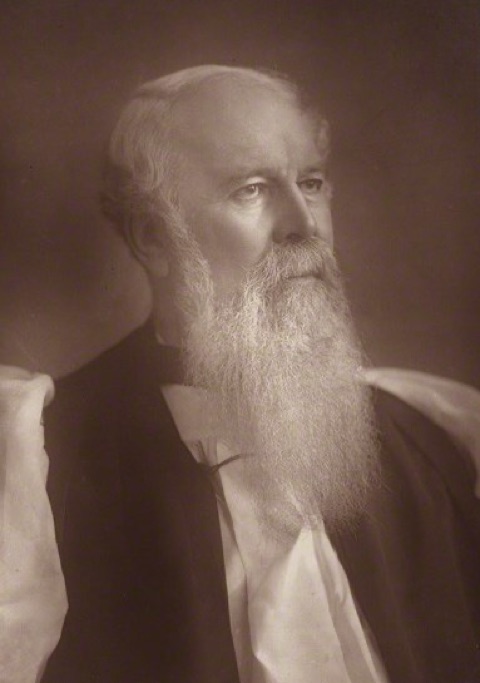
About the author
J.C. Ryle
J.C. Ryle (1816 to 1900 AD) was born in Macclesfield, Cheshire, the son of a wealthy banker, and was educated at Eton and Christ Church, Oxford. In this book he says his first clear doctrinal views came from studying the Thirty-Nine Articles at Eton and hearing a tutor lecture on them at Christ Church. When his father's bank failed in 1841 he turned to the ministry, was ordained in 1842, and served rural parishes in Suffolk. In those years he became the most prolific Evangelical writer in the Church of England, known for his penny tracts, his Expository Thoughts on the Gospels and Holiness. In 1880 he became the first Bishop of Liverpool, and he died in Liverpool in 1900.