Modernized edition · Full text · Free PDF/EPUB
A Call to Prayer in Modern English
Summary
- Published
- 1850 AD
- Type
- Evangelical tract on private prayer
- Length
- 11,000 words · 45 minutes
- Collection
- Christian Living
- Topics
- PrayerHolinessConversion
What is A Call to Prayer about?
A Call to Prayer is a tract by J.C. Ryle, first published in 1850. It presses one question, Do you pray?, and gives seven reasons for asking it, from the necessity of prayer for salvation to its place in holiness and happiness, then closes with counsel for the prayerless, for seekers, and for those who already pray.
Read the full summary (8 points, quotes, key themes)Show less
How the argument unfolds
- 01
Necessary for salvation. No one is saved by his prayers, but Ryle cannot find that anyone is saved without them, and no one can pray for another.
- 02
The mark of a true Christian. Every saint in Scripture and every convert at the mission stations prays, and secret prayer is the clearest evidence of the Spirit’s work.
- 03
The most neglected duty. Thousands never pray and tens of thousands pray by rote, because prayer is neither natural nor fashionable.
- 04
Great encouragement. Christ has opened the way, intercedes as Advocate, and gives the Spirit to help, and Scripture is full of promises and answered prayers.
- 05
The secret of eminent holiness. Ryle traces the difference between growing and stunted believers, in nineteen cases out of twenty, to their habits in private prayer.
- 06
The cause of backsliding. Christians fall in private long before they fall in public, and the fall usually begins with hurried or abandoned prayer.
- 07
Happiness and contentment. In a world of sorrow the best remedy is to carry every care to Christ, the friend who knows the human heart.
- 08
Three parting words. A warning to the prayerless, directions to the seeker, and twelve counsels to those who pray, from reverence to watchfulness.
Notable images & quotes
- The signed banknote. “A banknote without a signature at the bottom is nothing but a worthless piece of paper, while the stroke of a pen gives it all its value.” So a feeble prayer gains its worth when Christ endorses it.
- The Gibeonite pilgrims. Believers who never grow are like the Gibeonites: “Their bread is always dry and moldy, their shoes always old, and their garments always ripped and torn.”
- The crutches. Prayers read from a book are like crutches after a broken limb. Ryle accepts them for a time, but “I would like to see him strong enough to throw his crutches away.”
- The feather on the arrow. “Faith is to prayer what the feather is to the arrow: without it, prayer will not hit the mark.”
Key themes
- Saying prayers and praying. Ryle distinguishes the form from the reality: “It is one thing to say your prayers and quite another to pray.”
- Prayer and new life. Prayer is the breath of faith, and a faith that never speaks to God is no faith: “God has no mute children.”
- Prayer against sin. Prayer and sin cannot share a heart for long: “Prayer will consume sin, or sin will choke prayer.”
- Praying for others. Intercession enlarges the heart and moves the work of the gospel: “He loves me best who loves me in his prayers.”
Why read it today
Read it for its directness. Ryle does not let the reader hide behind church attendance, sound doctrine or family devotions. Each section ends with the same question, and he presses it until the reader answers it.
It is also a practical manual. The closing counsels deal with the real difficulties of praying: dull habit, lack of time, lack of words, and the temptation to cut prayer short when tired or busy. Ryle answers them with Scripture examples and plain comparisons drawn from doctors, merchants and builders.
Source edition: The complete tract in modern English, from an American Tract Society printing
Reader questions (9)Hide the questions
Questions about A Call to Prayer
Is there a modern English version of A Call to Prayer?
Yes. This is A Call to Prayer by J.C. Ryle in modern English. The language is modernized and the author's order and argument are kept. The full modernized text is free to read on this page.
Can I read A Call to Prayer online for free?
Yes. The complete text of this modern English edition is on this page, with no sign-up or paywall.
Is there a free PDF of A Call to Prayer?
Yes. The PDF and EPUB of this edition are free with an Updated Works account. Sign in with Google or an email link; no card is needed.
What is A Call to Prayer by J.C. Ryle about?
It is a short tract on private prayer. Ryle asks every reader whether he prays, gives seven reasons why the question matters, and closes with separate words to those who do not pray, to those who want salvation, and to those who already pray.
When was A Call to Prayer written?
It was first published in 1850, while Ryle was a parish minister in Suffolk, three decades before he became Bishop of Liverpool. In it he calls the work a tract and says his aim in sending it out is “to promote a spirit of prayerfulness.”
Who is the tract addressed to?
Chiefly to people who call themselves Christians in a Christian country. Ryle sets aside infants and the heathen, and speaks to churchgoers who may say prayers without ever truly praying.
Does Ryle teach that prayer saves a person?
No. He holds salvation by grace and says plainly, “I can find that no one will be saved by his prayers, yet I cannot find that without prayer anyone will be saved.” Prayer is the asking by which a sinner receives a pardon freely offered.
What does Ryle say to someone who thinks he must wait for faith before praying?
He calls this adding sin to sin. The prophets and apostles command the unconverted to call on God, and if a person wants faith and a new heart, he should cry to the Lord for them, since “Waiting comes from the devil.”
How much time does Ryle think a Christian should give to prayer?
He sets no fixed rule but asks that prayer be part of the business of every day, and at the least that a person “speak with God in the morning before you speak with the world”. He fears that many believers have little grace because they ask for little.
A Call to Prayer in Modern English · Full text
A Call to Prayer
“Men ought always to pray” (Luke 18:1).
“I will that men pray everywhere” (1 Tim 2:8).
I have a question to put to you. It is contained in three words: Do you pray?
It is a question that no one but you can answer. Your minister knows whether you attend public worship or not. Your relatives know whether you have family prayers in your home or not. Yet whether you pray in private or not is a matter between you and God alone.
I urge you in all affection to give careful attention to the subject I bring before you. Do not say that my question is too personal. If your heart is right in the sight of God, there is nothing in it to make you afraid. Do not brush aside my question by replying that you say your prayers. It is one thing to say your prayers and quite another to pray. Do not tell me that my question is unnecessary. Listen to me for a few minutes, and I will show you good reasons for asking it.
1. Prayer Is Necessary for Salvation
I ask whether you pray because prayer is absolutely necessary for a person’s salvation.
I say absolutely necessary, and I say so deliberately. I am not speaking now of infants or of those incapable of reason. I am not settling the state of the heathen. I know that where little is given, little will be required. I speak especially of those who call themselves Christians in a land like our own. Of such people I say that no man or woman who does not pray can expect to be saved.
I hold salvation by grace as strongly as anyone. I would gladly offer a free and full pardon to the greatest sinner who ever lived. I would not hesitate to stand by his dying bed and say, “Believe on the Lord Jesus Christ even now, and you shall be saved.” Yet I cannot see in the Bible that anyone can have salvation without asking for it. I cannot find anywhere that a sinner will receive pardon who will not so much as lift up his heart inwardly and say, “Lord Jesus, give it to me.” I can find that no one will be saved by his prayers, yet I cannot find that without prayer anyone will be saved.
It is not absolutely necessary for salvation that a person should read the Bible. Someone may have no education, or be blind, and still have Christ in his heart. Neither is it absolutely necessary to hear the public preaching of the gospel. A person may live where the gospel is not preached, or he may be bedridden or deaf. Yet the same thing cannot be said about prayer. It is absolutely necessary for salvation that a person should pray.
There is no royal road to health or to learning. Princes and kings, poor men and peasants, all alike must attend to the needs of their own bodies and their own minds. No one can eat, drink, or sleep by proxy. No one can have someone else learn the alphabet for him. All these are things everyone must do for himself, or they will not be done at all.
Just as it is with the mind and body, so it is with the soul. Certain things are absolutely necessary for the soul’s health and well-being, and each person must attend to them for himself. Each must repent for himself. Each must come to Christ for himself. And each must speak to God and pray for himself. You must do it yourself, because no one else can do it for you.
To be prayerless is to be without God, without Christ, without grace, without hope, and without heaven. It is to be on the road to hell. Now can you wonder that I ask the question: Do you pray?
2. Prayer Is the Surest Mark of a True Christian
I ask again whether you pray because a habit of prayer is one of the surest marks of a true Christian.
All the children of God on earth are alike in this respect. From the moment there is any life and reality in their religion, they pray. Just as the first sign of life in a newborn infant is the act of breathing, so the first act of men and women when they are born again is praying.
This is one of the common marks of all the elect of God: “They cry unto him day and night” (Luke 18:7). The Holy Spirit, who makes them new creatures, works in them the feeling of adoption and makes them cry, “Abba, Father” (Rom 8:15). When the Lord Jesus brings them to life, he gives them a voice and a tongue and says to them, “Be mute no more.” God has no mute children. It is as much a part of their new nature to pray as it is of a child to cry. They see their need of mercy and grace. They feel their emptiness and weakness. They cannot do otherwise than they do. They must pray.
I have looked carefully through the lives of God’s saints in the Bible. From Genesis to Revelation, I cannot find a single one whose story is told in any detail who was not a man of prayer. I find it mentioned as a characteristic of the godly that “they call on the Father” and that “they call on the name of the Lord Jesus Christ.” I find it recorded as a characteristic of the wicked that “they call not upon the Lord” (1 Pet 1:17; 1 Cor 1:2; Ps 14:4).
I have read the lives of many eminent Christians who have lived since Bible days. Some of them, I see, were rich and some were poor. Some were learned and some were unlearned. Some were Episcopalians and some were Christians of other names. Some were Calvinists and some were Arminians. Some loved to use a liturgy and some loved to use none. Yet one thing I see they all had in common: they have all been men of prayer.
I study the reports of missionary societies in our own times. I see with joy that heathen men and women are receiving the gospel in various parts of the globe. There are conversions in Africa, in New Zealand, in India, and in China. The people converted are by nature unlike one another in every respect. Yet one striking thing I observe at all the missionary stations: the converted people always pray.
I do not deny that a person may pray without heart and without sincerity. I do not claim for a moment that the mere fact of praying proves everything about a person’s soul. As in every other part of religion, so also in this, there may be deception and hypocrisy.
Still, this I do say: not praying is clear proof that a person is not yet a true Christian. He cannot really feel his sins. He cannot love God. He cannot feel himself indebted to Christ. He cannot long for holiness. He cannot desire heaven. He has yet to be born again and to be made a new creature. He may boast confidently of election, grace, faith, hope, and knowledge, and deceive ignorant people. Yet you may rest assured it is all empty talk if he does not pray.
Furthermore, of all the evidences of the real work of the Spirit, a habit of earnest private prayer is one of the most convincing that can be named. A man may preach from false motives. He may write books, make fine speeches, and seem diligent in good works, and still be a Judas Iscariot. Yet a man seldom goes into his private room and pours out his soul before God in secret unless he is in earnest. The Lord himself has set his stamp on prayer as the best proof of true conversion. When he sent Ananias to Saul in Damascus, he gave him no other evidence of Saul’s change of heart than this: “Behold, he prayeth” (Acts 9:11).
I know that much may go on in a person’s mind before he is brought to pray. He may have many convictions, desires, wishes, feelings, intentions, resolutions, hopes, and fears. Yet all these things are very uncertain evidences. They are found in ungodly people and often come to nothing. In many cases they last no longer than the morning cloud and the dew that passes away. One real, heartfelt prayer flowing from a broken and contrite spirit is worth all these things put together.
I know that the Holy Spirit, who calls sinners from their evil ways, often leads them by very slow degrees to an acquaintance with Christ. Yet the human eye can judge only by what it sees. I cannot call anyone justified until he believes, and I dare not say that anyone believes until he prays. I cannot understand a mute faith. The first act of faith will be to speak to God. Faith is to the soul what life is to the body, and prayer is to faith what breath is to life. How a person can live and not breathe is past my comprehension, and how a person can believe and not pray is past my comprehension too.
Never be surprised when you hear ministers of the gospel dwelling much on the importance of prayer. This is the point we want to bring you to, because we want to know that you pray. Your views of doctrine may be correct. Your love of Protestantism may be warm and unmistakable. Still, all this may be nothing more than head knowledge and party spirit. We want to know whether you are actually acquainted with the throne of grace, and whether you can speak to God as well as speak about God.
Do you wish to find out whether you are a true Christian? Then rest assured that my question is of the utmost importance: Do you pray?
3. Private Prayer Is the Most Neglected Duty
I ask whether you pray because there is no duty in religion so neglected as private prayer.
We live in days of abounding religious profession. There are more places of public worship now than there ever were before, and more people attending them than ever before. Yet in spite of all this public religion, I believe there is a vast neglect of private prayer. It is one of those private transactions between God and our souls that no human eye sees, and therefore one that people are tempted to pass over and leave undone.
I believe that thousands never utter a word of prayer at all. They eat. They drink. They sleep. They rise. They go out to their labor. They return to their homes. They breathe God’s air. They see God’s sun. They walk on God’s earth. They enjoy God’s mercies. They have dying bodies. They have judgment and eternity before them. Yet they never speak to God. They live like the beasts that perish. They behave like creatures without souls. They have not a single word to say to him in whose hand are their life, their breath, and all things, and from whose mouth they must one day receive their everlasting sentence. How dreadful this seems! Yet if the secrets of human hearts were only known, how common it is.
I believe there are tens of thousands whose prayers are nothing but a mere form, a set of words repeated by rote without a thought about their meaning. Some recite a few hasty sentences picked up in the nursery when they were children. Some content themselves with repeating the Creed, forgetting that there is not a single request in it. Some add the Lord’s Prayer, yet without the slightest desire that its solemn petitions be granted.
Many, even among those who use good forms, mutter their prayers after they have gotten into bed, or while they wash or dress in the morning. People may think what they please, yet they may depend on it that in the sight of God this is not praying. Words spoken without heart are as utterly useless to our souls as the drum-beating of the poor heathen before their idols. Where there is no heart, there may be lip-work and tongue-work, yet there is nothing God listens to; there is no prayer. I have no doubt that Saul said many a long prayer before the Lord met him on the road to Damascus. Yet it was not until his heart was broken that the Lord said, “He prayeth.”
Does this surprise you? Listen to me, and I will show you that I am not speaking as I do without reason. Do you think my assertions are exaggerated and unwarranted? Give me your attention, and I will soon show you that I am only telling you the truth.
Have you forgotten that it is not natural for anyone to pray? “The carnal mind is enmity against God.” The desire of the human heart is to get far away from God and have nothing to do with him. Its feeling toward him is not love, but fear. Why, then, should anyone pray when he has no real sense of sin, no real feeling of spiritual need, no thorough belief in unseen things, and no desire for holiness and heaven? Of all these things the vast majority of people know and feel nothing. The multitude walks in the broad way. I cannot forget this. Therefore I say boldly, I believe that few pray.
Have you forgotten that it is not fashionable to pray? It is one of the things many people would be rather ashamed to admit. Hundreds would sooner storm a breach or lead a desperate charge than confess publicly that they make a habit of prayer. Thousands, if obliged to sleep in the same room with a stranger, would lie down in bed without praying. To dress well, to go to theaters, and to be thought clever and agreeable: all this is fashionable, but not to pray. I cannot forget this. I cannot think a habit is common when so many seem ashamed to admit it. I believe that few pray.
Have you forgotten the lives that many live? Can we really believe people are praying against sin night and day when we see them plunging into it? Can we suppose they pray against the world when they are completely absorbed and taken up with its pursuits? Can we think they really ask God for grace to serve him when they do not show the slightest desire to serve him at all? Oh, no. It is as plain as daylight that the great majority of people either ask nothing of God or do not mean what they say when they do ask, which is just the same thing. Praying and sinning will never live together in the same heart. Prayer will consume sin, or sin will choke prayer. I cannot forget this. I look at people’s lives, and I believe that few pray.
Have you forgotten the deaths that many die? How many, as they draw near death, seem complete strangers to God! Not only are they sadly ignorant of his gospel, they are also sadly lacking in the ability to speak to him. There is a terrible awkwardness and shyness in their attempts to approach him. They seem to be taking up something completely new. They appear as if they needed an introduction to God, as if they had never talked with him before.
I remember hearing of a lady who was eager to have a minister visit her in her final illness. She asked him to pray with her. He asked her what he should pray for. She did not know and could not tell. She was utterly unable to name a single thing she wished him to ask God for her soul. All she seemed to want was the form of a minister’s prayers. I can quite understand this. Deathbeds are great revealers of secrets. I cannot forget what I have seen of sick and dying people. This also leads me to believe that few pray.
I cannot see your heart. I do not know your private history in spiritual things. Yet from what I see in the Bible and in the world, I am certain I cannot ask you a more necessary question than the one before you: Do you pray?
4. Prayer Has Great Encouragement
I ask whether you pray because prayer is an act in religion to which there is great encouragement.
There is everything on God’s part to make prayer easy, if people will only attempt it. Everything is ready on his side. Every objection is anticipated. Every difficulty is provided for. The crooked places are made straight, and the rough places are made smooth. No excuse is left for the prayerless person.
There is a way by which anyone, however sinful and unworthy, may draw near to God the Father. Jesus Christ has opened that way by the sacrifice he made for us on the cross. The holiness and justice of God need not frighten sinners and keep them back. Let them only cry to God in the name of Jesus, and plead his atoning blood, and they will find God on a throne of grace, willing and ready to hear. The name of Jesus is a never-failing passport for our prayers. In that name a sinner may draw near to God with boldness and ask with confidence. God has pledged himself to hear. Think of this. Is this not encouragement?
There is an Advocate and Intercessor always waiting to present the prayers of those who come to God through him. That Advocate is Jesus Christ. He mingles our prayers with the incense of his own almighty intercession. So mingled, they rise as a sweet fragrance before the throne of God. Poor as they are in themselves, they are mighty and powerful in the hand of our High Priest and Elder Brother. A banknote without a signature at the bottom is nothing but a worthless piece of paper, while the stroke of a pen gives it all its value. The prayer of a poor child of Adam is a feeble thing in itself, yet once endorsed by the hand of the Lord Jesus it accomplishes much.
There was an officer in the city of Rome who was appointed to keep his doors always open so he could receive any Roman citizen who applied to him for help. Just so, the ear of the Lord Jesus is ever open to the cry of all who need mercy and grace. It is his office to help them. Their prayer is his delight. Think of this. Is this not encouragement?
There is the Holy Spirit, ever ready to help us in our weaknesses in prayer. It is part of his special office to assist us in our efforts to speak with God. We need not be cast down and distressed by the fear of not knowing what to say, because the Spirit will give us words if we seek his aid. The prayers of the Lord’s people are the inspiration of the Lord’s Spirit, the work of the Holy Spirit who dwells within them as the Spirit of grace and supplication. Surely the Lord’s people may well hope to be heard. It is not merely they who pray, but the Holy Spirit pleading in them. Reader, think of this. Is this not encouragement?
There are exceedingly great and precious promises to those who pray. What did the Lord Jesus mean when he spoke such words as these? “Ask, and it shall be given you; seek, and ye shall find; knock, and it shall be opened unto you: for every one that asketh, receiveth; and he that seeketh, findeth; and to him that knocketh, it shall be opened” (Matt 7:7-8). “All things whatsoever ye shall ask in prayer believing, ye shall receive” (Matt 21:22). “Whatsoever ye shall ask in my name, that will I do, that the Father may be glorified in the Son. If ye shall ask anything in my name, I will do it” (John 14:13-14). What did the Lord mean when he spoke the parables of the friend at midnight and the persistent widow (Luke 11:5; Luke 18:1)? Think over these passages. If this is not encouragement to pray, words have no meaning.
There are wonderful examples in Scripture of the power of prayer. Nothing seems too great, too hard, or too difficult for prayer to do. It has obtained things that seemed impossible and out of reach. It has won victories over fire, air, earth, and water. Prayer opened the Red Sea. Prayer brought water from the rock and bread from heaven. Prayer made the sun stand still. Prayer brought fire from the sky onto Elijah’s sacrifice. Prayer turned the counsel of Ahithophel into foolishness. Prayer overthrew the army of Sennacherib. Well might Mary, Queen of Scots, say, “I fear John Knox’s prayers more than an army of ten thousand men.”
Prayer has healed the sick. Prayer has raised the dead. Prayer has brought about the conversion of souls. “The child of many prayers,” said an old Christian to Augustine’s mother, “shall never perish.” Prayer, diligent effort, and faith can do anything. Nothing seems impossible when a person has the spirit of adoption. “Let me alone” is the remarkable saying of God to Moses when Moses was about to intercede for the children of Israel; the Aramaic version has it, “Leave off praying” (Exod 32:10). As long as Abraham asked mercy for Sodom, the Lord went on giving. He never stopped giving until Abraham stopped praying. Think of this. Is this not encouragement?
What more could anyone need to persuade him to take a step in religion than the things I have just told him about prayer? What more could be done to make the path to the mercy seat easy and to remove every stumbling block from the sinner’s way? Surely if the devils in hell had such a door set open before them, they would leap for gladness and make the very pit ring with joy.
Yet where will the person hide his head at last who neglects such glorious encouragements? What can possibly be said for someone who, after all this, dies without prayer? Surely I may feel anxious that you should not be that person. Surely I may well ask: Do you pray?
5. Diligence in Prayer Is the Secret of Eminent Holiness
I ask whether you pray because diligence in prayer is the secret of eminent holiness.
Beyond dispute, there is a vast difference among true Christians. An immense distance separates the foremost from those farthest behind in the army of God. They are all fighting the same good fight, yet how much more valiantly some fight than others. They are all doing the Lord’s work, yet how much more some do than others. They are all light in the Lord, yet how much more brightly some shine than others. They are all running the same race, yet how much faster some advance than others. They all love the same Lord and Savior, yet how much more some love him than others. I ask any true Christian whether this is not the case. Are these things not so?
There are some of the Lord’s people who seem never able to move forward from the time of their conversion. They are born again, yet they remain infants all their lives. You hear from them the same old experience. You notice in them the same lack of spiritual appetite and the same lack of interest in anything beyond their own little circle that you noticed ten years ago. They are pilgrims indeed, yet pilgrims like the Gibeonites of old. Their bread is always dry and moldy, their shoes always old, and their garments always ripped and torn. I say this with sorrow and grief, yet I ask any real Christian: is it not true?
There are others of the Lord’s people who seem to be always advancing. They grow like grass after rain. They increase like Israel in Egypt. They press on like Gideon, sometimes weary, yet always pursuing. They are continually adding grace to grace, faith to faith, and strength to strength. Every time you meet them, their hearts seem larger and their spiritual stature taller and stronger. Every year they appear to see more, know more, believe more, and feel more in their religion. They not only have good works to prove the reality of their faith, but they are zealous for them. They not only do well, but they are unwearied in doing good. They attempt great things, and they do great things. When they fail, they try again, and when they fall, they are soon up again.
All this time they think themselves poor, unprofitable servants and imagine they do nothing at all. These are the believers who make religion lovely and beautiful in the eyes of all. They compel praise even from the unconverted and win golden opinions even from selfish people of the world. It does you good to see them, to be with them, and to hear them. When you meet them, you could almost believe that, like Moses, they had just come out from the presence of God. When you part from them, you feel warmed by their company, as if your soul had been near a fire. I know such people are rare. I only ask, are there not many like them?
Now how can we account for the difference I have just described? What is the reason some believers are so much brighter and holier than others? I believe the difference, in nineteen cases out of twenty, arises from different habits in private prayer. I believe that those who are not eminently holy pray little, and those who are eminently holy pray much.
I expect this opinion will startle some readers. I have little doubt that many look on eminent holiness as a kind of special gift that only a few may presume to aim for. They admire it at a distance in books. They think it beautiful when they see an example close at hand. Yet the notion that it is within the reach of any but a very few never seems to enter their minds. In short, they consider it a kind of monopoly granted to a few favored believers, and certainly not to all.
I believe this is a most dangerous mistake. Spiritual greatness, like natural greatness, depends largely on the faithful use of means within everyone’s reach. Of course I do not say we have a right to expect a miraculous grant of intellectual gifts. Still, this I do say: once a person is converted to God, his progress in holiness will largely match his diligence in using God’s appointed means. And I assert confidently that the principal means by which most believers have become great in the church of Christ is the habit of diligent private prayer.
Look through the lives of the brightest and best of God’s servants, whether in the Bible or outside it. See what is written of Moses, David, Daniel, and Paul. Notice what is recorded of the Reformers Luther and Bradford. Observe what is told of the private devotions of Whitefield, Cecil, Venn, Bickersteth, and McCheyne. Tell me of a single one in all the noble fellowship of saints and martyrs who did not bear this mark most prominently: he was a man of prayer. Count on it: prayer is power.
Prayer obtains fresh and continued outpourings of the Spirit. He alone begins the work of grace in a person’s heart. He alone can carry it forward and make it prosper. Yet the good Spirit loves to be pleaded with, and those who ask most will have most of his influence.
Prayer is the surest remedy against the devil and besetting sins. No sin will ever stand firm when it is earnestly prayed against. No devil will long keep dominion over us when we plead with the Lord to cast him out. Yet we must spread out our whole case before our heavenly Physician if he is to give us daily relief.
Do you wish to grow in grace and be a devoted Christian? Be very sure that if you wish it, you could not face a more important question than this: Do you pray?
6. Neglect of Prayer Is a Great Cause of Backsliding
I ask whether you pray because neglect of prayer is one great cause of backsliding.
There is such a thing as going back in religion after making a good profession. People may run well for a season, like the Galatians, and then turn aside after false teachers. They may profess loudly while their feelings are warm, as Peter did, and then deny their Lord in the hour of trial. They may lose their first love, as the Ephesians did. They may cool down in their zeal to do good, like Mark the companion of Paul. They may follow an apostle for a season and then, like Demas, go back to the world. All these things people may do.
It is a miserable thing to be a backslider. Of all the unhappy things that can happen to a person, I suppose it is the worst. A stranded ship, a broken-winged eagle, a garden overrun with weeds, a harp without strings, and a church in ruins: all these are sad sights, yet a backslider is a sadder sight still. A wounded conscience, a mind sick of itself, a memory full of self-reproach, a heart pierced through with the Lord’s arrows, and a spirit broken under a load of inward accusation: all this is a taste of hell. It is a hell on earth. Truly that saying of the wise man is solemn and weighty: “The backslider in heart shall be filled with his own ways” (Prov 14:14).
Now what is the cause of most backslidings? As a general rule, I believe one of the chief causes is neglect of private prayer. Of course the secret history of spiritual falls will not be known until the last day. I can only give my opinion as a minister of Christ and a student of the human heart. That opinion, I repeat distinctly, is that backsliding generally begins with neglect of private prayer.
Bibles are read without prayer, sermons are heard without prayer, and marriages are entered into without prayer. Journeys are undertaken without prayer, homes are chosen without prayer, friendships are formed without prayer, and the daily act of private prayer itself is hurried over or gone through without heart. These are the kinds of downward steps by which many a Christian sinks into spiritual paralysis, or reaches the point where God allows him to suffer a tremendous fall.
This is the process that forms the lingering Lots, the unstable Samsons, the wife-idolizing Solomons, the inconsistent Asas, the pliable Jehoshaphats, and the overly anxious Marthas, so many of whom are found in the church of Christ. Often the simple history of such cases is this: they became careless about private prayer.
You may be very sure people fall in private long before they fall in public. They are backsliders on their knees long before they backslide openly in the eyes of the world. Like Peter, they first disregard the Lord’s warning to watch and pray. Then, like Peter, their strength is gone, and in the hour of temptation they deny their Lord.
The world notices their fall and scoffs loudly, yet the world knows nothing of the real reason. The heathen once succeeded in making a well-known Christian offer incense to an idol by threatening him with a punishment worse than death. They then triumphed greatly at the sight of his cowardice and apostasy. Yet the heathen did not know the fact history tells us: on that very morning he had left his bedroom hastily, without finishing his usual prayers.
If you are truly a Christian, I trust you will never be a backslider. Yet if you do not wish to be a backsliding Christian, remember the question I ask you: Do you pray?
7. Prayer Is a Means of Happiness and Contentment
I ask, lastly, whether you pray because prayer is one of the best means of happiness and contentment.
We live in a world where sorrow abounds. This has always been its state since sin came in. There cannot be sin without sorrow. Until sin is driven out of the world, it is futile for anyone to suppose he can escape sorrow.
Some, without doubt, have a larger cup of sorrow to drink than others. Yet few people live long without sorrows or cares of one sort or another. Our bodies, our property, our families, our children, our relatives, our servants, our friends, our neighbors, and our earthly callings: every one of these is a fountain of care. Sicknesses, deaths, losses, disappointments, partings, separations, ingratitude, and slander: all these are common things. We cannot get through life without them. Some day or other they find us out. The greater our affections, the deeper our afflictions, and the more we love, the more we have to weep.
And what is the best means of cheerfulness in a world like this? How shall we pass through this valley of tears with the least pain? I know no better means than the habit of taking everything to God in prayer.
This is the plain advice the Bible gives, both in the Old Testament and the New. What does the psalmist say? “Call upon me in the day of trouble, and I will deliver thee, and thou shalt glorify me” (Ps 50:15). “Cast thy burden upon the Lord, and he shall sustain thee: he shall never suffer the righteous to be moved” (Ps 55:22). What does the apostle Paul say? “Be careful for nothing; but in everything, by prayer and supplication with thanksgiving, let your requests be made known unto God: and the peace of God, which passeth all understanding shall keep your hearts and minds through Christ Jesus” (Phil 4:6-7). What does the apostle James say? “Is any afflicted among you? let him pray” (Jas 5:13).
This was the practice of all the saints whose history is recorded in the Scriptures. This is what Jacob did when he feared his brother Esau. This is what Moses did when the people were ready to stone him in the wilderness. This is what Joshua did when Israel was defeated before the men of Ai. This is what David did when he was in danger at Keilah. This is what Hezekiah did when he received the letter from Sennacherib. This is what the church did when Peter was put in prison. This is what Paul did when he was thrown into the dungeon at Philippi.
The only way to be really happy in a world like this is to keep casting all our cares on God. Trying to carry their own burdens is what so often makes believers sad. If they will tell their troubles to God, he will enable them to bear them as easily as Samson carried the gates of Gaza. If they insist on keeping their troubles to themselves, they will find one day that even a grasshopper becomes a burden.
There is a friend always waiting to help us, if we will only pour out our sorrow to him. He is a friend who pitied the poor, the sick, and the sorrowful when he was on earth. He is a friend who knows the human heart, for he lived thirty-three years as a man among us. He is a friend who can weep with those who weep, for he was a man of sorrows and acquainted with grief. He is a friend who is able to help us, for there was never an earthly pain he could not cure. That friend is Jesus Christ. The way to be happy is to be always opening our hearts to him. Oh, that we were all like that poor Black Christian who answered only one thing when threatened and punished: “I must tell the Lord.”
Jesus can make those happy who trust him and call on him, whatever their outward condition may be. He can give them peace of heart in a prison, contentment in the midst of poverty, comfort in the midst of bereavement, and joy on the brink of the grave. There is a mighty fullness in him for all his believing members, a fullness ready to be poured out on everyone who will ask in prayer. Oh, that people would understand that happiness does not depend on outward circumstances, but on the state of the heart.
Prayer can lighten crosses for us, however heavy they are. It can bring down to our side one who will help us bear them. Prayer can open a door for us when our way seems hedged up. It can bring down one who will say, “This is the way, walk in it.” Prayer can let in a ray of hope when all our earthly prospects seem darkened. It can bring down one who will say, “I will never leave thee, nor forsake thee.” Prayer can obtain relief for us when those we love most are taken away and the world feels empty. It can bring down one who can fill the gap in our hearts with himself, and say to the waves within, “Peace; be still.” Oh, that people were not so much like Hagar in the wilderness, blind to the well of living waters close beside them.
I want you to be happy. I know I cannot ask you a more useful question than this: Do you pray?
And now it is high time for me to bring this tract to an end. I trust I have brought before you things that will be seriously considered. I pray to God with all my heart that this consideration may be blessed to your soul.
A Word to Those Who Do Not Pray
First, let me speak a parting word to those who do not pray. I dare not suppose that all who read these pages are praying people. If you are a prayerless person, allow me to speak to you today on God’s behalf.
Prayerless reader, I can only warn you, yet I do warn you most solemnly. I warn you that you are in a position of fearful danger. If you die in your present state, you are a lost soul. You will rise again only to be eternally miserable. I warn you that of all professing Christians, you are most utterly without excuse. There is not a single good reason you can show for living without prayer.
It is useless to say you do not know how to pray. Prayer is the simplest act in all religion. It is simply speaking to God. It needs neither learning, nor wisdom, nor book knowledge to begin it. It needs nothing but heart and will. The weakest infant can cry when he is hungry. The poorest beggar can hold out his hand for alms without waiting to find fine words. The most ignorant person will find something to say to God, if only he is willing.
It is useless to say you have no convenient place to pray. Anyone can find a place private enough, if he is willing. Our Lord prayed on a mountain, Peter on the housetop, Isaac in the field, Nathanael under the fig tree, and Jonah in the whale’s belly. Any place can become a private prayer room, a sanctuary, and a Bethel, and be to us the presence of God.
It is useless to say you have no time. There is plenty of time, if people will use it. Time may be short, yet time is always long enough for prayer. Daniel had the affairs of a kingdom on his hands, and yet he prayed three times a day. David was ruler over a mighty nation, and yet he says, “Evening and morning and at noon will I pray” (Ps 55:17). When time is really wanted, time can always be found.
It is useless to say you cannot pray until you have faith and a new heart, and that you must sit still and wait for them. That is adding sin to sin. It is bad enough to be unconverted and going to hell. It is even worse to say, “I know it, yet I will not cry for mercy.” This is a kind of argument that has no warrant in Scripture. “Call ye upon the Lord,” says Isaiah, “while he is near” (Isa 55:6). “Take with you words, and turn unto the Lord,” says Hosea (Hos 14:2). “Repent and pray,” says Peter to Simon Magus (Acts 8:22). If you want faith and a new heart, go and cry to the Lord for them. The very attempt to pray has often brought a dead soul to life.
Oh, prayerless reader, who and what are you that you will not ask anything of God? Have you made a covenant with death and hell? Are you at peace with the worm and the fire? Have you no sins to be pardoned? Have you no fear of eternal torment? Have you no desire for heaven? Oh, that you would wake up from your present folly. Oh, that you would consider your final end. Oh, that you would arise and call upon God.
Sadly, a day is coming when many will pray loudly, “Lord, Lord, open to us,” yet all too late. On that day many who would never cry to God will cry to the rocks to fall on them and to the hills to cover them. In all affection, I warn you: take care that this does not become the end of your soul. Salvation is very near you. Do not lose heaven for lack of asking.
A Word to Those Who Desire Salvation
Second, let me speak to those who have real desires for salvation, yet do not know what steps to take or where to begin. I cannot help hoping that some readers are in this state of mind. Even if there is only one such person, I must offer affectionate counsel.
In every journey there must be a first step. There must be a change from sitting still to moving forward. Israel’s travels from Egypt to Canaan were long and wearisome. Forty years passed before they crossed the Jordan. Yet there was someone who moved first when they marched from Rameses to Succoth. When does a man really take his first step in coming out from sin and the world? He does it on the day he first prays with his heart.
In every building the first stone must be laid, and the first blow must be struck. The ark took a hundred and twenty years to build. Yet there was a day when Noah laid his ax to the first tree he cut down to make it. The temple of Solomon was a glorious building. Yet there was a day when the first huge stone was laid deep in Mount Moriah. When does the building of the Spirit really begin to appear in a person’s heart? It begins, as far as we can judge, when he first pours out his heart to God in prayer.
If you desire salvation and want to know what to do, I advise you to go this very day to the Lord Jesus Christ. Find the first private place you can, and earnestly and wholeheartedly plead with him in prayer to save your soul.
Tell him that you have heard he receives sinners and has said, “Him that cometh unto me I will in nowise cast out.” Tell him that you are a poor, vile sinner, and that you come to him relying on his own invitation. Tell him you put yourself wholly and entirely in his hands. Tell him that you feel vile, helpless, and hopeless in yourself, and that unless he saves you, you have no hope of being saved at all.
Plead with him to deliver you from the guilt, the power, and the consequences of sin. Plead with him to pardon you and wash you in his own blood. Plead with him to give you a new heart and plant the Holy Spirit in your soul. Plead with him to give you grace and faith, and the will and power to be his disciple and servant from this day forever. Oh, reader, go this very day and tell these things to the Lord Jesus Christ, if you really are in earnest about your soul.
Tell him in your own way and your own words. If a doctor came to see you when you were sick, you could tell him where you felt pain. If your soul truly feels its disease, you can surely find something to tell Christ.
Do not doubt his willingness to save you because you are a sinner. Saving sinners is Christ’s very office. He says himself, “I came not to call the righteous, but sinners to repentance” (Luke 5:32).
Do not wait because you feel unworthy. Wait for nothing. Wait for no one. Waiting comes from the devil. Go to Christ just as you are. The worse you are, the more need you have to turn to him. You will never mend yourself by staying away.
Do not be afraid because your prayer is stammering, your words are feeble, and your language is poor. Jesus can understand you. Just as a mother understands the first lisping words of her infant, so the blessed Savior understands sinners. He can read a sigh and see a meaning in a groan.
Do not despair because you do not get an answer immediately. While you are speaking, Jesus is listening. If he delays an answer, it is only for wise reasons, and to test whether you are in earnest. The answer will surely come. Even if it is delayed, wait for it. It will surely come.
Oh, reader, if you have any desire to be saved, remember the advice I have given you today. Act upon it honestly and wholeheartedly, and you will be saved.
A Word to Those Who Pray
Third and finally, let me speak to those who do pray. I trust that some who read this tract know well what prayer is and have the Spirit of adoption. To all such, I offer a few words of brotherly counsel and exhortation. The incense offered in the tabernacle was commanded to be made in a particular way. Not every kind of incense would do. Let us remember this, and be careful about both the content and the manner of our prayers.
Brothers and sisters who pray, if I know anything of a Christian’s heart, you are often sick of your own prayers. You never enter into the apostle’s words, “When I would do good, evil is present with me,” so thoroughly as you sometimes do on your knees. You can understand David’s words, “I hate vain thoughts.” You can sympathize with that poor Khoikhoi convert who was overheard praying, “Lord, deliver me from all my enemies, and above all, from that bad man: myself.”
There are few children of God who do not often find the season of prayer a season of conflict. The devil has special wrath against us when he sees us on our knees. Yet I believe that prayers which cost us no trouble should be viewed with great suspicion. I believe we are very poor judges of the goodness of our prayers, and that the prayer which pleases us least often pleases God most. Allow me then, as a companion in the Christian warfare, to offer you a few words of exhortation. One thing, at least, we all feel: we must pray. We cannot give it up. We must go on.
I commend then to your attention the importance of reverence and humility in prayer. Let us never forget what we are, and what a solemn thing it is to speak with God. Let us beware of rushing into his presence with carelessness and levity. Let us say to ourselves: “I am on holy ground. This is none other than the gate of heaven. If I do not mean what I say, I am trifling with God. If I regard iniquity in my heart, the Lord will not hear me.” Let us keep in mind the words of Solomon: “Be not rash with thy mouth, and let not thy heart be hasty to utter anything before God; for God is in heaven, and thou on earth” (Eccl 5:2). When Abraham spoke to God, he said, “I am dust and ashes.” When Job spoke to God, he said, “I am vile.” Let us do likewise.
I commend to you the importance of praying spiritually. By that I mean we should always labor to have the direct help of the Spirit in our prayers, and beware above all things of formality. Nothing is so spiritual that it cannot become a mere form, and this is especially true of private prayer. Without realizing it, we can slip into the habit of using the most fitting words and offering the most scriptural petitions, yet do it all by rote without feeling it, walking daily around an old beaten path.
I want to touch this point with caution and delicacy. I know there are certain great things we need every day, and there is nothing necessarily formal in asking for them in the same words. The world, the devil, and our hearts are the same every day. Out of necessity we must go over old ground daily. Yet I say this: we must be very careful on this point. Even if the skeleton and outline of our prayers become almost a set form by habit, let us strive to make the clothing and filling out of our prayers come as much as possible from the Spirit.
As for praying out of a book in our private devotions, it is a habit I cannot praise. If we can tell our doctors the state of our bodies without a book, we ought to be able to tell the state of our souls to God. I have no objection to a man using crutches when he is first recovering from a broken limb. It is better to use crutches than not to walk at all. Yet if I saw him on crutches all his life, I would not consider it a matter for congratulation. I would like to see him strong enough to throw his crutches away.
I commend to you the importance of making prayer a regular business of life. I might say something about the value of regular times in the day for prayer. God is a God of order. The hours for morning and evening sacrifice in the Jewish temple were not fixed as they were without meaning. Disorder is eminently one of the fruits of sin. Yet I would not bring anyone under bondage.
I say only this: it is essential to your soul’s health to make praying part of the business of every twenty-four hours in your life. Just as you allot time to eating, sleeping, and business, allot time to prayer as well. Choose your own hours and seasons. At the very least, speak with God in the morning before you speak with the world, and speak with God at night after you are done with the world. Settle it in your minds that prayer is one of the great matters of every day. Do not push it into a corner. Do not give it the scraps and parings of your duty. Whatever else you make a business of, make a business of prayer.
I commend to you the importance of perseverance in prayer. Once you have begun the habit, never give it up. Your heart will sometimes say, “You have had family prayers; what great harm is there if you leave private prayer undone?” Your body will sometimes say, “You are unwell, or sleepy, or weary; you do not need to pray.” Your mind will sometimes say, “You have important business to attend to today; cut short your prayers.” Look on all such suggestions as coming directly from Satan. They are all as good as saying, “Neglect your soul.”
I do not claim that prayers must always be the same length, yet I do say this: let no excuse make you give up prayer. Paul said, “Continue in prayer,” and, “Pray without ceasing.” He did not mean that people should be always on their knees. He meant that our prayers should be like the continual burnt offering, steadily persevered in every day. They should be like seedtime and harvest, and summer and winter, unceasingly coming around at regular seasons. They should be like the fire on the altar, not always consuming sacrifices, yet never completely going out.
Never forget that you can tie together morning and evening devotions with an endless chain of short, spontaneous prayers throughout the day. Even in company, in business, or in the very streets, you can be silently sending up little winged messengers to God, as Nehemiah did in the very presence of Artaxerxes. And never think that time given to God is wasted. A nation does not become poorer because it gives up one year of working days in seven by keeping the Sabbath. A Christian never finds himself a loser in the long run by persevering in prayer.
I commend to you the importance of earnestness in prayer. It is not necessary for a person to shout, scream, or be very loud to prove that he is in earnest. Yet it is desirable that we be hearty, fervent, and warm, asking as if we were truly invested in what we are doing. It is the “effectual fervent” prayer that “availeth much.” This is the lesson taught us by the expressions Scripture uses for prayer. It is called “crying, knocking, wrestling, laboring, striving.”
This is the lesson taught us by Scripture examples. Jacob is one. He said to the angel at Penuel, “I will not let thee go, except thou bless me” (Gen 32:26). Daniel is another. Hear how he pleaded with God: “O Lord, hear; O Lord, forgive; O Lord, hearken and do; defer not, for thine own sake, O my God” (Dan 9:19). Our Lord Jesus Christ is another. It is written of him, “In the days of his flesh, he offered up prayers and supplications with strong crying and tears” (Heb 5:7).
Sadly, how unlike this are many of our prayers! How tame and lukewarm they seem by comparison. How truly God might say to many of us, “You do not really want what you pray for.” Let us try to correct this fault. Let us knock loudly at the door of grace, like Mercy in Pilgrim’s Progress, as if we must perish unless heard. Let us settle it in our minds that cold prayers are a sacrifice without fire. Let us remember the story of Demosthenes, the great orator, when a man came to him wanting him to plead his cause. Demosthenes listened without attention while the man told his story without earnestness. The man saw this and cried out anxiously that it was all true. “Ah,” said Demosthenes, “I believe you now.”
I commend to you the importance of praying with faith. We should strive to believe that our prayers are heard, and that if we ask things according to God’s will, we will be answered. This is the plain command of our Lord Jesus Christ: “Whatsoever things ye desire, when ye pray, believe that ye receive them, and ye shall have them” (Mark 11:24). Faith is to prayer what the feather is to the arrow: without it, prayer will not hit the mark. We should cultivate the habit of pleading promises in our prayers. We should take some promise with us and say, “Lord, here is your own word pledged. Do for us as you have said.” This was the habit of Jacob, Moses, and David. Psalm 119 is full of things asked “according to thy word.”
Above all, we should cultivate the habit of expecting answers to our prayers. We should act like the merchant who sends his ships to sea: we should not be satisfied unless we see some return. Sadly, there are few points on which Christians fall short as much as this. The church at Jerusalem prayed without ceasing for Peter in prison, yet when the prayer was answered, they could hardly believe it (Acts 12:15). Traill gives a solemn saying: “There is no surer mark of trifling in prayer than when men are careless what they get by prayer.”
I commend to you the importance of boldness in prayer. There is an unseemly familiarity in some people’s prayers that I cannot praise. Yet there is such a thing as a holy boldness, which is deeply to be desired. I mean the boldness of Moses when he pleads with God not to destroy Israel: “Wherefore,” he says, “should the Egyptians speak and say, For mischief did he bring them out, to slay them in the mountains? Turn from thy fierce anger” (Exod 32:12). I mean the boldness of Joshua when the children of Israel were defeated before the men of Ai: “What,” he says, “wilt thou do unto thy great name?” (Josh 7:9).
This is the boldness for which Luther was remarkable. Someone who heard him praying said, “What a spirit, what a confidence was in his very expressions. With such a reverence he pleaded, as one begging of God, and yet with such hope and assurance, as if he spoke with a loving father or friend.” This is the boldness that distinguished Bruce, a great Scottish minister of the seventeenth century. His prayers were said to be “like bolts shot up into heaven.” Here too I fear we sadly fall short. We do not sufficiently realize the believer’s privileges. We do not plead as often as we might, “Lord, are we not your own people? Is it not for your glory that we should be sanctified? Is it not for your honor that your gospel should increase?”
I commend to you the importance of fullness in prayer. I do not forget that our Lord warns us against the example of the Pharisees, who for a pretense made long prayers, and commands us not to use vain repetitions when we pray. On the other hand, I cannot forget that he gave his own approval to large and long devotions by continuing all night in prayer to God.
In any case, we are not likely today to err on the side of praying too much. Might it not rather be feared that many believers in this generation pray too little? Is not the actual amount of time many Christians give to prayer, taken all together, very small? I am afraid these questions cannot be answered satisfactorily. I am afraid the private devotions of many are painfully scanty and limited, just enough to prove they are alive and no more. They really seem to want little from God. They seem to have little to confess, little to ask for, and little to thank him for.
Sadly, this is altogether wrong. Nothing is more common than to hear believers complaining that they are not making progress. They tell us they do not grow in grace as they could wish. Should we not rather suspect that many have quite as much grace as they ask for? Is not the true explanation for many that they have little because they ask little? The cause of their weakness lies in their own stunted, dwarfish, clipped, contracted, hurried, narrow, diminutive prayers. They have not, because they ask not. Oh, we are not restricted in Christ, but in ourselves. The Lord says, “Open thy mouth wide, and I will fill it.” Yet we are like the king of Israel who struck the ground three times and stopped, when he should have struck it five or six times.
I commend to you the importance of particularity in prayer. We should not be content with broad, general petitions. We ought to specify our needs before the throne of grace. It should not be enough to confess that we are sinners; we should name the sins of which our conscience tells us we are most guilty. It should not be enough to ask for holiness; we should name the graces in which we feel most deficient. It should not be enough to tell the Lord we are in trouble; we should describe our trouble and all its particular details.
This is what Jacob did when he feared his brother Esau: he tells God exactly what he fears (Gen 32:11). This is what Eliezer did when he sought a wife for his master’s son: he lays before God precisely what he needs (Gen 24:12). This is what Paul did when he had a thorn in the flesh: he pleaded with the Lord (2 Cor 12:8).
This is true faith and confidence. We should believe that nothing is too small to be named before God. What would we think of a patient who told his doctor he was ill, yet never went into specifics? What would we think of a wife who told her husband she was unhappy, yet did not name the cause? What would we think of a child who told his father he was in trouble, yet nothing more? Christ is the true bridegroom of the soul, the true physician of the heart, and the real father of all his people. Let us show that we feel this by being unreserved in speaking with him. Let us hide no secrets from him. Let us tell him everything in our hearts.
I commend to you the importance of intercession in our prayers. We are all selfish by nature, and our selfishness tends to cling to us even after we are converted. There is a tendency in us to think only of our own souls, our own spiritual conflicts, and our own progress in religion, and to forget others. Against this tendency we all need to watch and strive, and not least in our prayers. We should aim to have a public spirit. We should stir ourselves up to name other names besides our own before the throne of grace. We should try to carry in our hearts the whole world, the heathen, the Jews, Roman Catholics, the body of true believers, the professing Protestant churches, the country in which we live, the congregation to which we belong, the household in which we live, and the friends and relatives we are connected with. For each and all of these we should plead.
This is the highest Christian love. He loves me best who loves me in his prayers. This is for our soul’s health, for it enlarges our sympathies and expands our hearts. This is for the benefit of the church. The wheels of all the machinery for spreading the gospel are moved by prayer. Those who intercede like Moses on the mountain do as much for the Lord’s cause as those who fight like Joshua in the thick of the battle. This is to be like Christ. He bears the names of his people, as their High Priest, before the Father. Oh, the privilege of being like Jesus! This is to be a true helper to ministers. If I must choose a congregation, give me a people who pray.
I commend to you the importance of thankfulness in prayer. I know well that asking God is one thing and praising God is another. Yet I see so close a connection between prayer and praise in the Bible that I dare not call anything true prayer in which thankfulness has no part. It is not for nothing that Paul says, “By prayer and supplication, with thanksgiving, let your requests be made known unto God” (Phil 4:6). Again he says, “Continue in prayer, and watch in the same with thanksgiving” (Col 4:2).
It is by mercy that we are not in hell. It is by mercy that we have the hope of heaven. It is by mercy that we live in a land of spiritual light. It is by mercy that we have been called by the Spirit and not left to reap the fruit of our own ways. It is by mercy that we still live and have opportunities to glorify God, actively or passively. Surely these thoughts should crowd our minds whenever we speak with God. Surely we should never open our lips in prayer without blessing God for the free grace by which we live, and for his lovingkindness that endures forever. Never was there an eminent saint who was not full of thankfulness. Paul hardly ever writes a letter without beginning with thankfulness. Men like Whitefield in the last century, and Bickersteth in our time, abounded in thankfulness. Oh, reader, if we want to be bright and shining lights in our day, we must cherish a spirit of praise. Let our prayers be thankful prayers.
I commend to you the importance of watchfulness over your prayers. Prayer is the point in religion where you must be most of all on your guard. Here true religion begins, here it flourishes, and here it decays. Tell me what a man’s prayers are, and I will soon tell you the state of his soul. Prayer is the spiritual pulse, by which spiritual health can be tested. Prayer is the spiritual barometer, by which we can know whether it is fair or stormy in our hearts.
Oh, let us keep a continual eye on our private devotions. Here is the pith and marrow of our practical Christianity. Sermons, books, tracts, committee meetings, and the company of good people are all good in their way, yet they will never make up for the neglect of private prayer. Mark well the places, company, and companions that unsettle your heart for communion with God and make your prayers drag heavily. There be on your guard. Watch closely which friends and which occupations leave your soul in the most spiritual frame of mind, and most ready to speak with God. Cling to these and hold fast. If you take care of your prayers, nothing will go very wrong with your soul.
I offer these points for your private consideration. I do so in all humility. I know no one who needs to be reminded of them more than I do myself. Yet I believe they are God’s own truth, and I long for myself and all I love to feel them more deeply.
I want the times we live in to be praying times. I want the Christians of our day to be praying Christians. I want the church to be a praying church. My heart’s desire and prayer in sending out this tract is to promote a spirit of prayerfulness. I want those who have never prayed yet to arise and call upon God, and I want those who do pray to make sure they are not praying amiss.
Finis
Keep this book
Free PDF/EPUB
It stays free to read here. Choose how you would like to take it with you.
One free account opens 550+ books and saves your place on every device. Google sign-in or an email link. No card.
Theme
Typeface
Size
Save your place
A free account remembers where you stopped, on your phone or at your desk, and adds the PDF/EPUB to your library.
Create a free accountAlready have one? Log in
Readers like you keep these books free
Every edition takes real work to modernize and record. One gift funds the next classic, with no subscription.
Supporters receive
All 153 audiobooks, now and future
The whole ebook library as one download
Support the work Copied words
Take the whole book with you
Your passage is on your clipboard. If you want the full text to quote, print or read offline, the PDF/EPUB is free with an account.
Get the free PDF/EPUBGoogle sign-in or an email link. No card.

You are reading A Call to Prayer, free
Readers like you keep these books free
Every edition takes real work to modernize and record. One gift funds the next classic. No subscription.
- All 153 audiobooks, now and future
- The whole ebook library as one download
About the author
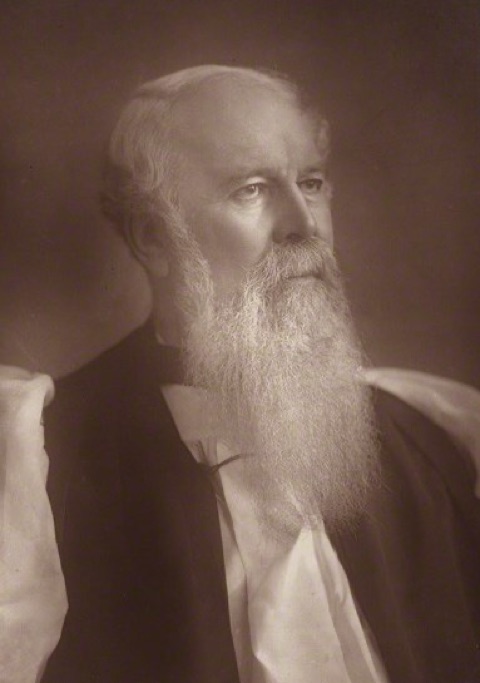
J.C. Ryle
J.C. Ryle (1816 to 1900 AD) was born in Macclesfield, Cheshire, the son of a wealthy banker, and was educated at Eton and Christ Church, Oxford. When his father’s bank collapsed in 1841, he turned to the ministry. He was ordained in 1842 and served rural parishes in Suffolk for many years, becoming the most prolific evangelical writer in the Church of England. His penny tracts, of which this is one, circulated in the millions, and his later works included Expository Thoughts on the Gospels and Holiness (1877). In 1880 he was appointed the first Bishop of Liverpool, where he served for twenty years. He died in Liverpool in 1900.