Modernized edition · Full text · Free PDF/EPUB
The Upper Room in Modern English
Summary
- Published
- 1888 AD; the Preface is signed at the Palace, Liverpool, December 1, 1887
- Type
- Collected sermons, addresses, lectures and tracts
- Length
- 141,000 words · 9 hours
- Collection
- Christian Living
What is The Upper Room about?
The Upper Room is a collection of twenty-one sermons, addresses and tracts by J.C. Ryle, published in 1888 while he was Bishop of Liverpool. It presses the death and resurrection of Christ as the first truths of the gospel and applies them to preaching, the home, young men, the sacraments and the reform of the Church of England.
Read the full summary (9 points, quotes, key themes)Show less
How the argument unfolds
- 01
Preface and The Upper Room. Why Ryle gathers his papers, and the first Christian congregation after the ascension.
- 02
Luke, the Beloved Physician and Simplicity in Preaching. A sermon to doctors on the body and medicine, and five hints to clergy for plain preaching.
- 03
Foundation Truths, The Good Way and One Blood. The first things Paul preached, the old paths, and the common descent and remedy of mankind.
- 04
Let Any Man Come, Victory and Athens. Christ's invitation to the thirsty, the new birth that overcomes the world, and Paul among the idols.
- 05
Portraits, To Whom Shall We Go? and Our Profession. The careless, the almost persuaded and the decided; those who leave Christ; and those who hold fast.
- 06
Many Shall Come, Without Clouds and The Lord's Garden. The number and rest of the saved, David's last words, and believers as Christ's enclosed garden.
- 07
The Duties of Parents. Seventeen hints on training children for heaven, from resisting self-will to prayer.
- 08
Lay Churchmen and Questions About Regeneration. A plea for the laity's place in church government, and twenty-five questions on baptism and the new birth.
- 09
Thoughts for Young Men, The Lord's Supper and For Kings. Warnings and rules for young men, fifty-one questions on the Communion, and a Jubilee sermon on praying for rulers.
Notable images & quotes
- The bunch of keys. Ryle shook keys in country pulpits and asked what they proved: “Why, it proves that the heart of man is deceitful above all things and desperately wicked.”
- The stone at Glencroe. A stone atop a Scottish pass reads “Rest, and be thankful”, a picture of the believer's arrival in heaven.
- The Lord's violets. Quiet Christians who sweeten their homes are “the Lord’s violets, prized by only a few, yet to those who know them, oh, how sweet!”
- The needle-grinder's mouthpiece. As Sheffield grinders wore a magnetic mouthpiece against metal dust, so “Prayer is the mouthpiece you must wear continually” in a sinful world.
Key themes
- The old paths. Ryle holds that the age needs no new theology, only the old doctrine boldly preached: “Error, no doubt, is often very ancient, yet truth is always old.”
- Christ's living priesthood. Believers need a living Friend as well as a finished atonement: “We need no earthly confessor and no earthly priest.”
- The home as the school of character. Training begins with the parents' own lives, since “children learn more through the eye than through the ear.”
- Faith and the world. Worldliness is the plague of a wealthy age, and only a living faith in an unseen God and Savior overcomes it.
Why read it today
Read it to hear an aged bishop say what he most wanted to leave behind. From Oxford pulpits to a home of rest in the Dingle, the same truths return: Christ died for sins, rose again, lives to intercede, and must be received by faith.
It is practical and it is candid. Ryle writes about building a sermon, raising a child, choosing friends and consulting a parish, and he argues the Victorian debates over ritualism, baptism and the laity plainly, with his evidence set out in full.
Source edition: Ryle's 1888 volume in modern English, with the Preface and all twenty-one papers
Reader questions (9)Hide the questions
Questions about The Upper Room
Is there a modern English version of The Upper Room?
Yes. This is The Upper Room by J.C. Ryle in modern English. The language is modernized and the author's order and argument are kept. The full modernized text is free to read on this page.
Can I read The Upper Room online for free?
Yes. The complete text of this modern English edition is on this page, with no sign-up or paywall.
Is there a free PDF of The Upper Room?
Yes. The PDF and EPUB of this edition are free with an Updated Works account. Sign in with Google or an email link; no card is needed.
What is The Upper Room by J.C. Ryle about?
It gathers twenty-one papers from Ryle's later ministry. The sermons press the atoning death and resurrection of Christ, the authority of Scripture and the new birth, and the longer papers apply them to preaching, parents, young men, the laity, baptism and the Lord's Supper.
Why is the book called The Upper Room?
It takes its title from the first paper, on Acts 1:13, which Ryle calls the forerunner of every church and cathedral in Christendom: “Not one can trace its pedigree beyond that little chamber.”
What does Ryle teach about preaching?
He asks for sermons ordinary hearers can follow: a clear subject, plain words, short sentences, direct address and plenty of illustration, joined to hard work, the simple gospel and prayer.
Does Ryle believe every baptized infant is regenerate?
No. He argues from the First Epistle of John that regeneration is known by its fruits, that many baptized people show none, and that the Baptismal Service speaks on a charitable assumption, as the whole Prayer Book does.
What does Ryle say about the Lord's Supper?
He teaches that Christ is received spiritually by faith and denies any bodily presence in the bread and wine, any sacrifice and any altar, recalling that Rogers, Latimer, Ridley and Bradford were burned in 1555 over this point.
What reforms does Ryle propose for the laity?
He wants every clergyman to consult his communicants, parishioners to have a right to object to a nominee for their parish, and a National Church Council of bishops, presbyters and elected laymen.
The Upper Room in Modern English · Full text
Preface
The volume now in the reader’s hands needs little introductory explanation. It contains a wide-ranging selection of papers that I have sent out from time to time, in one form or another, during a forty-five-year ministry. Some of these papers are unknown beyond a small circle of kind friends. Many of them are the substance of pulpit addresses delivered on important public occasions and prepared with more than ordinary care. All of them, I humbly venture to think, will be found to contain useful truths for the times and words in season.
I have reached an age when I cannot reasonably expect to write much more. There are many thoughts in this volume that I do not wish to leave behind in the fragile form of separate single sermons, addresses, lectures, and tracts. I have therefore resolved to gather them together in the volume I now send out. I heartily pray God to bless it and make it a lasting blessing to many souls.
Palace, Liverpool, December 1, 1887
J. C. Liverpool
Chapter 1
They Went Up into an Upper Room
“They went up into an upper room” (Acts 1:13).
The substance of this paper was originally delivered as a sermon at the consecration of St. Agnes’s Church, Liverpool.
These simple words tell us what the apostles did immediately after the ascension of our Lord Jesus Christ into heaven. Fresh from the wonderful and moving sight of their beloved Master being taken away from them, they returned from Mount Olivet to Jerusalem. With the angels’ message bidding them expect his second coming still ringing in their ears, they went at once “into an upper room.” Simple as the words are, they are full of rich thoughts. They deserve the close attention of everyone into whose hands this volume may fall.
Let us fix our eyes for a few minutes on the first place of Christian worship of which we have any record. Let us examine the first congregation that assembled after the great Head of the Church had left the world and left his people to themselves. Let us see who these first worshipers were, how they behaved, and what they did. I venture to think that a little quiet reflection on this subject may do us good.
We should remember that this “upper room” was the forerunner of every church and cathedral built in Christendom during the last eighteen centuries. St. Paul’s, York, Lincoln, and all the stately minsters of our own land trace their line back to it. So do St. Sophia at Constantinople, St. Isaac’s at St. Petersburg, St. Stephen’s at Vienna, Notre Dame at Paris, and St. Peter’s at Rome. All are descendants of this “upper room.” Not one can trace its pedigree beyond that little chamber.
Here it was that professing Christians, when left alone by their Master, first began to pray together, to worship, and to encourage one another. This room was the cradle of the infant Church of Christ and the beginning of all our services. From this room the waters of the everlasting gospel first began to flow, waters that have now spread so widely throughout the world, however diluted and corrupted they may have been in some ages and in some parts of the earth. I invite my readers, then, to come with me and examine this upper room as it appeared on Ascension Day.
1. Features of the First Christian Assembly
Certain points arise naturally out of the text before us and demand special notice. Let us see what they are.
Concerning the shape, size, and form of this room, we know nothing at all. It was probably like many other “upper rooms” in Jerusalem. Whether it was high or low, square or round, oriented east and west or north and south, decorated or perfectly plain, we have not the slightest information. Nor does the matter signify very much.
Yet it is a striking and noteworthy fact that in the original Greek it is called the upper room, and not an upper room, as our Authorized Version renders it. I venture to think there is much in this. There is the highest probability that this was the very room in which our Lord first instituted the sacrament of the Lord’s Supper. Here the apostles first heard those well-known words, “Take, eat; this is my body,” and “Drink ye all of this, for this is my blood.” Those famous words have caused so much unhappy controversy for some, yet they have been a source of mighty comfort to others.
I believe it was the same room in which the disciples were “in the habit of abiding” during the fifty days between the resurrection and Pentecost. Here again, the original Greek helps us reach that conclusion if translated literally. I believe it is the same room in which the disciples were gathered with “the doors shut for fear of the Jews,” when the Lord Jesus suddenly appeared in their midst after his resurrection. There he said, “Peace be unto you: as my Father sent me, so send I you,” and “breathed on them, saying, Receive ye the Holy Ghost” (John 20:21-22).
I believe it is the same room in which, a week later, he appeared again and rebuked the skepticism of doubting Thomas, saying, “Be not faithless, but believing.” I believe it is the same room in which our Lord appeared, ate before his disciples, and said, “Handle me, and see: a spirit hath not flesh and bones, as ye see me have” (Luke 24:39). On all these points I freely grant that I have only conjectures to set before my readers. Still, they are conjectures founded on the highest possible probability, and as such they deserve our reverent consideration. Now, however, we may turn boldly from conjectures and look at things most plainly and unmistakably revealed.
1. First and foremost, let us look at the worshipers who were gathered in this first place of Christian worship.
Peter was there, that warm-hearted, impulsive, yet unstable apostle. Forty days earlier he had denied his Master three times and repented with bitter tears. Our Lord had graciously restored him and commanded him to “feed his sheep” (John 21:16-17).
James was there. He had been the favored companion of Peter and John on three important occasions, and he was the first of the apostles to seal his faith with his blood and drink the cup his Master drank (Matt 20:23).
John was there, the other son of Zebedee, the beloved apostle whose head lay on our Lord’s breast at the Last Supper. He was the first on the lake of Galilee, when our Lord appeared to the disciples as they were fishing, to cry out with instinctive love, “It is the Lord.” At one time he had wished to call down fire from heaven on a Samaritan village, yet he lived to write three Epistles brimming over with love (John 21:7; Luke 9:54).
Andrew was there, the first of all the apostles whose name we know. He followed Jesus after hearing the words, “Behold the Lamb of God,” and then brought his brother Peter to Jesus, saying, “We have found the Messias” (John 1:40-41).
Philip of Bethsaida was there, the first apostle to whom Jesus said, “Follow me,” and the apostle who told Nathanael to “come and see” the promised Messiah (John 1:43).
Thomas was there, once so desponding and weak in faith, who afterward cried out with grand Athanasian confidence, “My Lord and my God” (John 20:28).
Bartholomew was there, who by general consent is the same man as that very Nathanael who first asked, “Can any good thing come out of Nazareth?” Yet this is the man whom our Lord declared to be “an Israelite without guile,” and who confessed, “Thou art the Son of God, thou art the King of Israel” (John 1:46-49).
Matthew the tax collector was there. He forsook his worldly calling at our Lord’s command, sought lasting treasure in heaven, and was afterward privileged to hold the pen that wrote the first Gospel (Matt 9:9).
James the son of Alphaeus was there. He had the honor of serving as presiding apostle at the first council held in Jerusalem, and Paul tells the Galatians that, together with Peter and John, James was a “pillar of the Church” (Gal 2:9).
Simon Zelotes was there. We know little for certain about him except that he was also “called the Canaanite,” and may possibly have lived at Cana of Galilee and seen our Lord’s first miracle. His name Zelotes suggests that he was once a member of the famous Zealot party, a fierce advocate of Jewish home rule and an enemy of Roman supremacy. Now he was zealous only for the kingdom of Christ.
Judas was there, the brother of James, also called Lebbaeus or Thaddaeus. He was the writer of the last Epistle in the New Testament and the apostle who asked the remarkable question, “How is it that thou wilt manifest thyself unto us and not unto the world?” (John 14:22).
In short, the whole company of the eleven faithful apostles was assembled in that “upper room.” On this occasion there were no absentees. Even doubting Thomas was among the rest.
Others were present besides the apostles. The “women” were there, some of whom had long followed our Lord, ministered to his needs, stayed last at the cross, and arrived first at the tomb. I have little doubt that Mary Magdalene, Salome, Susanna, and Joanna the wife of Chuza, Herod’s steward, were part of the company (Luke 8:2-3). Mary the mother of Jesus was also there. Our Lord had committed her to the special care of John, and where John was, she was sure to be. Truly the prophecy of old Simeon had been fulfilled in her case. “The sword” of deep and keen sorrow had pierced “through her soul” (Luke 2:35). She was only flesh and blood, like any other woman. This is the last occasion on which her name appears in Holy Scripture. From this point on she passes out of sight, and all stories about her later life are mere baseless traditions.
Finally, our Lord’s “brethren” were there, in all probability his cousins or the sons of Joseph by a former marriage. Let it never be forgotten that at one time they did not believe in Jesus (John 7:5). Yet now their unbelief was gone, and they were true disciples, while Judas Iscariot had fallen away. Mentioning them teaches the grand lesson that people may begin badly and end well, and that many who now seem faithless may one day believe. So true it is that the last are sometimes first, and the first last.
Such was the congregation that assembled in the “upper room” after the ascension. Never, I suppose, has there been such a pure and spotless gathering of Christians from that day down to this. Never has there been, and probably never will be, so close an approach to the “one Holy Catholic Church,” the “mystical body of the Son of God, which is the blessed company of all faithful people.” Never has there been so much wheat without weeds, and such a remarkable proportion of grace, penitence, faith, hope, holiness, and love in one room together. It would be well for the visible Church of Christ if all her assemblies were as free from unsound members, spots, and blemishes as the congregation that met in the “upper room.”
2. We should notice, secondly, the unity that marked this first meeting in the “upper room.” We are told expressly that they were all there “with one accord,” that is, of one mind. There were no divisions among them. They believed the same thing, they loved the same Person, and at that time there was no disagreement among them.
There was nothing of High, Low, or Broad in that “upper room.” Heresies, strifes, and controversies were as yet unknown. There was no contention or agitation about baptism, the Lord’s Supper, vestments, or incense. How happy it would have been for Christendom if this blessed state of things had continued! At the end of eighteen centuries we all know, by bitter experience, that the divisions of Christians are the weakness of the Church and the favorite argument of the world, the unbeliever, and the devil against revealed religion. When we look at this blessed picture of the upper room, we may well pray that God would heal the many ecclesiastical diseases of the nineteenth century and make Churchmen especially become more of one mind.
3. We should notice, thirdly, the devotional habits of this first congregation in the “upper room.” We are told expressly that they “were continuing in prayer and supplication.” Here again we should notice the original Greek. The expression shows that prayer was a continuous and habitual practice at this crisis.
What these holy worshipers prayed for we are not told. Like our Lord’s discourse with the two disciples journeying to Emmaus, we would love to know what their prayers were (Luke 24:27). We need not doubt that there was much prayer for grace to remain faithful and not fall away, and for wisdom to do what was right in the new and difficult position they now had to fill. Surely they prayed for courage, patience, unwearied zeal, and a lasting remembrance of our Lord’s example, teaching, and promises. Yet in perfect wisdom the Holy Spirit has seen fit to withhold these details from us, and we must not doubt that this is right.
One thing, at any rate, is quite certain. We are clearly taught that no duty of a Christian assembly is more fundamental than united prayer and supplication. Let us never forget the first charge that the great apostle to the Gentiles gave Timothy when writing about his duties as a minister of the Church: “I exhort, therefore, first of all, that supplications, prayers, intercessions, and giving of thanks be made for all men; for kings and all that are in authority, that we may live a quiet and peaceable life” (1 Tim 2:1-2). I dare to believe that the names of Annas, Caiaphas, and Pontius Pilate were not forgotten in the supplications and intercessions of the “upper room.”
4. We should notice, lastly, the address given in this upper room by the apostle Peter on one of the ten days between the ascension and the day of Pentecost. It is an interesting fact that this is the first recorded address given to any assembly of Christians after the Lord left the world. It is no less interesting that the first speaker was Peter, the very apostle who, after denying his Master, had been mercifully restored and commanded to prove his love by feeding his sheep. He was the very apostle who had received the charge before his fall, “When thou art converted, strengthen thy brethren” (Luke 22:32). There was a special fitness in Peter being the first to stand up and address the little company of “one hundred and twenty names.”
(1) Notice how he begins his address with a reverent appeal to Holy Scripture. He plants his foot firmly on the supremacy of God’s written Word as the Church’s rule of faith. He says, “This scripture must needs have been fulfilled.” He says, “It is written in the book of Psalms,” and takes a quotation for his text. Well and wisely does the late Dean Alford remark in his Homilies on the Acts: “The first act of the Church by her first superintendent minister was an appeal to the text of Scripture. Let that never be forgotten. Would that every appeal by every one of her ministers since had been an appeal equally direct and equally justified!”
(2) Notice next how Peter humbly acknowledges that even the highest and most privileged ministers of the Church can fall. He says of Judas Iscariot, “He was numbered with us, and had obtained part of this ministry,” and then mentions his miserable end: “He fell by transgression,” and then “went to his own place.” Let that also never be forgotten. Peter lays down the grand principle that should always be remembered in the Church: no infallibility belongs to the ministerial office.
A chosen apostle of Christ fell sadly, and so may any successor of the apostles. Bishops, priests, and deacons may err, and have erred greatly, like Hophni, Phinehas, Annas, and Caiaphas, who stood in direct succession to Aaron. We are never to suppose that ordained and consecrated men can make no mistakes. We are never to follow them blindly or assume as a matter of course that everything they say is truth. The Bible is the only infallible guide.
(3) Notice next how Peter calls on the Church to fill the place Judas had left vacant and to choose one who might be numbered with the eleven apostles. He speaks with unfaltering confidence, like a man convinced that a work was beginning that the world and the devil could never stop, and that workers must be appointed to carry it on in regular order. He speaks with a clear foresight of the battles the Church would have to fight, yet with an evident conviction that they would not be fought in vain and that the final outcome was sure. He seems to say, “Stand firm, though a standard-bearer has fallen away. Fill up the gap. Close up your ranks.”
(4) Notice lastly how he closes his address with a plain declaration of what a minister and successor of the apostles ought to be. He was to be “a witness of Christ’s resurrection.” He was to testify that the foundation of the gospel is not a vague idea of God’s mercy, but an actual living Person who lived for us, died for us, and above all rose again. Let that also never be forgotten.
I state without hesitation that in these later days we do not make enough of the resurrection of Christ. Judging from Acts and the Epistles, we certainly do not make as much of it as the apostles did. When Paul went to Athens, we are told that “he preached Jesus and the resurrection” (Acts 17:18). When he went to Corinth, one of the first truths he proclaimed was that “Christ rose again according to the Scriptures” (1 Cor 15:4). When the same Paul was brought before Festus and Agrippa, Festus said that the complaint against him was about “one Jesus who was dead, whom Paul affirmed to be alive” (Acts 25:19).
Let no one misunderstand my meaning. I do not say that we dwell too much on the sacrifice and blood of Christ, but I do contend that we dwell too little on his resurrection. Yet our Lord himself told the Jews more than once that the resurrection would prove him to be the Messiah. Paul told the Romans at the beginning of his Epistle that Jesus was “declared to be the Son of God with power by the resurrection from the dead” (Rom 1:4).
The resurrection completed the work of redemption that our Lord came into the world to accomplish. It is written that “he was delivered for our offenses, and raised again for our justification,” and the Corinthians are expressly told, “If Christ be not raised, your faith is vain; ye are yet in your sins” (Rom 4:25; 1 Cor 15:17). In short, Christ’s resurrection is one of the grandest proofs of the truth of Christianity. It is a foundational proof that the salvation of sinners by his substitutionary atonement is a finished work, and it is a miracle the cleverest skeptics have never been able to explain away. Until it is explained away, we need not be troubled by carping remarks about Balaam’s donkey speaking or Jonah in the whale’s belly. It would have been well indeed for the Church if all her ministers had always been what Peter urged them to appoint: faithful witnesses to a personal Christ, his death, and his resurrection.
So much for the upper room at Jerusalem: its congregation, their unity, their prayers, and the first address delivered within its walls. So much for the first prayer meeting, the first sermon, and the first corporate act of the professing Church of which we have any record. We need not doubt for a moment that our Lord Jesus Christ’s well-known promise was fulfilled in that room: “Wheresoever two or three are gathered together in my name, there am I in the midst of them” (Matt 18:20). The little company of worshipers did not see him, but he was there.
2. Practical Lessons from the Upper Room
Let me now try to draw some practical lessons for ourselves from the whole subject.
1. In the first place, let us learn to be more thankful for the liberty of the days in which our lot is cast, and for the wise toleration of the government under which we live in this country. By the mercy of God, “we enjoy great quietness.” We have no need to meet in “upper rooms” with “doors closed for fear of the Jews,” constantly feeling that there is only a step between us and a violent death.
People may build places of worship now, if they please, as costly and magnificent as the temple of Jerusalem itself, and no one jealously prohibits or interferes with them. We need not fear Roman emperors, medieval autocrats, or Spanish Inquisitions. The land lies open before us, and people may build and worship as they please. I wish to God that all wealthy laymen in this country would remember where riches come from and to whom they owe their freedom and prosperity. I wish to God that many more would honor him with their wealth and step forward more often, saying, “Let me build a church for the service of God.”
2. In the next place, let us learn the source of true power in the Church. This little upper room was the starting point of a movement that shook the Roman Empire and emptied the heathen temples. It stopped gladiatorial combats, raised women to their true position, checked infanticide, created a new standard of morality, confounded the old Greek and Roman philosophers, and turned the world upside down.
And what was the secret of this power? It was the unity, the soundness in the faith, the holiness, and the prayers and intercessions of the first professing Christians. Where these things are lacking, the grandest architecture and the most ornate ceremonial will do nothing to mend the world. It is the presence of Christ and the Holy Spirit that alone gives power.
3. In the last place, let us pray for the Church of England, that she may stay faithful to the old truths that have done so much good for three hundred years, truths preserved in our Articles, Prayer Book, and Creeds. It is cheap and easy work to sneer at dogma, scoff at inspiration and the atonement, mock the controversies of Christians, and tell us that no one really believes all of the Bible or all the facts stated in the Creed. It is easy, I repeat, to do this. Even children can throw mud, toss stones, and make a noise. Yet sneers, mud, and noise are not arguments. I challenge those who sneer at dogma to show us a better way, to show us anything that does more good in the world than the old, old story of Christ dying for our sins and rising again for our justification.
The man of science may say, “Come with me, look through my microscope or telescope, and I will show you things Moses, David, and Paul never dreamed of. Do you expect me to believe what was written by ignorant fellows like them?” Yet can this man of science show us anything through his microscope or telescope that will heal a troubled mind, bind up the wounds of a broken heart, satisfy the needs of an aching conscience, or bring comfort to someone mourning a lost husband, wife, or child? No, indeed! He can do nothing of the kind.
Men and women are fearfully and wonderfully made. We are not made up merely of brains, head, intellect, and reason. We are frail, dying creatures who have hearts, feelings, and consciences, living in a world of sorrow, disappointment, sickness, and death. What can help us in a world like this? Certainly not science alone. Nothing can help us except the teaching of that volume some people call an old, worn-out Jewish book: the Bible.
No one can help us except him who was laid in the manger of Bethlehem, died on the cross to pay our debt to God, and is now at God’s right hand. No one can help us except him who said, “Come unto me, all ye that labor, and I will give you rest” (Matt 11:28). No one can help us except him who has shed light on the grave and the world beyond it, and who has brought life and immortality to light through the gospel. He has left a deeper mark on the world than all the men of science who have ever lived, from Pythagoras, Aristotle, and Archimedes down to Darwin and Huxley in our own day.
Yes, I say again, let us pray that our Church may always remain faithful to her first principles and never listen to those smooth-spoken, eloquent apostles of free thought who would gladly persuade her to throw overboard her Creeds and Articles as useless clutter. Fine words and rhetorical fireworks will never satisfy humanity, check moral evil, or feed souls. People would do well to read that striking article Frances Power Cobbe wrote in the Contemporary Review for December 1884, and see what a ghastly world ours would be without a faith or a creed. The age needs nothing new. It only needs the bold and steady proclamation of the old truths held in the “upper room” at Jerusalem.
Chapter 2
Luke, the Beloved Physician
“Luke, the beloved physician” (Col 4:14).
The substance of this paper was originally delivered as a sermon in Liverpool Cathedral at the opening of the Annual Conference of the British Medical Association in Liverpool, on July 31, 1883.
There are two things in the title of this paper that I will take for granted and not dwell on. One is that the Luke mentioned here is the same Luke who wrote the third Gospel and the Acts of the Apostles, and who was the friend and companion of Paul. The other is that Luke really was a physician of the body. On both points the agreement of learned scholars, who have a right to command our attention, is almost universal. I will strictly confine myself to two observations that appear to grow out of this subject. It is a significant fact, I think, that the great apostle to the Gentiles, who was constantly ministering to people’s souls, makes honorable mention of one who ministered to people’s bodies.
1. The Dignity Christianity Gives the Human Body
I observe, first of all, that one great feature of the Christian religion is the dignity and importance it attaches to the human body.
Many readers of this paper scarcely need to be reminded that some schools of pagan philosophers treated the body with contempt. They viewed it as a hindrance rather than a help, a clog and a drag rather than an aid to the soul. Even nations that paid the greatest attention to burying the dead, such as the Egyptians, Greeks, and Romans, knew nothing of a future existence for the body after death, even in the most distant age. The heroes Homer and Virgil described in the Elysian Fields, the supposed place of happiness after death, were only ghosts and airy shadows with nothing material about them. When Paul spoke on Mars Hill of the “resurrection of the dead,” we are told that “some mocked” (Acts 17:32). Even Pliny, one of the most intelligent Latin writers, says in his Natural History that two things were beyond the power of God: one was to give immortality to mortals, and the other was to give bodily life again to the dead.
Let us turn now to the Christian religion and notice what a contrast it presents. Whether we look at its leading facts, its doctrines, its practical instructions for the present, or its hopes for the future, the human body is continually brought to the front and its importance magnified.
1. Look first at the great, mysterious truth that lies at the foundation of our holy faith: the incarnation of Christ. When the eternal Son of God came down into this sin-burdened world to bring redemption and change the whole condition of our fallen race, how did he come? Not as a mighty angel or a glorious spirit, as we might have expected. Nothing of the kind! He took on himself a bodily nature just like our own, sin alone excepted.
He was born of a woman as an infant and had a body that grew and increased in stature just as ours do. It was a body that could hunger and thirst, grow weary and need sleep, feel pain, and groan in agony and suffering, like the body of anyone who reads this paper. In that body he condescended to dwell for thirty-three years, its members daily fulfilling the law of God perfectly, so that in his “flesh” Satan could find nothing failing or defective (John 14:30).
2. Look next at the great central doctrine of Christ’s atonement. That wondrous, distinctive truth of our faith, that solution to the question “How can sinful man have peace with God?”, is inseparably bound up with Christ’s body. It was the death of that body on the cross that provided fallen humanity a way of reconciliation with God. It was the precious lifeblood flowing from our Lord’s crucified body on Calvary that purchased our redemption from the curse of a broken law. In short, it is to the blood of Christ’s body that true Christians owe all their comfort while they live and their hope when they die.
3. Look next at the crowning facts of Christ’s resurrection and ascension into heaven. When our Lord came forth on the third day from the grave where Joseph and Nicodemus had laid him, he did not come forth as a spirit. To use the words of our Fourth Article, he “took again his body, with flesh, bones, and all things pertaining to the perfection of man’s nature.” In that body he was seen and touched by his disciples. In that body he spoke, ate, and drank like ourselves. Finally, in that body he ascended into heaven, and there he sits until he returns to judge all people at the last day. We have a priest and advocate with the Father who has a body.
4. Look next at the practical commands and exhortations the apostles continually press on us in the New Testament. Notice how often they speak of the body and its members as “instruments of righteousness,” as a part of the Christian’s nature requiring constant care, and as a means of displaying sanctification and holiness. “Your body is the temple of the Holy Ghost.” “Glorify God in body and spirit, which are his.” “I pray God your whole spirit, and soul, and body, may be preserved blameless.” “Present your bodies a living sacrifice.” Let “Christ be magnified in my body.” Let the “life of Jesus be manifest in our mortal flesh.” We shall “receive the things done in the body” (Rom 6:13; 1 Cor 6:19-20; 1 Thess 5:23; Rom 12:1; Phil 1:20; 2 Cor 4:11; 2 Cor 5:10). Where indeed, and how, could the graces of temperance, sobriety, chastity, and self-denial be shown except in and through the body?
5. Look finally at that grand, distinctive hope that sustains the Christian amid the deaths, funerals, pains, partings, and sufferings of this world. That hope is the resurrection of the flesh after death. Our bodies will live again. The grave cannot hold them. We part from those who fall asleep in Jesus in the blessed confidence that we will meet and see them again, better, stronger, and more beautiful than they ever were on earth. Forever let us thank God that the glorious gospel we profess to believe makes provision for our bodies as well as our souls.
Yet after all, the importance Christianity attaches to the body is not one whit greater than the importance continually attached to it by the children of this world. It is easy to sneer at the simple facts and doctrines of Christianity and to talk in grand, swelling terms about “mind,” “thought,” “intellect,” and “reason.” Yet there is no getting around the broad fact that it is the body, not the mind, and the needs of the body by which the world is governed.
Statesmen and politicians know this very well, and often to their cost. Their hold on office depends largely on the contentment of the people. Who does not know that nothing stirs up popular discontent so much as high grain prices and expensive food for the body?
Merchants and shipowners, of all people in the world, ought to know the importance of the body. Grain, meat, sugar, and tea to feed the body, and cotton and wool to clothe the body: what are these but the very goods that generate the main share of a nation’s commerce, shipping, and business?
It would be a waste of time to multiply arguments on this subject. In the face of such facts, it is the highest wisdom in both Church and state never to forget the importance of the body. Promoting cleanliness, temperance, and social purity deserves our best attention. So does aiming at the highest standard of sanitation and encouraging every movement that increases a people’s health and longevity. Providing, as far as possible, good air, clean water, decent housing, and affordable food for every man, woman, and child in the land is an aim worthy of both the Christian and the person of the world.
There is a mine of deep truth in the saying, “Health of healths: all is health.” Whatever scholars, bookworms, and philosophers may choose to say, there is an unbreakable connection between the bodies, minds, and souls of humanity. You cannot separate them. Not one of the three can be safely neglected. The Church that cares only for saving souls and the state that cares only for educating minds are both making a vast mistake. Happy is the country where body, soul, and mind are all cared for, and where a steady effort is made to provide for the health of all three.
2. The Honor Christ Places on the Medical Profession
The other observation I wish to make is this: notice the honor our Lord Jesus Christ has placed on the medical profession.
To begin with, it is a noteworthy fact that one of the four men our Lord chose to write the Gospels was a “physician.” Church history tells us this with almost complete agreement, and strong internal evidence in Luke’s writings confirms it. A perceptive author has recently published a book proving that many Greek phrases and expressions in the third Gospel and Acts are thoroughly medical, the very terms a physician of that age would use to describe symptoms of disease or returning health. In short, there is little room to doubt that out of the twenty-seven books making up the little volume of the New Testament, two of the longest came from the pen of a medical man.
Yet after all, another fact of even deeper significance demands attention. I refer to the very large number of cases of sickness and disease our Lord Jesus Christ was pleased to heal during his earthly ministry. No doubt, if he had thought fit, he could have displayed his divine power and proved his divine mission through miracles like the plagues of Egypt. He could have called down fire from heaven like Elijah, or caused the earth to open and swallow up his enemies as Dathan and Abiram were swallowed up in the wilderness. Yet he did not do so.
The great majority of his wonderful works were works of mercy done on the suffering bodies of men and women. Curing the leprous, those suffering from dropsy and paralysis, the fevered, the lame, and the blind was the constant labor of love of him who was “God manifest in the flesh.” To use the deep and mysterious words Matthew quotes from Isaiah, “Himself took our infirmities, and bare our sicknesses” (Matt 8:17).
Now why was this? Why did our Lord adopt this course and habitually condescend to devote time and attention to the humbling and often loathsome illnesses to which human flesh is heir? Partly, I believe, to remind us that he came to remedy the fall of humanity. Of all the consequences of the fall, none causes so much trouble or touches every rank and class of society so thoroughly as sickness. Partly also, I believe, to teach Christians in every age that ministering to the sick is unmistakably a work of mercy according to Christ’s mind.
Whoever strives to check disease, relieve suffering, lessen pain, aid the self-healing powers of nature, and lengthen life may surely take comfort in one thought: however often he fails, he is at any rate walking in the footsteps of Jesus of Nazareth. Next to the office of the person who ministers to people’s souls, there is none more truly useful and honorable than the office of the person who ministers to the soul’s frail dwelling, the body.
Anyone who reflects on these things will not wonder that the rise and progress of Christianity in every age has done much for the office of the physician. It would be unfair to say that nothing was known of medicine or surgery before the Christian era. The names of Podalirius and Machaon in Homer, and the better-known, less mythical name of Hippocrates, no ordinary observer of symptoms, are familiar to students. Still, it is a certain fact that the sick were never so systematically cared for, nor the medical profession so honorably esteemed, as they have been since the Church of Christ leavened the world.
The builders of the Parthenon and the Colosseum built no infirmaries. You will find no ruins of hospitals at Athens or Rome. The unbeliever, the skeptic, and the agnostic may sneer at Bible religion if they please, yet they cannot get past the fact that medical and surgical knowledge have always advanced side by side with the gospel of Christ. Clever and ingenious as the pagan inhabitants of India, China, and Japan are today, it is notorious that their knowledge of anatomy and medical remedies, and their treatment of bodily disease, are beneath contempt.
Few of us, perhaps, realize what an immense debt we owe in Christian England to the medical profession. How much the comfort of our lives depends on it! How vastly different is the condition of those whose lot is cast in a pagan country or an uncivilized frontier settlement of a colony! Anyone who has a good servant in his house and a good doctor within reach ought to be a thankful person.
Fewer still, I believe, realize what enormous strides medicine and surgery have made in the last two centuries and are still making today. Of course death still reigns, and it will reign until Christ returns in glory. Kings and their subjects, rich and poor, all alike die and will die until death is swallowed up in victory. And no wonder! The human body is a frail and delicate machine: “Strange that a harp of a thousand strings should keep in tune so long.”
Yet it is entirely beyond dispute that human life expectancy in this age has been greatly increased by the advance of medical science, and that many diseases once thought fatal are now preventable, manageable, or curable. Let anyone read Baxter’s semimedical sermon in the Morning Exercises, look at his prescriptions for hypochondria and dyspepsia, and then say whether he ought not to be thankful to live in the nineteenth century. The sheer fact that our ancestors knew nothing of quinine, chloroform, vaccination, the carbolic spray, the stethoscope, the laryngoscope, the ophthalmoscope, or the proper treatment of the insane, the mentally impaired, the deaf and mute, and the blind speaks volumes to any intelligent mind.
No one, perhaps, has such constant opportunities to see the value of a medical man’s services as Christian ministers. We meet doctors in sickrooms and beside deathbeds. We know the self-denying labor their profession demands and the ungrudging, often unpaid attention the sick almost always receive at their hands.
There ought always to be the utmost harmony and friendly feeling between the two professions. The sickroom is the common ground on which they meet, and on that ground they can greatly help one another. I think the minister of religion can help the doctor by teaching patients the vital importance of obeying orders, accepting medical advice, and following rules about diet and sanitation, as well as by encouraging patience and a quiet spirit. I am sure the doctor can help the minister by gently and wisely reminding those whose cases are past recovery that it is their duty to accept the inevitable. He can remind them that this life is not all, that they have souls as well as bodies, and that it is wise to look calmly toward their end and a world to come, and to prepare to meet God.
There is much in common between the two professions, the one caring for people’s bodies and the other caring for people’s souls. We ministers cannot command success. Too often we visit in vain, urge in vain, advise in vain, and preach in vain. We discover that spiritual life and death are in higher hands than ours. The doctor finds that even under the most skillful treatment people will die, and we find that even under the most faithful teaching many remain unmoved in conscience and dead in their sins. Like the doctor, we often feel our ignorance, cannot diagnose or discern symptoms, and feel unsure of what to say. Both ministers and doctors have great need to be clothed with humility. Still, I trust that, to use the words placed on the tomb of Sir Henry Lawrence, we both “try to do our duty” and persevere. Duties are ours, but outcomes are God’s.
It is my earnest prayer that Great Britain may never lack a steady supply of able, right-minded, faithful doctors, and that those of us who minister to the soul and those who minister to the body may always work harmoniously together and help one another.
Chapter 3
Simplicity in Preaching
The substance of this paper was originally addressed as a lecture to a clerical audience at St. Paul’s Cathedral on behalf of the Homiletical Society. For a certain roughness and abruptness of style I must apologize. My readers must kindly remember that the lecture was spoken, not written, and was prepared for the press from the notes of a shorthand writer.
King Solomon says in the book of Ecclesiastes, “Of making many books there is no end” (Eccl 12:12). There are few subjects about which that saying is more true than preaching. The volumes written to show ministers how to preach are enough to fill a small library. In sending out one more little treatise, I propose to touch only one branch of the subject. I do not claim to cover what the substance and content of a sermon should be. I purposely set aside such matters as “gravity, unction, liveliness, warmth,” and the like, or the comparative merits of written and extempore sermons. I wish to confine myself to one point that receives far less attention than it deserves: simplicity in language and style.
I ought to be able to tell my readers something about “simplicity,” if experience gives any help. I began preaching forty-five years ago, when I first took orders in a poor rural parish, and a large part of my ministerial life has been spent preaching to laborers and farmers. I know the enormous difficulty of preaching to such hearers, making them understand my meaning, and holding their attention.
As far as language and composition are concerned, I deliberately say that I would rather preach before the University of Oxford or Cambridge, or at the Temple, Lincoln’s Inn, or the Houses of Parliament, than address a rural congregation on a fine, hot afternoon in August. I have heard of a laborer who enjoyed Sunday more than any other day of the week. “Because,” he said, “I sit comfortably in church, put up my legs, have nothing to think about, and just go to sleep.” Some of my younger friends in the ministry may someday be called to preach to congregations like those I have served, and I will be glad if they can profit from my experience.
Before entering on the subject, I want to clear the way by making four prefatory remarks.
1. First, I ask all my readers to remember that attaining simplicity in preaching is of the utmost importance to every minister who wants to be useful to souls. Unless you are simple in your sermons, you will never be understood, and unless you are understood, you cannot do good to those who hear you. Quintilian spoke a true word: “If you do not wish to be understood, you deserve to be neglected.” Of course a minister’s first aim should be to preach the truth, the whole truth, and nothing but “the truth as it is in Jesus.” Yet the next thing he ought to aim at is that his sermon be understood, and it will not be understood by most of his hearers if it is not simple.
2. Next, by way of prefatory remark, attaining simplicity in preaching is by no means an easy matter. No greater mistake can be made than to suppose it is. “To make hard things seem hard,” to give the substance of a saying of Archbishop Ussher, “is within the reach of all, but to make hard things seem easy and intelligible is a height attained by very few speakers.”
One of the wisest and best of the Puritans said two hundred years ago that “the greater part of preachers shoot over the heads of the people.” This is true also in 1887! I fear a vast proportion of what we preach is no more understood by our hearers than if it were Greek. When people hear a simple sermon or read a simple tract, they are quick to say, “How true! How plain! How easy to understand!” and to imagine that anyone can write in that style.
Allow me to tell my readers that it is an extremely difficult thing to write simple, clear, lucid, and forceful English. Look at the sermons of Charles Bradley of Clapham. A sermon of his reads most beautifully. It is so simple and natural that anyone feels at once that the meaning is as clear as the sun at noonday. Every word is the right word, and every word is in its right place. Yet the labor those sermons cost Mr. Bradley was very great indeed.
Those who have read Goldsmith’s The Vicar of Wakefield carefully can hardly fail to notice the exquisite naturalness, ease, and simplicity of its language. Yet it is well known that the care, trouble, and time spent on that work were immense. Compare The Vicar of Wakefield with Johnson’s Rasselas, which was written off in a few days, it is said, under high pressure, and the difference is immediately plain. In fact, to use very long words, to seem very learned, and to send people away after a sermon saying, “How fine! How clever! How grand!” is very easy work. Yet to write what will strike and stick, to speak or write what both pleases and is understood, and becomes absorbed into a hearer’s mind never to be forgotten, is, you may depend on it, a very difficult thing and a very rare attainment.
3. Next, let me observe that when I speak of simplicity in preaching, I do not want my readers to suppose I mean childish preaching. If we imagine the poor like that kind of sermon, we are greatly mistaken. Once our hearers suspect we view them as a crowd of ignorant folks for whom any sort of “infant’s food” is good enough, our chance of doing them good is lost altogether. People dislike even the appearance of condescending preaching. They feel we are treating them not as equals, but as inferiors. Human nature always resents that. They will at once stiffen their backs, stop their ears, and take offense, and then we might as well preach to the winds.
4. Finally, let me observe that coarse or vulgar preaching is not what is needed. It is quite possible to be simple and still speak like a gentleman, with the demeanor of a courteous and refined person. It is a complete mistake to imagine that uneducated and illiterate men and women prefer to be addressed in an illiterate way by an uneducated speaker. To suppose that a lay evangelist or Scripture reader who knows nothing of Latin or Greek and is familiar only with his Bible is more welcome than an Oxford first-class graduate or a Cambridge top mathematician (if that scholar knows how to preach) is a complete error. As a rule, people tolerate vulgarity and coarseness only when they can get nothing else.
Having made these prefatory remarks to clear the way, I will now give my readers five brief hints on what seems to me the best method of attaining simplicity in preaching.
1. Have a Clear View of Your Subject
My first hint is this: if you want to attain simplicity in preaching, make sure you have a clear view of the subject on which you are going to preach. I ask your special attention to this. Of all five hints I am about to give, this is the most important.
Make sure, when your text is chosen, that you understand it and see right through it. Know precisely what you want to prove, what you want to teach, what you want to establish, and what you want people’s minds to carry away. If you yourself begin in a fog, you may depend on it that you will leave your people in darkness. Cicero, one of the greatest ancient orators, said long ago, “No one can possibly speak clearly and eloquently about a subject which he does not understand,” and I am satisfied that he spoke the truth. Archbishop Whately was a very shrewd observer of human nature, and he said rightly of a great many preachers that “they aimed at nothing, and they hit nothing. Like men landing on an unknown island, and setting out on a journey of exploration, they set out in ignorance, and traveled on in ignorance all the day long.”
I ask all young ministers especially to remember this first hint. I repeat most emphatically: “Make sure you thoroughly understand your subject. Never choose a text whose meaning you do not quite know.” Beware of taking obscure passages such as those found in unfulfilled and symbolic prophecies. If a preacher continually addresses an ordinary congregation on the seals, vials, and trumpets in Revelation, or on Ezekiel’s temple, or on predestination, free will, and the eternal purposes of God, no reasonable person will be surprised if he fails to attain simplicity. I do not mean that these subjects should never be handled occasionally, at suitable times, and before an appropriate audience. All I say is that they are very deep subjects about which wise Christians often disagree, and it is almost impossible to make them very simple. We must see our subjects plainly if we want to make them simple, and hundreds of plain subjects are found in God’s Word.
For the same reason, beware of taking up what I call fanciful subjects and accommodated texts, dragging out of them meanings the Holy Spirit never intended to put into them. There is no subject necessary for the soul’s health that is not plainly taught and set forth in Scripture. That being the case, a preacher should never take a text and pull out of it, as a dentist pulls a tooth from the jaw, something that, however true in itself, is not the plain literal meaning of the inspired words. The sermon may seem glittering and ingenious, and the people may go away saying, “What a clever parson we have!” Yet if, on closer examination, they can neither find the sermon in the text nor the text in the sermon, their minds grow perplexed, and they begin to think the Bible is a mysterious book that cannot be understood. If you want to attain simplicity, beware of accommodated texts.
Let me explain what I mean when I speak of accommodated texts. I remember hearing of a minister in a northern town who was famous for preaching in this style. Once he announced as his text, “He that is so impoverished that he hath no oblation, chooseth unto him a tree that will not rot” (Isa 40:20). “Here,” he said, “is man by nature, impoverished and undone. He has nothing to offer to make satisfaction for his soul. And what ought he to do? He ought to choose a tree that cannot rot, even the cross of our Lord Jesus Christ.”
On another occasion, eager to preach on the doctrine of indwelling sin, he chose his text from the story of Joseph and his brothers and announced the words, “The old man of whom ye spake, is he yet alive?” (Gen 43:27). Out of this question he ingeniously twisted a sermon on the corruption of nature remaining in the believer, a grand truth, no doubt, yet certainly not the truth of that passage. Such examples will, I trust, warn all my younger brothers in the ministry. If you want to preach about the indwelling corruption of human nature or about Christ crucified, you do not need to hunt for far-fetched texts like those I have named. If you want to be simple, be sure you choose plain, simple texts.
Furthermore, if you want to see through your subjects thoroughly and lay the foundation for simplicity, do not be ashamed to divide your sermons and state your divisions. I hardly need to say that this is a much-debated question. There is a morbid dread of “firstly, secondly, and thirdly” in many quarters. The tide of fashion runs strongly against divisions, and I frankly confess that a lively undivided sermon is far better than one divided in a dull, clumsy, illogical way.
Let every person be fully persuaded in his own mind. Whoever can preach sermons that strike and stick without divisions, by all means let him keep to his way and persevere. Only let him not look down on his neighbor who divides. All I say is that if we want to be simple, there must be order in a sermon just as there is in an army. What wise general would jumble artillery, infantry, and cavalry into one confused mass on the day of battle? What host of a banquet or dinner would dream of putting all the dishes on the table at once: soup, fish, entrées, roasts, salads, game, sweets, and dessert piled into one huge dish? Such a host would scarcely be thought to serve his dinner well.
Just so, I say, it is with sermons. By all means let there be order. Have order whether you state your “firstly, secondly, and thirdly” or not. Have order whether your divisions are concealed or openly stated. Have order so carefully arranged that your points and ideas follow one another in clear regularity, like regiments marching past the Queen on a review day in Windsor Park.
For my own part, I honestly confess that I do not think I have preached two sermons in my life without divisions. I find it of the utmost importance to help people understand, remember, and carry away what I say, and I am certain that divisions help me do this. They act like hooks, pegs, and shelves in the mind. If you study the sermons of those who have been and still are successful preachers, you will always find order, and often explicit divisions, in their sermons.
I am not in the least ashamed to say that I often read the sermons of Mr. Spurgeon. I like to gather hints about preaching from every quarter. David did not ask about the sword of Goliath: who made it, who polished it, or what blacksmith forged it? He said, “There is nothing like it,” for he had once used it to cut off its owner’s head. Mr. Spurgeon preaches with great ability, and he proves it by keeping his enormous congregation together. We ought always to examine and analyze sermons that draw people together. When you read Mr. Spurgeon’s sermons, notice how clearly and transparently he divides a sermon and fills each division with vivid, simple ideas. How easily you grasp his meaning! How effectively he sets great truths before you so they catch hold like hooks of steel and, once planted in your memory, are never forgotten!
My first point, then, if you want to be simple in your preaching, is that you must thoroughly understand your subject. If you want to test whether you understand it, try to divide and arrange it. I can only speak for myself: I have done this ever since I entered the ministry. For forty-five years I have kept blank manuscript books in which I write down texts and sermon outlines for use when needed. Whenever I get hold of a text and see my way through it, I write it down and make a note of it. If I do not see my way through a text, I cannot preach on it, because I know I cannot be simple. And if I cannot be simple, I know I had better not preach at all.
2. Use Simple Words
The second hint I would give is this: try to use simple words in all your sermons as far as you can. In saying this, however, I must explain myself. When I talk of simple words, I do not mean only one-syllable words or words purely of Saxon origin. On this point I cannot agree with Archbishop Whately. I think he goes too far in recommending Saxon words alone, though there is much truth in what he says. I prefer the saying of that wise old pagan Cicero, who declared that orators should try to use words “in daily common use” among the people.
Whether the words are Saxon or not, or of two or three syllables, does not matter as long as they are words commonly used and understood by the people. Above all, beware of what the poor shrewdly call “dictionary” words: words that are abstract, scientific, pedantic, complicated, vague, or very long. They may look fine and sound grand, yet they are rarely of any use. As a rule, the most powerful and forceful words are very short.
Let me add one more word to confirm what I have said about the common fallacy of insisting on Saxon English alone. Remember that many words of non-Saxon origin are used by writers famous for their simplicity. Take, for example, the celebrated work of John Bunyan, and look at its very title: The Pilgrim’s Progress. Neither of the leading words in that title is Saxon. Would he have improved matters if he had called it “The Wayfarer’s Walk”? In saying this, I freely admit that words of French and Latin origin are generally weaker than Saxon ones, and as a rule I would say: use strong, pure Saxon words whenever you can. All I mean is that you must not assume a word cannot be good and simple unless it is Saxon. In any case, beware of long words.
Dr. Gee, in his excellent book Our Sermons, very ably points out the uselessness of long words and expressions not in everyday use. For example, he says, “Talk of happiness rather than of felicity, talk of almighty rather than omnipotent, lessen rather than diminish, forbidden rather than proscribed, hateful rather than noxious, seeming rather than apparent, afterwards rather than subsequently, call out and draw forth instead of evoke and educe.” We all need to be pulled up sharply on these points. It is all very well to use refined vocabulary at Oxford and Cambridge, before classical hearers, and in preaching to educated audiences. Depend on it, however, that when you preach to ordinary congregations, the sooner you throw that kind of English overboard and use plain, common words, the better. One thing, at any rate, is quite certain: without simple words you will never attain simplicity in preaching.
3. Aim at a Simple Style of Composition
The third hint I offer, if you wish to attain simplicity in preaching, is this: take care to aim at a simple style of composition. I will try to illustrate what I mean. If you pick up the sermons preached by that great and remarkable man Dr. Chalmers, you can hardly miss the enormous number of lines you read before reaching a period. I cannot help viewing this as a great mistake. It may suit Scotland, yet it will never do for England.
If you want to attain a simple style of composition, beware of writing many lines without coming to a pause and letting your hearers’ minds catch their breath. Beware of colons and semicolons. Stick to commas and periods, and take care to write as if you were asthmatic or short of breath. Never write or speak very long sentences or long paragraphs. Use periods often and start again. The more often you do this, the more likely you are to achieve a simple style of composition. Enormous sentences packed with colons, semicolons, and parentheses, alongside paragraphs two or three pages long, are utterly fatal to simplicity.
We should remember that preachers deal with hearers, not readers, and what “reads” well will not always “speak” well. A reader of English can always help himself by glancing back a few lines to refresh his memory. A hearer of English hears once for all, and if he loses the thread of your sermon in a long, tangled sentence, he will very likely never find it again.
Again, simplicity in composition depends greatly on the proper use of proverbs and crisp, memorable sayings. This is of vast importance. Here, I think, lies much of the value of Matthew Henry’s commentary and Bishop Hall’s Contemplations. There are some fine sayings of this kind in a book not known as well as it deserves, called Papers on Preaching by a Wykehamist. Take a few examples of what I mean:
“What we weave in time we wear in eternity.” “Hell is paved with good intentions.” “Sin forsaken is one of the best evidences of sin forgiven.” “It matters little how we die, but it matters much how we live.” “Meddle with no man’s person, but spare no man’s sin.” “The street is soon clean when everyone sweeps before his own door.” “Lying rides on debt’s back: it is hard for an empty bag to stand upright.” “He that begins with prayer will end with praise.” “All is not gold that glitters.” “In religion, as in business, there are no gains without pains.” “In the Bible there are shallows where a lamb can wade, and depths where an elephant must swim.” “One thief on the cross was saved, that none should despair, and only one, that none should presume.”
Proverbial, epigrammatic, and contrasting sayings like these give wonderful clarity and force to a sermon. Work hard to store your minds with them. Use them wisely, especially at the end of paragraphs, and you will find them an immense help toward a simple style of composition. Always beware, however, of long, tangled, complicated sentences.
4. Use a Direct Style
The fourth hint I will give is this: if you wish to preach simply, use a direct style. What do I mean by this? I mean the habit and practice of saying “I” and “you.” When a preacher adopts this style, he is often accused of being conceited and egotistical. As a result, many preachers are never direct and always assume it is humble, modest, and proper to say “we.”
Yet I remember good Bishop Villiers saying that “we” was a word for kings and corporations alone, while parish clergymen should always speak of “I” and “you.” I endorse that saying with all my heart. I declare I can never understand what the famous pulpit “we” means. When a preacher keeps saying “we” all through his sermon, does he mean himself and the bishop? Or himself and the Church? Or himself and the congregation? Or himself and the early Fathers? Or himself and the Reformers? Or himself and all the wise men in the world? Or, after all, does he only mean himself, plain “John Smith” or “Thomas Jones”?
If he means only himself, what earthly reason can he give for using the plural instead of saying simply and plainly “I”? When he visits his parishioners, sits by a sickbed, catechizes his school, orders bread at the baker’s, or buys meat at the butcher’s, he does not say “we,” he says “I.” Why, then, I would like to know, can he not say “I” in the pulpit? What right does he have, as a modest man, to speak for anyone besides himself? Why not stand up on Sunday and say, “Reading in the Word of God, I have found a text containing these truths, and I come to set them before you”?
Many people, I am sure, do not understand what the preacher’s “we” means. The expression leaves them in a kind of fog. If you say, “I, your rector; I, your vicar; I, the curate of the parish, come here to speak of something that concerns your soul, something you should believe, something you should do,” you are at least understood. Yet if you begin speaking in the vague plural about what “we” ought to do, many of your hearers do not know what you are driving at, or whether you are talking to yourself or to them.
I urge and plead with my younger brothers in the ministry not to forget this point. Try to be as direct as possible. Never mind what people say about you. In this respect do not imitate Chalmers, Melvill, or certain other living pulpit celebrities. Never say “we” when you mean “I.” The more you form the habit of speaking plainly to people in the first person singular, as old Bishop Latimer did, the simpler your sermon will be and the more easily it will be understood. The glory of Whitefield’s sermons is their directness, though sadly they were so poorly reported that we cannot fully appreciate them today.
5. Use Plenty of Anecdotes and Illustrations
The fifth and last hint I want to give you is this: if you would attain simplicity in preaching, you must use plenty of anecdotes and illustrations. Regard illustrations as windows that let light in on your subject. A great deal could be said on this point, yet the limits of a short treatise oblige me to touch it briefly.
I hardly need to remind you of the example of him who “spake as never man spake,” our Lord and Savior Jesus Christ. Study the four Gospels closely and notice what a wealth of illustration his sermons contain. How often you find image upon image, parable upon parable, in his teaching! Apparently there was nothing before his eyes from which he did not draw lessons. The birds of the air and the fish in the sea, sheep and goats, the grainfield and the vineyard all served him. The plowman, the sower, the reaper, the fisherman, the shepherd, and the vinedresser, along with the woman kneading dough, flowers, grass, the bank, the wedding feast, and the sepulcher, were all made vehicles to carry truth into the minds of his hearers.
What are parables like the prodigal son, the good Samaritan, the ten virgins, the king who held a wedding feast for his son, the rich man and Lazarus, the laborers in the vineyard, and others? What are all these but vivid stories our Lord tells to drive some great truth home to the souls of his hearers? Try to walk in his footsteps and follow his example.
If you pause in your sermon and say, “Now I will tell you a story,” I guarantee that everyone not fast asleep will perk up and listen. People love comparisons, illustrations, and well-told stories, and they will listen to them when they pay attention to nothing else. And from what countless sources can we draw illustrations! Look at the whole book of nature around us. Look at the sky above and the earth beneath. Look at history. Look at every branch of science: geology, botany, chemistry, and astronomy. What is there in heaven above or on earth below from which you cannot draw illustrations to shed light on the gospel message?
Read Bishop Latimer’s sermons, perhaps the most popular sermons ever preached. Read the works of Brooks, Watson, and Swinnock among the Puritans. How full they are of illustrations, figures, metaphors, and stories! Look at Mr. Moody’s sermons. What is one secret of his popularity? He fills his sermons with engaging stories. He is the best speaker, says an Arabian proverb, who can turn the ear into an eye.
For my own part, I not only try to tell stories, but in country parishes I have sometimes set familiar objects before people that they can actually see. For example, do I want to show them that there must have been a great First Cause or Being who made this world? I have sometimes pulled out my watch and said, “Look at this watch. How well it is made! Do any of you imagine for a moment that all the screws, wheels, and pins of that watch came together by accident? Would not anyone say there must have been a watchmaker? If so, it follows just as surely that there must have been a Maker of the world, whose handiwork we see engraved on the face of every one of those glorious planets traveling their yearly rounds and keeping time to a single second. Look at the world you live in and the wonderful things it contains. Will you tell me there is no God, and that creation is the result of chance?”
At other times I have taken out a bunch of keys and shaken them. The whole congregation, hearing the keys, looks up. Then I say, “Would there be any need for keys if all people were perfect and honest? What does this bunch of keys prove? Why, it proves that the heart of man is deceitful above all things and desperately wicked.”
Illustration, I confidently assert, is one of the best recipes for making a sermon simple, clear, transparent, and easy to understand. Dedicate yourself to it. Gather illustrations wherever you can. Keep your eyes open and use them well. Happy is the preacher who has an eye for comparisons and a memory stored with well-chosen stories and illustrations. If he is a genuine man of God and knows how to deliver a sermon, he will never preach to bare walls and empty benches.
Still, I must add a word of caution. There is a right way to tell stories. If a person cannot tell stories naturally, he had better not tell them at all. Illustration, too, despite all I have said in its favor, can be carried too far.
I remember a striking example in the great Welsh preacher Christmas Evans. There is a printed sermon of his on the remarkable miracle at Gadara, when demons entered the swine and the whole herd rushed violently down into the sea. He paints the scene in such minute detail that it becomes ludicrous through the words he puts in the mouths of the swineherds reporting the loss to their master.
“Oh, sir,” says one, “the pigs have all gone!”
“But,” says the master, “where have they gone?”
“They have run down into the sea.”
“But who drove them down?”
“Oh, sir, that wonderful man.”
“Well, what sort of a man was he? What did he do?”
“Why, sir, he came and talked such strange things, and the whole herd ran suddenly down the steep place into the sea.”
“What, the old black boar and all?”
“Yes, sir, the old black boar has gone too; for as we looked round, we just saw the end of his tail going over the cliff.”
Now that is going to an extreme. Likewise, Dr. Guthrie’s admirable sermons are sometimes so overloaded with illustrations that they remind one of a cake made almost entirely of plums with hardly any flour. Put plenty of color and vivid imagery into your sermon by all means. Draw sweetness and light from every source and every creature, from heaven and earth, from history and science. Yet after all, there is a limit. You must be careful how you use color, or you will do as much harm as good. Do not put color on by the spoonful, but with a brush. Keeping this caution in mind, you will find color an immense aid to simplicity and clarity in preaching.
Summary and Concluding Application
Now keep in mind my five points. First, if you want to attain simplicity in preaching, you must have a clear grasp of what you are going to preach. Secondly, if you want to attain simplicity in preaching, you must use simple words. Thirdly, if you want to attain simplicity in preaching, you must cultivate a simple style of composition, with short sentences and as few colons and semicolons as possible. Fourthly, if you want to attain simplicity in preaching, aim at directness. Lastly, if you want to attain simplicity in preaching, make abundant use of illustration and anecdote.
Let me add to all this one plain word of application. You will never attain simplicity in preaching without plenty of hard work. Effort and care, I say emphatically, effort and care! When Turner, the great painter, was asked how he mixed his colors so well and what made them so different from other artists’ work, he replied, “Mix them? Mix them? Mix them? Why, with brains, sir.” I am persuaded that in preaching, little can be achieved except by hard work and painstaking care.
I have heard that a young, careless clergyman once said to Richard Cecil, “I think I need more faith.” “No,” said the wise old man, “you need more works. You need more effort. You must not think that God will do the work for you, though he is ready to do it through you.” I plead with my younger brothers in the ministry to remember this. I beg them to make time for writing their sermons, to take pains, and to exercise their brains by reading. Just make sure you read what is useful.
I would not have you spend your time reading the early Church Fathers to help your preaching. They are very useful in their place, yet there are many things far more useful in modern writers if you choose them wisely.
Read good models and become familiar with strong examples of simplicity in preaching. Take the English Bible as your best model. If you speak the language in which it is written, you will speak well. Read John Bunyan’s immortal work, The Pilgrim’s Progress. Read it again and again if you want to attain simplicity in preaching.
Do not be above reading the Puritans. Some of them, no doubt, are heavy. Goodwin and Owen are very heavy, though they are excellent heavy artillery in position. Read authors like Baxter, Watson, Traill, Flavel, Charnock, Hall, and Henry. In my view they are models of the best simple English spoken in older times. Remember, however, that language changes over the years. They spoke English and so do we, yet their style differed from ours.
Alongside them, read the best models of modern English you can find. I believe the finest English writer of the last hundred years was William Cobbett, the political Radical. I think he wrote the best simple Saxon English the world has ever seen. Today I know no greater master of crisp, spoken Saxon English than John Bright. Among older political orators, the speeches of Lord Chatham and Patrick Henry, the American, are models of fine English. Last but not least, never forget that, next to the Bible, nothing in the English language can match some of the great speeches in Shakespeare for combined simplicity, clarity, eloquence, and power. Models like these must truly be studied, and studied “with brains” as well, if you want to develop a strong style of composition in preaching.
At the same time, do not be above talking with the poor and visiting your people from house to house. Sit down with your people by the fireside and exchange thoughts with them on every kind of subject. Learn how they think and how they express themselves if you want them to understand your sermons. By doing so you will unconsciously learn a great deal. You will constantly pick up patterns of thought and gain insight into what you should say in the pulpit.
A humble country clergyman was once asked “whether he studied the fathers.” The worthy man replied that he had little opportunity to study the fathers, since they were usually out in the fields when he called, but he studied the mothers more, because he often found them at home and could talk with them. Intentionally or not, that good man hit the nail right on the head. We must talk with our people outside church if we want to understand how to preach to them inside church.
1. I will only say, in conclusion, that whatever we preach and whatever pulpit we occupy, whether we preach simply or not, whether we preach from notes or extempore, we should aim not merely at setting off fireworks, but at preaching what will do lasting good to souls. Let us beware of fireworks in our preaching. “Beautiful” sermons, “brilliant” sermons, “clever” sermons, and “popular” sermons are often sermons that have no effect on the congregation and never draw people to Jesus Christ. Let us aim to preach so that what we say truly comes home to people’s minds, consciences, and hearts, and makes them think and reflect.
2. All the simplicity in the world can do no good unless you preach the simple gospel of Jesus Christ so fully and clearly that everyone can understand it. If Christ crucified does not hold his rightful place in your sermons, if sin is not exposed as it should be, and if your people are not plainly told what they ought to believe, be, and do, your preaching is of no use.
3. All the simplicity in the world, again, is useless without a good, lively delivery. If you bury your head in your chest and mumble over your manuscript in a dull, monotonous, droning way, like a bee in a bottle, so that people cannot make out what you are talking about, your preaching will be in vain. Depend on it, delivery does not receive enough attention in our Church. On this point, as in everything else connected with the art of preaching, I consider the Church of England sadly deficient. I know that I began preaching alone in the New Forest, and no one ever told me what was right or wrong in the pulpit. As a result, my first year of preaching was a series of experiments. We receive no help in these matters at Oxford and Cambridge. The complete lack of proper training for the pulpit is one great blot and defect in the system of the Church of England.
4. Above all, let us never forget that all the simplicity in the world is useless without prayer for the outpouring of the Holy Spirit, the gift of God’s blessing, and a life that corresponds in some measure to what we preach. May we have an earnest longing for the souls of men and women while we seek simplicity in preaching the gospel of Jesus Christ. And let us never forget to accompany our sermons with holy living and fervent prayer.
Chapter 4
Foundation Truths
“I delivered unto you first of all that which I also received, how that Christ died for our sins according to the Scriptures; and that he was buried, and that he rose again the third day according to the Scriptures” (1 Cor 15:3-4).
The substance of these pages was originally delivered as a sermon before the University of Oxford, in my turn as Select Preacher at St. Mary’s in the year 1880.
The text heading this paper comes from a passage of Scripture with which most Englishmen are only too familiar. It is the chapter from which the reading is taken for the matchless Burial Service of the Church of England. Of all the occasional services in the Prayer Book, none, in my humble judgment, is more beautiful than this. The good old Book of Common Prayer, we all know, holds no beauty or appeal in the eyes of some. We have seen the burial laws of this nation altered and other “uses” authorized and introduced into our churchyards at funerals. Yet of one thing I am completely certain: we will never see the bodies of professing Christians committed to the ground with a wiser and better service than that of the Anglican Liturgy.
The starting point of this entire chapter’s argument is found in the two verses that form our text. The apostle opens by reminding the Corinthians that “among the first things” he delivered to them when he began his teaching were two great facts about Christ: one was his death, and the other was his resurrection. This passage opens up two subjects of deep interest, and to them I invite the attention of everyone into whose hands this paper may fall.
1. First, let us observe closely the primary truths Paul delivered to the Corinthians.
2. Second, let us try to grasp the reasons why Paul assigns these truths such a remarkably prominent place.
1. The Primary Truths Paul Preached at Corinth
What, then, were the things the apostle preached “first of all,” that is, among the very first things, at Corinth?
Before answering that question, I ask my readers to pause for a moment and picture the exact position Paul occupied when he left Athens and entered Corinth.
Here is a solitary Jew visiting a great pagan city for the first time to preach an entirely new religion and launch an active evangelistic mission. He belongs to a despised people, sneered at by both Greeks and Romans, isolated from other nations in their own little corner of the earth by their distinctive laws and customs, and unknown to Gentiles for literature, warfare, art, or science. The “bodily presence” of this bold Jew is “weak,” and his “speech,” compared with Greek rhetoricians, is “contemptible” (2 Cor 10:10). He stands almost alone in a city famous throughout the world, even in pagan eyes, for luxury, immorality, and idolatry. Such was the place, and such was the man! A more remarkable position is hard to imagine.
And what did this solitary Jew tell the Corinthians?
What did he say about the great Head and Founder of the new faith he wanted them to embrace in place of their ancient religion? Did he begin cautiously by telling them how Christ lived, taught, worked miracles, and spoke “as no man ever spake”? Did he tell them that he had been as rich as Solomon, as victorious as Joshua, or as learned as Moses? Nothing of the kind! The very first fact he proclaimed about Christ was that he died, and died the most shameful death of all: the death of a criminal, the death of the cross.
Why did Paul lay so much stress on Christ’s death rather than his life? Because, he tells the Corinthians, “he died for our sins.” What a deep and wonderful truth that is, a truth that lay at the very foundation of the whole religion the apostle came to preach! Christ’s death was not the involuntary death of a martyr or a mere example of self-sacrifice. It was the voluntary death of a divine Substitute for the guilty children of Adam, by which he made atonement for “the sin of the world.” It was a death of such mighty effect on the standing of sinful humanity before God that it provided complete redemption from the consequences of the fall.
In a word, Paul told the Corinthians that when Christ died, he died as the Representative of guilty humanity, to make full atonement for us by the sacrifice of himself and to bear the penalty we deserved. “He bore our sins in his own body on the tree.” “He suffered for sins, the just for the unjust, that he might bring us to God.” “He was made sin for us who knew no sin, that we might be made the righteousness of God in him” (1 Pet 2:24; 1 Pet 3:18; 2 Cor 5:21). A great and stupendous mystery, no doubt! Yet it was a mystery to which every sacrifice since the days of Abel had pointed for four thousand years. Christ died “according to the Scriptures.”
The other great fact about Christ that Paul placed at the very front of his teaching was his resurrection from the dead. He boldly told the Corinthians that the same Jesus who died and was buried came out of the grave alive on the third day after his death, and was seen, touched, handled, and spoken with in the body by many reliable witnesses. By this astounding miracle he proved, as he had often said he would, that he was the promised and long-expected Savior foretold in prophecy. He proved that the satisfaction for sin he had made by his death was accepted by God the Father, that the work of our redemption was finished, and that death, as well as sin, was a conquered enemy. In short, the apostle taught that the greatest of miracles had occurred. With such a Founder of the new faith, who first died for our sins and then rose again for our justification, nothing was impossible and nothing was lacking for the salvation of the human soul.
These were the two great truths to which Paul gave first place when he began his work as a Christian teacher at Corinth: Christ’s substitutionary death for our sins, and Christ’s rising again from the grave. Nothing seems to have come before them, and nothing was placed on a level with them. No doubt it was a severe test of faith and courage for a learned, highly educated man like Paul to take this stand. Flesh and blood might well shrink from it. He says himself, “I was with you in weakness and fear, and in much trembling” (1 Cor 2:2-3). Yet by God’s grace he did not flinch. He says, “I determined not to know anything among you, save Jesus Christ and him crucified.”
Nor was Corinth an isolated case. Wherever the great apostle to the Gentiles went, he preached the same message and put it at the forefront of his preaching. He addressed very different hearers and people of very different temperaments. Yet he always applied the same spiritual medicine, whether at Jerusalem, Antioch in Pisidia, Iconium, Lystra, Philippi, Thessalonica, Berea, Athens, Ephesus, or Rome. That medicine was the story of the cross and the resurrection. They appear in all his sermons and Epistles. You never read far without encountering them. Even Festus, the Roman governor, when describing Paul’s case to Agrippa, summed it up as centering on “one Jesus, which was dead, whom Paul affirmed to be alive” (Acts 25:19).
1. Let us learn, first, what the guiding principles were of that religion which came out of Palestine eighteen centuries ago and turned the world upside down. Even the most hardened skeptic cannot deny the impact it made on humanity. The world before and the world after the coming of Christianity were as different as light and darkness, night and day. It was Christianity that starved idolatry and emptied the pagan temples. It was Christianity that ended gladiatorial combats, elevated the standing of women, raised the whole standard of morality, and improved the condition of children and the poor.
We may safely challenge every enemy of revealed religion to deny these facts. They pose one of the gravest difficulties for unbelief. And what accomplished it all? Not, as some dare to claim, the mere teaching of a higher moral code, a sort of improved Platonic philosophy without root or driving power. No! It was the simple story of the cross of Calvary and the empty tomb in the garden, the marvelous death of one “numbered with transgressors,” and the astounding miracle of his resurrection (Isa 53:12). By proclaiming how the Son of God died for our sins and rose again for our justification, the apostles and apostolic men changed the face of the world, gathered mighty churches, and turned countless sinners into saints.
2. Let us learn, second, what the foundation of our own personal faith must be if we genuinely desire inward spiritual comfort. That the early Christians possessed such comfort is as plain as the sun at noon. We read again and again in the New Testament of their joy, peace, hope, patience, cheerfulness, and contentment. We read in church history of their courage and steadfastness under the fiercest persecution, their uncomplaining endurance of suffering, and their triumphant deaths.
What was the mainspring of their remarkable character, a character that drew admiration even from their bitterest enemies and puzzled philosophers like Pliny? There can be only one answer. These believers held a firm grasp on the two great facts Paul proclaimed “first” and foremost to the Corinthians: the death and resurrection of their great Head, Jesus Christ the Lord.
Let us never be ashamed to walk in their steps. It is cheap and easy work to sneer at “dogmatic theology” and old-fashioned creeds and beliefs, as though they were spent and worn-out relics unfit for this enlightened nineteenth century. After all, what are the fruits of modern philosophy and cold abstractions compared with the fruits of the despised dogmas of distinctive Christianity? If you want to see peace in life, hope in death, and comfort felt in sorrow, you will never find them except among those who rest on the two great facts of our text and can say, “I live by faith in the Son of God,” who died for my sins and was raised again for my justification (Gal 2:20).
2. Why Paul Gave These Truths First Place
Let me turn now to another aspect of the subject before us. We have seen what truths Paul proclaimed “first of all” to the Corinthians and what effects they produced. Now let us try to examine and grasp why he was led to give them such a prominent place.
This is a very interesting inquiry. I cannot agree with those who say Paul took this course only because he was commissioned and commanded to do so. I think the reasons lie far deeper. Those reasons are found in the needs and condition of fallen human nature. I believe human needs could never have been met and satisfied by any other message than the one Paul brought to Corinth. Had he not brought it, he would have gone there in vain.
There are three realities about human beings in every part of the world that force themselves on our attention whenever we examine human nature, standing, and makeup. Every person is a creature with a sense of sin and accountability at the bottom of the heart. Every person is continually exposed to sorrow and trouble from the cradle to the grave. And every person faces the certainty of death and a future state at last.
These three great facts stare us in the face everywhere: in Europe, Asia, Africa, and America. Travel anywhere in the world, and they meet you among both the most highly educated Christians and the most untutored tribal peoples. Go through our own country and study the family life of the most learned philosophers and the most unlettered laborers. Everywhere, in every rank and class, you will bring back the same report. Everywhere you will find these three things: sorrow, death, and the sense of sin. The position I boldly take is this: nothing imaginable is more perfectly suited to meet the needs of human nature than the very doctrine Paul began with at Corinth, the doctrine of Christ dying for our sins and rising again for us from the grave.
It fits human need just as the right key fits the lock.
Let me look briefly at the three realities I have just named and try to show the strong light they shed on Paul’s choice of subjects when he began his ministry at Corinth.
1. Consider first and foremost the inward sense of sin and imperfection that exists, to some degree, in every member of the human family. I freely grant that it differs widely from person to person. In thousands of people it seems completely gone, worn away, and dead. Early lack of education, habitual sin, constant neglect of religion, and regular indulgence in fleshly desires all have a remarkable power to blind the eye and sear the conscience.
Yet where will you ever find anyone, apart from high-caste Brahmins or half-crazy Christian fanatics, who will boldly tell you that he is perfect and faultless, and who will not admit, if pressed into a corner, that he is not quite what he ought to be and knows better than he acts? Oh, no! The vast majority of humanity carry a consciousness of sin that every now and then makes them miserable. The self-imposed austerities of Hindus and the trembling of rulers like Herod and Felix prove what I mean. Wherever there is a child of Adam, there is a creature who carries in his heart of hearts an awareness of guilt, flaw, and need.
When this sense of sin is truly awakened and stirs within us, what can cure it? That is the great question. Some talk vaguely of God’s “mercy” and “goodness,” though they are completely unable to explain what they mean or show what claim humanity has on them. Others flatter themselves that their own repentance, tears, prayers, and diligent observance of religious ceremonies will bring them peace. Yet what child of Adam ever found relief that way? What is more certain than the recorded experience of thousands that remedies like these never healed inward doubts and fears?
Nothing has ever been found to bring lasting help to a sin-stricken soul except the sight of a divine Mediator between God and humanity: a real, living Person of almighty power and almighty mercy, bearing our sins, suffering in our place, and taking on himself the entire burden of our redemption. As long as a person looks only inward and hopes to erase the sense of sin by vain efforts to scrub and purify his own character, he only feels more wretched every day. Once let him look outside himself for peace to “the Man Christ Jesus” dying for his sins and rest his soul on him, and he will discover, as millions have discovered over the last eighteen centuries, that he has found the exact thing a wounded conscience needs.
In short, a believing view of Christ dying for our sins is God’s appointed remedy for human spiritual need. It is the divine cure for that deadly plague which infects the entire family of Adam and, once seen and felt, makes men and women miserable. If Paul had not proclaimed this great remedy at Corinth, he would have shown deep ignorance of human nature and proved a worthless physician. And if we ministers do not proclaim it, it is because our eyes are dim and there is little light in us.
2. Consider next the universal exposure of humanity to sorrow. The testimony of Scripture that “man is born to trouble” is echoed continually by thousands who know nothing of Scripture and simply speak the language of their own experience. Nearly everyone agrees that the world is full of trouble. It is a true saying that we come into life crying, pass through it complaining, and leave it disappointed.
Of all God’s creatures, none is so vulnerable as a human being. Body, mind, affections, family, and possessions can all in turn become sources and channels of sorrow. No rank or class holds any immunity from this. There are sorrows for the rich as well as the poor, for the learned as well as the unlearned, for the young as well as the old, for the castle as well as the cottage. Neither wealth, nor science, nor high position can stop sorrows from forcing their way into our homes and breaking in on us at times like an armed attacker. These are old truths, I know; the poets and philosophers of ancient Greece and Rome knew them as well as we do. Still, it is good to be reminded of them.
What, then, will best help us face and endure sorrow? That is the question. Since our condition after the fall means we cannot escape sorrow, what is the surest remedy to make it bearable? The cold lessons of Stoicism have no power in them. Resignation and submission to the will of God are fine things to talk about in fair weather. Yet when the storm hits, hearts ache, tears flow, gaps open in our family circle, friends fail us, wealth grows wings and flies away, and sickness lays us low, we need more than abstract principles and general lessons. We need a living, personal Friend, a Friend to whom we can turn with firm confidence that he can both help and feel for us.
It is right here, I maintain, that Paul’s doctrine of a risen Christ enters with marvelous power and fits our exact needs. We have one seated at God’s right hand as our sympathizing Friend, who has all power to help us and can be touched with the feeling of our weaknesses: Jesus, the Son of God. He knows the human heart and all its circumstances, because he himself was born of a woman and shared our flesh and blood. He knows what sorrow is, because during his days on earth he himself wept, groaned, and grieved.
He proved his love toward us by “bearing our manners” for thirty-three years in this world, by a thousand acts of kindness, by ten thousand words of comfort, and finally by dying for us on the cross. Before he left the world, he made sure to leave golden words like these: “Let not your heart be troubled: ye believe in God, believe also in me.” “I will not leave you comfortless, I will come to you.” “Ask, and ye shall receive, that your joy may be full” (John 14:1, 18; John 16:24).
I can imagine no truth better suited to human needs than this. Rules, principles, prescriptions, and advice in times of sorrow are all well and good in their place, yet what the human heart craves is a personal friend to go to, talk with, lean on, and commune with. The risen Christ, living and interceding for us at God’s right hand, is precisely the Person we need. If Paul had not proclaimed him to the Corinthians, he would have left one of humanity’s deepest needs unmet. No religion will ever satisfy people if it fails to meet the genuine needs of their nature. Teachers who give no place to a living, risen Christ in their system should never be surprised if their weary hearers look for rest at the feet of human priests in the Roman confessional.
3. Consider lastly the certainty of death and its consequences, which every child of Adam must prepare to face one day.
To say that death is a serious thing is to state a plain, commonplace truism. Yet it is a strange fact that six thousand years of familiarity have not lessened its seriousness by a single degree. Each person’s end remains a momentous event in his history, and most people honestly admit it. Leaving the world and closing our eyes on all among whom we have played our part is serious enough. So is surrendering our bodies, whether we wish to or not, to the humiliation of disease, decay, and the grave, and being forced to abandon all our plans, projects, and ambitions.
When you add to all this the overwhelming thought that something lies beyond the grave, an undiscovered and unknown world, and that some account must be given of our life on earth, the death of any man or woman becomes a tremendously serious event. Well may our great poet Shakespeare speak of “the dread of something after death.” It is a dread many feel far more deeply than they care to admit. Few are ever satisfied with Islamic fatalism. Not one in a thousand will ever truly believe the doctrine of annihilation.
At no point do the uninspired religions of antiquity or the systems of modern philosophy break down so completely as in the hour of death. Dwelling forever in the Elysian Fields among shadowy, disembodied ghosts was an outcome little prized even by Homeric heroes. The vague, rootless theory of some undefined state of rest after death, where the souls of the good and the just somehow spend an aimless, endless existence apart from their bodies, is a miserable comforter. Homer, Plato, Bolingbroke, Voltaire, and Paine are all alike cheerless and silent when they look down into an open grave.
Yet at the exact point where all human-made systems are weakest and fail to meet the needs of human nature, the gospel Paul proclaimed at Corinth is strongest. It shows us an almighty Savior who not only died for our sins and went down into the grave, but rose again from the grave in his body and proved he had won victory over death. “Now is Christ risen from the dead, and become the firstfruits of them that slept.” “He has abolished death, and brought life and immortality to light.” “Through death he has destroyed death, and delivered them that through fear of death were all their lifetime subject to bondage” (1 Cor 15:20; 2 Tim 1:10; Heb 2:15).
Thanks be to God, Christ did not win this blessed victory over death and the grave for himself alone. For eighteen centuries he has enabled thousands of Christian men and women, believing and entrusting themselves to him, to face the king of terrors without fear and walk through the valley of the shadow of death in the sure and certain hope that they will emerge victorious and in their flesh see God. Read the accounts of early Christians dying under pagan persecutions. Notice the dying testimony of those who suffered at Oxford and Smithfield under Queen Mary for the Protestant faith.
Search the entire range of biography if you can, and try to find any deathbeds of non-Christians that compare with the deathbeds of Christians in peace, hope, and deep consolation. You may search forever and never find them. You will find yourself driven to the conclusion that the old scriptural truth of Christ dying and rising again is the exact truth that fits human nature and must have come down from God. This, and this alone, enables mortal men and women to face the last enemy without fear and say, “O death, where is thy sting? O grave, where is thy victory?” (1 Cor 15:55).
What shall we say to these things? I know well that the human heart and its needs are a deep and complex subject. Yet after studying human hearts closely for many years, I have reached one settled conviction. That conviction is that the real reason Paul preached first and foremost what he preached at Corinth lies in his accurate understanding of human nature, moral condition, and need. He was taught by God the Holy Spirit that this was the only medicine suited to the disease. What human nature needs is a religion for dying sinners, a mighty system of healing, and a personal Redeemer. The work of Christ is marvelously suited to meet those needs. We are sick with a deadly disease, and our first need is a living physician.
It would have been worse than useless if Paul had begun his work at Corinth by telling people to be virtuous and moral while holding back Christ. It is just as useless today. In fact, it does positive harm. Awakening human conscience without showing it God’s spiritual prescription can lead to disastrous consequences. I know no condition more pitiable than that of someone who sees sin, sorrow, and death clearly on one side, yet does not clearly see Christ dying for sins and rising again for sinners on the other. Such a person is primed to sink into sheer despair or to take refuge in the misleading theology of the Church of Rome.
No doubt we can sleep the sleep of unconversion for many years and feel nothing of spiritual doubts and fears. Once a person’s conscience grows uneasy and craves peace, however, I know of no medicine that can cure him and guard him from soul-ruining error except the “first things” Paul delivered at Corinth: the two doctrines of Christ’s atoning death and resurrection.
Concluding Advice
Now let me close this paper with some words of advice to all who read it. It is advice the times seem to demand. Who can tell whether to someone it may prove a word in season?
1. Let me advise you most strongly not to be ashamed of holding clear, settled convictions about the first things, the foundation truths of religion. Your lot is cast in a day of free thought, free handling of Scripture, and free inquiry. There is a widespread dislike of doctrinal certainty and what is called dogmatism, and perhaps no group is more exposed to its influence than the young. The natural generosity, openness, and love of fair play in a young person’s heart make him shrink from adopting definite theological views or holding convictions that might look narrow, partisan, or intolerant. The temptation of the present day is to settle for vague earnestness, avoid all clear-cut distinctions, act as an honorary member of every school of thought, and insist that no one can be unsound in the faith as long as he shows zeal and works hard.
2. After all, however, your religion must have roots if it is to live and bear fruit in this cold world. “Earnestness,” “zeal,” and “work” are fine words, yet like cut flowers stuck in a garden, they have no power to last if they have no hidden roots below. I fully grant that there are secondary matters in religion on which young people may rightly withhold judgment and wait for clearer light. Yet I charge you to remember that there are first things on which you must be settled and make up your mind. You must, I say, if you want peace within and hope to be useful.
Standing out among these first things like mountains rising from a plain are the two great truths laid down in our opening text: Christ’s death for our sins and Christ’s miraculous resurrection. Hold tightly to these two great truths. Plant your feet firmly on them. Feed your own soul on them. Live on them. Die on them. Never let them go. Strive to be able to say, “I know whom I believe,” not merely what, but whom. I live by faith in one who died for me and rose again. Be settled on this at any cost, and in due time all other truths will be added to you.
3. Some into whose hands this paper may fall are perhaps going out from the quiet shelter of a happy home into the battle and conflict of active life. Wherever your lot may be cast, whether in city or country, among rich or poor, I hope you will try to do good. Remember that one main problem you will constantly have to solve is how to help souls laboring under the burden of sin, crushed down by sorrow, or weighed down by the fear of death.
When that moment comes, remember the word I speak to you today. The only way to do lasting good is to walk in Paul’s steps. Tell people first, foremost, continually, repeatedly, publicly, and from house to house that Jesus Christ died for their sins, rose again for their justification, lives at the right hand of God to welcome, pardon, and keep them, and will soon come again to give them a glorious resurrection. These are the truths the Holy Spirit has always blessed, is blessing now, and will keep blessing until the Lord returns. These were Paul’s “first things.” Resolve and determine that by God’s grace they will be yours in this generation.
Chapter 5
The Good Way
“Thus saith the Lord, Stand ye in the ways, and see, and ask for the old paths, where is the good way, and walk therein, and ye shall find rest for your souls” (Jer 6:16).
The substance of this paper was originally preached as a sermon in the Chapel Royal, Whitehall, in the year 1883.
The book of the prophet Jeremiah receives far less attention from most Christians than it deserves. It is a noteworthy fact that hardly any portion of Holy Scripture has been the subject of so few thorough commentaries and expositions.
I fail to see the reason for this comparative neglect. The book was written under God’s inspiration by a Jewish priest at a critical moment in the last days of the kingdom of Judah. Jeremiah was God’s messenger to a wicked king, a worldly aristocracy, and a corrupt people, in a rotten Church with a dead, formal priesthood. He warned his countrymen faithfully, yet like Cassandra of old, he was not believed. He lived to see the complete ruin of Church and state, the city burned, the temple of Solomon destroyed, and the people carried into captivity. Finally, according to Christian tradition, after being dragged into Egypt by the Jewish refugees who fled there, he died a martyr’s death.
I repeat that the writings of such a prophet deserve more attention than they have received so far. I knew a man of God who made a great mark in his day, who told me thirty-five years ago that Jeremiah was preeminently a book for the latter days of England. To that opinion I completely subscribe. Holding that conviction, I ask my readers to hear a few words about the text I have chosen. I commend it to you as a text for the times.
1. Jeremiah’s General Advice: Stand, See, and Ask
First of all, this text gives you excellent general advice. Jeremiah says to you, “Stand, and see, and ask.” I take these words as a call to thought and serious reflection. It is as though the prophet were saying, “Stop and think. Stand still, pause, and reflect. Look within, behind, and ahead. Do nothing rashly. What are you doing? Where are you going? What will be the end and consequence of your present course of action? Stop and think.”
Getting people to think is one great goal every teacher of religion should always keep in view. Serious thought, in short, is one of the first steps toward heaven. “I thought on my ways,” says the Psalmist, “and turned my feet unto thy testimonies” (Ps 119:59). The prodigal son in the parable “came to himself” before he came to his father. He began to consider quietly the folly and futility of his conduct, and then, and not until then, he returned home, saying, “Father, I have sinned” (Luke 15:18).
Lack of thought is truly the simple reason why so many make shipwreck forever. Very few people, I suspect, calmly and deliberately choose evil, reject good, turn their backs on God, and resolve to serve sin as sin. Most people are what they are because they started on their present course without thinking. They would not take the trouble to look ahead and weigh the consequences of their actions. Through thoughtless choices they formed habits that have become second nature to them. Now they are stuck in a rut, and nothing short of a special miracle of grace will stop them. That is a solemn charge Isaiah brings against Israel: “My people doth not consider” (Isa 1:3). “I never gave it a thought,” is the sad excuse I have heard many a man or woman in the working classes offer for sin. Hosea’s words are strictly true of thousands: “They consider not in their hearts” (Hos 7:2).
No group, as we all know, brings itself into so much trouble through lack of thinking as the young. Out of natural high spirits and ignorance of the world, they are always tempted to look only at the present and forget the future. Too often they marry in haste and repent at leisure, laying up lifelong misery by wedding an ill-suited partner. Too often they rush into the wrong profession or business and discover after two or three years that they have made an irreversible mistake and, to borrow a railway phrase, have gotten onto the wrong track.
Esau thought only of immediate gratification and sold his birthright for a bowl of stew. Dinah insisted on going out “to see the daughters of the land,” thinking no harm, and ended up losing her reputation and bringing trouble on her father’s house (Gen 34:1-31). Lot thought only of the immediate advantage of settling in the well-watered valley around Sodom and forgot the danger of living among a people who were “sinners before God exceedingly” (Gen 13:13). All of these learned to their cost the folly of failing to consider, look ahead, and think. They sowed to the flesh and reaped a harvest of sorrow and disappointment because they did not “stand and see.”
These, no doubt, are old lessons. Every middle-aged person can shake his head over the foolishness of young people and tell us mournfully that you “cannot put old heads on young shoulders.” Yet the young are not the only ones who need the urging of our text today. It is preeminently advice for the times.
Hurry is the defining mark of the age in which we live. Railways, electric telegraphs, and constant competition seem to force modern Englishmen into a perpetual, breathless whirl. On every side you see crowds “driving furiously,” like Jehu, after business or politics. They seem unable to find time for calm, quiet, serious reflection about their souls and the world to come. They have no abstract objection to the doctrines of Christianity, or to the means of grace, the Bible, or private prayer. Alas, they simply cannot find leisure for them! They live in a constant hurry, and in a hurry they too often die. If there was ever an age in England when Jeremiah’s advice was needed, it is now. If the prophet could rise from the dead, I believe he would cry aloud to the people of the nineteenth century, “Stop and think. Look ahead. Stand and see.”
Let me, as Christ’s minister, press on everyone into whose hands these pages may fall the absolute necessity of resisting the current of the age, and the absolute necessity of making time for your souls. The restless, high-pressure hurry in which people live threatens the very foundations of personal faith. Daily private prayer and daily Bible reading are too often pushed into a corner and rushed through carelessly. Body and mind are worn out when Sunday arrives by the intense strain of weekday life. Church services are attended listlessly and sometimes neglected altogether. The temptation to idle away God’s day, or spend it visiting and dining out, becomes almost irresistible.
Little by little the soul slips into a sluggish, slack condition, and the sharp edge of conscience turns blunt and dull. And why? Simply because in the relentless hurry of business and politics, people never find time to think. They are not willfully and deliberately irreligious, yet they give themselves no leisure to stand still and take stock of their souls. Even at the end of the last century, William Wilberforce made this sorrowful remark about Mr. Pitt: “He was so absorbed in politics, that he had never given himself time for reflection on religion.”
I ask every reader of this paper to examine his ways. Beware of catching the fever of the times. Remember the old Spanish proverb: “Hurry comes from the devil.” Resolve by God’s grace, if you love life, to set aside regular seasons for examining yourself and reviewing the accounts of your soul. “Stand, and see” where you are going and how matters stand between you and God. Beware of endless hurried prayers, hurried Bible reading, hurried churchgoing, and hurried communions. Commune at least once a week with your own heart, and be still.
Cotton, coal, iron, grain, ships, stocks, land, gold, Liberalism, and Conservatism are not the only things for which we were sent into the world. Death, judgment, and eternity are not fancies, but stark realities. Make time to think about them. Stand still and look them in the face. One day you will be forced to make time to die, whether you are prepared or not. When the last enemy knocks at your door, he will allow no delay and will not wait for a “convenient season.” He must be let in, and you will have to go. Happy is the person who, when the roar of business and politics is fading in his ears and the unseen world looms large, can say, “I know whom I have believed. I have often stood and communed with him by faith, and now I go to see as I have been seen.”
2. Jeremiah’s Particular Direction: Ask for the Old Paths
From the general advice Jeremiah gives in our text, I now turn to the specific direction the Lord commands him to give the people of his generation. If they were truly willing to heed his counsel to “stand, and see,” and consider their ways, then he tells them to “ask for the old paths.”
What did Jeremiah mean when he spoke of the “old paths”? I have no difficulty answering that question. I have no doubt the phrase meant the old paths of faith in which the fathers of Israel had walked for thirteen hundred years. They were the paths of Abraham, Isaac, and Jacob; the paths of Moses, Joshua, and Samuel; the paths of David, Solomon, Hezekiah, and Jehoshaphat. They were the paths in which the rule of life was the Ten Commandments, and the rule of worship was that rich, symbolic sacrificial system whose heart was faith in the coming Redeemer.
I will never hesitate to maintain that this was the standard around which the people of Jeremiah’s day were summoned to rally. Low and fallen as Israel’s spiritual condition often was between the first of the Judges and the last of the Kings, I see no proof that the Ten Commandments and the law of sacrifice were ever dethroned or repealed. On the contrary, I believe they were honored and revered by every Jew who was “an Israelite indeed.” Even in the darkest days of the Kings, I believe there were always a few who quietly mourned the corrupt state of the nation and, like Simeon and Anna, kept the faith and longed for better times. Jeremiah declared that the only real hope for his countrymen’s future lay in a wholehearted return to the “old paths,” and nothing less.
Yet is the principle Jeremiah laid down meant for his own era alone? Nothing of the kind! I am firmly persuaded that one primary remedy for the spiritual diseases of the nineteenth century is a bold, unhesitating quest for the “old paths,” the old doctrines, and the faith of past ages. Error, no doubt, is often very ancient, yet truth is always old. Human hearts are just what they were six thousand years ago, and they need the same cure. Across that long span God has used several dispensations, and each succeeding age has enjoyed fuller light. Still, the foundation truths have always remained the same, and the way sinners reach heaven has always been one and the same. I say boldly that our age needs nothing new. What it needs is plain, clear, unflinching teaching about “the old paths.” Give me no modern road of human invention. Show me where patriarchs, prophets, apostles, Fathers, and Reformers planted their feet, gained a good testimony, and left their mark on the world. “The old path is the good way.”
Throughout Christendom we need a return to the old paths of the early Christians. Like their teachers, the first followers of the apostles were no doubt “unlearned and ignorant men.” They had no printed books. They had brief creeds and very simple forms of worship. I seriously doubt they could have passed an examination on the Thirty-Nine Articles, the Athanasian Creed, or even the Church Catechism. Yet what they knew, they knew thoroughly, believed intensely, and spread without hesitation and with burning enthusiasm.
They gripped with both hands, not merely with finger and thumb, the person, deity, offices, mediation, atoning work, and free, full grace of our Lord Jesus Christ, along with the inseparable necessity of repentance, faith, and a Christlike life of holiness, self-denial, and Christian love. On these truths they lived, and for them they were ready to die. Armed with these truths, without gold to bribe or the sword to force agreement, they turned the world upside down, confounded the Greek and Roman philosophers, and reshaped the whole face of society in two or three centuries. Can we mend these “old paths”? Can we improve them after eighteen centuries? Does human nature need a different medicine? I believe the bones of the oldest human skeleton ever unearthed are just like human bones today, and I believe the moral nature and hearts of men and women, after all the passing ages, remain exactly the same. We had better ask for the “old paths.”
Throughout the Church of England we need a return to the old paths of our Protestant Reformers. I grant that they were rough workmen and made some mistakes. They labored under immense difficulties and deserve charitable judgment and fair consideration. Yet they revived out of the dust great foundation truths that had long been buried and forgotten. They restored to rightful prominence cardinal truths such as the sufficiency and supremacy of Scripture, the right and duty of private judgment, and free justification by faith apart from works of the law, without any ordained priest or ceremony standing between the soul and the Savior. By embedding those truths in our Articles and Liturgy and continually pressing them on our ancestors, they transformed the whole character of this nation. They raised a standard of true doctrine and practice that, after three centuries, remains a force in the land and exerts an unnoticed influence on English character to this very day.
Can we mend these “old paths”? Will we improve them either by going back behind the Reformation and multiplying religious ceremonies on the one hand, or by adopting lower views of inspiration and the atonement on the other? I doubt it completely. I believe the people of three hundred years ago understood the real needs of human nature better than many do in 1882.
Of course I am well aware that the “old paths” I am pleading for are unpopular in some quarters today. In fact, the views I have just put forward stand in direct opposition to much of the so-called wisdom of our times. “Spent systems,” “outdated creeds,” “fossil theology,” “exploded theories,” “worn-out doctrines,” “old-fashioned divinity,” and similar phrases: who does not know the heavy fire of such language continually poured on the “old paths” of faith by parts of the press and from certain pulpits and platforms? Novelty is the idol of the day. Free handling of Scripture, enlightened views, rationalistic interpretation, and so-called science placed above the Bible are the guiding principles of many in this age. Tell them a religious idea is old, and they immediately assume it is probably false! Tell them it is new, and they assume it is probably true!
Yet I have still to learn that all new views of religion are necessarily better than the old. It is not so in the work of human hands. I doubt this nineteenth century can produce an architect who could design finer buildings than the Parthenon or the Colosseum, or a mason who could raise structures that will endure as long. It is certainly not so in the work of human minds. Thucydides is not surpassed by Macaulay, nor Homer by Milton. Why, then, should we assume that old theology is necessarily inferior to new?
After all, when modern scoffers at “old paths” and worn-out creeds have had their say, stubborn facts remain that can never be explained away, and questions remain that have only one answer. I ask boldly: what widespread good has ever been done in the world except by the theology of the “old paths”? I confidently challenge a reply, because I know none can be given.
I affirm without hesitation that there has never been any lasting spread of the gospel, any conversion of nations or countries, or any effective evangelistic work except through the old-fashioned, distinct doctrines of the early Christians and the Reformers. I invite any opponent of dogmatic theology to name a single country, town, or people ever Christianized merely by telling them that “Christ was a great moral Teacher, and that they must love one another and be true, just, unselfish, generous, brotherly, and noble-minded,” and the like. No, no, no! Such teaching cannot show a single victory or display a single trophy. It has worked no deliverance on earth.
The victories of Christianity, wherever they have been won, have been won by clear doctrinal theology. They have been won by telling people of Christ’s substitutionary death and sacrifice, and showing them Christ’s atonement on the cross and his precious blood. They have been won by teaching justification by faith and calling sinners to believe in a crucified Savior. They have been won by preaching ruin by sin, redemption by Christ, and regeneration by the Spirit, lifting up the bronze serpent and telling people to look and live, to believe, repent, and be converted. These are the “old paths.” This, and this alone, is the teaching God has honored with fruit for eighteen centuries and is honoring today both at home and abroad.
Let the teachers of a broad, undogmatic theology step forward, along with preachers of mere earnestness, sincerity, and cold morality, or advocates of ceremonial, sensuous, theatrical, sacramentarian Christianity. Let them show us today a single English village, parish, city, or district evangelized without the distinct doctrinal teaching of the “old paths.” They cannot do it, and they never will. There is no getting around facts. The good accomplished on earth may seem comparatively small. Evil may abound, and ignorant impatience may complain and cry out that Christianity has failed. Still, you may depend on it: if we want to do real good and shake the world, we must fight with the old apostolic weapons and stick to the “old paths.”
Does any reader doubt the truth of what I am saying and think I am going too far? I ask him to listen for a moment to the following two arguments and refute them if he can.
First, I urge him to examine the lives of all the most eminent saints who have adorned the Church of Christ since its great Head left the world, and call them as witnesses. I will not weary my readers with long lists of names, for happily they are legion. Let us examine the holiest Fathers, Schoolmen, Reformers, Puritans, Anglicans, Dissenters, Churchmen of every school, and Christians of every name, nation, people, and tongue. Let us search their diaries, analyze their biographies, and study their letters. Let us see what kind of people they have been in every age who, by the agreement of all their contemporaries, were genuinely holy, saintly, and good.
Where will you find even one of them who did not cling to the “old paths” of simple faith in the atonement and sacrificial work of Christ, who did not hold great, distinct doctrinal convictions and live by them? I am certain you will not find one! In clarity of insight, measure of spiritual light, and the emphasis they gave to particular articles of faith, they may have differed widely. In how they phrased their theological convictions they may not always have agreed. Yet they always bore one common stamp and mark. They were never content with vague talk of “earnestness, goodness, sincerity, and charity.” They held systematic, clear-cut, positive convictions of truth. They knew whom they believed, what they believed, and why they believed. And so it will always be. Whatever novelists may claim, you will never have Christian fruit without Christian roots, and you will never have deep holiness without the “old paths” of dogmatic theology.
Second, I urge him to turn to the deathbeds of all who die with solid comfort and good hope, and appeal to them. Few of us travel through life without occasionally watching people walk through the valley of the shadow of death and draw near to their end and to those “things unseen which are eternal.” All of us know what a vast difference there is in how people leave this world and how much comfort and hope they seem to feel. Can any of us say he ever saw a person die in peace who did not know clearly what he was resting on for acceptance with God, and could only answer when asked that he was “earnest and sincere”?
I can only give my own experience: I never saw one. Oh, no! The story of Christ’s moral teaching, self-sacrifice, and example, along with the duty of being earnest, sincere, and like him, will never smooth a dying pillow. Christ the Teacher, Christ the great Pattern, Christ the Prophet will not be enough. We need far more than this! We need the old, old story of Christ dying for our sins and rising again for our justification. We need Christ the Mediator, Christ the Substitute, Christ the Intercessor, and Christ the Redeemer to meet the king of terrors with confidence and say, “O death, where is thy sting? O grave, where is thy victory?”
Not a few, I believe, who spent their whole lives boasting that they rejected dogmatic religion have discovered at last that their “broad theology” is a miserable comforter, and that the gospel of mere “earnestness” is no good news at all. Not a few, I firmly believe, could be named who at the eleventh hour threw aside their favorite newfangled ideas, fled for refuge to the “old paths” and the precious blood, and left this world with no other hope than the old-fashioned evangelical doctrine of faith in a crucified Jesus. Nothing in their whole religious life ever gave them peace like the simple truth grasped at the eleventh hour:
Just as I am, without one plea,
But that thy blood was shed for me,
And that thou bidst me come to thee,
O Lamb of God, I come.
Surely, when this is true, we have no reason to be ashamed of the “old paths” and of walking in them.
I ask every reader of this paper to respect the logic of facts. Give Jeremiah’s direction the attention it deserves. Once you begin to think seriously about your soul, never be ashamed to ask for “the old paths” and walk in them. Yes, do not merely look at them and talk about them, but actually walk in them. Let no scorn from the world, no ridicule from clever writers, and no sneer from liberal critics shake your confidence in those paths. Only test them, and you will find they are the good way, “a way of pleasantness and peace.”
3. Jeremiah’s Precious Promise: Rest for Your Souls
From Jeremiah’s general advice and specific direction, let me now turn to the precious promise that closes our text: “Walk in the old paths,” says the Lord, “and ye shall find rest to your souls.”
I cannot doubt that our Lord Jesus Christ had the prophet’s words in mind when he spoke that glorious invitation so wisely quoted in our Communion Service: “Come unto me, all ye that labor and are heavy-laden, and I will give you rest” (Matt 11:28). One thing, at any rate, is completely certain. Under both the Old Testament and the New, nothing could be offered to humanity more suited to its spiritual needs than “rest.” Walk in the “old paths,” runs the promise, and you will have “rest.”
Never, never let it be forgotten that rest of conscience is the secret need of a vast share of humanity. Sin and the sense of guilt lie at the root of all the heart-weariness in the world. People are not at ease because they are not at peace with God. People often feel their sinfulness without knowing what that feeling really means. They only sense that something is wrong inside, yet they do not understand the cause. “Who will show us any good?” is the universal cry, yet there is universal ignorance of the disease behind the cry. The “laboring and heavy-laden” are everywhere. They are a multitude no one can count, found in every climate and every country under the sun.
To what class do the laboring and heavy-laden belong? They belong to every class, without exception. They are found among employers as well as servants, among rich as well as poor, among kings as well as subjects, and among the educated as well as the unlettered. In every class you find trouble, care, sorrow, anxiety, grumbling, discontent, and unrest. What does it mean? What does it all come down to? People are “laboring and heavy-laden,” and they need rest.
Rest for the laboring and heavy-laden is one of the chief promises God’s Word holds out to humanity in both the Old Testament and the New. “Come to me,” says the world, “and I will give you riches and pleasure.” “Come with me,” says the devil, “and I will give you greatness, power, and wisdom.” “Come unto me,” says the Lord Jesus Christ, “and I will give you rest.” “Walk in the old paths,” says the prophet Jeremiah, “and you shall find rest for your souls.”
What is the nature of the rest the Lord Jesus promises to give? It is no mere bodily ease. A person may have that and still be miserable. You can place him in a palace and surround him with every imaginable comfort. You can give him wealth in abundance and everything money can buy. You can free him from every worry about tomorrow’s bodily needs and remove the need to work for a single hour. You can do all this for a person and still not give him true rest.
Thousands know this only too well from bitter experience. Their hearts are starving amid worldly plenty. Their inner being is sick and weary while their outward body is dressed in purple and fine linen and feasts luxuriously every day! Yes, a person may own houses, lands, money, horses, carriages, soft beds, fine food, and attentive servants, and still not have true “rest.”
The rest Christ gives in the “old paths” is an inward reality. It is rest of heart, rest of conscience, rest of mind, rest of affection, and rest of will. It is rest flowing from a comforting assurance that all sins are forgiven and all guilt is put away. It is rest flowing from a solid hope of good things to come, stored safely beyond the reach of disease, death, and the grave. It is rest flowing from the well-grounded certainty that the great business of life is settled, its great end is provided for, all is well in time, and heaven will be our home in eternity.
Rest like this the Lord Jesus gives to those who come to him in the “old paths” by showing them his finished work on the cross, clothing them in his perfect righteousness, and washing them in his precious blood. When a person begins to see that the Son of God truly died for his sins, his soul begins to taste inward quiet and peace.
Rest like this the Lord Jesus gives to those who come to him in the “old paths” by revealing himself as their ever-living High Priest in heaven and showing them God reconciled to them through him. When a person begins to see that the Son of God truly lives at the Father’s right hand to intercede for him, he begins to feel inward quiet and peace.
Rest like this the Lord Jesus gives to those who come to him in the “old paths” by placing his Spirit in their hearts, witnessing with their spirits that they are God’s children, and that old things have passed away and all things have become new. When a person begins to feel an inward drawing toward God as Father and a sense of being an adopted, forgiven child, his soul begins to feel quiet and peace.
Rest like this the Lord Jesus gives to those who come to him in the “old paths” by dwelling in their hearts as King, setting everything within in order, and giving each faculty its rightful place and task. When a person begins to find order in his heart instead of rebellion and confusion, his soul begins to know quiet and peace. There is no true inward happiness until the true King sits on the throne.
Rest like this is the privilege of all who believe in Christ. Some know more of it and some less; some feel it only at long intervals, while others feel it nearly all the time. Few enjoy the sense of it without many a battle with unbelief and many a struggle with fear, yet all who truly come to Christ know something of this rest. Ask them, for all their complaints and doubts, whether they would give up Christ and return to the world. You will get only one answer. Weak as their sense of rest may be, they have laid hold of something that does them good, and they cannot let it go.
Rest like this lies within reach of everyone willing to seek and receive it. The poor person is not too poor to have it, the unlettered person is not too ignorant to know it, and the sick person is not too weak and helpless to lay hold of it. Faith, simple faith, is the one thing needed to possess Christ’s rest. Faith in Christ is the great secret of happiness. Neither poverty, nor ignorance, nor affliction, nor distress can keep men and women from experiencing rest of soul, if they will only come to Christ and believe.
Rest like this is the possession that makes people truly independent. Banks may fail, and wealth may grow wings and fly away. War, plague, and famine may break out in a land, and the foundations of the earth may be shaken. Health and vigor may fade, and the body may be crushed by a terrible disease. Death may cut down wife, children, and friends until the one who once enjoyed them stands completely alone. Still, the person who has come to Christ by faith will keep something that can never be taken away. Like Paul and Silas, he will sing in prison. Like Job, stripped of children and property, he will bless the name of the Lord. The truly independent person is the one who possesses what nothing can take away.
Rest like this is the possession that makes people truly rich. It lasts, it wears well, and it endures. It brightens the lonely home, smooths the dying pillow, goes with believers when they are placed in their coffins, and stays with them when they are laid in their graves. Friends will reach a point where they can no longer help us, and money will be of no more use. Doctors will no longer ease our pain, nurses will no longer tend to our needs, our senses will begin to fail, and eye and ear will no longer do their work. Even then, the “rest” Christ gives in the “old paths” will be poured out in the believer’s heart. The words “rich” and “poor” will completely trade meanings one day. The only truly rich person is the one who has come to Christ by faith and received rest from him.
This is the rest Jeremiah was commissioned to proclaim. This is the rest Christ offers to everyone who is laboring and heavy-laden. This is the rest for which he invites them to come to him. This is the rest I want every reader of this paper to enjoy, and to which I bring you an invitation today. May God grant that this invitation is not brought in vain!
Concluding Application
1. Now, before we part, let me ask: is there any reader who inwardly longs for rest of soul, yet does not know where to turn for it? Remember today that there is only one place where rest can be found. Governments cannot give it, education will not impart it, worldly amusements cannot supply it, and money will not buy it. It can be found only in the hand of Jesus Christ, and to his hand you must turn if you want peace within.
There is no royal shortcut to rest of soul. Never forget that. There is only one way to the Father: Jesus Christ. There is only one door into heaven: Jesus Christ. There is only one path to heart-peace and rest: Jesus Christ. All who are laboring and heavy-laden must walk that way, whatever their rank or station. Kings in their palaces and paupers in the workhouse stand on the exact same level here. All alike must walk in the “old paths” and come to Christ if they feel soul-weary and thirsty. All must drink from the same fountain if they want their thirst quenched.
You may not believe what I am saying now. Time will show who is right and who is wrong. Go on, if you choose, imagining that true happiness can be found in the good things of this world. Seek it, if you choose, in reveling and banqueting, dancing and merrymaking, races and theaters, field sports and cards. Seek it, if you choose, in reading and scientific pursuits, in music and painting, in politics and business. Seek it in a round of religious formalities, in a halfhearted keeping of ceremonial Christianity. Seek it, yet you will never catch it unless you change your course. Real rest of heart is never found except in the “old paths,” in heart-union with Jesus Christ.
Princess Elizabeth, daughter of Charles I, lies buried in Newport Church on the Isle of Wight. A marble monument erected by our gracious Queen Victoria records in a moving way the manner of her death. She languished in Carisbrooke Castle during the tragic Commonwealth wars, a prisoner, alone and cut off from all the companions of her youth, until death set her free. One day she was found dead with her head resting on her Bible, open to the words, “Come unto me, all ye that labor and are heavy-laden, and I will give you rest.”
The monument in Newport Church preserves this scene. It shows a young woman resting her head on a marble book, with that very text engraved on the page. Think what a sermon in stone that monument preaches! Think what a standing witness it gives to the complete inability of rank and high birth to secure lasting happiness! Think what a testimony it bears to the lesson before you today: the mighty lesson that there is no true “rest” for anyone except in Christ! Happy will it be for your soul if that lesson is never forgotten!
2. Yet who among the readers of this paper has already walked in the “old paths” and found the rest Christ gives? Who has tasted true peace by coming to him and entrusting his soul to him? I plead with you: never leave the “old paths,” and never be tempted to think there is a better way. Stand fast in the liberty with which Christ has made you free. Do not turn aside to the right or the left. Go on to the end of your days just as you began, looking to Jesus and living on him. Keep drawing daily full supplies of rest, peace, mercy, and grace from the great fountain of rest and peace. Remember that even if you live to the age of Methuselah, you will never be anything more than a poor, empty sinner who owes everything you have and hope for to Christ alone.
Never be ashamed of living the life of faith in Christ. The “old paths” will bear reflection to all eternity. The way of the world cannot bear calm reflection even now, and its end is shame and remorse. People may ridicule and mock you, and even silence you in debate, yet they can never rob you of the experience faith in Christ brings. They can never keep you from knowing in your heart, “I was weary until I found Christ, but now I have rest of conscience. I was blind, but now I see. I was dead, but I am alive again. I was lost, but I am found.”
Last but not least, look forward with confidence to a better rest in the world to come. Only a little while longer, and he who is coming will come and will not delay. He will gather together all who have believed in him and bring his people to a home where the wicked cease from troubling and the weary are at perfect rest. He will give them a glorious body in which they will serve him without distraction and praise him without weariness. He will wipe away tears from every face and make all things new (Isa 25:8).
A good time is coming for all who have come to Christ in the “old paths” and committed their souls into his keeping. They will remember the whole road by which they were led and see the wisdom of every step along the way. They will wonder that they ever doubted the kindness and love of their Shepherd. Above all, they will wonder how they could have lived so long without him, and why, when they first heard of him, they hesitated to come to him.
There is a mountain pass in Scotland called Glencroe that offers a beautiful picture of what heaven will be to everyone who comes to Christ. The road through Glencroe leads the traveler up a long, steep climb with many twists and turns along the way. Yet when you reach the top of the pass, a stone stands beside the road with these simple words carved on it: “Rest, and be thankful.”
Those words describe the feelings with which everyone who comes to Christ will at last enter heaven. The summit of the narrow way will be won. We will cease from our weary journeying and sit down in the kingdom of God. We will look back over the entire road of life with gratitude and see the perfect wisdom of every twist and turn in the steep climb by which we were led. We will forget all the toils of the upward journey in that glorious rest. Here in this world our experience of rest in Christ is at best feeble and partial, yet “when that which is perfect is come, that which is in part shall be done away.” Thanks be to God, a day is coming when the end of the “old path” will be reached, and believers will rest perfectly and be thankful!
Chapter 6
One Blood
“One blood” (Acts 17:26).
The substance of this paper was preached as a sermon at the Chapel Royal, St. James’s, London, on March 2, 1884.
This is a very short and simple text, and even a child knows what its words mean. Simple as it is, however, it supplies food for much thought. It also forms part of a speech delivered by a great man on a great occasion.
The speaker is St. Paul, the Apostle of the Gentiles. The hearers are the cultivated men of Athens, especially the Epicurean and Stoic philosophers. The place is Mars Hill at Athens, in full view of religious buildings and statues whose shattered remains are still a marvel of art today. Perhaps never were such a place, such a man, and such an audience brought together! It was a striking scene. How did St. Paul use the occasion? What did this Jewish stranger, a member of a despised nation coming from an obscure corner of Asia, this little man whose “bodily presence was weak” and very unlike the idealized figure in one of Raphael’s cartoons, say to these intellectual Greeks?
He tells them boldly of the unity of the true God. There is only one God, the maker of heaven and earth, and not many deities as his hearers seemed to think. He is a God who needs no temples made with hands and cannot be represented by images of wood, metal, or stone.
Standing in front of the stately Parthenon and the splendid statue of Minerva, Paul sets before his refined hearers the ignorance with which they worshiped and the folly of idolatry. He declares the coming judgment of all mankind, the certainty of a resurrection, and the absolute need for repentance. Not least, he tells the proud men of Athens that they must not flatter themselves that they are superior beings, as they vainly supposed, made of finer clay and needing less than other races of humanity. No! He declares that “God has made of one blood all nations.” There is no difference. The nature, the needs, and the obligation to God of all human beings on the globe are one and the same.
I will stick to that expression “one blood” and confine myself entirely to it. I see in it three great points:
1. A point of fact.
2. A point of doctrine.
3. A point of duty.
Let me try to unfold them.
1. A Point of Fact
First comes the point of fact. We are all made “of one blood.” Then the Bible’s account of the origin of humanity is true. The Book of Genesis is right. The whole family of mankind, with all its billion people, has descended from one pair, from Adam and Eve.
This is a humbling fact, no doubt, yet it is true. Kings and their subjects, rich and poor, learned and unlearned, prince and pauper, the educated Englishman and the untutored Negro, the fashionable lady in London’s West End and the North American squaw: all of them, if they could trace their pedigree through sixty centuries, would trace it back to one man and one woman.
No doubt, over the vast period of six thousand years, immense varieties of races have gradually developed. Hot climates and cold climates have affected the color and physical traits of nations. Civilization and culture have left their mark on the habits, demeanor, and mental attainments of people in different parts of the globe. Over the lapse of time, some of Adam’s children have been greatly degraded, while others have been raised and improved. Yet the great fact remains the same. The story written by Moses is true. All the dwellers in Europe, Asia, Africa, and America originally sprang from Adam and Eve. We were all “made of one blood.”
Why do I dwell on all this? I do it because I want to impress on the minds of my readers the plenary inspiration and divine authority of the Book of Genesis. I want you to hold fast to the old teaching about the origin of humanity and steadfastly refuse to let it go.
I hardly need to remind you that you live in a day of abounding skepticism and unbelief. Clever writers and lecturers are continually pouring contempt on the Old Testament Scriptures, and especially on the Book of Genesis. We are frequently told that the contents of that venerable document are not to be read as real historical facts, but as fictions and fables. We are not to suppose that Adam and Eve were the only man and woman originally created, or that all mankind sprang from one pair. Instead, we are asked to believe that different races of human beings were called into existence in different parts of the globe, at different times, without any relationship to one another. In short, we are coolly informed that the narratives in the first half of Genesis are only pleasing Oriental romances and not realities at all!
When you hear talk like this, I charge you not to be moved or shaken for a moment. Stand fast in the old paths of the faith, and especially concerning the origin of humanity. There is abundant evidence that Moses is right, and that those who attack his truthfulness and credibility are wrong. We are all descended from one fallen father. We are “all of one blood.”
If the limits of this paper permitted, it would be easy to show that the oldest traditions of nations across the globe confirm the account given by Moses in the most striking way. Geikie, in his Hours with the Bible, has briefly shown that the story of the first pair, the serpent, the fall, the flood, and the ark crops up in one form or another in almost every part of the habitable world.
Yet the strongest proof of our common origin lies in the painful uniformity of human moral nature, whatever the color of a person’s skin. Go wherever you will on the globe and observe what men and women are everywhere. Go to the heart of Africa or China, or to the remotest island of the Pacific Ocean, and mark the result of your investigations. I boldly assert that everywhere, and in every climate, you will find the moral nature of the human race exactly the same. Everywhere you will find men and women naturally wicked, corrupt, selfish, proud, lazy, deceitful, and godless, slaves to lusts and unruly passions. I contend that nothing can reasonably account for this except the first three chapters of Genesis. We are what we are morally because we have sprung from one parent and share his nature. We are all descendants of one fallen Adam, and in Adam we all died. Moses is right. We are all of “one blood.”
After all, if doubt remains in anyone’s mind and he cannot quite believe the narratives of Genesis, I ask him to remember what a deadly blow his unbelief strikes at the authority of the New Testament. It is easy work to point out difficulties in the first book of the Bible. It is not easy, however, to explain away the repeated endorsement that Genesis receives from Christ and the Apostles. There is no getting past the broad fact that creation, the serpent, the fall, Cain and Abel, Enoch, Noah, the flood, the ark, Abraham, Lot, Sodom and Gomorrah, Isaac, Jacob, and Esau are all mentioned in the New Testament as historical events or historical persons.
What shall we say to this fact? Were Christ and the Apostles deceived and ignorant? The idea is absurd. Did they dishonestly accommodate themselves to the popular views of their hearers to win their favor, knowing all along that the things and persons they spoke of were fictitious and not historical at all? The very idea is wicked and profane.
We are shut up to one conclusion, and I see no alternative. If you give up the Old Testament, you must give up the New Testament as well. There is no standing ground between disbelief in the supernatural narratives of Genesis and disbelief in the gospel. If you cannot believe Moses, you ought not to trust Christ and the Apostles, who certainly did believe him. Are you really wiser than the Lord Jesus Christ or St. Paul? Do you know better than they? Cast such notions behind your back. Stand firm on the old foundation, and do not be carried away by modern theories. As a great cornerstone, place beneath your feet the fact of our text, the common origin of all mankind. “We are all made of one blood.”
2. A Point of Doctrine
From the point of fact in our text, I now move on to the point of doctrine. Are we all of “one blood”? Then we all need one and the same remedy for the great family disease of our souls. The disease I speak of is sin. We inherit it from our parents, and it is part of our nature. We are born with it, whether noble or common, learned or unlearned, rich or poor, as children of fallen Adam with his blood in our veins. It is a disease that grows with our growth and strengthens with our strength. Unless it is cured before we die, it will be the death of our souls.
What, then, is the only remedy for this terrible spiritual disease? What will cleanse us from the guilt of sin? What will bring health and peace to our poor dead hearts, enabling us to walk with God while we live and dwell with God when we die? To these questions I give a short, unhesitating reply. For the one universal soul-disease of all Adam’s children, there is only one remedy. That remedy is “the precious blood of Christ.” To the blood of Adam we owe the beginning of our deadly spiritual ailment. To the blood of Christ alone we must all look for a cure.
When I speak of the “blood of Christ,” my readers must distinctly understand that I do not mean the literal, material blood that flowed from his hands, feet, and side as he hung on the cross. That blood, I do not doubt, stained the fingers of the soldiers who nailed our Lord to the tree, yet there is not the slightest proof that it did any good to their souls. If that literal blood were actually in the Communion cup at the Lord’s Supper, as some profanely tell us, and we touched it with our lips, such mere physical contact would benefit us nothing.
Oh no! When I speak of the “blood” of Christ as the cure for the deadly ailment we all inherit from Adam’s blood, I mean the lifeblood that Christ shed and the redemption he obtained for sinners when he died for them on Calvary. I mean the salvation he procured for us by his vicarious sacrifice, and the deliverance from the guilt, power, and consequences of sin that he purchased when he suffered as our Substitute. This, and this alone, is what I mean when I speak of “Christ’s blood” as the one medicine needed by all Adam’s children. What we all need to save us from eternal death is not merely Christ’s incarnation and life, but Christ’s death. The atoning “blood” that Christ shed when he died is the grand secret of salvation. It is the blood of the second Adam suffering in our place that alone can give life, health, and peace to all who have the first Adam’s blood in their veins.
I can find no words to express my deep sense of how important it is to maintain the true doctrine of the blood of Christ in our Church. One plague of our age is the widespread dislike for what people choose to call dogmatic theology. In its place, the idol of the day is a kind of jellyfish Christianity: a Christianity without bone, muscle, or sinew, without any distinct teaching about the atonement, the work of the Spirit, justification, or the way of peace with God. It is a vague, foggy, misty Christianity whose only watchwords seem to be, “You must be earnest, real, true, brave, zealous, liberal, and kind. You must condemn no one’s doctrinal views. You must consider that everybody is right and nobody is wrong.”
And this creedless kind of religion, we are actually told, is supposed to give us peace of conscience! Not to be satisfied with it in a sorrowful, dying world is treated as proof that you are very narrow-minded. Satisfied, indeed! Such a religion might possibly do for unfallen angels. Yet to tell sinful, dying men and women, with the blood of our father Adam in their veins, to be satisfied with it is an insult to common sense and a mockery of our distress. We need something far better than this. We need the blood of Christ.
What does Scripture say about “that blood”? Let me remind my readers. Do we want to be clean and guiltless now in the sight of God? It is written that “the blood of Jesus Christ cleanseth from all sin.” It is written that “it justifies,” that “it makes us nigh to God,” and that “through it there is redemption, even the forgiveness of sin.” It “purges the conscience,” “makes peace between God and man,” and gives “boldness to enter into the holiest.” Yes, it is expressly written of the saints in glory that “they had washed their robes, and made them white in the blood of the Lamb,” and that they had “overcome their souls’ enemies by the blood of the Lamb” (1 John 1:7; Col 1:20; Heb 10:19; Eph 1:7; Heb 9:14; Eph 2:13; Rom 5:9; Rev 7:14).
In the name of common sense, if the Bible is our guide to heaven, why should we refuse the Bible’s teaching about Christ’s blood and turn to other remedies for the great common soul-disease of mankind? Besides this, if the sacrifices of the Old Testament did not point to the sacrifice of Christ’s death on the cross, they were useless, meaningless forms, and the outer courts of the tabernacle and temple were little better than slaughterhouses. Yet if, as I firmly believe, they were meant to lead the minds of the Jews to the better sacrifice of the true Lamb of God, they give unanswerable confirmation to the position I maintain today. That position is that the one “blood of Christ” is the spiritual medicine for all who have the “one blood of Adam” in their veins.
Does any reader of this paper want to do good in the world? I hope many do. He is a poor sort of Christian who does not wish to leave the world better when he leaves it than it was when he entered it. Take the advice I give you today. Beware of settling for half-measures and inadequate remedies for the great spiritual disease of mankind. You will only labor in vain if you do not show people the blood of the Lamb. Like the fabled Sisyphus, however hard you strive, you will find the stone forever rolling back upon you.
Education, teetotalism, cleaner dwellings, popular concerts, blue ribbon leagues, white cross armies, penny readings, and museums are all very well in their way. Yet they only touch the surface of human disease; they do not go to the root. They cast out the devil for a little season, but they do not fill his place or keep him from coming back again. Nothing will do that except the story of the cross applied to the conscience by the Holy Spirit and received and accepted by faith.
Yes, it is the blood of Christ, not his example alone or his beautiful moral teaching, but his vicarious sacrifice, that meets the needs of the soul. No wonder St. Peter calls it “precious.” Precious it has been found by the heathen abroad, and by both peer and peasant at home. Precious it was found on a deathbed by the mighty theologian Bengel, by the unwearied laborer John Wesley, and by the late Archbishop Longley and Bishop Hamilton in our own days. May it ever be precious in our eyes! If we want to do good, we must make much of the blood of Christ. There is only one fountain that can cleanse anyone’s sin. That fountain is the blood of the Lamb.
3. A Point of Duty
The third and last point that arises out of our text is a point of duty. Are we all of “one blood”? Then we ought to live as if we were. We ought to behave as members of one great family. We ought to “love as brethren.” We ought to put away from us anger, wrath, malice, and quarreling as especially hateful in the sight of God. We ought to cultivate kindness and love toward all people. The dark-skinned African Negro and the dirtiest dweller in some vile slum of London each have a claim on our attention. Each is a relative and a brother, whether we like to believe it or not. Like ourselves, he is a descendant of Adam and Eve, and he inherits a fallen nature and a never-dying soul.
Now, what are we Christians doing to prove that we believe and realize all this? What are we doing for our brothers and sisters? I trust we do not forget that it was wicked Cain who asked that dreadful question, “Am I my brother’s keeper?” (Gen 4:9).
What are we doing for the heathen abroad? That is a grave question, and one I have no room to consider fully. I will only remark that we do far less than we ought to do. The nation whose proud boast is that her flag can be seen in every port on the globe gives less to the cause of foreign missions than the cost of a single first-class ironclad warship.
What, then, are we doing for the masses at home? That is a far graver question, and one that urgently demands an answer. The heathen are out of sight and out of mind. The English masses are right at our own doors, and their condition is a problem politicians and philanthropists are anxiously trying to solve and cannot evade. What are we doing to lessen the growing sense of inequality between rich and poor, and to fill up the yawning gulf of discontent? Socialism, communism, and the confiscation of property are looming large in the distance and occupying much attention in the press. Atheism and secularism are spreading fast in some quarters, especially in overgrown and neglected parishes. Now, what is the path of duty?
I answer without hesitation: we need a greater growth of brotherly love in the land. We need men and women to grasp the great principle that we are all of “one blood” and to give themselves wholeheartedly to doing good. We need the rich to care more for the poor, the employer for the employed, wealthy congregations for working-class congregations in our great cities, and the West End of London to care more for the East and the South.
Let us remember, too, that it is not merely material relief that is needed. The Roman emperors tried to keep the proletarians and lower classes quiet through circus games and handouts of grain. Likewise, some ignorant modern Britons seem to think that money, cheap food, good housing, and recreation are healing medicines for the evils of our day in the lowest stratum of society. That is a complete mistake. What the masses need is more sympathy, more kindness, more brotherly love, and more treatment as if they were truly of “one blood” with ourselves. Give them that, and you will fill up half the gulf of discontent.
It is a common saying today that the working classes have no religion, that they are alienated from the Church of England, that they cannot be brought to church, and that it is hopeless and useless to try to do them good. I believe nothing of the kind. I believe the working classes are not one jot more opposed to religion than the “upper ten thousand.” They are just as open to good influences, and even more likely to be saved if they are approached in the right way. What they do like is to be treated as “one blood.” What is needed is a great increase of sympathy and personal, friendly dealing with them.
I confess that I have immense faith in the power of sympathy and kindness. I believe the late Judge Talfourd hit the nail on the head when he said, in almost his last charge to a Grand Jury at Stafford Assizes, “Gentlemen, the great need of the age is more sympathy between classes.” I entirely agree with him. An increase of sympathy and fellow-feeling between high and low, rich and poor, employer and employed, pastor and people is one healing medicine this age demands.
Sympathy, exhibited in its perfection, was one secondary cause of the acceptance Christ’s gospel met with when it first appeared in the heathen world. Lord Macaulay says it well: “It was before Deity taking a human form, walking among men, partaking of their infirmities, leaning on their bosoms, weeping over their graves, slumbering in the manger, bleeding on the cross, that the prejudices of the synagogue, and the doubts of the academy, and the fasces of the lictor, and the swords of thirty legions, were humbled in the dust.” And sympathy, I firmly believe, can do as much in the nineteenth century as it did in the first. If anything will melt down the cold isolation of classes in these latter days, making our social body consist of solid cubes compacted together instead of spheres touching each other at only one point, it will be a large growth of Christlike sympathy.
I assert confidently that the English working man is especially open to sympathy. He may live in a poor dwelling, and after toiling all day in a coal pit, cotton mill, iron foundry, dock, or chemical works, he may often look very rough and dirty. After all, however, he is flesh and blood like ourselves. Beneath his outward roughness he has a heart and a conscience, a keen sense of justice, and a jealous regard for his rights as a man and a Briton. He does not want to be patronized and flattered any more than he wants to be trampled on, scolded, or neglected. Yet he does like to be dealt with as a brother, in a friendly, kind, and sympathetic way. He will not be driven, and he will do nothing for a cold, hard man, however clever that man may be.
Instead, give him a Christian visitor to his home who truly understands that it is the heart and not the coat that makes the man, and that a guinea’s worth is in the gold and not in the stamp upon it. Give him a visitor who will not only talk about Christ, but sit down in his house and take him by the hand in a Christlike, familiar way.
Give him a visitor, and especially a clergyman, who realizes that in Christ’s holy religion there is no favoritism, that rich and poor are “made of one blood” and need the same atoning blood, and that there is only one Savior, one Fountain for sin, and one heaven for both employers and employed. Give him a clergyman who can weep with those who weep and rejoice with those who rejoice, and who feels a tender interest in the cares, troubles, births, marriages, and deaths of the humblest dweller in his parish. Give the working man a clergyman of that kind, and as a general rule he will come to church and will not become a communist or an infidel. Such a clergyman will not preach to empty benches.
How little, after all, most people seem to realize the supreme importance of brotherly love, and the absolute necessity of imitating that blessed Savior who “went about doing good” to all, if we would prove ourselves his disciples! If there was ever a time when conduct like that of the Good Samaritan in the parable was rare, it is the time in which we live. Selfish indifference to the needs of others is a painful characteristic of our age. Search the land in which we live, from the Isle of Wight to Berwick-on-Tweed and from Land’s End to the North Foreland. Name, if you can, a single county or town where the givers to good works are not a small minority, and where philanthropic and religious agencies are not kept going solely by distressing begging and constant pleading.
Go wherever you will, and the report is always the same. Hospitals, missions at home and abroad, evangelistic and educational agencies, churches, chapels, and mission halls are all incessantly checked and hindered by lack of support. Where are the Samaritans, we may well ask, in this land of Bibles and Testaments? Where are the Christians who live as if we are “all of one blood”? Where are the people who love their neighbors and will help provide for dying bodies and souls? Where are those always ready and willing to give unasked, without asking how much others have given?
Millions are spent annually on deer forests, moors, hunting, yachting, racing, gambling, balls, theaters, clothing, pictures, furniture, and recreation. Comparatively, ridiculously little is given or done for the cause of Christ. Too often, a miserable guinea subscription is the whole sum bestowed by some Croesus on the bodies and souls of his fellow human beings. The very first principles of giving seem lost and forgotten in many quarters. People must be bribed and tempted to contribute through bazaars, just as children in badly managed families are bribed and tempted to be good with sugar-plums! They must not be expected to give unless they get something in return! And all this goes on in a country where people call themselves Christians, go to church, glory in ornate ceremonials, theatrical rituals, and what are called “hearty services,” and profess to believe the parable of the Good Samaritan. I fear there will be a sad awakening at the last day.
To come to the root of the matter, where is that brotherly love that used to be the distinguishing mark of the early Christians? Amid the din of controversy and the furious strife of parties, where is the fruit of the Holy Spirit and the primary mark of spiritual regeneration? Where is that love without which we are no better than “sounding brass and tinkling cymbals”? Where is the love that is the bond of perfection? Where is that love by which our Lord declared all people would know his disciples, and which St. John said distinguishes the children of God from the children of the devil? Where is it, indeed?
Read in the newspapers the frightfully violent language of opposing politicians. Mark the hideous bitterness of controversial theologians, both in the press and on the platform. Observe the fiendish delight with which anonymous letter writers strive to wound their opponents’ feelings and then pour acid into the wound. Look at this ghastly spectacle that any observant eye can see any day in England. Then remember that this is the country where people read the New Testament, profess to follow Christ, and claim to believe that they are all of “one blood.” Can anything more grossly inconsistent be conceived? Can anything more offensive to God be imagined? Truly, it is astonishing that such multitudes are so keen about Christian profession and outward worship, yet so utterly careless about the simplest elements of Christian practice. Where there is no love, there is no spiritual life. Without brotherly love, even though baptized and communicants, people are dead in trespasses and sins.
I will wrap up all I have to say on the point of duty by reminding my readers of the solemn words St. Matthew records as spoken by our Lord in the twenty-fifth chapter of his Gospel.
In the great and dreadful day of judgment, when the Son of Man sits on the throne of his glory, there are some to whom he will say, “Depart, ye cursed, into everlasting fire, prepared for the devil and his angels: for I was an hungered, and ye gave me no meat: I was thirsty, and ye gave me no drink: I was a stranger, and ye took me not in: naked, and ye clothed me not; sick, and in prison, and ye visited me not. Then shall they also answer him, saying, Lord, when saw we thee an hungered, or athirst, or a stranger, or naked, or sick, or in prison, and did not minister unto thee? Then shall he answer them, saying, Verily I say unto you, Inasmuch as ye did it not to one of the least of these, ye did it not to me” (Matt 25:41-46).
I declare I know very few passages of Scripture more solemn and heart-searching than this. It is not charged against these unhappy lost souls that they had committed murder, adultery, or theft, or that they had not been churchgoers or communicants. Oh no, nothing of the kind! They had simply done nothing at all. They had neglected love toward others. They had not tried to lessen the misery or increase the happiness of this sin-burdened world. They had selfishly sat still, done no good, and had no eyes to see or hearts to feel for their brothers and sisters, the members of Adam’s great family. And so their end is everlasting punishment! If these words cannot set some people thinking when they look at the state of the masses in our large towns, nothing will.
Closing Advice
Now I will close this paper with three words of friendly advice, which I commend to the attention of everyone who reads it. They are timely words for the days in which we live, and I am sure they are worth remembering.
1. First and foremost, I charge you never to give up the old doctrine of the plenary inspiration of the whole Bible. Hold it fast, and never let it go. Let nothing tempt you to think that any part of the grand old volume is not inspired, or that any of its narratives, especially in Genesis, are not to be believed. Once you take up that ground, you will find yourself on an inclined plane. You will do well if you do not slip down into utter unbelief! Faith’s difficulties are no doubt great, yet the difficulties of skepticism are far greater.
2. Next, I charge you never to give up the old doctrine of the blood of Christ: the complete satisfaction that his atoning blood made for sin, and the impossibility of being saved except by that blood. Let nothing tempt you to believe it is enough to look at the example of Christ, or to receive the sacrament that Christ commanded us to receive and that many nowadays worship like an idol. When you come to your deathbed, you will need something more than an example and a sacrament. Make sure you are found resting all your weight on Christ’s substitution for you on the cross and on his atoning blood, or it would have been better if you had never been born.
3. Last but not least, I charge you never to neglect the duty of brotherly love and practical, active, sympathetic kindness toward everyone around you, whether high or low, rich or poor. Try daily to do some good upon earth and to leave the world a better world than it was when you were born. If you are truly a child of God, strive to be like your Father and your great elder Brother in heaven. For Christ’s sake, do not be content to have religion for yourself alone. Love, generosity, kindness, and sympathy are the truest proofs that we are real members of Christ, genuine children of God, and rightful heirs of the kingdom of heaven.
Of “one blood” we were all born. In “one blood” we all need to be washed. To all who share Adam’s “one blood,” we are bound, if we love life, to be loving, sympathetic, compassionate, and kind. The time is short. We are going, going, and shall soon be gone to a world where there is no evil to remedy and no scope for works of mercy. For Christ’s sake, then, let us all try to do some good before we die, and to lessen the sorrows of this sin-burdened world.
Chapter 7
Let Any Man Come
“In the last day, that great day of the feast, Jesus stood and cried, saying, If any man thirst, let him come unto me, and drink. He that believeth on me, as the Scripture hath said, out of his belly shall flow rivers of living water” (John 7:37-38).
The substance of a great part of this paper was preached as a sermon under the dome of St. Paul’s Cathedral, London, and in the nave of Chester Cathedral in 1878.
The text that heads this paper contains one of those mighty sayings of Christ that deserve to be printed in letters of gold. All the stars in heaven are bright and beautiful, yet even a child can see that “one star differeth from another in glory” (1 Cor 15:41). All Scripture is given by inspiration of God, yet a heart must be cold and dull indeed that does not feel some verses are especially rich and full. This text is one of those verses.
To see the full force and beauty of the text, we must remember the place, the time, and the occasion when it was spoken.
The place was Jerusalem, the metropolis of Judaism and the stronghold of priests and scribes, Pharisees and Sadducees. The occasion was the Feast of Tabernacles, one of those great annual feasts when every Jew who could went up to the temple according to the law. The time was “the last day of the feast,” when all the ceremonies were drawing to a close, when the water drawn from the fountain of Siloam had been solemnly poured on the altar, and when nothing remained for the worshipers but to return home.
At this critical moment our Lord Jesus Christ “stood” forward in a prominent place and spoke to the assembled crowds. I do not doubt that he read their hearts. He saw them going away with aching consciences and unsatisfied minds, having gained nothing from their blind teachers the Pharisees and Sadducees, and carrying away nothing but a barren memory of pompous ceremonies. He saw them, pitied them, and cried aloud like a herald, “If any man thirst, let him come unto me, and drink.” I take leave to doubt that this was all our Lord said on that memorable occasion. I suspect it is only the keynote of his address. Still, this, I believe, was the first sentence that fell from his lips: “If any man thirst, let him come unto me.” If anyone wants living, satisfying water, let him come to me.
Let me remind my readers in passing that no prophet or Apostle ever took it upon himself to use language like this. “Come with us,” said Moses to Hobab (Num 10:29). “Come to the waters,” says Isaiah (Isa 55:1). “Behold the Lamb,” says John the Baptist (John 1:29). “Believe on the Lord Jesus Christ,” says St. Paul (Acts 16:31). Yet no one except Jesus of Nazareth ever said, “Come to me.” That fact is deeply significant. The one who said, “Come to me,” knew and felt as he said it that he was the Eternal Son of God, the promised Messiah, the Savior of the world.
There are three points in this great saying of our Lord to which I now propose to direct your attention:
1. You have a case supposed: “If any man thirst.”
2. You have a remedy proposed: “Let him come unto me, and drink.”
3. You have a promise held out: “He that believeth on me, as the Scripture hath said, out of his belly shall flow rivers of living water.”
Each of these points concerns everyone into whose hands this paper may fall. On each of them I have something to say.
1. The Case Supposed
First, then, you have a case supposed. Our Lord says, “If any man thirst.”
Bodily thirst is notoriously the most painful sensation to which the mortal human body is subject. Read the story of the miserable sufferers in the Black Hole of Calcutta. Ask anyone who has traveled across desert plains under a tropical sun. Listen to what any old soldier will tell you is the chief need of the wounded on a battlefield. Remember what the survivors of crews from ships lost in mid-ocean, like the Cospatrick, endure. Mark the dreadful words of the rich man in the parable: “Send Lazarus that he may dip the tip of his finger in water to cool my tongue: for I am tormented in this flame” (Luke 16:24). The testimony never varies. There is nothing so terrible and hard to bear as thirst.
Yet if bodily thirst is so painful, how much more painful is thirst of soul! Physical suffering is not the worst part of eternal punishment. Even in this world, it is a light thing compared to the suffering of the mind and inner person. Consider what it means to see the value of our souls and discover they are in danger of eternal ruin, to feel the burden of unforgiven sin and not know where to turn for relief, and to have a sick, troubled conscience while remaining ignorant of the remedy. Consider what it means to realize that we are dying daily yet unprepared to meet God, and to gain a clear view of our own guilt and wickedness while remaining in utter darkness about pardon. This is the highest degree of pain, the pain that drinks up soul and spirit and pierces joints and marrow!
This, without doubt, is the thirst of which our Lord speaks. It is thirst for pardon, forgiveness, absolution, and peace with God. It is the craving of a truly awakened conscience that longs for satisfaction and does not know where to find it, walking through dry places and unable to find rest.
This is the thirst the Jews felt when Peter preached to them on the day of Pentecost. It is written that they were “pricked in their heart, and said, Men and brethren, what shall we do?” (Acts 2:37).
This is the thirst the Philippian jailer felt when he awoke to his spiritual danger and felt the earthquake making the prison reel under his feet. It is written that he “came trembling, and fell down before Paul and Silas, and brought them out, saying, Sirs, what must I do to be saved?” (Acts 16:30).
This is the thirst many of God’s greatest servants seem to have felt when light first broke into their minds. Augustine seeking rest among the Manichean heretics and finding none, Luther groping after truth among monks in the Erfurt monastery, John Bunyan agonizing amid doubts and conflicts in his Elstow cottage, and George Whitefield groaning under self-imposed austerities for lack of clear teaching as an undergraduate at Oxford have all left their experience on record. I believe they all knew what our Lord meant when he spoke of “thirst.”
Surely, reader, it is not too much to say that all of us ought to know something of this thirst, even if not as intensely as Augustine, Luther, Bunyan, or Whitefield. We live in a dying world. We know, if we will admit it, that there is a world beyond the grave and that after death comes judgment. In our better moments we feel what poor, weak, unstable, defective creatures we all are, and how unfit we are to meet God. In our inmost heart of hearts we are aware that our place in eternity depends on how we use our time. Knowing all this, we ought to feel and experience something like “thirst” for a sense of peace with the living God.
Alas, nothing proves humanity’s fallen nature so conclusively as the widespread, common lack of spiritual appetite! For money, power, pleasure, rank, honor, and distinction, the vast majority are intensely thirsting right now. To lead forlorn hopes, dig for gold, storm a breach, or try to hew a way through thick-ribbed ice to the North Pole, there is no shortage of adventurers and volunteers. Fierce and unceasing is the competition for these corruptible crowns!
By comparison, how few thirst after eternal life! No wonder the natural person is called in Scripture “dead,” “sleeping,” blind, and deaf. No wonder he is said to need a second birth and a new creation. There is no surer symptom of gangrene in the body than loss of feeling. Likewise, there is no more painful sign of an unhealthy state of soul than an utter absence of spiritual thirst. Woe to the person of whom the Savior can say, “Thou knowest not that thou art wretched, and miserable, and poor, and blind, and naked” (Rev 3:17).
Who among the readers of this paper feels the burden of sin and longs for peace with God? Who genuinely feels the words of our Prayer Book Confession: “I have erred and strayed like a lost sheep … there is no health in me … I am a miserable offender”? Who enters into the fullness of our Communion service and can say truthfully, “The remembrance of my sins is grievous, and the burden of them is intolerable”?
You are the person who ought to thank God. A sense of sin, guilt, and poverty of soul is the first stone laid by the Holy Spirit when he builds a spiritual temple. He convicts of sin. Light was the first thing called into being in the material creation (Gen 1:3). Light about our own condition is the first work in the new creation. Thirsting soul, I say again, you are the person who ought to thank God. The kingdom of God is near you. It is not when we begin to feel good, but when we feel bad, that we take the first step toward heaven.
Who taught you that you were naked? Where did this inward light come from? Who opened your eyes and made you see and feel? Know today that flesh and blood has not revealed these things to you, but our Father in heaven. Universities may confer degrees, and schools may teach all the sciences, yet they cannot make people feel their sin. Realizing our spiritual need and feeling true spiritual thirst is the very ABC of saving Christianity. It is a great saying of Elihu in the Book of Job: “God looketh upon men, and if any say, I have sinned, and perverted that which was right, and it profited me not; he will deliver his soul from death, and his life shall see the light” (Job 33:27-28). Let anyone who knows anything of spiritual “thirst” not be ashamed. Rather, let him lift up his head and begin to hope. Let him pray that God will carry on the work he has begun and make him feel still more.
2. The Remedy Proposed
I pass now from the case supposed to the remedy proposed. “If any man thirst,” says our blessed Lord Jesus Christ, “let him come unto me, and drink.”
There is a grand simplicity about this little sentence that cannot be admired too much. Not a word in it has a literal meaning too hard for a child to grasp. Yet simple as it looks, it is rich in spiritual meaning. Like the Koh-i-noor diamond, which you can hold between finger and thumb, it is of unspeakable value. It solves the mighty problem all the philosophers of Greece and Rome could never solve: “How can man have peace with God?”
Place it in your memory side by side with six other golden sayings of your Lord. “I am the bread of life: he that cometh unto me shall never hunger; and he that believeth on me shall never thirst.” “I am the Light of the world: he that followeth me shall not walk in darkness, but shall have the light of life.” “I am the Door: by me if any man enter in, he shall be saved.” “I am the Way, the Truth, and the Life: no man cometh unto the Father but by me.” “Come unto me, all ye that labor and are heavy-laden, and I will give you rest.” “Him that cometh to me I will in no wise cast out” (John 6:35; John 8:12; John 10:9; John 14:6; Matt 11:28; John 6:37).
Add today’s text to these six. Learn all seven by heart. Rivet them down in your mind, and never let them go. When your feet touch the cold river, on the bed of sickness and in the hour of death, you will find these seven texts beyond all price.
What is the sum and substance of these simple words? It is this: Christ is the Fountain of living water that God has graciously provided for thirsting souls. From him, as out of the rock struck by Moses, flows an abundant stream for all who travel through the wilderness of this world. In him, as our Redeemer and Substitute, crucified for our sins and raised again for our justification, there is an endless supply of everything we can need: pardon, absolution, mercy, grace, peace, rest, relief, comfort, and hope.
Christ bought this rich provision for us at the price of his own precious blood. To open this wondrous fountain he suffered for sin, the just for the unjust, and bore our sins in his own body on the tree. He who knew no sin was made sin for us, so that we might be made the righteousness of God in him (1 Pet 2:24; 1 Pet 3:18; 2 Cor 5:21). Now he is sealed and appointed to be the Reliever of all who are laboring and heavy-laden, and the Giver of living water to all who thirst. It is his office to receive sinners. It is his pleasure to give them pardon, life, and peace. The words of our text are a proclamation he makes to all mankind: “If any man thirst, let him come unto me, and drink.”
Let every reader of this paper remember that the effectiveness of a medicine depends largely on how it is used. The best prescription from the best physician is useless if we refuse to follow the directions that accompany it. Bear with a word of exhortation, then, while I offer some caution and advice about the fountain of living water.
1. Whoever thirsts and wants relief must come to Christ himself. He must not be content with coming to Christ’s Church and ordinances, or to the assemblies of his people for prayer and praise. He must not stop short even at the Lord’s Table, or rest satisfied with privately opening his heart to Christ’s ordained ministers. Oh no! Whoever is content with drinking only those waters “shall thirst again” (John 4:13). He must go higher, farther, much farther than this. He must have personal dealings with Christ himself, because everything else in religion is worthless without him. The King’s palace, the attendant servants, the richly furnished banqueting hall, even the banquet itself are all nothing unless we speak with the King. His hand alone can take the burden off our backs and set us free. Human hands may roll the stone from the grave and expose the dead, yet none but Jesus can say to the dead, “Come forth, and live” (John 11:41-43). We must deal directly with Christ.
2. Again, whoever thirsts and wants relief from Christ must actually come to him. It is not enough to wish, talk, mean, intend, resolve, and hope. Hell, that dreadful reality, is truly said to be paved with good intentions. Thousands are lost every year in this way, perishing miserably just outside the harbor. Meaning and intending, they live; meaning and intending, they die. Oh no! We must “arise and come!” If the prodigal son had been content with saying, “How many hired servants of my father have bread enough and to spare, and I perish with hunger! I hope some day to return home,” he might have stayed forever among the pigs. It was when he arose and came to his father that his father ran to meet him and said, “Bring forth the best robe, and put it on him … Let us eat and be merry” (Luke 15:20-23). Like him, we must not only “come to ourselves” and think. We must actually come to the High Priest, to Christ. We must come to the Physician.
3. Once again, whoever thirsts and wants to come to Christ must remember that simple faith is the one thing required. By all means let him come with a penitent, broken, and contrite heart, yet let him not dream of resting on that for acceptance. Faith is the only hand that can carry the living water to our lips. Faith is the hinge on which everything turns in the matter of our justification. It is written again and again that “whosoever believeth shall not perish, but have eternal life” (John 3:15-16). “To him that worketh not, but believeth on him that justifieth the ungodly, his faith is counted for righteousness” (Rom 4:5). Happy is the person who can lay hold of the principle expressed in that matchless hymn:
Just as I am: without one plea,
But that thy blood was shed for me,
And that thou bidst me come to thee,
O Lamb of God, I come.
How simple this remedy for thirst appears! Yet oh, how hard it is to persuade some people to receive it! Tell them to do some great thing, to afflict their bodies, to go on a pilgrimage, or to give all their goods to feed the poor so as to merit salvation, and they will try to do as they are told. Tell them to throw overboard every idea of merit, working, or doing, and to come to Christ as empty sinners with nothing in their hands, and like Naaman they are ready to turn away in disdain (2 Kgs 5:12).
Human nature is always the same in every age. There are still some people just like the Jews and some like the Greeks. To the Jews Christ crucified is still a stumbling block, and to the Greeks foolishness. Their succession, at any rate, has never ceased! Never did our Lord say a truer word than what he spoke to the proud scribes in the Sanhedrin: “Ye will not come unto me that ye might have life” (John 5:40).
Yet simple as this remedy for thirst appears, it is the only cure for humanity’s spiritual disease and the only bridge from earth to heaven. Kings and their subjects, preachers and hearers, masters and servants, high and low, rich and poor, learned and unlearned must all alike drink of this water of life, and drink in the same way. For eighteen centuries people have labored to find some other medicine for weary consciences, yet they have labored in vain. Thousands, after blistering their hands and growing gray in hewing out “broken cisterns, which can hold no water” (Jer 2:13), have been forced at last to return to the old Fountain and confess in their final moments that here, in Christ alone, is true peace.
Simple as the old remedy for thirst may appear, it is also the root of the inward life of all God’s greatest servants in every age. What have the saints and martyrs been in every era of Church history, except men and women who came to Christ daily by faith and found his flesh food indeed and his blood drink indeed (John 6:55)? What have they all been except people who lived the life of faith in the Son of God and drank daily from the fullness that is in him (Gal 2:20)?
Here, at any rate, the truest and best Christians who have made a mark on the world have been of one mind. Holy Fathers and Reformers, holy Anglican divines and Puritans, holy Episcopalians and Nonconformists have all, in their best moments, borne uniform testimony to the value of the Fountain of life. Separated and contentious as they may sometimes have been in their lives, in their deaths they were not divided. In their last struggle with the king of terrors, they simply clung to the cross of Christ and gloried in nothing except the “precious blood” and the Fountain opened for all sin and uncleanness.
How thankful we ought to be that we live in a land where the great remedy for spiritual thirst is known: a land of open Bibles, a preached gospel, and abundant means of grace, where the power of Christ’s sacrifice is still proclaimed with more or less fullness in 20,000 pulpits every Sunday. We do not realize the value of our privileges. The very familiarity of the manna makes us think little of it, just as Israel loathed “the light bread” in the wilderness (Num 21:5).
Turn instead to the pages of a heathen philosopher like the incomparable Plato, and see how he groped after light like someone blindfolded and wearied himself to find the door. The humblest peasant who grasps the four “comfortable words” of our beautiful Communion service in the Prayer Book knows more about the way of peace with God than the Athenian sage. Turn also to the accounts that trustworthy travelers and missionaries give of the state of the heathen who have never heard the gospel. Read of the human sacrifices in Africa and the ghastly self-imposed tortures of the devotees of Hindustan, and remember that they are all the result of an unquenched “thirst” and a blind, unsatisfied desire to get near to God. Then learn to be thankful that your lot is cast in a land like your own.
Alas, I fear God has a controversy with us for our unthankfulness! Cold and dead indeed must that heart be that can study the condition of Africa, China, and Hindustan and not thank God that he lives in Christian England.
3. The Promise Held Out
I turn, in the last place, to the promise held out to all who come to Christ: “He that believeth on me, as the Scripture hath said, out of his belly shall flow rivers of living water.”
The subject of Scripture promises is vast and deeply interesting. I doubt whether it receives the attention it deserves today. Clarke’s Scripture Promises, I suspect, is an old book far less studied than it was in our fathers’ days. Few Christians realize the number, length, breadth, depth, height, and variety of the precious “shalls” and “wills” stored up in the Bible for the special benefit and encouragement of all who will use them.
Yet promise lies at the foundation of nearly all human transactions in the affairs of this life. The vast majority of Adam’s children in every civilized country act every day on the faith of promises. The farm laborer works hard from Monday morning to Saturday night because he believes he will receive his promised wages at the end of the week. The soldier enlists in the army, and the sailor signs his name on the ship’s books in the navy, in full confidence that those under whom they serve will give them their promised pay. The humblest maidservant in a household works on from day to day at her appointed duties in the belief that her mistress will give her the promised wages.
In the business of great cities, among merchants, bankers, and tradesmen, nothing could be done without constant faith in promises. Every sensible person knows that checks, bills, and promissory notes are the only means by which the vast majority of commercial affairs can be carried on. People in business are forced to act by faith and not by sight. They believe promises and expect to be believed themselves. In short, promises, faith in promises, and actions springing from faith in promises form the backbone of nine-tenths of all dealings between human beings throughout Christendom.
In the same way, promises in the religion of the Bible are one grand means by which God is pleased to approach the human soul. The careful student of Scripture cannot fail to observe that God is continually holding out inducements for us to listen to him, obey him, and serve him, undertaking to do great things if we will only pay attention and believe. As St. Peter says, “There are given to us exceeding great and precious promises” (2 Pet 1:4). The one who has mercifully caused all Holy Scripture to be written for our learning has shown his perfect knowledge of human nature by spreading across the book a sheer wealth of promises suited to every kind of experience and every condition of life. He seems to say, “Would you know what I undertake to do for you? Do you want to hear my terms? Take up the Bible and read.”
Yet there is one grand difference between the promises of Adam’s children and the promises of God, which must never be forgotten. Human promises are not sure to be fulfilled. Even with the best wishes and intentions, a person cannot always keep his word. Disease and death may step in like an armed man and remove the one who promised from this world. War, pestilence, famine, crop failure, or hurricanes may strip him of his property and make it impossible for him to fulfill his commitments.
God’s promises, by contrast, are certain to be kept. He is almighty, so nothing can stop him from doing what he has said. He never changes; he is always “of one mind,” and with him there is “no variableness or shadow of turning” (Job 23:13; Jas 1:17). He will always keep his word. There is one thing that, as a little girl once told her surprised teacher, God cannot do: “It is impossible for God to lie” (Heb 6:18).
The most unlikely and improbable events, once God has said he will bring them about, have always come to pass. Think of the destruction of the old world by a flood and the preservation of Noah in the Ark, the birth of Isaac, the deliverance of Israel from Egypt, and the raising of David to Saul’s throne. Think of the miraculous birth of Christ, the resurrection of Christ, and the scattering of the Jews across the earth alongside their continued preservation as a distinct people. Who could imagine events more unlikely and improbable than these? Yet God said they would happen, and in due time they all came to pass. With God it is just as easy to do a thing as to say it. Whatever he promises, he is certain to perform.
Far more might be said about the variety and riches of Scripture promises than is possible in a short paper like this. Their name is legion, and the subject is almost inexhaustible. There is hardly a step in life, from childhood to old age, and hardly any situation in which a person can be placed, for which the Bible has not held out encouragement to everyone who desires to do right in God’s sight. There are “shalls” and “wills” in God’s treasury for every condition.
About God’s infinite mercy and compassion, his readiness to receive all who repent and believe, and his willingness to forgive, pardon, and absolve the chief of sinners, there are promises. About his power to change hearts and alter our corrupt nature, and about encouragements to pray, hear the gospel, and draw near to the throne of grace, there are promises. About strength for duty, comfort in trouble, guidance in perplexity, help in sickness, consolation in death, support under bereavement, happiness beyond the grave, and reward in glory, there is an abundant supply of promises in the Word. No one can form an idea of its abundance without carefully searching the Scriptures with this subject steadily in view. If anyone doubts it, I can only say, “Come and see.” Like the Queen of Sheba at Solomon’s court, you will soon say, “The half was not told me” (1 Kgs 10:7).
The promise of our Lord Jesus Christ that heads this paper is somewhat unusual. It is singularly rich in encouragement to all who feel spiritual thirst and come to him for relief, so it deserves special attention. Most of our Lord’s promises refer specifically to the benefit of the person to whom they are addressed. The promise before us takes a far wider range; it reaches out to many others besides those to whom he spoke. For what does he say? “He that believeth on me, as the Scripture hath said” (and everywhere teaches), “out of his belly shall flow rivers of living water. But this spake he of the Spirit, which they that believe on him should receive.” Undoubtedly these words are figurative, just like the earlier words of the sentence, “thirst” and “drinking.” Yet all the figures of Scripture contain great truths, and I will now try to show what this figure was meant to convey.
1. For one thing, I believe our Lord meant that whoever comes to him by faith will receive an abundant supply of everything he can desire to relieve his own soul’s needs. The Spirit will convey to him such an abiding sense of pardon, peace, and hope that it will be in his inner being like a wellspring that never runs dry. He will feel so satisfied with “the things of Christ” that the Spirit shows him (John 16:15) that he will rest from spiritual anxiety about death, judgment, and eternity. He may have seasons of darkness and doubt because of his own infirmities or the temptations of the devil. Speaking generally, however, once he has come to Christ by faith, he will find in his heart of hearts an unfailing fountain of consolation.
Let us understand that this is the first thing contained in our promise. “Only come to me, poor anxious soul,” our Lord seems to say. “Only come to me, and your spiritual anxiety will be relieved. By the power of the Holy Spirit, I will place in your heart such a sense of pardon and peace through my atonement and intercession that you will never completely thirst again. You may have your doubts, fears, and conflicts while you are in the body. Yet once you have come to me and taken me as your Savior, you will never feel entirely hopeless. The state of your inner being will be so thoroughly changed that you will feel as if there were an ever-flowing spring of water within you.”
What shall we say to these things? I declare my own belief that whenever a man or woman truly comes to Christ by faith, that person finds this promise fulfilled. He may be weak in grace and have many misgivings about his own condition. He may not dare to say that he is converted, justified, sanctified, and fit for the inheritance of the saints in light. For all that, I am bold to say that the humblest and feeblest believer in Christ has something within him that he would not part with, even though he may not yet fully understand it. What is that “something”? It is that very “river of living water” that begins to flow in the heart of every child of Adam as soon as he comes to Christ and drinks. In this sense, I believe this wonderful promise of Christ is always fulfilled.
2. Yet is this all that is contained in the promise heading this paper? By no means. Much still remains behind; there is more to follow. I believe our Lord meant us to understand that whoever comes to him by faith will not only have an abundant supply of everything needed for his own soul, but will also become a source of blessing to the souls of others. The Spirit who dwells in him will make him a fountain of good to his fellow human beings, so that on the last day “rivers of living water” will be found to have flowed from him.
This is a most important part of our Lord’s promise, opening up a subject seldom realized and grasped by many Christians. It is a matter of deep interest and deserves far more attention than it receives. I believe it to be a truth of God. Just as “no man liveth unto himself” (Rom 14:7), so also no one is converted only for himself. The conversion of one man or woman always leads, in God’s wonderful providence, to the conversion of others.
I do not say for a moment that all believers know this. I think it far more likely that many live and die in the faith without ever realizing they have done good to a single soul. Yet I believe the resurrection morning and the judgment day, when the secret history of all Christians is revealed, will prove that the full meaning of this promise has never failed. I doubt there will be a single believer who has not been to someone or other a “river of living water,” a channel through whom the Spirit conveyed saving grace. Even the penitent thief, short as his time was after he repented, has been a source of blessing to thousands of souls!
(1) Some believers are “rivers of living water” while they live. Their words, their way of life, their preaching, and their teaching are all means by which the water of life has flowed into the hearts of their fellow human beings. Such, for example, were the Apostles who wrote no Epistles and only preached the word. Such were Luther, Whitefield, Wesley, Berridge, Rowlands, and thousands of others whom I cannot now name individually.
(2) Some believers are “rivers of living water” when they die. Their courage in facing the king of terrors, their boldness in the most painful sufferings, their unswerving faithfulness to Christ’s truth even at the stake, and their unmistakable peace on the edge of the grave have set thousands thinking and led hundreds to repent and believe. Such, for example, were the early martyrs persecuted by the Roman emperors. Such were John Huss and Jerome of Prague. Such were Cranmer, Ridley, Latimer, Hooper, and the noble army of Marian martyrs. Like Samson, the work they did in their deaths was far greater than the work done in their lives.
(3) Some believers are “rivers of living water” long after they die. They do good through their books and writings in every part of the world, long after the hands that held the pen are moldering in the dust. Such men were Bunyan, Baxter, Owen, George Herbert, and Robert M’Cheyne. These blessed servants of God probably do more good through their books right now than they did with their tongues when they were alive. “Being dead, they yet speak” (Heb 11:4).
(4) Finally, some believers are “rivers of living water” through the beauty of their daily conduct and behavior. There are many quiet, gentle, consistent Christians who make no show and no noise in the world, yet quietly exercise a deep influence for good on everyone around them. They “win without the Word” (1 Pet 3:1). Their love, kindness, sweet temper, patience, and unselfishness work silently across a wide circle and sow seeds of thought and self-inquiry in many minds. An old lady who died in great peace gave a fine testimony, saying that under God she owed her salvation to Mr. Whitefield: “It was not any sermon that he preached; it was not anything that he ever said to me. It was the beautiful consistency and kindness of his daily life in the house where he was staying when I was a little girl. I said to myself, if I ever have any religion, Mr. Whitefield’s God shall be my God.”
I charge every reader of this paper to lay hold of this view of our Lord’s promise and never forget it. Do not think for a moment that your own soul is the only soul that will be saved if you come to Christ by faith and follow him. Think of the blessedness of being a “river of living water” to others. Who knows whether you may be the means of bringing many others to Christ? Live, act, speak, pray, and work with this continually in view.
I knew a family consisting of a father, mother, and ten children in which true religion began with one of the daughters. When it began, she stood alone, and all the rest of the family belonged to the world. Yet before she died, she saw both her parents and all her brothers and sisters converted to God, and humanly speaking it all began from her influence! Surely, in the face of this, we need not doubt that a believer can be a “river of living water” to others. Conversions may not happen in your lifetime, and you may die without seeing them. Never doubt, however, that conversion generally leads to conversions, and that few go to heaven alone. When Grimshaw of Haworth, the apostle of the north, died, he left his son graceless and godless. Afterward the son was converted, never having forgotten his father’s advice and example. His last words were, “What will my old father say when he sees me in heaven?” Let us take courage and keep hoping, believing Christ’s promise.
Closing Application
1. Before we part, let me ask everyone who reads this paper a plain question. Do you know anything of spiritual thirst? Have you ever felt anything of genuine, deep concern about your soul? I fear that many know nothing about it. I have learned from the painful experience of a third of a century that people can go on for years attending God’s house and yet never feel their sins or desire to be saved. The cares of this world, the love of pleasure, and the “lust of other things” choke the good seed every Sunday and make it unfruitful. They come to church with hearts as cold as the stone pavement on which they walk, and they leave as thoughtless and unmoved as the old marble busts looking down on them from the monuments on the walls.
That may be true, yet I still do not despair of anyone as long as he is alive. That grand old bell in St. Paul’s Cathedral, London, which has struck the hours for so many years, is seldom heard by many citizens during the business hours of the day. The roar and din of street traffic have a strange power to deaden its sound and keep people from hearing it. When the day’s work is over, however, when desks are locked, doors are closed, books are put away, and quiet reigns in the great city, everything changes. As the old bell strikes eleven, twelve, one, two, and three in the night, thousands hear it who never heard it during the day.
So I hope it will be with many a person in the matter of his soul. Now, in the fullness of health and strength, amid the hurry and whirl of business, I fear the voice of your conscience is often stifled and you cannot hear it. Yet the day may come when the great bell of conscience will make itself heard, whether you like it or not. The time may come when, laid aside in quietness and forced by illness to sit still, you are compelled to look within and consider your soul’s concerns. Then, when the great bell of an awakened conscience is sounding in your ears, I trust that many who read this paper will hear God’s voice and repent, learn to thirst, and learn to come to Christ for relief. Yes, I pray God you may yet be taught to feel before it is too late!
2. Do you feel anything at this very moment? Is your conscience awake and working? Are you aware of spiritual thirst and longing for relief? Then hear the invitation I bring you in my Master’s name today: “If any man,” no matter who he may be, high or low, rich or poor, learned or unlearned, “if any man thirst, let him come to Christ, and drink.” Hear and accept that invitation without delay. Wait for nothing. Wait for nobody. Who knows if you might wait for “a convenient season” until it is too late! The hand of a living Redeemer is held out from heaven now, yet it may be withdrawn. The Fountain is open now, yet it may soon be closed forever.
“If any man thirst, let him come and drink” without delay. Even though you have been a great sinner and have resisted warnings, counsel, and sermons, still come. Even though you have sinned against light and knowledge, against a father’s advice and a mother’s tears, and even though you have lived for years without a Sabbath and without prayer, still come. Do not say that you do not know how to come, that you do not understand what it is to believe, or that you must wait for more light.
Will a tired person say he is too tired to lie down? Will a drowning person say he does not know how to grab the hand stretched out to help him? Will a shipwrecked sailor, with a lifeboat right beside the stranded hull, say he does not know how to jump in? Oh, cast away these empty excuses! Arise, and come! The door is not shut. The fountain is not yet closed. The Lord Jesus invites you. It is enough that you feel thirst and desire to be saved. Come, come to Christ without delay. Who ever came to the fountain for sin and found it dry? Who ever went away unsatisfied?
3. Have you come to Christ already and found relief? Then come nearer, nearer still. The closer your communion with Christ, the more comfort you will feel. The more you live daily beside the Fountain, the more you will feel within yourself “a well of water springing up into everlasting life” (John 4:14). You will not only be blessed yourself, but also become a source of blessing to others.
In this evil world, you may not feel all the conscious comfort you could desire. Remember, though, that you cannot have two heavens. Perfect happiness is still to come. The devil is not yet bound. There is “a good time coming” for all who feel their sins, come to Christ, and commit their thirsting souls to his keeping. When he comes again, they will be completely satisfied.
Note
There is a passage in an old writer that throws so much light on some points mentioned in this paper that I make no apology for giving it to the reader in its entirety. It comes from a work that is little known and even less read. It has done me good, and I think it may do good to others.
“When a man is awakened, and brought to that which all must be brought to, or to worse, ‘What shall I do to be saved?’ (Acts 16:30-31), we have the apostolic answer to it: ‘Believe on the Lord Jesus Christ, and thou shalt be saved, and thy house.’ This answer is so old that with many it seems out of date. But it is still, and will ever be, fresh, and new, and savory, and the only resolution of this grand case of conscience, as long as conscience and the world last. No wit or art of man will ever find a crack or flaw in it, or devise another or a better answer; nor can any but this alone heal rightly the wound of an awakened conscience.
“Let us set this man to seek resolution and relief in this case from some masters in our Israel. According to their principles they must say to him, ‘Repent, and mourn for your known sins, and leave them and loathe them; and God will have mercy on you.’ ‘Alas!’ (says the poor man), ‘my heart is hard, and I cannot repent aright: yes, I find my heart more hard and vile than when I was careless in sin.’ If you speak to this man of qualifications for Christ, he knows nothing of them; if of sincere obedience, his answer is natural and ready: ‘Obedience is the work of a living man, and sincerity is only in a renewed soul.’ Sincere obedience is therefore as impossible to a dead, unrenewed sinner as perfect obedience is. Why should not the right answer be given to the awakened sinner: ‘Believe on the Lord Jesus Christ, and you shall be saved’? Tell him what Christ is, what he has done and suffered to obtain eternal redemption for sinners, and that according to the will of God and his Father. Give him a plain, downright narrative of the gospel salvation wrought out by the Son of God; tell him the history and mystery of the gospel plainly. It may be the Holy Spirit will work faith thereby, as he did in those firstfruits of the Gentiles (Acts 10:44).
“If he asks what warrant he has to believe on Jesus Christ, tell him that he has utter, indispensable necessity for it; for without believing on him, he must perish eternally. Tell him that he has God’s gracious offer of Christ and all his redemption, with a promise that upon accepting the offer by faith, Christ, and salvation with him, is his. Tell him that he has God’s express commandment (1 John 3:23) to believe on Christ’s name, and that he should make it a matter of conscience to obey it as well as any command in the moral law. Tell him of Christ’s ability and goodwill to save; that no man was ever rejected by him who cast himself upon him; that desperate cases are the glorious triumphs of his art of saving. Tell him that there is no middle ground (or medium) between faith and unbelief; that there is no excuse for neglecting the one and continuing in the other; that believing on the Lord Jesus for salvation is more pleasing to God than all obedience to his law; and that unbelief is the most provoking to God, and the most damning to man, of all sins. Against the greatness of his sins, the curse of the law, and the severity of God as Judge, there is no relief to be held forth to him except the free and boundless grace of God in the merit of Christ’s satisfaction by the sacrifice of himself.
“If he should say, ‘What is it to believe on Jesus Christ?’ as to this, I find no such question in the Word, but that all did in some way understand the notion of it: the Jews who did not believe on him (John 6:28-30); the chief priests and Pharisees (John 7:48); the blind man (John 9:35). When Christ asked him, ‘Believest thou on the Son of God?’ he answered, ‘Who is he, Lord, that I may believe on him?’ Immediately, when Christ had told him (John 9:37), he says not, ‘What is it to believe on him?’ but, ‘Lord, I believe’; and worshiped him, and so both professed and exercised faith in him. So the father of the lunatic (Mark 9:23-24), and the eunuch (Acts 8:37). They all, both Christ’s enemies and his disciples, knew that faith in him was a believing that the man Jesus of Nazareth was the Son of God, the Messiah, and Savior of the world, so as to receive and look for salvation in his name (Acts 4:12). This was the common report, published by Christ and his Apostles and disciples, and known by all who heard it.
“If he yet asks what he is to believe, you tell him that he is not called to believe that he is in Christ, and that his sins are pardoned, and he is a justified man; rather, he is to believe God’s record concerning Christ (1 John 5:10-12). And this record is that God gives (that is, offers) to us eternal life in his Son Jesus Christ, and that all who with the heart believe this report and rest their souls on these glad tidings shall be saved (Rom 10:9-11). And thus he is to believe, that he may be justified (Gal 2:16).
“If he still says that this believing is hard, this is a good doubt, yet easily resolved. It reveals a man deeply humbled. Anybody can see his own impotence to obey the law of God fully, but few find the difficulty of believing. For his relief and resolution ask him what it is he finds makes believing difficult for him. Is it unwillingness to be justified and saved? Is it unwillingness to be so saved by Jesus Christ, to the praise of God’s grace in him and to the voiding of all boasting in himself? This he will surely deny. Is it a distrust of the truth of the gospel record? This he dare not admit. Is it a doubt of Christ’s ability or goodwill to save? This is to contradict the testimony of God in the gospel. Is it because he doubts whether he has a share in Christ and his redemption? You tell him that believing on Christ creates that share in him.
“If he says that he cannot believe on Jesus Christ because of the difficulty of exercising this faith, and that a divine power is needful to draw it forth, which he does not find, you must tell him that believing in Jesus Christ is no work, but a resting on Jesus Christ. You must tell him that this pretext is as unreasonable as if a man, wearied with a journey and unable to go one step further, should argue, ‘I am so tired that I am not able to lie down,’ when indeed he can neither stand nor walk. The poor wearied sinner can never believe on Jesus Christ until he finds he can do nothing for himself; and in his first believing he always applies himself to Christ for salvation, as a man hopeless and helpless in himself. And by such reasonings with him from the gospel, the Lord will (as he has often done) convey faith and joy and peace by believing.” Robert Traill, Works (1696).
Chapter 8
Victory
“For whatsoever is born of God overcometh the world: and this is the victory that overcometh the world, even our faith. Who is he that overcometh the world, but he that believeth that Jesus is the Son of God?” (1 John 5:4-5).
The substance of this paper was originally preached as a sermon in St. Mary’s Church, Cambridge, when I was Select Preacher in 1879.
If we have any religion at all, it ought to be our practice to examine the state of our souls from time to time and find out whether we are “right in the sight of God” (Acts 8:21). Are we true Christians? Are we likely to go to heaven when we die? Are we born again, born of the Spirit, born of God? These are searching questions that urgently demand an answer, and the text heading this paper will help us give that answer. If we are born of God, we will have one great mark of character: we will “overcome the world.”
In opening up this subject, there are three points to which I invite your attention in this paper:
1. First, let us consider the name by which St. John describes a true Christian. Six times over in his First Epistle he calls him a person “born of God,” and once, “begotten of God.”
2. Second, let us consider the special mark St. John supplies of a person born of God. He says that this person “overcomes the world.”
3. Third, let us consider the secret of the true Christian’s victory over the world. He says, “This is the victory that overcometh the world, even our faith.”
Let me clear the way by expressing an earnest hope that no reader will turn away from this subject under the idea that it is controversial. I doubt whether any doctrine of the Bible has suffered as much from an impatient dislike of controversy as the doctrine contained in the phrase “born of God.” Yet that phrase contains a great foundational truth of Christianity that can never be neglected without harm. Deep down below all disputes about the effect of baptism and the meaning of liturgical services, there lies in those three words one of the bedrock truths of the everlasting gospel: the inward work of the Holy Spirit on the human soul.
The atoning work of Christ for us and the sanctifying work of the Holy Spirit within us are the two cornerstones of saving religion. Surely a truth that the last writer of the New Testament brings forward no fewer than seven times in the five chapters of one Epistle, binding it up seven times with the distinguishing marks of a Christian, ought not to be disliked or timidly passed over. Surely it can be handled profitably without stepping onto debatable ground. That is how I will try to handle it in this paper.
1. Born of God
First and foremost, I ask my readers to notice the name by which St. John describes a true Christian. Here, and in five other places, he speaks of him as one “born of God.”
Let us briefly examine this rich and wonderful expression. The natural birth of any human child, even in the humblest rank of life, is a momentous event. It brings into being a creature who will outlive sun, moon, stars, and earth, and who may one day develop a character that shakes the world. How much more momentous must spiritual birth be! How much must lie beneath that figurative phrase, “born of God”!
(1) To be “born of God” is to be the subject of an inward change of heart so complete that it is like entering a new existence. It is the introduction into the human soul of a seed from heaven, a new principle, a divine nature, and a new will. Certainly it is no outward bodily alteration, yet it is just as certainly an entire alteration of the inner person. It adds no new faculties to our minds, yet it gives a completely new bent and direction to our old ones. The tastes and opinions of someone “born of God,” his views of sin, the world, the Bible, God, and Christ, are so thoroughly new that he is for all practical purposes what St. Paul calls “a new creature.” As the Church Catechism truly says, it is “a death unto sin and a new birth unto righteousness.”
(2) To be “born of God” is a change that is the special gift of the Lord Jesus Christ to all his believing people. It is he who plants in their hearts the Spirit of adoption, by whom they cry, “Abba, Father,” making them members of his mystical body and sons and daughters of the Lord Almighty (Rom 8:15). It is written, “He quickeneth whom he will.” And again, “As the Father hath life in himself, so hath he given to the Son to have life in himself” (John 5:21-26). In short, just as the first chapter of St. John teaches, so it will be as long as the world stands: “To as many as received him he gave power to become the sons of God, even to them that believe on his name; which were born not of blood, nor of the will of the flesh, nor of the will of man, but of God” (John 1:12-13).
(3) To be “born of God” is a change that is unquestionably very mysterious. The Lord Jesus Christ himself tells us so in well-known words: “The wind bloweth where it listeth, and thou hearest the sound thereof, but canst not tell whence it cometh, and whither it goeth; so is every one that is born of the Spirit” (John 3:8). Yet we must all confess there are a thousand things in the natural world around us that we cannot explain and still believe. We cannot explain how our wills act daily on our limbs, making them move or rest as we choose, yet no one ever thinks of disputing the fact. The wisest philosopher cannot tell us the origin of physical life. What right do we have, then, to complain because we cannot comprehend the beginning of spiritual life in someone “born of God”?
(4) To be “born of God” is a change that will always be seen and felt. I do not say that the person who experiences it will always understand his own feelings. On the contrary, those feelings often cause much anxiety, conflict, and inward struggle. Nor do I say that someone “born of God” immediately becomes a mature, established Christian in whose life and ways others can see nothing weak or defective. What I do say is this: the Holy Spirit never works in a person’s soul without producing perceptible results in character and conduct. The true grace of God is like light and fire. It cannot be hidden; it is never idle; it never sleeps. I find no such thing as “dormant” grace in Scripture. It is written, “Whosoever is born of God doth not commit sin; for his seed remaineth in him: and he cannot sin, because he is born of God” (1 John 3:9).
(5) To crown it all, to be “born of God” is of absolute necessity for our salvation. Without it we can neither know God rightly and serve him acceptably in this present life, nor dwell with God in peace and joy in the life to come. Two things are indispensably needed before any child of Adam can be saved. One is the forgiveness of sins through the blood of Christ; the other is the renewal of the heart by the Spirit of Christ. Without forgiveness we have no title to heaven. Without a renewed heart we could not enjoy heaven.
These two things are never separated. Every forgiven person is also a renewed person, and every renewed person is also forgiven. Two standing maxims of the gospel must never be forgotten: “He that believeth not the Son shall not see life,” and “If any man have not the Spirit of Christ, he is none of his” (John 3:36; Rom 8:9). Quaint, yet thoroughly true, is the old saying: “Once born, die twice, and die forever; twice born, never die, and live forever.” Without a natural birth we would never have lived and moved on earth. Without a spiritual birth we will never live and dwell in heaven. It is written, “Except a man be born again, he cannot see the kingdom of God” (John 3:3).
Before I move on from the name St. John gives in this text to the true Christian, let us not forget to ask ourselves what we know experientially about being “born of God.” Let us search and test our hearts with honest self-examination, seeking to discover whether there is any real work of the Holy Spirit within us. Far be it from me to encourage the slightest trace of hypocrisy, self-conceit, or fanaticism. Nor do I want anyone to look for angelic perfection in himself on earth, which will only be found in heaven. All I say is that we must never be content with the “outward and visible signs” of Christianity unless we also know something of “inward and spiritual grace.” All I ask, and I think I have a right to ask it, is that we often take up this First Epistle of St. John and examine by its light whether we are “born of God.”
Let me add one more thing that I dare not leave unsaid. In a day of abounding heresy, let us never be ashamed to contend earnestly for the deity and personhood of the Holy Spirit, and for the reality of his work on human souls. Just as we clasp to our hearts the doctrine of the Trinity and the true deity of our Lord Jesus Christ as foundational truths of the gospel, so let us hold tightly to the truth about God the Holy Spirit. Let us always give him the place and dignity Scripture assigns to him in our faith. Wherever in God’s providence we may be called to worship, let our first question be, “Where is the Lamb?” and our second, “Where is the Holy Spirit?”
We know there have been many martyrs for Jesus Christ and the true doctrine of justification. “A day may come,” said a remarkable saint, “when there will need to be martyrs for the Holy Spirit, and his work within the soul.” Happy is the person who can say with heart as well as lips the familiar words of our venerable Church Catechism: “I believe in God the Father, who has made me and all the world; I believe in God the Son, who has redeemed me and all mankind; I believe in God the Holy Spirit, who sanctifies me, and all the elect people of God.”
2. Overcoming the World
The second thing I now ask my readers to notice in our text is the special mark St. John supplies of the true Christian. He says, “Whatsoever is born of God overcometh the world.” In short, to use the words of that holy man Bishop Wilson, Bishop of Sodor and Man, the Apostle teaches that “the only certain proof of regeneration is victory.”
We are all apt to flatter ourselves that if we are duly enrolled members of that great ecclesiastical body the Church of England, our souls cannot be in much danger. We secretly stifle the voice of conscience with the comforting thought, “I am a Churchman; why should I be afraid?”
Yet common sense and a little reflection might remind us that there are no privileges without corresponding responsibilities. Before we rest in self-satisfied confidence on our church membership, we would do well to ask whether we bear in our character the marks of living membership in Christ’s mystical body. Do we know anything of renouncing the devil and all his works, and crucifying the flesh with its affections and lusts? And to bring the matter to the exact point set before us in our text, do we know anything of “overcoming the world”?
Of humanity’s three great spiritual enemies, it is hard to say which does the most harm to the soul. The last day alone will settle that point. Yet I venture boldly to say that in no previous era has “the world” been as dangerous and as successful in injuring Christ’s Church as it is right now. Every age is said to have its own characteristic epidemic disease. I suspect that “worldliness” is the characteristic plague of Christendom in our own era.
That same love of the world’s good things and good opinion, and that same dread of its opposition and blame, proved fatal to Judas Iscariot, Demas, and many others in the early days of the gospel. They are just as powerful in the nineteenth century as they were in the first, and a hundred times more so. Even in days of persecution under heathen emperors, these spiritual enemies slew their thousands. In days of ease, luxury, and free thought like our own, they slay their tens of thousands.
The subtle influence of the world nowadays seems to infect the very air we breathe. It creeps into families like an angel of light and leads multitudes captive who never realize they are slaves. Look at the enormous increase of English wealth and the resulting power of self-indulgence, alongside the immense growth of a passionate appetite for recreations and amusements of every kind. Look at the startling rise and spread of a so-called breadth of opinion that refuses to say anyone is wrong, no matter what he does, and loudly asserts that, as in the days of the Judges, everyone should think and do what is right in his own eyes and never be restrained. All these strange phenomena of our age give the world amazing additional power and make it doubly necessary for Christ’s ministers to cry aloud, “Beware of the world!”
In the face of this heightened danger, we must never forget that the word of the living God does not change. “Love not the world,” “Be not conformed to this world,” and “The friendship of the world is enmity with God”: these mighty sayings of God’s statute book still remain unrepealed (1 John 2:15; Rom 12:2; Jas 4:4). The true Christian strives daily to obey them and proves the vitality of his faith through his obedience.
It is as true now as it was eighteen hundred years ago that the person “born of God” will more or less resist and overcome the world. He does not “overcome” by retreating into a corner and becoming a monk or a hermit, but by boldly meeting his foes and conquering them. He does not refuse to fill his place in society or do his duty in the station to which God has called him. Yet though “in” the world, he is not “of” the world. He uses it without abusing it. He knows when to say no, when to refuse compliance, when to stop, and when to say, “This far I have gone, and I go no further.”
He is not completely absorbed in either the business or the pleasures of life, as if they were the sum total of existence. Even in innocent things he keeps a rein on his tastes and inclinations, refusing to let them run away with him. He does not live as if life consisted of recreation, making money, politics, or scientific pursuits, and as if there were no life to come. Everywhere and in every circumstance, in public and in private, in business or in recreation, he conducts himself like a “citizen of a better country,” someone not entirely dependent on temporal things. Like the noble Roman ambassador before Pyrrhus, he is unmoved alike by the elephant and by the gold. You can neither bribe him, frighten him, nor allure him into neglecting his soul. This is one way the true Christian proves the reality of his Christianity. This is how the person “born of God” overcomes the world.
I am fully aware that at first sight what I have just said may sound like “hard sayings.” The standard of true Christianity I have just raised may seem excessive, extreme, and unattainable in this life. I freely grant that to “overcome” in the way I have described requires a constant fight and struggle, and that all such fighting is naturally unpleasant to flesh and blood. It is disagreeable to find ourselves standing alone from time to time and running counter to the opinions of everyone around us. We do not like looking narrow-minded, exclusive, uncharitable, unsociable, ill-natured, and out of step with our peers. We naturally love ease and popularity and hate conflict over religion. When we hear we cannot be true Christians without all this fighting and warfare, we are tempted to say to ourselves, “I will give it up in despair.” I speak from bitter experience. I have known and felt all this myself.
To everyone who is tempted in this way, and I believe none are tempted more than the young, to all who are inclined to shrink back from any effort to overcome the world as something impossible, I offer a few words of friendly exhortation. Before you turn your back on the enemy and openly admit he is too strong for you, before you bow down to the strong man and let him place his foot on your neck, let me remind you of some things you may be forgetting.
First, is not the world one of the three great foes you were solemnly bound at baptism to resist? Was it for nothing that these words were read: “We sign him with the sign of the cross, in token that from now on he shall not be ashamed to confess the faith of Christ crucified, and manfully to fight under his banner against sin, the world, and the devil, and to continue Christ’s soldier and servant to his life’s end”? Has it really come to this, that you mean to renounce your obligations, retire from your Master’s service, desert your colors, slink away to the rear, and refuse to fight?
Again, is it not true that multitudes of men and women, no stronger than you are, have fought this battle with the world and won it? Think of the mighty hosts of Christian soldiers who have walked the narrow way over the past eighteen centuries and proved more than conquerors. The same divine Captain, the same armor, and the same helps and aids by which they overcame are ready for you. Surely if they won the victory, you may hope to do the same.
Again, is it not true that this fight with the world is an absolute necessity? Does not our Master say, “Whosoever doth not bear his cross, and come after me, cannot be my disciple” (Luke 14:27)? And again, “I came not to send peace on earth, but a sword” (Matt 10:34). Here, at any rate, we cannot remain neutral and sit still. Neutrality may be possible in disputes between nations, yet it is completely impossible in the conflict that concerns the soul.
The boasted policy of non-interference, the “masterly inactivity” that pleases so many statesmen, the plan of keeping quiet and leaving things alone: none of this will ever work in Christian warfare. To be at peace with the world, the flesh, and the devil is to be at enmity with God and on the broad road that leads to destruction. We have no choice or option. The promises to the Seven Churches in Revelation are only “to him that overcometh.” We must fight or be lost. We must conquer or die eternally. We must put on the whole armor of God. “He that hath no sword, let him sell his garment and buy one” (Eph 6:11; Luke 22:36).
Surely, in the face of considerations like these, I may well urge and plead with everyone inclined to make peace with the world instead of resisting it: wake up to your danger! Awake and cast off the chains that laziness or love of popularity are gradually weaving around you. Awake before it is too late, before repeated worldly acts form habits, habits harden into character, and you become a helpless slave. When people on every side volunteer for war and march out to battle for a corruptible crown, stand up and resolve to fight for one that is incorruptible.
The world is not as strong an enemy as you think, if you will only meet it boldly and use the right weapons. Imagined difficulties will vanish or melt away like snow as you approach them. The lions you now dread will turn out to be chained. Hundreds could tell you they served the world for years, only to discover at last that its rewards were hollow and unreal, and that its so-called good things could neither satisfy nor save. Cardinal Wolsey’s dying words express the language of ten thousand hearts at this very minute:
Vain pomp and glory of this world, I hate ye:
I feel my heart is opened …
Had I but served my God with half the zeal
I served my king, he would not, in mine age,
Have left me naked to mine enemies.
On the other hand, who has ever fought God’s battle courageously against the world and failed to find a rich reward? No doubt the experience of Christian pilgrims varies greatly. Not all receive “an abundant entrance” into the kingdom, and some are “saved so as by fire” (2 Pet 1:11; 1 Cor 3:15). Yet I am persuaded that none enjoy such joy and peace in believing, or travel to the Celestial City with such light hearts, as those who come out boldly and overcome the love and fear of the world. Such people the King of kings delights to honor while they live. When they die, their testimony is that of old Bunyan’s hero, Valiant: “I am going to my Father’s house; and though with great difficulty I have come here, yet now I do not repent of all the trouble I have been at to arrive where I am.”
3. The Secret of the Christian’s Victory
The third and last thing I ask you to notice in this text is the secret of the true Christian’s victory over the world. St. John reveals that secret to us twice over, as if to drive home his meaning and make it unmistakable: “This is the victory that overcometh the world, even our faith. Who is he that overcometh the world, but he that believeth that Jesus is the Son of God?”
Simplicity is a hallmark of many of God’s works. “How beautifully simple!” has often been the scientist’s cry on discovering some great secret of nature. Simplicity is also the striking feature of the principle by which someone “born of God” overcomes the world. Perhaps he hardly understands it himself. Yet he is what he is, does what he does, acts as he acts, and behaves as he behaves for one simple reason: he believes. He grasps the reality of unseen things, compared to which the world’s frowns or smiles, favor or blame, are trifles as light as air. God, heaven, judgment, and eternity are not mere “words and names” to him, but vast, substantial realities, and faith in them makes everything else look shadowy and unreal.
Towering far above all other realities, he sees by faith an unseen Savior who loved him, gave himself for him, paid his debt to God with his own precious blood, went to the grave for him, rose again, and appears in heaven for him as his Advocate with the Father. Seeing him, he feels constrained to love him first and foremost, to set his chief affection on things above rather than on earthly things, and to live not for himself, but for the one who died for him. Seeing him, he is not afraid to face the world’s displeasure and fights on with firm confidence that he will be “more than conqueror.” In short, it is the expulsive power of a new principle, a living faith in an unseen God and an unseen Jesus, that shrinks the true Christian’s difficulties, drives away the fear of man, and overcomes the world.
This is the principle that made the Apostles who they were after the day of Pentecost. When Peter and John stood before the Council and spoke so boldly that everyone marveled, their vivid faith saw one higher than Annas, Caiaphas, and their companions, one who would never forsake them. When Saul, converted and renewed, gave up all his brilliant prospects among his own people to become a preacher of the gospel he had once despised, he saw afar off by faith one who was invisible, able to give him a hundredfold more in this present life and in the world to come eternal life. These all overcame by faith.
This is the principle that made the early Christians hold fast to their faith even to death, unshaken by the fiercest persecution of heathen emperors. They were often unlearned and simple people who saw many things through a glass darkly. Yet their so-called “obstinacy” astonished even thinkers like Pliny.
For centuries there was never a lack of people like Polycarp and Ignatius, ready to die rather than deny Christ. Fines, prisons, torture, fire, and sword failed to crush the spirit of the noble army of martyrs. The entire power of imperial Rome, with all her legions, proved unable to stamp out the faith that began with a few fishermen and tax collectors in Palestine. They overcame by faith.
This is the principle that enabled our own Reformers in the sixteenth century to endure hardships even to death rather than withdraw their protest against the Church of Rome. Many of them, no doubt, like Rogers, Philpot, and Bradford, could have enjoyed rich church offices and died quietly in their beds if only they had recanted. Instead, they chose to suffer affliction, and strong in faith they died at the stake. This was the same principle that enabled the rank and file of our English martyrs in that age, laborers, artisans, and apprentices, to give their bodies to be burned. Poor and uneducated as they were, they were rich in faith. If they could not speak for Christ, they could die for him. These all overcame by believing.
Time would fail me if I brought forward all the evidence that could be cited on this subject. Let us look at our own age. Consider the men who have left the greatest mark on the world for Christ’s cause over the last hundred years. Remember how clergymen like Whitefield, Wesley, Romaine, and Venn stood alone in their generation and revived English religion in the face of opposition, slander, ridicule, and genuine persecution from nine-tenths of the professing Christians in our land.
Remember how men like William Wilberforce, Havelock, Henry Lawrence, Hedley Vicars, and George Moore, the Christian merchant, witnessed for Christ in the most difficult positions. They displayed Christ’s banner even in the House of Commons, in the army camp, at the officers’ mess table, and in the city countinghouse. Remember how these noble servants of God were neither frightened nor laughed out of their religion, winning the respect even of their adversaries. They all shared one principle. “Give me,” said that strange dictator who rode roughshod over England’s Church and Crown in the seventeenth century, “give me men that have a principle.” These Christian soldiers of our own day had a principle, and that ruling principle was faith in an unseen God and Savior. By this faith they lived, walked, fought the good fight, and overcame.
Does anyone reading this paper desire to live the life of a true Christian and overcome the world? Let him begin by seeking the principle of victory within. Without this, every outward show of spirituality is utterly worthless. There is many a worldly heart under a monk’s cowl. Faith, inward faith, is the one thing needed. Let him begin by praying for faith.
It is the gift of God, and a gift that those who ask will never ask for in vain. The fountain of faith is not yet dry. The mine is not exhausted. The one called the “Author of faith” is the same yesterday, today, and forever, and he waits for us to ask him (Heb 12:2). Without faith you will never wage a good warfare, never plant your foot firmly, never make progress on the ice of this slippery world. You must believe if you would act. When people do nothing in religion and sit still like uninterested spectators at a show, it is simply because they do not believe. Faith is the first step toward heaven.
Would anyone reading this paper fight the Christian battle with steadily increasing success and spiritual health? Then let him pray daily for a continual growth in faith. Let him abide in Christ, draw closer to Christ, and tighten his grip on Christ every day he lives. Let him never forget the disciples’ prayer: “Lord, increase our faith.” Let him watch jealously over his faith and never let its fire burn low. According to the measure of his faith will be the measure of his peace, his strength, and his victory over the world.
Closing Application
1. Let us leave this whole subject with a solemn self-examination: “What do we know of the great test of religion that this text supplies? What do we know of overcoming the world? Where are we? What are we doing? Whose are we, and whom do we serve? Are we overcoming, or being overcome?” Alas, it is a sorrowful fact that many do not know whether they are Christ’s free people or the world’s slaves! The world’s fetters are often invisible. We are dragged downward imperceptibly, like someone asleep in a boat who does not realize he is drifting, gently drifting, toward the falls. There is no slavery as bad as the slavery we do not feel. There are no chains as truly heavy as those we cannot see. Wise is that petition in our matchless Litany: “From all the deceits of the world, good Lord, deliver us.”
I press this question in all affection upon my younger readers. You are right at that generous and unsuspecting age when the world looks least dangerous and most inviting, so it stands to reason you are most likely to be ensnared and overcome. Experience alone can make you see the enemy in his true colors. When you have as many gray hairs on your head as I have, you will place a very different value on this world’s good things, its praise, or its hatred. Even now, however, remember my caution: “If you love your souls, hold the world at arm’s length. Beware of the world.”
2. Reader, you and I meet over this paper once in our lives, and we will probably part never to meet again. Perhaps you are just launching out on the waves of this troublesome world. My heart’s desire and prayer to God is that you may have a prosperous voyage and arrive at last in the safe harbor of eternal life. Oh, make sure you are well equipped for the stormy waters you must cross! Make sure you have a compass you can depend on to steer by, and a pilot who will not fail! Beware of making shipwreck through conformity to the world. Alas, how many put out to sea in gallant trim, with flags flying and brilliant prospects, only to be lost at last with everyone on board! At first they seem to start out with Moses, Daniel, and the saints in Nero’s household, yet in the end they finish with Balaam, Demas, and Lot’s wife! Oh, remember the pilot and the compass! There is no compass like the Bible, and no pilot like Christ!
Take the advice I give you as a friend today. Ask the Lord Jesus Christ to come and dwell in your heart by faith and to “deliver you from this present evil world” (Gal 1:4). Ask him to pour out his promised Spirit on you and make you willing to bear his easy yoke without further delay and to resist the world. Strive, in the strength of Christ, to win the victory over the world, whatever it may cost you. Be ashamed of being a slave, however gilded the chains may be. Be ashamed of the mark of the collar. Resolve to act with courage and be free.
Liberty is the greatest of blessings and deserves the greatest struggles. As the Jewish rabbis of ancient days said so well, “If the sea were ink, and the earth parchment, it would never serve to describe the praises of liberty.” For freedom’s sake, Greeks, Romans, Germans, Poles, Swiss, Scots, and Englishmen have often fought cheerfully to the bitter end and laid down their lives. Surely, if people have made such sacrifices for the freedom of their bodies, it is a disgrace to professing Christians if they will not fight for the liberty of their souls. Today, I repeat, resolve in the strength of Christ that you will fight the good fight against the world, and not only fight, but overcome. “If the Son shall make you free, you shall be free indeed” (John 8:36).
3. Finally, let us all remember that the Christian soldier’s best time is still to come. Here in this world we are often sorely impeded and hindered in our warfare. Many hard things must be done and endured. There are wounds and bruises, long watches and fatigues, reverses and disappointments. Yet the end of all things is at hand. For those who “overcome,” there will be a conqueror’s crown.
In the warfare of this world, the roll call on the morning after a victory is often a sorrowful sight. I pity anyone who can look at Miss Thompson’s famous painting The Roll Call without deep emotion. Even when peace is proclaimed, the return of victorious regiments brings deeply mingled feelings. A person must have had a cold heart to watch the Guards march back into London after the Crimean War without a sigh or a tear.
Thanks be to God, the review day of Christ’s victorious army will be a very different thing. No one will be missing on that day. It will be a reunion without regret. It will be “a morning without clouds” and without tears. It will make rich amends for everything we have suffered in resisting and overcoming the world.
Anyone who saw our gracious Queen distributing the Victoria Cross at the Horse Guards during the Russian war could not help being stirred and moved at the sight. Anyone who saw her step down from her seat to meet a wounded officer who could not walk, and pin his decoration on his breast with her own royal hands, will probably remember it as long as he lives.
Yet after all, that was nothing compared to the scenes of that great day when the Captain of our salvation and his victorious soldiers at last meet face to face. What tongue can tell the happiness of that hour when we lay aside our armor and “say to the sword, Rest, and be still!” What mind can conceive the blessedness of that moment when we see the King in his beauty and hear the words, “Well done, good and faithful servant and soldier, enter thou into the joy of thy Lord”? Let us wait patiently for that glorious day, for it cannot be far off. In the hope of it, let us work, watch, pray, fight on, and resist the world. Let us never forget our Captain’s words: “In the world ye shall have tribulation: but be of good cheer; I have overcome the world” (John 16:33).
Chapter 9
Athens
“Now, while Paul waited for them at Athens, his spirit was stirred in him, when he saw the city wholly given to idolatry. Therefore disputed he in the synagogue with the Jews, and with the devout persons, and in the market daily with them that met with him” (Acts 17:16-17).
This paper contains the substance of a sermon preached at St. Mary’s, Oxford, before the University in 1880.
Perhaps the reader of this paper lives in a town or city and sees more of bricks and mortar than of green fields. Perhaps you have a relative or friend living in a town about whom you naturally feel deep concern. In either case, the verses of Scripture heading this page demand your best attention. Give me that attention for a few short minutes while I try to show you the lessons this passage contains.
In the verses before you, no ordinary city and no ordinary man stand face to face.
The city is the famous city of Athens, renowned to this very day for its statesmen, philosophers, historians, poets, painters, and architects. Athens was the eye of ancient Greece, just as ancient Greece was the eye of the heathen world.
The man is St. Paul, the great Apostle of the Gentiles, the most tireless and successful minister and missionary the world has ever seen. By pen and tongue, St. Paul has left a deeper mark on mankind than anyone else born of woman, except his divine Master.
Athens and St. Paul, the great servant of Christ and the great stronghold of ancient paganism, are brought face to face before us. We are told the outcome, and the encounter is carefully described. The subject, I venture to think, is eminently suited to the times in which we live, and to the circumstances of many who dwell in London, Liverpool, Manchester, and other great English towns today.
Without further preface, I ask you to observe three things in this passage:
1. What St. Paul saw at Athens.
2. What St. Paul felt at Athens.
3. What St. Paul did at Athens.
1. What St. Paul Saw at Athens
First, then, what did St. Paul see at Athens?
The text’s answer is clear and unmistakable. He saw a “city wholly given to idolatry.” Idols met his eyes on every street. Temples of idol gods and goddesses occupied every prominent site. The magnificent statue of Minerva, at least forty feet high according to Pliny, towered above the Acropolis and caught the eye from every vantage point. A vast system of idol worship overspread the whole place and forced itself on his notice everywhere he turned. The ancient writer Pausanias expressly says that “the Athenians surpassed all states in the attention which they paid to the worship of the gods.” In short, as the marginal reading says, the city was “full of idols.”
Yet remember that this city was probably the most favorable specimen of a heathen city St. Paul could have seen. In proportion to its size, it very likely contained the most learned, civilized, philosophical, highly educated, artistic, and intellectual population on the face of the globe. What was it, however, from a religious point of view? The city of wise men like Socrates and Plato, the city of Solon, Pericles, and Demosthenes, the city of Aeschylus, Sophocles, Euripides, and Thucydides, the city of mind, intellect, art, and taste: this very city was “wholly given to idolatry.” If the true God was unknown at Athens, what must he have been in the darker places of the earth? If the eye of Greece was so spiritually dim, what must have been the condition of places like Babylon, Ephesus, Tyre, Alexandria, Corinth, and even Rome? If people were so far from the light in a green tree, what must they have been in the dry?
What shall we say to these things? What conclusions are we irresistibly drawn to from them?
First, ought we not to learn the absolute need for divine revelation and teaching from heaven? Leave humanity without a Bible, and people will still have a religion of some kind, because human nature, corrupt as it is, must have a god. Yet it will be a religion without light, peace, or hope.
“The world by wisdom knew not God” (1 Cor 1:21). Ancient Athens is a standing lesson we would do well to heed. It is vain to suppose that nature, unaided by revelation, will ever lead fallen humanity to nature’s God. Without a Bible, the Athenian bowed down to wood and stone and worshiped the work of his own hands. Place a heathen philosopher, a Stoic or an Epicurean, beside an open grave and ask him about a world to come, and he could tell you nothing certain, satisfying, or peace-giving.
Second, ought we not to learn that the highest intellectual training is no safeguard against utter darkness in religion? We cannot doubt that mind and reason were highly educated at Athens, if anywhere in the heathen world. Students of Greek philosophy were not unlearned or ignorant men. They were well versed in logic, ethics, rhetoric, history, and poetry. Yet all this mental discipline did not keep their city from being a “city wholly given to idolatry.”
Are we to be told in the nineteenth century that reading, writing, arithmetic, mathematics, history, languages, and physical science, without a knowledge of the Scriptures, are enough to constitute education? God forbid! We have not so learned Christ. Some people may please themselves by idolizing intellectual power and speaking grandly of the debt the world owes to the Greek mind. One thing, at any rate, is abundantly clear. Without the knowledge the Holy Spirit revealed to the Hebrew nation, ancient Greece would have left the world buried in dark idolatry. A follower of Socrates or Plato might have talked well and eloquently on many subjects, yet he could never have answered the jailer’s question, “What must I do to be saved?” (Acts 16:30). He could never have said in his final hour, “O death, where is thy sting? O grave, where is thy victory?”
Third, ought we not to learn that the highest excellence in the material arts is no protection against the grossest superstition? The perfection of Athenian architecture and sculpture is a great and undeniable fact. St. Paul’s eyes at Athens beheld many a “thing of beauty” that is still “a joy forever” to artistic minds. Yet the men who conceived and built the splendid monuments of Athens were utterly ignorant of the one true God.
The world today is almost drunk with self-conceit over our so-called progress in arts and sciences. People talk and write about machinery and manufacturing as if nothing were impossible. Let it never be forgotten, however, that the highest art or mechanical skill is completely compatible with spiritual death in religion. Athens, the city of Phidias, was a “city wholly given to idolatry.” An Athenian sculptor could have designed a matchless tomb, yet he could not have wiped a single tear from a mourner’s eye.
These things must not be forgotten. They must be carefully pondered, because they fit the times in which we live. We have fallen on a skeptical and unbelieving age. On every side we meet doubts and questionings about the truth and value of revelation. “Is not reason alone sufficient?” “Is the Bible really necessary to make people wise for salvation?” “Does not humanity have an inner light, a verifying power, able to guide us to truth and God?” Inquiries like these fall as thick as hail around us, and speculations like these unsettle many unstable minds.
One plain answer is an appeal to facts. The remains of heathen Egypt, Greece, and Rome will speak for us. By God’s providence they have been preserved to this very day as monuments of what intellect and reason can accomplish without revelation. The minds that designed the temples of Luxor and Karnak, or the Parthenon and the Colosseum, were not the minds of fools. The builders who carried out their designs did better and more lasting work than any contractor can do in modern times. The artists who created the sculptured friezes we know as the Elgin Marbles were trained and intellectual to the highest degree. Yet in religion these men were darkness itself (Eph 5:8). The sight St. Paul saw at Athens is unanswerable proof that humanity knows nothing that can do the soul good without a divine revelation.
2. What St. Paul Felt at Athens
I ask you to notice, second, what St. Paul felt at Athens. He saw a “city wholly given to idolatry.” How did the sight affect him? What did he feel?
It is instructive to observe how the same sight affects different people. Put two people on the same spot, let them stand side by side, and let the exact same scene meet their eyes. The emotions stirred in one person will often be completely different from those stirred in the other. The thoughts awakened in their minds will often be as far apart as the poles.
A mere artist visiting Athens for the first time would no doubt have been absorbed in the beauty of its buildings. A statesman or orator would have recalled Pericles or Demosthenes. A literary scholar would have thought of Thucydides, Sophocles, and Plato. A merchant would have gazed on the Piraeus, its harbor, and the sea.
An Apostle of Christ, however, had far higher thoughts. One thing above all others swallowed up his attention and made everything else look small. That one thing was the spiritual condition of the Athenian people, the state of their souls. The great Apostle of the Gentiles was preeminently a man of one thing. Like his divine Master, he was always thinking of his “Father’s business” (Luke 2:49). He stood in Athens and thought of nothing as much as Athenian souls. Like Moses, Phinehas, and Elijah, “his spirit was stirred within him when he saw the city wholly given to idolatry.”
Of all sights on earth, I know none as impressive, and none as suited to arouse thought in a reflecting mind, as the sight of a great city. The daily contact of person with person that a city naturally creates sharpens intellect and stimulates mental activity to a degree that people in rural parishes or solitary places cannot realize. For better or worse, the city dweller thinks twice as much and twice as fast as the villager.
It is the city “where Satan’s seat is” (Rev 2:13). It is the city where evil of every kind is most rapidly conceived, sown, ripened, and brought to maturity. It is the city where a young man leaving home and launching into life becomes hardened soonest, his conscience seared by daily familiarity with the sight of sin. It is the city where sensuality, drunkenness, and worldly amusements of the vilest kind flourish most rankly and find a welcoming atmosphere. It is the city where ungodliness and irreligion find the greatest encouragement, and where the unhappy Sabbath-breaker or neglecter of all means of grace can shield himself behind the example of others, enjoying the miserable comfort of feeling that “he does not stand alone!”
It is the city, too, that is the chosen home of every form of superstition, ceremonialism, religious delusion, and fanaticism. It is the hotbed of every kind of false philosophy: Stoicism, Epicureanism, Agnosticism, Secularism, Skepticism, Positivism, Infidelity, and Atheism. It is the city where that greatest of modern inventions, the printing press, a mighty power for both good and evil, works with sleepless energy, pouring out fresh matter for thought. It is the city where the daily newspapers continually supply food for minds, shaping and guiding public opinion.
It is the city that serves as the center of all national business. The banks, the law courts, the Stock Exchange, and Parliament or Assembly are all bound up with the city. By a magnetic pull, the city draws together the rank and fashion of the land and sets the tone for society’s tastes and habits. Practically speaking, the city controls the destiny of a nation. Scattered millions in rural districts, without regular coordination or contact, are powerless before the thousands who live side by side and exchange ideas every day. It is the towns that govern a land.
I pity anyone who could stand on top of St. Paul’s Cathedral, look down on London without emotion, and fail to reflect that he is looking at the heart whose pulse is felt across the entire civilized globe. Can I wonder for a moment, then, that the sight of Athens “stirred the spirit” of a man like the great Apostle of the Gentiles? I cannot wonder at all. It was the very sight most likely to move the heart of the converted man from Tarsus, the man who wrote the Epistle to the Romans and had seen Jesus Christ face to face.
He was stirred with holy compassion. It moved his heart to see so many multitudes perishing for lack of knowledge, without God, without Christ, having no hope, and traveling down the broad road that leads to destruction.
He was stirred with holy sorrow. It moved his heart to see so much talent misapplied. Here were hands capable of excellent work and minds capable of noble ideas, yet the God who gave life, breath, and ability was not glorified.
He was stirred with holy indignation against sin and the devil. He saw the god of this world blinding the eyes of multitudes of his fellow human beings and leading them captive at his will. He saw humanity’s natural corruption infecting the population of a vast city like one common disease, with a complete absence of any spiritual medicine, antidote, or remedy.
He was stirred with holy zeal for his Master’s glory. He saw the “strong man armed” guarding a house that was not lawfully his and shutting out its rightful Owner. He saw his divine Master unknown and unrecognized by his own creatures, while idols received the homage due to the King of kings.
Reader, these feelings that stirred the Apostle are a leading mark of someone born of the Spirit. Do you know anything of them? Where there is true grace, there will always be tender concern for the souls of others. Where there is true sonship to God, there will always be zeal for the Father’s glory. It is written of the ungodly that they not only do things worthy of death, but “have pleasure in them that do them” (Rom 1:32). It can be said with equal truth of the godly that they not only mourn over sin in their own hearts, but also mourn over sin in others.
Listen to what is written of Lot in Sodom: “He vexed his soul from day to day with their unlawful deeds” (2 Pet 2:8). Listen to what is written of David: “Rivers of water run down mine eyes, because they keep not thy law” (Ps 119:136). Listen to what is written of the godly in Ezekiel’s time: “They sigh and cry for all the abominations that be done in the midst of the land” (Ezek 9:4). Listen to what is written of our Lord and Savior himself: “He beheld the city, and wept over it” (Luke 19:41). Surely we may lay it down as one of the first principles of scriptural religion that anyone who can look on sin without sorrow does not have the mind of the Spirit. This is one of the ways the children of God are revealed and distinguished from the children of the devil.
I call my readers’ special attention to this point. The times demand that we face it squarely. The feelings with which we view sin, heathenism, and irreligion are a matter of immense importance today.
First, I ask you to look outside our own country and consider the condition of the heathen world. At least six hundred million immortal beings are sunk right now in ignorance, superstition, and idolatry. They live and die without God, without Christ, and without hope. In sickness and sorrow they have no comfort. In old age and death they have no life beyond the grave. They know nothing of the true way of peace through a Redeemer, of God’s love in Christ, of free grace, of complete pardon from guilt, or of a resurrection to eternal life. For long, weary centuries they have waited for the slow movements of the Church of Christ, while Christians have slept or wasted their energy on useless controversies, squabbling and wrangling over forms and ceremonies. Is not this a sight that ought to “stir the spirit”?
Next, I ask you to turn back to our own land and consider the state of our great cities. There are districts in London, Liverpool, Manchester, Birmingham, and the Black Country where Christianity seems practically unknown. Examine the religious condition of East London, Southwark, or Lambeth. Walk through the north end of Liverpool on a Saturday evening, a Sunday, or a Bank Holiday, and see how Sabbath-breaking, drunkenness, and general ungodliness appear to rule unchecked. “When the strong man armed keepeth his palace, his goods are in peace” (Luke 11:21). Then remember that this state of affairs exists in a professedly Christian country, in a land with an Established Church, and within a few hours of Oxford and Cambridge! Once more I ask, ought not these things to “stir” our hearts?
It is a sorrowful fact that there is a generation of people around us today who view heathenism, unbelief, and irreligion with apathy, coolness, and indifference. They care nothing for Christian missions either at home or abroad. They see no need for them. They take no interest in the evangelistic work of any church or society, treating all alike with undisguised contempt. They despise Exeter Hall. They never give donations. They never attend meetings. They never read a missionary report. They seem to think everyone will be saved by his own law or sect as long as he is sincere, and that one religion is as good as another if its followers are only in earnest.
They love to belittle and run down every spiritual effort and missionary enterprise. They constantly assert that modern missions at home or abroad accomplish nothing, and that those who support them are little better than weak fanatics. Judging by their talk, they seem to think the world gains no benefit from missions and active Christian outreach, and that it would be better to leave the world alone. What shall we say to these people? They meet us on every side and are heard in every circle of society. To sit by, sneer, criticize, and do nothing is apparently their delight and calling. What shall we say to them?
Let us tell them plainly, if they will only listen, that they stand in direct opposition to the Apostle St. Paul. Let us point them to that mighty model of a Christian missionary walking the streets of Athens, “stirred” in spirit at the sight of a “city wholly given to idolatry.” Let us ask them why they do not feel as he felt about the idolatry of China and Hindustan, Africa and the South Seas, or about the semi-heathen districts of London, Liverpool, Manchester, Birmingham, and the Black Country. Let us ask them whether 1,800 years have changed the nature of God, the needs of fallen humanity, the sinfulness of idol worship, or the duty of Christians.
We will ask in vain for a reasonable answer, because we will get none. Sneers at our weakness are no argument against our principles. Jokes about our failings and setbacks are no proof that our aims are wrong. Yes, they may have the wit and wisdom of this world on their side, yet the eternal principles of the New Testament are written clearly, plainly, and unmistakably. As long as the Bible is the Bible, love for souls is one of the foremost Christian graces, and it is a solemn duty to feel for the souls of the heathen and of all unconverted people. Whoever knows nothing of this feeling has yet to become a learner in Christ’s school. Whoever despises this feeling is not a successor of St. Paul, but a follower of the man who said, “Am I my brother’s keeper?” He is a follower of Cain.
3. What St. Paul Did at Athens
In the last place, I ask my readers to observe what St. Paul did at Athens. You have heard what he saw, and you have been told what he felt. Now, how did he act?
He did something. He was not the man to stand still and “confer with flesh and blood” in the face of a city full of idols. He might have reasoned with himself that he stood alone, that he was a Jew by birth, and that he was a stranger in a strange land. He might have told himself that he had to oppose the deep-rooted prejudices and old habits of learned men, that attacking a whole city’s ancient religion was like bearding a lion in his den, and that the doctrines of the gospel were unlikely to persuade minds steeped in Greek philosophy.
None of these thoughts seem to have crossed St. Paul’s mind. He saw souls perishing. He felt that life was short and time was slipping away. He had confidence in his Master’s message to reach every human soul. He had received mercy himself and did not know how to stay silent. He acted at once, and whatever his hand found to do, he did with all his might. Oh, that we had more people of action in these days!
He also did what he did with holy wisdom as well as holy boldness. He began active outreach alone, without waiting for companions and helpers. Yet he began it with consummate skill, in the way most likely to win a hearing for the gospel. First, we are told, he reasoned “with the Jews” in the synagogue and with the “devout persons,” or proselytes, who attended Jewish worship. Afterward he went on to “dispute,” or hold discussions, “in the market daily with them that met with him.” He advanced step by step like an experienced general. Here, as everywhere else, St. Paul is a model for us: he combined fiery zeal and courage with thoughtful tact and sanctified common sense. Oh, that we had more people of wisdom in these days!
What, however, did the Apostle teach? What was the grand subject he argued, reasoned out, and discussed with both Jew and Greek, in synagogue and street? We have a full record in his Mars’ Hill address showing that he exposed the folly of idolatry to the ignorant crowds, revealed the true nature of God to worshipers of handmade images, and declared God’s nearness to us all and the certainty of a solemn reckoning on judgment day to Epicureans and Stoics.
Yet is there nothing more to learn about the Apostle’s dealings with that idolatrous city? Is there nothing more distinctive and unique to Christianity that St. Paul brought forward at Athens? There is indeed more. There is a sentence in the eighteenth verse of the chapter we are studying that ought to be written in letters of gold. It is a sentence that should silence forever the shameless claim some have dared to make, that the great Apostle of the Gentiles was sometimes content to teach mere deism or natural theology! We are told in the eighteenth verse that one thing that caught the Athenians’ attention was the fact that St. Paul “preached Jesus and the resurrection.”
Jesus and the resurrection! What a rich mine of truth that sentence contains! What a complete summary of the Christian faith could be drawn from those words! I have no doubt they are meant only as a summary. I pity those who would shrink and pare down their meaning, reducing them to nothing more than Christ’s prophetic office and moral example. I find it unbelievable that the very Apostle who went to Corinth a few days later, “determined to know nothing but Christ crucified,” or the doctrine of the cross, would withhold the cross from Athenian ears. I believe “Jesus and the resurrection” stands for the whole gospel. The Founder’s name and one of the foundational facts of the gospel stand before us for the whole of Christianity.
What, then, does this sentence mean? What are we to understand St. Paul preached?
(1) At Athens St. Paul preached the person of the Lord Jesus: his divinity, his incarnation, his mission into the world to save sinners, his life, death, and ascension to heaven, his character, his teaching, and his amazing love for human souls.
(2) At Athens St. Paul preached the work of the Lord Jesus: his sacrifice upon the cross, his vicarious satisfaction for sin, and his substitution as the just for the unjust. He preached the full redemption Christ procured for all and specifically made effective for all who believe, and the complete victory he won for lost humanity over sin, death, and hell.
(3) At Athens St. Paul preached the offices of the Lord Jesus. He preached him as the one Mediator between God and all mankind, the great Physician for all sin-sick souls, and the Rest-giver and Peacemaker for all heavy-laden hearts. He preached him as the Friend of the friendless, the High Priest and Advocate of all who commit their souls into his hands, the Ransom-payer of captives, and the Light and Guide of all who wander from God.
(4) At Athens St. Paul preached the terms the Lord Jesus commanded his servants to proclaim to the whole world. He proclaimed Christ’s readiness and willingness to receive the chief of sinners at once, and his ability to save to the uttermost all who come to God through him. He proclaimed the full, present, and immediate forgiveness Christ offers to all who believe, along with complete cleansing in his blood from every kind of sin. He proclaimed faith, or simple trust of heart, as the one thing required of all who feel their sins and desire to be saved, bringing complete justification without works, doing, or deeds of the law for all who believe.
(5) Last but not least, St. Paul preached at Athens the resurrection of the Lord Jesus. He preached it as the miraculous fact on which Jesus himself staked the entire credibility of his mission, proved by such abundant evidence that no critic of miracles has ever honestly dared to meet it. He preached it as the capstone of the entire work of redemption, proving that Christ fully accomplished what he undertook, that the ransom was accepted, the atonement completed, and the prison doors thrown open forever. He preached it as a fact proving beyond doubt the possibility and certainty of our own bodily resurrection, settling forever the great question, “Can God raise the dead?”
These things, and many like them, I cannot doubt St. Paul preached at Athens. I cannot suppose for one moment that he taught one message in one place and a different message in another. The Holy Spirit gives us the substance of his preaching in that rich phrase, “Jesus and the resurrection.” The same Holy Spirit has shown us in full how Paul handled these truths at Pisidian Antioch, Philippi, Corinth, and Ephesus. Acts and the Epistles speak on this point with no uncertain sound. I believe “Jesus and the resurrection” means Jesus and the redemption he accomplished by his death and rising from the grave: his atoning blood, his cross, his substitution, his mediation, his triumphant entrance into heaven, and the full, complete salvation of all sinners who believe in him. This is the doctrine St. Paul preached. This is the work St. Paul did when he was at Athens.
Now, do we have nothing to learn from these actions of the great Apostle of the Gentiles? There are lessons of deep importance to which I briefly invite the attention of everyone who reads this paper. I say briefly, because I only scatter them as seeds for private thought.
(1) First, learn a doctrinal lesson from St. Paul’s work at Athens. The grand subject of our teaching in every place must be Jesus Christ. However learned or unlearned, however highborn or humble our audience may be, Christ crucified must be the grand theme of our teaching: Christ, Christ, Christ, crucified, rising, interceding, redeeming, pardoning, receiving, and saving. We will never improve on this gospel. We will never find any other subject that does as much good. We must sow as St. Paul sowed if we want to reap as St. Paul reaped.
(2) Second, learn a practical lesson from St. Paul’s work at Athens. We must never be afraid to stand alone and be solitary witnesses for Christ if necessary. Alone in a vast ungodly parish in our own land, alone in East London, Liverpool, or Manchester, or alone in Delhi, Benares, or Peking, it does not matter. We need not keep silent if God’s truth is on our side. One Paul at Athens, one Athanasius against the world, one Wycliffe against a host of Romish prelates, one Luther at Worms: these are lighthouses shining before our eyes. God does not see as people see. We must not stop to count heads and measure numbers. One person with Christ in his heart and the Bible in his hands is stronger than a multitude of idolaters.
(3) Third, learn the importance, or rather the necessity, of boldly asserting the supernatural element as an essential part of the Christian faith. I do not need to tell many who read these pages that unbelievers and skeptics abound today, attacking the miracles of the Bible and constantly trying to throw them overboard as useless clutter or explain them away by clever theories as fables and not miracles at all. Let us never be afraid to resist such teaching steadily and take our stand beside St. Paul.
Like him, let us point to the resurrection of Christ and confidently challenge all fair and reasonable people to refute the evidence supporting it. The enemies of supernatural religion have never refuted that evidence, and they never will. If Christ was not raised from the dead, the conduct and teaching of the Apostles after he left the world remain an unsolved riddle and a complete mystery that no sensible person can explain. Yet if, as we believe, Christ’s resurrection is an undeniable fact that cannot be disproved, the entire structure of skeptical arguments against supernatural religion is undermined and collapses to the ground. Once the stupendous miracle of Christ’s resurrection is granted, it is sheer nonsense to tell us that any smaller miracle in the Bible is unbelievable or impossible.
(4) Finally, learn a lesson of encouragement for faith from St. Paul’s work at Athens. When we preach the gospel, we can preach with complete confidence that it will do good. That solitary Jew from Tarsus standing alone on Mars’ Hill appeared at the time to accomplish little or nothing. He moved on and seemed to have failed. The Stoics and Epicureans probably laughed and sneered as if they had won the day. Yet that solitary Jew was lighting a candle that has never since been put out. The Word he proclaimed in Athens grew, multiplied, and became a great tree. That little leaven eventually leavened all of Greece. The gospel Paul preached triumphed over idolatry. The empty Parthenon stands to this day as proof that Athenian theology is dead and gone. Yes, if we sow good seed, we may sow it in tears, yet we shall “come again with joy, bringing our sheaves with us” (Ps 126:6).
Practical Lessons for Us
I am drawing toward a conclusion. Moving from what St. Paul saw, felt, and did at Athens to matters of practical importance, I ask every reader of this paper: what ought we to see, to feel, and to do?
1. What ought we to see? This is an age of sightseeing and excitement. “The eye is not satisfied with seeing” (Eccl 1:8). The world is mad for rushing back and forth and increasing knowledge. Human wealth, arts, and inventions continually draw multitudes into great exhibitions. Thousands and tens of thousands rush about every year to gaze at the work of human hands.
Yet ought not the Christian to look at the map of the world? Ought not the person who believes the Bible to gaze with solemn thoughts at the vast regions on that map that are still spiritually dark, dead, and without the gospel? Ought not our eyes to see the fact that half the earth’s population is still ignorant of God and Christ, still sitting in sin and idolatry, and that multitudes of our own fellow countrymen in our great cities are practically little better than heathen because Christians do so little for souls? God’s eyes see these things, and our eyes ought to see them too.
2. What ought we to feel? If our hearts are right in God’s sight, they ought to be deeply moved by the sight of irreligion and heathenism. Many feelings ought to rise in our hearts as we look at the state of the world.
We ought to feel thankfulness for our own countless privileges. Most English people have very little idea how great their daily unpaid debt to Christianity is. It would do some people a world of good if they were forced to live for a few weeks every year in a heathen land.
We ought to feel shame and humiliation when we think how little the Church of England has done for the spread of Christianity so far. God has indeed done great things for us since the days when Cranmer, Ridley, and Latimer went to the stake. He has preserved us through many trials and enriched us with many blessings. Yet how little return we have made to him! How few of our 15,000 parishes do anything worthy of the cause of missions at home or abroad! How little zeal some congregations show for the salvation of souls! These things ought not to be so!
We ought to feel compassion when we think of the wretched state of unconverted souls and the misery of all men and women who live and die without Christ. There is no poverty like this poverty, no disease like this disease, no slavery like this slavery, and no death like this death in idolatry, irreligion, and sin! We may well ask ourselves, where is the mind of Christ if we do not feel for the lost? I lay it down boldly as a great principle: a Christianity that does not make a person feel for the condition of unconverted people is not the Christianity that came down from heaven 1,800 years ago and is preserved in the New Testament. It is a mere empty name. It is not the Christianity of St. Paul.
3. Finally, what ought we to do? After all, this is the point to which I want to bring your mind. Seeing and feeling are good, yet doing is the life of religion. Passive impressions that do not lead to action tend to harden the conscience and do us real harm. What ought we to do? We ought to do far more than we have ever done yet. Every one of us could probably do more. The honor of the gospel, the state of the mission field abroad, and the condition of our overgrown cities at home all call upon us to do more.
Do we need to stand still and feel ashamed of the weapons of our warfare? Is the gospel, the old Evangelical creed, unequal to the needs of our day? I assert boldly that we have no reason whatever to be ashamed of the gospel. It is not worn out. It is not spent. It is not behind the times. We need nothing new, nothing added to the gospel, and nothing taken away. We need nothing except “the old paths,” the old truths proclaimed fully, boldly, and affectionately. Simply preach the full gospel, the very gospel St. Paul preached, and it is still “the power of God unto salvation to every one that believeth,” while nothing else called religion has any real power at all (Rom 1:16).
Do we need to stand still and feel ashamed of the results of preaching the gospel? Should we hang our heads and complain that “the faith once delivered to the saints” has lost its power and accomplishes nothing? We have no reason to be ashamed at all. I am bold to say that no religious teaching on earth can point to any results worth mentioning except what is called doctrinal, dogmatic theology.
What deliverance on earth have all the modern schools that scorn dogmatic teaching ever wrought? What overgrown, semi-heathen parishes in London, our great seaports, our manufacturing towns, or our coal-mining districts have they evangelized and civilized? What New Zealand, what Red River, what Sierra Leone, or what Tinnevelly can the high-sounding systems of this modern day point to as the fruit of their teaching? None! If the question, “What is truth?” is to be settled by results and fruits, the religion of the New Testament, whose principles are summarized, condensed, and preserved in our Articles, Creeds, and Prayer Book, has no reason to be ashamed.
What can we do now except humble ourselves for the past and strive, by God’s help, to do more in the time to come? Let us open our eyes wider and see. Let us open our hearts wider and feel. Let us stir ourselves up to do more work through self-denying gifts, zealous cooperation, bold advocacy, and fervent prayer. Let us do something worthy of our cause. The cause for which Jesus left heaven and came down to earth deserves the very best we can give.
Parting Words for City Dwellers
Now let me close this paper by returning to the thought with which it began. Perhaps your lot is cast in a city or town. The population of our rural districts is shrinking every year, and town dwellers are rapidly outnumbering those in country parishes. If you live in a town, accept the parting words of advice I am about to offer. Give me your best attention while I speak to you about your soul.
1. Remember, for one thing, that you are placed in a position of special spiritual danger. From the days of Babel onward, whenever Adam’s children have gathered in large numbers, they have always drawn one another into the worst extremes of sin and wickedness. Great towns have always been Satan’s seat. It is in the town that a young man sees abounding examples of ungodliness, and if he is determined to live in sin, he will always find plenty of companions. It is in the town that the theater, the casino, the dance hall, and the drinking bar are continually crowded. It is in the town that the love of money, the love of amusement, and the love of sensual indulgence lead multitudes captive as slaves. It is in the town that a person will always find hundreds ready to encourage him in breaking the Sabbath, despising the means of grace, neglecting the Bible, and abandoning the habit of prayer.
Reader, consider these things. If you live in a town, take care. Know your danger. Feel your weakness and sinfulness. Flee to Christ and commit your soul to his keeping. Ask him to hold you up, and you will be safe. Stay on your guard. Resist the devil. Watch and pray.
2. Remember, on the other hand, that if you live in a town, you will probably have special helps that are not always easy to find in the country. There are few English towns where you will not find a few faithful servants of Christ who will gladly help and encourage you on your journey toward heaven. Few indeed are the English towns where you will not find some minister who preaches the gospel and some pilgrims on the narrow way ready to welcome any addition to their number.
Reader, take courage, and never give way to the despairing thought that it is impossible to serve Christ in a town. Think rather that with God nothing is impossible. Think of the long line of witnesses who carried the cross and remained faithful to death in the midst of the fiercest temptations. Think of Daniel and his three companions in Babylon. Think of the saints in Nero’s household at Rome. Think of the multitudes of believers at Corinth, Ephesus, and Antioch in the days of the Apostles. It is not place, but grace, that makes a Christian. The holiest and most useful servants of God who have ever lived were not hermits in the wilderness, but dwellers in towns.
Remember these things and take heart. Your lot may be cast in a city like Athens, “wholly given to idolatry.” You may have to stand alone in the bank, the countinghouse, the office, or the shop. Yet you are not truly alone if Christ is with you. Be strong in the Lord and in the power of his might. Be bold, thorough, decisive, and patient. The day will come when you will discover that even in a great city a person can be a happy, useful Christian, respected while living and honored when dead.
Chapter 10
Portraits
“And as he thus spake for himself, Festus said with a loud voice, Paul, thou art beside thyself; much learning doth make thee mad. But he said, I am not mad, most noble Festus; but speak forth the words of truth and soberness. For the king knoweth of these things, before whom also I speak freely: for I am persuaded that none of these things are hidden from him; for this thing was not done in a corner. King Agrippa, believest thou the prophets? I know that thou believest. Then Agrippa said unto Paul, Almost thou persuadest me to be a Christian. And Paul said, I would to God, that not only thou, but also all that hear me this day, were both almost and altogether such as I am, except these bonds” (Acts 26:24-29).
This paper contains the substance of a sermon preached in April 1881 at St. Mary’s, Oxford, before the University, and at the Chapel Royal, St. James’s, London.
There is a collection of paintings in London called the National Portrait Gallery. It contains likenesses of nearly all the great figures who have made their mark on English history. It is well worth seeing. Yet I doubt it contains three portraits that deserve closer study than the three I am going to show you in this paper.
One striking feature of the Bible is the rich variety of its contents. That grand old Book, which for eighteen centuries has baffled the attacks of hostile critics, is not only a storehouse of doctrine, precept, history, poetry, and prophecy. The Holy Spirit has also given us a series of lifelike portraits of human nature in all its varied aspects, which deserve our careful study. Who does not know that we often learn more from patterns and examples than from abstract statements?
The well-known passage of Scripture heading this paper supplies an admirable illustration of my point. It forms the conclusion of the chapter in which the Apostle St. Paul makes his defense before the Roman governor Festus and the Jewish king Agrippa. Three portraits of three very different men hang before us. They represent three classes of people who can be seen among us to this very day. Their succession has never ceased. In spite of changing fashions, scientific discoveries, and political reforms, the inner human heart is always the same in every age. Come, let us stand before these three portraits, just as we would stand before a painting by Gainsborough, Reynolds, or Romney, and see what we can learn.
1. Festus
First, let us look at Festus, the Roman governor. This is the man who abruptly broke in on St. Paul’s speech, exclaiming, “Paul, thou art beside thyself; much learning doth make thee mad.”
Festus, no doubt, was a heathen, ignorant of any religion except the idolatrous temple worship that overspread the civilized world in the Apostles’ day. Judging from the words he spoke to Agrippa in the previous chapter, he seems to have been profoundly ignorant of both Judaism and Christianity. He spoke of “questions of their own superstition, and of one Jesus, which was dead, whom Paul affirmed to be alive” (Acts 25:19). Most likely, like many proud Romans in the declining era of the Roman Empire, he viewed all religions with secret contempt, treating them as equally false or equally true and all alike unworthy of a great man’s notice. As for a Jew talking about showing “light to the Gentiles,” the very idea was ridiculous! To stay on good terms with the world, to keep human favor, to care for nothing beyond what can be seen, and to please “my lord” Augustus: this was probably the whole religion of Porcius Festus.
Now, are there many among us like Festus? Yes! I fear there are tens of thousands. They are found in every rank and class of society. They walk our streets. They travel with us in railway carriages. They meet us in the daily give-and-take of life. They fill the various roles of life respectably. They are often capable people of business and prominent in the professions they have chosen. They carry out the duties of their positions with credit and leave a good name behind them when their place is empty. Yet like Festus, they have no religion!
These are the people who seem to live as if they had no souls. From January to December, they appear neither to think, feel, see, nor know anything about a life to come. It forms no part of their plans, projects, or calculations. They live as if they had nothing to attend to except the body, nothing to do except eat, drink, sleep, dress, make money, and spend money, and no world to prepare for except the world we see with our eyes.
These are the people who seldom, if ever, use any means of grace, whether public or private. Praying, Bible reading, and private communion with God are things they despise and leave alone. Those may be fine for the elderly, the sick, and the dying, or for the clergy, the monk, and the nun, but not for them! If they ever attend a place of worship, it is purely out of form to appear respectable. Too often they never attend at all except for some grand public ceremony, a wedding, or a funeral.
These are the people who claim they cannot understand anything like zeal or earnestness in religion. They view the societies, institutions, literature, and evangelistic efforts of Christians at home or abroad with lofty contempt. Their motto is to leave everybody alone. The competing claims of Church and Dissent, the strife of parties within our own ranks, and the debates of convocations, congresses, and diocesan conferences are all alike matters of total indifference to them. They look on coldly from a distance, like the philosopher described by the Latin poet Lucretius, viewing them as the childish struggles of weak folk beneath the notice of a cultivated mind. Whenever such subjects come up in their company, they brush them aside with some sarcastic remark or some well-worn clever quip of skepticism.
Will anyone deny that there are multitudes around us like the people I have tried to describe: kind people perhaps, moral people, good-natured people, easy to get along with until you bring up the subject of religion? It is impossible to deny it. Their name is “legion,” for they are many. The tendency of these modern days to make an idol of intellect and the desire to be independent and think for yourself swell the ranks of the followers of Festus. So does the habit of worshiping private judgment, exalting your own isolated opinion, and thinking it finer and cleverer to go wrong with a few than right with a crowd. I fear he represents a large class.
Such people are a melancholy sight. They often remind me of some grand old ruin like Melrose or Bolton Abbey, where enough beautiful arches, columns, towers, and traceried windows remain to show what the building once was and what it might have been today if God had not left it. Now, however, everything is cold, silent, gloomy, and marked by decay, because the Master of the house, the Lord of life, is not there. It is just the same with many followers of Festus. When you observe their intellectual power, their gifts of speech, their taste, and their energy of character, you often think, “What people these could be if God had his rightful place in their souls!” Without God, though, everything is wrong. Alas for the crushing power of unbelief and pride when they gain complete mastery over a person and reign unchecked! No wonder Scripture describes the unconverted person as “blind,” “sleeping,” “beside himself,” and “dead.”
Is Festus reading this paper today? I am afraid not! Religious tracts and books, like Sunday services and sermons, are not in his line. On Sundays, Festus probably reads the newspaper, looks over his worldly accounts, visits friends, or takes a trip, secretly wishing an English Sunday were more like a Continental one with theaters and museums open. On weekdays, Festus is constantly occupied with business, politics, recreation, or killing time in the trivial pursuits of modern society. He lives like a butterfly, as thoughtless as if there were no such thing as death, judgment, or eternity. Oh no, Festus is not the man to read this paper!
Yet is a person like Festus in a hopeless condition, beyond the reach of mercy? No, indeed! Thank God, he is not. At the bottom of his character he still has a conscience that, however seared, is not quite dead. Like the great bell of St. Paul’s at midnight when the roar of city business has died down, that conscience will sometimes make itself heard. Like Felix, Herod, Ahab, and Pharaoh, the followers of Festus have their times of visitation. Unlike them, they sometimes wake up before it is too late and become different people.
There are seasons in their lives when they are driven back upon themselves, feel “the powers of the world to come,” and discover that mortal human beings cannot get on without God. Sickness, solitude, disappointments, financial losses, and the deaths of loved ones can sometimes bow the proudest hearts and make them confess that “the grasshopper is a burden.” Manasseh is not the only one who “in time of affliction” turned to God and began to pray. Yes, I have long felt that we must never despair of anyone. The age of spiritual miracles is not over. With Christ and the Holy Spirit, nothing is impossible. The last day will show that some began with Festus and were just like him, yet turned around at last, repented, and finished with St. Paul. While there is life, we must hope and pray for others.
2. King Agrippa
Let us turn now to a very different portrait. Let us look at King Agrippa. This is the man who was so struck by St. Paul’s address that he said, “Almost thou persuadest me to be a Christian.”
“Almost.” Let me pause for a moment on that word. I am well aware that many think our Authorized English Version of the Bible is at fault here and fails to capture the true meaning of the original Greek. They claim the phrase would be translated more accurately as “In a short time,” or “With weak and feeble argument you are persuading me.” I am bold to say I cannot accept the view of these critics, though I admit the phrase is somewhat obscure.
In questions like these I dare not call any human being master. I agree with several excellent commentators, both ancient and modern (including Luther, Beza, Grotius, Poole, Bengel, Stier, and Dean Howson), that the translation in our Authorized Version is right and accurate. I am strengthened in that belief because it is the view of someone who thought, spoke, and wrote in the language of the New Testament: the famous Greek Father Chrysostom. Last but not least, no other rendering seems to harmonize with the exclamation of the Apostle St. Paul in the very next verse. “Almost!” he seems to say, picking up Agrippa’s own word. “I want you to be not almost, but altogether a Christian.” On these grounds I stand by our old version.
Agrippa, whose portrait now claims our attention, was very different from Festus in many ways. Of Jewish descent and raised among Jews, if not of pure Jewish blood, he was thoroughly familiar with many things of which the Roman governor was completely ignorant. He knew and “believed the prophets.” He must have understood many points in St. Paul’s address that sounded like mere “words and names” and wild fancies to his companion in the audience chamber. He had a secret inward conviction that the man standing before him had truth on his side. He saw, felt, was moved, was stirred, was conscience-stricken, and felt inward wishes and longing desires. Yet he could go no further. He saw, yet lacked the courage to act. He felt, yet lacked the will to move. He was not far from the kingdom of God, yet he stopped outside. He neither condemned nor ridiculed Christianity. Instead, like someone paralyzed, he could only look at it and examine it, lacking the strength of mind to take hold of it and receive it into his heart.
Now, are there many professing Christians like Agrippa? I fear there is only one answer to that question. They are an exceedingly great army, a multitude hard to number. They are found in our churches and are fairly regular attendees at all the means of grace. They have no doubt about the truth of the Bible. They have not the slightest objection to the doctrines of the gospel. They know the difference between sound and unsound teaching. They admire the lives of holy people. They read good books and give money to worthy causes.
Unhappily, however, they never seem to move past a certain point in their religion. They never step out boldly on Christ’s side, never take up the cross, never confess Christ before others, and never give up petty inconsistencies. They often tell you they “mean, intend, hope, and plan” to become more committed Christians someday. They know they are not quite what they ought to be right now, and they hope to be different one day. Yet the “convenient season” never seems to arrive. Meaning and intending they go on, and meaning and intending they leave the stage. Meaning and intending they live, and meaning and intending, too often, they die: kind, good-natured, respectable people, not enemies but friends to St. Paul, yet like Agrippa, “almost Christians.”
How is it, you may well ask, that people can go so far in religion and yet go no further? How can they see so much and know so much, yet fail to follow the light they have to the “perfect day”? How can intellect, reason, and conscience make such progress toward Christianity while heart and will lag behind?
The answers to these questions are easily given. The fear of people holds some back. They have a cowardly dread of being laughed at, mocked, and despised if they become committed Christians. They dare not risk losing human approval. Like many of the Jewish rulers in our Lord’s day, they “love the praise of men more than the praise of God” (John 12:43).
The love of the world holds others back. They know committed Christianity means separating from some of the fashionable amusements and ways of spending time that are common in the world. They cannot make up their minds to make that break. They shrink from their baptismal vow to “renounce the pomps and vanities of this world.” Like Lot’s wife, they want to be delivered from God’s wrath, yet like her they cannot help “looking back” (Gen 19:26).
A subtle form of self-righteousness holds many back. They take comfort in the secret thought that, at any rate, they are not as bad as Festus. They are not like some people they know: they do not despise religion. They go to church. They admire earnest men like St. Paul. Surely they will not be lost over a few inconsistencies!
A morbid dread of seeming partisan holds many back, especially young men. They feel weighed down by the idea that they cannot take a decisive stand in religion without tying themselves to some particular “school of thought,” which they do not want to do. They forget that Agrippa’s case is not a matter of doctrine, but of conduct, and that decisive action in duty is the surest path to light on doctrinal truth. “If any man will do God’s will, he shall know of the doctrine” (John 7:17).
Some secret sin, I fear, holds back not a few. Deep in their own hearts they know they are clinging to something wrong in God’s sight. There is a Herodias, a Drusilla, a Bernice, or an Achan’s wedge of gold hidden somewhere in their private life that will not bear the light of day. They cannot part with this cherished sin. They cannot cut off the right hand or pluck out the right eye, so they cannot become disciples. Alas for these excuses! Weighed in the balance, they are worthless and empty. Alas for those who rest in them! Unless they wake up and throw off their chains, they will make shipwreck forever.
Is Agrippa reading this paper today? Are there any like him whose eyes are on this page? Take a kindly warning from a minister of Christ, and try to realize that you are in a very dangerous position. Wishing, feeling, meaning, and intending do not add up to saving religion. They are merely painted corks that may keep you floating on the surface for a while with your head above water, yet they will not stop you from being carried downstream and swept at last over a worse waterfall than Niagara.
After all, you are not even happy. You know too much of religion to be happy in the world, and you are too entangled with the world to get any comfort from your religion. In short, you are neither happy in the world nor out of the world. Wake up to your danger and your folly. Resolve by God’s help to become decisive. Draw the sword and throw away the scabbard. “If you have no sword, sell your garment and buy one” (Luke 22:36). Burn your ships and march straight forward. Do not merely look at the ark and admire it; enter in before the door is shut and the flood begins. One thing, at any rate, can be laid down as a foundational axiom in religion: an “almost” Christian is neither a safe nor a happy person.
3. St. Paul
Let us turn now to the last of the three portraits. Let us look at the man whom Festus thought “beside himself” and by whom Agrippa was “almost persuaded to be a Christian.” Let us look at St. Paul. This is the man who boldly declared, “I would to God, that not only thou, but all that hear me this day, were both almost and altogether such as I am, except these bonds.” He wished his hearers no chains or imprisonment like what he was enduring as he spoke. He did wish them, however, to be of one mind with him on the one thing needed, sharing his peace, his hope, his solid comfort, and his expectations.
“Altogether such as I am.” What a weighty and memorable saying! It is the language of someone thoroughly convinced and persuaded that he is in the right. He has thrown overboard all doubts and hesitations. He holds the truth with the firm grip of both hands, not with finger and thumb. It is the language of the man who wrote in one place, “I know whom I have believed, and that he is able to keep that which I have committed to him against that day.” And in another place he wrote, “I am persuaded that neither death, nor life, nor angels, nor principalities, nor powers, nor things present, nor things to come, nor height, nor depth, nor any other creature, shall be able to separate us from the love of God, which is in Christ Jesus our Lord” (2 Tim 1:12; Rom 8:38-39).
(1) St. Paul was altogether convinced of the truth of the facts of Christianity. He was certain that the Lord Jesus Christ was truly “God manifest in the flesh,” and that he proved his divinity by performing miracles that could not be denied. He was certain that Christ rose from the grave, ascended to heaven, and sits at God’s right hand as humanity’s Savior. On all these points Paul had thoroughly made up his mind and had not the slightest doubt of their credibility. On behalf of them he was willing to die.
(2) St. Paul was altogether convinced of the truth of the doctrines of Christianity. He steadfastly believed that we are all guilty sinners in danger of eternal ruin, and that the grand purpose of Christ’s coming into the world was to make atonement for our sins and purchase redemption by suffering in our place on the cross. He steadfastly believed that all who repent and believe in Christ crucified are completely forgiven of all sins, and that there is no other way to peace with God and heaven after death except faith in Christ. Teaching these doctrines was his single goal from his conversion until his martyrdom.
(3) St. Paul was altogether convinced that he himself had been changed by the power of the Holy Spirit and taught to live a new life. He knew that a holy life, devoted and consecrated to Christ, was the wisest and happiest life anyone could live, that God’s favor was a thousand times better than human favor, and that nothing was too much to do for the one who had loved him and given himself for him. He ran his race always “looking unto Jesus,” spending and being spent for him (Heb 12:2; 2 Cor 5:15; 2 Cor 12:15).
(4) Last but not least, St. Paul was altogether convinced of the reality of a world to come. Human praise or favor, and the rewards or punishments of this present world, were all like rubbish to him. He kept continually before his eyes an imperishable inheritance and a crown of glory that would never fade away (Phil 3:8; 2 Tim 4:8). He knew nothing could rob him of that crown. Festus might despise him and think him “mad.” The Roman emperor to whom he was traveling might order him beheaded or thrown to the lions. What did it matter? He was firmly persuaded that he had treasure stored up in heaven that neither Festus nor Caesar could touch, and that would be his for all eternity.
This is what St. Paul meant when he said, “altogether such as I am.” Regarding the facts, doctrines, practice, and future rewards of Christianity, he held a rooted, settled, firm conviction, a conviction he longed to see everyone share. He was confident, and he wanted others to enjoy the same confidence. He had no doubt or fear about the future state of his soul. He would gladly have seen Festus, Agrippa, Bernice, and everyone around them in the same happy condition.
Now, are there many today like St. Paul? Of course I do not mean, are there many inspired Apostles? What I mean is, is it common to meet Christians who are as thorough, unhesitating, and full of assurance as he was? I fear there can be only one answer to that question. “Not many,” whether rich or poor, high or low, “are called.” “Strait is the gate, and narrow is the way, that leadeth unto life, and few there be that find it” (1 Cor 1:26; Matt 7:14).
Look wherever you please, search wherever you like in town or country, and there are few “altogether” Christians. Festus and Agrippa are everywhere; they meet us at every turn. Yet there are few thorough, wholehearted followers of St. Paul. Still, one thing is very certain: these few are the “salt of the earth” and the “light of the world” (Matt 5:13-14). These few are the glory of the Church and keep it alive. Without them, the Church would be little better than a decaying carcass, a whitewashed tomb, a lighthouse without a light, a steam engine without fire, a golden lampstand without a candle, a joy to the devil, and an offense to God.
These are the kind of people who shake the world and leave an indelible mark behind them. Martin Luther, John Wesley, and William Wilberforce were hated and lightly esteemed while they lived, yet the work they did for Christ will never be forgotten. They were “altogether” Christians.
These are the kind of people who enjoy true happiness in their faith. Like Paul and Silas they can sing in prison, and like Peter they can sleep peacefully on the very edge of the grave (Acts 12:6; Acts 16:25). Strong faith gives them an inward peace independent of earthly troubles, forcing even their enemies to wonder. Lukewarm Laodicean Christians find little comfort in their religion; it is the “thorough” believers who enjoy great peace. The first Marian martyr, John Rogers, when going to be burned alive for Protestantism, is said to have walked to the stake at Smithfield as cheerfully as if he were going to his wedding. The outspoken, courageous words of old Latimer before the firewood was lit on the day of his martyrdom in Broad Street, Oxford, are remembered to this very day. “Courage! Brother Ridley,” he cried to his fellow sufferer; “we shall light a candle in England today, by God’s grace, which shall never be put out.” These men were “altogether” Christians.
Whoever wants to be safe and ready to meet his God at a moment’s notice, at evening, at cockcrowing, or in the morning, listen closely. Whoever wants to enjoy felt peace in his faith, a peace unshaken by sickness, bereavement, bankruptcy, revolution, or the sound of the last trumpet, listen closely. Whoever wants to do good in his generation and be a fountain of Christian influence to everyone around him, an influence known and recognized long after he is laid in his grave, let him remember what I tell him today and never forget it. You must not be content to be an “almost” Christian like Agrippa. You must strive, labor, agonize, and pray to be an “altogether” Christian like St. Paul.
Closing Self-Examination
Now let us leave these three portraits with self-inquiry and self-examination. The time is short. Our years are passing quickly away. The world is growing old. The great judgment will soon begin, and the Judge will soon appear. What are we? Whom do we resemble? Whose image and inscription are stamped upon us? Is it that of Festus, Agrippa, or St. Paul?
Where are Festus and Agrippa now? We do not know. A veil is drawn over their later history, and whether they died as they lived we cannot tell. Where, however, is St. Paul, the “altogether” Christian? That question we can answer. He is “with Christ, which is far better” (Phil 1:23). He is waiting for the resurrection of the righteous in that paradise of rest where sin, Satan, and sorrow can trouble him no more. He has fought the good fight. He has finished his course, and he has kept the faith. A crown is laid up for him that he will receive on the great review day of the Lord’s appearing (2 Tim 4:7-8).
Let us thank God that even though St. Paul is dead and gone, the Savior who made St. Paul what he was and kept him to the end still lives and never changes, always able to save and always willing to receive. If we have trifled with our souls up to now, let the past time be enough. Let us turn over a new leaf. Let us arise and begin with Christ if we have never begun before. Let us press on with Christ to the end if we have already begun with him. With the grace of God, nothing is impossible. Who would have thought that Saul the Pharisee, the persecutor of Christians, would ever become the “altogether Christian” himself, the great Apostle of the Gentiles who turned the world upside down? While there is life there is hope. The follower of Festus and Agrippa may yet be converted, live for years, and lie down in the grave at last as an “altogether” Christian like St. Paul.
Chapter 11
To Whom Shall We Go?
“Then Simon Peter answered him, Lord, to whom shall we go? Thou hast the words of eternal life” (John 6:68).
The substance of these pages was originally preached as a sermon before the University of Oxford, during my turn as Select Preacher at St. Mary’s in 1880. It is now published with some omissions and alterations.
The chapter containing the text at the head of this page is singularly rich in matter. It begins, we must remember, with that well-known miracle, the feeding of five thousand men with five loaves and two fishes. Some early writers call it the greatest miracle Christ ever worked. It is the only miracle recorded by all four Evangelists alike, and it exhibited creative power.
The chapter then shows us another miracle of hardly less striking character: Christ walking on the waters of the Sea of Galilee. That miracle exhibited our Lord’s power, when he thought fit, to suspend the so-called laws of nature. It was as easy for him to walk on the water as it had been to create land and sea at the beginning.
Next, the chapter carries us to that wonderful discourse in the synagogue of Capernaum, which St. John alone, of all the four Gospel writers, was inspired to give to the world. Christ, the true bread of life, the privileges of all who come to him and believe, and the deep mystery of eating Christ’s flesh and drinking Christ’s blood, together with the life that flesh and blood convey: what a wealth of precious truth lies here! How great is the debt the Church owes to the fourth Gospel!
Finally, as the chapter draws to a close, we have the noble outburst of the warm-hearted Apostle St. Peter: “Lord, to whom shall we go? Thou hast the words of eternal life.” In this remarkable verse, there are three points to which I now invite the attention of everyone into whose hands this paper may fall.
1. The Occasion of Peter’s Words
First, observe the occasion when these words were spoken. What made this fiery, impulsive disciple cry out, “To whom shall we go?” The verses preceding our text supply the answer: “From that time many went back, and walked no more with him. Then said Jesus to the twelve, Will ye also go away?”
There you have recorded a sorrowful and deeply instructive fact. Even from Christ himself, who “spake as never man spake,” who did works of matchless power, and who lived as no one ever lived, holy, harmless, undefiled, and separate from sinners, many went away after following him for a time. Yes, many, not a few! In the noontide blaze of miracles and sermons such as earth had never seen or heard before, many turned away from Christ. They left him, deserted him, gave up his blessed service, and went back, some to Judaism, some to the world, and some, we may fear, to their sins. “If they did these things in a green tree, what may we expect in a dry?” If people could forsake Christ, we have no right to be surprised when his erring, weak ministers are forsaken in these last days.
Why did these people go back? Some probably went back because they had not counted the cost, and “when tribulation or persecution arose because of the word,” they were offended. Others went back because they had totally misunderstood the nature of our Lord’s kingdom and had dreamed only of temporal advantages and rewards. Most of them, however, very clearly went back because they could not receive the deep doctrine just proclaimed: the doctrine that “eating Christ’s flesh and drinking Christ’s blood” are absolutely necessary to salvation.
It is the old story. As it was in the beginning, so it will be to the end. There is nothing the dark, natural human heart dislikes so much as the so-called “blood theology.” Cain turned away in proud ignorance from the idea of vicarious sacrifice. In the same way, the Jews who fell away from our Lord “went back” when they heard that they must “eat the flesh and drink the blood” of the Son of Man.
There is no denying that these Jews who “went back” have never been without followers and imitators. Their succession, at any rate, has never ceased. Millions in every age have been admitted into the Church by baptism, have begun life as professing Christians, and then, upon reaching adulthood, have turned their backs altogether on Christ and Christianity. Instead of “continuing Christ’s faithful soldiers and servants,” they have become servants of sin, the world, and unbelief.
This defection goes on continually. It is an old disease, and it must not surprise us. The heart is always deceitful and desperately wicked. The devil is always busy, seeking whom he may devour, and the world is always ensnaring. The way of life is narrow, the enemies many, the friends few, the difficulties great, the cross heavy, and the doctrine of the gospel offensive to the natural person. What thoughtful person need wonder that multitudes in every age go back from Christ? They are brought within the outward fold of the Church in childhood, and then, upon reaching adulthood, they throw off all religion and perish miserably in the wilderness.
Yet I am bold to say that the impulse to go back from Christ was never so strong as it is today. Never were the objections to vital Christianity so many, so plausible, and so specious. Ours is an age of free thought and liberty of action, an age of scientific inquiry and determination to question and cross-examine ancient opinions. It is an age of greedy pursuit of pleasure and impatience with restraint, an age of idolatry of intellect and extravagant admiration of so-called cleverness. It is an age of Athenian craving for novelty and constant love of change.
On all sides we see a bold yet ever-shifting skepticism, which tells us at one moment that man is little better than an ape, and at another that he is little less than a god. There is a morbid readiness to accept the shallowest arguments in favor of unbelief, paired with a lazy unwillingness to investigate the great fundamental evidences of divine revelation. Worst of all, it is an age of counterfeit liberality, in which, under high-sounding phrases like “No party spirit! No bigotry!” people live and die without holding any distinct convictions at all.
In an age like this, can any thinking Christian wonder that departure from Christ is common? Let him stop wondering and not waste time in complaints. Instead, let him brace himself like a man and do what he can to stop the plague. Let him plant his feet firmly in “the old paths” and remember that the defection he sees is only an old malady in an aggravated form. Let him stand between the dead and the living and try to halt the mischief. Let him “cry aloud, and spare not.” Let him say, “Stand to your colors! The battle of Christianity is not lost. Will ye also go away?”
I dare say that many young people into whose hands this paper falls are often sorely tempted to go back from Christ. Perhaps you launch out into the world from quiet homes where the primary truths of Christianity were never questioned for a moment. Suddenly you hear all sorts of strange theories broached and strange opinions advanced, contradicting the old principles you were taught to believe. You find to your astonishment that free thought and free handling of sacred subjects have reached such a pitch that the very foundations of faith seem shaken. You discover to your amazement that cleverness and religion do not always go together, and that even the highest intellect can be ready to thrust God out of his own world. Who can wonder if this state of things comes as a rude shock to the tender faith of many young people, so that, reeling under it, they are tempted to go back from Christ and throw away Christianity altogether?
If anyone reading this paper is tempted in this way, I plead with him for Christ’s sake to stand firm, act courageously, and resist the temptation. Try to realize that there is nothing new in what now perplexes you. It is simply the old disease that has always plagued and tested the Church in every age, ever since the day Satan said to Eve, “Ye shall not surely die.” It is simply the sifting process God permits to separate the wheat from the chaff, through which we must all pass.
After all, the world is a fiery furnace and ordeal through which all believers must make up their minds to pass. It confronts us with pitfalls and snares for the soul, competitions and struggles, failures and successes, disappointments and perplexities. It produces a perpetual crop of crude theories and extreme views, mental conflicts and anxieties, extravagant free thought, and equally extravagant superstition. The temptation to cast off your first faith and go back from Christ is sure to meet you sooner or later, in one form or another, just as it has met millions before you. Recognizing that you are only resisting an old and often beaten enemy of the soul is half the battle.
Just as I ask you not to be surprised at the temptation to leave Christ, so I urge you not to be shaken by it. What if scores of people you know give way under the assault, cast off their Christian armor, neglect their Bibles, misuse their Sundays, and live practically without God in the world? What if clever, promising people, the children of parents who never dreamed of such things, forsake the banner under which they were enrolled and become mere nothingarians, or believers in nothing? Let none of these things move you. Set your face like flint toward Jerusalem. Plant your foot firmly in the old paths, the good and tried way to the Celestial City.
What fruit can the deserters show compared with the followers of Peter, James, and John? What increase of inward peace and outward usefulness? What rest of conscience? What comfort in trial? None at all! While many go away from Christ, cling to him with full purpose of heart. Hold fast to your old habits of daily prayer, daily Bible reading, and regular attendance on the means of grace. It is a thousand times better to stand on Christ’s side with a few, and be laughed at and despised for a season, than to enjoy the praise of the many for a few short years and then wake up too late to find that without Christ you are without peace, without hope, and without heaven.
2. Peter’s Question
Second, consider the question Peter asked in reply to his Master’s appeal, “Will ye also go away?” “Lord,” cries the warm-hearted and impulsive Apostle, “Lord, to whom shall we go?” Like hundreds of questions in the Bible, that question was equivalent to a strong affirmation: “There is no one besides you to whom we can go.” It echoes the saying of David: “Whom have I in heaven but thee? and there is none on earth that I desire beside thee” (Ps 73:25).
When we think of the age in which Peter lived, we cannot help feeling he had abundant reason to ask that question. In his day, at the end of four thousand years, “the world by wisdom knew not God” (1 Cor 1:21). Egypt, Assyria, Greece, and Rome, the very nations that reached the highest excellence in secular achievements, were sunk in gross darkness in matters of religion. The countrymen of matchless historians, tragedians, poets, orators, and architects worshiped idols and bowed down to the work of their own hands. The ablest philosophers of Greece and Rome groped after truth like blind men and wearied themselves in vain trying to find the door. The whole earth was defiled with spiritual ignorance and immorality. The wisest thinkers, like the Greek philosopher Plato, could only confess their need of light and groan and sigh for a deliverer. Peter might well cry, “Lord, if we leave you, to whom shall we go?”
Where indeed could the Apostle have turned for peace of heart, satisfaction of conscience, and hope in a world to come if he had walked out of the synagogue of Capernaum with the deserters and left Christ 1,854 years ago? Would he have found what he needed among the formal Pharisees, the skeptical Sadducees, the worldly Herodians, or the ascetic Essenes? Would he have found it in the philosophical schools of Athens, Alexandria, or Rome? Would Gamaliel, Caiaphas, Stoics, Epicureans, or Platonists have quenched his spiritual thirst or fed his soul? It is a waste of time to ask. All those supposed fountains of knowledge had long been proved to be human-made cisterns, broken cisterns that could hold no water. They satisfied no anxious mind. Whoever drank from those waters soon thirsted again.
Yet the question Peter asked is one true Christians may always ask boldly whenever they are tempted to leave Christ. Today, when people tell us that Christianity is an exhausted and worn-out thing, we may safely challenge them to show us anything better. They may ply us, if they will, with objections to revealed religion and say many things to which we can offer no reply. After all, however, we may confidently defy them to show us “a more excellent way” and more solid ground than that occupied by the person who simply believes the whole Bible and follows Christ.
Suppose for a moment that in an hour of weakness we listen to the temptation to leave Christ. Suppose we close our Bibles, reject all dogmas, and, with sublime contempt for the fossilized theology of our forefathers, content ourselves with a polished nothingarianism or a few scraps of cold formality. In what way will we find that we have increased our happiness or usefulness? What solid thing will we gain to replace what we have left? Once you turn your back on Christ, where will you find peace for your conscience, strength for duty, power against temptation, comfort in trouble, support in the hour of death, and hope as you look forward to the grave? You may well ask. Nothingarianism can give no answer. These things are found only by those who live the life of faith in a crucified and risen Christ.
To whom indeed shall we go for help, strength, and comfort if we turn our backs on Christ? We live in a world of troubles, whether we like it or not. You can no more stave off and prevent them than King Canute could stop the tide from rising and swelling rudely around his royal chair. Our bodies are vulnerable to a thousand ailments, and our hearts to a thousand sorrows. No creature on earth is so vulnerable, or so capable of intense physical and mental suffering, as a human being. Sickness, death, funerals, partings, separations, losses, failures, disappointments, and private family trials that no mortal eye sees will break in upon us from time to time. Human nature urgently cries out for help, help, help to meet them! Alas, where will thirsty, weeping human nature find such help if we leave Christ?
The plain truth is that nothing less than an almighty personal Friend will ever meet the legitimate needs of the human soul. Metaphysical notions, philosophical theories, abstract ideas, and vague speculations about “the unseen, the infinite, the inner light,” and so forth may satisfy a select few for a time. Yet the vast majority of humanity, if they have any religion at all, will never be content with a religion that does not give them a Person to whom they can look and in whom they can trust. It is precisely this craving for a person that gives the Mariolatry of Rome its strange power.
Once that principle is admitted, where will you find anyone so perfectly fitted to satisfy the human heart as the Christ of the Bible? Look around the world and point out, if you can, any object of faith fit to be compared with this blessed Son of God set before our eyes in the Gospels. In the face of a dying world, we need positives, not negatives. “To whom shall we go, if we go away from Christ?”
People may tell us, if they please, that our old fountain of living waters is drying up and that the nineteenth century needs a new theology. I fail to see any evidence confirming that claim. After eighteen hundred years, I see multitudes of men and women all over the world continuing to drink at this fountain, and no one who honestly stoops to drink complains that his thirst is not relieved. Meanwhile, those who claim to despise the good old fountain can show us nothing whatever to take its place. The mental freedom and higher light they promise are as deceptive as the mirage of the African desert and as unreal as a dream. A substitute for the old fountain exists nowhere except in human imagination. Whoever leaves it will find that he must return or perish of thirst.
Perhaps some of my younger readers secretly think that the difficulties of revealed religion are inexplicable, and are trying to persuade themselves that they do not know “where to go” in these dark and cloudy days. I urge them to consider that the difficulties of unbelief are far greater than the difficulties of faith. When critics have said everything they can to disparage the old paths of the Bible and draw you away from Christ, and when they have piled up the ancient, stale objections of variant readings, doubtful authorship, inconsistent statements, and supposedly incredible miracles, they still offer no substitute for Scripture. They still cannot answer the question, “To whom shall we go?”
The great, broad fact remains: the leading evidences of revelation have never been overthrown. We are weak creatures in a sorrowful world, needing a helping hand that Christ alone holds out, and that millions across eighteen centuries have found, and are still finding, sufficient. The great argument of probability stands entirely on our side. Surely it is wiser to cling to Christ and Christianity, with all its alleged difficulties, than to launch out onto an ocean of uncertainties and travel toward the grave hopeless, comfortless, and claiming to know nothing at all about the unseen world.
After all, leaving Christ because of the supposed hardness of certain doctrines will grant no immunity from mental conflict. The problems of Christianity may seem great and deep, yet the problems of unbelief are greater and deeper still. Not the least of those problems is the impossibility of answering the question, “If I leave Christ, shall I find any real peace or rest of soul elsewhere? To whom shall I go? Where in all the world shall I find a more excellent way than faith in Jesus? Where is the personal friend who will take his place?”
Give me a thousand times over the old evangelical Christianity, with all its difficult facts and doctrines, the incarnation, the atonement, the resurrection, and the ascension, rather than the cold, barren creed of the Socinian or the Deist, or the cheerless negations of modern unbelief. Give me the religion of Scripture texts, hymns, and simple faith, which satisfies thousands, rather than the dreary void of speculative philosophy, which thoroughly satisfies no one.
3. Peter’s Noble Declaration
Lastly, let us consider the noble declaration Simon Peter makes in our text: “Thou hast the words of eternal life.”
I do not suppose for a moment that the Apostle fully grasped the meaning of the words he used here. Everything we read about his knowledge before our Lord’s resurrection would contradict that idea. We may well doubt whether he meant more than this: “You are the true Messiah. You are the promised Prophet like Moses, of whom it is written, ‘I will put my words in his mouth, and he shall speak unto them all that I shall command him’” (Deut 18:18). I believe that well-known text was in Peter’s mind, even though he did not yet realize its wealth of meaning.
Of one thing, however, we may be very sure. That expression “eternal life” must have been very familiar to him and to all the Twelve while Jesus went in and out among them. I suspect there were few days when they did not hear it fall from his lips, and they caught it up even if they did not fully understand it. In the brief record of our Lord’s teaching contained in the four Gospels, the phrase appears twenty-five times. In St. John’s Gospel alone, it occurs seventeen times. In this very sixth chapter we read it five times over. No doubt it was ringing in Peter’s ears when he spoke.
Even though Peter “knew not what he said” that day, a day came after his Lord’s resurrection when his understanding was opened. Then he saw heights and depths in the “words of eternal life” that before the crucifixion he had only seen “through a glass darkly.” And we, standing in the full light of Acts and the Epistles, need feel no doubt whatever about what this mighty phrase, which our Lord used so often, included.
Christ’s words of eternal life were words about the nature of the life he came into the world to proclaim: a life begun in the soul by faith while we live and perfected in glory when we die. They were words about the way this eternal life is provided for sinful humanity: through his atoning death as our Substitute on the cross. They were words about the terms on which this eternal life becomes ours when we feel our need of it: the terms of simple faith. As Latimer said, it is simply “believe and have.”
They were also words about the training and discipline along the road to eternal life, so deeply needed by us and so richly provided: the renewing and sanctifying grace of the Holy Spirit. They were words about the comforts and encouragements along the way, stored up for all who believe to life everlasting: Christ’s daily help, sympathy, and watchful care. All this and much more, of which I cannot now speak in detail, is contained in that little phrase, “words of eternal life.” No wonder our Lord says in one place, “I am come that they might have life, and have it more abundantly,” and in another, “I have given them the words that thou gavest me” (John 10:10; John 17:8).
Consider for a moment what vast numbers of men and women over the last eighteen centuries have found these “words of eternal life” to be not merely “words,” but solid realities. They have been persuaded of them, embraced them, and found them food and drink for their souls. We are surrounded by a great cloud of witnesses who, in the faith of these words, have lived happy and useful lives and died glorious deaths. Who will dare deny this? Where shall we find such lives and deaths without Christ?
It was faith in Christ’s “words of eternal life” that made Peter and John stand up boldly before the Jewish council and confess their Master without fear of consequences, saying, “There is none other name given under heaven among men whereby we can be saved” (Acts 4:12).
It was faith in Christ’s “words of eternal life” that made Paul come out from Judaism, spend his life preaching the gospel, and say on the brink of the grave, “I know whom I have believed, and that he is able to keep that which I have committed to him against that day” (2 Tim 1:12).
It was faith in Christ’s “words of eternal life” that made Bishop Hooper go boldly to the stake at Gloucester, after saying, “Life is sweet, and death is bitter; but eternal life is more sweet, and eternal death more bitter.”
It was faith in Christ’s “words of eternal life” that made Nicholas Ridley and Hugh Latimer endure a fiery death in Broad Street, Oxford, rather than deny the principles of the Reformation.
It was faith in Christ’s “words of eternal life” that made Henry Martyn turn his back on ease and distinction at Cambridge, go out to a tropical climate, and die a solitary death as a missionary.
It was faith in Christ’s “words of eternal life” that enabled that honorable woman, Catherine Tait, as recorded in a deeply touching biography, to resign five children in five weeks to the grave. She did so in the full assurance that Christ would keep his word, care for them in both body and soul, and bring them with him to meet her at the last day.
What a fearful contrast to such facts appears in the lives and deaths of those who turn their backs on Christ and seek other masters! With all their cleverness, what fruits can the advocates of non-Christian theories, ideas, and principles point to? What holy, loving, peaceful quietness of spirit have they displayed? What victories have they won over darkness, immorality, superstition, and sin? What successful missions have they carried on? What seas have they crossed? What countries have they civilized or lifted morally? What neglected populations at home have they improved? What self-denying labors have they endured? What deliverance have they brought to the earth? You may well ask, for you will get no answer. No wonder our Lord said of false prophets, “By their fruits ye shall know them” (Matt 7:15-16). Only those who can say with Peter, “Thou hast the words of eternal life,” leave a lasting mark on humanity while they live and can say, “O death, where is thy sting?” when they die.
Practical Applications
1. In conclusion, I urge everyone who reads this paper to ask himself whether he is going away from Christ, like those Jews, or clinging boldly to Christ, like Peter. You live in dangerous days. There was a time when irreligion was scarcely respectable, yet that time has long passed. Even now, however, Christ keeps knocking at the door of your heart, asking you to consider your ways and take heed to what you do: “Will ye go away?” Dare to hold court in your heart of hearts and look within. Resist that lazy Epicurean spirit that tells you never to examine your inward character. Depend on it, an hour will come when you will feel your need of a great Friend in heaven. Without him you may live tolerably, yet without him you will never die in peace.
Perhaps you tell me that you do not really mean to forsake Christ, even though you are not at present all that you ought to be. Maybe there are things in religion about which you cannot make up your mind, so you are waiting for more light. Or perhaps you are working hard for some special goal, have no time right now, and hope, like Felix, for “a convenient season.” Oh, waiting, lingering soul, what is the neglect of Christ’s Word, his ordinances, and his day, if not “going away from Christ”? Wake up and see that you are standing on an inclined plane, gradually sliding downward. You are drifting, drifting daily, farther and farther away from God. Wake up, and resolve by God’s help to drift no more.
2. Next to having no religion at all, I urge every reader of this paper to beware of a religion in which Christ does not hold his rightful place. Let us never try to satisfy ourselves with a little cheap, formal Christianity, picked up carelessly on Sunday morning and laid aside at night, exerting no influence over us during the week. Such Christianity will give us neither peace in life, nor hope in death, nor power to resist temptation, nor comfort in trouble. Christ alone has “the words of eternal life,” and his words must be received, believed, embraced, and made the food and drink of our souls. A Christianity without living, felt communion with him, without a grasp of the benefits of his blood and intercession, without Christ’s sacrifice and Christ’s priesthood, is a powerless, wearisome form.
3. Finally, if we have reason to hope we are Christ’s true servants, let us “hold fast the profession of our faith without wavering.” Let people laugh at us and try to turn us away as much as they please. At such times, let us calmly and humbly say to ourselves, “After all, to whom can I go if I leave Christ? I feel within that he has ‘words of eternal life.’ I see that thousands find them food and drink for their souls. Where he goes, I will go, and where he lodges, I will lodge. In a dying world, I see nothing better. I will cling to Christ and his words. They have never failed anyone who trusted them, and I believe they will not fail me.”
Chapter 12
Our Profession
“Seeing then that we have a great High Priest, that is passed into the heavens, Jesus the Son of God, let us hold fast our profession” (Heb 4:14).
A careful reader of the Epistle to the Hebrews can hardly fail to notice that the words “let us” appear no fewer than four times in the fourth chapter. In the first verse we read “let us fear,” in the eleventh verse “let us labor,” in the fourteenth verse “let us hold fast,” and in the sixteenth verse “let us come boldly to the throne of grace.” We should take note of this.
Why did the Apostle St. Paul write this way? He did it because the Hebrew Christians to whom he wrote were a distinctive people occupying a distinctive position. They were not like Gentile converts, who had been raised to worship idols and had never received a revelation from God. The Jews had enjoyed God’s special favor for fifteen hundred years. Throughout that long period they had possessed the law of Moses and an immense measure of spiritual light given to no other nation on earth. Those privileges made them very sensitive and jealous at the thought of any change. They needed to be approached gently and delicately, and addressed in a special tone. Born a Jew himself, St. Paul remembered all of this well. He places himself on a level with them and says, “Let us. I speak to myself as well as to you, so that I will not offend you.”
That is not all. I might add that the Jewish Christians faced very distinctive trials. I suspect they were far more persecuted and mistreated after their conversion than Gentile Christians were. No doubt it was hard for a Gentile to turn from idols. Yet it was far harder for a Jew to profess that he was not satisfied with the ceremonial law of Moses and had found a better priest and a better sacrifice: Jesus of Nazareth and the blood of the cross. St. Paul remembered this too. He cheers and encourages them by standing at their side and saying, “Let us fear,” “let us labor,” “let us hold fast,” “let us come boldly.” In effect he tells them, “I am just as you are; we are all in the same boat.”
In this paper I will confine myself to the text at its head and try to answer three questions:
1. What is this profession of which St. Paul speaks?
2. Why does St. Paul say, “Let us hold fast”?
3. What is the grand encouragement St. Paul gives us to “hold fast”?
Before going further, I ask my readers to remember that the things we are about to consider were written by inspiration of the Holy Spirit for the benefit of the whole Church of Christ in every age until the end of the world. They were meant for all true Christians in England and for people of every class, high or low, rich or poor, in London, in Liverpool, or in any part of the earth. The Epistle to the Hebrews is not an old, worn-out letter suited only to Jews of eighteen centuries ago. It is meant for you and me. We all need to be exhorted to “hold fast our profession.”
1. What Is Our Profession?
Let us begin by considering what is meant by “our profession.”
There can be little doubt about what St. Paul meant by this expression. He meant the public “profession” of faith in Christ and obedience to him that every person made when becoming a member of the Christian Church. In the Apostle’s day, when a man or woman left Judaism or paganism and received Christ as Savior, that person declared himself a Christian by definite actions. He did so by being publicly baptized, joining the company of those already baptized, and publicly promising to renounce idolatry and wickedness of every kind. He also did so by regularly taking part with the followers of Jesus of Nazareth in all their religious assemblies, ways, and practices. This is what St. Paul had in view when he wrote, “Let us hold fast our profession.”
Profession in those days was a very serious matter with very serious consequences. It often brought persecution, loss of property, imprisonment, and even death. As a result, few people ever made a Christian profession in the early Church unless they were thoroughly in earnest, truly converted, and genuine believers. No doubt there were exceptions. People like Ananias and Sapphira, Simon Magus, and Demas crept in and joined themselves to the disciples. Still, those were exceptional cases. As a general rule, it was not worth a person’s while to profess Christianity unless his heart was completely in it. It cost dearly, exposed a person to vast trouble, and brought very little earthly gain. Consequently, the proportion of sincere, right-hearted, converted people in the Church of the Apostle’s day was far greater than at any other period in the last eighteen centuries. There was deep meaning in St. Paul’s words when he said, “Let us hold fast our profession.”
In our own day, “profession” is a very different thing. Millions profess and call themselves Christians whom the Apostle would not have called Christians at all. Millions are baptized every year and added to church rolls and registers who have little or no religion. Many live and die without ever attending a place of worship, leading thoroughly ungodly lives. Many more go to a church or chapel only occasionally, or once on Sunday at most. Many others pass through life without ever becoming communicants, living and dying in habitual neglect of the Holy Sacrament the Lord commanded us to receive. Most of these people are counted as Christians while they live and given a Christian burial when they die.
What would St. Paul have said of them? I fear there can be no doubt about the answer. He would have said they did not deserve to be counted as members of any Church at all! He would not have addressed them as “saints and faithful brethren in Christ Jesus,” nor called upon them to “hold fast their profession.” He would have told them they had no profession to hold fast, and that they were “yet dead in trespasses and sins” (Eph 2:1). All this is sorrowful and painful, yet it is only too true. Let anyone deny it who dares.
Let us thank God, however, that in every part of Christendom there are not a few who really are what they profess to be: true, sincere, earnest, wholehearted, converted, believing Christians. Some belong to churches where their souls receive little help. Some have very imperfect knowledge and hold the truth in solution, mixed with many defective views. Yet they all share certain common marks. They see the value of their souls and truly want to be saved. They feel the sinfulness of sin, hate it, fight against it, and long to be free from it. They see that Jesus Christ alone can save them and that they ought to trust only in him. They recognize that they should live holy and godly lives, and in their imperfect way they try to do so. They love their Bibles and they pray, even though both their reading and praying have many flaws.
In short, some of them are in the highest grade of Christ’s school, strong in knowledge, faith, and love, while others are only in the nursery, weak and poor in everything. Yet on one point they are all united. Their hearts are right in God’s sight, they love Christ, their faces are set toward heaven, and they want to go there. These are the people today to whom I wish to apply St. Paul’s exhortation, “Let us hold fast our profession.” Let us cling to it and never let it go.
Now I cannot forget that in daily life we meet thousands of people who are always saying, “I make no profession of religion.” They do not merely say it; they seem to boast in saying it, as if it were a right, wise, and proper thing to say. They even seem to despise those who do make a profession, looking down on them as hypocrites and impostors, or at best as weak and foolish people. If this paper happens to fall into the hands of such a person, I have something to say to him, and I ask for his best attention.
I do not deny that there are many hypocrites in religion. There always have been, and there always will be as long as the world stands. As long as good gold and silver coin circulates in the realm, there will be forgery and counterfeit money. In fact, the very existence of bad coins is indirect proof that something is worth imitating, and that genuine currency is in circulation. It is just the same with Christianity! The fact that there are many false professing Christians in the churches is indirect proof that true-hearted, sound believers exist. One of Satan’s favorite devices for discrediting Christianity is to persuade unhappy people to profess what they do not truly believe. He tries to harm the cause of our Lord Jesus Christ by sending out wolves in sheep’s clothing, raising up men and women who speak the language of Canaan and wear the coat of God’s children while inwardly rotten at heart. Yet none of this justifies anyone in condemning all religious profession.
I tell those who boast that they make no profession that they are only displaying their own sad ignorance of Holy Scripture. The hypocrisy of some unhappy people must never stop us from doing our own duty, regardless of what others may say or think of us. We must never be ashamed to stand boldly on Christ’s side by honoring his Word, his day, and his ordinances, by speaking up for Christ’s cause on every proper occasion, and by firmly refusing to conform to the sins and follies of the children of this world. We should never forget the words of our Lord Jesus Christ: “Whosoever shall be ashamed of me and of my words, of him shall the Son of man be ashamed when he shall come in his own glory, and in his Father’s, and of the holy angels” (Luke 9:26). If we will not confess Christ on earth and openly profess that we are his servants, we must not expect Christ to confess us in heaven at the last day.
In short, the very last thing anyone should be ashamed of is the “profession” of religion. Sadly, there are many things of which most people seem not ashamed at all: bad temper, selfishness, lack of love, laziness, malice, backbiting, lying, slandering, intemperance, impurity, gambling, and Sabbath-breaking. All these are terribly common, and of most of them people do not seem a bit ashamed, though they ought to be! Those who habitually “do such things will not inherit the kingdom of God” (Gal 5:21). Yet no one ever needs to be ashamed of Bible reading, prayer, holy living, and working for the good of bodies and souls. Many may laugh at these things, dislike them, despise them, and have no taste for them, yet they are the very things that please God. Once more I repeat: whatever people may say, the very last thing we should be ashamed of is our “profession” of faith in Christ and obedience to him.
2. Why We Must Hold Fast
Second, let us consider why St. Paul says, “Let us hold fast our profession.” The answer is threefold and demands the serious attention of all who hope they are truly sincere in their Christian profession.
(1) For one thing, our hearts are always weak and foolish, even after conversion. We may have passed from death to life and been renewed in the spirit of our minds. We may see the value of our souls as we once did not. We may have become new creatures; old things may have passed away and all things become new. Yet believers must never forget that until they die, they carry within them a weak, foolish, and treacherous heart. The roots of every kind of evil still remain inside us, even though cut down to the ground by the grace of the Holy Spirit.
Whether we like to admit it or not, even at our very best we still harbor a hidden dislike of trouble, a secret desire to please people and stay on good terms with the world, and carelessness in private Bible reading and prayer. We still carry envy and jealousy of others, laziness in doing good, selfishness and a desire for our own way, forgetfulness of others’ wishes, and a lack of watchfulness over our own besetting sins. All these things often lie concealed beneath the surface of our hearts. The holiest saint may discover to his cost one day that they are all still alive and ready to show themselves. No wonder our Lord Jesus said to the three Apostles in the garden, “Watch and pray, lest ye enter into temptation. The spirit truly is ready, but the flesh is weak” (Mark 14:38). I have no doubt St. Paul had the human heart in view when he wrote “Hold fast.” Let us therefore hold fast our profession.
(2) For another thing, the world is a source of immense danger to the Christian’s soul. From the day we are converted, we live in an atmosphere deeply unhealthy for religion. We live, move, and have our being in the midst of a vast multitude who are utterly without vital Christianity. In every walk of life we meet hundreds who, however moral and respectable, seem to care for nothing beyond questions like these: What shall I eat? What shall I drink? What can I get? What can I spend? How shall I pass my time? What profit can I make? What amusement can I find? What pleasant company can I enjoy? As for God, Christ, the Holy Spirit, the Bible, prayer, repentance, faith, holy living, doing good in the world, death, resurrection, judgment, heaven, and hell, these subjects never seem to cross their minds except during sickness or at a funeral.
To live constantly among such people, as a Christian must, is bound to be a great trial and requires continual watchfulness to keep from taking harm. We are incessantly tempted to give way on little things and to make compromises and concessions. We naturally dislike offending others or having friction and collisions with relatives, friends, and neighbors. We dislike being laughed at and ridiculed by the majority, and feeling that we are always in a minority wherever we go. I fear that too many are laughed out of heaven and laughed into hell. Solomon spoke truly: “The fear of man bringeth a snare” (Prov 29:25).
I once knew a brave cavalry sergeant who, after living to the age of fifty without any religion, became a decided Christian for the last few years of his life. He told me that when he first began to think about his soul and pray, several months passed before he dared tell his wife he was saying his prayers. He used to creep upstairs in the evening without his boots so his wife would not hear him and discover what he was doing!
The plain truth is that “the whole world lieth in wickedness” (1 John 5:19), and it is pointless to ignore the danger the world poses to a believer’s soul. The spirit, tone, tastes, air, and breath of the world surround him every day he lives, pulling him down and dragging him back. Unless he keeps his faith in active exercise, he is sure to catch infection and suffer harm, like travelers crossing the Campagna near Rome who contract a fever without realizing it at the time. The most dangerous and unhealthy gas is the one our bodily senses do not detect.
We have every reason to pray continually for an increase of that faith of which St. John says that it gives us the victory over the world (1 John 5:4). Happy indeed is the Christian who can live in the world without being of the world, doing his duty in it without conforming to it! Happy is he who can pass through it unmoved by its smiles or frowns, its flattery or enmity, its open opposition or playful ridicule, its sweets or bitters, its gold or its sword! When I think of what the world is and see the harm it has done and is still doing to souls, I do not wonder that St. Paul says, “Hold fast.” Let us hold fast our profession.
(3) For one thing more, the devil is a constant enemy to the Christian’s soul. That great, sleepless, and tireless foe is always working to harm us. His constant aim is to wound, hurt, vex, injure, or weaken us if he cannot kill and destroy us. He is an unseen enemy always near us, “about our path, and about our bed,” spying out all our ways and ready to tailor his temptations to each person’s particular weak points. He knows us far better than we know ourselves. For six thousand years he has studied one book, the book of fallen human nature, and he is a spirit of almost boundless subtlety, cunning, and malice. Even the best of saints has little idea how many vile suggestions in his heart come from the devil, or what a restless adversary stands at his right hand.
This is the one who tempted Eve at the beginning and persuaded her she could disobey God, eat the forbidden fruit, and not die. This is the one who tempted David to number the people, causing the death of seventy thousand of his subjects by pestilence in three days. This is the one who tried to tempt our Lord in the wilderness right after his baptism, even quoting Scripture to gain his end. This is the one who opposed our Lord throughout his three years of ministry, sometimes by possessing the bodies of wretched men and women in a deeply mysterious way, and finally by putting it into the heart of one of his Apostles to betray him. This is the one who constantly opposed the Apostles after our Lord’s ascension and tried to stop the progress of the gospel. This is the one of whom St. Paul testifies that even “Satan is transformed into an angel of light,” and that false teachers are his agents (2 Cor 11:14).
Does any reader foolishly imagine that the devil is asleep, dead, or less dangerous now than in old times? Nothing of the kind! He is still “walking about like a roaring lion, seeking whom he may devour,” and still “going to and fro in the earth, and walking up and down in it” (1 Pet 5:8; Job 1:7). He goes among pagan nations and persuades them to shed oceans of blood in idol worship or murderous wars. He goes back and forth among fallen churches, persuading them to cast aside the Bible and satisfy people with formal worship or groveling superstitions.
He walks up and down in Protestant countries, stirring up partisan spirit and bitter political strife, pitting class against class and citizens against rulers to distract people’s minds from better things. He whispers continually in the ears of intellectual and highly educated people, persuading them that the old Bible is not true and advising them to settle for atheism, theism, agnosticism, secularism, and a general contempt for the world to come. Above all, he persuades foolish people that there is no such person as a devil, no future judgment after death, and no hell. Behind this entire fearful list, I firmly believe the devil stands as the true root, reason, and cause. Can we suppose for a moment that he will let true Christians travel quietly to heaven without tempting them along the way?
Away with such a silly thought! We need to pray against the devil just as much as against the world and the flesh. In the great trio of enemies the believer must remember daily, the devil is perhaps the greatest because he is the least seen. Nothing delights him so much (if indeed he can be delighted at all) as injuring a true Christian and making him bring discredit on his religion. When I think of the devil, I do not wonder that St. Paul said, “Hold fast.” Let us hold fast our profession.
Now I suspect some reader may secretly think I am an alarmist, and that there is no need for such watchfulness, carefulness, and “holding fast.” I ask that person to turn with me to the Bible for a few moments and seriously consider what that blessed book teaches.
Remember that Judas Iscariot and Demas both began well and made a good profession. One was a chosen Apostle of our Lord Jesus Christ, a constant companion of our blessed Savior for three years. He walked with him, talked with him, heard his teaching, saw his miracles, and up to the very night before our Lord’s crucifixion was never thought a worse man than Peter, James, or John. Yet this unhappy man finally let go of his profession, betrayed his Master, came to a miserable end, and went to his own place.
The other man I named, Demas, was a chosen companion of the Apostle St. Paul and professed to be of like mind with that eminent man of God. There can be little doubt that for some years he traveled with Paul, helped him, and shared in his evangelistic labors. Yet how did it all end? He gave up his profession, and the last Epistle St. Paul wrote contains this sorrowful record: “Demas has forsaken me, having loved this present world” (2 Tim 4:10). We never hear of him again.
To everyone who thinks I have dwelt too heavily on the Christian’s dangers, I say today: remember Demas, remember Judas Iscariot, tighten your grip, “hold fast your profession,” and beware. We may appear to others to be very good Christians for a season, yet prove at last to be stony-ground hearers lacking a wedding garment.
That is not all. I ask every believer to remember that if he does not “hold fast,” he may pierce himself through with many sorrows and bring grave discredit on his character. We should never forget David’s terrible fall in the matter of Uriah’s wife, Peter’s threefold denial of his Master, and Cranmer’s temporary cowardice, of which he so bitterly repented at last. Are we greater and stronger than they? “Let us not be high-minded, but fear.” There is a godly fear that is of immense use to the soul. It was the great Apostle of the Gentiles who wrote, “I keep under my body, and bring it into subjection; lest, after I have preached to others, I myself should be a castaway” (1 Cor 9:27).
Does any Christian reading these pages want deep happiness in his religion, along with great joy and peace in believing? Then let him take an old minister’s advice today and “hold fast his profession.” Let him resolve to be thorough, decided, watchful, and careful about the state of his soul. The more boldly he shows his colors, and the more uncompromising and firm he is, the lighter he will find his heart and the more deeply he will feel the sun shining on his face. None are so happy in God’s service as decided Christians. When John Rogers, the first martyr in Queen Mary’s reign, was being led to Smithfield to be burned, the French ambassador reported that he looked as bright and cheerful as if he were going to his wedding.
Does any Christian reading these pages want to be deeply useful to others in his religion? Let me assure him that none do so much good over the course of life, or leave such a mark on their generation, as those who “hold fast their profession” most tightly and serve Christ most decisively. Few men perhaps did more for the Protestant Reformation, or shook the power of Rome more completely in this country, than the two noble bishops who were burned back to back at one stake in Oxford and refused to let go of their faith to save their lives. I hardly need to say I refer to Ridley and Latimer.
The careless, thoughtless, irreligious world notices such people and is forced to admit there is something real and solid in their religion. The brighter our light shines in our lives, the more good we will do in the world. It is not for nothing that our Lord says in the Sermon on the Mount, “Let your light so shine before men, that they may see your good works, and glorify your Father which is in heaven” (Matt 5:16).
Let us gather up all these truths in our memory and never forget them. Let it be a settled principle in our minds that holding fast our profession and staying always on guard is of immeasurable importance to our happiness and usefulness. Let us dismiss the crude modern idea that a believer merely has to sit still and “yield himself” to God. Instead, let us keep the language of Scripture and strive to “mortify the deeds of our body,” to “crucify our flesh,” to “cleanse ourselves from all filthiness of flesh and spirit,” to wrestle, to fight, and to live the soldier’s life (Rom 8:13; Gal 5:24; 2 Cor 7:1; Eph 6:12; 1 Tim 6:12; 2 Tim 2:3).
One might think that the account of the armor of God in the Epistle to the Ephesians would settle the question of our duty. Yet the plain truth is that people persist in confusing two distinct things: justification and sanctification. In justification, the word addressed to us is, “Believe, only believe.” In sanctification, the word must be, “Watch, pray, and fight.” What God has divided, let us not mix and confuse. I have no words adequate to express my own deep conviction of the immense importance of “holding fast our profession.”
3. Our Great Encouragement to Hold Fast
Finally, let us consider what encouragement Christians have to hold fast their profession.
The Apostle St. Paul was singularly fitted, both by grace and by nature, to handle this subject. Of all the inspired writers in the New Testament, none seems to have been so thoroughly taught by God to deal with the conflicts of the human heart as St. Paul. None was better acquainted with the dangers, diseases, and remedies of the soul. Proof of this can be seen in the seventh chapter of his Epistle to the Romans and the fifth chapter of his Second Epistle to the Corinthians. Every Christian who wants to understand his own heart should study those two chapters often.
What ground of encouragement does St. Paul offer? He tells us to “hold fast our profession” and not let it go because “we have a great High Priest that is passed into the heavens, Jesus the Son of God.”
That title “High Priest” would ring with far greater power in the ears of a Jewish reader than in the ears of Gentile Christians. It would call to mind many foreshadowings in the service of the tabernacle and temple. It would remind him that the Jewish high priest was a mediator between God and the people, and that he alone entered the Holy of Holies once a year on the Day of Atonement with access through the veil to the mercy seat. He stood as a kind of arbiter between the twelve tribes and God to lay his hand on both (Job 9:33). He was also the chief minister over the house of God, meant “to have compassion on the ignorant and them that were out of the way” (Heb 5:2). All these memories would help Jewish readers grasp what St. Paul meant when he urged them to “hold fast” because we have a great High Priest in heaven.
The plain truth is that Christians are meant to understand we have a mighty, living Friend in heaven. He not only died for us, but also rose again and took his seat at the right hand of God to be our Advocate and Intercessor with the Father until he comes again. We are meant to understand that Christ not only died for us, but lives for us and actively works on our behalf this very day. In short, the encouragement St. Paul holds out to believers is the living priesthood of Jesus Christ.
Is this not exactly what he meant when he told the Hebrews that Christ is “able to save them to the uttermost who come unto God by him, because he ever liveth to make intercession for them” (Heb 7:25)? Is this not what he meant when he told the Romans, “If, when we were enemies, we were reconciled to God by the death of his Son, much more, being reconciled, we shall be saved by his life” (Rom 5:10)? Is this not what he meant when he wrote that glorious challenge, “Who is he that condemneth? It is Christ that died, yea, rather, that is risen again, who is even at the right hand of God, who also maketh intercession for us” (Rom 8:34)? Here, in one word, is the believer’s fountain of consolation. He is not only to look to a Savior who died as his Substitute and shed his blood for him, but also to a Savior who after his resurrection took his seat at God’s right hand and lives there as his constant Intercessor and Priest.
Think for a moment what a wonderful and fitting High Priest is the High Priest of our profession, a million times superior to any high priest of Aaron’s family.
Jesus is a High Priest of almighty power, for he is very God of very God, never slumbering, never sleeping, never dying, and eternal. The Jewish high priests were “not suffered to continue by reason of death” (Heb 7:23), yet Christ, being raised from the dead, dies no more. Our great High Priest never grows old and never dies (Rom 6:9).
Jesus is a High Priest who is perfect man as well as perfect God. He knows what our bodies are, because he had a body himself and is acquainted with all its sinless weaknesses and pains. He knows hunger, thirst, and suffering, for he lived thirty-three years on earth and knows the physical nature of an infant, a child, a boy, a young man, and a man of full age. “He hath suffered himself, being tempted” (Heb 2:18).
Jesus is a High Priest of matchless sympathy. He can be “touched with the feeling of our infirmities” (Heb 4:15). While on earth, his heart overflowed with love, pity, and compassion. He wept at the grave of Lazarus and wept over unbelieving Jerusalem. He had an ear ready for every cry for help and went about doing good to the sick and afflicted. One of his last thoughts on the cross was care for his mother, and one of his first messages after his resurrection was a word of “peace” to his poor fallen Apostles. Nor has he changed. He has carried that wonderful heart up to heaven, and he watches over the weakest lamb in his flock with merciful tenderness.
Jesus is a High Priest of perfect wisdom. He knows exactly what each of us is and what each of us needs. “He will not suffer us to be tempted above that which we are able to bear” (1 Cor 10:13), nor will he keep us in the furnace of suffering a single moment beyond the time needed for our refining. He will give us strength for our day and grace for our need. He knows the most secret feelings of our hearts and understands the meaning of our feeblest prayers. Unlike Aaron, Eli, Abiathar, Annas, and Caiaphas, he is not an erring, imperfect high priest in dealing with those who bring their petitions before him. He never makes a mistake.
I challenge every reader of this paper to tell me, if he can, what greater consolation and encouragement the human soul can possess than such a High Priest. We do not think enough about him today. We speak of his death, his sacrifice, his blood, his atonement, and his finished work on the cross, and surely we can never make too much of those glorious truths. Yet we err greatly if we stop there. We must look beyond the cross and the grave to the living priesthood and constant intercession of Christ our Lord. Unless we do, our view of Christian doctrine remains defective. Neglecting this part of our Lord’s offices carries serious consequences and has done great harm to the Church and the world.
Young men and women in all our churches, and new believers generally, suffer immense harm for lack of sound teaching about Christ’s priestly office. They feel a daily craving within for help, grace, strength, and guidance as they run the race set before them along the narrow way of life. It does not satisfy them merely to hear that they must always look back to the cross and the atonement. Something within whispers that they need a living Friend. Then the devil steps in and suggests that they go to earthly priests, make confession, receive absolution, and keep up that habit continually. They are often far too ready to believe it, foolishly trying to feed their soul’s hunger through excessively frequent reception of the Lord’s Supper and by submitting to the spiritual direction of some clergyman. All of this is little better than religious opium-eating and dram-drinking. It soothes the heart for a brief season, does no real good, and often reduces souls to morbid, superstitious bondage. It is not the medicine Scripture provides.
The truth all believers, and especially young men and women today, need to hear is the truth of Christ’s life in heaven and his priestly intercession for us. We need no earthly confessor and no earthly priest. There is only one Priest to whom we should bring our daily needs: Jesus the Son of God. It is impossible to find anyone mightier, more loving, wiser, or readier to help than he is. An old theologian wisely said, “The eyes of a believer ought to be fixed on Christ in all his dealings with God. The one eye is to be set on his oblation, and the other on his intercession.” Let us never forget this. The true secret of holding fast our profession is to exercise faith continually in Christ’s priestly office and make use of it every day.
Whoever acts on this principle will find it possible to serve God and live as a Christian in any situation, however difficult. He need not imagine for a moment that true religion requires withdrawing from the world, entering a monastery, or living like a hermit in a cave. A young woman must not suppose she cannot serve God in her own family because her parents, brothers, and sisters are unconverted, and that she must enter some so-called “Religious House” with a few like-minded women. All such notions are senseless and unscriptural; they come from beneath, not from above.
At school or in college, in the army or the navy, in the bank or at the bar, in the merchant’s house or at the exchange, a man can serve God. As a daughter at home, a teacher in a high school, or an assistant in a business, a woman can serve God, and must never give in to the cowardly thought that it is impossible. How is it done? Simply by living the life of faith in the Son of God. It means continually looking back to him on the cross and to the fountain of his blood for daily pardon and peace of conscience. At the same time, it means looking up daily to him at God’s right hand interceding for us, and drawing daily supplies of grace from him in this needy world. That is the sum of the matter. We have a great High Priest who has passed into the heavens, and through him it is possible not only to begin, but to “hold fast” our profession.
Practical Exhortations
I will now conclude this paper with a few words of direct practical exhortation to every reader into whose hands it may fall.
1. Do you belong to that huge class of so-called Christians who make no profession of religion at all? Alas, it is a pity this group is so large, yet it is useless to shut our eyes to the fact. The people I mean are not atheists or infidels; they would hate to be told they are not Christians. They attend places of worship and think Christianity quite proper for baptisms, weddings, and funerals. They say grace before and after dinner and like their children to have some religion in their education. Yet they never seem to go any further; they shrink from making a “profession.” It is pointless to tell them to “hold fast,” because they have nothing to hold.
I ask such people, in all affection and kindness, to consider how unreasonable and inconsistent their position is. Most of them believe the Apostles’ Creed. They believe there is a God, a world to come after death, a resurrection, a judgment, and life everlasting. Yet what could be more senseless than believing all these vast realities while traveling toward the grave without preparing for the great future? You will not deny that you must meet the Lord Jesus Christ, the Judge of all, when the last trumpet sounds and you stand before the great white throne. Where will you be on that solemn day if you have never professed faith, love, and obedience to that Judge during your life on earth? How can you possibly expect him to confess and own you in that hour if you have been afraid or ashamed to confess him and declare yourself boldly on his side while on earth?
Think about these things, I urge you, and change your course of life. Cast aside empty excuses and petty reasons for delay. Resolve by God’s grace to take firm hold of Jesus Christ and enlist courageously under his banners. That blessed Savior will receive you just as you are, however unworthy you may feel. Wait for nothing, and wait for nobody.
Begin to pray this very day, offering real, living, fervent prayers like the penitent thief on the cross. Take down your long-neglected Bible and begin to read it. Break off every known bad habit. Seek the company and friendship of wholehearted Christians, and stop going to places where your soul can receive nothing but harm. In a word, begin to make “a profession,” fearing neither human laughter nor scorn. The promise of the Lord Jesus is for you as much as for anyone else: “Him that cometh to me I will in no wise cast out” (John 6:37). I have seen many people on their deathbeds, yet I have never met one who said he was sorry he had made a “profession” of religion.
2. Finally, do you belong to that much smaller group of people who truly profess Christian faith and obedience, and who are trying, however weakly, to follow Christ in the midst of an evil world? I think I know something of what goes on in your heart. Sometimes you feel you will never persevere to the end and will be forced one day to give up your profession. Sometimes you are tempted to write bitter things against yourself and imagine you have no grace at all. I fear there are myriads of true Christians in this condition, walking trembling and doubting toward heaven alongside Despondency, Much-Afraid, and Fearing in The Pilgrim’s Progress, afraid they will never reach the Celestial City. Yet oddly enough, despite all their groans, doubts, and fears, they do not turn back to the city they left (Heb 11:15). They press on, faint yet pursuing, and, as John Wesley used to say of his people, “they end well.”
My advice to all such people, if any are reading this paper, is very simple. Say every morning and evening of your life, “Lord, increase my faith.” Cultivate the habit of fixing your eye more simply on Jesus Christ, and seek to know more of the fullness stored up in him for every believer. Do not spend all your time staring down at the imperfections of your own heart and dissecting your besetting sins. Look up! Look more to your risen Head in heaven, and strive to grasp more fully that the Lord Jesus not only died for you, but rose again and lives forever at God’s right hand as your Priest, your Advocate, and your Almighty Friend.
When the Apostle Peter “walked upon the waters to go to Jesus,” he did very well as long as his eye stayed fixed on his Almighty Master and Savior. When he looked away to the winds and waves, however, and began reasoning about his own strength and the weight of his body, he quickly started to sink and cried, “Lord, save me.” No wonder our gracious Lord, grasping his hand and rescuing him from a watery grave, said, “O thou of little faith, wherefore didst thou doubt?” Alas, many of us are just like Peter: we look away from Jesus, our hearts sink, and we feel ourselves going under (Matt 14:28-31).
Think, last of all, how many millions of men and women just like you have arrived safely home over the last eighteen hundred years. Like you, they had their battles and conflicts, their doubts and fears. Some experienced very little “joy and peace in believing” and were almost surprised when they woke up in Paradise. Others enjoyed full assurance and strong consolation, entering the harbor of eternal life like a gallant ship in full sail. Who were these latter believers? They were those who did not merely hold their profession between finger and thumb, but grasped it firmly with both hands and were ready to die for Christ rather than fail to confess him before others.
Take courage, believer. The bolder and more decided you are, the more comfort you will enjoy in Christ. You cannot have two heavens, one here and another hereafter. You are still in the world, you still live in a mortal body, and a busy devil is always near you. Yet great faith will always bring great peace. The happiest person in religion will always be the man or woman who can say from a true heart, like St. Paul, “The life that I live in the flesh, I live by the faith of the Son of God, who loved me, and gave himself for me” (Gal 2:20). In myself I see nothing, yet I keep looking always to Jesus, and by his grace I hold fast my profession.
Now I cannot leave this great and solemn subject without offering every reader a parting word of warning about the times in which we live. Let me explain briefly what I mean.
I believe that for three centuries there has not been an age when it was so necessary to urge professing Christians to “hold fast” as it is today. No doubt there is plenty of religion of a certain sort around us. Far more people attend public worship across the land than did thirty years ago. Yet it may well be doubted whether vital Christianity has increased at all. I am greatly mistaken if there is not a growing tendency to “hold fast” to nothing in religion and to hold everything as loosely as possible. “Nothing fast! Everything loose!” seems to be the order of the day.
How is it in matters of faith and doctrine? It used to be considered important to hold clear and distinct convictions about the inspiration of Scripture, the atonement, the work of the Spirit, the personality of the devil, and the reality of future punishment. It is not thought so now. The old order has passed away. You may believe anything or nothing on these subjects, so long as you are earnest and sincere. Holding fast has given way to holding loose.
How is it in matters of worship and ritual? It used to be considered important to remain content with the plain teaching of the Prayer Book. It is not thought so now. People insist on calling the Lord’s Table an altar and the sacrament a sacrifice, without the slightest warrant in the Prayer Book, adding a ceremonial tailored to these novel views. And if you object, you are told you are narrow and intolerant, and that a clergyman should be allowed to do, say, and teach anything, provided he is earnest and sincere. Holding fast has given way to holding loose.
How is it in the matter of holy living? It used to be considered important to “renounce the pomps and vanity of this wicked world” and to stay clear of horse races, theatergoing, balls, card playing, and the like. It is not thought so now. You may do anything and go anywhere you please, so long as you keep Lent and occasionally attend early Communion! You must not be so strict and particular! Once more I say, holding fast has given way to holding loose.
This state of affairs, to say the least, is unsatisfactory. It is full of peril. It reveals a kind of Christianity that, I am certain, would never have satisfied St. Paul or St. John. The world was not turned upside down eighteen centuries ago by such vague, loose doctrine and practice. Nor will people’s souls today gain much benefit from such loose Christianity, whether in England or anywhere else. Decision in teaching and living is the only Christianity God has blessed in ages past or will continue to bless in our own time. Loose, vague, misty, broad Christianity may avoid offense and please people in health and prosperity, yet it will never convert souls or offer solid comfort in sorrow, sickness, or on the bed of death.
The plain truth is that “sincerity and earnestness” are becoming the idol of many English Christians in these latter days. People seem to think it matters little what beliefs a person holds in religion, so long as he is “earnest and sincere,” and you are branded uncharitable if you question his soundness in the faith! Against this idolatry of mere “earnestness,” I enter my solemn protest. I charge every reader of this paper to remember that God’s written Word is the only rule of faith, and to believe nothing to be true and soul-saving in religion that cannot be proved by plain texts of Scripture. I urge you to read the Bible and make it your sole test of truth and error, right and wrong. For the last time I say: “Hold fast, and not loose. Hold fast your profession.”
Chapter 13
Many Shall Come from the East and West
“Many shall come from the east and west, and shall sit down with Abraham, Isaac, and Jacob in the kingdom of heaven” (Matt 8:11).
The words of Scripture at the head of this page were spoken by our Lord Jesus Christ. You may take them either as a prophecy or as a promise. From either point of view they are deeply interesting and contain much food for thought.
Take the words as a prophecy, and remember that they are sure to be fulfilled. The Bible contains many predictions of things most unlikely and improbable that have nevertheless proved true. Was it not said of Ishmael, the father of the Arabian race, that he would be a “wild man, his hand against every man, and every man’s hand against him” (Gen 16:12)? We see the fulfillment of those words to this very day when we look at the tribes in the Sudan or observe the ways of the Bedouins. Was it not said of Egypt that it would finally become “the basest of kingdoms,” and its inhabitants a people who could neither govern themselves nor be governed (Ezek 29:15)? We see the fulfillment of those words to this very day along the entire valley of the Nile, and every statesman in Europe knows it to his sorrow. It will be just the same with the prophecy before our eyes: “Many shall sit down in the kingdom of heaven.”
Take the words as a promise. It was spoken to encourage the Apostles, along with all Christian ministers and teachers down to the present day. We are often tempted to think that preaching, teaching, visiting, and trying to bring souls to Christ do no good, and that our labor is all thrown away. Here, however, is the promise of one who “cannot lie” and has never failed to keep his word. He cheers us with a gracious sentence. He would have us not lose heart or give way to despair. Whatever we may think, and however little success we may see, there is a Scripture before us that cannot be broken: “Many shall sit down in the kingdom of heaven.”
1. The Number of the Saved
First, we see in these words the number of those who will be saved. Our Lord Jesus Christ declares that they will be “many.”
How strange that word “many” sounds! Will anyone be saved who is not born again, washed in Christ’s blood, and sanctified by the Holy Spirit? Will anyone be saved (except infants) who has not repented of sin, believed on the Lord Jesus for forgiveness, and been made holy in heart? None, none, certainly none. If men and women could be saved without repentance, faith, and holiness, we might as well throw the Bible away and give up Christianity altogether.
Yet are there many people of this kind to be seen in the world? Alas, there are very few. The believers we see and know are “a little flock.” “Strait is the gate, and narrow is the way, which leadeth unto life, and few there be that find it” (Matt 7:14). Few are to be seen in towns, and few in country parishes! Few among the rich, and few among the poor! Few among the old, and few among the young! Few among the learned, and few among the unlearned! Few in palaces, and few in cottages!
It is an abiding sorrow for all true Christians that they meet so few people with whom they can pray, praise, read the Bible, and talk about spiritual things. They often feel they stand alone. Many never enter a place of worship from the first day of January to the last day of December, and seem to live without God in the world. Few are the communicants in any congregation, a mere handful compared with those who never come to the Lord’s Table at all. Few are the men and women who do anything for Christ’s cause on earth, or appear to care whether those around them are lost or saved. Can anyone deny these facts? Impossible! Yet here is our Lord Jesus Christ saying, “Many shall sit down in the kingdom of heaven.”
Why did our Lord say so? He never made a mistake, and everything he says is true. Let me try to shed some light on this question.
(1) There will be “many” when all are gathered together who have died in the Lord, from Abel, the first saint, down to the last believer found alive when the trumpet sounds and the resurrection takes place. They will be a “multitude which no man can number” (Rev 7:9).
(2) There will be “many” when all the infants who died before they knew good from evil, or their right hand from their left, are called from their little graves and assembled. Few people probably realize what an enormous proportion of children never live for a full year! They will be “a multitude which no man can number.”
(3) There will be “many” when all believers of every name, nation, people, and tongue are brought together: Old Testament saints like Enoch, Noah, Abraham, Isaac, Jacob, Moses, David, and the prophets, together with New Testament saints like the Apostles, the saints among the early Christians, and the Reformers. When all of these are gathered, they will be “a multitude which no man can number.”
(4) There will be “many” when the true Christians now scattered across the globe, unknown to both the Church and the world, are gathered together. Not a few belong to no congregation and appear on no list of communicants, yet their names are written in the Lamb’s book of life. Some live and die in vast, neglected parishes, unknown and unvisited. Some grasp the truth by hearing the gospel preached by missionaries at home or abroad, even though the preacher never knew them and they were never formally enrolled on any list of converts. Some are soldiers and sailors who stand alone in regiments and aboard ships, misunderstood by their companions. I believe there are myriads of such people who live the life of faith, love Christ, and are known to the Lord even though unknown to men. These too will swell that “multitude which no man can number.”
The plain truth is that the family of God will prove far larger at last than most of us suppose. We look at what we see with our own eyes and forget how much is happening across Europe, Asia, Africa, and America that our eyes never see at all. The inner life of the vast majority around us is hidden from our sight. We forget the ages past and the countless millions who are now “dust and ashes,” though each in his turn fell asleep in Christ and was carried to Abraham’s bosom.
No doubt it is completely true that “wide is the gate, and broad is the way, that leads to destruction, and many there be which go in thereat” (Matt 7:13). It is fearful to think what an immense majority around us appear dead in sin and utterly unprepared to meet God. For all that, we must not underestimate the number of God’s children. Even if they appear a minority by human reckoning, they will prove at last to be very many in the kingdom of glory, an enormous company, “a multitude which no man can number.”
Is any reader of this paper inclined to laugh at religion because those who decisively profess it are few? Are you secretly tempted to despise people who read their Bibles, make a matter of conscience of keeping Sundays holy, and try to walk closely with God? Are you afraid to make a profession yourself because you think so few will be with you and so many against you, and you dislike standing out and standing alone? Alas, there have always been many like you!
When Noah built the ark, few stood with him and many mocked him, yet he was proved right in the end. When the Jews were rebuilding the wall of Jerusalem after returning from Babylon, Sanballat and Tobiah scoffed at them and said, “What do these feeble Jews?” When the Lord Jesus Christ left the world, only a hundred and twenty disciples met in the upper room in Jerusalem, while the allies of the unbelieving Pharisees, scribes, and priests numbered in the tens of thousands. Yet the disciples were right, and their enemies were wrong. When Bloody Mary sat on the throne and Latimer and Ridley were burned at the stake, the friends of the gospel seemed very few and their enemies an overwhelming majority. Yet the Reformers were right, and their enemies were wrong.
Be careful what you are doing! Beware of judging vital Christianity by the small number of those who appear to profess it. You may have the crowd with you now, and the laugh may be on your side. A day is coming, however, when you will open your eyes in amazement and discover, perhaps too late, that the very people you despised were not few, but “many,” a vast company, “a multitude which no man can number.”
Is any reader of this paper feeling cast down and discouraged because he loves Christ and tries to serve him, yet finds himself almost completely alone? Does your heart sometimes fail, your hands hang down, and your knees grow weak because you so rarely meet anyone with whom you can pray, praise, read, talk about Christ, and open your heart without fear? Do you sometimes mourn in secret for lack of company? Well, you are only drinking the cup many have drunk before you. Abraham, Isaac, Jacob, Joseph, Moses, Samuel, David, the prophets, Paul, John, and the Apostles were all people who stood very much alone. Do you expect to fare better than they did?
Take comfort and have faith. There is more grace in the world than you can see, and more Christians traveling toward heaven than you realize. Elijah thought he stood alone when there were “seven thousand in Israel who had not bowed the knee to Baal.” Take comfort and look ahead. Your good time is coming. Before long you will have plenty of company. You will find many, not few, in the kingdom of heaven: many to welcome you, many to rejoice and praise with, and many with whom you will spend a blessed eternity.
How pleasant it is to meet even a single saint now for a few short hours! How it cheers and refreshes us, like snow in summer or sunshine after clouds! What will it be, then, when we see an enormous company of saints without a single unconverted sinner to spoil the harmony, all men and women of faith and no unbelievers, all wheat and no chaff, “a multitude which no man can number”? Surely the “many” we will see in heaven will make rich amends for the “few” we see now on earth.
2. Where the Saved Will Come From
Second, we see in our Lord Jesus Christ’s words the dwellings and backgrounds of those who will be finally saved. It is written that “they shall come from the east and the west.”
There can be little doubt that this is a proverbial expression. It must not be taken literally, as if the saved will not come from the north and south, but only from the rising and setting of the sun. We find the same phrase in Psalm 103:12, where it says, “As far as the east is from the west, so far hath he removed our transgressions from us.” The meaning is simply this: the saved will come from different places, from distant places, and from places where you would have thought it most unlikely to find them.
(1) They will not all have belonged to one Church. There will be Episcopalians, Presbyterians, Independents, Baptists, Methodists, Plymouth Brethren, and many other kinds of Christians whom I have neither space nor time to name. However much they may disagree and dispute now, they will agree at last. They will discover to their amazement that the points on which they were of one mind were vast in number, while the points on which they differed were very few.
All of them will say with one heart, “Hallelujah! Praise to him who loved us and washed us from our sins in his own blood!” And all will reply with one voice, “Amen, amen!” As good George Whitefield said, the anthem in heaven to all eternity will be, “What hath God wrought!” Earthly disagreements will have dropped away and melted like snow in spring. The common teaching of the Holy Spirit will stand out clear and plain before every eye in heaven. At last there will be one true “Holy Catholic Church,” without spot or blemish or any such thing, without quarreling, controversy, or dissension, all wheat and no tares, all sound members and none unsound.
(2) They will come from various countries in every corner of the globe: from Greenland’s icy mountains and the scorching regions of the tropics, from India and Australia, from America and China, from New Zealand and the islands of the Pacific Ocean, from Africa and Mexico. Some will have laid their bones in solitary graves like Henry Martyn in Persia, with no one to honor them in death. Some will have been buried at sea with a sailor’s funeral. Some will have died as martyrs and been burned to ashes like our own Reformers. Some will have fallen victim to deadly climates or pagan violence at missionary stations. Some will have died, like Moses, where no human eye saw them.
Yet they will all come together and meet again in the kingdom of heaven. It matters little where we are buried, how we are buried, or what sort of grave holds us. China is just as near to heaven as England is, and the sea will give up its dead at the same moment as the land. Our coffin, our funeral, the burial service, and the long procession of mourners are all matters of secondary importance. The one thing we must make sure of, whatever place we come from, is that we are among those who “shall sit down in the kingdom of heaven.”
(3) They will come from utterly different ranks, classes, and professions. Heaven will hold servants as well as masters, maids as well as mistresses, poor as well as rich, unlearned as well as learned, tenants as well as landlords, subjects as well as rulers, and paupers as well as the Queen. There is no royal road to heaven, and there will be no class distinctions when we arrive. At last there will be perfect equality, perfect brotherhood, and perfect freedom. It will matter nothing whether we had great wealth on earth or none at all. The only question will be whether we truly repented of our sins, truly believed on the Lord Jesus, and were genuinely converted and sanctified people.
No preference will be given to those who came from monasteries, nunneries, or hermits’ caves. Very likely those who did their duty in the station of life to which God called them will stand in the first rank in the kingdom of heaven. They carried Christ’s cross in the army or navy, in Parliament or at the bar, in the bank or merchant’s office, behind the counter or at the bottom of a coal mine. We do not need to wear distinctive dress, put on an austere expression, or withdraw from the world in order to sit down in the kingdom of heaven.
(4) They will come from the most unlikely places, and from positions where you would have thought the seed of eternal life could never take root in a soul. Saul, the young Pharisee, came from the feet of Gamaliel and from persecuting Christians, yet rose to become the great Apostle to the Gentiles who turned the world upside down. Daniel lived in Babylon and served God faithfully amid idolatry and paganism. Peter was once a fisherman on the Sea of Galilee. Matthew was a public tax collector who spent his days collecting customs. Luther and Latimer began life as devoted Papists and ended life as devoted Protestants.
John Bunyan, the author of The Pilgrim’s Progress, was once a careless, thoughtless, swearing, bell-ringing young man in a country village. George Whitefield worked in a tavern in Gloucester, spending his early days cleaning pots and carrying out beer. John Newton, the author of well-known hymns and letters, was once the captain of a slave ship off the coasts of Africa and saw no harm in buying and selling human flesh and blood. All of these truly “came from east and west,” appearing at one time to be the most unlikely people on earth to come to Christ and “sit down in the kingdom of heaven.” Yet come they unmistakably did, standing as everlasting proof that our Lord Jesus Christ’s words are strictly true. Men and women may “come from the east and west” and still be found at last in the kingdom of eternal happiness and glory.
Let us learn never to despair of anyone’s salvation as long as he lives. Fathers should never despair of prodigal sons. Mothers should never despair of self-willed, headstrong daughters. Husbands should never despair of wives, nor wives of husbands. Nothing is impossible with God. The arm of grace is very long and can reach those who seem farthest off. The Holy Spirit can change any heart, and the blood of Christ can cleanse away any sin. Let us keep praying and hoping for others, however unlikely their salvation looks right now. We will see many in heaven whom we never expected to find there. The last may yet prove first, and the first last. When the famous William Grimshaw, the Apostle of Yorkshire, died, he left his only son unconverted, careless, thoughtless, and indifferent to religion. Yet the day came when the young man’s heart was changed and he walked in his father’s steps. As he lay on his deathbed, one of his last remarks was, “What will my old father say when he sees me in heaven!”
Let us also learn not to sorrow “as those who have no hope” when we part from friends who are true Christians, even when we part perhaps forever in this life. The separations and goodbyes of this world are among its most painful experiences. When the family circle breaks up, when the old nest begins to lose its young, when a young man sets sail for Australia, New Zealand, or the Fiji Islands with no hope of returning for ten or twelve years, it is a sore trial to flesh and blood. I have witnessed scenes on the landing stage at Liverpool, as the great steamships prepared to depart for America, that could bring tears to the eyes of the coldest stranger.
The partings of this world are terrible things. Yet true faith in Christ, and the resurrection to eternal life through him, takes the sting out of the worst of partings. It enables believers to look past things seen to things unseen, to the coming of the Savior and our gathering together to him. Yes, it is sweet to remember, as the great ship pulls away and we wave our final goodbyes, “It is only a little while, and we will see them all again to part no more.” God’s people will gather from east and west, and we will all meet at last “in the kingdom of heaven,” to go out no more.
3. The Future Reward of the Saved
Third, we see in our Lord Jesus Christ’s words the future portion and reward of those who will be finally saved. It is written, “they shall sit down in the kingdom of heaven.”
That expression, “sit down,” is a very pleasant and comforting one to my mind. Let us sift it, examine it, and see what it holds. On the day of judgment, believers will stand with boldness at Christ’s right hand and say, “Who shall lay anything to the charge of God’s elect? It is God that justifieth. Who is he that condemneth? It is Christ that died, yea rather, that is risen again, who is even at the right hand of God, who also maketh intercession for us” (Rom 8:33-34). Once the judgment is past and over, however, and the eternal kingdom begins, they will sit down.
(1) Sitting down implies a sense of confidence and feeling completely at home. In the presence of a stern judge, or of a king clothed in awesome majesty, we would not dare to sit down. Yet there will be nothing to make believers afraid in the kingdom of heaven. The sins of their past lives will not make them tremble or feel alarmed. However numerous, great, and black those sins were, they will all have been washed away in Christ’s precious blood, leaving not a single stain.
Completely justified, completely absolved, completely forgiven, and completely “accepted in the Beloved,” believers will be counted righteous before God for the sake of him who was “made sin for us, though he knew no sin” (2 Cor 5:21). Though the sins of their lives “were as scarlet, they shall be made white as snow; and though red like crimson, they shall be as wool.” Their sins will be “remembered no more,” “sought for, and not found,” “blotted out as a thick cloud,” “cast behind God’s back,” and “plunged in the depths of the sea.”
Believers will need no purgatory after they die. Thinking otherwise is ignorance and unbelief. Once united to Christ by faith, they are complete in the sight of God the Father, and even the sinless angels will find no flaw in them. Surely they may well sit down and feel at home! They may remember all the sins of their past lives and be humbled by the memory, yet those sins will never make them afraid.
The sense of daily failure, weakness, imperfection, and inward conflict will no longer spoil their peace. At last their sanctification will be complete. The war within will reach a final end. Their old besetting sins and weaknesses will have dropped off and melted away. At length they will serve God without weariness and attend on him without distraction, no longer forced to cry continually, “Wretched man that I am, who shall deliver me from the body of this death?” (Rom 7:24).
Who can fully grasp the blessedness of this while we still live in mortal bodies? Here in this world we do not appreciate the completeness of our justification, and we “groan, being burdened” because of our imperfect sanctification. Our best endeavors after holiness are accompanied by a sorrowful awareness of daily failure. Yet when “the old man” is finally dead and the flesh no longer wars against the Spirit, when indwelling sin is gone and the world and the devil can tempt us no more, then at last we will understand what God has prepared for those who love him. We will “sit down in the kingdom of heaven.”
(2) That is not all. Sitting down implies rest, a complete end to work, toil, and conflict. There is a rest that remains for the people of God. Here in this life we are never still. The Word of God tells us that the Christian must “walk,” “run,” “work,” “labor,” “fight,” “groan,” “carry the cross,” wear the “armor,” and stand like a sentinel on guard in enemy territory. We must not expect to “sit down” until we enter the kingdom of heaven.
Working for Christ is certainly pleasant, and even in this life it brings a rich reward: the reward of a happy conscience, a reward the mere politician, merchant, or seeker of pleasure can never reap because they seek only a perishable crown. “They that drink of these waters shall thirst again.” Still, even Christian work exhausts flesh and blood, and as long as we live in a mortal body, work and weariness will go hand in hand. The very sight of sin in others, which we cannot stop, is a daily trial to our souls. No doubt the fight of faith is a “good fight,” yet there is never fighting without wounds, pain, and fatigue. The very armor the Christian is commanded to put on is heavy. The helmet and breastplate, the shield and sword, without which we cannot overcome the devil, can never be worn without constant exertion. Surely it will be a blessed day when all our enemies are slain, and we can lay aside our armor in safety and “sit down in the kingdom of heaven.”
Meanwhile, let us never forget that the time is short. Even the devil knows that, and “has great wrath because he has but a short time” (Rev 12:12). Let us keep working and fighting in full assurance of hope, buoyed by the blessed certainty that it will not last forever. When the great Battle of Waterloo was raging and the outcome of the day seemed to hang in the balance, it is said that the Duke of Wellington kept calmly glancing to his left, confident that his Prussian allies would soon appear and make victory certain. Let that kind of hope inspire our souls as we bear the labor and heat of the day. Our King is coming soon, and when he comes we will “sit down” and toil and fight no more.
4. The Company of the Saved
The fourth and final truth contained in our Lord Jesus Christ’s words is the company those who are finally saved will enjoy forever.
Company is one great secret of happiness. By nature human beings are social creatures. It is a rare exception to find anyone who likes to be always alone. A palace filled with untold wealth and luxury would eventually become little better than a prison if we lived there completely by ourselves. A humble cottage with congenial companions is a happier home than a royal castle where there is no one to speak to, no one to listen to, no one with whom to share our minds, and nothing to converse with except one’s own poor heart.
We all need someone to live with and love. A dweller on a solitary island, like Robinson Crusoe, is never satisfied if he is truly human. Our blessed Lord, who formed humanity from the dust of the earth and made us what we are, knows this perfectly well. When he describes the future inheritance of his believing people, therefore, he takes care to tell us what kind of company they will enjoy in the kingdom of heaven. He says the saved will “sit down with Abraham, Isaac, and Jacob” in the world to come.
What does that expression mean? Let us look at it, analyze it, and see what it contains.
The companions of the saved in the eternal world will be all the believers who have ever lived on earth, from the beginning to the end. The old soldiers, the old pilgrims, the old servants of Christ, the old members of Christ’s family, everyone who lived by faith, served Christ, and walked with God: these will form the company in which the saved will spend an endless existence.
They will see all the ancient worthies they read about in the Old Testament: the patriarchs, prophets, and godly kings who looked ahead to Christ’s coming yet died without seeing him. They will see the New Testament saints, the Apostles, and the holy men and women who saw Christ face to face. They will see the early church fathers who died for the truth, thrown to the lions or beheaded under the persecution of Roman emperors. They will see the gallant Reformers who revived the gospel from the dust on the Continent and unstopped the wells of living water that Rome had choked with rubbish.
They will see the blessed martyrs of our own land who brought about the glorious Protestant Reformation, gave the Bible to our countrymen in the English tongue, and cheerfully died at the stake for the gospel. They will see the holy leaders of the last century, Whitefield, Wesley, Romaine, and their companions, who revived religion in the Church of England in the face of bitter opposition. Above all, they will see their own friends who fell asleep in Christ, whom they once followed to their graves with many tears, and they will see them with the comforting certainty that they will part no more. Surely the thought of such companionship should cheer us as we walk the narrow way! It is a good thing yet to come.
There is little joy in company unless there is genuine sympathy and harmony of spirit. One of a true Christian’s heaviest trials on earth is meeting so few people who are completely of one mind with him about religion. How often in society he finds himself forced to hold his tongue and say nothing, hearing and seeing things that make his heart ache and send him home heavy and depressed! It is a rare privilege to meet two or three people occasionally to whom he can open his heart and speak freely without fear of giving offense or being misunderstood.
That state of things will end in the kingdom of heaven. The saved will find no one there who has not been led by the same Spirit and passed through the same experience as themselves. Not a single man or woman will be there who has not felt deeply the burden of sin, mourned over it, confessed it, fought against it, and tried to crucify it. Not a single man or woman will be there who has not fled to Christ by faith, cast the whole weight of his soul on him, and rejoiced in him as Redeemer.
Not a single man or woman will be there who has not delighted in God’s Word, poured out his soul in prayer at the throne of grace, and striven to live a holy life. In a word, no one will be there who has not known repentance toward God, faith toward our Lord Jesus Christ, and holiness of life and conduct. It is sweet to meet a few people like that on earth as we walk the narrow road to heaven. They refresh us like a brook along the way and give us a glimpse behind the veil. What will it be, then, when we see “a multitude which no man can number” of saints completely freed from sin, with not one unconverted person among them to mar the harmony!
What will it be when we meet our own believing friends again, perfected at last, and find that both their besetting sins and ours have passed away, leaving nothing in us but grace without corruption! All this awaits us when we pass within the veil. The inhabitants of heaven will not be a mixed crowd unable to understand one another. They will all be of one heart and one mind. We will not sit down among ignorant, godless, unconverted people, but “with Abraham, Isaac, and Jacob in the kingdom of heaven.” Heaven itself would be no heaven if every sort of character entered it, as some falsely teach. There could be no order and no happiness in such a heaven. There must be fitness for “the inheritance of the saints in light” (Col 1:12).
Practical Applications
1. Now, reader, before you set down this paper, ask yourself whether you will be found among the many who will “sit down in the kingdom of heaven.” The question demands an answer. I charge you to give your soul no rest until you can answer it satisfactorily. Time is slipping quickly away, and the world is growing old. The signs of the times should make us all stop and think. “The distress of nations with perplexity” seems to grow worse every year. The wisdom of statesmen seems utterly unable to prevent wars and confusion on every side. The advances of art, science, and civilization appear wholly powerless to stop enormous moral evils. Nothing will ever cure the diseases of human nature except the return of the Great Physician, the Prince of Peace, the second coming of Jesus Christ himself. And when he comes, will you be found among the “many” who will “sit down with Abraham, Isaac, and Jacob in the kingdom of heaven”?
Why should you not be found among the many? I know no reason except your own lack of will, your own laziness and indifference, or your own determined love of sin and the world. An open door stands before you: why not walk through it? The Lord Jesus Christ is able and ready to save you: why not commit your soul to him and take the hand he reaches out from heaven? I repeat, I know no reason why you should not be found among the “many” on the last day.
Perhaps you imagine there is plenty of time, with no need for hurry or immediate decision. You had better be careful what you say. Not everyone is granted seventy years and a quiet death in bed. The summons to leave this mortal body often arrives suddenly, calling men and women in a moment into the unseen world. Use your time while you have it, and do not make shipwreck on that miserable rock called “a convenient season.”
Are you afraid people will laugh at you and mock you if you begin to care for your soul and seek a place in the kingdom of heaven? Put that cowardly fear behind you and resolve never to be ashamed of religion. Alas, far too many will discover at last that they were laughed out of heaven and laughed into hell. Do not fear human reproach, which at most can harm only your body. Fear him who can destroy both soul and body in hell. Lay hold boldly on Christ, and he will give you victory over everything you now fear. The same Lord who enabled the Apostle Peter, who once ran away and denied his Master, to stand firm as a rock before the Jewish council and eventually die for the gospel still lives at God’s right hand. He is able to save to the uttermost all who come to God through him, and to make you more than a conqueror.
Do you think you will be unhappy if you seek the salvation of your soul and strive to sit down in the kingdom of heaven? Reject that unworthy thought as a lying suggestion of the devil. No people are so truly happy as true Christians. Whatever a sneering world may say, they have food to eat the world knows nothing about and inward comforts the world cannot understand. There is no gloominess in true religion, and no religion in looking gloomy, sour, or austere. Despite crosses and conflicts, the true Christian possesses an inward peace the world can never match, a peace that trouble, bereavement, sickness, and death itself cannot take away. Our Master’s words are strictly true: “Peace I leave with you, my peace I give unto you: not as the world giveth, give I unto you. Let not your heart be troubled, neither let it be afraid” (John 14:27). If men and women want real happiness, they should strive to be among those who “shall sit down in the kingdom of heaven.”
2. Last, but not least, let me close with a word of exhortation and encouragement to those who have reason to hope they are among the many who will sit down in the kingdom of heaven.
Do you want great joy and peace in believing? Then try to do all the good you can in the world. There is always much to be done and few to do it. Many are always living and dying in ignorance and sin with no one going near them to seek their salvation. We live in days filled with talk about High Churchism, Low Churchism, Broad Churchism, Ritualism, Rationalism, and Skepticism, yet with little real Christian work done to heal the evils of our times! If every communicant in all our churches devoted himself to going among those who live without God in the world, carrying the Bible in his hands and Christlike, loving sympathy in his heart, believers would soon be far happier than they are, and the face of society would soon be transformed. Idleness is one major cause of the low spirits so many complain of. Too many, far too many Christians seem quite content to go to heaven alone and care nothing about bringing others into the kingdom of God.
If you try to do good in the right way, you never need doubt that good will result. Many a Sunday-school teacher comes home on Sunday evening with a heavy heart, imagining that his or her labor is all in vain. Many a visitor returns from his rounds thinking he is having no effect. Many a minister steps down from his pulpit discouraged and cast down, supposing his preaching accomplishes nothing. Yet all such thinking is disgraceful unbelief.
Far more is often happening in hearts and consciences than we can see. “He that goeth forth weeping, but sowing precious seed, shall come again with joy at the last day, and bring his sheaves with him” (Ps 126:6). More people are being converted and saved than we suppose. “Many shall sit down in the kingdom of heaven” whom we never expected to see there when we died. Let us keep reading, praying, visiting, speaking, and telling of Christ to everyone we can reach. If we remain “steadfast, unmovable, always abounding in the work of the Lord,” we will discover to our amazement that our labor was not in vain in the Lord (1 Cor 15:58).
If we try to do good, however, we must always cultivate patience. We cannot have two heavens, one here and another hereafter. The battle is not yet over. Harvest time has not yet come. The devil is not yet bound. The day when our Lord’s promise will be fulfilled has not yet arrived, yet it will arrive before long.
At the end of the Crimean War, when our gracious Queen stepped forward in front of the Horse Guards and pinned the Victoria Cross with her own royal hands on the gallant soldiers who had earned it, that public honor made rich amends for everything those soldiers had endured. Balaklava, Inkerman, and the hardships of the trenches were all forgotten for the moment and seemed small by comparison. What, then, will be the joy when the Captain of our salvation gathers his faithful soldiers around him and gives each one a crown of glory that never fades away! Surely we can wait patiently for that day. It is coming, and it will certainly arrive. Remembering that day, let us put doubts and unbelief behind us and set our faces steadily toward Jerusalem. “The night is far spent, and the day is at hand” (Rom 13:12). Not one word of the blessed promise before us will fail: “Many shall come from the east and the west, and shall sit down with Abraham, Isaac, and Jacob, in the kingdom of heaven.”
Chapter 14
Without Clouds
“He shall be as the light of the morning, when the sun rises, even a morning without clouds; as the tender grass springeth out of the earth by clear shining after rain. Although my house be not so with God; yet he hath made with me an everlasting covenant, ordered in all things, and sure: for this is all my salvation, and all my desire, although he make it not to grow” (2 Sam 23:4-5).
The substance of this paper was delivered as an address at the opening of the Chapel of the Turner Memorial Home of Rest, the Dingle, Liverpool, on October 16, 1885.
The text at the head of this page comes from a chapter that should deeply interest every Christian. It opens with the touching words, “These be the last words of David.” Whether that means “these are the last words David ever spoke by inspiration as a psalmist” or “these are among David’s final sayings before his death” matters little. Either way, the phrase suggests many thoughts.
It captures the experience of an aged servant of God who had known many ups and downs in life. It is the old soldier remembering his campaigns, the seasoned traveler looking back over his journeys.
1. David’s Humbling Confession
First, let us consider David’s humbling confession.
With a prophetic eye, David looks ahead to the future coming of the Messiah, the promised Savior, the seed of Abraham and the seed of David. He looks forward to the coming of a glorious kingdom in which there will be no wickedness, and righteousness will mark every subject. He looks forward to the final gathering of a perfect family with no unsound members, no defects, no sin, no sorrow, no deaths, and no tears. And he declares that the light of that kingdom will be “as the light of the morning when the sun riseth, even a morning without clouds.”
Then, however, he turns to his own household and says sorrowfully, “My house is not so with God.” It is not perfect, it is not free from sin, and it bears blots and blemishes of many kinds. It has cost me many tears. It is not what I wish it were, nor what I have tried in vain to make it.
Poor David had every reason to say this! If ever a man’s house was filled with trials and his life filled with sorrows, that man was David. He faced trials from the envy of his own brothers, trials from the unjust persecution of Saul, and trials from his own servants, such as Joab and Ahithophel. He suffered trials from a wife, even Michal who had once loved him so dearly, trials from his children, including Absalom, Amnon, and Adonijah, and trials from his own subjects, who at one point forgot everything he had done and drove him out of Jerusalem in rebellion. Trials of every kind, wave upon wave, kept breaking over David right to the end of his days. Some of the worst of those trials were no doubt the just consequences of his own sins and the wise discipline of a loving Father. Still, we must have hard hearts if we do not feel that David was truly “a man of sorrows.”
Yet is this not also the experience of many of God’s noblest saints and dearest children? What careful reader of the Bible can fail to see that Adam, Noah, Abraham, Isaac, Jacob, Joseph, Moses, and Samuel were all men of many sorrows, and that those sorrows arose chiefly within their own homes?
The plain truth is that home trials are one of the many ways God sanctifies and purifies his believing people. Through them he keeps us humble and draws us to himself. Through them he drives us to our Bibles and teaches us to pray. Through them he shows us our need of Christ, weans us from the world, and prepares us for “a city which hath foundations,” where there will be no disappointments, no tears, and no sin. Having no trials is no special mark of God’s favor. Trials are spiritual medicine that poor, fallen human nature genuinely needs. King Solomon’s reign was one of unbroken peace and prosperity, yet we may well doubt whether that was good for his soul.
Before leaving this part of our subject, let us draw four practical lessons.
(1) Parents cannot give grace to their children, nor masters to their servants. We may use every means, yet we cannot command success. We may teach, yet we cannot convert. We may set the bread and water of life before those around us, yet we cannot make them eat and drink. We may point out the path to eternal life, yet we cannot force others to walk in it. “It is the Spirit that quickeneth.” Life is the one thing the cleverest scientist cannot create or impart. It comes “not of blood, nor of the will of man” (John 1:13). Giving life is the grand prerogative of God alone.
(2) Do not expect too much from anyone or anything in this fallen world. One major secret of unhappiness is indulging in exaggerated expectations. From money, marriage, business, homes, children, worldly honors, and political success, people constantly expect what they never find, and the vast majority die disappointed. Happy is the person who has learned to say at all times, “My soul, wait thou only upon God; my expectation is from him” (Ps 62:5).
(3) Do not be surprised or fret when trials arrive. Job spoke wisely: “Man is born to trouble as the sparks fly upward” (Job 5:7). Some undoubtedly drink a larger cup of sorrow than others, yet few live long without troubles and cares of some kind. The deeper our affections, the deeper our afflictions; the more we love, the more we have to weep. The only certain prediction we can make about a baby lying in his cradle is this: if he grows up, he will face many troubles, and at last he will die.
(4) Finally, God knows far better than we do what is the best time to take away those we love. The deaths of several of David’s children were painfully striking in their age, manner, and circumstances. When David’s little infant lay sick, David longed for the child to live, fasting and mourning until the end. Yet once the last breath was drawn, he said with strong assurance of seeing the child again, “I shall go to him, but he shall not return to me” (2 Sam 12:23).
By contrast, when Absalom died in battle, Absalom the handsome, Absalom the darling of his heart, yet Absalom who died in open rebellion against God and his father, what did David say then? Hear his hopeless cry: “O Absalom, my son, my son, would God I had died for thee!” (2 Sam 18:33). Alas, none of us knows when it is best for ourselves, our children, or our friends to die. We should pray to be able to say, “My times are in thy hands” (Ps 31:15): let it be when you will, where you will, and how you will.
2. David’s Present Comfort
Second, let us consider the source of David’s present comfort in life. He says, “Though my house is not as I could wish and is the cause of much sorrow, God has made with me an everlasting covenant, ordered in all things, and sure.” Then he adds, “This is all my salvation, and all my desire.”
This word “covenant” is deep and mysterious when applied to anything God does. We understand what a covenant is between human beings: an agreement between two parties binding them to fulfill certain conditions and perform certain acts. Yet who can fully comprehend a covenant made by the Eternal God? It reaches far above us and out of sight. It is an expression by which God graciously accommodates himself to our weak human understanding, and even at best we grasp only a fraction of it.
The covenant of God to which David turns for comfort must mean that everlasting agreement or counsel among the Three Persons of the Blessed Trinity that has existed from all eternity for the benefit of all living members of Christ. It is a mysterious and inexpressible arrangement by which everything needed for the salvation of our souls, our present peace, and our final glory is fully and completely provided through the joint work of God the Father, God the Son, and God the Holy Spirit. It contains the redeeming work of God the Son in dying as our Substitute on the cross, and the drawing work of God the Father in choosing and drawing us to the Son. It also contains the sanctifying work of the Holy Spirit in awakening, bringing to life, and renewing our fallen nature, along with everything a believer’s soul needs between grace and glory.
The Second Person of the Trinity is the Mediator of this covenant (Heb 12:24). Through him all its blessings and privileges flow to every believing member. When the Bible speaks of God making a covenant with a person, as in David’s words, it means with that person in Christ as a member and part of the Son. Believers are his mystical body, he is their Head, and through the Head all the blessings of the eternal covenant are conveyed to the body. In short, Christ is “the Surety of the covenant,” and through him believers receive its benefits. This is the great covenant David had in view.
True Christians would do well to meditate on this covenant, remember it, and roll the burden of their souls onto it far more than they do. Unspeakable consolation lies in knowing that our soul’s salvation was provided from all eternity, not hastily arranged yesterday. Our names have long been written in the Lamb’s book of life. Our pardon and peace of conscience through Christ’s blood, our strength for duty, our comfort in trial, and our power to fight Christ’s battles were all arranged for us from endless ages, long before we were born. Here on earth we pray, read, fight, struggle, groan, and weep, often severely hindered and held back along our journey. Yet we should remember that an Almighty eye has long rested on us, and that we have been objects of divine provision even before we knew it.
Above all, Christians should never forget that the everlasting covenant is “ordered in all things, and sure.” Even the smallest details of our daily lives are working together for good, though we may not see it at the time. The very hairs of our head are all numbered, and not a sparrow falls to the ground apart from our Father. There is no luck or chance in anything that happens to us. The smallest events of our lives belong to an everlasting plan in which God has foreseen and arranged everything for the good of our souls.
Let us cultivate the habit of remembering the everlasting covenant. Properly used, it is a doctrine rich in strong consolation. It was never meant to destroy human responsibility, and it is worlds apart from Muslim fatalism. Rather, it is specially intended as a refreshing tonic for practical use in a world full of sorrow and trial. Amid life’s many sorrows and disappointments, we should remember that “what we know not now, we shall know hereafter.” There is a purpose and a “needs be” in every bitter cup we drink, and a wise reason behind every loss and bereavement we mourn.
After all, how little we know! We are like children staring at a half-finished building, with no idea how it will look when complete. They see piles of stone, brick, rubble, timber, mortar, scaffolding, and dirt, all in apparent chaos. Yet the architect who designed the building sees order in everything and looks forward quietly with joy to the day the structure is finished and the scaffolding comes down. It is just the same with us. We cannot grasp the meaning of many a providence in our lives and are tempted to think everything around us is confusion. We should remember, however, that the great Architect in heaven is always acting wisely and well, and that we are always being “led by the right way to a city of habitation” (Ps 107:7). Resurrection morning will explain it all. As an old theologian quaintly yet wisely remarked, “True faith has bright eyes, and can see even in the dark.”
It is recorded of Bernard Gilpin, a Reformer who lived during Queen Mary’s persecutions and was called the Apostle of the North, that he was famous for never grumbling or complaining, no matter what happened to him. In the worst and darkest times, he always said, “It is all in God’s everlasting covenant, and must be for good.” Near the end of Queen Mary’s reign, he was suddenly summoned from Durham to London to be tried for heresy and, in all likelihood, burned like Ridley and Latimer. The good man quietly obeyed the summons, telling his weeping friends, “It is in the covenant, and must be for good.”
Along the road from Durham to London, his horse fell, his leg was broken, and he was laid up at a roadside inn. Once more people asked him, “What do you think of this?” Again he answered, “It is all in the covenant, and must be for good.” And so it proved. Weeks passed before his leg healed enough for him to continue his journey. During those very weeks, the unhappy Queen Mary died, the persecutions stopped, and the worthy old Reformer returned rejoicing to his northern home. “Did I not tell you,” he asked his friends, “that all was working together for good?”
How well it would be for us if we shared something of Bernard Gilpin’s faith and made practical use of the everlasting covenant as he did! Happy is the Christian who can say these words from the heart:
I know not the way I am going,
But well do I know my Guide;
With a childlike trust I give my hand
To the mighty Friend by my side.
The only thing that I say to him,
As he takes it, is, “Hold it fast;
Suffer me not to lose my way,
And bring me home at last.”
3. David’s Hope for the Future
Lastly, let us consider King David’s hope for the future. Beyond any doubt, that hope was the glorious coming of the Messiah at the end of the world and the establishing of a kingdom of righteousness at the final “restitution of all things” (Acts 3:21).
Of course, King David’s grasp of this kingdom was dim and vague compared with what lies within reach of every thoughtful reader of the New Testament. He was not ignorant of the Messiah’s coming to suffer, for he speaks of it in Psalm 22. Yet far beyond it he saw the Messiah’s coming to reign, and his eager faith leaped across the interval between the two Advents. I have no doubt at all that his mind rested on the promise that the “seed of the woman” would one day completely “bruise the serpent’s head,” lifting the curse from the earth and erasing every effect of Adam’s fall. The Church of Christ would have done well to walk in David’s steps and give as much attention to the Second Advent as David did.
The images and comparisons David uses in describing the Messiah’s coming and future kingdom are singularly beautiful, admirably suited to display the blessings it will bring to the Church and the earth. The Second Advent of Christ will be “as the light of the morning when the sun riseth, even a morning without clouds; as the tender grass springing out of the earth by clear shining after rain.” Those words deserve a thousand thoughts.
Who can look around at the state of our world without admitting that clouds and darkness hang on every side? “The whole creation groaneth and travaileth in pain” (Rom 8:22). Look wherever we may, we see confusion, quarrels, wars between nations, helpless statesmen, discontent and grumbling among the lower classes, excessive luxury among the rich, extreme poverty among the poor, intemperance, impurity, dishonesty, swindling, lying, cheating, covetousness, paganism, superstition, empty formality among Christians, and the decay of vital religion. We see these things continually across the whole globe, in Europe, Asia, Africa, and America. They defile the face of creation and prove that the devil is still “the prince of this world,” and that the kingdom of God has not yet come. These are dark clouds indeed, often hiding the sun from our eyes.
Yet a good time is coming, which David saw far in the distance, when this entire state of things will be transformed. A kingdom is coming where holiness will be the rule and sin will have no place at all.
Who can look around his own neighborhood and fail to see, within a mile of his own home, that the consequences of sin press heavily on the earth and that sorrow and trouble abound? Sickness, pain, and death visit every class, sparing neither rich nor poor. The young often die before the old, and children before their parents. Fearful bodily suffering and incurable disease make life miserable for many. Widowhood, childlessness, and loneliness tempt many to grow weary of living, even when everything money can buy lies within reach. Family quarrels, envies, and jealousies shatter the peace of many households and gnaw like a worm at the root of many a rich man’s happiness. Who can deny that all these things surround us on every side? There are many clouds now.
Will nothing end this state of things? Must creation keep groaning and travailing like this forever? Thanks be to God, the Second Advent of Christ answers those questions. The Lord Jesus Christ has not yet finished his work for humanity. One day, and perhaps very soon, he will come again to establish a glorious kingdom where the consequences of sin will have no place at all.
It is a kingdom with no pain and no disease, where “the inhabitant shall no more say, I am sick” (Isa 33:24). It is a kingdom with no partings, no uprootings, no changes, and no goodbyes. It is a kingdom with no deaths, no funerals, no tears, and no mourning clothes. It is a kingdom with no quarrels, no losses, no crosses, no disappointments, no wicked children, no bad servants, and no faithless friends. When the last trumpet sounds and the dead are raised imperishable, there will be a grand gathering of all God’s people, and when we awake in our Lord’s likeness we will be satisfied (Ps 17:15). What Christian heart does not long for that day to dawn? We may well echo the final prayer in the Book of Revelation and cry often, “Come quickly, Lord Jesus” (Rev 22:20).
Practical Applications
1. Now, do we have troubles? Where is the man or woman on earth who can say, “I have none”? Let us bring every one of them to the Lord Jesus Christ. Nobody can comfort like him. The one who died on the cross to purchase forgiveness for our sins sits at God’s right hand with a heart overflowing with love and sympathy. He knows what sorrow is, for he lived thirty-three years in this sinful world, suffered being tempted himself, and witnessed suffering every day. Nor has he forgotten it. When he ascended to heaven to sit at the Father’s right hand, he carried a perfect human heart with him. “He can be touched with the feeling of our infirmities” (Heb 4:15). He can feel. Almost his last thought on the cross was for his own mother, and he still cares for weeping, bereaved mothers today.
He would have us never forget that our departed friends in Christ are not lost, only gone ahead. We will see them again on the day of gathering, for “them that sleep in Jesus will God bring with him” (1 Thess 4:14). We will see them in renewed bodies and recognize them again, only better, more beautiful, and happier than we ever saw them on earth. Best of all, we will see them with the comforting assurance that we meet to part no more.
2. Do we have troubles? Then let us never forget the everlasting covenant to which aged David clung to the end of his days. It remains in full force. It has not been canceled. It belongs to every believer in Jesus, rich or poor, just as much as it belonged to the son of Jesse. Let us never give in to a fretting, grumbling, complaining spirit. Even in the worst of times, let us firmly believe that every step of our lives is ordered by the Lord in perfect wisdom and perfect love, and that we will see it clearly at last. Never doubt that he does all things well. He is good when he gives, and equally good when he takes away.
3. Finally, do we have troubles? Then never forget that one of the finest remedies and most soothing medicines is trying to do good to others and making yourself useful. Let us devote ourselves to making sorrow lighter and joy greater in this sin-burdened world. There is always some good waiting to be done within a few yards of our own front door. Let every Christian strive to do it, bringing relief to either bodies or minds.
To comfort and to bless,
To find a balm for woe,
To tend the lone and fatherless,
Is angel’s work below.
Selfish brooding over our own troubles and lazy dwelling on our sorrows are one secret of the gloomy misery in which so many spend their lives. If we trust in the blood of Jesus Christ, let us remember his example. He always “went about doing good” (Acts 10:38). He came not to be served, but to serve, and to give his life as a ransom for many. Let us strive to be like him. Let us walk in the steps of the good Samaritan and offer help wherever help is truly needed. Even a kind word spoken at the right moment is often a mighty blessing. That Old Testament promise has not worn out: “Blessed is the man that provideth for the sick and needy; the Lord shall deliver him in the time of trouble” (Ps 41:1, Prayer Book version).
Chapter 15
The Lord’s Garden
Song of Solomon 4:12
The Lord Jesus Christ has a garden. It is the company of all who are true believers in him. They are his garden.
Viewed in one light, believers are Jesus Christ’s spouse. They are all joined to him by an everlasting covenant that cannot be broken, wedded to him by the marriage of faith, and taken by him to be his forever, with all their debts and liabilities, and with all their faults and imperfections. Their old name is gone; they carry no name now except that of their Bridegroom. God the Father regards them as one with his dear Son. Satan can bring no charge against them. They are the Lamb’s wife: “My Beloved is mine, and I am his” (Song 2:16).
Viewed in another light, believers are Christ’s sister. They resemble him in many ways. They have his Spirit, love what he loves, hate what he hates, and count all his members as brothers and sisters. Through him they have received the spirit of adoption and can say of God, “He is my Father.” Faint indeed is their likeness to their elder Brother, yet still they resemble him.
Viewed in a third light, believers are Christ’s garden. Let us see how and in what way.
1. Why Christ Calls His People a Garden
Jesus calls his people a garden because they are completely different from the people of the world. The world is a wilderness: it brings forth little except thorns and thistles, and is fruitful in nothing but sin. The children of this world are an untilled wilderness in God’s sight. With all their arts and sciences, intellect and skill, eloquence and statesmanship, poetry and refinement, they remain a wilderness, barren of repentance, faith, holiness, and obedience to God. The Lord looks down from heaven, and wherever he sees no grace, he sees nothing but a “wilderness.” The Lord Jesus Christ’s believing people are the green spot of the earth, the oasis amid barren deserts. They are his garden.
He calls his people a garden because they are sweet and beautiful to his mind. He looks on the world, and it grieves him to the heart. He looks on the little flock of his believing people, and he is well pleased. He sees in them the fruit of his soul’s labor and is satisfied. He rejoices in spirit when he sees the kingdom revealed to little children, even though the wise and prudent do not receive it. As on the day of Noah’s sacrifice, he smells a sweet aroma and is refreshed. It is deeply wonderful, deeply mysterious! Believers seem vile in their own eyes and feel themselves to be wretched sinners, yet Jesus says, “Thou art all fair … sweet is thy voice … thy countenance is comely … beautiful as Tirzah, comely as Jerusalem, fair as the moon, and clear as the sun” (Song 1:15; Song 4:7; Song 2:14; Song 6:10, and so on). Oh, the depths! It sounds incomprehensible and almost unbelievable, yet it is true.
He calls his people a garden because he delights to walk among them. He sees the children of this world, yet he does not mingle with them. His eyes watch all their ways, yet he does not come down to converse with them as he did with Abraham, like a man talking with his friend.
On the other hand, he loves to walk among his candlesticks and see whether the light burns brightly. He loves to be present in the assemblies of his saints, coming in to dine with them, and they with him. He loves to come with his Father and make his home with his disciples, and wherever two or three are gathered in his name, there he is. He loves to come into his garden and eat his pleasant fruits, to go down to the beds of spices and gather lilies, and to see whether the vine flourishes, the tender grape appears, and the pomegranates bud forth (Song 7:12). In short, he holds special communion with his people and deals familiarly with them as he never does with the world.
He calls his people a garden because they are useful and bear fruit and flowers. What real use are the children of this world while they remain unconverted? They are unprofitable tenants and useless burdens on the ground. They bring no glory to the Lord who bought them. They do not fulfill their part in creation. They stand apart in the world of created beings, failing to do the work their Maker intended for them. The heavens declare the glory of God, and the trees, grain, grass, flowers, streams, and birds speak forth his praise. Yet the worldly person does nothing to show that he cares for God, serves God, loves God, or feels grateful for Christ’s redeeming death. The Lord’s people are not like that. They bring him some revenue of glory. They bear some fruit and are not completely barren, unprofitable servants. Compared with the world, they are a garden.
2. A Garden Enclosed
The Lord’s garden has a distinctive feature: it is a garden enclosed. There is an enclosure surrounding believers, or else they would never be saved. That is the secret of their safety. It is not their own faithfulness, strength, or love, but the wall around them that keeps them from being lost. They are a “garden enclosed.”
They are enclosed by God the Father’s everlasting election. Long before they were born, long before the foundations of the world were laid, God knew them, chose them, and appointed them to obtain salvation through Jesus Christ. The children of this world dislike hearing this doctrine proclaimed. It humbles humanity and leaves no room to boast. Yet whether it is abused or not, the doctrine of election is true. The cornerstone of the believer’s foundation is that he was chosen in Christ before the world began. Who can measure the strength of this enclosure?
They are enclosed by the special love of God the Son. The Lord Jesus is the Savior of all people, yet he is especially the Savior of those who believe. He holds authority over all flesh, yet he gives eternal life to those specially given to him in a way he does to no others. He shed his blood on the cross for all, yet he washes only those who have a share in him. He invites all, yet he gives life to whom he wills and brings them to glory. He prays for them; he does not pray for the world. He intercedes for them so that they may be kept from evil, so that they may be sanctified by the truth, and so that their faith may not fail. Who can fully describe the blessedness of this enclosure?
They are enclosed by the effectual working of God the Holy Spirit. The Spirit of Christ calls them out from the world and separates them as completely as if a wall were built between them and it. He gives them new hearts, new minds, new tastes, new desires, new sorrows, new joys, new wishes, new pleasures, and new longings. He gives them new eyes, new ears, new affections, and new convictions. He makes them new creatures; they are born again, and with a new birth they begin a new existence. Mighty indeed is the transforming power of the Holy Spirit! The believer and the world are completely set apart and forever separated. You may put a believer and an unbeliever side by side, marry them, or place them under one roof, yet you can never fuse them back into one piece. One belongs to the “garden enclosed,” and the other does not. Effectual calling is a barrier that cannot be broken.
Who can express the comfort of this threefold wall of enclosure! Believers are enclosed by election, enclosed by washing and intercession, and enclosed by calling and regeneration. Great is the consolation of these threefold bands of love around us: the love of God the Father, the love of God the Son, and the love of God the Holy Spirit! A threefold cord is not quickly broken.
Does any reader suppose for a moment that all this was unnecessary? I believe nothing short of this threefold enclosure could save the Lord’s garden from utter ruin. Without election, intercession, and regeneration, not one soul would ever reach heaven. The wild boar from the forest would break in and devour it; the roaring lion would enter and trample everything underfoot. The devil would soon level the Lord’s garden to the ground.
Blessed be God that we are “a garden enclosed”! Blessed be God, our final safety does not hang on anything of our own: not on our graces or feelings, not on our degree of sanctification, not on our perseverance in doing good, not on our love, not on our growth in grace, not on our prayers and Bible reading, and not even on our faith. It hangs on nothing else than the work of Father, Son, and Holy Spirit. If this threefold work encloses us, who can overthrow our hope? If God is for us, who can be against us?
Adam had a heart free from sin. Adam was strong in innocence, uncorrupted by bad examples or sinful neighbors. Adam stood on vantage ground a thousand times higher than ours today, and yet Adam fell before temptation. There was no enclosure around him, no wall to keep Satan out, no barrier guarding the first flower of the Lord’s garden. And see how Adam fell!
Let believers open their sleepy eyes and begin to grasp the value of their privileges! This is the most blessed feature of the Lord’s garden: it is a “garden enclosed.” I believe that if there were no election, there would be no salvation. I have never met a single person who would be saved if it depended in any way on himself. Let us thank the Lord Jesus every day from our hearts that his people are a chosen and guarded people, and that his garden is nothing less than “a garden enclosed.”
3. The Flowers in the Lord’s Garden
The Lord’s garden is not empty; it is always full of flowers. It has held many in times past, and it holds many right now. Believers are the flowers that fill the Lord’s garden.
I will mention two truths about the flowers in the garden of the Lord Jesus. In some ways they are all exactly like one another. In other ways they are as varied and diverse as the flowers in the gardens of this world.
Ways All the Lord’s Flowers Are Alike
(1) They have all been transplanted. Not one of the Lord’s flowers grew naturally in his garden. All were born children of wrath, just like everyone else. No one is born with grace in his heart. Every believer among the Lord’s people was once at enmity with him and under condemnation. It was the grace of God that first called him out of the world. It was the Spirit of Christ who made him what he is and planted him in the garden of the Lord. In this respect all of the Lord’s people are alike: they are all transplanted flowers.
(2) The Lord’s flowers are all alike in their root. In outward things they may differ, yet underneath they are all the same. They are all rooted and grounded in Jesus Christ. Believers may worship in different places and belong to different churches, yet their foundation is the same: the cross and the blood.
(3) The Lord’s flowers are all weak at their beginning. They do not reach full maturity overnight. At first they are like newborn infants, tender and delicate, needing to be fed with milk rather than solid food. They are easily checked and set back. Every believer begins this way.
(4) The Lord’s flowers all need the light of the sun. Flowers cannot live without light. Believers cannot live in spiritual health and comfort unless they see much of the face of Jesus Christ. Looking constantly to him, feeding on him, and communing with him are the hidden spring of God’s life in the human soul.
(5) The Lord’s flowers all need the dews of the Spirit. Flowers wither without moisture. Believers need daily, hourly renewal by the Holy Spirit in the spirit of their minds. We cannot live on yesterday’s grace if we wish to remain fresh, living, genuine Christians. We must be filled more and more with the Spirit each day. Every chamber in the inward temple must be filled.
(6) The Lord’s flowers are all in danger of weeds. Flower beds need constant weeding. Believers need to examine themselves daily so they do not allow besetting sins to grow unchecked. Those are the weeds that choke the exercise of grace and chill the work of the Spirit. All are in danger of this, and all must stay alert.
(7) The Lord’s flowers all require pruning and digging. Flowers left untended soon dwindle and grow small. No careful gardener leaves his roses untouched all year round. In the same way, believers need stirring, shaking, and the putting to death of sin, or else they grow drowsy and incline, like Lot, to settle near Sodom. And if they are slow about the work of pruning, God will often take it in hand for them.
(8) The Lord’s flowers all grow. Only hypocrites, wolves in sheep’s clothing, and painted Christians stand still. True believers never remain the same for long. Their desire is to advance from grace to grace, strength to strength, knowledge to knowledge, faith to faith, and holiness to holiness. Visit a border of the Lord’s garden after two or three years away, and you will see this growth. If you do not see it, you may well suspect there is a worm at the root. Life grows, while death stands still and decays.
Ways the Lord’s Flowers Differ
While the Lord’s flowers are all alike in some ways, they are varied and diverse in others, just like the flowers in our own gardens. Let us reflect on this for a moment.
Believers share many things in common: one Lord, one faith, one baptism of the Spirit, one hope, one foundation, one reverence for the Word, one delight in prayer, and one newness of heart. Yet there are also respects in which they are not identical. Their general experience is the same and their title to heaven is the same, yet their specific experiences vary. There are shades of difference in their outlook and feelings. They are not so completely alike that they can easily understand one another in every matter, at every time, and on every point.
It is vital to keep this in mind! Believers are one in genus, not one in species, and one in grand principles, not one in every detail. They are one in receiving the whole truth, not one in the proportion they give to each part of truth. They are one in the root, not one in the blossom, and one in the hidden part that only the Lord Jesus sees, not one in the outward part seen by the world.
You cannot always understand your brother or sister in certain things. You could not do as they do, speak as they speak, act as they act, laugh as they laugh, or admire what they admire. Oh, do not be hasty to condemn them! Do not make them offenders for a word. Do not assign them a low place simply because you and they share little natural sympathy or few harmonizing strings in your hearts, or because you quickly reach a standstill in conversation and discover you share only limited common ground! Write it down on the tablets of your heart: there are many schools, orders, classes, and varieties of Christians. You may all belong to the Lord’s garden and stand united on the grand doctrines of the gospel, yet the Lord’s garden is filled with many different kinds of flowers. Every one of his flowers is useful; none may be despised. Still, his garden holds widely different varieties.
(1) Some flowers in the Lord’s garden are brilliant and showy in color, yet not fragrant. You spot them from afar, they catch the world’s eye, and their colors are striking, yet you can say no more about them. These are often the public Christians: the popular preachers, the platform speakers, the stars of admiring crowds, the people talked about, pointed out, and flocked after. Such people are the tulips, sunflowers, peonies, and dahlias of the Lord’s garden, splendid, vivid, bright, and impressive in their way, yet without fragrance.
(2) Some are like flowers that make no show at all, yet are the sweetest of all. These are the Christians the world never hears of; they tend to shrink from public notice. They keep on the quiet, steady path of daily life and travel silently toward home, sweetening everyone around them. They are rare and hard to find, yet the better they are known, the more they are loved. Ask about their true character inside their own homes and families, ask husbands, wives, children, and servants, and you will soon discover that the world does not know a tenth of their beauty and worth. The closer you draw to them, the richer the fragrance these dwellers in the Lord’s garden give off. These are the Lord’s violets, prized by only a few, yet to those who know them, oh, how sweet!
(3) Some in the Lord’s garden are like flowers that cannot survive cold weather. These are Christians who have little strength, who lose heart in the day of adversity, and who flourish only when everything around them is smooth and warm. A cold wind of trial or a sudden frost of affliction nips them and cuts them down. Yet the Lord Jesus is deeply merciful; he will not allow them to be tempted beyond what they can endure. He plants them in sheltered, sunny corners of his garden, protecting them and hedging them around with stronger plants to break the chill. Let no one despise them. They are the Lord’s flowers, beautiful in their own place and way.
(4) Some in the Lord’s garden are like hardy flowers that bloom even in winter. These are the rough-hewn Christians who never seem to feel a trial, whom neither opposition nor affliction appears to shake. No doubt they lack the softness and gentleness we admire in others. We miss that endearing delicacy that gives some people such an indescribable charm. Sometimes they chill us by their bluntness and lack of sympathy compared with many we know. Yet let no one despise them. They are the crocuses in the garden of the Lord, beautiful in their place and way, and precious in their own season.
(5) Some in the Lord’s garden are never so sweet as after rain. These are Christians who display the richest grace under trial and affliction. In days of sunshine and prosperity they grow careless; they need a shower of sorrow to fall on them before their full excellence shines out. There is greater beauty of holiness in their tears than in their smiles; they look more like Jesus when they weep than when they laugh. These are the roses of the Lord’s garden: lovely, sweet, and beautiful at all times, yet never more so than after rain.
(6) Some in the Lord’s garden are never so sweet as at night. These are believers who need steady trial to keep them close to the throne of grace. They cannot handle the sunshine of prosperity: they grow careless in prayer, drowsy over the Word, listless about heaven, and too fond of nestling down with some favorite Benjamin in a corner of this world. The Lord Jesus often keeps such people under a cloud to preserve them in a healthy spiritual frame of mind. He sends wave after wave, trouble after trouble, to bring them to sit like Mary at his feet and stay near the cross. It is the very darkness they must walk through that makes them so fragrant.
(7) Some in the Lord’s garden are never so sweet as when crushed. These are Christians whose reality shines brightest under some tremendous, unusual stroke of providence. The winds and storms of heavy affliction sweep over them, and then, to the astonishment of the world, the spices flow out. I once visited a young woman who had lain on a bed in an attic room for six years with a spinal illness, helpless, motionless, cut off from everything that could make this world enjoyable. Yet she belonged to the garden of Jesus; she was not alone, for he was with her.
You would have expected her to be gloomy, yet she was all brightness. You would have expected her to be sorrowful, yet she was always rejoicing. You would have supposed she was weak and needed comfort, yet she was strong and able to comfort others. You would have imagined her spirit felt dark, yet she seemed to me all light. You would have pictured her expression as solemn, yet her face was full of calm smiles and the overflow of inward peace. You would almost have excused her if she had complained, yet she breathed nothing but complete happiness and contentment. The crushed flowers in the Lord’s garden are sometimes exceedingly sweet!
(8) Some flowers in the Lord’s garden are never fully valued until they are dead. These are humble believers who, like Dorcas, are full of good works and active love for others. They are unassuming souls who dislike show and publicity, loving instead to go about like their Lord and Master doing good to souls. They visit orphans and widows, pour balm into wounds this heartless world neither knows nor cares about, minister to the friendless, help the destitute, and preach the gospel not to silk and velvet, but to the poor.
This generation overlooks them, yet the Lord Jesus knows them, and his Father knows them too. Once they are dead and gone, all their work and labor of love comes to light. It is engraved with a diamond on the hearts of those they helped and cannot be hidden. Though silent while they lived, they speak now that they are dead. We recognize their worth once they are gone, even if we failed to see it while they were with us. The tears of those they fed in soul or body testify to a wondering world that someone has gone home whose place will not easily be filled, leaving a gap hard to close. Such saints will never receive that wretched epitaph, “Departed without being desired.” They are the lavender in the Lord’s garden, never so deeply prized and admired as when cut down and dead.
Practical Application
Now let me close with a few words of practical application.
There is one thing about the Lord’s garden unlike anything else in this world. Earthly flowers all die, wither, lose their fragrance, decay, and come to nothing at last. Even the loveliest flowers do not last forever. The oldest and strongest of nature’s children comes to an end.
It is not so with the Lord’s flowers. The children of grace can never die. They may sleep for a season; they may be taken home once they have served their generation and finished their work. The Lord is continually coming down into his garden and “gathering lilies,” laying flower after flower in his bosom, yet every one of the Lord’s flowers will rise again. When the Lord comes the second time, he will bring his people with him. His flowers will bloom again, brighter, sweeter, lovelier, more beautiful, more glorious, purer, more radiant, and fairer than ever. They will receive glorious bodies like their Lord’s and flourish forever in the courts of our God.
1. Reader, are you in the Lord’s garden, or are you in the wilderness of this world? You must be in one or the other. You must make your choice. Which have you chosen, and which do you choose today? The Lord Jesus would gladly transplant you. He strives with you by his Spirit. He would gladly add you to the number of his beloved ones. He knocks at the door of your heart through his Word and through providence. He whispers to your conscience, “Awake, arise, repent, be converted, and come away!” Oh, do not turn away from him who speaks! Do not resist the Holy Spirit. Do not choose your place in the wilderness, but in the garden. Awake, arise, and turn away from the world.
2. Reader, the wilderness or the garden! Which will you have? If you choose the wilderness, you will have your own way, run wild, grow to waste, produce fruit and flowers only for yourself, become a barren, unprofitable, useless plant, live unloved and unlovable to yourself, and at last be gathered in the bundle with the tares and burned! If you choose the garden, you will not have your own way. Yet you will have something far better: you will have God and Christ as your own. You will be cultivated, watered, tended, moved, pruned, and trained by the Lord Jesus himself, and at last your name will be found in the bundle of life.
Chapter 16
The Duties of Parents
“Train up a child in the way he should go; and when he is old, he will not depart from it” (Prov 22:6).
I suppose that most professing Christians know the text at the head of this chapter. The sound of it is probably familiar to your ears, like an old tune. You have likely heard it, read it, talked about it, or quoted it many times. Is that not so?
Yet, after all, how little is the substance of this text regarded! The doctrine it contains seems scarcely known, and the duty it sets before us seems dreadfully seldom practiced. Reader, do I not speak the truth?
No one can say the subject is a new one. The world is old, and we have the experience of nearly six thousand years to help us. We live in days of mighty zeal for education in every quarter. We hear of new schools rising on all sides. We are told of new systems and new books for the young of every sort and description. Still, for all this, the vast majority of children are manifestly not trained in the way they should go. When they grow up to adulthood, they do not walk with God.
How, then, shall we account for this state of things? The plain truth is simple. The Lord’s commandment in our text is not regarded, and therefore the Lord’s promise in our text is not fulfilled.
Reader, these things may well stir great searchings of heart. Allow me, then, a word of exhortation from a minister about the right training of children. Believe me, this subject ought to come home to every conscience and make each of us ask, “Am I doing all I can in this matter?”
It is a subject that concerns almost everyone. Hardly a household escapes its reach. Parents, nurses, teachers, godfathers, godmothers, uncles, aunts, brothers, and sisters all have a stake in it. Few people can be found, I think, who could not influence some parent in managing his family, or shape the training of some child by a timely suggestion or piece of advice. All of us, I suspect, can do something here, either directly or indirectly, and I want to stir you all to keep this in mind.
It is also a subject on which everyone concerned is in great danger of falling short of duty. Here, more than anywhere else, people see their neighbors’ faults more clearly than their own. They will often raise their children in the very path they have denounced to their friends as unsafe. They spot specks in other men’s families and overlook beams in their own. They are sharp-sighted as eagles in detecting mistakes abroad, yet blind as bats to fatal errors going on daily at home. They are wise about their brother’s house, but foolish about their own flesh and blood.
Here, if anywhere, we have reason to distrust our own judgment. You will do well to bear this in mind too. As a minister, I cannot help remarking that there is hardly any subject about which people are so stubbornly defensive as they are about their children. I have sometimes been astonished at how slow sensible Christian parents are to admit that their own children are at fault or deserve blame. There are not a few people to whom I would far rather speak about their own sins than tell them their children had done anything wrong.
Come now, and let me set before you a few practical hints about right training. May God the Father, God the Son, and God the Holy Spirit bless them and make them words in season to you all. Do not reject them because they are blunt and simple. Do not despise them because they contain nothing new. Be very sure that if you would train children for heaven, these are hints you must not lightly set aside.
1. Train in the Way They Should Go
First, if you would train your children rightly, train them in the way they should go, and not in the way they want to go.
Remember that children are born with a decided bias toward evil. Therefore, if you let them choose for themselves, they are certain to choose wrong.
A mother cannot tell what her tender infant may grow up to be: tall or short, weak or strong, wise or foolish. He may turn out to be any of those things or none of them, for all of that is uncertain. Yet one thing the mother can say with certainty: he will have a corrupt and sinful heart. Doing wrong comes naturally to us. “Foolishness,” says Solomon, “is bound in the heart of a child” (Prov 22:15). “A child left to himself bringeth his mother to shame” (Prov 29:15). Our hearts are like the ground we walk on. Leave it alone, and it is sure to grow weeds.
If you would deal wisely with your child, then, you must not leave him to the guidance of his own will. Think for him, judge for him, and act for him, just as you would for someone weak and blind. For pity’s sake, do not hand him over to his own wayward tastes and inclinations.
His likings and wishes must not be the rule you consult. He does not yet know what is good for his mind and soul, any more than he knows what is good for his body. You do not let him decide what he will eat, what he will drink, or how he will be clothed. Be consistent, and deal with his mind in the same way. Train him in the way that is scriptural and right, not in the way he fancies.
If you cannot settle your mind on this first principle of Christian training, it is useless for you to read any further. Self-will is almost the first thing that appears in a child’s mind, and resisting it must be your very first step.
2. Train with Tenderness, Affection, and Patience
Train up your child with all tenderness, affection, and patience. I do not mean that you are to spoil him, but I do mean that you should let him see that you love him.
Love should be the silver thread running through all your conduct. Kindness, gentleness, long-suffering, forbearance, patience, sympathy, a willingness to enter into childish troubles, and a readiness to share in childish joys are the cords by which a child is most easily led. These are the clues you must follow if you would find the way to his heart.
Few people can be found, even among grown adults, who are not easier to draw than to drive. Something in every human mind rises in arms against compulsion. We stiffen our backs and harden our necks at the very thought of forced obedience. We are like young horses in the hands of a trainer. Handle them kindly and make much of them, and before long you may guide them with a thread. Use them roughly and violently, and many a month will pass before you master them at all.
Children’s minds are cast in much the same mold as our own. Sternness and harshness of manner chill them and drive them back. Such treatment shuts up their hearts, and you will wear yourself out trying to find the door.
Let them see, however, that you hold genuine affection toward them, that you truly desire to make them happy and do them good, and that whenever you punish them, you intend it for their profit. Let them see that, like the pelican, you would give your very heart’s blood to nourish their souls. Let them see this, I say, and they will soon be wholly yours. They must be wooed with kindness if their attention is ever to be won.
Reason itself might teach us this lesson. Children are weak and tender creatures, and as such they need patient, considerate treatment. We must handle them delicately, like fragile instruments, so that rough fingers do not do more harm than good. They are like young plants and need gentle watering, often, yet only a little at a time.
We must not expect everything at once. We must remember what children are and teach them as they are able to bear it. Their minds are like a lump of metal, not forged and made useful in a single stroke, but only by a succession of small blows. Their understandings are like narrow-necked vessels. We must pour in the wine of knowledge gradually, or much of it will spill and be lost. “Line upon line, and precept upon precept, here a little and there a little,” must be our rule. The whetstone does its work slowly, yet frequent rubbing brings the scythe to a fine edge. Truly there is need of patience in training a child, for without it nothing can be done.
Nothing will make up for the absence of this tenderness and love. A minister may speak the truth as it is in Jesus clearly, forcibly, and unanswerably, yet if he does not speak it in love, few souls will be won. In the same way, you may set your children’s duty before them, command, threaten, punish, and reason. Yet if affection is lacking in your treatment, all your labor will be in vain.
Love is one grand secret of successful training. Anger and harshness may frighten a child, but they will not persuade him that you are right. If he sees you often losing your temper, you will soon forfeit his respect. A father who speaks to his son as Saul spoke to Jonathan (1 Sam 20:30) has no reason to expect lasting influence over that son’s mind.
Try hard to keep a hold on your child’s affections. Making your children afraid of you is a dangerous thing. Almost anything is better than reserve and stiff distance between you and your child, and fear always brings both. Fear puts an end to openness of manner. Fear leads to concealment. Fear sows the seed of deep hypocrisy and leads to many a lie. There is a mine of truth in the Apostle’s words to the Colossians: “Fathers, provoke not your children to anger, lest they be discouraged” (Col 3:21). Do not overlook the counsel those words contain.
3. Train Knowing Much Depends on You
Train your children with an abiding conviction in your mind that much depends on you.
Grace is the strongest of all principles. See what a revolution grace works when it enters the heart of an old sinner. It overturns the strongholds of Satan, brings down mountains, fills up valleys, makes crooked things straight, and creates the whole person anew. Truly nothing is impossible to grace.
Nature, too, is very strong. See how it struggles against the things of the kingdom of God, fights against every effort to become more holy, and keeps up an unceasing warfare within us to the last hour of life. Nature is strong indeed.
Yet after nature and grace, there is undoubtedly nothing more powerful than education. Early habits, if I may speak so, are everything with us under God. We are shaped into what we are by training. Our character takes the form of the mold into which our earliest years are cast. As Cecil observed, “He has seen but little of life who does not discern everywhere the effect of education on men’s opinions and habits of thinking. The children bring out of the nursery that which displays itself throughout their lives.”
We depend in a vast measure on those who bring us up. We receive from them a color, a taste, and a bias that cling to us more or less throughout our lives. We catch the speech of our nurses and mothers and learn to speak it almost without noticing, and beyond question we catch something of their manners, ways, and cast of mind at the same time. Time alone will show, I suspect, how much we all owe to early impressions, and how many things in us trace back to seeds sown in our infancy by those around us. A very learned Englishman, Mr. Locke, went so far as to say, “Of all the men we meet with, nine parts out of ten are what they are, good or bad, useful or not, according to their education.”
All of this is one of God’s merciful arrangements. He gives your children a mind that receives impressions like moist clay. At the starting point of life, he gives them a readiness to believe what you tell them, to accept what you advise, and to trust your word over a stranger’s. In short, he gives you a golden opportunity to do them good. See to it that you do not neglect that opportunity and throw it away. Once it slips past, it is gone forever.
Beware of that miserable delusion into which some have fallen, the notion that parents can do nothing for their children, that you must leave them alone, wait for grace, and sit still. Such people have wishes for their children after Balaam’s fashion. They would like them to die the death of the righteous, yet they do nothing to help them live a righteous life. They desire much and have nothing. The devil rejoices to hear such reasoning, just as he always rejoices over anything that excuses laziness or encourages the neglect of appointed means.
I know well that you cannot convert your child. I know that those who are born again are born not of the will of man, but of God. Yet I know also that God expressly says, “Train up a child in the way he should go,” and that he never laid a command on man without giving grace to perform it. I know, too, that our duty is not to stand still and argue, but to go forward and obey. It is precisely in going forward that God will meet us. The path of obedience is the way in which he gives his blessing. Like the servants at the marriage feast in Cana, we have only to fill the waterpots with water, and we may safely leave it to the Lord to turn that water into wine.
4. Put Your Child’s Soul First
Train with this thought continually before your eyes: the soul of your child is the first thing to be considered.
Precious, no doubt, are these little ones in your eyes, yet if you truly love them, think often of their souls. No concern should weigh with you as heavily as their eternal welfare. No part of them should be as dear to you as the part that will never die. The world with all its glory will pass away. The hills will melt, the heavens will be rolled together like a scroll, and the sun will cease to shine. Yet the spirit dwelling in those little creatures you love so dearly will outlive them all. Whether that spirit spends eternity in happiness or in misery will, speaking from the human side, depend on you.
This thought should stay uppermost in your mind in everything you do for your children. In every step you take for them, in every plan, scheme, and arrangement concerning them, never leave out that mighty question: “How will this affect their souls?”
Soul love is the soul of all love. To pet, pamper, and indulge your child as if this world were all he had to look to, and this life the only season for happiness, is not true love at all. It is cruelty. It treats him like a beast of the earth that has only one world and nothing after death. It hides from him the grand truth he ought to learn from infancy, that the chief end of his life is the salvation of his soul.
A true Christian must be no slave to fashion if he means to train his child for heaven. He must not settle for doing things merely because they are the custom of the world. He must not instruct them in certain ways merely because it is usual, allow them to read questionable books merely because everyone else reads them, or let them form habits of doubtful tendency merely because they are the habits of the day. He must train with an eye to his children’s souls. He must not be ashamed if people call his training unusual and strange. What if they do? The time is short, and the fashion of this world passes away. The parent who trains his children for heaven rather than for earth, for God rather than for man, is the parent who will be called wise at last.
5. Train to a Knowledge of the Bible
Train your child to a knowledge of the Bible.
You cannot make your children love the Bible, I admit. No one but the Holy Spirit can give us a heart to delight in the Word. Yet you can make your children familiar with the Bible, and be sure they cannot know that blessed book too soon or too well.
A thorough knowledge of the Bible is the foundation of all clear views of religion. A person well grounded in it will not usually prove a waverer, carried about by every wind of new doctrine. Any system of training that fails to put a knowledge of Scripture first is unsafe and unsound.
You have special reason to be careful on this point right now, for the devil is abroad and error abounds. Some among us give the church the honor due to Jesus Christ. Others make the sacraments into saviors and passports to eternal life. In the same way, some honor a catechism above the Bible, or fill their children’s minds with pathetic little storybooks instead of the Scripture of truth. If you love your children, let the simple Bible be everything in training their souls, and let all other books step down and take second place.
Care less about their being mighty in the catechism than about their being mighty in the Scriptures. Believe me, this is the training God will honor. The psalmist says to him, “Thou hast magnified Thy Word above all Thy name” (Ps 138:2), and I believe he grants a special blessing to all who strive to magnify it among men.
See that your children read the Bible reverently. Train them to regard it not as the word of men, but as it is in truth, the Word of God, written by the Holy Spirit himself, wholly true, wholly profitable, and able to make us wise for salvation through faith in Christ Jesus.
See that they read it regularly. Train them to treat it as their soul’s daily food, essential to their soul’s daily health. I know well that you cannot make this anything more than an outward form on your own, yet there is no telling how much sin even a mere form may indirectly restrain.
See that they read all of it. You need not shrink from bringing any doctrine before them, nor imagine that the leading truths of Christianity lie beyond a child’s grasp. Children understand far more of the Bible than we tend to suppose.
Tell them of sin: its guilt, its consequences, its power, and its vileness. You will find they can grasp something of this.
Tell them of the Lord Jesus Christ and his work for our salvation: the atonement, the cross, the blood, the sacrifice, and the intercession. You will discover that none of this is wholly beyond them.
Tell them of the work of the Holy Spirit in the human heart: how he changes, renews, sanctifies, and purifies. You will soon see that they can follow along with you in some measure here as well. In short, I suspect we have no idea how much a little child can take in of the length and breadth of the glorious gospel. They see far more of these things than we suppose. As for the age when a child’s religious instruction should begin, no general rule can be laid down. The mind seems to open much faster in some children than in others, yet we seldom begin too early. Wonderful examples are on record of what a child can grasp even at three years old.
Fill their minds with Scripture. Let the Word dwell in them richly. Give them the Bible, the whole Bible, even while they are young.
6. Train to a Habit of Prayer
Train them to a habit of prayer.
Prayer is the very lifeblood and breath of true religion. It is one of the first evidences that a person is born again. “Behold,” said the Lord of Saul on the day he sent Ananias to him, “Behold, he prayeth” (Acts 9:11). He had begun to pray, and that was proof enough.
Prayer was the distinguishing mark of the Lord’s people in the day when separation first appeared between them and the world: “Then began men to call upon the name of the Lord” (Gen 4:26).
Prayer is the distinguishing mark of all real Christians today. They truly pray, telling God their needs, their feelings, their desires, and their fears, and they mean what they say. The nominal Christian may repeat prayers, and good prayers too, yet he goes no further.
Prayer is the turning point in a person’s soul. Our ministry bears no fruit, and our labor is vain, until you are brought to your knees. Until then, we have no real hope for you.
Prayer is one great secret of spiritual prosperity. Where there is much private communion with God, your soul will grow like grass after rain. Where there is little, everything stalls, and you will barely keep your soul alive. Show me a growing Christian, a forward-moving Christian, a strong and flourishing Christian, and I am certain he is one who speaks often with his Lord. He asks much, and he receives much. He tells Jesus everything, and so he always knows how to act.
Prayer is the mightiest instrument God has placed in our hands. It is the best weapon in every difficulty and the surest remedy in every trouble. It is the key that unlocks the treasury of promises and the hand that draws out grace and help in time of need. It is the silver trumpet God commands us to sound in all our necessity, and the cry he has promised always to hear, as a loving mother hears the voice of her child.
Prayer is the simplest means anyone can use in coming to God. It lies within reach of all: the sick, the aged, the infirm, the paralyzed, the blind, the poor, and the unlearned can all pray. Pleading lack of memory, lack of learning, lack of books, or lack of scholarship avails you nothing here. As long as you have a tongue to tell your soul’s condition, you may and ought to pray. Those words, “Ye have not, because ye ask not” (Jas 4:2), will be a fearful condemnation to many in the day of judgment.
Parents, if you love your children, do everything in your power to train them to a habit of prayer. Show them how to begin. Tell them what to say. Encourage them to persevere. Remind them if they grow careless and slack about it. Let it never be your fault if they fail to call on the name of the Lord.
Remember that this is the first step in religion a child is able to take. Long before he can read, you can teach him to kneel beside his mother and repeat the simple words of prayer and praise she puts on his lips. Because the first steps in any undertaking are always the most important, the manner in which your children pray deserves your closest attention. Few parents seem to realize how much depends on this.
You must take care that they do not fall into a habit of saying their prayers hastily, carelessly, and irreverently. You must beware of handing over the oversight of this duty to servants and nurses, or trusting too much that your children will do it when left to themselves. I cannot praise a mother who never personally oversees this most important part of her child’s daily life.
Surely, if there is any habit your own hand and eye should help form, it is the habit of prayer. Believe me, if you never listen to your children pray yourself, you are deeply to blame. You are little wiser than the bird described in Job, “which leaveth her eggs in the earth, and warmeth them in the dust, and forgetteth that the foot may crush them, or that the wild beast may break them. She is hardened against her young ones, as though they were not hers: her labor is in vain without fear” (Job 39:14-16).
Of all habits, prayer is the one we remember longest. Many a gray-headed man could tell you how his mother taught him to pray in childhood. Other memories may have faded from his mind. The church where he worshiped, the minister he heard preach, and the companions who played with him may all have slipped away and left no trace behind. Yet you will often find it very different with his first prayers. He can often tell you where he knelt, what he was taught to say, and even how his mother looked as he prayed. It rises before his mind’s eye as fresh as if it had happened yesterday.
Reader, if you love your children, I charge you: do not let the seedtime of a prayerful habit pass unused. If you train your children to anything at all, train them at least to a habit of prayer.
7. Train to Diligence and Regularity in Public Worship
Train them to habits of diligence and regularity in the public means of grace.
Tell them of the duty and privilege of going to the house of God and joining in the prayers of the congregation. Tell them that wherever the Lord’s people gather together, the Lord Jesus is present in a special way, and that those who stay away must expect, like the Apostle Thomas, to miss a blessing. Tell them how important it is to hear the Word preached, because it is God’s appointed means for converting, sanctifying, and building up the souls of men. Tell them how the Apostle Paul charges us not “to forsake the assembling of ourselves together, as the manner of some is” (Heb 10:25), but to exhort one another and stir one another up to it, all the more as we see the day approaching.
I call it a sad sight in a church when no one comes up to the Lord’s Table except elderly people, while the young men and young women all turn away. Yet I call it an even sadder sight when no children are to be seen in a church except those who attend Sunday school and are required to be there. Let none of this guilt lie at your door. Many boys and girls live in every parish besides those enrolled in school, and you who are their parents and friends must see to it that they come to church with you.
Do not let them grow up with a habit of making empty excuses for staying away. Make it plainly understood that as long as they live under your roof, the rule of your house is for everyone in health to honor the Lord’s house on the Lord’s Day, and that you count the Sabbath-breaker a murderer of his own soul.
See to it as well, whenever it can be arranged, that your children go with you to church and sit beside you once they are there. Going to church is one thing; behaving well in church is quite another. Believe me, there is no safeguard for good behavior like keeping them under your own eye.
Young minds are easily distracted and their attention quickly lost, so every possible measure should be used to guard against it. I do not like seeing children walk to church by themselves. They often fall into bad company along the way and learn more evil on the Lord’s Day than in all the rest of the week. Neither do I like seeing what I call a “young people’s corner” in a church. There they often pick up habits of inattention and irreverence that take years to unlearn, if they are ever unlearned at all. What I love to see is an entire family sitting together, old and young side by side, men, women, and children serving God by households.
Some people argue that it is useless to press children to attend the means of grace because they cannot understand them.
I would not have you listen to such reasoning. I find no such teaching in the Old Testament. When Moses stood before Pharaoh, I notice he said, “We will go with our young and with our old, with our sons and with our daughters: for we must hold a feast unto the Lord” (Exod 10:9). When Joshua read the law, I notice, “There was not a word which Joshua read not before all the congregation of Israel, with the women and the little ones, and the strangers that were conversant among them” (Josh 8:35). “Thrice in the year,” we read in Exodus 34:23, “shall all your men-children appear before the Lord God, the God of Israel.”
When I turn to the New Testament, I find children taking part in public acts of worship there just as in the Old. When Paul left the disciples at Tyre for the last time, we are told, “They all brought us on our way, with wives and children, till we were out of the city: and we kneeled down on the shore, and prayed” (Acts 21:5).
In his childhood, Samuel appears to have ministered to the Lord for some time before he truly knew him: “Samuel did not yet know the Lord, neither was the word of the Lord yet revealed unto him” (1 Sam 3:7). Even the Apostles did not understand everything our Lord said at the time he spoke it: “These things understood not His disciples at the first: but when Jesus was glorified, then remembered they that these things were written of Him” (John 12:16).
Parents, take comfort from these examples. Do not be cast down because your children do not yet grasp the full value of the means of grace. Simply train them to a habit of regular attendance. Set it before their minds as a high, holy, and solemn duty, and believe me, the day will very likely come when they will bless you for what you did.
8. Train to a Habit of Faith
Train them to a habit of faith.
By this I mean you should train them to believe what you say. Try to build their confidence in your judgment and teach them to respect your opinions as wiser than their own. Accustom them to think that when you call something bad for them, it must be bad, and when you call something good for them, it must be good. Teach them that your knowledge surpasses theirs and that they may rely completely on your word. Help them see that what they do not understand now, they will likely understand later, and to rest satisfied that there is a sound reason and necessity behind everything you require of them.
Who can truly describe the blessedness of a real spirit of faith? Or rather, who can recount the misery unbelief has brought upon the world? Unbelief made Eve eat the forbidden fruit, for she doubted the truth of God’s word: “Ye shall surely die.” Unbelief made the ancient world reject Noah’s warning and perish in sin. Unbelief kept Israel wandering in the wilderness and barred them from entering the Promised Land. Unbelief drove the Jews to crucify the Lord of glory, because they did not believe the voice of Moses and the prophets, though it was read to them every day.
Unbelief remains the reigning sin of the human heart down to this very hour. It is unbelief in God’s promises, unbelief in God’s warnings, unbelief in our own sinfulness, unbelief in our own danger, and unbelief in everything that cuts across the pride and worldliness of our evil hearts. Reader, you train your children to little purpose if you fail to train them to a habit of implicit faith: trust in their parents’ word and confidence that what their parents say must be right.
I have heard some people argue that you should never require anything of children that they cannot understand, and that you should explain and give a reason for every single thing you ask them to do. I warn you solemnly against that notion. I tell you plainly, I consider it an unsound and rotten principle. No doubt it is foolish to turn everything you do into a mystery, and there are many things well worth explaining to children so they can see how reasonable and wise they are. Yet raising them to think they must take nothing on trust, and that with their weak, immature minds they must have the “why” and the “wherefore” laid out at every step, is a dreadful mistake likely to do the worst possible harm to their minds.
Reason with your child at suitable times if you think best, yet never let him forget, if you truly love him, that he is still only a child. He thinks as a child and understands as a child, and therefore he must not expect to know the reason for everything right away.
Set before him the example of Isaac on the day Abraham led him up Mount Moriah to offer him (Gen 22). Isaac asked his father one single question, “Where is the lamb for a burnt-offering?” He received no answer except this: “God will provide Himself a lamb.” How, where, from what source, in what manner, or by what means, none of this was told to Isaac. Yet that answer was enough. He believed all would be well because his father said so, and he was content.
Tell your children, too, that all of us must begin as learners. Every branch of knowledge has an alphabet to be mastered first, and even the finest horse in the world once had to be broken in. Tell them a day will come when they will see the wisdom of all your training. In the meantime, if you say a thing is right, that must be enough for them. They must believe you and be content.
Parents, if any point in child-rearing is vital, it is this one. By the affection you bear your children, I charge you to use every means to train them to a habit of faith.
9. Train to a Habit of Obedience
Train them to a habit of obedience.
This is an end worth any amount of labor to reach. No habit, I suspect, exerts a deeper influence over our whole lives. Parents, make up your minds that your children will obey you, even though it may cost you much trouble and cost them many tears. Allow no questioning, arguing, disputing, stalling, or talking back. When you give a command, let them see plainly that you expect it done.
Obedience is the only true proof of reality. It is faith made visible, faith in action, and faith incarnate. It is the test of genuine discipleship among the Lord’s people: “Ye are My friends if ye do whatsoever I command you” (John 15:14). In the same way, the mark of well-trained children should be that they do whatever their parents command them. Where, indeed, is the honor enjoined by the Fifth Commandment if fathers and mothers are not obeyed cheerfully, willingly, and at once?
Early obedience has all of Scripture on its side. It is spoken in Abraham’s praise not merely that he will teach his family, but that “he will command his children, and his household after him” (Gen 18:19). Of the Lord Jesus Christ himself we are told that when he was young, he was subject to Mary and Joseph (Luke 2:51). Notice how implicitly Joseph obeyed the order of his father Jacob (Gen 37:13). See how Isaiah treats it as an evil sign when “the child shall behave himself proudly against the ancient” (Isa 3:5).
Mark how the Apostle Paul lists disobedience to parents among the dark signs of the last days (2 Tim 3:2). Mark how he singles out this grace of requiring obedience as one that must adorn a Christian minister: “a bishop must be one that ruleth well his own house, having his children in subjection with all gravity.” Again, he writes, “Let the deacons rule their children and their own houses well” (1 Tim 3:4, 12). And again, an elder must be one “having faithful children, children not accused of riot, or unruly” (Titus 1:6).
Parents, do you want to see your children happy? Then take care to train them to obey when spoken to and to do as they are told. Believe me, we were not made for total independence, and we are not fit for it. Even Christ’s freed people wear a yoke, for they “serve the Lord Christ” (Col 3:24). Children cannot learn too soon that this is a world in which not all of us are meant to rule, and that we are never in our right place until we know how to obey those set over us. Teach them to obey while they are young, or they will fret against God all their lives and wear themselves out chasing the empty illusion of independence from his control.
Reader, this counsel is only too sorely needed. You will see many parents today who let their children choose and judge for themselves long before they are able, and who even make excuses for their disobedience as if it deserved no blame. To my eyes, a parent constantly giving way and a child always getting his own way make a deeply painful sight. It is painful because I see God’s appointed order turned upside down. It is painful because I know the end result in that child’s character will be self-will, pride, and self-conceit. You must not wonder when men refuse to obey their Father in heaven if you allow them, as children, to disobey their father on earth.
Parents, if you love your children, keep obedience as a motto and a watchword continually before their eyes.
10. Train to Always Speak the Truth
Train them to a habit of always speaking the truth.
Truthfulness is far rarer in the world than we assume at first glance. The whole truth and nothing but the truth is a golden rule that many would do well to remember. Lying and evasion are old sins. The devil was the father of them, deceiving Eve with a bold lie, and ever since the Fall every child of Eve has had to stay on guard against this sin.
Just think how much falsehood and deceit fill the world! How much exaggeration! How many details get added to a simple story! How many facts get left out when telling them does not suit the speaker’s interest! How few people live around us whose word we can trust without hesitation! Truly the ancient Persians were wise in their generation, for a central pillar of their children’s education was teaching them to speak the truth. What a sobering proof of human sinfulness that such a duty needs to be urged at all!
Reader, notice how often God is called the God of truth in the Old Testament. Truth stands out as a defining feature of the character of him with whom we have to do. He never swerves from the straight line, and he abhors lying and hypocrisy. Keep this continually before your children’s minds. Impress on them at all times that anything less than the truth is a lie, and that evasion, excuse-making, and exaggeration are all halfway houses on the road to falsehood and must be avoided. Encourage them in every situation to be straightforward and, whatever it may cost them, to tell the truth.
I press this duty on you not merely for your children’s reputation in the world, though I could say much about that. I urge it rather for your own peace of mind and help in all your dealings with them. Being able to trust their word at all times will prove a mighty help to you. It will go far toward preventing the habit of secrecy that so unhappily takes root among children. Openness and candor depend heavily on how a parent handles truth-telling from the earliest years.
11. Train to Always Redeem the Time
Train them to a habit of always making good use of their time.
Idleness is the devil’s best friend. Nothing gives him a surer opening to do us harm. An idle mind is like an open door. If Satan does not walk in himself, he is certain to toss something inside to stir up evil thoughts in our souls.
No created being was ever meant to be idle. Service and work are the appointed portion of every creature God has made. The angels in heaven work, serving as the Lord’s ministering spirits who continually do his will. Adam in Paradise had work, appointed to tend the garden of Eden and keep it. The redeemed saints in glory will have work: “They rest not day and night,” singing praise and glory to him who bought them. Weak, sinful man must likewise have something to do, or his soul will quickly sink into an unhealthy state. Our hands must stay occupied and our minds engaged, or our imaginations will soon ferment and breed mischief.
What holds true of us holds true of our children as well. Pity the person who has nothing to do! The Jews regarded idleness as a positive sin. By their law every father had to bring up his son to some useful trade, and they were right. They understood the human heart better than some of us appear to do.
Idleness made Sodom what she became: “This was the iniquity of thy sister Sodom, pride, fullness of bread, and abundance of idleness was in her” (Ezek 16:49). Idleness had much to do with David’s terrible sin with the wife of Uriah. I read in 2 Samuel 11 that Joab went out to war against Ammon, “but David tarried still at Jerusalem.” Was that not idleness? It was then that he saw Bathsheba, and the very next step we read of is his devastating and miserable fall.
Truly, I believe idleness has led to more sin than almost any other habit you could name. I suspect it is the mother of many a work of the flesh: adultery, fornication, drunkenness, and numerous other deeds of darkness I lack time to mention. Let your own conscience answer whether I speak the truth. You were idle, and at once the devil knocked at the door and stepped right in.
Indeed, I am not surprised, for everything in the natural world teaches the same lesson. Still water turns stagnant and foul, while running streams stay clear. If you own steam machinery, you must keep it running, or it quickly falls out of order. If you own a horse, you must exercise him, for he is never healthier than when he has regular work. If you want good bodily health yourself, you must take exercise, since sitting still all day will eventually make your body complain.
So it is with the soul. An active, moving mind is a hard target for the devil to hit. Keep yourself filled with useful employment, and your enemy will find little room to sow weeds.
Reader, set these truths before your children’s minds. Teach them the value of time and train them to use it well. It grieves me to see children dawdling over whatever lies in front of them. I love to see them active and industrious, putting their whole heart into everything they do: their whole heart into lessons when it is time to study, and their whole heart even into their games when it is time to play.
If you truly love them, let idleness be treated as a sin in your home.
12. Guard Against Over-Indulgence
Train them with a constant fear of over-indulgence.
This is the one point of all on which you most need to stay on guard. It is natural to feel tender and affectionate toward your own flesh and blood, yet it is the excess of that very tenderness and affection you must watch against. Take care that it never blinds you to your children’s faults or closes your ears to wise counsel about them. Take care that it never leads you to overlook bad conduct simply to spare yourself the pain of correction and punishment.
I know well that punishment and correction are unpleasant duties. Nothing hurts more than giving pain to those we love and bringing tears to their eyes. Yet as long as human hearts remain what they are, it is vain to imagine, as a general rule, that children can ever be raised without correction.
“Spoiling” is a telling word, sadly packed with meaning. The shortest path to spoiling children is letting them have their own way, allowing them to do wrong without punishing them for it. Believe me, whatever pain it costs you, you must not do that unless you mean to ruin your children’s souls.
No one can claim Scripture is silent on this point. “He that spareth his rod, hateth his son; but he that loveth him, chasteneth him betimes” (Prov 13:24). “Chasten thy son while there is hope, and let not thy soul spare for his crying” (Prov 19:18). “Foolishness is bound in the heart of a child: but the rod of correction shall drive it from him” (Prov 22:15). “Withhold not correction from the child, for if thou beatest him with the rod he shall not die. Thou shalt beat him with the rod, and deliver his soul from hell” (Prov 23:13-14). “The rod and reproof give wisdom: but a child left to himself bringeth his mother to shame.” “Correct thy son, and he shall give thee rest, yea, he shall give delight to thy soul” (Prov 29:15, 17).
How strong and unmistakable these texts are! How sad it is that in many Christian homes they seem almost forgotten! Children need reproof, yet it is scarcely ever given. They need correction, yet it is seldom applied. Still, the book of Proverbs is not outdated or unfit for Christians. It is given by inspiration of God and is profitable, written for our instruction just as surely as the Epistles to the Romans and Ephesians. Any believer who raises his children without heeding its counsel makes himself wiser than what is written and goes seriously astray.
Fathers and mothers, I tell you plainly: if you never punish your children when they do wrong, you do them a grievous injury. I warn you, this is the very rock on which God’s saints in every age have too often suffered shipwreck. I long to persuade you to be wise in time and steer clear of it.
Look at Eli’s example. His sons Hophni and Phinehas “made themselves vile, and he restrained them not.” He offered only a tame, lukewarm reproof when he should have rebuked them sharply. In a single phrase, he honored his sons above God. What was the outcome? He lived to hear that both his sons had died in battle, and his own gray hairs were brought down in sorrow to the grave (1 Sam 2:22-29; 3:13).
Look also at David’s case. Who can read the story of his children and their sins without grief? Amnon’s incest, Absalom’s murder and proud rebellion, and Adonijah’s scheming ambition were bitter wounds for the man after God’s own heart to suffer from his own house. Was David himself blameless? I fear there can be no doubt he was not. I find the clue to it all in the account of Adonijah in 1 Kings 1:6: “His father had not displeased him at any time in saying, Why hast thou done so?” There lay the root of all the trouble. David was an over-indulgent father, a father who let his children have their own way, and he reaped exactly what he had sown.
Parents, I urge you, for your children’s sake, beware of over-indulgence. Remember that your first duty is to serve their true welfare, not their whims and likings. Your task is to train them, not humor them; to profit them, not merely to please them.
You must not give in to every wish and caprice of your child’s mind, no matter how dearly you love him. Never let him think his will rules everything, or that he need only ask for a thing to have it. I urge you, do not make idols of your children, or else God may take them away and shatter your idol simply to show you your folly.
Learn to say “No” to your children. Show them you have the resolve to refuse whatever you judge unfit for them. Show them you are ready to punish disobedience, and that when you speak of punishment, you are ready not merely to threaten, but to carry it out. Do not threaten too much. Some parents and nurses have a habit of saying “Naughty child” to a boy or girl on every slight occasion, often without good cause. That is a very foolish habit, for words of blame should never be used without real reason. Threatened people and threatened faults live long. Punish seldom, yet genuinely and in earnest. Frequent, trivial punishment is a wretched system indeed.
As for the best way to punish a child, no single rule can be laid down. Children’s temperaments differ so widely that what feels like a severe punishment to one child would be no punishment at all to another. I only want to enter my firm protest against the modern notion that no child ought ever to be whipped. No doubt some parents use physical discipline far too often and far too violently, yet many others, I fear, use it far too little.
Beware of letting small faults slip past unnoticed under the excuse, “It is only a little one.” There are no little things in raising children; everything matters. Small weeds need pulling up just as much as large ones. Leave them alone, and they will soon grow tall.
Reader, if any point deserves your careful attention, believe me, it is this one. It will cost you trouble, I know. Yet if you do not take trouble with your children while they are young, they will bring you trouble when they are old. Choose which you prefer.
13. Remember How God Trains His Children
Train them while continually remembering how God trains his children.
The Bible teaches us that God has an elect people, a family in this world. All poor sinners who have been convinced of sin and have fled to Jesus for peace belong to that family. All of us who truly believe in Christ for salvation are its members.
Now God the Father is continually training the members of this family for their everlasting home with him in heaven. He works like a gardener pruning his vines so they may bear more fruit. He knows each of our characters, our besetting sins, our weaknesses, our particular frailties, and our special needs. He knows our works and where we live, who our companions are, and what our trials, temptations, and privileges are. Knowing all these things, he orders everything for our good. In his providence, he measures out to each of us the very things we need to bear the most fruit: as much sunshine as we can handle and as much rain, as much bitterness as we can bear and as much sweetness. Reader, if you would train your children wisely, study closely how God the Father trains his. He does all things well, so the plan he follows must be right.
Notice first how many things God withholds from his children. Few believers could be found, I suspect, who have never held desires he was never pleased to grant. Often there has been some one thing they longed to reach, yet a barrier always stood in the way. It was as if God held it out of reach and said, “This is not good for you; this must not be.” Moses longed deeply to cross the Jordan and see the good land of promise, yet you remember his request was never granted.
Notice also how often God leads his people along paths that look dark and mysterious to our eyes. We cannot see the meaning of all his dealings with us, nor trace the reasonableness of the road beneath our feet. At times so many trials have assaulted us and so many difficulties hemmed us in that we could not see the necessity for it all. It has been as if our Father took us by the hand into a dark place and said, “Ask no questions, but follow me.” There was a direct road from Egypt to Canaan, yet Israel was not led along it, but around through the wilderness. That felt hard at the time. “The soul of the people,” we are told, “was much discouraged because of the way” (Exod 13:17; Num 21:4).
Notice, too, how often God disciplines his people with trial and affliction. He sends crosses and disappointments. He lays them low with sickness, strips them of property and friends, shifts them from one station to another, and visits them with things deeply painful to flesh and blood. Some of us have nearly lost heart under the burdens laid on us. We have felt pressed beyond our strength and almost ready to grumble against the hand that disciplined us. The Apostle Paul was given a thorn in the flesh, some bitter bodily trial no doubt, though we do not know exactly what it was. This much we do know: he pleaded with the Lord three times for its removal, yet it was not taken away (2 Cor 12:8-9).
Now, reader, despite all these things, have you ever heard of a single child of God who believed his Father treated him unwisely? No, I am sure you never have. In the long run, God’s children will always tell you it was a mercy they did not get their own way, and that God did far better for them than they could ever have done for themselves. Yes, they would tell you too that God’s dealings brought them more true happiness than they could have secured on their own, and that his way, however dark at times, proved to be a way of pleasantness and a path of peace.
Take to heart the lesson God’s dealings with his people are meant to teach you. Do not be afraid to withhold from your child anything you think will harm him, whatever his own wishes may be. That is God’s plan.
Do not hesitate to lay commands on him whose wisdom he cannot yet see, or to guide him down paths that do not seem reasonable to his mind right now. That is God’s plan.
Do not shrink from disciplining and correcting him whenever his soul’s health calls for it, however painful it feels to you. Remember that medicines for the mind must not be refused simply because they taste bitter. That is God’s plan.
Above all, do not fear that this approach to training will make your child unhappy. I warn you against that delusion. Depend on it, there is no surer road to misery than always getting our own way. Having our wills checked and denied is a blessing to us, because it teaches us to value enjoyments when they come. Perpetual indulgence breeds selfishness, and selfish people and spoiled children, believe me, are seldom happy.
Reader, do not imagine yourself wiser than God. Train your children as he trains his.
14. Remember the Influence of Your Own Example
Train them while continually remembering the influence of your own example.
Instruction, advice, and commands will achieve very little unless the pattern of your own life backs them up. Your children will never believe you are in earnest and truly want them to obey as long as your actions contradict your counsel. Archbishop Tillotson made a wise remark when he said, “To give children good instruction, and a bad example, is but beckoning to them with the head to show them the way to heaven, while we take them by the hand and lead them in the way to hell.”
We scarcely realize the power of example. None of us lives to himself in this world. We are always influencing those around us in one way or another, either for good or for evil, for God or for sin. They watch our ways, note our conduct, and observe our behavior, and whatever they see us practice, they naturally assume we approve. Nowhere, I believe, does example speak more powerfully than between parents and children.
Fathers and mothers, never forget that children learn more through the eye than through the ear. No school stamps character as deeply as the home. The finest schoolmaster will never leave on their minds what they absorb beside your fireside. Imitation works far more strongly in children than memory. What they see leaves a much deeper mark on them than what they are told.
Watch carefully, then, what you do in front of a child. It is a true proverb: “Who sins before a child, sins double.” Strive instead to be a living epistle of Christ that your family can read plainly. Set an example of reverence for the Word of God, reverence in prayer, reverence for the means of grace, and reverence for the Lord’s Day. Set an example in speech, temper, diligence, self-control, faith, love, kindness, and humility.
Do not imagine your children will practice what they never see you do. You are their model picture, and they will copy what you are. Your reasoning and lecturing, your wise commands and good advice may pass over their heads, yet they can read your life. Children are remarkably sharp observers. They quickly see through certain kinds of hypocrisy, quickly sense what you truly think and feel, and quickly adopt your habits and opinions. You will often find that as the father is, so is the son.
Remember the word the conqueror Caesar always spoke to his soldiers in battle. He did not say “Go forward,” but “Come.” So it must be with you in training your children. They will rarely adopt habits they see you despise, or walk in paths you refuse to walk yourself. A parent who preaches to his children what he fails to practice is doing work that never moves forward. It is like the fabled weaving of Penelope of old, who wove all day and unraveled her work all night. Just so, the parent who tries to train without setting a godly example builds with one hand and tears down with the other.
15. Remember the Power of Sin
Train them while continually remembering the power of sin. I mention this briefly to guard you against unscriptural expectations.
You must not expect your children’s minds to be a blank sheet of pure white paper, nor imagine you will have no trouble if only you use the right methods. I warn you plainly: you will find no such thing. It is painful to see how much corruption and evil reside in a young child’s heart, and how early it starts bearing fruit.
Violent tempers, self-will, pride, envy, sullenness, outbursts of anger, idleness, selfishness, deceit, cunning, falsehood, and hypocrisy will appear. You will see an alarming quickness to pick up what is bad, a painful slowness to learn what is good, and a readiness to pretend anything to get their own way. All of these traits, or some of them, you must expect to see even in your own flesh and blood. In small ways they creep out at a very early age, and it is almost startling how naturally they spring up. Children need no schooling to learn how to sin.
Still, you must not let what you see discourage or cast you down. Do not treat it as something strange or unusual that little hearts hold so much sin. It is the only inheritance our father Adam left us, the fallen nature we all bring into the world, the portion common to our whole race. Let it make you all the more diligent in using every means likely, by God’s blessing, to counter the mischief. Let it make you increasingly careful, as far as lies in your power, to keep your children out of temptation’s path.
Never listen to people who tell you your children are naturally good, well brought up, and completely trustworthy. Think rather that their hearts are always as flammable as tinder. Even at their best, they need only a spark to set their corruptions ablaze. Parents are rarely too cautious. Remember your children’s natural depravity, and stay watchful.
16. Remember the Promises of Scripture
Train them while continually remembering the promises of Scripture. I mention this briefly as well, to guard you against discouragement.
You have a plain promise on your side: “Train up your child in the way he should go, and when he is old he shall not depart from it” (Prov 22:6). Consider what it means to hold a promise like that. Promises were the sole lamp of hope cheering the patriarchs before the Bible was written. Enoch, Noah, Abraham, Isaac, Jacob, and Joseph all lived on a handful of promises and prospered in their souls. Promises are the tonics that in every age have upheld and strengthened believers. Anyone with a plain text on his side need never lose heart. Fathers and mothers, when your spirits sink and you feel ready to falter, look at the words of this text and take courage.
Think about who makes the promise. This is not the word of a human being who may lie or change his mind. It is the word of the King of kings, who never changes. Has he said something, and will he not do it? Has he spoken, and will he not make it good? Nothing is too hard for him to accomplish. The things impossible with men are possible with God. Reader, if we miss the benefit of the promise we are considering, the fault lies not in him, but in ourselves.
Think, too, about what the promise actually says before you refuse its comfort. It points to a specific season when faithful training especially bears fruit: “when a child is old.” Surely there is real comfort here. You may not live to see with your own eyes the result of your careful training, yet you cannot know what blessed fruit may spring from it long after you are dead and gone.
It is not God’s usual way to grant everything immediately. “Afterward” is the season when he often chooses to work, both in nature and in grace. “Afterward” is when affliction yields the peaceable fruit of righteousness (Heb 12:11). “Afterward” was when the son who refused to work in his father’s vineyard repented and went (Matt 21:29). And “afterward” is the time parents must look toward when they do not see immediate results. You must sow in hope and plant in hope.
“Cast thy bread upon the waters,” says the Spirit, “for thou shalt find it after many days” (Eccl 11:1). Many children, I have no doubt, will rise up on the day of judgment and bless their parents for faithful training, even though they showed no sign of profiting from it while their parents lived. Go forward, then, in faith, confident that your labor will not be wasted. Three times Elijah stretched himself over the widow’s child before life returned. Take heart from his example, and persevere.
17. Pray Continually for God’s Blessing
Train them, lastly, with continual prayer for a blessing on everything you do.
Without the Lord’s blessing, your finest efforts will accomplish nothing. He holds the hearts of all people in his hands, and unless he touches your children’s hearts by his Spirit, you will exhaust yourself to no purpose. Water the seed you sow in their minds, therefore, with unceasing prayer. The Lord is far more willing to hear than we are to pray, and far more ready to give blessings than we are to ask for them, yet he loves to be entreated for them. I set this matter of prayer before you as the capstone and seal of all your work. I suspect the child of many prayers is seldom cast away.
Look on your children as Jacob looked on his, when he told Esau they were “the children which God hath graciously given thy servant” (Gen 33:5). Look on them as Joseph looked on his, when he told his father, “They are the sons whom God hath given me” (Gen 48:9). Count them with the psalmist as “an heritage and reward from the Lord” (Ps 127:3). Then ask the Lord with holy boldness to be gracious and merciful to his own gifts.
Mark how Abraham interceded for Ishmael out of love: “Oh that Ishmael might live before thee” (Gen 17:18). See how Manoah asked the angel about Samson: “How shall we order the child, and how shall we do unto him?” (Judg 13:12). Notice how tenderly Job cared for his children’s souls: “He offered burnt-offerings according to the number of them all, for he said, It may be my sons have sinned, and cursed God in their hearts. Thus did Job continually” (Job 1:5). Parents, if you love your children, go and do the same. You cannot lift their names before the mercy seat too often.
Conclusion
And now, reader, in closing, let me press on you once more the necessity and importance of using every single means within your reach if you would train your children for heaven.
I know well that God is a sovereign God who works all things according to the counsel of his own will. I know that Rehoboam was Solomon’s son and Manasseh was Hezekiah’s son, and that godly parents do not always see godly offspring. Yet I also know that God works through means, and I am certain that if you brush aside the means I have set before you, your children are unlikely to turn out well.
Fathers and mothers, you may bring your children to baptism and enroll them in the ranks of Christ’s church. You may choose godly sponsors to answer for them and uphold you in prayer. You may send them to the finest schools, hand them Bibles and Prayer Books, and fill them with head knowledge. Yet if all the while there is no steady training at home, I tell you plainly, I fear it will go hard with your children’s souls in the end.
Home is where habits take shape. Home is where the foundations of character are laid. Home sets the bent of our tastes, likings, and opinions. See to it, I urge you, that faithful training happens at home. Happy indeed is the parent who can say on his deathbed, as Bolton said to his children, “I do believe not one of you will dare to meet me before the tribunal of Christ in an unregenerate state.”
Fathers and mothers, I charge you solemnly before God and the Lord Jesus Christ: spare no pains to train your children in the way they should go. I charge you not only for the sake of your children’s souls, but also for the sake of your own future comfort and peace. Truly it is in your own highest interest to do so, for your own happiness depends heavily on it.
Children have always been the bow from which the sharpest arrows have pierced the human heart. Children have mixed the bitterest cups men and women have ever had to drink. Children have caused the saddest tears anyone has ever shed. Adam could tell you so; Jacob could tell you so; David could tell you so. No sorrows on earth cut as deep as those children have brought on their parents. Oh, take care that your own neglect does not store up misery for your old age! Take care that you do not weep under the cruelty of a thankless child in the days when your eyes grow dim and your strength fades.
Do you want your children to restore your spirit and care for you in your old age? Would you have them be blessings instead of curses, joys instead of sorrows, Judahs instead of Reubens, Ruths instead of Orpahs? Would you avoid being shamed by their deeds like Noah, or made weary of life by them like Rebekah? If that is your desire, heed my advice early, and train them while they are young in the right way.
As for me, I will close by lifting a prayer to God for everyone who reads this paper, asking that you may all be taught by God to feel the worth of your own souls. That is one great reason baptism so often remains a hollow form, and Christian training is neglected and despised. Too often parents feel nothing for their own souls, and so they feel nothing for their children’s. They do not grasp the vast gulf between a state of nature and a state of grace, and therefore they are content to leave their children alone.
Now may the Lord teach you all that sin is that abominable thing which God hates. Then I know you will grieve over your children’s sins and strive to pluck them out like brands from the fire.
May the Lord teach you all how precious Christ is, and what a mighty, complete work he has done for our salvation. Then I feel confident you will use every means to bring your children to Jesus, so that they may live through him.
May the Lord teach you all your need of the Holy Spirit to renew, sanctify, and bring your souls to life. Then I feel sure you will urge your children to pray for him without ceasing, and never rest until he comes into their hearts with power and makes them new creatures.
May the Lord grant this, and then I hold a good hope that you will indeed train your children well: train them well for this life and for the life to come; train them well for earth and for heaven; train them for God, for Christ, and for eternity.
Chapter 17
The Rights and Duties of Lay Churchmen
“Paul and Timotheus, the servants of Jesus Christ, to all the saints in Christ Jesus which are at Philippi, with the bishops and deacons” (Phil 1:1).
The substance of this paper was originally preached as a sermon in Winchester Cathedral on April 2, 1886.
This opening verse of St. Paul’s Epistle to the Philippians is a remarkable text of Scripture. I suspect Bible readers give it far less attention than it deserves. Like the gold of California, people have walked over it for centuries without noticing what lay beneath their feet. In fact, if some Anglican divines had stood at the Apostle’s elbow when he wrote this verse, I believe they would have hinted that he had made a mistake.
What do I mean by that? What is the striking detail to which I point? I put my finger on St. Paul’s mention of “the saints” before the “bishops and deacons.” When addressing the Philippian church, he puts the laity ahead of the clergy. He places the body of the baptized in the front rank and the ministers in the rear.
There is no room for dispute over manuscript variations here. On this point, at least, the Revised Version leaves the language of the text untouched.
These words were unmistakably given by inspiration of God and written for our instruction. As such, I see in them the seed of a great truth that demands special attention in our day. In short, they open up the weighty subject of the rights and duties of the lay members of a Christian church.
I propose to examine three questions in this paper:
1. What was the position of the lay members of a church in the days of the Apostles?
2. What has been the position of the laity of the Church of England for the past two hundred years?
3. What should we aim for, with respect to the laity, in order to strengthen and reform the Established Church of England?
I approach the entire subject with a deep sense of its delicacy and difficulty. I disclaim the slightest sympathy with those revolutionary counselors who want us to throw creeds, articles, and formularies overboard and turn the church into a pantheon in the vain hope of buying off invaders. I want nothing but scriptural and reasonable reforms, and I know of no reform more likely to strengthen the Church of England than restoring her laity to their rightful place. One of the best ways to promote effective church defense today is to pursue wise church reform.
1. The Position of the Laity in the Days of the Apostles
What, then, was the position of the lay members of churches in the days of the Apostles? Let us imagine visiting the baptized communities at Rome, Corinth, Ephesus, Thessalonica, or Jerusalem, and see what we would have found and what Scripture teaches about them. Here, as in many other matters, we have every right to ask, “What light can we get from the New Testament?”
This inquiry deserves careful attention, and I am much mistaken if the answer does not astonish some readers and open their eyes.
I state without hesitation that you will not find a single text in the New Testament where ordained ministers alone are called “the church,” or where they act for the church without the laity uniting and cooperating in their action.
Are deacons appointed? The Twelve recommend it, yet “the whole multitude” chooses them (Acts 6:5). Is a council held to decide whether Gentile converts should be circumcised and keep the ceremonial law? The decision comes from “the apostles, and elders, and brethren,” together with “the whole Church” (Acts 15:22-23). Are inspired Epistles written by St. Paul to particular churches? In eight cases they are addressed to “the Church, the saints, the faithful brethren,” and in only one case, the Epistle to the Philippians, are “bishops and deacons” even mentioned in the opening greeting.
Does St. Paul send instructions to the church about the Lord’s Supper and speaking in tongues? He sends them to “them that are sanctified in Christ Jesus,” not to the ministers. Is discipline exercised against a sinful member? I find St. Paul giving directions directly to the saints at Corinth without mentioning the clergy: “Put away from among yourselves that wicked person” (1 Cor 5:13). Is someone “overtaken in a fault” to be restored to fellowship? St. Paul tells those who are “spiritual” among the Galatians to do it, and does not refer it to their ministers (Gal 6:1).
Is an Epistle written to the Christian Hebrews? Not a word is said about “rulers” until the final chapter. Does St. James write a general Epistle? He addresses the “twelve tribes” and mentions “teachers” only in the third chapter. Does St. Peter write a general Epistle? He writes to the whole body of the elect and says nothing to the “elders” until the last chapter, and even then he takes care to remind them that they are not “lords over God’s heritage.” As for Second Peter and the Epistles of John and Jude, they never touch the subject of the ordained ministry at all.
Now let no one misunderstand me. That there was to be a distinct order of men to minister to the church is, to my eyes, plainly taught in the New Testament. St. Paul, we are told, “ordained elders in every Church” (Acts 14:23; see also 1 Cor 12:28; Eph 4:11; 1 and 2 Timothy; Titus). Yet it seems to me as clear as the noonday sun that “the church” in any city or region meant especially the laity, and that ministers were regarded simply as the “servants of the Church” (2 Cor 4:5).
As for a church in which the clergy acted alone, settled everything, decided everything, judged everything, and managed everything while the laity had no voice at all, I cannot find the faintest shadow of such a thing in Acts or the Epistles of the New Testament. On the contrary, while St. Paul tells the Thessalonians to “esteem their ministers very highly,” it is to the laity, not the clergy, that he addresses the command, “Warn them that are unruly, comfort the feeble-minded, support the weak” (1 Thess 5:13-14). I trust that Churchmen who remember the Sixth Article of our English Church will not fail to take note of this.
Before going further, I think it right to say a few words in self-defense to prevent any misunderstanding. If anyone imagines I want to inflate the role of the laity at the clergy’s expense, or that I think lightly of the ministerial office, he is completely mistaken. In my deep appreciation for the Christian ministry as an ordinance of Christ and a necessity in a fallen world, I yield to no one. Yet I dare not step beyond scriptural bounds.
I cannot refrain from saying that a sacerdotal ministry, a mediatorial ministry, an infallible ministry, a ministry of men who by virtue of episcopal ordination possess a monopoly of knowledge or special power to settle disputed points of faith or ritual is, in my judgment, a human invention utterly without warrant in Holy Scripture. It has been borrowed from the typological system of the Old Testament Jewish church and has no place in the present dispensation. The Christian minister is a teacher, an ambassador, a messenger, a watchman, a witness, a shepherd, and a steward, expressly authorized by the Epistles to Timothy and Titus, where his duties are clearly laid down. Yet there is a conspicuous absence of New Testament proof that he is a sacrificing priest.
In saying this, I do not stand alone. The learned Bishop of Durham, in his thorough work on Philippians, uses these words:
The kingdom of Christ has no sacerdotal system. It interposes no sacrificial tribe or class between God and man by whose entreaties alone God is reconciled and man forgiven. Each individual member holds personal communion with the Divine Head. To him immediately he is responsible, and from him directly he obtains pardon and draws strength.
Again, he writes:
The sacerdotal title is never once conferred on the ministers of the Church. The only priests under the gospel, designated as such under the New Testament, are the saints, the members of the Christian brotherhood.
This is sound speech that cannot be condemned. First published in 1868, it has withstood eighteen years of criticism, and its principles remain unanswered and unanswerable. To those principles I firmly hold, and I press them on the serious consideration of all English Churchmen today.
I leave the subject of the lay members of the apostolic churches at this point and commend it to everyone who reads this paper. I am convinced that the prominent place held by the laity in those early communities was one grand secret of their undeniable strength, growth, prosperity, and success. There were no sleeping partners in those days. Every member of the church body worked, and everyone felt bound to do something. Judging from the sixteenth chapter of Romans, all baptized members, men and women alike, took a direct, active part in the welfare and progress of the whole church. They were not tame, ignorant sheep driven back and forth at the beck and call of an autocratic shepherd.
The finest regiment in an army is the one in which officers and privates share an equal stake in the efficiency of the whole corps. It is the regiment in which officers trust the privates and privates trust the officers, as they did when they fought through that memorable night at Rorke’s Drift in the Zulu War. It is the regiment in which every private is alert and acts as if the outcome of the campaign depended on him. It is the regiment in which every private knows his duty, takes honorable pride in his calling, and would fight to the last for the colors even if every officer fell.
Such a regiment was a primitive church in apostolic days. It had its officers, its bishops, and its deacons. It had order, proper subordination, and discipline. Yet the mainspring and backbone of its strength lay in the zeal, intelligence, and activity of its laity. Oh, that we had something of the same spirit in the organization of the Church of England!
2. The Position of the Laity in the Church of England
The second thing I propose to do is examine the position of the laity of the Church of England over the past two centuries and at the present day.
Let us begin with a definition. When we speak of the laity of our Established Church, what do we mean? We mean, of course, everyone within her fold who is not ordained to any ministerial office. We mean the people of the church, as distinguished from the clergy.
There is no need to argue how immensely important a body they are; it would waste time to dwell long on that point. Without lay members, a church can scarcely be said to exist. No doubt the old proverb is true: “Where three are gathered, there is a church.” Still, a general without an army, a colonel without a regiment, or a ship’s captain without a crew is no more useless and helpless than a church made up of clergy without laity. In the Church of England, at any rate, there is certainly no shortage of laymen. There are probably five hundred laymen for every clergyman. By sheer numbers alone, apart from every other consideration, the laity form a vital part of the Church of England.
Now I contend that the current position of our lay Churchmen falls far short of New Testament standards and is therefore deeply unsatisfactory. I hold it as a settled rule of the Christian faith that the closer a church comes to the pattern of Scripture, the better she is, and the farther she drifts from it, the worse.
It is useless to deny that in the actual working machinery and administration of our Church, in its arrangements, plans, schemes, and ordinary governance, the lay members have practically no place at all. Do the bishops gather in solemn conclave at Lambeth Palace to weigh the state of our Zion? There is no seat for the laity. Does Convocation hold its annual debates? There is no representation for the laity. Does a diocesan bishop draw up his annual plans for his see, or face a hard question of discipline and how best to deal with an offending clergyman? He has no council of laymen. Does a vacant parish or living need to be filled? The appointment is made without the slightest regard for the judgment of the parishioners. I state plain facts, and I challenge anyone to deny their accuracy.
Of course, I will be reminded that the laity are represented in our Church by churchwardens, elected every Easter and summoned each year to the visitation of the archdeacon or bishop. I have not forgotten that at all. I simply ask in return: are churchwardens not usually chosen with very little regard to spiritual qualifications? Is their yearly attendance at visitations not ordinarily a mere ceremony and empty form? How many churchwardens know anything about a visitation beyond traveling to a town, listening to an address on some dry topic they quite possibly do not understand, perhaps dining with the other churchwardens, and then going home?
How many churchwardens take office with the slightest intention of taking a steady, active role in all the Church’s affairs? How many are expected to know anything about the Church’s doctrines, ceremonies, governance, difficulties, plans, or programs? They are often excellent men, capable of rendering fine service. Yet in practice little or nothing is expected of them, and almost nothing beyond secular and financial business is ever placed in their hands. Anyone who thinks the office of churchwarden fulfills the New Testament vision of the laity’s place in the church has lost his common sense. I am well aware that exceptional churchwardens do great work for the Church, yet they are such rare exceptions that they only prove my rule. If all churchwardens did their duty always as some churchwardens do theirs sometimes, the Church of England would be a far stronger church than she is.
Again, I will be reminded that lay Churchmen play a prominent role in Church Congresses and conferences and serve usefully on the committees of religious societies. I know that very well, yet it misses the point entirely. All of those are purely voluntary agencies that form no part of the Church’s authorized, regular machinery. I am examining the organized system of the Church itself, not the unpaid goodwill of exceptional lay volunteers.
Then someone else will tell me that the House of Commons represents the laity of the Church of England. Surely the less said about that, the better! Anyone who talks like that has either read history to very little purpose or been asleep for two hundred years. We are not living in 1686, but in 1888. The pleasant old theory that Church and State are coextensive and identical vanished into thin air long ago and belongs to the past. The House of Commons is a powerful body, no doubt, and “monarch of all it surveys.” Yet it is no longer an assembly made up solely of “Churchmen.” Furthermore, it is notorious that there is no subject the House of Commons cares less to debate than religion, and no religious interests fare worse in its hands than those of the Church of England.
Unhappily, this is not all. Something deeper lies behind it. The laity of our Church are not where they ought to be in the direct work of Christ and the spread of Christianity across the land. A harmful habit of leaving all religion to the parish parson has spread through the country. The bulk of lay Churchmen seem to assume they have nothing to do with the Church except to draw benefit from her means of grace, while putting forth no personal effort to strengthen her witness.
The vast majority of churchgoers seem to think that once they have attended church on Sunday and taken the Lord’s Supper, they have done their whole duty. They feel under no obligation to warn, teach, rebuke, or edify others, to advance works of charity, to aid evangelism, or to lift a finger to restrain sin and promote Christ’s cause in the world. Their sole notion is to receive endlessly while never doing anything at all. They have taken their seats on the right train and suppose they need only sit quietly while the clerical engine pulls them to heaven, perhaps half asleep.
If a lay Churchman from Ephesus, Philippi, or Thessalonica were to rise from the dead and see how little work lay Churchmen do for the English Church, he would not believe his eyes. The contrast between the primitive lay Churchman and the modern English one is the difference between light and darkness, black and white. The first was awake, alive, and constantly about his Master’s business. The second is too often practically asleep, sluggish, idle, and happy to leave the religion of the parish in the parson’s hands. Each is baptized. Each uses the means of grace. Each hears sermons and professes to be a Christian. Yet the churchmanship of the one bears no resemblance to that of the other.
When that is the case, and who can deny it, something must be painfully wrong in our system. If the Philippian lay Churchman was right, the English lay Churchman cannot be right. We are weighed in the balances and found wanting. Even our everyday speech betrays that something is badly out of joint. Nowadays “the Church” means “the clergy,” and when a young man prepares for ordination, his friends say he is “going into the Church,” as if he had not belonged to the Church long ago!
With every wish to think the best of our Church and her constitution, I cannot escape the conclusion that regarding the laity, her present system is defective and falls below the standard of Scripture. I cannot reconcile the standing of an English lay Episcopalian in 1888 with that of his brother in any apostolic church eighteen centuries ago. I cannot make the two fit together.
To my eyes, in the regular workings of the Church of England, almost everything is left to the clergy and scarcely anything is entrusted to the laity. The clergy settle everything. The clergy manage everything. The clergy arrange everything. The laity are practically allowed no voice, no place, no opinion, and no power, and must simply accept whatever the clergy decide for them. None of this springs from deliberate disrespect, nor does it imply the least doubt about the laity’s trustworthiness or ability. Yet from one cause or another, they are left out in the cold: passive recipients rather than active members in a vast ecclesiastical corporation, sleeping partners rather than working agents in an unwieldy, poorly managed concern. In short, in the ordinary life of the Church of England, lay Churchmen have been shunted onto a side track. Like unneeded soldiers, they have fallen out of the ranks, drifted to the rear, and slipped out of sight.
Now, what is the true cause of this strange state of affairs? It is easily traced. The current position of the English laity is nothing more or less than a ragged remnant of popery. It is part of that “ruinous inheritance” Rome left to our Church, which has never been wholly cleared away. Our Reformers themselves were not flawless men, and Queen Elizabeth’s characteristic jealousy kept them from completing the work of the English Reformation. Among the blemishes left on the face of our Church, I must sorrowfully confess that neglecting the rightful share of the laity was not the smallest.
Making the clergy mediators between Christ and humanity, exalting them high above the laity, placing all church power in their hands, clothing them with priestly authority, and treating them as infallible guides in every church matter have always been core pillars of the Roman system. Our Reformers certainly ought to have corrected that error by giving more weight to the laity, as John Knox did in Scotland. They failed to do so, either for lack of time or for lack of royal permission. The unhappy result of that omission is that chief authority in our church affairs gradually fell almost entirely into clerical hands, leaving the laity stripped of their rightful powers. Today, the English laity sit far below the station they ought to hold, while the English clergy stand far above theirs. In short, both sides are out of place.
What are the consequences of this unhealthy arrangement? They are exactly what anyone might expect: evil, and only evil. Turning aside from the mind of God, even in small matters, always yields bitter fruit. Lifted above their proper place, the English clergy have always leaned toward sacerdotalism, priestcraft, self-conceit, and an inflated sense of their own privileges and powers. Pushed below their proper place, the English laity, with rare and shining exceptions, have shown little concern for church matters and have been all too willing to leave everything ecclesiastical to the clergy. Meanwhile, for three centuries, the Established Church of England has suffered deep and nearly irreparable harm.
Rarely considered, rarely consulted, rarely trusted with power, and rarely given authority, the English lay Churchman is, as a rule, uninformed, indifferent, or apathetic about church questions. How few laymen know anything about church work in their own diocese! How few care a straw about Convocation! How few could tell you, if their lives depended on it, who the clerical representatives of their diocese are! How few understand the real issues in the great doctrinal controversies now nearly tearing their Church apart! How few show even as much personal concern over them as a Roman spectator showed over two gladiators fighting in the Colosseum! How few can tell you anything more than “there is some squabble among the parsons, and I don’t pretend to understand it”! That is a bleak picture, yet I fear it is only too true. And who can be surprised? The English laity have never yet been given their rightful place in managing the Church of England.
You may take it as a sure rule that the best way to make someone care about an enterprise is to make him “part of the concern.” That rule holds for church bodies just as much as for commercial firms. Scottish Presbyterians, English Nonconformists, American Episcopalians, and Colonial Episcopalians all recognize the force of this principle and put it into practice. The Church of England alone has lost sight of it altogether. The laity have never been properly engaged, trusted, considered, called forward, consulted, placed in office, or clothed with authority as they should have been. Consequently, as a body, they neither know, care, feel, understand, think, read, apply their minds, nor bother their heads much about church affairs. The system that bred this condition is a colossal mistake. The sooner it is pulled up by the roots and overturned, the better. If we want to remove one major cause of our Church’s present weakness, we must thoroughly reshape the position of the laity. On this point, if on no other, there is urgent need for church reform.
3. How to Strengthen and Reform the Church of England
Finally, let us consider our own immediate duty. What should we aim for, regarding the laity, to strengthen the Established Church of England?
When I speak of aims, I must get down to practical details, and I will not shrink from stating plainly what I mean. Suppose we have finally woken up to the fact that our lay Churchmen are not in their rightful place. What is the remedy for the disease? What change is needed? What must be done?
The answers some men offer to these questions are so childish, feeble, and inadequate that I am almost embarrassed to repeat them. They calmly tell us that laymen may serve as lay agents and Scripture readers, even though I remember when that alone was viewed as a shocking innovation. They may even give brief exhortations and talks, teach Sunday school, serve as parish visitors, manage reformatories and houses of refuge, sit on committees, and oversee church finances!
My answer is that all such proposals fall laughably short of the mark and reveal a sad ignorance of what the Church truly needs. I marvel that sensible men have the nerve to offer them. What lofty condescension! What astonishing generosity! We will allow laymen to perform heavy chores that could never be done without them, and for which they never needed the clergy’s permission in the first place! If that is all people mean by enlisting “lay cooperation,” I feel sorry for them. Such shallow doctoring will never heal the wounds of our Zion. Such half-measures will never win back the cooling loyalties of our laity or turn them into the strong right arm of the Church of England.
The reform I plead for in the position of our laity is far deeper, higher, wider, broader, more thorough, and more complete. I plead for the broad recognition of one mighty principle: nothing ought to be done in the Church without the laity, in great things or in small. I contend that the laity should have a share, a voice, a hand, and a vote in everything the Church says and does, apart from ordaining ministers and conducting public ministry in the congregation. I contend that the voice of the Church of England must be not merely the voice of bishops and presbyters, but the voice of the laity as well. No church action should ever be taken, and no official church opinion ever issued, in which the laity do not share equally with the clergy. Such a reform would mark a return to New Testament principles and increase the Church of England’s strength a hundredfold. I will now spell out the practical details of this reform.
(1) The starting unit, if we want to lift lay Churchmen to the standard of apostolic times, is beyond doubt the parish. From one end of the land to the other, we should work to establish the great principle that every clergyman continually consults his lay parishioners.
If he dislikes anything as stiff and formal-sounding as a “parochial council,” let him at least meet regularly with his churchwardens, assistant wardens, and communicants to talk over his work. Above all, let him make no change in times or modes of worship, and introduce no new ceremonies, decorations, gestures, or postures, without first consulting his laypeople. The church belongs to them, not to him. He is their servant, not they his, and they certainly have a right to be consulted. Who can measure how much offense would be avoided if clergymen always acted this way? No people, I believe, are more reasonable than lay Churchmen when approached and treated reasonably.
Above all, let every parish minister make a habit of teaching every communicant that he is an essential member of the Church of England, bound to do all he can for her welfare. Let him teach every member to visit, teach, warn, exhort, edify, help, advise, comfort, support, and evangelize. Let him urge each one to wake the sleeping, guide the inquiring, build up the saints, and promote repentance, faith, and holiness everywhere according to his gifts, time, and opportunity. He must teach his people to abandon the lazy modern habit of leaving everything to the parson, and to become active workers instead of sleeping partners. On this score, I am sorry to say, Methodists and Dissenters beat Churchmen hands down. With them, every new member becomes a new home missionary for their cause. Things will never prosper in the Church of England until every individual member realizes he owes a duty to his Church and keeps that duty steadily in view.
I begin deliberately with this point because I am convinced it is vital and lies at the root of our whole subject. Best of all, it is a reform we can start right away without waiting for an Act of Parliament. It takes nothing more than resolve on the part of England’s rectors, vicars, and perpetual curates to lay the matter before the communicants of their parishes and call them forward to do their part. I believe they hold the solution in the palm of their hands. The laity, I am sure, would answer the call once they saw that the Church’s health was at stake and real work awaited them. Truly, this is our day of visitation. In our Established Church, it will never do to try manning the walls with officers alone while the rank and file sit idle in their barracks. Clergy and laity must learn to fight side by side. If our Church is to endure much longer, we need not only an apostolic succession of ministers, but an apostolic succession of laymen.
(2) The next matter demanding our attention, if we mean to restore the laity to a scriptural footing, is the absolute necessity of giving every parish and congregation some voice and vote in appointing its ministers. I make no apology for raising this flaw in our current system, since it is directly addressed in the Church Patronage Bill now coming before Parliament. I admit I care little for some clauses of that bill, and I seriously doubt they would work well even if they survived the fiery ordeal of Lords’ and Commons’ committees.
Still, one clause in the proposed measure deserves high praise, and I welcome it with deep satisfaction. I mean the clause allowing the people of a parish to raise objections against a clergyman being placed over them during a set window after his name is announced. I view that as an unmistakable step in the right direction. I have no desire to see patronage pooled in one set of hands, and still less do I want clergymen elected outright by parishioners or congregations. Yet I do believe the people ought to have some voice in choosing their ministers, instead of being left at the mercy of an incompetent patron with no right to object to his choice. Everyone knows a public notice inviting objections must be read before an ordination, and I maintain that a similar public notice should be required in every case before a clergyman is installed in a parish.
Our present system of filling parishes ignores the laity completely and often leads to grievous abuse. Clergymen wholly unfit for their post are repeatedly forced on unwilling parishes and dismayed congregations, and the people are forced to submit. As a result, parishioners are driven away from church, and the Establishment suffers lasting harm. It is high time to end this system. Let every patron be required to send his nominee’s name for a vacant parish to the churchwardens one month before presenting it to the bishop. Let the proposed new minister’s name be read aloud in church like marriage banns and posted on the church doors for three or four consecutive Sundays, inviting anyone to object who has grounds to do so. Let any objector be required to satisfy the bishop and his council that solid doctrinal or practical reasons back his complaint, and let the bishop and his council have authority, if convinced, to reject the patron’s nominee.
Of course, such a safeguard might often fall short, and objections to a nominee would frequently prove trivial or impossible to verify. Even so, a vital principle would be established. Parishioners could no longer complain that they are routinely handed over to new parsons without the slightest say in the transaction. Let me also remind the laity of one right they already possess, which I heartily wish they would exercise far more often. They can effectively stop men unfit for ministry from being ordained simply by objecting when the public notice before ordination is read. How much better it would be for the Church of England if the laity always did their duty here!
(3) The third and final reform we should seek for the laity is admitting lay Churchmen to their rightful seat in the overall governance and management of the entire Church. I fully agree with two of my Right Reverend brethren that we urgently need a National Church Council made up of bishops, presbyters, and laymen.
Such a council should carry no legislative power and never intrude in the slightest on the prerogative of the Crown or the royal supremacy. Securing legal authority to establish it should therefore present no major hurdle, nor should its creation stir jealousy. Its core aim would be to bring clergy and laity face to face, enabling them to weigh every issue affecting the Church’s welfare and, when needed, place those matters before Parliament. Its chief strength would be that whenever it brought a legislative proposal to Parliament, it could say, “Here is a measure on which both the clergy and the laity of the Established Church agree. In the name of that Church, we ask you to take it up and enact it into law.”
I fear it is hopeless to expect any sweeping reform of Convocation. Ancient and venerable as the Synods of Canterbury and York certainly are, I doubt anyone would claim they genuinely represent the Church of England. Even if they properly represented the clergy, they plainly do not represent the laity. That single omission is an enormous and intolerable flaw, and it keeps the laity, as a rule, from taking any interest in Convocation’s proceedings. They feel shut out in the cold, holding no voice, no vote, no seat, and no share in debates at either Westminster or York, even when the topics directly touch their own lives.
We should not be surprised that they resent this. By the Word of God, they are “the Church” every bit as much as the clergy. They have just as much at stake in the Church’s well-being. They are often just as well educated, intelligent, informed, spiritually minded, and able to discern “things that differ” in religion as any clergyman. The words of the judicious Hooker are worth recalling: “Till it be proved that some special law of Christ has forever annexed to the clergy alone the power to make ecclesiastical laws, we are to hold it a thing most consonant with equity and reason, that no ecclesiastical laws be made in a Christian commonwealth, without consent as well of the laity as of the clergy.” The bare fact that laypeople today hold neither voice nor seat in England’s Convocation proves it is an institution ill-suited to our age and behind the times.
Naturally, I have not forgotten that a House of Laymen has been formed in the Province of Canterbury specifically to act as a consultative body assisting Convocation, and that a similar House of Laymen has been approved for York. Beyond doubt, creating those two bodies is a major step in the right direction. It publicly acknowledges that the day has arrived to invite lay Churchmen into active participation in the Established Church’s affairs, and that their old sluggish role as sleeping partners in the great church enterprise can no longer continue. For this overdue recognition of laymen’s rights and duties, I am genuinely thankful. A great principle has been won, and I trust the clock will never be turned back.
Yet while claiming no infallibility of judgment, I must respectfully doubt whether these new Houses of Laymen meet the needs of our time or amount to anything more than a temporary stopgap. I could mention the extreme difficulty of gathering a truly representative House of Laymen at York, though I will pass over that. Instead, I will point out three objections that seem to me very hard to answer.
[1] First, unless formally authorized by the Crown and Parliament, these Houses of Laymen will have no legal standing and will remain nothing more than voluntary debating societies. Convocation, by contrast, is one of the oldest legal institutions in the realm. How two such bodies can function together under those terms is far from clear. It is an attempt to mix iron with clay, or sew a new patch onto an old garment.
[2] Second, the method of forming, staffing, and electing these Houses of Laymen currently looks far from satisfactory. If they consist of laymen chosen by the various diocesan conferences, they will certainly not fairly represent the laity of the Church of England. For one thing, diocesan conferences have no uniform constitution, differing widely across England and Wales. For another, it is common knowledge that in most dioceses very few lay Churchmen attend diocesan conferences, and the great majority ignore them completely.
[3] Last, and certainly not least, it remains unclear what these Houses of Laymen will even be permitted to discuss. The proposal that they must never open their mouths on “questions of faith and doctrine” is, in my judgment, deeply objectionable. It is unreasonable to expect intelligent English laymen, men of stature, leadership, and intellectual weight, to submit to being practically muzzled and restricted solely to temporal affairs.
In my opinion, any such ban is bound to produce friction and conflict in the end. If you summon the laity to assist in governing the Church, you must trust them and grant them freedom of speech.
Answers to these objections may possibly exist, though at present I cannot see them. I am grateful for the stated desire to call in lay assistance and hear lay judgment on church affairs. Yet I hold a firm conviction that no effort in this direction will accomplish much until we have a genuine National Council. It should consist of the thirty bishops, roughly sixty presbyters, and one hundred twenty laymen elected from the thirty dioceses of England and Wales, including middle-class laymen alongside those from the upper ranks of society. I believe the finest and ablest lay Churchmen will never join a merely voluntary assembly whose debates and decisions carry no authority and whose resolutions hold no weight.
Above all, we need a council where bishops, presbyters, and laymen sit together and examine issues face to face. The clergy would then discover what public opinion actually is and realize they are not infallible. The laity would gain a platform to show the clergy what is really happening in the world and bring practical, businesslike wisdom into church deliberations. Such a plan would bring enormous benefit to every side.
I leave the rights and duties of lay Churchmen here, having no time to carry the subject further. I know I have put forward views that some minds will find unwelcome and startling in their novelty. Yet I have still to see anyone prove that the reform I have proposed for the laity is not both thoroughly desirable in principle and urgently demanded by our times. Caught between Liberationists, Romanists, and agnostics, the good ship of the Church is drifting toward a rocky lee shore, and the breakers are already in sight. Clergy and laity must work together if the ship is to be saved. This is no hour to prophesy smooth things, peer through telescopes with blind eyes, and cry, “Peace, peace! Let us sit still.”
Answering Objections to Lay Reform
(1) “A sacrilegious reform!” some will protest. They think it downright wicked to allow the laity any share in spiritual affairs. They want laymen to remain mere Gibeonites, hewers of wood and drawers of water for the clergy. They talk solemnly about Dathan and Abiram, about Uzzah stretching his hand to the ark, and about Uzziah presuming to burn incense in the temple. To such people I answer, “Look at the Irish Church, and learn wisdom.” If disestablishment arrives, and many farsighted people believe it will surely come at last, you will be forced to lean on the laity whether you like it or not. Even if it never arrives, you will never be truly strong until you restore the laity to their rightful place. As for vague alarms about sacrilege, it is sheer nonsense. Touch that notion with the Ithuriel spear of Scripture, and it vanishes into air.
(2) “But it is a dangerous reform,” others will cry. “The laity will grab the reins and lord it over the consciences of the clergy.” Such fears are simply absurd. Far greater danger lies in letting the laity sit idle with no active stake in church affairs. I hold a higher view of the laity than these alarmists do. New church machinery may run clumsily at first, like a brand-new steam engine with stiff joints and hot bearings. The laity may not grasp every duty on day one. Give them time, give them time. Show them you trust them and let them see what is needed, and I have no doubt they will soon settle into their place and work with a will. Remember how admirably the Irish laity set their house in order after disestablishment, and put more trust in English laymen.
(3) “Yet it is a useless reform,” others will object at last. “The laity are unfit to advise bishops, sit in church councils, or judge the suitability of parish ministers.” I do not believe that for a single moment. Lay members of our Church may not rival many clergy as critics of Greek and Hebrew or as deep theologians. Yet many of them possess just as much grace and just as solid a grasp of the English Bible. Above all, as a rule, they possess far more common sense than the clergy. Nobody who has watched our finest laymen conduct business on the committees of our major religious societies can doubt that.
Lord Clarendon’s remark about the clerical order is, alas, only too true. After long experience, he stated his conviction that “clergymen understand the least, and take the worst measure of human affairs of all mankind that can write or read.” If he lived today, I fear he would not grant us, as a body, a much better report. Nothing, I firmly believe, would serve the Church better than leavening all her actions with a wise blend of the lay element. The true root of half the Church’s blunders in recent years has been the absence of the laity from their rightful post.
The greatest danger facing the Established Church today is the favorite policy of total inaction that pleases so many, coupled with their blindness to the peril around us. “A little more sleep! A little more slumber! Why can’t you leave things alone?” That is the constant reply whenever church reform is urged on people’s attention.
“Why should we fear?” they ask. “There is no real danger.” Will anyone tell me there is no danger from within, when the Real Presence, the Roman confessional, ecclesiastical lawlessness, and Home Rule are quietly tolerated on one side, while the atonement, Christ’s divinity, the inspiration of Scripture, and the reality of miracles are coolly tossed overboard on the other? Will anyone tell me there is no danger from without, when unbelievers, papists, and Dissenters hunger and thirst for the Establishment’s destruction and compass sea and land to reach their goal?
What! No danger, when countless thousands of our working classes never step inside our church walls and would not lift a finger to keep her alive, while household suffrage has placed full political power in their hands! What! No danger, when the Irish Church has been disestablished, the Act of Union trampled underfoot, Protestant endowments handed over to papists, the thin edge of the wedge driven in to sever Church and State, and the statesman behind it all is still alive and hailed by many as infallible! No danger indeed! Words fail me to express my astonishment that anyone can say so. Yet, alas, there is never a shortage of people who have eyes yet do not see, have ears yet do not hear, and refuse to understand.
The Established Church of England is in danger. Make no mistake about it. That is the single broad, compelling reason I advocate church reforms. A “handwriting on the wall” flashes starkly from across St. George’s Channel, and it takes no Daniel to read it. A strong current is sweeping toward the disestablishment of all national churches, and we are already caught in it. We are drifting downstream bit by bit, even though many fail to notice; anyone watching the old landmarks can see plainly that we are moving. Soon we will hit the rapids. A few short years, and unless we exert ourselves, we will go over the falls.
The English public appears intoxicated with the grand notion of “free trade” in everything: in religion as in commerce, in churches as in grain. A section of the daily press harps on the theme continually. Shall we sit idle and refuse to set our house in order? For my part, I say, God forbid! Shall we wait until we are turned out into the street and forced to reform ourselves amid a hurricane of chaos? For my part, I say, God forbid! Any seasoned general will tell you it is madness to shift battle lines right in the face of an enemy. If we believe danger hangs over the Established Church, let us not wait until the storm breaks. Let us gird up our loins while there is still time and attempt church reforms.
Conclusion
1. I now commend this entire subject to the prayerful attention of the clergy. “Consider what I say, and the Lord give you understanding in all things.” Oh, that I could sound a trumpet in the ear of every rector and vicar in England and wake him to the Church’s peril! The horizon looks very dark. I believe this is our time of visitation. It is no hour to fold our arms and sit still. Will our Church live or die? If we mean to defend her, we must “set in order the things that are wanting” and press for church reforms.
2. I commend this entire subject to the minds of all thoughtful lay Churchmen. I invite you to stand with us in maintaining the Church of our forefathers, the old Protestant Church of England, and to step forward into your rightful place and post. Doing so is your wisest policy. Unless clergy and laity close ranks and labor shoulder to shoulder, we will never hold the fort and win the day.
Doing so will also prove your greatest happiness. You will discover a rich reward for your own soul in active service for Christ’s cause in this sinful world, standing as fellow workers alongside your clergy. Think what an immense blessing one single layman like Lord Shaftesbury can bring to the nation where he lives. Think what England might become if we had a hundred more lay Churchmen like him. You would soon discover the deep joy of doing good and serving your fellow creatures. Right now you could breathe fresh life into the Church of England, make her, by God’s blessing, unconquerable by her foes, and hand her down to your children’s children, “Fair as the moon, clear as the sun, and terrible as an army with banners” (Song 6:10).
Note: Historical Testimony on the Position of the Laity
I commend to all readers of this sermon the following excerpt from a leading article in the Guardian newspaper of January 5, 1870. Coming from such a source, testimony to the importance of the “Position of Laity” carries double weight:
We have shown, we trust, that we are far from insensible to the dangers that might possibly arise from the admission of the laity to a larger degree of authority and influence than they now enjoy in the Anglican communion as known within these isles. Let us now glance for a moment at the strength of the case on behalf of the claims being urged by the laity.Under the patriarchal system, royal and priestly authority were united. The head of the family was at once king and priest; and the idea that some sacrifices could only be offered by a king was so widely spread that Athens, after becoming a democracy, retained for this end a king-archon, and Rome in like manner a sacrificial king. This union is to some extent still preserved in Tibet, in China, and in most countries under Muslim rule. In Palestine we know that the two authorities were severed, the royalty ultimately falling to Judah and the priesthood to Levi. Subsequently we read of Saul, Uzzah, and Uzziah being punished for usurpation of offices not entrusted to their care. Yet, when we reflect on the great pains bestowed by David in the matter of ritual, on the deposition of Abiathar by Solomon, on the action of pious monarchs such as Josiah and Hezekiah, and on the position of Zerubbabel and his descendants after the captivity, it must surely be acknowledged that the lay influence under the Mosaic dispensation was immense. One of the famous Jesuit commentators (either a Lapide or Maldonatus) does not hesitate to admit that in the Jewish polity the State was superior to the Church. In the time of our Lord at least one-third of the Sanhedrin consisted of laymen.When we turn to the infant Church Catholic, almost the earliest step taken by the community is one involving the action of the laity. The seven deacons were chosen by the whole multitude. And if various readings cause some difficulty respecting the Council of Jerusalem, yet the confirmation of its decision by the whole Church is a recorded fact. Evidence of the continuation of a line of thought and action consistent with these beginnings is supplied by Dr. Moberly from the works of great and saintly doctors, a Cyprian and a Chrysostom, and from the Acts of early councils held at Carthage, at Eliberis, at Toledo, and among our own Anglo-Saxon ancestors. At the Councils of Pisa and of Constance, a prominent place was assigned to canonists and other doctors of law who were simple laymen. Moreover, the great universities of Europe, though lay corporations, having received from the Church as well as from the State commissions to teach theology, were constantly appealed to for opinions both on questions relating to the faith and on cases of conscience. The reference concerning the lawfulness of Henry VIII’s marriage to these famous bodies is the best-known instance in our history, but it is by no means a solitary one. In the fourteenth century, such judgments, especially those proceeding from the University of Paris, had been very numerous; and so much weight was attached to them that they almost supplied the place (says Palmer) of the judgments of Provincial Synods.Nor have the laity achieved merely small things in the way of theology. It is true, as might have been expected, that the formation of dogma, necessitated by heresy, has been for the most part the work of bishops and presbyters, an Athanasius, a Leo, an Augustine. But not only have masterly defenses of the faith and works of Christian literature proceeded in great numbers from lay pens, but laymen have also, at certain times and places, shown themselves superior in their zeal for purity of doctrine to that portion of the Church which, as a rule, constitutes the teaching Church. A notable example occurs in the history of Arianism. Certain bishops of semi-Arian tendencies found it impossible to infuse into the laity of their flocks the heretical poison which they themselves had imbibed. It was a layman, too, who first called attention to the heresy of Nestorius. In our own time, the lay members of ecclesiastical Conventions in the United States have not infrequently exhibited a more moderate and conservative tone than their clerical brethren.
Chapter 18
Questions About Regeneration
This paper is written to supply clear information to all Churchmen who feel puzzled and perplexed about baptismal regeneration. That famous doctrine is so widely held and so confidently declared true that I think it best to examine the whole subject in the simple form of questions and answers. I want to show readers whose minds remain unsettled that Churchmen who hold that baptism and regeneration do not always go together have far more reason, logic, Scripture, and the Prayer Book on their side than is commonly supposed. At the very least, their views do not deserve the lofty, unthinking contempt they so often receive. I therefore venture to think that the arguments in this paper merit respectful consideration.
Questions and Answers
Question 1: What is regeneration?
Answer: It is that complete change of heart and character which the Holy Spirit works in a person when he becomes a real Christian. The Church Catechism calls it “a death unto sin, and a new birth unto righteousness.” It is the same thing as being “born again,” “born of God,” or “born of the Spirit.” “Except a man be born again” means “except a man be regenerate.” “If any man be in Christ, he is a new creature” means he is “born again, or regenerate” (John 3:3; 2 Cor 5:17).
Question 2: But are not all professing Christians real Christians?
Answer: Certainly not. Unhappily, thousands are Christians in name only, with nothing of real Christianity in either their hearts or their lives. Just as St. Paul said, “He is not a Jew, which is one outwardly” (Rom 2:28), he would also have said, “He is not a Christian, which is one outwardly.” Just as he said, “He is a Jew, which is one inwardly,” he would have said, “He is a Christian, which is one inwardly.” In short, real Christians are regenerate, and merely nominal Christians are not.
Question 3: How can we know whether we are regenerate or not? Is it something we can possibly discover before we die?
Answer: Regeneration can always be known by the fruits and effects it produces in a person’s life and character. It is always accompanied by clear marks, evidences, effects, results, and consequences. Every regenerate person displays these marks more or less distinctly, and anyone who lacks them is not regenerate. A regeneration that produces no effects, bears no fruit, and cannot be seen in a person’s life is a regeneration never mentioned in Scripture.
Question 4: What are the marks and evidences of regeneration?
Answer: They are laid out for us so clearly and plainly in the First Epistle of St. John that even someone hurrying past can read them. It is written there: “Whosoever is born of God doth not commit sin”; “Whosoever believeth that Jesus is the Christ is born of God”; “Every one that doeth righteousness is born of Him”; “Every one that loveth is born of God”; “Whatsoever is born of God overcometh the world”; and “He that is begotten of God keepeth himself” (1 John 3:9; 5:1; 2:29; 4:7; 5:4; 5:18). If plain English words mean anything at all, these texts mean that whoever has these marks is “born again” or “regenerate,” and whoever lacks them is not regenerate.
Question 5: Do all regenerate persons display these marks of regeneration with the same depth, strength, clarity, and distinctness?
Answer: Most certainly not. A wide span separates the highest and lowest measures of grace possessed by those who are “born again.” Some genuine Christians are still only “babes” in spiritual growth, while others are “strong,” vigorous, and able to accomplish great things for Christ (1 John 2:12-14). Scripture speaks of little faith and great faith, of little strength and great strength. Only one thing is certain: every regenerate person possesses the marks of regeneration to some degree, and whoever has none of them is not born again (Matt 14:31; 15:28; Rev 3:8; Rom 15:1).
Question 6: But are not all baptized persons regenerate, and does regeneration not always accompany baptism?
Answer: Certainly not. Countless thousands of baptized people show not a single scriptural mark of regeneration and never have in their entire lives. They know nothing whatever of “a death unto sin, and a new birth unto righteousness.” On the contrary, they too often live in sin and stand as enemies of all righteousness. Claiming that such people are “regenerate” simply because they were baptized flatly contradicts the First Epistle of St. John. The Church Catechism teaches that baptism consists of two parts: the outward and visible sign, and the inward and spiritual grace. Yet the Catechism nowhere claims that the sign and the grace always go together.
Question 7: Does not the Baptismal Service in the Prayer Book declare of every baptized child, “This child is regenerate,” and instruct us to thank God that it has “pleased him to regenerate the infant”? What can this mean? How can it be explained?
Answer: The Baptismal Service uses these words on the charitable assumption that those who use the service and bring their children to be baptized are truly what they profess to be. As Bishop Carleton says, “All this is the charity of the Church; and what more can you make of it?” As Bishop Downame says, “We are to distinguish between the judgment of charity and the judgment of certainty.”
Question 8: Is this explanation of the Baptismal Service honest, natural, and fair? Is it the true meaning those words ought to carry?
Answer: It is the only meaning consistent with the entire spirit of the Prayer Book. From beginning to end, the Prayer Book charitably assumes that everyone using it is a genuine, wholehearted Christian. That is the only sense in which the Burial Service can be read. It is the only sense in which we can teach children the Church Catechism. We instruct them to say, “The Holy Spirit sanctifies me and all the elect people of God.” Yet no one in his right mind would argue that every child who recites the Catechism is genuinely “sanctified” or truly “elect” merely because he speaks those words.
Question 9: Should we not believe that everyone who uses Christ’s ordinances receives a blessing automatically?
Answer: Certainly not. The benefit of Christ’s ordinances depends entirely on the spirit and manner in which they are received. Scripture explicitly warns that a person may take the Lord’s Supper “unworthily” and eat and drink “to his own condemnation.” The Articles of the Church of England declare that sacraments produce a wholesome effect and operation only in those who receive them “rightly, worthily, and with faith.” They do not convey grace automatically, by the mere outward performance of the rite itself, the way medicine works on the body. The famous Hooker teaches that “all receive not the grace of God who receive the sacraments of his grace.” Insisting that every child baptized with water is automatically regenerated and born again turns the sacrament of baptism into a mere outward form and contradicts both Scripture and the Thirty-nine Articles.
Question 10: Do not all infants receive baptism worthily, since they place no barrier in the way of baptismal grace? And are they not therefore all regenerated automatically the moment they are baptized?
Answer: Certainly not. No infant is worthy in itself to receive grace, because, as the Catechism states, it is “born in sin and a child of wrath.” An infant can be welcomed into the church and baptized only on the faith and profession of its parents or sponsors. No faithful missionary dreams of baptizing pagan children who have no Christian friends or sponsors. When the Church Catechism asks, “Why are infants baptized?” it does not answer, “Because they offer no obstacle to grace,” but rather, “because they promise repentance and faith by their Sureties.”
Let us never forget that an infant has no claim to baptism apart from the profession of its sponsors. Surely when those sponsors know nothing of repentance or faith, or even of what they are promising, plain common sense tells us the infant is unlikely to draw any inward benefit from the sacrament. Put plainly, if parents or sponsors bring an infant to baptism in total ignorance, with neither faith nor prayer nor knowledge, it is absurd to insist that this infant must still receive regeneration. On that logic, it would make no difference how sacraments are used, whether in ignorance or in knowledge, nor whether those using them are godly or ungodly. Children of believing parents and children of unbelieving parents would receive the exact same benefit from baptism! Such a conclusion is unreasonable and absurd.
Question 11: Does not St. Paul say in his Epistles that Christians are “buried with Christ in baptism,” and that baptized persons have “put on Christ” (Gal 3:27; Col 2:12)?
Answer: No doubt St. Paul says so. Yet the people of whom he wrote were not baptized in infancy, but as adults, in an age when faith and baptism stood so closely joined that the moment a person believed, he confessed his faith publicly in baptism. Not a single passage in the New Testament describes the effect of baptism on an infant, nor does a single text declare that all infants are born again, regenerated, or buried with Christ in baptism. As Canon Mozley writes in The Baptismal Controversy, “Scripture nowhere asserts, either explicitly or implicitly, the regeneration of infants in baptism.” Furthermore, we are expressly told that Simon the sorcerer, even after his baptism, had “no part” in Christ and his “heart was not right in the sight of God.” Simon, therefore, could not have been regenerated or born again in baptism (Acts 8:21).
Question 12: Does not St. Peter say, “Baptism doth also save us”? And if it saves us, must it not also regenerate us (1 Pet 3:21)?
Answer: No doubt St. Peter says so. Yet those who cite this verse should not stop at the words “save us,” but read carefully to the end of the sentence. They will then see that St. Peter clearly guards and defines his statement, explaining that the baptism which “saves” is not the mere outward washing of water on the body, but the baptism joined with the “answer of a good conscience toward God.” Moreover, it is a striking fact that the very same Apostle Peter who wrote “baptism saves” is the one who told Simon after his baptism that he was “in the bond of iniquity” and his “heart was not right in the sight of God” (Acts 8:21).
Question 13: Does not our Lord Jesus Christ say to Nicodemus, “Except a man be born of water and the Spirit, he cannot enter into the kingdom of God” (John 3:5)? Does that not prove that all who are baptized with water are regenerate?
Answer: Certainly not. It proves nothing of the sort. The most anyone can draw from this famous and frequently quoted verse is that it shows the necessity of being “born of water and the Spirit” to be saved. It does not say that everyone who is baptized, or “born of water,” is at the same moment “born of the Spirit.” It may indicate that baptism and regeneration are sometimes connected, yet it offers not the slightest proof that an unbreakable connection always exists.
Question 14: Might it not be true that all baptized people receive the grace of spiritual regeneration in baptism, and that many of them afterward lose it?
Answer: There is no clear warrant for such a claim in the Bible. St. Peter explicitly states that we are “born again, not of corruptible seed, but of incorruptible” (1 Pet 1:23). The Seventeenth Article of our Church likewise speaks of grace as something that cannot be lost: “They that are endowed with so excellent a benefit of God walk religiously in good works … and at length attain to everlasting felicity.” It deeply dishonors the mighty inward work of the Holy Spirit to imagine it can be continually lost and trampled underfoot. Besides, countless thousands of baptized people never show from earliest childhood the slightest sign of having any grace to lose, and as boys and girls are not one bit better than the unbaptized children of Quakers and Baptists. Small wonder that Robert Abbott, Bishop of Salisbury in 1615, asked, “If there is that cure that they speak of in the baptized, how is it that there is so little effect or token of it?”
Question 15: Might it not be true that all baptized people receive the grace of regeneration in baptism, and that it remains inside them like a dormant seed, alive even though it bears no fruit at present?
Answer: Certainly not. The Apostle St. John expressly forbids us to imagine any such thing as dormant or sleeping grace. He writes, “Whosoever is born of God does not commit sin, for his seed remaineth in him, and he cannot sin because he is born of God” (1 John 3:9). That testimony is true. Only when light can exist unseen and fire can burn without heat will dormant, inactive grace exist. The familiar words, “Stir up the gift of God that is in thee,” are far too often applied to everyone who is baptized. Yet plain common sense shows anyone who opens his Bible that those words were not written about the effects of baptism at all, but about the gifts of Christian ministers (2 Tim 1:6).
Question 16: Did not the early Church Fathers hold that all baptized people are necessarily regenerated in baptism? And have not many great and learned theologians in every age maintained the same view?
Answer: The Fathers used very extravagant language about both sacraments and are not safe guides on this question. Moreover, they frequently contradict both themselves and one another. The theologians who deny that regeneration always accompanies baptism are just as worthy of respect, and just as learned and wise, as any who ever taught baptismal regeneration. It is enough to note that Archbishops Cranmer, Whitgift, Usher, and Leighton, along with Bishops Latimer, Ridley, Jewell, Davenant, Carleton, Hopkins, and Robert Abbott, all left clear testimony that they did not view spiritual regeneration as necessarily and invariably tied to baptism. After all, on questions like these we must call no man master. It matters little what human voices say. What does the Scripture say?
Question 17: Does not this view of regeneration, which holds that many baptized people are not regenerate at all and gain no benefit from their baptism, bring grave dishonor on one of Christ’s sacraments and expose it to contempt?
Answer: Not at all. The exact opposite is true. Claiming that infant baptism conveys grace mechanically, like a chemical solution acting on a photographic plate, and that whenever a thoughtless, careless clergyman speaks certain words and pours water over the child of thoughtless, ignorant parents, that child is instantly born again, degrades baptism in the eyes of thoughtful observers. Claiming further that a massive spiritual transformation happens in baptism when no trace of it can ever be seen only leads observers to conclude either that baptism is useless or that regeneration means nothing at all.
Whoever truly wants to honor baptism should maintain that it is a high and holy ordinance which, like every ordinance Christ appointed, must never be approached without solemn reverence. He should insist that no blessing can be expected unless it is used with heart, knowledge, faith, and prayer, and followed by godly training of the baptized child. Above all, he should affirm that whenever baptism truly does good, that good will show itself in the baptized person’s life and conduct. Anyone still dissatisfied on this point would do well to study carefully the forceful words God spoke through the prophet Isaiah about his own ordinances when treated formally and carelessly (Isa 1:11-12).
What did the prophet mean when he wrote, “To what purpose is the multitude of your sacrifices unto Me? saith the Lord … I delight not in the blood of bullocks or of lambs”? He clearly meant that God’s own appointed ordinances can be rendered completely useless by human misuse.
Question 18: May we not believe that regeneration means nothing more than a change of status, rather than a moral and spiritual change? May we not view it as a purely ecclesiastical term signifying admission into a state of church privilege, and thus say that every baptized person is regenerated in baptism?
Answer: Naturally, people in a free country like England may say and believe whatever they please. This notion of an “ecclesiastical regeneration” cuts the knot of several difficulties and has always satisfied certain minds. Yet it faces an insurmountable barrier: the word “regeneration” is never once used in that sense in the New Testament. Furthermore, the parallel phrase “born of God” in St. John’s First Epistle unmistakably means far more than entering a sphere of church privilege! To say, for example, “Whosoever is baptized doth not commit sin … and overcometh the world,” would be absurd, because it is patently untrue.
In addition, the Church Catechism explicitly defines the inward and spiritual grace of baptism not as a mere change of church standing, but as “a death unto sin and a new birth unto righteousness.” Likewise, the Homily for Whitsunday plainly describes regeneration as an inward and spiritual change. One thing is beyond doubt: no ordinary, unlearned reader of the Bible can fathom how someone could be “regenerate” and yet remain unsaved. The poor and plain-minded cannot take in the notion of an ecclesiastical regeneration!
Question 19: Is it not kinder, more generous, and more charitable to assume that all baptized people are regenerate and to address them that way?
Answer: Most certainly not. On the contrary, doing so is bound to lull consciences into a fatal sense of false safety. It feeds spiritual laziness, shuts down self-examination, and breeds an easy, self-satisfied condition of soul. No religious statement is truly kind or charitable unless it is strictly true. Holding back any part of God’s truth in order to sound kind is not only a mistake, it is a sin. The way to do real good is to warn people plainly that they must not imagine themselves regenerate merely because they were baptized. They must be told to examine themselves to see whether they are truly “born again,” and never to believe they are regenerate unless they possess the scriptural marks of regeneration.
Question 20: Is it truly necessary to place such heavy weight on this doctrine of regeneration? Is it not enough to teach people to be “good,” attend church, be “in earnest,” and do their duty, trusting they will somehow make it to heaven at last without insisting so dogmatically that they must be “born again”?
Answer: The answer is short and simple. Christians have no rule of religious faith and practice except the Bible. If the Bible is true, regeneration is absolutely essential for salvation. It is written: “Except a man be born again, he cannot see the kingdom of God”; “Ye must be born again”; and “Except ye be converted and become as little children, ye shall in no wise enter the kingdom of heaven” (John 3:3-8; Matt 18:3). It is possible for someone to be saved and enter heaven without baptism, as the penitent thief did, yet no one can be saved and enter heaven without regeneration. Though unbaptized, the penitent thief was “born again.” Regeneration, therefore, is a doctrine of primary and supreme importance.
Question 21: If these things are true and no one can be saved without regeneration, are not many professing Christians in a deeply dangerous condition? Are not all who lack the marks of being “born again” in immediate peril of being lost forever?
Answer: Of course they are. And that is precisely what the Bible teaches about them from cover to cover. It is written, “Wide is the gate and broad is the way that leadeth to destruction, and many there be which go in thereat.” And again it is written, “Many walk of whom I tell you weeping, that they are the enemies of the cross of Christ, whose end is destruction” (Matt 7:13; Phil 3:18). The most tragic feature of many people’s spiritual state is that they assume they are bound for heaven because they were baptized and attend church, when in reality, lacking regeneration, they are walking straight toward eternal ruin.
Question 22: Can ministers of the church of Christ impart regenerating grace to their people?
Answer: Most certainly not. St. John declares plainly that those born of God are born “not of blood, nor of the will of the flesh, nor of the will of man, but of God” (John 1:13). “It is the Spirit that quickeneth.” Paul may plant and Apollos may water, yet God alone can “give the increase” (John 6:63; 1 Cor 3:7). Like John the Baptist, ministers can baptize with water, yet Christ alone can “baptize with the Holy Ghost” (Mark 1:8). Giving spiritual life, just like giving physical life, is the exclusive prerogative of God. No human being can bestow it either on himself or on another.
Question 23: Supposing all this is true, what should those distressed people do who see no marks of regeneration in themselves and feel they are not born again? Must they sit still in hopeless despair?
Answer: The Bible gives a straightforward answer. If a person truly feels his need of regeneration and desires it, he must seek Christ, the fountain of life, and cry out earnestly to him. He must ask him who baptizes with the Holy Spirit to baptize his heart and grant him grace. It is written, “To as many as received Him, He gave power to become the sons of God” (John 1:12). He must pray for a new heart, for it is written, “Your Father will give the Holy Spirit to them that ask Him” (Luke 11:13). He must also seek life diligently in God’s Word, for it is written that “faith cometh by hearing,” and “Of his own will begat he us with the Word of truth” (Rom 10:17; Jas 1:18). No one ever sought grace honestly in this way and sought in vain. Whoever will not take the trouble to seek like this does not truly want regeneration and is not in earnest about his soul.
Question 24: Supposing someone sees solid reason to hope he really is born again and bears the genuine marks of regeneration, what should he do? May he sit back and stop troubling himself about his soul?
Answer: Certainly not. He must strive daily to “grow in grace and in the knowledge of Christ” (2 Pet 3:18). He must seek to deepen and strengthen the Holy Spirit’s work within him by diligently exercising the grace he has received. He must “cleanse himself from all filthiness of flesh and spirit, perfecting holiness in the fear of God” (2 Cor 7:1). He must endeavor to “abide in Christ” more closely and live the life of faith in the Son of God. Anyone who thinks himself regenerate yet feels no continual longing to grow holier and more like Christ year by year is in a deeply unsatisfactory and unhealthy spiritual condition (John 15:4-5; Gal 2:20; 2 Pet 1:5-10).
Question 25: Do evangelical Churchmen who hold the views of regeneration defended in this paper have any reason to feel ashamed of their convictions?
Answer: None whatever. They can confidently challenge anyone to prove that their views conflict with Scripture, the Thirty-nine Articles, the Prayer Book, the Catechism, the Homilies, or the writings of many of the finest divines in the Church of England. Those standing on such ground have nothing to be ashamed of. The final day will prove who is right, and to the judgment of that day we may safely and confidently appeal.
Conclusion: The Principle of the Prayer Book
I close this paper with one broad observation about the foundational principle on which the Book of Common Prayer was originally compiled. It runs through the entire Liturgy from start to finish. The harm done and the false teaching bred by gross ignorance or neglect of this principle are simply beyond calculation. Let me explain what it is.
The principle of the Prayer Book is to assume that all members of the church are in reality what they are in profession: true believers in Christ, sanctified by the Holy Spirit. The Prayer Book adopts the highest standard of what a Christian ought to be and frames its language accordingly from beginning to end. The minister addresses those gathered for public worship as believers, and the people speaking the words the Liturgy places on their lips are assumed to be believers.
Yet the compilers of the Prayer Book never meant to claim that every member of the Church of England was actually a true Christian! On the contrary, they state explicitly in the Articles that “in the visible Church the evil are ever mingled with the good.” They held, however, that if written forms of devotion are to be prepared at all, they must be written on the assumption that those using them are real Christians rather than false ones. In that judgment I think they were completely right. A liturgy written for unbelievers and unconverted people would be absurd and practically useless. The portion of the congregation for whom it was designed would care little or nothing for any liturgy at all, while the holy, believing portion would find its language entirely unsuited to them and far beneath their needs.
How anyone can miss this principle running through the Prayer Book services is something I must frankly confess I cannot understand. St. Paul unmistakably wrote his New Testament Epistles to the churches on this very same principle. He continually addresses their members as “saints” and “elect,” speaking of them as possessing grace, faith, hope, and love, even though it is plain some among them had no grace at all! I am firmly convinced that the compilers of our Prayer Book framed its services along those exact lines, the lines of charitable supposition. On that principle alone can the book be properly interpreted, especially on the subject of baptism and regeneration.
Those who wish to study this subject more deeply are advised to read Canon Faber’s Primitive Doctrine of Regeneration, Dean Goode’s The Effects of Infant Baptism, and Canon Mozley’s Baptismal Regeneration and The Baptismal Controversy.
Chapter 19
Thoughts for Young Men
When St. Paul wrote his Epistle to Titus about his duty as a minister, he singled out young men as a class needing special attention. After speaking of older men, older women, and young women, he adds this pithy advice: “Young men likewise exhort to be sober-minded” (Titus 2:6). I am going to follow the Apostle’s advice. I propose to offer a few words of friendly exhortation to young men.
I am growing old myself, yet there are few things I remember so well as the days of my youth. I have a most distinct recollection of the joys and sorrows, the hopes and fears, the temptations and difficulties, the mistaken judgments and misplaced affections, and the errors and aspirations that surround a young man’s life. If I can only say something to keep some young man in the right way, and preserve him from faults and sins that may mar his prospects both for time and eternity, I shall be very thankful.
There are four things that I propose to do:
1. I will mention some general reasons why young men need exhorting.
2. I will notice some special dangers against which young men need to be warned.
3. I will give some general counsels that I urge young men to receive.
4. I will set down some special rules of conduct that I strongly advise young men to follow.
On each of these four points I have something to say. I pray God that what I say may do good to some soul.
1. Reasons for Exhorting Young Men
In the first place, what are the general reasons why young men need special exhortation? I will mention several of them in order.
(1) For one thing, there is the painful fact that few young men anywhere seem to have any real religion. I speak without partiality; I say it of all. High or low, rich or poor, refined or plain, learned or unlearned, in town or in country, it makes no matter. I tremble to observe how few young men are led by the Spirit. How few are in that narrow way that leads to life! How few are setting their affections on things above, taking up the cross, and following Christ! I say it with all sorrow, yet I believe, as in God’s sight, that I am saying nothing more than the truth.
Young men, you form a large and most important class in the population of this country. Yet where, and in what condition, are your immortal souls? Alas, whichever way we turn for an answer, the report will be one and the same!
Let us ask any faithful minister of the gospel, and note what he will tell us. How many unmarried young people can he count who come to the Lord’s Supper? Who are the most backward about the means of grace, the most irregular in attending Sunday services, the hardest to draw to weekly lectures and prayer meetings, and the most inattentive under preaching at all times? Which part of his congregation fills him with the most anxiety? Who are the Reubens for whom he has the deepest “searchings of heart”? Who in his flock are the hardest to guide, need the most frequent warnings and rebukes, cause him the greatest uneasiness and sorrow, keep him most constantly in fear for their souls, and seem most hopeless? Depend on it, his answer will always be, “The young men.”
Let us ask the parents in any parish throughout England, and see what they will generally say. Who in their families give them the most pain and trouble? Who need the most watchfulness, and most often vex and disappoint them? Who are the first to be led away from what is right, and the last to remember cautions and good advice? Who are the hardest to keep in order and within bounds? Who most frequently break out into open sin, disgrace the name they bear, make their friends unhappy, embitter the old age of their relatives, and bring down gray hairs with sorrow to the grave? Depend on it, the answer will generally be, “The young men.”
Let us ask the magistrates and officers of justice, and note what they will reply. Who go to taverns and beer-shops most? Who are the greatest Sabbath-breakers? Who make up riotous mobs and seditious meetings? Who are most often arrested for drunkenness, breaches of the peace, fighting, poaching, stealing, assaults, and the like? Who fill the jails, penitentiaries, and convict ships? Who are the class requiring the most constant watching and supervision? Depend on it, they will at once point to the same quarter. They will say, “The young men.”
Let us turn to the upper classes, and note the report we shall get from them. In one family, the sons are always wasting time, health, and money in the selfish pursuit of pleasure. In another, the sons will follow no profession, and fritter away the most precious years of their lives doing nothing. In another, they take up a profession as a mere form, paying no attention to its duties. In another, they are always forming wrong connections, gambling, getting into debt, keeping bad company, and keeping their friends in a constant fever of anxiety.
Alas, rank, title, wealth, and education do not prevent these things! Anxious fathers, heartbroken mothers, and sorrowing sisters could tell sad tales about them, if the truth were known. Many a family, with everything this world can give, counts among its relatives some name that is never spoken, or only spoken with regret and shame. It is some son, some brother, some cousin, or some nephew who insists on having his own way and is a grief to all who know him. Seldom is there a rich family without some thorn in its side, some blot on its page of happiness, some constant source of pain and anxiety. And often, far too often, is not the true cause “the young men”?
What shall we say to these things? These are facts, plain staring facts, facts that meet us on every side and cannot be denied. How dreadful this is! How dreadful is the thought that every time I meet a young man, I meet one who is in all probability an enemy of God, traveling in the broad way that leads to destruction, and unfit for heaven! Surely, with such facts before me, you will not wonder that I exhort you. You must admit there is a cause.
(2) For another thing, death and judgment are before young men just as much as before others, yet nearly all of them seem to forget it.
Young men, you are appointed to die once. However strong and healthy you may be now, the day of your death is perhaps very near. I see young people sick as well as old. I bury youthful corpses as well as aged ones. I read the names of people no older than yourselves in every churchyard. I learn from books that, except for infancy and old age, more die between thirteen and twenty-three than at any other season of life. And yet you live as if you were sure for the present not to die at all.
Are you thinking you will attend to these things tomorrow? Remember the words of Solomon: “Boast not thyself of tomorrow; for thou knowest not what a day may bring forth” (Prov 27:1). “Serious things tomorrow,” said Archias the Theban, a pagan, to one who warned him of coming danger, but his tomorrow never came. Tomorrow is the devil’s day, while today is God’s. Satan does not care how spiritual your intentions may be, or how holy your resolutions, so long as they are fixed for tomorrow.
Oh, give no place to the devil in this matter! Answer him, “No, Satan! It shall be today, today.” Not all men live to be patriarchs, like Isaac and Jacob. Many children die before their fathers. David had to mourn the death of his two finest sons, and Job lost all ten of his children in a single day. Your lot may be like theirs. When death summons you, it will be useless to talk of tomorrow. You must go at once.
Are you thinking you will have a convenient season to attend to these things later? So thought Felix, and so thought the Athenians to whom Paul preached, yet it never came. Hell is paved with such fancies. It is better to make sure work while you can. Leave nothing unsettled that is eternal. Run no risk when your soul is at stake. Believe me, the salvation of a soul is no easy matter. All need a “great” salvation, whether young or old. All need to be born again, all need to be washed in Christ’s blood, and all need to be sanctified by the Spirit. Happy is the man who does not leave these things uncertain, and never rests until he has the witness of the Spirit within him that he is a child of God.
Young men, your time is short. Your days are only a handbreadth long, a shadow, a vapor, a tale quickly told. Your bodies are not brass. “Even the young men,” says Isaiah, “shall utterly fall” (Isa 40:30). Your health may be taken from you in a moment. It only takes a fall, a fever, an inflammation, or a broken blood vessel, and the worm would soon feed on you. There is only a step between any one of you and death. This very night your soul might be required of you.
You are fast going the way of all the earth, and you will soon be gone. Your life is all uncertainty, while your death and judgment are completely sure. You too must hear the archangel’s trumpet and go forth to stand before the great white throne. You too must obey that summons that Jerome said was always ringing in his ears: “Arise, ye dead, and come to judgment.” “Surely I come quickly,” is the language of the Judge himself. I cannot, dare not, and will not leave you alone.
Oh, that you would all lay to heart the words of the Preacher: “Rejoice, O young man, in thy youth, and let thy heart cheer thee in the days of thy youth, and walk in the ways of thine heart, and in the sight of thine eyes; but know thou, that for all these things God will bring thee into judgment” (Eccl 11:9). How astonishing it is that with such a prospect, any man can be careless and unconcerned! Surely no one is so mad as the man who is content to live unprepared to die. Surely the unbelief of men is the most amazing thing in the world.
Well may the clearest prophecy in the Bible begin with these words: “Who hath believed our report?” (Isa 53:1). Well may the Lord Jesus ask, “When the Son of man cometh, shall He find faith on the earth?” (Luke 18:8). Young men, I fear that this may be the report of many of you in the courts above: “They will not believe.” I fear that you may be hurried out of the world and awake to find out, too late, that death and judgment are realities. I fear all this, and therefore I exhort you.
(3) For another thing, what young men will become in all probability depends on what they are now, and they seem to forget this.
Youth is the seedtime of full age, the molding season in the little space of human life, and the turning point in the history of a man’s mind. By the shoot we judge the tree, by the blossoms we judge the fruit, by the spring we judge the harvest, and by the morning we judge the day. In the same way, by the character of the young man, we may generally judge what he will be when he grows up.
Young men, do not be deceived. Do not think you can serve lusts and pleasures at will in your beginning, and then go and serve God with ease at your latter end. Do not think you can live with Esau and then die with Jacob. It is a mockery to deal with God and your souls in such a fashion. It is a dreadful mockery to suppose you can give the flower of your strength to the world and the devil, and then put off the King of kings with the scraps and leavings of your hearts, the wreck and remnant of your powers. It is a dreadful mockery, and you may find to your cost that it cannot be done.
I suppose you are counting on a late repentance. You do not know what you are doing. You are counting without God. Repentance and faith are the gifts of God, and gifts that he often withholds when they have been long offered in vain. I grant you that true repentance is never too late, yet I warn you at the same time that late repentance is seldom true. I grant you that one penitent thief was converted in his last hours so that no one might despair. Yet I warn you that only one was converted so that no one might presume. I grant you it is written that Jesus is “able to save them to the uttermost that come to God by Him” (Heb 7:25). Yet I warn you it is also written by the same Spirit, “Because I have called, and ye refused, I also will laugh at your calamity; I will mock when your fear cometh” (Prov 1:24-26).
Believe me, you will find it no easy matter to turn to God just whenever you please. It is a true saying of good Archbishop Leighton: “The way of sin is downhill; a man cannot stop when he would.” Holy desires and serious convictions are not like the centurion’s servants, ready to come and go at your command. Rather, they are like the unicorn in Job: they will not obey your voice or attend at your bidding. It was said of the famous ancient general Hannibal that when he could have taken Rome, the city he warred against, he would not, and later, when he wanted to, he could not. Beware that the same kind of outcome does not overtake you in the matter of eternal life.
Why do I say all this? I say it because of the force of habit. I say it because experience tells me that people’s hearts are seldom changed if they are not changed when they are young. Seldom indeed are men converted when they are old. Habits have long roots. Once sin is allowed to nestle in your bosom, it will not be turned out at your command. Custom becomes second nature, and its chains are threefold cords not easily broken. Well says the prophet, “Can the Ethiopian change his skin, or the leopard his spots? then may ye also do good, that are accustomed to do evil” (Jer 13:23).
Habits are like stones rolling downhill: the farther they roll, the faster and more ungovernable their course becomes. Habits, like trees, are strengthened by age. A boy may bend an oak when it is a sapling, yet a hundred men cannot uproot it when it is a full-grown tree. A child can wade across the Thames at its fountainhead, yet the largest ship in the world can float on it when it nears the sea. So it is with habits. The older they are, the stronger they grow; the longer they have held possession, the harder they are to cast out. They grow with our growth and strengthen with our strength. Custom is the nurse of sin. Every fresh act of sin lessens fear and remorse, hardens our hearts, blunts the edge of our conscience, and increases our evil inclination.
Young men, you may fancy I am laying too much stress on this point. If you had seen old men, as I have, on the brink of the grave, unfeeling, seared, callous, dead, cold, and hard as the lower millstone, you would not think so. Believe me, you cannot stand still in the affairs of your souls. Habits of good or evil are strengthening daily in your hearts. Every day you are either drawing nearer to God or moving farther away. Every year that you continue impenitent, the wall of division between you and heaven grows higher and thicker, and the gulf to be crossed grows deeper and broader.
Oh, dread the hardening effect of constant lingering in sin! Now is the accepted time. See that your flight is not in the winter of your days. If you do not seek the Lord when you are young, the strength of habit is such that you will probably never seek him at all. I fear this, and therefore I exhort you.
(4) For another thing, the devil uses special diligence to destroy the souls of young men, and they seem not to know it.
Satan knows well that you will make up the next generation, and therefore he employs every art early to make you his own. I would not have you ignorant of his devices. You are the ones on whom he plays off all his choicest temptations. He spreads his net with the most watchful care to entangle your hearts. He baits his traps with the sweetest morsels to get you into his power. He displays his wares before your eyes with his utmost ingenuity, in order to make you buy his sugared poisons and eat his accursed dainties. You are the grand object of his attack. May the Lord rebuke him and deliver you out of his hands.
Young men, beware of being caught by his snares. He will try to throw dust in your eyes and prevent you from seeing anything in its true colors. He would gladly make you think evil is good and good is evil. He will paint, gild, and dress up sin to make you fall in love with it. He will deform, misrepresent, and caricature true religion to make you take a dislike to it. He will exalt the pleasures of wickedness, while hiding from you the sting. He will hold up before your eyes the cross and its painfulness, while keeping out of sight the eternal crown.
He will promise you everything, as he did to Christ, if you will only serve him. He will even help you wear a form of religion, if you will only neglect its power. At the beginning of your lives he will tell you it is too soon to serve God, and at the end he will tell you it is too late. Oh, do not be deceived! You little know the danger you are in from this enemy, and it is this very ignorance that makes me afraid. You are like blind men walking among holes and pitfalls, seeing none of the perils that surround you on every side.
Your enemy is mighty. He is called “The Prince of this world” (John 14:30). He opposed our Lord Jesus Christ all through his ministry. He tempted Adam and Eve to eat the forbidden fruit, and so brought sin and death into the world. He tempted even David, the man after God’s own heart, and caused his later days to be full of sorrow. He tempted even Peter, the chosen Apostle, and made him deny his Lord. Surely his enmity is not to be taken lightly?
Your enemy is restless. He never sleeps. He is always going about like a roaring lion, seeking whom he may devour. He is ever going to and fro on the earth and walking up and down in it. You may be careless about your souls, but he is not. He wants them to make them miserable like himself, and he will have them if he can. Surely his enmity is not to be taken lightly?
And your enemy is cunning. For nearly six thousand years he has been reading one book, and that book is the heart of man. He ought to know it well, and he does know it: all its weakness, all its deceitfulness, and all its folly. He has a store of temptations tailored to do it the greatest harm. You will never go to a place where he will not find you. Go into towns, and he will be there. Go into a wilderness, and he will be there also. Sit among drunkards and revilers, and he will be there to help you. Listen to preaching, and he will be there to distract you. Surely such enmity is not to be taken lightly?
Young men, this enemy is working hard for your destruction, however little you may think it. You are the prize for which he is specially contending. He foresees that you must either be the blessings or the curses of your day. Therefore he is trying hard to gain a foothold in your hearts this early, so that you may advance his kingdom later on. He understands well that spoiling the bud is the surest way to mar the flower.
Oh, that your eyes were opened, like those of Elisha’s servant in Dothan! Oh, that you could only see what Satan is scheming against your peace! I must warn you. I must exhort you. Whether you will hear or not, I cannot, dare not, leave you alone.
(5) For another thing, young men need exhorting because of the sorrow it will save them to begin serving God now.
Sin is the mother of all sorrow, and no kind of sin seems to give a man so much misery and pain as the sins of his youth. Think of the foolish acts he committed, the time he wasted, the mistakes he made, and the bad company he kept. Think of the harm he did himself in both body and soul, the chances of happiness he threw away, and the opportunities for usefulness he neglected. All these often embitter an old man’s conscience, cast a gloom over the evening of his days, and fill the final hours of his life with self-reproach and shame.
Some men could tell you of the untimely loss of health brought on by youthful sins. Disease racks their limbs with pain, and life becomes almost a weariness. Their muscular strength is so wasted that even a grasshopper seems a burden. Their eyes have grown prematurely dim, and their natural strength has faded. The sun of their health has gone down while it is still day, and they mourn to see their flesh and body consumed. Believe me, this is a bitter cup to drink.
Others could give you sad accounts of the consequences of idleness. They threw away the golden opportunity for learning. They would not gain wisdom when their minds were most able to receive it and their memories most ready to retain it. Now it is too late. They have no leisure to sit down and learn, and even if they had the leisure, they no longer have the same mental power. Lost time can never be redeemed. This too is a bitter cup to drink.
Others could tell you of grievous mistakes in judgment from which they suffer all their lives. They insisted on having their own way. They would not take advice. They formed some connection that proved altogether ruinous to their happiness, or they chose a profession for which they were entirely unsuited. They see it all now, yet their eyes are opened only when the mistake can no longer be undone. Oh, this is also a bitter cup to drink!
Young men, young men, I wish you knew the comfort of a conscience not burdened with a long list of youthful sins. These are the wounds that pierce deepest. These are the arrows that drink up a man’s spirit. This is the iron that enters the soul. Be merciful to yourselves. Seek the Lord early, and you will be spared many a bitter tear.
This is the truth that Job seems to have felt. He says, “Thou writest bitter things against me, and makest me to possess the iniquities of my youth” (Job 13:26). So also his friend Zophar, speaking of the wicked, says, “His bones are full of the sins of his youth, which shall lie down with him in the dust” (Job 20:11). David also seems to have felt it. He says to the Lord, “Remember not the sins of my youth, nor my transgressions” (Ps 25:7).
Beza, the great Swiss Reformer, felt it so strongly that he named it in his will as a special mercy that he had been called out from the world by the grace of God at the age of sixteen. Go and ask believers today, and I think many of them will tell you much the same. “Oh, that I could live my young days over again!” they will most likely say. “Oh, that I had spent the beginning of my life in a better fashion! Oh, that I had not laid the foundation of evil habits so strongly in the springtime of my course!”
Young men, I want to save you all this sorrow, if I can. Hell itself is truth known too late. Be wise in time. What youth sows, old age must reap. Do not give the most precious season of your life to what will bring you no comfort at your latter end. Sow to yourselves rather in righteousness; break up your fallow ground, and do not sow among thorns.
Sin may go lightly from your hand or run smoothly off your tongue now, yet depend on it, sin and you will meet again later, however little you may like it. Old wounds often ache and cause pain long after they have healed and only a scar remains. So may you find it with your sins. The footprints of animals have been found on the surface of rocks that were once wet sand, thousands of years after the creature that made them perished and passed away. So also it may be with your sins.
“Experience,” says the proverb, “keeps a costly school, but fools will learn in no other.” I want you all to escape the misery of learning in that school. I want you to avoid the wretchedness that youthful sins are sure to bring. This is the last reason why I exhort you.
2. Dangers of Young Men
In the second place, there are some special dangers against which young men need to be warned.
I know well that all souls are in fearful peril. Old or young, it makes no difference: all have a race to run, a battle to fight, a heart to subdue, a world to overcome, a body to keep under control, and a devil to resist. We may well ask, “Who is sufficient for these things?” Yet every age and condition has its own special snares and temptations, and it is wise to know them. He who is forewarned is forearmed. If I can only persuade you to be on your guard against the dangers I am going to name, I am sure I shall do your souls an essential service.
(1) One danger to young men is pride.
Pride is the oldest sin in the world. Indeed, it existed before the world. Satan and his angels fell through pride. They were not satisfied with their original station, and thus pride stocked hell with its first inhabitants. Pride cast Adam out of paradise. He was not content with the place God assigned him, tried to exalt himself, and fell. Thus sin, sorrow, and death entered through pride.
Pride sits in all our hearts by nature. We are born proud. Pride makes us rest satisfied with ourselves, think we are good enough as we are, stop our ears against advice, refuse the gospel of Christ, and turn everyone to his own way. Yet pride never reigns anywhere so powerfully as in the heart of a young man.
How common it is to see young men headstrong, arrogant, and impatient of counsel! How often they are rude and discourteous to everyone around them, thinking they are not valued and honored as they deserve! How often they refuse to pause and listen to a hint from an older person! They think they know everything and are full of conceit about their own wisdom. They consider elderly people, and especially their own relatives, stupid, dull, and slow. They imagine they need no teaching or instruction themselves because they understand everything already.
It makes them almost angry to be spoken to. Like young horses, they cannot bear the least control. They insist on being independent and having their own way. They seem to think, like those whom Job mentioned, “We are the people, and wisdom shall die with us” (Job 12:2). And this is all pride.
Such a one was Rehoboam, who despised the counsel of the old, experienced men who had stood before his father, and listened instead to the advice of the young men of his own generation. He lived to reap the consequences of his folly. There are many like him.
Such a one was the prodigal son in the parable, who insisted on taking the share of property that fell to him and setting out on his own. He could not submit to live quietly under his father’s roof, but had to go into a far country and be his own master. Like the little child who lets go of his mother’s hand to walk alone, he soon paid dearly for his folly. He grew wiser when he had to eat husks with the pigs. Yet there are many like him.
Young men, I earnestly plead with you: beware of pride. Two things are said to be very rare sights in the world. One is a humble young man, and the other is a contented old man. I fear this saying is only too true.
Do not be proud of your abilities, your strength, your knowledge, your appearance, or your cleverness. Do not be proud of yourself or your gifts of any kind. It all comes from not knowing yourself and the world. The older you grow and the more you see, the less reason you will find for being proud. Ignorance and inexperience are the pedestal of pride. Once the pedestal is removed, pride will soon come down.
Remember how often Scripture sets before us the excellence of a humble spirit. How strongly we are warned “not to think of ourselves more highly than we ought to think” (Rom 12:3). How plainly we are told, “If any man think that he knoweth anything, he knoweth nothing yet as he ought to know” (1 Cor 8:2). How strict is the command, “Put on humbleness of mind” (Col 3:12). And again, “Be clothed with humility” (1 Pet 5:5). Alas, this is a garment of which many seem not to have so much as a rag.
Think of the great example our Lord Jesus Christ leaves us in this respect. He washed the feet of his disciples, saying, “Ye should do as I have done to you” (John 13:15). It is written, “Though He was rich, yet for your sakes He became poor” (2 Cor 8:9). And again, “He made Himself of no reputation, and took upon Him the form of a servant, and was made in the likeness of men; and being found in fashion as a man, He humbled Himself” (Phil 2:7-8). Surely to be proud is to be more like the devil and fallen Adam than like Christ. Surely it can never be ignoble or weak-spirited to be like him.
Think of the wisest man who ever lived: I mean Solomon. See how he speaks of himself as a “little child,” as one who “knew not how to go out or come in,” or manage for himself (1 Kgs 3:7-8). That was a very different spirit from his brother Absalom’s, who thought himself equal to anything: “Oh that I were made judge in the land, that every man which hath any suit or cause might come unto me, and I would do him justice” (2 Sam 15:4). That was a very different spirit from his brother Adonijah’s, who “exalted himself, saying, I will be king” (1 Kgs 1:5). Humility was the beginning of Solomon’s wisdom. He writes it down as his own experience: “Seest thou a man wise in his own conceit? there is more hope of a fool than of him” (Prov 26:12).
Young men, lay to heart the Scriptures quoted here. Do not be too confident in your own judgment. Stop being sure that you are always right and others are wrong. Distrust your own opinion when you find it runs counter to that of men older than yourselves, and especially that of your own parents. Age brings experience, and therefore deserves respect.
It is a mark of Elihu’s wisdom in the book of Job that “he waited till Job had spoken, because they were older than himself” (Job 32:4). Afterward he said, “I am young, and you are very old; wherefore I was afraid, and durst not show you mine opinion. I said, Days should speak, and multitude of years should teach wisdom” (Job 32:6-7). Modesty and silence are beautiful graces in young people. Never be ashamed of being a learner. Jesus was one at twelve years old; when he was found in the temple, he was “sitting in the midst of the doctors, both hearing them, and asking them questions” (Luke 2:46). The wisest men would tell you they are always learners, humbled to find after all how little they know. The great Sir Isaac Newton used to say that he felt no better than a little child who had picked up a few precious stones on the shore of the sea of knowledge.
Young men, if you want to be wise and happy, remember the warning I give you: beware of pride.
(2) Another danger to young men is the love of pleasure.
Youth is the time when our passions are strongest and, like unruly children, cry loudest for indulgence. Youth is the time when we generally have the most health and strength; death seems far away, and enjoying ourselves in this life seems everything. Youth is also the time when most people have few earthly cares or anxieties to occupy their attention. All these things combine to make young men think of nothing so much as pleasure. “I serve lusts and pleasures” is the true answer many a young man would have to give if asked, “Whose servant are you?”
Young men, time would fail me if I tried to tell you all the fruits this love of pleasure produces and all the ways it can harm you. Why should I speak of reveling, feasting, drinking, gambling, theater-going, dancing, and the like? Few people are to be found who do not know something of these things by bitter experience. And these are only examples. Everything that gives a thrill of excitement for the moment, everything that drowns thought and keeps the mind in a constant whirl, everything that pleases the senses and gratifies the flesh has mighty power at your time of life. All of it owes its power to the love of pleasure. Be on your guard. Do not be like those of whom Paul speaks: “Lovers of pleasure more than lovers of God” (2 Tim 3:4).
Remember what I say: if you cling to earthly pleasures, these are the things that murder souls. There is no surer way to get a seared conscience and a hard, impenitent heart than to give way to the desires of the flesh and mind. It seems like nothing at first, yet it tells in the long run.
Consider what Peter says: “Abstain from fleshly lusts, which war against the soul” (1 Pet 2:11). They destroy the soul’s peace, break down its strength, lead it into hard captivity, and make it a slave.
Consider what Paul says: “Mortify your members which are upon the earth” (Col 3:5). “They that are Christ’s have crucified the flesh, with its affections and lusts” (Gal 5:24). “I keep under my body, and bring it into subjection” (1 Cor 9:27). Once the body was a perfect mansion for the soul; now it is corrupt and disordered, needing constant watching. It is a burden to the soul rather than a helper, a hindrance rather than an assistance. It may become a useful servant, yet it is always a bad master.
Consider again the words of Paul: “Put ye on the Lord Jesus Christ, and make not provision for the flesh, to fulfill the lusts thereof” (Rom 13:14). “These,” says Leighton, “are the words, the very reading of which so worked on Augustine that from a licentious young man he turned into a faithful servant of Jesus Christ.” Young men, I wish this might be the case with all of you.
Remember again that if you cling to earthly pleasures, they are all unsatisfying, empty, and vain. Like the locusts in the vision of Revelation, they seem to wear crowns on their heads. Yet like those same locusts, you will find they have stings, real stings, in their tails. Not all that glitters is gold. Not all that tastes sweet is good. Not all that pleases for a time is real pleasure.
Go and take your fill of earthly pleasures if you will, and you will never find your heart satisfied with them. There will always be a voice within crying, like the leech in Proverbs, “Give, give!” There is an empty place inside you that nothing but God can fill. You will discover, as Solomon did by experience, that earthly pleasures are only a vain show, vanity and vexation of spirit, whitewashed tombs that look fair on the outside while full of ashes and corruption within. Better be wise in time. Better write “poison” on all earthly pleasures. Even the most lawful of them must be used with moderation, and all of them are soul-destroying if you give them your heart. As Adams says on Second Peter, “Pleasure must first have the warrant that it be without sin, and then the measure that it be without excess.”
Here I will not shrink from warning all young men to remember the seventh commandment: beware of adultery and fornication, and of all impurity of every kind. I fear there is often a lack of plain speaking on this part of God’s law. Yet I see how prophets and Apostles have dealt with this subject, and I observe the open way in which the Reformers of our own Church denounce it. When I also see how many young men walk in the footsteps of Reuben, Hophni, Phinehas, and Amnon, I for one cannot with a good conscience hold my peace. I doubt whether the world is any better for the excessive silence that prevails on this commandment. For my own part, I feel it would be false and unscriptural delicacy, when addressing young men, not to speak of what is preeminently “the young man’s sin.”
The breach of the seventh commandment is the sin above all others that, as Hosea says, “takes away the heart” (Hos 4:11). It is the sin that leaves deeper scars on the soul than any other sin a man can commit. It slays its thousands in every age, and has overthrown not a few of the saints of God in times past. Lot, Samson, and David are fearful proofs. It is the sin that men dare to smile at and smooth over under the names of gaiety, unsteadiness, wildness, and irregularity. Yet it is the sin over which the devil especially rejoices, for he is the “unclean spirit.” It is also the sin that God especially abhors, and declares he “will judge” (Heb 13:4).
Young men, “flee fornication” (1 Cor 6:18) if you love life. “Let no man deceive you with vain words: for because of these things cometh the wrath of God upon the children of disobedience” (Eph 5:6). Flee the occasions of it: the company of those who might draw you into it, and the places where you might be tempted to it. Read what our Lord says about it in Matthew 5:28. Be like holy Job: “Make a covenant with your eyes” (Job 31:1). Flee talking about it, for it is one of the things that ought not so much as to be named. You cannot handle pitch without being defiled. Flee the very thoughts of it: resist them, put them to death, pray against them, and make any sacrifice rather than give way. Imagination is the hotbed where this sin is too often hatched. Guard your thoughts, and there is little to fear about your deeds.
Consider the caution I have been giving. If you forget everything else, do not let this be forgotten.
(3) Another danger to young men is thoughtlessness and carelessness.
Lack of thought is one simple reason why thousands of souls are cast away forever. Men will not consider, will not look forward, and will not look around them. They will not reflect on the end of their present course or the sure consequences of their present ways, and they awake at last to find they are damned for lack of thinking.
Young men, no one is in greater danger of this than yourselves. You know little of the perils around you, and so you walk heedlessly. You hate the trouble of sober, quiet thinking, and so you make wrong decisions and run headlong into sorrow. Young Esau insisted on having his brother’s stew and sold his birthright, never thinking how much he would one day need it. Young Simeon and Levi insisted on avenging their sister Dinah and slaughtering the Shechemites, never considering how much trouble and anxiety they might bring on their father Jacob and his house.
Job seems to have been especially afraid of this thoughtlessness among his children. It is written that when they held a feast, and “the days of their feasting were gone about, Job sent and sanctified them, and rose up early in the morning and offered burnt-offerings, according to the number of them all: for Job said, It may be that my sons have sinned, and cursed God in their hearts. Thus did Job continually” (Job 1:5).
Believe me, this world is not a world in which we can do well without thinking, and least of all in the matter of our souls. “Don’t think,” whispers Satan. He knows that an unconverted heart is like a dishonest tradesman’s account books: it will not bear close inspection. “Consider your ways,” says the Word of God. Stop and think; consider and be wise. Well says the Spanish proverb, “Hurry comes from the devil.” Just as men marry in haste and repent at leisure, so they make mistakes about their souls in a minute and suffer for them for years. Just as a bad servant does wrong and then says, “I never gave it a thought,” so young men run into sin and then say, “I did not think about it; it did not look like sin.”
Not look like sin! What did you expect? Sin will not come to you saying, “I am sin.” It would do little harm if it did. Sin always seems “good, and pleasant, and desirable” at the moment it is committed. Oh, get wisdom, get discretion! Remember the words of Solomon: “Ponder the paths of thy feet, and let thy ways be established” (Prov 4:26). It is a wise saying of Lord Bacon: “Do nothing rashly. Stay a little, that you may make an end the sooner.”
Some, I suppose, will object that I am asking something unreasonable, claiming that youth is not the time of life when people ought to be grave and thoughtful. I answer that there is little danger of their being too thoughtful in the present day. Foolish talking, jesting, joking, and excessive merriment are only too common. No doubt there is a time for everything, yet to be always light and trifling is anything but wise. What says the wisest of men? “It is better to go to the house of mourning than to go to the house of feasting: for that is the end of all men; and the living will lay it to heart. Sorrow is better than laughter: for by the sadness of the countenance the heart is made better. The heart of the wise is in the house of mourning; but the heart of fools is in the house of mirth” (Eccl 7:2-4).
Matthew Henry tells a story of Secretary Walsingham, a great statesman in Queen Elizabeth’s time, who retired from public life in his later days and gave himself up to serious thought. His former pleasure-loving companions came to visit him and told him he was becoming melancholy. “No,” he replied, “I am serious, for all are serious round about me. God is serious in observing us; Christ is serious in interceding for us; the Spirit is serious in striving with us; the truths of God are serious; our spiritual enemies are serious in their endeavors to ruin us; poor lost sinners are serious in hell. Why then should not you and I be serious too?”
Oh, young men, learn to be thoughtful! Learn to consider what you are doing and where you are going. Make time for calm reflection. Commune with your own heart and be still. Remember my caution: do not be lost merely for lack of thought.
(4) Another danger to young men is contempt of religion.
This also is one of your special dangers. I always observe that no one pays so little outward respect to religion as young men. No one attends so poorly on the means of grace. No one takes so little part in our services when present, uses Bibles and Prayer Books so little, sings so little, or listens to preaching so little. No one is so generally absent from prayer meetings, lectures, and all such weekday helps for the soul.
Young men seem to think they do not need these things; they may be good for women and old men, but not for them. They appear ashamed of seeming to care about their souls. One would almost imagine they considered it a disgrace to go to heaven at all. This is contempt of religion. It is the same spirit that made the young people of Bethel mock Elisha. Of this spirit I say to all young men, beware! If it is worthwhile to have a religion, it is worthwhile to be in earnest about it.
Contempt of holy things is the highway to unbelief. Once let a man begin to make a jest and joke of any part of Christianity, and I am never surprised to hear that he has turned out a downright unbeliever.
Young men, have you really made up your minds to this? Have you looked squarely into the gulf before you if you persist in despising religion? Call to mind the words of David: “The fool hath said in his heart, There is no God” (Ps 14:1). The fool, and no one but the fool! He has said it, yet he has never proved it! Remember, if ever there was a book proved true from beginning to end by every kind of evidence, that book is the Bible. It has defied the attacks of all enemies and faultfinders. “The Word of the Lord is indeed tried” (Ps 18:30). It has been tested in every way, and the more it has been tested, the more clearly it has been shown to be the very handiwork of God himself.
What will you believe if you do not believe the Bible? There is no choice left except to believe something ridiculous and absurd. Depend on it, no man is so grossly credulous as the man who denies the Bible to be the Word of God. And if it is the Word of God, take care that you do not despise it.
Men may tell you there are difficulties in the Bible, things hard to understand. It would not be God’s book if there were not. And what if there are? You do not despise medicines because you cannot explain everything your doctor does with them. Whatever men may say, the things needed for salvation are as clear as daylight. Be very sure of this: people never reject the Bible because they cannot understand it. They understand it only too well. They understand that it condemns their own behavior, witnesses against their own sins, and summons them to judgment. They try to believe it is false and useless because they do not want to admit it is true. “A bad life,” said the famous Lord Rochester, laying his hand on the Bible, “a bad life is the only grand objection to this book.” “Men question the truth of Christianity,” says South, “because they hate the practice of it.”
Young men, when did God ever fail to keep his word? Never. What he has said, he has always done; what he has spoken, he has always made good. Did he fail to keep his word at the flood? No. Did he fail with Sodom and Gomorrah? No. Did he fail with unbelieving Jerusalem? No. Has he failed with the Jews up to this very hour? No. He has never failed to fulfill his word. Take care that you are not found among those who despise God’s Word.
Never laugh at religion. Never make a jest of sacred things. Never mock those who are serious and in earnest about their souls. The time may come when you will count those happy whom you laughed at, a time when your laughter will be turned into sorrow and your mockery into heaviness.
(5) Another danger to young men is the fear of man’s opinion.
“The fear of man” does indeed “bring a snare” (Prov 29:25). It is terrible to observe the power it holds over most minds, and especially over the minds of the young. Few seem to have any opinions of their own or to think for themselves. Like dead fish, they float with the stream and tide. What others think right, they think right; what others call wrong, they call wrong too. There are not many original thinkers in the world. Most men are like sheep following a leader. If it were the fashion of the day to be Romanists, they would be Romanists; if it were the fashion to be Muslims, they would be Muslims. They dread the thought of going against the current of the times. In a word, the opinion of the day becomes their religion, their creed, their Bible, and their God.
The thought, “What will my friends say or think of me?” nips many a good inclination in the bud. The fear of being talked about, laughed at, and ridiculed prevents many a good habit from being taken up. There are Bibles that would be read this very day if their owners dared. They know they ought to read them, yet they are afraid: “What will people say?” There are knees that would be bent in prayer this very night, yet the fear of man forbids it: “What would my wife, my brother, my friend, or my companion say if they saw me praying?”
Alas, what wretched slavery this is, and yet how common! “I feared the people,” said Saul to Samuel, and so he transgressed the commandment of the Lord (1 Sam 15:24). “I am afraid of the Jews,” said Zedekiah, the graceless king of Judah, and so he disobeyed the advice Jeremiah gave him (Jer 38:19). Herod was afraid of what his guests would think of him, so he did what made him “exceeding sorry” and beheaded John the Baptist. Pilate feared offending the Jews, so he did what he knew in his conscience was unjust and handed Jesus over to be crucified. If this is not slavery, what is?
Young men, I want you all to be free from this bondage. I want each of you to care nothing for man’s opinion when the path of duty is clear. Believe me, it is a great thing to be able to say “No!” Here was good King Jehoshaphat’s weak point: he was too easy and yielding in his dealings with Ahab, and from that came many of his troubles (1 Kgs 22:4). Learn to say “No!” Do not let the fear of seeming unfriendly keep you from saying it. When sinners entice you, be able to say decidedly, “I will not consent” (Prov 1:10).
Consider how unreasonable this fear of man is. How short-lived is man’s hostility, and how little harm he can do you! “Who art thou, that thou shouldest be afraid of a man that shall die, and of the son of man, which shall be as grass: and forgettest the Lord thy Maker, that hath stretched forth the heavens, and laid the foundations of the earth?” (Isa 51:12-13). And how thankless this fear is! No one will really think better of you for it. The world always respects those most who act boldly for God.
Oh, break these bonds and cast these chains from you! Never be ashamed of letting others see that you want to go to heaven. Consider it no disgrace to show yourself a servant of God. Never be afraid of doing what is right. Remember the words of the Lord Jesus: “Fear not them which kill the body, but are not able to kill the soul: but rather fear Him which is able to destroy both soul and body in hell” (Matt 10:28). Only try to please God, and he can soon make others pleased with you. “When a man’s ways please the Lord, he maketh even his enemies to be at peace with him” (Prov 16:7).
Young men, take courage. Do not care what the world says or thinks, for you will not be with the world always. Can man save your soul? No. Will man be your judge in the great and dreadful day of account? No. Can man give you a good conscience in life, a good hope in death, or a good answer on the morning of resurrection? No! No! No! Man can do nothing of the sort. Then “fear not the reproach of men, neither be afraid of their revilings: for the moth shall eat them up like a garment, and the worm shall eat them like wool” (Isa 51:7-8). Recall the saying of good Colonel Gardiner: “I fear God, and therefore I have none else to fear.” Go and be like him.
Such are the warnings I give you. Lay them to heart. They are worth thinking over, and I am much mistaken if they are not greatly needed. May the Lord grant that they have not been given to you in vain.
3. General Counsels to Young Men
In the third place, I wish to give some general counsels to young men.
(1) For one thing, try to gain a clear view of the evil of sin.
Young men, if you only knew what sin is and what sin has done, you would not think it strange that I exhort you as I do. You do not see it in its true colors. Your eyes are naturally blind to its guilt and danger, and therefore you cannot understand what makes me so anxious about you. Oh, do not let the devil succeed in persuading you that sin is a small matter!
Think for a moment about what the Bible says concerning sin. It dwells naturally in the heart of every man and woman alive (Eccl 7:20; Rom 3:23). It defiles our thoughts, words, and actions continually (Gen 6:5; Matt 15:19). It renders us all guilty and abominable in the sight of a holy God (Isa 64:6; Hab 1:13). It leaves us utterly without hope of salvation if we look to ourselves (Ps 143:2; Rom 3:20). Its fruit in this world is shame, and its wages in the world to come is death (Rom 6:21-23). Think calmly of all this. I tell you today, it is no sadder to be dying of tuberculosis without knowing it than to be a living man and not know this.
Think of the dreadful change sin has worked on all our natures. Man is no longer what he was when God formed him out of the dust of the ground. He came from God’s hand upright and sinless (Eccl 7:29). On the day of his creation he was, like everything else, “very good” (Gen 1:31).
And what is man now? He is a fallen creature, a ruin, a being showing the marks of corruption all over. His heart is like Nebuchadnezzar, degraded and earthly, looking down and not up. His affections are like a household in disorder, calling no one master, full of unruly excess and confusion. His understanding is like a lamp flickering in its socket, powerless to guide him, not knowing good from evil. His will is like a rudderless ship, tossed to and fro by every desire, constant only in choosing any way other than God’s. Alas, what a wreck man is compared to what he might have been! We can well understand why the Spirit uses such images as blindness, deafness, disease, sleep, and death to give us a picture of man as he is. And man as he is, remember, was made so by sin.
Think too what it cost to make atonement for sin and provide pardon and forgiveness for sinners. God’s own Son had to come into the world and take on our nature in order to pay the price of our redemption and deliver us from the curse of a broken law. He who was in the beginning with the Father, and by whom all things were made, had to suffer for sin, the just for the unjust, and die a criminal’s death before the way to heaven could be opened for any soul. See the Lord Jesus Christ despised and rejected by men, scourged, mocked, and insulted. Behold him bleeding on the cross of Calvary. Hear him crying in agony, “My God, My God, why hast Thou forsaken Me?” Notice how the sun was darkened and the rocks split at the sight. Then consider, young men, what the evil and guilt of sin must be.
Think also what sin has already done on the earth. Think how it cast Adam and Eve out of Eden, brought the flood on the old world, caused fire to fall on Sodom and Gomorrah, drowned Pharaoh and his army in the Red Sea, destroyed the seven wicked nations of Canaan, and scattered the twelve tribes of Israel across the face of the globe. Sin alone did all this.
Think, moreover, of all the misery and sorrow sin has caused and is causing at this very day. Pain, disease, and death; strife, quarrels, and divisions; envy, jealousy, and malice; deceit, fraud, and cheating; violence, oppression, and robbery; selfishness, unkindness, and ingratitude: all these are the fruits of sin. Sin is the parent of them all. It is sin that has so marred and spoiled the face of God’s creation.
Young men, consider these things, and you will not wonder that we preach as we do. Surely, if you only thought about them, you would break with sin forever. Will you play with poison? Will you sport with hell? Will you hold fire in your hand? Will you harbor your deadliest enemy in your bosom? Will you go on living as if it mattered nothing whether your own sins are forgiven or not, whether sin has dominion over you or you over sin?
Oh, wake up to a sense of sin’s sinfulness and danger! Remember the words of Solomon: “Fools,” none but fools, “make a mock at sin” (Prov 14:9). Hear, then, the request I make of you today: pray that God would teach you the real evil of sin. As you would have your soul saved, arise and pray.
(2) For another thing, seek to become acquainted with our Lord Jesus Christ.
This is indeed the chief thing in religion. This is the cornerstone of Christianity. Until you know this, my warnings and advice will be useless, and your efforts, whatever they may be, will be in vain. A watch without a mainspring is no more useless than religion without Christ.
Let me not be misunderstood. I do not mean merely knowing Christ’s name. I mean knowing his mercy, grace, and power, knowing him not merely by the hearing of the ear, but by the experience of your own hearts. I want you to know him by faith. I want you, as Paul says, to know “the power of His resurrection; being made conformable unto His death” (Phil 3:10). I want you to be able to say of him, “He is my peace and my strength, my life and my consolation, my Physician and my Shepherd, my Savior and my God.”
Why do I make such a point of this? I do it because in Christ alone “all fullness dwells” (Col 1:19), and in him alone is a full supply for all the needs of our souls. Of ourselves we are all poor, empty creatures: empty of righteousness and peace, empty of strength and comfort, empty of courage and patience, empty of power to stand, go on, or make progress in this evil world. In Christ alone are all these things to be found: grace, peace, wisdom, righteousness, sanctification, and redemption.
It is just in proportion as we live on him that we are strong Christians. Only when self is nothing and Christ is all our confidence shall we do great exploits. Only then are we armed for the battle of life and sure to overcome. Only then are we prepared for the journey of life and able to move forward. To live on Christ, to draw everything from Christ, to do everything in the strength of Christ, and to look continually to Christ: this is the true secret of spiritual prosperity. “I can do all things,” says Paul, “through Christ which strengtheneth me” (Phil 4:13).
Young men, I set Jesus Christ before you today as the treasury of your souls. I invite you to begin by going to him, if you would run so as to obtain the prize. Let this be your first step: go to Christ. Do you want a friend to consult? He is the best friend, “a friend that sticketh closer than a brother” (Prov 18:24). Do you feel unworthy because of your sins? Do not fear: his blood cleanses from all sin. He says, “Though your sins be as scarlet, they shall be as white as snow: though they be red like crimson, they shall be as wool” (Isa 1:18). Do you feel weak and unable to follow him? Do not fear: he will give you power to become sons of God. He will give you the Holy Spirit to dwell in you and seal you as his own. A new heart he will give you, and a new spirit he will put within you.
Are you troubled or beset with particular weaknesses? Do not fear: there is no evil spirit that Jesus cannot cast out, and no disease of the soul that he cannot heal. Do you feel doubts and fears? Cast them aside. “Come unto Me,” he says; “him that cometh I will in no wise cast out.” He knows the heart of a young man well. He knows your trials and temptations, your difficulties and your foes. In the days of his flesh he was like yourselves, a young man at Nazareth. He knows a young man’s mind by experience. He can be touched with the feeling of your infirmities, for he suffered himself when tempted. Surely you will be without excuse if you turn away from such a Savior and Friend as this.
Hear the request I make of you today: if you love life, seek to become acquainted with Jesus Christ.
(3) For another thing, never forget that nothing is so important as your soul. Your soul is eternal. It will live forever. The world and everything in it will pass away. Firm, solid, beautiful, and well-ordered as it is, the world will come to an end. “The earth and the works that are therein shall be burned up” (2 Pet 3:10). The works of statesmen, writers, painters, and architects are all short-lived, yet your soul will outlive them all. One day the angel’s voice will proclaim that “Time shall be no longer” (Rev 10:6). That will never be said of your souls.
Try, I plead with you, to realize that your soul is the one thing worth living for. It is the part of you that ought always to be considered first. No place and no employment is good for you if it injures your soul. No friend and no companion deserves your confidence if he makes light of your soul’s concerns. The person who hurts your body, your property, or your reputation does you only temporary harm. The true enemy is the one who contrives to damage your soul.
Think for a moment why you were sent into the world. You were not sent merely to eat and drink and indulge the desires of the flesh. You were not sent merely to dress up your body and follow its lusts wherever they lead you. You were not sent merely to work, sleep, laugh, talk, enjoy yourselves, and think of nothing but time. No! You were meant for something higher and better than this. You were placed here to train for eternity. Your body was only intended to be a house for your immortal spirit. It is flying in the face of God’s purposes to do as many do, making the soul a servant to the body rather than the body a servant to the soul. The Assembly’s Larger Catechism begins with this admirable question and answer: “What is the chief and highest end of man?” “To glorify God, and fully to enjoy him forever.”
Young men, God shows no partiality. He pays no regard to any man’s coat, purse, rank, or position. He does not see with human eyes. The poorest saint who ever died in a workhouse is nobler in his sight than the richest sinner who ever died in a palace. God does not look at riches, titles, learning, beauty, or anything of the kind. One thing alone God looks at, and that is the immortal soul. He measures all people by one standard, one measure, one test, one criterion, and that is the state of their souls.
Do not forget this. Keep the interests of your soul in view morning, noon, and night. Rise each day desiring that it may prosper, and lie down each evening asking yourself whether it has really made progress. Remember Zeuxis, the great painter of antiquity. When people asked why he labored so intensely and took such extreme pains with every picture, his simple answer was, “I paint for eternity.” Do not be ashamed to be like him. Set your immortal soul before your mind’s eye. When people ask why you live as you do, answer them in his spirit, “I live for my soul.” Believe me, the day is fast coming when the soul will be the one thing everyone thinks of, and the only question that matters will be this: “Is my soul lost or saved?”
(4) For another thing, remember that it is possible to be a young man and still serve God.
I fear the snares Satan lays for you on this point. I fear he may succeed in filling your minds with the foolish notion that being a true Christian in youth is impossible. I have seen many carried away by this delusion. I have heard people say, “You are asking the impossible in expecting so much religion from young people. Youth is no time for seriousness. Our desires are strong, and it was never intended that we should keep them under control as you want us to do. God meant us to enjoy ourselves. There will be time enough for religion later.”
This kind of talk is only too much encouraged by the world. The world is all too ready to wink at youthful sins. It seems to think it a matter of course that young men must “sow their wild oats.” It takes for granted that young people must be irreligious and cannot follow Christ.
Young men, I will ask you this simple question: where will you find any of this in the Word of God? Where is the chapter or verse in the Bible that supports this talk and reasoning of the world? Does not the Bible speak to old and young alike, without distinction? Is not sin still sin, whether committed at twenty or at fifty? Will it be the slightest excuse on the day of judgment to say, “I know I sinned, but I was young”? Show your common sense, I beg of you, by giving up such empty excuses. You are responsible and accountable to God from the very moment you know right from wrong.
I know well there are many difficulties in a young man’s way; I admit it fully. Yet there are always difficulties in the way of doing right. The path to heaven is always narrow, whether we are young or old.
There are difficulties, yet God will give you grace to overcome them. God is no hard master. He will not, like Pharaoh, require you to make bricks without straw. He will see to it that the path of plain duty is never impossible. He has never laid commands on anyone without giving the power to perform them.
There are difficulties, yet many a young man has overcome them in the past, and so may you. Moses was a young man with passions like yours, yet see what Scripture says of him: “By faith Moses, when he was come to age, refused to be called the son of Pharaoh’s daughter; choosing rather to suffer affliction with the people of God, than to enjoy the pleasures of sin for a season; esteeming the reproach of Christ greater riches than the treasures of Egypt: for he had respect unto the recompense of the reward” (Heb 11:24-26).
Daniel was a young man when he began to serve God in Babylon. He was surrounded by temptations of every kind, with few on his side and many against him. Yet Daniel’s life was so blameless and consistent that even his enemies could find no fault in him except “concerning the law of his God” (Dan 6:5).
And these are not isolated cases. There is a cloud of witnesses I could name. Time would fail me if I tried to tell you of young Isaac, young Joseph, young Joshua, young Samuel, young David, young Solomon, young Abijah, young Obadiah, young Josiah, and young Timothy. They were not angels, but men with hearts naturally like your own. They too had obstacles to face, sinful desires to put to death, trials to endure, and hard posts to fill, just like any of you. Yet young as they were, they all found it possible to serve God. Will they not all rise in judgment and condemn you if you persist in saying it cannot be done?
Young men, try to serve God. Resist the devil when he whispers that it is impossible. Try, and the Lord God of the promises will give you strength in the trying. He loves to meet those who struggle to come to him, and he will meet you and give you the power you feel you need. Be like the man whom Bunyan’s Pilgrim saw in the Interpreter’s house: step forward boldly and say, “Set down my name.”
Those words of our Lord are true, though I often hear them repeated by heartless and unfeeling tongues: “Seek, and ye shall find; knock, and it shall be opened unto you” (Matt 7:7). Difficulties that seemed like mountains will melt away like snow in spring. Obstacles that seemed like giants in the distant mist will dwindle into nothing when you face them squarely. The lion in the path that you fear will prove to be chained. If people believed the promises more, they would never be afraid of duties. Remember that little word I press on you. When Satan says, “You cannot be a Christian while you are young,” answer him, “Get behind me, Satan! By God’s help I will try.”
(5) For another thing, determine as long as you live to make the Bible your guide and adviser.
The Bible is God’s merciful provision for sinful man’s soul, the map by which he must steer his course if he would attain eternal life. Everything we need to know to make us peaceful, holy, or happy is richly contained there. If a young man wants to know how to begin life well, let him hear what David says: “Wherewithal shall a young man cleanse his way? by taking heed thereto according to Thy word” (Ps 119:9).
Young men, I charge you to make a habit of reading the Bible and never let that habit be broken. Do not let the laughter of companions or the bad customs of the family you live in keep you from doing it. Determine not only to own a Bible, but also to make time to read it. Allow no one to persuade you that it is only a book for Sunday-school children and old women. It is the book from which King David gained wisdom and understanding. It is the book young Timothy knew from his childhood. Never be ashamed of reading it. Do not “despise the Word” (Prov 13:13).
Read it with prayer for the Spirit’s grace to help you understand it. Bishop Beveridge says well, “A man may as soon read the letter of Scripture without eyes as understand the spirit of it without grace.”
Read it reverently as the Word of God, not of man, believing implicitly that what it approves is right and what it condemns is wrong. Be very sure that every doctrine that will not stand the test of Scripture is false. This will keep you from being tossed to and fro and carried about by the dangerous opinions of these latter days. Be very sure that every practice in your life contrary to Scripture is sinful and must be given up. This will settle many a question of conscience and cut the knot of many a doubt.
Remember how differently two kings of Judah read the Word of God. Jehoiakim read it, and immediately cut the scroll to pieces and burned it in the fire (Jer 36:23). Why? Because his heart rebelled against it, and he was resolved not to obey. Josiah read it, and immediately tore his clothes and cried mightily to the Lord (2 Chr 34:19). Why? Because his heart was tender and obedient. He was ready to do anything Scripture showed him was his duty. Oh, that you may follow the second of these two, and not the first!
Read it regularly too. This is the only way to become “mighty in the Scriptures.” A hasty glance at the Bible now and then does little good. At that rate you will never grow familiar with its treasures or feel the sword of the Spirit fitted to your hand in the hour of conflict. Instead, store your mind with Scripture by diligent reading, and you will soon see its value and power. Texts will rise in your heart in the moment of temptation. Commands will come to mind in seasons of doubt. Promises will cross your thoughts in times of discouragement. Thus you will experience the truth of David’s words, “Thy word have I hid in mine heart, that I might not sin against Thee” (Ps 119:11), and of Solomon’s words, “When thou goest, it shall lead thee; when thou sleepest, it shall keep thee; and when thou awakest, it shall talk with thee” (Prov 6:22).
I dwell on these things all the more because this is an age of reading. Of making many books there seems to be no end, though few of them are really profitable. There seems to be a craze for cheap printing and publishing. Newspapers of every kind abound, and the tone of some with the widest circulation speaks poorly for the taste of the age. Amid the flood of dangerous reading, I plead for my Master’s book. I call on you not to forget the book of the soul. Do not let newspapers, novels, and romances be read while the prophets and Apostles are despised. Do not let what is sensational and licentious swallow up your attention while what edifies and sanctifies finds no place in your mind.
Young men, give the Bible the honor due to it every day you live. Whatever else you read, read that first. And beware of bad books: there are plenty in this day. Be careful what you read. I suspect more harm is done to souls in this way than most people imagine possible. Value all books in proportion as they agree with Scripture. Those nearest to it are the best; those farthest from it, and most contrary to it, are the worst.
(6) For another thing, never make an intimate friend of anyone who is not a friend of God.
Understand me: I am not speaking of acquaintances. I do not mean you should have nothing to do with anyone except true Christians. Taking such a line is neither possible nor desirable in this world. Christianity requires no one to be discourteous.
Yet I do advise you to be very careful in your choice of friends. Do not open your whole heart to a man merely because he is clever, agreeable, good-natured, high-spirited, and kind. These qualities are all very well in their way, yet they are not everything. Never be satisfied with the friendship of anyone who will not be helpful to your soul.
Believe me, the importance of this advice cannot be overstated. There is no telling the harm done by associating with godless companions and friends. The devil has few better helpers in ruining a man’s soul. Grant him this help, and he cares little for all the armor you may wear against him. Good education, early moral habits, sermons, books, well-ordered homes, and parents’ letters: all of these, he knows well, will avail you little if you cling to ungodly friends. You may resist many open temptations and avoid many obvious snares, yet once you take up a bad companion, Satan is content. That solemn chapter describing Amnon’s wicked conduct toward Tamar almost begins with these words: “But Amnon had a friend, a very subtle man” (2 Sam 13:3).
You must remember that we are all creatures of imitation. Precept may teach us, yet it is example that draws us. There is something in all of us that makes us inclined to pick up the ways of those with whom we live, and the more we like them, the stronger that inclination grows. Without our realizing it, they shape our tastes and opinions. We gradually drop what they dislike and adopt what they like in order to grow closer to them. Worst of all, we pick up their bad ways far faster than their good ones. Health, unhappily, is not contagious, whereas disease is. It is far easier to catch a chill than to impart warmth, and far easier to make each other’s religion dwindle away than to help it grow and prosper.
Young men, I ask you to lay these things to heart. Before you let anyone become your constant companion, before you fall into the habit of telling him everything and going to him in all your troubles and all your pleasures, stop and think of what I have been saying. Ask yourself, “Will this be a helpful friendship to me or not?”
“Evil communications” do indeed “corrupt good manners” (1 Cor 15:33). I wish that text were written on hearts as often as it is written in copybooks. Good friends are among our greatest blessings. They can hold us back from much evil, revive us in our course, speak a word in season, draw us upward, and urge us on. A bad friend, however, is a positive misfortune, a weight continually dragging us down and chaining us to earth.
Keep company with an irreligious man, and it is more than likely you will end up like him. That is the general outcome of all such friendships: the good sink down to the bad, while the bad do not rise up to the good. Even a stone wears away under a steady drip. The world’s proverb is only too accurate: “Clothes and company tell true tales about character.” “Show me who a man lives with,” say the Spaniards, “and I will show you what he is.”
I dwell all the more on this point because it affects your prospects in life more than appears at first sight. If you ever marry, you will most likely choose a wife from among the connections of your friends. If Jehoshaphat’s son Jehoram had not formed a friendship with Ahab’s family, he would probably never have married Ahab’s daughter. And who can measure the importance of a right choice in marriage? It is a step that, according to the old saying, “either makes a man or mars him.” Your happiness in both lives may depend on it.
Your wife must either help your soul or harm it; there is no middle ground. She will either fan the flame of religion in your heart or pour cold water on it and make it burn low. She will be either wings or fetters, a rein or a spur to your Christianity, according to her character. He who finds a good wife does indeed “find a good thing.” If you have the least wish to find one, be very careful how you choose your friends.
Do you ask me what kind of friends you should choose? Choose friends who will benefit your soul, friends you can genuinely respect, friends you would want near you on your deathbed. Choose friends who love the Bible and are not afraid to speak to you about it, friends you will not be ashamed to own at the coming of Christ and the day of judgment. Follow the example David sets for you: “I am a companion of all them that fear Thee, and of them that keep Thy precepts” (Ps 119:63). Remember the words of Solomon: “He that walketh with wise men shall be wise; but a companion of fools shall be destroyed” (Prov 13:20). Depend on it, bad company in the life that now is will surely procure worse company in the life to come.
4. Special Rules for Young Men
In the last place, I will set down some specific rules of conduct that I strongly advise all young men to follow.
(1) For one thing, resolve at once, by God’s help, to break off every known sin, however small.
Look within, each one of you. Examine your own heart. Do you see there any habit or practice you know to be wrong in God’s sight? If you do, do not delay a moment in attacking it. Resolve at once to lay it aside.
Nothing darkens the eyes of the mind so much, or deadens the conscience so surely, as a tolerated sin. It may be a little one, yet it is no less dangerous for that. A small leak will sink a great ship, a small spark will kindle a great fire, and a little tolerated sin will just as surely ruin an immortal soul. Take my advice and never spare a little sin. Israel was commanded to slay every Canaanite, both great and small. Act on the same principle, and show no mercy to little sins. Well says the Song of Solomon: “Take us the foxes, the little foxes, that spoil the vines” (Song 2:15).
Be sure that no wicked man ever meant to become so wicked at the outset. Instead, he began by allowing himself some little transgression. That led to something greater, and in time that produced something greater still, until he became the miserable creature he now is. When Hazael heard from Elisha of the horrible deeds he would one day commit, he asked in astonishment, “Is thy servant a dog, that he should do this great thing?” (2 Kgs 8:13). Yet he allowed sin to take root in his heart, and in the end he did them all.
Young men, resist sin in its beginnings. Those beginnings may look small and insignificant, yet listen to what I say: resist them, make no compromise, and let no sin lodge quietly and undisturbed in your heart. “The mother of mischief,” says an old proverb, “is no bigger than a midge’s wing.” Nothing is finer than the point of a needle, yet once it makes a hole, it draws the whole thread after it. Remember the Apostle’s words: “A little leaven leaveneth the whole lump” (1 Cor 5:6).
Many a young man could tell you with sorrow and shame that he traces the ruin of all his worldly prospects to this very point, to giving way to sin in its beginnings. He began habits of falsehood and dishonesty in little things, and they grew on him. Step by step he went from bad to worse, until he did things he once would have thought impossible. At last he lost his position, lost his character, lost his comfort, and very nearly lost his soul. He allowed a gap in the wall of his conscience because it seemed small. Once allowed, that gap widened every day, until at last the whole wall came crashing down.
Remember this especially in matters of truth and honesty. Be conscientious even about pins and syllables. “He that is faithful in that which is least, is faithful also in much” (Luke 16:10). Whatever the world may choose to say, there are no little sins. All great buildings are made of small parts, and the first stone is as important as any other. All habits are formed by a succession of little acts, and the first little act carries mighty consequence.
The axe in the fable only begged the trees for one little piece of wood to make a handle, promising never to trouble them again. It got the piece, and soon cut them all down. The devil only wants to slip the wedge of one little tolerated sin into your heart, and you will soon be wholly his. It is a wise saying of old William Bridge: “There is nothing small between us and God, for God is an infinite God.”
There are two ways of coming down from the top of a church steeple. One is to jump down, and the other is to walk down the steps, yet both bring you to the bottom. In the same way, there are two ways of going to hell. One is to walk into it with your eyes open, which few people do. The other is to go down by the steps of little sins, and that way, I fear, is only too common. Put up with a few little sins, and you will soon want a few more. Even Juvenal, a pagan, could ask, “Who ever was content with only one sin?” Then your course will grow steadily worse every year. Well did Jeremy Taylor describe the progress of sin in a man: “First it startles him, then it becomes pleasing, then easy, then delightful, then frequent, then habitual, then confirmed; then the man is impenitent, then obstinate, then resolves never to repent, and then he is damned.”
Young men, if you do not want to come to this, remember the rule I give you today: resolve at once to break off every known sin.
(2) For another thing, resolve, by God’s help, to shun everything that may prove an occasion of sin.
It is an excellent saying of good Bishop Hall: “He that would be safe from the acts of evil must widely avoid the occasions.” There is an old fable that the butterfly once asked the owl how she should deal with the fire that had singed her wings, and the owl counseled her in reply not even to look at its smoke. It is not enough to determine that we will commit no sin; we must carefully keep our distance from every approach to it. By this test we ought to examine how we spend our time, what books we read, what families we visit, and what society we enter. We must not settle for saying, “There is nothing positively wrong here.” We must go further and ask, “Is there anything here that could prove an occasion of sin to me?”
Remember that this is one major reason why idleness must be so strongly avoided. It is not that doing nothing is in itself so positively wicked. Rather, it is the opportunity idleness gives to evil thoughts and vain imaginations. It is the wide door it opens for Satan to sow the seeds of bad things. If David had not given the devil an opening by idling on his rooftop in Jerusalem, he would probably never have seen Bathsheba or murdered Uriah.
This too is one major reason why worldly amusements are so objectionable. In some cases it may be difficult to prove that they are, in themselves, outright unscriptural and wrong. Yet there is little difficulty in showing that the tendency of almost all of them is deeply harmful to the soul. They sow the seeds of an earthly and sensual frame of mind. They war against the life of faith. They stir up an unhealthy, unnatural craving for excitement. They feed the lust of the flesh, the lust of the eye, and the pride of life. They dim the view of heaven and eternity, and cast a false color over the things of time. They make the heart unwilling for private prayer, Scripture reading, and calm communion with God. The man who mingles in them gives Satan the high ground. He has a battle to fight, yet he hands his enemy the advantage of sun, wind, and hill. It would be strange indeed if he were not continually defeated.
Young men, strive as much as lies in you to steer clear of everything that could injure your soul. Never hold a candle to the devil. People may say you are overly scrupulous and too particular, asking where the great harm is in this or that. Pay them no heed. It is dangerous to play tricks with sharp tools, and far more dangerous to take liberties with your immortal soul. Whoever wants to stay safe must keep back from the brink of danger. He must view his heart as a storehouse of gunpowder and take care not to handle a single spark of temptation more than he can help.
What use is it to pray, “Lead us not into temptation,” unless you yourself take care not to walk into it? What use is it to pray, “Deliver us from evil,” unless you show a desire to stay out of its way? Follow Joseph’s example. Not only did he refuse his mistress’s invitation to sin, he also showed his prudence by refusing to be “with her” at all (Gen 39:10). Lay to heart Solomon’s advice, not merely to “go not in the path of wickedness,” but to “avoid it, pass not by it, turn from it, and pass away” (Prov 4:15). Follow his counsel not merely to avoid drunkenness, but not even to “look upon the wine when it is red” (Prov 23:31).
The man who took the vow of a Nazarite in Israel not only drank no wine, he abstained from grapes in any form whatsoever. “Abhor that which is evil,” says Paul to the Romans (Rom 12:9), not merely avoid doing it. “Flee youthful lusts,” he writes to Timothy (2 Tim 2:22); get as far away from them as possible. Alas, how needed such cautions are! Dinah insisted on going out among the wicked Shechemites to see their ways, and she lost her honor. Lot insisted on pitching his tent near sinful Sodom, and he lost everything except his life.
Young men, be wise in time. Stop trying to see how close you can let the enemy of souls come and still escape him. Keep him at arm’s length. Stay as far clear of temptation as you can, and that will be a great help in staying clear of sin.
(3) For another thing, resolve never to forget the eye of God.
The eye of God! Think of that. Everywhere, in every house, in every field, in every room, in every company, alone or in a crowd, the eye of God is always on you. “The eyes of the Lord are in every place, beholding the evil and the good” (Prov 15:3). And those are eyes that read hearts as well as actions.
Strive, I urge you all, to grasp this reality. Remember that you are dealing with an all-seeing God, a God who never slumbers or sleeps, a God who understands your thoughts from afar and to whom the night shines as brightly as the day. You may leave your father’s roof and go away, like the prodigal, into a far country, thinking there is no one to watch your conduct. Yet the eye and ear of God are there before you. You may deceive your parents or employers, tell them lies, and act one way to their faces and another behind their backs. Yet you cannot deceive God. He knows you through and through. He heard what you said on your way here today. He knows what you are thinking at this very minute. He has set your most secret sins in the light of his countenance, and one day they will be brought out before the world to your shame, unless you take heed.
How little this is truly felt! How many things are done continually that people would never do if they thought they were seen! How many matters are carried on in the chambers of the imagination that could never bear the light of day! Yes, men entertain thoughts in private, speak words in private, and do deeds in private that they would blush with shame to see exposed before the world. The sound of approaching footsteps has stopped many a wicked act. A knock at the door has caused many an evil deed to be hastily suspended and pushed out of sight.
Oh, what miserable, senseless folly all this is! An all-seeing Witness is with us wherever we go. Lock the door, pull down the blind, close the shutters, blow out the candle; it makes no difference. God is everywhere. You cannot shut him out or stop him from seeing. “All things are naked and open unto the eyes of Him with whom we have to do” (Heb 4:13). Young Joseph understood this well when his mistress tempted him. There was no one in the house to see them, no human eye to bear witness against him. Yet Joseph lived as seeing him who is invisible. “How can I do this great wickedness,” he said, “and sin against God?” (Gen 39:9).
Young men, I ask you all to read Psalm 139. I advise you all to learn it by heart. Make it the test of all your dealings in this world’s business. Ask yourself often, “Do I remember that God sees me?”
Live as in the sight of God. This is what Abraham did: he walked before him. This is what Enoch did: he walked with him. This is what heaven itself will be: the eternal presence of God. Do nothing you would not want God to see. Say nothing you would not want God to hear. Write nothing you would not want God to read. Go to no place where you would not want God to find you. Read no book about which you would not want God to say, “Show it to me.” Never spend your time in a way that would make you shrink from hearing God ask, “What are you doing?”
(4) For another thing, be diligent in using all the public means of grace.
Be regular in going to the house of God whenever it is open for prayer and preaching and it is in your power to attend. Be regular in keeping the Lord’s Day holy, and determine that from now on God’s one day out of seven will always be given to its rightful Owner.
I do not want to leave any false impression on your minds. Do not go away saying I told you that church attendance makes up the whole of religion. I tell you no such thing. I have no wish to see you grow up as formalists and Pharisees. If you think merely carrying your body to a certain building at certain times on a certain day of the week will make you a Christian and prepare you to meet God, I tell you flatly you are miserably deceived. All outward services without heart-service are unprofitable and vain. They alone are true worshipers who “worship God in spirit and in truth: the Father seeketh such to worship Him” (John 4:23).
Yet the means of grace are not to be despised because they are not saviors. Gold is not food and you cannot eat it, yet you would not therefore call it useless and throw it away. Your soul’s eternal welfare certainly does not depend on the means of grace, yet it is no less certain that, as a general rule, your soul will not do well without them. God could take everyone who is saved to heaven in a chariot of fire, as he did Elijah, yet he does not do so. He could teach them all through visions, dreams, and miraculous interventions without requiring them to read or think for themselves, yet he does not do so. Why not? Because he is a God who works through means, and it is his law and will that means shall be used in all our dealings with him. No one but a fool or a fanatic would think of building a house without ladders and scaffolding. Just so, no wise person will despise the means of grace.
I dwell the more on this point because Satan will try hard to fill your minds with arguments against the means of grace. He will point out the many people who use them and are no better for it. “Look there,” he will whisper, “don’t you notice that those who go to church are no better than those who stay away?” Do not let that move you. It is never fair to argue against a thing because it is misused. It does not follow that the means of grace can do no good merely because many attend them and gain no good from them. Medicine is not to be despised because many take it and fail to recover. No one would give up eating and drinking because others eat and drink improperly and make themselves sick. The value of the means of grace, like other things, depends largely on the manner and spirit in which we use them.
I dwell on this point also because of my strong desire that every young man should regularly hear the preaching of Christ’s gospel. I cannot tell you how important I believe this is. By God’s blessing, the ministry of the gospel may be the very means of converting your soul, leading you to a saving knowledge of Christ, and making you a child of God in deed and in truth. That would be cause for eternal thankfulness indeed, an event over which angels would rejoice.
Even if that does not happen right away, there is a restraining power and influence in the ministry of the gospel under which I earnestly want every young man to be brought. There are thousands whom it holds back from evil, even though it has not yet turned them to God. It has made them far better members of society, even though it has not yet made them true Christians. There is a quiet, mysterious power in the faithful preaching of the gospel that works imperceptibly on multitudes who hear it without yet receiving it into their hearts. To hear sin condemned and holiness commended, to hear Christ exalted and the works of the devil denounced, to hear the kingdom of heaven and its blessedness described and the world and its emptiness exposed: to hear this week after week, Sunday after Sunday, is seldom without good effect on the soul. It makes it far harder afterward to plunge into wild excess and profligacy. It acts as a wholesome check on a man’s heart.
This, I believe, is one way God’s promise is fulfilled: “My word shall not return unto Me void” (Isa 55:11). There is much truth in that strong saying of Whitefield: “The gospel keeps many a one from the jail and gallows, if it does not keep him from hell.”
Let me mention another point closely tied to this subject. Never let anything tempt you to become a Sabbath-breaker. I press this on your attention. Make it a matter of conscience to give all your Sabbath to God. A spirit of disregard for this holy day is growing among us with alarming speed, and not least among young men. Sunday travel by railway and steamboat, Sunday visiting, and Sunday excursions are becoming more common every year, and they are doing endless harm to souls.
Young men, be fiercely watchful on this point. Whether you live in town or country, take a decided stand and resolve not to profane your Sabbath. Do not let the plausible excuse of “needed relaxation for your body,” the example of everyone around you, or the invitations of companions move you from this settled rule: God’s day shall be given to God.
Once you stop caring for the Sabbath, you will eventually stop caring for your soul. The steps leading to that end are easy and regular. Begin by not honoring God’s day, and you will soon stop honoring God’s house. Stop honoring God’s house, and you will soon stop honoring God’s book. Stop honoring God’s book, and before long you will give God no honor at all. Let a man lay the foundation of having no Sabbath, and I am never surprised if he finishes with the capstone of no God. It is a remarkable saying of Judge Hale that of all the persons convicted of capital crimes while he sat on the bench, he found only a few who would not confess, on inquiry, that they began their career of wickedness by neglecting the Sabbath.
Young men, you may be thrown among companions who forget the honor of the Lord’s Day, yet resolve by God’s help always to remember to keep it holy. Honor it by attending regularly at a church where the gospel is preached. Settle down under a faithful ministry, and once settled, never let your seat in church be empty. Believe me, you will find a special blessing following you: “If you call the Sabbath a delight, the holy of the Lord, honorable; and shalt honor Him, not doing thine own ways, nor finding thine own pleasure, nor speaking thine own words: then shalt thou delight thyself in the Lord; and I will cause thee to ride upon the high places of the earth” (Isa 58:13-14). One thing is completely certain: your feelings about the Sabbath will always be a test and measure of your fitness for heaven. Sabbaths are a foretaste and fragment of heaven. Whoever finds them a burden rather than a privilege may be sure his heart needs a mighty change.
(5) For another thing, resolve that wherever you are, you will pray.
Prayer is the life-breath of a man’s soul. Without it, we may have a reputation for being alive and be counted Christians, yet we are dead in God’s sight. The sense that we must cry to God for mercy and peace is a mark of grace, and the habit of spreading our soul’s needs before him is evidence that we have the spirit of adoption. Prayer is also the appointed way to obtain relief for our spiritual needs. It opens the treasury and sets the fountain flowing. If we do not have, it is because we do not ask.
Prayer is the way to obtain the outpouring of the Spirit on our hearts. Jesus has promised the Holy Spirit, the Comforter. He is ready to come down with all his precious gifts: renewing, sanctifying, purifying, strengthening, cheering, encouraging, enlightening, teaching, directing, and guiding into all truth. Yet he waits to be asked.
Here it is, I say with sorrow, that people fall short so miserably. Few indeed are found who truly pray. Many drop to their knees and repeat a form, perhaps, yet few pray. Few cry out to God; few call on the Lord; few seek as if they wanted to find; few knock as if they hungered and thirsted. Few wrestle and strive earnestly with God for an answer. Few give him no rest, continue in prayer, watch in prayer, and pray always without ceasing and without losing heart. Yes, few pray! It is one of those things taken for granted as a matter of course, yet seldom practiced, something that is everybody’s business, yet in fact hardly anyone performs.
Young men, believe me, if your soul is to be saved, you must pray. God has no mute children. If you are to resist the world, the flesh, and the devil, you must pray. It is useless to look for strength in the hour of trial if you have not sought it beforehand. You may be placed among those who never pray. You may have to share a room with someone who never asks anything of God. Still, mark my words: you must pray.
I can quite believe you face real difficulties in this: difficulties of opportunity, timing, and place. I dare not lay down rigid rules on such details; I leave them to your own conscience, guided by your circumstances. Our Lord Jesus Christ prayed on a mountain; Isaac prayed in the fields; Hezekiah turned his face to the wall as he lay on his bed; Daniel prayed by the riverside; and Peter the Apostle prayed on the housetop. I have heard of young men praying in stables and haylofts. All I insist on is this: you must know what it is to “enter into your closet” (Matt 6:6). There must be set times when you speak to God face to face. Every day you must have your seasons for prayer. You must pray.
Without this, all advice and counsel is useless. Prayer is the piece of spiritual armor Paul names last in his list in Ephesians 6, yet in truth it is first in value and importance. It is the food you must eat daily if you are to travel safely through the wilderness of this life. Only in the strength of prayer will you press onward toward the mount of God. I have heard that the needle-grinders of Sheffield sometimes wear a magnetic mouthpiece at their work, which catches the fine metal dust flying around them, keeps it from entering their lungs, and so saves their lives. Prayer is the mouthpiece you must wear continually, or you will never work on unharmed in the unhealthy atmosphere of this sinful world. You must pray.
Young men, be sure that no time is so well spent as the time a man spends on his knees. Make time for this, whatever your occupation may be. Think of David, king of Israel. What does he say? “Evening, and morning, and at noon will I pray and cry aloud, and He shall hear my voice” (Ps 55:17). Think of Daniel. He had all the business of a kingdom on his hands, yet he prayed three times a day. There is the secret of his safety in wicked Babylon. Think of Solomon. He began his reign with prayer for help and assistance, and from that came his remarkable prosperity. Think of Nehemiah. He found time to pray to the God of heaven even while standing before his master Artaxerxes. Consider the example these godly men have left you, and go and do likewise.
Oh, that the Lord may give you all the spirit of grace and supplication! “Wilt thou not from this time cry unto God, My Father, Thou art the guide of my youth?” (Jer 3:4). Gladly would I consent to have this entire address forgotten, if only this truth of the importance of prayer might be impressed on your hearts.
5. Conclusion
Now I hasten toward a conclusion. I have said things that many, perhaps, will not like and will not receive. Yet I appeal to your consciences: are they not true?
Young men, you all have consciences. Corrupt and ruined by the fall as we are, every one of us still has a conscience. In a corner of every heart sits a witness for God, a witness that condemns us when we do wrong and approves when we do right. To that witness I make my appeal today: are not the things I have been saying true?
Go then, young men, and resolve this day to remember your Creator in the days of your youth. Before the day of grace is past, before your conscience grows hardened by age and deadened by repeated trampling underfoot, while you still have strength, time, and opportunity, go and join yourself to the Lord in an everlasting covenant not to be forgotten. The Spirit will not strive forever. The voice of conscience will grow feebler and fainter every year you keep resisting it. The Athenians told Paul, “We will hear thee again of this matter,” yet they had heard him for the last time (Acts 17:32). Make haste and do not delay. Linger and hesitate no longer.
Think of the unspeakable comfort you will bring to parents, relatives, and friends if you take my counsel. They have spent time, money, and health to raise you and make you what you are. Surely they deserve some consideration from you. Who can measure the joy and gladness young people have it in their power to give? And who can tell the anxiety and sorrow that sons like Esau, Hophni, Phinehas, and Absalom can cause? Truly indeed does Solomon say, “A wise son maketh a glad father, but a foolish son is the heaviness of his mother” (Prov 10:1). Oh, consider these things and give God your heart! Never let it be said of you at last, as it is of so many, that your “youth was a blunder, your manhood a struggle, and your old age a regret.”
Think of the good you may become the instrument of doing in the world. Almost all the most eminent saints of God sought the Lord early. Moses, Samuel, David, and Daniel all served God from their youth. God seems to delight in placing special honor on young servants; remember the honor he placed on our own young king, Edward the Sixth. What might we not confidently expect if young men in our own day would consecrate the springtime of their lives to God? Workers are needed now in almost every great and good cause, and cannot be found. Organizations of every kind for spreading truth exist, yet there are not hands enough to work them.
Money is more easily obtained for doing good than men are. Ministers are needed for new churches, missionaries for new stations, visitors for neglected districts, and teachers for new schools. Many a good cause stands still simply for lack of workers. The supply of godly, faithful, trustworthy men for posts like these falls far short of the demand.
Young men of the present day, you are needed for God. This is especially an age of activity. We are shaking off some of our past selfishness. People no longer sleep the sleep of apathy and indifference toward others as their forefathers did. They are beginning to feel ashamed of thinking, like Cain, “Am I my brother’s keeper?” A wide field of usefulness lies open before you, if only you are willing to enter it. The harvest is great, and the laborers are few. Be zealous for good works. Come, come to the help of the Lord against the mighty.
The Church of England Young Men’s Society for Aiding Missions at Home and Abroad, and the Young Men’s Christian Association in London, deserve the support of all true Christians. It is one of the few encouraging signs in an evil day that such institutions have been formed. I rejoice to see that similar societies have been established in other places, and I trust that God will abundantly bless them.
To live this way is, in some measure, to be like God, not only “good, but doing good” (Ps 119:68). This is the way to follow in the steps of your Lord and Savior: “He went about doing good” (Acts 10:38). This is to live as David did: he “served his own generation” (Acts 13:36).
Who can doubt that this is the path most fitting for an immortal soul? Who would not rather leave this world like Josiah, lamented by all, than depart like Jehoram, “without being desired” (2 Chr 21:20)? Which is better: to be an idle, frivolous, useless burden on the ground, living for your body, your selfishness, your lusts, and your pride, or to spend and be spent in the glorious cause of usefulness to your fellow men? Which is better: to waste your life, or to be like Wilberforce or Lord Shaftesbury, a blessing to your country and the world, or like Howard, the friend of the prisoner and the captive? Which is better: to live for yourself, or to be like Schwartz, the spiritual father of hundreds of immortal souls in pagan lands, or like that man of God, Robert M’Cheyne, a burning and shining light, an epistle of Christ known and read by all, reviving every Christian heart that crosses your path? Oh, who can doubt? Who can doubt for a single moment?
Young men, consider your responsibilities. Think of the privilege and luxury of doing good. Resolve today to be useful. Give your hearts to Christ at once.
Think, lastly, of the happiness that will come to your own soul if you serve God: happiness along the way as you travel through life, and happiness at the end when the journey is over. Believe me, whatever empty notions you may have heard, there is a reward for the righteous even in this world. Godliness truly holds the promise of this life as well as of the life to come. There is a solid peace in knowing that God is your friend. There is a real satisfaction in knowing that, however great your unworthiness, you are complete in Christ, that you have an enduring portion, and that you have chosen that good part that will never be taken from you.
The backslider in heart may well be filled with his own ways, yet “a good man shall be satisfied from himself” (Prov 14:14). The path of the worldly man grows darker and darker every year he lives. The path of the Christian is like a shining light, growing brighter and brighter to the very end. His sun is just rising when the sun of the worldly is setting forever. His best things are just beginning to blossom and bloom forever, when everything the worldly man holds is slipping out of his hands and passing away.
Young men, these things are true. Receive this word of exhortation. Be persuaded. Take up the cross. Follow Christ. Yield yourselves to God.
Chapter 20
Questions About the Lord’s Supper
The paper that begins on this page requires a few words of prefatory explanation. It consists of fifty-one questions about the Lord’s Supper, focusing especially on points that are the subject of much dispute and controversy today. It supplies fifty-one answers to these questions, drawn chiefly from the New Testament and from the Articles, Communion Service, and Catechism of the Church of England. It also includes some valuable extracts from the writings of standard English divines.
It is a painful fact, and one impossible to deny, that the main cause of division among Churchmen at this moment is the Sacrament of the Lord’s Supper. Is that blessed ordinance to be regarded as a sacrifice or not? Is the Lord’s Table an altar or not? Is the officiating clergyman a sacrificing priest or not? Is there a bodily, material presence of Christ’s body and blood in the consecrated elements of bread and wine or not? Should these elements and the Lord’s Table be treated with as much lowly reverence and honor as if Christ were bodily present, or not? All these questions are continually coming to the front. To speak plainly, they seem likely to split the English clergy into two distinct parties and ruin the Church of England!
Nor is this all. Another painful and dangerous fact is that the great majority of English lay Churchmen seem utterly unable to understand the grave nature of the question dividing the clergy and the doctrinal consequences bound up with it. Most lay Churchmen can only see that the service in some churches is more ornamental and musical than in others, and that in some more importance is attached to the Lord’s Table, flowers, decorations, gestures, dress, and postures than in others. They see no further. They cannot, or will not, perceive that the ceremonial actions in administering the Lord’s Supper about which the clergy disagree are not mere ornamental trifles, as some suppose.
So far from being “trifles,” they are the outward and visible expressions of a most harmful doctrine that strikes at one of the first principles of the Reformed Church of England. Many laypeople assume that earnest, eloquent, zealous, hard-working clergymen cannot be far wrong. When you tell them there is an avowed determination among many clergymen to undo the Protestant character of the Established Church, to go back before the Reformation, and to bring back the Roman Mass and the confessional, you are too often smiled at as an alarmist and disbelieved.
It is my deliberate conviction that unless English lay Churchmen awaken to see the true nature of the present differences over the Lord’s Supper, a few years will bring the disestablishment, disendowment, and disruption of the Church of England. Half the lay Churchmen seem so absorbed in politics, fine arts, cotton, iron, coal, grain, shipping, or railways that you cannot get them to examine religious questions. Of the other half, too many are crying “Peace, peace,” when there is no peace, insisting that every “earnest” clergyman should be allowed to do what is right in his own eyes, break the law, and be left alone. In short, unless a change comes soon, our candlestick will be taken away, and our Church will be ruined.
The paper now in the reader’s hands is a humble contribution to the cause of truth about the Lord’s Supper. It is truth as I find it in the New Testament, truth as I find it in the authorized formularies of our Church, and truth as I find it in the writings of our greatest English divines. It is this truth that I advocate in these pages.
1. Is the Lord’s Supper a subject of primary importance in the Christian religion? Do not thousands of Churchmen live and die without receiving it? Do not the majority of churchgoers turn their backs on it and always leave when it is administered? How is this?
Nothing that the Lord Jesus Christ ordained and appointed can possibly be of small importance. Our Lord most distinctly commanded his disciples to “eat bread” and “drink wine” in remembrance of him. What right has any Christian to disobey this commandment?
No doubt a person may be saved, like the penitent thief, without having received the Lord’s Supper. It is not a matter of absolute, indispensable necessity like repentance, faith, and conversion. Yet it is impossible to say that any professing Christian is in a safe, healthy, or satisfactory spiritual condition who habitually refuses to obey Christ and attend the Lord’s Table. If he is not fit to be a communicant, as many say, he is confessing that he does not live as he ought and is not fit to die and meet God. It is very hard to see what habitual non-communicants will be able to say for themselves on the judgment day. There is a judgment to come, a judgment of things left undone that we ought to have done, as well as of things done that we ought not to have done.
2. Is it of great importance to hold right and true views of the Lord’s Supper?
It is of the utmost possible importance. On no subject in Christianity has such an immense amount of superstitious error been taught and held for nearly eighteen centuries, and probably no error has done more harm to human souls. Those who think it does not matter what opinions we hold about the Lord’s Supper, so long as we receive it, are under a strong delusion. No ordinance appointed by Christ benefits our souls automatically, by the mere outward, bodily use of it. The value of the Lord’s Supper depends entirely on its being rightly understood and rightly used.
3. Where shall we find right and true views of the Lord’s Supper?
We shall find them in the four accounts of the institution of the ordinance given by St. Matthew, St. Mark, and St. Luke in their Gospels, and by St. Paul in the First Epistle to the Corinthians (see Matt 26:26-28; Mark 14:22-24; Luke 22:19-20; 1 Cor 11:23-29). These are our only full sources of information in God’s Word. In the three Pastoral Epistles to Timothy and Titus, written specifically to instruct ministers, the Lord’s Supper is not mentioned once. The views and principles of the Church of England are found in her Articles, Communion Service, Catechism, and Twenty-seventh Homily. Any views that cannot be reconciled with these formularies are not “Church views.”
4. What is the Lord’s Supper?
It is an ordinance or sacrament appointed by Jesus Christ on the night before he was crucified, for the perpetual benefit and edification of his Church until he comes again at the end of the world. The only other sacrament is baptism. The Church of Rome holds that Confirmation, Penance (or Confession and Absolution), Ordination, Matrimony, and Extreme Unction are sacraments of the gospel. The Church of England, in her Twenty-fifth Article, says distinctly that they are not.
5. How many parts are there in the Lord’s Supper?
The Catechism of the Church of England rightly tells us that there are two parts. One is the outward and visible part, which is received by all communicants, both good and bad, without exception. The other is the inward and invisible part, which is the thing signified by the outward part. It is received only by believers, and received by them, as the Twenty-eighth Article says, “after a heavenly and spiritual manner.”
6. What is the outward and visible part or sign in the Lord’s Supper?
The outward and visible part of the sacrament consists of bread and wine, which are placed on the Lord’s Table, consecrated and set apart by the minister, and seen, touched, received, eaten, and drunk by the communicants.
7. What is the inward part or thing signified in the Lord’s Supper?
The inward or invisible part is that body and blood of Christ that were offered for our sins on the cross. It is neither seen, nor touched, nor tasted, nor received into the mouth by communicants. It is not a tangible, material thing, and can only be eaten and drunk spiritually, with the heart and by faith.
8. What did our Lord mean when he said of the bread, “This is My body,” and of the wine, “This is My blood,” at the first institution of the Lord’s Supper?
He certainly did not mean, “This bread is literally and materially my body, and this wine is literally my blood.” It is quite plain that the Apostles did not understand his words that way. As devout and well-taught Jews, they would have been shocked and horrified at the thought of drinking literal blood. Our Lord simply meant, “This bread and this wine represent, and are emblems of, my body and my blood.” It is the very same form of speech he used when he said, “The field is the world; the good seed are the children of the kingdom” (Matt 13:38).
9. Why was the sacrament of the Lord’s Supper ordained?
The answer of the Church Catechism is the best that can be given. It was ordained “for the continual remembrance of the sacrifice of the death of Christ, and of the benefits which we receive thereby.” The bread broken, given, and eaten was intended to remind Christians of Christ’s body given for our sins on the cross. The wine poured out and drunk was intended to remind Christians of Christ’s blood shed for our sins. The whole ordinance was intended to keep the Church in perpetual recollection of Christ’s death, his substitution for us, and his atonement for our sins. Five times over in the Communion Office of the Prayer Book, the words “memory” and “remembrance” are expressly used to describe the chief purpose of the Lord’s Supper.
10. Who ought to come to the Lord’s Supper?
Only those who bear the marks and qualifications described in the final answer of the Church Catechism. People who “repent truly of their former sins, and steadfastly purpose to lead a new life,” people who “have a living faith in God’s mercy through Christ, and a thankful remembrance of his death,” and people who are “in charity with all men”: these, and only these, are fit to be communicants.
11. What good do fit communicants receive from the Lord’s Supper?
Their souls, as the Catechism says, are “strengthened and refreshed” by inward spiritual communion with the body and blood of Christ, in the same way a material body is strengthened by bread and wine. Their repentance is deepened, their faith increased, their hope brightened, their knowledge enlarged, and their habits of holy living strengthened.
12. Who ought not to come to the Lord’s Supper?
Those who are living in open sin, and those who are plainly ignorant of true religion, thoughtless, careless, unconverted, and without the Spirit of Christ. To tell such people that it will do them good to come to the Lord’s Table is to do them positive harm. Justification is not by the sacraments. Eating the bread and drinking the wine is not the way to obtain forgiveness of sins or converting grace. On the contrary, St. Paul says that a man may eat and drink to his own condemnation (1 Cor 11:29). The Twenty-ninth Article says that “the wicked, and such as are void of a living faith, although they do carnally and visibly press with their teeth the sacrament of the body and blood of Christ, yet in no way are they partakers of Christ, but rather to their own condemnation eat and drink the sign or sacrament of so great a thing.”
13. Yet ought not all people without exception to be urged to come to the Lord’s Table so that their souls may be saved? Is not receiving the Lord’s Supper the truest, shortest, and best way to obtain forgiveness of sins and have eternal life? Does not our Lord Jesus Christ say in the sixth chapter of St. John’s Gospel, “Except ye eat the flesh of the Son of man and drink His blood, ye have no life in you,” and again, “Whoso eateth My flesh and drinketh My blood hath eternal life” (John 6:53-54)? Do not these texts refer to the Lord’s Supper?
Those two texts have nothing to do with the Lord’s Supper. This is the judgment of all the best Protestant commentators, as well as some Roman Catholic ones. The “eating and drinking” spoken of here mean the spiritual eating and drinking of the heart by faith, and the “flesh and blood” mean Christ’s vicarious sacrifice of his body on the cross. The penitent thief most certainly did not receive the bread and wine of the Lord’s Supper, yet it is certain that he “had eternal life” and went to paradise when he died. Judas Iscariot did eat the bread and wine, yet he did not “have eternal life” and died in his sins.
The Prayer Book Service for the Communion of the Sick contains the following statement in one of its concluding rubrics: “If the sick man truly repents of his sins, and steadfastly believes that Jesus Christ has suffered death on the cross for him, and shed his blood for his redemption, earnestly remembering the benefits he has thereby, and giving him thanks for it, he eats and drinks the body and blood of Christ profitably to his soul’s health, although he does not receive the sacrament with his mouth.” In fact, to claim that no one “has eternal life” without receiving the Lord’s Supper is a narrow, cruel, and ungenerous doctrine. It condemns to eternal death countless fellow Christians who, for one reason or another, have never become communicants. It condemns the whole body of the Quakers, who observe no sacraments. Anyone who can hold such a doctrine must be in a strange state of mind.
14. Does not St. Paul tell the Corinthians that “the cup of blessing is a communion of the blood of Christ, and the bread a communion of the body of Christ” (1 Cor 10:16)? Is not this proof that there is a real bodily presence of Christ’s natural body and blood in the Lord’s Supper?
It is no proof at all. St. Paul does not say that the bread and wine are the body and blood of Christ, but only a communion of them. By that he means that every communicant who receives the bread and wine rightly, worthily, and with faith has, in so receiving, spiritual and heart communion with the sacrifice of Christ’s body and blood offered for his sins on the cross. This is precisely one of the purposes for which the Lord’s Supper was appointed. It was intended to deepen and strengthen the heart union of believers with their crucified Savior. Nothing more than this can fairly be drawn from the text.
15. Does not the Church Catechism say that the “body and blood of Christ are verily and indeed taken and received by the faithful in the Lord’s Supper”? Do not the words “verily and indeed” mean that, in the judgment of those who drew up the Catechism, there is a real bodily presence of Christ’s natural body and blood in the consecrated bread and wine?
The simplest answer to this question is found in the Twenty-eighth Article: “The body of Christ is given, taken, and eaten in the Supper only after a heavenly and spiritual manner. And the means by which the body of Christ is received and eaten in the Supper is faith.” The following quotation from the work of a very learned divine, Archdeacon Waterland, deserves close attention: “The words of the Church Catechism, Verily and indeed taken and received by the faithful, are rightly interpreted of a real participation in the benefits purchased by Christ’s death. The body and blood of Christ are taken and received by the faithful, not corporally, not internally, but verily and indeed, that is, effectually.”
16. Does any change take place in the bread and wine when the minister consecrates them in the Lord’s Supper?
Most certainly not. The bread remains bread just as it was before, and the wine remains wine, the same in color, taste, and composition. The Twenty-eighth Article of the Church of England declares: “Transubstantiation, or the change of the substance of bread and wine in the Supper of the Lord, cannot be proved by holy writ; but it is repugnant to the plain words of Scripture, overthrows the nature of a sacrament, and has given occasion to many superstitions.”
17. Is there any real presence of Christ’s natural body and blood in the bread and wine after consecration?
Most certainly not, if by “real” is meant a bodily and material presence. The rubric at the end of the Prayer Book Communion Service distinctly says: “The natural body and blood of our Savior Christ are in heaven and not here, it being against the truth of Christ’s natural body to be at one time in more places than one.” If the body of him who was born of the Virgin Mary could be present in the bread and wine on the Lord’s Table, it could not be a true human body, and the comforting truth that our Savior is fully man would be overthrown. Those who tell us that the moment the words of consecration are pronounced, the body and blood of Christ come down into the bread and wine, are in great error and assert what they cannot prove.
18. Should the consecrated bread and wine in the Lord’s Supper be elevated, adored, and worshiped?
Most certainly not. The bread is still really and truly bread, and the wine really and truly wine. After consecration, they ought to be handled reverently and carefully as signs and emblems of very holy things. Yet the change is in their use, not in their substance, and to adore them is to break the second commandment. The Prayer Book rubric expressly says: “The sacramental bread and wine remain still in their very natural substance, and may not be adored; for that would be idolatry, to be abhorred by all faithful Christians.” The Twenty-eighth Article says: “The sacrament of the Lord’s Supper was not by Christ’s ordinance reserved, carried about, lifted up, or worshiped.”
19. Is there any sacrifice of Christ’s body and blood in the Lord’s Supper?
Most certainly not. The ordinance is never once called a sacrifice in the New Testament. There is not the slightest trace of any sacrifice in the four accounts of its first institution. There is not a word to suggest that the Apostles thought they saw a sacrifice being offered up. Moreover, the New Testament repeatedly teaches us that once Christ was sacrificed for our sins on the cross, no further sacrifice was needed; after his one offering of himself, there was no need for any other offering for sin (Heb 10:14-18). To attempt to offer Christ again is an act of ignorance akin to blasphemy.
The Prayer Book never once calls the Lord’s Supper a sacrifice. The “oblations” it mentions in one place are the offerings of money in the offertory. The only “sacrifice” it mentions is that of “praise and thanksgiving,” and the only offering it mentions is that of “ourselves, our souls and bodies,” to be a “reasonable, holy, and living sacrifice” to God. Those who call the sacrament a sacrifice cannot possibly prove what they say.
20. Is the minister who consecrates the bread and wine in the Lord’s Supper a priest?
He is a priest, no doubt, if by the word “priest” we only mean a presbyter, or one in the second order of the ministry; it is in this sense alone that he is called a priest in the Prayer Book. He is certainly not a priest, however, if by that word we mean someone who offers up a sacrifice. He cannot be, because he has no sacrifice to offer, and a priest without a sacrifice is a meaningless title. He cannot be, because Christian ministers are never once called “priests” in the New Testament.
The Jewish priests in the Old Testament had to offer sacrifices daily, serving as types and figures of the great High Priest who was to come. When Christ offered up himself on the cross, however, a sacrificing priesthood was done away with forever. All believers are now “kings and priests,” because they “present their bodies a living sacrifice to God” (Rom 12:1). Christian ministers are not sacrificing priests and cannot be. They are Christ’s ambassadors, messengers, witnesses, watchmen, shepherds, and stewards of the mysteries of God, and nothing more, whatever dress they may wear and whatever title they may claim. Christians have only one Priest, even him who is “passed into the heavens, Jesus, the Son of God” (Heb 4:14).
21. Is the table in the Lord’s Supper rightly called an altar?
Most certainly not. It is never once called an altar in the New Testament. The text in Hebrews 13:10, “We have an altar,” has nothing whatever to do with the Lord’s Supper. That learned divine, Dr. Waterland, says: “That altar is Christ our Lord, who is Altar, Priest, and Sacrifice all in one.” Not once is the Lord’s Table called an “altar” in the English Prayer Book. The Reformers of our Church ordered altars everywhere to be pulled down and removed, and wooden tables to be set up. Those Churchmen who carelessly call the Lord’s Table an “altar,” and speak of “altar services” or brides being “led to the altar” at weddings, do immense harm, ignorantly borrowing the language of the corrupt Church of Rome and encouraging a harmful error. If St. Paul rose from the grave and were shown an “altar” in a Christian church, he would not understand what it meant.
22. Is there anything sinful or wrong in celebrating the Lord’s Supper in the evening?
Most certainly not. It cannot possibly be sinful to follow the example of Christ and his Apostles. Every reader of the New Testament knows that the institution of the Lord’s Supper took place in the evening. It is certain that no special hour is recommended to us in Acts or the Epistles. It is equally certain that the Prayer Book leaves the matter to each clergyman’s discretion, allowing him to do what is best for his congregation and wisely laying down no rigid rule about the time. Forbidding evening communions would completely shut out many people in large urban parishes from the Lord’s Table. The mothers of many working-class families cannot possibly leave home in the morning. Even the very name “Supper” points to the evening of the day rather than the morning. In the face of these facts, denouncing evening communion as irreverent and profane is neither reasonable nor wise.
23. Is it necessary, advantageous, or desirable to receive the Lord’s Supper while fasting?
It is certainly not necessary, because the practice is neither commanded nor recommended in Scripture. Moreover, it is perfectly clear that at the first institution of the sacrament, the Apostles could not have received the elements fasting, since they had just eaten the Passover. There cannot, therefore, be anything very important in this point, and every believer may use his liberty and do what he finds edifying without condemning others. Yet it may be feared that behind the immense value many attach to fasting communion lies a vague belief that the consecrated bread and wine are somehow not real bread and wine, and therefore ought not to be mixed with other food in our bodies! Such a belief cannot be commended. Those who teach that fasting communion is a rule binding on everyone take a position that is not only unscriptural, but cruel. Going fasting to an early morning communion is likely to cause the death of frail people.
24. Is it necessary, desirable, or useful for communicants to confess their sins privately to a minister and receive absolution before coming to the Lord’s Supper?
Necessary it cannot be. There is not a single verse in the New Testament showing that the Apostles recommended such confession or that the first Christians practiced it. Desirable or useful it certainly is not. The habit of private, auricular confession to a minister, under any circumstances, is one of the most harmful and dangerous inventions of the corrupt Church of Rome, and has caused enormous immorality and wickedness. Moreover, it is so expressly condemned in the Homily of Repentance that no minister of the Church of England has any right to recommend, encourage, or permit it if he is honest and faithful to his ordination vows.
25. Yet is not private confession before communion sanctioned by that passage in the Communion Service of our Prayer Book, in which the minister says: “If any of you cannot quiet his own conscience, but requires further comfort or counsel, let him come to me or some other discreet and learned minister of God’s Holy Word, and open his grief, that by the ministry of God’s Word he may receive the benefit of absolution”?
It is impossible, with any fairness, to extract auricular confession and sacramental absolution from this passage. The simple meaning is that people troubled in mind with special difficulties of conscience are advised to go to a minister, talk privately with him about them, and have them cleared up and resolved by texts of Scripture, that is, “by the ministry of God’s Word.” This is exactly what every wise minister today does with those who seek private interviews with him or stay for an after-meeting at the close of a sermon. It is as utterly unlike the harmful practice of habitual confession before communion as wholesome medicine is unlike opium-eating, and as water is unlike poison.
26. Does a minister do anything wicked or wrong if he pronounces the words of administration once while giving the bread and wine to a group of communicants together, rather than to each one separately?
He certainly does nothing wrong according to Scripture. He does exactly what our Lord Jesus Christ did when he first instituted the Lord’s Supper. In each of the four accounts in the New Testament, Christ used the plural rather than the singular. In each, he pronounced the words once, and only once, and then gave the bread and wine to the whole company of the Apostles. In the face of our Lord’s own example, blaming and condemning ministers who find it necessary to do the same is surely unwise.
27. Does not the rubric of the Prayer Book direct that the minister shall say the words of administration to each communicant separately?
Most certainly it does. Yet reason and common sense show that the compilers of the Prayer Book could not have intended this rubric to be interpreted and obeyed literally when such obedience is seriously inconvenient, if not impossible. When a clergyman with only one assistant has to distribute the bread and wine to three hundred or four hundred people, the service must inevitably grow so long that aged and frail people become exhausted, and any following service is disrupted or prevented altogether. No doubt when the rubric was drawn up, parishes were small, communicants were few, there were no Sunday schools, and few clergymen conducted more than one full service a day. Rules drafted at that date under those circumstances are not to be applied rigidly today, especially when doing so harms the Sunday services and does more harm than good.
28. Does any clergyman literally obey all the rubrics of the Communion Service in the Prayer Book?
Probably not a single one obeys them all, and certainly no one obeys the four that immediately precede the Communion Service. The order to place the table “in the body of the church” is never followed by anyone! Custom in this matter has completely overridden the rubric. Since this is the case, some discretion must clearly be allowed in interpreting the communion rubrics.
29. Are communicants more likely to be edified if the words of administration are spoken to each one separately than if they are spoken to the whole rail collectively?
It is impossible to answer this question. It is a matter of feeling and opinion. Certainly many communicants feel pained and offended if they do not each hear the words addressed to them individually. Just as certainly, many others strongly dislike the constant repetition of the words of administration, especially when seven or eight ministers are serving at once, some giving the bread and others the wine. Many complain that it confuses and distracts their minds. On such a point we must think and let think, without judging one another. Let every person be fully convinced in his own mind. The claim that some clergymen refuse to repeat the words to each communicant separately because they hold the doctrine of “particular redemption” is an absurd, baseless, and ignorant suggestion, completely devoid of truth.
30. In receiving the bread and wine, are any particular bodily actions, postures, or gestures obligatory on communicants?
None are prescribed in Scripture. At the first institution of the Lord’s Supper, the Apostles were evidently reclining, according to the custom of the times. Kneeling is wisely directed in the Prayer Book, to use the rubric’s own words, “for a signification of our humble and grateful acknowledgment of the benefits of Christ given in the sacrament to all worthy receivers, and for the avoiding of profanation and disorder.” Whether we should take the bread with our fingers or receive it on the open palm of our hand is an open question that each person must decide for himself. Only remember that refusing to touch the bread with our hands and insisting that it be placed directly into our mouths carries a strong appearance of superstition. As for bowing down until we nearly grovel on the floor like serfs, it is a posture unworthy of Christ’s free people and a painfully suspicious sign of ignorance regarding the true nature of the consecrated elements.
31. Does it add to the value and usefulness of the Lord’s Supper, or promote the edification of the communicants, to administer the sacrament with the following accompaniments, namely:
(1) Lights on the Communion Table in broad daylight;
(2) Mixing water with the wine;
(3) Clothing the minister in a special garment called a chasuble;
(4) Burning incense?
None of these things can be shown to have any real value. Not one of them is recommended, or even mentioned, in the New Testament. Not one of them is prescribed or ordered in the Prayer Book, and the best English lawyers pronounce them illegal. They are borrowed from the corrupt Church of Rome, and not a few clergymen who began by using them have ended up believing in the sacrifice of the Mass and joining the Roman communion.
Such things no doubt have “a show of wisdom” and “satisfy the flesh” (Col 2:23). They appeal to the many ignorant people who like a merely outward religion, yet it is vain to suppose they please God. By their very nature, they distract and divert the minds of communicants from the true, scriptural, simple view of the Lord’s Supper. No one in his right mind can dare to claim they are essential to the validity of the sacrament, or that our Lord or his Apostles ever used them. They are nothing more or less than “will-worship” and human invention (Col 2:23). The clergyman who persists in practicing these illegal ceremonial acts in defiance of his bishop’s warnings causes divisions, offenses, strife, and controversy in the Church over nonessentials, and justly deserves censure.
32. Did the Reformers of the Church of England, to whom we owe our Articles and Prayer Book, attach great weight to right and true views of the Lord’s Supper, and especially to the true meaning of Christ’s presence in that sacrament?
Yes, most certainly! It was precisely on this point that our Protestant Reformers differed most sharply from the Church of Rome. It was precisely because they refused to admit that the natural body and blood of Christ were corporally present under the forms of bread and wine after the words of consecration that many of them were condemned to death and burned at the stake in Queen Mary’s reign. Fuller, the famous church historian, says in his Church History: “The sacrament of the altar was the main touchstone to uncover the poor Protestants. This point of the real corporal presence of Christ in the sacrament, the same body that was crucified, was the briefest way to expose those of the opposite opinion.”
33. Why was John Rogers, the first martyr, Vicar of St. Sepulchre’s and Prebendary of St. Paul’s, burned at Smithfield on February 4, 1555?
Let us hear his own account as recorded by Foxe:
“I was asked whether I believed the very body and blood of our Savior Christ that was born of the Virgin Mary, and hanged on the cross, to be in the sacrament really and substantially. I answered, ‘I think it to be false. I cannot understand really and substantially to signify anything other than corporally. But corporally Christ is only in heaven, and so Christ cannot be corporally in your sacrament.’”
And so he was burned.
34. Why was Hugh Latimer, former Bishop of Worcester, burned at Oxford on October 16, 1555?
Let us hear what Foxe says were the articles brought against him:
“That you have openly affirmed, defended, and maintained that the true and natural body of Christ, after the consecration of the priest, is not really present in the sacrament of the altar, and that in the sacrament of the altar there remains still the substance of bread and wine.”
To this article the good old man replied:
“After a corporal being, which the Romish Church furnishes, Christ’s body and blood are not in the sacrament under the forms of bread and wine.”
And so he was burned.
35. Why was Nicholas Ridley, Bishop of London, burned at Oxford on October 16, 1555?
Once more, let us hear what Foxe records as the words of his sentence of condemnation:
“The said Nicholas Ridley affirms, maintains, and stubbornly defends certain opinions, assertions, and heresies, contrary to the Word of God and the received faith of the Church, in denying the true and natural body and blood of Christ to be in the sacrament of the altar, and secondarily, in affirming that the substance of bread and wine remains after the words of consecration.”
And so he was burned.
36. Why was John Bradford, Prebendary of St. Paul’s, chaplain to Bishop Ridley, and one of Edward the Sixth’s chaplains, burned at Smithfield on July 1, 1555?
Let us hear what Foxe says he wrote to the men of Lancashire and Cheshire while he was in prison:
“The chief thing for which I am condemned as a heretic is that I deny the sacrament of the altar (which is not Christ’s Supper, but a plain perversion as the Papists now use it) to be a real, natural, and corporal presence of Christ’s body and blood under the forms and accidents of bread and wine; that is, because I deny transubstantiation, which is the darling of the devil, and daughter and heir to Antichrist’s religion.”
And so he was burned.
37. Yet might not these four men who were burned have been isolated cases, not true representatives of the Church of England? Might they not have been violent fanatics, unlearned and ignorant men?
Nothing could be further from the truth than these suggestions. The doctrines for which these four men laid down their lives were the doctrines professed by the whole Church of England in the reign of Edward the Sixth. So far from standing alone, their convictions were shared by 280 other people who were burned in Queen Mary’s reign. As for ignorance and lack of learning, Ridley and Rogers were among the most learned men of their day, and to Ridley in particular we are indebted for the foundations of our English Prayer Book.
38. Yet is it not said that the English Reformers, having just come out of Rome, adopted very extreme and somewhat defective views of the Lord’s Supper? Have not English divines since the Reformation held much more moderate and temperate opinions about the doctrine of the Real Presence?
Whoever says this makes a claim he cannot possibly prove. With very few exceptions, all the greatest, ablest, and most learned English theologians of every school of thought for three hundred years have agreed in maintaining that there is no real corporal presence of Christ’s natural body and blood in the consecrated bread and wine of the Lord’s Supper.
39. What does Bishop Jewel say in his work on the Sacraments?
“Let us examine what difference there is between the body of Christ and the sacrament of his body.
“The difference is this: a sacrament is a figure or token; the body of Christ is what is figured or tokened. The sacramental bread is bread; it is not the body of Christ. The body of Christ is flesh; it is not bread. The bread is beneath; the body is above. The bread is on the table; the body is in heaven. The bread is in the mouth; the body is in the heart. The bread feeds the body; the body feeds the soul. The bread shall come to nothing; the body is immortal and shall not perish. The bread is common; the body of Christ is glorious. Such a difference is there between the bread, which is a sacrament of the body, and the body of Christ itself. The sacrament is eaten by the wicked as well as by the faithful; the body is eaten only by the faithful. The sacrament may be eaten to judgment; the body cannot be eaten except to salvation. Without the sacrament we may be saved, yet without the body of Christ we have no salvation; we cannot be saved.”
40. What does Richard Hooker say in his Ecclesiastical Polity?
“The real presence of Christ’s most blessed body and blood is not to be sought for in the sacrament, but in the worthy receiver of the sacrament.
“And with this the very order of our Savior’s words agrees. First, ‘Take and eat’; then, ‘This is My body which is broken for you.’ First, ‘Drink ye all of this’; then follows, ‘This is My blood of the New Testament, which is shed for many for the remission of sins.’ I see not how it can be gathered from the words of Christ when and where the bread is his body or the wine his blood, except only in the very heart and soul of him who receives them. As for the sacraments, they really exhibit grace, yet for anything we can gather out of what is written of them, they are not really, nor do they really contain in themselves, that grace which with them or by them it pleases God to bestow.”
41. What does Jeremy Taylor say in his book on the Real Presence?
“We say that Christ’s body is in the sacrament really, but spiritually. The Roman Catholics say that it is there really, but spiritually. For so Bellarmine is bold to say that the word may be allowed in this question. Where now is the difference? Here: by spiritually, they mean spiritual after the manner of a spirit. We, by spiritually, mean present to our spirit only. They say that Christ’s body is truly present there as it was on the cross, yet not after the manner of all or any body, but after that manner of being as an angel is in a place. That is their spiritually. We, however, by the real spiritual presence of Christ, understand Christ to be present, as the Spirit of God is present, in the hearts of the faithful by blessing and grace; and this is all we mean beside tropical and figurative presence.”
42. What did Archbishop Ussher say in his sermon before the House of Commons?
“In the sacrament of the Lord’s Supper, the bread and wine are not changed in substance from being the same as what is served at ordinary tables. Yet in respect to the sacred use to which they are consecrated, such a change is made that now they differ as much from common bread and wine as heaven from earth. Nor are they to be counted barely significative, but truly exhibitive also of those heavenly things to which they relate, as being appointed by God to be a means of conveying them to us and putting us in actual possession of them. So that in the use of this holy ordinance, as truly as a man with his bodily hand and mouth receives the earthly creatures of bread and wine, so truly with his spiritual hand and mouth, if he has any, does he receive the body and blood of Christ. And this is that real and substantial presence which we affirm to be in the inward part of this sacred action.”
43. What does Waterland say?
“The Fathers well understood that to make Christ’s natural body the real sacrifice of the Eucharist would not only be absurd in reason, but highly presumptuous and profane, and that to make the outward symbols a proper, material sacrifice would be entirely contrary to gospel principles, degrading the Christian sacrifice into a Jewish one, indeed making it much lower and poorer than the Jewish one in both value and dignity. The right way, therefore, was to make the sacrifice spiritual, and it could be no other on gospel principles.”
“No one has any authority or right to offer Christ as a sacrifice, whether really or symbolically, except Christ himself; such a sacrifice is his sacrifice, not ours, offered for us, not by us, to God the Father.”
44. What does Bishop Burnet say in his work on the Articles?
“We assert a real presence of the body and blood of Christ: not of his body as it is now glorified in heaven, but of his body as it was broken on the cross when his blood was shed and separated from it. That is, his death, with its merits and effects, is in a visible and federal act offered in the sacrament to all worthy believers. By real we understand true, in opposition both to fiction and imagination and to those shadows that existed in the Mosaic dispensation, in which the manna, the rock, the bronze serpent, and eminently the cloud of glory were types and shadows of Messiah who was to come, with whom came grace and truth, that is, a most wonderful manifestation of the mercy and grace of God and a verifying of promises made under the law. In this sense we acknowledge a real presence of Christ in the sacrament. Yet we are convinced that our first Reformers judged rightly concerning the use of the phrase Real Presence, that it was better to let it fall than to continue it, since the use of it, and the idea that naturally arises from the common meaning of it, may stick deeper and feed superstition more than all the fuller explanations given for it can cure.”
45. What does Henry Phillpotts, Bishop of Exeter, say in his letter to Charles Butler?
“The Church of Rome holds that the body and blood of Christ are present under the accidents of bread and wine; the Church of England holds that their real presence is in the soul of the communicant at the sacrament of the Lord’s Supper.
“She holds that after the consecration of the bread and wine they are changed, not in their nature, but in their use, so that instead of nourishing our bodies only, they now are instruments by which, when worthily received, God gives to our souls the body and blood of Christ to nourish and sustain them. This is not a fictitious or imaginary presentation of our crucified Redeemer to us, but a real though spiritual one, more real indeed, because more effectual, than any carnal presentation and eating of him could be, ‘for the flesh profiteth nothing.’
“In the same manner, then, as our Lord himself said, ‘I am the true bread that came down from heaven’ (not meaning by this that he was a lump of baked dough or manna, but the true means of sustaining the true life of man, which is spiritual, not corporeal), so in the sacrament to the worthy receiver of the consecrated elements, though in their nature mere bread and wine, are yet given truly, really, and effectively the crucified body and blood of Christ, that body and blood which are the instruments of man’s redemption and on which our spiritual life and strength solely depend. It is in this sense that the crucified Jesus is present in the sacrament of his Supper: not in, nor with, the bread and wine, nor under their accidents, but in the souls of communicants; not carnally, but effectually and faithfully, and therefore most really.”
46. What did Archbishop Longley say in his last Charge, printed and published after his death in 1868?
“The doctrine of the real presence is, in one sense, the doctrine of the Church of England. She asserts that the body and blood of Christ are ‘verily and indeed taken and received by the faithful in the Lord’s Supper.’ And she asserts equally that such presence is not material or corporal, but that Christ’s body ‘is given, taken, and eaten in the Supper, only after a heavenly and spiritual manner’ (Article 28). Christ’s presence is effectual for all those intents and purposes for which his body was broken and his blood shed. As for a presence anywhere else than in the heart of a believer, the Church of England is silent, and the words of Hooker therefore represent her views: ‘The real presence of Christ’s most blessed body and blood is not to be sought in the sacrament, but in the worthy receiver of the sacrament.’”
47. What did the Judicial Committee of the Privy Council declare in the famous case of Sheppard v. Bennett?
“It is not lawful for a clergyman to teach that the sacrifice and offering of Christ upon the cross, or the redemption, propitiation, or satisfaction wrought by it, is or can be repeated in the ordinance of the Lord’s Supper; nor that in that ordinance there is or can be any sacrifice or offering of Christ which is efficacious in the sense in which Christ’s death is efficacious, to procure the remission of guilt or punishment of sins.”
“Any presence of Christ in the Holy Communion which is not a presence to the soul of the faithful receiver, the Church of England does not by her Articles and formularies affirm, or require her ministers to accept. This cannot be stated too plainly.”
48. What is the declaration that, under the “Act of Settlement” and by the law of England, every sovereign of this country, at his or her coronation, must “make, subscribe, and audibly repeat”?
It is the declaration, let us remember, that was made, subscribed, and repeated by Her Gracious Majesty Queen Victoria:
“I, Victoria, do solemnly and sincerely, in the presence of God, profess, testify, and declare that I do believe that in the sacrament of the Lord’s Supper there is not any transubstantiation of the elements of bread and wine into the body and blood of Christ, at or after the consecration thereof, by any person whatsoever; and that the invocation or adoration of the Virgin Mary or any other saint, and the sacrifice of the mass, as they are now used in the Church of Rome, are superstitious and idolatrous. And I do solemnly, in the presence of God, profess, testify, and declare that I do make this declaration, and every part thereof, in the plain and ordinary sense of the words read to me, as they are commonly understood by English Protestants, without any evasion, equivocation, or mental reservation, and without any dispensation already granted me for this purpose by the Pope or any other authority or person whatsoever, or without any hope of any such dispensation from any person or authority whatsoever, or without thinking that I am or can be acquitted before God or man, or absolved of this declaration or any part thereof, although the Pope or any other person or persons or power whatsoever shall dispense with or annul the same, or declare that it was null and void from the beginning.”
49. After all, are these subtle and deep questions about a real corporal presence and a sacrifice in the Lord’s Supper of any vital importance? Do they really interfere with any leading truths of the gospel? Are they not merely quarrels over words of no consequence? Are they not all mere aesthetic squabbling over ornaments, on which tastes may be allowed to differ?
Anyone who can speak like this displays a woeful ignorance of Christian theology as laid down in the New Testament, and has a great deal to learn. The “harmless theory,” as some call it, of a real corporal presence of Christ’s natural body and blood in the bread and wine, if followed to its logical consequences, obscures every leading doctrine of the gospel and damages the whole system of Christ’s truth.
Grant for a moment that the Lord’s Supper is a sacrifice rather than a sacrament. Grant that every time the words of consecration are spoken, the natural body and blood of Christ are present on the communion table under the forms of bread and wine. Grant that everyone who eats that consecrated bread and drinks that consecrated wine really eats and drinks the body and blood of Christ. Grant these things for a moment, and momentous consequences follow from those premises.
You spoil the blessed doctrine of Christ’s finished work when he died on the cross, for a sacrifice that needs to be repeated is neither perfect nor complete. You spoil the priestly office of Christ, for if other priests can offer an acceptable sacrifice to God besides him, the great High Priest is robbed of his glory. You spoil the scriptural doctrine of the Christian ministry by exalting sinful men into mediators between God and man. You give the sacramental elements of bread and wine an honor and veneration they were never meant to receive, producing an idolatry to be abhorred by faithful Christians.
Last, but not least, you overthrow the true doctrine of Christ’s human nature. If the body born of the Virgin Mary can be in more than one place at the same time, it is not a body like ours, and Jesus was not the second Adam in the truth of our nature. Our martyred Reformers saw and felt these things even more clearly than we do. Seeing and feeling them, they chose to die rather than admit the doctrine of the Real Presence.
50. Yet might not these unhappy divisions over the Lord’s Supper be healed and laid to rest by adopting a policy of general compromise and toleration? Why should Churchmen not agree to let every clergyman believe and teach whatever he likes about the Lord’s Supper? Why not proclaim by authority, for the sake of peace, that one clergyman may call this ordinance a sacrament while another in the next parish calls it a sacrifice? Why not let one man tell his people there is a real corporal presence of Christ on the Lord’s Table while another tells his people there is no such presence at all? Why not allow all this for peace’s sake? Why not sacrifice distinct doctrine to avoid controversy?
The answer is plain and obvious. This “policy of compromise and toleration” would bring no peace at all. Instead, it would increase, emphasize, crystallize, and solidify our unhappy divisions. The laity of the middle and lower classes would view it as a deliberate attempt to bring back the Roman Mass and undo the Protestant Reformation. It would split the clergy of every diocese into two distinct bodies, neither of which would hold communion with the other. It would multiply the difficulties of bishops tenfold and make it impossible to examine any candidate for ordination regarding the Lord’s Supper.
Above all, this policy of universal toleration would sooner or later bring down God’s displeasure and ruin the Church of England. Peace, an end to controversy, free thought, and liberty in administering the sacraments are fine things to talk about, and they look attractive from a distance. Yet they must have limits. A church that, in its zeal for peace, throws creeds and rubrics overboard and treats Deism, Socinianism, Romanism, and Protestantism with equal favor or equal indifference is a mere Babel, a city of confusion, not a city of God. That is what the Church of England will become if she ever gives up the principles of her martyred Reformers on the Lord’s Supper.
51. What is the Real Presence that the Church of England especially needs in these latter days?
It is the presence of God the Holy Spirit. This matters far more than any bodily presence of Christ. Our question in every place of worship should not be, “Is Christ’s body here?” but, “Is the Spirit, the Comforter, here?” Excessive craving after Christ’s material, bodily presence before the Second Advent actually dishonors the Holy Spirit. Where he is, there will be God’s blessing. Where he is, true honor will be given to the body and blood of Christ. What the Church of Christ needs everywhere is the real presence of the Holy Spirit. If the Holy Spirit is not present, the highest show of reverence for the consecrated bread and wine in the Lord’s Supper is useless formality, completely worthless in God’s sight.
Chapter 21
For Kings
“I exhort, therefore, that, first of all, supplications, prayers, intercessions, and giving of thanks, be made for all men; for kings, and for all that are in authority” (1 Tim 2:1-2).
This paper contains the substance of a sermon preached in Liverpool Cathedral on June 20, 1887, on the occasion of Queen Victoria’s Jubilee, before the Mayor and leading inhabitants of Liverpool.
The words that head this page are taken from a passage of Scripture eminently suited to the solemn occasion that gathers us together: the Jubilee of our gracious Sovereign Queen Victoria’s reign. A royal Jubilee is a very rare event in history, and in all human probability this is the only one in England that any of us will ever live to see. Let us lay this seriously to heart in today’s service of prayer and praise!
The words of the text appear in the first direction St. Paul gave, by inspiration of the Holy Spirit, to his young friend Timothy about the conduct of public worship. “First of all,” he says emphatically, “first of all, I exhort that supplications, prayers, intercessions, and giving of thanks, be made for all men; for kings, and for all that are in authority; that we may lead a quiet and peaceable life.”
I might say something about the striking contrast between the elaborate, detailed ritual of the Old Testament Church under the ceremonial law and the remarkable simplicity and brevity of the ritual provided for the Church of the new dispensation. It is a contrast easily explained. The worship of the Old Testament was designed for the Jews alone, for one single nation practically cut off from the rest of mankind, and was full of types and emblems of good things to come. The worship of the New Testament was intended for all the world. As the Thirty-fourth Article of our Church has wisely said, “Ceremonies may be changed according to the diversities of countries, times, and men’s manners.”
One thing, however, is completely certain. The rule, or rubric, laid down by St. Paul for Timothy’s guidance at Ephesus is meant to be a rule of perpetual obligation as long as the world stands and until the Lord comes. Whenever Christians meet together for public worship, there ought to be “prayers and intercessions for all men,” and especially “for kings,” as well as “thanksgiving for mercies received.” You are invited to observe this primary rule today.
1. The General Duty of Praying for Others
Concerning the general duty of praying for others, I think it useful to say something, though my words shall be few.
I suspect the thought crosses some minds: “What is the use of my intercession? What am I but a debtor to Christ’s mercy and grace? How can the prayer of such a poor sinner be of any use to others? Praying for myself I can understand, but not praying for another.”
The answer to all such thoughts is short and simple. It is the command of God, and it is a plain duty to obey it. In this, as in many other matters, it is fitting for mortal beings to believe that the light of the last day will make everything clear. In the meantime, the “how,” the “why,” and the “wherefore” are better left alone. What we do not know now, we shall know hereafter.
The practice of almost every saint in the Bible of whom much is recorded ought to silence every objection. Patriarchs, prophets, kings, and Apostles have left us examples of intercession. Do we know more than they did? Do we think they wasted their time when they named others before God? Are we wiser than they?
I have a firm conviction that in this matter God tests our faith and our love. Do we believe that the eternal God is too wise to make a mistake? Then when he says, “Pray for others,” let us not stand still reasoning and arguing, but do as he tells us. When our Lord Jesus Christ says the best proof of a high standard of love is to “Pray for them which despitefully use you and persecute you” (Matt 5:44), let us believe and obey.
I always thank God that our time-honored Prayer Book contains such a grand specimen of intercession as the Litany. I believe the last day alone will show how the prayers of God’s elect have shaped the history of this world and influenced the rise and fall of nations. There was deep truth in the saying of unhappy Mary Queen of Scots: “I fear the prayers of John Knox more than an army of 20,000 men.” So when we kneel to pray for ourselves, let us never forget to pray for others.
2. The Special Duty of Praying for Kings and All in Authority
Concerning the special duty of praying for kings and all who are in authority, I must not fail to say something, though once again my words shall be few.
A moment’s reflection will tell us that St. Paul’s charge to “pray for kings” is a most singular and remarkable one. Consider in whose hands the government of the world lay when the Epistle to Timothy was written. Think what a monster of iniquity wore the imperial purple at Rome: Nero, whose very name is a proverb. Think of provincial rulers like Felix and Festus, Herod Agrippa and Gallio. Think of the ecclesiastical heads of the Jewish Church, Annas and Caiaphas. Yet these were the very men for whom St. Paul said Christians were to pray! Their personal characters might be wicked, yet they were persons ordained by God to maintain some outward order in this sin-burdened world. As such, for their office’s sake, they were to be prayed for.
After all, we must never forget that no one is so truly to be pitied, no one stands in such spiritual danger, no one is so likely to make shipwreck for all eternity, and no one stands in such need of our prayers as the kings of this world. Few among the many who criticize their conduct seriously consider the enormous difficulties of their position.
Think of the temptations that surround them. Seldom advised, seldom contradicted, and seldom warned, they live in bodies like ours, have passions like ours, and are liable to be overcome by the world, the flesh, and the devil, just like everyone else. I do not wonder when I read that Buchanan, once tutor to James the First, lying on his deathbed, sent a last message to his royal pupil that he was going to a place to which few kings and princes ever came. If it is true, as of course it must be because our Lord said it, “How hardly shall a rich man enter the kingdom of God,” how much harder must entrance be for a king!
Think of the countless knots a king has to untie and the delicate questions he often has to decide. He must know how to settle disputes with other countries, how to promote the prosperity of every class of society, and when to tighten the reins of government or loosen them. He must know how to choose the right people for vacant posts, and how to deal fairly and justly with all ranks, sorts, and conditions of people, attending impartially to all and neglecting none. All these are difficulties the poor, fallible occupant of a throne must face every week of his life. Can we wonder if he makes mistakes? Well might a poet of our own say, “Uneasy sleeps the head that wears a crown.”
Think of the immense responsibility of a king’s office and the tremendous consequences that hang on his decisions. A single error in judgment in managing a negotiation, a loss of temper with an ambassador, or a hasty reliance on faulty information can plunge his subjects into a war marked by fearful bloodshed, losses abroad, discontent at home, heavy taxation, and finally perhaps revolution and removal from his throne. And all of it can come from one man’s mistake.
Yes, we may well be exhorted to “pray for kings.” If we could only believe it, of all the children of Adam they most deserve our daily intercessions. Raised above their fellows by their position, they find themselves, like the Alpine traveler scaling the Matterhorn, fearfully alone. By the nature of things, they can have no equals with whom to share hearts and sympathies. They are surrounded by people tempted to be flatterers and sycophants who make things pleasant to royal ears. They seldom hear the whole truth. They are only human beings like ourselves, needing the same Christ and the same Holy Spirit. Yet they are expected never to err, and are blamed whenever they do.
Yes, we may well “pray for kings.” It is easy to criticize and find fault with their conduct, to write furious articles against them in newspapers, or to make violent speeches about them on platforms. Any fool can rip and tear a costly garment, yet not everyone can cut out and make one. To expect perfection in kings, prime ministers, or rulers of any kind is senseless and unreasonable. We would show far more wisdom if we prayed for them more and criticized them less.
3. Reasons for National Thankfulness at the Royal Jubilee
Let me now invite your attention to the special subject that calls us together today, namely, the celebration of the Royal English Jubilee. This very day our gracious Queen Victoria completes the fiftieth year of her reign. I ask you to look back with me over the half century that has just closed. My aim is to show you as briefly as possible some of the great reasons why we ought to be a very thankful people today.
In a fallen world like ours there will always be many unredressed evils, and grumblers and complainers will be found in every quarter. For myself, I can only say that on a calm review of the last fifty years, I see so many causes for national thankfulness that I find it hard to know which to choose and where to begin. Let me, however, try to name a few.
(1) First and foremost among our reasons for thankfulness, let me mention the stainless and blameless personal character our gracious Sovereign has borne during the long fifty years of her reign. Consider her conduct in all the relations of life as a mother and a wife, the high moral standard she has maintained in her court and household, her scrupulous and diligent discharge of the countless daily duties her high office requires of her, and her boundless sympathy with the sorrows of her humblest subjects. Where, in the long roll of English sovereigns, will you find one who can compare with our good Queen Victoria?
I believe we do not realize sufficiently how immensely important a sovereign’s personal character is today. A ruler’s character, like the unseen pressure of the atmosphere on every square inch of our bodies, always exerts a silent, quiet influence on the conduct of subjects. The lives of sovereigns are an open book that everyone can read, and the example of a crowned head often accomplishes more than laws on the statute book. There can be no doubt that the enormous immorality of the French court in the eighteenth century was the true cause of the first French Revolution and the Reign of Terror.
During the last half century the foundations of not a few governments in the world have been rudely shaken, and some have been completely overturned. Nothing, I suspect, has contributed so largely to the stability of the British throne as the high character of the royal lady who has occupied it. A revolutionary spirit, we all know, has often been in the air during the last fifty years, and a desire to tear down all established institutions and substitute newfangled schemes of government has repeatedly appeared. The rise and spread of Chartism and Socialism have often made many afraid. Nothing, I firmly believe, has kept the ship of the British State on an even keel so much as the inner life of our beloved Queen. If that inner life had resembled the lives of some of the Plantagenets, Tudors, and Stuarts, I seriously doubt whether the royal standard would have been flying at Windsor Castle this week.
(2) Next, let us be thankful for the remarkably long period during which God has permitted our gracious Sovereign to sit on the throne of her ancestors. Of all the kings of Judah who reigned in Jerusalem, Uzziah and Manasseh were the only two who held the scepter for more than fifty years; even David’s and Solomon’s reigns were only forty years long. Among our own kings, Henry the Third, Edward the Third, and George the Third each reigned more than fifty years. Yet since the world began, we know of no female sovereign in historic times anywhere on earth who has worn a crown as long as our good Queen Victoria.
I am sure we are not grateful enough for this. Even under a constitutional monarchy like ours, where everything does not depend on the whim of an imperial autocrat, frequent changes on the throne tend to have a disturbing influence, and a new sovereign’s views of his power and duties may not always match those of his predecessor. There is deep meaning in Solomon’s words: “For the transgression of a land many are the princes thereof” (Prov 28:2).
In early English history, the bloody Wars of the Roses swept away the flower of our nobility, and struggles between the rival houses of York and Lancaster repeatedly shook the throne and desolated the realm. At a later date, the unhappy Commonwealth struggle overturned our long-established institutions for a time. Happy is the land where there are few changes on the throne. “Grant our Sovereign a long life” and “God save the Queen” should be the daily prayer of every British patriot.
(3) Next, let us thank God for the enormous growth in national wealth and prosperity that has distinguished the half century of Queen Victoria’s reign. It is a simple matter of fact that no previous fifty years of English history has seen anything like it. To use a well-known phrase, the capital and income of the country have moved forward “by leaps and bounds.” In spite of occasional cycles of hard times and commercial depression, in spite of bloody and costly wars such as the Crimean War and the Indian Mutiny, and in spite of providential visitations such as cholera and the Irish potato famine, the nation’s progress and increase in wealth have been astonishing. The waves on the shore have seemed to come and go, advancing and receding, yet on the whole the tide has risen steadily every year.
In 1837, the money deposited in savings banks was only 14 million pounds; today it is 90 million. In 1843, when the income tax was first imposed, each penny in the pound brought £772,000 into the National Exchequer; in 1885, each penny produced £1,992,000. In 1843, the assessable value of lands and tenements was only 95 million; in 1885, it was 180 million. The assessable value of trades and professions in 1843 was only 71 million; in 1885, it was 282 million. The population of the United Kingdom was 25 million in 1837; today, in spite of the Irish famine and ceaseless emigration, it is 37 million.
In our own city of Liverpool, the population in 1837 was only 246,000; today, including suburbs, it is 700,000. The tonnage of shipping at our port in 1837 was only 1,953,894; today it is 7,546,623. The number of ships entering was 15,038; today it is 21,529. In 1837, Liverpool had nine docks with a river frontage of two and a half miles; today there are fifty docks and basins with a frontage of six miles. In 1837, Liverpool dock dues were £173,853; today they are £694,316. For these figures, I am chiefly indebted to my friend Sir James Picton of Liverpool, a well-known master of statistics.
Surely we ought to be thankful! This is the finger of God. It is “the blessing of the Lord that maketh rich.” “Both riches and honor come from Him” (Prov 10:22; 1 Chr 29:12).
(4) Next, we ought to be thankful for the extraordinary advances science has made during the half century of our gracious Sovereign’s reign. We have bridged the Atlantic with our steamships and brought our English-speaking cousins within a week of our shores, a feat I well remember Dr. Lardner declaring impossible. We have covered the land with a network of railways, making journeys possible in a few hours that formerly took days. We have opened communication with every part of the world by electric telegraph, sending messages in a few hours that formerly could not have been carried in as many months.
All these things, and many others, have budded, blossomed, and bloomed since Queen Victoria ascended her throne. They have added immensely to the comfort and convenience of modern life. They have practically annihilated time and space, lengthened life, and enabled us to accomplish an amount of work in twenty-four hours that our grandfathers would have considered quixotic, romantic, absurd, and impossible. Yet they are simple facts. Surely we ought to be thankful!
(5) Finally, and above all, we ought to be most thankful for the immense advance that religion, education, and morality have made throughout the realm since Queen Victoria came to the throne. Human nature, no doubt, has not changed. The millennium has not begun, and much evil abounds. Still, anyone must be blind or obstinately prejudiced who fails to see an immense change for the better over the last half century, both in duty to God and in duty to our neighbors throughout the country.
Church building, no doubt, is not everything, and bricks and mortar do not constitute religion. Yet the mere fact that 2,000 new churches, besides Nonconformist chapels, have been built in England and Wales during the last fifty years by voluntary efforts, and that nearly thirty million pounds have been spent restoring old places of worship and building new ones, speaks volumes. Even here in Liverpool and its suburbs, there were only 36 churches and about 70 clergymen in 1837; at this moment there are 90 churches and 185 clergy.
In 1837, the income of the Church Missionary Society was £71,000; today it is £232,000. The Pastoral Aid Society received only £7,363; today it receives £50,122. In 1837, there were only 58,000 children receiving education in all the schools of the National and British and Foreign School Societies throughout England and Wales; in 1885, there were nearly 4,000,000 under instruction and inspection. It is a striking fact that during the half century of Queen Victoria’s reign, her Governments have spent fifty million pounds on education.
As for works of philanthropy and efforts to promote morality, time would fail me if I tried to recount them. The labors of men like Lord Shaftesbury and others have improved the condition of the working classes a hundred percent. The Ten Hours Factory Act, legislation governing women and children working in mines, the creation of ragged schools and reformatories, the rise and progress of the temperance movement, and the many efforts to improve the lot of the working classes through education, sanitation, public parks, and recreation grounds: all these things have been created within the last fifty years.
I call them healthy symptoms of our condition as a nation. I humbly confess that we are still very imperfect. There is still a vast amount of improvidence, willful poverty, drunkenness, impurity, and Sabbath-breaking in the land that is deeply to be regretted. Yet these evils are smaller than they were in proportion to the population. At any rate, we see them, recognize them, and are honestly using means to curb them. Surely our hearts, when we compare 1837 and 1887, ought to be deeply thankful.
On a day like this, it is fitting, right, and our binding duty to praise God. Let me earnestly urge everyone I address today to turn from the black clouds on the horizon, look at the blue sky, and be thankful. Where is the nation on the face of the globe that has had such reason to thank God for the last half century as Great Britain? Who can deny that, in counting the many blessings of that period, we have reason to thank God for the wise and beneficent reign of our Queen? There are names in the long roll of English kings that no Englishman can think of without shame. The memory of a royal William, Henry, Edward, James, Charles, or George is by no means always fragrant. Yet I doubt whether the future historian will ever record the name of a monarch whose subjects have had such cause for thankfulness as we have for Queen Victoria.
And now, to these praises and thanksgivings, let us add an earnest prayer that the life of our beloved Sovereign may yet be spared to us for many years, and that those years may be years of increasing happiness and usefulness to the end. We all know she has passed through many sorrowful times. The deaths of the Prince Consort, Princess Alice, and the Duke of Albany were crushing trials that will never be forgotten. Let us pray that she may be spared further trials of this kind, and that she may long continue to live in the affections of a prosperous, united, and contented people. Let us pray too that when she is removed from this world of sorrow, she may enter with an abundant entrance into that kingdom where tears are wiped from all eyes, and receive that crown of glory which alone never fades away.
Finis
Keep this book
Free PDF/EPUB
It stays free to read here. Choose how you would like to take it with you.
One free account opens 550+ books and saves your place on every device. Google sign-in or an email link. No card.
Theme
Typeface
Size
Save your place
A free account remembers where you stopped, on your phone or at your desk, and adds the PDF/EPUB to your library.
Create a free accountAlready have one? Log in
Readers like you keep these books free
Every edition takes real work to modernize and record. One gift funds the next classic, with no subscription.
Supporters receive
All 153 audiobooks, now and future
The whole ebook library as one download
Support the work Copied words
Take the whole book with you
Your passage is on your clipboard. If you want the full text to quote, print or read offline, the PDF/EPUB is free with an account.
Get the free PDF/EPUBGoogle sign-in or an email link. No card.
You are reading The Upper Room, free
Readers like you keep these books free
Every edition takes real work to modernize and record. One gift funds the next classic. No subscription.
- All 153 audiobooks, now and future
- The whole ebook library as one download
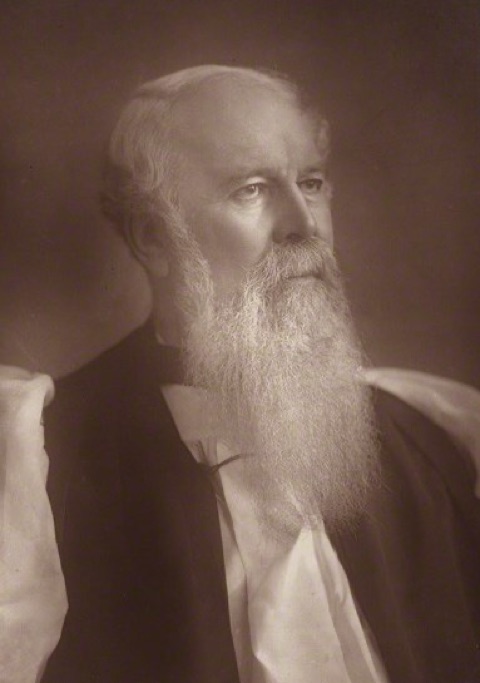
About the author
J.C. Ryle
J.C. Ryle (1816 to 1900 AD) was born at Macclesfield, Cheshire, the son of a wealthy banker. He was educated at Eton and Christ Church, Oxford, where he was a first-class scholar and played cricket for Oxford against Cambridge. The collapse of his father's bank in 1841 turned him toward the ministry. He was ordained in 1842 and, as he recalls in this book, began preaching alone in a poor rural parish in the New Forest; he later served rural parishes in Suffolk. His penny tracts circulated in the millions, and his books included Expository Thoughts on the Gospels and Holiness. In 1880 he became the first Bishop of Liverpool, where he signed the Preface to this volume in 1887. He died in Liverpool on June 10, 1900.