Modernized edition · Full text · Free PDF/EPUB
Thoughts on the Revival of Religion in Modern English
Summary
- Written
- 1742 AD, during the Great Awakening
- Type
- Treatise defending and correcting a revival of religion
- Length
- 90,000 words · 6 hours
- Collection
- Puritan
What is Thoughts on the Revival of Religion about?
Thoughts on the Revival of Religion is Jonathan Edwards's 1742 treatise on the Great Awakening in New England. He argues that the revival, judged by Scripture and its effects, is a glorious work of God that all must promote, while naming the errors of its friends, chiefly spiritual pride, reliance on impulses and censoriousness.
Read the full summary (7 points, quotes, key themes)Show less
How the argument unfolds
- 01
Preface. Edwards claims a free man's liberty to speak plainly about the revival and asks for readers' prayers.
- 02
Three mistakes of the critics. Opponents judge the work by its supposed causes, by standards other than Scripture, and by its worst parts.
- 03
The work described. A changed New England and one detailed case of high transports joined with humility show the work to be glorious.
- 04
The duty to acknowledge it. No one may stand neutral. Rulers, ministers and private Christians must promote a work that may be the dawn of the latter-day glory.
- 05
Promoters defended. Earnest preaching, terror for the awakened, frequent meetings, outcries, singing and children's meetings are defended.
- 06
Errors to correct. Spiritual pride, wrong principles and ignorance of Satan's devices have produced real faults.
- 07
What should be done. Confession on both sides, meekness, a Spirit-filled ministry, united prayer and abundant charity.
Notable images & quotes
- The bubble and the weight. Bodily collapse under a sight of eternal things should surprise no one, for human nature is grass and a trembling leaf: “So fragile a bubble is too weak to carry so immense a weight.”
- The surgeon's lancet. A minister who soothes the awakened sinner is like a doctor who pulls back when the patient winces and bandages the surface, leaving the infected core untouched.
- The fishermen and their net. Ministers with great success must take care that they do not end by “burning incense to their own net”, as Gideon made an idol from the spoils of victory.
- The dikes of Holland. Outward order is not the food of souls but their defense, and despising it is like the Dutch despising the dikes that hold back the sea as dead stones and dirt.
- The spoiled manna. Saints who trust a stored-up supply of grace rather than daily dependence on God find their experience decay, as the manna hoarded in the wilderness bred worms and stank.
Key themes
- Scripture as the only rule. Philosophy, history, personal experience and the outcome of providence all fail as tests; everything must be brought to the written word.
- The affections in true religion. Holiness lies chiefly in holy affections, so preaching should aim at the heart: “Our people do not need their heads stocked with more information nearly so much as they need their hearts touched.”
- Pride as the devil's door. Spiritual pride is the mainspring of every other error in a revival and the hardest sin to see in oneself.
- Patience in reform. Hasty zeal snatches fruit before it ripens, as it hindered the Reformation. “We must expect green fruit before ripe fruit.”
Why read it today
Read it to see a revival judged from inside by a pastor in the middle of the controversy, who weighs taverns, outcries, children's meetings and itinerant preachers by Scripture rather than by party.
It is a rare defense that is also a correction. Edwards answers the opposers point by point, then turns with equal plainness on his own side, warning young preachers against pride, harsh language and judging other ministers.
It also shows Edwards's hope that united prayer would hasten Christ's kingdom: “A poor man in his cottage can exercise a blessed influence across the whole world.”
Source edition: The 1834 Edward Hickman edition of The Works of Jonathan Edwards, Volume 1, in modern English
Reader questions (9)Hide the questions
Questions about Thoughts on the Revival of Religion
Is there a modern English version of Thoughts on the Revival of Religion?
Yes. This is Thoughts on the Revival of Religion by Jonathan Edwards in modern English. The language is modernized and the author's order and argument are kept. The full modernized text is free to read on this page.
Can I read Thoughts on the Revival of Religion online for free?
Yes. The complete text of this modern English edition is on this page, with no sign-up or paywall.
Is there a free PDF of Thoughts on the Revival of Religion?
Yes. The PDF and EPUB of this edition are free with an Updated Works account. Sign in with Google or an email link; no card is needed.
What is Thoughts on the Revival of Religion by Jonathan Edwards about?
It is Edwards's assessment of the Great Awakening in New England. He argues that the revival is a work of the Spirit of God that everyone must support and that much criticism of it is unfair, then sets out its supporters' real errors and the measures that would help it.
When did Edwards write it?
In 1742, about a year and a half to two years into the revival he describes. He quotes a testimony signed by his father at Windsor on May 5, 1742, and speaks of the war with Spain then being argued over in print.
Did Edwards think the bodily effects of the revival proved it was from God?
No. Scripture gives no rules about tears or convulsions, so they prove nothing either way, though he counts them probable signs of God's presence where sound preaching produces them.
Why does Edwards think the latter-day glory may begin in America?
He reads Isaiah 60:9 as pointing to distant isles reached only by sea, and argues from a balance in providence: the old continent bore and crucified Christ, so the new one may lead the church's glorious renewal. So the Sun of righteousness, he suggests, will rise in the west.
What does Edwards say about following impulses and impressions?
He calls expecting guidance by immediate revelation one of the most harmful errors of the time. It opens a door to the devil and confuses a common gift with the Spirit's gracious leading, which works through a holy heart and the written word: “he fills the heart, and the heart fills the mouth.”
What practical proposals does Edwards make?
A common day of fasting and prayer for all of America arranged by printed proposal, more frequent communion, public covenant renewal, and a history of the revival printed in Boston every month or two weeks.
Thoughts on the Revival of Religion in Modern English · Full text
Preface
In the following treatise, I condemn ministers who assume too much authority and act as though it belongs especially to them to dictate, direct, and decide everything. Yet perhaps I will be thought very guilty of that myself. Some who read this book may be ready to say that while I condemn this fault in others, I claim a monopoly on it.
I confess that I have taken a great deal of liberty to speak my mind freely about almost everything connected with the wonderful work of God that has recently been carried on in this land. I have also stated what appears to me to be the mind of God concerning the duty and obligations of all sorts of people, including my superiors and elders, ministers of the gospel, and civil rulers.
Still, I hope the liberty I have taken is no greater than can be justified. In a free nation, liberty of the press allows any author to speak his opinion freely and without offense regarding the management of public affairs and the duty of the legislature and those at the head of the government, even though they are far above him. Today private citizens publish their views on the management of the war with Spain, freely declaring what they believe to be the duty of Parliament, the principal ministers of state, and others.
We in New England are now engaged in a far more important war. When we consider the sad quarreling and confusion that have accompanied it, we must surely confess that it is deeply necessary for someone to speak his mind about how it ought to be conducted. We should not merely debate a few of the many points of strife back and forth in pamphlets, as has been done lately with plenty of heat and fierceness. Exchanges like those do not bring the broader conflict to an end; instead, they inflame it and increase the uproar. Rather, something needs to be published that brings the whole affair, along with the many disputed issues attending it, under careful examination.
Certainly it is high time for this to be done. If private citizens may speak their minds without arrogance, how much more may a minister of the kingdom of Christ speak freely on matters that so closely concern the welfare of his Lord and Master’s kingdom at so critical a moment! I acknowledge it would have been more fitting if some older minister had undertaken this task. Because I have heard of no such effort underway, I hope I may be excused for taking it on.
Nothing I have written can fairly be taken to mean that I wish to force my thoughts on anyone, or that I deny others an equal right to think for themselves. We are not accountable to one another for our opinions. Rather, we must all give an account to him who searches our hearts, and who surely keeps his eye especially on us in an extraordinary season like this. If I have solidly backed my views of this work, and of how it should be acknowledged and promoted, with Scripture and reason, I hope readers will receive it as an expression of the mind and will of God.
I believe I have been made somewhat aware, much more recently than before, of my need for greater wisdom than I possess. I make it my rule to lay hold of light and embrace it wherever I see it, even if it is held out by a child or an enemy. If I have assumed too much in the following discourse, or spoken in a way that shows a trace of pride, it is no surprise that others can see it more clearly than I can. If that is the case, I ask forgiveness and plead for the prayers of every Christian reader. Pray that I may have more light, humility, and zeal, and that I may be granted the measure of the divine Spirit that a minister of the gospel needs in such an extraordinary time.
Part 1
This Extraordinary Work Is a Glorious Work of God
Many people have formed an unfavorable opinion of the great religious movement that has recently taken place in the minds of people across New England. So far as the root of their error lies in the understanding rather than in the heart’s disposition, it seems fundamentally to rest on three mistakes. First, they judge this work beforehand from its supposed causes. Second, they fail to take the Holy Scriptures as a complete rule for judging such spiritual operations. Third, they fail to separate and distinguish the good from the bad.
Section 1: Judge by Effects, Not Supposed Causes
Opponents have gone far astray in how they try to test whether this movement is a work of the Spirit of God. They judge it beforehand from its supposed causes, looking at how it began, what instruments were employed, what means were used, and what methods succeeded in carrying it forward. Yet if we weigh the matter carefully, it becomes clear that a work like this must not be judged beforehand from its causes, but afterward from its effects.
We must examine the actual effect produced. If, upon examination, that effect agrees with the Word of God, we are bound to accept it as God’s work. We risk being rebuked for arrogance if we refuse to do so until God explains how he brought the effect about, or why he chose to use particular means. The following Scriptures should make us tremble and turn away from such a manner of judging a work of God’s Spirit: “Who hath directed the Spirit of the Lord, or being his counselor hath taught him? With whom took he counsel, and who instructed him, and taught him in the path of judgment, and taught him knowledge, and showed to him the way of understanding?” “The wind bloweth where it listeth, and thou hearest the sound thereof; but canst not tell whence it cometh, and whither it goeth.”
We hear the sound, we observe the effect, and from that we judge that the wind is truly blowing. We do not refuse to reach that conclusion until we are first satisfied about why the wind blows from a certain quarter of the sky, or how it happens to blow in such a way at that particular time. Judging beforehand from supposed causes is the wrong way to judge any of God’s works. We must not insist on first understanding how God produced an effect, why he shaped it as he did, or why he chose a certain course and specific means, before we will acknowledge his work and give him the glory for it. That is far too much for the clay to claim against the potter.
“God gives not account of his matters: His judgments are a great deep: He hath his way in the sea, and his path in the great waters, and his footsteps are not known; and who shall teach God knowledge, or enjoin him his way, or say unto him, What dost thou? We know not the works of God who maketh all.” No wonder, then, that those who follow this forbidden path in judging the present wonderful movement end up perplexed and confused. We should be careful not to bring on ourselves the disaster of those who pried into the ark of God when he mercifully returned it to Israel after it had departed from them.
Indeed, God has not taken the path or used the means to start and advance this great work that human wisdom would have recommended if he had asked our advice. Quite the opposite. Yet it seems to me that the great God has acted just like himself in how he has carried on this work. He has done it in a way that vividly displays his own glory and exalts his sovereignty, power, and all-sufficiency. He has poured contempt on all the human strength, wisdom, prudence, and self-sufficiency that people normally trust and boast in, so as to cross, rebuke, and discipline human pride and other corruptions. “And the loftiness of man shall be bowed down, and the haughtiness of men shall be made low, and the Lord alone shall be exalted in that day” (Isa 2:17).
God accomplishes this in several ways. In his providence, he mingles many stumbling blocks with the work. He allows much human weakness and frailty to show itself, and he arranges many things that baffle human wisdom. Above all, he pours out his Spirit chiefly on common people, bestowing his greatest and highest favors on them and drawing them closer to himself than the great, the honored, the wealthy, and the learned. This agrees with the prophecy, “The Lord also shall save the tents of Judah first, that the glory of the house of David, and the glory of the inhabitants of Jerusalem, do not magnify themselves against Judah.”
Those who lived in the tents of Judah were the common country people of lower rank. The inhabitants of Jerusalem were the city dwellers, people of wealth and standing. Jerusalem was also the main residence and gathering place of the priests, Levites, officials, and judges, where the great Sanhedrin sat. The house of David stood at the very top: the royal family and the nobles around the king. The context makes clear that this prophecy looks beyond simply rescuing the people from Babylonian captivity.
In this work, God has started at the lower end and used the weak and foolish things of the world to carry it forward. Some of the ministers most heavily used have been mere youths in age and experience, and some have not stood as high in reputation among their fellow ministers as many others. God has allowed their weaknesses to appear plainly before others, greatly displeasing those onlookers. At the same time, God has been pleased to grant these ministers great success, while withholding equal success from others generally regarded as far their superiors.
There is even reason to think that God has used the faults of some preachers, especially their unwise zeal and harsh, critical spirit, to discipline the deadness, carelessness, worldliness, and vanity found among ministers during the recent years of spiritual decline. In those dead times, wise and foolish virgins alike, both ministers and people, had sunk into a deep sleep. Such faults in ministers of the gospel, who go out as ambassadors of Christ with the care of immortal souls, are utterly detestable to God. They are far more hateful in his sight than all the lack of prudence, intemperate heat, wildness, and madness (as some call it) of these zealous preachers.
Sluggish carelessness and a shallow, carnal, worldly spirit in a gospel minister are the worst form of madness in God’s eyes. God may also use the unchristian fault-finding of some preachers today to humble and purify some of his own children and faithful servants who have been wrongly criticized, preparing them for greater service and future honor.
Section 2: Judge by the Rule of Scripture
Another foundational error of those who do not recognize this work as divine is failing to treat the Holy Scriptures as a complete and sufficient rule for judging such matters. People who judge by one clear, consistent standard are likely to reach a sound conclusion. By contrast, those who rely on a dozen different standards only confuse and darken themselves and others instead of reaching a fair, clear verdict. Anyone who tries to measure something with many different measuring rods takes on a task he will never finish. The critics I have in mind do make some use of Scripture when they think it serves their purpose. Yet they do not use Scripture alone as a rule sufficient by itself. Instead, they rely just as much, and far more, on other standards quite different and far removed from Scripture.
1. Some make philosophy rather than the Holy Scriptures their standard for judging this work, especially their philosophical theories about the soul, its faculties, and its affections. Some are quick to say, “There is very little sober, solid religion in this work. It is mostly flash and noise. Religion now pours out entirely into ecstasies and high flights of emotion and affection.”
In their philosophy, the affections of the soul are separate from the will and do not belong to the soul’s noblest part. They rank the affections among the lowest impulses that belong to human beings as part of animal nature, things we share with brute creatures rather than qualities that make us like angels and pure spirits. Even though they admit that emotions can be put to good use in religion, they suppose that the substance of religion does not consist in them. To them, the affections are merely accidental extras attached to Christianity.
I cannot help thinking that these gentlemen are seriously mistaken in both their philosophy and their theology. It is true that we must make careful distinctions among the affections or passions. There is a vast difference among intense, heightened affections, and a skilled observer must tell them apart. Many emotional stirrings are flashy and unreliable. Often a great deal connected with them, or resulting from them, is rooted in our physical animal nature and stems largely from bodily constitution and temperament. What is sometimes called mere passion has nothing solid or lasting about it. Yet it is bad philosophy to claim that this describes every exercise of affection in the soul, or every strong and intense affection. And it is bad theology to claim that religious affections do not belong to the substance and essence of Christianity. On the contrary, the very life and soul of all true religion seems to me to consist in them.
I humbly submit that the affections of the soul are not properly separated from the will as if they were two different faculties. Every act of the affections is in some sense an act of the will, and every act of the will is an act of the affections. Every exercise of the will involves, to some degree, the soul’s attraction or aversion, which is simply its love or hatred. The soul wills one thing rather than another, or chooses one thing over another, only because it loves one thing more than another. Love and hatred are affections of the soul. Therefore, all acts of the will are genuinely acts of the affections, though exercises of the will are not usually called passions unless the will acts with great intensity, vigor, and force in its attraction or opposition.
Everyone agrees that true virtue or holiness resides chiefly in the heart rather than in the head. From what has just been shown, it follows that holiness consists chiefly in holy affections. The truths of religion take root in people’s hearts only to the extent that their hearts are affected by them. Filling the mind with information accomplishes nothing unless it moves the heart, which is the same as influencing the affections.
The gentlemen who dismiss heightened affections in religion will surely agree that true religion and holiness, seated in the heart, can reach very high degrees and strong activity in the soul. For example, they will likely agree that holiness of heart or will could grow a hundred times stronger than it is in the most eminent saint on earth, and act with a hundred times more vigor, while still remaining true religion and holiness. Let me ask them, then, what name they would give to these intense, vigorous exercises of the will or heart. Are they not high affections? What else can they consist of besides intense acts of love, strong and vigorous goodwill and delight, exalted and wondering thoughts of God and his perfections, and deep longings for God? What have we arrived at, then, except high and heightened affections, the very affections they previously dismissed as worth little notice?
Everyone agrees that religion in heaven is completely solid. Yet in heaven, holiness is raised to an extraordinarily high pitch, into strong, lofty, exalted movements of the heart. What other strong and lofty exercises of holiness in the heart can we imagine for those in heaven besides holy affections: intense love for God, rejoicing in God, wonder at God, and the like? Surely we should not despise and dismiss these things in the saints and angels of heaven as mere bursts of heat and emotional transport. And surely everyone will further agree that the more mature saints are on earth, and the stronger and more active their grace, the more they resemble the saints in heaven. By what we have just seen, that means they have all the more of high, heightened affections in religion.
Even though false religious affections exist and can sometimes rise to a high pitch, true, holy, and solid affections undoubtedly exist as well. The higher these rise, the better. When they reach extraordinary heights, we should not distrust them merely because they are intense. On the contrary, we should prize them.
Scripture presents Christian love, or divine love, as the sum of all heart religion, yet this love is simply a holy affection. Therefore, the more firmly it is fixed in the soul and the higher it rises, the more eminent a person is in holiness. Scripture also presents divine love as the sum of all religion in heaven, and as the core of the church’s religion in its more mature state on earth, when knowledge, tongues, and prophecies pass away. Consequently, the higher this holy affection rises in the church of God or in a redeemed soul, the more excellent and mature is the condition of that church or soul.
If we take Scripture as our standard, then the greater and higher our exercises of love for God, delight and satisfaction in him, desires and longings for him, delight in his children, love for humanity, brokenness of heart, hatred of sin, and self-loathing because of it, the higher true Christianity rises in us. The more we know of the peace of God that surpasses all understanding and of joy in the Holy Spirit that is unspeakable and full of glory, the higher our faith rises. Likewise, the higher our wondering thoughts of God ascend, exulting and boasting in him, the more fully the religion of Christ, the virtue taught by him and his apostles, flourishes in the soul.
Some people stumble because religious affections appear so powerful, or even “violent,” as they put it, in certain individuals. This leads them to doubt whether such force can come from the Spirit of God, and to wonder whether this intensity is not instead the mark of an evil spirit. Why should such a doubt arise? What does Scripture portray as more powerful in its effects than the Spirit of God?
For this reason the Spirit is called “the power of the Highest” (Luke 1:35), and his saving work in the soul is called “the power of godliness.” We read of the “demonstration of the Spirit and of power” (1 Cor 2:4). The Spirit is said to work in human minds with the “exceeding greatness of divine power” and “according to the working of God’s mighty power” (Eph 1:19). We also read of “the effectual working of his power” (Eph 3:7), “the power that worketh in Christians” (Eph 3:20), and the glorious power of God in the operations of the Spirit (Col 1:11). In 2 Timothy 1:7, the Spirit of God is called “the Spirit of power, and of love, and of a sound mind.” In the same way, Scripture symbolizes the Spirit by a mighty wind and by fire, things unmatched in the force of their action.
2. Many people fail to take the Holy Scriptures as a sufficient and complete rule for judging this work because they judge it by things Scripture never gives as signs or tests either way. Specifically, they judge by the effects that spiritual exercises and mental affections produce on the body.
Scriptural rules concern the state of the mind, moral conduct, and voluntary behavior, not the physical condition of the body. The purpose of Scripture is to teach us theology, not medicine and anatomy. Ministers are appointed as watchmen over people’s souls, not their bodies. Therefore, the great rulebook God has placed in their hands is meant to make them theologians, not physicians.
Christ knew what instructions and rules his church would need far better than we do. Had he judged it necessary for the church’s safety, he would certainly have given ministers rules for evaluating physical reactions. He would have told them how fast the pulse should beat during specific spiritual experiences, when people should turn pale, when they should shed tears, when they should tremble, and whether they should ever fall into convulsions. He would likely have placed a manual in their hands designed to make them skilled anatomists and doctors.
He did not do so because he did not judge it necessary. He knew that if ministers faithfully carried out their duty as watchmen and overseers of the state and condition of people’s souls and their voluntary conduct, following the rules he actually gave, his church would be well protected in these matters.
Therefore, ministers of Christ and overseers of souls who obsess over involuntary movements of bodily fluids and tissues, and who draw doubts and suspicions about the revival from them even when people’s spiritual state and voluntary conduct appear sound and faithful to God’s Word, step outside the post Christ assigned them. They abandon their proper calling just as much as if they tried to identify who has the Spirit by examining people’s faces or how they walk.
I cannot see how we are in danger, or how the devil could gain any serious advantage over us, if we thoroughly do our duty regarding those two things: the state of people’s minds and their moral conduct, making sure both align with Christ’s rules. If those remain sound, our fears and suspicions over unusual physical effects seem entirely groundless.
The most plausible objection raised against these unusual physical effects is that they injure the body. Critics say it is hard to believe that God, in the merciful work of his Spirit, would harm people’s bodies and damage their health. Yet even if people did suffer lasting harm to their health in many cases (which I do not think happens) from extraordinary spiritual impressions on their minds, we have no right to limit God. It is far too bold for us to declare that God will never permit an outward hardship while bestowing a vastly greater spiritual and eternal good.
When Jacob did his duty in wrestling with God for a blessing, at the very moment he received the blessing, he suffered a severe physical injury from God’s hand. God blessed him, yet sent him away limping on his thigh, and he walked lame for the rest of his life. Still, Scripture never treats this as lessening God’s great mercy to him when God blessed him and gave him the name Israel, because as a prince he had power with God and had prevailed.
Some object, “The operations of God’s Spirit are gentle and benign. Nothing has a kinder influence on human nature than the merciful breathings of God’s own Spirit.” Yet until now, the church of God has generally recognized and accepted that someone can be “sick of love” for Christ, or have bodily strength weakened by intense, vigorous exercises of love for him. However kind to human nature the Spirit’s influences are, no one doubts that divine and eternal realities, if clearly revealed, would overwhelm human nature in its present weak condition. In its frailty, the body is simply not built for the sights, pleasures, and activities of heaven.
If God were to reveal even a fraction of what saints and angels behold in heaven, our fragile frames would collapse beneath it. Think reasonably about what we claim to believe concerning the infinite greatness of divine wrath, divine glory, the infinite love and grace of God in Jesus Christ, and the infinite weight of eternal realities. Then consider how reasonable it is that if God draws back the veil even slightly to let light into the soul, revealing the realities of the next world in their transcendent greatness, human nature, which is like grass, a trembling leaf, a weak withering flower, should stagger under such a sight! So fragile a bubble is too weak to carry so immense a weight.
Alas, what is man that he should stand upright under a sight of the solemn wrath or infinite glory and love of Jehovah! No wonder Scripture says, “No man can see me and live” (Exod 33:20), and “Flesh and blood cannot inherit the kingdom of God” (1 Cor 15:50).
Daniel saw Christ’s outward glory and majesty when “there remained no strength in him, and his comeliness was turned in him into corruption” (Dan 10:6-8). The apostle John saw that same glory when he fell at Christ’s feet as though dead. Yet those visions were only a shadow of the spiritual majesty of Christ that will be revealed to the souls of saints in the next world, and that is sometimes partially revealed to the soul even in this life. If seeing the mere outward image of this glory so overpowered human nature, is it unreasonable to expect that a sight of the spiritual glory itself should have just as powerful an effect?
The prophet Habakkuk spoke of the awesome displays of God’s majesty and wrath at the Red Sea, in the wilderness, and at Mount Sinai where he gave the law. He also described the merciful, powerful impression God made on him through those sights so he might be saved from that wrath and find rest in the day of trouble. “When I heard, my belly trembled, my lips quivered at the voice, rottenness entered into my bones. I trembled in myself that I might rest in the day of trouble” (Hab 3:16). This is the very same kind of effect that a sight of that same majesty and wrath has produced in many people today, and for the same purpose: to give them rest in the day of trouble and save them from that wrath. The psalmist also describes a physical response like what I have often seen in people under deep spiritual affections recently (Ps 119:131).
In pouring out spiritual blessings on his people, God is sometimes pleased to exceed the capacity of the vessel in its present smallness. He does not merely fill it, but makes their cup overflow (Ps 23:5), pouring out a blessing in such manner and measure that there is not room enough to receive it (Mal 3:10). He gives them more riches than they can carry away, just as he did for Jehoshaphat and his people in a season of great favor, through the word of his prophet Jahaziel in answer to earnest prayer, when the people blessed the Lord in the valley of Berachah (2 Chr 20:25-26).
For a long season, Christ’s disciples have endured great spiritual emptiness. They have gone hungry, toiling in vain through a dark night in the church of God, just like the disciples long ago who worked all night for food and caught nothing (Luke 5:5; John 21:3). Now morning has come. Jesus appears to his disciples, notices their need with compassion, and asks, “Children, have ye any meat?” Then he gives some of them such an abundance of food that they cannot haul in their net. Indeed, their boat is overloaded and begins to sink, just as happened to the disciples long ago (Luke 5:6-7; John 21:6).
We cannot declare that God will never give someone such a clear sight of himself that it not only weakens the body, but even ends the person’s life. Very learned and sound theologians have thought that Moses died in this way, and the same has been supposed of certain other saints. Moreover, I see no solid ground for anyone to insist that God will never make strong impressions on the mind by his Spirit that become the occasion of so impairing the body’s constitution as to deprive a person of the use of reason.
As I said earlier, it is too much for us to decide that God will never permit an outward hardship while bestowing spiritual and eternal blessings. In the same way, it is too much for us to decide how severe an outward hardship he may permit. If God grants a great increase in knowledge of himself and love for him, the gain is infinitely greater than the loss, even if life were taken away immediately afterward. The same holds true even if the soul lay in a deep sleep for years before being taken to heaven, or, which amounts to much the same thing, were deprived of the use of its mental faculties and left inactive and unable to serve for some years before entering glory.
We cannot judge how great a calamity mental breakdown really is when weighed with all its consequences, and with everything that might have followed if it had not occurred. Indeed, considered in full, we cannot even be sure whether it is a calamity at all, or rather a mercy that prevented some terrible sin or other evil. It is a serious fault in us to set limits on a sovereign, all-wise God, whose judgments are a great deep and whose ways are past finding out, where he has not limited himself and has not told us what path he will take.
When we consider how many people have been physically overwhelmed recently, and to such a great degree, it is remarkable that their lives have still been preserved. Those who have lost the use of reason have been very few, and perhaps all of them were people already burdened with a weak, nervous, melancholy constitution. A merciful and watchful divine hand is clearly visible in this: though the boat has begun to sink in so many cases, it has been held up and has not gone under. The cases of people losing their reason are so few that they surely offer no grounds for alarm, as though this work were harmful in its influence, unless we are determined to scrape together everything we can to blacken it and paint it in frightening colors.
One particular kind of spiritual distress that has overpowered many has been especially troubling to some critics: deep anguish for the souls of others. I am sorry anyone forces us to defend something like this. In so obvious a case, it feels almost trivial to hold a detailed debate over whether the magnitude and importance of the situation matches the depth of concern shown.
People are readily excused, on no higher ground than ordinary human sympathy, for being deeply shaken and distressed when they see others in grave danger of burning to death in a house on fire. Everyone agrees it would be just as reasonable to feel far greater distress if they saw others facing a disaster ten times worse, and vastly more distress still if the disaster were infinitely greater. Why, then, should anyone consider it unreasonable, or view it with suspicion as if it must come from an evil source, when people are deeply anguished at seeing others in imminent danger of suffering the fierce wrath of almighty God forever?
Besides, everyone will surely grant that people filled with a large measure of God’s Spirit, who is a Spirit of love, must naturally feel far deeper love and compassion for their fellow human beings than those moved only by ordinary human sympathy. Why should it seem strange that people filled with the Spirit of Christ should resemble Christ proportionally in their love for souls? His love and concern for souls were so intense that he willingly drank the dregs of the cup of God’s fury. At the same time that he offered up his blood for souls, he also offered up as their high priest strong cries and tears in extreme agony, his soul laboring in birth pangs for the souls of the elect. For that reason, in saving them, he is said to see the travail of his soul.
Just as this spirit of love and concern for souls belonged to Christ, it also belongs to his church. Thus, in longing and striving for Christ to be formed in human souls, the church is pictured in Revelation 12 as a “woman crying, travailing in birth, and pained to be delivered.” So far as I can see, the spirit of those who have been in anguish for others’ souls does not differ from that of the apostle Paul, who labored in birth pangs for souls and was ready to wish himself accursed from Christ for others.
It matches the spirit of the psalmist: “Horror hath taken hold upon me, because of the wicked that forsake thy law” (Ps 119:53), and “Rivers of waters run down mine eyes, because they keep not thy law” (Ps 119:136). It matches the prophet Jeremiah: “My bowels! My bowels! I am pained at my very heart! My heart maketh a noise in me! I cannot hold my peace! Because thou hast heard, O my soul, the sound of the trumpet, the alarm of war!” (Jer 4:19; see also Jer 9:1; Jer 13:17; Jer 14:17; Isa 22:4). We also read of Mordecai, when he saw his people threatened with earthly destruction, that “he rent his clothes, and put on sackcloth with ashes, and went out in the midst of the city, and cried with a loud and bitter cry.” Why, then, should people be dismissed as mad when they cannot hold back their cries at the thought of others heading to eternal ruin?
3. Another standard some people use to judge this work instead of the Holy Scriptures is history, or past observation. Here they go wrong in two ways.
(1) If anything unusual appears in the circumstances of this work that was not noticed in earlier times, they treat that as a rule for rejecting the work, a rule God never gave them, and they limit God where he has not limited himself. This is especially unreasonable here. Anyone who has carefully studied the wonderful and mysterious ways of divine wisdom in carrying out the work of redemption, from the first promise of the woman’s offspring right up to our own day, can easily see that God’s constant pattern has been to open new scenes. He continually brings into view things new and astonishing, things eye has not seen, ear has not heard, and neither human nor angelic minds have imagined, to the amazement of heaven and earth. He does this not only in revealing his mind and will, but also in the works of his hands.
Just as the old creation unfolded across six days and appeared complete and settled in rest on the seventh, so the new creation, an immensely greater and more glorious work, unfolds gradually from the fall of humanity to the final completion of all things. In the unfolding of the old creation, new wonders were accomplished every day before the eyes of the angels watching that work. While those morning stars sang together, fresh scenes opened until the whole was finished. It is the same in the progress of the new creation.
Thus the promise stands: “For since the beginning of the world, men have not heard, nor perceived by the ear, neither hath the eye seen, O God, besides thee, what he hath prepared for him that waiteth for him” (Isa 64:4). Although this received a glorious fulfillment in the days of Christ and his apostles, as applied in 1 Corinthians 2:9, it still continues to be fulfilled in things yet to come until the new creation is finished, when Christ delivers up the kingdom to the Father. We live in these latter days, when we have special reason to expect events concerning which people will ask, “Who hath heard such a thing? Who hath seen such things?”
Besides, the features of this work most often criticized as new are not nearly as new as people generally imagine. They have appeared much more frequently lately, matching the unusual power, reach, speed, and other extraordinary features of the revival. Yet they are not new in kind. They are the very same sort of occurrences that have appeared and been warmly approved in the church of God from time to time in earlier ages.
We have a striking example in Mr. Bolton, that noted minister of the Church of England. After being awakened under the preaching of the famous Mr. Perkins, minister of Christ at Cambridge University, he experienced such terrors that they threw him to the ground and made him roar in anguish. The birth pangs of the new birth were so intense in him that he lay pale and unconscious, like a dead man, as recorded in The Fulfilling of the Scripture. That same work tells of another man whose comfort under the sunshine of God’s presence was so overwhelming that he could not stop himself from crying out in ecstasy, declaring aloud his deep sense of forgiving mercy and his assurance of God’s love. And in the autobiography of Mr. George Trosse, who went from a notoriously wicked, reckless life to become an eminent saint and minister of the gospel, we have a remarkable account of terrors caused by an awakened conscience that so overpowered his body as to deprive him for a time of the use of reason.
Such extraordinary outward effects of inward spiritual impressions have not appeared merely in an isolated person here and there. There have been seasons when many were affected this way in particular parts of God’s church, with these effects appearing across whole congregations at once.
So it happened in the year 1625 in the west of Scotland during a great outpouring of the Spirit of God. It was common then for many hearers to be seized with such extraordinary terror under the preaching of the Word, as the Spirit convinced them of sin, that they collapsed and had to be carried out of the church. Afterward, they proved to be the most solid, vibrant Christians, as the author of The Fulfilling of the Scripture reports.
The same author tells of many in France during the ministry of the famous theologians Farel and Viret who were so powerfully moved by the preaching of the gospel that for a time they could not attend to their everyday work. He also reports of many in Ireland during a great outpouring of the Spirit there in 1628 who were so filled with divine comfort and a sense of God that they had little use for food, drink, or sleep, testifying that they did not even feel the need for them.
The same author gives a similar account of Mrs. Katharine Brettergh of Lancashire, England. After intense distress that deeply affected her body, God broke into her mind with such light and revelations of himself that she could not help bursting out, “O the joys, the joys, the joys that I feel in my soul! O they are wonderful, they are wonderful! The place where I now am is sweet and pleasant! How comforting is the sweetness I feel, that delights my soul! The taste is precious; do you not feel it? Oh, so sweet it is!”
At other times she cried, “O my sweet Savior, shall I be one with you, as you are one with the Father? And do you so love me, who am but dust, as to make me a partaker of glory with Christ? O how wonderful is your love! And O that my tongue and heart were able to sound forth your praises as I ought!”
At another time she burst out, “Yes, Lord, I feel your mercy, and I am assured of your love! As certain as you are that God of truth, just so certainly do I know myself to be yours, O Lord my God; and this my soul knows right well!” Those last words she repeated twice.
To a grave minister, Mr. Harrison, who was with her, she said, “My soul has been surrounded with the terrors of death, the sorrows of hell were upon me, and a wilderness of woe was in me. Yet blessed, blessed, blessed be the Lord my God! He has brought me to a place of rest, even to the sweet running waters of life. The path I now walk is a sweet and easy path, strewn with flowers. He has brought me into a place sweeter than the Garden of Eden! O the joy, the joy, the delights and joy that I feel! O how wonderful!”
Loud outcries under spiritual awakenings were heard more often in earlier times in this country than in recent years, as several elderly people still living testify. In particular, I think it fitting to include here a testimony from my honored father about what he remembers hearing in earlier days:
“I well remember that one Mr. Alexander Allen, a Scots gentleman of good standing who formerly lived in this town, showed me a letter from Scotland. It gave an account of a sermon preached in the city of Edinburgh (as I recall) while the General Assembly of divines was sitting in that kingdom, which so affected the people that a great and loud cry rose throughout the assembly. I have also been reliably informed, though how often I cannot now say, that it was a common thing when the famous Mr. John Rogers of Dedham, in England, was preaching, for some of his hearers to cry out. From what I have heard, I conclude it was usual for many who heard that deeply awakening and rousing preacher of God’s Word to raise a great cry in the congregation. Signed, Timothy Edwards, Windsor, May 5, 1742.”
Mr. Flavel gives a remarkable example of a man he knew who was wonderfully overcome with divine comfort, whom it is generally supposed he knew the same way the apostle Paul knew the man caught up to the third heaven. Flavel relates:
“As the person was traveling alone, with his thoughts closely fixed on the great and astonishing things of another world, his thoughts began to swell higher and higher, like the water in Ezekiel’s vision, until at last they became an overflowing flood. Such was the intensity of his mind, such the ravishing tastes of heavenly joys, and such his full assurance of his share in them, that he completely lost all sight and awareness of this world and its concerns. For several hours he did not know where he was or what he was doing. Having lost a great quantity of blood from his nose, he found himself so faint that it brought him a little more to himself. After he had washed at a spring and drunk some water to refresh himself, he continued to the end of his journey, which was thirty miles, and all this while he was scarcely aware of his surroundings. He says he had several trances of considerable duration. The same blessed frame of mind remained all that night and, to a lower degree, through a great part of the next day. The night passed without a wink of sleep, yet he declares he never had a sweeter night’s rest in all his life. Still, the account adds, the joy of the Lord overflowed him, and he seemed to be an inhabitant of another world. For many years afterward he used to call that day one of the days of heaven, and professed that he understood more of the life of heaven from it than from all the books he ever read or conversations he ever held about it.”
There have also been earlier examples in New England of people crying out in ecstasies of divine joy. We find one in Captain Clap’s memoirs, published by Reverend Prince. This was not a foolish woman or a child, but a man of solid understanding, who in a high transport of spiritual joy cried out aloud on his bed. His words are: “God’s Holy Spirit did witness (I do believe) together with my spirit, that I was a child of God; and did fill my heart and soul with such full assurance that Christ was mine, that it did so transport me, as to make me cry out upon my bed, with a loud voice, ‘He is come, he is come!’”
Even in this very town, both crying out and falling down have occurred before now under awakenings of conscience and in the pangs of the new birth. In one of the neighboring towns, more than seven years ago, a large group cried out and fell down together under conviction of sin, and in most of them the outcome proved lasting and good. Reverend Williams of Deerfield told me of an elderly man in that town many years before that who, awakened by his preaching, cried out aloud in the congregation.
In this town, many people have fainted before now from joyful revelations given to their souls, and once several fainted together. We have also had several instances here of people growing cold and numb, with their hands clenched and even their bodies in convulsions, overpowered by a vivid sense of the astonishingly great and glorious realities of God and the eternal world.
(2) Another way some err in making history and past observation their standard instead of Holy Scripture is by comparing external, incidental features of this work with what has sometimes appeared among religious fanatics. Because they notice a resemblance in a few outward details, they reject the whole work, or at least its core, concluding that it is mere fanaticism.
Critics have made heavy use of various practices found among the Quakers for this purpose, even though this work, in its entire nature and the principles on which it rests, is completely and fundamentally different from the whole religion of the Quakers. In the same way, certain outward behaviors observed among the French prophets and other deluded fanatics of earlier times have recently been paraded about with great confidence and triumph.
4. I ask readers to consider whether some people, instead of making Scripture their only standard for judging this work, are not actually making their own experience the standard. Do they not reject what others now profess and experience simply because they have never felt it themselves?
Are there not many who, mainly on this ground, have harbored and voiced suspicions, or even flat condemnations, of intense spiritual terrors and sudden, extraordinary revelations of God’s glorious perfections and Christ’s beauty and love? Have they not condemned vehement affections, high transports of love and joy, deep pity and anguish for others’ souls, and spiritual experiences that produce powerful effects, solely or mainly because they have no personal experience of them?
People are very quick to distrust whatever they have not felt themselves. It is to be feared that many good people have fallen into this error, though that does not make it any less unreasonable. Perhaps there are even some who, on this same basis, reject not only these extraordinary manifestations, but all deep conviction of sin, revelations of God’s glory and Christ’s excellence, and inward certainty of the gospel’s truth produced by the direct influence of God’s Spirit, which are essential to salvation. People who thus make their own experience their standard of judgment, instead of bowing to God’s wisdom and submitting to his Word as an infallible rule, cast a grave insult upon the understanding of the Most High.
Section 3: Distinguish the Good from the Bad
Another foundational error of those who reject this work is failing to distinguish properly between the good and the bad. They unfairly judge the whole by a part, rejecting the work in general, or its main substance, because of some incidental evil mixed in with it. Because people are experiencing the work of a good Spirit, these critics expect far more from them than can reasonably be expected in this imperfect life, where so much blindness and corruption still remain even in the best believers.
When people claim to have received light and comfort from heaven and to have enjoyed vivid communion with God, many expect them to act like angels immediately, rather than still appearing as poor, frail, blind, sinful worms of the dust. The fact that so much sin remains in the hearts of God’s own children, and sometimes gains the upper hand, is indeed a mystery and has always been a stumbling block to the world. Yet it will not surprise those who know and keep clearly in mind two things: first, the Word of God, which teaches the real condition of true Christians in this world; and second, their own hearts, provided they have any grace and have experienced its struggle against remaining sin.
True saints have the least excuse of all for making a huge obstacle out of the great blindness and many sinful errors found in professing Christians. If all our own conduct, both public and secret, were exposed and our hearts laid bare before the world, we would be ready to flee from the light of the sun and hide from human sight! How much patience and allowance would we need others to grant us, perhaps far more than we are willing to grant them?
The great weakness of most people in any new and unusual situation shows up in their refusal to distinguish. Instead, they approve or condemn everything in one lump. Those who strongly approve of the movement as a whole cannot stand having anything in it criticized. On the other hand, those who fix their eyes on flaws and things that offend them immediately reject the entire movement. Both errors often spring from a lack of honest self-knowledge.
It is rash and unjust to judge either an individual or a community this way. Many people, if they see any serious flaw in a single person, whether a minister or a private professing Christian, immediately brand him a hypocrite. If two or three people in a congregation or community behave wildly, the entire group must take the blame. If even a handful, perhaps no more than one in a hundred, claimed to share in the saving benefits of this work and later gave the world good reason to doubt them, the whole movement is rejected on their account, and everyone else who makes a similar profession is condemned because of them.
Some people are so anxious to prevent this work from being defended that they will scarcely admit that the Spirit’s work on the heart can even indirectly and incidentally become the occasion for remaining sin to act out. Certainly the saving influence of God’s Spirit will never increase the general corruption of the heart; on the contrary, it weakens it. Still, there is nothing unreasonable in recognizing that while the Spirit weakens sin overall, his work can incidentally turn what corruption remains into a new channel. Some particular forms of sin may even show up more actively than before, just as an obstacle that partly blocks a stream forces whatever water gets past it into a new course.
For example, the Spirit’s influences can become the occasion for new forms of pride, as orthodox theologians have always recognized. Until opposition to this revival made it convenient to deny it, no one used to doubt that spiritual revelations and comforts can, through the heart’s remaining corruption, become an occasion for spiritual pride.
Some critics hesitate to admit that a work of God’s Spirit can even be a remote occasion for sinful or unchristian conduct. Yet surely even they will grant that truly gracious influences of the Spirit, including a high degree of love for God, can coexist with two things: a considerable amount of remaining sin, and many errors of judgment in religious matters. That is all we need to establish with complete proof that a high degree of love for God can accidentally move a person to act directly against God’s mind and will.
After all, strong love for God powerfully drives a person to do what he believes pleases God. Therefore, if he is mistaken and convinced that something agrees with God’s will when it actually opposes it, his love will accidentally yet forcefully push him toward what contradicts God’s will. Students of logic know that you cannot judge the nature of a cause from the nature of its effect, nor the nature of an effect from its cause, when the cause is merely a necessary condition or an occasional cause. Indeed, in such cases the effect is often completely opposite in character to the cause.
True disciples of Christ can carry a great deal of misguided zeal, like the disciples long ago who wanted to call down fire from heaven on the Samaritans for refusing to welcome them. Even a saint as remarkably holy, great, and godly as Moses, who spoke with God as a man speaks with his friend, and of whom God testified that he was more humble than anyone else on earth, could be rash and sinful in his zeal when provoked by others’ hard-heartedness and opposition. A true believer can speak very rashly with his lips, deeply offend God, and shut himself out from enjoying the good things God is about to do for his church on earth, just as Moses was barred from Canaan even though he had led Israel out of Egypt (Ps 106:32-33).
Even in actions motivated by genuine godliness, believers can be very reckless in their zeal through misunderstanding and a lack of careful thought and caution. A genuinely good spirit moved that faithful generation of Israel in Joshua’s day (Josh 22). Yet their zeal was rash and headstrong when they mobilized all Israel to march furiously to war against their brothers from the two and a half tribes over the altar they had built, without first investigating or even sending a messenger to ask what it meant.
In the same way, the Jewish Christians hotly criticized and disputed with Peter for welcoming Cornelius (Acts 11). Their anger and criticism were unfair, and Peter was wronged. Yet everything in the account indicates they acted out of sincere zeal and concern for God’s will and honor. Likewise, the early Christians judged and condemned one another out of zeal for or against eating certain foods. That was a bad result, yet the apostle testifies, or at least expresses his charitable judgment, that both sides acted from a good motive and sincere devotion to the Lord (Rom 14:6).
Even though Paul warmly praised the Corinthians’ zeal regarding the immoral man, he saw at the same time that they needed a warning so they would not push it too far into harsh severity, losing Christian gentleness and forgiveness (2 Cor 2:6-11; 2 Cor 7:11-16). Luther, that great Reformer, also had a great deal of bitterness mixed with his zeal.
Thoughtful people surely cannot be surprised that when multitudes across the land have their affections deeply stirred, large numbers fall into mistakes about their duty and, as a result, into unwise and disorderly practices. I doubt there is a single man in New England, even with the strongest intellect and greatest learning, who would not struggle to keep full self-control under such pressure. Suppose he felt divine and eternal realities as intensely, and had his affections stirred as deeply, as has often happened lately among common people. Even he would be hard-pressed to weigh every word, foresee every consequence of his behavior, and act with complete prudence in every respect.
How poorly those people understand human nature who treat it as an unanswerable objection when crowds of every level of intelligence, temperament, education, background, and way of life are deeply and variously moved, and imprudence and disorderly behavior abound! This is all the more true in circumstances so rare, where the intensity, reach, speed, and power of the movement are so extraordinary and unfamiliar that neither time nor experience has yet produced practical guidelines for conduct, and the writings of earlier theologians offer no clear rules for navigating such a season.
Whenever something truly glorious begins in human society or in the church of God, we should always expect a great deal of noise and tumult, confusion and uproar, darkness mixed with light, and evil mixed with good. After nature has been locked up in a cold, dead winter, when the sun returns in spring, its growing light and warmth bring stormy, turbulent weather before the skies finally turn calm and clear and all creation blossoms in beauty.
It is the same in the new creation as in the old. First, the Spirit of God hovered over the face of the waters, stirring great commotion and turbulence. Then things were gradually brought into settled form, until everything stood forth in peaceful, beautiful order when the heavens and earth were finished, and God saw everything he had made, and behold, it was very good.
Whenever God is about to accomplish something great and glorious in the world, nature enters a ferment and struggle, and the world is, as it were, in labor pains. When God prepared to bring the Messiah into the world and introduce a new, glorious era, he shook the heavens and the earth and shook all nations.
Scripture compares the church of God to nothing more often than growing plants, such as a tree, a vine, or grain, which produce their fruit gradually and are green before they ripen. A great revival of religion is explicitly compared to this gradual growth of plants: “As the earth bringeth forth her bud, and as the garden causeth the things that are sown in it to spring forth; so the Lord God will cause righteousness and praise to spring forth before all the nations” (Isa 61:11). In particular, the church is compared to a palm tree (Song 7:7-8; Exod 15:27; 1 Kgs 6:29; Ps 92:12), whose fruit, though very sweet and good when ripe, is said to contain a trace of poison while still unripe.
Human weakness has always appeared during great revivals of religion through a tendency to run to extremes and fall into disorder, especially in three areas: religious fanaticism, superstition, and intemperate zeal. This showed up strikingly during the Reformation, and even in the days of the apostles.
In apostolic times, many were strongly tempted to put stock in wild fancies, paying attention to myths (1 Tim 1:4; 1 Tim 4:7; 2 Tim 2:16, 23; Titus 1:14; Titus 3:9). As church history tells us, many drifted into wild fanaticism and extravagant claims of spirituality and special revelation from heaven beyond others. Many leaned toward superstition, self-invented worship, and false humility, obeying human regulations and doting on useless physical austerities, as many passages in the apostles’ letters show.
Notice too how quick professing believers were back then to stray from their duty and the spirit of the gospel in outbursts of rash, indiscreet zeal, criticizing and condemning ministers and fellow believers: one saying, “I am of Paul,” another, “I am of Apollos,” and another, “I am of Cephas.” They judged one another over minor differences about unclean foods, special days, sacred places, and everyday dealings and social contact with their pagan neighbors.
How much empty quarreling, bickering, and confusion spread through excessive heat of spirit masquerading as religious zeal (1 Tim 6:4-5; 2 Tim 2:16; Titus 3:9)! What a labor the apostles faced in keeping them within bounds and preserving good order in the churches! How often do they mention these disorders! In fact, the spread of such problems seems to have been the main reason many of their letters were written.
During that great outpouring of the Spirit, the church enjoyed the oversight of infallible guides who watched over them day and night. Yet even then, human weakness and sin made believers so prone to wander off course that disorder and confusion rose to a great height in some churches where the Spirit had been extraordinarily poured out, right in the apostles’ own lifetime and under their very eyes.
Although some apostles lived a long time to stabilize church life, immediately after their deaths the Christian church slid into many superstitions, childish notions and practices, and, in some respects, harsh and severe zeal. Let any wise person whose judgment has not been clouded by today’s controversies calmly consider how far many early Christians, in the heat of their zeal and under their extraordinary spiritual impressions, would quickly have gone if they had not possessed inspired guides. Is it not likely that the church at Corinth in particular, through growing disorders and divisions, would soon have shattered and dissolved in total chaos? Yet that would never have proved there had not been a truly glorious and remarkable outpouring of the Spirit in that city.
As for us, we have no infallible apostle to guide and direct us, correct our disorders, and call us back when we stray. Everyone does what seems right in his own eyes. Those who err in judgment and step onto a wrong path keep wandering until painful experience of the harmful results convinces them of their mistake.
If we look closely at this whole revival and weigh its actual circumstances, it is not hard to explain the errors people have fallen into, even on the assumption that the work as a whole comes from a very great outpouring of God’s Spirit. We can easily understand why many have made the exact mistakes they have.
Everyone knows that some of the people most prominently used to advance this work were very young. They had only recently been awakened from sleep and brought out of the darkness, numbness, and spiritual death in which they had lived since birth. Suddenly a new and astonishing world opened before them. They saw clearly the reality, vastness, infinite importance, and nearness of spiritual and eternal things, while looking around in shock at a world sound asleep. They lacked the advantage of age and experience, and had little opportunity to study theology or converse with older, seasoned Christians and ministers.
How natural is it, then, for such people to make many mistakes about the spiritual condition of humanity, which so startles them, and about the best ways to help others! Is it any surprise that they have not instantly learned to make wise allowances, or immediately discovered the approach to dealing with people that fits the complex reality of human nature? Is it any wonder they cannot foresee every consequence, know every danger to guard against, or anticipate every difficulty likely to arise?
We have been sunk in a strange spiritual stupor for a long time. The influences of God’s Spirit on the heart have rarely been felt and rarely taught, so they are in many ways completely unfamiliar to large numbers of people who have recently experienced them. Is it any wonder that people who never before experienced the supernatural work of the divine Spirit in their souls, and were never instructed about how he works, struggle to distinguish one startling new impression from another? No surprise, then, that without realizing it they slip into fanaticism, treating every strong impulse or impression as coming directly from God!
How natural it is that among crowds of uneducated people who find themselves so dramatically changed and placed in such unfamiliar circumstances, many form mistaken and strange judgments about the people and things around them! They see everything in a new light. In their astonishment, they swing farther away from their old views than they should, leaping in their sudden change of mind from one extreme to the other.
Why should anyone think it strange that people who had hardly ever heard of an outpouring of God’s Spirit before, or who had no clear idea of what it was, do not know how to conduct themselves in so new and unusual a season? Is it any surprise that they listen eagerly to those who taught them, who served as God’s instruments in rescuing them from such spiritual death and misery, or who have a reputation as honored instruments of the same work elsewhere? Is it hard to understand why people in that situation readily accept everything those leaders say, swallowing error right along with truth? And why should we respond with pure indignation and no compassion toward people who are misled like this?
These people are deeply stirred by a fresh, overwhelming sense of the greatness and excellence of God, the certainty and infinite weight of eternal realities, the value of souls, and the terrible danger and folly of humanity, along with a vivid sense of God’s special kindness and love to them. Is it any wonder they now feel they must exert themselves and do something extraordinary for God’s honor and the good of souls? They cannot bear to sit still and hold back from speaking and acting with unusual urgency and energy. Under such conditions, unless they possess uncommon steadiness and discretion, or have a wise mentor to guide them, it would be surprising if they did not act without proper caution and do disorderly things that end up causing far more harm than good.
A harsh, judgmental spirit toward others is the worst disease that has accompanied this movement. Yet this is truly a season of strong temptation to that sinful mistake. When spiritual deadness has lasted a long time, and many are brought out of an unconverted state in so dramatic a way and filled with such uncommon light, they naturally form their whole idea of a state of grace solely from their own experience. Many know no other standard. They have never been taught much about what a state of grace looks like, the varying degrees of grace, or how much darkness and remaining sin can coexist with true grace. Nor have they learned about how the Spirit works in converting a soul and the wide variety in his methods.
Because they base their idea of true grace strictly on their own experience, it is no surprise that they find it impossibly hard to reconcile such a state with what they observe in professing Christians around them. Indeed, it is a deep mystery in itself that saving grace can coexist with so much sin of the kind that sometimes surfaces in truly godly people. No wonder it looks especially baffling to untaught new converts who came to faith in an extraordinary way.
Although a harsh, censorious spirit is very sinful and appears most often in hypocrites and people of a pharisaical temper, it is not as incompatible with true godliness as some imagine. We have striking examples of it among the godly men described in the book of Job. Not only were Job’s three friends, who appear to have been deeply godly men, guilty of unreasonably condemning the best man on earth and insisting he was unconverted, but Job himself fell into the same fault. Job was not merely a man of true piety, but surpassed everyone in godliness, and excelled especially in humility, gentleness, and patience. Yet he bitterly condemned his three friends as wicked, vile hypocrites: “He teareth me in his wrath who hateth me, he gnasheth upon me with his teeth; mine enemy sharpeneth his eyes upon me: they have gaped upon me with their mouth. … God hath delivered me to the ungodly, and turned me over into the hands of the wicked” (Job 16:9-11).
Job spoke with complete certainty that they were hypocrites destined for miserable ruin: “Are there not mockers with me! and doth not mine eye continue in their provocation? Lay down now, put me in surety with thee; who is he that will strike hands with me? For thou hast hid their heart from understanding, therefore shalt thou not exalt them” (Job 17:2-4). And again: “Upright men shall be astonished at this, and the innocent shall stir up himself against the hypocrite; the righteous also shall hold on his way, and he that hath clean hands shall be stronger and stronger. But as for you all, do you return and come now, for I cannot find one wise man among you” (that is, one good man) (Job 17:8-10).
In this way, I believe, the errors and disorders accompanying this work can be explained from ordinary human frailty and sin, combined with the circumstances of the revival, even when we recognize it as God’s work. Nor is it a fair objection to ask why the Spirit does not prevent such mistakes. “If these powerful impressions and deep affections come from the Spirit of God,” critics ask, “why does the Spirit not grant a matching measure of mental clarity and practical wisdom, so that strong affections never drive people through error into disorderly and sinful conduct?”
I do not know of any place where God has bound himself to do that. The purpose of the Spirit’s work is to make people spiritually wise for salvation, which is the highest wisdom. God has also provided ordinary means for gaining the other kinds of knowledge we need to conduct ourselves wisely, and we ought to use those means diligently. The goal of the Spirit’s influence is not to enlarge people’s natural intelligence, nor has God promised to increase practical worldly prudence automatically in proportion to spiritual light.
Even when we look at the errors attending this revival not only as coming from human weakness, but also as permitted and directed by God, they are not surprising if the movement is substantially God’s work. Suppose God intends this great revival to be the dawn of a blessed era for his church on earth. If so, it may reflect his divine wisdom at the very start to allow many errors and disorderly actions to surface. He knew weak human beings are especially prone to such faults when moved by strong religious affections and intense zeal.
In the long run, this will likely bring great benefit to the church as the work continues and matures. Experiencing the damaging effects of these mistakes right at the beginning, and feeling the sting of them early on, may serve as a healthy safeguard for generations afterward, protecting believers from errors they might otherwise have stumbled into again and again.
Compare what happened when David and all Israel set out to bring the ark back to the center of the land after its long absence, first among the Philistines and then at Kiriath-jearim on the outer border. At first they did not seek the Lord in the proper order, and they suffered sharply for their mistake. Yet that pain drove them to study the law, learn God’s mind and will more thoroughly, and seek and serve him with far greater care.
The outcome was glorious: they sought God in a way he accepted. The ark of God ascended the heights of Zion amid extraordinary rejoicing from the king and all the people, with no frown or rebuke from God mixed in. From then on, God dwelt in the midst of his people for the glorious purposes celebrated in Psalm 68.
It fits God’s consistent pattern in dealing with his people to permit significant error and expose their weakness at the start of a glorious work of grace for their good. He does this to show them what they really are, to humble them, to prepare them for the rich spiritual prosperity ahead, and to secure for himself all the more clearly the glory of so great a work. When extreme human weakness shows itself right at the beginning, everyone can see that God does not build his work on human strength or wisdom.
Finally, just as the errors attending this revival need not surprise us when we consider the human beings who commit them and the God who permits them, neither will they surprise us when we consider Satan’s hand in them. Since this work is far greater than any New England has ever seen before, it is no wonder that the devil is more alarmed and enraged than ever, exerting himself more fiercely against it and striving more powerfully to tempt and mislead both its participants and its promoters.
Section 4: The Nature of the Work in General
Whatever imprudence and sinful disorders have occurred, whatever intensity of emotion, flights of imagination, transports, and ecstasies, whatever errors in judgment and unwise zeal, and whatever outcries, faintings, and physical agitations have appeared, one fact remains plain and unmistakable. Recently, a remarkable influence has swept over the minds of a very large portion of New England’s people, producing the finest results.
There has been a massive increase in seriousness and thoughtful attention to eternal realities. People are eager to listen carefully and reverently to what is said about these matters as things of supreme importance, and to make them the subject of their daily conversation. They are eager to hear God’s Word preached and seize every opportunity to do so, attending public worship and all outward duties of religion with far greater reverence and order. As a result, the outward face of New England has undergone a striking, widespread transformation.
All across the land, crowds of shallow, thoughtless, careless people have been thoroughly changed and become earnest and reflective. Concern for the salvation of their precious souls has grown enormously, along with the urgent question, “What shall I do to be saved?” The hearts of multitudes have been pulled away from the things of this world: its profits, pleasures, and honors. Everywhere, people have had their consciences awakened, coming to feel the destructive nature and consequences of sin, the dreadfulness of living under guilt and God’s displeasure, and the misery of living without peace and reconciliation with him.
They have also been awakened to the shortness and uncertainty of life, the reality of the next world and coming judgment, and their urgent need for a saving share in Christ. They are more afraid of sin, more careful and eager to learn what offends God so they can avoid it, and what he requires of them so they can do it. They guard more carefully against temptation, watch more closely over their own hearts, and use the means God has appointed in his Word for salvation far more diligently. Many dull, unfeeling sinners and shallow-minded people have been deeply awakened.
An extraordinary change has taken place among young people almost everywhere in New England. Through a powerful, unseen influence on their minds, they have suddenly and generally abandoned the very things they used to dote on. They gave up habits they once treated as the main happiness of their lives and that nothing before could persuade them to leave: wild parties, idle company, late-night carousing, foolish revelry, foul language, and lewd songs.
Previously, ministers preached against those vices in vain, laws were passed to curb them in vain, and magistrates and civil officers stayed vigilant in vain. Now young people almost everywhere have dropped them on their own. There is also a huge change among both old and young regarding heavy drinking, frequenting taverns, profanity, and extravagant dress.
Many notoriously wicked people have been reformed and outwardly become brand-new creatures. Some wealthy people with fashionable, carefree upbringings, stylish gentlemen and fine ladies whose minds seemed completely absorbed by worldly show and pleasure, have been remarkably changed. They have left those empty pursuits behind and become earnest, self-denying, and humble in their way of life.
It is astonishing to see the transformation in certain towns where before there was scarcely any sign of religion, only vice and vanity. Now they seem turned into another kind of people. Their old vain, worldly, and vicious habits and attitudes appear left behind, as though they had crossed over into a new world. Their thoughts, talk, concerns, affections, and questions now center on God’s favor, a saving share in Christ, a renewed and sanctified heart, and spiritual blessing, acceptance, and happiness in the world to come.
Across most of New England today, the Holy Bible is far more valued and read than before. The great truths inside it are taken much more seriously as matters of supreme importance, becoming frequent subjects of meditation and conversation. Other classic books of Christian devotion, long respected as the finest aids to genuine godliness, are also used far more widely.
The Lord’s Day is observed more devoutly and faithfully. A great deal has also been done recently to settle disputes, confess faults to one another, and make restitution, probably more within the past two years than in the previous thirty. In many places that is beyond dispute. The power of this Spirit has been astonishing in wiping out old grudges, healing long-standing rifts, and bringing people who seemed locked in permanent, irreconcilable hostility to embrace one another in sincere, complete friendship.
Under this influence, large numbers have been brought to a deep sense of their own sinfulness and corruption: the sinfulness of their lives, the enormity of disregarding the authority of the great God, and the guilt of living in contempt of a Savior. They have grieved over their past neglect of their souls and the precious time they wasted. The sins of their lives have been vividly set before them. They have felt deeply their hardness of heart, their hostility toward what is good, and their readiness for every evil.
They have also recognized the worthlessness of their own religious performances, seeing how unworthy of God’s acceptance their prayers, praises, and all their religious efforts truly were. It has become common for people to feel their own sinfulness so acutely that they think themselves the worst of all, believing no one was ever as vile as they are.
Many appear deeply convinced that they are completely undeserving of any mercy from God, no matter how miserable they are or how desperately they need mercy, and that they deserve nothing but eternal fire. They feel that God would be entirely just and righteous in sentencing them to endless damnation, even while they feel an overwhelmingly vivid sense of how dreadful such endless torment is and see themselves in imminent danger of it. Many have also been deeply struck by their own ignorance, blindness, and utter helplessness, and therefore by their desperate need for divine pity and help.
Crowds across New England have recently been brought to a fresh, strong conviction of the truth and certainty of the gospel. They are firmly persuaded that Christ Jesus is the Son of God and the great and only Savior of the world, and that the core gospel doctrines of reconciliation through his blood, acceptance in his righteousness, and eternal life and salvation through him are beyond all doubt.
They have felt an intensely moving sense of this Savior’s excellence and sufficiency, the glorious wisdom and grace of God shining through this way of salvation, the wonders of Christ’s dying love, and Christ’s sincerity in offering the gospel invitations. From this has flowed a confident trust and sweet rest of soul in Christ as a glorious Savior, a strong rock, and a high tower.
This trust has been joined with a wondering, exalted grasp of the glory of God’s perfections: his majesty, holiness, sovereign grace, and the like. It has brought a deeply felt, strong, and sweet love for God and delight in him, far surpassing every earthly delight or passing pleasure, and a rest of soul in him as their portion and the fountain of all good.
Alongside this have come hatred of sin, self-loathing because of it, and earnest soul-longings for greater holiness and likeness to God, paired with a clear sense of how deeply they need God’s help to live a holy life. Together with these, they have felt a tender love for everyone believed to be a child of God, a goodwill toward all humanity, a deep and compassionate sorrow for lost sinners, and ardent longings for the advance of Christ’s kingdom in the world.
These experiences have been accompanied by an enduring determination to live a holy life, frequent grief over remaining sin, and a longing to be set freer from the body of sin and death. Nor have these effects appeared only in new converts. Large numbers of people previously regarded as the most sober and godly Christians have been powerfully revived under this work, their hearts renewed with clearer light, deeper repentance and humility, and more vibrant exercises of faith, love, and joy in the Lord.
Many have set themselves remarkably to watch, strive, and fight against sin, to cast out every idol, sell everything for Christ, surrender themselves entirely to God, and sacrifice every worldly and carnal interest for the health and prosperity of their souls. Recently, in several places, an unusual readiness has appeared for believers to bind themselves to this commitment in a solemn covenant with God.
Now the scene has changed completely. Instead of gatherings at taverns and drinking houses, or young people meeting for wild parties and idle company, the countryside is full of gatherings of every sort and age. Young and old, men, women, and little children now meet to read, pray, sing praises, and talk about the things of God and the world to come. In very many places, the main subject of conversation in every company turns on religion and spiritual realities. Instead of shallow revelry among young people, there is now either mourning over the guilt of sin or holy rejoicing in Christ Jesus. Instead of their lewd songs, you now hear from them songs of praise to God and to the Lamb who was slain to redeem them by his blood. And this transformation has lasted among multitudes all across the land for a year and a half, with no sign of a desire to slip back into their old vice and vanity.
Under the influence of this work, many of the remnants of those wretched, despised people, the poor Indians, who seemed close to a state of savagery and with whom all efforts to instruct and awaken previously seemed scarcely more effective than with beasts, have also been reached. Their minds have now been remarkably opened to receive instruction and deeply stirred regarding their precious souls. They have reformed their lives and given up their former dull, barbarous, and brutish way of living, especially drunkenness, the sin to which they had been so heavily addicted. Many of them appear to have come genuinely and deeply to delight in the things of God, their souls intensely absorbed and gladdened by the great truths of the gospel.
Many of the poor Negroes have likewise been touched and transformed in the same way. Very many little children have been strikingly enlightened, their hearts wonderfully moved and expanded, and their mouths opened to speak far beyond their years, to the rightful amazement of everyone who hears them. Some of them have for many months been deeply and delightfully moved by the glory of divine things and the excellence and love of the Redeemer, their hearts brimming with love for him and joy in him, while continuing serious and godly in their behavior.
The divine power of this work has also shone wonderfully in several cases I know personally, upholding and strengthening the heart during severe trials such as the death of children and extreme physical pain. It has remarkably preserved serenity, calm, and joy of soul in an unshakable rest in God and sweet surrender to him. Some, under the blessed influence of this work, have walked through the valley of the shadow of death in a calm, bright, and joyful frame of mind.
Now let us pause and consider. Is it not strange that in a Christian country, a land of such gospel light as this, so many cannot decide whose work this is, whether it is the work of God or the work of the devil? Is it not a disgrace to New England that such a work should be so widely doubted here?
Do we really need to comb through the histories of every past age to see whether certain incidental circumstances and outward reactions attending this work once appeared among religious fanatics, whether the Montanists had high transports of joy, or whether the French prophets had bodily agitations? Blessed be God, he does not force us into such exhausting research! We do not need to ask, “Who will ascend into heaven to bring down a standard by which to judge this work?” Nor does God send us across the seas or back into ancient times to find a rule. We have a standard right at hand, a sacred book that God himself has placed in our hands, filled with clear, infallible marks completely sufficient to settle questions like this.
I believe we would have to reject that book, not just in isolated verses, but in its entire substance, if we reject a work like the one just described as not being from God. The whole message of the gospel proves it, and every concept of true religion that Scripture gives us confirms it.
I suppose there is scarcely a minister in this land who has not regularly prayed, Sabbath after Sabbath, that God would pour out his Spirit, bring a reformation and revival of religion across the country, and turn us away from our drunkenness, profanity, impurity, worldliness, and other sins. Year after year we have observed days of public fasting and prayer to confess our backsliding, humble ourselves for our sins, and ask God for forgiveness and reformation.
Now, when so wide and sweeping a reformation has suddenly and wonderfully arrived in the very areas we begged God to change, shall we refuse to acknowledge it? Or shall we acknowledge it only with coldness, caution, and reluctance, barely mentioning it in our public prayers and praises, or brushing past it so lightly and briefly that we look eager to say as little about it as possible and glad to move on? And all because the work has some mixture of error, imprudence, darkness, and sin; because some people are carried away by impulses and act with indiscreet, overly critical zeal; because religious affections rise to high transports; and because certain physical effects occur whose causes we do not understand!
Section 5: The Nature of the Work in a Particular Instance
I have been closely acquainted with many people who have experienced the intense, extraordinary spiritual transports of the present day. Yet in the highest transports I have personally witnessed, where the affections of wonder, love, and joy rose to the highest pitch another observer could judge, the following features have all been joined together.
First, there has been a frequent, sustained dwelling in views of the glory of God’s perfections and Christ’s excellences, so that the soul felt completely overwhelmed and swallowed up in light and love, sweet comfort, and an altogether unspeakable rest and joy. More than once, this person continued for five or six hours straight without interruption in a clear, vivid sight and sense of the infinite beauty and loveliness of Christ’s person and the heavenly sweetness of his transcendent love.
To use the person’s own words, the soul stayed in a kind of heavenly Elysium and seemed to swim in the rays of Christ’s love, like a tiny speck floating in sunbeams streaming through a window. The heart felt swallowed up in a glow of Christ’s love pouring down like a steady stream of sweet light, while the soul flowed right back out in love to him, creating a constant flowing and reflowing from heart to heart. The soul lived on high, lost in God, and seemed almost to leave the body. The mind rested in a pure delight that nourished and satisfied it, enjoying pleasure without the slightest sting or interruption.
So far as we may trust the deliberate, careful word of a person of sound judgment, what was enjoyed in a single minute of those many hours was worth more than all the outward comforts and pleasures of an entire lifetime put together. All of this happened without any trance, and without losing the normal use of the physical senses. Moreover, this heavenly delight has been experienced over several years, though not often for so many continuous hours at such a height.
These extraordinary views of divine realities and strong religious affections were often accompanied by striking physical effects. Physical nature frequently sank beneath the weight of divine revelations, stripping away bodily strength. The person lost all ability to stand or speak. Sometimes the hands were clenched and the flesh turned cold, even while the senses remained fully alert.
At other times the body was strongly stirred and agitated, and the soul was so overcome with wonder and a kind of overwhelming joy that the person could not help leaping with full force in mighty exultation. At the same time, the soul felt drawn so powerfully toward God and Christ in heaven that it seemed as though soul and body together would involuntarily rise, leave the earth, and ascend there.
These physical effects did not come from imitating others. They began about seven years ago, when there was no “fanatical season,” as many call the present time, but instead a very spiritually dead period across the land. They were no disorder caught from Mr. Whitefield or Mr. Tennent, since they started before either of them ever arrived in this country.
Nearly three years ago, these experiences increased greatly following an extraordinary act of self-dedication, renunciation of the world, and complete surrender of everything to God, made in the midst of a powerful sight of God’s excellence and deep love, rest, and joy in him. Since then they have occurred very frequently. About a year and a half ago they rose to an even higher level and greater frequency after another fresh surrender of all to God, with still greater warmth and delight of soul, the body often fainting from love for Christ.
Last winter they rose higher still, following another surrender to God and wholehearted embrace of him as the soul’s only portion and happiness. In that moment, the entire world and its dearest pleasures were renounced as dirt and dung. Everything attractive or terrifying in this world seemed to vanish into nothing, leaving only God, in whom the soul was completely swallowed up as in an infinite ocean of blessedness.
Since that time, there have often been strong bodily agitations and involuntary leaping for joy, with the soul dwelling almost constantly in a kind of paradise. Very often during these high transports, the person has felt compelled to speak to others about the great and glorious realities of God, Christ, and the eternal world with the utmost earnestness and in a loud voice, finding it nearly impossible to hold back. Nor did these bodily effects stem from physical illness or frailty, because the strongest of them occurred while the person was in good health.
This intense rejoicing has always been joined with trembling, that is, with a deep, vivid sense of God’s greatness and majesty alongside the person’s own utter smallness and sinfulness. Spiritual joy in this individual has never been accompanied by the slightest laughter or flippancy in expression or speech. In fact, the person feels a strong recoil against any such lightheartedness during spiritual rejoicing. Once these high transports pass, they leave lasting fruit: deeper sweetness, peace, and humility in the soul, along with a renewed eagerness of heart to live for God’s honor and to watch and fight against sin.
Nor did these experiences happen in the giddy years of youth, or in a brand-new convert or immature Christian. They took place in someone converted more than twenty-seven years ago, who was neither converted nor raised in that “fanatical” town of Northampton (as some may be quick to label it), but in a town and family that no one I know of ever suspected of fanaticism.
They occurred in a Christian who has long been growing in grace in an uncommon way, rising by very clear steps to deeper love for God, greater detachment from the world, and stronger mastery over sin and temptation. That growth came through heavy trials and struggles, long battles against sin, earnest and steady prayer and labor in religion, and wholehearted diligence in every spiritual discipline, paired with great care in daily conduct.
This growth has brought not only a dramatic increase in religious affections, but also a remarkable change in outward behavior in many areas, clearly noticed by those closest to the person, who seems recently to have become almost a new person. This shows up especially in living far above the world, in greater steadiness and strength along the path of duty and self-denial, in standing firm in the Christian fight against temptation, in winning repeated victories under heavy trials, and in maintaining an unmoved, undisturbed calm and rest amid the shifts and upheavals of time.
Earlier, at lower levels of grace, this person had been prone to unsteadiness and many emotional ups and downs, carrying a heavy physical disadvantage from a melancholy bodily constitution and frequently suffering deep depression, sometimes nearly overwhelmed by it since early youth. Yet strong grace and divine light have long since completely overcome those handicaps, lifting the mind steadily far above their reach.
Ever since that surrender nearly three years ago, every trace of that darkness seems to have been conquered and crushed by the power of faith, trust in God, and surrender to him. The person has lived in unbroken rest, humble joy in God, and assurance of his favor, without a single hour of gloom or spiritual darkness from that day to this. Bodily melancholy has still produced strong physical symptoms just as before, yet the soul has stayed entirely beyond its reach. This steadiness and constancy have held firm through severe outward trials, including times of extreme physical pain and apparent danger of immediate death.
These transporting sights and rapturous affections have brought no fanatical urge to follow private impulses or supposed prophetic revelations. Nor have they produced any trace of spiritual pride. Quite the opposite: they have brought growing humility, gentleness, and a readiness to put others first in honor.
It is especially worth noting that when these revelations and holy affections clearly reached their peak, beginning early on a holy Sabbath morning and lasting for several days straight, melting everything down into the deepest humility, poverty of spirit, reverence, surrender, sweetest gentleness, and goodwill toward everyone, two effects stood out remarkably.
First, there was a striking revulsion against judging other professing Christians in good standing in the visible church regarding their conversion or level of grace, or meddling in that matter at all, even so much as mentally deciding against or condemning others in the heart. Such a harsh, ungenerous attitude looked hateful, completely out of harmony with the lamb-like humility, gentleness, kindness, and Christian love that the soul saw then more beautifully than ever. Instead, the heart felt eager to value others above itself and to hope they saw more of God and loved him better, even though earlier, under smaller insights and weaker love, there had been a tendency to criticize and judge others.
Second, at that same time, the soul gained an extraordinarily deep grasp of the importance of everyday moral and social duties, and how large a part of true religion consists in them. This conviction came with such fresh power beyond anything felt before that it seemed like a brand-new revelation to the soul. In general, as views of God and love for him have grown, the sense of both of these truths has grown tremendously alongside them.
The experiences already described have also been accompanied by the following realities. There has been an extraordinary sense of God’s awesome majesty, greatness, and holiness, at times overpowering both soul and body, paired with a sense of the indescribable misery of sinners exposed to his wrath. Sometimes both the extreme filth of the person’s own heart, like a cesspool of every kind of abomination, and the terror of an eternal hell of God’s wrath opened to view together.
There was a clear awareness of fully deserving that misery, even solely because of the sin staining one’s very best religious duties, indeed simply because of the lack of reverence and humility present in speaking God’s holy name just once, even when spoken in the best manner it had ever been spoken. Bodily strength often gave out under deep mourning for sin committed against so holy and good a God. Sometimes this came from a piercing awareness of actual sins, sometimes especially from indwelling sin, and sometimes from seeing the heart’s sinfulness revealed in a specific failing, such as having no greater eagerness and readiness for self-denial for God and Christ, who denied himself so greatly for us. Indeed, simply considering the sin involved in speaking one word about the infinitely great and holy God has sometimes been so overwhelming as to collapse physical strength.
There has been a profound certainty of the truth of the great realities revealed in the gospel, along with an overwhelming awareness of the glory of redemption and salvation through Jesus Christ, and the glorious harmony of God’s attributes shining in it, where mercy and truth meet together and righteousness and peace kiss each other. A sight of Christ’s fullness and glorious sufficiency has been powerful enough to overwhelm the body. A steady, immovable trust in God through Christ, grounded in a deep sense of his strength and faithfulness, the certainty of his covenant, and the unchangeableness of his promises, made the everlasting mountains and eternal hills look like mere shadows in comparison.
At times, the sufficiency and faithfulness of God as the covenant God of his people shone so powerfully in the words “I AM THAT I AM” that it overcame the body. A sense of God’s glorious, unsearchable, unerring wisdom in both creation and providence swallowed up the soul and took away physical strength.
There was sweet inward rejoicing at the thought that God is infinitely and unchangeably happy, and an exultant gladness that God is completely self-sufficient, infinitely beyond all dependence, reigning over everything and carrying out his will with absolute, unstoppable power and sovereignty. A sense of the glory of the Holy Spirit as the great Comforter overwhelmed both soul and body. Simply hearing or speaking the title “the Comforter” immediately took away all physical strength; as the person put it, that word seemed vast enough to fill heaven and earth.
There was an intense, passionate longing for the honor and glory of God’s name, clearly and steadily prized not only above one’s own earthly welfare, but even above one’s own spiritual comfort in this life. Even after tasting so much of the sweetness of the light of God’s face, there was a willingness to endure the hiding of God’s face and to live and die in darkness and horror if God’s honor required it, asking no other reward than that God’s name be glorified.
Deep grief over ingratitude and lack of love for God took away bodily strength. Very often there were intense longings and faintings for more love to Christ and greater likeness to him, longing especially for two things: to grow more complete in humility and in adoration. Both flesh and heart often seemed to cry out to lie low before God, and this longing to fall down before his throne frequently overcame the body and threw it into strong agitation.
The person felt immense delight in singing praises to God and Jesus Christ, longing for this entire life to be one unbroken song of praise to God. There was a longing, as the person expressed it, “to sit and sing this life away,” and an overwhelming joy in thinking of spending eternity in that worship. Along with living deeply by faith, there was a constant, extraordinary distrust of human strength and wisdom, and a profound dependence on God for help both to do anything acceptable to him and to be kept back from the most horrible sins.
Seeing the dark ingratitude of true believers in their spiritual coldness, deadness, and attachment to earthly things has also overpowered the body. There was a deep longing that all God’s children might be spiritually alive, ardent in love, and active in serving God. Whenever signs of that appeared in others, rejoicing over so lovely a sight brought a joy too great for the body to hold.
The person delighted in the thought of watching and striving against sin, fighting all the way to heaven, filling this life with hard labor, and carrying the cross for Christ as an opportunity to honor God. Far from wanting to rest from labor before reaching heaven, the person shrank from the very idea, amazed that God’s own children could ever be reluctant to strive and deny themselves for God.
There were earnest longings that all God’s people might be clothed with humility and gentleness like the Lamb of God, feeling nothing in their hearts toward anyone except love and compassion. Whenever the opposite appeared in any of God’s children, such as bitterness, harsh zeal, censoriousness, uncharitable remarks about others, or arguing with visible heat of spirit, it caused deep sorrow.
There was also intense concern for the salvation of others’ souls, and a melting compassion for those who saw themselves as unconverted and for believers walking in spiritual darkness, so strong that it made the body faint. Universal goodwill toward humanity filled the heart, with a longing to wrap the whole world in arms of pity and love. Even when imagining suffering the utmost possible rage and cruelty from enemies, the heart felt ready to respond with fervent love and pity, as vividly as thought could picture it.
At times there came a pull toward a life spent mourning alone in a wilderness over a lost, miserable world. Compassion for the lost frequently grew so intense that no support or relief could be found except in going to God and pouring out the soul in prayer for them. Alongside this were earnest desires that God’s present work in the land might go forward with greater purity, freed from all bitter zeal, censoriousness, spiritual pride, heated disputes, and the like. There was also a fierce, constant longing for Christ’s kingdom to be established across the earth as a kingdom of holiness, purity, love, peace, and blessing for humanity.
With unspeakable delight, the soul frequently dwelt on thoughts of heaven as a world of love, where love will be the saints’ eternal food, where they will live in light and swim in an ocean of love, and where the very air they breathe will be nothing but love. Love ran out toward God’s people, his true saints, as bearers of Christ’s image who will very soon shine in his perfect likeness.
Physical strength frequently gave way under longings that others might love God more, serve him better, and enjoy more of his comforting presence than this person did. The heart wished to follow the whole world into heaven, longing for everyone else to go ahead and rise higher in grace and happiness, not by this person being lowered, but by others being lifted higher.
This experience included deep delight in talking about spiritual subjects and in watching Christians gather to speak of the most heavenly truths of religion with warmth and feeling. Very often the person was overcome simply by the joy of such conversation. There was also a frequent, keen sense of the importance of charity to the poor, and how far most Christians fall short in practicing it. Likewise, there was a profound awareness of how badly ministers need a rich measure of God’s Spirit, especially in these days, accompanied by intense longings and wrestlings in prayer for them that drained bodily strength.
This instance also showed the greatest, fullest, longest-lasting, and steadiest assurance of God’s favor and of a right to future glory that I have ever witnessed in anyone, enjoying especially of late, to use the person’s own phrase, “the riches of full assurance.” Earlier there had been an impatient longing to die. Yet lately, ever since that surrender nearly three years ago, there has been unbroken, complete surrender to God regarding life or death, sickness or health, comfort or pain. This surrender has stayed unshaken even during violent pain and threats of imminent death. Despite this patience and submission, thoughts of death and the day of judgment remain endlessly sweet to the soul.
This surrender extends constantly to the lives of the dearest earthly loved ones, even when some of their lives have stood in immediate danger. The person often speaks of the sweet freedom of having completely left the world behind, renounced everything for God, and having nothing left except God, in whom dwells an infinite fullness.
Alongside all this have come steady sweet peace, calm, and serenity of soul, unclouded by any interruption. There is continual rejoicing in all the works of God’s hands, both the works of nature and God’s daily providence, everything appearing to wear a sweet smile. Prayer brings remarkable closeness to God, as though seeing him and speaking directly with him, often as vividly, in the person’s own words, as if Christ were right here on earth seated on a visible throne to be approached and spoken with.
There have been frequent, unmistakable, direct answers to prayer. Every tear has seemed wiped away, all past troubles and sorrows of life forgotten, and all sorrow and sighing fled away, except grief for past sins, grief over remaining sin, sorrow that Christ is not loved more and God is not honored more in the world, and compassionate grief for fellow human beings.
For a long time now, there has been a conscious daily habit of doing and enduring everything for God: eating, working, sleeping, and bearing pain and trouble for him, treating every task as a service of love with unbroken cheerfulness, peace, and joy. “Oh, how good it is,” the person once said, “to work for God during the day, and at night to lie down under his smiles!”
High spiritual experiences and deep affections in this individual have produced no urge whatsoever to neglect the necessary work of an everyday calling in order to spend time reading, praying, and pursuing private devotions. On the contrary, ordinary daily work has been carried out with great eagerness as part of serving God, the person testifying that when done in this spirit, it proved just as good as prayer.
These experiences have been joined with intense care and zeal for moral duties, longing that all professing believers would adorn the teaching of God their Savior through them. There has been uncommon diligence and notable excellence in family and social duties, a deeply blameless life and conduct before others, great gentleness, humility, and kindness in spirit and behavior, and a striking transformation in areas that used to be the person’s weaknesses. To those who live closest and know the person best, those former failings seem largely overcome and swallowed up by this recent great growth in grace.
During seasons of the brightest light and highest flights of love and joy, there appeared no leaning at all toward the claim of being already completely free from sin, as taught by the Wesleys and their followers along with some others who make lofty claims to spirituality today. Just the opposite occurred. Especially at those very moments, the soul saw how loathsome and polluted it truly was; soul and body, and every action and word, looked like decay and corruption in the pure, holy light of God’s glory.
Nor did receiving great spiritual insights cause this person to look down on teaching or the ordinary means of grace. On the contrary, the person never felt a sharper need for instruction than now. One last trait deserves mention: these experiences have been accompanied by a strong dislike of making religion center on clothing, spending great zeal on morally neutral matters, or trying to display humility and devotion through drab dress, a somber, gloomy face, or anything eccentric and superstitious.
Section 6: This Work Is Very Glorious
Now, if things like these are religious fanaticism and the product of a disordered mind, let my mind forever be possessed by that happy disorder! If this is madness, I pray to God that all humanity may be seized with this gentle, meek, generous, blessed, and glorious madness! Even if physical agitations appeared among the French prophets and ten thousand other false prophets besides, citing them as an objection against a work like this proves nothing, unless the critic’s real aim is to disprove Christianity itself.
The deep affections and high transports others have experienced recently are generally of the same kind as those in the example just given, though not always reaching the same height, and many of them less pure, less unmixed, and less well-balanced. I have had opportunities to observe many cases both here and elsewhere. Although some instances of intense emotion have mixed a great deal of human nature with grace, and in some cases religious affections have sadly degenerated, there is still a clear underlying unity. Anyone can easily see that, on the whole, it is the same Spirit from whom this work has sprung across every part of the land.
What idea of Christianity can people hold who reject what I have just described as not being true religion? What else on earth could possibly match these expressions in Scripture: “The peace of God that passeth all understanding; rejoicing with joy unspeakable and full of glory, in believing in and loving an unseen Savior; All joy and peace in believing; God’s shining into our hearts, to give the light of the knowledge of the glory of God, in the face of Jesus Christ; With open face, beholding as in a glass the glory of the Lord, and being changed into the same image, from glory to glory, even as by the Spirit of the Lord; Having the love of God shed abroad in our hearts, by the Holy Ghost given to us; Having the Spirit of God and of glory rest upon us; A being called out of darkness into marvelous light; and having the day-star arise in our hearts”?
I ask again: if the experiences just described do not fit these biblical words, what else can we possibly find that does? Those who refuse to recognize such fruits as coming from the true Spirit would do well to ask themselves what sort of spirit they are waiting and praying for, and what kind of fruit they expect him to produce when he arrives.
I assume most people agree that we ought to expect a glorious outpouring of God’s Spirit to usher in truly joyful, glorious spiritual times, when holy love and joy will rise to a great height in true Christians. Yet if experiences like these are thrown out, what is left from which we could even piece together a picture of the lofty, blessed, joyful religion of those days? What could possibly be sweet, excellent, and joyful in spiritual life while being completely different in nature from what we have seen here?
Those who say they are “waiting for the fruits” before deciding whether this is God’s work would do well to examine what they are actually waiting for. Are they not waiting for this wonderful spiritual influence to fade away so they can watch how people behave afterward? That is, they want grace to subside, its activity largely to stop, and people to grow cold and dull, so they can check whether afterward these people still live with the strictness and radiance expected of vibrant Christians actively walking in grace!
Many critics refuse to be satisfied with any carefulness or diligent labor in religion right now, while people’s hearts are deeply stirred and their affections run high. They brush it all off as a mere flash of emotion and heat of zeal. They are waiting to see whether believers will conduct themselves just as well once these affections wear off. In other words, they are waiting for people to fall sick and lose their strength so they can see whether they still act like healthy, vigorous men!
I wish they would also ask themselves whether they are not demanding more than anyone can reasonably expect even in a genuinely great work of God, and far more than appeared in past great outpourings of the Spirit that the entire Christian church recognizes. Are they not demanding fewer cases of falling away and fewer exposed hypocrites among professing believers than followed the great outpouring of the Spirit in the apostles’ days, or during the Reformation? And are they not poised to build a huge case against this revival if even half as many fail?
They should also ask how long they intend to wait for the good fruit of this work before speaking in its favor. Is their waiting completely open-ended? The visible fruit to expect from an outpouring of God’s Spirit upon a country is a visible reformation across that country. We have already seen what a reformation this work has brought about in New England. Has it not lasted long enough by now to offer reasonable proof? Even if God cannot work on people’s hearts in such a way that he may reasonably expect it to be acknowledged within a year and a half or two years, it is surely unreasonable for our demands to have no limit and our waiting to have no end.
Just as everything we have observed gives the clearest proof that this is God’s work, it also proves that it is a very great, wonderful, and exceedingly glorious work. One thing is beyond question: it is a massive, astonishing event, a remarkable turnaround, an unexpected and dramatic upheaval brought about suddenly, unlike anything ever seen in New England and scarcely heard of in any land. Who, looking at the state of New England just a few years ago, would ever have dreamed such a change could happen in so short a time?
In its main substance, this is undeniably either a very great work of God or a great work of the devil. Certainly God and the devil can both be active at the same time in the same land, and Satan will always do his utmost to intrude, mixing in his own work to darken and hinder God’s. Yet God and the devil do not team up to produce the same core event or bring about the same transformation in human hearts and lives. Plainly, in the central features that make up the substance of this work, there is a clear likeness and consistency everywhere. Therefore, this is either a wonderful work of God or a mighty work of the devil, making it either a supremely blessed event to wonder at and celebrate, or a dreadful calamity. Consequently, if the evidence already presented is enough to establish that this is substantially God’s work, then we must recognize it as a truly wonderful and glorious work of God.
In its very nature and kind, a work like this is the most glorious of all God’s works, and Scripture always speaks of it that way. It is the work of redemption, the ultimate goal of all God’s other works and the reality of which creation itself was only a shadow, seen in its outcome, success, and fulfillment. It is the work of new creation, infinitely more glorious than the old.
I am bold to say that God’s work in converting a single soul, weighed together with its source, foundation, purchase price, benefits, goal, and eternal outcome, is a more glorious work of God than creating the entire physical universe. It is the most glorious of God’s works because above all others it displays God’s glory. Scripture describes it as showcasing the surpassing greatness of God’s power and the glory and riches of divine grace, the arena where Christ wins his greatest triumph over his enemies and where God is mightily exalted. It is also supremely glorious for human happiness. Each single drop of such a shower brings more real happiness and lasting good to humanity than all the earthly benefits of the happiest political revolution, or everything a nation could gain by conquering the whole world.
This work is deeply glorious both in its nature and in its measure and circumstances. Its glory stands out brightly when we consider the unworthiness of the people receiving it. Think of the obligations God placed us under through the special spiritual privileges we have enjoyed, and the great things he did for us when this land was first settled. Consider how he has followed us with goodness down to this very day, and how badly we have abused that goodness. Remember how long we kept drifting further and further away, as everyone admits, and how deeply corrupt we had finally become.
Think how far we had forsaken the fountain of living waters, and how stubborn we remained under every effort God made to call us back. Remember how often we mocked God with empty, hypocritical shows of repentance on our annual days of public fasting and other occasions, growing worse and worse instead of reforming, and how spiritually dead things were everywhere right before this work began. When we weigh all this, we would be senselessly ungrateful if we did not recognize God’s gracious visit to us as a glorious triumph of free, sovereign grace.
This work is also very glorious when we consider its reach, which goes far beyond anything ever known in New England before. In earlier times, there were occasional remarkable awakenings and blessings on the means of grace in individual congregations, and people rightly took great notice and called them glorious, even when they remained limited in scope. Now, however, God has done a new thing. He has carried out a great work stretching from one end of the land to the other, in addition to all he has done across the other British colonies in America.
This work is very glorious in the vast numbers who have apparently been turned from sin to God, rescued from miserable bondage to sin and Satan, saved from everlasting fire, and made heirs of eternal glory. Some of the most eminent servants in the history of God’s church have declared what a supreme honor and rich reward for all their labors it would be if God made them the instrument of converting and eternally saving even one soul! No event greater than that is needed to draw eager celebration in heaven among the hosts of glorious angels, who rejoice and sing on such an occasion. Now, when many thousands of souls are converted and saved in this way, should it be treated as worth little notice and mentioned with coldness and indifference here on earth by the very people among whom such a work is taking place?
This work has been deeply glorious and astonishing in many specific circumstances and events where God has made his hand unusually visible and his power unmistakable. We see it in the extraordinary depth of awakenings and the suddenness of conversions in countless cases. How common has it become for a large part of a congregation to be moved all at once by a mighty, invisible power, and for six, eight, or ten souls to be converted to God, by every outward evidence, during a single worship service, with the visible change still lasting!
What sweeping transformations have occurred in entire towns, even large, populous towns, with the change still enduring! How many deeply wicked people have been reached and visibly turned into new creatures! God has also made his hand unmistakably visible and his work glorious in the crowds of little children who have been touched. I suppose there have been several hundred such cases recently, any single one of which in former times would have been considered so extraordinary as to deserve being written down and published across the land. This work is very glorious, too, in its power and impact on many who were deeply ignorant and uncivilized, as I noted earlier regarding the Indians and Negroes.
Finally, this work is exceedingly glorious in the high spiritual attainments of Christians, in the extraordinary levels of light, love, and spiritual joy God has poured out upon great crowds. In this respect as well, every part of the land has abounded with examples, any single one of which, had it occurred in earlier days, would have been thought worthy of notice by God’s people throughout the British dominions. In this sense, the New Jerusalem has begun to come down from heaven, and perhaps never before have so many foretastes of heaven’s glory been granted on earth.
The fact that many errors and sinful disorders have mixed with this work of God, springing from our own weakness, blindness, and corruption, does not keep this display of God’s power and grace from being truly glorious. In some ways, our very follies and sins highlight its glory all the more. The brilliance of divine power and grace shines with greater luster against the visible frailty of the clay jar. God delights to expose the weakness and unworthiness of the vessel at the very moment he displays the excellence of his power and the riches of his grace.
I have no doubt that some of the very things that put people here on earth in a sour mood, making us look on this work with frowning displeasure, actually heighten the songs of the angels. They praise God and the Lamb for what they see of the glory of God’s all-sufficiency and the power of Christ’s redemption. How unreasonable it is for us to hesitate to acknowledge the glory of what God has done simply because the devil, and we ourselves in listening to him, have caused so much mischief!
Part 2
Obligations to Acknowledge and Promote This Work
Section 1: The Danger of Remaining Silent and Inactive
Many passages in the Word of God show that when God appears remarkably in a great work for his church and against his enemies, it is extremely dangerous and deeply provoking to be slow and reluctant to acknowledge and honor him in that work. Scripture portrays Christ’s people as his army. He is the Lord of hosts, the Captain of the host of the Lord, as he called himself when he appeared to Joshua with a drawn sword in his hand (Josh 5:13-15). He is the Captain of his people’s salvation. Therefore, he may rightly resent it if they fail to rally to him when he orders his banner raised, or if they refuse to follow him when he blows the trumpet and goes forth gloriously against his enemies.
God expects every living soul to be roused to attention on such an occasion, to answer the call cheerfully, and to obey it carefully and diligently. “All ye inhabitants of the world, and dwellers on the earth, see ye when he lifteth up an ensign on the mountains; and when he bloweth the trumpet, hear ye” (Isa 18:3). Above all, all Israel should gather behind their Captain, just as they gathered after Ehud when he blew the trumpet in Mount Ephraim after killing Eglon, king of Moab (Judg 3:27-28). How strict martial law is when any soldier refuses to obey the trumpet’s sound and follow his general into battle!
At such a time, God appears in special displays of his glory. Therefore, to remain unmoved and uninspired, to lie still, and to refuse to follow God will be treated as high contempt against him. Suppose a subject stood by as a spectator at the solemn coronation of his prince, remaining silent and sullen while the entire crowd declared its loyalty and joy with loud shouts. How greatly would he expose himself to being treated as a rebel and swiftly ruined by the authority of the prince he refused to honor!
When God reveals himself in such a great work for his church, there is no such thing as staying neutral. Everyone must be either for or against the king who then gloriously appears. When a king is crowned and public celebrations break out, no one can stand by as an unconcerned spectator. All must come forward as loyal subjects and express their joy, or else be counted as enemies.
So it is when God, in a great work of his providence, remarkably sets his King on his holy hill of Zion. Christ comes down from heaven to earth in an extraordinary way and appears in his visible church in a great work of salvation for his people. When Christ came down from heaven in his incarnation and walked on earth in his human presence, there was no such thing as neutrality, being neither for him nor against him. Those who sat still, said nothing, and refused to declare for him and join him after his words and works gave sufficient proof of who he was were rightly regarded as his enemies. “He that is not with me is against me; and he that gathereth not with me, scattereth abroad” (Matt 12:30).
The same holds true when Christ comes to apply the work of redemption, just as it did when he revealed and purchased it. Suppose a king entered one of his provinces that had been oppressed by enemies, where some of his subjects had defected and joined the foe against their lawful sovereign and his loyal people. If the royal sovereign himself rode into that province against his enemies and called on all who were on his side to gather to him, no one could stand neutral. Those who lay still and kept their distance would certainly be viewed and treated as rebels. Likewise, on the day of battle when two armies clash, no one present can belong to neither side. All must stand on one side or the other, and those not found with the conqueror must expect his weapons to turn against them and to fall with the rest of his enemies.
When God reveals himself with such glorious power in a work like this, he appears especially determined to honor his Son and fulfill the oath he swore to him, that every knee would bow and every tongue would confess to him. From all eternity, God has deeply purposed to glorify his dear and only-begotten Son. He appoints special seasons for this end, in which he comes forth with almighty power to fulfill his promise and oath to him. These are seasons of a remarkable outpouring of his Spirit to advance his kingdom. Such a time is a day of his power, when his people are made willing and he rules in the midst of his enemies. These especially are the times when God declares his firm decree that his Son shall reign on his holy hill of Zion. Therefore, those who do not kiss the Son at such a time, as he reveals himself in the glory of his majesty and grace, expose themselves to perishing from the way and being dashed to pieces with a rod of iron.
Because such a season is a time when God conspicuously sets his King on his holy hill of Zion, it is also a time when he remarkably fulfills Isaiah 28:16: “Therefore thus saith the Lord God, Behold, I lay in Zion for a foundation, a stone, a tried stone, a precious corner-stone, a sure foundation.” Both Peter and Paul (1 Pet 2:6-8; Rom 9:33) connect this with the prophecy in Isaiah 8:14-15: “And he shall be for a sanctuary; but for a stone of stumbling, and for a rock of offense to both the houses of Israel, for a gin and for a snare to the inhabitants of Jerusalem. And many among them shall stumble and fall, and be broken, and be snared, and be taken.” By linking them, the apostles show that both are fulfilled together.
Indeed, the prophet Isaiah himself joins them together in the context of Isaiah 28:16. Just earlier, in verse 13, he writes, “But the word of the Lord was unto them, precept upon precept, precept upon precept, line upon line, here a little and there a little; that they might go, and fall backward, and be broken, and snared, and taken” (Isa 28:13). Accordingly, when Christ is uniquely and conspicuously revealed and magnified through a glorious work of God in his church, becoming a foundation and sanctuary for some, he becomes at the same time a stone of stumbling, a rock of offense, a trap, and a snare to others.
Those who continue long to stumble, take offense, and become ensnared in their minds over such a great and glorious work of Christ are, in God’s reckoning, stumbling at Christ and taking offense at him. For this work is the very means by which he makes the stone the builders rejected become the head of the corner. This shows how dangerous it is to keep stumbling at such a work, forever doubting it, and holding back from fully acknowledging it and giving God the glory for it. Such people are in danger of going and falling backward, being broken, snared, and taken, so that Christ becomes a stone of stumbling to them and the occasion of their ruin, even while he is a sanctuary and sure foundation to others.
The prophet Isaiah speaks of God proceeding to do a marvelous work and a wonder that will confound the wisdom of the wise and prudent (Isa 29:14). In Acts 13:41, the apostle applies this to the glorious work of salvation accomplished in those days through Christ’s redemption and the glorious outpouring of the Spirit that followed to apply it. Speaking of the same matter in the context of Isaiah 29, Isaiah addresses the prophets, rulers, and seers, those wise and prudent men whose eyes God had closed, saying, “Stay yourselves and wonder” (Isa 29:9).
In the original Hebrew, it reads, “Be ye slow and wonder.” I leave it to others to consider whether it is not natural to interpret this as saying: “Wonder at this marvelous work; treat it as a strange thing, a great mystery that you do not know what to make of, which you are slow and reluctant to acknowledge, long delaying to reach a decision about it.” And what danger faces those who are so slow to acknowledge God in such a work? We learn it from the apostle in Acts 13:41: “Behold, ye despisers, and wonder and perish; for I work a work in your days, a work which you shall in nowise believe, though a man declare it unto you.”
Whenever Christ remarkably appears, coming to his church to carry on the work of salvation, enlarge his kingdom, and deliver poor souls from the pit where there is no water, the church of Christ is called to rejoice greatly. “Rejoice greatly, O daughter of Zion; shout, O daughter of Jerusalem; behold, the King cometh unto thee; he is just, and having salvation … His dominion shall be from sea to sea. … As for thee also, by the blood of thy covenant, I have sent forth thy prisoners out of the pit wherein is no water” (Zech 9:9-11).
Christ was pleased to give a striking symbolic picture of the great event described in that prophecy during his solemn entry into literal Jerusalem, which was a type of the church, the daughter of Zion. He probably intended it as a figure and prelude of the prophecy’s great actual fulfillment after his ascension, through the outpouring of the Spirit in the days of the apostles, as well as the fuller accomplishment yet to come in the latter ages of the Christian church. We read that when Christ made this solemn entry into Jerusalem, the entire crowd of disciples rejoiced and praised God with loud voices for all the mighty works they had seen. Some Pharisees in the crowd said to him, “Master, rebuke thy disciples.” Yet Scripture tells us Christ answered and said to them, “I tell you, that if these should hold their peace, the stones would immediately cry out” (Luke 19:39-40).
This signifies that if Christ’s professing disciples remain unmoved on such an occasion, refusing to come forward openly to acknowledge and rejoice in the glory of God appearing there, it reveals such fearful hardness of heart that the very stones would condemn them. Should this not make those who have kept silent so long pause and reflect? Christ has come to our Zion bringing salvation. He has wonderfully displayed his glory in this mighty work of his Spirit, and so many of his disciples are already rejoicing and praising God with loud voices.
It must be acknowledged that so great and wonderful a work of God’s Spirit is one in which God’s hand is remarkably lifted up. In it he displays his majesty, shows great favor and mercy to sinners through the glorious opportunity he gives them, and makes our land far more a land of uprightness. Therefore, Isaiah 26:10-11 warns of the great danger of failing to see God’s hand and acknowledge his glory and majesty in such a work: “Let favor be showed to the wicked, yet will he not learn righteousness: In the land of uprightness he will deal unjustly, and will not behold the majesty of the Lord. Lord, when thy hand is lifted up, they will not see; but they shall see, and be ashamed for their envy at the people; yea, the fire of thine enemies shall devour them.”
Section 2: The Latter-Day Glory Will Probably Begin in America
It is not unlikely that this extraordinary and wonderful work of God’s Spirit is the dawning, or at least a prelude, of that glorious work of God so often foretold in Scripture, which in its progress and outcome will renew the entire human race. Consider how long ago the events foretold to precede this great work were accomplished. Consider also how long God’s church has expected it, and how long the most eminent men of God in the church have believed it to be near. Weigh alongside this the present state of the church of God and of the world, and how things have stood for a considerable time. Putting all this together, we cannot reasonably conclude anything other than that the beginning of this great work of God must be near.
Moreover, many considerations make it probable that this work will begin in America. Scripture indicates that it will begin in some very remote part of the world, reachable from other parts only by sea travel: “Surely the isles shall wait for me, and the ships of Tarshish first, to bring my sons from far” (Isa 60:9). It is unmistakably clear that this chapter prophesies the prosperity of the church in its most glorious earthly state in the latter days. I cannot think that anything else can be meant here by the distant isles, from which the firstborn sons of that glorious day will be brought, than America.
In prophecies of gospel times, “the isles” very often refers to Europe. That is true in prophecies of the great spread of the gospel soon after Christ’s time, because Europe was separated by the sea from the part of the world where God’s church had previously existed. However, this prophecy in Isaiah 60 cannot refer to the conversion of Europe during that great work of God in the early ages of the Christian church, because it was not fulfilled then. Understood as Europe, the isles and ships of Tarshish did not wait for God first. That glorious work did not begin in Europe; it began in Jerusalem and was wonderfully carried on in Asia for a considerable time before it reached Europe.
Furthermore, this chapter does not primarily speak of that early work of God, but of a far more glorious work in the latter ages of the Christian church. Therefore, “the isles” here must mean some other part of the world that stands, as Europe once stood, far separated from where the church had previously been, accessible only by the ships of Tarshish. Nor does it primarily mean the British Isles or any islands near the other continent, for these isles are described as being at a great distance from the part of the world where the church had existed until then. This prophecy therefore seems plainly to point to America as the firstfruits of that glorious day.
God has made, as it were, two worlds here below, two great habitable continents far separated from each other. The second is, so to speak, newly created. Until recently, it was wholly Satan’s possession, and the church of God had never been in it as it had been in the other continent from the beginning of the world. This new world has probably been discovered now so that the new and most glorious state of God’s church on earth might begin here, and so that God might begin a new world spiritually when he creates the new heavens and new earth.
God has already placed a unique honor on the other continent: Christ was literally born there and accomplished the purchase of redemption there. Because providence maintains a kind of equal balance in things, it is not unlikely that the great spiritual birth of Christ, and the most glorious application of redemption, will begin in this continent. The elder sister brought forth Judah, from whom Christ came, and so she was the mother of Christ. Yet the younger sister, after long barrenness, brought forth Joseph and Benjamin, the beloved children.
Consider Joseph, who wore the most glorious garment, the coat of many colors, was separated from his brothers, and was exalted to great glory out of a dark dungeon. He fed and saved the world when it was about to perish from famine. He was like a fruitful bough by a well, whose branches ran over the wall, blessed with all manner of blessings and precious things of heaven and earth through the goodwill of him who dwelt in the bush. As by the horns of a unicorn, he was to push the peoples together to the ends of the earth, that is, to conquer the world (see Gen 49:22 and following; Deut 33:13 and following). Consider Benjamin as well, whose portion was five times greater than that of any of his brothers, and to whom Joseph, that type of Christ, gave wealth and clothing far beyond all the rest (Gen 45:22).
The other continent has slain Christ. From age to age it has shed the blood of the saints and martyrs of Jesus, and has often been, as it were, flooded with the church’s blood. God has therefore probably reserved the honor of building the glorious temple to the daughter who has not shed so much blood, when those times of the church’s peace, prosperity, and glory, typified by Solomon’s reign, shall begin.
The Gentiles first received the true religion from the Jews. God’s church in ancient times was among the Jews, and Christ came from them. Yet, to maintain a kind of balance in the dispensations of providence, God has ordered that when the Jews are finally brought into the blessings of the gospel dispensation and receive their highest privileges of all, they will receive the gospel from the Gentiles. Even though Christ came from them, they were guilty of crucifying him. It is therefore God’s will that the Jews should not have the honor of imparting the blessings of God’s kingdom in its most glorious state to the Gentiles; on the contrary, they will receive the gospel at the opening of that glorious day from the Gentiles.
In a similar way, I believe, God will deal with the two continents. America received the true religion from the old continent. The church of ancient times was there, and Christ came from there. Yet, to maintain a balance, and because that continent crucified Christ, they will not have the honor of imparting religion in its most glorious state to us; rather, we will impart it to them.
The old continent has been the source and origin of humanity in several respects. The first parents of mankind lived there, and Noah and his sons lived there. There the second Adam was born, crucified, and raised again. It is therefore probable that, to balance these things in some measure, the most glorious renewal of the world will originate from the new continent, and the church of God in that sense will spread out from here.
What has happened in earthly affairs with respect to America will probably happen in spiritual affairs as well. Until recently, the world was supplied with silver, gold, and earthly treasures from the old continent, whereas now it is supplied chiefly from the new. In the same way, the flow of spiritual riches will likely be reversed. It is also worth noting that America was discovered around the time of the Reformation, or just shortly before it. That Reformation was the first great step God took toward the glorious renewal of the world after it had sunk into depths of darkness and ruin under the great antichristian apostasy. Thus, as soon as this new world comes into view, God immediately begins doing great things to prepare the way for the church’s latter-day glory, which is to have its first seat in this new world and rise from it.
It agrees with God’s customary way of acting, whenever he accomplishes a glorious work to bring his church into a new and higher state, to begin where no foundation has already been laid. He does this so that his power may be all the more conspicuous, and so that the work may appear to be entirely God’s, clearly a creation out of nothing. This agrees with Hosea 1:10: “And it shall come to pass, that in the place where it was said unto them, Ye are not my people, there it shall be said unto them, Ye are the sons of the living God.”
When God is about to turn the earth into a paradise, he does not begin where good growth already exists, but in the wilderness, where nothing grows and nothing is seen except dry sand and barren rocks. Thus light shines out of darkness, the world is filled from emptiness, and the earth is watered by springs from a parched desert. Many Scripture prophecies agree with this: “Until the Spirit be poured from on high, and the wilderness become a fruitful field” (Isa 32:15). Again: “I will open rivers in high places, and fountains in the midst of the valleys: I will make the wilderness a pool of water, and the dry land springs of water. I will plant in the wilderness the cedar, the shittah-tree, and the myrtle, and oil-tree: I will set in the desert the fir-tree, and the pine, and the box-tree together” (Isa 41:18-19). And again: “I will give waters in the wilderness, and rivers in the desert, to give drink to my people, my chosen” (Isa 43:20). Many other parallel passages might be cited.
When God does a great work for his church, his pattern is to start at the lower end. Likewise, when he sets out to renew the entire habitable earth, he will probably begin in this outermost, lowliest, youngest, and weakest part of it, where his church was planted last of all. Thus the first shall be last, and Isaiah 24:16 will be fulfilled in a striking way: “From the uttermost part of the earth have we heard songs, even glory to the righteous.”
Several things also seem to me to indicate that the Sun of righteousness, the Sun of the new heavens and new earth, will rise in the west, contrary to the natural course of things in the old heavens and earth. When he rises, he comes forth as the bridegroom of his church, rejoicing as a strong man to run his race, having his going forth from the end of heaven, and his circuit to the end of it, that nothing may be hid from the light and heat of it. It is clear that the Holy Spirit, in those expressions in Psalm 19:4-6, has something beyond the natural sun in view. He points to the Sun of righteousness, who by his light converts the soul, makes wise the simple, enlightens the eyes, and rejoices the heart, and who through his preached gospel enlightens and warms the human race. This is evident from the psalmist’s own application in verse 7 and the apostle’s application of verse 4 in Romans 10:18.
In that day, the movements of providence will be so wonderfully altered in many ways that God will, as it were, change the course of nature in answer to his church’s prayers. Just so, he caused the sun to move from west to east when he promised to do great things for his church. Deliverance from the hand of the king of Assyria is often used by the prophet Isaiah as a type of the church’s glorious deliverance from her enemies in the latter days.
The virtual resurrection of Hezekiah, the king and captain of the church (as he is called in 2 Kings 20:5), is given as a pledge of the church’s resurrection and salvation (Isa 38:6), and serves as a type of Christ’s resurrection. At the same time, there is a resurrection of the sun, turning back and rising again from the west where it had been descending, which is also a type of the Sun of righteousness. The sun was brought back ten degrees, which probably returned it to the meridian. For a long time the Sun of righteousness has been going down from east to west. Probably, when the time arrives for the church’s deliverance from her enemies, so often typified by the Assyrians, the light will rise in the west until it shines across the entire world like the sun in its midday brightness.
The same truth seems to be pictured by the course of the waters of the sanctuary in Ezekiel 47, which flowed from west to east. Those waters undoubtedly represented the Holy Spirit in the advance of his saving influences during the latter ages of the world, since the entire closing portion of Ezekiel clearly speaks of the church’s glorious state at that time.
Now, if we suppose that this glorious work of God will begin somewhere in America, consider the circumstances of New England’s settlement. It must surely appear the most likely of all the American colonies to be the place where this work will principally take its rise. If these things are true, we have even greater reason to hope that what we now witness in America, and especially in New England, may prove to be the dawn of that glorious day. Indeed, the very unusual and wonderful circumstances and events of this work seem to me to argue strongly that God intends it as the beginning or forerunner of something vastly great.
Section 3: The Danger of Failing to Acknowledge or Deriding This Work
I have dwelt on this point at such length because, if these things are true, they make it unmistakably clear how urgent it is for us to encourage and promote this work, and how dangerous it will be to hold back from doing so. It is always very dangerous to fail to come to the help of the Lord whenever he pours out his Spirit remarkably to apply the work of redemption. Above all, it is dangerous when he comes forth to introduce that blessed day of God’s power and salvation so often foretold in Scripture.
That coming age is uniquely the appointed season for applying redemption, the appointed time of Christ’s reign. Satan’s reign as god of this world lasts until then, but afterward comes the proper time of actual redemption, or the new creation (Isa 65:17-18 and following; Isa 66:22; Rev 21:1). All earlier outpourings of the Spirit of God are, as it were, anticipations of it. There was indeed a glorious season of applying redemption in the early ages of the Christian church, beginning at Jerusalem on the day of Pentecost. Yet that was not the main time of ingathering. It was only, so to speak, the feast of firstfruits. The true ingathering comes at the end of the year, in the latter ages of the Christian church (Rev 14:14-16). It will probably surpass what occurred in the early Christian church, even though that filled the Roman Empire, as much as that early outpouring surpassed everything under the Old Testament, which was confined to the land of Judea.
The great danger of failing to come forward openly to acknowledge, rejoice in, and promote that great work of God in bringing in that glorious harvest is vividly set forth in Zechariah 14:16-19: “And it shall come to pass, that every one that is left, of all the nations which came against Jerusalem, shall even go up from year to year to worship the King, the Lord of hosts, and to keep the feast of tabernacles. And it shall be, that whoso will not come up of all the families of the earth unto Jerusalem, to worship the King, the Lord of hosts, even upon them shall be no rain. And if the family of Egypt go not up, and come not, that have no rain; there shall be the plague wherewith the Lord will smite the heathen that come not up to keep the feast of tabernacles. This shall be the punishment of Egypt, and the punishment of all nations that come not up to keep the feast of tabernacles.”
The entire context makes it clear that this prophecy speaks of the church’s glorious day in the latter ages of the world. Here the feast of tabernacles appears to signify that glorious spiritual feast God will then prepare for his church, the same feast spoken of in Isaiah 25:6, along with the great spiritual rejoicing of God’s people in that day.
There were three great feasts in Israel at which all the males were appointed to go up to Jerusalem: the feast of Passover, the feast of firstfruits (or Pentecost), and the feast of ingathering at the end of the year (the feast of tabernacles). The first of these, the feast of Passover, represented the purchase of redemption by Jesus Christ, for the Passover lamb was slain at that feast. The other two feasts that followed represented the two great seasons in which purchased redemption is applied.
The first of those two, the feast of firstfruits called Pentecost, represented the outpouring of the Spirit in the early ages of the Christian church, which gathered the firstfruits of Christ’s redemption starting at Jerusalem on the day of Pentecost. The other, the feast of ingathering at the end of the year, was kept by Israel when they gathered in their grain, wine, and all the fruit of their land, and was called the feast of tabernacles. It represented the second, more joyful and glorious season of applying Christ’s redemption in the latter days. Then will come the great day of gathering in the elect, the proper and appointed time of harvesting God’s fruit, when the angel of the covenant thrusts in his sickle to reap the harvest of the earth and gather the clusters of its vine.
For many reasons, this was the greatest of the three feasts, marked by far greater expressions of joy than any other. The people lived in booths made of green branches. They were commanded to take branches of majestic trees, palm branches, boughs of leafy trees, and willows from the brook, and to rejoice before the Lord their God. This pictures the flourishing, beautiful, and joyful state of the church, delighting in God’s grace and love and triumphing over all her enemies.
God’s tabernacle was first erected among Israel at the time of the feast of tabernacles. Likewise, in that glorious age of the Christian church, God will above all other times set up his tabernacle among men: “And I heard a great voice out of heaven, saying: The tabernacle of God is with men, and he will dwell with them, and they shall be his people, and God himself shall be with them, and be their God” (Rev 21:3).
The world is believed to have been created around the time of year when the feast of tabernacles was held, and in that glorious age God will create a new heaven and a new earth. Solomon’s temple was dedicated at the feast of tabernacles, when God descended in a pillar of cloud to dwell in the temple. Likewise, in that blessed age, the temple of God will be gloriously built up in the world, and God will come down from heaven in a wonderful way to dwell with his church.
Christ is also thought to have been born during the feast of tabernacles. So too, at the opening of that glorious day, Christ will be born spiritually. Then, more than at any other time, will “the woman clothed with the sun with the moon under her feet, that is in travail, and pained to be delivered, bring forth her son, to rule all nations” (Rev 12).
The feast of tabernacles was Israel’s final feast of the year, just before winter stripped the face of the earth. Immediately after its celebrations ended, the stormy season began: “Sailing was now dangerous, because the feast was now already past” (Acts 27:9). In the same way, this great feast of the Christian church will be the last she celebrates on earth, for soon after it passes, this lower world will be destroyed. At the feast of tabernacles, Israel left their houses to live in booths or green tents, signifying how thoroughly God’s people will be weaned from the world as pilgrims and strangers on earth, and how deeply they will rejoice in that state.
Israel was prepared for the feast of tabernacles by the feast of trumpets and the day of atonement, both held in the same month. In the same way, the path will be prepared for the church’s joy in its glorious earthly state through extraordinary preaching of the gospel, along with deep repentance and humiliation for past sins and for the long-standing deadness and worldliness of the visible church. At the great feast of tabernacles, Christ stood in Jerusalem and “cried, saying, If any man thirst, let him come unto me and drink: he that believeth on me, as the scripture hath said, out of his belly shall flow rivers of living waters” (John 7:37-38). This signified the extraordinary freedom and riches of divine grace offered to sinners in that day, and the extraordinary outpouring of the Holy Spirit to be given then, matching Revelation 21:6 and Revelation 22:17.
Zechariah 14 warns that those who refuse to come and keep this feast at that time will receive no rain. That refers to those who will not acknowledge God’s glorious works, praise his name, and rejoice with his people, but instead stand aloof in unbelief and disaffection. They will have no share in the spiritual rain that will then descend on the earth (Isa 44:3). Instead, God will give them over to hardness of heart and blindness of mind.
The curse against such people is pronounced in even more dreadful terms in verse 12: “And this shall be the plague wherewith the Lord shall smite all the people that have fought against Jerusalem: their flesh shall consume away while they stand upon their feet, and their eyes shall consume away in their holes, and their tongue shall consume away in their mouth” (Zech 14:12). Here too, in all probability, a spiritual judgment is meant, a plague and curse from God upon the soul rather than the body. Those who oppose God’s people in his work at that time will be given over in an extraordinary way to spiritual death and ruin, appearing conspicuously dead while still alive, moving among men like walking, rotting corpses. The great danger of refusing to join with God’s people in that glorious day is also declared in Isaiah 60:12: “For the nation and kingdom that will not serve thee shall perish; yea, those nations shall be utterly wasted.”
Most of the great earthly deliverances God worked for ancient Israel were types of his great spiritual works for saving souls and delivering and prospering his church in gospel days. In particular, they pictured that greatest deliverance of God’s church in the latter days, which above all others is the true season of the actual redemption of human souls. Notice, however, what happened whenever anyone opposed God’s work in those earthly deliverances, or whenever any of his professing people lay still, stood aloof, or failed to rise up, acknowledge God’s hand, and help promote it. Such conduct provoked God’s anger in a striking way and brought his curse upon them.
When God worked that mighty deliverance of bringing Israel out of Egypt, which typified God’s deliverance of his church out of spiritual Egypt at the fall of Antichrist (Rev 11:8; Rev 15:3), how fiercely he resented the Amalekites for opposing it, and how dreadfully he cursed them for it (Exod 17:14-16)! Accordingly, we read that God remembered it long afterward (1 Sam 15:3). How strongly God also resented the Moabites and Ammonites for failing to lend a helping hand and encourage the journey! “An Ammonite or Moabite shall not enter into the congregation of the Lord; even to their tenth generation, shall they not enter into the congregation of the Lord for ever; because they met you not with bread and with water in the way, when ye came forth out of Egypt” (Deut 23:3-4).
Consider too how severely the tribes of Reuben and Gad and the half-tribe of Manasseh were warned if they refused to cross over and help their brothers in the wars against the Canaanites: “And Moses said unto them, If ye will do this thing, if ye will go armed before the Lord to war, and will go all of you armed over the Jordan before the Lord, until he hath driven out his enemies from before him, and the land be subdued before the Lord; then afterward ye shall return, and be guiltless before the Lord, and before Israel; and this land shall be your possession before the Lord. But if ye will not do so, behold, ye have sinned against the Lord; and be sure your sin will find you out” (Num 32:20-23).
God worked another glorious deliverance for Israel when he rescued them from the Canaanites through Deborah and Barak. Almost everything about that event displayed a remarkable hand of God. A prophetess, immediately inspired by God, called the people to battle and directed the entire campaign. The people seemed miraculously stirred and encouraged, willingly volunteering and gathering for the fight. They risked their lives on the heights of the field without being forced or hired, when one would have expected them to have little courage for such an undertaking. After all, what could a band of poor, weak, defenseless slaves do, without a single shield or spear seen among forty thousand of them, marching against a mighty prince with his great army and nine hundred iron chariots?
The victory wonderfully displayed the hand of God, moving Deborah to exclaim in triumph, “O my soul, thou hast trodden down strength!” (Judg 5:21). Christ himself, with his heavenly host, fought in that battle, and therefore Scripture says, “They fought from heaven, the stars in their courses fought against Sisera” (Judg 5:20). Consequently, this victory and deliverance accomplished by Christ and his host for Israel was a type of what he will do for his church in that final great conflict with her open enemies that will usher in her latter-day glory. This appears from Revelation 16:16, which speaks of the great battle: “And he gathered them together into a place, called in the Hebrew tongue, Armageddon,” meaning the mountain of Megiddo. As commentators recognize, this alludes to the site of the battle against Sisera’s army: “The kings came and fought, the kings of Canaan, in Taanach, by the waters of Megiddo” (Judg 5:19). This can mean nothing else than that this battle, which Christ and his church will fight against their enemies, is the fulfillment of the battle fought there.
Yet what a dreadful curse from Christ some of God’s professing people in Israel brought upon themselves by lying still at that time and refusing to lend a helping hand! “Curse ye Meroz, said the angel of the Lord, curse ye bitterly the inhabitants thereof: because they came not to the help of the Lord, to the help of the Lord against the mighty” (Judg 5:23). The angel of the Lord was the captain of the host who had led Israel and fought for them in that battle, often called the angel of the Lord in Scripture. He is the same one who appeared to Joshua with a drawn sword in his hand, declaring that he had come as the captain of the host of the Lord, and the same glorious captain pictured leading his armies into the battle of which this was a type (Rev 19:11 and following).
It appears that the people of Meroz disbelieved this great work. They would not listen to Deborah’s claims, nor could they imagine that so poor and defenseless a band could ever defeat such mighty foes. They refused to acknowledge God’s hand, kept their distance, and did nothing to advance the work, bringing a bitter curse from God upon themselves as a result. Very likely, one main reason the people of Meroz disbelieved this work was that they reasoned from prior assumptions. They disliked how it began, with a woman leading the way and directing the affair. Nor could they believe that such lowly instruments, a band of unarmed slaves, were likely to accomplish something so great. Thus pride and unbelief worked together, making them unwilling to follow Deborah into battle.
God worked another glorious deliverance for Israel in Gideon’s victory over the Midianites, the Amalekites, and the peoples of the east, who swarmed against Israel like locusts, a multitude beyond counting. This too was a striking type of the victory of Christ and his church over his enemies through the outpouring of the Spirit with the preached gospel. That is clear from the method God directly prescribed to Gideon: not human sword or bow, but the blowing of trumpets and lamps shining out of clay jars.
On that occasion, Gideon summoned the people to help in this great undertaking, and great numbers rallied to him and came to the help of the Lord (Judg 7:23-24). Yet the inhabitants of Succoth and Penuel remained unbelieving. They would not acknowledge God’s hand in that work, great and wonderful as it was, nor would they join to advance it. When Gideon asked for their help while pursuing Zebah and Zalmunna, they despised his claims and his confidence that the Lord was on his side to deliver those two great princes into the hands of so lowly a band as Gideon and his three hundred men. They refused to acknowledge God’s work or give Gideon any aid.
God conducted that work in a way that sharply offended their pride. They too refused to acknowledge it because they reasoned from prior assumptions. They could not believe God would accomplish such great things through so humble an instrument, a man from a poor, lowly clan in Manasseh and the least in his father’s house, whose band of three hundred men looked wretched, weak, and exhausted. Yet we see how they suffered for their folly in refusing to acknowledge and help promote God’s work. Returning from victory, Gideon took them, taught them a lesson with desert thorns and briers, tore down the tower of Penuel (bringing down their pride and false confidence), and killed the men of the city (Judg 8). In all probability, Gideon did this under the direction of the angel of the Lord, that is, Christ, who first called him, sent him into battle, and guided him throughout the entire campaign.
The ark of God had long been absent, first among the Philistines and then in Kiriath-jearim on the far edge of the land. Its return to dwell in Zion in the heart of Israel vividly pictured God’s return to a professing people with spiritual tokens of his presence after a long absence. The ark’s ascent up the mountain typified Christ’s ascension into heaven.
The psalms written for that occasion, especially Psalm 68, show that Israel’s overflowing joy represented the joy of Christ’s church when he returns to revive his work after a low and dark season. He brings his people back, as it were, from Bashan and the depths of the sea, scatters their spiritual enemies, and causes those who had lain among the pots to shine like the wings of a dove covered with silver and feathers of yellow gold. He grants the blessed tokens of his presence in his house so his people may see the processions of God their King in the sanctuary. The gifts David distributed with royal generosity among the people on that day (2 Sam 6:18-19; 1 Chr 16:2-3) represent the spiritual blessings Christ pours out freely on his church through the outpouring of the Spirit (see Ps 68:1, 3, 13, 18-24).
Scripture tells us that all the people, from Shihor of Egypt to the entrance of Hamath, gathered together to join and assist in that great event, and that all Israel “brought up the ark of the covenant of the Lord, with shouting, and with sound of the cornet, and with trumpets, and with cymbals, making a noise with psalteries and harps” (1 Chr 13:2, 5; 1 Chr 15:28). Not only the men, but the women of Israel, the daughters of Zion, publicly joined in the praise and rejoicing on that occasion (2 Sam 6:19).
Yet we read of one of David’s wives, Michal, Saul’s daughter, whose heart was not in it. She did not come out with the others to rejoice and praise God, but stayed indoors at a distance, alienated and displeased with how things were conducted. She despised and mocked the transports and extraordinary expressions of joy, and the curse she brought on herself was barrenness until the day she died. Let this warn us in this day when the ark of God is being brought up. Though we visibly profess to be the bride of the spiritual David, let us take care not to prove ourselves children of false-hearted, rebellious Saul. If we stand aloof, refuse to join the day’s joy and praise, and despise the deep joys and affections of God’s people because they rise so high, we will bring the curse of perpetual barrenness upon our own souls.
Let us also take care not to imitate the son of the slave woman, born according to the flesh, who persecuted the one born according to the Spirit. He mocked the feast and celebrations held when Isaac was weaned, and for that he was cast out of Abraham’s family (Gen 21:8-9). That event contained deep spiritual mysteries and typified realities of gospel times, as the apostle testifies (Gal 4:22 and following). In particular, it seems to have typified two things.
First, it typified the church’s weaning from the milk of outward ordinances, ceremonies, shadows, and weak elements upon Christ’s coming and the outpouring of the Spirit in the apostles’ day. Under the Old Testament, the church of Christ was in its childhood, like an infant, and the apostle tells us infants must be fed with milk rather than solid food. When God weaned his church from those outward ordinances at the close of the legal dispensation, a glorious gospel feast was spread for souls. God fed his people with spiritual delicacies, filled them with the Spirit, and gave them joy in the Holy Spirit. Ishmael, mocking at Isaac’s feast, represented (by the apostle’s testimony) the fleshly Jews, the children of literal Jerusalem. When they saw Christians rejoicing in their spiritual gospel privileges, they were filled with envy, mocking, contradicting, and blaspheming (Acts 2:13; Acts 13:45; Acts 18:6). For this they were cast out of Abraham’s family and out of the land of Canaan to wander across the earth.
Second, Isaac’s weaning also represents the conversion of sinners, which Scripture compares several times to the weaning of a child (Ps 131; Isa 28:9). In conversion, the soul is weaned from earthly pleasures, which are like the breast of our mother earth, and weaned as well from the covenant of our first parents, to which we naturally cling as a child clings to its mother’s breast. The great feast Abraham prepared on that occasion pictures the spiritual feast, heavenly privileges, and holy joys and comforts God gives souls at their conversion.
Now is a time when God is remarkably bestowing the blessings of such a feast. Let everyone take care not to prove himself a son of the slave woman, born according to the flesh, by standing by and deriding with mocking Ishmael. Otherwise he may be cast out as Ishmael was, and it may be said of such people, “These sons of the bond-woman shall not be heirs with the sons of the free-woman.” Let us not stumble at these works because they are so great and extraordinary. For if we “have run with the footmen, and they have wearied us, how shall we contend with horses?” A time is surely coming when God will accomplish things vastly greater and more extraordinary than these.
To warn us further against remaining doubtful and unbelieving about this work because of its extraordinary scale and the sudden swiftness of its progress, consider the unbelieving royal officer in Samaria. He could not believe so extraordinary a work of God could happen as suddenly as it was announced. The prophet Elisha foretold that Samaria’s severe famine would turn very suddenly, within a single day, into extraordinary plenty. The work seemed too great and too sudden for him to believe, so he said, “If the Lord should make windows in heaven, might this thing be?” The curse he brought on himself was that he saw the plenty with his own eyes and did not eat of it, but perished miserably and was trampled down like mud in the streets while others feasted and rejoiced (2 Kgs 7).
When God redeemed his people from Babylonian captivity and they rebuilt Jerusalem, it was, as everyone agrees, a remarkable type of the church’s spiritual redemption. In particular, it pictured the Christian church’s great deliverance from spiritual Babylon and the rebuilding of the spiritual Jerusalem in the latter days, which is why the prophets often speak of the two as one. This was probably the main reason providence arranged, and Scripture specifically noted, that Israel held on that occasion the greatest feast of tabernacles ever celebrated since the days of Joshua when the people first settled in Canaan (Neh 8:16-17). That restoration of Israel bore a closer likeness to the church’s great future restoration, typified by the feast of tabernacles, than anything that had occurred since Joshua first led the people out of the wilderness into the good land.
Yet we read of some who opposed the Jews in that work, weakened their hands, ridiculed God’s people who served as instruments in it, despised their hopes, and acted as though their confidence were little more than a shadow bound to collapse. “What do these feeble Jews?” they said. “Will they fortify themselves? Will they sacrifice? Will they make an end in a day? Will they revive the stones out of the heaps of the rubbish which are burnt? Even that which they build, if a fox go up, he shall even break down their stone wall.” Let us not resemble them in any measure, so that it may not be said to us as Nehemiah said to them: “We his servants will arise and build; but you have no portion, nor right, nor memorial in Jerusalem” (Neh 2:20). Nor let us bring Nehemiah’s prayer of judgment on ourselves: “Cover not their iniquity, and let not their sin be blotted out from before thee; for they have provoked thee to anger before the builders” (Neh 4:5).
Opposing, standing aloof, and keeping silent at a time like this greatly expose people to God’s curse. Conversely, rising up readily to acknowledge and honor God in such a work, and exerting oneself cheerfully and vigorously to promote it, places a person directly in the path of divine blessing. What honor God puts on those in Israel who willingly volunteered and came to the help of the Lord against the mighty when the angel of the Lord led his armies and they fought from heaven against Sisera (Judg 5:2, 9, 14-18)!
What a great blessing is pronounced on Jael, the wife of Heber the Kenite, for siding with the Lord and acting to advance that work! “Blessed above women shall Jael the wife of Heber the Kenite be, blessed shall she be above women in the tent” (Judg 5:24). And what a blessing is pronounced on those who have any hand in destroying Babylon, the capital city of Satan’s kingdom and of the church’s enemies! “Happy shall he be that taketh and dasheth thy little ones against the stones” (Ps 137:9).
Notice also how specifically and honorably Scripture records those who came forward as David’s helpers to establish him in Israel’s kingdom (1 Chr 12). The host that came to the help of the Lord in that glorious turning point, when the kingdom of that great type of the Messiah was established in Israel, is compared to the host of God: “At that time, day by day, there came to David to help him, until it was a great host, like the host of God” (1 Chr 12:22). No doubt this was meant to typify the host that will appear alongside the spiritual David as his helpers when he comes to set up his kingdom in the world, the same host we read of in Revelation 19:14.
The Spirit of God then pronounced a special blessing on David’s helpers as coworkers with God: “Then the Spirit came upon Amasai, who was chief of the captains, and he said, Thine are we, David, and on thy side, thou son of Jesse: Peace, peace be unto thee, and peace be to thine helpers; for thy God helpeth thee” (1 Chr 12:18). We may therefore conclude that God will all the more bless those who come to the help of the Lord when he sets his own dear Son as King on his holy hill of Zion. Christ will receive them and bestow special honor on them, just as David honored his helpers in the next words of the same verse: “Then David received them, and made them captains of the band” (1 Chr 12:18).
Scripture specifically notes of those who came to David at Hebron, armed for war to turn Saul’s kingdom over to him according to the word of the Lord, that “they were men that had understanding of the times, to know what Israel ought to do” (1 Chr 12:23, 32). In this they stood in sharp contrast to the Pharisees and other Jews who refused to come to the help of the Lord when the great Son of David appeared to establish his kingdom on earth. Christ condemned them because they lacked understanding of those times: “Ye hypocrites, ye can discern the face of the sky, and of the earth; but how is it that ye do not discern these times?” (Luke 12:56). It will always be so when Christ appears remarkably on earth with the purpose of setting up his kingdom here. Many will fail to understand the times or know what Israel ought to do, and so will refuse to come forward to turn the kingdom over to David.
The favorable notice God will take of those who come forward to promote his work at a time like this is also evident from the remarkably detailed record in Nehemiah 3 of all who helped rebuild Jerusalem’s wall after the Babylonian captivity.
Section 4: The Obligations of Rulers, Ministers, and All People
At a time like this, God is setting his King on his holy hill of Zion, establishing his dominion, and displaying his royal glory from there. Therefore, he expects all his visible people, without exception, to come forward openly to acknowledge him in this work, bow before him, and join with him.
He expects this especially of civil rulers. God’s eye rests particularly on them to watch how they conduct themselves on such occasions. When a new king ascends the throne, arrives from abroad, enters his realm, and makes his solemn entry into the royal city, people of every station are expected to acknowledge him. Above all, however, the great men and public officials of the nation are expected to present themselves and attend their sovereign with fitting congratulations and displays of respect and loyalty. If they stand aloof at such a moment, it attracts far more notice and stirs the prince’s jealousy and displeasure far more than the same conduct among ordinary citizens.
So it is when the eternal Son of God, heir of the world, by whom kings reign and princes decree justice, whom the Father has appointed King of kings, comes as it were from afar and enters the royal city of Zion with spiritual tokens of his presence. At such a time, God’s eye is fixed especially on those princes, nobles, and judges of the earth spoken of in Proverbs 8:16, watching how they behave and whether they bow to him who is head over all rule and authority.
This is plain from Psalm 2:6-7, 10-12: “Yet have I set my King upon my holy hill of Zion. I will declare the decree; the Lord hath said unto me, Thou art my Son, this day have I begotten thee. … Be wise now therefore, O ye kings: be instructed, ye judges of the earth. Serve the Lord with fear, and rejoice with trembling. Kiss the Son, lest he be angry and ye perish from the way, when his wrath is kindled but a little.” These words seem to allude to a new king ascending the throne and making his solemn entry into the royal city. Everyone, especially men in public office and authority, is expected to show loyalty with open, visible tokens of respect along the road as he passes. Those who refuse or neglect this risk being struck down on the spot and perishing from the road along which the king moves in solemn procession.
When God sends forth the rod of Christ’s strength from Zion so that he may rule in the midst of his enemies, it is the day of his power, when his people are made willing. Yet it is also conspicuously a day of his wrath, especially toward rulers who oppose him or refuse to bow to him. It will prove to be a day when he “shall strike through kings, and fill the places with the dead bodies, and wound the heads over many countries” (Ps 110). Likewise, when the Son of God “girds his sword upon his thigh, with his glory and his majesty, and in his majesty rides prosperously, because of truth, meekness, and righteousness, his right hand teaches him terrible things” (Ps 45:3-4).
It was the rulers of Succoth in particular who suffered punishment when the inhabitants of that city refused to come to the help of the Lord. As Gideon pursued Zebah and Zalmunna, we read that he took the elders of the city along with desert thorns and briers, and with them he taught the men of Succoth a lesson. Conversely, Scripture highlights that Israel’s rulers and leading men were summoned to help bring up the ark of God; they were the ones chiefly consulted and given the leading role in managing the event. “And David consulted with the captains of thousands and hundreds, and with every leader” (1 Chr 13:1). And again: “So David and the elders of Israel, and the captains over thousands, went to bring up the Ark of the Covenant of the Lord, out of the house of Obed-Edom, with joy” (1 Chr 15:25; see also 2 Sam 6:1). The same was true when the ark was brought into the temple (1 Kgs 8:1, 3; 2 Chr 5:2, 4).
Just as rulers expose themselves especially to God’s deep displeasure by neglecting their duty at such a time, so by fully acknowledging God in such a work and exerting themselves cheerfully and vigorously to promote it, they place themselves directly in line for special honor and reward from God. Scripture notes that Israel’s leaders stepped forward prominently to honor God with princely offerings when the tabernacle was set up in the congregation of Israel. As I observed earlier, this happened at the feast of tabernacles and typified God’s tabernacle dwelling with humanity in the latter days. With what rich detail Numbers 7 records what each leader offered to God on that occasion, to his everlasting honor!
In the same way, with what favor and honor does the Spirit of God notice those leaders in Israel who came to the help of the Lord in the war against Sisera! “My heart is toward the governors of Israel, that offered themselves willingly among the people” (Judg 5:9). Again: “Out of Machir came down governors” (Judg 5:14), “and the princes of Issachar were with Deborah” (Judg 5:15).
Likewise, Nehemiah 3 carefully records the share various rulers took in rebuilding Jerusalem’s wall. One section was repaired by the ruler of half the district of Jerusalem, another by the ruler of the district of Beth Hakkerem, another by the ruler of the district of Beth Zur, and another by the ruler of Mizpah (Neh 3:9-19). At the same time, Scripture singles out the nobles of one town who refused to bend their necks to the Lord’s work even while the common people did, branding them to their everlasting disgrace: “And next unto them the Tekoites repaired; but their nobles put not their necks to the work of the Lord” (Neh 3:5). Similarly, the Spirit of God honors the princes and rulers of several tribes who helped bring up the ark (Ps 68:27).
I humbly ask that we consider whether we do not have reason to fear that God is provoked with this land because our civil authorities have taken so little notice of this recent glorious work. So little has been done by them to acknowledge God publicly in it, and so little use has been made of their authority to promote it. They might have appointed a day of public thanksgiving to God for so unspeakable a mercy. Or they might have appointed a day of fasting and prayer to humble ourselves before God for our past deadness and fruitlessness under the means of grace, and to seek the continuance and increase of the tokens of his presence.
Can it please God that our civil authorities have not even held a public consultation on what should be done to advance the present revival of religion and the great reformation begun in the land? Is there no danger that God will interpret such behavior at such a time as a denial of Christ?
When merely a new governor arrives in a province, how much is done, especially by those in authority, to honor him! They rise up, appear publicly, go out to meet, address, and congratulate him, and attend and assist him at great expense. If those in authority took no notice of him, would that not be taken as a refusal to receive and honor him as their governor? Shall the Head of the angels and Lord of the universe come down from heaven into a land in so wonderful a manner, while all stand aloof, silent, and inactive? I would humbly urge our rulers to consider whether God is not now saying to them, “Be wise now, ye rulers; be instructed, ye judges of New England: kiss the Son, lest he be angry, and ye perish from the way.”
Zechariah 12:8 prophesies that in the glorious day of the Christian church, the house of David, meaning the rulers in God’s Israel, “shall be as God, as the angel of the Lord, before his people.” How can rulers expect any share in that glorious promise if they will not even openly acknowledge God in the work of the Spirit by whom that day’s glory is to be brought about? Days are coming when the saints will reign on earth and all dominion and authority will be given into their hands. If our rulers wish to share in that honor, they ought in a day like this to bring their glory and honor into the spiritual Jerusalem, in keeping with Revelation 21:24.
Above all others, however, God’s eye is upon ministers of the gospel. He expects them to rise up, acknowledge and honor him in such a work, and do their utmost to encourage and promote it. This is the very calling to which they are set apart and devoted, the office to which they are appointed as coworkers with Christ. They are his ambassadors and instruments to awaken and convert sinners, and to establish, build up, and comfort saints. This is the task solemnly entrusted to them before God, angels, and men, to which they have dedicated themselves by the most sacred vows.
Ministers above all other people on earth are the officers of Christ’s kingdom who represent his person. Into their hands Christ has entrusted the sacred Scriptures, holy ordinances, and all his appointed means of grace to administer. They are the stewards of his household, entrusted with his flock as sheep are committed to a shepherd’s care, or as a master commits a treasure to a servant who must give an account of it. Above all others, they are expected to understand the times and know what Israel ought to do, because their very calling is to know the things of God’s kingdom and teach and enlighten others in them.
We who serve in the sacred work of the gospel ministry are the watchmen over the city, to whom God has entrusted the keys to Zion’s gates. If, when the rightful King of Zion comes to rescue his people from the enemy oppressing them, we refuse to open the gates to him, how greatly we expose ourselves to his wrath! We are appointed as captains of the host in this war. If a general deeply resents a private soldier who refuses to follow when his banner is raised and his trumpet blown, how much more will he resent it in the officers of his army!
The gospel ministry, consisting in the administration of God’s Word and ordinances, is the primary means God has appointed for carrying on his work in human souls. It is his revealed will that whenever that glorious revival of religion and reformation of the world, so often foretold in his Word, is accomplished, it will be chiefly through the labors of his ministers. How heinous in God’s sight, therefore, if when such a work begins, we appear unbelieving, slow, reluctant, and hostile!
No group among the Jews faced such severe expressions of God’s displeasure and righteous anger for refusing to acknowledge Christ and the work of his Spirit, in the days of Christ and his apostles, as the religious teachers did. See how Christ deals with them in Matthew 23. How gently he treated tax collectors and prostitutes by comparison!
When the tabernacle was erected in Israel’s camp and God came down from heaven to dwell in it, the priests were more deeply involved and busily employed in those solemn rites than anyone else (Lev 8-9). The same was true when Solomon dedicated the temple (1 Kgs 8; 2 Chr 5-7), which took place at the feast of tabernacles, just like the erection of the tabernacle in the wilderness.
Likewise, the Levites had the primary and most direct role in bringing the ark up to Mount Zion. The task properly belonged to them, and the ark rested on their shoulders: “Then David said, None ought to carry the ark of God but the Levites; for them hath the Lord chosen to carry the ark of God, and to minister unto him for ever” (1 Chr 15:2). And again: “And David called for Zadok and Abiathar the priests, and for the Levites, for Uriel, Asaiah, and Joel, Shemaiah, and Eliel, and Amminadab, and said unto them, Ye are the chief of the fathers of the Levites; sanctify yourselves, both ye and your brethren, that you may bring up the ark of the Lord God of Israel, unto the place that I have prepared for it” (1 Chr 15:11-12). Similarly, the priests led the way in rebuilding Jerusalem’s wall after the Babylonian captivity (Neh 3).
Even if ministers preach the soundest doctrine and are ever so painstaking and hardworking in their ministry, if they show their people that they are unsympathetic toward this work, doubtful and suspicious of it, they will very likely do their people far more harm than good. Why? Suppose their people were simply allowed to believe that so great and extraordinary a work is truly God’s work. The very report of it, along with the example of other towns and occasional preaching they might hear, would likely do far more to awaken and stir them in religion than all their minister’s other labors with them.
Furthermore, a minister’s attitude does not merely breed suspicion of the work people hear about elsewhere, robbing the mighty hand of God seen in it of its impact on their minds. It also breeds suspicion of anything similar that appears in their own congregation, making them view it as a symptom of the same disorder sweeping the land like an epidemic. What does this amount to, in effect, except breeding suspicion of all vital religion and prompting people to speak against it, discourage it wherever it surfaces, and strike it down the moment it rises? By looking on this work year after year with a displeased face, we ministers effectively keep the sheep from their pasture instead of acting as shepherds who feed them. In a day like this, our people would be far better off without any settled minister at all.
We who hold this sacred office must watch carefully what we do and how we behave right now. Far less is needed in a minister to hinder God’s work than in anyone else. If we stay mostly silent, say little about the work in our public prayers and preaching, or appear carefully to avoid mentioning it in conversation, our people will take it to mean that we, their guides to whom they look for spiritual direction, suspect it. That will stir up the same suspicions in them, bringing all the consequences just described.
If we actually hinder and block God’s work, when our calling above all others is to promote it, how can we expect to share in its glorious blessings? By keeping others from the blessing, we keep them out of heaven. Therefore we should take to heart Christ’s solemn words to the Jewish teachers: “Woe unto you, for you shut up the kingdom of heaven … for ye neither go in yourselves, neither suffer ye them that are entering, to go in” (Matt 23:13). If we keep the sheep from their pasture, how will we answer to the great Shepherd, who bought the flock with his precious blood and entrusted them to our care? I humbly urge every minister who has long remained alienated from this work and harbored contemptuous thoughts about it to consider whether he has not been like Michal until now, childless, or at least largely barren and fruitless in his ministry. I pray to God it may not become perpetual barrenness, as hers was.
Scripture prophecies often speak of times when Christ appears remarkably on behalf of his church to revive religion and advance his kingdom. Those same prophecies describe them as times when he executes striking judgments on shepherds who fail to feed the flock or keep them from being fed, rescuing his sheep from their hands (Jer 23; Ezek 34; Zech 10:3; Isa 56:7-9 and following).
As I noted earlier, Christ’s solemn, magnificent entry into Jerusalem was designed to picture his glorious coming into his church, the spiritual Jerusalem. Notice how directly to our point it is that Christ immediately drove out all who bought and sold in the temple, overturning the money-changers’ tables and the seats of those selling doves. This signified that when he comes to establish his kingdom on earth, he will expel from his house those who, instead of serving as faithful ministers, officiated there merely for worldly gain. I do not claim that every minister who suspects this work acts from that motive. Rather, I mention these passages to show why we must expect a glorious outpouring of God’s Spirit for revival to bring remarkable judgments on ministers who do not fulfill the true purpose of their calling.
The example of the unbelieving royal officer in Samaria should serve as a special warning to ministers and rulers. When God turned an extreme famine into great plenty by his wonderful work, the king put this officer in charge of the city gate. There he watched crowds of common people pouring in with great joy and gladness, carrying provisions to feed and feast their starving bodies. Yet though he saw it with his own eyes, he never tasted a bite of it. Weakened by famine, he collapsed in the crowd and was trampled to death, punished by God for refusing to believe a great and wonderful divine work that had been clearly enough revealed to demand his faith. Ministers are the ones whom the King of the church has placed in charge of the gate through which his people enter the kingdom of heaven, there to be welcomed and satisfied at an eternal feast. That is, ministers have charge of the house of God, which is the gate of heaven.
Ministers should especially guard against envy toward fellow ministers whom God is pleased to use more than themselves in carrying on this work. They must not, out of envy, slander preachers who have the true Spirit as if they were driven by a false spirit, out of their minds, mad, proud, false claimants who deserve prison or the stocks as disturbers of the peace.
Otherwise they expose themselves to the curse of Shemaiah the Nehelamite, who envied the prophet Jeremiah and reviled him in just this way in his letter to Zephaniah the priest: “The Lord hath made thee priest in the stead of Jehoiada the priest, that ye should be officers in the house of the Lord, for every man that is mad, and maketh himself a prophet, that thou shouldest put him in prison, and in the stocks. Now therefore, why hast thou not reproved Jeremiah of Anathoth, which maketh himself a prophet to you?” (Jer 29:26-27). His curse is pronounced in verse 32: “Therefore thus saith the Lord, Behold, I will punish Shemaiah the Nehelamite, and his seed; he shall not have a man to dwell among his people, saith the Lord, because he hath taught rebellion against the Lord” (Jer 29:32).
All those in senior positions or older years should take care in this day not to act like the elder brother, who could not bear to see the prodigal welcomed with a lavish feast and refused to join the celebration. Like Michal, Saul’s daughter, he took offense at the music and dancing he heard. The outbursts of joy displeased him, sounding to him like unseemly, untimely noise. So he stood outside, sullen, deeply offended, and full of bitter accusations against the young prodigal.
Our wisest and best course is to bow fully and without reluctance before the great God in this work, submitting completely to him regarding the way he carries it on and the instruments he chooses to use. Let us not grow sour and sullenly refuse to acknowledge the work in its full glory just because we have not played as large a part in promoting it, or shared as abundantly in its blessings, as others have. Let us not withhold the honor due to others as God’s instruments merely because they are young or in other respects far beneath ourselves and others, seeming to us quite unworthy of such honor from God.
Whenever God comes to accomplish a great work for his church and advance his Son’s kingdom, he always fulfills Isaiah 2:17: “And the loftiness of man shall be bowed down, and the haughtiness of man shall be made low, and the Lord alone shall be exalted in that day.” If God intends to carry on this work, everyone, great or small, must either bow to it or be broken before it. We may expect God’s hand to fall on everything lofty, stiff, and entrenched in opposition: “For the day of the Lord of hosts shall be upon every one that is proud and lofty, and upon every one that is lifted up, and he shall be brought low; and upon all the cedars of Lebanon, that are high and lifted up, and upon all the oaks of Bashan, and upon all the high mountains, and upon all the hills that are lifted up, and upon every high tower, and upon every fenced wall” (Isa 2:12-15).
Not only magistrates and ministers, but every living soul is now obligated to rise up, acknowledge God in this work, and put a hand to promoting it, if they wish to avoid God’s curse. People of every sort throughout Israel’s congregation, great and small, rich and poor, men and women, helped build the tabernacle in the wilderness, some in one way and some in another, each according to his capacity. Everyone whose heart stirred him and whose spirit made him willing joined in. Every class contributed, and both men and women worked with their hands.
Some brought gold and silver; others brought blue, purple, and scarlet yarn and fine linen. Some offered bronze; others who possessed acacia wood offered it to the Lord. The leaders brought onyx stones, spices, and oil, while others brought goats’ hair, rams’ skins, or badgers’ skins (see Exod 35:20 and following). Scripture sums it up in verse 29: “The children of Israel brought a willing offering unto the Lord, every man and woman, whose heart made them willing” (Exod 35:29). So it ought to be in this day of building God’s tabernacle. With the same willing, cheerful heart, every man, woman, and child ought to do something to promote this work. Those who have no onyx stones, and cannot bring gold or silver, can still bring goats’ hair.
Just as people of every sort helped build the wilderness tabernacle, the entire congregation of Israel assembled to erect the tabernacle at Shiloh after entering Canaan (Josh 18:1). The whole congregation gathered to bring up the ark of God from Kiriath-jearim, assembled again to carry it from the house of Obed-Edom to Mount Zion, and gathered once more to assist in the great dedication of the temple and carry the ark inside.
Similarly, people of every sort helped rebuild Jerusalem’s wall, not only Jerusalem’s own residents, but people from other parts of the land, not only priests and rulers, but temple servants, merchants, farmers, craftsmen, and even women (Neh 3:5, 12, 26, 31-32). Scripture notes that one person after another repaired the section opposite his own house (Neh 3:10, 23, 28), and one repaired opposite his own living quarters (Neh 3:30). So too, in this season of rebuilding Jerusalem’s wall, everyone ought to promote God’s work within his own sphere, doing what belongs to him in the place where God has put him. Private citizens can repair opposite their own houses, and even those who do not head a household and own only part of a house should repair opposite their own room.
Everyone should commit to doing everything in his power, working with watchfulness, care, and diligence, with united hearts, united strength, and the utmost readiness to help one another. That is how God’s people rebuilt Jerusalem’s wall. They worked so diligently from daybreak until the stars appeared that they did not even take off their clothes at night. They labored with great vigilance, working with one hand while holding a weapon in the other, in addition to posting guards for defense. They stood so closely united that they stationed a trumpeter ready to sound the alarm so that, if any section came under attack, everyone else could rush to their aid (Neh 4).
Great care should also be taken that the printing press is never used for any purpose contrary to the interests of this work. When God fought against Sisera to deliver his oppressed church, Scripture notes that those who handle the writer’s pen came to the help of the Lord (Judg 5:14). Whatever group in Israel was originally meant, those words were inspired by a Spirit who sees all events to the end of the world and had a special eye in that song to the church’s great deliverance in the latter days, which Israel’s victory typified.
It is therefore not unlikely that those words look ahead to authors who will fight against Satan’s kingdom with their pens. Accordingly, those who publish pamphlets to discredit this work, aiming directly or indirectly to cast suspicion on it and discourage or hinder it, would do well to examine carefully whether this is not indeed the work of God. If it is, God will likely go forth like fire to consume everything standing in his way, and the fire kindled in those pamphlets may well scorch their authors.
When people oppose Christ in the work of his Holy Spirit, it is because the work strikes at something dear to their fleshly minds, threatening to cross their pride and strip them of the objects of their lusts. Let us take care today not to act like the Gadarenes. When Christ came into their region exercising his glorious power and grace, triumphing over a legion of demons and delivering a miserable man long held captive, they were all alarmed because they lost their pigs. The entire crowd from the region came out and begged him to leave their territory. They loved their filthy swine more than Jesus Christ, preferring a legion of demons with their herd of pigs to Jesus Christ without them.
This work can be opposed in other ways besides speaking directly against the whole of it. People may say they believe a good work is going on in the country. They may even thank God occasionally in public prayers, in general terms, for any awakenings or revivals of religion lately occurring anywhere in the land, and pray that God will carry on his work and pour out his Spirit more and more. Yet, as I see it, they may still be great opposers of God’s work in his sight.
Some who talk this way are so far from acknowledging and rejoicing in God’s infinite mercy and glorious grace in producing so blessed a change that they actually view the country’s religious condition, on the whole, as far more sorrowful than it was ten years ago. To anyone who knows them well, their talk and manner of life clearly reveal that they are more out of sorts with the present state of things, and less happy, than they were before this work ever began. If this is clearly our own condition, and our speech and conduct toward this work have even an indirect tendency to plant negative thoughts and suspicions about it in others’ minds, then we are opposers of the work of God.
Instead of coming to the help of the Lord, we will actually fight against him if we dwell constantly on the blemishes of this work, highlighting them in a way that shows we prefer noticing what is wrong over what is good and glorious. Not that real errors should go unnoticed or unlamented; a fitting testimony ought to be raised against them, and the best means used to correct them. Yet harping on them as if they were a welcome subject, or speaking of them with more heat of spirit, ridicule, or air of contempt than genuine grief, does nothing to correct the errors. Instead, it obscures the glory of God’s power and grace shining in the substance of the work, and breeds distrust and prejudice against the whole movement in others’ minds.
Whatever mistakes many zealous people have fallen into, if the work in its substance is truly God’s work, then this is a joyful day indeed. It is a day of joy in heaven, and it ought to be so among God’s people on earth, especially in the land where this glorious work is taking place. It is a day of great rejoicing for Christ himself, the good Shepherd, when he finds his lost sheep, lifts it onto his shoulders rejoicing, and calls his friends and neighbors together, saying, “Rejoice with me.” If we are Christ’s friends, then today should be a day of great rejoicing for us as well.
If we viewed things rightly, an event as vast as the conversion of such a multitude of sinners would draw and hold our attention far more than all the indiscretions and irregularities that have occurred. Our hearts would be swallowed up in the glory of this event, leaving us little inclination to fixate on anything else. The blunders and errors of poor, weak mortals do not stop the angels of God from rejoicing greatly over so many sinners who have repented. It will be a sign of something gravely wrong in us if those flaws keep us from rejoicing.
Who likes, on a day of great joy and gladness, to dwell constantly on unpleasant things? How improper it would be on a king’s coronation day to keep pointing out blemishes in the royal family! Or would a bridegroom welcome someone on his wedding day, the day of his heart’s gladness, constantly calling attention to the flaws of his bride?
Scripture records that during that joyful work of providence, Israel’s restoration after the Babylonian captivity at the feast of tabernacles, many wept over the faults discovered among the people. Yet they were reproved for fixing so heavily on the flaws that they overlooked the cause for rejoicing: “And Nehemiah which is the Tirshatha, and Ezra the priest the scribe, and the Levites that taught the people said unto all the people, This day is holy unto the Lord your God, mourn not nor weep: For all the people wept, when they heard the words of the law. Then he said unto them, Go your way, eat the fat, and drink the sweet, and send portions unto them for whom nothing is prepared; for this day is holy unto the Lord; neither be you sorry, for the joy of the Lord is your strength. So the Levites stilled all the people, saying, Hold your peace, for the day is holy, neither be you grieved. And all the people went their way to eat, and to drink, and to send portions, and to make great mirth, because they had understood the words that were declared unto them” (Neh 8:9-12).
God surely expects everyone in New England right now, rulers, ministers, and people, high and low, rich and poor, old and young, to take deep notice of his hand in this mighty work of grace. He expects us to come forward to acknowledge his glory in it, rejoice greatly in it, and each do our utmost to promote it in the station where God has placed us. In his wonderful patience, God still seems to be waiting to give us opportunity to acknowledge and honor him in this way. Yet if we finally refuse, we have not the slightest reason to expect anything other than that his dreadful curse will pursue us, and that the outpourings of his wrath will match the despised outpourings of his Spirit and grace.
Part 3
Where Subjects and Promoters Have Been Unjustly Blamed
This work lately carried on in the land is the work of God, not the work of man. Its beginning did not come from human power or planning, and its continuance does not depend on our strength or wisdom. Even so, God expects everyone to make their utmost efforts to promote it, and to engage their hearts deeply in it. We must exert our utmost strength in this work, however useless human strength is without the power of God. No less does he require us to exercise our utmost care, wisdom, and prudence, even though human wisdom by itself is just as empty as human strength. Although God typically carries on such a work in ways that expose the weakness and futility of human means and efforts on their own, he simultaneously conducts it in a way that encourages diligence and watchfulness in using proper means, and punishes their neglect.
Therefore, as we strive to promote this great work, we must use the utmost caution, vigilance, and skill in the measures we adopt. A great undertaking calls for great prudence, and this is the most important undertaking New England has ever been called to engage in. When a nation goes to war with a powerful and cunning foe, it must manage so weighty a conflict with the highest discretion. How much more vital, then, that we be watchful and prudent in waging this great war against so vast a host of subtle and cruel enemies! We must either conquer or be conquered. Victory on one side means our eternal destruction in body and soul in hell; on the other side, it means obtaining the kingdom of heaven and reigning there in eternal glory. We must always stay on watch, be well trained in the art of war, not be ignorant of our enemies’ schemes, and take care not to be deceived by their cunning.
Strong as the devil is, in a war like this he relies more on craft than on force. Throughout history, his primary strategy for clogging, hindering, and overturning revivals of religion in God’s church has been to mislead and deceive those actively engaged in them through subtle, deceitful tactics. In his holy and sovereign providence, God has often allowed him to succeed in large measure, overturning works that looked most hopeful and glorious at their start. As I have shown, the work now begun is remarkably glorious. If it goes forward and prevails, it will make New England a kind of heaven on earth. What a tragedy it would be if it were overthrown through wrong and unwise management into which our subtle adversary leads us as we try to advance it! My purpose here is to address several points where people have taken offense beyond any just bounds.
1. Addressing the Affections in Preaching
One common complaint is that ministers address the affections of their hearers rather than their understandings. Critics charge that they strive to stir people’s emotions to the highest pitch through a deeply emotional manner of speaking and an intense earnestness in voice and gesture, rather than through clear reasoning and instructing their judgment. As a result, objectors claim, the affections are stirred without any corresponding enlightenment of the understanding.
In reply, I am far from denying that it is very beneficial for ministers in their preaching to explain the doctrines of religion clearly and distinctly, untangle the difficulties surrounding them, confirm them with sound reasoning and argument, and follow a clear, accessible structure to aid understanding and memory. Very likely, many ministers have neglected these things too much of late.
Yet I believe this objection, that affections are raised without enlightening the understanding, rests largely on a mistake and on confused ideas about the nature and cause of the affections and how they depend on the understanding. Every affection is raised either by light in the understanding or by some error and delusion in the understanding. For all affections certainly spring from some perception in the understanding, and that perception must either agree with truth or else be a mistake or delusion. If the perception or idea agrees with truth, then it is light in the understanding.
The real question to examine, therefore, is whether the perceptions of divine and eternal realities awakened in people’s minds by these earnest preachers, which stir their affections, agree with truth or are errors. If they agree with truth, then the affections are stirred in the exact way they should be, namely, by informing the mind and conveying light to the understanding.
People hold a mistaken view when they imagine that preachers cannot move their hearers by enlightening the understanding unless they deliver a technical, scholarly exposition of doctrinal points that relies on academic training or natural reasoning and expands the hearers’ learning and theoretical knowledge of theology. Without any of that, preaching can present divine and eternal realities in a true light, giving hearers accurate ideas and perceptions of them and making impressions on their hearts that match the real nature of those truths.
Beyond the words spoken, the manner of speaking strongly contributes to this. In my judgment, an intensely earnest and affectionate way of preaching about the great realities of religion has no inherent tendency to create false ideas of them. On the contrary, it is far more likely to convey true perceptions of them than a mild, dull, unconcerned way of speaking.
A display of strong affection and earnestness in delivery, even a very high degree of it, is all the more effective at producing true ideas in hearers’ minds and enlightening the understanding, provided it fits the subject’s nature, stays proportional to its worth, and shows no sign of being faked or forced. The reason is simple: speaking of these truths in that manner actually represents them more truthfully than speaking of them coldly and indifferently. If a subject is inherently worthy of deep affection, then speaking of it with deep affection fits its nature best and represents it most accurately, and therefore most effectively conveys a true grasp of it to those who listen.
Nor do I think ministers deserve blame for raising their hearers’ affections too high, provided people are moved only by what truly deserves affection and their affections do not exceed the subject’s importance and worth. I would count myself doing my duty if I raised my hearers’ affections as high as I possibly could, so long as they are moved by nothing except truth and with affections fitting the nature of that truth.
I know it has long been fashionable to look down on a deeply earnest, moving style of preaching. Only preachers who display the widest learning, sharpest reasoning, and most polished structure and language have been admired. Yet I humbly believe that thinking such preaching best fulfills the purpose of the pulpit comes from failing to understand or properly consider human nature. The experience of both past ages and our own abundantly confirms this.
As I said before, clear distinctions and illustrations, strong reasoning, and good structure in teaching doctrinal truths are needful and valuable in many ways and must not be neglected. Even so, an increase in theoretical theological knowledge is not what our people need most. People can abound in that kind of light while having no heat. How abundant that sort of knowledge has been in the Christian world in our own age! Was there ever an age in which sharp reasoning, wide learning, precise distinctions, polished style, and clear expression flourished so greatly? Yet was there ever an age with so little sense of the evil of sin, so little love to God, so little heavenly-mindedness, and so little holiness of life among those who profess the true religion? Our people do not need their heads stocked with more information nearly so much as they need their hearts touched. What they need most is the kind of preaching best suited to reach the heart.
Look at Isaiah 58:1: “Cry aloud, spare not, lift up thy voice like a trumpet, and show my people their transgression, and the house of Jacob their sins.” And look at Ezekiel 6:11: “Thus saith the Lord God, Smite with thine hand, and stamp with thy foot, and say, Alas, for all the evil abominations of the house of Israel!” Regardless of how some have mocked the use made of these verses, they fully justify a high degree of deep feeling and visible zeal and fervency in preaching God’s word. Granted, these texts can be misused to defend behavior that would look odd and unnatural in our culture if we ignore differences in customs across ages and nations. Yet interpret them however we will, they at least imply that a deeply affectionate and earnest delivery is often fitting for a preacher of God’s word.
Scripture commonly describes preaching God’s word in terms that convey loud, earnest proclamation. Look at Isaiah 40:2: “Speak ye comfortably to Jerusalem, and cry unto her, that her iniquity is pardoned.” And verse 3: “The voice of him that crieth in the wilderness, Prepare ye the way of the Lord” (Isa 40:3). And verse 6: “The voice said, Cry. And he said, What shall I cry? All flesh is grass, and all the goodliness thereof as the flower of the field” (Isa 40:6). Look at Jeremiah 2:2: “Go and cry in the ears of Jerusalem, saying, Thus saith the Lord,” and so on. Look at Jonah 1:2: “Arise, go to Nineveh, that great city, and cry against it.”
Consider also Isaiah 61:1-2: “The Spirit of the Lord God is upon me, because the Lord hath anointed me to preach good tidings to the meek … to proclaim liberty to the captives, and the opening of the prison to them that are bound: to proclaim the acceptable year of the Lord, and the day of vengeance of our God.” And Isaiah 62:11: “Behold, the Lord hath proclaimed unto the end of the world, Say ye to the daughter of Zion, Behold, thy salvation cometh,” and so on. And Romans 10:18: “Their sound went into all the earth, and their words to the end of the world.” And Jeremiah 11:6: “Proclaim all these words in the cities of Judah, and in the streets of Jerusalem, saying, Hear ye the words of this covenant, and do them” (see also Jer 19:2; Jer 7:2).
Wisdom speaks the same way in Proverbs: “Doth not wisdom cry, and understanding put forth her voice?” (Prov 8:1). And verses 3 and 4: “She crieth at the gates, at the entry of the city, at the coming in at the doors. Unto you, O men, I call, and my voice is to the sons of men” (Prov 8:3-4). Again: “Wisdom crieth without, she uttereth her voice in the streets” (Prov 1:20), and “She hath sent forth her maidens, she crieth upon the high places of the city” (Prov 9:3). And in John 7:37: “In the last day, that great day of the feast, Jesus stood and cried, saying, If any man thirst, let him come unto me and drink.”
Scripture even seems to foretell that the gospel will be preached in an especially loud and earnest manner when the flourishing state of religion arrives in the latter days. “O Zion, that bringest good tidings, get thee up into the high mountain! O Jerusalem, that bringest good tidings, lift up thy voice with strength! Lift it up, and be not afraid! Say unto the cities of Judah, Behold your God!” (Isa 40:9). Again: “How beautiful upon the mountains are the feet of him that bringeth good tidings! … Thy watchmen shall lift up the voice” (Isa 52:7-8). And again: “And it shall come to pass in that day, that the great trumpet shall be blown, and they shall come which were ready to perish” (Isa 27:13).
This will be one way God’s church cries out like a woman in labor when the mystical Christ is about to be brought forth, as at the beginning of Revelation 12. Through ministers as her mouth, Christ himself will then cry like a woman in labor, as in Isaiah 42:14: “I have long time holden my peace, I have been still and refrained myself: now will I cry like a travailing woman.” Christ cries out through his ministers, and the church cries out through her officers. Note as well that the Greek word commonly translated preach in the New Testament properly means to proclaim aloud like a herald.
2. Preaching Terror to Awakened Sinners
Another thing some ministers have been severely blamed for, unjustly in my view, is speaking terror to people who are already under great terror, instead of comforting them. Of course, if ministers try to frighten people with what is untrue, making their condition look worse than it is or portraying it falsely in any respect, they deserve condemnation. Yet if they terrify them simply by holding out more light and helping them understand more of the truth about their condition, they are completely justified.
When consciences are deeply awakened by the Spirit of God, that awakening is simply light imparted to them, enabling them to see their condition in some measure as it really is. Letting in more light will terrify them even more. Ministers are not to be blamed, however, for shining more light onto the conscience instead of easing the pain by blocking and shutting out the light that already shines.
To say anything to people who have never believed in the Lord Jesus Christ that portrays their state as anything less than utterly terrifying is not to preach God’s word to them, because God’s word reveals only truth. Instead, it is to deceive them. Why should we hesitate to let people who are in an infinitely miserable state know the truth, or to bring them into the light for fear it will frighten them? If they are ever to be converted, light is what must convert them. The more we bring sinners into the light while they are still miserable and find that light terrifying, the more likely it becomes that afterward the light will become joyful to them.
The ease, peace, and comfort that unconverted people enjoy rest entirely on darkness and blindness. Naturally, when that darkness fades and light enters, their peace vanishes and terror takes its place. That is no valid reason, however, for us to preserve their darkness just to prop up their comfort.
The plain truth is that as long as people reject Christ and do not savingly believe in him, God’s wrath still abides on them, no matter how awakened they are or how strict, conscientious, and diligent they are in religion. They remain his enemies and children of the devil, as Scripture calls everyone who is not savingly converted (Matt 13:38; 1 John 3:10), and it is uncertain whether they will ever obtain mercy. God is under no obligation to show them mercy, nor will he do so no matter how much they fast, pray, and weep. In fact, they provoke God especially under those very terrors when they hold out against Christ and refuse to accept an offered Savior even while seeing how desperately they need him. Since this is the truth, they ought to be told so, that they may clearly realize what their condition truly is.
Blaming a minister for declaring this truth to awakened sinners instead of immediately offering them comfort is like blaming a surgeon who begins to cut with his lancet. When the patient feels sharp pain, flinches, and cries out in anguish, is the surgeon cruel for refusing to stop his hand and pushing deeper until he reaches the core of the wound? A “compassionate” doctor who pulled back the moment his patient winced, slapped a bandage over the surface, and left the infected core untouched would only heal the wound superficially, crying, Peace, peace, when there is no peace.
Certainly, something besides terror must be preached to those with awakened consciences. They must be told that a Savior has been provided, one who is glorious and excellent, who shed his precious blood for sinners, who is completely sufficient to save them, and who stands ready to welcome them if they will heartily embrace him. This is just as true as the fact that they now stand in an infinitely dreadful condition. This too is the word of God. At the very time sinners are shown how miserable their state is, they should be earnestly invited to come, accept a Savior, and yield their hearts to him, urged by all the winning, encouraging motives the gospel offers.
Yet the purpose of this invitation is to move them to escape their miserable condition, not to make them think their present state is less miserable than it is, nor to ease their distress while they stay in it. That would only soothe them and anchor them where they are, instead of urging them to flee. Comfort in one sense is indeed held out to sinners under conviction of conscience: comfort is offered to them in Christ, upon their fleeing from their present miserable state to him. Comfort is never to be given to them in their present state, while they remain outside Christ.
No comfort should be offered to them from anything within themselves, from any of their qualities, prayers, or religious deeds, past, present, or future. On the contrary, ministers should strive with all their might to strip away all such false comforts, even if doing so greatly increases their terror. A person who sees himself about to sink into hell naturally tries in some way to put God under obligation to him. He must be driven off every such false support, even though seeing himself utterly stripped of any refuge or merit of his own intensifies his terror. It is like a drowning man who panics and grabs at every twig within reach. Pulling those twigs out of his grasp increases his terror, yet if they cannot hold him up and only keep him from reaching for what can truly save him, pulling them away is necessary to save his life.
If sinners are distressed because of some error or misunderstanding they have embraced, that error should certainly be corrected. For example, if they are terrified by the belief that they have committed the unpardonable sin, or that things have happened to them proving they are doomed to reprobation, or by any other delusion, such terrors do them no good because they come from temptation, not conviction.
By contrast, terror arising from genuine conviction, from seeing the truth, ought to be increased. Even the most awakened sinners still have great remaining spiritual dullness. It is only remaining blindness and darkness that keeps them from seeing more, and that remaining blindness is a disease we should work to cure. I am not afraid to tell sinners who feel their misery most keenly that their case is indeed just as miserable as they think, and a thousand times worse, because that is the truth.
Some may object that even if it is true, truth should not be spoken at all times, and it seems ill-timed right then. To me, however, such truth is never more timely than at the very moment Christ begins to open the eyes of conscience. Ministers ought to work alongside him, seize that opportunity, make the most of that opening, and strike while the iron is hot. Once the light begins to shine, they should clear away every obstacle and use every proper means to let it pour in more fully. Experience abundantly confirms that this course causes no harm, but quite the opposite. In very many cases I have seen the blessed results of it, often leading swiftly to a joyful outcome, and I have never known a single bad consequence where conviction was genuine and distress came solely from that source.
I know of only one case where such truth ought to be held back from sinners in distress of conscience, and that is the case of melancholy. Even then, it is not withheld because the truth itself tends to harm them, but because of the strange bent in melancholic minds to misinterpret what they hear, so that speaking the truth sometimes deceives them and leads them into error. Though what is spoken is true, by the time they hear, receive, and apply it, it becomes falsehood to them, unless it is spoken with great caution, prudence, and sensitivity to their temperament and situation.
Even so, the most solemn truths of God’s word must not be withheld from public congregations simply because a few melancholic people may be present. We have no more reason to do that than to withhold the Bible from the Christian world because many melancholic people in Christendom greatly misuse the solemn warnings of Scripture to wound themselves.
Nor do I find any real weight in what some raise as a terrible objection against the awakening preaching heard lately in New England, namely, that a few melancholic people have so misused it that it ended in suicide. That objection counts no more against awakening preaching than it does against the Bible itself. Hundreds, and probably thousands, of people have taken their own lives under religious melancholy, deaths that likely would never have happened if the world had stayed in pagan darkness. The Bible has not only been the occasion of those tragic deaths, but also of thousands, and I suppose millions, of cruel murders committed during religious persecutions that never would have happened without the Bible. Whole nations have been drenched in innocent blood as a consequence that would not have occurred if the gospel had never been preached.
The fact that some people gravely misuse a type of preaching to their own hurt is not a valid objection against it. All theologians have recognized, as a fact common to every age and every Christian nation, that a very large share of those who sit under gospel preaching misuse it. For them it becomes the occasion of far heavier damnation, eternally murdering their souls, an outcome infinitely more terrible than the murder of their bodies. Blaming those suicides on ministers who proclaim the solemn truths of God’s word vividly and forcefully is entirely unjust. It is just as unjust as blaming the prophet Isaiah or Jesus Christ for hardening people’s hearts, blinding their eyes, and deepening their eternal damnation, even though that was the result of their preaching for many who heard them (Isa 6:10; John 9:39; Matt 13:14). Even though a few have misused awakening preaching to their temporal death, for every single such case there may well be hundreds, even thousands, saved by this very means from eternal death.
What has offended many people even more, sparking a loud outcry against some preachers as if their conduct were intolerable, is frightening “poor innocent children” with talk of hellfire and eternal damnation. Yet consider what our country generally professes: that all people are by nature children of wrath and heirs of hell, and that everyone not born again, young or old, hangs every moment over eternal destruction. If those who complain so loudly truly believe that, then such an outcry betrays great weakness and thoughtlessness.
Innocent as children look to us, if they are outside Christ they are not innocent in God’s sight. They are in a deeply miserable condition, just like adults. Moreover, they are naturally very unfeeling and spiritually dull, born like a wild donkey’s colt, and need much to awaken them. Why should we hide the truth from them? If children are treated gently in this way and live and die unaware of their misery until they feel it in hell, will they ever thank their parents and others for the “tenderness” that kept them from knowing their danger?
If parents’ love for their children were not blind, it would grieve them far more to see their children exposed every day to eternal flames while remaining oblivious. Surely that should distress them more than seeing their children feel the pain of an awakening necessary for their escape, leading to their eternal happiness as children of God. A child with a life-threatening wound needs the painful lancet just as much as an adult does, and it would be foolish pity to hold back the knife and throw away the child’s life. In many cases I have seen the joyful fruit of dealing plainly and thoroughly with children about their souls without sparing them at all, and I have never known a bad result in a single case.
3. Frequent Religious Meetings and Preaching
Another practice heavily criticized is holding so many religious meetings and spending so much time in religious activities. Certainly, every outward aspect of religion can be carried to excess, and I believe it is true that a proper balance has not always been kept lately. We have placed religion too heavily in the external duties of the first table of the law. We have abounded in religious meetings, praying, reading, hearing sermons, singing, and spiritual conversation, without a matching increase of zeal for works of charity and the other duties of the second table, though it must be admitted that those have increased greatly as well.
Even so, this objection seems to me generally groundless. Although worldly business must be done and people must not neglect their everyday callings, it brings honor to God when a people devote themselves so visibly to outward acts of religion that their public life shows deep earnestness of mind, especially at an extraordinary time like this. When God appears unusually present with a people in wonderful works of power and mercy, they ought to spend more time than usual in religious exercises to honor the God who is so remarkably among them and to seek his face.
So it was with the Christian church in Jerusalem during that extraordinary outpouring of the Spirit soon after Christ’s ascension: “And they continued daily with one accord in the temple, and breaking bread from house to house” (Acts 2:46). So it was also at Ephesus, where Christians attended public religious instruction every single day for two full years: “And he went into the synagogue, and spake boldly for the space of three months, disputing and persuading the things concerning the kingdom of God. But when divers were hardened, and believed not, but spake evil of that way before the multitude, he departed from them, and separated the disciples, disputing daily in the school of one Tyrannus. And this continued by the space of two years; so that all they that dwelt in Asia, heard the word of the Lord, both Jews and Greeks” (Acts 19:8-10).
As for the grand objection drawn from the command, “Six days shalt thou labor,” all that can be understood by it, and all the objectors themselves understand by it, is that we may pursue our secular work during the six days that are not the Sabbath and ought to be diligent in it. It does not mean we may never step away from work during those six days to observe a day of fasting or thanksgiving or attend a sermon, doing so more often or less often as God’s providence and current circumstances call us, guided by our best judgment.
Although secular business, as I said, must not be neglected, I cannot see how anyone can argue that we should not attend religious duties for fear of hurting our worldly affairs, except on a principle of outright unbelief. No one objects to sacrificing one earthly interest for another earthly interest of much greater value. Therefore, if eternal things are just as real as temporal things, and infinitely more important, why may we not willingly accept some loss in our temporal affairs while seeking eternal riches and immortal glory?
No one considers it improper for an entire nation to spend considerable time and large amounts of money on some special secular occasion merely for the ceremonies of a public celebration. In fact, people would think it shameful to pinch pennies or fret about hurting their estates on such an occasion. Why then should we be penny-pinching only with Almighty God, acting as if it were a crime to be anything less than anxiously protective of our worldly interests when honoring him and seeking our own eternal happiness? Let us take care that none of us act like Judas, who complained loudly about needless expense and waste of money used to honor Christ when Mary broke her jar and poured precious ointment on his head. He felt indignation within himself over it and cried out, “Why was this waste of ointment made? For it might have been sold for more than three hundred pence, and have been given to the poor” (Mark 14:3 and following; John 12:4 and following).
Besides, if the facts are examined fairly, I believe it will be found that the country has lost no time from worldly business through the recent revival of religion, but has actually gained time. Far more time has been saved from carousing, tavern-haunting, idleness, pointless visits, empty chatter, fruitless pastimes, and needless amusements than has been spent in extraordinary religious duties. Probably five times as much time has been saved in these ways as has been spent in religious meetings. The loud complaints against spending so much time in religion cannot generally come from genuine concern that God be honored, his will done, and human welfare advanced. That is obvious from one plain fact: the outcry in the country against this extraordinary devotion to religion is now far louder and more zealous than any protest ever raised before. We never heard such outrage over all the time wasted in taverns, foolish company, late-night roaming, and other habits that drained both our time and our money while corrupting our morals.
The frequent preaching that has recently become common has been singled out as unhelpful and harmful. Critics argue that when sermons are heard so often, one sermon crowds out another, so hearers lose the benefit of them all. Two or three sermons a week, they say, is all people can remember and digest. Unless such objections spring from hostility toward religion itself, they stem from failing to understand how sermons normally benefit listeners.
The primary good received from preaching comes from the impression made on the mind at the moment of hearing, not from an effect produced later by recalling what was said. Although remembering a sermon afterward is often very helpful, that memory usually flows from the impression the words made on the heart at the time, and remembering profits us by renewing and deepening that impression. Repeatedly pressing the vital truths of religion in preaching does not erase earlier impressions. On the contrary, experience proves that it deepens them and fixes them more firmly in the mind.
No one ever used to complain when people on the Sabbath, after hearing two sermons, went home and spent the rest of the day reading Scripture and printed sermons. Yet to whatever extent that reading moves the mind, it would crowd out what they had heard just as much as hearing another sermon would. Moreover, the apostles preached every day in the places where they went, even when they sometimes stayed long in one place (Acts 2:42, 46; Acts 19:8-10). They did not avoid preaching on one day for fear of pushing out of their hearers’ minds what they had preached the day before. Nor did Christians avoid coming every day to listen out of fear of any such ill effect (Acts 2:42, 46).
Several passages of Scripture suggest that preaching will occur with extraordinary frequency when God ushers in the flourishing state of religion in the latter days. Look at Isaiah 62:1-2: “For Zion’s sake will I not hold my peace, and for Jerusalem’s sake I will not rest, until the righteousness thereof go forth as brightness, and the salvation thereof as a lamp that burneth. And the Gentiles shall see thy righteousness, and all kings thy glory.” And verses 5 and 6: “For as a young man marrieth a virgin, so shall thy sons marry thee: And as a bridegroom rejoiceth over the bride, so shall thy God rejoice over thee. I have set watchmen upon thy walls, O Jerusalem, which shall never hold their peace day nor night” (Isa 62:5-6).
The fall of Jericho was clearly intended by God, in all its details, as a great type of the overthrow of Satan’s kingdom. The priests blowing trumpets represent ministers preaching the gospel. For seven days, the people marched around the city while the priests blew their trumpets. Yet when the day arrived for the walls to fall, the priests blew their trumpets far more frequently and intensely. As much was done in that single day as had been done in seven days before: they marched around the city seven times, blowing their trumpets until it became one long, continuous blast, and then the walls fell flat.
Likewise, the extraordinary preaching at the dawn of the church’s glorious Jubilee is pictured by the extraordinary sounding of trumpets across Canaan at the start of the year of Jubilee. The same truth seems pictured by the public reading of the law before all Israel in the year of release at the feast of tabernacles, and even by the crowing of the rooster at daybreak that brought Peter to repentance. Both seem to me to signify God’s church being awakened from its lethargy, in which it had denied its Lord, through the extraordinary gospel preaching that will accompany the dawn of the church’s light and glory. Indeed, an uncommon hand of divine providence seems evident today in energizing, strengthening, and sustaining certain ministers in such abundant labors.
4. Treating Outcries and Bodily Effects as Signs of God’s Presence
Another matter in which I think some ministers have been unfairly treated is being heavily blamed for making so much of outcries, faintings, and other bodily effects. Critics accuse them of speaking of these things as tokens of God’s presence and evidence of effective preaching, seeming to strive to bring a congregation to that pitch, and appearing to rejoice and even bless God when they see such effects.
First of all, I would point out that ministers are charged with many things regarding outcries, falling down, and the like of which they are not guilty. Some claim these ministers call such outward reactions infallible proofs of a saving work of God’s Spirit in their hearers’ hearts, or consider the bodily effects themselves to be God’s work, as though the Spirit directly seized and shook people’s bodies. Some even accuse them of making these reactions essential, claiming no one can be converted without them. Yet I have never met a single person who held any of those views.
As for speaking of such effects as probable signs of God’s presence and evidence of successful preaching, I do not think ministers are to be blamed, because I believe they really are just that. When I see them produced by preaching the great truths of God’s word, pressed home with sound arguments and motives, or following other good spiritual means, I do not hesitate to speak of them as such. My reason is straightforward: over and over again, after careful inquiry, examination, and observation of the results and fruits, I have found these effects to be real signs that the people experiencing them are under the influence of God’s Spirit in those moments.
Outcries of the kind and in the circumstances I have repeatedly witnessed are as clear an indication to me of the general cause behind them as spoken language is. I have learned what they mean the same way people learn any language, namely, through familiarity and experience. I freely admit that when I witness a great outcry in a congregation, of the kind I have seen when truths truly worthy of deep feeling are set before them, I rejoice in it far more than in a mere show of solemn attention or quiet weeping. I do so because where those outcries have occurred, I have repeatedly seen far greater and more excellent fruit follow.
To rejoice that God’s work proceeds quietly, without much stir, is in effect to rejoice that it proceeds with less power, with a smaller measure of the influence of God’s Spirit. True, the degree of the Spirit’s work in any particular individual can never be measured by the intensity of outward reactions, since people differ widely in temperament, physical makeup, and circumstances. Yet whenever a very powerful work of God’s Spirit moves through a mixed crowd, it will inevitably produce a great visible commotion of one kind or another.
As for the charge that ministers deliberately aim at such effects and use every tactic to whip a congregation into an uproar, I suppose none of them aim at it directly. They simply strive to raise their hearers’ affections to a height that often shows itself in these reactions. If those affections are generally sound and experience shows that such intensity commonly yields good fruit, I believe ministers are fully justified in doing so.
5. Keeping Strongly Affected People Together
Again, some ministers have been blamed for keeping people together when they are under powerful affections showing themselves in extraordinary outward expressions. Many critics think this breeds confusion, arguing that people in such a state only unsettle one another’s minds and distract everyone else. They say it is best to disperse them, and that whenever anyone in a congregation is so strongly overcome that he cannot restrain outward expressions, he should be removed so others will not be distracted.
I cannot help thinking that those who raise this objection hold completely mistaken ideas. True, people must take care not to make a commotion needlessly, since that will eventually rob such expressions of all their impact. Yet unavoidable expressions of strong religious affections tend to have a blessed effect on onlookers, and experience proves they leave an excellent and lasting impression. Arranging things so others have the opportunity and advantage of witnessing them has been richly blessed as a powerful means of advancing God’s work. Keeping them out of sight blocks the impact of a principal means God uses to carry on his work in such an extraordinary season, namely, example. Scripture often identifies example as one of the main ways God will advance his work when religion flourishes in the latter days.
I cited several passages to this effect in what I published earlier on the marks of a work of the true Spirit, and I will add a few more here. In Zechariah 9:15-16, those who in the latter days are filled in an extraordinary way with the Holy Spirit, so that it shows outwardly and makes a noise, are pictured as people whom God sets before the eyes of others like a prize or a banner. By their example and the excellence of their spiritual attainments, they stir up and draw others, just as people rally around a banner or run for a prize, a crown, and precious jewels held up before their eyes.
The passage reads: “And they shall drink and make a noise as through wine, and they shall be filled like bowls, and as the corners of the altar. And the Lord their God shall save them in that day as the flock of his people; for they shall be as the stones of a crown, lifted up as an ensign upon his land” (Zech 9:15-16). I will have occasion to say more about this passage shortly. Yet those who raise the objection I am addressing, instead of letting this banner stand in public view, want it taken down and hidden away in a corner.
Another passage makes the same point: “Thou shalt be a crown of glory in the hand of the Lord, and a royal diadem in the hand of thy God” (Isa 62:3). Notice carefully that it does not say you shall be a crown upon the head of the Lord, but in the hand of the Lord. That is, you are held forth in your beauty and excellence like a prize to be awarded to others who behold you and are stirred by the brightness and luster God gives you.
The powerful influence of God’s people, shining in their bright and excellent attainments to spread religion in those days, is also indicated in Isaiah 60:3: “And the Gentiles shall come to thy light, and kings to the brightness of thy rising.” Likewise in Isaiah 60:22: “A little one shall become a thousand, and a small one a strong nation.” And in Zechariah 10:8-9: “And they shall increase, as they have increased: and I will sow them among the people.” And in Hosea 2:23: “And I will sow her unto me in the earth” (see also Jer 31:27).
6. Speaking Frequently and Earnestly About Divine Things
Another thing that deeply offends many people is how strongly those under great affections are inclined to talk so much, setting forth the greatness, wonder, and urgency of divine and eternal realities with intense earnestness and passion, and fervently warning, inviting, and pleading with others. On this point, I am far from thinking that such an impulse should have no limits or regulation, as I will explain more fully later. I believe some have erred by setting no boundaries and encouraging this impulse without restraint or guidance.
Still, it seems to me that this impulse in general is justified by both reason and Scripture. Those who take offense at it as unreasonable are not being fair. If we look closely, we will probably find they use one standard of judgment for earthly matters and another for spiritual matters. They are not at all surprised when someone faces a momentous and deeply moving earthly event, an occasion of extraordinary danger or great joy immediately affecting himself and others. Naturally he feels compelled to talk a great deal and with great earnestness, especially to those bound to him by deep affection and concern for their welfare. If critics were fair, why would they not allow the same in spiritual matters? And how much more in spiritual matters, given their infinitely greater importance and moving power, the deep concern true religion awakens for others’ welfare, and the impulse it gives to speak God’s praises, display his infinite glory, and tell of his glorious perfections and works!
That a deep, fitting sense of the importance of religion and the peril of sinners should sometimes create an almost irresistible urge to speak and warn others agrees with Jeremiah 6:10-11: “To whom shall I speak and give warning, that they may hear? Behold, their ear is uncircumcised, and they cannot hearken: Behold, the word of the Lord is unto them a reproach; they have no delight in it. Therefore I am full of the fury of the Lord; I am weary with holding in: I will pour it out upon the children abroad, and upon the assembly of the young men together; for even the husband with the wife shall be taken, the aged, with him that is full of days.”
Likewise, when true Christians are roused, as it were, out of sleep and filled with a sweet, joyful sense of the glories of religion through gospel preaching or other means of grace, it is entirely fitting that they should talk constantly of divine things even if they were silent before. This matches what Christ says to his church in Song of Solomon 7:9: “And the roof of thy mouth is like the best wine, for my beloved, that goeth down sweetly, causing the lips of those that are asleep to speak.” The roof of the church’s mouth refers to the church’s officers who preach the gospel. To Christ’s beloved, their word is like the finest wine going down smoothly, extraordinarily refreshing and enlivening the saints and moving them to speak even when they had been silent and asleep.
Some critics complain that when people affected by this work gather together, talking loudly and earnestly in their supposed great joy with several speaking at once in the same room, they make a noise just like a crowd of drunkards. To this I reply that Scripture itself foretold that God’s people would do just that, in the passage I cited earlier, Zechariah 9:15-17, which I will now examine more closely. The words are: “The Lord of hosts shall defend them, and they shall devour and subdue with sling stones, and they shall drink and make a noise as through wine, and they shall be filled like bowls, and as the corners of the altar. And the Lord their God shall save them in that day as the flock of his people; for they shall be as the stones of a crown, lifted up as an ensign upon his land. For how great is his goodness, and how great is his beauty! Corn shall make the young men cheerful, and new wine the maids” (Zech 9:15-17).
These words are remarkable. They foretell that when Christ establishes a universal kingdom on earth (Zech 9:10), the children of Zion will drink until they are filled like the vessels of the sanctuary. If we ask what will fill them, the prophecy essentially answers itself: they will be filled like the sanctuary vessels that held the drink offering, which was wine. Yet the wording makes clear it will not be literal wine they drink, for they make a noise as through wine, as if they had drunk wine. What the wine of the drink offering typified is the Holy Spirit, as well as the blood of Christ, that new wine drunk in our heavenly Father’s kingdom. They will be filled with the Spirit, which the apostle explicitly contrasts with being drunk with wine (Eph 5:18).
This is the new wine mentioned in Zechariah 9:17, the very same finest wine spoken of in the Song of Solomon “that goeth down sweetly, causing the lips of those that are asleep to speak.” Here it is foretold that in the latter days the children of Zion will be filled with what makes them cheerful and causes them to make a noise as through wine. By it, these joyful, blessed people will stand like crown jewels lifted up as a banner over God’s land, filled with joy by extraordinary displays of the beauty and love of Christ. As the next words exclaim, “How great is his goodness! And how great is his beauty!”
Notice too that this is foretold as happening especially among young people: “Corn shall make the young men cheerful, and new wine the maids.” It would be absurd to interpret this as literal grain and wine. Beyond doubt, grain and wine here signify the same spiritual blessings represented by Melchizedek’s bread and wine and signified by the bread and wine of the Lord’s Supper. One marginal reading renders the phrase “shall make the young men to speak,” matching the Song of Solomon’s words about the “best wine causing the lips of those that are asleep to speak.”
We must not imitate in any degree the unbelieving Jews of Christ’s time, who were offended by loud cries whether of distress or of joy. When the poor blind man cried out before the entire crowd, “Jesus, thou Son of David, have mercy on me!” and persisted urgently in doing so, the crowd rebuked him and ordered him to be quiet (Mark 10:46-48; Luke 18:38-39). They thought his outcry was indecent and unseemly, far too loud and insistent before such a crowd.
Similarly, when Christ made his solemn, triumphant entry into Jerusalem, which as I noted earlier typified the glory and triumph of the latter days, the whole crowd of disciples, especially young people, began rejoicing and praising God with loud voices for all the mighty works they had seen. They shouted, “Blessed be the King that cometh in the name of the Lord! Peace in heaven, and glory in the highest!”
The Pharisees said to Christ, “Master, rebuke thy disciples.” They could not understand such transports of joy. To them it sounded like a completely inappropriate, indecent clamor, a chaotic uproar of many shouting at once as if they had lost their minds, and they marveled that Christ tolerated it. Yet what did Christ answer? “I tell you, that if these should hold their peace, the stones would immediately cry out.” His words imply that there was reason enough to compel anyone whose heart was not harder than stone to cry out and make a noise, much like that other image of “causing the lips of those that are asleep to speak.”
There is real beauty when many people under deep religious affections speak earnestly together of God’s wonders in different parts of a room to those beside them, some listening to one person and others to another. That is true provided they do not speak so loudly as to drown out one another’s voices so no one can hear. There is a richer and more moving feel of genuine conversation. When a crowd gathers for an earthly celebration to enjoy free, cheerful fellowship, they do not follow the rigid custom of letting only one person speak at a time while everyone else sits silently in formal attention. That would ruin conversation and turn it into stiff speeches.
It is far better for laypeople, when talking with one another about the things of God in a gathering, to speak in the natural manner of Christian conversation than to insist on the formality of a single speaker addressing a silent, solemn crowd. That formality carries too much of the air of preaching’s authority and solemnity. True, the apostle says, “Let the prophets speak, two or three, and let the others judge: If any thing be revealed to another that sitteth by let the first hold his peace: For ye may all prophesy, one by one, that all may learn, and all may be comforted” (1 Cor 14:29-31). Yet that passage does not apply to the present case, because Paul is speaking there of addressing the assembled church by direct inspiration, exercising the gift of prophecy or another inspired gift in which the speakers acted as extraordinary ministers of Christ.
7. Abounding in Singing and Using Humanly Composed Hymns
Another practice some have criticized is singing so much in religious meetings. Objecting to this seems to spring from an already settled suspicion of the revival itself. Critics doubt the reality of the extraordinary love and joy accompanying this work, and so they fault the expressions of it. If they believed people truly felt an extraordinary measure of divine love and heavenly joy in God, I suppose they would not be surprised at their eagerness to abound in praise.
Critics do not object to saints and angels in heaven singing praises and hallelujahs to God day and night without ceasing. Surely, then, they will grant that the more saints on earth resemble them in heart, the more they will act like them. They will readily admit that most Christians have great reason to be ashamed of having so little thankfulness, and of spending so little time praising God and showing delight in that heavenly exercise. Complaining about abundant singing is far too much like the Pharisees, who were disgusted when the multitude of disciples began rejoicing, praising God with loud voices, and shouting hosanna as Christ entered Jerusalem.
Many passages of Scripture indicate that praising God in both speech and song will characterize God’s church abundantly in the approaching glorious day. On the seventh day of marching around Jericho, when the priests blew the trumpets in an extraordinary way, the people raised a mighty shout and the city’s walls fell flat. Likewise, the ark was brought back from its exile amid extraordinary shouting and singing by the entire congregation of Israel. The Scripture prophecies showing that God’s church will overflow with singing and shouting God’s praises in the foretold glorious Jubilee are too numerous to list. And there will be ample cause for it. I believe it will be an age in which both heaven and earth are far fuller of joy and praise than ever before.
What draws even heavier criticism in current singing, however, is using hymns composed by human authors. I am far from thinking the book of Psalms should be discarded from public worship; rather, it should always be used in the Christian church until the end of the world. Yet I know of no obligation requiring us to confine ourselves to it. I can find no command or rule in God’s word that restricts us to the exact words of Scripture in our singing any more than in our praying, since we speak to God in both. I see no reason why we must limit ourselves to exact biblical phrasing when addressing God in praise with meter and music, if we are not so limited when addressing him in prose through prayer and supplication.
Furthermore, it is genuinely needed that we have other songs besides the Psalms of David. It is unreasonable to think that the Christian church must forever, even in her age of brightest light, praise God and the Lamb using only Old Testament words. In the Old Testament, the greatest and most glorious realities of the gospel, infinitely the highest themes of her praise, are spoken of under a veil, and the name of our glorious Redeemer is never once mentioned except in dim figures or hidden under types. As for using words composed by others rather than formulated by ourselves, we do that very thing in all public prayers, where the entire worshiping congregation except one person uses the words spoken on their behalf by the leader.
8. Children’s Religious Meetings
Another practice many have disliked is children holding religious meetings on their own to read, pray, and worship together. The objection raised is that children lack the knowledge and judgment required to conduct religious exercises decently and profitably. Yet this objection seems to me inadequate.
Because children share human nature, they are naturally inclined to companionship. Those children who are capable of fellowship with one another are also capable of experiencing the Holy Spirit’s influence in its active fruits. If a religious inclination given by God’s Spirit moves them to use their fellowship with one another in a religious way and for religious ends, who has the right to forbid them? Even if they lack the judgment to follow a neat order in their devotions or to speak with full coherence in everything they pray, they may still have sincere intentions. God understands them, and their simplicity neither spoils nor disrupts their shared devotion.
We adults have flaws in our prayers a thousand times worse in God’s sight, creating far greater confusion and more absurd nonsense before his eyes than their childish mistakes. There is not nearly so much difference before God between children and grownups as we like to imagine; we are all poor, ignorant, foolish infants in his sight. Our adult years do not bring us nearly as close to God as we tend to suppose.
In this revival, God has shown remarkable regard for little children. Never has there been such a glorious work among people in their childhood as has lately occurred in New England. God has been pleased in a wonderful way to perfect praise from the mouths of babes and nursing infants. Many of them possess more of the knowledge and wisdom that pleases him and makes worship acceptable than many of the world’s great and learned men. In God’s sight, those learned men are the ignorant, foolish children, while these children are full-grown adults, a hundred years old by comparison. We may hope that the days prophesied in Isaiah 65:20 are drawing near, when “the child shall die an hundred years old.”
I have witnessed many blessed effects of children’s religious meetings. God has often seemed remarkably to acknowledge and bless them in those gatherings and truly come down from heaven to be among them. I know of several probable instances of children being converted at such meetings. Therefore, if children appear genuinely moved by a spiritual inclination rather than a childish affectation of imitating adults, they should by no means be discouraged or frowned upon.
At the same time, parents and pastors ought to watch over them, teach and guide them, and correct any unwise conduct, irregularities, or anything the devil might use to distort and ruin the purpose of their meetings. Above all, everyone should guard against criticizing and despising children’s religion from an evil heart, so that we do not act like the chief priests and scribes who were deeply displeased at little children’s worship, praise, and honor given to Christ in the temple. We have the record of that scene, and of Christ’s reply, in Matthew 21:15-16: “And when the chief priests and scribes saw the wonderful things that he did, and the children crying in the temple, and saying, Hosanna to the Son of David, they were sore displeased, and said unto him, Hearest thou what those say? And Jesus saith unto them, Yea, have ye never read, Out of the mouths of babes and sucklings thou hast perfected praise?”
Part 4
What Things Are to Be Corrected and Avoided
Having looked at several instances where the conduct of those who appeared to be subjects of this work, or zealous to promote it, has been criticized without just cause or beyond what was fair, I will now turn to what ought to be corrected or avoided.
Many who are zealous for this glorious work of God are heartily sick of the constant uproar in the country about imprudence and disorder. They have heard these charges so often from the mouths of opposers that they are prejudiced against the very sound of the words. In their view, what others call prudence and order is nothing more than being asleep, cold, and dead in religion, while the great imprudence so loudly blamed is simply being alive and earnest in the things of God. As a result, the outcry against their practices as imprudent and disorderly confirms them in those habits rather than turning them away.
To tell the truth, this cry of irregularity and imprudence has come far more from open enemies of the main work than from anyone else. They have watched for the stumbling of zealous believers, eagerly seizing on anything wrong, dwelling on it, making the most of it, and magnifying it. Above all, they have watched for mistakes in zealous preachers who boldly reprove and condemn the wickedness of the times. Such critics would do well to consider Scripture: “The scorner is consumed, and all that watch for iniquity are cut off, that make a man an offender for a word, and lay a snare for him that reproveth in the gate, and turn aside the just for a thing of naught” (Isa 29:20-21).
Opposers have not only dwelt excessively on and magnified real errors, but they have also unjustly accused zealous believers where they were innocent and merely doing their duty. This unfairness has so prejudiced some minds that they assume everything said about errors and imprudence comes from malice and an ill spirit. It has convinced them that no widespread imprudence exists at all, making them far less cautious and less watchful over themselves for fear of going astray.
Here the devil has been handed an advantage, and he has taken it. No doubt he has proved too subtle for some true friends of religion. It would be astonishing indeed if, in so great a commotion and upheaval, and in such a new state of things involving so many people, no one had been guilty of imprudence. It would be a revival unlike any in history if, among so many people who are not guided by infallible inspiration, there were not many notable errors in judgment and conduct. Otherwise, our young preachers and young converts would in general have to far surpass Luther, the leader of the Reformation, who was guilty of many excesses in that great work in which God made him the chief instrument.
When we look back through the history of God’s church in past ages, we find that overturning a revival of religion has been a common tactic of the devil. When he sees that he can no longer keep people quiet in false security, he drives them into excesses and wild extremes. He holds them back as long as he can. When he can hold them back no longer, he pushes them forward and, if possible, drives them headlong to ruin. By this very strategy he has repeatedly succeeded in overthrowing the most hopeful and promising beginnings.
Indeed, this was the chief means by which the devil gradually overturned the great religious revival of the world in the early centuries of Christianity. In that way he nearly overthrew the Christian church across the earth and paved the way for the great Antichristian apostasy, that masterpiece of all the devil’s works. He exploited the indiscreet zeal of Christians to drive them into three extremes: fanaticism, superstition, and harshness toward opposers. That history should stand as an everlasting warning to the Christian church.
Although the devil works hard to stir up the open enemies of religion, he knows his own interests too well to rely on them alone. In a time of revival, his main effort is directed against the friends of the work, and he exerts his greatest energy trying to mislead them. One truly zealous person who plays a prominent role in such a revival and draws the eyes of many can do more harm, if Satan outwits him, than a hundred strong and open opposers. In the time of Christ’s great work, the hands with which he works are often wounded in the house of his friends, and his work is hindered chiefly by them. If anyone asks, as in Zechariah 13:6, “What are those wounds in thine hands?” he may answer, “Those with which I was wounded in the house of my friends.”
The errors of the friends of God’s work, and especially of its leading promoters, hand a massive advantage to its enemies. Certainly, many things that are not errors at all, simply duties faithfully and thoroughly performed, sting the minds of opposers more sharply than real errors do. Yet one real error gives opposers as much advantage, and clogs and hinders the work as much, as ten imaginary ones.
Real errors may not irritate and gall the enemies of religion as much as actions that are strictly right, yet they embolden those enemies far more. They give them freedom and open a breach for them. People who previously kept their hostility burning inside their own chests and dared not show themselves take courage on such an occasion and let it loose, raging like an unleashed enemy. Those who stayed quiet before because they had nothing to say that would not shame them (Titus 2:8) will fight with full fury once such a weapon is put into their hands. In fact, the enemies of religion would not know where to find weapons if the friends of religion did not hand them errors, and they would soon collapse before the truth. Moreover, when we commit real errors that truly violate the rule of God’s word, we cannot expect divine protection or assume God will stand on our side, as we might if our faults were only supposed ones.
Because the errors of the friends and promoters of such a glorious work carry such dreadful consequences, and because the devil knows this and works with such relentless subtlety among them, having overthrown religion by this means before, these believers must be extraordinarily careful and alert. They must distrust themselves, keep a watchful eye on their own hearts, and depend humbly on the guidance of the good Shepherd. As Peter writes, “Be sober, and watch unto prayer” (1 Pet 4:7), and again, “Be sober, be vigilant; because your adversary the devil, as a roaring lion, walketh about” (1 Pet 5:8). Charging ahead in heat and vehemence, despising warning and correction, and assuming one must be right simply because one is full of the Spirit directly contradicts the meaning of those words: be sober, be vigilant.
I have noticed a mistake in some believers that has exposed them to serious harm. They imagine they are in no danger of going astray or being misled by the devil because they are living close to God. Consequently, they keep no watchful eye over themselves and neglect vigilance and caution as unnecessary in their case. They say they do not believe God will leave them to dishonor him and wound religion as long as they stay near to him.
I believe that too, provided staying near to God means maintaining a thorough, diligent watch, taking care to do our duty, and avoiding sin and snares with self-distrust, humble dependence, and prayerfulness. It is not true, however, if it means merely receiving sweet comforts and refreshing views of God while letting down our guard and failing to watch over our own hearts despite their remaining blindness and corruption and our subtle adversary.
It is a great mistake for anyone to think he is safe from the devil and from a corrupt, deceitful heart, even in his highest flights and most elevated states of spiritual joy. Letting such confidence lull us into dropping our self-examination and watchfulness is a presumption that has woefully ensnared many people I have known. No matter how richly we are favored with divine light and comfort, as long as we remain in this world we are in enemy territory.
Therefore, Christ’s direction to his disciples never expires in this life: “Watch and pray always, that you may be accounted worthy to escape all these things, and to stand before the Son of man” (Luke 21:36). That command did not expire for the disciples even after they were filled with the Holy Spirit and rivers of living water flowed from within them through the great outpouring that began on the day of Pentecost. Although God stands ready to protect his people, especially those who walk close to him, he still expects great care and effort from all of us. He requires us to put on the whole armor of God so that we may stand in the evil day. Whatever spiritual privileges we reach, we have no promise of protection in any other way. God has appointed this entire life to be a race and a battle. The state of rest, where we will be so free from danger that we no longer need to watch and fight, is reserved for another world.
I have seen in countless instances that the devil breaks in remarkably even during the finest spiritual states. That may seem like a great mystery, yet it is no greater mystery than Christ being carried away by the devil into the wilderness. That happened immediately after the heavens opened to him, the Holy Spirit descended upon him like a dove, and he heard that comforting, joyful voice from the Father saying, “This is my beloved Son, in whom I am well pleased.” In the same way, Christ in the heart of a Christian is often carried captive into a wilderness, as it were, right after heaven seems to open to the soul. Even when the Holy Spirit has descended upon it like a dove and God has been sweetly acknowledging the believer and assuring him of his favor as his beloved child, the enemy can strike at once.
It is therefore a grave error and sin in some people today to remain stubbornly fixed in practices others regard as errors, refusing admonition and counsel simply because they are sure God is with them. There were people like that in the apostles’ day. When Paul wrote to the Corinthians, he realized some of them would not easily be convinced of their errors because they considered themselves spiritual and full of God’s Spirit. He wrote, “If any man think himself to be a prophet, or spiritual, let him acknowledge that the things that I write unto you are the commandment of the Lord; but if any man be ignorant, let him be ignorant” (1 Cor 14:37-38).
Although the spiritual people among us have no infallible apostle to admonish them, let me urge them, by the love of Christ, to weigh calmly and impartially what I am about to say. I speak as their warm and earnest friend, though an unworthy worm, offering my humble judgment on the errors committed by zealous friends and promoters of this great work of God. In addressing past errors and those that still threaten us, I will follow two steps.
First, I will examine the causes from which the errors attending a great revival usually arise, pointing out along the way some specific errors that flow from each cause.
Second, I will observe some errors that have resulted from several of those causes working together.
The errors that attend a great revival of religion usually arise from three sources: 1. undiscerned spiritual pride; 2. wrong principles; and 3. ignorance of Satan’s advantages and devices.
Section 1: Undiscerned Spiritual Pride
The first and worst cause of errors in such a time is spiritual pride. This is the main door by which the devil enters the hearts of those who are zealous for advancing religion. It is the chief inlet of smoke from the bottomless pit to darken the mind and mislead the judgment. It is the main handle by which the devil grips religious people, and the chief source of all the mischief he introduces to clog and hinder a work of God.
This cause of error is the mainspring, or at least the main support, of all the rest. Until this disease is cured, remedies applied to other diseases are in vain. Through spiritual pride the mind defends itself in its other errors and bars the door against light that could correct and restore it. The spiritually proud person thinks he is full of light already; he feels no need of instruction and is quick to despise the offer of it.
Once this disease is healed, however, everything else is easily set right. The humble person is like a little child who readily receives instruction. He keeps a watchful eye on himself, aware of how easily he can go astray. Whenever someone suggests that he has erred, he is ready to examine the matter closely and impartially. Nothing puts a person so far out of the devil’s reach as humility. Nothing prepares the mind so well for pure divine light without darkness, or clears the eye to see things as they really are: “The meek will he guide in judgment. And the meek will he teach his way” (Ps 25:9). Therefore we should fight neither with small nor with great, but with the king of Israel. Our first care must be to set our own hearts right and pull the beam out of our own eye; then we will see clearly.
I know that many things today are unfairly blamed on the pride of those who are zealous for God’s cause. Whenever someone stands out noticeably in religion, whether by professing unusually high spiritual comforts and joys, showing remarkable zeal, exerting himself more than others for religion, or enjoying unusual success, the odds are ten to one that it will immediately stir up jealousy among those around him. Whether they have cause or not, they will suspect that he is proud of his goodness and wants everyone to think no one is as godly as he is. Everything he says is heard, and everything he does is watched, through that prejudice.
People who are cold and dead themselves, and especially those who have never experienced the power of godliness in their own hearts, are quick to harbor such suspicions about the best Christians. That suspicion springs from a secret hostility toward living, fervent piety. Yet zealous Christians must be careful that this does not become a snare to them. The devil can use unfair criticism to blind their eyes to the pride that really does lurk in their hearts, convincing them that because they are falsely accused of pride out of an ill spirit in many matters, every charge of pride must be false. Alas, how much pride still lives in the hearts of the best of us! It is the worst part of the body of sin and death, the first sin that ever entered the universe, and the last to be rooted out. It is God’s most stubborn enemy.
All the corruption of human nature can be reduced to two things: pride and worldliness, the devil and the beast, or self and the world. These are the two pillars of Dagon’s temple on which the whole house rests. Yet pride is in every way the worse part of our corrupt nature. It is the firstborn son of the devil, and his image in the human heart consists chiefly in it. It is the last thing in a sinner to be broken down by conviction in conversion. Here lies the believer’s hardest conflict, and it is the last sin to be overcome; it directly opposes God and stands most contrary to the Spirit of the Lamb of God. Like the devil, its father, it has a serpentine deceitfulness and secrecy. It lies deepest, acts most relentlessly, and slips most secretly into everything we do.
Of all kinds of pride, spiritual pride is on many accounts the most hateful. It is most like the devil and most like the sin he committed in a heaven of light and glory, where he was exalted high in divine knowledge, honor, beauty, and happiness. Pride is also far harder to detect than any other corruption, because its very nature consists largely in thinking too highly of oneself. No wonder the person who thinks too highly of himself does not realize it. He naturally assumes his opinion of himself is well grounded, for if he saw that it lacked just grounds, he would immediately stop holding it.
Those who are spiritually proud have a high conceit of two things in particular: their light and their humility. Both create a powerful barrier against discovering their pride. Being proud of their light keeps them from watching themselves closely, for someone who believes a bright light shines all around him does not suspect an unseen enemy lurking nearby. Being proud of their humility makes them least suspicious of themselves in that very area, namely, that pride might be dominating them.
Many sins of the heart are hidden in their nature and hard to detect. As the psalmist asks, “Who can understand his errors? Cleanse thou me from secret faults” (Ps 19:12). Yet spiritual pride is the most hidden of all sins. The human heart is deceitful and unsearchable in nothing so much as in this, and there is no sin in the world in which people feel so confident. Its very nature breeds self-confidence and drives away suspicion of any evil of that kind.
No sin resembles the devil so closely in secrecy, subtlety, and the ability to appear in countless forms undetected and unsuspected. It disguises itself as an angel of light and finds an occasion to rise out of anything. It twists and abuses everything, using even the exercises of genuine grace and real humility as a stage on which to assert itself. It is a sin with many lives. Kill it, and it still lives; subdue and suppress it in one shape, and it rises in another; think it is completely gone, and it is still right there. Many varieties of it lie layered one beneath another, wrapping the heart like the coats of an onion: peel off one layer, and another lies underneath. We therefore need the utmost vigilance imaginable over our hearts in this matter, crying out earnestly to the great Searcher of hearts for help. He who trusts his own heart is a fool.
God’s own people ought to be especially watchful over themselves in this area today, because the temptations to spiritual pride are extraordinarily strong. The remarkable privileges to which God admits many of his saints, and the high honors he puts upon some ministers, severely test them here. True, a rich measure of God’s spiritual presence tends strongly to subdue pride and corruption. Yet while experiencing such favors restrains pride in one way, it strongly tempts and provokes it in another, placing us in grave danger without intense watchfulness and prayer.
Consider the angels who fell. While in heaven, they enjoyed great honors and high privileges, beholding the face of God and gazing on his infinite glory, which had every tendency to produce humility and guard them against pride. Yet through lack of watchfulness, their very honor and heavenly privilege became an undoing temptation to pride, even though they had no sinful principle of pride in their hearts beforehand. Let no saint, therefore, however eminent or close to God, think himself out of danger. The person who thinks himself safest is actually in the greatest danger. The apostle Paul, who was surely as eminent a saint as anyone living today, was not out of danger even right after he was caught up to see God in the third heaven (2 Cor 12). Yet surely what he saw in heaven of the unspeakable glory of God tended directly to make him seem exceedingly small and vile in his own eyes.
Because spiritual pride is so hidden in its own nature, it is not recognized as easily by direct inspection of the heart as by its effects and fruits. I will mention several of these fruits, alongside the contrary fruits of pure Christian humility.
First, spiritual pride inclines a person to speak of other people’s sins with bitterness, or with laughter, flippancy, and an air of contempt. This shows up when he talks about their hostility to God and his people, the miserable delusion of hypocrites, their opposition to vital piety, and the coldness of some believers. Pure Christian humility, by contrast, disposes a person either to stay silent about such faults or to speak of them with grief and pity.
Spiritual pride is quick to suspect others, whereas a humble saint is most suspicious of himself; he distrusts nothing in the world as much as his own heart. The spiritually proud person readily finds fault with other believers for being low in grace, notices how cold and lifeless they seem, and spots their shortcomings quickly. The truly humble Christian, however, has so much work to do at home and sees so much evil in his own heart that he has little time to police the hearts of others. He complains most about himself, grieving over his own coldness and poverty of grace. He naturally considers others better than himself, hopes that everyone else has more love and gratitude to God than he does, and can scarcely bear to think that others might produce no more fruit for God’s honor than he does.
Some believers who have spiritual pride mixed with vivid spiritual views and transports of joy feel moved to speak earnestly to others, and in those moods they call out fellow Christians and sharply rebuke them for being so cold and lifeless. Others, in their moments of rapture, are overwhelmed by a sense of their own vileness. When they receive extraordinary glimpses of God’s glory, they are completely absorbed with their own sinfulness. Although they too feel moved to speak much and very earnestly, they spend their words mostly blaming themselves and encouraging fellow Christians in a loving and humble spirit. Pure Christian humility disposes a person to notice everything good in others, make the best of it, and minimize their failings, while keeping his eye mainly on what is wrong in himself and taking full account of everything that aggravates his own sins.
In sharp contrast to this, it has become the habit in some places, or at least of some individuals, to describe almost every flaw they see in others in the harshest, most severe, and most terrifying terms. They routinely say of other people’s opinions, conduct, or advice, or of their coldness, silence, caution, moderation, and prudence, that these things come from the devil or from hell. They call them devilish, hellish, or cursed, declaring that such people are serving the devil, that the devil is in them, that they are soul-murderers, and the like, so that the words devil and hell are almost constantly in their mouths.
They use this kind of language not only toward openly wicked people, but also toward those whom they themselves acknowledge as true children of God, and even toward gospel ministers and others far above them in age or station. Worse still, they treat this behavior as a virtue and a high spiritual attainment. “Oh,” they say, “we must be plainhearted and bold for Christ! We must declare war against sin wherever we see it, and we must not mince words in God’s cause when speaking for Christ!” Making any distinction between people, or speaking more gently because a fault appears in a superior, strikes them as cowardly and unworthy of a follower of Christ speaking for his Master.
What a bizarre device of the devil this is! Under a cloak of high sanctity, zeal, and boldness for Christ, he overthrows all Christian meekness and gentleness, wipes out even the appearance of them, defiles the mouths of God’s children, and introduces the coarse language of common sailors among Christ’s followers. What a striking display of human weakness, and of how much too cunning the devil is for us!
The main defense offered for this way of speaking is that they say nothing beyond strict truth. They claim they are merely speaking the truth without mincing words, and that true Christians who see the evil of sin and know their own hearts recognize its truth and will not be offended by such harsh language about themselves and their sins. Only hypocrites or cold, dead Christians, they argue, are provoked and feel hostility rising on such occasions.
This is a huge mistake. We are not free to make regular use of every harsh expression that happens to be strictly true of one another’s worst faults. It is certainly true that every kind and degree of sin is devilish, hellish, cursed, and worthy of condemnation. If people saw their own hearts completely, no words would seem too harsh for them; they would look like beasts, serpents, and devils in their own eyes, unable to find language strong enough to describe what they see in themselves.
Yet should a child therefore routinely speak that way about an excellent and deeply godly father or mother, saying that the devil is in them, that they have devilish and cursed dispositions, that they commit hundreds of hellish, damned acts every day, and that they are cursed dogs, hellhounds, and devils? Should the lowliest citizen be justified in speaking that way as a matter of habit about the finest magistrates or the most eminent ministers? I hope no one has gone quite that far. Yet the exact same claims of boldness, plainheartedness, and declared war against sin would justify those insults just as easily as the others.
If we continue along this path on principles like these, what kind of face will we put on the church of Christ, the beloved little flock of that gentle Shepherd, the Lamb of God? What kind of noise will we bring into God’s house, into the family of his dear little children? How far away will we soon drive that lovely spirit of humility, sweetness, gentleness, mutual honor, goodwill, warm delight in one another, and esteeming others better than ourselves, which ought to clothe God’s children from head to toe?
Certainly Christians ought to watch over one another and faithfully rebuke one another plainly when needed. It does not follow, however, that dear brothers and sisters in God’s family should rebuke one another in harsher language than Michael the archangel dared to use when rebuking the devil himself.
Christians, who are merely fellow worms, ought at least to treat one another with as much humility and gentleness as Christ, who is infinitely above them, treats them. How did Christ treat his disciples when they were so cold and indifferent toward him at the very hour his soul was deeply sorrowful even to death? He was in dismal agony, crying out and sweating blood for them, yet they would not stay awake with him or give him the comfort of their company for one hour in his great distress, even though he asked them again and again. One would think that if there was ever a fitting moment to rebuke people for devilish, hellish, cursed, and damned laziness and deadness, that was it.
Yet how did Christ actually reprove them? Look at his astonishing gentleness! He said, “What, could ye not watch with me one hour? The spirit indeed is willing, but the flesh is weak.” And how did he treat Peter when Peter was ashamed of his Master while Christ was being mocked and spat upon for his sake? He looked at him with a look of love and melted his heart.
True, we read that on one occasion Christ turned and said to Peter, “Get thee behind me, Satan.” Many take that as an example of harshness and severity toward Peter. Yet I humbly believe they misunderstand it. Far from showing severity toward Peter, it displays Christ’s wonderful gentleness and grace in distinguishing between Peter and the devil acting through him. Christ did not lay the blame for those words on Peter or charge them to his account, but to the devil who prompted him. Christ saw the devil standing right there, secretly influencing Peter to play the part of a tempter to his Master. So Christ turned toward Peter, in whom the devil was working, spoke directly to the devil, and rebuked him. In this way Christ’s grace refuses to charge iniquity against his people, attributing what is wrong in them not to them, but to the sin dwelling in them and to Satan influencing them.
Spiritual pride also frequently disposes people toward oddity in outward appearance. They affect an unusual manner of speaking, adopt a peculiar dialect different from others, or put on a strange tone of voice, facial expression, or bearing. The deeply humble Christian, however, though he will stand firm in his duty no matter how unusual it looks, walking the narrow road to heaven alone even if the whole world abandons him, takes no delight in oddity for its own sake. He does not try to set himself up as someone special to be stared at and admired as better than others, despising their company or refusing to fit in with them. On the contrary, he is ready to become all things to all people, yielding to others, conforming to them, and pleasing them in everything except sin.
Spiritual pride commonly produces a certain stiffness and rigidity in a person’s own judgments and ways. The deeply humble Christian, by contrast, is unyielding only in his duty, in matters affecting God’s honor, and against temptation to anything he believes to be sinful, even in the smallest degree; there he stands like a wall of bronze. In everything else he has a flexible spirit. He does not insist on his own opinion or his own will, readily defers to the judgment of others, loves to accommodate their wishes, and keeps a heart as tender and pliable as a little child’s.
Spiritual pride likewise inclines people to affect separation, keeping their distance from others as though they were superior, and delighting in the visible display of that distinction. The deeply humble Christian thinks the opposite: he considers himself unworthy for others to be joined with him, sees himself as more foolish than any man, and feels unworthy of the fellowship of God’s children.
Certainly he will not make a close companion of someone who is visibly Christ’s enemy. He delights most in the company of spiritually alive Christians, chooses them as his closest friends, and takes little pleasure in spending much time with people who seem to relish no conversation except worldly talk. Yet he does not love the appearance of an open separation from visible Christians, as though forming a distinct faction apart from those who belong to one visible body with him by Christ’s appointment. As much as possible, he avoids every appearance of superiority or of marking himself off as better than others. His broad goodwill delights in visible union with his fellow creatures, and he maintains it as far as he can without openly approving sin or wounding his own soul. In this he follows his meek and lowly Redeemer, who refused the aloof separation of the Pharisees and ate freely with tax collectors and sinners in order to win them.
The deeply humble Christian is clothed, as it were, in lowliness, mildness, meekness, and gentleness of spirit and behavior, carrying a soft, sweet, approachable, and winning manner. These graces fit him like garments covering him completely: “And be clothed with humility” (1 Pet 5:5); “Put on therefore, as the elect of God, holy and beloved, bowels of mercies, kindness, humbleness of mind, meekness, long-suffering” (Col 3:12). Pure Christian humility has nothing rough, contemptuous, fierce, or bitter in its nature. It makes a person like a little child, harmless and innocent so that no one need fear him, or like a lamb, free from all bitterness, wrath, anger, and clamor (Eph 4:31).
Zealous gospel ministers, and everyone else whom God chooses to use as instruments in promoting his work, ought above all to be clothed with this spirit. Certainly they must be thorough in preaching the word of God without mincing words. When wielding the sword of the Spirit as ministers of the Lord of hosts, they should not be timid or soft; in searching and awakening the conscience, they should not be mild and restrained, but sons of thunder. The word of God, sharper than any two-edged sword, must not be left sheathed by its ministers, but used so that its keen edges have their full effect, piercing to divide soul and spirit, joints and marrow. Yet they should preach this way without singling out and judging particular individuals, leaving it to conscience and the Spirit of God to make the personal application.
Meanwhile, their entire manner of life should breathe nothing but lowliness, goodwill, love, and pity toward all humanity, diffusing such a spirit like a sweet fragrance wherever they go. They should be like lions toward guilty consciences, yet like lambs toward people’s persons. Such gentleness would never hinder the awakening of consciences; on the contrary, it would powerfully promote it. It would clear the path for the sharp sword to enter, remove obstacles, and leave an open breast for the arrow.
Indeed, the winsome, Christlike conduct of such ministers would itself awaken and terrify sinners’ consciences just as much as their searching preaching, both working together to subdue hard hearts and bring down pride. If this kind of spirit had been steadily and universally visible in itinerant preachers, it would have struck sinners’ consciences ten times harder than all the bitter invectives and censorious remarks directed at particular individuals for opposition, hypocrisy, delusion, or pharisaism.
In general, harsh personal attacks have only numbed sinners’ consciences. Sinners pick them up and use them as a shield to deflect the sharp arrows of God’s word fired by these preachers. The enemies of the present work have welcomed such blunders with all their hearts. Many of the most bitter opposers are probably people whose consciences were somewhat pricked and alarmed when this revival began, and these mistakes by awakening preachers have served as the main bandages they use to soothe the wounds made in their consciences.
Spiritual pride also pays close attention to every opposition and injury received. It talks about them constantly and dwells on every detail that makes them look worse, with an air of bitterness or contempt. Pure, unmixed Christian humility, by contrast, inclines a person to follow his blessed Lord: when reviled, he stays silent, not opening his mouth, but entrusting himself quietly to the one who judges justly. The more furiously and loudly the world rages against the truly humble Christian, the quieter and stiller he becomes, except in his private room of prayer, where he will not be silent.
Our blessed Lord Jesus seems never to have been more silent than when the world surrounded him, mocking, striking, and spitting on him with loud, vicious outcries and awful cruelty. Lately there has been far too much talk about opposition and persecution among many true, zealous friends of religion. When the world is in an uproar and full of clamor against the followers of the Lamb of God, it does not become them to raise an answering noise, but to stay calm and quiet. It is not becoming in such times for pulpits and everyday conversation to ring with cries of “persecution, persecution,” or with endless talk about Pharisees, carnal persecutors, and the seed of the serpent.
Meekness and quietness among God’s people when opposed and reviled would be the surest way to see God step in remarkably to defend them. Scripture specifically notes of Moses, when Aaron and Miriam envied him and rose up against him, that he “was very meek, above all men upon the face of the earth” (Num 12:3). No doubt that observation is recorded right there because he displayed extraordinary meekness on that very occasion, remaining completely silent under the abuse. Look at the remarkable sequel: God was roused, as it were, on the spot to vindicate him! What high honor God bestowed on Moses, and how severe were his rebukes against Moses’s opposers! That story is remarkable and deserves everyone’s close attention.
Nothing is so powerful to bring God down from heaven in defense of his people as their patience and meekness under suffering. When Christ “girds his sword upon his thigh, with his glory and majesty, and in his majesty rides prosperously, his right hand teaching him terrible things, it is because of truth, and meekness, and righteousness” (Ps 45:3-4). Again, “God will cause judgment to be heard from heaven; the earth shall fear and be still, and God will arise to judgment, to save all the meek of the earth” (Ps 76:8-9). “He will lift up the meek, and cast the wicked down to the ground” (Ps 147:6). “He will reprove with equity for the meek of the earth, and will smite the earth with the rod of his mouth, and with the breath of his lips will he slay the wicked” (Isa 11:4).
The great commendation Christ gives the church of Philadelphia is, “Thou hast kept the word of my patience” (Rev 3:10). And look at the reward he promises her in the previous verse: “Behold, I will make them of the synagogue of Satan, which say they are Jews and are not, but do lie; behold, I will make them to come and worship at thy feet, and to know that I have loved thee.” In the same way, we might expect Christ to intervene for us if, under all the reproaches heaped upon us, we conducted ourselves with lamblike meekness and gentleness. If instead our tempers flare and we grow loud and vehement in our complaints under the guise of Christian zeal, we take our defense into our own hands, and God will leave us to defend our own cause as best we can. Worse yet, if we press on in bitterness and harsh faultfinding, we invite him to rebuke us and put us to shame before our enemies.
Here someone may object, “It is not in our own cause that we are so vehement, but in the cause of God, and the apostle commanded early Christians to contend earnestly for the faith once delivered to the saints.” Yet how did the early Christians contend earnestly for the faith? They defended the truth with sound arguments and holy conduct, giving their reasons with meekness and reverence. They contended earnestly for the faith by fighting fiercely against their own unbelief and the corruptions of their own hearts. Yes, they resisted to the point of shedding blood in striving against sin, yet the blood shed in that earnest struggle was their own blood, not the blood of their enemies.
It was in the cause of God that Peter grew fierce, drew his sword, and began striking with it. Yet Christ commanded him to put his sword away, warning him that those who take the sword will perish by the sword. While Peter wounds, Christ heals. Those who fight the strongest battle and win the greatest victory in a time of persecution are the ones who endure it with the deepest meekness and patience.
Deep humility makes good use even of the criticisms and reproaches of enemies, turning them into a spur for serious self-examination to see whether there might be some just cause, and whether we have in some way given the enemy an opening to speak badly of us. Spiritual pride, by contrast, uses such criticism to become even bolder and more self-confident, pushing even further in the very practices being faulted.
I wish people would consider whether some true friends of vital piety have not erred recently in this respect, and whether David’s words when Michal reviled him have not been misinterpreted and misapplied to justify it: “I will be yet more vile, and will be base in mine own sight.” David’s meaning was that he wanted to humble himself even further before God, realizing he was still far from being sufficiently low. He was telling Michal that he longed to be brought lower still and had already resolved to humble himself more in his conduct. He did not mean that he would go to greater extremes just to show how little he cared about her insults; doing that would be exalting himself, not abasing himself as more vile in his own eyes.
Another effect of spiritual pride is an improper, self-confident boldness before God and before other people. Thus some believers, in their great rejoicing before God, have paid too little regard to the rule in Psalm 2:11. They have not rejoiced with reverent trembling, with a proper sense of the awe-inspiring majesty of God and the vast distance between him and them.
There has also been an improper boldness before other people, encouraged and defended by misapplying Proverbs 29:25: “The fear of man bringeth a snare.” People treat that proverb as if everyone, high and low, men, women, and children, should strip off every trace of modesty, restraint, and respect toward other people in all religious conversation. That is a serious error and flatly contrary to Scripture.
Scripture teaches that a fear of reverence is due to certain people: “Fear to whom fear, honor to whom honor” (Rom 13:7). There is also a modest, respectful deference that juniors and inferiors owe to their superiors, which is lovely and required by Christian rules: “While they behold your chaste conversation coupled with fear” (1 Pet 3:2); and again, “In like manner also, that women adorn themselves in modest apparel, with shamefacedness and sobriety” (1 Tim 2:9). The apostle means that this grace belongs not only in everyday social life, but also in spiritual communication and religious conduct, as the next verses make clear: “Let the women learn in silence, with all subjection. But I suffer not a woman to teach, nor to usurp authority over the man, but to be in silence” (1 Tim 2:11-12).
I do not mean to conclude from this that women should be shut out from Christian conversation. My only point here is that modesty, restraint, and respect toward others ought to have a real place even in our religious conversations with one another. The same principle appears in 1 Peter 3:15: “Be ready always to give an answer to every man that asketh you a reason of the hope that is in you, with meekness and fear.” We had better make sure that the very reverence and modesty the apostle commends have not sometimes been condemned under the label of a cursed fear of man.
When people lead others in prayer, it is beautiful for them to make God alone their fear and dread, completely forgetting the human listeners present, who, whether great or small, are nothing in the presence of the great God. It is also beautiful for a minister, when speaking in the name of the Lord of hosts, to be bold and lay aside all fear of people. And it is beautiful for private Christians, even women and children, to be bold in professing faith in Christ, practicing every Christian duty, and openly acknowledging God in the work of his power and grace without any fear of people. That remains true even if they are mocked as fools and madmen, frowned on by the powerful, or cast off by their parents and the whole world.
Yet for private Christians, women, and others to instruct, rebuke, and exhort with the same kind of authoritative boldness that belongs to a minister in the pulpit is not beautiful. Some have grown bold in practices that are genuine errors and have gloried in their boldness in carrying out odd and disorderly behavior. Those who went the furthest in these practices have been admired most by some as standing boldly for the Lord Jesus Christ and coming down squarely on his side. Meanwhile, professedly godly people who disapproved of such behavior have been labeled enemies of the cross of Christ, or at least very cold and dead. In this way, many who were not naturally inclined toward such practices have been pressured into them, ashamed to lag behind and be counted poor soldiers for Christ.
Another effect of spiritual pride is that it makes a person presumptuous. It often makes people act and speak as though they deserve special notice and high regard. Someone deeply under the sway of spiritual pride naturally laps up all the deference offered to him. If others show a willingness to submit to him and treat him like an instructor, he welcomes it and freely accepts it. In fact, he naturally comes to expect such treatment, notices quickly if he does not receive it, and thinks poorly of anyone who withholds what he considers his due.
He assumes it is his place to speak, puts on a judicial and dogmatic tone in conversation, and takes it upon himself to pronounce verdicts and settle every question. Pure Christian humility, by contrast, does not boast or behave rudely, and is eager to outdo others in showing honor. Someone swayed by spiritual pride is far quicker to instruct others than to ask questions himself, naturally assuming the airs of a master. Someone filled with pure humility naturally carries the demeanor of a disciple. His constant question is, “What should I do? How can I live more for God’s honor? What can I do with this wicked heart?” He is ready to receive instruction from anyone, in keeping with James 1:19: “Wherefore, my beloved brethren, let every man be swift to hear, slow to speak.”
The deeply humble Christian feels he needs help from everyone, while the spiritually proud person assumes everyone needs his help. Christian humility, moved by the misery of others, pleads and appeals; spiritual pride likes to command and warn with authority. There must be the utmost watchfulness against every trace of this spiritual pride among all who profess to be subjects of this work, especially its promoters, and above all itinerant preachers. The most remarkable gifts and the richest tokens of God’s favor and blessing will not exempt them from this danger. Alas, what is a human being at his very best! What is the most highly favored Christian, or the most eminent and successful minister, that he should begin to think himself someone special to be looked up to, walking among his fellow creatures as if he were wise, strong, and good?
Ministers who have served as the leading instruments in advancing this glorious revival, whom God has used to lead his people out of Egypt, as it were, must take care not to provoke God as Moses did. By taking too much upon themselves and indulging intemperate zeal, they risk shutting themselves out from seeing the good things God is about to do for his church in this world.
The fruits of Moses’s unbelief, which provoked God to bar him from Canaan and not allow him to share in the great blessings awaiting Israel, were chiefly two things. First, he mixed bitterness with his zeal. He burned with great zeal for God and could not bear the intolerable stubbornness of the people, who refused to acknowledge God’s work or be convinced by all the wonders they had witnessed. Yet sinful human anger blended with his zeal: “They angered him also at the waters of strife; so that it went ill with Moses for their sakes: because they provoked his spirit, so that he spake unadvisedly with his lips” (Ps 106:32-33). “Hear now, ye rebels,” he cried out with bitter language.
Second, he spoke and acted with a presumptuous air, taking too much upon himself: “Hear now, ye rebels; must we fetch water out of this rock?” Spiritual pride was at work in Moses at that moment. His temptations to it were immense, for he had received extraordinary revelations of God, enjoyed intimate and sweet communion with him, and served as God’s instrument for tremendous good to his church. Even though he was so humble a man, declared by God’s own testimony to be meek above all men on the face of the earth, those temptations proved too strong for him.
Surely that ought to make our young ministers who have recently been highly favored and blessed with great success extraordinarily careful and distrustful of themselves. Alas, how far we fall short of the strength of holy, meek, aged Moses! The temptation today to both of Moses’s errors is immense. There is powerful temptation to mix bitterness and sinful anger with zeal. So much unreasonable opposition has been raised against this glorious work of God, and so much stubbornness has appeared in multitudes of this generation despite all the great and wonderful works God has displayed before them, that those who care deeply about this work are sorely provoked to speak rashly with their lips.
There is also tremendous temptation to presumptuous behavior. When a minister enjoys repeated, remarkable success and draws the eyes of crowds upon himself, he faces a severe trial. When he sees people flocking after him, consulting him like an oracle, and nearly ready to adore him and offer sacrifice to him as the crowd did to Paul and Barnabas at Lystra, it is almost impossible to avoid taking on the airs of a master or some extraordinary figure. A man needs a deep reservoir of humility and abundant divine help to resist such a temptation. Yet the greater our danger, the greater our watchfulness, prayerfulness, and self-distrust must be, so that we do not bring ruin on ourselves.
Fishermen who have been extraordinarily successful and hauled in massive catches need to watch carefully that they do not eventually begin burning incense to their own net. We should also take warning from Gideon: after God highly favored and exalted him, making him the instrument of a wonderful deliverance for his people, he eventually made an idol out of the spoils of his enemies, which became a snare to him and his household and brought ruin on his family.
All young ministers, in this day of bringing up the ark of God, should also take warning from the example of a young Levite in Israel, Uzzah the son of Abinadab. He seemed genuinely concerned for the ark of God and was zealous and deeply engaged on that joyful occasion of bringing it up. God used him as an instrument to bring the ark out of its long obscurity in Kiriath-jearim, giving him success in carrying it a considerable distance toward Mount Zion. Yet because he lacked humility, reverence, and caution, and presumed to take too much upon himself, God broke out against him and struck him down for his error. As a result, he never lived to see or share in the church’s great joy when the ark entered Mount Zion, nor the rich blessings from heaven that followed for Israel.
The ministers used to carry on this present work have been mostly younger men who no doubt share Uzzah’s genuine concern for the ark and are visibly stirred and engaged in this joyful day of bringing it up. They worry about what will happen to the ark under the care of its established ministers. They see it shaking and fear these blundering oxen will overturn it. It is to be feared that some of them have been too eager to take charge on this occasion, presuming too much and boldly stretching out their hand to steady the ark as if they were the only people fit and worthy to defend it.
If young ministers possessed deep, unmixed humility, it would incline them especially to treat older ministers with respect and reverence as their fathers, even though a sovereign God may have granted the younger men greater assistance and success. As Scripture directs, “Likewise, ye younger, submit yourselves unto the elder; yea, all of you be subject one to another; and be clothed with humility; for God resisteth the proud, and giveth grace to the humble” (1 Pet 5:5), and again, “Thou shalt rise up before the hoary head, and honor the face of the old man, and fear thy God; I am the Lord” (Lev 19:32).
Just as spiritual pride disposes people to take too much upon themselves, it also disposes them to treat others with dismissive neglect. Pure Christian humility, on the contrary, teaches us to honor everyone, in keeping with 1 Peter 2:17. In some whom I believe to be true friends of religion, there has been too much evidence of this fruit of spiritual pride in how they treat those they consider worldly people, especially in refusing to converse or reason with them at all.
Certainly, spending hours in bickering and heated debates about religion does not advance the gospel; it hinders it. Some people are so fiercely set against this work that arguing with them is a miserable waste of time, and everything one says falls completely flat. I have learned that from experience. Entering into religious disputes is also completely out of place at certain times, particularly during meetings for spiritual fellowship or public worship.
Even so, we must be very careful never to refuse conversation with others in a way that looks like haughty dismissal, as if we considered them beneath our notice. Instead, we should stoop patiently to worldly people, just as Christ has stooped to us in bearing with our unteachableness and dullness. He still pursues us with instruction, line upon line and precept upon precept, saying, “Come, let us reason together.” He holds light before us, plies us with every kind of argument, and waits patiently on such slow learners, hoping as it were that we will finally receive the light.
We ought to be ready, with meekness and calm, without heated wrangling, to explain to worldly people when they ask why we believe this work is from God, rather than brushing them aside as unworthy of conversation. That is what the apostle instructed the early Christians to do when facing the enemies of Christianity: “Be ready always to give an answer to every man that asketh you a reason of the hope that is in you, with meekness and fear” (1 Pet 3:15). Nor should we condemn all reasoning about religious matters by dismissing it as “carnal reason.” For my own part, I desire nothing better than for those who oppose this work to submit fairly to having the case between us tested by rigorous reasoning.
One qualification that Scripture mentions more than once as essential in a minister is that he must be “apt to teach” (1 Tim 3:2). The apostle appears to explain what he means by this in 2 Timothy 2:24-25, or at least names one vital part of it, namely, that a minister should be ready to stoop meekly to opposers and instruct them: “And the servant of the Lord must not strive; but be gentle unto all men, apt to teach, patient, in meekness instructing those that oppose themselves, if God peradventure will give them repentance, to the acknowledging of the truth.”
Section 2: Wrong Principles
Another cause of errors in conduct during a religious revival is the adoption of wrong principles.
One erroneous principle, more mischievous to this glorious work of God than almost any other, is the notion that God’s usual way today is to guide his saints, or at least the more eminent ones, by inspiration or immediate revelation. People holding this view suppose that God reveals future events or his will for their actions through impressions on their minds, either with or without texts of Scripture, disclosing something that Scripture itself does not teach.
This notion throws open a wide door for the devil. If this opinion were ever fully accepted and established in the church of God, Satan would have the opportunity to set himself up as the guide and oracle of God’s people. He could have his word treated as their infallible rule, lead them wherever he wished, introduce whatever he pleased, and soon bring the Bible into neglect and contempt. Recent experience has already shown in some instances that this notion leads people to treat the Bible as largely useless.
This error also shields and sustains every other error. As long as a person believes he is guided by direct instructions from heaven, he becomes uncorrectable and unreachable in all his misconduct. After all, what point is there in poor, blind worms of the dust trying to argue with, convince, or correct someone who believes he is acting on the direct counsel and commands of the great Jehovah? This great work of God has been severely hindered by this error. Until we tear this handle completely out of the devil’s hands, God’s work will never move forward without heavy clogs and hindrances. Satan will always hold a huge advantage against it, using it in the future just as he has used it so far. Clearly the devil knows what a massive advantage this gives him, which is why he is so reluctant to loosen his grip.
It is astonishing how eager many well-meaning, religious people are to embrace and cling to this notion. One would think that seeing such supposed revelations fail plainly again and again in the outcome would open everyone’s eyes. I have witnessed so many failures of such impressions that they would almost fill a history book. I have seen them occur under every conceivable circumstance, and I have watched them fail in the outcome even when the circumstances looked brightest, fairest, and most promising. They have come to the minds of apparently eminent saints while they remained in an excellent, heavenly frame of mind. They have arrived accompanied by texts of Scripture that seemed remarkably fitting, brought vividly to mind and repeated over and over again. Yet every bit of it has manifestly come to nothing, to the complete conviction of the very people involved.
In so many recent cases God has wrapped such expectations in darkness by his providence that one would think it enough to dash all high hopes for such impressions. It appears to be God’s own testimony that he has no intention of reviving direct revelations in his church, and a clear rebuke against groundless expectations of them.
It seems to me that Zechariah 13:5 is a prophecy concerning gospel ministers in the latter, glorious days of the Christian church, which are plainly the subject of that chapter and the ones before it. The words, as I understand them, are to be taken in a spiritual sense. “I am an husbandman”: the New Testament very often compares the work of ministers to the labor of farmers who tend God’s field. God leases his vineyard to them and sends them out to work, where one plants and another waters, one sows and another reaps, so that ministers are called laborers in God’s harvest. And as the verse adds, “man taught me to keep cattle from my youth”: Scripture very often represents a minister’s work through the image of a shepherd or pastor. When the speaker says, “I am no prophet; but man taught me from my youth,” it amounts to saying that he makes no claim to prophetic inspiration.
Why should we want anything added to the Scriptures by impulses from above? Why not rest in that standing rule God has given his church, which the apostle teaches us is surer than a voice from heaven? Why should we try to make Scripture say more to us than it actually says? Or why should anyone desire a higher form of fellowship with heaven than receiving the Holy Spirit in his sanctifying work, infusing and stirring up grace, holiness, love, and joy? That is the highest communion the saints and angels in heaven enjoy with God, and the crowning glory of the glorified man Christ Jesus.
Some people who follow impulses and impressions convince themselves that they are simply following God’s word because the impression arrives with a Bible verse popping into their mind. Yet they take that verse as it strikes their mind and use it as a new revelation for all practical purposes, even though the verse as it stands in the Bible implies no such thing and they themselves never thought any such revelation was contained in it before.
Suppose, for example, the verse in Acts 9:6 comes into someone’s mind with a strong impression: “Arise, and go into the city; and it shall be told thee what thou must do.” Suppose he interprets this as an immediate signal of God’s will that he should head straight to a neighboring town, where he will receive further guidance about his duty. If such facts are supposedly revealed through the impression of those words, that is to all intents and purposes a new revelation, no less so because words from Scripture were used in the process.
These are entirely new propositions or truths that those words do not contain. The claims that it is God’s will for this specific person by name to set out at this specific hour, travel to that specific town, and discover his duty there are completely new propositions, utterly different from what stands in that verse. Those words no more imply that he should go to that town without a new revelation than they imply he should go to any other place, or that anyone else should go there.
The propositions supposedly revealed in that moment are just as different from that scripture as they are from Genesis 5:6: “And Seth lived an hundred and five years, and begat Enos.” This is an altogether different matter from the Spirit enlightening the mind to understand God’s written words, recognize what is truly contained and revealed in them, draw sound conclusions from them, and see how they apply to our own case and circumstances. That happens without any new revelation at all, simply by enabling the mind to understand and apply a revelation already given.
Some have appealed to Bible passages that speak of God’s children being led by the Spirit in order to defend such impulses, especially Romans 8:14, “For as many as are led by the Spirit of God, they are the sons of God,” and Galatians 5:18, “But if ye are led by the Spirit, ye are not under the law.” Yet those very verses refute the people who cite them. Clearly, the leading of the Spirit that Paul describes belongs uniquely to God’s children and cannot be possessed by unregenerate people, for he presents it as sure proof that they are sons of God and not under the law.
By contrast, being directed by immediate revelations about where to go, what will happen next, or what future outcome will follow a certain choice, even if such things occurred today, is not the gracious leading of the Spirit unique to God’s children. It is nothing more than a common gift, something unregenerate people are fully capable of receiving and many of them actually had in the days of inspiration. A person could receive ten thousand such revelations and directions from God’s Spirit without having a speck of saving grace in his heart. It amounts to no more than the gift of prophecy revealing what will or should happen next, and Paul explicitly shows that prophecy is only a common gift (1 Cor 13:2, 8).
Having something revealed from God, or being directed by a voice from heaven, a whisper, or words suddenly dropped into the mind, has nothing of saving grace in it by itself. It is merely a common operation of the Spirit and mere dross compared with the beauty of the gracious leading of the Spirit that believers enjoy. Being told where to go and what to do in that way is no more than what Balaam received from God, who repeatedly revealed to him what he should do, so that in that sense Balaam was led by the Spirit for a long stretch of time.
There is a more excellent way in which the Spirit leads the children of God, a way unregenerate people cannot know. He inclines them to do God’s will and walk in the shining path of truth and Christian holiness out of a holy, heavenly disposition that he gives them. That disposition draws and guides them toward what is good and pleasing to God, so that they “are transformed by the renewing of their minds, and prove what is that good, and acceptable, and perfect will of God” (Rom 12:2). In this gracious way God’s Spirit teaches believers their duty, and he teaches them in a far higher manner than Balaam, Saul, or Judas was ever taught.
The Spirit of God enlightens believers concerning their duty by making their eye single and pure, so that their whole body is full of light. His sanctifying influence restores the spiritual taste of the soul, so that it relishes the things of God and naturally delights in what is holy and pleasing to him. Like someone with a discerning palate, the soul chooses what is good and wholesome and rejects what is evil. The sanctified ear tests words, and the sanctified heart tests actions, just as the mouth tastes food. In this way God’s Spirit leads and guides the meek in his path, in keeping with his promises, enabling them to understand the commands and counsels of his word and apply them rightly. Christ blamed the Pharisees for lacking this holy, discerning taste to judge right from wrong: “Yea, and why even of your own selves judge ye not what is right?” (Luke 12:57).
The leading of the Spirit that God gives uniquely to his children consists in teaching them his statutes and helping them understand the way of his precepts, which the psalmist prays for over and over again, especially in Psalm 119. It does not consist in giving them new statutes and new precepts. God graciously gives them eyes to see, ears to hear, and hearts to understand. He teaches them to understand the fear of the Lord, and in that way “brings the blind by a way they knew not, and leads them in paths that they had not known, and makes darkness light before them, and crooked things straight.”
In the same way, some people seem to have badly misunderstood the Spirit’s help in praying and preaching. They have sought a miraculous assistance of direct inspiration, expecting words to be immediately fed into their minds through the kind of extraordinary gifts Paul describes in 1 Corinthians 14:14, 26, gifts that many unregenerate people had in those days. They pursue that instead of the gracious, holy assistance of God’s Spirit, which is the far more excellent way (1 Cor 12:31; 1 Cor 13:1).
The gracious and finest assistance of God’s Spirit in praying and preaching does not work by dropping words straight into the mind, which could happen with a cold, dead heart. Rather, it works by warming the heart and filling it with a deep sense of the truths to be spoken and with holy affections, so that those affections naturally supply the words. In that indirect and mediated sense, the Spirit of God may indeed be said to suggest our words, compose our prayers, and teach the preacher what to say: he fills the heart, and the heart fills the mouth.
We all know that when people feel deeply moved about any subject and their hearts are overflowing, their minds fill with things to say and they speak with real eloquence on that topic. Spiritual affections have this effect even more powerfully, for many reasons. When a believer is in a holy, spiritually alive frame of mind during secret prayer or Christian conversation, it wonderfully supplies both substance and words, as every true Christian knows. It has the very same effect in public prayer and preaching. When a minister enjoys these holy influences of the Spirit on his heart in high measure, nothing in the world makes both the content and the delivery of his public ministry so excellent and fruitful.
Yet because no immediate dictation of words from the Spirit is to be expected or sought, those who neglect and despise study and careful preparation for the pulpit on such an expectation are guilty of presumption. No doubt it may be lawful in some cases for certain people, when called to it, to preach with very little preparation, and God’s Spirit, through the heavenly state of heart he gives them, may enable them to preach to great effect. Alongside this highest way in which the Spirit assists ministers in public worship, which as a preacher’s privilege far surpasses direct inspiration, there is also a common assistance that unregenerate people may experience today and that godly ministers may have mingled with gracious help. This too is completely different from inspiration: it is the Spirit’s assisting of natural faculties such as understanding, reason, memory, conscience, and natural emotion.
Returning to the subject of impressions and immediate revelations, many people open themselves up to delusion simply by expecting guidance from heaven in this way and waiting for it. Once someone expects it, it is easy to imagine he has received it. Perhaps he feels uncertain about some decision, unsure what course to take in a given situation. He prays for God to guide him and show him his will. Then he fails to expect God’s guidance through help in weighing Scripture’s rules, providence, and his circumstances in a clear light. Instead, he waits for some secret, immediate impulse to sway his mind mysteriously and tip his thoughts or inclinations in the direction God wants him to go.
Waiting like this exposes him to two dangers. First, he lays himself wide open to the devil and hands him an easy opportunity to lead him wherever he pleases, because he stands ready to follow the first unusual impulse he feels, baselessly assuming it comes from God. Second, he exposes himself to being deceived by his own imagination. Expecting an impression stirs up and stimulates the imagination, so that ordinary thoughts get labeled uncommon impressions, and people credit an invisible spiritual agent with what came solely from themselves.
Another way many people have been deceived is by drawing false conclusions from true premises. Many genuine and eminent saints have fallen into mistakes and snares by reasoning from the fact that they prayed in faith. They really were greatly helped in praying for a specific mercy, and the true spirit of prayer was genuinely active as they asked God for it. Yet they drew a broader conclusion from those premises than the premises actually support.
That they prayed in this way is indeed sure proof that their prayer is accepted and heard, that God will give a gracious answer in his own wisdom, and that he will grant either the exact thing requested or something equivalent. That conclusion is sound, though it rests not on any new revelation given in the moment, but on the promises made to the prayer of faith in Holy Scripture. However, concluding that God will certainly grant the exact individual thing asked, when that specific thing is not promised in Scripture and we cannot know for certain whether it is best for God’s church, Christ’s kingdom and glory, or ourselves, goes beyond what can rightly be deduced.
Suppose God meets remarkably with one of his children while he is praying for a specific mercy of great importance, whether for himself, another person, or a community. Suppose the Spirit greatly humbles him and empties him of self in prayer, vividly displaying God’s excellence, sovereignty, and all-sufficient power and grace in Jesus Christ. Suppose the Spirit also enables him in a remarkable way to come before God poor in spirit, humbly resigned to God’s will, and filled with strong faith in God’s sufficiency and the sufficiency of Christ’s mediation. That person certainly has far stronger reason to hope God will grant that mercy than he otherwise would. That higher probability follows logically from Scripture’s promises: such a prayer is accepted and heard, and a heard prayer is far more likely to be answered with the specific mercy requested than a prayer that is not.
There is no reason at all to doubt that God sometimes grants special exercises of faith when his saints are deeply engaged in thinking about and praying for a particular blessing they earnestly desire. That is, God is pleased at such times to give them a special believing frame of mind, a deep sense of his fullness, and a spirit of humble dependence on him. As they reflect on and pray for that mercy, he gives them a vivid sense of his power to overcome every obstacle and of the sufficiency of his mercy and Christ’s blood to remove the guilt standing in the way of that blessing. When this happens, it makes the likelihood even greater that God intends to bestow that particular mercy in his own time and way. Yet there is nothing of revelation here, only rational conclusions drawn from the specific manner and circumstances of the ordinary gracious work of God’s Spirit.
Just as God sometimes grants believers special exercises of faith in his sufficiency regarding particular mercies, he also sometimes uses his written word to strengthen that faith. Building up their faith in God’s sufficiency on such occasions is a right use of those scriptures, for it takes from them nothing more than what they already declare in the Bible. Treating them as fresh whispers or new revelations from heaven, however, is not a right use of them. Suppose people are remarkably given a spirit of prayer for a particular mercy time and again, clearly enabled to exercise faith in God for that specific matter in an extraordinary way. In some cases, that gives very strong reason to believe God intends to grant that mercy. Yet that confidence rests not on any new revelation, but on the character and pattern of his Spirit’s ordinary gracious work regarding it.
Even here, great caution and care are required in drawing such inferences, because people can easily be misled and deluded in many ways. Often the real basis on which someone expects to receive what he asked for is a strong imagination rather than genuine, humble faith in God’s sufficiency. He feels an intense persuasion that the thing will be granted, without being able to give any solid reason and without any remarkable sight of the glory and fullness of God and Christ that forms the true ground of faith.
At other times, this certainty that prayers will be answered is merely self-righteous confidence, not true faith at all. Such people think highly of themselves as eminent saints and special favorites of God, and they think highly of the prayers they offered because they felt deeply moved and fluent while praying. From that, they become convinced the outcome is guaranteed. Sometimes, once they form such a conviction, it grows stronger and stronger, and they assume an immediate divine hand is strengthening their assurance. In reality, it grows only because they keep dwelling in their minds on their own excellence, intense experiences, and great spiritual help, looking brighter and brighter in their own eyes. Observation and experience confirm that nothing in the world exposes a person so much to religious fanaticism as spiritual pride and self-righteousness.
To draw a sound conclusion from our apparent help in prayer for a particular mercy, and to judge how likely it is that God will grant that exact thing, we must weigh many factors. We must consider the importance of the mercy sought, the motive behind our earnest desire for it, and how good it is and how well it aligns with God’s revealed will. We must also weigh the degree of love for God active in our prayer, the clarity of our sight of divine sufficiency, and how distinctly our help in prayer focused on that mercy. Nothing carries more weight in this judgment than the degree of humility, poverty of spirit, self-emptiness, and submission to God’s holy will exercised while seeking it. I have often seen prayer for a specific mercy marked by much of that spirit blessed with a remarkable gift of the very thing asked.
From all this we can see how God, purely through the ordinary gracious work of his Spirit, may sometimes give his saints special reason to hope for a particular mercy they prayed for, as we may suppose he often does for eminent saints marked by deep humility and close communion with him. Here, I humbly think, some eminent servants of Jesus Christ recorded in church history fell into a mistake: failing to distinguish such experiences from immediate revelations, they imagined God had favored them on certain occasions with the same kind of divine inspiration given to the apostles and prophets of old.
Another erroneous principle some have adopted, which has caused many mistakes in conduct, is the idea that people should always do whatever the Spirit of God inclines them to do, even indirectly. Certainly God’s Spirit is infinitely perfect in himself, and all his immediate actions, considered strictly on their own, are perfect and flawless. Therefore everything the Spirit inclines us to do directly and immediately, without any other cause stepping in to twist or misuse what comes from him, ought to be done.
Yet there are many actions to which a person may be inclined indirectly by the Spirit of God that we ought not to do. The general disposition may be genuinely good and from God’s Spirit, while the specific way that disposition gets directed toward particular actions, objects, and circumstances comes from the interference of our own weakness, blindness, oversight, self-deception, or corruption. Consequently, although the general disposition and everything flowing purely from God’s Spirit should be welcomed and encouraged, the flawed direction given to it by some other cause must not be followed.
For example, the Spirit of God may fill someone with warm love for another person, giving him a deep desire for and delight in that neighbor’s comfort, ease, and happiness. That general disposition is good and should be cherished. Yet through indiscretion or some other flaw, it can be badly directed in specific actions, so that out of genuine love for his neighbor he indirectly kills him with kindness, doing something out of sincere goodwill that actually ruins him. Through oversight or delusion, a good disposition can strongly push a person toward the very action that, if he saw things as they really are, would oppose that disposition most. A general’s genuine loyalty and zeal for his prince’s honor can fire his courage in battle; yet if indiscretion and poor judgment steer that noble zeal, it can drive him into reckless moves that hand the enemy a huge advantage, expose his army to destruction, and ruin his master’s cause.
The apostle Paul clearly assumes that the Spirit of God, even in his extraordinary, immediate, miraculous operations on human minds, may stir up impulses that would create disorder if indulged without restraint. Such impulses must therefore sometimes be held back and governed by discretion: “For ye may all prophesy one by one, that all may learn, and all may be comforted. And the spirits of the prophets are subject to the prophets. For God is not the author of confusion, but of peace, as in all the churches of the saints” (1 Cor 14:31-33).
Here, according to Paul’s well-known usage, the spirits of the prophets means the Spirit of God operating in the prophets through the special gifts each had received. Paul plainly implies that even the Spirit of God acting in them could give rise to an urge to exercise those gifts when it was neither fitting, orderly, nor helpful to do so. Therefore that impulse, though indirectly from God’s Spirit, had to be restrained and kept under the prophets’ own discretion regarding the right time and circumstances for its use.
I have no doubt that God’s Spirit could give a minister such a vivid sense of eternal realities and of human misery, with so many exposed to eternal ruin, joined with such love for souls, that he might feel an urge to spend every hour day and night warning, urging, and pleading with people. He might practically have to force himself to stop long enough to eat, drink, or sleep.
In the same way, I believe an inclination may be indirectly stirred in laypeople, through the mingling of their own weakness, to take on duties that belong only to ministers, or even to do things unbecoming to either ministers or laypeople. Through the influence of God’s Spirit combined with a lack of discretion and some remaining sin, women and children might feel moved to speak out loudly before large congregations, warning and exhorting the whole crowd. They might feel pushed to scream in the streets, or to leave their families to go from house to house earnestly exhorting others. Yet it would by no means follow that doing those things was their duty, or that such behavior would not tend to do ten times more harm than good.
Another wrong principle that has bred errors in conduct is the idea that whatever produces present, immediate benefit may and should be practiced without looking ahead to future consequences. Some people seem to think that if something they say or do proves edifying right now, stirring up and warming their present affections, that alone justifies it, and they should pay no attention to future consequences, leaving them to God.
Certainly, where something is an absolute duty in itself, required by moral law or by an explicit positive command of God, it must be done and the consequences left with God; human discretion has no veto there. In other matters, however, we must be guided by discretion. We must not look only at the immediate good, but take a wide view and weigh the longer-term consequences of our actions.
Ministers above all have a duty to exercise this discretion. In matters not settled by an absolute rule or prescribed by a wisdom higher than their own, Christ has entrusted them to use their best judgment under this overarching rule: to apply the highest wisdom they can attain in pursuing whatever, upon the fullest view of its consequences, will best advance his kingdom. That is implied in Christ’s charge to his disciples when he sent them out to preach the gospel: “Be ye wise as serpents” (Matt 10:16).
Scripture consistently pictures the work of a gospel minister through callings that demand wise foresight and planning for future events and outcomes. It compares ministry to the work of a steward, which preeminently requires foresight, such as wisely laying up provisions to meet a household’s future needs. It compares it to the work of a farmer, whose labor consists almost entirely of actions aimed at future harvests and results. Scripture eloquently portrays the farmer’s discretion and foresight in Isaiah 28:24-26: “Doth the plowman plow all day to sow? Doth he open and break the clods of his ground? When he hath made plain the face thereof, doth he not cast abroad the fitches, and scatter the cumin, and cast in the principal wheat, and the appointed barley, and the rye in their place? For his God doth instruct him to discretion, and doth teach him.”
Ministry is also compared to the work of a wise builder or architect, who must hold a comprehensive plan in mind. When he starts a building, he must see the entire framework at once, including every future section up to the pinnacle, so that all parts fit cleanly together. Likewise, it is compared to a merchant or trader aiming to profit by trade, a calling that demands constant foresight and can never succeed for long without it. It is pictured too by the work of a fisherman, which depends on special skill, and by that of a soldier, which perhaps more than any other secular calling requires keen foresight and careful preparation for future developments and consequences.
In particular, ministers must not be careless about how deeply they unsettle unregenerate minds or how great an uproar they stir up in the worldly public, piling up stumbling blocks against the spread of religion. Being reckless about that is certainly not following the example of the zealous apostle Paul. Though Paul would never compromise his duty to please worldly people, wherever he could do so with a clear conscience he went to extraordinary lengths to please them. He avoided provoking prejudices, hostilities, and uproars against the gospel, treating that care as a matter of high importance: “Give none offense, neither to the Jews, nor to the Gentiles, nor to the church of God: even as I please all men in all things, not seeking mine own profit, but the profit of many, that they may be saved” (1 Cor 10:32-33).
Indeed, Paul declares that he exerted himself so thoroughly in this that he made himself a kind of servant to all sorts of people, adapting to their customs and varying temperaments in every lawful way, even when doing so was very burdensome to him. He did this so that he would not frighten people away from Christianity or leave them braced and armed against it, but instead, if possible, win and draw them to Christ through humble goodwill and friendship (1 Cor 9:19-23).
Paul’s instructions to other ministers and believers match his own example. He directs the Roman Christians not to please themselves, but each to please his neighbor for his good, to build him up (Rom 15:1-2), and to pursue the things that make for peace (Rom 14:19). He states this in remarkably strong terms in Romans 12:18: “If it be possible, as much as lieth in you, live peaceably with all men.” He instructs ministers to try, if possible, to win over opposers through meek, gracious treatment, avoiding every trace of quarreling or harshness (2 Tim 2:24-26). To the same end, he directs Christians to walk in wisdom toward outsiders (Col 4:5) and to avoid giving offense whenever possible, “that our good may not be evil spoken of” (Rom 14:16).
Clearly, then, the most zealous and most successful promoter of living religion who ever lived considered it deeply important to avoid stirring up the world’s prejudice and hostility against religion by every lawful path of meekness and gentleness. Even after we have done our utmost, there will still be plenty of opposition to vital religion, because the sinful human mind naturally hates it. We should never needlessly inflame and multiply that hostility. Even though Paul took such great pains to please people, persecution still broke out against him almost everywhere he went. A good fisherman takes care not to churn and disturb the water needlessly, so that he does not scare the fish away from his net; instead, he works gently to draw them into it. That was the kind of fisherman Paul was: “And I will very gladly spend and be spent for you; though the more abundantly I love you, the less I be loved. But be it so, I did not burden you, nevertheless, being crafty, I caught you with guile” (2 Cor 12:15-16).
Some have undoubtedly pushed the doctrine of suffering persecution as a mark of true Christianity to an extreme and abused it. Being persecuted has been treated almost as a requirement to keep one’s reputation as a genuine Christian. I have even heard it raised as an objection against specific individuals’ sincerity that they were not more hated and reviled. Some have also boasted in persecution or the cross of Christ in a deeply flawed way, seeming to exalt themselves over how intensely they are hated and mocked, more than most others, as proof that they surpass everyone else as brave soldiers of Jesus Christ.
When this misuse of the enmity between the seed of the woman and the seed of the serpent, and of the necessity of persecution, becomes respectable and common, it naturally leads people who want to be regarded as true Christians to act toward unbelievers in ways that provoke hatred. At the very least, it makes them careless about avoiding hostility, rather than striving earnestly, after Paul’s example and commands, to please others for their edification, win them with meekness and gentleness, and do everything possible to live at peace with them.
I believe our Savior’s saying in Luke 12:51, “I came not to send peace on earth, but division,” has likewise been misapplied. Some treat it as though whenever bitter strife breaks out over religion, tempers flare furiously against the godly, and a loud outcry rises against God’s work, we ought to rejoice because that is what Christ came to bring. Some have practically made it a rule of thumb that the more division and strife there is, the better the sign. That mindset naturally leads people to invite and provoke conflict, or to adopt a rough, sharp, dismissive manner that predictably breeds prejudice and opposition, instead of striving as Paul did, with every ounce of meekness, gentleness, and goodwill, to prevent or calm it.
Christ came to send a sword on earth and bring division in no other sense than he came to send damnation. Christ, who is appointed for the glorious rising of some, is also set for the fall of others, becoming a stone of stumbling and a rock of offense to them and the occasion of their far more aggravated and terrible ruin. That is always the consequence of a great revival of living religion: it becomes the means of salvation for some and of deeper condemnation for others. Yet surely that is no valid reason to stop grieving over people’s danger of damnation, or to stop doing everything we can think of so that others may be saved, avoiding every kind of behavior toward them that tends to drive them down to hell.
I know there is a deep natural hostility in the human heart against living religion. I believe there would have been strong opposition to this glorious work of God in New England even if every subject and promoter of it had followed Christian rules impeccably. I also believe that if this work continues and spreads across the world until it begins to shake kingdoms and nations, it will terribly awaken the rage of earth and hell and throw the world into the greatest uproar since creation began. I believe Satan’s dying struggles will be his most violent.
Even so, a great deal could be done to restrain this opposition by faithfully practicing the apostle’s counsel: “Who is a wise man, and endued with knowledge? let him show out of a good conversation his works with meekness of wisdom” (Jas 3:13). I also believe that if the rules of Christian love, meekness, gentleness, and prudence had been generally observed by the zealous promoters of this work, it would have made three times the progress it has, assuming God had been pleased to bless those means in the same proportion he has done.
Under this same heading of carelessness about future consequences, it is fitting to speak about introducing practices that are new and unusual, things that shock and startle people simply by their novelty. Nothing could be clearer from the New Testament than that such changes must be introduced with great caution and moderation, to avoid giving needless offense and stirring up prejudices that clog and hinder the spread of religion. This holds true even for things that are genuinely good, excellent, and weighty in themselves, so long as they are not absolute duties whose neglect would involve immorality or disobedience to God’s commands.
Think of the remarkable caution and moderation the apostles showed when introducing what was new and setting aside what was old in their day! How gradually the ceremonial observances of Moses’s law were retired among Jewish Christians! How long even the apostle Paul himself conformed to ceremonies he called weak and beggarly elements, even performing the rite of circumcision (Acts 16:3), so that he would not prejudice the Jews against Christianity! For the very same reason, it appears that the Jewish Sabbath was phased out and the Christian Sabbath introduced only very gradually.
The apostles also held back for a long time from teaching early believers certain lofty and precious divine truths because they were not yet able to bear them (1 Cor 3:1-2; Heb 5:11-14). In doing so, they faithfully obeyed the rule their blessed Master gave them: not to pour new wine into old wineskins, or else the skins would burst and the wine would be lost.
Think too of how Christ himself, while on earth, refrained from spelling out plainly to his disciples the great Christian doctrines of his atoning satisfaction, the nature and manner of a sinner’s justification and reconciliation with God, and the specific benefits of his death, resurrection, and ascension. In that infant stage of their faith, their minds were not ready for such teaching. A clearer and fuller revelation of these truths was therefore held back until their minds would be further enlightened and strengthened by the outpouring of the Spirit after his ascension: “I have yet many things to say unto you, but ye cannot bear them now. Howbeit, when he the Spirit of truth is come, he will guide you into all truth” (John 16:12-13).
As Mark also records, “And with many such parables spake he the word unto them, as they were able to bear it” (Mark 4:33). These examples ought to convince anyone who does not think himself wiser than Christ and his apostles that great prudence and caution must be used when introducing very unusual practices into God’s church, however good in themselves, so that our rashness and hasty zeal do not hinder religion far more than they help it.
People driven by indiscreet zeal are always in too much of a hurry. Impatient with delays, they try to leap straight to the top step before climbing the steps below, risking a fall that breaks their bones. Delighted to watch the building rise, they pour all their energy into pushing it higher without securing the foundation proportionally, putting the whole structure in danger of collapsing. Or they try to set the dome and pinnacle in place before the lower stories are finished, which brings construction to a halt and keeps the building from ever being completed.
Many who show this imprudent, hasty zeal genuinely hunger for what is good, yet like children they cannot wait for the fruit to ripen and snatch it while it is still green. Often in their rush they overshoot their target and defeat their own goal, pushing what they hoped to gain further out of reach than before, while entrenching the very evils they tried to remove. Things need time to ripen. The wise farmer waits until the harvest is ripe before he begins to reap. We are just now starting to recover from a terrible illness; feeding heavy solid food all at once to someone recovering from a fever is the quickest way to kill him.
The Reformation from popery was badly hindered by this same hasty zeal. Many insisted on correcting every disorder immediately by force, a course Luther condemned and one that caused him immense grief. Some people today have absorbed a foolish prejudice against such rules of prudence and moderation, yet they will be forced to come around to them in the end. They will discover they cannot sustain their cause without them. If they refuse to listen now, experience will convince them at last, when it is too late to undo their mistake.
Another error growing out of a wrong principle is a false view of what counts as divine providence endorsing particular people or practices. We go too far when we treat the success God grants certain people, making them instruments of great good, as proof that God approves of them and every path they take. A favorite argument used to defend ministers criticized as imprudent and disorderly has been that God has blessed them and given them great success: no matter what faults people charge them with, God is with them, so who can be against them? Probably some of those ministers themselves have stopped their ears against every effort to show them their misconduct on this very ground.
Yet there are countless ways people can go wrong when trying to read God’s mind and will from the events of providence. Even if a person’s success is God’s reward for something in him that God approves, that never proves God approves everything in him. Who can tell how far divine grace may go in richly rewarding some small good in someone, a good intention or a worthy quality of heart, while in sovereign mercy overlooking much that is bad, choosing to forgive it rather than hold it against him, even though it is genuinely wrong in itself?
God has not revealed to us how he decides such matters, and we step onto very shaky ground when we try to figure it out. It is exceedingly difficult to tell how far love or hatred is expressed toward people or actions merely from what lies before our eyes. In his sovereignty, God granted Jacob success in a scheme that from start to finish was a deceitful, lying plot. Through it Jacob obtained a blessing worth infinitely more than the fatness of the earth and the dew of heaven promised to Esau, indeed worth more than the entire world can offer. God was even with Judas for a season, so that by God’s power accompanying him he worked miracles and cast out demons. Yet no one could rightly interpret that as God’s approval of Judas’s character or of the thievery he was practicing at the very same time.
The workings and events of providence, together with their reasons, are far too dimly understood by us to serve as our rule in place of God’s word. God’s way is in the sea, his path is in the great waters, his footsteps are not known, and he gives us no account of any of his matters. Therefore we cannot safely take providential events as a revelation of his mind about someone’s conduct and behavior; we have no warrant to do so. God has never appointed providence to be our rule.
We have only one rule to live by, and that is his holy word. Whenever we attach anything else to it with the authority of a rule, we commit what Scripture strictly forbids (Deut 4:2; Prov 30:6; Rev 22:18). Those who make what they imagine providence is signaling to them the rule of their conduct err just as surely as those who follow impulses and impressions. We must put nothing in the place of the word of God.
It is to be feared that some people have been greatly hardened and emboldened by the success God gave them in practices genuinely contrary to Scripture’s rules. If so, they have been guilty of presumption, abusing God’s kindness and the high honor he placed on them. Seeing that God was with them and made their preaching victorious, some have sadly abused that blessing into self-confidence. It has stripped away all healthy distrust of themselves, emboldening them to go to great extremes in the presumption that God was on their side, would defend them, and would ultimately confound everyone who found fault with them.
Certainly there is a voice of God in his providence that can be rightly interpreted and understood by the standard of his word, and providence can confirm God’s word to our dim minds and weak faith as it fulfills that word. Yet to make good use of divine providence in this way is quite a different thing from making a rule of providence. We can put the events of providence, our own observation and experience, human history, and the judgment of wise people to good use; in the end, however, everything must be brought to one rule, the word of God, which must stand as our only rule.
Nor do I think people stand on firm ground when they conclude they made no mistake in their conduct simply because they enjoyed special comforts of God’s Spirit while doing the thing others criticized them for. God’s bestowing special mercies on someone does not prove he approves of everything he sees in that person at that moment. David enjoyed God’s presence while living in polygamy. Solomon received remarkable favors and special smiles of heaven, particularly at the dedication of the temple, even while he was multiplying wives, horses, silver, and gold in direct violation of God’s explicit command to the king in the law of Moses (Deut 17:16-17).
We cannot tell how far God may look past iniquity in Jacob and perverseness in Israel. We cannot know the reasons for God’s actions any further than he himself explains them. God sometimes granted early Christians extraordinary gifts of his Spirit even while they were stepping outside their duty and abusing those very gifts, as 1 Corinthians 14:31, 33 clearly implies.
Suppose someone does something for which others reproach him, and that reproach becomes the occasion for sweet exercises of grace in his soul. I do not consider that sure proof that God approves the action he is criticized for, because a mistake can undoubtedly become the occasion for stirring up genuine exercises of grace. If a person mistakenly believes he has received some great mercy, that mistake can genuinely stir up sweet love and true gratitude toward God.
Suppose someone who deeply loves God hears what he takes to be reliable news about a remarkable deliverance of his child or a dear friend, or some glorious work done for the city of God. No wonder sweet movements of love for God and delight in him are awakened on such an occasion, even if the report later turns out to be false. In the very same way, if someone who loves God is bitterly maligned and reproached for doing what he believes God requires and approves, it is no wonder at all that he finds it sweet to think that God is his friend while people are his enemies. No wonder at all that this moves him to flee to God as his sure friend and find sweet delight in him, even though he is indeed mistaken about what he thought agreed with God’s will. I have already shown that exercising a truly good affection can become the occasion of error and indirectly incline a person to do wrong. In the same way, error or wrongdoing can become the occasion of exercising a truly good affection.
The reason is straightforward. Every exercise of grace comes from the Spirit of God. Yet he dwells and works in the hearts of the saints, to some degree, like a vital, natural principle, a principle of new nature within them. Its exercises are stirred up by means, much like other natural principles. Grace does not dwell in the saints as a mere natural principle, of course. The Spirit acts as a sovereign agent, so grace is not tied to means by an unchangeable law of nature. Still, God has ordained that grace dwell in believers’ hearts in a way that connects its exercises, to some degree, with means, much like a principle of nature.
Another false principle that has caused real harm and confusion is the idea that external order in religion and the use of the means of grace deserve little regard. Some speak lightly of them as mere ceremonies and dead forms. They probably despise external order even more because their opponents insist on it so strongly and constantly raise the cry of disorder and confusion.
People object to external order by saying that God looks at the heart, not the outward form. Yet arguing that external order is unimportant because true godliness does not consist in it is a weak argument. That same reasoning would dismiss every outward means of grace. True godliness does not consist in ink and paper either. Still, it would be foolish to dismiss the value of ink and paper in religion when without them we could not have the word of God.
If external means are needed at all, and if God’s people must act together publicly as a gathered society, then external order is undeniably necessary. Managing any public affair involving a large group without order proves impossible in every area of life. Without order, a multitude cannot be directed toward any clear goal. People’s efforts cross and hinder one another. A crowd cannot act in unity without order, because confusion divides them and prevents concert or agreement. If a large group wants to help one another in any work, they must unite in an orderly arrangement of members, much like a human body. Only then can they act with united strength. That is how Christ has arranged the visible church, as seen in 1 Corinthians 12:14 and the following verses, and in Romans 12:4-8.
Zeal without order accomplishes little, or at least it stays effective only briefly. Imagine soldiers, however zealous against the enemy, marching to war without any order. Everyone rushes ahead in confusion wherever his zeal drives him. Even if they gain something at first by surprising the enemy, how quickly they come to nothing and fall as easy, helpless prey to their foes!
Order is one of the most necessary of all external means for the spiritual good of God’s church. That is why it is required even in heaven itself, where external means of grace are least needed. Order is maintained among the glorious angels there. In fact, order is so essential for any group effort that even the devils in hell are driven to some measure of it to advance the plans of their kingdom. It is remarkable too that irrational creatures which must work together as a group to survive, such as bees and certain others, keep a regular and exact order among themselves through a wonderful instinct God placed in them.
Order in the visible church is not only necessary for advancing Christ’s glory and the church’s prosperity. It is also vital for its defense. Without order, the church is like a city without walls, unable to guard itself against any kind of harm. So even though order is an external thing, it must not be despised for that reason. It may not be the food of souls, yet in an important respect it is their defense. The people of Holland would be foolish indeed to despise the dikes that hold back the sea, calling them dead stones and worthless dirt just because their building materials are not good to eat.
This same false principle partly explains why some have acted as though judging and openly censuring others should not stay in the hands of specific officers or church assemblies appointed for that work. Instead, they treat it as open to anyone who pleases to take it up or thinks himself fit for it. I will say more about this later.
On this same foundation, orderly attendance at regular family worship has also been treated too lightly. In some places it has become far too common to miss family worship and stay out late at night at religious meetings or religious conversations. I do not mean this can never happen on extraordinary occasions. I have seen many situations that clearly warranted missing family prayer and staying out very late at night. Yet we must take care that this does not become an ordinary habit or common practice. If it does, we will soon see how damaging the results are.
From this same assumption, that external order is unprofitable, some have concluded that religious duties need not be limited to any definite office in the church, a matter I will take up later. On the same ground, some believe church officers themselves, especially gospel ministers, need not be limited as before to men with a liberal education. Lately some have favored publicly licensing and even ordaining men simply because they seem to have remarkable spiritual experiences. Even a few ministers have appeared to encourage this. Yet how little they look ahead to the unavoidable results of opening such a door!
Once it becomes an accepted habit to admit uneducated men to the ministry because of their notable experiences and good sense, how many laypeople will step forward as candidates! I have no doubt that I personally have known dozens who would have wanted it. And how would we know where to stop? If one man is admitted because his experiences are remarkable, another will consider his own just as remarkable, and we may not be able to deny that they are nearly as great. If one is admitted because he also has good natural abilities, another will think himself his equal, and many of his neighbors will agree.
We will find it absolutely necessary to keep clear, visible limits so we do not bring reproach on ourselves or breed resentment and strife among others. I know of no better rule, and indeed no other that can safely be set, than the one the prophet Zechariah gives. Only those should be appointed pastors or shepherds in God’s church who “have been taught to keep cattle from their youth,” meaning those educated for that work. Ministers who break past these limits and make a habit of it will tear down a fence that they will later gladly ask someone else to rebuild once they grow weary of the harm.
I do not deny that some men in the land without a college education are probably better qualified in themselves for the ministry than some others who have taken degrees and are now ordained. Even so, breaking down the boundaries established until now to ordain such men would bring a far greater calamity in its results than missing those individuals in the ministry. Opening the door for uneducated men to enter the ministry, even men of extraordinary experience, would be especially harmful in a day like this. For lack of broad knowledge, such men are often quick to lead others into the very dangers people face most at such a time: impulses, vain imaginations, superstition, indiscreet zeal, and similar extremes.
Another false principle some have at least risked adopting concerns ministerial authority. Because ministers speak as Christ’s ambassadors, they suppose they may adopt the same tone and authority that the ancient prophets used, and even that Jesus Christ himself used in Matthew 23: “Ye serpents, ye generation of vipers,” and so on. They apply this not only when addressing the people, but even when speaking to their fellow ministers.
That principle is absurd. It erases the differences in rank and order among God’s messengers, even though God himself has made a vast difference. All of them come in some sense in God’s name and with a measure of his authority. Still, there is certainly a vast difference in the degree of authority God has entrusted to them.
Jesus Christ was sent into the world as God’s messenger. So was an apostle, and so is an ordinary pastor of a church. Yet it does not follow that because both Christ and an ordinary minister are God’s messengers, an ordinary minister holds in his office an equal degree of authority to Christ. Because their authority differs so vastly, and because Christ came as God’s messenger in an infinitely higher way, a far more authoritative manner of speech suited him than fits us worms of the dust, even though we too are messengers of a lower rank.
It would be strange indeed if God established such a vast difference in the authority given to different messengers, yet intended no difference in their outward display of authority. God has placed great honor on ministers and lets them speak as his ambassadors. Yet he never intended them to carry the same outward majesty and authority in behavior or speech as his Son will display when he comes to judgment on the last day, even though both come in the name of the Lord. Alas! How could it ever enter the hearts of worms of the dust that such a thing would be right and fitting?
Section 3: Overlooking Things That Give Satan an Advantage
A third cause of errors in conduct is being ignorant or unobservant of certain things that give the devil a special advantage. Here I want to note several things about the inward experiences of Christians themselves, and then something about the external effects of those experiences.
1. Inward Experiences
There are three things about Christian experience by which the devil gains many advantages against us.
1. The first is the mixture often found in the experiences of true Christians. Even when they have genuinely gracious experiences and real spiritual views and exercises, something else besides what is spiritual gets mixed in. What is natural and corrupt blends with what is divine. The great imperfection of grace, the weakness and infancy of the new nature, the large remains of indwelling sin, and our life in a world surrounded by so much that pollutes us all expose us to this. We should never suppose that Christians in this life have any experiences wholly pure and entirely spiritual, with zero mixture of what is natural and carnal.
The beam of light is pure as it falls from the fountain of light onto our hearts, yet as it reflects back it is mixed. The seed is pure as it comes from heaven and enters the heart, yet as it springs up out of the heart it is impure. In fact, there is usually a far greater mixture than most people imagine. I have often thought that true Christian experiences are frequently like certain fruits wrapped in thick shells or pods. The gatherer throws away all those coverings, and only a very small part of the whole bulk is the pure kernel fit to eat.
Three things are frequently mixed with gracious experiences, even very high and powerful ones: human or natural affection and passions, impressions on the imagination, and a degree of self-righteousness or spiritual pride.
First, a large share of natural affection or passion very often mixes with what is spiritual. Human nature plays a major role in the forceful surges and flights of the passions that appear. That is why the very same degree of divine communication from heaven looks so different outwardly in people of different natural temperaments. You can clearly see this mixture of the natural and the spiritual in the distinctive effects divine influences produce in particular families or bloodlines, shaping how their passions and affections work and how they express them outwardly. I know several striking cases of this.
The same truth appears in how divine communications affect the same person differently at different times and in different settings. The novelty of things, a sudden swing from an opposite extreme, and many other factors do much to stir up the passions. Sometimes gracious experience is mixed not only with what is common and natural, but even with what is merely physical, arising largely from the body and its physical constitution.
In the affections true Christians feel toward God, not everything is always purely holy and divine. Not every feeling springs from spiritual principles; common and natural principles play a large part. An improper self-love can have a big share in the effect. God is not loved purely for his own sake, or for the excellence and beauty of his perfections, as he ought to be. Nor do those motives carry anywhere near the weight they should.
The same happens in the love true Christians have for one another, where common and natural principles often mingle heavily with grace. Self-love plays a major part. God’s children are not loved purely for Christ’s sake. Instead, there may be a large dose of that natural loyalty many heretical sects have boasted of, uniting closely simply because they belong to the same group and stand together against the rest of the world. There can even be a mixture of natural attraction to the opposite sex blended with Christian, divine love. In the same way, natural principles enter deeply into both godly sorrow for sin and Christian joy in many ways that could easily be shown.
Nothing in Christian experience is more liable to a corrupt mixture than zeal. When pure, zeal is an excellent virtue, a heavenly flame. Yet in people still so imperfectly sanctified and so little humbled in this life, it easily mixes with human passion. It can even blend with corrupt, hateful emotions, pride, uncharitable bitterness, and other things that come not from heaven, but from hell.
Second, another thing often mixed with what is spiritual in Christian experience is an impression on the imagination. Alongside a spiritual grasp of divine truth, a conviction of its reality and certainty, and a deep sense of its excellence and weight in the heart, godly people often receive vivid outward images or mental pictures. A degree of imagination in such cases is unavoidable. It arises naturally from human nature as it is built in this present life, and it is often very helpful. Yet when it grows excessive, it becomes an impure and harmful mixture. It frequently stems from bodily constitution, and it commonly feeds the first kind of mixture, natural affections and passions, pushing them to a great height.
Third, another thing often mixed with true Christian experience, and the worst mixture of all, is a degree of self-righteousness or spiritual pride. This frequently mingles with Christian joy. Their joy is not purely the joy of faith, or rejoicing in Christ Jesus, but partly a rejoicing in themselves. In their spiritual highs, they look back at themselves and admire their own lofty attainments. They rejoice partly because they are impressed with their own experiences and great spiritual views, which make them seem so superior in their own eyes. That pride intensifies all their passions, especially their more outward displays. Some Christians carry a far heavier mixture of these things than others. In some, the mixture is so thick that it hides the beauty of grace in them, like heavy smoke blocking the shining of a fire.
We need to recognize these mixtures clearly so we do not take everything that glitters for gold. We must know what to welcome and encourage and what to discourage. Otherwise Satan gains a huge advantage against us, because he works inside the corrupt mixture. Because people fail to separate the ore from the pure metal, the very experiences that both the individuals and others admire most are sometimes not the best. Great outward displays, intense passions, and violent physical agitation sometimes owe much to this corrupt mixture, as is obvious in some cases, though certainly not in all.
I have noticed a striking difference among people with high affections who feel eager to talk earnestly with those around them. Some dwell far more in their conversation on what they see in God and Christ. They speak of the glory of God’s perfections, Christ’s beauty and excellence, his wonderful humility and grace, their own unworthiness, and the infinite duty resting on themselves and others to love and serve God. Others talk almost entirely about their own high privileges, their assurance of God’s love and favor, the weakness and wickedness of opponents, and how far they stand above their critics’ reach. The second group may truly know much of God’s presence, yet their experiences do not seem nearly as solid and pure as the first group’s.
There is also a great difference in how people show earnestness in speech and behavior. In some, it plainly flows from the fullness of their hearts and a deep grasp of truth. They feel the certainty, infinite greatness, excellence, and weight of divine and eternal things, joined with every mark of genuine humility. In others, earnestness seems to spring from a heavy mixture of human passion and excessive, uncontrolled agitation of the spirits. You can tell because their vehemence does not match the importance of the topic. They grow just as fierce over minor points as over weightier truths. I have seen this in one or two cases where such vehemence eventually ended in mental derangement. There have even been a few rarer cases where people felt driven to speak earnestly and cry out from an inexplicable physical pressure, without any unusual thought in their minds or spiritual sense in their hearts. In those cases, the devil very likely had an immediate hand.
2. A second thing that gives the devil a great advantage is the unheeded defects that sometimes appear in the experiences of true Christians, right alongside high affections containing much genuine good. I do not mean the ordinary imperfection of degree found in every holy disposition and exercise of even the best saints in this life. I mean experiences notably lacking in some specific element that ought to be there. This is not an essential defect like that of hypocrites, whose experiences are utterly empty, monstrous, and abominable to God. Rather, it is a defect that maims and deforms a genuine experience. The essence of true Christian experience is not absent, yet something vital is missing for the proper beauty of Christ’s image to shine in that believer’s life.
Things fall badly out of proportion. There is plenty of certain graces, yet so little of other graces meant to balance them that the gap seriously mars the Christian and is truly offensive in God’s sight. What I described first was too much, something added and mixed in that does not belong to a Christian as a Christian. What I speak of now is not enough, something missing that truly belongs to a Christian. The first deforms the believer like an ugly, unnatural growth. The second maims the new creature, leaving some limb missing or so shriveled and small as to be completely out of proportion.
This is another spiritual affliction saints face because grace is still so imperfect in this life. It is like a chick inside the egg at the beginning of its growth. It already has the basic outlines of all its parts, yet only a few parts are plainly visible while others stay hidden, so without a microscope it looks misshapen. When this deficiency and imbalance grow severe, as sometimes happens in true saints, it is not only a serious deformity in itself, but brings many harmful results. It gives the devil a wide opening, leaves a door open for sin, leads to ugly and unlovely actions, and often ends in deep wounds to the soul.
To understand this better, look at how God revealed himself to the world through Jesus Christ. He took care to give a balanced display of two kinds of divine perfections. One kind fills us with awe and reverence, searching and humbling us. The other wins, draws, and encourages us. By the one, he appears as an infinitely great, pure, holy, heart-searching judge; by the other, as a gentle, gracious father and a loving friend. By the one, he is a pure, searching, burning flame; by the other, a sweet, refreshing light.
These two kinds of attributes are wonderfully blended together in the revelation of the gospel. There is a balanced display of justice and mercy, holiness and grace, majesty and gentleness, authority and gracious humility. God ordered his varied excellences to shine in proper proportion in the face of Jesus Christ specifically to meet our needs. He knew how crucial it is that our grasp of these diverse perfections remain properly balanced. A defect on one side, seeing God’s love and grace without a matching view of his awe-inspiring majesty and holy, searching purity, leads to spiritual pride, fleshly confidence, and presumption. A defect on the other side, seeing his holy majesty without a matching view of his grace, leads to unbelief, sinful fear, and a spirit of bondage. This imbalance is the heart of the deficiency I am speaking of.
God’s revelation of himself in his word and his provision for our spiritual welfare in the gospel are perfect. Yet the actual light and spiritual impressions we receive are often sorely incomplete and stunted. Experience clearly shows that Christians can enjoy high manifestations of God in some respects and still suffer because their views of him are not broader. Believers differ widely in this. Some receive much more well-rounded views of God than others, and in many ways they make the most attractive Christians. Believers can have very high experiences while still carrying a great deal of this deficiency and imbalance.
Their high experiences truly come from the Spirit of God, yet sin enters through the gap, just as all sin originally arises from a defect or lack. In such cases, high spiritual views can become the occasion, or necessary precondition, of sin even while they are being enjoyed. Sin slips in through the back door, the unguarded gap, just as spiritual pride so often does. Many times the Spirit of God is quenched this way. God then disciplines the rising pride and presumption by sending such darkness and allowing such dreadful results and horrific temptations as would make your hair stand on end just to hear of them. Christians should therefore watch their own hearts carefully in this matter. They should pray that God would give them well-balanced experiences so that he is honored and their souls are built up. Ministers should also keep a watchful eye on this in their private pastoral care of their people.
This kind of imbalance is the main source of certain habits that have become fairly common among true Christians lately, even though many think they come from a good cause. I mean especially talking about divine and heavenly things and expressing spiritual joy with laughter or lighthearted, flippant behavior. I believe that in many cases such things have arisen from a good cause as their necessary precondition. High spiritual views and gracious, joyful affections have been the occasion of them. Yet the true cause has been sin, specifically that ugly gap in experience where a person lacks a sense of God’s awe-inspiring, holy majesty present with him, and of his own nothingness and vileness before God, matching his sense of God’s grace and Christ’s love.
The same holds true in many cases of unsuitable boldness, a tendency to speak with assumed authority, uncontrolled zeal, and other things that sometimes surface under intense religious affections. Even violent bodily commotion under strong affections often owes much to experiences being lopsided in this way. I have seen several cases where people were deeply moved by Christ’s dying love and the happiness of enjoying him in heaven, and their bodies fell into intense agitation. Yet right in the middle of it, they received such a deep sense of God’s awe-inspiring, holy majesty that it immediately calmed them and quieted their physical agitation. It did not reduce their comfort at all. Instead, it made their comfort far better and more solid. Once they felt both God’s majesty and his grace together, one balanced the other and produced a far happier steadiness and composure of body and mind.
From this we can learn how to judge spiritual experiences and weigh their true worth. The best experiences are not always those accompanied by the most violent emotions, the strongest bodily agitation, or the heaviest physical effects. Nor are they always the ones that make people talk the most or speak the most forcefully, even though those things often flow from deep spiritual experiences. Rather, the most excellent experiences have three qualities. (1) They have the least mixture and are the most purely spiritual. (2) They are the least deficient and partial, with all the varied elements of Christian experience balanced in proper proportion. (3) They are raised to the highest degree. Once experiences have the first two qualities, it does not matter how high they rise; the higher, the better. Experiences like that produce the loveliest conduct, bear the richest and sweetest fruit, last the longest, and leave the deepest mark on the lasting character of the soul.
If God is pleased to carry this work forward, and if it proves to be the dawning of a general revival of the Christian church, we may expect the day to come before long when Christian experiences will much more commonly bear these qualities. We must expect green fruit before ripe fruit. In the future, the views saints receive of divine things will probably reach a much higher level than anything seen yet. Still, an infinitely wise and all-sufficient God will order them so they press less heavily on human nature and affect the body proportionally less. Their outward expression will look more like what appeared in Stephen when he was full of the Holy Spirit, when “all that sat in the council, looking steadfastly on him, saw his face as it had been the face of an angel” (Acts 6:15). Their inward fullness of God’s Spirit, in his divine, lovely, and sweet influences, will shine out through a heavenly countenance and through their whole manner of speech and behavior.
3. Yet there is another thing about Christian experience even more important for us to recognize than the two I just discussed, and that is the degenerating of experiences. By this I mean something quite different from a simple fading of experiences, where people gradually lose their sense of divine things. I mean experiences steadily growing worse in their actual quality. They grow more and more lopsided and deficient, fall further out of proportion, and take on more and more of a corrupt mixture. The spiritual part shrinks while the useless and harmful parts steadily grow. I have seen this happen in many cases, and enormous harm has come from failing to watch for it.
As I noted earlier, high experiences commonly contain a mixture of three things alongside what is spiritual: natural or common affections, workings of the imagination, and a degree of self-righteousness or spiritual pride. Now people often fail to separate the wheat from the chaff and lack watchfulness and humble distrust of themselves. They put great weight on the natural and imaginary parts, yield to them, and indulge them. As a result, those parts grow stronger while the spiritual part shrinks. Then the devil steps in, works inside the corrupt part, and feeds it to the utmost.
In the end, the experiences of some who started well turn into little more than violent surges of carnal emotion, fevered imaginations, intense fanaticism, and swollen spiritual pride. They become much like certain fruits that bud, blossom, and form a good core, yet are later ruined by excess moisture. The fruit swells to an enormous size, yet almost nothing inside is useful or wholesome. It seems very likely to me that many heresies and wild, fanatical sects that have appeared across the Christian world in one age after another began in just this way. This degenerating of experiences first gave rise to them, or at least paved their way.
Nothing in the world exposes people to this danger more than unchecked spiritual pride, self-confidence, and trusting in their own stored-up supply rather than walking in humble, daily, continual dependence on God. That very reality seems to have been pictured long ago in the spoiling of the manna. Once some of the Israelites had gathered a store of manna, they trusted in what they had laid up. Thinking their stock was enough, they stopped humbly looking to heaven and stooping to the ground for daily supplies. As a result, their manna bred worms and stank (Exod 16:20). Above everything else, pride drives this decay of experiences because it grieves and quenches the Spirit of the Lamb of God. It kills the spiritual part, feeds the natural part, inflames carnal emotions, and heats up the imagination.
Usually the unhappy victim of this decay has no idea of his own calamity. Because he still feels violently stirred, burns with hotter zeal, and feels stronger surges of bodily emotion, he thinks himself fuller of God’s Spirit than ever. Yet in truth his condition is just what the apostle said of the Galatians: “Having begun in the Spirit, they are made perfect by the flesh” (Gal 3:3).
Because common affection mixes with love for God, a true Christian’s love can degenerate. It comes to rest more and more on imagining himself one of God’s special, elite favorites, and less and less on grasping the excellence of God’s nature as he is in himself. In the same way, because of the mixture in spiritual joy, a Christian’s joy can degenerate into little more than joy in himself, joy in his own supposed eminence and special standing above others in God’s favor. Zeal that began largely as a spiritual grace can, through prolonged opposition and controversy, degenerate more and more into proud human passion, turning into bitterness and even a degree of hatred.
Likewise, love for fellow believers can gradually shrink into foolish partiality and partisan zeal. Worse still, when mixed with natural attraction to the opposite sex, it can degenerate further and further until it ends in gross, sinful conduct. I leave it to those better acquainted with church history to ask whether this very kind of decaying affection first paved the way for the abominable ideas of certain sects that practiced the sharing of women in common. Regardless of that, mutual embraces and kisses between men and women under the banner of Christian love and holy kisses must be completely rejected and detested. Nothing turns Christian love more quickly into unclean, animal lust. Calling it Christian love does not make it better; it makes it ten times worse.
I also think it wise to avoid evening religious meetings of young people of both sexes by themselves, without a minister or older adults present. For the moment, while their minds are solemnized by vivid impressions and a deep sense of divine things, no harm may appear. Yet we must look down the road and guard against future dangers and openings Satan might exploit. As that vivid, solemn awareness of divine things gradually fades from young minds, these meetings can slowly be misused. Even if nothing improper happens during the meeting itself, once they break up to go home, they will naturally pair off in couples for purposes other than religion. Eventually young people may start attending such meetings mainly for the chance to pair up and keep company.
The defect that sometimes exists in Christian experience also exposes it to decay, just as corrupt mixture does. Lopsided, stunted experiences often grow even more so over time. Because the mind stays fixed entirely on the truths already in view and neglects what is missing, the neglected graces shrink further and further, and the gap where corruption enters widens steadily. Usually both causes work together. We need to watch over ourselves with a godly jealousy, as the apostle watched over the Corinthian believers, so that the serpent does not deceive us by his cunning, as he deceived Eve, and corrupt our minds from the simplicity that is in Christ. God will never allow his true saints to fall away completely and finally. Yet he may discipline their pride and self-confidence by letting the subtle serpent lead them for a long time into a dreadful wilderness, badly wounding both their own souls and the cause of religion.
Before leaving this topic of degenerating experiences, I want to mention one more thing that drives it: trying in spiritual experience to go beyond the rule of God’s word, aiming at something that actually does go past that standard in some respect. For example, some have tried to root out and destroy all natural affection, including any special love or regard for close relatives. They imagine that only spiritual love should be allowed and that all other love is carnal and must be eliminated. They claim Christians should love people solely for the image of God in them, measuring out love strictly in proportion to how much of God’s image they see.
They might just as well argue that a man should forbid and destroy all appetite for his daily food because it is a physical appetite and only spiritual appetites should be tolerated. Why should saints strive after something as a high achievement in holiness when the apostle lists it in Romans 1:31 as one mark of the heathen sinking to the lowest depths of wickedness, namely being without natural affection? Some have doubted whether they may pray more for the conversion and salvation of their own children than for the children of others. They reason that saving someone else’s children brings equal glory to God and that praying more for their own would betray selfishness. Others have been afraid to allow compassionate grief and concern for their closest friends, fearing it would show a lack of submission to God.
Certainly there is real danger of setting our hearts too much on earthly friends. Our love for earthly loved ones must stay under the rule of our love for God, joined with humble submission to his will, with everything subordinated to his glory. Yet that is no reason to abolish natural affections altogether. The Creator of the world planted them in us for the good of humanity, knowing we would need them to live united in society in this present life. Kept in their proper place, they are deeply useful. Trying to tear them out completely insults and opposes the Creator’s wisdom. Properly governed, these natural inclinations conflict with no duty to God and show no sinful selfishness, any more than our natural shrinking from pain or the natural desire for ease that existed in the man Christ Jesus himself.
Parents have a duty to care more and pray more for the salvation of their own children than for their neighbors’ children. In the same way, a minister must care more and pray more for the souls of his own flock than for other congregations, because they are entrusted to his care. Likewise, our close family and friends are entrusted more to our care than strangers, and our near neighbors more than people far away. Even the people of our own nation are in some sense entrusted more to our care than the people of China. We ought to pray more for them and care more that Christ’s kingdom would flourish among them than in another country where it would bring equal glory to God.
Compassion ought especially to be shown to friends (Job 6:14). Christ never frowned on special affection and compassion for loved ones. Instead, he repeatedly welcomed and encouraged it in those who came to him seeking help for family and friends, such as the Canaanite woman, Jairus, Mary and Martha, the centurion, the widow of Nain, and many others. The apostle Paul, who was perhaps as fully surrendered to God and ruled by his love as any mere human who ever lived, felt a special burden for his fellow Jews precisely because they were his brothers and relatives according to the flesh. He carried such deep, compassionate grief for them that he tells us he had great sorrow and continual anguish in his heart for them, and could even wish himself accursed from Christ for their sake.
Many things fitting for the saints in heaven do not fit our present life in this world. When Christians try in these or other ways to reach beyond the present condition of humanity and what God has appointed as right for it, they fall into what the wise man calls being overly righteous. That opens a door for Satan and causes religious affections to degenerate into something utterly unbecoming for Christians. I have now noted, as I proposed, several things concerning the inward experiences of Christians by which Satan gains an advantage.
2. External Effects of Experiences
I now turn to something concerning the external effects of experiences that also gives Satan an advantage. What I mean is the hidden, mysterious influence of custom on how people outwardly display their inward affections. By custom, I mean both a person’s own settled habit in what he routinely permits and indulges in himself, and the approval and encouragement of those around him through their general opinion and practice.
As is well known, and as should be plain from what I have already written in this treatise and elsewhere, I am far from attributing all the recent unusual outward effects of inward experiences to custom and fashion, as some do. If I can know anything of this kind through the closest observation across every possible opportunity, I know it is not all custom. Yet experience also proves beyond doubt that custom exerts a remarkable influence on these things. I know this from the different forms and degrees of outward expression accompanying strong affections and high spiritual views in different towns, depending on what people are gradually led into and unconsciously trained in by example and habit. I have also seen it in the same town at different times, depending on who is leading them.
When someone leads a congregation who strongly approves and encourages certain outward displays of intense emotion, those displays naturally and imperceptibly spread until they gradually become involuntary. Yet when those same people later come under different leadership, their outward expressions change dramatically. Even then, this shift does not seem to come from any deliberate scheme or pretense on their part. They are not consciously putting it on. Rather, the influence of example and custom works secretly and without their realizing it.
These forces strongly shape how people express their joy, whether with smiles and an air of lightness or with greater solemnity and reverence. They also heavily influence how strongly people feel driven to talk a great deal under high affections, as well as the volume and forcefulness of their speech. Still, it would be deeply unjust, and contrary to all factual evidence, experience, and reason, to blame custom for every impulse to speak earnestly and frequently to others. Clearly, example and custom exert a hidden, untraceable influence even on involuntary actions, varying from place to place and from one time to another in the same place.
It would be completely unreasonable, and harmful to the cause of religion, to frown on all extraordinary outward displays of deep religious affection. A measure of them is natural, necessary, and beautiful, fully proportioned to their spiritual cause, and greatly helpful in advancing religion. Yet I think those people make a serious mistake who suppose these things should have no limits at all and that everyone should be encouraged to go as far as their feelings push them.
There ought to be a general restraint on these displays, along with wise, careful guidance for people in such extraordinary states. At appropriate moments they should be gently advised not to make more commotion than necessary, and to keep a steady rein on their impulses. Otherwise, extraordinary outward displays will grow on them, becoming more and more automatic and uncontrollable. The outward show will keep growing without any increase in the inward reality. People will feel forced to make a great commotion with less and less real feeling in their souls, until eventually the slightest emotion sets them off. They will become increasingly noisy and boisterous, shouting louder and louder, until their actions and behavior become truly absurd. Experience confirms this.
I have now examined the broader causes from which the errors accompanying this great revival of religion have sprung, and under each heading I have noted some specific errors that have flowed from those sources.
Section 4: Censuring Professing Christians
Several particular errors have arisen from the causes I have just discussed. In some cases they stem mainly from one cause, in others from another, and in still others from several or all of them working together. The first error I want to address is censuring professing Christians who are in good standing in the visible church as unconverted. I do not need to repeat what I have shown elsewhere to prove that this violates the plain, frequent, and strict commands of God’s word. It is the worst disease that has accompanied this revival, the most contrary to the spirit and rules of Christianity, and the most destructive in its results.
A deeply unfortunate habit has infected the minds of many ministers and laypeople alike. As soon as many people begin talking with anyone who professes religion, their first habit is to size him up from his way of speaking about spiritual things and decide whether he is truly converted and experientially acquainted with vital piety. Then they treat him accordingly and freely share their verdict with others, especially those they regard as true Christians and welcome as brothers and companions in Christ. Even if they do not state their verdict openly, their tone and way of talking about such people, at least among their friends, make their judgment plain enough.
In the same way, when they hear a minister pray or preach, their first order of business is to scrutinize him and decide whether he is a converted man. They judge whether he prays like someone who feels the saving power of God’s Spirit in his heart, and whether he preaches like someone who truly knows what he is talking about. This habit has become so entrenched in some places that many new converts assume it is their Christian duty; they know no other way. Once people accept this idea and give in to such a spirit, they quickly grow very sharp-eyed in their own estimation and imagine they can spot a hypocrite with ease.
Once they have passed judgment, everything seems to confirm it. They keep noticing more and more in the person they condemned that seems to prove beyond doubt that he is unconverted. If that person happens to be a minister, everything in his public ministry starts to feel dead and lifeless. Instead of helping them, it seems to deaden and poison their souls. In fact, it seems worse and worse over time, until his preaching becomes completely unbearable. All of this comes from a strong, hidden prejudice that steadily takes over the mind, as experience plainly proves.
When the Spirit of God was wonderfully poured out in this place more than seven years ago, an average of nearly thirty souls a week for five or six weeks straight were apparently brought home to Christ. The whole town seemed alive and full of God. Yet no such spirit or habit prevailed here at all. Many ministers preached here during that time, both young and old, and our people never set out to judge whether they were truly converted men or not. They did not even imagine they were supposed to. Mr. Stoddard had never trained them that way. It never felt natural to them to do anything of the kind, nor did the thought even cross their minds. Instead, whenever any minister preached, everyone’s focus was to listen carefully, apply the message to his own heart, and get all the spiritual good from it he could.
Remarkably, people have never shown such an eagerness to relish, appreciate, and delight in ministers’ preaching as they did then. After visiting ministers preached here, you would constantly hear people saying that they rejoiced there were so many fine ministers in the country, and that they wondered why they had never heard of their reputation before. They would add that they were thankful other towns enjoyed such good spiritual care. Hardly a single minister preached here without his sermon doing noticeable spiritual good. I had ample opportunity to know this, because at that time I was closely acquainted with the spiritual state of nearly everyone in town. That things have been so different lately in many parts of the land is another striking proof of the hidden, powerful influence of custom and example.
An unfortunate attitude among some ministers toward their fellow ministers has encouraged and spread this censorious spirit among their people. Some have misapplied Christ’s cleansing of the temple, when he drove out the buyers and sellers with a whip. They expect Christ to purge his house of unconverted ministers in the same way now. Naturally, they begin to think they will do Christ a service and work alongside him if they pitch in and do everything they can to drive out ministers they believe are unconverted.
It does seem likely to me that a time is coming when dreadful judgments will fall on unfaithful ministers, and that no group of people in the world stands more exposed to divine judgment. Even so, we must leave that work to Christ, who searches the heart and to whom vengeance belongs. We must not take the whip out of his hand into our own without his warrant.
Some have been far too quick to write off ministers as reprobates, viewing them as wolves in sheep’s clothing. That attitude breeds bitterness toward them and makes people treat them almost as if they knew for certain that God hated them. If God’s children actually knew that certain people were reprobates, they would not be required to love them. We may hate those we know God hates, just as it is lawful to hate the devil and just as the saints at the day of judgment will hate the wicked. Some have been far too eager to look for fire from heaven on particular ministers, which naturally stirs up the very impulse to call down fire that Christ rebuked in his disciples at Samaria.
As for me, although I believe no people on earth are more exposed to spiritual judgment than wicked ministers, I feel no inclination to treat any minister as though he were finally rejected by God. I cannot help hoping that a day of extraordinary grace is coming, a time appointed to display the riches and sovereignty of divine mercy beyond anything ever seen before, when a great number of unconverted ministers will obtain mercy.
No group in Christ’s day was more guilty or hardened, or drew greater indignation from Christ, than the priests and scribes. No one persecuted Christ and his disciples more fiercely. Yet in that great outpouring of the Spirit beginning at Pentecost, even though it started among the common people, as the work progressed “a great company of priests in Jerusalem were obedient to the faith” (Acts 6:7). And Saul, one of the fiercest of all the persecuting Pharisees, became the greatest promoter of God’s work who ever lived. I hope we will yet see many fulfillments of what is written in Isaiah 29:24: “They also that erred in spirit shall come to understanding, and they that murmured shall learn doctrine.”
Nothing has been gained by this censorious practice. The goal some aimed for has not been achieved, nor is it ever likely to be. Perhaps some openly criticized ministers and encouraged their congregations’ unrest in hopes that dissatisfaction would grow so widespread and intense that unconverted ministers everywhere would be thrown out, and everything would then go smoothly. There is no chance of that happening.
The devil, however, has achieved his goal. This practice has caused immense misery between ministers and congregations. It has ruined Christians’ enjoyment of the Sabbath, turning Sundays into their most tense, distressing, and unprofitable days. It has stirred up fierce conflict and set whole communities on fire. In town after town where a glorious work of God’s Spirit had begun, this spirit has largely brought it to ruin, while the ministers still keep their pulpits.
Some have aimed at a better goal in censuring ministers, hoping it might awaken them. In reality, nothing has done more to keep hostile ministers from being awakened, and nothing has locked up ministers’ minds more tightly against the good influence of this great work of God across the land. I know of several who seemed deeply stirred when the revival first appeared, yet have since grown thoroughly hardened by this kind of treatment. Even if one or two ministers have been awakened by it, there are ten to one on whom it has had the exact opposite effect. The worst enemies of this work have been inwardly relieved by this practice. They have used it as a shield to protect their consciences, gladly watching it go to extremes while seizing on it as an open door to oppose the whole revival more boldly.
There is no terrible danger that unconverted people will be ruined just because we refuse to judge their hearts and continue treating them as visible Christians. Allowing them public standing as visible Christians based on their profession of faith and upright outward conduct is no bloody, hell-peopling charity, as some claim. It puts them in no more danger of self-deception than Judas faced when Christ treated him as a disciple for a long time and sent him out as an apostle. Christ did not act then as the final judge and searcher of hearts, but as the head of the visible church.
Of course some people may abuse this kind of charitable treatment, just as people abuse everything that is right and good in itself. I am saying nothing against dealing thoroughly with the human conscience through the most convincing, searching preaching of God’s word. I do not want ministers to sheathe that sword or handle it gently. Let it be used as a two-edged sword, piercing to the dividing of soul and spirit, joints and marrow. Let ministers put the conscience into a blazing fire, showing it no more mercy than a furnace shows the metals tested inside it. Yet we must leave men’s persons alone. Let God’s word judge them, and let us not take that judgment on ourselves without his warrant.
Some have been quick to censure ministers simply because they seem very cold and lifeless compared with other ministers. Yet we ought to consider that, for all we know, God may later raise up ministers with far more heavenly gifts and far deeper spiritual power in their ministry. The gap between them and today’s most vibrant ministers could look just as wide as the gap today between vibrant ministers and those dismissed as dead and sapless. Then today’s vibrant ministers may look wretchedly poor to their hearers when compared with those who surpass them. Their sermons may seem like poor, dead, dry things, and many may grow prejudiced against them, writing them off as worthless or even calling them soul-murderers. What a poor figure the most vibrant of us, even those most admired by the people, must cut in the eyes of a single saint in heaven, except insofar as our deadness, deformity, and rottenness are covered by the veil of Christ’s righteousness!
Another thing people have treated as sufficient grounds for openly condemning ministers as unconverted is their opposition to this work of God now spreading through the land. I have no doubt that opposition to this work can become so extreme as to make either ministers or laypeople genuinely scandalous and subject to public church discipline. As I noted earlier, ministers can completely undermine the purpose of their ministry in this way and give their congregations just reason for deep concern. I would not concede that anyone has the right to force me to sit regularly under a minister who repeatedly and plainly prays and preaches against this work, or constantly speaks of it with contempt in public worship, after every Christian remedy has failed.
Still, deciding just how far a person can oppose this work and still remain in a state of grace is, as experience shows, an exceedingly difficult judgment. Who can say how far, or for how long, truly converted people may go astray? They may be misled by prejudices stirred up by the errors mixed with this revival, or hindered by particular disadvantages such as the company they keep or their own cold, sluggish spiritual states. I have seen more than enough to convince me that such judgment is far above my reach. I am thankful God has not laid so difficult a task on me. I can joyfully leave it completely in his hands, who is infinitely qualified for it, without meddling in it at all myself. We have clear warrant in God’s word to warn people that opposing this work is deeply dangerous, yet I see no need for us to decide whether those guilty of it can possibly be in a state of grace.
God has forbidden us so strictly from judging our fellow members in the visible church not only because he knows we are infinitely too weak, fallible, and blind to handle it. He also knows such work does not fit our proud hearts. It lifts us far too high and turns us into lords over our fellow creatures. Judging our brothers and sisters and passing a sentence of condemnation on them carries an assumption of authority, especially when we pronounce on the state of their hearts, on which their eternal destiny hangs.
You can see this clearly in the piercing questions God himself asks, questions that ought to make us shrink into nothing with shame and confusion as we feel our own blindness and worthlessness. “Who art thou that judgest another man’s servant? To his own master he standeth or falleth” (Rom 14:4). And again: “There is one lawgiver that is able to save and to destroy; who art thou that judgest another?” (Jas 4:12).
Our wise and merciful Shepherd has graciously kept such a temptation to pride out of our path. He has cleared that poison out of our pasture, and we should never ask to have it put back. Blessed be his name that he has not placed such a temptation in the path of my pride! I know that to be fit for that job, I would have to be not only vastly wiser, but far humbler than I am. Although I believe some of God’s own children have been deeply guilty of this lately, judging from what Scripture says about it, I think it very likely that God will fearfully rebuke the practice. May his sovereign, infinite mercy prevent that judgment through the deep, open repentance of those who have publicly engaged in it!
Just as this habit of judging must be abandoned, so must all outward, visible marks of division that imply it, especially calling only those we judge to be converted brother or sister, beyond any recognized church distinction. In places where churches admit to visible communion only those who satisfy the congregation with an account of their inward conversion, Christians can visibly distinguish such members in speech and ordinary interaction without contradicting themselves. I am not entering into the debate here over whether such an account of experience should be required for church membership. Yet surely admitting people to communion with us as brothers and sisters in the visible church, and then visibly shutting them out and drawing an open line between them and others by selective titles, is flatly inconsistent. It builds a visible church inside the visible church and presumes to separate sheep from goats right now, putting some on the right hand and others on the left.
This bitter root of censoriousness must be completely pulled up if we want to prepare the way of the Lord. It has fed and sustained many other attitudes opposed to the humility, meekness, and love of the gospel. Many people’s minds have taken an ugly edge along with their religion. There is a sharpness, a heated combativeness, that has none of the meek, lamblike, gentle spirit that fits Christians. Many have practiced it so long that they scarcely know how to lay it aside. Yet lay it aside we must. That sharp edge must be blunted, and we must learn another way to show our zeal for God.
Some have fallen into the habit of criticizing and censuring others in public prayer. Although it wears a pious mask of love, this is actually the boldest way of attacking others imaginable, because it implicitly calls on the most high God to witness the truth of their criticisms and accusations. Some even blend a kind of curse into their prayers for others, albeit conditionally, which strikes me as completely unnecessary and wrong. They pray that others may either be converted or removed. I have never heard or read of anything like that being practiced in God’s church until now, except perhaps regarding the most openly and notoriously wicked enemies of the church.
This amounts to cursing people in our prayers, mixing a curse with a blessing, when the scriptural rule is “Bless, and curse not.” Praying that God would kill someone is cursing him, just as Elisha cursed the boys who came out of Bethel. A situation would have to be extraordinarily grave to justify it, unless we were inspired prophets speaking not our own words, but words dictated directly by the Spirit of God. Some argue that if God does not intend to convert certain people, it is better for both them and everyone else if they are taken away immediately and sent to hell before they pile up more guilt. I reply that by the same logic it was better for those boys who mocked Elisha to die at once, since God did not intend to convert them. Even so, Elisha’s calling down sudden death on them was still cursing them, and it would have been unlawful for anyone not speaking in the name of the Lord as a prophet.
Besides, if we open the door to prayers like this, where will it stop? A child who suspects his father and mother are unconverted might pray openly that God would either convert them or take them away and send them to hell right now before their guilt grows worse. After all, unconverted parents are just as likely to poison the souls of their children in how they raise them as unconverted ministers are to poison their congregations. Soon it could become routine across the whole country for children to pray this way about their parents, siblings about each other, husbands about their wives, wives about their husbands, and people about all their unconverted friends and neighbors.
Not only that, we could also pray the same way about every believer who is not a vibrant Christian, asking God either to revive them or remove them. That would follow naturally if what some commonly claim these days were true, namely that cold, sluggish Christians do more harm than unconverted people, lead more souls to hell, and leave the world better off if they were all dead.
How needless such prayers and imprecations are! What possible good do they do? Is it not enough for us to pray that God would care for his church and the good of souls, watch over his own flock, and give it the means and blessings it needs to prosper spiritually? Does God need our instructions on how to accomplish that? Why must we tell God to do it by striking specific people dead if he does not convert them, unless we secretly take pleasure in imagining God answering us in such terrifying ways and pouring out dreadful wrath on our fellow creatures? And why do ministers not instruct unconverted sinners to pray for themselves that God would either convert them or kill them and send them to hell right now before their guilt increases? The very next step would be driving people to suicide, since many would soon conclude that if it is right to pray for something, it is right to bring it about by their own means.
Some people I have spoken with about this kind of praying told me that God’s Spirit practically forces those words out of their mouths when otherwise they would never dare say them. That sort of impulse does not look at all like the work of the Holy Spirit. God’s Spirit certainly inclines people strongly to speak at times. Yet he does not do so by shoving specific phrases into their mouths and forcing them to blurt them out. Instead, he fills the heart with a deep sense of divine truth and holy affections, out of which the mouth speaks. Being driven by an inexplicable force to utter certain words comes very likely from the devil.
Section 5: Errors Connected with Lay Exhorting
Another area where serious errors and misconduct have occurred is lay exhorting, which has stirred up endless arguing, bickering, and division. Amid all these disputes, I assume everyone agrees on two basic points. First, laypeople exhorting one another is not wholly unlawful or improper, but is in fact a Christian duty. Second, there is a certain kind of exhorting and teaching that belongs exclusively to the office of ordained teachers. Everyone agrees that God has appointed the office of teacher in the Christian church. Surely, then, everyone agrees that some specific work of teaching belongs uniquely to that office and not equally to everyone else.
If any form of teaching belongs uniquely to that office, then for others to assume it is to invade the office of a minister, which Scripture repeatedly treats as a serious sin. The real challenge is drawing the line accurately, determining just how far laypeople may go and when they step over their bounds. Because that boundary is genuinely difficult to define, I am not surprised that many have crossed it in their zeal. We can label the two kinds of teaching and exhorting, one ordinarily reserved for ministers and the other open to and required of all believers, as preaching and exhorting through Christian conversation. Yet much controversy still surrounds what counts as preaching and what counts as Christian conversation. With humility, I will offer my thoughts on lay exhorting under two main principles.
1. Ordinary believers, when exhorting one another, must not take on the kind of authority that belongs to ministers. Ministers hold and ought to exercise a definite authority in teaching as well as governing the flock. Scripture speaks of teaching as an act of authority (1 Tim 2:12). Before a man can preach, special authority must be entrusted to him. “How shall they preach, except they be sent?” Ministers in their work of teaching and exhorting are clothed with authority as Christ’s messengers (Mal 2:7), representing him and speaking in his name and in his place (2 Cor 5:18-20). Indeed, the highest honor belonging to a gospel minister’s office is that the word of reconciliation is entrusted to him, giving him authority to preach the gospel as Christ’s messenger speaking in his name, as the apostle indicates (1 Cor 1:16-17).
Therefore ministers, exercising this commission, may speak with authority and teach in an authoritative tone: “These things speak and exhort, and rebuke with all authority. Let no man despise thee.” Ordinary believers, however, must not exhort one another in this authoritative way. There is a vast difference between teaching like a father among a group of children and offering advice in a brotherly way, as children kindly counsel and encourage one another. Those who are simply fellow believers must not assume authority in exhorting, even if one is more mature and spiritually experienced than another.
Laypeople must not exhort as if they were Christ’s ambassadors or official messengers like ministers. Nor should they warn and charge others in his name in the ordinary sense of that phrase as applied to teaching. In one broad sense, of course, every Christian should do everything in religion in Christ’s name, acting in dependence on him as head and mediator and aiming at his glory. Yet when applied to teaching or exhorting, that phrase normally means speaking in Christ’s place as one bearing an official message from him.
People can assume improper authority in speaking either through the authoritative words they choose or through an authoritative tone and manner. Some may dismiss tone as a trivial matter of little consequence, yet a great deal hangs on it. A person can step far outside his proper place and become deeply presumptuous purely through the tone in which he speaks words that, spoken humbly, would have been completely appropriate. The exact same words, spoken in a different tone, can convey a completely different message. Surely there can be just as much sin in a person’s tone of voice as in his facial expression, and the wise man tells us that “an high look is an abomination to the Lord” (Prov 21:4).
A person can also assume improper authority through the circumstances in which he speaks, such as setting himself up as a public teacher. Let me be clear: I do not think someone is guilty of this merely because many people happen to hear him speak. People can engage in ordinary conversation within earshot of a large crowd, just as they often do about everyday matters at feasts and social gatherings, where women as well as men converse freely while many others overhear, without giving any offense. If their conversation on such occasions turns to spiritual matters and they speak just as freely and openly, I cannot see why that would be any less harmless.
Nor do I think that speaking loudly and very earnestly in the presence of a crowd automatically makes someone a public teacher, provided he does not do so by deliberate arrangement or intentionally address a gathered congregation as a speaker. Suppose people are conversing freely together, and someone speaks only to those nearby who happen to cross his path, speaking in the earnest and deeply moving way the subject naturally draws out of him. Even if many others happen to overhear, I do not consider that setting himself up as a public teacher. Nor does it greatly change the situation if this happens inside a meetinghouse, provided formal public worship and the ordinances have ended, and provided he speaks without an authoritative air, in a humble manner suited to his station, however earnestly and deeply moved he may be.
In ordinary circumstances, modesty would naturally keep some people, such as women and young people, from speaking at all before a large crowd, especially when people far above them in age or station are present, unless they are spoken to directly. Yet circumstances can be so extraordinary as to justify it completely. If something dramatic happens to someone, or if he is in extreme circumstances, such as being struck by lightning in the middle of a crowd or lying on his deathbed, no one considers it immodest for him to speak freely in front of his superiors. I have seen women and children in such extraordinary spiritual distress or joy that it seemed no more a violation of humility and modesty for them to speak freely, regardless of who was present, than if they were at the point of death.
When, then, does a person actually set himself up as a public teacher? He does so when he deliberately addresses a crowd in a formal speech, expecting them to quiet down and listen to what he has to say. This is even clearer when it is planned and staged in advance rather than springing from an overwhelming spiritual impression. It is clearest of all when meetings are scheduled specifically to hear laypeople exhort, with them taking on the role of speakers while expecting everyone else to come, sit quietly, and listen as an audience. Whenever private Christians take charge of private meetings as masters or leaders of the gathering, routinely teaching and exhorting the rest, that carries the unmistakable stamp of authoritative teaching.
When private Christians who are simply fellow believers exhort and admonish one another, they should do so humbly, by way of gentle entreaty rather than authority, and all the more humbly depending on their station. Thus it is fitting for women and young people ordinarily to stay even further from any appearance of authority in speaking than others, as is clear at least from 1 Timothy 2:9, 11-12. That laypeople must not exhort with official authority is a general rule, yet it obviously does not apply to heads of households within their own families. Every Christian family is a little church, and its heads are its rightful teachers and governors. Nor does it apply to schoolmasters instructing their students, or to certain other relationships that ordinary good sense can easily distinguish, where a person’s station genuinely clothes him with authority and makes authoritative counsel and correction appropriate.
2. No one except a minister duly appointed to that sacred calling ought to pursue teaching and exhorting as a calling, or neglect his own proper calling to do so. Holding the office of teacher in God’s church involves two things: first, being invested with the authority of a teacher; and second, being called to the business of a teacher, making it the work of one’s life. Anyone who is not a minister invades the ministerial office if he takes on either one.
I have already addressed assuming a minister’s authority. Yet even if a layman does not claim authority in his teaching, he still steps outside his bounds and violates Christian order if he abandons or largely neglects his proper vocation to go from house to house counseling and exhorting. Those who hold the office of teacher or exhorter have it as their calling and ought to devote themselves to it as the work proper to their office, and no one else should make it his occupation.
Scripture makes this unmistakable: “For I say, through the grace given unto me, to every man that is among you, not to think of himself more highly than he ought to think; but to think soberly, according as God hath dealt to every man the proportion of faith. For as we have many members in one body, and all members have not the same office; so we being many, are one body in Christ. … He that teacheth let him wait on teaching, or he that exhorteth, on exhortation” (Rom 12:3-8). Again: “Are all apostles? are all prophets? are all teachers?” (1 Cor 12:29). “Let every man abide in the same calling wherein he was called” (1 Cor 7:20). “And that ye study to be quiet, and to do your own business, and to work with your own hands, as we commanded you” (1 Thess 4:11).
It is deeply dangerous for laypeople to invade the minister’s office in either of these ways. If this becomes common among us, we risk bringing God’s work to a halt, seeing the ark turn aside from us before it reaches Mount Zion, and provoking God to break out against us. Long ago, Israel’s rejoicing as they brought up the ark of God came to a tragic halt because men other than the Levites carried it. Once David discovered the error, he declared, “None ought to carry the ark of God, but the Levites only; for them hath the Lord chosen to carry the ark of God, and to minister unto him for ever.” Because someone who was not of Aaron’s sons presumed to touch the ark, the Lord broke out against them and covered their day of rejoicing with a cloud in his anger.
Before leaving this subject of lay exhorting, I want to note three things connected with it that need clear restraint.
1. Speaking out during times of solemn public worship, such as public prayer, singing, preaching, the Lord’s Supper, or any other act of corporate worship, should not be allowed. I know some will say that when people are deeply overcome with emotion, they cannot help themselves, and I believe that is sometimes true. Yet I also believe, and know from experience, that other factors besides a sheer inward sense of divine things contribute to that inability. Habit, example, and general permission exert such influence that they actually help make it impossible for strongly moved people to hold back from speaking.
If the practice were firmly discouraged, and if people realized how unbecoming it would be right when they felt an urge to burst out, that awareness would help them restrain themselves. Their inability springs from a forceful inward urge. Insofar as that urge comes from a good motive, it will subside at the thought, “What I am about to do will bring dishonor on Christ and religion.” Then the inward impulse pushing them to speak will drop away, and they will be able to stay quiet. Experience confirms this.
2. There should be a moderate restraint on how loudly people talk when under high affections. Without restraint, it will become automatic and uncontrollable for people to grow louder and louder without any corresponding increase in inward spiritual depth. At last it will feel natural to scream and shout at almost everyone they pass in the streets whenever they feel stirred. That is certainly improper and does nothing to advance true religion. When the man Christ Jesus walked on earth, he surely had as deep a sense of the infinite greatness of eternal things and the worth of souls as anyone has today. Yet there is not the slightest trace in the Gospel record of his ever exhorting people in that manner.
3. There should also be some restraint on the sheer volume of talking under strong affections. If people grant themselves unlimited freedom to talk as long and as much as they feel inclined, they will talk more and more, far beyond the actual measure of their spiritual insight or affection. Eventually their words will lose all effect on their hearers, and by making their nonstop talking so commonplace, they will defeat their own purpose.
Section 6: Errors Connected with Singing Praises to God
One more issue I want to address before closing this part is the careless handling of singing praises to God. I believe the strong desire to abound in this heavenly exercise, not only in scheduled worship services but also when Christians gather informally in one another’s homes, has been one genuine fruit of the sweet, joyful outpouring of God’s Spirit. The problem I have in mind is doing it with almost no trace of the reverence and solemnity that ought to accompany every open, visible act of divine worship. Two or three people may sit in a room singing hymns of praise to God while others are chatting and still others go about their chores. They show scarcely more reverence for what is happening than if someone were humming an ordinary tune for amusement. If this continues, there is real danger that singing praise will be reduced to a triviality, in serious violation of the third commandment.
Let Christians abound as much as they wish in this holy, heavenly exercise, both in God’s house and in their own homes, yet let them perform it as a sacred act in which they are dealing directly and visibly with God. Whenever any shared, open act of devotion or solemn worship takes place, God must be reverenced as present. If we do not want the ark of God to depart from us, or to provoke God to break out against us, we must take care to handle the ark with reverence.
Regarding groups singing in the streets on their way to or from public worship, I would humbly offer the following thoughts.
First, Christ’s rule about putting new wine into old wineskins undoubtedly applies to practices of this sort, assuming the practice is good in itself, yet not essential and neither specifically commanded nor forbidden. Consider what happens when something so unfamiliar and publicly visible is suddenly introduced across many parts of the country, without first being proposed for public consideration or giving God’s people any chance to weigh it and examine the reasons for it. That is putting new wine into old wineskins with a vengeance, almost as if the goal were to burst them on the spot. Nothing else can be expected from such haste except uproar, confusion, widespread offense, and painful, destructive disputes even among God’s own children.
Not that a good new practice must be withheld until no one dislikes it. Rather, it ought to be held back at least until the visible church of God is prepared enough that it will likely not do more harm than good, or hinder God’s work more than help it. That is clear from both Christ’s rule and the apostles’ example. If a practice is forced in while the country is so unprepared that the shock, surprise, conflict, and prejudice against religion it triggers will hurt religion more than the practice can help it, then the fruit has been picked before it is ripe. In fact, rushing hastily to introduce an innovation, even a good one, is the surest way to delay its lasting adoption. It will do far more to block its wider acceptance than to advance it, defeating its own goal.
Yet what about the practice itself? Suppose a substantial portion of a congregation happens to travel together to a place of public worship and joins in singing praises to God along the way. I confess that after long thought, trying to examine it from every angle with all the care and fairness I can muster, I cannot find any valid objection against it. People commonly object from Matthew 6:5: “And when thou prayest, thou shalt not be as the hypocrites are; for they love to pray standing in the synagogues, and in the corners of the streets, that they may be seen of men.” That passage is a strong argument against a single individual singing alone in the streets, or alone in a meetinghouse, as an act of personal devotion.
As an objection against a sizable company publicly worshiping God together, however, it carries no weight at all. It argues no more against a group praising God in the streets than against praising him in synagogues or meetinghouses, because our Savior puts the streets and the synagogues side by side as completely parallel cases. Clearly Christ is talking about personal devotion, not corporate public worship. If singing in the streets were automatically showy, it would have to be because the street is a public place where it is done openly. Yet a street is no more public than a crowded synagogue or meetinghouse.
Some worship is private by nature, belonging to individuals, families, or small private groups and addressing their particular needs. What I am talking about here is strictly part of God’s public worship, unconnected to any exclusive private group, in which every visible Christian has the same freedom to join, if convenient and willing, as in the worship held inside the meetinghouse. When people are walking to the house of worship to serve God alongside his gathered people, their entire purpose is to honor God publicly. That is the very errand that brought them out of their homes. Even while walking down the street on that errand, they are engaged in a public act of honor to God. Going together with public praise is therefore not acting publicly when they ought to be private.
Part of the very beauty of public worship is that it is thoroughly public. The more open it is, the more public honor it gives to God. This is especially beautiful in public praise, since the whole meaning of publicly praising God is to declare his glory abroad, publish his praise, make it known, and proclaim it aloud, as countless passages of Scripture show. It is right that God’s honor should not stay hidden, but be proclaimed in the great congregation, before the sun, from the housetops, before kings and all nations, until his praises echo to the farthest ends of the earth.
I suppose no one will condemn singing God’s praises simply because it happens in the open air. And if a company may sing in the open air, surely they may do so while walking just as well as while standing still. That is how Israel praised God when they brought the ark up to Mount Zion, and how the crowd praised Christ when they entered Jerusalem with him shortly before his suffering. Year after year, three times a year, the Israelites traveled up to Jerusalem in companies from all across the land. They often showed the eagerness of their hearts by traveling through the night, and they expressed their joy and gladness by singing praises with great beauty and dignity as they approached God’s holy mountain.
Scripture makes this plain in Isaiah 30:29: “Ye shall have a song as in the night, when a holy solemnity is kept, and gladness of heart, as when one goeth with a pipe to come into the mountain of the Lord, to the mighty One of Israel.” So too in Psalm 42:4: “When I remember these things, I pour out my soul in me; for I had gone with the multitude, I went with them to the house of God; with the voice of joy and praise, with a multitude that kept holy-day.” And again: “Enter into his gates with thanksgiving, and into his courts with praise” (Ps 100:4).
When God’s people are on their way to his house, the occasion brings such joy to a Christian whose heart is spiritually alive that singing praise seems uniquely fitting and lovely. If the country were ready for it, and if large groups frequently walked together to public worship with a matching fervor of true devotion, it would be ravishingly beautiful to see it practiced across the land. It would powerfully enliven, lift, and gladden the hearts of God’s saints and spread vital religion far and wide. I believe the day is coming when the whole world will be full of such scenes.
Still, it seems necessary to me to have the consent of the governing body of the worshiping congregation to which people belong before introducing into their community any public worship practice so new, unusual, nonessential, and uncommanded. The peace and unity of the congregation require it. Members have voluntarily joined together in covenant to be one in God’s public worship, acting as brothers and sisters, mutual helpers, and members of one body in these affairs. That naturally and necessarily binds them together in matters of religion and worship. This practice is part of public worship, performed in full view of the whole congregation right as they gather for mutual help in worship. Everyone is therefore unavoidably involved, at least to the point of either approving and joining in or openly disapproving and separating from it.
Therefore Christian love, along with a genuine concern for the unity and peace of the church, calls for the consent of the congregation’s leadership before introducing anything of this kind. Surely if we share the spirit and wisdom of the apostle Paul, we will not launch such a practice without it. For the sake of peace, Paul accommodated himself to the Jews in matters not forbidden when he was among them, and likewise accommodated himself as far as he could to those outside the law when he was among them. Most certainly, visitors coming from outside overstep all proper bounds when they walk into an unfamiliar town and immediately start up such a new and unusual practice on their own initiative.
In introducing any practice like this among a congregation, their minister in particular should be consulted and his judgment respected, for as long as he is recognized as their pastor. Ministers are the shepherds of worshiping congregations, their leaders and guides in the affairs of public worship. Scripture calls them “those that rule over them,” and commands the people “to obey them, because they watch for their souls, as those that must give account” (Heb 13:17). If these shepherds and leaders have any role at all in guiding and directing the flock, it surely includes the outward arrangements of public worship.
I have now examined many things that have seemed amiss to me in how religious affairs have been handled during this present revival, and I have taken the liberty of sharing my thoughts freely. On the whole, it seems clear to me that things have never yet been set flowing in their proper channel. If they had been, and if the means of grace had been blessed in the same measure they have been now, this work would have advanced so powerfully that by now it would have swept everything before it and won all of New England as its conquest.
In pushing things to these extremes, beyond hindering God’s work right now, I believe the devil has aimed at a double mischief in the end. First, toward those who are cold in religion, he wants to drive things so far out of bounds that people in general, shocked awake by the glaring excesses, will be tempted to reject the entire revival as nothing but delusion and madness. Second, toward God’s own children who have been intensely warm yet misguided in their zeal, he wants to plunge them down into unbelief and darkness.
The time is coming, I have no doubt, when most of them will see their errors. When that happens, the devil will likely seize the moment to drive them into a dreadful wilderness, confusing and unsettling them about their own spiritual experiences and those of others. He will tempt them to doubt many things they ought not to doubt, and even assault them with atheistic thoughts. I believe that if every true Christian across the land suddenly had his eyes opened right now to see all these errors, it would seem to dampen religion for a time. The dark thoughts it would initially stir up, along with the inward doubts, struggles, and conflicts rising in their souls, would cool their vibrant affections and joys and create the appearance of a temporary decline in religion. Yet in the end it would do God’s saints immense good. It would prepare them for deeper, purer spiritual experiences, humbler and more heavenly love, and unmixed joys, and it would greatly advance a stronger, broader, and more lasting spread of vital piety.
Even after our eyes are fully opened to our errors, I fear we will still be in danger of swinging to the opposite extreme. The devil has pushed the pendulum far past its proper resting point. Once he has forced it as far as it can go and its own weight begins to pull it back, he will very likely jump in and drive it just as furiously in the opposite direction. He will give us no rest, doing all he can to keep us from settling in the right middle ground.
What a poor, blind, weak, and miserable creature man is, even at his best! We are like poor, helpless sheep; the devil is far too cunning for us. What is our strength? What is our wisdom? How quick we are to wander astray! How easily we are lured into countless traps, all the while feeling bold and confident, never doubting that we are right and safe! We are foolish sheep wandering among cunning serpents and cruel wolves, and we do not even realize it. Oh, how unfit we are to be left to ourselves! And how desperately we need the wisdom, power, gracious humility, patience, forgiveness, and gentleness of our good Shepherd!
Part 5
What Ought to Be Done to Promote This Work
In considering the means and methods for promoting this glorious work of God, I have already noted several areas of needless objecting and complaining. I have also pointed out many things that are wrong and need to be corrected. Now I turn to what ought to be done positively, offering my humble judgment on the courses we should take to advance this work. Earlier, I showed the obligation resting on everyone to unite and do their utmost, as well as the great danger of neglecting it. I hope that some readers, after considering that duty, are ready to ask, “What shall we do?” To them I now offer my thoughts in answer to that question.
Section 1: We Should Endeavor to Remove Stumbling Blocks
The first thing I believe we must set ourselves to do is remove stumbling blocks. Whenever God reveals that he is about to come gloriously to establish his kingdom in the world, this call goes out: “Prepare ye the way of the Lord, make straight in the desert a highway for our God” (Isa 40:3). Again, Scripture declares, “Cast ye up, cast ye up; prepare the way; take up the stumbling-block out of the way of my people” (Isa 57:14). And once more, “Go through, go through the gates; prepare you the way of the people; cast up, cast up the highway; gather out the stones” (Isa 62:10).
To accomplish this, there must be a great deal of confessing faults on both sides. No doubt many serious wrongs have been committed amid the quarreling, confusion, and mixtures of light and darkness we have recently seen. Hardly any duty runs more directly against our corrupt inclinations or humbles human pride more deeply, yet it must be done. As John the Baptist’s preaching makes clear, repenting of faults is especially fitting when the kingdom of heaven is at hand, or when we earnestly expect and desire its coming. If God is now calling us loudly to repent, then he is also calling us to give clear evidence of our repentance.
I am convinced that those who have openly opposed this work, or who have repeatedly spoken lightly of it, cannot be excused in God’s sight without openly confessing their fault. This applies especially to ministers. Suppose they have opposed the work either directly or indirectly, or have acted in their public ministry or private conversations in a way that prejudiced their people against it. If they later become convinced of the goodness and divine origin of what they opposed, they must not cover it up or excuse themselves. They must not claim they always believed it was from God and only objected to certain imprudences. Instead, they should openly declare their conviction and condemn themselves for what they have done. In speaking lightly of this work and turning others against it, they have spoken against Christ himself, and even against the Holy Spirit. Although they acted in ignorance and unbelief, once they discover whom they have opposed, God will undoubtedly hold them bound to confess it publicly.
On the other side, suppose those who have been zealous to promote the work have openly strayed far from the right path in any of the ways mentioned earlier. If they have acted contrary to Christian rules, openly injured others, seriously violated good order, and so wounded religion, they too must confess it publicly and humble themselves. That is how they will gather out the stones and prepare the way for God’s people. Those who have placed great stumbling blocks in the path of others through their open transgression are bound to remove them through their open repentance.
Some will probably object that opponents will exploit such confessions to act insolently and mock both them and religion itself. To the shame of some, that has indeed happened, as when people took unfair advantage of the good spirit Mr. Whitefield and others showed in their retractions. Yet even if embittered enemies of religion stand ready to turn everything to its disadvantage, that should never stop us from doing a commanded Christian duty, including displaying humility and repentance after an open fault. Holding out in visible impenitence over a real sin just to avoid that drawback is doing evil to prevent evil. Besides, the danger of harmful consequences is far greater on the other side. To commit sin and then defend it gives the enemy the greatest advantage of all. When Christians act like Christians by humbling themselves openly after an open offense, they bring the greatest honor to Christ and religion in the end. In that path, they are most likely to see God step in on their behalf.
At a day like this, God also calls his people in a special way to practice extraordinary meekness and mutual forbearance. Christ appears, as it were, coming in his kingdom, and that calls for great moderation in our conduct toward everyone. As Paul writes, “Let your moderation be known unto all men: The Lord is at hand” (Phil 4:5). The awe of the divine Majesty, who seems present or drawing near, ought to incline us to gentleness and hold us back from the opposite. Judging one another and treating each other with fierceness and bitterness when the searcher of all hearts, to whom we must all give an account, appears so remarkably present is deeply unfitting. At such a time, our work belongs at home, searching and condemning ourselves and watching closely over our own conduct.
If glorious prosperity is approaching for the church of God, the meekest believers will have the largest share in it. When Christ “rides forth in his glory and his majesty,” it is “because of truth, meekness, and righteousness” (Ps 45:3-4). When God remarkably “arises to execute judgment,” it is “to save all the meek of the earth” (Ps 76:9). It is “the meek” who “shall increase their joy in the Lord” (Isa 29:19). And when the time arrives for God to give this lower world into the hands of his saints, it is “the meek that shall inherit the earth” (Ps 37:11; Matt 5:5). “But with the froward, God will show himself unsavory.”
Therefore, those who have been zealous for this work, yet have seriously erred and caused harm in their zeal, ought not to be treated with bitterness. There is every reason to believe that most of them are dear children of God for whom Christ died, and that they will come to see their mistake. Where we see them in error, we have reason to say of them what the apostle said: “If any are otherwise minded, God shall reveal this unto them” (Phil 3:15). Their mistakes should not stir up indignation against them. Rather, seeing God’s own people stumble so easily should move all of us who hope we are God’s children to humble ourselves and depend more completely on the Lord Jesus Christ.
Likewise, ministers who have been judged and mistreated will act as true disciples of Christ if they do not judge and revile in return. They should bear such injuries with meekness and forbearance, make good use of them by examining their own hearts and ways more strictly, and commit themselves to God. If they belong to him, this is the path in which God will vindicate them in his providence. We have not yet seen the end of these matters, nor do we know who will be most vindicated and honored by God in the outcome. As Scripture says, “Better is the end of a thing, than the beginning thereof; and the patient in spirit is better than the proud in spirit” (Eccl 7:8).
Directly opposed to this mutual meekness is the habit of each side branding the other with offensive names, as is happening in many parts of New England. That practice greatly widens and perpetuates the division. Such labels of reproach virtually split us into two rival armies, separated and lined up for battle, which severely hinders the work of God.
Just as an extraordinary season like this calls for great forbearance toward one another, it also uniquely requires God’s people to exercise great patience in waiting on God under any special difficulties or disadvantages regarding the means of grace. The beginning of a revival naturally and necessarily brings many troubles of this kind. For a while, many parts of the reviving church will remain under heavy disadvantages because of what still lingers from the old disease of general corruption in the visible church. After a long period of decline and depravity in church affairs, we cannot expect everything to be set right overnight. Restoration takes time.
When God’s people grow too hasty and forceful in such circumstances, determined either to fix everything at once or to break free through splits and separations, they hinder things from coming right as they otherwise would. That course holds recovery back and shatters everything to pieces. Of course, a situation may sometimes become so intolerable that it allows no delay, because God’s people cannot remain where they are without breaking God’s absolute commands. Otherwise, even when the difficulty is severe, they should take a different path.
God’s people should go directly to the throne of grace and lay their troubles before the great Shepherd of the sheep, who cares for all the affairs of his church. Once they have done so, they should wait patiently on him. If they do, they may expect him to step in for their deliverance in his own time. If instead they grow impatient and take the matter into their own hands, they expose their lack of faith and dishonor God. They will then have reason to fear that he will leave them to manage their affairs on their own as best they can. Had they waited patiently on Christ, persevering earnestly in prayer, they might have seen him step in far more effectively to deliver them. “He that believeth shall not make haste.” It is especially for those found patiently waiting on the Lord under hardship that he will act when he comes to do great things for his church. This is clear from the end of Isaiah 30:18, Isaiah 49:23, Psalm 37:9, and many other passages.
Not long ago, I came across an explanation of the bride’s words repeated several times in the Song of Solomon: “I charge you, O daughters of Jerusalem, that ye stir not up, nor awake my love, till he please.” It was the only satisfying explanation of that text I have ever read. Its point was this: when the church of God is in deep trouble and distress, Christ sometimes seems to neglect her, as though he were asleep. In such a case, God’s people, the daughters of Jerusalem, must not act in a hasty spirit. They should not lose patience while waiting for Christ to awake for their help in his own time, nor turn to improper courses and forceful measures to rescue themselves before he opens the door. Doing so would be, in effect, trying to stir up and awake Christ before his time.
When the church is in distress and God does not seem to intervene in his providence, Scripture very often portrays him as asleep, just as Christ slept in the boat while the storm tossed the disciples and waves covered the vessel. Conversely, God’s coming to help his people is pictured as his waking from sleep (Ps 7:6; Ps 35:23; Ps 44:23; Ps 59:4; Ps 73:20). Christ has an appointed time to awaken in this way, and his people ought to wait on him rather than impatiently trying to rouse him ahead of schedule.
Notice how strictly this charge is laid upon the daughters of Jerusalem. It is repeated three times in the Song of Solomon (Song 2:7; Song 3:5; Song 8:4). In the first six verses of chapter 2, we see the support Christ gives his church while she suffers as a lily among thorns. In verse 7, we see her patience in waiting for Christ to appear for her deliverance, as she charges the daughters of Jerusalem not to stir up or awake her love until he pleases, doing so by the roes and hinds of the field. Those are gentle, harmless creatures. They are not beasts of prey, they do not devour one another, and they do not fight their enemies; instead, they flee from them and have a pleasant, loving nature (Prov 5:19). Then, in the very next verse, we see the outcome of the church waiting under suffering with meekness and patience. Christ soon awakes, quickly appears, and swiftly comes: “The voice of my beloved! Behold, he cometh, leaping upon the mountains, skipping upon the hills!” (Song 2:8).
Section 2: What Must Be Done More Directly to Advance This Work
Everything discussed so far concerns the conduct required of us to keep from hindering this work. Beyond that, however, there are things that must be done more directly to advance it.
First of all, every person needs to look into his own heart and make sure that he shares in the blessings of this work himself and that it advances in his own soul. Now is a most glorious opportunity for the good of souls. Clearly it is with a time of great revival in the world in view that God proclaims the gracious, earnest, and moving invitation in Isaiah 55: “Ho, every one that thirsteth,” and so on. This is plain from the previous chapter and from how the chapter closes. In Isaiah 55:6, we are urged, “Seek ye the Lord while he may be found, call upon him while he is near.”
It is with special reference to such a season that Christ declares, “I will give unto him that is athirst, of the fountain of the water of life freely” (Rev 21:6). Again, Scripture says, “And the Spirit and the bride say, Come; and let him that heareth say, Come; and let him that is athirst come; and whosoever will, let him take the water of life freely” (Rev 22:17). Such a season also seems to be foreshadowed by the Feast of Tabernacles, when Jesus stood and cried out: “In the last day, that great day of the feast, Jesus stood and cried, saying, If any man thirst, let him come unto me and drink. He that believeth on me, out of his belly shall flow rivers of living water” (John 7:37-38). And it is with special reference to God’s freeness and readiness to bestow grace at such a time that it is said of the spiritual Jerusalem, “Thy gates shall be open continually, they shall not be shut day or night” (Isa 60:11).
I do not judge those who have opposed this work, and I would not have others judge them. Yet if any of them happen to read this book, I take the liberty of urging them to stop troubling themselves so much about others, to look into their own souls instead, and to make sure they have experienced a true, saving work of the Spirit of God. If they have reason to think they never have, or if their hope is very doubtful, how can they have any heart to fight fiercely over the mistakes and supposedly false hopes of others?
I also plead with those who have leaned toward Arminian principles to weigh this work seriously. Consider whether, if the Scriptures are truly the word of God, the work described in the first part of this book must not be, in its substance, the work of God and the flourishing of the very religion taught by Christ and his apostles. Can any solid middle ground be found, where a person can stand with real stability, between acknowledging this work and becoming a deist? If this truly is the work of God, does it not completely overthrow their system of religion? And if they wish to share in eternal salvation, does it not matter infinitely that they give up that system?
Now is a good time for Arminians to change their principles. As one of the friends of this work, I humbly invite them to come and join with us on our side. If I had the authority of Moses, I would speak to them as he spoke to Hobab: “We are journeying unto the place, of which the Lord said, I will give it you; come thou with us, and we will do thee good; for the Lord hath spoken good concerning Israel” (Num 10:29).
Just as the reward of making good use of such a season is immense, the danger of neglecting or misusing it is proportionately great. Scripture makes abundantly clear that whenever a great outpouring of the Spirit brings extraordinary favor to those who receive the blessing, it also brings remarkable vengeance upon others. Thus in Isaiah 61:2, what is called the acceptable year of the Lord is also called the day of vengeance of our God. It was the same among the Jews in the apostles’ day. Paul calls that time the accepted time and the day of salvation (2 Cor 6:2), while Christ says of the very same period, “These are the days of vengeance” (Luke 21:22).
While the blessings of the kingdom of heaven were being given to some, there was “an ax laid at the root of the trees, that those that did not bear fruit, might be hewn down, and cast into the fire” (Matt 3:9-11). Both the goodness and the severity of God were glorified in a striking way (Rom 11:22). The harvest and the vintage happen together. At the very time the earth is reaped and God’s elect are gathered into his granary, “the angel that has power over fire, thrusts in his sickle, and gathers the cluster of the vine of the earth, and casts it into the great wine-press of the wrath of God” (Rev 14).
Scripture foretells the same pattern at the dawn of the glorious times of the Christian church: as “the hand of the Lord is known toward his servants, so shall his indignation be toward his enemies” (Isa 66:14). Likewise, when that glorious morning breaks, in which “the Sun of righteousness shall arise to the elect with healing in his wings, the day shall burn as an oven to the wicked” (Mal 4:1-3). No season increases guilt, stores up wrath, and hardens hearts so desperately as a revival, if people hold out against it. Such hardening is the most dreadful judgment and fruit of divine wrath that can fall on any mortal. A season of great grace and mercy is always, at the same time, a season of divine vengeance on those who neglect and misuse it.
The state of the present revival has a sobering, fearful bearing on those who are advanced in years. This work has occurred chiefly among the young, while comparatively few older people have shared in it. Indeed, that has often been God’s way when beginning a great work to revive his church: he has taken the younger generation and cast off the old, stiff-necked generation. There was a remarkable outpouring of God’s Spirit on the Israelites in the wilderness, but mainly on the younger generation, their little ones, that they said should be a prey, the generation that entered Canaan with Joshua.
That younger generation appears to have been the finest that ever lived in the church of Israel. As could easily be shown, Scripture speaks more good and less evil of them than of any other generation. Among those who were under twenty years old when they left Egypt appeared that kindness of youth and love of espousals mentioned by Jeremiah (Jer 2:2-3). The older generation, however, was passed by. They remained stubborn and stiff-necked, constantly grumbling, and refused to be convinced by all the wondrous works of God before their eyes. Through his dreadful judgments in the wilderness and the hardships the people endured there, God convinced and humbled the younger generation and prepared them for great mercy (Deut 8:16). Yet he destroyed the older generation: “he swore in his wrath that they should not enter into his rest, and their carcasses fell in the wilderness.”
While it was a time of rich mercy and an outpouring of God’s Spirit on their children, it was strikingly a day of vengeance for them, as Psalm 90 shows. Let the older generation in our own land take warning from this. Be careful not to refuse conviction amid all the wonders God is working before your eyes. Do not keep objecting, grumbling, and quibbling against the work of God, or else while he is leading your children into a land flowing with milk and honey, he may swear in his wrath concerning you that your bodies will fall in the wilderness.
The same thing happened when God purposed great mercy for the Jews in bringing them out of the Babylonian captivity and restoring them to their own land. He poured out a blessed measure of his Spirit upon them in Babylon, bringing them to deep conviction and repentance and moving them to cry earnestly for mercy, as the prophets often describe. Yet that blessing did not fall on the old generation carried into exile. The captivity lasted just long enough for that perverse generation to waste away and die there, at least those who were already adults when taken captive.
The heads of families were exceedingly stubborn and refused to listen to the repeated, earnest warnings of the prophet Jeremiah, who had greater success among the young. We see this in Jeremiah’s words: “To whom shall I speak and give warning, that they may hear? Behold, their ear is uncircumcised, and they cannot hearken; behold, the word of the Lord is unto them a reproach; they have no delight in it. Therefore I am full of the fury of the Lord; I am weary with holding in; I will pour it out upon the children abroad, and upon the assembly of the young men together; for even the husband with the wife (that is, the heads of families and parents of these children) shall be taken, the aged, with him that is full of days” (Jer 6:10-11).
Blessed be God, some older people have shared in this present work! Those who are most awakened by these warnings of God’s word and the solemn frowns of his providence are the most likely to share in it later. It matters infinitely that they watch over their own souls so that they may partake of it. How dreadful it would be to go to hell after spending so many years doing nothing but storing up wrath!
Above all others, however, it concerns us who are ministers to make sure we have personally experienced the saving operations of the same Spirit now poured out on the land. How sad and tragic it is when a minister has not! Think of someone standing at the head of a congregation of God’s people as Christ’s representative, speaking in his place. He must act as shepherd and guide when many are deeply awakened, many are being converted, and many of God’s saints are filled with divine light, love, and joy. He has to try to instruct and lead them all through these varied experiences while constantly being forced to play the hypocrite and put on the manner of a saint in the pulpit.
In private conversations and personal dealings with souls, he has to evaluate their spiritual condition and try to talk with experienced Christians as if he understood them and shared their experience. He must pretend to rejoice when others are converted, forcing a pleased and joyful face and tone of voice when there is nothing of it in his heart. What miserable work that is! How wretched such a man must feel, living in such bitter bondage and slavery! How much effort and artifice he must use just to hide what he really is, and how weak his hands become! What infinite provocation of the most high God, and what displeasure from his Lord and Master, he brings upon himself by remaining a secret enemy in his heart under such circumstances!
I believe Scripture gives us ample reason to conclude that no class of people in the world will sink lower in hell than ungodly ministers. Everything Scripture mentions as aggravating guilt and intensifying divine wrath converges in them. And what a terrible disadvantage unconverted ministers face when they try to oppose irregularities, imprudences, or intemperate zeal in God’s children, knowing all the while that they have no zeal of their own! If fanaticism and wildness rush in like a flood, what poor, weak instruments such ministers are to stand against them! With what courage can they even open their mouths when they look inside and see how things stand in their own hearts?
We who are ministers do not merely need some genuine experience of the Spirit’s saving work in our hearts. At a time like this, we need a double portion. We need to be as full of light as a glass held up to the sun, and in love and zeal we need to be like the angels, who are a flame of fire. The condition of the times urgently demands a fullness of the divine Spirit in ministers, and we should give ourselves no rest until we receive it.
To that end, I believe ministers above all others should devote themselves deeply to prayer and fasting, both in private and together. It would surely fit the present day if ministers in the same neighborhood met often to spend whole days in fasting and fervent prayer among themselves, earnestly seeking extraordinary supplies of divine grace from heaven. And how desirable it would be if, on their occasional visits to one another, they stopped frittering away their time sitting and smoking in entertaining or worldly, unprofitable talk, swapping news and commenting on one trivial matter after another. Instead, they could spend their time praying together, singing praises, and engaging in spiritual conversation.
How deeply many ordinary believers put many of us in the ministry to shame in these respects! Surely we do not conduct ourselves like Christian ministers, and like disciples and ambassadors of Christ, as we ought. Whenever we condemn zealous people today for criticizing ministers, we should never do so without deep reflection and severe condemnation of ourselves. In truth, we do far too much to provoke a critical spirit and place a heavy temptation to judge before others. Even when we can prove that those who judge us are breaking the rule of Scripture, our chief indignation should still be directed against ourselves.
At this day in particular, ministers ought to act as fellow workers in their great calling. People should see that they are alive and engaged, exerting themselves with one heart, one soul, and united strength to promote this glorious revival. For that purpose, they should meet together often and act in concert. I believe it would do great good if it became common across the country for ministers to join in public worship services and reinforce one another in their preaching. By that I mean that two or three ministers could consult together about their topics before going to the house of God, and then in brief messages earnestly back up one another’s warnings and counsels. Such a display of united zeal among ministers tends powerfully to awaken attention and to impress and animate hearers, as experience has already shown in some parts of the country.
Ministers should also take great care not to weaken one another’s hands. Anything that might lessen a minister’s influence with his people or break his bond with them should be avoided. As long as a minister has not forfeited his standing in the visible church through false doctrine or misconduct, his fellow ministers should make a deliberate effort to increase his congregation’s esteem and affection for him. That way, pastors will have no reason to regret inviting other ministers into their pulpits.
Two qualities are exceedingly necessary in ministers if they hope to accomplish anything great for advancing Christ’s kingdom: zeal and resolution. Their power to produce great results is greater than we can easily imagine. A man of ordinary ability who has them will accomplish more than someone with ten times his talent and education who lacks them. More can be done with them in a few days, or at least a few weeks, than can be done without them in many years. People who possess these qualities usually carry the day in almost every field of life. Most of the great deeds done in the world, and the great revolutions achieved in earthly kingdoms and empires, have been driven chiefly by them.
The sheer sight of a thoroughly committed spirit, paired with fearless courage and unyielding resolution in anyone leading an enterprise, goes a long way toward achieving the goal. Clearly, the display of these qualities in Alexander did three times as much to conquer the world as all the blows he struck. How much of what Oliver Cromwell accomplished was owed to the same traits! And the great things Mr. Whitefield has done everywhere as he has traveled through the British dominions, as far as human means are responsible, owe very much to the visible force of these qualities, which he possesses to a remarkable degree. When people see such zeal and resolution strongly present in someone, it awes them and exerts a commanding influence over their minds. They feel they must yield and naturally give way before him without stopping to argue or resist, conquered as if by surprise.
By contrast, as long as we remain cold and halfhearted, plodding along dully in an old formal routine, we will never accomplish anything great. Efforts marked by such coldness and indecision will not even make people think of yielding. They will scarcely plant the idea in their minds, and even if they do, the sight of such indifference and cowardice practically invites and provokes opposition.
Our tragedy is a lack of zeal and courage. Not only does every venture we halfheartedly attempt fail for lack of them, it keeps us from even attempting anything truly remarkable for Christ’s kingdom. Often, when a substantial plan is proposed to advance religion or the public good, many obstacles appear and many objections are raised. The matter gets passed from one person to another, yet no one acts. In this way, good plans and proposals have repeatedly failed and sunk the moment they were suggested. Yet if we only had Mr. Whitefield’s zeal and courage, what could we not accomplish with the blessing we might expect from God!
Zeal and courage achieve much even in people of ordinary ability, and they would accomplish far greater things when joined with great abilities. Think of some of the brilliant men who have appeared in our nation. If they had been as eminent in theology as they were in philosophy, and had entered the Christian cause with as much zeal and fervor as others have shown, a matching blessing from heaven would have enabled them to conquer all Christendom and turn the world upside down. We have many ministers in this land who do not lack ability; they are men of sharp minds and strong learning. They ought to consider how much their Lord and Master expects and will require of them. They should consider how much they might do for Christ, and what great honor and glorious reward they might receive, if they had a heavenly warmth and divine heat in their hearts to match their light.
Regarding candidates for the ministry, I will not attempt to spell out every detail of the examination or testing they should undergo before being admitted to that sacred work. Yet this much is plain from Scripture: a different kind of testing regarding their moral character and godliness is required than is needed for admission into the visible church. The apostle directs that hands be laid hastily on no one, and that candidates should first be tested before entering the work of the ministry. Yet Scripture also shows that people were admitted quickly by baptism into the visible church upon professing faith in Christ, without that level of caution or strictness in probation. And it seems to me that anyone acts very unwisely who enters that great and sacred office before having a well-grounded assurance that God has done a saving work in his own soul.
Some may think I am stepping outside my proper sphere by meddling in the affairs of the colleges. Even so, I will claim the liberty of an Englishman to speak his mind freely on public affairs, and the liberty of a minister of Christ, who surely may speak just as freely about what concerns his Lord and Master’s kingdom. I wish to offer my opinion on a few points concerning those institutions, whose original and primary purpose is to train and prepare young men for the ministry.
In general, it seems to me that care should be taken, one way or another, to regulate our colleges so that they truly become nurseries of piety. Otherwise, they are fundamentally ruined and undone with respect to their primary design and most essential purpose. They ought to be structured so that vice and idleness cannot survive there. Such evils are intolerable in institutions whose main goal is to train young people in Christian knowledge and eminent godliness, preparing them to become pastors of the flock of the blessed Jesus.
I have had some firsthand acquaintance with college affairs in the past, along with experience in college instruction and governance. I cannot help thinking it is entirely workable to organize these institutions so that no one can remain there without being virtuous, serious, and diligent. It seems a disgrace to our land that our colleges should ever sink into such a state that, instead of offering the highest advantages for true piety, a parent cannot send a child there without grave danger of his being morally infected. That is completely intolerable, and anything ought to be done rather than allow it to continue. If we claim to maintain colleges at all with the goal of training young men for the ministry, some effective way must be found to prevent such corruption. Running institutions meant to raise up ambassadors of Jesus Christ to guide souls to heaven, while letting them become centers of moral infection, is the greatest nonsense and absurdity imaginable.
Just as thorough, effective care should be taken to keep vice and idleness out of these colleges, their very purpose demands extraordinary effort to train students in vital religion and in experiential, practical godliness. They ought to be holy communities, so that the place itself feels almost sacred, standing in the midst of the land as fountains of piety and holiness. Great effort is spent teaching students human learning, and at least as much, if not more, should be spent thoroughly educating them in religion and guiding them toward true, eminent holiness. If the chief design of these nurseries is to prepare men to teach Christ, it is of the utmost importance to take real pains to bring the students themselves to know Christ. In our public prayers, we commonly call these colleges the schools of the prophets. If they are schools to train young men to be prophets, extraordinary care should certainly be taken to train them to be Christians.
I cannot see why it is not in every way fitting and appropriate for college governors and instructors to speak personally, one-on-one, and frequently with students about the state of their souls. This is the practice of the Reverend Dr. Doddridge, one of the most noted dissenting ministers in England today, who directs an academy at Northampton. He describes it to the Reverend Mr. Wadsworth of Hartford, Connecticut, in a letter dated Northampton, March 6, 1741. I have seen the original letter and have an extract of it sent to me by Mr. Wadsworth, which reads as follows:
“Through the divine goodness, I have every year the pleasure to see some plants taken out of my nursery, and set in neighboring congregations, where they generally settle with a unanimous consent, and that to a very remarkable degree in some very large and once divided congregations. It is a circumstance in which I acknowledge and adore the hand of a wise and gracious God, and cannot but look upon it as a token for good. I have at present a greater proportion of pious and ingenious youth under my care than I ever before had, so that I hope the church may reasonably expect some considerable relief from here, if God spare their lives a few years and continue to them those gracious assistances which he has hitherto mercifully imparted.
“I will not, Sir, trouble you at present with a large account of my method of academic education, only would observe that I think it of vast importance to instruct them carefully in the Scriptures, and not only endeavor to establish them in the great truths of Christianity, but to labor to promote their practical influence on their hearts. For which purpose, I frequently converse with each of them alone, and conclude the conversation with prayer. This does indeed take up a great deal of time, but I bless God, it is amply repaid in the pleasure I have in seeing my labor is not in vain in the Lord.”
There are also people who are neither ministers nor directly involved in the ministry or in educating candidates for it, yet who stand in a strong position to advance a glorious work like this. Some laypeople, although it is not their calling to preach and teach publicly, have even greater advantages in certain ways to encourage and forward this work than ministers do. I am thinking especially of prominent men, those high in honor and influence. How much they could do to encourage religion, clear the way for it to move freely, and overcome opposition, if only they were willing!
Too often, prominent men show an unfortunate shyness about religion, as if they were ashamed of it, or at least ashamed to do much for it. By that attitude, they dishonor and no doubt greatly provoke the King of kings, while deeply wounding religion among ordinary people. Anxious about their reputation, they seem afraid to appear openly eager and zealous in religion, as though it would lower their standing and expose them to scorn.
Yet in this day of bringing up the ark, they ought to be like David, the great king of Israel, who made himself vile before the ark. Because he stood highest in honor and dignity among God’s people, he felt it was fitting for him to take the lead in zeal and energy on that occasion. By doing so, he stirred up and encouraged the whole congregation to praise the Lord and rejoice before him with all their might. Although that lowered him in the eyes of scoffing Michal, it did not diminish his honor and esteem among the congregation of Israel at all, but increased it (2 Sam 6:22).
Wealthy people also hold a talent in their hands, and by managing and using it well they could greatly advance a work like this, if they had the heart for it. They stand far ahead of others in their opportunities to do good and lay up treasures in heaven. What a thousand pities it is that, for lack of a willing heart, they so often have no share there at all, leaving heaven peopled mostly by the poor of this world! One would think that wealthy men who call themselves Christians might devise some remarkable ways to use their money to advance the kingdom of their professed Redeemer and the welfare of human souls during a season of such rare opportunity.
It seems to me that in our age most of us hold very narrow, stingy views of Christianity when it comes to using and giving away our earthly possessions. The early Christians did not think that way; the apostles trained them differently. God has greatly set some inhabitants of New England apart from others by the abundance of this life’s good things he has given them. If they could now be persuaded to invest a substantial share of what God has entrusted to them for his honor, they would never regret it afterward. How much better to lay it up in heaven than to spend it for their own prestige or hoard it for their descendants!
How generously the leaders of Israel’s tribes contributed from their wealth when setting up the tabernacle, even in a barren wilderness! These are the days of raising God’s tabernacle among us. Scripture also records specifically how the goldsmiths and merchants helped rebuild the wall of Jerusalem (Neh 3:32).
The days are coming, and I believe they are not far off, when the sons of “Zion shall come from far, bringing their silver and their gold with them, unto the name of the Lord their God, and to the Holy One of Israel” (Isa 60:9). Then the merchants of the earth will trade more for Christ than for themselves, and “their merchandise and hire shall be holiness to the Lord, and shall not be treasured or laid up for posterity, but shall be for them that dwell before the Lord, to eat sufficiently, and for durable clothing” (Isa 23:18). Then “the ships of Tarshish shall bring the wealth of the distant parts of the earth to the place of God’s sanctuary, and to make the place of his feet glorious; and the abundance of the sea shall be converted to the use of God’s church, and she shall suck the milk of the Gentiles, and suck the breasts of kings” (Isa 60:5, 9, 13, 16).
The days are coming when the great and wealthy of the world “shall bring their honor and glory into the church.” They will, as it were, strip off their own robes to spread them beneath Christ’s feet as he rides triumphantly into Jerusalem. Meanwhile, those who refuse will have no glory; their silver and gold will corrode, and their garments will be moth-eaten. For the saints will then inherit the earth and reign on it. Those who honor God, he will honor, and those who despise him will be lightly esteemed. Suppose some of our wealthy people gave even a quarter of their estates to promote this work. They would then act a little like those destined for the kingdom of heaven, and like the wealthy believers of the coming age who will share in its spiritual riches and glories.
Those with financial means could accomplish great things today to advance Christ’s kingdom. They could establish funds to support and spread true religion. They could support men eminently gifted with both ability and grace to preach the gospel in parts of the country that are more deprived of the means of grace. They could seek out children of promising ability whose hearts are full of love for Christ but who come from poor families, as surely there are such children in our land today, and train them for the ministry.
They could also distribute books remarkably suited to promote vital religion and advance this work. Even if they only bore the trouble and expense of sending such books across the country to be sold, ten times as many copies might be bought as would otherwise happen. And they could establish and support schools in poor towns and villages. So much could be done on that foundation, not only to give children a basic education, but also to foster their conviction, conversion, and training in vital godliness. No doubt something along these lines could also be done in older towns and more populous areas, greatly helping true religion flourish in the coming generation.
Section 3: Some Matters That Concern Everyone
First among the duties that concern everyone is fasting and prayer. The circumstances of the present work loudly call God’s people to abound in this, whether they look at their own experience or at the riches of God’s grace. God has recently let them taste the worth of his presence and the blessed fruits of the outpourings of his Spirit, stirring them to pray for the continuance, increase, and wider spread of such blessings. They also have strong encouragement to pray for the outpouring of his Spirit and the advancement of this work because of the great displays he has recently given of the freeness and riches of his grace.
Much of what we have already seen of God’s power and grace reminds us of the still greater things he has promised in his word, awakening our longings and hopes for their arrival. In addition, we must consider the fierce opposition Satan is waging against this work, the many obstacles clogging its progress, and the distressing conditions facing several parts of God’s church in this land for one reason or another.
Through his wonderful grace, God has willed that the prayers of his saints should be one of the great primary means for carrying forward the purposes of Christ’s kingdom in the world. Whenever God is about to accomplish something extraordinary for his church, he wills that the extraordinary prayers of his people go before it. As he declares in Ezekiel 36:37 (see the surrounding context), “I will yet, for this, be inquired of by the house of Israel, to do it for them.” Scripture also reveals that when God prepares to do great things for his church, he begins by pouring out in a remarkable way the spirit of grace and supplication (Zech 12:10). If we are not to expect the devil to leave a single person under bodily possession without extraordinary prayer, or prayer and fasting, how much less should we expect to see him driven out of the land and the world without it!
I am aware that a considerable amount of fasting and prayer has already taken place in some areas, yet I do not think it equals what God is calling for in the present dispensations of his providence. At a time like this, God’s people in this land would be well within their duty if they engaged in three times as much fasting and prayer as they currently do. Nor should they pray only, or even primarily, for the Spirit to be poured out on their own towns. They should plead that God would act for his whole church, show mercy to miserable people, advance his work across the land and throughout the world, and fulfill the promises of his word for which his church has so long wished, hoped, and waited.
“They that make mention of the Lord” today must not “keep silence,” but should “give God no rest, till he establish, and till he make Jerusalem a praise in the earth,” in keeping with Isaiah 62:6-7. Before the first great outpouring of God’s Spirit on the Christian church at Jerusalem, the disciples devoted themselves to constant prayer (Acts 1:13-14). Scripture also speaks of a coming time when God will step in remarkably and wonderfully to deliver his church from all her enemies and avenge his own elect. Christ reveals that this will come in answer to their unceasing prayers, their “crying day and night” (Luke 18:7).
In Israel, the Day of Atonement, their great day of fasting and prayer, came right before the glorious and joyful Feast of Tabernacles and prepared the way for it. Likewise, when Christ is mystically born into the world to rule over all nations, Revelation 12 portrays that birth as following the church’s “crying, and travailing in birth, and being pained to be delivered.” One thing surely meant by this is her crying out and agonizing in prayer.
At this very moment, God seems to be waiting for this from us. When he is about to grant some great blessing to his church, his usual way in providence is first to show his people their deep need of it, let them feel the distress of lacking it, and so move them to cry out earnestly to him. Consider God’s present dealings with his church in our land. A glorious work of grace has been begun and carried forward, yet recently he has allowed countless difficulties to arise that greatly clog and hinder it, bringing many of his dear children into deep distress.
Still, he does not wholly abandon the work of his hands. Remarkable signs of his presence still appear here and there, as if he were reluctant to leave us and, if I may put it this way, had a mind to carry on his work, waiting only for something he expects from us as necessary to it. We have every reason to believe that at least one thing he is waiting for is that we acknowledge more fully the greatness and urgency of such a mercy, and our dependence on him for it, through earnest, persistent prayer. Indeed, consider the many errors we have fallen into, the wounds we have inflicted on ourselves and the cause we meant to serve, and the harm and confusion we have caused. Through all of these, God has been strikingly showing us our utter, universal dependence on him and our extreme need of his help and grace. All of this should move us to cry out to him for it.
There is no way private Christians can do more to promote God’s work and advance Christ’s kingdom than through prayer. By prayer, even women, children, and servants can exert a public influence. People may be ever so weak, lowly, or disadvantaged in other ways for serving Christ and human souls. Yet if they have a rich measure of the spirit of grace and supplication, they can have power with the one who is infinite in power and rules the entire universe. A poor man in his cottage can exercise a blessed influence across the whole world.
If I may speak so boldly, God puts himself at the command of the prayer of faith, and in this respect is, as it were, under the power of his people. Like princes, they have power with God and prevail. Even though they are private individuals, their prayers rise in the name of a Mediator who is a public person, the Head of the whole church and the Lord of the universe. If they feel deeply the weight of eternal realities and care about precious human souls, they have no reason to regret that they are not preachers. In their earnestness and agony of spirit, they can pour out their souls before the one who is able to do all things. Before him they may speak just as freely as ministers. They have a great High Priest through whom they may come boldly at all times and pour out their hearts without restraint before a prayer-hearing Father.
If God’s people today would stop spending their time in fruitless arguments, talking about opponents, judging them, and criticizing the unreasonableness of their words and conduct and how little they fit true spiritual experience, they would be far better off. If they kept quieter in that way, opened their mouths much more before God, and spent more time in fasting and prayer, they would stand squarely in the path of blessing. Consider too the Christians who have been complaining about their ministers and struggling in vain to free themselves from the difficulties they feel under their ministry. Suppose they had said and done less before men and poured all their energy into crying out to God for their pastors instead. Had they risen up, as it were, to storm heaven with humble, fervent, unceasing prayers on their behalf, they would have been far more likely to succeed.
God’s providence in the present state of affairs calls his people in New England especially to pray earnestly for the outpouring of the Spirit upon ministers in the land. Although it is not for us to judge how much of God’s Spirit individual ministers have, in general the ministry in New England needs far greater measures of God’s presence than have been granted so far. Ministers need it for themselves, and the church of God stands in extreme need of it.
On congregational days of fasting and prayer, I believe devotion would be much more lively and engaged if, beyond family worship, the entire day were not spent solely in the meetinghouse, where people take no active part except joining silently with the minister. Instead, part of the day could be spent in smaller praying companies or societies. Many of our towns are already organized into such praying societies, where most inhabitants, young and old, have voluntarily grouped themselves into separate circles for mutual help in shared worship in private homes. My suggestion is that days of prayer be spent partly in these distinct praying groups.
A method like this has already been tried several times. Early in the morning, after family and private devotions, everyone in the congregation gathers in their respective religious societies. Men meet in groups by themselves, women by themselves, young men by themselves, and young women by themselves. Children throughout the town who are able to join in shared religious exercises also meet in their own groups, boys by themselves and girls by themselves. Around midday, at an appointed hour, everyone meets together in the house of God for public prayer and a sermon suited to the occasion. Afterward, they return from the house of God to their private societies and spend the rest of the day praying together there, leaving only what time is needed for family and private devotions at home. This pattern has proved deeply helpful in engaging and sustaining people’s minds in the duties of the day.
I have often thought it would be deeply desirable, and very likely followed by a great blessing, if some arrangement could be made for all of God’s people across America who favor this work to keep a common day of fasting and prayer. On that same day, we would all unite to humble ourselves before God for our long past lukewarmness and fruitlessness. Nor would we omit humbling ourselves for the errors into which so many of God’s people, though zealous for this work, have fallen through their weakness and remaining blindness and corruption.
At the same time, we would give thanks to God for such a glorious and wonderful display of his power and grace in the recent outpourings of his Spirit. We would come before the Father of mercies with prayers, supplications, and earnest cries. We would plead that he continue and advance this work, pouring out his Spirit more abundantly and widely, especially upon ministers. And we would ask him to bow the heavens, come down, and establish his glorious kingdom throughout the earth.
Some might think that keeping the day all at the same time is a minor detail, but I cannot agree. Doing it together makes the unity and harmony of God’s people in worship more visible, brings greater honor to God, and greatly helps enliven the devotion of Christians. I believe it would powerfully encourage and stir God’s saints as they humbly and earnestly seek blessings that concern them all. Everyone would rejoice to know that at the very same hour, multitudes of God’s dear children far and near were lifting their cries to the same Father for the same mercies.
Christ himself speaks of agreement in asking as something that adds power to his people’s prayers: “Again I say unto you, that if any two of you shall agree on earth, as touching any thing that they shall ask, it shall be done for them of my Father which is in heaven” (Matt 18:19). If the united purpose and agreement of just two of God’s children does so much to make their prayers effective, how much more will the agreement of many thousands! Christ delights deeply in the unity of his people, as his prayer in John 17 reveals, and the sight of their unity in worship is especially lovely and pleasing to him.
I have no doubt that such a plan could be carried out without much difficulty. A substantial group of ministers could meet and draft a proposal, setting a specific date far enough in advance and taking care to avoid conflicting with any other public day in any of the provinces, while clearly stating the purpose of the day. They could print the proposal and circulate it everywhere, asking every minister willing to join to lay the matter before his congregation. After obtaining their consent, each minister would sign his name along with his town and send the signed proposal back to the printer, with many ministers signing a single sheet if convenient.
Once the printer received the signed papers from all the provinces, he could reprint the proposal with all the names attached and send it back out, so that God’s people might know who was uniting with them. One of the ministers in Boston could be asked to oversee the printing and distribution. In such a way, perhaps we might see fulfilled in some measure that widespread mourning and supplication of God’s people described at the end of Zechariah 12, which ushers in the church’s glorious day. Such a day might be something like Israel’s Day of Atonement preceding the joyful Feast of Tabernacles.
I would mention one more point about fasting and prayer where I think ministers have been neglectful. Although they strongly recommend and emphasize secret prayer in their preaching, they say very little about secret fasting. Yet our Savior commends secret fasting to his followers in just the same way he commends secret prayer, as we see by comparing Matthew 6:5-6 with Matthew 6:16-18. I do not suppose secret fasting is meant to be practiced on a fixed daily schedule like secret prayer, yet it seems to me a duty that every professing Christian ought to practice, and practice frequently. Many spiritual and temporal occasions rightly call for it, and many specific mercies we desire for ourselves or our friends are well sought from God in this way.
There is another area of God’s outward worship where I think there has been an omission. Recently there has been a great increase in preaching the word, corporate prayer, and singing praises. People attend these outward religious duties far more often than they used to. Yet I have not heard of any increase in celebrating the Lord’s Supper, nor do God’s people seem to commemorate the dying love of their Redeemer in that sacred memorial any more frequently than before.
I cannot see why growing love for Christ should not incline Christians to increase in this duty just as much as in the others. Surely it is fitting for Christ’s disciples to abound in this observance during this joyful season. Spiritually, it is supper-time, a feast day for God’s saints, when Christ is so richly displaying his dying love to souls and distributing so generously the precious fruits of his death. Scripture makes clear that the early Christians were accustomed to celebrating this memorial of their dear Redeemer’s sufferings every Lord’s Day, and I believe the church of Christ will do so again in the days to come. Whether or not we observe this holy and sweet ordinance that frequently right now, I cannot help thinking it would be fitting for us at such a time as this to observe it far more often than is now customary in our land.
Yet there is another matter of far greater importance that we must attend to. While God’s people today abound in outward acts of devotion, such as praying, hearing sermons, singing, and attending religious meetings, they have a pressing duty to take care that they abound just as much in moral duties. I mean acts of righteousness, truth, meekness, forgiveness, and love toward our neighbor, which matter far more in God’s sight than all the outward forms of his worship. Our Savior was especially careful to make sure people understood this: “But go ye and learn what that meaneth, I will have mercy, and not sacrifice” (Matt 9:13). And again, “But if ye had known what this meaneth, I will have mercy and not sacrifice, ye would not have condemned the guiltless” (Matt 12:7).
The inward acts and principles of worshiping God, that is, the worship of the heart in love, fear, trust, surrender to him, and the like, are the most essential and important duties of religion, because the very essence of religion lies in them. This inward religion, however, has two kinds of outward expression. The first consists of outward acts of worship: gathering in religious assemblies, observing the sacraments and other appointed ordinances, honoring God with bodily gestures such as bowing or kneeling, or honoring him with words in prayer, praise, or spiritual conversation. The second consists of expressing our love to God by obeying his moral commands through self-denial, righteousness, meekness, and Christian love in our conduct toward other people.
This second kind is vastly more important in the Christian life. God places little value on the first in comparison with it. Both the Old Testament prophets and Christ and his apostles in the New Testament insist far more heavily on moral obedience. Whenever these two kinds of duty are mentioned together, the second is always strongly preferred, as we see in Isaiah 1:12-18, Amos 5:21 and following, Micah 6:7-8, Isaiah 58:5-7, Zechariah 7:1-10, Jeremiah 7:1-7, and Matthew 15:3 and following. Often, during very corrupt periods in Israel, the people abounded in outward worship while remaining glaringly deficient in moral duties, as the prophets complain in Isaiah 58:1-4 and when we compare Jeremiah 6:13 with Jeremiah 6:20.
Hypocrites and self-righteous people far more commonly abound in the first kind of duty than in the second, as Christ points out about the Pharisees (Matt 23:14, 25-34). When Scripture tells us to show our faith by our works, it means primarily these moral works, as is clear from James 2:8 through the end of the chapter, and 1 John 2:3, 7-11. Moreover, we will be judged on the last day especially by this second sort of work, as the account of the judgment in Matthew 25 clearly shows.
Outward acts of worship in words, gestures, and external forms have little value except as signs of something else, as a profession of inward worship. Strictly speaking, they do not show our religion by deeds, because they show it only by words or an outward profession. By contrast, someone who displays religion in moral duties shows it in more than words; he shows it in deeds. Even though deeds can be hypocritical just as words can, in themselves moral duties are more important because they do far more good to ourselves and our neighbors.
We cannot express our love to God by doing anything that benefits him directly. Therefore, God wants us to express it through things that benefit our neighbors, whom he has appointed to receive it on his behalf. Our goodness does not reach up to God, but extends to our fellow Christians. This second kind of duty also brings greater honor to God because it demands greater self-denial. Outward acts of worship, consisting of gestures, words, and sounds, are the cheapest part of religion and cross our lusts the least. The real difficulty of thorough outward religion does not lie there. Let wicked people keep their greed, pride, malice, envy, revenge, sensuality, and self-indulgence in how they treat others, and they will gladly strike a bargain with God and submit to whatever forms of worship you choose, and as many as you please. That was plain among the Jews in the days of the prophets, the Pharisees in Christ’s day, and Roman Catholics and Muslims today.
Whenever a glorious revival of God’s church draws near, he especially calls his professing people to practice moral duties: “Thus saith the Lord, Keep ye judgment, and do justice; for my salvation is near to come, and my righteousness to be revealed” (Isa 56:1). So too, when John the Baptist preached that “the kingdom of heaven was at hand” and cried out, “Prepare ye the way of the Lord, make his paths straight” (Luke 3:4), the crowds asked him what they should do. He answered, “He that hath two coats, let him impart to him that hath none; and he that hath meat, let him do likewise.” The tax collectors asked, “What shall we do?” He answered, “Exact no more than that which is appointed you.” And the soldiers asked him, “What shall we do?” He replied, “Do violence to no man, neither accuse any falsely; and be content with your wages” (Luke 3:10-14).
At a time like this, God’s people ought especially to abound in deeds of charity, or almsgiving. Today we generally fall far short of the true spirit and practice of Christianity in this duty, and as far as I can understand the New Testament, we seem to have very little grasp of it. When God is being so generous with spiritual blessings, we ought not to be tightfisted toward him and stingy with our earthly goods.
As far as I can judge from Scripture, no outward duty places people more directly in the path of blessing. That includes not only earthly benefits, but spiritual blessings as well: the influences of God’s Holy Spirit in the heart, bringing divine revelations and spiritual comforts. It would be unreasonable to take the promises attached to this duty in Isaiah 58 as excluding spiritual light and comfort.
Beginning at Isaiah 58:7, God says, “Is it not to deal thy bread to the hungry, and that thou bring the poor that are cast out, to thy house? when thou seest the naked, that thou cover him, and that thou hide not thyself from thine own flesh? Then shall thy light break forth as the morning, and thy health shall spring forth speedily; and thy righteousness shall go before thee; the glory of the Lord shall be thy reward. Then shalt thou call, and the Lord shall answer; thou shalt cry, and he shall say, Here I am; if thou take away from the midst of thee the yoke, the putting forth of the finger, and speaking vanity; and if thou draw out thy soul to the hungry, and satisfy the afflicted soul; then shall thy light rise in obscurity, and thy darkness be as the noon-day. And the Lord shall guide thee continually, and satisfy thy soul in drought, and make fat thy bones; and thou shalt be like a watered garden, and like a spring of water, whose waters fail not.”
That giving to the poor opens the way to spiritual blessings is equally plain from Psalm 112:4 and the verses that follow: “Unto the upright there ariseth light in the darkness: he is gracious, and full of compassion, and righteous. A good man showeth favor, and lendeth; he will guide his affairs with discretion. Surely he shall not be moved for ever; the righteous shall be in everlasting remembrance. He shall not be afraid of evil tidings; his heart is fixed, trusting in the Lord. His heart is established, he shall not be afraid, until he see his desire upon his enemies. He hath dispersed, he hath given to the poor; his horn shall be exalted with honor.” And that charity is a key means of gaining assurance is clear from John’s words: “My little children, let us not love in word, neither in tongue, but in deed, and in truth. And hereby we know that we are of the truth, and shall assure our hearts before him” (1 John 3:18-19).
We have a striking example in Abraham of how God rewards deeds of charity with sweet revelations of himself. Abraham had shown remarkable generosity to his kinsman Lot and the people rescued from captivity with him, risking his own life to save them. He had recaptured not only the people, but all the plunder taken by Chedorlaomer and the allied kings. The king of Sodom offered to let Abraham keep the goods if he would return the people, yet Abraham refused to take even a thread or a sandal strap and gave everything back.
He could have enriched himself enormously by keeping that plunder, since it was the wealth of five rich kings and their kingdoms, yet he did not covet it. The king and people of Sodom had been stripped of everything by their enemies and had become objects of charity, so Abraham generously gave it all back to them, as recorded in the last four verses of Genesis 14. He was soon rewarded with a blessed revelation of God himself in the very next words: “After these things the word of the Lord came unto Abraham in a vision, saying, Fear not, Abraham; I am thy shield, and thy exceeding great reward” (Gen 15:1). It was as if God were saying, “I am your shield to defend you in battle, as I have just done. And even though you have generously refused to accept any reward for risking your life to rescue these people, do not be afraid. You will not lose out; you will have a reward, for I am your exceedingly great reward.”
While Christ was on earth, he was poor and an object of charity. During his public ministry, he was supported by the generosity of some of his followers, especially certain women mentioned in Luke 8:2-3. Those women were rewarded with special, gracious appearances of Christ to them. After his resurrection, he revealed himself to them first, before the twelve disciples. First they saw a vision of glorious angels who spoke comforting words to them, and then Christ himself appeared and spoke peace to them, saying, “All hail” and “Be not afraid,” and they were permitted to come, hold him by the feet, and worship him (Matt 28).
We cannot show charity in that way to Christ today, because in his exalted state he is infinitely above needing our help. Yet we can still show charity to him just as truly as they did then. Although Christ is not physically here, he has left others in his place to receive our kindness on his behalf, namely the poor. Christ is still poor in his members. Whoever gives to them lends to the Lord, and Christ tells us he will regard what is done for them as done for him.
Rebekah, in her marriage to Isaac, was undoubtedly a striking type of the church in her betrothal to the Lord Jesus. She obtained her husband by doing deeds of charity, fulfilling the prayer of Abraham’s servant, who asked that generosity be the sign identifying the young woman meant to be Isaac’s wife. Cornelius was likewise brought to the knowledge of Christ along this path. Scripture tells us, “He was a devout man, and one that feared God, with all his house; which gave much alms to the people, and prayed to God always. And an angel appeared to him, and said to him, Thy prayers and thine alms are come up for a memorial before God; and now send men to Joppa, and call for one Simon, whose surname is Peter,” and so on (beginning of Acts 10). The rest of the chapter recounts how God, through Peter’s preaching, revealed Christ to Cornelius and his household, and how the Holy Spirit fell on them, filling their hearts with joy and their mouths with praise.
Some may object that doing deeds of charity in hope of receiving spiritual blessings and comforts looks self-righteous, as though people were offering God something to buy his favor. If that objection were valid, however, it would apply equally against every duty of any kind. It would rule out all outward duties of the first table of the law just as much as those of the second. First-table duties tend just as directly to foster self-righteous expectations of getting something from God in return as second-table duties do. In some ways they do so even more, because those duties are offered directly to God, making people even readier to expect something from God for performing them. Yet no duty should be neglected out of fear of turning it into self-righteousness. In fact, I have always noticed that the professing Christians who are most lopsided in their obedience, being strict and abundant in outward first-table duties while slack in second-table duties, are the most self-righteous of all.
If God’s people in this land were brought to abound in such deeds of love as much as they abound in praying, hearing sermons, singing, and attending religious meetings and spiritual conversations, it would be a most blessed sign. Nothing would do more to draw the God of love down from heaven to earth. So lovely would that sight be in the eyes of our loving, exalted Redeemer that it would, as it were, bring him down from his heavenly throne to set up his tabernacle with people on earth and dwell among them.
I do not remember ever reading of a remarkable outpouring of the Spirit that lasted long without being accompanied by an abundance of this duty. We know it was true of that great outpouring of the Spirit that began at Jerusalem in the apostles’ days. It was true also in the recent remarkable revival of religion in Saxony, which began through the labors of the famous Professor Francke, has now continued for more than thirty years, and has spread its happy influence into many parts of the world. That work both began and has continued through an extraordinary practice of charity. Likewise, the remarkable blessing God has granted Mr. Whitefield, and the great success with which he has crowned him, may well be owed in large part to his pouring himself out so abundantly in charitable enterprises.
Scripture also foretells that God’s people will abound in generosity during the great outpouring of the Spirit in the latter days: “The vile person shall no more be called liberal, nor the churl said to be bountiful” (Isa 32:5). “But the liberal deviseth liberal things, and by liberal things shall he stand” (Isa 32:8).
To promote reformation across every kind of duty among a professing people, one fitting means recommended by frequent biblical examples is the solemn, public renewal of their covenant with God. It would surely do much to advance this work across the land if congregations generally could be led to do this. Suppose ministers drew up a draft of a covenant naming the specific duties their congregations have been most prone to neglect. It could also name the particular sins into which they have fallen in the past, or face special danger of falling, through which they might block or resist the promptings of God’s Spirit.
Suppose this covenant were fully presented and explained to the people, and after ample time for reflection, all who were able to understand were led to sign it personally. Suppose everyone then gathered on a day of fasting and prayer to affirm it publicly before God in his house as their vow to the Lord. In doing so, Christian congregations would perform something beautiful in itself, honoring to God, and deeply profitable to themselves. Just such a practice brought a wonderful blessing in Scotland, followed by a great increase in the blessed tokens of God’s presence and remarkable outpourings of his Spirit, as the author of The Fulfilling of the Scripture reports. Yet a congregation must be approached when they are in a receptive spirit, while substantial religious impressions are already at work among them; otherwise, their objections and quibbles against it will be endless.
I will mention one final measure that would do much to advance this work if God continues it. A history of its progress should be published once a month, or every two weeks, by one of the ministers in Boston. Those ministers live near the press and are best situated to gather reports from all regions. Experience has shown that news of remarkable displays of God’s power and grace in one place does much to awaken and stir people’s minds elsewhere. It is a great pity, therefore, not to establish some means for spreading the quickest, widest, and most reliable accounts of these events, so that the country is not left to the slow, incomplete, unreliable reports and false accounts of common rumor.
With this, by the help of God, I hope I have finished what I set out to do. I have taken all the greater care with it because it seems to me that God is now giving us the most favorable season to attempt a universal reformation that New England has ever known. What a thousand pities it would be if we missed something so glorious because we failed to recognize our opportunity, remained unaware of what tends to hinder it, took improper means to reach it, or failed to see how God expects us to seek it!
Suppose it pleases God to bless some means to convince this country of his hand in this work. Suppose he brings people fully and freely to acknowledge his glorious power and grace in it, and unites them with one heart and soul in using proper methods to promote it. That will be a dispensation of divine providence with a truly glorious outlook. It will joyfully signal the approach of great and glorious things for the church of God, giving us good reason to hope that Christ will soon come to establish his kingdom of light, holiness, peace, and joy on earth, as foretold in his word. Amen. Even so, come, Lord Jesus!
Finis
Keep this book
Free PDF/EPUB
It stays free to read here. Choose how you would like to take it with you.
One free account opens 550+ books and saves your place on every device. Google sign-in or an email link. No card.
Theme
Typeface
Size
Save your place
A free account remembers where you stopped, on your phone or at your desk, and adds the PDF/EPUB to your library.
Create a free accountAlready have one? Log in
Readers like you keep these books free
Every edition takes real work to modernize and record. One gift funds the next classic, with no subscription.
Supporters receive
All 153 audiobooks, now and future
The whole ebook library as one download
Support the work Copied words
Take the whole book with you
Your passage is on your clipboard. If you want the full text to quote, print or read offline, the PDF/EPUB is free with an account.
Get the free PDF/EPUBGoogle sign-in or an email link. No card.

You are reading Thoughts on the Revival of Religion, free
Readers like you keep these books free
Every edition takes real work to modernize and record. One gift funds the next classic. No subscription.
- All 153 audiobooks, now and future
- The whole ebook library as one download
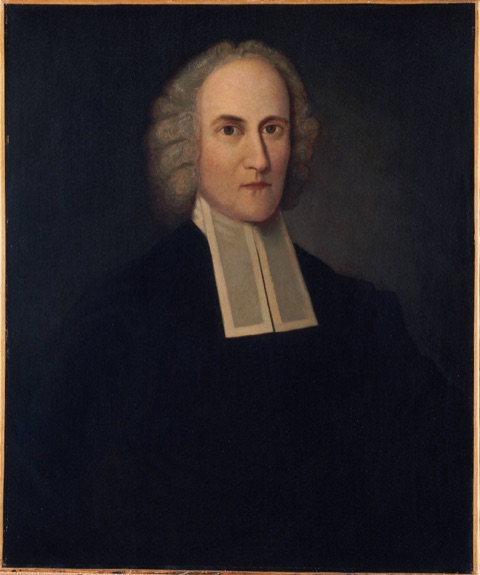
About the author
Jonathan Edwards
Jonathan Edwards (1703 to 1758 AD) was born on October 5, 1703, in East Windsor, Connecticut, the son of the minister Timothy Edwards. He entered Yale College at thirteen, graduated in 1720 and later served there as a tutor. In 1727 he became assistant to his grandfather Solomon Stoddard at Northampton, Massachusetts, and succeeded him as pastor in 1729. A revival broke out under his preaching in the mid 1730s, and during the Great Awakening he preached Sinners in the Hands of an Angry God at Enfield in 1741. He wrote this treatise in 1742 and Religious Affections in 1746. Dismissed from Northampton in 1750, he served the mission at Stockbridge, became president of the College of New Jersey in 1758, and died that March after a smallpox inoculation.