William Whately
An English Puritan preacher and vicar of Banbury known as "the Roaring Boy of Banbury," and one of the most widely read authors on marriage and household life in early Stuart England.
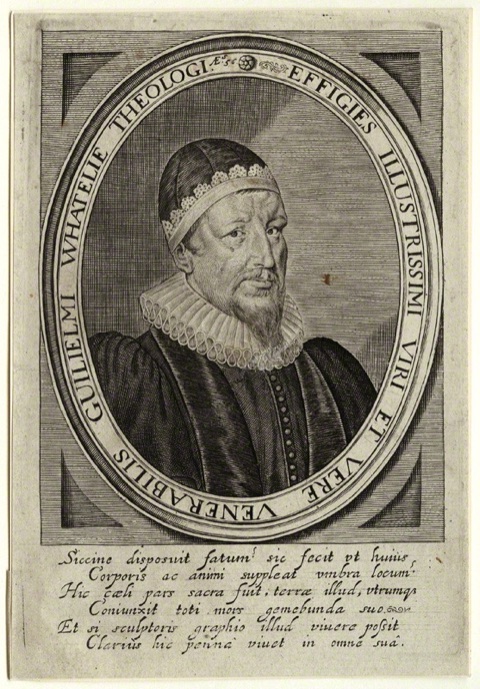
1583–1639
Biography
William Whately (1583 to 1639) was an English Puritan clergyman who served as vicar of Banbury in Oxfordshire and wrote the period's best-known treatises on marriage and family duty. He was born in Banbury into a prosperous local family and spent nearly his whole life in the same market town where he was raised.
He was educated at Christ's College, Cambridge, and turned to divinity after his marriage to Martha Hunt, whose father, the minister George Hunt, encouraged and helped direct his theological study. Whately was ordained and settled at Banbury, where he preached for roughly three decades until his death. His delivery was loud, urgent, and plain, and it earned him the nickname "the Roaring Boy of Banbury" — a label that fixed his reputation as a forceful pulpit orator rather than a retiring scholar.
Whately's influence came through his writing on domestic life. A wedding sermon he preached was printed and then greatly enlarged into A Bride-Bush; or, A Direction for Married Persons (1617), a practical guide to the duties of husbands and wives. He followed it with A Care-Cloth; or, A Treatise of the Cumbers and Troubles of Marriage (1624), which set the burdens and difficulties of married life against its comforts. Both books circulated widely and helped shape the household-conduct literature that Puritan readers used to order family life.
In A Bride-Bush Whately argued that adultery and willful desertion effectively dissolved the marriage bond and freed the innocent party to remarry. The claim drew the attention of church authorities, and he was called to account before the ecclesiastical courts, after which he publicly withdrew the position. He continued to preach and publish, and further works — including his lectures on the early chapters of Genesis, printed after his death as Prototypes (1640) — kept his practical, application-driven style before English readers into the following generation.
Why Whately Matters
Whately belonged to the generation of Puritan pastors who made practical divinity — the detailed application of Scripture to daily conduct — the center of their ministry. Where much theological writing addressed doctrine or controversy, Whately aimed his books at the ordinary business of the home: the mutual duties of husband and wife, the government of children and servants, and the ordering of a Christian household. This made him one of the earliest English authors to treat marriage as a subject demanding a full, systematic manual.
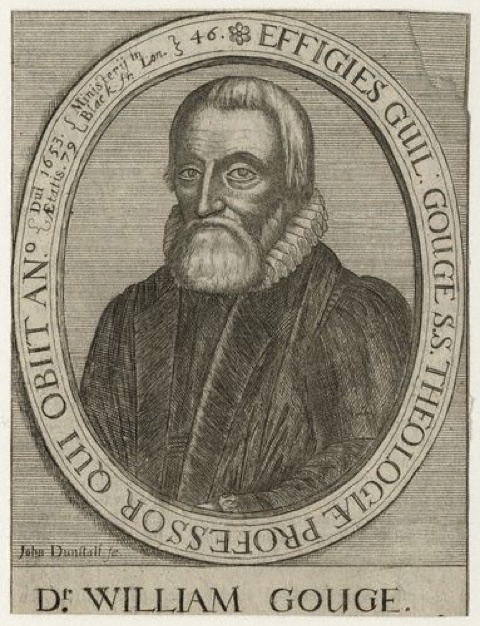
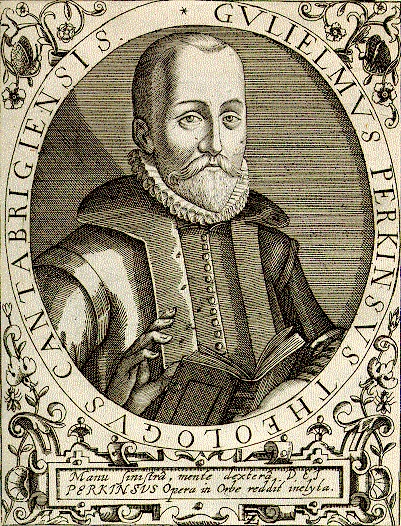
A Bride-Bush and A Care-Cloth were among the most read marriage books of the seventeenth century, and they placed Whately alongside contemporaries such as William Gouge and William Perkins in building the body of household-conduct literature that guided Puritan family life. His pairing of the two works — one directing married persons in their duties, the other soberly weighing the troubles of marriage — gave readers both an ideal to pursue and a realistic account of the strains they would meet.
His argument that adultery and desertion could break the marriage bond placed him inside a live debate among Reformed writers over the grounds of divorce and remarriage. Though he retracted the position under church pressure, the case shows how far some Puritan pastors were willing to press Scripture against established practice, and it kept Whately's name attached to the divorce question in later discussions.
As a preacher, Whately worked in the plain, vehement pulpit style that the Puritan movement prized. The nickname "the Roaring Boy of Banbury" preserved a memory of that manner, and his sermons and treatises carried his direct, example-filled application of the Bible to everyday conduct into print.