Thomas Manton
A leading Presbyterian preacher of Interregnum and Restoration London, known for his verse-by-verse expository sermons, including 190 sermons on Psalm 119. He was ejected from the Church of England in 1662 and wrote the prefatory epistle to a 1658 edition of the Westminster Confession of Faith.
1620–1677
Biography
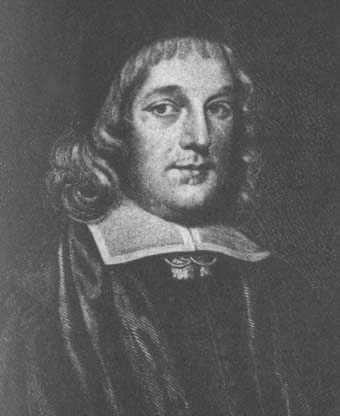
Thomas Manton (1620 to 1677) was an English Puritan preacher and Presbyterian minister who held prominent London pulpits during the Interregnum, wrote the prefatory epistle to a 1658 edition of the Westminster Confession of Faith, and was ejected from the Church of England in 1662 under the Act of Uniformity.
He was born in 1620 at Lawrence Lydiard in Somerset and entered Wadham College, Oxford, taking his Bachelor of Arts in 1639. He was ordained deacon at the age of nineteen by Joseph Hall, then Bishop of Exeter. His first settled work was as a lecturer at Colyton in Devon, after which he moved to London and became rector of Stoke Newington in Middlesex around 1645.
Manton rose to influence in the capital during the 1650s. In 1654 he was named one of the Triers, the commission established under Cromwell to examine candidates for the ministry, and he served as a chaplain to Oliver Cromwell. Around 1656 he became rector of St Paul's, Covent Garden, succeeding Obadiah Sedgwick in one of London's most visible pulpits, where he preached to large congregations and was frequently called on to preach before Parliament.
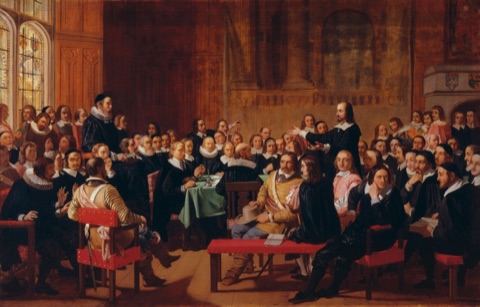
At the Restoration in 1660 Manton was among the Presbyterian ministers who traveled to the Netherlands to greet Charles II, and he was made a royal chaplain and offered the deanery of Rochester, which he declined. In 1661 he took part in the Savoy Conference as one of the Presbyterian representatives who sought, without success, to revise the Book of Common Prayer. When the Act of Uniformity took effect in 1662, he refused to conform and was ejected from St Paul's, Covent Garden, joining the roughly two thousand ministers removed in the Great Ejection.
After his ejection he continued to preach privately in and around London despite the penal laws against nonconformist worship, and around 1670 he was imprisoned for six months for holding services. He died on 18 October 1677 and was buried at Stoke Newington.
Manton's reputation rests chiefly on his sermons, which were expository and delivered as continuous series through whole books and chapters of Scripture. His best-known work is a set of 190 sermons on Psalm 119, and he produced full commentaries on the epistles of James and Jude as well as sermon series on the Lord's Prayer, Isaiah 53, and other texts. Most of his writing was published from shorthand notes after his death, and his collected works were later gathered into a twenty-two-volume edition.
Life & Career
Why Manton Matters
Manton belonged to the generation of English Puritan preachers who made the expository sermon their central instrument. Rather than building addresses on isolated verses, he worked through Scripture in long consecutive series, drawing doctrine from the text and pressing it toward practical duty. His treatment of Psalm 119 in 190 sermons and his commentaries on James and Jude became standard examples of this method and kept his name before later readers long after his death.
His career also placed him at the center of the Presbyterian effort to shape a national church settlement. He helped commend the Westminster Confession to a wider readership through the epistle he supplied for its 1658 printing, and at the Savoy Conference of 1661 he argued for a reformed liturgy alongside Richard Baxter and other Presbyterian ministers. His refusal to conform in 1662 and his subsequent imprisonment placed him among the founders of English Nonconformity.
Manton was read and quoted by later Reformed and evangelical figures. Charles Spurgeon commended his exposition of Psalm 119, and J.C. Ryle wrote a biographical introduction for a nineteenth-century reprint of his works. Through these editions his sermons reached Reformed readers into the modern period, valued for their close attention to the text and their emphasis on practical godliness.