Thomas a Kempis
Thomas a Kempis was a German-born Augustinian canon in the Netherlands who wrote The Imitation of Christ, one of the most widely read Christian devotional books ever printed.
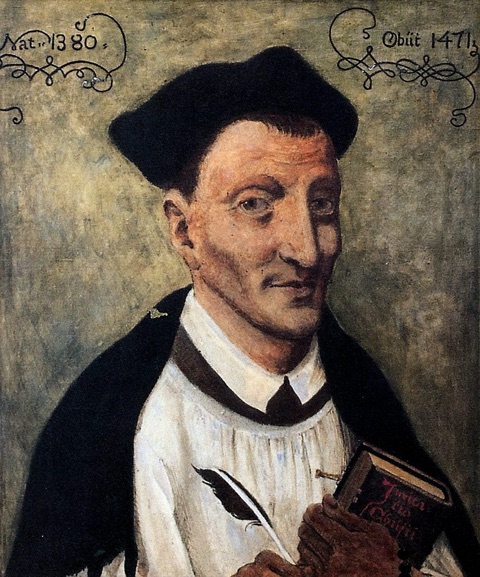
1380–1471
Biography
Thomas a Kempis (around 1380 to 1471) was a German-born monk and devotional writer, a canon regular of the Augustinian order at the monastery of Mount Saint Agnes near Zwolle in the Netherlands, best known as the author of The Imitation of Christ. He was born Thomas Hemerken in the town of Kempen, in the Rhineland northwest of Cologne, and took his name from his birthplace.
Around 1392 he was sent to Deventer, where his older brother John had already gone, to attend the school connected with the Brethren of the Common Life. This community had grown out of the work of Geert Groote and Florens Radewyns and formed the heart of the movement later called the Devotio Moderna, or Modern Devotion, which emphasized inward piety, self-examination, and the practical imitation of Christ over the abstractions of scholastic debate. At Deventer, Thomas boarded in the house of Radewyns and absorbed the habits of the movement at their source.
In 1399 he entered the monastery of Mount Saint Agnes, a house of canons regular on a hill near Zwolle where his brother John served as prior. Thomas spent the remaining seven decades of his life within its walls. He was ordained a priest around 1413 or 1414 and later served as subprior and as master of novices. Much of his daily work was the copying of manuscripts; he transcribed the entire Bible at least four times, along with missals and other texts, and the surviving autograph manuscript of his collected devotional writings is dated 1441.
Besides The Imitation of Christ, Thomas produced a body of sermons, tracts, hymns, and biographies. He wrote lives of Geert Groote, Florens Radewyns, and other early figures of the Modern Devotion, along with a life of Lidwina of Schiedam, and he composed devotional works such as The Soliloquy of the Soul, The Garden of Roses, and The Valley of Lilies. These writings circulated among the canons and the Brethren and were meant chiefly for the formation of the religious life rather than for a wide public.
The Imitation of Christ, written in Latin as De Imitatione Christi, drew together four short books of counsel on the interior life, the sacrament of the altar, and the renunciation of self. It spread rapidly in manuscript and then in print, and its authorship was disputed for centuries, with some attributing it to Jean Gerson or to an earlier Italian abbot named Giovanni Gersen. Modern scholarship generally assigns it to Thomas, whose signed 1441 manuscript remains the central piece of evidence. He died at Mount Saint Agnes on 25 July 1471, in his early nineties, having lived more than seventy years as a professed religious.
Life & Career
Why Kempis Matters
The Imitation of Christ became, after the Bible, one of the most frequently printed and translated books in the Christian West. It appeared in hundreds of Latin editions within a century of its composition and was carried across the divisions of the Reformation, read by Catholics and Protestants alike. Its plain counsel to seek God inwardly, distrust one's own learning, and measure the spiritual life by conduct rather than speculation gave it an appeal that reached far beyond the monastery for which it was written.
Thomas belonged to the Devotio Moderna, and his book is the clearest surviving expression of that movement's aims. Where much late-medieval theology turned on scholastic distinctions, the Modern Devotion pressed toward personal reform, methodical self-examination, and the direct imitation of the life of Christ. The Imitation distilled these emphases into short, memorable chapters that a reader could take up daily, which helped fix the movement's spirit in a form that outlasted the communities that produced it.
The book's later readers span the confessional map. Ignatius of Loyola recommended it and drew on it in the formation of the Jesuits; John Wesley translated and republished it; figures as varied as Thomas More and later devotional writers pointed to it as a formative influence. Its language of the interior life supplied a common vocabulary of devotion that both Catholic reform and Protestant piety could use.
Thomas himself sought no public role and left a small biographical footprint, but the diffusion of his central work made him one of the most widely read authors of the medieval church. Through The Imitation of Christ, the quiet routine of a copying canon at Mount Saint Agnes shaped patterns of Christian devotion that stayed in wide use for centuries after his death.